The Trump White House is exploring ways to get Americans to have more children, including government funded menstrual cycle classes and a $5000 “baby bonus.” Reproductive health journalist Carter Sherman calls pronatalism “a key ideological plank in the bridge between tech bro rightwingers like [Elon] Musk and more traditional, religious conservatives.” We look at the rise of the U.S. pronatalist movement and what it means in practice for women and families.
What’s Behind the Trump Administration’s Push for More Children?
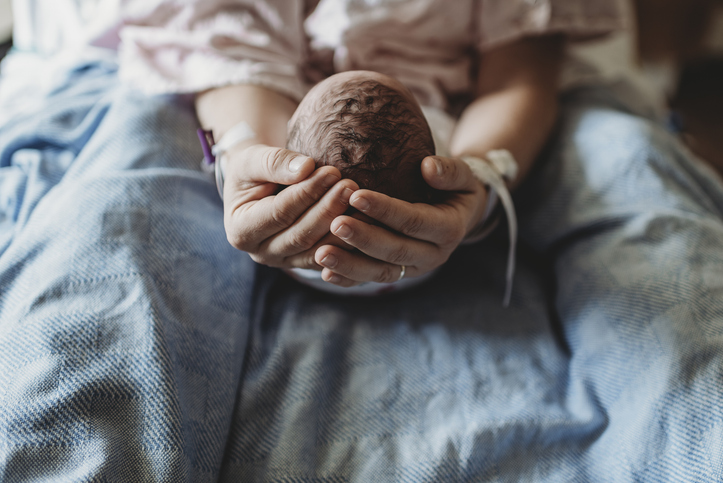
(Cavan Images via Getty Images)
Show Highlights
Definition and Origins of Pronatalism
Pronatalism is the conviction that governments should actively encourage larger families—through tax breaks, paid parental leave, or direct subsidies—to counteract falling birth rates. Often rooted in conservative thought, it tends to gain traction when societies feel unsettled by rapid change—whether from waves of immigration, shifts in women’s roles, or economic uncertainty.
Historically, the U.S. saw a major pronatalist push during the demographic anxieties of the late 19th and early 20th centuries, and the ideology reached extremes in regimes like Nazi Germany and Stalinist Russia, where state-sponsored incentives—and punishments—were used to engineer population growth.
Proposed Pronatalist Policies and Initiatives
The Trump administration’s pronatalist blueprint includes a suite of incentives designed to reward childbearing and reinforce a traditional family model. Proposals range from a $5,000 “baby bonus” for each newborn to government-sponsored menstrual-cycle education for would-be parents. Even elite scholarships like the Fulbright could reserve spots for married applicants or those with children, while a “National Medal of Motherhood” would honor women who bear six or more offspring.
Faith Hill notes that Project 2025, the policy’s guiding document, adheres to an outdated ideal—a married mother and father producing biological children—rather than reflecting the diversity of modern families.
Critiques and Concerns Surrounding Pronatalism
Pronatalist policies have drawn criticism for elevating a single, exclusionary notion of the American family—one centered on straight, married couples—while erasing the experiences of single parents, LGBTQ+ families, and communities of color. “This is more white Christian nationalist anti-immigrant propaganda by the Trump administration,” one listener writes — “a strategy to populate the U.S. with more of ‘their own.’”
Critics also point out the hypocrisy in championing childbirth incentives even as vital supports like Head Start and Medicaid face cuts, undermining the very families policymakers claim to uplift.
Sherman flags a deeper tension too. When pronatalist fervor collides with anti-abortion efforts to grant fetal personhood, pregnant people themselves could be criminalized under new definitions of rights. Pronatalism, Sherman suggests, doesn’t just narrow our understanding of family—it risks weaponizing reproduction as a tool of social and political control.
Alternative Family-Friendly Policies
True family support looks very different from one-off cash bonuses. Experts like Sherman, Hill, and everyday parents urge policies that meet real needs: universal, affordable childcare; robust paid parental leave; free or low-cost public pre-K; and broader insurance coverage for fertility treatments like IVF.
Hill advocates for “meeting people where they are.” She calls for empowering single parents by choice, platonic co-parenting arrangements, and LGBTQ+ families just as fiercely as traditional ones.
The Larger Context and Implications of Pronatalism
Beyond how it appears on the surface, pronatalism carries a heavy historical and ethical weight. Past pronatalist drives under autocratic regimes were inseparable from broader projects of social engineering and exclusion.
If you defund public education, one caller warns, then you cultivate a populace destined either for low-wage service or the prison pipeline. And when the push for more children eclipses climate action and resource conservation, our environmental future is put at risk.
Sherman says that the word “pronatalism” itself operates like a Rorschach test: to many on the left, it evokes fears of state control and built-in inequality; to much of the right, it simply signals “pro-family” policies. A responsible dialogue on encouraging childbirth must therefore confront questions of equity, environmental stewardship, and the hard lessons of history.
This content was edited by the Forum production team but was generated with the help of AI.