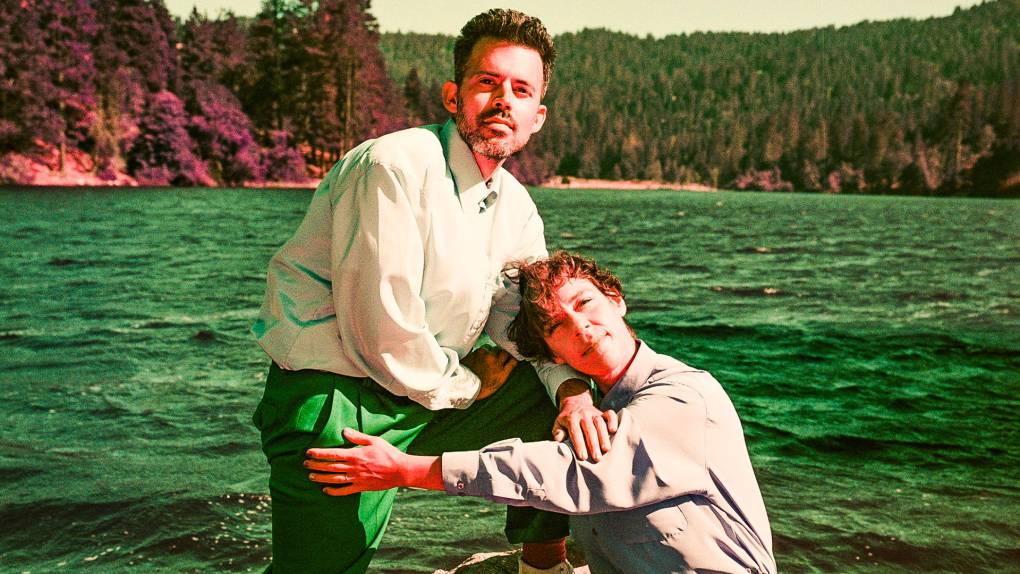
How Tune-Yards Became the House Band for the Boots Riley Cinematic Universe
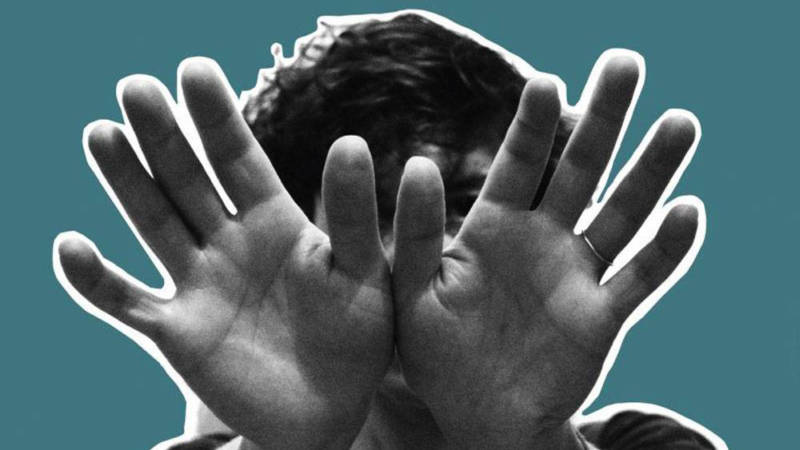
Tune-Yards’ New Album Embraces Joy But Keeps Tough Conversations Going
‘Sorry to Bother You’ Listening Party Benefits Homeless Activists
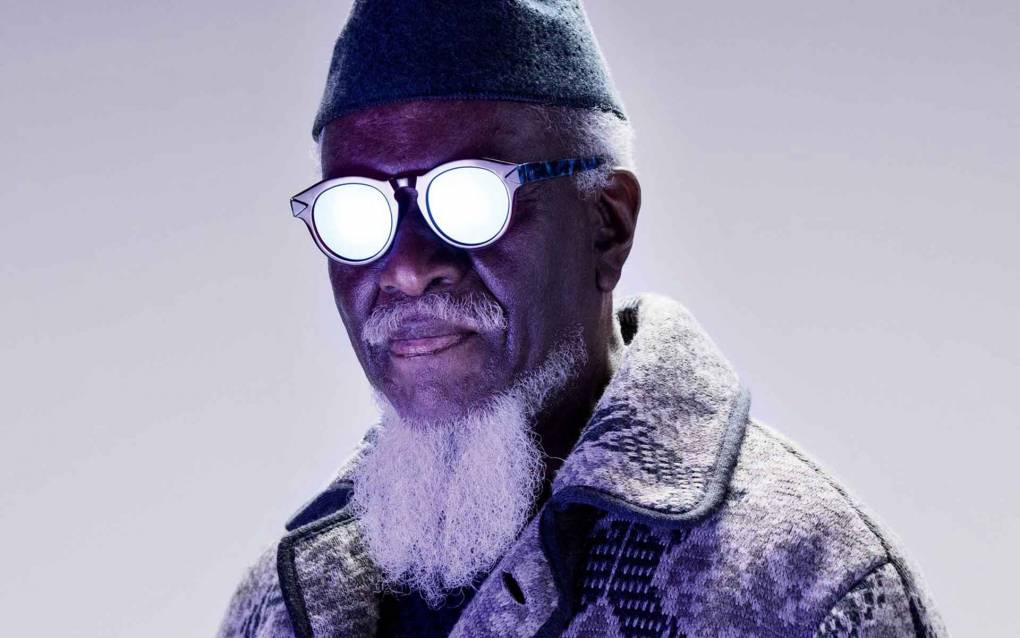
The Do List: 'Sister Act,' Pharaoh Sanders and More for Nov. 28–Dec. 4
The 10 Best Bay Area Albums of 2018: Tune-Yards, 'I can feel you creep into my private life'
Everything We Loved at Noise Pop 2018
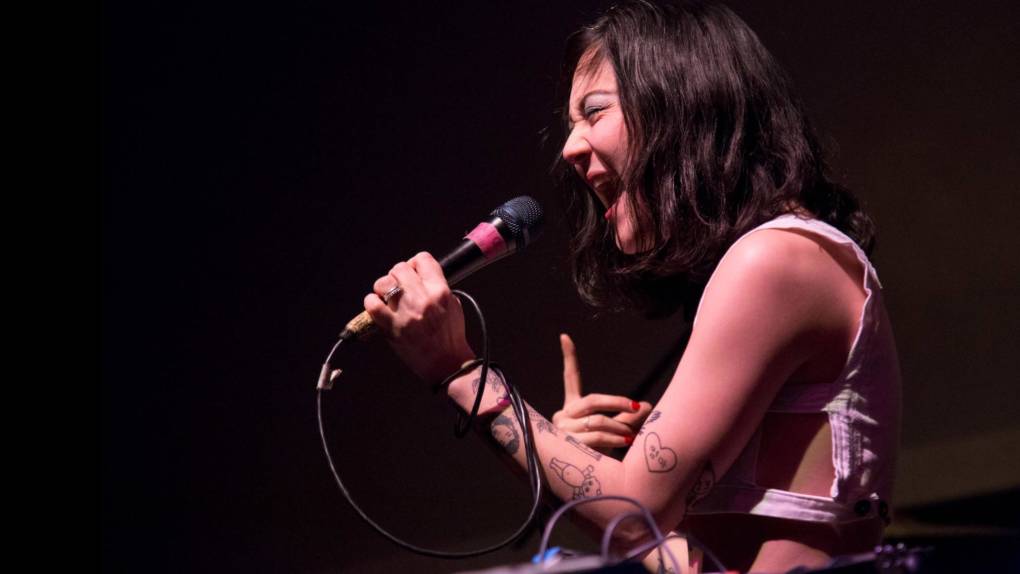
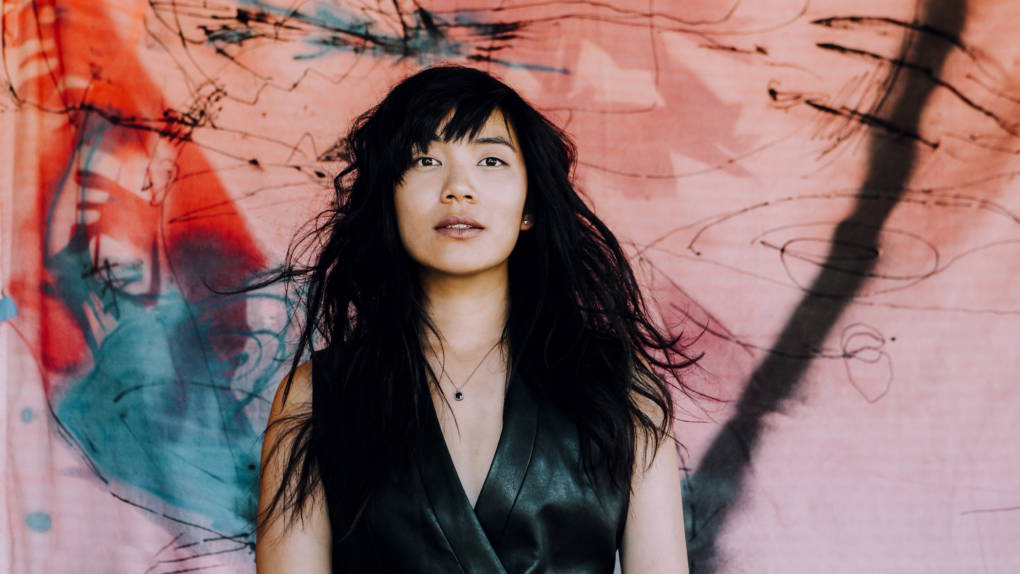
The 10 Best Bay Area Albums of 2016: Thao & The Get Down Stay Down, 'A Man Alive'
Sponsored
Player sponsored by
window.__IS_SSR__=true
window.__INITIAL_STATE__={
"attachmentsReducer": {
"audio_0": {
"type": "attachments",
"id": "audio_0",
"imgSizes": {
"kqedFullSize": {
"file": "https://ww2.kqed.org/news/wp-content/themes/KQED-unified/img/audio_bgs/background0.jpg"
}
}
},
"audio_1": {
"type": "attachments",
"id": "audio_1",
"imgSizes": {
"kqedFullSize": {
"file": "https://ww2.kqed.org/news/wp-content/themes/KQED-unified/img/audio_bgs/background1.jpg"
}
}
},
"audio_2": {
"type": "attachments",
"id": "audio_2",
"imgSizes": {
"kqedFullSize": {
"file": "https://ww2.kqed.org/news/wp-content/themes/KQED-unified/img/audio_bgs/background2.jpg"
}
}
},
"audio_3": {
"type": "attachments",
"id": "audio_3",
"imgSizes": {
"kqedFullSize": {
"file": "https://ww2.kqed.org/news/wp-content/themes/KQED-unified/img/audio_bgs/background3.jpg"
}
}
},
"audio_4": {
"type": "attachments",
"id": "audio_4",
"imgSizes": {
"kqedFullSize": {
"file": "https://ww2.kqed.org/news/wp-content/themes/KQED-unified/img/audio_bgs/background4.jpg"
}
}
},
"placeholder": {
"type": "attachments",
"id": "placeholder",
"imgSizes": {
"thumbnail": {
"file": "https://cdn.kqed.org/wp-content/uploads/2024/12/KQED-Default-Image-816638274-2000x1333-1-160x107.jpg",
"width": 160,
"height": 107,
"mimeType": "image/jpeg"
},
"medium": {
"file": "https://cdn.kqed.org/wp-content/uploads/2024/12/KQED-Default-Image-816638274-2000x1333-1-800x533.jpg",
"width": 800,
"height": 533,
"mimeType": "image/jpeg"
},
"medium_large": {
"file": "https://cdn.kqed.org/wp-content/uploads/2024/12/KQED-Default-Image-816638274-2000x1333-1-768x512.jpg",
"width": 768,
"height": 512,
"mimeType": "image/jpeg"
},
"large": {
"file": "https://cdn.kqed.org/wp-content/uploads/2024/12/KQED-Default-Image-816638274-2000x1333-1-1020x680.jpg",
"width": 1020,
"height": 680,
"mimeType": "image/jpeg"
},
"1536x1536": {
"file": "https://cdn.kqed.org/wp-content/uploads/2024/12/KQED-Default-Image-816638274-2000x1333-1-1536x1024.jpg",
"width": 1536,
"height": 1024,
"mimeType": "image/jpeg"
},
"fd-lrg": {
"file": "https://cdn.kqed.org/wp-content/uploads/2024/12/KQED-Default-Image-816638274-2000x1333-1-1536x1024.jpg",
"width": 1536,
"height": 1024,
"mimeType": "image/jpeg"
},
"fd-med": {
"file": "https://cdn.kqed.org/wp-content/uploads/2024/12/KQED-Default-Image-816638274-2000x1333-1-1020x680.jpg",
"width": 1020,
"height": 680,
"mimeType": "image/jpeg"
},
"fd-sm": {
"file": "https://cdn.kqed.org/wp-content/uploads/2024/12/KQED-Default-Image-816638274-2000x1333-1-800x533.jpg",
"width": 800,
"height": 533,
"mimeType": "image/jpeg"
},
"post-thumbnail": {
"file": "https://cdn.kqed.org/wp-content/uploads/2024/12/KQED-Default-Image-816638274-2000x1333-1-672x372.jpg",
"width": 672,
"height": 372,
"mimeType": "image/jpeg"
},
"twentyfourteen-full-width": {
"file": "https://cdn.kqed.org/wp-content/uploads/2024/12/KQED-Default-Image-816638274-2000x1333-1-1038x576.jpg",
"width": 1038,
"height": 576,
"mimeType": "image/jpeg"
},
"xxsmall": {
"file": "https://cdn.kqed.org/wp-content/uploads/2024/12/KQED-Default-Image-816638274-2000x1333-1-160x107.jpg",
"width": 160,
"height": 107,
"mimeType": "image/jpeg"
},
"xsmall": {
"file": "https://cdn.kqed.org/wp-content/uploads/2024/12/KQED-Default-Image-816638274-2000x1333-1-672x372.jpg",
"width": 672,
"height": 372,
"mimeType": "image/jpeg"
},
"small": {
"file": "https://cdn.kqed.org/wp-content/uploads/2024/12/KQED-Default-Image-816638274-2000x1333-1-672x372.jpg",
"width": 672,
"height": 372,
"mimeType": "image/jpeg"
},
"xlarge": {
"file": "https://cdn.kqed.org/wp-content/uploads/2024/12/KQED-Default-Image-816638274-2000x1333-1-1020x680.jpg",
"width": 1020,
"height": 680,
"mimeType": "image/jpeg"
},
"full-width": {
"file": "https://cdn.kqed.org/wp-content/uploads/2024/12/KQED-Default-Image-816638274-2000x1333-1-1920x1280.jpg",
"width": 1920,
"height": 1280,
"mimeType": "image/jpeg"
},
"guest-author-32": {
"file": "https://cdn.kqed.org/wp-content/uploads/2025/01/KQED-Default-Image-816638274-1333x1333-1-160x160.jpg",
"width": 32,
"height": 32,
"mimeType": "image/jpeg"
},
"guest-author-50": {
"file": "https://cdn.kqed.org/wp-content/uploads/2025/01/KQED-Default-Image-816638274-1333x1333-1-160x160.jpg",
"width": 50,
"height": 50,
"mimeType": "image/jpeg"
},
"guest-author-64": {
"file": "https://cdn.kqed.org/wp-content/uploads/2025/01/KQED-Default-Image-816638274-1333x1333-1-160x160.jpg",
"width": 64,
"height": 64,
"mimeType": "image/jpeg"
},
"guest-author-96": {
"file": "https://cdn.kqed.org/wp-content/uploads/2025/01/KQED-Default-Image-816638274-1333x1333-1-160x160.jpg",
"width": 96,
"height": 96,
"mimeType": "image/jpeg"
},
"guest-author-128": {
"file": "https://cdn.kqed.org/wp-content/uploads/2025/01/KQED-Default-Image-816638274-1333x1333-1-160x160.jpg",
"width": 128,
"height": 128,
"mimeType": "image/jpeg"
},
"detail": {
"file": "https://cdn.kqed.org/wp-content/uploads/2025/01/KQED-Default-Image-816638274-1333x1333-1-160x160.jpg",
"width": 160,
"height": 160,
"mimeType": "image/jpeg"
},
"kqedFullSize": {
"file": "https://cdn.kqed.org/wp-content/uploads/2024/12/KQED-Default-Image-816638274-2000x1333-1.jpg",
"width": 2000,
"height": 1333
}
}
},
"arts_13930964": {
"type": "attachments",
"id": "arts_13930964",
"meta": {
"index": "attachments_1716263798",
"site": "arts",
"id": "13930964",
"found": true
},
"parent": 13930923,
"imgSizes": {
"twentyfourteen-full-width": {
"file": "https://ww2.kqed.org/app/uploads/sites/2/2023/06/tuneyards.16.9-1038x576.jpg",
"width": 1038,
"mimeType": "image/jpeg",
"height": 576
},
"thumbnail": {
"file": "https://ww2.kqed.org/app/uploads/sites/2/2023/06/tuneyards.16.9-160x90.jpg",
"width": 160,
"mimeType": "image/jpeg",
"height": 90
},
"post-thumbnail": {
"file": "https://ww2.kqed.org/app/uploads/sites/2/2023/06/tuneyards.16.9-672x372.jpg",
"width": 672,
"mimeType": "image/jpeg",
"height": 372
},
"kqedFullSize": {
"file": "https://ww2.kqed.org/app/uploads/sites/2/2023/06/tuneyards.16.9.jpg",
"width": 1920,
"height": 1080
},
"large": {
"file": "https://ww2.kqed.org/app/uploads/sites/2/2023/06/tuneyards.16.9-1020x574.jpg",
"width": 1020,
"mimeType": "image/jpeg",
"height": 574
},
"1536x1536": {
"file": "https://ww2.kqed.org/app/uploads/sites/2/2023/06/tuneyards.16.9-1536x864.jpg",
"width": 1536,
"mimeType": "image/jpeg",
"height": 864
},
"medium": {
"file": "https://ww2.kqed.org/app/uploads/sites/2/2023/06/tuneyards.16.9-800x450.jpg",
"width": 800,
"mimeType": "image/jpeg",
"height": 450
},
"medium_large": {
"file": "https://ww2.kqed.org/app/uploads/sites/2/2023/06/tuneyards.16.9-768x432.jpg",
"width": 768,
"mimeType": "image/jpeg",
"height": 432
}
},
"publishDate": 1687891860,
"modified": 1687901040,
"caption": "Nate Brenner and Merrill Garbus are Tune-Yards, whose experimental indie pop sets the tone for Boots Riley's new show, 'I'm A Virgo.'",
"description": null,
"title": "tuneyards.16.9",
"credit": "Pooneh Ghana",
"status": "inherit",
"altTag": "a white man and woman pose on a rock in front of a lake",
"fetchFailed": false,
"isLoading": false
},
"arts_13894752": {
"type": "attachments",
"id": "arts_13894752",
"meta": {
"index": "attachments_1716263798",
"site": "arts",
"id": "13894752",
"found": true
},
"parent": 13894750,
"imgSizes": {
"twentyfourteen-full-width": {
"file": "https://ww2.kqed.org/app/uploads/sites/2/2021/03/Tune-Yards-2-by-Pooneh-Ghana-copy-1038x576.jpg",
"width": 1038,
"mimeType": "image/jpeg",
"height": 576
},
"thumbnail": {
"file": "https://ww2.kqed.org/app/uploads/sites/2/2021/03/Tune-Yards-2-by-Pooneh-Ghana-copy-160x106.jpg",
"width": 160,
"mimeType": "image/jpeg",
"height": 106
},
"post-thumbnail": {
"file": "https://ww2.kqed.org/app/uploads/sites/2/2021/03/Tune-Yards-2-by-Pooneh-Ghana-copy-672x372.jpg",
"width": 672,
"mimeType": "image/jpeg",
"height": 372
},
"kqedFullSize": {
"file": "https://ww2.kqed.org/app/uploads/sites/2/2021/03/Tune-Yards-2-by-Pooneh-Ghana-copy.jpg",
"width": 1920,
"height": 1273
},
"large": {
"file": "https://ww2.kqed.org/app/uploads/sites/2/2021/03/Tune-Yards-2-by-Pooneh-Ghana-copy-1020x676.jpg",
"width": 1020,
"mimeType": "image/jpeg",
"height": 676
},
"1536x1536": {
"file": "https://ww2.kqed.org/app/uploads/sites/2/2021/03/Tune-Yards-2-by-Pooneh-Ghana-copy-1536x1018.jpg",
"width": 1536,
"mimeType": "image/jpeg",
"height": 1018
},
"medium": {
"file": "https://ww2.kqed.org/app/uploads/sites/2/2021/03/Tune-Yards-2-by-Pooneh-Ghana-copy-800x530.jpg",
"width": 800,
"mimeType": "image/jpeg",
"height": 530
},
"medium_large": {
"file": "https://ww2.kqed.org/app/uploads/sites/2/2021/03/Tune-Yards-2-by-Pooneh-Ghana-copy-768x509.jpg",
"width": 768,
"mimeType": "image/jpeg",
"height": 509
}
},
"publishDate": 1616803138,
"modified": 1616803404,
"caption": "On the new Tune-Yards album, Merrill Garbus unselfconscious embraces joy—and the uncomfortable growth process of interrogating privilege. ",
"description": "On the new Tune-Yards album, Merrill Garbus unselfconscious embraces joy—and the uncomfortable growth process of interrogating privilege. ",
"title": "Tune-Yards 2 by Pooneh Ghana copy",
"credit": "Pooneh Ghana",
"status": "inherit",
"altTag": null,
"fetchFailed": false,
"isLoading": false
},
"arts_13836464": {
"type": "attachments",
"id": "arts_13836464",
"meta": {
"index": "attachments_1716263798",
"site": "arts",
"id": "13836464",
"found": true
},
"parent": 13836455,
"imgSizes": {
"small": {
"file": "https://ww2.kqed.org/app/uploads/sites/2/2018/07/SorryToBotherYou.TessaLakei-520x346.jpg",
"width": 520,
"mimeType": "image/jpeg",
"height": 346
},
"thumbnail": {
"file": "https://ww2.kqed.org/app/uploads/sites/2/2018/07/SorryToBotherYou.TessaLakei-160x107.jpg",
"width": 160,
"mimeType": "image/jpeg",
"height": 107
},
"post-thumbnail": {
"file": "https://ww2.kqed.org/app/uploads/sites/2/2018/07/SorryToBotherYou.TessaLakei-672x372.jpg",
"width": 672,
"mimeType": "image/jpeg",
"height": 372
},
"xsmall": {
"file": "https://ww2.kqed.org/app/uploads/sites/2/2018/07/SorryToBotherYou.TessaLakei-375x250.jpg",
"width": 375,
"mimeType": "image/jpeg",
"height": 250
},
"kqedFullSize": {
"file": "https://ww2.kqed.org/app/uploads/sites/2/2018/07/SorryToBotherYou.TessaLakei.jpg",
"width": 800,
"height": 533
},
"guest-author-50": {
"file": "https://ww2.kqed.org/app/uploads/sites/2/2018/07/SorryToBotherYou.TessaLakei-50x50.jpg",
"width": 50,
"mimeType": "image/jpeg",
"height": 50
},
"guest-author-96": {
"file": "https://ww2.kqed.org/app/uploads/sites/2/2018/07/SorryToBotherYou.TessaLakei-96x96.jpg",
"width": 96,
"mimeType": "image/jpeg",
"height": 96
},
"medium": {
"file": "https://ww2.kqed.org/app/uploads/sites/2/2018/07/SorryToBotherYou.TessaLakei-800x533.jpg",
"width": 800,
"mimeType": "image/jpeg",
"height": 533
},
"guest-author-64": {
"file": "https://ww2.kqed.org/app/uploads/sites/2/2018/07/SorryToBotherYou.TessaLakei-64x64.jpg",
"width": 64,
"mimeType": "image/jpeg",
"height": 64
},
"guest-author-32": {
"file": "https://ww2.kqed.org/app/uploads/sites/2/2018/07/SorryToBotherYou.TessaLakei-32x32.jpg",
"width": 32,
"mimeType": "image/jpeg",
"height": 32
},
"detail": {
"file": "https://ww2.kqed.org/app/uploads/sites/2/2018/07/SorryToBotherYou.TessaLakei-150x150.jpg",
"width": 150,
"mimeType": "image/jpeg",
"height": 150
},
"medium_large": {
"file": "https://ww2.kqed.org/app/uploads/sites/2/2018/07/SorryToBotherYou.TessaLakei-768x512.jpg",
"width": 768,
"mimeType": "image/jpeg",
"height": 512
},
"guest-author-128": {
"file": "https://ww2.kqed.org/app/uploads/sites/2/2018/07/SorryToBotherYou.TessaLakei-128x128.jpg",
"width": 128,
"mimeType": "image/jpeg",
"height": 128
},
"xxsmall": {
"file": "https://ww2.kqed.org/app/uploads/sites/2/2018/07/SorryToBotherYou.TessaLakei-240x160.jpg",
"width": 240,
"mimeType": "image/jpeg",
"height": 160
}
},
"publishDate": 1530774379,
"modified": 1574901641,
"caption": "Tessa Thompson and Lakeith Stanfield in 'Sorry to Bother You.'",
"description": "Tessa Thompson and Lakeith Stanfield in 'Sorry to Bother You.'",
"title": "SorryToBotherYou.TessaLakei",
"credit": "Courtesy Annapurna Pictures",
"status": "inherit",
"fetchFailed": false,
"isLoading": false
},
"arts_13870499": {
"type": "attachments",
"id": "arts_13870499",
"meta": {
"index": "attachments_1716263798",
"site": "arts",
"id": "13870499",
"found": true
},
"parent": 13870496,
"imgSizes": {
"twentyfourteen-full-width": {
"file": "https://ww2.kqed.org/app/uploads/sites/2/2019/11/PharoahSanders-1038x576.jpg",
"width": 1038,
"mimeType": "image/jpeg",
"height": 576
},
"thumbnail": {
"file": "https://ww2.kqed.org/app/uploads/sites/2/2019/11/PharoahSanders-160x100.jpg",
"width": 160,
"mimeType": "image/jpeg",
"height": 100
},
"post-thumbnail": {
"file": "https://ww2.kqed.org/app/uploads/sites/2/2019/11/PharoahSanders-672x372.jpg",
"width": 672,
"mimeType": "image/jpeg",
"height": 372
},
"kqedFullSize": {
"file": "https://ww2.kqed.org/app/uploads/sites/2/2019/11/PharoahSanders.jpg",
"width": 1920,
"height": 1200
},
"large": {
"file": "https://ww2.kqed.org/app/uploads/sites/2/2019/11/PharoahSanders-1020x638.jpg",
"width": 1020,
"mimeType": "image/jpeg",
"height": 638
},
"complete_open_graph": {
"file": "https://ww2.kqed.org/app/uploads/sites/2/2019/11/PharoahSanders-1200x750.jpg",
"width": 1200,
"mimeType": "image/jpeg",
"height": 750
},
"full-width": {
"file": "https://ww2.kqed.org/app/uploads/sites/2/2019/11/PharoahSanders-1920x1200.jpg",
"width": 1920,
"mimeType": "image/jpeg",
"height": 1200
},
"medium": {
"file": "https://ww2.kqed.org/app/uploads/sites/2/2019/11/PharoahSanders-800x500.jpg",
"width": 800,
"mimeType": "image/jpeg",
"height": 500
},
"medium_large": {
"file": "https://ww2.kqed.org/app/uploads/sites/2/2019/11/PharoahSanders-768x480.jpg",
"width": 768,
"mimeType": "image/jpeg",
"height": 480
}
},
"publishDate": 1574894836,
"modified": 1574894903,
"caption": "Pharaoh Sanders.",
"description": "Pharaoh Sanders",
"title": "PharoahSanders",
"credit": "Artist photo",
"status": "inherit",
"fetchFailed": false,
"isLoading": false
},
"arts_13846470": {
"type": "attachments",
"id": "arts_13846470",
"meta": {
"index": "attachments_1716263798",
"site": "arts",
"id": "13846470",
"found": true
},
"parent": 13846464,
"imgSizes": {
"thumbnail": {
"file": "https://ww2.kqed.org/app/uploads/sites/2/2018/12/Tune_Yards-crop-160x90.jpg",
"width": 160,
"mimeType": "image/jpeg",
"height": 90
},
"post-thumbnail": {
"file": "https://ww2.kqed.org/app/uploads/sites/2/2018/12/Tune_Yards-crop-672x372.jpg",
"width": 672,
"mimeType": "image/jpeg",
"height": 372
},
"kqedFullSize": {
"file": "https://ww2.kqed.org/app/uploads/sites/2/2018/12/Tune_Yards-crop.jpg",
"width": 1000,
"height": 563
},
"guest-author-50": {
"file": "https://ww2.kqed.org/app/uploads/sites/2/2018/12/Tune_Yards-crop-50x50.jpg",
"width": 50,
"mimeType": "image/jpeg",
"height": 50
},
"guest-author-96": {
"file": "https://ww2.kqed.org/app/uploads/sites/2/2018/12/Tune_Yards-crop-96x96.jpg",
"width": 96,
"mimeType": "image/jpeg",
"height": 96
},
"medium": {
"file": "https://ww2.kqed.org/app/uploads/sites/2/2018/12/Tune_Yards-crop-800x450.jpg",
"width": 800,
"mimeType": "image/jpeg",
"height": 450
},
"guest-author-64": {
"file": "https://ww2.kqed.org/app/uploads/sites/2/2018/12/Tune_Yards-crop-64x64.jpg",
"width": 64,
"mimeType": "image/jpeg",
"height": 64
},
"detail": {
"file": "https://ww2.kqed.org/app/uploads/sites/2/2018/12/Tune_Yards-crop-150x150.jpg",
"width": 150,
"mimeType": "image/jpeg",
"height": 150
},
"guest-author-32": {
"file": "https://ww2.kqed.org/app/uploads/sites/2/2018/12/Tune_Yards-crop-32x32.jpg",
"width": 32,
"mimeType": "image/jpeg",
"height": 32
},
"medium_large": {
"file": "https://ww2.kqed.org/app/uploads/sites/2/2018/12/Tune_Yards-crop-768x432.jpg",
"width": 768,
"mimeType": "image/jpeg",
"height": 432
},
"guest-author-128": {
"file": "https://ww2.kqed.org/app/uploads/sites/2/2018/12/Tune_Yards-crop-128x128.jpg",
"width": 128,
"mimeType": "image/jpeg",
"height": 128
}
},
"publishDate": 1544056945,
"modified": 1544056945,
"caption": null,
"description": null,
"title": "Tune_Yards crop",
"credit": null,
"status": "inherit",
"fetchFailed": false,
"isLoading": false
},
"arts_13825623": {
"type": "attachments",
"id": "arts_13825623",
"meta": {
"index": "attachments_1716263798",
"site": "arts",
"id": "13825623",
"found": true
},
"parent": 13825462,
"imgSizes": {
"small": {
"file": "https://ww2.kqed.org/app/uploads/sites/2/2018/02/JapaneseBreakfast-520x292.jpg",
"width": 520,
"mimeType": "image/jpeg",
"height": 292
},
"twentyfourteen-full-width": {
"file": "https://ww2.kqed.org/app/uploads/sites/2/2018/02/JapaneseBreakfast-1038x576.jpg",
"width": 1038,
"mimeType": "image/jpeg",
"height": 576
},
"thumbnail": {
"file": "https://ww2.kqed.org/app/uploads/sites/2/2018/02/JapaneseBreakfast-160x90.jpg",
"width": 160,
"mimeType": "image/jpeg",
"height": 90
},
"fd-sm": {
"file": "https://ww2.kqed.org/app/uploads/sites/2/2018/02/JapaneseBreakfast-960x540.jpg",
"width": 960,
"mimeType": "image/jpeg",
"height": 540
},
"post-thumbnail": {
"file": "https://ww2.kqed.org/app/uploads/sites/2/2018/02/JapaneseBreakfast-672x372.jpg",
"width": 672,
"mimeType": "image/jpeg",
"height": 372
},
"xsmall": {
"file": "https://ww2.kqed.org/app/uploads/sites/2/2018/02/JapaneseBreakfast-375x211.jpg",
"width": 375,
"mimeType": "image/jpeg",
"height": 211
},
"kqedFullSize": {
"file": "https://ww2.kqed.org/app/uploads/sites/2/2018/02/JapaneseBreakfast.jpg",
"width": 2048,
"height": 1152
},
"large": {
"file": "https://ww2.kqed.org/app/uploads/sites/2/2018/02/JapaneseBreakfast-1020x574.jpg",
"width": 1020,
"mimeType": "image/jpeg",
"height": 574
},
"xlarge": {
"file": "https://ww2.kqed.org/app/uploads/sites/2/2018/02/JapaneseBreakfast-1180x664.jpg",
"width": 1180,
"mimeType": "image/jpeg",
"height": 664
},
"guest-author-50": {
"file": "https://ww2.kqed.org/app/uploads/sites/2/2018/02/JapaneseBreakfast-50x50.jpg",
"width": 50,
"mimeType": "image/jpeg",
"height": 50
},
"guest-author-96": {
"file": "https://ww2.kqed.org/app/uploads/sites/2/2018/02/JapaneseBreakfast-96x96.jpg",
"width": 96,
"mimeType": "image/jpeg",
"height": 96
},
"medium": {
"file": "https://ww2.kqed.org/app/uploads/sites/2/2018/02/JapaneseBreakfast-800x450.jpg",
"width": 800,
"mimeType": "image/jpeg",
"height": 450
},
"guest-author-64": {
"file": "https://ww2.kqed.org/app/uploads/sites/2/2018/02/JapaneseBreakfast-64x64.jpg",
"width": 64,
"mimeType": "image/jpeg",
"height": 64
},
"guest-author-32": {
"file": "https://ww2.kqed.org/app/uploads/sites/2/2018/02/JapaneseBreakfast-32x32.jpg",
"width": 32,
"mimeType": "image/jpeg",
"height": 32
},
"fd-lrg": {
"file": "https://ww2.kqed.org/app/uploads/sites/2/2018/02/JapaneseBreakfast-1920x1080.jpg",
"width": 1920,
"mimeType": "image/jpeg",
"height": 1080
},
"fd-med": {
"file": "https://ww2.kqed.org/app/uploads/sites/2/2018/02/JapaneseBreakfast-1180x664.jpg",
"width": 1180,
"mimeType": "image/jpeg",
"height": 664
},
"full-width": {
"file": "https://ww2.kqed.org/app/uploads/sites/2/2018/02/JapaneseBreakfast-1920x1080.jpg",
"width": 1920,
"mimeType": "image/jpeg",
"height": 1080
},
"detail": {
"file": "https://ww2.kqed.org/app/uploads/sites/2/2018/02/JapaneseBreakfast-150x150.jpg",
"width": 150,
"mimeType": "image/jpeg",
"height": 150
},
"medium_large": {
"file": "https://ww2.kqed.org/app/uploads/sites/2/2018/02/JapaneseBreakfast-768x432.jpg",
"width": 768,
"mimeType": "image/jpeg",
"height": 432
},
"guest-author-128": {
"file": "https://ww2.kqed.org/app/uploads/sites/2/2018/02/JapaneseBreakfast-128x128.jpg",
"width": 128,
"mimeType": "image/jpeg",
"height": 128
},
"xxsmall": {
"file": "https://ww2.kqed.org/app/uploads/sites/2/2018/02/JapaneseBreakfast-240x135.jpg",
"width": 240,
"mimeType": "image/jpeg",
"height": 135
}
},
"publishDate": 1519631379,
"modified": 1629756848,
"caption": "Japanese Breakfast plays the 2018 Noise Pop Music and Arts Festival. ",
"description": "Japanese Breakfast plays the 2018 Noise Pop Music and Arts Festival. (Estefany Gonzalez)",
"title": "JapaneseBreakfast",
"credit": "Estefany Gonzalez",
"status": "inherit",
"altTag": "Japanese Breakfast plays the 2018 Noise Pop Music and Arts Festival. (Estefany Gonzalez)",
"fetchFailed": false,
"isLoading": false
},
"arts_12474651": {
"type": "attachments",
"id": "arts_12474651",
"meta": {
"index": "attachments_1716263798",
"site": "arts",
"id": "12474651",
"found": true
},
"parent": 12474459,
"imgSizes": {
"small": {
"file": "https://ww2.kqed.org/app/uploads/sites/2/2016/12/thao-the-get-down-stay-down_wide-08cebb605a011805ec437a5588187ec5bd681b05-520x293.jpg",
"width": 520,
"mimeType": "image/jpeg",
"height": 293
},
"twentyfourteen-full-width": {
"file": "https://ww2.kqed.org/app/uploads/sites/2/2016/12/thao-the-get-down-stay-down_wide-08cebb605a011805ec437a5588187ec5bd681b05-1038x576.jpg",
"width": 1038,
"mimeType": "image/jpeg",
"height": 576
},
"thumbnail": {
"file": "https://ww2.kqed.org/app/uploads/sites/2/2016/12/thao-the-get-down-stay-down_wide-08cebb605a011805ec437a5588187ec5bd681b05-160x90.jpg",
"width": 160,
"mimeType": "image/jpeg",
"height": 90
},
"fd-sm": {
"file": "https://ww2.kqed.org/app/uploads/sites/2/2016/12/thao-the-get-down-stay-down_wide-08cebb605a011805ec437a5588187ec5bd681b05-960x540.jpg",
"width": 960,
"mimeType": "image/jpeg",
"height": 540
},
"post-thumbnail": {
"file": "https://ww2.kqed.org/app/uploads/sites/2/2016/12/thao-the-get-down-stay-down_wide-08cebb605a011805ec437a5588187ec5bd681b05-672x372.jpg",
"width": 672,
"mimeType": "image/jpeg",
"height": 372
},
"xsmall": {
"file": "https://ww2.kqed.org/app/uploads/sites/2/2016/12/thao-the-get-down-stay-down_wide-08cebb605a011805ec437a5588187ec5bd681b05-375x211.jpg",
"width": 375,
"mimeType": "image/jpeg",
"height": 211
},
"kqedFullSize": {
"file": "https://ww2.kqed.org/app/uploads/sites/2/2016/12/thao-the-get-down-stay-down_wide-08cebb605a011805ec437a5588187ec5bd681b05.jpg",
"width": 2048,
"height": 1152
},
"large": {
"file": "https://ww2.kqed.org/app/uploads/sites/2/2016/12/thao-the-get-down-stay-down_wide-08cebb605a011805ec437a5588187ec5bd681b05-1020x574.jpg",
"width": 1020,
"mimeType": "image/jpeg",
"height": 574
},
"xlarge": {
"file": "https://ww2.kqed.org/app/uploads/sites/2/2016/12/thao-the-get-down-stay-down_wide-08cebb605a011805ec437a5588187ec5bd681b05-1180x664.jpg",
"width": 1180,
"mimeType": "image/jpeg",
"height": 664
},
"guest-author-50": {
"file": "https://ww2.kqed.org/app/uploads/sites/2/2016/12/thao-the-get-down-stay-down_wide-08cebb605a011805ec437a5588187ec5bd681b05-50x50.jpg",
"width": 50,
"mimeType": "image/jpeg",
"height": 50
},
"guest-author-96": {
"file": "https://ww2.kqed.org/app/uploads/sites/2/2016/12/thao-the-get-down-stay-down_wide-08cebb605a011805ec437a5588187ec5bd681b05-96x96.jpg",
"width": 96,
"mimeType": "image/jpeg",
"height": 96
},
"medium": {
"file": "https://ww2.kqed.org/app/uploads/sites/2/2016/12/thao-the-get-down-stay-down_wide-08cebb605a011805ec437a5588187ec5bd681b05-800x450.jpg",
"width": 800,
"mimeType": "image/jpeg",
"height": 450
},
"guest-author-64": {
"file": "https://ww2.kqed.org/app/uploads/sites/2/2016/12/thao-the-get-down-stay-down_wide-08cebb605a011805ec437a5588187ec5bd681b05-64x64.jpg",
"width": 64,
"mimeType": "image/jpeg",
"height": 64
},
"guest-author-32": {
"file": "https://ww2.kqed.org/app/uploads/sites/2/2016/12/thao-the-get-down-stay-down_wide-08cebb605a011805ec437a5588187ec5bd681b05-32x32.jpg",
"width": 32,
"mimeType": "image/jpeg",
"height": 32
},
"fd-lrg": {
"file": "https://ww2.kqed.org/app/uploads/sites/2/2016/12/thao-the-get-down-stay-down_wide-08cebb605a011805ec437a5588187ec5bd681b05-1920x1080.jpg",
"width": 1920,
"mimeType": "image/jpeg",
"height": 1080
},
"fd-med": {
"file": "https://ww2.kqed.org/app/uploads/sites/2/2016/12/thao-the-get-down-stay-down_wide-08cebb605a011805ec437a5588187ec5bd681b05-1180x664.jpg",
"width": 1180,
"mimeType": "image/jpeg",
"height": 664
},
"full-width": {
"file": "https://ww2.kqed.org/app/uploads/sites/2/2016/12/thao-the-get-down-stay-down_wide-08cebb605a011805ec437a5588187ec5bd681b05-1920x1080.jpg",
"width": 1920,
"mimeType": "image/jpeg",
"height": 1080
},
"detail": {
"file": "https://ww2.kqed.org/app/uploads/sites/2/2016/12/thao-the-get-down-stay-down_wide-08cebb605a011805ec437a5588187ec5bd681b05-150x150.jpg",
"width": 150,
"mimeType": "image/jpeg",
"height": 150
},
"medium_large": {
"file": "https://ww2.kqed.org/app/uploads/sites/2/2016/12/thao-the-get-down-stay-down_wide-08cebb605a011805ec437a5588187ec5bd681b05-768x432.jpg",
"width": 768,
"mimeType": "image/jpeg",
"height": 432
},
"guest-author-128": {
"file": "https://ww2.kqed.org/app/uploads/sites/2/2016/12/thao-the-get-down-stay-down_wide-08cebb605a011805ec437a5588187ec5bd681b05-128x128.jpg",
"width": 128,
"mimeType": "image/jpeg",
"height": 128
},
"xxsmall": {
"file": "https://ww2.kqed.org/app/uploads/sites/2/2016/12/thao-the-get-down-stay-down_wide-08cebb605a011805ec437a5588187ec5bd681b05-240x135.jpg",
"width": 240,
"mimeType": "image/jpeg",
"height": 135
}
},
"publishDate": 1481585156,
"modified": 1481610312,
"caption": "Thao Nguyen of Thao and the Get Down Stay Down.",
"description": "Thao Nguyen of Thao and the Get Down Stay Down.",
"title": "thao-the-get-down-stay-down",
"credit": null,
"status": "inherit",
"fetchFailed": false,
"isLoading": false
}
},
"audioPlayerReducer": {
"postId": "stream_live",
"isPaused": true,
"isPlaying": false,
"pfsActive": false,
"pledgeModalIsOpen": true,
"playerDrawerIsOpen": false
},
"authorsReducer": {
"byline_arts_13894750": {
"type": "authors",
"id": "byline_arts_13894750",
"meta": {
"override": true
},
"slug": "byline_arts_13894750",
"name": "Adrian Spinelli",
"isLoading": false
},
"byline_arts_13846464": {
"type": "authors",
"id": "byline_arts_13846464",
"meta": {
"override": true
},
"slug": "byline_arts_13846464",
"name": "Adrian Spinelli",
"isLoading": false
},
"gmeline": {
"type": "authors",
"id": "185",
"meta": {
"index": "authors_1716337520",
"id": "185",
"found": true
},
"name": "Gabe Meline",
"firstName": "Gabe",
"lastName": "Meline",
"slug": "gmeline",
"email": "gmeline@kqed.org",
"display_author_email": false,
"staff_mastheads": [
"arts"
],
"title": "Senior Editor, KQED Arts & Culture",
"bio": "Gabe Meline entered journalism at age 15 making photocopied zines, and has since earned awards from the Edward R. Murrow Awards, the Society for Professional Journalists, the Online Journalism Awards, the Association of Alternative Newsweeklies and the California Newspaper Publishers Association. Prior to KQED, he was the editor of the \u003cem>North Bay Bohemian\u003c/em> and a touring musician. He lives with his wife, his daughter, and a 1964 Volvo in his hometown of Santa Rosa, CA.",
"avatar": "https://secure.gravatar.com/avatar/80e9715844c5fc3f07edac5b08973b76?s=600&d=blank&r=g",
"twitter": null,
"facebook": null,
"instagram": "gmeline",
"linkedin": null,
"sites": [
{
"site": "",
"roles": [
"editor"
]
},
{
"site": "arts",
"roles": [
"administrator"
]
},
{
"site": "artschool",
"roles": [
"editor"
]
},
{
"site": "news",
"roles": [
"author"
]
},
{
"site": "pop",
"roles": [
"editor"
]
},
{
"site": "bayareabites",
"roles": [
"editor"
]
},
{
"site": "food",
"roles": [
"editor"
]
},
{
"site": "liveblog",
"roles": [
"editor"
]
},
{
"site": "hiphop",
"roles": [
"editor"
]
}
],
"headData": {
"title": "Gabe Meline | KQED",
"description": "Senior Editor, KQED Arts & Culture",
"ogImgSrc": "https://secure.gravatar.com/avatar/80e9715844c5fc3f07edac5b08973b76?s=600&d=blank&r=g",
"twImgSrc": "https://secure.gravatar.com/avatar/80e9715844c5fc3f07edac5b08973b76?s=600&d=blank&r=g"
},
"isLoading": false,
"link": "/author/gmeline"
},
"esilvers": {
"type": "authors",
"id": "7237",
"meta": {
"index": "authors_1716337520",
"id": "7237",
"found": true
},
"name": "Emma Silvers",
"firstName": "Emma",
"lastName": "Silvers",
"slug": "esilvers",
"email": "esilvers@kqed.org",
"display_author_email": false,
"staff_mastheads": [],
"title": "KQED Contributor",
"bio": "Emma Silvers is an editor at KQED Arts and a former digital producer at KQED News. Born and raised in the Bay Area, she has previously been an arts and entertainment editor at the \u003cem>San Francisco Chronicle\u003c/em>, \u003cem>SF Weekly\u003c/em> and the \u003cem>San Francisco Bay Guardian.\u003c/em> \u003ca href=\"https://www.emmasilvers.com\">Her work\u003c/a> has also appeared in \u003cem>Rolling Stone\u003c/em>, Pitchfork and \u003cem>Mother Jones\u003c/em>. In 2017 she was the recipient of the Society of Professional Journalists-Northern California's award for arts and culture reporting. In 1993 she \u003ca href=\"https://www.kqed.org/pop/16759/wait-what-my-coworker-was-a-voice-over-hyperventilator-for-jurassic-park\">hyperventilated in \u003cem>Jurassic Park\u003c/em>\u003c/a>.",
"avatar": "https://secure.gravatar.com/avatar/247beada39b88ea5759db1f51dba05cf?s=600&d=blank&r=g",
"twitter": "emmaruthless",
"facebook": null,
"instagram": null,
"linkedin": null,
"sites": [
{
"site": "arts",
"roles": [
"editor"
]
},
{
"site": "news",
"roles": [
"editor"
]
},
{
"site": "pop",
"roles": [
"contributor"
]
},
{
"site": "bayareabites",
"roles": [
"editor"
]
},
{
"site": "food",
"roles": [
"contributor"
]
},
{
"site": "liveblog",
"roles": [
"editor"
]
}
],
"headData": {
"title": "Emma Silvers | KQED",
"description": "KQED Contributor",
"ogImgSrc": "https://secure.gravatar.com/avatar/247beada39b88ea5759db1f51dba05cf?s=600&d=blank&r=g",
"twImgSrc": "https://secure.gravatar.com/avatar/247beada39b88ea5759db1f51dba05cf?s=600&d=blank&r=g"
},
"isLoading": false,
"link": "/author/esilvers"
},
"slefebvre": {
"type": "authors",
"id": "11091",
"meta": {
"index": "authors_1716337520",
"id": "11091",
"found": true
},
"name": "Sam Lefebvre",
"firstName": "Sam",
"lastName": "Lefebvre",
"slug": "slefebvre",
"email": "sdlefebvre@gmail.com",
"display_author_email": false,
"staff_mastheads": [],
"title": null,
"bio": "Sam Lefebvre is an award-winning reporter at KQED Arts. He has worked as an editor and columnist at the \u003cem>East Bay Express\u003c/em>, \u003cem>SF Weekly \u003c/em>and Impose Magazine, and his journalism and criticism has appeared in \u003cem>The New York Times\u003c/em>, the Guardian and Pitchfork.",
"avatar": "https://secure.gravatar.com/avatar/143b570c3dec13ae74c6aa2369b04fc8?s=600&d=blank&r=g",
"twitter": "Lefebvre_Sam",
"facebook": null,
"instagram": null,
"linkedin": null,
"sites": [
{
"site": "arts",
"roles": [
"editor"
]
},
{
"site": "news",
"roles": [
"author"
]
}
],
"headData": {
"title": "Sam Lefebvre | KQED",
"description": null,
"ogImgSrc": "https://secure.gravatar.com/avatar/143b570c3dec13ae74c6aa2369b04fc8?s=600&d=blank&r=g",
"twImgSrc": "https://secure.gravatar.com/avatar/143b570c3dec13ae74c6aa2369b04fc8?s=600&d=blank&r=g"
},
"isLoading": false,
"link": "/author/slefebvre"
},
"nvoynovskaya": {
"type": "authors",
"id": "11387",
"meta": {
"index": "authors_1716337520",
"id": "11387",
"found": true
},
"name": "Nastia Voynovskaya",
"firstName": "Nastia",
"lastName": "Voynovskaya",
"slug": "nvoynovskaya",
"email": "nvoynovskaya@kqed.org",
"display_author_email": false,
"staff_mastheads": [
"arts"
],
"title": "Editor and reporter",
"bio": "Nastia Voynovskaya is a reporter and editor at KQED Arts & Culture. She's been covering the arts in the Bay Area for over a decade, with a focus on music, queer culture, labor issues and grassroots organizing. She has edited KQED story series such as Trans Bay: A History of San Francisco's Gender-Diverse Community, and co-created KQED's Bay Area hip-hop history project, That's My Word. Nastia's work has been recognized by the Society of Professional Journalists and San Francisco Press Club. She holds a BA in comparative literature from UC Berkeley.",
"avatar": "https://secure.gravatar.com/avatar/310649817772dd2a98e5dfecb6b24842?s=600&d=blank&r=g",
"twitter": null,
"facebook": null,
"instagram": "https://www.instagram.com/nananastia/",
"linkedin": null,
"sites": [
{
"site": "arts",
"roles": [
"administrator"
]
},
{
"site": "news",
"roles": [
"editor"
]
},
{
"site": "pop",
"roles": [
"administrator"
]
},
{
"site": "bayareabites",
"roles": [
"editor"
]
},
{
"site": "podcasts",
"roles": [
"editor"
]
},
{
"site": "hiphop",
"roles": [
"editor"
]
}
],
"headData": {
"title": "Nastia Voynovskaya | KQED",
"description": "Editor and reporter",
"ogImgSrc": "https://secure.gravatar.com/avatar/310649817772dd2a98e5dfecb6b24842?s=600&d=blank&r=g",
"twImgSrc": "https://secure.gravatar.com/avatar/310649817772dd2a98e5dfecb6b24842?s=600&d=blank&r=g"
},
"isLoading": false,
"link": "/author/nvoynovskaya"
}
},
"breakingNewsReducer": {},
"pagesReducer": {},
"postsReducer": {
"stream_live": {
"type": "live",
"id": "stream_live",
"audioUrl": "https://streams.kqed.org/kqedradio",
"title": "Live Stream",
"excerpt": "Live Stream information currently unavailable.",
"link": "/radio",
"featImg": "",
"label": {
"name": "KQED Live",
"link": "/"
}
},
"stream_kqedNewscast": {
"type": "posts",
"id": "stream_kqedNewscast",
"audioUrl": "https://www.kqed.org/.stream/anon/radio/RDnews/newscast.mp3?_=1",
"title": "KQED Newscast",
"featImg": "",
"label": {
"name": "88.5 FM",
"link": "/"
}
},
"arts_13930923": {
"type": "posts",
"id": "arts_13930923",
"meta": {
"index": "posts_1716263798",
"site": "arts",
"id": "13930923",
"score": null,
"sort": [
1687899384000
]
},
"guestAuthors": [],
"slug": "tune-yards-boots-riley-im-a-virgo",
"title": "How Tune-Yards Became the House Band for the Boots Riley Cinematic Universe",
"publishDate": 1687899384,
"format": "aside",
"headTitle": "How Tune-Yards Became the House Band for the Boots Riley Cinematic Universe | KQED",
"labelTerm": {
"site": "arts"
},
"content": "\u003cfigure id=\"attachment_13930965\" class=\"wp-caption aligncenter\" style=\"max-width: 800px\">\u003cimg loading=\"lazy\" decoding=\"async\" class=\"size-medium wp-image-13930965\" src=\"https://ww2.kqed.org/app/uploads/sites/2/2023/06/tuneyards.square-800x800.jpg\" alt=\"a white man and a woman pose on a rock in front of a lake\" width=\"800\" height=\"800\" srcset=\"https://cdn.kqed.org/wp-content/uploads/sites/2/2023/06/tuneyards.square-800x800.jpg 800w, https://cdn.kqed.org/wp-content/uploads/sites/2/2023/06/tuneyards.square-1020x1020.jpg 1020w, https://cdn.kqed.org/wp-content/uploads/sites/2/2023/06/tuneyards.square-160x160.jpg 160w, https://cdn.kqed.org/wp-content/uploads/sites/2/2023/06/tuneyards.square-768x768.jpg 768w, https://cdn.kqed.org/wp-content/uploads/sites/2/2023/06/tuneyards.square-1536x1536.jpg 1536w, https://cdn.kqed.org/wp-content/uploads/sites/2/2023/06/tuneyards.square-1920x1920.jpg 1920w, https://cdn.kqed.org/wp-content/uploads/sites/2/2023/06/tuneyards.square.jpg 1976w\" sizes=\"(max-width: 800px) 100vw, 800px\">\u003cfigcaption class=\"wp-caption-text\">Nate Brenner and Merrill Garbus are Tune-Yards, whose experimental indie pop sets the tone for Boots Riley’s new show, ‘I’m A Virgo.’ \u003ccite>(Pooneh Ghana)\u003c/cite>\u003c/figcaption>\u003c/figure>\n\u003cp>Given the many delightfully strange elements packed into \u003ca href=\"https://www.google.com/url?q=https://www.kqed.org/arts/13836455/in-sorry-to-bother-you-an-alternate-universe-oakland-is-still-true-and-familiar&sa=D&source=docs&ust=1687838246775907&usg=AOvVaw1djNgiIIFJwO-81Fyq3ZsQ\">\u003cem>Sorry to Bother You\u003c/em>\u003c/a>, Boots Riley’s 2018 directorial debut, one could be forgiven for overlooking its musical score. But from start to finish, the vocal-looped compositions created by Tune-Yards (Merrill Garbus and Nate Brenner) play a key role in bringing Riley’s surreal version of Oakland to life.\u003c/p>\n\u003cp>[aside postid='arts_13836455']The same is true in \u003cem>I’m A Virgo\u003c/em>, Riley’s new series for Amazon Prime, which debuted on June 23 to rave reviews. The story, which follows a 13-foot-tall 19-year-old named Cootie (Jharrel Jerome) as he first discovers life outside his house, spans tones and genres; the plot contains elements of a superhero story, a heist movie, a romance, a buddy movie — there’s even an animated show-within-the-show.\u003c/p>\n\u003cp>What’s consistent is the score, which works subtly but powerfully, almost as its own character. No one in modern pop music uses vocals as an instrument quite the way Tune-Yards does. Garbus’ voice surrounds the viewer, becoming a siren, then percussion; it’s layered into a Greek chorus; its timbre shifts nimbly with the show’s mood. The effect here is expansive — it adds weight to the storyline’s central tragedy, brings a light sweetness to Cootie’s experience of falling in love, and imbues action scenes with a colorful, off-kilter urgency.\u003c/p>\n\u003cp>https://www.youtube.com/watch?v=DYfpWY330mM\u003c/p>\n\u003cp>\u003cspan style=\"color: #ffffff\">p\u003c/span>\u003c/p>\n\u003cp>\u003cem>Virgo\u003c/em> also seems to confirm that Tune-Yards has become the house band for the Boots Riley cinematic universe — the Danny Elfman to his Tim Burton, if you will — which means we can likely expect more from the partnership in years to come. (Riley has said he thinks of \u003cem>Sorry to Bother You\u003c/em> and \u003cem>I’m A Virgo\u003c/em> as tracks No. 1 and 2 in a \u003ca href=\"https://www.rollingstone.com/tv-movies/tv-movie-features/boots-riley-interview-im-a-virgo-anti-capitalist-revolution-amazon-prime-1234772623/\">seven- or eight-track “cinematic album.”\u003c/a>)\u003c/p>\n\u003cp>While Garbus and Brenner work on material for a new Tune-Yards record, the score to \u003cem>I’m A Virgo\u003c/em> should be released on vinyl later this year. We called them up to hear more.\u003c/p>\n\u003cp>\u003cem>This interview has been edited for length and clarity.\u003c/em>\u003c/p>\n\u003cp>\u003cstrong>Emma Silvers: How did you and Boots meet? Were you fans of each other’s work first?\u003c/strong>\u003c/p>\n\u003cp>\u003cstrong>Nate Brenner:\u003c/strong> I believe \u003ca href=\"https://www.instagram.com/gabbylalamusic/?hl=en\">Gabby [La La]\u003c/a>, his wife, liked Tune-Yards, and showed him some of our music. And then maybe he saw us at Stern Grove? But the first time we really met was New Year’s Eve 2012, when he opened for Erykah Badu at the Fox. His energy when he performed was just unbelievable.\u003c/p>\n\u003cp>\u003cstrong>Merrill Garbus: \u003c/strong>[His son] Django was only a couple months old at the time, and he was like, wearing him, with the little headphones on, hanging out between sets at the Fox.\u003c/p>\n\u003cp>[aside postid='arts_13927554']I grew up on the East Coast, so I only knew of the Coup peripherally, but once I started listening it was just completely up my alley. Coming from where I come from — my grandparents kind of hovered around the communism of New York Jews in the ’40s and ’50s, and I have a background in a lot of the stuff that I was hearing in the music.\u003c/p>\n\u003cp>\u003cstrong>Had you ever scored a film before \u003cem>Sorry to Bother You\u003c/em>? How did that part of your partnership begin?\u003c/strong>\u003c/p>\n\u003cp>\u003cstrong>Merrill Garbus:\u003c/strong> He was like “I’m making a movie, and I want you to do the music. Can I send you the screenplay?” A lot of times when people say they want Tune-Yards to score something, they mean they want us to write “Bizness” over again, or they want us to write “Water Fountain” over again. But with Boots, I had a feeling he was like, “No, I want all the weird of you.”\u003c/p>\n\u003cp>Honestly, it sounded too amazing to ever be made into a movie. But I was like, sure, I’ll make some weird music. So we started demoing and recording, and we’d meet at Awaken Cafe and just talk. He wanted a lot of my vocals, and I was using a lot of this harmonizer pedal I was into at that time.\u003c/p>\n\u003cp>But no, we had never scored a film before. If you had asked me before if I wanted to, I probably would have been like “Ha! Sure.” But — maybe because I didn’t go to school for music — it always seemed out of the realm of possibility for me.\u003c/p>\n\u003cp>https://www.instagram.com/reel/CtsDLj7g_oF/?hl=en\u003c/p>\n\u003cp>\u003cstrong>What was your process like for the \u003cem>I’m A Virgo\u003c/em> score?\u003c/strong>\u003c/p>\n\u003cp>\u003cstrong>Nate Brenner:\u003c/strong> We had a lot of time before they even started filming, on both \u003cem>Sorry to Bother You\u003c/em> and \u003cem>I’m A Virgo\u003c/em>. We uploaded probably 100 demos to a SoundCloud, and he was still writing the script while he was listening to those. So he’d be like, ‘Oh, that was cool, you guys sent me that thing and I changed the script to fit it.’ I think he also wound up playing demos for the cast as they were shooting.\u003c/p>\n\u003cp>\u003cstrong>Merrill Garbus:\u003c/strong> Boots is really clear about the sounds in his head, including instrumentation. When he told us the concept of the show, I was like ‘Oh, do you want superhero music?’ and he was like ‘No, I don’t. Here is what I want.’ And he gave us a couple references that were wildly different than what I ever would have conceived of: carillon bells; the 1956 Japanese film\u003cem> Street of Shame\u003c/em>, with music by [avant-garde composer] Toshiro Mayuzumi; \u003cem>Cape Fear\u003c/em>.\u003c/p>\n\u003cp>\u003cstrong>Nate Brenner:\u003c/strong> Throughout the process he’d text us at, like, midnight on a Sunday, being like “Check this out! I don’t want it to sound \u003cem>like\u003c/em> this, but maybe have a similar vibe…”\u003c/p>\n\u003cfigure id=\"attachment_13931048\" class=\"wp-caption aligncenter\" style=\"max-width: 800px\">\u003ca href=\"https://ww2.kqed.org/app/uploads/sites/2/2023/06/vrgo_s1_ut_100_221024_leepet-00563.jpeg\">\u003cimg loading=\"lazy\" decoding=\"async\" class=\"size-medium wp-image-13931048\" src=\"https://ww2.kqed.org/app/uploads/sites/2/2023/06/vrgo_s1_ut_100_221024_leepet-00563-800x534.jpeg\" alt=\"a man and a woman in a music studio, the woman is wearing headphones and sitting at a computer and giving a thumbs up\" width=\"800\" height=\"534\" srcset=\"https://cdn.kqed.org/wp-content/uploads/sites/2/2023/06/vrgo_s1_ut_100_221024_leepet-00563-800x534.jpeg 800w, https://cdn.kqed.org/wp-content/uploads/sites/2/2023/06/vrgo_s1_ut_100_221024_leepet-00563-1020x680.jpeg 1020w, https://cdn.kqed.org/wp-content/uploads/sites/2/2023/06/vrgo_s1_ut_100_221024_leepet-00563-160x107.jpeg 160w, https://cdn.kqed.org/wp-content/uploads/sites/2/2023/06/vrgo_s1_ut_100_221024_leepet-00563-768x512.jpeg 768w, https://cdn.kqed.org/wp-content/uploads/sites/2/2023/06/vrgo_s1_ut_100_221024_leepet-00563.jpeg 1499w\" sizes=\"(max-width: 800px) 100vw, 800px\">\u003c/a>\u003cfigcaption class=\"wp-caption-text\">Tune-Yards at their studio, working on the score for ‘I’m A Virgo.’ \u003ccite>(Pete Lee)\u003c/cite>\u003c/figcaption>\u003c/figure>\n\u003cp>\u003cstrong>Merrill Garbus:\u003c/strong> Having a really strong melody was important to him. He didn’t want it to be abstract music. But he also didn’t want it to be repetitive, like in \u003cem>White Lotus\u003c/em> where you hear the theme over and over again and you can’t get it out of your head … so a lot of the intuition about how to be musicians scoring a television show went out the window. As it did with \u003cem>Sorry to Bother You\u003c/em>. We’d be like “Well, typically in movie scores they do this…” and he’d be like, “Erase that from your mind! I don’t want to do typical movie music.”\u003c/p>\n\u003cp>\u003cstrong>Nate Brenner:\u003c/strong> Also, he remembers \u003cem>everything\u003c/em>. He’d come over, like, two nights a week after our kid went to bed, and we’d play him something, and he’d give us notes. “OK, what if we tried a tambourine on this one?” And then we’d have a million things to do, and he’s busy, but four weeks later he’d be like “Let’s hear that tambourine.” He’s always throwing out so many ideas, you think he can’t possibly be keeping track of all of them. But he is.\u003c/p>\n\u003cp>https://www.instagram.com/p/CtkKuRkyH8U/\u003c/p>\n\u003cp>\u003cstrong>This show is set in a surreal version of Oakland. Were you consciously thinking about the sound of the Town when you were writing this score?\u003c/strong>\u003c/p>\n\u003cp>\u003cstrong>Merrill Garbus:\u003c/strong> I think about Oakland and Oakland music traditions all the time, with the discomfort and self-consciousness of not growing up here, having moved here in 2009. I think Nate and Boots share a lot more of the George Clinton and Bootsy [Collins] thing, Nate grew up listening to that music. But I came to the Coup late, I came to E-40 late. I grew up on the East Coast with New York hip-hop and, like, Dave Matthews Band, the music of suburban Connecticut.\u003c/p>\n\u003cp>Which is all to say, with the exception of the our very first record, all our albums — the music that has really made Tune-Yards Tune-Yards — has been when I’ve lived in Oakland, and it’s \u003cem>always\u003c/em> me trying to figure myself out here, myself as a white person here. I almost want to say “as an expat.”[aside postid='arts_13894750']\u003c/p>\n\u003cp>With this show, though, I thought a lot about wanting to honor the fact that he asked \u003cem>us\u003c/em> to do this, he wanted Tune-Yards music. So we’re gonna do Tune-Yards music, knowing that Oakland is being filtered through us. Or maybe we’re being filtered through Oakland. Also, the references he gave us were so out there — like, from a Japanese film from the ’50s. If he wanted music that came from Oakland, he knows how to do that. But he wanted the world. He wants everything.\u003c/p>\n\u003cfigure id=\"attachment_13931049\" class=\"wp-caption aligncenter\" style=\"max-width: 800px\">\u003ca href=\"https://ww2.kqed.org/app/uploads/sites/2/2023/06/iav-1705.jpeg\">\u003cimg loading=\"lazy\" decoding=\"async\" class=\"size-medium wp-image-13931049\" src=\"https://ww2.kqed.org/app/uploads/sites/2/2023/06/iav-1705-800x534.jpeg\" alt=\"a woman sitting on the floor and a man sitting on a couch in a music studio\" width=\"800\" height=\"534\" srcset=\"https://cdn.kqed.org/wp-content/uploads/sites/2/2023/06/iav-1705-800x534.jpeg 800w, https://cdn.kqed.org/wp-content/uploads/sites/2/2023/06/iav-1705-1020x680.jpeg 1020w, https://cdn.kqed.org/wp-content/uploads/sites/2/2023/06/iav-1705-160x107.jpeg 160w, https://cdn.kqed.org/wp-content/uploads/sites/2/2023/06/iav-1705-768x512.jpeg 768w, https://cdn.kqed.org/wp-content/uploads/sites/2/2023/06/iav-1705.jpeg 1499w\" sizes=\"(max-width: 800px) 100vw, 800px\">\u003c/a>\u003cfigcaption class=\"wp-caption-text\">Merrill Garbus and Boots Riley, working on the score for ‘I’m A Virgo.’ \u003ccite>(Pete Lee)\u003c/cite>\u003c/figcaption>\u003c/figure>\n\u003cp>\u003cstrong>Were there any particularly challenging scenes or elements?\u003c/strong>\u003c/p>\n\u003cp>\u003cstrong>Merrill Garbus:\u003c/strong> Definitely the psychic theater [a few segments in which Jones, an organizer played by Kara Young, delivers monologues about capitalism]. The last one is like seven and a half minutes of a character breaking down the exploitative and racist nature of capitalism. It really needs the music to help an audience stick around for that — even though Kara’s acting is amazing, and it’s extremely dynamic. But that’s another problem: how do you use music to move it along and also not get in the way of the dialogue?\u003c/p>\n\u003cp>https://www.youtube.com/watch?v=lpagmvYZKRc\u003c/p>\n\u003cp>\u003cspan style=\"color: #ffffff\">p\u003c/span>\u003c/p>\n\u003cp>\u003cstrong>Those scenes are so wild to watch — for me, there was an element of “I can’t believe this is real, that this is going to be on a TV show distributed by Amazon.”\u003c/strong>\u003c/p>\n\u003cp>\u003cstrong>Merrill Garbus:\u003c/strong> It’s definitely the first time I’ve seen an organizer as the main character in a TV show. There are just so many things [in this show that] we haven’t seen in mainstream culture. But there are organizers all over this country. And now someone could see that and think, ‘Oh, I want to do that in my community. I’ve never seen it before.’ It feels really instructive of how to use art in a way that can tap into people’s imaginations, open them up to different futures.\u003c/p>\n\u003cp>I’ll just say I hope this continues to be the time in our lives where we get to keep working with Boots Riley. \u003cem>Sorry to Bother You\u003c/em> was a big change for me, and how I related to music. I think that indie pop, Pitchfork-y world of the mid-2000s that Tune-Yards came up in — I started to feel kind of constricted as an artist, as a creator. And it’s so satisfying to see Boots kind of bloom in pop culture at this particular moment in time. Just to be around him and be part of his creative universe has really opened my mind … It’s reinvigorated my sense of curiosity and inventiveness and wanting to do things that have never been done before.\u003c/p>\n\u003cp>We worked harder on \u003cem>I’m A Virgo\u003c/em> than we have in a really long time, up late at night after our kid went to bed. Even just the amount of music that we wrote … it was all super intense.\u003c/p>\n\u003cp>\u003cstrong>Nate Brenner: \u003c/strong>It’s one of those where, when you’re in the middle of it, you’re like, oh, we need a vacation as soon as this is over. But then when it’s over you’re like … what am I doing? And you just want to be working on it again.\u003c/p>\n\u003cp>\u003cimg loading=\"lazy\" decoding=\"async\" class=\"aligncenter size-full wp-image-12127869\" src=\"https://ww2.kqed.org/app/uploads/sites/2/2016/09/Q.Logo_.Break_.jpg\" alt=\"\" width=\"800\" height=\"78\" srcset=\"https://cdn.kqed.org/wp-content/uploads/sites/2/2016/09/Q.Logo_.Break_.jpg 800w, https://cdn.kqed.org/wp-content/uploads/sites/2/2016/09/Q.Logo_.Break_-400x39.jpg 400w, https://cdn.kqed.org/wp-content/uploads/sites/2/2016/09/Q.Logo_.Break_-768x75.jpg 768w\" sizes=\"(max-width: 800px) 100vw, 800px\">\u003c/p>\n\u003cp>\u003cem>‘I’m A Virgo’ is streaming now on Amazon Prime. Tune-Yards is scheduled to perform at Gundlach Bundschu Winery in Sonoma on Aug. 22 and at the Center for the Arts in Grass Valley on Aug. 23; \u003ca href=\"https://tune-yards.com/tourdates/\">details here\u003c/a>. \u003c/em>\u003c/p>\n\u003cp>[ad fullwidth]\u003c/p>\n\u003cp>[ad floatright]\u003c/p>\n",
"blocks": [],
"excerpt": "The Oakland indie pop duo discusses their score for the rapper-activist-filmmaker's wild new show, 'I'm A Virgo.'",
"status": "publish",
"parent": 0,
"modified": 1726758510,
"stats": {
"hasAudio": false,
"hasVideo": true,
"hasChartOrMap": false,
"iframeSrcs": [],
"hasGoogleForm": false,
"hasGallery": false,
"hasHearkenModule": false,
"hasPolis": false,
"paragraphCount": 37,
"wordCount": 2132
},
"headData": {
"title": "How Tune-Yards Became the House Band for the Boots Riley Cinematic Universe | KQED",
"description": "The Oakland indie pop duo discusses their score for the rapper-activist-filmmaker's wild new show, 'I'm A Virgo.'",
"ogTitle": "",
"ogDescription": "",
"ogImgId": "",
"twTitle": "",
"twDescription": "",
"twImgId": "",
"schema": {
"@context": "https://schema.org",
"@type": "Article",
"headline": "How Tune-Yards Became the House Band for the Boots Riley Cinematic Universe",
"datePublished": "2023-06-27T13:56:24-07:00",
"dateModified": "2024-09-19T08:08:30-07:00",
"image": "https://cdn.kqed.org/wp-content/uploads/2020/02/KQED-OG-Image@1x.png"
}
},
"sticky": false,
"templateType": "standard",
"featuredImageType": "standard",
"excludeFromSiteSearch": "Include",
"articleAge": "0",
"path": "/arts/13930923/tune-yards-boots-riley-im-a-virgo",
"audioTrackLength": null,
"parsedContent": [
{
"type": "contentString",
"content": "\u003cdiv class=\"post-body\">\u003cp>\u003cfigure id=\"attachment_13930965\" class=\"wp-caption aligncenter\" style=\"max-width: 800px\">\u003cimg loading=\"lazy\" decoding=\"async\" class=\"size-medium wp-image-13930965\" src=\"https://ww2.kqed.org/app/uploads/sites/2/2023/06/tuneyards.square-800x800.jpg\" alt=\"a white man and a woman pose on a rock in front of a lake\" width=\"800\" height=\"800\" srcset=\"https://cdn.kqed.org/wp-content/uploads/sites/2/2023/06/tuneyards.square-800x800.jpg 800w, https://cdn.kqed.org/wp-content/uploads/sites/2/2023/06/tuneyards.square-1020x1020.jpg 1020w, https://cdn.kqed.org/wp-content/uploads/sites/2/2023/06/tuneyards.square-160x160.jpg 160w, https://cdn.kqed.org/wp-content/uploads/sites/2/2023/06/tuneyards.square-768x768.jpg 768w, https://cdn.kqed.org/wp-content/uploads/sites/2/2023/06/tuneyards.square-1536x1536.jpg 1536w, https://cdn.kqed.org/wp-content/uploads/sites/2/2023/06/tuneyards.square-1920x1920.jpg 1920w, https://cdn.kqed.org/wp-content/uploads/sites/2/2023/06/tuneyards.square.jpg 1976w\" sizes=\"(max-width: 800px) 100vw, 800px\">\u003cfigcaption class=\"wp-caption-text\">Nate Brenner and Merrill Garbus are Tune-Yards, whose experimental indie pop sets the tone for Boots Riley’s new show, ‘I’m A Virgo.’ \u003ccite>(Pooneh Ghana)\u003c/cite>\u003c/figcaption>\u003c/figure>\n\u003cp>Given the many delightfully strange elements packed into \u003ca href=\"https://www.google.com/url?q=https://www.kqed.org/arts/13836455/in-sorry-to-bother-you-an-alternate-universe-oakland-is-still-true-and-familiar&sa=D&source=docs&ust=1687838246775907&usg=AOvVaw1djNgiIIFJwO-81Fyq3ZsQ\">\u003cem>Sorry to Bother You\u003c/em>\u003c/a>, Boots Riley’s 2018 directorial debut, one could be forgiven for overlooking its musical score. But from start to finish, the vocal-looped compositions created by Tune-Yards (Merrill Garbus and Nate Brenner) play a key role in bringing Riley’s surreal version of Oakland to life.\u003c/p>\n\u003cp>\u003c/p>\u003c/div>",
"attributes": {
"named": {},
"numeric": []
}
},
{
"type": "component",
"content": "",
"name": "aside",
"attributes": {
"named": {
"postid": "arts_13836455",
"label": ""
},
"numeric": []
}
},
{
"type": "contentString",
"content": "\u003cdiv class=\"post-body\">\u003cp>The same is true in \u003cem>I’m A Virgo\u003c/em>, Riley’s new series for Amazon Prime, which debuted on June 23 to rave reviews. The story, which follows a 13-foot-tall 19-year-old named Cootie (Jharrel Jerome) as he first discovers life outside his house, spans tones and genres; the plot contains elements of a superhero story, a heist movie, a romance, a buddy movie — there’s even an animated show-within-the-show.\u003c/p>\n\u003cp>What’s consistent is the score, which works subtly but powerfully, almost as its own character. No one in modern pop music uses vocals as an instrument quite the way Tune-Yards does. Garbus’ voice surrounds the viewer, becoming a siren, then percussion; it’s layered into a Greek chorus; its timbre shifts nimbly with the show’s mood. The effect here is expansive — it adds weight to the storyline’s central tragedy, brings a light sweetness to Cootie’s experience of falling in love, and imbues action scenes with a colorful, off-kilter urgency.\u003c/p>\u003c/p>\u003cp>\u003cspan class='utils-parseShortcode-shortcodes-__youtubeShortcode__embedYoutube'>\n \u003cspan class='utils-parseShortcode-shortcodes-__youtubeShortcode__embedYoutubeInside'>\n \u003ciframe\n loading='lazy'\n class='utils-parseShortcode-shortcodes-__youtubeShortcode__youtubePlayer'\n type='text/html'\n src='//www.youtube.com/embed/DYfpWY330mM'\n title='//www.youtube.com/embed/DYfpWY330mM'\n allowfullscreen='true'\n style='border:0;'>\u003c/iframe>\n \u003c/span>\n \u003c/span>\u003c/p>\u003cp>\u003cp>\u003cspan style=\"color: #ffffff\">p\u003c/span>\u003c/p>\n\u003cp>\u003cem>Virgo\u003c/em> also seems to confirm that Tune-Yards has become the house band for the Boots Riley cinematic universe — the Danny Elfman to his Tim Burton, if you will — which means we can likely expect more from the partnership in years to come. (Riley has said he thinks of \u003cem>Sorry to Bother You\u003c/em> and \u003cem>I’m A Virgo\u003c/em> as tracks No. 1 and 2 in a \u003ca href=\"https://www.rollingstone.com/tv-movies/tv-movie-features/boots-riley-interview-im-a-virgo-anti-capitalist-revolution-amazon-prime-1234772623/\">seven- or eight-track “cinematic album.”\u003c/a>)\u003c/p>\n\u003cp>While Garbus and Brenner work on material for a new Tune-Yards record, the score to \u003cem>I’m A Virgo\u003c/em> should be released on vinyl later this year. We called them up to hear more.\u003c/p>\n\u003cp>\u003cem>This interview has been edited for length and clarity.\u003c/em>\u003c/p>\n\u003cp>\u003cstrong>Emma Silvers: How did you and Boots meet? Were you fans of each other’s work first?\u003c/strong>\u003c/p>\n\u003cp>\u003cstrong>Nate Brenner:\u003c/strong> I believe \u003ca href=\"https://www.instagram.com/gabbylalamusic/?hl=en\">Gabby [La La]\u003c/a>, his wife, liked Tune-Yards, and showed him some of our music. And then maybe he saw us at Stern Grove? But the first time we really met was New Year’s Eve 2012, when he opened for Erykah Badu at the Fox. His energy when he performed was just unbelievable.\u003c/p>\n\u003cp>\u003cstrong>Merrill Garbus: \u003c/strong>[His son] Django was only a couple months old at the time, and he was like, wearing him, with the little headphones on, hanging out between sets at the Fox.\u003c/p>\n\u003cp>\u003c/p>\u003c/div>",
"attributes": {
"named": {},
"numeric": []
}
},
{
"type": "component",
"content": "",
"name": "aside",
"attributes": {
"named": {
"postid": "arts_13927554",
"label": ""
},
"numeric": []
}
},
{
"type": "contentString",
"content": "\u003cdiv class=\"post-body\">\u003cp>I grew up on the East Coast, so I only knew of the Coup peripherally, but once I started listening it was just completely up my alley. Coming from where I come from — my grandparents kind of hovered around the communism of New York Jews in the ’40s and ’50s, and I have a background in a lot of the stuff that I was hearing in the music.\u003c/p>\n\u003cp>\u003cstrong>Had you ever scored a film before \u003cem>Sorry to Bother You\u003c/em>? How did that part of your partnership begin?\u003c/strong>\u003c/p>\n\u003cp>\u003cstrong>Merrill Garbus:\u003c/strong> He was like “I’m making a movie, and I want you to do the music. Can I send you the screenplay?” A lot of times when people say they want Tune-Yards to score something, they mean they want us to write “Bizness” over again, or they want us to write “Water Fountain” over again. But with Boots, I had a feeling he was like, “No, I want all the weird of you.”\u003c/p>\n\u003cp>Honestly, it sounded too amazing to ever be made into a movie. But I was like, sure, I’ll make some weird music. So we started demoing and recording, and we’d meet at Awaken Cafe and just talk. He wanted a lot of my vocals, and I was using a lot of this harmonizer pedal I was into at that time.\u003c/p>\n\u003cp>But no, we had never scored a film before. If you had asked me before if I wanted to, I probably would have been like “Ha! Sure.” But — maybe because I didn’t go to school for music — it always seemed out of the realm of possibility for me.\u003c/p>\u003c/p>\u003c/div>",
"attributes": {
"named": {},
"numeric": []
}
},
{
"type": "component",
"content": "",
"name": "instagramLink",
"attributes": {
"named": {
"instagramUrl": "https://www.instagram.com/reel/CtsDLj7g_oF/?hl=en"
},
"numeric": []
}
},
{
"type": "contentString",
"content": "\u003cdiv class=\"post-body\">\u003cp>\u003cp>\u003cstrong>What was your process like for the \u003cem>I’m A Virgo\u003c/em> score?\u003c/strong>\u003c/p>\n\u003cp>\u003cstrong>Nate Brenner:\u003c/strong> We had a lot of time before they even started filming, on both \u003cem>Sorry to Bother You\u003c/em> and \u003cem>I’m A Virgo\u003c/em>. We uploaded probably 100 demos to a SoundCloud, and he was still writing the script while he was listening to those. So he’d be like, ‘Oh, that was cool, you guys sent me that thing and I changed the script to fit it.’ I think he also wound up playing demos for the cast as they were shooting.\u003c/p>\n\u003cp>\u003cstrong>Merrill Garbus:\u003c/strong> Boots is really clear about the sounds in his head, including instrumentation. When he told us the concept of the show, I was like ‘Oh, do you want superhero music?’ and he was like ‘No, I don’t. Here is what I want.’ And he gave us a couple references that were wildly different than what I ever would have conceived of: carillon bells; the 1956 Japanese film\u003cem> Street of Shame\u003c/em>, with music by [avant-garde composer] Toshiro Mayuzumi; \u003cem>Cape Fear\u003c/em>.\u003c/p>\n\u003cp>\u003cstrong>Nate Brenner:\u003c/strong> Throughout the process he’d text us at, like, midnight on a Sunday, being like “Check this out! I don’t want it to sound \u003cem>like\u003c/em> this, but maybe have a similar vibe…”\u003c/p>\n\u003cfigure id=\"attachment_13931048\" class=\"wp-caption aligncenter\" style=\"max-width: 800px\">\u003ca href=\"https://ww2.kqed.org/app/uploads/sites/2/2023/06/vrgo_s1_ut_100_221024_leepet-00563.jpeg\">\u003cimg loading=\"lazy\" decoding=\"async\" class=\"size-medium wp-image-13931048\" src=\"https://ww2.kqed.org/app/uploads/sites/2/2023/06/vrgo_s1_ut_100_221024_leepet-00563-800x534.jpeg\" alt=\"a man and a woman in a music studio, the woman is wearing headphones and sitting at a computer and giving a thumbs up\" width=\"800\" height=\"534\" srcset=\"https://cdn.kqed.org/wp-content/uploads/sites/2/2023/06/vrgo_s1_ut_100_221024_leepet-00563-800x534.jpeg 800w, https://cdn.kqed.org/wp-content/uploads/sites/2/2023/06/vrgo_s1_ut_100_221024_leepet-00563-1020x680.jpeg 1020w, https://cdn.kqed.org/wp-content/uploads/sites/2/2023/06/vrgo_s1_ut_100_221024_leepet-00563-160x107.jpeg 160w, https://cdn.kqed.org/wp-content/uploads/sites/2/2023/06/vrgo_s1_ut_100_221024_leepet-00563-768x512.jpeg 768w, https://cdn.kqed.org/wp-content/uploads/sites/2/2023/06/vrgo_s1_ut_100_221024_leepet-00563.jpeg 1499w\" sizes=\"(max-width: 800px) 100vw, 800px\">\u003c/a>\u003cfigcaption class=\"wp-caption-text\">Tune-Yards at their studio, working on the score for ‘I’m A Virgo.’ \u003ccite>(Pete Lee)\u003c/cite>\u003c/figcaption>\u003c/figure>\n\u003cp>\u003cstrong>Merrill Garbus:\u003c/strong> Having a really strong melody was important to him. He didn’t want it to be abstract music. But he also didn’t want it to be repetitive, like in \u003cem>White Lotus\u003c/em> where you hear the theme over and over again and you can’t get it out of your head … so a lot of the intuition about how to be musicians scoring a television show went out the window. As it did with \u003cem>Sorry to Bother You\u003c/em>. We’d be like “Well, typically in movie scores they do this…” and he’d be like, “Erase that from your mind! I don’t want to do typical movie music.”\u003c/p>\n\u003cp>\u003cstrong>Nate Brenner:\u003c/strong> Also, he remembers \u003cem>everything\u003c/em>. He’d come over, like, two nights a week after our kid went to bed, and we’d play him something, and he’d give us notes. “OK, what if we tried a tambourine on this one?” And then we’d have a million things to do, and he’s busy, but four weeks later he’d be like “Let’s hear that tambourine.” He’s always throwing out so many ideas, you think he can’t possibly be keeping track of all of them. But he is.\u003c/p>\u003c/p>\u003c/div>",
"attributes": {
"named": {},
"numeric": []
}
},
{
"type": "component",
"content": "",
"name": "instagramLink",
"attributes": {
"named": {
"instagramUrl": "https://www.instagram.com/p/CtkKuRkyH8U/"
},
"numeric": []
}
},
{
"type": "contentString",
"content": "\u003cdiv class=\"post-body\">\u003cp>\u003cp>\u003cstrong>This show is set in a surreal version of Oakland. Were you consciously thinking about the sound of the Town when you were writing this score?\u003c/strong>\u003c/p>\n\u003cp>\u003cstrong>Merrill Garbus:\u003c/strong> I think about Oakland and Oakland music traditions all the time, with the discomfort and self-consciousness of not growing up here, having moved here in 2009. I think Nate and Boots share a lot more of the George Clinton and Bootsy [Collins] thing, Nate grew up listening to that music. But I came to the Coup late, I came to E-40 late. I grew up on the East Coast with New York hip-hop and, like, Dave Matthews Band, the music of suburban Connecticut.\u003c/p>\n\u003cp>Which is all to say, with the exception of the our very first record, all our albums — the music that has really made Tune-Yards Tune-Yards — has been when I’ve lived in Oakland, and it’s \u003cem>always\u003c/em> me trying to figure myself out here, myself as a white person here. I almost want to say “as an expat.”\u003c/p>\u003c/div>",
"attributes": {
"named": {},
"numeric": []
}
},
{
"type": "component",
"content": "",
"name": "aside",
"attributes": {
"named": {
"postid": "arts_13894750",
"label": ""
},
"numeric": []
}
},
{
"type": "contentString",
"content": "\u003cdiv class=\"post-body\">\u003cp>\u003c/p>\n\u003cp>With this show, though, I thought a lot about wanting to honor the fact that he asked \u003cem>us\u003c/em> to do this, he wanted Tune-Yards music. So we’re gonna do Tune-Yards music, knowing that Oakland is being filtered through us. Or maybe we’re being filtered through Oakland. Also, the references he gave us were so out there — like, from a Japanese film from the ’50s. If he wanted music that came from Oakland, he knows how to do that. But he wanted the world. He wants everything.\u003c/p>\n\u003cfigure id=\"attachment_13931049\" class=\"wp-caption aligncenter\" style=\"max-width: 800px\">\u003ca href=\"https://ww2.kqed.org/app/uploads/sites/2/2023/06/iav-1705.jpeg\">\u003cimg loading=\"lazy\" decoding=\"async\" class=\"size-medium wp-image-13931049\" src=\"https://ww2.kqed.org/app/uploads/sites/2/2023/06/iav-1705-800x534.jpeg\" alt=\"a woman sitting on the floor and a man sitting on a couch in a music studio\" width=\"800\" height=\"534\" srcset=\"https://cdn.kqed.org/wp-content/uploads/sites/2/2023/06/iav-1705-800x534.jpeg 800w, https://cdn.kqed.org/wp-content/uploads/sites/2/2023/06/iav-1705-1020x680.jpeg 1020w, https://cdn.kqed.org/wp-content/uploads/sites/2/2023/06/iav-1705-160x107.jpeg 160w, https://cdn.kqed.org/wp-content/uploads/sites/2/2023/06/iav-1705-768x512.jpeg 768w, https://cdn.kqed.org/wp-content/uploads/sites/2/2023/06/iav-1705.jpeg 1499w\" sizes=\"(max-width: 800px) 100vw, 800px\">\u003c/a>\u003cfigcaption class=\"wp-caption-text\">Merrill Garbus and Boots Riley, working on the score for ‘I’m A Virgo.’ \u003ccite>(Pete Lee)\u003c/cite>\u003c/figcaption>\u003c/figure>\n\u003cp>\u003cstrong>Were there any particularly challenging scenes or elements?\u003c/strong>\u003c/p>\n\u003cp>\u003cstrong>Merrill Garbus:\u003c/strong> Definitely the psychic theater [a few segments in which Jones, an organizer played by Kara Young, delivers monologues about capitalism]. The last one is like seven and a half minutes of a character breaking down the exploitative and racist nature of capitalism. It really needs the music to help an audience stick around for that — even though Kara’s acting is amazing, and it’s extremely dynamic. But that’s another problem: how do you use music to move it along and also not get in the way of the dialogue?\u003c/p>\u003c/p>\u003cp>\u003cspan class='utils-parseShortcode-shortcodes-__youtubeShortcode__embedYoutube'>\n \u003cspan class='utils-parseShortcode-shortcodes-__youtubeShortcode__embedYoutubeInside'>\n \u003ciframe\n loading='lazy'\n class='utils-parseShortcode-shortcodes-__youtubeShortcode__youtubePlayer'\n type='text/html'\n src='//www.youtube.com/embed/lpagmvYZKRc'\n title='//www.youtube.com/embed/lpagmvYZKRc'\n allowfullscreen='true'\n style='border:0;'>\u003c/iframe>\n \u003c/span>\n \u003c/span>\u003c/p>\u003cp>\u003cp>\u003cspan style=\"color: #ffffff\">p\u003c/span>\u003c/p>\n\u003cp>\u003cstrong>Those scenes are so wild to watch — for me, there was an element of “I can’t believe this is real, that this is going to be on a TV show distributed by Amazon.”\u003c/strong>\u003c/p>\n\u003cp>\u003cstrong>Merrill Garbus:\u003c/strong> It’s definitely the first time I’ve seen an organizer as the main character in a TV show. There are just so many things [in this show that] we haven’t seen in mainstream culture. But there are organizers all over this country. And now someone could see that and think, ‘Oh, I want to do that in my community. I’ve never seen it before.’ It feels really instructive of how to use art in a way that can tap into people’s imaginations, open them up to different futures.\u003c/p>\n\u003cp>I’ll just say I hope this continues to be the time in our lives where we get to keep working with Boots Riley. \u003cem>Sorry to Bother You\u003c/em> was a big change for me, and how I related to music. I think that indie pop, Pitchfork-y world of the mid-2000s that Tune-Yards came up in — I started to feel kind of constricted as an artist, as a creator. And it’s so satisfying to see Boots kind of bloom in pop culture at this particular moment in time. Just to be around him and be part of his creative universe has really opened my mind … It’s reinvigorated my sense of curiosity and inventiveness and wanting to do things that have never been done before.\u003c/p>\n\u003cp>We worked harder on \u003cem>I’m A Virgo\u003c/em> than we have in a really long time, up late at night after our kid went to bed. Even just the amount of music that we wrote … it was all super intense.\u003c/p>\n\u003cp>\u003cstrong>Nate Brenner: \u003c/strong>It’s one of those where, when you’re in the middle of it, you’re like, oh, we need a vacation as soon as this is over. But then when it’s over you’re like … what am I doing? And you just want to be working on it again.\u003c/p>\n\u003cp>\u003cimg loading=\"lazy\" decoding=\"async\" class=\"aligncenter size-full wp-image-12127869\" src=\"https://ww2.kqed.org/app/uploads/sites/2/2016/09/Q.Logo_.Break_.jpg\" alt=\"\" width=\"800\" height=\"78\" srcset=\"https://cdn.kqed.org/wp-content/uploads/sites/2/2016/09/Q.Logo_.Break_.jpg 800w, https://cdn.kqed.org/wp-content/uploads/sites/2/2016/09/Q.Logo_.Break_-400x39.jpg 400w, https://cdn.kqed.org/wp-content/uploads/sites/2/2016/09/Q.Logo_.Break_-768x75.jpg 768w\" sizes=\"(max-width: 800px) 100vw, 800px\">\u003c/p>\n\u003cp>\u003cem>‘I’m A Virgo’ is streaming now on Amazon Prime. Tune-Yards is scheduled to perform at Gundlach Bundschu Winery in Sonoma on Aug. 22 and at the Center for the Arts in Grass Valley on Aug. 23; \u003ca href=\"https://tune-yards.com/tourdates/\">details here\u003c/a>. \u003c/em>\u003c/p>\n\u003cp>\u003c/p>\u003c/div>",
"attributes": {
"named": {},
"numeric": []
}
},
{
"type": "component",
"content": "",
"name": "ad",
"attributes": {
"named": {
"label": "fullwidth"
},
"numeric": [
"fullwidth"
]
}
},
{
"type": "contentString",
"content": "\u003cdiv class=\"post-body\">\u003cp>\u003c/p>\n\u003cp>\u003c/p>\u003c/div>",
"attributes": {
"named": {},
"numeric": []
}
},
{
"type": "component",
"content": "",
"name": "ad",
"attributes": {
"named": {
"label": "floatright"
},
"numeric": [
"floatright"
]
}
},
{
"type": "contentString",
"content": "\u003cdiv class=\"post-body\">\u003cp>\u003c/p>\n\u003c/div>\u003c/p>",
"attributes": {
"named": {},
"numeric": []
}
}
],
"link": "/arts/13930923/tune-yards-boots-riley-im-a-virgo",
"authors": [
"7237"
],
"categories": [
"arts_1",
"arts_69",
"arts_990"
],
"tags": [
"arts_10589",
"arts_14347",
"arts_11374",
"arts_1998",
"arts_10342",
"arts_3607",
"arts_10278",
"arts_977",
"arts_1050",
"arts_1143",
"arts_10521",
"arts_989",
"arts_1584"
],
"featImg": "arts_13930964",
"label": "arts"
},
"arts_13894750": {
"type": "posts",
"id": "arts_13894750",
"meta": {
"index": "posts_1716263798",
"site": "arts",
"id": "13894750",
"score": null,
"sort": [
1617033658000
]
},
"parent": 0,
"labelTerm": {
"site": "arts"
},
"blocks": [],
"publishDate": 1617033658,
"format": "standard",
"title": "Tune-Yards’ New Album Embraces Joy But Keeps Tough Conversations Going",
"headTitle": "Tune-Yards’ New Album Embraces Joy But Keeps Tough Conversations Going | KQED",
"content": "\u003cp>A couple weeks ago, Merrill Garbus was front and center on one of late night TV’s biggest stages, \u003cem>Jimmy Kimmel Live!\u003c/em> \u003c/p>\n\u003cp>Her band, \u003ca href=\"https://tune-yards.com/\" rel=\"noopener noreferrer\" target=\"_blank\">Tune-Yards\u003c/a>, was performing their single “hypnotized” from their new album, \u003cem>sketchy.\u003c/em> And although Garbus was flanked by two back-up singers, longtime drummer Hamir Atwal and her bassist and creative/life partner Nate Brenner, it was the puppet version of herself that we couldn’t take our eyes from. \u003c/p>\n\u003cp>As the music begins, the puppet slowly comes to life. She brushes back her blonde straw hair, gyrating, contorting and breaking into an interpretive dance before the chorus hits like an awakening.\u003c/p>\n\u003cp>“Look into my eyes! Oh I see you honey!” the Oakland artist begins. “Look into my eyes! I feel it honey!” Her voice ranges gorgeously as she belts, “Oh you’re hypnotized! Hypnotized! Hypnotized!” And the puppet’s blue eyes are entranced by her words, staring creepily into the camera lens filming its every move. Its deadpanned expression is eerily similar to the dummy from that \u003ca href=\"https://www.youtube.com/watch?v=-tYIx-djwHw\" rel=\"noopener noreferrer\" target=\"_blank\">famous episode of \u003cem>The Twilight Zone\u003c/em>\u003c/a>. And dammit if we haven’t sunk into the puppet’s eyes just as much as into the impeccable orbit of Garbus’ vocals. \u003c/p>\n\u003cp>https://www.youtube.com/watch?v=fy3xdHw4YTs\u003c/p>\n\u003cp>[ad fullwidth]\u003c/p>\n\u003cp>Garbus’ latest work is a whimsical departure from her deeply self-reflective disposition on Tune-Yards’ last album, \u003cem>I can feel you creep into my private life\u003c/em>—one of KQED’s \u003ca href=\"https://www.kqed.org/arts/13846464/the-10-best-bay-area-albums-of-2018-tune-yards-i-can-feel-you-creep-into-my-private-life\" rel=\"noopener noreferrer\" target=\"_blank\">Best Bay Area Albums of 2018\u003c/a>. That year, I noted how Garbus “prods at the nuances of her existence in a world of white privilege” and how her “self-reflective lyrics navigate her role as a white Oakland resident with audacity and wit.” \u003c/p>\n\u003cp>The stark self-analysis of the last record has given way to spreading joy through music again. Just like the puppet had to awaken, \u003cem>sketchy.\u003c/em> feels like Garbus’ wake-up call to start moving forward and giving people more of what has made Tune-Yards one of Oakland’s best creative forces for the past decade. But it wasn’t easy. [aside postid='arts_13894197']\u003c/p>\n\u003cp>“How do you wake up when you don’t even know what the trance is that you’re in?” Garbus says of “hypnotize” in a recent Zoom interview. “This time and the pandemic has given me a ‘fuck it’ attitude about what other people think and doing the self-criticism to the point of paralysis. I feel like when people are suffering and dying, there are a lot of things I feel I owe. And one of those things is to truly live my life and feel alive. So this [album] was really less a concept and more about pleasure.”\u003c/p>\n\u003cp>Garbus and Brenner recorded \u003cem>sketchy.\u003c/em> in their Oakland rehearsal studio. They were between record deals with their label 4AD and relished the lack of pressure from a ticking clock. They wrote and recorded most of the album pre-pandemic, then took a mind-clearing vacation for Garbus’ birthday early last March, just before the coronavirus hit hard. They came back with the realization that if they were going to be hunkered down with no end in sight, they needed to enjoy the process to maintain their sanity. \u003c/p>\n\u003cp>\u003c!-- iframe plugin v.4.3 wordpress.org/plugins/iframe/ -->\u003cbr>\n\u003ciframe loading=\"lazy\" style=\"border: 0; width: 100%; height: 120px;\" src=\"https://bandcamp.com/EmbeddedPlayer/album=1887060290/size=large/bgcol=ffffff/linkcol=0687f5/tracklist=false/artwork=small/transparent=true/\" href=\"%22https://tune-yards.bandcamp.com/album/sketchy%22\" width=\"100%\" height=\"500\" scrolling=\"yes\" class=\"iframe-class\" frameborder=\"0\">\u003c/iframe>\u003c/p>\n\u003cp>“We really let ourselves sink into the creativity part of it,” she says. “We've seen how different producers work with stems and after spending months and months with this stuff, we came back at it with a totally fresh perspective, acting as if we were an outside producer coming in.”\u003c/p>\n\u003cp>The result definitely doesn’t take itself as seriously as \u003cem>I can feel you creeping into my private life\u003c/em>, but the rallying cries from Garbus are everywhere. On the choral Afrobeat psychedelia of “silence pt 1 (when we say “we”), she closes with “There’s a secret that I keep, when you think that I am weeping, it’s the future that I shape, the changing and revealing,” paying homage to the behind-the-scenes activists and creatives of color that don’t make it to mainstream discourse. Poignantly, “silence pt 2 (who is “we”?) is just 60 seconds of silence. \u003c/p>\n\u003cp>Album opener “nowhere, man” sounds like a radio announcement to the masses. Drums pound and vocals loop in the background as the singer sheds the weight of what she says men, from Bob Dylan to Jesus, have told her what a woman is. “If you cannot hear a woman, then how can you write her song?” she asks herself. She says she credits the book \u003cem>Down Girl: The Logic of Misogyny\u003c/em> by Kate Manne with illuminating what was holding her back from writing music about her experience as a woman. \u003c/p>\n\u003cp>https://youtu.be/2hcG6UgTHiU\u003c/p>\n\u003cp>“I’ve taken my position in the industry for granted for a while now because I got sick of being on panels of women in music,” she says. “I feel like I have enough respect where I don’t need sound guys telling me how to use a looping pedal. So just like talking about the ways I’m enacting my white woman privilege, it’s the same with misogyny. Here are ways I do to myself what men are doing to me. Here are the ways I’m expecting a very specific woman [from] myself, especially as our culture reckons with our binary sense of gender.” \u003c/p>\n\u003cp>For an artist whose last record was almost entirely about her own white fragility, it’s hard to fathom that she hadn’t really written about her gender until now, on the fifth Tune-Yards album. But perhaps this delayed rousing of her identity is a product of how and where she grew up. Originally from the suburbs of Connecticut, she went to school in “very white Massachusetts,” then moved to Vermont. From there she lived in an admittedly “white, Anglo enclave” of Montreal before Brenner coaxed her into moving to Oakland with him in 2008. [aside postid='arts_13894169']\u003c/p>\n\u003cp>It was the first time that she felt adjacent to a Black community. She says the contrast of how Oakland has all the tensions and benefits of living in a multicultural area shapes “everything” she makes with Tune-Yards. \u003c/p>\n\u003cp>If it feels like Garbus is making herself a lightning rod for discourse, it’s because she’s consciously done exactly that for the past three years—much like how she channeled her emotions through that puppet on the Jimmy Kimmel performance. And as an artist with a largely white fan base, her introspection in her music makes people look in the mirror at their own behavior. And it’s OK if that has to happen at her own expense, because the work of coming to terms with privilege and identity is constant and anything but straightforward. \u003c/p>\n\u003cp>[ad floatright]\u003c/p>\n\u003cp>“If it’s about the fact that you took a look at yourself, it doesn’t matter what people think of me,” she says. “It doesn’t matter if people don’t like me or think I’m phony; if they’re tired of me or if other white musicians are also rolling their eyes at me because they don’t also want to have this conversation. What matters is that it might open these little doors for people…I can let go of my personal attachment of my own ego and image in other people’s eyes.”\u003c/p>\n\n",
"stats": {
"hasVideo": true,
"hasChartOrMap": true,
"hasAudio": false,
"hasPolis": false,
"wordCount": 1314,
"hasGoogleForm": false,
"hasGallery": false,
"hasHearkenModule": false,
"iframeSrcs": [
"https://bandcamp.com/EmbeddedPlayer/album=1887060290/size=large/bgcol=ffffff/linkcol=0687f5/tracklist=false/artwork=small/transparent=true/"
],
"paragraphCount": 19
},
"modified": 1705019265,
"excerpt": "After using her last album to interrogate her white privilege, Merrill Garbus gets comfortable with her uncomfortable learning process.",
"headData": {
"twImgId": "",
"twTitle": "",
"ogTitle": "",
"ogImgId": "",
"twDescription": "",
"description": "After using her last album to interrogate her white privilege, Merrill Garbus gets comfortable with her uncomfortable learning process.",
"title": "Tune-Yards’ New Album Embraces Joy But Keeps Tough Conversations Going | KQED",
"ogDescription": "",
"schema": {
"@context": "https://schema.org",
"@type": "Article",
"headline": "Tune-Yards’ New Album Embraces Joy But Keeps Tough Conversations Going",
"datePublished": "2021-03-29T09:00:58-07:00",
"dateModified": "2024-01-11T16:27:45-08:00",
"image": "https://cdn.kqed.org/wp-content/uploads/2020/02/KQED-OG-Image@1x.png"
}
},
"guestAuthors": [],
"slug": "tune-yards-new-album-embraces-joy-but-keeps-tough-conversations-going",
"status": "publish",
"templateType": "standard",
"nprByline": "Adrian Spinelli",
"featuredImageType": "standard",
"sticky": false,
"path": "/arts/13894750/tune-yards-new-album-embraces-joy-but-keeps-tough-conversations-going",
"audioTrackLength": null,
"parsedContent": [
{
"type": "contentString",
"content": "\u003cdiv class=\"post-body\">\u003cp>\u003cp>A couple weeks ago, Merrill Garbus was front and center on one of late night TV’s biggest stages, \u003cem>Jimmy Kimmel Live!\u003c/em> \u003c/p>\n\u003cp>Her band, \u003ca href=\"https://tune-yards.com/\" rel=\"noopener noreferrer\" target=\"_blank\">Tune-Yards\u003c/a>, was performing their single “hypnotized” from their new album, \u003cem>sketchy.\u003c/em> And although Garbus was flanked by two back-up singers, longtime drummer Hamir Atwal and her bassist and creative/life partner Nate Brenner, it was the puppet version of herself that we couldn’t take our eyes from. \u003c/p>\n\u003cp>As the music begins, the puppet slowly comes to life. She brushes back her blonde straw hair, gyrating, contorting and breaking into an interpretive dance before the chorus hits like an awakening.\u003c/p>\n\u003cp>“Look into my eyes! Oh I see you honey!” the Oakland artist begins. “Look into my eyes! I feel it honey!” Her voice ranges gorgeously as she belts, “Oh you’re hypnotized! Hypnotized! Hypnotized!” And the puppet’s blue eyes are entranced by her words, staring creepily into the camera lens filming its every move. Its deadpanned expression is eerily similar to the dummy from that \u003ca href=\"https://www.youtube.com/watch?v=-tYIx-djwHw\" rel=\"noopener noreferrer\" target=\"_blank\">famous episode of \u003cem>The Twilight Zone\u003c/em>\u003c/a>. And dammit if we haven’t sunk into the puppet’s eyes just as much as into the impeccable orbit of Garbus’ vocals. \u003c/p>\u003c/p>\u003cp>\u003cspan class='utils-parseShortcode-shortcodes-__youtubeShortcode__embedYoutube'>\n \u003cspan class='utils-parseShortcode-shortcodes-__youtubeShortcode__embedYoutubeInside'>\n \u003ciframe\n loading='lazy'\n class='utils-parseShortcode-shortcodes-__youtubeShortcode__youtubePlayer'\n type='text/html'\n src='//www.youtube.com/embed/fy3xdHw4YTs'\n title='//www.youtube.com/embed/fy3xdHw4YTs'\n allowfullscreen='true'\n style='border:0;'>\u003c/iframe>\n \u003c/span>\n \u003c/span>\u003c/p>\u003cp>\u003cp>\u003c/p>\u003c/div>",
"attributes": {
"named": {},
"numeric": []
}
},
{
"type": "component",
"content": "",
"name": "ad",
"attributes": {
"named": {
"label": "fullwidth"
},
"numeric": [
"fullwidth"
]
}
},
{
"type": "contentString",
"content": "\u003cdiv class=\"post-body\">\u003cp>\u003c/p>\n\u003cp>Garbus’ latest work is a whimsical departure from her deeply self-reflective disposition on Tune-Yards’ last album, \u003cem>I can feel you creep into my private life\u003c/em>—one of KQED’s \u003ca href=\"https://www.kqed.org/arts/13846464/the-10-best-bay-area-albums-of-2018-tune-yards-i-can-feel-you-creep-into-my-private-life\" rel=\"noopener noreferrer\" target=\"_blank\">Best Bay Area Albums of 2018\u003c/a>. That year, I noted how Garbus “prods at the nuances of her existence in a world of white privilege” and how her “self-reflective lyrics navigate her role as a white Oakland resident with audacity and wit.” \u003c/p>\n\u003cp>The stark self-analysis of the last record has given way to spreading joy through music again. Just like the puppet had to awaken, \u003cem>sketchy.\u003c/em> feels like Garbus’ wake-up call to start moving forward and giving people more of what has made Tune-Yards one of Oakland’s best creative forces for the past decade. But it wasn’t easy. \u003c/p>\u003c/div>",
"attributes": {
"named": {},
"numeric": []
}
},
{
"type": "component",
"content": "",
"name": "aside",
"attributes": {
"named": {
"postid": "arts_13894197",
"label": ""
},
"numeric": []
}
},
{
"type": "contentString",
"content": "\u003cdiv class=\"post-body\">\u003cp>\u003c/p>\n\u003cp>“How do you wake up when you don’t even know what the trance is that you’re in?” Garbus says of “hypnotize” in a recent Zoom interview. “This time and the pandemic has given me a ‘fuck it’ attitude about what other people think and doing the self-criticism to the point of paralysis. I feel like when people are suffering and dying, there are a lot of things I feel I owe. And one of those things is to truly live my life and feel alive. So this [album] was really less a concept and more about pleasure.”\u003c/p>\n\u003cp>Garbus and Brenner recorded \u003cem>sketchy.\u003c/em> in their Oakland rehearsal studio. They were between record deals with their label 4AD and relished the lack of pressure from a ticking clock. They wrote and recorded most of the album pre-pandemic, then took a mind-clearing vacation for Garbus’ birthday early last March, just before the coronavirus hit hard. They came back with the realization that if they were going to be hunkered down with no end in sight, they needed to enjoy the process to maintain their sanity. \u003c/p>\n\u003cp>\u003c!-- iframe plugin v.4.3 wordpress.org/plugins/iframe/ -->\u003cbr>\n\u003ciframe loading=\"lazy\" style=\"border: 0; width: 100%; height: 120px;\" src=\"https://bandcamp.com/EmbeddedPlayer/album=1887060290/size=large/bgcol=ffffff/linkcol=0687f5/tracklist=false/artwork=small/transparent=true/\" href=\"%22https://tune-yards.bandcamp.com/album/sketchy%22\" width=\"100%\" height=\"500\" scrolling=\"yes\" class=\"iframe-class\" frameborder=\"0\">\u003c/iframe>\u003c/p>\n\u003cp>“We really let ourselves sink into the creativity part of it,” she says. “We've seen how different producers work with stems and after spending months and months with this stuff, we came back at it with a totally fresh perspective, acting as if we were an outside producer coming in.”\u003c/p>\n\u003cp>The result definitely doesn’t take itself as seriously as \u003cem>I can feel you creeping into my private life\u003c/em>, but the rallying cries from Garbus are everywhere. On the choral Afrobeat psychedelia of “silence pt 1 (when we say “we”), she closes with “There’s a secret that I keep, when you think that I am weeping, it’s the future that I shape, the changing and revealing,” paying homage to the behind-the-scenes activists and creatives of color that don’t make it to mainstream discourse. Poignantly, “silence pt 2 (who is “we”?) is just 60 seconds of silence. \u003c/p>\n\u003cp>Album opener “nowhere, man” sounds like a radio announcement to the masses. Drums pound and vocals loop in the background as the singer sheds the weight of what she says men, from Bob Dylan to Jesus, have told her what a woman is. “If you cannot hear a woman, then how can you write her song?” she asks herself. She says she credits the book \u003cem>Down Girl: The Logic of Misogyny\u003c/em> by Kate Manne with illuminating what was holding her back from writing music about her experience as a woman. \u003c/p>\u003c/p>\u003cp>\u003cspan class='utils-parseShortcode-shortcodes-__youtubeShortcode__embedYoutube'>\n \u003cspan class='utils-parseShortcode-shortcodes-__youtubeShortcode__embedYoutubeInside'>\n \u003ciframe\n loading='lazy'\n class='utils-parseShortcode-shortcodes-__youtubeShortcode__youtubePlayer'\n type='text/html'\n src='//www.youtube.com/embed/2hcG6UgTHiU'\n title='//www.youtube.com/embed/2hcG6UgTHiU'\n allowfullscreen='true'\n style='border:0;'>\u003c/iframe>\n \u003c/span>\n \u003c/span>\u003c/p>\u003cp>\u003cp>“I’ve taken my position in the industry for granted for a while now because I got sick of being on panels of women in music,” she says. “I feel like I have enough respect where I don’t need sound guys telling me how to use a looping pedal. So just like talking about the ways I’m enacting my white woman privilege, it’s the same with misogyny. Here are ways I do to myself what men are doing to me. Here are the ways I’m expecting a very specific woman [from] myself, especially as our culture reckons with our binary sense of gender.” \u003c/p>\n\u003cp>For an artist whose last record was almost entirely about her own white fragility, it’s hard to fathom that she hadn’t really written about her gender until now, on the fifth Tune-Yards album. But perhaps this delayed rousing of her identity is a product of how and where she grew up. Originally from the suburbs of Connecticut, she went to school in “very white Massachusetts,” then moved to Vermont. From there she lived in an admittedly “white, Anglo enclave” of Montreal before Brenner coaxed her into moving to Oakland with him in 2008. \u003c/p>\u003c/div>",
"attributes": {
"named": {},
"numeric": []
}
},
{
"type": "component",
"content": "",
"name": "aside",
"attributes": {
"named": {
"postid": "arts_13894169",
"label": ""
},
"numeric": []
}
},
{
"type": "contentString",
"content": "\u003cdiv class=\"post-body\">\u003cp>\u003c/p>\n\u003cp>It was the first time that she felt adjacent to a Black community. She says the contrast of how Oakland has all the tensions and benefits of living in a multicultural area shapes “everything” she makes with Tune-Yards. \u003c/p>\n\u003cp>If it feels like Garbus is making herself a lightning rod for discourse, it’s because she’s consciously done exactly that for the past three years—much like how she channeled her emotions through that puppet on the Jimmy Kimmel performance. And as an artist with a largely white fan base, her introspection in her music makes people look in the mirror at their own behavior. And it’s OK if that has to happen at her own expense, because the work of coming to terms with privilege and identity is constant and anything but straightforward. \u003c/p>\n\u003cp>\u003c/p>\u003c/div>",
"attributes": {
"named": {},
"numeric": []
}
},
{
"type": "component",
"content": "",
"name": "ad",
"attributes": {
"named": {
"label": "floatright"
},
"numeric": [
"floatright"
]
}
},
{
"type": "contentString",
"content": "\u003cdiv class=\"post-body\">\u003cp>\u003c/p>\n\u003cp>“If it’s about the fact that you took a look at yourself, it doesn’t matter what people think of me,” she says. “It doesn’t matter if people don’t like me or think I’m phony; if they’re tired of me or if other white musicians are also rolling their eyes at me because they don’t also want to have this conversation. What matters is that it might open these little doors for people…I can let go of my personal attachment of my own ego and image in other people’s eyes.”\u003c/p>\n\n\u003c/div>\u003c/p>",
"attributes": {
"named": {},
"numeric": []
}
}
],
"link": "/arts/13894750/tune-yards-new-album-embraces-joy-but-keeps-tough-conversations-going",
"authors": [
"byline_arts_13894750"
],
"categories": [
"arts_1"
],
"tags": [
"arts_10278",
"arts_1584"
],
"featImg": "arts_13894752",
"label": "arts"
},
"arts_13870522": {
"type": "posts",
"id": "arts_13870522",
"meta": {
"index": "posts_1716263798",
"site": "arts",
"id": "13870522",
"score": null,
"sort": [
1574956836000
]
},
"parent": 0,
"labelTerm": {
"site": "arts",
"term": 140
},
"blocks": [],
"publishDate": 1574956836,
"format": "standard",
"title": "‘Sorry to Bother You’ Listening Party Benefits Homeless Activists",
"headTitle": "‘Sorry to Bother You’ Listening Party Benefits Homeless Activists | KQED",
"content": "\u003cp>\u003ca href=\"https://www.barshiru.com/\">Bar Shiru\u003c/a> opened earlier this year in Oakland as the Bay Area’s first Japanese-style hi-fi bar, an acoustically treated space with a top-notch analog sound system, and on Sunday, Dec. 1 it’s the site of a listening party for the score to \u003cem>Sorry to Bother You\u003c/em>, Boots Riley’s madcap, near-future film following an Oakland telemarketer’s sordid discoveries in the C-suite. The score, by local indie-rock group Tune-Yards and recently released on vinyl, will play in its entirety at Bar Shiru, along with DJ selections by members of the group and Riley himself. Keeping with Riley’s lifelong activism, and the pronounced political themes of his film and music, the listening party benefits Moms 4 Housing. The \u003ca href=\"https://www.kqed.org/news/11787750/two-homeless-moms-occupy-vacant-house-to-protest-oakland-housing-crisis\">collective of largely homeless mothers\u003c/a> recently announced its un-permitted occupation of an empty, investor-owned property in West Oakland to protest the housing crisis. The listening party runs 2-10pm and there’s a $20 minimum suggested donation. \u003cem>—Sam Lefebvre\u003c/em>\u003c/p>\n\u003cp>[ad fullwidth]\u003c/p>\u003cp>\u003c/p>\n",
"stats": {
"hasVideo": false,
"hasChartOrMap": false,
"hasAudio": false,
"hasPolis": false,
"wordCount": 177,
"hasGoogleForm": false,
"hasGallery": false,
"hasHearkenModule": false,
"iframeSrcs": [],
"paragraphCount": 3
},
"modified": 1705021760,
"excerpt": "Tune-Yards’ score for the 2018 film was recently released on vinyl. ",
"headData": {
"twImgId": "",
"twTitle": "",
"ogTitle": "",
"ogImgId": "",
"twDescription": "",
"description": "Tune-Yards’ score for the 2018 film was recently released on vinyl. ",
"title": "‘Sorry to Bother You’ Listening Party Benefits Homeless Activists | KQED",
"ogDescription": "",
"schema": {
"@context": "https://schema.org",
"@type": "Article",
"headline": "‘Sorry to Bother You’ Listening Party Benefits Homeless Activists",
"datePublished": "2019-11-28T08:00:36-08:00",
"dateModified": "2024-01-11T17:09:20-08:00",
"image": "https://cdn.kqed.org/wp-content/uploads/2020/02/KQED-OG-Image@1x.png"
}
},
"guestAuthors": [],
"slug": "sorry-to-bother-you-listening-party-benefits-homeless-activists",
"status": "publish",
"templateType": "event",
"venueName": "Bar Shiru",
"featuredImageType": "standard",
"sticky": false,
"startTime": 1575237600,
"endTime": 1575270000,
"startTimeString": "Sunday, Dec. 1",
"venueAddress": "1611 Telegraph Avenue, Oakland",
"eventLink": "https://www.facebook.com/events/1218671348330181/",
"path": "/arts/13870522/sorry-to-bother-you-listening-party-benefits-homeless-activists",
"audioTrackLength": null,
"parsedContent": [
{
"type": "contentString",
"content": "\u003cdiv class=\"post-body\">\u003cp>\u003cp>\u003ca href=\"https://www.barshiru.com/\">Bar Shiru\u003c/a> opened earlier this year in Oakland as the Bay Area’s first Japanese-style hi-fi bar, an acoustically treated space with a top-notch analog sound system, and on Sunday, Dec. 1 it’s the site of a listening party for the score to \u003cem>Sorry to Bother You\u003c/em>, Boots Riley’s madcap, near-future film following an Oakland telemarketer’s sordid discoveries in the C-suite. The score, by local indie-rock group Tune-Yards and recently released on vinyl, will play in its entirety at Bar Shiru, along with DJ selections by members of the group and Riley himself. Keeping with Riley’s lifelong activism, and the pronounced political themes of his film and music, the listening party benefits Moms 4 Housing. The \u003ca href=\"https://www.kqed.org/news/11787750/two-homeless-moms-occupy-vacant-house-to-protest-oakland-housing-crisis\">collective of largely homeless mothers\u003c/a> recently announced its un-permitted occupation of an empty, investor-owned property in West Oakland to protest the housing crisis. The listening party runs 2-10pm and there’s a $20 minimum suggested donation. \u003cem>—Sam Lefebvre\u003c/em>\u003c/p>\n\u003cp>\u003c/p>\u003c/div>",
"attributes": {
"named": {},
"numeric": []
}
},
{
"type": "component",
"content": "",
"name": "ad",
"attributes": {
"named": {
"label": "fullwidth"
},
"numeric": [
"fullwidth"
]
}
},
{
"type": "contentString",
"content": "\u003cdiv class=\"post-body\">\u003cp>\u003c/p>\u003cp>\u003c/p>\n\u003c/div>\u003c/p>",
"attributes": {
"named": {},
"numeric": []
}
}
],
"link": "/arts/13870522/sorry-to-bother-you-listening-party-benefits-homeless-activists",
"authors": [
"11091"
],
"programs": [
"arts_140"
],
"categories": [
"arts_1",
"arts_69"
],
"tags": [
"arts_4459",
"arts_1998",
"arts_1118",
"arts_1355",
"arts_4544",
"arts_596",
"arts_1999",
"arts_1584"
],
"featImg": "arts_13836464",
"label": "arts_140"
},
"arts_13870496": {
"type": "posts",
"id": "arts_13870496",
"meta": {
"index": "posts_1716263798",
"site": "arts",
"id": "13870496",
"score": null,
"sort": [
1574895091000
]
},
"guestAuthors": [],
"slug": "the-do-list-sister-act-pharaoh-sanders-and-more-for-nov-28-dec-4",
"title": "The Do List: 'Sister Act,' Pharaoh Sanders and More for Nov. 28–Dec. 4",
"publishDate": 1574895091,
"format": "standard",
"headTitle": "The Do List: ‘Sister Act,’ Pharaoh Sanders and More for Nov. 28–Dec. 4 | KQED",
"labelTerm": {
"term": 140,
"site": "arts"
},
"content": "\u003cp>Looking for things to do in the Bay Area this weekend? The Do List has you covered with concerts, festivals, exhibitions, plays, performances and more.\u003c/p>\n\u003cp>You can listen to this week’s episode with KQED’s Gabe Meline and Sam Lefebvre above, or read about our picks below.\u003c/p>\n\u003cp>\u003cstrong>Sister Act\u003c/strong>: This Whoopi Goldberg-starring film was shot in San Francisco—Noe Valley, to be precise—in 1991. The journalist Peter Hartlaub from the \u003cem>San Francisco Chronicle\u003c/em> has spent his past few weeks \u003ca href=\"https://www.sfchronicle.com/culture/article/Sister-Act-transformed-Noe-Valley-into-a-14865742.php\" rel=\"noopener noreferrer\" target=\"_blank\">obsessively finding the exact filming locations\u003c/a> of the movie. You won’t recognize a lot of the neighborhood in the movie—the crew even transformed a corner real estate building into an X-rated adult bookstore for the film—but that’s part of the fun. Hartlaub and his colleague Heather Knight host a screening of \u003cem>Sister Act\u003c/em> next week, with two opening acts: a bagpipe player, and the official 2019 Cable Car Bell ringing champion. That’s on Thursday, Dec. 5, at the Balboa Theater in San Francisco. \u003ca href=\"https://ticketing.us.veezi.com/purchase/2786?siteToken=52wkfzmjpwjjfpz3ye7tz8wscg\" rel=\"noopener noreferrer\" target=\"_blank\">Details here\u003c/a>.\u003c/p>\n\u003cp>\u003cstrong>Pharoah Sanders\u003c/strong>: This 79-year-old jazz legend is immediately recognizable for his viscerally abrasive, ever-searching style of tenor saxophone, an inimitable voice honed in the Sun Ra Arkestra and John Coltrane ensembles before leading his own groups. As a bandleader in the late 1960s, Sanders continued exploring free and spiritual jazz on a staggering run of albums for the Impulse! label, by turns intoning peace with wounded lyricism and reveling in explosive, anguished intensity. Sanders last played the Bay Area in 2017, part of a program recognizing Coltrane, and returns with the same collaborators—pianist William Henderson, bassist Nat Reeves and drummer Johnathan Blake—for two sets a night on Friday and Saturday, Nov. 29 and 30, at Yoshi’s in Oakland. \u003ca href=\"https://www.yoshis.com/calendar/\" rel=\"noopener noreferrer\" target=\"_blank\">Details here\u003c/a>.\u003c/p>\n\u003cp>\u003cstrong>Ghost Ship Memorial\u003c/strong>: It’s been three years since the Ghost Ship warehouse fire in Oakland that took the lives of 36 people at an underground show. Many of them were musicians and artists, and each year, to remember them, there’ve been memorial concerts and special gatherings. The one this Sunday is both: an art show of work by artists who died at Ghost Ship, and a concert by the chamber choral ensemble Voices of Silicon Valley, who will be joined by two bands whose members were close with people who died in the Ghost Ship fire: Abandoned Footwear and Marmot. That’s on Sunday, Dec. 1, at the Lake Merritt United Methodist Church in Oakland. \u003ca href=\"https://www.voices-sv.org/\" rel=\"noopener noreferrer\" target=\"_blank\">Details here\u003c/a>. \u003c/p>\n\u003cp>[ad fullwidth]\u003c/p>\n\u003cp>\u003c/p>\n\u003cp>\u003cstrong>Tune-Yards Listening Party\u003c/strong>: Bar Shiru opened this year in Oakland as the Bay Area’s first Japanese-style hi-fi bar, meaning it has a really nice analog sound-system and people are supposed to be quiet. Tune-Yards, the local indie-rock group, created the distinct score for Boots Riley’s funny, provocative Oakland-set film \u003cem>Sorry to Bother You\u003c/em>, and they’re hosting a listening party for it at Bar Shiru alongside a DJ set by Boots himself. This event, in keeping with Boots’ activism and the movie’s political themes, is a fundraiser. The proceeds benefit Moms 4 Housing, a group of homeless women who are occupying an empty investor-owned home in West Oakland, without permission, to protest the housing crisis. That’s Sunday, Dec. 1, at 2pm, at Bar Shiru in Oakland. \u003ca href=\"https://www.barshiru.com/\" rel=\"noopener noreferrer\" target=\"_blank\">Details here\u003c/a>.\u003c/p>\n\n",
"blocks": [],
"excerpt": null,
"status": "publish",
"parent": 0,
"modified": 1726764811,
"stats": {
"hasAudio": false,
"hasVideo": false,
"hasChartOrMap": false,
"iframeSrcs": [],
"hasGoogleForm": false,
"hasGallery": false,
"hasHearkenModule": false,
"hasPolis": false,
"paragraphCount": 8,
"wordCount": 581
},
"headData": {
"title": "The Do List: 'Sister Act,' Pharaoh Sanders and More for Nov. 28–Dec. 4 | KQED",
"description": "Looking for things to do in the Bay Area this weekend? The Do List has you covered with concerts, festivals, exhibitions, plays, performances and more. You can listen to this week's episode with KQED's Gabe Meline and Sam Lefebvre above, or read about our picks below. Sister Act: This Whoopi Goldberg-starring film was shot in San Francisco—Noe Valley, to be precise—in 1991. The journalist Peter Hartlaub from the San Francisco Chronicle has spent his past few weeks obsessively finding the exact filming locations of the movie. You won’t recognize a lot of the neighborhood in the movie—the crew even transformed",
"ogTitle": "",
"ogDescription": "",
"ogImgId": "",
"twTitle": "",
"twDescription": "",
"twImgId": "",
"schema": {
"@context": "https://schema.org",
"@type": "Article",
"headline": "The Do List: 'Sister Act,' Pharaoh Sanders and More for Nov. 28–Dec. 4",
"datePublished": "2019-11-27T14:51:31-08:00",
"dateModified": "2024-09-19T09:53:31-07:00",
"image": "https://cdn.kqed.org/wp-content/uploads/2020/02/KQED-OG-Image@1x.png"
}
},
"sticky": false,
"templateType": "standard",
"featuredImageType": "standard",
"startTime": 1574928000,
"endTime": 1575532800,
"startTimeString": "Nov. 28–Dec. 4",
"path": "/arts/13870496/the-do-list-sister-act-pharaoh-sanders-and-more-for-nov-28-dec-4",
"audioTrackLength": null,
"parsedContent": [
{
"type": "contentString",
"content": "\u003cdiv class=\"post-body\">\u003cp>\u003cp>Looking for things to do in the Bay Area this weekend? The Do List has you covered with concerts, festivals, exhibitions, plays, performances and more.\u003c/p>\n\u003cp>You can listen to this week’s episode with KQED’s Gabe Meline and Sam Lefebvre above, or read about our picks below.\u003c/p>\n\u003cp>\u003cstrong>Sister Act\u003c/strong>: This Whoopi Goldberg-starring film was shot in San Francisco—Noe Valley, to be precise—in 1991. The journalist Peter Hartlaub from the \u003cem>San Francisco Chronicle\u003c/em> has spent his past few weeks \u003ca href=\"https://www.sfchronicle.com/culture/article/Sister-Act-transformed-Noe-Valley-into-a-14865742.php\" rel=\"noopener noreferrer\" target=\"_blank\">obsessively finding the exact filming locations\u003c/a> of the movie. You won’t recognize a lot of the neighborhood in the movie—the crew even transformed a corner real estate building into an X-rated adult bookstore for the film—but that’s part of the fun. Hartlaub and his colleague Heather Knight host a screening of \u003cem>Sister Act\u003c/em> next week, with two opening acts: a bagpipe player, and the official 2019 Cable Car Bell ringing champion. That’s on Thursday, Dec. 5, at the Balboa Theater in San Francisco. \u003ca href=\"https://ticketing.us.veezi.com/purchase/2786?siteToken=52wkfzmjpwjjfpz3ye7tz8wscg\" rel=\"noopener noreferrer\" target=\"_blank\">Details here\u003c/a>.\u003c/p>\n\u003cp>\u003cstrong>Pharoah Sanders\u003c/strong>: This 79-year-old jazz legend is immediately recognizable for his viscerally abrasive, ever-searching style of tenor saxophone, an inimitable voice honed in the Sun Ra Arkestra and John Coltrane ensembles before leading his own groups. As a bandleader in the late 1960s, Sanders continued exploring free and spiritual jazz on a staggering run of albums for the Impulse! label, by turns intoning peace with wounded lyricism and reveling in explosive, anguished intensity. Sanders last played the Bay Area in 2017, part of a program recognizing Coltrane, and returns with the same collaborators—pianist William Henderson, bassist Nat Reeves and drummer Johnathan Blake—for two sets a night on Friday and Saturday, Nov. 29 and 30, at Yoshi’s in Oakland. \u003ca href=\"https://www.yoshis.com/calendar/\" rel=\"noopener noreferrer\" target=\"_blank\">Details here\u003c/a>.\u003c/p>\n\u003cp>\u003cstrong>Ghost Ship Memorial\u003c/strong>: It’s been three years since the Ghost Ship warehouse fire in Oakland that took the lives of 36 people at an underground show. Many of them were musicians and artists, and each year, to remember them, there’ve been memorial concerts and special gatherings. The one this Sunday is both: an art show of work by artists who died at Ghost Ship, and a concert by the chamber choral ensemble Voices of Silicon Valley, who will be joined by two bands whose members were close with people who died in the Ghost Ship fire: Abandoned Footwear and Marmot. That’s on Sunday, Dec. 1, at the Lake Merritt United Methodist Church in Oakland. \u003ca href=\"https://www.voices-sv.org/\" rel=\"noopener noreferrer\" target=\"_blank\">Details here\u003c/a>. \u003c/p>\n\u003cp>\u003c/p>\u003c/div>",
"attributes": {
"named": {},
"numeric": []
}
},
{
"type": "component",
"content": "",
"name": "ad",
"attributes": {
"named": {
"label": "fullwidth"
},
"numeric": [
"fullwidth"
]
}
},
{
"type": "contentString",
"content": "\u003cdiv class=\"post-body\">\u003cp>\u003c/p>\n\u003cp>\u003c/p>\n\u003cp>\u003cstrong>Tune-Yards Listening Party\u003c/strong>: Bar Shiru opened this year in Oakland as the Bay Area’s first Japanese-style hi-fi bar, meaning it has a really nice analog sound-system and people are supposed to be quiet. Tune-Yards, the local indie-rock group, created the distinct score for Boots Riley’s funny, provocative Oakland-set film \u003cem>Sorry to Bother You\u003c/em>, and they’re hosting a listening party for it at Bar Shiru alongside a DJ set by Boots himself. This event, in keeping with Boots’ activism and the movie’s political themes, is a fundraiser. The proceeds benefit Moms 4 Housing, a group of homeless women who are occupying an empty investor-owned home in West Oakland, without permission, to protest the housing crisis. That’s Sunday, Dec. 1, at 2pm, at Bar Shiru in Oakland. \u003ca href=\"https://www.barshiru.com/\" rel=\"noopener noreferrer\" target=\"_blank\">Details here\u003c/a>.\u003c/p>\n\n\u003c/div>\u003c/p>",
"attributes": {
"named": {},
"numeric": []
}
}
],
"link": "/arts/13870496/the-do-list-sister-act-pharaoh-sanders-and-more-for-nov-28-dec-4",
"authors": [
"185"
],
"programs": [
"arts_140"
],
"categories": [
"arts_73",
"arts_74",
"arts_69"
],
"tags": [
"arts_1998",
"arts_977",
"arts_1559",
"arts_2271",
"arts_1584",
"arts_4107"
],
"featImg": "arts_13870499",
"label": "arts_140"
},
"arts_13846464": {
"type": "posts",
"id": "arts_13846464",
"meta": {
"index": "posts_1716263798",
"site": "arts",
"id": "13846464",
"score": null,
"sort": [
1544112002000
]
},
"guestAuthors": [],
"slug": "the-10-best-bay-area-albums-of-2018-tune-yards-i-can-feel-you-creep-into-my-private-life",
"title": "The 10 Best Bay Area Albums of 2018: Tune-Yards, 'I can feel you creep into my private life'",
"publishDate": 1544112002,
"format": "aside",
"headTitle": "The 10 Best Bay Area Albums of 2018: Tune-Yards, ‘I can feel you creep into my private life’ | KQED",
"labelTerm": {
"site": "arts"
},
"content": "\u003cfigure id=\"attachment_13846469\" class=\"wp-caption alignright\" style=\"max-width: 800px\">\u003cimg loading=\"lazy\" decoding=\"async\" class=\"wp-image-13846469 size-medium\" src=\"https://ww2.kqed.org/arts/wp-content/uploads/sites/2/2018/12/Tune_Yards_t1000-800x800.jpg\" alt=\"\" width=\"800\" height=\"800\" srcset=\"https://cdn.kqed.org/wp-content/uploads/sites/2/2018/12/Tune_Yards_t1000-800x800.jpg 800w, https://cdn.kqed.org/wp-content/uploads/sites/2/2018/12/Tune_Yards_t1000-160x160.jpg 160w, https://cdn.kqed.org/wp-content/uploads/sites/2/2018/12/Tune_Yards_t1000-768x768.jpg 768w, https://cdn.kqed.org/wp-content/uploads/sites/2/2018/12/Tune_Yards_t1000-32x32.jpg 32w, https://cdn.kqed.org/wp-content/uploads/sites/2/2018/12/Tune_Yards_t1000-50x50.jpg 50w, https://cdn.kqed.org/wp-content/uploads/sites/2/2018/12/Tune_Yards_t1000-64x64.jpg 64w, https://cdn.kqed.org/wp-content/uploads/sites/2/2018/12/Tune_Yards_t1000-96x96.jpg 96w, https://cdn.kqed.org/wp-content/uploads/sites/2/2018/12/Tune_Yards_t1000-128x128.jpg 128w, https://cdn.kqed.org/wp-content/uploads/sites/2/2018/12/Tune_Yards_t1000-150x150.jpg 150w, https://cdn.kqed.org/wp-content/uploads/sites/2/2018/12/Tune_Yards_t1000.jpg 1000w\" sizes=\"(max-width: 800px) 100vw, 800px\" />\u003cfigcaption class=\"wp-caption-text\">Tune-Yards, ‘I Can Feel You Creep Into My Private Life’\u003c/figcaption>\u003c/figure>\n\u003cp>\u003cem>We’re posting our favorite Bay Area albums of 2018 every weekday through Dec. 14. \u003ca href=\"https://www.kqed.org/arts/tag/best-bay-area-albums-2018\" target=\"_blank\" rel=\"noopener\">Check back here\u003c/a> to see who else made the list.\u003c/em>\u003c/p>\n\u003cp>\u003cem>I can feel you creep into my private life\u003c/em> can be an uncomfortable album, but it’s meant to feel that way.\u003c/p>\n\u003cp>On “Colonizer,” the fulcrum of Merrill Garbus’s fourth \u003ca href=\"http://tune-yards.com/\" target=\"_blank\" rel=\"noopener\">Tune-Yards\u003c/a> LP, an Afro–pop-inspired beat drops and the Oakland vocalist, producer and multi-instrumentalist sings: “I use my white woman’s voice to interpret my travels with African men / I turn on my white woman’s voice to contextualize acts of my white women friends / I cry my white woman tears carving grooves in my cheeks to display what I meant.”\u003c/p>\n\u003cp>Awkward, right? Garbus prods at the nuances of her existence in a world of white privilege, and it can come across as a bit cringey. But in a year where Oakland once again galvanized a national conversation about racial equality (and a white woman virally enshrined as “\u003ca href=\"https://www.kqed.org/arts/13832886/were-still-here-bbqn-while-black-draws-out-oaklanders-in-force\" target=\"_blank\" rel=\"noopener\">BBQ Becky\u003c/a>” was reduced to tears when she couldn’t grapple with her own racism), Garbus’ self-reflective lyrics navigate her role as a white Oakland resident with audacity and wit. [contextly_sidebar id=”sFYYEd4xmikhxc7KHkF5zcx6h9ILllcS”]\u003c/p>\n\u003cp>It’s been a busy year for Garbus, who also scored Boots Riley’s influential film, \u003cem>Sorry To Bother You\u003c/em>. Before beginning to write and produce \u003cem>I can feel you\u003c/em> with longtime collaborator Nate Brenner, she attended a six month program at the East Bay Meditation Center called “White and Awakening,” which proved to be a catalyst for the album’s cental theme.\u003c/p>\n\u003cp>“Now As Then,” predicated on a drum beat reminiscent of Aphex Twin, expresses a mentality that white people don’t want to admit: “I am exceptional / I am an exception / I am the exception.” “Honesty,” with its refrain of “Honesty, honesty gone / Do you really wanna know?” alludes to Garbus’ self-inquiry throughout the project.\u003c/p>\n\u003cp>https://youtu.be/3-7je-jsuC4\u003c/p>\n\u003cp>Garbus’ throaty delivery is at its absolute richest on “Hammer,” where congas, claps, bass and a pipe flute unfold into layers that sound like a backing chorus of Merrill Garbuses—the hallmark Tune-Yards sound. Album opener “Heart Attack”—which features drum programming from Chance The Rapper affiliates Nico Segal and Nate Fox—sees Garbus paying homage to Detroit house and disco that she gravitated towards as a DJ.\u003c/p>\n\u003cp>While much of contemporary American pop (and Tune-Yards’ discography, one could argue) has roots in traditionally black genres like funk, soul, house and rap, we seldom see white artists acknowledging their privilege or influences. \u003cem>I can feel you creep into my private life\u003c/em> doesn’t just feel like mere acknowledgement, however, but an homage to the music’s lineage.\u003c/p>\n\u003cp>We’re living in an insane time within our functionally racist society, when, en lieu of challenging racism within our families and selves, liberal whites try to “out-woke” each other at cocktail parties and on Twitter. Garbus, who’s never explored a concept and not totally gone for it, refreshingly tells it like it is, willingly (and effectively) at her own expense.\u003c/p>\n\u003cp>\u003c!-- iframe plugin v.4.3 wordpress.org/plugins/iframe/ -->\u003cbr />\n\u003ciframe loading=\"lazy\" src=\"https://open.spotify.com/embed/album/08eRmv5QDqzFkLR0B8DhoO\" width=\"300\" height=\"380\" frameborder=\"0\" allowtransparency=\"true\" allow=\"encrypted-media\" scrolling=\"yes\" class=\"iframe-class\">\u003c/iframe>\u003c/p>\n\u003cp>[ad fullwidth]\u003cbr />\n[ad floatright]\u003c/p>\n",
"blocks": [],
"excerpt": "Within our functionally racist society, Merrill Garbus' examination of her white privilege is awkward yet necessary. ",
"status": "publish",
"parent": 0,
"modified": 1726703188,
"stats": {
"hasAudio": false,
"hasVideo": false,
"hasChartOrMap": false,
"iframeSrcs": [],
"hasGoogleForm": false,
"hasGallery": false,
"hasHearkenModule": false,
"hasPolis": false,
"paragraphCount": 11,
"wordCount": 567
},
"headData": {
"title": "The 10 Best Bay Area Albums of 2018: Tune-Yards, 'I can feel you creep into my private life' | KQED",
"description": "Within our functionally racist society, Merrill Garbus' examination of her white privilege is awkward yet necessary. ",
"ogTitle": "",
"ogDescription": "",
"ogImgId": "",
"twTitle": "",
"twDescription": "",
"twImgId": "",
"schema": {
"@context": "https://schema.org",
"@type": "Article",
"headline": "The 10 Best Bay Area Albums of 2018: Tune-Yards, 'I can feel you creep into my private life'",
"datePublished": "2018-12-06T08:00:02-08:00",
"dateModified": "2024-09-18T16:46:28-07:00",
"image": "https://cdn.kqed.org/wp-content/uploads/2020/02/KQED-OG-Image@1x.png"
}
},
"sticky": false,
"nprByline": "Adrian Spinelli",
"path": "/arts/13846464/the-10-best-bay-area-albums-of-2018-tune-yards-i-can-feel-you-creep-into-my-private-life",
"audioTrackLength": null,
"parsedContent": [
{
"type": "contentString",
"content": "\u003cdiv class=\"post-body\">\u003cp>\u003cfigure id=\"attachment_13846469\" class=\"wp-caption alignright\" style=\"max-width: 800px\">\u003cimg loading=\"lazy\" decoding=\"async\" class=\"wp-image-13846469 size-medium\" src=\"https://ww2.kqed.org/arts/wp-content/uploads/sites/2/2018/12/Tune_Yards_t1000-800x800.jpg\" alt=\"\" width=\"800\" height=\"800\" srcset=\"https://cdn.kqed.org/wp-content/uploads/sites/2/2018/12/Tune_Yards_t1000-800x800.jpg 800w, https://cdn.kqed.org/wp-content/uploads/sites/2/2018/12/Tune_Yards_t1000-160x160.jpg 160w, https://cdn.kqed.org/wp-content/uploads/sites/2/2018/12/Tune_Yards_t1000-768x768.jpg 768w, https://cdn.kqed.org/wp-content/uploads/sites/2/2018/12/Tune_Yards_t1000-32x32.jpg 32w, https://cdn.kqed.org/wp-content/uploads/sites/2/2018/12/Tune_Yards_t1000-50x50.jpg 50w, https://cdn.kqed.org/wp-content/uploads/sites/2/2018/12/Tune_Yards_t1000-64x64.jpg 64w, https://cdn.kqed.org/wp-content/uploads/sites/2/2018/12/Tune_Yards_t1000-96x96.jpg 96w, https://cdn.kqed.org/wp-content/uploads/sites/2/2018/12/Tune_Yards_t1000-128x128.jpg 128w, https://cdn.kqed.org/wp-content/uploads/sites/2/2018/12/Tune_Yards_t1000-150x150.jpg 150w, https://cdn.kqed.org/wp-content/uploads/sites/2/2018/12/Tune_Yards_t1000.jpg 1000w\" sizes=\"(max-width: 800px) 100vw, 800px\" />\u003cfigcaption class=\"wp-caption-text\">Tune-Yards, ‘I Can Feel You Creep Into My Private Life’\u003c/figcaption>\u003c/figure>\n\u003cp>\u003cem>We’re posting our favorite Bay Area albums of 2018 every weekday through Dec. 14. \u003ca href=\"https://www.kqed.org/arts/tag/best-bay-area-albums-2018\" target=\"_blank\" rel=\"noopener\">Check back here\u003c/a> to see who else made the list.\u003c/em>\u003c/p>\n\u003cp>\u003cem>I can feel you creep into my private life\u003c/em> can be an uncomfortable album, but it’s meant to feel that way.\u003c/p>\n\u003cp>On “Colonizer,” the fulcrum of Merrill Garbus’s fourth \u003ca href=\"http://tune-yards.com/\" target=\"_blank\" rel=\"noopener\">Tune-Yards\u003c/a> LP, an Afro–pop-inspired beat drops and the Oakland vocalist, producer and multi-instrumentalist sings: “I use my white woman’s voice to interpret my travels with African men / I turn on my white woman’s voice to contextualize acts of my white women friends / I cry my white woman tears carving grooves in my cheeks to display what I meant.”\u003c/p>\n\u003cp>Awkward, right? Garbus prods at the nuances of her existence in a world of white privilege, and it can come across as a bit cringey. But in a year where Oakland once again galvanized a national conversation about racial equality (and a white woman virally enshrined as “\u003ca href=\"https://www.kqed.org/arts/13832886/were-still-here-bbqn-while-black-draws-out-oaklanders-in-force\" target=\"_blank\" rel=\"noopener\">BBQ Becky\u003c/a>” was reduced to tears when she couldn’t grapple with her own racism), Garbus’ self-reflective lyrics navigate her role as a white Oakland resident with audacity and wit. \u003c/p>\u003cp>\u003c/p>\u003cp>\u003c/p>\n\u003cp>It’s been a busy year for Garbus, who also scored Boots Riley’s influential film, \u003cem>Sorry To Bother You\u003c/em>. Before beginning to write and produce \u003cem>I can feel you\u003c/em> with longtime collaborator Nate Brenner, she attended a six month program at the East Bay Meditation Center called “White and Awakening,” which proved to be a catalyst for the album’s cental theme.\u003c/p>\n\u003cp>“Now As Then,” predicated on a drum beat reminiscent of Aphex Twin, expresses a mentality that white people don’t want to admit: “I am exceptional / I am an exception / I am the exception.” “Honesty,” with its refrain of “Honesty, honesty gone / Do you really wanna know?” alludes to Garbus’ self-inquiry throughout the project.\u003c/p>\u003c/p>\u003cp>\u003cspan class='utils-parseShortcode-shortcodes-__youtubeShortcode__embedYoutube'>\n \u003cspan class='utils-parseShortcode-shortcodes-__youtubeShortcode__embedYoutubeInside'>\n \u003ciframe\n loading='lazy'\n class='utils-parseShortcode-shortcodes-__youtubeShortcode__youtubePlayer'\n type='text/html'\n src='//www.youtube.com/embed/3-7je-jsuC4'\n title='//www.youtube.com/embed/3-7je-jsuC4'\n allowfullscreen='true'\n style='border:0;'>\u003c/iframe>\n \u003c/span>\n \u003c/span>\u003c/p>\u003cp>\u003cp>Garbus’ throaty delivery is at its absolute richest on “Hammer,” where congas, claps, bass and a pipe flute unfold into layers that sound like a backing chorus of Merrill Garbuses—the hallmark Tune-Yards sound. Album opener “Heart Attack”—which features drum programming from Chance The Rapper affiliates Nico Segal and Nate Fox—sees Garbus paying homage to Detroit house and disco that she gravitated towards as a DJ.\u003c/p>\n\u003cp>While much of contemporary American pop (and Tune-Yards’ discography, one could argue) has roots in traditionally black genres like funk, soul, house and rap, we seldom see white artists acknowledging their privilege or influences. \u003cem>I can feel you creep into my private life\u003c/em> doesn’t just feel like mere acknowledgement, however, but an homage to the music’s lineage.\u003c/p>\n\u003cp>We’re living in an insane time within our functionally racist society, when, en lieu of challenging racism within our families and selves, liberal whites try to “out-woke” each other at cocktail parties and on Twitter. Garbus, who’s never explored a concept and not totally gone for it, refreshingly tells it like it is, willingly (and effectively) at her own expense.\u003c/p>\n\u003cp>\u003c!-- iframe plugin v.4.3 wordpress.org/plugins/iframe/ -->\u003cbr />\n\u003ciframe loading=\"lazy\" src=\"https://open.spotify.com/embed/album/08eRmv5QDqzFkLR0B8DhoO\" width=\"300\" height=\"380\" frameborder=\"0\" allowtransparency=\"true\" allow=\"encrypted-media\" scrolling=\"yes\" class=\"iframe-class\">\u003c/iframe>\u003c/p>\n\u003cp>\u003c/p>\u003c/div>",
"attributes": {
"named": {},
"numeric": []
}
},
{
"type": "component",
"content": "",
"name": "ad",
"attributes": {
"named": {
"label": "fullwidth"
},
"numeric": [
"fullwidth"
]
}
},
{
"type": "contentString",
"content": "\u003cdiv class=\"post-body\">\u003cp>\u003cbr />\n\u003c/p>\u003c/div>",
"attributes": {
"named": {},
"numeric": []
}
},
{
"type": "component",
"content": "",
"name": "ad",
"attributes": {
"named": {
"label": "floatright"
},
"numeric": [
"floatright"
]
}
},
{
"type": "contentString",
"content": "\u003cdiv class=\"post-body\">\u003cp>\u003c/p>\n\u003c/div>\u003c/p>",
"attributes": {
"named": {},
"numeric": []
}
}
],
"link": "/arts/13846464/the-10-best-bay-area-albums-of-2018-tune-yards-i-can-feel-you-creep-into-my-private-life",
"authors": [
"byline_arts_13846464"
],
"categories": [
"arts_69"
],
"tags": [
"arts_10589",
"arts_1118",
"arts_596",
"arts_3652",
"arts_6140",
"arts_1584"
],
"featImg": "arts_13846470",
"label": "arts"
},
"arts_13825462": {
"type": "posts",
"id": "arts_13825462",
"meta": {
"index": "posts_1716263798",
"site": "arts",
"id": "13825462",
"score": null,
"sort": [
1519653617000
]
},
"parent": 0,
"labelTerm": {
"site": "arts"
},
"blocks": [],
"publishDate": 1519653617,
"format": "image",
"title": "Everything We Loved at Noise Pop 2018",
"headTitle": "Everything We Loved at Noise Pop 2018 | KQED",
"content": "\u003cp>The only unfortunate thing about Noise Pop is that it’s impossible to be everywhere at once throughout the week-long fest. With over eight shows happening per night in different corners of the Bay — and major headliners like Superchunk and Ty Dolla $ign playing at the same time — festival-goers have to make some tough calls. Everyone who chose another show over Madlib’s DJ set at the Mezzanine on Feb. 22, for instance, probably felt major FOMO when they found out Dave Chappelle and Yasiin Bey showed up on stage. (I know I did.)\u003c/p>\n\u003cp>Noise Pop has evolved considerably over the past 25 years. What started in 1993 as a one-day lineup now encompasses intimate club gigs with local musicians, chart-toppers in major concert halls, and underground legends in shows all around the Bay Area. This year’s edition continued Noise Pop’s \u003ca href=\"https://ww2.kqed.org/arts/2018/01/05/complete-noise-pop-lineup-is-here-now-with-extra-rap-and-rb/\" target=\"_blank\" rel=\"noopener\">embrace of hip-hop, R&B, and pop\u003c/a>, and even included some experimental and world music. Probably the most off-kilter event this year was the “sleep concert” by new age composer Robert Rich, where showgoers in sleeping bags spent the night at Gray Area while lulled into slumber with ambient electronics.\u003c/p>\n\u003cfigure id=\"attachment_13825544\" class=\"wp-caption aligncenter\" style=\"max-width: 800px\">\u003cimg loading=\"lazy\" decoding=\"async\" class=\"size-medium wp-image-13825544\" src=\"https://ww2.kqed.org/arts/wp-content/uploads/sites/2/2018/02/MG_8981-800x533.jpg\" alt=\"The crowd gets ready for Robert Rich's Sleep Concert at the Gray Area in San Fransisco. (Estefany Gonzalez)\" width=\"800\" height=\"533\" srcset=\"https://cdn.kqed.org/wp-content/uploads/sites/2/2018/02/MG_8981-800x533.jpg 800w, https://cdn.kqed.org/wp-content/uploads/sites/2/2018/02/MG_8981-160x107.jpg 160w, https://cdn.kqed.org/wp-content/uploads/sites/2/2018/02/MG_8981-768x512.jpg 768w, https://cdn.kqed.org/wp-content/uploads/sites/2/2018/02/MG_8981-1020x680.jpg 1020w, https://cdn.kqed.org/wp-content/uploads/sites/2/2018/02/MG_8981.jpg 1920w, https://cdn.kqed.org/wp-content/uploads/sites/2/2018/02/MG_8981-1180x787.jpg 1180w, https://cdn.kqed.org/wp-content/uploads/sites/2/2018/02/MG_8981-960x640.jpg 960w, https://cdn.kqed.org/wp-content/uploads/sites/2/2018/02/MG_8981-240x160.jpg 240w, https://cdn.kqed.org/wp-content/uploads/sites/2/2018/02/MG_8981-375x250.jpg 375w, https://cdn.kqed.org/wp-content/uploads/sites/2/2018/02/MG_8981-520x347.jpg 520w\" sizes=\"(max-width: 800px) 100vw, 800px\">\u003cfigcaption class=\"wp-caption-text\">The crowd gets ready for Robert Rich’s Sleep Concert at the Gray Area in San Fransisco. (Estefany Gonzalez)\u003c/figcaption>\u003c/figure>\n\u003cp>Along with KQED Arts’ senior editor Gabe Meline, contributor Montse Reyes, and photographer Estefany Gonzalez, I went to as many shows as I could handle this year. These are our highlights.\u003c/p>\n\u003cfigure id=\"attachment_13825591\" class=\"wp-caption aligncenter\" style=\"max-width: 800px\">\u003cimg loading=\"lazy\" decoding=\"async\" class=\"size-medium wp-image-13825591\" src=\"https://ww2.kqed.org/arts/wp-content/uploads/sites/2/2018/02/MG_9551-800x533.jpg\" alt=\"Ty Dollar $ign plays the 2018 Noise Pop Music and Arts Festival. (Estefany Gonzalez)\" width=\"800\" height=\"533\" srcset=\"https://cdn.kqed.org/wp-content/uploads/sites/2/2018/02/MG_9551-800x533.jpg 800w, https://cdn.kqed.org/wp-content/uploads/sites/2/2018/02/MG_9551-160x107.jpg 160w, https://cdn.kqed.org/wp-content/uploads/sites/2/2018/02/MG_9551-768x512.jpg 768w, https://cdn.kqed.org/wp-content/uploads/sites/2/2018/02/MG_9551-1020x680.jpg 1020w, https://cdn.kqed.org/wp-content/uploads/sites/2/2018/02/MG_9551.jpg 1920w, https://cdn.kqed.org/wp-content/uploads/sites/2/2018/02/MG_9551-1180x787.jpg 1180w, https://cdn.kqed.org/wp-content/uploads/sites/2/2018/02/MG_9551-960x640.jpg 960w, https://cdn.kqed.org/wp-content/uploads/sites/2/2018/02/MG_9551-240x160.jpg 240w, https://cdn.kqed.org/wp-content/uploads/sites/2/2018/02/MG_9551-375x250.jpg 375w, https://cdn.kqed.org/wp-content/uploads/sites/2/2018/02/MG_9551-520x347.jpg 520w\" sizes=\"(max-width: 800px) 100vw, 800px\">\u003cfigcaption class=\"wp-caption-text\">Ty Dollar $ign plays the 2018 Noise Pop Music and Arts Festival. (Estefany Gonzalez)\u003c/figcaption>\u003c/figure>\n\u003ch3>Ty Dolla $ign Breaking Hearts with His Angelic Voice and Guitar Solo\u003c/h3>\n\u003cp>Ty Dolla $ign can turn up a club rapping about money and sex just as easily as he can move listeners to tears with his raspy, gospel-tinged falsetto, and he did both at the UC Theatre on Feb. 24. His high-energy performance showed why he’s one of the West Coast’s reigning hitmakers, bouncing from funky tracks like “Ex” to sweet serenades like “Don’t Judge Me,” nostalgic Top 40 hits like “Toot It and Boot It” and “Saved,” and club bangers like “Blase” and “Only Right.” As if his acrobatic voice alone wasn’t enough to prove his versatility, during a particularly sweet, emotional point in the show, Dolla climbed to the top of his stage setup and delivered a bluesy guitar solo as couples swayed and girls screamed. \u003cem>— Nastia Voynovskaya\u003c/em>\u003c/p>\n\u003cfigure id=\"attachment_13825617\" class=\"wp-caption aligncenter\" style=\"max-width: 800px\">\u003cimg loading=\"lazy\" decoding=\"async\" src=\"https://ww2.kqed.org/arts/wp-content/uploads/sites/2/2018/02/Superchunk-800x556.jpg\" alt=\"Superchunk plays at the Great American Music Hall as part of the 2018 Noise Pop festival.\" width=\"800\" height=\"556\" class=\"size-medium wp-image-13825617\" srcset=\"https://cdn.kqed.org/wp-content/uploads/sites/2/2018/02/Superchunk-800x556.jpg 800w, https://cdn.kqed.org/wp-content/uploads/sites/2/2018/02/Superchunk-160x111.jpg 160w, https://cdn.kqed.org/wp-content/uploads/sites/2/2018/02/Superchunk-768x534.jpg 768w, https://cdn.kqed.org/wp-content/uploads/sites/2/2018/02/Superchunk-1020x709.jpg 1020w, https://cdn.kqed.org/wp-content/uploads/sites/2/2018/02/Superchunk-960x668.jpg 960w, https://cdn.kqed.org/wp-content/uploads/sites/2/2018/02/Superchunk-240x167.jpg 240w, https://cdn.kqed.org/wp-content/uploads/sites/2/2018/02/Superchunk-375x261.jpg 375w, https://cdn.kqed.org/wp-content/uploads/sites/2/2018/02/Superchunk-520x362.jpg 520w, https://cdn.kqed.org/wp-content/uploads/sites/2/2018/02/Superchunk.jpg 1100w\" sizes=\"(max-width: 800px) 100vw, 800px\">\u003cfigcaption class=\"wp-caption-text\">Superchunk plays at the Great American Music Hall as part of the 2018 Noise Pop festival. \u003ccite>(Gabe Meline)\u003c/cite>\u003c/figcaption>\u003c/figure>\n\u003ch3>Superchunk Finding the Fountain of Youth in Political Dissent\u003c/h3>\n\u003cp>Superchunk was \u003cem>on their game\u003c/em> at the Great American Music Hall. As he pogoed, kicked, soloed, dragged the mic stand around, banged his head and shouted to the ceiling, frontman Mac McCaughan made his case as the Dick Clark of indie rock, just an ageless ball of energy. The set drew heavily from the band’s new album \u003cem>What a Time to Be Alive\u003c/em> — directed at the current administration and “this f—king disaster of a country,” as MacCaughan said — while including blasts from the Clinton era like “Detroit Has a Skyline” and “Water Wings.” Just when it couldn’t get any better, Waxahatchee’s Katie Crutchfield showed up for a gorgeous duet on “Erasure,” and then it got even \u003cem>better\u003c/em> after that, with fan favorites “Driveway to Driveway,” “Cast Iron,” “The First Part,” “Mower” and more. The whole thing had a unifying feel to it; as McCaughan said at one point, “People living in glorious cities like San Francisco have the right idea about how people from all cultures can exist together.” \u003cem>— Gabe Meline\u003c/em>\u003c/p>\n\u003cfigure id=\"attachment_13825292\" class=\"wp-caption aligncenter\" style=\"max-width: 800px\">\u003cimg loading=\"lazy\" decoding=\"async\" class=\"size-medium wp-image-13825292\" src=\"https://ww2.kqed.org/arts/wp-content/uploads/sites/2/2018/02/MG_7760-800x533.jpg\" alt=\"Shabazz Palaces plays the 2018 Noise Pop Music and Arts Festival. (Estefany Gonzalez)\" width=\"800\" height=\"533\" srcset=\"https://cdn.kqed.org/wp-content/uploads/sites/2/2018/02/MG_7760-800x533.jpg 800w, https://cdn.kqed.org/wp-content/uploads/sites/2/2018/02/MG_7760-160x107.jpg 160w, https://cdn.kqed.org/wp-content/uploads/sites/2/2018/02/MG_7760-768x512.jpg 768w, https://cdn.kqed.org/wp-content/uploads/sites/2/2018/02/MG_7760-1020x680.jpg 1020w, https://cdn.kqed.org/wp-content/uploads/sites/2/2018/02/MG_7760.jpg 1920w, https://cdn.kqed.org/wp-content/uploads/sites/2/2018/02/MG_7760-1180x787.jpg 1180w, https://cdn.kqed.org/wp-content/uploads/sites/2/2018/02/MG_7760-960x640.jpg 960w, https://cdn.kqed.org/wp-content/uploads/sites/2/2018/02/MG_7760-240x160.jpg 240w, https://cdn.kqed.org/wp-content/uploads/sites/2/2018/02/MG_7760-375x250.jpg 375w, https://cdn.kqed.org/wp-content/uploads/sites/2/2018/02/MG_7760-520x347.jpg 520w\" sizes=\"(max-width: 800px) 100vw, 800px\">\u003cfigcaption class=\"wp-caption-text\">Shabazz Palaces plays the 2018 Noise Pop Music and Arts Festival. (Estefany Gonzalez)\u003c/figcaption>\u003c/figure>\n\u003ch3>Shabazz Palaces Beaming Their Audience into a Futuristic Dimension\u003c/h3>\n\u003cp>With distance, one often sees more clearly. On Feb. 21 at The Chapel, Shabazz Palaces and their disorienting, experimental hip-hop beamed the audience away from the terrestrial to get a better look at what is on the ground. Before the duo launched into “Gunbeat Falls,” a warning of “disturbing content ahead” flashed on screen, followed by clips of war, tanks, and missiles exploding in the sky. The song is a sprawling critique of capitalism and its ills — violence, imperialism, and ritualistic consumption. But like in the rest of their set, Ishmael Butler and Tendai Maraire weren’t employing their futuristic sensibilities to help the audience escape. Rather, they were patching in from their world to encourage attendees to reflect on the ugliness of our own. Still, in the end the song returned to why we were there in the first place, “the beat will always save us.” \u003cem>— Montse Reyes\u003c/em>\u003c/p>\n\u003cfigure id=\"attachment_13825529\" class=\"wp-caption aligncenter\" style=\"max-width: 800px\">\u003cimg loading=\"lazy\" decoding=\"async\" class=\"size-medium wp-image-13825529\" src=\"https://ww2.kqed.org/arts/wp-content/uploads/sites/2/2018/02/MG_8785-800x533.jpg\" alt=\"Tune-Yards plays the 2018 Noise Pop Music and Arts Festival. (Estefany Gonzalez)\" width=\"800\" height=\"533\" srcset=\"https://cdn.kqed.org/wp-content/uploads/sites/2/2018/02/MG_8785-800x533.jpg 800w, https://cdn.kqed.org/wp-content/uploads/sites/2/2018/02/MG_8785-160x107.jpg 160w, https://cdn.kqed.org/wp-content/uploads/sites/2/2018/02/MG_8785-768x512.jpg 768w, https://cdn.kqed.org/wp-content/uploads/sites/2/2018/02/MG_8785-1020x680.jpg 1020w, https://cdn.kqed.org/wp-content/uploads/sites/2/2018/02/MG_8785.jpg 1920w, https://cdn.kqed.org/wp-content/uploads/sites/2/2018/02/MG_8785-1180x787.jpg 1180w, https://cdn.kqed.org/wp-content/uploads/sites/2/2018/02/MG_8785-960x640.jpg 960w, https://cdn.kqed.org/wp-content/uploads/sites/2/2018/02/MG_8785-240x160.jpg 240w, https://cdn.kqed.org/wp-content/uploads/sites/2/2018/02/MG_8785-375x250.jpg 375w, https://cdn.kqed.org/wp-content/uploads/sites/2/2018/02/MG_8785-520x347.jpg 520w\" sizes=\"(max-width: 800px) 100vw, 800px\">\u003cfigcaption class=\"wp-caption-text\">Tune-Yards plays the 2018 Noise Pop Music and Arts Festival. (Estefany Gonzalez)\u003c/figcaption>\u003c/figure>\n\u003ch3>Tune-Yards’ Merrill Garbus Commanding a Forceful Presence\u003c/h3>\n\u003cp>Tune-Yards’ Merrill Garbus just \u003cem>moves\u003c/em> with a visceral musicality. At the Fox Theater on Feb. 23, she sang with a deep, resonant confidence, commanding her loop pedals and sample pads as if they were extensions of her body. Accompanied by a bassist and drummer, she delivered a funkified set imbued with a deep groove that had the audience moving the entire time. On “Powa,” one of her earlier tracks, she even hit a chill-inducing, Mariah-worthy falsetto. The only detraction from the performance’s fluidity was Garbus’ \u003ca href=\"https://www.npr.org/sections/allsongs/2018/01/19/578822264/tune-yards-merrill-garbus-pierces-her-own-privilege\" target=\"_blank\" rel=\"noopener\">cringeworthy track about being white\u003c/a>, “Colonizer.” I wished she had given a shout out to Black Lives Matter — or said something in solidarity with the anti-racist movement — instead of subjecting the audience to its navel-gazing, Macklemore-esque self-inquiry. \u003cem>— NV\u003c/em>\u003c/p>\n\u003cp>[ad fullwidth]\u003c/p>\n\u003cp>[gallery type=\"slideshow\" link=\"file\" ids=\"13825278,13825589,13825593,13825581,13825573,13825572,13825570,13825566,13825551,13825543,13825542,13825530,13825516,13825515,13825439,13825433,13825423,13825538,13825428,13825418,13825291,13825296,13825290,13825287,13825285,13825276\" orderby=\"rand\"]\u003c/p>\n\u003ch3>Shamir Making Millennials Forget Their Generational Woes\u003c/h3>\n\u003cp>Shamir’s lo-fi guitar rock is as self-aware and incisive as it is dreamy and personal. In the middle of his Feb. 24 set at the Rickshaw Stop, the Las Vegas musician started into his cheeky ode to the ever-scrutinized millennials, “90s Kids.” \u003cem>We talk with vocal fry / We watch our futures die\u003c/em>, he sang in deceptively dulcet tones before railing against misconceptions of the generation, that millennials are “gross and vain,” cold, greedy, and dramatic. The audience, full of his peers, seemed to agree. They raised beer bottles and glasses for a toast in an endearing show of camaraderie. For now at least, any creeping dread about insurmountable student loans, living up to parental expectations, and making rent could be quelled by Shamir’s charm. \u003cem>— MR\u003c/em>\u003c/p>\n\u003cfigure id=\"attachment_13825616\" class=\"wp-caption aligncenter\" style=\"max-width: 800px\">\u003cimg loading=\"lazy\" decoding=\"async\" src=\"https://ww2.kqed.org/arts/wp-content/uploads/sites/2/2018/02/DougMartsch-800x492.jpg\" alt=\"Doug Martsch plays the Swedish American Hall as part of the 2018 Noise Pop festival.\" width=\"800\" height=\"492\" class=\"size-medium wp-image-13825616\" srcset=\"https://cdn.kqed.org/wp-content/uploads/sites/2/2018/02/DougMartsch-800x492.jpg 800w, https://cdn.kqed.org/wp-content/uploads/sites/2/2018/02/DougMartsch-160x98.jpg 160w, https://cdn.kqed.org/wp-content/uploads/sites/2/2018/02/DougMartsch-768x472.jpg 768w, https://cdn.kqed.org/wp-content/uploads/sites/2/2018/02/DougMartsch-1020x627.jpg 1020w, https://cdn.kqed.org/wp-content/uploads/sites/2/2018/02/DougMartsch-960x590.jpg 960w, https://cdn.kqed.org/wp-content/uploads/sites/2/2018/02/DougMartsch-240x147.jpg 240w, https://cdn.kqed.org/wp-content/uploads/sites/2/2018/02/DougMartsch-375x230.jpg 375w, https://cdn.kqed.org/wp-content/uploads/sites/2/2018/02/DougMartsch-520x320.jpg 520w, https://cdn.kqed.org/wp-content/uploads/sites/2/2018/02/DougMartsch.jpg 1100w\" sizes=\"(max-width: 800px) 100vw, 800px\">\u003cfigcaption class=\"wp-caption-text\">Doug Martsch plays the Swedish American Hall as part of the 2018 Noise Pop festival. \u003ccite>(Gabe Meline)\u003c/cite>\u003c/figcaption>\u003c/figure>\n\u003ch3>Hearing a Pin Drop During Doug Martsch’s Solo Set\u003c/h3>\n\u003cp>Built to Spill had played \u003cem>Keep It Like a Secret\u003c/em> in its entirety to a sold-out Fillmore crowd the night before, but frontman Doug Martsch wasn’t done yet: his Feb. 21 solo acoustic set at the wood-paneled Swedish American Hall served as a nice afterglow. Along with folksy-bluesy numbers from his 2002 solo album \u003cem>Now You Know\u003c/em>, the show included Built to Spill favorites like “Big Dipper” and “Made-Up Dreams,” and the always-affable Martsch ended things with Wye Oak’s “Civilian,” performed with guest vocalist Kylee Swenson. Average Age of the Audience: 39. Most Common Place to See the Reflection of Overhead Lights: Doug Martsch’s balding crown. Relief in the Crowd That the Show Was Over Before 9:30pm: palpable. Chances That Indie Rock Will Age With Grace Instead of Entitlement and Crankiness: looking pretty good, actually. \u003cem>— GM\u003c/em>\u003c/p>\n\u003cdiv class=\"aligncenter\">\nhttps://www.instagram.com/p/BfjSVjiBKxR/?taken-by=imaneurope\n\u003c/div>\n\u003ch3>Iman Europe Stealing the Show at Cornerstone\u003c/h3>\n\u003cp>On Feb. 22, Caleborate packed Berkeley’s Cornerstone — the newly remodeled former pool hall — for an intimate set, performing his latest and most introspective album, \u003cem>Real Person\u003c/em>, in full. Caleborate is a masterful lyricist who makes his personal experiences feel vivid and relatable just as easily as he surprises listeners with clever turns of phrase. While Caleborate was warm and engaging with the audience, shouting out family members in attendance and even a performing a duet with his brother, Cash Campaign, who opened for him earlier, his set of \u003cem>Real Person\u003c/em>’s deep reflections had the pensive mood of sitting at home and writing in a journal. Performing before Caleborate, L.A. rapper-singer Iman Europe stole the show with her upbeat stage presence, infectious smile, and voice — rich, smoky, and an acquired taste, like a cup of good espresso. Europe seduced listeners with sexy R&B and then stopped them in their tracks with an a cappella freestyle, ending her set with “Oakland,” an homage to her favorite East Bay city. \u003cem>— NV\u003c/em>\u003c/p>\n\u003cfigure id=\"attachment_13825429\" class=\"wp-caption aligncenter\" style=\"max-width: 800px\">\u003cimg loading=\"lazy\" decoding=\"async\" class=\"size-medium wp-image-13825429\" src=\"https://ww2.kqed.org/arts/wp-content/uploads/sites/2/2018/02/MG_8438-800x533.jpg\" alt=\"Jay Som plays the 2018 Noise Pop Music and Arts Festival. (Estefany Gonzalez)\" width=\"800\" height=\"533\" srcset=\"https://cdn.kqed.org/wp-content/uploads/sites/2/2018/02/MG_8438-800x533.jpg 800w, https://cdn.kqed.org/wp-content/uploads/sites/2/2018/02/MG_8438-160x107.jpg 160w, https://cdn.kqed.org/wp-content/uploads/sites/2/2018/02/MG_8438-768x512.jpg 768w, https://cdn.kqed.org/wp-content/uploads/sites/2/2018/02/MG_8438-1020x680.jpg 1020w, https://cdn.kqed.org/wp-content/uploads/sites/2/2018/02/MG_8438.jpg 1920w, https://cdn.kqed.org/wp-content/uploads/sites/2/2018/02/MG_8438-1180x787.jpg 1180w, https://cdn.kqed.org/wp-content/uploads/sites/2/2018/02/MG_8438-960x640.jpg 960w, https://cdn.kqed.org/wp-content/uploads/sites/2/2018/02/MG_8438-240x160.jpg 240w, https://cdn.kqed.org/wp-content/uploads/sites/2/2018/02/MG_8438-375x250.jpg 375w, https://cdn.kqed.org/wp-content/uploads/sites/2/2018/02/MG_8438-520x347.jpg 520w\" sizes=\"(max-width: 800px) 100vw, 800px\">\u003cfigcaption class=\"wp-caption-text\">Jay Som plays the 2018 Noise Pop Music and Arts Festival. (Estefany Gonzalez)\u003c/figcaption>\u003c/figure>\n\u003ch3>Jay Som Recreating the Comfort and Solitude of Our Bedrooms\u003c/h3>\n\u003cp>There are few spaces as quiet and sacred as one’s bedroom. At Gray Area on Feb. 22, openers lo-fi indie rockers Hand Habits brought the tender solitude a bedroom offers when one needs space to unravel. With Michelle Zauner of Japanese Breakfast’s sprightly energy, the stuccoed venue became an unfettered playground, the way your bedroom brings the comfort to exist without judgement. And the quiet, crushing vulnerability of Jay Som’s set brought to mind the way our bedrooms function like a museum of our lives — full of relics, secrets and baubles tied to distinct memories, both sweet and sad. \u003cem>— MR\u003c/em>\u003c/p>\n\u003cdiv class=\"aligncenter\">\nhttps://www.instagram.com/p/BflslTmFo7m/?hl=en&taken-by=cirrus_oxide\n\u003c/div>\n\u003ch3>Chuck Johnson, on Lap Steel, Putting Listeners in a Trance\u003c/h3>\n\u003cp>On Feb. 21 at Oakland’s Starline Social Club, Portland rockers Grails delivered an all-instrumental, guitar-driven set that was dark, psychedelic, and even a little funky, in the vein of Roger Waters’ playing on Pink Floyd’s \u003cem>The Wall\u003c/em>. But their stoic, bespectacled opener, Chuck Johnson, had the audience transfixed without so much as saying a single word on stage. At first, it was unclear what Johnson was doing when he gently tapped the strings of his lap steel and activated several delay and loop pedals. But as he created a cloud of shimmering reverb, he began to play a swaying, wistful melody that recalled the glitter of twinkling stars in a desert sky. It was a single composition from start to finish, and listeners were entranced. \u003cem>— NV\u003c/em>\u003c/p>\n\u003cp>[ad floatright]\u003c/p>\n\u003cp>\u003cimg loading=\"lazy\" decoding=\"async\" src=\"https://ww2.kqed.org/arts/wp-content/uploads/sites/2/2016/09/Q.Logo_.Break_-800x78.jpg\" alt=\"\" width=\"800\" height=\"78\" class=\"aligncenter size-medium wp-image-12127869\" srcset=\"https://cdn.kqed.org/wp-content/uploads/sites/2/2016/09/Q.Logo_.Break_.jpg 800w, https://cdn.kqed.org/wp-content/uploads/sites/2/2016/09/Q.Logo_.Break_-400x39.jpg 400w, https://cdn.kqed.org/wp-content/uploads/sites/2/2016/09/Q.Logo_.Break_-768x75.jpg 768w\" sizes=\"(max-width: 800px) 100vw, 800px\">\u003c/p>\n\n",
"stats": {
"hasVideo": false,
"hasChartOrMap": false,
"hasAudio": false,
"hasPolis": false,
"wordCount": 1860,
"hasGoogleForm": false,
"hasGallery": true,
"hasHearkenModule": false,
"iframeSrcs": [],
"paragraphCount": 16
},
"modified": 1705028416,
"excerpt": "Photos and highlights from this year's festival, including Ty Dolla $ign, tUnE-yArDs, Shabazz Palaces, Superchunk, and more. ",
"headData": {
"twImgId": "",
"twTitle": "",
"ogTitle": "",
"ogImgId": "",
"twDescription": "",
"description": "Photos and highlights from this year's festival, including Ty Dolla $ign, tUnE-yArDs, Shabazz Palaces, Superchunk, and more. ",
"title": "Everything We Loved at Noise Pop 2018 | KQED",
"ogDescription": "",
"schema": {
"@context": "https://schema.org",
"@type": "Article",
"headline": "Everything We Loved at Noise Pop 2018",
"datePublished": "2018-02-26T06:00:17-08:00",
"dateModified": "2024-01-11T19:00:16-08:00",
"image": "https://cdn.kqed.org/wp-content/uploads/2020/02/KQED-OG-Image@1x.png"
}
},
"guestAuthors": [],
"slug": "everything-we-loved-at-noise-pop-2018",
"status": "publish",
"sticky": false,
"path": "/arts/13825462/everything-we-loved-at-noise-pop-2018",
"audioTrackLength": null,
"parsedContent": [
{
"type": "contentString",
"content": "\u003cdiv class=\"post-body\">\u003cp>\u003cp>The only unfortunate thing about Noise Pop is that it’s impossible to be everywhere at once throughout the week-long fest. With over eight shows happening per night in different corners of the Bay — and major headliners like Superchunk and Ty Dolla $ign playing at the same time — festival-goers have to make some tough calls. Everyone who chose another show over Madlib’s DJ set at the Mezzanine on Feb. 22, for instance, probably felt major FOMO when they found out Dave Chappelle and Yasiin Bey showed up on stage. (I know I did.)\u003c/p>\n\u003cp>Noise Pop has evolved considerably over the past 25 years. What started in 1993 as a one-day lineup now encompasses intimate club gigs with local musicians, chart-toppers in major concert halls, and underground legends in shows all around the Bay Area. This year’s edition continued Noise Pop’s \u003ca href=\"https://ww2.kqed.org/arts/2018/01/05/complete-noise-pop-lineup-is-here-now-with-extra-rap-and-rb/\" target=\"_blank\" rel=\"noopener\">embrace of hip-hop, R&B, and pop\u003c/a>, and even included some experimental and world music. Probably the most off-kilter event this year was the “sleep concert” by new age composer Robert Rich, where showgoers in sleeping bags spent the night at Gray Area while lulled into slumber with ambient electronics.\u003c/p>\n\u003cfigure id=\"attachment_13825544\" class=\"wp-caption aligncenter\" style=\"max-width: 800px\">\u003cimg loading=\"lazy\" decoding=\"async\" class=\"size-medium wp-image-13825544\" src=\"https://ww2.kqed.org/arts/wp-content/uploads/sites/2/2018/02/MG_8981-800x533.jpg\" alt=\"The crowd gets ready for Robert Rich's Sleep Concert at the Gray Area in San Fransisco. (Estefany Gonzalez)\" width=\"800\" height=\"533\" srcset=\"https://cdn.kqed.org/wp-content/uploads/sites/2/2018/02/MG_8981-800x533.jpg 800w, https://cdn.kqed.org/wp-content/uploads/sites/2/2018/02/MG_8981-160x107.jpg 160w, https://cdn.kqed.org/wp-content/uploads/sites/2/2018/02/MG_8981-768x512.jpg 768w, https://cdn.kqed.org/wp-content/uploads/sites/2/2018/02/MG_8981-1020x680.jpg 1020w, https://cdn.kqed.org/wp-content/uploads/sites/2/2018/02/MG_8981.jpg 1920w, https://cdn.kqed.org/wp-content/uploads/sites/2/2018/02/MG_8981-1180x787.jpg 1180w, https://cdn.kqed.org/wp-content/uploads/sites/2/2018/02/MG_8981-960x640.jpg 960w, https://cdn.kqed.org/wp-content/uploads/sites/2/2018/02/MG_8981-240x160.jpg 240w, https://cdn.kqed.org/wp-content/uploads/sites/2/2018/02/MG_8981-375x250.jpg 375w, https://cdn.kqed.org/wp-content/uploads/sites/2/2018/02/MG_8981-520x347.jpg 520w\" sizes=\"(max-width: 800px) 100vw, 800px\">\u003cfigcaption class=\"wp-caption-text\">The crowd gets ready for Robert Rich’s Sleep Concert at the Gray Area in San Fransisco. (Estefany Gonzalez)\u003c/figcaption>\u003c/figure>\n\u003cp>Along with KQED Arts’ senior editor Gabe Meline, contributor Montse Reyes, and photographer Estefany Gonzalez, I went to as many shows as I could handle this year. These are our highlights.\u003c/p>\n\u003cfigure id=\"attachment_13825591\" class=\"wp-caption aligncenter\" style=\"max-width: 800px\">\u003cimg loading=\"lazy\" decoding=\"async\" class=\"size-medium wp-image-13825591\" src=\"https://ww2.kqed.org/arts/wp-content/uploads/sites/2/2018/02/MG_9551-800x533.jpg\" alt=\"Ty Dollar $ign plays the 2018 Noise Pop Music and Arts Festival. (Estefany Gonzalez)\" width=\"800\" height=\"533\" srcset=\"https://cdn.kqed.org/wp-content/uploads/sites/2/2018/02/MG_9551-800x533.jpg 800w, https://cdn.kqed.org/wp-content/uploads/sites/2/2018/02/MG_9551-160x107.jpg 160w, https://cdn.kqed.org/wp-content/uploads/sites/2/2018/02/MG_9551-768x512.jpg 768w, https://cdn.kqed.org/wp-content/uploads/sites/2/2018/02/MG_9551-1020x680.jpg 1020w, https://cdn.kqed.org/wp-content/uploads/sites/2/2018/02/MG_9551.jpg 1920w, https://cdn.kqed.org/wp-content/uploads/sites/2/2018/02/MG_9551-1180x787.jpg 1180w, https://cdn.kqed.org/wp-content/uploads/sites/2/2018/02/MG_9551-960x640.jpg 960w, https://cdn.kqed.org/wp-content/uploads/sites/2/2018/02/MG_9551-240x160.jpg 240w, https://cdn.kqed.org/wp-content/uploads/sites/2/2018/02/MG_9551-375x250.jpg 375w, https://cdn.kqed.org/wp-content/uploads/sites/2/2018/02/MG_9551-520x347.jpg 520w\" sizes=\"(max-width: 800px) 100vw, 800px\">\u003cfigcaption class=\"wp-caption-text\">Ty Dollar $ign plays the 2018 Noise Pop Music and Arts Festival. (Estefany Gonzalez)\u003c/figcaption>\u003c/figure>\n\u003ch3>Ty Dolla $ign Breaking Hearts with His Angelic Voice and Guitar Solo\u003c/h3>\n\u003cp>Ty Dolla $ign can turn up a club rapping about money and sex just as easily as he can move listeners to tears with his raspy, gospel-tinged falsetto, and he did both at the UC Theatre on Feb. 24. His high-energy performance showed why he’s one of the West Coast’s reigning hitmakers, bouncing from funky tracks like “Ex” to sweet serenades like “Don’t Judge Me,” nostalgic Top 40 hits like “Toot It and Boot It” and “Saved,” and club bangers like “Blase” and “Only Right.” As if his acrobatic voice alone wasn’t enough to prove his versatility, during a particularly sweet, emotional point in the show, Dolla climbed to the top of his stage setup and delivered a bluesy guitar solo as couples swayed and girls screamed. \u003cem>— Nastia Voynovskaya\u003c/em>\u003c/p>\n\u003cfigure id=\"attachment_13825617\" class=\"wp-caption aligncenter\" style=\"max-width: 800px\">\u003cimg loading=\"lazy\" decoding=\"async\" src=\"https://ww2.kqed.org/arts/wp-content/uploads/sites/2/2018/02/Superchunk-800x556.jpg\" alt=\"Superchunk plays at the Great American Music Hall as part of the 2018 Noise Pop festival.\" width=\"800\" height=\"556\" class=\"size-medium wp-image-13825617\" srcset=\"https://cdn.kqed.org/wp-content/uploads/sites/2/2018/02/Superchunk-800x556.jpg 800w, https://cdn.kqed.org/wp-content/uploads/sites/2/2018/02/Superchunk-160x111.jpg 160w, https://cdn.kqed.org/wp-content/uploads/sites/2/2018/02/Superchunk-768x534.jpg 768w, https://cdn.kqed.org/wp-content/uploads/sites/2/2018/02/Superchunk-1020x709.jpg 1020w, https://cdn.kqed.org/wp-content/uploads/sites/2/2018/02/Superchunk-960x668.jpg 960w, https://cdn.kqed.org/wp-content/uploads/sites/2/2018/02/Superchunk-240x167.jpg 240w, https://cdn.kqed.org/wp-content/uploads/sites/2/2018/02/Superchunk-375x261.jpg 375w, https://cdn.kqed.org/wp-content/uploads/sites/2/2018/02/Superchunk-520x362.jpg 520w, https://cdn.kqed.org/wp-content/uploads/sites/2/2018/02/Superchunk.jpg 1100w\" sizes=\"(max-width: 800px) 100vw, 800px\">\u003cfigcaption class=\"wp-caption-text\">Superchunk plays at the Great American Music Hall as part of the 2018 Noise Pop festival. \u003ccite>(Gabe Meline)\u003c/cite>\u003c/figcaption>\u003c/figure>\n\u003ch3>Superchunk Finding the Fountain of Youth in Political Dissent\u003c/h3>\n\u003cp>Superchunk was \u003cem>on their game\u003c/em> at the Great American Music Hall. As he pogoed, kicked, soloed, dragged the mic stand around, banged his head and shouted to the ceiling, frontman Mac McCaughan made his case as the Dick Clark of indie rock, just an ageless ball of energy. The set drew heavily from the band’s new album \u003cem>What a Time to Be Alive\u003c/em> — directed at the current administration and “this f—king disaster of a country,” as MacCaughan said — while including blasts from the Clinton era like “Detroit Has a Skyline” and “Water Wings.” Just when it couldn’t get any better, Waxahatchee’s Katie Crutchfield showed up for a gorgeous duet on “Erasure,” and then it got even \u003cem>better\u003c/em> after that, with fan favorites “Driveway to Driveway,” “Cast Iron,” “The First Part,” “Mower” and more. The whole thing had a unifying feel to it; as McCaughan said at one point, “People living in glorious cities like San Francisco have the right idea about how people from all cultures can exist together.” \u003cem>— Gabe Meline\u003c/em>\u003c/p>\n\u003cfigure id=\"attachment_13825292\" class=\"wp-caption aligncenter\" style=\"max-width: 800px\">\u003cimg loading=\"lazy\" decoding=\"async\" class=\"size-medium wp-image-13825292\" src=\"https://ww2.kqed.org/arts/wp-content/uploads/sites/2/2018/02/MG_7760-800x533.jpg\" alt=\"Shabazz Palaces plays the 2018 Noise Pop Music and Arts Festival. (Estefany Gonzalez)\" width=\"800\" height=\"533\" srcset=\"https://cdn.kqed.org/wp-content/uploads/sites/2/2018/02/MG_7760-800x533.jpg 800w, https://cdn.kqed.org/wp-content/uploads/sites/2/2018/02/MG_7760-160x107.jpg 160w, https://cdn.kqed.org/wp-content/uploads/sites/2/2018/02/MG_7760-768x512.jpg 768w, https://cdn.kqed.org/wp-content/uploads/sites/2/2018/02/MG_7760-1020x680.jpg 1020w, https://cdn.kqed.org/wp-content/uploads/sites/2/2018/02/MG_7760.jpg 1920w, https://cdn.kqed.org/wp-content/uploads/sites/2/2018/02/MG_7760-1180x787.jpg 1180w, https://cdn.kqed.org/wp-content/uploads/sites/2/2018/02/MG_7760-960x640.jpg 960w, https://cdn.kqed.org/wp-content/uploads/sites/2/2018/02/MG_7760-240x160.jpg 240w, https://cdn.kqed.org/wp-content/uploads/sites/2/2018/02/MG_7760-375x250.jpg 375w, https://cdn.kqed.org/wp-content/uploads/sites/2/2018/02/MG_7760-520x347.jpg 520w\" sizes=\"(max-width: 800px) 100vw, 800px\">\u003cfigcaption class=\"wp-caption-text\">Shabazz Palaces plays the 2018 Noise Pop Music and Arts Festival. (Estefany Gonzalez)\u003c/figcaption>\u003c/figure>\n\u003ch3>Shabazz Palaces Beaming Their Audience into a Futuristic Dimension\u003c/h3>\n\u003cp>With distance, one often sees more clearly. On Feb. 21 at The Chapel, Shabazz Palaces and their disorienting, experimental hip-hop beamed the audience away from the terrestrial to get a better look at what is on the ground. Before the duo launched into “Gunbeat Falls,” a warning of “disturbing content ahead” flashed on screen, followed by clips of war, tanks, and missiles exploding in the sky. The song is a sprawling critique of capitalism and its ills — violence, imperialism, and ritualistic consumption. But like in the rest of their set, Ishmael Butler and Tendai Maraire weren’t employing their futuristic sensibilities to help the audience escape. Rather, they were patching in from their world to encourage attendees to reflect on the ugliness of our own. Still, in the end the song returned to why we were there in the first place, “the beat will always save us.” \u003cem>— Montse Reyes\u003c/em>\u003c/p>\n\u003cfigure id=\"attachment_13825529\" class=\"wp-caption aligncenter\" style=\"max-width: 800px\">\u003cimg loading=\"lazy\" decoding=\"async\" class=\"size-medium wp-image-13825529\" src=\"https://ww2.kqed.org/arts/wp-content/uploads/sites/2/2018/02/MG_8785-800x533.jpg\" alt=\"Tune-Yards plays the 2018 Noise Pop Music and Arts Festival. (Estefany Gonzalez)\" width=\"800\" height=\"533\" srcset=\"https://cdn.kqed.org/wp-content/uploads/sites/2/2018/02/MG_8785-800x533.jpg 800w, https://cdn.kqed.org/wp-content/uploads/sites/2/2018/02/MG_8785-160x107.jpg 160w, https://cdn.kqed.org/wp-content/uploads/sites/2/2018/02/MG_8785-768x512.jpg 768w, https://cdn.kqed.org/wp-content/uploads/sites/2/2018/02/MG_8785-1020x680.jpg 1020w, https://cdn.kqed.org/wp-content/uploads/sites/2/2018/02/MG_8785.jpg 1920w, https://cdn.kqed.org/wp-content/uploads/sites/2/2018/02/MG_8785-1180x787.jpg 1180w, https://cdn.kqed.org/wp-content/uploads/sites/2/2018/02/MG_8785-960x640.jpg 960w, https://cdn.kqed.org/wp-content/uploads/sites/2/2018/02/MG_8785-240x160.jpg 240w, https://cdn.kqed.org/wp-content/uploads/sites/2/2018/02/MG_8785-375x250.jpg 375w, https://cdn.kqed.org/wp-content/uploads/sites/2/2018/02/MG_8785-520x347.jpg 520w\" sizes=\"(max-width: 800px) 100vw, 800px\">\u003cfigcaption class=\"wp-caption-text\">Tune-Yards plays the 2018 Noise Pop Music and Arts Festival. (Estefany Gonzalez)\u003c/figcaption>\u003c/figure>\n\u003ch3>Tune-Yards’ Merrill Garbus Commanding a Forceful Presence\u003c/h3>\n\u003cp>Tune-Yards’ Merrill Garbus just \u003cem>moves\u003c/em> with a visceral musicality. At the Fox Theater on Feb. 23, she sang with a deep, resonant confidence, commanding her loop pedals and sample pads as if they were extensions of her body. Accompanied by a bassist and drummer, she delivered a funkified set imbued with a deep groove that had the audience moving the entire time. On “Powa,” one of her earlier tracks, she even hit a chill-inducing, Mariah-worthy falsetto. The only detraction from the performance’s fluidity was Garbus’ \u003ca href=\"https://www.npr.org/sections/allsongs/2018/01/19/578822264/tune-yards-merrill-garbus-pierces-her-own-privilege\" target=\"_blank\" rel=\"noopener\">cringeworthy track about being white\u003c/a>, “Colonizer.” I wished she had given a shout out to Black Lives Matter — or said something in solidarity with the anti-racist movement — instead of subjecting the audience to its navel-gazing, Macklemore-esque self-inquiry. \u003cem>— NV\u003c/em>\u003c/p>\n\u003cp>\u003c/p>\u003c/div>",
"attributes": {
"named": {},
"numeric": []
}
},
{
"type": "component",
"content": "",
"name": "ad",
"attributes": {
"named": {
"label": "fullwidth"
},
"numeric": [
"fullwidth"
]
}
},
{
"type": "contentString",
"content": "\u003cdiv class=\"post-body\">\u003cp>\u003c/p>\n\u003cp>\u003c/p>\u003c/div>",
"attributes": {
"named": {},
"numeric": []
}
},
{
"type": "component",
"content": "",
"name": "gallery",
"attributes": {
"named": {
"type": "slideshow",
"link": "file",
"ids": "13825278,13825589,13825593,13825581,13825573,13825572,13825570,13825566,13825551,13825543,13825542,13825530,13825516,13825515,13825439,13825433,13825423,13825538,13825428,13825418,13825291,13825296,13825290,13825287,13825285,13825276",
"orderby": "rand",
"label": ""
},
"numeric": []
}
},
{
"type": "contentString",
"content": "\u003cdiv class=\"post-body\">\u003cp>\u003c/p>\n\u003ch3>Shamir Making Millennials Forget Their Generational Woes\u003c/h3>\n\u003cp>Shamir’s lo-fi guitar rock is as self-aware and incisive as it is dreamy and personal. In the middle of his Feb. 24 set at the Rickshaw Stop, the Las Vegas musician started into his cheeky ode to the ever-scrutinized millennials, “90s Kids.” \u003cem>We talk with vocal fry / We watch our futures die\u003c/em>, he sang in deceptively dulcet tones before railing against misconceptions of the generation, that millennials are “gross and vain,” cold, greedy, and dramatic. The audience, full of his peers, seemed to agree. They raised beer bottles and glasses for a toast in an endearing show of camaraderie. For now at least, any creeping dread about insurmountable student loans, living up to parental expectations, and making rent could be quelled by Shamir’s charm. \u003cem>— MR\u003c/em>\u003c/p>\n\u003cfigure id=\"attachment_13825616\" class=\"wp-caption aligncenter\" style=\"max-width: 800px\">\u003cimg loading=\"lazy\" decoding=\"async\" src=\"https://ww2.kqed.org/arts/wp-content/uploads/sites/2/2018/02/DougMartsch-800x492.jpg\" alt=\"Doug Martsch plays the Swedish American Hall as part of the 2018 Noise Pop festival.\" width=\"800\" height=\"492\" class=\"size-medium wp-image-13825616\" srcset=\"https://cdn.kqed.org/wp-content/uploads/sites/2/2018/02/DougMartsch-800x492.jpg 800w, https://cdn.kqed.org/wp-content/uploads/sites/2/2018/02/DougMartsch-160x98.jpg 160w, https://cdn.kqed.org/wp-content/uploads/sites/2/2018/02/DougMartsch-768x472.jpg 768w, https://cdn.kqed.org/wp-content/uploads/sites/2/2018/02/DougMartsch-1020x627.jpg 1020w, https://cdn.kqed.org/wp-content/uploads/sites/2/2018/02/DougMartsch-960x590.jpg 960w, https://cdn.kqed.org/wp-content/uploads/sites/2/2018/02/DougMartsch-240x147.jpg 240w, https://cdn.kqed.org/wp-content/uploads/sites/2/2018/02/DougMartsch-375x230.jpg 375w, https://cdn.kqed.org/wp-content/uploads/sites/2/2018/02/DougMartsch-520x320.jpg 520w, https://cdn.kqed.org/wp-content/uploads/sites/2/2018/02/DougMartsch.jpg 1100w\" sizes=\"(max-width: 800px) 100vw, 800px\">\u003cfigcaption class=\"wp-caption-text\">Doug Martsch plays the Swedish American Hall as part of the 2018 Noise Pop festival. \u003ccite>(Gabe Meline)\u003c/cite>\u003c/figcaption>\u003c/figure>\n\u003ch3>Hearing a Pin Drop During Doug Martsch’s Solo Set\u003c/h3>\n\u003cp>Built to Spill had played \u003cem>Keep It Like a Secret\u003c/em> in its entirety to a sold-out Fillmore crowd the night before, but frontman Doug Martsch wasn’t done yet: his Feb. 21 solo acoustic set at the wood-paneled Swedish American Hall served as a nice afterglow. Along with folksy-bluesy numbers from his 2002 solo album \u003cem>Now You Know\u003c/em>, the show included Built to Spill favorites like “Big Dipper” and “Made-Up Dreams,” and the always-affable Martsch ended things with Wye Oak’s “Civilian,” performed with guest vocalist Kylee Swenson. Average Age of the Audience: 39. Most Common Place to See the Reflection of Overhead Lights: Doug Martsch’s balding crown. Relief in the Crowd That the Show Was Over Before 9:30pm: palpable. Chances That Indie Rock Will Age With Grace Instead of Entitlement and Crankiness: looking pretty good, actually. \u003cem>— GM\u003c/em>\u003c/p>\n\u003cdiv class=\"aligncenter\">\u003c/p>\u003c/div>",
"attributes": {
"named": {},
"numeric": []
}
},
{
"type": "component",
"content": "",
"name": "instagramLink",
"attributes": {
"named": {
"instagramUrl": "https://www.instagram.com/p/BfjSVjiBKxR/?taken-by=imaneurope"
},
"numeric": []
}
},
{
"type": "contentString",
"content": "\u003cdiv class=\"post-body\">\u003cp>\u003c/div>\n\u003ch3>Iman Europe Stealing the Show at Cornerstone\u003c/h3>\n\u003cp>On Feb. 22, Caleborate packed Berkeley’s Cornerstone — the newly remodeled former pool hall — for an intimate set, performing his latest and most introspective album, \u003cem>Real Person\u003c/em>, in full. Caleborate is a masterful lyricist who makes his personal experiences feel vivid and relatable just as easily as he surprises listeners with clever turns of phrase. While Caleborate was warm and engaging with the audience, shouting out family members in attendance and even a performing a duet with his brother, Cash Campaign, who opened for him earlier, his set of \u003cem>Real Person\u003c/em>’s deep reflections had the pensive mood of sitting at home and writing in a journal. Performing before Caleborate, L.A. rapper-singer Iman Europe stole the show with her upbeat stage presence, infectious smile, and voice — rich, smoky, and an acquired taste, like a cup of good espresso. Europe seduced listeners with sexy R&B and then stopped them in their tracks with an a cappella freestyle, ending her set with “Oakland,” an homage to her favorite East Bay city. \u003cem>— NV\u003c/em>\u003c/p>\n\u003cfigure id=\"attachment_13825429\" class=\"wp-caption aligncenter\" style=\"max-width: 800px\">\u003cimg loading=\"lazy\" decoding=\"async\" class=\"size-medium wp-image-13825429\" src=\"https://ww2.kqed.org/arts/wp-content/uploads/sites/2/2018/02/MG_8438-800x533.jpg\" alt=\"Jay Som plays the 2018 Noise Pop Music and Arts Festival. (Estefany Gonzalez)\" width=\"800\" height=\"533\" srcset=\"https://cdn.kqed.org/wp-content/uploads/sites/2/2018/02/MG_8438-800x533.jpg 800w, https://cdn.kqed.org/wp-content/uploads/sites/2/2018/02/MG_8438-160x107.jpg 160w, https://cdn.kqed.org/wp-content/uploads/sites/2/2018/02/MG_8438-768x512.jpg 768w, https://cdn.kqed.org/wp-content/uploads/sites/2/2018/02/MG_8438-1020x680.jpg 1020w, https://cdn.kqed.org/wp-content/uploads/sites/2/2018/02/MG_8438.jpg 1920w, https://cdn.kqed.org/wp-content/uploads/sites/2/2018/02/MG_8438-1180x787.jpg 1180w, https://cdn.kqed.org/wp-content/uploads/sites/2/2018/02/MG_8438-960x640.jpg 960w, https://cdn.kqed.org/wp-content/uploads/sites/2/2018/02/MG_8438-240x160.jpg 240w, https://cdn.kqed.org/wp-content/uploads/sites/2/2018/02/MG_8438-375x250.jpg 375w, https://cdn.kqed.org/wp-content/uploads/sites/2/2018/02/MG_8438-520x347.jpg 520w\" sizes=\"(max-width: 800px) 100vw, 800px\">\u003cfigcaption class=\"wp-caption-text\">Jay Som plays the 2018 Noise Pop Music and Arts Festival. (Estefany Gonzalez)\u003c/figcaption>\u003c/figure>\n\u003ch3>Jay Som Recreating the Comfort and Solitude of Our Bedrooms\u003c/h3>\n\u003cp>There are few spaces as quiet and sacred as one’s bedroom. At Gray Area on Feb. 22, openers lo-fi indie rockers Hand Habits brought the tender solitude a bedroom offers when one needs space to unravel. With Michelle Zauner of Japanese Breakfast’s sprightly energy, the stuccoed venue became an unfettered playground, the way your bedroom brings the comfort to exist without judgement. And the quiet, crushing vulnerability of Jay Som’s set brought to mind the way our bedrooms function like a museum of our lives — full of relics, secrets and baubles tied to distinct memories, both sweet and sad. \u003cem>— MR\u003c/em>\u003c/p>\n\u003cdiv class=\"aligncenter\">\u003c/p>\u003c/div>",
"attributes": {
"named": {},
"numeric": []
}
},
{
"type": "component",
"content": "",
"name": "instagramLink",
"attributes": {
"named": {
"instagramUrl": "https://www.instagram.com/p/BflslTmFo7m/?hl=en&taken-by=cirrus_oxide"
},
"numeric": []
}
},
{
"type": "contentString",
"content": "\u003cdiv class=\"post-body\">\u003cp>\u003c/div>\n\u003ch3>Chuck Johnson, on Lap Steel, Putting Listeners in a Trance\u003c/h3>\n\u003cp>On Feb. 21 at Oakland’s Starline Social Club, Portland rockers Grails delivered an all-instrumental, guitar-driven set that was dark, psychedelic, and even a little funky, in the vein of Roger Waters’ playing on Pink Floyd’s \u003cem>The Wall\u003c/em>. But their stoic, bespectacled opener, Chuck Johnson, had the audience transfixed without so much as saying a single word on stage. At first, it was unclear what Johnson was doing when he gently tapped the strings of his lap steel and activated several delay and loop pedals. But as he created a cloud of shimmering reverb, he began to play a swaying, wistful melody that recalled the glitter of twinkling stars in a desert sky. It was a single composition from start to finish, and listeners were entranced. \u003cem>— NV\u003c/em>\u003c/p>\n\u003cp>\u003c/p>\u003c/div>",
"attributes": {
"named": {},
"numeric": []
}
},
{
"type": "component",
"content": "",
"name": "ad",
"attributes": {
"named": {
"label": "floatright"
},
"numeric": [
"floatright"
]
}
},
{
"type": "contentString",
"content": "\u003cdiv class=\"post-body\">\u003cp>\u003c/p>\n\u003cp>\u003cimg loading=\"lazy\" decoding=\"async\" src=\"https://ww2.kqed.org/arts/wp-content/uploads/sites/2/2016/09/Q.Logo_.Break_-800x78.jpg\" alt=\"\" width=\"800\" height=\"78\" class=\"aligncenter size-medium wp-image-12127869\" srcset=\"https://cdn.kqed.org/wp-content/uploads/sites/2/2016/09/Q.Logo_.Break_.jpg 800w, https://cdn.kqed.org/wp-content/uploads/sites/2/2016/09/Q.Logo_.Break_-400x39.jpg 400w, https://cdn.kqed.org/wp-content/uploads/sites/2/2016/09/Q.Logo_.Break_-768x75.jpg 768w\" sizes=\"(max-width: 800px) 100vw, 800px\">\u003c/p>\n\n\u003c/div>\u003c/p>",
"attributes": {
"named": {},
"numeric": []
}
}
],
"link": "/arts/13825462/everything-we-loved-at-noise-pop-2018",
"authors": [
"11387"
],
"categories": [
"arts_69"
],
"tags": [
"arts_1118",
"arts_21788",
"arts_1022",
"arts_596",
"arts_769",
"arts_1584"
],
"featImg": "arts_13825623",
"label": "arts"
},
"arts_12474459": {
"type": "posts",
"id": "arts_12474459",
"meta": {
"index": "posts_1716263798",
"site": "arts",
"id": "12474459",
"score": null,
"sort": [
1481644833000
]
},
"parent": 0,
"labelTerm": {
"site": "arts"
},
"blocks": [],
"publishDate": 1481644833,
"format": "standard",
"title": "The 10 Best Bay Area Albums of 2016: Thao & The Get Down Stay Down, 'A Man Alive'",
"headTitle": "The 10 Best Bay Area Albums of 2016: Thao & The Get Down Stay Down, ‘A Man Alive’ | KQED",
"content": "\u003cp>Thao Nguyen’s voice changes like San Francisco weather. At one moment wistful, confessional, vulnerable, it turns on a dime into righteous physical joy, or fury, or a primal wail that undoubtedly contains both.\u003c/p>\n\u003cp>Nguyen spent the early part of the aughts deploying this skill in the service of irrefutably catchy, dancey, sometimes anthemic indie-pop. But as a wise woman once sang, time makes you bolder, even children get older, and then, if you’re lucky, you become friends with Merrill Garbus.\u003c/p>\n\u003cp>Okay, so that’s taking a few liberties with Stevie’s words, but it’s true that \u003cem>A Man Alive\u003c/em>, Thao & the Get Down Stay Down’s fourth studio album, has all the swagger of a woman unafraid to take chances — even if the results don’t turn out pretty.\u003c/p>\n\u003cp>https://www.youtube.com/watch?v=fokoZs6SLdI\u003c/p>\n\u003cp>Garbus, the creative force and rhythm wizard behind Oakland’s tUnE-yArDs, produced this album. And it shows: coming from an artist who’s often described as twee, this is a hard, welcome lean into cacophonous funk, all left angles and looping pedals, over which Nguyen’s wailing vocals and intensely intimate songwriting (several tracks revolve around her absent father) sound less “bird with a broken wing” and more “tired but potentially dangerous animal that you probably shouldn’t have pissed off.”\u003c/p>\n\u003cp>[ad fullwidth]\u003c/p>\n\u003cp>“We are not born for departure/but we do learn to take it,” she deadpans bitterly on “Departure,” over digitally manipulated hand claps and blown-out bass. The low end and guitar distortion on the rocker “Nobody Dies” makes it land with Breeders-esque weight. Even the album’s most melty, introspective track, “Millionaire,” is propelled by the heartbeat of an enormous kick drum. If it seems incongruous that some of Nguyen’s most personal songwriting of the past few years accompanies her first tracks that might make sense pumping through club-size speakers, so be it. She has very few f*cks left to give. And apparently, that’s very lucky for us.\u003c/p>\n\u003cp>\u003cimg loading=\"lazy\" decoding=\"async\" src=\"http://ww2.kqed.org/arts/wp-content/uploads/sites/2/2016/09/Q.Logo_.Break_-800x78.jpg\" alt=\"Q.Logo.Break\" width=\"800\" height=\"78\" class=\"aligncenter size-medium wp-image-12127869\" srcset=\"https://cdn.kqed.org/wp-content/uploads/sites/2/2016/09/Q.Logo_.Break_.jpg 800w, https://cdn.kqed.org/wp-content/uploads/sites/2/2016/09/Q.Logo_.Break_-400x39.jpg 400w, https://cdn.kqed.org/wp-content/uploads/sites/2/2016/09/Q.Logo_.Break_-768x75.jpg 768w\" sizes=\"(max-width: 800px) 100vw, 800px\">\u003c/p>\n\u003cp>\u003c/p>\n\u003cp>\u003cem>Previously: \u003ca href=\"https://ww2.kqed.org/arts/2016/12/12/the-10-best-local-records-of-2016-jay-som-turn-into/\" target=\"_blank\" rel=\"noopener\">Jay Som, ‘Turn Into.’\u003c/a>\u003c/em>\u003c/p>\n\n",
"stats": {
"hasVideo": true,
"hasChartOrMap": false,
"hasAudio": false,
"hasPolis": false,
"wordCount": 388,
"hasGoogleForm": false,
"hasGallery": false,
"hasHearkenModule": false,
"iframeSrcs": [],
"paragraphCount": 9
},
"modified": 1705032221,
"excerpt": "Thao Nguyen and Merrill Garbus came together for this compelling, fearless party -- all booming bass, hard angles, and gleefully cacophonous funk. ",
"headData": {
"twImgId": "",
"twTitle": "",
"ogTitle": "",
"ogImgId": "",
"twDescription": "",
"description": "Thao Nguyen and Merrill Garbus came together for this compelling, fearless party -- all booming bass, hard angles, and gleefully cacophonous funk. ",
"title": "The 10 Best Bay Area Albums of 2016: Thao & The Get Down Stay Down, 'A Man Alive' | KQED",
"ogDescription": "",
"schema": {
"@context": "https://schema.org",
"@type": "Article",
"headline": "The 10 Best Bay Area Albums of 2016: Thao & The Get Down Stay Down, 'A Man Alive'",
"datePublished": "2016-12-13T08:00:33-08:00",
"dateModified": "2024-01-11T20:03:41-08:00",
"image": "https://cdn.kqed.org/wp-content/uploads/2020/02/KQED-OG-Image@1x.png"
}
},
"guestAuthors": [],
"slug": "the-10-best-bay-area-albums-of-2016-thao-the-get-down-stay-down-a-man-alive",
"status": "publish",
"sticky": false,
"path": "/arts/12474459/the-10-best-bay-area-albums-of-2016-thao-the-get-down-stay-down-a-man-alive",
"audioTrackLength": null,
"parsedContent": [
{
"type": "contentString",
"content": "\u003cdiv class=\"post-body\">\u003cp>\u003cp>Thao Nguyen’s voice changes like San Francisco weather. At one moment wistful, confessional, vulnerable, it turns on a dime into righteous physical joy, or fury, or a primal wail that undoubtedly contains both.\u003c/p>\n\u003cp>Nguyen spent the early part of the aughts deploying this skill in the service of irrefutably catchy, dancey, sometimes anthemic indie-pop. But as a wise woman once sang, time makes you bolder, even children get older, and then, if you’re lucky, you become friends with Merrill Garbus.\u003c/p>\n\u003cp>Okay, so that’s taking a few liberties with Stevie’s words, but it’s true that \u003cem>A Man Alive\u003c/em>, Thao & the Get Down Stay Down’s fourth studio album, has all the swagger of a woman unafraid to take chances — even if the results don’t turn out pretty.\u003c/p>\u003c/p>\u003cp>\u003cspan class='utils-parseShortcode-shortcodes-__youtubeShortcode__embedYoutube'>\n \u003cspan class='utils-parseShortcode-shortcodes-__youtubeShortcode__embedYoutubeInside'>\n \u003ciframe\n loading='lazy'\n class='utils-parseShortcode-shortcodes-__youtubeShortcode__youtubePlayer'\n type='text/html'\n src='//www.youtube.com/embed/fokoZs6SLdI'\n title='//www.youtube.com/embed/fokoZs6SLdI'\n allowfullscreen='true'\n style='border:0;'>\u003c/iframe>\n \u003c/span>\n \u003c/span>\u003c/p>\u003cp>\u003cp>Garbus, the creative force and rhythm wizard behind Oakland’s tUnE-yArDs, produced this album. And it shows: coming from an artist who’s often described as twee, this is a hard, welcome lean into cacophonous funk, all left angles and looping pedals, over which Nguyen’s wailing vocals and intensely intimate songwriting (several tracks revolve around her absent father) sound less “bird with a broken wing” and more “tired but potentially dangerous animal that you probably shouldn’t have pissed off.”\u003c/p>\n\u003cp>\u003c/p>\u003c/div>",
"attributes": {
"named": {},
"numeric": []
}
},
{
"type": "component",
"content": "",
"name": "ad",
"attributes": {
"named": {
"label": "fullwidth"
},
"numeric": [
"fullwidth"
]
}
},
{
"type": "contentString",
"content": "\u003cdiv class=\"post-body\">\u003cp>\u003c/p>\n\u003cp>“We are not born for departure/but we do learn to take it,” she deadpans bitterly on “Departure,” over digitally manipulated hand claps and blown-out bass. The low end and guitar distortion on the rocker “Nobody Dies” makes it land with Breeders-esque weight. Even the album’s most melty, introspective track, “Millionaire,” is propelled by the heartbeat of an enormous kick drum. If it seems incongruous that some of Nguyen’s most personal songwriting of the past few years accompanies her first tracks that might make sense pumping through club-size speakers, so be it. She has very few f*cks left to give. And apparently, that’s very lucky for us.\u003c/p>\n\u003cp>\u003cimg loading=\"lazy\" decoding=\"async\" src=\"http://ww2.kqed.org/arts/wp-content/uploads/sites/2/2016/09/Q.Logo_.Break_-800x78.jpg\" alt=\"Q.Logo.Break\" width=\"800\" height=\"78\" class=\"aligncenter size-medium wp-image-12127869\" srcset=\"https://cdn.kqed.org/wp-content/uploads/sites/2/2016/09/Q.Logo_.Break_.jpg 800w, https://cdn.kqed.org/wp-content/uploads/sites/2/2016/09/Q.Logo_.Break_-400x39.jpg 400w, https://cdn.kqed.org/wp-content/uploads/sites/2/2016/09/Q.Logo_.Break_-768x75.jpg 768w\" sizes=\"(max-width: 800px) 100vw, 800px\">\u003c/p>\n\u003cp>\u003c/p>\n\u003cp>\u003cem>Previously: \u003ca href=\"https://ww2.kqed.org/arts/2016/12/12/the-10-best-local-records-of-2016-jay-som-turn-into/\" target=\"_blank\" rel=\"noopener\">Jay Som, ‘Turn Into.’\u003c/a>\u003c/em>\u003c/p>\n\n\u003c/div>\u003c/p>",
"attributes": {
"named": {},
"numeric": []
}
}
],
"link": "/arts/12474459/the-10-best-bay-area-albums-of-2016-thao-the-get-down-stay-down-a-man-alive",
"authors": [
"7237"
],
"categories": [
"arts_69"
],
"tags": [
"arts_1580",
"arts_1118",
"arts_596",
"arts_1583",
"arts_1584"
],
"featImg": "arts_12474651",
"label": "arts"
}
},
"programsReducer": {
"all-things-considered": {
"id": "all-things-considered",
"title": "All Things Considered",
"info": "Every weekday, \u003cem>All Things Considered\u003c/em> hosts Robert Siegel, Audie Cornish, Ari Shapiro, and Kelly McEvers present the program's trademark mix of news, interviews, commentaries, reviews, and offbeat features. Michel Martin hosts on the weekends.",
"airtime": "MON-FRI 1pm-2pm, 4:30pm-6:30pm\u003cbr />SAT-SUN 5pm-6pm",
"imageSrc": "https://cdn.kqed.org/wp-content/uploads/2024/04/All-Things-Considered-Podcast-Tile-360x360-1.jpg",
"officialWebsiteLink": "https://www.npr.org/programs/all-things-considered/",
"meta": {
"site": "news",
"source": "npr"
},
"link": "/radio/program/all-things-considered"
},
"american-suburb-podcast": {
"id": "american-suburb-podcast",
"title": "American Suburb: The Podcast",
"tagline": "The flip side of gentrification, told through one town",
"info": "Gentrification is changing cities across America, forcing people from neighborhoods they have long called home. Call them the displaced. Now those priced out of the Bay Area are looking for a better life in an unlikely place. American Suburb follows this migration to one California town along the Delta, 45 miles from San Francisco. But is this once sleepy suburb ready for them?",
"imageSrc": "https://cdn.kqed.org/wp-content/uploads/2024/04/American-Suburb-Podcast-Tile-703x703-1.jpg",
"officialWebsiteLink": "/news/series/american-suburb-podcast",
"meta": {
"site": "news",
"source": "kqed",
"order": 19
},
"link": "/news/series/american-suburb-podcast/",
"subscribe": {
"npr": "https://rpb3r.app.goo.gl/RBrW",
"apple": "https://itunes.apple.com/WebObjects/MZStore.woa/wa/viewPodcast?mt=2&id=1287748328",
"tuneIn": "https://tunein.com/radio/American-Suburb-p1086805/",
"rss": "https://ww2.kqed.org/news/series/american-suburb-podcast/feed/podcast",
"google": "https://podcasts.google.com/feed/aHR0cHM6Ly9mZWVkcy5tZWdhcGhvbmUuZm0vS1FJTkMzMDExODgxNjA5"
}
},
"baycurious": {
"id": "baycurious",
"title": "Bay Curious",
"tagline": "Exploring the Bay Area, one question at a time",
"info": "KQED’s new podcast, Bay Curious, gets to the bottom of the mysteries — both profound and peculiar — that give the Bay Area its unique identity. And we’ll do it with your help! You ask the questions. You decide what Bay Curious investigates. And you join us on the journey to find the answers.",
"imageSrc": "https://cdn.kqed.org/wp-content/uploads/2024/04/Bay-Curious-Podcast-Tile-703x703-1.jpg",
"imageAlt": "\"KQED Bay Curious",
"officialWebsiteLink": "/news/series/baycurious",
"meta": {
"site": "news",
"source": "kqed",
"order": 3
},
"link": "/podcasts/baycurious",
"subscribe": {
"apple": "https://podcasts.apple.com/us/podcast/bay-curious/id1172473406",
"npr": "https://www.npr.org/podcasts/500557090/bay-curious",
"rss": "https://ww2.kqed.org/news/category/bay-curious-podcast/feed/podcast",
"google": "https://podcasts.google.com/feed/aHR0cHM6Ly93dzIua3FlZC5vcmcvbmV3cy9jYXRlZ29yeS9iYXktY3VyaW91cy1wb2RjYXN0L2ZlZWQvcG9kY2FzdA",
"stitcher": "https://www.stitcher.com/podcast/kqed/bay-curious",
"spotify": "https://open.spotify.com/show/6O76IdmhixfijmhTZLIJ8k"
}
},
"bbc-world-service": {
"id": "bbc-world-service",
"title": "BBC World Service",
"info": "The day's top stories from BBC News compiled twice daily in the week, once at weekends.",
"airtime": "MON-FRI 9pm-10pm, TUE-FRI 1am-2am",
"imageSrc": "https://cdn.kqed.org/wp-content/uploads/2024/04/BBC-World-Service-Podcast-Tile-360x360-1.jpg",
"officialWebsiteLink": "https://www.bbc.co.uk/sounds/play/live:bbc_world_service",
"meta": {
"site": "news",
"source": "BBC World Service"
},
"link": "/radio/program/bbc-world-service",
"subscribe": {
"apple": "https://itunes.apple.com/us/podcast/global-news-podcast/id135067274?mt=2",
"tuneIn": "https://tunein.com/radio/BBC-World-Service-p455581/",
"rss": "https://podcasts.files.bbci.co.uk/p02nq0gn.rss"
}
},
"californiareport": {
"id": "californiareport",
"title": "The California Report",
"tagline": "California, day by day",
"info": "KQED’s statewide radio news program providing daily coverage of issues, trends and public policy decisions.",
"imageSrc": "https://cdn.kqed.org/wp-content/uploads/2024/04/The-California-Report-Podcast-Tile-703x703-1.jpg",
"imageAlt": "KQED The California Report",
"officialWebsiteLink": "/californiareport",
"meta": {
"site": "news",
"source": "kqed",
"order": 8
},
"link": "/californiareport",
"subscribe": {
"apple": "https://podcasts.apple.com/us/podcast/kqeds-the-california-report/id79681292",
"google": "https://podcasts.google.com/feed/aHR0cHM6Ly9mZWVkcy5tZWdhcGhvbmUuZm0vS1FJTkM1MDAyODE4NTgz",
"npr": "https://www.npr.org/podcasts/432285393/the-california-report",
"stitcher": "https://www.stitcher.com/podcast/kqedfm-kqeds-the-california-report-podcast-8838",
"rss": "https://ww2.kqed.org/news/tag/tcram/feed/podcast"
}
},
"californiareportmagazine": {
"id": "californiareportmagazine",
"title": "The California Report Magazine",
"tagline": "Your state, your stories",
"info": "Every week, The California Report Magazine takes you on a road trip for the ears: to visit the places and meet the people who make California unique. The in-depth storytelling podcast from the California Report.",
"airtime": "FRI 4:30pm-5pm, 6:30pm-7pm, 11pm-11:30pm",
"imageSrc": "https://cdn.kqed.org/wp-content/uploads/2024/04/The-California-Report-Magazine-Podcast-Tile-703x703-1.jpg",
"imageAlt": "KQED The California Report Magazine",
"officialWebsiteLink": "/californiareportmagazine",
"meta": {
"site": "news",
"source": "kqed",
"order": 10
},
"link": "/californiareportmagazine",
"subscribe": {
"apple": "https://podcasts.apple.com/us/podcast/the-california-report-magazine/id1314750545",
"google": "https://podcasts.google.com/feed/aHR0cHM6Ly9mZWVkcy5tZWdhcGhvbmUuZm0vS1FJTkM3NjkwNjk1OTAz",
"npr": "https://www.npr.org/podcasts/564733126/the-california-report-magazine",
"stitcher": "https://www.stitcher.com/podcast/kqed/the-california-report-magazine",
"rss": "https://ww2.kqed.org/news/tag/tcrmag/feed/podcast"
}
},
"city-arts": {
"id": "city-arts",
"title": "City Arts & Lectures",
"info": "A one-hour radio program to hear celebrated writers, artists and thinkers address contemporary ideas and values, often discussing the creative process. Please note: tapes or transcripts are not available",
"imageSrc": "https://ww2.kqed.org/radio/wp-content/uploads/sites/50/2018/05/cityartsandlecture-300x300.jpg",
"officialWebsiteLink": "https://www.cityarts.net/",
"airtime": "SUN 1pm-2pm, TUE 10pm, WED 1am",
"meta": {
"site": "news",
"source": "City Arts & Lectures"
},
"link": "https://www.cityarts.net",
"subscribe": {
"tuneIn": "https://tunein.com/radio/City-Arts-and-Lectures-p692/",
"rss": "https://www.cityarts.net/feed/"
}
},
"closealltabs": {
"id": "closealltabs",
"title": "Close All Tabs",
"tagline": "Your irreverent guide to the trends redefining our world",
"info": "Close All Tabs breaks down how digital culture shapes our world through thoughtful insights and irreverent humor.",
"imageSrc": "https://cdn.kqed.org/wp-content/uploads/2025/02/CAT_2_Tile-scaled.jpg",
"imageAlt": "\"KQED Close All Tabs",
"officialWebsiteLink": "/podcasts/closealltabs",
"meta": {
"site": "news",
"source": "kqed",
"order": 1
},
"link": "/podcasts/closealltabs",
"subscribe": {
"apple": "https://podcasts.apple.com/us/podcast/close-all-tabs/id214663465",
"rss": "https://feeds.megaphone.fm/KQINC6993880386",
"amazon": "https://music.amazon.com/podcasts/92d9d4ac-67a3-4eed-b10a-fb45d45b1ef2/close-all-tabs",
"spotify": "https://open.spotify.com/show/6LAJFHnGK1pYXYzv6SIol6?si=deb0cae19813417c"
}
},
"code-switch-life-kit": {
"id": "code-switch-life-kit",
"title": "Code Switch / Life Kit",
"info": "\u003cem>Code Switch\u003c/em>, which listeners will hear in the first part of the hour, has fearless and much-needed conversations about race. Hosted by journalists of color, the show tackles the subject of race head-on, exploring how it impacts every part of society — from politics and pop culture to history, sports and more.\u003cbr />\u003cbr />\u003cem>Life Kit\u003c/em>, which will be in the second part of the hour, guides you through spaces and feelings no one prepares you for — from finances to mental health, from workplace microaggressions to imposter syndrome, from relationships to parenting. The show features experts with real world experience and shares their knowledge. Because everyone needs a little help being human.\u003cbr />\u003cbr />\u003ca href=\"https://www.npr.org/podcasts/510312/codeswitch\">\u003cem>Code Switch\u003c/em> offical site and podcast\u003c/a>\u003cbr />\u003ca href=\"https://www.npr.org/lifekit\">\u003cem>Life Kit\u003c/em> offical site and podcast\u003c/a>\u003cbr />",
"airtime": "SUN 9pm-10pm",
"imageSrc": "https://cdn.kqed.org/wp-content/uploads/2024/04/Code-Switch-Life-Kit-Podcast-Tile-360x360-1.jpg",
"meta": {
"site": "radio",
"source": "npr"
},
"link": "/radio/program/code-switch-life-kit",
"subscribe": {
"apple": "https://podcasts.apple.com/podcast/1112190608?mt=2&at=11l79Y&ct=nprdirectory",
"google": "https://podcasts.google.com/feed/aHR0cHM6Ly93d3cubnByLm9yZy9yc3MvcG9kY2FzdC5waHA_aWQ9NTEwMzEy",
"spotify": "https://open.spotify.com/show/3bExJ9JQpkwNhoHvaIIuyV",
"rss": "https://feeds.npr.org/510312/podcast.xml"
}
},
"commonwealth-club": {
"id": "commonwealth-club",
"title": "Commonwealth Club of California Podcast",
"info": "The Commonwealth Club of California is the nation's oldest and largest public affairs forum. As a non-partisan forum, The Club brings to the public airwaves diverse viewpoints on important topics. The Club's weekly radio broadcast - the oldest in the U.S., dating back to 1924 - is carried across the nation on public radio stations and is now podcasting. Our website archive features audio of our recent programs, as well as selected speeches from our long and distinguished history. This podcast feed is usually updated twice a week and is always un-edited.",
"airtime": "THU 10pm, FRI 1am",
"imageSrc": "https://cdn.kqed.org/wp-content/uploads/2024/04/Commonwealth-Club-Podcast-Tile-360x360-1.jpg",
"officialWebsiteLink": "https://www.commonwealthclub.org/podcasts",
"meta": {
"site": "news",
"source": "Commonwealth Club of California"
},
"link": "/radio/program/commonwealth-club",
"subscribe": {
"apple": "https://itunes.apple.com/us/podcast/commonwealth-club-of-california-podcast/id976334034?mt=2",
"google": "https://podcasts.google.com/feed/aHR0cDovL3d3dy5jb21tb253ZWFsdGhjbHViLm9yZy9hdWRpby9wb2RjYXN0L3dlZWtseS54bWw",
"tuneIn": "https://tunein.com/radio/Commonwealth-Club-of-California-p1060/"
}
},
"forum": {
"id": "forum",
"title": "Forum",
"tagline": "The conversation starts here",
"info": "KQED’s live call-in program discussing local, state, national and international issues, as well as in-depth interviews.",
"airtime": "MON-FRI 9am-11am, 10pm-11pm",
"imageSrc": "https://cdn.kqed.org/wp-content/uploads/2024/04/Forum-Podcast-Tile-703x703-1.jpg",
"imageAlt": "KQED Forum with Mina Kim and Alexis Madrigal",
"officialWebsiteLink": "/forum",
"meta": {
"site": "news",
"source": "kqed",
"order": 9
},
"link": "/forum",
"subscribe": {
"apple": "https://podcasts.apple.com/us/podcast/kqeds-forum/id73329719",
"google": "https://podcasts.google.com/feed/aHR0cHM6Ly9mZWVkcy5tZWdhcGhvbmUuZm0vS1FJTkM5NTU3MzgxNjMz",
"npr": "https://www.npr.org/podcasts/432307980/forum",
"stitcher": "https://www.stitcher.com/podcast/kqedfm-kqeds-forum-podcast",
"rss": "https://feeds.megaphone.fm/KQINC9557381633"
}
},
"freakonomics-radio": {
"id": "freakonomics-radio",
"title": "Freakonomics Radio",
"info": "Freakonomics Radio is a one-hour award-winning podcast and public-radio project hosted by Stephen Dubner, with co-author Steve Levitt as a regular guest. It is produced in partnership with WNYC.",
"imageSrc": "https://ww2.kqed.org/news/wp-content/uploads/sites/10/2018/05/freakonomicsRadio.png",
"officialWebsiteLink": "http://freakonomics.com/",
"airtime": "SUN 1am-2am, SAT 3pm-4pm",
"meta": {
"site": "radio",
"source": "WNYC"
},
"link": "/radio/program/freakonomics-radio",
"subscribe": {
"npr": "https://rpb3r.app.goo.gl/4s8b",
"apple": "https://itunes.apple.com/us/podcast/freakonomics-radio/id354668519",
"tuneIn": "https://tunein.com/podcasts/WNYC-Podcasts/Freakonomics-Radio-p272293/",
"rss": "https://feeds.feedburner.com/freakonomicsradio"
}
},
"fresh-air": {
"id": "fresh-air",
"title": "Fresh Air",
"info": "Hosted by Terry Gross, \u003cem>Fresh Air from WHYY\u003c/em> is the Peabody Award-winning weekday magazine of contemporary arts and issues. One of public radio's most popular programs, Fresh Air features intimate conversations with today's biggest luminaries.",
"airtime": "MON-FRI 7pm-8pm",
"imageSrc": "https://cdn.kqed.org/wp-content/uploads/2024/04/Fresh-Air-Podcast-Tile-360x360-1.jpg",
"officialWebsiteLink": "https://www.npr.org/programs/fresh-air/",
"meta": {
"site": "radio",
"source": "npr"
},
"link": "/radio/program/fresh-air",
"subscribe": {
"npr": "https://rpb3r.app.goo.gl/4s8b",
"apple": "https://itunes.apple.com/WebObjects/MZStore.woa/wa/viewPodcast?s=143441&mt=2&id=214089682&at=11l79Y&ct=nprdirectory",
"tuneIn": "https://tunein.com/radio/Fresh-Air-p17/",
"rss": "https://feeds.npr.org/381444908/podcast.xml"
}
},
"here-and-now": {
"id": "here-and-now",
"title": "Here & Now",
"info": "A live production of NPR and WBUR Boston, in collaboration with stations across the country, Here & Now reflects the fluid world of news as it's happening in the middle of the day, with timely, in-depth news, interviews and conversation. Hosted by Robin Young, Jeremy Hobson and Tonya Mosley.",
"airtime": "MON-THU 11am-12pm",
"imageSrc": "https://cdn.kqed.org/wp-content/uploads/2024/04/Here-And-Now-Podcast-Tile-360x360-1.jpg",
"officialWebsiteLink": "http://www.wbur.org/hereandnow",
"meta": {
"site": "news",
"source": "npr"
},
"link": "/radio/program/here-and-now",
"subsdcribe": {
"apple": "https://itunes.apple.com/WebObjects/MZStore.woa/wa/viewPodcast?mt=2&id=426698661",
"tuneIn": "https://tunein.com/radio/Here--Now-p211/",
"rss": "https://feeds.npr.org/510051/podcast.xml"
}
},
"hidden-brain": {
"id": "hidden-brain",
"title": "Hidden Brain",
"info": "Shankar Vedantam uses science and storytelling to reveal the unconscious patterns that drive human behavior, shape our choices and direct our relationships.",
"imageSrc": "https://ww2.kqed.org/radio/wp-content/uploads/sites/50/2018/05/hiddenbrain.jpg",
"officialWebsiteLink": "https://www.npr.org/series/423302056/hidden-brain",
"airtime": "SUN 7pm-8pm",
"meta": {
"site": "news",
"source": "NPR"
},
"link": "/radio/program/hidden-brain",
"subscribe": {
"apple": "https://itunes.apple.com/us/podcast/hidden-brain/id1028908750?mt=2",
"tuneIn": "https://tunein.com/podcasts/Science-Podcasts/Hidden-Brain-p787503/",
"rss": "https://feeds.npr.org/510308/podcast.xml"
}
},
"how-i-built-this": {
"id": "how-i-built-this",
"title": "How I Built This with Guy Raz",
"info": "Guy Raz dives into the stories behind some of the world's best known companies. How I Built This weaves a narrative journey about innovators, entrepreneurs and idealists—and the movements they built.",
"imageSrc": "https://ww2.kqed.org/news/wp-content/uploads/sites/10/2018/05/howIBuiltThis.png",
"officialWebsiteLink": "https://www.npr.org/podcasts/510313/how-i-built-this",
"airtime": "SUN 7:30pm-8pm",
"meta": {
"site": "news",
"source": "npr"
},
"link": "/radio/program/how-i-built-this",
"subscribe": {
"npr": "https://rpb3r.app.goo.gl/3zxy",
"apple": "https://itunes.apple.com/us/podcast/how-i-built-this-with-guy-raz/id1150510297?mt=2",
"tuneIn": "https://tunein.com/podcasts/Arts--Culture-Podcasts/How-I-Built-This-p910896/",
"rss": "https://feeds.npr.org/510313/podcast.xml"
}
},
"hyphenacion": {
"id": "hyphenacion",
"title": "Hyphenación",
"tagline": "Where conversation and cultura meet",
"info": "What kind of no sabo word is Hyphenación? For us, it’s about living within a hyphenation. Like being a third-gen Mexican-American from the Texas border now living that Bay Area Chicano life. Like Xorje! Each week we bring together a couple of hyphenated Latinos to talk all about personal life choices: family, careers, relationships, belonging … everything is on the table. ",
"imageSrc": "https://cdn.kqed.org/wp-content/uploads/2025/03/Hyphenacion_FinalAssets_PodcastTile.png",
"imageAlt": "KQED Hyphenación",
"officialWebsiteLink": "/podcasts/hyphenacion",
"meta": {
"site": "news",
"source": "kqed",
"order": 15
},
"link": "/podcasts/hyphenacion",
"subscribe": {
"apple": "https://podcasts.apple.com/us/podcast/hyphenaci%C3%B3n/id1191591838",
"spotify": "https://open.spotify.com/show/2p3Fifq96nw9BPcmFdIq0o?si=39209f7b25774f38",
"youtube": "https://www.youtube.com/c/kqedarts",
"amazon": "https://music.amazon.com/podcasts/6c3dd23c-93fb-4aab-97ba-1725fa6315f1/hyphenaci%C3%B3n",
"rss": "https://feeds.megaphone.fm/KQINC2275451163"
}
},
"jerrybrown": {
"id": "jerrybrown",
"title": "The Political Mind of Jerry Brown",
"tagline": "Lessons from a lifetime in politics",
"info": "The Political Mind of Jerry Brown brings listeners the wisdom of the former Governor, Mayor, and presidential candidate. Scott Shafer interviewed Brown for more than 40 hours, covering the former governor's life and half-century in the political game – and Brown has some lessons he'd like to share. ",
"imageSrc": "https://cdn.kqed.org/wp-content/uploads/2024/04/The-Political-Mind-of-Jerry-Brown-Podcast-Tile-703x703-1.jpg",
"imageAlt": "KQED The Political Mind of Jerry Brown",
"officialWebsiteLink": "/podcasts/jerrybrown",
"meta": {
"site": "news",
"source": "kqed",
"order": 18
},
"link": "/podcasts/jerrybrown",
"subscribe": {
"npr": "https://www.npr.org/podcasts/790253322/the-political-mind-of-jerry-brown",
"apple": "https://itunes.apple.com/us/podcast/id1492194549",
"rss": "https://ww2.kqed.org/news/series/jerrybrown/feed/podcast/",
"tuneIn": "http://tun.in/pjGcK",
"stitcher": "https://www.stitcher.com/podcast/kqed/the-political-mind-of-jerry-brown",
"spotify": "https://open.spotify.com/show/54C1dmuyFyKMFttY6X2j6r?si=K8SgRCoISNK6ZbjpXrX5-w",
"google": "https://podcasts.google.com/feed/aHR0cHM6Ly93dzIua3FlZC5vcmcvbmV3cy9zZXJpZXMvamVycnlicm93bi9mZWVkL3BvZGNhc3Qv"
}
},
"latino-usa": {
"id": "latino-usa",
"title": "Latino USA",
"airtime": "MON 1am-2am, SUN 6pm-7pm",
"info": "Latino USA, the radio journal of news and culture, is the only national, English-language radio program produced from a Latino perspective.",
"imageSrc": "https://ww2.kqed.org/radio/wp-content/uploads/sites/50/2018/04/latinoUsa.jpg",
"officialWebsiteLink": "http://latinousa.org/",
"meta": {
"site": "news",
"source": "npr"
},
"link": "/radio/program/latino-usa",
"subscribe": {
"npr": "https://rpb3r.app.goo.gl/xtTd",
"apple": "https://itunes.apple.com/WebObjects/MZStore.woa/wa/viewPodcast?s=143441&mt=2&id=79681317&at=11l79Y&ct=nprdirectory",
"tuneIn": "https://tunein.com/radio/Latino-USA-p621/",
"rss": "https://feeds.npr.org/510016/podcast.xml"
}
},
"marketplace": {
"id": "marketplace",
"title": "Marketplace",
"info": "Our flagship program, helmed by Kai Ryssdal, examines what the day in money delivered, through stories, conversations, newsworthy numbers and more. Updated Monday through Friday at about 3:30 p.m. PT.",
"airtime": "MON-FRI 4pm-4:30pm, MON-WED 6:30pm-7pm",
"imageSrc": "https://cdn.kqed.org/wp-content/uploads/2024/04/Marketplace-Podcast-Tile-360x360-1.jpg",
"officialWebsiteLink": "https://www.marketplace.org/",
"meta": {
"site": "news",
"source": "American Public Media"
},
"link": "/radio/program/marketplace",
"subscribe": {
"apple": "https://itunes.apple.com/WebObjects/MZStore.woa/wa/viewPodcast?s=143441&mt=2&id=201853034&at=11l79Y&ct=nprdirectory",
"tuneIn": "https://tunein.com/radio/APM-Marketplace-p88/",
"rss": "https://feeds.publicradio.org/public_feeds/marketplace-pm/rss/rss"
}
},
"masters-of-scale": {
"id": "masters-of-scale",
"title": "Masters of Scale",
"info": "Masters of Scale is an original podcast in which LinkedIn co-founder and Greylock Partner Reid Hoffman sets out to describe and prove theories that explain how great entrepreneurs take their companies from zero to a gazillion in ingenious fashion.",
"airtime": "Every other Wednesday June 12 through October 16 at 8pm (repeats Thursdays at 2am)",
"imageSrc": "https://cdn.kqed.org/wp-content/uploads/2024/04/Masters-of-Scale-Podcast-Tile-360x360-1.jpg",
"officialWebsiteLink": "https://mastersofscale.com/",
"meta": {
"site": "radio",
"source": "WaitWhat"
},
"link": "/radio/program/masters-of-scale",
"subscribe": {
"apple": "http://mastersofscale.app.link/",
"rss": "https://rss.art19.com/masters-of-scale"
}
},
"mindshift": {
"id": "mindshift",
"title": "MindShift",
"tagline": "A podcast about the future of learning and how we raise our kids",
"info": "The MindShift podcast explores the innovations in education that are shaping how kids learn. Hosts Ki Sung and Katrina Schwartz introduce listeners to educators, researchers, parents and students who are developing effective ways to improve how kids learn. We cover topics like how fed-up administrators are developing surprising tactics to deal with classroom disruptions; how listening to podcasts are helping kids develop reading skills; the consequences of overparenting; and why interdisciplinary learning can engage students on all ends of the traditional achievement spectrum. This podcast is part of the MindShift education site, a division of KQED News. KQED is an NPR/PBS member station based in San Francisco. You can also visit the MindShift website for episodes and supplemental blog posts or tweet us \u003ca href=\"https://twitter.com/MindShiftKQED\">@MindShiftKQED\u003c/a> or visit us at \u003ca href=\"/mindshift\">MindShift.KQED.org\u003c/a>",
"imageSrc": "https://cdn.kqed.org/wp-content/uploads/2024/04/Mindshift-Podcast-Tile-703x703-1.jpg",
"imageAlt": "KQED MindShift: How We Will Learn",
"officialWebsiteLink": "/mindshift/",
"meta": {
"site": "news",
"source": "kqed",
"order": 12
},
"link": "/podcasts/mindshift",
"subscribe": {
"apple": "https://podcasts.apple.com/us/podcast/mindshift-podcast/id1078765985",
"google": "https://podcasts.google.com/feed/aHR0cHM6Ly9mZWVkcy5tZWdhcGhvbmUuZm0vS1FJTkM1NzY0NjAwNDI5",
"npr": "https://www.npr.org/podcasts/464615685/mind-shift-podcast",
"stitcher": "https://www.stitcher.com/podcast/kqed/stories-teachers-share",
"spotify": "https://open.spotify.com/show/0MxSpNYZKNprFLCl7eEtyx"
}
},
"morning-edition": {
"id": "morning-edition",
"title": "Morning Edition",
"info": "\u003cem>Morning Edition\u003c/em> takes listeners around the country and the world with multi-faceted stories and commentaries every weekday. Hosts Steve Inskeep, David Greene and Rachel Martin bring you the latest breaking news and features to prepare you for the day.",
"airtime": "MON-FRI 3am-9am",
"imageSrc": "https://cdn.kqed.org/wp-content/uploads/2024/04/Morning-Edition-Podcast-Tile-360x360-1.jpg",
"officialWebsiteLink": "https://www.npr.org/programs/morning-edition/",
"meta": {
"site": "news",
"source": "npr"
},
"link": "/radio/program/morning-edition"
},
"onourwatch": {
"id": "onourwatch",
"title": "On Our Watch",
"tagline": "Deeply-reported investigative journalism",
"info": "For decades, the process for how police police themselves has been inconsistent – if not opaque. In some states, like California, these proceedings were completely hidden. After a new police transparency law unsealed scores of internal affairs files, our reporters set out to examine these cases and the shadow world of police discipline. On Our Watch brings listeners into the rooms where officers are questioned and witnesses are interrogated to find out who this system is really protecting. Is it the officers, or the public they've sworn to serve?",
"imageSrc": "https://cdn.kqed.org/wp-content/uploads/2024/04/On-Our-Watch-Podcast-Tile-703x703-1.jpg",
"imageAlt": "On Our Watch from NPR and KQED",
"officialWebsiteLink": "/podcasts/onourwatch",
"meta": {
"site": "news",
"source": "kqed",
"order": 11
},
"link": "/podcasts/onourwatch",
"subscribe": {
"apple": "https://podcasts.apple.com/podcast/id1567098962",
"google": "https://podcasts.google.com/feed/aHR0cHM6Ly9mZWVkcy5ucHIub3JnLzUxMDM2MC9wb2RjYXN0LnhtbD9zYz1nb29nbGVwb2RjYXN0cw",
"npr": "https://rpb3r.app.goo.gl/onourwatch",
"spotify": "https://open.spotify.com/show/0OLWoyizopu6tY1XiuX70x",
"tuneIn": "https://tunein.com/radio/On-Our-Watch-p1436229/",
"stitcher": "https://www.stitcher.com/show/on-our-watch",
"rss": "https://feeds.npr.org/510360/podcast.xml"
}
},
"on-the-media": {
"id": "on-the-media",
"title": "On The Media",
"info": "Our weekly podcast explores how the media 'sausage' is made, casts an incisive eye on fluctuations in the marketplace of ideas, and examines threats to the freedom of information and expression in America and abroad. For one hour a week, the show tries to lift the veil from the process of \"making media,\" especially news media, because it's through that lens that we see the world and the world sees us",
"airtime": "SUN 2pm-3pm, MON 12am-1am",
"imageSrc": "https://ww2.kqed.org/radio/wp-content/uploads/sites/50/2018/04/onTheMedia.png",
"officialWebsiteLink": "https://www.wnycstudios.org/shows/otm",
"meta": {
"site": "news",
"source": "wnyc"
},
"link": "/radio/program/on-the-media",
"subscribe": {
"apple": "https://itunes.apple.com/us/podcast/on-the-media/id73330715?mt=2",
"tuneIn": "https://tunein.com/radio/On-the-Media-p69/",
"rss": "http://feeds.wnyc.org/onthemedia"
}
},
"pbs-newshour": {
"id": "pbs-newshour",
"title": "PBS NewsHour",
"info": "Analysis, background reports and updates from the PBS NewsHour putting today's news in context.",
"airtime": "MON-FRI 3pm-4pm",
"imageSrc": "https://cdn.kqed.org/wp-content/uploads/2024/04/PBS-News-Hour-Podcast-Tile-360x360-1.jpg",
"officialWebsiteLink": "https://www.pbs.org/newshour/",
"meta": {
"site": "news",
"source": "pbs"
},
"link": "/radio/program/pbs-newshour",
"subscribe": {
"apple": "https://itunes.apple.com/us/podcast/pbs-newshour-full-show/id394432287?mt=2",
"tuneIn": "https://tunein.com/radio/PBS-NewsHour---Full-Show-p425698/",
"rss": "https://www.pbs.org/newshour/feeds/rss/podcasts/show"
}
},
"perspectives": {
"id": "perspectives",
"title": "Perspectives",
"tagline": "KQED's series of daily listener commentaries since 1991",
"info": "KQED's series of daily listener commentaries since 1991.",
"imageSrc": "https://cdn.kqed.org/wp-content/uploads/2025/01/Perspectives_Tile_Final.jpg",
"officialWebsiteLink": "/perspectives/",
"meta": {
"site": "radio",
"source": "kqed",
"order": 14
},
"link": "/perspectives",
"subscribe": {
"apple": "https://podcasts.apple.com/us/podcast/id73801135",
"npr": "https://www.npr.org/podcasts/432309616/perspectives",
"rss": "https://ww2.kqed.org/perspectives/category/perspectives/feed/",
"google": "https://podcasts.google.com/feed/aHR0cHM6Ly93dzIua3FlZC5vcmcvcGVyc3BlY3RpdmVzL2NhdGVnb3J5L3BlcnNwZWN0aXZlcy9mZWVkLw"
}
},
"planet-money": {
"id": "planet-money",
"title": "Planet Money",
"info": "The economy explained. Imagine you could call up a friend and say, Meet me at the bar and tell me what's going on with the economy. Now imagine that's actually a fun evening.",
"airtime": "SUN 3pm-4pm",
"imageSrc": "https://ww2.kqed.org/radio/wp-content/uploads/sites/50/2018/04/planetmoney.jpg",
"officialWebsiteLink": "https://www.npr.org/sections/money/",
"meta": {
"site": "news",
"source": "npr"
},
"link": "/radio/program/planet-money",
"subscribe": {
"npr": "https://rpb3r.app.goo.gl/M4f5",
"apple": "https://itunes.apple.com/us/podcast/planet-money/id290783428?mt=2",
"tuneIn": "https://tunein.com/podcasts/Business--Economics-Podcasts/Planet-Money-p164680/",
"rss": "https://feeds.npr.org/510289/podcast.xml"
}
},
"politicalbreakdown": {
"id": "politicalbreakdown",
"title": "Political Breakdown",
"tagline": "Politics from a personal perspective",
"info": "Political Breakdown is a new series that explores the political intersection of California and the nation. Each week hosts Scott Shafer and Marisa Lagos are joined with a new special guest to unpack politics -- with personality — and offer an insider’s glimpse at how politics happens.",
"airtime": "THU 6:30pm-7pm",
"imageSrc": "https://cdn.kqed.org/wp-content/uploads/2024/04/Political-Breakdown-2024-Podcast-Tile-703x703-1.jpg",
"imageAlt": "KQED Political Breakdown",
"officialWebsiteLink": "/podcasts/politicalbreakdown",
"meta": {
"site": "radio",
"source": "kqed",
"order": 5
},
"link": "/podcasts/politicalbreakdown",
"subscribe": {
"apple": "https://podcasts.apple.com/us/podcast/political-breakdown/id1327641087",
"google": "https://podcasts.google.com/feed/aHR0cHM6Ly9mZWVkcy5tZWdhcGhvbmUuZm0vS1FJTkM5Nzk2MzI2MTEx",
"npr": "https://www.npr.org/podcasts/572155894/political-breakdown",
"stitcher": "https://www.stitcher.com/podcast/kqed/political-breakdown",
"spotify": "https://open.spotify.com/show/07RVyIjIdk2WDuVehvBMoN",
"rss": "https://ww2.kqed.org/news/tag/political-breakdown/feed/podcast"
}
},
"possible": {
"id": "possible",
"title": "Possible",
"info": "Possible is hosted by entrepreneur Reid Hoffman and writer Aria Finger. Together in Possible, Hoffman and Finger lead enlightening discussions about building a brighter collective future. The show features interviews with visionary guests like Trevor Noah, Sam Altman and Janette Sadik-Khan. Possible paints an optimistic portrait of the world we can create through science, policy, business, art and our shared humanity. It asks: What if everything goes right for once? How can we get there? Each episode also includes a short fiction story generated by advanced AI GPT-4, serving as a thought-provoking springboard to speculate how humanity could leverage technology for good.",
"airtime": "SUN 2pm",
"imageSrc": "https://cdn.kqed.org/wp-content/uploads/2024/04/Possible-Podcast-Tile-360x360-1.jpg",
"officialWebsiteLink": "https://www.possible.fm/",
"meta": {
"site": "news",
"source": "Possible"
},
"link": "/radio/program/possible",
"subscribe": {
"apple": "https://podcasts.apple.com/us/podcast/possible/id1677184070",
"spotify": "https://open.spotify.com/show/730YpdUSNlMyPQwNnyjp4k"
}
},
"pri-the-world": {
"id": "pri-the-world",
"title": "PRI's The World: Latest Edition",
"info": "Each weekday, host Marco Werman and his team of producers bring you the world's most interesting stories in an hour of radio that reminds us just how small our planet really is.",
"airtime": "MON-FRI 2pm-3pm",
"imageSrc": "https://cdn.kqed.org/wp-content/uploads/2024/04/The-World-Podcast-Tile-360x360-1.jpg",
"officialWebsiteLink": "https://www.pri.org/programs/the-world",
"meta": {
"site": "news",
"source": "PRI"
},
"link": "/radio/program/pri-the-world",
"subscribe": {
"apple": "https://itunes.apple.com/us/podcast/pris-the-world-latest-edition/id278196007?mt=2",
"tuneIn": "https://tunein.com/podcasts/News--Politics-Podcasts/PRIs-The-World-p24/",
"rss": "http://feeds.feedburner.com/pri/theworld"
}
},
"radiolab": {
"id": "radiolab",
"title": "Radiolab",
"info": "A two-time Peabody Award-winner, Radiolab is an investigation told through sounds and stories, and centered around one big idea. In the Radiolab world, information sounds like music and science and culture collide. Hosted by Jad Abumrad and Robert Krulwich, the show is designed for listeners who demand skepticism, but appreciate wonder. WNYC Studios is the producer of other leading podcasts including Freakonomics Radio, Death, Sex & Money, On the Media and many more.",
"airtime": "SUN 12am-1am, SAT 2pm-3pm",
"imageSrc": "https://ww2.kqed.org/radio/wp-content/uploads/sites/50/2018/04/radiolab1400.png",
"officialWebsiteLink": "https://www.wnycstudios.org/shows/radiolab/",
"meta": {
"site": "science",
"source": "WNYC"
},
"link": "/radio/program/radiolab",
"subscribe": {
"apple": "https://itunes.apple.com/us/podcast/radiolab/id152249110?mt=2",
"tuneIn": "https://tunein.com/radio/RadioLab-p68032/",
"rss": "https://feeds.wnyc.org/radiolab"
}
},
"reveal": {
"id": "reveal",
"title": "Reveal",
"info": "Created by The Center for Investigative Reporting and PRX, Reveal is public radios first one-hour weekly radio show and podcast dedicated to investigative reporting. Credible, fact based and without a partisan agenda, Reveal combines the power and artistry of driveway moment storytelling with data-rich reporting on critically important issues. The result is stories that inform and inspire, arming our listeners with information to right injustices, hold the powerful accountable and improve lives.Reveal is hosted by Al Letson and showcases the award-winning work of CIR and newsrooms large and small across the nation. In a radio and podcast market crowded with choices, Reveal focuses on important and often surprising stories that illuminate the world for our listeners.",
"airtime": "SAT 4pm-5pm",
"imageSrc": "https://ww2.kqed.org/radio/wp-content/uploads/sites/50/2018/04/reveal300px.png",
"officialWebsiteLink": "https://www.revealnews.org/episodes/",
"meta": {
"site": "news",
"source": "npr"
},
"link": "/radio/program/reveal",
"subscribe": {
"apple": "https://itunes.apple.com/us/podcast/reveal/id886009669",
"tuneIn": "https://tunein.com/radio/Reveal-p679597/",
"rss": "http://feeds.revealradio.org/revealpodcast"
}
},
"rightnowish": {
"id": "rightnowish",
"title": "Rightnowish",
"tagline": "Art is where you find it",
"info": "Rightnowish digs into life in the Bay Area right now… ish. Journalist Pendarvis Harshaw takes us to galleries painted on the sides of liquor stores in West Oakland. We'll dance in warehouses in the Bayview, make smoothies with kids in South Berkeley, and listen to classical music in a 1984 Cutlass Supreme in Richmond. Every week, Pen talks to movers and shakers about how the Bay Area shapes what they create, and how they shape the place we call home.",
"imageSrc": "https://cdn.kqed.org/wp-content/uploads/2024/04/Rightnowish-Podcast-Tile-500x500-1.jpg",
"imageAlt": "KQED Rightnowish with Pendarvis Harshaw",
"officialWebsiteLink": "/podcasts/rightnowish",
"meta": {
"site": "arts",
"source": "kqed",
"order": 16
},
"link": "/podcasts/rightnowish",
"subscribe": {
"npr": "https://www.npr.org/podcasts/721590300/rightnowish",
"rss": "https://ww2.kqed.org/arts/programs/rightnowish/feed/podcast",
"apple": "https://podcasts.apple.com/us/podcast/rightnowish/id1482187648",
"stitcher": "https://www.stitcher.com/podcast/kqed/rightnowish",
"google": "https://podcasts.google.com/feed/aHR0cHM6Ly9mZWVkcy5tZWdhcGhvbmUuZm0vS1FJTkMxMjU5MTY3NDc4",
"spotify": "https://open.spotify.com/show/7kEJuafTzTVan7B78ttz1I"
}
},
"science-friday": {
"id": "science-friday",
"title": "Science Friday",
"info": "Science Friday is a weekly science talk show, broadcast live over public radio stations nationwide. Each week, the show focuses on science topics that are in the news and tries to bring an educated, balanced discussion to bear on the scientific issues at hand. Panels of expert guests join host Ira Flatow, a veteran science journalist, to discuss science and to take questions from listeners during the call-in portion of the program.",
"airtime": "FRI 11am-1pm",
"imageSrc": "https://cdn.kqed.org/wp-content/uploads/2024/04/Science-Friday-Podcast-Tile-360x360-1.jpg",
"officialWebsiteLink": "https://www.wnycstudios.org/shows/science-friday",
"meta": {
"site": "news",
"source": "npr"
},
"link": "/radio/program/science-friday",
"subscribe": {
"apple": "https://itunes.apple.com/WebObjects/MZStore.woa/wa/viewPodcast?s=143441&mt=2&id=73329284&at=11l79Y&ct=nprdirectory",
"tuneIn": "https://tunein.com/radio/Science-Friday-p394/",
"rss": "http://feeds.wnyc.org/science-friday"
}
},
"snap-judgment": {
"id": "snap-judgment",
"title": "Snap Judgment",
"tagline": "Real stories with killer beats",
"info": "The Snap Judgment radio show and podcast mixes real stories with killer beats to produce cinematic, dramatic radio. Snap's musical brand of storytelling dares listeners to see the world through the eyes of another. This is storytelling... with a BEAT!! Snap first aired on public radio stations nationwide in July 2010. Today, Snap Judgment airs on over 450 public radio stations and is brought to the airwaves by KQED & PRX.",
"airtime": "SAT 1pm-2pm, 9pm-10pm",
"imageSrc": "https://cdn.kqed.org/wp-content/uploads/2024/05/Snap-Judgment-Podcast-Tile-703x703-1.jpg",
"officialWebsiteLink": "https://snapjudgment.org",
"meta": {
"site": "arts",
"source": "kqed",
"order": 4
},
"link": "https://snapjudgment.org",
"subscribe": {
"apple": "https://podcasts.apple.com/us/podcast/snap-judgment/id283657561",
"npr": "https://www.npr.org/podcasts/449018144/snap-judgment",
"stitcher": "https://www.pandora.com/podcast/snap-judgment/PC:241?source=stitcher-sunset",
"spotify": "https://open.spotify.com/show/3Cct7ZWmxHNAtLgBTqjC5v",
"rss": "https://snap.feed.snapjudgment.org/"
}
},
"soldout": {
"id": "soldout",
"title": "SOLD OUT: Rethinking Housing in America",
"tagline": "A new future for housing",
"info": "Sold Out: Rethinking Housing in America",
"imageSrc": "https://cdn.kqed.org/wp-content/uploads/2024/04/Sold-Out-Podcast-Tile-703x703-1.jpg",
"imageAlt": "KQED Sold Out: Rethinking Housing in America",
"officialWebsiteLink": "/podcasts/soldout",
"meta": {
"site": "news",
"source": "kqed",
"order": 13
},
"link": "/podcasts/soldout",
"subscribe": {
"npr": "https://www.npr.org/podcasts/911586047/s-o-l-d-o-u-t-a-new-future-for-housing",
"apple": "https://podcasts.apple.com/us/podcast/introducing-sold-out-rethinking-housing-in-america/id1531354937",
"rss": "https://feeds.megaphone.fm/soldout",
"spotify": "https://open.spotify.com/show/38dTBSk2ISFoPiyYNoKn1X",
"stitcher": "https://www.stitcher.com/podcast/kqed/sold-out-rethinking-housing-in-america",
"tunein": "https://tunein.com/radio/SOLD-OUT-Rethinking-Housing-in-America-p1365871/",
"google": "https://podcasts.google.com/feed/aHR0cHM6Ly9mZWVkcy5tZWdhcGhvbmUuZm0vc29sZG91dA"
}
},
"spooked": {
"id": "spooked",
"title": "Spooked",
"tagline": "True-life supernatural stories",
"info": "",
"imageSrc": "https://cdn.kqed.org/wp-content/uploads/2024/10/Spooked-Podcast-Tile-703x703-1.jpg",
"imageAlt": "",
"officialWebsiteLink": "https://spookedpodcast.org/",
"meta": {
"site": "news",
"source": "kqed",
"order": 7
},
"link": "https://spookedpodcast.org/",
"subscribe": {
"apple": "https://podcasts.apple.com/us/podcast/spooked/id1279361017",
"npr": "https://www.npr.org/podcasts/549547848/snap-judgment-presents-spooked",
"spotify": "https://open.spotify.com/show/76571Rfl3m7PLJQZKQIGCT",
"rss": "https://feeds.simplecast.com/TBotaapn"
}
},
"tech-nation": {
"id": "tech-nation",
"title": "Tech Nation Radio Podcast",
"info": "Tech Nation is a weekly public radio program, hosted by Dr. Moira Gunn. Founded in 1993, it has grown from a simple interview show to a multi-faceted production, featuring conversations with noted technology and science leaders, and a weekly science and technology-related commentary.",
"airtime": "FRI 10pm",
"imageSrc": "https://cdn.kqed.org/wp-content/uploads/2024/04/Tech-Nation-Radio-Podcast-Tile-360x360-1.jpg",
"officialWebsiteLink": "http://technation.podomatic.com/",
"meta": {
"site": "science",
"source": "Tech Nation Media"
},
"link": "/radio/program/tech-nation",
"subscribe": {
"rss": "https://technation.podomatic.com/rss2.xml"
}
},
"ted-radio-hour": {
"id": "ted-radio-hour",
"title": "TED Radio Hour",
"info": "The TED Radio Hour is a journey through fascinating ideas, astonishing inventions, fresh approaches to old problems, and new ways to think and create.",
"airtime": "SUN 3pm-4pm, SAT 10pm-11pm",
"imageSrc": "https://ww2.kqed.org/radio/wp-content/uploads/sites/50/2018/04/tedRadioHour.jpg",
"officialWebsiteLink": "https://www.npr.org/programs/ted-radio-hour/?showDate=2018-06-22",
"meta": {
"site": "news",
"source": "npr"
},
"link": "/radio/program/ted-radio-hour",
"subscribe": {
"npr": "https://rpb3r.app.goo.gl/8vsS",
"apple": "https://itunes.apple.com/WebObjects/MZStore.woa/wa/viewPodcast?s=143441&mt=2&id=523121474&at=11l79Y&ct=nprdirectory",
"tuneIn": "https://tunein.com/radio/TED-Radio-Hour-p418021/",
"rss": "https://feeds.npr.org/510298/podcast.xml"
}
},
"thebay": {
"id": "thebay",
"title": "The Bay",
"tagline": "Local news to keep you rooted",
"info": "Host Devin Katayama walks you through the biggest story of the day with reporters and newsmakers.",
"imageSrc": "https://cdn.kqed.org/wp-content/uploads/2024/04/The-Bay-Podcast-Tile-703x703-1.jpg",
"imageAlt": "KQED The Bay",
"officialWebsiteLink": "/podcasts/thebay",
"meta": {
"site": "radio",
"source": "kqed",
"order": 2
},
"link": "/podcasts/thebay",
"subscribe": {
"apple": "https://podcasts.apple.com/us/podcast/the-bay/id1350043452",
"google": "https://podcasts.google.com/feed/aHR0cHM6Ly9mZWVkcy5tZWdhcGhvbmUuZm0vS1FJTkM4MjU5Nzg2MzI3",
"npr": "https://www.npr.org/podcasts/586725995/the-bay",
"stitcher": "https://www.stitcher.com/podcast/kqed/the-bay",
"spotify": "https://open.spotify.com/show/4BIKBKIujizLHlIlBNaAqQ",
"rss": "https://feeds.megaphone.fm/KQINC8259786327"
}
},
"thelatest": {
"id": "thelatest",
"title": "The Latest",
"tagline": "Trusted local news in real time",
"info": "",
"imageSrc": "https://cdn.kqed.org/wp-content/uploads/2025/05/The-Latest-2025-Podcast-Tile-703x703-1.jpg",
"imageAlt": "KQED The Latest",
"officialWebsiteLink": "/thelatest",
"meta": {
"site": "news",
"source": "kqed",
"order": 6
},
"link": "/thelatest",
"subscribe": {
"apple": "https://podcasts.apple.com/us/podcast/the-latest-from-kqed/id1197721799",
"npr": "https://www.npr.org/podcasts/1257949365/the-latest-from-k-q-e-d",
"spotify": "https://open.spotify.com/show/5KIIXMgM9GTi5AepwOYvIZ?si=bd3053fec7244dba",
"rss": "https://feeds.megaphone.fm/KQINC9137121918"
}
},
"theleap": {
"id": "theleap",
"title": "The Leap",
"tagline": "What if you closed your eyes, and jumped?",
"info": "Stories about people making dramatic, risky changes, told by award-winning public radio reporter Judy Campbell.",
"imageSrc": "https://cdn.kqed.org/wp-content/uploads/2024/04/The-Leap-Podcast-Tile-703x703-1.jpg",
"imageAlt": "KQED The Leap",
"officialWebsiteLink": "/podcasts/theleap",
"meta": {
"site": "news",
"source": "kqed",
"order": 17
},
"link": "/podcasts/theleap",
"subscribe": {
"apple": "https://podcasts.apple.com/us/podcast/the-leap/id1046668171",
"google": "https://podcasts.google.com/feed/aHR0cHM6Ly9mZWVkcy5tZWdhcGhvbmUuZm0vS1FJTkM0NTcwODQ2MjY2",
"npr": "https://www.npr.org/podcasts/447248267/the-leap",
"stitcher": "https://www.stitcher.com/podcast/kqed/the-leap",
"spotify": "https://open.spotify.com/show/3sSlVHHzU0ytLwuGs1SD1U",
"rss": "https://ww2.kqed.org/news/programs/the-leap/feed/podcast"
}
},
"the-moth-radio-hour": {
"id": "the-moth-radio-hour",
"title": "The Moth Radio Hour",
"info": "Since its launch in 1997, The Moth has presented thousands of true stories, told live and without notes, to standing-room-only crowds worldwide. Moth storytellers stand alone, under a spotlight, with only a microphone and a roomful of strangers. The storyteller and the audience embark on a high-wire act of shared experience which is both terrifying and exhilarating. Since 2008, The Moth podcast has featured many of our favorite stories told live on Moth stages around the country. For information on all of our programs and live events, visit themoth.org.",
"airtime": "SAT 8pm-9pm and SUN 11am-12pm",
"imageSrc": "https://ww2.kqed.org/radio/wp-content/uploads/sites/50/2018/04/theMoth.jpg",
"officialWebsiteLink": "https://themoth.org/",
"meta": {
"site": "arts",
"source": "prx"
},
"link": "/radio/program/the-moth-radio-hour",
"subscribe": {
"apple": "https://itunes.apple.com/us/podcast/the-moth-podcast/id275699983?mt=2",
"tuneIn": "https://tunein.com/radio/The-Moth-p273888/",
"rss": "http://feeds.themoth.org/themothpodcast"
}
},
"the-new-yorker-radio-hour": {
"id": "the-new-yorker-radio-hour",
"title": "The New Yorker Radio Hour",
"info": "The New Yorker Radio Hour is a weekly program presented by the magazine's editor, David Remnick, and produced by WNYC Studios and The New Yorker. Each episode features a diverse mix of interviews, profiles, storytelling, and an occasional burst of humor inspired by the magazine, and shaped by its writers, artists, and editors. This isn't a radio version of a magazine, but something all its own, reflecting the rich possibilities of audio storytelling and conversation. Theme music for the show was composed and performed by Merrill Garbus of tUnE-YArDs.",
"airtime": "SAT 10am-11am",
"imageSrc": "https://cdn.kqed.org/wp-content/uploads/2024/04/The-New-Yorker-Podcast-Tile-360x360-1.jpg",
"officialWebsiteLink": "https://www.wnycstudios.org/shows/tnyradiohour",
"meta": {
"site": "arts",
"source": "WNYC"
},
"link": "/radio/program/the-new-yorker-radio-hour",
"subscribe": {
"apple": "https://itunes.apple.com/us/podcast/id1050430296",
"tuneIn": "https://tunein.com/podcasts/WNYC-Podcasts/New-Yorker-Radio-Hour-p803804/",
"rss": "https://feeds.feedburner.com/newyorkerradiohour"
}
},
"the-sam-sanders-show": {
"id": "the-sam-sanders-show",
"title": "The Sam Sanders Show",
"info": "One of public radio's most dynamic voices, Sam Sanders helped launch The NPR Politics Podcast and hosted NPR's hit show It's Been A Minute. Now, the award-winning host returns with something brand new, The Sam Sanders Show. Every week, Sam Sanders and friends dig into the culture that shapes our lives: what's driving the biggest trends, how artists really think, and even the memes you can't stop scrolling past. Sam is beloved for his way of unpacking the world and bringing you up close to fresh currents and engaging conversations. The Sam Sanders Show is smart, funny and always a good time.",
"airtime": "FRI 12-1pm AND SAT 11am-12pm",
"imageSrc": "https://cdn.kqed.org/wp-content/uploads/2025/11/The-Sam-Sanders-Show-Podcast-Tile-400x400-1.jpg",
"officialWebsiteLink": "https://www.kcrw.com/shows/the-sam-sanders-show/latest",
"meta": {
"site": "arts",
"source": "KCRW"
},
"link": "https://www.kcrw.com/shows/the-sam-sanders-show/latest",
"subscribe": {
"rss": "https://feed.cdnstream1.com/zjb/feed/download/ac/28/59/ac28594c-e1d0-4231-8728-61865cdc80e8.xml"
}
},
"the-splendid-table": {
"id": "the-splendid-table",
"title": "The Splendid Table",
"info": "\u003cem>The Splendid Table\u003c/em> hosts our nation's conversations about cooking, sustainability and food culture.",
"imageSrc": "https://cdn.kqed.org/wp-content/uploads/2024/04/The-Splendid-Table-Podcast-Tile-360x360-1.jpg",
"officialWebsiteLink": "https://www.splendidtable.org/",
"airtime": "SUN 10-11 pm",
"meta": {
"site": "radio",
"source": "npr"
},
"link": "/radio/program/the-splendid-table"
},
"this-american-life": {
"id": "this-american-life",
"title": "This American Life",
"info": "This American Life is a weekly public radio show, heard by 2.2 million people on more than 500 stations. Another 2.5 million people download the weekly podcast. It is hosted by Ira Glass, produced in collaboration with Chicago Public Media, delivered to stations by PRX The Public Radio Exchange, and has won all of the major broadcasting awards.",
"airtime": "SAT 12pm-1pm, 7pm-8pm",
"imageSrc": "https://ww2.kqed.org/radio/wp-content/uploads/sites/50/2018/04/thisAmericanLife.png",
"officialWebsiteLink": "https://www.thisamericanlife.org/",
"meta": {
"site": "news",
"source": "wbez"
},
"link": "/radio/program/this-american-life",
"subscribe": {
"apple": "https://itunes.apple.com/WebObjects/MZStore.woa/wa/viewPodcast?s=143441&mt=2&id=201671138&at=11l79Y&ct=nprdirectory",
"rss": "https://www.thisamericanlife.org/podcast/rss.xml"
}
},
"tinydeskradio": {
"id": "tinydeskradio",
"title": "Tiny Desk Radio",
"info": "We're bringing the best of Tiny Desk to the airwaves, only on public radio.",
"airtime": "SUN 8pm and SAT 9pm",
"imageSrc": "https://cdn.kqed.org/wp-content/uploads/2025/04/300x300-For-Member-Station-Logo-Tiny-Desk-Radio-@2x.png",
"officialWebsiteLink": "https://www.npr.org/series/g-s1-52030/tiny-desk-radio",
"meta": {
"site": "news",
"source": "npr"
},
"link": "/radio/program/tinydeskradio",
"subscribe": {
"rss": "https://feeds.npr.org/g-s1-52030/rss.xml"
}
},
"wait-wait-dont-tell-me": {
"id": "wait-wait-dont-tell-me",
"title": "Wait Wait... Don't Tell Me!",
"info": "Peter Sagal and Bill Kurtis host the weekly NPR News quiz show alongside some of the best and brightest news and entertainment personalities.",
"airtime": "SUN 10am-11am, SAT 11am-12pm, SAT 6pm-7pm",
"imageSrc": "https://cdn.kqed.org/wp-content/uploads/2024/04/Wait-Wait-Podcast-Tile-300x300-1.jpg",
"officialWebsiteLink": "https://www.npr.org/programs/wait-wait-dont-tell-me/",
"meta": {
"site": "news",
"source": "npr"
},
"link": "/radio/program/wait-wait-dont-tell-me",
"subscribe": {
"npr": "https://rpb3r.app.goo.gl/Xogv",
"apple": "https://itunes.apple.com/WebObjects/MZStore.woa/wa/viewPodcast?s=143441&mt=2&id=121493804&at=11l79Y&ct=nprdirectory",
"tuneIn": "https://tunein.com/radio/Wait-Wait-Dont-Tell-Me-p46/",
"rss": "https://feeds.npr.org/344098539/podcast.xml"
}
},
"weekend-edition-saturday": {
"id": "weekend-edition-saturday",
"title": "Weekend Edition Saturday",
"info": "Weekend Edition Saturday wraps up the week's news and offers a mix of analysis and features on a wide range of topics, including arts, sports, entertainment, and human interest stories. The two-hour program is hosted by NPR's Peabody Award-winning Scott Simon.",
"airtime": "SAT 5am-10am",
"imageSrc": "https://cdn.kqed.org/wp-content/uploads/2024/04/Weekend-Edition-Podcast-Tile-360x360-1.jpg",
"officialWebsiteLink": "https://www.npr.org/programs/weekend-edition-saturday/",
"meta": {
"site": "news",
"source": "npr"
},
"link": "/radio/program/weekend-edition-saturday"
},
"weekend-edition-sunday": {
"id": "weekend-edition-sunday",
"title": "Weekend Edition Sunday",
"info": "Weekend Edition Sunday features interviews with newsmakers, artists, scientists, politicians, musicians, writers, theologians and historians. The program has covered news events from Nelson Mandela's 1990 release from a South African prison to the capture of Saddam Hussein.",
"airtime": "SUN 5am-10am",
"imageSrc": "https://cdn.kqed.org/wp-content/uploads/2024/04/Weekend-Edition-Podcast-Tile-360x360-1.jpg",
"officialWebsiteLink": "https://www.npr.org/programs/weekend-edition-sunday/",
"meta": {
"site": "news",
"source": "npr"
},
"link": "/radio/program/weekend-edition-sunday"
}
},
"racesReducer": {},
"racesGenElectionReducer": {},
"radioSchedulesReducer": {},
"listsReducer": {
"posts/arts?tag=tune-yards": {
"isFetching": false,
"latestQuery": {
"from": 0,
"postsToRender": 9
},
"tag": null,
"vitalsOnly": true,
"totalRequested": 7,
"isLoading": false,
"isLoadingMore": true,
"total": {
"value": 7,
"relation": "eq"
},
"items": [
"arts_13930923",
"arts_13894750",
"arts_13870522",
"arts_13870496",
"arts_13846464",
"arts_13825462",
"arts_12474459"
]
}
},
"recallGuideReducer": {
"intros": {},
"policy": {},
"candidates": {}
},
"savedArticleReducer": {
"articles": [],
"status": {}
},
"pfsSessionReducer": {},
"subscriptionsReducer": {},
"termsReducer": {
"about": {
"name": "About",
"type": "terms",
"id": "about",
"slug": "about",
"link": "/about",
"taxonomy": "site"
},
"arts": {
"name": "Arts & Culture",
"grouping": [
"arts",
"pop",
"trulyca"
],
"description": "KQED Arts provides daily in-depth coverage of the Bay Area's music, art, film, performing arts, literature and arts news, as well as cultural commentary and criticism.",
"type": "terms",
"id": "arts",
"slug": "arts",
"link": "/arts",
"taxonomy": "site"
},
"artschool": {
"name": "Art School",
"parent": "arts",
"type": "terms",
"id": "artschool",
"slug": "artschool",
"link": "/artschool",
"taxonomy": "site"
},
"bayareabites": {
"name": "KQED food",
"grouping": [
"food",
"bayareabites",
"checkplease"
],
"parent": "food",
"type": "terms",
"id": "bayareabites",
"slug": "bayareabites",
"link": "/food",
"taxonomy": "site"
},
"bayareahiphop": {
"name": "Bay Area Hiphop",
"type": "terms",
"id": "bayareahiphop",
"slug": "bayareahiphop",
"link": "/bayareahiphop",
"taxonomy": "site"
},
"campaign21": {
"name": "Campaign 21",
"type": "terms",
"id": "campaign21",
"slug": "campaign21",
"link": "/campaign21",
"taxonomy": "site"
},
"checkplease": {
"name": "KQED food",
"grouping": [
"food",
"bayareabites",
"checkplease"
],
"parent": "food",
"type": "terms",
"id": "checkplease",
"slug": "checkplease",
"link": "/food",
"taxonomy": "site"
},
"education": {
"name": "Education",
"grouping": [
"education"
],
"type": "terms",
"id": "education",
"slug": "education",
"link": "/education",
"taxonomy": "site"
},
"elections": {
"name": "Elections",
"type": "terms",
"id": "elections",
"slug": "elections",
"link": "/elections",
"taxonomy": "site"
},
"events": {
"name": "Events",
"type": "terms",
"id": "events",
"slug": "events",
"link": "/events",
"taxonomy": "site"
},
"event": {
"name": "Event",
"alias": "events",
"type": "terms",
"id": "event",
"slug": "event",
"link": "/event",
"taxonomy": "site"
},
"filmschoolshorts": {
"name": "Film School Shorts",
"type": "terms",
"id": "filmschoolshorts",
"slug": "filmschoolshorts",
"link": "/filmschoolshorts",
"taxonomy": "site"
},
"food": {
"name": "KQED food",
"grouping": [
"food",
"bayareabites",
"checkplease"
],
"type": "terms",
"id": "food",
"slug": "food",
"link": "/food",
"taxonomy": "site"
},
"forum": {
"name": "Forum",
"relatedContentQuery": "posts/forum?",
"parent": "news",
"type": "terms",
"id": "forum",
"slug": "forum",
"link": "/forum",
"taxonomy": "site"
},
"futureofyou": {
"name": "Future of You",
"grouping": [
"science",
"futureofyou"
],
"parent": "science",
"type": "terms",
"id": "futureofyou",
"slug": "futureofyou",
"link": "/futureofyou",
"taxonomy": "site"
},
"jpepinheart": {
"name": "KQED food",
"relatedContentQuery": "posts/food,bayareabites,checkplease",
"parent": "food",
"type": "terms",
"id": "jpepinheart",
"slug": "jpepinheart",
"link": "/food",
"taxonomy": "site"
},
"liveblog": {
"name": "Live Blog",
"type": "terms",
"id": "liveblog",
"slug": "liveblog",
"link": "/liveblog",
"taxonomy": "site"
},
"livetv": {
"name": "Live TV",
"parent": "tv",
"type": "terms",
"id": "livetv",
"slug": "livetv",
"link": "/livetv",
"taxonomy": "site"
},
"lowdown": {
"name": "The Lowdown",
"relatedContentQuery": "posts/lowdown?",
"parent": "news",
"type": "terms",
"id": "lowdown",
"slug": "lowdown",
"link": "/lowdown",
"taxonomy": "site"
},
"mindshift": {
"name": "Mindshift",
"parent": "news",
"description": "MindShift explores the future of education by highlighting the innovative – and sometimes counterintuitive – ways educators and parents are helping all children succeed.",
"type": "terms",
"id": "mindshift",
"slug": "mindshift",
"link": "/mindshift",
"taxonomy": "site"
},
"news": {
"name": "News",
"grouping": [
"news",
"forum"
],
"type": "terms",
"id": "news",
"slug": "news",
"link": "/news",
"taxonomy": "site"
},
"perspectives": {
"name": "Perspectives",
"parent": "radio",
"type": "terms",
"id": "perspectives",
"slug": "perspectives",
"link": "/perspectives",
"taxonomy": "site"
},
"podcasts": {
"name": "Podcasts",
"type": "terms",
"id": "podcasts",
"slug": "podcasts",
"link": "/podcasts",
"taxonomy": "site"
},
"pop": {
"name": "Pop",
"parent": "arts",
"type": "terms",
"id": "pop",
"slug": "pop",
"link": "/pop",
"taxonomy": "site"
},
"pressroom": {
"name": "Pressroom",
"type": "terms",
"id": "pressroom",
"slug": "pressroom",
"link": "/pressroom",
"taxonomy": "site"
},
"quest": {
"name": "Quest",
"parent": "science",
"type": "terms",
"id": "quest",
"slug": "quest",
"link": "/quest",
"taxonomy": "site"
},
"radio": {
"name": "Radio",
"grouping": [
"forum",
"perspectives"
],
"description": "Listen to KQED Public Radio – home of Forum and The California Report – on 88.5 FM in San Francisco, 89.3 FM in Sacramento, 88.3 FM in Santa Rosa and 88.1 FM in Martinez.",
"type": "terms",
"id": "radio",
"slug": "radio",
"link": "/radio",
"taxonomy": "site"
},
"root": {
"name": "KQED",
"image": "https://ww2.kqed.org/app/uploads/2020/02/KQED-OG-Image@1x.png",
"imageWidth": 1200,
"imageHeight": 630,
"headData": {
"title": "KQED | News, Radio, Podcasts, TV | Public Media for Northern California",
"description": "KQED provides public radio, television, and independent reporting on issues that matter to the Bay Area. We’re the NPR and PBS member station for Northern California."
},
"type": "terms",
"id": "root",
"slug": "root",
"link": "/root",
"taxonomy": "site"
},
"science": {
"name": "Science",
"grouping": [
"science",
"futureofyou"
],
"description": "KQED Science brings you award-winning science and environment coverage from the Bay Area and beyond.",
"type": "terms",
"id": "science",
"slug": "science",
"link": "/science",
"taxonomy": "site"
},
"stateofhealth": {
"name": "State of Health",
"parent": "science",
"type": "terms",
"id": "stateofhealth",
"slug": "stateofhealth",
"link": "/stateofhealth",
"taxonomy": "site"
},
"support": {
"name": "Support",
"type": "terms",
"id": "support",
"slug": "support",
"link": "/support",
"taxonomy": "site"
},
"thedolist": {
"name": "The Do List",
"parent": "arts",
"type": "terms",
"id": "thedolist",
"slug": "thedolist",
"link": "/thedolist",
"taxonomy": "site"
},
"trulyca": {
"name": "Truly CA",
"grouping": [
"arts",
"pop",
"trulyca"
],
"parent": "arts",
"type": "terms",
"id": "trulyca",
"slug": "trulyca",
"link": "/trulyca",
"taxonomy": "site"
},
"tv": {
"name": "TV",
"type": "terms",
"id": "tv",
"slug": "tv",
"link": "/tv",
"taxonomy": "site"
},
"voterguide": {
"name": "Voter Guide",
"parent": "elections",
"alias": "elections",
"type": "terms",
"id": "voterguide",
"slug": "voterguide",
"link": "/voterguide",
"taxonomy": "site"
},
"guiaelectoral": {
"name": "Guia Electoral",
"parent": "elections",
"alias": "elections",
"type": "terms",
"id": "guiaelectoral",
"slug": "guiaelectoral",
"link": "/guiaelectoral",
"taxonomy": "site"
},
"arts_1584": {
"type": "terms",
"id": "arts_1584",
"meta": {
"index": "terms_1716263798",
"site": "arts",
"id": "1584",
"found": true
},
"relationships": {},
"featImg": null,
"name": "tune-yards",
"description": null,
"taxonomy": "tag",
"headData": {
"twImgId": null,
"twTitle": null,
"ogTitle": null,
"ogImgId": null,
"twDescription": null,
"description": null,
"title": "tune-yards Archives | KQED Arts",
"ogDescription": null,
"imageData": {
"ogImageSize": {
"file": "https://cdn.kqed.org/wp-content/uploads/2020/02/KQED-OG-Image@1x.png",
"width": 1200,
"height": 630
},
"twImageSize": {
"file": "https://cdn.kqed.org/wp-content/uploads/2020/02/KQED-OG-Image@1x.png"
},
"twitterCard": "summary_large_image"
}
},
"ttid": 1596,
"slug": "tune-yards",
"isLoading": false,
"link": "/arts/tag/tune-yards"
},
"arts_1": {
"type": "terms",
"id": "arts_1",
"meta": {
"index": "terms_1716263798",
"site": "arts",
"id": "1",
"found": true
},
"relationships": {},
"featImg": null,
"name": "Arts",
"description": null,
"taxonomy": "category",
"headData": {
"twImgId": null,
"twTitle": null,
"ogTitle": null,
"ogImgId": null,
"twDescription": null,
"description": null,
"title": "Arts Archives | KQED Arts",
"ogDescription": null
},
"ttid": 1,
"slug": "arts",
"isLoading": false,
"link": "/arts/category/arts"
},
"arts_69": {
"type": "terms",
"id": "arts_69",
"meta": {
"index": "terms_1716263798",
"site": "arts",
"id": "69",
"found": true
},
"relationships": {},
"featImg": null,
"name": "Music",
"description": null,
"taxonomy": "category",
"headData": {
"twImgId": null,
"twTitle": null,
"ogTitle": null,
"ogImgId": null,
"twDescription": null,
"description": null,
"title": "Music Archives | KQED Arts",
"ogDescription": null
},
"ttid": 70,
"slug": "music",
"isLoading": false,
"link": "/arts/category/music"
},
"arts_990": {
"type": "terms",
"id": "arts_990",
"meta": {
"index": "terms_1716263798",
"site": "arts",
"id": "990",
"found": true
},
"relationships": {},
"featImg": null,
"name": "TV",
"description": null,
"taxonomy": "category",
"headData": {
"twImgId": null,
"twTitle": null,
"ogTitle": null,
"ogImgId": null,
"twDescription": null,
"description": null,
"title": "TV Archives | KQED Arts",
"ogDescription": null
},
"ttid": 1008,
"slug": "tv",
"isLoading": false,
"link": "/arts/category/tv"
},
"arts_10589": {
"type": "terms",
"id": "arts_10589",
"meta": {
"index": "terms_1716263798",
"site": "arts",
"id": "10589",
"found": true
},
"relationships": {},
"featImg": null,
"name": "&Music",
"description": null,
"taxonomy": "tag",
"headData": {
"twImgId": null,
"twTitle": null,
"ogTitle": null,
"ogImgId": null,
"twDescription": null,
"description": null,
"title": "&Music Archives | KQED Arts",
"ogDescription": null
},
"ttid": 10601,
"slug": "music",
"isLoading": false,
"link": "/arts/tag/music"
},
"arts_14347": {
"type": "terms",
"id": "arts_14347",
"meta": {
"index": "terms_1716263798",
"site": "arts",
"id": "14347",
"found": true
},
"relationships": {},
"featImg": null,
"name": "Amazon Studios",
"description": null,
"taxonomy": "tag",
"headData": {
"twImgId": null,
"twTitle": null,
"ogTitle": null,
"ogImgId": null,
"twDescription": null,
"description": null,
"title": "Amazon Studios Archives | KQED Arts",
"ogDescription": null
},
"ttid": 14359,
"slug": "amazon-studios",
"isLoading": false,
"link": "/arts/tag/amazon-studios"
},
"arts_11374": {
"type": "terms",
"id": "arts_11374",
"meta": {
"index": "terms_1716263798",
"site": "arts",
"id": "11374",
"found": true
},
"relationships": {},
"featImg": null,
"name": "arts-featured",
"description": null,
"taxonomy": "tag",
"headData": {
"twImgId": null,
"twTitle": null,
"ogTitle": null,
"ogImgId": null,
"twDescription": null,
"description": null,
"title": "arts-featured Archives | KQED Arts",
"ogDescription": null
},
"ttid": 11386,
"slug": "arts-featured",
"isLoading": false,
"link": "/arts/tag/arts-featured"
},
"arts_1998": {
"type": "terms",
"id": "arts_1998",
"meta": {
"index": "terms_1716263798",
"site": "arts",
"id": "1998",
"found": true
},
"relationships": {},
"featImg": null,
"name": "Boots Riley",
"description": null,
"taxonomy": "tag",
"headData": {
"twImgId": null,
"twTitle": null,
"ogTitle": null,
"ogImgId": null,
"twDescription": null,
"description": null,
"title": "Boots Riley Archives | KQED Arts",
"ogDescription": null
},
"ttid": 2010,
"slug": "boots-riley",
"isLoading": false,
"link": "/arts/tag/boots-riley"
},
"arts_10342": {
"type": "terms",
"id": "arts_10342",
"meta": {
"index": "terms_1716263798",
"site": "arts",
"id": "10342",
"found": true
},
"relationships": {},
"featImg": null,
"name": "editorspick",
"description": null,
"taxonomy": "tag",
"headData": {
"twImgId": null,
"twTitle": null,
"ogTitle": null,
"ogImgId": null,
"twDescription": null,
"description": null,
"title": "editorspick Archives | KQED Arts",
"ogDescription": null
},
"ttid": 10354,
"slug": "editorspick",
"isLoading": false,
"link": "/arts/tag/editorspick"
},
"arts_3607": {
"type": "terms",
"id": "arts_3607",
"meta": {
"index": "terms_1716263798",
"site": "arts",
"id": "3607",
"found": true
},
"relationships": {},
"featImg": null,
"name": "experimental music",
"description": null,
"taxonomy": "tag",
"headData": {
"twImgId": null,
"twTitle": null,
"ogTitle": null,
"ogImgId": null,
"twDescription": null,
"description": null,
"title": "experimental music Archives | KQED Arts",
"ogDescription": null
},
"ttid": 3619,
"slug": "experimental-music",
"isLoading": false,
"link": "/arts/tag/experimental-music"
},
"arts_10278": {
"type": "terms",
"id": "arts_10278",
"meta": {
"index": "terms_1716263798",
"site": "arts",
"id": "10278",
"found": true
},
"relationships": {},
"featImg": null,
"name": "featured-arts",
"description": null,
"taxonomy": "tag",
"headData": {
"twImgId": null,
"twTitle": null,
"ogTitle": null,
"ogImgId": null,
"twDescription": null,
"description": null,
"title": "featured-arts Archives | KQED Arts",
"ogDescription": null
},
"ttid": 10290,
"slug": "featured-arts",
"isLoading": false,
"link": "/arts/tag/featured-arts"
},
"arts_977": {
"type": "terms",
"id": "arts_977",
"meta": {
"index": "terms_1716263798",
"site": "arts",
"id": "977",
"found": true
},
"relationships": {},
"name": "Film",
"slug": "film",
"taxonomy": "tag",
"description": null,
"featImg": null,
"headData": {
"title": "Film Archives | KQED Arts",
"description": null,
"ogTitle": null,
"ogDescription": null,
"ogImgId": null,
"twTitle": null,
"twDescription": null,
"twImgId": null
},
"ttid": 995,
"isLoading": false,
"link": "/arts/tag/film"
},
"arts_1050": {
"type": "terms",
"id": "arts_1050",
"meta": {
"index": "terms_1716263798",
"site": "arts",
"id": "1050",
"found": true
},
"relationships": {},
"featImg": null,
"name": "interview",
"description": null,
"taxonomy": "tag",
"headData": {
"twImgId": null,
"twTitle": null,
"ogTitle": null,
"ogImgId": null,
"twDescription": null,
"description": null,
"title": "interview Archives | KQED Arts",
"ogDescription": null
},
"ttid": 1067,
"slug": "interview",
"isLoading": false,
"link": "/arts/tag/interview"
},
"arts_1143": {
"type": "terms",
"id": "arts_1143",
"meta": {
"index": "terms_1716263798",
"site": "arts",
"id": "1143",
"found": true
},
"relationships": {},
"featImg": null,
"name": "Oakland",
"description": null,
"taxonomy": "tag",
"headData": {
"twImgId": null,
"twTitle": null,
"ogTitle": null,
"ogImgId": null,
"twDescription": null,
"description": null,
"title": "Oakland Archives | KQED Arts",
"ogDescription": null
},
"ttid": 692,
"slug": "oakland",
"isLoading": false,
"link": "/arts/tag/oakland"
},
"arts_10521": {
"type": "terms",
"id": "arts_10521",
"meta": {
"index": "terms_1716263798",
"site": "arts",
"id": "10521",
"found": true
},
"relationships": {},
"featImg": null,
"name": "Prime Video",
"description": null,
"taxonomy": "tag",
"headData": {
"twImgId": null,
"twTitle": null,
"ogTitle": null,
"ogImgId": null,
"twDescription": null,
"description": null,
"title": "Prime Video Archives | KQED Arts",
"ogDescription": null
},
"ttid": 10533,
"slug": "prime-video",
"isLoading": false,
"link": "/arts/tag/prime-video"
},
"arts_989": {
"type": "terms",
"id": "arts_989",
"meta": {
"index": "terms_1716263798",
"site": "arts",
"id": "989",
"found": true
},
"relationships": {},
"featImg": null,
"name": "Q&A",
"description": null,
"taxonomy": "tag",
"headData": {
"twImgId": null,
"twTitle": null,
"ogTitle": null,
"ogImgId": null,
"twDescription": null,
"description": null,
"title": "Q&A Archives | KQED Arts",
"ogDescription": null
},
"ttid": 1007,
"slug": "qa",
"isLoading": false,
"link": "/arts/tag/qa"
},
"arts_140": {
"type": "terms",
"id": "arts_140",
"meta": {
"index": "terms_1716263798",
"site": "arts",
"id": "140",
"found": true
},
"relationships": {},
"name": "The Do List",
"slug": "the-do-list",
"taxonomy": "program",
"description": null,
"featImg": "https://cdn.kqed.org/wp-content/uploads/sites/2/2015/11/The-Do-LIst-logo-2014-horizontal-015.png",
"headData": {
"title": "The Do List Archives | KQED Arts",
"description": null,
"ogTitle": null,
"ogDescription": null,
"ogImgId": null,
"twTitle": null,
"twDescription": null,
"twImgId": null
},
"ttid": 141,
"isLoading": false,
"link": "/arts/program/the-do-list"
},
"arts_4459": {
"type": "terms",
"id": "arts_4459",
"meta": {
"index": "terms_1716263798",
"site": "arts",
"id": "4459",
"found": true
},
"relationships": {},
"featImg": null,
"name": "activism",
"description": null,
"taxonomy": "tag",
"headData": {
"twImgId": null,
"twTitle": null,
"ogTitle": null,
"ogImgId": null,
"twDescription": null,
"description": null,
"title": "activism Archives | KQED Arts",
"ogDescription": null
},
"ttid": 4471,
"slug": "activism",
"isLoading": false,
"link": "/arts/tag/activism"
},
"arts_1118": {
"type": "terms",
"id": "arts_1118",
"meta": {
"index": "terms_1716263798",
"site": "arts",
"id": "1118",
"found": true
},
"relationships": {},
"featImg": null,
"name": "featured",
"description": null,
"taxonomy": "tag",
"headData": {
"twImgId": null,
"twTitle": null,
"ogTitle": null,
"ogImgId": null,
"twDescription": null,
"description": null,
"title": "featured Archives | KQED Arts",
"ogDescription": null
},
"ttid": 1135,
"slug": "featured",
"isLoading": false,
"link": "/arts/tag/featured"
},
"arts_1355": {
"type": "terms",
"id": "arts_1355",
"meta": {
"index": "terms_1716263798",
"site": "arts",
"id": "1355",
"found": true
},
"relationships": {},
"featImg": null,
"name": "homelessness",
"description": null,
"taxonomy": "tag",
"headData": {
"twImgId": null,
"twTitle": null,
"ogTitle": null,
"ogImgId": null,
"twDescription": null,
"description": null,
"title": "homelessness Archives | KQED Arts",
"ogDescription": null
},
"ttid": 1367,
"slug": "homelessness",
"isLoading": false,
"link": "/arts/tag/homelessness"
},
"arts_4544": {
"type": "terms",
"id": "arts_4544",
"meta": {
"index": "terms_1716263798",
"site": "arts",
"id": "4544",
"found": true
},
"relationships": {},
"featImg": null,
"name": "Housing",
"description": null,
"taxonomy": "tag",
"headData": {
"twImgId": null,
"twTitle": null,
"ogTitle": null,
"ogImgId": null,
"twDescription": null,
"description": null,
"title": "Housing Archives | KQED Arts",
"ogDescription": null
},
"ttid": 4556,
"slug": "housing",
"isLoading": false,
"link": "/arts/tag/housing"
},
"arts_596": {
"type": "terms",
"id": "arts_596",
"meta": {
"index": "terms_1716263798",
"site": "arts",
"id": "596",
"found": true
},
"relationships": {},
"featImg": null,
"name": "ntv",
"description": null,
"taxonomy": "tag",
"headData": {
"twImgId": null,
"twTitle": null,
"ogTitle": null,
"ogImgId": null,
"twDescription": null,
"description": null,
"title": "ntv Archives | KQED Arts",
"ogDescription": null
},
"ttid": 602,
"slug": "ntv",
"isLoading": false,
"link": "/arts/tag/ntv"
},
"arts_1999": {
"type": "terms",
"id": "arts_1999",
"meta": {
"index": "terms_1716263798",
"site": "arts",
"id": "1999",
"found": true
},
"relationships": {},
"featImg": null,
"name": "Sorry to Bother You",
"description": null,
"taxonomy": "tag",
"headData": {
"twImgId": null,
"twTitle": null,
"ogTitle": null,
"ogImgId": null,
"twDescription": null,
"description": null,
"title": "Sorry to Bother You Archives | KQED Arts",
"ogDescription": null
},
"ttid": 2011,
"slug": "sorry-to-bother-you",
"isLoading": false,
"link": "/arts/tag/sorry-to-bother-you"
},
"arts_73": {
"type": "terms",
"id": "arts_73",
"meta": {
"index": "terms_1716263798",
"site": "arts",
"id": "73",
"found": true
},
"relationships": {},
"featImg": null,
"name": "Books",
"description": null,
"taxonomy": "category",
"headData": {
"twImgId": null,
"twTitle": null,
"ogTitle": null,
"ogImgId": null,
"twDescription": null,
"description": null,
"title": "Books Archives | KQED Arts",
"ogDescription": null
},
"ttid": 74,
"slug": "literature",
"isLoading": false,
"link": "/arts/category/literature"
},
"arts_74": {
"type": "terms",
"id": "arts_74",
"meta": {
"index": "terms_1716263798",
"site": "arts",
"id": "74",
"found": true
},
"relationships": {},
"featImg": null,
"name": "Movies",
"description": null,
"taxonomy": "category",
"headData": {
"twImgId": null,
"twTitle": null,
"ogTitle": null,
"ogImgId": null,
"twDescription": null,
"description": null,
"title": "Movies Archives | KQED Arts",
"ogDescription": null
},
"ttid": 75,
"slug": "movies",
"isLoading": false,
"link": "/arts/category/movies"
},
"arts_1559": {
"type": "terms",
"id": "arts_1559",
"meta": {
"index": "terms_1716263798",
"site": "arts",
"id": "1559",
"found": true
},
"relationships": {},
"featImg": null,
"name": "ghost ship",
"description": null,
"taxonomy": "tag",
"headData": {
"twImgId": null,
"twTitle": null,
"ogTitle": null,
"ogImgId": null,
"twDescription": null,
"description": null,
"title": "ghost ship Archives | KQED Arts",
"ogDescription": null
},
"ttid": 1571,
"slug": "ghost-ship",
"isLoading": false,
"link": "/arts/tag/ghost-ship"
},
"arts_2271": {
"type": "terms",
"id": "arts_2271",
"meta": {
"index": "terms_1716263798",
"site": "arts",
"id": "2271",
"found": true
},
"relationships": {},
"featImg": null,
"name": "pharaoh sanders",
"description": null,
"taxonomy": "tag",
"headData": {
"twImgId": null,
"twTitle": null,
"ogTitle": null,
"ogImgId": null,
"twDescription": null,
"description": null,
"title": "pharaoh sanders Archives | KQED Arts",
"ogDescription": null
},
"ttid": 2283,
"slug": "pharaoh-sanders",
"isLoading": false,
"link": "/arts/tag/pharaoh-sanders"
},
"arts_4107": {
"type": "terms",
"id": "arts_4107",
"meta": {
"index": "terms_1716263798",
"site": "arts",
"id": "4107",
"found": true
},
"relationships": {},
"featImg": null,
"name": "Yoshis",
"description": null,
"taxonomy": "tag",
"headData": {
"twImgId": null,
"twTitle": null,
"ogTitle": null,
"ogImgId": null,
"twDescription": null,
"description": null,
"title": "Yoshis Archives | KQED Arts",
"ogDescription": null
},
"ttid": 4119,
"slug": "yoshis",
"isLoading": false,
"link": "/arts/tag/yoshis"
},
"arts_3652": {
"type": "terms",
"id": "arts_3652",
"meta": {
"index": "terms_1716263798",
"site": "arts",
"id": "3652",
"found": true
},
"relationships": {},
"featImg": null,
"name": "racism",
"description": null,
"taxonomy": "tag",
"headData": {
"twImgId": null,
"twTitle": null,
"ogTitle": null,
"ogImgId": null,
"twDescription": null,
"description": null,
"title": "racism Archives | KQED Arts",
"ogDescription": null
},
"ttid": 3664,
"slug": "racism",
"isLoading": false,
"link": "/arts/tag/racism"
},
"arts_6140": {
"type": "terms",
"id": "arts_6140",
"meta": {
"index": "terms_1716263798",
"site": "arts",
"id": "6140",
"found": true
},
"relationships": {},
"featImg": null,
"name": "The Best Bay Area Albums of 2018",
"description": null,
"taxonomy": "tag",
"headData": {
"twImgId": null,
"twTitle": null,
"ogTitle": null,
"ogImgId": null,
"twDescription": null,
"description": null,
"title": "The Best Bay Area Albums of 2018 Archives | KQED Arts",
"ogDescription": null
},
"ttid": 6152,
"slug": "best-bay-area-albums-2018",
"isLoading": false,
"link": "/arts/tag/best-bay-area-albums-2018"
},
"arts_21788": {
"type": "terms",
"id": "arts_21788",
"meta": {
"index": "terms_1716263798",
"site": "arts",
"id": "21788",
"found": true
},
"relationships": {},
"featImg": null,
"name": "indie rock",
"description": null,
"taxonomy": "tag",
"headData": {
"twImgId": null,
"twTitle": null,
"ogTitle": null,
"ogImgId": null,
"twDescription": null,
"description": null,
"title": "indie rock Archives | KQED Arts",
"ogDescription": null
},
"ttid": 21800,
"slug": "indie-rock",
"isLoading": false,
"link": "/arts/tag/indie-rock"
},
"arts_1022": {
"type": "terms",
"id": "arts_1022",
"meta": {
"index": "terms_1716263798",
"site": "arts",
"id": "1022",
"found": true
},
"relationships": {},
"featImg": null,
"name": "noise pop",
"description": null,
"taxonomy": "tag",
"headData": {
"twImgId": null,
"twTitle": null,
"ogTitle": null,
"ogImgId": null,
"twDescription": null,
"description": null,
"title": "noise pop Archives | KQED Arts",
"ogDescription": null
},
"ttid": 1039,
"slug": "noise-pop",
"isLoading": false,
"link": "/arts/tag/noise-pop"
},
"arts_769": {
"type": "terms",
"id": "arts_769",
"meta": {
"index": "terms_1716263798",
"site": "arts",
"id": "769",
"found": true
},
"relationships": {},
"featImg": null,
"name": "review",
"description": null,
"taxonomy": "tag",
"headData": {
"twImgId": null,
"twTitle": null,
"ogTitle": null,
"ogImgId": null,
"twDescription": null,
"description": null,
"title": "review Archives | KQED Arts",
"ogDescription": null
},
"ttid": 787,
"slug": "review",
"isLoading": false,
"link": "/arts/tag/review"
},
"arts_1580": {
"type": "terms",
"id": "arts_1580",
"meta": {
"index": "terms_1716263798",
"site": "arts",
"id": "1580",
"found": true
},
"relationships": {},
"featImg": null,
"name": "best local records of 2016",
"description": null,
"taxonomy": "tag",
"headData": {
"twImgId": null,
"twTitle": null,
"ogTitle": null,
"ogImgId": null,
"twDescription": null,
"description": null,
"title": "best local records of 2016 Archives | KQED Arts",
"ogDescription": null
},
"ttid": 1592,
"slug": "best-local-records-of-2016",
"isLoading": false,
"link": "/arts/tag/best-local-records-of-2016"
},
"arts_1583": {
"type": "terms",
"id": "arts_1583",
"meta": {
"index": "terms_1716263798",
"site": "arts",
"id": "1583",
"found": true
},
"relationships": {},
"featImg": null,
"name": "thao and the get down stay down",
"description": null,
"taxonomy": "tag",
"headData": {
"twImgId": null,
"twTitle": null,
"ogTitle": null,
"ogImgId": null,
"twDescription": null,
"description": null,
"title": "thao and the get down stay down Archives | KQED Arts",
"ogDescription": null
},
"ttid": 1595,
"slug": "thao-and-the-get-down-stay-down",
"isLoading": false,
"link": "/arts/tag/thao-and-the-get-down-stay-down"
}
},
"userAgentReducer": {
"userAgent": "Mozilla/5.0 AppleWebKit/537.36 (KHTML, like Gecko; compatible; ClaudeBot/1.0; +claudebot@anthropic.com)",
"isBot": true
},
"userPermissionsReducer": {
"wpLoggedIn": false
},
"localStorageReducer": {},
"browserHistoryReducer": [],
"eventsReducer": {},
"fssReducer": {},
"tvDailyScheduleReducer": {},
"tvWeeklyScheduleReducer": {},
"tvPrimetimeScheduleReducer": {},
"tvMonthlyScheduleReducer": {},
"userAccountReducer": {
"user": {
"email": null,
"emailStatus": "EMAIL_UNVALIDATED",
"loggedStatus": "LOGGED_OUT",
"loggingChecked": false,
"articles": [],
"firstName": null,
"lastName": null,
"phoneNumber": null,
"fetchingMembership": false,
"membershipError": false,
"memberships": [
{
"id": null,
"startDate": null,
"firstName": null,
"lastName": null,
"familyNumber": null,
"memberNumber": null,
"memberSince": null,
"expirationDate": null,
"pfsEligible": false,
"isSustaining": false,
"membershipLevel": "Prospect",
"membershipStatus": "Non Member",
"lastGiftDate": null,
"renewalDate": null,
"lastDonationAmount": null
}
]
},
"authModal": {
"isOpen": false,
"view": "LANDING_VIEW"
},
"error": null
},
"youthMediaReducer": {},
"checkPleaseReducer": {
"filterData": {},
"restaurantData": []
},
"location": {
"pathname": "/arts/tag/tune-yards",
"previousPathname": "/"
}
}