In 'Hunger,' Roxane Gay Unravels the Repercussions of a Rape
The Sorrow of Isadora Duncan
Long-Buried Secrets, Scampering Dreams and a Cat That Talks: 'Eartha'
You, Too, Will Love Big Brother: A Life Of Reading And Rereading '1984'
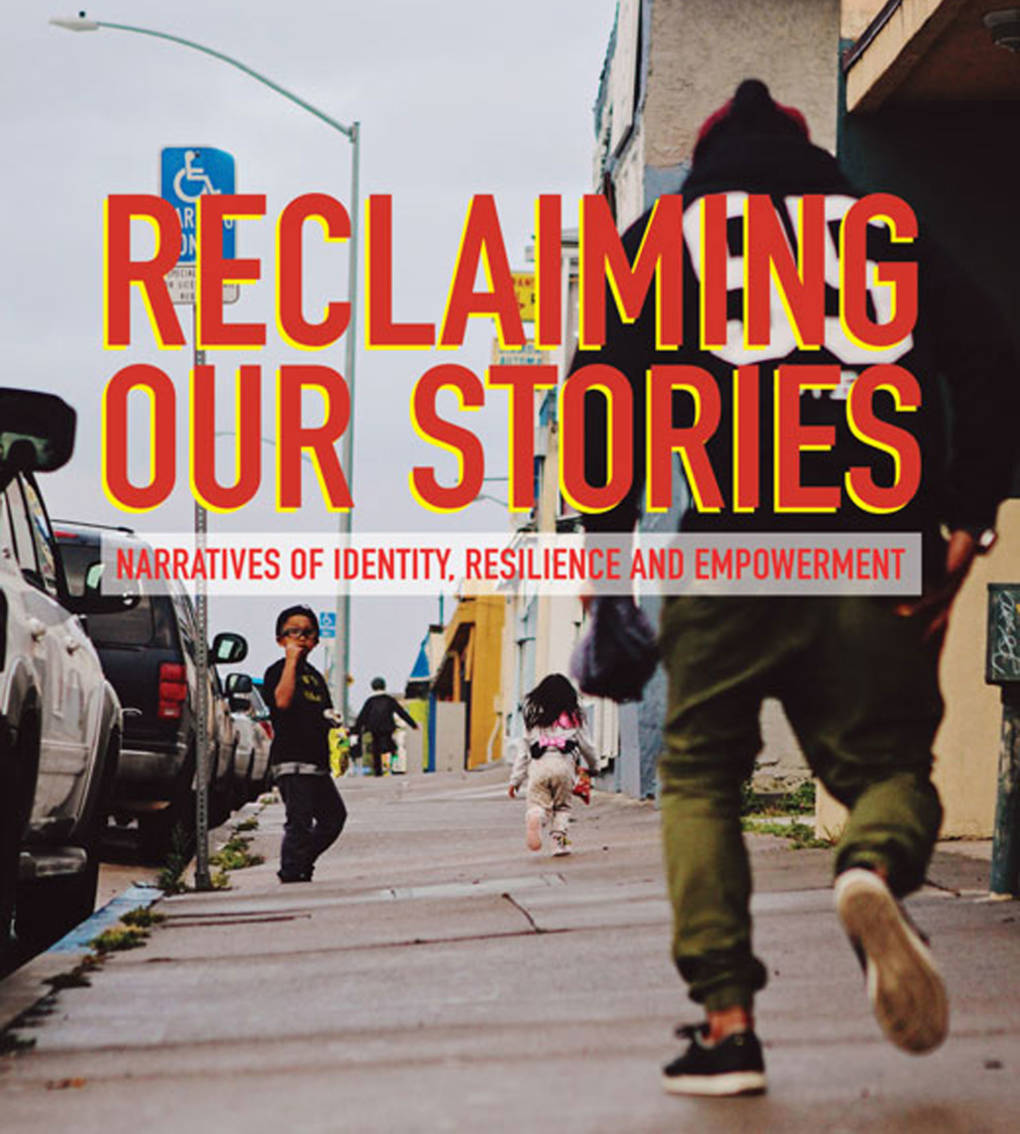
Emerging San Diego Writers ‘Reclaim’ Personal Stories in New Collection
The Power of Moving Water: Some Great Writing on California Storms
Fresh Air Rock Historian Ed Ward Unveils Ambitious 'History of Rock & Roll'
Thomas Friedman on How to Keep Up in the 'Age of Accelerations'
In Michael Chabon's 'Moonglow,' Deathbed Confessions Enhance a Life
Sponsored
Player sponsored by
window.__IS_SSR__=true
window.__INITIAL_STATE__={
"attachmentsReducer": {
"audio_0": {
"type": "attachments",
"id": "audio_0",
"imgSizes": {
"kqedFullSize": {
"file": "https://ww2.kqed.org/news/wp-content/themes/KQED-unified/img/audio_bgs/background0.jpg"
}
}
},
"audio_1": {
"type": "attachments",
"id": "audio_1",
"imgSizes": {
"kqedFullSize": {
"file": "https://ww2.kqed.org/news/wp-content/themes/KQED-unified/img/audio_bgs/background1.jpg"
}
}
},
"audio_2": {
"type": "attachments",
"id": "audio_2",
"imgSizes": {
"kqedFullSize": {
"file": "https://ww2.kqed.org/news/wp-content/themes/KQED-unified/img/audio_bgs/background2.jpg"
}
}
},
"audio_3": {
"type": "attachments",
"id": "audio_3",
"imgSizes": {
"kqedFullSize": {
"file": "https://ww2.kqed.org/news/wp-content/themes/KQED-unified/img/audio_bgs/background3.jpg"
}
}
},
"audio_4": {
"type": "attachments",
"id": "audio_4",
"imgSizes": {
"kqedFullSize": {
"file": "https://ww2.kqed.org/news/wp-content/themes/KQED-unified/img/audio_bgs/background4.jpg"
}
}
},
"placeholder": {
"type": "attachments",
"id": "placeholder",
"imgSizes": {
"thumbnail": {
"file": "https://cdn.kqed.org/wp-content/uploads/2024/12/KQED-Default-Image-816638274-2000x1333-1-160x107.jpg",
"width": 160,
"height": 107,
"mimeType": "image/jpeg"
},
"medium": {
"file": "https://cdn.kqed.org/wp-content/uploads/2024/12/KQED-Default-Image-816638274-2000x1333-1-800x533.jpg",
"width": 800,
"height": 533,
"mimeType": "image/jpeg"
},
"medium_large": {
"file": "https://cdn.kqed.org/wp-content/uploads/2024/12/KQED-Default-Image-816638274-2000x1333-1-768x512.jpg",
"width": 768,
"height": 512,
"mimeType": "image/jpeg"
},
"large": {
"file": "https://cdn.kqed.org/wp-content/uploads/2024/12/KQED-Default-Image-816638274-2000x1333-1-1020x680.jpg",
"width": 1020,
"height": 680,
"mimeType": "image/jpeg"
},
"1536x1536": {
"file": "https://cdn.kqed.org/wp-content/uploads/2024/12/KQED-Default-Image-816638274-2000x1333-1-1536x1024.jpg",
"width": 1536,
"height": 1024,
"mimeType": "image/jpeg"
},
"fd-lrg": {
"file": "https://cdn.kqed.org/wp-content/uploads/2024/12/KQED-Default-Image-816638274-2000x1333-1-1536x1024.jpg",
"width": 1536,
"height": 1024,
"mimeType": "image/jpeg"
},
"fd-med": {
"file": "https://cdn.kqed.org/wp-content/uploads/2024/12/KQED-Default-Image-816638274-2000x1333-1-1020x680.jpg",
"width": 1020,
"height": 680,
"mimeType": "image/jpeg"
},
"fd-sm": {
"file": "https://cdn.kqed.org/wp-content/uploads/2024/12/KQED-Default-Image-816638274-2000x1333-1-800x533.jpg",
"width": 800,
"height": 533,
"mimeType": "image/jpeg"
},
"post-thumbnail": {
"file": "https://cdn.kqed.org/wp-content/uploads/2024/12/KQED-Default-Image-816638274-2000x1333-1-672x372.jpg",
"width": 672,
"height": 372,
"mimeType": "image/jpeg"
},
"twentyfourteen-full-width": {
"file": "https://cdn.kqed.org/wp-content/uploads/2024/12/KQED-Default-Image-816638274-2000x1333-1-1038x576.jpg",
"width": 1038,
"height": 576,
"mimeType": "image/jpeg"
},
"xxsmall": {
"file": "https://cdn.kqed.org/wp-content/uploads/2024/12/KQED-Default-Image-816638274-2000x1333-1-160x107.jpg",
"width": 160,
"height": 107,
"mimeType": "image/jpeg"
},
"xsmall": {
"file": "https://cdn.kqed.org/wp-content/uploads/2024/12/KQED-Default-Image-816638274-2000x1333-1-672x372.jpg",
"width": 672,
"height": 372,
"mimeType": "image/jpeg"
},
"small": {
"file": "https://cdn.kqed.org/wp-content/uploads/2024/12/KQED-Default-Image-816638274-2000x1333-1-672x372.jpg",
"width": 672,
"height": 372,
"mimeType": "image/jpeg"
},
"xlarge": {
"file": "https://cdn.kqed.org/wp-content/uploads/2024/12/KQED-Default-Image-816638274-2000x1333-1-1020x680.jpg",
"width": 1020,
"height": 680,
"mimeType": "image/jpeg"
},
"full-width": {
"file": "https://cdn.kqed.org/wp-content/uploads/2024/12/KQED-Default-Image-816638274-2000x1333-1-1920x1280.jpg",
"width": 1920,
"height": 1280,
"mimeType": "image/jpeg"
},
"guest-author-32": {
"file": "https://cdn.kqed.org/wp-content/uploads/2025/01/KQED-Default-Image-816638274-1333x1333-1-160x160.jpg",
"width": 32,
"height": 32,
"mimeType": "image/jpeg"
},
"guest-author-50": {
"file": "https://cdn.kqed.org/wp-content/uploads/2025/01/KQED-Default-Image-816638274-1333x1333-1-160x160.jpg",
"width": 50,
"height": 50,
"mimeType": "image/jpeg"
},
"guest-author-64": {
"file": "https://cdn.kqed.org/wp-content/uploads/2025/01/KQED-Default-Image-816638274-1333x1333-1-160x160.jpg",
"width": 64,
"height": 64,
"mimeType": "image/jpeg"
},
"guest-author-96": {
"file": "https://cdn.kqed.org/wp-content/uploads/2025/01/KQED-Default-Image-816638274-1333x1333-1-160x160.jpg",
"width": 96,
"height": 96,
"mimeType": "image/jpeg"
},
"guest-author-128": {
"file": "https://cdn.kqed.org/wp-content/uploads/2025/01/KQED-Default-Image-816638274-1333x1333-1-160x160.jpg",
"width": 128,
"height": 128,
"mimeType": "image/jpeg"
},
"detail": {
"file": "https://cdn.kqed.org/wp-content/uploads/2025/01/KQED-Default-Image-816638274-1333x1333-1-160x160.jpg",
"width": 160,
"height": 160,
"mimeType": "image/jpeg"
},
"kqedFullSize": {
"file": "https://cdn.kqed.org/wp-content/uploads/2024/12/KQED-Default-Image-816638274-2000x1333-1.jpg",
"width": 2000,
"height": 1333
}
}
},
"arts_13378873": {
"type": "attachments",
"id": "arts_13378873",
"meta": {
"index": "attachments_1716263798",
"site": "arts",
"id": "13378873",
"found": true
},
"parent": 13337482,
"imgSizes": {
"small": {
"file": "https://ww2.kqed.org/app/uploads/sites/2/2017/06/Roxane-Gay.MAIN_-520x325.jpg",
"width": 520,
"mimeType": "image/jpeg",
"height": 325
},
"thumbnail": {
"file": "https://ww2.kqed.org/app/uploads/sites/2/2017/06/Roxane-Gay.MAIN_-160x100.jpg",
"width": 160,
"mimeType": "image/jpeg",
"height": 100
},
"post-thumbnail": {
"file": "https://ww2.kqed.org/app/uploads/sites/2/2017/06/Roxane-Gay.MAIN_-672x372.jpg",
"width": 672,
"mimeType": "image/jpeg",
"height": 372
},
"xsmall": {
"file": "https://ww2.kqed.org/app/uploads/sites/2/2017/06/Roxane-Gay.MAIN_-375x234.jpg",
"width": 375,
"mimeType": "image/jpeg",
"height": 234
},
"kqedFullSize": {
"file": "https://ww2.kqed.org/app/uploads/sites/2/2017/06/Roxane-Gay.MAIN_.jpg",
"width": 800,
"height": 500
},
"guest-author-50": {
"file": "https://ww2.kqed.org/app/uploads/sites/2/2017/06/Roxane-Gay.MAIN_-50x50.jpg",
"width": 50,
"mimeType": "image/jpeg",
"height": 50
},
"guest-author-96": {
"file": "https://ww2.kqed.org/app/uploads/sites/2/2017/06/Roxane-Gay.MAIN_-96x96.jpg",
"width": 96,
"mimeType": "image/jpeg",
"height": 96
},
"medium": {
"file": "https://ww2.kqed.org/app/uploads/sites/2/2017/06/Roxane-Gay.MAIN_-800x500.jpg",
"width": 800,
"mimeType": "image/jpeg",
"height": 500
},
"guest-author-64": {
"file": "https://ww2.kqed.org/app/uploads/sites/2/2017/06/Roxane-Gay.MAIN_-64x64.jpg",
"width": 64,
"mimeType": "image/jpeg",
"height": 64
},
"guest-author-32": {
"file": "https://ww2.kqed.org/app/uploads/sites/2/2017/06/Roxane-Gay.MAIN_-32x32.jpg",
"width": 32,
"mimeType": "image/jpeg",
"height": 32
},
"detail": {
"file": "https://ww2.kqed.org/app/uploads/sites/2/2017/06/Roxane-Gay.MAIN_-150x150.jpg",
"width": 150,
"mimeType": "image/jpeg",
"height": 150
},
"medium_large": {
"file": "https://ww2.kqed.org/app/uploads/sites/2/2017/06/Roxane-Gay.MAIN_-768x480.jpg",
"width": 768,
"mimeType": "image/jpeg",
"height": 480
},
"guest-author-128": {
"file": "https://ww2.kqed.org/app/uploads/sites/2/2017/06/Roxane-Gay.MAIN_-128x128.jpg",
"width": 128,
"mimeType": "image/jpeg",
"height": 128
},
"xxsmall": {
"file": "https://ww2.kqed.org/app/uploads/sites/2/2017/06/Roxane-Gay.MAIN_-240x150.jpg",
"width": 240,
"mimeType": "image/jpeg",
"height": 150
}
},
"publishDate": 1496731902,
"modified": 1496732035,
"caption": "Roxane Gay.",
"description": "Roxane Gay.",
"title": "Roxane-Gay.MAIN",
"credit": "Photo: Jay Grabiec",
"status": "inherit",
"fetchFailed": false,
"isLoading": false
},
"arts_13322816": {
"type": "attachments",
"id": "arts_13322816",
"meta": {
"index": "attachments_1716263798",
"site": "arts",
"id": "13322816",
"found": true
},
"parent": 13310956,
"imgSizes": {
"small": {
"file": "https://ww2.kqed.org/app/uploads/sites/2/2017/05/AmeliaGray.CRED_-520x293.jpg",
"width": 520,
"mimeType": "image/jpeg",
"height": 293
},
"twentyfourteen-full-width": {
"file": "https://ww2.kqed.org/app/uploads/sites/2/2017/05/AmeliaGray.CRED_-1038x576.jpg",
"width": 1038,
"mimeType": "image/jpeg",
"height": 576
},
"thumbnail": {
"file": "https://ww2.kqed.org/app/uploads/sites/2/2017/05/AmeliaGray.CRED_-160x90.jpg",
"width": 160,
"mimeType": "image/jpeg",
"height": 90
},
"fd-sm": {
"file": "https://ww2.kqed.org/app/uploads/sites/2/2017/05/AmeliaGray.CRED_-960x540.jpg",
"width": 960,
"mimeType": "image/jpeg",
"height": 540
},
"post-thumbnail": {
"file": "https://ww2.kqed.org/app/uploads/sites/2/2017/05/AmeliaGray.CRED_-672x372.jpg",
"width": 672,
"mimeType": "image/jpeg",
"height": 372
},
"xsmall": {
"file": "https://ww2.kqed.org/app/uploads/sites/2/2017/05/AmeliaGray.CRED_-375x211.jpg",
"width": 375,
"mimeType": "image/jpeg",
"height": 211
},
"kqedFullSize": {
"file": "https://ww2.kqed.org/app/uploads/sites/2/2017/05/AmeliaGray.CRED_.jpg",
"width": 1920,
"height": 1080
},
"large": {
"file": "https://ww2.kqed.org/app/uploads/sites/2/2017/05/AmeliaGray.CRED_-1020x574.jpg",
"width": 1020,
"mimeType": "image/jpeg",
"height": 574
},
"xlarge": {
"file": "https://ww2.kqed.org/app/uploads/sites/2/2017/05/AmeliaGray.CRED_-1180x664.jpg",
"width": 1180,
"mimeType": "image/jpeg",
"height": 664
},
"guest-author-50": {
"file": "https://ww2.kqed.org/app/uploads/sites/2/2017/05/AmeliaGray.CRED_-50x50.jpg",
"width": 50,
"mimeType": "image/jpeg",
"height": 50
},
"guest-author-96": {
"file": "https://ww2.kqed.org/app/uploads/sites/2/2017/05/AmeliaGray.CRED_-96x96.jpg",
"width": 96,
"mimeType": "image/jpeg",
"height": 96
},
"medium": {
"file": "https://ww2.kqed.org/app/uploads/sites/2/2017/05/AmeliaGray.CRED_-800x450.jpg",
"width": 800,
"mimeType": "image/jpeg",
"height": 450
},
"guest-author-64": {
"file": "https://ww2.kqed.org/app/uploads/sites/2/2017/05/AmeliaGray.CRED_-64x64.jpg",
"width": 64,
"mimeType": "image/jpeg",
"height": 64
},
"guest-author-32": {
"file": "https://ww2.kqed.org/app/uploads/sites/2/2017/05/AmeliaGray.CRED_-32x32.jpg",
"width": 32,
"mimeType": "image/jpeg",
"height": 32
},
"fd-lrg": {
"file": "https://ww2.kqed.org/app/uploads/sites/2/2017/05/AmeliaGray.CRED_-1920x1080.jpg",
"width": 1920,
"mimeType": "image/jpeg",
"height": 1080
},
"fd-med": {
"file": "https://ww2.kqed.org/app/uploads/sites/2/2017/05/AmeliaGray.CRED_-1180x664.jpg",
"width": 1180,
"mimeType": "image/jpeg",
"height": 664
},
"full-width": {
"file": "https://ww2.kqed.org/app/uploads/sites/2/2017/05/AmeliaGray.CRED_-1920x1080.jpg",
"width": 1920,
"mimeType": "image/jpeg",
"height": 1080
},
"detail": {
"file": "https://ww2.kqed.org/app/uploads/sites/2/2017/05/AmeliaGray.CRED_-150x150.jpg",
"width": 150,
"mimeType": "image/jpeg",
"height": 150
},
"medium_large": {
"file": "https://ww2.kqed.org/app/uploads/sites/2/2017/05/AmeliaGray.CRED_-768x432.jpg",
"width": 768,
"mimeType": "image/jpeg",
"height": 432
},
"guest-author-128": {
"file": "https://ww2.kqed.org/app/uploads/sites/2/2017/05/AmeliaGray.CRED_-128x128.jpg",
"width": 128,
"mimeType": "image/jpeg",
"height": 128
},
"xxsmall": {
"file": "https://ww2.kqed.org/app/uploads/sites/2/2017/05/AmeliaGray.CRED_-240x135.jpg",
"width": 240,
"mimeType": "image/jpeg",
"height": 135
}
},
"publishDate": 1495991806,
"modified": 1495991842,
"caption": "Amelia Gray.",
"description": "Amelia Gray.",
"title": "AmeliaGray.CRED",
"credit": "Matt Chamberlain",
"status": "inherit",
"fetchFailed": false,
"isLoading": false
},
"arts_13037934": {
"type": "attachments",
"id": "arts_13037934",
"meta": {
"index": "attachments_1716263798",
"site": "arts",
"id": "13037934",
"found": true
},
"parent": 13037933,
"imgSizes": {
"small": {
"file": "https://ww2.kqed.org/app/uploads/sites/2/2017/04/eartha-malkasian_custom-cfa443186687e982572597fae963164292a30a70-520x429.jpg",
"width": 520,
"mimeType": "image/jpeg",
"height": 429
},
"twentyfourteen-full-width": {
"file": "https://ww2.kqed.org/app/uploads/sites/2/2017/04/eartha-malkasian_custom-cfa443186687e982572597fae963164292a30a70-1006x576.jpg",
"width": 1006,
"mimeType": "image/jpeg",
"height": 576
},
"thumbnail": {
"file": "https://ww2.kqed.org/app/uploads/sites/2/2017/04/eartha-malkasian_custom-cfa443186687e982572597fae963164292a30a70-160x132.jpg",
"width": 160,
"mimeType": "image/jpeg",
"height": 132
},
"fd-sm": {
"file": "https://ww2.kqed.org/app/uploads/sites/2/2017/04/eartha-malkasian_custom-cfa443186687e982572597fae963164292a30a70-960x792.jpg",
"width": 960,
"mimeType": "image/jpeg",
"height": 792
},
"post-thumbnail": {
"file": "https://ww2.kqed.org/app/uploads/sites/2/2017/04/eartha-malkasian_custom-cfa443186687e982572597fae963164292a30a70-672x372.jpg",
"width": 672,
"mimeType": "image/jpeg",
"height": 372
},
"xsmall": {
"file": "https://ww2.kqed.org/app/uploads/sites/2/2017/04/eartha-malkasian_custom-cfa443186687e982572597fae963164292a30a70-375x309.jpg",
"width": 375,
"mimeType": "image/jpeg",
"height": 309
},
"kqedFullSize": {
"file": "https://ww2.kqed.org/app/uploads/sites/2/2017/04/eartha-malkasian_custom-cfa443186687e982572597fae963164292a30a70.jpg",
"width": 1006,
"height": 830
},
"guest-author-50": {
"file": "https://ww2.kqed.org/app/uploads/sites/2/2017/04/eartha-malkasian_custom-cfa443186687e982572597fae963164292a30a70-50x50.jpg",
"width": 50,
"mimeType": "image/jpeg",
"height": 50
},
"guest-author-96": {
"file": "https://ww2.kqed.org/app/uploads/sites/2/2017/04/eartha-malkasian_custom-cfa443186687e982572597fae963164292a30a70-96x96.jpg",
"width": 96,
"mimeType": "image/jpeg",
"height": 96
},
"medium": {
"file": "https://ww2.kqed.org/app/uploads/sites/2/2017/04/eartha-malkasian_custom-cfa443186687e982572597fae963164292a30a70-800x660.jpg",
"width": 800,
"mimeType": "image/jpeg",
"height": 660
},
"guest-author-64": {
"file": "https://ww2.kqed.org/app/uploads/sites/2/2017/04/eartha-malkasian_custom-cfa443186687e982572597fae963164292a30a70-64x64.jpg",
"width": 64,
"mimeType": "image/jpeg",
"height": 64
},
"guest-author-32": {
"file": "https://ww2.kqed.org/app/uploads/sites/2/2017/04/eartha-malkasian_custom-cfa443186687e982572597fae963164292a30a70-32x32.jpg",
"width": 32,
"mimeType": "image/jpeg",
"height": 32
},
"detail": {
"file": "https://ww2.kqed.org/app/uploads/sites/2/2017/04/eartha-malkasian_custom-cfa443186687e982572597fae963164292a30a70-150x150.jpg",
"width": 150,
"mimeType": "image/jpeg",
"height": 150
},
"medium_large": {
"file": "https://ww2.kqed.org/app/uploads/sites/2/2017/04/eartha-malkasian_custom-cfa443186687e982572597fae963164292a30a70-768x634.jpg",
"width": 768,
"mimeType": "image/jpeg",
"height": 634
},
"guest-author-128": {
"file": "https://ww2.kqed.org/app/uploads/sites/2/2017/04/eartha-malkasian_custom-cfa443186687e982572597fae963164292a30a70-128x128.jpg",
"width": 128,
"mimeType": "image/jpeg",
"height": 128
},
"xxsmall": {
"file": "https://ww2.kqed.org/app/uploads/sites/2/2017/04/eartha-malkasian_custom-cfa443186687e982572597fae963164292a30a70-240x198.jpg",
"width": 240,
"mimeType": "image/jpeg",
"height": 198
}
},
"publishDate": 1491947957,
"modified": 1491948284,
"caption": "A moment of discovery from Cathy Malkasian's richly melancholic graphic novel 'Eartha'",
"description": "A moment of discovery from Cathy Malkasian's richly melancholic graphic novel 'Eartha'",
"title": "A moment of discovery from Cathy Malkasian's richly melancholic graphic novel Eartha.",
"credit": "Courtesy of Fantagraphics Books",
"status": "inherit",
"fetchFailed": false,
"isLoading": false
},
"pop_61153": {
"type": "attachments",
"id": "pop_61153",
"meta": {
"index": "attachments_1716263798",
"site": "pop",
"id": "61153",
"found": true
},
"parent": 61150,
"imgSizes": {
"small": {
"file": "https://ww2.kqed.org/app/uploads/sites/12/2017/01/george-orwell-1984-e1485359680299-520x293.jpg",
"width": 520,
"mimeType": "image/jpeg",
"height": 293
},
"twentyfourteen-full-width": {
"file": "https://ww2.kqed.org/app/uploads/sites/12/2017/01/george-orwell-1984-e1485359680299-1038x576.jpg",
"width": 1038,
"mimeType": "image/jpeg",
"height": 576
},
"thumbnail": {
"file": "https://ww2.kqed.org/app/uploads/sites/12/2017/01/george-orwell-1984-e1485359680299-160x90.jpg",
"width": 160,
"mimeType": "image/jpeg",
"height": 90
},
"fd-sm": {
"file": "https://ww2.kqed.org/app/uploads/sites/12/2017/01/george-orwell-1984-e1485359680299-960x541.jpg",
"width": 960,
"mimeType": "image/jpeg",
"height": 541
},
"post-thumbnail": {
"file": "https://ww2.kqed.org/app/uploads/sites/12/2017/01/george-orwell-1984-e1485359680299-672x372.jpg",
"width": 672,
"mimeType": "image/jpeg",
"height": 372
},
"xsmall": {
"file": "https://ww2.kqed.org/app/uploads/sites/12/2017/01/george-orwell-1984-e1485359680299-375x211.jpg",
"width": 375,
"mimeType": "image/jpeg",
"height": 211
},
"kqedFullSize": {
"file": "https://ww2.kqed.org/app/uploads/sites/12/2017/01/george-orwell-1984-e1485359680299.jpg",
"width": 1265,
"height": 713
},
"large": {
"file": "https://ww2.kqed.org/app/uploads/sites/12/2017/01/george-orwell-1984-e1485359680299-1020x575.jpg",
"width": 1020,
"mimeType": "image/jpeg",
"height": 575
},
"xlarge": {
"file": "https://ww2.kqed.org/app/uploads/sites/12/2017/01/george-orwell-1984-e1485359680299-1180x665.jpg",
"width": 1180,
"mimeType": "image/jpeg",
"height": 665
},
"guest-author-50": {
"file": "https://ww2.kqed.org/app/uploads/sites/12/2017/01/george-orwell-1984-e1485359680299-50x50.jpg",
"width": 50,
"mimeType": "image/jpeg",
"height": 50
},
"guest-author-96": {
"file": "https://ww2.kqed.org/app/uploads/sites/12/2017/01/george-orwell-1984-e1485359680299-96x96.jpg",
"width": 96,
"mimeType": "image/jpeg",
"height": 96
},
"medium": {
"file": "https://ww2.kqed.org/app/uploads/sites/12/2017/01/george-orwell-1984-e1485359680299-800x451.jpg",
"width": 800,
"mimeType": "image/jpeg",
"height": 451
},
"guest-author-64": {
"file": "https://ww2.kqed.org/app/uploads/sites/12/2017/01/george-orwell-1984-e1485359680299-64x64.jpg",
"width": 64,
"mimeType": "image/jpeg",
"height": 64
},
"guest-author-32": {
"file": "https://ww2.kqed.org/app/uploads/sites/12/2017/01/george-orwell-1984-e1485359680299-32x32.jpg",
"width": 32,
"mimeType": "image/jpeg",
"height": 32
},
"fd-med": {
"file": "https://ww2.kqed.org/app/uploads/sites/12/2017/01/george-orwell-1984-e1485359680299-1180x665.jpg",
"width": 1180,
"mimeType": "image/jpeg",
"height": 665
},
"detail": {
"file": "https://ww2.kqed.org/app/uploads/sites/12/2017/01/george-orwell-1984-e1485359680299-150x150.jpg",
"width": 150,
"mimeType": "image/jpeg",
"height": 150
},
"medium_large": {
"file": "https://ww2.kqed.org/app/uploads/sites/12/2017/01/george-orwell-1984-e1485359680299-768x433.jpg",
"width": 768,
"mimeType": "image/jpeg",
"height": 433
},
"guest-author-128": {
"file": "https://ww2.kqed.org/app/uploads/sites/12/2017/01/george-orwell-1984-e1485359680299-128x128.jpg",
"width": 128,
"mimeType": "image/jpeg",
"height": 128
},
"xxsmall": {
"file": "https://ww2.kqed.org/app/uploads/sites/12/2017/01/george-orwell-1984-e1485359680299-240x135.jpg",
"width": 240,
"mimeType": "image/jpeg",
"height": 135
}
},
"publishDate": 1485561940,
"modified": 1485561940,
"caption": null,
"description": null,
"title": "george-orwell-1984-e1485359680299",
"credit": null,
"status": "inherit",
"fetchFailed": false,
"isLoading": false
},
"news_11263702": {
"type": "attachments",
"id": "news_11263702",
"meta": {
"index": "attachments_1716263798",
"site": "news",
"id": "11263702",
"found": true
},
"parent": 11262174,
"imgSizes": {
"small": {
"file": "https://ww2.kqed.org/app/uploads/sites/10/2017/01/ReclaimingStories-520x578.jpg",
"width": 520,
"mimeType": "image/jpeg",
"height": 578
},
"twentyfourteen-full-width": {
"file": "https://ww2.kqed.org/app/uploads/sites/10/2017/01/ReclaimingStories-1038x576.jpg",
"width": 1038,
"mimeType": "image/jpeg",
"height": 576
},
"thumbnail": {
"file": "https://ww2.kqed.org/app/uploads/sites/10/2017/01/ReclaimingStories-160x178.jpg",
"width": 160,
"mimeType": "image/jpeg",
"height": 178
},
"fd-sm": {
"file": "https://ww2.kqed.org/app/uploads/sites/10/2017/01/ReclaimingStories-960x1068.jpg",
"width": 960,
"mimeType": "image/jpeg",
"height": 1068
},
"post-thumbnail": {
"file": "https://ww2.kqed.org/app/uploads/sites/10/2017/01/ReclaimingStories-672x372.jpg",
"width": 672,
"mimeType": "image/jpeg",
"height": 372
},
"xsmall": {
"file": "https://ww2.kqed.org/app/uploads/sites/10/2017/01/ReclaimingStories-375x417.jpg",
"width": 375,
"mimeType": "image/jpeg",
"height": 417
},
"kqedFullSize": {
"file": "https://ww2.kqed.org/app/uploads/sites/10/2017/01/ReclaimingStories.jpg",
"width": 1920,
"height": 2135
},
"large": {
"file": "https://ww2.kqed.org/app/uploads/sites/10/2017/01/ReclaimingStories-1020x1134.jpg",
"width": 1020,
"mimeType": "image/jpeg",
"height": 1134
},
"xlarge": {
"file": "https://ww2.kqed.org/app/uploads/sites/10/2017/01/ReclaimingStories-1180x1312.jpg",
"width": 1180,
"mimeType": "image/jpeg",
"height": 1312
},
"guest-author-50": {
"file": "https://ww2.kqed.org/app/uploads/sites/10/2017/01/ReclaimingStories-50x50.jpg",
"width": 50,
"mimeType": "image/jpeg",
"height": 50
},
"guest-author-96": {
"file": "https://ww2.kqed.org/app/uploads/sites/10/2017/01/ReclaimingStories-96x96.jpg",
"width": 96,
"mimeType": "image/jpeg",
"height": 96
},
"medium": {
"file": "https://ww2.kqed.org/app/uploads/sites/10/2017/01/ReclaimingStories-800x890.jpg",
"width": 800,
"mimeType": "image/jpeg",
"height": 890
},
"guest-author-64": {
"file": "https://ww2.kqed.org/app/uploads/sites/10/2017/01/ReclaimingStories-64x64.jpg",
"width": 64,
"mimeType": "image/jpeg",
"height": 64
},
"guest-author-32": {
"file": "https://ww2.kqed.org/app/uploads/sites/10/2017/01/ReclaimingStories-32x32.jpg",
"width": 32,
"mimeType": "image/jpeg",
"height": 32
},
"jmtc-small-thumb": {
"file": "https://ww2.kqed.org/app/uploads/sites/10/2017/01/ReclaimingStories-280x150.jpg",
"width": 280,
"mimeType": "image/jpeg",
"height": 150
},
"fd-lrg": {
"file": "https://ww2.kqed.org/app/uploads/sites/10/2017/01/ReclaimingStories-1920x2135.jpg",
"width": 1920,
"mimeType": "image/jpeg",
"height": 2135
},
"fd-med": {
"file": "https://ww2.kqed.org/app/uploads/sites/10/2017/01/ReclaimingStories-1180x1312.jpg",
"width": 1180,
"mimeType": "image/jpeg",
"height": 1312
},
"full-width": {
"file": "https://ww2.kqed.org/app/uploads/sites/10/2017/01/ReclaimingStories-1920x2135.jpg",
"width": 1920,
"mimeType": "image/jpeg",
"height": 2135
},
"detail": {
"file": "https://ww2.kqed.org/app/uploads/sites/10/2017/01/ReclaimingStories-150x150.jpg",
"width": 150,
"mimeType": "image/jpeg",
"height": 150
},
"guest-author-128": {
"file": "https://ww2.kqed.org/app/uploads/sites/10/2017/01/ReclaimingStories-128x128.jpg",
"width": 128,
"mimeType": "image/jpeg",
"height": 128
},
"xxsmall": {
"file": "https://ww2.kqed.org/app/uploads/sites/10/2017/01/ReclaimingStories-240x267.jpg",
"width": 240,
"mimeType": "image/jpeg",
"height": 267
}
},
"publishDate": 1484087356,
"modified": 1484087388,
"caption": "The 'Reclaiming Our Stories' collection features first-person narratives from 19 authors in San Diego.",
"description": "The 'Reclaiming Our Stories' collection features first-person narratives from 19 authors in San Diego.",
"title": "reclaimingstories",
"credit": null,
"status": "inherit",
"fetchFailed": false,
"isLoading": false
},
"news_11255517": {
"type": "attachments",
"id": "news_11255517",
"meta": {
"index": "attachments_1716263798",
"site": "news",
"id": "11255517",
"found": true
},
"parent": 11255257,
"imgSizes": {
"small": {
"file": "https://ww2.kqed.org/app/uploads/sites/10/2017/01/oroville1986-520x401.jpg",
"width": 520,
"mimeType": "image/jpeg",
"height": 401
},
"twentyfourteen-full-width": {
"file": "https://ww2.kqed.org/app/uploads/sites/10/2017/01/oroville1986-1024x576.jpg",
"width": 1024,
"mimeType": "image/jpeg",
"height": 576
},
"thumbnail": {
"file": "https://ww2.kqed.org/app/uploads/sites/10/2017/01/oroville1986-160x123.jpg",
"width": 160,
"mimeType": "image/jpeg",
"height": 123
},
"fd-sm": {
"file": "https://ww2.kqed.org/app/uploads/sites/10/2017/01/oroville1986-960x741.jpg",
"width": 960,
"mimeType": "image/jpeg",
"height": 741
},
"post-thumbnail": {
"file": "https://ww2.kqed.org/app/uploads/sites/10/2017/01/oroville1986-672x372.jpg",
"width": 672,
"mimeType": "image/jpeg",
"height": 372
},
"xsmall": {
"file": "https://ww2.kqed.org/app/uploads/sites/10/2017/01/oroville1986-375x289.jpg",
"width": 375,
"mimeType": "image/jpeg",
"height": 289
},
"kqedFullSize": {
"file": "https://ww2.kqed.org/app/uploads/sites/10/2017/01/oroville1986.jpg",
"width": 1024,
"height": 790
},
"large": {
"file": "https://ww2.kqed.org/app/uploads/sites/10/2017/01/oroville1986-1020x787.jpg",
"width": 1020,
"mimeType": "image/jpeg",
"height": 787
},
"guest-author-50": {
"file": "https://ww2.kqed.org/app/uploads/sites/10/2017/01/oroville1986-50x50.jpg",
"width": 50,
"mimeType": "image/jpeg",
"height": 50
},
"guest-author-96": {
"file": "https://ww2.kqed.org/app/uploads/sites/10/2017/01/oroville1986-96x96.jpg",
"width": 96,
"mimeType": "image/jpeg",
"height": 96
},
"medium": {
"file": "https://ww2.kqed.org/app/uploads/sites/10/2017/01/oroville1986-800x617.jpg",
"width": 800,
"mimeType": "image/jpeg",
"height": 617
},
"guest-author-64": {
"file": "https://ww2.kqed.org/app/uploads/sites/10/2017/01/oroville1986-64x64.jpg",
"width": 64,
"mimeType": "image/jpeg",
"height": 64
},
"guest-author-32": {
"file": "https://ww2.kqed.org/app/uploads/sites/10/2017/01/oroville1986-32x32.jpg",
"width": 32,
"mimeType": "image/jpeg",
"height": 32
},
"jmtc-small-thumb": {
"file": "https://ww2.kqed.org/app/uploads/sites/10/2017/01/oroville1986-280x150.jpg",
"width": 280,
"mimeType": "image/jpeg",
"height": 150
},
"detail": {
"file": "https://ww2.kqed.org/app/uploads/sites/10/2017/01/oroville1986-150x150.jpg",
"width": 150,
"mimeType": "image/jpeg",
"height": 150
},
"guest-author-128": {
"file": "https://ww2.kqed.org/app/uploads/sites/10/2017/01/oroville1986-128x128.jpg",
"width": 128,
"mimeType": "image/jpeg",
"height": 128
},
"xxsmall": {
"file": "https://ww2.kqed.org/app/uploads/sites/10/2017/01/oroville1986-240x185.jpg",
"width": 240,
"mimeType": "image/jpeg",
"height": 185
}
},
"publishDate": 1483656377,
"modified": 1483656424,
"caption": "Water pounding down the spillway at Oroville Dam during February 1986 storms. ",
"description": null,
"title": "Oroville 1986",
"credit": "California Department of Water Resources",
"status": "inherit",
"fetchFailed": false,
"isLoading": false
},
"forum_2010101858057": {
"type": "attachments",
"id": "forum_2010101858057",
"meta": {
"index": "attachments_1716263798",
"site": "forum",
"id": "2010101858057",
"found": true
},
"parent": 2010101858056,
"imgSizes": {
"small": {
"file": "https://ww2.kqed.org/app/uploads/sites/43/2016/12/ed-ward-cropped-520x293.jpg",
"width": 520,
"mimeType": "image/jpeg",
"height": 293
},
"twentyfourteen-full-width": {
"file": "https://ww2.kqed.org/app/uploads/sites/43/2016/12/ed-ward-cropped-1038x576.jpg",
"width": 1038,
"mimeType": "image/jpeg",
"height": 576
},
"thumbnail": {
"file": "https://ww2.kqed.org/app/uploads/sites/43/2016/12/ed-ward-cropped-160x90.jpg",
"width": 160,
"mimeType": "image/jpeg",
"height": 90
},
"fd-sm": {
"file": "https://ww2.kqed.org/app/uploads/sites/43/2016/12/ed-ward-cropped-960x540.jpg",
"width": 960,
"mimeType": "image/jpeg",
"height": 540
},
"post-thumbnail": {
"file": "https://ww2.kqed.org/app/uploads/sites/43/2016/12/ed-ward-cropped-672x372.jpg",
"width": 672,
"mimeType": "image/jpeg",
"height": 372
},
"xsmall": {
"file": "https://ww2.kqed.org/app/uploads/sites/43/2016/12/ed-ward-cropped-375x211.jpg",
"width": 375,
"mimeType": "image/jpeg",
"height": 211
},
"kqedFullSize": {
"file": "https://ww2.kqed.org/app/uploads/sites/43/2016/12/ed-ward-cropped.jpg",
"width": 1920,
"height": 1080
},
"large": {
"file": "https://ww2.kqed.org/app/uploads/sites/43/2016/12/ed-ward-cropped-1020x574.jpg",
"width": 1020,
"mimeType": "image/jpeg",
"height": 574
},
"xlarge": {
"file": "https://ww2.kqed.org/app/uploads/sites/43/2016/12/ed-ward-cropped-1180x664.jpg",
"width": 1180,
"mimeType": "image/jpeg",
"height": 664
},
"guest-author-50": {
"file": "https://ww2.kqed.org/app/uploads/sites/43/2016/12/ed-ward-cropped-50x50.jpg",
"width": 50,
"mimeType": "image/jpeg",
"height": 50
},
"guest-author-96": {
"file": "https://ww2.kqed.org/app/uploads/sites/43/2016/12/ed-ward-cropped-96x96.jpg",
"width": 96,
"mimeType": "image/jpeg",
"height": 96
},
"medium": {
"file": "https://ww2.kqed.org/app/uploads/sites/43/2016/12/ed-ward-cropped-800x450.jpg",
"width": 800,
"mimeType": "image/jpeg",
"height": 450
},
"guest-author-64": {
"file": "https://ww2.kqed.org/app/uploads/sites/43/2016/12/ed-ward-cropped-64x64.jpg",
"width": 64,
"mimeType": "image/jpeg",
"height": 64
},
"guest-author-32": {
"file": "https://ww2.kqed.org/app/uploads/sites/43/2016/12/ed-ward-cropped-32x32.jpg",
"width": 32,
"mimeType": "image/jpeg",
"height": 32
},
"fd-lrg": {
"file": "https://ww2.kqed.org/app/uploads/sites/43/2016/12/ed-ward-cropped-1920x1080.jpg",
"width": 1920,
"mimeType": "image/jpeg",
"height": 1080
},
"fd-med": {
"file": "https://ww2.kqed.org/app/uploads/sites/43/2016/12/ed-ward-cropped-1180x664.jpg",
"width": 1180,
"mimeType": "image/jpeg",
"height": 664
},
"full-width": {
"file": "https://ww2.kqed.org/app/uploads/sites/43/2016/12/ed-ward-cropped-1920x1080.jpg",
"width": 1920,
"mimeType": "image/jpeg",
"height": 1080
},
"detail": {
"file": "https://ww2.kqed.org/app/uploads/sites/43/2016/12/ed-ward-cropped-150x150.jpg",
"width": 150,
"mimeType": "image/jpeg",
"height": 150
},
"medium_large": {
"file": "https://ww2.kqed.org/app/uploads/sites/43/2016/12/ed-ward-cropped-768x432.jpg",
"width": 768,
"mimeType": "image/jpeg",
"height": 432
},
"guest-author-128": {
"file": "https://ww2.kqed.org/app/uploads/sites/43/2016/12/ed-ward-cropped-128x128.jpg",
"width": 128,
"mimeType": "image/jpeg",
"height": 128
},
"xxsmall": {
"file": "https://ww2.kqed.org/app/uploads/sites/43/2016/12/ed-ward-cropped-240x135.jpg",
"width": 240,
"mimeType": "image/jpeg",
"height": 135
}
},
"publishDate": 1482368149,
"modified": 1482368496,
"caption": null,
"description": null,
"title": "ed-ward-cropped",
"credit": "Photo: Todd V. Wolfson",
"status": "inherit",
"fetchFailed": false,
"isLoading": false
},
"forum_2010101857767": {
"type": "attachments",
"id": "forum_2010101857767",
"meta": {
"index": "attachments_1716263798",
"site": "forum",
"id": "2010101857767",
"found": true
},
"parent": 2010101857764,
"imgSizes": {
"small": {
"file": "https://ww2.kqed.org/app/uploads/sites/43/2016/12/Thomas-Friedman-for-Forum-520x293.jpg",
"width": 520,
"mimeType": "image/jpeg",
"height": 293
},
"twentyfourteen-full-width": {
"file": "https://ww2.kqed.org/app/uploads/sites/43/2016/12/Thomas-Friedman-for-Forum-1038x576.jpg",
"width": 1038,
"mimeType": "image/jpeg",
"height": 576
},
"thumbnail": {
"file": "https://ww2.kqed.org/app/uploads/sites/43/2016/12/Thomas-Friedman-for-Forum-160x90.jpg",
"width": 160,
"mimeType": "image/jpeg",
"height": 90
},
"fd-sm": {
"file": "https://ww2.kqed.org/app/uploads/sites/43/2016/12/Thomas-Friedman-for-Forum-960x540.jpg",
"width": 960,
"mimeType": "image/jpeg",
"height": 540
},
"post-thumbnail": {
"file": "https://ww2.kqed.org/app/uploads/sites/43/2016/12/Thomas-Friedman-for-Forum-672x372.jpg",
"width": 672,
"mimeType": "image/jpeg",
"height": 372
},
"xsmall": {
"file": "https://ww2.kqed.org/app/uploads/sites/43/2016/12/Thomas-Friedman-for-Forum-375x211.jpg",
"width": 375,
"mimeType": "image/jpeg",
"height": 211
},
"kqedFullSize": {
"file": "https://ww2.kqed.org/app/uploads/sites/43/2016/12/Thomas-Friedman-for-Forum.jpg",
"width": 1920,
"height": 1080
},
"large": {
"file": "https://ww2.kqed.org/app/uploads/sites/43/2016/12/Thomas-Friedman-for-Forum-1020x574.jpg",
"width": 1020,
"mimeType": "image/jpeg",
"height": 574
},
"xlarge": {
"file": "https://ww2.kqed.org/app/uploads/sites/43/2016/12/Thomas-Friedman-for-Forum-1180x664.jpg",
"width": 1180,
"mimeType": "image/jpeg",
"height": 664
},
"guest-author-50": {
"file": "https://ww2.kqed.org/app/uploads/sites/43/2016/12/Thomas-Friedman-for-Forum-50x50.jpg",
"width": 50,
"mimeType": "image/jpeg",
"height": 50
},
"guest-author-96": {
"file": "https://ww2.kqed.org/app/uploads/sites/43/2016/12/Thomas-Friedman-for-Forum-96x96.jpg",
"width": 96,
"mimeType": "image/jpeg",
"height": 96
},
"medium": {
"file": "https://ww2.kqed.org/app/uploads/sites/43/2016/12/Thomas-Friedman-for-Forum-800x450.jpg",
"width": 800,
"mimeType": "image/jpeg",
"height": 450
},
"guest-author-64": {
"file": "https://ww2.kqed.org/app/uploads/sites/43/2016/12/Thomas-Friedman-for-Forum-64x64.jpg",
"width": 64,
"mimeType": "image/jpeg",
"height": 64
},
"guest-author-32": {
"file": "https://ww2.kqed.org/app/uploads/sites/43/2016/12/Thomas-Friedman-for-Forum-32x32.jpg",
"width": 32,
"mimeType": "image/jpeg",
"height": 32
},
"fd-lrg": {
"file": "https://ww2.kqed.org/app/uploads/sites/43/2016/12/Thomas-Friedman-for-Forum-1920x1080.jpg",
"width": 1920,
"mimeType": "image/jpeg",
"height": 1080
},
"fd-med": {
"file": "https://ww2.kqed.org/app/uploads/sites/43/2016/12/Thomas-Friedman-for-Forum-1180x664.jpg",
"width": 1180,
"mimeType": "image/jpeg",
"height": 664
},
"full-width": {
"file": "https://ww2.kqed.org/app/uploads/sites/43/2016/12/Thomas-Friedman-for-Forum-1920x1080.jpg",
"width": 1920,
"mimeType": "image/jpeg",
"height": 1080
},
"detail": {
"file": "https://ww2.kqed.org/app/uploads/sites/43/2016/12/Thomas-Friedman-for-Forum-150x150.jpg",
"width": 150,
"mimeType": "image/jpeg",
"height": 150
},
"medium_large": {
"file": "https://ww2.kqed.org/app/uploads/sites/43/2016/12/Thomas-Friedman-for-Forum-768x432.jpg",
"width": 768,
"mimeType": "image/jpeg",
"height": 432
},
"guest-author-128": {
"file": "https://ww2.kqed.org/app/uploads/sites/43/2016/12/Thomas-Friedman-for-Forum-128x128.jpg",
"width": 128,
"mimeType": "image/jpeg",
"height": 128
},
"xxsmall": {
"file": "https://ww2.kqed.org/app/uploads/sites/43/2016/12/Thomas-Friedman-for-Forum-240x135.jpg",
"width": 240,
"mimeType": "image/jpeg",
"height": 135
}
},
"publishDate": 1481053971,
"modified": 1481054038,
"caption": "Thomas Friedman",
"description": null,
"title": "thomas-friedman-for-forum",
"credit": "Photo: Ralph Alswang",
"status": "inherit",
"fetchFailed": false,
"isLoading": false
},
"arts_12358580": {
"type": "attachments",
"id": "arts_12358580",
"meta": {
"index": "attachments_1716263798",
"site": "arts",
"id": "12358580",
"found": true
},
"parent": 12355524,
"imgSizes": {
"small": {
"file": "https://ww2.kqed.org/app/uploads/sites/2/2016/11/MichaelChabon-520x307.jpg",
"width": 520,
"mimeType": "image/jpeg",
"height": 307
},
"thumbnail": {
"file": "https://ww2.kqed.org/app/uploads/sites/2/2016/11/MichaelChabon-160x95.jpg",
"width": 160,
"mimeType": "image/jpeg",
"height": 95
},
"post-thumbnail": {
"file": "https://ww2.kqed.org/app/uploads/sites/2/2016/11/MichaelChabon-672x372.jpg",
"width": 672,
"mimeType": "image/jpeg",
"height": 372
},
"xsmall": {
"file": "https://ww2.kqed.org/app/uploads/sites/2/2016/11/MichaelChabon-375x222.jpg",
"width": 375,
"mimeType": "image/jpeg",
"height": 222
},
"kqedFullSize": {
"file": "https://ww2.kqed.org/app/uploads/sites/2/2016/11/MichaelChabon.jpg",
"width": 860,
"height": 508
},
"guest-author-50": {
"file": "https://ww2.kqed.org/app/uploads/sites/2/2016/11/MichaelChabon-50x50.jpg",
"width": 50,
"mimeType": "image/jpeg",
"height": 50
},
"guest-author-96": {
"file": "https://ww2.kqed.org/app/uploads/sites/2/2016/11/MichaelChabon-96x96.jpg",
"width": 96,
"mimeType": "image/jpeg",
"height": 96
},
"medium": {
"file": "https://ww2.kqed.org/app/uploads/sites/2/2016/11/MichaelChabon-800x473.jpg",
"width": 800,
"mimeType": "image/jpeg",
"height": 473
},
"guest-author-64": {
"file": "https://ww2.kqed.org/app/uploads/sites/2/2016/11/MichaelChabon-64x64.jpg",
"width": 64,
"mimeType": "image/jpeg",
"height": 64
},
"guest-author-32": {
"file": "https://ww2.kqed.org/app/uploads/sites/2/2016/11/MichaelChabon-32x32.jpg",
"width": 32,
"mimeType": "image/jpeg",
"height": 32
},
"detail": {
"file": "https://ww2.kqed.org/app/uploads/sites/2/2016/11/MichaelChabon-150x150.jpg",
"width": 150,
"mimeType": "image/jpeg",
"height": 150
},
"medium_large": {
"file": "https://ww2.kqed.org/app/uploads/sites/2/2016/11/MichaelChabon-768x454.jpg",
"width": 768,
"mimeType": "image/jpeg",
"height": 454
},
"guest-author-128": {
"file": "https://ww2.kqed.org/app/uploads/sites/2/2016/11/MichaelChabon-128x128.jpg",
"width": 128,
"mimeType": "image/jpeg",
"height": 128
},
"xxsmall": {
"file": "https://ww2.kqed.org/app/uploads/sites/2/2016/11/MichaelChabon-240x142.jpg",
"width": 240,
"mimeType": "image/jpeg",
"height": 142
}
},
"publishDate": 1479403546,
"modified": 1479403586,
"caption": "Michael Chabon.",
"description": "Michael Chabon.",
"title": "michaelchabon",
"credit": "Photo: Benjamin Tice Smith",
"status": "inherit",
"fetchFailed": false,
"isLoading": false
}
},
"audioPlayerReducer": {
"postId": "stream_live",
"isPaused": true,
"isPlaying": false,
"pfsActive": false,
"pledgeModalIsOpen": true,
"playerDrawerIsOpen": false
},
"authorsReducer": {
"byline_arts_13037933": {
"type": "authors",
"id": "byline_arts_13037933",
"meta": {
"override": true
},
"slug": "byline_arts_13037933",
"name": "Glen Weldon",
"isLoading": false
},
"byline_pop_61150": {
"type": "authors",
"id": "byline_pop_61150",
"meta": {
"override": true
},
"slug": "byline_pop_61150",
"name": "Petra Mayer",
"isLoading": false
},
"danbrekke": {
"type": "authors",
"id": "222",
"meta": {
"index": "authors_1716337520",
"id": "222",
"found": true
},
"name": "Dan Brekke",
"firstName": "Dan",
"lastName": "Brekke",
"slug": "danbrekke",
"email": "dbrekke@kqed.org",
"display_author_email": true,
"staff_mastheads": [
"news",
"science"
],
"title": "KQED Editor and Reporter",
"bio": "Dan Brekke is a reporter and editor for KQED News, responsible for coverage of topics ranging from California water issues to the Bay Area's transportation challenges. In a newsroom career that began in Chicago in 1972, Dan has worked for \u003cem>The San Francisco Examiner,\u003c/em> Wired and TechTV and has been published in The New York Times, The New York Times Magazine, Business 2.0, Salon and elsewhere.\r\n\r\nSince joining KQED in 2007, Dan has reported, edited and produced both radio and online features and breaking news pieces. He has shared as both editor and reporter in four Society of Professional Journalists Norcal Excellence in Journalism awards and one Edward R. Murrow regional award. He was chosen for a spring 2017 residency at the Mesa Refuge to advance his research on California salmon.\r\n\r\nEmail Dan at: \u003ca href=\"mailto:dbrekke@kqed.org\">dbrekke@kqed.org\u003c/a>\r\n\r\n\u003cstrong>Twitter:\u003c/strong> \u003ca href=\"https://twitter.com/danbrekke\" rel=\"noopener noreferrer\">twitter.com/danbrekke\u003c/a>\r\n\u003cstrong>Facebook:\u003c/strong> \u003ca href=\"https://www.facebook.com/danbrekke\" rel=\"noopener noreferrer\">www.facebook.com/danbrekke\u003c/a>\r\n\u003cstrong>LinkedIn:\u003c/strong> \u003ca href=\"https://www.linkedin.com/in/danbrekke\" rel=\"noopener noreferrer\">www.linkedin.com/in/danbrekke\u003c/a>",
"avatar": "https://secure.gravatar.com/avatar/c8126230345efca3f7aa89b1a402be45?s=600&d=mm&r=g",
"twitter": "danbrekke",
"facebook": null,
"instagram": "https://www.instagram.com/dan.brekke/",
"linkedin": "https://www.linkedin.com/in/danbrekke/",
"sites": [
{
"site": "news",
"roles": [
"administrator",
"create_posts"
]
},
{
"site": "stateofhealth",
"roles": [
"editor"
]
},
{
"site": "science",
"roles": [
"editor"
]
},
{
"site": "quest",
"roles": [
"contributor"
]
},
{
"site": "food",
"roles": [
"contributor"
]
},
{
"site": "forum",
"roles": [
"contributor"
]
},
{
"site": "liveblog",
"roles": [
"editor"
]
}
],
"headData": {
"title": "Dan Brekke | KQED",
"description": "KQED Editor and Reporter",
"ogImgSrc": "https://secure.gravatar.com/avatar/c8126230345efca3f7aa89b1a402be45?s=600&d=mm&r=g",
"twImgSrc": "https://secure.gravatar.com/avatar/c8126230345efca3f7aa89b1a402be45?s=600&d=mm&r=g"
},
"isLoading": false,
"link": "/author/danbrekke"
},
"sasha-khokha": {
"type": "authors",
"id": "254",
"meta": {
"index": "authors_1716337520",
"id": "254",
"found": true
},
"name": "Sasha Khokha",
"firstName": "Sasha",
"lastName": "Khokha",
"slug": "sasha-khokha",
"email": "skhokha@kqed.org",
"display_author_email": true,
"staff_mastheads": [
"news"
],
"title": "Host, The California Report Magazine",
"bio": "Sasha Khokha is the host of \u003cem>The California Report's \u003c/em> weekly magazine program, which takes listeners on sound-rich excursions to meet the people that make the Golden State unique -- through audio documentaries and long-form stories. As \u003cem>The California Report's\u003c/em> Central Valley Bureau Chief based in Fresno for nearly a dozen years, Sasha brought the lives and concerns of rural Californians to listeners around the state. Her reporting helped expose the hidden price immigrant women janitors and farmworkers may pay to keep their jobs: sexual assault at work. It inspired two new California laws to protect them from sexual harassment. She was a key member of the reporting team for the Frontline film \u003cem>Rape on the Night Shift, \u003c/em>which was nominated for two national Emmys. Sasha has also won a national Edward R. Murrow and a national PRNDI award for investigative reporting, as well as multiple prizes from the Society for Professional Journalists. Sasha is a proud alum of the UC Berkeley Graduate School of Journalism and Brown University and a member of the South Asian Journalists Association.",
"avatar": "https://secure.gravatar.com/avatar/e4b5e1541aaeea2aa356aa1fb2a68950?s=600&d=blank&r=g",
"twitter": "KQEDSashaKhokha",
"facebook": null,
"instagram": null,
"linkedin": null,
"sites": [
{
"site": "news",
"roles": [
"editor"
]
},
{
"site": "stateofhealth",
"roles": [
"author"
]
},
{
"site": "science",
"roles": [
"author"
]
},
{
"site": "quest",
"roles": [
"subscriber"
]
}
],
"headData": {
"title": "Sasha Khokha | KQED",
"description": "Host, The California Report Magazine",
"ogImgSrc": "https://secure.gravatar.com/avatar/e4b5e1541aaeea2aa356aa1fb2a68950?s=600&d=blank&r=g",
"twImgSrc": "https://secure.gravatar.com/avatar/e4b5e1541aaeea2aa356aa1fb2a68950?s=600&d=blank&r=g"
},
"isLoading": false,
"link": "/author/sasha-khokha"
},
"lclark": {
"type": "authors",
"id": "3224",
"meta": {
"index": "authors_1716337520",
"id": "3224",
"found": true
},
"name": "Leilani Clark",
"firstName": "Leilani",
"lastName": "Clark",
"slug": "lclark",
"email": "clark.leil@gmail.com",
"display_author_email": false,
"staff_mastheads": [],
"title": null,
"bio": "Leilani Clark writes about books for KQED Arts. Her writing has been published at Mother Jones, The Guardian, Civil Eats, Time Magazine, Food & Wine, Edible Marin & Wine Country, and The Rumpus. She is the editor of Made Local magazine in Sonoma County. Find her on Twitter \u003ca href=\"https://twitter.com/leilclark\">@leilclark\u003c/a>.",
"avatar": "https://secure.gravatar.com/avatar/7f691fdc52ed2e3f4cf164d1f4ec0889?s=600&d=blank&r=g",
"twitter": null,
"facebook": null,
"instagram": null,
"linkedin": null,
"sites": [
{
"site": "arts",
"roles": [
"contributor"
]
},
{
"site": "bayareabites",
"roles": [
"contributor"
]
},
{
"site": "food",
"roles": [
"contributor"
]
}
],
"headData": {
"title": "Leilani Clark | KQED",
"description": null,
"ogImgSrc": "https://secure.gravatar.com/avatar/7f691fdc52ed2e3f4cf164d1f4ec0889?s=600&d=blank&r=g",
"twImgSrc": "https://secure.gravatar.com/avatar/7f691fdc52ed2e3f4cf164d1f4ec0889?s=600&d=blank&r=g"
},
"isLoading": false,
"link": "/author/lclark"
},
"mkrasny": {
"type": "authors",
"id": "11247",
"meta": {
"index": "authors_1716337520",
"id": "11247",
"found": true
},
"name": "Michael Krasny",
"firstName": "Michael",
"lastName": "Krasny",
"slug": "mkrasny",
"email": "mkrasny@kqed.org",
"display_author_email": false,
"staff_mastheads": [],
"title": "KQED Contributor",
"bio": "Michael Krasny was the former host of the program, Forum. He was with ABC in both radio and television and migrated to public broadcasting in 1993. He was a Professor of English at San Francisco State University and also taught at Stanford, the University of San Francisco and the University of California, as well as in the Fulbright International Institutes. A veteran interviewer for the nationally broadcast City Arts and Lectures, he is the author of a number of books, including “Off Mike: A Memoir of Talk Radio and Literary Life” (Stanford University Press) “Spiritual Envy” (New World); “Sound Ideas” (with M.E. Sokolik/ McGraw-Hill); “Let There Be Laughter” (Harper-Collins) as well as the twenty-four lecture series in DVD, audio and book, “Short Story Masterpieces” (The Teaching Company). He has interviewed many of the world’s leading political, cultural, literary, science and technology figures, as well as major figures from the world of entertainment. He is the recipient of many awards and honors including the S.Y. Agnon Medal for Intellectual Achievement; The Eugene Block Award for Human Rights Journalism; the James Madison Freedom of Information Award; the Excellence in Journalism Award from the National Lesbian and Gay Journalists Association; Career Achievement Award from the Society of Professional Journalists and an award from the Radio and Television News Directors Association. He holds a B.A. (cum laude) and M.A. from Ohio University and a PhD from the University of Wisconsin.",
"avatar": "https://secure.gravatar.com/avatar/243c9ef51f3b90a42850d3a766d24865?s=600&d=blank&r=g",
"twitter": null,
"facebook": null,
"instagram": null,
"linkedin": null,
"sites": [
{
"site": "forum",
"roles": [
"subscriber"
]
}
],
"headData": {
"title": "Michael Krasny | KQED",
"description": "KQED Contributor",
"ogImgSrc": "https://secure.gravatar.com/avatar/243c9ef51f3b90a42850d3a766d24865?s=600&d=blank&r=g",
"twImgSrc": "https://secure.gravatar.com/avatar/243c9ef51f3b90a42850d3a766d24865?s=600&d=blank&r=g"
},
"isLoading": false,
"link": "/author/mkrasny"
},
"jlanzendorfer": {
"type": "authors",
"id": "11351",
"meta": {
"index": "authors_1716337520",
"id": "11351",
"found": true
},
"name": "Joy Lanzendorfer",
"firstName": "Joy",
"lastName": "Lanzendorfer",
"slug": "jlanzendorfer",
"email": "joy@greenfly.net",
"display_author_email": false,
"staff_mastheads": [],
"title": null,
"bio": "Joy Lanzendorfer's work has been in The Atlantic, Smithsonian, NPR, San Francisco Chronicle, The Guardian, Salon, Tin House, and many others. Follow her \u003ca href=\"https://twitter.com/JoyLanzendorfer\">on Twitter.\u003c/a>",
"avatar": "https://secure.gravatar.com/avatar/ad1c022371f706897aa2db1f99c1951b?s=600&d=blank&r=g",
"twitter": null,
"facebook": null,
"instagram": null,
"linkedin": null,
"sites": [
{
"site": "arts",
"roles": [
"contributor"
]
},
{
"site": "bayareabites",
"roles": [
"contributor"
]
}
],
"headData": {
"title": "Joy Lanzendorfer | KQED",
"description": null,
"ogImgSrc": "https://secure.gravatar.com/avatar/ad1c022371f706897aa2db1f99c1951b?s=600&d=blank&r=g",
"twImgSrc": "https://secure.gravatar.com/avatar/ad1c022371f706897aa2db1f99c1951b?s=600&d=blank&r=g"
},
"isLoading": false,
"link": "/author/jlanzendorfer"
}
},
"breakingNewsReducer": {},
"pagesReducer": {},
"postsReducer": {
"stream_live": {
"type": "live",
"id": "stream_live",
"audioUrl": "https://streams.kqed.org/kqedradio",
"title": "Live Stream",
"excerpt": "Live Stream information currently unavailable.",
"link": "/radio",
"featImg": "",
"label": {
"name": "KQED Live",
"link": "/"
}
},
"stream_kqedNewscast": {
"type": "posts",
"id": "stream_kqedNewscast",
"audioUrl": "https://www.kqed.org/.stream/anon/radio/RDnews/newscast.mp3?_=1",
"title": "KQED Newscast",
"featImg": "",
"label": {
"name": "88.5 FM",
"link": "/"
}
},
"arts_13337482": {
"type": "posts",
"id": "arts_13337482",
"meta": {
"index": "posts_1716263798",
"site": "arts",
"id": "13337482",
"score": null,
"sort": [
1496764814000
]
},
"parent": 0,
"labelTerm": {
"site": "arts"
},
"blocks": [],
"publishDate": 1496764814,
"format": "standard",
"title": "In 'Hunger,' Roxane Gay Unravels the Repercussions of a Rape",
"headTitle": "In ‘Hunger,’ Roxane Gay Unravels the Repercussions of a Rape | KQED",
"content": "\u003cp>In 2012, Roxane Gay, the founding essays editor at \u003cem>The Rumpus,\u003c/em> published\u003ca href=\"http://therumpus.net/2012/04/what-we-hunger-for/\"> an essay \u003c/a>ostensibly about about \u003ci>The Hunger Games. \u003c/i> Those on Twitter who followed Gay — already famous, at least in the indie literary world, for her straightforward, insightful writing about \u003ca href=\"http://www.bookslut.com/features/2011_06_017759.php\">Sweet Valley High \u003c/a>, \u003ca href=\"http://www.salon.com/2013/11/08/how_black_girls_die_in_america_the_outrage_of_the_renisha_mcbride_shooting/\">toxic American racism\u003c/a> and more — had known that she was a huge fan of the film and book series (and a die-hard member of \u003ca href=\"https://media1.giphy.com/media/welLTAUhQ8hZm/giphy.gif\" target=\"_blank\" rel=\"noopener\">Team Peeta\u003c/a>).\u003c/p>\n\u003cp>But within a few paragraphs, it became clear that the essay wasn’t your average chronicle of an obsessive love for a film. Rather, Gay used \u003cem>The Hunger Games\u003c/em> as an entry point to write about being raped in an abandoned hunting cabin in the woods when she was 12 years old, and the end of her illusions of safety and strength.\u003c/p>\n\u003cp>Talk to most women and they’ll have dozens of stories of aggressions — both micro and macro — from every stage of life. They can be as routine as walking down a familiar street, always assessing for threats. \u003cem>Is that man going to say something to me? When am I going to be told to smile when I don’t want to? When is someone going to yell something vulgar or crude to me from a passing car?\u003c/em> They can also take monstrous, unbearable shape: for Gay, a horrific rape by a group of popular boys that she knew from school.\u003c/p>\n\u003cp>“They kept me there for hours,” Gay wrote. “It was as bad as you might expect. The repercussions linger.”\u003c/p>\n\u003cp>The essay was followed by more and more writing, and Gay’s ascendance to the bestseller list with her immensely popular essay collection \u003cem>Bad Feminist.\u003c/em> Earlier this year, she released a short story collection, \u003ci>Difficult Women\u003c/i>, which arrived to excellent reviews. All of which makes anticipation high for the June 23 publication of \u003ca href=\"http://www.roxanegay.com/hunger/\">\u003cem>Hunger: A Memoir of (My) Body\u003c/em>\u003c/a> (HarperCollins; $25.99), wherein Gay spends 305 pages explicating those lingering repercussions from that day in the woods.\u003c/p>\n\u003cfigure id=\"attachment_13337822\" class=\"wp-caption alignright\" style=\"max-width: 640px\">\u003cimg loading=\"lazy\" decoding=\"async\" src=\"https://ww2.kqed.org/arts/wp-content/uploads/sites/2/2017/05/Hunger-hc-c-1020x1540.jpg\" alt=\"'Hunger,' by Roxane Gay.\" width=\"640\" height=\"966\" class=\"size-large wp-image-13337822\" srcset=\"https://cdn.kqed.org/wp-content/uploads/sites/2/2017/05/Hunger-hc-c-1020x1540.jpg 1020w, https://cdn.kqed.org/wp-content/uploads/sites/2/2017/05/Hunger-hc-c-160x242.jpg 160w, https://cdn.kqed.org/wp-content/uploads/sites/2/2017/05/Hunger-hc-c-800x1208.jpg 800w, https://cdn.kqed.org/wp-content/uploads/sites/2/2017/05/Hunger-hc-c-768x1160.jpg 768w, https://cdn.kqed.org/wp-content/uploads/sites/2/2017/05/Hunger-hc-c-1920x2899.jpg 1920w, https://cdn.kqed.org/wp-content/uploads/sites/2/2017/05/Hunger-hc-c-1180x1782.jpg 1180w, https://cdn.kqed.org/wp-content/uploads/sites/2/2017/05/Hunger-hc-c-960x1449.jpg 960w, https://cdn.kqed.org/wp-content/uploads/sites/2/2017/05/Hunger-hc-c-240x362.jpg 240w, https://cdn.kqed.org/wp-content/uploads/sites/2/2017/05/Hunger-hc-c-375x566.jpg 375w, https://cdn.kqed.org/wp-content/uploads/sites/2/2017/05/Hunger-hc-c-520x785.jpg 520w\" sizes=\"(max-width: 640px) 100vw, 640px\">\u003cfigcaption class=\"wp-caption-text\">‘Hunger,’ by Roxane Gay. \u003ccite>(HarperCollins)\u003c/cite>\u003c/figcaption>\u003c/figure>\n\u003cp>Americans crave stories of triumph, especially over the body: the defeat of addiction, disease, and above all, obesity. We want to read about discipline, about celebrities that lose the baby weight, about slimming down disguised as catharsis. Gay tells the reader from the onset that we won’t find catharsis in the story she’s about to tell.\u003c/p>\n\u003cblockquote>\u003cp>The story of my body is not a story of triumph. This is not a weight-loss memoir. There will be no picture of a thin version of me, my slender body emblazoned across this book’s cover, with me standing in one leg of my former, fatter self’s jeans. This is not a book that will offer motivation. I don’t have any powerful insight into what it takes to overcome an unruly body and unruly appetites. Mine is not a success story. Mine is simply a true story.\u003c/p>\u003c/blockquote>\n\u003cp>Organized in short bursts of chapters, the narrative takes on a circular pattern, with Gay returning to certain phrases, concepts, events. How, soon after the rape, she began eating as a way to make her body into a fortress, so that what happened would never happen again. This is her refrain; underneath it is the core wound of the rape. This is where Gay’s life trajectory was split in two, so brutal that you want to look away. You will remember the times you fat-shamed someone, or were fat-shamed yourself. You will feel implicated.\u003c/p>\n\u003cblockquote>\u003cp>Some boys destroyed me, and I barely survived it. I knew I wouldn’t be able to endure another such violation, and so I ate because I thought that if my body became repulsive, I could keep men away. Even at that young age, I understood that to be fat was to be undesirable to men, to be beneath my contempt, and I already knew too much about their contempt. This is what most girls are taught — that we should be slender and small. We should not take up space. We should be seen and not heard, and if we are seen, we should be pleasing to men, acceptable to society. And most women know this, that we are supposed to disappear, but it’s something that needs to be said, loudly, over and over again, so that we can resist surrendering to what is expected of us.\u003c/p>\u003c/blockquote>\n\u003cp>I love much about \u003cem>Hunger\u003c/em>. As in \u003ca href=\"http://www.roxanegay.com/bad-feminist/\">\u003ci>Bad Feminist,\u003c/i>\u003c/a> Gay is willing and able to confront the contradictions of living as a very human feminist in a patriarchal American society, of being conscious of and enraged by unrealistic beauty standards and yet still crave a sleek, sleeveless summer sundress to show off skinny, muscular arms. In these contradictions, Gay shows, we find the story. Even in “progressive” circles, to be fat is to be contemptible, to have failed. Physician’s guidelines and diet culture only amplify that notion.\u003c/p>\n\u003cblockquote>\u003cp>As a fat woman, I often see my existence reduced to statistics, as if with cold, hard numbers, our culture might make sense of what hunger can become. According to our government statistics, the obesity epidemic costs $147 and $210 billion a year, though there is little clear information as to how researchers arrive at this overwhelming number. What exactly are the costs associated with obesity?\u003c/p>\u003c/blockquote>\n\u003cp>By breaking her silence and looking shame in its face, Roxane Gay has given us a gift. When one is brave enough to tell a story like this — with or without a triumphant ending — we have an opportunity to become more compassionate, to confront our own bias, our own trauma, and to understand how these inform the way we interact with others. We have an option that doesn’t involve silence.\u003c/p>\n\u003cp>[ad fullwidth]\u003c/p>\n\u003cp>Are you uncomfortable in your body? Have you been made to feel ashamed for the space your body takes up in the world? If your answer is no, you’re among a minority. For the rest of us — I’m talking to the women here — let \u003cem>Hunger\u003c/em> be inspiration to speak up, and be brave in the face of a societal mandate that would rather see us small, invisible, and destroyed.\u003c/p>\n\u003cp>\u003cimg loading=\"lazy\" decoding=\"async\" src=\"https://ww2.kqed.org/arts/wp-content/uploads/sites/2/2016/09/Q.Logo_.Break_.jpg\" alt=\"\" width=\"800\" height=\"78\" class=\"aligncenter size-full wp-image-12127869\" srcset=\"https://cdn.kqed.org/wp-content/uploads/sites/2/2016/09/Q.Logo_.Break_.jpg 800w, https://cdn.kqed.org/wp-content/uploads/sites/2/2016/09/Q.Logo_.Break_-400x39.jpg 400w, https://cdn.kqed.org/wp-content/uploads/sites/2/2016/09/Q.Logo_.Break_-768x75.jpg 768w\" sizes=\"(max-width: 800px) 100vw, 800px\">\u003c/p>\n\u003cp>[ad floatright]\u003c/p>\n\u003cp>\u003cem>Roxane Gay appears at the \u003ca href=\"http://www.booksmith.com/event/RGAY\">African American Art & Culture Complex \u003c/a>(sponsored by The Booksmith) on June 27 and \u003ca href=\"http://www.brownpapertickets.com/event/2916550\">Kepler’s Books\u003c/a> on June 28. She also appears at the \u003ca href=\"http://www.copperfieldsbooks.com/event/copperfields-books-presents-sonoma-countys-nastywoman-series-roxane-gay\">Luther Burbank Center in Santa Rosa\u003c/a> on June 29 as part of Copperfield’s Books #nastywomen reading series. Tickets still available for all events. \u003c/em>\u003c/p>\n\n",
"stats": {
"hasVideo": false,
"hasChartOrMap": false,
"hasAudio": false,
"hasPolis": false,
"wordCount": 1140,
"hasGoogleForm": false,
"hasGallery": false,
"hasHearkenModule": false,
"iframeSrcs": [],
"paragraphCount": 17
},
"modified": 1705030434,
"excerpt": "Roxane Gay's newest book — at turns courageous and brutal — forces us to confront our own biases and trauma, and to understand how they inform our interactions with others.",
"headData": {
"twImgId": "",
"twTitle": "",
"ogTitle": "",
"ogImgId": "",
"twDescription": "",
"description": "Roxane Gay's newest book — at turns courageous and brutal — forces us to confront our own biases and trauma, and to understand how they inform our interactions with others.",
"title": "In 'Hunger,' Roxane Gay Unravels the Repercussions of a Rape | KQED",
"ogDescription": "",
"schema": {
"@context": "https://schema.org",
"@type": "Article",
"headline": "In 'Hunger,' Roxane Gay Unravels the Repercussions of a Rape",
"datePublished": "2017-06-06T09:00:14-07:00",
"dateModified": "2024-01-11T19:33:54-08:00",
"image": "https://cdn.kqed.org/wp-content/uploads/2020/02/KQED-OG-Image@1x.png"
}
},
"guestAuthors": [],
"slug": "in-hunger-roxane-gay-unravels-the-repurcussions-of-a-rape",
"status": "publish",
"sticky": false,
"path": "/arts/13337482/in-hunger-roxane-gay-unravels-the-repurcussions-of-a-rape",
"audioTrackLength": null,
"parsedContent": [
{
"type": "contentString",
"content": "\u003cdiv class=\"post-body\">\u003cp>\u003cp>In 2012, Roxane Gay, the founding essays editor at \u003cem>The Rumpus,\u003c/em> published\u003ca href=\"http://therumpus.net/2012/04/what-we-hunger-for/\"> an essay \u003c/a>ostensibly about about \u003ci>The Hunger Games. \u003c/i> Those on Twitter who followed Gay — already famous, at least in the indie literary world, for her straightforward, insightful writing about \u003ca href=\"http://www.bookslut.com/features/2011_06_017759.php\">Sweet Valley High \u003c/a>, \u003ca href=\"http://www.salon.com/2013/11/08/how_black_girls_die_in_america_the_outrage_of_the_renisha_mcbride_shooting/\">toxic American racism\u003c/a> and more — had known that she was a huge fan of the film and book series (and a die-hard member of \u003ca href=\"https://media1.giphy.com/media/welLTAUhQ8hZm/giphy.gif\" target=\"_blank\" rel=\"noopener\">Team Peeta\u003c/a>).\u003c/p>\n\u003cp>But within a few paragraphs, it became clear that the essay wasn’t your average chronicle of an obsessive love for a film. Rather, Gay used \u003cem>The Hunger Games\u003c/em> as an entry point to write about being raped in an abandoned hunting cabin in the woods when she was 12 years old, and the end of her illusions of safety and strength.\u003c/p>\n\u003cp>Talk to most women and they’ll have dozens of stories of aggressions — both micro and macro — from every stage of life. They can be as routine as walking down a familiar street, always assessing for threats. \u003cem>Is that man going to say something to me? When am I going to be told to smile when I don’t want to? When is someone going to yell something vulgar or crude to me from a passing car?\u003c/em> They can also take monstrous, unbearable shape: for Gay, a horrific rape by a group of popular boys that she knew from school.\u003c/p>\n\u003cp>“They kept me there for hours,” Gay wrote. “It was as bad as you might expect. The repercussions linger.”\u003c/p>\n\u003cp>The essay was followed by more and more writing, and Gay’s ascendance to the bestseller list with her immensely popular essay collection \u003cem>Bad Feminist.\u003c/em> Earlier this year, she released a short story collection, \u003ci>Difficult Women\u003c/i>, which arrived to excellent reviews. All of which makes anticipation high for the June 23 publication of \u003ca href=\"http://www.roxanegay.com/hunger/\">\u003cem>Hunger: A Memoir of (My) Body\u003c/em>\u003c/a> (HarperCollins; $25.99), wherein Gay spends 305 pages explicating those lingering repercussions from that day in the woods.\u003c/p>\n\u003cfigure id=\"attachment_13337822\" class=\"wp-caption alignright\" style=\"max-width: 640px\">\u003cimg loading=\"lazy\" decoding=\"async\" src=\"https://ww2.kqed.org/arts/wp-content/uploads/sites/2/2017/05/Hunger-hc-c-1020x1540.jpg\" alt=\"'Hunger,' by Roxane Gay.\" width=\"640\" height=\"966\" class=\"size-large wp-image-13337822\" srcset=\"https://cdn.kqed.org/wp-content/uploads/sites/2/2017/05/Hunger-hc-c-1020x1540.jpg 1020w, https://cdn.kqed.org/wp-content/uploads/sites/2/2017/05/Hunger-hc-c-160x242.jpg 160w, https://cdn.kqed.org/wp-content/uploads/sites/2/2017/05/Hunger-hc-c-800x1208.jpg 800w, https://cdn.kqed.org/wp-content/uploads/sites/2/2017/05/Hunger-hc-c-768x1160.jpg 768w, https://cdn.kqed.org/wp-content/uploads/sites/2/2017/05/Hunger-hc-c-1920x2899.jpg 1920w, https://cdn.kqed.org/wp-content/uploads/sites/2/2017/05/Hunger-hc-c-1180x1782.jpg 1180w, https://cdn.kqed.org/wp-content/uploads/sites/2/2017/05/Hunger-hc-c-960x1449.jpg 960w, https://cdn.kqed.org/wp-content/uploads/sites/2/2017/05/Hunger-hc-c-240x362.jpg 240w, https://cdn.kqed.org/wp-content/uploads/sites/2/2017/05/Hunger-hc-c-375x566.jpg 375w, https://cdn.kqed.org/wp-content/uploads/sites/2/2017/05/Hunger-hc-c-520x785.jpg 520w\" sizes=\"(max-width: 640px) 100vw, 640px\">\u003cfigcaption class=\"wp-caption-text\">‘Hunger,’ by Roxane Gay. \u003ccite>(HarperCollins)\u003c/cite>\u003c/figcaption>\u003c/figure>\n\u003cp>Americans crave stories of triumph, especially over the body: the defeat of addiction, disease, and above all, obesity. We want to read about discipline, about celebrities that lose the baby weight, about slimming down disguised as catharsis. Gay tells the reader from the onset that we won’t find catharsis in the story she’s about to tell.\u003c/p>\n\u003cblockquote>\u003cp>The story of my body is not a story of triumph. This is not a weight-loss memoir. There will be no picture of a thin version of me, my slender body emblazoned across this book’s cover, with me standing in one leg of my former, fatter self’s jeans. This is not a book that will offer motivation. I don’t have any powerful insight into what it takes to overcome an unruly body and unruly appetites. Mine is not a success story. Mine is simply a true story.\u003c/p>\u003c/blockquote>\n\u003cp>Organized in short bursts of chapters, the narrative takes on a circular pattern, with Gay returning to certain phrases, concepts, events. How, soon after the rape, she began eating as a way to make her body into a fortress, so that what happened would never happen again. This is her refrain; underneath it is the core wound of the rape. This is where Gay’s life trajectory was split in two, so brutal that you want to look away. You will remember the times you fat-shamed someone, or were fat-shamed yourself. You will feel implicated.\u003c/p>\n\u003cblockquote>\u003cp>Some boys destroyed me, and I barely survived it. I knew I wouldn’t be able to endure another such violation, and so I ate because I thought that if my body became repulsive, I could keep men away. Even at that young age, I understood that to be fat was to be undesirable to men, to be beneath my contempt, and I already knew too much about their contempt. This is what most girls are taught — that we should be slender and small. We should not take up space. We should be seen and not heard, and if we are seen, we should be pleasing to men, acceptable to society. And most women know this, that we are supposed to disappear, but it’s something that needs to be said, loudly, over and over again, so that we can resist surrendering to what is expected of us.\u003c/p>\u003c/blockquote>\n\u003cp>I love much about \u003cem>Hunger\u003c/em>. As in \u003ca href=\"http://www.roxanegay.com/bad-feminist/\">\u003ci>Bad Feminist,\u003c/i>\u003c/a> Gay is willing and able to confront the contradictions of living as a very human feminist in a patriarchal American society, of being conscious of and enraged by unrealistic beauty standards and yet still crave a sleek, sleeveless summer sundress to show off skinny, muscular arms. In these contradictions, Gay shows, we find the story. Even in “progressive” circles, to be fat is to be contemptible, to have failed. Physician’s guidelines and diet culture only amplify that notion.\u003c/p>\n\u003cblockquote>\u003cp>As a fat woman, I often see my existence reduced to statistics, as if with cold, hard numbers, our culture might make sense of what hunger can become. According to our government statistics, the obesity epidemic costs $147 and $210 billion a year, though there is little clear information as to how researchers arrive at this overwhelming number. What exactly are the costs associated with obesity?\u003c/p>\u003c/blockquote>\n\u003cp>By breaking her silence and looking shame in its face, Roxane Gay has given us a gift. When one is brave enough to tell a story like this — with or without a triumphant ending — we have an opportunity to become more compassionate, to confront our own bias, our own trauma, and to understand how these inform the way we interact with others. We have an option that doesn’t involve silence.\u003c/p>\n\u003cp>\u003c/p>\u003c/div>",
"attributes": {
"named": {},
"numeric": []
}
},
{
"type": "component",
"content": "",
"name": "ad",
"attributes": {
"named": {
"label": "fullwidth"
},
"numeric": [
"fullwidth"
]
}
},
{
"type": "contentString",
"content": "\u003cdiv class=\"post-body\">\u003cp>\u003c/p>\n\u003cp>Are you uncomfortable in your body? Have you been made to feel ashamed for the space your body takes up in the world? If your answer is no, you’re among a minority. For the rest of us — I’m talking to the women here — let \u003cem>Hunger\u003c/em> be inspiration to speak up, and be brave in the face of a societal mandate that would rather see us small, invisible, and destroyed.\u003c/p>\n\u003cp>\u003cimg loading=\"lazy\" decoding=\"async\" src=\"https://ww2.kqed.org/arts/wp-content/uploads/sites/2/2016/09/Q.Logo_.Break_.jpg\" alt=\"\" width=\"800\" height=\"78\" class=\"aligncenter size-full wp-image-12127869\" srcset=\"https://cdn.kqed.org/wp-content/uploads/sites/2/2016/09/Q.Logo_.Break_.jpg 800w, https://cdn.kqed.org/wp-content/uploads/sites/2/2016/09/Q.Logo_.Break_-400x39.jpg 400w, https://cdn.kqed.org/wp-content/uploads/sites/2/2016/09/Q.Logo_.Break_-768x75.jpg 768w\" sizes=\"(max-width: 800px) 100vw, 800px\">\u003c/p>\n\u003cp>\u003c/p>\u003c/div>",
"attributes": {
"named": {},
"numeric": []
}
},
{
"type": "component",
"content": "",
"name": "ad",
"attributes": {
"named": {
"label": "floatright"
},
"numeric": [
"floatright"
]
}
},
{
"type": "contentString",
"content": "\u003cdiv class=\"post-body\">\u003cp>\u003c/p>\n\u003cp>\u003cem>Roxane Gay appears at the \u003ca href=\"http://www.booksmith.com/event/RGAY\">African American Art & Culture Complex \u003c/a>(sponsored by The Booksmith) on June 27 and \u003ca href=\"http://www.brownpapertickets.com/event/2916550\">Kepler’s Books\u003c/a> on June 28. She also appears at the \u003ca href=\"http://www.copperfieldsbooks.com/event/copperfields-books-presents-sonoma-countys-nastywoman-series-roxane-gay\">Luther Burbank Center in Santa Rosa\u003c/a> on June 29 as part of Copperfield’s Books #nastywomen reading series. Tickets still available for all events. \u003c/em>\u003c/p>\n\n\u003c/div>\u003c/p>",
"attributes": {
"named": {},
"numeric": []
}
}
],
"link": "/arts/13337482/in-hunger-roxane-gay-unravels-the-repurcussions-of-a-rape",
"authors": [
"3224"
],
"categories": [
"arts_73"
],
"tags": [
"arts_1118",
"arts_596",
"arts_769",
"arts_4413"
],
"featImg": "arts_13378873",
"label": "arts"
},
"arts_13310956": {
"type": "posts",
"id": "arts_13310956",
"meta": {
"index": "posts_1716263798",
"site": "arts",
"id": "13310956",
"score": null,
"sort": [
1495998043000
]
},
"parent": 0,
"labelTerm": {
"site": "arts"
},
"blocks": [],
"publishDate": 1495998043,
"format": "image",
"title": "The Sorrow of Isadora Duncan",
"headTitle": "The Sorrow of Isadora Duncan | KQED",
"content": "\u003cp>Fun fact: Isadora Duncan and Jack London were contemporaries. Both were born in San Francisco, in 1877 and 1876, respectively. Both experienced poverty-stricken childhoods in Oakland and went on to make definitive marks on their art forms — London in fiction, Duncan in dance. Both lived dramatic lives full of travel, alcohol, and socialist politics.\u003c/p>\n\u003cp>And both died young — London in 1916 at age 40, from kidney failure; Duncan in 1927 at age 49, famously in a car accident. The long red scarf she was wearing tangled in the hubcap of a moving car. Her neck was broken. \u003c/p>\n\u003cp>We live in a time where the lives of famous artists can attract more interest than the art itself. Sometimes this is a shame, and sometimes it’s a sign that the artist’s persona has outlived her art. Duncan’s work, while important to the history of modern dance, \u003ca href=\"https://www.youtube.com/watch?v=Kq2GgIMM060\" target=\"_blank\" rel=\"noopener\">might look a little silly to modern eyes\u003c/a>. Her life, however, remains fascinating, and thus, a dancer who intended to leave behind an artistic legacy is now a character in other people’s art. Last year, Lily-Rose Depp, Johnny Depp’s daughter, played Duncan in a movie called \u003cem>The Dancer\u003c/em>. This month, there’s a novel, \u003cem>Isadora\u003c/em>, by Amelia Gray. \u003c/p>\n\u003cfigure id=\"attachment_13322817\" class=\"wp-caption alignright\" style=\"max-width: 733px\">\u003cimg loading=\"lazy\" decoding=\"async\" src=\"https://ww2.kqed.org/arts/wp-content/uploads/sites/2/2017/05/Isadora.Novel_.jpg\" alt=\"'Isadora,' by Amelia Gray.\" width=\"733\" height=\"1100\" class=\"size-full wp-image-13322817\" srcset=\"https://cdn.kqed.org/wp-content/uploads/sites/2/2017/05/Isadora.Novel_.jpg 733w, https://cdn.kqed.org/wp-content/uploads/sites/2/2017/05/Isadora.Novel_-160x240.jpg 160w, https://cdn.kqed.org/wp-content/uploads/sites/2/2017/05/Isadora.Novel_-240x360.jpg 240w, https://cdn.kqed.org/wp-content/uploads/sites/2/2017/05/Isadora.Novel_-375x563.jpg 375w, https://cdn.kqed.org/wp-content/uploads/sites/2/2017/05/Isadora.Novel_-520x780.jpg 520w\" sizes=\"(max-width: 733px) 100vw, 733px\">\u003cfigcaption class=\"wp-caption-text\">‘Isadora,’ by Amelia Gray.\u003c/figcaption>\u003c/figure>\n\u003cp>Gray’s novel isn’t the stuff of a Netflix series, however. It’s a serious meditation on grief in the life of an artist. The story starts with the death of Duncan’s children, who drowned when the car they were in accidentally drove into the Seine. The novel stays so mercilessly focused on this tragic event, diving deeper into the effects of grief, that it plunges the reader into an atmosphere suffocated by the presence of loss. “A keening scream spread swiftly from my body to reach the walls and the floor,” Isadora says. “It made a residence of sound [that] echoed through my empty core, my ribs a spider’s web strung ragged across my spine, a sagging cradle for the mess of my broken heart.” She is shattered, and Gray is too ruthless a writer to look away or soften her pain.\u003c/p>\n\u003cp>Told in short chapters, the novel alternates four different voices: Isadora; the father of her son, Paris Singer; her sister, Elizabeth; and her lover, Max. The story moves slowly, inching through the funeral, Isadora’s travels in Europe, and her return to the dance school. There are long, lingering sections about her illness and mundane descriptions of waiting or eating or drinking. There’s an entire chapter where Paris studies the figures in the painting \u003ca href=\"https://en.wikipedia.org/wiki/The_Coronation_of_Napoleon#/media/File:Jacques-Louis_David,_The_Coronation_of_Napoleon_edit.jpg\" target=\"_blank\" rel=\"noopener\">\u003cem>The Coronation of Napoleon\u003c/em>\u003c/a>. This focus on details dissipates the intensity of action — it’s fairly boring to read about funeral arrangements — but does humanize and intensify Duncan’s grief.\u003c/p>\n\u003cp>[ad fullwidth]\u003c/p>\n\u003cp>“Without the dull details fogging things up,” Isadora says, “we can exist forever as in a museum diorama, standing forever in a perfect state of admiration and anticipation.” Certainly, Gray is not interested in a diorama of her famous subject. Her Duncan is a woman rooted deeply in her body. She’s unpleasant, wry, complex, and verging on madness — she pees on the floor, bites people, and eats her children’s ashes. There is her slow, arduous return from the sea of grief to her art, which she also wields with almost careless power. “You don’t have a bit of philosophy you didn’t scrape off the shoes of greater man, and there is no greater man than me,” she says to Max. “You have failed to see how each planet in my orbit is lashed to me with diamond thread.”\u003c/p>\n\u003cp>Fictionalizing a real person is difficult, especially when dealing with personal tragedy. As I read, I found myself wondering about the real Isadora Duncan, and what in the text is fictionalized and what is true. I was perplexed that there weren’t more details of her life before the accident, but maybe that would have been too predictable. (This led to me looking Duncan up online, and remembering the similarities to Jack London. Also, the Duncan siblings used to climb the fence of Gertrude Stein’s house in Oakland and steal apples from her orchard.)\u003c/p>\n\u003cp>But perhaps factoids are best left to biographers. \u003cem>Isadora\u003c/em> explores themes of art and genius, history and personal grief, and the specific sorrows of the female body. It’s not an entirely successful book, nor a happy one, but it does transcend the entertainment value and repurposed gossip of most biographical novels to stand apart as a depiction of an artist’s life. \u003c/p>\n\u003cp>\u003cimg loading=\"lazy\" decoding=\"async\" src=\"https://ww2.kqed.org/arts/wp-content/uploads/sites/2/2016/09/Q.Logo_.Break_-800x78.jpg\" alt=\"\" width=\"800\" height=\"78\" class=\"aligncenter size-medium wp-image-12127869\" srcset=\"https://cdn.kqed.org/wp-content/uploads/sites/2/2016/09/Q.Logo_.Break_.jpg 800w, https://cdn.kqed.org/wp-content/uploads/sites/2/2016/09/Q.Logo_.Break_-400x39.jpg 400w, https://cdn.kqed.org/wp-content/uploads/sites/2/2016/09/Q.Logo_.Break_-768x75.jpg 768w\" sizes=\"(max-width: 800px) 100vw, 800px\">\u003c/p>\n\u003cp>\u003c/p>\n\u003cp>\u003cem>Amelia Gray reads at The Booksmith in San Francisco on June 26; \u003ca href=\"http://www.booksmith.com/event/amelia-gray-and-rosecrans-baldwin\" target=\"_blank\" rel=\"noopener\">details here\u003c/a>.\u003c/em>\u003c/p>\n\n",
"stats": {
"hasVideo": false,
"hasChartOrMap": false,
"hasAudio": false,
"hasPolis": false,
"wordCount": 822,
"hasGoogleForm": false,
"hasGallery": false,
"hasHearkenModule": false,
"iframeSrcs": [],
"paragraphCount": 12
},
"modified": 1705030514,
"excerpt": "'Isadora,' by Amelia Gray, explores themes of art and genius, history and personal grief, and the specific sorrows of the female body.",
"headData": {
"twImgId": "",
"twTitle": "",
"ogTitle": "",
"ogImgId": "",
"twDescription": "",
"description": "'Isadora,' by Amelia Gray, explores themes of art and genius, history and personal grief, and the specific sorrows of the female body.",
"title": "The Sorrow of Isadora Duncan | KQED",
"ogDescription": "",
"schema": {
"@context": "https://schema.org",
"@type": "Article",
"headline": "The Sorrow of Isadora Duncan",
"datePublished": "2017-05-28T12:00:43-07:00",
"dateModified": "2024-01-11T19:35:14-08:00",
"image": "https://cdn.kqed.org/wp-content/uploads/2020/02/KQED-OG-Image@1x.png"
}
},
"guestAuthors": [],
"slug": "isadora-duncan-sorrow-amelia-gray-book",
"status": "publish",
"sticky": false,
"path": "/arts/13310956/isadora-duncan-sorrow-amelia-gray-book",
"audioTrackLength": null,
"parsedContent": [
{
"type": "contentString",
"content": "\u003cdiv class=\"post-body\">\u003cp>\u003cp>Fun fact: Isadora Duncan and Jack London were contemporaries. Both were born in San Francisco, in 1877 and 1876, respectively. Both experienced poverty-stricken childhoods in Oakland and went on to make definitive marks on their art forms — London in fiction, Duncan in dance. Both lived dramatic lives full of travel, alcohol, and socialist politics.\u003c/p>\n\u003cp>And both died young — London in 1916 at age 40, from kidney failure; Duncan in 1927 at age 49, famously in a car accident. The long red scarf she was wearing tangled in the hubcap of a moving car. Her neck was broken. \u003c/p>\n\u003cp>We live in a time where the lives of famous artists can attract more interest than the art itself. Sometimes this is a shame, and sometimes it’s a sign that the artist’s persona has outlived her art. Duncan’s work, while important to the history of modern dance, \u003ca href=\"https://www.youtube.com/watch?v=Kq2GgIMM060\" target=\"_blank\" rel=\"noopener\">might look a little silly to modern eyes\u003c/a>. Her life, however, remains fascinating, and thus, a dancer who intended to leave behind an artistic legacy is now a character in other people’s art. Last year, Lily-Rose Depp, Johnny Depp’s daughter, played Duncan in a movie called \u003cem>The Dancer\u003c/em>. This month, there’s a novel, \u003cem>Isadora\u003c/em>, by Amelia Gray. \u003c/p>\n\u003cfigure id=\"attachment_13322817\" class=\"wp-caption alignright\" style=\"max-width: 733px\">\u003cimg loading=\"lazy\" decoding=\"async\" src=\"https://ww2.kqed.org/arts/wp-content/uploads/sites/2/2017/05/Isadora.Novel_.jpg\" alt=\"'Isadora,' by Amelia Gray.\" width=\"733\" height=\"1100\" class=\"size-full wp-image-13322817\" srcset=\"https://cdn.kqed.org/wp-content/uploads/sites/2/2017/05/Isadora.Novel_.jpg 733w, https://cdn.kqed.org/wp-content/uploads/sites/2/2017/05/Isadora.Novel_-160x240.jpg 160w, https://cdn.kqed.org/wp-content/uploads/sites/2/2017/05/Isadora.Novel_-240x360.jpg 240w, https://cdn.kqed.org/wp-content/uploads/sites/2/2017/05/Isadora.Novel_-375x563.jpg 375w, https://cdn.kqed.org/wp-content/uploads/sites/2/2017/05/Isadora.Novel_-520x780.jpg 520w\" sizes=\"(max-width: 733px) 100vw, 733px\">\u003cfigcaption class=\"wp-caption-text\">‘Isadora,’ by Amelia Gray.\u003c/figcaption>\u003c/figure>\n\u003cp>Gray’s novel isn’t the stuff of a Netflix series, however. It’s a serious meditation on grief in the life of an artist. The story starts with the death of Duncan’s children, who drowned when the car they were in accidentally drove into the Seine. The novel stays so mercilessly focused on this tragic event, diving deeper into the effects of grief, that it plunges the reader into an atmosphere suffocated by the presence of loss. “A keening scream spread swiftly from my body to reach the walls and the floor,” Isadora says. “It made a residence of sound [that] echoed through my empty core, my ribs a spider’s web strung ragged across my spine, a sagging cradle for the mess of my broken heart.” She is shattered, and Gray is too ruthless a writer to look away or soften her pain.\u003c/p>\n\u003cp>Told in short chapters, the novel alternates four different voices: Isadora; the father of her son, Paris Singer; her sister, Elizabeth; and her lover, Max. The story moves slowly, inching through the funeral, Isadora’s travels in Europe, and her return to the dance school. There are long, lingering sections about her illness and mundane descriptions of waiting or eating or drinking. There’s an entire chapter where Paris studies the figures in the painting \u003ca href=\"https://en.wikipedia.org/wiki/The_Coronation_of_Napoleon#/media/File:Jacques-Louis_David,_The_Coronation_of_Napoleon_edit.jpg\" target=\"_blank\" rel=\"noopener\">\u003cem>The Coronation of Napoleon\u003c/em>\u003c/a>. This focus on details dissipates the intensity of action — it’s fairly boring to read about funeral arrangements — but does humanize and intensify Duncan’s grief.\u003c/p>\n\u003cp>\u003c/p>\u003c/div>",
"attributes": {
"named": {},
"numeric": []
}
},
{
"type": "component",
"content": "",
"name": "ad",
"attributes": {
"named": {
"label": "fullwidth"
},
"numeric": [
"fullwidth"
]
}
},
{
"type": "contentString",
"content": "\u003cdiv class=\"post-body\">\u003cp>\u003c/p>\n\u003cp>“Without the dull details fogging things up,” Isadora says, “we can exist forever as in a museum diorama, standing forever in a perfect state of admiration and anticipation.” Certainly, Gray is not interested in a diorama of her famous subject. Her Duncan is a woman rooted deeply in her body. She’s unpleasant, wry, complex, and verging on madness — she pees on the floor, bites people, and eats her children’s ashes. There is her slow, arduous return from the sea of grief to her art, which she also wields with almost careless power. “You don’t have a bit of philosophy you didn’t scrape off the shoes of greater man, and there is no greater man than me,” she says to Max. “You have failed to see how each planet in my orbit is lashed to me with diamond thread.”\u003c/p>\n\u003cp>Fictionalizing a real person is difficult, especially when dealing with personal tragedy. As I read, I found myself wondering about the real Isadora Duncan, and what in the text is fictionalized and what is true. I was perplexed that there weren’t more details of her life before the accident, but maybe that would have been too predictable. (This led to me looking Duncan up online, and remembering the similarities to Jack London. Also, the Duncan siblings used to climb the fence of Gertrude Stein’s house in Oakland and steal apples from her orchard.)\u003c/p>\n\u003cp>But perhaps factoids are best left to biographers. \u003cem>Isadora\u003c/em> explores themes of art and genius, history and personal grief, and the specific sorrows of the female body. It’s not an entirely successful book, nor a happy one, but it does transcend the entertainment value and repurposed gossip of most biographical novels to stand apart as a depiction of an artist’s life. \u003c/p>\n\u003cp>\u003cimg loading=\"lazy\" decoding=\"async\" src=\"https://ww2.kqed.org/arts/wp-content/uploads/sites/2/2016/09/Q.Logo_.Break_-800x78.jpg\" alt=\"\" width=\"800\" height=\"78\" class=\"aligncenter size-medium wp-image-12127869\" srcset=\"https://cdn.kqed.org/wp-content/uploads/sites/2/2016/09/Q.Logo_.Break_.jpg 800w, https://cdn.kqed.org/wp-content/uploads/sites/2/2016/09/Q.Logo_.Break_-400x39.jpg 400w, https://cdn.kqed.org/wp-content/uploads/sites/2/2016/09/Q.Logo_.Break_-768x75.jpg 768w\" sizes=\"(max-width: 800px) 100vw, 800px\">\u003c/p>\n\u003cp>\u003c/p>\n\u003cp>\u003cem>Amelia Gray reads at The Booksmith in San Francisco on June 26; \u003ca href=\"http://www.booksmith.com/event/amelia-gray-and-rosecrans-baldwin\" target=\"_blank\" rel=\"noopener\">details here\u003c/a>.\u003c/em>\u003c/p>\n\n\u003c/div>\u003c/p>",
"attributes": {
"named": {},
"numeric": []
}
}
],
"link": "/arts/13310956/isadora-duncan-sorrow-amelia-gray-book",
"authors": [
"11351"
],
"categories": [
"arts_73"
],
"tags": [
"arts_1118",
"arts_596",
"arts_769",
"arts_4413"
],
"featImg": "arts_13322816",
"label": "arts"
},
"arts_13037933": {
"type": "posts",
"id": "arts_13037933",
"meta": {
"index": "posts_1716263798",
"site": "arts",
"id": "13037933",
"score": null,
"sort": [
1491949046000
]
},
"parent": 0,
"labelTerm": {
"site": "arts",
"term": 137
},
"blocks": [],
"publishDate": 1491949046,
"format": "standard",
"title": "Long-Buried Secrets, Scampering Dreams and a Cat That Talks: 'Eartha'",
"headTitle": "Long-Buried Secrets, Scampering Dreams and a Cat That Talks: ‘Eartha’ | KQED",
"content": "\u003cp>Cathy Malkasian creates fantastic worlds out of her proprietary blend of melancholy and dream-logic, and peoples them with characters who are all too dully, achingly human. Her landscapes and cityscapes, rendered in gorgeous colored pencils, can seem as chilly and remote as her facial expressions seem warm and intimate.\u003c/p>\n\u003cp>In graphic novels like \u003cem>Temperance\u003c/em>, about the lies that the citizens of a walled-off city tell themselves, and in her two \u003cem>Percy Gloom\u003c/em> books, a gentle absurdism asserts itself so quietly that story elements like talking goats and heads that glow come off like prosaic details.\u003c/p>\n\u003cp>That’s important, because without a sense of assured, implacable groundedness, Malkasian’s narratives could easily feel labored, built as they are on such baroque, involuted infrastructure.\u003c/p>\n\u003cp>To wit: the opening pages of \u003cem>Eartha\u003c/em>, Malkasian’s latest, ask the reader to unpack a series of high-concept premises, any one of which could form the basis of its own book:\u003c/p>\n\u003cp>1. Eartha, “big as a boulder and softer than the moss that grew on it,” lives in Echo Fjord, a bucolic land and whose citizens harvest dreams.\u003c/p>\n\u003cp>[ad fullwidth]\u003c/p>\n\u003cp>2. Said dreams belong to the residents of a faraway city.\u003c/p>\n\u003cp>3. The dreams that grow out of the ground are detained, and a thick paste called shadow applied to them, to keep them from floating away.\u003c/p>\n\u003cp>4. The dreams’ minders touch the dreams to provide “a boost of energy to ignite them back into themselves.”\u003c/p>\n\u003cp>5. The dreams then scamper through Echo Fjord toward a doorway, giving off brilliant rays of light out of the top of their heads.\u003c/p>\n\u003cp>6. As they pass through the doorway, they dissolve, having achieved their purpose.\u003c/p>\n\u003cfigure id=\"attachment_13037935\" class=\"wp-caption aligncenter\" style=\"max-width: 800px\">\u003cimg loading=\"lazy\" decoding=\"async\" src=\"https://ww2.kqed.org/arts/wp-content/uploads/sites/2/2017/04/eartha_2_custom-6378fa846d63fec08323b3612cdedd8a97cc608f-800x656.jpg\" alt=\"In Cathy Malkasian's 'Eartha,' the title character first enters The City.\" width=\"800\" height=\"656\" class=\"size-medium wp-image-13037935\" srcset=\"https://cdn.kqed.org/wp-content/uploads/sites/2/2017/04/eartha_2_custom-6378fa846d63fec08323b3612cdedd8a97cc608f-800x656.jpg 800w, https://cdn.kqed.org/wp-content/uploads/sites/2/2017/04/eartha_2_custom-6378fa846d63fec08323b3612cdedd8a97cc608f-160x131.jpg 160w, https://cdn.kqed.org/wp-content/uploads/sites/2/2017/04/eartha_2_custom-6378fa846d63fec08323b3612cdedd8a97cc608f-768x630.jpg 768w, https://cdn.kqed.org/wp-content/uploads/sites/2/2017/04/eartha_2_custom-6378fa846d63fec08323b3612cdedd8a97cc608f-960x787.jpg 960w, https://cdn.kqed.org/wp-content/uploads/sites/2/2017/04/eartha_2_custom-6378fa846d63fec08323b3612cdedd8a97cc608f-240x197.jpg 240w, https://cdn.kqed.org/wp-content/uploads/sites/2/2017/04/eartha_2_custom-6378fa846d63fec08323b3612cdedd8a97cc608f-375x307.jpg 375w, https://cdn.kqed.org/wp-content/uploads/sites/2/2017/04/eartha_2_custom-6378fa846d63fec08323b3612cdedd8a97cc608f-520x426.jpg 520w, https://cdn.kqed.org/wp-content/uploads/sites/2/2017/04/eartha_2_custom-6378fa846d63fec08323b3612cdedd8a97cc608f.jpg 1016w\" sizes=\"(max-width: 800px) 100vw, 800px\">\u003cfigcaption class=\"wp-caption-text\">In Cathy Malkasian’s ‘Eartha,’ the title character first enters The City. \u003ccite>(Fantagraphics Books)\u003c/cite>\u003c/figcaption>\u003c/figure>\n\u003cp>That’s … a lot to take in, granted, but Malkasian is so careful and considered in rendering the array of dreams (the sad, the joyous, the horny and the hateful) that we don’t notice how much narrative work she’s doing.\u003c/p>\n\u003cp>In the pages that follow, Eartha will depart her homeland to make her way to the nameless city, where she — and we — will meet the men and women who sent those dreams to her people across the vast sea. Unguessed-at connections among them will come to light; insights gained in those opening pages will aid Eartha in her quest (as will a talking cat, an intoxicating plum tree, and an old woman who knows more than she’s letting on).\u003c/p>\n\u003cp>Such steel-trap plotting is something new from Malkasian, whose previous graphic novels have felt free to abandon familiar storytelling structure to double-down on some surreal image or theme. She’s consistently shown an eagerness to walk the line between fabulist fiction and social satire, and Eartha is no different: the city’s residents are addicted to biscuits printed with headlines of lurid tragedy (“Sinister Dandruff Muzzle Hen! Septic Jackass Gambles Naked! Prominent Orgy Provokes Rabies!”), and are ruled by thuggish, Mussolini-like figures who encourage the populace to embrace dull-eyed cynicism and performative despair.\u003c/p>\n\u003cp>Eartha will win the day, of course, because she maintains the ability to feel, and dream, and her sense of fairness will protect her from the city’s corrupt politicians and its emotionally bankrupt fascination with the ugliness of life.\u003c/p>\n\u003cp>\u003c/p>\n\u003cp>Eartha is an extended dream with a fixed moral compass, a story about the central and transformative power of believing in humanity, even when — \u003cem>especially\u003c/em> when — it lets you down. \u003c/p>\n\u003cdiv class=\"fullattribution\">Copyright 2017 NPR. To see more, visit http://www.npr.org/.\u003cimg decoding=\"async\" src=\"https://www.google-analytics.com/__utm.gif?utmac=UA-5828686-4&utmdt=Long-Buried+Secrets%2C+Scampering+Dreams+And+A+Cat+That+Talks%3A+%27Eartha%27&utme=8(APIKey)9(MDAxOTAwOTE4MDEyMTkxMDAzNjczZDljZA004)\">\u003c/div>\n\u003cfigure id=\"attachment_13037936\" class=\"wp-caption aligncenter\" style=\"max-width: 800px\">\u003cimg loading=\"lazy\" decoding=\"async\" src=\"https://ww2.kqed.org/arts/wp-content/uploads/sites/2/2017/04/eartha_3_custom-1b22f2ce1fff398626d8f08f05847f8d7b3369fb-800x677.jpg\" alt=\"Eartha comes across the Biscuit Tower, in Cathy Malkasian's 'Eartha.'\" width=\"800\" height=\"677\" class=\"size-medium wp-image-13037936\" srcset=\"https://cdn.kqed.org/wp-content/uploads/sites/2/2017/04/eartha_3_custom-1b22f2ce1fff398626d8f08f05847f8d7b3369fb-800x677.jpg 800w, https://cdn.kqed.org/wp-content/uploads/sites/2/2017/04/eartha_3_custom-1b22f2ce1fff398626d8f08f05847f8d7b3369fb-160x135.jpg 160w, https://cdn.kqed.org/wp-content/uploads/sites/2/2017/04/eartha_3_custom-1b22f2ce1fff398626d8f08f05847f8d7b3369fb-768x650.jpg 768w, https://cdn.kqed.org/wp-content/uploads/sites/2/2017/04/eartha_3_custom-1b22f2ce1fff398626d8f08f05847f8d7b3369fb-1020x863.jpg 1020w, https://cdn.kqed.org/wp-content/uploads/sites/2/2017/04/eartha_3_custom-1b22f2ce1fff398626d8f08f05847f8d7b3369fb-960x812.jpg 960w, https://cdn.kqed.org/wp-content/uploads/sites/2/2017/04/eartha_3_custom-1b22f2ce1fff398626d8f08f05847f8d7b3369fb-240x203.jpg 240w, https://cdn.kqed.org/wp-content/uploads/sites/2/2017/04/eartha_3_custom-1b22f2ce1fff398626d8f08f05847f8d7b3369fb-375x317.jpg 375w, https://cdn.kqed.org/wp-content/uploads/sites/2/2017/04/eartha_3_custom-1b22f2ce1fff398626d8f08f05847f8d7b3369fb-520x440.jpg 520w, https://cdn.kqed.org/wp-content/uploads/sites/2/2017/04/eartha_3_custom-1b22f2ce1fff398626d8f08f05847f8d7b3369fb.jpg 1065w\" sizes=\"(max-width: 800px) 100vw, 800px\">\u003cfigcaption class=\"wp-caption-text\">Eartha comes across the Biscuit Tower, in Cathy Malkasian’s ‘Eartha.’ \u003ccite>(Fantagraphic Books)\u003c/cite>\u003c/figcaption>\u003c/figure>\n\n",
"stats": {
"hasVideo": false,
"hasChartOrMap": false,
"hasAudio": false,
"hasPolis": false,
"wordCount": 635,
"hasGoogleForm": false,
"hasGallery": false,
"hasHearkenModule": false,
"iframeSrcs": [],
"paragraphCount": 17
},
"modified": 1705030982,
"excerpt": "In Cathy Malkasian's gorgeous, melancholic graphic novel, a woman travels to a distant city to learn why its residents have stopped dreaming.",
"headData": {
"twImgId": "",
"twTitle": "",
"ogTitle": "",
"ogImgId": "",
"twDescription": "",
"description": "In Cathy Malkasian's gorgeous, melancholic graphic novel, a woman travels to a distant city to learn why its residents have stopped dreaming.",
"title": "Long-Buried Secrets, Scampering Dreams and a Cat That Talks: 'Eartha' | KQED",
"ogDescription": "",
"schema": {
"@context": "https://schema.org",
"@type": "Article",
"headline": "Long-Buried Secrets, Scampering Dreams and a Cat That Talks: 'Eartha'",
"datePublished": "2017-04-11T15:17:26-07:00",
"dateModified": "2024-01-11T19:43:02-08:00",
"image": "https://cdn.kqed.org/wp-content/uploads/2020/02/KQED-OG-Image@1x.png"
}
},
"guestAuthors": [],
"slug": "long-buried-secrets-scampering-dreams-and-a-cat-that-talks-eartha",
"status": "publish",
"nprApiLink": "http://api.npr.org/query?id=523286879&apiKey=MDAxOTAwOTE4MDEyMTkxMDAzNjczZDljZA004",
"nprByline": "Glen Weldon",
"nprStoryDate": "Tue, 11 Apr 2017 12:01:25 -0400",
"nprLastModifiedDate": "Tue, 11 Apr 2017 12:01:25 -0400",
"sticky": false,
"nprHtmlLink": "http://www.npr.org/sections/monkeysee/2017/04/11/523286879/long-buried-secrets-scampering-dreams-and-a-cat-that-talks-eartha?ft=nprml&f=523286879",
"nprImageAgency": "Fantagraphics Books",
"nprStoryId": "523286879",
"nprRetrievedStory": "1",
"nprPubDate": "Tue, 11 Apr 2017 12:01:00 -0400",
"path": "/arts/13037933/long-buried-secrets-scampering-dreams-and-a-cat-that-talks-eartha",
"audioTrackLength": null,
"parsedContent": [
{
"type": "contentString",
"content": "\u003cdiv class=\"post-body\">\u003cp>\u003cp>Cathy Malkasian creates fantastic worlds out of her proprietary blend of melancholy and dream-logic, and peoples them with characters who are all too dully, achingly human. Her landscapes and cityscapes, rendered in gorgeous colored pencils, can seem as chilly and remote as her facial expressions seem warm and intimate.\u003c/p>\n\u003cp>In graphic novels like \u003cem>Temperance\u003c/em>, about the lies that the citizens of a walled-off city tell themselves, and in her two \u003cem>Percy Gloom\u003c/em> books, a gentle absurdism asserts itself so quietly that story elements like talking goats and heads that glow come off like prosaic details.\u003c/p>\n\u003cp>That’s important, because without a sense of assured, implacable groundedness, Malkasian’s narratives could easily feel labored, built as they are on such baroque, involuted infrastructure.\u003c/p>\n\u003cp>To wit: the opening pages of \u003cem>Eartha\u003c/em>, Malkasian’s latest, ask the reader to unpack a series of high-concept premises, any one of which could form the basis of its own book:\u003c/p>\n\u003cp>1. Eartha, “big as a boulder and softer than the moss that grew on it,” lives in Echo Fjord, a bucolic land and whose citizens harvest dreams.\u003c/p>\n\u003cp>\u003c/p>\u003c/div>",
"attributes": {
"named": {},
"numeric": []
}
},
{
"type": "component",
"content": "",
"name": "ad",
"attributes": {
"named": {
"label": "fullwidth"
},
"numeric": [
"fullwidth"
]
}
},
{
"type": "contentString",
"content": "\u003cdiv class=\"post-body\">\u003cp>\u003c/p>\n\u003cp>2. Said dreams belong to the residents of a faraway city.\u003c/p>\n\u003cp>3. The dreams that grow out of the ground are detained, and a thick paste called shadow applied to them, to keep them from floating away.\u003c/p>\n\u003cp>4. The dreams’ minders touch the dreams to provide “a boost of energy to ignite them back into themselves.”\u003c/p>\n\u003cp>5. The dreams then scamper through Echo Fjord toward a doorway, giving off brilliant rays of light out of the top of their heads.\u003c/p>\n\u003cp>6. As they pass through the doorway, they dissolve, having achieved their purpose.\u003c/p>\n\u003cfigure id=\"attachment_13037935\" class=\"wp-caption aligncenter\" style=\"max-width: 800px\">\u003cimg loading=\"lazy\" decoding=\"async\" src=\"https://ww2.kqed.org/arts/wp-content/uploads/sites/2/2017/04/eartha_2_custom-6378fa846d63fec08323b3612cdedd8a97cc608f-800x656.jpg\" alt=\"In Cathy Malkasian's 'Eartha,' the title character first enters The City.\" width=\"800\" height=\"656\" class=\"size-medium wp-image-13037935\" srcset=\"https://cdn.kqed.org/wp-content/uploads/sites/2/2017/04/eartha_2_custom-6378fa846d63fec08323b3612cdedd8a97cc608f-800x656.jpg 800w, https://cdn.kqed.org/wp-content/uploads/sites/2/2017/04/eartha_2_custom-6378fa846d63fec08323b3612cdedd8a97cc608f-160x131.jpg 160w, https://cdn.kqed.org/wp-content/uploads/sites/2/2017/04/eartha_2_custom-6378fa846d63fec08323b3612cdedd8a97cc608f-768x630.jpg 768w, https://cdn.kqed.org/wp-content/uploads/sites/2/2017/04/eartha_2_custom-6378fa846d63fec08323b3612cdedd8a97cc608f-960x787.jpg 960w, https://cdn.kqed.org/wp-content/uploads/sites/2/2017/04/eartha_2_custom-6378fa846d63fec08323b3612cdedd8a97cc608f-240x197.jpg 240w, https://cdn.kqed.org/wp-content/uploads/sites/2/2017/04/eartha_2_custom-6378fa846d63fec08323b3612cdedd8a97cc608f-375x307.jpg 375w, https://cdn.kqed.org/wp-content/uploads/sites/2/2017/04/eartha_2_custom-6378fa846d63fec08323b3612cdedd8a97cc608f-520x426.jpg 520w, https://cdn.kqed.org/wp-content/uploads/sites/2/2017/04/eartha_2_custom-6378fa846d63fec08323b3612cdedd8a97cc608f.jpg 1016w\" sizes=\"(max-width: 800px) 100vw, 800px\">\u003cfigcaption class=\"wp-caption-text\">In Cathy Malkasian’s ‘Eartha,’ the title character first enters The City. \u003ccite>(Fantagraphics Books)\u003c/cite>\u003c/figcaption>\u003c/figure>\n\u003cp>That’s … a lot to take in, granted, but Malkasian is so careful and considered in rendering the array of dreams (the sad, the joyous, the horny and the hateful) that we don’t notice how much narrative work she’s doing.\u003c/p>\n\u003cp>In the pages that follow, Eartha will depart her homeland to make her way to the nameless city, where she — and we — will meet the men and women who sent those dreams to her people across the vast sea. Unguessed-at connections among them will come to light; insights gained in those opening pages will aid Eartha in her quest (as will a talking cat, an intoxicating plum tree, and an old woman who knows more than she’s letting on).\u003c/p>\n\u003cp>Such steel-trap plotting is something new from Malkasian, whose previous graphic novels have felt free to abandon familiar storytelling structure to double-down on some surreal image or theme. She’s consistently shown an eagerness to walk the line between fabulist fiction and social satire, and Eartha is no different: the city’s residents are addicted to biscuits printed with headlines of lurid tragedy (“Sinister Dandruff Muzzle Hen! Septic Jackass Gambles Naked! Prominent Orgy Provokes Rabies!”), and are ruled by thuggish, Mussolini-like figures who encourage the populace to embrace dull-eyed cynicism and performative despair.\u003c/p>\n\u003cp>Eartha will win the day, of course, because she maintains the ability to feel, and dream, and her sense of fairness will protect her from the city’s corrupt politicians and its emotionally bankrupt fascination with the ugliness of life.\u003c/p>\n\u003cp>\u003c/p>\n\u003cp>Eartha is an extended dream with a fixed moral compass, a story about the central and transformative power of believing in humanity, even when — \u003cem>especially\u003c/em> when — it lets you down. \u003c/p>\n\u003cdiv class=\"fullattribution\">Copyright 2017 NPR. To see more, visit http://www.npr.org/.\u003cimg decoding=\"async\" src=\"https://www.google-analytics.com/__utm.gif?utmac=UA-5828686-4&utmdt=Long-Buried+Secrets%2C+Scampering+Dreams+And+A+Cat+That+Talks%3A+%27Eartha%27&utme=8(APIKey)9(MDAxOTAwOTE4MDEyMTkxMDAzNjczZDljZA004)\">\u003c/div>\n\u003cfigure id=\"attachment_13037936\" class=\"wp-caption aligncenter\" style=\"max-width: 800px\">\u003cimg loading=\"lazy\" decoding=\"async\" src=\"https://ww2.kqed.org/arts/wp-content/uploads/sites/2/2017/04/eartha_3_custom-1b22f2ce1fff398626d8f08f05847f8d7b3369fb-800x677.jpg\" alt=\"Eartha comes across the Biscuit Tower, in Cathy Malkasian's 'Eartha.'\" width=\"800\" height=\"677\" class=\"size-medium wp-image-13037936\" srcset=\"https://cdn.kqed.org/wp-content/uploads/sites/2/2017/04/eartha_3_custom-1b22f2ce1fff398626d8f08f05847f8d7b3369fb-800x677.jpg 800w, https://cdn.kqed.org/wp-content/uploads/sites/2/2017/04/eartha_3_custom-1b22f2ce1fff398626d8f08f05847f8d7b3369fb-160x135.jpg 160w, https://cdn.kqed.org/wp-content/uploads/sites/2/2017/04/eartha_3_custom-1b22f2ce1fff398626d8f08f05847f8d7b3369fb-768x650.jpg 768w, https://cdn.kqed.org/wp-content/uploads/sites/2/2017/04/eartha_3_custom-1b22f2ce1fff398626d8f08f05847f8d7b3369fb-1020x863.jpg 1020w, https://cdn.kqed.org/wp-content/uploads/sites/2/2017/04/eartha_3_custom-1b22f2ce1fff398626d8f08f05847f8d7b3369fb-960x812.jpg 960w, https://cdn.kqed.org/wp-content/uploads/sites/2/2017/04/eartha_3_custom-1b22f2ce1fff398626d8f08f05847f8d7b3369fb-240x203.jpg 240w, https://cdn.kqed.org/wp-content/uploads/sites/2/2017/04/eartha_3_custom-1b22f2ce1fff398626d8f08f05847f8d7b3369fb-375x317.jpg 375w, https://cdn.kqed.org/wp-content/uploads/sites/2/2017/04/eartha_3_custom-1b22f2ce1fff398626d8f08f05847f8d7b3369fb-520x440.jpg 520w, https://cdn.kqed.org/wp-content/uploads/sites/2/2017/04/eartha_3_custom-1b22f2ce1fff398626d8f08f05847f8d7b3369fb.jpg 1065w\" sizes=\"(max-width: 800px) 100vw, 800px\">\u003cfigcaption class=\"wp-caption-text\">Eartha comes across the Biscuit Tower, in Cathy Malkasian’s ‘Eartha.’ \u003ccite>(Fantagraphic Books)\u003c/cite>\u003c/figcaption>\u003c/figure>\n\n\u003c/div>\u003c/p>",
"attributes": {
"named": {},
"numeric": []
}
}
],
"link": "/arts/13037933/long-buried-secrets-scampering-dreams-and-a-cat-that-talks-eartha",
"authors": [
"byline_arts_13037933"
],
"categories": [
"arts_73",
"arts_70"
],
"tags": [
"arts_1118",
"arts_596",
"arts_769",
"arts_4413"
],
"affiliates": [
"arts_137"
],
"featImg": "arts_13037934",
"label": "arts_137"
},
"pop_61150": {
"type": "posts",
"id": "pop_61150",
"meta": {
"index": "posts_1716263798",
"site": "pop",
"id": "61150",
"score": null,
"sort": [
1485705644000
]
},
"parent": 0,
"labelTerm": {
"site": "pop"
},
"blocks": [],
"publishDate": 1485705644,
"format": "standard",
"disqusTitle": "You, Too, Will Love Big Brother: A Life Of Reading And Rereading '1984'",
"title": "You, Too, Will Love Big Brother: A Life Of Reading And Rereading '1984'",
"headTitle": "KQED Pop | KQED Arts",
"content": "\u003cp>It was a bright hot day in June. Or possibly July. And the clocks almost certainly weren't striking thirteen, because they don't do that in this country.\u003c/p>\n\u003cp>But it WAS the summer of 1984. I was 9 years old, and my father was handing me a beat-up paperback with an anonymous-looking white and green cover; his old college copy of George Orwell's \u003cem>1984\u003c/em>. \"Here,\" he said. \"I think you're ready for this.\" My dad has always had a weirdly inflated sense of my intellectual abilities.\u003c/p>\n\u003cp>And I was captivated, instantly. I have this pet theory that some books, the ones you encounter as a child and read over and over again, somehow work themselves into your mental DNA so that everything you encounter later in life contains ghostly references to whatever that original text was — tubes of saccharine tablets in the grocery store, mystery meat in the high school lunch room, red scarves, glass paperweights, cold April days, rats, the number 101 in any context; so many things have that tingle of association.\u003c/p>\n\u003cp>Not that I understood even vaguely what the hell was going on in \u003cem>1984\u003c/em> the first time I read it. But I was sucked down deep into Orwell's strange gray world, so different from candy-colored '80s America. To a 9-year-old stuffed full of fantasy novels, Orwell's world-building ability was the big draw; the sights and sounds and — unfortunately sometimes — smells of Airstrip One were alien but vividly real. (Though the less said here about the scene in the holding cell with Parsons and the lavatory pan, the better.)\u003c/p>\n\u003cp>And that's the thing: I was so caught by that world that I revisited it again and again, at least once a year, all the way through college. Every time I re-read it, something new would unfold itself from the pages for me — first, the tragedy of Winston and Julia, and the way that love is sometimes just naivete.\u003c/p>\n\u003caside class=\"pullquote alignright\">I invite you to pull up a chair (in that little alcove the telescreen can't see), pour yourself a glass of oily ersatz Victory Gin, and dive in.\u003c/aside>\n\u003cp>Then, when I was 12, my dad the former political science professor explained totalitarianism to me — I was mostly impressed with myself for being able to pronounce the word, never mind understanding the concept, but it added a new dimension to what had become my favorite book.\u003c/p>\n\u003cp>[ad fullwidth]\u003c/p>\n\u003cp>On the next re-reading, I began to understand the way language shapes thought, and how Orwell's villainous Inner Party is determined to eradicate concepts like freedom by removing the ability to speak about them — powerful ideas for a budding writer.\u003c/p>\n\u003cp>And finally somewhere in my mid-teens, I found myself reading the 'Goldstein's Book' chapters instead of skipping them as too complicated, and the whole structure of a society built on constant warfare clicked into place; here were the ideas driving this world I was so fascinated with, and they made scary sense.\u003c/p>\n\u003cp>\u003c/p>\n\u003cp>The adjective \"Orwellian\" gets tossed around with abandon these days. It's become such a cliche that the intensity of the original experience, the layers of thought and meaning, can get lost in the noise — so I invite you to pull up a chair (in that little alcove the telescreen can't see), pour yourself a glass of oily ersatz Victory Gin, and dive in. You, too, will find yourself rolling down that glorious corridor. You, too, will love Big Brother.\u003c/p>\n\u003cdiv class=\"fullattribution\">\u003cem>Copyright 2017 NPR. To see more, visit http://www.npr.org/.\u003cimg src=\"http://www.google-analytics.com/__utm.gif?utmac=UA-5828686-4&utmdt=You%2C+Too%2C+Will+Love+Big+Brother%3A+A+Life+Of+Reading+And+Rereading+%271984%27&utme=8(APIKey)9(MDAxOTAwOTE4MDEyMTkxMDAzNjczZDljZA004)\">\u003c/em>\u003c/div>\n\n",
"disqusIdentifier": "61150 https://ww2.kqed.org/pop/?p=61150",
"disqusUrl": "https://ww2.kqed.org/pop/2017/01/29/you-too-will-love-big-brother-a-life-of-reading-and-rereading-1984/",
"stats": {
"hasVideo": false,
"hasChartOrMap": false,
"hasAudio": false,
"hasPolis": false,
"wordCount": 607,
"hasGoogleForm": false,
"hasGallery": false,
"hasHearkenModule": false,
"iframeSrcs": [],
"paragraphCount": 11
},
"modified": 1485563306,
"excerpt": "George Orwell's dystopian classic is dominating the news these days. NPR Books editor Petra Mayer says it's one of those books that burrows deep in your mind.",
"headData": {
"twImgId": "",
"twTitle": "",
"ogTitle": "",
"ogImgId": "",
"twDescription": "",
"description": "George Orwell's dystopian classic is dominating the news these days. NPR Books editor Petra Mayer says it's one of those books that burrows deep in your mind.",
"title": "You, Too, Will Love Big Brother: A Life Of Reading And Rereading '1984' | KQED",
"ogDescription": "",
"schema": {
"@context": "https://schema.org",
"@type": "Article",
"headline": "You, Too, Will Love Big Brother: A Life Of Reading And Rereading '1984'",
"datePublished": "2017-01-29T08:00:44-08:00",
"dateModified": "2017-01-27T16:28:26-08:00",
"image": "https://cdn.kqed.org/wp-content/uploads/2020/02/KQED-OG-Image@1x.png"
}
},
"guestAuthors": [],
"slug": "you-too-will-love-big-brother-a-life-of-reading-and-rereading-1984",
"status": "publish",
"nprApiLink": "http://api.npr.org/query?id=511636657&apiKey=MDAxOTAwOTE4MDEyMTkxMDAzNjczZDljZA004",
"nprByline": "Petra Mayer",
"nprStoryDate": "Fri, 27 Jan 2017 07:00:27 -0500",
"nprLastModifiedDate": "Fri, 27 Jan 2017 07:00:27 -0500",
"nprHtmlLink": "http://www.npr.org/2017/01/27/511636657/you-too-will-love-big-brother-a-life-of-reading-and-rereading-1984?ft=nprml&f=511636657",
"nprImageAgency": " ",
"nprStoryId": "511636657",
"nprRetrievedStory": "1",
"nprPubDate": "Fri, 27 Jan 2017 07:00:00 -0500",
"path": "/pop/61150/you-too-will-love-big-brother-a-life-of-reading-and-rereading-1984",
"audioTrackLength": null,
"parsedContent": [
{
"type": "contentString",
"content": "\u003cdiv class=\"post-body\">\u003cp>\u003cp>It was a bright hot day in June. Or possibly July. And the clocks almost certainly weren't striking thirteen, because they don't do that in this country.\u003c/p>\n\u003cp>But it WAS the summer of 1984. I was 9 years old, and my father was handing me a beat-up paperback with an anonymous-looking white and green cover; his old college copy of George Orwell's \u003cem>1984\u003c/em>. \"Here,\" he said. \"I think you're ready for this.\" My dad has always had a weirdly inflated sense of my intellectual abilities.\u003c/p>\n\u003cp>And I was captivated, instantly. I have this pet theory that some books, the ones you encounter as a child and read over and over again, somehow work themselves into your mental DNA so that everything you encounter later in life contains ghostly references to whatever that original text was — tubes of saccharine tablets in the grocery store, mystery meat in the high school lunch room, red scarves, glass paperweights, cold April days, rats, the number 101 in any context; so many things have that tingle of association.\u003c/p>\n\u003cp>Not that I understood even vaguely what the hell was going on in \u003cem>1984\u003c/em> the first time I read it. But I was sucked down deep into Orwell's strange gray world, so different from candy-colored '80s America. To a 9-year-old stuffed full of fantasy novels, Orwell's world-building ability was the big draw; the sights and sounds and — unfortunately sometimes — smells of Airstrip One were alien but vividly real. (Though the less said here about the scene in the holding cell with Parsons and the lavatory pan, the better.)\u003c/p>\n\u003cp>And that's the thing: I was so caught by that world that I revisited it again and again, at least once a year, all the way through college. Every time I re-read it, something new would unfold itself from the pages for me — first, the tragedy of Winston and Julia, and the way that love is sometimes just naivete.\u003c/p>\n\u003caside class=\"pullquote alignright\">I invite you to pull up a chair (in that little alcove the telescreen can't see), pour yourself a glass of oily ersatz Victory Gin, and dive in.\u003c/aside>\n\u003cp>Then, when I was 12, my dad the former political science professor explained totalitarianism to me — I was mostly impressed with myself for being able to pronounce the word, never mind understanding the concept, but it added a new dimension to what had become my favorite book.\u003c/p>\n\u003cp>\u003c/p>\u003c/div>",
"attributes": {
"named": {},
"numeric": []
}
},
{
"type": "component",
"content": "",
"name": "ad",
"attributes": {
"named": {
"label": "fullwidth"
},
"numeric": [
"fullwidth"
]
}
},
{
"type": "contentString",
"content": "\u003cdiv class=\"post-body\">\u003cp>\u003c/p>\n\u003cp>On the next re-reading, I began to understand the way language shapes thought, and how Orwell's villainous Inner Party is determined to eradicate concepts like freedom by removing the ability to speak about them — powerful ideas for a budding writer.\u003c/p>\n\u003cp>And finally somewhere in my mid-teens, I found myself reading the 'Goldstein's Book' chapters instead of skipping them as too complicated, and the whole structure of a society built on constant warfare clicked into place; here were the ideas driving this world I was so fascinated with, and they made scary sense.\u003c/p>\n\u003cp>\u003c/p>\n\u003cp>The adjective \"Orwellian\" gets tossed around with abandon these days. It's become such a cliche that the intensity of the original experience, the layers of thought and meaning, can get lost in the noise — so I invite you to pull up a chair (in that little alcove the telescreen can't see), pour yourself a glass of oily ersatz Victory Gin, and dive in. You, too, will find yourself rolling down that glorious corridor. You, too, will love Big Brother.\u003c/p>\n\u003cdiv class=\"fullattribution\">\u003cem>Copyright 2017 NPR. To see more, visit http://www.npr.org/.\u003cimg src=\"http://www.google-analytics.com/__utm.gif?utmac=UA-5828686-4&utmdt=You%2C+Too%2C+Will+Love+Big+Brother%3A+A+Life+Of+Reading+And+Rereading+%271984%27&utme=8(APIKey)9(MDAxOTAwOTE4MDEyMTkxMDAzNjczZDljZA004)\">\u003c/em>\u003c/div>\n\n\u003c/div>\u003c/p>",
"attributes": {
"named": {},
"numeric": []
}
}
],
"link": "/pop/61150/you-too-will-love-big-brother-a-life-of-reading-and-rereading-1984",
"authors": [
"byline_pop_61150"
],
"categories": [
"pop_1548"
],
"featImg": "pop_61153",
"label": "pop"
},
"news_11262174": {
"type": "posts",
"id": "news_11262174",
"meta": {
"index": "posts_1716263798",
"site": "news",
"id": "11262174",
"score": null,
"sort": [
1484177451000
]
},
"guestAuthors": [],
"slug": "emerging-san-diego-writers-reclaim-personal-stories-in-new-collection",
"title": "Emerging San Diego Writers ‘Reclaim’ Personal Stories in New Collection",
"publishDate": 1484177451,
"format": "audio",
"headTitle": "Emerging San Diego Writers ‘Reclaim’ Personal Stories in New Collection | KQED",
"labelTerm": {
"term": 72,
"site": "news"
},
"content": "\u003cp>\u003cem>A community writing workshop in San Diego has just published the new collection \u003ca href=\"http://www.cityworkspress.org/books.html\">“Reclaiming our Stories.”\u003c/a> It features first-person narratives from 19 emerging writers, many of them current or former community college students who have struggled with homelessness, gangs or childhood trauma. The project grew out of an effort at Pillars of the Community, an organization dedicated to helping those affected by the criminal justice system. The California Report’s Sasha Khokha spoke with two of the book’s contributors, who also read from their work.\u003c/em>\u003c/p>\n\u003cp>[soundcloud url=”https://api.soundcloud.com/tracks/301966017″ params=”auto_play=false&hide_related=false&show_comments=true&show_user=true&show_reposts=false&visual=true” width=”100%” height=”450″ iframe=”true” /]\u003c/p>\n\u003cp>Beto Vasquez was once a high school dropout, and has overcome homelessness, incarceration and addiction, and managed to change the trajectory of his life. Beto recently graduated from UCSD, obtaining a master’s degree in biology. He ultimately plans to fulfill a doctoral degree and pursue a career as a community college administrator. He says his life has been a journey “from cells to cells,” that is, from living in them to studying them. He is an educational advocate for marginalized groups and a great proponent of diversity in STEM fields.\u003c/p>\n\u003cp>[soundcloud url=”https://api.soundcloud.com/tracks/301970997″ params=”auto_play=false&hide_related=false&show_comments=true&show_user=true&show_reposts=false&visual=true” width=”100%” height=”450″ iframe=”true” /]\u003c/p>\n\u003cp>Wilnisha “Tru7h” Sutton was raised in San Diego and is currently focused on her music career and activism. She’s paid a high price for her past misdemeanor charges: She recently lost a job as a teacher’s aide because her background check didn’t clear within the three-day time frame.\u003c/p>\n\u003cp>[ad fullwidth]\u003c/p>\n\u003cp>\u003cstrong>Beto, you were one of the first to join the community storytelling workshops about a year and a half ago. What drew you to the idea of learning to write your own story?\u003c/strong>\u003c/p>\n\u003cp>Being a lifelong learner and trying so many things that didn’t work out, I’ve just been on this trend of challenging myself. Learning how to be comfortable being uncomfortable. The writing group really provided me an opportunity to step out of my comfort zone, and ended up being really therapeutic for me.\u003c/p>\n\u003cp>\u003cstrong>You spent most of your life incarcerated, and now, you’ve pursued your master’s in biology at UC San Diego. The story you wrote explores how you turned your life around, and includes an encounter you had in the research lab. What does it mean to you to put this kind of story down on the page, to see it in print?\u003c/strong>\u003c/p>\n\u003cp>Being able to share such a minute instance in my life, such a small detail, with other folks, is huge. Sometimes it’s just our own insecurities, those few small moments that we’ve had that can make or break us. Overcoming the obstacles that I’ve overcome, being able to totally change the trajectory of my life, can hopefully serve as an example to people who already doubt themselves, who’ve been told they’re never going to be anything.\u003c/p>\n\u003cp>\u003cstrong>Tru7h, as a teenager in San Diego, you got caught up with a man who was a pimp. What was it like to revisit those painful moments and share them in a writing workshop with people you didn’t know?\u003c/strong>\u003c/p>\n\u003cp>It was very tough, to see my mistakes right in front of me. Actually, I’ve changed a lot, but at the same time, I guess I had to really deal with it head-on. To search myself, and to forgive myself, and that I love myself. It was tough, but at the same time, it was beautiful.\u003c/p>\n\u003cp>\u003cstrong>When I think of San Diego, I think beaches, SeaWorld, the U.S.-Mexico border. How do you think these ideas challenge the idea most Californians have of your city?\u003c/strong>\u003c/p>\n\u003cp>\u003cstrong>Tru7h\u003c/strong>: People think we’re just living the life out here because of our weather. But it’s a struggle. The cost of living is very high. In Southeast San Diego, a lot of us are struggling just to make ends meet.\u003c/p>\n\u003cp>\u003cstrong>Beto\u003c/strong>: For people who just have this image of San Diego as being 70 degrees all year round and everything’s perfect, we need to put a little more humanity into that. We have a large homeless population here because of that great weather, but they’re not being served. We have pockets of gentrification, where people are being displaced. But we also have our fair share of folks who care, who have the resilience and tenacity to take it a step forward to do something about it. This book is just the beginning.\u003c/p>\n\u003cp>\u003cstrong>What’s the most surprising thing you learned from listening to or reading the other stories in this book? There’s a big range, from a Muslim woman who was homeless as a child in San Diego, to a teen who watched his brother get arrested by a SWAT team\u003c/strong>.\u003c/p>\n\u003cp>\u003cstrong>Tru7h\u003c/strong>: For me, it was just the struggle for what a lot of people are dealing with in our community. Southeast San Diego, the area we live in, our people have been through a lot. But they’re survivors. They’re willing to put it on paper, and be free.\u003c/p>\n\u003cp>\u003cstrong>Beto\u003c/strong>: Growing up in a rough neighborhood, growing up as a male, growing up with privilege that you’re sometimes not aware of. It’s really tricky being able to step outside of that, taking in what the hardships are that other people that don’t look like you, or perhaps that even grew up in the same neighborhoods as you. That’s really what this book is doing: allowing us the opportunity to crack that open, normalizing situations, normalizing lifestyles, normalizing making mistakes.\u003c/p>\n\u003cp>\u003cstrong>Tru7h\u003c/strong>: It also brought us closer as a community. When we see each other now, it’s like, OK, now, it’s my brother, my sister. I know a little bit of your story, your struggle. I could trust these people with my story, my secrets, and yet you still love me, you’re still here for me.\u003c/p>\n\u003cp>[ad floatright]\u003c/p>\n\u003cp>\u003cem>This interview has been edited for brevity and clarity. \u003c/em>\u003c/p>\n\n",
"blocks": [],
"excerpt": "We talk with writers who contributed to the collection ‘Reclaiming Our Stories,’ including a former sex worker and a formerly incarcerated man who went on to study biology.",
"status": "publish",
"parent": 0,
"modified": 1738778427,
"stats": {
"hasAudio": false,
"hasVideo": false,
"hasChartOrMap": false,
"iframeSrcs": [],
"hasGoogleForm": false,
"hasGallery": false,
"hasHearkenModule": false,
"hasPolis": false,
"paragraphCount": 21,
"wordCount": 1113
},
"headData": {
"title": "Emerging San Diego Writers ‘Reclaim’ Personal Stories in New Collection | KQED",
"description": "We talk with writers who contributed to the collection ‘Reclaiming Our Stories,’ including a former sex worker and a formerly incarcerated man who went on to study biology.",
"ogTitle": "",
"ogDescription": "",
"ogImgId": "",
"twTitle": "",
"twDescription": "",
"twImgId": "",
"schema": {
"@context": "https://schema.org",
"@type": "NewsArticle",
"headline": "Emerging San Diego Writers ‘Reclaim’ Personal Stories in New Collection",
"datePublished": "2017-01-11T15:30:51-08:00",
"dateModified": "2025-02-05T10:00:27-08:00",
"image": "https://cdn.kqed.org/wp-content/uploads/2020/02/KQED-OG-Image@1x.png",
"isAccessibleForFree": "True",
"publisher": {
"@type": "NewsMediaOrganization",
"@id": "https://www.kqed.org/#organization",
"name": "KQED",
"logo": "https://cdn.kqed.org/wp-content/uploads/2020/02/KQED-OG-Image@1x.png",
"url": "https://www.kqed.org",
"sameAs": [
"https://www.facebook.com/KQED",
"https://twitter.com/KQED",
"https://www.instagram.com/kqed/",
"https://www.tiktok.com/@kqedofficial",
"https://www.linkedin.com/company/kqed",
"https://www.youtube.com/channel/UCeC0IOo7i1P_61zVUWbJ4nw"
]
}
}
},
"audioUrl": "http://www.kqed.org/.stream/anon/radio/tcrmag/2017/01/2017-01-06d-tcrmag.mp3",
"guestFields": "0",
"sticky": false,
"path": "/news/11262174/emerging-san-diego-writers-reclaim-personal-stories-in-new-collection",
"audioTrackLength": null,
"parsedContent": [
{
"type": "contentString",
"content": "\u003cdiv class=\"post-body\">\u003cp>\u003cp>\u003cem>A community writing workshop in San Diego has just published the new collection \u003ca href=\"http://www.cityworkspress.org/books.html\">“Reclaiming our Stories.”\u003c/a> It features first-person narratives from 19 emerging writers, many of them current or former community college students who have struggled with homelessness, gangs or childhood trauma. The project grew out of an effort at Pillars of the Community, an organization dedicated to helping those affected by the criminal justice system. The California Report’s Sasha Khokha spoke with two of the book’s contributors, who also read from their work.\u003c/em>\u003c/p>\n\u003cp>\u003c/p>\u003cp>\u003cdiv class='utils-parseShortcode-shortcodes-__shortcodes__shortcodeWrapper'>\n \u003ciframe width='”100%”' height='”450″'\n scrolling='no' frameborder='no'\n src='https://w.soundcloud.com/player/?url=”https://api.soundcloud.com/tracks/301966017″&visual=true&”auto_play=false&hide_related=false&show_comments=true&show_user=true&show_reposts=false&visual=true”'\n title='”https://api.soundcloud.com/tracks/301966017″'>\n \u003c/iframe>\n \u003c/div>\u003c/p>\u003cp>\u003c/p>\n\u003cp>Beto Vasquez was once a high school dropout, and has overcome homelessness, incarceration and addiction, and managed to change the trajectory of his life. Beto recently graduated from UCSD, obtaining a master’s degree in biology. He ultimately plans to fulfill a doctoral degree and pursue a career as a community college administrator. He says his life has been a journey “from cells to cells,” that is, from living in them to studying them. He is an educational advocate for marginalized groups and a great proponent of diversity in STEM fields.\u003c/p>\n\u003cp>\u003c/p>\u003cp>\u003cdiv class='utils-parseShortcode-shortcodes-__shortcodes__shortcodeWrapper'>\n \u003ciframe width='”100%”' height='”450″'\n scrolling='no' frameborder='no'\n src='https://w.soundcloud.com/player/?url=”https://api.soundcloud.com/tracks/301970997″&visual=true&”auto_play=false&hide_related=false&show_comments=true&show_user=true&show_reposts=false&visual=true”'\n title='”https://api.soundcloud.com/tracks/301970997″'>\n \u003c/iframe>\n \u003c/div>\u003c/p>\u003cp>\u003c/p>\n\u003cp>Wilnisha “Tru7h” Sutton was raised in San Diego and is currently focused on her music career and activism. She’s paid a high price for her past misdemeanor charges: She recently lost a job as a teacher’s aide because her background check didn’t clear within the three-day time frame.\u003c/p>\n\u003cp>\u003c/p>\u003c/div>",
"attributes": {
"named": {},
"numeric": []
}
},
{
"type": "component",
"content": "",
"name": "ad",
"attributes": {
"named": {
"label": "fullwidth"
},
"numeric": [
"fullwidth"
]
}
},
{
"type": "contentString",
"content": "\u003cdiv class=\"post-body\">\u003cp>\u003c/p>\n\u003cp>\u003cstrong>Beto, you were one of the first to join the community storytelling workshops about a year and a half ago. What drew you to the idea of learning to write your own story?\u003c/strong>\u003c/p>\n\u003cp>Being a lifelong learner and trying so many things that didn’t work out, I’ve just been on this trend of challenging myself. Learning how to be comfortable being uncomfortable. The writing group really provided me an opportunity to step out of my comfort zone, and ended up being really therapeutic for me.\u003c/p>\n\u003cp>\u003cstrong>You spent most of your life incarcerated, and now, you’ve pursued your master’s in biology at UC San Diego. The story you wrote explores how you turned your life around, and includes an encounter you had in the research lab. What does it mean to you to put this kind of story down on the page, to see it in print?\u003c/strong>\u003c/p>\n\u003cp>Being able to share such a minute instance in my life, such a small detail, with other folks, is huge. Sometimes it’s just our own insecurities, those few small moments that we’ve had that can make or break us. Overcoming the obstacles that I’ve overcome, being able to totally change the trajectory of my life, can hopefully serve as an example to people who already doubt themselves, who’ve been told they’re never going to be anything.\u003c/p>\n\u003cp>\u003cstrong>Tru7h, as a teenager in San Diego, you got caught up with a man who was a pimp. What was it like to revisit those painful moments and share them in a writing workshop with people you didn’t know?\u003c/strong>\u003c/p>\n\u003cp>It was very tough, to see my mistakes right in front of me. Actually, I’ve changed a lot, but at the same time, I guess I had to really deal with it head-on. To search myself, and to forgive myself, and that I love myself. It was tough, but at the same time, it was beautiful.\u003c/p>\n\u003cp>\u003cstrong>When I think of San Diego, I think beaches, SeaWorld, the U.S.-Mexico border. How do you think these ideas challenge the idea most Californians have of your city?\u003c/strong>\u003c/p>\n\u003cp>\u003cstrong>Tru7h\u003c/strong>: People think we’re just living the life out here because of our weather. But it’s a struggle. The cost of living is very high. In Southeast San Diego, a lot of us are struggling just to make ends meet.\u003c/p>\n\u003cp>\u003cstrong>Beto\u003c/strong>: For people who just have this image of San Diego as being 70 degrees all year round and everything’s perfect, we need to put a little more humanity into that. We have a large homeless population here because of that great weather, but they’re not being served. We have pockets of gentrification, where people are being displaced. But we also have our fair share of folks who care, who have the resilience and tenacity to take it a step forward to do something about it. This book is just the beginning.\u003c/p>\n\u003cp>\u003cstrong>What’s the most surprising thing you learned from listening to or reading the other stories in this book? There’s a big range, from a Muslim woman who was homeless as a child in San Diego, to a teen who watched his brother get arrested by a SWAT team\u003c/strong>.\u003c/p>\n\u003cp>\u003cstrong>Tru7h\u003c/strong>: For me, it was just the struggle for what a lot of people are dealing with in our community. Southeast San Diego, the area we live in, our people have been through a lot. But they’re survivors. They’re willing to put it on paper, and be free.\u003c/p>\n\u003cp>\u003cstrong>Beto\u003c/strong>: Growing up in a rough neighborhood, growing up as a male, growing up with privilege that you’re sometimes not aware of. It’s really tricky being able to step outside of that, taking in what the hardships are that other people that don’t look like you, or perhaps that even grew up in the same neighborhoods as you. That’s really what this book is doing: allowing us the opportunity to crack that open, normalizing situations, normalizing lifestyles, normalizing making mistakes.\u003c/p>\n\u003cp>\u003cstrong>Tru7h\u003c/strong>: It also brought us closer as a community. When we see each other now, it’s like, OK, now, it’s my brother, my sister. I know a little bit of your story, your struggle. I could trust these people with my story, my secrets, and yet you still love me, you’re still here for me.\u003c/p>\n\u003cp>\u003c/p>\u003c/div>",
"attributes": {
"named": {},
"numeric": []
}
},
{
"type": "component",
"content": "",
"name": "ad",
"attributes": {
"named": {
"label": "floatright"
},
"numeric": [
"floatright"
]
}
},
{
"type": "contentString",
"content": "\u003cdiv class=\"post-body\">\u003cp>\u003c/p>\n\u003cp>\u003cem>This interview has been edited for brevity and clarity. \u003c/em>\u003c/p>\n\n\u003c/div>\u003c/p>",
"attributes": {
"named": {},
"numeric": []
}
}
],
"link": "/news/11262174/emerging-san-diego-writers-reclaim-personal-stories-in-new-collection",
"authors": [
"254"
],
"programs": [
"news_72"
],
"categories": [
"news_223",
"news_33520"
],
"tags": [
"news_1471",
"news_4486",
"news_17286"
],
"featImg": "news_11263702",
"label": "news_72"
},
"news_11255257": {
"type": "posts",
"id": "news_11255257",
"meta": {
"index": "posts_1716263798",
"site": "news",
"id": "11255257",
"score": null,
"sort": [
1483656848000
]
},
"guestAuthors": [],
"slug": "the-power-of-moving-water-some-great-writing-on-california-storms",
"title": "The Power of Moving Water: Some Great Writing on California Storms",
"publishDate": 1483656848,
"format": "standard",
"headTitle": "The Power of Moving Water: Some Great Writing on California Storms | KQED",
"labelTerm": {
"term": 72,
"site": "news"
},
"content": "\u003cp>With the strong possibility of a big storm over the weekend and with flood watches in place from near the Oregon border down to Bakersfield, our thoughts turn to … history. More specifically, to some of the great accounts we’ve seen of disasters and near-disasters resulting from big winter storms. Here are three selections, ranging from William Brewer’s account of the historic rains and floods of 1861-62 to two more recent stories, from John McPhee and Marc Reisner, that touch on the impact of big winter storms in the 1970s and 1980s.\u003c/p>\n\u003chr>\n\u003cp>\u003cem>\u003cstrong>William Brewer\u003c/strong> was field leader of the Whitney Survey, which traveled throughout California from 1860 through 1864 to document the state’s geological and other resources. Brewer’s letters and journal entries were collected and published in 1930 as “\u003ca href=\"https://books.google.com/books?id=WJKazBEhw2EC\" target=\"_blank\" rel=\"noopener noreferrer\">Up and Down California\u003c/a>.” From San Francisco in January 1862, Brewer recorded the big news of the day: a nearly nonstop deluge that came amid what still stands as the rainiest winter in much of California. Six weeks later, he visited Sacramento, which had suffered devastating damage in the flood.\u003c/em>\u003c/p>\n\u003cp>\u003cstrong>\u003ca href=\"https://upanddowncalifornia.wordpress.com/2012/01/19/january-19-1862-san-francisco/\" target=\"_blank\" rel=\"noopener noreferrer\">January 19, 1862\u003c/a>\u003cbr>\nSan Francisco\u003c/strong>\u003c/p>\n\u003cp>[dropcap]‘T[/dropcap]he rains continue, and since I last wrote the floods have been far worse than before. Sacramento and many other towns and cities have again been overflowed, and after the waters had abated somewhat they are again up. That doomed city is in all probability again under water today.\u003c/p>\n\u003cfigure id=\"attachment_11255512\" class=\"wp-caption alignright\" style=\"max-width: 598px\">\u003ca href=\"http://ww2.kqed.org/news/wp-content/uploads/sites/10/2017/01/sacramento-1862.jpg\">\u003cimg loading=\"lazy\" decoding=\"async\" class=\"size-full wp-image-11255512\" src=\"http://ww2.kqed.org/news/wp-content/uploads/sites/10/2017/01/sacramento-1862.jpg\" alt=\"Sacramento during the winter of 1861-62, from contemporary newspaper illustrations. \" width=\"598\" height=\"402\" srcset=\"https://cdn.kqed.org/wp-content/uploads/sites/10/2017/01/sacramento-1862.jpg 598w, https://cdn.kqed.org/wp-content/uploads/sites/10/2017/01/sacramento-1862-160x108.jpg 160w, https://cdn.kqed.org/wp-content/uploads/sites/10/2017/01/sacramento-1862-240x161.jpg 240w, https://cdn.kqed.org/wp-content/uploads/sites/10/2017/01/sacramento-1862-375x252.jpg 375w, https://cdn.kqed.org/wp-content/uploads/sites/10/2017/01/sacramento-1862-520x350.jpg 520w\" sizes=\"auto, (max-width: 598px) 100vw, 598px\">\u003c/a>\u003cfigcaption class=\"wp-caption-text\">Sacramento during the winter of 1861-62, from contemporary newspaper illustrations. \u003ccite>(U)\u003c/cite>\u003c/figcaption>\u003c/figure>\n\u003cp>\u003cstrong>The amount of rain\u003c/strong> that has fallen is unprecedented in the history of the state. In this city accurate observations have been kept since July, 1853. For the years since, ending with July 1 each year, the amount of rain is known. In New York state—central New York—the average amount is under thirty-eight inches, often not over thirty-three inches, sometimes as low as twenty-eight inches. This includes the melted snow. In this city it has been for the eight years closing last July, 21 3/4 inches, the lowest amount 19 3/4 inches, the highest 23 3/4. Yet this year, since November 6, when the first shower came, to January 18, it is thirty-two and three-quarters inches and it is still raining! But this is not all. Generally twice, sometimes three times, as much falls in the mining districts on the slopes of the Sierra. This year at Sonora, in Tuolumne County, between November 11, 1861, and January 14, 1862, seventy-two inches (six feet) of water has fallen, and in numbers of places over five feet! And that in a period of two months. As much rain as falls in Ithaca in two years has fallen in some places in this state in two months.1\u003c/p>\n\u003cp>[ad fullwidth]\u003c/p>\n\u003cp>\u003cstrong>The great central valley\u003c/strong> of the state is under water—the Sacramento and San Joaquin valleys—a region 250 to 300 miles long and an average of at least twenty miles wide, a district of five thousand or six thousand square miles, or probably three to three and a half millions of acres! Although much of it is not cultivated, yet a part of it is the garden of the state. Thousands of farms are entirely under water—cattle starving and drowning. …\u003c/p>\n\u003cp>\u003cstrong>\u003ca href=\"https://upanddowncalifornia.wordpress.com/2012/03/07/march-7-1862-sacramento/\" target=\"_blank\" rel=\"noopener noreferrer\">March 7, 1862\u003c/a>\u003cbr>\nSacramento\u003c/strong>\u003c/p>\n\u003cp>[dropcap]‘E[/dropcap]arly in the morning I went to a hotel in Sacramento and got my breakfast and brushed up for business. That dispatched, I had some time to look at the city. Such a desolate scene I hope never to see again. Most of the city is still under water, and has been for three months. A part is out of the water, that is, the streets are above water, but every low place is full—cellars and yards are full, houses and walls wet, everything uncomfortable. Over much of the city boats are still the only means of getting about. No description that I can write will give you any adequate conception of the discomfort and wretchedness this must give rise to. I took a boat and two boys, and we rowed about for an hour or two. Houses, stores, stables, everything, were surrounded by water. Yards were ponds enclosed by dilapidated, muddy, slimy fences; household furniture, chairs, tables, sofas, the fragments of houses, were floating in the muddy waters or lodged in nooks and corners—I saw three sofas floating in different yards. The basements of the better class of houses were half full of water, and through the windows one could see chairs, tables, bedsteads, etc., afloat. Through the windows of a schoolhouse I saw the benches and desks afloat.\u003c/p>\n\u003cp>\u003cstrong>It is with the poorer classes\u003c/strong> that this is the worst. Many of the one-story houses are entirely uninhabitable; others, where the floors are above the water are, at best, most wretched places in which to live. The new Capitol is far out in the water—the Governor’s house stands as in a lake—churches, public buildings, private buildings, everything, are wet or in the water. Not a road leading from the city is passable, business is at a dead standstill, everything looks forlorn and wretched. Many houses have partially toppled over; some have been carried from their foundations, several streets (now avenues of water) are blocked up with houses that have floated in them, dead animals lie about here and there—a dreadful picture. I don’t think the city will ever rise from the shock, I don’t see how it can. Yet it has a brighter side. No people can so stand calamity as this people. They are used to it. Everyone is familiar with the history of fortunes quickly made and as quickly lost. It seems here more than elsewhere the natural order of things. I might say, indeed, that the recklessness of the state blunts the keener feelings and takes the edge from this calamity.\u003c/p>\n\u003chr>\n\u003cp>\u003cem>\u003cstrong>Marc Reisner\u003c/strong> published “\u003ca href=\"https://books.google.com/books?id=frvKDY0rpToC\" target=\"_blank\" rel=\"noopener noreferrer\">Cadillac Desert\u003c/a>,” his critical history of water policy in California and the West, in the 1980s. A revised edition came out in 1993, and it included an afterword in which Reisner related the awesome power of a series of big, wet Pacific storms that hit California in February 1986.\u003c/em>\u003c/p>\n\u003cp>[dropcap]‘I[/dropcap] had always had a mordant wish to watch a dam collapse, and this seemed like the best opportunity I might get in my life. I arrived at Oroville Dam just as the storm was beginning to break up. (It took me hours longer than usual to get there, because shallow lakes had formed across Interstate 680, creating instant new refuges for mallards and pintails.) In the previous week and a half, the Feather River watershed had unofficially recorded fifty-five inches of precipitation, most of it as rain, which melted several feet of snow lying on the ground. Tampa gets that much rain in an average year. The spillway at Oroville is a big concrete channel that loops around the right abutment of the immense earthen dam. It was dumping a hundred and fifty thousands cubic feet of water per second, a couple of rivers the size of the Tennessee. That much water in that confined space — the spillway is about as wide as a basketball court — is in a hurry-up mood. My guess is that it was moving thirty or forty miles per hour. Small trees and shrubs lining the spillway fence were bent double under the force of the vortex winds created by so much mass in a rush. A crow, sailing arrogantly a few feet overhead, suddenly executed some frantic maneuvers to avoid being sucked in himself; he too had never seen anything like this before. Where the spillway poured the river back into the river below the dam — it didn’t so much pour in as fly in — a dense plume of mist mushroomed eighty stories high, split by three arching rainbows.\u003c/p>\n\u003cp>\u003c!-- iframe plugin v.4.3 wordpress.org/plugins/iframe/ -->\u003cbr>\n\u003ciframe loading=\"lazy\" width=\"800\" height=\"450\" src=\"https://www.youtube.com/embed/RQpo3rAvntk\" frameborder=\"0\" scrolling=\"yes\" class=\"iframe-class\">\u003c/iframe>\u003c/p>\n\u003cp>\u003cstrong>A dam did actually burst\u003c/strong> during the flood, though I didn’t see it happen. It was a temporary cofferdam built at the prospective site of Auburn Dam, whose construction had been mired in lawsuits and debate for years. The cofferdam held back about a hundred thousand acre-feet of water–thirty-two billion gallons–that merged, almost instantaneously, with a river already swollen to ten times its normal size. The flood-on-a-flood headed into Folsom Lake, which sits twenty miles above Sacramento and has a capacity of about a million acre-feet. Folsom Dam would have to spill the whole reservoir, 320 billion gallons of water, in three or four days in order to absorb the mythic flood pouring in. If it did not, the dam itself would be jeopardized, and if Folsom ended up like Teton Dam [a structure in Idaho that failed catastrophically in 1976] then a lot of Sacramento would float under the Golden Gate Bridge. When I arrived, a whole crowd of disaster buffs was already there, held at bay by dozens of highway patrol. I managed to sneak briefly onto the dam crest anyway; it trembled as a bank might tremble during a hurricane. The spillway at Folsom, a concrete and rock dam, was built into its center; it’s really a man-made, two-hundred-foot waterfall. At the time, it was dumping much more water than Niagara Falls. You couldn’t have heard a jet taking off five hundred feet away; that’s the kind of noise a million pounds of water makes–a million pounds a \u003cem>second\u003c/em>–as it tumbles a couple of hundred feet and crashes into a canyon river bed. (If Folsom was going to be destroyed, it would probably be a consequence of the falling river chewing out the bedrock on which the dam was built.) The waterfall reversed direction about eighty yards downriver and rose up in a towering, backfalling hydraulic wave that raced back and crashed into the dam’s downstream face, as if it wanted a second chance to knock it to smithereens. …\u003c/p>\n\u003cp>\u003cstrong>The Department of Water Resources\u003c/strong> later estimated that ten million acre-feet of runoff–enough for the city of San Francisco for forty years–had poured out the Golden Gate in two weeks. The crew of a freighter miles out to sea that was plowing through huge wave off the Gate said the wash coming across the bow tasted almost like Evian.\u003c/p>\n\u003chr>\n\u003cp>\u003cem>In the 1970s and ’80s, The New Yorker’s \u003cstrong>John McPhee\u003c/strong> wrote a long series of minutely researched and reported feature articles on humanity’s attempt to tame natural forces. The articles, collected and published in a single volume as “\u003ca href=\"https://books.google.com/books?id=qQMFOctR7AoC&dq=the+control+of+nature&source=gbs_navlinks_s\" target=\"_blank\" rel=\"noopener noreferrer\">The Control of Nature\u003c/a>,” included “Los Angeles Against the Mountains.” His two-part L.A. installment focused on attempts to mitigate the effects of alternating fires and floods along the front of the San Gabriel Mountains — an area prone to both kinds of disasters. He opens the article with a 1978 episode involving Bob and Jackie Genofile, who lived with their teenage children, Scott and Kimberlee, on the slopes of the San Gabriels.\u003c/em>\u003c/p>\n\u003cp>[dropcap]‘T[/dropcap]he water was now spreading over the street. It descended in heavy sheets. As the young Genofiles and their mother glimpsed it in the all but total darkness, the scene was suddenly illuminated by a blue electrical flash. In the blue light they saw a massive blackness, moving. It was not a landslide, not a mudslide, not a rock avalanche; nor by any means was it the front of a conventional flood. In Jackie’s words, “It was just one big black thing coming at us, rolling, rolling with a lot of water in front of it, pushing the water, this big black thing. It was just one big black hill coming toward us.”\u003c/p>\n\u003cp>\u003cstrong>In geology,\u003c/strong> it would be known as a debris flow. Debris flows amass in stream valleys and more or less resemble fresh concrete. They consist of water mixed with a good deal of solid material, most of which is above sand size. Some of it is Chevrolet size. Boulders bigger than cars ride long distances in debris flows. Boulders grouped like fish eggs pour downhill in debris flows. The dark material coming toward the Genofiles was not only full of boulders; it was so full of automobiles it was like bread dough mixed with raisins. On its way down Pine Cone Road, it plucked up cars from driveways and the street. When it crashed into the Genofiles house, the shattering of safety glass made terrific explosive sounds. A door burst open. Mud and bould poured into the hall. We’re going to go, Jackie thought. Oh, my God, what a hell of a way for the four of us to die together.\u003c/p>\n\u003cfigure id=\"attachment_11255514\" class=\"wp-caption alignleft\" style=\"max-width: 514px\">\u003ca href=\"http://ww2.kqed.org/news/wp-content/uploads/sites/10/2017/01/genofile1978.jpg\">\u003cimg loading=\"lazy\" decoding=\"async\" class=\"size-full wp-image-11255514\" src=\"http://ww2.kqed.org/news/wp-content/uploads/sites/10/2017/01/genofile1978.jpg\" alt=\"The Genofile home in Glendale, California, after debris flow.\" width=\"514\" height=\"355\" srcset=\"https://cdn.kqed.org/wp-content/uploads/sites/10/2017/01/genofile1978.jpg 514w, https://cdn.kqed.org/wp-content/uploads/sites/10/2017/01/genofile1978-160x111.jpg 160w, https://cdn.kqed.org/wp-content/uploads/sites/10/2017/01/genofile1978-240x166.jpg 240w, https://cdn.kqed.org/wp-content/uploads/sites/10/2017/01/genofile1978-375x259.jpg 375w\" sizes=\"auto, (max-width: 514px) 100vw, 514px\">\u003c/a>\u003cfigcaption class=\"wp-caption-text\">The Genofile home in Glendale, California, after debris flow. \u003ccite>(\u003ca href=\"http://www.cvhistory.org/meetings/oldmeetings/oct09meeting.htm\" target=\"_blank\">Historical Society of the Crescenta Valley\u003c/a>)\u003c/cite>\u003c/figcaption>\u003c/figure>\n\u003cp>[ad floatright]\u003c/p>\n\u003cp>\u003cstrong>The parents’ bedroom\u003c/strong> was on the far side of the house. Bob Genofile was in there kicking through white satin draperies at the panelled glass, smashing it to provide an outlet for water, when the three others ran in to join him. The walls of the house neither moved nor shook. As a general contractor, Bob had build dams, department stores, hospitals, six schools, seven churches and this house. It was made of concrete block with steel reinforcement, sixteen inches on center. His wife had said it was stronger than any dam in California. His crew had called it “the fort.” In those days, twenty years before, the Genofiles’ acre was close by the edge of the mountain brush, but a developer had come along since then and knocked down thousands of trees and put Pine Cone Road up the slope. Now Bob Genofile was thinking, I hope the roof holds. I hope the roof is strong enough to hold. Debris was flowing over it. He told Scott to shut the bedroom door. No sooner was the door closed than it was battered down and fell into the room. Mud, rock, water poured in. It pushed everybody against the far wall. “Jump on the bed,” Bob said. The bed began to rise. Kneeling on it–on a gold velvet spread–they could soon press their palms against the ceiling. The bed also moved toward the glass wall. The two teen-agers got off, to try to control the motion, and they were pinned between the bed’s brass railing and the wall. Boulders went up against the railing, pressed it into their legs, and held them fast. Bob dived into the muck to try to move the boulders, but he failed. The debris flow, entering through windows as well as doors, continued to rise. Escape was still possible for the parents but not for the children. The parents looked at each other and did not stir. Each reached for and held one of the children. Their mother felt suddenly resigned, sure that her son and daughter would die and she and her husband would quickly follow. The house became buried to the eaves. Boulders sat on the roof. Thirteen automobiles were packed around the building, including five in the pool. A din of rocks kept banging against them. The stuck horn of a buried car was blaring. The family in the darkness in their fixed tableau watched one another by the light of a directional signal, endlessly blinking. The house had filled up in six minutes, and the mud stopped rising near the children’s chins.\u003c/p>\n\n",
"blocks": [],
"excerpt": "From Sacramento in 1862 to Folsom Dam in 1986, memorable accounts of storms and floods and their impact.",
"status": "publish",
"parent": 0,
"modified": 1738794015,
"stats": {
"hasAudio": false,
"hasVideo": true,
"hasChartOrMap": false,
"iframeSrcs": [],
"hasGoogleForm": false,
"hasGallery": false,
"hasHearkenModule": false,
"hasPolis": false,
"paragraphCount": 20,
"wordCount": 2649
},
"headData": {
"title": "The Power of Moving Water: Some Great Writing on California Storms | KQED",
"description": "From Sacramento in 1862 to Folsom Dam in 1986, memorable accounts of storms and floods and their impact.",
"ogTitle": "",
"ogDescription": "",
"ogImgId": "",
"twTitle": "",
"twDescription": "",
"twImgId": "",
"schema": {
"@context": "https://schema.org",
"@type": "NewsArticle",
"headline": "The Power of Moving Water: Some Great Writing on California Storms",
"datePublished": "2017-01-05T14:54:08-08:00",
"dateModified": "2025-02-05T14:20:15-08:00",
"image": "https://cdn.kqed.org/wp-content/uploads/2020/02/KQED-OG-Image@1x.png",
"isAccessibleForFree": "True",
"publisher": {
"@type": "NewsMediaOrganization",
"@id": "https://www.kqed.org/#organization",
"name": "KQED",
"logo": "https://cdn.kqed.org/wp-content/uploads/2020/02/KQED-OG-Image@1x.png",
"url": "https://www.kqed.org",
"sameAs": [
"https://www.facebook.com/KQED",
"https://twitter.com/KQED",
"https://www.instagram.com/kqed/",
"https://www.tiktok.com/@kqedofficial",
"https://www.linkedin.com/company/kqed",
"https://www.youtube.com/channel/UCeC0IOo7i1P_61zVUWbJ4nw"
]
}
}
},
"sticky": false,
"excludeFromSiteSearch": "Include",
"path": "/news/11255257/the-power-of-moving-water-some-great-writing-on-california-storms",
"audioTrackLength": null,
"parsedContent": [
{
"type": "contentString",
"content": "\u003cdiv class=\"post-body\">\u003cp>\u003cp>With the strong possibility of a big storm over the weekend and with flood watches in place from near the Oregon border down to Bakersfield, our thoughts turn to … history. More specifically, to some of the great accounts we’ve seen of disasters and near-disasters resulting from big winter storms. Here are three selections, ranging from William Brewer’s account of the historic rains and floods of 1861-62 to two more recent stories, from John McPhee and Marc Reisner, that touch on the impact of big winter storms in the 1970s and 1980s.\u003c/p>\n\u003chr>\n\u003cp>\u003cem>\u003cstrong>William Brewer\u003c/strong> was field leader of the Whitney Survey, which traveled throughout California from 1860 through 1864 to document the state’s geological and other resources. Brewer’s letters and journal entries were collected and published in 1930 as “\u003ca href=\"https://books.google.com/books?id=WJKazBEhw2EC\" target=\"_blank\" rel=\"noopener noreferrer\">Up and Down California\u003c/a>.” From San Francisco in January 1862, Brewer recorded the big news of the day: a nearly nonstop deluge that came amid what still stands as the rainiest winter in much of California. Six weeks later, he visited Sacramento, which had suffered devastating damage in the flood.\u003c/em>\u003c/p>\n\u003cp>\u003cstrong>\u003ca href=\"https://upanddowncalifornia.wordpress.com/2012/01/19/january-19-1862-san-francisco/\" target=\"_blank\" rel=\"noopener noreferrer\">January 19, 1862\u003c/a>\u003cbr>\nSan Francisco\u003c/strong>\u003c/p>\n\u003cp>\u003c/p>\u003cp>\u003cspan class=\"utils-parseShortcode-shortcodes-__dropcapShortcode__dropcap\">‘T\u003c/span>\u003c/p>\u003cp>he rains continue, and since I last wrote the floods have been far worse than before. Sacramento and many other towns and cities have again been overflowed, and after the waters had abated somewhat they are again up. That doomed city is in all probability again under water today.\u003c/p>\n\u003cfigure id=\"attachment_11255512\" class=\"wp-caption alignright\" style=\"max-width: 598px\">\u003ca href=\"http://ww2.kqed.org/news/wp-content/uploads/sites/10/2017/01/sacramento-1862.jpg\">\u003cimg loading=\"lazy\" decoding=\"async\" class=\"size-full wp-image-11255512\" src=\"http://ww2.kqed.org/news/wp-content/uploads/sites/10/2017/01/sacramento-1862.jpg\" alt=\"Sacramento during the winter of 1861-62, from contemporary newspaper illustrations. \" width=\"598\" height=\"402\" srcset=\"https://cdn.kqed.org/wp-content/uploads/sites/10/2017/01/sacramento-1862.jpg 598w, https://cdn.kqed.org/wp-content/uploads/sites/10/2017/01/sacramento-1862-160x108.jpg 160w, https://cdn.kqed.org/wp-content/uploads/sites/10/2017/01/sacramento-1862-240x161.jpg 240w, https://cdn.kqed.org/wp-content/uploads/sites/10/2017/01/sacramento-1862-375x252.jpg 375w, https://cdn.kqed.org/wp-content/uploads/sites/10/2017/01/sacramento-1862-520x350.jpg 520w\" sizes=\"auto, (max-width: 598px) 100vw, 598px\">\u003c/a>\u003cfigcaption class=\"wp-caption-text\">Sacramento during the winter of 1861-62, from contemporary newspaper illustrations. \u003ccite>(U)\u003c/cite>\u003c/figcaption>\u003c/figure>\n\u003cp>\u003cstrong>The amount of rain\u003c/strong> that has fallen is unprecedented in the history of the state. In this city accurate observations have been kept since July, 1853. For the years since, ending with July 1 each year, the amount of rain is known. In New York state—central New York—the average amount is under thirty-eight inches, often not over thirty-three inches, sometimes as low as twenty-eight inches. This includes the melted snow. In this city it has been for the eight years closing last July, 21 3/4 inches, the lowest amount 19 3/4 inches, the highest 23 3/4. Yet this year, since November 6, when the first shower came, to January 18, it is thirty-two and three-quarters inches and it is still raining! But this is not all. Generally twice, sometimes three times, as much falls in the mining districts on the slopes of the Sierra. This year at Sonora, in Tuolumne County, between November 11, 1861, and January 14, 1862, seventy-two inches (six feet) of water has fallen, and in numbers of places over five feet! And that in a period of two months. As much rain as falls in Ithaca in two years has fallen in some places in this state in two months.1\u003c/p>\n\u003cp>\u003c/p>\u003c/div>",
"attributes": {
"named": {},
"numeric": []
}
},
{
"type": "component",
"content": "",
"name": "ad",
"attributes": {
"named": {
"label": "fullwidth"
},
"numeric": [
"fullwidth"
]
}
},
{
"type": "contentString",
"content": "\u003cdiv class=\"post-body\">\u003cp>\u003c/p>\n\u003cp>\u003cstrong>The great central valley\u003c/strong> of the state is under water—the Sacramento and San Joaquin valleys—a region 250 to 300 miles long and an average of at least twenty miles wide, a district of five thousand or six thousand square miles, or probably three to three and a half millions of acres! Although much of it is not cultivated, yet a part of it is the garden of the state. Thousands of farms are entirely under water—cattle starving and drowning. …\u003c/p>\n\u003cp>\u003cstrong>\u003ca href=\"https://upanddowncalifornia.wordpress.com/2012/03/07/march-7-1862-sacramento/\" target=\"_blank\" rel=\"noopener noreferrer\">March 7, 1862\u003c/a>\u003cbr>\nSacramento\u003c/strong>\u003c/p>\n\u003cp>\u003c/p>\u003cp>\u003cspan class=\"utils-parseShortcode-shortcodes-__dropcapShortcode__dropcap\">‘E\u003c/span>\u003c/p>\u003cp>arly in the morning I went to a hotel in Sacramento and got my breakfast and brushed up for business. That dispatched, I had some time to look at the city. Such a desolate scene I hope never to see again. Most of the city is still under water, and has been for three months. A part is out of the water, that is, the streets are above water, but every low place is full—cellars and yards are full, houses and walls wet, everything uncomfortable. Over much of the city boats are still the only means of getting about. No description that I can write will give you any adequate conception of the discomfort and wretchedness this must give rise to. I took a boat and two boys, and we rowed about for an hour or two. Houses, stores, stables, everything, were surrounded by water. Yards were ponds enclosed by dilapidated, muddy, slimy fences; household furniture, chairs, tables, sofas, the fragments of houses, were floating in the muddy waters or lodged in nooks and corners—I saw three sofas floating in different yards. The basements of the better class of houses were half full of water, and through the windows one could see chairs, tables, bedsteads, etc., afloat. Through the windows of a schoolhouse I saw the benches and desks afloat.\u003c/p>\n\u003cp>\u003cstrong>It is with the poorer classes\u003c/strong> that this is the worst. Many of the one-story houses are entirely uninhabitable; others, where the floors are above the water are, at best, most wretched places in which to live. The new Capitol is far out in the water—the Governor’s house stands as in a lake—churches, public buildings, private buildings, everything, are wet or in the water. Not a road leading from the city is passable, business is at a dead standstill, everything looks forlorn and wretched. Many houses have partially toppled over; some have been carried from their foundations, several streets (now avenues of water) are blocked up with houses that have floated in them, dead animals lie about here and there—a dreadful picture. I don’t think the city will ever rise from the shock, I don’t see how it can. Yet it has a brighter side. No people can so stand calamity as this people. They are used to it. Everyone is familiar with the history of fortunes quickly made and as quickly lost. It seems here more than elsewhere the natural order of things. I might say, indeed, that the recklessness of the state blunts the keener feelings and takes the edge from this calamity.\u003c/p>\n\u003chr>\n\u003cp>\u003cem>\u003cstrong>Marc Reisner\u003c/strong> published “\u003ca href=\"https://books.google.com/books?id=frvKDY0rpToC\" target=\"_blank\" rel=\"noopener noreferrer\">Cadillac Desert\u003c/a>,” his critical history of water policy in California and the West, in the 1980s. A revised edition came out in 1993, and it included an afterword in which Reisner related the awesome power of a series of big, wet Pacific storms that hit California in February 1986.\u003c/em>\u003c/p>\n\u003cp>\u003c/p>\u003cp>\u003cspan class=\"utils-parseShortcode-shortcodes-__dropcapShortcode__dropcap\">‘I\u003c/span>\u003c/p>\u003cp> had always had a mordant wish to watch a dam collapse, and this seemed like the best opportunity I might get in my life. I arrived at Oroville Dam just as the storm was beginning to break up. (It took me hours longer than usual to get there, because shallow lakes had formed across Interstate 680, creating instant new refuges for mallards and pintails.) In the previous week and a half, the Feather River watershed had unofficially recorded fifty-five inches of precipitation, most of it as rain, which melted several feet of snow lying on the ground. Tampa gets that much rain in an average year. The spillway at Oroville is a big concrete channel that loops around the right abutment of the immense earthen dam. It was dumping a hundred and fifty thousands cubic feet of water per second, a couple of rivers the size of the Tennessee. That much water in that confined space — the spillway is about as wide as a basketball court — is in a hurry-up mood. My guess is that it was moving thirty or forty miles per hour. Small trees and shrubs lining the spillway fence were bent double under the force of the vortex winds created by so much mass in a rush. A crow, sailing arrogantly a few feet overhead, suddenly executed some frantic maneuvers to avoid being sucked in himself; he too had never seen anything like this before. Where the spillway poured the river back into the river below the dam — it didn’t so much pour in as fly in — a dense plume of mist mushroomed eighty stories high, split by three arching rainbows.\u003c/p>\n\u003cp>\u003c!-- iframe plugin v.4.3 wordpress.org/plugins/iframe/ -->\u003cbr>\n\u003ciframe loading=\"lazy\" width=\"800\" height=\"450\" src=\"https://www.youtube.com/embed/RQpo3rAvntk\" frameborder=\"0\" scrolling=\"yes\" class=\"iframe-class\">\u003c/iframe>\u003c/p>\n\u003cp>\u003cstrong>A dam did actually burst\u003c/strong> during the flood, though I didn’t see it happen. It was a temporary cofferdam built at the prospective site of Auburn Dam, whose construction had been mired in lawsuits and debate for years. The cofferdam held back about a hundred thousand acre-feet of water–thirty-two billion gallons–that merged, almost instantaneously, with a river already swollen to ten times its normal size. The flood-on-a-flood headed into Folsom Lake, which sits twenty miles above Sacramento and has a capacity of about a million acre-feet. Folsom Dam would have to spill the whole reservoir, 320 billion gallons of water, in three or four days in order to absorb the mythic flood pouring in. If it did not, the dam itself would be jeopardized, and if Folsom ended up like Teton Dam [a structure in Idaho that failed catastrophically in 1976] then a lot of Sacramento would float under the Golden Gate Bridge. When I arrived, a whole crowd of disaster buffs was already there, held at bay by dozens of highway patrol. I managed to sneak briefly onto the dam crest anyway; it trembled as a bank might tremble during a hurricane. The spillway at Folsom, a concrete and rock dam, was built into its center; it’s really a man-made, two-hundred-foot waterfall. At the time, it was dumping much more water than Niagara Falls. You couldn’t have heard a jet taking off five hundred feet away; that’s the kind of noise a million pounds of water makes–a million pounds a \u003cem>second\u003c/em>–as it tumbles a couple of hundred feet and crashes into a canyon river bed. (If Folsom was going to be destroyed, it would probably be a consequence of the falling river chewing out the bedrock on which the dam was built.) The waterfall reversed direction about eighty yards downriver and rose up in a towering, backfalling hydraulic wave that raced back and crashed into the dam’s downstream face, as if it wanted a second chance to knock it to smithereens. …\u003c/p>\n\u003cp>\u003cstrong>The Department of Water Resources\u003c/strong> later estimated that ten million acre-feet of runoff–enough for the city of San Francisco for forty years–had poured out the Golden Gate in two weeks. The crew of a freighter miles out to sea that was plowing through huge wave off the Gate said the wash coming across the bow tasted almost like Evian.\u003c/p>\n\u003chr>\n\u003cp>\u003cem>In the 1970s and ’80s, The New Yorker’s \u003cstrong>John McPhee\u003c/strong> wrote a long series of minutely researched and reported feature articles on humanity’s attempt to tame natural forces. The articles, collected and published in a single volume as “\u003ca href=\"https://books.google.com/books?id=qQMFOctR7AoC&dq=the+control+of+nature&source=gbs_navlinks_s\" target=\"_blank\" rel=\"noopener noreferrer\">The Control of Nature\u003c/a>,” included “Los Angeles Against the Mountains.” His two-part L.A. installment focused on attempts to mitigate the effects of alternating fires and floods along the front of the San Gabriel Mountains — an area prone to both kinds of disasters. He opens the article with a 1978 episode involving Bob and Jackie Genofile, who lived with their teenage children, Scott and Kimberlee, on the slopes of the San Gabriels.\u003c/em>\u003c/p>\n\u003cp>\u003c/p>\u003cp>\u003cspan class=\"utils-parseShortcode-shortcodes-__dropcapShortcode__dropcap\">‘T\u003c/span>\u003c/p>\u003cp>he water was now spreading over the street. It descended in heavy sheets. As the young Genofiles and their mother glimpsed it in the all but total darkness, the scene was suddenly illuminated by a blue electrical flash. In the blue light they saw a massive blackness, moving. It was not a landslide, not a mudslide, not a rock avalanche; nor by any means was it the front of a conventional flood. In Jackie’s words, “It was just one big black thing coming at us, rolling, rolling with a lot of water in front of it, pushing the water, this big black thing. It was just one big black hill coming toward us.”\u003c/p>\n\u003cp>\u003cstrong>In geology,\u003c/strong> it would be known as a debris flow. Debris flows amass in stream valleys and more or less resemble fresh concrete. They consist of water mixed with a good deal of solid material, most of which is above sand size. Some of it is Chevrolet size. Boulders bigger than cars ride long distances in debris flows. Boulders grouped like fish eggs pour downhill in debris flows. The dark material coming toward the Genofiles was not only full of boulders; it was so full of automobiles it was like bread dough mixed with raisins. On its way down Pine Cone Road, it plucked up cars from driveways and the street. When it crashed into the Genofiles house, the shattering of safety glass made terrific explosive sounds. A door burst open. Mud and bould poured into the hall. We’re going to go, Jackie thought. Oh, my God, what a hell of a way for the four of us to die together.\u003c/p>\n\u003cfigure id=\"attachment_11255514\" class=\"wp-caption alignleft\" style=\"max-width: 514px\">\u003ca href=\"http://ww2.kqed.org/news/wp-content/uploads/sites/10/2017/01/genofile1978.jpg\">\u003cimg loading=\"lazy\" decoding=\"async\" class=\"size-full wp-image-11255514\" src=\"http://ww2.kqed.org/news/wp-content/uploads/sites/10/2017/01/genofile1978.jpg\" alt=\"The Genofile home in Glendale, California, after debris flow.\" width=\"514\" height=\"355\" srcset=\"https://cdn.kqed.org/wp-content/uploads/sites/10/2017/01/genofile1978.jpg 514w, https://cdn.kqed.org/wp-content/uploads/sites/10/2017/01/genofile1978-160x111.jpg 160w, https://cdn.kqed.org/wp-content/uploads/sites/10/2017/01/genofile1978-240x166.jpg 240w, https://cdn.kqed.org/wp-content/uploads/sites/10/2017/01/genofile1978-375x259.jpg 375w\" sizes=\"auto, (max-width: 514px) 100vw, 514px\">\u003c/a>\u003cfigcaption class=\"wp-caption-text\">The Genofile home in Glendale, California, after debris flow. \u003ccite>(\u003ca href=\"http://www.cvhistory.org/meetings/oldmeetings/oct09meeting.htm\" target=\"_blank\">Historical Society of the Crescenta Valley\u003c/a>)\u003c/cite>\u003c/figcaption>\u003c/figure>\n\u003cp>\u003c/p>\u003c/div>",
"attributes": {
"named": {},
"numeric": []
}
},
{
"type": "component",
"content": "",
"name": "ad",
"attributes": {
"named": {
"label": "floatright"
},
"numeric": [
"floatright"
]
}
},
{
"type": "contentString",
"content": "\u003cdiv class=\"post-body\">\u003cp>\u003c/p>\n\u003cp>\u003cstrong>The parents’ bedroom\u003c/strong> was on the far side of the house. Bob Genofile was in there kicking through white satin draperies at the panelled glass, smashing it to provide an outlet for water, when the three others ran in to join him. The walls of the house neither moved nor shook. As a general contractor, Bob had build dams, department stores, hospitals, six schools, seven churches and this house. It was made of concrete block with steel reinforcement, sixteen inches on center. His wife had said it was stronger than any dam in California. His crew had called it “the fort.” In those days, twenty years before, the Genofiles’ acre was close by the edge of the mountain brush, but a developer had come along since then and knocked down thousands of trees and put Pine Cone Road up the slope. Now Bob Genofile was thinking, I hope the roof holds. I hope the roof is strong enough to hold. Debris was flowing over it. He told Scott to shut the bedroom door. No sooner was the door closed than it was battered down and fell into the room. Mud, rock, water poured in. It pushed everybody against the far wall. “Jump on the bed,” Bob said. The bed began to rise. Kneeling on it–on a gold velvet spread–they could soon press their palms against the ceiling. The bed also moved toward the glass wall. The two teen-agers got off, to try to control the motion, and they were pinned between the bed’s brass railing and the wall. Boulders went up against the railing, pressed it into their legs, and held them fast. Bob dived into the muck to try to move the boulders, but he failed. The debris flow, entering through windows as well as doors, continued to rise. Escape was still possible for the parents but not for the children. The parents looked at each other and did not stir. Each reached for and held one of the children. Their mother felt suddenly resigned, sure that her son and daughter would die and she and her husband would quickly follow. The house became buried to the eaves. Boulders sat on the roof. Thirteen automobiles were packed around the building, including five in the pool. A din of rocks kept banging against them. The stuck horn of a buried car was blaring. The family in the darkness in their fixed tableau watched one another by the light of a directional signal, endlessly blinking. The house had filled up in six minutes, and the mud stopped rising near the children’s chins.\u003c/p>\n\n\u003c/div>\u003c/p>",
"attributes": {
"named": {},
"numeric": []
}
}
],
"link": "/news/11255257/the-power-of-moving-water-some-great-writing-on-california-storms",
"authors": [
"222"
],
"programs": [
"news_6944",
"news_72"
],
"categories": [
"news_223",
"news_19906",
"news_8",
"news_33520",
"news_356"
],
"tags": [
"news_18538",
"news_3431",
"news_17041",
"news_3"
],
"featImg": "news_11255517",
"label": "news_72"
},
"forum_2010101858056": {
"type": "posts",
"id": "forum_2010101858056",
"meta": {
"index": "posts_1716263798",
"site": "forum",
"id": "2010101858056",
"score": null,
"sort": [
1482429600000
]
},
"parent": 0,
"labelTerm": {
"site": "forum",
"term": 3
},
"blocks": [],
"publishDate": 1482368623,
"format": "audio",
"title": "Fresh Air Rock Historian Ed Ward Unveils Ambitious 'History of Rock & Roll'",
"headTitle": "Fresh Air Rock Historian Ed Ward Unveils Ambitious ‘History of Rock & Roll’ | KQED",
"content": "\u003cp>The “rock-and-roll historian” for NPR’s Fresh Air, \u003ca href=\"http://www.npr.org/people/2101617/ed-ward\" target=\"_blank\" rel=\"noopener\">Ed Ward\u003c/a>, has published a new book, “\u003ca href=\"http://www.indiebound.org/book/9781250071163\" target=\"_blank\" rel=\"noopener\">The History of Rock & Roll, Volume 1, 1920-1963\u003c/a>,” where he argues that rock ‘n’ roll began with neither Beatlemania nor Elvis Presley. Instead, Ward weaves together the individual stories of 900-plus lesser-known musicians and producers who shaped the origins and trajectory of rock ‘n’ roll and situates them within broader cultural and historical shifts. We’ll talk with Ward about why no one “invented” rock ‘n’ roll and why he says that “one of the most important things that makes American music American is the African-American connection.”\u003c/p>\n\u003cp>[ad fullwidth]\u003c/p>\u003cp>\u003c/p>\n",
"stats": {
"hasVideo": false,
"hasChartOrMap": false,
"hasAudio": false,
"hasPolis": false,
"wordCount": 127,
"hasGoogleForm": false,
"hasGallery": false,
"hasHearkenModule": false,
"iframeSrcs": [],
"paragraphCount": 3
},
"modified": 1704434414,
"excerpt": "The \"rock-and-roll historian\" for NPR's Fresh Air, Ed Ward, has published a new book, \"The History of Rock & Roll, Volume 1, 1920-1963,\" where he argues that rock 'n' roll began with neither Beatlemania nor Elvis Presley. Instead, Ward weaves together the individual stories of 900-plus lesser-known musicians and producers who shaped the origins and trajectory of rock 'n' roll and situates them within broader cultural and historical shifts. We'll talk with Ward about why no one \"invented\" rock 'n' roll and why he says that \"one of the most important things that makes American music American is the African-American connection.\"",
"headData": {
"twImgId": "",
"twTitle": "",
"ogTitle": "",
"ogImgId": "",
"twDescription": "",
"description": "The "rock-and-roll historian" for NPR's Fresh Air, Ed Ward, has published a new book, "The History of Rock & Roll, Volume 1, 1920-1963," where he argues that rock 'n' roll began with neither Beatlemania nor Elvis Presley. Instead, Ward weaves together the individual stories of 900-plus lesser-known musicians and producers who shaped the origins and trajectory of rock 'n' roll and situates them within broader cultural and historical shifts. We'll talk with Ward about why no one "invented" rock 'n' roll and why he says that "one of the most important things that makes American music American is the African-American connection."",
"title": "Fresh Air Rock Historian Ed Ward Unveils Ambitious 'History of Rock & Roll' | KQED",
"ogDescription": "",
"schema": {
"@context": "https://schema.org",
"@type": "Article",
"headline": "Fresh Air Rock Historian Ed Ward Unveils Ambitious 'History of Rock & Roll'",
"datePublished": "2016-12-21T17:03:43-08:00",
"dateModified": "2024-01-04T22:00:14-08:00",
"image": "https://cdn.kqed.org/wp-content/uploads/2020/02/KQED-OG-Image@1x.png"
}
},
"guestAuthors": [],
"slug": "fresh-air-rock-historian-ed-ward-unveils-ambitious-history-of-rock-roll",
"status": "publish",
"audioUrl": "https://www.kqed.org/.stream/mp3splice/radio/forum/2016/12/Forum20161222b.mp3",
"forumGuests": [
{
"name": "Ed Ward",
"bio": "author, \"The History of Rock &Roll, Volume 1, 1920-1963\"; rock-and-roll historian, NPR's Fresh Air"
}
],
"airdate": 1482429600,
"sticky": false,
"path": "/forum/2010101858056/fresh-air-rock-historian-ed-ward-unveils-ambitious-history-of-rock-roll",
"audioDuration": 3161000,
"audioTrackLength": null,
"parsedContent": [
{
"type": "contentString",
"content": "\u003cdiv class=\"post-body\">\u003cp>\u003cp>The “rock-and-roll historian” for NPR’s Fresh Air, \u003ca href=\"http://www.npr.org/people/2101617/ed-ward\" target=\"_blank\" rel=\"noopener\">Ed Ward\u003c/a>, has published a new book, “\u003ca href=\"http://www.indiebound.org/book/9781250071163\" target=\"_blank\" rel=\"noopener\">The History of Rock & Roll, Volume 1, 1920-1963\u003c/a>,” where he argues that rock ‘n’ roll began with neither Beatlemania nor Elvis Presley. Instead, Ward weaves together the individual stories of 900-plus lesser-known musicians and producers who shaped the origins and trajectory of rock ‘n’ roll and situates them within broader cultural and historical shifts. We’ll talk with Ward about why no one “invented” rock ‘n’ roll and why he says that “one of the most important things that makes American music American is the African-American connection.”\u003c/p>\n\u003cp>\u003c/p>\u003c/div>",
"attributes": {
"named": {},
"numeric": []
}
},
{
"type": "component",
"content": "",
"name": "ad",
"attributes": {
"named": {
"label": "fullwidth"
},
"numeric": [
"fullwidth"
]
}
},
{
"type": "contentString",
"content": "\u003cdiv class=\"post-body\">\u003cp>\u003c/p>\u003cp>\u003c/p>\n\u003c/div>\u003c/p>",
"attributes": {
"named": {},
"numeric": []
}
}
],
"link": "/forum/2010101858056/fresh-air-rock-historian-ed-ward-unveils-ambitious-history-of-rock-roll",
"authors": [
"11247"
],
"programs": [
"forum_3"
],
"categories": [
"forum_1623"
],
"tags": [
"forum_32"
],
"featImg": "forum_2010101858057",
"label": "forum_3"
},
"forum_2010101857764": {
"type": "posts",
"id": "forum_2010101857764",
"meta": {
"index": "posts_1716263798",
"site": "forum",
"id": "2010101857764",
"score": null,
"sort": [
1481130000000
]
},
"parent": 0,
"labelTerm": {
"site": "forum",
"term": 3
},
"blocks": [],
"publishDate": 1481054070,
"format": "audio",
"title": "Thomas Friedman on How to Keep Up in the 'Age of Accelerations'",
"headTitle": "Thomas Friedman on How to Keep Up in the ‘Age of Accelerations’ | KQED",
"content": "\u003cp>In his new book, “Thank You for Being Late,” Pulitzer Prize-winning New York Times columnist Thomas Friedman examines the social and economic challenges posed by a world where everything is getting faster. He writes about workers’ anxiety as machines perform increasingly sophisticated tasks, and shares his prescription for more sustainable economic growth. We speak with the longtime foreign affairs columnist about the book and what a Trump administration might mean for the global economy.\u003c/p>\n\u003cp>[ad fullwidth]\u003c/p>\u003cp>\u003c/p>\n",
"stats": {
"hasVideo": false,
"hasChartOrMap": false,
"hasAudio": false,
"hasPolis": false,
"wordCount": 81,
"hasGoogleForm": false,
"hasGallery": false,
"hasHearkenModule": false,
"iframeSrcs": [],
"paragraphCount": 3
},
"modified": 1704434522,
"excerpt": "In his new book, \"Thank You for Being Late,\" Pulitzer Prize-winning New York Times columnist Thomas Friedman examines the social and economic challenges posed by a world where everything is getting faster. He writes about workers’ anxiety as machines perform increasingly sophisticated tasks, and shares his prescription for more sustainable economic growth. We speak with the longtime foreign affairs columnist about the book and what a Trump administration might mean for the global economy. ",
"headData": {
"twImgId": "",
"twTitle": "",
"ogTitle": "",
"ogImgId": "",
"twDescription": "",
"description": "In his new book, "Thank You for Being Late," Pulitzer Prize-winning New York Times columnist Thomas Friedman examines the social and economic challenges posed by a world where everything is getting faster. He writes about workers’ anxiety as machines perform increasingly sophisticated tasks, and shares his prescription for more sustainable economic growth. We speak with the longtime foreign affairs columnist about the book and what a Trump administration might mean for the global economy. ",
"title": "Thomas Friedman on How to Keep Up in the 'Age of Accelerations' | KQED",
"ogDescription": "",
"schema": {
"@context": "https://schema.org",
"@type": "Article",
"headline": "Thomas Friedman on How to Keep Up in the 'Age of Accelerations'",
"datePublished": "2016-12-06T11:54:30-08:00",
"dateModified": "2024-01-04T22:02:02-08:00",
"image": "https://cdn.kqed.org/wp-content/uploads/2020/02/KQED-OG-Image@1x.png"
}
},
"guestAuthors": [],
"slug": "thomas-friedman-on-how-to-keep-up-in-the-age-of-accelerations",
"status": "publish",
"audioUrl": "https://www.kqed.org/.stream/mp3splice/radio/forum/2016/12/Forum20161207a.mp3",
"forumGuests": [
{
"name": "Thomas Friedman",
"bio": "Pulitzer Prize-winning journalist, The New York Times; author, \"Thank You for Being Late: An Optimist's Guide to Thriving in the Age of Accelerations\""
}
],
"airdate": 1481130000,
"sticky": false,
"path": "/forum/2010101857764/thomas-friedman-on-how-to-keep-up-in-the-age-of-accelerations",
"audioDuration": 3159000,
"audioTrackLength": null,
"parsedContent": [
{
"type": "contentString",
"content": "\u003cdiv class=\"post-body\">\u003cp>\u003cp>In his new book, “Thank You for Being Late,” Pulitzer Prize-winning New York Times columnist Thomas Friedman examines the social and economic challenges posed by a world where everything is getting faster. He writes about workers’ anxiety as machines perform increasingly sophisticated tasks, and shares his prescription for more sustainable economic growth. We speak with the longtime foreign affairs columnist about the book and what a Trump administration might mean for the global economy.\u003c/p>\n\u003cp>\u003c/p>\u003c/div>",
"attributes": {
"named": {},
"numeric": []
}
},
{
"type": "component",
"content": "",
"name": "ad",
"attributes": {
"named": {
"label": "fullwidth"
},
"numeric": [
"fullwidth"
]
}
},
{
"type": "contentString",
"content": "\u003cdiv class=\"post-body\">\u003cp>\u003c/p>\u003cp>\u003c/p>\n\u003c/div>\u003c/p>",
"attributes": {
"named": {},
"numeric": []
}
}
],
"link": "/forum/2010101857764/thomas-friedman-on-how-to-keep-up-in-the-age-of-accelerations",
"authors": [
"11247"
],
"programs": [
"forum_3"
],
"categories": [
"forum_1623"
],
"tags": [
"forum_29",
"forum_357"
],
"featImg": "forum_2010101857767",
"label": "forum_3"
},
"arts_12355524": {
"type": "posts",
"id": "arts_12355524",
"meta": {
"index": "posts_1716263798",
"site": "arts",
"id": "12355524",
"score": null,
"sort": [
1479413146000
]
},
"parent": 0,
"labelTerm": {
"site": "arts"
},
"blocks": [],
"publishDate": 1479413146,
"format": "standard",
"title": "In Michael Chabon's 'Moonglow,' Deathbed Confessions Enhance a Life",
"headTitle": "In Michael Chabon’s ‘Moonglow,’ Deathbed Confessions Enhance a Life | KQED",
"content": "\u003cp>\u003cem>Moonglow\u003c/em>, the newest book by Michael Chabon, is a novel wrapped in a memoir. Or maybe it’s memoir wrapped in a novel. Either way, it’s an elegantly structured narrative that examines what can be known about a family history colored by personal and historical suffering.\u003c/p>\n\u003cp>The book is based on the deathbed confessions of Chabon’s grandfather. While high on painkillers, he began telling Chabon stories about his stint in jail, serving in World War II, retirement in Florida, and marriage to Chabon’s grandmother. \u003cem>Moonglow\u003c/em> is the grandfather’s life story, but with embellishments to fill in the gaps. As Chabon puts it, “I have stuck to facts, except when facts refused to conform with memory, narrative purpose, or the truth as I prefer to understand it.”\u003c/p>\n\u003cp>The grandfather is a familiar 20th-century type, emotionally repressed and controlled. He’s the kind of man who drinks one glass of scotch every Friday night and makes models of lunar bases in his spare time. Chabon’s grandmother, on the other hand, is a dramatic figure who tells stories to her grandson using Tarot cards and who plays an Elvira-like character called the Night Witch on Baltimore television. The first time the grandfather sees her, she’s “posed beside a potted palm, in a fox stole and sunglasses, under a banner that read, TRY YOUR LUCK!”\u003c/p>\n\u003cp>\u003cimg loading=\"lazy\" decoding=\"async\" src=\"http://ww2.kqed.org/arts/wp-content/uploads/sites/2/2016/11/Moonglow.cover_-1020x1530.jpg\" alt=\"moonglow-cover\" width=\"640\" height=\"960\" class=\"aligncenter size-large wp-image-12358583\" srcset=\"https://cdn.kqed.org/wp-content/uploads/sites/2/2016/11/Moonglow.cover_-1020x1530.jpg 1020w, https://cdn.kqed.org/wp-content/uploads/sites/2/2016/11/Moonglow.cover_-160x240.jpg 160w, https://cdn.kqed.org/wp-content/uploads/sites/2/2016/11/Moonglow.cover_-800x1200.jpg 800w, https://cdn.kqed.org/wp-content/uploads/sites/2/2016/11/Moonglow.cover_-768x1152.jpg 768w, https://cdn.kqed.org/wp-content/uploads/sites/2/2016/11/Moonglow.cover_-1180x1770.jpg 1180w, https://cdn.kqed.org/wp-content/uploads/sites/2/2016/11/Moonglow.cover_-960x1440.jpg 960w, https://cdn.kqed.org/wp-content/uploads/sites/2/2016/11/Moonglow.cover_-240x360.jpg 240w, https://cdn.kqed.org/wp-content/uploads/sites/2/2016/11/Moonglow.cover_-375x563.jpg 375w, https://cdn.kqed.org/wp-content/uploads/sites/2/2016/11/Moonglow.cover_-520x780.jpg 520w, https://cdn.kqed.org/wp-content/uploads/sites/2/2016/11/Moonglow.cover_.jpg 1600w\" sizes=\"(max-width: 640px) 100vw, 640px\">\u003c/p>\n\u003cp>Some of the best passages in \u003cem>Moonglow\u003c/em> are about the grandmother’s mental illness, which involves terrifying hallucinations of a skinless horse. The illness is related to the grandmother’s trauma as a Jew during World War II. “She was a vessel built to hold the pain of history, but it had cracked her, and radiant darkness leaked out through the crack.” The grandparents’ relationship is a model in fidelity. Despite the turmoil driving them apart, they keep coming back together. Deep love exists alongside personal pain, which seems to necessitate careful negotiation. While Michael learns the full story of his grandmother’s experiences in the war, the grandfather remains willfully ignorant. “What if she were to tell you something or you learned something about her… that caused you to question everything she had told you before?” a psychiatrist asks the grandfather. He replies: “Sounds like I ought to tell her not to tell me.”\u003c/p>\n\u003cp>[ad fullwidth]\u003c/p>\n\u003cp>In addition to beautiful language and complex structure, Chabon’s prose is dense with research, covering topics like the history of trick-or-treating, Florida’s invasive pet problem, and advanced robotic navigation research. You can almost picture Chabon looking up the underside of the Francis Scott Key Bridge or what type of sweater a GI might have worn during World War II: “Shawl collar, toggle buttons, and a sash that Aughenbaugh left untied because he felt self-conscious about having womanly hips.” \u003c/p>\n\u003cp>While the research can bog down the narrative, when done well it enhances \u003cem>Moonglow\u003c/em>’s interplay between fact and fiction. In one chapter, for example, Chabon drops storytelling for a digression on the history of German rocket engineering during the war. On the surface, it’s easy to lose patience with what feels like a sudden dive into a term paper, but the chapter gives depth to the grandfather’s war experience, which included witnessing a German labor camp. It’s a relief that we can both experience the gravity of what he saw without having to see it with him. Some things are too serious — too real, if you will — to be subjected to imaginative rendering. Perhaps the only respectful move is to let the facts stand as they are. \u003c/p>\n\u003cp>\u003c/p>\n\u003cp>\u003cem>Moonglow\u003c/em> is a subtle, poignant novel. A plot that first seems to be about mundane people soon circles and tightens and becomes more reflective of its themes. Revelations come out, sometimes only in footnotes, and connections are made. In the end, this complicated book is a rewarding read — with much to say about our perception of loved ones, the unreliable nature of memory, and the burdens of inheriting a family story damaged by history. \u003c/p>\n\n",
"stats": {
"hasVideo": false,
"hasChartOrMap": false,
"hasAudio": false,
"hasPolis": false,
"wordCount": 708,
"hasGoogleForm": false,
"hasGallery": false,
"hasHearkenModule": false,
"iframeSrcs": [],
"paragraphCount": 10
},
"modified": 1705032453,
"excerpt": "How well do we know our loved ones? In the Berkeley author's poignant 'Moonglow,' the answer is a complex combination of fact, memory, and projection.",
"headData": {
"twImgId": "",
"twTitle": "",
"ogTitle": "",
"ogImgId": "",
"twDescription": "",
"description": "How well do we know our loved ones? In the Berkeley author's poignant 'Moonglow,' the answer is a complex combination of fact, memory, and projection.",
"title": "In Michael Chabon's 'Moonglow,' Deathbed Confessions Enhance a Life | KQED",
"ogDescription": "",
"schema": {
"@context": "https://schema.org",
"@type": "Article",
"headline": "In Michael Chabon's 'Moonglow,' Deathbed Confessions Enhance a Life",
"datePublished": "2016-11-17T12:05:46-08:00",
"dateModified": "2024-01-11T20:07:33-08:00",
"image": "https://cdn.kqed.org/wp-content/uploads/2020/02/KQED-OG-Image@1x.png"
}
},
"guestAuthors": [],
"slug": "michael-chabon-moonglow-review",
"status": "publish",
"sticky": false,
"path": "/arts/12355524/michael-chabon-moonglow-review",
"audioTrackLength": null,
"parsedContent": [
{
"type": "contentString",
"content": "\u003cdiv class=\"post-body\">\u003cp>\u003cp>\u003cem>Moonglow\u003c/em>, the newest book by Michael Chabon, is a novel wrapped in a memoir. Or maybe it’s memoir wrapped in a novel. Either way, it’s an elegantly structured narrative that examines what can be known about a family history colored by personal and historical suffering.\u003c/p>\n\u003cp>The book is based on the deathbed confessions of Chabon’s grandfather. While high on painkillers, he began telling Chabon stories about his stint in jail, serving in World War II, retirement in Florida, and marriage to Chabon’s grandmother. \u003cem>Moonglow\u003c/em> is the grandfather’s life story, but with embellishments to fill in the gaps. As Chabon puts it, “I have stuck to facts, except when facts refused to conform with memory, narrative purpose, or the truth as I prefer to understand it.”\u003c/p>\n\u003cp>The grandfather is a familiar 20th-century type, emotionally repressed and controlled. He’s the kind of man who drinks one glass of scotch every Friday night and makes models of lunar bases in his spare time. Chabon’s grandmother, on the other hand, is a dramatic figure who tells stories to her grandson using Tarot cards and who plays an Elvira-like character called the Night Witch on Baltimore television. The first time the grandfather sees her, she’s “posed beside a potted palm, in a fox stole and sunglasses, under a banner that read, TRY YOUR LUCK!”\u003c/p>\n\u003cp>\u003cimg loading=\"lazy\" decoding=\"async\" src=\"http://ww2.kqed.org/arts/wp-content/uploads/sites/2/2016/11/Moonglow.cover_-1020x1530.jpg\" alt=\"moonglow-cover\" width=\"640\" height=\"960\" class=\"aligncenter size-large wp-image-12358583\" srcset=\"https://cdn.kqed.org/wp-content/uploads/sites/2/2016/11/Moonglow.cover_-1020x1530.jpg 1020w, https://cdn.kqed.org/wp-content/uploads/sites/2/2016/11/Moonglow.cover_-160x240.jpg 160w, https://cdn.kqed.org/wp-content/uploads/sites/2/2016/11/Moonglow.cover_-800x1200.jpg 800w, https://cdn.kqed.org/wp-content/uploads/sites/2/2016/11/Moonglow.cover_-768x1152.jpg 768w, https://cdn.kqed.org/wp-content/uploads/sites/2/2016/11/Moonglow.cover_-1180x1770.jpg 1180w, https://cdn.kqed.org/wp-content/uploads/sites/2/2016/11/Moonglow.cover_-960x1440.jpg 960w, https://cdn.kqed.org/wp-content/uploads/sites/2/2016/11/Moonglow.cover_-240x360.jpg 240w, https://cdn.kqed.org/wp-content/uploads/sites/2/2016/11/Moonglow.cover_-375x563.jpg 375w, https://cdn.kqed.org/wp-content/uploads/sites/2/2016/11/Moonglow.cover_-520x780.jpg 520w, https://cdn.kqed.org/wp-content/uploads/sites/2/2016/11/Moonglow.cover_.jpg 1600w\" sizes=\"(max-width: 640px) 100vw, 640px\">\u003c/p>\n\u003cp>Some of the best passages in \u003cem>Moonglow\u003c/em> are about the grandmother’s mental illness, which involves terrifying hallucinations of a skinless horse. The illness is related to the grandmother’s trauma as a Jew during World War II. “She was a vessel built to hold the pain of history, but it had cracked her, and radiant darkness leaked out through the crack.” The grandparents’ relationship is a model in fidelity. Despite the turmoil driving them apart, they keep coming back together. Deep love exists alongside personal pain, which seems to necessitate careful negotiation. While Michael learns the full story of his grandmother’s experiences in the war, the grandfather remains willfully ignorant. “What if she were to tell you something or you learned something about her… that caused you to question everything she had told you before?” a psychiatrist asks the grandfather. He replies: “Sounds like I ought to tell her not to tell me.”\u003c/p>\n\u003cp>\u003c/p>\u003c/div>",
"attributes": {
"named": {},
"numeric": []
}
},
{
"type": "component",
"content": "",
"name": "ad",
"attributes": {
"named": {
"label": "fullwidth"
},
"numeric": [
"fullwidth"
]
}
},
{
"type": "contentString",
"content": "\u003cdiv class=\"post-body\">\u003cp>\u003c/p>\n\u003cp>In addition to beautiful language and complex structure, Chabon’s prose is dense with research, covering topics like the history of trick-or-treating, Florida’s invasive pet problem, and advanced robotic navigation research. You can almost picture Chabon looking up the underside of the Francis Scott Key Bridge or what type of sweater a GI might have worn during World War II: “Shawl collar, toggle buttons, and a sash that Aughenbaugh left untied because he felt self-conscious about having womanly hips.” \u003c/p>\n\u003cp>While the research can bog down the narrative, when done well it enhances \u003cem>Moonglow\u003c/em>’s interplay between fact and fiction. In one chapter, for example, Chabon drops storytelling for a digression on the history of German rocket engineering during the war. On the surface, it’s easy to lose patience with what feels like a sudden dive into a term paper, but the chapter gives depth to the grandfather’s war experience, which included witnessing a German labor camp. It’s a relief that we can both experience the gravity of what he saw without having to see it with him. Some things are too serious — too real, if you will — to be subjected to imaginative rendering. Perhaps the only respectful move is to let the facts stand as they are. \u003c/p>\n\u003cp>\u003c/p>\n\u003cp>\u003cem>Moonglow\u003c/em> is a subtle, poignant novel. A plot that first seems to be about mundane people soon circles and tightens and becomes more reflective of its themes. Revelations come out, sometimes only in footnotes, and connections are made. In the end, this complicated book is a rewarding read — with much to say about our perception of loved ones, the unreliable nature of memory, and the burdens of inheriting a family story damaged by history. \u003c/p>\n\n\u003c/div>\u003c/p>",
"attributes": {
"named": {},
"numeric": []
}
}
],
"link": "/arts/12355524/michael-chabon-moonglow-review",
"authors": [
"11351"
],
"categories": [
"arts_73"
],
"tags": [
"arts_1118",
"arts_596",
"arts_769",
"arts_4413"
],
"featImg": "arts_12358580",
"label": "arts"
}
},
"programsReducer": {
"all-things-considered": {
"id": "all-things-considered",
"title": "All Things Considered",
"info": "Every weekday, \u003cem>All Things Considered\u003c/em> hosts Robert Siegel, Audie Cornish, Ari Shapiro, and Kelly McEvers present the program's trademark mix of news, interviews, commentaries, reviews, and offbeat features. Michel Martin hosts on the weekends.",
"airtime": "MON-FRI 1pm-2pm, 4:30pm-6:30pm\u003cbr />SAT-SUN 5pm-6pm",
"imageSrc": "https://cdn.kqed.org/wp-content/uploads/2024/04/All-Things-Considered-Podcast-Tile-360x360-1.jpg",
"officialWebsiteLink": "https://www.npr.org/programs/all-things-considered/",
"meta": {
"site": "news",
"source": "npr"
},
"link": "/radio/program/all-things-considered"
},
"american-suburb-podcast": {
"id": "american-suburb-podcast",
"title": "American Suburb: The Podcast",
"tagline": "The flip side of gentrification, told through one town",
"info": "Gentrification is changing cities across America, forcing people from neighborhoods they have long called home. Call them the displaced. Now those priced out of the Bay Area are looking for a better life in an unlikely place. American Suburb follows this migration to one California town along the Delta, 45 miles from San Francisco. But is this once sleepy suburb ready for them?",
"imageSrc": "https://cdn.kqed.org/wp-content/uploads/2024/04/American-Suburb-Podcast-Tile-703x703-1.jpg",
"officialWebsiteLink": "/news/series/american-suburb-podcast",
"meta": {
"site": "news",
"source": "kqed",
"order": 19
},
"link": "/news/series/american-suburb-podcast/",
"subscribe": {
"npr": "https://rpb3r.app.goo.gl/RBrW",
"apple": "https://itunes.apple.com/WebObjects/MZStore.woa/wa/viewPodcast?mt=2&id=1287748328",
"tuneIn": "https://tunein.com/radio/American-Suburb-p1086805/",
"rss": "https://ww2.kqed.org/news/series/american-suburb-podcast/feed/podcast",
"google": "https://podcasts.google.com/feed/aHR0cHM6Ly9mZWVkcy5tZWdhcGhvbmUuZm0vS1FJTkMzMDExODgxNjA5"
}
},
"baycurious": {
"id": "baycurious",
"title": "Bay Curious",
"tagline": "Exploring the Bay Area, one question at a time",
"info": "KQED’s new podcast, Bay Curious, gets to the bottom of the mysteries — both profound and peculiar — that give the Bay Area its unique identity. And we’ll do it with your help! You ask the questions. You decide what Bay Curious investigates. And you join us on the journey to find the answers.",
"imageSrc": "https://cdn.kqed.org/wp-content/uploads/2024/04/Bay-Curious-Podcast-Tile-703x703-1.jpg",
"imageAlt": "\"KQED Bay Curious",
"officialWebsiteLink": "/news/series/baycurious",
"meta": {
"site": "news",
"source": "kqed",
"order": 3
},
"link": "/podcasts/baycurious",
"subscribe": {
"apple": "https://podcasts.apple.com/us/podcast/bay-curious/id1172473406",
"npr": "https://www.npr.org/podcasts/500557090/bay-curious",
"rss": "https://ww2.kqed.org/news/category/bay-curious-podcast/feed/podcast",
"google": "https://podcasts.google.com/feed/aHR0cHM6Ly93dzIua3FlZC5vcmcvbmV3cy9jYXRlZ29yeS9iYXktY3VyaW91cy1wb2RjYXN0L2ZlZWQvcG9kY2FzdA",
"stitcher": "https://www.stitcher.com/podcast/kqed/bay-curious",
"spotify": "https://open.spotify.com/show/6O76IdmhixfijmhTZLIJ8k"
}
},
"bbc-world-service": {
"id": "bbc-world-service",
"title": "BBC World Service",
"info": "The day's top stories from BBC News compiled twice daily in the week, once at weekends.",
"airtime": "MON-FRI 9pm-10pm, TUE-FRI 1am-2am",
"imageSrc": "https://cdn.kqed.org/wp-content/uploads/2024/04/BBC-World-Service-Podcast-Tile-360x360-1.jpg",
"officialWebsiteLink": "https://www.bbc.co.uk/sounds/play/live:bbc_world_service",
"meta": {
"site": "news",
"source": "BBC World Service"
},
"link": "/radio/program/bbc-world-service",
"subscribe": {
"apple": "https://itunes.apple.com/us/podcast/global-news-podcast/id135067274?mt=2",
"tuneIn": "https://tunein.com/radio/BBC-World-Service-p455581/",
"rss": "https://podcasts.files.bbci.co.uk/p02nq0gn.rss"
}
},
"californiareport": {
"id": "californiareport",
"title": "The California Report",
"tagline": "California, day by day",
"info": "KQED’s statewide radio news program providing daily coverage of issues, trends and public policy decisions.",
"imageSrc": "https://cdn.kqed.org/wp-content/uploads/2024/04/The-California-Report-Podcast-Tile-703x703-1.jpg",
"imageAlt": "KQED The California Report",
"officialWebsiteLink": "/californiareport",
"meta": {
"site": "news",
"source": "kqed",
"order": 8
},
"link": "/californiareport",
"subscribe": {
"apple": "https://podcasts.apple.com/us/podcast/kqeds-the-california-report/id79681292",
"google": "https://podcasts.google.com/feed/aHR0cHM6Ly9mZWVkcy5tZWdhcGhvbmUuZm0vS1FJTkM1MDAyODE4NTgz",
"npr": "https://www.npr.org/podcasts/432285393/the-california-report",
"stitcher": "https://www.stitcher.com/podcast/kqedfm-kqeds-the-california-report-podcast-8838",
"rss": "https://ww2.kqed.org/news/tag/tcram/feed/podcast"
}
},
"californiareportmagazine": {
"id": "californiareportmagazine",
"title": "The California Report Magazine",
"tagline": "Your state, your stories",
"info": "Every week, The California Report Magazine takes you on a road trip for the ears: to visit the places and meet the people who make California unique. The in-depth storytelling podcast from the California Report.",
"airtime": "FRI 4:30pm-5pm, 6:30pm-7pm, 11pm-11:30pm",
"imageSrc": "https://cdn.kqed.org/wp-content/uploads/2024/04/The-California-Report-Magazine-Podcast-Tile-703x703-1.jpg",
"imageAlt": "KQED The California Report Magazine",
"officialWebsiteLink": "/californiareportmagazine",
"meta": {
"site": "news",
"source": "kqed",
"order": 10
},
"link": "/californiareportmagazine",
"subscribe": {
"apple": "https://podcasts.apple.com/us/podcast/the-california-report-magazine/id1314750545",
"google": "https://podcasts.google.com/feed/aHR0cHM6Ly9mZWVkcy5tZWdhcGhvbmUuZm0vS1FJTkM3NjkwNjk1OTAz",
"npr": "https://www.npr.org/podcasts/564733126/the-california-report-magazine",
"stitcher": "https://www.stitcher.com/podcast/kqed/the-california-report-magazine",
"rss": "https://ww2.kqed.org/news/tag/tcrmag/feed/podcast"
}
},
"city-arts": {
"id": "city-arts",
"title": "City Arts & Lectures",
"info": "A one-hour radio program to hear celebrated writers, artists and thinkers address contemporary ideas and values, often discussing the creative process. Please note: tapes or transcripts are not available",
"imageSrc": "https://ww2.kqed.org/radio/wp-content/uploads/sites/50/2018/05/cityartsandlecture-300x300.jpg",
"officialWebsiteLink": "https://www.cityarts.net/",
"airtime": "SUN 1pm-2pm, TUE 10pm, WED 1am",
"meta": {
"site": "news",
"source": "City Arts & Lectures"
},
"link": "https://www.cityarts.net",
"subscribe": {
"tuneIn": "https://tunein.com/radio/City-Arts-and-Lectures-p692/",
"rss": "https://www.cityarts.net/feed/"
}
},
"closealltabs": {
"id": "closealltabs",
"title": "Close All Tabs",
"tagline": "Your irreverent guide to the trends redefining our world",
"info": "Close All Tabs breaks down how digital culture shapes our world through thoughtful insights and irreverent humor.",
"imageSrc": "https://cdn.kqed.org/wp-content/uploads/2025/02/CAT_2_Tile-scaled.jpg",
"imageAlt": "\"KQED Close All Tabs",
"officialWebsiteLink": "/podcasts/closealltabs",
"meta": {
"site": "news",
"source": "kqed",
"order": 1
},
"link": "/podcasts/closealltabs",
"subscribe": {
"apple": "https://podcasts.apple.com/us/podcast/close-all-tabs/id214663465",
"rss": "https://feeds.megaphone.fm/KQINC6993880386",
"amazon": "https://music.amazon.com/podcasts/92d9d4ac-67a3-4eed-b10a-fb45d45b1ef2/close-all-tabs",
"spotify": "https://open.spotify.com/show/6LAJFHnGK1pYXYzv6SIol6?si=deb0cae19813417c"
}
},
"code-switch-life-kit": {
"id": "code-switch-life-kit",
"title": "Code Switch / Life Kit",
"info": "\u003cem>Code Switch\u003c/em>, which listeners will hear in the first part of the hour, has fearless and much-needed conversations about race. Hosted by journalists of color, the show tackles the subject of race head-on, exploring how it impacts every part of society — from politics and pop culture to history, sports and more.\u003cbr />\u003cbr />\u003cem>Life Kit\u003c/em>, which will be in the second part of the hour, guides you through spaces and feelings no one prepares you for — from finances to mental health, from workplace microaggressions to imposter syndrome, from relationships to parenting. The show features experts with real world experience and shares their knowledge. Because everyone needs a little help being human.\u003cbr />\u003cbr />\u003ca href=\"https://www.npr.org/podcasts/510312/codeswitch\">\u003cem>Code Switch\u003c/em> offical site and podcast\u003c/a>\u003cbr />\u003ca href=\"https://www.npr.org/lifekit\">\u003cem>Life Kit\u003c/em> offical site and podcast\u003c/a>\u003cbr />",
"airtime": "SUN 9pm-10pm",
"imageSrc": "https://cdn.kqed.org/wp-content/uploads/2024/04/Code-Switch-Life-Kit-Podcast-Tile-360x360-1.jpg",
"meta": {
"site": "radio",
"source": "npr"
},
"link": "/radio/program/code-switch-life-kit",
"subscribe": {
"apple": "https://podcasts.apple.com/podcast/1112190608?mt=2&at=11l79Y&ct=nprdirectory",
"google": "https://podcasts.google.com/feed/aHR0cHM6Ly93d3cubnByLm9yZy9yc3MvcG9kY2FzdC5waHA_aWQ9NTEwMzEy",
"spotify": "https://open.spotify.com/show/3bExJ9JQpkwNhoHvaIIuyV",
"rss": "https://feeds.npr.org/510312/podcast.xml"
}
},
"commonwealth-club": {
"id": "commonwealth-club",
"title": "Commonwealth Club of California Podcast",
"info": "The Commonwealth Club of California is the nation's oldest and largest public affairs forum. As a non-partisan forum, The Club brings to the public airwaves diverse viewpoints on important topics. The Club's weekly radio broadcast - the oldest in the U.S., dating back to 1924 - is carried across the nation on public radio stations and is now podcasting. Our website archive features audio of our recent programs, as well as selected speeches from our long and distinguished history. This podcast feed is usually updated twice a week and is always un-edited.",
"airtime": "THU 10pm, FRI 1am",
"imageSrc": "https://cdn.kqed.org/wp-content/uploads/2024/04/Commonwealth-Club-Podcast-Tile-360x360-1.jpg",
"officialWebsiteLink": "https://www.commonwealthclub.org/podcasts",
"meta": {
"site": "news",
"source": "Commonwealth Club of California"
},
"link": "/radio/program/commonwealth-club",
"subscribe": {
"apple": "https://itunes.apple.com/us/podcast/commonwealth-club-of-california-podcast/id976334034?mt=2",
"google": "https://podcasts.google.com/feed/aHR0cDovL3d3dy5jb21tb253ZWFsdGhjbHViLm9yZy9hdWRpby9wb2RjYXN0L3dlZWtseS54bWw",
"tuneIn": "https://tunein.com/radio/Commonwealth-Club-of-California-p1060/"
}
},
"forum": {
"id": "forum",
"title": "Forum",
"tagline": "The conversation starts here",
"info": "KQED’s live call-in program discussing local, state, national and international issues, as well as in-depth interviews.",
"airtime": "MON-FRI 9am-11am, 10pm-11pm",
"imageSrc": "https://cdn.kqed.org/wp-content/uploads/2024/04/Forum-Podcast-Tile-703x703-1.jpg",
"imageAlt": "KQED Forum with Mina Kim and Alexis Madrigal",
"officialWebsiteLink": "/forum",
"meta": {
"site": "news",
"source": "kqed",
"order": 9
},
"link": "/forum",
"subscribe": {
"apple": "https://podcasts.apple.com/us/podcast/kqeds-forum/id73329719",
"google": "https://podcasts.google.com/feed/aHR0cHM6Ly9mZWVkcy5tZWdhcGhvbmUuZm0vS1FJTkM5NTU3MzgxNjMz",
"npr": "https://www.npr.org/podcasts/432307980/forum",
"stitcher": "https://www.stitcher.com/podcast/kqedfm-kqeds-forum-podcast",
"rss": "https://feeds.megaphone.fm/KQINC9557381633"
}
},
"freakonomics-radio": {
"id": "freakonomics-radio",
"title": "Freakonomics Radio",
"info": "Freakonomics Radio is a one-hour award-winning podcast and public-radio project hosted by Stephen Dubner, with co-author Steve Levitt as a regular guest. It is produced in partnership with WNYC.",
"imageSrc": "https://ww2.kqed.org/news/wp-content/uploads/sites/10/2018/05/freakonomicsRadio.png",
"officialWebsiteLink": "http://freakonomics.com/",
"airtime": "SUN 1am-2am, SAT 3pm-4pm",
"meta": {
"site": "radio",
"source": "WNYC"
},
"link": "/radio/program/freakonomics-radio",
"subscribe": {
"npr": "https://rpb3r.app.goo.gl/4s8b",
"apple": "https://itunes.apple.com/us/podcast/freakonomics-radio/id354668519",
"tuneIn": "https://tunein.com/podcasts/WNYC-Podcasts/Freakonomics-Radio-p272293/",
"rss": "https://feeds.feedburner.com/freakonomicsradio"
}
},
"fresh-air": {
"id": "fresh-air",
"title": "Fresh Air",
"info": "Hosted by Terry Gross, \u003cem>Fresh Air from WHYY\u003c/em> is the Peabody Award-winning weekday magazine of contemporary arts and issues. One of public radio's most popular programs, Fresh Air features intimate conversations with today's biggest luminaries.",
"airtime": "MON-FRI 7pm-8pm",
"imageSrc": "https://cdn.kqed.org/wp-content/uploads/2024/04/Fresh-Air-Podcast-Tile-360x360-1.jpg",
"officialWebsiteLink": "https://www.npr.org/programs/fresh-air/",
"meta": {
"site": "radio",
"source": "npr"
},
"link": "/radio/program/fresh-air",
"subscribe": {
"npr": "https://rpb3r.app.goo.gl/4s8b",
"apple": "https://itunes.apple.com/WebObjects/MZStore.woa/wa/viewPodcast?s=143441&mt=2&id=214089682&at=11l79Y&ct=nprdirectory",
"tuneIn": "https://tunein.com/radio/Fresh-Air-p17/",
"rss": "https://feeds.npr.org/381444908/podcast.xml"
}
},
"here-and-now": {
"id": "here-and-now",
"title": "Here & Now",
"info": "A live production of NPR and WBUR Boston, in collaboration with stations across the country, Here & Now reflects the fluid world of news as it's happening in the middle of the day, with timely, in-depth news, interviews and conversation. Hosted by Robin Young, Jeremy Hobson and Tonya Mosley.",
"airtime": "MON-THU 11am-12pm",
"imageSrc": "https://cdn.kqed.org/wp-content/uploads/2024/04/Here-And-Now-Podcast-Tile-360x360-1.jpg",
"officialWebsiteLink": "http://www.wbur.org/hereandnow",
"meta": {
"site": "news",
"source": "npr"
},
"link": "/radio/program/here-and-now",
"subsdcribe": {
"apple": "https://itunes.apple.com/WebObjects/MZStore.woa/wa/viewPodcast?mt=2&id=426698661",
"tuneIn": "https://tunein.com/radio/Here--Now-p211/",
"rss": "https://feeds.npr.org/510051/podcast.xml"
}
},
"hidden-brain": {
"id": "hidden-brain",
"title": "Hidden Brain",
"info": "Shankar Vedantam uses science and storytelling to reveal the unconscious patterns that drive human behavior, shape our choices and direct our relationships.",
"imageSrc": "https://ww2.kqed.org/radio/wp-content/uploads/sites/50/2018/05/hiddenbrain.jpg",
"officialWebsiteLink": "https://www.npr.org/series/423302056/hidden-brain",
"airtime": "SUN 7pm-8pm",
"meta": {
"site": "news",
"source": "NPR"
},
"link": "/radio/program/hidden-brain",
"subscribe": {
"apple": "https://itunes.apple.com/us/podcast/hidden-brain/id1028908750?mt=2",
"tuneIn": "https://tunein.com/podcasts/Science-Podcasts/Hidden-Brain-p787503/",
"rss": "https://feeds.npr.org/510308/podcast.xml"
}
},
"how-i-built-this": {
"id": "how-i-built-this",
"title": "How I Built This with Guy Raz",
"info": "Guy Raz dives into the stories behind some of the world's best known companies. How I Built This weaves a narrative journey about innovators, entrepreneurs and idealists—and the movements they built.",
"imageSrc": "https://ww2.kqed.org/news/wp-content/uploads/sites/10/2018/05/howIBuiltThis.png",
"officialWebsiteLink": "https://www.npr.org/podcasts/510313/how-i-built-this",
"airtime": "SUN 7:30pm-8pm",
"meta": {
"site": "news",
"source": "npr"
},
"link": "/radio/program/how-i-built-this",
"subscribe": {
"npr": "https://rpb3r.app.goo.gl/3zxy",
"apple": "https://itunes.apple.com/us/podcast/how-i-built-this-with-guy-raz/id1150510297?mt=2",
"tuneIn": "https://tunein.com/podcasts/Arts--Culture-Podcasts/How-I-Built-This-p910896/",
"rss": "https://feeds.npr.org/510313/podcast.xml"
}
},
"hyphenacion": {
"id": "hyphenacion",
"title": "Hyphenación",
"tagline": "Where conversation and cultura meet",
"info": "What kind of no sabo word is Hyphenación? For us, it’s about living within a hyphenation. Like being a third-gen Mexican-American from the Texas border now living that Bay Area Chicano life. Like Xorje! Each week we bring together a couple of hyphenated Latinos to talk all about personal life choices: family, careers, relationships, belonging … everything is on the table. ",
"imageSrc": "https://cdn.kqed.org/wp-content/uploads/2025/03/Hyphenacion_FinalAssets_PodcastTile.png",
"imageAlt": "KQED Hyphenación",
"officialWebsiteLink": "/podcasts/hyphenacion",
"meta": {
"site": "news",
"source": "kqed",
"order": 15
},
"link": "/podcasts/hyphenacion",
"subscribe": {
"apple": "https://podcasts.apple.com/us/podcast/hyphenaci%C3%B3n/id1191591838",
"spotify": "https://open.spotify.com/show/2p3Fifq96nw9BPcmFdIq0o?si=39209f7b25774f38",
"youtube": "https://www.youtube.com/c/kqedarts",
"amazon": "https://music.amazon.com/podcasts/6c3dd23c-93fb-4aab-97ba-1725fa6315f1/hyphenaci%C3%B3n",
"rss": "https://feeds.megaphone.fm/KQINC2275451163"
}
},
"jerrybrown": {
"id": "jerrybrown",
"title": "The Political Mind of Jerry Brown",
"tagline": "Lessons from a lifetime in politics",
"info": "The Political Mind of Jerry Brown brings listeners the wisdom of the former Governor, Mayor, and presidential candidate. Scott Shafer interviewed Brown for more than 40 hours, covering the former governor's life and half-century in the political game – and Brown has some lessons he'd like to share. ",
"imageSrc": "https://cdn.kqed.org/wp-content/uploads/2024/04/The-Political-Mind-of-Jerry-Brown-Podcast-Tile-703x703-1.jpg",
"imageAlt": "KQED The Political Mind of Jerry Brown",
"officialWebsiteLink": "/podcasts/jerrybrown",
"meta": {
"site": "news",
"source": "kqed",
"order": 18
},
"link": "/podcasts/jerrybrown",
"subscribe": {
"npr": "https://www.npr.org/podcasts/790253322/the-political-mind-of-jerry-brown",
"apple": "https://itunes.apple.com/us/podcast/id1492194549",
"rss": "https://ww2.kqed.org/news/series/jerrybrown/feed/podcast/",
"tuneIn": "http://tun.in/pjGcK",
"stitcher": "https://www.stitcher.com/podcast/kqed/the-political-mind-of-jerry-brown",
"spotify": "https://open.spotify.com/show/54C1dmuyFyKMFttY6X2j6r?si=K8SgRCoISNK6ZbjpXrX5-w",
"google": "https://podcasts.google.com/feed/aHR0cHM6Ly93dzIua3FlZC5vcmcvbmV3cy9zZXJpZXMvamVycnlicm93bi9mZWVkL3BvZGNhc3Qv"
}
},
"latino-usa": {
"id": "latino-usa",
"title": "Latino USA",
"airtime": "MON 1am-2am, SUN 6pm-7pm",
"info": "Latino USA, the radio journal of news and culture, is the only national, English-language radio program produced from a Latino perspective.",
"imageSrc": "https://ww2.kqed.org/radio/wp-content/uploads/sites/50/2018/04/latinoUsa.jpg",
"officialWebsiteLink": "http://latinousa.org/",
"meta": {
"site": "news",
"source": "npr"
},
"link": "/radio/program/latino-usa",
"subscribe": {
"npr": "https://rpb3r.app.goo.gl/xtTd",
"apple": "https://itunes.apple.com/WebObjects/MZStore.woa/wa/viewPodcast?s=143441&mt=2&id=79681317&at=11l79Y&ct=nprdirectory",
"tuneIn": "https://tunein.com/radio/Latino-USA-p621/",
"rss": "https://feeds.npr.org/510016/podcast.xml"
}
},
"marketplace": {
"id": "marketplace",
"title": "Marketplace",
"info": "Our flagship program, helmed by Kai Ryssdal, examines what the day in money delivered, through stories, conversations, newsworthy numbers and more. Updated Monday through Friday at about 3:30 p.m. PT.",
"airtime": "MON-FRI 4pm-4:30pm, MON-WED 6:30pm-7pm",
"imageSrc": "https://cdn.kqed.org/wp-content/uploads/2024/04/Marketplace-Podcast-Tile-360x360-1.jpg",
"officialWebsiteLink": "https://www.marketplace.org/",
"meta": {
"site": "news",
"source": "American Public Media"
},
"link": "/radio/program/marketplace",
"subscribe": {
"apple": "https://itunes.apple.com/WebObjects/MZStore.woa/wa/viewPodcast?s=143441&mt=2&id=201853034&at=11l79Y&ct=nprdirectory",
"tuneIn": "https://tunein.com/radio/APM-Marketplace-p88/",
"rss": "https://feeds.publicradio.org/public_feeds/marketplace-pm/rss/rss"
}
},
"masters-of-scale": {
"id": "masters-of-scale",
"title": "Masters of Scale",
"info": "Masters of Scale is an original podcast in which LinkedIn co-founder and Greylock Partner Reid Hoffman sets out to describe and prove theories that explain how great entrepreneurs take their companies from zero to a gazillion in ingenious fashion.",
"airtime": "Every other Wednesday June 12 through October 16 at 8pm (repeats Thursdays at 2am)",
"imageSrc": "https://cdn.kqed.org/wp-content/uploads/2024/04/Masters-of-Scale-Podcast-Tile-360x360-1.jpg",
"officialWebsiteLink": "https://mastersofscale.com/",
"meta": {
"site": "radio",
"source": "WaitWhat"
},
"link": "/radio/program/masters-of-scale",
"subscribe": {
"apple": "http://mastersofscale.app.link/",
"rss": "https://rss.art19.com/masters-of-scale"
}
},
"mindshift": {
"id": "mindshift",
"title": "MindShift",
"tagline": "A podcast about the future of learning and how we raise our kids",
"info": "The MindShift podcast explores the innovations in education that are shaping how kids learn. Hosts Ki Sung and Katrina Schwartz introduce listeners to educators, researchers, parents and students who are developing effective ways to improve how kids learn. We cover topics like how fed-up administrators are developing surprising tactics to deal with classroom disruptions; how listening to podcasts are helping kids develop reading skills; the consequences of overparenting; and why interdisciplinary learning can engage students on all ends of the traditional achievement spectrum. This podcast is part of the MindShift education site, a division of KQED News. KQED is an NPR/PBS member station based in San Francisco. You can also visit the MindShift website for episodes and supplemental blog posts or tweet us \u003ca href=\"https://twitter.com/MindShiftKQED\">@MindShiftKQED\u003c/a> or visit us at \u003ca href=\"/mindshift\">MindShift.KQED.org\u003c/a>",
"imageSrc": "https://cdn.kqed.org/wp-content/uploads/2024/04/Mindshift-Podcast-Tile-703x703-1.jpg",
"imageAlt": "KQED MindShift: How We Will Learn",
"officialWebsiteLink": "/mindshift/",
"meta": {
"site": "news",
"source": "kqed",
"order": 12
},
"link": "/podcasts/mindshift",
"subscribe": {
"apple": "https://podcasts.apple.com/us/podcast/mindshift-podcast/id1078765985",
"google": "https://podcasts.google.com/feed/aHR0cHM6Ly9mZWVkcy5tZWdhcGhvbmUuZm0vS1FJTkM1NzY0NjAwNDI5",
"npr": "https://www.npr.org/podcasts/464615685/mind-shift-podcast",
"stitcher": "https://www.stitcher.com/podcast/kqed/stories-teachers-share",
"spotify": "https://open.spotify.com/show/0MxSpNYZKNprFLCl7eEtyx"
}
},
"morning-edition": {
"id": "morning-edition",
"title": "Morning Edition",
"info": "\u003cem>Morning Edition\u003c/em> takes listeners around the country and the world with multi-faceted stories and commentaries every weekday. Hosts Steve Inskeep, David Greene and Rachel Martin bring you the latest breaking news and features to prepare you for the day.",
"airtime": "MON-FRI 3am-9am",
"imageSrc": "https://cdn.kqed.org/wp-content/uploads/2024/04/Morning-Edition-Podcast-Tile-360x360-1.jpg",
"officialWebsiteLink": "https://www.npr.org/programs/morning-edition/",
"meta": {
"site": "news",
"source": "npr"
},
"link": "/radio/program/morning-edition"
},
"onourwatch": {
"id": "onourwatch",
"title": "On Our Watch",
"tagline": "Deeply-reported investigative journalism",
"info": "For decades, the process for how police police themselves has been inconsistent – if not opaque. In some states, like California, these proceedings were completely hidden. After a new police transparency law unsealed scores of internal affairs files, our reporters set out to examine these cases and the shadow world of police discipline. On Our Watch brings listeners into the rooms where officers are questioned and witnesses are interrogated to find out who this system is really protecting. Is it the officers, or the public they've sworn to serve?",
"imageSrc": "https://cdn.kqed.org/wp-content/uploads/2024/04/On-Our-Watch-Podcast-Tile-703x703-1.jpg",
"imageAlt": "On Our Watch from NPR and KQED",
"officialWebsiteLink": "/podcasts/onourwatch",
"meta": {
"site": "news",
"source": "kqed",
"order": 11
},
"link": "/podcasts/onourwatch",
"subscribe": {
"apple": "https://podcasts.apple.com/podcast/id1567098962",
"google": "https://podcasts.google.com/feed/aHR0cHM6Ly9mZWVkcy5ucHIub3JnLzUxMDM2MC9wb2RjYXN0LnhtbD9zYz1nb29nbGVwb2RjYXN0cw",
"npr": "https://rpb3r.app.goo.gl/onourwatch",
"spotify": "https://open.spotify.com/show/0OLWoyizopu6tY1XiuX70x",
"tuneIn": "https://tunein.com/radio/On-Our-Watch-p1436229/",
"stitcher": "https://www.stitcher.com/show/on-our-watch",
"rss": "https://feeds.npr.org/510360/podcast.xml"
}
},
"on-the-media": {
"id": "on-the-media",
"title": "On The Media",
"info": "Our weekly podcast explores how the media 'sausage' is made, casts an incisive eye on fluctuations in the marketplace of ideas, and examines threats to the freedom of information and expression in America and abroad. For one hour a week, the show tries to lift the veil from the process of \"making media,\" especially news media, because it's through that lens that we see the world and the world sees us",
"airtime": "SUN 2pm-3pm, MON 12am-1am",
"imageSrc": "https://ww2.kqed.org/radio/wp-content/uploads/sites/50/2018/04/onTheMedia.png",
"officialWebsiteLink": "https://www.wnycstudios.org/shows/otm",
"meta": {
"site": "news",
"source": "wnyc"
},
"link": "/radio/program/on-the-media",
"subscribe": {
"apple": "https://itunes.apple.com/us/podcast/on-the-media/id73330715?mt=2",
"tuneIn": "https://tunein.com/radio/On-the-Media-p69/",
"rss": "http://feeds.wnyc.org/onthemedia"
}
},
"pbs-newshour": {
"id": "pbs-newshour",
"title": "PBS NewsHour",
"info": "Analysis, background reports and updates from the PBS NewsHour putting today's news in context.",
"airtime": "MON-FRI 3pm-4pm",
"imageSrc": "https://cdn.kqed.org/wp-content/uploads/2024/04/PBS-News-Hour-Podcast-Tile-360x360-1.jpg",
"officialWebsiteLink": "https://www.pbs.org/newshour/",
"meta": {
"site": "news",
"source": "pbs"
},
"link": "/radio/program/pbs-newshour",
"subscribe": {
"apple": "https://itunes.apple.com/us/podcast/pbs-newshour-full-show/id394432287?mt=2",
"tuneIn": "https://tunein.com/radio/PBS-NewsHour---Full-Show-p425698/",
"rss": "https://www.pbs.org/newshour/feeds/rss/podcasts/show"
}
},
"perspectives": {
"id": "perspectives",
"title": "Perspectives",
"tagline": "KQED's series of daily listener commentaries since 1991",
"info": "KQED's series of daily listener commentaries since 1991.",
"imageSrc": "https://cdn.kqed.org/wp-content/uploads/2025/01/Perspectives_Tile_Final.jpg",
"officialWebsiteLink": "/perspectives/",
"meta": {
"site": "radio",
"source": "kqed",
"order": 14
},
"link": "/perspectives",
"subscribe": {
"apple": "https://podcasts.apple.com/us/podcast/id73801135",
"npr": "https://www.npr.org/podcasts/432309616/perspectives",
"rss": "https://ww2.kqed.org/perspectives/category/perspectives/feed/",
"google": "https://podcasts.google.com/feed/aHR0cHM6Ly93dzIua3FlZC5vcmcvcGVyc3BlY3RpdmVzL2NhdGVnb3J5L3BlcnNwZWN0aXZlcy9mZWVkLw"
}
},
"planet-money": {
"id": "planet-money",
"title": "Planet Money",
"info": "The economy explained. Imagine you could call up a friend and say, Meet me at the bar and tell me what's going on with the economy. Now imagine that's actually a fun evening.",
"airtime": "SUN 3pm-4pm",
"imageSrc": "https://ww2.kqed.org/radio/wp-content/uploads/sites/50/2018/04/planetmoney.jpg",
"officialWebsiteLink": "https://www.npr.org/sections/money/",
"meta": {
"site": "news",
"source": "npr"
},
"link": "/radio/program/planet-money",
"subscribe": {
"npr": "https://rpb3r.app.goo.gl/M4f5",
"apple": "https://itunes.apple.com/us/podcast/planet-money/id290783428?mt=2",
"tuneIn": "https://tunein.com/podcasts/Business--Economics-Podcasts/Planet-Money-p164680/",
"rss": "https://feeds.npr.org/510289/podcast.xml"
}
},
"politicalbreakdown": {
"id": "politicalbreakdown",
"title": "Political Breakdown",
"tagline": "Politics from a personal perspective",
"info": "Political Breakdown is a new series that explores the political intersection of California and the nation. Each week hosts Scott Shafer and Marisa Lagos are joined with a new special guest to unpack politics -- with personality — and offer an insider’s glimpse at how politics happens.",
"airtime": "THU 6:30pm-7pm",
"imageSrc": "https://cdn.kqed.org/wp-content/uploads/2024/04/Political-Breakdown-2024-Podcast-Tile-703x703-1.jpg",
"imageAlt": "KQED Political Breakdown",
"officialWebsiteLink": "/podcasts/politicalbreakdown",
"meta": {
"site": "radio",
"source": "kqed",
"order": 5
},
"link": "/podcasts/politicalbreakdown",
"subscribe": {
"apple": "https://podcasts.apple.com/us/podcast/political-breakdown/id1327641087",
"google": "https://podcasts.google.com/feed/aHR0cHM6Ly9mZWVkcy5tZWdhcGhvbmUuZm0vS1FJTkM5Nzk2MzI2MTEx",
"npr": "https://www.npr.org/podcasts/572155894/political-breakdown",
"stitcher": "https://www.stitcher.com/podcast/kqed/political-breakdown",
"spotify": "https://open.spotify.com/show/07RVyIjIdk2WDuVehvBMoN",
"rss": "https://ww2.kqed.org/news/tag/political-breakdown/feed/podcast"
}
},
"possible": {
"id": "possible",
"title": "Possible",
"info": "Possible is hosted by entrepreneur Reid Hoffman and writer Aria Finger. Together in Possible, Hoffman and Finger lead enlightening discussions about building a brighter collective future. The show features interviews with visionary guests like Trevor Noah, Sam Altman and Janette Sadik-Khan. Possible paints an optimistic portrait of the world we can create through science, policy, business, art and our shared humanity. It asks: What if everything goes right for once? How can we get there? Each episode also includes a short fiction story generated by advanced AI GPT-4, serving as a thought-provoking springboard to speculate how humanity could leverage technology for good.",
"airtime": "SUN 2pm",
"imageSrc": "https://cdn.kqed.org/wp-content/uploads/2024/04/Possible-Podcast-Tile-360x360-1.jpg",
"officialWebsiteLink": "https://www.possible.fm/",
"meta": {
"site": "news",
"source": "Possible"
},
"link": "/radio/program/possible",
"subscribe": {
"apple": "https://podcasts.apple.com/us/podcast/possible/id1677184070",
"spotify": "https://open.spotify.com/show/730YpdUSNlMyPQwNnyjp4k"
}
},
"pri-the-world": {
"id": "pri-the-world",
"title": "PRI's The World: Latest Edition",
"info": "Each weekday, host Marco Werman and his team of producers bring you the world's most interesting stories in an hour of radio that reminds us just how small our planet really is.",
"airtime": "MON-FRI 2pm-3pm",
"imageSrc": "https://cdn.kqed.org/wp-content/uploads/2024/04/The-World-Podcast-Tile-360x360-1.jpg",
"officialWebsiteLink": "https://www.pri.org/programs/the-world",
"meta": {
"site": "news",
"source": "PRI"
},
"link": "/radio/program/pri-the-world",
"subscribe": {
"apple": "https://itunes.apple.com/us/podcast/pris-the-world-latest-edition/id278196007?mt=2",
"tuneIn": "https://tunein.com/podcasts/News--Politics-Podcasts/PRIs-The-World-p24/",
"rss": "http://feeds.feedburner.com/pri/theworld"
}
},
"radiolab": {
"id": "radiolab",
"title": "Radiolab",
"info": "A two-time Peabody Award-winner, Radiolab is an investigation told through sounds and stories, and centered around one big idea. In the Radiolab world, information sounds like music and science and culture collide. Hosted by Jad Abumrad and Robert Krulwich, the show is designed for listeners who demand skepticism, but appreciate wonder. WNYC Studios is the producer of other leading podcasts including Freakonomics Radio, Death, Sex & Money, On the Media and many more.",
"airtime": "SUN 12am-1am, SAT 2pm-3pm",
"imageSrc": "https://ww2.kqed.org/radio/wp-content/uploads/sites/50/2018/04/radiolab1400.png",
"officialWebsiteLink": "https://www.wnycstudios.org/shows/radiolab/",
"meta": {
"site": "science",
"source": "WNYC"
},
"link": "/radio/program/radiolab",
"subscribe": {
"apple": "https://itunes.apple.com/us/podcast/radiolab/id152249110?mt=2",
"tuneIn": "https://tunein.com/radio/RadioLab-p68032/",
"rss": "https://feeds.wnyc.org/radiolab"
}
},
"reveal": {
"id": "reveal",
"title": "Reveal",
"info": "Created by The Center for Investigative Reporting and PRX, Reveal is public radios first one-hour weekly radio show and podcast dedicated to investigative reporting. Credible, fact based and without a partisan agenda, Reveal combines the power and artistry of driveway moment storytelling with data-rich reporting on critically important issues. The result is stories that inform and inspire, arming our listeners with information to right injustices, hold the powerful accountable and improve lives.Reveal is hosted by Al Letson and showcases the award-winning work of CIR and newsrooms large and small across the nation. In a radio and podcast market crowded with choices, Reveal focuses on important and often surprising stories that illuminate the world for our listeners.",
"airtime": "SAT 4pm-5pm",
"imageSrc": "https://ww2.kqed.org/radio/wp-content/uploads/sites/50/2018/04/reveal300px.png",
"officialWebsiteLink": "https://www.revealnews.org/episodes/",
"meta": {
"site": "news",
"source": "npr"
},
"link": "/radio/program/reveal",
"subscribe": {
"apple": "https://itunes.apple.com/us/podcast/reveal/id886009669",
"tuneIn": "https://tunein.com/radio/Reveal-p679597/",
"rss": "http://feeds.revealradio.org/revealpodcast"
}
},
"rightnowish": {
"id": "rightnowish",
"title": "Rightnowish",
"tagline": "Art is where you find it",
"info": "Rightnowish digs into life in the Bay Area right now… ish. Journalist Pendarvis Harshaw takes us to galleries painted on the sides of liquor stores in West Oakland. We'll dance in warehouses in the Bayview, make smoothies with kids in South Berkeley, and listen to classical music in a 1984 Cutlass Supreme in Richmond. Every week, Pen talks to movers and shakers about how the Bay Area shapes what they create, and how they shape the place we call home.",
"imageSrc": "https://cdn.kqed.org/wp-content/uploads/2024/04/Rightnowish-Podcast-Tile-500x500-1.jpg",
"imageAlt": "KQED Rightnowish with Pendarvis Harshaw",
"officialWebsiteLink": "/podcasts/rightnowish",
"meta": {
"site": "arts",
"source": "kqed",
"order": 16
},
"link": "/podcasts/rightnowish",
"subscribe": {
"npr": "https://www.npr.org/podcasts/721590300/rightnowish",
"rss": "https://ww2.kqed.org/arts/programs/rightnowish/feed/podcast",
"apple": "https://podcasts.apple.com/us/podcast/rightnowish/id1482187648",
"stitcher": "https://www.stitcher.com/podcast/kqed/rightnowish",
"google": "https://podcasts.google.com/feed/aHR0cHM6Ly9mZWVkcy5tZWdhcGhvbmUuZm0vS1FJTkMxMjU5MTY3NDc4",
"spotify": "https://open.spotify.com/show/7kEJuafTzTVan7B78ttz1I"
}
},
"science-friday": {
"id": "science-friday",
"title": "Science Friday",
"info": "Science Friday is a weekly science talk show, broadcast live over public radio stations nationwide. Each week, the show focuses on science topics that are in the news and tries to bring an educated, balanced discussion to bear on the scientific issues at hand. Panels of expert guests join host Ira Flatow, a veteran science journalist, to discuss science and to take questions from listeners during the call-in portion of the program.",
"airtime": "FRI 11am-1pm",
"imageSrc": "https://cdn.kqed.org/wp-content/uploads/2024/04/Science-Friday-Podcast-Tile-360x360-1.jpg",
"officialWebsiteLink": "https://www.wnycstudios.org/shows/science-friday",
"meta": {
"site": "news",
"source": "npr"
},
"link": "/radio/program/science-friday",
"subscribe": {
"apple": "https://itunes.apple.com/WebObjects/MZStore.woa/wa/viewPodcast?s=143441&mt=2&id=73329284&at=11l79Y&ct=nprdirectory",
"tuneIn": "https://tunein.com/radio/Science-Friday-p394/",
"rss": "http://feeds.wnyc.org/science-friday"
}
},
"snap-judgment": {
"id": "snap-judgment",
"title": "Snap Judgment",
"tagline": "Real stories with killer beats",
"info": "The Snap Judgment radio show and podcast mixes real stories with killer beats to produce cinematic, dramatic radio. Snap's musical brand of storytelling dares listeners to see the world through the eyes of another. This is storytelling... with a BEAT!! Snap first aired on public radio stations nationwide in July 2010. Today, Snap Judgment airs on over 450 public radio stations and is brought to the airwaves by KQED & PRX.",
"airtime": "SAT 1pm-2pm, 9pm-10pm",
"imageSrc": "https://cdn.kqed.org/wp-content/uploads/2024/05/Snap-Judgment-Podcast-Tile-703x703-1.jpg",
"officialWebsiteLink": "https://snapjudgment.org",
"meta": {
"site": "arts",
"source": "kqed",
"order": 4
},
"link": "https://snapjudgment.org",
"subscribe": {
"apple": "https://podcasts.apple.com/us/podcast/snap-judgment/id283657561",
"npr": "https://www.npr.org/podcasts/449018144/snap-judgment",
"stitcher": "https://www.pandora.com/podcast/snap-judgment/PC:241?source=stitcher-sunset",
"spotify": "https://open.spotify.com/show/3Cct7ZWmxHNAtLgBTqjC5v",
"rss": "https://snap.feed.snapjudgment.org/"
}
},
"soldout": {
"id": "soldout",
"title": "SOLD OUT: Rethinking Housing in America",
"tagline": "A new future for housing",
"info": "Sold Out: Rethinking Housing in America",
"imageSrc": "https://cdn.kqed.org/wp-content/uploads/2024/04/Sold-Out-Podcast-Tile-703x703-1.jpg",
"imageAlt": "KQED Sold Out: Rethinking Housing in America",
"officialWebsiteLink": "/podcasts/soldout",
"meta": {
"site": "news",
"source": "kqed",
"order": 13
},
"link": "/podcasts/soldout",
"subscribe": {
"npr": "https://www.npr.org/podcasts/911586047/s-o-l-d-o-u-t-a-new-future-for-housing",
"apple": "https://podcasts.apple.com/us/podcast/introducing-sold-out-rethinking-housing-in-america/id1531354937",
"rss": "https://feeds.megaphone.fm/soldout",
"spotify": "https://open.spotify.com/show/38dTBSk2ISFoPiyYNoKn1X",
"stitcher": "https://www.stitcher.com/podcast/kqed/sold-out-rethinking-housing-in-america",
"tunein": "https://tunein.com/radio/SOLD-OUT-Rethinking-Housing-in-America-p1365871/",
"google": "https://podcasts.google.com/feed/aHR0cHM6Ly9mZWVkcy5tZWdhcGhvbmUuZm0vc29sZG91dA"
}
},
"spooked": {
"id": "spooked",
"title": "Spooked",
"tagline": "True-life supernatural stories",
"info": "",
"imageSrc": "https://cdn.kqed.org/wp-content/uploads/2024/10/Spooked-Podcast-Tile-703x703-1.jpg",
"imageAlt": "",
"officialWebsiteLink": "https://spookedpodcast.org/",
"meta": {
"site": "news",
"source": "kqed",
"order": 7
},
"link": "https://spookedpodcast.org/",
"subscribe": {
"apple": "https://podcasts.apple.com/us/podcast/spooked/id1279361017",
"npr": "https://www.npr.org/podcasts/549547848/snap-judgment-presents-spooked",
"spotify": "https://open.spotify.com/show/76571Rfl3m7PLJQZKQIGCT",
"rss": "https://feeds.simplecast.com/TBotaapn"
}
},
"tech-nation": {
"id": "tech-nation",
"title": "Tech Nation Radio Podcast",
"info": "Tech Nation is a weekly public radio program, hosted by Dr. Moira Gunn. Founded in 1993, it has grown from a simple interview show to a multi-faceted production, featuring conversations with noted technology and science leaders, and a weekly science and technology-related commentary.",
"airtime": "FRI 10pm",
"imageSrc": "https://cdn.kqed.org/wp-content/uploads/2024/04/Tech-Nation-Radio-Podcast-Tile-360x360-1.jpg",
"officialWebsiteLink": "http://technation.podomatic.com/",
"meta": {
"site": "science",
"source": "Tech Nation Media"
},
"link": "/radio/program/tech-nation",
"subscribe": {
"rss": "https://technation.podomatic.com/rss2.xml"
}
},
"ted-radio-hour": {
"id": "ted-radio-hour",
"title": "TED Radio Hour",
"info": "The TED Radio Hour is a journey through fascinating ideas, astonishing inventions, fresh approaches to old problems, and new ways to think and create.",
"airtime": "SUN 3pm-4pm, SAT 10pm-11pm",
"imageSrc": "https://ww2.kqed.org/radio/wp-content/uploads/sites/50/2018/04/tedRadioHour.jpg",
"officialWebsiteLink": "https://www.npr.org/programs/ted-radio-hour/?showDate=2018-06-22",
"meta": {
"site": "news",
"source": "npr"
},
"link": "/radio/program/ted-radio-hour",
"subscribe": {
"npr": "https://rpb3r.app.goo.gl/8vsS",
"apple": "https://itunes.apple.com/WebObjects/MZStore.woa/wa/viewPodcast?s=143441&mt=2&id=523121474&at=11l79Y&ct=nprdirectory",
"tuneIn": "https://tunein.com/radio/TED-Radio-Hour-p418021/",
"rss": "https://feeds.npr.org/510298/podcast.xml"
}
},
"thebay": {
"id": "thebay",
"title": "The Bay",
"tagline": "Local news to keep you rooted",
"info": "Host Devin Katayama walks you through the biggest story of the day with reporters and newsmakers.",
"imageSrc": "https://cdn.kqed.org/wp-content/uploads/2024/04/The-Bay-Podcast-Tile-703x703-1.jpg",
"imageAlt": "KQED The Bay",
"officialWebsiteLink": "/podcasts/thebay",
"meta": {
"site": "radio",
"source": "kqed",
"order": 2
},
"link": "/podcasts/thebay",
"subscribe": {
"apple": "https://podcasts.apple.com/us/podcast/the-bay/id1350043452",
"google": "https://podcasts.google.com/feed/aHR0cHM6Ly9mZWVkcy5tZWdhcGhvbmUuZm0vS1FJTkM4MjU5Nzg2MzI3",
"npr": "https://www.npr.org/podcasts/586725995/the-bay",
"stitcher": "https://www.stitcher.com/podcast/kqed/the-bay",
"spotify": "https://open.spotify.com/show/4BIKBKIujizLHlIlBNaAqQ",
"rss": "https://feeds.megaphone.fm/KQINC8259786327"
}
},
"thelatest": {
"id": "thelatest",
"title": "The Latest",
"tagline": "Trusted local news in real time",
"info": "",
"imageSrc": "https://cdn.kqed.org/wp-content/uploads/2025/05/The-Latest-2025-Podcast-Tile-703x703-1.jpg",
"imageAlt": "KQED The Latest",
"officialWebsiteLink": "/thelatest",
"meta": {
"site": "news",
"source": "kqed",
"order": 6
},
"link": "/thelatest",
"subscribe": {
"apple": "https://podcasts.apple.com/us/podcast/the-latest-from-kqed/id1197721799",
"npr": "https://www.npr.org/podcasts/1257949365/the-latest-from-k-q-e-d",
"spotify": "https://open.spotify.com/show/5KIIXMgM9GTi5AepwOYvIZ?si=bd3053fec7244dba",
"rss": "https://feeds.megaphone.fm/KQINC9137121918"
}
},
"theleap": {
"id": "theleap",
"title": "The Leap",
"tagline": "What if you closed your eyes, and jumped?",
"info": "Stories about people making dramatic, risky changes, told by award-winning public radio reporter Judy Campbell.",
"imageSrc": "https://cdn.kqed.org/wp-content/uploads/2024/04/The-Leap-Podcast-Tile-703x703-1.jpg",
"imageAlt": "KQED The Leap",
"officialWebsiteLink": "/podcasts/theleap",
"meta": {
"site": "news",
"source": "kqed",
"order": 17
},
"link": "/podcasts/theleap",
"subscribe": {
"apple": "https://podcasts.apple.com/us/podcast/the-leap/id1046668171",
"google": "https://podcasts.google.com/feed/aHR0cHM6Ly9mZWVkcy5tZWdhcGhvbmUuZm0vS1FJTkM0NTcwODQ2MjY2",
"npr": "https://www.npr.org/podcasts/447248267/the-leap",
"stitcher": "https://www.stitcher.com/podcast/kqed/the-leap",
"spotify": "https://open.spotify.com/show/3sSlVHHzU0ytLwuGs1SD1U",
"rss": "https://ww2.kqed.org/news/programs/the-leap/feed/podcast"
}
},
"the-moth-radio-hour": {
"id": "the-moth-radio-hour",
"title": "The Moth Radio Hour",
"info": "Since its launch in 1997, The Moth has presented thousands of true stories, told live and without notes, to standing-room-only crowds worldwide. Moth storytellers stand alone, under a spotlight, with only a microphone and a roomful of strangers. The storyteller and the audience embark on a high-wire act of shared experience which is both terrifying and exhilarating. Since 2008, The Moth podcast has featured many of our favorite stories told live on Moth stages around the country. For information on all of our programs and live events, visit themoth.org.",
"airtime": "SAT 8pm-9pm and SUN 11am-12pm",
"imageSrc": "https://ww2.kqed.org/radio/wp-content/uploads/sites/50/2018/04/theMoth.jpg",
"officialWebsiteLink": "https://themoth.org/",
"meta": {
"site": "arts",
"source": "prx"
},
"link": "/radio/program/the-moth-radio-hour",
"subscribe": {
"apple": "https://itunes.apple.com/us/podcast/the-moth-podcast/id275699983?mt=2",
"tuneIn": "https://tunein.com/radio/The-Moth-p273888/",
"rss": "http://feeds.themoth.org/themothpodcast"
}
},
"the-new-yorker-radio-hour": {
"id": "the-new-yorker-radio-hour",
"title": "The New Yorker Radio Hour",
"info": "The New Yorker Radio Hour is a weekly program presented by the magazine's editor, David Remnick, and produced by WNYC Studios and The New Yorker. Each episode features a diverse mix of interviews, profiles, storytelling, and an occasional burst of humor inspired by the magazine, and shaped by its writers, artists, and editors. This isn't a radio version of a magazine, but something all its own, reflecting the rich possibilities of audio storytelling and conversation. Theme music for the show was composed and performed by Merrill Garbus of tUnE-YArDs.",
"airtime": "SAT 10am-11am",
"imageSrc": "https://cdn.kqed.org/wp-content/uploads/2024/04/The-New-Yorker-Podcast-Tile-360x360-1.jpg",
"officialWebsiteLink": "https://www.wnycstudios.org/shows/tnyradiohour",
"meta": {
"site": "arts",
"source": "WNYC"
},
"link": "/radio/program/the-new-yorker-radio-hour",
"subscribe": {
"apple": "https://itunes.apple.com/us/podcast/id1050430296",
"tuneIn": "https://tunein.com/podcasts/WNYC-Podcasts/New-Yorker-Radio-Hour-p803804/",
"rss": "https://feeds.feedburner.com/newyorkerradiohour"
}
},
"the-sam-sanders-show": {
"id": "the-sam-sanders-show",
"title": "The Sam Sanders Show",
"info": "One of public radio's most dynamic voices, Sam Sanders helped launch The NPR Politics Podcast and hosted NPR's hit show It's Been A Minute. Now, the award-winning host returns with something brand new, The Sam Sanders Show. Every week, Sam Sanders and friends dig into the culture that shapes our lives: what's driving the biggest trends, how artists really think, and even the memes you can't stop scrolling past. Sam is beloved for his way of unpacking the world and bringing you up close to fresh currents and engaging conversations. The Sam Sanders Show is smart, funny and always a good time.",
"airtime": "FRI 12-1pm AND SAT 11am-12pm",
"imageSrc": "https://cdn.kqed.org/wp-content/uploads/2025/11/The-Sam-Sanders-Show-Podcast-Tile-400x400-1.jpg",
"officialWebsiteLink": "https://www.kcrw.com/shows/the-sam-sanders-show/latest",
"meta": {
"site": "arts",
"source": "KCRW"
},
"link": "https://www.kcrw.com/shows/the-sam-sanders-show/latest",
"subscribe": {
"rss": "https://feed.cdnstream1.com/zjb/feed/download/ac/28/59/ac28594c-e1d0-4231-8728-61865cdc80e8.xml"
}
},
"the-splendid-table": {
"id": "the-splendid-table",
"title": "The Splendid Table",
"info": "\u003cem>The Splendid Table\u003c/em> hosts our nation's conversations about cooking, sustainability and food culture.",
"imageSrc": "https://cdn.kqed.org/wp-content/uploads/2024/04/The-Splendid-Table-Podcast-Tile-360x360-1.jpg",
"officialWebsiteLink": "https://www.splendidtable.org/",
"airtime": "SUN 10-11 pm",
"meta": {
"site": "radio",
"source": "npr"
},
"link": "/radio/program/the-splendid-table"
},
"this-american-life": {
"id": "this-american-life",
"title": "This American Life",
"info": "This American Life is a weekly public radio show, heard by 2.2 million people on more than 500 stations. Another 2.5 million people download the weekly podcast. It is hosted by Ira Glass, produced in collaboration with Chicago Public Media, delivered to stations by PRX The Public Radio Exchange, and has won all of the major broadcasting awards.",
"airtime": "SAT 12pm-1pm, 7pm-8pm",
"imageSrc": "https://ww2.kqed.org/radio/wp-content/uploads/sites/50/2018/04/thisAmericanLife.png",
"officialWebsiteLink": "https://www.thisamericanlife.org/",
"meta": {
"site": "news",
"source": "wbez"
},
"link": "/radio/program/this-american-life",
"subscribe": {
"apple": "https://itunes.apple.com/WebObjects/MZStore.woa/wa/viewPodcast?s=143441&mt=2&id=201671138&at=11l79Y&ct=nprdirectory",
"rss": "https://www.thisamericanlife.org/podcast/rss.xml"
}
},
"tinydeskradio": {
"id": "tinydeskradio",
"title": "Tiny Desk Radio",
"info": "We're bringing the best of Tiny Desk to the airwaves, only on public radio.",
"airtime": "SUN 8pm and SAT 9pm",
"imageSrc": "https://cdn.kqed.org/wp-content/uploads/2025/04/300x300-For-Member-Station-Logo-Tiny-Desk-Radio-@2x.png",
"officialWebsiteLink": "https://www.npr.org/series/g-s1-52030/tiny-desk-radio",
"meta": {
"site": "news",
"source": "npr"
},
"link": "/radio/program/tinydeskradio",
"subscribe": {
"rss": "https://feeds.npr.org/g-s1-52030/rss.xml"
}
},
"wait-wait-dont-tell-me": {
"id": "wait-wait-dont-tell-me",
"title": "Wait Wait... Don't Tell Me!",
"info": "Peter Sagal and Bill Kurtis host the weekly NPR News quiz show alongside some of the best and brightest news and entertainment personalities.",
"airtime": "SUN 10am-11am, SAT 11am-12pm, SAT 6pm-7pm",
"imageSrc": "https://cdn.kqed.org/wp-content/uploads/2024/04/Wait-Wait-Podcast-Tile-300x300-1.jpg",
"officialWebsiteLink": "https://www.npr.org/programs/wait-wait-dont-tell-me/",
"meta": {
"site": "news",
"source": "npr"
},
"link": "/radio/program/wait-wait-dont-tell-me",
"subscribe": {
"npr": "https://rpb3r.app.goo.gl/Xogv",
"apple": "https://itunes.apple.com/WebObjects/MZStore.woa/wa/viewPodcast?s=143441&mt=2&id=121493804&at=11l79Y&ct=nprdirectory",
"tuneIn": "https://tunein.com/radio/Wait-Wait-Dont-Tell-Me-p46/",
"rss": "https://feeds.npr.org/344098539/podcast.xml"
}
},
"weekend-edition-saturday": {
"id": "weekend-edition-saturday",
"title": "Weekend Edition Saturday",
"info": "Weekend Edition Saturday wraps up the week's news and offers a mix of analysis and features on a wide range of topics, including arts, sports, entertainment, and human interest stories. The two-hour program is hosted by NPR's Peabody Award-winning Scott Simon.",
"airtime": "SAT 5am-10am",
"imageSrc": "https://cdn.kqed.org/wp-content/uploads/2024/04/Weekend-Edition-Podcast-Tile-360x360-1.jpg",
"officialWebsiteLink": "https://www.npr.org/programs/weekend-edition-saturday/",
"meta": {
"site": "news",
"source": "npr"
},
"link": "/radio/program/weekend-edition-saturday"
},
"weekend-edition-sunday": {
"id": "weekend-edition-sunday",
"title": "Weekend Edition Sunday",
"info": "Weekend Edition Sunday features interviews with newsmakers, artists, scientists, politicians, musicians, writers, theologians and historians. The program has covered news events from Nelson Mandela's 1990 release from a South African prison to the capture of Saddam Hussein.",
"airtime": "SUN 5am-10am",
"imageSrc": "https://cdn.kqed.org/wp-content/uploads/2024/04/Weekend-Edition-Podcast-Tile-360x360-1.jpg",
"officialWebsiteLink": "https://www.npr.org/programs/weekend-edition-sunday/",
"meta": {
"site": "news",
"source": "npr"
},
"link": "/radio/program/weekend-edition-sunday"
}
},
"racesReducer": {},
"racesGenElectionReducer": {},
"radioSchedulesReducer": {},
"listsReducer": {
"posts/arts?tag=tgar-review": {
"isFetching": false,
"latestQuery": {
"from": 0,
"postsToRender": 9
},
"tag": null,
"vitalsOnly": true,
"totalRequested": 9,
"isLoading": false,
"isLoadingMore": true,
"total": {
"value": 9,
"relation": "eq"
},
"items": [
"arts_13337482",
"arts_13310956",
"arts_13037933",
"pop_61150",
"news_11262174",
"news_11255257",
"forum_2010101858056",
"forum_2010101857764",
"arts_12355524"
]
}
},
"recallGuideReducer": {
"intros": {},
"policy": {},
"candidates": {}
},
"savedArticleReducer": {
"articles": [],
"status": {}
},
"pfsSessionReducer": {},
"subscriptionsReducer": {},
"termsReducer": {
"about": {
"name": "About",
"type": "terms",
"id": "about",
"slug": "about",
"link": "/about",
"taxonomy": "site"
},
"arts": {
"name": "Arts & Culture",
"grouping": [
"arts",
"pop",
"trulyca"
],
"description": "KQED Arts provides daily in-depth coverage of the Bay Area's music, art, film, performing arts, literature and arts news, as well as cultural commentary and criticism.",
"type": "terms",
"id": "arts",
"slug": "arts",
"link": "/arts",
"taxonomy": "site"
},
"artschool": {
"name": "Art School",
"parent": "arts",
"type": "terms",
"id": "artschool",
"slug": "artschool",
"link": "/artschool",
"taxonomy": "site"
},
"bayareabites": {
"name": "KQED food",
"grouping": [
"food",
"bayareabites",
"checkplease"
],
"parent": "food",
"type": "terms",
"id": "bayareabites",
"slug": "bayareabites",
"link": "/food",
"taxonomy": "site"
},
"bayareahiphop": {
"name": "Bay Area Hiphop",
"type": "terms",
"id": "bayareahiphop",
"slug": "bayareahiphop",
"link": "/bayareahiphop",
"taxonomy": "site"
},
"campaign21": {
"name": "Campaign 21",
"type": "terms",
"id": "campaign21",
"slug": "campaign21",
"link": "/campaign21",
"taxonomy": "site"
},
"checkplease": {
"name": "KQED food",
"grouping": [
"food",
"bayareabites",
"checkplease"
],
"parent": "food",
"type": "terms",
"id": "checkplease",
"slug": "checkplease",
"link": "/food",
"taxonomy": "site"
},
"education": {
"name": "Education",
"grouping": [
"education"
],
"type": "terms",
"id": "education",
"slug": "education",
"link": "/education",
"taxonomy": "site"
},
"elections": {
"name": "Elections",
"type": "terms",
"id": "elections",
"slug": "elections",
"link": "/elections",
"taxonomy": "site"
},
"events": {
"name": "Events",
"type": "terms",
"id": "events",
"slug": "events",
"link": "/events",
"taxonomy": "site"
},
"event": {
"name": "Event",
"alias": "events",
"type": "terms",
"id": "event",
"slug": "event",
"link": "/event",
"taxonomy": "site"
},
"filmschoolshorts": {
"name": "Film School Shorts",
"type": "terms",
"id": "filmschoolshorts",
"slug": "filmschoolshorts",
"link": "/filmschoolshorts",
"taxonomy": "site"
},
"food": {
"name": "KQED food",
"grouping": [
"food",
"bayareabites",
"checkplease"
],
"type": "terms",
"id": "food",
"slug": "food",
"link": "/food",
"taxonomy": "site"
},
"forum": {
"name": "Forum",
"relatedContentQuery": "posts/forum?",
"parent": "news",
"type": "terms",
"id": "forum",
"slug": "forum",
"link": "/forum",
"taxonomy": "site"
},
"futureofyou": {
"name": "Future of You",
"grouping": [
"science",
"futureofyou"
],
"parent": "science",
"type": "terms",
"id": "futureofyou",
"slug": "futureofyou",
"link": "/futureofyou",
"taxonomy": "site"
},
"jpepinheart": {
"name": "KQED food",
"relatedContentQuery": "posts/food,bayareabites,checkplease",
"parent": "food",
"type": "terms",
"id": "jpepinheart",
"slug": "jpepinheart",
"link": "/food",
"taxonomy": "site"
},
"liveblog": {
"name": "Live Blog",
"type": "terms",
"id": "liveblog",
"slug": "liveblog",
"link": "/liveblog",
"taxonomy": "site"
},
"livetv": {
"name": "Live TV",
"parent": "tv",
"type": "terms",
"id": "livetv",
"slug": "livetv",
"link": "/livetv",
"taxonomy": "site"
},
"lowdown": {
"name": "The Lowdown",
"relatedContentQuery": "posts/lowdown?",
"parent": "news",
"type": "terms",
"id": "lowdown",
"slug": "lowdown",
"link": "/lowdown",
"taxonomy": "site"
},
"mindshift": {
"name": "Mindshift",
"parent": "news",
"description": "MindShift explores the future of education by highlighting the innovative – and sometimes counterintuitive – ways educators and parents are helping all children succeed.",
"type": "terms",
"id": "mindshift",
"slug": "mindshift",
"link": "/mindshift",
"taxonomy": "site"
},
"news": {
"name": "News",
"grouping": [
"news",
"forum"
],
"type": "terms",
"id": "news",
"slug": "news",
"link": "/news",
"taxonomy": "site"
},
"perspectives": {
"name": "Perspectives",
"parent": "radio",
"type": "terms",
"id": "perspectives",
"slug": "perspectives",
"link": "/perspectives",
"taxonomy": "site"
},
"podcasts": {
"name": "Podcasts",
"type": "terms",
"id": "podcasts",
"slug": "podcasts",
"link": "/podcasts",
"taxonomy": "site"
},
"pop": {
"name": "Pop",
"parent": "arts",
"type": "terms",
"id": "pop",
"slug": "pop",
"link": "/pop",
"taxonomy": "site"
},
"pressroom": {
"name": "Pressroom",
"type": "terms",
"id": "pressroom",
"slug": "pressroom",
"link": "/pressroom",
"taxonomy": "site"
},
"quest": {
"name": "Quest",
"parent": "science",
"type": "terms",
"id": "quest",
"slug": "quest",
"link": "/quest",
"taxonomy": "site"
},
"radio": {
"name": "Radio",
"grouping": [
"forum",
"perspectives"
],
"description": "Listen to KQED Public Radio – home of Forum and The California Report – on 88.5 FM in San Francisco, 89.3 FM in Sacramento, 88.3 FM in Santa Rosa and 88.1 FM in Martinez.",
"type": "terms",
"id": "radio",
"slug": "radio",
"link": "/radio",
"taxonomy": "site"
},
"root": {
"name": "KQED",
"image": "https://ww2.kqed.org/app/uploads/2020/02/KQED-OG-Image@1x.png",
"imageWidth": 1200,
"imageHeight": 630,
"headData": {
"title": "KQED | News, Radio, Podcasts, TV | Public Media for Northern California",
"description": "KQED provides public radio, television, and independent reporting on issues that matter to the Bay Area. We’re the NPR and PBS member station for Northern California."
},
"type": "terms",
"id": "root",
"slug": "root",
"link": "/root",
"taxonomy": "site"
},
"science": {
"name": "Science",
"grouping": [
"science",
"futureofyou"
],
"description": "KQED Science brings you award-winning science and environment coverage from the Bay Area and beyond.",
"type": "terms",
"id": "science",
"slug": "science",
"link": "/science",
"taxonomy": "site"
},
"stateofhealth": {
"name": "State of Health",
"parent": "science",
"type": "terms",
"id": "stateofhealth",
"slug": "stateofhealth",
"link": "/stateofhealth",
"taxonomy": "site"
},
"support": {
"name": "Support",
"type": "terms",
"id": "support",
"slug": "support",
"link": "/support",
"taxonomy": "site"
},
"thedolist": {
"name": "The Do List",
"parent": "arts",
"type": "terms",
"id": "thedolist",
"slug": "thedolist",
"link": "/thedolist",
"taxonomy": "site"
},
"trulyca": {
"name": "Truly CA",
"grouping": [
"arts",
"pop",
"trulyca"
],
"parent": "arts",
"type": "terms",
"id": "trulyca",
"slug": "trulyca",
"link": "/trulyca",
"taxonomy": "site"
},
"tv": {
"name": "TV",
"type": "terms",
"id": "tv",
"slug": "tv",
"link": "/tv",
"taxonomy": "site"
},
"voterguide": {
"name": "Voter Guide",
"parent": "elections",
"alias": "elections",
"type": "terms",
"id": "voterguide",
"slug": "voterguide",
"link": "/voterguide",
"taxonomy": "site"
},
"guiaelectoral": {
"name": "Guia Electoral",
"parent": "elections",
"alias": "elections",
"type": "terms",
"id": "guiaelectoral",
"slug": "guiaelectoral",
"link": "/guiaelectoral",
"taxonomy": "site"
},
"arts_4413": {
"type": "terms",
"id": "arts_4413",
"meta": {
"index": "terms_1716263798",
"site": "arts",
"id": "4413",
"found": true
},
"relationships": {},
"featImg": null,
"name": "TGAR-review",
"description": null,
"taxonomy": "tag",
"headData": {
"twImgId": null,
"twTitle": null,
"ogTitle": null,
"ogImgId": null,
"twDescription": null,
"description": null,
"title": "TGAR-review Archives | KQED Arts",
"ogDescription": null,
"imageData": {
"ogImageSize": {
"file": "https://cdn.kqed.org/wp-content/uploads/2020/02/KQED-OG-Image@1x.png",
"width": 1200,
"height": 630
},
"twImageSize": {
"file": "https://cdn.kqed.org/wp-content/uploads/2020/02/KQED-OG-Image@1x.png"
},
"twitterCard": "summary_large_image"
}
},
"ttid": 4425,
"slug": "tgar-review",
"isLoading": false,
"link": "/arts/tag/tgar-review"
},
"arts_73": {
"type": "terms",
"id": "arts_73",
"meta": {
"index": "terms_1716263798",
"site": "arts",
"id": "73",
"found": true
},
"relationships": {},
"featImg": null,
"name": "Books",
"description": null,
"taxonomy": "category",
"headData": {
"twImgId": null,
"twTitle": null,
"ogTitle": null,
"ogImgId": null,
"twDescription": null,
"description": null,
"title": "Books Archives | KQED Arts",
"ogDescription": null
},
"ttid": 74,
"slug": "literature",
"isLoading": false,
"link": "/arts/category/literature"
},
"arts_1118": {
"type": "terms",
"id": "arts_1118",
"meta": {
"index": "terms_1716263798",
"site": "arts",
"id": "1118",
"found": true
},
"relationships": {},
"featImg": null,
"name": "featured",
"description": null,
"taxonomy": "tag",
"headData": {
"twImgId": null,
"twTitle": null,
"ogTitle": null,
"ogImgId": null,
"twDescription": null,
"description": null,
"title": "featured Archives | KQED Arts",
"ogDescription": null
},
"ttid": 1135,
"slug": "featured",
"isLoading": false,
"link": "/arts/tag/featured"
},
"arts_596": {
"type": "terms",
"id": "arts_596",
"meta": {
"index": "terms_1716263798",
"site": "arts",
"id": "596",
"found": true
},
"relationships": {},
"featImg": null,
"name": "ntv",
"description": null,
"taxonomy": "tag",
"headData": {
"twImgId": null,
"twTitle": null,
"ogTitle": null,
"ogImgId": null,
"twDescription": null,
"description": null,
"title": "ntv Archives | KQED Arts",
"ogDescription": null
},
"ttid": 602,
"slug": "ntv",
"isLoading": false,
"link": "/arts/tag/ntv"
},
"arts_769": {
"type": "terms",
"id": "arts_769",
"meta": {
"index": "terms_1716263798",
"site": "arts",
"id": "769",
"found": true
},
"relationships": {},
"featImg": null,
"name": "review",
"description": null,
"taxonomy": "tag",
"headData": {
"twImgId": null,
"twTitle": null,
"ogTitle": null,
"ogImgId": null,
"twDescription": null,
"description": null,
"title": "review Archives | KQED Arts",
"ogDescription": null
},
"ttid": 787,
"slug": "review",
"isLoading": false,
"link": "/arts/tag/review"
},
"arts_70": {
"type": "terms",
"id": "arts_70",
"meta": {
"index": "terms_1716263798",
"site": "arts",
"id": "70",
"found": true
},
"relationships": {},
"featImg": null,
"name": "Visual Arts",
"description": null,
"taxonomy": "category",
"headData": {
"twImgId": null,
"twTitle": null,
"ogTitle": null,
"ogImgId": null,
"twDescription": null,
"description": null,
"title": "Visual Arts Archives | KQED Arts",
"ogDescription": null
},
"ttid": 71,
"slug": "visualarts",
"isLoading": false,
"link": "/arts/category/visualarts"
},
"arts_137": {
"type": "terms",
"id": "arts_137",
"meta": {
"index": "terms_1716263798",
"site": "arts",
"id": "137",
"found": true
},
"relationships": {},
"featImg": "https://ww2.kqed.org/app/uploads/sites/2/2014/04/logo-npr-lg1.png",
"name": "NPR",
"description": null,
"taxonomy": "affiliate",
"headData": {
"twImgId": null,
"twTitle": null,
"ogTitle": null,
"ogImgId": null,
"twDescription": null,
"description": null,
"title": "NPR Archives | KQED Arts",
"ogDescription": null
},
"ttid": 138,
"slug": "npr",
"isLoading": false,
"link": "/arts/affiliate/npr"
},
"pop_1548": {
"type": "terms",
"id": "pop_1548",
"meta": {
"index": "terms_1716263798",
"site": "pop",
"id": "1548",
"found": true
},
"relationships": {},
"featImg": null,
"name": "Books",
"description": null,
"taxonomy": "category",
"headData": {
"twImgId": null,
"twTitle": null,
"ogTitle": null,
"ogImgId": null,
"twDescription": null,
"description": null,
"title": "Books Archives | KQED Arts",
"ogDescription": null
},
"ttid": 1552,
"slug": "books-2",
"isLoading": false,
"link": "/pop/category/books-2"
},
"news_72": {
"type": "terms",
"id": "news_72",
"meta": {
"index": "terms_1716263798",
"site": "news",
"id": "72",
"found": true
},
"relationships": {},
"featImg": "https://ww2.kqed.org/app/uploads/sites/10/2014/10/TCR-2-Logo-Web-Banners-03.png",
"name": "The California Report",
"description": null,
"taxonomy": "program",
"headData": {
"twImgId": null,
"twTitle": null,
"ogTitle": null,
"ogImgId": null,
"twDescription": null,
"description": null,
"title": "The California Report Archives | KQED News",
"ogDescription": null
},
"ttid": 6969,
"slug": "the-california-report",
"isLoading": false,
"link": "/news/program/the-california-report"
},
"news_223": {
"type": "terms",
"id": "news_223",
"meta": {
"index": "terms_1716263798",
"site": "news",
"id": "223",
"found": true
},
"relationships": {},
"featImg": null,
"name": "Arts and Culture",
"description": null,
"taxonomy": "category",
"headData": {
"twImgId": null,
"twTitle": null,
"ogTitle": null,
"ogImgId": null,
"twDescription": null,
"description": null,
"title": "Arts and Culture Archives | KQED News",
"ogDescription": null
},
"ttid": 231,
"slug": "arts-and-culture",
"isLoading": false,
"link": "/news/category/arts-and-culture"
},
"news_33520": {
"type": "terms",
"id": "news_33520",
"meta": {
"index": "terms_1716263798",
"site": "news",
"id": "33520",
"found": true
},
"relationships": {},
"featImg": null,
"name": "Podcast",
"description": null,
"taxonomy": "category",
"headData": {
"twImgId": null,
"twTitle": null,
"ogTitle": null,
"ogImgId": null,
"twDescription": null,
"description": null,
"title": "Podcast Archives | KQED News",
"ogDescription": null
},
"ttid": 33537,
"slug": "podcast",
"isLoading": false,
"link": "/news/category/podcast"
},
"news_1471": {
"type": "terms",
"id": "news_1471",
"meta": {
"index": "terms_1716263798",
"site": "news",
"id": "1471",
"found": true
},
"relationships": {},
"featImg": null,
"name": "prisons",
"description": null,
"taxonomy": "tag",
"headData": {
"twImgId": null,
"twTitle": null,
"ogTitle": null,
"ogImgId": null,
"twDescription": null,
"description": null,
"title": "prisons Archives | KQED News",
"ogDescription": null
},
"ttid": 1483,
"slug": "prisons",
"isLoading": false,
"link": "/news/tag/prisons"
},
"news_4486": {
"type": "terms",
"id": "news_4486",
"meta": {
"index": "terms_1716263798",
"site": "news",
"id": "4486",
"found": true
},
"relationships": {},
"featImg": null,
"name": "San Diego",
"description": null,
"taxonomy": "tag",
"headData": {
"twImgId": null,
"twTitle": null,
"ogTitle": null,
"ogImgId": null,
"twDescription": null,
"description": null,
"title": "San Diego Archives | KQED News",
"ogDescription": null
},
"ttid": 4505,
"slug": "san-diego",
"isLoading": false,
"link": "/news/tag/san-diego"
},
"news_17286": {
"type": "terms",
"id": "news_17286",
"meta": {
"index": "terms_1716263798",
"site": "news",
"id": "17286",
"found": true
},
"relationships": {},
"featImg": null,
"name": "tcr",
"description": null,
"taxonomy": "tag",
"headData": {
"twImgId": null,
"twTitle": null,
"ogTitle": null,
"ogImgId": null,
"twDescription": null,
"description": null,
"title": "tcr Archives | KQED News",
"ogDescription": null
},
"ttid": 17318,
"slug": "tcr",
"isLoading": false,
"link": "/news/tag/tcr"
},
"news_6944": {
"type": "terms",
"id": "news_6944",
"meta": {
"index": "terms_1716263798",
"site": "news",
"id": "6944",
"found": true
},
"relationships": {},
"featImg": "https://ww2.kqed.org/app/uploads/sites/10/2014/10/News-Fix-Logo-Web-Banners-04.png",
"name": "News Fix",
"description": null,
"taxonomy": "program",
"headData": {
"twImgId": null,
"twTitle": null,
"ogTitle": null,
"ogImgId": null,
"twDescription": null,
"description": "The News Fix is a daily news podcast from KQED that breaks down the latest headlines and provides in-depth analysis of the stories that matter to the Bay Area.",
"title": "News Fix - Daily Dose of Bay Area News | KQED",
"ogDescription": null
},
"ttid": 6968,
"slug": "news-fix",
"isLoading": false,
"link": "/news/program/news-fix"
},
"news_19906": {
"type": "terms",
"id": "news_19906",
"meta": {
"index": "terms_1716263798",
"site": "news",
"id": "19906",
"found": true
},
"relationships": {},
"featImg": null,
"name": "Environment",
"description": null,
"taxonomy": "category",
"headData": {
"twImgId": null,
"twTitle": null,
"ogTitle": null,
"ogImgId": null,
"twDescription": null,
"description": null,
"title": "Environment Archives | KQED News",
"ogDescription": null
},
"ttid": 19923,
"slug": "environment",
"isLoading": false,
"link": "/news/category/environment"
},
"news_8": {
"type": "terms",
"id": "news_8",
"meta": {
"index": "terms_1716263798",
"site": "news",
"id": "8",
"found": true
},
"relationships": {},
"featImg": null,
"name": "News",
"description": null,
"taxonomy": "category",
"headData": {
"twImgId": null,
"twTitle": null,
"ogTitle": null,
"ogImgId": null,
"twDescription": null,
"description": null,
"title": "News Archives | KQED News",
"ogDescription": null
},
"ttid": 8,
"slug": "news",
"isLoading": false,
"link": "/news/category/news"
},
"news_356": {
"type": "terms",
"id": "news_356",
"meta": {
"index": "terms_1716263798",
"site": "news",
"id": "356",
"found": true
},
"relationships": {},
"featImg": null,
"name": "Science",
"description": null,
"taxonomy": "category",
"headData": {
"twImgId": null,
"twTitle": null,
"ogTitle": null,
"ogImgId": null,
"twDescription": null,
"description": null,
"title": "Science Archives | KQED News",
"ogDescription": null
},
"ttid": 364,
"slug": "science",
"isLoading": false,
"link": "/news/category/science"
},
"news_18538": {
"type": "terms",
"id": "news_18538",
"meta": {
"index": "terms_1716263798",
"site": "news",
"id": "18538",
"found": true
},
"relationships": {},
"featImg": null,
"name": "California",
"description": null,
"taxonomy": "tag",
"headData": {
"twImgId": null,
"twTitle": null,
"ogTitle": null,
"ogImgId": null,
"twDescription": null,
"description": null,
"title": "California Archives | KQED News",
"ogDescription": null
},
"ttid": 31,
"slug": "california",
"isLoading": false,
"link": "/news/tag/california"
},
"news_3431": {
"type": "terms",
"id": "news_3431",
"meta": {
"index": "terms_1716263798",
"site": "news",
"id": "3431",
"found": true
},
"relationships": {},
"name": "Flooding",
"slug": "flooding",
"taxonomy": "tag",
"description": null,
"featImg": null,
"headData": {
"title": "Flooding | KQED News",
"description": null,
"ogTitle": null,
"ogDescription": null,
"ogImgId": null,
"twTitle": null,
"twDescription": null,
"twImgId": null
},
"ttid": 3449,
"isLoading": false,
"link": "/news/tag/flooding"
},
"news_17041": {
"type": "terms",
"id": "news_17041",
"meta": {
"index": "terms_1716263798",
"site": "news",
"id": "17041",
"found": true
},
"relationships": {},
"featImg": null,
"name": "the-california-report-featured",
"description": null,
"taxonomy": "tag",
"headData": {
"twImgId": null,
"twTitle": null,
"ogTitle": null,
"ogImgId": null,
"twDescription": null,
"description": null,
"title": "the-california-report-featured Archives | KQED News",
"ogDescription": null
},
"ttid": 17067,
"slug": "the-california-report-featured",
"isLoading": false,
"link": "/news/tag/the-california-report-featured"
},
"news_3": {
"type": "terms",
"id": "news_3",
"meta": {
"index": "terms_1716263798",
"site": "news",
"id": "3",
"found": true
},
"relationships": {},
"featImg": null,
"name": "weather",
"description": null,
"taxonomy": "tag",
"headData": {
"twImgId": null,
"twTitle": null,
"ogTitle": null,
"ogImgId": null,
"twDescription": null,
"description": null,
"title": "weather Archives | KQED News",
"ogDescription": null
},
"ttid": 3,
"slug": "weather",
"isLoading": false,
"link": "/news/tag/weather"
},
"forum_3": {
"type": "terms",
"id": "forum_3",
"meta": {
"index": "terms_1716263798",
"site": "forum",
"id": "3",
"found": true
},
"relationships": {},
"featImg": null,
"name": "Forum",
"description": "\u003cp>\u003cem>Forum\u003c/em> finds the most interesting stories about where we live and who we are, and charts where our region and world are headed. Hosts Mina Kim and Alexis Madrigal invite communities in the Bay Area and California to engage in meaningful conversation in a two-hour live show that informs and challenges listeners with big ideas and different viewpoints.\u003c/p>\r\n\u003cp>At 9 a.m., Alexis gives the mic to the Bay Area, from San Rafael to San Jose, and at 10 a.m. with Mina, the perspective widens to all of California.Want to call/submit your comments during our live \u003cem>Forum\u003c/em> program Mon-Fri, 9am-11am? We'd love to hear from you! Please dial 866.SF.FORUM or \u003cstrong>(866) 733-6786\u003c/strong>, email \u003ca href=\"mailto:forum@kqed.org\" target=\"_blank\" rel=\"noreferrer noopener\">forum@kqed.org\u003c/a>, \u003ca href=\"https://twitter.com/search?q=%40kqedforum\" target=\"_blank\" rel=\"noreferrer noopener\">tweet\u003c/a>, or post on \u003ca href=\"https://www.facebook.com/KQEDForum/\" target=\"_blank\" rel=\"noreferrer noopener\">Facebook\u003c/a>.\u003c/p>",
"taxonomy": "program",
"headData": {
"twImgId": null,
"twTitle": null,
"ogTitle": null,
"ogImgId": null,
"twDescription": null,
"description": "Forum finds the most interesting stories about where we live and who we are, and charts where our region and world are headed. Hosts Mina Kim and Alexis Madrigal invite communities in the Bay Area and California to engage in meaningful conversation in a two-hour live show that informs and challenges listeners with big ideas and different viewpoints. At 9 a.m., Alexis gives the mic to the Bay Area, from San Rafael to San Jose, and at 10 a.m. with Mina, the perspective widens to all of California.Want to call/submit your comments during our live Forum program Mon-Fri, 9am-11am? We'd love to hear from you! Please dial 866.SF.FORUM or (866) 733-6786, email forum@kqed.org, tweet, or post on Facebook.",
"title": "Forum Archives | KQED Arts",
"ogDescription": null
},
"ttid": 3,
"slug": "forum",
"isLoading": false,
"link": "/forum/program/forum"
},
"forum_1623": {
"type": "terms",
"id": "forum_1623",
"meta": {
"index": "terms_1716263798",
"site": "forum",
"id": "1623",
"found": true
},
"relationships": {},
"featImg": null,
"name": "Podcast",
"description": null,
"taxonomy": "category",
"headData": {
"twImgId": null,
"twTitle": null,
"ogTitle": null,
"ogImgId": null,
"twDescription": null,
"description": null,
"title": "Podcast Archives - KQED Forum",
"ogDescription": null
},
"ttid": 1623,
"slug": "podcast",
"isLoading": false,
"link": "/forum/category/podcast"
},
"forum_32": {
"type": "terms",
"id": "forum_32",
"meta": {
"index": "terms_1716263798",
"site": "forum",
"id": "32",
"found": true
},
"relationships": {},
"featImg": null,
"name": "Arts: Music",
"description": null,
"taxonomy": "tag",
"headData": {
"twImgId": null,
"twTitle": null,
"ogTitle": null,
"ogImgId": null,
"twDescription": null,
"description": null,
"title": "Arts: Music Archives | KQED Forum",
"ogDescription": null
},
"ttid": 32,
"slug": "arts-music",
"isLoading": false,
"link": "/forum/tag/arts-music"
},
"forum_29": {
"type": "terms",
"id": "forum_29",
"meta": {
"index": "terms_1716263798",
"site": "forum",
"id": "29",
"found": true
},
"relationships": {},
"featImg": null,
"name": "Arts: Literature",
"description": null,
"taxonomy": "tag",
"headData": {
"twImgId": null,
"twTitle": null,
"ogTitle": null,
"ogImgId": null,
"twDescription": null,
"description": null,
"title": "Arts: Literature Archives | KQED Forum",
"ogDescription": null
},
"ttid": 29,
"slug": "arts-literature",
"isLoading": false,
"link": "/forum/tag/arts-literature"
},
"forum_357": {
"type": "terms",
"id": "forum_357",
"meta": {
"index": "terms_1716263798",
"site": "forum",
"id": "357",
"found": true
},
"relationships": {},
"featImg": null,
"name": "Thomas Friedman",
"description": null,
"taxonomy": "tag",
"headData": {
"twImgId": null,
"twTitle": null,
"ogTitle": null,
"ogImgId": null,
"twDescription": null,
"description": null,
"title": "Thomas Friedman Archives | KQED Forum",
"ogDescription": null
},
"ttid": 357,
"slug": "thomas-friedman",
"isLoading": false,
"link": "/forum/tag/thomas-friedman"
}
},
"userAgentReducer": {
"userAgent": "Mozilla/5.0 AppleWebKit/537.36 (KHTML, like Gecko; compatible; ClaudeBot/1.0; +claudebot@anthropic.com)",
"isBot": true
},
"userPermissionsReducer": {
"wpLoggedIn": false
},
"localStorageReducer": {},
"browserHistoryReducer": [],
"eventsReducer": {},
"fssReducer": {},
"tvDailyScheduleReducer": {},
"tvWeeklyScheduleReducer": {},
"tvPrimetimeScheduleReducer": {},
"tvMonthlyScheduleReducer": {},
"userAccountReducer": {
"user": {
"email": null,
"emailStatus": "EMAIL_UNVALIDATED",
"loggedStatus": "LOGGED_OUT",
"loggingChecked": false,
"articles": [],
"firstName": null,
"lastName": null,
"phoneNumber": null,
"fetchingMembership": false,
"membershipError": false,
"memberships": [
{
"id": null,
"startDate": null,
"firstName": null,
"lastName": null,
"familyNumber": null,
"memberNumber": null,
"memberSince": null,
"expirationDate": null,
"pfsEligible": false,
"isSustaining": false,
"membershipLevel": "Prospect",
"membershipStatus": "Non Member",
"lastGiftDate": null,
"renewalDate": null,
"lastDonationAmount": null
}
]
},
"authModal": {
"isOpen": false,
"view": "LANDING_VIEW"
},
"error": null
},
"youthMediaReducer": {},
"checkPleaseReducer": {
"filterData": {},
"restaurantData": []
},
"location": {
"pathname": "/arts/tag/tgar-review",
"previousPathname": "/"
}
}