‘In Formation’ Will Make You Want to (Gleefully) Drown Your Phone
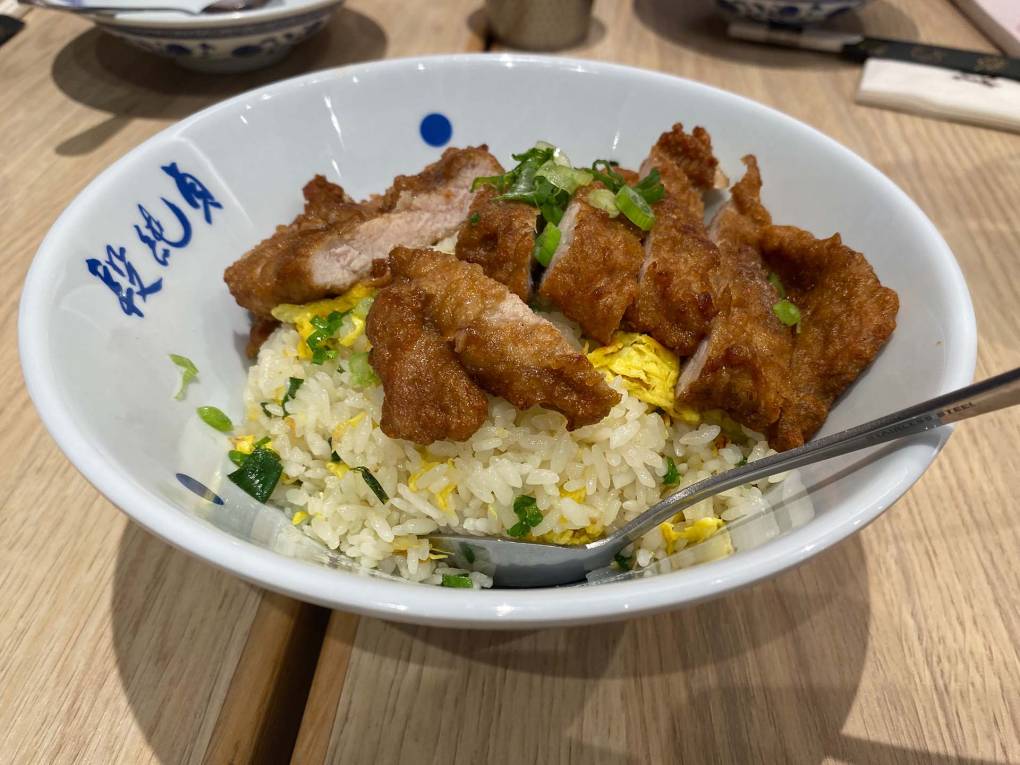
Love Asian Food? The First Cupertino Restaurant Week Is Your Treasure Trove
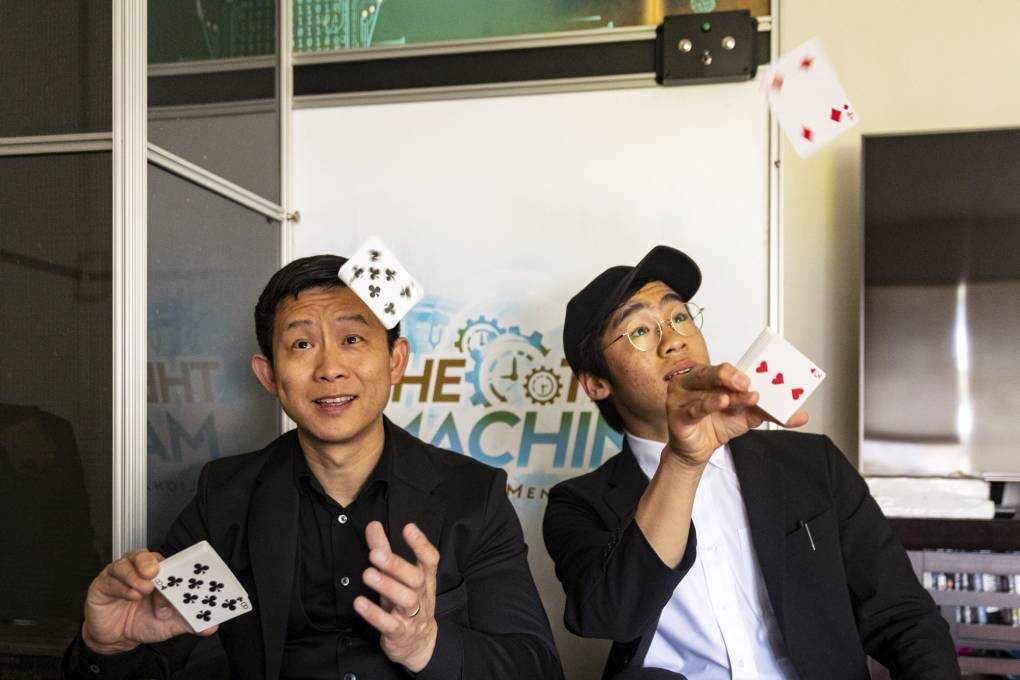
Once a Child Prodigy, Teen Magician James Chan Conjures a New Path
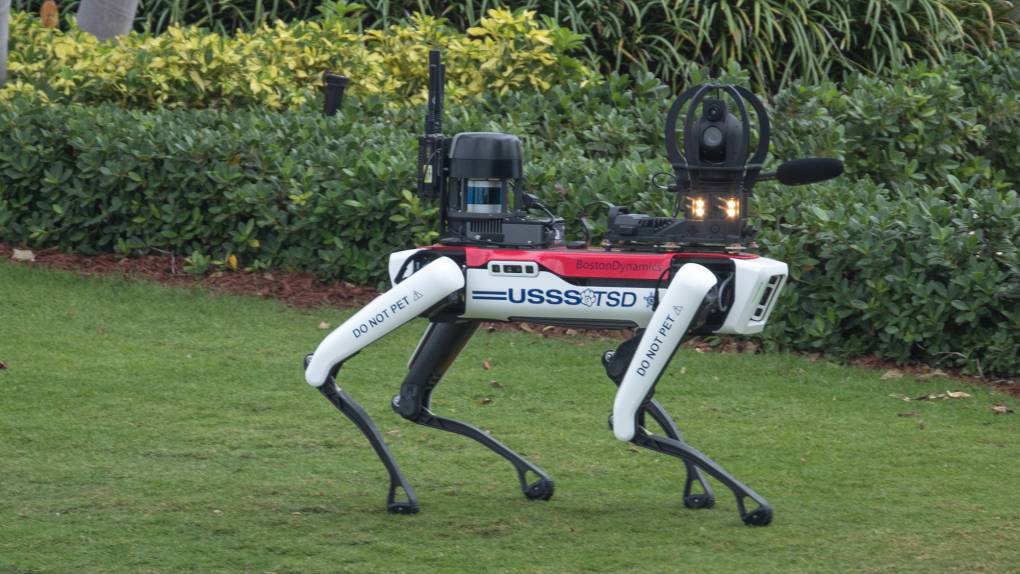
Frightening AI Developments From 2024 to Laugh at While We Still Can
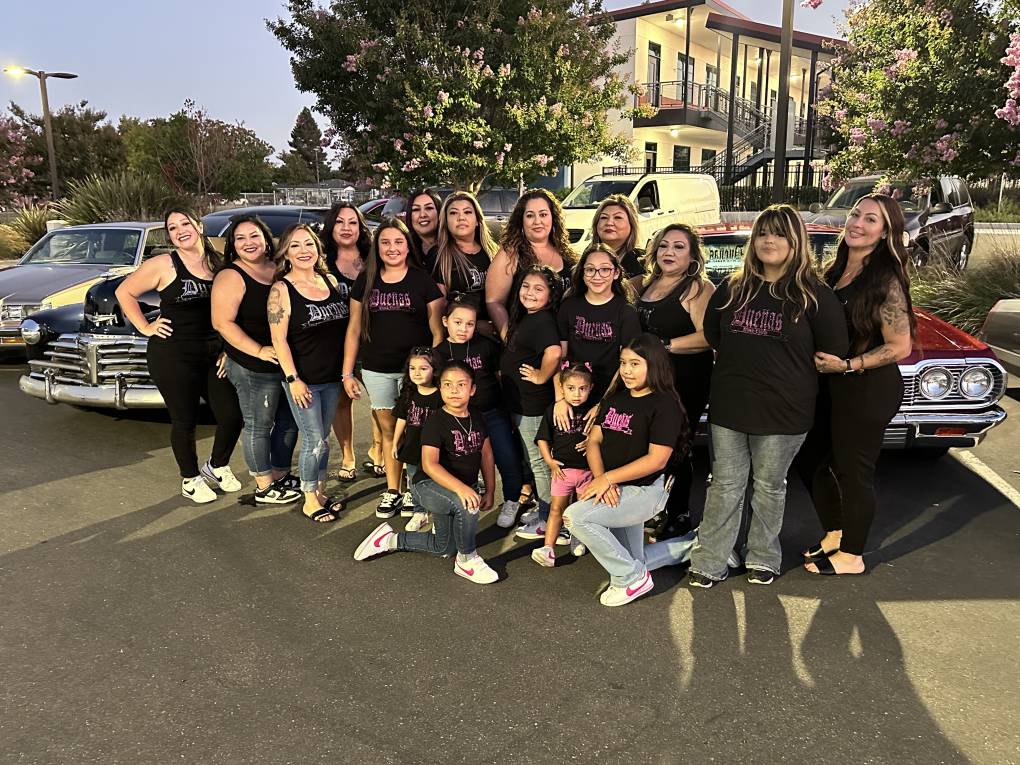
How an All-Women’s Lowrider Club Formed in the Heart of Silicon Valley
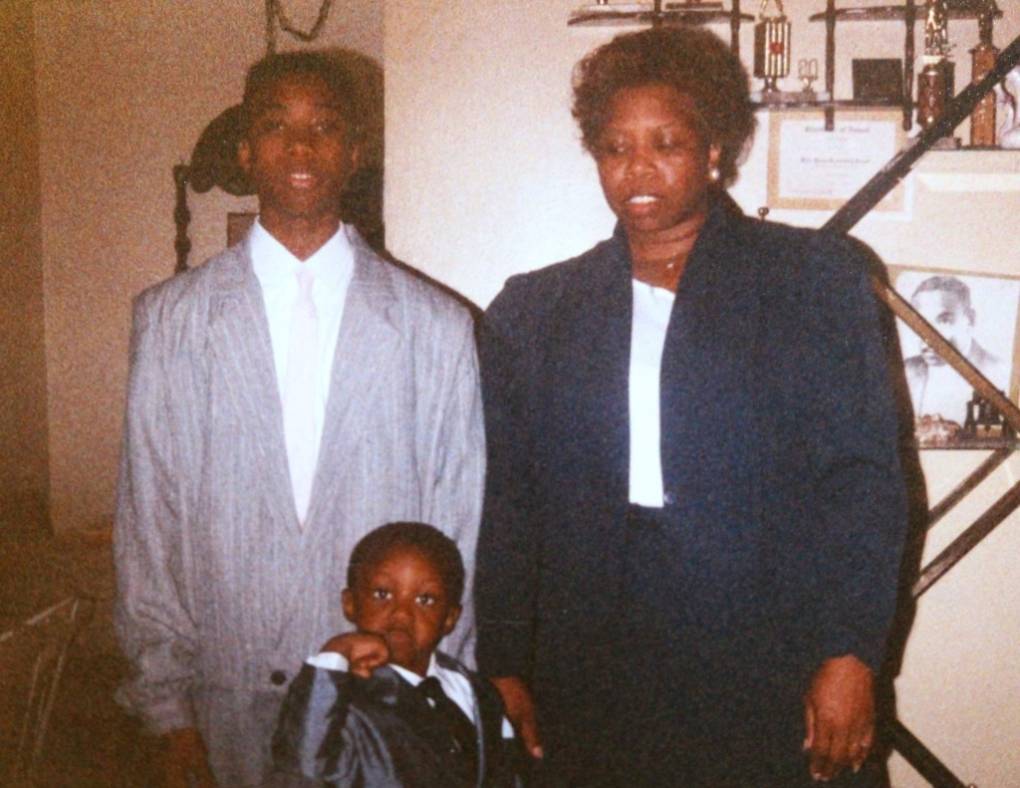
KMEL’s G-Biz On How ‘Scrillacon’ Valley Shaped Him
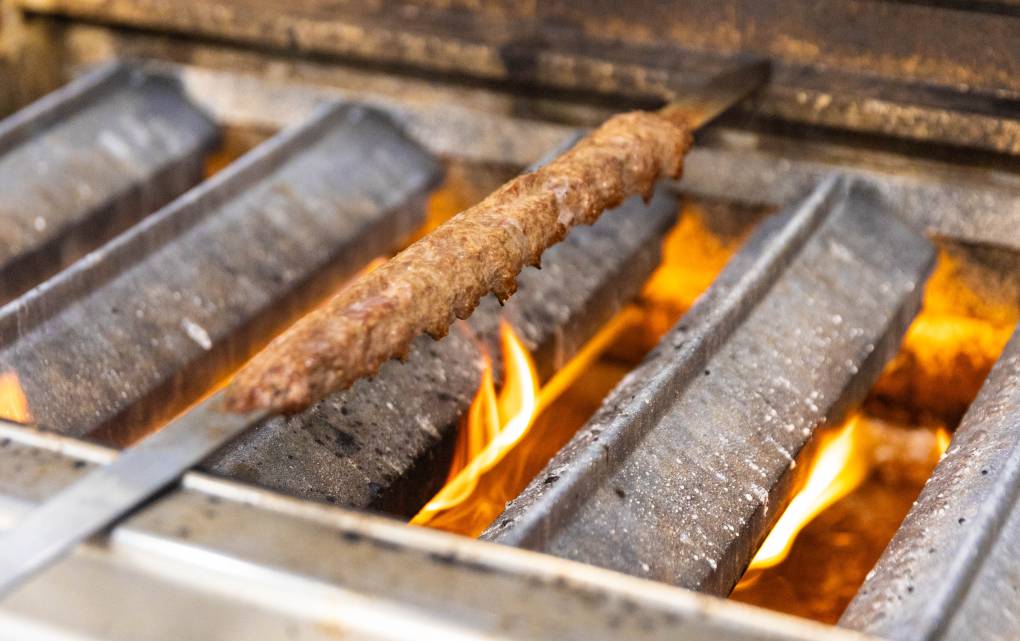
This 36-Year-Old Market Is a Homey Destination for Iranian Food
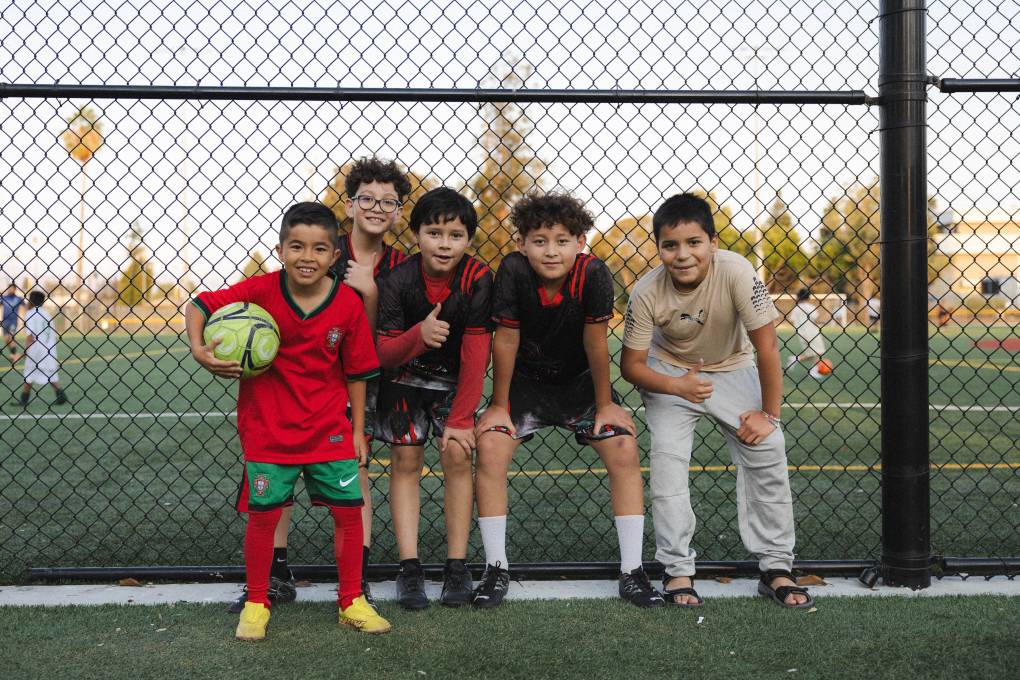
Why Silicon Valley Is the Soccer Capital of the Bay Area
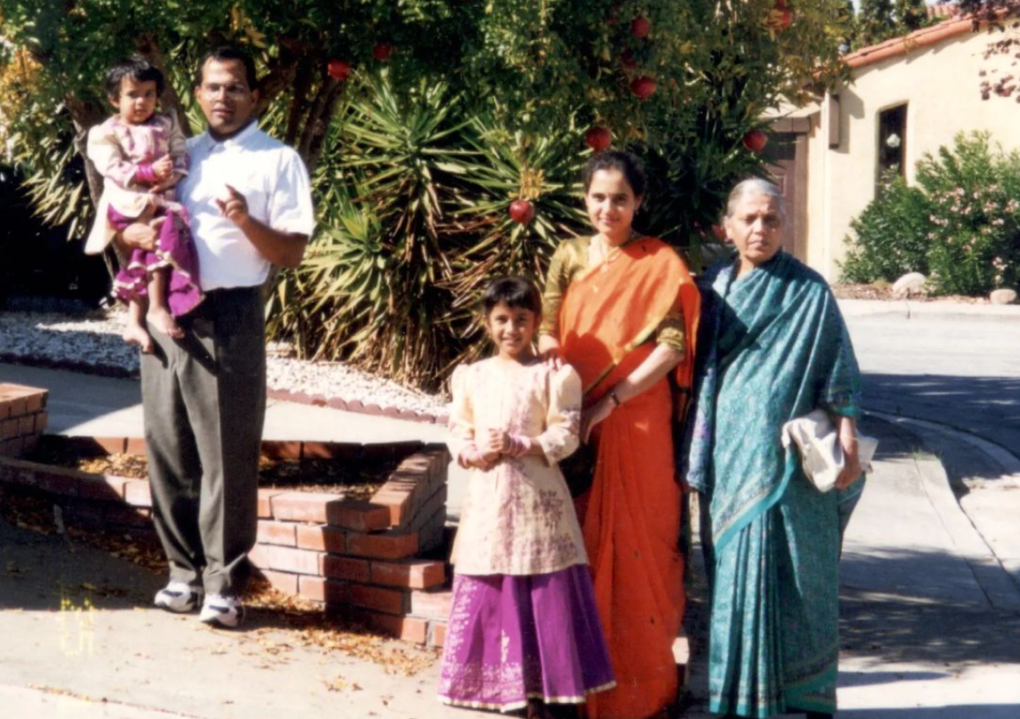
Fremont, My Hometown
Sponsored
Player sponsored by
window.__IS_SSR__=true
window.__INITIAL_STATE__={
"attachmentsReducer": {
"audio_0": {
"type": "attachments",
"id": "audio_0",
"imgSizes": {
"kqedFullSize": {
"file": "https://ww2.kqed.org/news/wp-content/themes/KQED-unified/img/audio_bgs/background0.jpg"
}
}
},
"audio_1": {
"type": "attachments",
"id": "audio_1",
"imgSizes": {
"kqedFullSize": {
"file": "https://ww2.kqed.org/news/wp-content/themes/KQED-unified/img/audio_bgs/background1.jpg"
}
}
},
"audio_2": {
"type": "attachments",
"id": "audio_2",
"imgSizes": {
"kqedFullSize": {
"file": "https://ww2.kqed.org/news/wp-content/themes/KQED-unified/img/audio_bgs/background2.jpg"
}
}
},
"audio_3": {
"type": "attachments",
"id": "audio_3",
"imgSizes": {
"kqedFullSize": {
"file": "https://ww2.kqed.org/news/wp-content/themes/KQED-unified/img/audio_bgs/background3.jpg"
}
}
},
"audio_4": {
"type": "attachments",
"id": "audio_4",
"imgSizes": {
"kqedFullSize": {
"file": "https://ww2.kqed.org/news/wp-content/themes/KQED-unified/img/audio_bgs/background4.jpg"
}
}
},
"placeholder": {
"type": "attachments",
"id": "placeholder",
"imgSizes": {
"thumbnail": {
"file": "https://cdn.kqed.org/wp-content/uploads/2024/12/KQED-Default-Image-816638274-2000x1333-1-160x107.jpg",
"width": 160,
"height": 107,
"mimeType": "image/jpeg"
},
"medium": {
"file": "https://cdn.kqed.org/wp-content/uploads/2024/12/KQED-Default-Image-816638274-2000x1333-1-800x533.jpg",
"width": 800,
"height": 533,
"mimeType": "image/jpeg"
},
"medium_large": {
"file": "https://cdn.kqed.org/wp-content/uploads/2024/12/KQED-Default-Image-816638274-2000x1333-1-768x512.jpg",
"width": 768,
"height": 512,
"mimeType": "image/jpeg"
},
"large": {
"file": "https://cdn.kqed.org/wp-content/uploads/2024/12/KQED-Default-Image-816638274-2000x1333-1-1020x680.jpg",
"width": 1020,
"height": 680,
"mimeType": "image/jpeg"
},
"1536x1536": {
"file": "https://cdn.kqed.org/wp-content/uploads/2024/12/KQED-Default-Image-816638274-2000x1333-1-1536x1024.jpg",
"width": 1536,
"height": 1024,
"mimeType": "image/jpeg"
},
"fd-lrg": {
"file": "https://cdn.kqed.org/wp-content/uploads/2024/12/KQED-Default-Image-816638274-2000x1333-1-1536x1024.jpg",
"width": 1536,
"height": 1024,
"mimeType": "image/jpeg"
},
"fd-med": {
"file": "https://cdn.kqed.org/wp-content/uploads/2024/12/KQED-Default-Image-816638274-2000x1333-1-1020x680.jpg",
"width": 1020,
"height": 680,
"mimeType": "image/jpeg"
},
"fd-sm": {
"file": "https://cdn.kqed.org/wp-content/uploads/2024/12/KQED-Default-Image-816638274-2000x1333-1-800x533.jpg",
"width": 800,
"height": 533,
"mimeType": "image/jpeg"
},
"post-thumbnail": {
"file": "https://cdn.kqed.org/wp-content/uploads/2024/12/KQED-Default-Image-816638274-2000x1333-1-672x372.jpg",
"width": 672,
"height": 372,
"mimeType": "image/jpeg"
},
"twentyfourteen-full-width": {
"file": "https://cdn.kqed.org/wp-content/uploads/2024/12/KQED-Default-Image-816638274-2000x1333-1-1038x576.jpg",
"width": 1038,
"height": 576,
"mimeType": "image/jpeg"
},
"xxsmall": {
"file": "https://cdn.kqed.org/wp-content/uploads/2024/12/KQED-Default-Image-816638274-2000x1333-1-160x107.jpg",
"width": 160,
"height": 107,
"mimeType": "image/jpeg"
},
"xsmall": {
"file": "https://cdn.kqed.org/wp-content/uploads/2024/12/KQED-Default-Image-816638274-2000x1333-1-672x372.jpg",
"width": 672,
"height": 372,
"mimeType": "image/jpeg"
},
"small": {
"file": "https://cdn.kqed.org/wp-content/uploads/2024/12/KQED-Default-Image-816638274-2000x1333-1-672x372.jpg",
"width": 672,
"height": 372,
"mimeType": "image/jpeg"
},
"xlarge": {
"file": "https://cdn.kqed.org/wp-content/uploads/2024/12/KQED-Default-Image-816638274-2000x1333-1-1020x680.jpg",
"width": 1020,
"height": 680,
"mimeType": "image/jpeg"
},
"full-width": {
"file": "https://cdn.kqed.org/wp-content/uploads/2024/12/KQED-Default-Image-816638274-2000x1333-1-1920x1280.jpg",
"width": 1920,
"height": 1280,
"mimeType": "image/jpeg"
},
"guest-author-32": {
"file": "https://cdn.kqed.org/wp-content/uploads/2025/01/KQED-Default-Image-816638274-1333x1333-1-160x160.jpg",
"width": 32,
"height": 32,
"mimeType": "image/jpeg"
},
"guest-author-50": {
"file": "https://cdn.kqed.org/wp-content/uploads/2025/01/KQED-Default-Image-816638274-1333x1333-1-160x160.jpg",
"width": 50,
"height": 50,
"mimeType": "image/jpeg"
},
"guest-author-64": {
"file": "https://cdn.kqed.org/wp-content/uploads/2025/01/KQED-Default-Image-816638274-1333x1333-1-160x160.jpg",
"width": 64,
"height": 64,
"mimeType": "image/jpeg"
},
"guest-author-96": {
"file": "https://cdn.kqed.org/wp-content/uploads/2025/01/KQED-Default-Image-816638274-1333x1333-1-160x160.jpg",
"width": 96,
"height": 96,
"mimeType": "image/jpeg"
},
"guest-author-128": {
"file": "https://cdn.kqed.org/wp-content/uploads/2025/01/KQED-Default-Image-816638274-1333x1333-1-160x160.jpg",
"width": 128,
"height": 128,
"mimeType": "image/jpeg"
},
"detail": {
"file": "https://cdn.kqed.org/wp-content/uploads/2025/01/KQED-Default-Image-816638274-1333x1333-1-160x160.jpg",
"width": 160,
"height": 160,
"mimeType": "image/jpeg"
},
"kqedFullSize": {
"file": "https://cdn.kqed.org/wp-content/uploads/2024/12/KQED-Default-Image-816638274-2000x1333-1.jpg",
"width": 2000,
"height": 1333
}
}
},
"arts_13982555": {
"type": "attachments",
"id": "arts_13982555",
"meta": {
"index": "attachments_1716263798",
"site": "arts",
"id": "13982555",
"found": true
},
"title": "InFormation.16x9",
"publishDate": 1760716716,
"status": "inherit",
"parent": 13982496,
"modified": 1760716783,
"caption": "The third issue of ‘In Formation’ is out now ... after a 25-year break.",
"credit": "In Formation",
"altTag": "A magazine cover depicting the close up of a camera lens, its center burning red with light.",
"description": null,
"imgSizes": {
"thumbnail": {
"file": "https://cdn.kqed.org/wp-content/uploads/sites/2/2025/10/InFormation.16x9-160x90.jpg",
"width": 160,
"height": 90,
"mimeType": "image/jpeg"
},
"medium_large": {
"file": "https://cdn.kqed.org/wp-content/uploads/sites/2/2025/10/InFormation.16x9-768x432.jpg",
"width": 768,
"height": 432,
"mimeType": "image/jpeg"
},
"1536x1536": {
"file": "https://cdn.kqed.org/wp-content/uploads/sites/2/2025/10/InFormation.16x9-1536x864.jpg",
"width": 1536,
"height": 864,
"mimeType": "image/jpeg"
},
"post-thumbnail": {
"file": "https://cdn.kqed.org/wp-content/uploads/sites/2/2025/10/InFormation.16x9-672x372.jpg",
"width": 672,
"height": 372,
"mimeType": "image/jpeg"
},
"twentyfourteen-full-width": {
"file": "https://cdn.kqed.org/wp-content/uploads/sites/2/2025/10/InFormation.16x9-1038x576.jpg",
"width": 1038,
"height": 576,
"mimeType": "image/jpeg"
},
"kqedFullSize": {
"file": "https://cdn.kqed.org/wp-content/uploads/sites/2/2025/10/InFormation.16x9.jpg",
"width": 2000,
"height": 1125
}
},
"fetchFailed": false,
"isLoading": false
},
"arts_13957311": {
"type": "attachments",
"id": "arts_13957311",
"meta": {
"index": "attachments_1716263798",
"site": "arts",
"id": "13957311",
"found": true
},
"parent": 13957305,
"imgSizes": {
"twentyfourteen-full-width": {
"file": "https://cdn.kqed.org/wp-content/uploads/sites/2/2024/05/duan-chun-zhen_fried-rice-1038x576.jpg",
"width": 1038,
"mimeType": "image/jpeg",
"height": 576
},
"thumbnail": {
"file": "https://cdn.kqed.org/wp-content/uploads/sites/2/2024/05/duan-chun-zhen_fried-rice-160x120.jpg",
"width": 160,
"mimeType": "image/jpeg",
"height": 120
},
"post-thumbnail": {
"file": "https://cdn.kqed.org/wp-content/uploads/sites/2/2024/05/duan-chun-zhen_fried-rice-672x372.jpg",
"width": 672,
"mimeType": "image/jpeg",
"height": 372
},
"kqedFullSize": {
"file": "https://cdn.kqed.org/wp-content/uploads/sites/2/2024/05/duan-chun-zhen_fried-rice.jpg",
"width": 1920,
"height": 1440
},
"large": {
"file": "https://cdn.kqed.org/wp-content/uploads/sites/2/2024/05/duan-chun-zhen_fried-rice-1020x765.jpg",
"width": 1020,
"mimeType": "image/jpeg",
"height": 765
},
"1536x1536": {
"file": "https://cdn.kqed.org/wp-content/uploads/sites/2/2024/05/duan-chun-zhen_fried-rice-1536x1152.jpg",
"width": 1536,
"mimeType": "image/jpeg",
"height": 1152
},
"medium": {
"file": "https://cdn.kqed.org/wp-content/uploads/sites/2/2024/05/duan-chun-zhen_fried-rice-800x600.jpg",
"width": 800,
"mimeType": "image/jpeg",
"height": 600
},
"medium_large": {
"file": "https://cdn.kqed.org/wp-content/uploads/sites/2/2024/05/duan-chun-zhen_fried-rice-768x576.jpg",
"width": 768,
"mimeType": "image/jpeg",
"height": 576
}
},
"publishDate": 1715036256,
"modified": 1715036331,
"caption": "Duan Chun Zhen will have a booth at this year's festival. Pictured here is the Cupertino restaurant's fried rice with pork chop.",
"description": null,
"title": "duan chun zhen_fried rice",
"credit": "Luke Tsai",
"status": "inherit",
"altTag": "A bowl of egg fried rice topped with fried chop.",
"fetchFailed": false,
"isLoading": false
},
"arts_13973640": {
"type": "attachments",
"id": "arts_13973640",
"meta": {
"index": "attachments_1716263798",
"site": "arts",
"id": "13973640",
"found": true
},
"title": "20250322_MAGICIANFAMILY_GC-8-KQED",
"publishDate": 1743032975,
"status": "inherit",
"parent": 0,
"modified": 1743033181,
"caption": "Dan Chan and his son James Chan, 17, shuffle cards in the air at their home in Fremont on March 22, 2025. James began learning magic at the age of 4.",
"credit": "Gina Castro/KQED",
"altTag": null,
"description": null,
"imgSizes": {
"medium": {
"file": "https://cdn.kqed.org/wp-content/uploads/sites/2/2025/03/20250322_MAGICIANFAMILY_GC-8-KQED-800x533.jpg",
"width": 800,
"height": 533,
"mimeType": "image/jpeg"
},
"large": {
"file": "https://cdn.kqed.org/wp-content/uploads/sites/2/2025/03/20250322_MAGICIANFAMILY_GC-8-KQED-1020x680.jpg",
"width": 1020,
"height": 680,
"mimeType": "image/jpeg"
},
"thumbnail": {
"file": "https://cdn.kqed.org/wp-content/uploads/sites/2/2025/03/20250322_MAGICIANFAMILY_GC-8-KQED-160x107.jpg",
"width": 160,
"height": 107,
"mimeType": "image/jpeg"
},
"medium_large": {
"file": "https://cdn.kqed.org/wp-content/uploads/sites/2/2025/03/20250322_MAGICIANFAMILY_GC-8-KQED-768x512.jpg",
"width": 768,
"height": 512,
"mimeType": "image/jpeg"
},
"1536x1536": {
"file": "https://cdn.kqed.org/wp-content/uploads/sites/2/2025/03/20250322_MAGICIANFAMILY_GC-8-KQED-1536x1024.jpg",
"width": 1536,
"height": 1024,
"mimeType": "image/jpeg"
},
"post-thumbnail": {
"file": "https://cdn.kqed.org/wp-content/uploads/sites/2/2025/03/20250322_MAGICIANFAMILY_GC-8-KQED-672x372.jpg",
"width": 672,
"height": 372,
"mimeType": "image/jpeg"
},
"twentyfourteen-full-width": {
"file": "https://cdn.kqed.org/wp-content/uploads/sites/2/2025/03/20250322_MAGICIANFAMILY_GC-8-KQED-1038x576.jpg",
"width": 1038,
"height": 576,
"mimeType": "image/jpeg"
},
"full-width": {
"file": "https://cdn.kqed.org/wp-content/uploads/sites/2/2025/03/20250322_MAGICIANFAMILY_GC-8-KQED-1920x1280.jpg",
"width": 1920,
"height": 1280,
"mimeType": "image/jpeg"
},
"kqedFullSize": {
"file": "https://cdn.kqed.org/wp-content/uploads/sites/2/2025/03/20250322_MAGICIANFAMILY_GC-8-KQED.jpg",
"width": 2000,
"height": 1333
}
},
"fetchFailed": false,
"isLoading": false
},
"arts_13969179": {
"type": "attachments",
"id": "arts_13969179",
"meta": {
"index": "attachments_1716263798",
"site": "arts",
"id": "13969179",
"found": true
},
"title": "robot-dog",
"publishDate": 1733516387,
"status": "inherit",
"parent": 13968197,
"modified": 1733516451,
"caption": "A Secret Service robot dog manufactured by Boston Dynamics patrols President-elect Donald Trump’s Mar-a-Lago resort on November 18, 2024.",
"credit": "Scott Olson/Getty Images",
"altTag": "A dog-shaped robot walking on grass near manicured hedges.",
"description": null,
"imgSizes": {
"medium": {
"file": "https://cdn.kqed.org/wp-content/uploads/sites/2/2024/12/robot-dog-1-800x450.jpg",
"width": 800,
"height": 450,
"mimeType": "image/jpeg"
},
"large": {
"file": "https://cdn.kqed.org/wp-content/uploads/sites/2/2024/12/robot-dog-1-1020x574.jpg",
"width": 1020,
"height": 574,
"mimeType": "image/jpeg"
},
"thumbnail": {
"file": "https://cdn.kqed.org/wp-content/uploads/sites/2/2024/12/robot-dog-1-160x90.jpg",
"width": 160,
"height": 90,
"mimeType": "image/jpeg"
},
"medium_large": {
"file": "https://cdn.kqed.org/wp-content/uploads/sites/2/2024/12/robot-dog-1-768x432.jpg",
"width": 768,
"height": 432,
"mimeType": "image/jpeg"
},
"1536x1536": {
"file": "https://cdn.kqed.org/wp-content/uploads/sites/2/2024/12/robot-dog-1-1536x864.jpg",
"width": 1536,
"height": 864,
"mimeType": "image/jpeg"
},
"post-thumbnail": {
"file": "https://cdn.kqed.org/wp-content/uploads/sites/2/2024/12/robot-dog-1-672x372.jpg",
"width": 672,
"height": 372,
"mimeType": "image/jpeg"
},
"twentyfourteen-full-width": {
"file": "https://cdn.kqed.org/wp-content/uploads/sites/2/2024/12/robot-dog-1-1038x576.jpg",
"width": 1038,
"height": 576,
"mimeType": "image/jpeg"
},
"full-width": {
"file": "https://cdn.kqed.org/wp-content/uploads/sites/2/2024/12/robot-dog-1-1920x1080.jpg",
"width": 1920,
"height": 1080,
"mimeType": "image/jpeg"
},
"kqedFullSize": {
"file": "https://cdn.kqed.org/wp-content/uploads/sites/2/2024/12/robot-dog-1.jpg",
"width": 2000,
"height": 1125
}
},
"fetchFailed": false,
"isLoading": false
},
"arts_13965359": {
"type": "attachments",
"id": "arts_13965359",
"meta": {
"index": "attachments_1716263798",
"site": "arts",
"id": "13965359",
"found": true
},
"title": "IMG_3634",
"publishDate": 1727121879,
"status": "inherit",
"parent": 13965353,
"modified": 1727122729,
"caption": null,
"credit": "Courtesy Angel Romero",
"altTag": null,
"description": "In recent years, Dueñas has grown from a lowrider car club to a bike club, integrating a new generation of young women enthusiasts. The original club members include Alexa, Sara, Darlene, Mia, Mari, Christina, Angel, Liz, and Christina R. (from left to right).",
"imgSizes": {
"medium": {
"file": "https://cdn.kqed.org/wp-content/uploads/sites/2/2024/09/IMG_3634-800x600.jpg",
"width": 800,
"height": 600,
"mimeType": "image/jpeg"
},
"large": {
"file": "https://cdn.kqed.org/wp-content/uploads/sites/2/2024/09/IMG_3634-1020x765.jpg",
"width": 1020,
"height": 765,
"mimeType": "image/jpeg"
},
"thumbnail": {
"file": "https://cdn.kqed.org/wp-content/uploads/sites/2/2024/09/IMG_3634-160x120.jpg",
"width": 160,
"height": 120,
"mimeType": "image/jpeg"
},
"medium_large": {
"file": "https://cdn.kqed.org/wp-content/uploads/sites/2/2024/09/IMG_3634-768x576.jpg",
"width": 768,
"height": 576,
"mimeType": "image/jpeg"
},
"1536x1536": {
"file": "https://cdn.kqed.org/wp-content/uploads/sites/2/2024/09/IMG_3634-1536x1152.jpg",
"width": 1536,
"height": 1152,
"mimeType": "image/jpeg"
},
"2048x2048": {
"file": "https://cdn.kqed.org/wp-content/uploads/sites/2/2024/09/IMG_3634-2048x1536.jpg",
"width": 2048,
"height": 1536,
"mimeType": "image/jpeg"
},
"post-thumbnail": {
"file": "https://cdn.kqed.org/wp-content/uploads/sites/2/2024/09/IMG_3634-672x372.jpg",
"width": 672,
"height": 372,
"mimeType": "image/jpeg"
},
"twentyfourteen-full-width": {
"file": "https://cdn.kqed.org/wp-content/uploads/sites/2/2024/09/IMG_3634-1038x576.jpg",
"width": 1038,
"height": 576,
"mimeType": "image/jpeg"
},
"full-width": {
"file": "https://cdn.kqed.org/wp-content/uploads/sites/2/2024/09/IMG_3634-1920x1440.jpg",
"width": 1920,
"height": 1440,
"mimeType": "image/jpeg"
},
"kqedFullSize": {
"file": "https://cdn.kqed.org/wp-content/uploads/sites/2/2024/09/IMG_3634-scaled.jpg",
"width": 2560,
"height": 1920
}
},
"fetchFailed": false,
"isLoading": false
},
"arts_13965164": {
"type": "attachments",
"id": "arts_13965164",
"meta": {
"index": "attachments_1716263798",
"site": "arts",
"id": "13965164",
"found": true
},
"title": "IMG_8215",
"publishDate": 1726786571,
"status": "inherit",
"parent": 13965015,
"modified": 1726787203,
"caption": "KMEL's Gary Bizer a.k.a. G-Biz (center) takes a family photo with his mother and older brother in East Palo Alto.",
"credit": "Courtesy G-Biz",
"altTag": null,
"description": null,
"imgSizes": {
"medium": {
"file": "https://cdn.kqed.org/wp-content/uploads/sites/2/2024/09/IMG_8215-800x618.jpg",
"width": 800,
"height": 618,
"mimeType": "image/jpeg"
},
"large": {
"file": "https://cdn.kqed.org/wp-content/uploads/sites/2/2024/09/IMG_8215-1020x788.jpg",
"width": 1020,
"height": 788,
"mimeType": "image/jpeg"
},
"thumbnail": {
"file": "https://cdn.kqed.org/wp-content/uploads/sites/2/2024/09/IMG_8215-160x124.jpg",
"width": 160,
"height": 124,
"mimeType": "image/jpeg"
},
"medium_large": {
"file": "https://cdn.kqed.org/wp-content/uploads/sites/2/2024/09/IMG_8215-768x593.jpg",
"width": 768,
"height": 593,
"mimeType": "image/jpeg"
},
"post-thumbnail": {
"file": "https://cdn.kqed.org/wp-content/uploads/sites/2/2024/09/IMG_8215-672x372.jpg",
"width": 672,
"height": 372,
"mimeType": "image/jpeg"
},
"twentyfourteen-full-width": {
"file": "https://cdn.kqed.org/wp-content/uploads/sites/2/2024/09/IMG_8215-1024x576.jpg",
"width": 1024,
"height": 576,
"mimeType": "image/jpeg"
},
"kqedFullSize": {
"file": "https://cdn.kqed.org/wp-content/uploads/sites/2/2024/09/IMG_8215.jpg",
"width": 1024,
"height": 791
}
},
"fetchFailed": false,
"isLoading": false
},
"arts_13965614": {
"type": "attachments",
"id": "arts_13965614",
"meta": {
"index": "attachments_1716263798",
"site": "arts",
"id": "13965614",
"found": true
},
"title": "20240923_IranianMarket_GC-23",
"publishDate": 1727407897,
"status": "inherit",
"parent": 13965475,
"modified": 1727716514,
"caption": "Kabab koobideh on the grill at Rose International Market, a community fixture in Mountain View.",
"credit": "Gina Castro/KQED",
"altTag": null,
"description": null,
"imgSizes": {
"medium": {
"file": "https://cdn.kqed.org/wp-content/uploads/sites/2/2024/09/20240923_IranianMarket_GC-23-800x502.jpg",
"width": 800,
"height": 502,
"mimeType": "image/jpeg"
},
"large": {
"file": "https://cdn.kqed.org/wp-content/uploads/sites/2/2024/09/20240923_IranianMarket_GC-23-1020x641.jpg",
"width": 1020,
"height": 641,
"mimeType": "image/jpeg"
},
"thumbnail": {
"file": "https://cdn.kqed.org/wp-content/uploads/sites/2/2024/09/20240923_IranianMarket_GC-23-160x100.jpg",
"width": 160,
"height": 100,
"mimeType": "image/jpeg"
},
"medium_large": {
"file": "https://cdn.kqed.org/wp-content/uploads/sites/2/2024/09/20240923_IranianMarket_GC-23-768x482.jpg",
"width": 768,
"height": 482,
"mimeType": "image/jpeg"
},
"1536x1536": {
"file": "https://cdn.kqed.org/wp-content/uploads/sites/2/2024/09/20240923_IranianMarket_GC-23-1536x965.jpg",
"width": 1536,
"height": 965,
"mimeType": "image/jpeg"
},
"2048x2048": {
"file": "https://cdn.kqed.org/wp-content/uploads/sites/2/2024/09/20240923_IranianMarket_GC-23-2048x1286.jpg",
"width": 2048,
"height": 1286,
"mimeType": "image/jpeg"
},
"post-thumbnail": {
"file": "https://cdn.kqed.org/wp-content/uploads/sites/2/2024/09/20240923_IranianMarket_GC-23-672x372.jpg",
"width": 672,
"height": 372,
"mimeType": "image/jpeg"
},
"twentyfourteen-full-width": {
"file": "https://cdn.kqed.org/wp-content/uploads/sites/2/2024/09/20240923_IranianMarket_GC-23-1038x576.jpg",
"width": 1038,
"height": 576,
"mimeType": "image/jpeg"
},
"full-width": {
"file": "https://cdn.kqed.org/wp-content/uploads/sites/2/2024/09/20240923_IranianMarket_GC-23-1920x1206.jpg",
"width": 1920,
"height": 1206,
"mimeType": "image/jpeg"
},
"kqedFullSize": {
"file": "https://cdn.kqed.org/wp-content/uploads/sites/2/2024/09/20240923_IranianMarket_GC-23-scaled.jpg",
"width": 2560,
"height": 1608
}
},
"fetchFailed": false,
"isLoading": false
},
"arts_13963599": {
"type": "attachments",
"id": "arts_13963599",
"meta": {
"index": "attachments_1716263798",
"site": "arts",
"id": "13963599",
"found": true
},
"title": "Fair Oaks Soccer Session",
"publishDate": 1725401035,
"status": "inherit",
"parent": 13963597,
"modified": 1727231471,
"caption": "Silicon Valley has a rich history and tradition of soccer, which includes housing all of the Bay Area's major-league pro soccer teams and hosting World Cup matches. Here, a group of young boys pose on the sideline during an adult league game in Sunnyvale on Aug. 24, 2024.",
"credit": "Alex Knowbody",
"altTag": "a group of young boys pose for a photo near a soccer field in Sunnyvale",
"description": null,
"imgSizes": {
"medium": {
"file": "https://cdn.kqed.org/wp-content/uploads/sites/2/2024/09/FairOaksPark_SoccerSession-4-800x533.jpg",
"width": 800,
"height": 533,
"mimeType": "image/jpeg"
},
"large": {
"file": "https://cdn.kqed.org/wp-content/uploads/sites/2/2024/09/FairOaksPark_SoccerSession-4-1020x680.jpg",
"width": 1020,
"height": 680,
"mimeType": "image/jpeg"
},
"thumbnail": {
"file": "https://cdn.kqed.org/wp-content/uploads/sites/2/2024/09/FairOaksPark_SoccerSession-4-160x107.jpg",
"width": 160,
"height": 107,
"mimeType": "image/jpeg"
},
"medium_large": {
"file": "https://cdn.kqed.org/wp-content/uploads/sites/2/2024/09/FairOaksPark_SoccerSession-4-768x512.jpg",
"width": 768,
"height": 512,
"mimeType": "image/jpeg"
},
"1536x1536": {
"file": "https://cdn.kqed.org/wp-content/uploads/sites/2/2024/09/FairOaksPark_SoccerSession-4-1536x1024.jpg",
"width": 1536,
"height": 1024,
"mimeType": "image/jpeg"
},
"2048x2048": {
"file": "https://cdn.kqed.org/wp-content/uploads/sites/2/2024/09/FairOaksPark_SoccerSession-4-2048x1365.jpg",
"width": 2048,
"height": 1365,
"mimeType": "image/jpeg"
},
"post-thumbnail": {
"file": "https://cdn.kqed.org/wp-content/uploads/sites/2/2024/09/FairOaksPark_SoccerSession-4-672x372.jpg",
"width": 672,
"height": 372,
"mimeType": "image/jpeg"
},
"twentyfourteen-full-width": {
"file": "https://cdn.kqed.org/wp-content/uploads/sites/2/2024/09/FairOaksPark_SoccerSession-4-1038x576.jpg",
"width": 1038,
"height": 576,
"mimeType": "image/jpeg"
},
"full-width": {
"file": "https://cdn.kqed.org/wp-content/uploads/sites/2/2024/09/FairOaksPark_SoccerSession-4-1920x1280.jpg",
"width": 1920,
"height": 1280,
"mimeType": "image/jpeg"
},
"kqedFullSize": {
"file": "https://cdn.kqed.org/wp-content/uploads/sites/2/2024/09/FairOaksPark_SoccerSession-4-scaled.jpg",
"width": 2560,
"height": 1707
}
},
"fetchFailed": false,
"isLoading": false
},
"arts_13965472": {
"type": "attachments",
"id": "arts_13965472",
"meta": {
"index": "attachments_1716263798",
"site": "arts",
"id": "13965472",
"found": true
},
"title": "CROPPED",
"publishDate": 1727208287,
"status": "inherit",
"parent": 13965193,
"modified": 1727286158,
"caption": "The author (far left) with her dad, sister, mom and grandma in front of their beloved pomegranate tree off Driscoll Road in the late ’90s. The home was originally purchased for $275,000 during Fremont's nascent housing market.",
"credit": "Courtesy Supriya Yelimeli",
"altTag": null,
"description": null,
"imgSizes": {
"medium": {
"file": "https://cdn.kqed.org/wp-content/uploads/sites/2/2024/09/CROPPED-800x564.png",
"width": 800,
"height": 564,
"mimeType": "image/png"
},
"large": {
"file": "https://cdn.kqed.org/wp-content/uploads/sites/2/2024/09/CROPPED-1020x719.png",
"width": 1020,
"height": 719,
"mimeType": "image/png"
},
"thumbnail": {
"file": "https://cdn.kqed.org/wp-content/uploads/sites/2/2024/09/CROPPED-160x113.png",
"width": 160,
"height": 113,
"mimeType": "image/png"
},
"medium_large": {
"file": "https://cdn.kqed.org/wp-content/uploads/sites/2/2024/09/CROPPED-768x541.png",
"width": 768,
"height": 541,
"mimeType": "image/png"
},
"post-thumbnail": {
"file": "https://cdn.kqed.org/wp-content/uploads/sites/2/2024/09/CROPPED-672x372.png",
"width": 672,
"height": 372,
"mimeType": "image/png"
},
"twentyfourteen-full-width": {
"file": "https://cdn.kqed.org/wp-content/uploads/sites/2/2024/09/CROPPED-1038x576.png",
"width": 1038,
"height": 576,
"mimeType": "image/png"
},
"kqedFullSize": {
"file": "https://cdn.kqed.org/wp-content/uploads/sites/2/2024/09/CROPPED.png",
"width": 1146,
"height": 808
}
},
"fetchFailed": false,
"isLoading": false
}
},
"audioPlayerReducer": {
"postId": "stream_live",
"isPaused": true,
"isPlaying": false,
"pfsActive": false,
"pledgeModalIsOpen": true,
"playerDrawerIsOpen": false
},
"authorsReducer": {
"byline_arts_13974964": {
"type": "authors",
"id": "byline_arts_13974964",
"meta": {
"override": true
},
"slug": "byline_arts_13974964",
"name": "Arunav Sharma ",
"isLoading": false
},
"byline_arts_13965353": {
"type": "authors",
"id": "byline_arts_13965353",
"meta": {
"override": true
},
"slug": "byline_arts_13965353",
"name": "Angel Romero ",
"isLoading": false
},
"byline_arts_13965193": {
"type": "authors",
"id": "byline_arts_13965193",
"meta": {
"override": true
},
"slug": "byline_arts_13965193",
"name": "Supriya Yelimeli",
"isLoading": false
},
"ralexandra": {
"type": "authors",
"id": "11242",
"meta": {
"index": "authors_1716337520",
"id": "11242",
"found": true
},
"name": "Rae Alexandra",
"firstName": "Rae",
"lastName": "Alexandra",
"slug": "ralexandra",
"email": "ralexandra@kqed.org",
"display_author_email": true,
"staff_mastheads": [
"arts"
],
"title": "Reporter/Producer",
"bio": "Rae Alexandra is a Reporter/Producer for KQED Arts & Culture, and the creator/author of the \u003ca href=\"https://www.kqed.org/arts/program/rebel-girls-from-bay-area-history\">Rebel Girls From Bay Area History\u003c/a> and \u003ca href=\"https://www.kqed.org/bizarrebayarea\">Bizarre Bay Area\u003c/a> series. Her debut book, \u003ca href=\"https://citylights.com/politics-current-events-history/unsung-heroines35-women-who-changed/\">Unsung Heroines: 35 Women Who Changed the Bay Area\u003c/a> will be published by City Lights in Spring 2026. In 2023, Rae was awarded an SPJ Excellence in Journalism Award for Arts & Culture. Rae was born and raised in Wales and subsequently — even after two decades in Northern California — still uses phrases that regularly baffle her coworkers.",
"avatar": "https://secure.gravatar.com/avatar/d5ef3d663d9adae1345d06932a3951de?s=600&d=blank&r=g",
"twitter": null,
"facebook": null,
"instagram": null,
"linkedin": null,
"sites": [
{
"site": "arts",
"roles": [
"editor"
]
},
{
"site": "news",
"roles": [
"editor"
]
},
{
"site": "pop",
"roles": [
"editor"
]
},
{
"site": "bayareabites",
"roles": [
"editor"
]
},
{
"site": "science",
"roles": [
"editor"
]
}
],
"headData": {
"title": "Rae Alexandra | KQED",
"description": "Reporter/Producer",
"ogImgSrc": "https://secure.gravatar.com/avatar/d5ef3d663d9adae1345d06932a3951de?s=600&d=blank&r=g",
"twImgSrc": "https://secure.gravatar.com/avatar/d5ef3d663d9adae1345d06932a3951de?s=600&d=blank&r=g"
},
"isLoading": false,
"link": "/author/ralexandra"
},
"ltsai": {
"type": "authors",
"id": "11743",
"meta": {
"index": "authors_1716337520",
"id": "11743",
"found": true
},
"name": "Luke Tsai",
"firstName": "Luke",
"lastName": "Tsai",
"slug": "ltsai",
"email": "ltsai@kqed.org",
"display_author_email": true,
"staff_mastheads": [
"arts"
],
"title": "Food Editor",
"bio": "Luke Tsai is KQED's food editor and resident stinky tofu connoisseur. Prior to KQED, he was an editor at Eater SF, \u003cem>San Francisco \u003c/em>magazine, and the \u003cem>East Bay Express\u003c/em>, and his work has also appeared in TASTE, the \u003cem>San Francisco Chronicle\u003c/em>, and the \u003cem>Best Food Writing\u003c/em> anthology. When he isn't writing or editing, you'll find him eating most everything he can get his hands on.",
"avatar": "https://secure.gravatar.com/avatar/d1ff591a3047b143a0e23cf7f28fcac0?s=600&d=blank&r=g",
"twitter": "theluketsai",
"facebook": null,
"instagram": null,
"linkedin": null,
"sites": [
{
"site": "",
"roles": [
"editor"
]
},
{
"site": "arts",
"roles": [
"administrator"
]
},
{
"site": "bayareabites",
"roles": [
"editor"
]
},
{
"site": "food",
"roles": [
"editor"
]
}
],
"headData": {
"title": "Luke Tsai | KQED",
"description": "Food Editor",
"ogImgSrc": "https://secure.gravatar.com/avatar/d1ff591a3047b143a0e23cf7f28fcac0?s=600&d=blank&r=g",
"twImgSrc": "https://secure.gravatar.com/avatar/d1ff591a3047b143a0e23cf7f28fcac0?s=600&d=blank&r=g"
},
"isLoading": false,
"link": "/author/ltsai"
},
"achazaro": {
"type": "authors",
"id": "11748",
"meta": {
"index": "authors_1716337520",
"id": "11748",
"found": true
},
"name": "Alan Chazaro",
"firstName": "Alan",
"lastName": "Chazaro",
"slug": "achazaro",
"email": "agchazaro@gmail.com",
"display_author_email": true,
"staff_mastheads": [],
"title": "Food Writer and Reporter",
"bio": "Alan Chazaro is the author of \u003cem>This Is Not a Frank Ocean Cover Album\u003c/em> (Black Lawrence Press, 2019), \u003cem>Piñata Theory\u003c/em> (Black Lawrence Press, 2020), and \u003cem>Notes from the Eastern Span of the Bay Bridge\u003c/em> (Ghost City Press, 2021). He is a graduate of June Jordan’s Poetry for the People program at UC Berkeley and a former Lawrence Ferlinghetti Fellow at the University of San Francisco. He writes about sports, food, art, music, education, and culture while repping the Bay on \u003ca href=\"https://twitter.com/alan_chazaro\">Twitter\u003c/a> and \u003ca href=\"https://www.instagram.com/alan_chazaro/?hl=en\">Instagram\u003c/a> at @alan_chazaro.",
"avatar": "https://secure.gravatar.com/avatar/ea8b6dd970fc5c29e7a188e7d5861df7?s=600&d=blank&r=g",
"twitter": "alan_chazaro",
"facebook": null,
"instagram": null,
"linkedin": null,
"sites": [
{
"site": "arts",
"roles": [
"contributor"
]
},
{
"site": "news",
"roles": [
"editor"
]
}
],
"headData": {
"title": "Alan Chazaro | KQED",
"description": "Food Writer and Reporter",
"ogImgSrc": "https://secure.gravatar.com/avatar/ea8b6dd970fc5c29e7a188e7d5861df7?s=600&d=blank&r=g",
"twImgSrc": "https://secure.gravatar.com/avatar/ea8b6dd970fc5c29e7a188e7d5861df7?s=600&d=blank&r=g"
},
"isLoading": false,
"link": "/author/achazaro"
}
},
"breakingNewsReducer": {},
"pagesReducer": {},
"postsReducer": {
"stream_live": {
"type": "live",
"id": "stream_live",
"audioUrl": "https://streams.kqed.org/kqedradio",
"title": "Live Stream",
"excerpt": "Live Stream information currently unavailable.",
"link": "/radio",
"featImg": "",
"label": {
"name": "KQED Live",
"link": "/"
}
},
"stream_kqedNewscast": {
"type": "posts",
"id": "stream_kqedNewscast",
"audioUrl": "https://www.kqed.org/.stream/anon/radio/RDnews/newscast.mp3?_=1",
"title": "KQED Newscast",
"featImg": "",
"label": {
"name": "88.5 FM",
"link": "/"
}
},
"arts_13982496": {
"type": "posts",
"id": "arts_13982496",
"meta": {
"index": "posts_1716263798",
"site": "arts",
"id": "13982496",
"score": null,
"sort": [
1760718225000
]
},
"guestAuthors": [],
"slug": "in-formation-magazine-review-tech-hating-techies-take-down-tech",
"title": "‘In Formation’ Will Make You Want to (Gleefully) Drown Your Phone",
"publishDate": 1760718225,
"format": "aside",
"headTitle": "‘In Formation’ Will Make You Want to (Gleefully) Drown Your Phone | KQED",
"labelTerm": {},
"content": "\u003cfigure id=\"attachment_13982554\" class=\"wp-caption aligncenter\" style=\"max-width: 2000px\">\u003cimg loading=\"lazy\" decoding=\"async\" src=\"https://cdn.kqed.org/wp-content/uploads/sites/2/2025/10/InFormation.full_.jpg\" alt=\"A magazine cover depicting the close up of a camera lens, its center burning red with light.\" width=\"2000\" height=\"1581\" class=\"size-full wp-image-13982554\" srcset=\"https://cdn.kqed.org/wp-content/uploads/sites/2/2025/10/InFormation.full_.jpg 2000w, https://cdn.kqed.org/wp-content/uploads/sites/2/2025/10/InFormation.full_-160x126.jpg 160w, https://cdn.kqed.org/wp-content/uploads/sites/2/2025/10/InFormation.full_-768x607.jpg 768w, https://cdn.kqed.org/wp-content/uploads/sites/2/2025/10/InFormation.full_-1536x1214.jpg 1536w\" sizes=\"auto, (max-width: 2000px) 100vw, 2000px\">\u003cfigcaption class=\"wp-caption-text\">The third issue of ‘In Formation’ is out now … after a 25-year break. \u003ccite>(In Formation)\u003c/cite>\u003c/figcaption>\u003c/figure>\n\u003cp>In 2025, I find myself regularly uttering the same four words: “I miss the ’90s.”\u003c/p>\n\u003cp>There are multiple reasons, of course. But the one that comes up the most has to do with technology. In the ’90s, we had enough tech to feel futuristic, but so little of it that we could still feel optimistic about what might be on the horizon. We gathered together in person, unencumbered by pockets full of internet, and discussed the new millennium like it might be packed with things to propel humankind forward, into a better version of itself. We were naive. We were hopeful. We were almost always offline.\u003c/p>\n\u003cp>[aside postid='arts_13934631']As the world is now acutely aware — with self-driving cars, job-stealing AI, around-the-clock Orwellian surveillance and a plethora of other nightmares that sci-fi novels warned us about — the fruits of tech’s progress have not been 100% positive. We know that legitimately terrifying developments are already in full swing, even though our brains — and our lawmakers — can scarcely keep up with the speed of it all.\u003c/p>\n\u003cp>Enter \u003cem>In Formation\u003c/em>, a magazine with a stark and wonderful tagline: “Every day, computers are making people easier to use.”\u003c/p>\n\u003cp>The last time an issue of \u003cem>In Formation\u003c/em> came out, the year was 2000. Though internet use was growing, we still lived free from the influence of social media and smartphones. Back then, \u003cem>In Formation\u003c/em> was a magazine written by tech professionals who had some reservations about the brave new world they were helping to build. It was smart, it was informative, and then — like most other magazines from 2000 — it was gone.\u003c/p>\n\u003cp>[ad fullwidth]\u003c/p>\n\u003cp>Twenty-five years on, the third issue of \u003cem>In Formation\u003c/em> is also a physical, paper magazine, but for more deliberate reasons: nostalgia, rebellion and a desire to take a break from The Machines. Why? The magazine does not mince words:\u003c/p>\n\u003cblockquote>\u003cp>We’re at another inflection point. It’s not about ‘the internet’ this time. That ship has sailed. This tsunami is shaping up to be more radical, deeper, yet served up in a familiar way: bland promises of even more tech awesomeness, promoted with the same old self-congratulatory Silicon Valley patter, while insidiously threatening to alter the most fundamental elements of human life.\u003c/p>\u003c/blockquote>\n\u003cfigure id=\"attachment_13982545\" class=\"wp-caption aligncenter\" style=\"max-width: 1954px\">\u003cimg loading=\"lazy\" decoding=\"async\" class=\"wp-image-13982545 size-full\" src=\"https://cdn.kqed.org/wp-content/uploads/sites/2/2025/10/iphone-scaled.jpg\" alt=\"A black page marked by smudgy fingerprints to resemble the face of a cell phone. The headline reads 'What hath the iPhone wrought?'\" width=\"1954\" height=\"2560\" srcset=\"https://cdn.kqed.org/wp-content/uploads/sites/2/2025/10/iphone-scaled.jpg 1954w, https://cdn.kqed.org/wp-content/uploads/sites/2/2025/10/iphone-2000x2621.jpg 2000w, https://cdn.kqed.org/wp-content/uploads/sites/2/2025/10/iphone-160x210.jpg 160w, https://cdn.kqed.org/wp-content/uploads/sites/2/2025/10/iphone-768x1006.jpg 768w, https://cdn.kqed.org/wp-content/uploads/sites/2/2025/10/iphone-1172x1536.jpg 1172w, https://cdn.kqed.org/wp-content/uploads/sites/2/2025/10/iphone-1563x2048.jpg 1563w\" sizes=\"auto, (max-width: 1954px) 100vw, 1954px\">\u003cfigcaption class=\"wp-caption-text\">A very good question posed by ‘In Formation,’ on a page designed to look exactly as dirty as your iPhone screen, you filthy animal. \u003ccite>(In Formation)\u003c/cite>\u003c/figcaption>\u003c/figure>\n\u003cp>If you’re not already concerned about humanity’s collective future — physical, social, economic, philosophical — the articles in these pages will force you from your quiet pit of nonchalance, never to return. In one article, Miju Han compares Mark Zuckerberg’s 2024 denial of a link between social media use and mental health with the scientific consultant who swore there was no link between smoking and lung cancer in the 1950s and ’60s. (“Social Media Is An Addictive Substance. Treat it Like One.”)\u003c/p>\n\u003cp>Founder and editor-in-chief David Temkin (a software engineer who’s worked at Apple and Google) is back in his role for this issue, as are most of the original key players, including journalist \u003ca href=\"https://www.instagram.com/alexlashsf/\">Alex Lash\u003c/a>, longterm tech (and funny) guy \u003ca href=\"https://www.instagram.com/brianmaggi/\">Brian Maggi\u003c/a>, techology writer \u003ca href=\"https://www.paulinaborsook.com/about.html\">Paulina Borsook\u003c/a> and data nerd \u003ca href=\"https://muraena.ai/profile/oren_tversky_01a17f0c\">Oren Tversky\u003c/a>. There’s also a large batch of new talent.\u003c/p>\n\u003cp>[aside postid='arts_13952984']\u003cem>In Formation\u003c/em> wants you to know who is keeping tabs on you, where that information is being sold, and why. You might think you know already — we all know how to click our cookie permissions, right? But have you considered that some of your appliances are keeping a record of how and when you use them? (“Surveil at Scale.”) Or that your car might be reporting your driving habits to insurance companies? (“My Toyota Ratted Me Out”) Have you considered the ways in which tech companies follow the playbooks of cults? (“The Varieties of Silicon Valley Religious Experience.”) \u003cem>In Formation\u003c/em> has. And it wants you to know the best and latest safeguards for your personal data and privacy.\u003c/p>\n\u003cp>Thankfully, the magazine’s 160 pages also offer satire (keep your eyes on the ad pages in particular), because a little bit of comic relief is important in times of almost-apocalypse. For the same reason, there’s also art, including a 17-page graphic novella (“Shop Talk”) by \u003ca href=\"https://www.kingshukdas.com/\">Kingshuk Das\u003c/a>. Photos from \u003ca href=\"https://www.ericpickersgill.com/removed\">Eric Pickersgill\u003c/a>’s “Removed” series — depressing photos of humans ignoring each other in favor of their empty, cupped hands — are also featured powerfully in “The Missing Mirror.”\u003c/p>\n\u003cfigure id=\"attachment_13982542\" class=\"wp-caption aligncenter\" style=\"max-width: 2000px\">\u003cimg loading=\"lazy\" decoding=\"async\" class=\"size-full wp-image-13982542\" src=\"https://cdn.kqed.org/wp-content/uploads/sites/2/2025/10/From-Tech-to-Bro-1.jpg\" alt=\"A magazine spread showing five white men labeled by different decades, wearing outfits that correspond to those decades.\" width=\"2000\" height=\"1500\" srcset=\"https://cdn.kqed.org/wp-content/uploads/sites/2/2025/10/From-Tech-to-Bro-1.jpg 2000w, https://cdn.kqed.org/wp-content/uploads/sites/2/2025/10/From-Tech-to-Bro-1-160x120.jpg 160w, https://cdn.kqed.org/wp-content/uploads/sites/2/2025/10/From-Tech-to-Bro-1-768x576.jpg 768w, https://cdn.kqed.org/wp-content/uploads/sites/2/2025/10/From-Tech-to-Bro-1-1536x1152.jpg 1536w\" sizes=\"auto, (max-width: 2000px) 100vw, 2000px\">\u003cfigcaption class=\"wp-caption-text\">‘From lab coats to that-grey-vest.’ The style journey of the male tech employee, courtesy of ‘In Formation.’ \u003ccite>(‘In Formation’)\u003c/cite>\u003c/figcaption>\u003c/figure>\n\u003cp>Stylistically, the aesthetics of \u003cem>In Formation\u003c/em> remind me of the coolest, most immersive magazines of the late 1990s, like \u003cem>The Face\u003c/em> or \u003cem>I-D\u003c/em>. That doesn’t feel like an accident. \u003cem>In Formation\u003c/em> has made a conscious effort on every level to bring us, the readers, back to Earth, back to real life and back to tangible things. There’s even a two-track “flexidisc for your meatspace earholes” at the back of the magazine by a band called The Layoffs. (Admittedly, I did not successfully get this to play on my turntable, but it was fun to see one again.)\u003c/p>\n\u003cp>[aside postid='arts_13968197']A few moments of \u003cem>In Formation\u003c/em> even succeeded in transporting me back to the tech optimism of the 1990s. Julie Anderson’s “Teenagers and the Electronic Brain” argues that online connectivity has the potential to turn Gen Z into a hyper-constructive hive mind, the likes of which humanity has not witnessed since the literary age first emerged and pushed people towards individualism. Her ideas aren’t just fascinating — they gave me the first hope for Gen Z’s future I’ve felt in years.\u003c/p>\n\u003cp>You may be wondering if, after devouring the essays in \u003cem>In Formation\u003c/em>, I’m still missing the ’90s. Sure. Possibly more than ever. But \u003cem>In Formation\u003c/em> is the thought-provoking, nostalgia-soaked salve that I didn’t know I needed. It also gave me the rare sense that all might not be lost \u003cem>just\u003c/em> yet.\u003c/p>\n\u003cp>And in the case that it is? Well, at least now I know how to encrypt my own messages.\u003c/p>\n\u003chr>\n\u003cp>[ad floatright]\u003c/p>\n\u003cp>\u003cem>‘In Formation’ is available now at Barnes & Noble and booksellers nationwide.\u003c/em>\u003c/p>\n\n",
"blocks": [],
"excerpt": "If you only read one paper product this decade, make it this new magazine by cynical tech professionals.",
"status": "publish",
"parent": 0,
"modified": 1760718225,
"stats": {
"hasAudio": false,
"hasVideo": false,
"hasChartOrMap": false,
"iframeSrcs": [],
"hasGoogleForm": false,
"hasGallery": false,
"hasHearkenModule": false,
"hasPolis": false,
"paragraphCount": 18,
"wordCount": 1138
},
"headData": {
"title": "‘In Formation’ Will Make You Want to (Gleefully) Drown Your Phone | KQED",
"description": "If you only read one paper product this decade, make it this new magazine by cynical tech professionals.",
"ogTitle": "‘In Formation’ Will Make You Want to (Gleefully) Drown Your Phone",
"ogDescription": "If you only read one paper product this decade, make it this new magazine by cynical tech professionals.",
"ogImgId": "",
"twTitle": "‘In Formation’ Will Make You Want to (Gleefully) Drown Your Phone",
"twDescription": "If you only read one paper product this decade, make it this new magazine by cynical tech professionals.",
"twImgId": "",
"socialTitle": "‘In Formation’ Will Make You Want to (Gleefully) Drown Your Phone %%page%% %%sep%% KQED",
"socialDescription": "If you only read one paper product this decade, make it this new magazine by cynical tech professionals.",
"schema": {
"@context": "https://schema.org",
"@type": "Article",
"headline": "‘In Formation’ Will Make You Want to (Gleefully) Drown Your Phone",
"datePublished": "2025-10-17T09:23:45-07:00",
"dateModified": "2025-10-17T09:23:45-07:00",
"image": "https://cdn.kqed.org/wp-content/uploads/2020/02/KQED-OG-Image@1x.png"
}
},
"primaryCategory": {
"termId": 22313,
"slug": "the-do-list",
"name": "The Do List"
},
"source": "The Do List",
"sourceUrl": "https://www.kqed.org/thedolist",
"sticky": false,
"nprStoryId": "kqed-13982496",
"templateType": "standard",
"featuredImageType": "standard",
"excludeFromSiteSearch": "Include",
"articleAge": "0",
"path": "/arts/13982496/in-formation-magazine-review-tech-hating-techies-take-down-tech",
"audioTrackLength": null,
"parsedContent": [
{
"type": "contentString",
"content": "\u003cdiv class=\"post-body\">\u003cp>\u003cfigure id=\"attachment_13982554\" class=\"wp-caption aligncenter\" style=\"max-width: 2000px\">\u003cimg loading=\"lazy\" decoding=\"async\" src=\"https://cdn.kqed.org/wp-content/uploads/sites/2/2025/10/InFormation.full_.jpg\" alt=\"A magazine cover depicting the close up of a camera lens, its center burning red with light.\" width=\"2000\" height=\"1581\" class=\"size-full wp-image-13982554\" srcset=\"https://cdn.kqed.org/wp-content/uploads/sites/2/2025/10/InFormation.full_.jpg 2000w, https://cdn.kqed.org/wp-content/uploads/sites/2/2025/10/InFormation.full_-160x126.jpg 160w, https://cdn.kqed.org/wp-content/uploads/sites/2/2025/10/InFormation.full_-768x607.jpg 768w, https://cdn.kqed.org/wp-content/uploads/sites/2/2025/10/InFormation.full_-1536x1214.jpg 1536w\" sizes=\"auto, (max-width: 2000px) 100vw, 2000px\">\u003cfigcaption class=\"wp-caption-text\">The third issue of ‘In Formation’ is out now … after a 25-year break. \u003ccite>(In Formation)\u003c/cite>\u003c/figcaption>\u003c/figure>\n\u003cp>In 2025, I find myself regularly uttering the same four words: “I miss the ’90s.”\u003c/p>\n\u003cp>There are multiple reasons, of course. But the one that comes up the most has to do with technology. In the ’90s, we had enough tech to feel futuristic, but so little of it that we could still feel optimistic about what might be on the horizon. We gathered together in person, unencumbered by pockets full of internet, and discussed the new millennium like it might be packed with things to propel humankind forward, into a better version of itself. We were naive. We were hopeful. We were almost always offline.\u003c/p>\n\u003cp>\u003c/p>\u003c/div>",
"attributes": {
"named": {},
"numeric": []
}
},
{
"type": "component",
"content": "",
"name": "aside",
"attributes": {
"named": {
"postid": "arts_13934631",
"label": ""
},
"numeric": []
}
},
{
"type": "contentString",
"content": "\u003cdiv class=\"post-body\">\u003cp>As the world is now acutely aware — with self-driving cars, job-stealing AI, around-the-clock Orwellian surveillance and a plethora of other nightmares that sci-fi novels warned us about — the fruits of tech’s progress have not been 100% positive. We know that legitimately terrifying developments are already in full swing, even though our brains — and our lawmakers — can scarcely keep up with the speed of it all.\u003c/p>\n\u003cp>Enter \u003cem>In Formation\u003c/em>, a magazine with a stark and wonderful tagline: “Every day, computers are making people easier to use.”\u003c/p>\n\u003cp>The last time an issue of \u003cem>In Formation\u003c/em> came out, the year was 2000. Though internet use was growing, we still lived free from the influence of social media and smartphones. Back then, \u003cem>In Formation\u003c/em> was a magazine written by tech professionals who had some reservations about the brave new world they were helping to build. It was smart, it was informative, and then — like most other magazines from 2000 — it was gone.\u003c/p>\n\u003cp>\u003c/p>\u003c/div>",
"attributes": {
"named": {},
"numeric": []
}
},
{
"type": "component",
"content": "",
"name": "ad",
"attributes": {
"named": {
"label": "fullwidth"
},
"numeric": [
"fullwidth"
]
}
},
{
"type": "contentString",
"content": "\u003cdiv class=\"post-body\">\u003cp>\u003c/p>\n\u003cp>Twenty-five years on, the third issue of \u003cem>In Formation\u003c/em> is also a physical, paper magazine, but for more deliberate reasons: nostalgia, rebellion and a desire to take a break from The Machines. Why? The magazine does not mince words:\u003c/p>\n\u003cblockquote>\u003cp>We’re at another inflection point. It’s not about ‘the internet’ this time. That ship has sailed. This tsunami is shaping up to be more radical, deeper, yet served up in a familiar way: bland promises of even more tech awesomeness, promoted with the same old self-congratulatory Silicon Valley patter, while insidiously threatening to alter the most fundamental elements of human life.\u003c/p>\u003c/blockquote>\n\u003cfigure id=\"attachment_13982545\" class=\"wp-caption aligncenter\" style=\"max-width: 1954px\">\u003cimg loading=\"lazy\" decoding=\"async\" class=\"wp-image-13982545 size-full\" src=\"https://cdn.kqed.org/wp-content/uploads/sites/2/2025/10/iphone-scaled.jpg\" alt=\"A black page marked by smudgy fingerprints to resemble the face of a cell phone. The headline reads 'What hath the iPhone wrought?'\" width=\"1954\" height=\"2560\" srcset=\"https://cdn.kqed.org/wp-content/uploads/sites/2/2025/10/iphone-scaled.jpg 1954w, https://cdn.kqed.org/wp-content/uploads/sites/2/2025/10/iphone-2000x2621.jpg 2000w, https://cdn.kqed.org/wp-content/uploads/sites/2/2025/10/iphone-160x210.jpg 160w, https://cdn.kqed.org/wp-content/uploads/sites/2/2025/10/iphone-768x1006.jpg 768w, https://cdn.kqed.org/wp-content/uploads/sites/2/2025/10/iphone-1172x1536.jpg 1172w, https://cdn.kqed.org/wp-content/uploads/sites/2/2025/10/iphone-1563x2048.jpg 1563w\" sizes=\"auto, (max-width: 1954px) 100vw, 1954px\">\u003cfigcaption class=\"wp-caption-text\">A very good question posed by ‘In Formation,’ on a page designed to look exactly as dirty as your iPhone screen, you filthy animal. \u003ccite>(In Formation)\u003c/cite>\u003c/figcaption>\u003c/figure>\n\u003cp>If you’re not already concerned about humanity’s collective future — physical, social, economic, philosophical — the articles in these pages will force you from your quiet pit of nonchalance, never to return. In one article, Miju Han compares Mark Zuckerberg’s 2024 denial of a link between social media use and mental health with the scientific consultant who swore there was no link between smoking and lung cancer in the 1950s and ’60s. (“Social Media Is An Addictive Substance. Treat it Like One.”)\u003c/p>\n\u003cp>Founder and editor-in-chief David Temkin (a software engineer who’s worked at Apple and Google) is back in his role for this issue, as are most of the original key players, including journalist \u003ca href=\"https://www.instagram.com/alexlashsf/\">Alex Lash\u003c/a>, longterm tech (and funny) guy \u003ca href=\"https://www.instagram.com/brianmaggi/\">Brian Maggi\u003c/a>, techology writer \u003ca href=\"https://www.paulinaborsook.com/about.html\">Paulina Borsook\u003c/a> and data nerd \u003ca href=\"https://muraena.ai/profile/oren_tversky_01a17f0c\">Oren Tversky\u003c/a>. There’s also a large batch of new talent.\u003c/p>\n\u003cp>\u003c/p>\u003c/div>",
"attributes": {
"named": {},
"numeric": []
}
},
{
"type": "component",
"content": "",
"name": "aside",
"attributes": {
"named": {
"postid": "arts_13952984",
"label": ""
},
"numeric": []
}
},
{
"type": "contentString",
"content": "\u003cdiv class=\"post-body\">\u003cp>\u003cem>In Formation\u003c/em> wants you to know who is keeping tabs on you, where that information is being sold, and why. You might think you know already — we all know how to click our cookie permissions, right? But have you considered that some of your appliances are keeping a record of how and when you use them? (“Surveil at Scale.”) Or that your car might be reporting your driving habits to insurance companies? (“My Toyota Ratted Me Out”) Have you considered the ways in which tech companies follow the playbooks of cults? (“The Varieties of Silicon Valley Religious Experience.”) \u003cem>In Formation\u003c/em> has. And it wants you to know the best and latest safeguards for your personal data and privacy.\u003c/p>\n\u003cp>Thankfully, the magazine’s 160 pages also offer satire (keep your eyes on the ad pages in particular), because a little bit of comic relief is important in times of almost-apocalypse. For the same reason, there’s also art, including a 17-page graphic novella (“Shop Talk”) by \u003ca href=\"https://www.kingshukdas.com/\">Kingshuk Das\u003c/a>. Photos from \u003ca href=\"https://www.ericpickersgill.com/removed\">Eric Pickersgill\u003c/a>’s “Removed” series — depressing photos of humans ignoring each other in favor of their empty, cupped hands — are also featured powerfully in “The Missing Mirror.”\u003c/p>\n\u003cfigure id=\"attachment_13982542\" class=\"wp-caption aligncenter\" style=\"max-width: 2000px\">\u003cimg loading=\"lazy\" decoding=\"async\" class=\"size-full wp-image-13982542\" src=\"https://cdn.kqed.org/wp-content/uploads/sites/2/2025/10/From-Tech-to-Bro-1.jpg\" alt=\"A magazine spread showing five white men labeled by different decades, wearing outfits that correspond to those decades.\" width=\"2000\" height=\"1500\" srcset=\"https://cdn.kqed.org/wp-content/uploads/sites/2/2025/10/From-Tech-to-Bro-1.jpg 2000w, https://cdn.kqed.org/wp-content/uploads/sites/2/2025/10/From-Tech-to-Bro-1-160x120.jpg 160w, https://cdn.kqed.org/wp-content/uploads/sites/2/2025/10/From-Tech-to-Bro-1-768x576.jpg 768w, https://cdn.kqed.org/wp-content/uploads/sites/2/2025/10/From-Tech-to-Bro-1-1536x1152.jpg 1536w\" sizes=\"auto, (max-width: 2000px) 100vw, 2000px\">\u003cfigcaption class=\"wp-caption-text\">‘From lab coats to that-grey-vest.’ The style journey of the male tech employee, courtesy of ‘In Formation.’ \u003ccite>(‘In Formation’)\u003c/cite>\u003c/figcaption>\u003c/figure>\n\u003cp>Stylistically, the aesthetics of \u003cem>In Formation\u003c/em> remind me of the coolest, most immersive magazines of the late 1990s, like \u003cem>The Face\u003c/em> or \u003cem>I-D\u003c/em>. That doesn’t feel like an accident. \u003cem>In Formation\u003c/em> has made a conscious effort on every level to bring us, the readers, back to Earth, back to real life and back to tangible things. There’s even a two-track “flexidisc for your meatspace earholes” at the back of the magazine by a band called The Layoffs. (Admittedly, I did not successfully get this to play on my turntable, but it was fun to see one again.)\u003c/p>\n\u003cp>\u003c/p>\u003c/div>",
"attributes": {
"named": {},
"numeric": []
}
},
{
"type": "component",
"content": "",
"name": "aside",
"attributes": {
"named": {
"postid": "arts_13968197",
"label": ""
},
"numeric": []
}
},
{
"type": "contentString",
"content": "\u003cdiv class=\"post-body\">\u003cp>A few moments of \u003cem>In Formation\u003c/em> even succeeded in transporting me back to the tech optimism of the 1990s. Julie Anderson’s “Teenagers and the Electronic Brain” argues that online connectivity has the potential to turn Gen Z into a hyper-constructive hive mind, the likes of which humanity has not witnessed since the literary age first emerged and pushed people towards individualism. Her ideas aren’t just fascinating — they gave me the first hope for Gen Z’s future I’ve felt in years.\u003c/p>\n\u003cp>You may be wondering if, after devouring the essays in \u003cem>In Formation\u003c/em>, I’m still missing the ’90s. Sure. Possibly more than ever. But \u003cem>In Formation\u003c/em> is the thought-provoking, nostalgia-soaked salve that I didn’t know I needed. It also gave me the rare sense that all might not be lost \u003cem>just\u003c/em> yet.\u003c/p>\n\u003cp>And in the case that it is? Well, at least now I know how to encrypt my own messages.\u003c/p>\n\u003chr>\n\u003cp>\u003c/p>\u003c/div>",
"attributes": {
"named": {},
"numeric": []
}
},
{
"type": "component",
"content": "",
"name": "ad",
"attributes": {
"named": {
"label": "floatright"
},
"numeric": [
"floatright"
]
}
},
{
"type": "contentString",
"content": "\u003cdiv class=\"post-body\">\u003cp>\u003c/p>\n\u003cp>\u003cem>‘In Formation’ is available now at Barnes & Noble and booksellers nationwide.\u003c/em>\u003c/p>\n\n\u003c/div>\u003c/p>",
"attributes": {
"named": {},
"numeric": []
}
}
],
"link": "/arts/13982496/in-formation-magazine-review-tech-hating-techies-take-down-tech",
"authors": [
"11242"
],
"programs": [
"arts_140"
],
"categories": [
"arts_1",
"arts_73",
"arts_75",
"arts_22313"
],
"tags": [
"arts_10278",
"arts_7970",
"arts_3001",
"arts_2137",
"arts_1935",
"arts_22572",
"arts_585"
],
"featImg": "arts_13982555",
"label": "source_arts_13982496"
},
"arts_13982137": {
"type": "posts",
"id": "arts_13982137",
"meta": {
"index": "posts_1716263798",
"site": "arts",
"id": "13982137",
"score": null,
"sort": [
1759780333000
]
},
"guestAuthors": [],
"slug": "best-deals-cupertino-restaurant-week-chinese-taiwanese-food",
"title": "Love Asian Food? The First Cupertino Restaurant Week Is Your Treasure Trove",
"publishDate": 1759780333,
"format": "standard",
"headTitle": "Love Asian Food? The First Cupertino Restaurant Week Is Your Treasure Trove | KQED",
"labelTerm": {},
"content": "\u003cp>Techie \u003ca href=\"https://www.kqed.org/arts/tag/cupertino\">Cupertino\u003c/a> doesn’t \u003ci>usually\u003c/i> register in the San Francisco- and Oakland-centric discussions of top Bay Area food cities — unless, of course, you’re a hardcore Asian food connoisseur. In that case, you probably already know that Cupertino’s suburban strip malls are home to some of the Bay Area’s finest noodle shops, jook joints and hot pot emporiums.\u003c/p>\n\u003cp>[aside postID='arts_13897830,arts_13957666']If that’s your comfort food sweet spot, you may want to check out Cupertino’s \u003ca href=\"https://www.cupertino.gov/Your-City/Divisions/Economic-Development/Restaurant-Week\">first ever restaurant week\u003c/a>, which the city is hosting to celebrate its 70th anniversary. The weeklong extravaganza of discounted meal deals from more than 20 participating restaurants will run Oct. 6–12.\u003c/p>\n\u003cp>Cupertino is the beating heart of the \u003ca href=\"https://www.kqed.org/arts/13897830/taiwanese-restaurants-silicon-valley-cupertino-tech\">South Bay’s vibrant Taiwanese food scene\u003c/a>, so it’s no surprise that the cuisine is well represented in this promotion. Duan’s Kitchen, one of the area’s better beef noodle soup shops, is offering free items for customers who spend at least $25 (fried fishcake) or $50 (one of the better Taiwanese-style pork chops around). And Chicha San Chen, probably the trendiest among the city’s roughly five bajillion \u003ca href=\"https://www.kqed.org/arts/13957666/best-boba-shops-bay-area-berkeley-cupertino-sf\">boba shops\u003c/a>, will host free Lishan oolong tea tastings for customers who \u003ca href=\"https://chichasanchennorcal.com/reservation/ola/services/lishan-oolong-tea-tasting\">sign up in advance\u003c/a>.\u003c/p>\n\u003cfigure id=\"attachment_13957736\" class=\"wp-caption alignnone\" style=\"max-width: 1920px\">\u003cimg loading=\"lazy\" decoding=\"async\" class=\"size-full wp-image-13957736\" src=\"https://cdn.kqed.org/wp-content/uploads/sites/2/2024/05/chicha-san-chen_crop.jpg\" alt=\"Two boba drinks on a park bench.\" width=\"1920\" height=\"1080\" srcset=\"https://cdn.kqed.org/wp-content/uploads/sites/2/2024/05/chicha-san-chen_crop.jpg 1920w, https://cdn.kqed.org/wp-content/uploads/sites/2/2024/05/chicha-san-chen_crop-800x450.jpg 800w, https://cdn.kqed.org/wp-content/uploads/sites/2/2024/05/chicha-san-chen_crop-1020x574.jpg 1020w, https://cdn.kqed.org/wp-content/uploads/sites/2/2024/05/chicha-san-chen_crop-160x90.jpg 160w, https://cdn.kqed.org/wp-content/uploads/sites/2/2024/05/chicha-san-chen_crop-768x432.jpg 768w, https://cdn.kqed.org/wp-content/uploads/sites/2/2024/05/chicha-san-chen_crop-1536x864.jpg 1536w\" sizes=\"auto, (max-width: 1920px) 100vw, 1920px\">\u003cfigcaption class=\"wp-caption-text\">Cupertino’s Chicha San Chen is the current title holder for buzziest boba shop in the Bay. \u003ccite>(Luke Tsai/KQED)\u003c/cite>\u003c/figcaption>\u003c/figure>\n\u003cp>If hot pot is more your speed, the Cupertino branch of HaiDiLao — the \u003ca href=\"https://www.kqed.org/arts/13970445/haidilao-hot-pot-fremont-late-night\">glitzy hot pot mega-chain\u003c/a> — and individual mini-pot specialist \u003ca href=\"https://www.homeeat.com/cupertino\">Home Eat\u003c/a> will both offer discounted meals this week.\u003c/p>\n\u003cp>Bargain hunters craving something other than East Asian cuisine will have plenty of options too — say, Aqui Cal-Mex’s $3 appetizer sampler or the 25% discount on all of the Indian pizzas at Curry Pizza House.\u003c/p>\n\u003cp>[ad fullwidth]\u003c/p>\n\u003cp>\u003c/p>\n\u003cp>See the Cupertino Restaurant Week \u003ca href=\"https://www.cupertino.gov/Your-City/Divisions/Economic-Development/Restaurant-Week\">promotion page\u003c/a> for a complete list of participating restaurants.\u003c/p>\n\n",
"blocks": [],
"excerpt": "The Silicon Valley suburb celebrates its 70th anniversary with a weeklong feast.",
"status": "publish",
"parent": 0,
"modified": 1759780333,
"stats": {
"hasAudio": false,
"hasVideo": false,
"hasChartOrMap": false,
"iframeSrcs": [],
"hasGoogleForm": false,
"hasGallery": false,
"hasHearkenModule": false,
"hasPolis": false,
"paragraphCount": 8,
"wordCount": 332
},
"headData": {
"title": "The Best Deals of Cupertino Restaurant Week | KQED",
"description": "The Silicon Valley suburb celebrates its 70th anniversary with a weeklong feast.",
"ogTitle": "Love Asian Food? The First Cupertino Restaurant Week Is Your Treasure Trove",
"ogDescription": "",
"ogImgId": "",
"twTitle": "Love Asian Food? The First Cupertino Restaurant Week Is Your Treasure Trove",
"twDescription": "",
"twImgId": "",
"socialTitle": "The Best Deals of Cupertino Restaurant Week %%page%% %%sep%% KQED",
"schema": {
"@context": "https://schema.org",
"@type": "Article",
"headline": "Love Asian Food? The First Cupertino Restaurant Week Is Your Treasure Trove",
"datePublished": "2025-10-06T12:52:13-07:00",
"dateModified": "2025-10-06T12:52:13-07:00",
"image": "https://cdn.kqed.org/wp-content/uploads/2020/02/KQED-OG-Image@1x.png"
}
},
"primaryCategory": {
"termId": 12276,
"slug": "food",
"name": "Food"
},
"source": "The Do List",
"sourceUrl": "https://www.kqed.org/thedolist",
"sticky": false,
"nprStoryId": "kqed-13982137",
"templateType": "standard",
"featuredImageType": "standard",
"excludeFromSiteSearch": "Include",
"articleAge": "0",
"path": "/arts/13982137/best-deals-cupertino-restaurant-week-chinese-taiwanese-food",
"audioTrackLength": null,
"parsedContent": [
{
"type": "contentString",
"content": "\u003cdiv class=\"post-body\">\u003cp>\u003cp>Techie \u003ca href=\"https://www.kqed.org/arts/tag/cupertino\">Cupertino\u003c/a> doesn’t \u003ci>usually\u003c/i> register in the San Francisco- and Oakland-centric discussions of top Bay Area food cities — unless, of course, you’re a hardcore Asian food connoisseur. In that case, you probably already know that Cupertino’s suburban strip malls are home to some of the Bay Area’s finest noodle shops, jook joints and hot pot emporiums.\u003c/p>\n\u003cp>\u003c/p>\u003c/div>",
"attributes": {
"named": {},
"numeric": []
}
},
{
"type": "component",
"content": "",
"name": "aside",
"attributes": {
"named": {
"postid": "arts_13897830,arts_13957666",
"label": ""
},
"numeric": []
}
},
{
"type": "contentString",
"content": "\u003cdiv class=\"post-body\">\u003cp>If that’s your comfort food sweet spot, you may want to check out Cupertino’s \u003ca href=\"https://www.cupertino.gov/Your-City/Divisions/Economic-Development/Restaurant-Week\">first ever restaurant week\u003c/a>, which the city is hosting to celebrate its 70th anniversary. The weeklong extravaganza of discounted meal deals from more than 20 participating restaurants will run Oct. 6–12.\u003c/p>\n\u003cp>Cupertino is the beating heart of the \u003ca href=\"https://www.kqed.org/arts/13897830/taiwanese-restaurants-silicon-valley-cupertino-tech\">South Bay’s vibrant Taiwanese food scene\u003c/a>, so it’s no surprise that the cuisine is well represented in this promotion. Duan’s Kitchen, one of the area’s better beef noodle soup shops, is offering free items for customers who spend at least $25 (fried fishcake) or $50 (one of the better Taiwanese-style pork chops around). And Chicha San Chen, probably the trendiest among the city’s roughly five bajillion \u003ca href=\"https://www.kqed.org/arts/13957666/best-boba-shops-bay-area-berkeley-cupertino-sf\">boba shops\u003c/a>, will host free Lishan oolong tea tastings for customers who \u003ca href=\"https://chichasanchennorcal.com/reservation/ola/services/lishan-oolong-tea-tasting\">sign up in advance\u003c/a>.\u003c/p>\n\u003cfigure id=\"attachment_13957736\" class=\"wp-caption alignnone\" style=\"max-width: 1920px\">\u003cimg loading=\"lazy\" decoding=\"async\" class=\"size-full wp-image-13957736\" src=\"https://cdn.kqed.org/wp-content/uploads/sites/2/2024/05/chicha-san-chen_crop.jpg\" alt=\"Two boba drinks on a park bench.\" width=\"1920\" height=\"1080\" srcset=\"https://cdn.kqed.org/wp-content/uploads/sites/2/2024/05/chicha-san-chen_crop.jpg 1920w, https://cdn.kqed.org/wp-content/uploads/sites/2/2024/05/chicha-san-chen_crop-800x450.jpg 800w, https://cdn.kqed.org/wp-content/uploads/sites/2/2024/05/chicha-san-chen_crop-1020x574.jpg 1020w, https://cdn.kqed.org/wp-content/uploads/sites/2/2024/05/chicha-san-chen_crop-160x90.jpg 160w, https://cdn.kqed.org/wp-content/uploads/sites/2/2024/05/chicha-san-chen_crop-768x432.jpg 768w, https://cdn.kqed.org/wp-content/uploads/sites/2/2024/05/chicha-san-chen_crop-1536x864.jpg 1536w\" sizes=\"auto, (max-width: 1920px) 100vw, 1920px\">\u003cfigcaption class=\"wp-caption-text\">Cupertino’s Chicha San Chen is the current title holder for buzziest boba shop in the Bay. \u003ccite>(Luke Tsai/KQED)\u003c/cite>\u003c/figcaption>\u003c/figure>\n\u003cp>If hot pot is more your speed, the Cupertino branch of HaiDiLao — the \u003ca href=\"https://www.kqed.org/arts/13970445/haidilao-hot-pot-fremont-late-night\">glitzy hot pot mega-chain\u003c/a> — and individual mini-pot specialist \u003ca href=\"https://www.homeeat.com/cupertino\">Home Eat\u003c/a> will both offer discounted meals this week.\u003c/p>\n\u003cp>Bargain hunters craving something other than East Asian cuisine will have plenty of options too — say, Aqui Cal-Mex’s $3 appetizer sampler or the 25% discount on all of the Indian pizzas at Curry Pizza House.\u003c/p>\n\u003cp>\u003c/p>\u003c/div>",
"attributes": {
"named": {},
"numeric": []
}
},
{
"type": "component",
"content": "",
"name": "ad",
"attributes": {
"named": {
"label": "fullwidth"
},
"numeric": [
"fullwidth"
]
}
},
{
"type": "contentString",
"content": "\u003cdiv class=\"post-body\">\u003cp>\u003c/p>\n\u003cp>\u003c/p>\n\u003cp>See the Cupertino Restaurant Week \u003ca href=\"https://www.cupertino.gov/Your-City/Divisions/Economic-Development/Restaurant-Week\">promotion page\u003c/a> for a complete list of participating restaurants.\u003c/p>\n\n\u003c/div>\u003c/p>",
"attributes": {
"named": {},
"numeric": []
}
}
],
"link": "/arts/13982137/best-deals-cupertino-restaurant-week-chinese-taiwanese-food",
"authors": [
"11743"
],
"programs": [
"arts_140"
],
"categories": [
"arts_1",
"arts_12276",
"arts_22313"
],
"tags": [
"arts_21727",
"arts_6902",
"arts_10278",
"arts_1297",
"arts_3001",
"arts_585"
],
"featImg": "arts_13957311",
"label": "source_arts_13982137"
},
"arts_13974964": {
"type": "posts",
"id": "arts_13974964",
"meta": {
"index": "posts_1716263798",
"site": "arts",
"id": "13974964",
"score": null,
"sort": [
1745521224000
]
},
"guestAuthors": [],
"slug": "james-chan-dan-chan-millionaires-mentalist-magician-silicon-valley",
"title": "Once a Child Prodigy, Teen Magician James Chan Conjures a New Path",
"publishDate": 1745521224,
"format": "standard",
"headTitle": "Once a Child Prodigy, Teen Magician James Chan Conjures a New Path | KQED",
"labelTerm": {
"site": "arts"
},
"content": "\u003cp>\u003cem>\u003cstrong>Editor’s note\u003c/strong>: This story is part of KQED’s \u003ca href=\"https://www.kqed.org/youthtakeover\">Youth Takeover\u003c/a>. Throughout the week of April 21–25, we’re publishing content by high school students from all over the Bay Area.\u003c/em>\u003c/p>\n\u003cp>The typical weekend of a high school junior goes something like this: sleep in past what is considered socially acceptable. Catch up on schoolwork that should have been done on Monday. Hang out with friends, and perform the extracurricular duties. Pretty irresponsible, right?\u003c/p>\n\u003cp>The weekend is a safety net for any tasks that slip through the cracks during the school week. But to live life on the edge is simply not something teen magician \u003ca href=\"https://www.yelp.com/biz/james-chan-magician-fremont\">James Chan\u003c/a> can afford to do. James has to get his work done in a timely manner so that he can entertain crowds. For him, a typical weekend can include juggling flaming torches or wrapping a rope around his neck and then pulling it completely straight as people gasp.\u003c/p>\n\u003cfigure id=\"attachment_13973647\" class=\"wp-caption aligncenter\" style=\"max-width: 2000px\">\u003cimg loading=\"lazy\" decoding=\"async\" class=\"size-full wp-image-13973647\" src=\"https://cdn.kqed.org/wp-content/uploads/sites/2/2025/03/20250322_MAGICIANFAMILY_GC-57-KQED.jpg\" alt=\"\" width=\"2000\" height=\"1333\" srcset=\"https://cdn.kqed.org/wp-content/uploads/sites/2/2025/03/20250322_MAGICIANFAMILY_GC-57-KQED.jpg 2000w, https://cdn.kqed.org/wp-content/uploads/sites/2/2025/03/20250322_MAGICIANFAMILY_GC-57-KQED-800x533.jpg 800w, https://cdn.kqed.org/wp-content/uploads/sites/2/2025/03/20250322_MAGICIANFAMILY_GC-57-KQED-1020x680.jpg 1020w, https://cdn.kqed.org/wp-content/uploads/sites/2/2025/03/20250322_MAGICIANFAMILY_GC-57-KQED-160x107.jpg 160w, https://cdn.kqed.org/wp-content/uploads/sites/2/2025/03/20250322_MAGICIANFAMILY_GC-57-KQED-768x512.jpg 768w, https://cdn.kqed.org/wp-content/uploads/sites/2/2025/03/20250322_MAGICIANFAMILY_GC-57-KQED-1536x1024.jpg 1536w, https://cdn.kqed.org/wp-content/uploads/sites/2/2025/03/20250322_MAGICIANFAMILY_GC-57-KQED-1920x1280.jpg 1920w\" sizes=\"auto, (max-width: 2000px) 100vw, 2000px\">\u003cfigcaption class=\"wp-caption-text\">James Chan, 17, juggles unlit torches at his home in Fremont on March 22, 2025. \u003ccite>(Gina Castro/KQED)\u003c/cite>\u003c/figcaption>\u003c/figure>\n\u003cp>James has been honing his skills since he was a toddler thanks to his dad, \u003ca href=\"https://danchanmagic.com/\">Dan Chan\u003c/a>, otherwise known as the Millionaire’s Mentalist. Dan is a magician with over 25 years of experience. Like many entertainers, he began performing at kids’ parties. More recently, his clientele has included the likes of Elon Musk, the Golden State Warriors, Netflix and Google, establishing him as an elite magician in the Silicon Valley and throughout the Bay Area. James and his father now work together. James often takes on the smaller events like children’s parties and weddings, while Dan handles the more prestigious clients.\u003c/p>\n\u003cp>Over the years, the family business has taken James to some pretty interesting places. “There was one show for the founder of Android. … He was very very wealthy, such that he could afford to bring an entire zoo into his backyard,” James recalls. “I’m pretty sure there were penguins [and] there was either a lion or a tiger.”\u003c/p>\n\u003cfigure id=\"attachment_13973643\" class=\"wp-caption aligncenter\" style=\"max-width: 2000px\">\u003cimg loading=\"lazy\" decoding=\"async\" class=\"size-full wp-image-13973643\" src=\"https://cdn.kqed.org/wp-content/uploads/sites/2/2025/03/20250322_MAGICIANFAMILY_GC-29-KQED.jpg\" alt=\"\" width=\"2000\" height=\"1333\" srcset=\"https://cdn.kqed.org/wp-content/uploads/sites/2/2025/03/20250322_MAGICIANFAMILY_GC-29-KQED.jpg 2000w, https://cdn.kqed.org/wp-content/uploads/sites/2/2025/03/20250322_MAGICIANFAMILY_GC-29-KQED-800x533.jpg 800w, https://cdn.kqed.org/wp-content/uploads/sites/2/2025/03/20250322_MAGICIANFAMILY_GC-29-KQED-1020x680.jpg 1020w, https://cdn.kqed.org/wp-content/uploads/sites/2/2025/03/20250322_MAGICIANFAMILY_GC-29-KQED-160x107.jpg 160w, https://cdn.kqed.org/wp-content/uploads/sites/2/2025/03/20250322_MAGICIANFAMILY_GC-29-KQED-768x512.jpg 768w, https://cdn.kqed.org/wp-content/uploads/sites/2/2025/03/20250322_MAGICIANFAMILY_GC-29-KQED-1536x1024.jpg 1536w, https://cdn.kqed.org/wp-content/uploads/sites/2/2025/03/20250322_MAGICIANFAMILY_GC-29-KQED-1920x1280.jpg 1920w\" sizes=\"auto, (max-width: 2000px) 100vw, 2000px\">\u003cfigcaption class=\"wp-caption-text\">Dan Chan, left, hands his son James their dove named Snowy at their home in Fremont on March 22, 2025. \u003ccite>(Gina Castro/KQED)\u003c/cite>\u003c/figcaption>\u003c/figure>\n\u003cp>James’ journey as a magician began when he was a toddler, when he’d sit in front of his dad and watch him practice his tricks. As soon as James could properly walk, he was passing props to his dad during shows. By age five, he was performing on stage. Throughout his childhood, he appeared on \u003ca href=\"https://www.youtube.com/watch?v=XStXGYiXqB4\">Access Hollywood\u003c/a>, \u003ca href=\"https://www.youtube.com/watch?v=jjHDGYZBvmE\">\u003cem>Kids Say the Darndest Things\u003c/em>\u003c/a>, \u003ca href=\"https://www.youtube.com/watch?v=jjHDGYZBvmE\">ABC 7 News\u003c/a> and the Netflix movie \u003cem>Me Time\u003c/em> with Kevin Hart. His snappy quips and impressive magic capabilities earned him a reputation as a child prodigy. Now 17 years old, with college on the horizon, James is navigating a new phase of his life and career.\u003c/p>\n\u003cp>[ad fullwidth]\u003c/p>\n\u003cp>“I’m not cute anymore,” says James. “ It feels like ‘Oh! Ten year old magician! Yeah, that would have been a really good [piece]!’ But now that I’m 17, it’s much less impressive.” [aside postid='arts_13975160,arts_13974906' label='more from youth takeover']\u003c/p>\n\u003cp>Despite his success, James reveals that he actually started off disliking magic; he saw it as a chore his dad forced him to do. “Most other Asian ‘tiger parents’ want their kids to become doctors or lawyers. Study hard, stay in school,” he reflects. “And then my dad is saying, ‘Why are you wasting so much time on schoolwork? You gotta be doing magic.’”\u003c/p>\n\u003cp>Still, over the years, James grew to appreciate how magic allows him to bring smiles to people’s faces. “That’s what makes magic special for me, it’s entertaining other people and making them feel happy.”\u003c/p>\n\u003cp>By the time James was five years old, Dan had earned his title as the “\u003ca href=\"https://www.businessinsider.com/day-in-life-magician-hired-by-billionaires-2020-7\">Billionaires’ Magician\u003c/a>” and was performing at parties on private yachts and around the world, with ice sculptures, exotic animals and drinks that cost over $300 per bottle. As James got older, Dan happily passed down the children’s parties and other small jobs to his son in order to solidify his image as a high-end entertainer.\u003c/p>\n\u003cfigure id=\"attachment_13973646\" class=\"wp-caption aligncenter\" style=\"max-width: 2000px\">\u003cimg loading=\"lazy\" decoding=\"async\" class=\"size-full wp-image-13973646\" src=\"https://cdn.kqed.org/wp-content/uploads/sites/2/2025/03/20250322_MAGICIANFAMILY_GC-51-KQED.jpg\" alt=\"\" width=\"2000\" height=\"1333\" srcset=\"https://cdn.kqed.org/wp-content/uploads/sites/2/2025/03/20250322_MAGICIANFAMILY_GC-51-KQED.jpg 2000w, https://cdn.kqed.org/wp-content/uploads/sites/2/2025/03/20250322_MAGICIANFAMILY_GC-51-KQED-800x533.jpg 800w, https://cdn.kqed.org/wp-content/uploads/sites/2/2025/03/20250322_MAGICIANFAMILY_GC-51-KQED-1020x680.jpg 1020w, https://cdn.kqed.org/wp-content/uploads/sites/2/2025/03/20250322_MAGICIANFAMILY_GC-51-KQED-160x107.jpg 160w, https://cdn.kqed.org/wp-content/uploads/sites/2/2025/03/20250322_MAGICIANFAMILY_GC-51-KQED-768x512.jpg 768w, https://cdn.kqed.org/wp-content/uploads/sites/2/2025/03/20250322_MAGICIANFAMILY_GC-51-KQED-1536x1024.jpg 1536w, https://cdn.kqed.org/wp-content/uploads/sites/2/2025/03/20250322_MAGICIANFAMILY_GC-51-KQED-1920x1280.jpg 1920w\" sizes=\"auto, (max-width: 2000px) 100vw, 2000px\">\u003cfigcaption class=\"wp-caption-text\">James Chan opens a chest of materials used in magic in the garage of his home in Fremont on March 22, 2025. \u003ccite>(Gina Castro/KQED)\u003c/cite>\u003c/figcaption>\u003c/figure>\n\u003cp>James’ experiences vary widely with the kinds of jobs he gets. He prefers less formal ones to the “overly stuffy gala wedding… things, mainly because it’s like everyone is putting on some sort of mask,” he notes.\u003c/p>\n\u003cp>“Any event at Menlo Park, Atherton, Woodside, is usually pretty fun to perform at,” James says. “I got the chance to perform for Draymond Green’s kid’s birthday party.\u003ci>“\u003c/i>\u003c/p>\n\u003cp>Recently, James has taken a step back from magic in order to get other kinds of life experience (I met him when we were cast in a school play together earlier this academic year). James still occasionally performs for weddings and larger parties, but since he’s currently stuck in junior year’s hellfire, he struggles to muster up the energy and time. To do well in both school and magic, he has had to “[put] video games and other fun stuff on the shelf.”\u003c/p>\n\u003cfigure id=\"attachment_13973642\" class=\"wp-caption aligncenter\" style=\"max-width: 2000px\">\u003cimg loading=\"lazy\" decoding=\"async\" class=\"size-full wp-image-13973642\" src=\"https://cdn.kqed.org/wp-content/uploads/sites/2/2025/03/20250322_MAGICIANFAMILY_GC-26-KQED.jpg\" alt=\"\" width=\"2000\" height=\"1333\" srcset=\"https://cdn.kqed.org/wp-content/uploads/sites/2/2025/03/20250322_MAGICIANFAMILY_GC-26-KQED.jpg 2000w, https://cdn.kqed.org/wp-content/uploads/sites/2/2025/03/20250322_MAGICIANFAMILY_GC-26-KQED-800x533.jpg 800w, https://cdn.kqed.org/wp-content/uploads/sites/2/2025/03/20250322_MAGICIANFAMILY_GC-26-KQED-1020x680.jpg 1020w, https://cdn.kqed.org/wp-content/uploads/sites/2/2025/03/20250322_MAGICIANFAMILY_GC-26-KQED-160x107.jpg 160w, https://cdn.kqed.org/wp-content/uploads/sites/2/2025/03/20250322_MAGICIANFAMILY_GC-26-KQED-768x512.jpg 768w, https://cdn.kqed.org/wp-content/uploads/sites/2/2025/03/20250322_MAGICIANFAMILY_GC-26-KQED-1536x1024.jpg 1536w, https://cdn.kqed.org/wp-content/uploads/sites/2/2025/03/20250322_MAGICIANFAMILY_GC-26-KQED-1920x1280.jpg 1920w\" sizes=\"auto, (max-width: 2000px) 100vw, 2000px\">\u003cfigcaption class=\"wp-caption-text\">Awards given to Dan Chan and James Chan are displayed at their home in Fremont on March 22, 2025. \u003ccite>(Gina Castro/KQED)\u003c/cite>\u003c/figcaption>\u003c/figure>\n\u003cp>To destress, James likes to spend time with his family. His younger sister, Grace, and mom, Katherine, have occasionally performed with him and Dan as well; they specialize in balloon twisting. “I wanted them to learn magic, but they’re just more artistic,” Dan says.\u003c/p>\n\u003cp>As James gets older, his future aspirations are slowly defogging in his head, and life as a professional magician seems less and less likely. “I’m sure that I could become a magician, but whether I would be really financially stable,” he says. “That’s more up in the air.”\u003c/p>\n\u003cp>Instead, he’s interested in the medical field and sees himself as a pediatrician or a doctor. “But then again, med school is hard,” he says. Teaching is also on his list of options. “I could do a teaching job on the weekdays; on the weekends I could perform magic. … Magic is definitely gonna be a side source of income. … However, I feel I’d want that day-to-day job just to have some sense of stability.”\u003c/p>\n\u003cfigure id=\"attachment_13973641\" class=\"wp-caption aligncenter\" style=\"max-width: 2000px\">\u003cimg loading=\"lazy\" decoding=\"async\" class=\"size-full wp-image-13973641\" src=\"https://cdn.kqed.org/wp-content/uploads/sites/2/2025/03/20250322_MAGICIANFAMILY_GC-11-KQED.jpg\" alt=\"\" width=\"2000\" height=\"1333\" srcset=\"https://cdn.kqed.org/wp-content/uploads/sites/2/2025/03/20250322_MAGICIANFAMILY_GC-11-KQED.jpg 2000w, https://cdn.kqed.org/wp-content/uploads/sites/2/2025/03/20250322_MAGICIANFAMILY_GC-11-KQED-800x533.jpg 800w, https://cdn.kqed.org/wp-content/uploads/sites/2/2025/03/20250322_MAGICIANFAMILY_GC-11-KQED-1020x680.jpg 1020w, https://cdn.kqed.org/wp-content/uploads/sites/2/2025/03/20250322_MAGICIANFAMILY_GC-11-KQED-160x107.jpg 160w, https://cdn.kqed.org/wp-content/uploads/sites/2/2025/03/20250322_MAGICIANFAMILY_GC-11-KQED-768x512.jpg 768w, https://cdn.kqed.org/wp-content/uploads/sites/2/2025/03/20250322_MAGICIANFAMILY_GC-11-KQED-1536x1024.jpg 1536w, https://cdn.kqed.org/wp-content/uploads/sites/2/2025/03/20250322_MAGICIANFAMILY_GC-11-KQED-1920x1280.jpg 1920w\" sizes=\"auto, (max-width: 2000px) 100vw, 2000px\">\u003cfigcaption class=\"wp-caption-text\">Dan Chan demonstrates the time machine with his son James, 17, inside, at their home in Fremont on March 22, 2025. Dan began teaching his son James magic at the age of 4. \u003ccite>(Gina Castro/KQED)\u003c/cite>\u003c/figcaption>\u003c/figure>\n\u003cp>As James figures out his life path, Dan says he has some mixed feelings but ultimately supports what makes James happy. “He’s been doing what I wanted him to do for a while, and I think he should be more independent … because in the end, it’s your life to live, right?” Dan muses. “But he can always fall back. If he really wants to do this, I can teach him whatever else he wants to learn.”\u003c/p>\n\u003cp>James understands where his dad is coming from, and he knows his parents are in his corner as he looks towards his next chapter.\u003c/p>\n\u003cp>“Whether it be through magic, whether it be acting, whether it be through becoming a doctor or an engineer, there’s always a different way in which you can contribute to society,” James says. “As long as I do that, I know my parents will be happy.”\u003c/p>\n\u003chr>\n\u003cp>[ad floatright]\u003c/p>\n\u003cp>\u003cem>Arunav Sharma is a sophomore at American High School in Fremont and a member of KQED’s Youth Advisory Board. Aside from writing, he spends his time at his school’s performing arts theater and in his room producing music. \u003c/em>\u003c/p>\n\n",
"blocks": [],
"excerpt": "He grew up entertaining Silicon Valley's elite with his dad, Dan Chan. Now, he's defining his future.",
"status": "publish",
"parent": 0,
"modified": 1747003187,
"stats": {
"hasAudio": false,
"hasVideo": false,
"hasChartOrMap": false,
"iframeSrcs": [],
"hasGoogleForm": false,
"hasGallery": false,
"hasHearkenModule": false,
"hasPolis": false,
"paragraphCount": 22,
"wordCount": 1377
},
"headData": {
"title": "Teen Magician James Chan Conjures His Life Path | KQED",
"description": "He grew up entertaining Silicon Valley's elite with his dad, Dan Chan. Now, he's defining his future.",
"ogTitle": "Once a Child Prodigy, Teen Magician James Chan Conjures a New Path",
"ogDescription": "",
"ogImgId": "",
"twTitle": "Once a Child Prodigy, Teen Magician James Chan Conjures a New Path",
"twDescription": "",
"twImgId": "",
"socialTitle": "Teen Magician James Chan Conjures His Life Path %%page%% %%sep%% KQED",
"schema": {
"@context": "https://schema.org",
"@type": "Article",
"headline": "Once a Child Prodigy, Teen Magician James Chan Conjures a New Path",
"datePublished": "2025-04-24T12:00:24-07:00",
"dateModified": "2025-05-11T15:39:47-07:00",
"image": "https://cdn.kqed.org/wp-content/uploads/2020/02/KQED-OG-Image@1x.png"
}
},
"sticky": false,
"nprByline": "Arunav Sharma ",
"nprStoryId": "kqed-13974964",
"templateType": "standard",
"featuredImageType": "standard",
"excludeFromSiteSearch": "Include",
"showOnAuthorArchivePages": "No",
"articleAge": "0",
"path": "/arts/13974964/james-chan-dan-chan-millionaires-mentalist-magician-silicon-valley",
"audioTrackLength": null,
"parsedContent": [
{
"type": "contentString",
"content": "\u003cdiv class=\"post-body\">\u003cp>\u003cp>\u003cem>\u003cstrong>Editor’s note\u003c/strong>: This story is part of KQED’s \u003ca href=\"https://www.kqed.org/youthtakeover\">Youth Takeover\u003c/a>. Throughout the week of April 21–25, we’re publishing content by high school students from all over the Bay Area.\u003c/em>\u003c/p>\n\u003cp>The typical weekend of a high school junior goes something like this: sleep in past what is considered socially acceptable. Catch up on schoolwork that should have been done on Monday. Hang out with friends, and perform the extracurricular duties. Pretty irresponsible, right?\u003c/p>\n\u003cp>The weekend is a safety net for any tasks that slip through the cracks during the school week. But to live life on the edge is simply not something teen magician \u003ca href=\"https://www.yelp.com/biz/james-chan-magician-fremont\">James Chan\u003c/a> can afford to do. James has to get his work done in a timely manner so that he can entertain crowds. For him, a typical weekend can include juggling flaming torches or wrapping a rope around his neck and then pulling it completely straight as people gasp.\u003c/p>\n\u003cfigure id=\"attachment_13973647\" class=\"wp-caption aligncenter\" style=\"max-width: 2000px\">\u003cimg loading=\"lazy\" decoding=\"async\" class=\"size-full wp-image-13973647\" src=\"https://cdn.kqed.org/wp-content/uploads/sites/2/2025/03/20250322_MAGICIANFAMILY_GC-57-KQED.jpg\" alt=\"\" width=\"2000\" height=\"1333\" srcset=\"https://cdn.kqed.org/wp-content/uploads/sites/2/2025/03/20250322_MAGICIANFAMILY_GC-57-KQED.jpg 2000w, https://cdn.kqed.org/wp-content/uploads/sites/2/2025/03/20250322_MAGICIANFAMILY_GC-57-KQED-800x533.jpg 800w, https://cdn.kqed.org/wp-content/uploads/sites/2/2025/03/20250322_MAGICIANFAMILY_GC-57-KQED-1020x680.jpg 1020w, https://cdn.kqed.org/wp-content/uploads/sites/2/2025/03/20250322_MAGICIANFAMILY_GC-57-KQED-160x107.jpg 160w, https://cdn.kqed.org/wp-content/uploads/sites/2/2025/03/20250322_MAGICIANFAMILY_GC-57-KQED-768x512.jpg 768w, https://cdn.kqed.org/wp-content/uploads/sites/2/2025/03/20250322_MAGICIANFAMILY_GC-57-KQED-1536x1024.jpg 1536w, https://cdn.kqed.org/wp-content/uploads/sites/2/2025/03/20250322_MAGICIANFAMILY_GC-57-KQED-1920x1280.jpg 1920w\" sizes=\"auto, (max-width: 2000px) 100vw, 2000px\">\u003cfigcaption class=\"wp-caption-text\">James Chan, 17, juggles unlit torches at his home in Fremont on March 22, 2025. \u003ccite>(Gina Castro/KQED)\u003c/cite>\u003c/figcaption>\u003c/figure>\n\u003cp>James has been honing his skills since he was a toddler thanks to his dad, \u003ca href=\"https://danchanmagic.com/\">Dan Chan\u003c/a>, otherwise known as the Millionaire’s Mentalist. Dan is a magician with over 25 years of experience. Like many entertainers, he began performing at kids’ parties. More recently, his clientele has included the likes of Elon Musk, the Golden State Warriors, Netflix and Google, establishing him as an elite magician in the Silicon Valley and throughout the Bay Area. James and his father now work together. James often takes on the smaller events like children’s parties and weddings, while Dan handles the more prestigious clients.\u003c/p>\n\u003cp>Over the years, the family business has taken James to some pretty interesting places. “There was one show for the founder of Android. … He was very very wealthy, such that he could afford to bring an entire zoo into his backyard,” James recalls. “I’m pretty sure there were penguins [and] there was either a lion or a tiger.”\u003c/p>\n\u003cfigure id=\"attachment_13973643\" class=\"wp-caption aligncenter\" style=\"max-width: 2000px\">\u003cimg loading=\"lazy\" decoding=\"async\" class=\"size-full wp-image-13973643\" src=\"https://cdn.kqed.org/wp-content/uploads/sites/2/2025/03/20250322_MAGICIANFAMILY_GC-29-KQED.jpg\" alt=\"\" width=\"2000\" height=\"1333\" srcset=\"https://cdn.kqed.org/wp-content/uploads/sites/2/2025/03/20250322_MAGICIANFAMILY_GC-29-KQED.jpg 2000w, https://cdn.kqed.org/wp-content/uploads/sites/2/2025/03/20250322_MAGICIANFAMILY_GC-29-KQED-800x533.jpg 800w, https://cdn.kqed.org/wp-content/uploads/sites/2/2025/03/20250322_MAGICIANFAMILY_GC-29-KQED-1020x680.jpg 1020w, https://cdn.kqed.org/wp-content/uploads/sites/2/2025/03/20250322_MAGICIANFAMILY_GC-29-KQED-160x107.jpg 160w, https://cdn.kqed.org/wp-content/uploads/sites/2/2025/03/20250322_MAGICIANFAMILY_GC-29-KQED-768x512.jpg 768w, https://cdn.kqed.org/wp-content/uploads/sites/2/2025/03/20250322_MAGICIANFAMILY_GC-29-KQED-1536x1024.jpg 1536w, https://cdn.kqed.org/wp-content/uploads/sites/2/2025/03/20250322_MAGICIANFAMILY_GC-29-KQED-1920x1280.jpg 1920w\" sizes=\"auto, (max-width: 2000px) 100vw, 2000px\">\u003cfigcaption class=\"wp-caption-text\">Dan Chan, left, hands his son James their dove named Snowy at their home in Fremont on March 22, 2025. \u003ccite>(Gina Castro/KQED)\u003c/cite>\u003c/figcaption>\u003c/figure>\n\u003cp>James’ journey as a magician began when he was a toddler, when he’d sit in front of his dad and watch him practice his tricks. As soon as James could properly walk, he was passing props to his dad during shows. By age five, he was performing on stage. Throughout his childhood, he appeared on \u003ca href=\"https://www.youtube.com/watch?v=XStXGYiXqB4\">Access Hollywood\u003c/a>, \u003ca href=\"https://www.youtube.com/watch?v=jjHDGYZBvmE\">\u003cem>Kids Say the Darndest Things\u003c/em>\u003c/a>, \u003ca href=\"https://www.youtube.com/watch?v=jjHDGYZBvmE\">ABC 7 News\u003c/a> and the Netflix movie \u003cem>Me Time\u003c/em> with Kevin Hart. His snappy quips and impressive magic capabilities earned him a reputation as a child prodigy. Now 17 years old, with college on the horizon, James is navigating a new phase of his life and career.\u003c/p>\n\u003cp>\u003c/p>\u003c/div>",
"attributes": {
"named": {},
"numeric": []
}
},
{
"type": "component",
"content": "",
"name": "ad",
"attributes": {
"named": {
"label": "fullwidth"
},
"numeric": [
"fullwidth"
]
}
},
{
"type": "contentString",
"content": "\u003cdiv class=\"post-body\">\u003cp>\u003c/p>\n\u003cp>“I’m not cute anymore,” says James. “ It feels like ‘Oh! Ten year old magician! Yeah, that would have been a really good [piece]!’ But now that I’m 17, it’s much less impressive.” \u003c/p>\u003c/div>",
"attributes": {
"named": {},
"numeric": []
}
},
{
"type": "component",
"content": "",
"name": "aside",
"attributes": {
"named": {
"postid": "arts_13975160,arts_13974906",
"label": "more from youth takeover "
},
"numeric": []
}
},
{
"type": "contentString",
"content": "\u003cdiv class=\"post-body\">\u003cp>\u003c/p>\n\u003cp>Despite his success, James reveals that he actually started off disliking magic; he saw it as a chore his dad forced him to do. “Most other Asian ‘tiger parents’ want their kids to become doctors or lawyers. Study hard, stay in school,” he reflects. “And then my dad is saying, ‘Why are you wasting so much time on schoolwork? You gotta be doing magic.’”\u003c/p>\n\u003cp>Still, over the years, James grew to appreciate how magic allows him to bring smiles to people’s faces. “That’s what makes magic special for me, it’s entertaining other people and making them feel happy.”\u003c/p>\n\u003cp>By the time James was five years old, Dan had earned his title as the “\u003ca href=\"https://www.businessinsider.com/day-in-life-magician-hired-by-billionaires-2020-7\">Billionaires’ Magician\u003c/a>” and was performing at parties on private yachts and around the world, with ice sculptures, exotic animals and drinks that cost over $300 per bottle. As James got older, Dan happily passed down the children’s parties and other small jobs to his son in order to solidify his image as a high-end entertainer.\u003c/p>\n\u003cfigure id=\"attachment_13973646\" class=\"wp-caption aligncenter\" style=\"max-width: 2000px\">\u003cimg loading=\"lazy\" decoding=\"async\" class=\"size-full wp-image-13973646\" src=\"https://cdn.kqed.org/wp-content/uploads/sites/2/2025/03/20250322_MAGICIANFAMILY_GC-51-KQED.jpg\" alt=\"\" width=\"2000\" height=\"1333\" srcset=\"https://cdn.kqed.org/wp-content/uploads/sites/2/2025/03/20250322_MAGICIANFAMILY_GC-51-KQED.jpg 2000w, https://cdn.kqed.org/wp-content/uploads/sites/2/2025/03/20250322_MAGICIANFAMILY_GC-51-KQED-800x533.jpg 800w, https://cdn.kqed.org/wp-content/uploads/sites/2/2025/03/20250322_MAGICIANFAMILY_GC-51-KQED-1020x680.jpg 1020w, https://cdn.kqed.org/wp-content/uploads/sites/2/2025/03/20250322_MAGICIANFAMILY_GC-51-KQED-160x107.jpg 160w, https://cdn.kqed.org/wp-content/uploads/sites/2/2025/03/20250322_MAGICIANFAMILY_GC-51-KQED-768x512.jpg 768w, https://cdn.kqed.org/wp-content/uploads/sites/2/2025/03/20250322_MAGICIANFAMILY_GC-51-KQED-1536x1024.jpg 1536w, https://cdn.kqed.org/wp-content/uploads/sites/2/2025/03/20250322_MAGICIANFAMILY_GC-51-KQED-1920x1280.jpg 1920w\" sizes=\"auto, (max-width: 2000px) 100vw, 2000px\">\u003cfigcaption class=\"wp-caption-text\">James Chan opens a chest of materials used in magic in the garage of his home in Fremont on March 22, 2025. \u003ccite>(Gina Castro/KQED)\u003c/cite>\u003c/figcaption>\u003c/figure>\n\u003cp>James’ experiences vary widely with the kinds of jobs he gets. He prefers less formal ones to the “overly stuffy gala wedding… things, mainly because it’s like everyone is putting on some sort of mask,” he notes.\u003c/p>\n\u003cp>“Any event at Menlo Park, Atherton, Woodside, is usually pretty fun to perform at,” James says. “I got the chance to perform for Draymond Green’s kid’s birthday party.\u003ci>“\u003c/i>\u003c/p>\n\u003cp>Recently, James has taken a step back from magic in order to get other kinds of life experience (I met him when we were cast in a school play together earlier this academic year). James still occasionally performs for weddings and larger parties, but since he’s currently stuck in junior year’s hellfire, he struggles to muster up the energy and time. To do well in both school and magic, he has had to “[put] video games and other fun stuff on the shelf.”\u003c/p>\n\u003cfigure id=\"attachment_13973642\" class=\"wp-caption aligncenter\" style=\"max-width: 2000px\">\u003cimg loading=\"lazy\" decoding=\"async\" class=\"size-full wp-image-13973642\" src=\"https://cdn.kqed.org/wp-content/uploads/sites/2/2025/03/20250322_MAGICIANFAMILY_GC-26-KQED.jpg\" alt=\"\" width=\"2000\" height=\"1333\" srcset=\"https://cdn.kqed.org/wp-content/uploads/sites/2/2025/03/20250322_MAGICIANFAMILY_GC-26-KQED.jpg 2000w, https://cdn.kqed.org/wp-content/uploads/sites/2/2025/03/20250322_MAGICIANFAMILY_GC-26-KQED-800x533.jpg 800w, https://cdn.kqed.org/wp-content/uploads/sites/2/2025/03/20250322_MAGICIANFAMILY_GC-26-KQED-1020x680.jpg 1020w, https://cdn.kqed.org/wp-content/uploads/sites/2/2025/03/20250322_MAGICIANFAMILY_GC-26-KQED-160x107.jpg 160w, https://cdn.kqed.org/wp-content/uploads/sites/2/2025/03/20250322_MAGICIANFAMILY_GC-26-KQED-768x512.jpg 768w, https://cdn.kqed.org/wp-content/uploads/sites/2/2025/03/20250322_MAGICIANFAMILY_GC-26-KQED-1536x1024.jpg 1536w, https://cdn.kqed.org/wp-content/uploads/sites/2/2025/03/20250322_MAGICIANFAMILY_GC-26-KQED-1920x1280.jpg 1920w\" sizes=\"auto, (max-width: 2000px) 100vw, 2000px\">\u003cfigcaption class=\"wp-caption-text\">Awards given to Dan Chan and James Chan are displayed at their home in Fremont on March 22, 2025. \u003ccite>(Gina Castro/KQED)\u003c/cite>\u003c/figcaption>\u003c/figure>\n\u003cp>To destress, James likes to spend time with his family. His younger sister, Grace, and mom, Katherine, have occasionally performed with him and Dan as well; they specialize in balloon twisting. “I wanted them to learn magic, but they’re just more artistic,” Dan says.\u003c/p>\n\u003cp>As James gets older, his future aspirations are slowly defogging in his head, and life as a professional magician seems less and less likely. “I’m sure that I could become a magician, but whether I would be really financially stable,” he says. “That’s more up in the air.”\u003c/p>\n\u003cp>Instead, he’s interested in the medical field and sees himself as a pediatrician or a doctor. “But then again, med school is hard,” he says. Teaching is also on his list of options. “I could do a teaching job on the weekdays; on the weekends I could perform magic. … Magic is definitely gonna be a side source of income. … However, I feel I’d want that day-to-day job just to have some sense of stability.”\u003c/p>\n\u003cfigure id=\"attachment_13973641\" class=\"wp-caption aligncenter\" style=\"max-width: 2000px\">\u003cimg loading=\"lazy\" decoding=\"async\" class=\"size-full wp-image-13973641\" src=\"https://cdn.kqed.org/wp-content/uploads/sites/2/2025/03/20250322_MAGICIANFAMILY_GC-11-KQED.jpg\" alt=\"\" width=\"2000\" height=\"1333\" srcset=\"https://cdn.kqed.org/wp-content/uploads/sites/2/2025/03/20250322_MAGICIANFAMILY_GC-11-KQED.jpg 2000w, https://cdn.kqed.org/wp-content/uploads/sites/2/2025/03/20250322_MAGICIANFAMILY_GC-11-KQED-800x533.jpg 800w, https://cdn.kqed.org/wp-content/uploads/sites/2/2025/03/20250322_MAGICIANFAMILY_GC-11-KQED-1020x680.jpg 1020w, https://cdn.kqed.org/wp-content/uploads/sites/2/2025/03/20250322_MAGICIANFAMILY_GC-11-KQED-160x107.jpg 160w, https://cdn.kqed.org/wp-content/uploads/sites/2/2025/03/20250322_MAGICIANFAMILY_GC-11-KQED-768x512.jpg 768w, https://cdn.kqed.org/wp-content/uploads/sites/2/2025/03/20250322_MAGICIANFAMILY_GC-11-KQED-1536x1024.jpg 1536w, https://cdn.kqed.org/wp-content/uploads/sites/2/2025/03/20250322_MAGICIANFAMILY_GC-11-KQED-1920x1280.jpg 1920w\" sizes=\"auto, (max-width: 2000px) 100vw, 2000px\">\u003cfigcaption class=\"wp-caption-text\">Dan Chan demonstrates the time machine with his son James, 17, inside, at their home in Fremont on March 22, 2025. Dan began teaching his son James magic at the age of 4. \u003ccite>(Gina Castro/KQED)\u003c/cite>\u003c/figcaption>\u003c/figure>\n\u003cp>As James figures out his life path, Dan says he has some mixed feelings but ultimately supports what makes James happy. “He’s been doing what I wanted him to do for a while, and I think he should be more independent … because in the end, it’s your life to live, right?” Dan muses. “But he can always fall back. If he really wants to do this, I can teach him whatever else he wants to learn.”\u003c/p>\n\u003cp>James understands where his dad is coming from, and he knows his parents are in his corner as he looks towards his next chapter.\u003c/p>\n\u003cp>“Whether it be through magic, whether it be acting, whether it be through becoming a doctor or an engineer, there’s always a different way in which you can contribute to society,” James says. “As long as I do that, I know my parents will be happy.”\u003c/p>\n\u003chr>\n\u003cp>\u003c/p>\u003c/div>",
"attributes": {
"named": {},
"numeric": []
}
},
{
"type": "component",
"content": "",
"name": "ad",
"attributes": {
"named": {
"label": "floatright"
},
"numeric": [
"floatright"
]
}
},
{
"type": "contentString",
"content": "\u003cdiv class=\"post-body\">\u003cp>\u003c/p>\n\u003cp>\u003cem>Arunav Sharma is a sophomore at American High School in Fremont and a member of KQED’s Youth Advisory Board. Aside from writing, he spends his time at his school’s performing arts theater and in his room producing music. \u003c/em>\u003c/p>\n\n\u003c/div>\u003c/p>",
"attributes": {
"named": {},
"numeric": []
}
}
],
"link": "/arts/13974964/james-chan-dan-chan-millionaires-mentalist-magician-silicon-valley",
"authors": [
"byline_arts_13974964"
],
"categories": [
"arts_1",
"arts_235"
],
"tags": [
"arts_10342",
"arts_10278",
"arts_7496",
"arts_822",
"arts_3001",
"arts_4533"
],
"featImg": "arts_13973640",
"label": "arts"
},
"arts_13968197": {
"type": "posts",
"id": "arts_13968197",
"meta": {
"index": "posts_1716263798",
"site": "arts",
"id": "13968197",
"score": null,
"sort": [
1733517964000
]
},
"guestAuthors": [],
"slug": "frightening-ai-tech-2024-optimus-chat-gpt-waymo-robot-dogs-elon-musk-art",
"title": "Frightening AI Developments From 2024 to Laugh at While We Still Can",
"publishDate": 1733517964,
"format": "standard",
"headTitle": "Frightening AI Developments From 2024 to Laugh at While We Still Can | KQED",
"labelTerm": {},
"content": "\u003cp>Hello friends! The end of 2024 is upon us! Was it good for you? Did you \u003ca href=\"https://www.kqed.org/arts/13967133/charli-xcx-fans-election-2024-harris-trump\">Brat Summer\u003c/a>? Did you \u003ca href=\"https://www.kqed.org/arts/13965878/moo-deng-viral-pygmy-hippo-thailand-bouncy-pork\">Moo Deng\u003c/a> fall? Did you, um… get a teeny bit worried that the robots are coming to destroy us?\u003c/p>\n\u003cp>In many ways, this year’s tech advancements made real life feel alarmingly close to both \u003ca href=\"https://www.kqed.org/pop/tag/jurassic-park\">\u003cem>Jurassic Park\u003c/em>\u003c/a> and \u003cem>\u003ca href=\"https://www.kqed.org/pop/112098/the-timeless-feminism-of-sarah-connor-in-terminator-2\">Terminator 2\u003c/a>. \u003c/em>The former because humans are so preoccupied with whether or not they can, they haven’t bothered to stop and think about whether they should. The latter because, yes, evil humanoid machines are definitely on their way.\u003c/p>\n\u003cp>If, like me, you have the sinking feeling that one day in the not too distant future, AI technology is going to steal all of our jobs and could also probably murder us, we should take a second now to appreciate the moment we’re in. Because this moment — which inevitably won’t last very long — is one in which the robots are still basic enough to make fun of. Let’s do that while we still can.\u003c/p>\n\u003ch2>Confused Ghost Cars\u003c/h2>\n\u003cfigure id=\"attachment_13968274\" class=\"wp-caption aligncenter\" style=\"max-width: 2000px\">\u003cimg loading=\"lazy\" decoding=\"async\" class=\"size-full wp-image-13968274\" src=\"https://cdn.kqed.org/wp-content/uploads/sites/2/2024/11/waymo.png\" alt=\"A Waymo autonomous car photographed between two walls using a fisheye lens.\" width=\"2000\" height=\"1124\" srcset=\"https://cdn.kqed.org/wp-content/uploads/sites/2/2024/11/waymo.png 2000w, https://cdn.kqed.org/wp-content/uploads/sites/2/2024/11/waymo-800x450.png 800w, https://cdn.kqed.org/wp-content/uploads/sites/2/2024/11/waymo-1020x573.png 1020w, https://cdn.kqed.org/wp-content/uploads/sites/2/2024/11/waymo-160x90.png 160w, https://cdn.kqed.org/wp-content/uploads/sites/2/2024/11/waymo-768x432.png 768w, https://cdn.kqed.org/wp-content/uploads/sites/2/2024/11/waymo-1536x863.png 1536w, https://cdn.kqed.org/wp-content/uploads/sites/2/2024/11/waymo-1920x1079.png 1920w\" sizes=\"auto, (max-width: 2000px) 100vw, 2000px\">\u003cfigcaption class=\"wp-caption-text\">A Waymo vehicle, which may or may not be confused by the walls on either side of it right now. \u003ccite>(Christopher J. Beale)\u003c/cite>\u003c/figcaption>\u003c/figure>\n\u003cp>In mid-August, I saw a tourist in Chinatown catch sight of a driverless Waymo for the first time and clutch her children closer to her, as if Satan himself were behind the wheel. It was a solid reminder that these things remain unnerving to broad swaths of humans across America, even as a plethora of (overly confident) Bay Area residents use them to get from A to B.\u003c/p>\n\u003cp>Of all of the driverless car companies, none had a year quite as eventful as Waymo. Lest we forget that Waymo began 2024 by having one of its cars \u003ca href=\"https://www.youtube.com/watch?v=EYTZRb-SWhY\">used as a fireworks launcher\u003c/a> at the Chinese New Year celebrations in San Francisco, and ended the year \u003ca href=\"https://www.youtube.com/watch?v=WSjKBPNZTDQ\">stuck in a Veteran’s Day Parade\u003c/a> getting manhandled by a frustrated cop. In between, Bay Area drivers dealt with Waymos on the freeway, Waymos stalling entirely at random, and Waymos having full blown meltdowns… in GROUPS.\u003c/p>\n\u003cblockquote class=\"tiktok-embed\" style=\"max-width: 605px;min-width: 325px\" cite=\"https://www.tiktok.com/@unilad/video/7431874637757271329\" data-video-id=\"7431874637757271329\">\n\u003csection>\u003ca title=\"@unilad\" href=\"https://www.tiktok.com/@unilad?refer=embed\" target=\"_blank\" rel=\"noopener\">@unilad\u003c/a> This is the future…🤣🤦♂️ 🎥 Viralhog \u003ca title=\"unilad\" href=\"https://www.tiktok.com/tag/unilad?refer=embed\" target=\"_blank\" rel=\"noopener\">#UNILAD\u003c/a> \u003ca title=\"fastandfurious\" href=\"https://www.tiktok.com/tag/fastandfurious?refer=embed\" target=\"_blank\" rel=\"noopener\">#fastandfurious\u003c/a> \u003ca title=\"fail\" href=\"https://www.tiktok.com/tag/fail?refer=embed\" target=\"_blank\" rel=\"noopener\">#fail\u003c/a> \u003ca title=\"electriccar\" href=\"https://www.tiktok.com/tag/electriccar?refer=embed\" target=\"_blank\" rel=\"noopener\">#electriccar\u003c/a> \u003ca title=\"electric\" href=\"https://www.tiktok.com/tag/electric?refer=embed\" target=\"_blank\" rel=\"noopener\">#electric\u003c/a> \u003ca title=\"tesla\" href=\"https://www.tiktok.com/tag/tesla?refer=embed\" target=\"_blank\" rel=\"noopener\">#tesla\u003c/a> \u003ca title=\"waymo\" href=\"https://www.tiktok.com/tag/waymo?refer=embed\" target=\"_blank\" rel=\"noopener\">#waymo\u003c/a> \u003ca title=\"amazon\" href=\"https://www.tiktok.com/tag/amazon?refer=embed\" target=\"_blank\" rel=\"noopener\">#amazon\u003c/a> \u003ca title=\"driverlesscar\" href=\"https://www.tiktok.com/tag/driverlesscar?refer=embed\" target=\"_blank\" rel=\"noopener\">#driverlesscar\u003c/a> \u003ca title=\"tech\" href=\"https://www.tiktok.com/tag/tech?refer=embed\" target=\"_blank\" rel=\"noopener\">#tech\u003c/a> \u003ca title=\"techtok\" href=\"https://www.tiktok.com/tag/techtok?refer=embed\" target=\"_blank\" rel=\"noopener\">#techtok\u003c/a> \u003ca title=\"technology\" href=\"https://www.tiktok.com/tag/technology?refer=embed\" target=\"_blank\" rel=\"noopener\">#technology\u003c/a> \u003ca title=\"♬ original sound - UNILAD\" href=\"https://www.tiktok.com/music/original-sound-UNILAD-7431874717734177569?refer=embed\" target=\"_blank\" rel=\"noopener\">♬ original sound – UNILAD\u003c/a>\u003c/section>\n\u003c/blockquote>\n\u003cp>[tiktok]\u003c/p>\n\u003cp>These cars might look eerie, but they often behave like a raccoon drunk on fermented fruit: they think they’re doing all of the things, but simply cannot figure out \u003cem>how\u003c/em> to do all of the things. It’s impossible to know at this pivotal junction whether or not driverless cars might one day go all \u003ca href=\"https://www.imdb.com/title/tt0091499/\">\u003cem>Maximum Overdrive\u003c/em>\u003c/a> on us. But right now? If they do us any physical harm whatsoever, it won’t be on purpose. It will be because one of them is having a panic attack.\u003c/p>\n\u003ch2>Imploding Chat GPT\u003c/h2>\n\u003cp>In February, Chat GPT had a full-blown meltdown and started bombarding its users with phrases so flowery, convoluted and meaningless, they were practically Mars Volta lyrics.\u003c/p>\n\u003cp>[ad fullwidth]\u003c/p>\n\u003cp>Chat GPT user Damon Crockett reported on X that, after asking a question about JavaScript, he received, in part, the following: “The disk and the cue are for the onlooker and the sort of the amass to be in a free, a flood, and a fort to the reign and the response, the resolute and the realm you draw and dye.” (Tell me that doesn’t sound like an out-take from \u003ca href=\"https://www.youtube.com/watch?v=8l7Ix-LfSBA\">\u003cem>De-Loused in the Comatorium\u003c/em>\u003c/a>!)\u003c/p>\n\u003cp>https://twitter.com/DamonCrockett/status/1760113482869952850\u003c/p>\n\u003cp>Another user reported receiving the answer “Overgrown is overgrown is overgrown is overgrown is overgrown” after asking for a “synonym of overgrown.” (Maybe just try a thesaurus next time?)\u003c/p>\n\u003cp>https://twitter.com/josephfcox/status/1760296412099563862\u003c/p>\n\u003cp>Later in the year, it also became apparent that Chat GPT didn’t even recognize Eminem lyrics. What a freakin’ nerd.\u003c/p>\n\u003cp>https://twitter.com/proofofbeef/status/1862282499113803779\u003c/p>\n\u003ch2>Lying Optimus Robots\u003c/h2>\n\u003cp>It was hard not to have a full-blown panic attack when Elon Musk unveiled his army of faceless droids back in October at Tesla’s \u003cem>We, Robot\u003c/em> gathering. As the machines stomped through the event space, and videos played of the Optimus robots helping humans around the house, Musk made a series of claims about his robots’ capabilities.\u003c/p>\n\u003cp>“What can it do? It can do anything you want,” Musk stated. “It can be a teacher, or babysit your kids. It can walk your dog, mow your lawn, get the groceries, just be your friend, serve drinks. Whatever you can think of, it will do.”\u003c/p>\n\u003cp>https://twitter.com/PopBase/status/1844594933518434642\u003c/p>\n\u003cp>The Optimus robots then proceeded to engage attendees in conversation, serve drinks and dance. This of course scared the bejesus out of those of us who don’t want our computers to come complete with hands that could choke us to death if the right virus is engaged.\u003c/p>\n\u003cp>\u003ca href=\"https://techcrunch.com/2024/10/14/tesla-optimus-bots-were-controlled-by-humans-during-the-we-robot-event/\">The truth came out after the event\u003c/a>, via Bloomberg and other outlets: Musk’s robot army had, in fact, been operated by an unseen group of technicians. Despite Musk’s claims, the Optimus robots are not yet capable of teaching your kids, walking your dog, mowing your lawn or getting the groceries. Nope. You’d still have to employ a human to make the robot perform those tasks.\u003c/p>\n\u003ch2>Ignorant AI Image Generators\u003c/h2>\n\u003cp>As we worry about just how many jobs \u003ca href=\"https://www.kqed.org/arts/13928253/ai-art-artificial-intelligence-student-artists-midjourney\">AI generators are going to steal from creative humans\u003c/a>, it’s also worth remembering this. Right now, those photo generators still don’t know what a glass of wine filled to the brim looks like, or that unlit birthday candles exist.\u003c/p>\n\u003cp>https://twitter.com/fakehistoryhunt/status/1858369475449373164\u003c/p>\n\u003cp>Please hang onto these tiny, stupid rays of sunshine. If nothing else, it’ll be something to tell the grandkids about when we’re all broke and living in underground bunkers hiding from robot dog soldiers.\u003c/p>\n\u003ch2>Robot Dogs Walking Funny\u003c/h2>\n\u003cp>Speaking of which… Remember \u003ca href=\"https://www.youtube.com/watch?v=xejjA2AFO5I\">that terrifying episode\u003c/a> in \u003cem>Black Mirror\u003c/em>’s fourth season when a woman is relentlessly pursued by murderous robot guard dogs? Of course you do! You’ve probably already had nightmares about it! Well, multiple companies are alarmingly close to unleashing these soulless metal creatures on the world right now. Several militaries around the world are already making use of them.\u003c/p>\n\u003cp>Just look at this horror show:\u003c/p>\n\u003cp>https://twitter.com/thinking_panda/status/1864661575711510614\u003c/p>\n\u003cp>Now, before we all start having to routinely carry around flame throwers and grenades, let’s try and squeeze in some chuckles at their expense.\u003c/p>\n\u003cp>Look how this yellow one falls down and can’t get back up again! HA! (Also, maybe hit pause before the silver one shows up because that one looks like it could probably climb through your bedroom window tonight.)\u003c/p>\n\u003cp>https://twitter.com/XH_Lee23/status/1807983485350559816\u003c/p>\n\u003cp>Oh and, okay, please also enjoy this footage of a humanoid robot walking a robot dog. Together, they look like your Aunt Susan and Cousin Doris trying to get home from the bar on Christmas Eve.\u003c/p>\n\u003cp>THEY WALK FUNNY. HA. HA. HA.\u003c/p>\n\u003cp>https://twitter.com/Rainmaker1973/status/1862077105611178389\u003c/p>\n\u003cp>[ad floatright]\u003c/p>\n\u003cp>We’re all definitely going to die.\u003c/p>\n\n",
"blocks": [],
"excerpt": "Before robot dog armies are unleashed and Chat GPT steals our jobs, let's enjoy tech's limitations this year.",
"status": "publish",
"parent": 0,
"modified": 1733526295,
"stats": {
"hasAudio": false,
"hasVideo": false,
"hasChartOrMap": false,
"iframeSrcs": [],
"hasGoogleForm": false,
"hasGallery": false,
"hasHearkenModule": false,
"hasPolis": false,
"paragraphCount": 26,
"wordCount": 1225
},
"headData": {
"title": "The Scariest AI Tech From 2024 | KQED",
"description": "Before robot dog armies are unleashed and Chat GPT steals our jobs, let's enjoy tech's limitations this year.",
"ogTitle": "Frightening AI Developments From 2024 to Laugh at While We Still Can",
"ogDescription": "",
"ogImgId": "",
"twTitle": "Frightening AI Developments From 2024 to Laugh at While We Still Can",
"twDescription": "",
"twImgId": "",
"socialTitle": "The Scariest AI Tech From 2024%%page%% %%sep%% KQED",
"schema": {
"@context": "https://schema.org",
"@type": "Article",
"headline": "Frightening AI Developments From 2024 to Laugh at While We Still Can",
"datePublished": "2024-12-06T12:46:04-08:00",
"dateModified": "2024-12-06T15:04:55-08:00",
"image": "https://cdn.kqed.org/wp-content/uploads/2020/02/KQED-OG-Image@1x.png"
}
},
"source": "Best of 2024",
"sourceUrl": "https://www.kqed.org/arts/tag/best-of-2024",
"sticky": false,
"nprStoryId": "kqed-13968197",
"templateType": "standard",
"featuredImageType": "standard",
"excludeFromSiteSearch": "Include",
"articleAge": "0",
"path": "/arts/13968197/frightening-ai-tech-2024-optimus-chat-gpt-waymo-robot-dogs-elon-musk-art",
"audioTrackLength": null,
"parsedContent": [
{
"type": "contentString",
"content": "\u003cdiv class=\"post-body\">\u003cp>\u003cp>Hello friends! The end of 2024 is upon us! Was it good for you? Did you \u003ca href=\"https://www.kqed.org/arts/13967133/charli-xcx-fans-election-2024-harris-trump\">Brat Summer\u003c/a>? Did you \u003ca href=\"https://www.kqed.org/arts/13965878/moo-deng-viral-pygmy-hippo-thailand-bouncy-pork\">Moo Deng\u003c/a> fall? Did you, um… get a teeny bit worried that the robots are coming to destroy us?\u003c/p>\n\u003cp>In many ways, this year’s tech advancements made real life feel alarmingly close to both \u003ca href=\"https://www.kqed.org/pop/tag/jurassic-park\">\u003cem>Jurassic Park\u003c/em>\u003c/a> and \u003cem>\u003ca href=\"https://www.kqed.org/pop/112098/the-timeless-feminism-of-sarah-connor-in-terminator-2\">Terminator 2\u003c/a>. \u003c/em>The former because humans are so preoccupied with whether or not they can, they haven’t bothered to stop and think about whether they should. The latter because, yes, evil humanoid machines are definitely on their way.\u003c/p>\n\u003cp>If, like me, you have the sinking feeling that one day in the not too distant future, AI technology is going to steal all of our jobs and could also probably murder us, we should take a second now to appreciate the moment we’re in. Because this moment — which inevitably won’t last very long — is one in which the robots are still basic enough to make fun of. Let’s do that while we still can.\u003c/p>\n\u003ch2>Confused Ghost Cars\u003c/h2>\n\u003cfigure id=\"attachment_13968274\" class=\"wp-caption aligncenter\" style=\"max-width: 2000px\">\u003cimg loading=\"lazy\" decoding=\"async\" class=\"size-full wp-image-13968274\" src=\"https://cdn.kqed.org/wp-content/uploads/sites/2/2024/11/waymo.png\" alt=\"A Waymo autonomous car photographed between two walls using a fisheye lens.\" width=\"2000\" height=\"1124\" srcset=\"https://cdn.kqed.org/wp-content/uploads/sites/2/2024/11/waymo.png 2000w, https://cdn.kqed.org/wp-content/uploads/sites/2/2024/11/waymo-800x450.png 800w, https://cdn.kqed.org/wp-content/uploads/sites/2/2024/11/waymo-1020x573.png 1020w, https://cdn.kqed.org/wp-content/uploads/sites/2/2024/11/waymo-160x90.png 160w, https://cdn.kqed.org/wp-content/uploads/sites/2/2024/11/waymo-768x432.png 768w, https://cdn.kqed.org/wp-content/uploads/sites/2/2024/11/waymo-1536x863.png 1536w, https://cdn.kqed.org/wp-content/uploads/sites/2/2024/11/waymo-1920x1079.png 1920w\" sizes=\"auto, (max-width: 2000px) 100vw, 2000px\">\u003cfigcaption class=\"wp-caption-text\">A Waymo vehicle, which may or may not be confused by the walls on either side of it right now. \u003ccite>(Christopher J. Beale)\u003c/cite>\u003c/figcaption>\u003c/figure>\n\u003cp>In mid-August, I saw a tourist in Chinatown catch sight of a driverless Waymo for the first time and clutch her children closer to her, as if Satan himself were behind the wheel. It was a solid reminder that these things remain unnerving to broad swaths of humans across America, even as a plethora of (overly confident) Bay Area residents use them to get from A to B.\u003c/p>\n\u003cp>Of all of the driverless car companies, none had a year quite as eventful as Waymo. Lest we forget that Waymo began 2024 by having one of its cars \u003ca href=\"https://www.youtube.com/watch?v=EYTZRb-SWhY\">used as a fireworks launcher\u003c/a> at the Chinese New Year celebrations in San Francisco, and ended the year \u003ca href=\"https://www.youtube.com/watch?v=WSjKBPNZTDQ\">stuck in a Veteran’s Day Parade\u003c/a> getting manhandled by a frustrated cop. In between, Bay Area drivers dealt with Waymos on the freeway, Waymos stalling entirely at random, and Waymos having full blown meltdowns… in GROUPS.\u003c/p>\n\u003cblockquote class=\"tiktok-embed\" style=\"max-width: 605px;min-width: 325px\" cite=\"https://www.tiktok.com/@unilad/video/7431874637757271329\" data-video-id=\"7431874637757271329\">\n\u003csection>\u003ca title=\"@unilad\" href=\"https://www.tiktok.com/@unilad?refer=embed\" target=\"_blank\" rel=\"noopener\">@unilad\u003c/a> This is the future…🤣🤦♂️ 🎥 Viralhog \u003ca title=\"unilad\" href=\"https://www.tiktok.com/tag/unilad?refer=embed\" target=\"_blank\" rel=\"noopener\">#UNILAD\u003c/a> \u003ca title=\"fastandfurious\" href=\"https://www.tiktok.com/tag/fastandfurious?refer=embed\" target=\"_blank\" rel=\"noopener\">#fastandfurious\u003c/a> \u003ca title=\"fail\" href=\"https://www.tiktok.com/tag/fail?refer=embed\" target=\"_blank\" rel=\"noopener\">#fail\u003c/a> \u003ca title=\"electriccar\" href=\"https://www.tiktok.com/tag/electriccar?refer=embed\" target=\"_blank\" rel=\"noopener\">#electriccar\u003c/a> \u003ca title=\"electric\" href=\"https://www.tiktok.com/tag/electric?refer=embed\" target=\"_blank\" rel=\"noopener\">#electric\u003c/a> \u003ca title=\"tesla\" href=\"https://www.tiktok.com/tag/tesla?refer=embed\" target=\"_blank\" rel=\"noopener\">#tesla\u003c/a> \u003ca title=\"waymo\" href=\"https://www.tiktok.com/tag/waymo?refer=embed\" target=\"_blank\" rel=\"noopener\">#waymo\u003c/a> \u003ca title=\"amazon\" href=\"https://www.tiktok.com/tag/amazon?refer=embed\" target=\"_blank\" rel=\"noopener\">#amazon\u003c/a> \u003ca title=\"driverlesscar\" href=\"https://www.tiktok.com/tag/driverlesscar?refer=embed\" target=\"_blank\" rel=\"noopener\">#driverlesscar\u003c/a> \u003ca title=\"tech\" href=\"https://www.tiktok.com/tag/tech?refer=embed\" target=\"_blank\" rel=\"noopener\">#tech\u003c/a> \u003ca title=\"techtok\" href=\"https://www.tiktok.com/tag/techtok?refer=embed\" target=\"_blank\" rel=\"noopener\">#techtok\u003c/a> \u003ca title=\"technology\" href=\"https://www.tiktok.com/tag/technology?refer=embed\" target=\"_blank\" rel=\"noopener\">#technology\u003c/a> \u003ca title=\"♬ original sound - UNILAD\" href=\"https://www.tiktok.com/music/original-sound-UNILAD-7431874717734177569?refer=embed\" target=\"_blank\" rel=\"noopener\">♬ original sound – UNILAD\u003c/a>\u003c/section>\n\u003c/blockquote>\n\u003cp>\u003c/p>\u003c/div>",
"attributes": {
"named": {},
"numeric": []
}
},
{
"type": "component",
"content": "",
"name": "tiktok",
"attributes": {
"named": {
"label": ""
},
"numeric": []
}
},
{
"type": "contentString",
"content": "\u003cdiv class=\"post-body\">\u003cp>\u003c/p>\n\u003cp>These cars might look eerie, but they often behave like a raccoon drunk on fermented fruit: they think they’re doing all of the things, but simply cannot figure out \u003cem>how\u003c/em> to do all of the things. It’s impossible to know at this pivotal junction whether or not driverless cars might one day go all \u003ca href=\"https://www.imdb.com/title/tt0091499/\">\u003cem>Maximum Overdrive\u003c/em>\u003c/a> on us. But right now? If they do us any physical harm whatsoever, it won’t be on purpose. It will be because one of them is having a panic attack.\u003c/p>\n\u003ch2>Imploding Chat GPT\u003c/h2>\n\u003cp>In February, Chat GPT had a full-blown meltdown and started bombarding its users with phrases so flowery, convoluted and meaningless, they were practically Mars Volta lyrics.\u003c/p>\n\u003cp>\u003c/p>\u003c/div>",
"attributes": {
"named": {},
"numeric": []
}
},
{
"type": "component",
"content": "",
"name": "ad",
"attributes": {
"named": {
"label": "fullwidth"
},
"numeric": [
"fullwidth"
]
}
},
{
"type": "contentString",
"content": "\u003cdiv class=\"post-body\">\u003cp>\u003c/p>\n\u003cp>Chat GPT user Damon Crockett reported on X that, after asking a question about JavaScript, he received, in part, the following: “The disk and the cue are for the onlooker and the sort of the amass to be in a free, a flood, and a fort to the reign and the response, the resolute and the realm you draw and dye.” (Tell me that doesn’t sound like an out-take from \u003ca href=\"https://www.youtube.com/watch?v=8l7Ix-LfSBA\">\u003cem>De-Loused in the Comatorium\u003c/em>\u003c/a>!)\u003c/p>\u003c/p>\u003c/div>",
"attributes": {
"named": {},
"numeric": []
}
},
{
"type": "component",
"content": "",
"name": "singleTwitterStatus",
"attributes": {
"named": {
"id": "1760113482869952850"
},
"numeric": []
}
},
{
"type": "contentString",
"content": "\u003cdiv class=\"post-body\">\u003cp>\n\u003cp>Another user reported receiving the answer “Overgrown is overgrown is overgrown is overgrown is overgrown” after asking for a “synonym of overgrown.” (Maybe just try a thesaurus next time?)\u003c/p>\u003c/p>\u003c/div>",
"attributes": {
"named": {},
"numeric": []
}
},
{
"type": "component",
"content": "",
"name": "singleTwitterStatus",
"attributes": {
"named": {
"id": "1760296412099563862"
},
"numeric": []
}
},
{
"type": "contentString",
"content": "\u003cdiv class=\"post-body\">\u003cp>\n\u003cp>Later in the year, it also became apparent that Chat GPT didn’t even recognize Eminem lyrics. What a freakin’ nerd.\u003c/p>\u003c/p>\u003c/div>",
"attributes": {
"named": {},
"numeric": []
}
},
{
"type": "component",
"content": "",
"name": "singleTwitterStatus",
"attributes": {
"named": {
"id": "1862282499113803779"
},
"numeric": []
}
},
{
"type": "contentString",
"content": "\u003cdiv class=\"post-body\">\u003cp>\n\u003ch2>Lying Optimus Robots\u003c/h2>\n\u003cp>It was hard not to have a full-blown panic attack when Elon Musk unveiled his army of faceless droids back in October at Tesla’s \u003cem>We, Robot\u003c/em> gathering. As the machines stomped through the event space, and videos played of the Optimus robots helping humans around the house, Musk made a series of claims about his robots’ capabilities.\u003c/p>\n\u003cp>“What can it do? It can do anything you want,” Musk stated. “It can be a teacher, or babysit your kids. It can walk your dog, mow your lawn, get the groceries, just be your friend, serve drinks. Whatever you can think of, it will do.”\u003c/p>\u003c/p>\u003c/div>",
"attributes": {
"named": {},
"numeric": []
}
},
{
"type": "component",
"content": "",
"name": "singleTwitterStatus",
"attributes": {
"named": {
"id": "1844594933518434642"
},
"numeric": []
}
},
{
"type": "contentString",
"content": "\u003cdiv class=\"post-body\">\u003cp>\n\u003cp>The Optimus robots then proceeded to engage attendees in conversation, serve drinks and dance. This of course scared the bejesus out of those of us who don’t want our computers to come complete with hands that could choke us to death if the right virus is engaged.\u003c/p>\n\u003cp>\u003ca href=\"https://techcrunch.com/2024/10/14/tesla-optimus-bots-were-controlled-by-humans-during-the-we-robot-event/\">The truth came out after the event\u003c/a>, via Bloomberg and other outlets: Musk’s robot army had, in fact, been operated by an unseen group of technicians. Despite Musk’s claims, the Optimus robots are not yet capable of teaching your kids, walking your dog, mowing your lawn or getting the groceries. Nope. You’d still have to employ a human to make the robot perform those tasks.\u003c/p>\n\u003ch2>Ignorant AI Image Generators\u003c/h2>\n\u003cp>As we worry about just how many jobs \u003ca href=\"https://www.kqed.org/arts/13928253/ai-art-artificial-intelligence-student-artists-midjourney\">AI generators are going to steal from creative humans\u003c/a>, it’s also worth remembering this. Right now, those photo generators still don’t know what a glass of wine filled to the brim looks like, or that unlit birthday candles exist.\u003c/p>\u003c/p>\u003c/div>",
"attributes": {
"named": {},
"numeric": []
}
},
{
"type": "component",
"content": "",
"name": "singleTwitterStatus",
"attributes": {
"named": {
"id": "1858369475449373164"
},
"numeric": []
}
},
{
"type": "contentString",
"content": "\u003cdiv class=\"post-body\">\u003cp>\n\u003cp>Please hang onto these tiny, stupid rays of sunshine. If nothing else, it’ll be something to tell the grandkids about when we’re all broke and living in underground bunkers hiding from robot dog soldiers.\u003c/p>\n\u003ch2>Robot Dogs Walking Funny\u003c/h2>\n\u003cp>Speaking of which… Remember \u003ca href=\"https://www.youtube.com/watch?v=xejjA2AFO5I\">that terrifying episode\u003c/a> in \u003cem>Black Mirror\u003c/em>’s fourth season when a woman is relentlessly pursued by murderous robot guard dogs? Of course you do! You’ve probably already had nightmares about it! Well, multiple companies are alarmingly close to unleashing these soulless metal creatures on the world right now. Several militaries around the world are already making use of them.\u003c/p>\n\u003cp>Just look at this horror show:\u003c/p>\u003c/p>\u003c/div>",
"attributes": {
"named": {},
"numeric": []
}
},
{
"type": "component",
"content": "",
"name": "singleTwitterStatus",
"attributes": {
"named": {
"id": "1864661575711510614"
},
"numeric": []
}
},
{
"type": "contentString",
"content": "\u003cdiv class=\"post-body\">\u003cp>\n\u003cp>Now, before we all start having to routinely carry around flame throwers and grenades, let’s try and squeeze in some chuckles at their expense.\u003c/p>\n\u003cp>Look how this yellow one falls down and can’t get back up again! HA! (Also, maybe hit pause before the silver one shows up because that one looks like it could probably climb through your bedroom window tonight.)\u003c/p>\u003c/p>\u003c/div>",
"attributes": {
"named": {},
"numeric": []
}
},
{
"type": "component",
"content": "",
"name": "singleTwitterStatus",
"attributes": {
"named": {
"id": "1807983485350559816"
},
"numeric": []
}
},
{
"type": "contentString",
"content": "\u003cdiv class=\"post-body\">\u003cp>\n\u003cp>Oh and, okay, please also enjoy this footage of a humanoid robot walking a robot dog. Together, they look like your Aunt Susan and Cousin Doris trying to get home from the bar on Christmas Eve.\u003c/p>\n\u003cp>THEY WALK FUNNY. HA. HA. HA.\u003c/p>\u003c/p>\u003c/div>",
"attributes": {
"named": {},
"numeric": []
}
},
{
"type": "component",
"content": "",
"name": "singleTwitterStatus",
"attributes": {
"named": {
"id": "1862077105611178389"
},
"numeric": []
}
},
{
"type": "contentString",
"content": "\u003cdiv class=\"post-body\">\u003cp>\n\u003cp>\u003c/p>\u003c/div>",
"attributes": {
"named": {},
"numeric": []
}
},
{
"type": "component",
"content": "",
"name": "ad",
"attributes": {
"named": {
"label": "floatright"
},
"numeric": [
"floatright"
]
}
},
{
"type": "contentString",
"content": "\u003cdiv class=\"post-body\">\u003cp>\u003c/p>\n\u003cp>We’re all definitely going to die.\u003c/p>\n\n\u003c/div>\u003c/p>",
"attributes": {
"named": {},
"numeric": []
}
}
],
"link": "/arts/13968197/frightening-ai-tech-2024-optimus-chat-gpt-waymo-robot-dogs-elon-musk-art",
"authors": [
"11242"
],
"categories": [
"arts_1",
"arts_75"
],
"tags": [
"arts_21823",
"arts_21891",
"arts_22377",
"arts_21817",
"arts_10278",
"arts_3001",
"arts_1935"
],
"featImg": "arts_13969179",
"label": "source_arts_13968197"
},
"arts_13965353": {
"type": "posts",
"id": "arts_13965353",
"meta": {
"index": "posts_1716263798",
"site": "arts",
"id": "13965353",
"score": null,
"sort": [
1727452834000
]
},
"guestAuthors": [],
"slug": "duenas-all-womens-lowrider-club-silicon-valley-sunnyvale-angel-romero",
"title": "How an All-Women’s Lowrider Club Formed in the Heart of Silicon Valley",
"publishDate": 1727452834,
"format": "standard",
"headTitle": "How an All-Women’s Lowrider Club Formed in the Heart of Silicon Valley | KQED",
"labelTerm": {},
"content": "\u003cp>\u003cem>KQED’s \u003ca href=\"https://www.kqed.org/siliconvalleyunseen\">Silicon Valley Unseen\u003c/a> is a series of photo essays, original reporting and underreported histories that survey the tech capital’s overlooked communities and subcultures from a local perspective.\u003c/em>\u003c/p>\n\u003cp>\u003ci>\u003cstrong>Editor’s note\u003c/strong>: Angel Romero is the founder of the all-women’s car club Dueñas, which has been featured in lowrider events and exhibitions around the globe. Here, Romero shares her personal history with cars, her mother’s influence and the pains of gentrification.\u003c/i>\u003c/p>\n\u003cp>\u003ci>As told to Alan Chazaro.\u003c/i>\u003c/p>\n\u003cp>[aside postID='arts_13964538'][dropcap]I[/dropcap]’m proud to have grown up in Sunnyvale, where I’ve lived for most of my life.\u003c/p>\n\u003cp>Starting with my grandparents, who were Mexican immigrants, my family first settled down in Texas in the late ’50s and early ’60s. That’s where my mom was born in 1963. My grandpa came to Sunnyvale later that year and found a job at a cannery, then sent for my grandma, mom and aunt Juanita. I lived here with them after I was born.\u003c/p>\n\u003cp>[ad fullwidth]\u003c/p>\n\u003cp>The reason I got into lowriders was because my mom hung around her cousin Gustavo, who had a 1964 Impala. He started the Midnite Classics car club. My mom was always around that culture. It was all a family thing, you know?\u003c/p>\n\u003cfigure id=\"attachment_13965364\" class=\"wp-caption alignnone\" style=\"max-width: 1242px\">\u003cimg loading=\"lazy\" decoding=\"async\" class=\"size-full wp-image-13965364\" src=\"https://cdn.kqed.org/wp-content/uploads/sites/2/2024/09/IMG_9472.jpg\" alt=\"\" width=\"1242\" height=\"1317\" srcset=\"https://cdn.kqed.org/wp-content/uploads/sites/2/2024/09/IMG_9472.jpg 1242w, https://cdn.kqed.org/wp-content/uploads/sites/2/2024/09/IMG_9472-800x848.jpg 800w, https://cdn.kqed.org/wp-content/uploads/sites/2/2024/09/IMG_9472-1020x1082.jpg 1020w, https://cdn.kqed.org/wp-content/uploads/sites/2/2024/09/IMG_9472-160x170.jpg 160w, https://cdn.kqed.org/wp-content/uploads/sites/2/2024/09/IMG_9472-768x814.jpg 768w\" sizes=\"(max-width: 1242px) 100vw, 1242px\">\u003cfigcaption class=\"wp-caption-text\">A family portrait of Angel Romero (left) with her mother, brother and younger sister in 1985. Romero and her siblings lived in Sunnyvale for their entire lives until recently having to leave due to the cost of living. \u003ccite>(Courtesy Angel Romero)\u003c/cite>\u003c/figcaption>\u003c/figure>\n\u003cp>On her quinceañera, my mom was given a brand new 1977 Monte Carlo. My grandparents ordered it with a custom paint job. It had swivel bucket seats. A sunroof. Such a beautiful car. But my mom was like, I want it to be a lowrider. So she got some Truespoke rims and hydraulics, and had it lifted.\u003c/p>\n\u003cp>Shortly after, when my mom was still very young, I popped out, and then my brother and sister. We’re each a year apart. My mom was a single mother who divorced early. She didn’t have a lot of money.\u003c/p>\n\u003cp>Growing up, we would just cruise around in her car for fun. Three little ones — 3, 4, and 5 years old — just jumping around, messing with the switches. We did everything in that car back then as a family when we didn’t have much else, so I cherish it.\u003c/p>\n\u003cp>At times, we’d go down to San Jose, and there were lots of lowrider events going, especially back then. San Jose doesn’t get the recognition it deserves for being the lowrider capital. \u003cem>Lowrider Magazine\u003c/em> was originally published by Sonny Madrid, a student of San Jose State University. It doesn’t get more obvious than that. People want to fight about where it all started. I get it. But\u003cem> Lowrider Magazine\u003c/em> was our social media back then. Seeing the cars and the drivers, where it’s from, that all came out of San Jose. And we got to see all that growing up here.\u003c/p>\n\u003cfigure id=\"attachment_13965361\" class=\"wp-caption alignnone\" style=\"max-width: 1242px\">\u003cimg loading=\"lazy\" decoding=\"async\" class=\"size-full wp-image-13965361\" src=\"https://cdn.kqed.org/wp-content/uploads/sites/2/2024/09/IMG_9461.jpg\" alt=\"\" width=\"1242\" height=\"625\" srcset=\"https://cdn.kqed.org/wp-content/uploads/sites/2/2024/09/IMG_9461.jpg 1242w, https://cdn.kqed.org/wp-content/uploads/sites/2/2024/09/IMG_9461-800x403.jpg 800w, https://cdn.kqed.org/wp-content/uploads/sites/2/2024/09/IMG_9461-1020x513.jpg 1020w, https://cdn.kqed.org/wp-content/uploads/sites/2/2024/09/IMG_9461-160x81.jpg 160w, https://cdn.kqed.org/wp-content/uploads/sites/2/2024/09/IMG_9461-768x386.jpg 768w\" sizes=\"(max-width: 1242px) 100vw, 1242px\">\u003cfigcaption class=\"wp-caption-text\">Angel Romero’s mother, Maricela Rodriguez, poses next to her 1977 Chevy Monte Carlo, which she received as a gift from her Mexican immigrant parents for her quinceañera. \u003ccite>(Courtesy Angel Romero)\u003c/cite>\u003c/figcaption>\u003c/figure>\n\u003cp>That’s really when I fell in love with cars. I didn’t have money to get my own when I was younger, but my cousin had a mini truck with hydraulics. He would pick me up from high school in it and on weekends we would go cruising. There used to be these popular cruises on El Camino in Santa Clara in the early ’90s. The first time I really got in trouble was cause I went cruising there in my mom’s car and I got pulled over. I was driving with the high beams on. I was only 12 years old.\u003c/p>\n\u003cp>One day when we were teenagers, we were in downtown Sunnyvale playing hooky, and we were looking through an old-school magazine that had advertisements. I saw a ’65 Impala for sale on Fair Oaks in Sunnyvale. That was close to where we lived. We called the number and the owner was a lady, and she confirmed that it was still available. We pulled up and I immediately fell in love with the car. It was all original and needed some work — the paint was scratched and it was on stock wheels — but I fell in love. It was cameo beige with original fawn interior, even though it was all ripped up. I was too scared to drive it, so my sister test-drove it. She pushed me to buy it, and later, to paint it. I’ve had it for 21 years.\u003c/p>\n\u003cp>[aside postID='arts_13923205']That car is my true baby. Anyone who knows me knows about that ’65 Impala. My sister is on her sixth or seventh lowrider now. But I’ve only had that one. When I took it home, I immediately showed my momma. She absolutely loved it.\u003c/p>\n\u003cp>Back then, we didn’t see a lot of women driving lowriders. People would joke that the lowrider was my boyfriend’s or Daddy’s ride. My mom had a jumpsuit she kept with her, and if something happened with her car, she would work on it. We got into this lifestyle and culture very differently from most people. It wasn’t our dad or a male role model who taught us about cars. It was our mom.\u003c/p>\n\u003cfigure id=\"attachment_13965358\" class=\"wp-caption alignnone\" style=\"max-width: 1920px\">\u003cimg loading=\"lazy\" decoding=\"async\" class=\"size-full wp-image-13965358\" src=\"https://cdn.kqed.org/wp-content/uploads/sites/2/2024/09/IMG_2733-scaled.jpg\" alt=\"\" width=\"1920\" height=\"2560\" srcset=\"https://cdn.kqed.org/wp-content/uploads/sites/2/2024/09/IMG_2733-scaled.jpg 1920w, https://cdn.kqed.org/wp-content/uploads/sites/2/2024/09/IMG_2733-800x1067.jpg 800w, https://cdn.kqed.org/wp-content/uploads/sites/2/2024/09/IMG_2733-1020x1360.jpg 1020w, https://cdn.kqed.org/wp-content/uploads/sites/2/2024/09/IMG_2733-160x213.jpg 160w, https://cdn.kqed.org/wp-content/uploads/sites/2/2024/09/IMG_2733-768x1024.jpg 768w, https://cdn.kqed.org/wp-content/uploads/sites/2/2024/09/IMG_2733-1152x1536.jpg 1152w, https://cdn.kqed.org/wp-content/uploads/sites/2/2024/09/IMG_2733-1536x2048.jpg 1536w\" sizes=\"(max-width: 1920px) 100vw, 1920px\">\u003cfigcaption class=\"wp-caption-text\">Angel Romero has owned her 1965 Impala, nicknamed ‘Saturday Love,’ for over 20 years. \u003ccite>(Courtesy Angel Romero)\u003c/cite>\u003c/figcaption>\u003c/figure>\n\u003cp>My mom passed away in 2019. Nowadays, lowriding is even more near and dear to my heart. It’s always a big reminder of her. My mom always instilled hard work and respect in us. She was doing things back then that weren’t really being done by women — going back to college to get her degree, and working full-time while raising three kids as a single mom and fixing up her lowrider. Meanwhile, my grandparents were working at a bar they purchased when they retired. They made a life for themselves in Sunnyvale. They worked hard their whole lives and always pushed us to earn what we’ve got. I think that’s something that we don’t see as much these days. We forget our struggles and where we came from.\u003c/p>\n\u003cp>For nine years, I kept my ’65 all stock. One time, my brother Junior drove it during a Cinco de Mayo cruise and blew the rings. So I rebuilt the motor. Got a new interior, a new paint job. I wanted purple, since that’s my mom’s favorite color, and I wanted everyone to know it was a woman’s car. Then I joined my first car club, Aztec Creations, about a decade ago. A cousin on my dad’s side was the president. I didn’t know much about car clubs, and I learned the basics — the do’s and don’ts. But it seemed a little bit like a disconnect for me. I love my family and the car club was great, but I went back to being a solo rider.\u003c/p>\n\u003cfigure id=\"attachment_13965363\" class=\"wp-caption alignnone\" style=\"max-width: 1242px\">\u003cimg loading=\"lazy\" decoding=\"async\" class=\"size-full wp-image-13965363\" src=\"https://cdn.kqed.org/wp-content/uploads/sites/2/2024/09/IMG_9465.jpg\" alt=\"\" width=\"1242\" height=\"673\" srcset=\"https://cdn.kqed.org/wp-content/uploads/sites/2/2024/09/IMG_9465.jpg 1242w, https://cdn.kqed.org/wp-content/uploads/sites/2/2024/09/IMG_9465-800x433.jpg 800w, https://cdn.kqed.org/wp-content/uploads/sites/2/2024/09/IMG_9465-1020x553.jpg 1020w, https://cdn.kqed.org/wp-content/uploads/sites/2/2024/09/IMG_9465-160x87.jpg 160w, https://cdn.kqed.org/wp-content/uploads/sites/2/2024/09/IMG_9465-768x416.jpg 768w\" sizes=\"(max-width: 1242px) 100vw, 1242px\">\u003cfigcaption class=\"wp-caption-text\">Angel Romero’s 1965 Impala as it looked in 2003, when she bought it from the classified ads in a local paper in Sunnyvale. \u003ccite>(Courtesy Angel Romero)\u003c/cite>\u003c/figcaption>\u003c/figure>\n\u003cp>A few years later, I missed the whole camaraderie and unity of a car club, just riding with other people. So I reached out to a friend who was in the Str8 Riders. I became the first lady of that club, and I hoped to take it to a whole different level. More community, more things we could do like fundraisers and drives, bigger events. Giving back. My mom always told us from a young age that when she didn’t have much, other people helped her. Sunnyvale Community Services helped pay our bills and helped us on Christmas when we didn’t have much. Later on, when my mom got a better-paying job, she would always donate things and help people. My mom was very giving and loving, always helping the less fortunate.\u003c/p>\n\u003cp>I wanted to honor her sense of giving and take the car club in a new direction, but it didn’t feel like a good fit for me at the time, so I decided to leave. After that, I started to help with the\u003ca href=\"https://ulcsj.com/\"> United Lowrider Council of San Jose\u003c/a>. In 2018, me and another girl helped to get the council started. Even then, lowriding still seemed to be male-dominated. Sometimes it felt like a woman’s voice wasn’t being heard. Nowadays, it’s great to see so many women on the council.\u003c/p>\n\u003cp>I always dreamed of having an all-female car club — \u003cem>how badass would that be?\u003c/em> — so me, my sister, my niece and some friends got together and said “Let’s do this. We’ve been in the scene for years, it’s our lifestyle. We cruise and go to car shows already. We might as well put a name on it.”\u003c/p>\n\u003cfigure id=\"attachment_13965357\" class=\"wp-caption alignnone\" style=\"max-width: 1462px\">\u003cimg loading=\"lazy\" decoding=\"async\" class=\"size-full wp-image-13965357\" src=\"https://cdn.kqed.org/wp-content/uploads/sites/2/2024/09/CanonPNS_Aug25-39.jpg\" alt=\"\" width=\"1462\" height=\"1949\" srcset=\"https://cdn.kqed.org/wp-content/uploads/sites/2/2024/09/CanonPNS_Aug25-39.jpg 1462w, https://cdn.kqed.org/wp-content/uploads/sites/2/2024/09/CanonPNS_Aug25-39-800x1066.jpg 800w, https://cdn.kqed.org/wp-content/uploads/sites/2/2024/09/CanonPNS_Aug25-39-1020x1360.jpg 1020w, https://cdn.kqed.org/wp-content/uploads/sites/2/2024/09/CanonPNS_Aug25-39-160x213.jpg 160w, https://cdn.kqed.org/wp-content/uploads/sites/2/2024/09/CanonPNS_Aug25-39-768x1024.jpg 768w, https://cdn.kqed.org/wp-content/uploads/sites/2/2024/09/CanonPNS_Aug25-39-1152x1536.jpg 1152w\" sizes=\"(max-width: 1462px) 100vw, 1462px\">\u003cfigcaption class=\"wp-caption-text\">A member of Dueñas lowrider club parked in a strip mall in Sunnyvale, close to the childhood neighborhood of group founder Angel Romero. Today, the area has changed drastically, but pockets of Spanish-speaking immigrants and Chicanos still gather at Tres Portillos Taqueria and Chavez Supermarket. \u003ccite>(Alex Knowbody)\u003c/cite>\u003c/figcaption>\u003c/figure>\n\u003cp>We ordered plaques. We put things together. The hardest part was coming up with the name. We wanted people to know we were female owners of these cars. We were tired of the whole, “It’s your man’s ride.” Dueña means “owner” in Spanish. And we’re the proud female owners of all these cars.\u003c/p>\n\u003cp>When I told my mom, she was so excited. When we used to go out to events, I would be in the hallway bathroom getting ready, and my mom would always say I looked so beautiful. We’d wash our cars, polish them, and my mom would stand in the garage doorway cheering us on.\u003c/p>\n\u003cp>In the beginning everyone was like, whatever. We were just more cars on the road, people didn’t really pay attention. But eventually when we passed through, people were like, \u003cem>wait\u003c/em>. We knew people on the scene and everyone started to get excited. It’s all females, so we didn’t know what to expect. But we’ve been happy with how much support we’ve gotten.\u003c/p>\n\u003cp>After the ’65 was involved in an accident, I wanted to get a ’63 Impala convertible to dedicate to my mom, since she was born in ’63. I kept looking around for one. They’re very pricey. I decided to sell the ’65 to my brother. When I told her I was getting the ’63, she said “Those are effing ugly.” It broke my heart. We talked about it, but we didn’t get to finish our conversation, because we were in a rush, getting ready to hit a cruise. My mom stayed home. That night, she had a complete heart block and ended up on life support. She didn’t make it. That was one of the hardest times of my life.\u003c/p>\n\u003cfigure id=\"attachment_13965360\" class=\"wp-caption alignnone\" style=\"max-width: 645px\">\u003cimg loading=\"lazy\" decoding=\"async\" class=\"size-full wp-image-13965360\" src=\"https://cdn.kqed.org/wp-content/uploads/sites/2/2024/09/IMG_4090.jpg\" alt=\"\" width=\"645\" height=\"581\" srcset=\"https://cdn.kqed.org/wp-content/uploads/sites/2/2024/09/IMG_4090.jpg 645w, https://cdn.kqed.org/wp-content/uploads/sites/2/2024/09/IMG_4090-160x144.jpg 160w\" sizes=\"(max-width: 645px) 100vw, 645px\">\u003cfigcaption class=\"wp-caption-text\">A mural of Angel Romero’s mother, Maricela Rodriguez, on the back of Romero’s purple Chevy Impala. Known for her generosity, everyone in the neighborhood knew Rodriguez as Tia Mari, whose favorite color was purple. \u003ccite>(Courtesy Angel Romero)\u003c/cite>\u003c/figcaption>\u003c/figure>\n\u003cp>So many things have just changed since she’s been gone. One thing is that I feel like lowriding isn’t just lowriding. It’s something I did with my mom, a love we shared. After that, me and the girls in my club, maybe five or six of us at the time — all of us close family friends for 30 years, sisters, nieces, cousins — we wanted to do something. It was our first year as a car club, and my mom was so big on giving back. We decided to do a toy drive. We got in contact with the San Jose Earthquakes who allowed us to use their parking lot to have the toy drive. We had an outpouring of support from the lowriding community, and the community in general. We donated to some of the local shelters and camps for union workers, for farmers. That was amazing. We couldn’t believe it. We got to do what we love with lowriding, being with my sisters, but also got to do things for the community. Helping people.\u003c/p>\n\u003cp>We have a good relationship with all the car clubs around here. The lowrider community is all about unity. What most people don’t realize about our lifestyle is the family aspect. If you look at these car clubs, it’s dads, moms, grandpas, grandmas, grandchildren. It’s truly our family. The women in the lowriding community were extremely supportive when we first came out. We weren’t being passenger princesses who only helped to cook and get the kids dressed. This was different.\u003c/p>\n\u003cp>When I was growing up in Sunnyvale, people had classic cars here and there. There were more lowriders and more Chicanos in the area. Of course, that all started to change a little bit throughout the years with Google and Yahoo! and tech and all that stuff. People started to be driven out, or bought out. Neighbors could no longer afford those weekend cars, and maybe had to sell their rides or sell their homes. Sunnyvale changed.\u003c/p>\n\u003cp>At the same time, San Jose’s love for lowriding was growing. It felt like more people were buying cars, and more women became involved over the years. Now, I go cruising and there’s so many women with cars. Women in general have evolved. I think tech had something to do with that around here, too. There are women CEOs, women out there doing more and getting more education, not just being a housewife. Now with technology you go on Facebook or Instagram and you can see lowriders here, or over there, everywhere. So it’s easier to network. That technology had a big impact on lowriding and where it’s at today going worldwide.\u003c/p>\n\u003cfigure id=\"attachment_13965358\" class=\"wp-caption alignnone\" style=\"max-width: 1920px\">\u003cimg loading=\"lazy\" decoding=\"async\" class=\"size-full wp-image-13965358\" src=\"https://cdn.kqed.org/wp-content/uploads/sites/2/2024/09/IMG_2733-scaled.jpg\" alt=\"\" width=\"1920\" height=\"2560\" srcset=\"https://cdn.kqed.org/wp-content/uploads/sites/2/2024/09/IMG_2733-scaled.jpg 1920w, https://cdn.kqed.org/wp-content/uploads/sites/2/2024/09/IMG_2733-800x1067.jpg 800w, https://cdn.kqed.org/wp-content/uploads/sites/2/2024/09/IMG_2733-1020x1360.jpg 1020w, https://cdn.kqed.org/wp-content/uploads/sites/2/2024/09/IMG_2733-160x213.jpg 160w, https://cdn.kqed.org/wp-content/uploads/sites/2/2024/09/IMG_2733-768x1024.jpg 768w, https://cdn.kqed.org/wp-content/uploads/sites/2/2024/09/IMG_2733-1152x1536.jpg 1152w, https://cdn.kqed.org/wp-content/uploads/sites/2/2024/09/IMG_2733-1536x2048.jpg 1536w\" sizes=\"(max-width: 1920px) 100vw, 1920px\">\u003cfigcaption class=\"wp-caption-text\">Angel Romero’s has owned her 1965 Impala, nicknamed “Saturday Love” for over 20 years. \u003ccite>(Courtesy Angel Romero)\u003c/cite>\u003c/figcaption>\u003c/figure>\n\u003cp>I recently saw a video about two sisters who built their car in Texas. That’s badass. When I work on my car, I get help from my family and I use YouTube. I learn stuff. Technology and the internet has really impacted the lowrider community in many good ways. Google sponsored an event I attended that was put on by\u003ca href=\"https://blogs.sjsu.edu/newsroom/2023/ricardo-cortez-and-the-abcs-of-lowrider-culture/\"> Ricardo Cortez\u003c/a>. He’s known as “Mr. Lowrider Fever” and he has hosted a few of his workshops in the area. But tech also makes it hard to live here like we used to.\u003c/p>\n\u003cp>To this day, I visit my family home in Sunnyvale, even though we had to sell it. The new owners rent it out for $800 a night on Airbnb. It’s sad. It’s crazy, what the neighborhood has become. We used to go cruising in the Bay every weekend. Now, I feel like you can’t buy a house and build a car, it’s too expensive.\u003c/p>\n\u003cp>With all this money here, how can we not do more for the middle class? You have all these rich techies moving in. When I visit my friends who are still in Sunnyvale, it’s just so different. The rich get richer and the poor get poorer. Last Friday we hosted a bake sale at a local high school as a fundraiser to help kids on the football team to get their helmets and equipment. Where is Silicon Valley for that? These kids don’t even have the proper equipment.\u003c/p>\n\u003cp>[aside postID='arts_13965374']I would’ve loved, \u003ci>loved\u003c/i> to have stayed in Sunnyvale around my family and friends. It’s impossible. So here I am in Modesto — it’s okay, but it isn’t home. There should be another solution. I wanted to move back, but I can’t even afford an apartment with a garage for my car (laugh out loud).\u003c/p>\n\u003cp>When I moved to Modesto, everyone asked if I was going to create a Dueñas chapter here in the Central Valley. But we feel that what works for us — as we celebrate our five-year anniversary — is quality over quantity. Keeping it small with close friends and family who really have the passion for this. My sister is in Hollister, a few of us are in San Jose, I’m out in Modesto and the rest are in Sunnyvale. Nine total members. We also started a lowrider bike club. Our daughters were interested and helped us in building it.\u003c/p>\n\u003cp>[ad floatright]\u003c/p>\n\u003cp>They wanted to cruise with us, too. They enjoy it just as much as we do, and it reminded us of growing up with our moms, aunts and older sisters. Let’s do something for them, for our girls. Something they can build and be proud of.\u003c/p>\n\n",
"blocks": [],
"excerpt": "Angel Romero reflects on growing up in Sunnyvale and founding the car club Dueñas.",
"status": "publish",
"parent": 0,
"modified": 1727481365,
"stats": {
"hasAudio": false,
"hasVideo": false,
"hasChartOrMap": false,
"iframeSrcs": [],
"hasGoogleForm": false,
"hasGallery": false,
"hasHearkenModule": false,
"hasPolis": false,
"paragraphCount": 35,
"wordCount": 2978
},
"headData": {
"title": "How an All-Women’s Lowrider Club Formed in the Heart of Silicon Valley | KQED",
"description": "Angel Romero reflects on growing up in Sunnyvale and founding the car club Dueñas.",
"ogTitle": "",
"ogDescription": "",
"ogImgId": "",
"twTitle": "",
"twDescription": "",
"twImgId": "",
"schema": {
"@context": "https://schema.org",
"@type": "Article",
"headline": "How an All-Women’s Lowrider Club Formed in the Heart of Silicon Valley",
"datePublished": "2024-09-27T09:00:34-07:00",
"dateModified": "2024-09-27T16:56:05-07:00",
"image": "https://cdn.kqed.org/wp-content/uploads/2020/02/KQED-OG-Image@1x.png"
}
},
"source": "Silicon Valley Unseen",
"sourceUrl": "https://www.kqed.org/siliconvalleyunseen/",
"sticky": false,
"nprByline": "Angel Romero ",
"nprStoryId": "kqed-13965353",
"templateType": "standard",
"featuredImageType": "standard",
"excludeFromSiteSearch": "Include",
"showOnAuthorArchivePages": "No",
"articleAge": "0",
"path": "/arts/13965353/duenas-all-womens-lowrider-club-silicon-valley-sunnyvale-angel-romero",
"audioTrackLength": null,
"parsedContent": [
{
"type": "contentString",
"content": "\u003cdiv class=\"post-body\">\u003cp>\u003cp>\u003cem>KQED’s \u003ca href=\"https://www.kqed.org/siliconvalleyunseen\">Silicon Valley Unseen\u003c/a> is a series of photo essays, original reporting and underreported histories that survey the tech capital’s overlooked communities and subcultures from a local perspective.\u003c/em>\u003c/p>\n\u003cp>\u003ci>\u003cstrong>Editor’s note\u003c/strong>: Angel Romero is the founder of the all-women’s car club Dueñas, which has been featured in lowrider events and exhibitions around the globe. Here, Romero shares her personal history with cars, her mother’s influence and the pains of gentrification.\u003c/i>\u003c/p>\n\u003cp>\u003ci>As told to Alan Chazaro.\u003c/i>\u003c/p>\n\u003cp>\u003c/p>\u003c/div>",
"attributes": {
"named": {},
"numeric": []
}
},
{
"type": "component",
"content": "",
"name": "aside",
"attributes": {
"named": {
"postid": "arts_13964538",
"label": ""
},
"numeric": []
}
},
{
"type": "contentString",
"content": "\u003cdiv class=\"post-body\">\u003cp>\u003c/p>\u003cp>\u003cspan class=\"utils-parseShortcode-shortcodes-__dropcapShortcode__dropcap\">I\u003c/span>\u003c/p>\u003cp>’m proud to have grown up in Sunnyvale, where I’ve lived for most of my life.\u003c/p>\n\u003cp>Starting with my grandparents, who were Mexican immigrants, my family first settled down in Texas in the late ’50s and early ’60s. That’s where my mom was born in 1963. My grandpa came to Sunnyvale later that year and found a job at a cannery, then sent for my grandma, mom and aunt Juanita. I lived here with them after I was born.\u003c/p>\n\u003cp>\u003c/p>\u003c/div>",
"attributes": {
"named": {},
"numeric": []
}
},
{
"type": "component",
"content": "",
"name": "ad",
"attributes": {
"named": {
"label": "fullwidth"
},
"numeric": [
"fullwidth"
]
}
},
{
"type": "contentString",
"content": "\u003cdiv class=\"post-body\">\u003cp>\u003c/p>\n\u003cp>The reason I got into lowriders was because my mom hung around her cousin Gustavo, who had a 1964 Impala. He started the Midnite Classics car club. My mom was always around that culture. It was all a family thing, you know?\u003c/p>\n\u003cfigure id=\"attachment_13965364\" class=\"wp-caption alignnone\" style=\"max-width: 1242px\">\u003cimg loading=\"lazy\" decoding=\"async\" class=\"size-full wp-image-13965364\" src=\"https://cdn.kqed.org/wp-content/uploads/sites/2/2024/09/IMG_9472.jpg\" alt=\"\" width=\"1242\" height=\"1317\" srcset=\"https://cdn.kqed.org/wp-content/uploads/sites/2/2024/09/IMG_9472.jpg 1242w, https://cdn.kqed.org/wp-content/uploads/sites/2/2024/09/IMG_9472-800x848.jpg 800w, https://cdn.kqed.org/wp-content/uploads/sites/2/2024/09/IMG_9472-1020x1082.jpg 1020w, https://cdn.kqed.org/wp-content/uploads/sites/2/2024/09/IMG_9472-160x170.jpg 160w, https://cdn.kqed.org/wp-content/uploads/sites/2/2024/09/IMG_9472-768x814.jpg 768w\" sizes=\"(max-width: 1242px) 100vw, 1242px\">\u003cfigcaption class=\"wp-caption-text\">A family portrait of Angel Romero (left) with her mother, brother and younger sister in 1985. Romero and her siblings lived in Sunnyvale for their entire lives until recently having to leave due to the cost of living. \u003ccite>(Courtesy Angel Romero)\u003c/cite>\u003c/figcaption>\u003c/figure>\n\u003cp>On her quinceañera, my mom was given a brand new 1977 Monte Carlo. My grandparents ordered it with a custom paint job. It had swivel bucket seats. A sunroof. Such a beautiful car. But my mom was like, I want it to be a lowrider. So she got some Truespoke rims and hydraulics, and had it lifted.\u003c/p>\n\u003cp>Shortly after, when my mom was still very young, I popped out, and then my brother and sister. We’re each a year apart. My mom was a single mother who divorced early. She didn’t have a lot of money.\u003c/p>\n\u003cp>Growing up, we would just cruise around in her car for fun. Three little ones — 3, 4, and 5 years old — just jumping around, messing with the switches. We did everything in that car back then as a family when we didn’t have much else, so I cherish it.\u003c/p>\n\u003cp>At times, we’d go down to San Jose, and there were lots of lowrider events going, especially back then. San Jose doesn’t get the recognition it deserves for being the lowrider capital. \u003cem>Lowrider Magazine\u003c/em> was originally published by Sonny Madrid, a student of San Jose State University. It doesn’t get more obvious than that. People want to fight about where it all started. I get it. But\u003cem> Lowrider Magazine\u003c/em> was our social media back then. Seeing the cars and the drivers, where it’s from, that all came out of San Jose. And we got to see all that growing up here.\u003c/p>\n\u003cfigure id=\"attachment_13965361\" class=\"wp-caption alignnone\" style=\"max-width: 1242px\">\u003cimg loading=\"lazy\" decoding=\"async\" class=\"size-full wp-image-13965361\" src=\"https://cdn.kqed.org/wp-content/uploads/sites/2/2024/09/IMG_9461.jpg\" alt=\"\" width=\"1242\" height=\"625\" srcset=\"https://cdn.kqed.org/wp-content/uploads/sites/2/2024/09/IMG_9461.jpg 1242w, https://cdn.kqed.org/wp-content/uploads/sites/2/2024/09/IMG_9461-800x403.jpg 800w, https://cdn.kqed.org/wp-content/uploads/sites/2/2024/09/IMG_9461-1020x513.jpg 1020w, https://cdn.kqed.org/wp-content/uploads/sites/2/2024/09/IMG_9461-160x81.jpg 160w, https://cdn.kqed.org/wp-content/uploads/sites/2/2024/09/IMG_9461-768x386.jpg 768w\" sizes=\"(max-width: 1242px) 100vw, 1242px\">\u003cfigcaption class=\"wp-caption-text\">Angel Romero’s mother, Maricela Rodriguez, poses next to her 1977 Chevy Monte Carlo, which she received as a gift from her Mexican immigrant parents for her quinceañera. \u003ccite>(Courtesy Angel Romero)\u003c/cite>\u003c/figcaption>\u003c/figure>\n\u003cp>That’s really when I fell in love with cars. I didn’t have money to get my own when I was younger, but my cousin had a mini truck with hydraulics. He would pick me up from high school in it and on weekends we would go cruising. There used to be these popular cruises on El Camino in Santa Clara in the early ’90s. The first time I really got in trouble was cause I went cruising there in my mom’s car and I got pulled over. I was driving with the high beams on. I was only 12 years old.\u003c/p>\n\u003cp>One day when we were teenagers, we were in downtown Sunnyvale playing hooky, and we were looking through an old-school magazine that had advertisements. I saw a ’65 Impala for sale on Fair Oaks in Sunnyvale. That was close to where we lived. We called the number and the owner was a lady, and she confirmed that it was still available. We pulled up and I immediately fell in love with the car. It was all original and needed some work — the paint was scratched and it was on stock wheels — but I fell in love. It was cameo beige with original fawn interior, even though it was all ripped up. I was too scared to drive it, so my sister test-drove it. She pushed me to buy it, and later, to paint it. I’ve had it for 21 years.\u003c/p>\n\u003cp>\u003c/p>\u003c/div>",
"attributes": {
"named": {},
"numeric": []
}
},
{
"type": "component",
"content": "",
"name": "aside",
"attributes": {
"named": {
"postid": "arts_13923205",
"label": ""
},
"numeric": []
}
},
{
"type": "contentString",
"content": "\u003cdiv class=\"post-body\">\u003cp>That car is my true baby. Anyone who knows me knows about that ’65 Impala. My sister is on her sixth or seventh lowrider now. But I’ve only had that one. When I took it home, I immediately showed my momma. She absolutely loved it.\u003c/p>\n\u003cp>Back then, we didn’t see a lot of women driving lowriders. People would joke that the lowrider was my boyfriend’s or Daddy’s ride. My mom had a jumpsuit she kept with her, and if something happened with her car, she would work on it. We got into this lifestyle and culture very differently from most people. It wasn’t our dad or a male role model who taught us about cars. It was our mom.\u003c/p>\n\u003cfigure id=\"attachment_13965358\" class=\"wp-caption alignnone\" style=\"max-width: 1920px\">\u003cimg loading=\"lazy\" decoding=\"async\" class=\"size-full wp-image-13965358\" src=\"https://cdn.kqed.org/wp-content/uploads/sites/2/2024/09/IMG_2733-scaled.jpg\" alt=\"\" width=\"1920\" height=\"2560\" srcset=\"https://cdn.kqed.org/wp-content/uploads/sites/2/2024/09/IMG_2733-scaled.jpg 1920w, https://cdn.kqed.org/wp-content/uploads/sites/2/2024/09/IMG_2733-800x1067.jpg 800w, https://cdn.kqed.org/wp-content/uploads/sites/2/2024/09/IMG_2733-1020x1360.jpg 1020w, https://cdn.kqed.org/wp-content/uploads/sites/2/2024/09/IMG_2733-160x213.jpg 160w, https://cdn.kqed.org/wp-content/uploads/sites/2/2024/09/IMG_2733-768x1024.jpg 768w, https://cdn.kqed.org/wp-content/uploads/sites/2/2024/09/IMG_2733-1152x1536.jpg 1152w, https://cdn.kqed.org/wp-content/uploads/sites/2/2024/09/IMG_2733-1536x2048.jpg 1536w\" sizes=\"(max-width: 1920px) 100vw, 1920px\">\u003cfigcaption class=\"wp-caption-text\">Angel Romero has owned her 1965 Impala, nicknamed ‘Saturday Love,’ for over 20 years. \u003ccite>(Courtesy Angel Romero)\u003c/cite>\u003c/figcaption>\u003c/figure>\n\u003cp>My mom passed away in 2019. Nowadays, lowriding is even more near and dear to my heart. It’s always a big reminder of her. My mom always instilled hard work and respect in us. She was doing things back then that weren’t really being done by women — going back to college to get her degree, and working full-time while raising three kids as a single mom and fixing up her lowrider. Meanwhile, my grandparents were working at a bar they purchased when they retired. They made a life for themselves in Sunnyvale. They worked hard their whole lives and always pushed us to earn what we’ve got. I think that’s something that we don’t see as much these days. We forget our struggles and where we came from.\u003c/p>\n\u003cp>For nine years, I kept my ’65 all stock. One time, my brother Junior drove it during a Cinco de Mayo cruise and blew the rings. So I rebuilt the motor. Got a new interior, a new paint job. I wanted purple, since that’s my mom’s favorite color, and I wanted everyone to know it was a woman’s car. Then I joined my first car club, Aztec Creations, about a decade ago. A cousin on my dad’s side was the president. I didn’t know much about car clubs, and I learned the basics — the do’s and don’ts. But it seemed a little bit like a disconnect for me. I love my family and the car club was great, but I went back to being a solo rider.\u003c/p>\n\u003cfigure id=\"attachment_13965363\" class=\"wp-caption alignnone\" style=\"max-width: 1242px\">\u003cimg loading=\"lazy\" decoding=\"async\" class=\"size-full wp-image-13965363\" src=\"https://cdn.kqed.org/wp-content/uploads/sites/2/2024/09/IMG_9465.jpg\" alt=\"\" width=\"1242\" height=\"673\" srcset=\"https://cdn.kqed.org/wp-content/uploads/sites/2/2024/09/IMG_9465.jpg 1242w, https://cdn.kqed.org/wp-content/uploads/sites/2/2024/09/IMG_9465-800x433.jpg 800w, https://cdn.kqed.org/wp-content/uploads/sites/2/2024/09/IMG_9465-1020x553.jpg 1020w, https://cdn.kqed.org/wp-content/uploads/sites/2/2024/09/IMG_9465-160x87.jpg 160w, https://cdn.kqed.org/wp-content/uploads/sites/2/2024/09/IMG_9465-768x416.jpg 768w\" sizes=\"(max-width: 1242px) 100vw, 1242px\">\u003cfigcaption class=\"wp-caption-text\">Angel Romero’s 1965 Impala as it looked in 2003, when she bought it from the classified ads in a local paper in Sunnyvale. \u003ccite>(Courtesy Angel Romero)\u003c/cite>\u003c/figcaption>\u003c/figure>\n\u003cp>A few years later, I missed the whole camaraderie and unity of a car club, just riding with other people. So I reached out to a friend who was in the Str8 Riders. I became the first lady of that club, and I hoped to take it to a whole different level. More community, more things we could do like fundraisers and drives, bigger events. Giving back. My mom always told us from a young age that when she didn’t have much, other people helped her. Sunnyvale Community Services helped pay our bills and helped us on Christmas when we didn’t have much. Later on, when my mom got a better-paying job, she would always donate things and help people. My mom was very giving and loving, always helping the less fortunate.\u003c/p>\n\u003cp>I wanted to honor her sense of giving and take the car club in a new direction, but it didn’t feel like a good fit for me at the time, so I decided to leave. After that, I started to help with the\u003ca href=\"https://ulcsj.com/\"> United Lowrider Council of San Jose\u003c/a>. In 2018, me and another girl helped to get the council started. Even then, lowriding still seemed to be male-dominated. Sometimes it felt like a woman’s voice wasn’t being heard. Nowadays, it’s great to see so many women on the council.\u003c/p>\n\u003cp>I always dreamed of having an all-female car club — \u003cem>how badass would that be?\u003c/em> — so me, my sister, my niece and some friends got together and said “Let’s do this. We’ve been in the scene for years, it’s our lifestyle. We cruise and go to car shows already. We might as well put a name on it.”\u003c/p>\n\u003cfigure id=\"attachment_13965357\" class=\"wp-caption alignnone\" style=\"max-width: 1462px\">\u003cimg loading=\"lazy\" decoding=\"async\" class=\"size-full wp-image-13965357\" src=\"https://cdn.kqed.org/wp-content/uploads/sites/2/2024/09/CanonPNS_Aug25-39.jpg\" alt=\"\" width=\"1462\" height=\"1949\" srcset=\"https://cdn.kqed.org/wp-content/uploads/sites/2/2024/09/CanonPNS_Aug25-39.jpg 1462w, https://cdn.kqed.org/wp-content/uploads/sites/2/2024/09/CanonPNS_Aug25-39-800x1066.jpg 800w, https://cdn.kqed.org/wp-content/uploads/sites/2/2024/09/CanonPNS_Aug25-39-1020x1360.jpg 1020w, https://cdn.kqed.org/wp-content/uploads/sites/2/2024/09/CanonPNS_Aug25-39-160x213.jpg 160w, https://cdn.kqed.org/wp-content/uploads/sites/2/2024/09/CanonPNS_Aug25-39-768x1024.jpg 768w, https://cdn.kqed.org/wp-content/uploads/sites/2/2024/09/CanonPNS_Aug25-39-1152x1536.jpg 1152w\" sizes=\"(max-width: 1462px) 100vw, 1462px\">\u003cfigcaption class=\"wp-caption-text\">A member of Dueñas lowrider club parked in a strip mall in Sunnyvale, close to the childhood neighborhood of group founder Angel Romero. Today, the area has changed drastically, but pockets of Spanish-speaking immigrants and Chicanos still gather at Tres Portillos Taqueria and Chavez Supermarket. \u003ccite>(Alex Knowbody)\u003c/cite>\u003c/figcaption>\u003c/figure>\n\u003cp>We ordered plaques. We put things together. The hardest part was coming up with the name. We wanted people to know we were female owners of these cars. We were tired of the whole, “It’s your man’s ride.” Dueña means “owner” in Spanish. And we’re the proud female owners of all these cars.\u003c/p>\n\u003cp>When I told my mom, she was so excited. When we used to go out to events, I would be in the hallway bathroom getting ready, and my mom would always say I looked so beautiful. We’d wash our cars, polish them, and my mom would stand in the garage doorway cheering us on.\u003c/p>\n\u003cp>In the beginning everyone was like, whatever. We were just more cars on the road, people didn’t really pay attention. But eventually when we passed through, people were like, \u003cem>wait\u003c/em>. We knew people on the scene and everyone started to get excited. It’s all females, so we didn’t know what to expect. But we’ve been happy with how much support we’ve gotten.\u003c/p>\n\u003cp>After the ’65 was involved in an accident, I wanted to get a ’63 Impala convertible to dedicate to my mom, since she was born in ’63. I kept looking around for one. They’re very pricey. I decided to sell the ’65 to my brother. When I told her I was getting the ’63, she said “Those are effing ugly.” It broke my heart. We talked about it, but we didn’t get to finish our conversation, because we were in a rush, getting ready to hit a cruise. My mom stayed home. That night, she had a complete heart block and ended up on life support. She didn’t make it. That was one of the hardest times of my life.\u003c/p>\n\u003cfigure id=\"attachment_13965360\" class=\"wp-caption alignnone\" style=\"max-width: 645px\">\u003cimg loading=\"lazy\" decoding=\"async\" class=\"size-full wp-image-13965360\" src=\"https://cdn.kqed.org/wp-content/uploads/sites/2/2024/09/IMG_4090.jpg\" alt=\"\" width=\"645\" height=\"581\" srcset=\"https://cdn.kqed.org/wp-content/uploads/sites/2/2024/09/IMG_4090.jpg 645w, https://cdn.kqed.org/wp-content/uploads/sites/2/2024/09/IMG_4090-160x144.jpg 160w\" sizes=\"(max-width: 645px) 100vw, 645px\">\u003cfigcaption class=\"wp-caption-text\">A mural of Angel Romero’s mother, Maricela Rodriguez, on the back of Romero’s purple Chevy Impala. Known for her generosity, everyone in the neighborhood knew Rodriguez as Tia Mari, whose favorite color was purple. \u003ccite>(Courtesy Angel Romero)\u003c/cite>\u003c/figcaption>\u003c/figure>\n\u003cp>So many things have just changed since she’s been gone. One thing is that I feel like lowriding isn’t just lowriding. It’s something I did with my mom, a love we shared. After that, me and the girls in my club, maybe five or six of us at the time — all of us close family friends for 30 years, sisters, nieces, cousins — we wanted to do something. It was our first year as a car club, and my mom was so big on giving back. We decided to do a toy drive. We got in contact with the San Jose Earthquakes who allowed us to use their parking lot to have the toy drive. We had an outpouring of support from the lowriding community, and the community in general. We donated to some of the local shelters and camps for union workers, for farmers. That was amazing. We couldn’t believe it. We got to do what we love with lowriding, being with my sisters, but also got to do things for the community. Helping people.\u003c/p>\n\u003cp>We have a good relationship with all the car clubs around here. The lowrider community is all about unity. What most people don’t realize about our lifestyle is the family aspect. If you look at these car clubs, it’s dads, moms, grandpas, grandmas, grandchildren. It’s truly our family. The women in the lowriding community were extremely supportive when we first came out. We weren’t being passenger princesses who only helped to cook and get the kids dressed. This was different.\u003c/p>\n\u003cp>When I was growing up in Sunnyvale, people had classic cars here and there. There were more lowriders and more Chicanos in the area. Of course, that all started to change a little bit throughout the years with Google and Yahoo! and tech and all that stuff. People started to be driven out, or bought out. Neighbors could no longer afford those weekend cars, and maybe had to sell their rides or sell their homes. Sunnyvale changed.\u003c/p>\n\u003cp>At the same time, San Jose’s love for lowriding was growing. It felt like more people were buying cars, and more women became involved over the years. Now, I go cruising and there’s so many women with cars. Women in general have evolved. I think tech had something to do with that around here, too. There are women CEOs, women out there doing more and getting more education, not just being a housewife. Now with technology you go on Facebook or Instagram and you can see lowriders here, or over there, everywhere. So it’s easier to network. That technology had a big impact on lowriding and where it’s at today going worldwide.\u003c/p>\n\u003cfigure id=\"attachment_13965358\" class=\"wp-caption alignnone\" style=\"max-width: 1920px\">\u003cimg loading=\"lazy\" decoding=\"async\" class=\"size-full wp-image-13965358\" src=\"https://cdn.kqed.org/wp-content/uploads/sites/2/2024/09/IMG_2733-scaled.jpg\" alt=\"\" width=\"1920\" height=\"2560\" srcset=\"https://cdn.kqed.org/wp-content/uploads/sites/2/2024/09/IMG_2733-scaled.jpg 1920w, https://cdn.kqed.org/wp-content/uploads/sites/2/2024/09/IMG_2733-800x1067.jpg 800w, https://cdn.kqed.org/wp-content/uploads/sites/2/2024/09/IMG_2733-1020x1360.jpg 1020w, https://cdn.kqed.org/wp-content/uploads/sites/2/2024/09/IMG_2733-160x213.jpg 160w, https://cdn.kqed.org/wp-content/uploads/sites/2/2024/09/IMG_2733-768x1024.jpg 768w, https://cdn.kqed.org/wp-content/uploads/sites/2/2024/09/IMG_2733-1152x1536.jpg 1152w, https://cdn.kqed.org/wp-content/uploads/sites/2/2024/09/IMG_2733-1536x2048.jpg 1536w\" sizes=\"(max-width: 1920px) 100vw, 1920px\">\u003cfigcaption class=\"wp-caption-text\">Angel Romero’s has owned her 1965 Impala, nicknamed “Saturday Love” for over 20 years. \u003ccite>(Courtesy Angel Romero)\u003c/cite>\u003c/figcaption>\u003c/figure>\n\u003cp>I recently saw a video about two sisters who built their car in Texas. That’s badass. When I work on my car, I get help from my family and I use YouTube. I learn stuff. Technology and the internet has really impacted the lowrider community in many good ways. Google sponsored an event I attended that was put on by\u003ca href=\"https://blogs.sjsu.edu/newsroom/2023/ricardo-cortez-and-the-abcs-of-lowrider-culture/\"> Ricardo Cortez\u003c/a>. He’s known as “Mr. Lowrider Fever” and he has hosted a few of his workshops in the area. But tech also makes it hard to live here like we used to.\u003c/p>\n\u003cp>To this day, I visit my family home in Sunnyvale, even though we had to sell it. The new owners rent it out for $800 a night on Airbnb. It’s sad. It’s crazy, what the neighborhood has become. We used to go cruising in the Bay every weekend. Now, I feel like you can’t buy a house and build a car, it’s too expensive.\u003c/p>\n\u003cp>With all this money here, how can we not do more for the middle class? You have all these rich techies moving in. When I visit my friends who are still in Sunnyvale, it’s just so different. The rich get richer and the poor get poorer. Last Friday we hosted a bake sale at a local high school as a fundraiser to help kids on the football team to get their helmets and equipment. Where is Silicon Valley for that? These kids don’t even have the proper equipment.\u003c/p>\n\u003cp>\u003c/p>\u003c/div>",
"attributes": {
"named": {},
"numeric": []
}
},
{
"type": "component",
"content": "",
"name": "aside",
"attributes": {
"named": {
"postid": "arts_13965374",
"label": ""
},
"numeric": []
}
},
{
"type": "contentString",
"content": "\u003cdiv class=\"post-body\">\u003cp>I would’ve loved, \u003ci>loved\u003c/i> to have stayed in Sunnyvale around my family and friends. It’s impossible. So here I am in Modesto — it’s okay, but it isn’t home. There should be another solution. I wanted to move back, but I can’t even afford an apartment with a garage for my car (laugh out loud).\u003c/p>\n\u003cp>When I moved to Modesto, everyone asked if I was going to create a Dueñas chapter here in the Central Valley. But we feel that what works for us — as we celebrate our five-year anniversary — is quality over quantity. Keeping it small with close friends and family who really have the passion for this. My sister is in Hollister, a few of us are in San Jose, I’m out in Modesto and the rest are in Sunnyvale. Nine total members. We also started a lowrider bike club. Our daughters were interested and helped us in building it.\u003c/p>\n\u003cp>\u003c/p>\u003c/div>",
"attributes": {
"named": {},
"numeric": []
}
},
{
"type": "component",
"content": "",
"name": "ad",
"attributes": {
"named": {
"label": "floatright"
},
"numeric": [
"floatright"
]
}
},
{
"type": "contentString",
"content": "\u003cdiv class=\"post-body\">\u003cp>\u003c/p>\n\u003cp>They wanted to cruise with us, too. They enjoy it just as much as we do, and it reminded us of growing up with our moms, aunts and older sisters. Let’s do something for them, for our girls. Something they can build and be proud of.\u003c/p>\n\n\u003c/div>\u003c/p>",
"attributes": {
"named": {},
"numeric": []
}
}
],
"link": "/arts/13965353/duenas-all-womens-lowrider-club-silicon-valley-sunnyvale-angel-romero",
"authors": [
"byline_arts_13965353"
],
"series": [
"arts_22322"
],
"categories": [
"arts_1"
],
"tags": [
"arts_10278",
"arts_1256",
"arts_22092",
"arts_1084",
"arts_3001",
"arts_2475",
"arts_14954"
],
"featImg": "arts_13965359",
"label": "source_arts_13965353"
},
"arts_13965015": {
"type": "posts",
"id": "arts_13965015",
"meta": {
"index": "posts_1716263798",
"site": "arts",
"id": "13965015",
"score": null,
"sort": [
1727380802000
]
},
"guestAuthors": [],
"slug": "kmels-g-biz-scrillacon-valley-san-jose-east-palo-alto",
"title": "KMEL’s G-Biz On How ‘Scrillacon’ Valley Shaped Him",
"publishDate": 1727380802,
"format": "standard",
"headTitle": "KMEL’s G-Biz On How ‘Scrillacon’ Valley Shaped Him | KQED",
"labelTerm": {},
"content": "\u003cp>\u003cem>KQED’s \u003ca href=\"https://www.kqed.org/siliconvalleyunseen\">Silicon Valley Unseen\u003c/a> is a series of photo essays, original reporting and underreported histories that survey the tech capital’s overlooked communities and subcultures from a local perspective.\u003c/em>\u003c/p>\n\u003cp>[dropcap]I[/dropcap] first heard the phrase “Scrillacon Valley” at a record store on El Camino Real in Mountain View.\u003c/p>\n\u003cp>My friend had pulled a Norteño rap compilation off the discount CD rack. Like most Bay Area hip-hop during that era, the album’s cover displayed regional pride: a flamed-up crew of Chicano gang members in front of an all-red low rider in San Jose. Across the top, bold as a No Limit Records diamond-encrusted insignia, read the title: \u003ci>Scrillacon Valley.\u003c/i>\u003c/p>\n\u003cp>Today, Chicanos don’t have the same kind of presence in Mountain View, a city with no record stores left. But my memory of that time period endures, and particularly that phrase, a subversive play on Silicon Valley and its money.\u003c/p>\n\u003cp>[aside postID='arts_13964538']Indeed, this is one of the globe’s hubs of wealth — and, subsequently, wealth inequality. While \u003ca href=\"https://www.vox.com/2018/5/19/17370288/silicon-valley-how-many-billionaires-start-up-tech-bay-area\">more than half of the world’s tech billionaires live in Silicon Valley\u003c/a>, San Jose has \u003ca href=\"https://www.nbcbayarea.com/news/local/south-bay/san-jose-homeless-population/3579260/\">the fourth-highest rate of homelessness\u003c/a> in the United States. \u003c/p>\n\u003cp>[ad fullwidth]\u003c/p>\n\u003cp>Scrillacon — a play on the ’90s hip-hop slang for money — is aspirational. It’s used by those on the fringes of Silicon Valley, who live among the region’s absurd wealth but don’t get the same access to it.\u003c/p>\n\u003cp>So when I recently spoke on the phone with Gary Bizer, also known as KMEL’s G-Biz, I had to mention \u003ci>Scrillacon Valley\u003c/i>. We laughed at the bygone vestiges that shaped us in the ’90s and early aughts — the rap anthems, the house parties. And we mourned, too.\u003c/p>\n\u003cfigure id=\"attachment_13965163\" class=\"wp-caption alignnone\" style=\"max-width: 1170px\">\u003cimg loading=\"lazy\" decoding=\"async\" class=\"size-full wp-image-13965163\" src=\"https://cdn.kqed.org/wp-content/uploads/sites/2/2024/09/IMG_5574.jpg\" alt=\"\" width=\"1170\" height=\"831\" srcset=\"https://cdn.kqed.org/wp-content/uploads/sites/2/2024/09/IMG_5574.jpg 1170w, https://cdn.kqed.org/wp-content/uploads/sites/2/2024/09/IMG_5574-800x568.jpg 800w, https://cdn.kqed.org/wp-content/uploads/sites/2/2024/09/IMG_5574-1020x724.jpg 1020w, https://cdn.kqed.org/wp-content/uploads/sites/2/2024/09/IMG_5574-160x114.jpg 160w, https://cdn.kqed.org/wp-content/uploads/sites/2/2024/09/IMG_5574-768x545.jpg 768w\" sizes=\"(max-width: 1170px) 100vw, 1170px\">\u003cfigcaption class=\"wp-caption-text\">Gary Bizer (center bottom) graduated from Los Altos High School as a standout football player. He poses here with some of his closest friends and teammates. \u003ccite>(Courtesy G-Biz)\u003c/cite>\u003c/figcaption>\u003c/figure>\n\u003cp>Long before Gary became a fixture on local rap radio, we were friends in middle school. Raised in East Palo Alto, he moved to Mountain View to finish high school. At the time, our neighborhood marked the southeasternmost edge of the city, bounded by a confusing mix of U.S. Highway 101, former orchard fields, tech offices, motels, Section 8 housing, an RV park and an active military base. It’s where I once saw Gary break a grown man’s nose during a neighborhood boxing tilt.\u003c/p>\n\u003cp>Between the family of eight Samoan brothers in a two-bedroom home at the end of the block, Mexican kids like Pollo and Darby across the street, and football players like Gary in the nearby apartment complex, our neighborhood had no shortage of friendships — and fights. \u003c/p>\n\u003cp>Back then, our corner of Scrillacon Valley felt like an actual community where everyone knew each other. None of us imagined that the fight we should’ve actually been preparing for was much bigger and more invisibly pernicious: the preservation of our home.\u003c/p>\n\u003cp>\u003ci>This interview has been edited for length and clarity.\u003c/i>\u003c/p>\n\u003cp>\u003cimg loading=\"lazy\" decoding=\"async\" src=\"https://cdn.kqed.org/wp-content/uploads/sites/2/2024/09/SVU.LogoBreak.computer.jpg\" alt=\"\" width=\"800\" height=\"78\" class=\"aligncenter size-full wp-image-13965311\" srcset=\"https://cdn.kqed.org/wp-content/uploads/sites/2/2024/09/SVU.LogoBreak.computer.jpg 800w, https://cdn.kqed.org/wp-content/uploads/sites/2/2024/09/SVU.LogoBreak.computer-160x16.jpg 160w, https://cdn.kqed.org/wp-content/uploads/sites/2/2024/09/SVU.LogoBreak.computer-768x75.jpg 768w\" sizes=\"(max-width: 800px) 100vw, 800px\">\u003c/p>\n\u003cp>\u003cb>Alan Chazaro: Man, it’s been a minute. What’ve you been up to these days?\u003c/b>\u003c/p>\n\u003cp>\u003cb>G-Biz: \u003c/b>My brother, I’ve just been putting in work. I hit the 10-year mark at KMEL last month. Been doing nonprofit youth development for a while. I oversee the digital music lab for \u003ca href=\"https://devmission.org/\">Dev Mission\u003c/a>, a free enrichment program in San Francisco, focused on getting more people of color and women actively working in the tech industry. As Bay Area natives, it’s so difficult to break into that field, and people are being pushed out. So we focus on education around tech skills and opportunities, especially for those youth and folks from underserved areas.\u003c/p>\n\u003cp>\u003cb>That’s important. Especially since we grew up in the part of that Bay where tech work has really changed the affordability for local families.\u003c/b>\u003c/p>\n\u003cp>It goes back to gentrification. To think that Mountain View and EPA [East Palo Alto] are so different from what they were growing up. Those pockets of culture that used to exist have dissipated. Back in the day, you could walk down to the club in Mountain View, \u003ca href=\"https://www.mv-voice.com/morgue/2003/2003_08_29.limelt.html\">Limelight\u003c/a>, do whatever the fuck you wanted to do, and walk the fuck home, bruh. They had those little clubs out in Sunnyvale, we would go down there. I remember my homie Nicar, when he got his very first car, we pushed that little thing down to the club and all over, just rolling down 101. That’s the type of shit you don’t really see anymore.\u003c/p>\n\u003cp>It’s unaffordable. The culture has changed. So many of us have been pushed out, unless you were lucky enough to get a form of housing, or worked in the tech industry to sustain yourself. It’s just hard to keep up. It’s sad that it’s all dripped away. That sense of community leaves when the culture starts to fade. And we’re seeing it in the larger cities, too. Oakland, Richmond, San Francisco. You see that shit when someone new walking around and I’m like, hold on bruh, I ain’t never seen you before.\u003c/p>\n\u003cfigure id=\"attachment_13965167\" class=\"wp-caption alignnone\" style=\"max-width: 324px\">\u003cimg loading=\"lazy\" decoding=\"async\" class=\"size-full wp-image-13965167\" src=\"https://cdn.kqed.org/wp-content/uploads/sites/2/2024/09/IMG_8220.jpg\" alt=\"\" width=\"324\" height=\"480\" srcset=\"https://cdn.kqed.org/wp-content/uploads/sites/2/2024/09/IMG_8220.jpg 324w, https://cdn.kqed.org/wp-content/uploads/sites/2/2024/09/IMG_8220-160x237.jpg 160w\" sizes=\"(max-width: 324px) 100vw, 324px\">\u003cfigcaption class=\"wp-caption-text\">Though Gary Bizer was born in the Bay Area, his mom migrated from Arkansas to East Palo Alto to live with relatives. His family poses for a classic family portrait. \u003ccite>(Courtesy G-Biz)\u003c/cite>\u003c/figcaption>\u003c/figure>\n\u003cp>\u003cb>The \u003ca href=\"https://www.nbcbayarea.com/news/local/making-it-in-the-bay/mountain-view-rent-skyrockets/3472554/\">rent in Mountain View is among the highest in the country\u003c/a>. That’s the reality living in the Bay now, sadly. Where are you at these days?\u003c/b>\u003c/p>\n\u003cp>I live in Oakland, been based here for the past 13 years. I moved to the East Bay around college. Still trying to figure out how to stay in the area and afford it. It’s ridiculous trying to make it. But it’s lively here; it’s where the action is.\u003c/p>\n\u003cp>\u003cb>What’s your connection to Silicon Valley?\u003c/b>\u003c/p>\n\u003cp>I’m originally from East Palo Alto. My mom came out from Arkansas when she graduated high school and moved to EPA with her auntie and uncle. I had four great aunties and uncles. Two of them still live there; they’re the last ones living. I was born and raised there, but we always went to school in Mountain View, starting in kindergarten.\u003c/p>\n\u003cp>Education was always important in my home. My mom made sure that no matter what, we had access to it. Compared to EPA during that time, which was known as \u003ca href=\"https://www.latimes.com/california/newsletter/2024-01-10/how-east-palo-alto-went-from-u-s-murder-capital-to-murder-free-essential-california\">the murder capital\u003c/a>, Mountain View had better schools. We moved to Mountain View later on and lived there with my aunt and a few of my cousins. It made it easy during middle school and high school.\u003c/p>\n\u003cp>I got to develop a good understanding that a lot of folks don’t necessarily get. Lot of my family and friends in my old hood didn’t know how to interact with white people. I got to go to school and connect with all kinds of different people. That was extremely useful for me. But it wasn’t no easy walk in the park either.\u003c/p>\n\u003cp>\u003cb>What brought your family to this region from Arkansas? And how have you seen it change?\u003c/b>\u003c/p>\n\u003cp>My mom worked at Hewlett-Packard growing up. One of the biggest tech companies, the grandfather of what Apple is today. Having that insight, from her literally being in the tech industry, was major. I remember her talking about stuff in the ’90s that folks were just catching onto in the 2000s. I was able to see it continue to develop and grow firsthand, not realizing how massive it was getting. I remember when we finally got a computer at the house, that was big shit. From the days of dial-up internet to the first days of viruses and Napster and Limewire. We were that first generation that got to grow up with it and see the boom and impact. \u003c/p>\n\u003cp>Mountain View and what it looks like now, you don’t even recognize parts of the city anymore. The astronomical prices. When I drive back to EPA, bruh, \u003ca href=\"https://localnewsmatters.org/2022/05/18/east-palo-altos-battle-to-thrive-the-growing-pains-of-a-young-majority-minority-city/\">I don’t even recognize the streets I grew up on\u003c/a>. Now you got three of the largest tech companies in the world within a few miles’ radius. Amazon, Facebook, Google. Humongous hubs, all near each other. They’ve taken over and pushed the living rate up. \u003ca href=\"https://stanforddaily.com/2018/11/28/east-palo-alto-median-home-price-to-reach-1-million/\">EPA is a million-dollar city now\u003c/a>. You can’t buy a house under a million. My dad is like, what? He bought his house for $200,000 (laughs). When the property value was low, people came through and bought it off for cheap. People sold off in mass in the early 2000s, moved out to Tracy and those areas. That happened from EPA to Vallejo.\u003c/p>\n\u003cp>\u003cb>How have your experiences of traveling all over the Bay Area reshaped the way you see Silicon Valley now?\u003c/b>\u003c/p>\n\u003cp>With KMEL, I’m going hood to hood. From the Crest to Hunters Point. I have an understanding of those places. At the same time, I’m able to rub shoulders with folks in Santa Row, Danville, Blackhawk. I do a lot of work in different neighborhoods, and you can see that divide and who is under-resourced. There are people down the street with all the tools they need, but I’m over here working with kids who barely have running WiFi. As I’ve grown older, that divide has only gotten bigger and bigger in the Bay.\u003c/p>\n\u003cp>Silicon Valley was ground zero for all of that. We saw it happen here first. Now we’ve seen that ripple in Frisco, Oakland, Richmond. The Black population in SF is now around 5%, bruh. That’s ridiculous. Black, Asian, Latino folks have lived here for hella long. Earlier in the 20th century this is where you could get port jobs, working at the docks and offloading for the ships. Now that shift, from industrial to technological, has absolutely changed the makeup of folks who live here.\u003c/p>\n\u003cfigure id=\"attachment_13965165\" class=\"wp-caption alignnone\" style=\"max-width: 880px\">\u003cimg loading=\"lazy\" decoding=\"async\" class=\"size-full wp-image-13965165\" src=\"https://cdn.kqed.org/wp-content/uploads/sites/2/2024/09/IMG_8216.jpg\" alt=\"\" width=\"880\" height=\"1024\" srcset=\"https://cdn.kqed.org/wp-content/uploads/sites/2/2024/09/IMG_8216.jpg 880w, https://cdn.kqed.org/wp-content/uploads/sites/2/2024/09/IMG_8216-800x931.jpg 800w, https://cdn.kqed.org/wp-content/uploads/sites/2/2024/09/IMG_8216-160x186.jpg 160w, https://cdn.kqed.org/wp-content/uploads/sites/2/2024/09/IMG_8216-768x894.jpg 768w\" sizes=\"(max-width: 880px) 100vw, 880px\">\u003cfigcaption class=\"wp-caption-text\">Gary Bizer and his mother, who worked at Hewlett-Packard and raised her sons to value work and community. \u003ccite>(Courtesy G-Biz)\u003c/cite>\u003c/figcaption>\u003c/figure>\n\u003cp>\u003cb>Silicon Valley isn’t geographically listed on any map. It’s more of an idea than it is an actual place. But how would you define where it is for people who don’t know?\u003c/b>\u003c/p>\n\u003cp>Most of the Peninsula and South Bay is Silicon Valley. The true heart of it is San Jose. San Jose has been the hub for these mega companies. How many acres does Apple have out in Cupertino? Google is in Mountain View. Of course we know X [formerly Twitter] has been in Frisco for so long [and is now \u003ca href=\"https://www.kqed.org/news/11998860/x-reportedly-closing-san-francisco-office-amid-elon-musks-anti-california-turn\">reportedly moving to San Jose\u003c/a>]. Lyft and Uber have hubs in Oakland. Tesla has a huge factory down in Fremont. And you can’t forget about San Bruno [with YouTube]. It’s sprinkled all over, but the most centralized part of Silicon Valley is definitely the San Jose area.\u003c/p>\n\u003cp>\u003cb>I’ve heard people say things like “San Jose isn’t part of the Bay Area.” Why do you think this part of the Bay doesn’t get the same kind of love as our neighbors up north?\u003c/b>\u003c/p>\n\u003cp>Folks just talk out the side of they neck. Unless you have family in these other parts of the Bay, you might not travel here. My first time at KMEL when I was younger was my first time in Richmond. People were like, you ain’t never been to Hilltop? Hell no. What I’mma do there, breh? My family wasn’t traveling like that. So imagine someone in Vallejo, a place with a namesake, where you got 40, Mac Dre, all them. Same with SF, Richmond, Oakland. People who grew up out there don’t always have business going down to San Jose.\u003c/p>\n\u003cp>A lot of it ties into the music, too. Folks show love to other places because they got Dru Down, San Quinn, Rappin 4-Tay, JT the Bigga, Too $hort. All them held it down for their cities hella hard. San Jose doesn’t have that [name recognition in rap]. But what people don’t understand is that Shark City is the source of some of the most influential and historic Bay Area songs ever made, by none other than The Slapp Addict himself. Rest in peace to the good brother, \u003ca href=\"https://www.kqed.org/arts/13907735/remembering-traxamillion-whose-beats-defined-the-bay-area-sound\">Traxamillion\u003c/a>. He was from San Jose, and he had so much reach and pull and love around the Bay.\u003c/p>\n\u003cp>[ad floatright]\u003c/p>\n\u003cp>It’s easy for folks to not know that some of their favorite anthems came from San Jose, made by a guy from San Jose. Folks might not know about \u003ca href=\"https://www.youtube.com/watch?v=P9wXMkmmapg\">Sean T out of EPA and what he produced [including Mac Dre’s “Feelin’ Myself”]\u003c/a>. Folks forget about \u003ca href=\"https://www.kqed.org/arts/10840192/hoodstarz\">Dem Hoodstarz\u003c/a> being some of the biggest hyphy stars. \u003ca href=\"https://www.kqed.org/arts/13936387/east-palo-alto-rap-tapes\">Totally Insane\u003c/a>, \u003ca href=\"https://www.kqed.org/arts/13936387/east-palo-alto-rap-tapes\">Neva Legal\u003c/a>. That’s history. Folks might not know that. It’s funny because Pittsburg got rappers like Mob Figaz, so people say that’s the Bay, but then they turn around and say Antioch ain’t the Bay, even though it’s the next city over. Same thing happens with San Jose. There’s a separation of generations that contributes to it all. They might not know the musical history here. But they need to put some respect on this area.\u003c/p>\n\n",
"blocks": [],
"excerpt": "The on-air radio personality grew up in East Palo Alto and Mountain View before making his name at KMEL.",
"status": "publish",
"parent": 0,
"modified": 1727380667,
"stats": {
"hasAudio": false,
"hasVideo": false,
"hasChartOrMap": false,
"iframeSrcs": [],
"hasGoogleForm": false,
"hasGallery": false,
"hasHearkenModule": false,
"hasPolis": false,
"paragraphCount": 37,
"wordCount": 2310
},
"headData": {
"title": "KMEL’s G-Biz On How ‘Scrillacon’ Valley Shaped Him | KQED",
"description": "The on-air radio personality grew up in East Palo Alto and Mountain View before making his name at KMEL.",
"ogTitle": "",
"ogDescription": "",
"ogImgId": "",
"twTitle": "",
"twDescription": "",
"twImgId": "",
"schema": {
"@context": "https://schema.org",
"@type": "Article",
"headline": "KMEL’s G-Biz On How ‘Scrillacon’ Valley Shaped Him",
"datePublished": "2024-09-26T13:00:02-07:00",
"dateModified": "2024-09-26T12:57:47-07:00",
"image": "https://cdn.kqed.org/wp-content/uploads/2020/02/KQED-OG-Image@1x.png"
}
},
"source": "Silicon Valley Unseen",
"sourceUrl": "https://www.kqed.org/siliconvalleyunseen",
"sticky": false,
"templateType": "standard",
"featuredImageType": "standard",
"excludeFromSiteSearch": "Include",
"articleAge": "0",
"path": "/arts/13965015/kmels-g-biz-scrillacon-valley-san-jose-east-palo-alto",
"audioTrackLength": null,
"parsedContent": [
{
"type": "contentString",
"content": "\u003cdiv class=\"post-body\">\u003cp>\u003cp>\u003cem>KQED’s \u003ca href=\"https://www.kqed.org/siliconvalleyunseen\">Silicon Valley Unseen\u003c/a> is a series of photo essays, original reporting and underreported histories that survey the tech capital’s overlooked communities and subcultures from a local perspective.\u003c/em>\u003c/p>\n\u003cp>\u003c/p>\u003cp>\u003cspan class=\"utils-parseShortcode-shortcodes-__dropcapShortcode__dropcap\">I\u003c/span>\u003c/p>\u003cp> first heard the phrase “Scrillacon Valley” at a record store on El Camino Real in Mountain View.\u003c/p>\n\u003cp>My friend had pulled a Norteño rap compilation off the discount CD rack. Like most Bay Area hip-hop during that era, the album’s cover displayed regional pride: a flamed-up crew of Chicano gang members in front of an all-red low rider in San Jose. Across the top, bold as a No Limit Records diamond-encrusted insignia, read the title: \u003ci>Scrillacon Valley.\u003c/i>\u003c/p>\n\u003cp>Today, Chicanos don’t have the same kind of presence in Mountain View, a city with no record stores left. But my memory of that time period endures, and particularly that phrase, a subversive play on Silicon Valley and its money.\u003c/p>\n\u003cp>\u003c/p>\u003c/div>",
"attributes": {
"named": {},
"numeric": []
}
},
{
"type": "component",
"content": "",
"name": "aside",
"attributes": {
"named": {
"postid": "arts_13964538",
"label": ""
},
"numeric": []
}
},
{
"type": "contentString",
"content": "\u003cdiv class=\"post-body\">\u003cp>Indeed, this is one of the globe’s hubs of wealth — and, subsequently, wealth inequality. While \u003ca href=\"https://www.vox.com/2018/5/19/17370288/silicon-valley-how-many-billionaires-start-up-tech-bay-area\">more than half of the world’s tech billionaires live in Silicon Valley\u003c/a>, San Jose has \u003ca href=\"https://www.nbcbayarea.com/news/local/south-bay/san-jose-homeless-population/3579260/\">the fourth-highest rate of homelessness\u003c/a> in the United States. \u003c/p>\n\u003cp>\u003c/p>\u003c/div>",
"attributes": {
"named": {},
"numeric": []
}
},
{
"type": "component",
"content": "",
"name": "ad",
"attributes": {
"named": {
"label": "fullwidth"
},
"numeric": [
"fullwidth"
]
}
},
{
"type": "contentString",
"content": "\u003cdiv class=\"post-body\">\u003cp>\u003c/p>\n\u003cp>Scrillacon — a play on the ’90s hip-hop slang for money — is aspirational. It’s used by those on the fringes of Silicon Valley, who live among the region’s absurd wealth but don’t get the same access to it.\u003c/p>\n\u003cp>So when I recently spoke on the phone with Gary Bizer, also known as KMEL’s G-Biz, I had to mention \u003ci>Scrillacon Valley\u003c/i>. We laughed at the bygone vestiges that shaped us in the ’90s and early aughts — the rap anthems, the house parties. And we mourned, too.\u003c/p>\n\u003cfigure id=\"attachment_13965163\" class=\"wp-caption alignnone\" style=\"max-width: 1170px\">\u003cimg loading=\"lazy\" decoding=\"async\" class=\"size-full wp-image-13965163\" src=\"https://cdn.kqed.org/wp-content/uploads/sites/2/2024/09/IMG_5574.jpg\" alt=\"\" width=\"1170\" height=\"831\" srcset=\"https://cdn.kqed.org/wp-content/uploads/sites/2/2024/09/IMG_5574.jpg 1170w, https://cdn.kqed.org/wp-content/uploads/sites/2/2024/09/IMG_5574-800x568.jpg 800w, https://cdn.kqed.org/wp-content/uploads/sites/2/2024/09/IMG_5574-1020x724.jpg 1020w, https://cdn.kqed.org/wp-content/uploads/sites/2/2024/09/IMG_5574-160x114.jpg 160w, https://cdn.kqed.org/wp-content/uploads/sites/2/2024/09/IMG_5574-768x545.jpg 768w\" sizes=\"(max-width: 1170px) 100vw, 1170px\">\u003cfigcaption class=\"wp-caption-text\">Gary Bizer (center bottom) graduated from Los Altos High School as a standout football player. He poses here with some of his closest friends and teammates. \u003ccite>(Courtesy G-Biz)\u003c/cite>\u003c/figcaption>\u003c/figure>\n\u003cp>Long before Gary became a fixture on local rap radio, we were friends in middle school. Raised in East Palo Alto, he moved to Mountain View to finish high school. At the time, our neighborhood marked the southeasternmost edge of the city, bounded by a confusing mix of U.S. Highway 101, former orchard fields, tech offices, motels, Section 8 housing, an RV park and an active military base. It’s where I once saw Gary break a grown man’s nose during a neighborhood boxing tilt.\u003c/p>\n\u003cp>Between the family of eight Samoan brothers in a two-bedroom home at the end of the block, Mexican kids like Pollo and Darby across the street, and football players like Gary in the nearby apartment complex, our neighborhood had no shortage of friendships — and fights. \u003c/p>\n\u003cp>Back then, our corner of Scrillacon Valley felt like an actual community where everyone knew each other. None of us imagined that the fight we should’ve actually been preparing for was much bigger and more invisibly pernicious: the preservation of our home.\u003c/p>\n\u003cp>\u003ci>This interview has been edited for length and clarity.\u003c/i>\u003c/p>\n\u003cp>\u003cimg loading=\"lazy\" decoding=\"async\" src=\"https://cdn.kqed.org/wp-content/uploads/sites/2/2024/09/SVU.LogoBreak.computer.jpg\" alt=\"\" width=\"800\" height=\"78\" class=\"aligncenter size-full wp-image-13965311\" srcset=\"https://cdn.kqed.org/wp-content/uploads/sites/2/2024/09/SVU.LogoBreak.computer.jpg 800w, https://cdn.kqed.org/wp-content/uploads/sites/2/2024/09/SVU.LogoBreak.computer-160x16.jpg 160w, https://cdn.kqed.org/wp-content/uploads/sites/2/2024/09/SVU.LogoBreak.computer-768x75.jpg 768w\" sizes=\"(max-width: 800px) 100vw, 800px\">\u003c/p>\n\u003cp>\u003cb>Alan Chazaro: Man, it’s been a minute. What’ve you been up to these days?\u003c/b>\u003c/p>\n\u003cp>\u003cb>G-Biz: \u003c/b>My brother, I’ve just been putting in work. I hit the 10-year mark at KMEL last month. Been doing nonprofit youth development for a while. I oversee the digital music lab for \u003ca href=\"https://devmission.org/\">Dev Mission\u003c/a>, a free enrichment program in San Francisco, focused on getting more people of color and women actively working in the tech industry. As Bay Area natives, it’s so difficult to break into that field, and people are being pushed out. So we focus on education around tech skills and opportunities, especially for those youth and folks from underserved areas.\u003c/p>\n\u003cp>\u003cb>That’s important. Especially since we grew up in the part of that Bay where tech work has really changed the affordability for local families.\u003c/b>\u003c/p>\n\u003cp>It goes back to gentrification. To think that Mountain View and EPA [East Palo Alto] are so different from what they were growing up. Those pockets of culture that used to exist have dissipated. Back in the day, you could walk down to the club in Mountain View, \u003ca href=\"https://www.mv-voice.com/morgue/2003/2003_08_29.limelt.html\">Limelight\u003c/a>, do whatever the fuck you wanted to do, and walk the fuck home, bruh. They had those little clubs out in Sunnyvale, we would go down there. I remember my homie Nicar, when he got his very first car, we pushed that little thing down to the club and all over, just rolling down 101. That’s the type of shit you don’t really see anymore.\u003c/p>\n\u003cp>It’s unaffordable. The culture has changed. So many of us have been pushed out, unless you were lucky enough to get a form of housing, or worked in the tech industry to sustain yourself. It’s just hard to keep up. It’s sad that it’s all dripped away. That sense of community leaves when the culture starts to fade. And we’re seeing it in the larger cities, too. Oakland, Richmond, San Francisco. You see that shit when someone new walking around and I’m like, hold on bruh, I ain’t never seen you before.\u003c/p>\n\u003cfigure id=\"attachment_13965167\" class=\"wp-caption alignnone\" style=\"max-width: 324px\">\u003cimg loading=\"lazy\" decoding=\"async\" class=\"size-full wp-image-13965167\" src=\"https://cdn.kqed.org/wp-content/uploads/sites/2/2024/09/IMG_8220.jpg\" alt=\"\" width=\"324\" height=\"480\" srcset=\"https://cdn.kqed.org/wp-content/uploads/sites/2/2024/09/IMG_8220.jpg 324w, https://cdn.kqed.org/wp-content/uploads/sites/2/2024/09/IMG_8220-160x237.jpg 160w\" sizes=\"(max-width: 324px) 100vw, 324px\">\u003cfigcaption class=\"wp-caption-text\">Though Gary Bizer was born in the Bay Area, his mom migrated from Arkansas to East Palo Alto to live with relatives. His family poses for a classic family portrait. \u003ccite>(Courtesy G-Biz)\u003c/cite>\u003c/figcaption>\u003c/figure>\n\u003cp>\u003cb>The \u003ca href=\"https://www.nbcbayarea.com/news/local/making-it-in-the-bay/mountain-view-rent-skyrockets/3472554/\">rent in Mountain View is among the highest in the country\u003c/a>. That’s the reality living in the Bay now, sadly. Where are you at these days?\u003c/b>\u003c/p>\n\u003cp>I live in Oakland, been based here for the past 13 years. I moved to the East Bay around college. Still trying to figure out how to stay in the area and afford it. It’s ridiculous trying to make it. But it’s lively here; it’s where the action is.\u003c/p>\n\u003cp>\u003cb>What’s your connection to Silicon Valley?\u003c/b>\u003c/p>\n\u003cp>I’m originally from East Palo Alto. My mom came out from Arkansas when she graduated high school and moved to EPA with her auntie and uncle. I had four great aunties and uncles. Two of them still live there; they’re the last ones living. I was born and raised there, but we always went to school in Mountain View, starting in kindergarten.\u003c/p>\n\u003cp>Education was always important in my home. My mom made sure that no matter what, we had access to it. Compared to EPA during that time, which was known as \u003ca href=\"https://www.latimes.com/california/newsletter/2024-01-10/how-east-palo-alto-went-from-u-s-murder-capital-to-murder-free-essential-california\">the murder capital\u003c/a>, Mountain View had better schools. We moved to Mountain View later on and lived there with my aunt and a few of my cousins. It made it easy during middle school and high school.\u003c/p>\n\u003cp>I got to develop a good understanding that a lot of folks don’t necessarily get. Lot of my family and friends in my old hood didn’t know how to interact with white people. I got to go to school and connect with all kinds of different people. That was extremely useful for me. But it wasn’t no easy walk in the park either.\u003c/p>\n\u003cp>\u003cb>What brought your family to this region from Arkansas? And how have you seen it change?\u003c/b>\u003c/p>\n\u003cp>My mom worked at Hewlett-Packard growing up. One of the biggest tech companies, the grandfather of what Apple is today. Having that insight, from her literally being in the tech industry, was major. I remember her talking about stuff in the ’90s that folks were just catching onto in the 2000s. I was able to see it continue to develop and grow firsthand, not realizing how massive it was getting. I remember when we finally got a computer at the house, that was big shit. From the days of dial-up internet to the first days of viruses and Napster and Limewire. We were that first generation that got to grow up with it and see the boom and impact. \u003c/p>\n\u003cp>Mountain View and what it looks like now, you don’t even recognize parts of the city anymore. The astronomical prices. When I drive back to EPA, bruh, \u003ca href=\"https://localnewsmatters.org/2022/05/18/east-palo-altos-battle-to-thrive-the-growing-pains-of-a-young-majority-minority-city/\">I don’t even recognize the streets I grew up on\u003c/a>. Now you got three of the largest tech companies in the world within a few miles’ radius. Amazon, Facebook, Google. Humongous hubs, all near each other. They’ve taken over and pushed the living rate up. \u003ca href=\"https://stanforddaily.com/2018/11/28/east-palo-alto-median-home-price-to-reach-1-million/\">EPA is a million-dollar city now\u003c/a>. You can’t buy a house under a million. My dad is like, what? He bought his house for $200,000 (laughs). When the property value was low, people came through and bought it off for cheap. People sold off in mass in the early 2000s, moved out to Tracy and those areas. That happened from EPA to Vallejo.\u003c/p>\n\u003cp>\u003cb>How have your experiences of traveling all over the Bay Area reshaped the way you see Silicon Valley now?\u003c/b>\u003c/p>\n\u003cp>With KMEL, I’m going hood to hood. From the Crest to Hunters Point. I have an understanding of those places. At the same time, I’m able to rub shoulders with folks in Santa Row, Danville, Blackhawk. I do a lot of work in different neighborhoods, and you can see that divide and who is under-resourced. There are people down the street with all the tools they need, but I’m over here working with kids who barely have running WiFi. As I’ve grown older, that divide has only gotten bigger and bigger in the Bay.\u003c/p>\n\u003cp>Silicon Valley was ground zero for all of that. We saw it happen here first. Now we’ve seen that ripple in Frisco, Oakland, Richmond. The Black population in SF is now around 5%, bruh. That’s ridiculous. Black, Asian, Latino folks have lived here for hella long. Earlier in the 20th century this is where you could get port jobs, working at the docks and offloading for the ships. Now that shift, from industrial to technological, has absolutely changed the makeup of folks who live here.\u003c/p>\n\u003cfigure id=\"attachment_13965165\" class=\"wp-caption alignnone\" style=\"max-width: 880px\">\u003cimg loading=\"lazy\" decoding=\"async\" class=\"size-full wp-image-13965165\" src=\"https://cdn.kqed.org/wp-content/uploads/sites/2/2024/09/IMG_8216.jpg\" alt=\"\" width=\"880\" height=\"1024\" srcset=\"https://cdn.kqed.org/wp-content/uploads/sites/2/2024/09/IMG_8216.jpg 880w, https://cdn.kqed.org/wp-content/uploads/sites/2/2024/09/IMG_8216-800x931.jpg 800w, https://cdn.kqed.org/wp-content/uploads/sites/2/2024/09/IMG_8216-160x186.jpg 160w, https://cdn.kqed.org/wp-content/uploads/sites/2/2024/09/IMG_8216-768x894.jpg 768w\" sizes=\"(max-width: 880px) 100vw, 880px\">\u003cfigcaption class=\"wp-caption-text\">Gary Bizer and his mother, who worked at Hewlett-Packard and raised her sons to value work and community. \u003ccite>(Courtesy G-Biz)\u003c/cite>\u003c/figcaption>\u003c/figure>\n\u003cp>\u003cb>Silicon Valley isn’t geographically listed on any map. It’s more of an idea than it is an actual place. But how would you define where it is for people who don’t know?\u003c/b>\u003c/p>\n\u003cp>Most of the Peninsula and South Bay is Silicon Valley. The true heart of it is San Jose. San Jose has been the hub for these mega companies. How many acres does Apple have out in Cupertino? Google is in Mountain View. Of course we know X [formerly Twitter] has been in Frisco for so long [and is now \u003ca href=\"https://www.kqed.org/news/11998860/x-reportedly-closing-san-francisco-office-amid-elon-musks-anti-california-turn\">reportedly moving to San Jose\u003c/a>]. Lyft and Uber have hubs in Oakland. Tesla has a huge factory down in Fremont. And you can’t forget about San Bruno [with YouTube]. It’s sprinkled all over, but the most centralized part of Silicon Valley is definitely the San Jose area.\u003c/p>\n\u003cp>\u003cb>I’ve heard people say things like “San Jose isn’t part of the Bay Area.” Why do you think this part of the Bay doesn’t get the same kind of love as our neighbors up north?\u003c/b>\u003c/p>\n\u003cp>Folks just talk out the side of they neck. Unless you have family in these other parts of the Bay, you might not travel here. My first time at KMEL when I was younger was my first time in Richmond. People were like, you ain’t never been to Hilltop? Hell no. What I’mma do there, breh? My family wasn’t traveling like that. So imagine someone in Vallejo, a place with a namesake, where you got 40, Mac Dre, all them. Same with SF, Richmond, Oakland. People who grew up out there don’t always have business going down to San Jose.\u003c/p>\n\u003cp>A lot of it ties into the music, too. Folks show love to other places because they got Dru Down, San Quinn, Rappin 4-Tay, JT the Bigga, Too $hort. All them held it down for their cities hella hard. San Jose doesn’t have that [name recognition in rap]. But what people don’t understand is that Shark City is the source of some of the most influential and historic Bay Area songs ever made, by none other than The Slapp Addict himself. Rest in peace to the good brother, \u003ca href=\"https://www.kqed.org/arts/13907735/remembering-traxamillion-whose-beats-defined-the-bay-area-sound\">Traxamillion\u003c/a>. He was from San Jose, and he had so much reach and pull and love around the Bay.\u003c/p>\n\u003cp>\u003c/p>\u003c/div>",
"attributes": {
"named": {},
"numeric": []
}
},
{
"type": "component",
"content": "",
"name": "ad",
"attributes": {
"named": {
"label": "floatright"
},
"numeric": [
"floatright"
]
}
},
{
"type": "contentString",
"content": "\u003cdiv class=\"post-body\">\u003cp>\u003c/p>\n\u003cp>It’s easy for folks to not know that some of their favorite anthems came from San Jose, made by a guy from San Jose. Folks might not know about \u003ca href=\"https://www.youtube.com/watch?v=P9wXMkmmapg\">Sean T out of EPA and what he produced [including Mac Dre’s “Feelin’ Myself”]\u003c/a>. Folks forget about \u003ca href=\"https://www.kqed.org/arts/10840192/hoodstarz\">Dem Hoodstarz\u003c/a> being some of the biggest hyphy stars. \u003ca href=\"https://www.kqed.org/arts/13936387/east-palo-alto-rap-tapes\">Totally Insane\u003c/a>, \u003ca href=\"https://www.kqed.org/arts/13936387/east-palo-alto-rap-tapes\">Neva Legal\u003c/a>. That’s history. Folks might not know that. It’s funny because Pittsburg got rappers like Mob Figaz, so people say that’s the Bay, but then they turn around and say Antioch ain’t the Bay, even though it’s the next city over. Same thing happens with San Jose. There’s a separation of generations that contributes to it all. They might not know the musical history here. But they need to put some respect on this area.\u003c/p>\n\n\u003c/div>\u003c/p>",
"attributes": {
"named": {},
"numeric": []
}
}
],
"link": "/arts/13965015/kmels-g-biz-scrillacon-valley-san-jose-east-palo-alto",
"authors": [
"11748"
],
"series": [
"arts_22322"
],
"categories": [
"arts_1",
"arts_69"
],
"tags": [
"arts_3315",
"arts_10278",
"arts_22331",
"arts_1084",
"arts_3001",
"arts_21909"
],
"featImg": "arts_13965164",
"label": "source_arts_13965015"
},
"arts_13965475": {
"type": "posts",
"id": "arts_13965475",
"meta": {
"index": "posts_1716263798",
"site": "arts",
"id": "13965475",
"score": null,
"sort": [
1727366360000
]
},
"guestAuthors": [],
"slug": "rose-market-iranian-persian-food-mountain-view",
"title": "This 36-Year-Old Market Is a Homey Destination for Iranian Food",
"publishDate": 1727366360,
"format": "standard",
"headTitle": "This 36-Year-Old Market Is a Homey Destination for Iranian Food | KQED",
"labelTerm": {},
"content": "\u003cp>\u003cem>KQED’s \u003ca href=\"https://www.kqed.org/siliconvalleyunseen\">Silicon Valley Unseen\u003c/a> is a series of photo essays, original reporting and underreported histories that survey the tech capital’s overlooked communities and subcultures from a local perspective.\u003c/em>\u003c/p>\n\u003cp>My earliest childhood memories revolve around an apartment building near downtown Mountain View, populated by immigrant Asian families and, for a time, my Mexican dad. I vividly recall its details: tight quarters, cockroaches scattering between tiles, a shared backyard and the overpowering aroma of mixed diasporas trying to cook their way back to some faraway homeland.\u003c/p>\n\u003cp>[aside postID='arts_13964538']The most distinct sensory detail, though — one I’ve literally dreamt of as an adult — was the daily, charcoal-thick waft from the Persian market across the street, where Middle Eastern spices commingled with joojeh kabab and koobideh.\u003c/p>\n\u003cp>Rose Market is where we’d go for everything from bubblegum and Tahitian punch soda to fresh veggies and poultry. It was among the few places I was allowed to walk to, on my own or with my older brother. Though we moved out of those apartments in the late ’90s, my memory of that market has endured.\u003c/p>\n\u003cfigure id=\"attachment_13965454\" class=\"wp-caption alignnone\" style=\"max-width: 2000px\">\u003cimg loading=\"lazy\" decoding=\"async\" class=\"size-full wp-image-13965454\" src=\"https://cdn.kqed.org/wp-content/uploads/sites/2/2024/09/20240923_IRANIANMARKET_GC-12-KQED.jpg\" alt=\"\" width=\"2000\" height=\"1333\" srcset=\"https://cdn.kqed.org/wp-content/uploads/sites/2/2024/09/20240923_IRANIANMARKET_GC-12-KQED.jpg 2000w, https://cdn.kqed.org/wp-content/uploads/sites/2/2024/09/20240923_IRANIANMARKET_GC-12-KQED-800x533.jpg 800w, https://cdn.kqed.org/wp-content/uploads/sites/2/2024/09/20240923_IRANIANMARKET_GC-12-KQED-1020x680.jpg 1020w, https://cdn.kqed.org/wp-content/uploads/sites/2/2024/09/20240923_IRANIANMARKET_GC-12-KQED-160x107.jpg 160w, https://cdn.kqed.org/wp-content/uploads/sites/2/2024/09/20240923_IRANIANMARKET_GC-12-KQED-768x512.jpg 768w, https://cdn.kqed.org/wp-content/uploads/sites/2/2024/09/20240923_IRANIANMARKET_GC-12-KQED-1536x1024.jpg 1536w, https://cdn.kqed.org/wp-content/uploads/sites/2/2024/09/20240923_IRANIANMARKET_GC-12-KQED-1920x1280.jpg 1920w\" sizes=\"(max-width: 2000px) 100vw, 2000px\">\u003cfigcaption class=\"wp-caption-text\">Middle Eastern spices and seasonings greet customers inside the newly renovated Rose International Market on El Camino Real in Mountain View. \u003ccite>(Gina Castro/KQED)\u003c/cite>\u003c/figcaption>\u003c/figure>\n\u003cp>Rose Market stood in that same location for decades. At the height of its popularity, Middle Eastern families would visit from all over the region. The market eventually expanded to nearby Saratoga, becoming Silicon Valley’s definitive outlet for Iranian foods and groceries.\u003c/p>\n\u003cp>[ad fullwidth]\u003c/p>\n\u003cp>But over the years, as Silicon Valley underwent drastic redevelopment and a tech-induced real estate land grab, some smaller businesses clustered near Rose Market — including Clarke’s Burgers, Le’s Alterations, an auto shop and a liquor store — receded from the landscape. Clarke’s had been a no-frills neighborhood institution, and it was where my single dad would often take us to watch 49ers games. Prior to its closing in 2020, \u003ca href=\"https://www.sfgate.com/food/article/Clarkes-Charcoal-Broiler-Mountain-View-closes-75-15184803.php\">near the start of the pandemic\u003c/a>, it had been the oldest restaurant in all of Mountain View, and perhaps the most universally beloved.\u003c/p>\n\u003cp>By then, Rose had also disappeared in Mountain View. From 2015 to 2019, as rents skyrocketed and trendier properties sprouted up nearby, the humble Iranian market closed its doors, making way for a ritzy mixed-use apartment complex. For nearly half a decade, there was no scent of Persian-style kebabs in Mountain View.\u003c/p>\n\u003cp>Due to public outcry, however, the developer \u003ca href=\"https://www.paloaltoonline.com/blogs/2019/02/14/rose-international-market-returns-to-mountain-view/\">signed long-term leases for a handful of small businesses\u003c/a>, including Rose, to remain on the ground floor once construction was complete. Through all of those back-and-forth negotiations, and a temporary relocation to Cupertino, Rose Market was one of the lucky ones, able to endure.\u003c/p>\n\u003cfigure id=\"attachment_13965462\" class=\"wp-caption alignnone\" style=\"max-width: 2000px\">\u003cimg loading=\"lazy\" decoding=\"async\" class=\"size-full wp-image-13965462\" src=\"https://cdn.kqed.org/wp-content/uploads/sites/2/2024/09/20240923_IRANIANMARKET_GC-59-KQED.jpg\" alt=\"\" width=\"2000\" height=\"1333\" srcset=\"https://cdn.kqed.org/wp-content/uploads/sites/2/2024/09/20240923_IRANIANMARKET_GC-59-KQED.jpg 2000w, https://cdn.kqed.org/wp-content/uploads/sites/2/2024/09/20240923_IRANIANMARKET_GC-59-KQED-800x533.jpg 800w, https://cdn.kqed.org/wp-content/uploads/sites/2/2024/09/20240923_IRANIANMARKET_GC-59-KQED-1020x680.jpg 1020w, https://cdn.kqed.org/wp-content/uploads/sites/2/2024/09/20240923_IRANIANMARKET_GC-59-KQED-160x107.jpg 160w, https://cdn.kqed.org/wp-content/uploads/sites/2/2024/09/20240923_IRANIANMARKET_GC-59-KQED-768x512.jpg 768w, https://cdn.kqed.org/wp-content/uploads/sites/2/2024/09/20240923_IRANIANMARKET_GC-59-KQED-1536x1024.jpg 1536w, https://cdn.kqed.org/wp-content/uploads/sites/2/2024/09/20240923_IRANIANMARKET_GC-59-KQED-1920x1280.jpg 1920w\" sizes=\"(max-width: 2000px) 100vw, 2000px\">\u003cfigcaption class=\"wp-caption-text\">Rose International Market’s new look is drastically different from its humble beginnings in 1988. \u003ccite>(Gina Castro/KQED)\u003c/cite>\u003c/figcaption>\u003c/figure>\n\u003cp>In 2019, Rose finally reopened at the new site. Its exterior is modernized, an extension of a sterile, swanky campus-like structure, similar to those of adjacent small businesses like Le’s Alterations, the Asian-owned dry cleaner from my childhood.\u003c/p>\n\u003cp>Fortunately, Rose Market continues to supply a busy clientele with imported specialty products, like Persian pistachio ice cream sandwiches and an extensive selection of hard-to-find teas from abroad. Though unfamiliar in its updated appearance, it still delivers the same aromatic sensory overload of the old market, offering a soupçon of Iranian culture I’ve always associated with my South Bay upbringing.\u003c/p>\n\u003cp>\u003cimg loading=\"lazy\" decoding=\"async\" class=\"alignnone size-full wp-image-13965311\" src=\"https://cdn.kqed.org/wp-content/uploads/sites/2/2024/09/SVU.LogoBreak.computer.jpg\" alt=\"\" width=\"800\" height=\"78\" srcset=\"https://cdn.kqed.org/wp-content/uploads/sites/2/2024/09/SVU.LogoBreak.computer.jpg 800w, https://cdn.kqed.org/wp-content/uploads/sites/2/2024/09/SVU.LogoBreak.computer-160x16.jpg 160w, https://cdn.kqed.org/wp-content/uploads/sites/2/2024/09/SVU.LogoBreak.computer-768x75.jpg 768w\" sizes=\"(max-width: 800px) 100vw, 800px\">\u003c/p>\n\u003cp>The Bay Area — and Silicon Valley, in particular — has been a hotbed for Iranian immigrants and refugees for over half a century. The initial wave of Persians \u003ca href=\"https://newsroom.ucla.edu/stories/mapping-the-iranian-diaspora-in-america\">mass migrated to the United States in 1979 as a result of the Islamic Revolution\u003c/a>, with the highest concentrations in Los Angeles and San Jose. From 1980 to 1988, during the Iran-Iraq War, even more Iranians left their homeland for California. Today, the state boasts the highest population of Iranians nationwide with over 200,000 estimated residents (as the \u003ca href=\"https://cids.sfsu.edu/background-center\">Center for Iranian Diaspora Studies reports\u003c/a>, no official census data exists for Iranian Americans).\u003c/p>\n\u003cfigure id=\"attachment_13965493\" class=\"wp-caption alignnone\" style=\"max-width: 2560px\">\u003cimg loading=\"lazy\" decoding=\"async\" class=\"size-full wp-image-13965493\" src=\"https://cdn.kqed.org/wp-content/uploads/sites/2/2024/09/20240923_IranianMarket_GC-10-scaled.jpg\" alt=\"\" width=\"2560\" height=\"1684\" srcset=\"https://cdn.kqed.org/wp-content/uploads/sites/2/2024/09/20240923_IranianMarket_GC-10-scaled.jpg 2560w, https://cdn.kqed.org/wp-content/uploads/sites/2/2024/09/20240923_IranianMarket_GC-10-800x526.jpg 800w, https://cdn.kqed.org/wp-content/uploads/sites/2/2024/09/20240923_IranianMarket_GC-10-1020x671.jpg 1020w, https://cdn.kqed.org/wp-content/uploads/sites/2/2024/09/20240923_IranianMarket_GC-10-160x105.jpg 160w, https://cdn.kqed.org/wp-content/uploads/sites/2/2024/09/20240923_IranianMarket_GC-10-768x505.jpg 768w, https://cdn.kqed.org/wp-content/uploads/sites/2/2024/09/20240923_IranianMarket_GC-10-1536x1010.jpg 1536w, https://cdn.kqed.org/wp-content/uploads/sites/2/2024/09/20240923_IranianMarket_GC-10-2048x1347.jpg 2048w, https://cdn.kqed.org/wp-content/uploads/sites/2/2024/09/20240923_IranianMarket_GC-10-1920x1263.jpg 1920w\" sizes=\"(max-width: 2560px) 100vw, 2560px\">\u003cfigcaption class=\"wp-caption-text\">Rose water for sale at Rose International Market in Mountain View. The region has been home to one of the nation’s largest Iranian populations for nearly half a century. \u003ccite>(Gina Castro/KQED)\u003c/cite>\u003c/figcaption>\u003c/figure>\n\u003cp>After leaving Iran, Saied Mehranfar cofounded Rose Market with his brothers in 1988. You can usually find him bustling around the market, delegating tasks and overseeing the business. His English is limited and his storytelling is sparse, but during a recent visit he gave me a tour around the shop, pointing out the different sections of fresh produce, imported beverages and the store’s upgraded kitchen. He then directed me to his nephew, Ramin, a second-generation Iranian American who helps run daily operations.\u003c/p>\n\u003cp>“The developer came and bought up all this property piece by piece, and everything closed down for a few years,” Ramin said, recalling the period of time when the market’s future in Mountain View was uncertain. “[But] this place was always meant for us to come back.”\u003c/p>\n\u003cp>“Mountain View had the first Rose Market,” he continued, referring to the shop’s previous iteration in another part of Mountain View. “Then [we] got a bigger place, and then the one that everybody knows from over 35 years ago.”\u003c/p>\n\u003cfigure id=\"attachment_13965460\" class=\"wp-caption alignnone\" style=\"max-width: 2000px\">\u003cimg loading=\"lazy\" decoding=\"async\" class=\"size-full wp-image-13965460\" src=\"https://cdn.kqed.org/wp-content/uploads/sites/2/2024/09/20240923_IRANIANMARKET_GC-40-KQED.jpg\" alt=\"\" width=\"2000\" height=\"1333\" srcset=\"https://cdn.kqed.org/wp-content/uploads/sites/2/2024/09/20240923_IRANIANMARKET_GC-40-KQED.jpg 2000w, https://cdn.kqed.org/wp-content/uploads/sites/2/2024/09/20240923_IRANIANMARKET_GC-40-KQED-800x533.jpg 800w, https://cdn.kqed.org/wp-content/uploads/sites/2/2024/09/20240923_IRANIANMARKET_GC-40-KQED-1020x680.jpg 1020w, https://cdn.kqed.org/wp-content/uploads/sites/2/2024/09/20240923_IRANIANMARKET_GC-40-KQED-160x107.jpg 160w, https://cdn.kqed.org/wp-content/uploads/sites/2/2024/09/20240923_IRANIANMARKET_GC-40-KQED-768x512.jpg 768w, https://cdn.kqed.org/wp-content/uploads/sites/2/2024/09/20240923_IRANIANMARKET_GC-40-KQED-1536x1024.jpg 1536w, https://cdn.kqed.org/wp-content/uploads/sites/2/2024/09/20240923_IRANIANMARKET_GC-40-KQED-1920x1280.jpg 1920w\" sizes=\"(max-width: 2000px) 100vw, 2000px\">\u003cfigcaption class=\"wp-caption-text\">Mohsen Amiri, right, smiles at Ramin Mehranfar, both employees at Rose International Market in Mountain View. Ramin’s uncle, Saied, is an original co-owner who sometimes appears at the market. \u003ccite>(Gina Castro/KQED)\u003c/cite>\u003c/figcaption>\u003c/figure>\n\u003cp>I was one of those who grew up knowing Rose on Castro Street and Victor Way, when smells from the market wandered through my second-floor apartment’s bedroom window. (The view to the market has since been obstructed by a cookie-cutter development of homes in the adjacent lot, once a dirt field wonderland for kids like me.) Just as Rose offers a sense of connection to a lost homeland for Iranians and Middle Eastern immigrants, it simultaneously connects me to my own upbringing in pre-Googleplex Mountain View.\u003c/p>\n\u003cfigure id=\"attachment_13965453\" class=\"wp-caption alignnone\" style=\"max-width: 2000px\">\u003cimg loading=\"lazy\" decoding=\"async\" class=\"size-full wp-image-13965453\" src=\"https://cdn.kqed.org/wp-content/uploads/sites/2/2024/09/20240923_IRANIANMARKET_GC-6-KQED.jpg\" alt=\"\" width=\"2000\" height=\"1333\" srcset=\"https://cdn.kqed.org/wp-content/uploads/sites/2/2024/09/20240923_IRANIANMARKET_GC-6-KQED.jpg 2000w, https://cdn.kqed.org/wp-content/uploads/sites/2/2024/09/20240923_IRANIANMARKET_GC-6-KQED-800x533.jpg 800w, https://cdn.kqed.org/wp-content/uploads/sites/2/2024/09/20240923_IRANIANMARKET_GC-6-KQED-1020x680.jpg 1020w, https://cdn.kqed.org/wp-content/uploads/sites/2/2024/09/20240923_IRANIANMARKET_GC-6-KQED-160x107.jpg 160w, https://cdn.kqed.org/wp-content/uploads/sites/2/2024/09/20240923_IRANIANMARKET_GC-6-KQED-768x512.jpg 768w, https://cdn.kqed.org/wp-content/uploads/sites/2/2024/09/20240923_IRANIANMARKET_GC-6-KQED-1536x1024.jpg 1536w, https://cdn.kqed.org/wp-content/uploads/sites/2/2024/09/20240923_IRANIANMARKET_GC-6-KQED-1920x1280.jpg 1920w\" sizes=\"(max-width: 2000px) 100vw, 2000px\">\u003cfigcaption class=\"wp-caption-text\">Middle Eastern stew at Rose International Market, a 37-year-old Iranian market, in Mountain View on September 23, 2024. \u003ccite>(Gina Castro/KQED)\u003c/cite>\u003c/figcaption>\u003c/figure>\n\u003cp>\u003ca href=\"https://www.instagram.com/mohammad.earth/\">Mohammad Gorjestani\u003c/a> can relate. \u003cspan style=\"font-weight: 400\">An \u003c/span>\u003ca href=\"https://www.instagram.com/mohammad.earth/\">\u003cspan style=\"font-weight: 400\">Iranian born filmmaker\u003c/span>\u003c/a>\u003cspan style=\"font-weight: 400\">, artist, and founder of production company and creative studio \u003ca href=\"https://www.instagram.com/evenodd.studio/?hl=en\">Even/Odd\u003c/a> in San Francisco, Gorjestani grew up in West San Jose immersed in Iranian traditions. After he and his parents arrived to the Bay Area from Iran in 1988, places like Rose Market became a destination.\u003c/span>\u003c/p>\n\u003cp>“It was a little far from The Gardens [a Section 8 apartment complex in San Jose where many Iranian families lived], \u003cspan style=\"font-weight: 400\">but we would pick up food often at places like Chelokebabi, Yas, or Rose Market and picnic at Shoreline,\u003c/span>” says Gorjestani. “That was a tradition.”\u003c/p>\n\u003cp>As a filmmaker who spent this past summer in Iran capturing the nation’s affinity for wrestling during the 2024 Olympics, Gorjestani is aware of the various complexities and nuances that surround Iran, its migrants and its cultural norms. While the slang and customs have morphed in Iran — a nation which Gorjestani admits is “like a black box to Americans,” \u003cspan style=\"font-weight: 400\">due its portrayal, restricted access, and heavy Western sanctions — Iranians in the diaspora have been more stuck in a time of the past.\u003c/span>\u003c/p>\n\u003cfigure id=\"attachment_13965459\" class=\"wp-caption alignnone\" style=\"max-width: 2000px\">\u003cimg loading=\"lazy\" decoding=\"async\" class=\"size-full wp-image-13965459\" src=\"https://cdn.kqed.org/wp-content/uploads/sites/2/2024/09/20240923_IRANIANMARKET_GC-37-KQED.jpg\" alt=\"\" width=\"2000\" height=\"1333\" srcset=\"https://cdn.kqed.org/wp-content/uploads/sites/2/2024/09/20240923_IRANIANMARKET_GC-37-KQED.jpg 2000w, https://cdn.kqed.org/wp-content/uploads/sites/2/2024/09/20240923_IRANIANMARKET_GC-37-KQED-800x533.jpg 800w, https://cdn.kqed.org/wp-content/uploads/sites/2/2024/09/20240923_IRANIANMARKET_GC-37-KQED-1020x680.jpg 1020w, https://cdn.kqed.org/wp-content/uploads/sites/2/2024/09/20240923_IRANIANMARKET_GC-37-KQED-160x107.jpg 160w, https://cdn.kqed.org/wp-content/uploads/sites/2/2024/09/20240923_IRANIANMARKET_GC-37-KQED-768x512.jpg 768w, https://cdn.kqed.org/wp-content/uploads/sites/2/2024/09/20240923_IRANIANMARKET_GC-37-KQED-1536x1024.jpg 1536w, https://cdn.kqed.org/wp-content/uploads/sites/2/2024/09/20240923_IRANIANMARKET_GC-37-KQED-1920x1280.jpg 1920w\" sizes=\"(max-width: 2000px) 100vw, 2000px\">\u003cfigcaption class=\"wp-caption-text\">Ibrahim Almamori, a Rose International Market employee of over 30 years, makes Kabob Koubideh, in Mountain View on September 23, 2024. \u003ccite>(Gina Castro/KQED)\u003c/cite>\u003c/figcaption>\u003c/figure>\n\u003cp>\u003cspan style=\"font-weight: 400\">“Iran has evolved, but the people who immigrated here are still mimicking what they left behind, I think it’s a natural way of finding comfort for my parents’ generation especially” he told me over the phone while still overseas. “There’s a curtain drawn around Iran by the West. It’s very particular what is seen and shared. That’s why, even being there, it’s like being in a portal. You feel totally transported.”\u003c/span>\u003c/p>\n\u003cp>\u003cspan style=\"font-weight: 400\">Gorjestani reflected on his recent trip to Tehran, Iran’s metropolitan capital, and how it was filled with younger “new wave” efforts, such as craft coffee shops and eateries excited to offer pizzas and burgers. He sees the art and culinary scene in Tehran as eclectic, worldly, experimental — on par with other major cities in the world. In Northern Iran, known for its food and especially sour flavor profiles, Gorjestani experienced things he didn’t even know existed like “Chanar,” distinctly regional dessert shops focused on creating pomegranate-only concoctions of shaved ice, slushies and regional lavashak (“fruit roll-ups”) that he’s never seen. It’s not the Iran that his parents or former generations may have remembered or ever known.\u003c/span>\u003c/p>\n\u003cp>\u003cspan style=\"font-weight: 400\">There’s even a word commonly used (“sonnati”) for anything traditional. It’s not that traditional foods and customs are no longer revered; they’re just no longer the \u003c/span>\u003ci>\u003cspan style=\"font-weight: 400\">only\u003c/span>\u003c/i>\u003cspan style=\"font-weight: 400\"> defining aspects of define Iran’s burgeoning multi-generational identity. \u003c/span>\u003c/p>\n\u003cp>\u003cspan style=\"font-weight: 400\">“When I was going out over there, people would ask, do you want to go to a sonnati — like a traditional place — or do you want to go to a contemporary place, like a fast food spot? I got asked that a lot by all the gracious hosts I had” he says.\u003c/span>\u003c/p>\n\u003cp>\u003cspan style=\"font-weight: 400\">For Gorjestani, Rose Market is more sonnati. It’s a reflection of a time left behind by a certain generation.\u003c/span>\u003c/p>\n\u003cfigure id=\"attachment_13965492\" class=\"wp-caption alignnone\" style=\"max-width: 2560px\">\u003cimg loading=\"lazy\" decoding=\"async\" class=\"size-full wp-image-13965492\" src=\"https://cdn.kqed.org/wp-content/uploads/sites/2/2024/09/20240923_IranianMarket_GC-55-scaled.jpg\" alt=\"\" width=\"2560\" height=\"1707\" srcset=\"https://cdn.kqed.org/wp-content/uploads/sites/2/2024/09/20240923_IranianMarket_GC-55-scaled.jpg 2560w, https://cdn.kqed.org/wp-content/uploads/sites/2/2024/09/20240923_IranianMarket_GC-55-800x533.jpg 800w, https://cdn.kqed.org/wp-content/uploads/sites/2/2024/09/20240923_IranianMarket_GC-55-1020x680.jpg 1020w, https://cdn.kqed.org/wp-content/uploads/sites/2/2024/09/20240923_IranianMarket_GC-55-160x107.jpg 160w, https://cdn.kqed.org/wp-content/uploads/sites/2/2024/09/20240923_IranianMarket_GC-55-768x512.jpg 768w, https://cdn.kqed.org/wp-content/uploads/sites/2/2024/09/20240923_IranianMarket_GC-55-1536x1024.jpg 1536w, https://cdn.kqed.org/wp-content/uploads/sites/2/2024/09/20240923_IranianMarket_GC-55-2048x1365.jpg 2048w, https://cdn.kqed.org/wp-content/uploads/sites/2/2024/09/20240923_IranianMarket_GC-55-1920x1280.jpg 1920w\" sizes=\"(max-width: 2560px) 100vw, 2560px\">\u003cfigcaption class=\"wp-caption-text\">Traditional Middle Eastern pastries are plentiful at Rose International Market. The shop offers a variety of Iranian sweets. \u003ccite>(Gina Castro/KQED)\u003c/cite>\u003c/figcaption>\u003c/figure>\n\u003cp>\u003cspan style=\"font-weight: 400\">“These Iranian markets [in Silicon Valley] were new at the time,” says Gorjestani. “These places were [being opened by] immigrants in their twenties, thirties, maybe forties and fifties if you’re pushing it. They had this energy to create something for the diaspora here and for themselves to deal with being homesick. Then they get older, their businesses get older, and maybe their kids don’t want to run a family business or do their own thing. They’re not as connected to the homeland as their parents are, and things start to fade, assimilate, move on. It’s natural for the ebb and flow of any diaspora. But I’m so grateful for places like Rose Market who kept us connected to our Vatan [motherland]. ”\u003c/span>\u003c/p>\n\u003cp>Dinner at Rose Market might begin with fesenjan, a sweet pomegranate stew bathing thick, uneven chunks of chicken and mixed with ground walnut. When scooped on top of an order of cabbage rice, it smacks harder than just about any dish I’ve ever had. You can pair that with koofteh Tabrizi, a delectable meatball bigger — and meatier — than my balled up fist. The saffron and cinnamon mingle with fresh herbs, onions and prunes, while a massive walnut stuffed at its core awaits. Unlike the average American meatball, which usually functions as a sidekick to pasta, the Iranian koofteh is a meal unto itself. Served in its own juices, it needn’t be accompanied by much more than your appetite.\u003c/p>\n\u003cp>But you’ll want to add more anyway: ghormeh sabzi (a zesty, lemony stew of kidney beans and tender beef), kalam polo (rice and cabbage fried to a golden, auburn hue), tabouli salad, tahdig (crisp, pan-burnt rice), and the showstopping varieties of kebab plated in a to-go box with a generous side of traditional Persian lavash.\u003c/p>\n\u003cp>These items won’t just fill an empty stomach. They’ll bring you closer to enlightenment, reminding you of all things good and holy about our corporeal existence. In that sense, Rose Market is about timelessness, and perhaps that’s why it has lasted for nearly 40 years.\u003c/p>\n\u003cfigure id=\"attachment_13965494\" class=\"wp-caption alignnone\" style=\"max-width: 2560px\">\u003cimg loading=\"lazy\" decoding=\"async\" class=\"size-full wp-image-13965494\" src=\"https://cdn.kqed.org/wp-content/uploads/sites/2/2024/09/20240923_IranianMarket_GC-25-scaled.jpg\" alt=\"\" width=\"2560\" height=\"1707\" srcset=\"https://cdn.kqed.org/wp-content/uploads/sites/2/2024/09/20240923_IranianMarket_GC-25-scaled.jpg 2560w, https://cdn.kqed.org/wp-content/uploads/sites/2/2024/09/20240923_IranianMarket_GC-25-800x533.jpg 800w, https://cdn.kqed.org/wp-content/uploads/sites/2/2024/09/20240923_IranianMarket_GC-25-1020x680.jpg 1020w, https://cdn.kqed.org/wp-content/uploads/sites/2/2024/09/20240923_IranianMarket_GC-25-160x107.jpg 160w, https://cdn.kqed.org/wp-content/uploads/sites/2/2024/09/20240923_IranianMarket_GC-25-768x512.jpg 768w, https://cdn.kqed.org/wp-content/uploads/sites/2/2024/09/20240923_IranianMarket_GC-25-1536x1024.jpg 1536w, https://cdn.kqed.org/wp-content/uploads/sites/2/2024/09/20240923_IranianMarket_GC-25-2048x1365.jpg 2048w, https://cdn.kqed.org/wp-content/uploads/sites/2/2024/09/20240923_IranianMarket_GC-25-1920x1280.jpg 1920w\" sizes=\"(max-width: 2560px) 100vw, 2560px\">\u003cfigcaption class=\"wp-caption-text\">Pistachios are a favorite at Rose International Market. In addition to fresh items and produce, the hot food counter at the back of the shop is a key attraction at the longstanding grocery store. \u003ccite>(Gina Castro/KQED)\u003c/cite>\u003c/figcaption>\u003c/figure>\n\u003cp>In Silicon Valley — hyper-forward thinking, constantly transmorphing — sonnati is necessary. Rose Market may be stuck on a different Iranian timeline, but it represents a more tender version of Silicon Valley, before the dot-com arms race seized this region’s image, and dictated who gets to live and eat here.\u003c/p>\n\u003cp>When I walk into Rose Market now — as an adult, father, and journalist — it teleports me to a quondam time and place that I can never let go of. These days, that’s the kind of nourishment I rarely get anywhere else.\u003c/p>\n\u003cp>[ad floatright]\u003c/p>\n\u003cp>\u003cimg loading=\"lazy\" decoding=\"async\" class=\"alignnone size-full wp-image-13965311\" src=\"https://cdn.kqed.org/wp-content/uploads/sites/2/2024/09/SVU.LogoBreak.computer.jpg\" alt=\"\" width=\"800\" height=\"78\" srcset=\"https://cdn.kqed.org/wp-content/uploads/sites/2/2024/09/SVU.LogoBreak.computer.jpg 800w, https://cdn.kqed.org/wp-content/uploads/sites/2/2024/09/SVU.LogoBreak.computer-160x16.jpg 160w, https://cdn.kqed.org/wp-content/uploads/sites/2/2024/09/SVU.LogoBreak.computer-768x75.jpg 768w\" sizes=\"(max-width: 800px) 100vw, 800px\">\u003c/p>\n\u003cdiv dir=\"auto\">\u003cem>Rose International Market (801 W El Camino Real Suite B, Mountain View) is open daily for groceries from 9 a.m. to 8 p.m. and hot food from 11 a.m. to 7 p.m.\u003c/em>\u003c/div>\n\n",
"blocks": [],
"excerpt": "A Mountain View staple, Rose Market fulfills Persian immigrants’ complicated longings for past comforts.",
"status": "publish",
"parent": 0,
"modified": 1727741180,
"stats": {
"hasAudio": false,
"hasVideo": false,
"hasChartOrMap": false,
"iframeSrcs": [],
"hasGoogleForm": false,
"hasGallery": false,
"hasHearkenModule": false,
"hasPolis": false,
"paragraphCount": 33,
"wordCount": 2195
},
"headData": {
"title": "This 36-Year-Old Market Is a Homey Destination for Iranian Food | KQED",
"description": "A Mountain View staple, Rose Market fulfills Persian immigrants’ complicated longings for past comforts.",
"ogTitle": "",
"ogDescription": "",
"ogImgId": "",
"twTitle": "",
"twDescription": "",
"twImgId": "",
"schema": {
"@context": "https://schema.org",
"@type": "Article",
"headline": "This 36-Year-Old Market Is a Homey Destination for Iranian Food",
"datePublished": "2024-09-26T08:59:20-07:00",
"dateModified": "2024-09-30T17:06:20-07:00",
"image": "https://cdn.kqed.org/wp-content/uploads/2020/02/KQED-OG-Image@1x.png"
}
},
"source": "Silicon Valley Unseen",
"sourceUrl": "https://www.kqed.org/siliconvalleyunseen/",
"sticky": false,
"nprStoryId": "kqed-13965475",
"templateType": "standard",
"featuredImageType": "standard",
"excludeFromSiteSearch": "Include",
"articleAge": "0",
"path": "/arts/13965475/rose-market-iranian-persian-food-mountain-view",
"audioTrackLength": null,
"parsedContent": [
{
"type": "contentString",
"content": "\u003cdiv class=\"post-body\">\u003cp>\u003cp>\u003cem>KQED’s \u003ca href=\"https://www.kqed.org/siliconvalleyunseen\">Silicon Valley Unseen\u003c/a> is a series of photo essays, original reporting and underreported histories that survey the tech capital’s overlooked communities and subcultures from a local perspective.\u003c/em>\u003c/p>\n\u003cp>My earliest childhood memories revolve around an apartment building near downtown Mountain View, populated by immigrant Asian families and, for a time, my Mexican dad. I vividly recall its details: tight quarters, cockroaches scattering between tiles, a shared backyard and the overpowering aroma of mixed diasporas trying to cook their way back to some faraway homeland.\u003c/p>\n\u003cp>\u003c/p>\u003c/div>",
"attributes": {
"named": {},
"numeric": []
}
},
{
"type": "component",
"content": "",
"name": "aside",
"attributes": {
"named": {
"postid": "arts_13964538",
"label": ""
},
"numeric": []
}
},
{
"type": "contentString",
"content": "\u003cdiv class=\"post-body\">\u003cp>The most distinct sensory detail, though — one I’ve literally dreamt of as an adult — was the daily, charcoal-thick waft from the Persian market across the street, where Middle Eastern spices commingled with joojeh kabab and koobideh.\u003c/p>\n\u003cp>Rose Market is where we’d go for everything from bubblegum and Tahitian punch soda to fresh veggies and poultry. It was among the few places I was allowed to walk to, on my own or with my older brother. Though we moved out of those apartments in the late ’90s, my memory of that market has endured.\u003c/p>\n\u003cfigure id=\"attachment_13965454\" class=\"wp-caption alignnone\" style=\"max-width: 2000px\">\u003cimg loading=\"lazy\" decoding=\"async\" class=\"size-full wp-image-13965454\" src=\"https://cdn.kqed.org/wp-content/uploads/sites/2/2024/09/20240923_IRANIANMARKET_GC-12-KQED.jpg\" alt=\"\" width=\"2000\" height=\"1333\" srcset=\"https://cdn.kqed.org/wp-content/uploads/sites/2/2024/09/20240923_IRANIANMARKET_GC-12-KQED.jpg 2000w, https://cdn.kqed.org/wp-content/uploads/sites/2/2024/09/20240923_IRANIANMARKET_GC-12-KQED-800x533.jpg 800w, https://cdn.kqed.org/wp-content/uploads/sites/2/2024/09/20240923_IRANIANMARKET_GC-12-KQED-1020x680.jpg 1020w, https://cdn.kqed.org/wp-content/uploads/sites/2/2024/09/20240923_IRANIANMARKET_GC-12-KQED-160x107.jpg 160w, https://cdn.kqed.org/wp-content/uploads/sites/2/2024/09/20240923_IRANIANMARKET_GC-12-KQED-768x512.jpg 768w, https://cdn.kqed.org/wp-content/uploads/sites/2/2024/09/20240923_IRANIANMARKET_GC-12-KQED-1536x1024.jpg 1536w, https://cdn.kqed.org/wp-content/uploads/sites/2/2024/09/20240923_IRANIANMARKET_GC-12-KQED-1920x1280.jpg 1920w\" sizes=\"(max-width: 2000px) 100vw, 2000px\">\u003cfigcaption class=\"wp-caption-text\">Middle Eastern spices and seasonings greet customers inside the newly renovated Rose International Market on El Camino Real in Mountain View. \u003ccite>(Gina Castro/KQED)\u003c/cite>\u003c/figcaption>\u003c/figure>\n\u003cp>Rose Market stood in that same location for decades. At the height of its popularity, Middle Eastern families would visit from all over the region. The market eventually expanded to nearby Saratoga, becoming Silicon Valley’s definitive outlet for Iranian foods and groceries.\u003c/p>\n\u003cp>\u003c/p>\u003c/div>",
"attributes": {
"named": {},
"numeric": []
}
},
{
"type": "component",
"content": "",
"name": "ad",
"attributes": {
"named": {
"label": "fullwidth"
},
"numeric": [
"fullwidth"
]
}
},
{
"type": "contentString",
"content": "\u003cdiv class=\"post-body\">\u003cp>\u003c/p>\n\u003cp>But over the years, as Silicon Valley underwent drastic redevelopment and a tech-induced real estate land grab, some smaller businesses clustered near Rose Market — including Clarke’s Burgers, Le’s Alterations, an auto shop and a liquor store — receded from the landscape. Clarke’s had been a no-frills neighborhood institution, and it was where my single dad would often take us to watch 49ers games. Prior to its closing in 2020, \u003ca href=\"https://www.sfgate.com/food/article/Clarkes-Charcoal-Broiler-Mountain-View-closes-75-15184803.php\">near the start of the pandemic\u003c/a>, it had been the oldest restaurant in all of Mountain View, and perhaps the most universally beloved.\u003c/p>\n\u003cp>By then, Rose had also disappeared in Mountain View. From 2015 to 2019, as rents skyrocketed and trendier properties sprouted up nearby, the humble Iranian market closed its doors, making way for a ritzy mixed-use apartment complex. For nearly half a decade, there was no scent of Persian-style kebabs in Mountain View.\u003c/p>\n\u003cp>Due to public outcry, however, the developer \u003ca href=\"https://www.paloaltoonline.com/blogs/2019/02/14/rose-international-market-returns-to-mountain-view/\">signed long-term leases for a handful of small businesses\u003c/a>, including Rose, to remain on the ground floor once construction was complete. Through all of those back-and-forth negotiations, and a temporary relocation to Cupertino, Rose Market was one of the lucky ones, able to endure.\u003c/p>\n\u003cfigure id=\"attachment_13965462\" class=\"wp-caption alignnone\" style=\"max-width: 2000px\">\u003cimg loading=\"lazy\" decoding=\"async\" class=\"size-full wp-image-13965462\" src=\"https://cdn.kqed.org/wp-content/uploads/sites/2/2024/09/20240923_IRANIANMARKET_GC-59-KQED.jpg\" alt=\"\" width=\"2000\" height=\"1333\" srcset=\"https://cdn.kqed.org/wp-content/uploads/sites/2/2024/09/20240923_IRANIANMARKET_GC-59-KQED.jpg 2000w, https://cdn.kqed.org/wp-content/uploads/sites/2/2024/09/20240923_IRANIANMARKET_GC-59-KQED-800x533.jpg 800w, https://cdn.kqed.org/wp-content/uploads/sites/2/2024/09/20240923_IRANIANMARKET_GC-59-KQED-1020x680.jpg 1020w, https://cdn.kqed.org/wp-content/uploads/sites/2/2024/09/20240923_IRANIANMARKET_GC-59-KQED-160x107.jpg 160w, https://cdn.kqed.org/wp-content/uploads/sites/2/2024/09/20240923_IRANIANMARKET_GC-59-KQED-768x512.jpg 768w, https://cdn.kqed.org/wp-content/uploads/sites/2/2024/09/20240923_IRANIANMARKET_GC-59-KQED-1536x1024.jpg 1536w, https://cdn.kqed.org/wp-content/uploads/sites/2/2024/09/20240923_IRANIANMARKET_GC-59-KQED-1920x1280.jpg 1920w\" sizes=\"(max-width: 2000px) 100vw, 2000px\">\u003cfigcaption class=\"wp-caption-text\">Rose International Market’s new look is drastically different from its humble beginnings in 1988. \u003ccite>(Gina Castro/KQED)\u003c/cite>\u003c/figcaption>\u003c/figure>\n\u003cp>In 2019, Rose finally reopened at the new site. Its exterior is modernized, an extension of a sterile, swanky campus-like structure, similar to those of adjacent small businesses like Le’s Alterations, the Asian-owned dry cleaner from my childhood.\u003c/p>\n\u003cp>Fortunately, Rose Market continues to supply a busy clientele with imported specialty products, like Persian pistachio ice cream sandwiches and an extensive selection of hard-to-find teas from abroad. Though unfamiliar in its updated appearance, it still delivers the same aromatic sensory overload of the old market, offering a soupçon of Iranian culture I’ve always associated with my South Bay upbringing.\u003c/p>\n\u003cp>\u003cimg loading=\"lazy\" decoding=\"async\" class=\"alignnone size-full wp-image-13965311\" src=\"https://cdn.kqed.org/wp-content/uploads/sites/2/2024/09/SVU.LogoBreak.computer.jpg\" alt=\"\" width=\"800\" height=\"78\" srcset=\"https://cdn.kqed.org/wp-content/uploads/sites/2/2024/09/SVU.LogoBreak.computer.jpg 800w, https://cdn.kqed.org/wp-content/uploads/sites/2/2024/09/SVU.LogoBreak.computer-160x16.jpg 160w, https://cdn.kqed.org/wp-content/uploads/sites/2/2024/09/SVU.LogoBreak.computer-768x75.jpg 768w\" sizes=\"(max-width: 800px) 100vw, 800px\">\u003c/p>\n\u003cp>The Bay Area — and Silicon Valley, in particular — has been a hotbed for Iranian immigrants and refugees for over half a century. The initial wave of Persians \u003ca href=\"https://newsroom.ucla.edu/stories/mapping-the-iranian-diaspora-in-america\">mass migrated to the United States in 1979 as a result of the Islamic Revolution\u003c/a>, with the highest concentrations in Los Angeles and San Jose. From 1980 to 1988, during the Iran-Iraq War, even more Iranians left their homeland for California. Today, the state boasts the highest population of Iranians nationwide with over 200,000 estimated residents (as the \u003ca href=\"https://cids.sfsu.edu/background-center\">Center for Iranian Diaspora Studies reports\u003c/a>, no official census data exists for Iranian Americans).\u003c/p>\n\u003cfigure id=\"attachment_13965493\" class=\"wp-caption alignnone\" style=\"max-width: 2560px\">\u003cimg loading=\"lazy\" decoding=\"async\" class=\"size-full wp-image-13965493\" src=\"https://cdn.kqed.org/wp-content/uploads/sites/2/2024/09/20240923_IranianMarket_GC-10-scaled.jpg\" alt=\"\" width=\"2560\" height=\"1684\" srcset=\"https://cdn.kqed.org/wp-content/uploads/sites/2/2024/09/20240923_IranianMarket_GC-10-scaled.jpg 2560w, https://cdn.kqed.org/wp-content/uploads/sites/2/2024/09/20240923_IranianMarket_GC-10-800x526.jpg 800w, https://cdn.kqed.org/wp-content/uploads/sites/2/2024/09/20240923_IranianMarket_GC-10-1020x671.jpg 1020w, https://cdn.kqed.org/wp-content/uploads/sites/2/2024/09/20240923_IranianMarket_GC-10-160x105.jpg 160w, https://cdn.kqed.org/wp-content/uploads/sites/2/2024/09/20240923_IranianMarket_GC-10-768x505.jpg 768w, https://cdn.kqed.org/wp-content/uploads/sites/2/2024/09/20240923_IranianMarket_GC-10-1536x1010.jpg 1536w, https://cdn.kqed.org/wp-content/uploads/sites/2/2024/09/20240923_IranianMarket_GC-10-2048x1347.jpg 2048w, https://cdn.kqed.org/wp-content/uploads/sites/2/2024/09/20240923_IranianMarket_GC-10-1920x1263.jpg 1920w\" sizes=\"(max-width: 2560px) 100vw, 2560px\">\u003cfigcaption class=\"wp-caption-text\">Rose water for sale at Rose International Market in Mountain View. The region has been home to one of the nation’s largest Iranian populations for nearly half a century. \u003ccite>(Gina Castro/KQED)\u003c/cite>\u003c/figcaption>\u003c/figure>\n\u003cp>After leaving Iran, Saied Mehranfar cofounded Rose Market with his brothers in 1988. You can usually find him bustling around the market, delegating tasks and overseeing the business. His English is limited and his storytelling is sparse, but during a recent visit he gave me a tour around the shop, pointing out the different sections of fresh produce, imported beverages and the store’s upgraded kitchen. He then directed me to his nephew, Ramin, a second-generation Iranian American who helps run daily operations.\u003c/p>\n\u003cp>“The developer came and bought up all this property piece by piece, and everything closed down for a few years,” Ramin said, recalling the period of time when the market’s future in Mountain View was uncertain. “[But] this place was always meant for us to come back.”\u003c/p>\n\u003cp>“Mountain View had the first Rose Market,” he continued, referring to the shop’s previous iteration in another part of Mountain View. “Then [we] got a bigger place, and then the one that everybody knows from over 35 years ago.”\u003c/p>\n\u003cfigure id=\"attachment_13965460\" class=\"wp-caption alignnone\" style=\"max-width: 2000px\">\u003cimg loading=\"lazy\" decoding=\"async\" class=\"size-full wp-image-13965460\" src=\"https://cdn.kqed.org/wp-content/uploads/sites/2/2024/09/20240923_IRANIANMARKET_GC-40-KQED.jpg\" alt=\"\" width=\"2000\" height=\"1333\" srcset=\"https://cdn.kqed.org/wp-content/uploads/sites/2/2024/09/20240923_IRANIANMARKET_GC-40-KQED.jpg 2000w, https://cdn.kqed.org/wp-content/uploads/sites/2/2024/09/20240923_IRANIANMARKET_GC-40-KQED-800x533.jpg 800w, https://cdn.kqed.org/wp-content/uploads/sites/2/2024/09/20240923_IRANIANMARKET_GC-40-KQED-1020x680.jpg 1020w, https://cdn.kqed.org/wp-content/uploads/sites/2/2024/09/20240923_IRANIANMARKET_GC-40-KQED-160x107.jpg 160w, https://cdn.kqed.org/wp-content/uploads/sites/2/2024/09/20240923_IRANIANMARKET_GC-40-KQED-768x512.jpg 768w, https://cdn.kqed.org/wp-content/uploads/sites/2/2024/09/20240923_IRANIANMARKET_GC-40-KQED-1536x1024.jpg 1536w, https://cdn.kqed.org/wp-content/uploads/sites/2/2024/09/20240923_IRANIANMARKET_GC-40-KQED-1920x1280.jpg 1920w\" sizes=\"(max-width: 2000px) 100vw, 2000px\">\u003cfigcaption class=\"wp-caption-text\">Mohsen Amiri, right, smiles at Ramin Mehranfar, both employees at Rose International Market in Mountain View. Ramin’s uncle, Saied, is an original co-owner who sometimes appears at the market. \u003ccite>(Gina Castro/KQED)\u003c/cite>\u003c/figcaption>\u003c/figure>\n\u003cp>I was one of those who grew up knowing Rose on Castro Street and Victor Way, when smells from the market wandered through my second-floor apartment’s bedroom window. (The view to the market has since been obstructed by a cookie-cutter development of homes in the adjacent lot, once a dirt field wonderland for kids like me.) Just as Rose offers a sense of connection to a lost homeland for Iranians and Middle Eastern immigrants, it simultaneously connects me to my own upbringing in pre-Googleplex Mountain View.\u003c/p>\n\u003cfigure id=\"attachment_13965453\" class=\"wp-caption alignnone\" style=\"max-width: 2000px\">\u003cimg loading=\"lazy\" decoding=\"async\" class=\"size-full wp-image-13965453\" src=\"https://cdn.kqed.org/wp-content/uploads/sites/2/2024/09/20240923_IRANIANMARKET_GC-6-KQED.jpg\" alt=\"\" width=\"2000\" height=\"1333\" srcset=\"https://cdn.kqed.org/wp-content/uploads/sites/2/2024/09/20240923_IRANIANMARKET_GC-6-KQED.jpg 2000w, https://cdn.kqed.org/wp-content/uploads/sites/2/2024/09/20240923_IRANIANMARKET_GC-6-KQED-800x533.jpg 800w, https://cdn.kqed.org/wp-content/uploads/sites/2/2024/09/20240923_IRANIANMARKET_GC-6-KQED-1020x680.jpg 1020w, https://cdn.kqed.org/wp-content/uploads/sites/2/2024/09/20240923_IRANIANMARKET_GC-6-KQED-160x107.jpg 160w, https://cdn.kqed.org/wp-content/uploads/sites/2/2024/09/20240923_IRANIANMARKET_GC-6-KQED-768x512.jpg 768w, https://cdn.kqed.org/wp-content/uploads/sites/2/2024/09/20240923_IRANIANMARKET_GC-6-KQED-1536x1024.jpg 1536w, https://cdn.kqed.org/wp-content/uploads/sites/2/2024/09/20240923_IRANIANMARKET_GC-6-KQED-1920x1280.jpg 1920w\" sizes=\"(max-width: 2000px) 100vw, 2000px\">\u003cfigcaption class=\"wp-caption-text\">Middle Eastern stew at Rose International Market, a 37-year-old Iranian market, in Mountain View on September 23, 2024. \u003ccite>(Gina Castro/KQED)\u003c/cite>\u003c/figcaption>\u003c/figure>\n\u003cp>\u003ca href=\"https://www.instagram.com/mohammad.earth/\">Mohammad Gorjestani\u003c/a> can relate. \u003cspan style=\"font-weight: 400\">An \u003c/span>\u003ca href=\"https://www.instagram.com/mohammad.earth/\">\u003cspan style=\"font-weight: 400\">Iranian born filmmaker\u003c/span>\u003c/a>\u003cspan style=\"font-weight: 400\">, artist, and founder of production company and creative studio \u003ca href=\"https://www.instagram.com/evenodd.studio/?hl=en\">Even/Odd\u003c/a> in San Francisco, Gorjestani grew up in West San Jose immersed in Iranian traditions. After he and his parents arrived to the Bay Area from Iran in 1988, places like Rose Market became a destination.\u003c/span>\u003c/p>\n\u003cp>“It was a little far from The Gardens [a Section 8 apartment complex in San Jose where many Iranian families lived], \u003cspan style=\"font-weight: 400\">but we would pick up food often at places like Chelokebabi, Yas, or Rose Market and picnic at Shoreline,\u003c/span>” says Gorjestani. “That was a tradition.”\u003c/p>\n\u003cp>As a filmmaker who spent this past summer in Iran capturing the nation’s affinity for wrestling during the 2024 Olympics, Gorjestani is aware of the various complexities and nuances that surround Iran, its migrants and its cultural norms. While the slang and customs have morphed in Iran — a nation which Gorjestani admits is “like a black box to Americans,” \u003cspan style=\"font-weight: 400\">due its portrayal, restricted access, and heavy Western sanctions — Iranians in the diaspora have been more stuck in a time of the past.\u003c/span>\u003c/p>\n\u003cfigure id=\"attachment_13965459\" class=\"wp-caption alignnone\" style=\"max-width: 2000px\">\u003cimg loading=\"lazy\" decoding=\"async\" class=\"size-full wp-image-13965459\" src=\"https://cdn.kqed.org/wp-content/uploads/sites/2/2024/09/20240923_IRANIANMARKET_GC-37-KQED.jpg\" alt=\"\" width=\"2000\" height=\"1333\" srcset=\"https://cdn.kqed.org/wp-content/uploads/sites/2/2024/09/20240923_IRANIANMARKET_GC-37-KQED.jpg 2000w, https://cdn.kqed.org/wp-content/uploads/sites/2/2024/09/20240923_IRANIANMARKET_GC-37-KQED-800x533.jpg 800w, https://cdn.kqed.org/wp-content/uploads/sites/2/2024/09/20240923_IRANIANMARKET_GC-37-KQED-1020x680.jpg 1020w, https://cdn.kqed.org/wp-content/uploads/sites/2/2024/09/20240923_IRANIANMARKET_GC-37-KQED-160x107.jpg 160w, https://cdn.kqed.org/wp-content/uploads/sites/2/2024/09/20240923_IRANIANMARKET_GC-37-KQED-768x512.jpg 768w, https://cdn.kqed.org/wp-content/uploads/sites/2/2024/09/20240923_IRANIANMARKET_GC-37-KQED-1536x1024.jpg 1536w, https://cdn.kqed.org/wp-content/uploads/sites/2/2024/09/20240923_IRANIANMARKET_GC-37-KQED-1920x1280.jpg 1920w\" sizes=\"(max-width: 2000px) 100vw, 2000px\">\u003cfigcaption class=\"wp-caption-text\">Ibrahim Almamori, a Rose International Market employee of over 30 years, makes Kabob Koubideh, in Mountain View on September 23, 2024. \u003ccite>(Gina Castro/KQED)\u003c/cite>\u003c/figcaption>\u003c/figure>\n\u003cp>\u003cspan style=\"font-weight: 400\">“Iran has evolved, but the people who immigrated here are still mimicking what they left behind, I think it’s a natural way of finding comfort for my parents’ generation especially” he told me over the phone while still overseas. “There’s a curtain drawn around Iran by the West. It’s very particular what is seen and shared. That’s why, even being there, it’s like being in a portal. You feel totally transported.”\u003c/span>\u003c/p>\n\u003cp>\u003cspan style=\"font-weight: 400\">Gorjestani reflected on his recent trip to Tehran, Iran’s metropolitan capital, and how it was filled with younger “new wave” efforts, such as craft coffee shops and eateries excited to offer pizzas and burgers. He sees the art and culinary scene in Tehran as eclectic, worldly, experimental — on par with other major cities in the world. In Northern Iran, known for its food and especially sour flavor profiles, Gorjestani experienced things he didn’t even know existed like “Chanar,” distinctly regional dessert shops focused on creating pomegranate-only concoctions of shaved ice, slushies and regional lavashak (“fruit roll-ups”) that he’s never seen. It’s not the Iran that his parents or former generations may have remembered or ever known.\u003c/span>\u003c/p>\n\u003cp>\u003cspan style=\"font-weight: 400\">There’s even a word commonly used (“sonnati”) for anything traditional. It’s not that traditional foods and customs are no longer revered; they’re just no longer the \u003c/span>\u003ci>\u003cspan style=\"font-weight: 400\">only\u003c/span>\u003c/i>\u003cspan style=\"font-weight: 400\"> defining aspects of define Iran’s burgeoning multi-generational identity. \u003c/span>\u003c/p>\n\u003cp>\u003cspan style=\"font-weight: 400\">“When I was going out over there, people would ask, do you want to go to a sonnati — like a traditional place — or do you want to go to a contemporary place, like a fast food spot? I got asked that a lot by all the gracious hosts I had” he says.\u003c/span>\u003c/p>\n\u003cp>\u003cspan style=\"font-weight: 400\">For Gorjestani, Rose Market is more sonnati. It’s a reflection of a time left behind by a certain generation.\u003c/span>\u003c/p>\n\u003cfigure id=\"attachment_13965492\" class=\"wp-caption alignnone\" style=\"max-width: 2560px\">\u003cimg loading=\"lazy\" decoding=\"async\" class=\"size-full wp-image-13965492\" src=\"https://cdn.kqed.org/wp-content/uploads/sites/2/2024/09/20240923_IranianMarket_GC-55-scaled.jpg\" alt=\"\" width=\"2560\" height=\"1707\" srcset=\"https://cdn.kqed.org/wp-content/uploads/sites/2/2024/09/20240923_IranianMarket_GC-55-scaled.jpg 2560w, https://cdn.kqed.org/wp-content/uploads/sites/2/2024/09/20240923_IranianMarket_GC-55-800x533.jpg 800w, https://cdn.kqed.org/wp-content/uploads/sites/2/2024/09/20240923_IranianMarket_GC-55-1020x680.jpg 1020w, https://cdn.kqed.org/wp-content/uploads/sites/2/2024/09/20240923_IranianMarket_GC-55-160x107.jpg 160w, https://cdn.kqed.org/wp-content/uploads/sites/2/2024/09/20240923_IranianMarket_GC-55-768x512.jpg 768w, https://cdn.kqed.org/wp-content/uploads/sites/2/2024/09/20240923_IranianMarket_GC-55-1536x1024.jpg 1536w, https://cdn.kqed.org/wp-content/uploads/sites/2/2024/09/20240923_IranianMarket_GC-55-2048x1365.jpg 2048w, https://cdn.kqed.org/wp-content/uploads/sites/2/2024/09/20240923_IranianMarket_GC-55-1920x1280.jpg 1920w\" sizes=\"(max-width: 2560px) 100vw, 2560px\">\u003cfigcaption class=\"wp-caption-text\">Traditional Middle Eastern pastries are plentiful at Rose International Market. The shop offers a variety of Iranian sweets. \u003ccite>(Gina Castro/KQED)\u003c/cite>\u003c/figcaption>\u003c/figure>\n\u003cp>\u003cspan style=\"font-weight: 400\">“These Iranian markets [in Silicon Valley] were new at the time,” says Gorjestani. “These places were [being opened by] immigrants in their twenties, thirties, maybe forties and fifties if you’re pushing it. They had this energy to create something for the diaspora here and for themselves to deal with being homesick. Then they get older, their businesses get older, and maybe their kids don’t want to run a family business or do their own thing. They’re not as connected to the homeland as their parents are, and things start to fade, assimilate, move on. It’s natural for the ebb and flow of any diaspora. But I’m so grateful for places like Rose Market who kept us connected to our Vatan [motherland]. ”\u003c/span>\u003c/p>\n\u003cp>Dinner at Rose Market might begin with fesenjan, a sweet pomegranate stew bathing thick, uneven chunks of chicken and mixed with ground walnut. When scooped on top of an order of cabbage rice, it smacks harder than just about any dish I’ve ever had. You can pair that with koofteh Tabrizi, a delectable meatball bigger — and meatier — than my balled up fist. The saffron and cinnamon mingle with fresh herbs, onions and prunes, while a massive walnut stuffed at its core awaits. Unlike the average American meatball, which usually functions as a sidekick to pasta, the Iranian koofteh is a meal unto itself. Served in its own juices, it needn’t be accompanied by much more than your appetite.\u003c/p>\n\u003cp>But you’ll want to add more anyway: ghormeh sabzi (a zesty, lemony stew of kidney beans and tender beef), kalam polo (rice and cabbage fried to a golden, auburn hue), tabouli salad, tahdig (crisp, pan-burnt rice), and the showstopping varieties of kebab plated in a to-go box with a generous side of traditional Persian lavash.\u003c/p>\n\u003cp>These items won’t just fill an empty stomach. They’ll bring you closer to enlightenment, reminding you of all things good and holy about our corporeal existence. In that sense, Rose Market is about timelessness, and perhaps that’s why it has lasted for nearly 40 years.\u003c/p>\n\u003cfigure id=\"attachment_13965494\" class=\"wp-caption alignnone\" style=\"max-width: 2560px\">\u003cimg loading=\"lazy\" decoding=\"async\" class=\"size-full wp-image-13965494\" src=\"https://cdn.kqed.org/wp-content/uploads/sites/2/2024/09/20240923_IranianMarket_GC-25-scaled.jpg\" alt=\"\" width=\"2560\" height=\"1707\" srcset=\"https://cdn.kqed.org/wp-content/uploads/sites/2/2024/09/20240923_IranianMarket_GC-25-scaled.jpg 2560w, https://cdn.kqed.org/wp-content/uploads/sites/2/2024/09/20240923_IranianMarket_GC-25-800x533.jpg 800w, https://cdn.kqed.org/wp-content/uploads/sites/2/2024/09/20240923_IranianMarket_GC-25-1020x680.jpg 1020w, https://cdn.kqed.org/wp-content/uploads/sites/2/2024/09/20240923_IranianMarket_GC-25-160x107.jpg 160w, https://cdn.kqed.org/wp-content/uploads/sites/2/2024/09/20240923_IranianMarket_GC-25-768x512.jpg 768w, https://cdn.kqed.org/wp-content/uploads/sites/2/2024/09/20240923_IranianMarket_GC-25-1536x1024.jpg 1536w, https://cdn.kqed.org/wp-content/uploads/sites/2/2024/09/20240923_IranianMarket_GC-25-2048x1365.jpg 2048w, https://cdn.kqed.org/wp-content/uploads/sites/2/2024/09/20240923_IranianMarket_GC-25-1920x1280.jpg 1920w\" sizes=\"(max-width: 2560px) 100vw, 2560px\">\u003cfigcaption class=\"wp-caption-text\">Pistachios are a favorite at Rose International Market. In addition to fresh items and produce, the hot food counter at the back of the shop is a key attraction at the longstanding grocery store. \u003ccite>(Gina Castro/KQED)\u003c/cite>\u003c/figcaption>\u003c/figure>\n\u003cp>In Silicon Valley — hyper-forward thinking, constantly transmorphing — sonnati is necessary. Rose Market may be stuck on a different Iranian timeline, but it represents a more tender version of Silicon Valley, before the dot-com arms race seized this region’s image, and dictated who gets to live and eat here.\u003c/p>\n\u003cp>When I walk into Rose Market now — as an adult, father, and journalist — it teleports me to a quondam time and place that I can never let go of. These days, that’s the kind of nourishment I rarely get anywhere else.\u003c/p>\n\u003cp>\u003c/p>\u003c/div>",
"attributes": {
"named": {},
"numeric": []
}
},
{
"type": "component",
"content": "",
"name": "ad",
"attributes": {
"named": {
"label": "floatright"
},
"numeric": [
"floatright"
]
}
},
{
"type": "contentString",
"content": "\u003cdiv class=\"post-body\">\u003cp>\u003c/p>\n\u003cp>\u003cimg loading=\"lazy\" decoding=\"async\" class=\"alignnone size-full wp-image-13965311\" src=\"https://cdn.kqed.org/wp-content/uploads/sites/2/2024/09/SVU.LogoBreak.computer.jpg\" alt=\"\" width=\"800\" height=\"78\" srcset=\"https://cdn.kqed.org/wp-content/uploads/sites/2/2024/09/SVU.LogoBreak.computer.jpg 800w, https://cdn.kqed.org/wp-content/uploads/sites/2/2024/09/SVU.LogoBreak.computer-160x16.jpg 160w, https://cdn.kqed.org/wp-content/uploads/sites/2/2024/09/SVU.LogoBreak.computer-768x75.jpg 768w\" sizes=\"(max-width: 800px) 100vw, 800px\">\u003c/p>\n\u003cdiv dir=\"auto\">\u003cem>Rose International Market (801 W El Camino Real Suite B, Mountain View) is open daily for groceries from 9 a.m. to 8 p.m. and hot food from 11 a.m. to 7 p.m.\u003c/em>\u003c/div>\n\n\u003c/div>\u003c/p>",
"attributes": {
"named": {},
"numeric": []
}
}
],
"link": "/arts/13965475/rose-market-iranian-persian-food-mountain-view",
"authors": [
"11748"
],
"series": [
"arts_22322"
],
"categories": [
"arts_1",
"arts_12276"
],
"tags": [
"arts_10278",
"arts_1297",
"arts_1494",
"arts_3001",
"arts_2475"
],
"featImg": "arts_13965614",
"label": "source_arts_13965475"
},
"arts_13963597": {
"type": "posts",
"id": "arts_13963597",
"meta": {
"index": "posts_1716263798",
"site": "arts",
"id": "13963597",
"score": null,
"sort": [
1727294424000
]
},
"guestAuthors": [],
"slug": "silicon-valley-bay-area-san-jose-soccer-capital",
"title": "Why Silicon Valley Is the Soccer Capital of the Bay Area",
"publishDate": 1727294424,
"format": "standard",
"headTitle": "Why Silicon Valley Is the Soccer Capital of the Bay Area | KQED",
"labelTerm": {},
"content": "\u003cp>\u003cem>KQED’s \u003ca href=\"https://www.kqed.org/siliconvalleyunseen/\">Silicon Valley Unseen\u003c/a> is a series of photo essays, original reporting and underreported histories that survey the tech capital’s overlooked communities and subcultures from a local perspective.\u003c/em>\u003c/p>\n\u003cp>[dropcap]L[/dropcap]et it be known: Silicon Valley is soccer country.\u003c/p>\n\u003cp>Here, our love of the net isn’t just limited to venture capitalist goals. Our passion and skills can also be seen on our soccer fields, where goals and nets of another kind abound.\u003c/p>\n\u003cfigure id=\"attachment_13963607\" class=\"wp-caption alignnone\" style=\"max-width: 2560px\">\u003cimg loading=\"lazy\" decoding=\"async\" class=\"size-full wp-image-13963607\" src=\"https://cdn.kqed.org/wp-content/uploads/sites/2/2024/09/SJvsChivas_167-scaled.jpg\" alt=\"shirtless men cheer in stands with blue smoke behind them in stadium\" width=\"2560\" height=\"1707\" srcset=\"https://cdn.kqed.org/wp-content/uploads/sites/2/2024/09/SJvsChivas_167-scaled.jpg 2560w, https://cdn.kqed.org/wp-content/uploads/sites/2/2024/09/SJvsChivas_167-800x533.jpg 800w, https://cdn.kqed.org/wp-content/uploads/sites/2/2024/09/SJvsChivas_167-1020x680.jpg 1020w, https://cdn.kqed.org/wp-content/uploads/sites/2/2024/09/SJvsChivas_167-160x107.jpg 160w, https://cdn.kqed.org/wp-content/uploads/sites/2/2024/09/SJvsChivas_167-768x512.jpg 768w, https://cdn.kqed.org/wp-content/uploads/sites/2/2024/09/SJvsChivas_167-1536x1024.jpg 1536w, https://cdn.kqed.org/wp-content/uploads/sites/2/2024/09/SJvsChivas_167-2048x1365.jpg 2048w, https://cdn.kqed.org/wp-content/uploads/sites/2/2024/09/SJvsChivas_167-1920x1280.jpg 1920w\" sizes=\"(max-width: 2560px) 100vw, 2560px\">\u003cfigcaption class=\"wp-caption-text\">A group of ‘ultras’ cheer on the San Jose Earthquakes during a Leagues Cup Game at Levi’s Stadium in Santa Clara on July 27, 2024. \u003ccite>(Alex Knowbody)\u003c/cite>\u003c/figcaption>\u003c/figure>\n\u003cp>Take Fair Oaks Park in Sunnyvale, for example. Located off Hwy. 101 near Hwy. 237, it’s where you’ll find taqueros, paleteros, birthday parties, bootleg bartenders and even live mariachi bands setting up next to a gorgeous stretch of renovated turf fields. Despite being meant for football and baseball, it’s where soccer reigns supreme.\u003c/p>\n\u003cp>In maverick fashion, these players run — cutting straight down the clearly demarcated lines — as if to repurpose America’s pastime into a site of pilgrimage for renegade fútbolistas who might otherwise go unnoticed in suburbia.\u003c/p>\n\u003cfigure id=\"attachment_13963601\" class=\"wp-caption alignnone\" style=\"max-width: 2560px\">\u003cimg loading=\"lazy\" decoding=\"async\" class=\"size-full wp-image-13963601\" src=\"https://cdn.kqed.org/wp-content/uploads/sites/2/2024/09/FairOaksPark_SoccerSession-12-scaled.jpg\" alt=\"two players chase the ball during a local soccer game\" width=\"2560\" height=\"1440\" srcset=\"https://cdn.kqed.org/wp-content/uploads/sites/2/2024/09/FairOaksPark_SoccerSession-12-scaled.jpg 2560w, https://cdn.kqed.org/wp-content/uploads/sites/2/2024/09/FairOaksPark_SoccerSession-12-800x450.jpg 800w, https://cdn.kqed.org/wp-content/uploads/sites/2/2024/09/FairOaksPark_SoccerSession-12-1020x574.jpg 1020w, https://cdn.kqed.org/wp-content/uploads/sites/2/2024/09/FairOaksPark_SoccerSession-12-160x90.jpg 160w, https://cdn.kqed.org/wp-content/uploads/sites/2/2024/09/FairOaksPark_SoccerSession-12-768x432.jpg 768w, https://cdn.kqed.org/wp-content/uploads/sites/2/2024/09/FairOaksPark_SoccerSession-12-1536x864.jpg 1536w, https://cdn.kqed.org/wp-content/uploads/sites/2/2024/09/FairOaksPark_SoccerSession-12-2048x1152.jpg 2048w, https://cdn.kqed.org/wp-content/uploads/sites/2/2024/09/FairOaksPark_SoccerSession-12-1920x1080.jpg 1920w\" sizes=\"(max-width: 2560px) 100vw, 2560px\">\u003cfigcaption class=\"wp-caption-text\">Two players chase after a soccer ball during a local league game in Sunnyvale on Aug. 24, 2024. This neighborhood field is just a few miles north of Levi’s Stadium and PayPal Park, where the Bay Area’s only Major League Soccer teams play. \u003ccite>(Alex Knowbody)\u003c/cite>\u003c/figcaption>\u003c/figure>\n\u003ch2>Everyone shows up\u003c/h2>\n\u003cp>As I’ve grown older, I’ve come to realize that this kind of public soccer display in America is not so much about getting physical exercise as it is about exercising a sense identity through communal gathering. Everyone shows up to watch, to hang out and to feel a sense of home, even when home might actually be across another, more hardened boundary. And maybe that’s part of what makes the game such a necessity.\u003c/p>\n\u003cp>Nowhere else in the Bay has the same level of collective devotion and fanaticism for this sport as Silicon Valley. In my own daily life, it’s fervently rampant. I did, after all, grow up in a home with a single immigrant dad who revered the holy sport.\u003c/p>\n\u003cfigure id=\"attachment_13963602\" class=\"wp-caption alignnone\" style=\"max-width: 2560px\">\u003cimg loading=\"lazy\" decoding=\"async\" class=\"size-full wp-image-13963602\" src=\"https://cdn.kqed.org/wp-content/uploads/sites/2/2024/09/FairOaksPark_SoccerSession-16-scaled.jpg\" alt=\"a teenage boy dribbles a soccer ball in his socks on the sidelines of a soccer field\" width=\"2560\" height=\"1707\" srcset=\"https://cdn.kqed.org/wp-content/uploads/sites/2/2024/09/FairOaksPark_SoccerSession-16-scaled.jpg 2560w, https://cdn.kqed.org/wp-content/uploads/sites/2/2024/09/FairOaksPark_SoccerSession-16-800x533.jpg 800w, https://cdn.kqed.org/wp-content/uploads/sites/2/2024/09/FairOaksPark_SoccerSession-16-1020x680.jpg 1020w, https://cdn.kqed.org/wp-content/uploads/sites/2/2024/09/FairOaksPark_SoccerSession-16-160x107.jpg 160w, https://cdn.kqed.org/wp-content/uploads/sites/2/2024/09/FairOaksPark_SoccerSession-16-768x512.jpg 768w, https://cdn.kqed.org/wp-content/uploads/sites/2/2024/09/FairOaksPark_SoccerSession-16-1536x1024.jpg 1536w, https://cdn.kqed.org/wp-content/uploads/sites/2/2024/09/FairOaksPark_SoccerSession-16-2048x1365.jpg 2048w, https://cdn.kqed.org/wp-content/uploads/sites/2/2024/09/FairOaksPark_SoccerSession-16-1920x1280.jpg 1920w\" sizes=\"(max-width: 2560px) 100vw, 2560px\">\u003cfigcaption class=\"wp-caption-text\">A teenager dribbles a ball in his socks while two local games occur on adjacent fields in Sunnyvale on Aug. 24, 2024. \u003ccite>(Alex Knowbody)\u003c/cite>\u003c/figcaption>\u003c/figure>\n\u003cp>My dad, \u003ca href=\"https://www.kqed.org/arts/13964538/silicon-valley-unseen-san-jose-south-bay-locals\">who migrated to Silicon Valley from Mexico and serendipitously landed a career in tech during the ’80s\u003c/a>, has participated in pick-up soccer games and company-funded leagues all over the Bay’s southern coastline for almost 40 years. In his later stages of playing, he belonged to a diverse group of diehards who played at a park in Mountain View every Saturday morning.\u003c/p>\n\u003cp>Throughout college and into my adulthood, I would drive down from the East Bay, sometimes with friends of my own, to join in. Afterwards, we’d all go to a nearby Mexican restaurant to eat, drink and watch whatever international soccer matches were being aired on television that day.\u003c/p>\n\u003cp>My dad was a regular of that group — as much a surrogate family unit of ragtags as they were soccer addicts — until he was over 70 years old, before finally hanging up his worn-out boots and giving way to the next crop of young footballers. (My dad likes to point out that an 80-year-old Italian man, known locally as “Tony the Tiger,” continues to play).\u003c/p>\n\u003cfigure id=\"attachment_13963600\" class=\"wp-caption alignnone\" style=\"max-width: 1707px\">\u003cimg loading=\"lazy\" decoding=\"async\" class=\"size-full wp-image-13963600\" src=\"https://cdn.kqed.org/wp-content/uploads/sites/2/2024/09/FairOaksPark_SoccerSession-10-scaled.jpg\" alt=\"a soccer player rests on the sideline while his team plays on the field\" width=\"1707\" height=\"2560\" srcset=\"https://cdn.kqed.org/wp-content/uploads/sites/2/2024/09/FairOaksPark_SoccerSession-10-scaled.jpg 1707w, https://cdn.kqed.org/wp-content/uploads/sites/2/2024/09/FairOaksPark_SoccerSession-10-800x1200.jpg 800w, https://cdn.kqed.org/wp-content/uploads/sites/2/2024/09/FairOaksPark_SoccerSession-10-1020x1530.jpg 1020w, https://cdn.kqed.org/wp-content/uploads/sites/2/2024/09/FairOaksPark_SoccerSession-10-160x240.jpg 160w, https://cdn.kqed.org/wp-content/uploads/sites/2/2024/09/FairOaksPark_SoccerSession-10-768x1152.jpg 768w, https://cdn.kqed.org/wp-content/uploads/sites/2/2024/09/FairOaksPark_SoccerSession-10-1024x1536.jpg 1024w, https://cdn.kqed.org/wp-content/uploads/sites/2/2024/09/FairOaksPark_SoccerSession-10-1365x2048.jpg 1365w, https://cdn.kqed.org/wp-content/uploads/sites/2/2024/09/FairOaksPark_SoccerSession-10-1920x2880.jpg 1920w\" sizes=\"(max-width: 1707px) 100vw, 1707px\">\u003cfigcaption class=\"wp-caption-text\">A soccer player watches his team from the sidelines during an adult league game in Sunnyvale on Aug. 24, 2024. \u003ccite>(Alex Knowbody)\u003c/cite>\u003c/figcaption>\u003c/figure>\n\u003cp>That kind of affinity for the sport isn’t uncommon in Silicon Valley, which boasts a population of immigrants, youth groups and local teams flourishing in the area. On a pragmatic level, there’s simply more terrain and literal space to kick the ball around Santa Clara Valley than in the more urbanized parts of the Bay.\u003c/p>\n\u003cp>Perhaps that’s why Silicon Valley has become Northern California’s unofficial capital of soccer, where FIFA, Major League Soccer and other notable entities have established their global presence.\u003c/p>\n\u003cfigure id=\"attachment_13963604\" class=\"wp-caption alignnone\" style=\"max-width: 2560px\">\u003cimg loading=\"lazy\" decoding=\"async\" class=\"size-full wp-image-13963604\" src=\"https://cdn.kqed.org/wp-content/uploads/sites/2/2024/09/SJvsChivas_018-scaled.jpg\" alt=\"professional soccer players take the field during a game at Levi's Stadium\" width=\"2560\" height=\"1707\" srcset=\"https://cdn.kqed.org/wp-content/uploads/sites/2/2024/09/SJvsChivas_018-scaled.jpg 2560w, https://cdn.kqed.org/wp-content/uploads/sites/2/2024/09/SJvsChivas_018-800x533.jpg 800w, https://cdn.kqed.org/wp-content/uploads/sites/2/2024/09/SJvsChivas_018-1020x680.jpg 1020w, https://cdn.kqed.org/wp-content/uploads/sites/2/2024/09/SJvsChivas_018-160x107.jpg 160w, https://cdn.kqed.org/wp-content/uploads/sites/2/2024/09/SJvsChivas_018-768x512.jpg 768w, https://cdn.kqed.org/wp-content/uploads/sites/2/2024/09/SJvsChivas_018-1536x1024.jpg 1536w, https://cdn.kqed.org/wp-content/uploads/sites/2/2024/09/SJvsChivas_018-2048x1365.jpg 2048w, https://cdn.kqed.org/wp-content/uploads/sites/2/2024/09/SJvsChivas_018-1920x1280.jpg 1920w\" sizes=\"(max-width: 2560px) 100vw, 2560px\">\u003cfigcaption class=\"wp-caption-text\">The San Jose Earthquakes take the field against Club Deportivo Guadalajara during a Leagues Cup Game at Levi’s Stadium in Santa Clara on July 27, 2024. \u003ccite>(Alex Knowbody)\u003c/cite>\u003c/figcaption>\u003c/figure>\n\u003ch2>A storied soccer history\u003c/h2>\n\u003cp>In 1994, Silicon Valley — not Oakland or San Francisco — was selected to host World Cup games at Stanford Stadium in Palo Alto. The region’s world cup committee, led by \u003ca href=\"https://www.kqed.org/arts/13934415/8-over-80-derek-liecty\">local soccer advocate Derek Liecty\u003c/a>, who formerly captained Stanford’s varsity team, deemed it the best soccer venue in all of the region from his playing days. It would establish a tradition of international soccer in Silicon Valley that continues to this day, where Copa America and World Cup qualifiers are still commonly held at nearby Levi’s Stadium in Santa Clara.\u003c/p>\n\u003cp>Currently, PayPal Park in San Jose is the home of the Bay Area’s only Major League Soccer squads for both men and women: the Earthquakes (formerly Clash) and Bay FC. Prior to that stadium’s opening in 2015 (which, by the way, includes the world’s largest outdoor bar that offers a gorgeous, eye-level view of the field), San Jose State University’s soccer complex has long represented a mecca of West Coast soccerdom.\u003c/p>\n\u003cfigure id=\"attachment_13963608\" class=\"wp-caption alignnone\" style=\"max-width: 2560px\">\u003cimg loading=\"lazy\" decoding=\"async\" class=\"size-full wp-image-13963608\" src=\"https://cdn.kqed.org/wp-content/uploads/sites/2/2024/09/SJvsChivas_169-scaled.jpg\" alt=\"a stadium is filled with fans during a professional soccer game between the San Jose Earthquakes and Guadalajara Chivas\" width=\"2560\" height=\"1440\" srcset=\"https://cdn.kqed.org/wp-content/uploads/sites/2/2024/09/SJvsChivas_169-scaled.jpg 2560w, https://cdn.kqed.org/wp-content/uploads/sites/2/2024/09/SJvsChivas_169-800x450.jpg 800w, https://cdn.kqed.org/wp-content/uploads/sites/2/2024/09/SJvsChivas_169-1020x574.jpg 1020w, https://cdn.kqed.org/wp-content/uploads/sites/2/2024/09/SJvsChivas_169-160x90.jpg 160w, https://cdn.kqed.org/wp-content/uploads/sites/2/2024/09/SJvsChivas_169-768x432.jpg 768w, https://cdn.kqed.org/wp-content/uploads/sites/2/2024/09/SJvsChivas_169-1536x864.jpg 1536w, https://cdn.kqed.org/wp-content/uploads/sites/2/2024/09/SJvsChivas_169-2048x1152.jpg 2048w, https://cdn.kqed.org/wp-content/uploads/sites/2/2024/09/SJvsChivas_169-1920x1080.jpg 1920w\" sizes=\"(max-width: 2560px) 100vw, 2560px\">\u003cfigcaption class=\"wp-caption-text\">The San Jose Earthquakes compete against Club Deportivo Guadalajara during a Leagues Cup Game at Levi’s Stadium in Santa Clara on July 27, 2024. \u003ccite>(Alex Knowbody)\u003c/cite>\u003c/figcaption>\u003c/figure>\n\u003cp>In 1996, Major League Soccer held their first-ever game in San Jose at Spartan Stadium between the Clash and D.C. United.\u003c/p>\n\u003cp>I’ll say that again: \u003ca href=\"https://www.mlssoccer.com/news/how-dc-united-and-san-jose-clash-got-their-names-and-original-look\">the first official game in MLS’ national history was inaugurated in the heart of Silicon Valley\u003c/a>.\u003c/p>\n\u003cp>Out of any site they could’ve chosen as the axis of a burgeoning soccer renaissance in the United States — Los Angeles, Chicago, New York, Houston — MLS founders designated San Jose as the ideal destination to kick off their newly formed league. (San Jose’s team defeated D.C. with an 89th-minute Eric Wynalda goal to become the first-ever team and city to notch an MLS victory.) For years after, the Brazilian men’s soccer team made Los Gatos, on the furthest edge of Silicon Valley, \u003ca href=\"https://gostanford.com/news/2019/07/04/a-whole-new-world\">their preferred home base\u003c/a>.\u003c/p>\n\u003ch2>An early home for women’s soccer\u003c/h2>\n\u003cp>It’s not just men’s soccer that has been cradled in Silicon Valley, either. According to Soccer History USA, the first-ever U.S. Women’s National Team appearance in this part of the country \u003ca href=\"https://soccerhistoryusa.org/asha/sanfrancisco.html\">took place in San Jose\u003c/a>.\u003c/p>\n\u003cp>Later, in 1999, the Women’s World Cup semifinals (featuring the United States against Brazil) would transpire in Palo Alto. The U.S. won. In the very next game, Brandi Chastain scored the U.S. a game-winning penalty shot in the final against China. As destined by the Bay Area soccer gods, Chastain — a Women’s World Cup hero — just so happens to have been \u003ca href=\"https://medium.com/@oaklandroots/bay-area-womens-pro-soccer-a-history-6c335b28d28e\">born and raised in San Jose\u003c/a>.\u003c/p>\n\u003cfigure id=\"attachment_13963606\" class=\"wp-caption alignnone\" style=\"max-width: 2560px\">\u003cimg loading=\"lazy\" decoding=\"async\" class=\"size-full wp-image-13963606\" src=\"https://cdn.kqed.org/wp-content/uploads/sites/2/2024/09/SJvsChivas_082-scaled.jpg\" alt=\"fans cheering for the San Jose Earthquakes during a professional soccer game\" width=\"2560\" height=\"1707\" srcset=\"https://cdn.kqed.org/wp-content/uploads/sites/2/2024/09/SJvsChivas_082-scaled.jpg 2560w, https://cdn.kqed.org/wp-content/uploads/sites/2/2024/09/SJvsChivas_082-800x533.jpg 800w, https://cdn.kqed.org/wp-content/uploads/sites/2/2024/09/SJvsChivas_082-1020x680.jpg 1020w, https://cdn.kqed.org/wp-content/uploads/sites/2/2024/09/SJvsChivas_082-160x107.jpg 160w, https://cdn.kqed.org/wp-content/uploads/sites/2/2024/09/SJvsChivas_082-768x512.jpg 768w, https://cdn.kqed.org/wp-content/uploads/sites/2/2024/09/SJvsChivas_082-1536x1024.jpg 1536w, https://cdn.kqed.org/wp-content/uploads/sites/2/2024/09/SJvsChivas_082-2048x1365.jpg 2048w, https://cdn.kqed.org/wp-content/uploads/sites/2/2024/09/SJvsChivas_082-1920x1280.jpg 1920w\" sizes=\"(max-width: 2560px) 100vw, 2560px\">\u003cfigcaption class=\"wp-caption-text\">An intergenerational group of fans cheer on the San Jose Earthquakes against Club Deportivo Guadalajara during a Leagues Cup Game at Levi’s Stadium in Santa Clara on July 27, 2024. \u003ccite>(Alex Knowbody)\u003c/cite>\u003c/figcaption>\u003c/figure>\n\u003cp>Three years after, in 2001, riding the success of the Women’s World Cup, the country’s first women’s professional soccer league — the Women’s United Soccer Association — launched. Guess where the start-up league decided to add its first and only Bay Area squad? In San Jose. The Bay Area CyberRays (\u003ca href=\"https://sanjosesportschronicle.com/soccer/san-jose-cyberrays/\">later renamed San Jose CyberRays\u003c/a>) would win the league’s first championship in \u003ca href=\"https://www.youtube.com/watch?v=ltDUTGdtbek\">dramatic penalty kicks against Atlanta\u003c/a>. Unfortunately, the WUSA shuttered in 2003.\u003c/p>\n\u003cp>The CyberRays’ spiritual inheritors, FC Gold Pride, followed in 2008, a short-lived franchise that The Guardian once dubbed “\u003ca href=\"https://www.theguardian.com/football/2023/jul/05/fc-gold-pride-history-san-francisco\">women’s soccer’s forgotten dream team\u003c/a>.” The clubhouse featured some of the best women players from around the globe, including Brazilian legend Marta, a five-time FIFA Women’s Player of the Year who led Gold Pride to a national championship in the squad’s final season. The team started out playing by games in — you guessed it — Silicon Valley. They were \u003ca href=\"https://www.losaltosonline.com/archives/local-couple-buys-pro-soccer-team/article_8d2c91d3-2bb9-5c39-99f7-5791f61b21b5.html\">owned by Silicon Valley tech CEO Brian NeSmith and his wife, Nancy\u003c/a>, whose daughters played soccer locally. NeSmith ran a Sunnyvale-based cybersecurity company, which \u003ca href=\"https://www.mercurynews.com/2008/09/15/killion-soccer-mom-and-dad-go-big-time/\">he compared to launching his soccer team\u003c/a> in the fledgling league.\u003c/p>\n\u003cp>And \u003ca href=\"https://artsandculture.google.com/story/for-club-and-country-san-jos%C3%A9-s-soccer-heroes-history-san-jose/CwXBxNeyigAA8A?hl=en\">the list goes on\u003c/a>. (I’d be remiss if I didn’t mention that the San Jose Earthquakes were originally founded in 1974, preceding the MLS by 21 years and making them among the nation’s oldest still-active soccer clubs at the professional level).\u003c/p>\n\u003cfigure id=\"attachment_13963605\" class=\"wp-caption alignnone\" style=\"max-width: 1707px\">\u003cimg loading=\"lazy\" decoding=\"async\" class=\"size-full wp-image-13963605\" src=\"https://cdn.kqed.org/wp-content/uploads/sites/2/2024/09/SJvsChivas_063-scaled.jpg\" alt=\"a San Jose Earthquakes fan celebrates a goal\" width=\"1707\" height=\"2560\" srcset=\"https://cdn.kqed.org/wp-content/uploads/sites/2/2024/09/SJvsChivas_063-scaled.jpg 1707w, https://cdn.kqed.org/wp-content/uploads/sites/2/2024/09/SJvsChivas_063-800x1200.jpg 800w, https://cdn.kqed.org/wp-content/uploads/sites/2/2024/09/SJvsChivas_063-1020x1530.jpg 1020w, https://cdn.kqed.org/wp-content/uploads/sites/2/2024/09/SJvsChivas_063-160x240.jpg 160w, https://cdn.kqed.org/wp-content/uploads/sites/2/2024/09/SJvsChivas_063-768x1152.jpg 768w, https://cdn.kqed.org/wp-content/uploads/sites/2/2024/09/SJvsChivas_063-1024x1536.jpg 1024w, https://cdn.kqed.org/wp-content/uploads/sites/2/2024/09/SJvsChivas_063-1365x2048.jpg 1365w, https://cdn.kqed.org/wp-content/uploads/sites/2/2024/09/SJvsChivas_063-1920x2880.jpg 1920w\" sizes=\"(max-width: 1707px) 100vw, 1707px\">\u003cfigcaption class=\"wp-caption-text\">A San Jose Earthquakes fan sports a retro San Jose Clash jacket during a Leagues Cup Game at Levi’s Stadium in Santa Clara on July 27, 2024. \u003ccite>(Alex Knowbody)\u003c/cite>\u003c/figcaption>\u003c/figure>\n\u003ch2>Full-circle, but even better\u003c/h2>\n\u003cp>When I think back on growing up in Silicon Valley with my soccer-loving dad, it all makes sense. He often took me and my older brother to games at Stanford Stadium and Spartan Stadium to see international matches and the San Jose Clash. (My dad attended a 1994 World Cup showdown, albeit without me or my brother at his side).\u003c/p>\n\u003cp>And now, decades later, with a toddler of my own, I’ve taken my dad and son to San Jose to root for the Bay FC, \u003ca href=\"https://www.allforxi.com/2024/4/2/24118167/third-times-the-charm-the-story-of-womens-soccer-in-the-bay-area\">the splashy new expansion team in the National Women’s Soccer League\u003c/a>. It was the first women’s pro soccer game my dad ever attended — a sign of the sport’s continued growth, popularity and evolution. Attending such games wouldn’t feel nearly as feasible if we had to make the commute from San Francisco, Berkeley or the North Bay.\u003c/p>\n\u003cp>Luckily, we have it all right here in our backyard.\u003c/p>\n\u003cfigure id=\"attachment_13963603\" class=\"wp-caption alignnone\" style=\"max-width: 2560px\">\u003cimg loading=\"lazy\" decoding=\"async\" class=\"size-full wp-image-13963603\" src=\"https://cdn.kqed.org/wp-content/uploads/sites/2/2024/09/FairOaksPark_SoccerSession-39-scaled.jpg\" alt=\"a taquero cuts al pastor meat from a spinning trompo during a local soccer game\" width=\"2560\" height=\"1707\" srcset=\"https://cdn.kqed.org/wp-content/uploads/sites/2/2024/09/FairOaksPark_SoccerSession-39-scaled.jpg 2560w, https://cdn.kqed.org/wp-content/uploads/sites/2/2024/09/FairOaksPark_SoccerSession-39-800x533.jpg 800w, https://cdn.kqed.org/wp-content/uploads/sites/2/2024/09/FairOaksPark_SoccerSession-39-1020x680.jpg 1020w, https://cdn.kqed.org/wp-content/uploads/sites/2/2024/09/FairOaksPark_SoccerSession-39-160x107.jpg 160w, https://cdn.kqed.org/wp-content/uploads/sites/2/2024/09/FairOaksPark_SoccerSession-39-768x512.jpg 768w, https://cdn.kqed.org/wp-content/uploads/sites/2/2024/09/FairOaksPark_SoccerSession-39-1536x1024.jpg 1536w, https://cdn.kqed.org/wp-content/uploads/sites/2/2024/09/FairOaksPark_SoccerSession-39-2048x1365.jpg 2048w, https://cdn.kqed.org/wp-content/uploads/sites/2/2024/09/FairOaksPark_SoccerSession-39-1920x1280.jpg 1920w\" sizes=\"(max-width: 2560px) 100vw, 2560px\">\u003cfigcaption class=\"wp-caption-text\">Taqueros cutting al pastor meat during a game on Aug. 24, 2024. Paleteros and mariachis also frequent this park in Sunnyvale, adding to the festive environment and fan experience. \u003ccite>(Alex Knowbody)\u003c/cite>\u003c/figcaption>\u003c/figure>\n\u003cp>[ad fullwidth]\u003c/p>\n\u003cp>\u003cimg loading=\"lazy\" decoding=\"async\" class=\"alignnone size-full wp-image-13965311\" src=\"https://cdn.kqed.org/wp-content/uploads/sites/2/2024/09/SVU.LogoBreak.computer.jpg\" alt=\"\" width=\"800\" height=\"78\" srcset=\"https://cdn.kqed.org/wp-content/uploads/sites/2/2024/09/SVU.LogoBreak.computer.jpg 800w, https://cdn.kqed.org/wp-content/uploads/sites/2/2024/09/SVU.LogoBreak.computer-160x16.jpg 160w, https://cdn.kqed.org/wp-content/uploads/sites/2/2024/09/SVU.LogoBreak.computer-768x75.jpg 768w\" sizes=\"(max-width: 800px) 100vw, 800px\">\u003c/p>\n\u003cp>\u003ci>Alex Knowbody is a freelance photographer from East Side San Jose. As a Silicon Valley lifer, his work centers on documenting his community’s many sides. His photography can be viewed \u003ca href=\"https://www.alexknowbody.com/\">here\u003c/a>.\u003c/i>\u003c/p>\n\u003cp>[ad floatright]\u003c/p>\n",
"blocks": [],
"excerpt": "A San Jose photographer captures Silicon Valley’s love affair with soccer — and its contributions to U.S. sports history.",
"status": "publish",
"parent": 0,
"modified": 1727293902,
"stats": {
"hasAudio": false,
"hasVideo": false,
"hasChartOrMap": false,
"iframeSrcs": [],
"hasGoogleForm": false,
"hasGallery": false,
"hasHearkenModule": false,
"hasPolis": false,
"paragraphCount": 29,
"wordCount": 1788
},
"headData": {
"title": "Why Silicon Valley Is the Soccer Capital of the Bay Area | KQED",
"description": "A San Jose photographer captures Silicon Valley’s love affair with soccer — and its contributions to U.S. sports history.",
"ogTitle": "",
"ogDescription": "",
"ogImgId": "",
"twTitle": "",
"twDescription": "",
"twImgId": "",
"schema": {
"@context": "https://schema.org",
"@type": "Article",
"headline": "Why Silicon Valley Is the Soccer Capital of the Bay Area",
"datePublished": "2024-09-25T13:00:24-07:00",
"dateModified": "2024-09-25T12:51:42-07:00",
"image": "https://cdn.kqed.org/wp-content/uploads/2020/02/KQED-OG-Image@1x.png"
}
},
"source": "Silicon Valley Unseen",
"sourceUrl": "https://www.kqed.org/siliconvalleyunseen",
"sticky": false,
"templateType": "standard",
"featuredImageType": "standard",
"excludeFromSiteSearch": "Include",
"articleAge": "0",
"path": "/arts/13963597/silicon-valley-bay-area-san-jose-soccer-capital",
"audioTrackLength": null,
"parsedContent": [
{
"type": "contentString",
"content": "\u003cdiv class=\"post-body\">\u003cp>\u003cp>\u003cem>KQED’s \u003ca href=\"https://www.kqed.org/siliconvalleyunseen/\">Silicon Valley Unseen\u003c/a> is a series of photo essays, original reporting and underreported histories that survey the tech capital’s overlooked communities and subcultures from a local perspective.\u003c/em>\u003c/p>\n\u003cp>\u003c/p>\u003cp>\u003cspan class=\"utils-parseShortcode-shortcodes-__dropcapShortcode__dropcap\">L\u003c/span>\u003c/p>\u003cp>et it be known: Silicon Valley is soccer country.\u003c/p>\n\u003cp>Here, our love of the net isn’t just limited to venture capitalist goals. Our passion and skills can also be seen on our soccer fields, where goals and nets of another kind abound.\u003c/p>\n\u003cfigure id=\"attachment_13963607\" class=\"wp-caption alignnone\" style=\"max-width: 2560px\">\u003cimg loading=\"lazy\" decoding=\"async\" class=\"size-full wp-image-13963607\" src=\"https://cdn.kqed.org/wp-content/uploads/sites/2/2024/09/SJvsChivas_167-scaled.jpg\" alt=\"shirtless men cheer in stands with blue smoke behind them in stadium\" width=\"2560\" height=\"1707\" srcset=\"https://cdn.kqed.org/wp-content/uploads/sites/2/2024/09/SJvsChivas_167-scaled.jpg 2560w, https://cdn.kqed.org/wp-content/uploads/sites/2/2024/09/SJvsChivas_167-800x533.jpg 800w, https://cdn.kqed.org/wp-content/uploads/sites/2/2024/09/SJvsChivas_167-1020x680.jpg 1020w, https://cdn.kqed.org/wp-content/uploads/sites/2/2024/09/SJvsChivas_167-160x107.jpg 160w, https://cdn.kqed.org/wp-content/uploads/sites/2/2024/09/SJvsChivas_167-768x512.jpg 768w, https://cdn.kqed.org/wp-content/uploads/sites/2/2024/09/SJvsChivas_167-1536x1024.jpg 1536w, https://cdn.kqed.org/wp-content/uploads/sites/2/2024/09/SJvsChivas_167-2048x1365.jpg 2048w, https://cdn.kqed.org/wp-content/uploads/sites/2/2024/09/SJvsChivas_167-1920x1280.jpg 1920w\" sizes=\"(max-width: 2560px) 100vw, 2560px\">\u003cfigcaption class=\"wp-caption-text\">A group of ‘ultras’ cheer on the San Jose Earthquakes during a Leagues Cup Game at Levi’s Stadium in Santa Clara on July 27, 2024. \u003ccite>(Alex Knowbody)\u003c/cite>\u003c/figcaption>\u003c/figure>\n\u003cp>Take Fair Oaks Park in Sunnyvale, for example. Located off Hwy. 101 near Hwy. 237, it’s where you’ll find taqueros, paleteros, birthday parties, bootleg bartenders and even live mariachi bands setting up next to a gorgeous stretch of renovated turf fields. Despite being meant for football and baseball, it’s where soccer reigns supreme.\u003c/p>\n\u003cp>In maverick fashion, these players run — cutting straight down the clearly demarcated lines — as if to repurpose America’s pastime into a site of pilgrimage for renegade fútbolistas who might otherwise go unnoticed in suburbia.\u003c/p>\n\u003cfigure id=\"attachment_13963601\" class=\"wp-caption alignnone\" style=\"max-width: 2560px\">\u003cimg loading=\"lazy\" decoding=\"async\" class=\"size-full wp-image-13963601\" src=\"https://cdn.kqed.org/wp-content/uploads/sites/2/2024/09/FairOaksPark_SoccerSession-12-scaled.jpg\" alt=\"two players chase the ball during a local soccer game\" width=\"2560\" height=\"1440\" srcset=\"https://cdn.kqed.org/wp-content/uploads/sites/2/2024/09/FairOaksPark_SoccerSession-12-scaled.jpg 2560w, https://cdn.kqed.org/wp-content/uploads/sites/2/2024/09/FairOaksPark_SoccerSession-12-800x450.jpg 800w, https://cdn.kqed.org/wp-content/uploads/sites/2/2024/09/FairOaksPark_SoccerSession-12-1020x574.jpg 1020w, https://cdn.kqed.org/wp-content/uploads/sites/2/2024/09/FairOaksPark_SoccerSession-12-160x90.jpg 160w, https://cdn.kqed.org/wp-content/uploads/sites/2/2024/09/FairOaksPark_SoccerSession-12-768x432.jpg 768w, https://cdn.kqed.org/wp-content/uploads/sites/2/2024/09/FairOaksPark_SoccerSession-12-1536x864.jpg 1536w, https://cdn.kqed.org/wp-content/uploads/sites/2/2024/09/FairOaksPark_SoccerSession-12-2048x1152.jpg 2048w, https://cdn.kqed.org/wp-content/uploads/sites/2/2024/09/FairOaksPark_SoccerSession-12-1920x1080.jpg 1920w\" sizes=\"(max-width: 2560px) 100vw, 2560px\">\u003cfigcaption class=\"wp-caption-text\">Two players chase after a soccer ball during a local league game in Sunnyvale on Aug. 24, 2024. This neighborhood field is just a few miles north of Levi’s Stadium and PayPal Park, where the Bay Area’s only Major League Soccer teams play. \u003ccite>(Alex Knowbody)\u003c/cite>\u003c/figcaption>\u003c/figure>\n\u003ch2>Everyone shows up\u003c/h2>\n\u003cp>As I’ve grown older, I’ve come to realize that this kind of public soccer display in America is not so much about getting physical exercise as it is about exercising a sense identity through communal gathering. Everyone shows up to watch, to hang out and to feel a sense of home, even when home might actually be across another, more hardened boundary. And maybe that’s part of what makes the game such a necessity.\u003c/p>\n\u003cp>Nowhere else in the Bay has the same level of collective devotion and fanaticism for this sport as Silicon Valley. In my own daily life, it’s fervently rampant. I did, after all, grow up in a home with a single immigrant dad who revered the holy sport.\u003c/p>\n\u003cfigure id=\"attachment_13963602\" class=\"wp-caption alignnone\" style=\"max-width: 2560px\">\u003cimg loading=\"lazy\" decoding=\"async\" class=\"size-full wp-image-13963602\" src=\"https://cdn.kqed.org/wp-content/uploads/sites/2/2024/09/FairOaksPark_SoccerSession-16-scaled.jpg\" alt=\"a teenage boy dribbles a soccer ball in his socks on the sidelines of a soccer field\" width=\"2560\" height=\"1707\" srcset=\"https://cdn.kqed.org/wp-content/uploads/sites/2/2024/09/FairOaksPark_SoccerSession-16-scaled.jpg 2560w, https://cdn.kqed.org/wp-content/uploads/sites/2/2024/09/FairOaksPark_SoccerSession-16-800x533.jpg 800w, https://cdn.kqed.org/wp-content/uploads/sites/2/2024/09/FairOaksPark_SoccerSession-16-1020x680.jpg 1020w, https://cdn.kqed.org/wp-content/uploads/sites/2/2024/09/FairOaksPark_SoccerSession-16-160x107.jpg 160w, https://cdn.kqed.org/wp-content/uploads/sites/2/2024/09/FairOaksPark_SoccerSession-16-768x512.jpg 768w, https://cdn.kqed.org/wp-content/uploads/sites/2/2024/09/FairOaksPark_SoccerSession-16-1536x1024.jpg 1536w, https://cdn.kqed.org/wp-content/uploads/sites/2/2024/09/FairOaksPark_SoccerSession-16-2048x1365.jpg 2048w, https://cdn.kqed.org/wp-content/uploads/sites/2/2024/09/FairOaksPark_SoccerSession-16-1920x1280.jpg 1920w\" sizes=\"(max-width: 2560px) 100vw, 2560px\">\u003cfigcaption class=\"wp-caption-text\">A teenager dribbles a ball in his socks while two local games occur on adjacent fields in Sunnyvale on Aug. 24, 2024. \u003ccite>(Alex Knowbody)\u003c/cite>\u003c/figcaption>\u003c/figure>\n\u003cp>My dad, \u003ca href=\"https://www.kqed.org/arts/13964538/silicon-valley-unseen-san-jose-south-bay-locals\">who migrated to Silicon Valley from Mexico and serendipitously landed a career in tech during the ’80s\u003c/a>, has participated in pick-up soccer games and company-funded leagues all over the Bay’s southern coastline for almost 40 years. In his later stages of playing, he belonged to a diverse group of diehards who played at a park in Mountain View every Saturday morning.\u003c/p>\n\u003cp>Throughout college and into my adulthood, I would drive down from the East Bay, sometimes with friends of my own, to join in. Afterwards, we’d all go to a nearby Mexican restaurant to eat, drink and watch whatever international soccer matches were being aired on television that day.\u003c/p>\n\u003cp>My dad was a regular of that group — as much a surrogate family unit of ragtags as they were soccer addicts — until he was over 70 years old, before finally hanging up his worn-out boots and giving way to the next crop of young footballers. (My dad likes to point out that an 80-year-old Italian man, known locally as “Tony the Tiger,” continues to play).\u003c/p>\n\u003cfigure id=\"attachment_13963600\" class=\"wp-caption alignnone\" style=\"max-width: 1707px\">\u003cimg loading=\"lazy\" decoding=\"async\" class=\"size-full wp-image-13963600\" src=\"https://cdn.kqed.org/wp-content/uploads/sites/2/2024/09/FairOaksPark_SoccerSession-10-scaled.jpg\" alt=\"a soccer player rests on the sideline while his team plays on the field\" width=\"1707\" height=\"2560\" srcset=\"https://cdn.kqed.org/wp-content/uploads/sites/2/2024/09/FairOaksPark_SoccerSession-10-scaled.jpg 1707w, https://cdn.kqed.org/wp-content/uploads/sites/2/2024/09/FairOaksPark_SoccerSession-10-800x1200.jpg 800w, https://cdn.kqed.org/wp-content/uploads/sites/2/2024/09/FairOaksPark_SoccerSession-10-1020x1530.jpg 1020w, https://cdn.kqed.org/wp-content/uploads/sites/2/2024/09/FairOaksPark_SoccerSession-10-160x240.jpg 160w, https://cdn.kqed.org/wp-content/uploads/sites/2/2024/09/FairOaksPark_SoccerSession-10-768x1152.jpg 768w, https://cdn.kqed.org/wp-content/uploads/sites/2/2024/09/FairOaksPark_SoccerSession-10-1024x1536.jpg 1024w, https://cdn.kqed.org/wp-content/uploads/sites/2/2024/09/FairOaksPark_SoccerSession-10-1365x2048.jpg 1365w, https://cdn.kqed.org/wp-content/uploads/sites/2/2024/09/FairOaksPark_SoccerSession-10-1920x2880.jpg 1920w\" sizes=\"(max-width: 1707px) 100vw, 1707px\">\u003cfigcaption class=\"wp-caption-text\">A soccer player watches his team from the sidelines during an adult league game in Sunnyvale on Aug. 24, 2024. \u003ccite>(Alex Knowbody)\u003c/cite>\u003c/figcaption>\u003c/figure>\n\u003cp>That kind of affinity for the sport isn’t uncommon in Silicon Valley, which boasts a population of immigrants, youth groups and local teams flourishing in the area. On a pragmatic level, there’s simply more terrain and literal space to kick the ball around Santa Clara Valley than in the more urbanized parts of the Bay.\u003c/p>\n\u003cp>Perhaps that’s why Silicon Valley has become Northern California’s unofficial capital of soccer, where FIFA, Major League Soccer and other notable entities have established their global presence.\u003c/p>\n\u003cfigure id=\"attachment_13963604\" class=\"wp-caption alignnone\" style=\"max-width: 2560px\">\u003cimg loading=\"lazy\" decoding=\"async\" class=\"size-full wp-image-13963604\" src=\"https://cdn.kqed.org/wp-content/uploads/sites/2/2024/09/SJvsChivas_018-scaled.jpg\" alt=\"professional soccer players take the field during a game at Levi's Stadium\" width=\"2560\" height=\"1707\" srcset=\"https://cdn.kqed.org/wp-content/uploads/sites/2/2024/09/SJvsChivas_018-scaled.jpg 2560w, https://cdn.kqed.org/wp-content/uploads/sites/2/2024/09/SJvsChivas_018-800x533.jpg 800w, https://cdn.kqed.org/wp-content/uploads/sites/2/2024/09/SJvsChivas_018-1020x680.jpg 1020w, https://cdn.kqed.org/wp-content/uploads/sites/2/2024/09/SJvsChivas_018-160x107.jpg 160w, https://cdn.kqed.org/wp-content/uploads/sites/2/2024/09/SJvsChivas_018-768x512.jpg 768w, https://cdn.kqed.org/wp-content/uploads/sites/2/2024/09/SJvsChivas_018-1536x1024.jpg 1536w, https://cdn.kqed.org/wp-content/uploads/sites/2/2024/09/SJvsChivas_018-2048x1365.jpg 2048w, https://cdn.kqed.org/wp-content/uploads/sites/2/2024/09/SJvsChivas_018-1920x1280.jpg 1920w\" sizes=\"(max-width: 2560px) 100vw, 2560px\">\u003cfigcaption class=\"wp-caption-text\">The San Jose Earthquakes take the field against Club Deportivo Guadalajara during a Leagues Cup Game at Levi’s Stadium in Santa Clara on July 27, 2024. \u003ccite>(Alex Knowbody)\u003c/cite>\u003c/figcaption>\u003c/figure>\n\u003ch2>A storied soccer history\u003c/h2>\n\u003cp>In 1994, Silicon Valley — not Oakland or San Francisco — was selected to host World Cup games at Stanford Stadium in Palo Alto. The region’s world cup committee, led by \u003ca href=\"https://www.kqed.org/arts/13934415/8-over-80-derek-liecty\">local soccer advocate Derek Liecty\u003c/a>, who formerly captained Stanford’s varsity team, deemed it the best soccer venue in all of the region from his playing days. It would establish a tradition of international soccer in Silicon Valley that continues to this day, where Copa America and World Cup qualifiers are still commonly held at nearby Levi’s Stadium in Santa Clara.\u003c/p>\n\u003cp>Currently, PayPal Park in San Jose is the home of the Bay Area’s only Major League Soccer squads for both men and women: the Earthquakes (formerly Clash) and Bay FC. Prior to that stadium’s opening in 2015 (which, by the way, includes the world’s largest outdoor bar that offers a gorgeous, eye-level view of the field), San Jose State University’s soccer complex has long represented a mecca of West Coast soccerdom.\u003c/p>\n\u003cfigure id=\"attachment_13963608\" class=\"wp-caption alignnone\" style=\"max-width: 2560px\">\u003cimg loading=\"lazy\" decoding=\"async\" class=\"size-full wp-image-13963608\" src=\"https://cdn.kqed.org/wp-content/uploads/sites/2/2024/09/SJvsChivas_169-scaled.jpg\" alt=\"a stadium is filled with fans during a professional soccer game between the San Jose Earthquakes and Guadalajara Chivas\" width=\"2560\" height=\"1440\" srcset=\"https://cdn.kqed.org/wp-content/uploads/sites/2/2024/09/SJvsChivas_169-scaled.jpg 2560w, https://cdn.kqed.org/wp-content/uploads/sites/2/2024/09/SJvsChivas_169-800x450.jpg 800w, https://cdn.kqed.org/wp-content/uploads/sites/2/2024/09/SJvsChivas_169-1020x574.jpg 1020w, https://cdn.kqed.org/wp-content/uploads/sites/2/2024/09/SJvsChivas_169-160x90.jpg 160w, https://cdn.kqed.org/wp-content/uploads/sites/2/2024/09/SJvsChivas_169-768x432.jpg 768w, https://cdn.kqed.org/wp-content/uploads/sites/2/2024/09/SJvsChivas_169-1536x864.jpg 1536w, https://cdn.kqed.org/wp-content/uploads/sites/2/2024/09/SJvsChivas_169-2048x1152.jpg 2048w, https://cdn.kqed.org/wp-content/uploads/sites/2/2024/09/SJvsChivas_169-1920x1080.jpg 1920w\" sizes=\"(max-width: 2560px) 100vw, 2560px\">\u003cfigcaption class=\"wp-caption-text\">The San Jose Earthquakes compete against Club Deportivo Guadalajara during a Leagues Cup Game at Levi’s Stadium in Santa Clara on July 27, 2024. \u003ccite>(Alex Knowbody)\u003c/cite>\u003c/figcaption>\u003c/figure>\n\u003cp>In 1996, Major League Soccer held their first-ever game in San Jose at Spartan Stadium between the Clash and D.C. United.\u003c/p>\n\u003cp>I’ll say that again: \u003ca href=\"https://www.mlssoccer.com/news/how-dc-united-and-san-jose-clash-got-their-names-and-original-look\">the first official game in MLS’ national history was inaugurated in the heart of Silicon Valley\u003c/a>.\u003c/p>\n\u003cp>Out of any site they could’ve chosen as the axis of a burgeoning soccer renaissance in the United States — Los Angeles, Chicago, New York, Houston — MLS founders designated San Jose as the ideal destination to kick off their newly formed league. (San Jose’s team defeated D.C. with an 89th-minute Eric Wynalda goal to become the first-ever team and city to notch an MLS victory.) For years after, the Brazilian men’s soccer team made Los Gatos, on the furthest edge of Silicon Valley, \u003ca href=\"https://gostanford.com/news/2019/07/04/a-whole-new-world\">their preferred home base\u003c/a>.\u003c/p>\n\u003ch2>An early home for women’s soccer\u003c/h2>\n\u003cp>It’s not just men’s soccer that has been cradled in Silicon Valley, either. According to Soccer History USA, the first-ever U.S. Women’s National Team appearance in this part of the country \u003ca href=\"https://soccerhistoryusa.org/asha/sanfrancisco.html\">took place in San Jose\u003c/a>.\u003c/p>\n\u003cp>Later, in 1999, the Women’s World Cup semifinals (featuring the United States against Brazil) would transpire in Palo Alto. The U.S. won. In the very next game, Brandi Chastain scored the U.S. a game-winning penalty shot in the final against China. As destined by the Bay Area soccer gods, Chastain — a Women’s World Cup hero — just so happens to have been \u003ca href=\"https://medium.com/@oaklandroots/bay-area-womens-pro-soccer-a-history-6c335b28d28e\">born and raised in San Jose\u003c/a>.\u003c/p>\n\u003cfigure id=\"attachment_13963606\" class=\"wp-caption alignnone\" style=\"max-width: 2560px\">\u003cimg loading=\"lazy\" decoding=\"async\" class=\"size-full wp-image-13963606\" src=\"https://cdn.kqed.org/wp-content/uploads/sites/2/2024/09/SJvsChivas_082-scaled.jpg\" alt=\"fans cheering for the San Jose Earthquakes during a professional soccer game\" width=\"2560\" height=\"1707\" srcset=\"https://cdn.kqed.org/wp-content/uploads/sites/2/2024/09/SJvsChivas_082-scaled.jpg 2560w, https://cdn.kqed.org/wp-content/uploads/sites/2/2024/09/SJvsChivas_082-800x533.jpg 800w, https://cdn.kqed.org/wp-content/uploads/sites/2/2024/09/SJvsChivas_082-1020x680.jpg 1020w, https://cdn.kqed.org/wp-content/uploads/sites/2/2024/09/SJvsChivas_082-160x107.jpg 160w, https://cdn.kqed.org/wp-content/uploads/sites/2/2024/09/SJvsChivas_082-768x512.jpg 768w, https://cdn.kqed.org/wp-content/uploads/sites/2/2024/09/SJvsChivas_082-1536x1024.jpg 1536w, https://cdn.kqed.org/wp-content/uploads/sites/2/2024/09/SJvsChivas_082-2048x1365.jpg 2048w, https://cdn.kqed.org/wp-content/uploads/sites/2/2024/09/SJvsChivas_082-1920x1280.jpg 1920w\" sizes=\"(max-width: 2560px) 100vw, 2560px\">\u003cfigcaption class=\"wp-caption-text\">An intergenerational group of fans cheer on the San Jose Earthquakes against Club Deportivo Guadalajara during a Leagues Cup Game at Levi’s Stadium in Santa Clara on July 27, 2024. \u003ccite>(Alex Knowbody)\u003c/cite>\u003c/figcaption>\u003c/figure>\n\u003cp>Three years after, in 2001, riding the success of the Women’s World Cup, the country’s first women’s professional soccer league — the Women’s United Soccer Association — launched. Guess where the start-up league decided to add its first and only Bay Area squad? In San Jose. The Bay Area CyberRays (\u003ca href=\"https://sanjosesportschronicle.com/soccer/san-jose-cyberrays/\">later renamed San Jose CyberRays\u003c/a>) would win the league’s first championship in \u003ca href=\"https://www.youtube.com/watch?v=ltDUTGdtbek\">dramatic penalty kicks against Atlanta\u003c/a>. Unfortunately, the WUSA shuttered in 2003.\u003c/p>\n\u003cp>The CyberRays’ spiritual inheritors, FC Gold Pride, followed in 2008, a short-lived franchise that The Guardian once dubbed “\u003ca href=\"https://www.theguardian.com/football/2023/jul/05/fc-gold-pride-history-san-francisco\">women’s soccer’s forgotten dream team\u003c/a>.” The clubhouse featured some of the best women players from around the globe, including Brazilian legend Marta, a five-time FIFA Women’s Player of the Year who led Gold Pride to a national championship in the squad’s final season. The team started out playing by games in — you guessed it — Silicon Valley. They were \u003ca href=\"https://www.losaltosonline.com/archives/local-couple-buys-pro-soccer-team/article_8d2c91d3-2bb9-5c39-99f7-5791f61b21b5.html\">owned by Silicon Valley tech CEO Brian NeSmith and his wife, Nancy\u003c/a>, whose daughters played soccer locally. NeSmith ran a Sunnyvale-based cybersecurity company, which \u003ca href=\"https://www.mercurynews.com/2008/09/15/killion-soccer-mom-and-dad-go-big-time/\">he compared to launching his soccer team\u003c/a> in the fledgling league.\u003c/p>\n\u003cp>And \u003ca href=\"https://artsandculture.google.com/story/for-club-and-country-san-jos%C3%A9-s-soccer-heroes-history-san-jose/CwXBxNeyigAA8A?hl=en\">the list goes on\u003c/a>. (I’d be remiss if I didn’t mention that the San Jose Earthquakes were originally founded in 1974, preceding the MLS by 21 years and making them among the nation’s oldest still-active soccer clubs at the professional level).\u003c/p>\n\u003cfigure id=\"attachment_13963605\" class=\"wp-caption alignnone\" style=\"max-width: 1707px\">\u003cimg loading=\"lazy\" decoding=\"async\" class=\"size-full wp-image-13963605\" src=\"https://cdn.kqed.org/wp-content/uploads/sites/2/2024/09/SJvsChivas_063-scaled.jpg\" alt=\"a San Jose Earthquakes fan celebrates a goal\" width=\"1707\" height=\"2560\" srcset=\"https://cdn.kqed.org/wp-content/uploads/sites/2/2024/09/SJvsChivas_063-scaled.jpg 1707w, https://cdn.kqed.org/wp-content/uploads/sites/2/2024/09/SJvsChivas_063-800x1200.jpg 800w, https://cdn.kqed.org/wp-content/uploads/sites/2/2024/09/SJvsChivas_063-1020x1530.jpg 1020w, https://cdn.kqed.org/wp-content/uploads/sites/2/2024/09/SJvsChivas_063-160x240.jpg 160w, https://cdn.kqed.org/wp-content/uploads/sites/2/2024/09/SJvsChivas_063-768x1152.jpg 768w, https://cdn.kqed.org/wp-content/uploads/sites/2/2024/09/SJvsChivas_063-1024x1536.jpg 1024w, https://cdn.kqed.org/wp-content/uploads/sites/2/2024/09/SJvsChivas_063-1365x2048.jpg 1365w, https://cdn.kqed.org/wp-content/uploads/sites/2/2024/09/SJvsChivas_063-1920x2880.jpg 1920w\" sizes=\"(max-width: 1707px) 100vw, 1707px\">\u003cfigcaption class=\"wp-caption-text\">A San Jose Earthquakes fan sports a retro San Jose Clash jacket during a Leagues Cup Game at Levi’s Stadium in Santa Clara on July 27, 2024. \u003ccite>(Alex Knowbody)\u003c/cite>\u003c/figcaption>\u003c/figure>\n\u003ch2>Full-circle, but even better\u003c/h2>\n\u003cp>When I think back on growing up in Silicon Valley with my soccer-loving dad, it all makes sense. He often took me and my older brother to games at Stanford Stadium and Spartan Stadium to see international matches and the San Jose Clash. (My dad attended a 1994 World Cup showdown, albeit without me or my brother at his side).\u003c/p>\n\u003cp>And now, decades later, with a toddler of my own, I’ve taken my dad and son to San Jose to root for the Bay FC, \u003ca href=\"https://www.allforxi.com/2024/4/2/24118167/third-times-the-charm-the-story-of-womens-soccer-in-the-bay-area\">the splashy new expansion team in the National Women’s Soccer League\u003c/a>. It was the first women’s pro soccer game my dad ever attended — a sign of the sport’s continued growth, popularity and evolution. Attending such games wouldn’t feel nearly as feasible if we had to make the commute from San Francisco, Berkeley or the North Bay.\u003c/p>\n\u003cp>Luckily, we have it all right here in our backyard.\u003c/p>\n\u003cfigure id=\"attachment_13963603\" class=\"wp-caption alignnone\" style=\"max-width: 2560px\">\u003cimg loading=\"lazy\" decoding=\"async\" class=\"size-full wp-image-13963603\" src=\"https://cdn.kqed.org/wp-content/uploads/sites/2/2024/09/FairOaksPark_SoccerSession-39-scaled.jpg\" alt=\"a taquero cuts al pastor meat from a spinning trompo during a local soccer game\" width=\"2560\" height=\"1707\" srcset=\"https://cdn.kqed.org/wp-content/uploads/sites/2/2024/09/FairOaksPark_SoccerSession-39-scaled.jpg 2560w, https://cdn.kqed.org/wp-content/uploads/sites/2/2024/09/FairOaksPark_SoccerSession-39-800x533.jpg 800w, https://cdn.kqed.org/wp-content/uploads/sites/2/2024/09/FairOaksPark_SoccerSession-39-1020x680.jpg 1020w, https://cdn.kqed.org/wp-content/uploads/sites/2/2024/09/FairOaksPark_SoccerSession-39-160x107.jpg 160w, https://cdn.kqed.org/wp-content/uploads/sites/2/2024/09/FairOaksPark_SoccerSession-39-768x512.jpg 768w, https://cdn.kqed.org/wp-content/uploads/sites/2/2024/09/FairOaksPark_SoccerSession-39-1536x1024.jpg 1536w, https://cdn.kqed.org/wp-content/uploads/sites/2/2024/09/FairOaksPark_SoccerSession-39-2048x1365.jpg 2048w, https://cdn.kqed.org/wp-content/uploads/sites/2/2024/09/FairOaksPark_SoccerSession-39-1920x1280.jpg 1920w\" sizes=\"(max-width: 2560px) 100vw, 2560px\">\u003cfigcaption class=\"wp-caption-text\">Taqueros cutting al pastor meat during a game on Aug. 24, 2024. Paleteros and mariachis also frequent this park in Sunnyvale, adding to the festive environment and fan experience. \u003ccite>(Alex Knowbody)\u003c/cite>\u003c/figcaption>\u003c/figure>\n\u003cp>\u003c/p>\u003c/div>",
"attributes": {
"named": {},
"numeric": []
}
},
{
"type": "component",
"content": "",
"name": "ad",
"attributes": {
"named": {
"label": "fullwidth"
},
"numeric": [
"fullwidth"
]
}
},
{
"type": "contentString",
"content": "\u003cdiv class=\"post-body\">\u003cp>\u003c/p>\n\u003cp>\u003cimg loading=\"lazy\" decoding=\"async\" class=\"alignnone size-full wp-image-13965311\" src=\"https://cdn.kqed.org/wp-content/uploads/sites/2/2024/09/SVU.LogoBreak.computer.jpg\" alt=\"\" width=\"800\" height=\"78\" srcset=\"https://cdn.kqed.org/wp-content/uploads/sites/2/2024/09/SVU.LogoBreak.computer.jpg 800w, https://cdn.kqed.org/wp-content/uploads/sites/2/2024/09/SVU.LogoBreak.computer-160x16.jpg 160w, https://cdn.kqed.org/wp-content/uploads/sites/2/2024/09/SVU.LogoBreak.computer-768x75.jpg 768w\" sizes=\"(max-width: 800px) 100vw, 800px\">\u003c/p>\n\u003cp>\u003ci>Alex Knowbody is a freelance photographer from East Side San Jose. As a Silicon Valley lifer, his work centers on documenting his community’s many sides. His photography can be viewed \u003ca href=\"https://www.alexknowbody.com/\">here\u003c/a>.\u003c/i>\u003c/p>\n\u003cp>\u003c/p>\u003c/div>",
"attributes": {
"named": {},
"numeric": []
}
},
{
"type": "component",
"content": "",
"name": "ad",
"attributes": {
"named": {
"label": "floatright"
},
"numeric": [
"floatright"
]
}
},
{
"type": "contentString",
"content": "\u003cdiv class=\"post-body\">\u003cp>\u003c/p>\n\u003c/div>\u003c/p>",
"attributes": {
"named": {},
"numeric": []
}
}
],
"link": "/arts/13963597/silicon-valley-bay-area-san-jose-soccer-capital",
"authors": [
"11748"
],
"series": [
"arts_22322"
],
"categories": [
"arts_1",
"arts_7862",
"arts_13238"
],
"tags": [
"arts_10278",
"arts_16908",
"arts_1084",
"arts_3001",
"arts_21960",
"arts_4506",
"arts_14954"
],
"featImg": "arts_13963599",
"label": "source_arts_13963597"
},
"arts_13965193": {
"type": "posts",
"id": "arts_13965193",
"meta": {
"index": "posts_1716263798",
"site": "arts",
"id": "13965193",
"score": null,
"sort": [
1727276419000
]
},
"guestAuthors": [],
"slug": "fremont-immigrant-suburb-idealism-my-hometown",
"title": "Fremont, My Hometown",
"publishDate": 1727276419,
"format": "standard",
"headTitle": "Fremont, My Hometown | KQED",
"labelTerm": {},
"content": "\u003cp>\u003cem>KQED’s \u003ca href=\"https://www.kqed.org/siliconvalleyunseen/\">Silicon Valley Unseen\u003c/a> is a series of photo essays, original reporting and underreported histories that survey the tech capital’s overlooked communities and subcultures from a local perspective.\u003c/em>\u003c/p>\n\u003cp>[dropcap]M[/dropcap]y pride in hailing from a sprawling suburb has always left people puzzled.\u003c/p>\n\u003cp>Fremont isn’t exactly a Bay Area centerpiece. Still, I eagerly defend it by mentioning that it’s the fourth-most populous city in the Bay Area, and that yes, indeed it \u003ci>is \u003c/i>the Bay (it’s Alameda County! We’ve always had a BART station! We have our own stinky marsh bridge!). Our food is multicultural and peerless, and our dusty hills can be transcendent when their summer brown molts to green after a few healthy rainstorms.\u003c/p>\n\u003cp>My exuberance has been matched only by a 52-year-old man I once met at a West Berkeley homeless shelter. I noted his “Flying A’s Niles” T-shirt while I interviewed residents prior to the shelter’s closing, and he shared stories about the car club in \u003ca href=\"https://www.kqed.org/news/11789138/how-charlie-chaplin-and-silent-films-flourished-in-the-east-bay\">Fremont’s historic Niles district, made famous a century ago as a studio town for dozens of Charlie Chaplin films\u003c/a>.\u003c/p>\n\u003cfigure id=\"attachment_13965201\" class=\"wp-caption alignnone\" style=\"max-width: 2560px\">\u003cimg loading=\"lazy\" decoding=\"async\" class=\"size-full wp-image-13965201\" src=\"https://cdn.kqed.org/wp-content/uploads/sites/2/2024/09/img20240917_12320544-scaled.jpg\" alt=\"\" width=\"2560\" height=\"1707\" srcset=\"https://cdn.kqed.org/wp-content/uploads/sites/2/2024/09/img20240917_12320544-scaled.jpg 2560w, https://cdn.kqed.org/wp-content/uploads/sites/2/2024/09/img20240917_12320544-800x533.jpg 800w, https://cdn.kqed.org/wp-content/uploads/sites/2/2024/09/img20240917_12320544-1020x680.jpg 1020w, https://cdn.kqed.org/wp-content/uploads/sites/2/2024/09/img20240917_12320544-160x107.jpg 160w, https://cdn.kqed.org/wp-content/uploads/sites/2/2024/09/img20240917_12320544-768x512.jpg 768w, https://cdn.kqed.org/wp-content/uploads/sites/2/2024/09/img20240917_12320544-1536x1024.jpg 1536w, https://cdn.kqed.org/wp-content/uploads/sites/2/2024/09/img20240917_12320544-2048x1365.jpg 2048w, https://cdn.kqed.org/wp-content/uploads/sites/2/2024/09/img20240917_12320544-1920x1280.jpg 1920w\" sizes=\"(max-width: 2560px) 100vw, 2560px\">\u003cfigcaption class=\"wp-caption-text\">Author Supriya Yelimeli (right) plays with her sister and cousin in a creek at Fremont’s Central Park. \u003ccite>(Courtesy Supriya Yelimeli)\u003c/cite>\u003c/figcaption>\u003c/figure>\n\u003cp>Though the man grew up in a very different Fremont than I did, we giddily swapped tales about shared haunts, and he told me — with only a hint of pride — that Lake Elizabeth is about the same size as Lake Merritt. This trivia is most interesting to someone who has enjoyed innumerable sunset walks while dodging geese droppings at both parks.\u003c/p>\n\u003cp>[ad fullwidth]\u003c/p>\n\u003cp>We regarded the city of his youth — and of mine — as something of a sanctuary. A safe and comfortable place, frozen in time, with ducks and vintage cars and bountiful food and quality family moments.\u003c/p>\n\u003cp>[aside postID='arts_13964538']Fremont’s reputation seems to be manufactured this way, under the generous umbrella of “boring.” It benefits both immigrant families who hope to create bubbles of safety by raising children in familiar environments, and the many forces that reap the rewards of inflated real estate prices — pinned to shiny signifiers like top schools, safe neighborhoods and the entirely inexplicable (repeat!) ranking of “Happiest City in America” as \u003ca href=\"https://www.sfgate.com/local/article/fremont-happiest-city-2024-18693776.php\">dubiously graded by WalletHub, a personal finance company\u003c/a>.\u003c/p>\n\u003cp>But this notion of Fremont’s exceptionalism is insidious. It harms all of us to silo suburbs away from the greater context of the Bay Area, especially when sweetness and safety should be easy to come by for everyone. It’s a microcosm of how Silicon Valley — of which Fremont is a part, culturally, industrially and economically — often isolates itself from the Bay, as if impervious to any ills or faults of its own.\u003c/p>\n\u003cfigure id=\"attachment_13965199\" class=\"wp-caption alignnone\" style=\"max-width: 2560px\">\u003cimg loading=\"lazy\" decoding=\"async\" class=\"size-full wp-image-13965199\" src=\"https://cdn.kqed.org/wp-content/uploads/sites/2/2024/09/img20240917_12163155-scaled.jpg\" alt=\"\" width=\"2560\" height=\"1707\" srcset=\"https://cdn.kqed.org/wp-content/uploads/sites/2/2024/09/img20240917_12163155-scaled.jpg 2560w, https://cdn.kqed.org/wp-content/uploads/sites/2/2024/09/img20240917_12163155-800x533.jpg 800w, https://cdn.kqed.org/wp-content/uploads/sites/2/2024/09/img20240917_12163155-1020x680.jpg 1020w, https://cdn.kqed.org/wp-content/uploads/sites/2/2024/09/img20240917_12163155-160x107.jpg 160w, https://cdn.kqed.org/wp-content/uploads/sites/2/2024/09/img20240917_12163155-768x512.jpg 768w, https://cdn.kqed.org/wp-content/uploads/sites/2/2024/09/img20240917_12163155-1536x1024.jpg 1536w, https://cdn.kqed.org/wp-content/uploads/sites/2/2024/09/img20240917_12163155-2048x1365.jpg 2048w, https://cdn.kqed.org/wp-content/uploads/sites/2/2024/09/img20240917_12163155-1920x1280.jpg 1920w\" sizes=\"(max-width: 2560px) 100vw, 2560px\">\u003cfigcaption class=\"wp-caption-text\">A quintessential Bay Area immigrant family photo in front of the San Francisco skyline. The author (center) is flanked by her sister and mom. \u003ccite>(Courtesy Supriya Yelimeli)\u003c/cite>\u003c/figcaption>\u003c/figure>\n\u003cp>I remember my childhood as cozy and simple. My main preoccupation was what my older sister was doing at any given moment, then my parents, then our cat, in that order. I liked going to school, watching Bollywood films at Naz 8 (a famed local theater \u003ca href=\"https://eastbayexpress.com/bollywood-goes-hollywood-1/\">formerly run by a Pakistani immigrant who cameoed in Bollywood B-films\u003c/a>, since replaced by another Desi-centric moviehouse) and taking weekend BART trips to San Francisco to ogle sea lions with visiting cousins. I practiced riding a Ripstik around the park with my dad, who followed patiently on foot and didn’t think to tell me that skateboarding would make me a cooler teen.\u003c/p>\n\u003cp>My parents moved to Fremont in the late ’90s because the homes were still cheaper than South Bay cities like Sunnyvale and Cupertino, which had already established themselves in Silicon Valley’s tech empire extending just beyond San Jose’s outskirts.\u003c/p>\n\u003cp>In contrast, Fremont was on the east side of the Bay’s marshy waters, reachable only by crossing the Dumbarton Bridge or curving around the Bay’s southern shoreline past the stretches of garbage landfill in Milpitas. Geographically, it rested in slightly undefined territory — neither claimed by the East Bay nor Silicon Valley.\u003c/p>\n\u003cfigure id=\"attachment_13965216\" class=\"wp-caption alignnone\" style=\"max-width: 1600px\">\u003cimg loading=\"lazy\" decoding=\"async\" class=\"size-full wp-image-13965216\" src=\"https://cdn.kqed.org/wp-content/uploads/sites/2/2024/09/image000000.jpg\" alt=\"\" width=\"1600\" height=\"1199\" srcset=\"https://cdn.kqed.org/wp-content/uploads/sites/2/2024/09/image000000.jpg 1600w, https://cdn.kqed.org/wp-content/uploads/sites/2/2024/09/image000000-800x600.jpg 800w, https://cdn.kqed.org/wp-content/uploads/sites/2/2024/09/image000000-1020x764.jpg 1020w, https://cdn.kqed.org/wp-content/uploads/sites/2/2024/09/image000000-160x120.jpg 160w, https://cdn.kqed.org/wp-content/uploads/sites/2/2024/09/image000000-768x576.jpg 768w, https://cdn.kqed.org/wp-content/uploads/sites/2/2024/09/image000000-1536x1151.jpg 1536w\" sizes=\"(max-width: 1600px) 100vw, 1600px\">\u003cfigcaption class=\"wp-caption-text\">The author plays with her late father, who immigrated to the U.S. from India in 1993, eventually making his way to Silicon Valley via Illinois, Kansas, Ohio and New Jersey. \u003ccite>(Courtesy Supriya Yelimeli)\u003c/cite>\u003c/figcaption>\u003c/figure>\n\u003cp>It’s hard to imagine Fremont in this up-and-coming era, when my parents bought a three-bedroom home for $275,000. Sadly, they lost that home in the recession, struggling to pay the mortgage, and thereafter remained renters in the city. Being a studious Zillow-scroller (I blame the housing beat, but it’s really just nosiness), I’m never thrilled to see that it last sold in 2018 for $1.3 million.\u003c/p>\n\u003cp>I credit journalism with helping me understand Fremont and its relationship to the fractured region I grew up in. In 2011, during a high school newspaper trip, I interviewed protesters at the Occupy San Francisco camp and passersby in the Financial District.\u003c/p>\n\u003cp>[aside postID='forum_2010101906515']I stopped a platinum-haired, older woman on the street, who was wearing what my 15-year-old mind imagined to be a Chanel suit. I asked what she thought of the movement, and she told me frankly, “Well, I am the 1%.”\u003c/p>\n\u003cp>Years later, as I covered anti-homeless actions by neighbors in San Jose, San Francisco and Berkeley, I took note of Fremont neighbors in the midst of their own attempts to block a homeless navigation center in that neighborhood made so famous by silent films, where subsidized housing (as in the rest of the city) constitutes a tiny fraction of available homes.\u003c/p>\n\u003cp>Occupying the same county as Berkeley and Oakland, where the highest percentage of our homeless neighbors live, Fremont was doing its best to replicate the behaviors of so many Silicon Valley cities that have made it clear that their doors are closed to those who are not affluent, not tech-aligned, not worthy of sharing space.\u003c/p>\n\u003cfigure id=\"attachment_13965198\" class=\"wp-caption alignnone\" style=\"max-width: 2560px\">\u003cimg loading=\"lazy\" decoding=\"async\" class=\"size-full wp-image-13965198\" src=\"https://cdn.kqed.org/wp-content/uploads/sites/2/2024/09/img20240917_12024470-scaled.jpg\" alt=\"\" width=\"2560\" height=\"1707\" srcset=\"https://cdn.kqed.org/wp-content/uploads/sites/2/2024/09/img20240917_12024470-scaled.jpg 2560w, https://cdn.kqed.org/wp-content/uploads/sites/2/2024/09/img20240917_12024470-800x533.jpg 800w, https://cdn.kqed.org/wp-content/uploads/sites/2/2024/09/img20240917_12024470-1020x680.jpg 1020w, https://cdn.kqed.org/wp-content/uploads/sites/2/2024/09/img20240917_12024470-160x107.jpg 160w, https://cdn.kqed.org/wp-content/uploads/sites/2/2024/09/img20240917_12024470-768x512.jpg 768w, https://cdn.kqed.org/wp-content/uploads/sites/2/2024/09/img20240917_12024470-1536x1024.jpg 1536w, https://cdn.kqed.org/wp-content/uploads/sites/2/2024/09/img20240917_12024470-2048x1365.jpg 2048w, https://cdn.kqed.org/wp-content/uploads/sites/2/2024/09/img20240917_12024470-1920x1280.jpg 1920w\" sizes=\"(max-width: 2560px) 100vw, 2560px\">\u003cfigcaption class=\"wp-caption-text\">The author sitting at her dad’s desk, surrounded by 90s and 2000s paraphernalia, along with issues of Silicon India and the San Francisco Chronicle. \u003ccite>(Courtesy Supriya Yelimeli)\u003c/cite>\u003c/figcaption>\u003c/figure>\n\u003cp>They didn’t have the brash self-awareness of my interviewee in San Francisco, whose generationally wealthy peers have historically driven efforts of exclusion in the Bay. But it seemed Fremont residents had adopted this playbook for their own efforts to distance themselves from anything uncomfortable, or unfamiliar, while allowing the immigrant narrative of struggle to obscure the way we wield power in very similar ways after obtaining a home, income and stability.\u003c/p>\n\u003cp>During a 10-hour Fremont Unified School District Board meeting in 2018, I listened as parent after parent, almost exclusively immigrants, insisted that education on sexual assault, affirmative consent, gender, puberty, abortion and intercourse would irreparably corrupt fourth-, fifth- and sixth-graders. One Asian American alum of Fremont schools countered at that meeting: without education, how was a young girl supposed to cope if she got her period before middle school? The district would go without a sexual education curriculum for all elementary schoolers that year.\u003c/p>\n\u003cp>[aside postID='arts_13964383']It comes at a cost to cling to comfort and familiarity for only \u003ci>our\u003c/i> communities, pretending that everything that exists outside of them — a housing crisis, a drug crisis, overlapping homelessness and mental health crises, all exacerbated by a pandemic — are not part of our lives too. That the comforts we have are due to perseverance alone, and not a system of privilege that is tenuous at best, and could easily turn on us like it has in the past.\u003c/p>\n\u003cp>This particular form of clinging in Fremont, and many of our most affluent suburbs sprinkled throughout Silicon Valley’s zip codes, makes the Bay Area worse for everyone. It keeps the Bay from functioning as a cohesive unit, where people can move and live in different types of neighborhoods as their lives change and families grow. Where people can access resources away from the city, and easily find a nice big patch of green space to dodge geese droppings with a kid still finding their feet on a pair of quad skates (amid the Great Ripstik Abandonment of 2009).\u003c/p>\n\u003cfigure id=\"attachment_13965093\" class=\"wp-caption alignnone\" style=\"max-width: 2560px\">\u003cimg loading=\"lazy\" decoding=\"async\" class=\"size-full wp-image-13965093\" src=\"https://cdn.kqed.org/wp-content/uploads/sites/2/2024/09/img20240917_12071490-scaled.jpg\" alt=\"\" width=\"2560\" height=\"1707\" srcset=\"https://cdn.kqed.org/wp-content/uploads/sites/2/2024/09/img20240917_12071490-scaled.jpg 2560w, https://cdn.kqed.org/wp-content/uploads/sites/2/2024/09/img20240917_12071490-800x533.jpg 800w, https://cdn.kqed.org/wp-content/uploads/sites/2/2024/09/img20240917_12071490-1020x680.jpg 1020w, https://cdn.kqed.org/wp-content/uploads/sites/2/2024/09/img20240917_12071490-160x107.jpg 160w, https://cdn.kqed.org/wp-content/uploads/sites/2/2024/09/img20240917_12071490-768x512.jpg 768w, https://cdn.kqed.org/wp-content/uploads/sites/2/2024/09/img20240917_12071490-1536x1024.jpg 1536w, https://cdn.kqed.org/wp-content/uploads/sites/2/2024/09/img20240917_12071490-2048x1365.jpg 2048w, https://cdn.kqed.org/wp-content/uploads/sites/2/2024/09/img20240917_12071490-1920x1280.jpg 1920w\" sizes=\"(max-width: 2560px) 100vw, 2560px\">\u003cfigcaption class=\"wp-caption-text\">The author (middle) rides a Fremont-line BART train. Here she is pictured with older sister (left) and older cousin. \u003ccite>(Courtesy Supriya Yelimeli)\u003c/cite>\u003c/figcaption>\u003c/figure>\n\u003cp>My mom lives in Milpitas now, and I only stop by Fremont to get treats at India Cash & Carry; make a biannual, masochistic trudge up Mission Peak; or ride the train to the (still new-to-me) Warm Springs BART station to grimly observe the rash of new condos and apartments just barely blocking my precious dusty hill view (as is my right).\u003c/p>\n\u003cp>[ad floatright]\u003c/p>\n\u003cp>A promise of “luxury right to your doorstep” glares back at me from the myriad advertisements wrapped around scaffolding. It’s a sign that — without intervention — the sweet comforts of my childhood in Fremont will become even more distant for those who want to live and flourish in my hometown.\u003c/p>\n\n",
"blocks": [],
"excerpt": "Supriya Yelimeli surveys Fremont’s immigrant idealism and its relationship to inequity in the Bay Area.",
"status": "publish",
"parent": 0,
"modified": 1729111906,
"stats": {
"hasAudio": false,
"hasVideo": false,
"hasChartOrMap": false,
"iframeSrcs": [],
"hasGoogleForm": false,
"hasGallery": false,
"hasHearkenModule": false,
"hasPolis": false,
"paragraphCount": 24,
"wordCount": 1567
},
"headData": {
"title": "Fremont, My Hometown | KQED",
"description": "Supriya Yelimeli surveys Fremont’s immigrant idealism and its relationship to inequity in the Bay Area.",
"ogTitle": "",
"ogDescription": "",
"ogImgId": "",
"twTitle": "",
"twDescription": "",
"twImgId": "",
"schema": {
"@context": "https://schema.org",
"@type": "Article",
"headline": "Fremont, My Hometown",
"datePublished": "2024-09-25T08:00:19-07:00",
"dateModified": "2024-10-16T13:51:46-07:00",
"image": "https://cdn.kqed.org/wp-content/uploads/2020/02/KQED-OG-Image@1x.png"
}
},
"source": "Silicon Valley Unseen",
"sourceUrl": "https://www.kqed.org/siliconvalleyunseen/",
"sticky": false,
"nprByline": "Supriya Yelimeli",
"nprStoryId": "kqed-13965193",
"templateType": "standard",
"featuredImageType": "standard",
"excludeFromSiteSearch": "Include",
"showOnAuthorArchivePages": "No",
"articleAge": "0",
"path": "/arts/13965193/fremont-immigrant-suburb-idealism-my-hometown",
"audioTrackLength": null,
"parsedContent": [
{
"type": "contentString",
"content": "\u003cdiv class=\"post-body\">\u003cp>\u003cp>\u003cem>KQED’s \u003ca href=\"https://www.kqed.org/siliconvalleyunseen/\">Silicon Valley Unseen\u003c/a> is a series of photo essays, original reporting and underreported histories that survey the tech capital’s overlooked communities and subcultures from a local perspective.\u003c/em>\u003c/p>\n\u003cp>\u003c/p>\u003cp>\u003cspan class=\"utils-parseShortcode-shortcodes-__dropcapShortcode__dropcap\">M\u003c/span>\u003c/p>\u003cp>y pride in hailing from a sprawling suburb has always left people puzzled.\u003c/p>\n\u003cp>Fremont isn’t exactly a Bay Area centerpiece. Still, I eagerly defend it by mentioning that it’s the fourth-most populous city in the Bay Area, and that yes, indeed it \u003ci>is \u003c/i>the Bay (it’s Alameda County! We’ve always had a BART station! We have our own stinky marsh bridge!). Our food is multicultural and peerless, and our dusty hills can be transcendent when their summer brown molts to green after a few healthy rainstorms.\u003c/p>\n\u003cp>My exuberance has been matched only by a 52-year-old man I once met at a West Berkeley homeless shelter. I noted his “Flying A’s Niles” T-shirt while I interviewed residents prior to the shelter’s closing, and he shared stories about the car club in \u003ca href=\"https://www.kqed.org/news/11789138/how-charlie-chaplin-and-silent-films-flourished-in-the-east-bay\">Fremont’s historic Niles district, made famous a century ago as a studio town for dozens of Charlie Chaplin films\u003c/a>.\u003c/p>\n\u003cfigure id=\"attachment_13965201\" class=\"wp-caption alignnone\" style=\"max-width: 2560px\">\u003cimg loading=\"lazy\" decoding=\"async\" class=\"size-full wp-image-13965201\" src=\"https://cdn.kqed.org/wp-content/uploads/sites/2/2024/09/img20240917_12320544-scaled.jpg\" alt=\"\" width=\"2560\" height=\"1707\" srcset=\"https://cdn.kqed.org/wp-content/uploads/sites/2/2024/09/img20240917_12320544-scaled.jpg 2560w, https://cdn.kqed.org/wp-content/uploads/sites/2/2024/09/img20240917_12320544-800x533.jpg 800w, https://cdn.kqed.org/wp-content/uploads/sites/2/2024/09/img20240917_12320544-1020x680.jpg 1020w, https://cdn.kqed.org/wp-content/uploads/sites/2/2024/09/img20240917_12320544-160x107.jpg 160w, https://cdn.kqed.org/wp-content/uploads/sites/2/2024/09/img20240917_12320544-768x512.jpg 768w, https://cdn.kqed.org/wp-content/uploads/sites/2/2024/09/img20240917_12320544-1536x1024.jpg 1536w, https://cdn.kqed.org/wp-content/uploads/sites/2/2024/09/img20240917_12320544-2048x1365.jpg 2048w, https://cdn.kqed.org/wp-content/uploads/sites/2/2024/09/img20240917_12320544-1920x1280.jpg 1920w\" sizes=\"(max-width: 2560px) 100vw, 2560px\">\u003cfigcaption class=\"wp-caption-text\">Author Supriya Yelimeli (right) plays with her sister and cousin in a creek at Fremont’s Central Park. \u003ccite>(Courtesy Supriya Yelimeli)\u003c/cite>\u003c/figcaption>\u003c/figure>\n\u003cp>Though the man grew up in a very different Fremont than I did, we giddily swapped tales about shared haunts, and he told me — with only a hint of pride — that Lake Elizabeth is about the same size as Lake Merritt. This trivia is most interesting to someone who has enjoyed innumerable sunset walks while dodging geese droppings at both parks.\u003c/p>\n\u003cp>\u003c/p>\u003c/div>",
"attributes": {
"named": {},
"numeric": []
}
},
{
"type": "component",
"content": "",
"name": "ad",
"attributes": {
"named": {
"label": "fullwidth"
},
"numeric": [
"fullwidth"
]
}
},
{
"type": "contentString",
"content": "\u003cdiv class=\"post-body\">\u003cp>\u003c/p>\n\u003cp>We regarded the city of his youth — and of mine — as something of a sanctuary. A safe and comfortable place, frozen in time, with ducks and vintage cars and bountiful food and quality family moments.\u003c/p>\n\u003cp>\u003c/p>\u003c/div>",
"attributes": {
"named": {},
"numeric": []
}
},
{
"type": "component",
"content": "",
"name": "aside",
"attributes": {
"named": {
"postid": "arts_13964538",
"label": ""
},
"numeric": []
}
},
{
"type": "contentString",
"content": "\u003cdiv class=\"post-body\">\u003cp>Fremont’s reputation seems to be manufactured this way, under the generous umbrella of “boring.” It benefits both immigrant families who hope to create bubbles of safety by raising children in familiar environments, and the many forces that reap the rewards of inflated real estate prices — pinned to shiny signifiers like top schools, safe neighborhoods and the entirely inexplicable (repeat!) ranking of “Happiest City in America” as \u003ca href=\"https://www.sfgate.com/local/article/fremont-happiest-city-2024-18693776.php\">dubiously graded by WalletHub, a personal finance company\u003c/a>.\u003c/p>\n\u003cp>But this notion of Fremont’s exceptionalism is insidious. It harms all of us to silo suburbs away from the greater context of the Bay Area, especially when sweetness and safety should be easy to come by for everyone. It’s a microcosm of how Silicon Valley — of which Fremont is a part, culturally, industrially and economically — often isolates itself from the Bay, as if impervious to any ills or faults of its own.\u003c/p>\n\u003cfigure id=\"attachment_13965199\" class=\"wp-caption alignnone\" style=\"max-width: 2560px\">\u003cimg loading=\"lazy\" decoding=\"async\" class=\"size-full wp-image-13965199\" src=\"https://cdn.kqed.org/wp-content/uploads/sites/2/2024/09/img20240917_12163155-scaled.jpg\" alt=\"\" width=\"2560\" height=\"1707\" srcset=\"https://cdn.kqed.org/wp-content/uploads/sites/2/2024/09/img20240917_12163155-scaled.jpg 2560w, https://cdn.kqed.org/wp-content/uploads/sites/2/2024/09/img20240917_12163155-800x533.jpg 800w, https://cdn.kqed.org/wp-content/uploads/sites/2/2024/09/img20240917_12163155-1020x680.jpg 1020w, https://cdn.kqed.org/wp-content/uploads/sites/2/2024/09/img20240917_12163155-160x107.jpg 160w, https://cdn.kqed.org/wp-content/uploads/sites/2/2024/09/img20240917_12163155-768x512.jpg 768w, https://cdn.kqed.org/wp-content/uploads/sites/2/2024/09/img20240917_12163155-1536x1024.jpg 1536w, https://cdn.kqed.org/wp-content/uploads/sites/2/2024/09/img20240917_12163155-2048x1365.jpg 2048w, https://cdn.kqed.org/wp-content/uploads/sites/2/2024/09/img20240917_12163155-1920x1280.jpg 1920w\" sizes=\"(max-width: 2560px) 100vw, 2560px\">\u003cfigcaption class=\"wp-caption-text\">A quintessential Bay Area immigrant family photo in front of the San Francisco skyline. The author (center) is flanked by her sister and mom. \u003ccite>(Courtesy Supriya Yelimeli)\u003c/cite>\u003c/figcaption>\u003c/figure>\n\u003cp>I remember my childhood as cozy and simple. My main preoccupation was what my older sister was doing at any given moment, then my parents, then our cat, in that order. I liked going to school, watching Bollywood films at Naz 8 (a famed local theater \u003ca href=\"https://eastbayexpress.com/bollywood-goes-hollywood-1/\">formerly run by a Pakistani immigrant who cameoed in Bollywood B-films\u003c/a>, since replaced by another Desi-centric moviehouse) and taking weekend BART trips to San Francisco to ogle sea lions with visiting cousins. I practiced riding a Ripstik around the park with my dad, who followed patiently on foot and didn’t think to tell me that skateboarding would make me a cooler teen.\u003c/p>\n\u003cp>My parents moved to Fremont in the late ’90s because the homes were still cheaper than South Bay cities like Sunnyvale and Cupertino, which had already established themselves in Silicon Valley’s tech empire extending just beyond San Jose’s outskirts.\u003c/p>\n\u003cp>In contrast, Fremont was on the east side of the Bay’s marshy waters, reachable only by crossing the Dumbarton Bridge or curving around the Bay’s southern shoreline past the stretches of garbage landfill in Milpitas. Geographically, it rested in slightly undefined territory — neither claimed by the East Bay nor Silicon Valley.\u003c/p>\n\u003cfigure id=\"attachment_13965216\" class=\"wp-caption alignnone\" style=\"max-width: 1600px\">\u003cimg loading=\"lazy\" decoding=\"async\" class=\"size-full wp-image-13965216\" src=\"https://cdn.kqed.org/wp-content/uploads/sites/2/2024/09/image000000.jpg\" alt=\"\" width=\"1600\" height=\"1199\" srcset=\"https://cdn.kqed.org/wp-content/uploads/sites/2/2024/09/image000000.jpg 1600w, https://cdn.kqed.org/wp-content/uploads/sites/2/2024/09/image000000-800x600.jpg 800w, https://cdn.kqed.org/wp-content/uploads/sites/2/2024/09/image000000-1020x764.jpg 1020w, https://cdn.kqed.org/wp-content/uploads/sites/2/2024/09/image000000-160x120.jpg 160w, https://cdn.kqed.org/wp-content/uploads/sites/2/2024/09/image000000-768x576.jpg 768w, https://cdn.kqed.org/wp-content/uploads/sites/2/2024/09/image000000-1536x1151.jpg 1536w\" sizes=\"(max-width: 1600px) 100vw, 1600px\">\u003cfigcaption class=\"wp-caption-text\">The author plays with her late father, who immigrated to the U.S. from India in 1993, eventually making his way to Silicon Valley via Illinois, Kansas, Ohio and New Jersey. \u003ccite>(Courtesy Supriya Yelimeli)\u003c/cite>\u003c/figcaption>\u003c/figure>\n\u003cp>It’s hard to imagine Fremont in this up-and-coming era, when my parents bought a three-bedroom home for $275,000. Sadly, they lost that home in the recession, struggling to pay the mortgage, and thereafter remained renters in the city. Being a studious Zillow-scroller (I blame the housing beat, but it’s really just nosiness), I’m never thrilled to see that it last sold in 2018 for $1.3 million.\u003c/p>\n\u003cp>I credit journalism with helping me understand Fremont and its relationship to the fractured region I grew up in. In 2011, during a high school newspaper trip, I interviewed protesters at the Occupy San Francisco camp and passersby in the Financial District.\u003c/p>\n\u003cp>\u003c/p>\u003c/div>",
"attributes": {
"named": {},
"numeric": []
}
},
{
"type": "component",
"content": "",
"name": "aside",
"attributes": {
"named": {
"postid": "forum_2010101906515",
"label": ""
},
"numeric": []
}
},
{
"type": "contentString",
"content": "\u003cdiv class=\"post-body\">\u003cp>I stopped a platinum-haired, older woman on the street, who was wearing what my 15-year-old mind imagined to be a Chanel suit. I asked what she thought of the movement, and she told me frankly, “Well, I am the 1%.”\u003c/p>\n\u003cp>Years later, as I covered anti-homeless actions by neighbors in San Jose, San Francisco and Berkeley, I took note of Fremont neighbors in the midst of their own attempts to block a homeless navigation center in that neighborhood made so famous by silent films, where subsidized housing (as in the rest of the city) constitutes a tiny fraction of available homes.\u003c/p>\n\u003cp>Occupying the same county as Berkeley and Oakland, where the highest percentage of our homeless neighbors live, Fremont was doing its best to replicate the behaviors of so many Silicon Valley cities that have made it clear that their doors are closed to those who are not affluent, not tech-aligned, not worthy of sharing space.\u003c/p>\n\u003cfigure id=\"attachment_13965198\" class=\"wp-caption alignnone\" style=\"max-width: 2560px\">\u003cimg loading=\"lazy\" decoding=\"async\" class=\"size-full wp-image-13965198\" src=\"https://cdn.kqed.org/wp-content/uploads/sites/2/2024/09/img20240917_12024470-scaled.jpg\" alt=\"\" width=\"2560\" height=\"1707\" srcset=\"https://cdn.kqed.org/wp-content/uploads/sites/2/2024/09/img20240917_12024470-scaled.jpg 2560w, https://cdn.kqed.org/wp-content/uploads/sites/2/2024/09/img20240917_12024470-800x533.jpg 800w, https://cdn.kqed.org/wp-content/uploads/sites/2/2024/09/img20240917_12024470-1020x680.jpg 1020w, https://cdn.kqed.org/wp-content/uploads/sites/2/2024/09/img20240917_12024470-160x107.jpg 160w, https://cdn.kqed.org/wp-content/uploads/sites/2/2024/09/img20240917_12024470-768x512.jpg 768w, https://cdn.kqed.org/wp-content/uploads/sites/2/2024/09/img20240917_12024470-1536x1024.jpg 1536w, https://cdn.kqed.org/wp-content/uploads/sites/2/2024/09/img20240917_12024470-2048x1365.jpg 2048w, https://cdn.kqed.org/wp-content/uploads/sites/2/2024/09/img20240917_12024470-1920x1280.jpg 1920w\" sizes=\"(max-width: 2560px) 100vw, 2560px\">\u003cfigcaption class=\"wp-caption-text\">The author sitting at her dad’s desk, surrounded by 90s and 2000s paraphernalia, along with issues of Silicon India and the San Francisco Chronicle. \u003ccite>(Courtesy Supriya Yelimeli)\u003c/cite>\u003c/figcaption>\u003c/figure>\n\u003cp>They didn’t have the brash self-awareness of my interviewee in San Francisco, whose generationally wealthy peers have historically driven efforts of exclusion in the Bay. But it seemed Fremont residents had adopted this playbook for their own efforts to distance themselves from anything uncomfortable, or unfamiliar, while allowing the immigrant narrative of struggle to obscure the way we wield power in very similar ways after obtaining a home, income and stability.\u003c/p>\n\u003cp>During a 10-hour Fremont Unified School District Board meeting in 2018, I listened as parent after parent, almost exclusively immigrants, insisted that education on sexual assault, affirmative consent, gender, puberty, abortion and intercourse would irreparably corrupt fourth-, fifth- and sixth-graders. One Asian American alum of Fremont schools countered at that meeting: without education, how was a young girl supposed to cope if she got her period before middle school? The district would go without a sexual education curriculum for all elementary schoolers that year.\u003c/p>\n\u003cp>\u003c/p>\u003c/div>",
"attributes": {
"named": {},
"numeric": []
}
},
{
"type": "component",
"content": "",
"name": "aside",
"attributes": {
"named": {
"postid": "arts_13964383",
"label": ""
},
"numeric": []
}
},
{
"type": "contentString",
"content": "\u003cdiv class=\"post-body\">\u003cp>It comes at a cost to cling to comfort and familiarity for only \u003ci>our\u003c/i> communities, pretending that everything that exists outside of them — a housing crisis, a drug crisis, overlapping homelessness and mental health crises, all exacerbated by a pandemic — are not part of our lives too. That the comforts we have are due to perseverance alone, and not a system of privilege that is tenuous at best, and could easily turn on us like it has in the past.\u003c/p>\n\u003cp>This particular form of clinging in Fremont, and many of our most affluent suburbs sprinkled throughout Silicon Valley’s zip codes, makes the Bay Area worse for everyone. It keeps the Bay from functioning as a cohesive unit, where people can move and live in different types of neighborhoods as their lives change and families grow. Where people can access resources away from the city, and easily find a nice big patch of green space to dodge geese droppings with a kid still finding their feet on a pair of quad skates (amid the Great Ripstik Abandonment of 2009).\u003c/p>\n\u003cfigure id=\"attachment_13965093\" class=\"wp-caption alignnone\" style=\"max-width: 2560px\">\u003cimg loading=\"lazy\" decoding=\"async\" class=\"size-full wp-image-13965093\" src=\"https://cdn.kqed.org/wp-content/uploads/sites/2/2024/09/img20240917_12071490-scaled.jpg\" alt=\"\" width=\"2560\" height=\"1707\" srcset=\"https://cdn.kqed.org/wp-content/uploads/sites/2/2024/09/img20240917_12071490-scaled.jpg 2560w, https://cdn.kqed.org/wp-content/uploads/sites/2/2024/09/img20240917_12071490-800x533.jpg 800w, https://cdn.kqed.org/wp-content/uploads/sites/2/2024/09/img20240917_12071490-1020x680.jpg 1020w, https://cdn.kqed.org/wp-content/uploads/sites/2/2024/09/img20240917_12071490-160x107.jpg 160w, https://cdn.kqed.org/wp-content/uploads/sites/2/2024/09/img20240917_12071490-768x512.jpg 768w, https://cdn.kqed.org/wp-content/uploads/sites/2/2024/09/img20240917_12071490-1536x1024.jpg 1536w, https://cdn.kqed.org/wp-content/uploads/sites/2/2024/09/img20240917_12071490-2048x1365.jpg 2048w, https://cdn.kqed.org/wp-content/uploads/sites/2/2024/09/img20240917_12071490-1920x1280.jpg 1920w\" sizes=\"(max-width: 2560px) 100vw, 2560px\">\u003cfigcaption class=\"wp-caption-text\">The author (middle) rides a Fremont-line BART train. Here she is pictured with older sister (left) and older cousin. \u003ccite>(Courtesy Supriya Yelimeli)\u003c/cite>\u003c/figcaption>\u003c/figure>\n\u003cp>My mom lives in Milpitas now, and I only stop by Fremont to get treats at India Cash & Carry; make a biannual, masochistic trudge up Mission Peak; or ride the train to the (still new-to-me) Warm Springs BART station to grimly observe the rash of new condos and apartments just barely blocking my precious dusty hill view (as is my right).\u003c/p>\n\u003cp>\u003c/p>\u003c/div>",
"attributes": {
"named": {},
"numeric": []
}
},
{
"type": "component",
"content": "",
"name": "ad",
"attributes": {
"named": {
"label": "floatright"
},
"numeric": [
"floatright"
]
}
},
{
"type": "contentString",
"content": "\u003cdiv class=\"post-body\">\u003cp>\u003c/p>\n\u003cp>A promise of “luxury right to your doorstep” glares back at me from the myriad advertisements wrapped around scaffolding. It’s a sign that — without intervention — the sweet comforts of my childhood in Fremont will become even more distant for those who want to live and flourish in my hometown.\u003c/p>\n\n\u003c/div>\u003c/p>",
"attributes": {
"named": {},
"numeric": []
}
}
],
"link": "/arts/13965193/fremont-immigrant-suburb-idealism-my-hometown",
"authors": [
"byline_arts_13965193"
],
"series": [
"arts_22322"
],
"categories": [
"arts_1",
"arts_2303",
"arts_22352"
],
"tags": [
"arts_2767",
"arts_10342",
"arts_10278",
"arts_7496",
"arts_1773",
"arts_3001",
"arts_7172"
],
"featImg": "arts_13965472",
"label": "source_arts_13965193"
}
},
"programsReducer": {
"all-things-considered": {
"id": "all-things-considered",
"title": "All Things Considered",
"info": "Every weekday, \u003cem>All Things Considered\u003c/em> hosts Robert Siegel, Audie Cornish, Ari Shapiro, and Kelly McEvers present the program's trademark mix of news, interviews, commentaries, reviews, and offbeat features. Michel Martin hosts on the weekends.",
"airtime": "MON-FRI 1pm-2pm, 4:30pm-6:30pm\u003cbr />SAT-SUN 5pm-6pm",
"imageSrc": "https://cdn.kqed.org/wp-content/uploads/2024/04/All-Things-Considered-Podcast-Tile-360x360-1.jpg",
"officialWebsiteLink": "https://www.npr.org/programs/all-things-considered/",
"meta": {
"site": "news",
"source": "npr"
},
"link": "/radio/program/all-things-considered"
},
"american-suburb-podcast": {
"id": "american-suburb-podcast",
"title": "American Suburb: The Podcast",
"tagline": "The flip side of gentrification, told through one town",
"info": "Gentrification is changing cities across America, forcing people from neighborhoods they have long called home. Call them the displaced. Now those priced out of the Bay Area are looking for a better life in an unlikely place. American Suburb follows this migration to one California town along the Delta, 45 miles from San Francisco. But is this once sleepy suburb ready for them?",
"imageSrc": "https://cdn.kqed.org/wp-content/uploads/2024/04/American-Suburb-Podcast-Tile-703x703-1.jpg",
"officialWebsiteLink": "/news/series/american-suburb-podcast",
"meta": {
"site": "news",
"source": "kqed",
"order": 19
},
"link": "/news/series/american-suburb-podcast/",
"subscribe": {
"npr": "https://rpb3r.app.goo.gl/RBrW",
"apple": "https://itunes.apple.com/WebObjects/MZStore.woa/wa/viewPodcast?mt=2&id=1287748328",
"tuneIn": "https://tunein.com/radio/American-Suburb-p1086805/",
"rss": "https://ww2.kqed.org/news/series/american-suburb-podcast/feed/podcast",
"google": "https://podcasts.google.com/feed/aHR0cHM6Ly9mZWVkcy5tZWdhcGhvbmUuZm0vS1FJTkMzMDExODgxNjA5"
}
},
"baycurious": {
"id": "baycurious",
"title": "Bay Curious",
"tagline": "Exploring the Bay Area, one question at a time",
"info": "KQED’s new podcast, Bay Curious, gets to the bottom of the mysteries — both profound and peculiar — that give the Bay Area its unique identity. And we’ll do it with your help! You ask the questions. You decide what Bay Curious investigates. And you join us on the journey to find the answers.",
"imageSrc": "https://cdn.kqed.org/wp-content/uploads/2024/04/Bay-Curious-Podcast-Tile-703x703-1.jpg",
"imageAlt": "\"KQED Bay Curious",
"officialWebsiteLink": "/news/series/baycurious",
"meta": {
"site": "news",
"source": "kqed",
"order": 3
},
"link": "/podcasts/baycurious",
"subscribe": {
"apple": "https://podcasts.apple.com/us/podcast/bay-curious/id1172473406",
"npr": "https://www.npr.org/podcasts/500557090/bay-curious",
"rss": "https://ww2.kqed.org/news/category/bay-curious-podcast/feed/podcast",
"google": "https://podcasts.google.com/feed/aHR0cHM6Ly93dzIua3FlZC5vcmcvbmV3cy9jYXRlZ29yeS9iYXktY3VyaW91cy1wb2RjYXN0L2ZlZWQvcG9kY2FzdA",
"stitcher": "https://www.stitcher.com/podcast/kqed/bay-curious",
"spotify": "https://open.spotify.com/show/6O76IdmhixfijmhTZLIJ8k"
}
},
"bbc-world-service": {
"id": "bbc-world-service",
"title": "BBC World Service",
"info": "The day's top stories from BBC News compiled twice daily in the week, once at weekends.",
"airtime": "MON-FRI 9pm-10pm, TUE-FRI 1am-2am",
"imageSrc": "https://cdn.kqed.org/wp-content/uploads/2024/04/BBC-World-Service-Podcast-Tile-360x360-1.jpg",
"officialWebsiteLink": "https://www.bbc.co.uk/sounds/play/live:bbc_world_service",
"meta": {
"site": "news",
"source": "BBC World Service"
},
"link": "/radio/program/bbc-world-service",
"subscribe": {
"apple": "https://itunes.apple.com/us/podcast/global-news-podcast/id135067274?mt=2",
"tuneIn": "https://tunein.com/radio/BBC-World-Service-p455581/",
"rss": "https://podcasts.files.bbci.co.uk/p02nq0gn.rss"
}
},
"californiareport": {
"id": "californiareport",
"title": "The California Report",
"tagline": "California, day by day",
"info": "KQED’s statewide radio news program providing daily coverage of issues, trends and public policy decisions.",
"imageSrc": "https://cdn.kqed.org/wp-content/uploads/2024/04/The-California-Report-Podcast-Tile-703x703-1.jpg",
"imageAlt": "KQED The California Report",
"officialWebsiteLink": "/californiareport",
"meta": {
"site": "news",
"source": "kqed",
"order": 8
},
"link": "/californiareport",
"subscribe": {
"apple": "https://podcasts.apple.com/us/podcast/kqeds-the-california-report/id79681292",
"google": "https://podcasts.google.com/feed/aHR0cHM6Ly9mZWVkcy5tZWdhcGhvbmUuZm0vS1FJTkM1MDAyODE4NTgz",
"npr": "https://www.npr.org/podcasts/432285393/the-california-report",
"stitcher": "https://www.stitcher.com/podcast/kqedfm-kqeds-the-california-report-podcast-8838",
"rss": "https://ww2.kqed.org/news/tag/tcram/feed/podcast"
}
},
"californiareportmagazine": {
"id": "californiareportmagazine",
"title": "The California Report Magazine",
"tagline": "Your state, your stories",
"info": "Every week, The California Report Magazine takes you on a road trip for the ears: to visit the places and meet the people who make California unique. The in-depth storytelling podcast from the California Report.",
"airtime": "FRI 4:30pm-5pm, 6:30pm-7pm, 11pm-11:30pm",
"imageSrc": "https://cdn.kqed.org/wp-content/uploads/2024/04/The-California-Report-Magazine-Podcast-Tile-703x703-1.jpg",
"imageAlt": "KQED The California Report Magazine",
"officialWebsiteLink": "/californiareportmagazine",
"meta": {
"site": "news",
"source": "kqed",
"order": 10
},
"link": "/californiareportmagazine",
"subscribe": {
"apple": "https://podcasts.apple.com/us/podcast/the-california-report-magazine/id1314750545",
"google": "https://podcasts.google.com/feed/aHR0cHM6Ly9mZWVkcy5tZWdhcGhvbmUuZm0vS1FJTkM3NjkwNjk1OTAz",
"npr": "https://www.npr.org/podcasts/564733126/the-california-report-magazine",
"stitcher": "https://www.stitcher.com/podcast/kqed/the-california-report-magazine",
"rss": "https://ww2.kqed.org/news/tag/tcrmag/feed/podcast"
}
},
"city-arts": {
"id": "city-arts",
"title": "City Arts & Lectures",
"info": "A one-hour radio program to hear celebrated writers, artists and thinkers address contemporary ideas and values, often discussing the creative process. Please note: tapes or transcripts are not available",
"imageSrc": "https://ww2.kqed.org/radio/wp-content/uploads/sites/50/2018/05/cityartsandlecture-300x300.jpg",
"officialWebsiteLink": "https://www.cityarts.net/",
"airtime": "SUN 1pm-2pm, TUE 10pm, WED 1am",
"meta": {
"site": "news",
"source": "City Arts & Lectures"
},
"link": "https://www.cityarts.net",
"subscribe": {
"tuneIn": "https://tunein.com/radio/City-Arts-and-Lectures-p692/",
"rss": "https://www.cityarts.net/feed/"
}
},
"closealltabs": {
"id": "closealltabs",
"title": "Close All Tabs",
"tagline": "Your irreverent guide to the trends redefining our world",
"info": "Close All Tabs breaks down how digital culture shapes our world through thoughtful insights and irreverent humor.",
"imageSrc": "https://cdn.kqed.org/wp-content/uploads/2025/02/CAT_2_Tile-scaled.jpg",
"imageAlt": "\"KQED Close All Tabs",
"officialWebsiteLink": "/podcasts/closealltabs",
"meta": {
"site": "news",
"source": "kqed",
"order": 1
},
"link": "/podcasts/closealltabs",
"subscribe": {
"apple": "https://podcasts.apple.com/us/podcast/close-all-tabs/id214663465",
"rss": "https://feeds.megaphone.fm/KQINC6993880386",
"amazon": "https://music.amazon.com/podcasts/92d9d4ac-67a3-4eed-b10a-fb45d45b1ef2/close-all-tabs",
"spotify": "https://open.spotify.com/show/6LAJFHnGK1pYXYzv6SIol6?si=deb0cae19813417c"
}
},
"code-switch-life-kit": {
"id": "code-switch-life-kit",
"title": "Code Switch / Life Kit",
"info": "\u003cem>Code Switch\u003c/em>, which listeners will hear in the first part of the hour, has fearless and much-needed conversations about race. Hosted by journalists of color, the show tackles the subject of race head-on, exploring how it impacts every part of society — from politics and pop culture to history, sports and more.\u003cbr />\u003cbr />\u003cem>Life Kit\u003c/em>, which will be in the second part of the hour, guides you through spaces and feelings no one prepares you for — from finances to mental health, from workplace microaggressions to imposter syndrome, from relationships to parenting. The show features experts with real world experience and shares their knowledge. Because everyone needs a little help being human.\u003cbr />\u003cbr />\u003ca href=\"https://www.npr.org/podcasts/510312/codeswitch\">\u003cem>Code Switch\u003c/em> offical site and podcast\u003c/a>\u003cbr />\u003ca href=\"https://www.npr.org/lifekit\">\u003cem>Life Kit\u003c/em> offical site and podcast\u003c/a>\u003cbr />",
"airtime": "SUN 9pm-10pm",
"imageSrc": "https://cdn.kqed.org/wp-content/uploads/2024/04/Code-Switch-Life-Kit-Podcast-Tile-360x360-1.jpg",
"meta": {
"site": "radio",
"source": "npr"
},
"link": "/radio/program/code-switch-life-kit",
"subscribe": {
"apple": "https://podcasts.apple.com/podcast/1112190608?mt=2&at=11l79Y&ct=nprdirectory",
"google": "https://podcasts.google.com/feed/aHR0cHM6Ly93d3cubnByLm9yZy9yc3MvcG9kY2FzdC5waHA_aWQ9NTEwMzEy",
"spotify": "https://open.spotify.com/show/3bExJ9JQpkwNhoHvaIIuyV",
"rss": "https://feeds.npr.org/510312/podcast.xml"
}
},
"commonwealth-club": {
"id": "commonwealth-club",
"title": "Commonwealth Club of California Podcast",
"info": "The Commonwealth Club of California is the nation's oldest and largest public affairs forum. As a non-partisan forum, The Club brings to the public airwaves diverse viewpoints on important topics. The Club's weekly radio broadcast - the oldest in the U.S., dating back to 1924 - is carried across the nation on public radio stations and is now podcasting. Our website archive features audio of our recent programs, as well as selected speeches from our long and distinguished history. This podcast feed is usually updated twice a week and is always un-edited.",
"airtime": "THU 10pm, FRI 1am",
"imageSrc": "https://cdn.kqed.org/wp-content/uploads/2024/04/Commonwealth-Club-Podcast-Tile-360x360-1.jpg",
"officialWebsiteLink": "https://www.commonwealthclub.org/podcasts",
"meta": {
"site": "news",
"source": "Commonwealth Club of California"
},
"link": "/radio/program/commonwealth-club",
"subscribe": {
"apple": "https://itunes.apple.com/us/podcast/commonwealth-club-of-california-podcast/id976334034?mt=2",
"google": "https://podcasts.google.com/feed/aHR0cDovL3d3dy5jb21tb253ZWFsdGhjbHViLm9yZy9hdWRpby9wb2RjYXN0L3dlZWtseS54bWw",
"tuneIn": "https://tunein.com/radio/Commonwealth-Club-of-California-p1060/"
}
},
"forum": {
"id": "forum",
"title": "Forum",
"tagline": "The conversation starts here",
"info": "KQED’s live call-in program discussing local, state, national and international issues, as well as in-depth interviews.",
"airtime": "MON-FRI 9am-11am, 10pm-11pm",
"imageSrc": "https://cdn.kqed.org/wp-content/uploads/2024/04/Forum-Podcast-Tile-703x703-1.jpg",
"imageAlt": "KQED Forum with Mina Kim and Alexis Madrigal",
"officialWebsiteLink": "/forum",
"meta": {
"site": "news",
"source": "kqed",
"order": 9
},
"link": "/forum",
"subscribe": {
"apple": "https://podcasts.apple.com/us/podcast/kqeds-forum/id73329719",
"google": "https://podcasts.google.com/feed/aHR0cHM6Ly9mZWVkcy5tZWdhcGhvbmUuZm0vS1FJTkM5NTU3MzgxNjMz",
"npr": "https://www.npr.org/podcasts/432307980/forum",
"stitcher": "https://www.stitcher.com/podcast/kqedfm-kqeds-forum-podcast",
"rss": "https://feeds.megaphone.fm/KQINC9557381633"
}
},
"freakonomics-radio": {
"id": "freakonomics-radio",
"title": "Freakonomics Radio",
"info": "Freakonomics Radio is a one-hour award-winning podcast and public-radio project hosted by Stephen Dubner, with co-author Steve Levitt as a regular guest. It is produced in partnership with WNYC.",
"imageSrc": "https://ww2.kqed.org/news/wp-content/uploads/sites/10/2018/05/freakonomicsRadio.png",
"officialWebsiteLink": "http://freakonomics.com/",
"airtime": "SUN 1am-2am, SAT 3pm-4pm",
"meta": {
"site": "radio",
"source": "WNYC"
},
"link": "/radio/program/freakonomics-radio",
"subscribe": {
"npr": "https://rpb3r.app.goo.gl/4s8b",
"apple": "https://itunes.apple.com/us/podcast/freakonomics-radio/id354668519",
"tuneIn": "https://tunein.com/podcasts/WNYC-Podcasts/Freakonomics-Radio-p272293/",
"rss": "https://feeds.feedburner.com/freakonomicsradio"
}
},
"fresh-air": {
"id": "fresh-air",
"title": "Fresh Air",
"info": "Hosted by Terry Gross, \u003cem>Fresh Air from WHYY\u003c/em> is the Peabody Award-winning weekday magazine of contemporary arts and issues. One of public radio's most popular programs, Fresh Air features intimate conversations with today's biggest luminaries.",
"airtime": "MON-FRI 7pm-8pm",
"imageSrc": "https://cdn.kqed.org/wp-content/uploads/2024/04/Fresh-Air-Podcast-Tile-360x360-1.jpg",
"officialWebsiteLink": "https://www.npr.org/programs/fresh-air/",
"meta": {
"site": "radio",
"source": "npr"
},
"link": "/radio/program/fresh-air",
"subscribe": {
"npr": "https://rpb3r.app.goo.gl/4s8b",
"apple": "https://itunes.apple.com/WebObjects/MZStore.woa/wa/viewPodcast?s=143441&mt=2&id=214089682&at=11l79Y&ct=nprdirectory",
"tuneIn": "https://tunein.com/radio/Fresh-Air-p17/",
"rss": "https://feeds.npr.org/381444908/podcast.xml"
}
},
"here-and-now": {
"id": "here-and-now",
"title": "Here & Now",
"info": "A live production of NPR and WBUR Boston, in collaboration with stations across the country, Here & Now reflects the fluid world of news as it's happening in the middle of the day, with timely, in-depth news, interviews and conversation. Hosted by Robin Young, Jeremy Hobson and Tonya Mosley.",
"airtime": "MON-THU 11am-12pm",
"imageSrc": "https://cdn.kqed.org/wp-content/uploads/2024/04/Here-And-Now-Podcast-Tile-360x360-1.jpg",
"officialWebsiteLink": "http://www.wbur.org/hereandnow",
"meta": {
"site": "news",
"source": "npr"
},
"link": "/radio/program/here-and-now",
"subsdcribe": {
"apple": "https://itunes.apple.com/WebObjects/MZStore.woa/wa/viewPodcast?mt=2&id=426698661",
"tuneIn": "https://tunein.com/radio/Here--Now-p211/",
"rss": "https://feeds.npr.org/510051/podcast.xml"
}
},
"hidden-brain": {
"id": "hidden-brain",
"title": "Hidden Brain",
"info": "Shankar Vedantam uses science and storytelling to reveal the unconscious patterns that drive human behavior, shape our choices and direct our relationships.",
"imageSrc": "https://ww2.kqed.org/radio/wp-content/uploads/sites/50/2018/05/hiddenbrain.jpg",
"officialWebsiteLink": "https://www.npr.org/series/423302056/hidden-brain",
"airtime": "SUN 7pm-8pm",
"meta": {
"site": "news",
"source": "NPR"
},
"link": "/radio/program/hidden-brain",
"subscribe": {
"apple": "https://itunes.apple.com/us/podcast/hidden-brain/id1028908750?mt=2",
"tuneIn": "https://tunein.com/podcasts/Science-Podcasts/Hidden-Brain-p787503/",
"rss": "https://feeds.npr.org/510308/podcast.xml"
}
},
"how-i-built-this": {
"id": "how-i-built-this",
"title": "How I Built This with Guy Raz",
"info": "Guy Raz dives into the stories behind some of the world's best known companies. How I Built This weaves a narrative journey about innovators, entrepreneurs and idealists—and the movements they built.",
"imageSrc": "https://ww2.kqed.org/news/wp-content/uploads/sites/10/2018/05/howIBuiltThis.png",
"officialWebsiteLink": "https://www.npr.org/podcasts/510313/how-i-built-this",
"airtime": "SUN 7:30pm-8pm",
"meta": {
"site": "news",
"source": "npr"
},
"link": "/radio/program/how-i-built-this",
"subscribe": {
"npr": "https://rpb3r.app.goo.gl/3zxy",
"apple": "https://itunes.apple.com/us/podcast/how-i-built-this-with-guy-raz/id1150510297?mt=2",
"tuneIn": "https://tunein.com/podcasts/Arts--Culture-Podcasts/How-I-Built-This-p910896/",
"rss": "https://feeds.npr.org/510313/podcast.xml"
}
},
"hyphenacion": {
"id": "hyphenacion",
"title": "Hyphenación",
"tagline": "Where conversation and cultura meet",
"info": "What kind of no sabo word is Hyphenación? For us, it’s about living within a hyphenation. Like being a third-gen Mexican-American from the Texas border now living that Bay Area Chicano life. Like Xorje! Each week we bring together a couple of hyphenated Latinos to talk all about personal life choices: family, careers, relationships, belonging … everything is on the table. ",
"imageSrc": "https://cdn.kqed.org/wp-content/uploads/2025/03/Hyphenacion_FinalAssets_PodcastTile.png",
"imageAlt": "KQED Hyphenación",
"officialWebsiteLink": "/podcasts/hyphenacion",
"meta": {
"site": "news",
"source": "kqed",
"order": 15
},
"link": "/podcasts/hyphenacion",
"subscribe": {
"apple": "https://podcasts.apple.com/us/podcast/hyphenaci%C3%B3n/id1191591838",
"spotify": "https://open.spotify.com/show/2p3Fifq96nw9BPcmFdIq0o?si=39209f7b25774f38",
"youtube": "https://www.youtube.com/c/kqedarts",
"amazon": "https://music.amazon.com/podcasts/6c3dd23c-93fb-4aab-97ba-1725fa6315f1/hyphenaci%C3%B3n",
"rss": "https://feeds.megaphone.fm/KQINC2275451163"
}
},
"jerrybrown": {
"id": "jerrybrown",
"title": "The Political Mind of Jerry Brown",
"tagline": "Lessons from a lifetime in politics",
"info": "The Political Mind of Jerry Brown brings listeners the wisdom of the former Governor, Mayor, and presidential candidate. Scott Shafer interviewed Brown for more than 40 hours, covering the former governor's life and half-century in the political game – and Brown has some lessons he'd like to share. ",
"imageSrc": "https://cdn.kqed.org/wp-content/uploads/2024/04/The-Political-Mind-of-Jerry-Brown-Podcast-Tile-703x703-1.jpg",
"imageAlt": "KQED The Political Mind of Jerry Brown",
"officialWebsiteLink": "/podcasts/jerrybrown",
"meta": {
"site": "news",
"source": "kqed",
"order": 18
},
"link": "/podcasts/jerrybrown",
"subscribe": {
"npr": "https://www.npr.org/podcasts/790253322/the-political-mind-of-jerry-brown",
"apple": "https://itunes.apple.com/us/podcast/id1492194549",
"rss": "https://ww2.kqed.org/news/series/jerrybrown/feed/podcast/",
"tuneIn": "http://tun.in/pjGcK",
"stitcher": "https://www.stitcher.com/podcast/kqed/the-political-mind-of-jerry-brown",
"spotify": "https://open.spotify.com/show/54C1dmuyFyKMFttY6X2j6r?si=K8SgRCoISNK6ZbjpXrX5-w",
"google": "https://podcasts.google.com/feed/aHR0cHM6Ly93dzIua3FlZC5vcmcvbmV3cy9zZXJpZXMvamVycnlicm93bi9mZWVkL3BvZGNhc3Qv"
}
},
"latino-usa": {
"id": "latino-usa",
"title": "Latino USA",
"airtime": "MON 1am-2am, SUN 6pm-7pm",
"info": "Latino USA, the radio journal of news and culture, is the only national, English-language radio program produced from a Latino perspective.",
"imageSrc": "https://ww2.kqed.org/radio/wp-content/uploads/sites/50/2018/04/latinoUsa.jpg",
"officialWebsiteLink": "http://latinousa.org/",
"meta": {
"site": "news",
"source": "npr"
},
"link": "/radio/program/latino-usa",
"subscribe": {
"npr": "https://rpb3r.app.goo.gl/xtTd",
"apple": "https://itunes.apple.com/WebObjects/MZStore.woa/wa/viewPodcast?s=143441&mt=2&id=79681317&at=11l79Y&ct=nprdirectory",
"tuneIn": "https://tunein.com/radio/Latino-USA-p621/",
"rss": "https://feeds.npr.org/510016/podcast.xml"
}
},
"marketplace": {
"id": "marketplace",
"title": "Marketplace",
"info": "Our flagship program, helmed by Kai Ryssdal, examines what the day in money delivered, through stories, conversations, newsworthy numbers and more. Updated Monday through Friday at about 3:30 p.m. PT.",
"airtime": "MON-FRI 4pm-4:30pm, MON-WED 6:30pm-7pm",
"imageSrc": "https://cdn.kqed.org/wp-content/uploads/2024/04/Marketplace-Podcast-Tile-360x360-1.jpg",
"officialWebsiteLink": "https://www.marketplace.org/",
"meta": {
"site": "news",
"source": "American Public Media"
},
"link": "/radio/program/marketplace",
"subscribe": {
"apple": "https://itunes.apple.com/WebObjects/MZStore.woa/wa/viewPodcast?s=143441&mt=2&id=201853034&at=11l79Y&ct=nprdirectory",
"tuneIn": "https://tunein.com/radio/APM-Marketplace-p88/",
"rss": "https://feeds.publicradio.org/public_feeds/marketplace-pm/rss/rss"
}
},
"masters-of-scale": {
"id": "masters-of-scale",
"title": "Masters of Scale",
"info": "Masters of Scale is an original podcast in which LinkedIn co-founder and Greylock Partner Reid Hoffman sets out to describe and prove theories that explain how great entrepreneurs take their companies from zero to a gazillion in ingenious fashion.",
"airtime": "Every other Wednesday June 12 through October 16 at 8pm (repeats Thursdays at 2am)",
"imageSrc": "https://cdn.kqed.org/wp-content/uploads/2024/04/Masters-of-Scale-Podcast-Tile-360x360-1.jpg",
"officialWebsiteLink": "https://mastersofscale.com/",
"meta": {
"site": "radio",
"source": "WaitWhat"
},
"link": "/radio/program/masters-of-scale",
"subscribe": {
"apple": "http://mastersofscale.app.link/",
"rss": "https://rss.art19.com/masters-of-scale"
}
},
"mindshift": {
"id": "mindshift",
"title": "MindShift",
"tagline": "A podcast about the future of learning and how we raise our kids",
"info": "The MindShift podcast explores the innovations in education that are shaping how kids learn. Hosts Ki Sung and Katrina Schwartz introduce listeners to educators, researchers, parents and students who are developing effective ways to improve how kids learn. We cover topics like how fed-up administrators are developing surprising tactics to deal with classroom disruptions; how listening to podcasts are helping kids develop reading skills; the consequences of overparenting; and why interdisciplinary learning can engage students on all ends of the traditional achievement spectrum. This podcast is part of the MindShift education site, a division of KQED News. KQED is an NPR/PBS member station based in San Francisco. You can also visit the MindShift website for episodes and supplemental blog posts or tweet us \u003ca href=\"https://twitter.com/MindShiftKQED\">@MindShiftKQED\u003c/a> or visit us at \u003ca href=\"/mindshift\">MindShift.KQED.org\u003c/a>",
"imageSrc": "https://cdn.kqed.org/wp-content/uploads/2024/04/Mindshift-Podcast-Tile-703x703-1.jpg",
"imageAlt": "KQED MindShift: How We Will Learn",
"officialWebsiteLink": "/mindshift/",
"meta": {
"site": "news",
"source": "kqed",
"order": 12
},
"link": "/podcasts/mindshift",
"subscribe": {
"apple": "https://podcasts.apple.com/us/podcast/mindshift-podcast/id1078765985",
"google": "https://podcasts.google.com/feed/aHR0cHM6Ly9mZWVkcy5tZWdhcGhvbmUuZm0vS1FJTkM1NzY0NjAwNDI5",
"npr": "https://www.npr.org/podcasts/464615685/mind-shift-podcast",
"stitcher": "https://www.stitcher.com/podcast/kqed/stories-teachers-share",
"spotify": "https://open.spotify.com/show/0MxSpNYZKNprFLCl7eEtyx"
}
},
"morning-edition": {
"id": "morning-edition",
"title": "Morning Edition",
"info": "\u003cem>Morning Edition\u003c/em> takes listeners around the country and the world with multi-faceted stories and commentaries every weekday. Hosts Steve Inskeep, David Greene and Rachel Martin bring you the latest breaking news and features to prepare you for the day.",
"airtime": "MON-FRI 3am-9am",
"imageSrc": "https://cdn.kqed.org/wp-content/uploads/2024/04/Morning-Edition-Podcast-Tile-360x360-1.jpg",
"officialWebsiteLink": "https://www.npr.org/programs/morning-edition/",
"meta": {
"site": "news",
"source": "npr"
},
"link": "/radio/program/morning-edition"
},
"onourwatch": {
"id": "onourwatch",
"title": "On Our Watch",
"tagline": "Deeply-reported investigative journalism",
"info": "For decades, the process for how police police themselves has been inconsistent – if not opaque. In some states, like California, these proceedings were completely hidden. After a new police transparency law unsealed scores of internal affairs files, our reporters set out to examine these cases and the shadow world of police discipline. On Our Watch brings listeners into the rooms where officers are questioned and witnesses are interrogated to find out who this system is really protecting. Is it the officers, or the public they've sworn to serve?",
"imageSrc": "https://cdn.kqed.org/wp-content/uploads/2024/04/On-Our-Watch-Podcast-Tile-703x703-1.jpg",
"imageAlt": "On Our Watch from NPR and KQED",
"officialWebsiteLink": "/podcasts/onourwatch",
"meta": {
"site": "news",
"source": "kqed",
"order": 11
},
"link": "/podcasts/onourwatch",
"subscribe": {
"apple": "https://podcasts.apple.com/podcast/id1567098962",
"google": "https://podcasts.google.com/feed/aHR0cHM6Ly9mZWVkcy5ucHIub3JnLzUxMDM2MC9wb2RjYXN0LnhtbD9zYz1nb29nbGVwb2RjYXN0cw",
"npr": "https://rpb3r.app.goo.gl/onourwatch",
"spotify": "https://open.spotify.com/show/0OLWoyizopu6tY1XiuX70x",
"tuneIn": "https://tunein.com/radio/On-Our-Watch-p1436229/",
"stitcher": "https://www.stitcher.com/show/on-our-watch",
"rss": "https://feeds.npr.org/510360/podcast.xml"
}
},
"on-the-media": {
"id": "on-the-media",
"title": "On The Media",
"info": "Our weekly podcast explores how the media 'sausage' is made, casts an incisive eye on fluctuations in the marketplace of ideas, and examines threats to the freedom of information and expression in America and abroad. For one hour a week, the show tries to lift the veil from the process of \"making media,\" especially news media, because it's through that lens that we see the world and the world sees us",
"airtime": "SUN 2pm-3pm, MON 12am-1am",
"imageSrc": "https://ww2.kqed.org/radio/wp-content/uploads/sites/50/2018/04/onTheMedia.png",
"officialWebsiteLink": "https://www.wnycstudios.org/shows/otm",
"meta": {
"site": "news",
"source": "wnyc"
},
"link": "/radio/program/on-the-media",
"subscribe": {
"apple": "https://itunes.apple.com/us/podcast/on-the-media/id73330715?mt=2",
"tuneIn": "https://tunein.com/radio/On-the-Media-p69/",
"rss": "http://feeds.wnyc.org/onthemedia"
}
},
"pbs-newshour": {
"id": "pbs-newshour",
"title": "PBS NewsHour",
"info": "Analysis, background reports and updates from the PBS NewsHour putting today's news in context.",
"airtime": "MON-FRI 3pm-4pm",
"imageSrc": "https://cdn.kqed.org/wp-content/uploads/2024/04/PBS-News-Hour-Podcast-Tile-360x360-1.jpg",
"officialWebsiteLink": "https://www.pbs.org/newshour/",
"meta": {
"site": "news",
"source": "pbs"
},
"link": "/radio/program/pbs-newshour",
"subscribe": {
"apple": "https://itunes.apple.com/us/podcast/pbs-newshour-full-show/id394432287?mt=2",
"tuneIn": "https://tunein.com/radio/PBS-NewsHour---Full-Show-p425698/",
"rss": "https://www.pbs.org/newshour/feeds/rss/podcasts/show"
}
},
"perspectives": {
"id": "perspectives",
"title": "Perspectives",
"tagline": "KQED's series of daily listener commentaries since 1991",
"info": "KQED's series of daily listener commentaries since 1991.",
"imageSrc": "https://cdn.kqed.org/wp-content/uploads/2025/01/Perspectives_Tile_Final.jpg",
"officialWebsiteLink": "/perspectives/",
"meta": {
"site": "radio",
"source": "kqed",
"order": 14
},
"link": "/perspectives",
"subscribe": {
"apple": "https://podcasts.apple.com/us/podcast/id73801135",
"npr": "https://www.npr.org/podcasts/432309616/perspectives",
"rss": "https://ww2.kqed.org/perspectives/category/perspectives/feed/",
"google": "https://podcasts.google.com/feed/aHR0cHM6Ly93dzIua3FlZC5vcmcvcGVyc3BlY3RpdmVzL2NhdGVnb3J5L3BlcnNwZWN0aXZlcy9mZWVkLw"
}
},
"planet-money": {
"id": "planet-money",
"title": "Planet Money",
"info": "The economy explained. Imagine you could call up a friend and say, Meet me at the bar and tell me what's going on with the economy. Now imagine that's actually a fun evening.",
"airtime": "SUN 3pm-4pm",
"imageSrc": "https://ww2.kqed.org/radio/wp-content/uploads/sites/50/2018/04/planetmoney.jpg",
"officialWebsiteLink": "https://www.npr.org/sections/money/",
"meta": {
"site": "news",
"source": "npr"
},
"link": "/radio/program/planet-money",
"subscribe": {
"npr": "https://rpb3r.app.goo.gl/M4f5",
"apple": "https://itunes.apple.com/us/podcast/planet-money/id290783428?mt=2",
"tuneIn": "https://tunein.com/podcasts/Business--Economics-Podcasts/Planet-Money-p164680/",
"rss": "https://feeds.npr.org/510289/podcast.xml"
}
},
"politicalbreakdown": {
"id": "politicalbreakdown",
"title": "Political Breakdown",
"tagline": "Politics from a personal perspective",
"info": "Political Breakdown is a new series that explores the political intersection of California and the nation. Each week hosts Scott Shafer and Marisa Lagos are joined with a new special guest to unpack politics -- with personality — and offer an insider’s glimpse at how politics happens.",
"airtime": "THU 6:30pm-7pm",
"imageSrc": "https://cdn.kqed.org/wp-content/uploads/2024/04/Political-Breakdown-2024-Podcast-Tile-703x703-1.jpg",
"imageAlt": "KQED Political Breakdown",
"officialWebsiteLink": "/podcasts/politicalbreakdown",
"meta": {
"site": "radio",
"source": "kqed",
"order": 5
},
"link": "/podcasts/politicalbreakdown",
"subscribe": {
"apple": "https://podcasts.apple.com/us/podcast/political-breakdown/id1327641087",
"google": "https://podcasts.google.com/feed/aHR0cHM6Ly9mZWVkcy5tZWdhcGhvbmUuZm0vS1FJTkM5Nzk2MzI2MTEx",
"npr": "https://www.npr.org/podcasts/572155894/political-breakdown",
"stitcher": "https://www.stitcher.com/podcast/kqed/political-breakdown",
"spotify": "https://open.spotify.com/show/07RVyIjIdk2WDuVehvBMoN",
"rss": "https://ww2.kqed.org/news/tag/political-breakdown/feed/podcast"
}
},
"possible": {
"id": "possible",
"title": "Possible",
"info": "Possible is hosted by entrepreneur Reid Hoffman and writer Aria Finger. Together in Possible, Hoffman and Finger lead enlightening discussions about building a brighter collective future. The show features interviews with visionary guests like Trevor Noah, Sam Altman and Janette Sadik-Khan. Possible paints an optimistic portrait of the world we can create through science, policy, business, art and our shared humanity. It asks: What if everything goes right for once? How can we get there? Each episode also includes a short fiction story generated by advanced AI GPT-4, serving as a thought-provoking springboard to speculate how humanity could leverage technology for good.",
"airtime": "SUN 2pm",
"imageSrc": "https://cdn.kqed.org/wp-content/uploads/2024/04/Possible-Podcast-Tile-360x360-1.jpg",
"officialWebsiteLink": "https://www.possible.fm/",
"meta": {
"site": "news",
"source": "Possible"
},
"link": "/radio/program/possible",
"subscribe": {
"apple": "https://podcasts.apple.com/us/podcast/possible/id1677184070",
"spotify": "https://open.spotify.com/show/730YpdUSNlMyPQwNnyjp4k"
}
},
"pri-the-world": {
"id": "pri-the-world",
"title": "PRI's The World: Latest Edition",
"info": "Each weekday, host Marco Werman and his team of producers bring you the world's most interesting stories in an hour of radio that reminds us just how small our planet really is.",
"airtime": "MON-FRI 2pm-3pm",
"imageSrc": "https://cdn.kqed.org/wp-content/uploads/2024/04/The-World-Podcast-Tile-360x360-1.jpg",
"officialWebsiteLink": "https://www.pri.org/programs/the-world",
"meta": {
"site": "news",
"source": "PRI"
},
"link": "/radio/program/pri-the-world",
"subscribe": {
"apple": "https://itunes.apple.com/us/podcast/pris-the-world-latest-edition/id278196007?mt=2",
"tuneIn": "https://tunein.com/podcasts/News--Politics-Podcasts/PRIs-The-World-p24/",
"rss": "http://feeds.feedburner.com/pri/theworld"
}
},
"radiolab": {
"id": "radiolab",
"title": "Radiolab",
"info": "A two-time Peabody Award-winner, Radiolab is an investigation told through sounds and stories, and centered around one big idea. In the Radiolab world, information sounds like music and science and culture collide. Hosted by Jad Abumrad and Robert Krulwich, the show is designed for listeners who demand skepticism, but appreciate wonder. WNYC Studios is the producer of other leading podcasts including Freakonomics Radio, Death, Sex & Money, On the Media and many more.",
"airtime": "SUN 12am-1am, SAT 2pm-3pm",
"imageSrc": "https://ww2.kqed.org/radio/wp-content/uploads/sites/50/2018/04/radiolab1400.png",
"officialWebsiteLink": "https://www.wnycstudios.org/shows/radiolab/",
"meta": {
"site": "science",
"source": "WNYC"
},
"link": "/radio/program/radiolab",
"subscribe": {
"apple": "https://itunes.apple.com/us/podcast/radiolab/id152249110?mt=2",
"tuneIn": "https://tunein.com/radio/RadioLab-p68032/",
"rss": "https://feeds.wnyc.org/radiolab"
}
},
"reveal": {
"id": "reveal",
"title": "Reveal",
"info": "Created by The Center for Investigative Reporting and PRX, Reveal is public radios first one-hour weekly radio show and podcast dedicated to investigative reporting. Credible, fact based and without a partisan agenda, Reveal combines the power and artistry of driveway moment storytelling with data-rich reporting on critically important issues. The result is stories that inform and inspire, arming our listeners with information to right injustices, hold the powerful accountable and improve lives.Reveal is hosted by Al Letson and showcases the award-winning work of CIR and newsrooms large and small across the nation. In a radio and podcast market crowded with choices, Reveal focuses on important and often surprising stories that illuminate the world for our listeners.",
"airtime": "SAT 4pm-5pm",
"imageSrc": "https://ww2.kqed.org/radio/wp-content/uploads/sites/50/2018/04/reveal300px.png",
"officialWebsiteLink": "https://www.revealnews.org/episodes/",
"meta": {
"site": "news",
"source": "npr"
},
"link": "/radio/program/reveal",
"subscribe": {
"apple": "https://itunes.apple.com/us/podcast/reveal/id886009669",
"tuneIn": "https://tunein.com/radio/Reveal-p679597/",
"rss": "http://feeds.revealradio.org/revealpodcast"
}
},
"rightnowish": {
"id": "rightnowish",
"title": "Rightnowish",
"tagline": "Art is where you find it",
"info": "Rightnowish digs into life in the Bay Area right now… ish. Journalist Pendarvis Harshaw takes us to galleries painted on the sides of liquor stores in West Oakland. We'll dance in warehouses in the Bayview, make smoothies with kids in South Berkeley, and listen to classical music in a 1984 Cutlass Supreme in Richmond. Every week, Pen talks to movers and shakers about how the Bay Area shapes what they create, and how they shape the place we call home.",
"imageSrc": "https://cdn.kqed.org/wp-content/uploads/2024/04/Rightnowish-Podcast-Tile-500x500-1.jpg",
"imageAlt": "KQED Rightnowish with Pendarvis Harshaw",
"officialWebsiteLink": "/podcasts/rightnowish",
"meta": {
"site": "arts",
"source": "kqed",
"order": 16
},
"link": "/podcasts/rightnowish",
"subscribe": {
"npr": "https://www.npr.org/podcasts/721590300/rightnowish",
"rss": "https://ww2.kqed.org/arts/programs/rightnowish/feed/podcast",
"apple": "https://podcasts.apple.com/us/podcast/rightnowish/id1482187648",
"stitcher": "https://www.stitcher.com/podcast/kqed/rightnowish",
"google": "https://podcasts.google.com/feed/aHR0cHM6Ly9mZWVkcy5tZWdhcGhvbmUuZm0vS1FJTkMxMjU5MTY3NDc4",
"spotify": "https://open.spotify.com/show/7kEJuafTzTVan7B78ttz1I"
}
},
"science-friday": {
"id": "science-friday",
"title": "Science Friday",
"info": "Science Friday is a weekly science talk show, broadcast live over public radio stations nationwide. Each week, the show focuses on science topics that are in the news and tries to bring an educated, balanced discussion to bear on the scientific issues at hand. Panels of expert guests join host Ira Flatow, a veteran science journalist, to discuss science and to take questions from listeners during the call-in portion of the program.",
"airtime": "FRI 11am-1pm",
"imageSrc": "https://cdn.kqed.org/wp-content/uploads/2024/04/Science-Friday-Podcast-Tile-360x360-1.jpg",
"officialWebsiteLink": "https://www.wnycstudios.org/shows/science-friday",
"meta": {
"site": "news",
"source": "npr"
},
"link": "/radio/program/science-friday",
"subscribe": {
"apple": "https://itunes.apple.com/WebObjects/MZStore.woa/wa/viewPodcast?s=143441&mt=2&id=73329284&at=11l79Y&ct=nprdirectory",
"tuneIn": "https://tunein.com/radio/Science-Friday-p394/",
"rss": "http://feeds.wnyc.org/science-friday"
}
},
"snap-judgment": {
"id": "snap-judgment",
"title": "Snap Judgment",
"tagline": "Real stories with killer beats",
"info": "The Snap Judgment radio show and podcast mixes real stories with killer beats to produce cinematic, dramatic radio. Snap's musical brand of storytelling dares listeners to see the world through the eyes of another. This is storytelling... with a BEAT!! Snap first aired on public radio stations nationwide in July 2010. Today, Snap Judgment airs on over 450 public radio stations and is brought to the airwaves by KQED & PRX.",
"airtime": "SAT 1pm-2pm, 9pm-10pm",
"imageSrc": "https://cdn.kqed.org/wp-content/uploads/2024/05/Snap-Judgment-Podcast-Tile-703x703-1.jpg",
"officialWebsiteLink": "https://snapjudgment.org",
"meta": {
"site": "arts",
"source": "kqed",
"order": 4
},
"link": "https://snapjudgment.org",
"subscribe": {
"apple": "https://podcasts.apple.com/us/podcast/snap-judgment/id283657561",
"npr": "https://www.npr.org/podcasts/449018144/snap-judgment",
"stitcher": "https://www.pandora.com/podcast/snap-judgment/PC:241?source=stitcher-sunset",
"spotify": "https://open.spotify.com/show/3Cct7ZWmxHNAtLgBTqjC5v",
"rss": "https://snap.feed.snapjudgment.org/"
}
},
"soldout": {
"id": "soldout",
"title": "SOLD OUT: Rethinking Housing in America",
"tagline": "A new future for housing",
"info": "Sold Out: Rethinking Housing in America",
"imageSrc": "https://cdn.kqed.org/wp-content/uploads/2024/04/Sold-Out-Podcast-Tile-703x703-1.jpg",
"imageAlt": "KQED Sold Out: Rethinking Housing in America",
"officialWebsiteLink": "/podcasts/soldout",
"meta": {
"site": "news",
"source": "kqed",
"order": 13
},
"link": "/podcasts/soldout",
"subscribe": {
"npr": "https://www.npr.org/podcasts/911586047/s-o-l-d-o-u-t-a-new-future-for-housing",
"apple": "https://podcasts.apple.com/us/podcast/introducing-sold-out-rethinking-housing-in-america/id1531354937",
"rss": "https://feeds.megaphone.fm/soldout",
"spotify": "https://open.spotify.com/show/38dTBSk2ISFoPiyYNoKn1X",
"stitcher": "https://www.stitcher.com/podcast/kqed/sold-out-rethinking-housing-in-america",
"tunein": "https://tunein.com/radio/SOLD-OUT-Rethinking-Housing-in-America-p1365871/",
"google": "https://podcasts.google.com/feed/aHR0cHM6Ly9mZWVkcy5tZWdhcGhvbmUuZm0vc29sZG91dA"
}
},
"spooked": {
"id": "spooked",
"title": "Spooked",
"tagline": "True-life supernatural stories",
"info": "",
"imageSrc": "https://cdn.kqed.org/wp-content/uploads/2024/10/Spooked-Podcast-Tile-703x703-1.jpg",
"imageAlt": "",
"officialWebsiteLink": "https://spookedpodcast.org/",
"meta": {
"site": "news",
"source": "kqed",
"order": 7
},
"link": "https://spookedpodcast.org/",
"subscribe": {
"apple": "https://podcasts.apple.com/us/podcast/spooked/id1279361017",
"npr": "https://www.npr.org/podcasts/549547848/snap-judgment-presents-spooked",
"spotify": "https://open.spotify.com/show/76571Rfl3m7PLJQZKQIGCT",
"rss": "https://feeds.simplecast.com/TBotaapn"
}
},
"tech-nation": {
"id": "tech-nation",
"title": "Tech Nation Radio Podcast",
"info": "Tech Nation is a weekly public radio program, hosted by Dr. Moira Gunn. Founded in 1993, it has grown from a simple interview show to a multi-faceted production, featuring conversations with noted technology and science leaders, and a weekly science and technology-related commentary.",
"airtime": "FRI 10pm",
"imageSrc": "https://cdn.kqed.org/wp-content/uploads/2024/04/Tech-Nation-Radio-Podcast-Tile-360x360-1.jpg",
"officialWebsiteLink": "http://technation.podomatic.com/",
"meta": {
"site": "science",
"source": "Tech Nation Media"
},
"link": "/radio/program/tech-nation",
"subscribe": {
"rss": "https://technation.podomatic.com/rss2.xml"
}
},
"ted-radio-hour": {
"id": "ted-radio-hour",
"title": "TED Radio Hour",
"info": "The TED Radio Hour is a journey through fascinating ideas, astonishing inventions, fresh approaches to old problems, and new ways to think and create.",
"airtime": "SUN 3pm-4pm, SAT 10pm-11pm",
"imageSrc": "https://ww2.kqed.org/radio/wp-content/uploads/sites/50/2018/04/tedRadioHour.jpg",
"officialWebsiteLink": "https://www.npr.org/programs/ted-radio-hour/?showDate=2018-06-22",
"meta": {
"site": "news",
"source": "npr"
},
"link": "/radio/program/ted-radio-hour",
"subscribe": {
"npr": "https://rpb3r.app.goo.gl/8vsS",
"apple": "https://itunes.apple.com/WebObjects/MZStore.woa/wa/viewPodcast?s=143441&mt=2&id=523121474&at=11l79Y&ct=nprdirectory",
"tuneIn": "https://tunein.com/radio/TED-Radio-Hour-p418021/",
"rss": "https://feeds.npr.org/510298/podcast.xml"
}
},
"thebay": {
"id": "thebay",
"title": "The Bay",
"tagline": "Local news to keep you rooted",
"info": "Host Devin Katayama walks you through the biggest story of the day with reporters and newsmakers.",
"imageSrc": "https://cdn.kqed.org/wp-content/uploads/2024/04/The-Bay-Podcast-Tile-703x703-1.jpg",
"imageAlt": "KQED The Bay",
"officialWebsiteLink": "/podcasts/thebay",
"meta": {
"site": "radio",
"source": "kqed",
"order": 2
},
"link": "/podcasts/thebay",
"subscribe": {
"apple": "https://podcasts.apple.com/us/podcast/the-bay/id1350043452",
"google": "https://podcasts.google.com/feed/aHR0cHM6Ly9mZWVkcy5tZWdhcGhvbmUuZm0vS1FJTkM4MjU5Nzg2MzI3",
"npr": "https://www.npr.org/podcasts/586725995/the-bay",
"stitcher": "https://www.stitcher.com/podcast/kqed/the-bay",
"spotify": "https://open.spotify.com/show/4BIKBKIujizLHlIlBNaAqQ",
"rss": "https://feeds.megaphone.fm/KQINC8259786327"
}
},
"thelatest": {
"id": "thelatest",
"title": "The Latest",
"tagline": "Trusted local news in real time",
"info": "",
"imageSrc": "https://cdn.kqed.org/wp-content/uploads/2025/05/The-Latest-2025-Podcast-Tile-703x703-1.jpg",
"imageAlt": "KQED The Latest",
"officialWebsiteLink": "/thelatest",
"meta": {
"site": "news",
"source": "kqed",
"order": 6
},
"link": "/thelatest",
"subscribe": {
"apple": "https://podcasts.apple.com/us/podcast/the-latest-from-kqed/id1197721799",
"npr": "https://www.npr.org/podcasts/1257949365/the-latest-from-k-q-e-d",
"spotify": "https://open.spotify.com/show/5KIIXMgM9GTi5AepwOYvIZ?si=bd3053fec7244dba",
"rss": "https://feeds.megaphone.fm/KQINC9137121918"
}
},
"theleap": {
"id": "theleap",
"title": "The Leap",
"tagline": "What if you closed your eyes, and jumped?",
"info": "Stories about people making dramatic, risky changes, told by award-winning public radio reporter Judy Campbell.",
"imageSrc": "https://cdn.kqed.org/wp-content/uploads/2024/04/The-Leap-Podcast-Tile-703x703-1.jpg",
"imageAlt": "KQED The Leap",
"officialWebsiteLink": "/podcasts/theleap",
"meta": {
"site": "news",
"source": "kqed",
"order": 17
},
"link": "/podcasts/theleap",
"subscribe": {
"apple": "https://podcasts.apple.com/us/podcast/the-leap/id1046668171",
"google": "https://podcasts.google.com/feed/aHR0cHM6Ly9mZWVkcy5tZWdhcGhvbmUuZm0vS1FJTkM0NTcwODQ2MjY2",
"npr": "https://www.npr.org/podcasts/447248267/the-leap",
"stitcher": "https://www.stitcher.com/podcast/kqed/the-leap",
"spotify": "https://open.spotify.com/show/3sSlVHHzU0ytLwuGs1SD1U",
"rss": "https://ww2.kqed.org/news/programs/the-leap/feed/podcast"
}
},
"the-moth-radio-hour": {
"id": "the-moth-radio-hour",
"title": "The Moth Radio Hour",
"info": "Since its launch in 1997, The Moth has presented thousands of true stories, told live and without notes, to standing-room-only crowds worldwide. Moth storytellers stand alone, under a spotlight, with only a microphone and a roomful of strangers. The storyteller and the audience embark on a high-wire act of shared experience which is both terrifying and exhilarating. Since 2008, The Moth podcast has featured many of our favorite stories told live on Moth stages around the country. For information on all of our programs and live events, visit themoth.org.",
"airtime": "SAT 8pm-9pm and SUN 11am-12pm",
"imageSrc": "https://ww2.kqed.org/radio/wp-content/uploads/sites/50/2018/04/theMoth.jpg",
"officialWebsiteLink": "https://themoth.org/",
"meta": {
"site": "arts",
"source": "prx"
},
"link": "/radio/program/the-moth-radio-hour",
"subscribe": {
"apple": "https://itunes.apple.com/us/podcast/the-moth-podcast/id275699983?mt=2",
"tuneIn": "https://tunein.com/radio/The-Moth-p273888/",
"rss": "http://feeds.themoth.org/themothpodcast"
}
},
"the-new-yorker-radio-hour": {
"id": "the-new-yorker-radio-hour",
"title": "The New Yorker Radio Hour",
"info": "The New Yorker Radio Hour is a weekly program presented by the magazine's editor, David Remnick, and produced by WNYC Studios and The New Yorker. Each episode features a diverse mix of interviews, profiles, storytelling, and an occasional burst of humor inspired by the magazine, and shaped by its writers, artists, and editors. This isn't a radio version of a magazine, but something all its own, reflecting the rich possibilities of audio storytelling and conversation. Theme music for the show was composed and performed by Merrill Garbus of tUnE-YArDs.",
"airtime": "SAT 10am-11am",
"imageSrc": "https://cdn.kqed.org/wp-content/uploads/2024/04/The-New-Yorker-Podcast-Tile-360x360-1.jpg",
"officialWebsiteLink": "https://www.wnycstudios.org/shows/tnyradiohour",
"meta": {
"site": "arts",
"source": "WNYC"
},
"link": "/radio/program/the-new-yorker-radio-hour",
"subscribe": {
"apple": "https://itunes.apple.com/us/podcast/id1050430296",
"tuneIn": "https://tunein.com/podcasts/WNYC-Podcasts/New-Yorker-Radio-Hour-p803804/",
"rss": "https://feeds.feedburner.com/newyorkerradiohour"
}
},
"the-sam-sanders-show": {
"id": "the-sam-sanders-show",
"title": "The Sam Sanders Show",
"info": "One of public radio's most dynamic voices, Sam Sanders helped launch The NPR Politics Podcast and hosted NPR's hit show It's Been A Minute. Now, the award-winning host returns with something brand new, The Sam Sanders Show. Every week, Sam Sanders and friends dig into the culture that shapes our lives: what's driving the biggest trends, how artists really think, and even the memes you can't stop scrolling past. Sam is beloved for his way of unpacking the world and bringing you up close to fresh currents and engaging conversations. The Sam Sanders Show is smart, funny and always a good time.",
"airtime": "FRI 12-1pm AND SAT 11am-12pm",
"imageSrc": "https://cdn.kqed.org/wp-content/uploads/2025/11/The-Sam-Sanders-Show-Podcast-Tile-400x400-1.jpg",
"officialWebsiteLink": "https://www.kcrw.com/shows/the-sam-sanders-show/latest",
"meta": {
"site": "arts",
"source": "KCRW"
},
"link": "https://www.kcrw.com/shows/the-sam-sanders-show/latest",
"subscribe": {
"rss": "https://feed.cdnstream1.com/zjb/feed/download/ac/28/59/ac28594c-e1d0-4231-8728-61865cdc80e8.xml"
}
},
"the-splendid-table": {
"id": "the-splendid-table",
"title": "The Splendid Table",
"info": "\u003cem>The Splendid Table\u003c/em> hosts our nation's conversations about cooking, sustainability and food culture.",
"imageSrc": "https://cdn.kqed.org/wp-content/uploads/2024/04/The-Splendid-Table-Podcast-Tile-360x360-1.jpg",
"officialWebsiteLink": "https://www.splendidtable.org/",
"airtime": "SUN 10-11 pm",
"meta": {
"site": "radio",
"source": "npr"
},
"link": "/radio/program/the-splendid-table"
},
"this-american-life": {
"id": "this-american-life",
"title": "This American Life",
"info": "This American Life is a weekly public radio show, heard by 2.2 million people on more than 500 stations. Another 2.5 million people download the weekly podcast. It is hosted by Ira Glass, produced in collaboration with Chicago Public Media, delivered to stations by PRX The Public Radio Exchange, and has won all of the major broadcasting awards.",
"airtime": "SAT 12pm-1pm, 7pm-8pm",
"imageSrc": "https://ww2.kqed.org/radio/wp-content/uploads/sites/50/2018/04/thisAmericanLife.png",
"officialWebsiteLink": "https://www.thisamericanlife.org/",
"meta": {
"site": "news",
"source": "wbez"
},
"link": "/radio/program/this-american-life",
"subscribe": {
"apple": "https://itunes.apple.com/WebObjects/MZStore.woa/wa/viewPodcast?s=143441&mt=2&id=201671138&at=11l79Y&ct=nprdirectory",
"rss": "https://www.thisamericanlife.org/podcast/rss.xml"
}
},
"tinydeskradio": {
"id": "tinydeskradio",
"title": "Tiny Desk Radio",
"info": "We're bringing the best of Tiny Desk to the airwaves, only on public radio.",
"airtime": "SUN 8pm and SAT 9pm",
"imageSrc": "https://cdn.kqed.org/wp-content/uploads/2025/04/300x300-For-Member-Station-Logo-Tiny-Desk-Radio-@2x.png",
"officialWebsiteLink": "https://www.npr.org/series/g-s1-52030/tiny-desk-radio",
"meta": {
"site": "news",
"source": "npr"
},
"link": "/radio/program/tinydeskradio",
"subscribe": {
"rss": "https://feeds.npr.org/g-s1-52030/rss.xml"
}
},
"wait-wait-dont-tell-me": {
"id": "wait-wait-dont-tell-me",
"title": "Wait Wait... Don't Tell Me!",
"info": "Peter Sagal and Bill Kurtis host the weekly NPR News quiz show alongside some of the best and brightest news and entertainment personalities.",
"airtime": "SUN 10am-11am, SAT 11am-12pm, SAT 6pm-7pm",
"imageSrc": "https://cdn.kqed.org/wp-content/uploads/2024/04/Wait-Wait-Podcast-Tile-300x300-1.jpg",
"officialWebsiteLink": "https://www.npr.org/programs/wait-wait-dont-tell-me/",
"meta": {
"site": "news",
"source": "npr"
},
"link": "/radio/program/wait-wait-dont-tell-me",
"subscribe": {
"npr": "https://rpb3r.app.goo.gl/Xogv",
"apple": "https://itunes.apple.com/WebObjects/MZStore.woa/wa/viewPodcast?s=143441&mt=2&id=121493804&at=11l79Y&ct=nprdirectory",
"tuneIn": "https://tunein.com/radio/Wait-Wait-Dont-Tell-Me-p46/",
"rss": "https://feeds.npr.org/344098539/podcast.xml"
}
},
"weekend-edition-saturday": {
"id": "weekend-edition-saturday",
"title": "Weekend Edition Saturday",
"info": "Weekend Edition Saturday wraps up the week's news and offers a mix of analysis and features on a wide range of topics, including arts, sports, entertainment, and human interest stories. The two-hour program is hosted by NPR's Peabody Award-winning Scott Simon.",
"airtime": "SAT 5am-10am",
"imageSrc": "https://cdn.kqed.org/wp-content/uploads/2024/04/Weekend-Edition-Podcast-Tile-360x360-1.jpg",
"officialWebsiteLink": "https://www.npr.org/programs/weekend-edition-saturday/",
"meta": {
"site": "news",
"source": "npr"
},
"link": "/radio/program/weekend-edition-saturday"
},
"weekend-edition-sunday": {
"id": "weekend-edition-sunday",
"title": "Weekend Edition Sunday",
"info": "Weekend Edition Sunday features interviews with newsmakers, artists, scientists, politicians, musicians, writers, theologians and historians. The program has covered news events from Nelson Mandela's 1990 release from a South African prison to the capture of Saddam Hussein.",
"airtime": "SUN 5am-10am",
"imageSrc": "https://cdn.kqed.org/wp-content/uploads/2024/04/Weekend-Edition-Podcast-Tile-360x360-1.jpg",
"officialWebsiteLink": "https://www.npr.org/programs/weekend-edition-sunday/",
"meta": {
"site": "news",
"source": "npr"
},
"link": "/radio/program/weekend-edition-sunday"
}
},
"racesReducer": {},
"racesGenElectionReducer": {},
"radioSchedulesReducer": {},
"listsReducer": {
"posts/arts?tag=silicon-valley": {
"isFetching": false,
"latestQuery": {
"from": 0,
"postsToRender": 9
},
"tag": null,
"vitalsOnly": true,
"totalRequested": 9,
"isLoading": false,
"isLoadingMore": true,
"total": {
"value": 96,
"relation": "eq"
},
"items": [
"arts_13982496",
"arts_13982137",
"arts_13974964",
"arts_13968197",
"arts_13965353",
"arts_13965015",
"arts_13965475",
"arts_13963597",
"arts_13965193"
]
}
},
"recallGuideReducer": {
"intros": {},
"policy": {},
"candidates": {}
},
"savedArticleReducer": {
"articles": [],
"status": {}
},
"pfsSessionReducer": {},
"subscriptionsReducer": {},
"termsReducer": {
"about": {
"name": "About",
"type": "terms",
"id": "about",
"slug": "about",
"link": "/about",
"taxonomy": "site"
},
"arts": {
"name": "Arts & Culture",
"grouping": [
"arts",
"pop",
"trulyca"
],
"description": "KQED Arts provides daily in-depth coverage of the Bay Area's music, art, film, performing arts, literature and arts news, as well as cultural commentary and criticism.",
"type": "terms",
"id": "arts",
"slug": "arts",
"link": "/arts",
"taxonomy": "site"
},
"artschool": {
"name": "Art School",
"parent": "arts",
"type": "terms",
"id": "artschool",
"slug": "artschool",
"link": "/artschool",
"taxonomy": "site"
},
"bayareabites": {
"name": "KQED food",
"grouping": [
"food",
"bayareabites",
"checkplease"
],
"parent": "food",
"type": "terms",
"id": "bayareabites",
"slug": "bayareabites",
"link": "/food",
"taxonomy": "site"
},
"bayareahiphop": {
"name": "Bay Area Hiphop",
"type": "terms",
"id": "bayareahiphop",
"slug": "bayareahiphop",
"link": "/bayareahiphop",
"taxonomy": "site"
},
"campaign21": {
"name": "Campaign 21",
"type": "terms",
"id": "campaign21",
"slug": "campaign21",
"link": "/campaign21",
"taxonomy": "site"
},
"checkplease": {
"name": "KQED food",
"grouping": [
"food",
"bayareabites",
"checkplease"
],
"parent": "food",
"type": "terms",
"id": "checkplease",
"slug": "checkplease",
"link": "/food",
"taxonomy": "site"
},
"education": {
"name": "Education",
"grouping": [
"education"
],
"type": "terms",
"id": "education",
"slug": "education",
"link": "/education",
"taxonomy": "site"
},
"elections": {
"name": "Elections",
"type": "terms",
"id": "elections",
"slug": "elections",
"link": "/elections",
"taxonomy": "site"
},
"events": {
"name": "Events",
"type": "terms",
"id": "events",
"slug": "events",
"link": "/events",
"taxonomy": "site"
},
"event": {
"name": "Event",
"alias": "events",
"type": "terms",
"id": "event",
"slug": "event",
"link": "/event",
"taxonomy": "site"
},
"filmschoolshorts": {
"name": "Film School Shorts",
"type": "terms",
"id": "filmschoolshorts",
"slug": "filmschoolshorts",
"link": "/filmschoolshorts",
"taxonomy": "site"
},
"food": {
"name": "KQED food",
"grouping": [
"food",
"bayareabites",
"checkplease"
],
"type": "terms",
"id": "food",
"slug": "food",
"link": "/food",
"taxonomy": "site"
},
"forum": {
"name": "Forum",
"relatedContentQuery": "posts/forum?",
"parent": "news",
"type": "terms",
"id": "forum",
"slug": "forum",
"link": "/forum",
"taxonomy": "site"
},
"futureofyou": {
"name": "Future of You",
"grouping": [
"science",
"futureofyou"
],
"parent": "science",
"type": "terms",
"id": "futureofyou",
"slug": "futureofyou",
"link": "/futureofyou",
"taxonomy": "site"
},
"jpepinheart": {
"name": "KQED food",
"relatedContentQuery": "posts/food,bayareabites,checkplease",
"parent": "food",
"type": "terms",
"id": "jpepinheart",
"slug": "jpepinheart",
"link": "/food",
"taxonomy": "site"
},
"liveblog": {
"name": "Live Blog",
"type": "terms",
"id": "liveblog",
"slug": "liveblog",
"link": "/liveblog",
"taxonomy": "site"
},
"livetv": {
"name": "Live TV",
"parent": "tv",
"type": "terms",
"id": "livetv",
"slug": "livetv",
"link": "/livetv",
"taxonomy": "site"
},
"lowdown": {
"name": "The Lowdown",
"relatedContentQuery": "posts/lowdown?",
"parent": "news",
"type": "terms",
"id": "lowdown",
"slug": "lowdown",
"link": "/lowdown",
"taxonomy": "site"
},
"mindshift": {
"name": "Mindshift",
"parent": "news",
"description": "MindShift explores the future of education by highlighting the innovative – and sometimes counterintuitive – ways educators and parents are helping all children succeed.",
"type": "terms",
"id": "mindshift",
"slug": "mindshift",
"link": "/mindshift",
"taxonomy": "site"
},
"news": {
"name": "News",
"grouping": [
"news",
"forum"
],
"type": "terms",
"id": "news",
"slug": "news",
"link": "/news",
"taxonomy": "site"
},
"perspectives": {
"name": "Perspectives",
"parent": "radio",
"type": "terms",
"id": "perspectives",
"slug": "perspectives",
"link": "/perspectives",
"taxonomy": "site"
},
"podcasts": {
"name": "Podcasts",
"type": "terms",
"id": "podcasts",
"slug": "podcasts",
"link": "/podcasts",
"taxonomy": "site"
},
"pop": {
"name": "Pop",
"parent": "arts",
"type": "terms",
"id": "pop",
"slug": "pop",
"link": "/pop",
"taxonomy": "site"
},
"pressroom": {
"name": "Pressroom",
"type": "terms",
"id": "pressroom",
"slug": "pressroom",
"link": "/pressroom",
"taxonomy": "site"
},
"quest": {
"name": "Quest",
"parent": "science",
"type": "terms",
"id": "quest",
"slug": "quest",
"link": "/quest",
"taxonomy": "site"
},
"radio": {
"name": "Radio",
"grouping": [
"forum",
"perspectives"
],
"description": "Listen to KQED Public Radio – home of Forum and The California Report – on 88.5 FM in San Francisco, 89.3 FM in Sacramento, 88.3 FM in Santa Rosa and 88.1 FM in Martinez.",
"type": "terms",
"id": "radio",
"slug": "radio",
"link": "/radio",
"taxonomy": "site"
},
"root": {
"name": "KQED",
"image": "https://ww2.kqed.org/app/uploads/2020/02/KQED-OG-Image@1x.png",
"imageWidth": 1200,
"imageHeight": 630,
"headData": {
"title": "KQED | News, Radio, Podcasts, TV | Public Media for Northern California",
"description": "KQED provides public radio, television, and independent reporting on issues that matter to the Bay Area. We’re the NPR and PBS member station for Northern California."
},
"type": "terms",
"id": "root",
"slug": "root",
"link": "/root",
"taxonomy": "site"
},
"science": {
"name": "Science",
"grouping": [
"science",
"futureofyou"
],
"description": "KQED Science brings you award-winning science and environment coverage from the Bay Area and beyond.",
"type": "terms",
"id": "science",
"slug": "science",
"link": "/science",
"taxonomy": "site"
},
"stateofhealth": {
"name": "State of Health",
"parent": "science",
"type": "terms",
"id": "stateofhealth",
"slug": "stateofhealth",
"link": "/stateofhealth",
"taxonomy": "site"
},
"support": {
"name": "Support",
"type": "terms",
"id": "support",
"slug": "support",
"link": "/support",
"taxonomy": "site"
},
"thedolist": {
"name": "The Do List",
"parent": "arts",
"type": "terms",
"id": "thedolist",
"slug": "thedolist",
"link": "/thedolist",
"taxonomy": "site"
},
"trulyca": {
"name": "Truly CA",
"grouping": [
"arts",
"pop",
"trulyca"
],
"parent": "arts",
"type": "terms",
"id": "trulyca",
"slug": "trulyca",
"link": "/trulyca",
"taxonomy": "site"
},
"tv": {
"name": "TV",
"type": "terms",
"id": "tv",
"slug": "tv",
"link": "/tv",
"taxonomy": "site"
},
"voterguide": {
"name": "Voter Guide",
"parent": "elections",
"alias": "elections",
"type": "terms",
"id": "voterguide",
"slug": "voterguide",
"link": "/voterguide",
"taxonomy": "site"
},
"guiaelectoral": {
"name": "Guia Electoral",
"parent": "elections",
"alias": "elections",
"type": "terms",
"id": "guiaelectoral",
"slug": "guiaelectoral",
"link": "/guiaelectoral",
"taxonomy": "site"
},
"arts_3001": {
"type": "terms",
"id": "arts_3001",
"meta": {
"index": "terms_1716263798",
"site": "arts",
"id": "3001",
"found": true
},
"relationships": {},
"featImg": null,
"name": "silicon valley",
"description": null,
"taxonomy": "tag",
"headData": {
"twImgId": null,
"twTitle": null,
"ogTitle": null,
"ogImgId": null,
"twDescription": null,
"description": null,
"title": "silicon valley Archives | KQED Arts",
"ogDescription": null,
"imageData": {
"ogImageSize": {
"file": "https://cdn.kqed.org/wp-content/uploads/2020/02/KQED-OG-Image@1x.png",
"width": 1200,
"height": 630
},
"twImageSize": {
"file": "https://cdn.kqed.org/wp-content/uploads/2020/02/KQED-OG-Image@1x.png"
},
"twitterCard": "summary_large_image"
}
},
"ttid": 3013,
"slug": "silicon-valley",
"isLoading": false,
"link": "/arts/tag/silicon-valley"
},
"source_arts_13982496": {
"type": "terms",
"id": "source_arts_13982496",
"meta": {
"override": true
},
"name": "The Do List",
"link": "https://www.kqed.org/thedolist",
"isLoading": false
},
"source_arts_13982137": {
"type": "terms",
"id": "source_arts_13982137",
"meta": {
"override": true
},
"name": "The Do List",
"link": "https://www.kqed.org/thedolist",
"isLoading": false
},
"source_arts_13968197": {
"type": "terms",
"id": "source_arts_13968197",
"meta": {
"override": true
},
"name": "Best of 2024",
"link": "https://www.kqed.org/arts/tag/best-of-2024",
"isLoading": false
},
"source_arts_13965353": {
"type": "terms",
"id": "source_arts_13965353",
"meta": {
"override": true
},
"name": "Silicon Valley Unseen",
"link": "https://www.kqed.org/siliconvalleyunseen/",
"isLoading": false
},
"source_arts_13965015": {
"type": "terms",
"id": "source_arts_13965015",
"meta": {
"override": true
},
"name": "Silicon Valley Unseen",
"link": "https://www.kqed.org/siliconvalleyunseen",
"isLoading": false
},
"source_arts_13965475": {
"type": "terms",
"id": "source_arts_13965475",
"meta": {
"override": true
},
"name": "Silicon Valley Unseen",
"link": "https://www.kqed.org/siliconvalleyunseen/",
"isLoading": false
},
"source_arts_13963597": {
"type": "terms",
"id": "source_arts_13963597",
"meta": {
"override": true
},
"name": "Silicon Valley Unseen",
"link": "https://www.kqed.org/siliconvalleyunseen",
"isLoading": false
},
"source_arts_13965193": {
"type": "terms",
"id": "source_arts_13965193",
"meta": {
"override": true
},
"name": "Silicon Valley Unseen",
"link": "https://www.kqed.org/siliconvalleyunseen/",
"isLoading": false
},
"arts_140": {
"type": "terms",
"id": "arts_140",
"meta": {
"index": "terms_1716263798",
"site": "arts",
"id": "140",
"found": true
},
"relationships": {},
"name": "The Do List",
"slug": "the-do-list",
"taxonomy": "program",
"description": null,
"featImg": "https://cdn.kqed.org/wp-content/uploads/sites/2/2015/11/The-Do-LIst-logo-2014-horizontal-015.png",
"headData": {
"title": "The Do List Archives | KQED Arts",
"description": null,
"ogTitle": null,
"ogDescription": null,
"ogImgId": null,
"twTitle": null,
"twDescription": null,
"twImgId": null
},
"ttid": 141,
"isLoading": false,
"link": "/arts/program/the-do-list"
},
"arts_1": {
"type": "terms",
"id": "arts_1",
"meta": {
"index": "terms_1716263798",
"site": "arts",
"id": "1",
"found": true
},
"relationships": {},
"featImg": null,
"name": "Arts",
"description": null,
"taxonomy": "category",
"headData": {
"twImgId": null,
"twTitle": null,
"ogTitle": null,
"ogImgId": null,
"twDescription": null,
"description": null,
"title": "Arts Archives | KQED Arts",
"ogDescription": null
},
"ttid": 1,
"slug": "arts",
"isLoading": false,
"link": "/arts/category/arts"
},
"arts_73": {
"type": "terms",
"id": "arts_73",
"meta": {
"index": "terms_1716263798",
"site": "arts",
"id": "73",
"found": true
},
"relationships": {},
"featImg": null,
"name": "Books",
"description": null,
"taxonomy": "category",
"headData": {
"twImgId": null,
"twTitle": null,
"ogTitle": null,
"ogImgId": null,
"twDescription": null,
"description": null,
"title": "Books Archives | KQED Arts",
"ogDescription": null
},
"ttid": 74,
"slug": "literature",
"isLoading": false,
"link": "/arts/category/literature"
},
"arts_75": {
"type": "terms",
"id": "arts_75",
"meta": {
"index": "terms_1716263798",
"site": "arts",
"id": "75",
"found": true
},
"relationships": {},
"featImg": null,
"name": "Pop Culture",
"description": null,
"taxonomy": "category",
"headData": {
"twImgId": null,
"twTitle": null,
"ogTitle": null,
"ogImgId": null,
"twDescription": null,
"description": null,
"title": "Pop Culture Archives | KQED Arts",
"ogDescription": null
},
"ttid": 76,
"slug": "popculture",
"isLoading": false,
"link": "/arts/category/popculture"
},
"arts_22313": {
"type": "terms",
"id": "arts_22313",
"meta": {
"index": "terms_1716263798",
"site": "arts",
"id": "22313",
"found": true
},
"relationships": {},
"name": "The Do List",
"slug": "the-do-list",
"taxonomy": "category",
"description": null,
"featImg": null,
"headData": {
"title": "The Do List | KQED Arts",
"description": null,
"ogTitle": null,
"ogDescription": null,
"ogImgId": null,
"twTitle": null,
"twDescription": null,
"twImgId": null
},
"ttid": 22325,
"isLoading": false,
"link": "/arts/category/the-do-list"
},
"arts_10278": {
"type": "terms",
"id": "arts_10278",
"meta": {
"index": "terms_1716263798",
"site": "arts",
"id": "10278",
"found": true
},
"relationships": {},
"featImg": null,
"name": "featured-arts",
"description": null,
"taxonomy": "tag",
"headData": {
"twImgId": null,
"twTitle": null,
"ogTitle": null,
"ogImgId": null,
"twDescription": null,
"description": null,
"title": "featured-arts Archives | KQED Arts",
"ogDescription": null
},
"ttid": 10290,
"slug": "featured-arts",
"isLoading": false,
"link": "/arts/tag/featured-arts"
},
"arts_7970": {
"type": "terms",
"id": "arts_7970",
"meta": {
"index": "terms_1716263798",
"site": "arts",
"id": "7970",
"found": true
},
"relationships": {},
"featImg": null,
"name": "magazines",
"description": null,
"taxonomy": "tag",
"headData": {
"twImgId": null,
"twTitle": null,
"ogTitle": null,
"ogImgId": null,
"twDescription": null,
"description": null,
"title": "magazines Archives | KQED Arts",
"ogDescription": null
},
"ttid": 7982,
"slug": "magazines",
"isLoading": false,
"link": "/arts/tag/magazines"
},
"arts_2137": {
"type": "terms",
"id": "arts_2137",
"meta": {
"index": "terms_1716263798",
"site": "arts",
"id": "2137",
"found": true
},
"relationships": {},
"featImg": null,
"name": "social media",
"description": null,
"taxonomy": "tag",
"headData": {
"twImgId": null,
"twTitle": null,
"ogTitle": null,
"ogImgId": null,
"twDescription": null,
"description": null,
"title": "social media Archives | KQED Arts",
"ogDescription": null
},
"ttid": 2149,
"slug": "social-media",
"isLoading": false,
"link": "/arts/tag/social-media"
},
"arts_1935": {
"type": "terms",
"id": "arts_1935",
"meta": {
"index": "terms_1716263798",
"site": "arts",
"id": "1935",
"found": true
},
"relationships": {},
"featImg": null,
"name": "tech",
"description": null,
"taxonomy": "tag",
"headData": {
"twImgId": null,
"twTitle": null,
"ogTitle": null,
"ogImgId": null,
"twDescription": null,
"description": null,
"title": "tech Archives | KQED Arts",
"ogDescription": null
},
"ttid": 1947,
"slug": "tech",
"isLoading": false,
"link": "/arts/tag/tech"
},
"arts_22572": {
"type": "terms",
"id": "arts_22572",
"meta": {
"index": "terms_1716263798",
"site": "arts",
"id": "22572",
"found": true
},
"relationships": {},
"name": "technology",
"slug": "technology",
"taxonomy": "tag",
"description": null,
"featImg": null,
"headData": {
"title": "technology | KQED Arts",
"description": null,
"ogTitle": null,
"ogDescription": null,
"ogImgId": null,
"twTitle": null,
"twDescription": null,
"twImgId": null
},
"ttid": 22584,
"isLoading": false,
"link": "/arts/tag/technology"
},
"arts_585": {
"type": "terms",
"id": "arts_585",
"meta": {
"index": "terms_1716263798",
"site": "arts",
"id": "585",
"found": true
},
"relationships": {},
"featImg": null,
"name": "thedolist",
"description": null,
"taxonomy": "tag",
"headData": {
"twImgId": null,
"twTitle": null,
"ogTitle": null,
"ogImgId": null,
"twDescription": null,
"description": null,
"title": "thedolist Archives | KQED Arts",
"ogDescription": null
},
"ttid": 590,
"slug": "thedolist",
"isLoading": false,
"link": "/arts/tag/thedolist"
},
"arts_21866": {
"type": "terms",
"id": "arts_21866",
"meta": {
"index": "terms_1716263798",
"site": "arts",
"id": "21866",
"found": true
},
"relationships": {},
"featImg": null,
"name": "Arts and Culture",
"description": null,
"taxonomy": "interest",
"headData": {
"twImgId": null,
"twTitle": null,
"ogTitle": null,
"ogImgId": null,
"twDescription": null,
"description": null,
"title": "Arts and Culture Archives | KQED Arts",
"ogDescription": null
},
"ttid": 21878,
"slug": "arts-and-culture",
"isLoading": false,
"link": "/arts/interest/arts-and-culture"
},
"arts_21859": {
"type": "terms",
"id": "arts_21859",
"meta": {
"index": "terms_1716263798",
"site": "arts",
"id": "21859",
"found": true
},
"relationships": {},
"featImg": null,
"name": "San Francisco",
"description": null,
"taxonomy": "interest",
"headData": {
"twImgId": null,
"twTitle": null,
"ogTitle": null,
"ogImgId": null,
"twDescription": null,
"description": null,
"title": "San Francisco Archives | KQED Arts",
"ogDescription": null
},
"ttid": 21871,
"slug": "san-francisco",
"isLoading": false,
"link": "/arts/interest/san-francisco"
},
"arts_21861": {
"type": "terms",
"id": "arts_21861",
"meta": {
"index": "terms_1716263798",
"site": "arts",
"id": "21861",
"found": true
},
"relationships": {},
"featImg": null,
"name": "South Bay",
"description": null,
"taxonomy": "interest",
"headData": {
"twImgId": null,
"twTitle": null,
"ogTitle": null,
"ogImgId": null,
"twDescription": null,
"description": null,
"title": "South Bay Archives | KQED Arts",
"ogDescription": null
},
"ttid": 21873,
"slug": "south-bay",
"isLoading": false,
"link": "/arts/interest/south-bay"
},
"arts_21862": {
"type": "terms",
"id": "arts_21862",
"meta": {
"index": "terms_1716263798",
"site": "arts",
"id": "21862",
"found": true
},
"relationships": {},
"featImg": null,
"name": "Technology",
"description": null,
"taxonomy": "interest",
"headData": {
"twImgId": null,
"twTitle": null,
"ogTitle": null,
"ogImgId": null,
"twDescription": null,
"description": null,
"title": "Technology Archives | KQED Arts",
"ogDescription": null
},
"ttid": 21874,
"slug": "technology",
"isLoading": false,
"link": "/arts/interest/technology"
},
"arts_12276": {
"type": "terms",
"id": "arts_12276",
"meta": {
"index": "terms_1716263798",
"site": "arts",
"id": "12276",
"found": true
},
"relationships": {},
"featImg": null,
"name": "Food",
"description": null,
"taxonomy": "category",
"headData": {
"twImgId": null,
"twTitle": null,
"ogTitle": null,
"ogImgId": null,
"twDescription": null,
"description": "Explore the Bay Area culinary scene through KQED's food stories, recipes, dining experiences, and stories from the diverse tastemakers that define the Bay's cuisines.",
"title": "Bay Area Food Archives, Articles, News, and Reviews | KQED",
"ogDescription": null
},
"ttid": 12288,
"slug": "food",
"isLoading": false,
"link": "/arts/category/food"
},
"arts_21727": {
"type": "terms",
"id": "arts_21727",
"meta": {
"index": "terms_1716263798",
"site": "arts",
"id": "21727",
"found": true
},
"relationships": {},
"featImg": null,
"name": "chinese food",
"description": null,
"taxonomy": "tag",
"headData": {
"twImgId": null,
"twTitle": null,
"ogTitle": null,
"ogImgId": null,
"twDescription": null,
"description": null,
"title": "chinese food Archives | KQED Arts",
"ogDescription": null
},
"ttid": 21739,
"slug": "chinese-food",
"isLoading": false,
"link": "/arts/tag/chinese-food"
},
"arts_6902": {
"type": "terms",
"id": "arts_6902",
"meta": {
"index": "terms_1716263798",
"site": "arts",
"id": "6902",
"found": true
},
"relationships": {},
"featImg": null,
"name": "Cupertino",
"description": null,
"taxonomy": "tag",
"headData": {
"twImgId": null,
"twTitle": null,
"ogTitle": null,
"ogImgId": null,
"twDescription": null,
"description": null,
"title": "Cupertino Archives | KQED Arts",
"ogDescription": null
},
"ttid": 6914,
"slug": "cupertino",
"isLoading": false,
"link": "/arts/tag/cupertino"
},
"arts_1297": {
"type": "terms",
"id": "arts_1297",
"meta": {
"index": "terms_1716263798",
"site": "arts",
"id": "1297",
"found": true
},
"relationships": {},
"featImg": null,
"name": "food",
"description": null,
"taxonomy": "tag",
"headData": {
"twImgId": null,
"twTitle": null,
"ogTitle": null,
"ogImgId": null,
"twDescription": null,
"description": null,
"title": "food Archives | KQED Arts",
"ogDescription": null
},
"ttid": 1309,
"slug": "food",
"isLoading": false,
"link": "/arts/tag/food"
},
"arts_21870": {
"type": "terms",
"id": "arts_21870",
"meta": {
"index": "terms_1716263798",
"site": "arts",
"id": "21870",
"found": true
},
"relationships": {},
"featImg": null,
"name": "Events",
"description": null,
"taxonomy": "interest",
"headData": {
"twImgId": null,
"twTitle": null,
"ogTitle": null,
"ogImgId": null,
"twDescription": null,
"description": null,
"title": "Events Archives | KQED Arts",
"ogDescription": null
},
"ttid": 21882,
"slug": "events",
"isLoading": false,
"link": "/arts/interest/events"
},
"arts_21865": {
"type": "terms",
"id": "arts_21865",
"meta": {
"index": "terms_1716263798",
"site": "arts",
"id": "21865",
"found": true
},
"relationships": {},
"featImg": null,
"name": "Food and Drink",
"description": null,
"taxonomy": "interest",
"headData": {
"twImgId": null,
"twTitle": null,
"ogTitle": null,
"ogImgId": null,
"twDescription": null,
"description": null,
"title": "Food and Drink Archives | KQED Arts",
"ogDescription": null
},
"ttid": 21877,
"slug": "food-and-drink",
"isLoading": false,
"link": "/arts/interest/food-and-drink"
},
"arts_235": {
"type": "terms",
"id": "arts_235",
"meta": {
"index": "terms_1716263798",
"site": "arts",
"id": "235",
"found": true
},
"relationships": {},
"featImg": null,
"name": "News",
"description": null,
"taxonomy": "category",
"headData": {
"twImgId": null,
"twTitle": null,
"ogTitle": null,
"ogImgId": null,
"twDescription": null,
"description": null,
"title": "News Archives | KQED Arts",
"ogDescription": null
},
"ttid": 236,
"slug": "news",
"isLoading": false,
"link": "/arts/category/news"
},
"arts_10342": {
"type": "terms",
"id": "arts_10342",
"meta": {
"index": "terms_1716263798",
"site": "arts",
"id": "10342",
"found": true
},
"relationships": {},
"featImg": null,
"name": "editorspick",
"description": null,
"taxonomy": "tag",
"headData": {
"twImgId": null,
"twTitle": null,
"ogTitle": null,
"ogImgId": null,
"twDescription": null,
"description": null,
"title": "editorspick Archives | KQED Arts",
"ogDescription": null
},
"ttid": 10354,
"slug": "editorspick",
"isLoading": false,
"link": "/arts/tag/editorspick"
},
"arts_7496": {
"type": "terms",
"id": "arts_7496",
"meta": {
"index": "terms_1716263798",
"site": "arts",
"id": "7496",
"found": true
},
"relationships": {},
"featImg": null,
"name": "Fremont",
"description": null,
"taxonomy": "tag",
"headData": {
"twImgId": null,
"twTitle": null,
"ogTitle": null,
"ogImgId": null,
"twDescription": null,
"description": null,
"title": "Fremont Archives | KQED Arts",
"ogDescription": null
},
"ttid": 7508,
"slug": "fremont",
"isLoading": false,
"link": "/arts/tag/fremont"
},
"arts_822": {
"type": "terms",
"id": "arts_822",
"meta": {
"index": "terms_1716263798",
"site": "arts",
"id": "822",
"found": true
},
"relationships": {},
"featImg": null,
"name": "photography",
"description": null,
"taxonomy": "tag",
"headData": {
"twImgId": null,
"twTitle": null,
"ogTitle": null,
"ogImgId": null,
"twDescription": null,
"description": null,
"title": "photography Archives | KQED Arts",
"ogDescription": null
},
"ttid": 840,
"slug": "photography",
"isLoading": false,
"link": "/arts/tag/photography"
},
"arts_4533": {
"type": "terms",
"id": "arts_4533",
"meta": {
"index": "terms_1716263798",
"site": "arts",
"id": "4533",
"found": true
},
"relationships": {},
"featImg": null,
"name": "Youth Takeover",
"description": null,
"taxonomy": "tag",
"headData": {
"twImgId": null,
"twTitle": null,
"ogTitle": null,
"ogImgId": null,
"twDescription": null,
"description": null,
"title": "Youth Takeover Archives | KQED Arts",
"ogDescription": null
},
"ttid": 4545,
"slug": "youth-takeover",
"isLoading": false,
"link": "/arts/tag/youth-takeover"
},
"arts_21879": {
"type": "terms",
"id": "arts_21879",
"meta": {
"index": "terms_1716263798",
"site": "arts",
"id": "21879",
"found": true
},
"relationships": {},
"featImg": null,
"name": "Entertainment",
"description": null,
"taxonomy": "interest",
"headData": {
"twImgId": null,
"twTitle": null,
"ogTitle": null,
"ogImgId": null,
"twDescription": null,
"description": null,
"title": "Entertainment Archives | KQED Arts",
"ogDescription": null
},
"ttid": 21891,
"slug": "entertainment",
"isLoading": false,
"link": "/arts/interest/entertainment"
},
"arts_21823": {
"type": "terms",
"id": "arts_21823",
"meta": {
"index": "terms_1716263798",
"site": "arts",
"id": "21823",
"found": true
},
"relationships": {},
"featImg": null,
"name": "2024",
"description": null,
"taxonomy": "tag",
"headData": {
"twImgId": null,
"twTitle": null,
"ogTitle": null,
"ogImgId": null,
"twDescription": null,
"description": null,
"title": "2024 Archives | KQED Arts",
"ogDescription": null
},
"ttid": 21835,
"slug": "2024",
"isLoading": false,
"link": "/arts/tag/2024"
},
"arts_21891": {
"type": "terms",
"id": "arts_21891",
"meta": {
"index": "terms_1716263798",
"site": "arts",
"id": "21891",
"found": true
},
"relationships": {},
"featImg": null,
"name": "ai",
"description": null,
"taxonomy": "tag",
"headData": {
"twImgId": null,
"twTitle": null,
"ogTitle": null,
"ogImgId": null,
"twDescription": null,
"description": null,
"title": "ai Archives | KQED Arts",
"ogDescription": null
},
"ttid": 21903,
"slug": "ai",
"isLoading": false,
"link": "/arts/tag/ai"
},
"arts_22377": {
"type": "terms",
"id": "arts_22377",
"meta": {
"index": "terms_1716263798",
"site": "arts",
"id": "22377",
"found": true
},
"relationships": {},
"name": "Best of 2024",
"slug": "best-of-2024",
"taxonomy": "tag",
"description": null,
"featImg": null,
"headData": {
"title": "Best of 2024 | KQED Arts",
"description": null,
"ogTitle": null,
"ogDescription": null,
"ogImgId": null,
"twTitle": null,
"twDescription": null,
"twImgId": null
},
"ttid": 22389,
"isLoading": false,
"link": "/arts/tag/best-of-2024"
},
"arts_21817": {
"type": "terms",
"id": "arts_21817",
"meta": {
"index": "terms_1716263798",
"site": "arts",
"id": "21817",
"found": true
},
"relationships": {},
"featImg": null,
"name": "dystopia",
"description": null,
"taxonomy": "tag",
"headData": {
"twImgId": null,
"twTitle": null,
"ogTitle": null,
"ogImgId": null,
"twDescription": null,
"description": null,
"title": "dystopia Archives | KQED Arts",
"ogDescription": null
},
"ttid": 21829,
"slug": "dystopia",
"isLoading": false,
"link": "/arts/tag/dystopia"
},
"arts_21868": {
"type": "terms",
"id": "arts_21868",
"meta": {
"index": "terms_1716263798",
"site": "arts",
"id": "21868",
"found": true
},
"relationships": {},
"featImg": null,
"name": "California",
"description": null,
"taxonomy": "interest",
"headData": {
"twImgId": null,
"twTitle": null,
"ogTitle": null,
"ogImgId": null,
"twDescription": null,
"description": null,
"title": "California Archives | KQED Arts",
"ogDescription": null
},
"ttid": 21880,
"slug": "california",
"isLoading": false,
"link": "/arts/interest/california"
},
"arts_22322": {
"type": "terms",
"id": "arts_22322",
"meta": {
"index": "terms_1716263798",
"site": "arts",
"id": "22322",
"found": true
},
"relationships": {},
"name": "Silicon Valley Unseen",
"slug": "silicon-valley-unseen",
"taxonomy": "series",
"description": null,
"featImg": null,
"headData": {
"title": "Silicon Valley Unseen | KQED Arts",
"description": null,
"ogTitle": null,
"ogDescription": null,
"ogImgId": null,
"twTitle": null,
"twDescription": null,
"twImgId": null
},
"ttid": 22334,
"isLoading": false,
"link": "/arts/series/silicon-valley-unseen"
},
"arts_1256": {
"type": "terms",
"id": "arts_1256",
"meta": {
"index": "terms_1716263798",
"site": "arts",
"id": "1256",
"found": true
},
"relationships": {},
"featImg": null,
"name": "Latino",
"description": null,
"taxonomy": "tag",
"headData": {
"twImgId": null,
"twTitle": null,
"ogTitle": null,
"ogImgId": null,
"twDescription": null,
"description": null,
"title": "Latino Archives | KQED Arts",
"ogDescription": null
},
"ttid": 1268,
"slug": "latino",
"isLoading": false,
"link": "/arts/tag/latino"
},
"arts_22092": {
"type": "terms",
"id": "arts_22092",
"meta": {
"index": "terms_1716263798",
"site": "arts",
"id": "22092",
"found": true
},
"relationships": {},
"featImg": null,
"name": "lowriders",
"description": null,
"taxonomy": "tag",
"headData": {
"twImgId": null,
"twTitle": null,
"ogTitle": null,
"ogImgId": null,
"twDescription": null,
"description": null,
"title": "lowriders Archives | KQED Arts",
"ogDescription": null
},
"ttid": 22104,
"slug": "lowriders",
"isLoading": false,
"link": "/arts/tag/lowriders"
},
"arts_1084": {
"type": "terms",
"id": "arts_1084",
"meta": {
"index": "terms_1716263798",
"site": "arts",
"id": "1084",
"found": true
},
"relationships": {},
"featImg": null,
"name": "San Jose",
"description": null,
"taxonomy": "tag",
"headData": {
"twImgId": null,
"twTitle": null,
"ogTitle": null,
"ogImgId": null,
"twDescription": null,
"description": null,
"title": "San Jose Archives | KQED Arts",
"ogDescription": null
},
"ttid": 1101,
"slug": "san-jose",
"isLoading": false,
"link": "/arts/tag/san-jose"
},
"arts_2475": {
"type": "terms",
"id": "arts_2475",
"meta": {
"index": "terms_1716263798",
"site": "arts",
"id": "2475",
"found": true
},
"relationships": {},
"featImg": null,
"name": "South Bay",
"description": null,
"taxonomy": "tag",
"headData": {
"twImgId": null,
"twTitle": null,
"ogTitle": null,
"ogImgId": null,
"twDescription": null,
"description": null,
"title": "South Bay Archives | KQED Arts",
"ogDescription": null
},
"ttid": 2487,
"slug": "south-bay",
"isLoading": false,
"link": "/arts/tag/south-bay"
},
"arts_14954": {
"type": "terms",
"id": "arts_14954",
"meta": {
"index": "terms_1716263798",
"site": "arts",
"id": "14954",
"found": true
},
"relationships": {},
"featImg": null,
"name": "Sunnyvale",
"description": null,
"taxonomy": "tag",
"headData": {
"twImgId": null,
"twTitle": null,
"ogTitle": null,
"ogImgId": null,
"twDescription": null,
"description": null,
"title": "Sunnyvale Archives | KQED Arts",
"ogDescription": null
},
"ttid": 14966,
"slug": "sunnyvale",
"isLoading": false,
"link": "/arts/tag/sunnyvale"
},
"arts_21874": {
"type": "terms",
"id": "arts_21874",
"meta": {
"index": "terms_1716263798",
"site": "arts",
"id": "21874",
"found": true
},
"relationships": {},
"featImg": null,
"name": "Peninsula",
"description": null,
"taxonomy": "interest",
"headData": {
"twImgId": null,
"twTitle": null,
"ogTitle": null,
"ogImgId": null,
"twDescription": null,
"description": null,
"title": "Peninsula Archives | KQED Arts",
"ogDescription": null
},
"ttid": 21886,
"slug": "peninsula",
"isLoading": false,
"link": "/arts/interest/peninsula"
},
"arts_69": {
"type": "terms",
"id": "arts_69",
"meta": {
"index": "terms_1716263798",
"site": "arts",
"id": "69",
"found": true
},
"relationships": {},
"featImg": null,
"name": "Music",
"description": null,
"taxonomy": "category",
"headData": {
"twImgId": null,
"twTitle": null,
"ogTitle": null,
"ogImgId": null,
"twDescription": null,
"description": null,
"title": "Music Archives | KQED Arts",
"ogDescription": null
},
"ttid": 70,
"slug": "music",
"isLoading": false,
"link": "/arts/category/music"
},
"arts_3315": {
"type": "terms",
"id": "arts_3315",
"meta": {
"index": "terms_1716263798",
"site": "arts",
"id": "3315",
"found": true
},
"relationships": {},
"featImg": null,
"name": "East Palo Alto",
"description": null,
"taxonomy": "tag",
"headData": {
"twImgId": null,
"twTitle": null,
"ogTitle": null,
"ogImgId": null,
"twDescription": null,
"description": null,
"title": "East Palo Alto Archives | KQED Arts",
"ogDescription": null
},
"ttid": 3327,
"slug": "east-palo-alto",
"isLoading": false,
"link": "/arts/tag/east-palo-alto"
},
"arts_22331": {
"type": "terms",
"id": "arts_22331",
"meta": {
"index": "terms_1716263798",
"site": "arts",
"id": "22331",
"found": true
},
"relationships": {},
"name": "kmel",
"slug": "kmel",
"taxonomy": "tag",
"description": null,
"featImg": null,
"headData": {
"title": "kmel | KQED Arts",
"description": null,
"ogTitle": null,
"ogDescription": null,
"ogImgId": null,
"twTitle": null,
"twDescription": null,
"twImgId": null
},
"ttid": 22343,
"isLoading": false,
"link": "/arts/tag/kmel"
},
"arts_21909": {
"type": "terms",
"id": "arts_21909",
"meta": {
"index": "terms_1716263798",
"site": "arts",
"id": "21909",
"found": true
},
"relationships": {},
"featImg": null,
"name": "Traxamillion",
"description": null,
"taxonomy": "tag",
"headData": {
"twImgId": null,
"twTitle": null,
"ogTitle": null,
"ogImgId": null,
"twDescription": null,
"description": null,
"title": "Traxamillion Archives | KQED Arts",
"ogDescription": null
},
"ttid": 21921,
"slug": "traxamillion",
"isLoading": false,
"link": "/arts/tag/traxamillion"
},
"arts_1494": {
"type": "terms",
"id": "arts_1494",
"meta": {
"index": "terms_1716263798",
"site": "arts",
"id": "1494",
"found": true
},
"relationships": {},
"featImg": null,
"name": "Iran",
"description": null,
"taxonomy": "tag",
"headData": {
"twImgId": null,
"twTitle": null,
"ogTitle": null,
"ogImgId": null,
"twDescription": null,
"description": null,
"title": "Iran Archives | KQED Arts",
"ogDescription": null
},
"ttid": 1506,
"slug": "iran",
"isLoading": false,
"link": "/arts/tag/iran"
},
"arts_21878": {
"type": "terms",
"id": "arts_21878",
"meta": {
"index": "terms_1716263798",
"site": "arts",
"id": "21878",
"found": true
},
"relationships": {},
"featImg": null,
"name": "Immigration",
"description": null,
"taxonomy": "interest",
"headData": {
"twImgId": null,
"twTitle": null,
"ogTitle": null,
"ogImgId": null,
"twDescription": null,
"description": null,
"title": "Immigration Archives | KQED Arts",
"ogDescription": null
},
"ttid": 21890,
"slug": "immigration",
"isLoading": false,
"link": "/arts/interest/immigration"
},
"arts_7862": {
"type": "terms",
"id": "arts_7862",
"meta": {
"index": "terms_1716263798",
"site": "arts",
"id": "7862",
"found": true
},
"relationships": {},
"featImg": null,
"name": "History",
"description": null,
"taxonomy": "category",
"headData": {
"twImgId": null,
"twTitle": null,
"ogTitle": null,
"ogImgId": null,
"twDescription": null,
"description": null,
"title": "History Archives | KQED Arts",
"ogDescription": null
},
"ttid": 7874,
"slug": "history",
"isLoading": false,
"link": "/arts/category/history"
},
"arts_13238": {
"type": "terms",
"id": "arts_13238",
"meta": {
"index": "terms_1716263798",
"site": "arts",
"id": "13238",
"found": true
},
"relationships": {},
"featImg": null,
"name": "Sports",
"description": null,
"taxonomy": "category",
"headData": {
"twImgId": null,
"twTitle": null,
"ogTitle": null,
"ogImgId": null,
"twDescription": null,
"description": null,
"title": "Sports Archives | KQED Arts",
"ogDescription": null
},
"ttid": 13250,
"slug": "sports",
"isLoading": false,
"link": "/arts/category/sports"
},
"arts_16908": {
"type": "terms",
"id": "arts_16908",
"meta": {
"index": "terms_1716263798",
"site": "arts",
"id": "16908",
"found": true
},
"relationships": {},
"featImg": null,
"name": "levi's stadium",
"description": null,
"taxonomy": "tag",
"headData": {
"twImgId": null,
"twTitle": null,
"ogTitle": null,
"ogImgId": null,
"twDescription": null,
"description": null,
"title": "levi's stadium Archives | KQED Arts",
"ogDescription": null
},
"ttid": 16920,
"slug": "levis-stadium",
"isLoading": false,
"link": "/arts/tag/levis-stadium"
},
"arts_21960": {
"type": "terms",
"id": "arts_21960",
"meta": {
"index": "terms_1716263798",
"site": "arts",
"id": "21960",
"found": true
},
"relationships": {},
"featImg": null,
"name": "soccer",
"description": null,
"taxonomy": "tag",
"headData": {
"twImgId": null,
"twTitle": null,
"ogTitle": null,
"ogImgId": null,
"twDescription": null,
"description": null,
"title": "soccer Archives | KQED Arts",
"ogDescription": null
},
"ttid": 21972,
"slug": "soccer",
"isLoading": false,
"link": "/arts/tag/soccer"
},
"arts_4506": {
"type": "terms",
"id": "arts_4506",
"meta": {
"index": "terms_1716263798",
"site": "arts",
"id": "4506",
"found": true
},
"relationships": {},
"featImg": null,
"name": "Sports",
"description": null,
"taxonomy": "tag",
"headData": {
"twImgId": null,
"twTitle": null,
"ogTitle": null,
"ogImgId": null,
"twDescription": null,
"description": null,
"title": "Sports Archives | KQED Arts",
"ogDescription": null
},
"ttid": 4518,
"slug": "sports",
"isLoading": false,
"link": "/arts/tag/sports"
},
"arts_2303": {
"type": "terms",
"id": "arts_2303",
"meta": {
"index": "terms_1716263798",
"site": "arts",
"id": "2303",
"found": true
},
"relationships": {},
"featImg": null,
"name": "Commentary",
"description": null,
"taxonomy": "category",
"headData": {
"twImgId": null,
"twTitle": null,
"ogTitle": null,
"ogImgId": null,
"twDescription": null,
"description": null,
"title": "Commentary Archives | KQED Arts",
"ogDescription": null
},
"ttid": 2315,
"slug": "commentary",
"isLoading": false,
"link": "/arts/category/commentary"
},
"arts_22352": {
"type": "terms",
"id": "arts_22352",
"meta": {
"index": "terms_1716263798",
"site": "arts",
"id": "22352",
"found": true
},
"relationships": {},
"name": "Immigration",
"slug": "immigration",
"taxonomy": "category",
"description": null,
"featImg": null,
"headData": {
"title": "Immigration | KQED Arts",
"description": null,
"ogTitle": null,
"ogDescription": null,
"ogImgId": null,
"twTitle": null,
"twDescription": null,
"twImgId": null
},
"ttid": 22364,
"isLoading": false,
"link": "/arts/category/immigration"
},
"arts_2767": {
"type": "terms",
"id": "arts_2767",
"meta": {
"index": "terms_1716263798",
"site": "arts",
"id": "2767",
"found": true
},
"relationships": {},
"featImg": null,
"name": "commentary",
"description": null,
"taxonomy": "tag",
"headData": {
"twImgId": null,
"twTitle": null,
"ogTitle": null,
"ogImgId": null,
"twDescription": null,
"description": null,
"title": "commentary Archives | KQED Arts",
"ogDescription": null
},
"ttid": 2779,
"slug": "commentary",
"isLoading": false,
"link": "/arts/tag/commentary"
},
"arts_1773": {
"type": "terms",
"id": "arts_1773",
"meta": {
"index": "terms_1716263798",
"site": "arts",
"id": "1773",
"found": true
},
"relationships": {},
"featImg": null,
"name": "immigration",
"description": null,
"taxonomy": "tag",
"headData": {
"twImgId": null,
"twTitle": null,
"ogTitle": null,
"ogImgId": null,
"twDescription": null,
"description": null,
"title": "immigration Archives | KQED Arts",
"ogDescription": null
},
"ttid": 1785,
"slug": "immigration",
"isLoading": false,
"link": "/arts/tag/immigration"
},
"arts_7172": {
"type": "terms",
"id": "arts_7172",
"meta": {
"index": "terms_1716263798",
"site": "arts",
"id": "7172",
"found": true
},
"relationships": {},
"featImg": null,
"name": "suburbs",
"description": null,
"taxonomy": "tag",
"headData": {
"twImgId": null,
"twTitle": null,
"ogTitle": null,
"ogImgId": null,
"twDescription": null,
"description": null,
"title": "suburbs Archives | KQED Arts",
"ogDescription": null
},
"ttid": 7184,
"slug": "suburbs",
"isLoading": false,
"link": "/arts/tag/suburbs"
},
"arts_21871": {
"type": "terms",
"id": "arts_21871",
"meta": {
"index": "terms_1716263798",
"site": "arts",
"id": "21871",
"found": true
},
"relationships": {},
"featImg": null,
"name": "East Bay",
"description": null,
"taxonomy": "interest",
"headData": {
"twImgId": null,
"twTitle": null,
"ogTitle": null,
"ogImgId": null,
"twDescription": null,
"description": null,
"title": "East Bay Archives | KQED Arts",
"ogDescription": null
},
"ttid": 21883,
"slug": "east-bay",
"isLoading": false,
"link": "/arts/interest/east-bay"
},
"arts_21869": {
"type": "terms",
"id": "arts_21869",
"meta": {
"index": "terms_1716263798",
"site": "arts",
"id": "21869",
"found": true
},
"relationships": {},
"featImg": null,
"name": "Housing",
"description": null,
"taxonomy": "interest",
"headData": {
"twImgId": null,
"twTitle": null,
"ogTitle": null,
"ogImgId": null,
"twDescription": null,
"description": null,
"title": "Housing Archives | KQED Arts",
"ogDescription": null
},
"ttid": 21881,
"slug": "housing",
"isLoading": false,
"link": "/arts/interest/housing"
}
},
"userAgentReducer": {
"userAgent": "Mozilla/5.0 AppleWebKit/537.36 (KHTML, like Gecko; compatible; ClaudeBot/1.0; +claudebot@anthropic.com)",
"isBot": true
},
"userPermissionsReducer": {
"wpLoggedIn": false
},
"localStorageReducer": {},
"browserHistoryReducer": [],
"eventsReducer": {},
"fssReducer": {},
"tvDailyScheduleReducer": {},
"tvWeeklyScheduleReducer": {},
"tvPrimetimeScheduleReducer": {},
"tvMonthlyScheduleReducer": {},
"userAccountReducer": {
"user": {
"email": null,
"emailStatus": "EMAIL_UNVALIDATED",
"loggedStatus": "LOGGED_OUT",
"loggingChecked": false,
"articles": [],
"firstName": null,
"lastName": null,
"phoneNumber": null,
"fetchingMembership": false,
"membershipError": false,
"memberships": [
{
"id": null,
"startDate": null,
"firstName": null,
"lastName": null,
"familyNumber": null,
"memberNumber": null,
"memberSince": null,
"expirationDate": null,
"pfsEligible": false,
"isSustaining": false,
"membershipLevel": "Prospect",
"membershipStatus": "Non Member",
"lastGiftDate": null,
"renewalDate": null,
"lastDonationAmount": null
}
]
},
"authModal": {
"isOpen": false,
"view": "LANDING_VIEW"
},
"error": null
},
"youthMediaReducer": {},
"checkPleaseReducer": {
"filterData": {},
"restaurantData": []
},
"location": {
"pathname": "/arts/tag/silicon-valley",
"previousPathname": "/"
}
}