11 of the Best Movies and Film Festivals to See This Summer
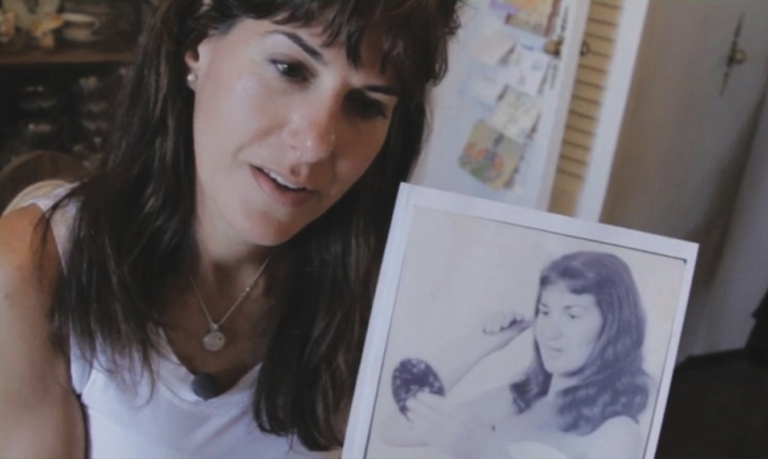
‘My Underground Mother’ Uncovers a Hidden Holocaust History
At the Roxie, ‘Lyd’ Connects the Nakba to Today
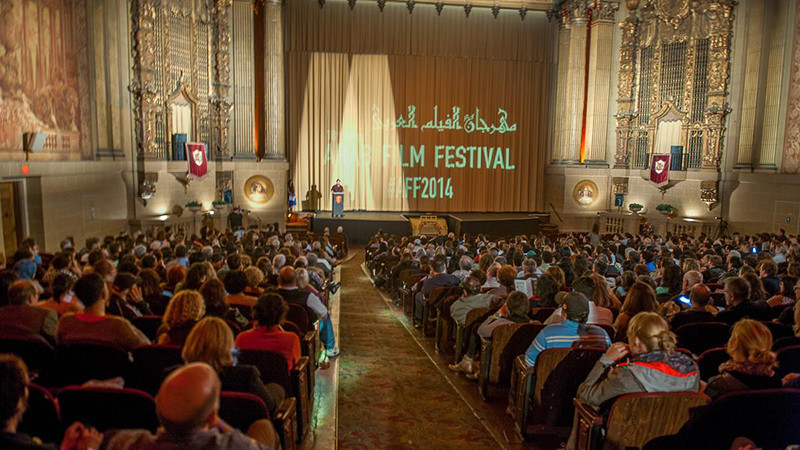
Higher Rental Costs at Castro Theatre Put Small Film Festivals Under Strain
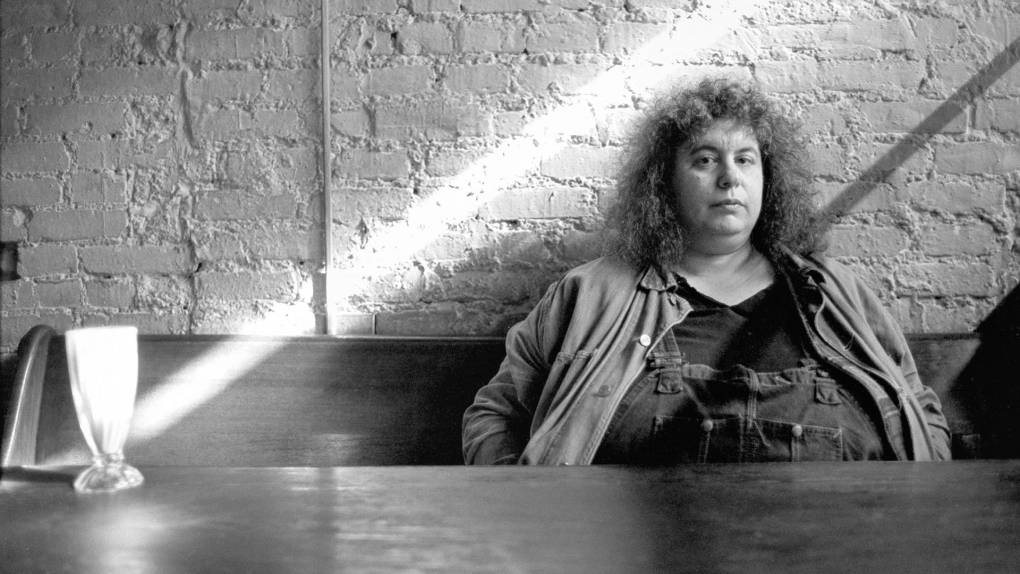
New Film ‘My Name Is Andrea’ Depicts the Many Sides of Feminist Andrea Dworkin
Anti-Holiday Movie ‘Ahed’s Knee’ Follows an Israeli Filmmaker to the Desert
Now Playing! Festivals Go Out with a Bang and a Boo!
Now Playing! April Dates Inspire Spring Streaming
Now Playing! Distance Between 1930s and Present Collapses at S.F. Jewish Film Festival
Now Playing! S.F. Jewish Film Festival Drills Down to the Roots
Player sponsored by
window.__IS_SSR__=true
window.__INITIAL_STATE__={
"attachmentsReducer": {
"audio_0": {
"type": "attachments",
"id": "audio_0",
"imgSizes": {
"kqedFullSize": {
"file": "https://ww2.kqed.org/news/wp-content/themes/KQED-unified/img/audio_bgs/background0.jpg"
}
}
},
"audio_1": {
"type": "attachments",
"id": "audio_1",
"imgSizes": {
"kqedFullSize": {
"file": "https://ww2.kqed.org/news/wp-content/themes/KQED-unified/img/audio_bgs/background1.jpg"
}
}
},
"audio_2": {
"type": "attachments",
"id": "audio_2",
"imgSizes": {
"kqedFullSize": {
"file": "https://ww2.kqed.org/news/wp-content/themes/KQED-unified/img/audio_bgs/background2.jpg"
}
}
},
"audio_3": {
"type": "attachments",
"id": "audio_3",
"imgSizes": {
"kqedFullSize": {
"file": "https://ww2.kqed.org/news/wp-content/themes/KQED-unified/img/audio_bgs/background3.jpg"
}
}
},
"audio_4": {
"type": "attachments",
"id": "audio_4",
"imgSizes": {
"kqedFullSize": {
"file": "https://ww2.kqed.org/news/wp-content/themes/KQED-unified/img/audio_bgs/background4.jpg"
}
}
},
"placeholder": {
"type": "attachments",
"id": "placeholder",
"imgSizes": {
"thumbnail": {
"file": "https://cdn.kqed.org/wp-content/uploads/2024/12/KQED-Default-Image-816638274-2000x1333-1-160x107.jpg",
"width": 160,
"height": 107,
"mimeType": "image/jpeg"
},
"medium": {
"file": "https://cdn.kqed.org/wp-content/uploads/2024/12/KQED-Default-Image-816638274-2000x1333-1-800x533.jpg",
"width": 800,
"height": 533,
"mimeType": "image/jpeg"
},
"medium_large": {
"file": "https://cdn.kqed.org/wp-content/uploads/2024/12/KQED-Default-Image-816638274-2000x1333-1-768x512.jpg",
"width": 768,
"height": 512,
"mimeType": "image/jpeg"
},
"large": {
"file": "https://cdn.kqed.org/wp-content/uploads/2024/12/KQED-Default-Image-816638274-2000x1333-1-1020x680.jpg",
"width": 1020,
"height": 680,
"mimeType": "image/jpeg"
},
"1536x1536": {
"file": "https://cdn.kqed.org/wp-content/uploads/2024/12/KQED-Default-Image-816638274-2000x1333-1-1536x1024.jpg",
"width": 1536,
"height": 1024,
"mimeType": "image/jpeg"
},
"fd-lrg": {
"file": "https://cdn.kqed.org/wp-content/uploads/2024/12/KQED-Default-Image-816638274-2000x1333-1-1536x1024.jpg",
"width": 1536,
"height": 1024,
"mimeType": "image/jpeg"
},
"fd-med": {
"file": "https://cdn.kqed.org/wp-content/uploads/2024/12/KQED-Default-Image-816638274-2000x1333-1-1020x680.jpg",
"width": 1020,
"height": 680,
"mimeType": "image/jpeg"
},
"fd-sm": {
"file": "https://cdn.kqed.org/wp-content/uploads/2024/12/KQED-Default-Image-816638274-2000x1333-1-800x533.jpg",
"width": 800,
"height": 533,
"mimeType": "image/jpeg"
},
"post-thumbnail": {
"file": "https://cdn.kqed.org/wp-content/uploads/2024/12/KQED-Default-Image-816638274-2000x1333-1-672x372.jpg",
"width": 672,
"height": 372,
"mimeType": "image/jpeg"
},
"twentyfourteen-full-width": {
"file": "https://cdn.kqed.org/wp-content/uploads/2024/12/KQED-Default-Image-816638274-2000x1333-1-1038x576.jpg",
"width": 1038,
"height": 576,
"mimeType": "image/jpeg"
},
"xxsmall": {
"file": "https://cdn.kqed.org/wp-content/uploads/2024/12/KQED-Default-Image-816638274-2000x1333-1-160x107.jpg",
"width": 160,
"height": 107,
"mimeType": "image/jpeg"
},
"xsmall": {
"file": "https://cdn.kqed.org/wp-content/uploads/2024/12/KQED-Default-Image-816638274-2000x1333-1-672x372.jpg",
"width": 672,
"height": 372,
"mimeType": "image/jpeg"
},
"small": {
"file": "https://cdn.kqed.org/wp-content/uploads/2024/12/KQED-Default-Image-816638274-2000x1333-1-672x372.jpg",
"width": 672,
"height": 372,
"mimeType": "image/jpeg"
},
"xlarge": {
"file": "https://cdn.kqed.org/wp-content/uploads/2024/12/KQED-Default-Image-816638274-2000x1333-1-1020x680.jpg",
"width": 1020,
"height": 680,
"mimeType": "image/jpeg"
},
"full-width": {
"file": "https://cdn.kqed.org/wp-content/uploads/2024/12/KQED-Default-Image-816638274-2000x1333-1-1920x1280.jpg",
"width": 1920,
"height": 1280,
"mimeType": "image/jpeg"
},
"guest-author-32": {
"file": "https://cdn.kqed.org/wp-content/uploads/2025/01/KQED-Default-Image-816638274-1333x1333-1-160x160.jpg",
"width": 32,
"height": 32,
"mimeType": "image/jpeg"
},
"guest-author-50": {
"file": "https://cdn.kqed.org/wp-content/uploads/2025/01/KQED-Default-Image-816638274-1333x1333-1-160x160.jpg",
"width": 50,
"height": 50,
"mimeType": "image/jpeg"
},
"guest-author-64": {
"file": "https://cdn.kqed.org/wp-content/uploads/2025/01/KQED-Default-Image-816638274-1333x1333-1-160x160.jpg",
"width": 64,
"height": 64,
"mimeType": "image/jpeg"
},
"guest-author-96": {
"file": "https://cdn.kqed.org/wp-content/uploads/2025/01/KQED-Default-Image-816638274-1333x1333-1-160x160.jpg",
"width": 96,
"height": 96,
"mimeType": "image/jpeg"
},
"guest-author-128": {
"file": "https://cdn.kqed.org/wp-content/uploads/2025/01/KQED-Default-Image-816638274-1333x1333-1-160x160.jpg",
"width": 128,
"height": 128,
"mimeType": "image/jpeg"
},
"detail": {
"file": "https://cdn.kqed.org/wp-content/uploads/2025/01/KQED-Default-Image-816638274-1333x1333-1-160x160.jpg",
"width": 160,
"height": 160,
"mimeType": "image/jpeg"
},
"kqedFullSize": {
"file": "https://cdn.kqed.org/wp-content/uploads/2024/12/KQED-Default-Image-816638274-2000x1333-1.jpg",
"width": 2000,
"height": 1333
}
}
},
"arts_13989706": {
"type": "attachments",
"id": "arts_13989706",
"meta": {
"index": "attachments_1716263798",
"site": "arts",
"id": "13989706",
"found": true
},
"title": "IWYS_2000",
"publishDate": 1778875791,
"status": "inherit",
"parent": 13989211,
"modified": 1778882285,
"caption": "Olivia Wilde and Cooper Hoffman in a scene from Gregg Arak's 'I Want Your Sex.'",
"credit": "Magnolia Pictures",
"altTag": "blonde woman and blindfolded man face each other in near kiss",
"description": null,
"imgSizes": {
"thumbnail": {
"file": "https://cdn.kqed.org/wp-content/uploads/sites/2/2026/05/IWYS_2000-160x86.jpg",
"width": 160,
"height": 86,
"mimeType": "image/jpeg"
},
"medium_large": {
"file": "https://cdn.kqed.org/wp-content/uploads/sites/2/2026/05/IWYS_2000-768x415.jpg",
"width": 768,
"height": 415,
"mimeType": "image/jpeg"
},
"1536x1536": {
"file": "https://cdn.kqed.org/wp-content/uploads/sites/2/2026/05/IWYS_2000-1536x830.jpg",
"width": 1536,
"height": 830,
"mimeType": "image/jpeg"
},
"post-thumbnail": {
"file": "https://cdn.kqed.org/wp-content/uploads/sites/2/2026/05/IWYS_2000-672x372.jpg",
"width": 672,
"height": 372,
"mimeType": "image/jpeg"
},
"twentyfourteen-full-width": {
"file": "https://cdn.kqed.org/wp-content/uploads/sites/2/2026/05/IWYS_2000-1038x576.jpg",
"width": 1038,
"height": 576,
"mimeType": "image/jpeg"
},
"npr-cds-wide": {
"file": "https://cdn.kqed.org/wp-content/uploads/sites/2/2026/05/IWYS_2000-1200x675.jpg",
"width": 1200,
"height": 675,
"mimeType": "image/jpeg"
},
"npr-cds-square": {
"file": "https://cdn.kqed.org/wp-content/uploads/sites/2/2026/05/IWYS_2000-600x600.jpg",
"width": 600,
"height": 600,
"mimeType": "image/jpeg"
},
"kqedFullSize": {
"file": "https://cdn.kqed.org/wp-content/uploads/sites/2/2026/05/IWYS_2000.jpg",
"width": 2000,
"height": 1081
}
},
"isLoading": false,
"fetchFailed": false
},
"arts_13979228": {
"type": "attachments",
"id": "arts_13979228",
"meta": {
"index": "attachments_1716263798",
"site": "arts",
"id": "13979228",
"found": true
},
"title": "underground mother",
"publishDate": 1753731670,
"status": "inherit",
"parent": 13978623,
"modified": 1753733066,
"caption": "Journalist Marisa Fox holds up a photograph of her mother, Hela Hocherman, whose concealed wartime history she uncovers in ‘My Underground Mother.’",
"credit": "San Francisco Jewish Film Festival",
"altTag": "A white women with long brown hair, wearing a white t-shirt, holds up a black and white photograph of a similar looking woman from a different era.",
"description": null,
"imgSizes": {
"thumbnail": {
"file": "https://cdn.kqed.org/wp-content/uploads/sites/2/2025/07/underground-mother-160x96.png",
"width": 160,
"height": 96,
"mimeType": "image/png"
},
"medium_large": {
"file": "https://cdn.kqed.org/wp-content/uploads/sites/2/2025/07/underground-mother-768x459.png",
"width": 768,
"height": 459,
"mimeType": "image/png"
},
"1536x1536": {
"file": "https://cdn.kqed.org/wp-content/uploads/sites/2/2025/07/underground-mother-1536x918.png",
"width": 1536,
"height": 918,
"mimeType": "image/png"
},
"post-thumbnail": {
"file": "https://cdn.kqed.org/wp-content/uploads/sites/2/2025/07/underground-mother-672x372.png",
"width": 672,
"height": 372,
"mimeType": "image/png"
},
"twentyfourteen-full-width": {
"file": "https://cdn.kqed.org/wp-content/uploads/sites/2/2025/07/underground-mother-1038x576.png",
"width": 1038,
"height": 576,
"mimeType": "image/png"
},
"kqedFullSize": {
"file": "https://cdn.kqed.org/wp-content/uploads/sites/2/2025/07/underground-mother.png",
"width": 2000,
"height": 1195
}
},
"isLoading": false,
"fetchFailed": false
},
"arts_13961281": {
"type": "attachments",
"id": "arts_13961281",
"meta": {
"index": "attachments_1716263798",
"site": "arts",
"id": "13961281",
"found": true
},
"title": "Lyd-3",
"publishDate": 1721249464,
"status": "inherit",
"parent": 13961235,
"modified": 1721249556,
"caption": "A still from Sarah Ema Friedland and Rami Younis' 'Lyd,' playing July 28 and 30 as part of the San Francisco Jewish Film Festival.",
"credit": "Icarus Films",
"altTag": "Animation of swirling vortex with chunks of stone",
"description": null,
"imgSizes": {
"medium": {
"file": "https://cdn.kqed.org/wp-content/uploads/sites/2/2024/07/Lyd-3-800x450.jpg",
"width": 800,
"height": 450,
"mimeType": "image/jpeg"
},
"large": {
"file": "https://cdn.kqed.org/wp-content/uploads/sites/2/2024/07/Lyd-3-1020x574.jpg",
"width": 1020,
"height": 574,
"mimeType": "image/jpeg"
},
"thumbnail": {
"file": "https://cdn.kqed.org/wp-content/uploads/sites/2/2024/07/Lyd-3-160x90.jpg",
"width": 160,
"height": 90,
"mimeType": "image/jpeg"
},
"medium_large": {
"file": "https://cdn.kqed.org/wp-content/uploads/sites/2/2024/07/Lyd-3-768x432.jpg",
"width": 768,
"height": 432,
"mimeType": "image/jpeg"
},
"1536x1536": {
"file": "https://cdn.kqed.org/wp-content/uploads/sites/2/2024/07/Lyd-3-1536x864.jpg",
"width": 1536,
"height": 864,
"mimeType": "image/jpeg"
},
"post-thumbnail": {
"file": "https://cdn.kqed.org/wp-content/uploads/sites/2/2024/07/Lyd-3-672x372.jpg",
"width": 672,
"height": 372,
"mimeType": "image/jpeg"
},
"twentyfourteen-full-width": {
"file": "https://cdn.kqed.org/wp-content/uploads/sites/2/2024/07/Lyd-3-1038x576.jpg",
"width": 1038,
"height": 576,
"mimeType": "image/jpeg"
},
"kqedFullSize": {
"file": "https://cdn.kqed.org/wp-content/uploads/sites/2/2024/07/Lyd-3.jpg",
"width": 1920,
"height": 1080
}
},
"isLoading": false,
"fetchFailed": false
},
"arts_10822924": {
"type": "attachments",
"id": "arts_10822924",
"meta": {
"index": "attachments_1716263798",
"site": "arts",
"id": "10822924",
"found": true
},
"parent": 10822840,
"imgSizes": {
"thumbnail": {
"file": "https://ww2.kqed.org/app/uploads/sites/2/2015/07/Arab-Film-festival2-400x225.jpg",
"width": 400,
"mimeType": "image/jpeg",
"height": 225
},
"post-thumbnail": {
"file": "https://ww2.kqed.org/app/uploads/sites/2/2015/07/Arab-Film-festival2-672x372.jpg",
"width": 672,
"mimeType": "image/jpeg",
"height": 372
},
"kqedFullSize": {
"file": "https://ww2.kqed.org/app/uploads/sites/2/2015/07/Arab-Film-festival2.jpg",
"width": 800,
"height": 450
},
"guest-author-96": {
"file": "https://ww2.kqed.org/app/uploads/sites/2/2015/07/Arab-Film-festival2-96x96.jpg",
"width": 96,
"mimeType": "image/jpeg",
"height": 96
},
"medium": {
"file": "https://ww2.kqed.org/app/uploads/sites/2/2015/07/Arab-Film-festival2-800x450.jpg",
"width": 800,
"mimeType": "image/jpeg",
"height": 450
},
"guest-author-64": {
"file": "https://ww2.kqed.org/app/uploads/sites/2/2015/07/Arab-Film-festival2-64x64.jpg",
"width": 64,
"mimeType": "image/jpeg",
"height": 64
},
"detail": {
"file": "https://ww2.kqed.org/app/uploads/sites/2/2015/07/Arab-Film-festival2-75x75.jpg",
"width": 75,
"mimeType": "image/jpeg",
"height": 75
},
"guest-author-32": {
"file": "https://ww2.kqed.org/app/uploads/sites/2/2015/07/Arab-Film-festival2-32x32.jpg",
"width": 32,
"mimeType": "image/jpeg",
"height": 32
},
"guest-author-128": {
"file": "https://ww2.kqed.org/app/uploads/sites/2/2015/07/Arab-Film-festival2-128x128.jpg",
"width": 128,
"mimeType": "image/jpeg",
"height": 128
}
},
"publishDate": 1436225317,
"modified": 1691685499,
"caption": "The 2014 Arab Film Festival at San Francisco's Castro Theatre. For most smaller, independent film festivals, Another Planet Entertainment's proposed renovations mean their future at the theater is up in the air.",
"description": "During the 2014 Arab Film Festival at San Francisco's Castro Theatre (Courtesy of the Arab Film Festival) ",
"title": "Arab Film festival2",
"credit": "Courtesy of the Arab Film Festival",
"status": "inherit",
"altTag": "a shot of the interior of a movie theater, the screen shows that this is the 2014 Arab Film Festival at San Francisco's Castro Theatre",
"isLoading": false,
"fetchFailed": false
},
"arts_13916320": {
"type": "attachments",
"id": "arts_13916320",
"meta": {
"index": "attachments_1716263798",
"site": "arts",
"id": "13916320",
"found": true
},
"parent": 13916300,
"imgSizes": {
"twentyfourteen-full-width": {
"file": "https://ww2.kqed.org/app/uploads/sites/2/2022/07/MyNameIsAndrea-SFJFF42-key-01_COVER-1038x576.jpg",
"width": 1038,
"mimeType": "image/jpeg",
"height": 576
},
"thumbnail": {
"file": "https://ww2.kqed.org/app/uploads/sites/2/2022/07/MyNameIsAndrea-SFJFF42-key-01_COVER-160x90.jpg",
"width": 160,
"mimeType": "image/jpeg",
"height": 90
},
"post-thumbnail": {
"file": "https://ww2.kqed.org/app/uploads/sites/2/2022/07/MyNameIsAndrea-SFJFF42-key-01_COVER-672x372.jpg",
"width": 672,
"mimeType": "image/jpeg",
"height": 372
},
"kqedFullSize": {
"file": "https://ww2.kqed.org/app/uploads/sites/2/2022/07/MyNameIsAndrea-SFJFF42-key-01_COVER.jpg",
"width": 1920,
"height": 1080
},
"large": {
"file": "https://ww2.kqed.org/app/uploads/sites/2/2022/07/MyNameIsAndrea-SFJFF42-key-01_COVER-1020x574.jpg",
"width": 1020,
"mimeType": "image/jpeg",
"height": 574
},
"1536x1536": {
"file": "https://ww2.kqed.org/app/uploads/sites/2/2022/07/MyNameIsAndrea-SFJFF42-key-01_COVER-1536x864.jpg",
"width": 1536,
"mimeType": "image/jpeg",
"height": 864
},
"medium": {
"file": "https://ww2.kqed.org/app/uploads/sites/2/2022/07/MyNameIsAndrea-SFJFF42-key-01_COVER-800x450.jpg",
"width": 800,
"mimeType": "image/jpeg",
"height": 450
},
"medium_large": {
"file": "https://ww2.kqed.org/app/uploads/sites/2/2022/07/MyNameIsAndrea-SFJFF42-key-01_COVER-768x432.jpg",
"width": 768,
"mimeType": "image/jpeg",
"height": 432
}
},
"publishDate": 1658267063,
"modified": 1658267155,
"caption": "Andrea Dworkin in a still from Pratibha Parmar's 'My Name is Andrea,' 2022.",
"description": null,
"title": "MyNameIsAndrea-SFJFF42-key-01_COVER",
"credit": "Courtesy of Kali Films",
"status": "inherit",
"altTag": "Black-and-white image of woman with curly hair sitting behind a table",
"isLoading": false,
"fetchFailed": false
},
"arts_13906550": {
"type": "attachments",
"id": "arts_13906550",
"meta": {
"index": "attachments_1716263798",
"site": "arts",
"id": "13906550",
"found": true
},
"parent": 13906527,
"imgSizes": {
"twentyfourteen-full-width": {
"file": "https://ww2.kqed.org/app/uploads/sites/2/2021/11/AhedsKnee_Still1-1038x576.jpeg",
"width": 1038,
"mimeType": "image/jpeg",
"height": 576
},
"thumbnail": {
"file": "https://ww2.kqed.org/app/uploads/sites/2/2021/11/AhedsKnee_Still1-160x67.jpeg",
"width": 160,
"mimeType": "image/jpeg",
"height": 67
},
"post-thumbnail": {
"file": "https://ww2.kqed.org/app/uploads/sites/2/2021/11/AhedsKnee_Still1-672x372.jpeg",
"width": 672,
"mimeType": "image/jpeg",
"height": 372
},
"kqedFullSize": {
"file": "https://ww2.kqed.org/app/uploads/sites/2/2021/11/AhedsKnee_Still1.jpeg",
"width": 2048,
"height": 858
},
"large": {
"file": "https://ww2.kqed.org/app/uploads/sites/2/2021/11/AhedsKnee_Still1-1020x427.jpeg",
"width": 1020,
"mimeType": "image/jpeg",
"height": 427
},
"1536x1536": {
"file": "https://ww2.kqed.org/app/uploads/sites/2/2021/11/AhedsKnee_Still1-1536x644.jpeg",
"width": 1536,
"mimeType": "image/jpeg",
"height": 644
},
"full-width": {
"file": "https://ww2.kqed.org/app/uploads/sites/2/2021/11/AhedsKnee_Still1-1920x804.jpeg",
"width": 1920,
"mimeType": "image/jpeg",
"height": 804
},
"medium": {
"file": "https://ww2.kqed.org/app/uploads/sites/2/2021/11/AhedsKnee_Still1-800x335.jpeg",
"width": 800,
"mimeType": "image/jpeg",
"height": 335
},
"medium_large": {
"file": "https://ww2.kqed.org/app/uploads/sites/2/2021/11/AhedsKnee_Still1-768x322.jpeg",
"width": 768,
"mimeType": "image/jpeg",
"height": 322
}
},
"publishDate": 1637799263,
"modified": 1637799357,
"caption": "The filmmaker 'Y' in Nadav Lapid's 'Ahed's Knee.'",
"description": null,
"title": "AhedsKnee_Still1",
"credit": "Kino Lorber",
"status": "inherit",
"altTag": "A man alone in a desert landscape.",
"isLoading": false,
"fetchFailed": false
},
"arts_13890267": {
"type": "attachments",
"id": "arts_13890267",
"meta": {
"index": "attachments_1716263798",
"site": "arts",
"id": "13890267",
"found": true
},
"parent": 13890216,
"imgSizes": {
"twentyfourteen-full-width": {
"file": "https://ww2.kqed.org/app/uploads/sites/2/2020/12/bornjerusalem-1038x576.jpg",
"width": 1038,
"mimeType": "image/jpeg",
"height": 576
},
"thumbnail": {
"file": "https://ww2.kqed.org/app/uploads/sites/2/2020/12/bornjerusalem-160x86.jpg",
"width": 160,
"mimeType": "image/jpeg",
"height": 86
},
"post-thumbnail": {
"file": "https://ww2.kqed.org/app/uploads/sites/2/2020/12/bornjerusalem-672x372.jpg",
"width": 672,
"mimeType": "image/jpeg",
"height": 372
},
"kqedFullSize": {
"file": "https://ww2.kqed.org/app/uploads/sites/2/2020/12/bornjerusalem.jpg",
"width": 1731,
"height": 935
},
"large": {
"file": "https://ww2.kqed.org/app/uploads/sites/2/2020/12/bornjerusalem-1020x551.jpg",
"width": 1020,
"mimeType": "image/jpeg",
"height": 551
},
"1536x1536": {
"file": "https://ww2.kqed.org/app/uploads/sites/2/2020/12/bornjerusalem-1536x830.jpg",
"width": 1536,
"mimeType": "image/jpeg",
"height": 830
},
"medium": {
"file": "https://ww2.kqed.org/app/uploads/sites/2/2020/12/bornjerusalem-800x432.jpg",
"width": 800,
"mimeType": "image/jpeg",
"height": 432
},
"medium_large": {
"file": "https://ww2.kqed.org/app/uploads/sites/2/2020/12/bornjerusalem-768x415.jpg",
"width": 768,
"mimeType": "image/jpeg",
"height": 415
}
},
"publishDate": 1607650990,
"modified": 1607651035,
"caption": "Still from 'Born in Jerusalem and Still Alive.'",
"description": "Still from 'Born in Jerusalem and Still Alive.'",
"title": "bornjerusalem",
"credit": "Courtesy of SF Jewish Film Festival",
"status": "inherit",
"altTag": null,
"isLoading": false,
"fetchFailed": false
},
"arts_13879018": {
"type": "attachments",
"id": "arts_13879018",
"meta": {
"index": "attachments_1716263798",
"site": "arts",
"id": "13879018",
"found": true
},
"parent": 13879003,
"imgSizes": {
"twentyfourteen-full-width": {
"file": "https://ww2.kqed.org/app/uploads/sites/2/2020/04/PP-Strange-Culture-Online-Hero-1320x743-1038x576.jpg",
"width": 1038,
"mimeType": "image/jpeg",
"height": 576
},
"thumbnail": {
"file": "https://ww2.kqed.org/app/uploads/sites/2/2020/04/PP-Strange-Culture-Online-Hero-1320x743-160x90.jpg",
"width": 160,
"mimeType": "image/jpeg",
"height": 90
},
"post-thumbnail": {
"file": "https://ww2.kqed.org/app/uploads/sites/2/2020/04/PP-Strange-Culture-Online-Hero-1320x743-672x372.jpg",
"width": 672,
"mimeType": "image/jpeg",
"height": 372
},
"kqedFullSize": {
"file": "https://ww2.kqed.org/app/uploads/sites/2/2020/04/PP-Strange-Culture-Online-Hero-1320x743.jpg",
"width": 1320,
"height": 743
},
"large": {
"file": "https://ww2.kqed.org/app/uploads/sites/2/2020/04/PP-Strange-Culture-Online-Hero-1320x743-1020x574.jpg",
"width": 1020,
"mimeType": "image/jpeg",
"height": 574
},
"medium": {
"file": "https://ww2.kqed.org/app/uploads/sites/2/2020/04/PP-Strange-Culture-Online-Hero-1320x743-800x450.jpg",
"width": 800,
"mimeType": "image/jpeg",
"height": 450
},
"medium_large": {
"file": "https://ww2.kqed.org/app/uploads/sites/2/2020/04/PP-Strange-Culture-Online-Hero-1320x743-768x432.jpg",
"width": 768,
"mimeType": "image/jpeg",
"height": 432
}
},
"publishDate": 1587506277,
"modified": 1587506321,
"caption": "Tilda Swinton and Thomas Jay Ryan in 'Strange Culture' (2007) directed by Lynn Hershman Leeson.",
"description": null,
"title": "PP-Strange-Culture-Online-Hero-1320x743",
"credit": "Courtesy the artist",
"status": "inherit",
"isLoading": false,
"fetchFailed": false
},
"arts_13861422": {
"type": "attachments",
"id": "arts_13861422",
"meta": {
"index": "attachments_1716263798",
"site": "arts",
"id": "13861422",
"found": true
},
"parent": 13861413,
"imgSizes": {
"twentyfourteen-full-width": {
"file": "https://ww2.kqed.org/app/uploads/sites/2/2019/07/Tobacconist_COVER-1038x576.jpg",
"width": 1038,
"mimeType": "image/jpeg",
"height": 576
},
"thumbnail": {
"file": "https://ww2.kqed.org/app/uploads/sites/2/2019/07/Tobacconist_COVER-160x90.jpg",
"width": 160,
"mimeType": "image/jpeg",
"height": 90
},
"post-thumbnail": {
"file": "https://ww2.kqed.org/app/uploads/sites/2/2019/07/Tobacconist_COVER-672x372.jpg",
"width": 672,
"mimeType": "image/jpeg",
"height": 372
},
"kqedFullSize": {
"file": "https://ww2.kqed.org/app/uploads/sites/2/2019/07/Tobacconist_COVER.jpg",
"width": 1113,
"height": 626
},
"large": {
"file": "https://ww2.kqed.org/app/uploads/sites/2/2019/07/Tobacconist_COVER-1020x574.jpg",
"width": 1020,
"mimeType": "image/jpeg",
"height": 574
},
"medium": {
"file": "https://ww2.kqed.org/app/uploads/sites/2/2019/07/Tobacconist_COVER-800x450.jpg",
"width": 800,
"mimeType": "image/jpeg",
"height": 450
},
"medium_large": {
"file": "https://ww2.kqed.org/app/uploads/sites/2/2019/07/Tobacconist_COVER-768x432.jpg",
"width": 768,
"mimeType": "image/jpeg",
"height": 432
}
},
"publishDate": 1563216812,
"modified": 1563216868,
"caption": "Still from Nikolaus Leytner's 'The Tobacconist.'",
"description": "Still from Nikolaus Leytner's 'The Tobacconist.'",
"title": "Tobacconist_COVER",
"credit": "Courtesy of SFJFF",
"status": "inherit",
"isLoading": false,
"fetchFailed": false
},
"arts_13837198": {
"type": "attachments",
"id": "arts_13837198",
"meta": {
"index": "attachments_1716263798",
"site": "arts",
"id": "13837198",
"found": true
},
"parent": 13837189,
"imgSizes": {
"small": {
"file": "https://ww2.kqed.org/app/uploads/sites/2/2018/07/Waldheim-Waltz-The_Still-01_COVER-520x293.jpg",
"width": 520,
"mimeType": "image/jpeg",
"height": 293
},
"twentyfourteen-full-width": {
"file": "https://ww2.kqed.org/app/uploads/sites/2/2018/07/Waldheim-Waltz-The_Still-01_COVER-1038x576.jpg",
"width": 1038,
"mimeType": "image/jpeg",
"height": 576
},
"thumbnail": {
"file": "https://ww2.kqed.org/app/uploads/sites/2/2018/07/Waldheim-Waltz-The_Still-01_COVER-160x90.jpg",
"width": 160,
"mimeType": "image/jpeg",
"height": 90
},
"fd-sm": {
"file": "https://ww2.kqed.org/app/uploads/sites/2/2018/07/Waldheim-Waltz-The_Still-01_COVER-960x540.jpg",
"width": 960,
"mimeType": "image/jpeg",
"height": 540
},
"post-thumbnail": {
"file": "https://ww2.kqed.org/app/uploads/sites/2/2018/07/Waldheim-Waltz-The_Still-01_COVER-672x372.jpg",
"width": 672,
"mimeType": "image/jpeg",
"height": 372
},
"xsmall": {
"file": "https://ww2.kqed.org/app/uploads/sites/2/2018/07/Waldheim-Waltz-The_Still-01_COVER-375x211.jpg",
"width": 375,
"mimeType": "image/jpeg",
"height": 211
},
"kqedFullSize": {
"file": "https://ww2.kqed.org/app/uploads/sites/2/2018/07/Waldheim-Waltz-The_Still-01_COVER.jpg",
"width": 1440,
"height": 810
},
"large": {
"file": "https://ww2.kqed.org/app/uploads/sites/2/2018/07/Waldheim-Waltz-The_Still-01_COVER-1020x574.jpg",
"width": 1020,
"mimeType": "image/jpeg",
"height": 574
},
"xlarge": {
"file": "https://ww2.kqed.org/app/uploads/sites/2/2018/07/Waldheim-Waltz-The_Still-01_COVER-1180x664.jpg",
"width": 1180,
"mimeType": "image/jpeg",
"height": 664
},
"complete_open_graph": {
"file": "https://ww2.kqed.org/app/uploads/sites/2/2018/07/Waldheim-Waltz-The_Still-01_COVER-1200x675.jpg",
"width": 1200,
"mimeType": "image/jpeg",
"height": 675
},
"guest-author-50": {
"file": "https://ww2.kqed.org/app/uploads/sites/2/2018/07/Waldheim-Waltz-The_Still-01_COVER-50x50.jpg",
"width": 50,
"mimeType": "image/jpeg",
"height": 50
},
"guest-author-96": {
"file": "https://ww2.kqed.org/app/uploads/sites/2/2018/07/Waldheim-Waltz-The_Still-01_COVER-96x96.jpg",
"width": 96,
"mimeType": "image/jpeg",
"height": 96
},
"medium": {
"file": "https://ww2.kqed.org/app/uploads/sites/2/2018/07/Waldheim-Waltz-The_Still-01_COVER-800x450.jpg",
"width": 800,
"mimeType": "image/jpeg",
"height": 450
},
"guest-author-64": {
"file": "https://ww2.kqed.org/app/uploads/sites/2/2018/07/Waldheim-Waltz-The_Still-01_COVER-64x64.jpg",
"width": 64,
"mimeType": "image/jpeg",
"height": 64
},
"guest-author-32": {
"file": "https://ww2.kqed.org/app/uploads/sites/2/2018/07/Waldheim-Waltz-The_Still-01_COVER-32x32.jpg",
"width": 32,
"mimeType": "image/jpeg",
"height": 32
},
"fd-med": {
"file": "https://ww2.kqed.org/app/uploads/sites/2/2018/07/Waldheim-Waltz-The_Still-01_COVER-1180x664.jpg",
"width": 1180,
"mimeType": "image/jpeg",
"height": 664
},
"detail": {
"file": "https://ww2.kqed.org/app/uploads/sites/2/2018/07/Waldheim-Waltz-The_Still-01_COVER-150x150.jpg",
"width": 150,
"mimeType": "image/jpeg",
"height": 150
},
"medium_large": {
"file": "https://ww2.kqed.org/app/uploads/sites/2/2018/07/Waldheim-Waltz-The_Still-01_COVER-768x432.jpg",
"width": 768,
"mimeType": "image/jpeg",
"height": 432
},
"guest-author-128": {
"file": "https://ww2.kqed.org/app/uploads/sites/2/2018/07/Waldheim-Waltz-The_Still-01_COVER-128x128.jpg",
"width": 128,
"mimeType": "image/jpeg",
"height": 128
},
"xxsmall": {
"file": "https://ww2.kqed.org/app/uploads/sites/2/2018/07/Waldheim-Waltz-The_Still-01_COVER-240x135.jpg",
"width": 240,
"mimeType": "image/jpeg",
"height": 135
}
},
"publishDate": 1531766714,
"modified": 1531766860,
"caption": "Still from 'The Waldheim Waltz.'",
"description": "Still from 'The Waldheim Waltz.'",
"title": "Waldheim-Waltz-The_Still-01_COVER",
"credit": "Courtesy Menemsha Films/JFI",
"status": "inherit",
"isLoading": false,
"fetchFailed": false
}
},
"audioPlayerReducer": {
"postId": "stream_live",
"isPaused": true,
"isPlaying": false,
"pfsActive": false,
"pledgeModalIsOpen": true,
"playerDrawerIsOpen": false,
"liveAudioPlayStartedAt": 0,
"liveAudioPlayContext": ""
},
"authorsReducer": {
"mfox": {
"type": "authors",
"id": "22",
"meta": {
"index": "authors_1716337520",
"id": "22",
"found": true
},
"name": "Michael Fox",
"firstName": "Michael",
"lastName": "Fox",
"slug": "mfox",
"email": "foxonfilm@yahoo.com",
"display_author_email": false,
"staff_mastheads": [],
"title": "KQED Contributor",
"bio": "Michael Fox has written about film for dozens of publications since 1987. He is a founding member of the San Francisco Bay Area Film Critics Circle.",
"avatar": "https://secure.gravatar.com/avatar/d9849d6c659c41414795c471d907bb97b396e2a32b88e20e6ff66f65fbdd6dcd?s=600&d=blank&r=g",
"twitter": null,
"bluesky": null,
"facebook": null,
"instagram": null,
"linkedin": null,
"sites": [
{
"site": "arts",
"roles": [
"Contributor",
"contributor"
]
}
],
"headData": {
"title": "Michael Fox | KQED",
"description": "KQED Contributor",
"ogImgSrc": "https://secure.gravatar.com/avatar/d9849d6c659c41414795c471d907bb97b396e2a32b88e20e6ff66f65fbdd6dcd?s=600&d=blank&r=g",
"twImgSrc": "https://secure.gravatar.com/avatar/d9849d6c659c41414795c471d907bb97b396e2a32b88e20e6ff66f65fbdd6dcd?s=600&d=blank&r=g"
},
"isLoading": false,
"link": "/author/mfox"
},
"ralexandra": {
"type": "authors",
"id": "11242",
"meta": {
"index": "authors_1716337520",
"id": "11242",
"found": true
},
"name": "Rae Alexandra",
"firstName": "Rae",
"lastName": "Alexandra",
"slug": "ralexandra",
"email": "ralexandra@kqed.org",
"display_author_email": true,
"staff_mastheads": [],
"title": "Reporter/Producer",
"bio": "Rae Alexandra is a Reporter/Producer for KQED Arts & Culture, and the creator/author of the \u003ca href=\"https://www.kqed.org/arts/program/rebel-girls-from-bay-area-history\">Rebel Girls From Bay Area History\u003c/a> and \u003ca href=\"https://www.kqed.org/bizarrebayarea\">Bizarre Bay Area\u003c/a> series. Her debut book, \u003ca href=\"https://citylights.com/politics-current-events-history/unsung-heroines35-women-who-changed/\">Unsung Heroines: 35 Women Who Changed the Bay Area\u003c/a> was published by City Lights in March 2026. In 2023, Rae was awarded an SPJ Excellence in Journalism Award for Arts & Culture. Rae was born and raised in Wales and subsequently — even after two decades in Northern California — still uses phrases that regularly baffle her coworkers.",
"avatar": "https://secure.gravatar.com/avatar/edfee8176c80cc0a382b051190f5341997df378a934a5774dcb0977732dfd401?s=600&d=blank&r=g",
"twitter": null,
"bluesky": null,
"facebook": null,
"instagram": null,
"linkedin": null,
"sites": [
{
"site": "arts",
"roles": [
"subscriber"
]
},
{
"site": "news",
"roles": [
"subscriber"
]
},
{
"site": "pop",
"roles": [
"subscriber"
]
},
{
"site": "bayareabites",
"roles": [
"subscriber"
]
},
{
"site": "science",
"roles": [
"subscriber"
]
}
],
"headData": {
"title": "Rae Alexandra | KQED",
"description": "Reporter/Producer",
"ogImgSrc": "https://secure.gravatar.com/avatar/edfee8176c80cc0a382b051190f5341997df378a934a5774dcb0977732dfd401?s=600&d=blank&r=g",
"twImgSrc": "https://secure.gravatar.com/avatar/edfee8176c80cc0a382b051190f5341997df378a934a5774dcb0977732dfd401?s=600&d=blank&r=g"
},
"isLoading": false,
"link": "/author/ralexandra"
},
"omayeda": {
"type": "authors",
"id": "11872",
"meta": {
"index": "authors_1716337520",
"id": "11872",
"found": true
},
"name": "Olivia Cruz Mayeda",
"firstName": "Olivia Cruz",
"lastName": "Mayeda",
"slug": "omayeda",
"email": "omayeda@kqed.org",
"display_author_email": false,
"staff_mastheads": [],
"title": "Reporter",
"bio": "Olivia Cruz Mayeda is a journalist covering style, culture and reparations in the Bay Area, a place that has been home to her family for over 100 years. Her writing has also appeared in the \u003cem>San Francisco Chronicle\u003c/em> and \u003cem>El Tecolote\u003c/em>.",
"avatar": "https://secure.gravatar.com/avatar/a8c0baa30219ce1071a9474f4c14141f?s=600&d=blank&r=g",
"twitter": null,
"facebook": null,
"instagram": null,
"linkedin": null,
"sites": [
{
"site": "arts",
"roles": [
"contributor"
]
}
],
"headData": {
"title": "Olivia Cruz Mayeda | KQED",
"description": "Reporter",
"ogImgSrc": "https://secure.gravatar.com/avatar/a8c0baa30219ce1071a9474f4c14141f?s=600&d=blank&r=g",
"twImgSrc": "https://secure.gravatar.com/avatar/a8c0baa30219ce1071a9474f4c14141f?s=600&d=blank&r=g"
},
"isLoading": false,
"link": "/author/omayeda"
}
},
"pagesReducer": {
"arts_tag_sf-jewish-film-festival": {
"type": "terms",
"id": "arts_5305",
"meta": {
"index": "terms_1716263798",
"site": "arts",
"id": "5305",
"score": 10.404627
},
"featImg": null,
"name": "sf jewish film festival",
"description": null,
"taxonomy": "tag",
"headData": {
"twImgId": null,
"twTitle": null,
"ogTitle": null,
"ogImgId": null,
"twDescription": null,
"description": null,
"title": "sf jewish film festival Archives | KQED Arts",
"ogDescription": null
},
"ttid": 5317,
"slug": "sf-jewish-film-festival",
"isLoading": false,
"title": "sf jewish film festival",
"pageMeta": {
"site": "arts",
"WpPageTemplate": "page-topic-editorial",
"currentPage": 1
},
"blocks": [
{
"blockName": "kqed/post-list",
"attrs": {
"layout": "cardArticle2",
"query": "posts/arts?tag=sf-jewish-film-festival",
"seeMore": false,
"paginated": true,
"page": 1
}
},
{
"blockName": "kqed/ad"
}
]
}
},
"pfsSessionReducer": {},
"postsReducer": {
"stream_live": {
"type": "live",
"id": "stream_live",
"audioUrl": "https://streams.kqed.org/kqedradio",
"title": "Live Stream",
"excerpt": "Live Stream information currently unavailable.",
"link": "/radio",
"featImg": "",
"label": {
"name": "KQED Live",
"link": "/"
}
},
"stream_kqedNewscast": {
"type": "posts",
"id": "stream_kqedNewscast",
"audioUrl": "https://www.kqed.org/.stream/anon/radio/RDnews/newscast.mp3?_=1",
"title": "KQED Newscast",
"featImg": "",
"label": {
"name": "88.5 FM",
"link": "/"
}
},
"arts_13989211": {
"type": "posts",
"id": "arts_13989211",
"meta": {
"index": "posts_1716263798",
"site": "arts",
"id": "13989211",
"score": null,
"sort": [
1779199240000
]
},
"guestAuthors": [],
"slug": "best-summer-movies-film-festivals-sf-berkeley-2026",
"title": "11 of the Best Movies and Film Festivals to See This Summer",
"publishDate": 1779199240,
"format": "aside",
"headTitle": "11 of the Best Movies and Film Festivals to See This Summer | KQED",
"labelTerm": {},
"content": "\u003cp>\u003cem>Be sure to check out our full \u003ca href=\"https://www.kqed.org/arts/tag/summer-guide-2026\">2026 Summer Arts Guide to live music, movies, art, theater, festivals and more\u003c/a> in the Bay Area.\u003c/em>\u003c/p>\n\u003cp>After 10 years of unbridled lunacy on a national scale, I am reminded of a pleasurable childhood lesson: Movies are a fantastic means of escape. I confess I have sniffed, scoffed and sneered at mainstream flicks — an occupational hazard — for a good long while, but now I comprehend the need to tune out the news for (at least) a couple hours. I suspect you have reached that point as well.\u003c/p>\n\u003cp>So you have my blessing to submerge yourself in any of the blithering, blubbering, eardrum-blasting flicks that Hollywood has lined up for our summer entertainment. Nerve-plucking horror, adolescent superhero shtick, impossible action-adventure, implausible romantic fantasy — live it up, friends.\u003c/p>\n\u003cp>Now, if you’re looking for a deep dive into the shlock de la saison, you walked into the wrong bistro, er, soapbox. Although I’ve included a few tentpoles below, if you own a television the studios will make sure you see the menu. So here are suggestions for lower-profile, higher-order escapism.\u003c/p>\n\u003cfigure id=\"attachment_13989704\" class=\"wp-caption aligncenter\" style=\"max-width: 2000px\">\u003cimg loading=\"lazy\" decoding=\"async\" class=\"size-full wp-image-13989704\" src=\"https://cdn.kqed.org/wp-content/uploads/sites/2/2026/05/Anarchy-in-High-Heels_2000.jpg\" alt=\"women in costumes with signs\" width=\"2000\" height=\"1361\" srcset=\"https://cdn.kqed.org/wp-content/uploads/sites/2/2026/05/Anarchy-in-High-Heels_2000.jpg 2000w, https://cdn.kqed.org/wp-content/uploads/sites/2/2026/05/Anarchy-in-High-Heels_2000-160x109.jpg 160w, https://cdn.kqed.org/wp-content/uploads/sites/2/2026/05/Anarchy-in-High-Heels_2000-768x523.jpg 768w, https://cdn.kqed.org/wp-content/uploads/sites/2/2026/05/Anarchy-in-High-Heels_2000-1536x1045.jpg 1536w\" sizes=\"auto, (max-width: 2000px) 100vw, 2000px\">\u003cfigcaption class=\"wp-caption-text\">The Nickelettes in June 1974. \u003ccite>(Betsy Newman)\u003c/cite>\u003c/figcaption>\u003c/figure>\n\u003ch2>\u003ca href=\"https://sfdocfest2026.eventive.org/welcome\">DocFest\u003c/a>\u003c/h2>\n\u003cp>\u003ci>May 28–June 7, 2026\u003cbr>\nRoxie Theater, San Francisco\u003c/i>\u003c/p>\n\u003cp>[ad fullwidth]\u003c/p>\n\u003cp>Nonfiction is the pathway to vicariously living other lives — some more precarious – for a little while. The expansive 25th edition of DocFest hosts the world premieres of a pair of prison-themed films by Oakland filmmakers, \u003ca href=\"https://sfdocfest2026.eventive.org/schedule/69c2b1f04f4f536bedc7cc8e\">\u003cem>The Surrender of Waymond Hall\u003c/em>\u003c/a> and \u003ca href=\"https://sfdocfest2026.eventive.org/schedule/69c2b2ce7d35348a5d1e4455\">\u003cem>The End of Isolation\u003c/em>\u003c/a>. Hitting a lighter musical note, the festival opens with the NOFX doc \u003ca href=\"https://sfdocfest2026.eventive.org/schedule/69c801087edb042bb5e3975a\">\u003cem>40 Years of Fuckin’ Up\u003c/em>\u003c/a> and debuts \u003ca href=\"https://sfdocfest2026.eventive.org/schedule/69e22e22e5214d1cb3267a32\">\u003cem>Anarchy in High Heels: The Story of Les Nickelettes\u003c/em>\u003c/a>. DocFest revisits its roots, and the immortal \u003ca href=\"https://sfdocfest2026.eventive.org/films/69ace874858aeadeab6936b4\">Atomic Ed\u003c/a> and \u003ca href=\"https://sfdocfest2026.eventive.org/films/69ad97cc66714431517e6eaf\">Cynthia Plaster Caster\u003c/a>, with a trio of films from the festival’s inaugural 2001 year (with tickets at 2001 prices!).\u003c/p>\n\u003cfigure id=\"attachment_13989708\" class=\"wp-caption aligncenter\" style=\"max-width: 2000px\">\u003cimg loading=\"lazy\" decoding=\"async\" src=\"https://cdn.kqed.org/wp-content/uploads/sites/2/2026/05/P_11544_R_rgb_2000.jpg\" alt=\"two men face each other over typewriter\" width=\"2000\" height=\"1333\" class=\"size-full wp-image-13989708\" srcset=\"https://cdn.kqed.org/wp-content/uploads/sites/2/2026/05/P_11544_R_rgb_2000.jpg 2000w, https://cdn.kqed.org/wp-content/uploads/sites/2/2026/05/P_11544_R_rgb_2000-160x107.jpg 160w, https://cdn.kqed.org/wp-content/uploads/sites/2/2026/05/P_11544_R_rgb_2000-768x512.jpg 768w, https://cdn.kqed.org/wp-content/uploads/sites/2/2026/05/P_11544_R_rgb_2000-1536x1024.jpg 1536w\" sizes=\"auto, (max-width: 2000px) 100vw, 2000px\">\u003cfigcaption class=\"wp-caption-text\">Andrew Scott as Captain James Stagg and Chris Messina as Irving P. Krick in director Anthony Maras’ ‘Pressure.’ \u003ccite>(Alex Bailey/Focus Features/STUDIOCANAL)\u003c/cite>\u003c/figcaption>\u003c/figure>\n\u003ch2>‘Pressure’\u003c/h2>\n\u003cp>\u003ci>Opens May 29, 2026\u003c/i>\u003c/p>\n\u003cp>Anthony Maras’s behind-the-scenes World War II drama is of particular interest to history buffs and tech workers. Meteorologists Scottish (a splendid Andrew Scott) and American (Chris Messina, as the erstwhile villain of the piece) square off in a high-stakes, digital v. analog debate over the optimal date for D-Day. Brendan Fraser and Kerry Condon (as Gen. Dwight D. Eisenhower and his personal secretary Kay Summersby) round out the cast.\u003c/p>\n\u003cfigure id=\"attachment_13919010\" class=\"wp-caption aligncenter\" style=\"max-width: 1280px\">\u003cimg loading=\"lazy\" decoding=\"async\" src=\"https://cdn.kqed.org/wp-content/uploads/sites/2/2022/09/19-130.jpg\" alt=\"A teenage girl, green light glowing across her eyes, looks at something off in the distance with great horror.\" width=\"1280\" height=\"720\" class=\"size-full wp-image-13919010\" srcset=\"https://cdn.kqed.org/wp-content/uploads/sites/2/2022/09/19-130.jpg 1280w, https://cdn.kqed.org/wp-content/uploads/sites/2/2022/09/19-130-800x450.jpg 800w, https://cdn.kqed.org/wp-content/uploads/sites/2/2022/09/19-130-1020x574.jpg 1020w, https://cdn.kqed.org/wp-content/uploads/sites/2/2022/09/19-130-160x90.jpg 160w, https://cdn.kqed.org/wp-content/uploads/sites/2/2022/09/19-130-768x432.jpg 768w\" sizes=\"auto, (max-width: 1280px) 100vw, 1280px\">\u003cfigcaption class=\"wp-caption-text\">Winona Ryder in Tim Burton’s 1988 film ‘Beetlejuice,’ playing Oct 16. at Crane Cove Park.\u003c/figcaption>\u003c/figure>\n\u003ch2>\u003ca href=\"https://sfstandard.com/sundown-cinema/\">Sundown Cinema\u003c/a>\u003c/h2>\n\u003cp>\u003ci>June 12–Oct. 16, 2026\u003cbr>\nVarious San Francisco locations\u003c/i>\u003c/p>\n\u003cp>Following last year’s truncated schedule, the free outdoor screening series returns with a full slate. The lineup won’t get your pulse racing — it’s geared toward families rather than the date crowd — which is what it takes sometimes to spend a summer evening in the elements hereabouts. The late Rob Reiner’s \u003cem>The Princess Bride\u003c/em> is the curtain-raiser, with Pixar’s \u003cem>Inside Out\u003c/em>, \u003cem>The Parent Trap\u003c/em>, \u003cem>School of Rock\u003c/em> and \u003cem>Beetlejuice\u003c/em> in the wings. Bundle up, kiddos!\u003c/p>\n\u003cfigure id=\"attachment_13989703\" class=\"wp-caption aligncenter\" style=\"max-width: 2000px\">\u003cimg loading=\"lazy\" decoding=\"async\" class=\"size-full wp-image-13989703\" src=\"https://cdn.kqed.org/wp-content/uploads/sites/2/2026/05/Kubrick_The-Shining_003_2000.jpg\" alt=\"woman screams as axe head comes through door\" width=\"2000\" height=\"1360\" srcset=\"https://cdn.kqed.org/wp-content/uploads/sites/2/2026/05/Kubrick_The-Shining_003_2000.jpg 2000w, https://cdn.kqed.org/wp-content/uploads/sites/2/2026/05/Kubrick_The-Shining_003_2000-160x109.jpg 160w, https://cdn.kqed.org/wp-content/uploads/sites/2/2026/05/Kubrick_The-Shining_003_2000-768x522.jpg 768w, https://cdn.kqed.org/wp-content/uploads/sites/2/2026/05/Kubrick_The-Shining_003_2000-1536x1044.jpg 1536w\" sizes=\"auto, (max-width: 2000px) 100vw, 2000px\">\u003cfigcaption class=\"wp-caption-text\">Shelley Duvall in a scene from Stanley Kubrick’s 1980 film ‘The Shining,’ playing July 26 and 31 at BAMPFA. \u003ccite>(BAMPFA)\u003c/cite>\u003c/figcaption>\u003c/figure>\n\u003ch2>\u003ca href=\"https://bampfa.org/program/complete-stanley-kubrick\">A Complete Stanley Kubrick\u003c/a>\u003c/h2>\n\u003cp>\u003ci>June 12–Aug. 30, 2026\u003cbr>\nBerkeley Art Museum and Pacific Film Archive\u003c/i>\u003c/p>\n\u003cp>Coincidentally, Steven Spielberg’s latest hunk of speculative pulp fiction, \u003cem>Disclosure Day\u003c/em>, opens the same day this monumental retrospective begins. The directors are inextricably linked by \u003cem>\u003ca href=\"https://bampfa.org/event/ai-artificial-intelligence\">A.I. Artificial Intelligence\u003c/a>\u003c/em> (Aug. 20) which Kubrick developed and Spielberg directed in 2001. Resist the tempting timeliness of that title and catch up instead with the former photojournalist’s black-and-white masterpieces \u003cem>\u003ca href=\"https://bampfa.org/event/killing\">The Killing\u003c/a>\u003c/em>, \u003cem>\u003ca href=\"https://bampfa.org/event/paths-glory\">Paths of Glory\u003c/a>\u003c/em> and \u003cem>\u003ca href=\"https://bampfa.org/event/dr-strangelove-or-how-i-learned-stop-worrying-and-love-bomb\">Dr. Strangelove or: How I Learned to Stop Worrying and Love the Bomb\u003c/a>\u003c/em>. Actually, see everything on the big screen that the brilliant perfectionist made.\u003c/p>\n\u003cfigure id=\"attachment_13989714\" class=\"wp-caption aligncenter\" style=\"max-width: 2000px\">\u003cimg loading=\"lazy\" decoding=\"async\" src=\"https://cdn.kqed.org/wp-content/uploads/sites/2/2026/05/Lady-Champagne-2_D_Arcy-Drollinger_2000.jpg\" alt=\"blonde person in heavy makeup peers through jungle foliage\" width=\"2000\" height=\"1333\" class=\"size-full wp-image-13989714\" srcset=\"https://cdn.kqed.org/wp-content/uploads/sites/2/2026/05/Lady-Champagne-2_D_Arcy-Drollinger_2000.jpg 2000w, https://cdn.kqed.org/wp-content/uploads/sites/2/2026/05/Lady-Champagne-2_D_Arcy-Drollinger_2000-160x107.jpg 160w, https://cdn.kqed.org/wp-content/uploads/sites/2/2026/05/Lady-Champagne-2_D_Arcy-Drollinger_2000-768x512.jpg 768w, https://cdn.kqed.org/wp-content/uploads/sites/2/2026/05/Lady-Champagne-2_D_Arcy-Drollinger_2000-1536x1024.jpg 1536w\" sizes=\"auto, (max-width: 2000px) 100vw, 2000px\">\u003cfigcaption class=\"wp-caption-text\">D’Arcy Drollinger in ‘Lady Champagne,’ playing June 17 as Frameline’s opening night film. \u003ccite>(Frameline)\u003c/cite>\u003c/figcaption>\u003c/figure>\n\u003ch2>\u003ca href=\"https://www.frameline.org/festival\">Frameline50\u003c/a>\u003c/h2>\n\u003cp>\u003ci>June 17–27, 2026\u003cbr>\nVarious locations\u003c/i>\u003c/p>\n\u003cp>Queer summer launches in theaters with the campy disaster comedy \u003cem>Stop! That! Train!\u003c/em> (opening June 12) and Hayley Kiyoko’s coming-of-age saga \u003cem>\u003ca href=\"https://www.frameline.org/films/frameline50/girls-like-girls\">Girls Like Girls\u003c/a>\u003c/em> (June 19). Then the San Francisco International LGBTQ+ Film Festival rolls out the gold carpet with a massive celebration of the present and past of gay and lesbian cinema. Local multihyphenate D’Arcy Drollinger kick-starts the festivities with the hoot-and-holler drag comedy \u003cem>\u003ca href=\"https://www.frameline.org/films/frameline50/lady-champagne\">Lady Champagne\u003c/a>\u003c/em>, while documentary ace Jennifer M. Kroot launches Pride weekend with \u003cem>\u003ca href=\"https://www.frameline.org/films/frameline50/hunky-jesus\">Hunky Jesus\u003c/a>\u003c/em>, a profile of San Francisco’s altogether wonderful Sisters of Perpetual Indulgence. (If you’ve somehow never seen the landmark doc \u003cem>\u003ca href=\"https://bampfa.org/event/times-harvey-milk\">The Times of Harvey Milk\u003c/a>\u003c/em>, BAMPFA shows it July 10.)\u003c/p>\n\u003cfigure id=\"attachment_13989713\" class=\"wp-caption aligncenter\" style=\"max-width: 2000px\">\u003cimg loading=\"lazy\" decoding=\"async\" src=\"https://cdn.kqed.org/wp-content/uploads/sites/2/2026/05/TOY-STORY5-2000.jpg\" alt=\"toy cowboy and toy astronaut crawl on flood of child's bedroom looking anxious\" width=\"2000\" height=\"1074\" class=\"size-full wp-image-13989713\" srcset=\"https://cdn.kqed.org/wp-content/uploads/sites/2/2026/05/TOY-STORY5-2000.jpg 2000w, https://cdn.kqed.org/wp-content/uploads/sites/2/2026/05/TOY-STORY5-2000-160x86.jpg 160w, https://cdn.kqed.org/wp-content/uploads/sites/2/2026/05/TOY-STORY5-2000-768x412.jpg 768w, https://cdn.kqed.org/wp-content/uploads/sites/2/2026/05/TOY-STORY5-2000-1536x825.jpg 1536w\" sizes=\"auto, (max-width: 2000px) 100vw, 2000px\">\u003cfigcaption class=\"wp-caption-text\">Woody and Buzz Lightyear in Disney and Pixar’s ‘Toy Story 5.’ \u003ccite>(Pixar)\u003c/cite>\u003c/figcaption>\u003c/figure>\n\u003ch2>‘Toy Story 5’\u003c/h2>\n\u003cp>\u003ci>Opens June 19, 2026\u003c/i>\u003c/p>\n\u003cp>Emeryville’s Disney House has already scored one hit this year with \u003cem>Hoppers\u003c/em>. This Buzz and Woody and Bonnie and Jessie sequel to the sequel to the sequel, etc., arriving seven years to the weekend after the last installment, will rake in even more moolah. First, because it’s good, and second because it really might mark the end of the beloved animated franchise.\u003c/p>\n\u003cfigure id=\"attachment_13989865\" class=\"wp-caption aligncenter\" style=\"max-width: 2000px\">\u003cimg loading=\"lazy\" decoding=\"async\" src=\"https://cdn.kqed.org/wp-content/uploads/sites/2/2026/05/get-out_2000.jpg\" alt=\"Black man frozen in terror with tears in eyes\" width=\"2000\" height=\"1125\" class=\"size-full wp-image-13989865\" srcset=\"https://cdn.kqed.org/wp-content/uploads/sites/2/2026/05/get-out_2000.jpg 2000w, https://cdn.kqed.org/wp-content/uploads/sites/2/2026/05/get-out_2000-160x90.jpg 160w, https://cdn.kqed.org/wp-content/uploads/sites/2/2026/05/get-out_2000-768x432.jpg 768w, https://cdn.kqed.org/wp-content/uploads/sites/2/2026/05/get-out_2000-1536x864.jpg 1536w, https://cdn.kqed.org/wp-content/uploads/sites/2/2026/05/get-out_2000-1200x675.jpg 1200w\" sizes=\"auto, (max-width: 2000px) 100vw, 2000px\">\u003cfigcaption class=\"wp-caption-text\">Daniel Kaluuya in a scene from Jordan Peele’s 2017 film ‘Get Out,’ playing July 9 at the Roxie. \u003ccite>(Courtesy of Fraenkel Gallery)\u003c/cite>\u003c/figcaption>\u003c/figure>\n\u003ch2>\u003ca href=\"https://roxie.com/series/fraenkel-film-festival-2026/\">Fraenkel Film Festival 2026\u003c/a>\u003c/h2>\n\u003cp>\u003ci>July 8–18, 2026\u003cbr>\nRoxie Theater, San Francisco\u003c/i>\u003c/p>\n\u003cp>Curated by visual artists represented by San Francisco’s Fraenkel Gallery, this now-annual program is refreshingly unpredictable and eclectic. Brian De Palma’s timeless shocker \u003cem>\u003ca href=\"https://roxie.com/film/carrie/\">Carrie\u003c/a>\u003c/em>, chosen by Christian Marclay, kicks off the series with a scream while Jim Jarmusch’s haunted \u003cem>\u003ca href=\"https://roxie.com/film/mystery-train-35mm/\">Mystery Train\u003c/a>\u003c/em> (Alec Soth’s pick) wraps things up with Screamin’ Jay Hawkins. Sandwiched in between you’ll find savory treats like Ingmar Bergman’s \u003cem>\u003ca href=\"https://roxie.com/film/persona/\">Persona\u003c/a>\u003c/em> (selected by Robert Adams), Claude Chabrol’s \u003cem>\u003ca href=\"https://roxie.com/film/la-ceremonie/\">La Cérémonie\u003c/a>\u003c/em> (Katy Grannan) and Alfred Hitchcock’s \u003cem>\u003ca href=\"https://roxie.com/film/north-by-northwest-35mm/\">North by Northwest\u003c/a>\u003c/em> (Lee Friedlander).\u003c/p>\n\u003cfigure id=\"attachment_13989711\" class=\"wp-caption aligncenter\" style=\"max-width: 1920px\">\u003cimg loading=\"lazy\" decoding=\"async\" src=\"https://cdn.kqed.org/wp-content/uploads/sites/2/2026/05/Still_Dust_Bowls_and_Jewish_Souls_Another_Side_of_Woody_Guthrie.jpg\" alt=\"close-up of man with tipped back hat and plaid shirt\" width=\"1920\" height=\"1080\" class=\"size-full wp-image-13989711\" srcset=\"https://cdn.kqed.org/wp-content/uploads/sites/2/2026/05/Still_Dust_Bowls_and_Jewish_Souls_Another_Side_of_Woody_Guthrie.jpg 1920w, https://cdn.kqed.org/wp-content/uploads/sites/2/2026/05/Still_Dust_Bowls_and_Jewish_Souls_Another_Side_of_Woody_Guthrie-160x90.jpg 160w, https://cdn.kqed.org/wp-content/uploads/sites/2/2026/05/Still_Dust_Bowls_and_Jewish_Souls_Another_Side_of_Woody_Guthrie-768x432.jpg 768w, https://cdn.kqed.org/wp-content/uploads/sites/2/2026/05/Still_Dust_Bowls_and_Jewish_Souls_Another_Side_of_Woody_Guthrie-1536x864.jpg 1536w, https://cdn.kqed.org/wp-content/uploads/sites/2/2026/05/Still_Dust_Bowls_and_Jewish_Souls_Another_Side_of_Woody_Guthrie-1200x675.jpg 1200w\" sizes=\"auto, (max-width: 1920px) 100vw, 1920px\">\u003cfigcaption class=\"wp-caption-text\">Still from ‘Dust Bowls and Jewish Souls: Another Side of Woody Guthrie,’ directed by Steven Pressman. \u003ccite>(SFJFF)\u003c/cite>\u003c/figcaption>\u003c/figure>\n\u003ch2>\u003ca href=\"https://jfi.org/2026-film-festival\">San Francisco Jewish Film Festival\u003c/a>\u003c/h2>\n\u003cp>\u003ci>July 16–Aug. 2, 2026\u003cbr>\nVarious locations\u003c/i>\u003c/p>\n\u003cp>One of the gutsiest film festivals in this time zone — by mission, by choice and by the circumstances of current events — SFJFF cultivates a space for discussion, debate and, yes, co-existence. It’s trickier to predict the program this year with Israeli filmmakers dealing with unprecedented levels of government opposition, but we can still expect a couple gut-punching documentaries along with French rom-coms and American explorations of identity.\u003c/p>\n\u003cp>https://youtu.be/f_bKjZeJBBI?si=3PD3G_YorquA3mnl\u003c/p>\n\u003ch2>‘The Odyssey’\u003c/h2>\n\u003cp>\u003ci>Opens July 17, 2026\u003c/i>\u003c/p>\n\u003cp>Christopher Nolan (\u003cem>Oppenheimer\u003c/em>), the self-anointed Philosopher King of Blockbuster Cinema, spent a quarter of a billion dollars of Universal’s money to adapt Homer’s epic. Bland-as-beans Matt Damon plays the Greek king Odysseus with an American accent and a natural beard. Anne Hathaway portrays Queen Penelope with an American accent and (presumably) no musical numbers. I’m rooting for Nolan’s turgid sword-and-sandal saga to resolve the historical mystery of how and where beach volleyball was invented, but I fear my hopes shall be dashed.\u003c/p>\n\u003cfigure id=\"attachment_13989706\" class=\"wp-caption aligncenter\" style=\"max-width: 2000px\">\u003cimg loading=\"lazy\" decoding=\"async\" class=\"size-full wp-image-13989706\" src=\"https://cdn.kqed.org/wp-content/uploads/sites/2/2026/05/IWYS_2000.jpg\" alt=\"\" width=\"2000\" height=\"1081\" srcset=\"https://cdn.kqed.org/wp-content/uploads/sites/2/2026/05/IWYS_2000.jpg 2000w, https://cdn.kqed.org/wp-content/uploads/sites/2/2026/05/IWYS_2000-160x86.jpg 160w, https://cdn.kqed.org/wp-content/uploads/sites/2/2026/05/IWYS_2000-768x415.jpg 768w, https://cdn.kqed.org/wp-content/uploads/sites/2/2026/05/IWYS_2000-1536x830.jpg 1536w\" sizes=\"auto, (max-width: 2000px) 100vw, 2000px\">\u003cfigcaption class=\"wp-caption-text\">Olivia Wilde and Cooper Hoffman in a scene from Gregg Araki’s ‘I Want Your Sex.’ \u003ccite>(Magnolia Pictures)\u003c/cite>\u003c/figcaption>\u003c/figure>\n\u003ch2>‘I Want Your Sex’\u003c/h2>\n\u003cp>\u003ci>Opens July 31, 2026\u003c/i>\u003c/p>\n\u003cp>Its come-hither title notwithstanding, Gregg Araki’s return to the big screen isn’t destined to be a multiplex phenomenon. Or maybe I’m completely off base, for LA’s gutter-glorious punk provocateur of the ’90s describes his new film as “a sex-positive love letter for Gen Z.” Cooper Hoffman plays a newbie hired by artist Olivia Wilde to be her quote-unquote sexual muse. Our hero embarks on an odyssey that presumably encompasses the siren call of lust, the rocky shoals of love, the green-eyed beast of jealousy and other mythic creatures. Daveed Diggs, Margaret Cho and Charli xcx join the tongue-in-cheek fun.\u003c/p>\n\u003cfigure id=\"attachment_13989709\" class=\"wp-caption aligncenter\" style=\"max-width: 2000px\">\u003cimg loading=\"lazy\" decoding=\"async\" src=\"https://cdn.kqed.org/wp-content/uploads/sites/2/2026/05/Riggs_Tongues-Untied_003_2000.jpg\" alt=\"close group of Black men pose together\" width=\"2000\" height=\"1287\" class=\"size-full wp-image-13989709\" srcset=\"https://cdn.kqed.org/wp-content/uploads/sites/2/2026/05/Riggs_Tongues-Untied_003_2000.jpg 2000w, https://cdn.kqed.org/wp-content/uploads/sites/2/2026/05/Riggs_Tongues-Untied_003_2000-160x103.jpg 160w, https://cdn.kqed.org/wp-content/uploads/sites/2/2026/05/Riggs_Tongues-Untied_003_2000-768x494.jpg 768w, https://cdn.kqed.org/wp-content/uploads/sites/2/2026/05/Riggs_Tongues-Untied_003_2000-1536x988.jpg 1536w\" sizes=\"auto, (max-width: 2000px) 100vw, 2000px\">\u003cfigcaption class=\"wp-caption-text\">Marlon Riggs, ‘Tongues Untied,’ 1989, playing Aug. 29 at BAMPFA. \u003ccite>(BAMPFA)\u003c/cite>\u003c/figcaption>\u003c/figure>\n\u003ch2>\u003ca href=\"https://bampfa.org/program/made-berkeley-house-zaentz-built\">Made in Berkeley: The House That Zaentz Built\u003c/a>\u003c/h2>\n\u003cp>\u003ci>Aug. 1–30, 2026\u003cbr>\nBerkeley Art Museum and Pacific Film Archive\u003c/i>\u003c/p>\n\u003cp>[ad floatright]\u003c/p>\n\u003cp>Back in the 1980s, Creedence Clearwater Revival leader John Fogerty wrote a song called “\u003ca href=\"https://www.youtube.com/watch?v=qeMlRzw1saw\">Zanz Kant Danz\u003c/a>” inspired by his furious legal battles with Fantasy Records owner Saul Zaentz. You may remember Zaentz as the Oscar-winning producer of \u003cem>Amadeus\u003c/em> and \u003cem>One Flew Over the Cuckoo’s Nest\u003c/em>. The countless local documentary filmmakers with offices in the Fantasy Building saw Zaentz as a generally beneficent figure. This succinct series, co-presented with the Berkeley Film Foundation and featuring Marlon Riggs’ \u003cem>\u003ca href=\"https://bampfa.org/event/tongues-untied\">Tongues Untied\u003c/a>\u003c/em>, Steven Okazaki’s \u003cem>\u003ca href=\"https://bampfa.org/event/white-light-black-rain\">White Light/Black Rain\u003c/a>\u003c/em> and Vivian Kleiman’s \u003cem>\u003ca href=\"https://bampfa.org/event/no-straight-lines\">No Straight Lines\u003c/a>\u003c/em>, honors the legacies of an erstwhile patron and singular artists.\u003c/p>\n\n",
"blocks": [],
"excerpt": "From Bay Area festivals to retrospectives to big-budget blockbusters, here are the not-to-miss movies. ",
"status": "publish",
"parent": 0,
"modified": 1779227740,
"stats": {
"hasAudio": false,
"hasVideo": false,
"hasChartOrMap": false,
"iframeSrcs": [],
"hasGoogleForm": false,
"hasGallery": false,
"hasHearkenModule": false,
"hasPolis": false,
"paragraphCount": 28,
"wordCount": 1577
},
"headData": {
"title": "Bay Area Summer Movie Guide: Films and Fests Not to Miss | KQED",
"description": "From Bay Area festivals to retrospectives to big-budget blockbusters, here are the not-to-miss movies. ",
"ogTitle": "11 of the Best Movies and Film Festivals to See This Summer",
"ogDescription": "",
"ogImgId": "",
"twTitle": "11 of the Best Movies and Film Festivals to See This Summer",
"twDescription": "",
"twImgId": "",
"socialTitle": "Bay Area Summer Movie Guide: Films and Fests Not to Miss %%page%% %%sep%% KQED",
"schema": {
"@context": "https://schema.org",
"@type": "Article",
"headline": "11 of the Best Movies and Film Festivals to See This Summer",
"datePublished": "2026-05-19T07:00:40-07:00",
"dateModified": "2026-05-19T14:55:40-07:00",
"image": "https://cdn.kqed.org/wp-content/uploads/2020/02/KQED-OG-Image@1x.png"
}
},
"primaryCategory": {
"termId": 74,
"slug": "movies",
"name": "Movies"
},
"source": "Summer Guide 2026",
"sourceUrl": "https://www.kqed.org/arts/tag/summer-guide-2026",
"sticky": false,
"nprStoryId": "kqed-13989211",
"templateType": "standard",
"featuredImageType": "standard",
"excludeFromSiteSearch": "Include",
"articleAge": "0",
"path": "/arts/13989211/best-summer-movies-film-festivals-sf-berkeley-2026",
"audioTrackLength": null,
"parsedContent": [
{
"type": "contentString",
"content": "\u003cdiv class=\"post-body\">\u003cp>\u003cp>\u003cem>Be sure to check out our full \u003ca href=\"https://www.kqed.org/arts/tag/summer-guide-2026\">2026 Summer Arts Guide to live music, movies, art, theater, festivals and more\u003c/a> in the Bay Area.\u003c/em>\u003c/p>\n\u003cp>After 10 years of unbridled lunacy on a national scale, I am reminded of a pleasurable childhood lesson: Movies are a fantastic means of escape. I confess I have sniffed, scoffed and sneered at mainstream flicks — an occupational hazard — for a good long while, but now I comprehend the need to tune out the news for (at least) a couple hours. I suspect you have reached that point as well.\u003c/p>\n\u003cp>So you have my blessing to submerge yourself in any of the blithering, blubbering, eardrum-blasting flicks that Hollywood has lined up for our summer entertainment. Nerve-plucking horror, adolescent superhero shtick, impossible action-adventure, implausible romantic fantasy — live it up, friends.\u003c/p>\n\u003cp>Now, if you’re looking for a deep dive into the shlock de la saison, you walked into the wrong bistro, er, soapbox. Although I’ve included a few tentpoles below, if you own a television the studios will make sure you see the menu. So here are suggestions for lower-profile, higher-order escapism.\u003c/p>\n\u003cfigure id=\"attachment_13989704\" class=\"wp-caption aligncenter\" style=\"max-width: 2000px\">\u003cimg loading=\"lazy\" decoding=\"async\" class=\"size-full wp-image-13989704\" src=\"https://cdn.kqed.org/wp-content/uploads/sites/2/2026/05/Anarchy-in-High-Heels_2000.jpg\" alt=\"women in costumes with signs\" width=\"2000\" height=\"1361\" srcset=\"https://cdn.kqed.org/wp-content/uploads/sites/2/2026/05/Anarchy-in-High-Heels_2000.jpg 2000w, https://cdn.kqed.org/wp-content/uploads/sites/2/2026/05/Anarchy-in-High-Heels_2000-160x109.jpg 160w, https://cdn.kqed.org/wp-content/uploads/sites/2/2026/05/Anarchy-in-High-Heels_2000-768x523.jpg 768w, https://cdn.kqed.org/wp-content/uploads/sites/2/2026/05/Anarchy-in-High-Heels_2000-1536x1045.jpg 1536w\" sizes=\"auto, (max-width: 2000px) 100vw, 2000px\">\u003cfigcaption class=\"wp-caption-text\">The Nickelettes in June 1974. \u003ccite>(Betsy Newman)\u003c/cite>\u003c/figcaption>\u003c/figure>\n\u003ch2>\u003ca href=\"https://sfdocfest2026.eventive.org/welcome\">DocFest\u003c/a>\u003c/h2>\n\u003cp>\u003ci>May 28–June 7, 2026\u003cbr>\nRoxie Theater, San Francisco\u003c/i>\u003c/p>\n\u003cp>\u003c/p>\u003c/div>",
"attributes": {
"named": {},
"numeric": []
}
},
{
"type": "component",
"content": "",
"name": "ad",
"attributes": {
"named": {
"label": "fullwidth"
},
"numeric": [
"fullwidth"
]
}
},
{
"type": "contentString",
"content": "\u003cdiv class=\"post-body\">\u003cp>\u003c/p>\n\u003cp>Nonfiction is the pathway to vicariously living other lives — some more precarious – for a little while. The expansive 25th edition of DocFest hosts the world premieres of a pair of prison-themed films by Oakland filmmakers, \u003ca href=\"https://sfdocfest2026.eventive.org/schedule/69c2b1f04f4f536bedc7cc8e\">\u003cem>The Surrender of Waymond Hall\u003c/em>\u003c/a> and \u003ca href=\"https://sfdocfest2026.eventive.org/schedule/69c2b2ce7d35348a5d1e4455\">\u003cem>The End of Isolation\u003c/em>\u003c/a>. Hitting a lighter musical note, the festival opens with the NOFX doc \u003ca href=\"https://sfdocfest2026.eventive.org/schedule/69c801087edb042bb5e3975a\">\u003cem>40 Years of Fuckin’ Up\u003c/em>\u003c/a> and debuts \u003ca href=\"https://sfdocfest2026.eventive.org/schedule/69e22e22e5214d1cb3267a32\">\u003cem>Anarchy in High Heels: The Story of Les Nickelettes\u003c/em>\u003c/a>. DocFest revisits its roots, and the immortal \u003ca href=\"https://sfdocfest2026.eventive.org/films/69ace874858aeadeab6936b4\">Atomic Ed\u003c/a> and \u003ca href=\"https://sfdocfest2026.eventive.org/films/69ad97cc66714431517e6eaf\">Cynthia Plaster Caster\u003c/a>, with a trio of films from the festival’s inaugural 2001 year (with tickets at 2001 prices!).\u003c/p>\n\u003cfigure id=\"attachment_13989708\" class=\"wp-caption aligncenter\" style=\"max-width: 2000px\">\u003cimg loading=\"lazy\" decoding=\"async\" src=\"https://cdn.kqed.org/wp-content/uploads/sites/2/2026/05/P_11544_R_rgb_2000.jpg\" alt=\"two men face each other over typewriter\" width=\"2000\" height=\"1333\" class=\"size-full wp-image-13989708\" srcset=\"https://cdn.kqed.org/wp-content/uploads/sites/2/2026/05/P_11544_R_rgb_2000.jpg 2000w, https://cdn.kqed.org/wp-content/uploads/sites/2/2026/05/P_11544_R_rgb_2000-160x107.jpg 160w, https://cdn.kqed.org/wp-content/uploads/sites/2/2026/05/P_11544_R_rgb_2000-768x512.jpg 768w, https://cdn.kqed.org/wp-content/uploads/sites/2/2026/05/P_11544_R_rgb_2000-1536x1024.jpg 1536w\" sizes=\"auto, (max-width: 2000px) 100vw, 2000px\">\u003cfigcaption class=\"wp-caption-text\">Andrew Scott as Captain James Stagg and Chris Messina as Irving P. Krick in director Anthony Maras’ ‘Pressure.’ \u003ccite>(Alex Bailey/Focus Features/STUDIOCANAL)\u003c/cite>\u003c/figcaption>\u003c/figure>\n\u003ch2>‘Pressure’\u003c/h2>\n\u003cp>\u003ci>Opens May 29, 2026\u003c/i>\u003c/p>\n\u003cp>Anthony Maras’s behind-the-scenes World War II drama is of particular interest to history buffs and tech workers. Meteorologists Scottish (a splendid Andrew Scott) and American (Chris Messina, as the erstwhile villain of the piece) square off in a high-stakes, digital v. analog debate over the optimal date for D-Day. Brendan Fraser and Kerry Condon (as Gen. Dwight D. Eisenhower and his personal secretary Kay Summersby) round out the cast.\u003c/p>\n\u003cfigure id=\"attachment_13919010\" class=\"wp-caption aligncenter\" style=\"max-width: 1280px\">\u003cimg loading=\"lazy\" decoding=\"async\" src=\"https://cdn.kqed.org/wp-content/uploads/sites/2/2022/09/19-130.jpg\" alt=\"A teenage girl, green light glowing across her eyes, looks at something off in the distance with great horror.\" width=\"1280\" height=\"720\" class=\"size-full wp-image-13919010\" srcset=\"https://cdn.kqed.org/wp-content/uploads/sites/2/2022/09/19-130.jpg 1280w, https://cdn.kqed.org/wp-content/uploads/sites/2/2022/09/19-130-800x450.jpg 800w, https://cdn.kqed.org/wp-content/uploads/sites/2/2022/09/19-130-1020x574.jpg 1020w, https://cdn.kqed.org/wp-content/uploads/sites/2/2022/09/19-130-160x90.jpg 160w, https://cdn.kqed.org/wp-content/uploads/sites/2/2022/09/19-130-768x432.jpg 768w\" sizes=\"auto, (max-width: 1280px) 100vw, 1280px\">\u003cfigcaption class=\"wp-caption-text\">Winona Ryder in Tim Burton’s 1988 film ‘Beetlejuice,’ playing Oct 16. at Crane Cove Park.\u003c/figcaption>\u003c/figure>\n\u003ch2>\u003ca href=\"https://sfstandard.com/sundown-cinema/\">Sundown Cinema\u003c/a>\u003c/h2>\n\u003cp>\u003ci>June 12–Oct. 16, 2026\u003cbr>\nVarious San Francisco locations\u003c/i>\u003c/p>\n\u003cp>Following last year’s truncated schedule, the free outdoor screening series returns with a full slate. The lineup won’t get your pulse racing — it’s geared toward families rather than the date crowd — which is what it takes sometimes to spend a summer evening in the elements hereabouts. The late Rob Reiner’s \u003cem>The Princess Bride\u003c/em> is the curtain-raiser, with Pixar’s \u003cem>Inside Out\u003c/em>, \u003cem>The Parent Trap\u003c/em>, \u003cem>School of Rock\u003c/em> and \u003cem>Beetlejuice\u003c/em> in the wings. Bundle up, kiddos!\u003c/p>\n\u003cfigure id=\"attachment_13989703\" class=\"wp-caption aligncenter\" style=\"max-width: 2000px\">\u003cimg loading=\"lazy\" decoding=\"async\" class=\"size-full wp-image-13989703\" src=\"https://cdn.kqed.org/wp-content/uploads/sites/2/2026/05/Kubrick_The-Shining_003_2000.jpg\" alt=\"woman screams as axe head comes through door\" width=\"2000\" height=\"1360\" srcset=\"https://cdn.kqed.org/wp-content/uploads/sites/2/2026/05/Kubrick_The-Shining_003_2000.jpg 2000w, https://cdn.kqed.org/wp-content/uploads/sites/2/2026/05/Kubrick_The-Shining_003_2000-160x109.jpg 160w, https://cdn.kqed.org/wp-content/uploads/sites/2/2026/05/Kubrick_The-Shining_003_2000-768x522.jpg 768w, https://cdn.kqed.org/wp-content/uploads/sites/2/2026/05/Kubrick_The-Shining_003_2000-1536x1044.jpg 1536w\" sizes=\"auto, (max-width: 2000px) 100vw, 2000px\">\u003cfigcaption class=\"wp-caption-text\">Shelley Duvall in a scene from Stanley Kubrick’s 1980 film ‘The Shining,’ playing July 26 and 31 at BAMPFA. \u003ccite>(BAMPFA)\u003c/cite>\u003c/figcaption>\u003c/figure>\n\u003ch2>\u003ca href=\"https://bampfa.org/program/complete-stanley-kubrick\">A Complete Stanley Kubrick\u003c/a>\u003c/h2>\n\u003cp>\u003ci>June 12–Aug. 30, 2026\u003cbr>\nBerkeley Art Museum and Pacific Film Archive\u003c/i>\u003c/p>\n\u003cp>Coincidentally, Steven Spielberg’s latest hunk of speculative pulp fiction, \u003cem>Disclosure Day\u003c/em>, opens the same day this monumental retrospective begins. The directors are inextricably linked by \u003cem>\u003ca href=\"https://bampfa.org/event/ai-artificial-intelligence\">A.I. Artificial Intelligence\u003c/a>\u003c/em> (Aug. 20) which Kubrick developed and Spielberg directed in 2001. Resist the tempting timeliness of that title and catch up instead with the former photojournalist’s black-and-white masterpieces \u003cem>\u003ca href=\"https://bampfa.org/event/killing\">The Killing\u003c/a>\u003c/em>, \u003cem>\u003ca href=\"https://bampfa.org/event/paths-glory\">Paths of Glory\u003c/a>\u003c/em> and \u003cem>\u003ca href=\"https://bampfa.org/event/dr-strangelove-or-how-i-learned-stop-worrying-and-love-bomb\">Dr. Strangelove or: How I Learned to Stop Worrying and Love the Bomb\u003c/a>\u003c/em>. Actually, see everything on the big screen that the brilliant perfectionist made.\u003c/p>\n\u003cfigure id=\"attachment_13989714\" class=\"wp-caption aligncenter\" style=\"max-width: 2000px\">\u003cimg loading=\"lazy\" decoding=\"async\" src=\"https://cdn.kqed.org/wp-content/uploads/sites/2/2026/05/Lady-Champagne-2_D_Arcy-Drollinger_2000.jpg\" alt=\"blonde person in heavy makeup peers through jungle foliage\" width=\"2000\" height=\"1333\" class=\"size-full wp-image-13989714\" srcset=\"https://cdn.kqed.org/wp-content/uploads/sites/2/2026/05/Lady-Champagne-2_D_Arcy-Drollinger_2000.jpg 2000w, https://cdn.kqed.org/wp-content/uploads/sites/2/2026/05/Lady-Champagne-2_D_Arcy-Drollinger_2000-160x107.jpg 160w, https://cdn.kqed.org/wp-content/uploads/sites/2/2026/05/Lady-Champagne-2_D_Arcy-Drollinger_2000-768x512.jpg 768w, https://cdn.kqed.org/wp-content/uploads/sites/2/2026/05/Lady-Champagne-2_D_Arcy-Drollinger_2000-1536x1024.jpg 1536w\" sizes=\"auto, (max-width: 2000px) 100vw, 2000px\">\u003cfigcaption class=\"wp-caption-text\">D’Arcy Drollinger in ‘Lady Champagne,’ playing June 17 as Frameline’s opening night film. \u003ccite>(Frameline)\u003c/cite>\u003c/figcaption>\u003c/figure>\n\u003ch2>\u003ca href=\"https://www.frameline.org/festival\">Frameline50\u003c/a>\u003c/h2>\n\u003cp>\u003ci>June 17–27, 2026\u003cbr>\nVarious locations\u003c/i>\u003c/p>\n\u003cp>Queer summer launches in theaters with the campy disaster comedy \u003cem>Stop! That! Train!\u003c/em> (opening June 12) and Hayley Kiyoko’s coming-of-age saga \u003cem>\u003ca href=\"https://www.frameline.org/films/frameline50/girls-like-girls\">Girls Like Girls\u003c/a>\u003c/em> (June 19). Then the San Francisco International LGBTQ+ Film Festival rolls out the gold carpet with a massive celebration of the present and past of gay and lesbian cinema. Local multihyphenate D’Arcy Drollinger kick-starts the festivities with the hoot-and-holler drag comedy \u003cem>\u003ca href=\"https://www.frameline.org/films/frameline50/lady-champagne\">Lady Champagne\u003c/a>\u003c/em>, while documentary ace Jennifer M. Kroot launches Pride weekend with \u003cem>\u003ca href=\"https://www.frameline.org/films/frameline50/hunky-jesus\">Hunky Jesus\u003c/a>\u003c/em>, a profile of San Francisco’s altogether wonderful Sisters of Perpetual Indulgence. (If you’ve somehow never seen the landmark doc \u003cem>\u003ca href=\"https://bampfa.org/event/times-harvey-milk\">The Times of Harvey Milk\u003c/a>\u003c/em>, BAMPFA shows it July 10.)\u003c/p>\n\u003cfigure id=\"attachment_13989713\" class=\"wp-caption aligncenter\" style=\"max-width: 2000px\">\u003cimg loading=\"lazy\" decoding=\"async\" src=\"https://cdn.kqed.org/wp-content/uploads/sites/2/2026/05/TOY-STORY5-2000.jpg\" alt=\"toy cowboy and toy astronaut crawl on flood of child's bedroom looking anxious\" width=\"2000\" height=\"1074\" class=\"size-full wp-image-13989713\" srcset=\"https://cdn.kqed.org/wp-content/uploads/sites/2/2026/05/TOY-STORY5-2000.jpg 2000w, https://cdn.kqed.org/wp-content/uploads/sites/2/2026/05/TOY-STORY5-2000-160x86.jpg 160w, https://cdn.kqed.org/wp-content/uploads/sites/2/2026/05/TOY-STORY5-2000-768x412.jpg 768w, https://cdn.kqed.org/wp-content/uploads/sites/2/2026/05/TOY-STORY5-2000-1536x825.jpg 1536w\" sizes=\"auto, (max-width: 2000px) 100vw, 2000px\">\u003cfigcaption class=\"wp-caption-text\">Woody and Buzz Lightyear in Disney and Pixar’s ‘Toy Story 5.’ \u003ccite>(Pixar)\u003c/cite>\u003c/figcaption>\u003c/figure>\n\u003ch2>‘Toy Story 5’\u003c/h2>\n\u003cp>\u003ci>Opens June 19, 2026\u003c/i>\u003c/p>\n\u003cp>Emeryville’s Disney House has already scored one hit this year with \u003cem>Hoppers\u003c/em>. This Buzz and Woody and Bonnie and Jessie sequel to the sequel to the sequel, etc., arriving seven years to the weekend after the last installment, will rake in even more moolah. First, because it’s good, and second because it really might mark the end of the beloved animated franchise.\u003c/p>\n\u003cfigure id=\"attachment_13989865\" class=\"wp-caption aligncenter\" style=\"max-width: 2000px\">\u003cimg loading=\"lazy\" decoding=\"async\" src=\"https://cdn.kqed.org/wp-content/uploads/sites/2/2026/05/get-out_2000.jpg\" alt=\"Black man frozen in terror with tears in eyes\" width=\"2000\" height=\"1125\" class=\"size-full wp-image-13989865\" srcset=\"https://cdn.kqed.org/wp-content/uploads/sites/2/2026/05/get-out_2000.jpg 2000w, https://cdn.kqed.org/wp-content/uploads/sites/2/2026/05/get-out_2000-160x90.jpg 160w, https://cdn.kqed.org/wp-content/uploads/sites/2/2026/05/get-out_2000-768x432.jpg 768w, https://cdn.kqed.org/wp-content/uploads/sites/2/2026/05/get-out_2000-1536x864.jpg 1536w, https://cdn.kqed.org/wp-content/uploads/sites/2/2026/05/get-out_2000-1200x675.jpg 1200w\" sizes=\"auto, (max-width: 2000px) 100vw, 2000px\">\u003cfigcaption class=\"wp-caption-text\">Daniel Kaluuya in a scene from Jordan Peele’s 2017 film ‘Get Out,’ playing July 9 at the Roxie. \u003ccite>(Courtesy of Fraenkel Gallery)\u003c/cite>\u003c/figcaption>\u003c/figure>\n\u003ch2>\u003ca href=\"https://roxie.com/series/fraenkel-film-festival-2026/\">Fraenkel Film Festival 2026\u003c/a>\u003c/h2>\n\u003cp>\u003ci>July 8–18, 2026\u003cbr>\nRoxie Theater, San Francisco\u003c/i>\u003c/p>\n\u003cp>Curated by visual artists represented by San Francisco’s Fraenkel Gallery, this now-annual program is refreshingly unpredictable and eclectic. Brian De Palma’s timeless shocker \u003cem>\u003ca href=\"https://roxie.com/film/carrie/\">Carrie\u003c/a>\u003c/em>, chosen by Christian Marclay, kicks off the series with a scream while Jim Jarmusch’s haunted \u003cem>\u003ca href=\"https://roxie.com/film/mystery-train-35mm/\">Mystery Train\u003c/a>\u003c/em> (Alec Soth’s pick) wraps things up with Screamin’ Jay Hawkins. Sandwiched in between you’ll find savory treats like Ingmar Bergman’s \u003cem>\u003ca href=\"https://roxie.com/film/persona/\">Persona\u003c/a>\u003c/em> (selected by Robert Adams), Claude Chabrol’s \u003cem>\u003ca href=\"https://roxie.com/film/la-ceremonie/\">La Cérémonie\u003c/a>\u003c/em> (Katy Grannan) and Alfred Hitchcock’s \u003cem>\u003ca href=\"https://roxie.com/film/north-by-northwest-35mm/\">North by Northwest\u003c/a>\u003c/em> (Lee Friedlander).\u003c/p>\n\u003cfigure id=\"attachment_13989711\" class=\"wp-caption aligncenter\" style=\"max-width: 1920px\">\u003cimg loading=\"lazy\" decoding=\"async\" src=\"https://cdn.kqed.org/wp-content/uploads/sites/2/2026/05/Still_Dust_Bowls_and_Jewish_Souls_Another_Side_of_Woody_Guthrie.jpg\" alt=\"close-up of man with tipped back hat and plaid shirt\" width=\"1920\" height=\"1080\" class=\"size-full wp-image-13989711\" srcset=\"https://cdn.kqed.org/wp-content/uploads/sites/2/2026/05/Still_Dust_Bowls_and_Jewish_Souls_Another_Side_of_Woody_Guthrie.jpg 1920w, https://cdn.kqed.org/wp-content/uploads/sites/2/2026/05/Still_Dust_Bowls_and_Jewish_Souls_Another_Side_of_Woody_Guthrie-160x90.jpg 160w, https://cdn.kqed.org/wp-content/uploads/sites/2/2026/05/Still_Dust_Bowls_and_Jewish_Souls_Another_Side_of_Woody_Guthrie-768x432.jpg 768w, https://cdn.kqed.org/wp-content/uploads/sites/2/2026/05/Still_Dust_Bowls_and_Jewish_Souls_Another_Side_of_Woody_Guthrie-1536x864.jpg 1536w, https://cdn.kqed.org/wp-content/uploads/sites/2/2026/05/Still_Dust_Bowls_and_Jewish_Souls_Another_Side_of_Woody_Guthrie-1200x675.jpg 1200w\" sizes=\"auto, (max-width: 1920px) 100vw, 1920px\">\u003cfigcaption class=\"wp-caption-text\">Still from ‘Dust Bowls and Jewish Souls: Another Side of Woody Guthrie,’ directed by Steven Pressman. \u003ccite>(SFJFF)\u003c/cite>\u003c/figcaption>\u003c/figure>\n\u003ch2>\u003ca href=\"https://jfi.org/2026-film-festival\">San Francisco Jewish Film Festival\u003c/a>\u003c/h2>\n\u003cp>\u003ci>July 16–Aug. 2, 2026\u003cbr>\nVarious locations\u003c/i>\u003c/p>\n\u003cp>One of the gutsiest film festivals in this time zone — by mission, by choice and by the circumstances of current events — SFJFF cultivates a space for discussion, debate and, yes, co-existence. It’s trickier to predict the program this year with Israeli filmmakers dealing with unprecedented levels of government opposition, but we can still expect a couple gut-punching documentaries along with French rom-coms and American explorations of identity.\u003c/p>\u003c/p>\u003cp>\u003cspan class='utils-parseShortcode-shortcodes-__youtubeShortcode__embedYoutube'>\n \u003cspan class='utils-parseShortcode-shortcodes-__youtubeShortcode__embedYoutubeInside'>\n \u003ciframe\n loading='lazy'\n class='utils-parseShortcode-shortcodes-__youtubeShortcode__youtubePlayer'\n type='text/html'\n src='//www.youtube.com/embed/f_bKjZeJBBI'\n title='//www.youtube.com/embed/f_bKjZeJBBI'\n allowfullscreen='true'\n style='border:0;'>\u003c/iframe>\n \u003c/span>\n \u003c/span>\u003c/p>\u003cp>\u003ch2>‘The Odyssey’\u003c/h2>\n\u003cp>\u003ci>Opens July 17, 2026\u003c/i>\u003c/p>\n\u003cp>Christopher Nolan (\u003cem>Oppenheimer\u003c/em>), the self-anointed Philosopher King of Blockbuster Cinema, spent a quarter of a billion dollars of Universal’s money to adapt Homer’s epic. Bland-as-beans Matt Damon plays the Greek king Odysseus with an American accent and a natural beard. Anne Hathaway portrays Queen Penelope with an American accent and (presumably) no musical numbers. I’m rooting for Nolan’s turgid sword-and-sandal saga to resolve the historical mystery of how and where beach volleyball was invented, but I fear my hopes shall be dashed.\u003c/p>\n\u003cfigure id=\"attachment_13989706\" class=\"wp-caption aligncenter\" style=\"max-width: 2000px\">\u003cimg loading=\"lazy\" decoding=\"async\" class=\"size-full wp-image-13989706\" src=\"https://cdn.kqed.org/wp-content/uploads/sites/2/2026/05/IWYS_2000.jpg\" alt=\"\" width=\"2000\" height=\"1081\" srcset=\"https://cdn.kqed.org/wp-content/uploads/sites/2/2026/05/IWYS_2000.jpg 2000w, https://cdn.kqed.org/wp-content/uploads/sites/2/2026/05/IWYS_2000-160x86.jpg 160w, https://cdn.kqed.org/wp-content/uploads/sites/2/2026/05/IWYS_2000-768x415.jpg 768w, https://cdn.kqed.org/wp-content/uploads/sites/2/2026/05/IWYS_2000-1536x830.jpg 1536w\" sizes=\"auto, (max-width: 2000px) 100vw, 2000px\">\u003cfigcaption class=\"wp-caption-text\">Olivia Wilde and Cooper Hoffman in a scene from Gregg Araki’s ‘I Want Your Sex.’ \u003ccite>(Magnolia Pictures)\u003c/cite>\u003c/figcaption>\u003c/figure>\n\u003ch2>‘I Want Your Sex’\u003c/h2>\n\u003cp>\u003ci>Opens July 31, 2026\u003c/i>\u003c/p>\n\u003cp>Its come-hither title notwithstanding, Gregg Araki’s return to the big screen isn’t destined to be a multiplex phenomenon. Or maybe I’m completely off base, for LA’s gutter-glorious punk provocateur of the ’90s describes his new film as “a sex-positive love letter for Gen Z.” Cooper Hoffman plays a newbie hired by artist Olivia Wilde to be her quote-unquote sexual muse. Our hero embarks on an odyssey that presumably encompasses the siren call of lust, the rocky shoals of love, the green-eyed beast of jealousy and other mythic creatures. Daveed Diggs, Margaret Cho and Charli xcx join the tongue-in-cheek fun.\u003c/p>\n\u003cfigure id=\"attachment_13989709\" class=\"wp-caption aligncenter\" style=\"max-width: 2000px\">\u003cimg loading=\"lazy\" decoding=\"async\" src=\"https://cdn.kqed.org/wp-content/uploads/sites/2/2026/05/Riggs_Tongues-Untied_003_2000.jpg\" alt=\"close group of Black men pose together\" width=\"2000\" height=\"1287\" class=\"size-full wp-image-13989709\" srcset=\"https://cdn.kqed.org/wp-content/uploads/sites/2/2026/05/Riggs_Tongues-Untied_003_2000.jpg 2000w, https://cdn.kqed.org/wp-content/uploads/sites/2/2026/05/Riggs_Tongues-Untied_003_2000-160x103.jpg 160w, https://cdn.kqed.org/wp-content/uploads/sites/2/2026/05/Riggs_Tongues-Untied_003_2000-768x494.jpg 768w, https://cdn.kqed.org/wp-content/uploads/sites/2/2026/05/Riggs_Tongues-Untied_003_2000-1536x988.jpg 1536w\" sizes=\"auto, (max-width: 2000px) 100vw, 2000px\">\u003cfigcaption class=\"wp-caption-text\">Marlon Riggs, ‘Tongues Untied,’ 1989, playing Aug. 29 at BAMPFA. \u003ccite>(BAMPFA)\u003c/cite>\u003c/figcaption>\u003c/figure>\n\u003ch2>\u003ca href=\"https://bampfa.org/program/made-berkeley-house-zaentz-built\">Made in Berkeley: The House That Zaentz Built\u003c/a>\u003c/h2>\n\u003cp>\u003ci>Aug. 1–30, 2026\u003cbr>\nBerkeley Art Museum and Pacific Film Archive\u003c/i>\u003c/p>\n\u003cp>\u003c/p>\u003c/div>",
"attributes": {
"named": {},
"numeric": []
}
},
{
"type": "component",
"content": "",
"name": "ad",
"attributes": {
"named": {
"label": "floatright"
},
"numeric": [
"floatright"
]
}
},
{
"type": "contentString",
"content": "\u003cdiv class=\"post-body\">\u003cp>\u003c/p>\n\u003cp>Back in the 1980s, Creedence Clearwater Revival leader John Fogerty wrote a song called “\u003ca href=\"https://www.youtube.com/watch?v=qeMlRzw1saw\">Zanz Kant Danz\u003c/a>” inspired by his furious legal battles with Fantasy Records owner Saul Zaentz. You may remember Zaentz as the Oscar-winning producer of \u003cem>Amadeus\u003c/em> and \u003cem>One Flew Over the Cuckoo’s Nest\u003c/em>. The countless local documentary filmmakers with offices in the Fantasy Building saw Zaentz as a generally beneficent figure. This succinct series, co-presented with the Berkeley Film Foundation and featuring Marlon Riggs’ \u003cem>\u003ca href=\"https://bampfa.org/event/tongues-untied\">Tongues Untied\u003c/a>\u003c/em>, Steven Okazaki’s \u003cem>\u003ca href=\"https://bampfa.org/event/white-light-black-rain\">White Light/Black Rain\u003c/a>\u003c/em> and Vivian Kleiman’s \u003cem>\u003ca href=\"https://bampfa.org/event/no-straight-lines\">No Straight Lines\u003c/a>\u003c/em>, honors the legacies of an erstwhile patron and singular artists.\u003c/p>\n\n\u003c/div>\u003c/p>",
"attributes": {
"named": {},
"numeric": []
}
}
],
"link": "/arts/13989211/best-summer-movies-film-festivals-sf-berkeley-2026",
"authors": [
"22"
],
"programs": [
"arts_140"
],
"categories": [
"arts_1",
"arts_74"
],
"tags": [
"arts_2227",
"arts_22642",
"arts_1270",
"arts_3465",
"arts_3163",
"arts_1146",
"arts_5305",
"arts_585"
],
"featImg": "arts_13989706",
"label": "source_arts_13989211"
},
"arts_13978623": {
"type": "posts",
"id": "arts_13978623",
"meta": {
"index": "posts_1716263798",
"site": "arts",
"id": "13978623",
"score": null,
"sort": [
1753831024000
]
},
"guestAuthors": [],
"slug": "my-underground-mother-documentary-film-review-holocaust-ww2-girls-labor-camps-marisa-fox",
"title": "‘My Underground Mother’ Uncovers a Hidden Holocaust History",
"publishDate": 1753831024,
"format": "standard",
"headTitle": "‘My Underground Mother’ Uncovers a Hidden Holocaust History | KQED",
"labelTerm": {},
"content": "\u003cp>Nothing about \u003cem>\u003ca href=\"https://jfi.org/sfjff-2025/film-guide/my-underground-mother\">My Underground Mother\u003c/a>\u003c/em> is easy to watch. Violence is ever-present in journalist Marisa Fox’s investigation into her Jewish mother’s concealed life during and after World War II. And over the course of the film, Fox’s mother Hela Hocherman emerges as both a victim and a perpetrator of that violence.\u003c/p>\n\u003cp>[aside postid='arts_13978098']The majority of the film reveals the harrowing fates of thousands of Jewish girls who spent World War II imprisoned in forced-labor camps. Viewing the Holocaust from the perspectives of teen girls feels starkly revelatory, as Fox depicts how sexual violence is weaponized during war.\u003c/p>\n\u003cp>The final 15 minutes of \u003cem>My Underground Mother\u003c/em> is an examination of Hocherman’s postwar life. She became a militant Zionist operating in Palestine with Haganah, a paramilitary organization that attacked and disrupted the British forces charged with keeping Jewish refugees out of Palestine until 1948. While Hocherman’s activities are neither held up as heroic nor vilified in the film, it also does not mention the hundreds of thousands of Palestinian people caught up in that postwar conflict and ultimately displaced by the founding of Israel. At best, this is a frustrating omission. At worst, it feels pointedly neglectful.\u003c/p>\n\u003cp>That’s not to say \u003cem>My Underground Mother\u003c/em> isn’t worth your time. In many ways, the film’s value is born directly from its challenging subject matter.\u003c/p>\n\u003cp>The documentary begins with Fox’s journey into Europe to find out who her mother really was. After moving to the U.S. at the age of 30, Hocherman spent her life hiding who she had been before, using an entirely different name and even lying to her Brooklyn-born husband about her past. Hocherman’s reasons were, in Fox’s estimation, likely an attempt to conceal “how dehumanizing part of her life was.”\u003c/p>\n\u003cp>[ad fullwidth]\u003c/p>\n\u003cp>[aside postid='arts_13977502']Hocherman told her American family that she spent the war safe in Palestine, and that she escaped from Poland before German forces invaded. The truth, Fox discovers, is that her mother was forcibly taken from her Polish apartment building at the age of 14, separated from her family, and transported to Gabersdorf, a forced-labor camp. Hocherman remained there with hundreds of other teenage girls for four and a half years while her mother languished in Auschwitz. (Tragically, Fox’s grandmother died from typhus shortly after she was liberated.)\u003c/p>\n\u003cp>At Gabersdorf, Hocherman endured 12-hour work days with no breaks, in silence, under threat of severe beatings. At night, she slept in lice- and bedbug-infested barracks with 41 other girls. And as the teens aged, they came under increasingly invasive threats of sexual exploitation and violence. After Gabersdorf was finally liberated, the ever-present threat of rape remained — even from their liberators.\u003c/p>\n\u003cp>“We knew what it is to be a Jew,” one survivor says in the film, “but we didn’t feel it on our bodies until Hitler came.”\u003c/p>\n\u003cp>Hocherman’s story is relayed to Fox by friends who knew her mother, both inside Gabersdorf and outside the camp’s barbed-wire fences. Further details are revealed by historical documents, secret camp diaries, and the German women who were paid to work alongside the Gabersdorf prisoners, but forbidden to talk to them. It’s tempting in 2025 to assume we’ve heard every possible narrative about the Holocaust. \u003cem>My Underground Mother\u003c/em> proves otherwise.\u003c/p>\n\u003cp>Hocherman’s wartime experience turned her militant. Fox learns that her mother was involved in many clandestine Haganah actions against British troops in Palestine, including blowing up trains. One interviewee tells Fox that her mother killed at least one British officer during the Zionists’ fight.\u003c/p>\n\u003cp>Hanna Armoni, a former member of the Lehi Underground, another Zionist group, says Hocherman once told her, “After what I saw, what the Germans did to us, how the British treated us, I wanted to fight for my country.”\u003c/p>\n\u003cp>“My mother’s way of rejecting shame,” Fox says, “was to reinvent herself a freedom fighter.”\u003c/p>\n\u003cp>Throughout, the film does not acknowledge the experience of Palestinians past or present. Viewers in 2025 may find this uncomfortable, especially as \u003ca href=\"https://www.npr.org/2025/07/29/g-s1-79039/gaza-children-starvation-health-risks\">Palestinians starve\u003c/a> and the \u003ca href=\"https://www.haaretz.com/israel-news/2025-07-28/ty-article/netanyahu-proposes-to-annex-gaza-in-attempt-to-appease-far-right-minister/00000198-525a-dc50-a9bf-ff7ba06f0000\">Gaza Strip is under threat of annexation\u003c/a>.\u003c/p>\n\u003cp>Though the portion of \u003cem>My Underground Mother\u003c/em> that concerns Gabersdorf feels very different in tone to the chapter about Hocherman’s postwar militancy, there is one overarching theme that connects the two: Humankind is capable of incredible cruelty.\u003c/p>\n\u003cp>As Fox realizes everything her mother went through and concealed, the filmmaker’s raw emotions are what makes this film so compelling. “Wherever you are, Mom,” Fox says in the film, “I wish you didn’t feel you had to be alone with this.”\u003c/p>\n\u003chr>\n\u003cp>\u003c/p>\n\u003cp>\u003cem>‘\u003ca href=\"https://jfi.org/sfjff-2025/film-guide/my-underground-mother\">My Underground Mother\u003c/a>’ premieres at Oakland’s Landmark Piedmont Theatre on Aug. 2, 2025 at 8:30 p.m., as part of the \u003ca href=\"https://jfi.org/sfjff-2025\">45th San Francisco Jewish Film Festival\u003c/a>.\u003c/em>\u003c/p>\n\n",
"blocks": [],
"excerpt": "Marisa Fox tells a harrowing story of Jewish girls in WWII labor camps — one of whom was her mother.",
"status": "publish",
"parent": 0,
"modified": 1753832451,
"stats": {
"hasAudio": false,
"hasVideo": false,
"hasChartOrMap": false,
"iframeSrcs": [],
"hasGoogleForm": false,
"hasGallery": false,
"hasHearkenModule": false,
"hasPolis": false,
"paragraphCount": 18,
"wordCount": 852
},
"headData": {
"title": "SF Jewish Film Festival Pick: ‘My Underground Mother’ | KQED",
"description": "Marisa Fox tells a harrowing story of Jewish girls in WWII labor camps — one of whom was her mother.",
"ogTitle": "‘My Underground Mother’ Uncovers a Hidden Holocaust History",
"ogDescription": "",
"ogImgId": "",
"twTitle": "‘My Underground Mother’ Uncovers a Hidden Holocaust History",
"twDescription": "",
"twImgId": "",
"socialTitle": "SF Jewish Film Festival Pick: ‘My Underground Mother’ %%page%% %%sep%% KQED",
"schema": {
"@context": "https://schema.org",
"@type": "Article",
"headline": "‘My Underground Mother’ Uncovers a Hidden Holocaust History",
"datePublished": "2025-07-29T16:17:04-07:00",
"dateModified": "2025-07-29T16:40:51-07:00",
"image": "https://cdn.kqed.org/wp-content/uploads/2020/02/KQED-OG-Image@1x.png"
}
},
"primaryCategory": {
"termId": 74,
"slug": "movies",
"name": "Movies"
},
"source": "The Do List",
"sourceUrl": "https://www.kqed.org/thedolist",
"sticky": false,
"nprStoryId": "kqed-13978623",
"templateType": "standard",
"featuredImageType": "standard",
"excludeFromSiteSearch": "Include",
"articleAge": "0",
"path": "/arts/13978623/my-underground-mother-documentary-film-review-holocaust-ww2-girls-labor-camps-marisa-fox",
"audioTrackLength": null,
"parsedContent": [
{
"type": "contentString",
"content": "\u003cdiv class=\"post-body\">\u003cp>\u003cp>Nothing about \u003cem>\u003ca href=\"https://jfi.org/sfjff-2025/film-guide/my-underground-mother\">My Underground Mother\u003c/a>\u003c/em> is easy to watch. Violence is ever-present in journalist Marisa Fox’s investigation into her Jewish mother’s concealed life during and after World War II. And over the course of the film, Fox’s mother Hela Hocherman emerges as both a victim and a perpetrator of that violence.\u003c/p>\n\u003cp>\u003c/p>\u003c/div>",
"attributes": {
"named": {},
"numeric": []
}
},
{
"type": "component",
"content": "",
"name": "aside",
"attributes": {
"named": {
"postid": "arts_13978098",
"label": ""
},
"numeric": []
}
},
{
"type": "contentString",
"content": "\u003cdiv class=\"post-body\">\u003cp>The majority of the film reveals the harrowing fates of thousands of Jewish girls who spent World War II imprisoned in forced-labor camps. Viewing the Holocaust from the perspectives of teen girls feels starkly revelatory, as Fox depicts how sexual violence is weaponized during war.\u003c/p>\n\u003cp>The final 15 minutes of \u003cem>My Underground Mother\u003c/em> is an examination of Hocherman’s postwar life. She became a militant Zionist operating in Palestine with Haganah, a paramilitary organization that attacked and disrupted the British forces charged with keeping Jewish refugees out of Palestine until 1948. While Hocherman’s activities are neither held up as heroic nor vilified in the film, it also does not mention the hundreds of thousands of Palestinian people caught up in that postwar conflict and ultimately displaced by the founding of Israel. At best, this is a frustrating omission. At worst, it feels pointedly neglectful.\u003c/p>\n\u003cp>That’s not to say \u003cem>My Underground Mother\u003c/em> isn’t worth your time. In many ways, the film’s value is born directly from its challenging subject matter.\u003c/p>\n\u003cp>The documentary begins with Fox’s journey into Europe to find out who her mother really was. After moving to the U.S. at the age of 30, Hocherman spent her life hiding who she had been before, using an entirely different name and even lying to her Brooklyn-born husband about her past. Hocherman’s reasons were, in Fox’s estimation, likely an attempt to conceal “how dehumanizing part of her life was.”\u003c/p>\n\u003cp>\u003c/p>\u003c/div>",
"attributes": {
"named": {},
"numeric": []
}
},
{
"type": "component",
"content": "",
"name": "ad",
"attributes": {
"named": {
"label": "fullwidth"
},
"numeric": [
"fullwidth"
]
}
},
{
"type": "contentString",
"content": "\u003cdiv class=\"post-body\">\u003cp>\u003c/p>\n\u003cp>\u003c/p>\u003c/div>",
"attributes": {
"named": {},
"numeric": []
}
},
{
"type": "component",
"content": "",
"name": "aside",
"attributes": {
"named": {
"postid": "arts_13977502",
"label": ""
},
"numeric": []
}
},
{
"type": "contentString",
"content": "\u003cdiv class=\"post-body\">\u003cp>Hocherman told her American family that she spent the war safe in Palestine, and that she escaped from Poland before German forces invaded. The truth, Fox discovers, is that her mother was forcibly taken from her Polish apartment building at the age of 14, separated from her family, and transported to Gabersdorf, a forced-labor camp. Hocherman remained there with hundreds of other teenage girls for four and a half years while her mother languished in Auschwitz. (Tragically, Fox’s grandmother died from typhus shortly after she was liberated.)\u003c/p>\n\u003cp>At Gabersdorf, Hocherman endured 12-hour work days with no breaks, in silence, under threat of severe beatings. At night, she slept in lice- and bedbug-infested barracks with 41 other girls. And as the teens aged, they came under increasingly invasive threats of sexual exploitation and violence. After Gabersdorf was finally liberated, the ever-present threat of rape remained — even from their liberators.\u003c/p>\n\u003cp>“We knew what it is to be a Jew,” one survivor says in the film, “but we didn’t feel it on our bodies until Hitler came.”\u003c/p>\n\u003cp>Hocherman’s story is relayed to Fox by friends who knew her mother, both inside Gabersdorf and outside the camp’s barbed-wire fences. Further details are revealed by historical documents, secret camp diaries, and the German women who were paid to work alongside the Gabersdorf prisoners, but forbidden to talk to them. It’s tempting in 2025 to assume we’ve heard every possible narrative about the Holocaust. \u003cem>My Underground Mother\u003c/em> proves otherwise.\u003c/p>\n\u003cp>Hocherman’s wartime experience turned her militant. Fox learns that her mother was involved in many clandestine Haganah actions against British troops in Palestine, including blowing up trains. One interviewee tells Fox that her mother killed at least one British officer during the Zionists’ fight.\u003c/p>\n\u003cp>Hanna Armoni, a former member of the Lehi Underground, another Zionist group, says Hocherman once told her, “After what I saw, what the Germans did to us, how the British treated us, I wanted to fight for my country.”\u003c/p>\n\u003cp>“My mother’s way of rejecting shame,” Fox says, “was to reinvent herself a freedom fighter.”\u003c/p>\n\u003cp>Throughout, the film does not acknowledge the experience of Palestinians past or present. Viewers in 2025 may find this uncomfortable, especially as \u003ca href=\"https://www.npr.org/2025/07/29/g-s1-79039/gaza-children-starvation-health-risks\">Palestinians starve\u003c/a> and the \u003ca href=\"https://www.haaretz.com/israel-news/2025-07-28/ty-article/netanyahu-proposes-to-annex-gaza-in-attempt-to-appease-far-right-minister/00000198-525a-dc50-a9bf-ff7ba06f0000\">Gaza Strip is under threat of annexation\u003c/a>.\u003c/p>\n\u003cp>Though the portion of \u003cem>My Underground Mother\u003c/em> that concerns Gabersdorf feels very different in tone to the chapter about Hocherman’s postwar militancy, there is one overarching theme that connects the two: Humankind is capable of incredible cruelty.\u003c/p>\n\u003cp>As Fox realizes everything her mother went through and concealed, the filmmaker’s raw emotions are what makes this film so compelling. “Wherever you are, Mom,” Fox says in the film, “I wish you didn’t feel you had to be alone with this.”\u003c/p>\n\u003chr>\n\u003cp>\u003c/p>\n\u003cp>\u003cem>‘\u003ca href=\"https://jfi.org/sfjff-2025/film-guide/my-underground-mother\">My Underground Mother\u003c/a>’ premieres at Oakland’s Landmark Piedmont Theatre on Aug. 2, 2025 at 8:30 p.m., as part of the \u003ca href=\"https://jfi.org/sfjff-2025\">45th San Francisco Jewish Film Festival\u003c/a>.\u003c/em>\u003c/p>\n\n\u003c/div>\u003c/p>",
"attributes": {
"named": {},
"numeric": []
}
}
],
"link": "/arts/13978623/my-underground-mother-documentary-film-review-holocaust-ww2-girls-labor-camps-marisa-fox",
"authors": [
"11242"
],
"programs": [
"arts_140"
],
"categories": [
"arts_1",
"arts_7862",
"arts_74",
"arts_22313"
],
"tags": [
"arts_13672",
"arts_10278",
"arts_5305",
"arts_3038"
],
"featImg": "arts_13979228",
"label": "source_arts_13978623"
},
"arts_13961235": {
"type": "posts",
"id": "arts_13961235",
"meta": {
"index": "posts_1716263798",
"site": "arts",
"id": "13961235",
"score": null,
"sort": [
1721314816000
]
},
"guestAuthors": [],
"slug": "san-francisco-jewish-film-festival-lyd-nakba-israel-palestine",
"title": "At the Roxie, ‘Lyd’ Connects the Nakba to Today",
"publishDate": 1721314816,
"format": "standard",
"headTitle": "At the Roxie, ‘Lyd’ Connects the Nakba to Today | KQED",
"labelTerm": {
"term": 140,
"site": "arts"
},
"content": "\u003cp>Lydda does not appear on a contemporary map of Israel. You will find Lod, though, in the center of the country, 14 miles from Tel Aviv and 29 miles from Jerusalem in the opposite direction. The remains of the Christian martyr St. George have resided in this place for many centuries, while the modern international airport dates to the mid-1930s.\u003c/p>\n\u003cp>Lydda connected Palestine with the Arab world until 1948, we’re informed at the beginning of Rami Younis and Sarah Ema Friedland’s documentary \u003cem>\u003ca href=\"https://jfi.org/sfjff-2024/film-guide/lyd\">Lyd\u003c/a>\u003c/em>. In fact, Lyd herself (Palestinian actress Maisa Abd Elhadi) narrates the film (in Arabic, of course), which receives its Bay Area premiere in the \u003ca href=\"https://sfjff.org/film-festival\">San Francisco Jewish Film Festival\u003c/a> Sunday, July 28 at the Vogue Theater and Tuesday, July 30 at the Piedmont Theatre in Oakland.\u003c/p>\n\u003cp>The creative decision to “cast” Lyd as a character recounting her story has a slightly fanciful aspect, underscored by animated sequences that conjure life in previous eras. But the filmmakers’ decision to make what they call “a sci-fi documentary,” that in part imagines how the city would have developed without Israeli occupation and resettlement, is nonetheless grounded in reality.\u003c/p>\n\u003cp>This is not the first film to unearth the Nakba, when approximately 750,000 Palestinian residents were exiled and hundreds killed during the war triggered by Israel’s declaration of independence. Israelis still celebrate their victory, of course, and their then-leader David Ben-Gurion, while Palestinians record the date as the beginning of their national tragedy.\u003c/p>\n\u003cfigure id=\"attachment_13961282\" class=\"wp-caption aligncenter\" style=\"max-width: 1920px\">\u003cimg loading=\"lazy\" decoding=\"async\" src=\"https://cdn.kqed.org/wp-content/uploads/sites/2/2024/07/Lyd-1.jpg\" alt=\"Skyline of city with taller buildings in distance\" width=\"1920\" height=\"1080\" class=\"size-full wp-image-13961282\" srcset=\"https://cdn.kqed.org/wp-content/uploads/sites/2/2024/07/Lyd-1.jpg 1920w, https://cdn.kqed.org/wp-content/uploads/sites/2/2024/07/Lyd-1-800x450.jpg 800w, https://cdn.kqed.org/wp-content/uploads/sites/2/2024/07/Lyd-1-1020x574.jpg 1020w, https://cdn.kqed.org/wp-content/uploads/sites/2/2024/07/Lyd-1-160x90.jpg 160w, https://cdn.kqed.org/wp-content/uploads/sites/2/2024/07/Lyd-1-768x432.jpg 768w, https://cdn.kqed.org/wp-content/uploads/sites/2/2024/07/Lyd-1-1536x864.jpg 1536w\" sizes=\"(max-width: 1920px) 100vw, 1920px\">\u003cfigcaption class=\"wp-caption-text\">A still of the skyline of Lod, once Lydda, from Sarah Ema Friedland and Rami Younis’ ‘Lyd.’ \u003ccite>(Icarus Films)\u003c/cite>\u003c/figcaption>\u003c/figure>\n\u003cp>\u003cem>\u003ca href=\"https://jfi.org/year-round/jfi-on-demand/al-nakba-the-palestinian-catastrophe-of-1948\">Al Nakba: The Palestinian Catastrophe of 1948\u003c/a>\u003c/em> screened at the 1998 San Francisco Jewish Film Festival, where it played like a corrective to the mythic history that Israelis and American Jews tell themselves. The shrines that displaced Palestinians made of their house keys, dreaming of the day they would return, still stick with me.\u003c/p>\n\u003cp>[ad fullwidth]\u003c/p>\n\u003cp>\u003cem>Lyd\u003c/em>, which premiered last August at the Amman International Film Festival, implicitly acknowledges that most if not all Palestinians had reluctantly accepted that return was never going to happen long before the Oct. 7 Hamas attack and the horrific war in Gaza waged by Israeli Prime Minister Benjamin Netanyahu.\u003c/p>\n\u003cp>So if history has moved on in a very tangible way, what are Younis and Friedland’s goals? Any impulse to advocate, it strikes me, would feel aspirational rather than attainable in the present moment, and out of touch. An earnest exposé of injustice and suffering, on the other hand, though always valuable, faces the hurdle of getting people to listen, to discover, to be surprised.\u003c/p>\n\u003cp>Hence the idea of engaging the viewer’s imagination with speculative or alternative history. And the non-traditional technique of Lyd narrating, despite the challenge of creating a voice that is powerful and moving without veering into self-parody.\u003c/p>\n\u003cfigure id=\"attachment_13961283\" class=\"wp-caption aligncenter\" style=\"max-width: 1920px\">\u003cimg loading=\"lazy\" decoding=\"async\" src=\"https://cdn.kqed.org/wp-content/uploads/sites/2/2024/07/Lyd-2.jpg\" alt=\"Teacher leans over five young students working at table\" width=\"1920\" height=\"1080\" class=\"size-full wp-image-13961283\" srcset=\"https://cdn.kqed.org/wp-content/uploads/sites/2/2024/07/Lyd-2.jpg 1920w, https://cdn.kqed.org/wp-content/uploads/sites/2/2024/07/Lyd-2-800x450.jpg 800w, https://cdn.kqed.org/wp-content/uploads/sites/2/2024/07/Lyd-2-1020x574.jpg 1020w, https://cdn.kqed.org/wp-content/uploads/sites/2/2024/07/Lyd-2-160x90.jpg 160w, https://cdn.kqed.org/wp-content/uploads/sites/2/2024/07/Lyd-2-768x432.jpg 768w, https://cdn.kqed.org/wp-content/uploads/sites/2/2024/07/Lyd-2-1536x864.jpg 1536w\" sizes=\"(max-width: 1920px) 100vw, 1920px\">\u003cfigcaption class=\"wp-caption-text\">A scene from Sarah Ema Friedland and Rami Younis’ ‘Lyd.’ \u003ccite>(Icarus Films)\u003c/cite>\u003c/figcaption>\u003c/figure>\n\u003cp>The trickiest part of the whole endeavor is nailing a consistent tone, and Younis and Friedland don’t pull it off. But although \u003cem>Lyd\u003c/em> is uneven, it gets points for ambition.\u003c/p>\n\u003cp>The first consideration in any film about the Palestinians and Israelis is how far into the past you go. \u003cem>Lyd\u003c/em> sets its starting point in 1918 after World War I, when the British empire claimed swaths of the Middle East that had been under Ottoman rule. But its focus is 1948, and the massacre of Palestinian residents in a Lydda mosque by the Israel Defense Forces.\u003c/p>\n\u003cp>\u003cem>Lyd\u003c/em> draws on raw video interviews conducted in 1989 with Israeli veterans of the events to depict a scene where — in an act of swift, bloody opportunism or in the fog of war — soldiers killed dozens of civilians who had packed the sacred, and presumably safe, house of worship. In the present day, Palestinian elder Eissa Fanous powerfully recalls how, as a boy, he was forced by soldiers to carry bodies from the mosque. \u003c/p>\n\u003cp>Damning as evidence of Israeli behavior at the time \u003cem>and\u003c/em> the long-running desire to cover it up, the sequence is nonetheless assembled in a way that some viewers could dismiss it as propaganda. It’s impossible to credibly levy that charge against \u003cem>Tantura\u003c/em>, Israeli filmmaker Alon Schwarz’s deep dive into another 1948 massacre that’s now streaming on \u003ca href=\"https://www.kanopy.com/en/sfpl/video/14020563\" rel=\"noopener\" target=\"_blank\">Kanopy\u003c/a> after screening at SFJFF two years ago.\u003c/p>\n\u003cp>For viewers unfamiliar with the 1948 events that still cast a shadow, \u003cem>Lyd\u003c/em> provides a decent introduction. For audiences who aren’t aware of the injustice and discrimination that the Israeli government continues to inflict — such as home demolitions and land confiscations — the documentary gives voice to Lod’s current Palestinian residents.\u003c/p>\n\u003cp>“The story of Lyd is the story of Palestine,” Maisa Abd Elhadi tells us early in the film. It is inevitable that \u003cem>Lyd\u003c/em> leaves us in the present, where nothing is resolved or solved. \u003c/p>\n\u003chr>\n\u003cp>\u003c/p>\n\u003cp>\u003ci>‘\u003ca href=\"https://roxie.com/film/lyd/\">Lyd\u003c/a>’ plays at the Roxie Theater (3125 16th St., San Francisco) on Aug. 2, 3, 8 and 10.\u003c/i> \u003c/p>\n\n",
"blocks": [],
"excerpt": "Rami Younis and Sarah Ema Friedland’s ‘sci-fi documentary’ acknowledges the Palestinian experience, then and now.",
"status": "publish",
"parent": 0,
"modified": 1722553570,
"stats": {
"hasAudio": false,
"hasVideo": false,
"hasChartOrMap": false,
"iframeSrcs": [],
"hasGoogleForm": false,
"hasGallery": false,
"hasHearkenModule": false,
"hasPolis": false,
"paragraphCount": 17,
"wordCount": 864
},
"headData": {
"title": "At SF Jewish Film Festival, ‘Lyd’ Connects the Nakba to Today | KQED",
"description": "Rami Younis and Sarah Ema Friedland’s ‘sci-fi documentary’ acknowledges the Palestinian experience, then and now.",
"ogTitle": "",
"ogDescription": "",
"ogImgId": "",
"twTitle": "",
"twDescription": "",
"twImgId": "",
"socialTitle": "At SF Jewish Film Festival, ‘Lyd’ Connects the Nakba to Today %%page%% %%sep%% KQED",
"schema": {
"@context": "https://schema.org",
"@type": "Article",
"headline": "At the Roxie, ‘Lyd’ Connects the Nakba to Today",
"datePublished": "2024-07-18T08:00:16-07:00",
"dateModified": "2024-08-01T16:06:10-07:00",
"image": "https://cdn.kqed.org/wp-content/uploads/2020/02/KQED-OG-Image@1x.png"
}
},
"sticky": false,
"nprStoryId": "kqed-13961235",
"templateType": "standard",
"featuredImageType": "standard",
"excludeFromSiteSearch": "Include",
"articleAge": "0",
"path": "/arts/13961235/san-francisco-jewish-film-festival-lyd-nakba-israel-palestine",
"audioTrackLength": null,
"parsedContent": [
{
"type": "contentString",
"content": "\u003cdiv class=\"post-body\">\u003cp>\u003cp>Lydda does not appear on a contemporary map of Israel. You will find Lod, though, in the center of the country, 14 miles from Tel Aviv and 29 miles from Jerusalem in the opposite direction. The remains of the Christian martyr St. George have resided in this place for many centuries, while the modern international airport dates to the mid-1930s.\u003c/p>\n\u003cp>Lydda connected Palestine with the Arab world until 1948, we’re informed at the beginning of Rami Younis and Sarah Ema Friedland’s documentary \u003cem>\u003ca href=\"https://jfi.org/sfjff-2024/film-guide/lyd\">Lyd\u003c/a>\u003c/em>. In fact, Lyd herself (Palestinian actress Maisa Abd Elhadi) narrates the film (in Arabic, of course), which receives its Bay Area premiere in the \u003ca href=\"https://sfjff.org/film-festival\">San Francisco Jewish Film Festival\u003c/a> Sunday, July 28 at the Vogue Theater and Tuesday, July 30 at the Piedmont Theatre in Oakland.\u003c/p>\n\u003cp>The creative decision to “cast” Lyd as a character recounting her story has a slightly fanciful aspect, underscored by animated sequences that conjure life in previous eras. But the filmmakers’ decision to make what they call “a sci-fi documentary,” that in part imagines how the city would have developed without Israeli occupation and resettlement, is nonetheless grounded in reality.\u003c/p>\n\u003cp>This is not the first film to unearth the Nakba, when approximately 750,000 Palestinian residents were exiled and hundreds killed during the war triggered by Israel’s declaration of independence. Israelis still celebrate their victory, of course, and their then-leader David Ben-Gurion, while Palestinians record the date as the beginning of their national tragedy.\u003c/p>\n\u003cfigure id=\"attachment_13961282\" class=\"wp-caption aligncenter\" style=\"max-width: 1920px\">\u003cimg loading=\"lazy\" decoding=\"async\" src=\"https://cdn.kqed.org/wp-content/uploads/sites/2/2024/07/Lyd-1.jpg\" alt=\"Skyline of city with taller buildings in distance\" width=\"1920\" height=\"1080\" class=\"size-full wp-image-13961282\" srcset=\"https://cdn.kqed.org/wp-content/uploads/sites/2/2024/07/Lyd-1.jpg 1920w, https://cdn.kqed.org/wp-content/uploads/sites/2/2024/07/Lyd-1-800x450.jpg 800w, https://cdn.kqed.org/wp-content/uploads/sites/2/2024/07/Lyd-1-1020x574.jpg 1020w, https://cdn.kqed.org/wp-content/uploads/sites/2/2024/07/Lyd-1-160x90.jpg 160w, https://cdn.kqed.org/wp-content/uploads/sites/2/2024/07/Lyd-1-768x432.jpg 768w, https://cdn.kqed.org/wp-content/uploads/sites/2/2024/07/Lyd-1-1536x864.jpg 1536w\" sizes=\"(max-width: 1920px) 100vw, 1920px\">\u003cfigcaption class=\"wp-caption-text\">A still of the skyline of Lod, once Lydda, from Sarah Ema Friedland and Rami Younis’ ‘Lyd.’ \u003ccite>(Icarus Films)\u003c/cite>\u003c/figcaption>\u003c/figure>\n\u003cp>\u003cem>\u003ca href=\"https://jfi.org/year-round/jfi-on-demand/al-nakba-the-palestinian-catastrophe-of-1948\">Al Nakba: The Palestinian Catastrophe of 1948\u003c/a>\u003c/em> screened at the 1998 San Francisco Jewish Film Festival, where it played like a corrective to the mythic history that Israelis and American Jews tell themselves. The shrines that displaced Palestinians made of their house keys, dreaming of the day they would return, still stick with me.\u003c/p>\n\u003cp>\u003c/p>\u003c/div>",
"attributes": {
"named": {},
"numeric": []
}
},
{
"type": "component",
"content": "",
"name": "ad",
"attributes": {
"named": {
"label": "fullwidth"
},
"numeric": [
"fullwidth"
]
}
},
{
"type": "contentString",
"content": "\u003cdiv class=\"post-body\">\u003cp>\u003c/p>\n\u003cp>\u003cem>Lyd\u003c/em>, which premiered last August at the Amman International Film Festival, implicitly acknowledges that most if not all Palestinians had reluctantly accepted that return was never going to happen long before the Oct. 7 Hamas attack and the horrific war in Gaza waged by Israeli Prime Minister Benjamin Netanyahu.\u003c/p>\n\u003cp>So if history has moved on in a very tangible way, what are Younis and Friedland’s goals? Any impulse to advocate, it strikes me, would feel aspirational rather than attainable in the present moment, and out of touch. An earnest exposé of injustice and suffering, on the other hand, though always valuable, faces the hurdle of getting people to listen, to discover, to be surprised.\u003c/p>\n\u003cp>Hence the idea of engaging the viewer’s imagination with speculative or alternative history. And the non-traditional technique of Lyd narrating, despite the challenge of creating a voice that is powerful and moving without veering into self-parody.\u003c/p>\n\u003cfigure id=\"attachment_13961283\" class=\"wp-caption aligncenter\" style=\"max-width: 1920px\">\u003cimg loading=\"lazy\" decoding=\"async\" src=\"https://cdn.kqed.org/wp-content/uploads/sites/2/2024/07/Lyd-2.jpg\" alt=\"Teacher leans over five young students working at table\" width=\"1920\" height=\"1080\" class=\"size-full wp-image-13961283\" srcset=\"https://cdn.kqed.org/wp-content/uploads/sites/2/2024/07/Lyd-2.jpg 1920w, https://cdn.kqed.org/wp-content/uploads/sites/2/2024/07/Lyd-2-800x450.jpg 800w, https://cdn.kqed.org/wp-content/uploads/sites/2/2024/07/Lyd-2-1020x574.jpg 1020w, https://cdn.kqed.org/wp-content/uploads/sites/2/2024/07/Lyd-2-160x90.jpg 160w, https://cdn.kqed.org/wp-content/uploads/sites/2/2024/07/Lyd-2-768x432.jpg 768w, https://cdn.kqed.org/wp-content/uploads/sites/2/2024/07/Lyd-2-1536x864.jpg 1536w\" sizes=\"(max-width: 1920px) 100vw, 1920px\">\u003cfigcaption class=\"wp-caption-text\">A scene from Sarah Ema Friedland and Rami Younis’ ‘Lyd.’ \u003ccite>(Icarus Films)\u003c/cite>\u003c/figcaption>\u003c/figure>\n\u003cp>The trickiest part of the whole endeavor is nailing a consistent tone, and Younis and Friedland don’t pull it off. But although \u003cem>Lyd\u003c/em> is uneven, it gets points for ambition.\u003c/p>\n\u003cp>The first consideration in any film about the Palestinians and Israelis is how far into the past you go. \u003cem>Lyd\u003c/em> sets its starting point in 1918 after World War I, when the British empire claimed swaths of the Middle East that had been under Ottoman rule. But its focus is 1948, and the massacre of Palestinian residents in a Lydda mosque by the Israel Defense Forces.\u003c/p>\n\u003cp>\u003cem>Lyd\u003c/em> draws on raw video interviews conducted in 1989 with Israeli veterans of the events to depict a scene where — in an act of swift, bloody opportunism or in the fog of war — soldiers killed dozens of civilians who had packed the sacred, and presumably safe, house of worship. In the present day, Palestinian elder Eissa Fanous powerfully recalls how, as a boy, he was forced by soldiers to carry bodies from the mosque. \u003c/p>\n\u003cp>Damning as evidence of Israeli behavior at the time \u003cem>and\u003c/em> the long-running desire to cover it up, the sequence is nonetheless assembled in a way that some viewers could dismiss it as propaganda. It’s impossible to credibly levy that charge against \u003cem>Tantura\u003c/em>, Israeli filmmaker Alon Schwarz’s deep dive into another 1948 massacre that’s now streaming on \u003ca href=\"https://www.kanopy.com/en/sfpl/video/14020563\" rel=\"noopener\" target=\"_blank\">Kanopy\u003c/a> after screening at SFJFF two years ago.\u003c/p>\n\u003cp>For viewers unfamiliar with the 1948 events that still cast a shadow, \u003cem>Lyd\u003c/em> provides a decent introduction. For audiences who aren’t aware of the injustice and discrimination that the Israeli government continues to inflict — such as home demolitions and land confiscations — the documentary gives voice to Lod’s current Palestinian residents.\u003c/p>\n\u003cp>“The story of Lyd is the story of Palestine,” Maisa Abd Elhadi tells us early in the film. It is inevitable that \u003cem>Lyd\u003c/em> leaves us in the present, where nothing is resolved or solved. \u003c/p>\n\u003chr>\n\u003cp>\u003c/p>\n\u003cp>\u003ci>‘\u003ca href=\"https://roxie.com/film/lyd/\">Lyd\u003c/a>’ plays at the Roxie Theater (3125 16th St., San Francisco) on Aug. 2, 3, 8 and 10.\u003c/i> \u003c/p>\n\n\u003c/div>\u003c/p>",
"attributes": {
"named": {},
"numeric": []
}
}
],
"link": "/arts/13961235/san-francisco-jewish-film-festival-lyd-nakba-israel-palestine",
"authors": [
"22"
],
"programs": [
"arts_140"
],
"categories": [
"arts_1",
"arts_74"
],
"tags": [
"arts_10278",
"arts_977",
"arts_769",
"arts_5305"
],
"featImg": "arts_13961281",
"label": "arts_140"
},
"arts_13932865": {
"type": "posts",
"id": "arts_13932865",
"meta": {
"index": "posts_1716263798",
"site": "arts",
"id": "13932865",
"score": null,
"sort": [
1691713578000
]
},
"guestAuthors": [],
"slug": "castro-theatre-film-festivals-rental-costs",
"title": "Higher Rental Costs at Castro Theatre Put Small Film Festivals Under Strain",
"publishDate": 1691713578,
"format": "standard",
"headTitle": "Higher Rental Costs at Castro Theatre Put Small Film Festivals Under Strain | KQED",
"labelTerm": {
"site": "arts"
},
"content": "\u003cp>\u003cem>This report contains a clarification.\u003c/em>\u003c/p>\n\u003cp>The \u003ca href=\"https://www.kqed.org/arts/13917362/castro-theatre-seating-renovation-town-hall\">Castro Theatre\u003c/a> was where Joe Talbot got his very first film job. He was 19, had just dropped out of high school and was hired by \u003ca href=\"https://www.noircity.com/\">Noir City film festival\u003c/a> founder Eddie Muller to make a documentary about the festival’s history at the Castro.\u003c/p>\n\u003cp>Almost 10 years later, Talbot returned to the Castro Theatre — this time in a double-breasted gray suit and Giants cap — for the premiere of his 2019 film \u003ca href=\"https://www.kqed.org/pop/112325/the-last-black-man-in-san-francisco-is-about-who-belongs-in-the-city\" target=\"_blank\" rel=\"noopener\">\u003cem>The Last Black Man in San Francisco\u003c/em>\u003c/a>.\u003c/p>\n\u003cp>[aside postid='arts_13917362']For Talbot, the most memorable part of the theater, which was a formative part of his childhood and his film education, is its velvety red seats.\u003c/p>\n\u003cp>But in June, the \u003ca href=\"https://www.kqed.org/news/11952358/sf-supes-ok-effort-renovate-castro-theater\" target=\"_blank\" rel=\"noopener\">San Francisco Board of Supervisors approved a controversial renovation plan\u003c/a> by the theater’s new management, the live music promoter Another Planet Entertainment (APE), to replace the Castro Theatre’s seating and raked floor with multi-level flat tiers suited for standing-room concerts. While APE has said the Castro Theatre will still show film, it will do so far less frequently, and moviegoers will have to sit on temporary chairs.\u003c/p>\n\u003cfigure id=\"attachment_10622105\" class=\"wp-caption aligncenter\" style=\"max-width: 800px\">\u003ca href=\"https://ww2.kqed.org/app/uploads/sites/2/2015/05/JoeJimmie.jpg\">\u003cimg loading=\"lazy\" decoding=\"async\" class=\"size-medium wp-image-10622105\" src=\"https://ww2.kqed.org/app/uploads/sites/2/2015/05/JoeJimmie-800x450.jpg\" alt=\"a white man in a suit and a Black man in a green jacket sit on a sidewalk looking at the camera\" width=\"800\" height=\"450\" srcset=\"https://cdn.kqed.org/wp-content/uploads/sites/2/2015/05/JoeJimmie.jpg 800w, https://cdn.kqed.org/wp-content/uploads/sites/2/2015/05/JoeJimmie-400x225.jpg 400w\" sizes=\"auto, (max-width: 800px) 100vw, 800px\">\u003c/a>\u003cfigcaption class=\"wp-caption-text\">Joe Talbot and Jimmie Fails on the set of ‘The Last Black Man in San Francisco.’ \u003ccite>(Courtesy of 'The Last Black Man in San Francisco')\u003c/cite>\u003c/figcaption>\u003c/figure>\n\u003cp>What’s more, higher rental costs under the new management — and fewer seats for which to sell tickets — have put some local film festivals, like the one Talbot made his first paid film about, in jeopardy.\u003c/p>\n\u003cp>“I’m not a fan of it — it’s a big loss,” Talbot said. “It’s a bummer to have people occupying such a wonderful space that don’t appreciate its history or understand its importance.”\u003c/p>\n\u003ch2>‘Like a temple’\u003c/h2>\n\u003cp>Eddie Muller, the founder of the Noir City film festival who gave Talbot the job, has abandoned hope of a future at the Castro Theatre altogether.\u003c/p>\n\u003cp>“Taking out the seats reduces capacity, forces us to upcharge on tickets and makes it inhospitable for film festivals,” Muller said. “They’re changing the whole basic operational strategy of the venue.”\u003c/p>\n\u003cp>For those small festivals that have wanted to stay at the Castro, “now all the accouterments of film festivals are added costs, like hiring someone to operate the projectors, which used to be built in.”\u003c/p>\n\u003cp>Asked if festivals were being asked to shoulder additional costs for a projector and house manager, APE spokesperson David Perry said, “Yes, that is true.”\u003c/p>\n\u003cfigure id=\"attachment_13932962\" class=\"wp-caption aligncenter\" style=\"max-width: 480px\">\u003cimg loading=\"lazy\" decoding=\"async\" src=\"https://ww2.kqed.org/app/uploads/sites/2/2023/08/ddieMuller.Castro.jpg\" alt=\"\" width=\"480\" height=\"321\" class=\"size-full wp-image-13932962\" srcset=\"https://cdn.kqed.org/wp-content/uploads/sites/2/2023/08/ddieMuller.Castro.jpg 480w, https://cdn.kqed.org/wp-content/uploads/sites/2/2023/08/ddieMuller.Castro-160x107.jpg 160w\" sizes=\"auto, (max-width: 480px) 100vw, 480px\">\u003cfigcaption class=\"wp-caption-text\">Eddie Muller introduces a film at the Noir City film festival at the Castro Theatre. Having called San Francisco home since 2003, it moved to Oakland’s Grand Lake Theatre in 2022 after new management took over the Castro Theatre. \u003ccite>(Noir City )\u003c/cite>\u003c/figcaption>\u003c/figure>\n\u003cp>During the latest installment of her film festival, \u003ca href=\"http://www.cinemaitaliasf.com/\">Cinema Italia\u003c/a>, Amelia Antonucci looked up at the illuminated grand ceiling of the Castro Theatre as she stood at the mezzanine and thought to herself, “this is magical.”\u003c/p>\n\u003cp>“The Castro is like a temple for classic Italian movies,” Antonucci said of its breathtaking and eccentric mishmash of Art Deco, Renaissance and Spanish architecture. “It’s the only place in San Francisco that has this kind of magic.”\u003c/p>\n\u003cp>For the past 10 years, Antonucci has organized the annual and sometimes biannual celebration of Italian film with the help of the Italian Consulate. But the 2022 festival might have been her last.\u003c/p>\n\u003cp>“Now only the festivals that can afford new costs, like Frameline, will continue,” she said.\u003c/p>\n\u003cfigure id=\"attachment_13932964\" class=\"wp-caption aligncenter\" style=\"max-width: 1024px\">\u003cimg loading=\"lazy\" decoding=\"async\" src=\"https://ww2.kqed.org/app/uploads/sites/2/2023/08/GettyImages-57540368.jpg\" alt=\"(L-R) Actors Robin Williams, Virginia Madsen and Lily Tomlin arrive at the Castro theater for the closing night of the 2006 San Francisco International Film Festival (now known as SFFILM). \" width=\"1024\" height=\"683\" class=\"size-full wp-image-13932964\" srcset=\"https://cdn.kqed.org/wp-content/uploads/sites/2/2023/08/GettyImages-57540368.jpg 1024w, https://cdn.kqed.org/wp-content/uploads/sites/2/2023/08/GettyImages-57540368-800x534.jpg 800w, https://cdn.kqed.org/wp-content/uploads/sites/2/2023/08/GettyImages-57540368-1020x680.jpg 1020w, https://cdn.kqed.org/wp-content/uploads/sites/2/2023/08/GettyImages-57540368-160x107.jpg 160w, https://cdn.kqed.org/wp-content/uploads/sites/2/2023/08/GettyImages-57540368-768x512.jpg 768w\" sizes=\"auto, (max-width: 1024px) 100vw, 1024px\">\u003cfigcaption class=\"wp-caption-text\">(L-R) Actors Robin Williams, Virginia Madsen and Lily Tomlin arrive at the Castro theater for the closing night of the 2006 San Francisco International Film Festival (now known as SFFILM). \u003ccite>(David Paul Morris/Getty Images)\u003c/cite>\u003c/figcaption>\u003c/figure>\n\u003cp>When Antonucci hosted her latest festival — her first under the theater’s new management — there were unexpected extra costs, she says, in addition to existing ones like venue rental fees and film licensing fees. Rather than allow her to use only volunteers as she had in the past, Antonucci said, APE required her to pay additional fees for their staff.\u003c/p>\n\u003cp>“APE said the price was the same, but that wasn’t true,” she said.\u003c/p>\n\u003cfigure id=\"attachment_13917446\" class=\"wp-caption aligncenter\" style=\"max-width: 800px\">\u003ca href=\"https://ww2.kqed.org/app/uploads/sites/2/2022/08/015_kqed_castrotheatreinterior_08102022.jpg\">\u003cimg loading=\"lazy\" decoding=\"async\" class=\"size-medium wp-image-13917446\" src=\"https://ww2.kqed.org/app/uploads/sites/2/2022/08/015_kqed_castrotheatreinterior_08102022-800x533.jpg\" alt=\"red seats in a beloved movie palace\" width=\"800\" height=\"533\" srcset=\"https://cdn.kqed.org/wp-content/uploads/sites/2/2022/08/015_kqed_castrotheatreinterior_08102022-800x533.jpg 800w, https://cdn.kqed.org/wp-content/uploads/sites/2/2022/08/015_kqed_castrotheatreinterior_08102022-1020x680.jpg 1020w, https://cdn.kqed.org/wp-content/uploads/sites/2/2022/08/015_kqed_castrotheatreinterior_08102022-160x107.jpg 160w, https://cdn.kqed.org/wp-content/uploads/sites/2/2022/08/015_kqed_castrotheatreinterior_08102022-768x512.jpg 768w, https://cdn.kqed.org/wp-content/uploads/sites/2/2022/08/015_kqed_castrotheatreinterior_08102022-1536x1024.jpg 1536w, https://cdn.kqed.org/wp-content/uploads/sites/2/2022/08/015_kqed_castrotheatreinterior_08102022.jpg 1920w\" sizes=\"auto, (max-width: 800px) 100vw, 800px\">\u003c/a>\u003cfigcaption class=\"wp-caption-text\">The interior of the Castro Theatre in San Francisco on Aug. 10, 2022. \u003ccite>(Beth LaBerge/KQED)\u003c/cite>\u003c/figcaption>\u003c/figure>\n\u003cp>Perry said that APE’s higher rental fees and expenses for the Castro are “totally in line” with other similarly sized venues, adding that, due to “artificially low” rent and fees, the Castro Theatre had not broken even for 10 years. \u003c/p>\n\u003cp>But as the physical space of the Castro Theatre changes to accommodate concerts and performances, festivals like Cinema Italia are under even more strain to meet costs.\u003c/p>\n\u003cp>With the reducing seating and increased rental fees, “I’m worried what that will mean for festivals like mine,” Antonucci said.\u003c/p>\n\u003ch2>An unsure future for some festivals\u003c/h2>\n\u003cp>The outlook is indeed brighter for Frameline. A festival representative told KQED in an email that the festival “will be at the venue for the entirety of APE’s 20-year lease.”\u003c/p>\n\u003cp>But for others, the future is still unclear. Even the smallest film festivals involve many moving parts and funding sources that have to be coordinated months — if not a year — in advance.\u003c/p>\n\u003cp>Berlin & Beyond Festival Director Sophoan Sorn told KQED in an email that the Castro Theatre was “unavailable” for his 2023 festival and that he has had no communication with APE about the 2024 festival. A representative for CAAMFest declined to comment, but added that the festival hasn’t had recent communication with APE.\u003c/p>\n\u003cp>The Jewish Film Festival declined to comment, while 3rd i, the Arab Film Festival and the Silent Film Festival could not be reached for comment.\u003c/p>\n\u003cfigure id=\"attachment_13932948\" class=\"wp-caption aligncenter\" style=\"max-width: 683px\">\u003ca href=\"https://ww2.kqed.org/app/uploads/sites/2/2023/08/GettyImages-1388628758.jpg\">\u003cimg loading=\"lazy\" decoding=\"async\" class=\"size-full wp-image-13932948\" src=\"https://ww2.kqed.org/app/uploads/sites/2/2023/08/GettyImages-1388628758.jpg\" alt=\"The Castro Theatre marquee reads 'SFFILM festival welcome back to the movies'\" width=\"683\" height=\"1024\" srcset=\"https://cdn.kqed.org/wp-content/uploads/sites/2/2023/08/GettyImages-1388628758.jpg 683w, https://cdn.kqed.org/wp-content/uploads/sites/2/2023/08/GettyImages-1388628758-160x240.jpg 160w\" sizes=\"auto, (max-width: 683px) 100vw, 683px\">\u003c/a>\u003cfigcaption class=\"wp-caption-text\">The Castro Theatre, was the venue for the 65th annual SFFILM Festival in 2022, but in 2023, following APE’s acquisition, the festival moved to other theaters. SFFILM Executive Director Anne Lai said the 2024 festival will be elsewhere due to renovations. \u003ccite>(Miikka Skaffari/Getty Images)\u003c/cite>\u003c/figcaption>\u003c/figure>\n\u003cp>SFFILM Executive Director Anne Lai told KQED in an email that the Castro won’t be available for SFFILM’s 2024 festival, presumably because of renovation.\u003c/p>\n\u003cp>“What we are more eager to learn from them is what the rental costs and booking availability will be post-renovation so that we can accurately plan and budget,” she wrote.\u003c/p>\n\u003cp>[aside postid='arts_13929572']In a December \u003ca href=\"https://sffilm.org/a-letter-from-sffilm-executive-director-anne-lai/\" target=\"_blank\" rel=\"noopener\">statement\u003c/a>, Lai had expressed concerns about increased cost but also about accessibility and the theater’s importance in San Francisco’s queer history and culture.\u003c/p>\n\u003cp>Muller is skeptical about how APE will preserve the queer roots and community of the Castro Theatre. But he’s optimistic about Noir City’s new home across the Bay at Oakland’s Grand Lake Theatre, despite having to raise ticket prices to make up for the theater’s smaller capacity. The greater loss is a cultural and community one, Muller says.\u003c/p>\n\u003cp>“I honestly don’t feel sorry for myself — I feel sorry for the city,” he said. “The Castro was the last single-screen movie palace in San Francisco, and by changing it into a concert venue, you’re saying that San Francisco is giving up on movies.”\u003c/p>\n\u003cp>\u003cimg loading=\"lazy\" decoding=\"async\" class=\"aligncenter size-full wp-image-12127869\" src=\"https://ww2.kqed.org/app/uploads/sites/2/2016/09/Q.Logo_.Break_.jpg\" alt=\"\" width=\"800\" height=\"78\" srcset=\"https://cdn.kqed.org/wp-content/uploads/sites/2/2016/09/Q.Logo_.Break_.jpg 800w, https://cdn.kqed.org/wp-content/uploads/sites/2/2016/09/Q.Logo_.Break_-400x39.jpg 400w, https://cdn.kqed.org/wp-content/uploads/sites/2/2016/09/Q.Logo_.Break_-768x75.jpg 768w\" sizes=\"auto, (max-width: 800px) 100vw, 800px\">\u003c/p>\n\u003cp>\u003cem>Aug. 27: The story has been updated to more accurately reflect the additional expenses of renting the Castro for Cinema Italia.\u003c/em>\u003c/p>\n\u003cp>[ad fullwidth]\u003c/p>\n\u003cp>[ad floatright]\u003c/p>\n",
"blocks": [],
"excerpt": "Additional fees under new management mean smaller film festivals are having to find a new home.",
"status": "publish",
"parent": 0,
"modified": 1743394996,
"stats": {
"hasAudio": false,
"hasVideo": false,
"hasChartOrMap": false,
"iframeSrcs": [],
"hasGoogleForm": false,
"hasGallery": false,
"hasHearkenModule": false,
"hasPolis": false,
"paragraphCount": 33,
"wordCount": 1285
},
"headData": {
"title": "Higher Rental Costs at Castro Theatre Put Small Film Festivals Under Strain | KQED",
"description": "Additional fees under new management mean smaller film festivals are having to find a new home.",
"ogTitle": "",
"ogDescription": "",
"ogImgId": "",
"twTitle": "",
"twDescription": "",
"twImgId": "",
"schema": {
"@context": "https://schema.org",
"@type": "Article",
"headline": "Higher Rental Costs at Castro Theatre Put Small Film Festivals Under Strain",
"datePublished": "2023-08-10T17:26:18-07:00",
"dateModified": "2025-03-30T21:23:16-07:00",
"image": "https://cdn.kqed.org/wp-content/uploads/2020/02/KQED-OG-Image@1x.png"
}
},
"sticky": false,
"WpOldSlug": "higher-rental-costs-at-castro-theatre-put-small-film-festivals-under-strain",
"templateType": "standard",
"featuredImageType": "standard",
"excludeFromSiteSearch": "Include",
"articleAge": "0",
"path": "/arts/13932865/castro-theatre-film-festivals-rental-costs",
"audioTrackLength": null,
"parsedContent": [
{
"type": "contentString",
"content": "\u003cdiv class=\"post-body\">\u003cp>\u003cp>\u003cem>This report contains a clarification.\u003c/em>\u003c/p>\n\u003cp>The \u003ca href=\"https://www.kqed.org/arts/13917362/castro-theatre-seating-renovation-town-hall\">Castro Theatre\u003c/a> was where Joe Talbot got his very first film job. He was 19, had just dropped out of high school and was hired by \u003ca href=\"https://www.noircity.com/\">Noir City film festival\u003c/a> founder Eddie Muller to make a documentary about the festival’s history at the Castro.\u003c/p>\n\u003cp>Almost 10 years later, Talbot returned to the Castro Theatre — this time in a double-breasted gray suit and Giants cap — for the premiere of his 2019 film \u003ca href=\"https://www.kqed.org/pop/112325/the-last-black-man-in-san-francisco-is-about-who-belongs-in-the-city\" target=\"_blank\" rel=\"noopener\">\u003cem>The Last Black Man in San Francisco\u003c/em>\u003c/a>.\u003c/p>\n\u003cp>\u003c/p>\u003c/div>",
"attributes": {
"named": {},
"numeric": []
}
},
{
"type": "component",
"content": "",
"name": "aside",
"attributes": {
"named": {
"postid": "arts_13917362",
"label": ""
},
"numeric": []
}
},
{
"type": "contentString",
"content": "\u003cdiv class=\"post-body\">\u003cp>For Talbot, the most memorable part of the theater, which was a formative part of his childhood and his film education, is its velvety red seats.\u003c/p>\n\u003cp>But in June, the \u003ca href=\"https://www.kqed.org/news/11952358/sf-supes-ok-effort-renovate-castro-theater\" target=\"_blank\" rel=\"noopener\">San Francisco Board of Supervisors approved a controversial renovation plan\u003c/a> by the theater’s new management, the live music promoter Another Planet Entertainment (APE), to replace the Castro Theatre’s seating and raked floor with multi-level flat tiers suited for standing-room concerts. While APE has said the Castro Theatre will still show film, it will do so far less frequently, and moviegoers will have to sit on temporary chairs.\u003c/p>\n\u003cfigure id=\"attachment_10622105\" class=\"wp-caption aligncenter\" style=\"max-width: 800px\">\u003ca href=\"https://ww2.kqed.org/app/uploads/sites/2/2015/05/JoeJimmie.jpg\">\u003cimg loading=\"lazy\" decoding=\"async\" class=\"size-medium wp-image-10622105\" src=\"https://ww2.kqed.org/app/uploads/sites/2/2015/05/JoeJimmie-800x450.jpg\" alt=\"a white man in a suit and a Black man in a green jacket sit on a sidewalk looking at the camera\" width=\"800\" height=\"450\" srcset=\"https://cdn.kqed.org/wp-content/uploads/sites/2/2015/05/JoeJimmie.jpg 800w, https://cdn.kqed.org/wp-content/uploads/sites/2/2015/05/JoeJimmie-400x225.jpg 400w\" sizes=\"auto, (max-width: 800px) 100vw, 800px\">\u003c/a>\u003cfigcaption class=\"wp-caption-text\">Joe Talbot and Jimmie Fails on the set of ‘The Last Black Man in San Francisco.’ \u003ccite>(Courtesy of 'The Last Black Man in San Francisco')\u003c/cite>\u003c/figcaption>\u003c/figure>\n\u003cp>What’s more, higher rental costs under the new management — and fewer seats for which to sell tickets — have put some local film festivals, like the one Talbot made his first paid film about, in jeopardy.\u003c/p>\n\u003cp>“I’m not a fan of it — it’s a big loss,” Talbot said. “It’s a bummer to have people occupying such a wonderful space that don’t appreciate its history or understand its importance.”\u003c/p>\n\u003ch2>‘Like a temple’\u003c/h2>\n\u003cp>Eddie Muller, the founder of the Noir City film festival who gave Talbot the job, has abandoned hope of a future at the Castro Theatre altogether.\u003c/p>\n\u003cp>“Taking out the seats reduces capacity, forces us to upcharge on tickets and makes it inhospitable for film festivals,” Muller said. “They’re changing the whole basic operational strategy of the venue.”\u003c/p>\n\u003cp>For those small festivals that have wanted to stay at the Castro, “now all the accouterments of film festivals are added costs, like hiring someone to operate the projectors, which used to be built in.”\u003c/p>\n\u003cp>Asked if festivals were being asked to shoulder additional costs for a projector and house manager, APE spokesperson David Perry said, “Yes, that is true.”\u003c/p>\n\u003cfigure id=\"attachment_13932962\" class=\"wp-caption aligncenter\" style=\"max-width: 480px\">\u003cimg loading=\"lazy\" decoding=\"async\" src=\"https://ww2.kqed.org/app/uploads/sites/2/2023/08/ddieMuller.Castro.jpg\" alt=\"\" width=\"480\" height=\"321\" class=\"size-full wp-image-13932962\" srcset=\"https://cdn.kqed.org/wp-content/uploads/sites/2/2023/08/ddieMuller.Castro.jpg 480w, https://cdn.kqed.org/wp-content/uploads/sites/2/2023/08/ddieMuller.Castro-160x107.jpg 160w\" sizes=\"auto, (max-width: 480px) 100vw, 480px\">\u003cfigcaption class=\"wp-caption-text\">Eddie Muller introduces a film at the Noir City film festival at the Castro Theatre. Having called San Francisco home since 2003, it moved to Oakland’s Grand Lake Theatre in 2022 after new management took over the Castro Theatre. \u003ccite>(Noir City )\u003c/cite>\u003c/figcaption>\u003c/figure>\n\u003cp>During the latest installment of her film festival, \u003ca href=\"http://www.cinemaitaliasf.com/\">Cinema Italia\u003c/a>, Amelia Antonucci looked up at the illuminated grand ceiling of the Castro Theatre as she stood at the mezzanine and thought to herself, “this is magical.”\u003c/p>\n\u003cp>“The Castro is like a temple for classic Italian movies,” Antonucci said of its breathtaking and eccentric mishmash of Art Deco, Renaissance and Spanish architecture. “It’s the only place in San Francisco that has this kind of magic.”\u003c/p>\n\u003cp>For the past 10 years, Antonucci has organized the annual and sometimes biannual celebration of Italian film with the help of the Italian Consulate. But the 2022 festival might have been her last.\u003c/p>\n\u003cp>“Now only the festivals that can afford new costs, like Frameline, will continue,” she said.\u003c/p>\n\u003cfigure id=\"attachment_13932964\" class=\"wp-caption aligncenter\" style=\"max-width: 1024px\">\u003cimg loading=\"lazy\" decoding=\"async\" src=\"https://ww2.kqed.org/app/uploads/sites/2/2023/08/GettyImages-57540368.jpg\" alt=\"(L-R) Actors Robin Williams, Virginia Madsen and Lily Tomlin arrive at the Castro theater for the closing night of the 2006 San Francisco International Film Festival (now known as SFFILM). \" width=\"1024\" height=\"683\" class=\"size-full wp-image-13932964\" srcset=\"https://cdn.kqed.org/wp-content/uploads/sites/2/2023/08/GettyImages-57540368.jpg 1024w, https://cdn.kqed.org/wp-content/uploads/sites/2/2023/08/GettyImages-57540368-800x534.jpg 800w, https://cdn.kqed.org/wp-content/uploads/sites/2/2023/08/GettyImages-57540368-1020x680.jpg 1020w, https://cdn.kqed.org/wp-content/uploads/sites/2/2023/08/GettyImages-57540368-160x107.jpg 160w, https://cdn.kqed.org/wp-content/uploads/sites/2/2023/08/GettyImages-57540368-768x512.jpg 768w\" sizes=\"auto, (max-width: 1024px) 100vw, 1024px\">\u003cfigcaption class=\"wp-caption-text\">(L-R) Actors Robin Williams, Virginia Madsen and Lily Tomlin arrive at the Castro theater for the closing night of the 2006 San Francisco International Film Festival (now known as SFFILM). \u003ccite>(David Paul Morris/Getty Images)\u003c/cite>\u003c/figcaption>\u003c/figure>\n\u003cp>When Antonucci hosted her latest festival — her first under the theater’s new management — there were unexpected extra costs, she says, in addition to existing ones like venue rental fees and film licensing fees. Rather than allow her to use only volunteers as she had in the past, Antonucci said, APE required her to pay additional fees for their staff.\u003c/p>\n\u003cp>“APE said the price was the same, but that wasn’t true,” she said.\u003c/p>\n\u003cfigure id=\"attachment_13917446\" class=\"wp-caption aligncenter\" style=\"max-width: 800px\">\u003ca href=\"https://ww2.kqed.org/app/uploads/sites/2/2022/08/015_kqed_castrotheatreinterior_08102022.jpg\">\u003cimg loading=\"lazy\" decoding=\"async\" class=\"size-medium wp-image-13917446\" src=\"https://ww2.kqed.org/app/uploads/sites/2/2022/08/015_kqed_castrotheatreinterior_08102022-800x533.jpg\" alt=\"red seats in a beloved movie palace\" width=\"800\" height=\"533\" srcset=\"https://cdn.kqed.org/wp-content/uploads/sites/2/2022/08/015_kqed_castrotheatreinterior_08102022-800x533.jpg 800w, https://cdn.kqed.org/wp-content/uploads/sites/2/2022/08/015_kqed_castrotheatreinterior_08102022-1020x680.jpg 1020w, https://cdn.kqed.org/wp-content/uploads/sites/2/2022/08/015_kqed_castrotheatreinterior_08102022-160x107.jpg 160w, https://cdn.kqed.org/wp-content/uploads/sites/2/2022/08/015_kqed_castrotheatreinterior_08102022-768x512.jpg 768w, https://cdn.kqed.org/wp-content/uploads/sites/2/2022/08/015_kqed_castrotheatreinterior_08102022-1536x1024.jpg 1536w, https://cdn.kqed.org/wp-content/uploads/sites/2/2022/08/015_kqed_castrotheatreinterior_08102022.jpg 1920w\" sizes=\"auto, (max-width: 800px) 100vw, 800px\">\u003c/a>\u003cfigcaption class=\"wp-caption-text\">The interior of the Castro Theatre in San Francisco on Aug. 10, 2022. \u003ccite>(Beth LaBerge/KQED)\u003c/cite>\u003c/figcaption>\u003c/figure>\n\u003cp>Perry said that APE’s higher rental fees and expenses for the Castro are “totally in line” with other similarly sized venues, adding that, due to “artificially low” rent and fees, the Castro Theatre had not broken even for 10 years. \u003c/p>\n\u003cp>But as the physical space of the Castro Theatre changes to accommodate concerts and performances, festivals like Cinema Italia are under even more strain to meet costs.\u003c/p>\n\u003cp>With the reducing seating and increased rental fees, “I’m worried what that will mean for festivals like mine,” Antonucci said.\u003c/p>\n\u003ch2>An unsure future for some festivals\u003c/h2>\n\u003cp>The outlook is indeed brighter for Frameline. A festival representative told KQED in an email that the festival “will be at the venue for the entirety of APE’s 20-year lease.”\u003c/p>\n\u003cp>But for others, the future is still unclear. Even the smallest film festivals involve many moving parts and funding sources that have to be coordinated months — if not a year — in advance.\u003c/p>\n\u003cp>Berlin & Beyond Festival Director Sophoan Sorn told KQED in an email that the Castro Theatre was “unavailable” for his 2023 festival and that he has had no communication with APE about the 2024 festival. A representative for CAAMFest declined to comment, but added that the festival hasn’t had recent communication with APE.\u003c/p>\n\u003cp>The Jewish Film Festival declined to comment, while 3rd i, the Arab Film Festival and the Silent Film Festival could not be reached for comment.\u003c/p>\n\u003cfigure id=\"attachment_13932948\" class=\"wp-caption aligncenter\" style=\"max-width: 683px\">\u003ca href=\"https://ww2.kqed.org/app/uploads/sites/2/2023/08/GettyImages-1388628758.jpg\">\u003cimg loading=\"lazy\" decoding=\"async\" class=\"size-full wp-image-13932948\" src=\"https://ww2.kqed.org/app/uploads/sites/2/2023/08/GettyImages-1388628758.jpg\" alt=\"The Castro Theatre marquee reads 'SFFILM festival welcome back to the movies'\" width=\"683\" height=\"1024\" srcset=\"https://cdn.kqed.org/wp-content/uploads/sites/2/2023/08/GettyImages-1388628758.jpg 683w, https://cdn.kqed.org/wp-content/uploads/sites/2/2023/08/GettyImages-1388628758-160x240.jpg 160w\" sizes=\"auto, (max-width: 683px) 100vw, 683px\">\u003c/a>\u003cfigcaption class=\"wp-caption-text\">The Castro Theatre, was the venue for the 65th annual SFFILM Festival in 2022, but in 2023, following APE’s acquisition, the festival moved to other theaters. SFFILM Executive Director Anne Lai said the 2024 festival will be elsewhere due to renovations. \u003ccite>(Miikka Skaffari/Getty Images)\u003c/cite>\u003c/figcaption>\u003c/figure>\n\u003cp>SFFILM Executive Director Anne Lai told KQED in an email that the Castro won’t be available for SFFILM’s 2024 festival, presumably because of renovation.\u003c/p>\n\u003cp>“What we are more eager to learn from them is what the rental costs and booking availability will be post-renovation so that we can accurately plan and budget,” she wrote.\u003c/p>\n\u003cp>\u003c/p>\u003c/div>",
"attributes": {
"named": {},
"numeric": []
}
},
{
"type": "component",
"content": "",
"name": "aside",
"attributes": {
"named": {
"postid": "arts_13929572",
"label": ""
},
"numeric": []
}
},
{
"type": "contentString",
"content": "\u003cdiv class=\"post-body\">\u003cp>In a December \u003ca href=\"https://sffilm.org/a-letter-from-sffilm-executive-director-anne-lai/\" target=\"_blank\" rel=\"noopener\">statement\u003c/a>, Lai had expressed concerns about increased cost but also about accessibility and the theater’s importance in San Francisco’s queer history and culture.\u003c/p>\n\u003cp>Muller is skeptical about how APE will preserve the queer roots and community of the Castro Theatre. But he’s optimistic about Noir City’s new home across the Bay at Oakland’s Grand Lake Theatre, despite having to raise ticket prices to make up for the theater’s smaller capacity. The greater loss is a cultural and community one, Muller says.\u003c/p>\n\u003cp>“I honestly don’t feel sorry for myself — I feel sorry for the city,” he said. “The Castro was the last single-screen movie palace in San Francisco, and by changing it into a concert venue, you’re saying that San Francisco is giving up on movies.”\u003c/p>\n\u003cp>\u003cimg loading=\"lazy\" decoding=\"async\" class=\"aligncenter size-full wp-image-12127869\" src=\"https://ww2.kqed.org/app/uploads/sites/2/2016/09/Q.Logo_.Break_.jpg\" alt=\"\" width=\"800\" height=\"78\" srcset=\"https://cdn.kqed.org/wp-content/uploads/sites/2/2016/09/Q.Logo_.Break_.jpg 800w, https://cdn.kqed.org/wp-content/uploads/sites/2/2016/09/Q.Logo_.Break_-400x39.jpg 400w, https://cdn.kqed.org/wp-content/uploads/sites/2/2016/09/Q.Logo_.Break_-768x75.jpg 768w\" sizes=\"auto, (max-width: 800px) 100vw, 800px\">\u003c/p>\n\u003cp>\u003cem>Aug. 27: The story has been updated to more accurately reflect the additional expenses of renting the Castro for Cinema Italia.\u003c/em>\u003c/p>\n\u003cp>\u003c/p>\u003c/div>",
"attributes": {
"named": {},
"numeric": []
}
},
{
"type": "component",
"content": "",
"name": "ad",
"attributes": {
"named": {
"label": "fullwidth"
},
"numeric": [
"fullwidth"
]
}
},
{
"type": "contentString",
"content": "\u003cdiv class=\"post-body\">\u003cp>\u003c/p>\n\u003cp>\u003c/p>\u003c/div>",
"attributes": {
"named": {},
"numeric": []
}
},
{
"type": "component",
"content": "",
"name": "ad",
"attributes": {
"named": {
"label": "floatright"
},
"numeric": [
"floatright"
]
}
},
{
"type": "contentString",
"content": "\u003cdiv class=\"post-body\">\u003cp>\u003c/p>\n\u003c/div>\u003c/p>",
"attributes": {
"named": {},
"numeric": []
}
}
],
"link": "/arts/13932865/castro-theatre-film-festivals-rental-costs",
"authors": [
"11872"
],
"categories": [
"arts_1",
"arts_74",
"arts_235"
],
"tags": [
"arts_6192",
"arts_6476",
"arts_10342",
"arts_977",
"arts_1201",
"arts_7666",
"arts_22117",
"arts_5305",
"arts_3772"
],
"featImg": "arts_10822924",
"label": "arts"
},
"arts_13916300": {
"type": "posts",
"id": "arts_13916300",
"meta": {
"index": "posts_1716263798",
"site": "arts",
"id": "13916300",
"score": null,
"sort": [
1658273278000
]
},
"parent": 0,
"labelTerm": {
"site": "arts",
"term": 140
},
"blocks": [],
"publishDate": 1658273278,
"format": "standard",
"title": "New Film ‘My Name Is Andrea’ Depicts the Many Sides of Feminist Andrea Dworkin",
"headTitle": "New Film ‘My Name Is Andrea’ Depicts the Many Sides of Feminist Andrea Dworkin | KQED",
"content": "\u003cp>Early on in \u003cem>My Name is Andrea\u003c/em>, Pratibha Parmar’s expressionistic and fragmented new documentary, Andrea Dworkin assesses herself as a 41-year-old writer in the late 1980s:\u003c/p>\n\u003cp>“In a sense I am more reckless now than when I started out, because I know what everything costs, and it doesn’t matter. It is this indifference to pain, which is real, that enables one to keep going. One develops a warrior’s discipline, or one stops. Pain becomes irrelevant.”\u003c/p>\n\u003cp>“Pain” is not the key word in that passage, even if you know that Dworkin was sexually abused as a child and beaten and abused by her first husband (whom she met and married in Amsterdam in her 20s). It’s not the key word even taking into account, after she established herself as a writer and thinker, that she was vilified for her views on pornography and sexual intercourse as attacks on sexual liberation and personal freedom.\u003c/p>\n\u003cp>By the end of \u003cem>My Name is Andrea\u003c/em>, we’ve come to see Dworkin (who died in 2005) as a “warrior”—persistent, uncompromising, self-disciplined, brave. Like every cutting-edge thinker, she was met with a barrage of defensive and offensive responses (even from the nominally liberal TV host Phil Donahue, in one of the many terrific clips of Dworkin’s appearances on television, radio, college campuses and symposia). She was frequently asked if (or why) she was angry, when her positions were carefully thought out and her arguments scrupulously structured.\u003c/p>\n\u003cfigure id=\"attachment_13916323\" class=\"wp-caption aligncenter\" style=\"max-width: 1200px\">\u003cimg loading=\"lazy\" decoding=\"async\" src=\"https://ww2.kqed.org/app/uploads/sites/2/2022/07/mynameisandrea_director_pratibha_parmar_credit_denna_bendall_1200.jpg\" alt=\"Woman with glasses and short dark hair smiles against blue backdrop\" width=\"1200\" height=\"800\" class=\"size-full wp-image-13916323\" srcset=\"https://cdn.kqed.org/wp-content/uploads/sites/2/2022/07/mynameisandrea_director_pratibha_parmar_credit_denna_bendall_1200.jpg 1200w, https://cdn.kqed.org/wp-content/uploads/sites/2/2022/07/mynameisandrea_director_pratibha_parmar_credit_denna_bendall_1200-800x533.jpg 800w, https://cdn.kqed.org/wp-content/uploads/sites/2/2022/07/mynameisandrea_director_pratibha_parmar_credit_denna_bendall_1200-1020x680.jpg 1020w, https://cdn.kqed.org/wp-content/uploads/sites/2/2022/07/mynameisandrea_director_pratibha_parmar_credit_denna_bendall_1200-160x107.jpg 160w, https://cdn.kqed.org/wp-content/uploads/sites/2/2022/07/mynameisandrea_director_pratibha_parmar_credit_denna_bendall_1200-768x512.jpg 768w\" sizes=\"(max-width: 1200px) 100vw, 1200px\">\u003cfigcaption class=\"wp-caption-text\">‘My Name is Andrea’ director Pratibha Parmar. \u003ccite>(Denna Bendall)\u003c/cite>\u003c/figcaption>\u003c/figure>\n\u003cp>\u003cem>My Name is Andrea\u003c/em>, like many historical documentaries, excavates the buried or misrepresented past. Clearly an author whose output began with \u003cem>Woman Hating: A Radical Look at Sexuality\u003c/em> (1974) and concluded with \u003cem>Heartbreak: The Political Memoir of a Feminist Militant\u003c/em> (2002) never should have been defined in a simple, dismissive sentence. At the same time, the Times Up and #MeToo movements preclude the need to devote chunks of screen time to the contemporary relevance of Dworkin’s ideas about power, sex and patriarchy. (For those with short attention spans, the demise of Roe v. Wade provides a shocking reality check.)\u003c/p>\n\u003cp>[ad fullwidth]\u003c/p>\n\u003cp>\u003cem>My Name is Andrea\u003c/em> receives its Bay Area premiere July 23 at the Castro as part of the \u003ca href=\"https://jfi.org/sfjff-2022\" rel=\"noopener noreferrer\" target=\"_blank\">San Francisco Jewish Film Festival\u003c/a> (July 21–Aug. 7). Dworkin’s first public talk was a teenage lecture she delivered at her suburban New Jersey synagogue on the gap between Jewish ideals and practice with respect to economic inequality.\u003c/p>\n\u003cp>Parmar, whose numerous documentaries since the ’80s include \u003cem>Alice Walker: Beauty in Truth\u003c/em> (2013), was born in Kenya, raised in Britain and now lives in the East Bay. Dworkin was not one of her formative feminist influences; instead, she was drawn to American women of color such as Walker, Angela Davis, June Jordan and Cherrie Moraga.\u003c/p>\n\u003cp>“The idea [of Dworkin] that was kind of prevalent in popular feminism and the left progressive movement [was] of this woman who was anti-sex, anti-male, anti-pornography, who had very simple ideas,” Parmar says in a Zoom interview from the U.K., where she was presenting \u003cem>My Name is Andrea\u003c/em> at Sheffield DocFest. “This sort of reductive representation of her was completely and immediately demolished when I started to read her books.”\u003c/p>\n\u003cp>“I think she was a poet, first and foremost,” Parmar asserts. “The way she wrote, she was a wordsmith. These different ways of putting words together, the phrases, the juxtapositions, all of that, was just something that was really both pleasurable and powerful to encounter on the page.”\u003c/p>\n\u003cp>Of course, literary material and content—words and text—are not typical cinematic elements. \u003c/p>\n\u003cfigure id=\"attachment_13916325\" class=\"wp-caption aligncenter\" style=\"max-width: 1200px\">\u003cimg loading=\"lazy\" decoding=\"async\" src=\"https://ww2.kqed.org/app/uploads/sites/2/2022/07/MyNameIsAndrea-SFJFF42-credit-Kali-Films-2_1200.jpg\" alt=\"Woman with curly hair leans head on hand.\" width=\"1200\" height=\"503\" class=\"size-full wp-image-13916325\" srcset=\"https://cdn.kqed.org/wp-content/uploads/sites/2/2022/07/MyNameIsAndrea-SFJFF42-credit-Kali-Films-2_1200.jpg 1200w, https://cdn.kqed.org/wp-content/uploads/sites/2/2022/07/MyNameIsAndrea-SFJFF42-credit-Kali-Films-2_1200-800x335.jpg 800w, https://cdn.kqed.org/wp-content/uploads/sites/2/2022/07/MyNameIsAndrea-SFJFF42-credit-Kali-Films-2_1200-1020x428.jpg 1020w, https://cdn.kqed.org/wp-content/uploads/sites/2/2022/07/MyNameIsAndrea-SFJFF42-credit-Kali-Films-2_1200-160x67.jpg 160w, https://cdn.kqed.org/wp-content/uploads/sites/2/2022/07/MyNameIsAndrea-SFJFF42-credit-Kali-Films-2_1200-768x322.jpg 768w\" sizes=\"(max-width: 1200px) 100vw, 1200px\">\u003cfigcaption class=\"wp-caption-text\">Andrea Riseborough in a still from ‘My Name is Andrea.’ \u003ccite>(Courtesy of Kali Films)\u003c/cite>\u003c/figcaption>\u003c/figure>\n\u003cp>“Andrea herself gave me the idea of how to do it,” Parmar says. “In the preface of \u003ci>Heartbreak\u003c/i> she has this quote from Rimbaud: ‘Je suis un autre’ ‘I am other.’ For me, what she was saying was ‘I am many things. I am not just this one representation.’ It is resonant to Walt Whitman’s ‘I contain multitudes,’ whom she quotes as well.”\u003c/p>\n\u003cp>Dworkin crystallized this idea, Parmar says, in \u003cem>Mercy\u003c/em>. Each chapter begins “My name is Andrea” and goes on to describe a particular event and experience in her life—a different Andrea each time, as it were. So Parmar crafted a screenplay almost entirely from Dworkin’s words, then cast five actresses—Amandla Stenberg (Wild Child), Soko (Poet), Andrea Riseborough (Lover), Ashley Judd (Rolling Thunder) and Christine Lahti (Pariah)—to play different personas and deliver her words. (You may correctly infer that \u003ci>My Name is Andrea\u003c/i> is neither a linear nor a complete biography.)[aside postID='arts_13915779']\u003c/p>\n\u003cp>“There was no precedence for this in cinema except Todd Haynes’ wonderful film \u003cem>I’m Not There\u003c/em> on Bob Dylan,” Parmar says. “But that was pure fiction and all these wonderful flights of fantasy. When I researched the archival material of Andrea’s and what was there, to see her presence, to see her body, to hear her voice in different registers of fury and anger and tenderness and incisive thinking, I thought, ‘This film has to have her in it.’ These dramatizations have to work around Andrea and the archival footage. Then the challenge was how to organically weave all these different elements together so that it felt like it was a compelling narrative, that it felt like it was one woman’s life but could also be many different women’s lives too.”\u003c/p>\n\u003cp>While some of the performances are more effective than others (Riseborough and Lahti are especially powerful), that’s not the best way to evaluate the success of Parmar’s strategy. As she suggests, those five voices open up the space for every woman’s voice—for every viewer’s voice. It’s altogether remarkable, in fact, that a film inspired by and centered on a singularly declarative personality allows so much room for every viewer’s personal experience. (I don’t want to elide the activist component embedded in Dworkin’s determination to speak up, namely that silence equals death.)\u003c/p>\n\u003cfigure id=\"attachment_13916326\" class=\"wp-caption aligncenter\" style=\"max-width: 1200px\">\u003cimg loading=\"lazy\" decoding=\"async\" src=\"https://ww2.kqed.org/app/uploads/sites/2/2022/07/MyNameIsAndrea-SFJFF42-credit-Kali-Films-4_1200.jpg\" alt=\"Young woman in blue sweater and white pants on a swing\" width=\"1200\" height=\"503\" class=\"size-full wp-image-13916326\" srcset=\"https://cdn.kqed.org/wp-content/uploads/sites/2/2022/07/MyNameIsAndrea-SFJFF42-credit-Kali-Films-4_1200.jpg 1200w, https://cdn.kqed.org/wp-content/uploads/sites/2/2022/07/MyNameIsAndrea-SFJFF42-credit-Kali-Films-4_1200-800x335.jpg 800w, https://cdn.kqed.org/wp-content/uploads/sites/2/2022/07/MyNameIsAndrea-SFJFF42-credit-Kali-Films-4_1200-1020x428.jpg 1020w, https://cdn.kqed.org/wp-content/uploads/sites/2/2022/07/MyNameIsAndrea-SFJFF42-credit-Kali-Films-4_1200-160x67.jpg 160w, https://cdn.kqed.org/wp-content/uploads/sites/2/2022/07/MyNameIsAndrea-SFJFF42-credit-Kali-Films-4_1200-768x322.jpg 768w\" sizes=\"(max-width: 1200px) 100vw, 1200px\">\u003cfigcaption class=\"wp-caption-text\">Amandla Stenberg in a still from ‘My Name is Andrea.’ \u003ccite>(Courtesy of Kali Films)\u003c/cite>\u003c/figcaption>\u003c/figure>\n\u003cp>Consequently, \u003cem>My Name is Andrea\u003c/em> melds the personal, the political and the universal over and over until those delineations become invisible and meaningless. In a strange way—in the way of poetry, perhaps—the film turns out not to be about its subject so much as about the viewer. That is, what one learns about Andrea Dworkin (that she had a wicked sense of humor, for example) pales next to whatever one takes away for and \u003cem>about\u003c/em> themselves: heightened awareness, inspiration, energy, resolve.\u003c/p>\n\u003cp>“I think that Andrea was very deliberate with her writing and her ideas,” Parmar says, “pushing them so far that it really destabilized our thinking around things that we have always taken for granted.”\u003c/p>\n\u003cp>\u003cimg loading=\"lazy\" decoding=\"async\" src=\"https://ww2.kqed.org/app/uploads/sites/2/2016/09/Q.Logo_.Break_.jpg\" alt=\"\" width=\"800\" height=\"78\" class=\"aligncenter size-full wp-image-12127869\" srcset=\"https://cdn.kqed.org/wp-content/uploads/sites/2/2016/09/Q.Logo_.Break_.jpg 800w, https://cdn.kqed.org/wp-content/uploads/sites/2/2016/09/Q.Logo_.Break_-400x39.jpg 400w, https://cdn.kqed.org/wp-content/uploads/sites/2/2016/09/Q.Logo_.Break_-768x75.jpg 768w\" sizes=\"(max-width: 800px) 100vw, 800px\">\u003c/p>\n\u003cp>[ad floatright]\u003c/p>\n\u003cp>\u003ci>‘My Name is Andrea’ screens on Saturday, July 23, 5:25pm as part of the San Francisco Jewish Film Festival. \u003ca href=\"https://jfi.org/sfjff-2022/film-guide/my-name-is-andrea\" rel=\"noopener noreferrer\" target=\"_blank\">Details here\u003c/a>.\u003c/i>\u003c/p>\n\n",
"stats": {
"hasVideo": false,
"hasChartOrMap": false,
"hasAudio": false,
"hasPolis": false,
"wordCount": 1253,
"hasGoogleForm": false,
"hasGallery": false,
"hasHearkenModule": false,
"iframeSrcs": [],
"paragraphCount": 20
},
"modified": 1705006594,
"excerpt": "The late author and activist speaks through multiple actresses in Pratibha Parmar’s ‘My Name is Andrea.’",
"headData": {
"twImgId": "",
"twTitle": "New Film ‘My Name Is Andrea’ Depicts the Many Sides of Feminist Andrea Dworkin",
"socialTitle": "‘My Name is Andrea’ Documentary Told in Dworkin’s Own Words %%page%% %%sep%% KQED",
"ogTitle": "New Film ‘My Name Is Andrea’ Depicts the Many Sides of Feminist Andrea Dworkin",
"ogImgId": "",
"twDescription": "",
"description": "The late author and activist speaks through multiple actresses in Pratibha Parmar’s ‘My Name is Andrea.’",
"title": "‘My Name is Andrea’ Documentary Told in Dworkin’s Own Words | KQED",
"ogDescription": "",
"schema": {
"@context": "https://schema.org",
"@type": "Article",
"headline": "New Film ‘My Name Is Andrea’ Depicts the Many Sides of Feminist Andrea Dworkin",
"datePublished": "2022-07-19T16:27:58-07:00",
"dateModified": "2024-01-11T12:56:34-08:00",
"image": "https://cdn.kqed.org/wp-content/uploads/2020/02/KQED-OG-Image@1x.png"
}
},
"guestAuthors": [],
"slug": "my-name-is-andrea-dworkin-documentary-pratibha-parmar",
"status": "publish",
"templateType": "standard",
"excludeFromSiteSearch": "Include",
"featuredImageType": "standard",
"sticky": false,
"path": "/arts/13916300/my-name-is-andrea-dworkin-documentary-pratibha-parmar",
"audioTrackLength": null,
"parsedContent": [
{
"type": "contentString",
"content": "\u003cdiv class=\"post-body\">\u003cp>\u003cp>Early on in \u003cem>My Name is Andrea\u003c/em>, Pratibha Parmar’s expressionistic and fragmented new documentary, Andrea Dworkin assesses herself as a 41-year-old writer in the late 1980s:\u003c/p>\n\u003cp>“In a sense I am more reckless now than when I started out, because I know what everything costs, and it doesn’t matter. It is this indifference to pain, which is real, that enables one to keep going. One develops a warrior’s discipline, or one stops. Pain becomes irrelevant.”\u003c/p>\n\u003cp>“Pain” is not the key word in that passage, even if you know that Dworkin was sexually abused as a child and beaten and abused by her first husband (whom she met and married in Amsterdam in her 20s). It’s not the key word even taking into account, after she established herself as a writer and thinker, that she was vilified for her views on pornography and sexual intercourse as attacks on sexual liberation and personal freedom.\u003c/p>\n\u003cp>By the end of \u003cem>My Name is Andrea\u003c/em>, we’ve come to see Dworkin (who died in 2005) as a “warrior”—persistent, uncompromising, self-disciplined, brave. Like every cutting-edge thinker, she was met with a barrage of defensive and offensive responses (even from the nominally liberal TV host Phil Donahue, in one of the many terrific clips of Dworkin’s appearances on television, radio, college campuses and symposia). She was frequently asked if (or why) she was angry, when her positions were carefully thought out and her arguments scrupulously structured.\u003c/p>\n\u003cfigure id=\"attachment_13916323\" class=\"wp-caption aligncenter\" style=\"max-width: 1200px\">\u003cimg loading=\"lazy\" decoding=\"async\" src=\"https://ww2.kqed.org/app/uploads/sites/2/2022/07/mynameisandrea_director_pratibha_parmar_credit_denna_bendall_1200.jpg\" alt=\"Woman with glasses and short dark hair smiles against blue backdrop\" width=\"1200\" height=\"800\" class=\"size-full wp-image-13916323\" srcset=\"https://cdn.kqed.org/wp-content/uploads/sites/2/2022/07/mynameisandrea_director_pratibha_parmar_credit_denna_bendall_1200.jpg 1200w, https://cdn.kqed.org/wp-content/uploads/sites/2/2022/07/mynameisandrea_director_pratibha_parmar_credit_denna_bendall_1200-800x533.jpg 800w, https://cdn.kqed.org/wp-content/uploads/sites/2/2022/07/mynameisandrea_director_pratibha_parmar_credit_denna_bendall_1200-1020x680.jpg 1020w, https://cdn.kqed.org/wp-content/uploads/sites/2/2022/07/mynameisandrea_director_pratibha_parmar_credit_denna_bendall_1200-160x107.jpg 160w, https://cdn.kqed.org/wp-content/uploads/sites/2/2022/07/mynameisandrea_director_pratibha_parmar_credit_denna_bendall_1200-768x512.jpg 768w\" sizes=\"(max-width: 1200px) 100vw, 1200px\">\u003cfigcaption class=\"wp-caption-text\">‘My Name is Andrea’ director Pratibha Parmar. \u003ccite>(Denna Bendall)\u003c/cite>\u003c/figcaption>\u003c/figure>\n\u003cp>\u003cem>My Name is Andrea\u003c/em>, like many historical documentaries, excavates the buried or misrepresented past. Clearly an author whose output began with \u003cem>Woman Hating: A Radical Look at Sexuality\u003c/em> (1974) and concluded with \u003cem>Heartbreak: The Political Memoir of a Feminist Militant\u003c/em> (2002) never should have been defined in a simple, dismissive sentence. At the same time, the Times Up and #MeToo movements preclude the need to devote chunks of screen time to the contemporary relevance of Dworkin’s ideas about power, sex and patriarchy. (For those with short attention spans, the demise of Roe v. Wade provides a shocking reality check.)\u003c/p>\n\u003cp>\u003c/p>\u003c/div>",
"attributes": {
"named": {},
"numeric": []
}
},
{
"type": "component",
"content": "",
"name": "ad",
"attributes": {
"named": {
"label": "fullwidth"
},
"numeric": [
"fullwidth"
]
}
},
{
"type": "contentString",
"content": "\u003cdiv class=\"post-body\">\u003cp>\u003c/p>\n\u003cp>\u003cem>My Name is Andrea\u003c/em> receives its Bay Area premiere July 23 at the Castro as part of the \u003ca href=\"https://jfi.org/sfjff-2022\" rel=\"noopener noreferrer\" target=\"_blank\">San Francisco Jewish Film Festival\u003c/a> (July 21–Aug. 7). Dworkin’s first public talk was a teenage lecture she delivered at her suburban New Jersey synagogue on the gap between Jewish ideals and practice with respect to economic inequality.\u003c/p>\n\u003cp>Parmar, whose numerous documentaries since the ’80s include \u003cem>Alice Walker: Beauty in Truth\u003c/em> (2013), was born in Kenya, raised in Britain and now lives in the East Bay. Dworkin was not one of her formative feminist influences; instead, she was drawn to American women of color such as Walker, Angela Davis, June Jordan and Cherrie Moraga.\u003c/p>\n\u003cp>“The idea [of Dworkin] that was kind of prevalent in popular feminism and the left progressive movement [was] of this woman who was anti-sex, anti-male, anti-pornography, who had very simple ideas,” Parmar says in a Zoom interview from the U.K., where she was presenting \u003cem>My Name is Andrea\u003c/em> at Sheffield DocFest. “This sort of reductive representation of her was completely and immediately demolished when I started to read her books.”\u003c/p>\n\u003cp>“I think she was a poet, first and foremost,” Parmar asserts. “The way she wrote, she was a wordsmith. These different ways of putting words together, the phrases, the juxtapositions, all of that, was just something that was really both pleasurable and powerful to encounter on the page.”\u003c/p>\n\u003cp>Of course, literary material and content—words and text—are not typical cinematic elements. \u003c/p>\n\u003cfigure id=\"attachment_13916325\" class=\"wp-caption aligncenter\" style=\"max-width: 1200px\">\u003cimg loading=\"lazy\" decoding=\"async\" src=\"https://ww2.kqed.org/app/uploads/sites/2/2022/07/MyNameIsAndrea-SFJFF42-credit-Kali-Films-2_1200.jpg\" alt=\"Woman with curly hair leans head on hand.\" width=\"1200\" height=\"503\" class=\"size-full wp-image-13916325\" srcset=\"https://cdn.kqed.org/wp-content/uploads/sites/2/2022/07/MyNameIsAndrea-SFJFF42-credit-Kali-Films-2_1200.jpg 1200w, https://cdn.kqed.org/wp-content/uploads/sites/2/2022/07/MyNameIsAndrea-SFJFF42-credit-Kali-Films-2_1200-800x335.jpg 800w, https://cdn.kqed.org/wp-content/uploads/sites/2/2022/07/MyNameIsAndrea-SFJFF42-credit-Kali-Films-2_1200-1020x428.jpg 1020w, https://cdn.kqed.org/wp-content/uploads/sites/2/2022/07/MyNameIsAndrea-SFJFF42-credit-Kali-Films-2_1200-160x67.jpg 160w, https://cdn.kqed.org/wp-content/uploads/sites/2/2022/07/MyNameIsAndrea-SFJFF42-credit-Kali-Films-2_1200-768x322.jpg 768w\" sizes=\"(max-width: 1200px) 100vw, 1200px\">\u003cfigcaption class=\"wp-caption-text\">Andrea Riseborough in a still from ‘My Name is Andrea.’ \u003ccite>(Courtesy of Kali Films)\u003c/cite>\u003c/figcaption>\u003c/figure>\n\u003cp>“Andrea herself gave me the idea of how to do it,” Parmar says. “In the preface of \u003ci>Heartbreak\u003c/i> she has this quote from Rimbaud: ‘Je suis un autre’ ‘I am other.’ For me, what she was saying was ‘I am many things. I am not just this one representation.’ It is resonant to Walt Whitman’s ‘I contain multitudes,’ whom she quotes as well.”\u003c/p>\n\u003cp>Dworkin crystallized this idea, Parmar says, in \u003cem>Mercy\u003c/em>. Each chapter begins “My name is Andrea” and goes on to describe a particular event and experience in her life—a different Andrea each time, as it were. So Parmar crafted a screenplay almost entirely from Dworkin’s words, then cast five actresses—Amandla Stenberg (Wild Child), Soko (Poet), Andrea Riseborough (Lover), Ashley Judd (Rolling Thunder) and Christine Lahti (Pariah)—to play different personas and deliver her words. (You may correctly infer that \u003ci>My Name is Andrea\u003c/i> is neither a linear nor a complete biography.)\u003c/p>\u003c/div>",
"attributes": {
"named": {},
"numeric": []
}
},
{
"type": "component",
"content": "",
"name": "aside",
"attributes": {
"named": {
"postid": "arts_13915779",
"label": ""
},
"numeric": []
}
},
{
"type": "contentString",
"content": "\u003cdiv class=\"post-body\">\u003cp>\u003c/p>\n\u003cp>“There was no precedence for this in cinema except Todd Haynes’ wonderful film \u003cem>I’m Not There\u003c/em> on Bob Dylan,” Parmar says. “But that was pure fiction and all these wonderful flights of fantasy. When I researched the archival material of Andrea’s and what was there, to see her presence, to see her body, to hear her voice in different registers of fury and anger and tenderness and incisive thinking, I thought, ‘This film has to have her in it.’ These dramatizations have to work around Andrea and the archival footage. Then the challenge was how to organically weave all these different elements together so that it felt like it was a compelling narrative, that it felt like it was one woman’s life but could also be many different women’s lives too.”\u003c/p>\n\u003cp>While some of the performances are more effective than others (Riseborough and Lahti are especially powerful), that’s not the best way to evaluate the success of Parmar’s strategy. As she suggests, those five voices open up the space for every woman’s voice—for every viewer’s voice. It’s altogether remarkable, in fact, that a film inspired by and centered on a singularly declarative personality allows so much room for every viewer’s personal experience. (I don’t want to elide the activist component embedded in Dworkin’s determination to speak up, namely that silence equals death.)\u003c/p>\n\u003cfigure id=\"attachment_13916326\" class=\"wp-caption aligncenter\" style=\"max-width: 1200px\">\u003cimg loading=\"lazy\" decoding=\"async\" src=\"https://ww2.kqed.org/app/uploads/sites/2/2022/07/MyNameIsAndrea-SFJFF42-credit-Kali-Films-4_1200.jpg\" alt=\"Young woman in blue sweater and white pants on a swing\" width=\"1200\" height=\"503\" class=\"size-full wp-image-13916326\" srcset=\"https://cdn.kqed.org/wp-content/uploads/sites/2/2022/07/MyNameIsAndrea-SFJFF42-credit-Kali-Films-4_1200.jpg 1200w, https://cdn.kqed.org/wp-content/uploads/sites/2/2022/07/MyNameIsAndrea-SFJFF42-credit-Kali-Films-4_1200-800x335.jpg 800w, https://cdn.kqed.org/wp-content/uploads/sites/2/2022/07/MyNameIsAndrea-SFJFF42-credit-Kali-Films-4_1200-1020x428.jpg 1020w, https://cdn.kqed.org/wp-content/uploads/sites/2/2022/07/MyNameIsAndrea-SFJFF42-credit-Kali-Films-4_1200-160x67.jpg 160w, https://cdn.kqed.org/wp-content/uploads/sites/2/2022/07/MyNameIsAndrea-SFJFF42-credit-Kali-Films-4_1200-768x322.jpg 768w\" sizes=\"(max-width: 1200px) 100vw, 1200px\">\u003cfigcaption class=\"wp-caption-text\">Amandla Stenberg in a still from ‘My Name is Andrea.’ \u003ccite>(Courtesy of Kali Films)\u003c/cite>\u003c/figcaption>\u003c/figure>\n\u003cp>Consequently, \u003cem>My Name is Andrea\u003c/em> melds the personal, the political and the universal over and over until those delineations become invisible and meaningless. In a strange way—in the way of poetry, perhaps—the film turns out not to be about its subject so much as about the viewer. That is, what one learns about Andrea Dworkin (that she had a wicked sense of humor, for example) pales next to whatever one takes away for and \u003cem>about\u003c/em> themselves: heightened awareness, inspiration, energy, resolve.\u003c/p>\n\u003cp>“I think that Andrea was very deliberate with her writing and her ideas,” Parmar says, “pushing them so far that it really destabilized our thinking around things that we have always taken for granted.”\u003c/p>\n\u003cp>\u003cimg loading=\"lazy\" decoding=\"async\" src=\"https://ww2.kqed.org/app/uploads/sites/2/2016/09/Q.Logo_.Break_.jpg\" alt=\"\" width=\"800\" height=\"78\" class=\"aligncenter size-full wp-image-12127869\" srcset=\"https://cdn.kqed.org/wp-content/uploads/sites/2/2016/09/Q.Logo_.Break_.jpg 800w, https://cdn.kqed.org/wp-content/uploads/sites/2/2016/09/Q.Logo_.Break_-400x39.jpg 400w, https://cdn.kqed.org/wp-content/uploads/sites/2/2016/09/Q.Logo_.Break_-768x75.jpg 768w\" sizes=\"(max-width: 800px) 100vw, 800px\">\u003c/p>\n\u003cp>\u003c/p>\u003c/div>",
"attributes": {
"named": {},
"numeric": []
}
},
{
"type": "component",
"content": "",
"name": "ad",
"attributes": {
"named": {
"label": "floatright"
},
"numeric": [
"floatright"
]
}
},
{
"type": "contentString",
"content": "\u003cdiv class=\"post-body\">\u003cp>\u003c/p>\n\u003cp>\u003ci>‘My Name is Andrea’ screens on Saturday, July 23, 5:25pm as part of the San Francisco Jewish Film Festival. \u003ca href=\"https://jfi.org/sfjff-2022/film-guide/my-name-is-andrea\" rel=\"noopener noreferrer\" target=\"_blank\">Details here\u003c/a>.\u003c/i>\u003c/p>\n\n\u003c/div>\u003c/p>",
"attributes": {
"named": {},
"numeric": []
}
}
],
"link": "/arts/13916300/my-name-is-andrea-dworkin-documentary-pratibha-parmar",
"authors": [
"22"
],
"programs": [
"arts_140"
],
"categories": [
"arts_1",
"arts_74"
],
"tags": [
"arts_10278",
"arts_1962",
"arts_977",
"arts_5305",
"arts_585"
],
"featImg": "arts_13916320",
"label": "arts_140"
},
"arts_13906527": {
"type": "posts",
"id": "arts_13906527",
"meta": {
"index": "posts_1716263798",
"site": "arts",
"id": "13906527",
"score": null,
"sort": [
1637799594000
]
},
"parent": 0,
"labelTerm": {
"site": "arts",
"term": 140
},
"blocks": [],
"publishDate": 1637799594,
"format": "standard",
"title": "Anti-Holiday Movie ‘Ahed’s Knee’ Follows an Israeli Filmmaker to the Desert",
"headTitle": "Anti-Holiday Movie ‘Ahed’s Knee’ Follows an Israeli Filmmaker to the Desert | KQED",
"content": "\u003cp>“Provocateur” isn’t precisely the right word to describe Israeli filmmaker Nadav Lapid. There’s no question that the Paris-based director of \u003cem>Policeman\u003c/em>, \u003cem>The Kindergarten Teacher\u003c/em> and \u003cem>Synonyms\u003c/em> aims to destabilize and disturb his audience. But he is just as unflinching about interrogating his own identity and culpability—as an Israeli citizen \u003cem>and\u003c/em> as an artist.\u003c/p>\n\u003cp>Score a few bravery points, as well, for the San Francisco Jewish Film Festival, which screens Lapid’s blistering Cannes jury prizewinner \u003cem>Ahed’s Knee\u003c/em> in its winter \u003ca href=\"https://jfi.org/hanukkahfest\" rel=\"noopener noreferrer\" target=\"_blank\">Hanukkahfest\u003c/a> event. Primarily an online reprise of the most popular films in the 2021 SFJFF along with a salute to the late Ed Asner, the Nov. 28–Dec. 6 series also includes the local premiere of \u003cem>Dirty Tricks\u003c/em>, a diverting, aptly named documentary about cheating at the highest levels of the competitive bridge world.\u003c/p>\n\u003cp>But the real draw, although it is not what most folks would call a crowd-pleaser, is the semi-autobiographical \u003cem>Ahed’s Knee\u003c/em>. A middle-aged filmmaker of abundantly cruel charm (Avshalom Pollak) treks to a barely inhabited Israeli desert town where he’s been invited to show his latest film at the local library. Y, as he is called, is a long way from his comfort zone of big-city intellectuals, but he is reassured (up to a point) by the welcome he receives from 20-something Yashalom (Nur Fibak), the enthusiastic functionary who booked his appearance.\u003c/p>\n\u003cfigure id=\"attachment_13906552\" class=\"wp-caption aligncenter\" style=\"max-width: 1024px\">\u003cimg loading=\"lazy\" decoding=\"async\" src=\"https://ww2.kqed.org/app/uploads/sites/2/2021/11/AhedsKnee_Still3.jpeg\" alt=\"A man hold his head against a woman's chest, pleading, she is upset.\" width=\"1024\" height=\"429\" class=\"size-full wp-image-13906552\" srcset=\"https://cdn.kqed.org/wp-content/uploads/sites/2/2021/11/AhedsKnee_Still3.jpeg 1024w, https://cdn.kqed.org/wp-content/uploads/sites/2/2021/11/AhedsKnee_Still3-800x335.jpeg 800w, https://cdn.kqed.org/wp-content/uploads/sites/2/2021/11/AhedsKnee_Still3-1020x427.jpeg 1020w, https://cdn.kqed.org/wp-content/uploads/sites/2/2021/11/AhedsKnee_Still3-160x67.jpeg 160w, https://cdn.kqed.org/wp-content/uploads/sites/2/2021/11/AhedsKnee_Still3-768x322.jpeg 768w\" sizes=\"(max-width: 1024px) 100vw, 1024px\">\u003cfigcaption class=\"wp-caption-text\">Still from ‘Ahed’s Knee.’ \u003ccite>(Kino Lorber)\u003c/cite>\u003c/figcaption>\u003c/figure>\n\u003cp>Deploying aggressive point-of-view shots and startling compositions, Lapid generates any number of unexpected visual pleasures as well as plenty of sexual tension. But like many filmmakers on tour, Y is there but not quite present.\u003c/p>\n\u003cp>For one thing, he’s focused on casting and financing his next film about the real-life Palestinian teenager Ahed Tamimi, who was jailed for slapping an Israeli soldier. (In one of the drollest scenes in \u003cem>Ahed’s Knee\u003c/em>, an Israeli actress calls Y from her high-rise Tel Aviv apartment to lobby for the part.) At the same time, Y’s mother, his editor and greatest advisor and supporter, has terminal cancer. \u003c/p>\n\u003cp>[ad fullwidth]\u003c/p>\n\u003cp>The movie’s political subtext comes roaring to the fore in a furious rant ostensibly fueled by Y’s anger at Israel’s right-wing then-Minister of Culture Miri Regev and his own impotence with respect to both the ongoing Occupation and the complacency of the Israeli public. His target is the well-intentioned Yashalom, and even if we discern that Y’s blowup is really a manifestation of grief for his imminent loss, Lapid knows it will turn viewers against both his protagonist and, quite possibly, his movie.\u003c/p>\n\u003cp>\u003cem>Ahed’s Knee\u003c/em> is a piercing, uncompromising and deeply personal film. It is, quite obviously, the antithesis of the “holiday movie.”\u003c/p>\n\u003cp>\u003c/p>\n\u003cp>\u003ci>Hanukkahfest streams online Nov. 28–Dec. 5. \u003ca href=\"https://jfi.org/hanukkahfest\" rel=\"noopener noreferrer\" target=\"_blank\">Details here\u003c/a>.\u003c/i>\u003c/p>\n\n",
"stats": {
"hasVideo": false,
"hasChartOrMap": false,
"hasAudio": false,
"hasPolis": false,
"wordCount": 500,
"hasGoogleForm": false,
"hasGallery": false,
"hasHearkenModule": false,
"iframeSrcs": [],
"paragraphCount": 10
},
"modified": 1705007446,
"excerpt": "Uncompromising and deeply personal, Nadav Lapid's latest is the highlight of the Jewish Film Institute’s winter fest.",
"headData": {
"twImgId": "",
"twTitle": "",
"ogTitle": "",
"ogImgId": "",
"twDescription": "",
"description": "Uncompromising and deeply personal, Nadav Lapid's latest is the highlight of the Jewish Film Institute’s winter fest.",
"title": "Anti-Holiday Movie ‘Ahed’s Knee’ Follows an Israeli Filmmaker to the Desert | KQED",
"ogDescription": "",
"schema": {
"@context": "https://schema.org",
"@type": "Article",
"headline": "Anti-Holiday Movie ‘Ahed’s Knee’ Follows an Israeli Filmmaker to the Desert",
"datePublished": "2021-11-24T16:19:54-08:00",
"dateModified": "2024-01-11T13:10:46-08:00",
"image": "https://cdn.kqed.org/wp-content/uploads/2020/02/KQED-OG-Image@1x.png"
}
},
"guestAuthors": [],
"slug": "aheds-knee-nadav-lapid-sf-jewish-film-festival",
"status": "publish",
"templateType": "standard",
"excludeFromSiteSearch": "Include",
"featuredImageType": "standard",
"sticky": false,
"WpOldSlug": "anti-holiday-movie-aheds-knee-follows-an-israeli-filmmaker-to-the-desert",
"path": "/arts/13906527/aheds-knee-nadav-lapid-sf-jewish-film-festival",
"audioTrackLength": null,
"parsedContent": [
{
"type": "contentString",
"content": "\u003cdiv class=\"post-body\">\u003cp>\u003cp>“Provocateur” isn’t precisely the right word to describe Israeli filmmaker Nadav Lapid. There’s no question that the Paris-based director of \u003cem>Policeman\u003c/em>, \u003cem>The Kindergarten Teacher\u003c/em> and \u003cem>Synonyms\u003c/em> aims to destabilize and disturb his audience. But he is just as unflinching about interrogating his own identity and culpability—as an Israeli citizen \u003cem>and\u003c/em> as an artist.\u003c/p>\n\u003cp>Score a few bravery points, as well, for the San Francisco Jewish Film Festival, which screens Lapid’s blistering Cannes jury prizewinner \u003cem>Ahed’s Knee\u003c/em> in its winter \u003ca href=\"https://jfi.org/hanukkahfest\" rel=\"noopener noreferrer\" target=\"_blank\">Hanukkahfest\u003c/a> event. Primarily an online reprise of the most popular films in the 2021 SFJFF along with a salute to the late Ed Asner, the Nov. 28–Dec. 6 series also includes the local premiere of \u003cem>Dirty Tricks\u003c/em>, a diverting, aptly named documentary about cheating at the highest levels of the competitive bridge world.\u003c/p>\n\u003cp>But the real draw, although it is not what most folks would call a crowd-pleaser, is the semi-autobiographical \u003cem>Ahed’s Knee\u003c/em>. A middle-aged filmmaker of abundantly cruel charm (Avshalom Pollak) treks to a barely inhabited Israeli desert town where he’s been invited to show his latest film at the local library. Y, as he is called, is a long way from his comfort zone of big-city intellectuals, but he is reassured (up to a point) by the welcome he receives from 20-something Yashalom (Nur Fibak), the enthusiastic functionary who booked his appearance.\u003c/p>\n\u003cfigure id=\"attachment_13906552\" class=\"wp-caption aligncenter\" style=\"max-width: 1024px\">\u003cimg loading=\"lazy\" decoding=\"async\" src=\"https://ww2.kqed.org/app/uploads/sites/2/2021/11/AhedsKnee_Still3.jpeg\" alt=\"A man hold his head against a woman's chest, pleading, she is upset.\" width=\"1024\" height=\"429\" class=\"size-full wp-image-13906552\" srcset=\"https://cdn.kqed.org/wp-content/uploads/sites/2/2021/11/AhedsKnee_Still3.jpeg 1024w, https://cdn.kqed.org/wp-content/uploads/sites/2/2021/11/AhedsKnee_Still3-800x335.jpeg 800w, https://cdn.kqed.org/wp-content/uploads/sites/2/2021/11/AhedsKnee_Still3-1020x427.jpeg 1020w, https://cdn.kqed.org/wp-content/uploads/sites/2/2021/11/AhedsKnee_Still3-160x67.jpeg 160w, https://cdn.kqed.org/wp-content/uploads/sites/2/2021/11/AhedsKnee_Still3-768x322.jpeg 768w\" sizes=\"(max-width: 1024px) 100vw, 1024px\">\u003cfigcaption class=\"wp-caption-text\">Still from ‘Ahed’s Knee.’ \u003ccite>(Kino Lorber)\u003c/cite>\u003c/figcaption>\u003c/figure>\n\u003cp>Deploying aggressive point-of-view shots and startling compositions, Lapid generates any number of unexpected visual pleasures as well as plenty of sexual tension. But like many filmmakers on tour, Y is there but not quite present.\u003c/p>\n\u003cp>For one thing, he’s focused on casting and financing his next film about the real-life Palestinian teenager Ahed Tamimi, who was jailed for slapping an Israeli soldier. (In one of the drollest scenes in \u003cem>Ahed’s Knee\u003c/em>, an Israeli actress calls Y from her high-rise Tel Aviv apartment to lobby for the part.) At the same time, Y’s mother, his editor and greatest advisor and supporter, has terminal cancer. \u003c/p>\n\u003cp>\u003c/p>\u003c/div>",
"attributes": {
"named": {},
"numeric": []
}
},
{
"type": "component",
"content": "",
"name": "ad",
"attributes": {
"named": {
"label": "fullwidth"
},
"numeric": [
"fullwidth"
]
}
},
{
"type": "contentString",
"content": "\u003cdiv class=\"post-body\">\u003cp>\u003c/p>\n\u003cp>The movie’s political subtext comes roaring to the fore in a furious rant ostensibly fueled by Y’s anger at Israel’s right-wing then-Minister of Culture Miri Regev and his own impotence with respect to both the ongoing Occupation and the complacency of the Israeli public. His target is the well-intentioned Yashalom, and even if we discern that Y’s blowup is really a manifestation of grief for his imminent loss, Lapid knows it will turn viewers against both his protagonist and, quite possibly, his movie.\u003c/p>\n\u003cp>\u003cem>Ahed’s Knee\u003c/em> is a piercing, uncompromising and deeply personal film. It is, quite obviously, the antithesis of the “holiday movie.”\u003c/p>\n\u003cp>\u003c/p>\n\u003cp>\u003ci>Hanukkahfest streams online Nov. 28–Dec. 5. \u003ca href=\"https://jfi.org/hanukkahfest\" rel=\"noopener noreferrer\" target=\"_blank\">Details here\u003c/a>.\u003c/i>\u003c/p>\n\n\u003c/div>\u003c/p>",
"attributes": {
"named": {},
"numeric": []
}
}
],
"link": "/arts/13906527/aheds-knee-nadav-lapid-sf-jewish-film-festival",
"authors": [
"22"
],
"programs": [
"arts_140"
],
"categories": [
"arts_74"
],
"tags": [
"arts_10278",
"arts_977",
"arts_5305"
],
"featImg": "arts_13906550",
"label": "arts_140"
},
"arts_13890216": {
"type": "posts",
"id": "arts_13890216",
"meta": {
"index": "posts_1716263798",
"site": "arts",
"id": "13890216",
"score": null,
"sort": [
1607651500000
]
},
"parent": 0,
"labelTerm": {
"site": "arts",
"term": 140
},
"blocks": [],
"publishDate": 1607651500,
"format": "standard",
"title": "Now Playing! Festivals Go Out with a Bang and a Boo!",
"headTitle": "Now Playing! Festivals Go Out with a Bang and a Boo! | KQED",
"content": "\u003cp>In a normal year—won’t it be sweet when we can retire that phrase from our lexicon?—our screens would be chock-a-block with glittery trailers for holiday movies. Our local festival programmers, meanwhile, would be on hiatus except for the year-end fundraising email, mulling next year’s events.\u003c/p>\n\u003cp>But everything’s upside down in our ongoing Bizarro World. The only major studio films of the season, \u003cem>Wonder Woman 1984\u003c/em> and \u003cem>Soul\u003c/em>, are delayed summer releases that will be viewed, overwhelmingly, on home streaming platforms (HBO Max and Disney+, respectively). Festival wizards, on the other hand, are plying us with rare December programs. And are we grateful.\u003c/p>\n\u003cp>[ad fullwidth]\u003c/p>\n\u003cp>\u003cstrong>SF Jewish Film Festival 40th Anniversary Hanukkah Celebration\u003c/strong>\u003cbr>\nDec. 10–17\u003cbr>\n\u003ca href=\"https://jfi.org/jfi40\" rel=\"noopener noreferrer\" target=\"_blank\">Online\u003c/a>\u003c/p>\n\u003cp>The SFJFF canceled its annual big summer bash on account of the pandemic, and this eight-day program (to correspond to the Festival of Lights) is the second online mini-fest assembled by the venerable organization this year. The lineup includes several familiar names, including preeminent Israeli director Eytan Fox’s big-screen return to romantic drama, \u003cem>Sublet\u003c/em>. The remarkable Lynne Sachs continues her rewarding adventures in personal, poetic documentary with \u003cem>Film About a Father Who\u003c/em>. If you missed the crowd-pleasers \u003cem>Oliver Sacks: His Own Life\u003c/em> and \u003cem>When Hitler Stole Pink Rabbit\u003c/em> during their previous Bay Area presentations, you have another chance.\u003c/p>\n\u003cp>As for new voices, Yossi Atia’s slight slacker comedy \u003cem>Born in Jerusalem and Still Alive\u003c/em> expands on his short film of the same name. This debut feature accompanies underachieving 30-something tour guide Ronen (played by Atia) on his free daily walks to the sites of terrorist attacks of the 1990s and 2000s. The premise is subversive, if not taboo, but the movie doesn’t mine either its sociological or political implications. \u003cem>Born in Jerusalem and Still Alive\u003c/em> suffers more than any other movie in the festival by not being seen in a theater with a crowd, where the minor-key absurdism and deadpan jokes would build to, if not a cascade, at least a steady trickle. \u003c/p>\n\u003cfigure id=\"attachment_13890268\" class=\"wp-caption aligncenter\" style=\"max-width: 1600px\">\u003cimg loading=\"lazy\" decoding=\"async\" src=\"https://ww2.kqed.org/app/uploads/sites/2/2020/12/CIS_Padrenostro_thumb_1600x900.jpg\" alt=\"\" width=\"1600\" height=\"900\" class=\"size-full wp-image-13890268\" srcset=\"https://cdn.kqed.org/wp-content/uploads/sites/2/2020/12/CIS_Padrenostro_thumb_1600x900.jpg 1600w, https://cdn.kqed.org/wp-content/uploads/sites/2/2020/12/CIS_Padrenostro_thumb_1600x900-800x450.jpg 800w, https://cdn.kqed.org/wp-content/uploads/sites/2/2020/12/CIS_Padrenostro_thumb_1600x900-1020x574.jpg 1020w, https://cdn.kqed.org/wp-content/uploads/sites/2/2020/12/CIS_Padrenostro_thumb_1600x900-160x90.jpg 160w, https://cdn.kqed.org/wp-content/uploads/sites/2/2020/12/CIS_Padrenostro_thumb_1600x900-768x432.jpg 768w, https://cdn.kqed.org/wp-content/uploads/sites/2/2020/12/CIS_Padrenostro_thumb_1600x900-1536x864.jpg 1536w\" sizes=\"(max-width: 1600px) 100vw, 1600px\">\u003cfigcaption class=\"wp-caption-text\">Still from ‘Padrenostro.’ \u003ccite>(Courtesy of SIFF)\u003c/cite>\u003c/figcaption>\u003c/figure>\n\u003cp>\u003cstrong>Cinema Italian Style 2020\u003c/strong>\u003cbr>\nDec. 10–17\u003cbr>\n\u003ca href=\"https://www.siff.net/year-round-cinema/film-festivals/cinema-italian-style#elevent\" rel=\"noopener noreferrer\" target=\"_blank\">Online\u003c/a> \u003c/p>\n\u003cp>Since we can’t holiday abroad, the next best thing is a virtual trip to picturesque, cinematic Italy. Food, family, midlife messes, existential crises, criminal conflagrations—this survey of contemporary Italian film assembled by a host of organizations, including Luce Cinecittà and the Italian Cultural Institute of San Francisco, brims with life. \u003c/p>\n\u003cp>Highlights include Claudio Noce’s 1970s-set, semi-autobiographical \u003cem>Padrenostro\u003c/em>, a coming-of-age saga triggered by the near-murder of the lad’s father (Pierfrancesco Favino, Best Actor at the Venice Film Festival). \u003cem>Goddess of Fortune\u003c/em>, directed by the renowned Ferzan Ozpetek and featuring Jasmine Trinca’s Donatello Award-winning performance, imagines the suffering of a longtime couple on the rocks interrupted by an old friend and his boisterous kids. In the spirit of the season, Francesco Bruni’s saga of a filmmaker in a downward spiral, \u003cem>Everything’s Going to Be Alright\u003c/em>, kindles the hope and redemption promised by its title.\u003c/p>\n\u003cfigure id=\"attachment_13890269\" class=\"wp-caption aligncenter\" style=\"max-width: 1374px\">\u003cimg loading=\"lazy\" decoding=\"async\" src=\"https://ww2.kqed.org/app/uploads/sites/2/2020/12/andreas-fault.jpg\" alt=\"\" width=\"1374\" height=\"561\" class=\"size-full wp-image-13890269\" srcset=\"https://cdn.kqed.org/wp-content/uploads/sites/2/2020/12/andreas-fault.jpg 1374w, https://cdn.kqed.org/wp-content/uploads/sites/2/2020/12/andreas-fault-800x327.jpg 800w, https://cdn.kqed.org/wp-content/uploads/sites/2/2020/12/andreas-fault-1020x416.jpg 1020w, https://cdn.kqed.org/wp-content/uploads/sites/2/2020/12/andreas-fault-160x65.jpg 160w, https://cdn.kqed.org/wp-content/uploads/sites/2/2020/12/andreas-fault-768x314.jpg 768w\" sizes=\"(max-width: 1374px) 100vw, 1374px\">\u003cfigcaption class=\"wp-caption-text\">Still from ‘Andrea’s Fault.’ \u003ccite>(Courtesy SF Indiefest)\u003c/cite>\u003c/figcaption>\u003c/figure>\n\u003cp>\u003cstrong>Another Hole in the Head Film Festival\u003c/strong>\u003cbr>\nDec. 11–27\u003cbr>\n\u003ca href=\"https://www.ahith.com/filmfestival\" rel=\"noopener noreferrer\" target=\"_blank\">Online\u003c/a>\u003c/p>\n\u003cp>The SF Indiefest family’s annual compendium of horror, paranoia, fantasy and freakiness bills itself as the last film festival of 2020. In the dying days of the Year of the Plague, I take that as a declaration of defiance and a proclamation of persistence—confronting our fears and coming out the other side, and all that. Surely after the last four years, er, 10 months, no one craves being terrified for its own sake, do they?\u003c/p>\n\u003cp>I direct you to the handiwork of Bay Area filmmakers, led by \u003cem>Murder Bury Win\u003c/em>, Michael Lovan’s cunning and devious yarn about the unexpected need for the inventors of a board game—whose object is to get away with murder—to, um, evade attention in the wake of a fatal incident. Who among us hasn’t imagined him or herself in a similar predicament, at least in normal times when visiting family was a holiday ritual.\u003c/p>\n\u003cp>\u003cem>Local Shorts\u003c/em> serves up nine unsettling celluloid dream-states by talents such as Noel Rafizadeh-Kabe, Ingrid Jung, Dustin B. Pearson, Vincent Cortez and Chad Saxelid, capped by D’arcy Leland’s 55-minute chiller \u003cem>Andrea’s Fault\u003c/em>. Santa’s going to need something stronger than cookies and milk this year, and he’s not alone. \u003c/p>\n\u003cp>\u003c/p>\n",
"stats": {
"hasVideo": false,
"hasChartOrMap": false,
"hasAudio": false,
"hasPolis": false,
"wordCount": 778,
"hasGoogleForm": false,
"hasGallery": false,
"hasHearkenModule": false,
"iframeSrcs": [],
"paragraphCount": 14
},
"modified": 1705019752,
"excerpt": "Programmers fill this year's holiday movie void.",
"headData": {
"twImgId": "",
"twTitle": "",
"ogTitle": "",
"ogImgId": "",
"twDescription": "",
"description": "Programmers fill this year's holiday movie void.",
"title": "Now Playing! Festivals Go Out with a Bang and a Boo! | KQED",
"ogDescription": "",
"schema": {
"@context": "https://schema.org",
"@type": "Article",
"headline": "Now Playing! Festivals Go Out with a Bang and a Boo!",
"datePublished": "2020-12-10T17:51:40-08:00",
"dateModified": "2024-01-11T16:35:52-08:00",
"image": "https://cdn.kqed.org/wp-content/uploads/2020/02/KQED-OG-Image@1x.png"
}
},
"guestAuthors": [],
"slug": "now-playing-festivals-go-out-with-a-bang-and-a-boo",
"status": "publish",
"templateType": "standard",
"featuredImageType": "standard",
"sticky": false,
"path": "/arts/13890216/now-playing-festivals-go-out-with-a-bang-and-a-boo",
"audioTrackLength": null,
"parsedContent": [
{
"type": "contentString",
"content": "\u003cdiv class=\"post-body\">\u003cp>\u003cp>In a normal year—won’t it be sweet when we can retire that phrase from our lexicon?—our screens would be chock-a-block with glittery trailers for holiday movies. Our local festival programmers, meanwhile, would be on hiatus except for the year-end fundraising email, mulling next year’s events.\u003c/p>\n\u003cp>But everything’s upside down in our ongoing Bizarro World. The only major studio films of the season, \u003cem>Wonder Woman 1984\u003c/em> and \u003cem>Soul\u003c/em>, are delayed summer releases that will be viewed, overwhelmingly, on home streaming platforms (HBO Max and Disney+, respectively). Festival wizards, on the other hand, are plying us with rare December programs. And are we grateful.\u003c/p>\n\u003cp>\u003c/p>\u003c/div>",
"attributes": {
"named": {},
"numeric": []
}
},
{
"type": "component",
"content": "",
"name": "ad",
"attributes": {
"named": {
"label": "fullwidth"
},
"numeric": [
"fullwidth"
]
}
},
{
"type": "contentString",
"content": "\u003cdiv class=\"post-body\">\u003cp>\u003c/p>\n\u003cp>\u003cstrong>SF Jewish Film Festival 40th Anniversary Hanukkah Celebration\u003c/strong>\u003cbr>\nDec. 10–17\u003cbr>\n\u003ca href=\"https://jfi.org/jfi40\" rel=\"noopener noreferrer\" target=\"_blank\">Online\u003c/a>\u003c/p>\n\u003cp>The SFJFF canceled its annual big summer bash on account of the pandemic, and this eight-day program (to correspond to the Festival of Lights) is the second online mini-fest assembled by the venerable organization this year. The lineup includes several familiar names, including preeminent Israeli director Eytan Fox’s big-screen return to romantic drama, \u003cem>Sublet\u003c/em>. The remarkable Lynne Sachs continues her rewarding adventures in personal, poetic documentary with \u003cem>Film About a Father Who\u003c/em>. If you missed the crowd-pleasers \u003cem>Oliver Sacks: His Own Life\u003c/em> and \u003cem>When Hitler Stole Pink Rabbit\u003c/em> during their previous Bay Area presentations, you have another chance.\u003c/p>\n\u003cp>As for new voices, Yossi Atia’s slight slacker comedy \u003cem>Born in Jerusalem and Still Alive\u003c/em> expands on his short film of the same name. This debut feature accompanies underachieving 30-something tour guide Ronen (played by Atia) on his free daily walks to the sites of terrorist attacks of the 1990s and 2000s. The premise is subversive, if not taboo, but the movie doesn’t mine either its sociological or political implications. \u003cem>Born in Jerusalem and Still Alive\u003c/em> suffers more than any other movie in the festival by not being seen in a theater with a crowd, where the minor-key absurdism and deadpan jokes would build to, if not a cascade, at least a steady trickle. \u003c/p>\n\u003cfigure id=\"attachment_13890268\" class=\"wp-caption aligncenter\" style=\"max-width: 1600px\">\u003cimg loading=\"lazy\" decoding=\"async\" src=\"https://ww2.kqed.org/app/uploads/sites/2/2020/12/CIS_Padrenostro_thumb_1600x900.jpg\" alt=\"\" width=\"1600\" height=\"900\" class=\"size-full wp-image-13890268\" srcset=\"https://cdn.kqed.org/wp-content/uploads/sites/2/2020/12/CIS_Padrenostro_thumb_1600x900.jpg 1600w, https://cdn.kqed.org/wp-content/uploads/sites/2/2020/12/CIS_Padrenostro_thumb_1600x900-800x450.jpg 800w, https://cdn.kqed.org/wp-content/uploads/sites/2/2020/12/CIS_Padrenostro_thumb_1600x900-1020x574.jpg 1020w, https://cdn.kqed.org/wp-content/uploads/sites/2/2020/12/CIS_Padrenostro_thumb_1600x900-160x90.jpg 160w, https://cdn.kqed.org/wp-content/uploads/sites/2/2020/12/CIS_Padrenostro_thumb_1600x900-768x432.jpg 768w, https://cdn.kqed.org/wp-content/uploads/sites/2/2020/12/CIS_Padrenostro_thumb_1600x900-1536x864.jpg 1536w\" sizes=\"(max-width: 1600px) 100vw, 1600px\">\u003cfigcaption class=\"wp-caption-text\">Still from ‘Padrenostro.’ \u003ccite>(Courtesy of SIFF)\u003c/cite>\u003c/figcaption>\u003c/figure>\n\u003cp>\u003cstrong>Cinema Italian Style 2020\u003c/strong>\u003cbr>\nDec. 10–17\u003cbr>\n\u003ca href=\"https://www.siff.net/year-round-cinema/film-festivals/cinema-italian-style#elevent\" rel=\"noopener noreferrer\" target=\"_blank\">Online\u003c/a> \u003c/p>\n\u003cp>Since we can’t holiday abroad, the next best thing is a virtual trip to picturesque, cinematic Italy. Food, family, midlife messes, existential crises, criminal conflagrations—this survey of contemporary Italian film assembled by a host of organizations, including Luce Cinecittà and the Italian Cultural Institute of San Francisco, brims with life. \u003c/p>\n\u003cp>Highlights include Claudio Noce’s 1970s-set, semi-autobiographical \u003cem>Padrenostro\u003c/em>, a coming-of-age saga triggered by the near-murder of the lad’s father (Pierfrancesco Favino, Best Actor at the Venice Film Festival). \u003cem>Goddess of Fortune\u003c/em>, directed by the renowned Ferzan Ozpetek and featuring Jasmine Trinca’s Donatello Award-winning performance, imagines the suffering of a longtime couple on the rocks interrupted by an old friend and his boisterous kids. In the spirit of the season, Francesco Bruni’s saga of a filmmaker in a downward spiral, \u003cem>Everything’s Going to Be Alright\u003c/em>, kindles the hope and redemption promised by its title.\u003c/p>\n\u003cfigure id=\"attachment_13890269\" class=\"wp-caption aligncenter\" style=\"max-width: 1374px\">\u003cimg loading=\"lazy\" decoding=\"async\" src=\"https://ww2.kqed.org/app/uploads/sites/2/2020/12/andreas-fault.jpg\" alt=\"\" width=\"1374\" height=\"561\" class=\"size-full wp-image-13890269\" srcset=\"https://cdn.kqed.org/wp-content/uploads/sites/2/2020/12/andreas-fault.jpg 1374w, https://cdn.kqed.org/wp-content/uploads/sites/2/2020/12/andreas-fault-800x327.jpg 800w, https://cdn.kqed.org/wp-content/uploads/sites/2/2020/12/andreas-fault-1020x416.jpg 1020w, https://cdn.kqed.org/wp-content/uploads/sites/2/2020/12/andreas-fault-160x65.jpg 160w, https://cdn.kqed.org/wp-content/uploads/sites/2/2020/12/andreas-fault-768x314.jpg 768w\" sizes=\"(max-width: 1374px) 100vw, 1374px\">\u003cfigcaption class=\"wp-caption-text\">Still from ‘Andrea’s Fault.’ \u003ccite>(Courtesy SF Indiefest)\u003c/cite>\u003c/figcaption>\u003c/figure>\n\u003cp>\u003cstrong>Another Hole in the Head Film Festival\u003c/strong>\u003cbr>\nDec. 11–27\u003cbr>\n\u003ca href=\"https://www.ahith.com/filmfestival\" rel=\"noopener noreferrer\" target=\"_blank\">Online\u003c/a>\u003c/p>\n\u003cp>The SF Indiefest family’s annual compendium of horror, paranoia, fantasy and freakiness bills itself as the last film festival of 2020. In the dying days of the Year of the Plague, I take that as a declaration of defiance and a proclamation of persistence—confronting our fears and coming out the other side, and all that. Surely after the last four years, er, 10 months, no one craves being terrified for its own sake, do they?\u003c/p>\n\u003cp>I direct you to the handiwork of Bay Area filmmakers, led by \u003cem>Murder Bury Win\u003c/em>, Michael Lovan’s cunning and devious yarn about the unexpected need for the inventors of a board game—whose object is to get away with murder—to, um, evade attention in the wake of a fatal incident. Who among us hasn’t imagined him or herself in a similar predicament, at least in normal times when visiting family was a holiday ritual.\u003c/p>\n\u003cp>\u003cem>Local Shorts\u003c/em> serves up nine unsettling celluloid dream-states by talents such as Noel Rafizadeh-Kabe, Ingrid Jung, Dustin B. Pearson, Vincent Cortez and Chad Saxelid, capped by D’arcy Leland’s 55-minute chiller \u003cem>Andrea’s Fault\u003c/em>. Santa’s going to need something stronger than cookies and milk this year, and he’s not alone. \u003c/p>\n\u003cp>\u003c/p>\n\u003c/div>\u003c/p>",
"attributes": {
"named": {},
"numeric": []
}
}
],
"link": "/arts/13890216/now-playing-festivals-go-out-with-a-bang-and-a-boo",
"authors": [
"22"
],
"programs": [
"arts_140"
],
"categories": [
"arts_1",
"arts_74"
],
"tags": [
"arts_977",
"arts_1006",
"arts_5305",
"arts_6427",
"arts_585"
],
"featImg": "arts_13890267",
"label": "arts_140"
},
"arts_13879003": {
"type": "posts",
"id": "arts_13879003",
"meta": {
"index": "posts_1716263798",
"site": "arts",
"id": "13879003",
"score": null,
"sort": [
1587506635000
]
},
"parent": 0,
"labelTerm": {
"site": "arts",
"term": 140
},
"blocks": [],
"publishDate": 1587506635,
"format": "standard",
"title": "Now Playing! April Dates Inspire Spring Streaming",
"headTitle": "Now Playing! April Dates Inspire Spring Streaming | KQED",
"content": "\u003cp>This week’s 4/20 and Earth Day celebrations summarily require the accompaniment of one of the 10 best San Francisco songs of all time. \u003cem>\u003ca href=\"https://youtu.be/Zt83arWRx-M\" rel=\"noopener noreferrer\" target=\"_blank\">Fresh Air\u003c/a>\u003c/em> by Quicksilver Messenger Service, one of the 10 best San Francisco bands of all time, charted five months after the inaugural Earth Day in 1970 with the car-radio-friendly lyric, “Have another hit / of fresh air.” There are other events of note on the calendar as well, whose observation is complemented through the magic of motion pictures.\u003c/p>\n\u003cp>https://www.youtube.com/watch?v=HLN53S9VRUA\u003c/p>\n\u003cp>\u003cb>Happy Belated Birthday to Charlie Chaplin (April 16)\u003c/b>\u003cbr>\nCharlie Chaplin would have turned 131 this year. The silent-era child actor True Boardman reminisces about his encounters with the immortal Chaplin in one of a series of videos presented by \u003ca href=\"https://www.youtube.com/channel/UC-frNdOCi1vLxQpE2YjlBtQ/featured\" rel=\"noopener noreferrer\" target=\"_blank\">Niles Essanay Silent Film Museum\u003c/a>, the unwavering East Bay institution devoted to preserving the Bay Area’s place in early film history. The most popular video on the Niles YouTube channel, not surprisingly, is entitled “Moviegoing During the 1918 Influenza Outbreak.”\u003c/p>\n\u003cp>\u003cstrong>Holocaust Memorial Day (April 21)\u003c/strong>\u003cbr>\nA few years ago, long before COVID-19 forced the Jewish Film Institute to postpone this year’s San Francisco Jewish Film Festival from July–August to November, the organization compiled a catalog of first-rate films available to stream. Some are free at \u003ca href=\"https://jfi.org/watch-online\" rel=\"noopener noreferrer\" target=\"_blank\">JFI On Demand\u003c/a>, while others require a visit (and perhaps a rental fee) to another platform.\u003c/p>\n\u003cp>https://vimeo.com/200165734\u003c/p>\n\u003cp>Two can’t-miss picks: The remarkable 2017 black-and-white Hungarian drama \u003cem>1945\u003c/em> (on \u003ca href=\"https://www.amazon.com/gp/product/B07HZ4KTZQ\" rel=\"noopener noreferrer\" target=\"_blank\">Amazon Prime\u003c/a>) imagines the dirt kicked up and dug up by the postwar return of a Jewish father and son to a village harboring guilty secrets. \u003cem>Fanny’s Journey\u003c/em> (\u003ca href=\"https://kanopy.com/video/fannys-journey\" rel=\"noopener noreferrer\" target=\"_blank\">Kanopy\u003c/a>), a French escape saga of wartime bravery and resilience released in 2016, is by turns heart-stopping and heart-warming. \u003c/p>\n\u003cp>https://youtu.be/1RQ3yFmDz-E\u003c/p>\n\u003cp>\u003cstrong>Earth Day (April 22) \u003c/strong>\u003cbr>\nNikolaus Geyrhalter’s oeuvre embodies a specifically European approach to documentary that is philosophical and exploratory rather than expository and declarative. His films’ theses gradually emerge via the accretion of breathtaking images. He filmed at seven locations around the globe for his latest, \u003cem>Earth\u003c/em>, streaming now via the \u003ca href=\"https://www.roxie.com/earth/\" rel=\"noopener noreferrer\" target=\"_blank\">Roxie Virtual Cinema\u003c/a>.\u003c/p>\n\u003cp>https://youtu.be/G-L8mQI1xVg\u003c/p>\n\u003cp>\u003cstrong>Ramadan (begins April 23)\u003c/strong>\u003cbr>\nThe Arab Film and Media Institute has chosen a Jordanian romantic comedy from 2012, \u003cem>When Monaliza Smiled\u003c/em>, to stream April 23 in the \u003ca href=\"https://arabfilminstitute.org/event/arab-film-series-online/\" rel=\"noopener noreferrer\" target=\"_blank\">Arab Film Series Online\u003c/a>. Click through for love, laughs, oddball supporting characters and a city—Amman—we never see on screen. \u003c/p>\n\u003cp>\u003cb>Timeless Subjects for a Limited Time Only \u003c/b>\u003cbr>\nBack in 2007, the innovative San Francisco artist and filmmaker Lynn Hershman Leeson made an atypically accessible documentary about the intersection of science, personal liberties and abusive government power. \u003cem>Strange Culture\u003c/em> recounts and reenacts (with Tilda Swinton and Thomas Jay Ryan) the FBI’s persecution of Buffalo professor and artist Steve Kurtz as a bioterrorist. The \u003ca href=\"https://www.eventbrite.com/e/mcevoy-arts-and-the-roxie-theater-present-strange-culture-tickets-102372304318\" rel=\"noopener noreferrer\" target=\"_blank\">McEvoy Foundation for the Arts\u003c/a> streams \u003cem>Strange Culture\u003c/em> April 23-26 with proceeds going to the Roxie.\u003c/p>\n\u003cp>https://www.youtube.com/watch?v=xGp3xbbmsWU\u003c/p>\n\u003cp>Thirty years ago, Marin Country filmmakers Nancy Kelly and Kenji Yamamoto pulled off something astonishing: They made a first-rate period Western on a micro-budget. The newly restored \u003cem>\u003ca href=\"https://rafaelfilm.cafilm.org/thousand-pieces-of-gold-home/\" rel=\"noopener noreferrer\" target=\"_blank\">Thousand Pieces of Gold\u003c/a>\u003c/em>, starring then-unknowns Rosalind Chao and Chris Cooper, had its theatrical re-release derailed by the virus. Following a recent screening and Q&A via \u003ca href=\"https://rafaelfilm.cafilm.org\" rel=\"noopener noreferrer\" target=\"_blank\">Rafael@Home\u003c/a>, the Smith Rafael Film Center is on board for an encore presentation culminating on April 26 in a livestream conversation with the creative team.\u003c/p>\n\u003cp>\u003cb>For filmmakers Only (April 30)\u003c/b>\u003cbr>\nRegister now for “Ideas into Action: From Concepts to Treatments to Fully Realized Documentaries,” a virtual workshop with local filmmaker and certified mensch Sam Ball of Citizen Film. Presented by the \u003ca href=\"https://us04web.zoom.us/meeting/register/upUudumopzoiG9Kbpy_cg5tP9HuVBdCTcl6d\" rel=\"noopener noreferrer\" target=\"_blank\">Berkeley Film Foundation\u003c/a>, the seminar (Thursday, April 30, 1–2:30pm) uses Citizen’s docs as case studies in the art of productive, buzzy collaboration. Kind of like Quicksilver, in a way.\u003c/p>\n\u003cp>[ad fullwidth]\u003c/p>\n\u003cp>\u003c/p>\n",
"stats": {
"hasVideo": true,
"hasChartOrMap": false,
"hasAudio": false,
"hasPolis": false,
"wordCount": 681,
"hasGoogleForm": false,
"hasGallery": false,
"hasHearkenModule": false,
"iframeSrcs": [],
"paragraphCount": 11
},
"modified": 1705020869,
"excerpt": "Mark some days on the calendar with coordinated viewings courtesy of streaming sites and local theaters. ",
"headData": {
"twImgId": "",
"twTitle": "",
"ogTitle": "",
"ogImgId": "",
"twDescription": "",
"description": "Mark some days on the calendar with coordinated viewings courtesy of streaming sites and local theaters. ",
"title": "Now Playing! April Dates Inspire Spring Streaming | KQED",
"ogDescription": "",
"schema": {
"@context": "https://schema.org",
"@type": "Article",
"headline": "Now Playing! April Dates Inspire Spring Streaming",
"datePublished": "2020-04-21T15:03:55-07:00",
"dateModified": "2024-01-11T16:54:29-08:00",
"image": "https://cdn.kqed.org/wp-content/uploads/2020/02/KQED-OG-Image@1x.png"
}
},
"guestAuthors": [],
"slug": "now-playing-april-dates-inspire-spring-streaming",
"status": "publish",
"templateType": "standard",
"featuredImageType": "standard",
"sticky": false,
"path": "/arts/13879003/now-playing-april-dates-inspire-spring-streaming",
"audioTrackLength": null,
"parsedContent": [
{
"type": "contentString",
"content": "\u003cdiv class=\"post-body\">\u003cp>\u003cp>This week’s 4/20 and Earth Day celebrations summarily require the accompaniment of one of the 10 best San Francisco songs of all time. \u003cem>\u003ca href=\"https://youtu.be/Zt83arWRx-M\" rel=\"noopener noreferrer\" target=\"_blank\">Fresh Air\u003c/a>\u003c/em> by Quicksilver Messenger Service, one of the 10 best San Francisco bands of all time, charted five months after the inaugural Earth Day in 1970 with the car-radio-friendly lyric, “Have another hit / of fresh air.” There are other events of note on the calendar as well, whose observation is complemented through the magic of motion pictures.\u003c/p>\u003c/p>\u003cp>\u003cspan class='utils-parseShortcode-shortcodes-__youtubeShortcode__embedYoutube'>\n \u003cspan class='utils-parseShortcode-shortcodes-__youtubeShortcode__embedYoutubeInside'>\n \u003ciframe\n loading='lazy'\n class='utils-parseShortcode-shortcodes-__youtubeShortcode__youtubePlayer'\n type='text/html'\n src='//www.youtube.com/embed/HLN53S9VRUA'\n title='//www.youtube.com/embed/HLN53S9VRUA'\n allowfullscreen='true'\n style='border:0;'>\u003c/iframe>\n \u003c/span>\n \u003c/span>\u003c/p>\u003cp>\u003cp>\u003cb>Happy Belated Birthday to Charlie Chaplin (April 16)\u003c/b>\u003cbr>\nCharlie Chaplin would have turned 131 this year. The silent-era child actor True Boardman reminisces about his encounters with the immortal Chaplin in one of a series of videos presented by \u003ca href=\"https://www.youtube.com/channel/UC-frNdOCi1vLxQpE2YjlBtQ/featured\" rel=\"noopener noreferrer\" target=\"_blank\">Niles Essanay Silent Film Museum\u003c/a>, the unwavering East Bay institution devoted to preserving the Bay Area’s place in early film history. The most popular video on the Niles YouTube channel, not surprisingly, is entitled “Moviegoing During the 1918 Influenza Outbreak.”\u003c/p>\n\u003cp>\u003cstrong>Holocaust Memorial Day (April 21)\u003c/strong>\u003cbr>\nA few years ago, long before COVID-19 forced the Jewish Film Institute to postpone this year’s San Francisco Jewish Film Festival from July–August to November, the organization compiled a catalog of first-rate films available to stream. Some are free at \u003ca href=\"https://jfi.org/watch-online\" rel=\"noopener noreferrer\" target=\"_blank\">JFI On Demand\u003c/a>, while others require a visit (and perhaps a rental fee) to another platform.\u003c/p>\u003c/p>\u003c/div>",
"attributes": {
"named": {},
"numeric": []
}
},
{
"type": "component",
"content": "",
"name": "vimeoLink",
"attributes": {
"named": {
"vimeoId": "200165734"
},
"numeric": []
}
},
{
"type": "contentString",
"content": "\u003cdiv class=\"post-body\">\u003cp>\u003cp>Two can’t-miss picks: The remarkable 2017 black-and-white Hungarian drama \u003cem>1945\u003c/em> (on \u003ca href=\"https://www.amazon.com/gp/product/B07HZ4KTZQ\" rel=\"noopener noreferrer\" target=\"_blank\">Amazon Prime\u003c/a>) imagines the dirt kicked up and dug up by the postwar return of a Jewish father and son to a village harboring guilty secrets. \u003cem>Fanny’s Journey\u003c/em> (\u003ca href=\"https://kanopy.com/video/fannys-journey\" rel=\"noopener noreferrer\" target=\"_blank\">Kanopy\u003c/a>), a French escape saga of wartime bravery and resilience released in 2016, is by turns heart-stopping and heart-warming. \u003c/p>\u003c/p>\u003cp>\u003cspan class='utils-parseShortcode-shortcodes-__youtubeShortcode__embedYoutube'>\n \u003cspan class='utils-parseShortcode-shortcodes-__youtubeShortcode__embedYoutubeInside'>\n \u003ciframe\n loading='lazy'\n class='utils-parseShortcode-shortcodes-__youtubeShortcode__youtubePlayer'\n type='text/html'\n src='//www.youtube.com/embed/1RQ3yFmDz-E'\n title='//www.youtube.com/embed/1RQ3yFmDz-E'\n allowfullscreen='true'\n style='border:0;'>\u003c/iframe>\n \u003c/span>\n \u003c/span>\u003c/p>\u003cp>\u003cp>\u003cstrong>Earth Day (April 22) \u003c/strong>\u003cbr>\nNikolaus Geyrhalter’s oeuvre embodies a specifically European approach to documentary that is philosophical and exploratory rather than expository and declarative. His films’ theses gradually emerge via the accretion of breathtaking images. He filmed at seven locations around the globe for his latest, \u003cem>Earth\u003c/em>, streaming now via the \u003ca href=\"https://www.roxie.com/earth/\" rel=\"noopener noreferrer\" target=\"_blank\">Roxie Virtual Cinema\u003c/a>.\u003c/p>\u003c/p>\u003cp>\u003cspan class='utils-parseShortcode-shortcodes-__youtubeShortcode__embedYoutube'>\n \u003cspan class='utils-parseShortcode-shortcodes-__youtubeShortcode__embedYoutubeInside'>\n \u003ciframe\n loading='lazy'\n class='utils-parseShortcode-shortcodes-__youtubeShortcode__youtubePlayer'\n type='text/html'\n src='//www.youtube.com/embed/G-L8mQI1xVg'\n title='//www.youtube.com/embed/G-L8mQI1xVg'\n allowfullscreen='true'\n style='border:0;'>\u003c/iframe>\n \u003c/span>\n \u003c/span>\u003c/p>\u003cp>\u003cp>\u003cstrong>Ramadan (begins April 23)\u003c/strong>\u003cbr>\nThe Arab Film and Media Institute has chosen a Jordanian romantic comedy from 2012, \u003cem>When Monaliza Smiled\u003c/em>, to stream April 23 in the \u003ca href=\"https://arabfilminstitute.org/event/arab-film-series-online/\" rel=\"noopener noreferrer\" target=\"_blank\">Arab Film Series Online\u003c/a>. Click through for love, laughs, oddball supporting characters and a city—Amman—we never see on screen. \u003c/p>\n\u003cp>\u003cb>Timeless Subjects for a Limited Time Only \u003c/b>\u003cbr>\nBack in 2007, the innovative San Francisco artist and filmmaker Lynn Hershman Leeson made an atypically accessible documentary about the intersection of science, personal liberties and abusive government power. \u003cem>Strange Culture\u003c/em> recounts and reenacts (with Tilda Swinton and Thomas Jay Ryan) the FBI’s persecution of Buffalo professor and artist Steve Kurtz as a bioterrorist. The \u003ca href=\"https://www.eventbrite.com/e/mcevoy-arts-and-the-roxie-theater-present-strange-culture-tickets-102372304318\" rel=\"noopener noreferrer\" target=\"_blank\">McEvoy Foundation for the Arts\u003c/a> streams \u003cem>Strange Culture\u003c/em> April 23-26 with proceeds going to the Roxie.\u003c/p>\u003c/p>\u003cp>\u003cspan class='utils-parseShortcode-shortcodes-__youtubeShortcode__embedYoutube'>\n \u003cspan class='utils-parseShortcode-shortcodes-__youtubeShortcode__embedYoutubeInside'>\n \u003ciframe\n loading='lazy'\n class='utils-parseShortcode-shortcodes-__youtubeShortcode__youtubePlayer'\n type='text/html'\n src='//www.youtube.com/embed/xGp3xbbmsWU'\n title='//www.youtube.com/embed/xGp3xbbmsWU'\n allowfullscreen='true'\n style='border:0;'>\u003c/iframe>\n \u003c/span>\n \u003c/span>\u003c/p>\u003cp>\u003cp>Thirty years ago, Marin Country filmmakers Nancy Kelly and Kenji Yamamoto pulled off something astonishing: They made a first-rate period Western on a micro-budget. The newly restored \u003cem>\u003ca href=\"https://rafaelfilm.cafilm.org/thousand-pieces-of-gold-home/\" rel=\"noopener noreferrer\" target=\"_blank\">Thousand Pieces of Gold\u003c/a>\u003c/em>, starring then-unknowns Rosalind Chao and Chris Cooper, had its theatrical re-release derailed by the virus. Following a recent screening and Q&A via \u003ca href=\"https://rafaelfilm.cafilm.org\" rel=\"noopener noreferrer\" target=\"_blank\">Rafael@Home\u003c/a>, the Smith Rafael Film Center is on board for an encore presentation culminating on April 26 in a livestream conversation with the creative team.\u003c/p>\n\u003cp>\u003cb>For filmmakers Only (April 30)\u003c/b>\u003cbr>\nRegister now for “Ideas into Action: From Concepts to Treatments to Fully Realized Documentaries,” a virtual workshop with local filmmaker and certified mensch Sam Ball of Citizen Film. Presented by the \u003ca href=\"https://us04web.zoom.us/meeting/register/upUudumopzoiG9Kbpy_cg5tP9HuVBdCTcl6d\" rel=\"noopener noreferrer\" target=\"_blank\">Berkeley Film Foundation\u003c/a>, the seminar (Thursday, April 30, 1–2:30pm) uses Citizen’s docs as case studies in the art of productive, buzzy collaboration. Kind of like Quicksilver, in a way.\u003c/p>\n\u003cp>\u003c/p>\u003c/div>",
"attributes": {
"named": {},
"numeric": []
}
},
{
"type": "component",
"content": "",
"name": "ad",
"attributes": {
"named": {
"label": "fullwidth"
},
"numeric": [
"fullwidth"
]
}
},
{
"type": "contentString",
"content": "\u003cdiv class=\"post-body\">\u003cp>\u003c/p>\n\u003cp>\u003c/p>\n\u003c/div>\u003c/p>",
"attributes": {
"named": {},
"numeric": []
}
}
],
"link": "/arts/13879003/now-playing-april-dates-inspire-spring-streaming",
"authors": [
"22"
],
"programs": [
"arts_140"
],
"categories": [
"arts_1",
"arts_74"
],
"tags": [
"arts_7215",
"arts_10278",
"arts_977",
"arts_6376",
"arts_3163",
"arts_5305",
"arts_585"
],
"featImg": "arts_13879018",
"label": "arts_140"
},
"arts_13861413": {
"type": "posts",
"id": "arts_13861413",
"meta": {
"index": "posts_1716263798",
"site": "arts",
"id": "13861413",
"score": null,
"sort": [
1563217362000
]
},
"parent": 0,
"labelTerm": {
"site": "arts",
"term": 140
},
"blocks": [],
"publishDate": 1563217362,
"format": "standard",
"title": "Now Playing! Distance Between 1930s and Present Collapses at S.F. Jewish Film Festival",
"headTitle": "Now Playing! Distance Between 1930s and Present Collapses at S.F. Jewish Film Festival | KQED",
"content": "\u003cp>For those of us who weren’t alive in the 1930s and are not remotely nostalgic about that globally menacing period, the current moment is deeply disturbing. Look at it this way: In the 39 years that the \u003ca href=\"https://jfi.org/sfjff-2019\" rel=\"noopener\" target=\"_blank\">S.F. Jewish Film Festival\u003c/a> (July 18–Aug. 4) has existed, no other local festival has shown as many films about the ’30s. Those cautionary historical parables and visceral documentaries, for all their resonance, didn’t reflect present-day events. Now they do.\u003c/p>\n\u003cp>The autumnal palette and ominous rumblings (on the radio and in the streets) with which veteran Austrian director Nikolaus Lautner infuses his adaptation of \u003cem>The Tobacconist\u003c/em>, Robert Seethaler’s novel about a village teenager’s sexual and moral awakening in 1937 Vienna, provide an undercurrent of dread to what, in another time and place, would be “just” a bittersweet coming-of-age story.\u003c/p>\n\u003cp>Franz’s youthful perspective is limited, of course, but he has the good sense to pursue an acquaintanceship with wise old Sigmund Freud (Bruno Ganz, in one of his final roles), a regular customer at the small tobacco shop where he works. Freud encourages Franz to write down his dreams—which Lautner depicts beautifully, if not subtly, and which tap into the undercurrents of Franz’s confusion as well as Austria’s collective unconscious as it bubbles to the surface.\u003c/p>\n\u003cp>To be sure, the SFJFF program encompasses every genre of filmmaking on a host of subjects. The Holocaust, its roots and ongoing repercussions, retains its attraction to filmmakers, and remains one of the SFJFF’s central themes. The comforting distance between the past and the present seems to have evaporated, however, and that’s an unsettling feeling. \u003ci>—Michael Fox\u003c/i>\u003c/p>\n\u003cp>[ad fullwidth]\u003c/p>\u003cp>\u003c/p>\n",
"stats": {
"hasVideo": false,
"hasChartOrMap": false,
"hasAudio": false,
"hasPolis": false,
"wordCount": 300,
"hasGoogleForm": false,
"hasGallery": false,
"hasHearkenModule": false,
"iframeSrcs": [],
"paragraphCount": 6
},
"modified": 1705022540,
"excerpt": "Cautionary historical parables and visceral documentaries about the 1930s chillingly reflect present-day events.",
"headData": {
"twImgId": "",
"twTitle": "",
"ogTitle": "",
"ogImgId": "",
"twDescription": "",
"description": "Cautionary historical parables and visceral documentaries about the 1930s chillingly reflect present-day events.",
"title": "Now Playing! Distance Between 1930s and Present Collapses at S.F. Jewish Film Festival | KQED",
"ogDescription": "",
"schema": {
"@context": "https://schema.org",
"@type": "Article",
"headline": "Now Playing! Distance Between 1930s and Present Collapses at S.F. Jewish Film Festival",
"datePublished": "2019-07-15T12:02:42-07:00",
"dateModified": "2024-01-11T17:22:20-08:00",
"image": "https://cdn.kqed.org/wp-content/uploads/2020/02/KQED-OG-Image@1x.png"
}
},
"guestAuthors": [],
"slug": "now-playing-distance-between-1930s-and-present-collapses-at-s-f-jewish-film-festival",
"status": "publish",
"templateType": "event",
"venueName": "Various Bay Area theaters",
"featuredImageType": "standard",
"sticky": false,
"startTime": 1563436800,
"endTime": 1564984800,
"startTimeString": "July 18–Aug. 4",
"eventLink": "https://jfi.org/sfjff-2019",
"path": "/arts/13861413/now-playing-distance-between-1930s-and-present-collapses-at-s-f-jewish-film-festival",
"audioTrackLength": null,
"parsedContent": [
{
"type": "contentString",
"content": "\u003cdiv class=\"post-body\">\u003cp>\u003cp>For those of us who weren’t alive in the 1930s and are not remotely nostalgic about that globally menacing period, the current moment is deeply disturbing. Look at it this way: In the 39 years that the \u003ca href=\"https://jfi.org/sfjff-2019\" rel=\"noopener\" target=\"_blank\">S.F. Jewish Film Festival\u003c/a> (July 18–Aug. 4) has existed, no other local festival has shown as many films about the ’30s. Those cautionary historical parables and visceral documentaries, for all their resonance, didn’t reflect present-day events. Now they do.\u003c/p>\n\u003cp>The autumnal palette and ominous rumblings (on the radio and in the streets) with which veteran Austrian director Nikolaus Lautner infuses his adaptation of \u003cem>The Tobacconist\u003c/em>, Robert Seethaler’s novel about a village teenager’s sexual and moral awakening in 1937 Vienna, provide an undercurrent of dread to what, in another time and place, would be “just” a bittersweet coming-of-age story.\u003c/p>\n\u003cp>Franz’s youthful perspective is limited, of course, but he has the good sense to pursue an acquaintanceship with wise old Sigmund Freud (Bruno Ganz, in one of his final roles), a regular customer at the small tobacco shop where he works. Freud encourages Franz to write down his dreams—which Lautner depicts beautifully, if not subtly, and which tap into the undercurrents of Franz’s confusion as well as Austria’s collective unconscious as it bubbles to the surface.\u003c/p>\n\u003cp>To be sure, the SFJFF program encompasses every genre of filmmaking on a host of subjects. The Holocaust, its roots and ongoing repercussions, retains its attraction to filmmakers, and remains one of the SFJFF’s central themes. The comforting distance between the past and the present seems to have evaporated, however, and that’s an unsettling feeling. \u003ci>—Michael Fox\u003c/i>\u003c/p>\n\u003cp>\u003c/p>\u003c/div>",
"attributes": {
"named": {},
"numeric": []
}
},
{
"type": "component",
"content": "",
"name": "ad",
"attributes": {
"named": {
"label": "fullwidth"
},
"numeric": [
"fullwidth"
]
}
},
{
"type": "contentString",
"content": "\u003cdiv class=\"post-body\">\u003cp>\u003c/p>\u003cp>\u003c/p>\n\u003c/div>\u003c/p>",
"attributes": {
"named": {},
"numeric": []
}
}
],
"link": "/arts/13861413/now-playing-distance-between-1930s-and-present-collapses-at-s-f-jewish-film-festival",
"authors": [
"22"
],
"programs": [
"arts_140"
],
"categories": [
"arts_74"
],
"tags": [
"arts_1006",
"arts_5305",
"arts_1334"
],
"featImg": "arts_13861422",
"label": "arts_140"
},
"arts_13837189": {
"type": "posts",
"id": "arts_13837189",
"meta": {
"index": "posts_1716263798",
"site": "arts",
"id": "13837189",
"score": null,
"sort": [
1531767643000
]
},
"parent": 0,
"labelTerm": {
"site": "arts"
},
"blocks": [],
"publishDate": 1531767643,
"format": "standard",
"title": "Now Playing! S.F. Jewish Film Festival Drills Down to the Roots",
"headTitle": "Now Playing! S.F. Jewish Film Festival Drills Down to the Roots | KQED",
"content": "\u003cp>\u003cem>Wajib\u003c/em>, Palestinian writer-director Annemarie Jacir’s insightfully low-key portrait of life under occupation, accompanies a respected teacher (the ever-reliable Mohammad Bakri) and his expatriate son visiting from Europe as they deliver wedding invitations all over Nazareth on behalf of their daughter and sister. Their task is both custom and duty (the literal translation of \u003cem>wajib\u003c/em>), but above all it’s a means of revealing Abu Shadi and his son’s differing views of their hometown. The older man revels in the familiar routines and relationships, while his son sees the lives of Palestinians in Nazareth as inert, compromised and stultifying.\u003c/p>\n\u003cp>Home is a complicated subject, and the annual \u003ca href=\"https://jfi.org/sfjff-2018\" target=\"_blank\" rel=\"noopener\">San Francisco Jewish Film Festival\u003c/a> (July 19–Aug. 5 at numerous venues around the Bay Area) examines its myriad associations with ancestors, tradition, foundation and security.\u003c/p>\n\u003cfigure id=\"attachment_13837196\" class=\"wp-caption aligncenter\" style=\"max-width: 1200px\">\u003cimg loading=\"lazy\" decoding=\"async\" class=\"size-full wp-image-13837196\" src=\"https://ww2.kqed.org/arts/wp-content/uploads/sites/2/2018/07/Wajib_Still_01_1200.jpg\" alt=\"Actors Mohammad Bakri and Saleh Bakri in a still from 'Wajib.'\" width=\"1200\" height=\"675\" srcset=\"https://cdn.kqed.org/wp-content/uploads/sites/2/2018/07/Wajib_Still_01_1200.jpg 1200w, https://cdn.kqed.org/wp-content/uploads/sites/2/2018/07/Wajib_Still_01_1200-160x90.jpg 160w, https://cdn.kqed.org/wp-content/uploads/sites/2/2018/07/Wajib_Still_01_1200-800x450.jpg 800w, https://cdn.kqed.org/wp-content/uploads/sites/2/2018/07/Wajib_Still_01_1200-768x432.jpg 768w, https://cdn.kqed.org/wp-content/uploads/sites/2/2018/07/Wajib_Still_01_1200-1020x574.jpg 1020w, https://cdn.kqed.org/wp-content/uploads/sites/2/2018/07/Wajib_Still_01_1200-1180x664.jpg 1180w, https://cdn.kqed.org/wp-content/uploads/sites/2/2018/07/Wajib_Still_01_1200-960x540.jpg 960w, https://cdn.kqed.org/wp-content/uploads/sites/2/2018/07/Wajib_Still_01_1200-240x135.jpg 240w, https://cdn.kqed.org/wp-content/uploads/sites/2/2018/07/Wajib_Still_01_1200-375x211.jpg 375w, https://cdn.kqed.org/wp-content/uploads/sites/2/2018/07/Wajib_Still_01_1200-520x293.jpg 520w\" sizes=\"(max-width: 1200px) 100vw, 1200px\">\u003cfigcaption class=\"wp-caption-text\">Actors Mohammad Bakri and Saleh Bakri in a still from ‘Wajib.’ \u003ccite>(Courtesy JFI)\u003c/cite>\u003c/figcaption>\u003c/figure>\n\u003cp>In the irresistibly melodramatic travelogue \u003cem>Promise at Dawn\u003c/em>, determined single mother Nina Kacew (a wildly expressive Charlotte Gainsbourg) treks from Vilna to Warsaw to Nice in search of a better launching pad for her prodigal son. (The driven lad grows up to be author Romain Gary.) France is also the setting, in the beautifully photographed \u003cem>Memoir of War\u003c/em>, for another writer’s painful coming of age: Marguerite Duras (Melanie Thierry) encounters the limits of conscience and depths of betrayal during the Nazi occupation.\u003c/p>\n\u003cp>The imprint of birthplace, and events that happened there decades ago, are integral to sagas about the dwindling population of Holocaust survivors. The octogenarian protagonist (Miguel Angel Solá) of \u003cem>The Last Suit\u003c/em> sets out on a quest from his Buenos Aires home across a deeply foreign European continent, where he is compelled to rely on the poignant kindness of strangers. The elderly title character (played by Czech New Wave director Jiří Menzel) of \u003cem>The Interpreter\u003c/em> also embarks on a journey, from Austria through Slovakia, but his mission isn’t catharsis but catalyst: His companion (Peter Simonschek of \u003cem>Toni Erdmann\u003c/em>) is the comfortably in-denial offspring of a war criminal.\u003c/p>\n\u003cfigure id=\"attachment_13837197\" class=\"wp-caption aligncenter\" style=\"max-width: 1200px\">\u003cimg loading=\"lazy\" decoding=\"async\" class=\"size-full wp-image-13837197\" src=\"https://ww2.kqed.org/arts/wp-content/uploads/sites/2/2018/07/Memoir-of-War_Still-01_1200.jpg\" alt=\"Mélanie Thierry as Marguerite Duras in 'Memoir of War.'\" width=\"1200\" height=\"649\" srcset=\"https://cdn.kqed.org/wp-content/uploads/sites/2/2018/07/Memoir-of-War_Still-01_1200.jpg 1200w, https://cdn.kqed.org/wp-content/uploads/sites/2/2018/07/Memoir-of-War_Still-01_1200-160x87.jpg 160w, https://cdn.kqed.org/wp-content/uploads/sites/2/2018/07/Memoir-of-War_Still-01_1200-800x433.jpg 800w, https://cdn.kqed.org/wp-content/uploads/sites/2/2018/07/Memoir-of-War_Still-01_1200-768x415.jpg 768w, https://cdn.kqed.org/wp-content/uploads/sites/2/2018/07/Memoir-of-War_Still-01_1200-1020x552.jpg 1020w, https://cdn.kqed.org/wp-content/uploads/sites/2/2018/07/Memoir-of-War_Still-01_1200-1180x638.jpg 1180w, https://cdn.kqed.org/wp-content/uploads/sites/2/2018/07/Memoir-of-War_Still-01_1200-960x519.jpg 960w, https://cdn.kqed.org/wp-content/uploads/sites/2/2018/07/Memoir-of-War_Still-01_1200-240x130.jpg 240w, https://cdn.kqed.org/wp-content/uploads/sites/2/2018/07/Memoir-of-War_Still-01_1200-375x203.jpg 375w, https://cdn.kqed.org/wp-content/uploads/sites/2/2018/07/Memoir-of-War_Still-01_1200-520x281.jpg 520w\" sizes=\"(max-width: 1200px) 100vw, 1200px\">\u003cfigcaption class=\"wp-caption-text\">Mélanie Thierry as Marguerite Duras in ‘Memoir of War.’ \u003ccite>(Courtesy Music Box Films/JFI)\u003c/cite>\u003c/figcaption>\u003c/figure>\n\u003cp>Speaking of fascism, have you noticed that it’s trending again? Ruth Beckermann’s essential documentary, \u003cem>The Waldheim Waltz\u003c/em>, about a Nazi collaborator who subsequently held the title of U.N. Secretary General and was elected President of Austria, isn’t a history lesson so much as a blaring alarm. \u003cem>Murer: Anatomy of a Trial\u003c/em>, Christian Frosch’s expertly crafted reenactment of the 1963 trial of Austrian SS officer and gentleman farmer Franz Murer, is even more infuriating. Both villains, it could be said, benefited from a home-field advantage.\u003c/p>\n\u003cp>[ad fullwidth]\u003c/p>\u003cp>\u003c/p>\n",
"stats": {
"hasVideo": false,
"hasChartOrMap": false,
"hasAudio": false,
"hasPolis": false,
"wordCount": 467,
"hasGoogleForm": false,
"hasGallery": false,
"hasHearkenModule": false,
"iframeSrcs": [],
"paragraphCount": 7
},
"modified": 1705027488,
"excerpt": "At the annual San Francisco Jewish Film Festival, features and documentaries examine the complexities of \"home\" through ancestors, tradition, foundation and security.",
"headData": {
"twImgId": "",
"twTitle": "",
"ogTitle": "",
"ogImgId": "",
"twDescription": "",
"description": "At the annual San Francisco Jewish Film Festival, features and documentaries examine the complexities of "home" through ancestors, tradition, foundation and security.",
"title": "Now Playing! S.F. Jewish Film Festival Drills Down to the Roots | KQED",
"ogDescription": "",
"schema": {
"@context": "https://schema.org",
"@type": "Article",
"headline": "Now Playing! S.F. Jewish Film Festival Drills Down to the Roots",
"datePublished": "2018-07-16T12:00:43-07:00",
"dateModified": "2024-01-11T18:44:48-08:00",
"image": "https://cdn.kqed.org/wp-content/uploads/2020/02/KQED-OG-Image@1x.png"
}
},
"guestAuthors": [],
"slug": "now-playing-s-f-jewish-film-festival-drills-down-to-the-roots",
"status": "publish",
"sticky": false,
"path": "/arts/13837189/now-playing-s-f-jewish-film-festival-drills-down-to-the-roots",
"audioTrackLength": null,
"parsedContent": [
{
"type": "contentString",
"content": "\u003cdiv class=\"post-body\">\u003cp>\u003cp>\u003cem>Wajib\u003c/em>, Palestinian writer-director Annemarie Jacir’s insightfully low-key portrait of life under occupation, accompanies a respected teacher (the ever-reliable Mohammad Bakri) and his expatriate son visiting from Europe as they deliver wedding invitations all over Nazareth on behalf of their daughter and sister. Their task is both custom and duty (the literal translation of \u003cem>wajib\u003c/em>), but above all it’s a means of revealing Abu Shadi and his son’s differing views of their hometown. The older man revels in the familiar routines and relationships, while his son sees the lives of Palestinians in Nazareth as inert, compromised and stultifying.\u003c/p>\n\u003cp>Home is a complicated subject, and the annual \u003ca href=\"https://jfi.org/sfjff-2018\" target=\"_blank\" rel=\"noopener\">San Francisco Jewish Film Festival\u003c/a> (July 19–Aug. 5 at numerous venues around the Bay Area) examines its myriad associations with ancestors, tradition, foundation and security.\u003c/p>\n\u003cfigure id=\"attachment_13837196\" class=\"wp-caption aligncenter\" style=\"max-width: 1200px\">\u003cimg loading=\"lazy\" decoding=\"async\" class=\"size-full wp-image-13837196\" src=\"https://ww2.kqed.org/arts/wp-content/uploads/sites/2/2018/07/Wajib_Still_01_1200.jpg\" alt=\"Actors Mohammad Bakri and Saleh Bakri in a still from 'Wajib.'\" width=\"1200\" height=\"675\" srcset=\"https://cdn.kqed.org/wp-content/uploads/sites/2/2018/07/Wajib_Still_01_1200.jpg 1200w, https://cdn.kqed.org/wp-content/uploads/sites/2/2018/07/Wajib_Still_01_1200-160x90.jpg 160w, https://cdn.kqed.org/wp-content/uploads/sites/2/2018/07/Wajib_Still_01_1200-800x450.jpg 800w, https://cdn.kqed.org/wp-content/uploads/sites/2/2018/07/Wajib_Still_01_1200-768x432.jpg 768w, https://cdn.kqed.org/wp-content/uploads/sites/2/2018/07/Wajib_Still_01_1200-1020x574.jpg 1020w, https://cdn.kqed.org/wp-content/uploads/sites/2/2018/07/Wajib_Still_01_1200-1180x664.jpg 1180w, https://cdn.kqed.org/wp-content/uploads/sites/2/2018/07/Wajib_Still_01_1200-960x540.jpg 960w, https://cdn.kqed.org/wp-content/uploads/sites/2/2018/07/Wajib_Still_01_1200-240x135.jpg 240w, https://cdn.kqed.org/wp-content/uploads/sites/2/2018/07/Wajib_Still_01_1200-375x211.jpg 375w, https://cdn.kqed.org/wp-content/uploads/sites/2/2018/07/Wajib_Still_01_1200-520x293.jpg 520w\" sizes=\"(max-width: 1200px) 100vw, 1200px\">\u003cfigcaption class=\"wp-caption-text\">Actors Mohammad Bakri and Saleh Bakri in a still from ‘Wajib.’ \u003ccite>(Courtesy JFI)\u003c/cite>\u003c/figcaption>\u003c/figure>\n\u003cp>In the irresistibly melodramatic travelogue \u003cem>Promise at Dawn\u003c/em>, determined single mother Nina Kacew (a wildly expressive Charlotte Gainsbourg) treks from Vilna to Warsaw to Nice in search of a better launching pad for her prodigal son. (The driven lad grows up to be author Romain Gary.) France is also the setting, in the beautifully photographed \u003cem>Memoir of War\u003c/em>, for another writer’s painful coming of age: Marguerite Duras (Melanie Thierry) encounters the limits of conscience and depths of betrayal during the Nazi occupation.\u003c/p>\n\u003cp>The imprint of birthplace, and events that happened there decades ago, are integral to sagas about the dwindling population of Holocaust survivors. The octogenarian protagonist (Miguel Angel Solá) of \u003cem>The Last Suit\u003c/em> sets out on a quest from his Buenos Aires home across a deeply foreign European continent, where he is compelled to rely on the poignant kindness of strangers. The elderly title character (played by Czech New Wave director Jiří Menzel) of \u003cem>The Interpreter\u003c/em> also embarks on a journey, from Austria through Slovakia, but his mission isn’t catharsis but catalyst: His companion (Peter Simonschek of \u003cem>Toni Erdmann\u003c/em>) is the comfortably in-denial offspring of a war criminal.\u003c/p>\n\u003cfigure id=\"attachment_13837197\" class=\"wp-caption aligncenter\" style=\"max-width: 1200px\">\u003cimg loading=\"lazy\" decoding=\"async\" class=\"size-full wp-image-13837197\" src=\"https://ww2.kqed.org/arts/wp-content/uploads/sites/2/2018/07/Memoir-of-War_Still-01_1200.jpg\" alt=\"Mélanie Thierry as Marguerite Duras in 'Memoir of War.'\" width=\"1200\" height=\"649\" srcset=\"https://cdn.kqed.org/wp-content/uploads/sites/2/2018/07/Memoir-of-War_Still-01_1200.jpg 1200w, https://cdn.kqed.org/wp-content/uploads/sites/2/2018/07/Memoir-of-War_Still-01_1200-160x87.jpg 160w, https://cdn.kqed.org/wp-content/uploads/sites/2/2018/07/Memoir-of-War_Still-01_1200-800x433.jpg 800w, https://cdn.kqed.org/wp-content/uploads/sites/2/2018/07/Memoir-of-War_Still-01_1200-768x415.jpg 768w, https://cdn.kqed.org/wp-content/uploads/sites/2/2018/07/Memoir-of-War_Still-01_1200-1020x552.jpg 1020w, https://cdn.kqed.org/wp-content/uploads/sites/2/2018/07/Memoir-of-War_Still-01_1200-1180x638.jpg 1180w, https://cdn.kqed.org/wp-content/uploads/sites/2/2018/07/Memoir-of-War_Still-01_1200-960x519.jpg 960w, https://cdn.kqed.org/wp-content/uploads/sites/2/2018/07/Memoir-of-War_Still-01_1200-240x130.jpg 240w, https://cdn.kqed.org/wp-content/uploads/sites/2/2018/07/Memoir-of-War_Still-01_1200-375x203.jpg 375w, https://cdn.kqed.org/wp-content/uploads/sites/2/2018/07/Memoir-of-War_Still-01_1200-520x281.jpg 520w\" sizes=\"(max-width: 1200px) 100vw, 1200px\">\u003cfigcaption class=\"wp-caption-text\">Mélanie Thierry as Marguerite Duras in ‘Memoir of War.’ \u003ccite>(Courtesy Music Box Films/JFI)\u003c/cite>\u003c/figcaption>\u003c/figure>\n\u003cp>Speaking of fascism, have you noticed that it’s trending again? Ruth Beckermann’s essential documentary, \u003cem>The Waldheim Waltz\u003c/em>, about a Nazi collaborator who subsequently held the title of U.N. Secretary General and was elected President of Austria, isn’t a history lesson so much as a blaring alarm. \u003cem>Murer: Anatomy of a Trial\u003c/em>, Christian Frosch’s expertly crafted reenactment of the 1963 trial of Austrian SS officer and gentleman farmer Franz Murer, is even more infuriating. Both villains, it could be said, benefited from a home-field advantage.\u003c/p>\n\u003cp>\u003c/p>\u003c/div>",
"attributes": {
"named": {},
"numeric": []
}
},
{
"type": "component",
"content": "",
"name": "ad",
"attributes": {
"named": {
"label": "fullwidth"
},
"numeric": [
"fullwidth"
]
}
},
{
"type": "contentString",
"content": "\u003cdiv class=\"post-body\">\u003cp>\u003c/p>\u003cp>\u003c/p>\n\u003c/div>\u003c/p>",
"attributes": {
"named": {},
"numeric": []
}
}
],
"link": "/arts/13837189/now-playing-s-f-jewish-film-festival-drills-down-to-the-roots",
"authors": [
"22"
],
"categories": [
"arts_74"
],
"tags": [
"arts_1118",
"arts_1006",
"arts_596",
"arts_5305"
],
"featImg": "arts_13837198",
"label": "arts"
}
},
"podcastsReducer": {
"isFetching": false,
"fetchFailed": false,
"hasFetched": false,
"podcasts": {}
},
"radioProgramsReducer": {
"isFetching": false,
"fetchFailed": false,
"hasFetched": false,
"radioPrograms": {}
},
"radioSearchSegmentsReducer": {},
"programsReducer": {
"all-things-considered": {
"id": "all-things-considered",
"title": "All Things Considered",
"info": "Every weekday, \u003cem>All Things Considered\u003c/em> hosts Robert Siegel, Audie Cornish, Ari Shapiro, and Kelly McEvers present the program's trademark mix of news, interviews, commentaries, reviews, and offbeat features. Michel Martin hosts on the weekends.",
"airtime": "MON-FRI 1pm-2pm, 4:30pm-6:30pm\u003cbr />SAT-SUN 5pm-6pm",
"imageSrc": "https://cdn.kqed.org/wp-content/uploads/2024/04/All-Things-Considered-Podcast-Tile-360x360-1.jpg",
"officialWebsiteLink": "https://www.npr.org/programs/all-things-considered/",
"meta": {
"site": "news",
"source": "npr"
},
"link": "/radio/program/all-things-considered"
},
"american-suburb-podcast": {
"id": "american-suburb-podcast",
"title": "American Suburb: The Podcast",
"tagline": "The flip side of gentrification, told through one town",
"info": "Gentrification is changing cities across America, forcing people from neighborhoods they have long called home. Call them the displaced. Now those priced out of the Bay Area are looking for a better life in an unlikely place. American Suburb follows this migration to one California town along the Delta, 45 miles from San Francisco. But is this once sleepy suburb ready for them?",
"imageSrc": "https://cdn.kqed.org/wp-content/uploads/2024/04/American-Suburb-Podcast-Tile-703x703-1.jpg",
"officialWebsiteLink": "/news/series/american-suburb-podcast",
"meta": {
"site": "news",
"source": "kqed",
"order": 19
},
"link": "/news/series/american-suburb-podcast/",
"subscribe": {
"npr": "https://rpb3r.app.goo.gl/RBrW",
"apple": "https://itunes.apple.com/WebObjects/MZStore.woa/wa/viewPodcast?mt=2&id=1287748328",
"tuneIn": "https://tunein.com/radio/American-Suburb-p1086805/",
"rss": "https://ww2.kqed.org/news/series/american-suburb-podcast/feed/podcast",
"google": "https://podcasts.google.com/feed/aHR0cHM6Ly9mZWVkcy5tZWdhcGhvbmUuZm0vS1FJTkMzMDExODgxNjA5"
}
},
"baycurious": {
"id": "baycurious",
"title": "Bay Curious",
"tagline": "Exploring the Bay Area, one question at a time",
"info": "KQED’s new podcast, Bay Curious, gets to the bottom of the mysteries — both profound and peculiar — that give the Bay Area its unique identity. And we’ll do it with your help! You ask the questions. You decide what Bay Curious investigates. And you join us on the journey to find the answers.",
"imageSrc": "https://cdn.kqed.org/wp-content/uploads/2024/04/Bay-Curious-Podcast-Tile-703x703-1.jpg",
"imageAlt": "KQED Bay Curious",
"officialWebsiteLink": "/news/series/baycurious",
"meta": {
"site": "news",
"source": "kqed",
"order": 3
},
"link": "/podcasts/baycurious",
"subscribe": {
"apple": "https://podcasts.apple.com/us/podcast/bay-curious/id1172473406",
"npr": "https://www.npr.org/podcasts/500557090/bay-curious",
"rss": "https://ww2.kqed.org/news/category/bay-curious-podcast/feed/podcast",
"amazon": "https://music.amazon.com/podcasts/9a90d476-aa04-455d-9a4c-0871ed6216d4/bay-curious",
"stitcher": "https://www.stitcher.com/podcast/kqed/bay-curious",
"spotify": "https://open.spotify.com/show/6O76IdmhixfijmhTZLIJ8k"
}
},
"bbc-world-service": {
"id": "bbc-world-service",
"title": "BBC World Service",
"info": "The day's top stories from BBC News compiled twice daily in the week, once at weekends.",
"airtime": "MON-FRI 9pm-10pm, TUE-FRI 1am-2am",
"imageSrc": "https://cdn.kqed.org/wp-content/uploads/2024/04/BBC-World-Service-Podcast-Tile-360x360-1.jpg",
"officialWebsiteLink": "https://www.bbc.co.uk/sounds/play/live:bbc_world_service",
"meta": {
"site": "news",
"source": "BBC World Service"
},
"link": "/radio/program/bbc-world-service",
"subscribe": {
"apple": "https://itunes.apple.com/us/podcast/global-news-podcast/id135067274?mt=2",
"tuneIn": "https://tunein.com/radio/BBC-World-Service-p455581/",
"rss": "https://podcasts.files.bbci.co.uk/p02nq0gn.rss"
}
},
"californiareport": {
"id": "californiareport",
"title": "The California Report",
"tagline": "California, day by day",
"info": "KQED’s statewide radio news program providing daily coverage of issues, trends and public policy decisions.",
"imageSrc": "https://cdn.kqed.org/wp-content/uploads/2024/04/The-California-Report-Podcast-Tile-703x703-1.jpg",
"imageAlt": "KQED The California Report",
"officialWebsiteLink": "/californiareport",
"meta": {
"site": "news",
"source": "kqed",
"order": 8
},
"link": "/californiareport",
"subscribe": {
"apple": "https://podcasts.apple.com/us/podcast/kqeds-the-california-report/id79681292",
"amazon": "https://music.amazon.com/podcasts/26099305-72af-4542-9dde-ac1807fe36d5/kqed-s-the-california-report",
"npr": "https://www.npr.org/podcasts/432285393/the-california-report",
"stitcher": "https://www.stitcher.com/podcast/kqedfm-kqeds-the-california-report-podcast-8838",
"rss": "https://ww2.kqed.org/news/tag/tcram/feed/podcast"
}
},
"californiareportmagazine": {
"id": "californiareportmagazine",
"title": "The California Report Magazine",
"tagline": "Your state, your stories",
"info": "Every week, The California Report Magazine takes you on a road trip for the ears: to visit the places and meet the people who make California unique. The in-depth storytelling podcast from the California Report.",
"airtime": "FRI 4:30pm-5pm, 6:30pm-7pm, 11pm-11:30pm",
"imageSrc": "https://cdn.kqed.org/wp-content/uploads/2024/04/The-California-Report-Magazine-Podcast-Tile-703x703-1.jpg",
"imageAlt": "KQED The California Report Magazine",
"officialWebsiteLink": "/californiareportmagazine",
"meta": {
"site": "news",
"source": "kqed",
"order": 10
},
"link": "/californiareportmagazine",
"subscribe": {
"apple": "https://podcasts.apple.com/us/podcast/the-california-report-magazine/id1314750545",
"google": "https://podcasts.google.com/feed/aHR0cHM6Ly9mZWVkcy5tZWdhcGhvbmUuZm0vS1FJTkM3NjkwNjk1OTAz",
"npr": "https://www.npr.org/podcasts/564733126/the-california-report-magazine",
"stitcher": "https://www.stitcher.com/podcast/kqed/the-california-report-magazine",
"rss": "https://ww2.kqed.org/news/tag/tcrmag/feed/podcast"
}
},
"city-arts": {
"id": "city-arts",
"title": "City Arts & Lectures",
"info": "A one-hour radio program to hear celebrated writers, artists and thinkers address contemporary ideas and values, often discussing the creative process. Please note: tapes or transcripts are not available",
"imageSrc": "https://ww2.kqed.org/radio/wp-content/uploads/sites/50/2018/05/cityartsandlecture-300x300.jpg",
"officialWebsiteLink": "https://www.cityarts.net/",
"airtime": "SUN 1pm-2pm, TUE 10pm, WED 1am",
"meta": {
"site": "news",
"source": "City Arts & Lectures"
},
"link": "https://www.cityarts.net",
"subscribe": {
"tuneIn": "https://tunein.com/radio/City-Arts-and-Lectures-p692/",
"rss": "https://www.cityarts.net/feed/"
}
},
"closealltabs": {
"id": "closealltabs",
"title": "Close All Tabs",
"tagline": "Your irreverent guide to the trends redefining our world",
"info": "Close All Tabs breaks down how digital culture shapes our world through thoughtful insights and irreverent humor.",
"imageSrc": "https://cdn.kqed.org/wp-content/uploads/2025/02/CAT_2_Tile-scaled.jpg",
"imageAlt": "KQED Close All Tabs",
"officialWebsiteLink": "/podcasts/closealltabs",
"meta": {
"site": "news",
"source": "kqed",
"order": 1
},
"link": "/podcasts/closealltabs",
"subscribe": {
"apple": "https://podcasts.apple.com/us/podcast/close-all-tabs/id214663465",
"rss": "https://feeds.megaphone.fm/KQINC6993880386",
"amazon": "https://music.amazon.com/podcasts/92d9d4ac-67a3-4eed-b10a-fb45d45b1ef2/close-all-tabs",
"spotify": "https://open.spotify.com/show/6LAJFHnGK1pYXYzv6SIol6?si=deb0cae19813417c"
}
},
"code-switch-life-kit": {
"id": "code-switch-life-kit",
"title": "Code Switch / Life Kit",
"info": "\u003cem>Code Switch\u003c/em>, which listeners will hear in the first part of the hour, has fearless and much-needed conversations about race. Hosted by journalists of color, the show tackles the subject of race head-on, exploring how it impacts every part of society — from politics and pop culture to history, sports and more.\u003cbr />\u003cbr />\u003cem>Life Kit\u003c/em>, which will be in the second part of the hour, guides you through spaces and feelings no one prepares you for — from finances to mental health, from workplace microaggressions to imposter syndrome, from relationships to parenting. The show features experts with real world experience and shares their knowledge. Because everyone needs a little help being human.\u003cbr />\u003cbr />\u003ca href=\"https://www.npr.org/podcasts/510312/codeswitch\">\u003cem>Code Switch\u003c/em> offical site and podcast\u003c/a>\u003cbr />\u003ca href=\"https://www.npr.org/lifekit\">\u003cem>Life Kit\u003c/em> offical site and podcast\u003c/a>\u003cbr />",
"airtime": "SUN 9pm-10pm",
"imageSrc": "https://cdn.kqed.org/wp-content/uploads/2024/04/Code-Switch-Life-Kit-Podcast-Tile-360x360-1.jpg",
"meta": {
"site": "radio",
"source": "npr"
},
"link": "/radio/program/code-switch-life-kit",
"subscribe": {
"apple": "https://podcasts.apple.com/podcast/1112190608?mt=2&at=11l79Y&ct=nprdirectory",
"google": "https://podcasts.google.com/feed/aHR0cHM6Ly93d3cubnByLm9yZy9yc3MvcG9kY2FzdC5waHA_aWQ9NTEwMzEy",
"spotify": "https://open.spotify.com/show/3bExJ9JQpkwNhoHvaIIuyV",
"rss": "https://feeds.npr.org/510312/podcast.xml"
}
},
"commonwealth-club": {
"id": "commonwealth-club",
"title": "Commonwealth Club of California Podcast",
"info": "The Commonwealth Club of California is the nation's oldest and largest public affairs forum. As a non-partisan forum, The Club brings to the public airwaves diverse viewpoints on important topics. The Club's weekly radio broadcast - the oldest in the U.S., dating back to 1924 - is carried across the nation on public radio stations and is now podcasting. Our website archive features audio of our recent programs, as well as selected speeches from our long and distinguished history. This podcast feed is usually updated twice a week and is always un-edited.",
"airtime": "THU 10pm, FRI 1am",
"imageSrc": "https://cdn.kqed.org/wp-content/uploads/2024/04/Commonwealth-Club-Podcast-Tile-360x360-1.jpg",
"officialWebsiteLink": "https://www.commonwealthclub.org/podcasts",
"meta": {
"site": "news",
"source": "Commonwealth Club of California"
},
"link": "/radio/program/commonwealth-club",
"subscribe": {
"apple": "https://itunes.apple.com/us/podcast/commonwealth-club-of-california-podcast/id976334034?mt=2",
"google": "https://podcasts.google.com/feed/aHR0cDovL3d3dy5jb21tb253ZWFsdGhjbHViLm9yZy9hdWRpby9wb2RjYXN0L3dlZWtseS54bWw",
"tuneIn": "https://tunein.com/radio/Commonwealth-Club-of-California-p1060/"
}
},
"forum": {
"id": "forum",
"title": "Forum",
"tagline": "The conversation starts here",
"info": "KQED’s live call-in program discussing local, state, national and international issues, as well as in-depth interviews.",
"airtime": "MON-FRI 9am-11am, 10pm-11pm",
"imageSrc": "https://cdn.kqed.org/wp-content/uploads/2024/04/Forum-Podcast-Tile-703x703-1.jpg",
"imageAlt": "KQED Forum with Mina Kim and Alexis Madrigal",
"officialWebsiteLink": "/forum",
"meta": {
"site": "news",
"source": "kqed",
"order": 9
},
"link": "/forum",
"subscribe": {
"apple": "https://podcasts.apple.com/us/podcast/kqeds-forum/id73329719",
"google": "https://podcasts.google.com/feed/aHR0cHM6Ly9mZWVkcy5tZWdhcGhvbmUuZm0vS1FJTkM5NTU3MzgxNjMz",
"npr": "https://www.npr.org/podcasts/432307980/forum",
"stitcher": "https://www.stitcher.com/podcast/kqedfm-kqeds-forum-podcast",
"rss": "https://feeds.megaphone.fm/KQINC9557381633"
}
},
"freakonomics-radio": {
"id": "freakonomics-radio",
"title": "Freakonomics Radio",
"info": "Freakonomics Radio is a one-hour award-winning podcast and public-radio project hosted by Stephen Dubner, with co-author Steve Levitt as a regular guest. It is produced in partnership with WNYC.",
"imageSrc": "https://ww2.kqed.org/news/wp-content/uploads/sites/10/2018/05/freakonomicsRadio.png",
"officialWebsiteLink": "http://freakonomics.com/",
"airtime": "SUN 1am-2am, SAT 3pm-4pm",
"meta": {
"site": "radio",
"source": "WNYC"
},
"link": "/radio/program/freakonomics-radio",
"subscribe": {
"npr": "https://rpb3r.app.goo.gl/4s8b",
"apple": "https://itunes.apple.com/us/podcast/freakonomics-radio/id354668519",
"tuneIn": "https://tunein.com/podcasts/WNYC-Podcasts/Freakonomics-Radio-p272293/",
"rss": "https://feeds.feedburner.com/freakonomicsradio"
}
},
"fresh-air": {
"id": "fresh-air",
"title": "Fresh Air",
"info": "Hosted by Terry Gross, \u003cem>Fresh Air from WHYY\u003c/em> is the Peabody Award-winning weekday magazine of contemporary arts and issues. One of public radio's most popular programs, Fresh Air features intimate conversations with today's biggest luminaries.",
"airtime": "MON-FRI 7pm-8pm",
"imageSrc": "https://cdn.kqed.org/wp-content/uploads/2024/04/Fresh-Air-Podcast-Tile-360x360-1.jpg",
"officialWebsiteLink": "https://www.npr.org/programs/fresh-air/",
"meta": {
"site": "radio",
"source": "npr"
},
"link": "/radio/program/fresh-air",
"subscribe": {
"npr": "https://rpb3r.app.goo.gl/4s8b",
"apple": "https://itunes.apple.com/WebObjects/MZStore.woa/wa/viewPodcast?s=143441&mt=2&id=214089682&at=11l79Y&ct=nprdirectory",
"tuneIn": "https://tunein.com/radio/Fresh-Air-p17/",
"rss": "https://feeds.npr.org/381444908/podcast.xml"
}
},
"here-and-now": {
"id": "here-and-now",
"title": "Here & Now",
"info": "A live production of NPR and WBUR Boston, in collaboration with stations across the country, Here & Now reflects the fluid world of news as it's happening in the middle of the day, with timely, in-depth news, interviews and conversation. Hosted by Robin Young, Jeremy Hobson and Tonya Mosley.",
"airtime": "MON-THU 11am-12pm",
"imageSrc": "https://cdn.kqed.org/wp-content/uploads/2024/04/Here-And-Now-Podcast-Tile-360x360-1.jpg",
"officialWebsiteLink": "http://www.wbur.org/hereandnow",
"meta": {
"site": "news",
"source": "npr"
},
"link": "/radio/program/here-and-now",
"subsdcribe": {
"apple": "https://itunes.apple.com/WebObjects/MZStore.woa/wa/viewPodcast?mt=2&id=426698661",
"tuneIn": "https://tunein.com/radio/Here--Now-p211/",
"rss": "https://feeds.npr.org/510051/podcast.xml"
}
},
"hidden-brain": {
"id": "hidden-brain",
"title": "Hidden Brain",
"info": "Shankar Vedantam uses science and storytelling to reveal the unconscious patterns that drive human behavior, shape our choices and direct our relationships.",
"imageSrc": "https://ww2.kqed.org/radio/wp-content/uploads/sites/50/2018/05/hiddenbrain.jpg",
"officialWebsiteLink": "https://www.npr.org/series/423302056/hidden-brain",
"airtime": "SUN 7pm-8pm",
"meta": {
"site": "news",
"source": "NPR"
},
"link": "/radio/program/hidden-brain",
"subscribe": {
"apple": "https://itunes.apple.com/us/podcast/hidden-brain/id1028908750?mt=2",
"tuneIn": "https://tunein.com/podcasts/Science-Podcasts/Hidden-Brain-p787503/",
"rss": "https://feeds.npr.org/510308/podcast.xml"
}
},
"how-i-built-this": {
"id": "how-i-built-this",
"title": "How I Built This with Guy Raz",
"info": "Guy Raz dives into the stories behind some of the world's best known companies. How I Built This weaves a narrative journey about innovators, entrepreneurs and idealists—and the movements they built.",
"imageSrc": "https://ww2.kqed.org/news/wp-content/uploads/sites/10/2018/05/howIBuiltThis.png",
"officialWebsiteLink": "https://www.npr.org/podcasts/510313/how-i-built-this",
"airtime": "SUN 7:30pm-8pm",
"meta": {
"site": "news",
"source": "npr"
},
"link": "/radio/program/how-i-built-this",
"subscribe": {
"npr": "https://rpb3r.app.goo.gl/3zxy",
"apple": "https://itunes.apple.com/us/podcast/how-i-built-this-with-guy-raz/id1150510297?mt=2",
"tuneIn": "https://tunein.com/podcasts/Arts--Culture-Podcasts/How-I-Built-This-p910896/",
"rss": "https://feeds.npr.org/510313/podcast.xml"
}
},
"hyphenacion": {
"id": "hyphenacion",
"title": "Hyphenación",
"tagline": "Where conversation and cultura meet",
"info": "What kind of no sabo word is Hyphenación? For us, it’s about living within a hyphenation. Like being a third-gen Mexican-American from the Texas border now living that Bay Area Chicano life. Like Xorje! Each week we bring together a couple of hyphenated Latinos to talk all about personal life choices: family, careers, relationships, belonging … everything is on the table. ",
"imageSrc": "https://cdn.kqed.org/wp-content/uploads/2025/03/Hyphenacion_FinalAssets_PodcastTile.png",
"imageAlt": "KQED Hyphenación",
"officialWebsiteLink": "/podcasts/hyphenacion",
"meta": {
"site": "news",
"source": "kqed",
"order": 15
},
"link": "/podcasts/hyphenacion",
"subscribe": {
"apple": "https://podcasts.apple.com/us/podcast/hyphenaci%C3%B3n/id1191591838",
"spotify": "https://open.spotify.com/show/2p3Fifq96nw9BPcmFdIq0o?si=39209f7b25774f38",
"youtube": "https://www.youtube.com/c/kqedarts",
"amazon": "https://music.amazon.com/podcasts/6c3dd23c-93fb-4aab-97ba-1725fa6315f1/hyphenaci%C3%B3n",
"rss": "https://feeds.megaphone.fm/KQINC2275451163"
}
},
"jerrybrown": {
"id": "jerrybrown",
"title": "The Political Mind of Jerry Brown",
"tagline": "Lessons from a lifetime in politics",
"info": "The Political Mind of Jerry Brown brings listeners the wisdom of the former Governor, Mayor, and presidential candidate. Scott Shafer interviewed Brown for more than 40 hours, covering the former governor's life and half-century in the political game – and Brown has some lessons he'd like to share. ",
"imageSrc": "https://cdn.kqed.org/wp-content/uploads/2024/04/The-Political-Mind-of-Jerry-Brown-Podcast-Tile-703x703-1.jpg",
"imageAlt": "KQED The Political Mind of Jerry Brown",
"officialWebsiteLink": "/podcasts/jerrybrown",
"meta": {
"site": "news",
"source": "kqed",
"order": 18
},
"link": "/podcasts/jerrybrown",
"subscribe": {
"npr": "https://www.npr.org/podcasts/790253322/the-political-mind-of-jerry-brown",
"apple": "https://itunes.apple.com/us/podcast/id1492194549",
"rss": "https://ww2.kqed.org/news/series/jerrybrown/feed/podcast/",
"tuneIn": "http://tun.in/pjGcK",
"stitcher": "https://www.stitcher.com/podcast/kqed/the-political-mind-of-jerry-brown",
"spotify": "https://open.spotify.com/show/54C1dmuyFyKMFttY6X2j6r?si=K8SgRCoISNK6ZbjpXrX5-w",
"amazon": "https://music.amazon.com/podcasts/44420f75-3b0e-4301-ab3b-16da6b09e543/the-political-mind-of-jerry-brown"
}
},
"latino-usa": {
"id": "latino-usa",
"title": "Latino USA",
"airtime": "MON 1am-2am, SUN 6pm-7pm",
"info": "Latino USA, the radio journal of news and culture, is the only national, English-language radio program produced from a Latino perspective.",
"imageSrc": "https://ww2.kqed.org/radio/wp-content/uploads/sites/50/2018/04/latinoUsa.jpg",
"officialWebsiteLink": "http://latinousa.org/",
"meta": {
"site": "news",
"source": "npr"
},
"link": "/radio/program/latino-usa",
"subscribe": {
"npr": "https://rpb3r.app.goo.gl/xtTd",
"apple": "https://itunes.apple.com/WebObjects/MZStore.woa/wa/viewPodcast?s=143441&mt=2&id=79681317&at=11l79Y&ct=nprdirectory",
"tuneIn": "https://tunein.com/radio/Latino-USA-p621/",
"rss": "https://feeds.npr.org/510016/podcast.xml"
}
},
"marketplace": {
"id": "marketplace",
"title": "Marketplace",
"info": "Our flagship program, helmed by Kai Ryssdal, examines what the day in money delivered, through stories, conversations, newsworthy numbers and more. Updated Monday through Friday at about 3:30 p.m. PT.",
"airtime": "MON-FRI 4pm-4:30pm, MON-WED 6:30pm-7pm",
"imageSrc": "https://cdn.kqed.org/wp-content/uploads/2024/04/Marketplace-Podcast-Tile-360x360-1.jpg",
"officialWebsiteLink": "https://www.marketplace.org/",
"meta": {
"site": "news",
"source": "American Public Media"
},
"link": "/radio/program/marketplace",
"subscribe": {
"apple": "https://itunes.apple.com/WebObjects/MZStore.woa/wa/viewPodcast?s=143441&mt=2&id=201853034&at=11l79Y&ct=nprdirectory",
"tuneIn": "https://tunein.com/radio/APM-Marketplace-p88/",
"rss": "https://feeds.publicradio.org/public_feeds/marketplace-pm/rss/rss"
}
},
"masters-of-scale": {
"id": "masters-of-scale",
"title": "Masters of Scale",
"info": "Masters of Scale is an original podcast in which LinkedIn co-founder and Greylock Partner Reid Hoffman sets out to describe and prove theories that explain how great entrepreneurs take their companies from zero to a gazillion in ingenious fashion.",
"airtime": "Every other Wednesday June 12 through October 16 at 8pm (repeats Thursdays at 2am)",
"imageSrc": "https://cdn.kqed.org/wp-content/uploads/2024/04/Masters-of-Scale-Podcast-Tile-360x360-1.jpg",
"officialWebsiteLink": "https://mastersofscale.com/",
"meta": {
"site": "radio",
"source": "WaitWhat"
},
"link": "/radio/program/masters-of-scale",
"subscribe": {
"apple": "http://mastersofscale.app.link/",
"rss": "https://rss.art19.com/masters-of-scale"
}
},
"mindshift": {
"id": "mindshift",
"title": "MindShift",
"tagline": "A podcast about the future of learning and how we raise our kids",
"info": "The MindShift podcast explores the innovations in education that are shaping how kids learn. Hosts Ki Sung and Katrina Schwartz introduce listeners to educators, researchers, parents and students who are developing effective ways to improve how kids learn. We cover topics like how fed-up administrators are developing surprising tactics to deal with classroom disruptions; how listening to podcasts are helping kids develop reading skills; the consequences of overparenting; and why interdisciplinary learning can engage students on all ends of the traditional achievement spectrum. This podcast is part of the MindShift education site, a division of KQED News. KQED is an NPR/PBS member station based in San Francisco. You can also visit the MindShift website for episodes and supplemental blog posts or tweet us \u003ca href=\"https://twitter.com/MindShiftKQED\">@MindShiftKQED\u003c/a> or visit us at \u003ca href=\"/mindshift\">MindShift.KQED.org\u003c/a>",
"imageSrc": "https://cdn.kqed.org/wp-content/uploads/2024/04/Mindshift-Podcast-Tile-703x703-1.jpg",
"imageAlt": "KQED MindShift: How We Will Learn",
"officialWebsiteLink": "/mindshift/",
"meta": {
"site": "news",
"source": "kqed",
"order": 12
},
"link": "/podcasts/mindshift",
"subscribe": {
"apple": "https://podcasts.apple.com/us/podcast/mindshift-podcast/id1078765985",
"google": "https://podcasts.google.com/feed/aHR0cHM6Ly9mZWVkcy5tZWdhcGhvbmUuZm0vS1FJTkM1NzY0NjAwNDI5",
"npr": "https://www.npr.org/podcasts/464615685/mind-shift-podcast",
"stitcher": "https://www.stitcher.com/podcast/kqed/stories-teachers-share",
"spotify": "https://open.spotify.com/show/0MxSpNYZKNprFLCl7eEtyx"
}
},
"morning-edition": {
"id": "morning-edition",
"title": "Morning Edition",
"info": "\u003cem>Morning Edition\u003c/em> takes listeners around the country and the world with multi-faceted stories and commentaries every weekday. Hosts Steve Inskeep, David Greene and Rachel Martin bring you the latest breaking news and features to prepare you for the day.",
"airtime": "MON-FRI 3am-9am",
"imageSrc": "https://cdn.kqed.org/wp-content/uploads/2024/04/Morning-Edition-Podcast-Tile-360x360-1.jpg",
"officialWebsiteLink": "https://www.npr.org/programs/morning-edition/",
"meta": {
"site": "news",
"source": "npr"
},
"link": "/radio/program/morning-edition"
},
"onourwatch": {
"id": "onourwatch",
"title": "On Our Watch",
"tagline": "Deeply-reported investigative journalism",
"info": "For decades, the process for how police police themselves has been inconsistent – if not opaque. In some states, like California, these proceedings were completely hidden. After a new police transparency law unsealed scores of internal affairs files, our reporters set out to examine these cases and the shadow world of police discipline. On Our Watch brings listeners into the rooms where officers are questioned and witnesses are interrogated to find out who this system is really protecting. Is it the officers, or the public they've sworn to serve?",
"imageSrc": "https://cdn.kqed.org/wp-content/uploads/2024/04/On-Our-Watch-Podcast-Tile-703x703-1.jpg",
"imageAlt": "On Our Watch from NPR and KQED",
"officialWebsiteLink": "/podcasts/onourwatch",
"meta": {
"site": "news",
"source": "kqed",
"order": 11
},
"link": "/podcasts/onourwatch",
"subscribe": {
"apple": "https://podcasts.apple.com/podcast/id1567098962",
"google": "https://podcasts.google.com/feed/aHR0cHM6Ly9mZWVkcy5ucHIub3JnLzUxMDM2MC9wb2RjYXN0LnhtbD9zYz1nb29nbGVwb2RjYXN0cw",
"npr": "https://rpb3r.app.goo.gl/onourwatch",
"spotify": "https://open.spotify.com/show/0OLWoyizopu6tY1XiuX70x",
"tuneIn": "https://tunein.com/radio/On-Our-Watch-p1436229/",
"stitcher": "https://www.stitcher.com/show/on-our-watch",
"rss": "https://feeds.npr.org/510360/podcast.xml"
}
},
"on-the-media": {
"id": "on-the-media",
"title": "On The Media",
"info": "Our weekly podcast explores how the media 'sausage' is made, casts an incisive eye on fluctuations in the marketplace of ideas, and examines threats to the freedom of information and expression in America and abroad. For one hour a week, the show tries to lift the veil from the process of \"making media,\" especially news media, because it's through that lens that we see the world and the world sees us",
"airtime": "SUN 2pm-3pm, MON 12am-1am",
"imageSrc": "https://ww2.kqed.org/radio/wp-content/uploads/sites/50/2018/04/onTheMedia.png",
"officialWebsiteLink": "https://www.wnycstudios.org/shows/otm",
"meta": {
"site": "news",
"source": "wnyc"
},
"link": "/radio/program/on-the-media",
"subscribe": {
"apple": "https://itunes.apple.com/us/podcast/on-the-media/id73330715?mt=2",
"tuneIn": "https://tunein.com/radio/On-the-Media-p69/",
"rss": "http://feeds.wnyc.org/onthemedia"
}
},
"pbs-newshour": {
"id": "pbs-newshour",
"title": "PBS NewsHour",
"info": "Analysis, background reports and updates from the PBS NewsHour putting today's news in context.",
"airtime": "MON-FRI 3pm-4pm",
"imageSrc": "https://cdn.kqed.org/wp-content/uploads/2024/04/PBS-News-Hour-Podcast-Tile-360x360-1.jpg",
"officialWebsiteLink": "https://www.pbs.org/newshour/",
"meta": {
"site": "news",
"source": "pbs"
},
"link": "/radio/program/pbs-newshour",
"subscribe": {
"apple": "https://itunes.apple.com/us/podcast/pbs-newshour-full-show/id394432287?mt=2",
"tuneIn": "https://tunein.com/radio/PBS-NewsHour---Full-Show-p425698/",
"rss": "https://www.pbs.org/newshour/feeds/rss/podcasts/show"
}
},
"perspectives": {
"id": "perspectives",
"title": "Perspectives",
"tagline": "KQED's series of daily listener commentaries since 1991",
"info": "KQED's series of daily listener commentaries since 1991.",
"imageSrc": "https://cdn.kqed.org/wp-content/uploads/2025/01/Perspectives_Tile_Final.jpg",
"imageAlt": "KQED Perspectives",
"officialWebsiteLink": "/perspectives/",
"meta": {
"site": "radio",
"source": "kqed",
"order": 14
},
"link": "/perspectives",
"subscribe": {
"apple": "https://podcasts.apple.com/us/podcast/id73801135",
"npr": "https://www.npr.org/podcasts/432309616/perspectives",
"rss": "https://ww2.kqed.org/perspectives/category/perspectives/feed/",
"google": "https://podcasts.google.com/feed/aHR0cHM6Ly93dzIua3FlZC5vcmcvcGVyc3BlY3RpdmVzL2NhdGVnb3J5L3BlcnNwZWN0aXZlcy9mZWVkLw"
}
},
"planet-money": {
"id": "planet-money",
"title": "Planet Money",
"info": "The economy explained. Imagine you could call up a friend and say, Meet me at the bar and tell me what's going on with the economy. Now imagine that's actually a fun evening.",
"airtime": "SUN 3pm-4pm",
"imageSrc": "https://ww2.kqed.org/radio/wp-content/uploads/sites/50/2018/04/planetmoney.jpg",
"officialWebsiteLink": "https://www.npr.org/sections/money/",
"meta": {
"site": "news",
"source": "npr"
},
"link": "/radio/program/planet-money",
"subscribe": {
"npr": "https://rpb3r.app.goo.gl/M4f5",
"apple": "https://itunes.apple.com/us/podcast/planet-money/id290783428?mt=2",
"tuneIn": "https://tunein.com/podcasts/Business--Economics-Podcasts/Planet-Money-p164680/",
"rss": "https://feeds.npr.org/510289/podcast.xml"
}
},
"politicalbreakdown": {
"id": "politicalbreakdown",
"title": "Political Breakdown",
"tagline": "Politics from a personal perspective",
"info": "Political Breakdown is a new series that explores the political intersection of California and the nation. Each week hosts Scott Shafer and Marisa Lagos are joined with a new special guest to unpack politics -- with personality — and offer an insider’s glimpse at how politics happens.",
"airtime": "THU 6:30pm-7pm",
"imageSrc": "https://cdn.kqed.org/wp-content/uploads/2024/04/Political-Breakdown-2024-Podcast-Tile-703x703-1.jpg",
"imageAlt": "KQED Political Breakdown",
"officialWebsiteLink": "/podcasts/politicalbreakdown",
"meta": {
"site": "radio",
"source": "kqed",
"order": 5
},
"link": "/podcasts/politicalbreakdown",
"subscribe": {
"apple": "https://podcasts.apple.com/us/podcast/political-breakdown/id1327641087",
"amazon": "https://music.amazon.com/podcasts/e0c2d153-ad36-4c8d-901d-f1da6a724824/political-breakdown",
"npr": "https://www.npr.org/podcasts/572155894/political-breakdown",
"stitcher": "https://www.stitcher.com/podcast/kqed/political-breakdown",
"spotify": "https://open.spotify.com/show/07RVyIjIdk2WDuVehvBMoN",
"rss": "https://ww2.kqed.org/news/tag/political-breakdown/feed/podcast"
}
},
"possible": {
"id": "possible",
"title": "Possible",
"info": "Possible is hosted by entrepreneur Reid Hoffman and writer Aria Finger. Together in Possible, Hoffman and Finger lead enlightening discussions about building a brighter collective future. The show features interviews with visionary guests like Trevor Noah, Sam Altman and Janette Sadik-Khan. Possible paints an optimistic portrait of the world we can create through science, policy, business, art and our shared humanity. It asks: What if everything goes right for once? How can we get there? Each episode also includes a short fiction story generated by advanced AI GPT-4, serving as a thought-provoking springboard to speculate how humanity could leverage technology for good.",
"airtime": "SUN 2pm",
"imageSrc": "https://cdn.kqed.org/wp-content/uploads/2024/04/Possible-Podcast-Tile-360x360-1.jpg",
"officialWebsiteLink": "https://www.possible.fm/",
"meta": {
"site": "news",
"source": "Possible"
},
"link": "/radio/program/possible",
"subscribe": {
"apple": "https://podcasts.apple.com/us/podcast/possible/id1677184070",
"spotify": "https://open.spotify.com/show/730YpdUSNlMyPQwNnyjp4k"
}
},
"pri-the-world": {
"id": "pri-the-world",
"title": "PRI's The World: Latest Edition",
"info": "Each weekday, host Marco Werman and his team of producers bring you the world's most interesting stories in an hour of radio that reminds us just how small our planet really is.",
"airtime": "MON-FRI 2pm-3pm",
"imageSrc": "https://cdn.kqed.org/wp-content/uploads/2024/04/The-World-Podcast-Tile-360x360-1.jpg",
"officialWebsiteLink": "https://www.pri.org/programs/the-world",
"meta": {
"site": "news",
"source": "PRI"
},
"link": "/radio/program/pri-the-world",
"subscribe": {
"apple": "https://itunes.apple.com/us/podcast/pris-the-world-latest-edition/id278196007?mt=2",
"tuneIn": "https://tunein.com/podcasts/News--Politics-Podcasts/PRIs-The-World-p24/",
"rss": "http://feeds.feedburner.com/pri/theworld"
}
},
"radiolab": {
"id": "radiolab",
"title": "Radiolab",
"info": "A two-time Peabody Award-winner, Radiolab is an investigation told through sounds and stories, and centered around one big idea. In the Radiolab world, information sounds like music and science and culture collide. Hosted by Jad Abumrad and Robert Krulwich, the show is designed for listeners who demand skepticism, but appreciate wonder. WNYC Studios is the producer of other leading podcasts including Freakonomics Radio, Death, Sex & Money, On the Media and many more.",
"airtime": "SUN 12am-1am, SAT 2pm-3pm",
"imageSrc": "https://ww2.kqed.org/radio/wp-content/uploads/sites/50/2018/04/radiolab1400.png",
"officialWebsiteLink": "https://www.wnycstudios.org/shows/radiolab/",
"meta": {
"site": "science",
"source": "WNYC"
},
"link": "/radio/program/radiolab",
"subscribe": {
"apple": "https://itunes.apple.com/us/podcast/radiolab/id152249110?mt=2",
"tuneIn": "https://tunein.com/radio/RadioLab-p68032/",
"rss": "https://feeds.wnyc.org/radiolab"
}
},
"reveal": {
"id": "reveal",
"title": "Reveal",
"info": "Created by The Center for Investigative Reporting and PRX, Reveal is public radios first one-hour weekly radio show and podcast dedicated to investigative reporting. Credible, fact based and without a partisan agenda, Reveal combines the power and artistry of driveway moment storytelling with data-rich reporting on critically important issues. The result is stories that inform and inspire, arming our listeners with information to right injustices, hold the powerful accountable and improve lives.Reveal is hosted by Al Letson and showcases the award-winning work of CIR and newsrooms large and small across the nation. In a radio and podcast market crowded with choices, Reveal focuses on important and often surprising stories that illuminate the world for our listeners.",
"airtime": "SAT 4pm-5pm",
"imageSrc": "https://ww2.kqed.org/radio/wp-content/uploads/sites/50/2018/04/reveal300px.png",
"officialWebsiteLink": "https://www.revealnews.org/episodes/",
"meta": {
"site": "news",
"source": "npr"
},
"link": "/radio/program/reveal",
"subscribe": {
"apple": "https://itunes.apple.com/us/podcast/reveal/id886009669",
"tuneIn": "https://tunein.com/radio/Reveal-p679597/",
"rss": "http://feeds.revealradio.org/revealpodcast"
}
},
"rightnowish": {
"id": "rightnowish",
"title": "Rightnowish",
"tagline": "Art is where you find it",
"info": "Rightnowish digs into life in the Bay Area right now… ish. Journalist Pendarvis Harshaw takes us to galleries painted on the sides of liquor stores in West Oakland. We'll dance in warehouses in the Bayview, make smoothies with kids in South Berkeley, and listen to classical music in a 1984 Cutlass Supreme in Richmond. Every week, Pen talks to movers and shakers about how the Bay Area shapes what they create, and how they shape the place we call home.",
"imageSrc": "https://cdn.kqed.org/wp-content/uploads/2024/04/Rightnowish-Podcast-Tile-500x500-1.jpg",
"imageAlt": "KQED Rightnowish with Pendarvis Harshaw",
"officialWebsiteLink": "/podcasts/rightnowish",
"meta": {
"site": "arts",
"source": "kqed",
"order": 16
},
"link": "/podcasts/rightnowish",
"subscribe": {
"npr": "https://www.npr.org/podcasts/721590300/rightnowish",
"rss": "https://ww2.kqed.org/arts/programs/rightnowish/feed/podcast",
"apple": "https://podcasts.apple.com/us/podcast/rightnowish/id1482187648",
"stitcher": "https://www.stitcher.com/podcast/kqed/rightnowish",
"google": "https://podcasts.google.com/feed/aHR0cHM6Ly9mZWVkcy5tZWdhcGhvbmUuZm0vS1FJTkMxMjU5MTY3NDc4",
"spotify": "https://open.spotify.com/show/7kEJuafTzTVan7B78ttz1I"
}
},
"science-friday": {
"id": "science-friday",
"title": "Science Friday",
"info": "Science Friday is a weekly science talk show, broadcast live over public radio stations nationwide. Each week, the show focuses on science topics that are in the news and tries to bring an educated, balanced discussion to bear on the scientific issues at hand. Panels of expert guests join host Ira Flatow, a veteran science journalist, to discuss science and to take questions from listeners during the call-in portion of the program.",
"airtime": "FRI 11am-1pm",
"imageSrc": "https://cdn.kqed.org/wp-content/uploads/2024/04/Science-Friday-Podcast-Tile-360x360-1.jpg",
"officialWebsiteLink": "https://www.wnycstudios.org/shows/science-friday",
"meta": {
"site": "news",
"source": "npr"
},
"link": "/radio/program/science-friday",
"subscribe": {
"apple": "https://itunes.apple.com/WebObjects/MZStore.woa/wa/viewPodcast?s=143441&mt=2&id=73329284&at=11l79Y&ct=nprdirectory",
"tuneIn": "https://tunein.com/radio/Science-Friday-p394/",
"rss": "http://feeds.wnyc.org/science-friday"
}
},
"snap-judgment": {
"id": "snap-judgment",
"title": "Snap Judgment",
"tagline": "Real stories with killer beats",
"info": "The Snap Judgment radio show and podcast mixes real stories with killer beats to produce cinematic, dramatic radio. Snap's musical brand of storytelling dares listeners to see the world through the eyes of another. This is storytelling... with a BEAT!! Snap first aired on public radio stations nationwide in July 2010. Today, Snap Judgment airs on over 450 public radio stations and is brought to the airwaves by KQED & PRX.",
"airtime": "SAT 1pm-2pm, 9pm-10pm",
"imageSrc": "https://cdn.kqed.org/wp-content/uploads/2024/05/Snap-Judgment-Podcast-Tile-703x703-1.jpg",
"imageAlt": "KQED Snap Judgment",
"officialWebsiteLink": "https://snapjudgment.org",
"meta": {
"site": "arts",
"source": "kqed",
"order": 4
},
"link": "https://snapjudgment.org",
"subscribe": {
"apple": "https://podcasts.apple.com/us/podcast/snap-judgment/id283657561",
"npr": "https://www.npr.org/podcasts/449018144/snap-judgment",
"stitcher": "https://www.pandora.com/podcast/snap-judgment/PC:241?source=stitcher-sunset",
"spotify": "https://open.spotify.com/show/3Cct7ZWmxHNAtLgBTqjC5v",
"rss": "https://snap.feed.snapjudgment.org/"
}
},
"soldout": {
"id": "soldout",
"title": "SOLD OUT: Rethinking Housing in America",
"tagline": "A new future for housing",
"info": "Sold Out: Rethinking Housing in America",
"imageSrc": "https://cdn.kqed.org/wp-content/uploads/2024/04/Sold-Out-Podcast-Tile-703x703-1.jpg",
"imageAlt": "KQED Sold Out: Rethinking Housing in America",
"officialWebsiteLink": "/podcasts/soldout",
"meta": {
"site": "news",
"source": "kqed",
"order": 13
},
"link": "/podcasts/soldout",
"subscribe": {
"npr": "https://www.npr.org/podcasts/911586047/s-o-l-d-o-u-t-a-new-future-for-housing",
"apple": "https://podcasts.apple.com/us/podcast/introducing-sold-out-rethinking-housing-in-america/id1531354937",
"rss": "https://feeds.megaphone.fm/soldout",
"spotify": "https://open.spotify.com/show/38dTBSk2ISFoPiyYNoKn1X",
"stitcher": "https://www.stitcher.com/podcast/kqed/sold-out-rethinking-housing-in-america",
"tunein": "https://tunein.com/radio/SOLD-OUT-Rethinking-Housing-in-America-p1365871/"
}
},
"spooked": {
"id": "spooked",
"title": "Spooked",
"tagline": "True-life supernatural stories",
"info": "",
"imageSrc": "https://cdn.kqed.org/wp-content/uploads/2024/10/Spooked-Podcast-Tile-703x703-1.jpg",
"imageAlt": "KQED Spooked",
"officialWebsiteLink": "https://spookedpodcast.org/",
"meta": {
"site": "news",
"source": "kqed",
"order": 7
},
"link": "https://spookedpodcast.org/",
"subscribe": {
"apple": "https://podcasts.apple.com/us/podcast/spooked/id1279361017",
"npr": "https://www.npr.org/podcasts/549547848/snap-judgment-presents-spooked",
"spotify": "https://open.spotify.com/show/76571Rfl3m7PLJQZKQIGCT",
"rss": "https://feeds.simplecast.com/TBotaapn"
}
},
"tech-nation": {
"id": "tech-nation",
"title": "Tech Nation Radio Podcast",
"info": "Tech Nation is a weekly public radio program, hosted by Dr. Moira Gunn. Founded in 1993, it has grown from a simple interview show to a multi-faceted production, featuring conversations with noted technology and science leaders, and a weekly science and technology-related commentary.",
"airtime": "FRI 10pm",
"imageSrc": "https://cdn.kqed.org/wp-content/uploads/2024/04/Tech-Nation-Radio-Podcast-Tile-360x360-1.jpg",
"officialWebsiteLink": "http://technation.podomatic.com/",
"meta": {
"site": "science",
"source": "Tech Nation Media"
},
"link": "/radio/program/tech-nation",
"subscribe": {
"rss": "https://technation.podomatic.com/rss2.xml"
}
},
"ted-radio-hour": {
"id": "ted-radio-hour",
"title": "TED Radio Hour",
"info": "The TED Radio Hour is a journey through fascinating ideas, astonishing inventions, fresh approaches to old problems, and new ways to think and create.",
"airtime": "SUN 3pm-4pm, SAT 10pm-11pm",
"imageSrc": "https://ww2.kqed.org/radio/wp-content/uploads/sites/50/2018/04/tedRadioHour.jpg",
"officialWebsiteLink": "https://www.npr.org/programs/ted-radio-hour/?showDate=2018-06-22",
"meta": {
"site": "news",
"source": "npr"
},
"link": "/radio/program/ted-radio-hour",
"subscribe": {
"npr": "https://rpb3r.app.goo.gl/8vsS",
"apple": "https://itunes.apple.com/WebObjects/MZStore.woa/wa/viewPodcast?s=143441&mt=2&id=523121474&at=11l79Y&ct=nprdirectory",
"tuneIn": "https://tunein.com/radio/TED-Radio-Hour-p418021/",
"rss": "https://feeds.npr.org/510298/podcast.xml"
}
},
"thebay": {
"id": "thebay",
"title": "The Bay",
"tagline": "Local news to keep you rooted",
"info": "Host Devin Katayama walks you through the biggest story of the day with reporters and newsmakers.",
"imageSrc": "https://cdn.kqed.org/wp-content/uploads/2024/04/The-Bay-Podcast-Tile-703x703-1.jpg",
"imageAlt": "KQED The Bay",
"officialWebsiteLink": "/podcasts/thebay",
"meta": {
"site": "radio",
"source": "kqed",
"order": 2
},
"link": "/podcasts/thebay",
"subscribe": {
"apple": "https://podcasts.apple.com/us/podcast/the-bay/id1350043452",
"amazon": "https://music.amazon.com/podcasts/d800ea4c-7a2c-42f2-b861-edaf78a5db0b/the-bay",
"npr": "https://www.npr.org/podcasts/586725995/the-bay",
"stitcher": "https://www.stitcher.com/podcast/kqed/the-bay",
"spotify": "https://open.spotify.com/show/4BIKBKIujizLHlIlBNaAqQ",
"rss": "https://feeds.megaphone.fm/KQINC8259786327"
}
},
"thelatest": {
"id": "thelatest",
"title": "The Latest",
"tagline": "Trusted local news in real time",
"info": "",
"imageSrc": "https://cdn.kqed.org/wp-content/uploads/2025/05/The-Latest-2025-Podcast-Tile-703x703-1.jpg",
"imageAlt": "KQED The Latest",
"officialWebsiteLink": "/thelatest",
"meta": {
"site": "news",
"source": "kqed",
"order": 6
},
"link": "/thelatest",
"subscribe": {
"apple": "https://podcasts.apple.com/us/podcast/the-latest-from-kqed/id1197721799",
"npr": "https://www.npr.org/podcasts/1257949365/the-latest-from-k-q-e-d",
"spotify": "https://open.spotify.com/show/5KIIXMgM9GTi5AepwOYvIZ?si=bd3053fec7244dba",
"rss": "https://feeds.megaphone.fm/KQINC9137121918"
}
},
"theleap": {
"id": "theleap",
"title": "The Leap",
"tagline": "What if you closed your eyes, and jumped?",
"info": "Stories about people making dramatic, risky changes, told by award-winning public radio reporter Judy Campbell.",
"imageSrc": "https://cdn.kqed.org/wp-content/uploads/2024/04/The-Leap-Podcast-Tile-703x703-1.jpg",
"imageAlt": "KQED The Leap",
"officialWebsiteLink": "/podcasts/theleap",
"meta": {
"site": "news",
"source": "kqed",
"order": 17
},
"link": "/podcasts/theleap",
"subscribe": {
"apple": "https://podcasts.apple.com/us/podcast/the-leap/id1046668171",
"npr": "https://www.npr.org/podcasts/447248267/the-leap",
"stitcher": "https://www.stitcher.com/podcast/kqed/the-leap",
"spotify": "https://open.spotify.com/show/3sSlVHHzU0ytLwuGs1SD1U",
"rss": "https://ww2.kqed.org/news/programs/the-leap/feed/podcast"
}
},
"the-moth-radio-hour": {
"id": "the-moth-radio-hour",
"title": "The Moth Radio Hour",
"info": "Since its launch in 1997, The Moth has presented thousands of true stories, told live and without notes, to standing-room-only crowds worldwide. Moth storytellers stand alone, under a spotlight, with only a microphone and a roomful of strangers. The storyteller and the audience embark on a high-wire act of shared experience which is both terrifying and exhilarating. Since 2008, The Moth podcast has featured many of our favorite stories told live on Moth stages around the country. For information on all of our programs and live events, visit themoth.org.",
"airtime": "SAT 8pm-9pm and SUN 11am-12pm",
"imageSrc": "https://ww2.kqed.org/radio/wp-content/uploads/sites/50/2018/04/theMoth.jpg",
"officialWebsiteLink": "https://themoth.org/",
"meta": {
"site": "arts",
"source": "prx"
},
"link": "/radio/program/the-moth-radio-hour",
"subscribe": {
"apple": "https://itunes.apple.com/us/podcast/the-moth-podcast/id275699983?mt=2",
"tuneIn": "https://tunein.com/radio/The-Moth-p273888/",
"rss": "http://feeds.themoth.org/themothpodcast"
}
},
"the-new-yorker-radio-hour": {
"id": "the-new-yorker-radio-hour",
"title": "The New Yorker Radio Hour",
"info": "The New Yorker Radio Hour is a weekly program presented by the magazine's editor, David Remnick, and produced by WNYC Studios and The New Yorker. Each episode features a diverse mix of interviews, profiles, storytelling, and an occasional burst of humor inspired by the magazine, and shaped by its writers, artists, and editors. This isn't a radio version of a magazine, but something all its own, reflecting the rich possibilities of audio storytelling and conversation. Theme music for the show was composed and performed by Merrill Garbus of tUnE-YArDs.",
"airtime": "SAT 10am-11am",
"imageSrc": "https://cdn.kqed.org/wp-content/uploads/2024/04/The-New-Yorker-Podcast-Tile-360x360-1.jpg",
"officialWebsiteLink": "https://www.wnycstudios.org/shows/tnyradiohour",
"meta": {
"site": "arts",
"source": "WNYC"
},
"link": "/radio/program/the-new-yorker-radio-hour",
"subscribe": {
"apple": "https://itunes.apple.com/us/podcast/id1050430296",
"tuneIn": "https://tunein.com/podcasts/WNYC-Podcasts/New-Yorker-Radio-Hour-p803804/",
"rss": "https://feeds.feedburner.com/newyorkerradiohour"
}
},
"the-sam-sanders-show": {
"id": "the-sam-sanders-show",
"title": "The Sam Sanders Show",
"info": "One of public radio's most dynamic voices, Sam Sanders helped launch The NPR Politics Podcast and hosted NPR's hit show It's Been A Minute. Now, the award-winning host returns with something brand new, The Sam Sanders Show. Every week, Sam Sanders and friends dig into the culture that shapes our lives: what's driving the biggest trends, how artists really think, and even the memes you can't stop scrolling past. Sam is beloved for his way of unpacking the world and bringing you up close to fresh currents and engaging conversations. The Sam Sanders Show is smart, funny and always a good time.",
"airtime": "FRI 12-1pm AND SAT 11am-12pm",
"imageSrc": "https://cdn.kqed.org/wp-content/uploads/2025/11/The-Sam-Sanders-Show-Podcast-Tile-400x400-1.jpg",
"officialWebsiteLink": "https://www.kcrw.com/shows/the-sam-sanders-show/latest",
"meta": {
"site": "arts",
"source": "KCRW"
},
"link": "https://www.kcrw.com/shows/the-sam-sanders-show/latest",
"subscribe": {
"rss": "https://feed.cdnstream1.com/zjb/feed/download/ac/28/59/ac28594c-e1d0-4231-8728-61865cdc80e8.xml"
}
},
"the-splendid-table": {
"id": "the-splendid-table",
"title": "The Splendid Table",
"info": "\u003cem>The Splendid Table\u003c/em> hosts our nation's conversations about cooking, sustainability and food culture.",
"imageSrc": "https://cdn.kqed.org/wp-content/uploads/2024/04/The-Splendid-Table-Podcast-Tile-360x360-1.jpg",
"officialWebsiteLink": "https://www.splendidtable.org/",
"airtime": "SUN 10-11 pm",
"meta": {
"site": "radio",
"source": "npr"
},
"link": "/radio/program/the-splendid-table"
},
"this-american-life": {
"id": "this-american-life",
"title": "This American Life",
"info": "This American Life is a weekly public radio show, heard by 2.2 million people on more than 500 stations. Another 2.5 million people download the weekly podcast. It is hosted by Ira Glass, produced in collaboration with Chicago Public Media, delivered to stations by PRX The Public Radio Exchange, and has won all of the major broadcasting awards.",
"airtime": "SAT 12pm-1pm, 7pm-8pm",
"imageSrc": "https://ww2.kqed.org/radio/wp-content/uploads/sites/50/2018/04/thisAmericanLife.png",
"officialWebsiteLink": "https://www.thisamericanlife.org/",
"meta": {
"site": "news",
"source": "wbez"
},
"link": "/radio/program/this-american-life",
"subscribe": {
"apple": "https://itunes.apple.com/WebObjects/MZStore.woa/wa/viewPodcast?s=143441&mt=2&id=201671138&at=11l79Y&ct=nprdirectory",
"rss": "https://www.thisamericanlife.org/podcast/rss.xml"
}
},
"tinydeskradio": {
"id": "tinydeskradio",
"title": "Tiny Desk Radio",
"info": "We're bringing the best of Tiny Desk to the airwaves, only on public radio.",
"airtime": "SUN 8pm and SAT 9pm",
"imageSrc": "https://cdn.kqed.org/wp-content/uploads/2025/04/300x300-For-Member-Station-Logo-Tiny-Desk-Radio-@2x.png",
"officialWebsiteLink": "https://www.npr.org/series/g-s1-52030/tiny-desk-radio",
"meta": {
"site": "news",
"source": "npr"
},
"link": "/radio/program/tinydeskradio",
"subscribe": {
"rss": "https://feeds.npr.org/g-s1-52030/rss.xml"
}
},
"wait-wait-dont-tell-me": {
"id": "wait-wait-dont-tell-me",
"title": "Wait Wait... Don't Tell Me!",
"info": "Peter Sagal and Bill Kurtis host the weekly NPR News quiz show alongside some of the best and brightest news and entertainment personalities.",
"airtime": "SUN 10am-11am, SAT 11am-12pm, SAT 6pm-7pm",
"imageSrc": "https://cdn.kqed.org/wp-content/uploads/2024/04/Wait-Wait-Podcast-Tile-300x300-1.jpg",
"officialWebsiteLink": "https://www.npr.org/programs/wait-wait-dont-tell-me/",
"meta": {
"site": "news",
"source": "npr"
},
"link": "/radio/program/wait-wait-dont-tell-me",
"subscribe": {
"npr": "https://rpb3r.app.goo.gl/Xogv",
"apple": "https://itunes.apple.com/WebObjects/MZStore.woa/wa/viewPodcast?s=143441&mt=2&id=121493804&at=11l79Y&ct=nprdirectory",
"tuneIn": "https://tunein.com/radio/Wait-Wait-Dont-Tell-Me-p46/",
"rss": "https://feeds.npr.org/344098539/podcast.xml"
}
},
"weekend-edition-saturday": {
"id": "weekend-edition-saturday",
"title": "Weekend Edition Saturday",
"info": "Weekend Edition Saturday wraps up the week's news and offers a mix of analysis and features on a wide range of topics, including arts, sports, entertainment, and human interest stories. The two-hour program is hosted by NPR's Peabody Award-winning Scott Simon.",
"airtime": "SAT 5am-10am",
"imageSrc": "https://cdn.kqed.org/wp-content/uploads/2024/04/Weekend-Edition-Podcast-Tile-360x360-1.jpg",
"officialWebsiteLink": "https://www.npr.org/programs/weekend-edition-saturday/",
"meta": {
"site": "news",
"source": "npr"
},
"link": "/radio/program/weekend-edition-saturday"
},
"weekend-edition-sunday": {
"id": "weekend-edition-sunday",
"title": "Weekend Edition Sunday",
"info": "Weekend Edition Sunday features interviews with newsmakers, artists, scientists, politicians, musicians, writers, theologians and historians. The program has covered news events from Nelson Mandela's 1990 release from a South African prison to the capture of Saddam Hussein.",
"airtime": "SUN 5am-10am",
"imageSrc": "https://cdn.kqed.org/wp-content/uploads/2024/04/Weekend-Edition-Podcast-Tile-360x360-1.jpg",
"officialWebsiteLink": "https://www.npr.org/programs/weekend-edition-sunday/",
"meta": {
"site": "news",
"source": "npr"
},
"link": "/radio/program/weekend-edition-sunday"
}
},
"racesReducer": {},
"racesGenElectionReducer": {},
"racesGenElection2026Reducer": {},
"racesGenElection2026PresidentialReducer": {},
"radioSchedulesReducer": {},
"listsReducer": {
"posts/arts?tag=sf-jewish-film-festival": {
"isFetching": false,
"latestQuery": {
"from": 0,
"size": 12
},
"vitalsOnly": false,
"totalRequested": 10,
"isLoading": false,
"isLoadingMore": true,
"total": {
"value": 10,
"relation": "eq"
},
"items": [
"arts_13989211",
"arts_13978623",
"arts_13961235",
"arts_13932865",
"arts_13916300",
"arts_13906527",
"arts_13890216",
"arts_13879003",
"arts_13861413",
"arts_13837189"
],
"complete": true
}
},
"recallGuideReducer": {
"intros": {},
"policy": {},
"candidates": {}
},
"savedArticleReducer": {
"articles": [],
"status": {}
},
"newslettersReducer": {
"isFetching": false,
"fetchFailed": false,
"hasFetched": false,
"newsletters": {},
"isSubscribing": false,
"isUnsubscribing": false,
"subscribedNewsletters": {}
},
"termsReducer": {
"about": {
"name": "About",
"type": "terms",
"id": "about",
"slug": "about",
"link": "/about",
"taxonomy": "site"
},
"arts": {
"name": "Arts & Culture",
"grouping": [
"arts",
"pop",
"trulyca"
],
"description": "KQED Arts provides daily in-depth coverage of the Bay Area's music, art, film, performing arts, literature and arts news, as well as cultural commentary and criticism.",
"type": "terms",
"id": "arts",
"slug": "arts",
"link": "/arts",
"taxonomy": "site"
},
"artschool": {
"name": "Art School",
"parent": "arts",
"type": "terms",
"id": "artschool",
"slug": "artschool",
"link": "/artschool",
"taxonomy": "site"
},
"bayareabites": {
"name": "KQED food",
"grouping": [
"food",
"bayareabites",
"checkplease"
],
"parent": "food",
"type": "terms",
"id": "bayareabites",
"slug": "bayareabites",
"link": "/food",
"taxonomy": "site"
},
"bayareahiphop": {
"name": "Bay Area Hiphop",
"type": "terms",
"id": "bayareahiphop",
"slug": "bayareahiphop",
"link": "/bayareahiphop",
"taxonomy": "site"
},
"campaign21": {
"name": "Campaign 21",
"type": "terms",
"id": "campaign21",
"slug": "campaign21",
"link": "/campaign21",
"taxonomy": "site"
},
"careers": {
"name": "Careers",
"type": "terms",
"id": "careers",
"slug": "careers",
"link": "/careers",
"taxonomy": "site"
},
"checkplease": {
"name": "KQED food",
"grouping": [
"food",
"bayareabites",
"checkplease"
],
"parent": "food",
"type": "terms",
"id": "checkplease",
"slug": "checkplease",
"link": "/food",
"taxonomy": "site"
},
"education": {
"name": "Education",
"grouping": [
"education"
],
"type": "terms",
"id": "education",
"slug": "education",
"link": "/education",
"taxonomy": "site"
},
"elections": {
"name": "Elections",
"type": "terms",
"id": "elections",
"slug": "elections",
"link": "/elections",
"taxonomy": "site"
},
"events": {
"name": "Events",
"type": "terms",
"id": "events",
"slug": "events",
"link": "/events",
"taxonomy": "site"
},
"event": {
"name": "Event",
"alias": "events",
"type": "terms",
"id": "event",
"slug": "event",
"link": "/event",
"taxonomy": "site"
},
"filmschoolshorts": {
"name": "Film School Shorts",
"type": "terms",
"id": "filmschoolshorts",
"slug": "filmschoolshorts",
"link": "/filmschoolshorts",
"taxonomy": "site"
},
"food": {
"name": "KQED food",
"grouping": [
"food",
"bayareabites",
"checkplease"
],
"type": "terms",
"id": "food",
"slug": "food",
"link": "/food",
"taxonomy": "site"
},
"forum": {
"name": "Forum",
"relatedContentQuery": "posts/forum?",
"parent": "news",
"type": "terms",
"id": "forum",
"slug": "forum",
"link": "/forum",
"taxonomy": "site"
},
"futureofyou": {
"name": "Future of You",
"grouping": [
"science",
"futureofyou"
],
"parent": "science",
"type": "terms",
"id": "futureofyou",
"slug": "futureofyou",
"link": "/futureofyou",
"taxonomy": "site"
},
"jpepinheart": {
"name": "KQED food",
"relatedContentQuery": "posts/food,bayareabites,checkplease",
"parent": "food",
"type": "terms",
"id": "jpepinheart",
"slug": "jpepinheart",
"link": "/food",
"taxonomy": "site"
},
"liveblog": {
"name": "Live Blog",
"type": "terms",
"id": "liveblog",
"slug": "liveblog",
"link": "/liveblog",
"taxonomy": "site"
},
"livetv": {
"name": "Live TV",
"parent": "tv",
"type": "terms",
"id": "livetv",
"slug": "livetv",
"link": "/livetv",
"taxonomy": "site"
},
"lowdown": {
"name": "The Lowdown",
"relatedContentQuery": "posts/lowdown?",
"parent": "news",
"type": "terms",
"id": "lowdown",
"slug": "lowdown",
"link": "/lowdown",
"taxonomy": "site"
},
"mindshift": {
"name": "Mindshift",
"parent": "news",
"description": "MindShift explores the future of education by highlighting the innovative – and sometimes counterintuitive – ways educators and parents are helping all children succeed.",
"type": "terms",
"id": "mindshift",
"slug": "mindshift",
"link": "/mindshift",
"taxonomy": "site"
},
"news": {
"name": "News",
"grouping": [
"news",
"forum"
],
"type": "terms",
"id": "news",
"slug": "news",
"link": "/news",
"taxonomy": "site"
},
"newsletters": {
"name": "newsletters",
"type": "terms",
"id": "newsletters",
"slug": "newsletters",
"link": "/newsletters",
"taxonomy": "site"
},
"perspectives": {
"name": "Perspectives",
"parent": "radio",
"type": "terms",
"id": "perspectives",
"slug": "perspectives",
"link": "/perspectives",
"taxonomy": "site"
},
"podcasts": {
"name": "Podcasts",
"type": "terms",
"id": "podcasts",
"slug": "podcasts",
"link": "/podcasts",
"taxonomy": "site"
},
"pop": {
"name": "Pop",
"parent": "arts",
"type": "terms",
"id": "pop",
"slug": "pop",
"link": "/pop",
"taxonomy": "site"
},
"pressroom": {
"name": "Pressroom",
"type": "terms",
"id": "pressroom",
"slug": "pressroom",
"link": "/pressroom",
"taxonomy": "site"
},
"quest": {
"name": "Quest",
"parent": "science",
"type": "terms",
"id": "quest",
"slug": "quest",
"link": "/quest",
"taxonomy": "site"
},
"radio": {
"name": "Radio",
"grouping": [
"forum",
"perspectives"
],
"description": "Listen to KQED Public Radio – home of Forum and The California Report – on 88.5 FM in San Francisco, 89.3 FM in Sacramento, 88.3 FM in Santa Rosa and 88.1 FM in Martinez.",
"type": "terms",
"id": "radio",
"slug": "radio",
"link": "/radio",
"taxonomy": "site"
},
"root": {
"name": "KQED",
"image": "https://ww2.kqed.org/app/uploads/2020/02/KQED-OG-Image@1x.png",
"imageWidth": 1200,
"imageHeight": 630,
"headData": {
"title": "KQED | News, Radio, Podcasts, TV | Public Media for Northern California",
"description": "KQED provides public radio, television, and independent reporting on issues that matter to the Bay Area. We’re the NPR and PBS member station for Northern California."
},
"type": "terms",
"id": "root",
"slug": "root",
"link": "/root",
"taxonomy": "site"
},
"science": {
"name": "Science",
"grouping": [
"science",
"futureofyou"
],
"description": "KQED Science brings you award-winning science and environment coverage from the Bay Area and beyond.",
"type": "terms",
"id": "science",
"slug": "science",
"link": "/science",
"taxonomy": "site"
},
"stateofhealth": {
"name": "State of Health",
"parent": "science",
"type": "terms",
"id": "stateofhealth",
"slug": "stateofhealth",
"link": "/stateofhealth",
"taxonomy": "site"
},
"support": {
"name": "Support",
"type": "terms",
"id": "support",
"slug": "support",
"link": "/support",
"taxonomy": "site"
},
"thedolist": {
"name": "The Do List",
"parent": "arts",
"type": "terms",
"id": "thedolist",
"slug": "thedolist",
"link": "/thedolist",
"taxonomy": "site"
},
"trulyca": {
"name": "Truly CA",
"grouping": [
"arts",
"pop",
"trulyca"
],
"parent": "arts",
"type": "terms",
"id": "trulyca",
"slug": "trulyca",
"link": "/trulyca",
"taxonomy": "site"
},
"tv": {
"name": "TV",
"type": "terms",
"id": "tv",
"slug": "tv",
"link": "/tv",
"taxonomy": "site"
},
"voterguide": {
"name": "Voter Guide",
"parent": "elections",
"alias": "elections",
"type": "terms",
"id": "voterguide",
"slug": "voterguide",
"link": "/voterguide",
"taxonomy": "site"
},
"guiaelectoral": {
"name": "Guia Electoral",
"parent": "elections",
"alias": "elections",
"type": "terms",
"id": "guiaelectoral",
"slug": "guiaelectoral",
"link": "/guiaelectoral",
"taxonomy": "site"
},
"arts_tag_sf-jewish-film-festival": {
"isLoading": true
},
"arts_5305": {
"type": "terms",
"id": "arts_5305",
"meta": {
"index": "terms_1716263798",
"site": "arts",
"id": "5305",
"found": true
},
"relationships": {},
"featImg": null,
"name": "sf jewish film festival",
"description": null,
"taxonomy": "tag",
"headData": {
"twImgId": null,
"twTitle": null,
"ogTitle": null,
"ogImgId": null,
"twDescription": null,
"description": null,
"title": "sf jewish film festival Archives | KQED Arts",
"ogDescription": null
},
"ttid": 5317,
"slug": "sf-jewish-film-festival",
"isLoading": false,
"link": "/arts/tag/sf-jewish-film-festival"
},
"source_arts_13989211": {
"type": "terms",
"id": "source_arts_13989211",
"meta": {
"override": true
},
"name": "Summer Guide 2026",
"link": "https://www.kqed.org/arts/tag/summer-guide-2026",
"isLoading": false
},
"source_arts_13978623": {
"type": "terms",
"id": "source_arts_13978623",
"meta": {
"override": true
},
"name": "The Do List",
"link": "https://www.kqed.org/thedolist",
"isLoading": false
},
"arts_140": {
"type": "terms",
"id": "arts_140",
"meta": {
"index": "terms_1716263798",
"site": "arts",
"id": "140",
"found": true
},
"relationships": {},
"name": "The Do List",
"slug": "the-do-list",
"taxonomy": "program",
"description": null,
"featImg": "https://cdn.kqed.org/wp-content/uploads/sites/2/2015/11/The-Do-LIst-logo-2014-horizontal-015.png",
"headData": {
"title": "The Do List Archives | KQED Arts",
"description": null,
"ogTitle": null,
"ogDescription": null,
"ogImgId": null,
"twTitle": null,
"twDescription": null,
"twImgId": null
},
"ttid": 141,
"isLoading": false,
"link": "/arts/program/the-do-list"
},
"arts_1": {
"type": "terms",
"id": "arts_1",
"meta": {
"index": "terms_1716263798",
"site": "arts",
"id": "1",
"found": true
},
"relationships": {},
"featImg": null,
"name": "Arts",
"description": null,
"taxonomy": "category",
"headData": {
"twImgId": null,
"twTitle": null,
"ogTitle": null,
"ogImgId": null,
"twDescription": null,
"description": null,
"title": "Arts Archives | KQED Arts",
"ogDescription": null
},
"ttid": 1,
"slug": "arts",
"isLoading": false,
"link": "/arts/category/arts"
},
"arts_74": {
"type": "terms",
"id": "arts_74",
"meta": {
"index": "terms_1716263798",
"site": "arts",
"id": "74",
"found": true
},
"relationships": {},
"featImg": null,
"name": "Movies",
"description": null,
"taxonomy": "category",
"headData": {
"twImgId": null,
"twTitle": null,
"ogTitle": null,
"ogImgId": null,
"twDescription": null,
"description": null,
"title": "Movies Archives | KQED Arts",
"ogDescription": null
},
"ttid": 75,
"slug": "movies",
"isLoading": false,
"link": "/arts/category/movies"
},
"arts_2227": {
"type": "terms",
"id": "arts_2227",
"meta": {
"index": "terms_1716263798",
"site": "arts",
"id": "2227",
"found": true
},
"relationships": {},
"featImg": null,
"name": "BAMPFA",
"description": null,
"taxonomy": "tag",
"headData": {
"twImgId": null,
"twTitle": null,
"ogTitle": null,
"ogImgId": null,
"twDescription": null,
"description": null,
"title": "BAMPFA Archives | KQED Arts",
"ogDescription": null
},
"ttid": 2239,
"slug": "bampfa",
"isLoading": false,
"link": "/arts/tag/bampfa"
},
"arts_22642": {
"type": "terms",
"id": "arts_22642",
"meta": {
"index": "terms_1716263798",
"site": "arts",
"id": "22642",
"found": true
},
"relationships": {},
"name": "Bay Area Summer Guide 2026",
"slug": "summer-guide-2026",
"taxonomy": "tag",
"description": "Browse our 2026 Bay Area summer guides, including:\r\n\u003cul>\r\n \t\u003cli>\u003ca href=\"https://www.kqed.org/arts/13989330/bay-area-oakland-san-francisco-napa-music-festivals-summer-2026\">Best music festivals\u003c/a>\u003c/li>\r\n \t\u003cli>\u003ca href=\"https://www.kqed.org/arts/13989487/best-plays-musicals-bay-area-oakland-san-francisco-berkeley-2026\">Best plays and musicals\u003c/a>\u003c/li>\r\n \t\u003cli>\u003ca href=\"https://www.kqed.org/arts/13989193/visual-art-summer-guide-2026-museum-gallery-shows\">Best museum and gallery shows\u003c/a>\u003c/li>\r\n \t\u003cli>\u003ca href=\"https://www.kqed.org/arts/13989602/free-concerts-bay-area-summer-best\">Best free concerts\u003c/a>\u003c/li>\r\n\u003c/ul>\r\nSee below for even more ways to enjoy and enrich your summer.",
"featImg": null,
"headData": {
"title": "Bay Area Summer Guide 2026 | KQED Arts",
"description": "Find the best concerts, festivals, plays, art exhibits, film screenings and more this summer in the Bay Area.",
"ogTitle": null,
"ogDescription": null,
"ogImgId": null,
"twTitle": null,
"twDescription": null,
"twImgId": null
},
"ttid": 22654,
"isLoading": false,
"link": "/arts/tag/summer-guide-2026"
},
"arts_1270": {
"type": "terms",
"id": "arts_1270",
"meta": {
"index": "terms_1716263798",
"site": "arts",
"id": "1270",
"found": true
},
"relationships": {},
"featImg": null,
"name": "Berkeley",
"description": null,
"taxonomy": "tag",
"headData": {
"twImgId": null,
"twTitle": null,
"ogTitle": null,
"ogImgId": null,
"twDescription": null,
"description": null,
"title": "Berkeley Archives | KQED Arts",
"ogDescription": null
},
"ttid": 1282,
"slug": "berkeley",
"isLoading": false,
"link": "/arts/tag/berkeley"
},
"arts_3465": {
"type": "terms",
"id": "arts_3465",
"meta": {
"index": "terms_1716263798",
"site": "arts",
"id": "3465",
"found": true
},
"relationships": {},
"featImg": null,
"name": "movies",
"description": null,
"taxonomy": "tag",
"headData": {
"twImgId": null,
"twTitle": null,
"ogTitle": null,
"ogImgId": null,
"twDescription": null,
"description": null,
"title": "movies Archives | KQED Arts",
"ogDescription": null
},
"ttid": 3477,
"slug": "movies",
"isLoading": false,
"link": "/arts/tag/movies"
},
"arts_3163": {
"type": "terms",
"id": "arts_3163",
"meta": {
"index": "terms_1716263798",
"site": "arts",
"id": "3163",
"found": true
},
"relationships": {},
"featImg": null,
"name": "Roxie Theater",
"description": null,
"taxonomy": "tag",
"headData": {
"twImgId": null,
"twTitle": null,
"ogTitle": null,
"ogImgId": null,
"twDescription": null,
"description": null,
"title": "Roxie Theater Archives | KQED Arts",
"ogDescription": null
},
"ttid": 3175,
"slug": "roxie-theater",
"isLoading": false,
"link": "/arts/tag/roxie-theater"
},
"arts_1146": {
"type": "terms",
"id": "arts_1146",
"meta": {
"index": "terms_1716263798",
"site": "arts",
"id": "1146",
"found": true
},
"relationships": {},
"featImg": null,
"name": "San Francisco",
"description": null,
"taxonomy": "tag",
"headData": {
"twImgId": null,
"twTitle": null,
"ogTitle": null,
"ogImgId": null,
"twDescription": null,
"description": null,
"title": "San Francisco Archives | KQED Arts",
"ogDescription": null
},
"ttid": 701,
"slug": "san-francisco",
"isLoading": false,
"link": "/arts/tag/san-francisco"
},
"arts_585": {
"type": "terms",
"id": "arts_585",
"meta": {
"index": "terms_1716263798",
"site": "arts",
"id": "585",
"found": true
},
"relationships": {},
"featImg": null,
"name": "thedolist",
"description": null,
"taxonomy": "tag",
"headData": {
"twImgId": null,
"twTitle": null,
"ogTitle": null,
"ogImgId": null,
"twDescription": null,
"description": null,
"title": "thedolist Archives | KQED Arts",
"ogDescription": null
},
"ttid": 590,
"slug": "thedolist",
"isLoading": false,
"link": "/arts/tag/thedolist"
},
"arts_21866": {
"type": "terms",
"id": "arts_21866",
"meta": {
"index": "terms_1716263798",
"site": "arts",
"id": "21866",
"found": true
},
"relationships": {},
"featImg": null,
"name": "Arts and Culture",
"description": null,
"taxonomy": "interest",
"headData": {
"twImgId": null,
"twTitle": null,
"ogTitle": null,
"ogImgId": null,
"twDescription": null,
"description": null,
"title": "Arts and Culture Archives | KQED Arts",
"ogDescription": null
},
"ttid": 21878,
"slug": "arts-and-culture",
"isLoading": false,
"link": "/arts/interest/arts-and-culture"
},
"arts_21879": {
"type": "terms",
"id": "arts_21879",
"meta": {
"index": "terms_1716263798",
"site": "arts",
"id": "21879",
"found": true
},
"relationships": {},
"featImg": null,
"name": "Entertainment",
"description": null,
"taxonomy": "interest",
"headData": {
"twImgId": null,
"twTitle": null,
"ogTitle": null,
"ogImgId": null,
"twDescription": null,
"description": null,
"title": "Entertainment Archives | KQED Arts",
"ogDescription": null
},
"ttid": 21891,
"slug": "entertainment",
"isLoading": false,
"link": "/arts/interest/entertainment"
},
"arts_7862": {
"type": "terms",
"id": "arts_7862",
"meta": {
"index": "terms_1716263798",
"site": "arts",
"id": "7862",
"found": true
},
"relationships": {},
"featImg": null,
"name": "History",
"description": null,
"taxonomy": "category",
"headData": {
"twImgId": null,
"twTitle": null,
"ogTitle": null,
"ogImgId": null,
"twDescription": null,
"description": null,
"title": "History Archives | KQED Arts",
"ogDescription": null
},
"ttid": 7874,
"slug": "history",
"isLoading": false,
"link": "/arts/category/history"
},
"arts_22313": {
"type": "terms",
"id": "arts_22313",
"meta": {
"index": "terms_1716263798",
"site": "arts",
"id": "22313",
"found": true
},
"relationships": {},
"name": "The Do List",
"slug": "the-do-list",
"taxonomy": "category",
"description": null,
"featImg": null,
"headData": {
"title": "The Do List | KQED Arts",
"description": null,
"ogTitle": null,
"ogDescription": null,
"ogImgId": null,
"twTitle": null,
"twDescription": null,
"twImgId": null
},
"ttid": 22325,
"isLoading": false,
"link": "/arts/category/the-do-list"
},
"arts_13672": {
"type": "terms",
"id": "arts_13672",
"meta": {
"index": "terms_1716263798",
"site": "arts",
"id": "13672",
"found": true
},
"relationships": {},
"name": "Documentaries",
"slug": "documentaries",
"taxonomy": "tag",
"description": null,
"featImg": null,
"headData": {
"title": "Documentaries | KQED Arts",
"description": null,
"ogTitle": null,
"ogDescription": null,
"ogImgId": null,
"twTitle": null,
"twDescription": null,
"twImgId": null
},
"ttid": 13684,
"isLoading": false,
"link": "/arts/tag/documentaries"
},
"arts_10278": {
"type": "terms",
"id": "arts_10278",
"meta": {
"index": "terms_1716263798",
"site": "arts",
"id": "10278",
"found": true
},
"relationships": {},
"featImg": null,
"name": "featured-arts",
"description": null,
"taxonomy": "tag",
"headData": {
"twImgId": null,
"twTitle": null,
"ogTitle": null,
"ogImgId": null,
"twDescription": null,
"description": null,
"title": "featured-arts Archives | KQED Arts",
"ogDescription": null
},
"ttid": 10290,
"slug": "featured-arts",
"isLoading": false,
"link": "/arts/tag/featured-arts"
},
"arts_3038": {
"type": "terms",
"id": "arts_3038",
"meta": {
"index": "terms_1716263798",
"site": "arts",
"id": "3038",
"found": true
},
"relationships": {},
"featImg": null,
"name": "World War II",
"description": null,
"taxonomy": "tag",
"headData": {
"twImgId": null,
"twTitle": null,
"ogTitle": null,
"ogImgId": null,
"twDescription": null,
"description": null,
"title": "World War II Archives | KQED Arts",
"ogDescription": null
},
"ttid": 3050,
"slug": "world-war-ii",
"isLoading": false,
"link": "/arts/tag/world-war-ii"
},
"arts_21860": {
"type": "terms",
"id": "arts_21860",
"meta": {
"index": "terms_1716263798",
"site": "arts",
"id": "21860",
"found": true
},
"relationships": {},
"featImg": null,
"name": "Oakland",
"description": null,
"taxonomy": "interest",
"headData": {
"twImgId": null,
"twTitle": null,
"ogTitle": null,
"ogImgId": null,
"twDescription": null,
"description": null,
"title": "Oakland Archives | KQED Arts",
"ogDescription": null
},
"ttid": 21872,
"slug": "oakland",
"isLoading": false,
"link": "/arts/interest/oakland"
},
"arts_977": {
"type": "terms",
"id": "arts_977",
"meta": {
"index": "terms_1716263798",
"site": "arts",
"id": "977",
"found": true
},
"relationships": {},
"name": "Film",
"slug": "film",
"taxonomy": "tag",
"description": null,
"featImg": null,
"headData": {
"title": "Film Archives | KQED Arts",
"description": null,
"ogTitle": null,
"ogDescription": null,
"ogImgId": null,
"twTitle": null,
"twDescription": null,
"twImgId": null
},
"ttid": 995,
"isLoading": false,
"link": "/arts/tag/film"
},
"arts_769": {
"type": "terms",
"id": "arts_769",
"meta": {
"index": "terms_1716263798",
"site": "arts",
"id": "769",
"found": true
},
"relationships": {},
"featImg": null,
"name": "review",
"description": null,
"taxonomy": "tag",
"headData": {
"twImgId": null,
"twTitle": null,
"ogTitle": null,
"ogImgId": null,
"twDescription": null,
"description": null,
"title": "review Archives | KQED Arts",
"ogDescription": null
},
"ttid": 787,
"slug": "review",
"isLoading": false,
"link": "/arts/tag/review"
},
"arts_21870": {
"type": "terms",
"id": "arts_21870",
"meta": {
"index": "terms_1716263798",
"site": "arts",
"id": "21870",
"found": true
},
"relationships": {},
"featImg": null,
"name": "Events",
"description": null,
"taxonomy": "interest",
"headData": {
"twImgId": null,
"twTitle": null,
"ogTitle": null,
"ogImgId": null,
"twDescription": null,
"description": null,
"title": "Events Archives | KQED Arts",
"ogDescription": null
},
"ttid": 21882,
"slug": "events",
"isLoading": false,
"link": "/arts/interest/events"
},
"arts_21859": {
"type": "terms",
"id": "arts_21859",
"meta": {
"index": "terms_1716263798",
"site": "arts",
"id": "21859",
"found": true
},
"relationships": {},
"featImg": null,
"name": "San Francisco",
"description": null,
"taxonomy": "interest",
"headData": {
"twImgId": null,
"twTitle": null,
"ogTitle": null,
"ogImgId": null,
"twDescription": null,
"description": null,
"title": "San Francisco Archives | KQED Arts",
"ogDescription": null
},
"ttid": 21871,
"slug": "san-francisco",
"isLoading": false,
"link": "/arts/interest/san-francisco"
},
"arts_235": {
"type": "terms",
"id": "arts_235",
"meta": {
"index": "terms_1716263798",
"site": "arts",
"id": "235",
"found": true
},
"relationships": {},
"featImg": null,
"name": "News",
"description": null,
"taxonomy": "category",
"headData": {
"twImgId": null,
"twTitle": null,
"ogTitle": null,
"ogImgId": null,
"twDescription": null,
"description": null,
"title": "News Archives | KQED Arts",
"ogDescription": null
},
"ttid": 236,
"slug": "news",
"isLoading": false,
"link": "/arts/category/news"
},
"arts_6192": {
"type": "terms",
"id": "arts_6192",
"meta": {
"index": "terms_1716263798",
"site": "arts",
"id": "6192",
"found": true
},
"relationships": {},
"featImg": null,
"name": "another planet entertainment",
"description": null,
"taxonomy": "tag",
"headData": {
"twImgId": null,
"twTitle": null,
"ogTitle": null,
"ogImgId": null,
"twDescription": null,
"description": null,
"title": "another planet entertainment Archives | KQED Arts",
"ogDescription": null
},
"ttid": 6204,
"slug": "another-planet-entertainment",
"isLoading": false,
"link": "/arts/tag/another-planet-entertainment"
},
"arts_6476": {
"type": "terms",
"id": "arts_6476",
"meta": {
"index": "terms_1716263798",
"site": "arts",
"id": "6476",
"found": true
},
"relationships": {},
"featImg": null,
"name": "castro theatre",
"description": null,
"taxonomy": "tag",
"headData": {
"twImgId": null,
"twTitle": null,
"ogTitle": null,
"ogImgId": null,
"twDescription": null,
"description": null,
"title": "castro theatre Archives | KQED Arts",
"ogDescription": null
},
"ttid": 6488,
"slug": "castro-theatre",
"isLoading": false,
"link": "/arts/tag/castro-theatre"
},
"arts_10342": {
"type": "terms",
"id": "arts_10342",
"meta": {
"index": "terms_1716263798",
"site": "arts",
"id": "10342",
"found": true
},
"relationships": {},
"featImg": null,
"name": "editorspick",
"description": null,
"taxonomy": "tag",
"headData": {
"twImgId": null,
"twTitle": null,
"ogTitle": null,
"ogImgId": null,
"twDescription": null,
"description": null,
"title": "editorspick Archives | KQED Arts",
"ogDescription": null
},
"ttid": 10354,
"slug": "editorspick",
"isLoading": false,
"link": "/arts/tag/editorspick"
},
"arts_1201": {
"type": "terms",
"id": "arts_1201",
"meta": {
"index": "terms_1716263798",
"site": "arts",
"id": "1201",
"found": true
},
"relationships": {},
"featImg": null,
"name": "film festivals",
"description": null,
"taxonomy": "tag",
"headData": {
"twImgId": null,
"twTitle": null,
"ogTitle": null,
"ogImgId": null,
"twDescription": null,
"description": null,
"title": "film festivals Archives | KQED Arts",
"ogDescription": null
},
"ttid": 1213,
"slug": "film-festivals",
"isLoading": false,
"link": "/arts/tag/film-festivals"
},
"arts_7666": {
"type": "terms",
"id": "arts_7666",
"meta": {
"index": "terms_1716263798",
"site": "arts",
"id": "7666",
"found": true
},
"relationships": {},
"name": "Frameline",
"slug": "frameline",
"taxonomy": "tag",
"description": null,
"featImg": null,
"headData": {
"title": "Frameline | KQED Arts",
"description": null,
"ogTitle": null,
"ogDescription": null,
"ogImgId": null,
"twTitle": null,
"twDescription": null,
"twImgId": null
},
"ttid": 7678,
"isLoading": false,
"link": "/arts/tag/frameline"
},
"arts_22117": {
"type": "terms",
"id": "arts_22117",
"meta": {
"index": "terms_1716263798",
"site": "arts",
"id": "22117",
"found": true
},
"relationships": {},
"featImg": null,
"name": "grand lake theatre",
"description": null,
"taxonomy": "tag",
"headData": {
"twImgId": null,
"twTitle": null,
"ogTitle": null,
"ogImgId": null,
"twDescription": null,
"description": null,
"title": "grand lake theatre Archives | KQED Arts",
"ogDescription": null
},
"ttid": 22129,
"slug": "grand-lake-theatre",
"isLoading": false,
"link": "/arts/tag/grand-lake-theatre"
},
"arts_3772": {
"type": "terms",
"id": "arts_3772",
"meta": {
"index": "terms_1716263798",
"site": "arts",
"id": "3772",
"found": true
},
"relationships": {},
"name": "SFFILM",
"slug": "sffilm",
"taxonomy": "tag",
"description": null,
"featImg": null,
"headData": {
"title": "SFFILM | KQED Arts",
"description": null,
"ogTitle": null,
"ogDescription": null,
"ogImgId": null,
"twTitle": null,
"twDescription": null,
"twImgId": null
},
"ttid": 3784,
"isLoading": false,
"link": "/arts/tag/sffilm"
},
"arts_1962": {
"type": "terms",
"id": "arts_1962",
"meta": {
"index": "terms_1716263798",
"site": "arts",
"id": "1962",
"found": true
},
"relationships": {},
"featImg": null,
"name": "feminism",
"description": null,
"taxonomy": "tag",
"headData": {
"twImgId": null,
"twTitle": null,
"ogTitle": null,
"ogImgId": null,
"twDescription": null,
"description": null,
"title": "feminism Archives | KQED Arts",
"ogDescription": null
},
"ttid": 1974,
"slug": "feminism",
"isLoading": false,
"link": "/arts/tag/feminism"
},
"arts_1006": {
"type": "terms",
"id": "arts_1006",
"meta": {
"index": "terms_1716263798",
"site": "arts",
"id": "1006",
"found": true
},
"relationships": {},
"featImg": null,
"name": "guide",
"description": null,
"taxonomy": "tag",
"headData": {
"twImgId": null,
"twTitle": null,
"ogTitle": null,
"ogImgId": null,
"twDescription": null,
"description": null,
"title": "guide Archives | KQED Arts",
"ogDescription": null
},
"ttid": 1023,
"slug": "guide",
"isLoading": false,
"link": "/arts/tag/guide"
},
"arts_6427": {
"type": "terms",
"id": "arts_6427",
"meta": {
"index": "terms_1716263798",
"site": "arts",
"id": "6427",
"found": true
},
"relationships": {},
"featImg": null,
"name": "streaming",
"description": null,
"taxonomy": "tag",
"headData": {
"twImgId": null,
"twTitle": null,
"ogTitle": null,
"ogImgId": null,
"twDescription": null,
"description": null,
"title": "streaming Archives | KQED Arts",
"ogDescription": null
},
"ttid": 6439,
"slug": "streaming",
"isLoading": false,
"link": "/arts/tag/streaming"
},
"arts_7215": {
"type": "terms",
"id": "arts_7215",
"meta": {
"index": "terms_1716263798",
"site": "arts",
"id": "7215",
"found": true
},
"relationships": {},
"featImg": null,
"name": "Earth Day",
"description": null,
"taxonomy": "tag",
"headData": {
"twImgId": null,
"twTitle": null,
"ogTitle": null,
"ogImgId": null,
"twDescription": null,
"description": null,
"title": "Earth Day Archives | KQED Arts",
"ogDescription": null
},
"ttid": 7227,
"slug": "earth-day",
"isLoading": false,
"link": "/arts/tag/earth-day"
},
"arts_6376": {
"type": "terms",
"id": "arts_6376",
"meta": {
"index": "terms_1716263798",
"site": "arts",
"id": "6376",
"found": true
},
"relationships": {},
"featImg": null,
"name": "mcevoy foundation for the arts",
"description": null,
"taxonomy": "tag",
"headData": {
"twImgId": null,
"twTitle": null,
"ogTitle": null,
"ogImgId": null,
"twDescription": null,
"description": null,
"title": "mcevoy foundation for the arts Archives | KQED Arts",
"ogDescription": null
},
"ttid": 6388,
"slug": "mcevoy-foundation-for-the-arts",
"isLoading": false,
"link": "/arts/tag/mcevoy-foundation-for-the-arts"
},
"arts_1334": {
"type": "terms",
"id": "arts_1334",
"meta": {
"index": "terms_1716263798",
"site": "arts",
"id": "1334",
"found": true
},
"relationships": {},
"featImg": null,
"name": "the do list",
"description": null,
"taxonomy": "tag",
"headData": {
"twImgId": null,
"twTitle": null,
"ogTitle": null,
"ogImgId": null,
"twDescription": null,
"description": null,
"title": "the do list Archives | KQED Arts",
"ogDescription": null
},
"ttid": 1346,
"slug": "the-do-list",
"isLoading": false,
"link": "/arts/tag/the-do-list"
},
"arts_1118": {
"type": "terms",
"id": "arts_1118",
"meta": {
"index": "terms_1716263798",
"site": "arts",
"id": "1118",
"found": true
},
"relationships": {},
"featImg": null,
"name": "featured",
"description": null,
"taxonomy": "tag",
"headData": {
"twImgId": null,
"twTitle": null,
"ogTitle": null,
"ogImgId": null,
"twDescription": null,
"description": null,
"title": "featured Archives | KQED Arts",
"ogDescription": null
},
"ttid": 1135,
"slug": "featured",
"isLoading": false,
"link": "/arts/tag/featured"
},
"arts_596": {
"type": "terms",
"id": "arts_596",
"meta": {
"index": "terms_1716263798",
"site": "arts",
"id": "596",
"found": true
},
"relationships": {},
"featImg": null,
"name": "ntv",
"description": null,
"taxonomy": "tag",
"headData": {
"twImgId": null,
"twTitle": null,
"ogTitle": null,
"ogImgId": null,
"twDescription": null,
"description": null,
"title": "ntv Archives | KQED Arts",
"ogDescription": null
},
"ttid": 602,
"slug": "ntv",
"isLoading": false,
"link": "/arts/tag/ntv"
}
},
"userPermissionsReducer": {
"wpLoggedIn": false
},
"eventsReducer": {},
"fssReducer": {},
"tvDailyScheduleReducer": {},
"tvWeeklyScheduleReducer": {},
"tvPrimetimeScheduleReducer": {},
"tvMonthlyScheduleReducer": {},
"userAccountReducer": {
"user": {
"email": null,
"emailStatus": "EMAIL_UNVALIDATED",
"loggedStatus": "LOGGED_OUT",
"loggingChecked": false,
"articles": [],
"firstName": null,
"lastName": null,
"phoneNumber": null,
"fetchingMembership": false,
"membershipError": false,
"memberships": [
{
"id": null,
"startDate": null,
"firstName": null,
"lastName": null,
"familyNumber": null,
"memberNumber": null,
"memberSince": null,
"expirationDate": null,
"pfsEligible": false,
"isSustaining": false,
"membershipLevel": "Prospect",
"membershipStatus": "Non Member",
"lastGiftDate": null,
"renewalDate": null,
"lastDonationAmount": null
}
]
},
"authModal": {
"isOpen": false,
"view": "LANDING_VIEW"
},
"error": null
},
"youthMediaReducer": {},
"checkPleaseReducer": {
"filterData": {
"region": {
"key": "Restaurant Region",
"filters": [
"Any Region"
]
},
"cuisine": {
"key": "Restaurant Cuisine",
"filters": [
"Any Cuisine"
]
}
},
"restaurantDataById": {},
"restaurantIdsSorted": [],
"error": null
},
"userAgentReducer": {
"userAgent": "Mozilla/5.0 AppleWebKit/537.36 (KHTML, like Gecko; compatible; ClaudeBot/1.0; +claudebot@anthropic.com)",
"isBot": true
},
"requestOutcomesReducer": {
"notFound": []
}
}