Live from Death Row, Keith LaMar Performs Freedom Songs in SF
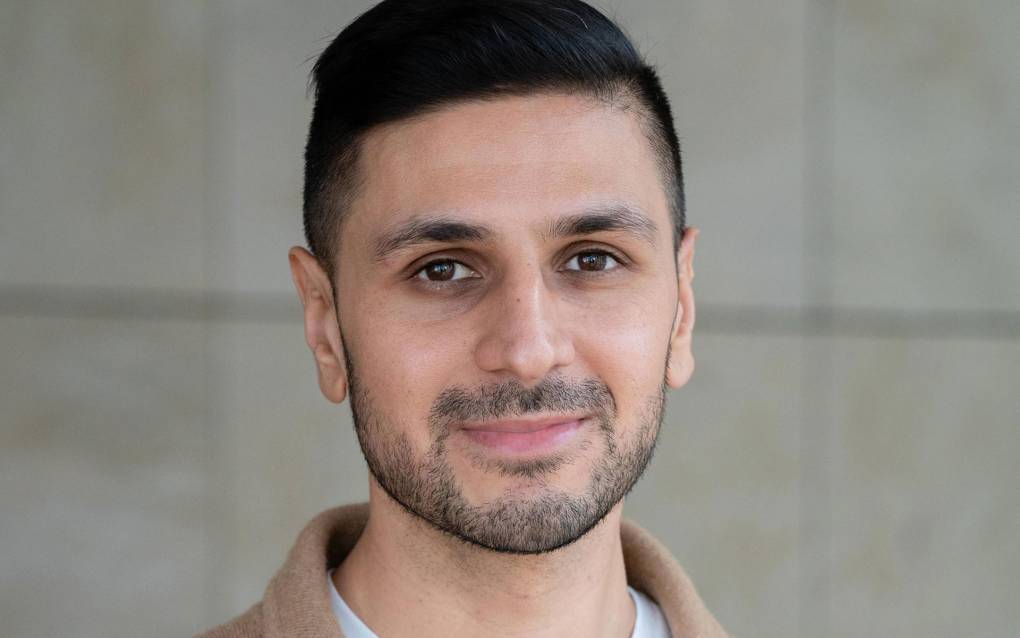
What’s On Your Ballot?: Adnan Khan, Incarcerated Peoples' Advocate
Artists Team up With Critical Resistance to Make Prison Abolition Irresistible
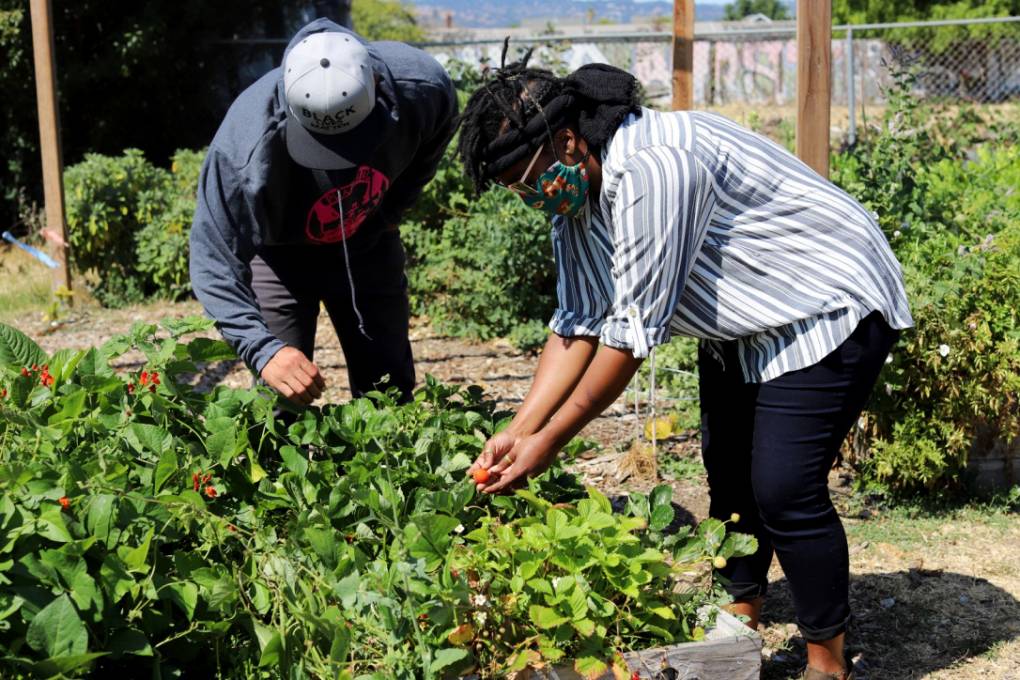
Planting Justice’s Prison Abolition Work Starts at the Root
Oakland's ABO Comix Publishes, Advocates for LGBTQ Prisoners
How Prison Abolitionists Acquired a Former Baby Store in Oakland's Temescal District
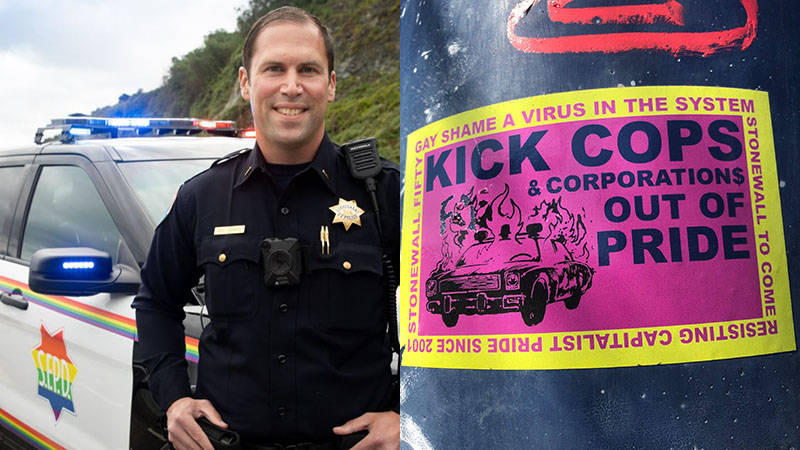
Activists Demand a Police-Free Pride as SFPD Ramps Up Its Gay-Friendly Image
Sponsored
Player sponsored by
window.__IS_SSR__=true
window.__INITIAL_STATE__={
"attachmentsReducer": {
"audio_0": {
"type": "attachments",
"id": "audio_0",
"imgSizes": {
"kqedFullSize": {
"file": "https://ww2.kqed.org/news/wp-content/themes/KQED-unified/img/audio_bgs/background0.jpg"
}
}
},
"audio_1": {
"type": "attachments",
"id": "audio_1",
"imgSizes": {
"kqedFullSize": {
"file": "https://ww2.kqed.org/news/wp-content/themes/KQED-unified/img/audio_bgs/background1.jpg"
}
}
},
"audio_2": {
"type": "attachments",
"id": "audio_2",
"imgSizes": {
"kqedFullSize": {
"file": "https://ww2.kqed.org/news/wp-content/themes/KQED-unified/img/audio_bgs/background2.jpg"
}
}
},
"audio_3": {
"type": "attachments",
"id": "audio_3",
"imgSizes": {
"kqedFullSize": {
"file": "https://ww2.kqed.org/news/wp-content/themes/KQED-unified/img/audio_bgs/background3.jpg"
}
}
},
"audio_4": {
"type": "attachments",
"id": "audio_4",
"imgSizes": {
"kqedFullSize": {
"file": "https://ww2.kqed.org/news/wp-content/themes/KQED-unified/img/audio_bgs/background4.jpg"
}
}
},
"placeholder": {
"type": "attachments",
"id": "placeholder",
"imgSizes": {
"thumbnail": {
"file": "https://cdn.kqed.org/wp-content/uploads/2024/12/KQED-Default-Image-816638274-2000x1333-1-160x107.jpg",
"width": 160,
"height": 107,
"mimeType": "image/jpeg"
},
"medium": {
"file": "https://cdn.kqed.org/wp-content/uploads/2024/12/KQED-Default-Image-816638274-2000x1333-1-800x533.jpg",
"width": 800,
"height": 533,
"mimeType": "image/jpeg"
},
"medium_large": {
"file": "https://cdn.kqed.org/wp-content/uploads/2024/12/KQED-Default-Image-816638274-2000x1333-1-768x512.jpg",
"width": 768,
"height": 512,
"mimeType": "image/jpeg"
},
"large": {
"file": "https://cdn.kqed.org/wp-content/uploads/2024/12/KQED-Default-Image-816638274-2000x1333-1-1020x680.jpg",
"width": 1020,
"height": 680,
"mimeType": "image/jpeg"
},
"1536x1536": {
"file": "https://cdn.kqed.org/wp-content/uploads/2024/12/KQED-Default-Image-816638274-2000x1333-1-1536x1024.jpg",
"width": 1536,
"height": 1024,
"mimeType": "image/jpeg"
},
"fd-lrg": {
"file": "https://cdn.kqed.org/wp-content/uploads/2024/12/KQED-Default-Image-816638274-2000x1333-1-1536x1024.jpg",
"width": 1536,
"height": 1024,
"mimeType": "image/jpeg"
},
"fd-med": {
"file": "https://cdn.kqed.org/wp-content/uploads/2024/12/KQED-Default-Image-816638274-2000x1333-1-1020x680.jpg",
"width": 1020,
"height": 680,
"mimeType": "image/jpeg"
},
"fd-sm": {
"file": "https://cdn.kqed.org/wp-content/uploads/2024/12/KQED-Default-Image-816638274-2000x1333-1-800x533.jpg",
"width": 800,
"height": 533,
"mimeType": "image/jpeg"
},
"post-thumbnail": {
"file": "https://cdn.kqed.org/wp-content/uploads/2024/12/KQED-Default-Image-816638274-2000x1333-1-672x372.jpg",
"width": 672,
"height": 372,
"mimeType": "image/jpeg"
},
"twentyfourteen-full-width": {
"file": "https://cdn.kqed.org/wp-content/uploads/2024/12/KQED-Default-Image-816638274-2000x1333-1-1038x576.jpg",
"width": 1038,
"height": 576,
"mimeType": "image/jpeg"
},
"xxsmall": {
"file": "https://cdn.kqed.org/wp-content/uploads/2024/12/KQED-Default-Image-816638274-2000x1333-1-160x107.jpg",
"width": 160,
"height": 107,
"mimeType": "image/jpeg"
},
"xsmall": {
"file": "https://cdn.kqed.org/wp-content/uploads/2024/12/KQED-Default-Image-816638274-2000x1333-1-672x372.jpg",
"width": 672,
"height": 372,
"mimeType": "image/jpeg"
},
"small": {
"file": "https://cdn.kqed.org/wp-content/uploads/2024/12/KQED-Default-Image-816638274-2000x1333-1-672x372.jpg",
"width": 672,
"height": 372,
"mimeType": "image/jpeg"
},
"xlarge": {
"file": "https://cdn.kqed.org/wp-content/uploads/2024/12/KQED-Default-Image-816638274-2000x1333-1-1020x680.jpg",
"width": 1020,
"height": 680,
"mimeType": "image/jpeg"
},
"full-width": {
"file": "https://cdn.kqed.org/wp-content/uploads/2024/12/KQED-Default-Image-816638274-2000x1333-1-1920x1280.jpg",
"width": 1920,
"height": 1280,
"mimeType": "image/jpeg"
},
"guest-author-32": {
"file": "https://cdn.kqed.org/wp-content/uploads/2025/01/KQED-Default-Image-816638274-1333x1333-1-160x160.jpg",
"width": 32,
"height": 32,
"mimeType": "image/jpeg"
},
"guest-author-50": {
"file": "https://cdn.kqed.org/wp-content/uploads/2025/01/KQED-Default-Image-816638274-1333x1333-1-160x160.jpg",
"width": 50,
"height": 50,
"mimeType": "image/jpeg"
},
"guest-author-64": {
"file": "https://cdn.kqed.org/wp-content/uploads/2025/01/KQED-Default-Image-816638274-1333x1333-1-160x160.jpg",
"width": 64,
"height": 64,
"mimeType": "image/jpeg"
},
"guest-author-96": {
"file": "https://cdn.kqed.org/wp-content/uploads/2025/01/KQED-Default-Image-816638274-1333x1333-1-160x160.jpg",
"width": 96,
"height": 96,
"mimeType": "image/jpeg"
},
"guest-author-128": {
"file": "https://cdn.kqed.org/wp-content/uploads/2025/01/KQED-Default-Image-816638274-1333x1333-1-160x160.jpg",
"width": 128,
"height": 128,
"mimeType": "image/jpeg"
},
"detail": {
"file": "https://cdn.kqed.org/wp-content/uploads/2025/01/KQED-Default-Image-816638274-1333x1333-1-160x160.jpg",
"width": 160,
"height": 160,
"mimeType": "image/jpeg"
},
"kqedFullSize": {
"file": "https://cdn.kqed.org/wp-content/uploads/2024/12/KQED-Default-Image-816638274-2000x1333-1.jpg",
"width": 2000,
"height": 1333
}
}
},
"arts_13935220": {
"type": "attachments",
"id": "arts_13935220",
"meta": {
"index": "attachments_1716263798",
"site": "arts",
"id": "13935220",
"found": true
},
"parent": 13935175,
"imgSizes": {
"twentyfourteen-full-width": {
"file": "https://ww2.kqed.org/app/uploads/sites/2/2023/09/23.02.02-IridiaFest-Keith-Lamar-by-Marta-Vilardell-52-1038x576.jpg",
"width": 1038,
"mimeType": "image/jpeg",
"height": 576
},
"thumbnail": {
"file": "https://ww2.kqed.org/app/uploads/sites/2/2023/09/23.02.02-IridiaFest-Keith-Lamar-by-Marta-Vilardell-52-160x107.jpg",
"width": 160,
"mimeType": "image/jpeg",
"height": 107
},
"post-thumbnail": {
"file": "https://ww2.kqed.org/app/uploads/sites/2/2023/09/23.02.02-IridiaFest-Keith-Lamar-by-Marta-Vilardell-52-672x372.jpg",
"width": 672,
"mimeType": "image/jpeg",
"height": 372
},
"kqedFullSize": {
"file": "https://ww2.kqed.org/app/uploads/sites/2/2023/09/23.02.02-IridiaFest-Keith-Lamar-by-Marta-Vilardell-52.jpg",
"width": 1920,
"height": 1280
},
"large": {
"file": "https://ww2.kqed.org/app/uploads/sites/2/2023/09/23.02.02-IridiaFest-Keith-Lamar-by-Marta-Vilardell-52-1020x680.jpg",
"width": 1020,
"mimeType": "image/jpeg",
"height": 680
},
"1536x1536": {
"file": "https://ww2.kqed.org/app/uploads/sites/2/2023/09/23.02.02-IridiaFest-Keith-Lamar-by-Marta-Vilardell-52-1536x1024.jpg",
"width": 1536,
"mimeType": "image/jpeg",
"height": 1024
},
"medium": {
"file": "https://ww2.kqed.org/app/uploads/sites/2/2023/09/23.02.02-IridiaFest-Keith-Lamar-by-Marta-Vilardell-52-800x533.jpg",
"width": 800,
"mimeType": "image/jpeg",
"height": 533
},
"medium_large": {
"file": "https://ww2.kqed.org/app/uploads/sites/2/2023/09/23.02.02-IridiaFest-Keith-Lamar-by-Marta-Vilardell-52-768x512.jpg",
"width": 768,
"mimeType": "image/jpeg",
"height": 512
}
},
"publishDate": 1695335042,
"modified": 1695335355,
"caption": "Freedom First performs at the Iridia Festival for human rights in Barcelona in February 2023. ",
"description": null,
"title": "23.02.02 IridiaFest-Keith Lamar by Marta Vilardell-52",
"credit": "Marta Vilardell",
"status": "inherit",
"altTag": "A jazz band plays live on stage while a video projection shows Keith LaMar reading spoken-word poetry from prison.",
"fetchFailed": false,
"isLoading": false
},
"arts_13887823": {
"type": "attachments",
"id": "arts_13887823",
"meta": {
"index": "attachments_1716263798",
"site": "arts",
"id": "13887823",
"found": true
},
"parent": 13887701,
"imgSizes": {
"twentyfourteen-full-width": {
"file": "https://ww2.kqed.org/app/uploads/sites/2/2020/10/AdnanKhan.MAIN_-1038x576.jpg",
"width": 1038,
"mimeType": "image/jpeg",
"height": 576
},
"thumbnail": {
"file": "https://ww2.kqed.org/app/uploads/sites/2/2020/10/AdnanKhan.MAIN_-160x100.jpg",
"width": 160,
"mimeType": "image/jpeg",
"height": 100
},
"post-thumbnail": {
"file": "https://ww2.kqed.org/app/uploads/sites/2/2020/10/AdnanKhan.MAIN_-672x372.jpg",
"width": 672,
"mimeType": "image/jpeg",
"height": 372
},
"kqedFullSize": {
"file": "https://ww2.kqed.org/app/uploads/sites/2/2020/10/AdnanKhan.MAIN_.jpg",
"width": 1920,
"height": 1200
},
"large": {
"file": "https://ww2.kqed.org/app/uploads/sites/2/2020/10/AdnanKhan.MAIN_-1020x638.jpg",
"width": 1020,
"mimeType": "image/jpeg",
"height": 638
},
"1536x1536": {
"file": "https://ww2.kqed.org/app/uploads/sites/2/2020/10/AdnanKhan.MAIN_-1536x960.jpg",
"width": 1536,
"mimeType": "image/jpeg",
"height": 960
},
"medium": {
"file": "https://ww2.kqed.org/app/uploads/sites/2/2020/10/AdnanKhan.MAIN_-800x500.jpg",
"width": 800,
"mimeType": "image/jpeg",
"height": 500
},
"medium_large": {
"file": "https://ww2.kqed.org/app/uploads/sites/2/2020/10/AdnanKhan.MAIN_-768x480.jpg",
"width": 768,
"mimeType": "image/jpeg",
"height": 480
}
},
"publishDate": 1602542886,
"modified": 1602543139,
"caption": "Adnan Khan spent 16 years in prison, and was released from San Quentin under a new law he researched and helped get passed.",
"description": "Adnan Khan spent 16 years in prison, and was released from San Quentin under a new law he researched and helped get passed.",
"title": "AdnanKhan.MAIN",
"credit": "Courtesy Adnan Khan",
"status": "inherit",
"fetchFailed": false,
"isLoading": false
},
"arts_13886707": {
"type": "attachments",
"id": "arts_13886707",
"meta": {
"index": "attachments_1716263798",
"site": "arts",
"id": "13886707",
"found": true
},
"parent": 13886700,
"imgSizes": {
"twentyfourteen-full-width": {
"file": "https://ww2.kqed.org/app/uploads/sites/2/2020/09/Deeman_COVER-1038x540.jpeg",
"width": 1038,
"mimeType": "image/jpeg",
"height": 540
},
"thumbnail": {
"file": "https://ww2.kqed.org/app/uploads/sites/2/2020/09/Deeman_COVER-160x80.jpeg",
"width": 160,
"mimeType": "image/jpeg",
"height": 80
},
"post-thumbnail": {
"file": "https://ww2.kqed.org/app/uploads/sites/2/2020/09/Deeman_COVER-672x372.jpeg",
"width": 672,
"mimeType": "image/jpeg",
"height": 372
},
"kqedFullSize": {
"file": "https://ww2.kqed.org/app/uploads/sites/2/2020/09/Deeman_COVER.jpeg",
"width": 1080,
"height": 540
},
"large": {
"file": "https://ww2.kqed.org/app/uploads/sites/2/2020/09/Deeman_COVER-1020x510.jpeg",
"width": 1020,
"mimeType": "image/jpeg",
"height": 510
},
"medium": {
"file": "https://ww2.kqed.org/app/uploads/sites/2/2020/09/Deeman_COVER-800x400.jpeg",
"width": 800,
"mimeType": "image/jpeg",
"height": 400
},
"medium_large": {
"file": "https://ww2.kqed.org/app/uploads/sites/2/2020/09/Deeman_COVER-768x384.jpeg",
"width": 768,
"mimeType": "image/jpeg",
"height": 384
}
},
"publishDate": 1600817295,
"modified": 1600817320,
"caption": "Erica Deeman, from the 'Silhouettes' series.",
"description": "Erica Deeman, from the 'Silhouettes' series.",
"title": "Deeman_COVER",
"credit": "Courtesy the artist",
"status": "inherit",
"fetchFailed": false,
"isLoading": false
},
"arts_13883866": {
"type": "attachments",
"id": "arts_13883866",
"meta": {
"index": "attachments_1716263798",
"site": "arts",
"id": "13883866",
"found": true
},
"parent": 13883580,
"imgSizes": {
"twentyfourteen-full-width": {
"file": "https://ww2.kqed.org/app/uploads/sites/2/2020/07/thumb_IMG_5470_1024-1038x576.jpg",
"width": 1038,
"mimeType": "image/jpeg",
"height": 576
},
"thumbnail": {
"file": "https://ww2.kqed.org/app/uploads/sites/2/2020/07/thumb_IMG_5470_1024-160x107.jpg",
"width": 160,
"mimeType": "image/jpeg",
"height": 107
},
"post-thumbnail": {
"file": "https://ww2.kqed.org/app/uploads/sites/2/2020/07/thumb_IMG_5470_1024-672x372.jpg",
"width": 672,
"mimeType": "image/jpeg",
"height": 372
},
"kqedFullSize": {
"file": "https://ww2.kqed.org/app/uploads/sites/2/2020/07/thumb_IMG_5470_1024.jpg",
"width": 1086,
"height": 724
},
"large": {
"file": "https://ww2.kqed.org/app/uploads/sites/2/2020/07/thumb_IMG_5470_1024-1020x680.jpg",
"width": 1020,
"mimeType": "image/jpeg",
"height": 680
},
"medium": {
"file": "https://ww2.kqed.org/app/uploads/sites/2/2020/07/thumb_IMG_5470_1024-800x533.jpg",
"width": 800,
"mimeType": "image/jpeg",
"height": 533
},
"medium_large": {
"file": "https://ww2.kqed.org/app/uploads/sites/2/2020/07/thumb_IMG_5470_1024-768x512.jpg",
"width": 768,
"mimeType": "image/jpeg",
"height": 512
}
},
"publishDate": 1595611354,
"modified": 1595611454,
"caption": "Planting Justice's reentry coordinator Rasheed Lockheart and media director Ashley Yates (left to right) checking out strawberries at the organization's nursery, which gives formerly incarcerated people green jobs with the ultimate goal of prison abolition.",
"description": "Planting Justice's reentry coordinator Rasheed Lockheart and media director Ashley Yates (left to right) checking out strawberries at the organization's nursery, which gives formerly incarcerated people green jobs with the ultimate goal of prison abolition.",
"title": "thumb_IMG_5470_1024",
"credit": "Nastia Voynovskaya",
"status": "inherit",
"fetchFailed": false,
"isLoading": false
},
"arts_13870951": {
"type": "attachments",
"id": "arts_13870951",
"meta": {
"index": "attachments_1716263798",
"site": "arts",
"id": "13870951",
"found": true
},
"parent": 13870932,
"imgSizes": {
"twentyfourteen-full-width": {
"file": "https://ww2.kqed.org/app/uploads/sites/2/2019/12/ABO_COVER-1038x576.jpg",
"width": 1038,
"mimeType": "image/jpeg",
"height": 576
},
"thumbnail": {
"file": "https://ww2.kqed.org/app/uploads/sites/2/2019/12/ABO_COVER-160x90.jpg",
"width": 160,
"mimeType": "image/jpeg",
"height": 90
},
"post-thumbnail": {
"file": "https://ww2.kqed.org/app/uploads/sites/2/2019/12/ABO_COVER-672x372.jpg",
"width": 672,
"mimeType": "image/jpeg",
"height": 372
},
"kqedFullSize": {
"file": "https://ww2.kqed.org/app/uploads/sites/2/2019/12/ABO_COVER.jpg",
"width": 1920,
"height": 1080
},
"large": {
"file": "https://ww2.kqed.org/app/uploads/sites/2/2019/12/ABO_COVER-1020x574.jpg",
"width": 1020,
"mimeType": "image/jpeg",
"height": 574
},
"complete_open_graph": {
"file": "https://ww2.kqed.org/app/uploads/sites/2/2019/12/ABO_COVER-1200x675.jpg",
"width": 1200,
"mimeType": "image/jpeg",
"height": 675
},
"full-width": {
"file": "https://ww2.kqed.org/app/uploads/sites/2/2019/12/ABO_COVER-1920x1080.jpg",
"width": 1920,
"mimeType": "image/jpeg",
"height": 1080
},
"medium": {
"file": "https://ww2.kqed.org/app/uploads/sites/2/2019/12/ABO_COVER-800x450.jpg",
"width": 800,
"mimeType": "image/jpeg",
"height": 450
},
"medium_large": {
"file": "https://ww2.kqed.org/app/uploads/sites/2/2019/12/ABO_COVER-768x432.jpg",
"width": 768,
"mimeType": "image/jpeg",
"height": 432
}
},
"publishDate": 1575508292,
"modified": 1575508334,
"caption": "ABO Comix fan art by incarcerated contributor Gabriel Wyatt.",
"description": "ABO Comix fan art by incarcerated contributor Gabriel Wyatt.",
"title": "ABO Comix fan art by incarcerated contributor Gabriel Wyatt.",
"credit": "Gabriel Wyatt/Courtesy ABO Comix",
"status": "inherit",
"fetchFailed": false,
"isLoading": false
},
"arts_13863820": {
"type": "attachments",
"id": "arts_13863820",
"meta": {
"index": "attachments_1716263798",
"site": "arts",
"id": "13863820",
"found": true
},
"parent": 13863810,
"imgSizes": {
"twentyfourteen-full-width": {
"file": "https://ww2.kqed.org/app/uploads/sites/2/2019/08/Critical-Resistance-Building-From-Street-Corner-1-1038x576.jpg",
"width": 1038,
"mimeType": "image/jpeg",
"height": 576
},
"thumbnail": {
"file": "https://ww2.kqed.org/app/uploads/sites/2/2019/08/Critical-Resistance-Building-From-Street-Corner-1-160x90.jpg",
"width": 160,
"mimeType": "image/jpeg",
"height": 90
},
"post-thumbnail": {
"file": "https://ww2.kqed.org/app/uploads/sites/2/2019/08/Critical-Resistance-Building-From-Street-Corner-1-672x372.jpg",
"width": 672,
"mimeType": "image/jpeg",
"height": 372
},
"kqedFullSize": {
"file": "https://ww2.kqed.org/app/uploads/sites/2/2019/08/Critical-Resistance-Building-From-Street-Corner-1.jpg",
"width": 1920,
"height": 1080
},
"large": {
"file": "https://ww2.kqed.org/app/uploads/sites/2/2019/08/Critical-Resistance-Building-From-Street-Corner-1-1020x574.jpg",
"width": 1020,
"mimeType": "image/jpeg",
"height": 574
},
"complete_open_graph": {
"file": "https://ww2.kqed.org/app/uploads/sites/2/2019/08/Critical-Resistance-Building-From-Street-Corner-1-1200x675.jpg",
"width": 1200,
"mimeType": "image/jpeg",
"height": 675
},
"full-width": {
"file": "https://ww2.kqed.org/app/uploads/sites/2/2019/08/Critical-Resistance-Building-From-Street-Corner-1-1920x1080.jpg",
"width": 1920,
"mimeType": "image/jpeg",
"height": 1080
},
"medium": {
"file": "https://ww2.kqed.org/app/uploads/sites/2/2019/08/Critical-Resistance-Building-From-Street-Corner-1-800x450.jpg",
"width": 800,
"mimeType": "image/jpeg",
"height": 450
},
"medium_large": {
"file": "https://ww2.kqed.org/app/uploads/sites/2/2019/08/Critical-Resistance-Building-From-Street-Corner-1-768x432.jpg",
"width": 768,
"mimeType": "image/jpeg",
"height": 432
}
},
"publishDate": 1565636683,
"modified": 1565636786,
"caption": "Critical Resistance, a radical prison abolitionist organization, is building offices and gathering space for allied groups in the Temescal district of Oakland.",
"description": "Critical Resistance, a radical prison abolitionist organization, is building offices and gathering space for allied groups in the Temescal district of Oakland.",
"title": "Critical-Resistance-Building-From-Street-Corner",
"credit": "Sam Lefebvre/KQED",
"status": "inherit",
"fetchFailed": false,
"isLoading": false
},
"arts_13859087": {
"type": "attachments",
"id": "arts_13859087",
"meta": {
"index": "attachments_1716263798",
"site": "arts",
"id": "13859087",
"found": true
},
"parent": 13857994,
"imgSizes": {
"thumbnail": {
"file": "https://ww2.kqed.org/app/uploads/sites/2/2019/06/sfpd-gay-shame-graffiti-2-160x90.jpg",
"width": 160,
"mimeType": "image/jpeg",
"height": 90
},
"post-thumbnail": {
"file": "https://ww2.kqed.org/app/uploads/sites/2/2019/06/sfpd-gay-shame-graffiti-2-672x372.jpg",
"width": 672,
"mimeType": "image/jpeg",
"height": 372
},
"kqedFullSize": {
"file": "https://ww2.kqed.org/app/uploads/sites/2/2019/06/sfpd-gay-shame-graffiti-2.jpg",
"width": 800,
"height": 450
},
"medium": {
"file": "https://ww2.kqed.org/app/uploads/sites/2/2019/06/sfpd-gay-shame-graffiti-2-800x450.jpg",
"width": 800,
"mimeType": "image/jpeg",
"height": 450
},
"medium_large": {
"file": "https://ww2.kqed.org/app/uploads/sites/2/2019/06/sfpd-gay-shame-graffiti-2-768x432.jpg",
"width": 768,
"mimeType": "image/jpeg",
"height": 432
}
},
"publishDate": 1559781089,
"modified": 1559781182,
"caption": "Left: An SFPD officer poses with the department's new rainbow patrol car, which debuted this year. Right: anti-police graffiti from activist group Gay Shame spotted at West Oakland BART. ",
"description": "Left: An SFPD officer poses with the department's new rainbow patrol car, which debuted this year. Right: anti-police graffiti from activist group Gay Shame spotted at West Oakland BART. ",
"title": "sfpd gay shame graffiti 2",
"credit": "Left: SFPD via Twitter / Right: Nastia Voynovskaya/KQED",
"status": "inherit",
"fetchFailed": false,
"isLoading": false
}
},
"audioPlayerReducer": {
"postId": "stream_live",
"isPaused": true,
"isPlaying": false,
"pfsActive": false,
"pledgeModalIsOpen": true,
"playerDrawerIsOpen": false
},
"authorsReducer": {
"shotchkiss": {
"type": "authors",
"id": "61",
"meta": {
"index": "authors_1716337520",
"id": "61",
"found": true
},
"name": "Sarah Hotchkiss",
"firstName": "Sarah",
"lastName": "Hotchkiss",
"slug": "shotchkiss",
"email": "shotchkiss@kqed.org",
"display_author_email": true,
"staff_mastheads": [
"arts"
],
"title": "Senior Editor",
"bio": "Sarah Hotchkiss is a San Francisco \u003ca href=\"http://www.sarahhotchkiss.com\">artist\u003c/a> and arts writer. In 2019, she received the Dorothea & Leo Rabkin Foundation grant for visual art journalism and in 2020 she received a Society of Professional Journalists, Northern California award for excellence in arts and culture reporting.",
"avatar": "https://secure.gravatar.com/avatar/ca38c7f54590856cd4947d26274f8a90?s=600&d=blank&r=g",
"twitter": null,
"facebook": null,
"instagram": null,
"linkedin": null,
"sites": [
{
"site": "",
"roles": [
"editor"
]
},
{
"site": "arts",
"roles": [
"Contributor",
"administrator"
]
},
{
"site": "artschool",
"roles": [
"administrator"
]
},
{
"site": "news",
"roles": [
"editor"
]
},
{
"site": "pop",
"roles": [
"administrator"
]
},
{
"site": "bayareabites",
"roles": [
"editor"
]
},
{
"site": "spark",
"roles": [
"editor"
]
},
{
"site": "checkplease",
"roles": [
"editor"
]
}
],
"headData": {
"title": "Sarah Hotchkiss | KQED",
"description": "Senior Editor",
"ogImgSrc": "https://secure.gravatar.com/avatar/ca38c7f54590856cd4947d26274f8a90?s=600&d=blank&r=g",
"twImgSrc": "https://secure.gravatar.com/avatar/ca38c7f54590856cd4947d26274f8a90?s=600&d=blank&r=g"
},
"isLoading": false,
"link": "/author/shotchkiss"
},
"agilbert": {
"type": "authors",
"id": "86",
"meta": {
"index": "authors_1716337520",
"id": "86",
"found": true
},
"name": "Andrew Gilbert",
"firstName": "Andrew",
"lastName": "Gilbert",
"slug": "agilbert",
"email": "jazzscribe@aol.com",
"display_author_email": false,
"staff_mastheads": [],
"title": "KQED Contributor",
"bio": "A Los Angeles native based in the Berkeley area since 1996, Andrew Gilbert covers jazz, international music and dance for KQED's \u003ci>California Report, \u003c/i>the\u003ci> Mercury News\u003c/i>, \u003ci>San Francisco Chronicle\u003c/i>, \u003ci>Berkeleyside.com\u003c/i>, and other publications. He is available for weddings and bar and bat mitzvahs. #jazzscribe",
"avatar": "https://secure.gravatar.com/avatar/445e6fe4cc696bd39773e3c90f5108b6?s=600&d=blank&r=g",
"twitter": null,
"facebook": null,
"instagram": null,
"linkedin": null,
"sites": [
{
"site": "arts",
"roles": [
"Contributor",
"author"
]
},
{
"site": "news",
"roles": [
"author"
]
}
],
"headData": {
"title": "Andrew Gilbert | KQED",
"description": "KQED Contributor",
"ogImgSrc": "https://secure.gravatar.com/avatar/445e6fe4cc696bd39773e3c90f5108b6?s=600&d=blank&r=g",
"twImgSrc": "https://secure.gravatar.com/avatar/445e6fe4cc696bd39773e3c90f5108b6?s=600&d=blank&r=g"
},
"isLoading": false,
"link": "/author/agilbert"
},
"slefebvre": {
"type": "authors",
"id": "11091",
"meta": {
"index": "authors_1716337520",
"id": "11091",
"found": true
},
"name": "Sam Lefebvre",
"firstName": "Sam",
"lastName": "Lefebvre",
"slug": "slefebvre",
"email": "sdlefebvre@gmail.com",
"display_author_email": false,
"staff_mastheads": [],
"title": null,
"bio": "Sam Lefebvre is an award-winning reporter at KQED Arts. He has worked as an editor and columnist at the \u003cem>East Bay Express\u003c/em>, \u003cem>SF Weekly \u003c/em>and Impose Magazine, and his journalism and criticism has appeared in \u003cem>The New York Times\u003c/em>, the Guardian and Pitchfork.",
"avatar": "https://secure.gravatar.com/avatar/143b570c3dec13ae74c6aa2369b04fc8?s=600&d=blank&r=g",
"twitter": "Lefebvre_Sam",
"facebook": null,
"instagram": null,
"linkedin": null,
"sites": [
{
"site": "arts",
"roles": [
"editor"
]
},
{
"site": "news",
"roles": [
"author"
]
}
],
"headData": {
"title": "Sam Lefebvre | KQED",
"description": null,
"ogImgSrc": "https://secure.gravatar.com/avatar/143b570c3dec13ae74c6aa2369b04fc8?s=600&d=blank&r=g",
"twImgSrc": "https://secure.gravatar.com/avatar/143b570c3dec13ae74c6aa2369b04fc8?s=600&d=blank&r=g"
},
"isLoading": false,
"link": "/author/slefebvre"
},
"nvoynovskaya": {
"type": "authors",
"id": "11387",
"meta": {
"index": "authors_1716337520",
"id": "11387",
"found": true
},
"name": "Nastia Voynovskaya",
"firstName": "Nastia",
"lastName": "Voynovskaya",
"slug": "nvoynovskaya",
"email": "nvoynovskaya@kqed.org",
"display_author_email": false,
"staff_mastheads": [
"arts"
],
"title": "Editor and reporter",
"bio": "Nastia Voynovskaya is a reporter and editor at KQED Arts & Culture. She's been covering the arts in the Bay Area for over a decade, with a focus on music, queer culture, labor issues and grassroots organizing. She has edited KQED story series such as Trans Bay: A History of San Francisco's Gender-Diverse Community, and co-created KQED's Bay Area hip-hop history project, That's My Word. Nastia's work has been recognized by the Society of Professional Journalists and San Francisco Press Club. She holds a BA in comparative literature from UC Berkeley.",
"avatar": "https://secure.gravatar.com/avatar/310649817772dd2a98e5dfecb6b24842?s=600&d=blank&r=g",
"twitter": null,
"facebook": null,
"instagram": "https://www.instagram.com/nananastia/",
"linkedin": null,
"sites": [
{
"site": "arts",
"roles": [
"administrator"
]
},
{
"site": "news",
"roles": [
"editor"
]
},
{
"site": "pop",
"roles": [
"administrator"
]
},
{
"site": "bayareabites",
"roles": [
"editor"
]
},
{
"site": "podcasts",
"roles": [
"editor"
]
},
{
"site": "hiphop",
"roles": [
"editor"
]
}
],
"headData": {
"title": "Nastia Voynovskaya | KQED",
"description": "Editor and reporter",
"ogImgSrc": "https://secure.gravatar.com/avatar/310649817772dd2a98e5dfecb6b24842?s=600&d=blank&r=g",
"twImgSrc": "https://secure.gravatar.com/avatar/310649817772dd2a98e5dfecb6b24842?s=600&d=blank&r=g"
},
"isLoading": false,
"link": "/author/nvoynovskaya"
},
"ogpenn": {
"type": "authors",
"id": "11491",
"meta": {
"index": "authors_1716337520",
"id": "11491",
"found": true
},
"name": "Pendarvis Harshaw",
"firstName": "Pendarvis",
"lastName": "Harshaw",
"slug": "ogpenn",
"email": "ogpenn@gmail.com",
"display_author_email": false,
"staff_mastheads": [
"arts"
],
"title": "Community Engagement Reporter",
"bio": "Pendarvis Harshaw is an educator, host and writer with KQED Arts.",
"avatar": "https://secure.gravatar.com/avatar/093d33baff5354890e29ad83d58d2c49?s=600&d=blank&r=g",
"twitter": null,
"facebook": null,
"instagram": "ogpenn",
"linkedin": null,
"sites": [
{
"site": "arts",
"roles": [
"editor"
]
},
{
"site": "news",
"roles": [
"editor"
]
},
{
"site": "bayareabites",
"roles": [
"author"
]
},
{
"site": "hiphop",
"roles": [
"editor"
]
}
],
"headData": {
"title": "Pendarvis Harshaw | KQED",
"description": "Community Engagement Reporter",
"ogImgSrc": "https://secure.gravatar.com/avatar/093d33baff5354890e29ad83d58d2c49?s=600&d=blank&r=g",
"twImgSrc": "https://secure.gravatar.com/avatar/093d33baff5354890e29ad83d58d2c49?s=600&d=blank&r=g"
},
"isLoading": false,
"link": "/author/ogpenn"
}
},
"breakingNewsReducer": {},
"pagesReducer": {},
"postsReducer": {
"stream_live": {
"type": "live",
"id": "stream_live",
"audioUrl": "https://streams.kqed.org/kqedradio",
"title": "Live Stream",
"excerpt": "Live Stream information currently unavailable.",
"link": "/radio",
"featImg": "",
"label": {
"name": "KQED Live",
"link": "/"
}
},
"stream_kqedNewscast": {
"type": "posts",
"id": "stream_kqedNewscast",
"audioUrl": "https://www.kqed.org/.stream/anon/radio/RDnews/newscast.mp3?_=1",
"title": "KQED Newscast",
"featImg": "",
"label": {
"name": "88.5 FM",
"link": "/"
}
},
"arts_13935175": {
"type": "posts",
"id": "arts_13935175",
"meta": {
"index": "posts_1716263798",
"site": "arts",
"id": "13935175",
"score": null,
"sort": [
1695657618000
]
},
"parent": 0,
"labelTerm": {
"site": "arts"
},
"blocks": [],
"publishDate": 1695657618,
"format": "standard",
"title": "Live from Death Row, Keith LaMar Performs Freedom Songs in SF",
"headTitle": "Live from Death Row, Keith LaMar Performs Freedom Songs in SF | KQED",
"content": "\u003cp>When Jay Bordeleau booked Freedom First, a singular collaboration between pianist Albert Marquès and spoken word artist \u003ca href=\"https://www.keithlamar.org/\">Keith LaMar\u003c/a>, the \u003ca href=\"https://mrtipplessf.com/calendar/albert-marques-and-keith-lamar-freedom-first/\">Oct. 3-4 engagement\u003c/a> was marked by an urgency unlike any other at his jazz club, Mr. Tipple’s — or any other venue in the city for that matter.\u003c/p>\n\u003cp>After 29 years on death row, LaMar was scheduled for execution at Ohio State Penitentiary on Nov. 16, 2023 for what he’s always insisted was a wrongful conviction. In recent years, Marquès and a dedicated cadre of jazz musicians have championed his cause through international performances and the 2022 album \u003cem>\u003ca href=\"https://sayitloudrecords.bandcamp.com/album/freedom-first\">Freedom First\u003c/a>\u003c/em>, where LaMar skillfully recites his work via telephone from prison.\u003c/p>\n\u003cp>Along with ongoing efforts to secure a new trial, the attention from Freedom First may have helped induce Ohio Governor Mike DeWine to issue a \u003ca href=\"https://governor.ohio.gov/media/news-and-media/governor-dewine-issues-reprieve\">four-year reprieve for LaMar\u003c/a>, though the stated cause was “ongoing problems involving the willingness of pharmaceutical suppliers to provide drugs to the Ohio Department of Rehabilitation.”\u003c/p>\n\u003cp>The governor’s July decree moved his execution date to Jan. 13, 2027, “a mixed bag,” says LaMar in a recent phone conversation. “More time means more opportunity to right the wrong. But it also means more time. It’s bittersweet. I’m trying to hold on.”\u003c/p>\n\u003cp>https://www.youtube.com/watch?v=AZiCHpQpaxs\u003c/p>\n\u003cp>[ad fullwidth]\u003c/p>\n\u003cp> \u003c/p>\n\u003cp>LaMar was serving 15 years to life at the Southern Ohio Correctional Facility for a 1989 murder when riots broke out in April 1993. At the end of the 11-day standoff, nine inmates and a prison guard were dead, and in 1995 LaMar was convicted for murdering five prisoners. He’s steadfastly maintained his innocence, and it was only in the aftermath of George Floyd’s death in 2020 that Marquès came into the picture.\u003c/p>\n\u003cp>Born and raised in an industrial town outside of Barcelona, Marquès has long drawn inspiration from Catalonia’s heritage of radical politics. He and his wife, sculptor Mia Pearlman, happened to live in the same Brooklyn building as Brian Jackson, the keyboardist and composer best known for his prolific creative partnership with the late Gil Scott-Heron.\u003c/p>\n\u003cp>As Black Lives Matter demonstrations swept the nation, “we had lots of conversations around the George Floyd protests,” Marquès recalls. “The question kept coming up, ‘Why don’t we do something before the government kills [people]?’ Brian’s wife had read Keith’s book and that made connections. Keith loves jazz and John Coltrane, and he knows so much about it.”\u003c/p>\n\u003cp>https://www.youtube.com/watch?v=L8b3ZMwA9Qc\u003c/p>\n\u003cp> \u003c/p>\n\u003cp>Talking to LaMar is a bracing experience. People often describe music as a lifeline, but in his case it provides a soul-bearing creative outlet, essential emotional sustenance and a direct connection to fellow jazz devotees. He grew up in Cleveland surrounded by sacred and secular Black popular music, and didn’t really discover jazz until he was years into his sentence. On death row, he immersed himself in the music of Thelonious Monk, Nat “King” Cole and, particularly, John Coltrane, “all these people who created this canon of creativity,” he says.\u003c/p>\n\u003cp>“I started reading history books, learning and growing. My loyalty to this art form grew along with my knowledge of this art form. It’s an integral part of my life. I start listening when I wake up and throughout the day it helps me stay focused.”\u003c/p>\n\u003cp>\u003c!-- iframe plugin v.4.3 wordpress.org/plugins/iframe/ -->\u003cbr>\n\u003ciframe loading=\"lazy\" style=\"border: 0; width: 100%; height: 120px;\" src=\"https://bandcamp.com/EmbeddedPlayer/album=2002727958/size=large/bgcol=ffffff/linkcol=0687f5/tracklist=false/artwork=small/transparent=true/\" width=\"100%\" height=\"500\" scrolling=\"yes\" class=\"iframe-class\" frameborder=\"0\">\u003c/iframe>\u003c/p>\n\u003cp>He’s all too aware of the tension between his incarceration and jazz’s liberatory impulse, though he echoes the epiphany of Albert Camus’ Meursault in \u003cem>The Stranger\u003c/em> in describing his mindset. LaMar celebrates the music as a vehicle for freedom, but it’s the embrace of a man who has liberated himself.\u003c/p>\n\u003cp>“I’m already free,” he says. “I just happen to be in this place, death row. But we’re all leaving this planet. What are you going to do between now and then?”\u003c/p>\n\u003cfigure id=\"attachment_13935221\" class=\"wp-caption aligncenter\" style=\"max-width: 1663px\">\u003cimg loading=\"lazy\" decoding=\"async\" class=\"size-full wp-image-13935221\" src=\"https://ww2.kqed.org/app/uploads/sites/2/2023/09/processed-55849b59-9acf-4916-8780-769392acade4_YqdYR55a-scaled.jpeg\" alt=\"A musician visiting from the outside and an incarcerated poet hug inside a prison.\" width=\"1663\" height=\"2560\" srcset=\"https://cdn.kqed.org/wp-content/uploads/sites/2/2023/09/processed-55849b59-9acf-4916-8780-769392acade4_YqdYR55a-scaled.jpeg 1663w, https://cdn.kqed.org/wp-content/uploads/sites/2/2023/09/processed-55849b59-9acf-4916-8780-769392acade4_YqdYR55a-800x1232.jpeg 800w, https://cdn.kqed.org/wp-content/uploads/sites/2/2023/09/processed-55849b59-9acf-4916-8780-769392acade4_YqdYR55a-1020x1570.jpeg 1020w, https://cdn.kqed.org/wp-content/uploads/sites/2/2023/09/processed-55849b59-9acf-4916-8780-769392acade4_YqdYR55a-160x246.jpeg 160w, https://cdn.kqed.org/wp-content/uploads/sites/2/2023/09/processed-55849b59-9acf-4916-8780-769392acade4_YqdYR55a-768x1182.jpeg 768w, https://cdn.kqed.org/wp-content/uploads/sites/2/2023/09/processed-55849b59-9acf-4916-8780-769392acade4_YqdYR55a-998x1536.jpeg 998w, https://cdn.kqed.org/wp-content/uploads/sites/2/2023/09/processed-55849b59-9acf-4916-8780-769392acade4_YqdYR55a-1330x2048.jpeg 1330w\" sizes=\"(max-width: 1663px) 100vw, 1663px\">\u003cfigcaption class=\"wp-caption-text\">Pianist Albert Marquès and poet Keith LaMar in 2022. \u003ccite>(Courtesy of Albert Marquès)\u003c/cite>\u003c/figcaption>\u003c/figure>\n\u003cp>For the Oct. 3-4 performances at Mr. Tipple’s, which are fundraisers for the legal campaign to overturn his sentence, LaMar will be reciting pieces from \u003cem>Freedom First\u003c/em> via phone from death row as Marquès leads a quartet featuring bassist Joshua Thurston-Milgrom, drummer Zack O’Farrill and tenor saxophonist Kazemde George.\u003c/p>\n\u003cp>O’Farrill, the third generation of an illustrious jazz clan, and the Berkeley-reared George have been working with Marquès since he first assembled some 30 musicians for performance protests in 2020. Since then, more than 70 musicians have participated in the project, including Berkeley-raised pianist-composer Samora Pinderhughes, who conducted a public conversation with LaMar last year as part of \u003ca href=\"https://ybca.org/event/transformation-music-and-healing-with-keith-lamar-and-samora-pinderhughes/\">\u003cem>The Healing Project\u003c/em>\u003c/a>, an extensive installation at Yerba Buena Center for the Arts. [aside postid='arts_13911226']\u003c/p>\n\u003cp>For George, who returns to the Bay Area to perform at the \u003ca href=\"https://blackcatsf.turntabletickets.com/shows/1487/?date=2023-11-24\">Black Cat Nov. 24-26\u003c/a> with vocalist Sami Stevens, the attraction to playing in Freedom First is both political and aesthetic. “First of all, we’re playing really good music, Albert’s originals, gospel and John Coltrane, all stuff I’m really into interpreting from a musical standpoint,” he says. “And we play some Trane I wouldn’t normally play, like ‘Alabama,’ a really heavy tune that I’m not going to call on a regular gig for a Saturday night crowd. The purpose of this music is different. This feels like we’re serving a bigger purpose.”\u003c/p>\n\u003cp>Mr. Tipples, a chatty supper club that’s been a jazz hot spot since 2016, isn’t an obvious venue for Freedom First, unless you know that its owner, Bordeleau, spent his college years in Ann Arbor giving music workshops in Michigan prisons.\u003c/p>\n\u003cp>“The idea was to create art and joy in the prison system, so I jumped at this when I heard about LaMar,” he says. “Those experiences made me really interested in not just serving cocktails to fancy people. This is much more interesting and impactful.”[aside postid='arts_13883580']\u003c/p>\n\u003cp>Part of Freedom First’s impact flows from LaMar’s musical commitment. He can’t hear much of what the musicians are playing to accompany him in the moment, but he listens back to recordings to study how they respond to his voice. And he’s constantly absorbing new sounds and songs. He listens mostly to jazz, but lately he’s been checking out Elvis Costello and he’s been obsessed with a song by Mercury Prize-winning British singer-songwriter Benjamin Clementine, “\u003ca href=\"https://www.youtube.com/watch?v=6DU6lDPs-AQ\">Condolence\u003c/a>.”\u003c/p>\n\u003cp>“Some of what music does for me as a person, it immerses and envelopes me in my significance as a human being,” he says. “It lets me feel I’m a member of this thing called humanity.”\u003c/p>\n\u003cp>\u003cimg loading=\"lazy\" decoding=\"async\" class=\"aligncenter size-full wp-image-12127869\" src=\"https://ww2.kqed.org/app/uploads/sites/2/2016/09/Q.Logo_.Break_.jpg\" alt=\"\" width=\"800\" height=\"78\" srcset=\"https://cdn.kqed.org/wp-content/uploads/sites/2/2016/09/Q.Logo_.Break_.jpg 800w, https://cdn.kqed.org/wp-content/uploads/sites/2/2016/09/Q.Logo_.Break_-400x39.jpg 400w, https://cdn.kqed.org/wp-content/uploads/sites/2/2016/09/Q.Logo_.Break_-768x75.jpg 768w\" sizes=\"(max-width: 800px) 100vw, 800px\">\u003c/p>\n\u003cp>[ad floatright]\u003c/p>\n\u003cp>\u003cem>Freedom First performs at \u003ca href=\"https://mrtipplessf.com/calendar/albert-marques-and-keith-lamar-freedom-first/\">Mr. Tipple’s on Oct. 3-4, 2023\u003c/a>.\u003c/em>\u003c/p>\n\n",
"stats": {
"hasVideo": true,
"hasChartOrMap": true,
"hasAudio": false,
"hasPolis": false,
"wordCount": 1225,
"hasGoogleForm": false,
"hasGallery": false,
"hasHearkenModule": false,
"iframeSrcs": [
"https://bandcamp.com/EmbeddedPlayer/album=2002727958/size=large/bgcol=ffffff/linkcol=0687f5/tracklist=false/artwork=small/transparent=true/"
],
"paragraphCount": 23
},
"modified": 1705003332,
"excerpt": "The incarcerated spoken word artist will recite his work via telephone at a live jazz concert at Mr. Tipple's.",
"headData": {
"twImgId": "",
"twTitle": "",
"ogTitle": "",
"ogImgId": "",
"twDescription": "",
"description": "The incarcerated spoken word artist will recite his work via telephone at a live jazz concert at Mr. Tipple's.",
"title": "Live from Death Row, Keith LaMar Performs Freedom Songs in SF | KQED",
"ogDescription": "",
"schema": {
"@context": "https://schema.org",
"@type": "Article",
"headline": "Live from Death Row, Keith LaMar Performs Freedom Songs in SF",
"datePublished": "2023-09-25T09:00:18-07:00",
"dateModified": "2024-01-11T12:02:12-08:00",
"image": "https://cdn.kqed.org/wp-content/uploads/2020/02/KQED-OG-Image@1x.png"
}
},
"guestAuthors": [],
"slug": "keith-lamar-albert-marques-freedom-first-mr-tipples-jazz",
"status": "publish",
"templateType": "standard",
"excludeFromSiteSearch": "Include",
"featuredImageType": "standard",
"sticky": false,
"articleAge": "0",
"path": "/arts/13935175/keith-lamar-albert-marques-freedom-first-mr-tipples-jazz",
"audioTrackLength": null,
"parsedContent": [
{
"type": "contentString",
"content": "\u003cdiv class=\"post-body\">\u003cp>\u003cp>When Jay Bordeleau booked Freedom First, a singular collaboration between pianist Albert Marquès and spoken word artist \u003ca href=\"https://www.keithlamar.org/\">Keith LaMar\u003c/a>, the \u003ca href=\"https://mrtipplessf.com/calendar/albert-marques-and-keith-lamar-freedom-first/\">Oct. 3-4 engagement\u003c/a> was marked by an urgency unlike any other at his jazz club, Mr. Tipple’s — or any other venue in the city for that matter.\u003c/p>\n\u003cp>After 29 years on death row, LaMar was scheduled for execution at Ohio State Penitentiary on Nov. 16, 2023 for what he’s always insisted was a wrongful conviction. In recent years, Marquès and a dedicated cadre of jazz musicians have championed his cause through international performances and the 2022 album \u003cem>\u003ca href=\"https://sayitloudrecords.bandcamp.com/album/freedom-first\">Freedom First\u003c/a>\u003c/em>, where LaMar skillfully recites his work via telephone from prison.\u003c/p>\n\u003cp>Along with ongoing efforts to secure a new trial, the attention from Freedom First may have helped induce Ohio Governor Mike DeWine to issue a \u003ca href=\"https://governor.ohio.gov/media/news-and-media/governor-dewine-issues-reprieve\">four-year reprieve for LaMar\u003c/a>, though the stated cause was “ongoing problems involving the willingness of pharmaceutical suppliers to provide drugs to the Ohio Department of Rehabilitation.”\u003c/p>\n\u003cp>The governor’s July decree moved his execution date to Jan. 13, 2027, “a mixed bag,” says LaMar in a recent phone conversation. “More time means more opportunity to right the wrong. But it also means more time. It’s bittersweet. I’m trying to hold on.”\u003c/p>\u003c/p>\u003cp>\u003cspan class='utils-parseShortcode-shortcodes-__youtubeShortcode__embedYoutube'>\n \u003cspan class='utils-parseShortcode-shortcodes-__youtubeShortcode__embedYoutubeInside'>\n \u003ciframe\n loading='lazy'\n class='utils-parseShortcode-shortcodes-__youtubeShortcode__youtubePlayer'\n type='text/html'\n src='//www.youtube.com/embed/AZiCHpQpaxs'\n title='//www.youtube.com/embed/AZiCHpQpaxs'\n allowfullscreen='true'\n style='border:0;'>\u003c/iframe>\n \u003c/span>\n \u003c/span>\u003c/p>\u003cp>\u003cp>\u003c/p>\u003c/div>",
"attributes": {
"named": {},
"numeric": []
}
},
{
"type": "component",
"content": "",
"name": "ad",
"attributes": {
"named": {
"label": "fullwidth"
},
"numeric": [
"fullwidth"
]
}
},
{
"type": "contentString",
"content": "\u003cdiv class=\"post-body\">\u003cp>\u003c/p>\n\u003cp> \u003c/p>\n\u003cp>LaMar was serving 15 years to life at the Southern Ohio Correctional Facility for a 1989 murder when riots broke out in April 1993. At the end of the 11-day standoff, nine inmates and a prison guard were dead, and in 1995 LaMar was convicted for murdering five prisoners. He’s steadfastly maintained his innocence, and it was only in the aftermath of George Floyd’s death in 2020 that Marquès came into the picture.\u003c/p>\n\u003cp>Born and raised in an industrial town outside of Barcelona, Marquès has long drawn inspiration from Catalonia’s heritage of radical politics. He and his wife, sculptor Mia Pearlman, happened to live in the same Brooklyn building as Brian Jackson, the keyboardist and composer best known for his prolific creative partnership with the late Gil Scott-Heron.\u003c/p>\n\u003cp>As Black Lives Matter demonstrations swept the nation, “we had lots of conversations around the George Floyd protests,” Marquès recalls. “The question kept coming up, ‘Why don’t we do something before the government kills [people]?’ Brian’s wife had read Keith’s book and that made connections. Keith loves jazz and John Coltrane, and he knows so much about it.”\u003c/p>\u003c/p>\u003cp>\u003cspan class='utils-parseShortcode-shortcodes-__youtubeShortcode__embedYoutube'>\n \u003cspan class='utils-parseShortcode-shortcodes-__youtubeShortcode__embedYoutubeInside'>\n \u003ciframe\n loading='lazy'\n class='utils-parseShortcode-shortcodes-__youtubeShortcode__youtubePlayer'\n type='text/html'\n src='//www.youtube.com/embed/L8b3ZMwA9Qc'\n title='//www.youtube.com/embed/L8b3ZMwA9Qc'\n allowfullscreen='true'\n style='border:0;'>\u003c/iframe>\n \u003c/span>\n \u003c/span>\u003c/p>\u003cp>\u003cp> \u003c/p>\n\u003cp>Talking to LaMar is a bracing experience. People often describe music as a lifeline, but in his case it provides a soul-bearing creative outlet, essential emotional sustenance and a direct connection to fellow jazz devotees. He grew up in Cleveland surrounded by sacred and secular Black popular music, and didn’t really discover jazz until he was years into his sentence. On death row, he immersed himself in the music of Thelonious Monk, Nat “King” Cole and, particularly, John Coltrane, “all these people who created this canon of creativity,” he says.\u003c/p>\n\u003cp>“I started reading history books, learning and growing. My loyalty to this art form grew along with my knowledge of this art form. It’s an integral part of my life. I start listening when I wake up and throughout the day it helps me stay focused.”\u003c/p>\n\u003cp>\u003c!-- iframe plugin v.4.3 wordpress.org/plugins/iframe/ -->\u003cbr>\n\u003ciframe loading=\"lazy\" style=\"border: 0; width: 100%; height: 120px;\" src=\"https://bandcamp.com/EmbeddedPlayer/album=2002727958/size=large/bgcol=ffffff/linkcol=0687f5/tracklist=false/artwork=small/transparent=true/\" width=\"100%\" height=\"500\" scrolling=\"yes\" class=\"iframe-class\" frameborder=\"0\">\u003c/iframe>\u003c/p>\n\u003cp>He’s all too aware of the tension between his incarceration and jazz’s liberatory impulse, though he echoes the epiphany of Albert Camus’ Meursault in \u003cem>The Stranger\u003c/em> in describing his mindset. LaMar celebrates the music as a vehicle for freedom, but it’s the embrace of a man who has liberated himself.\u003c/p>\n\u003cp>“I’m already free,” he says. “I just happen to be in this place, death row. But we’re all leaving this planet. What are you going to do between now and then?”\u003c/p>\n\u003cfigure id=\"attachment_13935221\" class=\"wp-caption aligncenter\" style=\"max-width: 1663px\">\u003cimg loading=\"lazy\" decoding=\"async\" class=\"size-full wp-image-13935221\" src=\"https://ww2.kqed.org/app/uploads/sites/2/2023/09/processed-55849b59-9acf-4916-8780-769392acade4_YqdYR55a-scaled.jpeg\" alt=\"A musician visiting from the outside and an incarcerated poet hug inside a prison.\" width=\"1663\" height=\"2560\" srcset=\"https://cdn.kqed.org/wp-content/uploads/sites/2/2023/09/processed-55849b59-9acf-4916-8780-769392acade4_YqdYR55a-scaled.jpeg 1663w, https://cdn.kqed.org/wp-content/uploads/sites/2/2023/09/processed-55849b59-9acf-4916-8780-769392acade4_YqdYR55a-800x1232.jpeg 800w, https://cdn.kqed.org/wp-content/uploads/sites/2/2023/09/processed-55849b59-9acf-4916-8780-769392acade4_YqdYR55a-1020x1570.jpeg 1020w, https://cdn.kqed.org/wp-content/uploads/sites/2/2023/09/processed-55849b59-9acf-4916-8780-769392acade4_YqdYR55a-160x246.jpeg 160w, https://cdn.kqed.org/wp-content/uploads/sites/2/2023/09/processed-55849b59-9acf-4916-8780-769392acade4_YqdYR55a-768x1182.jpeg 768w, https://cdn.kqed.org/wp-content/uploads/sites/2/2023/09/processed-55849b59-9acf-4916-8780-769392acade4_YqdYR55a-998x1536.jpeg 998w, https://cdn.kqed.org/wp-content/uploads/sites/2/2023/09/processed-55849b59-9acf-4916-8780-769392acade4_YqdYR55a-1330x2048.jpeg 1330w\" sizes=\"(max-width: 1663px) 100vw, 1663px\">\u003cfigcaption class=\"wp-caption-text\">Pianist Albert Marquès and poet Keith LaMar in 2022. \u003ccite>(Courtesy of Albert Marquès)\u003c/cite>\u003c/figcaption>\u003c/figure>\n\u003cp>For the Oct. 3-4 performances at Mr. Tipple’s, which are fundraisers for the legal campaign to overturn his sentence, LaMar will be reciting pieces from \u003cem>Freedom First\u003c/em> via phone from death row as Marquès leads a quartet featuring bassist Joshua Thurston-Milgrom, drummer Zack O’Farrill and tenor saxophonist Kazemde George.\u003c/p>\n\u003cp>O’Farrill, the third generation of an illustrious jazz clan, and the Berkeley-reared George have been working with Marquès since he first assembled some 30 musicians for performance protests in 2020. Since then, more than 70 musicians have participated in the project, including Berkeley-raised pianist-composer Samora Pinderhughes, who conducted a public conversation with LaMar last year as part of \u003ca href=\"https://ybca.org/event/transformation-music-and-healing-with-keith-lamar-and-samora-pinderhughes/\">\u003cem>The Healing Project\u003c/em>\u003c/a>, an extensive installation at Yerba Buena Center for the Arts. \u003c/p>\u003c/div>",
"attributes": {
"named": {},
"numeric": []
}
},
{
"type": "component",
"content": "",
"name": "aside",
"attributes": {
"named": {
"postid": "arts_13911226",
"label": ""
},
"numeric": []
}
},
{
"type": "contentString",
"content": "\u003cdiv class=\"post-body\">\u003cp>\u003c/p>\n\u003cp>For George, who returns to the Bay Area to perform at the \u003ca href=\"https://blackcatsf.turntabletickets.com/shows/1487/?date=2023-11-24\">Black Cat Nov. 24-26\u003c/a> with vocalist Sami Stevens, the attraction to playing in Freedom First is both political and aesthetic. “First of all, we’re playing really good music, Albert’s originals, gospel and John Coltrane, all stuff I’m really into interpreting from a musical standpoint,” he says. “And we play some Trane I wouldn’t normally play, like ‘Alabama,’ a really heavy tune that I’m not going to call on a regular gig for a Saturday night crowd. The purpose of this music is different. This feels like we’re serving a bigger purpose.”\u003c/p>\n\u003cp>Mr. Tipples, a chatty supper club that’s been a jazz hot spot since 2016, isn’t an obvious venue for Freedom First, unless you know that its owner, Bordeleau, spent his college years in Ann Arbor giving music workshops in Michigan prisons.\u003c/p>\n\u003cp>“The idea was to create art and joy in the prison system, so I jumped at this when I heard about LaMar,” he says. “Those experiences made me really interested in not just serving cocktails to fancy people. This is much more interesting and impactful.”\u003c/p>\u003c/div>",
"attributes": {
"named": {},
"numeric": []
}
},
{
"type": "component",
"content": "",
"name": "aside",
"attributes": {
"named": {
"postid": "arts_13883580",
"label": ""
},
"numeric": []
}
},
{
"type": "contentString",
"content": "\u003cdiv class=\"post-body\">\u003cp>\u003c/p>\n\u003cp>Part of Freedom First’s impact flows from LaMar’s musical commitment. He can’t hear much of what the musicians are playing to accompany him in the moment, but he listens back to recordings to study how they respond to his voice. And he’s constantly absorbing new sounds and songs. He listens mostly to jazz, but lately he’s been checking out Elvis Costello and he’s been obsessed with a song by Mercury Prize-winning British singer-songwriter Benjamin Clementine, “\u003ca href=\"https://www.youtube.com/watch?v=6DU6lDPs-AQ\">Condolence\u003c/a>.”\u003c/p>\n\u003cp>“Some of what music does for me as a person, it immerses and envelopes me in my significance as a human being,” he says. “It lets me feel I’m a member of this thing called humanity.”\u003c/p>\n\u003cp>\u003cimg loading=\"lazy\" decoding=\"async\" class=\"aligncenter size-full wp-image-12127869\" src=\"https://ww2.kqed.org/app/uploads/sites/2/2016/09/Q.Logo_.Break_.jpg\" alt=\"\" width=\"800\" height=\"78\" srcset=\"https://cdn.kqed.org/wp-content/uploads/sites/2/2016/09/Q.Logo_.Break_.jpg 800w, https://cdn.kqed.org/wp-content/uploads/sites/2/2016/09/Q.Logo_.Break_-400x39.jpg 400w, https://cdn.kqed.org/wp-content/uploads/sites/2/2016/09/Q.Logo_.Break_-768x75.jpg 768w\" sizes=\"(max-width: 800px) 100vw, 800px\">\u003c/p>\n\u003cp>\u003c/p>\u003c/div>",
"attributes": {
"named": {},
"numeric": []
}
},
{
"type": "component",
"content": "",
"name": "ad",
"attributes": {
"named": {
"label": "floatright"
},
"numeric": [
"floatright"
]
}
},
{
"type": "contentString",
"content": "\u003cdiv class=\"post-body\">\u003cp>\u003c/p>\n\u003cp>\u003cem>Freedom First performs at \u003ca href=\"https://mrtipplessf.com/calendar/albert-marques-and-keith-lamar-freedom-first/\">Mr. Tipple’s on Oct. 3-4, 2023\u003c/a>.\u003c/em>\u003c/p>\n\n\u003c/div>\u003c/p>",
"attributes": {
"named": {},
"numeric": []
}
}
],
"link": "/arts/13935175/keith-lamar-albert-marques-freedom-first-mr-tipples-jazz",
"authors": [
"86"
],
"categories": [
"arts_1",
"arts_69"
],
"tags": [
"arts_10278",
"arts_1420",
"arts_1526",
"arts_7530"
],
"featImg": "arts_13935220",
"label": "arts"
},
"arts_13887701": {
"type": "posts",
"id": "arts_13887701",
"meta": {
"index": "posts_1716263798",
"site": "arts",
"id": "13887701",
"score": null,
"sort": [
1602601242000
]
},
"guestAuthors": [],
"slug": "whats-on-your-ballot-adnan-khan-prisoners-advocate",
"title": "What’s On Your Ballot?: Adnan Khan, Incarcerated Peoples' Advocate",
"publishDate": 1602601242,
"format": "standard",
"headTitle": "What’s On Your Ballot?: Adnan Khan, Incarcerated Peoples’ Advocate | KQED",
"labelTerm": {
"site": "arts"
},
"content": "\u003cp>\u003cem>In 2020, the United States faces an election like no other. Citizens will vote in the midst of a global pandemic, severe climate change, an uprising for racial justice and an administration that has eroded the norms of democracy. In ‘\u003ca href=\"https://www.kqed.org/whats-on-your-ballot\" target=\"_blank\" rel=\"noopener noreferrer\">What’s on Your Ballot\u003c/a>,’ KQED checks in with ten different artists, activists and cultural figures about the issues on their minds and their hopes for the country.\u003c/em>\u003c/p>\n\u003cp>\u003cspan style=\"font-size: 4.6875em;float: left;line-height: 0.733em;padding: 0.05em 0.1em 0 0;font-family: times, serif, georgia\">A\u003c/span>dnan Khan is the executive director of \u003ca href=\"https://restorecal.org/author/adnan/\" target=\"_blank\" rel=\"noopener noreferrer\">Re:Store Justice\u003c/a>, a nonprofit that he co-founded in 2017 while incarcerated in San Quentin State Prison. The organization offers resources to survivors of violent crimes, leads transformative justice workshops to those who’ve committed crimes and holds restorative justice discussions between offenders and survivors of violent crimes.\u003c/p>\n\u003cp>At the time of the organization’s inception, Khan was serving a sentence of \u003ca href=\"https://www.kqed.org/news/11720792/my-intentions-were-not-to-kill-adnan-khan-is-first-to-be-released-from-prison-under-new-law#:~:text=He%20was%20convicted%20of%20felony,of%2025%20years%20to%20life.&text=Khan%20spent%20nearly%20half%20of,in%20and%20committed%20a%20robbery.\" target=\"_blank\" rel=\"noopener noreferrer\">25 years to life\u003c/a> under California’s felony murder rule, after participating in a robbery in which his accomplice killed a person. While behind bars, Khan researched and contributed to the efforts that led to the passing of Senate Bill 1437, which allows people charged under the felony murder rule, like himself, to have their cases revisited.\u003c/p>\n\u003cp>Khan was the first person re-sentenced under the new law, and subsequently released that day. Out of San Quentin for just over 18 months, Khan now lives in Los Angeles with his partner and newborn child, Aidan.\u003c/p>\n\u003cp>While Aidan took a nap, Khan recently took time to answer questions about this fall’s election, national politics and how to make a difference in a country where most people feel as if they have no say.\u003cem>—Pendarvis Harshaw\u003c/em>\u003c/p>\n\u003cp>[aside label=\"From KQED's California Voter Guide\" link1='https://www.kqed.org/voterguide/,All the State Props, All the Bay Area Measures' hero=https://ww2.kqed.org/app/uploads/2020/10/KQED-Election-2020-Aside-CA-Voter-Guide.png]\u003c/p>\n\u003cp>\u003cstrong>Coming from your background, how do you look at the two presidential candidates that we have now, and say, ‘One of them might benefit me and the community that I come from?’\u003c/strong>\u003c/p>\n\u003cp>You know, I think that a lot of focus can go to the presidential election, and I believe that there is a huge importance there. But as many of us do know, mass incarceration is a systemic problem, it’s a new form of slavery… And what I’ve learned is that when it comes to mass incarceration or prison, \u003ca href=\"https://www.prisonpolicy.org/reports/pie2020.html\" target=\"_blank\" rel=\"noopener noreferrer\">90% of the people are in state prisons and local jails\u003c/a>.\u003c/p>\n\u003cp>So, when it comes to this voting cycle, it’s really important to know who your governor is, who your state senators are, who your state assembly members are, who your mayor is, who elects the police chief, and who’s your city council, who are your people who can defund the police and reallocate that money. Once I started learning more of the process, I learned that [those] can be very important pieces to focus on the larger pictures.\u003c/p>\n\u003cp>Now, when it comes to the big debate of the lesser of two evils: Kamala Harris, what she’s done toward the contribution of mass incarceration, and Joe Biden, the ’94 crime bill, and what he’s done with the contribution to mass incarceration is horrible. So a lot of people, morally, feel like they can’t vote for them. But not picking the lesser of two evils, and just settling with the larger evil? I personally can’t do that.\u003c/p>\n\u003cp>The last thing I want to add to this—I’ve constantly reflected on this a lot—is as a person who has experienced many losses, and done 16 years in prison, and starting at a maximum security prison as a young adult, I \u003cem>lived\u003c/em> in losses. So, we learn how to maneuver around loss, and what that looks like, how to survive another day, if not a moment, with the correctional staff. I lived under an authoritarian state for 16 years, I lived in autocracy for 16 years. And I’m seeing the parallels with the Trump administration. For me, I can’t see voting for Trump.\u003c/p>\n\u003cfigure id=\"attachment_13887822\" class=\"wp-caption aligncenter\" style=\"max-width: 800px\">\u003cimg loading=\"lazy\" decoding=\"async\" class=\"size-medium wp-image-13887822\" src=\"https://ww2.kqed.org/app/uploads/sites/2/2020/10/Adnan.Inside-800x534.jpg\" alt=\"Adnan Khan, pictured here while incarcerated at San Quentin.\" width=\"800\" height=\"534\" srcset=\"https://cdn.kqed.org/wp-content/uploads/sites/2/2020/10/Adnan.Inside-800x534.jpg 800w, https://cdn.kqed.org/wp-content/uploads/sites/2/2020/10/Adnan.Inside-160x107.jpg 160w, https://cdn.kqed.org/wp-content/uploads/sites/2/2020/10/Adnan.Inside-768x513.jpg 768w, https://cdn.kqed.org/wp-content/uploads/sites/2/2020/10/Adnan.Inside.jpg 1020w\" sizes=\"(max-width: 800px) 100vw, 800px\">\u003cfigcaption class=\"wp-caption-text\">Adnan Khan, pictured here while incarcerated at San Quentin. ‘My amends now would be incomplete if it was only telling someone that I’m sorry,’ Khan says, ‘without preventing a child from committing the same harm that I did.’ \u003ccite>(Courtesy Adnan Khan)\u003c/cite>\u003c/figcaption>\u003c/figure>\n\u003cp>\u003cstrong>How did you get inspired enough to do something to change your situation? \u003c/strong>\u003c/p>\n\u003cp>First, I took the steps to educate myself. As you know, in prison, access to information and knowledge is very limited, and it’s done intentionally. I think that gave me more of a hunger, more than anything. Early on in my incarceration, I wanted to investigate my conditions. And as I started to investigate my conditions, I learned that, whoa, there’s a whole systemic thing going on here. And as I kept digging and digging, while living what I’m reading, it was just enlightening. Not in a good way, but in a frustrating way.\u003c/p>\n\u003cp>Another thing that’s very personal to me, as we talk about agency, is that I take full responsibility for my crime and for the harm that I’ve caused. And in order for me to take full responsibility, one, I have to acknowledge what I did, and then two, I have to make a living amends. Which means, how do I repair the damage that I’ve caused? But then, in order for me to even do that, I have to understand: how did I go from an eight-year-old little league baseball player to an 18-year-old with a life sentence?\u003c/p>\n\u003cp>And once I learned how that happened, my amends now would be incomplete if it was only telling someone that I’m sorry, without preventing a child from committing the same harm that I did. And that is rooted in policy, and how our society is structured, and how marginalized children are criminalized in schools. So my amends and my remorse can be there, but it’s incomplete unless I learn about the conditions that led me to commit my crime in the first place.\u003c/p>\n\u003cp>[ad fullwidth]\u003c/p>\n\u003cp>\u003cstrong>That’s tight—it’s like, looking at yourself, and taking agency within your own path and your own experience, and also seeing how society failed you. And then seeing that no one else falls through that same crack.\u003c/strong>\u003c/p>\n\u003cp>I think it’s very misleading to society for someone to take 100% responsibility for the wrong that they’ve done. There are, as you know, societal factors, contributing factors. Like I said, I was 17 years-old. Parentless, homeless, high school dropout. The police showed up after I committed a crime. And so, school: nothing there. Parents: didn’t have any. Didn’t have literally any place to stay. I slept in cars and parks and friends’ houses for like a year. I can take full responsibility—which, I do take full responsibility, for me—but public safety is still at risk if we don’t change conditions.\u003c/p>\n\u003cp>\u003cstrong>To people who feel removed, people that don’t see themselves represented right now by this two-party system, or by local politics, or people who just feel disenfranchised, and don’t have agency—to my young homies who are 18 years-old and have that mindset like, ‘America ain’t mine’—what do you tell them? How do you tell them to get involved?\u003c/strong>\u003c/p>\n\u003cp>Well, I feel like America wasn’t mine either, right? It’s true. The inception of this country is built on property, wealth, and land. Built quite literally over bodies, on genocide. And then enslaving people and then bringing them here. When the constitution was written, they didn’t think about abolishing slavery at that time. So everything they built was to protect themselves, or to protect property. And policing was to protect the property-owning people.\u003c/p>\n\u003cfigure id=\"attachment_13887821\" class=\"wp-caption aligncenter\" style=\"max-width: 800px\">\u003cimg loading=\"lazy\" decoding=\"async\" class=\"size-medium wp-image-13887821\" src=\"https://ww2.kqed.org/app/uploads/sites/2/2020/10/Adnan.Oakland-800x590.jpg\" alt=\"Adnan Khan stands in the Re:Store Justice transitional home in Oakland shortly after his release from San Quentin.\" width=\"800\" height=\"590\" srcset=\"https://cdn.kqed.org/wp-content/uploads/sites/2/2020/10/Adnan.Oakland-800x590.jpg 800w, https://cdn.kqed.org/wp-content/uploads/sites/2/2020/10/Adnan.Oakland-1020x752.jpg 1020w, https://cdn.kqed.org/wp-content/uploads/sites/2/2020/10/Adnan.Oakland-160x118.jpg 160w, https://cdn.kqed.org/wp-content/uploads/sites/2/2020/10/Adnan.Oakland-768x566.jpg 768w, https://cdn.kqed.org/wp-content/uploads/sites/2/2020/10/Adnan.Oakland-1536x1133.jpg 1536w, https://cdn.kqed.org/wp-content/uploads/sites/2/2020/10/Adnan.Oakland.jpg 1920w\" sizes=\"(max-width: 800px) 100vw, 800px\">\u003cfigcaption class=\"wp-caption-text\">Adnan Khan stands in the Re:Store Justice transitional home in Oakland shortly after his release from San Quentin. \u003ccite>(Hope McKenney/KQED)\u003c/cite>\u003c/figcaption>\u003c/figure>\n\u003cp>To the young people, I want to say that this is your time. Because more young people are starting to think like you, and are activating. Activation is physical, it’s a verb. You gotta do. Doing, not meaning talking, but going and doing. And more people are doing.\u003c/p>\n\u003cp>What country do you want to live in the next 20 years? Next 15 years? I’ve got a little boy here, and what happens in the next four to eight years is going to be his future. We can set that. You want it, it’s yours. There’s a commercial with an athlete saying that “Greatness isn’t given, it’s taken—you gotta go get it.” Don’t feel like power comes from not participating. Because once you give power away, then you let someone control you, and that’s what’s been happening forever.\u003c/p>\n\u003cp>\u003cstrong>Building off of that, after the election, no matter how it goes, what are your hopes and goals for the future of the country? \u003c/strong>\u003c/p>\n\u003cp>The most important thing to me is strategy. And as we organize and mobilize, it’s important to educate people on what to do and how to do it. A lot of people’s advocacy is what they read on the 280-character tweet. There’s a lot of people who are more interested in abolition, new systems, or whatever, that have come out in the past six or seven months than there have been in my entire life. To organize means to collect people, and then make sure the mobilizing is mobilizing toward a direction. So the next few years is going to be rooted in strategy for me.\u003c/p>\n\u003cp>If we choose to go through what we have, the democratic process, let’s start electing our own. I truly feel like, based on QAnon and all this nonsense that’s happening, this is probably the end of the Republican party. And the Democratic party is more like center-right. Meanwhile there’s this entire party that’s emerging—or has always been around, but it’s being added to, as we’re seeing across the nation—what people are calling the progressive party. There is a third party whose needs are not fully represented, whose ideas are not implemented in society. And so, that’s going to be an interesting political party. I feel like that’s going to be emerging, and fast.\u003c/p>\n\u003cp>\u003cimg loading=\"lazy\" decoding=\"async\" class=\"aligncenter size-medium wp-image-12127869\" src=\"https://ww2.kqed.org/app/uploads/sites/2/2016/09/Q.Logo_.Break_-800x78.jpg\" alt=\"\" width=\"800\" height=\"78\" srcset=\"https://cdn.kqed.org/wp-content/uploads/sites/2/2016/09/Q.Logo_.Break_.jpg 800w, https://cdn.kqed.org/wp-content/uploads/sites/2/2016/09/Q.Logo_.Break_-400x39.jpg 400w, https://cdn.kqed.org/wp-content/uploads/sites/2/2016/09/Q.Logo_.Break_-768x75.jpg 768w\" sizes=\"(max-width: 800px) 100vw, 800px\">\u003c/p>\n\u003cp>\u003cem>Learn more about Adnan Khan’s work by visiting \u003ca href=\"https://restorecal.org/\" target=\"_blank\" rel=\"noopener noreferrer\">Re:Store Justice\u003c/a>. \u003c/em>\u003c/p>\n\u003cp>[ad floatright]\u003c/p>\n",
"blocks": [],
"excerpt": "Recently released from San Quentin, Adnan Khan sees parallels between prison and the Trump administration. ",
"status": "publish",
"parent": 0,
"modified": 1726761347,
"stats": {
"hasAudio": false,
"hasVideo": false,
"hasChartOrMap": false,
"iframeSrcs": [],
"hasGoogleForm": false,
"hasGallery": false,
"hasHearkenModule": false,
"hasPolis": false,
"paragraphCount": 28,
"wordCount": 1845
},
"headData": {
"title": "What’s On Your Ballot?: Adnan Khan, Incarcerated Peoples' Advocate | KQED",
"description": "Recently released from San Quentin, Adnan Khan sees parallels between prison and the Trump administration. ",
"ogTitle": "",
"ogDescription": "",
"ogImgId": "",
"twTitle": "",
"twDescription": "",
"twImgId": "",
"schema": {
"@context": "https://schema.org",
"@type": "Article",
"headline": "What’s On Your Ballot?: Adnan Khan, Incarcerated Peoples' Advocate",
"datePublished": "2020-10-13T08:00:42-07:00",
"dateModified": "2024-09-19T08:55:47-07:00",
"image": "https://cdn.kqed.org/wp-content/uploads/2020/02/KQED-OG-Image@1x.png"
}
},
"sticky": false,
"templateType": "standard",
"featuredImageType": "standard",
"path": "/arts/13887701/whats-on-your-ballot-adnan-khan-prisoners-advocate",
"audioTrackLength": null,
"parsedContent": [
{
"type": "contentString",
"content": "\u003cdiv class=\"post-body\">\u003cp>\u003cp>\u003cem>In 2020, the United States faces an election like no other. Citizens will vote in the midst of a global pandemic, severe climate change, an uprising for racial justice and an administration that has eroded the norms of democracy. In ‘\u003ca href=\"https://www.kqed.org/whats-on-your-ballot\" target=\"_blank\" rel=\"noopener noreferrer\">What’s on Your Ballot\u003c/a>,’ KQED checks in with ten different artists, activists and cultural figures about the issues on their minds and their hopes for the country.\u003c/em>\u003c/p>\n\u003cp>\u003cspan style=\"font-size: 4.6875em;float: left;line-height: 0.733em;padding: 0.05em 0.1em 0 0;font-family: times, serif, georgia\">A\u003c/span>dnan Khan is the executive director of \u003ca href=\"https://restorecal.org/author/adnan/\" target=\"_blank\" rel=\"noopener noreferrer\">Re:Store Justice\u003c/a>, a nonprofit that he co-founded in 2017 while incarcerated in San Quentin State Prison. The organization offers resources to survivors of violent crimes, leads transformative justice workshops to those who’ve committed crimes and holds restorative justice discussions between offenders and survivors of violent crimes.\u003c/p>\n\u003cp>At the time of the organization’s inception, Khan was serving a sentence of \u003ca href=\"https://www.kqed.org/news/11720792/my-intentions-were-not-to-kill-adnan-khan-is-first-to-be-released-from-prison-under-new-law#:~:text=He%20was%20convicted%20of%20felony,of%2025%20years%20to%20life.&text=Khan%20spent%20nearly%20half%20of,in%20and%20committed%20a%20robbery.\" target=\"_blank\" rel=\"noopener noreferrer\">25 years to life\u003c/a> under California’s felony murder rule, after participating in a robbery in which his accomplice killed a person. While behind bars, Khan researched and contributed to the efforts that led to the passing of Senate Bill 1437, which allows people charged under the felony murder rule, like himself, to have their cases revisited.\u003c/p>\n\u003cp>Khan was the first person re-sentenced under the new law, and subsequently released that day. Out of San Quentin for just over 18 months, Khan now lives in Los Angeles with his partner and newborn child, Aidan.\u003c/p>\n\u003cp>While Aidan took a nap, Khan recently took time to answer questions about this fall’s election, national politics and how to make a difference in a country where most people feel as if they have no say.\u003cem>—Pendarvis Harshaw\u003c/em>\u003c/p>\n\u003cp>\u003c/p>\u003c/div>",
"attributes": {
"named": {},
"numeric": []
}
},
{
"type": "component",
"content": "",
"name": "aside",
"attributes": {
"named": {
"label": "From KQED's California Voter Guide ",
"link1": "https://www.kqed.org/voterguide/,All the State Props, All the Bay Area Measures",
"hero": "https://ww2.kqed.org/app/uploads/2020/10/KQED-Election-2020-Aside-CA-Voter-Guide.png"
},
"numeric": []
}
},
{
"type": "contentString",
"content": "\u003cdiv class=\"post-body\">\u003cp>\u003c/p>\n\u003cp>\u003cstrong>Coming from your background, how do you look at the two presidential candidates that we have now, and say, ‘One of them might benefit me and the community that I come from?’\u003c/strong>\u003c/p>\n\u003cp>You know, I think that a lot of focus can go to the presidential election, and I believe that there is a huge importance there. But as many of us do know, mass incarceration is a systemic problem, it’s a new form of slavery… And what I’ve learned is that when it comes to mass incarceration or prison, \u003ca href=\"https://www.prisonpolicy.org/reports/pie2020.html\" target=\"_blank\" rel=\"noopener noreferrer\">90% of the people are in state prisons and local jails\u003c/a>.\u003c/p>\n\u003cp>So, when it comes to this voting cycle, it’s really important to know who your governor is, who your state senators are, who your state assembly members are, who your mayor is, who elects the police chief, and who’s your city council, who are your people who can defund the police and reallocate that money. Once I started learning more of the process, I learned that [those] can be very important pieces to focus on the larger pictures.\u003c/p>\n\u003cp>Now, when it comes to the big debate of the lesser of two evils: Kamala Harris, what she’s done toward the contribution of mass incarceration, and Joe Biden, the ’94 crime bill, and what he’s done with the contribution to mass incarceration is horrible. So a lot of people, morally, feel like they can’t vote for them. But not picking the lesser of two evils, and just settling with the larger evil? I personally can’t do that.\u003c/p>\n\u003cp>The last thing I want to add to this—I’ve constantly reflected on this a lot—is as a person who has experienced many losses, and done 16 years in prison, and starting at a maximum security prison as a young adult, I \u003cem>lived\u003c/em> in losses. So, we learn how to maneuver around loss, and what that looks like, how to survive another day, if not a moment, with the correctional staff. I lived under an authoritarian state for 16 years, I lived in autocracy for 16 years. And I’m seeing the parallels with the Trump administration. For me, I can’t see voting for Trump.\u003c/p>\n\u003cfigure id=\"attachment_13887822\" class=\"wp-caption aligncenter\" style=\"max-width: 800px\">\u003cimg loading=\"lazy\" decoding=\"async\" class=\"size-medium wp-image-13887822\" src=\"https://ww2.kqed.org/app/uploads/sites/2/2020/10/Adnan.Inside-800x534.jpg\" alt=\"Adnan Khan, pictured here while incarcerated at San Quentin.\" width=\"800\" height=\"534\" srcset=\"https://cdn.kqed.org/wp-content/uploads/sites/2/2020/10/Adnan.Inside-800x534.jpg 800w, https://cdn.kqed.org/wp-content/uploads/sites/2/2020/10/Adnan.Inside-160x107.jpg 160w, https://cdn.kqed.org/wp-content/uploads/sites/2/2020/10/Adnan.Inside-768x513.jpg 768w, https://cdn.kqed.org/wp-content/uploads/sites/2/2020/10/Adnan.Inside.jpg 1020w\" sizes=\"(max-width: 800px) 100vw, 800px\">\u003cfigcaption class=\"wp-caption-text\">Adnan Khan, pictured here while incarcerated at San Quentin. ‘My amends now would be incomplete if it was only telling someone that I’m sorry,’ Khan says, ‘without preventing a child from committing the same harm that I did.’ \u003ccite>(Courtesy Adnan Khan)\u003c/cite>\u003c/figcaption>\u003c/figure>\n\u003cp>\u003cstrong>How did you get inspired enough to do something to change your situation? \u003c/strong>\u003c/p>\n\u003cp>First, I took the steps to educate myself. As you know, in prison, access to information and knowledge is very limited, and it’s done intentionally. I think that gave me more of a hunger, more than anything. Early on in my incarceration, I wanted to investigate my conditions. And as I started to investigate my conditions, I learned that, whoa, there’s a whole systemic thing going on here. And as I kept digging and digging, while living what I’m reading, it was just enlightening. Not in a good way, but in a frustrating way.\u003c/p>\n\u003cp>Another thing that’s very personal to me, as we talk about agency, is that I take full responsibility for my crime and for the harm that I’ve caused. And in order for me to take full responsibility, one, I have to acknowledge what I did, and then two, I have to make a living amends. Which means, how do I repair the damage that I’ve caused? But then, in order for me to even do that, I have to understand: how did I go from an eight-year-old little league baseball player to an 18-year-old with a life sentence?\u003c/p>\n\u003cp>And once I learned how that happened, my amends now would be incomplete if it was only telling someone that I’m sorry, without preventing a child from committing the same harm that I did. And that is rooted in policy, and how our society is structured, and how marginalized children are criminalized in schools. So my amends and my remorse can be there, but it’s incomplete unless I learn about the conditions that led me to commit my crime in the first place.\u003c/p>\n\u003cp>\u003c/p>\u003c/div>",
"attributes": {
"named": {},
"numeric": []
}
},
{
"type": "component",
"content": "",
"name": "ad",
"attributes": {
"named": {
"label": "fullwidth"
},
"numeric": [
"fullwidth"
]
}
},
{
"type": "contentString",
"content": "\u003cdiv class=\"post-body\">\u003cp>\u003c/p>\n\u003cp>\u003cstrong>That’s tight—it’s like, looking at yourself, and taking agency within your own path and your own experience, and also seeing how society failed you. And then seeing that no one else falls through that same crack.\u003c/strong>\u003c/p>\n\u003cp>I think it’s very misleading to society for someone to take 100% responsibility for the wrong that they’ve done. There are, as you know, societal factors, contributing factors. Like I said, I was 17 years-old. Parentless, homeless, high school dropout. The police showed up after I committed a crime. And so, school: nothing there. Parents: didn’t have any. Didn’t have literally any place to stay. I slept in cars and parks and friends’ houses for like a year. I can take full responsibility—which, I do take full responsibility, for me—but public safety is still at risk if we don’t change conditions.\u003c/p>\n\u003cp>\u003cstrong>To people who feel removed, people that don’t see themselves represented right now by this two-party system, or by local politics, or people who just feel disenfranchised, and don’t have agency—to my young homies who are 18 years-old and have that mindset like, ‘America ain’t mine’—what do you tell them? How do you tell them to get involved?\u003c/strong>\u003c/p>\n\u003cp>Well, I feel like America wasn’t mine either, right? It’s true. The inception of this country is built on property, wealth, and land. Built quite literally over bodies, on genocide. And then enslaving people and then bringing them here. When the constitution was written, they didn’t think about abolishing slavery at that time. So everything they built was to protect themselves, or to protect property. And policing was to protect the property-owning people.\u003c/p>\n\u003cfigure id=\"attachment_13887821\" class=\"wp-caption aligncenter\" style=\"max-width: 800px\">\u003cimg loading=\"lazy\" decoding=\"async\" class=\"size-medium wp-image-13887821\" src=\"https://ww2.kqed.org/app/uploads/sites/2/2020/10/Adnan.Oakland-800x590.jpg\" alt=\"Adnan Khan stands in the Re:Store Justice transitional home in Oakland shortly after his release from San Quentin.\" width=\"800\" height=\"590\" srcset=\"https://cdn.kqed.org/wp-content/uploads/sites/2/2020/10/Adnan.Oakland-800x590.jpg 800w, https://cdn.kqed.org/wp-content/uploads/sites/2/2020/10/Adnan.Oakland-1020x752.jpg 1020w, https://cdn.kqed.org/wp-content/uploads/sites/2/2020/10/Adnan.Oakland-160x118.jpg 160w, https://cdn.kqed.org/wp-content/uploads/sites/2/2020/10/Adnan.Oakland-768x566.jpg 768w, https://cdn.kqed.org/wp-content/uploads/sites/2/2020/10/Adnan.Oakland-1536x1133.jpg 1536w, https://cdn.kqed.org/wp-content/uploads/sites/2/2020/10/Adnan.Oakland.jpg 1920w\" sizes=\"(max-width: 800px) 100vw, 800px\">\u003cfigcaption class=\"wp-caption-text\">Adnan Khan stands in the Re:Store Justice transitional home in Oakland shortly after his release from San Quentin. \u003ccite>(Hope McKenney/KQED)\u003c/cite>\u003c/figcaption>\u003c/figure>\n\u003cp>To the young people, I want to say that this is your time. Because more young people are starting to think like you, and are activating. Activation is physical, it’s a verb. You gotta do. Doing, not meaning talking, but going and doing. And more people are doing.\u003c/p>\n\u003cp>What country do you want to live in the next 20 years? Next 15 years? I’ve got a little boy here, and what happens in the next four to eight years is going to be his future. We can set that. You want it, it’s yours. There’s a commercial with an athlete saying that “Greatness isn’t given, it’s taken—you gotta go get it.” Don’t feel like power comes from not participating. Because once you give power away, then you let someone control you, and that’s what’s been happening forever.\u003c/p>\n\u003cp>\u003cstrong>Building off of that, after the election, no matter how it goes, what are your hopes and goals for the future of the country? \u003c/strong>\u003c/p>\n\u003cp>The most important thing to me is strategy. And as we organize and mobilize, it’s important to educate people on what to do and how to do it. A lot of people’s advocacy is what they read on the 280-character tweet. There’s a lot of people who are more interested in abolition, new systems, or whatever, that have come out in the past six or seven months than there have been in my entire life. To organize means to collect people, and then make sure the mobilizing is mobilizing toward a direction. So the next few years is going to be rooted in strategy for me.\u003c/p>\n\u003cp>If we choose to go through what we have, the democratic process, let’s start electing our own. I truly feel like, based on QAnon and all this nonsense that’s happening, this is probably the end of the Republican party. And the Democratic party is more like center-right. Meanwhile there’s this entire party that’s emerging—or has always been around, but it’s being added to, as we’re seeing across the nation—what people are calling the progressive party. There is a third party whose needs are not fully represented, whose ideas are not implemented in society. And so, that’s going to be an interesting political party. I feel like that’s going to be emerging, and fast.\u003c/p>\n\u003cp>\u003cimg loading=\"lazy\" decoding=\"async\" class=\"aligncenter size-medium wp-image-12127869\" src=\"https://ww2.kqed.org/app/uploads/sites/2/2016/09/Q.Logo_.Break_-800x78.jpg\" alt=\"\" width=\"800\" height=\"78\" srcset=\"https://cdn.kqed.org/wp-content/uploads/sites/2/2016/09/Q.Logo_.Break_.jpg 800w, https://cdn.kqed.org/wp-content/uploads/sites/2/2016/09/Q.Logo_.Break_-400x39.jpg 400w, https://cdn.kqed.org/wp-content/uploads/sites/2/2016/09/Q.Logo_.Break_-768x75.jpg 768w\" sizes=\"(max-width: 800px) 100vw, 800px\">\u003c/p>\n\u003cp>\u003cem>Learn more about Adnan Khan’s work by visiting \u003ca href=\"https://restorecal.org/\" target=\"_blank\" rel=\"noopener noreferrer\">Re:Store Justice\u003c/a>. \u003c/em>\u003c/p>\n\u003cp>\u003c/p>\u003c/div>",
"attributes": {
"named": {},
"numeric": []
}
},
{
"type": "component",
"content": "",
"name": "ad",
"attributes": {
"named": {
"label": "floatright"
},
"numeric": [
"floatright"
]
}
},
{
"type": "contentString",
"content": "\u003cdiv class=\"post-body\">\u003cp>\u003c/p>\n\u003c/div>\u003c/p>",
"attributes": {
"named": {},
"numeric": []
}
}
],
"link": "/arts/13887701/whats-on-your-ballot-adnan-khan-prisoners-advocate",
"authors": [
"11491"
],
"categories": [
"arts_1",
"arts_235"
],
"tags": [
"arts_10112",
"arts_10278",
"arts_10422",
"arts_5826",
"arts_1526",
"arts_7530",
"arts_1985",
"arts_12381"
],
"featImg": "arts_13887823",
"label": "arts"
},
"arts_13886700": {
"type": "posts",
"id": "arts_13886700",
"meta": {
"index": "posts_1716263798",
"site": "arts",
"id": "13886700",
"score": null,
"sort": [
1600817418000
]
},
"guestAuthors": [],
"slug": "artists-team-up-with-critical-resistance-to-make-prison-abolition-irresistible",
"title": "Artists Team up With Critical Resistance to Make Prison Abolition Irresistible",
"publishDate": 1600817418,
"format": "standard",
"headTitle": "Artists Team up With Critical Resistance to Make Prison Abolition Irresistible | KQED",
"labelTerm": {},
"content": "\u003cp>While the idea of prison abolition hit mainstream consciousness only recently as part of the uprising for racial justice in response to the killing of George Floyd, the concept—and the movement for its realization—has been a rallying cry since at least the 1971 Attica Prison uprising, which brought to national attention the dehumanizing conditions experienced by those in the American prison industrial system. \u003c/p>\n\u003cp>For over two decades, \u003ca href=\"http://criticalresistance.org/\" rel=\"noopener noreferrer\" target=\"_blank\">Critical Resistance\u003c/a>, a national organization founded to challenge the idea of “imprisonment and policing as a solution for social, political and economic problems,” has been issuing those rally cries. And now they’re organizing a series of events, alongside an exhibition and auction, with the aim of ushering in the “last days of the abolitionist movement,” according to exhibition curator Ashara Ekundayo.\u003c/p>\n\u003cp>[aside postID=arts_13863810]If artworks and abolition seem an unlikely pairing, Ekundayo says you’re just not looking closely enough. “Culture workers have always been part of all movement-making on the planet,” she says. The list of participants in \u003ci>\u003ca href=\"http://criticalresistance.org/imaginefreedom2020/\" rel=\"noopener noreferrer\" target=\"_blank\">Imagine Freedom: Art Works for Abolition\u003c/a>\u003c/i> is lengthy and impressive; it includes international art figures like Theaster Gates alongside much-loved Bay Area artists like Sadie Barnette, Lava Thomas and Favianna Rodriguez. And the exhibition (and sale) of works, on view via Artsy Sept. 29–Oct. 13, is just one aspect of an event series meant to educate people about the abolitionist movement as much as it helps fund its future. (Full disclosure: KQED is hosting one of these events.)\u003c/p>\n\u003cp>There’s plenty of accompanying programming to choose from, so a few highlights:\u003c/p>\n\u003cp>\u003cb>Making Abolition Irresistible\u003c/b>\u003cbr>\nTuesday, Sept. 22, 4–5:30pm\u003cbr>\nCritical Resistance hosts a webinar on abolitionist organizing and art practice, featuring artists and activists Ashley Hunt, Fernando Marti (Justseeds), gloria galvez, kai lumumba barrow (Gallery of the Streets), Kate DeCiccio and Melanie Cervantes (Dignidad Rebelde). The conversation will focus on how artists can center images of freedom and guide others to practice the radical imagination needed to envision a world without prisons. \u003ca href=\"https://www.eventbrite.com/e/imagine-freedom-abolitionist-organizing-and-arts-praxis-webinar-tickets-121299300473\" rel=\"noopener noreferrer\" target=\"_blank\">Details here\u003c/a>.\u003c/p>\n\u003cp>[ad fullwidth]\u003c/p>\n\u003cp>\u003cb>Imagine Freedom: Art Works for Abolition\u003c/b>\u003cbr>\nWednesday, Sept. 23, 8–9pm\u003cbr>\nKQED’s own Pendarvis Harshaw interviews Deanna Van Buren (Designing Justice + Designing Spaces), artists Sam Vernon and Leslie “Dime” Lopez and curator Ashara Ekundayo about the relationship between art, design and prison abolition. \u003ca href=\"https://www.kqed.org/events/117341745319\" rel=\"noopener noreferrer\" target=\"_blank\">Details here\u003c/a>.\u003c/p>\n\u003cp>\u003cb>A Portal for Liberatory Practice: A/R, Afrofuturism and Abolition\u003c/b>\u003cbr>\nFriday, Oct. 2, 12–1pm\u003cbr>\nEvery video chat, Zoom meeting and virtual event is a portal of its own kind these days, but not all those portals lead to liberation—of thought, artistic practices and people. The Wakanda Dream Lab hosts an interactive panel that uses augmented reality to bring to life the words of \u003ci>\u003ca href=\"http://thebigwe.com/abolitionday\" rel=\"noopener noreferrer\" target=\"_blank\">Black Freedom Beyond Borders: Memories of Abolition Day\u003c/a>\u003c/i>, a collection of speculative writings looking back on the day we abolished police and prisons. \u003ca href=\"http://criticalresistance.org/imaginefreedom2020/\" rel=\"noopener noreferrer\" target=\"_blank\">Details here\u003c/a>.\u003c/p>\n\u003cp>\u003c/p>\n\u003cp>\u003cb>Artist Talks\u003c/b>\u003cbr>\nThrough Oct. 5\u003cbr>\nThese sessions have already begun, and are thankfully archived on the Critical Resistance Facebook page, including conversations between filmmaker Melinda James and Elena Gross (of MoAD), artist Sadie Barnett with curator and arts writer Essence Harden, and Hank Willis Thomas and representatives of the Black Joy Parade. \u003ca href=\"https://www.facebook.com/critical.resistance\" rel=\"noopener noreferrer\" target=\"_blank\">Details here\u003c/a>.\u003c/p>\n\n",
"blocks": [],
"excerpt": "A series of online events, an exhibition and auction work to usher in the “last days of the abolitionist movement.”",
"status": "publish",
"parent": 0,
"modified": 1726761469,
"stats": {
"hasAudio": false,
"hasVideo": false,
"hasChartOrMap": false,
"iframeSrcs": [],
"hasGoogleForm": false,
"hasGallery": false,
"hasHearkenModule": false,
"hasPolis": false,
"paragraphCount": 10,
"wordCount": 549
},
"headData": {
"title": "Artists Team up With Critical Resistance to Make Prison Abolition Irresistible | KQED",
"description": "A series of online events, an exhibition and auction work to usher in the “last days of the abolitionist movement.”",
"ogTitle": "",
"ogDescription": "",
"ogImgId": "",
"twTitle": "",
"twDescription": "",
"twImgId": "",
"schema": {
"@context": "https://schema.org",
"@type": "Article",
"headline": "Artists Team up With Critical Resistance to Make Prison Abolition Irresistible",
"datePublished": "2020-09-22T16:30:18-07:00",
"dateModified": "2024-09-19T08:57:49-07:00",
"image": "https://cdn.kqed.org/wp-content/uploads/2020/02/KQED-OG-Image@1x.png"
}
},
"source": "Food",
"sourceUrl": "https://www.kqed.org/food",
"sticky": false,
"templateType": "standard",
"featuredImageType": "standard",
"path": "/arts/13886700/artists-team-up-with-critical-resistance-to-make-prison-abolition-irresistible",
"audioTrackLength": null,
"parsedContent": [
{
"type": "contentString",
"content": "\u003cdiv class=\"post-body\">\u003cp>\u003cp>While the idea of prison abolition hit mainstream consciousness only recently as part of the uprising for racial justice in response to the killing of George Floyd, the concept—and the movement for its realization—has been a rallying cry since at least the 1971 Attica Prison uprising, which brought to national attention the dehumanizing conditions experienced by those in the American prison industrial system. \u003c/p>\n\u003cp>For over two decades, \u003ca href=\"http://criticalresistance.org/\" rel=\"noopener noreferrer\" target=\"_blank\">Critical Resistance\u003c/a>, a national organization founded to challenge the idea of “imprisonment and policing as a solution for social, political and economic problems,” has been issuing those rally cries. And now they’re organizing a series of events, alongside an exhibition and auction, with the aim of ushering in the “last days of the abolitionist movement,” according to exhibition curator Ashara Ekundayo.\u003c/p>\n\u003cp>\u003c/p>\u003c/div>",
"attributes": {
"named": {},
"numeric": []
}
},
{
"type": "component",
"content": "",
"name": "aside",
"attributes": {
"named": {
"postid": "arts_13863810",
"label": ""
},
"numeric": []
}
},
{
"type": "contentString",
"content": "\u003cdiv class=\"post-body\">\u003cp>If artworks and abolition seem an unlikely pairing, Ekundayo says you’re just not looking closely enough. “Culture workers have always been part of all movement-making on the planet,” she says. The list of participants in \u003ci>\u003ca href=\"http://criticalresistance.org/imaginefreedom2020/\" rel=\"noopener noreferrer\" target=\"_blank\">Imagine Freedom: Art Works for Abolition\u003c/a>\u003c/i> is lengthy and impressive; it includes international art figures like Theaster Gates alongside much-loved Bay Area artists like Sadie Barnette, Lava Thomas and Favianna Rodriguez. And the exhibition (and sale) of works, on view via Artsy Sept. 29–Oct. 13, is just one aspect of an event series meant to educate people about the abolitionist movement as much as it helps fund its future. (Full disclosure: KQED is hosting one of these events.)\u003c/p>\n\u003cp>There’s plenty of accompanying programming to choose from, so a few highlights:\u003c/p>\n\u003cp>\u003cb>Making Abolition Irresistible\u003c/b>\u003cbr>\nTuesday, Sept. 22, 4–5:30pm\u003cbr>\nCritical Resistance hosts a webinar on abolitionist organizing and art practice, featuring artists and activists Ashley Hunt, Fernando Marti (Justseeds), gloria galvez, kai lumumba barrow (Gallery of the Streets), Kate DeCiccio and Melanie Cervantes (Dignidad Rebelde). The conversation will focus on how artists can center images of freedom and guide others to practice the radical imagination needed to envision a world without prisons. \u003ca href=\"https://www.eventbrite.com/e/imagine-freedom-abolitionist-organizing-and-arts-praxis-webinar-tickets-121299300473\" rel=\"noopener noreferrer\" target=\"_blank\">Details here\u003c/a>.\u003c/p>\n\u003cp>\u003c/p>\u003c/div>",
"attributes": {
"named": {},
"numeric": []
}
},
{
"type": "component",
"content": "",
"name": "ad",
"attributes": {
"named": {
"label": "fullwidth"
},
"numeric": [
"fullwidth"
]
}
},
{
"type": "contentString",
"content": "\u003cdiv class=\"post-body\">\u003cp>\u003c/p>\n\u003cp>\u003cb>Imagine Freedom: Art Works for Abolition\u003c/b>\u003cbr>\nWednesday, Sept. 23, 8–9pm\u003cbr>\nKQED’s own Pendarvis Harshaw interviews Deanna Van Buren (Designing Justice + Designing Spaces), artists Sam Vernon and Leslie “Dime” Lopez and curator Ashara Ekundayo about the relationship between art, design and prison abolition. \u003ca href=\"https://www.kqed.org/events/117341745319\" rel=\"noopener noreferrer\" target=\"_blank\">Details here\u003c/a>.\u003c/p>\n\u003cp>\u003cb>A Portal for Liberatory Practice: A/R, Afrofuturism and Abolition\u003c/b>\u003cbr>\nFriday, Oct. 2, 12–1pm\u003cbr>\nEvery video chat, Zoom meeting and virtual event is a portal of its own kind these days, but not all those portals lead to liberation—of thought, artistic practices and people. The Wakanda Dream Lab hosts an interactive panel that uses augmented reality to bring to life the words of \u003ci>\u003ca href=\"http://thebigwe.com/abolitionday\" rel=\"noopener noreferrer\" target=\"_blank\">Black Freedom Beyond Borders: Memories of Abolition Day\u003c/a>\u003c/i>, a collection of speculative writings looking back on the day we abolished police and prisons. \u003ca href=\"http://criticalresistance.org/imaginefreedom2020/\" rel=\"noopener noreferrer\" target=\"_blank\">Details here\u003c/a>.\u003c/p>\n\u003cp>\u003c/p>\n\u003cp>\u003cb>Artist Talks\u003c/b>\u003cbr>\nThrough Oct. 5\u003cbr>\nThese sessions have already begun, and are thankfully archived on the Critical Resistance Facebook page, including conversations between filmmaker Melinda James and Elena Gross (of MoAD), artist Sadie Barnett with curator and arts writer Essence Harden, and Hank Willis Thomas and representatives of the Black Joy Parade. \u003ca href=\"https://www.facebook.com/critical.resistance\" rel=\"noopener noreferrer\" target=\"_blank\">Details here\u003c/a>.\u003c/p>\n\n\u003c/div>\u003c/p>",
"attributes": {
"named": {},
"numeric": []
}
}
],
"link": "/arts/13886700/artists-team-up-with-critical-resistance-to-make-prison-abolition-irresistible",
"authors": [
"61"
],
"programs": [
"arts_140"
],
"categories": [
"arts_1",
"arts_70"
],
"tags": [
"arts_3149",
"arts_5206",
"arts_1526",
"arts_7530",
"arts_585",
"arts_901"
],
"featImg": "arts_13886707",
"label": "source_arts_13886700"
},
"arts_13883580": {
"type": "posts",
"id": "arts_13883580",
"meta": {
"index": "posts_1716263798",
"site": "arts",
"id": "13883580",
"score": null,
"sort": [
1595613807000
]
},
"parent": 0,
"labelTerm": {
"site": "arts"
},
"blocks": [],
"publishDate": 1595613807,
"format": "standard",
"title": "Planting Justice’s Prison Abolition Work Starts at the Root",
"headTitle": "Planting Justice’s Prison Abolition Work Starts at the Root | KQED",
"content": "\u003cp>[dropcap]R[/dropcap]olling River Nursery is an oasis of tranquility in deep East Oakland, with over 1,100 varieties of fragrant herbs, vibrant flowers, fruit-bearing trees, berry bushes and vegetable beds that stretch on for two acres. As the staff here nurtures the plants, they nurture themselves too—not long ago, many of them were confined to cells in California’s notoriously overcrowded prison system.\u003c/p>\n\u003cp>Rasheed Lockheart, reentry coordinator at \u003ca href=\"https://plantingjustice.org/\" target=\"_blank\" rel=\"noopener noreferrer\">Planting Justice\u003c/a>, the nonprofit that runs the nursery, was released only a few months ago after serving 18 years in San Quentin State Prison for an armed robbery. A few short months after he left the facility, a botched prison transfer sparked a disastrous COVID-19 outbreak in San Quentin. Now, over 1,200 inmates have been infected and 12 have died.\u003c/p>\n\u003cp>Lockheart was fortunate to be home by the time COVID-19 hit San Quentin, but he says he has survivor’s guilt. A couple of the guys he knows are recovering from the illness in \u003ca href=\"https://thestreetspirit.org/2020/07/17/i-am-incarcerated-at-san-quentin-i-have-covid-19/\" target=\"_blank\" rel=\"noopener noreferrer\">cramped, unsanitary conditions, with inadequate medical care\u003c/a>. The EMTs he worked with when he was a firefighter there are getting triple the amount of emergency calls a day. And a friend wrote him a letter to say goodbye in case he didn’t survive the outbreak.\u003c/p>\n\u003cp>“I would have to imagine it’s like death row. You know an execution’s coming, you’re just not sure when. And that’s tragic,” says Lockheart, looking down and taking a long pause to compose himself.\u003c/p>\n\u003cp>“It breaks my heart to think of some of the good men I left behind because I—it’s like they’re being victimized, you know. We all deserve a second chance. Some of us were on our third or fourth. But no one deserves what’s happening inside of San Quentin.”\u003c/p>\n\u003cp>[ad fullwidth]\u003c/p>\n\u003cp>Lockheart is doing everything he can to advocate for those on the inside, and his work at Planting Justice is part of that mission. He’s become an unofficial media spokesperson, doing interviews with \u003ca href=\"https://www.kqed.org/arts/13881942/what-would-a-police-free-oakland-look-like\" target=\"_blank\" rel=\"noopener noreferrer\">KQED\u003c/a>, PRX’s \u003ca href=\"https://www.npr.org/podcasts/449018144/snap-judgment\" target=\"_blank\" rel=\"noopener noreferrer\">\u003cem>Snap Judgment\u003c/em>\u003c/a> podcast, \u003ca href=\"https://oaklandside.org/2020/07/16/leaving-prison-during-pandemic-and-protest-and-planting-seeds-of-justice/\" target=\"_blank\" rel=\"noopener noreferrer\">Oaklandside\u003c/a> and others, using his firsthand experience and ongoing communication with those inside to shed light on the growing crisis inside California’s prison walls. [aside postid='news_11826188']\u003c/p>\n\u003cp>The same thoughts keep running through his mind. “That guy sitting in his cell wondering if he’s going to outlive his sentence, all the amends he made or wants to make—will he get to see that through? Will he get to be like me and the numerous other people who are formerly incarcerated and are doing great things in the community right now? I think about them and that my voice has to be in advocacy for them.”\u003c/p>\n\u003cfigure id=\"attachment_13883867\" class=\"wp-caption aligncenter\" style=\"max-width: 800px\">\u003cimg loading=\"lazy\" decoding=\"async\" class=\"size-medium wp-image-13883867\" src=\"https://ww2.kqed.org/app/uploads/sites/2/2020/07/thumb_IMG_5467_1024-800x533.jpg\" alt=\"\" width=\"800\" height=\"533\" srcset=\"https://cdn.kqed.org/wp-content/uploads/sites/2/2020/07/thumb_IMG_5467_1024-800x533.jpg 800w, https://cdn.kqed.org/wp-content/uploads/sites/2/2020/07/thumb_IMG_5467_1024-1020x680.jpg 1020w, https://cdn.kqed.org/wp-content/uploads/sites/2/2020/07/thumb_IMG_5467_1024-160x107.jpg 160w, https://cdn.kqed.org/wp-content/uploads/sites/2/2020/07/thumb_IMG_5467_1024-768x512.jpg 768w, https://cdn.kqed.org/wp-content/uploads/sites/2/2020/07/thumb_IMG_5467_1024.jpg 1086w\" sizes=\"(max-width: 800px) 100vw, 800px\">\u003cfigcaption class=\"wp-caption-text\">Rasheed Lockheart and Ashley Yates (left to right) of Planting Justice. \u003ccite>(Nastia Voynovskaya)\u003c/cite>\u003c/figcaption>\u003c/figure>\n\u003cp>[dropcap]B[/dropcap]eyond the urgency of the San Quentin COVID outbreak, Lockheart’s day-to-day work at Planting Justice is about the longterm project of prison abolition, which means working with people to build healthier communities. The definition of that is manifold. It means helping formerly incarcerated people get on their feet through green jobs at Planting Justice, awakening them to a new sense of purpose by building raised flower beds for clients and tending to plants at the organization’s \u003ca href=\"https://plantingjustice.org/nursery-sogorea-te\" target=\"_blank\" rel=\"noopener noreferrer\">nursery\u003c/a> and \u003ca href=\"https://plantingjustice.org/farm\" target=\"_blank\" rel=\"noopener noreferrer\">farm\u003c/a>. It means \u003ca href=\"https://plantingjustice.org/food-justice-education\" target=\"_blank\" rel=\"noopener noreferrer\">teaching\u003c/a> about sustainability and food justice in public school classrooms, juvenile detention centers, jails and prisons. It means helping people who live in food deserts start \u003ca href=\"https://plantingjustice.org/community-justice-garden-hub-1\" target=\"_blank\" rel=\"noopener noreferrer\">urban gardens\u003c/a>. It means handing out free kale smoothies at Castlemont High School during a time when many are going hungry because of the pandemic-induced recession.\u003c/p>\n\u003cp>“If we go in and teach these people how to grow their own food and how to be sustainable—the Black Panther Party got it right,” Lockheart says. “With no food and no options, [people are] gonna go get it how they can. And unfortunately, that’s crime. And crime equals prison. We wanna abolish the prisons, we wanna abolish all these systems, but we first have to plant the seeds of love, trust and sustainability.”\u003c/p>\n\u003cp>Lockheart and his fellow reentry coordinator Diane Williams sow those seeds by helping their colleagues get acclimated to life outside of prison, sometimes in ways people who’ve never been incarcerated may take for granted. Planting Justice gives “former residents,” as formerly incarcerated people are called there, clothing and food stipends; Lockheart and Williams help them navigate bureaucratic tasks such as reinstating a drivers license after a DUI. They offer emotional support too. Meditation circles are as much a part of the workday as pulling weeds and watering strawberries and squashes.\u003c/p>\n\u003cp>“Really it’s believing in them and whatever they bring to the table that’s positive, encourage that,” says Williams, who brings 40 years of social work and substance-abuse counseling experience to Planting Justice. “So much stuff that happened to us as a little kids, we keep recycling it as adults until we process it and move on. So we’re just helping each other move on here.” [aside postid='arts_13881199']\u003c/p>\n\u003cp>[dropcap]P[/dropcap]lanting Justice takes a big-picture view of how access to healthy and environmentally conscious practices can help address some of the wounds of systemic racism and mass incarceration. Another one of the organization’s projects zooms out even further, addressing the ways the unjust systems that marginalize Black and Indigenous communities began with colonialism.\u003c/p>\n\u003cp>The organization collaborated with the \u003ca href=\"https://sogoreate-landtrust.org/?fbclid=IwAR3CPRen3DnT-giCwsXsgKRDdW_4BfzVk2gO88NN1lbbvnXsiuPR4gqgpfY\" target=\"_blank\" rel=\"noopener noreferrer\">Sogorea Te Land Trust\u003c/a> to give two acres of land back to people of the Ohlone community of Northern California. The Ohlone people aren’t a federally recognized tribe, nor do they have a land base. Now, two acres of the Rolling River Nursery are an Ohlone cultural heritage site and a space for ceremony.\u003c/p>\n\u003cfigure id=\"attachment_13883868\" class=\"wp-caption aligncenter\" style=\"max-width: 800px\">\u003cimg loading=\"lazy\" decoding=\"async\" class=\"size-medium wp-image-13883868\" src=\"https://ww2.kqed.org/app/uploads/sites/2/2020/07/thumb_IMG_5485_1024-800x533.jpg\" alt=\"\" width=\"800\" height=\"533\" srcset=\"https://cdn.kqed.org/wp-content/uploads/sites/2/2020/07/thumb_IMG_5485_1024-800x533.jpg 800w, https://cdn.kqed.org/wp-content/uploads/sites/2/2020/07/thumb_IMG_5485_1024-1020x680.jpg 1020w, https://cdn.kqed.org/wp-content/uploads/sites/2/2020/07/thumb_IMG_5485_1024-160x107.jpg 160w, https://cdn.kqed.org/wp-content/uploads/sites/2/2020/07/thumb_IMG_5485_1024-768x512.jpg 768w, https://cdn.kqed.org/wp-content/uploads/sites/2/2020/07/thumb_IMG_5485_1024.jpg 1086w\" sizes=\"(max-width: 800px) 100vw, 800px\">\u003cfigcaption class=\"wp-caption-text\">Rolling River Nursery in East Oakland. \u003ccite>(Nastia Voynovskaya)\u003c/cite>\u003c/figcaption>\u003c/figure>\n\u003cp>Williams, who is part of the Native American community and helped organize the partnership, says that Ohlone ideas of land as sacred inform Planting Justice’s work. “It’s a love,” she says. “You can’t tell people, ‘You’ve got to love this land because it’s supporting you.’ No. It’s something you have to develop for people who’ve been separated from the land.”\u003c/p>\n\u003cp>“Understanding the history of colonization is the deeper work,” echoes Planting Justice media director Ashley Yates. “When you control the land, you control the people, you control the resources. And when we’re talking about BIPOC communities, you understand there’s also a disconnect that’s intentional because our spirituality and our communities are vested in the earth. We are an earth-reverent people. So when you disconnect people from that, you disconnect people from their power.”\u003c/p>\n\u003cp>[pullquote citation='Rasheed Lockheart']“We wanna abolish the prisons, we wanna abolish all these systems, but we first have to plant the seeds of love, trust and sustainability.”[/pullquote]\u003c/p>\n\u003cp>Yates moved to Oakland and began working with Planting Justice after leaving her hometown of St. Louis, Missouri. She was a frontline activist when the first major Black Lives Matter protests erupted after police officer Darren Wilson killed Ferguson teenager Mike Brown. She feared for her safety after the protests, recalling militarized police tanks parked outside her house. Oakland drew her because of its history of Black organizing, and she’s found a calling within Planting Justice’s environmental form of civil rights activism.\u003c/p>\n\u003cp>“A lot of the time you have to get into the soil, into the root,” she says.\u003c/p>\n\u003cp>Mass incarceration, food insecurity, land sovereignty—the interlocking issues Planting Justice tries to address with a few acres of soil, some plants and a small team of a few dozen staff members are overwhelming in scope. But the day-to-day ritual of working the land provides solace, too, and some hope that a more just future will grow from each seed planted.\u003c/p>\n\u003cp>[ad floatright]\u003c/p>\n\u003cp>“That’s what nature does, it reminds us of how free things are,” Lockheart says. “I don’t think you realize how free you are until you’re amongst things that are actually free.”\u003c/p>\n\n",
"stats": {
"hasVideo": false,
"hasChartOrMap": false,
"hasAudio": false,
"hasPolis": false,
"wordCount": 1424,
"hasGoogleForm": false,
"hasGallery": false,
"hasHearkenModule": false,
"iframeSrcs": [],
"paragraphCount": 22
},
"modified": 1705020379,
"excerpt": "As the COVID-19 outbreak rages inside of San Quentin, a nursery and farm have become a base for formerly incarcerated people’s activism.",
"headData": {
"twImgId": "",
"twTitle": "",
"ogTitle": "",
"ogImgId": "",
"twDescription": "",
"description": "As the COVID-19 outbreak rages inside of San Quentin, a nursery and farm have become a base for formerly incarcerated people’s activism.",
"title": "Planting Justice’s Prison Abolition Work Starts at the Root | KQED",
"ogDescription": "",
"schema": {
"@context": "https://schema.org",
"@type": "Article",
"headline": "Planting Justice’s Prison Abolition Work Starts at the Root",
"datePublished": "2020-07-24T11:03:27-07:00",
"dateModified": "2024-01-11T16:46:19-08:00",
"image": "https://cdn.kqed.org/wp-content/uploads/2020/02/KQED-OG-Image@1x.png"
}
},
"guestAuthors": [],
"slug": "planting-justices-prison-abolition-work-starts-at-the-root",
"status": "publish",
"templateType": "standard",
"featuredImageType": "standard",
"sticky": false,
"path": "/arts/13883580/planting-justices-prison-abolition-work-starts-at-the-root",
"audioTrackLength": null,
"parsedContent": [
{
"type": "contentString",
"content": "\u003cdiv class=\"post-body\">\u003cp>\u003cp>\u003c/p>\u003cp>\u003cspan class=\"utils-parseShortcode-shortcodes-__dropcapShortcode__dropcap\">R\u003c/span>\u003c/p>\u003cp>olling River Nursery is an oasis of tranquility in deep East Oakland, with over 1,100 varieties of fragrant herbs, vibrant flowers, fruit-bearing trees, berry bushes and vegetable beds that stretch on for two acres. As the staff here nurtures the plants, they nurture themselves too—not long ago, many of them were confined to cells in California’s notoriously overcrowded prison system.\u003c/p>\n\u003cp>Rasheed Lockheart, reentry coordinator at \u003ca href=\"https://plantingjustice.org/\" target=\"_blank\" rel=\"noopener noreferrer\">Planting Justice\u003c/a>, the nonprofit that runs the nursery, was released only a few months ago after serving 18 years in San Quentin State Prison for an armed robbery. A few short months after he left the facility, a botched prison transfer sparked a disastrous COVID-19 outbreak in San Quentin. Now, over 1,200 inmates have been infected and 12 have died.\u003c/p>\n\u003cp>Lockheart was fortunate to be home by the time COVID-19 hit San Quentin, but he says he has survivor’s guilt. A couple of the guys he knows are recovering from the illness in \u003ca href=\"https://thestreetspirit.org/2020/07/17/i-am-incarcerated-at-san-quentin-i-have-covid-19/\" target=\"_blank\" rel=\"noopener noreferrer\">cramped, unsanitary conditions, with inadequate medical care\u003c/a>. The EMTs he worked with when he was a firefighter there are getting triple the amount of emergency calls a day. And a friend wrote him a letter to say goodbye in case he didn’t survive the outbreak.\u003c/p>\n\u003cp>“I would have to imagine it’s like death row. You know an execution’s coming, you’re just not sure when. And that’s tragic,” says Lockheart, looking down and taking a long pause to compose himself.\u003c/p>\n\u003cp>“It breaks my heart to think of some of the good men I left behind because I—it’s like they’re being victimized, you know. We all deserve a second chance. Some of us were on our third or fourth. But no one deserves what’s happening inside of San Quentin.”\u003c/p>\n\u003cp>\u003c/p>\u003c/div>",
"attributes": {
"named": {},
"numeric": []
}
},
{
"type": "component",
"content": "",
"name": "ad",
"attributes": {
"named": {
"label": "fullwidth"
},
"numeric": [
"fullwidth"
]
}
},
{
"type": "contentString",
"content": "\u003cdiv class=\"post-body\">\u003cp>\u003c/p>\n\u003cp>Lockheart is doing everything he can to advocate for those on the inside, and his work at Planting Justice is part of that mission. He’s become an unofficial media spokesperson, doing interviews with \u003ca href=\"https://www.kqed.org/arts/13881942/what-would-a-police-free-oakland-look-like\" target=\"_blank\" rel=\"noopener noreferrer\">KQED\u003c/a>, PRX’s \u003ca href=\"https://www.npr.org/podcasts/449018144/snap-judgment\" target=\"_blank\" rel=\"noopener noreferrer\">\u003cem>Snap Judgment\u003c/em>\u003c/a> podcast, \u003ca href=\"https://oaklandside.org/2020/07/16/leaving-prison-during-pandemic-and-protest-and-planting-seeds-of-justice/\" target=\"_blank\" rel=\"noopener noreferrer\">Oaklandside\u003c/a> and others, using his firsthand experience and ongoing communication with those inside to shed light on the growing crisis inside California’s prison walls. \u003c/p>\u003c/div>",
"attributes": {
"named": {},
"numeric": []
}
},
{
"type": "component",
"content": "",
"name": "aside",
"attributes": {
"named": {
"postid": "news_11826188",
"label": ""
},
"numeric": []
}
},
{
"type": "contentString",
"content": "\u003cdiv class=\"post-body\">\u003cp>\u003c/p>\n\u003cp>The same thoughts keep running through his mind. “That guy sitting in his cell wondering if he’s going to outlive his sentence, all the amends he made or wants to make—will he get to see that through? Will he get to be like me and the numerous other people who are formerly incarcerated and are doing great things in the community right now? I think about them and that my voice has to be in advocacy for them.”\u003c/p>\n\u003cfigure id=\"attachment_13883867\" class=\"wp-caption aligncenter\" style=\"max-width: 800px\">\u003cimg loading=\"lazy\" decoding=\"async\" class=\"size-medium wp-image-13883867\" src=\"https://ww2.kqed.org/app/uploads/sites/2/2020/07/thumb_IMG_5467_1024-800x533.jpg\" alt=\"\" width=\"800\" height=\"533\" srcset=\"https://cdn.kqed.org/wp-content/uploads/sites/2/2020/07/thumb_IMG_5467_1024-800x533.jpg 800w, https://cdn.kqed.org/wp-content/uploads/sites/2/2020/07/thumb_IMG_5467_1024-1020x680.jpg 1020w, https://cdn.kqed.org/wp-content/uploads/sites/2/2020/07/thumb_IMG_5467_1024-160x107.jpg 160w, https://cdn.kqed.org/wp-content/uploads/sites/2/2020/07/thumb_IMG_5467_1024-768x512.jpg 768w, https://cdn.kqed.org/wp-content/uploads/sites/2/2020/07/thumb_IMG_5467_1024.jpg 1086w\" sizes=\"(max-width: 800px) 100vw, 800px\">\u003cfigcaption class=\"wp-caption-text\">Rasheed Lockheart and Ashley Yates (left to right) of Planting Justice. \u003ccite>(Nastia Voynovskaya)\u003c/cite>\u003c/figcaption>\u003c/figure>\n\u003cp>\u003c/p>\u003cp>\u003cspan class=\"utils-parseShortcode-shortcodes-__dropcapShortcode__dropcap\">B\u003c/span>\u003c/p>\u003cp>eyond the urgency of the San Quentin COVID outbreak, Lockheart’s day-to-day work at Planting Justice is about the longterm project of prison abolition, which means working with people to build healthier communities. The definition of that is manifold. It means helping formerly incarcerated people get on their feet through green jobs at Planting Justice, awakening them to a new sense of purpose by building raised flower beds for clients and tending to plants at the organization’s \u003ca href=\"https://plantingjustice.org/nursery-sogorea-te\" target=\"_blank\" rel=\"noopener noreferrer\">nursery\u003c/a> and \u003ca href=\"https://plantingjustice.org/farm\" target=\"_blank\" rel=\"noopener noreferrer\">farm\u003c/a>. It means \u003ca href=\"https://plantingjustice.org/food-justice-education\" target=\"_blank\" rel=\"noopener noreferrer\">teaching\u003c/a> about sustainability and food justice in public school classrooms, juvenile detention centers, jails and prisons. It means helping people who live in food deserts start \u003ca href=\"https://plantingjustice.org/community-justice-garden-hub-1\" target=\"_blank\" rel=\"noopener noreferrer\">urban gardens\u003c/a>. It means handing out free kale smoothies at Castlemont High School during a time when many are going hungry because of the pandemic-induced recession.\u003c/p>\n\u003cp>“If we go in and teach these people how to grow their own food and how to be sustainable—the Black Panther Party got it right,” Lockheart says. “With no food and no options, [people are] gonna go get it how they can. And unfortunately, that’s crime. And crime equals prison. We wanna abolish the prisons, we wanna abolish all these systems, but we first have to plant the seeds of love, trust and sustainability.”\u003c/p>\n\u003cp>Lockheart and his fellow reentry coordinator Diane Williams sow those seeds by helping their colleagues get acclimated to life outside of prison, sometimes in ways people who’ve never been incarcerated may take for granted. Planting Justice gives “former residents,” as formerly incarcerated people are called there, clothing and food stipends; Lockheart and Williams help them navigate bureaucratic tasks such as reinstating a drivers license after a DUI. They offer emotional support too. Meditation circles are as much a part of the workday as pulling weeds and watering strawberries and squashes.\u003c/p>\n\u003cp>“Really it’s believing in them and whatever they bring to the table that’s positive, encourage that,” says Williams, who brings 40 years of social work and substance-abuse counseling experience to Planting Justice. “So much stuff that happened to us as a little kids, we keep recycling it as adults until we process it and move on. So we’re just helping each other move on here.” \u003c/p>\u003c/div>",
"attributes": {
"named": {},
"numeric": []
}
},
{
"type": "component",
"content": "",
"name": "aside",
"attributes": {
"named": {
"postid": "arts_13881199",
"label": ""
},
"numeric": []
}
},
{
"type": "contentString",
"content": "\u003cdiv class=\"post-body\">\u003cp>\u003c/p>\n\u003cp>\u003c/p>\u003cp>\u003cspan class=\"utils-parseShortcode-shortcodes-__dropcapShortcode__dropcap\">P\u003c/span>\u003c/p>\u003cp>lanting Justice takes a big-picture view of how access to healthy and environmentally conscious practices can help address some of the wounds of systemic racism and mass incarceration. Another one of the organization’s projects zooms out even further, addressing the ways the unjust systems that marginalize Black and Indigenous communities began with colonialism.\u003c/p>\n\u003cp>The organization collaborated with the \u003ca href=\"https://sogoreate-landtrust.org/?fbclid=IwAR3CPRen3DnT-giCwsXsgKRDdW_4BfzVk2gO88NN1lbbvnXsiuPR4gqgpfY\" target=\"_blank\" rel=\"noopener noreferrer\">Sogorea Te Land Trust\u003c/a> to give two acres of land back to people of the Ohlone community of Northern California. The Ohlone people aren’t a federally recognized tribe, nor do they have a land base. Now, two acres of the Rolling River Nursery are an Ohlone cultural heritage site and a space for ceremony.\u003c/p>\n\u003cfigure id=\"attachment_13883868\" class=\"wp-caption aligncenter\" style=\"max-width: 800px\">\u003cimg loading=\"lazy\" decoding=\"async\" class=\"size-medium wp-image-13883868\" src=\"https://ww2.kqed.org/app/uploads/sites/2/2020/07/thumb_IMG_5485_1024-800x533.jpg\" alt=\"\" width=\"800\" height=\"533\" srcset=\"https://cdn.kqed.org/wp-content/uploads/sites/2/2020/07/thumb_IMG_5485_1024-800x533.jpg 800w, https://cdn.kqed.org/wp-content/uploads/sites/2/2020/07/thumb_IMG_5485_1024-1020x680.jpg 1020w, https://cdn.kqed.org/wp-content/uploads/sites/2/2020/07/thumb_IMG_5485_1024-160x107.jpg 160w, https://cdn.kqed.org/wp-content/uploads/sites/2/2020/07/thumb_IMG_5485_1024-768x512.jpg 768w, https://cdn.kqed.org/wp-content/uploads/sites/2/2020/07/thumb_IMG_5485_1024.jpg 1086w\" sizes=\"(max-width: 800px) 100vw, 800px\">\u003cfigcaption class=\"wp-caption-text\">Rolling River Nursery in East Oakland. \u003ccite>(Nastia Voynovskaya)\u003c/cite>\u003c/figcaption>\u003c/figure>\n\u003cp>Williams, who is part of the Native American community and helped organize the partnership, says that Ohlone ideas of land as sacred inform Planting Justice’s work. “It’s a love,” she says. “You can’t tell people, ‘You’ve got to love this land because it’s supporting you.’ No. It’s something you have to develop for people who’ve been separated from the land.”\u003c/p>\n\u003cp>“Understanding the history of colonization is the deeper work,” echoes Planting Justice media director Ashley Yates. “When you control the land, you control the people, you control the resources. And when we’re talking about BIPOC communities, you understand there’s also a disconnect that’s intentional because our spirituality and our communities are vested in the earth. We are an earth-reverent people. So when you disconnect people from that, you disconnect people from their power.”\u003c/p>\n\u003cp>\u003c/p>\u003c/div>",
"attributes": {
"named": {},
"numeric": []
}
},
{
"type": "component",
"content": "“We wanna abolish the prisons, we wanna abolish all these systems, but we first have to plant the seeds of love, trust and sustainability.”",
"name": "pullquote",
"attributes": {
"named": {
"citation": "Rasheed Lockheart",
"label": ""
},
"numeric": []
}
},
{
"type": "contentString",
"content": "\u003cdiv class=\"post-body\">\u003cp>\u003c/p>\n\u003cp>Yates moved to Oakland and began working with Planting Justice after leaving her hometown of St. Louis, Missouri. She was a frontline activist when the first major Black Lives Matter protests erupted after police officer Darren Wilson killed Ferguson teenager Mike Brown. She feared for her safety after the protests, recalling militarized police tanks parked outside her house. Oakland drew her because of its history of Black organizing, and she’s found a calling within Planting Justice’s environmental form of civil rights activism.\u003c/p>\n\u003cp>“A lot of the time you have to get into the soil, into the root,” she says.\u003c/p>\n\u003cp>Mass incarceration, food insecurity, land sovereignty—the interlocking issues Planting Justice tries to address with a few acres of soil, some plants and a small team of a few dozen staff members are overwhelming in scope. But the day-to-day ritual of working the land provides solace, too, and some hope that a more just future will grow from each seed planted.\u003c/p>\n\u003cp>\u003c/p>\u003c/div>",
"attributes": {
"named": {},
"numeric": []
}
},
{
"type": "component",
"content": "",
"name": "ad",
"attributes": {
"named": {
"label": "floatright"
},
"numeric": [
"floatright"
]
}
},
{
"type": "contentString",
"content": "\u003cdiv class=\"post-body\">\u003cp>\u003c/p>\n\u003cp>“That’s what nature does, it reminds us of how free things are,” Lockheart says. “I don’t think you realize how free you are until you’re amongst things that are actually free.”\u003c/p>\n\n\u003c/div>\u003c/p>",
"attributes": {
"named": {},
"numeric": []
}
}
],
"link": "/arts/13883580/planting-justices-prison-abolition-work-starts-at-the-root",
"authors": [
"11387"
],
"categories": [
"arts_1",
"arts_235"
],
"tags": [
"arts_10126",
"arts_10127",
"arts_10342",
"arts_10278",
"arts_1297",
"arts_7530",
"arts_1985"
],
"featImg": "arts_13883866",
"label": "arts"
},
"arts_13870932": {
"type": "posts",
"id": "arts_13870932",
"meta": {
"index": "posts_1716263798",
"site": "arts",
"id": "13870932",
"score": null,
"sort": [
1575561656000
]
},
"parent": 0,
"labelTerm": {
"site": "arts"
},
"blocks": [],
"publishDate": 1575561656,
"format": "standard",
"title": "Oakland's ABO Comix Publishes, Advocates for LGBTQ Prisoners",
"headTitle": "Oakland’s ABO Comix Publishes, Advocates for LGBTQ Prisoners | KQED",
"content": "\u003cp>The comic publisher ABO Comix faces unique obstacles: Its authors communicate by mail, but they’re prohibited from earning a meaningful income, so they struggle to afford postage, let alone art supplies. Also, government censors read every letter, sometimes refusing deliveries. Yet the Oakland publisher supports dozens of incarcerated queer and transgender artists nationwide, distributing collections of their autobiographical work to other LGBTQ prisoners. [aside postID=arts_13863810]\u003c/p>\n\u003cp>The perfect-bound collections are resources for and reflections of their primary audience: E.L. Tedana offers tips for the cell-bound illustrator, while Sirbrian Spease’s series \u003cem>Homo Thug’s Swagger\u003c/em> explores queer cliques and relationships behind bars. Jamie Diaz stylishly deflects pejoratives for trans women while her swooshing coif provokes the ire of prison officials. One strip of Kinoko’s camp \u003cem>Mami Mamasita and the Booyah Girlz\u003c/em> shows the prison yard as a stage, watchtowers shining spotlights, and H. Lee draws someone mailing themselves to a pen pal.\u003c/p>\n\u003cp>ABO’s existence is a reminder that LGBTQ people are incarcerated at twice the rate of the general population in the United States, according to the 2015 U.S. Transgender Survey, and the comics describe the medical neglect, sexual predation and violence they often face inside. The latest collection is dedicated to Joseph Oguntodu, a contributor who was killed in prison weeks before his parole in March after complaining in letters to ABO about racist, homophobic bullying.\u003c/p>\n\u003cp>“I want the queer community to be united,” reads a quote from one of Oguntodu’s many letters to ABO beneath his smiling portrait. “I love each of you. Don’t forget to do something kind.”\u003c/p>\n\u003cfigure id=\"attachment_13870953\" class=\"wp-caption aligncenter\" style=\"max-width: 800px\">\u003cimg loading=\"lazy\" decoding=\"async\" class=\"size-medium wp-image-13870953\" src=\"https://ww2.kqed.org/app/uploads/sites/2/2019/12/ABO-1-800x545.jpg\" alt=\"Artwork by ABO contributors Metro (L) and Kinoko (R).\" width=\"800\" height=\"545\" srcset=\"https://cdn.kqed.org/wp-content/uploads/sites/2/2019/12/ABO-1-800x545.jpg 800w, https://cdn.kqed.org/wp-content/uploads/sites/2/2019/12/ABO-1-160x109.jpg 160w, https://cdn.kqed.org/wp-content/uploads/sites/2/2019/12/ABO-1-768x523.jpg 768w, https://cdn.kqed.org/wp-content/uploads/sites/2/2019/12/ABO-1-1020x694.jpg 1020w, https://cdn.kqed.org/wp-content/uploads/sites/2/2019/12/ABO-1-1200x817.jpg 1200w, https://cdn.kqed.org/wp-content/uploads/sites/2/2019/12/ABO-1.jpg 1920w\" sizes=\"(max-width: 800px) 100vw, 800px\">\u003cfigcaption class=\"wp-caption-text\">Artwork by ABO contributors Metro (L) and Kinoko (R). \u003ccite>(Courtesy ABO Comix)\u003c/cite>\u003c/figcaption>\u003c/figure>\n\u003cp>Casper Cendre, 29, who moved to Oakland from San Diego in 2015, co-founded \u003ca href=\"http://www.abocomix.com/\">ABO Comix\u003c/a> with Io Ascarium and Woof (who’ve both since stepped back from day-to-day operations). They launched the publisher with a call for submissions through the prison abolitionist organizations Black and Pink and Critical Resistance in 2017. “We thought it’d be a one-off collection,” Cendre recalled. “And then the P.O. box was just flooded.”\u003c/p>\n\u003cp>[ad fullwidth]\u003c/p>\n\u003cp>ABO has since paid incarcerated artists roughly $15,000 for contributions to standalone collections and three anthologies. The growing nonprofit, sponsored by the Queer Cultural Center, was recently awarded a California Arts Council grant to develop prison-based graphic-novel curriculum. It’s also received more than 1,200 pieces of mail from prisoners. On Saturday, Dec. 14, ABO celebrates the \u003ca href=\"http://www.abocomix.com/store/p38/abo3.html\">third anthology\u003c/a>’s release at Classic Cars West with a set by punk band Anti-Repression Music, which collaborates with incarcerated writers.\u003c/p>\n\u003cp>ABO is part of a larger movement centering prison abolition, the belief that the prison-industrial complex must be dismantled instead of reformed, in the struggle for queer and transgender liberation in light of the way LGBTQ people are disproportionately policed and incarcerated. \u003ca href=\"https://www.blackandpink.org/\">Black and Pink\u003c/a>, one of the national organizations that inspired ABO, boasts more than 10,000 members “on the inside,” and describes its mission as to “abolish the criminal punishment system.”\u003c/p>\n\u003cp>Popular media such as \u003cem>Orange is the New Black\u003c/em> have also buoyed trans prisoner visibility. Rachel Kushner set much of her abolition-inflected 2018 novel \u003cem>The Mars Room\u003c/em> in a California women’s prison, and included a trans-masculine character named Conan. Early in the book, while discussing muscle cars, Conan passingly references how the prison system invalidates his gender identity. “If I was a dude I’d be like I am right now,” he says. “‘Cept not locked up.”\u003c/p>\n\u003cfigure id=\"attachment_13870934\" class=\"wp-caption aligncenter\" style=\"max-width: 800px\">\u003cimg loading=\"lazy\" decoding=\"async\" class=\"size-medium wp-image-13870934\" src=\"https://ww2.kqed.org/app/uploads/sites/2/2019/12/By-Casper-Cendre-Courtesy-ABO-800x450.jpg\" alt=\"ABO Comix has received more than 1,200 pieces of mail from LGBTQ prisoners since 2017.\" width=\"800\" height=\"450\" srcset=\"https://cdn.kqed.org/wp-content/uploads/sites/2/2019/12/By-Casper-Cendre-Courtesy-ABO-800x450.jpg 800w, https://cdn.kqed.org/wp-content/uploads/sites/2/2019/12/By-Casper-Cendre-Courtesy-ABO-160x90.jpg 160w, https://cdn.kqed.org/wp-content/uploads/sites/2/2019/12/By-Casper-Cendre-Courtesy-ABO-768x432.jpg 768w, https://cdn.kqed.org/wp-content/uploads/sites/2/2019/12/By-Casper-Cendre-Courtesy-ABO-1020x573.jpg 1020w, https://cdn.kqed.org/wp-content/uploads/sites/2/2019/12/By-Casper-Cendre-Courtesy-ABO-1200x674.jpg 1200w, https://cdn.kqed.org/wp-content/uploads/sites/2/2019/12/By-Casper-Cendre-Courtesy-ABO.jpg 1829w\" sizes=\"(max-width: 800px) 100vw, 800px\">\u003cfigcaption class=\"wp-caption-text\">ABO Comix has received more than 1,200 pieces of mail from LGBTQ prisoners since 2017. \u003ccite>(Casper Cendre/Courtesy ABO Comix)\u003c/cite>\u003c/figcaption>\u003c/figure>\n\u003cp>The movement is deeply rooted in the Bay Area: The Oakland-headquartered \u003ca href=\"http://criticalresistance.org/\">Critical Resistance\u003c/a> popularized the phrase “prison-industrial complex,” and local writers Eric A. Stanley and Nat Smith co-edited \u003cem>Captive Genders\u003c/em>, an influential collection of essays on trans-embodiment and incarceration published by AK Press in 2015. One strategy these activists promote in order to mitigate state violence against LGBTQ prisoners is writing letters.\u003c/p>\n\u003cp>Many ABO artists are serving life sentences; often they’ve been incarcerated for decades, and their ties to outside kin are broken. “So mostly we form friendships, send birthday and holiday cards, or reference photos for their art,” Cendre said. “Basic human needs.” In prison, word of reliable pen pals travels, and ABO’s contributor clusters have spread from Texas and California to throughout the country.\u003c/p>\n\u003cp>Because ABO’s main audience is prisoners—it sends publications free upon request, and earns money when people buy them online on prisoners’ behalf—the publisher self-censors content, such as nudity, to accommodate prison guidelines. Yet facilities in states such as Kentucky and Nebraska still reject mailings for “inciting violence” or “overt sexuality”—examples, according to Cendre, of how prison administrators perceive any challenge to gender normativity as a threat.\u003c/p>\n\u003cfigure id=\"attachment_13870952\" class=\"wp-caption aligncenter\" style=\"max-width: 800px\">\u003cimg loading=\"lazy\" decoding=\"async\" class=\"size-medium wp-image-13870952\" src=\"https://ww2.kqed.org/app/uploads/sites/2/2019/12/ABO.Casper-800x691.jpg\" alt=\"Casper Cendre co-founded ABO Comix in 2017.\" width=\"800\" height=\"691\" srcset=\"https://cdn.kqed.org/wp-content/uploads/sites/2/2019/12/ABO.Casper-800x691.jpg 800w, https://cdn.kqed.org/wp-content/uploads/sites/2/2019/12/ABO.Casper-160x138.jpg 160w, https://cdn.kqed.org/wp-content/uploads/sites/2/2019/12/ABO.Casper-768x664.jpg 768w, https://cdn.kqed.org/wp-content/uploads/sites/2/2019/12/ABO.Casper-1020x881.jpg 1020w, https://cdn.kqed.org/wp-content/uploads/sites/2/2019/12/ABO.Casper-1200x1037.jpg 1200w, https://cdn.kqed.org/wp-content/uploads/sites/2/2019/12/ABO.Casper.jpg 1920w\" sizes=\"(max-width: 800px) 100vw, 800px\">\u003cfigcaption class=\"wp-caption-text\">Casper Cendre co-founded ABO Comix in 2017. \u003ccite>(Illustration: Sabine Teyssonneyre)\u003c/cite>\u003c/figcaption>\u003c/figure>\n\u003cp>ABO also plays the role of advocate. For example, when Cendre learned a pen pal suffered a stroke while isolation, through word from another prisoner, ABO volunteers inundated the facility with phone calls. (According to Black and Pink, queer prisoners are more likely to experience solitary confinement.) “Only then, days after the stroke, did he get any medical care,” Cendre said. Pressure from the outside, according to Cendre, can be more effective than from within because corrections officials tend to consider prisoner complaints illegitimate.\u003c/p>\n\u003cp>The publisher received more submissions for its first anthology than it could publish, but Cendre and other volunteers responded to every letter, often returning detailed feedback on the artwork. Sirbrian Spease, author of the \u003cem>Homo Thug’s Swagger\u003c/em> strip, sent his first-ever drawings, and then dozens more over the course of a year. His crude outlines developed into intricate shading and perspective, and facial expressions subtle enough to convey the kind of joy found in hell.\u003c/p>\n\u003cp>[ad floatright]\u003c/p>\n\u003cp>ABO itself is often cast in the comic depictions of queer life in prison, referenced in speech bubbles and drawings of outgoing mail (or, in one strip, as the brand name of toiletries). \u003cem>Me and My Jelly Roll\u003c/em>, Jamie Diaz’s contribution to the third anthology about her “extreme hairstyle,” seems to be written with the confidence that, through ABO Comix, the author’s grievance will reach the outside world: “I want people to know what is going on in here with girls like us.”\u003c/p>\n\n",
"stats": {
"hasVideo": false,
"hasChartOrMap": false,
"hasAudio": false,
"hasPolis": false,
"wordCount": 1136,
"hasGoogleForm": false,
"hasGallery": false,
"hasHearkenModule": false,
"iframeSrcs": [],
"paragraphCount": 16
},
"modified": 1705021730,
"excerpt": "The growing Oakland publisher is releasing its third anthology of comics by incarcerated queer and transgender artists.",
"headData": {
"twImgId": "",
"twTitle": "",
"ogTitle": "",
"ogImgId": "",
"twDescription": "",
"description": "The growing Oakland publisher is releasing its third anthology of comics by incarcerated queer and transgender artists.",
"title": "Oakland's ABO Comix Publishes, Advocates for LGBTQ Prisoners | KQED",
"ogDescription": "",
"schema": {
"@context": "https://schema.org",
"@type": "Article",
"headline": "Oakland's ABO Comix Publishes, Advocates for LGBTQ Prisoners",
"datePublished": "2019-12-05T08:00:56-08:00",
"dateModified": "2024-01-11T17:08:50-08:00",
"image": "https://cdn.kqed.org/wp-content/uploads/2020/02/KQED-OG-Image@1x.png"
}
},
"guestAuthors": [],
"slug": "oaklands-abo-comix-publishes-advocates-for-lgbtq-prisoners",
"status": "publish",
"templateType": "standard",
"featuredImageType": "standard",
"sticky": false,
"path": "/arts/13870932/oaklands-abo-comix-publishes-advocates-for-lgbtq-prisoners",
"audioTrackLength": null,
"parsedContent": [
{
"type": "contentString",
"content": "\u003cdiv class=\"post-body\">\u003cp>\u003cp>The comic publisher ABO Comix faces unique obstacles: Its authors communicate by mail, but they’re prohibited from earning a meaningful income, so they struggle to afford postage, let alone art supplies. Also, government censors read every letter, sometimes refusing deliveries. Yet the Oakland publisher supports dozens of incarcerated queer and transgender artists nationwide, distributing collections of their autobiographical work to other LGBTQ prisoners. \u003c/p>\u003c/div>",
"attributes": {
"named": {},
"numeric": []
}
},
{
"type": "component",
"content": "",
"name": "aside",
"attributes": {
"named": {
"postid": "arts_13863810",
"label": ""
},
"numeric": []
}
},
{
"type": "contentString",
"content": "\u003cdiv class=\"post-body\">\u003cp>\u003c/p>\n\u003cp>The perfect-bound collections are resources for and reflections of their primary audience: E.L. Tedana offers tips for the cell-bound illustrator, while Sirbrian Spease’s series \u003cem>Homo Thug’s Swagger\u003c/em> explores queer cliques and relationships behind bars. Jamie Diaz stylishly deflects pejoratives for trans women while her swooshing coif provokes the ire of prison officials. One strip of Kinoko’s camp \u003cem>Mami Mamasita and the Booyah Girlz\u003c/em> shows the prison yard as a stage, watchtowers shining spotlights, and H. Lee draws someone mailing themselves to a pen pal.\u003c/p>\n\u003cp>ABO’s existence is a reminder that LGBTQ people are incarcerated at twice the rate of the general population in the United States, according to the 2015 U.S. Transgender Survey, and the comics describe the medical neglect, sexual predation and violence they often face inside. The latest collection is dedicated to Joseph Oguntodu, a contributor who was killed in prison weeks before his parole in March after complaining in letters to ABO about racist, homophobic bullying.\u003c/p>\n\u003cp>“I want the queer community to be united,” reads a quote from one of Oguntodu’s many letters to ABO beneath his smiling portrait. “I love each of you. Don’t forget to do something kind.”\u003c/p>\n\u003cfigure id=\"attachment_13870953\" class=\"wp-caption aligncenter\" style=\"max-width: 800px\">\u003cimg loading=\"lazy\" decoding=\"async\" class=\"size-medium wp-image-13870953\" src=\"https://ww2.kqed.org/app/uploads/sites/2/2019/12/ABO-1-800x545.jpg\" alt=\"Artwork by ABO contributors Metro (L) and Kinoko (R).\" width=\"800\" height=\"545\" srcset=\"https://cdn.kqed.org/wp-content/uploads/sites/2/2019/12/ABO-1-800x545.jpg 800w, https://cdn.kqed.org/wp-content/uploads/sites/2/2019/12/ABO-1-160x109.jpg 160w, https://cdn.kqed.org/wp-content/uploads/sites/2/2019/12/ABO-1-768x523.jpg 768w, https://cdn.kqed.org/wp-content/uploads/sites/2/2019/12/ABO-1-1020x694.jpg 1020w, https://cdn.kqed.org/wp-content/uploads/sites/2/2019/12/ABO-1-1200x817.jpg 1200w, https://cdn.kqed.org/wp-content/uploads/sites/2/2019/12/ABO-1.jpg 1920w\" sizes=\"(max-width: 800px) 100vw, 800px\">\u003cfigcaption class=\"wp-caption-text\">Artwork by ABO contributors Metro (L) and Kinoko (R). \u003ccite>(Courtesy ABO Comix)\u003c/cite>\u003c/figcaption>\u003c/figure>\n\u003cp>Casper Cendre, 29, who moved to Oakland from San Diego in 2015, co-founded \u003ca href=\"http://www.abocomix.com/\">ABO Comix\u003c/a> with Io Ascarium and Woof (who’ve both since stepped back from day-to-day operations). They launched the publisher with a call for submissions through the prison abolitionist organizations Black and Pink and Critical Resistance in 2017. “We thought it’d be a one-off collection,” Cendre recalled. “And then the P.O. box was just flooded.”\u003c/p>\n\u003cp>\u003c/p>\u003c/div>",
"attributes": {
"named": {},
"numeric": []
}
},
{
"type": "component",
"content": "",
"name": "ad",
"attributes": {
"named": {
"label": "fullwidth"
},
"numeric": [
"fullwidth"
]
}
},
{
"type": "contentString",
"content": "\u003cdiv class=\"post-body\">\u003cp>\u003c/p>\n\u003cp>ABO has since paid incarcerated artists roughly $15,000 for contributions to standalone collections and three anthologies. The growing nonprofit, sponsored by the Queer Cultural Center, was recently awarded a California Arts Council grant to develop prison-based graphic-novel curriculum. It’s also received more than 1,200 pieces of mail from prisoners. On Saturday, Dec. 14, ABO celebrates the \u003ca href=\"http://www.abocomix.com/store/p38/abo3.html\">third anthology\u003c/a>’s release at Classic Cars West with a set by punk band Anti-Repression Music, which collaborates with incarcerated writers.\u003c/p>\n\u003cp>ABO is part of a larger movement centering prison abolition, the belief that the prison-industrial complex must be dismantled instead of reformed, in the struggle for queer and transgender liberation in light of the way LGBTQ people are disproportionately policed and incarcerated. \u003ca href=\"https://www.blackandpink.org/\">Black and Pink\u003c/a>, one of the national organizations that inspired ABO, boasts more than 10,000 members “on the inside,” and describes its mission as to “abolish the criminal punishment system.”\u003c/p>\n\u003cp>Popular media such as \u003cem>Orange is the New Black\u003c/em> have also buoyed trans prisoner visibility. Rachel Kushner set much of her abolition-inflected 2018 novel \u003cem>The Mars Room\u003c/em> in a California women’s prison, and included a trans-masculine character named Conan. Early in the book, while discussing muscle cars, Conan passingly references how the prison system invalidates his gender identity. “If I was a dude I’d be like I am right now,” he says. “‘Cept not locked up.”\u003c/p>\n\u003cfigure id=\"attachment_13870934\" class=\"wp-caption aligncenter\" style=\"max-width: 800px\">\u003cimg loading=\"lazy\" decoding=\"async\" class=\"size-medium wp-image-13870934\" src=\"https://ww2.kqed.org/app/uploads/sites/2/2019/12/By-Casper-Cendre-Courtesy-ABO-800x450.jpg\" alt=\"ABO Comix has received more than 1,200 pieces of mail from LGBTQ prisoners since 2017.\" width=\"800\" height=\"450\" srcset=\"https://cdn.kqed.org/wp-content/uploads/sites/2/2019/12/By-Casper-Cendre-Courtesy-ABO-800x450.jpg 800w, https://cdn.kqed.org/wp-content/uploads/sites/2/2019/12/By-Casper-Cendre-Courtesy-ABO-160x90.jpg 160w, https://cdn.kqed.org/wp-content/uploads/sites/2/2019/12/By-Casper-Cendre-Courtesy-ABO-768x432.jpg 768w, https://cdn.kqed.org/wp-content/uploads/sites/2/2019/12/By-Casper-Cendre-Courtesy-ABO-1020x573.jpg 1020w, https://cdn.kqed.org/wp-content/uploads/sites/2/2019/12/By-Casper-Cendre-Courtesy-ABO-1200x674.jpg 1200w, https://cdn.kqed.org/wp-content/uploads/sites/2/2019/12/By-Casper-Cendre-Courtesy-ABO.jpg 1829w\" sizes=\"(max-width: 800px) 100vw, 800px\">\u003cfigcaption class=\"wp-caption-text\">ABO Comix has received more than 1,200 pieces of mail from LGBTQ prisoners since 2017. \u003ccite>(Casper Cendre/Courtesy ABO Comix)\u003c/cite>\u003c/figcaption>\u003c/figure>\n\u003cp>The movement is deeply rooted in the Bay Area: The Oakland-headquartered \u003ca href=\"http://criticalresistance.org/\">Critical Resistance\u003c/a> popularized the phrase “prison-industrial complex,” and local writers Eric A. Stanley and Nat Smith co-edited \u003cem>Captive Genders\u003c/em>, an influential collection of essays on trans-embodiment and incarceration published by AK Press in 2015. One strategy these activists promote in order to mitigate state violence against LGBTQ prisoners is writing letters.\u003c/p>\n\u003cp>Many ABO artists are serving life sentences; often they’ve been incarcerated for decades, and their ties to outside kin are broken. “So mostly we form friendships, send birthday and holiday cards, or reference photos for their art,” Cendre said. “Basic human needs.” In prison, word of reliable pen pals travels, and ABO’s contributor clusters have spread from Texas and California to throughout the country.\u003c/p>\n\u003cp>Because ABO’s main audience is prisoners—it sends publications free upon request, and earns money when people buy them online on prisoners’ behalf—the publisher self-censors content, such as nudity, to accommodate prison guidelines. Yet facilities in states such as Kentucky and Nebraska still reject mailings for “inciting violence” or “overt sexuality”—examples, according to Cendre, of how prison administrators perceive any challenge to gender normativity as a threat.\u003c/p>\n\u003cfigure id=\"attachment_13870952\" class=\"wp-caption aligncenter\" style=\"max-width: 800px\">\u003cimg loading=\"lazy\" decoding=\"async\" class=\"size-medium wp-image-13870952\" src=\"https://ww2.kqed.org/app/uploads/sites/2/2019/12/ABO.Casper-800x691.jpg\" alt=\"Casper Cendre co-founded ABO Comix in 2017.\" width=\"800\" height=\"691\" srcset=\"https://cdn.kqed.org/wp-content/uploads/sites/2/2019/12/ABO.Casper-800x691.jpg 800w, https://cdn.kqed.org/wp-content/uploads/sites/2/2019/12/ABO.Casper-160x138.jpg 160w, https://cdn.kqed.org/wp-content/uploads/sites/2/2019/12/ABO.Casper-768x664.jpg 768w, https://cdn.kqed.org/wp-content/uploads/sites/2/2019/12/ABO.Casper-1020x881.jpg 1020w, https://cdn.kqed.org/wp-content/uploads/sites/2/2019/12/ABO.Casper-1200x1037.jpg 1200w, https://cdn.kqed.org/wp-content/uploads/sites/2/2019/12/ABO.Casper.jpg 1920w\" sizes=\"(max-width: 800px) 100vw, 800px\">\u003cfigcaption class=\"wp-caption-text\">Casper Cendre co-founded ABO Comix in 2017. \u003ccite>(Illustration: Sabine Teyssonneyre)\u003c/cite>\u003c/figcaption>\u003c/figure>\n\u003cp>ABO also plays the role of advocate. For example, when Cendre learned a pen pal suffered a stroke while isolation, through word from another prisoner, ABO volunteers inundated the facility with phone calls. (According to Black and Pink, queer prisoners are more likely to experience solitary confinement.) “Only then, days after the stroke, did he get any medical care,” Cendre said. Pressure from the outside, according to Cendre, can be more effective than from within because corrections officials tend to consider prisoner complaints illegitimate.\u003c/p>\n\u003cp>The publisher received more submissions for its first anthology than it could publish, but Cendre and other volunteers responded to every letter, often returning detailed feedback on the artwork. Sirbrian Spease, author of the \u003cem>Homo Thug’s Swagger\u003c/em> strip, sent his first-ever drawings, and then dozens more over the course of a year. His crude outlines developed into intricate shading and perspective, and facial expressions subtle enough to convey the kind of joy found in hell.\u003c/p>\n\u003cp>\u003c/p>\u003c/div>",
"attributes": {
"named": {},
"numeric": []
}
},
{
"type": "component",
"content": "",
"name": "ad",
"attributes": {
"named": {
"label": "floatright"
},
"numeric": [
"floatright"
]
}
},
{
"type": "contentString",
"content": "\u003cdiv class=\"post-body\">\u003cp>\u003c/p>\n\u003cp>ABO itself is often cast in the comic depictions of queer life in prison, referenced in speech bubbles and drawings of outgoing mail (or, in one strip, as the brand name of toiletries). \u003cem>Me and My Jelly Roll\u003c/em>, Jamie Diaz’s contribution to the third anthology about her “extreme hairstyle,” seems to be written with the confidence that, through ABO Comix, the author’s grievance will reach the outside world: “I want people to know what is going on in here with girls like us.”\u003c/p>\n\n\u003c/div>\u003c/p>",
"attributes": {
"named": {},
"numeric": []
}
}
],
"link": "/arts/13870932/oaklands-abo-comix-publishes-advocates-for-lgbtq-prisoners",
"authors": [
"11091"
],
"categories": [
"arts_1",
"arts_73",
"arts_235",
"arts_70"
],
"tags": [
"arts_1942",
"arts_1118",
"arts_3226",
"arts_5849",
"arts_746",
"arts_596",
"arts_1526",
"arts_7530"
],
"featImg": "arts_13870951",
"label": "arts"
},
"arts_13863810": {
"type": "posts",
"id": "arts_13863810",
"meta": {
"index": "posts_1716263798",
"site": "arts",
"id": "13863810",
"score": null,
"sort": [
1565647354000
]
},
"guestAuthors": [],
"slug": "critical-resistance-prison-abolition-oakland-temescal-baby-world",
"title": "How Prison Abolitionists Acquired a Former Baby Store in Oakland's Temescal District",
"publishDate": 1565647354,
"format": "standard",
"headTitle": "How Prison Abolitionists Acquired a Former Baby Store in Oakland’s Temescal District | KQED",
"labelTerm": {
"site": "arts"
},
"content": "\u003cp>On the corner of 44th Street and Telegraph Avenue in Oakland, amid the upstart cafes and yoga studios of the Temescal district, a longtime baby shop is becoming a center for prison abolition.\u003c/p>\n\u003cp>Where months ago the building’s blue facade advertised toys and car seats, now murals and slogans promote a world without incarceration. An image of a white dove ascends from brown hands, and a woman blows the word “Libertad” from a conch shell. Window banners mark local campaigns against police conferences and gang injunctions, and lettering above the 7,000-square-foot corner storefront’s entrance announces the new occupants’ intentions: “Building People Power.”\u003c/p>\n\u003cp>This will be the new national offices of \u003ca href=\"http://criticalresistance.org/\">Critical Resistance\u003c/a>. The prison abolitionist group, cofounded 20 years ago by the activist and scholar Angela Davis, recently acquired the $3.3 million real estate through a young supporter who’s vowed to “radically redistribute” her inherited wealth, and is building offices and gathering space to share with allied groups. It’s an improbable fate for commercial property in an area synonymous with the city’s influx of young professionals.\u003c/p>\n\u003cp>And the unlikely deal required even more surprisingly interlocked interests: The Cabellos, who ran Baby World for decades, sold the building to Critical Resistance after rejecting offers from developers and corporate retailers (including one they blame for helping drive them out of business). They wanted to mitigate gentrification in North Oakland, and were endeared to the nonprofit’s politics by their harrowing experience of the United States-backed coup in their native Chile.\u003c/p>\n\u003cp>“I’d just seen \u003cem>Black Panther\u003c/em>,” recalled Dania Cabello, the business owners’ 36-year-old daughter, of helping solicit Critical Resistance, where her brother once interned, to buy the family property. “So I was like, ‘How do we bring a real-life Wakanda Institute to Oakland?”\u003c/p>\n\u003cfigure id=\"attachment_13863804\" class=\"wp-caption aligncenter\" style=\"max-width: 800px\">\u003cimg loading=\"lazy\" decoding=\"async\" class=\"size-medium wp-image-13863804\" src=\"https://ww2.kqed.org/arts/wp-content/uploads/sites/2/2019/08/Critical-Resistance-Building-Campaign-Posters-in-Windows-800x450.jpg\" alt=\"Critical Resistance marks successful and ongoing campaigns against the prison-industrial complex in the windows of its new building. \" width=\"800\" height=\"450\" srcset=\"https://cdn.kqed.org/wp-content/uploads/sites/2/2019/08/Critical-Resistance-Building-Campaign-Posters-in-Windows-800x450.jpg 800w, https://cdn.kqed.org/wp-content/uploads/sites/2/2019/08/Critical-Resistance-Building-Campaign-Posters-in-Windows-160x90.jpg 160w, https://cdn.kqed.org/wp-content/uploads/sites/2/2019/08/Critical-Resistance-Building-Campaign-Posters-in-Windows-768x432.jpg 768w, https://cdn.kqed.org/wp-content/uploads/sites/2/2019/08/Critical-Resistance-Building-Campaign-Posters-in-Windows-1020x574.jpg 1020w, https://cdn.kqed.org/wp-content/uploads/sites/2/2019/08/Critical-Resistance-Building-Campaign-Posters-in-Windows-1200x675.jpg 1200w, https://cdn.kqed.org/wp-content/uploads/sites/2/2019/08/Critical-Resistance-Building-Campaign-Posters-in-Windows.jpg 1920w\" sizes=\"(max-width: 800px) 100vw, 800px\">\u003cfigcaption class=\"wp-caption-text\">Critical Resistance marks successful and ongoing campaigns against the prison-industrial complex in the windows of its new building. \u003ccite>(Sam Lefebvre/KQED)\u003c/cite>\u003c/figcaption>\u003c/figure>\n\u003ch2>Abolition, Not Reform\u003c/h2>\n\u003cp>The acquisition means stability for Critical Resistance, which faces steep rent increases in its downtown Oakland offices, and a more conspicuous public presence at a time when its once-fringe ideas are going mainstream. “Look at the headlines—you have people proudly calling themselves abolitionists, the popularization of ‘abolish ICE,’” said communications director Mohamed Shehk. “It shows chipping away at state violence is an achievable reality.”\u003c/p>\n\u003cp>[ad fullwidth]\u003c/p>\n\u003cp>Critical Resistance has several full-time employees and chapters in Los Angeles, New York City, Portland and Oakland. Part of its strategy is to dismantle the infrastructure of the prison-industrial complex, and then try to redirect public resources away from policing, surveillance and incarceration. Locally, for example, it participated in a successful coalition-based \u003ca href=\"http://stopurbanshield.org/\">campaign\u003c/a> against Urban Shield, a law-enforcement exposition criticized for promoting police militarization with emergency preparedness funds.\u003c/p>\n\u003cp>Building on the momentum of the recent San Francisco youth jail closure, Critical Resistance is working with Supervisor Matt Haney to shutter the county jail on Bryant Street. There’s broad political support for closing the seismically unsafe facility; Critical Resistance wants to go further and see that it isn’t replaced. “The idea is to reduce the incarcerated population, implement bail reform and divert people into services that make a new jail unnecessary,” Shehk said.\u003c/p>\n\u003cfigure id=\"attachment_13863808\" class=\"wp-caption aligncenter\" style=\"max-width: 800px\">\u003cimg loading=\"lazy\" decoding=\"async\" class=\"size-medium wp-image-13863808\" src=\"https://ww2.kqed.org/arts/wp-content/uploads/sites/2/2019/08/Critical-Resistance-Building-Stop-Urban-Shield-800x450.jpg\" alt=\"Critical Resistance was part of a coalition urging Oakland and Alameda officials to cut ties to Urban Shield.\" width=\"800\" height=\"450\" srcset=\"https://cdn.kqed.org/wp-content/uploads/sites/2/2019/08/Critical-Resistance-Building-Stop-Urban-Shield-800x450.jpg 800w, https://cdn.kqed.org/wp-content/uploads/sites/2/2019/08/Critical-Resistance-Building-Stop-Urban-Shield-160x90.jpg 160w, https://cdn.kqed.org/wp-content/uploads/sites/2/2019/08/Critical-Resistance-Building-Stop-Urban-Shield-768x432.jpg 768w, https://cdn.kqed.org/wp-content/uploads/sites/2/2019/08/Critical-Resistance-Building-Stop-Urban-Shield-1020x574.jpg 1020w, https://cdn.kqed.org/wp-content/uploads/sites/2/2019/08/Critical-Resistance-Building-Stop-Urban-Shield-1200x675.jpg 1200w, https://cdn.kqed.org/wp-content/uploads/sites/2/2019/08/Critical-Resistance-Building-Stop-Urban-Shield.jpg 1920w\" sizes=\"(max-width: 800px) 100vw, 800px\">\u003cfigcaption class=\"wp-caption-text\">Critical Resistance was part of a coalition urging Oakland and Alameda officials to cut ties to Urban Shield. \u003ccite>(Sam Lefebvre/KQED)\u003c/cite>\u003c/figcaption>\u003c/figure>\n\u003cp>“Oakland Power Projects,” an ongoing campaign, shows another side of Critical Resistance’s work: community-based alternatives to policing. For one project, organizers canvassed Oaklanders and then developed literature about addressing health emergencies without calling the cops. Tahirah Rasheed, an Oakland native recently hired as building project manager, said the Temescal center will make these resources more accessible. “It will be a hub for racial justice and social justice organizing—especially pushing back against gentrification,” she said.\u003c/p>\n\u003cp>At a time when criminal-justice reform has widespread support, even from conservatives such as the Koch Brothers, Critical Resistance is leery of its ideas being co-opted or diluted, and often assails progressive-seeming ideas that entrench incarceration. In 2016, for example, the organization opposed a California proposition to repeal capital punishment and resentence death row prisoners to life without parole, arguing it enshrined “the other death sentence.”\u003c/p>\n\u003cp>Lately, the group has similarly challenged liberal outrage at privately-run prisons: Ruth Wilson Gilmore, the theorist and Critical Resistance cofounder, recently stressed her critique of the reformist referendum on private prisons in a \u003cem>New York Times Magazine \u003c/em>\u003ca href=\"https://www.nytimes.com/2019/04/17/magazine/prison-abolition-ruth-wilson-gilmore.html\">profile\u003c/a>, saying they play only a small, parasitic role in mass incarceration. “We don’t believe the system is broken, so we don’t want it fixed,” Critical Resistance organizer Rehana Lerandeau explained to KQED. “We want it abolished.”\u003c/p>\n\u003cfigure id=\"attachment_13863827\" class=\"wp-caption aligncenter\" style=\"max-width: 800px\">\u003cimg loading=\"lazy\" decoding=\"async\" class=\"size-medium wp-image-13863827\" src=\"https://ww2.kqed.org/arts/wp-content/uploads/sites/2/2019/08/TREAT-U-NICE-800x450.jpg\" alt=\"Critical Resistance commissioned muralist-activists Leslie “Dime” Lopez and Dominic “Treat U Nice” Villeda (pictured) to paint the building.\" width=\"800\" height=\"450\" srcset=\"https://cdn.kqed.org/wp-content/uploads/sites/2/2019/08/TREAT-U-NICE-800x450.jpg 800w, https://cdn.kqed.org/wp-content/uploads/sites/2/2019/08/TREAT-U-NICE-160x90.jpg 160w, https://cdn.kqed.org/wp-content/uploads/sites/2/2019/08/TREAT-U-NICE-768x432.jpg 768w, https://cdn.kqed.org/wp-content/uploads/sites/2/2019/08/TREAT-U-NICE-1020x574.jpg 1020w, https://cdn.kqed.org/wp-content/uploads/sites/2/2019/08/TREAT-U-NICE-1200x675.jpg 1200w, https://cdn.kqed.org/wp-content/uploads/sites/2/2019/08/TREAT-U-NICE.jpg 1920w\" sizes=\"(max-width: 800px) 100vw, 800px\">\u003cfigcaption class=\"wp-caption-text\">Critical Resistance commissioned muralist-activists Leslie “Dime” Lopez and Dominic “Treat U Nice” Villeda (pictured) to paint the building. \u003ccite>(Sam Lefebvre/KQED)\u003c/cite>\u003c/figcaption>\u003c/figure>\n\u003ch2>Philanthropy as Redistribution\u003c/h2>\n\u003cp>Rachel Gelman grew up in what she called a wealthy, owning-class family in Washington, D.C., struggling to reconcile her sharpening social-justice convictions with her privilege. Her family’s fortune, she said, derives largely from investments that benefit shareholders and executives at the expense of workers. “So, I was confused about my role in the movement,” she said.\u003c/p>\n\u003cp>Gelman, 29, is program director at Jewish Youth for Community Action, an activist and leadership training program in Piedmont. She moved to Oakland six years ago and discovered \u003ca href=\"https://resourcegeneration.org/\">Resource Generation\u003c/a>, a nonprofit that encourages wealthy young people to back leftist and progressive causes. Members of her family are philanthropists, and she considers their giving well-meaning and inspiring. But old-world charity, she said, can be “top down” or prescriptive, and it almost always entrenches status. Gelman doesn’t want her name on a theater.\u003c/p>\n\u003cp>Resource Generation, by contrast, recasts philanthropy as redistribution, stressing donations as a way to diffuse instead of bolster one’s own power. Now Gelman thinks of giving as a way to help upend the forces of capitalism, patriarchy and white supremacy that underlie her inheritance. “I believe ending this economic system that creates such drastic wealth inequality is necessary for all peoples’ humanity and dignity, including my own and that of my family,” she said.\u003c/p>\n\u003cp>Gelman was supporting Critical Resistance when the organization approached her about the Temescal building. She knew Critical Resistance was struggling with rising rents, and saw an opportunity to offer the group stability while removing property from the speculative market with her $3.3 million purchase. The company she formed to hold the building, which Critical Resistance is considering placing in a land trust, is named for an Arundhati Roy quotation: Another World Possible.\u003c/p>\n\u003cp>Critical Resistance shifted Gelman’s view of incarceration. She had gone from from being disgusted at its profiteers to embracing the idea that “any system that cages people is fundamentally inhumane,” she said. The multimillion-dollar donation to an organization that in 2017 had $373,000 in revenue reflects her optimism about the prospect of abolition, and she agreed to be interviewed in order to send a message to people with backgrounds similar to hers: “Invest in a world that benefits everybody.”\u003c/p>\n\u003cfigure id=\"attachment_13863809\" class=\"wp-caption aligncenter\" style=\"max-width: 800px\">\u003cimg loading=\"lazy\" decoding=\"async\" class=\"size-medium wp-image-13863809\" src=\"https://ww2.kqed.org/arts/wp-content/uploads/sites/2/2019/08/Crititcal-Resistance-Building-Libertad-Mural-800x450.jpg\" alt=\"The Cabellos, who ran Baby World for decades, were endeared to Critical Resistance's politics by their harrowing experience of a United States-backed coup in their native Chile.\" width=\"800\" height=\"450\" srcset=\"https://cdn.kqed.org/wp-content/uploads/sites/2/2019/08/Crititcal-Resistance-Building-Libertad-Mural-800x450.jpg 800w, https://cdn.kqed.org/wp-content/uploads/sites/2/2019/08/Crititcal-Resistance-Building-Libertad-Mural-160x90.jpg 160w, https://cdn.kqed.org/wp-content/uploads/sites/2/2019/08/Crititcal-Resistance-Building-Libertad-Mural-768x432.jpg 768w, https://cdn.kqed.org/wp-content/uploads/sites/2/2019/08/Crititcal-Resistance-Building-Libertad-Mural-1020x574.jpg 1020w, https://cdn.kqed.org/wp-content/uploads/sites/2/2019/08/Crititcal-Resistance-Building-Libertad-Mural-1200x675.jpg 1200w, https://cdn.kqed.org/wp-content/uploads/sites/2/2019/08/Crititcal-Resistance-Building-Libertad-Mural.jpg 1920w\" sizes=\"(max-width: 800px) 100vw, 800px\">\u003cfigcaption class=\"wp-caption-text\">The Cabellos, who ran Baby World for decades, were endeared to Critical Resistance’s politics by their harrowing experience of a United States-backed coup in their native Chile. \u003ccite>(Sam Lefebvre/KQED)\u003c/cite>\u003c/figcaption>\u003c/figure>\n\u003ch2>‘Bittersweet’\u003c/h2>\n\u003cp>Aldo and Cristina Cabello listed 4400 Telegraph Ave. for sale in 2017, as business at Baby World declined. Dania, their daughter, pointed to online competition and also to displacement: The family-run business, founded more than 30 years prior, found the intergenerational continuity of its customer base severed. So it was “heartbreaking,” she said, to field offers from “condo developers and mega-corporations—the antithesis of the community we want to serve.”\u003c/p>\n\u003cp>Selling to Critical Resistance, though, appealed to the Cabellos’ abiding quest for justice. They came to Oakland as political refugees from Chile in 1973 after Augusto Pinochet, with United States government support, seized power in a military coup. A hit squad known as the Caravan of Death had executed Aldo’s brother Winston, and they feared for their lives. “My father was actually taken in on a couple occasions and released alive,” Dania said. “That was rare.”\u003c/p>\n\u003cp>Living in North Oakland with Dania’s two elder sisters, the Cabellos started selling refurbished electronics and baby accessories at the Coliseum Flea Market. “My memory is bleaching used toys in the backyard,” Dania said. The hustle led to small storefronts and, in the 1990s, the property on Telegraph Avenue. All the while, Aldo and other exiled family members researched the role of Armando Fernandez Larios, an officer in the Caravan of Death, in Winston’s slaying.\u003c/p>\n\u003cfigure id=\"attachment_13863828\" class=\"wp-caption aligncenter\" style=\"max-width: 800px\">\u003cimg loading=\"lazy\" decoding=\"async\" class=\"size-medium wp-image-13863828\" src=\"https://ww2.kqed.org/arts/wp-content/uploads/sites/2/2019/08/CORNER-SIGN-800x450.jpg\" alt=\"Dania Cabello said Baby World's business suffered due to online competition and displacement.\" width=\"800\" height=\"450\" srcset=\"https://cdn.kqed.org/wp-content/uploads/sites/2/2019/08/CORNER-SIGN-800x450.jpg 800w, https://cdn.kqed.org/wp-content/uploads/sites/2/2019/08/CORNER-SIGN-160x90.jpg 160w, https://cdn.kqed.org/wp-content/uploads/sites/2/2019/08/CORNER-SIGN-768x432.jpg 768w, https://cdn.kqed.org/wp-content/uploads/sites/2/2019/08/CORNER-SIGN-1020x574.jpg 1020w, https://cdn.kqed.org/wp-content/uploads/sites/2/2019/08/CORNER-SIGN-1200x675.jpg 1200w, https://cdn.kqed.org/wp-content/uploads/sites/2/2019/08/CORNER-SIGN.jpg 1920w\" sizes=\"(max-width: 800px) 100vw, 800px\">\u003cfigcaption class=\"wp-caption-text\">Dania Cabello said Baby World’s business suffered due to online competition and displacement. \u003ccite>(Sam Lefebvre/KQED)\u003c/cite>\u003c/figcaption>\u003c/figure>\n\u003cp>The effort culminated in a 1999 civil lawsuit against Larios, who was then living in Florida as part of a plea agreement with federal prosecutors regarding other assassinations. Four years later, a jury found him liable for torture, crimes against humanity and extrajudicial killing, and awarded the Cabellos $4 million in damages. (Dania called the figure “symbolic,” saying they don’t expect to ever receive the money.) According to the Center for Justice and Accountability, it was the first time a Pinochet operative was tried in the United States for human rights violations.\u003c/p>\n\u003cp>The United States’ hand in Pinochet’s coup, particularly training Larios through the School of the Americas, instilled in the Cabellos a sensitivity to abuses of power that easily dovetails with prison abolitionism. Dania’s brother interned with Critical Resistance, and her activism ties enabled the acquisition. She hopes it inspires more wealthy people to support collective ownership, and beamed that Critical Resistance commissioned muralist-activists Leslie “Dime” Lopez and Dominic “Treat U Nice” Villeda to “spread messages of strength and freedom” from the building.\u003c/p>\n\u003cp>Still, it’s “bittersweet,” Dania noted, because her parents felt financially forced to close the business and sell the building. She noted her generation’s habit of entering a store to “taste it, smell it, bounce on it,” and then going home to buy it online.\u003c/p>\n\u003cp>[ad floatright]\u003c/p>\n\u003cp>“But we’re all thrilled and proud to be affiliated with Critical Resistance,” she said. “What they do is in line with what my family did for 30 years.”\u003c/p>\n\n",
"blocks": [],
"excerpt": "Critical Resistance, a national prison abolitionist organization founded by Angela Davis, is moving into a Temescal building through an unlikely set of circumstances.",
"status": "publish",
"parent": 0,
"modified": 1726766387,
"stats": {
"hasAudio": false,
"hasVideo": false,
"hasChartOrMap": false,
"iframeSrcs": [],
"hasGoogleForm": false,
"hasGallery": false,
"hasHearkenModule": false,
"hasPolis": false,
"paragraphCount": 25,
"wordCount": 1830
},
"headData": {
"title": "How Prison Abolitionists Acquired a Former Baby Store in Oakland's Temescal District | KQED",
"description": "Critical Resistance, a national prison abolitionist organization founded by Angela Davis, is moving into a Temescal building through an unlikely set of circumstances.",
"ogTitle": "",
"ogDescription": "",
"ogImgId": "",
"twTitle": "",
"twDescription": "",
"twImgId": "",
"schema": {
"@context": "https://schema.org",
"@type": "Article",
"headline": "How Prison Abolitionists Acquired a Former Baby Store in Oakland's Temescal District",
"datePublished": "2019-08-12T15:02:34-07:00",
"dateModified": "2024-09-19T10:19:47-07:00",
"image": "https://cdn.kqed.org/wp-content/uploads/2020/02/KQED-OG-Image@1x.png"
}
},
"sticky": false,
"templateType": "standard",
"featuredImageType": "standard",
"path": "/arts/13863810/critical-resistance-prison-abolition-oakland-temescal-baby-world",
"audioTrackLength": null,
"parsedContent": [
{
"type": "contentString",
"content": "\u003cdiv class=\"post-body\">\u003cp>\u003cp>On the corner of 44th Street and Telegraph Avenue in Oakland, amid the upstart cafes and yoga studios of the Temescal district, a longtime baby shop is becoming a center for prison abolition.\u003c/p>\n\u003cp>Where months ago the building’s blue facade advertised toys and car seats, now murals and slogans promote a world without incarceration. An image of a white dove ascends from brown hands, and a woman blows the word “Libertad” from a conch shell. Window banners mark local campaigns against police conferences and gang injunctions, and lettering above the 7,000-square-foot corner storefront’s entrance announces the new occupants’ intentions: “Building People Power.”\u003c/p>\n\u003cp>This will be the new national offices of \u003ca href=\"http://criticalresistance.org/\">Critical Resistance\u003c/a>. The prison abolitionist group, cofounded 20 years ago by the activist and scholar Angela Davis, recently acquired the $3.3 million real estate through a young supporter who’s vowed to “radically redistribute” her inherited wealth, and is building offices and gathering space to share with allied groups. It’s an improbable fate for commercial property in an area synonymous with the city’s influx of young professionals.\u003c/p>\n\u003cp>And the unlikely deal required even more surprisingly interlocked interests: The Cabellos, who ran Baby World for decades, sold the building to Critical Resistance after rejecting offers from developers and corporate retailers (including one they blame for helping drive them out of business). They wanted to mitigate gentrification in North Oakland, and were endeared to the nonprofit’s politics by their harrowing experience of the United States-backed coup in their native Chile.\u003c/p>\n\u003cp>“I’d just seen \u003cem>Black Panther\u003c/em>,” recalled Dania Cabello, the business owners’ 36-year-old daughter, of helping solicit Critical Resistance, where her brother once interned, to buy the family property. “So I was like, ‘How do we bring a real-life Wakanda Institute to Oakland?”\u003c/p>\n\u003cfigure id=\"attachment_13863804\" class=\"wp-caption aligncenter\" style=\"max-width: 800px\">\u003cimg loading=\"lazy\" decoding=\"async\" class=\"size-medium wp-image-13863804\" src=\"https://ww2.kqed.org/arts/wp-content/uploads/sites/2/2019/08/Critical-Resistance-Building-Campaign-Posters-in-Windows-800x450.jpg\" alt=\"Critical Resistance marks successful and ongoing campaigns against the prison-industrial complex in the windows of its new building. \" width=\"800\" height=\"450\" srcset=\"https://cdn.kqed.org/wp-content/uploads/sites/2/2019/08/Critical-Resistance-Building-Campaign-Posters-in-Windows-800x450.jpg 800w, https://cdn.kqed.org/wp-content/uploads/sites/2/2019/08/Critical-Resistance-Building-Campaign-Posters-in-Windows-160x90.jpg 160w, https://cdn.kqed.org/wp-content/uploads/sites/2/2019/08/Critical-Resistance-Building-Campaign-Posters-in-Windows-768x432.jpg 768w, https://cdn.kqed.org/wp-content/uploads/sites/2/2019/08/Critical-Resistance-Building-Campaign-Posters-in-Windows-1020x574.jpg 1020w, https://cdn.kqed.org/wp-content/uploads/sites/2/2019/08/Critical-Resistance-Building-Campaign-Posters-in-Windows-1200x675.jpg 1200w, https://cdn.kqed.org/wp-content/uploads/sites/2/2019/08/Critical-Resistance-Building-Campaign-Posters-in-Windows.jpg 1920w\" sizes=\"(max-width: 800px) 100vw, 800px\">\u003cfigcaption class=\"wp-caption-text\">Critical Resistance marks successful and ongoing campaigns against the prison-industrial complex in the windows of its new building. \u003ccite>(Sam Lefebvre/KQED)\u003c/cite>\u003c/figcaption>\u003c/figure>\n\u003ch2>Abolition, Not Reform\u003c/h2>\n\u003cp>The acquisition means stability for Critical Resistance, which faces steep rent increases in its downtown Oakland offices, and a more conspicuous public presence at a time when its once-fringe ideas are going mainstream. “Look at the headlines—you have people proudly calling themselves abolitionists, the popularization of ‘abolish ICE,’” said communications director Mohamed Shehk. “It shows chipping away at state violence is an achievable reality.”\u003c/p>\n\u003cp>\u003c/p>\u003c/div>",
"attributes": {
"named": {},
"numeric": []
}
},
{
"type": "component",
"content": "",
"name": "ad",
"attributes": {
"named": {
"label": "fullwidth"
},
"numeric": [
"fullwidth"
]
}
},
{
"type": "contentString",
"content": "\u003cdiv class=\"post-body\">\u003cp>\u003c/p>\n\u003cp>Critical Resistance has several full-time employees and chapters in Los Angeles, New York City, Portland and Oakland. Part of its strategy is to dismantle the infrastructure of the prison-industrial complex, and then try to redirect public resources away from policing, surveillance and incarceration. Locally, for example, it participated in a successful coalition-based \u003ca href=\"http://stopurbanshield.org/\">campaign\u003c/a> against Urban Shield, a law-enforcement exposition criticized for promoting police militarization with emergency preparedness funds.\u003c/p>\n\u003cp>Building on the momentum of the recent San Francisco youth jail closure, Critical Resistance is working with Supervisor Matt Haney to shutter the county jail on Bryant Street. There’s broad political support for closing the seismically unsafe facility; Critical Resistance wants to go further and see that it isn’t replaced. “The idea is to reduce the incarcerated population, implement bail reform and divert people into services that make a new jail unnecessary,” Shehk said.\u003c/p>\n\u003cfigure id=\"attachment_13863808\" class=\"wp-caption aligncenter\" style=\"max-width: 800px\">\u003cimg loading=\"lazy\" decoding=\"async\" class=\"size-medium wp-image-13863808\" src=\"https://ww2.kqed.org/arts/wp-content/uploads/sites/2/2019/08/Critical-Resistance-Building-Stop-Urban-Shield-800x450.jpg\" alt=\"Critical Resistance was part of a coalition urging Oakland and Alameda officials to cut ties to Urban Shield.\" width=\"800\" height=\"450\" srcset=\"https://cdn.kqed.org/wp-content/uploads/sites/2/2019/08/Critical-Resistance-Building-Stop-Urban-Shield-800x450.jpg 800w, https://cdn.kqed.org/wp-content/uploads/sites/2/2019/08/Critical-Resistance-Building-Stop-Urban-Shield-160x90.jpg 160w, https://cdn.kqed.org/wp-content/uploads/sites/2/2019/08/Critical-Resistance-Building-Stop-Urban-Shield-768x432.jpg 768w, https://cdn.kqed.org/wp-content/uploads/sites/2/2019/08/Critical-Resistance-Building-Stop-Urban-Shield-1020x574.jpg 1020w, https://cdn.kqed.org/wp-content/uploads/sites/2/2019/08/Critical-Resistance-Building-Stop-Urban-Shield-1200x675.jpg 1200w, https://cdn.kqed.org/wp-content/uploads/sites/2/2019/08/Critical-Resistance-Building-Stop-Urban-Shield.jpg 1920w\" sizes=\"(max-width: 800px) 100vw, 800px\">\u003cfigcaption class=\"wp-caption-text\">Critical Resistance was part of a coalition urging Oakland and Alameda officials to cut ties to Urban Shield. \u003ccite>(Sam Lefebvre/KQED)\u003c/cite>\u003c/figcaption>\u003c/figure>\n\u003cp>“Oakland Power Projects,” an ongoing campaign, shows another side of Critical Resistance’s work: community-based alternatives to policing. For one project, organizers canvassed Oaklanders and then developed literature about addressing health emergencies without calling the cops. Tahirah Rasheed, an Oakland native recently hired as building project manager, said the Temescal center will make these resources more accessible. “It will be a hub for racial justice and social justice organizing—especially pushing back against gentrification,” she said.\u003c/p>\n\u003cp>At a time when criminal-justice reform has widespread support, even from conservatives such as the Koch Brothers, Critical Resistance is leery of its ideas being co-opted or diluted, and often assails progressive-seeming ideas that entrench incarceration. In 2016, for example, the organization opposed a California proposition to repeal capital punishment and resentence death row prisoners to life without parole, arguing it enshrined “the other death sentence.”\u003c/p>\n\u003cp>Lately, the group has similarly challenged liberal outrage at privately-run prisons: Ruth Wilson Gilmore, the theorist and Critical Resistance cofounder, recently stressed her critique of the reformist referendum on private prisons in a \u003cem>New York Times Magazine \u003c/em>\u003ca href=\"https://www.nytimes.com/2019/04/17/magazine/prison-abolition-ruth-wilson-gilmore.html\">profile\u003c/a>, saying they play only a small, parasitic role in mass incarceration. “We don’t believe the system is broken, so we don’t want it fixed,” Critical Resistance organizer Rehana Lerandeau explained to KQED. “We want it abolished.”\u003c/p>\n\u003cfigure id=\"attachment_13863827\" class=\"wp-caption aligncenter\" style=\"max-width: 800px\">\u003cimg loading=\"lazy\" decoding=\"async\" class=\"size-medium wp-image-13863827\" src=\"https://ww2.kqed.org/arts/wp-content/uploads/sites/2/2019/08/TREAT-U-NICE-800x450.jpg\" alt=\"Critical Resistance commissioned muralist-activists Leslie “Dime” Lopez and Dominic “Treat U Nice” Villeda (pictured) to paint the building.\" width=\"800\" height=\"450\" srcset=\"https://cdn.kqed.org/wp-content/uploads/sites/2/2019/08/TREAT-U-NICE-800x450.jpg 800w, https://cdn.kqed.org/wp-content/uploads/sites/2/2019/08/TREAT-U-NICE-160x90.jpg 160w, https://cdn.kqed.org/wp-content/uploads/sites/2/2019/08/TREAT-U-NICE-768x432.jpg 768w, https://cdn.kqed.org/wp-content/uploads/sites/2/2019/08/TREAT-U-NICE-1020x574.jpg 1020w, https://cdn.kqed.org/wp-content/uploads/sites/2/2019/08/TREAT-U-NICE-1200x675.jpg 1200w, https://cdn.kqed.org/wp-content/uploads/sites/2/2019/08/TREAT-U-NICE.jpg 1920w\" sizes=\"(max-width: 800px) 100vw, 800px\">\u003cfigcaption class=\"wp-caption-text\">Critical Resistance commissioned muralist-activists Leslie “Dime” Lopez and Dominic “Treat U Nice” Villeda (pictured) to paint the building. \u003ccite>(Sam Lefebvre/KQED)\u003c/cite>\u003c/figcaption>\u003c/figure>\n\u003ch2>Philanthropy as Redistribution\u003c/h2>\n\u003cp>Rachel Gelman grew up in what she called a wealthy, owning-class family in Washington, D.C., struggling to reconcile her sharpening social-justice convictions with her privilege. Her family’s fortune, she said, derives largely from investments that benefit shareholders and executives at the expense of workers. “So, I was confused about my role in the movement,” she said.\u003c/p>\n\u003cp>Gelman, 29, is program director at Jewish Youth for Community Action, an activist and leadership training program in Piedmont. She moved to Oakland six years ago and discovered \u003ca href=\"https://resourcegeneration.org/\">Resource Generation\u003c/a>, a nonprofit that encourages wealthy young people to back leftist and progressive causes. Members of her family are philanthropists, and she considers their giving well-meaning and inspiring. But old-world charity, she said, can be “top down” or prescriptive, and it almost always entrenches status. Gelman doesn’t want her name on a theater.\u003c/p>\n\u003cp>Resource Generation, by contrast, recasts philanthropy as redistribution, stressing donations as a way to diffuse instead of bolster one’s own power. Now Gelman thinks of giving as a way to help upend the forces of capitalism, patriarchy and white supremacy that underlie her inheritance. “I believe ending this economic system that creates such drastic wealth inequality is necessary for all peoples’ humanity and dignity, including my own and that of my family,” she said.\u003c/p>\n\u003cp>Gelman was supporting Critical Resistance when the organization approached her about the Temescal building. She knew Critical Resistance was struggling with rising rents, and saw an opportunity to offer the group stability while removing property from the speculative market with her $3.3 million purchase. The company she formed to hold the building, which Critical Resistance is considering placing in a land trust, is named for an Arundhati Roy quotation: Another World Possible.\u003c/p>\n\u003cp>Critical Resistance shifted Gelman’s view of incarceration. She had gone from from being disgusted at its profiteers to embracing the idea that “any system that cages people is fundamentally inhumane,” she said. The multimillion-dollar donation to an organization that in 2017 had $373,000 in revenue reflects her optimism about the prospect of abolition, and she agreed to be interviewed in order to send a message to people with backgrounds similar to hers: “Invest in a world that benefits everybody.”\u003c/p>\n\u003cfigure id=\"attachment_13863809\" class=\"wp-caption aligncenter\" style=\"max-width: 800px\">\u003cimg loading=\"lazy\" decoding=\"async\" class=\"size-medium wp-image-13863809\" src=\"https://ww2.kqed.org/arts/wp-content/uploads/sites/2/2019/08/Crititcal-Resistance-Building-Libertad-Mural-800x450.jpg\" alt=\"The Cabellos, who ran Baby World for decades, were endeared to Critical Resistance's politics by their harrowing experience of a United States-backed coup in their native Chile.\" width=\"800\" height=\"450\" srcset=\"https://cdn.kqed.org/wp-content/uploads/sites/2/2019/08/Crititcal-Resistance-Building-Libertad-Mural-800x450.jpg 800w, https://cdn.kqed.org/wp-content/uploads/sites/2/2019/08/Crititcal-Resistance-Building-Libertad-Mural-160x90.jpg 160w, https://cdn.kqed.org/wp-content/uploads/sites/2/2019/08/Crititcal-Resistance-Building-Libertad-Mural-768x432.jpg 768w, https://cdn.kqed.org/wp-content/uploads/sites/2/2019/08/Crititcal-Resistance-Building-Libertad-Mural-1020x574.jpg 1020w, https://cdn.kqed.org/wp-content/uploads/sites/2/2019/08/Crititcal-Resistance-Building-Libertad-Mural-1200x675.jpg 1200w, https://cdn.kqed.org/wp-content/uploads/sites/2/2019/08/Crititcal-Resistance-Building-Libertad-Mural.jpg 1920w\" sizes=\"(max-width: 800px) 100vw, 800px\">\u003cfigcaption class=\"wp-caption-text\">The Cabellos, who ran Baby World for decades, were endeared to Critical Resistance’s politics by their harrowing experience of a United States-backed coup in their native Chile. \u003ccite>(Sam Lefebvre/KQED)\u003c/cite>\u003c/figcaption>\u003c/figure>\n\u003ch2>‘Bittersweet’\u003c/h2>\n\u003cp>Aldo and Cristina Cabello listed 4400 Telegraph Ave. for sale in 2017, as business at Baby World declined. Dania, their daughter, pointed to online competition and also to displacement: The family-run business, founded more than 30 years prior, found the intergenerational continuity of its customer base severed. So it was “heartbreaking,” she said, to field offers from “condo developers and mega-corporations—the antithesis of the community we want to serve.”\u003c/p>\n\u003cp>Selling to Critical Resistance, though, appealed to the Cabellos’ abiding quest for justice. They came to Oakland as political refugees from Chile in 1973 after Augusto Pinochet, with United States government support, seized power in a military coup. A hit squad known as the Caravan of Death had executed Aldo’s brother Winston, and they feared for their lives. “My father was actually taken in on a couple occasions and released alive,” Dania said. “That was rare.”\u003c/p>\n\u003cp>Living in North Oakland with Dania’s two elder sisters, the Cabellos started selling refurbished electronics and baby accessories at the Coliseum Flea Market. “My memory is bleaching used toys in the backyard,” Dania said. The hustle led to small storefronts and, in the 1990s, the property on Telegraph Avenue. All the while, Aldo and other exiled family members researched the role of Armando Fernandez Larios, an officer in the Caravan of Death, in Winston’s slaying.\u003c/p>\n\u003cfigure id=\"attachment_13863828\" class=\"wp-caption aligncenter\" style=\"max-width: 800px\">\u003cimg loading=\"lazy\" decoding=\"async\" class=\"size-medium wp-image-13863828\" src=\"https://ww2.kqed.org/arts/wp-content/uploads/sites/2/2019/08/CORNER-SIGN-800x450.jpg\" alt=\"Dania Cabello said Baby World's business suffered due to online competition and displacement.\" width=\"800\" height=\"450\" srcset=\"https://cdn.kqed.org/wp-content/uploads/sites/2/2019/08/CORNER-SIGN-800x450.jpg 800w, https://cdn.kqed.org/wp-content/uploads/sites/2/2019/08/CORNER-SIGN-160x90.jpg 160w, https://cdn.kqed.org/wp-content/uploads/sites/2/2019/08/CORNER-SIGN-768x432.jpg 768w, https://cdn.kqed.org/wp-content/uploads/sites/2/2019/08/CORNER-SIGN-1020x574.jpg 1020w, https://cdn.kqed.org/wp-content/uploads/sites/2/2019/08/CORNER-SIGN-1200x675.jpg 1200w, https://cdn.kqed.org/wp-content/uploads/sites/2/2019/08/CORNER-SIGN.jpg 1920w\" sizes=\"(max-width: 800px) 100vw, 800px\">\u003cfigcaption class=\"wp-caption-text\">Dania Cabello said Baby World’s business suffered due to online competition and displacement. \u003ccite>(Sam Lefebvre/KQED)\u003c/cite>\u003c/figcaption>\u003c/figure>\n\u003cp>The effort culminated in a 1999 civil lawsuit against Larios, who was then living in Florida as part of a plea agreement with federal prosecutors regarding other assassinations. Four years later, a jury found him liable for torture, crimes against humanity and extrajudicial killing, and awarded the Cabellos $4 million in damages. (Dania called the figure “symbolic,” saying they don’t expect to ever receive the money.) According to the Center for Justice and Accountability, it was the first time a Pinochet operative was tried in the United States for human rights violations.\u003c/p>\n\u003cp>The United States’ hand in Pinochet’s coup, particularly training Larios through the School of the Americas, instilled in the Cabellos a sensitivity to abuses of power that easily dovetails with prison abolitionism. Dania’s brother interned with Critical Resistance, and her activism ties enabled the acquisition. She hopes it inspires more wealthy people to support collective ownership, and beamed that Critical Resistance commissioned muralist-activists Leslie “Dime” Lopez and Dominic “Treat U Nice” Villeda to “spread messages of strength and freedom” from the building.\u003c/p>\n\u003cp>Still, it’s “bittersweet,” Dania noted, because her parents felt financially forced to close the business and sell the building. She noted her generation’s habit of entering a store to “taste it, smell it, bounce on it,” and then going home to buy it online.\u003c/p>\n\u003cp>\u003c/p>\u003c/div>",
"attributes": {
"named": {},
"numeric": []
}
},
{
"type": "component",
"content": "",
"name": "ad",
"attributes": {
"named": {
"label": "floatright"
},
"numeric": [
"floatright"
]
}
},
{
"type": "contentString",
"content": "\u003cdiv class=\"post-body\">\u003cp>\u003c/p>\n\u003cp>“But we’re all thrilled and proud to be affiliated with Critical Resistance,” she said. “What they do is in line with what my family did for 30 years.”\u003c/p>\n\n\u003c/div>\u003c/p>",
"attributes": {
"named": {},
"numeric": []
}
}
],
"link": "/arts/13863810/critical-resistance-prison-abolition-oakland-temescal-baby-world",
"authors": [
"11091"
],
"categories": [
"arts_1",
"arts_235"
],
"tags": [
"arts_4459",
"arts_4906",
"arts_1118",
"arts_746",
"arts_596",
"arts_1143",
"arts_1526",
"arts_7530"
],
"featImg": "arts_13863820",
"label": "arts"
},
"arts_13857994": {
"type": "posts",
"id": "arts_13857994",
"meta": {
"index": "posts_1716263798",
"site": "arts",
"id": "13857994",
"score": null,
"sort": [
1559849567000
]
},
"guestAuthors": [],
"slug": "activists-demand-a-police-free-pride-as-sfpd-ramps-up-its-gay-friendly-image",
"title": "Activists Demand a Police-Free Pride as SFPD Ramps Up Its Gay-Friendly Image",
"publishDate": 1559849567,
"format": "standard",
"headTitle": "Activists Demand a Police-Free Pride as SFPD Ramps Up Its Gay-Friendly Image | KQED",
"labelTerm": {
"site": "arts"
},
"content": "\u003cp>\u003cem>\u003cstrong>Editor’s Note:\u003c/strong> This article is part of KQED Arts’ story series \u003ca href=\"https://www.kqed.org/arts/program/pride-as-protest\" target=\"_blank\" rel=\"noopener\">Pride as Protest\u003c/a>, which chronicles the past and present of LGBTQ+ activism in honor of the 50th anniversary of the Stonewall riots. Learn more about the series \u003ca href=\"https://www.kqed.org/arts/13858609/welcome-to-pride-as-protest-a-new-kqed-arts-story-series\" target=\"_blank\" rel=\"noopener\">here\u003c/a>.\u003c/em>\u003c/p>\n\u003cp>A lot has changed in the 53 years since the \u003ca href=\"https://www.kqed.org/arts/13835520/a-new-generation-gathers-strength-from-the-courageous-queens-of-the-comptons-cafeteria-riot\" target=\"_blank\" rel=\"noopener\">Compton’s Cafeteria riot\u003c/a> of 1966, \u003cspan style=\"font-weight: 400\">when the LGBTQ+ community’s frustration at police harassment boiled over into a chaotic skirmish\u003c/span>.\u003c/p>\n\u003cp>\u003cspan style=\"font-weight: 400\">At the time, the San Francisco Police Department had a habit of raiding gay bars and arresting patrons for anachronistic crimes like “female impersonation.” When a trans woman threw a coffee cup at a police officer attempting to grab her, SFPD suddenly found themselves on the defense from people who’d had it with their intervention. Three years later at the Stonewall Inn at New York City, queer and trans patrons rioted against police harassment for three consecutive days, sparking the modern-day gay rights movement. \u003c/span>\u003c/p>\n\u003cp>In a surprise announcement today, New York’s police commissioner \u003ca href=\"https://www.nytimes.com/2019/06/06/nyregion/stonewall-riots-nypd.html\" target=\"_blank\" rel=\"noopener\">James O’Neill apologized\u003c/a> for the NYPD’s treatment of the LGBTQ+ community during the Stonewall era, calling the department’s practices and the law “discriminatory and oppressive.”\u003c/p>\n\u003cp>The SFPD has yet to make a formal apology for similar actions. Yet SF Pride 2019 commemorates the Stonewall riots with the theme “Generations of Resistance,” and SFPD officers will march in the parade alongside the LGBTQ+ community. Despite SFPD’s efforts to project a gay-friendly image with the roll-out of new rainbow police uniform patches and patrol cars, activists question whether police have any place at Pride, given the long history of police brutality against the queer and trans community.\u003c/p>\n\u003cp>[ad fullwidth]\u003c/p>\n\u003cp>https://twitter.com/1YCEU/status/1135554997775552512\u003c/p>\n\u003cp>Leading the charge against police presence at SF Pride is an activist group called Gay Shame, which criticizes what it calls “rainbow capitalism.” The group argues the gay rights movement has strayed too far from its roots of fighting for the most marginalized members of society—today, that includes the queer and trans homeless people who regularly experience police harassment. \u003cspan style=\"font-weight: 400\">[aside postid='arts_13858167']\u003c/span>\u003c/p>\n\u003cp>\u003cspan style=\"font-weight: 400\">“If you look at all these queer revolts like Stonewall and Compton’s, the biggest agitator has been the cops,” says “Mary Kate,” a young Asian-American trans woman from Gay Shame. After setting up a meeting through an unknown person responding to the Gay Shame email account, I meet her and a colleague “Mary J,” a Black trans woman, for coffee in the Mission district. Both refuse to give their real names, citing Gay Shame’s policy of going by “Mary” in the press out of fear of “transphobic violence from cops or others” in retaliation for their activism. \u003c/span>\u003c/p>\n\u003cp>\u003cspan style=\"font-weight: 400\">Mary Kate continues, “The cops have been leading the way to suppress our expression, suppress our sexualities, suppress our gender and to basically try to shove us in prisons.”\u003c/span>\u003c/p>\n\u003ch2>Activists want ‘cops and corporations out of Pride’\u003c/h2>\n\u003cp>Gay Shame, a loose, secretive coalition of 20 or so queer and trans activists of different ages and ethnic backgrounds, was founded in San Francisco in 2001. (The name Gay Shame is a satirical flip of Gay Pride intended to mock Pride’s corporate nature.) Over the last two decades, Gay Shame members have protested real estate developers, political campaigns, businesses and the criminal justice system in creative and sometimes controversial ways.\u003c/p>\n\u003cp>In 2010, the group held a “\u003ca href=\"https://www.youtube.com/watch?v=HewuNTS-ixQ&t=159s\" target=\"_blank\" rel=\"noopener\">goth cry-in\u003c/a>” where they mock-tearfully protested tech corporations at Pride. In 2017, they picketed \u003ca href=\"https://missionlocal.org/2017/08/sf-mission-residential-hotels-renovated-for-wealthier-tenants/\" target=\"_blank\" rel=\"noopener\">a developer\u003c/a> that turned a low-income, single-room occupancy hotel into upscale housing with quadrupled rent. One of Gay Shame’s most contentious projects has been their recent picketing outside of Manny’s, a Mission district wine bar and venue with social justice programming, because the owner expressed support of Zionism on Facebook. (The Manny’s protest has been extensively debated in \u003ca href=\"https://missionlocal.org/2019/03/distillations-the-paradox-of-mannys-the-watering-hole-that-exposes-san-francisco/\" target=\"_blank\" rel=\"noopener\">local media\u003c/a>, with some critics calling it \u003ca href=\"https://www.sfexaminer.com/news/mannys-is-a-perfect-business-for-the-mission/\" target=\"_blank\" rel=\"noopener\">anti-Semitic\u003c/a> despite \u003ca href=\"https://www.sfchronicle.com/opinion/openforum/article/What-boycott-of-Manny-s-in-the-Mission-is-about-13614904.php\" target=\"_blank\" rel=\"noopener\">support from\u003c/a> some queer, Jewish activists; Manny’s did not return KQED’s request for comment.) [aside postid='arts_13858290']\u003c/p>\n\u003cp>Gay Shame is currently running an information campaign under the slogan “\u003ca href=\"https://gayshame.net/index.php/five-o-out-of-pride-50/\" target=\"_blank\" rel=\"noopener\">Cops and Corporations Out of Pride\u003c/a>.” Stickers and graffiti with this message have popped up around San Francisco and Oakland in recent months. On May 21, the activists published an \u003ca href=\"https://gayshame.net/wp-content/uploads/2019/05/message-to-pride.png\" target=\"_blank\" rel=\"noopener\">open letter\u003c/a> to San Francisco Pride asking the organization to ban the police from participating in Pride events “in solidarity with all those who fight back against police terror.” San Francisco Pride did not address the open letter, and did not respond to KQED’s multiple requests for comment for this story.\u003c/p>\n\u003cfigure id=\"attachment_13858583\" class=\"wp-caption aligncenter\" style=\"max-width: 676px\">\u003cimg loading=\"lazy\" decoding=\"async\" class=\"size-full wp-image-13858583\" src=\"https://ww2.kqed.org/arts/wp-content/uploads/sites/2/2019/05/gay-shame-2017.jpg\" alt=\"Gay Shame members at a 2017 protest.\" width=\"676\" height=\"663\" srcset=\"https://cdn.kqed.org/wp-content/uploads/sites/2/2019/05/gay-shame-2017.jpg 676w, https://cdn.kqed.org/wp-content/uploads/sites/2/2019/05/gay-shame-2017-160x157.jpg 160w\" sizes=\"(max-width: 676px) 100vw, 676px\">\u003cfigcaption class=\"wp-caption-text\">Gay Shame members at a 2017 protest. \u003ccite>(Courtesy of Gay Shame)\u003c/cite>\u003c/figcaption>\u003c/figure>\n\u003cp>Prominent activists have endorsed Gay Shame’s campaign in \u003ca href=\"https://gayshame.net/index.php/five-o-out-of-pride-50/\" target=\"_blank\" rel=\"noopener\">video statements\u003c/a>, including Miss Major Griffin-Gracy, a Stonewall survivor and longtime advocate for incarcerated trans people; CeCe McDonald, a trans woman who was sentenced to a men’s prison after defending herself against an alleged hate crime; and Blackberri, an Oakland singer-songwriter, AIDS education activist and former San Francisco Pride Grand Marshall.\u003c/p>\n\u003cp>“Why would you invite a shark to swim with you naked in the sea, because you like sharks?” says Miss Major, who is a former sex worker and police brutality survivor, in a recent video on Gay Shame’s website. “These m—-rf—–rs are only out to arrest, put us in jail, lock us up, beat us up, get us to suck their d-ck and kick us out naked to go home. Happened to me twice, I know what the hell I’m talking about. They should have never been in the Pride parade.”\u003c/p>\n\u003cp>https://twitter.com/immissmajor/status/1085562519006130176\u003c/p>\n\u003cp>Discussing Gay Shame’s anti-police campaign, Mary J and Mary Kate point to \u003ca href=\"https://transequality.org/issues/housing-homelessness\" target=\"_blank\" rel=\"noopener\">disproportionately high rates\u003c/a> of homelessness and poverty among the queer and trans community, the arrests of homeless people and sex workers in Tenderloin drug sweeps, and tent encampment evictions that destroy homeless people’s belongings—a practice that has been \u003ca href=\"https://www.sfgate.com/bayarea/article/rapporteur-United-Nations-San-Francisco-homeless-13351509.php\" target=\"_blank\" rel=\"noopener\">decried by the United Nations\u003c/a> as a human rights violation.\u003c/p>\n\u003cp>\u003cspan style=\"font-weight: 400\">“So many of these displaced people, that many regard as the homeless, are queer and trans,” Mary Kate says. “Cops take an active role in the disappearing of their assets, the disappearing of their home, their books and their clothes.” \u003c/span>\u003cspan style=\"font-weight: 400\">She argues that Pride, and its implicit endorsement of police and tech corporations, doesn’t truly represent the LGBTQ+ community’s interests, prioritizing its white, middle-class members over those disenfranchised by the Bay Area’s affordability crisis. \u003c/span>\u003c/p>\n\u003cp>[pullquote size='large' align='right' citation='Mary Kate of Gay Shame']“If you look at all these queer revolts like Stonewall and Compton’s, the biggest agitator has been the cops.”[/pullquote]\u003c/p>\n\u003cp>\u003cspan style=\"font-weight: 400\">The nascent gay rights movement that emerged after Stonewall had a similar ideology of caring for society’s most vulnerable: In the early ’70s, the pioneering organization Gay Liberation Front took inspiration from the Black Panthers and subscribed to an anti-capitalist, anti-imperialist ideology; the equally influential Street Transvestite Action Revolutionaries (STAR) fought for the rights of trans women, drag queens and gender non-conforming people who were routinely criminalized for survival sex work and experienced homelessness due to housing discrimination. \u003c/span>\u003c/p>\n\u003cp>\u003cspan style=\"font-weight: 400\">In San Francisco, tensions between the LGBTQ+ community and police heightened that same decade when Dan White, a former police officer, assassinated California’s first openly gay public official, Harvey Milk, and Mayor George Moscone. The LGBTQ+ community rioted in May 1979 after learning that White was convicted of manslaughter rather than murder and given the relatively short sentence of seven years. \u003c/span>\u003c/p>\n\u003cp>\u003cspan style=\"font-weight: 400\">“I regret the fact that the movement has gone mainstream and has lost the radical edge it had in the days immediately following the Stonewall riots,” says longtime activist and historian Martin Duberman, who recently authored the book \u003cem>Has the Gay Movement Failed?\u003c/em> “Back then, the gay movement was not a single-issue movement solely concerned with winning rights for LGBTQ+ people. … I would like to have the gay movement become aware that the majority of gay people are working class and living close to the margins.”\u003c/span>\u003c/p>\n\u003cfigure id=\"attachment_13858590\" class=\"wp-caption aligncenter\" style=\"max-width: 649px\">\u003cimg loading=\"lazy\" decoding=\"async\" class=\"wp-image-13858590 size-full\" src=\"https://ww2.kqed.org/arts/wp-content/uploads/sites/2/2019/05/sfpd-pride-badge.jpg\" alt=\"SFPD debuted its Pride badge in 2019.\" width=\"649\" height=\"532\" srcset=\"https://cdn.kqed.org/wp-content/uploads/sites/2/2019/05/sfpd-pride-badge.jpg 649w, https://cdn.kqed.org/wp-content/uploads/sites/2/2019/05/sfpd-pride-badge-160x131.jpg 160w\" sizes=\"(max-width: 649px) 100vw, 649px\">\u003cfigcaption class=\"wp-caption-text\">SFPD debuted its Pride patch in 2019. \u003ccite>(SFPD/Twitter)\u003c/cite>\u003c/figcaption>\u003c/figure>\n\u003cp>SFPD did not respond to KQED’s multiple requests for comment. In April, Commander Teresa Ewins, who sits on the board of the SFPD Pride Alliance, told \u003cem>Bay Area Reporter \u003c/em>that SFPD has many LGBTQ+ officers, and that the department generally feels welcomed at the Pride parade. The department’s new rainbow patches are part of an intra-department fundraiser for \u003ca href=\"https://larkinstreetyouth.org/\" target=\"_blank\" rel=\"noopener\">Larkin Street Youth Services\u003c/a>, which serves LGBTQ+ homeless youth.\u003c/p>\n\u003cp>“I’ve heard no opposition this year,” Ewins \u003ca href=\"https://www.ebar.com/news/news//275057\" target=\"_blank\" rel=\"noopener\">told \u003cem>B.A.R\u003c/em>\u003c/a>. “Even those years that there were conversations about us not marching, the welcome we received in the march was pretty immense. People are happy to have us there.”\u003c/p>\n\u003ch2>Other police-free celebrations\u003c/h2>\n\u003cp>Gay Shame’s “Cops and Corporations Out of Pride” movement isn’t unique to San Francisco—nor is it the first time the issue has been raised here. In 2016, Black Lives Matter and other groups \u003ca href=\"https://www.huffpost.com/entry/increased-security-creates-controversy-at-san-francisco-pride-parade_n_576d8cade4b017b379f5ed27\" target=\"_blank\" rel=\"noopener\">canceled their participation in SF Pride\u003c/a> after organizers ramped up police presence in response to the Pulse nightclub shooting in Orlando. Along with Minneapolis, Vancouver and Toronto’s Pride celebrations, Sacramento’s SacPride banned uniformed police officers from marching in its parade—but \u003ca href=\"http://www.capradio.org/articles/2019/06/07/sacramento-pride-reversed-a-ban-on-uniformed-police-from-its-parade-now-key-organizers-are-demanding-its-chairmans-resignation/\" target=\"_blank\" rel=\"noopener\">reversed the ban on June 7\u003c/a>, a day before festivities were set to begin, prompting calls for resignations. [aside postid='arts_13858877']\u003c/p>\n\u003cp>\u003cspan style=\"font-weight: 400\">“Historically, queer and trans folks, and in particular people of color in our own community, have experienced harassment and violence at the hands of law enforcement,” SacPride executive director David Heitstuman told me before the ban reversal. “On the 50th anniversary of the Stonewall uprising against police brutality, we really wanted to be in solidarity with that continuing method of advocacy.”\u003c/span>\u003c/p>\n\u003cp>Still, Heitstuman says that due to safety concerns, zero police presence at Pride isn’t currently realistic. “\u003cspan style=\"font-weight: 400\">The problem is there are real hate crimes in our community—in the queer community and the trans community,” he says. Indeed, there have been \u003ca href=\"https://www.sfexaminer.com/the-city/transgender-victim-injured-in-unprovoked-attack-while-waiting-for-bus-in-castro/\" target=\"_blank\" rel=\"noopener\">two suspected hate crimes\u003c/a> against LGBTQ+ people in San Francisco just this month. “It’s super important that we are conscious of the real safety and security concerns of the guests at our events and, unfortunately, the way that’s provided is to use police for those purposes.” \u003c/span>\u003c/p>\n\u003cp>[pullquote size='small' align='right' citation='SacPride executive director David Heitstuman']“Historically, queer and trans folks, and in particular people of color in our own community, have experienced harassment and violence at the hands of law enforcement. On the 50th anniversary of the Stonewall uprising against police brutality, we really wanted to be in solidarity with that continuing method of advocacy.”[/pullquote]\u003c/p>\n\u003cp>Organizers of San Francisco’s Dyke March follow a similar line of reasoning. At that annual event, police officers are present for safety reasons but don’t exhibit in the parade. “We try to be aware that a lot of people in the community don’t feel safe around the police,” this year’s Dyke March chair Haley Patoski \u003ca href=\"https://www.ebar.com/news/news//275057\" target=\"_blank\" rel=\"noopener\">told the \u003cem>Bay Area Reporter\u003c/em>\u003c/a>.\u003c/p>\n\u003cp>\u003cspan style=\"font-weight: 400\">“That sentiment is not just us. It’s widely shared,” says Mary J. “How do we get people to produce the world they imagine, hope for and, probably in many ways, practice in their life? That involves a direct action that’s bigger, and involves many people and coordination—which may or may not be happening.”\u003c/span>\u003c/p>\n\u003cp>When I ask how Gay Shame would address safety concerns for a mass gathering like Pride without the presence of police, they say that they question the need for a large, corporate-sponsored celebration in the first place.\u003c/p>\n\u003cp>\u003cspan style=\"font-weight: 400\">“We encourage any and all queer, trans, gay, lesbian and nonbinary people to celebrate, but also to not forget Pride at its very root is political,” says Mary Kate. “We can’t let the police and corporations in this very vulnerable place.”\u003c/span>\u003c/p>\n\u003cp>\u003cimg loading=\"lazy\" decoding=\"async\" class=\"aligncenter size-medium wp-image-12127869\" src=\"https://ww2.kqed.org/arts/wp-content/uploads/sites/2/2016/09/Q.Logo_.Break_-800x78.jpg\" alt=\"\" width=\"800\" height=\"78\" srcset=\"https://cdn.kqed.org/wp-content/uploads/sites/2/2016/09/Q.Logo_.Break_.jpg 800w, https://cdn.kqed.org/wp-content/uploads/sites/2/2016/09/Q.Logo_.Break_-400x39.jpg 400w, https://cdn.kqed.org/wp-content/uploads/sites/2/2016/09/Q.Logo_.Break_-768x75.jpg 768w\" sizes=\"(max-width: 800px) 100vw, 800px\">\u003c/p>\n\u003cp>[ad floatright]\u003c/p>\n\u003cp>\u003cem>This story has been updated to reflect SacPride’s reversal of the ban on uniformed police.\u003c/em>\u003c/p>\n\n",
"blocks": [],
"excerpt": "This year's San Francisco Pride celebrates the 50th anniversary of the Stonewall riots against police brutality. ",
"status": "publish",
"parent": 0,
"modified": 1726771181,
"stats": {
"hasAudio": false,
"hasVideo": false,
"hasChartOrMap": false,
"iframeSrcs": [],
"hasGoogleForm": false,
"hasGallery": false,
"hasHearkenModule": false,
"hasPolis": false,
"paragraphCount": 33,
"wordCount": 2153
},
"headData": {
"title": "Activists Demand a Police-Free Pride as SFPD Ramps Up Its Gay-Friendly Image | KQED",
"description": "This year's San Francisco Pride celebrates the 50th anniversary of the Stonewall riots against police brutality. ",
"ogTitle": "",
"ogDescription": "",
"ogImgId": "",
"twTitle": "",
"twDescription": "",
"twImgId": "",
"schema": {
"@context": "https://schema.org",
"@type": "Article",
"headline": "Activists Demand a Police-Free Pride as SFPD Ramps Up Its Gay-Friendly Image",
"datePublished": "2019-06-06T12:32:47-07:00",
"dateModified": "2024-09-19T11:39:41-07:00",
"image": "https://cdn.kqed.org/wp-content/uploads/2020/02/KQED-OG-Image@1x.png"
}
},
"sticky": false,
"path": "/arts/13857994/activists-demand-a-police-free-pride-as-sfpd-ramps-up-its-gay-friendly-image",
"audioTrackLength": null,
"parsedContent": [
{
"type": "contentString",
"content": "\u003cdiv class=\"post-body\">\u003cp>\u003cp>\u003cem>\u003cstrong>Editor’s Note:\u003c/strong> This article is part of KQED Arts’ story series \u003ca href=\"https://www.kqed.org/arts/program/pride-as-protest\" target=\"_blank\" rel=\"noopener\">Pride as Protest\u003c/a>, which chronicles the past and present of LGBTQ+ activism in honor of the 50th anniversary of the Stonewall riots. Learn more about the series \u003ca href=\"https://www.kqed.org/arts/13858609/welcome-to-pride-as-protest-a-new-kqed-arts-story-series\" target=\"_blank\" rel=\"noopener\">here\u003c/a>.\u003c/em>\u003c/p>\n\u003cp>A lot has changed in the 53 years since the \u003ca href=\"https://www.kqed.org/arts/13835520/a-new-generation-gathers-strength-from-the-courageous-queens-of-the-comptons-cafeteria-riot\" target=\"_blank\" rel=\"noopener\">Compton’s Cafeteria riot\u003c/a> of 1966, \u003cspan style=\"font-weight: 400\">when the LGBTQ+ community’s frustration at police harassment boiled over into a chaotic skirmish\u003c/span>.\u003c/p>\n\u003cp>\u003cspan style=\"font-weight: 400\">At the time, the San Francisco Police Department had a habit of raiding gay bars and arresting patrons for anachronistic crimes like “female impersonation.” When a trans woman threw a coffee cup at a police officer attempting to grab her, SFPD suddenly found themselves on the defense from people who’d had it with their intervention. Three years later at the Stonewall Inn at New York City, queer and trans patrons rioted against police harassment for three consecutive days, sparking the modern-day gay rights movement. \u003c/span>\u003c/p>\n\u003cp>In a surprise announcement today, New York’s police commissioner \u003ca href=\"https://www.nytimes.com/2019/06/06/nyregion/stonewall-riots-nypd.html\" target=\"_blank\" rel=\"noopener\">James O’Neill apologized\u003c/a> for the NYPD’s treatment of the LGBTQ+ community during the Stonewall era, calling the department’s practices and the law “discriminatory and oppressive.”\u003c/p>\n\u003cp>The SFPD has yet to make a formal apology for similar actions. Yet SF Pride 2019 commemorates the Stonewall riots with the theme “Generations of Resistance,” and SFPD officers will march in the parade alongside the LGBTQ+ community. Despite SFPD’s efforts to project a gay-friendly image with the roll-out of new rainbow police uniform patches and patrol cars, activists question whether police have any place at Pride, given the long history of police brutality against the queer and trans community.\u003c/p>\n\u003cp>\u003c/p>\u003c/div>",
"attributes": {
"named": {},
"numeric": []
}
},
{
"type": "component",
"content": "",
"name": "ad",
"attributes": {
"named": {
"label": "fullwidth"
},
"numeric": [
"fullwidth"
]
}
},
{
"type": "contentString",
"content": "\u003cdiv class=\"post-body\">\u003cp>\u003c/p>\u003c/p>\u003c/div>",
"attributes": {
"named": {},
"numeric": []
}
},
{
"type": "component",
"content": "",
"name": "singleTwitterStatus",
"attributes": {
"named": {
"id": "1135554997775552512"
},
"numeric": []
}
},
{
"type": "contentString",
"content": "\u003cdiv class=\"post-body\">\u003cp>\n\u003cp>Leading the charge against police presence at SF Pride is an activist group called Gay Shame, which criticizes what it calls “rainbow capitalism.” The group argues the gay rights movement has strayed too far from its roots of fighting for the most marginalized members of society—today, that includes the queer and trans homeless people who regularly experience police harassment. \u003cspan style=\"font-weight: 400\">\u003c/p>\u003c/div>",
"attributes": {
"named": {},
"numeric": []
}
},
{
"type": "component",
"content": "",
"name": "aside",
"attributes": {
"named": {
"postid": "arts_13858167",
"label": ""
},
"numeric": []
}
},
{
"type": "contentString",
"content": "\u003cdiv class=\"post-body\">\u003cp>\u003c/span>\u003c/p>\n\u003cp>\u003cspan style=\"font-weight: 400\">“If you look at all these queer revolts like Stonewall and Compton’s, the biggest agitator has been the cops,” says “Mary Kate,” a young Asian-American trans woman from Gay Shame. After setting up a meeting through an unknown person responding to the Gay Shame email account, I meet her and a colleague “Mary J,” a Black trans woman, for coffee in the Mission district. Both refuse to give their real names, citing Gay Shame’s policy of going by “Mary” in the press out of fear of “transphobic violence from cops or others” in retaliation for their activism. \u003c/span>\u003c/p>\n\u003cp>\u003cspan style=\"font-weight: 400\">Mary Kate continues, “The cops have been leading the way to suppress our expression, suppress our sexualities, suppress our gender and to basically try to shove us in prisons.”\u003c/span>\u003c/p>\n\u003ch2>Activists want ‘cops and corporations out of Pride’\u003c/h2>\n\u003cp>Gay Shame, a loose, secretive coalition of 20 or so queer and trans activists of different ages and ethnic backgrounds, was founded in San Francisco in 2001. (The name Gay Shame is a satirical flip of Gay Pride intended to mock Pride’s corporate nature.) Over the last two decades, Gay Shame members have protested real estate developers, political campaigns, businesses and the criminal justice system in creative and sometimes controversial ways.\u003c/p>\n\u003cp>In 2010, the group held a “\u003ca href=\"https://www.youtube.com/watch?v=HewuNTS-ixQ&t=159s\" target=\"_blank\" rel=\"noopener\">goth cry-in\u003c/a>” where they mock-tearfully protested tech corporations at Pride. In 2017, they picketed \u003ca href=\"https://missionlocal.org/2017/08/sf-mission-residential-hotels-renovated-for-wealthier-tenants/\" target=\"_blank\" rel=\"noopener\">a developer\u003c/a> that turned a low-income, single-room occupancy hotel into upscale housing with quadrupled rent. One of Gay Shame’s most contentious projects has been their recent picketing outside of Manny’s, a Mission district wine bar and venue with social justice programming, because the owner expressed support of Zionism on Facebook. (The Manny’s protest has been extensively debated in \u003ca href=\"https://missionlocal.org/2019/03/distillations-the-paradox-of-mannys-the-watering-hole-that-exposes-san-francisco/\" target=\"_blank\" rel=\"noopener\">local media\u003c/a>, with some critics calling it \u003ca href=\"https://www.sfexaminer.com/news/mannys-is-a-perfect-business-for-the-mission/\" target=\"_blank\" rel=\"noopener\">anti-Semitic\u003c/a> despite \u003ca href=\"https://www.sfchronicle.com/opinion/openforum/article/What-boycott-of-Manny-s-in-the-Mission-is-about-13614904.php\" target=\"_blank\" rel=\"noopener\">support from\u003c/a> some queer, Jewish activists; Manny’s did not return KQED’s request for comment.) \u003c/p>\u003c/div>",
"attributes": {
"named": {},
"numeric": []
}
},
{
"type": "component",
"content": "",
"name": "aside",
"attributes": {
"named": {
"postid": "arts_13858290",
"label": ""
},
"numeric": []
}
},
{
"type": "contentString",
"content": "\u003cdiv class=\"post-body\">\u003cp>\u003c/p>\n\u003cp>Gay Shame is currently running an information campaign under the slogan “\u003ca href=\"https://gayshame.net/index.php/five-o-out-of-pride-50/\" target=\"_blank\" rel=\"noopener\">Cops and Corporations Out of Pride\u003c/a>.” Stickers and graffiti with this message have popped up around San Francisco and Oakland in recent months. On May 21, the activists published an \u003ca href=\"https://gayshame.net/wp-content/uploads/2019/05/message-to-pride.png\" target=\"_blank\" rel=\"noopener\">open letter\u003c/a> to San Francisco Pride asking the organization to ban the police from participating in Pride events “in solidarity with all those who fight back against police terror.” San Francisco Pride did not address the open letter, and did not respond to KQED’s multiple requests for comment for this story.\u003c/p>\n\u003cfigure id=\"attachment_13858583\" class=\"wp-caption aligncenter\" style=\"max-width: 676px\">\u003cimg loading=\"lazy\" decoding=\"async\" class=\"size-full wp-image-13858583\" src=\"https://ww2.kqed.org/arts/wp-content/uploads/sites/2/2019/05/gay-shame-2017.jpg\" alt=\"Gay Shame members at a 2017 protest.\" width=\"676\" height=\"663\" srcset=\"https://cdn.kqed.org/wp-content/uploads/sites/2/2019/05/gay-shame-2017.jpg 676w, https://cdn.kqed.org/wp-content/uploads/sites/2/2019/05/gay-shame-2017-160x157.jpg 160w\" sizes=\"(max-width: 676px) 100vw, 676px\">\u003cfigcaption class=\"wp-caption-text\">Gay Shame members at a 2017 protest. \u003ccite>(Courtesy of Gay Shame)\u003c/cite>\u003c/figcaption>\u003c/figure>\n\u003cp>Prominent activists have endorsed Gay Shame’s campaign in \u003ca href=\"https://gayshame.net/index.php/five-o-out-of-pride-50/\" target=\"_blank\" rel=\"noopener\">video statements\u003c/a>, including Miss Major Griffin-Gracy, a Stonewall survivor and longtime advocate for incarcerated trans people; CeCe McDonald, a trans woman who was sentenced to a men’s prison after defending herself against an alleged hate crime; and Blackberri, an Oakland singer-songwriter, AIDS education activist and former San Francisco Pride Grand Marshall.\u003c/p>\n\u003cp>“Why would you invite a shark to swim with you naked in the sea, because you like sharks?” says Miss Major, who is a former sex worker and police brutality survivor, in a recent video on Gay Shame’s website. “These m—-rf—–rs are only out to arrest, put us in jail, lock us up, beat us up, get us to suck their d-ck and kick us out naked to go home. Happened to me twice, I know what the hell I’m talking about. They should have never been in the Pride parade.”\u003c/p>\u003c/p>\u003c/div>",
"attributes": {
"named": {},
"numeric": []
}
},
{
"type": "component",
"content": "",
"name": "singleTwitterStatus",
"attributes": {
"named": {
"id": "1085562519006130176"
},
"numeric": []
}
},
{
"type": "contentString",
"content": "\u003cdiv class=\"post-body\">\u003cp>\n\u003cp>Discussing Gay Shame’s anti-police campaign, Mary J and Mary Kate point to \u003ca href=\"https://transequality.org/issues/housing-homelessness\" target=\"_blank\" rel=\"noopener\">disproportionately high rates\u003c/a> of homelessness and poverty among the queer and trans community, the arrests of homeless people and sex workers in Tenderloin drug sweeps, and tent encampment evictions that destroy homeless people’s belongings—a practice that has been \u003ca href=\"https://www.sfgate.com/bayarea/article/rapporteur-United-Nations-San-Francisco-homeless-13351509.php\" target=\"_blank\" rel=\"noopener\">decried by the United Nations\u003c/a> as a human rights violation.\u003c/p>\n\u003cp>\u003cspan style=\"font-weight: 400\">“So many of these displaced people, that many regard as the homeless, are queer and trans,” Mary Kate says. “Cops take an active role in the disappearing of their assets, the disappearing of their home, their books and their clothes.” \u003c/span>\u003cspan style=\"font-weight: 400\">She argues that Pride, and its implicit endorsement of police and tech corporations, doesn’t truly represent the LGBTQ+ community’s interests, prioritizing its white, middle-class members over those disenfranchised by the Bay Area’s affordability crisis. \u003c/span>\u003c/p>\n\u003cp>\u003c/p>\u003c/div>",
"attributes": {
"named": {},
"numeric": []
}
},
{
"type": "component",
"content": "“If you look at all these queer revolts like Stonewall and Compton’s, the biggest agitator has been the cops.”",
"name": "pullquote",
"attributes": {
"named": {
"size": "large",
"align": "right",
"citation": "Mary Kate of Gay Shame",
"label": ""
},
"numeric": []
}
},
{
"type": "contentString",
"content": "\u003cdiv class=\"post-body\">\u003cp>\u003c/p>\n\u003cp>\u003cspan style=\"font-weight: 400\">The nascent gay rights movement that emerged after Stonewall had a similar ideology of caring for society’s most vulnerable: In the early ’70s, the pioneering organization Gay Liberation Front took inspiration from the Black Panthers and subscribed to an anti-capitalist, anti-imperialist ideology; the equally influential Street Transvestite Action Revolutionaries (STAR) fought for the rights of trans women, drag queens and gender non-conforming people who were routinely criminalized for survival sex work and experienced homelessness due to housing discrimination. \u003c/span>\u003c/p>\n\u003cp>\u003cspan style=\"font-weight: 400\">In San Francisco, tensions between the LGBTQ+ community and police heightened that same decade when Dan White, a former police officer, assassinated California’s first openly gay public official, Harvey Milk, and Mayor George Moscone. The LGBTQ+ community rioted in May 1979 after learning that White was convicted of manslaughter rather than murder and given the relatively short sentence of seven years. \u003c/span>\u003c/p>\n\u003cp>\u003cspan style=\"font-weight: 400\">“I regret the fact that the movement has gone mainstream and has lost the radical edge it had in the days immediately following the Stonewall riots,” says longtime activist and historian Martin Duberman, who recently authored the book \u003cem>Has the Gay Movement Failed?\u003c/em> “Back then, the gay movement was not a single-issue movement solely concerned with winning rights for LGBTQ+ people. … I would like to have the gay movement become aware that the majority of gay people are working class and living close to the margins.”\u003c/span>\u003c/p>\n\u003cfigure id=\"attachment_13858590\" class=\"wp-caption aligncenter\" style=\"max-width: 649px\">\u003cimg loading=\"lazy\" decoding=\"async\" class=\"wp-image-13858590 size-full\" src=\"https://ww2.kqed.org/arts/wp-content/uploads/sites/2/2019/05/sfpd-pride-badge.jpg\" alt=\"SFPD debuted its Pride badge in 2019.\" width=\"649\" height=\"532\" srcset=\"https://cdn.kqed.org/wp-content/uploads/sites/2/2019/05/sfpd-pride-badge.jpg 649w, https://cdn.kqed.org/wp-content/uploads/sites/2/2019/05/sfpd-pride-badge-160x131.jpg 160w\" sizes=\"(max-width: 649px) 100vw, 649px\">\u003cfigcaption class=\"wp-caption-text\">SFPD debuted its Pride patch in 2019. \u003ccite>(SFPD/Twitter)\u003c/cite>\u003c/figcaption>\u003c/figure>\n\u003cp>SFPD did not respond to KQED’s multiple requests for comment. In April, Commander Teresa Ewins, who sits on the board of the SFPD Pride Alliance, told \u003cem>Bay Area Reporter \u003c/em>that SFPD has many LGBTQ+ officers, and that the department generally feels welcomed at the Pride parade. The department’s new rainbow patches are part of an intra-department fundraiser for \u003ca href=\"https://larkinstreetyouth.org/\" target=\"_blank\" rel=\"noopener\">Larkin Street Youth Services\u003c/a>, which serves LGBTQ+ homeless youth.\u003c/p>\n\u003cp>“I’ve heard no opposition this year,” Ewins \u003ca href=\"https://www.ebar.com/news/news//275057\" target=\"_blank\" rel=\"noopener\">told \u003cem>B.A.R\u003c/em>\u003c/a>. “Even those years that there were conversations about us not marching, the welcome we received in the march was pretty immense. People are happy to have us there.”\u003c/p>\n\u003ch2>Other police-free celebrations\u003c/h2>\n\u003cp>Gay Shame’s “Cops and Corporations Out of Pride” movement isn’t unique to San Francisco—nor is it the first time the issue has been raised here. In 2016, Black Lives Matter and other groups \u003ca href=\"https://www.huffpost.com/entry/increased-security-creates-controversy-at-san-francisco-pride-parade_n_576d8cade4b017b379f5ed27\" target=\"_blank\" rel=\"noopener\">canceled their participation in SF Pride\u003c/a> after organizers ramped up police presence in response to the Pulse nightclub shooting in Orlando. Along with Minneapolis, Vancouver and Toronto’s Pride celebrations, Sacramento’s SacPride banned uniformed police officers from marching in its parade—but \u003ca href=\"http://www.capradio.org/articles/2019/06/07/sacramento-pride-reversed-a-ban-on-uniformed-police-from-its-parade-now-key-organizers-are-demanding-its-chairmans-resignation/\" target=\"_blank\" rel=\"noopener\">reversed the ban on June 7\u003c/a>, a day before festivities were set to begin, prompting calls for resignations. \u003c/p>\u003c/div>",
"attributes": {
"named": {},
"numeric": []
}
},
{
"type": "component",
"content": "",
"name": "aside",
"attributes": {
"named": {
"postid": "arts_13858877",
"label": ""
},
"numeric": []
}
},
{
"type": "contentString",
"content": "\u003cdiv class=\"post-body\">\u003cp>\u003c/p>\n\u003cp>\u003cspan style=\"font-weight: 400\">“Historically, queer and trans folks, and in particular people of color in our own community, have experienced harassment and violence at the hands of law enforcement,” SacPride executive director David Heitstuman told me before the ban reversal. “On the 50th anniversary of the Stonewall uprising against police brutality, we really wanted to be in solidarity with that continuing method of advocacy.”\u003c/span>\u003c/p>\n\u003cp>Still, Heitstuman says that due to safety concerns, zero police presence at Pride isn’t currently realistic. “\u003cspan style=\"font-weight: 400\">The problem is there are real hate crimes in our community—in the queer community and the trans community,” he says. Indeed, there have been \u003ca href=\"https://www.sfexaminer.com/the-city/transgender-victim-injured-in-unprovoked-attack-while-waiting-for-bus-in-castro/\" target=\"_blank\" rel=\"noopener\">two suspected hate crimes\u003c/a> against LGBTQ+ people in San Francisco just this month. “It’s super important that we are conscious of the real safety and security concerns of the guests at our events and, unfortunately, the way that’s provided is to use police for those purposes.” \u003c/span>\u003c/p>\n\u003cp>\u003c/p>\u003c/div>",
"attributes": {
"named": {},
"numeric": []
}
},
{
"type": "component",
"content": "“Historically, queer and trans folks, and in particular people of color in our own community, have experienced harassment and violence at the hands of law enforcement. On the 50th anniversary of the Stonewall uprising against police brutality, we really wanted to be in solidarity with that continuing method of advocacy.”",
"name": "pullquote",
"attributes": {
"named": {
"size": "small",
"align": "right",
"citation": "SacPride executive director David Heitstuman",
"label": ""
},
"numeric": []
}
},
{
"type": "contentString",
"content": "\u003cdiv class=\"post-body\">\u003cp>\u003c/p>\n\u003cp>Organizers of San Francisco’s Dyke March follow a similar line of reasoning. At that annual event, police officers are present for safety reasons but don’t exhibit in the parade. “We try to be aware that a lot of people in the community don’t feel safe around the police,” this year’s Dyke March chair Haley Patoski \u003ca href=\"https://www.ebar.com/news/news//275057\" target=\"_blank\" rel=\"noopener\">told the \u003cem>Bay Area Reporter\u003c/em>\u003c/a>.\u003c/p>\n\u003cp>\u003cspan style=\"font-weight: 400\">“That sentiment is not just us. It’s widely shared,” says Mary J. “How do we get people to produce the world they imagine, hope for and, probably in many ways, practice in their life? That involves a direct action that’s bigger, and involves many people and coordination—which may or may not be happening.”\u003c/span>\u003c/p>\n\u003cp>When I ask how Gay Shame would address safety concerns for a mass gathering like Pride without the presence of police, they say that they question the need for a large, corporate-sponsored celebration in the first place.\u003c/p>\n\u003cp>\u003cspan style=\"font-weight: 400\">“We encourage any and all queer, trans, gay, lesbian and nonbinary people to celebrate, but also to not forget Pride at its very root is political,” says Mary Kate. “We can’t let the police and corporations in this very vulnerable place.”\u003c/span>\u003c/p>\n\u003cp>\u003cimg loading=\"lazy\" decoding=\"async\" class=\"aligncenter size-medium wp-image-12127869\" src=\"https://ww2.kqed.org/arts/wp-content/uploads/sites/2/2016/09/Q.Logo_.Break_-800x78.jpg\" alt=\"\" width=\"800\" height=\"78\" srcset=\"https://cdn.kqed.org/wp-content/uploads/sites/2/2016/09/Q.Logo_.Break_.jpg 800w, https://cdn.kqed.org/wp-content/uploads/sites/2/2016/09/Q.Logo_.Break_-400x39.jpg 400w, https://cdn.kqed.org/wp-content/uploads/sites/2/2016/09/Q.Logo_.Break_-768x75.jpg 768w\" sizes=\"(max-width: 800px) 100vw, 800px\">\u003c/p>\n\u003cp>\u003c/p>\u003c/div>",
"attributes": {
"named": {},
"numeric": []
}
},
{
"type": "component",
"content": "",
"name": "ad",
"attributes": {
"named": {
"label": "floatright"
},
"numeric": [
"floatright"
]
}
},
{
"type": "contentString",
"content": "\u003cdiv class=\"post-body\">\u003cp>\u003c/p>\n\u003cp>\u003cem>This story has been updated to reflect SacPride’s reversal of the ban on uniformed police.\u003c/em>\u003c/p>\n\n\u003c/div>\u003c/p>",
"attributes": {
"named": {},
"numeric": []
}
}
],
"link": "/arts/13857994/activists-demand-a-police-free-pride-as-sfpd-ramps-up-its-gay-friendly-image",
"authors": [
"11387"
],
"categories": [
"arts_235"
],
"tags": [
"arts_1118",
"arts_5849",
"arts_4730",
"arts_5158",
"arts_7530"
],
"featImg": "arts_13859087",
"label": "arts"
}
},
"programsReducer": {
"all-things-considered": {
"id": "all-things-considered",
"title": "All Things Considered",
"info": "Every weekday, \u003cem>All Things Considered\u003c/em> hosts Robert Siegel, Audie Cornish, Ari Shapiro, and Kelly McEvers present the program's trademark mix of news, interviews, commentaries, reviews, and offbeat features. Michel Martin hosts on the weekends.",
"airtime": "MON-FRI 1pm-2pm, 4:30pm-6:30pm\u003cbr />SAT-SUN 5pm-6pm",
"imageSrc": "https://cdn.kqed.org/wp-content/uploads/2024/04/All-Things-Considered-Podcast-Tile-360x360-1.jpg",
"officialWebsiteLink": "https://www.npr.org/programs/all-things-considered/",
"meta": {
"site": "news",
"source": "npr"
},
"link": "/radio/program/all-things-considered"
},
"american-suburb-podcast": {
"id": "american-suburb-podcast",
"title": "American Suburb: The Podcast",
"tagline": "The flip side of gentrification, told through one town",
"info": "Gentrification is changing cities across America, forcing people from neighborhoods they have long called home. Call them the displaced. Now those priced out of the Bay Area are looking for a better life in an unlikely place. American Suburb follows this migration to one California town along the Delta, 45 miles from San Francisco. But is this once sleepy suburb ready for them?",
"imageSrc": "https://cdn.kqed.org/wp-content/uploads/2024/04/American-Suburb-Podcast-Tile-703x703-1.jpg",
"officialWebsiteLink": "/news/series/american-suburb-podcast",
"meta": {
"site": "news",
"source": "kqed",
"order": 19
},
"link": "/news/series/american-suburb-podcast/",
"subscribe": {
"npr": "https://rpb3r.app.goo.gl/RBrW",
"apple": "https://itunes.apple.com/WebObjects/MZStore.woa/wa/viewPodcast?mt=2&id=1287748328",
"tuneIn": "https://tunein.com/radio/American-Suburb-p1086805/",
"rss": "https://ww2.kqed.org/news/series/american-suburb-podcast/feed/podcast",
"google": "https://podcasts.google.com/feed/aHR0cHM6Ly9mZWVkcy5tZWdhcGhvbmUuZm0vS1FJTkMzMDExODgxNjA5"
}
},
"baycurious": {
"id": "baycurious",
"title": "Bay Curious",
"tagline": "Exploring the Bay Area, one question at a time",
"info": "KQED’s new podcast, Bay Curious, gets to the bottom of the mysteries — both profound and peculiar — that give the Bay Area its unique identity. And we’ll do it with your help! You ask the questions. You decide what Bay Curious investigates. And you join us on the journey to find the answers.",
"imageSrc": "https://cdn.kqed.org/wp-content/uploads/2024/04/Bay-Curious-Podcast-Tile-703x703-1.jpg",
"imageAlt": "\"KQED Bay Curious",
"officialWebsiteLink": "/news/series/baycurious",
"meta": {
"site": "news",
"source": "kqed",
"order": 3
},
"link": "/podcasts/baycurious",
"subscribe": {
"apple": "https://podcasts.apple.com/us/podcast/bay-curious/id1172473406",
"npr": "https://www.npr.org/podcasts/500557090/bay-curious",
"rss": "https://ww2.kqed.org/news/category/bay-curious-podcast/feed/podcast",
"google": "https://podcasts.google.com/feed/aHR0cHM6Ly93dzIua3FlZC5vcmcvbmV3cy9jYXRlZ29yeS9iYXktY3VyaW91cy1wb2RjYXN0L2ZlZWQvcG9kY2FzdA",
"stitcher": "https://www.stitcher.com/podcast/kqed/bay-curious",
"spotify": "https://open.spotify.com/show/6O76IdmhixfijmhTZLIJ8k"
}
},
"bbc-world-service": {
"id": "bbc-world-service",
"title": "BBC World Service",
"info": "The day's top stories from BBC News compiled twice daily in the week, once at weekends.",
"airtime": "MON-FRI 9pm-10pm, TUE-FRI 1am-2am",
"imageSrc": "https://cdn.kqed.org/wp-content/uploads/2024/04/BBC-World-Service-Podcast-Tile-360x360-1.jpg",
"officialWebsiteLink": "https://www.bbc.co.uk/sounds/play/live:bbc_world_service",
"meta": {
"site": "news",
"source": "BBC World Service"
},
"link": "/radio/program/bbc-world-service",
"subscribe": {
"apple": "https://itunes.apple.com/us/podcast/global-news-podcast/id135067274?mt=2",
"tuneIn": "https://tunein.com/radio/BBC-World-Service-p455581/",
"rss": "https://podcasts.files.bbci.co.uk/p02nq0gn.rss"
}
},
"californiareport": {
"id": "californiareport",
"title": "The California Report",
"tagline": "California, day by day",
"info": "KQED’s statewide radio news program providing daily coverage of issues, trends and public policy decisions.",
"imageSrc": "https://cdn.kqed.org/wp-content/uploads/2024/04/The-California-Report-Podcast-Tile-703x703-1.jpg",
"imageAlt": "KQED The California Report",
"officialWebsiteLink": "/californiareport",
"meta": {
"site": "news",
"source": "kqed",
"order": 8
},
"link": "/californiareport",
"subscribe": {
"apple": "https://podcasts.apple.com/us/podcast/kqeds-the-california-report/id79681292",
"google": "https://podcasts.google.com/feed/aHR0cHM6Ly9mZWVkcy5tZWdhcGhvbmUuZm0vS1FJTkM1MDAyODE4NTgz",
"npr": "https://www.npr.org/podcasts/432285393/the-california-report",
"stitcher": "https://www.stitcher.com/podcast/kqedfm-kqeds-the-california-report-podcast-8838",
"rss": "https://ww2.kqed.org/news/tag/tcram/feed/podcast"
}
},
"californiareportmagazine": {
"id": "californiareportmagazine",
"title": "The California Report Magazine",
"tagline": "Your state, your stories",
"info": "Every week, The California Report Magazine takes you on a road trip for the ears: to visit the places and meet the people who make California unique. The in-depth storytelling podcast from the California Report.",
"airtime": "FRI 4:30pm-5pm, 6:30pm-7pm, 11pm-11:30pm",
"imageSrc": "https://cdn.kqed.org/wp-content/uploads/2024/04/The-California-Report-Magazine-Podcast-Tile-703x703-1.jpg",
"imageAlt": "KQED The California Report Magazine",
"officialWebsiteLink": "/californiareportmagazine",
"meta": {
"site": "news",
"source": "kqed",
"order": 10
},
"link": "/californiareportmagazine",
"subscribe": {
"apple": "https://podcasts.apple.com/us/podcast/the-california-report-magazine/id1314750545",
"google": "https://podcasts.google.com/feed/aHR0cHM6Ly9mZWVkcy5tZWdhcGhvbmUuZm0vS1FJTkM3NjkwNjk1OTAz",
"npr": "https://www.npr.org/podcasts/564733126/the-california-report-magazine",
"stitcher": "https://www.stitcher.com/podcast/kqed/the-california-report-magazine",
"rss": "https://ww2.kqed.org/news/tag/tcrmag/feed/podcast"
}
},
"city-arts": {
"id": "city-arts",
"title": "City Arts & Lectures",
"info": "A one-hour radio program to hear celebrated writers, artists and thinkers address contemporary ideas and values, often discussing the creative process. Please note: tapes or transcripts are not available",
"imageSrc": "https://ww2.kqed.org/radio/wp-content/uploads/sites/50/2018/05/cityartsandlecture-300x300.jpg",
"officialWebsiteLink": "https://www.cityarts.net/",
"airtime": "SUN 1pm-2pm, TUE 10pm, WED 1am",
"meta": {
"site": "news",
"source": "City Arts & Lectures"
},
"link": "https://www.cityarts.net",
"subscribe": {
"tuneIn": "https://tunein.com/radio/City-Arts-and-Lectures-p692/",
"rss": "https://www.cityarts.net/feed/"
}
},
"closealltabs": {
"id": "closealltabs",
"title": "Close All Tabs",
"tagline": "Your irreverent guide to the trends redefining our world",
"info": "Close All Tabs breaks down how digital culture shapes our world through thoughtful insights and irreverent humor.",
"imageSrc": "https://cdn.kqed.org/wp-content/uploads/2025/02/CAT_2_Tile-scaled.jpg",
"imageAlt": "\"KQED Close All Tabs",
"officialWebsiteLink": "/podcasts/closealltabs",
"meta": {
"site": "news",
"source": "kqed",
"order": 1
},
"link": "/podcasts/closealltabs",
"subscribe": {
"apple": "https://podcasts.apple.com/us/podcast/close-all-tabs/id214663465",
"rss": "https://feeds.megaphone.fm/KQINC6993880386",
"amazon": "https://music.amazon.com/podcasts/92d9d4ac-67a3-4eed-b10a-fb45d45b1ef2/close-all-tabs",
"spotify": "https://open.spotify.com/show/6LAJFHnGK1pYXYzv6SIol6?si=deb0cae19813417c"
}
},
"code-switch-life-kit": {
"id": "code-switch-life-kit",
"title": "Code Switch / Life Kit",
"info": "\u003cem>Code Switch\u003c/em>, which listeners will hear in the first part of the hour, has fearless and much-needed conversations about race. Hosted by journalists of color, the show tackles the subject of race head-on, exploring how it impacts every part of society — from politics and pop culture to history, sports and more.\u003cbr />\u003cbr />\u003cem>Life Kit\u003c/em>, which will be in the second part of the hour, guides you through spaces and feelings no one prepares you for — from finances to mental health, from workplace microaggressions to imposter syndrome, from relationships to parenting. The show features experts with real world experience and shares their knowledge. Because everyone needs a little help being human.\u003cbr />\u003cbr />\u003ca href=\"https://www.npr.org/podcasts/510312/codeswitch\">\u003cem>Code Switch\u003c/em> offical site and podcast\u003c/a>\u003cbr />\u003ca href=\"https://www.npr.org/lifekit\">\u003cem>Life Kit\u003c/em> offical site and podcast\u003c/a>\u003cbr />",
"airtime": "SUN 9pm-10pm",
"imageSrc": "https://cdn.kqed.org/wp-content/uploads/2024/04/Code-Switch-Life-Kit-Podcast-Tile-360x360-1.jpg",
"meta": {
"site": "radio",
"source": "npr"
},
"link": "/radio/program/code-switch-life-kit",
"subscribe": {
"apple": "https://podcasts.apple.com/podcast/1112190608?mt=2&at=11l79Y&ct=nprdirectory",
"google": "https://podcasts.google.com/feed/aHR0cHM6Ly93d3cubnByLm9yZy9yc3MvcG9kY2FzdC5waHA_aWQ9NTEwMzEy",
"spotify": "https://open.spotify.com/show/3bExJ9JQpkwNhoHvaIIuyV",
"rss": "https://feeds.npr.org/510312/podcast.xml"
}
},
"commonwealth-club": {
"id": "commonwealth-club",
"title": "Commonwealth Club of California Podcast",
"info": "The Commonwealth Club of California is the nation's oldest and largest public affairs forum. As a non-partisan forum, The Club brings to the public airwaves diverse viewpoints on important topics. The Club's weekly radio broadcast - the oldest in the U.S., dating back to 1924 - is carried across the nation on public radio stations and is now podcasting. Our website archive features audio of our recent programs, as well as selected speeches from our long and distinguished history. This podcast feed is usually updated twice a week and is always un-edited.",
"airtime": "THU 10pm, FRI 1am",
"imageSrc": "https://cdn.kqed.org/wp-content/uploads/2024/04/Commonwealth-Club-Podcast-Tile-360x360-1.jpg",
"officialWebsiteLink": "https://www.commonwealthclub.org/podcasts",
"meta": {
"site": "news",
"source": "Commonwealth Club of California"
},
"link": "/radio/program/commonwealth-club",
"subscribe": {
"apple": "https://itunes.apple.com/us/podcast/commonwealth-club-of-california-podcast/id976334034?mt=2",
"google": "https://podcasts.google.com/feed/aHR0cDovL3d3dy5jb21tb253ZWFsdGhjbHViLm9yZy9hdWRpby9wb2RjYXN0L3dlZWtseS54bWw",
"tuneIn": "https://tunein.com/radio/Commonwealth-Club-of-California-p1060/"
}
},
"forum": {
"id": "forum",
"title": "Forum",
"tagline": "The conversation starts here",
"info": "KQED’s live call-in program discussing local, state, national and international issues, as well as in-depth interviews.",
"airtime": "MON-FRI 9am-11am, 10pm-11pm",
"imageSrc": "https://cdn.kqed.org/wp-content/uploads/2024/04/Forum-Podcast-Tile-703x703-1.jpg",
"imageAlt": "KQED Forum with Mina Kim and Alexis Madrigal",
"officialWebsiteLink": "/forum",
"meta": {
"site": "news",
"source": "kqed",
"order": 9
},
"link": "/forum",
"subscribe": {
"apple": "https://podcasts.apple.com/us/podcast/kqeds-forum/id73329719",
"google": "https://podcasts.google.com/feed/aHR0cHM6Ly9mZWVkcy5tZWdhcGhvbmUuZm0vS1FJTkM5NTU3MzgxNjMz",
"npr": "https://www.npr.org/podcasts/432307980/forum",
"stitcher": "https://www.stitcher.com/podcast/kqedfm-kqeds-forum-podcast",
"rss": "https://feeds.megaphone.fm/KQINC9557381633"
}
},
"freakonomics-radio": {
"id": "freakonomics-radio",
"title": "Freakonomics Radio",
"info": "Freakonomics Radio is a one-hour award-winning podcast and public-radio project hosted by Stephen Dubner, with co-author Steve Levitt as a regular guest. It is produced in partnership with WNYC.",
"imageSrc": "https://ww2.kqed.org/news/wp-content/uploads/sites/10/2018/05/freakonomicsRadio.png",
"officialWebsiteLink": "http://freakonomics.com/",
"airtime": "SUN 1am-2am, SAT 3pm-4pm",
"meta": {
"site": "radio",
"source": "WNYC"
},
"link": "/radio/program/freakonomics-radio",
"subscribe": {
"npr": "https://rpb3r.app.goo.gl/4s8b",
"apple": "https://itunes.apple.com/us/podcast/freakonomics-radio/id354668519",
"tuneIn": "https://tunein.com/podcasts/WNYC-Podcasts/Freakonomics-Radio-p272293/",
"rss": "https://feeds.feedburner.com/freakonomicsradio"
}
},
"fresh-air": {
"id": "fresh-air",
"title": "Fresh Air",
"info": "Hosted by Terry Gross, \u003cem>Fresh Air from WHYY\u003c/em> is the Peabody Award-winning weekday magazine of contemporary arts and issues. One of public radio's most popular programs, Fresh Air features intimate conversations with today's biggest luminaries.",
"airtime": "MON-FRI 7pm-8pm",
"imageSrc": "https://cdn.kqed.org/wp-content/uploads/2024/04/Fresh-Air-Podcast-Tile-360x360-1.jpg",
"officialWebsiteLink": "https://www.npr.org/programs/fresh-air/",
"meta": {
"site": "radio",
"source": "npr"
},
"link": "/radio/program/fresh-air",
"subscribe": {
"npr": "https://rpb3r.app.goo.gl/4s8b",
"apple": "https://itunes.apple.com/WebObjects/MZStore.woa/wa/viewPodcast?s=143441&mt=2&id=214089682&at=11l79Y&ct=nprdirectory",
"tuneIn": "https://tunein.com/radio/Fresh-Air-p17/",
"rss": "https://feeds.npr.org/381444908/podcast.xml"
}
},
"here-and-now": {
"id": "here-and-now",
"title": "Here & Now",
"info": "A live production of NPR and WBUR Boston, in collaboration with stations across the country, Here & Now reflects the fluid world of news as it's happening in the middle of the day, with timely, in-depth news, interviews and conversation. Hosted by Robin Young, Jeremy Hobson and Tonya Mosley.",
"airtime": "MON-THU 11am-12pm",
"imageSrc": "https://cdn.kqed.org/wp-content/uploads/2024/04/Here-And-Now-Podcast-Tile-360x360-1.jpg",
"officialWebsiteLink": "http://www.wbur.org/hereandnow",
"meta": {
"site": "news",
"source": "npr"
},
"link": "/radio/program/here-and-now",
"subsdcribe": {
"apple": "https://itunes.apple.com/WebObjects/MZStore.woa/wa/viewPodcast?mt=2&id=426698661",
"tuneIn": "https://tunein.com/radio/Here--Now-p211/",
"rss": "https://feeds.npr.org/510051/podcast.xml"
}
},
"hidden-brain": {
"id": "hidden-brain",
"title": "Hidden Brain",
"info": "Shankar Vedantam uses science and storytelling to reveal the unconscious patterns that drive human behavior, shape our choices and direct our relationships.",
"imageSrc": "https://ww2.kqed.org/radio/wp-content/uploads/sites/50/2018/05/hiddenbrain.jpg",
"officialWebsiteLink": "https://www.npr.org/series/423302056/hidden-brain",
"airtime": "SUN 7pm-8pm",
"meta": {
"site": "news",
"source": "NPR"
},
"link": "/radio/program/hidden-brain",
"subscribe": {
"apple": "https://itunes.apple.com/us/podcast/hidden-brain/id1028908750?mt=2",
"tuneIn": "https://tunein.com/podcasts/Science-Podcasts/Hidden-Brain-p787503/",
"rss": "https://feeds.npr.org/510308/podcast.xml"
}
},
"how-i-built-this": {
"id": "how-i-built-this",
"title": "How I Built This with Guy Raz",
"info": "Guy Raz dives into the stories behind some of the world's best known companies. How I Built This weaves a narrative journey about innovators, entrepreneurs and idealists—and the movements they built.",
"imageSrc": "https://ww2.kqed.org/news/wp-content/uploads/sites/10/2018/05/howIBuiltThis.png",
"officialWebsiteLink": "https://www.npr.org/podcasts/510313/how-i-built-this",
"airtime": "SUN 7:30pm-8pm",
"meta": {
"site": "news",
"source": "npr"
},
"link": "/radio/program/how-i-built-this",
"subscribe": {
"npr": "https://rpb3r.app.goo.gl/3zxy",
"apple": "https://itunes.apple.com/us/podcast/how-i-built-this-with-guy-raz/id1150510297?mt=2",
"tuneIn": "https://tunein.com/podcasts/Arts--Culture-Podcasts/How-I-Built-This-p910896/",
"rss": "https://feeds.npr.org/510313/podcast.xml"
}
},
"hyphenacion": {
"id": "hyphenacion",
"title": "Hyphenación",
"tagline": "Where conversation and cultura meet",
"info": "What kind of no sabo word is Hyphenación? For us, it’s about living within a hyphenation. Like being a third-gen Mexican-American from the Texas border now living that Bay Area Chicano life. Like Xorje! Each week we bring together a couple of hyphenated Latinos to talk all about personal life choices: family, careers, relationships, belonging … everything is on the table. ",
"imageSrc": "https://cdn.kqed.org/wp-content/uploads/2025/03/Hyphenacion_FinalAssets_PodcastTile.png",
"imageAlt": "KQED Hyphenación",
"officialWebsiteLink": "/podcasts/hyphenacion",
"meta": {
"site": "news",
"source": "kqed",
"order": 15
},
"link": "/podcasts/hyphenacion",
"subscribe": {
"apple": "https://podcasts.apple.com/us/podcast/hyphenaci%C3%B3n/id1191591838",
"spotify": "https://open.spotify.com/show/2p3Fifq96nw9BPcmFdIq0o?si=39209f7b25774f38",
"youtube": "https://www.youtube.com/c/kqedarts",
"amazon": "https://music.amazon.com/podcasts/6c3dd23c-93fb-4aab-97ba-1725fa6315f1/hyphenaci%C3%B3n",
"rss": "https://feeds.megaphone.fm/KQINC2275451163"
}
},
"jerrybrown": {
"id": "jerrybrown",
"title": "The Political Mind of Jerry Brown",
"tagline": "Lessons from a lifetime in politics",
"info": "The Political Mind of Jerry Brown brings listeners the wisdom of the former Governor, Mayor, and presidential candidate. Scott Shafer interviewed Brown for more than 40 hours, covering the former governor's life and half-century in the political game – and Brown has some lessons he'd like to share. ",
"imageSrc": "https://cdn.kqed.org/wp-content/uploads/2024/04/The-Political-Mind-of-Jerry-Brown-Podcast-Tile-703x703-1.jpg",
"imageAlt": "KQED The Political Mind of Jerry Brown",
"officialWebsiteLink": "/podcasts/jerrybrown",
"meta": {
"site": "news",
"source": "kqed",
"order": 18
},
"link": "/podcasts/jerrybrown",
"subscribe": {
"npr": "https://www.npr.org/podcasts/790253322/the-political-mind-of-jerry-brown",
"apple": "https://itunes.apple.com/us/podcast/id1492194549",
"rss": "https://ww2.kqed.org/news/series/jerrybrown/feed/podcast/",
"tuneIn": "http://tun.in/pjGcK",
"stitcher": "https://www.stitcher.com/podcast/kqed/the-political-mind-of-jerry-brown",
"spotify": "https://open.spotify.com/show/54C1dmuyFyKMFttY6X2j6r?si=K8SgRCoISNK6ZbjpXrX5-w",
"google": "https://podcasts.google.com/feed/aHR0cHM6Ly93dzIua3FlZC5vcmcvbmV3cy9zZXJpZXMvamVycnlicm93bi9mZWVkL3BvZGNhc3Qv"
}
},
"latino-usa": {
"id": "latino-usa",
"title": "Latino USA",
"airtime": "MON 1am-2am, SUN 6pm-7pm",
"info": "Latino USA, the radio journal of news and culture, is the only national, English-language radio program produced from a Latino perspective.",
"imageSrc": "https://ww2.kqed.org/radio/wp-content/uploads/sites/50/2018/04/latinoUsa.jpg",
"officialWebsiteLink": "http://latinousa.org/",
"meta": {
"site": "news",
"source": "npr"
},
"link": "/radio/program/latino-usa",
"subscribe": {
"npr": "https://rpb3r.app.goo.gl/xtTd",
"apple": "https://itunes.apple.com/WebObjects/MZStore.woa/wa/viewPodcast?s=143441&mt=2&id=79681317&at=11l79Y&ct=nprdirectory",
"tuneIn": "https://tunein.com/radio/Latino-USA-p621/",
"rss": "https://feeds.npr.org/510016/podcast.xml"
}
},
"marketplace": {
"id": "marketplace",
"title": "Marketplace",
"info": "Our flagship program, helmed by Kai Ryssdal, examines what the day in money delivered, through stories, conversations, newsworthy numbers and more. Updated Monday through Friday at about 3:30 p.m. PT.",
"airtime": "MON-FRI 4pm-4:30pm, MON-WED 6:30pm-7pm",
"imageSrc": "https://cdn.kqed.org/wp-content/uploads/2024/04/Marketplace-Podcast-Tile-360x360-1.jpg",
"officialWebsiteLink": "https://www.marketplace.org/",
"meta": {
"site": "news",
"source": "American Public Media"
},
"link": "/radio/program/marketplace",
"subscribe": {
"apple": "https://itunes.apple.com/WebObjects/MZStore.woa/wa/viewPodcast?s=143441&mt=2&id=201853034&at=11l79Y&ct=nprdirectory",
"tuneIn": "https://tunein.com/radio/APM-Marketplace-p88/",
"rss": "https://feeds.publicradio.org/public_feeds/marketplace-pm/rss/rss"
}
},
"masters-of-scale": {
"id": "masters-of-scale",
"title": "Masters of Scale",
"info": "Masters of Scale is an original podcast in which LinkedIn co-founder and Greylock Partner Reid Hoffman sets out to describe and prove theories that explain how great entrepreneurs take their companies from zero to a gazillion in ingenious fashion.",
"airtime": "Every other Wednesday June 12 through October 16 at 8pm (repeats Thursdays at 2am)",
"imageSrc": "https://cdn.kqed.org/wp-content/uploads/2024/04/Masters-of-Scale-Podcast-Tile-360x360-1.jpg",
"officialWebsiteLink": "https://mastersofscale.com/",
"meta": {
"site": "radio",
"source": "WaitWhat"
},
"link": "/radio/program/masters-of-scale",
"subscribe": {
"apple": "http://mastersofscale.app.link/",
"rss": "https://rss.art19.com/masters-of-scale"
}
},
"mindshift": {
"id": "mindshift",
"title": "MindShift",
"tagline": "A podcast about the future of learning and how we raise our kids",
"info": "The MindShift podcast explores the innovations in education that are shaping how kids learn. Hosts Ki Sung and Katrina Schwartz introduce listeners to educators, researchers, parents and students who are developing effective ways to improve how kids learn. We cover topics like how fed-up administrators are developing surprising tactics to deal with classroom disruptions; how listening to podcasts are helping kids develop reading skills; the consequences of overparenting; and why interdisciplinary learning can engage students on all ends of the traditional achievement spectrum. This podcast is part of the MindShift education site, a division of KQED News. KQED is an NPR/PBS member station based in San Francisco. You can also visit the MindShift website for episodes and supplemental blog posts or tweet us \u003ca href=\"https://twitter.com/MindShiftKQED\">@MindShiftKQED\u003c/a> or visit us at \u003ca href=\"/mindshift\">MindShift.KQED.org\u003c/a>",
"imageSrc": "https://cdn.kqed.org/wp-content/uploads/2024/04/Mindshift-Podcast-Tile-703x703-1.jpg",
"imageAlt": "KQED MindShift: How We Will Learn",
"officialWebsiteLink": "/mindshift/",
"meta": {
"site": "news",
"source": "kqed",
"order": 12
},
"link": "/podcasts/mindshift",
"subscribe": {
"apple": "https://podcasts.apple.com/us/podcast/mindshift-podcast/id1078765985",
"google": "https://podcasts.google.com/feed/aHR0cHM6Ly9mZWVkcy5tZWdhcGhvbmUuZm0vS1FJTkM1NzY0NjAwNDI5",
"npr": "https://www.npr.org/podcasts/464615685/mind-shift-podcast",
"stitcher": "https://www.stitcher.com/podcast/kqed/stories-teachers-share",
"spotify": "https://open.spotify.com/show/0MxSpNYZKNprFLCl7eEtyx"
}
},
"morning-edition": {
"id": "morning-edition",
"title": "Morning Edition",
"info": "\u003cem>Morning Edition\u003c/em> takes listeners around the country and the world with multi-faceted stories and commentaries every weekday. Hosts Steve Inskeep, David Greene and Rachel Martin bring you the latest breaking news and features to prepare you for the day.",
"airtime": "MON-FRI 3am-9am",
"imageSrc": "https://cdn.kqed.org/wp-content/uploads/2024/04/Morning-Edition-Podcast-Tile-360x360-1.jpg",
"officialWebsiteLink": "https://www.npr.org/programs/morning-edition/",
"meta": {
"site": "news",
"source": "npr"
},
"link": "/radio/program/morning-edition"
},
"onourwatch": {
"id": "onourwatch",
"title": "On Our Watch",
"tagline": "Deeply-reported investigative journalism",
"info": "For decades, the process for how police police themselves has been inconsistent – if not opaque. In some states, like California, these proceedings were completely hidden. After a new police transparency law unsealed scores of internal affairs files, our reporters set out to examine these cases and the shadow world of police discipline. On Our Watch brings listeners into the rooms where officers are questioned and witnesses are interrogated to find out who this system is really protecting. Is it the officers, or the public they've sworn to serve?",
"imageSrc": "https://cdn.kqed.org/wp-content/uploads/2024/04/On-Our-Watch-Podcast-Tile-703x703-1.jpg",
"imageAlt": "On Our Watch from NPR and KQED",
"officialWebsiteLink": "/podcasts/onourwatch",
"meta": {
"site": "news",
"source": "kqed",
"order": 11
},
"link": "/podcasts/onourwatch",
"subscribe": {
"apple": "https://podcasts.apple.com/podcast/id1567098962",
"google": "https://podcasts.google.com/feed/aHR0cHM6Ly9mZWVkcy5ucHIub3JnLzUxMDM2MC9wb2RjYXN0LnhtbD9zYz1nb29nbGVwb2RjYXN0cw",
"npr": "https://rpb3r.app.goo.gl/onourwatch",
"spotify": "https://open.spotify.com/show/0OLWoyizopu6tY1XiuX70x",
"tuneIn": "https://tunein.com/radio/On-Our-Watch-p1436229/",
"stitcher": "https://www.stitcher.com/show/on-our-watch",
"rss": "https://feeds.npr.org/510360/podcast.xml"
}
},
"on-the-media": {
"id": "on-the-media",
"title": "On The Media",
"info": "Our weekly podcast explores how the media 'sausage' is made, casts an incisive eye on fluctuations in the marketplace of ideas, and examines threats to the freedom of information and expression in America and abroad. For one hour a week, the show tries to lift the veil from the process of \"making media,\" especially news media, because it's through that lens that we see the world and the world sees us",
"airtime": "SUN 2pm-3pm, MON 12am-1am",
"imageSrc": "https://ww2.kqed.org/radio/wp-content/uploads/sites/50/2018/04/onTheMedia.png",
"officialWebsiteLink": "https://www.wnycstudios.org/shows/otm",
"meta": {
"site": "news",
"source": "wnyc"
},
"link": "/radio/program/on-the-media",
"subscribe": {
"apple": "https://itunes.apple.com/us/podcast/on-the-media/id73330715?mt=2",
"tuneIn": "https://tunein.com/radio/On-the-Media-p69/",
"rss": "http://feeds.wnyc.org/onthemedia"
}
},
"pbs-newshour": {
"id": "pbs-newshour",
"title": "PBS NewsHour",
"info": "Analysis, background reports and updates from the PBS NewsHour putting today's news in context.",
"airtime": "MON-FRI 3pm-4pm",
"imageSrc": "https://cdn.kqed.org/wp-content/uploads/2024/04/PBS-News-Hour-Podcast-Tile-360x360-1.jpg",
"officialWebsiteLink": "https://www.pbs.org/newshour/",
"meta": {
"site": "news",
"source": "pbs"
},
"link": "/radio/program/pbs-newshour",
"subscribe": {
"apple": "https://itunes.apple.com/us/podcast/pbs-newshour-full-show/id394432287?mt=2",
"tuneIn": "https://tunein.com/radio/PBS-NewsHour---Full-Show-p425698/",
"rss": "https://www.pbs.org/newshour/feeds/rss/podcasts/show"
}
},
"perspectives": {
"id": "perspectives",
"title": "Perspectives",
"tagline": "KQED's series of daily listener commentaries since 1991",
"info": "KQED's series of daily listener commentaries since 1991.",
"imageSrc": "https://cdn.kqed.org/wp-content/uploads/2025/01/Perspectives_Tile_Final.jpg",
"officialWebsiteLink": "/perspectives/",
"meta": {
"site": "radio",
"source": "kqed",
"order": 14
},
"link": "/perspectives",
"subscribe": {
"apple": "https://podcasts.apple.com/us/podcast/id73801135",
"npr": "https://www.npr.org/podcasts/432309616/perspectives",
"rss": "https://ww2.kqed.org/perspectives/category/perspectives/feed/",
"google": "https://podcasts.google.com/feed/aHR0cHM6Ly93dzIua3FlZC5vcmcvcGVyc3BlY3RpdmVzL2NhdGVnb3J5L3BlcnNwZWN0aXZlcy9mZWVkLw"
}
},
"planet-money": {
"id": "planet-money",
"title": "Planet Money",
"info": "The economy explained. Imagine you could call up a friend and say, Meet me at the bar and tell me what's going on with the economy. Now imagine that's actually a fun evening.",
"airtime": "SUN 3pm-4pm",
"imageSrc": "https://ww2.kqed.org/radio/wp-content/uploads/sites/50/2018/04/planetmoney.jpg",
"officialWebsiteLink": "https://www.npr.org/sections/money/",
"meta": {
"site": "news",
"source": "npr"
},
"link": "/radio/program/planet-money",
"subscribe": {
"npr": "https://rpb3r.app.goo.gl/M4f5",
"apple": "https://itunes.apple.com/us/podcast/planet-money/id290783428?mt=2",
"tuneIn": "https://tunein.com/podcasts/Business--Economics-Podcasts/Planet-Money-p164680/",
"rss": "https://feeds.npr.org/510289/podcast.xml"
}
},
"politicalbreakdown": {
"id": "politicalbreakdown",
"title": "Political Breakdown",
"tagline": "Politics from a personal perspective",
"info": "Political Breakdown is a new series that explores the political intersection of California and the nation. Each week hosts Scott Shafer and Marisa Lagos are joined with a new special guest to unpack politics -- with personality — and offer an insider’s glimpse at how politics happens.",
"airtime": "THU 6:30pm-7pm",
"imageSrc": "https://cdn.kqed.org/wp-content/uploads/2024/04/Political-Breakdown-2024-Podcast-Tile-703x703-1.jpg",
"imageAlt": "KQED Political Breakdown",
"officialWebsiteLink": "/podcasts/politicalbreakdown",
"meta": {
"site": "radio",
"source": "kqed",
"order": 5
},
"link": "/podcasts/politicalbreakdown",
"subscribe": {
"apple": "https://podcasts.apple.com/us/podcast/political-breakdown/id1327641087",
"google": "https://podcasts.google.com/feed/aHR0cHM6Ly9mZWVkcy5tZWdhcGhvbmUuZm0vS1FJTkM5Nzk2MzI2MTEx",
"npr": "https://www.npr.org/podcasts/572155894/political-breakdown",
"stitcher": "https://www.stitcher.com/podcast/kqed/political-breakdown",
"spotify": "https://open.spotify.com/show/07RVyIjIdk2WDuVehvBMoN",
"rss": "https://ww2.kqed.org/news/tag/political-breakdown/feed/podcast"
}
},
"possible": {
"id": "possible",
"title": "Possible",
"info": "Possible is hosted by entrepreneur Reid Hoffman and writer Aria Finger. Together in Possible, Hoffman and Finger lead enlightening discussions about building a brighter collective future. The show features interviews with visionary guests like Trevor Noah, Sam Altman and Janette Sadik-Khan. Possible paints an optimistic portrait of the world we can create through science, policy, business, art and our shared humanity. It asks: What if everything goes right for once? How can we get there? Each episode also includes a short fiction story generated by advanced AI GPT-4, serving as a thought-provoking springboard to speculate how humanity could leverage technology for good.",
"airtime": "SUN 2pm",
"imageSrc": "https://cdn.kqed.org/wp-content/uploads/2024/04/Possible-Podcast-Tile-360x360-1.jpg",
"officialWebsiteLink": "https://www.possible.fm/",
"meta": {
"site": "news",
"source": "Possible"
},
"link": "/radio/program/possible",
"subscribe": {
"apple": "https://podcasts.apple.com/us/podcast/possible/id1677184070",
"spotify": "https://open.spotify.com/show/730YpdUSNlMyPQwNnyjp4k"
}
},
"pri-the-world": {
"id": "pri-the-world",
"title": "PRI's The World: Latest Edition",
"info": "Each weekday, host Marco Werman and his team of producers bring you the world's most interesting stories in an hour of radio that reminds us just how small our planet really is.",
"airtime": "MON-FRI 2pm-3pm",
"imageSrc": "https://cdn.kqed.org/wp-content/uploads/2024/04/The-World-Podcast-Tile-360x360-1.jpg",
"officialWebsiteLink": "https://www.pri.org/programs/the-world",
"meta": {
"site": "news",
"source": "PRI"
},
"link": "/radio/program/pri-the-world",
"subscribe": {
"apple": "https://itunes.apple.com/us/podcast/pris-the-world-latest-edition/id278196007?mt=2",
"tuneIn": "https://tunein.com/podcasts/News--Politics-Podcasts/PRIs-The-World-p24/",
"rss": "http://feeds.feedburner.com/pri/theworld"
}
},
"radiolab": {
"id": "radiolab",
"title": "Radiolab",
"info": "A two-time Peabody Award-winner, Radiolab is an investigation told through sounds and stories, and centered around one big idea. In the Radiolab world, information sounds like music and science and culture collide. Hosted by Jad Abumrad and Robert Krulwich, the show is designed for listeners who demand skepticism, but appreciate wonder. WNYC Studios is the producer of other leading podcasts including Freakonomics Radio, Death, Sex & Money, On the Media and many more.",
"airtime": "SUN 12am-1am, SAT 2pm-3pm",
"imageSrc": "https://ww2.kqed.org/radio/wp-content/uploads/sites/50/2018/04/radiolab1400.png",
"officialWebsiteLink": "https://www.wnycstudios.org/shows/radiolab/",
"meta": {
"site": "science",
"source": "WNYC"
},
"link": "/radio/program/radiolab",
"subscribe": {
"apple": "https://itunes.apple.com/us/podcast/radiolab/id152249110?mt=2",
"tuneIn": "https://tunein.com/radio/RadioLab-p68032/",
"rss": "https://feeds.wnyc.org/radiolab"
}
},
"reveal": {
"id": "reveal",
"title": "Reveal",
"info": "Created by The Center for Investigative Reporting and PRX, Reveal is public radios first one-hour weekly radio show and podcast dedicated to investigative reporting. Credible, fact based and without a partisan agenda, Reveal combines the power and artistry of driveway moment storytelling with data-rich reporting on critically important issues. The result is stories that inform and inspire, arming our listeners with information to right injustices, hold the powerful accountable and improve lives.Reveal is hosted by Al Letson and showcases the award-winning work of CIR and newsrooms large and small across the nation. In a radio and podcast market crowded with choices, Reveal focuses on important and often surprising stories that illuminate the world for our listeners.",
"airtime": "SAT 4pm-5pm",
"imageSrc": "https://ww2.kqed.org/radio/wp-content/uploads/sites/50/2018/04/reveal300px.png",
"officialWebsiteLink": "https://www.revealnews.org/episodes/",
"meta": {
"site": "news",
"source": "npr"
},
"link": "/radio/program/reveal",
"subscribe": {
"apple": "https://itunes.apple.com/us/podcast/reveal/id886009669",
"tuneIn": "https://tunein.com/radio/Reveal-p679597/",
"rss": "http://feeds.revealradio.org/revealpodcast"
}
},
"rightnowish": {
"id": "rightnowish",
"title": "Rightnowish",
"tagline": "Art is where you find it",
"info": "Rightnowish digs into life in the Bay Area right now… ish. Journalist Pendarvis Harshaw takes us to galleries painted on the sides of liquor stores in West Oakland. We'll dance in warehouses in the Bayview, make smoothies with kids in South Berkeley, and listen to classical music in a 1984 Cutlass Supreme in Richmond. Every week, Pen talks to movers and shakers about how the Bay Area shapes what they create, and how they shape the place we call home.",
"imageSrc": "https://cdn.kqed.org/wp-content/uploads/2024/04/Rightnowish-Podcast-Tile-500x500-1.jpg",
"imageAlt": "KQED Rightnowish with Pendarvis Harshaw",
"officialWebsiteLink": "/podcasts/rightnowish",
"meta": {
"site": "arts",
"source": "kqed",
"order": 16
},
"link": "/podcasts/rightnowish",
"subscribe": {
"npr": "https://www.npr.org/podcasts/721590300/rightnowish",
"rss": "https://ww2.kqed.org/arts/programs/rightnowish/feed/podcast",
"apple": "https://podcasts.apple.com/us/podcast/rightnowish/id1482187648",
"stitcher": "https://www.stitcher.com/podcast/kqed/rightnowish",
"google": "https://podcasts.google.com/feed/aHR0cHM6Ly9mZWVkcy5tZWdhcGhvbmUuZm0vS1FJTkMxMjU5MTY3NDc4",
"spotify": "https://open.spotify.com/show/7kEJuafTzTVan7B78ttz1I"
}
},
"science-friday": {
"id": "science-friday",
"title": "Science Friday",
"info": "Science Friday is a weekly science talk show, broadcast live over public radio stations nationwide. Each week, the show focuses on science topics that are in the news and tries to bring an educated, balanced discussion to bear on the scientific issues at hand. Panels of expert guests join host Ira Flatow, a veteran science journalist, to discuss science and to take questions from listeners during the call-in portion of the program.",
"airtime": "FRI 11am-1pm",
"imageSrc": "https://cdn.kqed.org/wp-content/uploads/2024/04/Science-Friday-Podcast-Tile-360x360-1.jpg",
"officialWebsiteLink": "https://www.wnycstudios.org/shows/science-friday",
"meta": {
"site": "news",
"source": "npr"
},
"link": "/radio/program/science-friday",
"subscribe": {
"apple": "https://itunes.apple.com/WebObjects/MZStore.woa/wa/viewPodcast?s=143441&mt=2&id=73329284&at=11l79Y&ct=nprdirectory",
"tuneIn": "https://tunein.com/radio/Science-Friday-p394/",
"rss": "http://feeds.wnyc.org/science-friday"
}
},
"snap-judgment": {
"id": "snap-judgment",
"title": "Snap Judgment",
"tagline": "Real stories with killer beats",
"info": "The Snap Judgment radio show and podcast mixes real stories with killer beats to produce cinematic, dramatic radio. Snap's musical brand of storytelling dares listeners to see the world through the eyes of another. This is storytelling... with a BEAT!! Snap first aired on public radio stations nationwide in July 2010. Today, Snap Judgment airs on over 450 public radio stations and is brought to the airwaves by KQED & PRX.",
"airtime": "SAT 1pm-2pm, 9pm-10pm",
"imageSrc": "https://cdn.kqed.org/wp-content/uploads/2024/05/Snap-Judgment-Podcast-Tile-703x703-1.jpg",
"officialWebsiteLink": "https://snapjudgment.org",
"meta": {
"site": "arts",
"source": "kqed",
"order": 4
},
"link": "https://snapjudgment.org",
"subscribe": {
"apple": "https://podcasts.apple.com/us/podcast/snap-judgment/id283657561",
"npr": "https://www.npr.org/podcasts/449018144/snap-judgment",
"stitcher": "https://www.pandora.com/podcast/snap-judgment/PC:241?source=stitcher-sunset",
"spotify": "https://open.spotify.com/show/3Cct7ZWmxHNAtLgBTqjC5v",
"rss": "https://snap.feed.snapjudgment.org/"
}
},
"soldout": {
"id": "soldout",
"title": "SOLD OUT: Rethinking Housing in America",
"tagline": "A new future for housing",
"info": "Sold Out: Rethinking Housing in America",
"imageSrc": "https://cdn.kqed.org/wp-content/uploads/2024/04/Sold-Out-Podcast-Tile-703x703-1.jpg",
"imageAlt": "KQED Sold Out: Rethinking Housing in America",
"officialWebsiteLink": "/podcasts/soldout",
"meta": {
"site": "news",
"source": "kqed",
"order": 13
},
"link": "/podcasts/soldout",
"subscribe": {
"npr": "https://www.npr.org/podcasts/911586047/s-o-l-d-o-u-t-a-new-future-for-housing",
"apple": "https://podcasts.apple.com/us/podcast/introducing-sold-out-rethinking-housing-in-america/id1531354937",
"rss": "https://feeds.megaphone.fm/soldout",
"spotify": "https://open.spotify.com/show/38dTBSk2ISFoPiyYNoKn1X",
"stitcher": "https://www.stitcher.com/podcast/kqed/sold-out-rethinking-housing-in-america",
"tunein": "https://tunein.com/radio/SOLD-OUT-Rethinking-Housing-in-America-p1365871/",
"google": "https://podcasts.google.com/feed/aHR0cHM6Ly9mZWVkcy5tZWdhcGhvbmUuZm0vc29sZG91dA"
}
},
"spooked": {
"id": "spooked",
"title": "Spooked",
"tagline": "True-life supernatural stories",
"info": "",
"imageSrc": "https://cdn.kqed.org/wp-content/uploads/2024/10/Spooked-Podcast-Tile-703x703-1.jpg",
"imageAlt": "",
"officialWebsiteLink": "https://spookedpodcast.org/",
"meta": {
"site": "news",
"source": "kqed",
"order": 7
},
"link": "https://spookedpodcast.org/",
"subscribe": {
"apple": "https://podcasts.apple.com/us/podcast/spooked/id1279361017",
"npr": "https://www.npr.org/podcasts/549547848/snap-judgment-presents-spooked",
"spotify": "https://open.spotify.com/show/76571Rfl3m7PLJQZKQIGCT",
"rss": "https://feeds.simplecast.com/TBotaapn"
}
},
"tech-nation": {
"id": "tech-nation",
"title": "Tech Nation Radio Podcast",
"info": "Tech Nation is a weekly public radio program, hosted by Dr. Moira Gunn. Founded in 1993, it has grown from a simple interview show to a multi-faceted production, featuring conversations with noted technology and science leaders, and a weekly science and technology-related commentary.",
"airtime": "FRI 10pm",
"imageSrc": "https://cdn.kqed.org/wp-content/uploads/2024/04/Tech-Nation-Radio-Podcast-Tile-360x360-1.jpg",
"officialWebsiteLink": "http://technation.podomatic.com/",
"meta": {
"site": "science",
"source": "Tech Nation Media"
},
"link": "/radio/program/tech-nation",
"subscribe": {
"rss": "https://technation.podomatic.com/rss2.xml"
}
},
"ted-radio-hour": {
"id": "ted-radio-hour",
"title": "TED Radio Hour",
"info": "The TED Radio Hour is a journey through fascinating ideas, astonishing inventions, fresh approaches to old problems, and new ways to think and create.",
"airtime": "SUN 3pm-4pm, SAT 10pm-11pm",
"imageSrc": "https://ww2.kqed.org/radio/wp-content/uploads/sites/50/2018/04/tedRadioHour.jpg",
"officialWebsiteLink": "https://www.npr.org/programs/ted-radio-hour/?showDate=2018-06-22",
"meta": {
"site": "news",
"source": "npr"
},
"link": "/radio/program/ted-radio-hour",
"subscribe": {
"npr": "https://rpb3r.app.goo.gl/8vsS",
"apple": "https://itunes.apple.com/WebObjects/MZStore.woa/wa/viewPodcast?s=143441&mt=2&id=523121474&at=11l79Y&ct=nprdirectory",
"tuneIn": "https://tunein.com/radio/TED-Radio-Hour-p418021/",
"rss": "https://feeds.npr.org/510298/podcast.xml"
}
},
"thebay": {
"id": "thebay",
"title": "The Bay",
"tagline": "Local news to keep you rooted",
"info": "Host Devin Katayama walks you through the biggest story of the day with reporters and newsmakers.",
"imageSrc": "https://cdn.kqed.org/wp-content/uploads/2024/04/The-Bay-Podcast-Tile-703x703-1.jpg",
"imageAlt": "KQED The Bay",
"officialWebsiteLink": "/podcasts/thebay",
"meta": {
"site": "radio",
"source": "kqed",
"order": 2
},
"link": "/podcasts/thebay",
"subscribe": {
"apple": "https://podcasts.apple.com/us/podcast/the-bay/id1350043452",
"google": "https://podcasts.google.com/feed/aHR0cHM6Ly9mZWVkcy5tZWdhcGhvbmUuZm0vS1FJTkM4MjU5Nzg2MzI3",
"npr": "https://www.npr.org/podcasts/586725995/the-bay",
"stitcher": "https://www.stitcher.com/podcast/kqed/the-bay",
"spotify": "https://open.spotify.com/show/4BIKBKIujizLHlIlBNaAqQ",
"rss": "https://feeds.megaphone.fm/KQINC8259786327"
}
},
"thelatest": {
"id": "thelatest",
"title": "The Latest",
"tagline": "Trusted local news in real time",
"info": "",
"imageSrc": "https://cdn.kqed.org/wp-content/uploads/2025/05/The-Latest-2025-Podcast-Tile-703x703-1.jpg",
"imageAlt": "KQED The Latest",
"officialWebsiteLink": "/thelatest",
"meta": {
"site": "news",
"source": "kqed",
"order": 6
},
"link": "/thelatest",
"subscribe": {
"apple": "https://podcasts.apple.com/us/podcast/the-latest-from-kqed/id1197721799",
"npr": "https://www.npr.org/podcasts/1257949365/the-latest-from-k-q-e-d",
"spotify": "https://open.spotify.com/show/5KIIXMgM9GTi5AepwOYvIZ?si=bd3053fec7244dba",
"rss": "https://feeds.megaphone.fm/KQINC9137121918"
}
},
"theleap": {
"id": "theleap",
"title": "The Leap",
"tagline": "What if you closed your eyes, and jumped?",
"info": "Stories about people making dramatic, risky changes, told by award-winning public radio reporter Judy Campbell.",
"imageSrc": "https://cdn.kqed.org/wp-content/uploads/2024/04/The-Leap-Podcast-Tile-703x703-1.jpg",
"imageAlt": "KQED The Leap",
"officialWebsiteLink": "/podcasts/theleap",
"meta": {
"site": "news",
"source": "kqed",
"order": 17
},
"link": "/podcasts/theleap",
"subscribe": {
"apple": "https://podcasts.apple.com/us/podcast/the-leap/id1046668171",
"google": "https://podcasts.google.com/feed/aHR0cHM6Ly9mZWVkcy5tZWdhcGhvbmUuZm0vS1FJTkM0NTcwODQ2MjY2",
"npr": "https://www.npr.org/podcasts/447248267/the-leap",
"stitcher": "https://www.stitcher.com/podcast/kqed/the-leap",
"spotify": "https://open.spotify.com/show/3sSlVHHzU0ytLwuGs1SD1U",
"rss": "https://ww2.kqed.org/news/programs/the-leap/feed/podcast"
}
},
"the-moth-radio-hour": {
"id": "the-moth-radio-hour",
"title": "The Moth Radio Hour",
"info": "Since its launch in 1997, The Moth has presented thousands of true stories, told live and without notes, to standing-room-only crowds worldwide. Moth storytellers stand alone, under a spotlight, with only a microphone and a roomful of strangers. The storyteller and the audience embark on a high-wire act of shared experience which is both terrifying and exhilarating. Since 2008, The Moth podcast has featured many of our favorite stories told live on Moth stages around the country. For information on all of our programs and live events, visit themoth.org.",
"airtime": "SAT 8pm-9pm and SUN 11am-12pm",
"imageSrc": "https://ww2.kqed.org/radio/wp-content/uploads/sites/50/2018/04/theMoth.jpg",
"officialWebsiteLink": "https://themoth.org/",
"meta": {
"site": "arts",
"source": "prx"
},
"link": "/radio/program/the-moth-radio-hour",
"subscribe": {
"apple": "https://itunes.apple.com/us/podcast/the-moth-podcast/id275699983?mt=2",
"tuneIn": "https://tunein.com/radio/The-Moth-p273888/",
"rss": "http://feeds.themoth.org/themothpodcast"
}
},
"the-new-yorker-radio-hour": {
"id": "the-new-yorker-radio-hour",
"title": "The New Yorker Radio Hour",
"info": "The New Yorker Radio Hour is a weekly program presented by the magazine's editor, David Remnick, and produced by WNYC Studios and The New Yorker. Each episode features a diverse mix of interviews, profiles, storytelling, and an occasional burst of humor inspired by the magazine, and shaped by its writers, artists, and editors. This isn't a radio version of a magazine, but something all its own, reflecting the rich possibilities of audio storytelling and conversation. Theme music for the show was composed and performed by Merrill Garbus of tUnE-YArDs.",
"airtime": "SAT 10am-11am",
"imageSrc": "https://cdn.kqed.org/wp-content/uploads/2024/04/The-New-Yorker-Podcast-Tile-360x360-1.jpg",
"officialWebsiteLink": "https://www.wnycstudios.org/shows/tnyradiohour",
"meta": {
"site": "arts",
"source": "WNYC"
},
"link": "/radio/program/the-new-yorker-radio-hour",
"subscribe": {
"apple": "https://itunes.apple.com/us/podcast/id1050430296",
"tuneIn": "https://tunein.com/podcasts/WNYC-Podcasts/New-Yorker-Radio-Hour-p803804/",
"rss": "https://feeds.feedburner.com/newyorkerradiohour"
}
},
"the-sam-sanders-show": {
"id": "the-sam-sanders-show",
"title": "The Sam Sanders Show",
"info": "One of public radio's most dynamic voices, Sam Sanders helped launch The NPR Politics Podcast and hosted NPR's hit show It's Been A Minute. Now, the award-winning host returns with something brand new, The Sam Sanders Show. Every week, Sam Sanders and friends dig into the culture that shapes our lives: what's driving the biggest trends, how artists really think, and even the memes you can't stop scrolling past. Sam is beloved for his way of unpacking the world and bringing you up close to fresh currents and engaging conversations. The Sam Sanders Show is smart, funny and always a good time.",
"airtime": "FRI 12-1pm AND SAT 11am-12pm",
"imageSrc": "https://cdn.kqed.org/wp-content/uploads/2025/11/The-Sam-Sanders-Show-Podcast-Tile-400x400-1.jpg",
"officialWebsiteLink": "https://www.kcrw.com/shows/the-sam-sanders-show/latest",
"meta": {
"site": "arts",
"source": "KCRW"
},
"link": "https://www.kcrw.com/shows/the-sam-sanders-show/latest",
"subscribe": {
"rss": "https://feed.cdnstream1.com/zjb/feed/download/ac/28/59/ac28594c-e1d0-4231-8728-61865cdc80e8.xml"
}
},
"the-splendid-table": {
"id": "the-splendid-table",
"title": "The Splendid Table",
"info": "\u003cem>The Splendid Table\u003c/em> hosts our nation's conversations about cooking, sustainability and food culture.",
"imageSrc": "https://cdn.kqed.org/wp-content/uploads/2024/04/The-Splendid-Table-Podcast-Tile-360x360-1.jpg",
"officialWebsiteLink": "https://www.splendidtable.org/",
"airtime": "SUN 10-11 pm",
"meta": {
"site": "radio",
"source": "npr"
},
"link": "/radio/program/the-splendid-table"
},
"this-american-life": {
"id": "this-american-life",
"title": "This American Life",
"info": "This American Life is a weekly public radio show, heard by 2.2 million people on more than 500 stations. Another 2.5 million people download the weekly podcast. It is hosted by Ira Glass, produced in collaboration with Chicago Public Media, delivered to stations by PRX The Public Radio Exchange, and has won all of the major broadcasting awards.",
"airtime": "SAT 12pm-1pm, 7pm-8pm",
"imageSrc": "https://ww2.kqed.org/radio/wp-content/uploads/sites/50/2018/04/thisAmericanLife.png",
"officialWebsiteLink": "https://www.thisamericanlife.org/",
"meta": {
"site": "news",
"source": "wbez"
},
"link": "/radio/program/this-american-life",
"subscribe": {
"apple": "https://itunes.apple.com/WebObjects/MZStore.woa/wa/viewPodcast?s=143441&mt=2&id=201671138&at=11l79Y&ct=nprdirectory",
"rss": "https://www.thisamericanlife.org/podcast/rss.xml"
}
},
"tinydeskradio": {
"id": "tinydeskradio",
"title": "Tiny Desk Radio",
"info": "We're bringing the best of Tiny Desk to the airwaves, only on public radio.",
"airtime": "SUN 8pm and SAT 9pm",
"imageSrc": "https://cdn.kqed.org/wp-content/uploads/2025/04/300x300-For-Member-Station-Logo-Tiny-Desk-Radio-@2x.png",
"officialWebsiteLink": "https://www.npr.org/series/g-s1-52030/tiny-desk-radio",
"meta": {
"site": "news",
"source": "npr"
},
"link": "/radio/program/tinydeskradio",
"subscribe": {
"rss": "https://feeds.npr.org/g-s1-52030/rss.xml"
}
},
"wait-wait-dont-tell-me": {
"id": "wait-wait-dont-tell-me",
"title": "Wait Wait... Don't Tell Me!",
"info": "Peter Sagal and Bill Kurtis host the weekly NPR News quiz show alongside some of the best and brightest news and entertainment personalities.",
"airtime": "SUN 10am-11am, SAT 11am-12pm, SAT 6pm-7pm",
"imageSrc": "https://cdn.kqed.org/wp-content/uploads/2024/04/Wait-Wait-Podcast-Tile-300x300-1.jpg",
"officialWebsiteLink": "https://www.npr.org/programs/wait-wait-dont-tell-me/",
"meta": {
"site": "news",
"source": "npr"
},
"link": "/radio/program/wait-wait-dont-tell-me",
"subscribe": {
"npr": "https://rpb3r.app.goo.gl/Xogv",
"apple": "https://itunes.apple.com/WebObjects/MZStore.woa/wa/viewPodcast?s=143441&mt=2&id=121493804&at=11l79Y&ct=nprdirectory",
"tuneIn": "https://tunein.com/radio/Wait-Wait-Dont-Tell-Me-p46/",
"rss": "https://feeds.npr.org/344098539/podcast.xml"
}
},
"weekend-edition-saturday": {
"id": "weekend-edition-saturday",
"title": "Weekend Edition Saturday",
"info": "Weekend Edition Saturday wraps up the week's news and offers a mix of analysis and features on a wide range of topics, including arts, sports, entertainment, and human interest stories. The two-hour program is hosted by NPR's Peabody Award-winning Scott Simon.",
"airtime": "SAT 5am-10am",
"imageSrc": "https://cdn.kqed.org/wp-content/uploads/2024/04/Weekend-Edition-Podcast-Tile-360x360-1.jpg",
"officialWebsiteLink": "https://www.npr.org/programs/weekend-edition-saturday/",
"meta": {
"site": "news",
"source": "npr"
},
"link": "/radio/program/weekend-edition-saturday"
},
"weekend-edition-sunday": {
"id": "weekend-edition-sunday",
"title": "Weekend Edition Sunday",
"info": "Weekend Edition Sunday features interviews with newsmakers, artists, scientists, politicians, musicians, writers, theologians and historians. The program has covered news events from Nelson Mandela's 1990 release from a South African prison to the capture of Saddam Hussein.",
"airtime": "SUN 5am-10am",
"imageSrc": "https://cdn.kqed.org/wp-content/uploads/2024/04/Weekend-Edition-Podcast-Tile-360x360-1.jpg",
"officialWebsiteLink": "https://www.npr.org/programs/weekend-edition-sunday/",
"meta": {
"site": "news",
"source": "npr"
},
"link": "/radio/program/weekend-edition-sunday"
}
},
"racesReducer": {},
"racesGenElectionReducer": {},
"radioSchedulesReducer": {},
"listsReducer": {
"posts/arts?tag=prison-abolition": {
"isFetching": false,
"latestQuery": {
"from": 0,
"postsToRender": 9
},
"tag": null,
"vitalsOnly": true,
"totalRequested": 7,
"isLoading": false,
"isLoadingMore": true,
"total": {
"value": 7,
"relation": "eq"
},
"items": [
"arts_13935175",
"arts_13887701",
"arts_13886700",
"arts_13883580",
"arts_13870932",
"arts_13863810",
"arts_13857994"
]
}
},
"recallGuideReducer": {
"intros": {},
"policy": {},
"candidates": {}
},
"savedArticleReducer": {
"articles": [],
"status": {}
},
"pfsSessionReducer": {},
"subscriptionsReducer": {},
"termsReducer": {
"about": {
"name": "About",
"type": "terms",
"id": "about",
"slug": "about",
"link": "/about",
"taxonomy": "site"
},
"arts": {
"name": "Arts & Culture",
"grouping": [
"arts",
"pop",
"trulyca"
],
"description": "KQED Arts provides daily in-depth coverage of the Bay Area's music, art, film, performing arts, literature and arts news, as well as cultural commentary and criticism.",
"type": "terms",
"id": "arts",
"slug": "arts",
"link": "/arts",
"taxonomy": "site"
},
"artschool": {
"name": "Art School",
"parent": "arts",
"type": "terms",
"id": "artschool",
"slug": "artschool",
"link": "/artschool",
"taxonomy": "site"
},
"bayareabites": {
"name": "KQED food",
"grouping": [
"food",
"bayareabites",
"checkplease"
],
"parent": "food",
"type": "terms",
"id": "bayareabites",
"slug": "bayareabites",
"link": "/food",
"taxonomy": "site"
},
"bayareahiphop": {
"name": "Bay Area Hiphop",
"type": "terms",
"id": "bayareahiphop",
"slug": "bayareahiphop",
"link": "/bayareahiphop",
"taxonomy": "site"
},
"campaign21": {
"name": "Campaign 21",
"type": "terms",
"id": "campaign21",
"slug": "campaign21",
"link": "/campaign21",
"taxonomy": "site"
},
"checkplease": {
"name": "KQED food",
"grouping": [
"food",
"bayareabites",
"checkplease"
],
"parent": "food",
"type": "terms",
"id": "checkplease",
"slug": "checkplease",
"link": "/food",
"taxonomy": "site"
},
"education": {
"name": "Education",
"grouping": [
"education"
],
"type": "terms",
"id": "education",
"slug": "education",
"link": "/education",
"taxonomy": "site"
},
"elections": {
"name": "Elections",
"type": "terms",
"id": "elections",
"slug": "elections",
"link": "/elections",
"taxonomy": "site"
},
"events": {
"name": "Events",
"type": "terms",
"id": "events",
"slug": "events",
"link": "/events",
"taxonomy": "site"
},
"event": {
"name": "Event",
"alias": "events",
"type": "terms",
"id": "event",
"slug": "event",
"link": "/event",
"taxonomy": "site"
},
"filmschoolshorts": {
"name": "Film School Shorts",
"type": "terms",
"id": "filmschoolshorts",
"slug": "filmschoolshorts",
"link": "/filmschoolshorts",
"taxonomy": "site"
},
"food": {
"name": "KQED food",
"grouping": [
"food",
"bayareabites",
"checkplease"
],
"type": "terms",
"id": "food",
"slug": "food",
"link": "/food",
"taxonomy": "site"
},
"forum": {
"name": "Forum",
"relatedContentQuery": "posts/forum?",
"parent": "news",
"type": "terms",
"id": "forum",
"slug": "forum",
"link": "/forum",
"taxonomy": "site"
},
"futureofyou": {
"name": "Future of You",
"grouping": [
"science",
"futureofyou"
],
"parent": "science",
"type": "terms",
"id": "futureofyou",
"slug": "futureofyou",
"link": "/futureofyou",
"taxonomy": "site"
},
"jpepinheart": {
"name": "KQED food",
"relatedContentQuery": "posts/food,bayareabites,checkplease",
"parent": "food",
"type": "terms",
"id": "jpepinheart",
"slug": "jpepinheart",
"link": "/food",
"taxonomy": "site"
},
"liveblog": {
"name": "Live Blog",
"type": "terms",
"id": "liveblog",
"slug": "liveblog",
"link": "/liveblog",
"taxonomy": "site"
},
"livetv": {
"name": "Live TV",
"parent": "tv",
"type": "terms",
"id": "livetv",
"slug": "livetv",
"link": "/livetv",
"taxonomy": "site"
},
"lowdown": {
"name": "The Lowdown",
"relatedContentQuery": "posts/lowdown?",
"parent": "news",
"type": "terms",
"id": "lowdown",
"slug": "lowdown",
"link": "/lowdown",
"taxonomy": "site"
},
"mindshift": {
"name": "Mindshift",
"parent": "news",
"description": "MindShift explores the future of education by highlighting the innovative – and sometimes counterintuitive – ways educators and parents are helping all children succeed.",
"type": "terms",
"id": "mindshift",
"slug": "mindshift",
"link": "/mindshift",
"taxonomy": "site"
},
"news": {
"name": "News",
"grouping": [
"news",
"forum"
],
"type": "terms",
"id": "news",
"slug": "news",
"link": "/news",
"taxonomy": "site"
},
"perspectives": {
"name": "Perspectives",
"parent": "radio",
"type": "terms",
"id": "perspectives",
"slug": "perspectives",
"link": "/perspectives",
"taxonomy": "site"
},
"podcasts": {
"name": "Podcasts",
"type": "terms",
"id": "podcasts",
"slug": "podcasts",
"link": "/podcasts",
"taxonomy": "site"
},
"pop": {
"name": "Pop",
"parent": "arts",
"type": "terms",
"id": "pop",
"slug": "pop",
"link": "/pop",
"taxonomy": "site"
},
"pressroom": {
"name": "Pressroom",
"type": "terms",
"id": "pressroom",
"slug": "pressroom",
"link": "/pressroom",
"taxonomy": "site"
},
"quest": {
"name": "Quest",
"parent": "science",
"type": "terms",
"id": "quest",
"slug": "quest",
"link": "/quest",
"taxonomy": "site"
},
"radio": {
"name": "Radio",
"grouping": [
"forum",
"perspectives"
],
"description": "Listen to KQED Public Radio – home of Forum and The California Report – on 88.5 FM in San Francisco, 89.3 FM in Sacramento, 88.3 FM in Santa Rosa and 88.1 FM in Martinez.",
"type": "terms",
"id": "radio",
"slug": "radio",
"link": "/radio",
"taxonomy": "site"
},
"root": {
"name": "KQED",
"image": "https://ww2.kqed.org/app/uploads/2020/02/KQED-OG-Image@1x.png",
"imageWidth": 1200,
"imageHeight": 630,
"headData": {
"title": "KQED | News, Radio, Podcasts, TV | Public Media for Northern California",
"description": "KQED provides public radio, television, and independent reporting on issues that matter to the Bay Area. We’re the NPR and PBS member station for Northern California."
},
"type": "terms",
"id": "root",
"slug": "root",
"link": "/root",
"taxonomy": "site"
},
"science": {
"name": "Science",
"grouping": [
"science",
"futureofyou"
],
"description": "KQED Science brings you award-winning science and environment coverage from the Bay Area and beyond.",
"type": "terms",
"id": "science",
"slug": "science",
"link": "/science",
"taxonomy": "site"
},
"stateofhealth": {
"name": "State of Health",
"parent": "science",
"type": "terms",
"id": "stateofhealth",
"slug": "stateofhealth",
"link": "/stateofhealth",
"taxonomy": "site"
},
"support": {
"name": "Support",
"type": "terms",
"id": "support",
"slug": "support",
"link": "/support",
"taxonomy": "site"
},
"thedolist": {
"name": "The Do List",
"parent": "arts",
"type": "terms",
"id": "thedolist",
"slug": "thedolist",
"link": "/thedolist",
"taxonomy": "site"
},
"trulyca": {
"name": "Truly CA",
"grouping": [
"arts",
"pop",
"trulyca"
],
"parent": "arts",
"type": "terms",
"id": "trulyca",
"slug": "trulyca",
"link": "/trulyca",
"taxonomy": "site"
},
"tv": {
"name": "TV",
"type": "terms",
"id": "tv",
"slug": "tv",
"link": "/tv",
"taxonomy": "site"
},
"voterguide": {
"name": "Voter Guide",
"parent": "elections",
"alias": "elections",
"type": "terms",
"id": "voterguide",
"slug": "voterguide",
"link": "/voterguide",
"taxonomy": "site"
},
"guiaelectoral": {
"name": "Guia Electoral",
"parent": "elections",
"alias": "elections",
"type": "terms",
"id": "guiaelectoral",
"slug": "guiaelectoral",
"link": "/guiaelectoral",
"taxonomy": "site"
},
"arts_7530": {
"type": "terms",
"id": "arts_7530",
"meta": {
"index": "terms_1716263798",
"site": "arts",
"id": "7530",
"found": true
},
"relationships": {},
"featImg": null,
"name": "prison abolition",
"description": null,
"taxonomy": "tag",
"headData": {
"twImgId": null,
"twTitle": null,
"ogTitle": null,
"ogImgId": null,
"twDescription": null,
"description": null,
"title": "prison abolition Archives | KQED Arts",
"ogDescription": null,
"imageData": {
"ogImageSize": {
"file": "https://cdn.kqed.org/wp-content/uploads/2020/02/KQED-OG-Image@1x.png",
"width": 1200,
"height": 630
},
"twImageSize": {
"file": "https://cdn.kqed.org/wp-content/uploads/2020/02/KQED-OG-Image@1x.png"
},
"twitterCard": "summary_large_image"
}
},
"ttid": 7542,
"slug": "prison-abolition",
"isLoading": false,
"link": "/arts/tag/prison-abolition"
},
"source_arts_13886700": {
"type": "terms",
"id": "source_arts_13886700",
"meta": {
"override": true
},
"name": "Food",
"link": "https://www.kqed.org/food",
"isLoading": false
},
"arts_1": {
"type": "terms",
"id": "arts_1",
"meta": {
"index": "terms_1716263798",
"site": "arts",
"id": "1",
"found": true
},
"relationships": {},
"featImg": null,
"name": "Arts",
"description": null,
"taxonomy": "category",
"headData": {
"twImgId": null,
"twTitle": null,
"ogTitle": null,
"ogImgId": null,
"twDescription": null,
"description": null,
"title": "Arts Archives | KQED Arts",
"ogDescription": null
},
"ttid": 1,
"slug": "arts",
"isLoading": false,
"link": "/arts/category/arts"
},
"arts_69": {
"type": "terms",
"id": "arts_69",
"meta": {
"index": "terms_1716263798",
"site": "arts",
"id": "69",
"found": true
},
"relationships": {},
"featImg": null,
"name": "Music",
"description": null,
"taxonomy": "category",
"headData": {
"twImgId": null,
"twTitle": null,
"ogTitle": null,
"ogImgId": null,
"twDescription": null,
"description": null,
"title": "Music Archives | KQED Arts",
"ogDescription": null
},
"ttid": 70,
"slug": "music",
"isLoading": false,
"link": "/arts/category/music"
},
"arts_10278": {
"type": "terms",
"id": "arts_10278",
"meta": {
"index": "terms_1716263798",
"site": "arts",
"id": "10278",
"found": true
},
"relationships": {},
"featImg": null,
"name": "featured-arts",
"description": null,
"taxonomy": "tag",
"headData": {
"twImgId": null,
"twTitle": null,
"ogTitle": null,
"ogImgId": null,
"twDescription": null,
"description": null,
"title": "featured-arts Archives | KQED Arts",
"ogDescription": null
},
"ttid": 10290,
"slug": "featured-arts",
"isLoading": false,
"link": "/arts/tag/featured-arts"
},
"arts_1420": {
"type": "terms",
"id": "arts_1420",
"meta": {
"index": "terms_1716263798",
"site": "arts",
"id": "1420",
"found": true
},
"relationships": {},
"featImg": null,
"name": "jazz",
"description": null,
"taxonomy": "tag",
"headData": {
"twImgId": null,
"twTitle": null,
"ogTitle": null,
"ogImgId": null,
"twDescription": null,
"description": null,
"title": "jazz Archives | KQED Arts",
"ogDescription": null
},
"ttid": 1432,
"slug": "jazz",
"isLoading": false,
"link": "/arts/tag/jazz"
},
"arts_1526": {
"type": "terms",
"id": "arts_1526",
"meta": {
"index": "terms_1716263798",
"site": "arts",
"id": "1526",
"found": true
},
"relationships": {},
"featImg": null,
"name": "prison",
"description": null,
"taxonomy": "tag",
"headData": {
"twImgId": null,
"twTitle": null,
"ogTitle": null,
"ogImgId": null,
"twDescription": null,
"description": null,
"title": "prison Archives | KQED Arts",
"ogDescription": null
},
"ttid": 1538,
"slug": "prison",
"isLoading": false,
"link": "/arts/tag/prison"
},
"arts_235": {
"type": "terms",
"id": "arts_235",
"meta": {
"index": "terms_1716263798",
"site": "arts",
"id": "235",
"found": true
},
"relationships": {},
"featImg": null,
"name": "News",
"description": null,
"taxonomy": "category",
"headData": {
"twImgId": null,
"twTitle": null,
"ogTitle": null,
"ogImgId": null,
"twDescription": null,
"description": null,
"title": "News Archives | KQED Arts",
"ogDescription": null
},
"ttid": 236,
"slug": "news",
"isLoading": false,
"link": "/arts/category/news"
},
"arts_10112": {
"type": "terms",
"id": "arts_10112",
"meta": {
"index": "terms_1716263798",
"site": "arts",
"id": "10112",
"found": true
},
"relationships": {},
"featImg": null,
"name": "election 2020",
"description": null,
"taxonomy": "tag",
"headData": {
"twImgId": null,
"twTitle": null,
"ogTitle": null,
"ogImgId": null,
"twDescription": null,
"description": null,
"title": "election 2020 Archives | KQED Arts",
"ogDescription": null
},
"ttid": 10124,
"slug": "election-2020",
"isLoading": false,
"link": "/arts/tag/election-2020"
},
"arts_10422": {
"type": "terms",
"id": "arts_10422",
"meta": {
"index": "terms_1716263798",
"site": "arts",
"id": "10422",
"found": true
},
"relationships": {},
"featImg": null,
"name": "featured-news",
"description": null,
"taxonomy": "tag",
"headData": {
"twImgId": null,
"twTitle": null,
"ogTitle": null,
"ogImgId": null,
"twDescription": null,
"description": null,
"title": "featured-news Archives | KQED Arts",
"ogDescription": null
},
"ttid": 10434,
"slug": "featured-news",
"isLoading": false,
"link": "/arts/tag/featured-news"
},
"arts_5826": {
"type": "terms",
"id": "arts_5826",
"meta": {
"index": "terms_1716263798",
"site": "arts",
"id": "5826",
"found": true
},
"relationships": {},
"featImg": null,
"name": "politics",
"description": null,
"taxonomy": "tag",
"headData": {
"twImgId": null,
"twTitle": null,
"ogTitle": null,
"ogImgId": null,
"twDescription": null,
"description": null,
"title": "politics Archives | KQED Arts",
"ogDescription": null
},
"ttid": 5838,
"slug": "politics",
"isLoading": false,
"link": "/arts/tag/politics"
},
"arts_1985": {
"type": "terms",
"id": "arts_1985",
"meta": {
"index": "terms_1716263798",
"site": "arts",
"id": "1985",
"found": true
},
"relationships": {},
"featImg": null,
"name": "San Quentin",
"description": null,
"taxonomy": "tag",
"headData": {
"twImgId": null,
"twTitle": null,
"ogTitle": null,
"ogImgId": null,
"twDescription": null,
"description": null,
"title": "San Quentin Archives | KQED Arts",
"ogDescription": null
},
"ttid": 1997,
"slug": "san-quentin",
"isLoading": false,
"link": "/arts/tag/san-quentin"
},
"arts_12381": {
"type": "terms",
"id": "arts_12381",
"meta": {
"index": "terms_1716263798",
"site": "arts",
"id": "12381",
"found": true
},
"relationships": {},
"featImg": null,
"name": "What's On Your Ballot",
"description": null,
"taxonomy": "tag",
"headData": {
"twImgId": null,
"twTitle": null,
"ogTitle": null,
"ogImgId": null,
"twDescription": null,
"description": null,
"title": "What's On Your Ballot Archives | KQED Arts",
"ogDescription": null
},
"ttid": 12393,
"slug": "whats-on-your-ballot",
"isLoading": false,
"link": "/arts/tag/whats-on-your-ballot"
},
"arts_140": {
"type": "terms",
"id": "arts_140",
"meta": {
"index": "terms_1716263798",
"site": "arts",
"id": "140",
"found": true
},
"relationships": {},
"name": "The Do List",
"slug": "the-do-list",
"taxonomy": "program",
"description": null,
"featImg": "https://cdn.kqed.org/wp-content/uploads/sites/2/2015/11/The-Do-LIst-logo-2014-horizontal-015.png",
"headData": {
"title": "The Do List Archives | KQED Arts",
"description": null,
"ogTitle": null,
"ogDescription": null,
"ogImgId": null,
"twTitle": null,
"twDescription": null,
"twImgId": null
},
"ttid": 141,
"isLoading": false,
"link": "/arts/program/the-do-list"
},
"arts_70": {
"type": "terms",
"id": "arts_70",
"meta": {
"index": "terms_1716263798",
"site": "arts",
"id": "70",
"found": true
},
"relationships": {},
"featImg": null,
"name": "Visual Arts",
"description": null,
"taxonomy": "category",
"headData": {
"twImgId": null,
"twTitle": null,
"ogTitle": null,
"ogImgId": null,
"twDescription": null,
"description": null,
"title": "Visual Arts Archives | KQED Arts",
"ogDescription": null
},
"ttid": 71,
"slug": "visualarts",
"isLoading": false,
"link": "/arts/category/visualarts"
},
"arts_3149": {
"type": "terms",
"id": "arts_3149",
"meta": {
"index": "terms_1716263798",
"site": "arts",
"id": "3149",
"found": true
},
"relationships": {},
"featImg": null,
"name": "Favianna Rodriguez",
"description": null,
"taxonomy": "tag",
"headData": {
"twImgId": null,
"twTitle": null,
"ogTitle": null,
"ogImgId": null,
"twDescription": null,
"description": null,
"title": "Favianna Rodriguez Archives | KQED Arts",
"ogDescription": null
},
"ttid": 3161,
"slug": "favianna-rodriguez",
"isLoading": false,
"link": "/arts/tag/favianna-rodriguez"
},
"arts_5206": {
"type": "terms",
"id": "arts_5206",
"meta": {
"index": "terms_1716263798",
"site": "arts",
"id": "5206",
"found": true
},
"relationships": {},
"featImg": null,
"name": "lava thomas",
"description": null,
"taxonomy": "tag",
"headData": {
"twImgId": null,
"twTitle": null,
"ogTitle": null,
"ogImgId": null,
"twDescription": null,
"description": null,
"title": "lava thomas Archives | KQED Arts",
"ogDescription": null
},
"ttid": 5218,
"slug": "lava-thomas",
"isLoading": false,
"link": "/arts/tag/lava-thomas"
},
"arts_585": {
"type": "terms",
"id": "arts_585",
"meta": {
"index": "terms_1716263798",
"site": "arts",
"id": "585",
"found": true
},
"relationships": {},
"featImg": null,
"name": "thedolist",
"description": null,
"taxonomy": "tag",
"headData": {
"twImgId": null,
"twTitle": null,
"ogTitle": null,
"ogImgId": null,
"twDescription": null,
"description": null,
"title": "thedolist Archives | KQED Arts",
"ogDescription": null
},
"ttid": 590,
"slug": "thedolist",
"isLoading": false,
"link": "/arts/tag/thedolist"
},
"arts_901": {
"type": "terms",
"id": "arts_901",
"meta": {
"index": "terms_1716263798",
"site": "arts",
"id": "901",
"found": true
},
"relationships": {},
"featImg": null,
"name": "visual art",
"description": null,
"taxonomy": "tag",
"headData": {
"twImgId": null,
"twTitle": null,
"ogTitle": null,
"ogImgId": null,
"twDescription": null,
"description": null,
"title": "visual art Archives | KQED Arts",
"ogDescription": null
},
"ttid": 919,
"slug": "visual-art",
"isLoading": false,
"link": "/arts/tag/visual-art"
},
"arts_10126": {
"type": "terms",
"id": "arts_10126",
"meta": {
"index": "terms_1716263798",
"site": "arts",
"id": "10126",
"found": true
},
"relationships": {},
"featImg": null,
"name": "coronavirus",
"description": null,
"taxonomy": "tag",
"headData": {
"twImgId": null,
"twTitle": null,
"ogTitle": null,
"ogImgId": null,
"twDescription": null,
"description": null,
"title": "coronavirus Archives | KQED Arts",
"ogDescription": null
},
"ttid": 10138,
"slug": "coronavirus",
"isLoading": false,
"link": "/arts/tag/coronavirus"
},
"arts_10127": {
"type": "terms",
"id": "arts_10127",
"meta": {
"index": "terms_1716263798",
"site": "arts",
"id": "10127",
"found": true
},
"relationships": {},
"featImg": null,
"name": "covid-19",
"description": null,
"taxonomy": "tag",
"headData": {
"twImgId": null,
"twTitle": null,
"ogTitle": null,
"ogImgId": null,
"twDescription": null,
"description": null,
"title": "covid-19 Archives | KQED Arts",
"ogDescription": null
},
"ttid": 10139,
"slug": "covid-19",
"isLoading": false,
"link": "/arts/tag/covid-19"
},
"arts_10342": {
"type": "terms",
"id": "arts_10342",
"meta": {
"index": "terms_1716263798",
"site": "arts",
"id": "10342",
"found": true
},
"relationships": {},
"featImg": null,
"name": "editorspick",
"description": null,
"taxonomy": "tag",
"headData": {
"twImgId": null,
"twTitle": null,
"ogTitle": null,
"ogImgId": null,
"twDescription": null,
"description": null,
"title": "editorspick Archives | KQED Arts",
"ogDescription": null
},
"ttid": 10354,
"slug": "editorspick",
"isLoading": false,
"link": "/arts/tag/editorspick"
},
"arts_1297": {
"type": "terms",
"id": "arts_1297",
"meta": {
"index": "terms_1716263798",
"site": "arts",
"id": "1297",
"found": true
},
"relationships": {},
"featImg": null,
"name": "food",
"description": null,
"taxonomy": "tag",
"headData": {
"twImgId": null,
"twTitle": null,
"ogTitle": null,
"ogImgId": null,
"twDescription": null,
"description": null,
"title": "food Archives | KQED Arts",
"ogDescription": null
},
"ttid": 1309,
"slug": "food",
"isLoading": false,
"link": "/arts/tag/food"
},
"arts_73": {
"type": "terms",
"id": "arts_73",
"meta": {
"index": "terms_1716263798",
"site": "arts",
"id": "73",
"found": true
},
"relationships": {},
"featImg": null,
"name": "Books",
"description": null,
"taxonomy": "category",
"headData": {
"twImgId": null,
"twTitle": null,
"ogTitle": null,
"ogImgId": null,
"twDescription": null,
"description": null,
"title": "Books Archives | KQED Arts",
"ogDescription": null
},
"ttid": 74,
"slug": "literature",
"isLoading": false,
"link": "/arts/category/literature"
},
"arts_1942": {
"type": "terms",
"id": "arts_1942",
"meta": {
"index": "terms_1716263798",
"site": "arts",
"id": "1942",
"found": true
},
"relationships": {},
"featImg": null,
"name": "comics",
"description": null,
"taxonomy": "tag",
"headData": {
"twImgId": null,
"twTitle": null,
"ogTitle": null,
"ogImgId": null,
"twDescription": null,
"description": null,
"title": "comics Archives | KQED Arts",
"ogDescription": null
},
"ttid": 1954,
"slug": "comics",
"isLoading": false,
"link": "/arts/tag/comics"
},
"arts_1118": {
"type": "terms",
"id": "arts_1118",
"meta": {
"index": "terms_1716263798",
"site": "arts",
"id": "1118",
"found": true
},
"relationships": {},
"featImg": null,
"name": "featured",
"description": null,
"taxonomy": "tag",
"headData": {
"twImgId": null,
"twTitle": null,
"ogTitle": null,
"ogImgId": null,
"twDescription": null,
"description": null,
"title": "featured Archives | KQED Arts",
"ogDescription": null
},
"ttid": 1135,
"slug": "featured",
"isLoading": false,
"link": "/arts/tag/featured"
},
"arts_3226": {
"type": "terms",
"id": "arts_3226",
"meta": {
"index": "terms_1716263798",
"site": "arts",
"id": "3226",
"found": true
},
"relationships": {},
"name": "LGBTQ+",
"slug": "lgbtq",
"taxonomy": "tag",
"description": null,
"featImg": null,
"headData": {
"title": "LGBTQ+ | KQED Arts",
"description": null,
"ogTitle": null,
"ogDescription": null,
"ogImgId": null,
"twTitle": null,
"twDescription": null,
"twImgId": null
},
"ttid": 3238,
"isLoading": false,
"link": "/arts/tag/lgbtq"
},
"arts_5849": {
"type": "terms",
"id": "arts_5849",
"meta": {
"index": "terms_1716263798",
"site": "arts",
"id": "5849",
"found": true
},
"relationships": {},
"featImg": null,
"name": "long",
"description": null,
"taxonomy": "tag",
"headData": {
"twImgId": null,
"twTitle": null,
"ogTitle": null,
"ogImgId": null,
"twDescription": null,
"description": null,
"title": "long Archives | KQED Arts",
"ogDescription": null
},
"ttid": 5861,
"slug": "long",
"isLoading": false,
"link": "/arts/tag/long"
},
"arts_746": {
"type": "terms",
"id": "arts_746",
"meta": {
"index": "terms_1716263798",
"site": "arts",
"id": "746",
"found": true
},
"relationships": {},
"featImg": null,
"name": "news",
"description": null,
"taxonomy": "tag",
"headData": {
"twImgId": null,
"twTitle": null,
"ogTitle": null,
"ogImgId": null,
"twDescription": null,
"description": null,
"title": "news Archives | KQED Arts",
"ogDescription": null
},
"ttid": 764,
"slug": "news-2",
"isLoading": false,
"link": "/arts/tag/news-2"
},
"arts_596": {
"type": "terms",
"id": "arts_596",
"meta": {
"index": "terms_1716263798",
"site": "arts",
"id": "596",
"found": true
},
"relationships": {},
"featImg": null,
"name": "ntv",
"description": null,
"taxonomy": "tag",
"headData": {
"twImgId": null,
"twTitle": null,
"ogTitle": null,
"ogImgId": null,
"twDescription": null,
"description": null,
"title": "ntv Archives | KQED Arts",
"ogDescription": null
},
"ttid": 602,
"slug": "ntv",
"isLoading": false,
"link": "/arts/tag/ntv"
},
"arts_4459": {
"type": "terms",
"id": "arts_4459",
"meta": {
"index": "terms_1716263798",
"site": "arts",
"id": "4459",
"found": true
},
"relationships": {},
"featImg": null,
"name": "activism",
"description": null,
"taxonomy": "tag",
"headData": {
"twImgId": null,
"twTitle": null,
"ogTitle": null,
"ogImgId": null,
"twDescription": null,
"description": null,
"title": "activism Archives | KQED Arts",
"ogDescription": null
},
"ttid": 4471,
"slug": "activism",
"isLoading": false,
"link": "/arts/tag/activism"
},
"arts_4906": {
"type": "terms",
"id": "arts_4906",
"meta": {
"index": "terms_1716263798",
"site": "arts",
"id": "4906",
"found": true
},
"relationships": {},
"featImg": null,
"name": "angela davis",
"description": null,
"taxonomy": "tag",
"headData": {
"twImgId": null,
"twTitle": null,
"ogTitle": null,
"ogImgId": null,
"twDescription": null,
"description": null,
"title": "angela davis Archives | KQED Arts",
"ogDescription": null
},
"ttid": 4918,
"slug": "angela-davis",
"isLoading": false,
"link": "/arts/tag/angela-davis"
},
"arts_1143": {
"type": "terms",
"id": "arts_1143",
"meta": {
"index": "terms_1716263798",
"site": "arts",
"id": "1143",
"found": true
},
"relationships": {},
"featImg": null,
"name": "Oakland",
"description": null,
"taxonomy": "tag",
"headData": {
"twImgId": null,
"twTitle": null,
"ogTitle": null,
"ogImgId": null,
"twDescription": null,
"description": null,
"title": "Oakland Archives | KQED Arts",
"ogDescription": null
},
"ttid": 692,
"slug": "oakland",
"isLoading": false,
"link": "/arts/tag/oakland"
},
"arts_4730": {
"type": "terms",
"id": "arts_4730",
"meta": {
"index": "terms_1716263798",
"site": "arts",
"id": "4730",
"found": true
},
"relationships": {},
"featImg": null,
"name": "police",
"description": null,
"taxonomy": "tag",
"headData": {
"twImgId": null,
"twTitle": null,
"ogTitle": null,
"ogImgId": null,
"twDescription": null,
"description": null,
"title": "police Archives | KQED Arts",
"ogDescription": null
},
"ttid": 4742,
"slug": "police",
"isLoading": false,
"link": "/arts/tag/police"
},
"arts_5158": {
"type": "terms",
"id": "arts_5158",
"meta": {
"index": "terms_1716263798",
"site": "arts",
"id": "5158",
"found": true
},
"relationships": {},
"name": "Pride",
"slug": "pride",
"taxonomy": "tag",
"description": null,
"featImg": null,
"headData": {
"title": "Pride | KQED Arts",
"description": null,
"ogTitle": null,
"ogDescription": null,
"ogImgId": null,
"twTitle": null,
"twDescription": null,
"twImgId": null
},
"ttid": 5170,
"isLoading": false,
"link": "/arts/tag/pride"
}
},
"userAgentReducer": {
"userAgent": "Mozilla/5.0 AppleWebKit/537.36 (KHTML, like Gecko; compatible; ClaudeBot/1.0; +claudebot@anthropic.com)",
"isBot": true
},
"userPermissionsReducer": {
"wpLoggedIn": false
},
"localStorageReducer": {},
"browserHistoryReducer": [],
"eventsReducer": {},
"fssReducer": {},
"tvDailyScheduleReducer": {},
"tvWeeklyScheduleReducer": {},
"tvPrimetimeScheduleReducer": {},
"tvMonthlyScheduleReducer": {},
"userAccountReducer": {
"user": {
"email": null,
"emailStatus": "EMAIL_UNVALIDATED",
"loggedStatus": "LOGGED_OUT",
"loggingChecked": false,
"articles": [],
"firstName": null,
"lastName": null,
"phoneNumber": null,
"fetchingMembership": false,
"membershipError": false,
"memberships": [
{
"id": null,
"startDate": null,
"firstName": null,
"lastName": null,
"familyNumber": null,
"memberNumber": null,
"memberSince": null,
"expirationDate": null,
"pfsEligible": false,
"isSustaining": false,
"membershipLevel": "Prospect",
"membershipStatus": "Non Member",
"lastGiftDate": null,
"renewalDate": null,
"lastDonationAmount": null
}
]
},
"authModal": {
"isOpen": false,
"view": "LANDING_VIEW"
},
"error": null
},
"youthMediaReducer": {},
"checkPleaseReducer": {
"filterData": {},
"restaurantData": []
},
"location": {
"pathname": "/arts/tag/prison-abolition",
"previousPathname": "/"
}
}