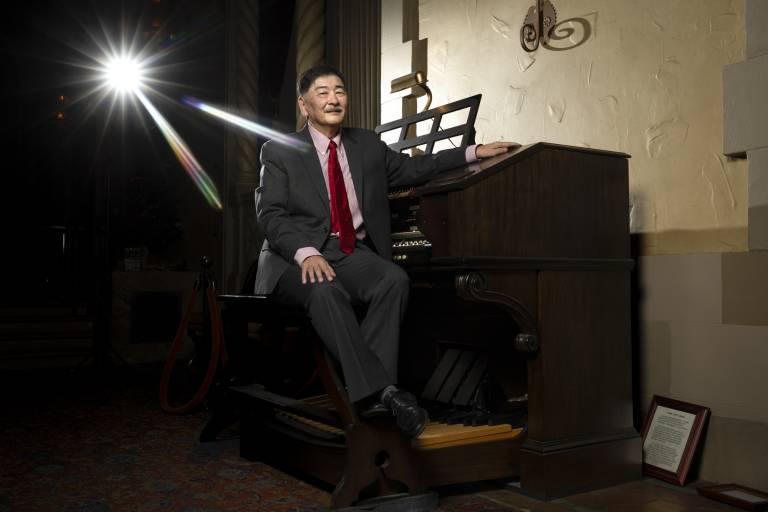
Meet Jerry Nagano, One of the Bay Area’s Last Great Theater Organists
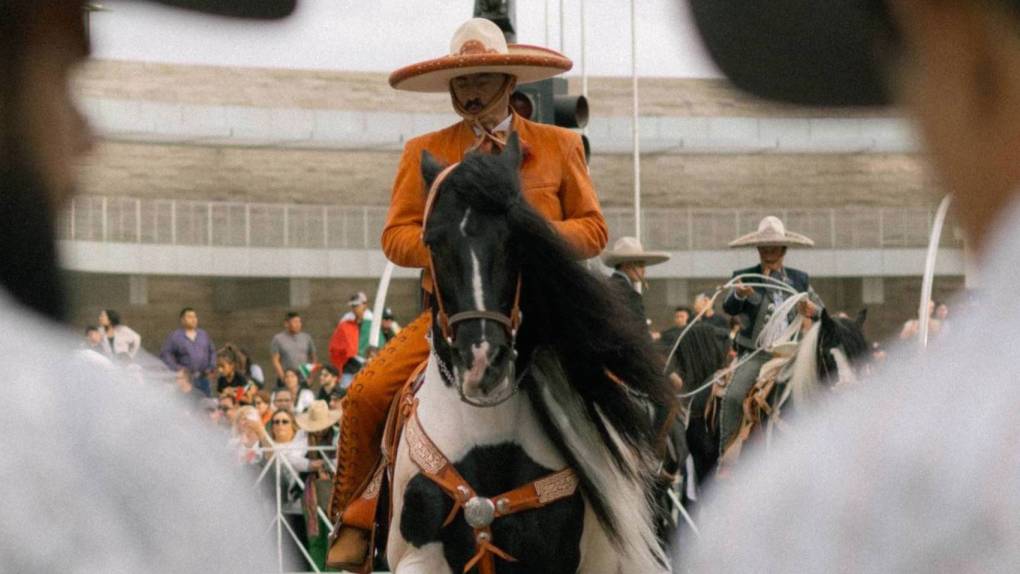
Silicon Valley Unseen: As Told By Locals
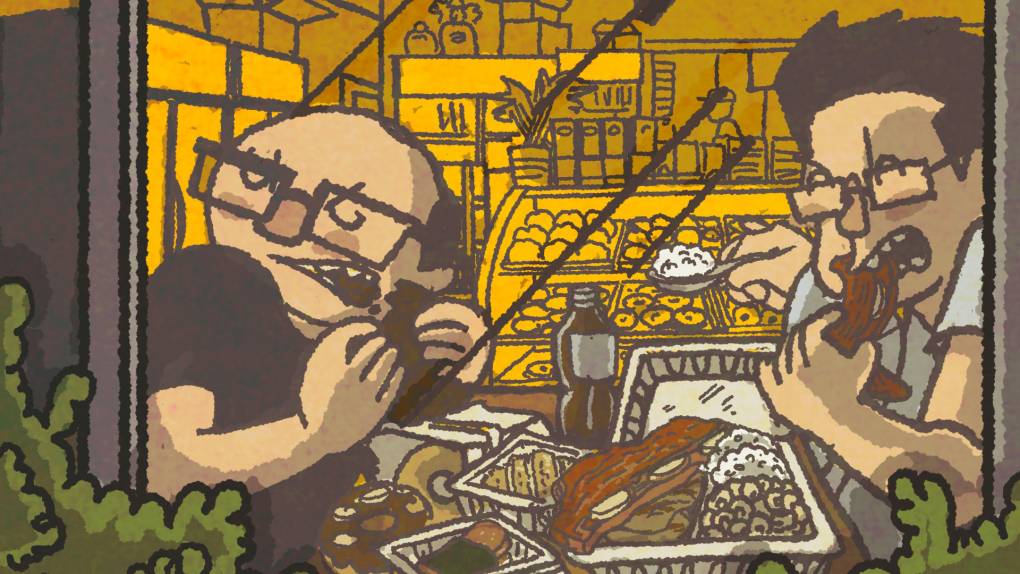
Hawaiian Barbecue Is This Late-Night Doughnut Shop’s Secret Weapon
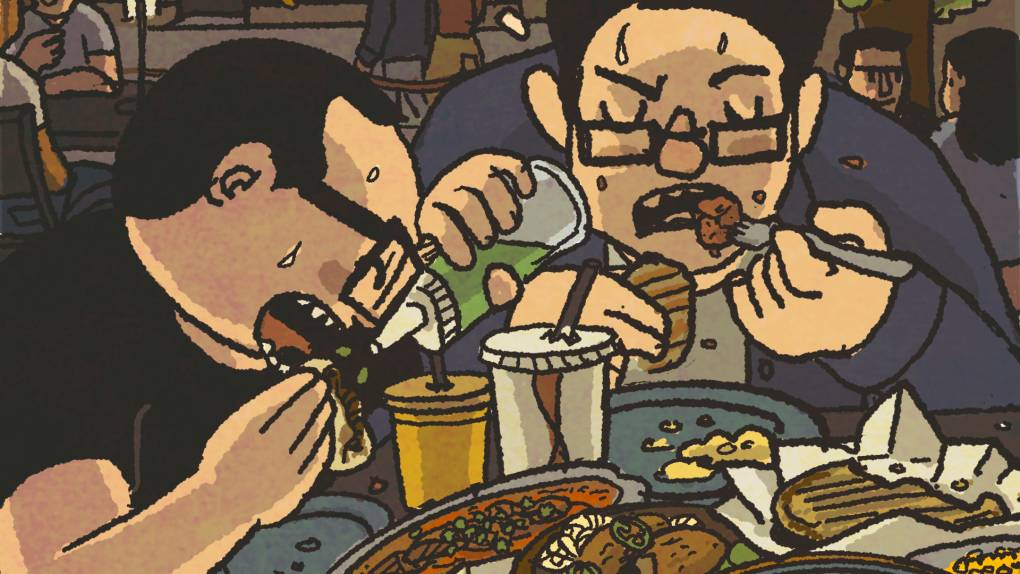
Zareen’s Is a Late-Night Pakistani Food Gem in Palo Alto
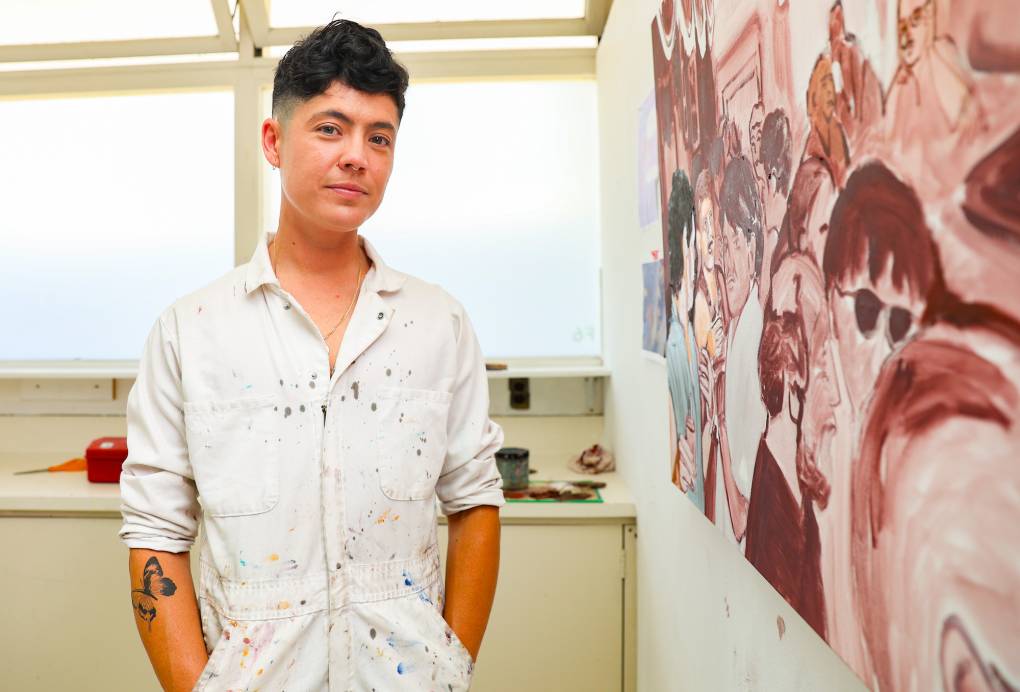
How Alma Landeta Holds a Mirror Up to Queer Experiences
Larry June to Headline Stanford's Free Blackfest
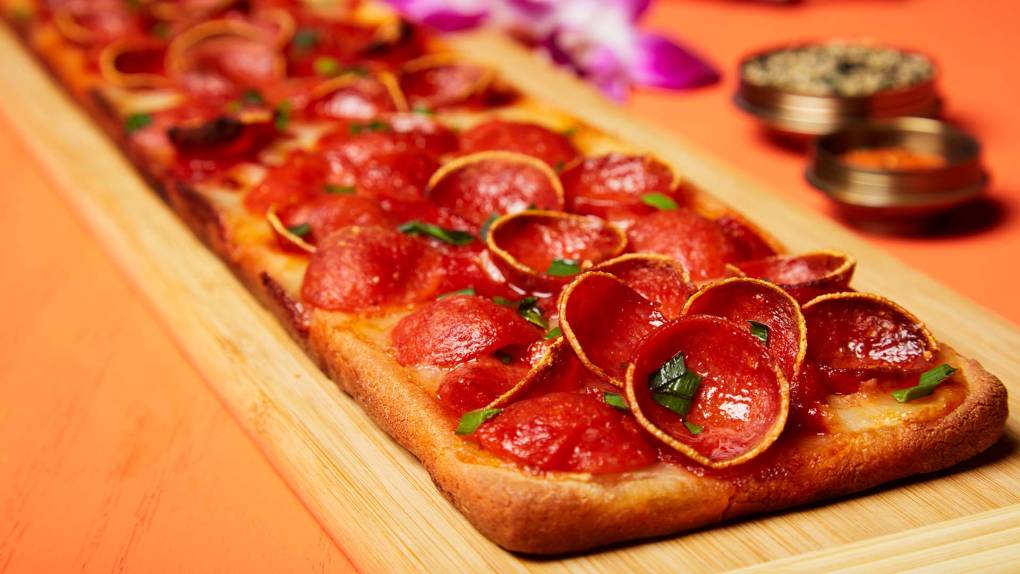
Free Mochi Pizza For National Pizza Day? Yes, Please
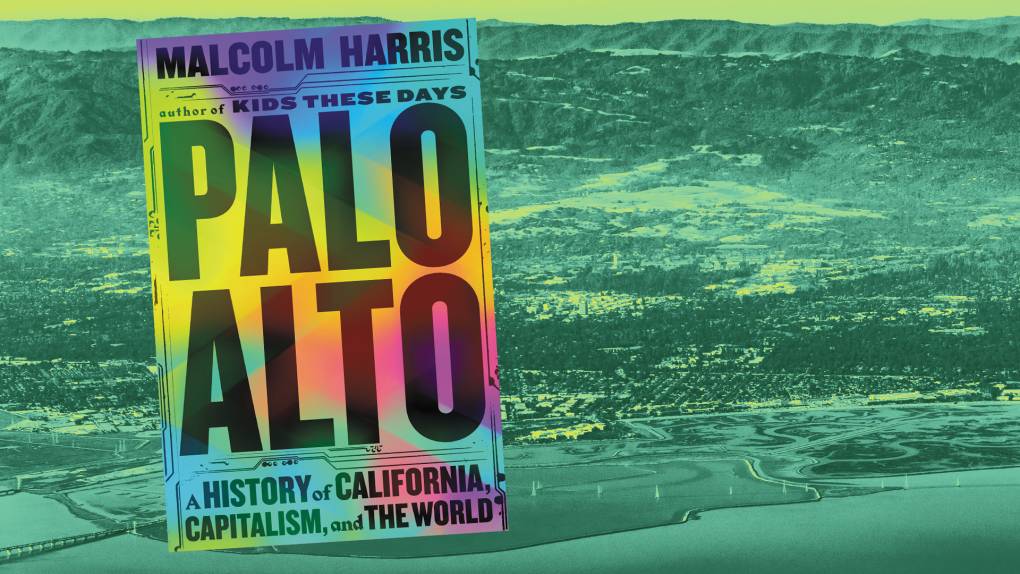
New Social History ‘Palo Alto’ Tells a Story of Laborers and Exploiters
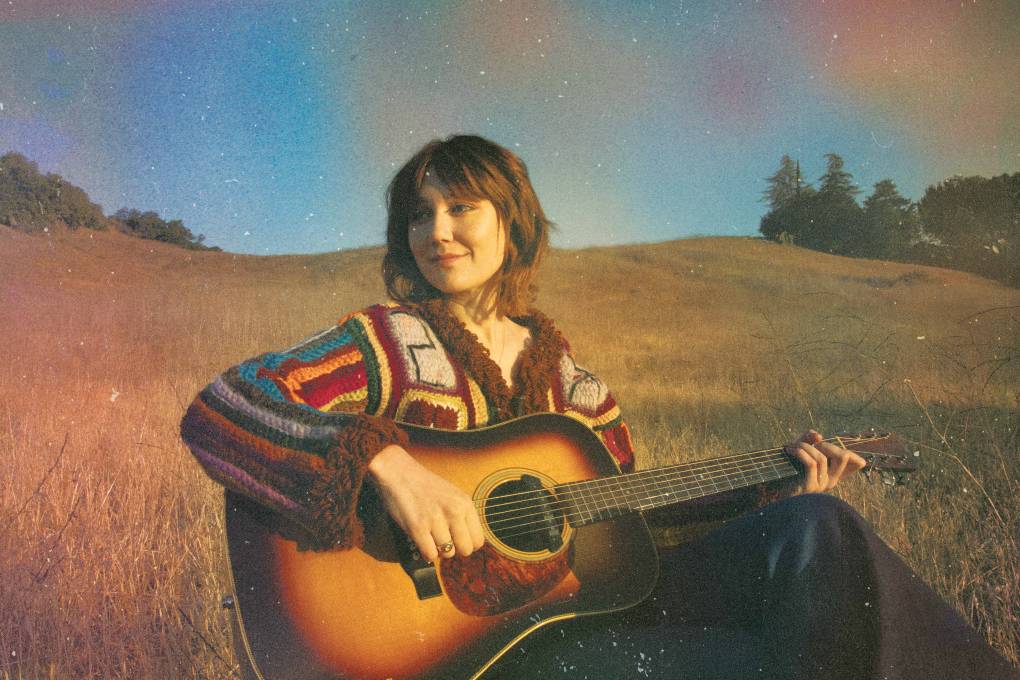
‘Triple Threat’ Bay Area Bluegrass Musician Goes for Grammy Gold
Sponsored
Player sponsored by
window.__IS_SSR__=true
window.__INITIAL_STATE__={
"attachmentsReducer": {
"audio_0": {
"type": "attachments",
"id": "audio_0",
"imgSizes": {
"kqedFullSize": {
"file": "https://ww2.kqed.org/news/wp-content/themes/KQED-unified/img/audio_bgs/background0.jpg"
}
}
},
"audio_1": {
"type": "attachments",
"id": "audio_1",
"imgSizes": {
"kqedFullSize": {
"file": "https://ww2.kqed.org/news/wp-content/themes/KQED-unified/img/audio_bgs/background1.jpg"
}
}
},
"audio_2": {
"type": "attachments",
"id": "audio_2",
"imgSizes": {
"kqedFullSize": {
"file": "https://ww2.kqed.org/news/wp-content/themes/KQED-unified/img/audio_bgs/background2.jpg"
}
}
},
"audio_3": {
"type": "attachments",
"id": "audio_3",
"imgSizes": {
"kqedFullSize": {
"file": "https://ww2.kqed.org/news/wp-content/themes/KQED-unified/img/audio_bgs/background3.jpg"
}
}
},
"audio_4": {
"type": "attachments",
"id": "audio_4",
"imgSizes": {
"kqedFullSize": {
"file": "https://ww2.kqed.org/news/wp-content/themes/KQED-unified/img/audio_bgs/background4.jpg"
}
}
},
"placeholder": {
"type": "attachments",
"id": "placeholder",
"imgSizes": {
"thumbnail": {
"file": "https://cdn.kqed.org/wp-content/uploads/2024/12/KQED-Default-Image-816638274-2000x1333-1-160x107.jpg",
"width": 160,
"height": 107,
"mimeType": "image/jpeg"
},
"medium": {
"file": "https://cdn.kqed.org/wp-content/uploads/2024/12/KQED-Default-Image-816638274-2000x1333-1-800x533.jpg",
"width": 800,
"height": 533,
"mimeType": "image/jpeg"
},
"medium_large": {
"file": "https://cdn.kqed.org/wp-content/uploads/2024/12/KQED-Default-Image-816638274-2000x1333-1-768x512.jpg",
"width": 768,
"height": 512,
"mimeType": "image/jpeg"
},
"large": {
"file": "https://cdn.kqed.org/wp-content/uploads/2024/12/KQED-Default-Image-816638274-2000x1333-1-1020x680.jpg",
"width": 1020,
"height": 680,
"mimeType": "image/jpeg"
},
"1536x1536": {
"file": "https://cdn.kqed.org/wp-content/uploads/2024/12/KQED-Default-Image-816638274-2000x1333-1-1536x1024.jpg",
"width": 1536,
"height": 1024,
"mimeType": "image/jpeg"
},
"fd-lrg": {
"file": "https://cdn.kqed.org/wp-content/uploads/2024/12/KQED-Default-Image-816638274-2000x1333-1-1536x1024.jpg",
"width": 1536,
"height": 1024,
"mimeType": "image/jpeg"
},
"fd-med": {
"file": "https://cdn.kqed.org/wp-content/uploads/2024/12/KQED-Default-Image-816638274-2000x1333-1-1020x680.jpg",
"width": 1020,
"height": 680,
"mimeType": "image/jpeg"
},
"fd-sm": {
"file": "https://cdn.kqed.org/wp-content/uploads/2024/12/KQED-Default-Image-816638274-2000x1333-1-800x533.jpg",
"width": 800,
"height": 533,
"mimeType": "image/jpeg"
},
"post-thumbnail": {
"file": "https://cdn.kqed.org/wp-content/uploads/2024/12/KQED-Default-Image-816638274-2000x1333-1-672x372.jpg",
"width": 672,
"height": 372,
"mimeType": "image/jpeg"
},
"twentyfourteen-full-width": {
"file": "https://cdn.kqed.org/wp-content/uploads/2024/12/KQED-Default-Image-816638274-2000x1333-1-1038x576.jpg",
"width": 1038,
"height": 576,
"mimeType": "image/jpeg"
},
"xxsmall": {
"file": "https://cdn.kqed.org/wp-content/uploads/2024/12/KQED-Default-Image-816638274-2000x1333-1-160x107.jpg",
"width": 160,
"height": 107,
"mimeType": "image/jpeg"
},
"xsmall": {
"file": "https://cdn.kqed.org/wp-content/uploads/2024/12/KQED-Default-Image-816638274-2000x1333-1-672x372.jpg",
"width": 672,
"height": 372,
"mimeType": "image/jpeg"
},
"small": {
"file": "https://cdn.kqed.org/wp-content/uploads/2024/12/KQED-Default-Image-816638274-2000x1333-1-672x372.jpg",
"width": 672,
"height": 372,
"mimeType": "image/jpeg"
},
"xlarge": {
"file": "https://cdn.kqed.org/wp-content/uploads/2024/12/KQED-Default-Image-816638274-2000x1333-1-1020x680.jpg",
"width": 1020,
"height": 680,
"mimeType": "image/jpeg"
},
"full-width": {
"file": "https://cdn.kqed.org/wp-content/uploads/2024/12/KQED-Default-Image-816638274-2000x1333-1-1920x1280.jpg",
"width": 1920,
"height": 1280,
"mimeType": "image/jpeg"
},
"guest-author-32": {
"file": "https://cdn.kqed.org/wp-content/uploads/2025/01/KQED-Default-Image-816638274-1333x1333-1-160x160.jpg",
"width": 32,
"height": 32,
"mimeType": "image/jpeg"
},
"guest-author-50": {
"file": "https://cdn.kqed.org/wp-content/uploads/2025/01/KQED-Default-Image-816638274-1333x1333-1-160x160.jpg",
"width": 50,
"height": 50,
"mimeType": "image/jpeg"
},
"guest-author-64": {
"file": "https://cdn.kqed.org/wp-content/uploads/2025/01/KQED-Default-Image-816638274-1333x1333-1-160x160.jpg",
"width": 64,
"height": 64,
"mimeType": "image/jpeg"
},
"guest-author-96": {
"file": "https://cdn.kqed.org/wp-content/uploads/2025/01/KQED-Default-Image-816638274-1333x1333-1-160x160.jpg",
"width": 96,
"height": 96,
"mimeType": "image/jpeg"
},
"guest-author-128": {
"file": "https://cdn.kqed.org/wp-content/uploads/2025/01/KQED-Default-Image-816638274-1333x1333-1-160x160.jpg",
"width": 128,
"height": 128,
"mimeType": "image/jpeg"
},
"detail": {
"file": "https://cdn.kqed.org/wp-content/uploads/2025/01/KQED-Default-Image-816638274-1333x1333-1-160x160.jpg",
"width": 160,
"height": 160,
"mimeType": "image/jpeg"
},
"kqedFullSize": {
"file": "https://cdn.kqed.org/wp-content/uploads/2024/12/KQED-Default-Image-816638274-2000x1333-1.jpg",
"width": 2000,
"height": 1333
}
}
},
"arts_13984825": {
"type": "attachments",
"id": "arts_13984825",
"meta": {
"index": "attachments_1716263798",
"site": "arts",
"id": "13984825",
"found": true
},
"title": "20251210_JERRYNAGANO_DECEMBER_GH-12-KQED",
"publishDate": 1765485070,
"status": "inherit",
"parent": 0,
"modified": 1765584983,
"caption": "Jerry Nagano poses with the California Theatre’s 1928 Wurlitzer lobby organ in San Jose on Dec. 10, 2025. Nagano, a veteran theater-organ performer and retired Stanford systems engineer, has been a fixture in California’s organ community for decades.",
"credit": "Gustavo Hernandez/KQED",
"altTag": "An organ player in a suit sits at his instrument in a dark theater.",
"description": null,
"imgSizes": {
"thumbnail": {
"file": "https://cdn.kqed.org/wp-content/uploads/sites/2/2025/12/20251210_JERRYNAGANO_DECEMBER_GH-12-KQED-160x107.jpg",
"width": 160,
"height": 107,
"mimeType": "image/jpeg"
},
"medium_large": {
"file": "https://cdn.kqed.org/wp-content/uploads/sites/2/2025/12/20251210_JERRYNAGANO_DECEMBER_GH-12-KQED-768x512.jpg",
"width": 768,
"height": 512,
"mimeType": "image/jpeg"
},
"1536x1536": {
"file": "https://cdn.kqed.org/wp-content/uploads/sites/2/2025/12/20251210_JERRYNAGANO_DECEMBER_GH-12-KQED-1536x1024.jpg",
"width": 1536,
"height": 1024,
"mimeType": "image/jpeg"
},
"post-thumbnail": {
"file": "https://cdn.kqed.org/wp-content/uploads/sites/2/2025/12/20251210_JERRYNAGANO_DECEMBER_GH-12-KQED-672x372.jpg",
"width": 672,
"height": 372,
"mimeType": "image/jpeg"
},
"twentyfourteen-full-width": {
"file": "https://cdn.kqed.org/wp-content/uploads/sites/2/2025/12/20251210_JERRYNAGANO_DECEMBER_GH-12-KQED-1038x576.jpg",
"width": 1038,
"height": 576,
"mimeType": "image/jpeg"
},
"npr-cds-wide": {
"file": "https://cdn.kqed.org/wp-content/uploads/sites/2/2025/12/20251210_JERRYNAGANO_DECEMBER_GH-12-KQED-1200x675.jpg",
"width": 1200,
"height": 675,
"mimeType": "image/jpeg"
},
"kqedFullSize": {
"file": "https://cdn.kqed.org/wp-content/uploads/sites/2/2025/12/20251210_JERRYNAGANO_DECEMBER_GH-12-KQED.jpg",
"width": 2000,
"height": 1333
}
},
"fetchFailed": false,
"isLoading": false
},
"arts_13965133": {
"type": "attachments",
"id": "arts_13965133",
"meta": {
"index": "attachments_1716263798",
"site": "arts",
"id": "13965133",
"found": true
},
"title": "SVU.Intro.Thumbnail",
"publishDate": 1726779233,
"status": "inherit",
"parent": 13964538,
"modified": 1726779233,
"caption": null,
"credit": null,
"altTag": null,
"description": null,
"imgSizes": {
"medium": {
"file": "https://cdn.kqed.org/wp-content/uploads/sites/2/2024/09/SVU.Intro_.Thumbnail-800x450.jpg",
"width": 800,
"height": 450,
"mimeType": "image/jpeg"
},
"large": {
"file": "https://cdn.kqed.org/wp-content/uploads/sites/2/2024/09/SVU.Intro_.Thumbnail-1020x574.jpg",
"width": 1020,
"height": 574,
"mimeType": "image/jpeg"
},
"thumbnail": {
"file": "https://cdn.kqed.org/wp-content/uploads/sites/2/2024/09/SVU.Intro_.Thumbnail-160x90.jpg",
"width": 160,
"height": 90,
"mimeType": "image/jpeg"
},
"medium_large": {
"file": "https://cdn.kqed.org/wp-content/uploads/sites/2/2024/09/SVU.Intro_.Thumbnail-768x432.jpg",
"width": 768,
"height": 432,
"mimeType": "image/jpeg"
},
"1536x1536": {
"file": "https://cdn.kqed.org/wp-content/uploads/sites/2/2024/09/SVU.Intro_.Thumbnail-1536x864.jpg",
"width": 1536,
"height": 864,
"mimeType": "image/jpeg"
},
"post-thumbnail": {
"file": "https://cdn.kqed.org/wp-content/uploads/sites/2/2024/09/SVU.Intro_.Thumbnail-672x372.jpg",
"width": 672,
"height": 372,
"mimeType": "image/jpeg"
},
"twentyfourteen-full-width": {
"file": "https://cdn.kqed.org/wp-content/uploads/sites/2/2024/09/SVU.Intro_.Thumbnail-1038x576.jpg",
"width": 1038,
"height": 576,
"mimeType": "image/jpeg"
},
"kqedFullSize": {
"file": "https://cdn.kqed.org/wp-content/uploads/sites/2/2024/09/SVU.Intro_.Thumbnail.jpg",
"width": 1701,
"height": 957
}
},
"fetchFailed": false,
"isLoading": false
},
"arts_13962344": {
"type": "attachments",
"id": "arts_13962344",
"meta": {
"index": "attachments_1716263798",
"site": "arts",
"id": "13962344",
"found": true
},
"title": "SH 2-crop",
"publishDate": 1723163036,
"status": "inherit",
"parent": 13962340,
"modified": 1723163150,
"caption": "Open late in a Palo Alto strip mall, SH Hawaiian BBQ & Donuts specializes in hearty Hawaiian plate lunches.",
"credit": "Thien Pham",
"altTag": "Illustration: Two men seen through the window of a doughnut shop. They're devouring doughnuts and plates of Hawaiian barbecue.",
"description": null,
"imgSizes": {
"medium": {
"file": "https://cdn.kqed.org/wp-content/uploads/sites/2/2024/08/SH-2-crop-800x450.jpg",
"width": 800,
"height": 450,
"mimeType": "image/jpeg"
},
"large": {
"file": "https://cdn.kqed.org/wp-content/uploads/sites/2/2024/08/SH-2-crop-1020x574.jpg",
"width": 1020,
"height": 574,
"mimeType": "image/jpeg"
},
"thumbnail": {
"file": "https://cdn.kqed.org/wp-content/uploads/sites/2/2024/08/SH-2-crop-160x90.jpg",
"width": 160,
"height": 90,
"mimeType": "image/jpeg"
},
"medium_large": {
"file": "https://cdn.kqed.org/wp-content/uploads/sites/2/2024/08/SH-2-crop-768x432.jpg",
"width": 768,
"height": 432,
"mimeType": "image/jpeg"
},
"1536x1536": {
"file": "https://cdn.kqed.org/wp-content/uploads/sites/2/2024/08/SH-2-crop-1536x864.jpg",
"width": 1536,
"height": 864,
"mimeType": "image/jpeg"
},
"post-thumbnail": {
"file": "https://cdn.kqed.org/wp-content/uploads/sites/2/2024/08/SH-2-crop-672x372.jpg",
"width": 672,
"height": 372,
"mimeType": "image/jpeg"
},
"twentyfourteen-full-width": {
"file": "https://cdn.kqed.org/wp-content/uploads/sites/2/2024/08/SH-2-crop-1038x576.jpg",
"width": 1038,
"height": 576,
"mimeType": "image/jpeg"
},
"kqedFullSize": {
"file": "https://cdn.kqed.org/wp-content/uploads/sites/2/2024/08/SH-2-crop.jpg",
"width": 1920,
"height": 1080
}
},
"fetchFailed": false,
"isLoading": false
},
"arts_13961616": {
"type": "attachments",
"id": "arts_13961616",
"meta": {
"index": "attachments_1716263798",
"site": "arts",
"id": "13961616",
"found": true
},
"title": "Zareen's 2 crop",
"publishDate": 1721952503,
"status": "inherit",
"parent": 13961613,
"modified": 1721952591,
"caption": "Zareen's has been a beloved Peninsula institution for the past 10 years, known for its homestyle Pakistani and Indian dishes.",
"credit": "Thien Pham",
"altTag": "Illustration: Two men sweating while they eat Indian/Pakistani food.",
"description": null,
"imgSizes": {
"medium": {
"file": "https://cdn.kqed.org/wp-content/uploads/sites/2/2024/07/Zareens-2-crop-800x450.jpg",
"width": 800,
"height": 450,
"mimeType": "image/jpeg"
},
"large": {
"file": "https://cdn.kqed.org/wp-content/uploads/sites/2/2024/07/Zareens-2-crop-1020x574.jpg",
"width": 1020,
"height": 574,
"mimeType": "image/jpeg"
},
"thumbnail": {
"file": "https://cdn.kqed.org/wp-content/uploads/sites/2/2024/07/Zareens-2-crop-160x90.jpg",
"width": 160,
"height": 90,
"mimeType": "image/jpeg"
},
"medium_large": {
"file": "https://cdn.kqed.org/wp-content/uploads/sites/2/2024/07/Zareens-2-crop-768x432.jpg",
"width": 768,
"height": 432,
"mimeType": "image/jpeg"
},
"1536x1536": {
"file": "https://cdn.kqed.org/wp-content/uploads/sites/2/2024/07/Zareens-2-crop-1536x864.jpg",
"width": 1536,
"height": 864,
"mimeType": "image/jpeg"
},
"post-thumbnail": {
"file": "https://cdn.kqed.org/wp-content/uploads/sites/2/2024/07/Zareens-2-crop-672x372.jpg",
"width": 672,
"height": 372,
"mimeType": "image/jpeg"
},
"twentyfourteen-full-width": {
"file": "https://cdn.kqed.org/wp-content/uploads/sites/2/2024/07/Zareens-2-crop-1038x576.jpg",
"width": 1038,
"height": 576,
"mimeType": "image/jpeg"
},
"kqedFullSize": {
"file": "https://cdn.kqed.org/wp-content/uploads/sites/2/2024/07/Zareens-2-crop.jpg",
"width": 1920,
"height": 1080
}
},
"fetchFailed": false,
"isLoading": false
},
"arts_13960594": {
"type": "attachments",
"id": "arts_13960594",
"meta": {
"index": "attachments_1716263798",
"site": "arts",
"id": "13960594",
"found": true
},
"title": "20240627_AlmaLandeta-6",
"publishDate": 1719852997,
"status": "inherit",
"parent": 0,
"modified": 1721087822,
"caption": "Alma Landeta poses for a portrait in their Palo Alto studio on June 27, 2024. Alma, a trans and mixed-race visual artist, was selected as the 2024 King Artist in Residence; they will spend the year focusing on the lived experiences of the LGBTQAI+ communities residing or working in Palo Alto.",
"credit": "Gina Castro/KQED",
"altTag": "person with short hair stands in a painting studio in white jumpsuit",
"description": null,
"imgSizes": {
"medium": {
"file": "https://cdn.kqed.org/wp-content/uploads/sites/2/2024/07/20240627_AlmaLandeta-6-800x542.jpg",
"width": 800,
"height": 542,
"mimeType": "image/jpeg"
},
"large": {
"file": "https://cdn.kqed.org/wp-content/uploads/sites/2/2024/07/20240627_AlmaLandeta-6-1020x692.jpg",
"width": 1020,
"height": 692,
"mimeType": "image/jpeg"
},
"thumbnail": {
"file": "https://cdn.kqed.org/wp-content/uploads/sites/2/2024/07/20240627_AlmaLandeta-6-160x108.jpg",
"width": 160,
"height": 108,
"mimeType": "image/jpeg"
},
"medium_large": {
"file": "https://cdn.kqed.org/wp-content/uploads/sites/2/2024/07/20240627_AlmaLandeta-6-768x521.jpg",
"width": 768,
"height": 521,
"mimeType": "image/jpeg"
},
"1536x1536": {
"file": "https://cdn.kqed.org/wp-content/uploads/sites/2/2024/07/20240627_AlmaLandeta-6-1536x1041.jpg",
"width": 1536,
"height": 1041,
"mimeType": "image/jpeg"
},
"post-thumbnail": {
"file": "https://cdn.kqed.org/wp-content/uploads/sites/2/2024/07/20240627_AlmaLandeta-6-672x372.jpg",
"width": 672,
"height": 372,
"mimeType": "image/jpeg"
},
"twentyfourteen-full-width": {
"file": "https://cdn.kqed.org/wp-content/uploads/sites/2/2024/07/20240627_AlmaLandeta-6-1038x576.jpg",
"width": 1038,
"height": 576,
"mimeType": "image/jpeg"
},
"full-width": {
"file": "https://cdn.kqed.org/wp-content/uploads/sites/2/2024/07/20240627_AlmaLandeta-6-1920x1302.jpg",
"width": 1920,
"height": 1302,
"mimeType": "image/jpeg"
},
"kqedFullSize": {
"file": "https://cdn.kqed.org/wp-content/uploads/sites/2/2024/07/20240627_AlmaLandeta-6.jpg",
"width": 2000,
"height": 1356
}
},
"fetchFailed": false,
"isLoading": false
},
"arts_13929276": {
"type": "attachments",
"id": "arts_13929276",
"meta": {
"index": "attachments_1716263798",
"site": "arts",
"id": "13929276",
"found": true
},
"parent": 13929248,
"imgSizes": {
"twentyfourteen-full-width": {
"file": "https://cdn.kqed.org/wp-content/uploads/sites/2/2023/05/GettyImages-1471382956-1024x576.jpg",
"width": 1024,
"mimeType": "image/jpeg",
"height": 576
},
"thumbnail": {
"file": "https://cdn.kqed.org/wp-content/uploads/sites/2/2023/05/GettyImages-1471382956-160x107.jpg",
"width": 160,
"mimeType": "image/jpeg",
"height": 107
},
"post-thumbnail": {
"file": "https://cdn.kqed.org/wp-content/uploads/sites/2/2023/05/GettyImages-1471382956-672x372.jpg",
"width": 672,
"mimeType": "image/jpeg",
"height": 372
},
"kqedFullSize": {
"file": "https://cdn.kqed.org/wp-content/uploads/sites/2/2023/05/GettyImages-1471382956.jpg",
"width": 1024,
"height": 683
},
"large": {
"file": "https://cdn.kqed.org/wp-content/uploads/sites/2/2023/05/GettyImages-1471382956-1020x680.jpg",
"width": 1020,
"mimeType": "image/jpeg",
"height": 680
},
"medium": {
"file": "https://cdn.kqed.org/wp-content/uploads/sites/2/2023/05/GettyImages-1471382956-800x534.jpg",
"width": 800,
"mimeType": "image/jpeg",
"height": 534
},
"medium_large": {
"file": "https://cdn.kqed.org/wp-content/uploads/sites/2/2023/05/GettyImages-1471382956-768x512.jpg",
"width": 768,
"mimeType": "image/jpeg",
"height": 512
}
},
"publishDate": 1684351026,
"modified": 1713894734,
"caption": "Larry June performs at 2023 Rolling Loud Los Angeles at Hollywood Park Grounds on March 4, 2023, in Inglewood, California.",
"description": null,
"title": "2023 Rolling Loud Los Angeles",
"credit": "Photo by Timothy Norris/WireImage",
"status": "inherit",
"altTag": "Larry June raps into the microphone on a big festival stage. He's wearing a bucket hat, designer sunglasses and a bandana and is smiling.",
"fetchFailed": false,
"isLoading": false
},
"arts_13951687": {
"type": "attachments",
"id": "arts_13951687",
"meta": {
"index": "attachments_1716263798",
"site": "arts",
"id": "13951687",
"found": true
},
"parent": 13951657,
"imgSizes": {
"twentyfourteen-full-width": {
"file": "https://cdn.kqed.org/wp-content/uploads/sites/2/2024/02/Mochiko-Pepperoni_crop-1038x576.jpg",
"width": 1038,
"mimeType": "image/jpeg",
"height": 576
},
"thumbnail": {
"file": "https://cdn.kqed.org/wp-content/uploads/sites/2/2024/02/Mochiko-Pepperoni_crop-160x90.jpg",
"width": 160,
"mimeType": "image/jpeg",
"height": 90
},
"post-thumbnail": {
"file": "https://cdn.kqed.org/wp-content/uploads/sites/2/2024/02/Mochiko-Pepperoni_crop-672x372.jpg",
"width": 672,
"mimeType": "image/jpeg",
"height": 372
},
"kqedFullSize": {
"file": "https://cdn.kqed.org/wp-content/uploads/sites/2/2024/02/Mochiko-Pepperoni_crop.jpg",
"width": 1920,
"height": 1080
},
"large": {
"file": "https://cdn.kqed.org/wp-content/uploads/sites/2/2024/02/Mochiko-Pepperoni_crop-1020x574.jpg",
"width": 1020,
"mimeType": "image/jpeg",
"height": 574
},
"1536x1536": {
"file": "https://cdn.kqed.org/wp-content/uploads/sites/2/2024/02/Mochiko-Pepperoni_crop-1536x864.jpg",
"width": 1536,
"mimeType": "image/jpeg",
"height": 864
},
"medium": {
"file": "https://cdn.kqed.org/wp-content/uploads/sites/2/2024/02/Mochiko-Pepperoni_crop-800x450.jpg",
"width": 800,
"mimeType": "image/jpeg",
"height": 450
},
"medium_large": {
"file": "https://cdn.kqed.org/wp-content/uploads/sites/2/2024/02/Mochiko-Pepperoni_crop-768x432.jpg",
"width": 768,
"mimeType": "image/jpeg",
"height": 432
}
},
"publishDate": 1707254659,
"modified": 1707254741,
"caption": "A new Peninsula pizzeria believes mochi and pizza are the perfect combination.",
"description": null,
"title": "Mochiko Pepperoni_crop",
"credit": "Courtesy of Mochiko",
"status": "inherit",
"altTag": "A long, rectangular pepperoni pizza, served on a wooden board.",
"fetchFailed": false,
"isLoading": false
},
"arts_13923792": {
"type": "attachments",
"id": "arts_13923792",
"meta": {
"index": "attachments_1716263798",
"site": "arts",
"id": "13923792",
"found": true
},
"parent": 13923665,
"imgSizes": {
"twentyfourteen-full-width": {
"file": "https://ww2.kqed.org/app/uploads/sites/2/2023/01/PaloAlto_COVER-1038x576.jpg",
"width": 1038,
"mimeType": "image/jpeg",
"height": 576
},
"thumbnail": {
"file": "https://ww2.kqed.org/app/uploads/sites/2/2023/01/PaloAlto_COVER-160x90.jpg",
"width": 160,
"mimeType": "image/jpeg",
"height": 90
},
"post-thumbnail": {
"file": "https://ww2.kqed.org/app/uploads/sites/2/2023/01/PaloAlto_COVER-672x372.jpg",
"width": 672,
"mimeType": "image/jpeg",
"height": 372
},
"kqedFullSize": {
"file": "https://ww2.kqed.org/app/uploads/sites/2/2023/01/PaloAlto_COVER.jpg",
"width": 1920,
"height": 1080
},
"large": {
"file": "https://ww2.kqed.org/app/uploads/sites/2/2023/01/PaloAlto_COVER-1020x574.jpg",
"width": 1020,
"mimeType": "image/jpeg",
"height": 574
},
"1536x1536": {
"file": "https://ww2.kqed.org/app/uploads/sites/2/2023/01/PaloAlto_COVER-1536x864.jpg",
"width": 1536,
"mimeType": "image/jpeg",
"height": 864
},
"medium": {
"file": "https://ww2.kqed.org/app/uploads/sites/2/2023/01/PaloAlto_COVER-800x450.jpg",
"width": 800,
"mimeType": "image/jpeg",
"height": 450
},
"medium_large": {
"file": "https://ww2.kqed.org/app/uploads/sites/2/2023/01/PaloAlto_COVER-768x432.jpg",
"width": 768,
"mimeType": "image/jpeg",
"height": 432
}
},
"publishDate": 1673985674,
"modified": 1673986172,
"caption": "In 'Palo Alto: A History of California, Capitalism, and the World,' Malcolm Harris writes from a Marxist lens in this grand-in-scope history.",
"description": null,
"title": "PaloAlto_COVER",
"credit": "Photo by Bill Dally/iStock; Cover from Little, Brown; Illustration by Sarah Hotchkiss",
"status": "inherit",
"altTag": "Brightly colored book cover reading 'Palo Alto' in all caps sits against green-hued image of the city taken from the SF Bay",
"fetchFailed": false,
"isLoading": false
},
"arts_13924659": {
"type": "attachments",
"id": "arts_13924659",
"meta": {
"index": "attachments_1716263798",
"site": "arts",
"id": "13924659",
"found": true
},
"parent": 13924654,
"imgSizes": {
"twentyfourteen-full-width": {
"file": "https://ww2.kqed.org/app/uploads/sites/2/2023/02/molly_tuttle2-1038x576.jpg",
"width": 1038,
"mimeType": "image/jpeg",
"height": 576
},
"thumbnail": {
"file": "https://ww2.kqed.org/app/uploads/sites/2/2023/02/molly_tuttle2-160x107.jpg",
"width": 160,
"mimeType": "image/jpeg",
"height": 107
},
"post-thumbnail": {
"file": "https://ww2.kqed.org/app/uploads/sites/2/2023/02/molly_tuttle2-672x372.jpg",
"width": 672,
"mimeType": "image/jpeg",
"height": 372
},
"kqedFullSize": {
"file": "https://ww2.kqed.org/app/uploads/sites/2/2023/02/molly_tuttle2-scaled.jpg",
"width": 2560,
"height": 1707
},
"2048x2048": {
"file": "https://ww2.kqed.org/app/uploads/sites/2/2023/02/molly_tuttle2-2048x1365.jpg",
"width": 2048,
"mimeType": "image/jpeg",
"height": 1365
},
"large": {
"file": "https://ww2.kqed.org/app/uploads/sites/2/2023/02/molly_tuttle2-1020x680.jpg",
"width": 1020,
"mimeType": "image/jpeg",
"height": 680
},
"1536x1536": {
"file": "https://ww2.kqed.org/app/uploads/sites/2/2023/02/molly_tuttle2-1536x1024.jpg",
"width": 1536,
"mimeType": "image/jpeg",
"height": 1024
},
"full-width": {
"file": "https://ww2.kqed.org/app/uploads/sites/2/2023/02/molly_tuttle2-1920x1280.jpg",
"width": 1920,
"mimeType": "image/jpeg",
"height": 1280
},
"medium": {
"file": "https://ww2.kqed.org/app/uploads/sites/2/2023/02/molly_tuttle2-800x533.jpg",
"width": 800,
"mimeType": "image/jpeg",
"height": 533
},
"medium_large": {
"file": "https://ww2.kqed.org/app/uploads/sites/2/2023/02/molly_tuttle2-768x512.jpg",
"width": 768,
"mimeType": "image/jpeg",
"height": 512
}
},
"publishDate": 1675377092,
"modified": 1675377190,
"caption": "Bluegrass musician Molly Tuttle, who was raised in Palo Alto, is nominated for two Grammys this year, including Best New Artist.",
"description": null,
"title": "tp0004c_SP_DPGate_Cover",
"credit": "Samantha Muljat",
"status": "inherit",
"altTag": "a young white woman in a colorful shirt sits in a field with a guitar, smiling",
"fetchFailed": false,
"isLoading": false
}
},
"audioPlayerReducer": {
"postId": "stream_live",
"isPaused": true,
"isPlaying": false,
"pfsActive": false,
"pledgeModalIsOpen": true,
"playerDrawerIsOpen": false
},
"authorsReducer": {
"byline_arts_13961177": {
"type": "authors",
"id": "byline_arts_13961177",
"meta": {
"override": true
},
"slug": "byline_arts_13961177",
"name": "Emily Wilson",
"isLoading": false
},
"byline_arts_13923665": {
"type": "authors",
"id": "byline_arts_13923665",
"meta": {
"override": true
},
"slug": "byline_arts_13923665",
"name": "Naomi Elias",
"isLoading": false
},
"aproehl": {
"type": "authors",
"id": "11296",
"meta": {
"index": "authors_1716337520",
"id": "11296",
"found": true
},
"name": "Ariana Proehl",
"firstName": "Ariana",
"lastName": "Proehl",
"slug": "aproehl",
"email": "aproehl@KQED.org",
"display_author_email": true,
"staff_mastheads": [
"news"
],
"title": "Culture Reporter, KQED",
"bio": "Ariana Proehl is a Culture Reporter and Host.",
"avatar": "https://secure.gravatar.com/avatar/c96b24567eb5bb3a4f8bb295ed53e232?s=600&d=blank&r=g",
"twitter": "ArianaProehl",
"facebook": null,
"instagram": null,
"linkedin": null,
"sites": [
{
"site": "arts",
"roles": []
},
{
"site": "news",
"roles": []
},
{
"site": "education",
"roles": []
},
{
"site": "forum",
"roles": []
}
],
"headData": {
"title": "Ariana Proehl | KQED",
"description": "Culture Reporter, KQED",
"ogImgSrc": "https://secure.gravatar.com/avatar/c96b24567eb5bb3a4f8bb295ed53e232?s=600&d=blank&r=g",
"twImgSrc": "https://secure.gravatar.com/avatar/c96b24567eb5bb3a4f8bb295ed53e232?s=600&d=blank&r=g"
},
"isLoading": false,
"link": "/author/aproehl"
},
"ogpenn": {
"type": "authors",
"id": "11491",
"meta": {
"index": "authors_1716337520",
"id": "11491",
"found": true
},
"name": "Pendarvis Harshaw",
"firstName": "Pendarvis",
"lastName": "Harshaw",
"slug": "ogpenn",
"email": "ogpenn@gmail.com",
"display_author_email": false,
"staff_mastheads": [
"arts"
],
"title": "Community Engagement Reporter",
"bio": "Pendarvis Harshaw is an educator, host and writer with KQED Arts.",
"avatar": "https://secure.gravatar.com/avatar/093d33baff5354890e29ad83d58d2c49?s=600&d=blank&r=g",
"twitter": null,
"facebook": null,
"instagram": "ogpenn",
"linkedin": null,
"sites": [
{
"site": "arts",
"roles": [
"editor"
]
},
{
"site": "news",
"roles": [
"editor"
]
},
{
"site": "bayareabites",
"roles": [
"author"
]
},
{
"site": "hiphop",
"roles": [
"editor"
]
}
],
"headData": {
"title": "Pendarvis Harshaw | KQED",
"description": "Community Engagement Reporter",
"ogImgSrc": "https://secure.gravatar.com/avatar/093d33baff5354890e29ad83d58d2c49?s=600&d=blank&r=g",
"twImgSrc": "https://secure.gravatar.com/avatar/093d33baff5354890e29ad83d58d2c49?s=600&d=blank&r=g"
},
"isLoading": false,
"link": "/author/ogpenn"
},
"ltsai": {
"type": "authors",
"id": "11743",
"meta": {
"index": "authors_1716337520",
"id": "11743",
"found": true
},
"name": "Luke Tsai",
"firstName": "Luke",
"lastName": "Tsai",
"slug": "ltsai",
"email": "ltsai@kqed.org",
"display_author_email": true,
"staff_mastheads": [
"arts"
],
"title": "Food Editor",
"bio": "Luke Tsai is KQED's food editor and resident stinky tofu connoisseur. Prior to KQED, he was an editor at Eater SF, \u003cem>San Francisco \u003c/em>magazine, and the \u003cem>East Bay Express\u003c/em>, and his work has also appeared in TASTE, the \u003cem>San Francisco Chronicle\u003c/em>, and the \u003cem>Best Food Writing\u003c/em> anthology. When he isn't writing or editing, you'll find him eating most everything he can get his hands on.",
"avatar": "https://secure.gravatar.com/avatar/d1ff591a3047b143a0e23cf7f28fcac0?s=600&d=blank&r=g",
"twitter": "theluketsai",
"facebook": null,
"instagram": null,
"linkedin": null,
"sites": [
{
"site": "",
"roles": [
"editor"
]
},
{
"site": "arts",
"roles": [
"administrator"
]
},
{
"site": "bayareabites",
"roles": [
"editor"
]
},
{
"site": "food",
"roles": [
"editor"
]
}
],
"headData": {
"title": "Luke Tsai | KQED",
"description": "Food Editor",
"ogImgSrc": "https://secure.gravatar.com/avatar/d1ff591a3047b143a0e23cf7f28fcac0?s=600&d=blank&r=g",
"twImgSrc": "https://secure.gravatar.com/avatar/d1ff591a3047b143a0e23cf7f28fcac0?s=600&d=blank&r=g"
},
"isLoading": false,
"link": "/author/ltsai"
},
"achazaro": {
"type": "authors",
"id": "11748",
"meta": {
"index": "authors_1716337520",
"id": "11748",
"found": true
},
"name": "Alan Chazaro",
"firstName": "Alan",
"lastName": "Chazaro",
"slug": "achazaro",
"email": "agchazaro@gmail.com",
"display_author_email": true,
"staff_mastheads": [],
"title": "Food Writer and Reporter",
"bio": "Alan Chazaro is the author of \u003cem>This Is Not a Frank Ocean Cover Album\u003c/em> (Black Lawrence Press, 2019), \u003cem>Piñata Theory\u003c/em> (Black Lawrence Press, 2020), and \u003cem>Notes from the Eastern Span of the Bay Bridge\u003c/em> (Ghost City Press, 2021). He is a graduate of June Jordan’s Poetry for the People program at UC Berkeley and a former Lawrence Ferlinghetti Fellow at the University of San Francisco. He writes about sports, food, art, music, education, and culture while repping the Bay on \u003ca href=\"https://twitter.com/alan_chazaro\">Twitter\u003c/a> and \u003ca href=\"https://www.instagram.com/alan_chazaro/?hl=en\">Instagram\u003c/a> at @alan_chazaro.",
"avatar": "https://secure.gravatar.com/avatar/ea8b6dd970fc5c29e7a188e7d5861df7?s=600&d=blank&r=g",
"twitter": "alan_chazaro",
"facebook": null,
"instagram": null,
"linkedin": null,
"sites": [
{
"site": "arts",
"roles": [
"contributor"
]
},
{
"site": "news",
"roles": [
"editor"
]
}
],
"headData": {
"title": "Alan Chazaro | KQED",
"description": "Food Writer and Reporter",
"ogImgSrc": "https://secure.gravatar.com/avatar/ea8b6dd970fc5c29e7a188e7d5861df7?s=600&d=blank&r=g",
"twImgSrc": "https://secure.gravatar.com/avatar/ea8b6dd970fc5c29e7a188e7d5861df7?s=600&d=blank&r=g"
},
"isLoading": false,
"link": "/author/achazaro"
},
"tpham": {
"type": "authors",
"id": "11753",
"meta": {
"index": "authors_1716337520",
"id": "11753",
"found": true
},
"name": "Thien Pham",
"firstName": "Thien",
"lastName": "Pham",
"slug": "tpham",
"email": "thiendog@gmail.com",
"display_author_email": false,
"staff_mastheads": [],
"title": "KQED Contributor",
"bio": null,
"avatar": "https://secure.gravatar.com/avatar/fa68ed7d6a785e5294a7bb79a3f409c3?s=600&d=blank&r=g",
"twitter": null,
"facebook": null,
"instagram": null,
"linkedin": null,
"sites": [
{
"site": "arts",
"roles": [
"contributor"
]
}
],
"headData": {
"title": "Thien Pham | KQED",
"description": "KQED Contributor",
"ogImgSrc": "https://secure.gravatar.com/avatar/fa68ed7d6a785e5294a7bb79a3f409c3?s=600&d=blank&r=g",
"twImgSrc": "https://secure.gravatar.com/avatar/fa68ed7d6a785e5294a7bb79a3f409c3?s=600&d=blank&r=g"
},
"isLoading": false,
"link": "/author/tpham"
},
"djchavez": {
"type": "authors",
"id": "11905",
"meta": {
"index": "authors_1716337520",
"id": "11905",
"found": true
},
"name": "David John Chávez",
"firstName": "David John",
"lastName": "Chávez",
"slug": "djchavez",
"email": "theatrechavez@gmail.com",
"display_author_email": false,
"staff_mastheads": [],
"title": "KQED Contributor",
"bio": "Based in San José, David is a theater critic and reporter who serves as Executive Chair of the American Theatre Critics/Journalists Association, as well as a regular theater contributor to The Mercury News, San Francisco Chronicle, American Theatre Magazine and KQED, among other publications. He is a two-time juror for the Pulitzer Prize for Drama (’22-’23) and a 2020 fellow of the Eugene O'Neill National Critics Institute.",
"avatar": "https://secure.gravatar.com/avatar/fabc2bc243ff109345d5c43867bc0b76?s=600&d=blank&r=g",
"twitter": null,
"facebook": "https://www.facebook.com/bydavidjchavez",
"instagram": "https://www.instagram.com/davidjchavez/",
"linkedin": null,
"sites": [
{
"site": "arts",
"roles": [
"author"
]
}
],
"headData": {
"title": "David John Chávez | KQED",
"description": "KQED Contributor",
"ogImgSrc": "https://secure.gravatar.com/avatar/fabc2bc243ff109345d5c43867bc0b76?s=600&d=blank&r=g",
"twImgSrc": "https://secure.gravatar.com/avatar/fabc2bc243ff109345d5c43867bc0b76?s=600&d=blank&r=g"
},
"isLoading": false,
"link": "/author/djchavez"
}
},
"breakingNewsReducer": {},
"pagesReducer": {},
"postsReducer": {
"stream_live": {
"type": "live",
"id": "stream_live",
"audioUrl": "https://streams.kqed.org/kqedradio",
"title": "Live Stream",
"excerpt": "Live Stream information currently unavailable.",
"link": "/radio",
"featImg": "",
"label": {
"name": "KQED Live",
"link": "/"
}
},
"stream_kqedNewscast": {
"type": "posts",
"id": "stream_kqedNewscast",
"audioUrl": "https://www.kqed.org/.stream/anon/radio/RDnews/newscast.mp3?_=1",
"title": "KQED Newscast",
"featImg": "",
"label": {
"name": "88.5 FM",
"link": "/"
}
},
"arts_13984931": {
"type": "posts",
"id": "arts_13984931",
"meta": {
"index": "posts_1716263798",
"site": "arts",
"id": "13984931",
"score": null,
"sort": [
1765838121000
]
},
"guestAuthors": [],
"slug": "jerry-nagano-great-theater-organist-stanford-california-pizza-joynt",
"title": "Meet Jerry Nagano, One of the Bay Area’s Last Great Theater Organists",
"publishDate": 1765838121,
"format": "standard",
"headTitle": "Meet Jerry Nagano, One of the Bay Area’s Last Great Theater Organists | KQED",
"labelTerm": {
"site": "arts"
},
"content": "\u003cp>Jerry Nagano is a walking, talking, breathing slice of nostalgia.\u003c/p>\n\u003cp>The organist has spent years as a popular pre- and post-show staple in the lobbies of the \u003ca href=\"https://stanfordtheatre.org/aboutWurlitzer.html\">Stanford Theatre\u003c/a> in Palo Alto and the \u003ca href=\"https://sanjosetheaters.org/theaters/california-theatre/\">California Theatre\u003c/a> in \u003ca href=\"https://www.kqed.org/arts/tag/san-jose\">San Jose\u003c/a>. But where Nagano still gets his biggest shoutouts is from those who recognize him from a gig he started back in the late 1980s — at Hayward’s Ye Olde Pizza Joynt, where delicious pies were being served alongside tunes from Nagano’s Mighty Wurlitzer organ.\u003c/p>\n\u003cp>“Being in the Bay Area, if someone comes up to me and says, ‘I heard you at…,’ it’s almost always at the Pizza Joynt,” said Nagano, who took up the organ as a kid in his native Los Angeles because he didn’t feel the thrill or challenge of a piano.\u003c/p>\n\u003cfigure id=\"attachment_13984826\" class=\"wp-caption aligncenter\" style=\"max-width: 2000px\">\u003cimg loading=\"lazy\" decoding=\"async\" class=\"size-full wp-image-13984826\" src=\"https://cdn.kqed.org/wp-content/uploads/sites/2/2025/12/20251210_JERRYNAGANO_DECEMBER_GH-17-KQED.jpg\" alt=\"\" width=\"2000\" height=\"1333\" srcset=\"https://cdn.kqed.org/wp-content/uploads/sites/2/2025/12/20251210_JERRYNAGANO_DECEMBER_GH-17-KQED.jpg 2000w, https://cdn.kqed.org/wp-content/uploads/sites/2/2025/12/20251210_JERRYNAGANO_DECEMBER_GH-17-KQED-160x107.jpg 160w, https://cdn.kqed.org/wp-content/uploads/sites/2/2025/12/20251210_JERRYNAGANO_DECEMBER_GH-17-KQED-768x512.jpg 768w, https://cdn.kqed.org/wp-content/uploads/sites/2/2025/12/20251210_JERRYNAGANO_DECEMBER_GH-17-KQED-1536x1024.jpg 1536w\" sizes=\"auto, (max-width: 2000px) 100vw, 2000px\">\u003cfigcaption class=\"wp-caption-text\">Jerry Nagano plays the California Theatre’s 1928 Wurlitzer lobby organ in San Jose on Dec. 10, 2025. \u003ccite>(Gustavo Hernandez/KQED)\u003c/cite>\u003c/figcaption>\u003c/figure>\n\u003cp>In the 1970s, pizza paired with organs was all the rage nationwide. But in the following decade, organs and organists began to disappear. Pizza and entertainment entered a new phase in 1977, when Atari founder Nolan Bushnell planted his latest creation in San Jose, the very first Chuck E. Cheese’s Pizza Time Theatre.\u003c/p>\n\u003cp>Hungry customers flocked to see Chuck E. Cheese and his buddies, such as Jasper T. Jowls and a lion named “The King” that sang in the style of Elvis. But even as pizza and pipes were ready to enter their swan song, Ye Olde Pizza Joynt had plenty of great years.\u003c/p>\n\u003cp>[ad fullwidth]\u003c/p>\n\u003cp>Ye Olde Pizza Joynt opened on Hesperian Boulevard in 1958, but a fire silenced the organ — and some of the East Bay’s best pizza — for good in 2003. Fortunately, despite smoke damage to the organ’s console, the pipes were salvaged, protected by the thick oak shutters that controlled the volume.\u003c/p>\n\u003cp>Nagano started at Ye Olde around 1988 and played there until 1997, serving as one of only four organists the place ever had. The most famous of those was Bill Langford, who played at Ye Olde for 18 years until 1981. “My audiences were the children of Bill Langford,” Nagano said.\u003c/p>\n\u003cfigure id=\"attachment_13984824\" class=\"wp-caption aligncenter\" style=\"max-width: 2000px\">\u003cimg loading=\"lazy\" decoding=\"async\" class=\"size-full wp-image-13984824\" src=\"https://cdn.kqed.org/wp-content/uploads/sites/2/2025/12/20251210_JERRYNAGANO_DECEMBER_GH-7-KQED.jpg\" alt=\"\" width=\"2000\" height=\"1333\" srcset=\"https://cdn.kqed.org/wp-content/uploads/sites/2/2025/12/20251210_JERRYNAGANO_DECEMBER_GH-7-KQED.jpg 2000w, https://cdn.kqed.org/wp-content/uploads/sites/2/2025/12/20251210_JERRYNAGANO_DECEMBER_GH-7-KQED-160x107.jpg 160w, https://cdn.kqed.org/wp-content/uploads/sites/2/2025/12/20251210_JERRYNAGANO_DECEMBER_GH-7-KQED-768x512.jpg 768w, https://cdn.kqed.org/wp-content/uploads/sites/2/2025/12/20251210_JERRYNAGANO_DECEMBER_GH-7-KQED-1536x1024.jpg 1536w\" sizes=\"auto, (max-width: 2000px) 100vw, 2000px\">\u003cfigcaption class=\"wp-caption-text\">Organist Jerry Nagano poses with the lobby pipe organ at the California Theatre in San Jose on Dec. 10, 2025. \u003ccite>(Gustavo Hernandez/KQED)\u003c/cite>\u003c/figcaption>\u003c/figure>\n\u003cp>Nagano played organ full time for his first five years at Ye Olde. Five nights a week, he perched at his instrument, with vinyl albums emblazoned with \u003cem>Jerry\u003c/em> for sale off to the side. Monkey toys crashing cymbals and a train whistle added even more texture. Despite the fun of his gig, he now had a mortgage in San Jose, and the prospects of a 40-year career as an organist wasn’t going to get things paid.\u003c/p>\n\u003cp>Nagano, who has an undergraduate degree from UCLA, began taking computer classes at De Anza College in Cupertino during the day, which first led to a job at NASA and then a career at Stanford as an electrical engineer from 1998 to 2024. Five days a week in Hayward became two.\u003c/p>\n\u003cp>Despite his new full-time gig, Nagano found a way to keep his very unique skill going.\u003c/p>\n\u003cp>“When I started this year from hell of doing college classes, going to NASA and playing at the Pizza Joynt, someone decided, ‘OK, you don’t have enough to do, so let’s throw another something on your plate for you to spin — would you be the Tuesday night organist at the Stanford Theatre?’” Nagano recalled. “That was one of my two free nights, so another night was taken up.”\u003c/p>\n\u003cfigure id=\"attachment_13984823\" class=\"wp-caption aligncenter\" style=\"max-width: 2000px\">\u003cimg loading=\"lazy\" decoding=\"async\" class=\"size-full wp-image-13984823\" src=\"https://cdn.kqed.org/wp-content/uploads/sites/2/2025/12/20251210_JERRYNAGANO_DECEMBER_GH-5-KQED.jpg\" alt=\"\" width=\"2000\" height=\"1333\" srcset=\"https://cdn.kqed.org/wp-content/uploads/sites/2/2025/12/20251210_JERRYNAGANO_DECEMBER_GH-5-KQED.jpg 2000w, https://cdn.kqed.org/wp-content/uploads/sites/2/2025/12/20251210_JERRYNAGANO_DECEMBER_GH-5-KQED-160x107.jpg 160w, https://cdn.kqed.org/wp-content/uploads/sites/2/2025/12/20251210_JERRYNAGANO_DECEMBER_GH-5-KQED-768x512.jpg 768w, https://cdn.kqed.org/wp-content/uploads/sites/2/2025/12/20251210_JERRYNAGANO_DECEMBER_GH-5-KQED-1536x1024.jpg 1536w\" sizes=\"auto, (max-width: 2000px) 100vw, 2000px\">\u003cfigcaption class=\"wp-caption-text\">Organist Jerry Nagano plays the lobby’s restored 1928 Wurlitzer pipe organ at the California Theatre in San Jose on Dec. 10, 2025. \u003ccite>(Gustavo Hernandez/KQED)\u003c/cite>\u003c/figcaption>\u003c/figure>\n\u003cp>Now 67 years old, Nagano splits his time between the Stanford Theatre and the California Theatre, the organ programming in both venues supported by the Packard Humanities Institute. Nagano has a knack for dazzling audiences with tunes that often fit the bills of the respective venues, especially at Stanford, which specializes in playing vintage films as far back as the silent era.\u003c/p>\n\u003cp>Opera San Jose General Director and CEO Shawna Lucey understands that in today’s modern era, where competition for one’s entertainment dollar is fierce, opera is more than a rustic stage and beautiful singing. Going to the opera is an event, where patrons bask in the thrill of the world’s greatest vocal compositions. Nagano has been a staple for those attending the California’s many events since 2008, and having a Bay Area icon in the house just amplifies the setting even more. [aside postid='arts_13984704']\u003c/p>\n\u003cp>“It’s a special thing from this region that we have remarkable talent, and Jerry is delighting audiences with the sounds of one of the most classic American experiences. It just doesn’t get any better than that,” said Lucey, whose father, like Nagano, is a retired electrical engineer. “We have Jerry play, but he doesn’t just play. He talks to our audiences and explains things about the Wurlitzer organ, which is really exciting for our patrons and audiences both young and old.”\u003c/p>\n\u003cp>Watching Nagano dive into the two-, three- or four-manual organ is to watch an American master in motion. In the dimly lit lobby of the California Theatre, where the 1928 two-manual instrument is housed, each keyboard has 61 keys, with 32 more notes at his nimble feet. That’s not to mention the plethora of sound buttons that surround the keys just above, featuring every brass, woodwind or percussion sound imaginable. [aside postid='arts_13984286']\u003c/p>\n\u003cp>The Mighty Wurlitzer and all its iterations have seen their best days. In the Bay Area, those days are largely attributed to the few folks like Nagano, keeping a tradition alive that is straight from the pages of classic Americana. Nagano still enjoys playing, still loves sitting down and cranking out a Broadway tune, even keeping tricks up his sleeve from newer shows like \u003cem>Hamilton\u003c/em> or classic rock bands such as Led Zeppelin.\u003c/p>\n\u003cp>The only rules Nagano has are his own. No matter the setting — in fancy dress at the opera, enjoying a film from the golden age of cinema, or, back in the day, scarfing down pepperoni slices with your family — Nagano’s number-one rule is all about having fun.\u003c/p>\n\u003cp>[ad floatright]\u003c/p>\n\u003cp>“There are many other organists in the business that play better and more accurately than I do, and I always refer to them as the organists that want to impress people,” Nagano said. “That was the point where I said, ‘I would much rather entertain my audience than impress them, so I will work on giving my audience a fun, good time.’ You might be impressed or you might not be, but I sure hope you have a good time while you’re listening.”\u003c/p>\n\n",
"blocks": [],
"excerpt": "The organist from San Jose’s California Theatre discusses his unique career and humble pizza-shop beginnings. ",
"status": "publish",
"parent": 0,
"modified": 1765838121,
"stats": {
"hasAudio": false,
"hasVideo": false,
"hasChartOrMap": false,
"iframeSrcs": [],
"hasGoogleForm": false,
"hasGallery": false,
"hasHearkenModule": false,
"hasPolis": false,
"paragraphCount": 20,
"wordCount": 1204
},
"headData": {
"title": "Jerry Nagano Is One of the Last Great Theater Organists | KQED",
"description": "The organist from San Jose’s California Theatre discusses his unique career and humble pizza-shop beginnings. ",
"ogTitle": "Meet Jerry Nagano, One of the Bay Area’s Last Great Theater Organists",
"ogDescription": "",
"ogImgId": "",
"twTitle": "Meet Jerry Nagano, One of the Bay Area’s Last Great Theater Organists",
"twDescription": "",
"twImgId": "",
"socialTitle": "Jerry Nagano Is One of the Last Great Theater Organists %%page%% %%sep%% KQED",
"schema": {
"@context": "https://schema.org",
"@type": "Article",
"headline": "Meet Jerry Nagano, One of the Bay Area’s Last Great Theater Organists",
"datePublished": "2025-12-15T14:35:21-08:00",
"dateModified": "2025-12-15T14:35:21-08:00",
"image": "https://cdn.kqed.org/wp-content/uploads/2020/02/KQED-OG-Image@1x.png"
}
},
"primaryCategory": {
"termId": 1,
"slug": "arts",
"name": "Arts"
},
"sticky": false,
"nprStoryId": "kqed-13984931",
"templateType": "standard",
"featuredImageType": "standard",
"excludeFromSiteSearch": "Include",
"articleAge": "0",
"path": "/arts/13984931/jerry-nagano-great-theater-organist-stanford-california-pizza-joynt",
"audioTrackLength": null,
"parsedContent": [
{
"type": "contentString",
"content": "\u003cdiv class=\"post-body\">\u003cp>\u003cp>Jerry Nagano is a walking, talking, breathing slice of nostalgia.\u003c/p>\n\u003cp>The organist has spent years as a popular pre- and post-show staple in the lobbies of the \u003ca href=\"https://stanfordtheatre.org/aboutWurlitzer.html\">Stanford Theatre\u003c/a> in Palo Alto and the \u003ca href=\"https://sanjosetheaters.org/theaters/california-theatre/\">California Theatre\u003c/a> in \u003ca href=\"https://www.kqed.org/arts/tag/san-jose\">San Jose\u003c/a>. But where Nagano still gets his biggest shoutouts is from those who recognize him from a gig he started back in the late 1980s — at Hayward’s Ye Olde Pizza Joynt, where delicious pies were being served alongside tunes from Nagano’s Mighty Wurlitzer organ.\u003c/p>\n\u003cp>“Being in the Bay Area, if someone comes up to me and says, ‘I heard you at…,’ it’s almost always at the Pizza Joynt,” said Nagano, who took up the organ as a kid in his native Los Angeles because he didn’t feel the thrill or challenge of a piano.\u003c/p>\n\u003cfigure id=\"attachment_13984826\" class=\"wp-caption aligncenter\" style=\"max-width: 2000px\">\u003cimg loading=\"lazy\" decoding=\"async\" class=\"size-full wp-image-13984826\" src=\"https://cdn.kqed.org/wp-content/uploads/sites/2/2025/12/20251210_JERRYNAGANO_DECEMBER_GH-17-KQED.jpg\" alt=\"\" width=\"2000\" height=\"1333\" srcset=\"https://cdn.kqed.org/wp-content/uploads/sites/2/2025/12/20251210_JERRYNAGANO_DECEMBER_GH-17-KQED.jpg 2000w, https://cdn.kqed.org/wp-content/uploads/sites/2/2025/12/20251210_JERRYNAGANO_DECEMBER_GH-17-KQED-160x107.jpg 160w, https://cdn.kqed.org/wp-content/uploads/sites/2/2025/12/20251210_JERRYNAGANO_DECEMBER_GH-17-KQED-768x512.jpg 768w, https://cdn.kqed.org/wp-content/uploads/sites/2/2025/12/20251210_JERRYNAGANO_DECEMBER_GH-17-KQED-1536x1024.jpg 1536w\" sizes=\"auto, (max-width: 2000px) 100vw, 2000px\">\u003cfigcaption class=\"wp-caption-text\">Jerry Nagano plays the California Theatre’s 1928 Wurlitzer lobby organ in San Jose on Dec. 10, 2025. \u003ccite>(Gustavo Hernandez/KQED)\u003c/cite>\u003c/figcaption>\u003c/figure>\n\u003cp>In the 1970s, pizza paired with organs was all the rage nationwide. But in the following decade, organs and organists began to disappear. Pizza and entertainment entered a new phase in 1977, when Atari founder Nolan Bushnell planted his latest creation in San Jose, the very first Chuck E. Cheese’s Pizza Time Theatre.\u003c/p>\n\u003cp>Hungry customers flocked to see Chuck E. Cheese and his buddies, such as Jasper T. Jowls and a lion named “The King” that sang in the style of Elvis. But even as pizza and pipes were ready to enter their swan song, Ye Olde Pizza Joynt had plenty of great years.\u003c/p>\n\u003cp>\u003c/p>\u003c/div>",
"attributes": {
"named": {},
"numeric": []
}
},
{
"type": "component",
"content": "",
"name": "ad",
"attributes": {
"named": {
"label": "fullwidth"
},
"numeric": [
"fullwidth"
]
}
},
{
"type": "contentString",
"content": "\u003cdiv class=\"post-body\">\u003cp>\u003c/p>\n\u003cp>Ye Olde Pizza Joynt opened on Hesperian Boulevard in 1958, but a fire silenced the organ — and some of the East Bay’s best pizza — for good in 2003. Fortunately, despite smoke damage to the organ’s console, the pipes were salvaged, protected by the thick oak shutters that controlled the volume.\u003c/p>\n\u003cp>Nagano started at Ye Olde around 1988 and played there until 1997, serving as one of only four organists the place ever had. The most famous of those was Bill Langford, who played at Ye Olde for 18 years until 1981. “My audiences were the children of Bill Langford,” Nagano said.\u003c/p>\n\u003cfigure id=\"attachment_13984824\" class=\"wp-caption aligncenter\" style=\"max-width: 2000px\">\u003cimg loading=\"lazy\" decoding=\"async\" class=\"size-full wp-image-13984824\" src=\"https://cdn.kqed.org/wp-content/uploads/sites/2/2025/12/20251210_JERRYNAGANO_DECEMBER_GH-7-KQED.jpg\" alt=\"\" width=\"2000\" height=\"1333\" srcset=\"https://cdn.kqed.org/wp-content/uploads/sites/2/2025/12/20251210_JERRYNAGANO_DECEMBER_GH-7-KQED.jpg 2000w, https://cdn.kqed.org/wp-content/uploads/sites/2/2025/12/20251210_JERRYNAGANO_DECEMBER_GH-7-KQED-160x107.jpg 160w, https://cdn.kqed.org/wp-content/uploads/sites/2/2025/12/20251210_JERRYNAGANO_DECEMBER_GH-7-KQED-768x512.jpg 768w, https://cdn.kqed.org/wp-content/uploads/sites/2/2025/12/20251210_JERRYNAGANO_DECEMBER_GH-7-KQED-1536x1024.jpg 1536w\" sizes=\"auto, (max-width: 2000px) 100vw, 2000px\">\u003cfigcaption class=\"wp-caption-text\">Organist Jerry Nagano poses with the lobby pipe organ at the California Theatre in San Jose on Dec. 10, 2025. \u003ccite>(Gustavo Hernandez/KQED)\u003c/cite>\u003c/figcaption>\u003c/figure>\n\u003cp>Nagano played organ full time for his first five years at Ye Olde. Five nights a week, he perched at his instrument, with vinyl albums emblazoned with \u003cem>Jerry\u003c/em> for sale off to the side. Monkey toys crashing cymbals and a train whistle added even more texture. Despite the fun of his gig, he now had a mortgage in San Jose, and the prospects of a 40-year career as an organist wasn’t going to get things paid.\u003c/p>\n\u003cp>Nagano, who has an undergraduate degree from UCLA, began taking computer classes at De Anza College in Cupertino during the day, which first led to a job at NASA and then a career at Stanford as an electrical engineer from 1998 to 2024. Five days a week in Hayward became two.\u003c/p>\n\u003cp>Despite his new full-time gig, Nagano found a way to keep his very unique skill going.\u003c/p>\n\u003cp>“When I started this year from hell of doing college classes, going to NASA and playing at the Pizza Joynt, someone decided, ‘OK, you don’t have enough to do, so let’s throw another something on your plate for you to spin — would you be the Tuesday night organist at the Stanford Theatre?’” Nagano recalled. “That was one of my two free nights, so another night was taken up.”\u003c/p>\n\u003cfigure id=\"attachment_13984823\" class=\"wp-caption aligncenter\" style=\"max-width: 2000px\">\u003cimg loading=\"lazy\" decoding=\"async\" class=\"size-full wp-image-13984823\" src=\"https://cdn.kqed.org/wp-content/uploads/sites/2/2025/12/20251210_JERRYNAGANO_DECEMBER_GH-5-KQED.jpg\" alt=\"\" width=\"2000\" height=\"1333\" srcset=\"https://cdn.kqed.org/wp-content/uploads/sites/2/2025/12/20251210_JERRYNAGANO_DECEMBER_GH-5-KQED.jpg 2000w, https://cdn.kqed.org/wp-content/uploads/sites/2/2025/12/20251210_JERRYNAGANO_DECEMBER_GH-5-KQED-160x107.jpg 160w, https://cdn.kqed.org/wp-content/uploads/sites/2/2025/12/20251210_JERRYNAGANO_DECEMBER_GH-5-KQED-768x512.jpg 768w, https://cdn.kqed.org/wp-content/uploads/sites/2/2025/12/20251210_JERRYNAGANO_DECEMBER_GH-5-KQED-1536x1024.jpg 1536w\" sizes=\"auto, (max-width: 2000px) 100vw, 2000px\">\u003cfigcaption class=\"wp-caption-text\">Organist Jerry Nagano plays the lobby’s restored 1928 Wurlitzer pipe organ at the California Theatre in San Jose on Dec. 10, 2025. \u003ccite>(Gustavo Hernandez/KQED)\u003c/cite>\u003c/figcaption>\u003c/figure>\n\u003cp>Now 67 years old, Nagano splits his time between the Stanford Theatre and the California Theatre, the organ programming in both venues supported by the Packard Humanities Institute. Nagano has a knack for dazzling audiences with tunes that often fit the bills of the respective venues, especially at Stanford, which specializes in playing vintage films as far back as the silent era.\u003c/p>\n\u003cp>Opera San Jose General Director and CEO Shawna Lucey understands that in today’s modern era, where competition for one’s entertainment dollar is fierce, opera is more than a rustic stage and beautiful singing. Going to the opera is an event, where patrons bask in the thrill of the world’s greatest vocal compositions. Nagano has been a staple for those attending the California’s many events since 2008, and having a Bay Area icon in the house just amplifies the setting even more. \u003c/p>\u003c/div>",
"attributes": {
"named": {},
"numeric": []
}
},
{
"type": "component",
"content": "",
"name": "aside",
"attributes": {
"named": {
"postid": "arts_13984704",
"label": ""
},
"numeric": []
}
},
{
"type": "contentString",
"content": "\u003cdiv class=\"post-body\">\u003cp>\u003c/p>\n\u003cp>“It’s a special thing from this region that we have remarkable talent, and Jerry is delighting audiences with the sounds of one of the most classic American experiences. It just doesn’t get any better than that,” said Lucey, whose father, like Nagano, is a retired electrical engineer. “We have Jerry play, but he doesn’t just play. He talks to our audiences and explains things about the Wurlitzer organ, which is really exciting for our patrons and audiences both young and old.”\u003c/p>\n\u003cp>Watching Nagano dive into the two-, three- or four-manual organ is to watch an American master in motion. In the dimly lit lobby of the California Theatre, where the 1928 two-manual instrument is housed, each keyboard has 61 keys, with 32 more notes at his nimble feet. That’s not to mention the plethora of sound buttons that surround the keys just above, featuring every brass, woodwind or percussion sound imaginable. \u003c/p>\u003c/div>",
"attributes": {
"named": {},
"numeric": []
}
},
{
"type": "component",
"content": "",
"name": "aside",
"attributes": {
"named": {
"postid": "arts_13984286",
"label": ""
},
"numeric": []
}
},
{
"type": "contentString",
"content": "\u003cdiv class=\"post-body\">\u003cp>\u003c/p>\n\u003cp>The Mighty Wurlitzer and all its iterations have seen their best days. In the Bay Area, those days are largely attributed to the few folks like Nagano, keeping a tradition alive that is straight from the pages of classic Americana. Nagano still enjoys playing, still loves sitting down and cranking out a Broadway tune, even keeping tricks up his sleeve from newer shows like \u003cem>Hamilton\u003c/em> or classic rock bands such as Led Zeppelin.\u003c/p>\n\u003cp>The only rules Nagano has are his own. No matter the setting — in fancy dress at the opera, enjoying a film from the golden age of cinema, or, back in the day, scarfing down pepperoni slices with your family — Nagano’s number-one rule is all about having fun.\u003c/p>\n\u003cp>\u003c/p>\u003c/div>",
"attributes": {
"named": {},
"numeric": []
}
},
{
"type": "component",
"content": "",
"name": "ad",
"attributes": {
"named": {
"label": "floatright"
},
"numeric": [
"floatright"
]
}
},
{
"type": "contentString",
"content": "\u003cdiv class=\"post-body\">\u003cp>\u003c/p>\n\u003cp>“There are many other organists in the business that play better and more accurately than I do, and I always refer to them as the organists that want to impress people,” Nagano said. “That was the point where I said, ‘I would much rather entertain my audience than impress them, so I will work on giving my audience a fun, good time.’ You might be impressed or you might not be, but I sure hope you have a good time while you’re listening.”\u003c/p>\n\n\u003c/div>\u003c/p>",
"attributes": {
"named": {},
"numeric": []
}
}
],
"link": "/arts/13984931/jerry-nagano-great-theater-organist-stanford-california-pizza-joynt",
"authors": [
"11905"
],
"categories": [
"arts_1",
"arts_69",
"arts_967"
],
"tags": [
"arts_10278",
"arts_1315",
"arts_1084"
],
"featImg": "arts_13984825",
"label": "arts"
},
"arts_13964538": {
"type": "posts",
"id": "arts_13964538",
"meta": {
"index": "posts_1716263798",
"site": "arts",
"id": "13964538",
"score": null,
"sort": [
1727107249000
]
},
"guestAuthors": [],
"slug": "silicon-valley-unseen-san-jose-south-bay-locals",
"title": "Silicon Valley Unseen: As Told By Locals",
"publishDate": 1727107249,
"format": "aside",
"headTitle": "Silicon Valley Unseen: As Told By Locals | KQED",
"labelTerm": {},
"content": "\u003cfigure id=\"attachment_13965097\" class=\"wp-caption aligncenter\" style=\"max-width: 1701px\">\u003cimg loading=\"lazy\" decoding=\"async\" class=\"size-full wp-image-13965097\" src=\"https://cdn.kqed.org/wp-content/uploads/sites/2/2024/09/MexicanIndep_2024_Preview2-scaled-e1726774232466.jpg\" alt=\"\" width=\"1701\" height=\"1506\" srcset=\"https://cdn.kqed.org/wp-content/uploads/sites/2/2024/09/MexicanIndep_2024_Preview2-scaled-e1726774232466.jpg 1701w, https://cdn.kqed.org/wp-content/uploads/sites/2/2024/09/MexicanIndep_2024_Preview2-scaled-e1726774232466-800x708.jpg 800w, https://cdn.kqed.org/wp-content/uploads/sites/2/2024/09/MexicanIndep_2024_Preview2-scaled-e1726774232466-1020x903.jpg 1020w, https://cdn.kqed.org/wp-content/uploads/sites/2/2024/09/MexicanIndep_2024_Preview2-scaled-e1726774232466-160x142.jpg 160w, https://cdn.kqed.org/wp-content/uploads/sites/2/2024/09/MexicanIndep_2024_Preview2-scaled-e1726774232466-768x680.jpg 768w, https://cdn.kqed.org/wp-content/uploads/sites/2/2024/09/MexicanIndep_2024_Preview2-scaled-e1726774232466-1536x1360.jpg 1536w\" sizes=\"auto, (max-width: 1701px) 100vw, 1701px\">\u003cfigcaption class=\"wp-caption-text\">Silicon Valley is full of economic contradictions and diverse identities. Throughout the year, events like Mexican Independence Day (above) showcase the array of immigrant enclaves that reside in the tech capital. \u003ccite>(Alex Knowbody)\u003c/cite>\u003c/figcaption>\u003c/figure>\n\u003cp>\u003cem>KQED’s \u003ca href=\"https://www.kqed.org/siliconvalleyunseen\">Silicon Valley Unseen\u003c/a> is a series of photo essays, original reporting and underreported histories that survey the tech capital’s overlooked communities and subcultures from a local perspective.\u003c/em>\u003c/p>\n\u003cp>\u003cspan style=\"font-weight: 400\">[dropcap]F[/dropcap]or most of my life, when someone’s asked where I’m from, I’ve avoided saying “Silicon Valley.”\u003c/span>\u003c/p>\n\u003cp>\u003cspan style=\"font-weight: 400\">Instead, I’ve opted for a term more representative of my Bay Area upbringing: the South Bay. “Silicon Valley” and all it connotes is just too one-dimensional, too narrow-minded to hold the layered realities that have shaped my community.\u003c/span>\u003c/p>\n\u003cp>\u003ca href=\"https://www.computerhistory.org/revolution/digital-logic/12/328/1401\">\u003cspan style=\"font-weight: 400\">The name Silicon Valley dates back to 1971, when journalist Don Hoefler coined it\u003c/span>\u003c/a>\u003cspan style=\"font-weight: 400\"> in a series about Santa Clara County’s booming semiconductor industry. In the decades since, its promise has been lionized worldwide.\u003c/span>\u003c/p>\n\u003cp>\u003cspan style=\"font-weight: 400\">To outsiders, Silicon Valley is seen as the world’s biggest gold mine in the digital age. Whereas the pick-and-axe Gold Rush once attracted runaways and rogues westward in the mid-1800s, this tech boom signaled white collar excellence and limitless profiteering laced with uber-innovative thinking — a modern algorithm that has spawned replicas in Tel Aviv, London, Austin and Zhongguancun.\u003c/span>\u003c/p>\n\u003cp>[ad fullwidth]\u003c/p>\n\u003cp>\u003cspan style=\"font-weight: 400\">But this pristine, mainstream portrayal blithely ignores its de facto caste system. For every office building, there are tireless custodians who stay after hours to clean up, and security guards whose shifts begin at midnight. At local parks, groups of Spanish-speaking nannies gather while raising tech workers’ children. Silicon Valley is where you’ll see a scissor-door Lamborghini casually parked in a bland strip mall — right next to an Uber food delivery driver in a Toyota with a missing front bumper.\u003c/span>\u003c/p>\n\u003cfigure id=\"attachment_13965091\" class=\"wp-caption alignnone\" style=\"max-width: 2560px\">\u003cimg loading=\"lazy\" decoding=\"async\" class=\"size-full wp-image-13965091\" src=\"https://cdn.kqed.org/wp-content/uploads/sites/2/2024/09/DSCF6100-scaled.jpg\" alt=\"\" width=\"2560\" height=\"1920\" srcset=\"https://cdn.kqed.org/wp-content/uploads/sites/2/2024/09/DSCF6100-scaled.jpg 2560w, https://cdn.kqed.org/wp-content/uploads/sites/2/2024/09/DSCF6100-800x600.jpg 800w, https://cdn.kqed.org/wp-content/uploads/sites/2/2024/09/DSCF6100-1020x765.jpg 1020w, https://cdn.kqed.org/wp-content/uploads/sites/2/2024/09/DSCF6100-160x120.jpg 160w, https://cdn.kqed.org/wp-content/uploads/sites/2/2024/09/DSCF6100-768x576.jpg 768w, https://cdn.kqed.org/wp-content/uploads/sites/2/2024/09/DSCF6100-1536x1152.jpg 1536w, https://cdn.kqed.org/wp-content/uploads/sites/2/2024/09/DSCF6100-2048x1536.jpg 2048w, https://cdn.kqed.org/wp-content/uploads/sites/2/2024/09/DSCF6100-1920x1440.jpg 1920w\" sizes=\"auto, (max-width: 2560px) 100vw, 2560px\">\u003cfigcaption class=\"wp-caption-text\">Silicon Valley is often depicted as a monolithic capital of wealth and tech innovation, but the region has some of the highest rates of homelessness and wealth disparities in the nation. \u003ccite>(Darius Riley/HOUR VOYSES)\u003c/cite>\u003c/figcaption>\u003c/figure>\n\u003cp>As the son of Mexican immigrants, I’ve spent decades trying to understand the reverence others project onto my imperfect hometown. I’m someone who grew up surrounded by these privileges yet still fell through the institutional cracks.\u003c/p>\n\u003cp>I went to a high school where some students lived in the hills and sported a rotation of BMWs and Mercedes, while others lived with eight undocumented family members doing their best to get by on minimum wage and avoid deportation. I observed these disparities as someone in the middle, with access to both worlds. Constantly toggling between extremes warped my sense of place. I eventually gravitated towards graffiti, attended community college and read up on the Black Panther Party.\u003c/p>\n\u003cp>\u003cspan style=\"font-weight: 400\">In 2007, I left Mountain View (now known as the home of Google) for Berkeley in pursuit of art, education and personal growth. I eventually exited California entirely, and never planned on returning to Silicon Valley. But recently I moved back to my old neighborhood, right next to Highway 101 and Moffett Field. And the changes are enormous.\u003c/span>\u003c/p>\n\u003cfigure id=\"attachment_13965095\" class=\"wp-caption alignnone\" style=\"max-width: 1244px\">\u003cimg loading=\"lazy\" decoding=\"async\" class=\"size-full wp-image-13965095\" src=\"https://cdn.kqed.org/wp-content/uploads/sites/2/2024/09/Screen-Shot-2024-09-18-at-12.22.04-PM.png\" alt=\"\" width=\"1244\" height=\"908\" srcset=\"https://cdn.kqed.org/wp-content/uploads/sites/2/2024/09/Screen-Shot-2024-09-18-at-12.22.04-PM.png 1244w, https://cdn.kqed.org/wp-content/uploads/sites/2/2024/09/Screen-Shot-2024-09-18-at-12.22.04-PM-800x584.png 800w, https://cdn.kqed.org/wp-content/uploads/sites/2/2024/09/Screen-Shot-2024-09-18-at-12.22.04-PM-1020x745.png 1020w, https://cdn.kqed.org/wp-content/uploads/sites/2/2024/09/Screen-Shot-2024-09-18-at-12.22.04-PM-160x117.png 160w, https://cdn.kqed.org/wp-content/uploads/sites/2/2024/09/Screen-Shot-2024-09-18-at-12.22.04-PM-768x561.png 768w\" sizes=\"auto, (max-width: 1244px) 100vw, 1244px\">\u003cfigcaption class=\"wp-caption-text\">The author Alan Chazaro (left) stands with Knuckles (middle) and R.J. (right) during a graffiti outing in Mountain View, circa 2006. Knuckles still lives in Mountain View, as one of the only remaining families in the neighborhood from that time. R.J. has since passed away.\u003c/figcaption>\u003c/figure>\n\u003cp>\u003cspan style=\"font-weight: 400\">Gone are any bounce houses and taco trucks; any lowrider bikes and tinted windows on low-sitting Lexuses and Mustangs; any \u003c/span>\u003ca href=\"https://www.youtube.com/watch?v=AWf-sL1LFjE\">\u003cspan style=\"font-weight: 400\">aspiring Chicano rappers at the nearby park\u003c/span>\u003c/a>\u003cspan style=\"font-weight: 400\">; any Samoan, Vietnamese and Filipino house parties. They’ve mostly been replaced by empty holograms and dollar signs. There isn’t much space and affordability for anything else these days, it seems.\u003c/span>\u003c/p>\n\u003cp>\u003cspan style=\"font-weight: 400\">Headlines about my hometown make it seem like the world’s biggest capitalist theme park rather than an actual community of everyday people: “\u003c/span>\u003ca href=\"https://www.theguardian.com/technology/2019/apr/30/silicon-valley-wealth-second-richest-country-world-earth\">\u003cspan style=\"font-weight: 400\">If Silicon Valley Were a Country, It Would Be Among the Richest on Earth\u003c/span>\u003c/a>.” “\u003ca href=\"https://sfstandard.com/2024/07/28/kid-parties-silicon-valley-entertainers/\">\u003cspan style=\"font-weight: 400\">Inside the Opulent World of Six-Figure Kids Birthday Parties in Silicon Valley.\u003c/span>\u003c/a>” “\u003ca href=\"https://www.wired.com/2017/05/apple-park-new-silicon-valley-campus/\">\u003cspan style=\"font-weight: 400\">Inside Apple’s Insanely Great (or Just Insane) New Mothership\u003c/span>\u003c/a>\u003cspan style=\"font-weight: 400\">.” \u003c/span>\u003c/p>\n\u003cp>\u003cspan style=\"font-weight: 400\">Who gets to tell stories about Silicon Valley? And what do those stories reveal about who we really are? Perhaps more than ever, as the architectures of displacement continue to spread in every direction and the ongoing tides of entities like OpenAI encroach, there’s an urgency for preservation. For humanized connection.\u003c/span>\u003c/p>\n\u003cp>\u003cspan style=\"font-weight: 400\">This week on KQED, local activists, small business owners, car club enthusiasts, photographers, reporters, poets, filmmakers, rappers, radio hosts and longtime community members will converge to share our homegrown views about Silicon Valley — in our own words.\u003c/span>\u003c/p>\n\u003cp>\u003cspan style=\"font-weight: 400\">For too long, our region’s ordinary beauties and people have gone unseen.\u003c/span>\u003c/p>\n\u003cp>\u003cimg loading=\"lazy\" decoding=\"async\" class=\"aligncenter size-full wp-image-13965311\" src=\"https://cdn.kqed.org/wp-content/uploads/sites/2/2024/09/SVU.LogoBreak.computer.jpg\" alt=\"\" width=\"800\" height=\"78\" srcset=\"https://cdn.kqed.org/wp-content/uploads/sites/2/2024/09/SVU.LogoBreak.computer.jpg 800w, https://cdn.kqed.org/wp-content/uploads/sites/2/2024/09/SVU.LogoBreak.computer-160x16.jpg 160w, https://cdn.kqed.org/wp-content/uploads/sites/2/2024/09/SVU.LogoBreak.computer-768x75.jpg 768w\" sizes=\"auto, (max-width: 800px) 100vw, 800px\">\u003c/p>\n\u003cp>\u003cspan style=\"font-weight: 400\">[dropcap]M[/dropcap]y dad never goes to San Francisco’s Mission or Oakland’s Fruitvale — two of Northern California’s most celebrated Mexican and Central American neighborhoods — to order his favorite pupusas. He doesn’t have to.\u003c/span>\u003c/p>\n\u003cp>\u003cspan style=\"font-weight: 400\">His pupusas of choice are served by a Salvadoran woman who lives on a tree-lined suburban cul-de-sac in Mountain View.\u003c/span>\u003c/p>\n\u003cfigure id=\"attachment_13965092\" class=\"wp-caption aligncenter\" style=\"max-width: 2560px\">\u003cimg loading=\"lazy\" decoding=\"async\" class=\"size-full wp-image-13965092\" src=\"https://cdn.kqed.org/wp-content/uploads/sites/2/2024/09/IMG_6313-scaled.jpg\" alt=\"\" width=\"2560\" height=\"1707\" srcset=\"https://cdn.kqed.org/wp-content/uploads/sites/2/2024/09/IMG_6313-scaled.jpg 2560w, https://cdn.kqed.org/wp-content/uploads/sites/2/2024/09/IMG_6313-800x533.jpg 800w, https://cdn.kqed.org/wp-content/uploads/sites/2/2024/09/IMG_6313-1020x680.jpg 1020w, https://cdn.kqed.org/wp-content/uploads/sites/2/2024/09/IMG_6313-160x107.jpg 160w, https://cdn.kqed.org/wp-content/uploads/sites/2/2024/09/IMG_6313-768x512.jpg 768w, https://cdn.kqed.org/wp-content/uploads/sites/2/2024/09/IMG_6313-1536x1024.jpg 1536w, https://cdn.kqed.org/wp-content/uploads/sites/2/2024/09/IMG_6313-2048x1365.jpg 2048w, https://cdn.kqed.org/wp-content/uploads/sites/2/2024/09/IMG_6313-1920x1280.jpg 1920w\" sizes=\"auto, (max-width: 2560px) 100vw, 2560px\">\u003cfigcaption class=\"wp-caption-text\">There are many food vendors in Silicon Valley who set up their operations in front yards, public parks and parking lots. From pupusas to tacos, you’ll find a rich supply of immigrant dishes being served in unlikely locations. This particular taquero immigrated from Mexico City and serves al pastor tacos during local soccer games in Sunnyvale. \u003ccite>(Alex Knowbody)\u003c/cite>\u003c/figcaption>\u003c/figure>\n\u003cp>\u003cspan style=\"font-weight: 400\">In front of a shanty home that remains as a vestige from \u003c/span>\u003ca href=\"https://fortheloveofapricots.com/2016/07/valley-of-hearts-delight/\">\u003cspan style=\"font-weight: 400\">the South Bay’s centuries of fruit orchard prominence\u003c/span>\u003c/a>\u003cspan style=\"font-weight: 400\">, this señora slangs distinctly Salvadoran staples: pupusas, curtido, salsa roja, frijoles and arroz. Her offerings aren’t particularly creative, and she’s not the kind of trendy, underground TikTok food celebrity that attracts buzzing lines.\u003c/span>\u003c/p>\n\u003cp>\u003cspan style=\"font-weight: 400\">Primarily, she’s simply trying to survive the economic reality of Silicon Valley, a land where some people own Cybertrucks, and others ride public transit and help assemble Teslas in nearby factories. Silicon Valley isn’t the attractive, vibrant center of a major metropolis. It’s \u003c/span>\u003cspan style=\"font-weight: 400\">a \u003c/span>\u003ca href=\"https://twitter.com/mocutobi/status/1790549460562628764\">\u003cspan style=\"font-weight: 400\">sleepy stretch of homes that resemble just about any other suburb in the country\u003c/span>\u003c/a>\u003cspan style=\"font-weight: 400\">, except that property values are measured by the multi-millions.\u003c/span>\u003c/p>\n\u003cp>\u003cspan style=\"font-weight: 400\">This is the largest centrifugal cluster of moguldom on the planet. Google, Apple, Uber, Facebook, Waymo, LinkedIn, Netflix and Lockheed Martin are all within 15 miles from my front door. These surrounding corporations — rather than the hardworking residents who live here — are what get cared for and invested in.\u003c/span>\u003c/p>\n\u003cfigure id=\"attachment_13965094\" class=\"wp-caption aligncenter\" style=\"max-width: 2560px\">\u003cimg loading=\"lazy\" decoding=\"async\" class=\"size-full wp-image-13965094\" src=\"https://cdn.kqed.org/wp-content/uploads/sites/2/2024/09/Pa2-scaled.jpg\" alt=\"\" width=\"2560\" height=\"1705\" srcset=\"https://cdn.kqed.org/wp-content/uploads/sites/2/2024/09/Pa2-scaled.jpg 2560w, https://cdn.kqed.org/wp-content/uploads/sites/2/2024/09/Pa2-800x533.jpg 800w, https://cdn.kqed.org/wp-content/uploads/sites/2/2024/09/Pa2-1020x679.jpg 1020w, https://cdn.kqed.org/wp-content/uploads/sites/2/2024/09/Pa2-160x107.jpg 160w, https://cdn.kqed.org/wp-content/uploads/sites/2/2024/09/Pa2-768x511.jpg 768w, https://cdn.kqed.org/wp-content/uploads/sites/2/2024/09/Pa2-1536x1023.jpg 1536w, https://cdn.kqed.org/wp-content/uploads/sites/2/2024/09/Pa2-2048x1364.jpg 2048w, https://cdn.kqed.org/wp-content/uploads/sites/2/2024/09/Pa2-1920x1279.jpg 1920w\" sizes=\"auto, (max-width: 2560px) 100vw, 2560px\">\u003cfigcaption class=\"wp-caption-text\">Ignacio Chazaro immigrated from Mexico to the San Francisco Bay Area in 1976 without a high school education. Within a decade, he was hired as a mechanical designer in Menlo Park, part of what journalist Don Hoefler in 1971 termed “Silicon Valley USA” due to the region’s booming semiconductor industry. \u003ccite>(Courtesy Alan Chazaro)\u003c/cite>\u003c/figcaption>\u003c/figure>\n\u003cp>\u003cspan style=\"font-weight: 400\">Our pupusera prepares her homemade meals in a gravel driveway near a Google satellite campus, right beside a parked trailer where an immigrant Honduran handyman lives because rent in this zip code is too expensive to afford an actual bedroom. (The renovated house across the street from the pupusera is now valued at just shy of $4 million).\u003c/span>\u003c/p>\n\u003cp>\u003cspan style=\"font-weight: 400\">My dad arrived in the San Francisco Peninsula from Mexico as a middle school dropout. Like so many who cross the border into the United States, he sought opportunity. He enrolled at College of San Mateo while working nights as a restaurant cook near campus; miraculously, he managed to complete a program in mechanical design. My dad had known nothing about it, only that a recruiter from a nearby company visited his class and a counselor had encouraged him to sign up. \u003c/span>\u003c/p>\n\u003cfigure id=\"attachment_13965100\" class=\"wp-caption alignnone\" style=\"max-width: 1707px\">\u003cimg loading=\"lazy\" decoding=\"async\" class=\"size-full wp-image-13965100\" src=\"https://cdn.kqed.org/wp-content/uploads/sites/2/2024/09/BE029B9D-ED7C-4944-836B-56A285F04628-scaled.jpg\" alt=\"\" width=\"1707\" height=\"2560\" srcset=\"https://cdn.kqed.org/wp-content/uploads/sites/2/2024/09/BE029B9D-ED7C-4944-836B-56A285F04628-scaled.jpg 1707w, https://cdn.kqed.org/wp-content/uploads/sites/2/2024/09/BE029B9D-ED7C-4944-836B-56A285F04628-800x1200.jpg 800w, https://cdn.kqed.org/wp-content/uploads/sites/2/2024/09/BE029B9D-ED7C-4944-836B-56A285F04628-1020x1530.jpg 1020w, https://cdn.kqed.org/wp-content/uploads/sites/2/2024/09/BE029B9D-ED7C-4944-836B-56A285F04628-160x240.jpg 160w, https://cdn.kqed.org/wp-content/uploads/sites/2/2024/09/BE029B9D-ED7C-4944-836B-56A285F04628-768x1152.jpg 768w, https://cdn.kqed.org/wp-content/uploads/sites/2/2024/09/BE029B9D-ED7C-4944-836B-56A285F04628-1024x1536.jpg 1024w, https://cdn.kqed.org/wp-content/uploads/sites/2/2024/09/BE029B9D-ED7C-4944-836B-56A285F04628-1365x2048.jpg 1365w, https://cdn.kqed.org/wp-content/uploads/sites/2/2024/09/BE029B9D-ED7C-4944-836B-56A285F04628-1920x2880.jpg 1920w\" sizes=\"auto, (max-width: 1707px) 100vw, 1707px\">\u003cfigcaption class=\"wp-caption-text\">Alan Chazaro’s son, Maceo, explores the San Jose Flea Market, where the author often visited while growing up.\u003c/figcaption>\u003c/figure>\n\u003cp>\u003cspan style=\"font-weight: 400\">Prior to that, my dad, Nacho, was a free-floating hippie. By all accounts — from stories I’ve heard and photos I’ve unearthed — he was a marijuana-loving, laissez-faire artist who rocked a Mexican afro and wore a leather vest. A man who’d wandered off from a family of 12 siblings in Veracruz to chase something — anything — somewhere else. He’d never used or seen a computer before. In a recent conversation, when I asked what his plan had been upon reaching California, he told me he didn’t have one.\u003c/span>\u003c/p>\n\u003cp>\u003cspan style=\"font-weight: 400\">That all changed in Silicon Valley. Due to the fateful intersection of time, place and skills, my dad landed a gig in the early tech workforce as someone who could sketch detailed computer parts by hand. (He worked for a company that no longer exists, inside a building that has since been converted into Facebook’s headquarters). Back then, computer parts were drafted by pencil as illustrations. If there’s one thing my dad could do, it was drawing. Nearly four decades later, he does similar work, though he uses a computer now. It pays the bills, he enjoys it, and he never complains. I admire him for being able to plug into the system and reap the rewards of his immigrant scrappiness. By those metrics, he crushed it in life.\u003c/span>\u003c/p>\n\u003cp>\u003cspan style=\"font-weight: 400\">Plus, his life in tech has provided me and my older brother with invaluable tools. I remember when my dad got a computer at our first apartment, back in the days of floppy discs and MS-DOS in the mid-’90s. At the time, I thought it was part of normal childhood. Looking back, it’s clear I grew up with immediate access to technologies that my peers would later come to depend upon and even worship. It was a perk of being inside Silicon Valley, if only on the cultural fringes.\u003c/span>\u003c/p>\n\u003cp>\u003cspan style=\"font-weight: 400\">Try to imagine an unqualified Mexican immigrant waltzing into Silicon Valley for a lifelong career in tech these days. That backdoor has since been locked.\u003c/span>\u003c/p>\n\u003cp>\u003cimg loading=\"lazy\" decoding=\"async\" class=\"aligncenter size-full wp-image-13965311\" src=\"https://cdn.kqed.org/wp-content/uploads/sites/2/2024/09/SVU.LogoBreak.computer.jpg\" alt=\"\" width=\"800\" height=\"78\" srcset=\"https://cdn.kqed.org/wp-content/uploads/sites/2/2024/09/SVU.LogoBreak.computer.jpg 800w, https://cdn.kqed.org/wp-content/uploads/sites/2/2024/09/SVU.LogoBreak.computer-160x16.jpg 160w, https://cdn.kqed.org/wp-content/uploads/sites/2/2024/09/SVU.LogoBreak.computer-768x75.jpg 768w\" sizes=\"auto, (max-width: 800px) 100vw, 800px\">\u003c/p>\n\u003cp>\u003cspan style=\"font-weight: 400\">[dropcap]D[/dropcap]irt bikers popping twelve-o’clock wheelies at rush hour. That’s what you might see in East Palo Alto (EPA) — a redlined city off the eastern ramp of Highway 101, whose primary street leads directly to Stanford’s finely manicured campus. As one of \u003c/span>\u003ci>\u003cspan style=\"font-weight: 400\">Silicon Valley Unseen’\u003c/span>\u003c/i>\u003cspan style=\"font-weight: 400\">s eight collaborators, \u003c/span>\u003ca href=\"https://www.instagram.com/hourvoyses/\">\u003cspan style=\"font-weight: 400\">EPA-raised photographer Darius Riley\u003c/span>\u003c/a>\u003cspan style=\"font-weight: 400\"> rides around on his skateboard, capturing local sights and faces. He provides a glimpse into this ever-evolving community historically alienated from Silicon Valley.\u003c/span>\u003c/p>\n\u003cp>\u003cspan style=\"font-weight: 400\">Across the Dumbarton Bridge from EPA, you’ll find Fremont. The city marks the northeasternmost edge of Silicon Valley, home to a host of tech companies, including Tesla. More importantly, it’s a tranquil suburb known for its Indian cuisine, Afghan community and high-ranking safety. Recently, Fremont has provided the setting for popular films like \u003c/span>\u003ci>\u003cspan style=\"font-weight: 400\">Dìdi \u003c/span>\u003c/i>\u003cspan style=\"font-weight: 400\">and\u003c/span>\u003ci>\u003cspan style=\"font-weight: 400\"> Fremont\u003c/span>\u003c/i>\u003cspan style=\"font-weight: 400\">. East Bay journalist \u003c/span>\u003ca href=\"https://www.instagram.com/soup_.y/\">\u003cspan style=\"font-weight: 400\">Supriya Yelimeli\u003c/span>\u003c/a>\u003cspan style=\"font-weight: 400\"> dives into it all in a reflection on her own upbringing as a first-generation Indian American in the country’s “happiest city.”\u003c/span>\u003c/p>\n\u003cfigure id=\"attachment_13965093\" class=\"wp-caption alignnone\" style=\"max-width: 2560px\">\u003cimg loading=\"lazy\" decoding=\"async\" class=\"size-full wp-image-13965093\" src=\"https://cdn.kqed.org/wp-content/uploads/sites/2/2024/09/img20240917_12071490-scaled.jpg\" alt=\"\" width=\"2560\" height=\"1707\" srcset=\"https://cdn.kqed.org/wp-content/uploads/sites/2/2024/09/img20240917_12071490-scaled.jpg 2560w, https://cdn.kqed.org/wp-content/uploads/sites/2/2024/09/img20240917_12071490-800x533.jpg 800w, https://cdn.kqed.org/wp-content/uploads/sites/2/2024/09/img20240917_12071490-1020x680.jpg 1020w, https://cdn.kqed.org/wp-content/uploads/sites/2/2024/09/img20240917_12071490-160x107.jpg 160w, https://cdn.kqed.org/wp-content/uploads/sites/2/2024/09/img20240917_12071490-768x512.jpg 768w, https://cdn.kqed.org/wp-content/uploads/sites/2/2024/09/img20240917_12071490-1536x1024.jpg 1536w, https://cdn.kqed.org/wp-content/uploads/sites/2/2024/09/img20240917_12071490-2048x1365.jpg 2048w, https://cdn.kqed.org/wp-content/uploads/sites/2/2024/09/img20240917_12071490-1920x1280.jpg 1920w\" sizes=\"auto, (max-width: 2560px) 100vw, 2560px\">\u003cfigcaption class=\"wp-caption-text\">Contributing journalist, Supriya Yelimeli, grew up in Fremont during a time of rapid expansion. Here she is pictured riding BART with her family members. \u003ccite>(Courtesy Supriya Yelimeli)\u003c/cite>\u003c/figcaption>\u003c/figure>\n\u003cp>\u003cspan style=\"font-weight: 400\">From there, you’ll hop on 880, swerving past Union City and Milpitas toward the aortic valve of Silicon Valley: San Jose. \u003c/span>\u003c/p>\n\u003cp>\u003cspan style=\"font-weight: 400\">“Shark City” has multiple regions — East Side, West Side and South — each an ecosystem unto itself. In Japantown, you’ll hear from the Vietnamese American owner of \u003c/span>\u003ca href=\"https://www.instagram.com/classicloot/\">\u003cspan style=\"font-weight: 400\">a clothing boutique\u003c/span>\u003c/a>\u003cspan style=\"font-weight: 400\"> about what defines her sense of Silicon Valley fashion (and where to thrift shop). On San Jose’s East Side, you’ll meet folks like \u003c/span>\u003ca href=\"https://www.instagram.com/jiggyjoefresco/\">\u003cspan style=\"font-weight: 400\">Jiggy Joe Fresco\u003c/span>\u003c/a>\u003cspan style=\"font-weight: 400\"> and Pro Tribe’s \u003c/span>\u003ca href=\"https://www.instagram.com/tribe_general/\">\u003cspan style=\"font-weight: 400\">Stretch\u003c/span>\u003c/a>\u003cspan style=\"font-weight: 400\">. As \u003c/span>\u003ca href=\"https://www.instagram.com/ogpenn/\">\u003cspan style=\"font-weight: 400\">KQED reporter Pendarvis Harshaw\u003c/span>\u003c/a>\u003cspan style=\"font-weight: 400\"> learns over the span of his ride-alongs, the 408’s rap hustle parallels what he has seen in his own community in East Oakland.\u003c/span>\u003c/p>\n\u003cp>\u003ca href=\"https://www.instagram.com/alexknowbody/\">\u003cspan style=\"font-weight: 400\">Alex Knowbody\u003c/span>\u003c/a>\u003cspan style=\"font-weight: 400\"> takes over from there. A Mexican American photographer who spends his weekends at PayPal Park — home to the Bay Area’s only professional soccer clubs, the Earthquakes and Bay FC — he embraces the area’s fútbol passions. His photos reveal the sport’s deep legacy, proving Silicon Valley has long been an underrated hotbed for U.S. soccer.\u003c/span>\u003c/p>\n\u003cp>\u003cspan style=\"font-weight: 400\">Coming back up 101, crossing 237 (sorry, Cupertino and Campbell), you’ll zing past Alvarado and Santa Clara to reach Sunnyvale, home of \u003c/span>\u003ca href=\"https://www.instagram.com/duenascarclub/?hl=en\">\u003cspan style=\"font-weight: 400\">Dueñas, an all-women’s lowrider club\u003c/span>\u003c/a>\u003cspan style=\"font-weight: 400\">. The group’s founder Angel tells us how it all started, and why Silicon Valley is the undisputed lowrider mecca.\u003c/span>\u003c/p>\n\u003cfigure id=\"attachment_13965099\" class=\"wp-caption aligncenter\" style=\"max-width: 2000px\">\u003cimg loading=\"lazy\" decoding=\"async\" class=\"size-full wp-image-13965099\" src=\"https://cdn.kqed.org/wp-content/uploads/sites/2/2024/09/CanonPNS_Aug25-41.jpg\" alt=\"\" width=\"2000\" height=\"1500\" srcset=\"https://cdn.kqed.org/wp-content/uploads/sites/2/2024/09/CanonPNS_Aug25-41.jpg 2000w, https://cdn.kqed.org/wp-content/uploads/sites/2/2024/09/CanonPNS_Aug25-41-800x600.jpg 800w, https://cdn.kqed.org/wp-content/uploads/sites/2/2024/09/CanonPNS_Aug25-41-1020x765.jpg 1020w, https://cdn.kqed.org/wp-content/uploads/sites/2/2024/09/CanonPNS_Aug25-41-160x120.jpg 160w, https://cdn.kqed.org/wp-content/uploads/sites/2/2024/09/CanonPNS_Aug25-41-768x576.jpg 768w, https://cdn.kqed.org/wp-content/uploads/sites/2/2024/09/CanonPNS_Aug25-41-1536x1152.jpg 1536w, https://cdn.kqed.org/wp-content/uploads/sites/2/2024/09/CanonPNS_Aug25-41-1920x1440.jpg 1920w\" sizes=\"auto, (max-width: 2000px) 100vw, 2000px\">\u003cfigcaption class=\"wp-caption-text\">Dueñas are an all-women lowrider club based in Silicon Valley. Here, they pulled into a strip mall and turned heads from every passersby. \u003ccite>(Alex Knowbody)\u003c/cite>\u003c/figcaption>\u003c/figure>\n\u003cp>\u003cspan style=\"font-weight: 400\">Your last stop is in Mountain View, where \u003c/span>\u003ca href=\"https://www.instagram.com/_gbizness/\">\u003cspan style=\"font-weight: 400\">KMEL’s hip-hop radio host G-Biz\u003c/span>\u003c/a>\u003cspan style=\"font-weight: 400\"> moved after growing up in East Palo Alto. At one point, Gary and I were neighbors, and attended the same high school. He explains what the area means to him and his family after they moved from Arkansas.\u003c/span>\u003c/p>\n\u003cp>\u003cspan style=\"font-weight: 400\">And me? I went back to a 47-year-old Iranian market that has flourished near downtown Mountain View since my childhood. After being forced out of business for a few years, Rose Market is still supplying some of the best lahori chicken and basmati rice with saffron and zereshk. I weigh in on what they’ve meant to me, and hear from nearby \u003c/span>\u003ca href=\"https://www.instagram.com/mohammad.earth/?hl=en\">\u003cspan style=\"font-weight: 400\">Iranian American filmmaker Mohammed Gorjestani\u003c/span>\u003c/a>\u003cspan style=\"font-weight: 400\"> about both the importance and shortcomings of immigrant nostalgia.\u003c/span>\u003c/p>\n\u003cfigure id=\"attachment_13965090\" class=\"wp-caption aligncenter\" style=\"max-width: 2560px\">\u003cimg loading=\"lazy\" decoding=\"async\" class=\"size-full wp-image-13965090\" src=\"https://cdn.kqed.org/wp-content/uploads/sites/2/2024/09/DSCF5132-scaled.jpg\" alt=\"\" width=\"2560\" height=\"1920\" srcset=\"https://cdn.kqed.org/wp-content/uploads/sites/2/2024/09/DSCF5132-scaled.jpg 2560w, https://cdn.kqed.org/wp-content/uploads/sites/2/2024/09/DSCF5132-800x600.jpg 800w, https://cdn.kqed.org/wp-content/uploads/sites/2/2024/09/DSCF5132-1020x765.jpg 1020w, https://cdn.kqed.org/wp-content/uploads/sites/2/2024/09/DSCF5132-160x120.jpg 160w, https://cdn.kqed.org/wp-content/uploads/sites/2/2024/09/DSCF5132-768x576.jpg 768w, https://cdn.kqed.org/wp-content/uploads/sites/2/2024/09/DSCF5132-1536x1152.jpg 1536w, https://cdn.kqed.org/wp-content/uploads/sites/2/2024/09/DSCF5132-2048x1536.jpg 2048w, https://cdn.kqed.org/wp-content/uploads/sites/2/2024/09/DSCF5132-1920x1440.jpg 1920w\" sizes=\"auto, (max-width: 2560px) 100vw, 2560px\">\u003cfigcaption class=\"wp-caption-text\">A teenager shows off his motor bike in East Palo Alto, a city that has often been overlooked in the heart of Silicon Valley. \u003ccite>(Darius Riley/HOUR VOYSES)\u003c/cite>\u003c/figcaption>\u003c/figure>\n\u003cp>\u003cspan style=\"font-weight: 400\">To be born and bred in Silicon Valley is not to be enamored or mesmerized by it. On the contrary, it’s to be at once skeptical and open-hearted; to remain simultaneously inspired and disillusioned. It’s to understand that while this region has been the site of so many life-altering tech trends, it has obscured — if not completely dismissed — everyone doing the day-to-day working and living underneath it all.\u003c/span>\u003c/p>\n\u003cp>[ad floatright]\u003c/p>\n\u003cp>\u003cspan style=\"font-weight: 400\">I’m from here. We all are. And in the mighty words of Alex Knowbody: “There was a culture here before tech, and there will be a culture here after it, too.”\u003c/span>\u003c/p>\n\n",
"blocks": [],
"excerpt": "Alan Chazaro introduces the cultures and communities hidden in the world’s tech capital.",
"status": "publish",
"parent": 0,
"modified": 1743636248,
"stats": {
"hasAudio": false,
"hasVideo": false,
"hasChartOrMap": false,
"iframeSrcs": [],
"hasGoogleForm": false,
"hasGallery": false,
"hasHearkenModule": false,
"hasPolis": false,
"paragraphCount": 39,
"wordCount": 2470
},
"headData": {
"title": "Silicon Valley Unseen: As Told By Locals | KQED",
"description": "Alan Chazaro introduces the cultures and communities hidden in the world’s tech capital.",
"ogTitle": "",
"ogDescription": "",
"ogImgId": "",
"twTitle": "",
"twDescription": "",
"twImgId": "",
"schema": {
"@context": "https://schema.org",
"@type": "Article",
"headline": "Silicon Valley Unseen: As Told By Locals",
"datePublished": "2024-09-23T09:00:49-07:00",
"dateModified": "2025-04-02T16:24:08-07:00",
"image": "https://cdn.kqed.org/wp-content/uploads/2020/02/KQED-OG-Image@1x.png"
}
},
"source": "Silicon Valley Unseen",
"sourceUrl": "https://www.kqed.org/siliconvalleyunseen",
"sticky": false,
"nprStoryId": "kqed-13964538",
"templateType": "standard",
"featuredImageType": "standard",
"excludeFromSiteSearch": "Include",
"articleAge": "0",
"path": "/arts/13964538/silicon-valley-unseen-san-jose-south-bay-locals",
"audioTrackLength": null,
"parsedContent": [
{
"type": "contentString",
"content": "\u003cdiv class=\"post-body\">\u003cp>\u003cfigure id=\"attachment_13965097\" class=\"wp-caption aligncenter\" style=\"max-width: 1701px\">\u003cimg loading=\"lazy\" decoding=\"async\" class=\"size-full wp-image-13965097\" src=\"https://cdn.kqed.org/wp-content/uploads/sites/2/2024/09/MexicanIndep_2024_Preview2-scaled-e1726774232466.jpg\" alt=\"\" width=\"1701\" height=\"1506\" srcset=\"https://cdn.kqed.org/wp-content/uploads/sites/2/2024/09/MexicanIndep_2024_Preview2-scaled-e1726774232466.jpg 1701w, https://cdn.kqed.org/wp-content/uploads/sites/2/2024/09/MexicanIndep_2024_Preview2-scaled-e1726774232466-800x708.jpg 800w, https://cdn.kqed.org/wp-content/uploads/sites/2/2024/09/MexicanIndep_2024_Preview2-scaled-e1726774232466-1020x903.jpg 1020w, https://cdn.kqed.org/wp-content/uploads/sites/2/2024/09/MexicanIndep_2024_Preview2-scaled-e1726774232466-160x142.jpg 160w, https://cdn.kqed.org/wp-content/uploads/sites/2/2024/09/MexicanIndep_2024_Preview2-scaled-e1726774232466-768x680.jpg 768w, https://cdn.kqed.org/wp-content/uploads/sites/2/2024/09/MexicanIndep_2024_Preview2-scaled-e1726774232466-1536x1360.jpg 1536w\" sizes=\"auto, (max-width: 1701px) 100vw, 1701px\">\u003cfigcaption class=\"wp-caption-text\">Silicon Valley is full of economic contradictions and diverse identities. Throughout the year, events like Mexican Independence Day (above) showcase the array of immigrant enclaves that reside in the tech capital. \u003ccite>(Alex Knowbody)\u003c/cite>\u003c/figcaption>\u003c/figure>\n\u003cp>\u003cem>KQED’s \u003ca href=\"https://www.kqed.org/siliconvalleyunseen\">Silicon Valley Unseen\u003c/a> is a series of photo essays, original reporting and underreported histories that survey the tech capital’s overlooked communities and subcultures from a local perspective.\u003c/em>\u003c/p>\n\u003cp>\u003cspan style=\"font-weight: 400\">\u003c/p>\u003cp>\u003cspan class=\"utils-parseShortcode-shortcodes-__dropcapShortcode__dropcap\">F\u003c/span>\u003c/p>\u003cp>or most of my life, when someone’s asked where I’m from, I’ve avoided saying “Silicon Valley.”\u003c/span>\u003c/p>\n\u003cp>\u003cspan style=\"font-weight: 400\">Instead, I’ve opted for a term more representative of my Bay Area upbringing: the South Bay. “Silicon Valley” and all it connotes is just too one-dimensional, too narrow-minded to hold the layered realities that have shaped my community.\u003c/span>\u003c/p>\n\u003cp>\u003ca href=\"https://www.computerhistory.org/revolution/digital-logic/12/328/1401\">\u003cspan style=\"font-weight: 400\">The name Silicon Valley dates back to 1971, when journalist Don Hoefler coined it\u003c/span>\u003c/a>\u003cspan style=\"font-weight: 400\"> in a series about Santa Clara County’s booming semiconductor industry. In the decades since, its promise has been lionized worldwide.\u003c/span>\u003c/p>\n\u003cp>\u003cspan style=\"font-weight: 400\">To outsiders, Silicon Valley is seen as the world’s biggest gold mine in the digital age. Whereas the pick-and-axe Gold Rush once attracted runaways and rogues westward in the mid-1800s, this tech boom signaled white collar excellence and limitless profiteering laced with uber-innovative thinking — a modern algorithm that has spawned replicas in Tel Aviv, London, Austin and Zhongguancun.\u003c/span>\u003c/p>\n\u003cp>\u003c/p>\u003c/div>",
"attributes": {
"named": {},
"numeric": []
}
},
{
"type": "component",
"content": "",
"name": "ad",
"attributes": {
"named": {
"label": "fullwidth"
},
"numeric": [
"fullwidth"
]
}
},
{
"type": "contentString",
"content": "\u003cdiv class=\"post-body\">\u003cp>\u003c/p>\n\u003cp>\u003cspan style=\"font-weight: 400\">But this pristine, mainstream portrayal blithely ignores its de facto caste system. For every office building, there are tireless custodians who stay after hours to clean up, and security guards whose shifts begin at midnight. At local parks, groups of Spanish-speaking nannies gather while raising tech workers’ children. Silicon Valley is where you’ll see a scissor-door Lamborghini casually parked in a bland strip mall — right next to an Uber food delivery driver in a Toyota with a missing front bumper.\u003c/span>\u003c/p>\n\u003cfigure id=\"attachment_13965091\" class=\"wp-caption alignnone\" style=\"max-width: 2560px\">\u003cimg loading=\"lazy\" decoding=\"async\" class=\"size-full wp-image-13965091\" src=\"https://cdn.kqed.org/wp-content/uploads/sites/2/2024/09/DSCF6100-scaled.jpg\" alt=\"\" width=\"2560\" height=\"1920\" srcset=\"https://cdn.kqed.org/wp-content/uploads/sites/2/2024/09/DSCF6100-scaled.jpg 2560w, https://cdn.kqed.org/wp-content/uploads/sites/2/2024/09/DSCF6100-800x600.jpg 800w, https://cdn.kqed.org/wp-content/uploads/sites/2/2024/09/DSCF6100-1020x765.jpg 1020w, https://cdn.kqed.org/wp-content/uploads/sites/2/2024/09/DSCF6100-160x120.jpg 160w, https://cdn.kqed.org/wp-content/uploads/sites/2/2024/09/DSCF6100-768x576.jpg 768w, https://cdn.kqed.org/wp-content/uploads/sites/2/2024/09/DSCF6100-1536x1152.jpg 1536w, https://cdn.kqed.org/wp-content/uploads/sites/2/2024/09/DSCF6100-2048x1536.jpg 2048w, https://cdn.kqed.org/wp-content/uploads/sites/2/2024/09/DSCF6100-1920x1440.jpg 1920w\" sizes=\"auto, (max-width: 2560px) 100vw, 2560px\">\u003cfigcaption class=\"wp-caption-text\">Silicon Valley is often depicted as a monolithic capital of wealth and tech innovation, but the region has some of the highest rates of homelessness and wealth disparities in the nation. \u003ccite>(Darius Riley/HOUR VOYSES)\u003c/cite>\u003c/figcaption>\u003c/figure>\n\u003cp>As the son of Mexican immigrants, I’ve spent decades trying to understand the reverence others project onto my imperfect hometown. I’m someone who grew up surrounded by these privileges yet still fell through the institutional cracks.\u003c/p>\n\u003cp>I went to a high school where some students lived in the hills and sported a rotation of BMWs and Mercedes, while others lived with eight undocumented family members doing their best to get by on minimum wage and avoid deportation. I observed these disparities as someone in the middle, with access to both worlds. Constantly toggling between extremes warped my sense of place. I eventually gravitated towards graffiti, attended community college and read up on the Black Panther Party.\u003c/p>\n\u003cp>\u003cspan style=\"font-weight: 400\">In 2007, I left Mountain View (now known as the home of Google) for Berkeley in pursuit of art, education and personal growth. I eventually exited California entirely, and never planned on returning to Silicon Valley. But recently I moved back to my old neighborhood, right next to Highway 101 and Moffett Field. And the changes are enormous.\u003c/span>\u003c/p>\n\u003cfigure id=\"attachment_13965095\" class=\"wp-caption alignnone\" style=\"max-width: 1244px\">\u003cimg loading=\"lazy\" decoding=\"async\" class=\"size-full wp-image-13965095\" src=\"https://cdn.kqed.org/wp-content/uploads/sites/2/2024/09/Screen-Shot-2024-09-18-at-12.22.04-PM.png\" alt=\"\" width=\"1244\" height=\"908\" srcset=\"https://cdn.kqed.org/wp-content/uploads/sites/2/2024/09/Screen-Shot-2024-09-18-at-12.22.04-PM.png 1244w, https://cdn.kqed.org/wp-content/uploads/sites/2/2024/09/Screen-Shot-2024-09-18-at-12.22.04-PM-800x584.png 800w, https://cdn.kqed.org/wp-content/uploads/sites/2/2024/09/Screen-Shot-2024-09-18-at-12.22.04-PM-1020x745.png 1020w, https://cdn.kqed.org/wp-content/uploads/sites/2/2024/09/Screen-Shot-2024-09-18-at-12.22.04-PM-160x117.png 160w, https://cdn.kqed.org/wp-content/uploads/sites/2/2024/09/Screen-Shot-2024-09-18-at-12.22.04-PM-768x561.png 768w\" sizes=\"auto, (max-width: 1244px) 100vw, 1244px\">\u003cfigcaption class=\"wp-caption-text\">The author Alan Chazaro (left) stands with Knuckles (middle) and R.J. (right) during a graffiti outing in Mountain View, circa 2006. Knuckles still lives in Mountain View, as one of the only remaining families in the neighborhood from that time. R.J. has since passed away.\u003c/figcaption>\u003c/figure>\n\u003cp>\u003cspan style=\"font-weight: 400\">Gone are any bounce houses and taco trucks; any lowrider bikes and tinted windows on low-sitting Lexuses and Mustangs; any \u003c/span>\u003ca href=\"https://www.youtube.com/watch?v=AWf-sL1LFjE\">\u003cspan style=\"font-weight: 400\">aspiring Chicano rappers at the nearby park\u003c/span>\u003c/a>\u003cspan style=\"font-weight: 400\">; any Samoan, Vietnamese and Filipino house parties. They’ve mostly been replaced by empty holograms and dollar signs. There isn’t much space and affordability for anything else these days, it seems.\u003c/span>\u003c/p>\n\u003cp>\u003cspan style=\"font-weight: 400\">Headlines about my hometown make it seem like the world’s biggest capitalist theme park rather than an actual community of everyday people: “\u003c/span>\u003ca href=\"https://www.theguardian.com/technology/2019/apr/30/silicon-valley-wealth-second-richest-country-world-earth\">\u003cspan style=\"font-weight: 400\">If Silicon Valley Were a Country, It Would Be Among the Richest on Earth\u003c/span>\u003c/a>.” “\u003ca href=\"https://sfstandard.com/2024/07/28/kid-parties-silicon-valley-entertainers/\">\u003cspan style=\"font-weight: 400\">Inside the Opulent World of Six-Figure Kids Birthday Parties in Silicon Valley.\u003c/span>\u003c/a>” “\u003ca href=\"https://www.wired.com/2017/05/apple-park-new-silicon-valley-campus/\">\u003cspan style=\"font-weight: 400\">Inside Apple’s Insanely Great (or Just Insane) New Mothership\u003c/span>\u003c/a>\u003cspan style=\"font-weight: 400\">.” \u003c/span>\u003c/p>\n\u003cp>\u003cspan style=\"font-weight: 400\">Who gets to tell stories about Silicon Valley? And what do those stories reveal about who we really are? Perhaps more than ever, as the architectures of displacement continue to spread in every direction and the ongoing tides of entities like OpenAI encroach, there’s an urgency for preservation. For humanized connection.\u003c/span>\u003c/p>\n\u003cp>\u003cspan style=\"font-weight: 400\">This week on KQED, local activists, small business owners, car club enthusiasts, photographers, reporters, poets, filmmakers, rappers, radio hosts and longtime community members will converge to share our homegrown views about Silicon Valley — in our own words.\u003c/span>\u003c/p>\n\u003cp>\u003cspan style=\"font-weight: 400\">For too long, our region’s ordinary beauties and people have gone unseen.\u003c/span>\u003c/p>\n\u003cp>\u003cimg loading=\"lazy\" decoding=\"async\" class=\"aligncenter size-full wp-image-13965311\" src=\"https://cdn.kqed.org/wp-content/uploads/sites/2/2024/09/SVU.LogoBreak.computer.jpg\" alt=\"\" width=\"800\" height=\"78\" srcset=\"https://cdn.kqed.org/wp-content/uploads/sites/2/2024/09/SVU.LogoBreak.computer.jpg 800w, https://cdn.kqed.org/wp-content/uploads/sites/2/2024/09/SVU.LogoBreak.computer-160x16.jpg 160w, https://cdn.kqed.org/wp-content/uploads/sites/2/2024/09/SVU.LogoBreak.computer-768x75.jpg 768w\" sizes=\"auto, (max-width: 800px) 100vw, 800px\">\u003c/p>\n\u003cp>\u003cspan style=\"font-weight: 400\">\u003c/p>\u003cp>\u003cspan class=\"utils-parseShortcode-shortcodes-__dropcapShortcode__dropcap\">M\u003c/span>\u003c/p>\u003cp>y dad never goes to San Francisco’s Mission or Oakland’s Fruitvale — two of Northern California’s most celebrated Mexican and Central American neighborhoods — to order his favorite pupusas. He doesn’t have to.\u003c/span>\u003c/p>\n\u003cp>\u003cspan style=\"font-weight: 400\">His pupusas of choice are served by a Salvadoran woman who lives on a tree-lined suburban cul-de-sac in Mountain View.\u003c/span>\u003c/p>\n\u003cfigure id=\"attachment_13965092\" class=\"wp-caption aligncenter\" style=\"max-width: 2560px\">\u003cimg loading=\"lazy\" decoding=\"async\" class=\"size-full wp-image-13965092\" src=\"https://cdn.kqed.org/wp-content/uploads/sites/2/2024/09/IMG_6313-scaled.jpg\" alt=\"\" width=\"2560\" height=\"1707\" srcset=\"https://cdn.kqed.org/wp-content/uploads/sites/2/2024/09/IMG_6313-scaled.jpg 2560w, https://cdn.kqed.org/wp-content/uploads/sites/2/2024/09/IMG_6313-800x533.jpg 800w, https://cdn.kqed.org/wp-content/uploads/sites/2/2024/09/IMG_6313-1020x680.jpg 1020w, https://cdn.kqed.org/wp-content/uploads/sites/2/2024/09/IMG_6313-160x107.jpg 160w, https://cdn.kqed.org/wp-content/uploads/sites/2/2024/09/IMG_6313-768x512.jpg 768w, https://cdn.kqed.org/wp-content/uploads/sites/2/2024/09/IMG_6313-1536x1024.jpg 1536w, https://cdn.kqed.org/wp-content/uploads/sites/2/2024/09/IMG_6313-2048x1365.jpg 2048w, https://cdn.kqed.org/wp-content/uploads/sites/2/2024/09/IMG_6313-1920x1280.jpg 1920w\" sizes=\"auto, (max-width: 2560px) 100vw, 2560px\">\u003cfigcaption class=\"wp-caption-text\">There are many food vendors in Silicon Valley who set up their operations in front yards, public parks and parking lots. From pupusas to tacos, you’ll find a rich supply of immigrant dishes being served in unlikely locations. This particular taquero immigrated from Mexico City and serves al pastor tacos during local soccer games in Sunnyvale. \u003ccite>(Alex Knowbody)\u003c/cite>\u003c/figcaption>\u003c/figure>\n\u003cp>\u003cspan style=\"font-weight: 400\">In front of a shanty home that remains as a vestige from \u003c/span>\u003ca href=\"https://fortheloveofapricots.com/2016/07/valley-of-hearts-delight/\">\u003cspan style=\"font-weight: 400\">the South Bay’s centuries of fruit orchard prominence\u003c/span>\u003c/a>\u003cspan style=\"font-weight: 400\">, this señora slangs distinctly Salvadoran staples: pupusas, curtido, salsa roja, frijoles and arroz. Her offerings aren’t particularly creative, and she’s not the kind of trendy, underground TikTok food celebrity that attracts buzzing lines.\u003c/span>\u003c/p>\n\u003cp>\u003cspan style=\"font-weight: 400\">Primarily, she’s simply trying to survive the economic reality of Silicon Valley, a land where some people own Cybertrucks, and others ride public transit and help assemble Teslas in nearby factories. Silicon Valley isn’t the attractive, vibrant center of a major metropolis. It’s \u003c/span>\u003cspan style=\"font-weight: 400\">a \u003c/span>\u003ca href=\"https://twitter.com/mocutobi/status/1790549460562628764\">\u003cspan style=\"font-weight: 400\">sleepy stretch of homes that resemble just about any other suburb in the country\u003c/span>\u003c/a>\u003cspan style=\"font-weight: 400\">, except that property values are measured by the multi-millions.\u003c/span>\u003c/p>\n\u003cp>\u003cspan style=\"font-weight: 400\">This is the largest centrifugal cluster of moguldom on the planet. Google, Apple, Uber, Facebook, Waymo, LinkedIn, Netflix and Lockheed Martin are all within 15 miles from my front door. These surrounding corporations — rather than the hardworking residents who live here — are what get cared for and invested in.\u003c/span>\u003c/p>\n\u003cfigure id=\"attachment_13965094\" class=\"wp-caption aligncenter\" style=\"max-width: 2560px\">\u003cimg loading=\"lazy\" decoding=\"async\" class=\"size-full wp-image-13965094\" src=\"https://cdn.kqed.org/wp-content/uploads/sites/2/2024/09/Pa2-scaled.jpg\" alt=\"\" width=\"2560\" height=\"1705\" srcset=\"https://cdn.kqed.org/wp-content/uploads/sites/2/2024/09/Pa2-scaled.jpg 2560w, https://cdn.kqed.org/wp-content/uploads/sites/2/2024/09/Pa2-800x533.jpg 800w, https://cdn.kqed.org/wp-content/uploads/sites/2/2024/09/Pa2-1020x679.jpg 1020w, https://cdn.kqed.org/wp-content/uploads/sites/2/2024/09/Pa2-160x107.jpg 160w, https://cdn.kqed.org/wp-content/uploads/sites/2/2024/09/Pa2-768x511.jpg 768w, https://cdn.kqed.org/wp-content/uploads/sites/2/2024/09/Pa2-1536x1023.jpg 1536w, https://cdn.kqed.org/wp-content/uploads/sites/2/2024/09/Pa2-2048x1364.jpg 2048w, https://cdn.kqed.org/wp-content/uploads/sites/2/2024/09/Pa2-1920x1279.jpg 1920w\" sizes=\"auto, (max-width: 2560px) 100vw, 2560px\">\u003cfigcaption class=\"wp-caption-text\">Ignacio Chazaro immigrated from Mexico to the San Francisco Bay Area in 1976 without a high school education. Within a decade, he was hired as a mechanical designer in Menlo Park, part of what journalist Don Hoefler in 1971 termed “Silicon Valley USA” due to the region’s booming semiconductor industry. \u003ccite>(Courtesy Alan Chazaro)\u003c/cite>\u003c/figcaption>\u003c/figure>\n\u003cp>\u003cspan style=\"font-weight: 400\">Our pupusera prepares her homemade meals in a gravel driveway near a Google satellite campus, right beside a parked trailer where an immigrant Honduran handyman lives because rent in this zip code is too expensive to afford an actual bedroom. (The renovated house across the street from the pupusera is now valued at just shy of $4 million).\u003c/span>\u003c/p>\n\u003cp>\u003cspan style=\"font-weight: 400\">My dad arrived in the San Francisco Peninsula from Mexico as a middle school dropout. Like so many who cross the border into the United States, he sought opportunity. He enrolled at College of San Mateo while working nights as a restaurant cook near campus; miraculously, he managed to complete a program in mechanical design. My dad had known nothing about it, only that a recruiter from a nearby company visited his class and a counselor had encouraged him to sign up. \u003c/span>\u003c/p>\n\u003cfigure id=\"attachment_13965100\" class=\"wp-caption alignnone\" style=\"max-width: 1707px\">\u003cimg loading=\"lazy\" decoding=\"async\" class=\"size-full wp-image-13965100\" src=\"https://cdn.kqed.org/wp-content/uploads/sites/2/2024/09/BE029B9D-ED7C-4944-836B-56A285F04628-scaled.jpg\" alt=\"\" width=\"1707\" height=\"2560\" srcset=\"https://cdn.kqed.org/wp-content/uploads/sites/2/2024/09/BE029B9D-ED7C-4944-836B-56A285F04628-scaled.jpg 1707w, https://cdn.kqed.org/wp-content/uploads/sites/2/2024/09/BE029B9D-ED7C-4944-836B-56A285F04628-800x1200.jpg 800w, https://cdn.kqed.org/wp-content/uploads/sites/2/2024/09/BE029B9D-ED7C-4944-836B-56A285F04628-1020x1530.jpg 1020w, https://cdn.kqed.org/wp-content/uploads/sites/2/2024/09/BE029B9D-ED7C-4944-836B-56A285F04628-160x240.jpg 160w, https://cdn.kqed.org/wp-content/uploads/sites/2/2024/09/BE029B9D-ED7C-4944-836B-56A285F04628-768x1152.jpg 768w, https://cdn.kqed.org/wp-content/uploads/sites/2/2024/09/BE029B9D-ED7C-4944-836B-56A285F04628-1024x1536.jpg 1024w, https://cdn.kqed.org/wp-content/uploads/sites/2/2024/09/BE029B9D-ED7C-4944-836B-56A285F04628-1365x2048.jpg 1365w, https://cdn.kqed.org/wp-content/uploads/sites/2/2024/09/BE029B9D-ED7C-4944-836B-56A285F04628-1920x2880.jpg 1920w\" sizes=\"auto, (max-width: 1707px) 100vw, 1707px\">\u003cfigcaption class=\"wp-caption-text\">Alan Chazaro’s son, Maceo, explores the San Jose Flea Market, where the author often visited while growing up.\u003c/figcaption>\u003c/figure>\n\u003cp>\u003cspan style=\"font-weight: 400\">Prior to that, my dad, Nacho, was a free-floating hippie. By all accounts — from stories I’ve heard and photos I’ve unearthed — he was a marijuana-loving, laissez-faire artist who rocked a Mexican afro and wore a leather vest. A man who’d wandered off from a family of 12 siblings in Veracruz to chase something — anything — somewhere else. He’d never used or seen a computer before. In a recent conversation, when I asked what his plan had been upon reaching California, he told me he didn’t have one.\u003c/span>\u003c/p>\n\u003cp>\u003cspan style=\"font-weight: 400\">That all changed in Silicon Valley. Due to the fateful intersection of time, place and skills, my dad landed a gig in the early tech workforce as someone who could sketch detailed computer parts by hand. (He worked for a company that no longer exists, inside a building that has since been converted into Facebook’s headquarters). Back then, computer parts were drafted by pencil as illustrations. If there’s one thing my dad could do, it was drawing. Nearly four decades later, he does similar work, though he uses a computer now. It pays the bills, he enjoys it, and he never complains. I admire him for being able to plug into the system and reap the rewards of his immigrant scrappiness. By those metrics, he crushed it in life.\u003c/span>\u003c/p>\n\u003cp>\u003cspan style=\"font-weight: 400\">Plus, his life in tech has provided me and my older brother with invaluable tools. I remember when my dad got a computer at our first apartment, back in the days of floppy discs and MS-DOS in the mid-’90s. At the time, I thought it was part of normal childhood. Looking back, it’s clear I grew up with immediate access to technologies that my peers would later come to depend upon and even worship. It was a perk of being inside Silicon Valley, if only on the cultural fringes.\u003c/span>\u003c/p>\n\u003cp>\u003cspan style=\"font-weight: 400\">Try to imagine an unqualified Mexican immigrant waltzing into Silicon Valley for a lifelong career in tech these days. That backdoor has since been locked.\u003c/span>\u003c/p>\n\u003cp>\u003cimg loading=\"lazy\" decoding=\"async\" class=\"aligncenter size-full wp-image-13965311\" src=\"https://cdn.kqed.org/wp-content/uploads/sites/2/2024/09/SVU.LogoBreak.computer.jpg\" alt=\"\" width=\"800\" height=\"78\" srcset=\"https://cdn.kqed.org/wp-content/uploads/sites/2/2024/09/SVU.LogoBreak.computer.jpg 800w, https://cdn.kqed.org/wp-content/uploads/sites/2/2024/09/SVU.LogoBreak.computer-160x16.jpg 160w, https://cdn.kqed.org/wp-content/uploads/sites/2/2024/09/SVU.LogoBreak.computer-768x75.jpg 768w\" sizes=\"auto, (max-width: 800px) 100vw, 800px\">\u003c/p>\n\u003cp>\u003cspan style=\"font-weight: 400\">\u003c/p>\u003cp>\u003cspan class=\"utils-parseShortcode-shortcodes-__dropcapShortcode__dropcap\">D\u003c/span>\u003c/p>\u003cp>irt bikers popping twelve-o’clock wheelies at rush hour. That’s what you might see in East Palo Alto (EPA) — a redlined city off the eastern ramp of Highway 101, whose primary street leads directly to Stanford’s finely manicured campus. As one of \u003c/span>\u003ci>\u003cspan style=\"font-weight: 400\">Silicon Valley Unseen’\u003c/span>\u003c/i>\u003cspan style=\"font-weight: 400\">s eight collaborators, \u003c/span>\u003ca href=\"https://www.instagram.com/hourvoyses/\">\u003cspan style=\"font-weight: 400\">EPA-raised photographer Darius Riley\u003c/span>\u003c/a>\u003cspan style=\"font-weight: 400\"> rides around on his skateboard, capturing local sights and faces. He provides a glimpse into this ever-evolving community historically alienated from Silicon Valley.\u003c/span>\u003c/p>\n\u003cp>\u003cspan style=\"font-weight: 400\">Across the Dumbarton Bridge from EPA, you’ll find Fremont. The city marks the northeasternmost edge of Silicon Valley, home to a host of tech companies, including Tesla. More importantly, it’s a tranquil suburb known for its Indian cuisine, Afghan community and high-ranking safety. Recently, Fremont has provided the setting for popular films like \u003c/span>\u003ci>\u003cspan style=\"font-weight: 400\">Dìdi \u003c/span>\u003c/i>\u003cspan style=\"font-weight: 400\">and\u003c/span>\u003ci>\u003cspan style=\"font-weight: 400\"> Fremont\u003c/span>\u003c/i>\u003cspan style=\"font-weight: 400\">. East Bay journalist \u003c/span>\u003ca href=\"https://www.instagram.com/soup_.y/\">\u003cspan style=\"font-weight: 400\">Supriya Yelimeli\u003c/span>\u003c/a>\u003cspan style=\"font-weight: 400\"> dives into it all in a reflection on her own upbringing as a first-generation Indian American in the country’s “happiest city.”\u003c/span>\u003c/p>\n\u003cfigure id=\"attachment_13965093\" class=\"wp-caption alignnone\" style=\"max-width: 2560px\">\u003cimg loading=\"lazy\" decoding=\"async\" class=\"size-full wp-image-13965093\" src=\"https://cdn.kqed.org/wp-content/uploads/sites/2/2024/09/img20240917_12071490-scaled.jpg\" alt=\"\" width=\"2560\" height=\"1707\" srcset=\"https://cdn.kqed.org/wp-content/uploads/sites/2/2024/09/img20240917_12071490-scaled.jpg 2560w, https://cdn.kqed.org/wp-content/uploads/sites/2/2024/09/img20240917_12071490-800x533.jpg 800w, https://cdn.kqed.org/wp-content/uploads/sites/2/2024/09/img20240917_12071490-1020x680.jpg 1020w, https://cdn.kqed.org/wp-content/uploads/sites/2/2024/09/img20240917_12071490-160x107.jpg 160w, https://cdn.kqed.org/wp-content/uploads/sites/2/2024/09/img20240917_12071490-768x512.jpg 768w, https://cdn.kqed.org/wp-content/uploads/sites/2/2024/09/img20240917_12071490-1536x1024.jpg 1536w, https://cdn.kqed.org/wp-content/uploads/sites/2/2024/09/img20240917_12071490-2048x1365.jpg 2048w, https://cdn.kqed.org/wp-content/uploads/sites/2/2024/09/img20240917_12071490-1920x1280.jpg 1920w\" sizes=\"auto, (max-width: 2560px) 100vw, 2560px\">\u003cfigcaption class=\"wp-caption-text\">Contributing journalist, Supriya Yelimeli, grew up in Fremont during a time of rapid expansion. Here she is pictured riding BART with her family members. \u003ccite>(Courtesy Supriya Yelimeli)\u003c/cite>\u003c/figcaption>\u003c/figure>\n\u003cp>\u003cspan style=\"font-weight: 400\">From there, you’ll hop on 880, swerving past Union City and Milpitas toward the aortic valve of Silicon Valley: San Jose. \u003c/span>\u003c/p>\n\u003cp>\u003cspan style=\"font-weight: 400\">“Shark City” has multiple regions — East Side, West Side and South — each an ecosystem unto itself. In Japantown, you’ll hear from the Vietnamese American owner of \u003c/span>\u003ca href=\"https://www.instagram.com/classicloot/\">\u003cspan style=\"font-weight: 400\">a clothing boutique\u003c/span>\u003c/a>\u003cspan style=\"font-weight: 400\"> about what defines her sense of Silicon Valley fashion (and where to thrift shop). On San Jose’s East Side, you’ll meet folks like \u003c/span>\u003ca href=\"https://www.instagram.com/jiggyjoefresco/\">\u003cspan style=\"font-weight: 400\">Jiggy Joe Fresco\u003c/span>\u003c/a>\u003cspan style=\"font-weight: 400\"> and Pro Tribe’s \u003c/span>\u003ca href=\"https://www.instagram.com/tribe_general/\">\u003cspan style=\"font-weight: 400\">Stretch\u003c/span>\u003c/a>\u003cspan style=\"font-weight: 400\">. As \u003c/span>\u003ca href=\"https://www.instagram.com/ogpenn/\">\u003cspan style=\"font-weight: 400\">KQED reporter Pendarvis Harshaw\u003c/span>\u003c/a>\u003cspan style=\"font-weight: 400\"> learns over the span of his ride-alongs, the 408’s rap hustle parallels what he has seen in his own community in East Oakland.\u003c/span>\u003c/p>\n\u003cp>\u003ca href=\"https://www.instagram.com/alexknowbody/\">\u003cspan style=\"font-weight: 400\">Alex Knowbody\u003c/span>\u003c/a>\u003cspan style=\"font-weight: 400\"> takes over from there. A Mexican American photographer who spends his weekends at PayPal Park — home to the Bay Area’s only professional soccer clubs, the Earthquakes and Bay FC — he embraces the area’s fútbol passions. His photos reveal the sport’s deep legacy, proving Silicon Valley has long been an underrated hotbed for U.S. soccer.\u003c/span>\u003c/p>\n\u003cp>\u003cspan style=\"font-weight: 400\">Coming back up 101, crossing 237 (sorry, Cupertino and Campbell), you’ll zing past Alvarado and Santa Clara to reach Sunnyvale, home of \u003c/span>\u003ca href=\"https://www.instagram.com/duenascarclub/?hl=en\">\u003cspan style=\"font-weight: 400\">Dueñas, an all-women’s lowrider club\u003c/span>\u003c/a>\u003cspan style=\"font-weight: 400\">. The group’s founder Angel tells us how it all started, and why Silicon Valley is the undisputed lowrider mecca.\u003c/span>\u003c/p>\n\u003cfigure id=\"attachment_13965099\" class=\"wp-caption aligncenter\" style=\"max-width: 2000px\">\u003cimg loading=\"lazy\" decoding=\"async\" class=\"size-full wp-image-13965099\" src=\"https://cdn.kqed.org/wp-content/uploads/sites/2/2024/09/CanonPNS_Aug25-41.jpg\" alt=\"\" width=\"2000\" height=\"1500\" srcset=\"https://cdn.kqed.org/wp-content/uploads/sites/2/2024/09/CanonPNS_Aug25-41.jpg 2000w, https://cdn.kqed.org/wp-content/uploads/sites/2/2024/09/CanonPNS_Aug25-41-800x600.jpg 800w, https://cdn.kqed.org/wp-content/uploads/sites/2/2024/09/CanonPNS_Aug25-41-1020x765.jpg 1020w, https://cdn.kqed.org/wp-content/uploads/sites/2/2024/09/CanonPNS_Aug25-41-160x120.jpg 160w, https://cdn.kqed.org/wp-content/uploads/sites/2/2024/09/CanonPNS_Aug25-41-768x576.jpg 768w, https://cdn.kqed.org/wp-content/uploads/sites/2/2024/09/CanonPNS_Aug25-41-1536x1152.jpg 1536w, https://cdn.kqed.org/wp-content/uploads/sites/2/2024/09/CanonPNS_Aug25-41-1920x1440.jpg 1920w\" sizes=\"auto, (max-width: 2000px) 100vw, 2000px\">\u003cfigcaption class=\"wp-caption-text\">Dueñas are an all-women lowrider club based in Silicon Valley. Here, they pulled into a strip mall and turned heads from every passersby. \u003ccite>(Alex Knowbody)\u003c/cite>\u003c/figcaption>\u003c/figure>\n\u003cp>\u003cspan style=\"font-weight: 400\">Your last stop is in Mountain View, where \u003c/span>\u003ca href=\"https://www.instagram.com/_gbizness/\">\u003cspan style=\"font-weight: 400\">KMEL’s hip-hop radio host G-Biz\u003c/span>\u003c/a>\u003cspan style=\"font-weight: 400\"> moved after growing up in East Palo Alto. At one point, Gary and I were neighbors, and attended the same high school. He explains what the area means to him and his family after they moved from Arkansas.\u003c/span>\u003c/p>\n\u003cp>\u003cspan style=\"font-weight: 400\">And me? I went back to a 47-year-old Iranian market that has flourished near downtown Mountain View since my childhood. After being forced out of business for a few years, Rose Market is still supplying some of the best lahori chicken and basmati rice with saffron and zereshk. I weigh in on what they’ve meant to me, and hear from nearby \u003c/span>\u003ca href=\"https://www.instagram.com/mohammad.earth/?hl=en\">\u003cspan style=\"font-weight: 400\">Iranian American filmmaker Mohammed Gorjestani\u003c/span>\u003c/a>\u003cspan style=\"font-weight: 400\"> about both the importance and shortcomings of immigrant nostalgia.\u003c/span>\u003c/p>\n\u003cfigure id=\"attachment_13965090\" class=\"wp-caption aligncenter\" style=\"max-width: 2560px\">\u003cimg loading=\"lazy\" decoding=\"async\" class=\"size-full wp-image-13965090\" src=\"https://cdn.kqed.org/wp-content/uploads/sites/2/2024/09/DSCF5132-scaled.jpg\" alt=\"\" width=\"2560\" height=\"1920\" srcset=\"https://cdn.kqed.org/wp-content/uploads/sites/2/2024/09/DSCF5132-scaled.jpg 2560w, https://cdn.kqed.org/wp-content/uploads/sites/2/2024/09/DSCF5132-800x600.jpg 800w, https://cdn.kqed.org/wp-content/uploads/sites/2/2024/09/DSCF5132-1020x765.jpg 1020w, https://cdn.kqed.org/wp-content/uploads/sites/2/2024/09/DSCF5132-160x120.jpg 160w, https://cdn.kqed.org/wp-content/uploads/sites/2/2024/09/DSCF5132-768x576.jpg 768w, https://cdn.kqed.org/wp-content/uploads/sites/2/2024/09/DSCF5132-1536x1152.jpg 1536w, https://cdn.kqed.org/wp-content/uploads/sites/2/2024/09/DSCF5132-2048x1536.jpg 2048w, https://cdn.kqed.org/wp-content/uploads/sites/2/2024/09/DSCF5132-1920x1440.jpg 1920w\" sizes=\"auto, (max-width: 2560px) 100vw, 2560px\">\u003cfigcaption class=\"wp-caption-text\">A teenager shows off his motor bike in East Palo Alto, a city that has often been overlooked in the heart of Silicon Valley. \u003ccite>(Darius Riley/HOUR VOYSES)\u003c/cite>\u003c/figcaption>\u003c/figure>\n\u003cp>\u003cspan style=\"font-weight: 400\">To be born and bred in Silicon Valley is not to be enamored or mesmerized by it. On the contrary, it’s to be at once skeptical and open-hearted; to remain simultaneously inspired and disillusioned. It’s to understand that while this region has been the site of so many life-altering tech trends, it has obscured — if not completely dismissed — everyone doing the day-to-day working and living underneath it all.\u003c/span>\u003c/p>\n\u003cp>\u003c/p>\u003c/div>",
"attributes": {
"named": {},
"numeric": []
}
},
{
"type": "component",
"content": "",
"name": "ad",
"attributes": {
"named": {
"label": "floatright"
},
"numeric": [
"floatright"
]
}
},
{
"type": "contentString",
"content": "\u003cdiv class=\"post-body\">\u003cp>\u003c/p>\n\u003cp>\u003cspan style=\"font-weight: 400\">I’m from here. We all are. And in the mighty words of Alex Knowbody: “There was a culture here before tech, and there will be a culture here after it, too.”\u003c/span>\u003c/p>\n\n\u003c/div>\u003c/p>",
"attributes": {
"named": {},
"numeric": []
}
}
],
"link": "/arts/13964538/silicon-valley-unseen-san-jose-south-bay-locals",
"authors": [
"11748"
],
"series": [
"arts_22322"
],
"categories": [
"arts_1"
],
"tags": [
"arts_3315",
"arts_10342",
"arts_1934",
"arts_10278",
"arts_7496",
"arts_2304",
"arts_21920",
"arts_2286",
"arts_3324",
"arts_1315",
"arts_1084",
"arts_3001",
"arts_2475",
"arts_14954",
"arts_1935"
],
"featImg": "arts_13965133",
"label": "source_arts_13964538"
},
"arts_13962340": {
"type": "posts",
"id": "arts_13962340",
"meta": {
"index": "posts_1716263798",
"site": "arts",
"id": "13962340",
"score": null,
"sort": [
1723163564000
]
},
"guestAuthors": [],
"slug": "late-night-hawaiian-barbecue-donuts-palo-alto",
"title": "Hawaiian Barbecue Is This Late-Night Doughnut Shop’s Secret Weapon",
"publishDate": 1723163564,
"format": "aside",
"headTitle": "Hawaiian Barbecue Is This Late-Night Doughnut Shop’s Secret Weapon | KQED",
"labelTerm": {},
"content": "\u003cfigure id=\"attachment_13962345\" class=\"wp-caption alignnone\" style=\"max-width: 1920px\">\u003cimg loading=\"lazy\" decoding=\"async\" class=\"size-full wp-image-13962345\" src=\"https://cdn.kqed.org/wp-content/uploads/sites/2/2024/08/Sams-2.jpg\" alt=\"Illustration: Two men seen through the window of a doughnut shop. They're devouring doughnuts and plates of Hawaiian barbecue.\" width=\"1920\" height=\"1920\" srcset=\"https://cdn.kqed.org/wp-content/uploads/sites/2/2024/08/Sams-2.jpg 1920w, https://cdn.kqed.org/wp-content/uploads/sites/2/2024/08/Sams-2-800x800.jpg 800w, https://cdn.kqed.org/wp-content/uploads/sites/2/2024/08/Sams-2-1020x1020.jpg 1020w, https://cdn.kqed.org/wp-content/uploads/sites/2/2024/08/Sams-2-160x160.jpg 160w, https://cdn.kqed.org/wp-content/uploads/sites/2/2024/08/Sams-2-768x768.jpg 768w, https://cdn.kqed.org/wp-content/uploads/sites/2/2024/08/Sams-2-1536x1536.jpg 1536w\" sizes=\"(max-width: 1920px) 100vw, 1920px\">\u003cfigcaption class=\"wp-caption-text\">Open late in a Palo Alto strip mall, SH Hawaiian BBQ & Donuts specializes in hearty Hawaiian plate lunches. \u003ccite>(Thien Pham)\u003c/cite>\u003c/figcaption>\u003c/figure>\n\u003cp>\u003ca href=\"https://www.kqed.org/arts/tag/the-midnight-diners\">\u003ci>The Midnight Diners\u003c/i>\u003c/a>\u003ci> is a regular collaboration between KQED food editor Luke Tsai and graphic novelist \u003c/i>\u003ca href=\"https://www.instagram.com/thiendog/?hl=en\">\u003ci>Thien Pham\u003c/i>\u003c/a>\u003ci>. Follow them each week as they explore the hot pot restaurants, taco carts and 24-hour casino buffets that make up the Bay Area’s after-hours dining scene.\u003c/i>\u003c/p>\n\u003cp>In our quest to document the Bay Area’s sweetest and most sacred late-night haunts, let us not forget the humble doughnut shop. Temples to sweet-tooth possessors, havens for night owls and scratch lotto addicts, these fried pastry purveyors are often the only food business within a several-mile radius that’s open past midnight.\u003c/p>\n\u003cp>Located in a quiet Palo Alto strip mall, SH Hawaiian BBQ & Donuts isn’t a colorful, bustling hangout spot like a \u003ca href=\"https://www.instagram.com/bobsdonuts/?hl=en\">Bob’s\u003c/a>. (During our visit on a recent Friday night, it was almost completely empty.) It doesn’t have the surreal weirdness of a Silver Crest Donut Shop (\u003ca href=\"https://www.kqed.org/arts/13961794/silver-crest-closed-sf-donut-shop\">R.I.P.\u003c/a>). It isn’t quite open 24 hours. It doesn’t even sell lotto scratchers.\u003c/p>\n\u003cp>The one thing the doughnut shop/Hawaiian barbecue hybrid is committed to, though, is feeding anyone with a case of late-night munchies — and not just with doughnuts, but noodle soups, rice bowls and full-on Hawaiian plate lunches.\u003c/p>\n\u003cp>The restaurant falls vaguely in the same category as the kind of \u003ca href=\"https://eastbayexpress.com/doughnuts-and-barbecue-1/\">Cambodian-owned doughnut shop\u003c/a> that sells lemongrass-scented meat skewers and sticky-sweet chicken wings on the side — except the savory food menu is even broader and more eclectic. As its name indicates, the shop is best known for \u003ca href=\"https://www.kqed.org/arts/13911062/hawaiian-barbecue-bay-area-multicultural-oakland-ilava\">Hawaiian barbecue\u003c/a>, but like other Bay Area restaurants in this genre, it rounds out its menu with a wide array of Hawaiian and Chinese American takeout standards. There’s Spam musubi, of course, along with other comfort food favorites like loco moco and kalua pork. You can order a Hawaiian-Japanese beef curry plate, a bowl of wonton soup, and about a half-dozen different variations on saimin (Hawaii’s homegrown, ramen-like noodle soup).\u003c/p>\n\u003cp>[ad fullwidth]\u003c/p>\n\u003cp>There’s even Vietnamese pho on the menu, even if we weren’t quite feeling frisky enough to try it on this particular visit. The dining room looks the part, too: the bottles of sriracha and sweet chili sauce (and, why not, green Tabasco) on every table, the flatscreen TV perpetually tuned to cable news, and the Christmas decorations still lit up in the middle of July. It’s a pleasantly chill late-night coffee shop vibe (though the place seems to mostly do a lot of takeout business).\u003c/p>\n\u003cfigure id=\"attachment_13962346\" class=\"wp-caption alignnone\" style=\"max-width: 1920px\">\u003cimg loading=\"lazy\" decoding=\"async\" class=\"size-full wp-image-13962346\" src=\"https://cdn.kqed.org/wp-content/uploads/sites/2/2024/08/Sams.jpg\" alt=\"Illustration: The facade of SH Hawaiian BBQ & Donuts, lit up at night.\" width=\"1920\" height=\"1920\" srcset=\"https://cdn.kqed.org/wp-content/uploads/sites/2/2024/08/Sams.jpg 1920w, https://cdn.kqed.org/wp-content/uploads/sites/2/2024/08/Sams-800x800.jpg 800w, https://cdn.kqed.org/wp-content/uploads/sites/2/2024/08/Sams-1020x1020.jpg 1020w, https://cdn.kqed.org/wp-content/uploads/sites/2/2024/08/Sams-160x160.jpg 160w, https://cdn.kqed.org/wp-content/uploads/sites/2/2024/08/Sams-768x768.jpg 768w, https://cdn.kqed.org/wp-content/uploads/sites/2/2024/08/Sams-1536x1536.jpg 1536w\" sizes=\"(max-width: 1920px) 100vw, 1920px\">\u003cfigcaption class=\"wp-caption-text\">The restaurant has a pleasantly chill late-night coffee shop vibe. \u003ccite>(Thien Pham)\u003c/cite>\u003c/figcaption>\u003c/figure>\n\u003cp>In any case, if you’re in the mood for a big, meaty Hawaiian plate lunch at 2 o’clock in the morning — and you won’t believe how often I get this \u003ci>specific\u003c/i> late-night craving — this is your spot. The good news is that the food at SH is as tasty as we had hoped, especially if you stick to the straightforward offerings on the barbecue side of the menu.\u003c/p>\n\u003cp>If you’re feeling particularly famished, go for the “BBQ Mix” plate, which for about $17 comes jam-packed with teriyaki-glazed grilled chicken, beef and kalbi-style on-the-bone short ribs, two scoops of rice, and one scoop of excellent, mayonnaise-y mac salad. The chicken and the short ribs, in particular, were excellent — juicy and flavorful with a nicely caramelized char. It was such a generous plate of food, the takeout carton still had an impressive heft to it even after we’d eaten half of it.\u003c/p>\n\u003cp>\u003cspan style=\"font-weight: 400\">\u003cspan style=\"color: #2b2b2b;font-weight: 400\">[aside postID='arts_13961997,arts_13961613,arts_13911062']\u003c/span>\u003c/span>Maybe it was the lateness of the hour, but SH’s version of even something as ubiquitous as Spam musubi impressed us. Past midnight, where else can you get musubi where the Spam comes hot off the grill and the crisp nori is freshly toasted?\u003c/p>\n\u003cp>Of course, we couldn’t visit a late-night doughnut shop without scoring at least a couple of doughnuts, and in this regard too, SH’s offerings seemed to be a few notches better and more varied than the norm. In addition to the standard doughnut purveyor’s selection of crullers, cake doughnuts, variously-filled-and-glazed raised doughnuts, and croissant breakfast sandwiches, the shop also sells trendier items — maple-bacon bars, for instance, and doughnuts topped with ube-taro, Fruity Pebbles or Cinnamon Toast Crunch. (“Some young person is affiliated with this business,” I wrote in my notes.)\u003c/p>\n\u003cp>In the end, I opted for a classic apple fritter — a gargantuan specimen, and one of several different fritter varieties on offer. The first bite was the best bite: those wonderfully crisp edges, rich and oily without being too sweet. The sudden urge I felt to scratch off a lotto ticket notwithstanding, it was the perfect way to close out the night.\u003c/p>\n\u003chr>\n\u003cp>\u003c/p>\n\u003cp>\u003ci>SH Hawaiian BBQ & Donuts (3890 El Camino Real, Palo Alto) is open Mon.–Wed. 9 a.m.–2 a.m., Thu.–Sat. 8 a.m.–3 a.m. and Sun. 8 a.m.–2 a.m.\u003c/i>\u003c/p>\n\n",
"blocks": [],
"excerpt": "SH Hawaiian BBQ & Donuts is feeding Palo Alto’s hungry night owls.",
"status": "publish",
"parent": 0,
"modified": 1726786289,
"stats": {
"hasAudio": false,
"hasVideo": false,
"hasChartOrMap": false,
"iframeSrcs": [],
"hasGoogleForm": false,
"hasGallery": false,
"hasHearkenModule": false,
"hasPolis": false,
"paragraphCount": 14,
"wordCount": 909
},
"headData": {
"title": "This Late-Night Palo Alto Donut Shop Serves Hawaiian BBQ | KQED",
"description": "SH Hawaiian BBQ & Donuts is feeding Palo Alto’s hungry night owls.",
"ogTitle": "Hawaiian Barbecue Is This Late-Night Doughnut Shop’s Secret Weapon",
"ogDescription": "",
"ogImgId": "",
"twTitle": "Hawaiian Barbecue Is This Late-Night Doughnut Shop’s Secret Weapon",
"twDescription": "",
"twImgId": "",
"socialTitle": "This Late-Night Palo Alto Donut Shop Serves Hawaiian BBQ %%page%% %%sep%% KQED",
"schema": {
"@context": "https://schema.org",
"@type": "Article",
"headline": "Hawaiian Barbecue Is This Late-Night Doughnut Shop’s Secret Weapon",
"datePublished": "2024-08-08T17:32:44-07:00",
"dateModified": "2024-09-19T15:51:29-07:00",
"image": "https://cdn.kqed.org/wp-content/uploads/2020/02/KQED-OG-Image@1x.png"
}
},
"source": "The Midnight Diners",
"sourceUrl": "https://www.kqed.org/arts/tag/the-midnight-diners",
"sticky": false,
"nprStoryId": "kqed-13962340",
"excludeFromSiteSearch": "Include",
"articleAge": "0",
"path": "/arts/13962340/late-night-hawaiian-barbecue-donuts-palo-alto",
"audioTrackLength": null,
"parsedContent": [
{
"type": "contentString",
"content": "\u003cdiv class=\"post-body\">\u003cp>\u003cfigure id=\"attachment_13962345\" class=\"wp-caption alignnone\" style=\"max-width: 1920px\">\u003cimg loading=\"lazy\" decoding=\"async\" class=\"size-full wp-image-13962345\" src=\"https://cdn.kqed.org/wp-content/uploads/sites/2/2024/08/Sams-2.jpg\" alt=\"Illustration: Two men seen through the window of a doughnut shop. They're devouring doughnuts and plates of Hawaiian barbecue.\" width=\"1920\" height=\"1920\" srcset=\"https://cdn.kqed.org/wp-content/uploads/sites/2/2024/08/Sams-2.jpg 1920w, https://cdn.kqed.org/wp-content/uploads/sites/2/2024/08/Sams-2-800x800.jpg 800w, https://cdn.kqed.org/wp-content/uploads/sites/2/2024/08/Sams-2-1020x1020.jpg 1020w, https://cdn.kqed.org/wp-content/uploads/sites/2/2024/08/Sams-2-160x160.jpg 160w, https://cdn.kqed.org/wp-content/uploads/sites/2/2024/08/Sams-2-768x768.jpg 768w, https://cdn.kqed.org/wp-content/uploads/sites/2/2024/08/Sams-2-1536x1536.jpg 1536w\" sizes=\"(max-width: 1920px) 100vw, 1920px\">\u003cfigcaption class=\"wp-caption-text\">Open late in a Palo Alto strip mall, SH Hawaiian BBQ & Donuts specializes in hearty Hawaiian plate lunches. \u003ccite>(Thien Pham)\u003c/cite>\u003c/figcaption>\u003c/figure>\n\u003cp>\u003ca href=\"https://www.kqed.org/arts/tag/the-midnight-diners\">\u003ci>The Midnight Diners\u003c/i>\u003c/a>\u003ci> is a regular collaboration between KQED food editor Luke Tsai and graphic novelist \u003c/i>\u003ca href=\"https://www.instagram.com/thiendog/?hl=en\">\u003ci>Thien Pham\u003c/i>\u003c/a>\u003ci>. Follow them each week as they explore the hot pot restaurants, taco carts and 24-hour casino buffets that make up the Bay Area’s after-hours dining scene.\u003c/i>\u003c/p>\n\u003cp>In our quest to document the Bay Area’s sweetest and most sacred late-night haunts, let us not forget the humble doughnut shop. Temples to sweet-tooth possessors, havens for night owls and scratch lotto addicts, these fried pastry purveyors are often the only food business within a several-mile radius that’s open past midnight.\u003c/p>\n\u003cp>Located in a quiet Palo Alto strip mall, SH Hawaiian BBQ & Donuts isn’t a colorful, bustling hangout spot like a \u003ca href=\"https://www.instagram.com/bobsdonuts/?hl=en\">Bob’s\u003c/a>. (During our visit on a recent Friday night, it was almost completely empty.) It doesn’t have the surreal weirdness of a Silver Crest Donut Shop (\u003ca href=\"https://www.kqed.org/arts/13961794/silver-crest-closed-sf-donut-shop\">R.I.P.\u003c/a>). It isn’t quite open 24 hours. It doesn’t even sell lotto scratchers.\u003c/p>\n\u003cp>The one thing the doughnut shop/Hawaiian barbecue hybrid is committed to, though, is feeding anyone with a case of late-night munchies — and not just with doughnuts, but noodle soups, rice bowls and full-on Hawaiian plate lunches.\u003c/p>\n\u003cp>The restaurant falls vaguely in the same category as the kind of \u003ca href=\"https://eastbayexpress.com/doughnuts-and-barbecue-1/\">Cambodian-owned doughnut shop\u003c/a> that sells lemongrass-scented meat skewers and sticky-sweet chicken wings on the side — except the savory food menu is even broader and more eclectic. As its name indicates, the shop is best known for \u003ca href=\"https://www.kqed.org/arts/13911062/hawaiian-barbecue-bay-area-multicultural-oakland-ilava\">Hawaiian barbecue\u003c/a>, but like other Bay Area restaurants in this genre, it rounds out its menu with a wide array of Hawaiian and Chinese American takeout standards. There’s Spam musubi, of course, along with other comfort food favorites like loco moco and kalua pork. You can order a Hawaiian-Japanese beef curry plate, a bowl of wonton soup, and about a half-dozen different variations on saimin (Hawaii’s homegrown, ramen-like noodle soup).\u003c/p>\n\u003cp>\u003c/p>\u003c/div>",
"attributes": {
"named": {},
"numeric": []
}
},
{
"type": "component",
"content": "",
"name": "ad",
"attributes": {
"named": {
"label": "fullwidth"
},
"numeric": [
"fullwidth"
]
}
},
{
"type": "contentString",
"content": "\u003cdiv class=\"post-body\">\u003cp>\u003c/p>\n\u003cp>There’s even Vietnamese pho on the menu, even if we weren’t quite feeling frisky enough to try it on this particular visit. The dining room looks the part, too: the bottles of sriracha and sweet chili sauce (and, why not, green Tabasco) on every table, the flatscreen TV perpetually tuned to cable news, and the Christmas decorations still lit up in the middle of July. It’s a pleasantly chill late-night coffee shop vibe (though the place seems to mostly do a lot of takeout business).\u003c/p>\n\u003cfigure id=\"attachment_13962346\" class=\"wp-caption alignnone\" style=\"max-width: 1920px\">\u003cimg loading=\"lazy\" decoding=\"async\" class=\"size-full wp-image-13962346\" src=\"https://cdn.kqed.org/wp-content/uploads/sites/2/2024/08/Sams.jpg\" alt=\"Illustration: The facade of SH Hawaiian BBQ & Donuts, lit up at night.\" width=\"1920\" height=\"1920\" srcset=\"https://cdn.kqed.org/wp-content/uploads/sites/2/2024/08/Sams.jpg 1920w, https://cdn.kqed.org/wp-content/uploads/sites/2/2024/08/Sams-800x800.jpg 800w, https://cdn.kqed.org/wp-content/uploads/sites/2/2024/08/Sams-1020x1020.jpg 1020w, https://cdn.kqed.org/wp-content/uploads/sites/2/2024/08/Sams-160x160.jpg 160w, https://cdn.kqed.org/wp-content/uploads/sites/2/2024/08/Sams-768x768.jpg 768w, https://cdn.kqed.org/wp-content/uploads/sites/2/2024/08/Sams-1536x1536.jpg 1536w\" sizes=\"(max-width: 1920px) 100vw, 1920px\">\u003cfigcaption class=\"wp-caption-text\">The restaurant has a pleasantly chill late-night coffee shop vibe. \u003ccite>(Thien Pham)\u003c/cite>\u003c/figcaption>\u003c/figure>\n\u003cp>In any case, if you’re in the mood for a big, meaty Hawaiian plate lunch at 2 o’clock in the morning — and you won’t believe how often I get this \u003ci>specific\u003c/i> late-night craving — this is your spot. The good news is that the food at SH is as tasty as we had hoped, especially if you stick to the straightforward offerings on the barbecue side of the menu.\u003c/p>\n\u003cp>If you’re feeling particularly famished, go for the “BBQ Mix” plate, which for about $17 comes jam-packed with teriyaki-glazed grilled chicken, beef and kalbi-style on-the-bone short ribs, two scoops of rice, and one scoop of excellent, mayonnaise-y mac salad. The chicken and the short ribs, in particular, were excellent — juicy and flavorful with a nicely caramelized char. It was such a generous plate of food, the takeout carton still had an impressive heft to it even after we’d eaten half of it.\u003c/p>\n\u003cp>\u003cspan style=\"font-weight: 400\">\u003cspan style=\"color: #2b2b2b;font-weight: 400\">\u003c/p>\u003c/div>",
"attributes": {
"named": {},
"numeric": []
}
},
{
"type": "component",
"content": "",
"name": "aside",
"attributes": {
"named": {
"postid": "arts_13961997,arts_13961613,arts_13911062",
"label": ""
},
"numeric": []
}
},
{
"type": "contentString",
"content": "\u003cdiv class=\"post-body\">\u003cp>\u003c/span>\u003c/span>Maybe it was the lateness of the hour, but SH’s version of even something as ubiquitous as Spam musubi impressed us. Past midnight, where else can you get musubi where the Spam comes hot off the grill and the crisp nori is freshly toasted?\u003c/p>\n\u003cp>Of course, we couldn’t visit a late-night doughnut shop without scoring at least a couple of doughnuts, and in this regard too, SH’s offerings seemed to be a few notches better and more varied than the norm. In addition to the standard doughnut purveyor’s selection of crullers, cake doughnuts, variously-filled-and-glazed raised doughnuts, and croissant breakfast sandwiches, the shop also sells trendier items — maple-bacon bars, for instance, and doughnuts topped with ube-taro, Fruity Pebbles or Cinnamon Toast Crunch. (“Some young person is affiliated with this business,” I wrote in my notes.)\u003c/p>\n\u003cp>In the end, I opted for a classic apple fritter — a gargantuan specimen, and one of several different fritter varieties on offer. The first bite was the best bite: those wonderfully crisp edges, rich and oily without being too sweet. The sudden urge I felt to scratch off a lotto ticket notwithstanding, it was the perfect way to close out the night.\u003c/p>\n\u003chr>\n\u003cp>\u003c/p>\n\u003cp>\u003ci>SH Hawaiian BBQ & Donuts (3890 El Camino Real, Palo Alto) is open Mon.–Wed. 9 a.m.–2 a.m., Thu.–Sat. 8 a.m.–3 a.m. and Sun. 8 a.m.–2 a.m.\u003c/i>\u003c/p>\n\n\u003c/div>\u003c/p>",
"attributes": {
"named": {},
"numeric": []
}
}
],
"link": "/arts/13962340/late-night-hawaiian-barbecue-donuts-palo-alto",
"authors": [
"11743",
"11753"
],
"series": [
"arts_22316"
],
"categories": [
"arts_1",
"arts_12276"
],
"tags": [
"arts_10278",
"arts_1297",
"arts_17041",
"arts_8805",
"arts_1315",
"arts_21928"
],
"featImg": "arts_13962344",
"label": "source_arts_13962340"
},
"arts_13961613": {
"type": "posts",
"id": "arts_13961613",
"meta": {
"index": "posts_1716263798",
"site": "arts",
"id": "13961613",
"score": null,
"sort": [
1721953246000
]
},
"guestAuthors": [],
"slug": "zareens-pakistani-indian-palo-alto-late-night",
"title": "Zareen’s Is a Late-Night Pakistani Food Gem in Palo Alto",
"publishDate": 1721953246,
"format": "aside",
"headTitle": "Zareen’s Is a Late-Night Pakistani Food Gem in Palo Alto | KQED",
"labelTerm": {},
"content": "\u003cfigure id=\"attachment_13961617\" class=\"wp-caption alignnone\" style=\"max-width: 1920px\">\u003cimg loading=\"lazy\" decoding=\"async\" class=\"size-full wp-image-13961617\" src=\"https://cdn.kqed.org/wp-content/uploads/sites/2/2024/07/Zareens-2.jpg\" alt=\"Illustration: Two men sweating while they eat Indian/Pakistani food.\" width=\"1920\" height=\"1920\" srcset=\"https://cdn.kqed.org/wp-content/uploads/sites/2/2024/07/Zareens-2.jpg 1920w, https://cdn.kqed.org/wp-content/uploads/sites/2/2024/07/Zareens-2-800x800.jpg 800w, https://cdn.kqed.org/wp-content/uploads/sites/2/2024/07/Zareens-2-1020x1020.jpg 1020w, https://cdn.kqed.org/wp-content/uploads/sites/2/2024/07/Zareens-2-160x160.jpg 160w, https://cdn.kqed.org/wp-content/uploads/sites/2/2024/07/Zareens-2-768x768.jpg 768w, https://cdn.kqed.org/wp-content/uploads/sites/2/2024/07/Zareens-2-1536x1536.jpg 1536w\" sizes=\"(max-width: 1920px) 100vw, 1920px\">\u003cfigcaption class=\"wp-caption-text\">Zareen’s has been a beloved Peninsula institution for the past 10 years, known for its homestyle Pakistani and Indian dishes. \u003ccite>(Thien Pham)\u003c/cite>\u003c/figcaption>\u003c/figure>\n\u003cp>\u003ca href=\"https://www.kqed.org/arts/tag/the-midnight-diners\">\u003ci>The Midnight Diners\u003c/i>\u003c/a>\u003ci> is a regular collaboration between KQED food editor Luke Tsai and graphic novelist \u003c/i>\u003ca href=\"https://www.instagram.com/thiendog/?hl=en\">\u003ci>Thien Pham\u003c/i>\u003c/a>\u003ci>. Follow them each week as they explore the hot pot restaurants, taco carts and 24-hour casino buffets that make up the Bay Area’s after-hours dining scene.\u003c/i>\u003c/p>\n\u003cp>For me, the most scenic vista in Palo Alto isn’t the view from the top of Hoover Tower, or within Gamble Garden’s immaculately manicured grounds, or deep inside a coastal redwood grove, lovely as all of those might be. As of last week, I’ve decided that the most beautiful sight in the entire city is the front patio at \u003ca href=\"https://www.instagram.com/zareensrestaurant/?hl=en\">Zareen’s\u003c/a> at 10 o’clock on a gorgeous mid-summer night, when the umbrella-bedecked picnic tables are lit up with string lights and bustling with dozens of contented kebab and curry eaters. The vibe was so choice, I started to fall in love even before I took my first bite.\u003c/p>\n\u003cp>The beloved Pakistani and Indian restaurant, a staple on the Peninsula for the past 10 years, has two other locations, including the Mountain View original, which opened in 2014. But the Palo Alto Zareen’s is the only one that’s open late — until midnight every day — so that’s where we headed on a recent Friday night, joining the long queue of customers waiting to order at the front counter.\u003c/p>\n\u003cp>\u003cspan style=\"font-weight: 400\">\u003cspan style=\"color: #2b2b2b;font-weight: 400\">[aside postID='arts_13961328,arts_13958041,arts_13952384']\u003c/span>\u003c/span>The menu covers a wide gamut of contemporary Pakistani and Indian food trends. There is, for instance, a whole section devoted to \u003ca href=\"https://www.kqed.org/arts/13952384/pakistani-desi-burger-fremont-late-night\">desi burgers\u003c/a>, naan wraps and other hybridized street foods that would fit in at any next-generation desi food truck — chapli burgers, fried chicken tikka sandwiches and so forth. Meanwhile, the traditional thali plates, which come with rice, pickles and lentil daal, are perfect for the solo diner.\u003c/p>\n\u003cp>We decided to stick to the kind of cozy, homestyle Indo-Pak dishes upon which Zareen’s first built its reputation. In many ways, the restaurant embodies the apotheosis of fast-casual dining: Within five minutes flat, our order arrives at our patio table piping hot, everything fresh and vibrant as a home-cooked meal. The chicken biryani, a specialty of the restaurant only available on Fridays, is an excellent version of the dish. Each grain of rice is perfectly toothsome, without any clumping, and we couldn’t stop eating the moist, well-spiced chicken and red-tinged potatoes buried underneath. Even better is the lamb gosht, with its tender chunks of meat and rich, savory gravy — the ideal vehicle for Zareen’s outrageously fluffy naan.\u003c/p>\n\u003cfigure id=\"attachment_13961619\" class=\"wp-caption alignnone\" style=\"max-width: 1920px\">\u003cimg loading=\"lazy\" decoding=\"async\" class=\"size-full wp-image-13961619\" src=\"https://cdn.kqed.org/wp-content/uploads/sites/2/2024/07/Zareens.jpg\" alt=\"Illustration: A bustling front patio of a restaurant (the sign reads, "Zareen's") lit up at night.\" width=\"1920\" height=\"1920\" srcset=\"https://cdn.kqed.org/wp-content/uploads/sites/2/2024/07/Zareens.jpg 1920w, https://cdn.kqed.org/wp-content/uploads/sites/2/2024/07/Zareens-800x800.jpg 800w, https://cdn.kqed.org/wp-content/uploads/sites/2/2024/07/Zareens-1020x1020.jpg 1020w, https://cdn.kqed.org/wp-content/uploads/sites/2/2024/07/Zareens-160x160.jpg 160w, https://cdn.kqed.org/wp-content/uploads/sites/2/2024/07/Zareens-768x768.jpg 768w, https://cdn.kqed.org/wp-content/uploads/sites/2/2024/07/Zareens-1536x1536.jpg 1536w\" sizes=\"(max-width: 1920px) 100vw, 1920px\">\u003cfigcaption class=\"wp-caption-text\">The front patio at Zareen’s. The restaurant’s Palo Alto location is open until midnight daily. \u003ccite>(Thien Pham)\u003c/cite>\u003c/figcaption>\u003c/figure>\n\u003cp>I have to admit that I may have been profiled just a bit: When I inquired about the gola kebab sizzler, the staff member at the front counter took a quick glance at me and suggested, not unkindly, that the dish might be too spicy for me. Of course — something something toxic masculinity — I couldn’t back down from that challenge. When the dish came out sizzling intensely, as promised, on a bed of grilled onions atop a cast iron plate, we took our first bite with more than a little trepidation. Thankfully, these beef meatballs were spicy enough to leave our tongues tingling but not so much that they set our mouths on fire. More importantly, they were \u003ci>delicious \u003c/i>— incredibly soft and flavorful. We smashed them onto pieces of sheermal, a slightly sweet, flaky flatbread that the restaurant suggests ordering to accompany its kebabs. It was a killer combo.\u003c/p>\n\u003cp>[ad fullwidth]\u003c/p>\n\u003cp>What we loved best, though, was the whole atmosphere of the place, whether you’re eating outside on the patio or inside the small but cozy dining room, with its chalkboard art and hanging, mobile-style lending library providing a spark of warmth and color. The vibe is equal parts relaxed and lively, but also cosmopolitan in that uniquely Bay Area way — the crowd is a mix of families with kids, tech workers, older white couples and groups of mostly South Asian teens and college kids.\u003c/p>\n\u003cp>On this particular night in Palo Alto, there wasn’t anywhere else we’d rather be.\u003c/p>\n\u003chr>\n\u003cp>\u003c/p>\n\u003cp>\u003ci>The Palo Alto location of \u003c/i>\u003ca href=\"https://www.instagram.com/zareensrestaurant/?hl=en\">\u003ci>Zareen’s\u003c/i>\u003c/a>\u003ci> (365 S. California Ave.) is open 11 a.m. to midnight daily (takeout only after 11 p.m.). The restaurant also has \u003c/i>\u003ca href=\"https://www.zareensrestaurant.com/locations\">\u003ci>locations in Mountain View and Redwood City\u003c/i>\u003c/a>\u003ci> that close earlier in the evening.\u003c/i>\u003c/p>\n\n",
"blocks": [],
"excerpt": "The beloved restaurant serves delicious, homestyle Indian and Pakistani dishes until midnight.",
"status": "publish",
"parent": 0,
"modified": 1726786296,
"stats": {
"hasAudio": false,
"hasVideo": false,
"hasChartOrMap": false,
"iframeSrcs": [],
"hasGoogleForm": false,
"hasGallery": false,
"hasHearkenModule": false,
"hasPolis": false,
"paragraphCount": 11,
"wordCount": 799
},
"headData": {
"title": "Zareen’s Is a Late-Night Pakistani and Indian Food Gem in Palo Alto | KQED",
"description": "The beloved restaurant serves delicious, homestyle Indian and Pakistani dishes until midnight.",
"ogTitle": "Zareen’s Is a Late-Night Pakistani Food Gem in Palo Alto",
"ogDescription": "",
"ogImgId": "",
"twTitle": "Zareen’s Is a Late-Night Pakistani Food Gem in Palo Alto",
"twDescription": "",
"twImgId": "",
"socialTitle": "Zareen’s Is a Late-Night Pakistani and Indian Food Gem in Palo Alto %%page%% %%sep%% KQED",
"schema": {
"@context": "https://schema.org",
"@type": "Article",
"headline": "Zareen’s Is a Late-Night Pakistani Food Gem in Palo Alto",
"datePublished": "2024-07-25T17:20:46-07:00",
"dateModified": "2024-09-19T15:51:36-07:00",
"image": "https://cdn.kqed.org/wp-content/uploads/2020/02/KQED-OG-Image@1x.png"
}
},
"source": "The Midnight Diners",
"sourceUrl": "https://www.kqed.org/arts/tag/the-midnight-diners",
"sticky": false,
"nprStoryId": "kqed-13961613",
"excludeFromSiteSearch": "Include",
"articleAge": "0",
"path": "/arts/13961613/zareens-pakistani-indian-palo-alto-late-night",
"audioTrackLength": null,
"parsedContent": [
{
"type": "contentString",
"content": "\u003cdiv class=\"post-body\">\u003cp>\u003cfigure id=\"attachment_13961617\" class=\"wp-caption alignnone\" style=\"max-width: 1920px\">\u003cimg loading=\"lazy\" decoding=\"async\" class=\"size-full wp-image-13961617\" src=\"https://cdn.kqed.org/wp-content/uploads/sites/2/2024/07/Zareens-2.jpg\" alt=\"Illustration: Two men sweating while they eat Indian/Pakistani food.\" width=\"1920\" height=\"1920\" srcset=\"https://cdn.kqed.org/wp-content/uploads/sites/2/2024/07/Zareens-2.jpg 1920w, https://cdn.kqed.org/wp-content/uploads/sites/2/2024/07/Zareens-2-800x800.jpg 800w, https://cdn.kqed.org/wp-content/uploads/sites/2/2024/07/Zareens-2-1020x1020.jpg 1020w, https://cdn.kqed.org/wp-content/uploads/sites/2/2024/07/Zareens-2-160x160.jpg 160w, https://cdn.kqed.org/wp-content/uploads/sites/2/2024/07/Zareens-2-768x768.jpg 768w, https://cdn.kqed.org/wp-content/uploads/sites/2/2024/07/Zareens-2-1536x1536.jpg 1536w\" sizes=\"(max-width: 1920px) 100vw, 1920px\">\u003cfigcaption class=\"wp-caption-text\">Zareen’s has been a beloved Peninsula institution for the past 10 years, known for its homestyle Pakistani and Indian dishes. \u003ccite>(Thien Pham)\u003c/cite>\u003c/figcaption>\u003c/figure>\n\u003cp>\u003ca href=\"https://www.kqed.org/arts/tag/the-midnight-diners\">\u003ci>The Midnight Diners\u003c/i>\u003c/a>\u003ci> is a regular collaboration between KQED food editor Luke Tsai and graphic novelist \u003c/i>\u003ca href=\"https://www.instagram.com/thiendog/?hl=en\">\u003ci>Thien Pham\u003c/i>\u003c/a>\u003ci>. Follow them each week as they explore the hot pot restaurants, taco carts and 24-hour casino buffets that make up the Bay Area’s after-hours dining scene.\u003c/i>\u003c/p>\n\u003cp>For me, the most scenic vista in Palo Alto isn’t the view from the top of Hoover Tower, or within Gamble Garden’s immaculately manicured grounds, or deep inside a coastal redwood grove, lovely as all of those might be. As of last week, I’ve decided that the most beautiful sight in the entire city is the front patio at \u003ca href=\"https://www.instagram.com/zareensrestaurant/?hl=en\">Zareen’s\u003c/a> at 10 o’clock on a gorgeous mid-summer night, when the umbrella-bedecked picnic tables are lit up with string lights and bustling with dozens of contented kebab and curry eaters. The vibe was so choice, I started to fall in love even before I took my first bite.\u003c/p>\n\u003cp>The beloved Pakistani and Indian restaurant, a staple on the Peninsula for the past 10 years, has two other locations, including the Mountain View original, which opened in 2014. But the Palo Alto Zareen’s is the only one that’s open late — until midnight every day — so that’s where we headed on a recent Friday night, joining the long queue of customers waiting to order at the front counter.\u003c/p>\n\u003cp>\u003cspan style=\"font-weight: 400\">\u003cspan style=\"color: #2b2b2b;font-weight: 400\">\u003c/p>\u003c/div>",
"attributes": {
"named": {},
"numeric": []
}
},
{
"type": "component",
"content": "",
"name": "aside",
"attributes": {
"named": {
"postid": "arts_13961328,arts_13958041,arts_13952384",
"label": ""
},
"numeric": []
}
},
{
"type": "contentString",
"content": "\u003cdiv class=\"post-body\">\u003cp>\u003c/span>\u003c/span>The menu covers a wide gamut of contemporary Pakistani and Indian food trends. There is, for instance, a whole section devoted to \u003ca href=\"https://www.kqed.org/arts/13952384/pakistani-desi-burger-fremont-late-night\">desi burgers\u003c/a>, naan wraps and other hybridized street foods that would fit in at any next-generation desi food truck — chapli burgers, fried chicken tikka sandwiches and so forth. Meanwhile, the traditional thali plates, which come with rice, pickles and lentil daal, are perfect for the solo diner.\u003c/p>\n\u003cp>We decided to stick to the kind of cozy, homestyle Indo-Pak dishes upon which Zareen’s first built its reputation. In many ways, the restaurant embodies the apotheosis of fast-casual dining: Within five minutes flat, our order arrives at our patio table piping hot, everything fresh and vibrant as a home-cooked meal. The chicken biryani, a specialty of the restaurant only available on Fridays, is an excellent version of the dish. Each grain of rice is perfectly toothsome, without any clumping, and we couldn’t stop eating the moist, well-spiced chicken and red-tinged potatoes buried underneath. Even better is the lamb gosht, with its tender chunks of meat and rich, savory gravy — the ideal vehicle for Zareen’s outrageously fluffy naan.\u003c/p>\n\u003cfigure id=\"attachment_13961619\" class=\"wp-caption alignnone\" style=\"max-width: 1920px\">\u003cimg loading=\"lazy\" decoding=\"async\" class=\"size-full wp-image-13961619\" src=\"https://cdn.kqed.org/wp-content/uploads/sites/2/2024/07/Zareens.jpg\" alt=\"Illustration: A bustling front patio of a restaurant (the sign reads, "Zareen's") lit up at night.\" width=\"1920\" height=\"1920\" srcset=\"https://cdn.kqed.org/wp-content/uploads/sites/2/2024/07/Zareens.jpg 1920w, https://cdn.kqed.org/wp-content/uploads/sites/2/2024/07/Zareens-800x800.jpg 800w, https://cdn.kqed.org/wp-content/uploads/sites/2/2024/07/Zareens-1020x1020.jpg 1020w, https://cdn.kqed.org/wp-content/uploads/sites/2/2024/07/Zareens-160x160.jpg 160w, https://cdn.kqed.org/wp-content/uploads/sites/2/2024/07/Zareens-768x768.jpg 768w, https://cdn.kqed.org/wp-content/uploads/sites/2/2024/07/Zareens-1536x1536.jpg 1536w\" sizes=\"(max-width: 1920px) 100vw, 1920px\">\u003cfigcaption class=\"wp-caption-text\">The front patio at Zareen’s. The restaurant’s Palo Alto location is open until midnight daily. \u003ccite>(Thien Pham)\u003c/cite>\u003c/figcaption>\u003c/figure>\n\u003cp>I have to admit that I may have been profiled just a bit: When I inquired about the gola kebab sizzler, the staff member at the front counter took a quick glance at me and suggested, not unkindly, that the dish might be too spicy for me. Of course — something something toxic masculinity — I couldn’t back down from that challenge. When the dish came out sizzling intensely, as promised, on a bed of grilled onions atop a cast iron plate, we took our first bite with more than a little trepidation. Thankfully, these beef meatballs were spicy enough to leave our tongues tingling but not so much that they set our mouths on fire. More importantly, they were \u003ci>delicious \u003c/i>— incredibly soft and flavorful. We smashed them onto pieces of sheermal, a slightly sweet, flaky flatbread that the restaurant suggests ordering to accompany its kebabs. It was a killer combo.\u003c/p>\n\u003cp>\u003c/p>\u003c/div>",
"attributes": {
"named": {},
"numeric": []
}
},
{
"type": "component",
"content": "",
"name": "ad",
"attributes": {
"named": {
"label": "fullwidth"
},
"numeric": [
"fullwidth"
]
}
},
{
"type": "contentString",
"content": "\u003cdiv class=\"post-body\">\u003cp>\u003c/p>\n\u003cp>What we loved best, though, was the whole atmosphere of the place, whether you’re eating outside on the patio or inside the small but cozy dining room, with its chalkboard art and hanging, mobile-style lending library providing a spark of warmth and color. The vibe is equal parts relaxed and lively, but also cosmopolitan in that uniquely Bay Area way — the crowd is a mix of families with kids, tech workers, older white couples and groups of mostly South Asian teens and college kids.\u003c/p>\n\u003cp>On this particular night in Palo Alto, there wasn’t anywhere else we’d rather be.\u003c/p>\n\u003chr>\n\u003cp>\u003c/p>\n\u003cp>\u003ci>The Palo Alto location of \u003c/i>\u003ca href=\"https://www.instagram.com/zareensrestaurant/?hl=en\">\u003ci>Zareen’s\u003c/i>\u003c/a>\u003ci> (365 S. California Ave.) is open 11 a.m. to midnight daily (takeout only after 11 p.m.). The restaurant also has \u003c/i>\u003ca href=\"https://www.zareensrestaurant.com/locations\">\u003ci>locations in Mountain View and Redwood City\u003c/i>\u003c/a>\u003ci> that close earlier in the evening.\u003c/i>\u003c/p>\n\n\u003c/div>\u003c/p>",
"attributes": {
"named": {},
"numeric": []
}
}
],
"link": "/arts/13961613/zareens-pakistani-indian-palo-alto-late-night",
"authors": [
"11743",
"11753"
],
"series": [
"arts_22316"
],
"categories": [
"arts_1",
"arts_12276"
],
"tags": [
"arts_10278",
"arts_1297",
"arts_4670",
"arts_8805",
"arts_1315",
"arts_22210",
"arts_16152",
"arts_21928"
],
"featImg": "arts_13961616",
"label": "source_arts_13961613"
},
"arts_13961177": {
"type": "posts",
"id": "arts_13961177",
"meta": {
"index": "posts_1716263798",
"site": "arts",
"id": "13961177",
"score": null,
"sort": [
1721142011000
]
},
"guestAuthors": [],
"slug": "alma-landeta-palo-alto-king-artist-residency-queer-portraits",
"title": "How Alma Landeta Holds a Mirror Up to Queer Experiences",
"publishDate": 1721142011,
"format": "standard",
"headTitle": "How Alma Landeta Holds a Mirror Up to Queer Experiences | KQED",
"labelTerm": {
"site": "arts"
},
"content": "\u003cp>Before applying to Palo Alto’s King Artist Residency, \u003ca href=\"https://studiolandeta.com/\">Alma Landeta\u003c/a> researched the state of mental health in the city, specifically among queer people. The findings alarmed them. \u003c/p>\n\u003cp>“The statistics from a 2019 report were something like 25% of LGBTQAI+ individuals in Palo Alto had had some suicidal ideations, and it went up to closer to 50% for those who identified as trans,” Landeta remembers. “It’s startling and deeply upsetting.” \u003c/p>\n\u003cp>Landeta grew up in Tampa, Florida and always thought of the Bay Area as a refuge. “A part of me was a little surprised,” they say. “I guess I thought those numbers would be lower here.”\u003c/p>\n\u003cp>In their winning application for the \u003ca href=\"https://www.cityofpaloalto.org/Departments/Community-Services/Arts-Sciences/Public-Art-Program/King-Artist-Residency\">year-long residency\u003c/a>, Landeta proposed a portrait project in which the artist would work collaboratively with their subjects. In all their work, Landeta wants to provide mirrors for queer people to see themselves — and for the rest of the world to see them as well. That’s why their portraits, though identifiable to sitters, are somewhat abstract, so that viewers can project their own lives and experiences onto each artwork. \u003c/p>\n\u003cfigure id=\"attachment_13960596\" class=\"wp-caption aligncenter\" style=\"max-width: 2000px\">\u003cimg loading=\"lazy\" decoding=\"async\" src=\"https://cdn.kqed.org/wp-content/uploads/sites/2/2024/07/20240627_AlmaLandeta-8.jpg\" alt=\"\" width=\"2000\" height=\"1396\" class=\"size-full wp-image-13960596\" srcset=\"https://cdn.kqed.org/wp-content/uploads/sites/2/2024/07/20240627_AlmaLandeta-8.jpg 2000w, https://cdn.kqed.org/wp-content/uploads/sites/2/2024/07/20240627_AlmaLandeta-8-800x558.jpg 800w, https://cdn.kqed.org/wp-content/uploads/sites/2/2024/07/20240627_AlmaLandeta-8-1020x712.jpg 1020w, https://cdn.kqed.org/wp-content/uploads/sites/2/2024/07/20240627_AlmaLandeta-8-160x112.jpg 160w, https://cdn.kqed.org/wp-content/uploads/sites/2/2024/07/20240627_AlmaLandeta-8-768x536.jpg 768w, https://cdn.kqed.org/wp-content/uploads/sites/2/2024/07/20240627_AlmaLandeta-8-1536x1072.jpg 1536w, https://cdn.kqed.org/wp-content/uploads/sites/2/2024/07/20240627_AlmaLandeta-8-1920x1340.jpg 1920w\" sizes=\"(max-width: 2000px) 100vw, 2000px\">\u003cfigcaption class=\"wp-caption-text\">Landeta in their Cubberly studio. \u003ccite>(Gina Castro/KQED)\u003c/cite>\u003c/figcaption>\u003c/figure>\n\u003cp>In June, in the plain, white studio in the Cubberley Community Center, which they had recently started using as part of the residency, some examples of those portraits hung on the walls. Landeta’s process is careful. They check in with their sitters often, before, during and at the end of the session, making people feel comfortable with how they’re being portrayed. Sometimes, they say, a sitter will ask for small adjustments: lips more defined, a jawline less pronounced. Finally, Landeta has their sitters title the artwork. \u003c/p>\n\u003cp>[ad fullwidth]\u003c/p>\n\u003cp>Since painting a mural for the San Francisco LGBT Center in 2023 titled \u003cem>\u003ca href=\"https://www.instagram.com/p/CvIMla_xtlS/?utm_source=ig_web_copy_link&igsh=MzRlODBiNWFlZA==\">Joy is the Fuel\u003c/a>\u003c/em>, Landeta says they have been wanting to express more joy in their work. It’s part of why they take the collaborative process so seriously; Landeta wants people to feel good about how they’re portrayed. \u003c/p>\n\u003cp>As the 2024 Dr. Martin Luther King Jr. & Coretta Scott King artist in residence, Landeta has, along with the free studio, a stipend from the city, and will do an installation at King Plaza in front of Palo Alto City Hall at the end of the year. Landeta is the third artist to participate in the residency program, which focuses on equity and belonging. \u003c/p>\n\u003cp>In May, they started the \u003ca href=\"https://www.instagram.com/alma.landeta/reel/C8pqrGBSrYQ/\">Queeries Hotline\u003c/a>, which people are invited to call and leave a story. Landeta says the retro nature of voicemails tickles them, and they are thinking of using some of the audio in the installation at the end of the year. \u003c/p>\n\u003cfigure id=\"attachment_13960593\" class=\"wp-caption aligncenter\" style=\"max-width: 2000px\">\u003cimg loading=\"lazy\" decoding=\"async\" src=\"https://cdn.kqed.org/wp-content/uploads/sites/2/2024/07/20240627_AlmaLandeta-1.jpg\" alt=\"\" width=\"2000\" height=\"1333\" class=\"size-full wp-image-13960593\" srcset=\"https://cdn.kqed.org/wp-content/uploads/sites/2/2024/07/20240627_AlmaLandeta-1.jpg 2000w, https://cdn.kqed.org/wp-content/uploads/sites/2/2024/07/20240627_AlmaLandeta-1-800x533.jpg 800w, https://cdn.kqed.org/wp-content/uploads/sites/2/2024/07/20240627_AlmaLandeta-1-1020x680.jpg 1020w, https://cdn.kqed.org/wp-content/uploads/sites/2/2024/07/20240627_AlmaLandeta-1-160x107.jpg 160w, https://cdn.kqed.org/wp-content/uploads/sites/2/2024/07/20240627_AlmaLandeta-1-768x512.jpg 768w, https://cdn.kqed.org/wp-content/uploads/sites/2/2024/07/20240627_AlmaLandeta-1-1536x1024.jpg 1536w, https://cdn.kqed.org/wp-content/uploads/sites/2/2024/07/20240627_AlmaLandeta-1-1920x1280.jpg 1920w\" sizes=\"(max-width: 2000px) 100vw, 2000px\">\u003cfigcaption class=\"wp-caption-text\">As part of Landeta’s research phase for the residency, they started a hotline where individuals who identify as LGBTQAI+ call and talk about their stories. \u003ccite>(Gina Castro/KQED)\u003c/cite>\u003c/figcaption>\u003c/figure>\n\u003cp>“The prompt is ‘What is something you would want residents of Palo Alto to know about your experiences as an LGBTQAI + person of this community,’” Landeta says. “There’s a lot of beauty and a lot of joy in these stories as well as a lot of hardships. There are a lot of ways folks are still not feeling safe to be out and open, and that’s heartbreaking.”\u003c/p>\n\u003cp>In-person events are providing Landeta with opportunities to further connect with people in Palo Alto. In June, they hosted an open studio event, and a free community portrait workshop at the Mitchell Park Library. Landeta has linked up with Avenidas, a senior center that welcomes all communities. They participated in a Pride event there with \u003ca href=\"https://atmospherepress.com/books/run-my-story-of-lgbtq-political-power-equality-and-acceptance-in-silicon-valley-by-ken-yeager-ph-d/\">Ken Yeager\u003c/a>, one of the first openly gay political leaders in Silicon Valley, who served on the Santa Clara County Board of Supervisors.\u003c/p>\n\u003cp>“He was instrumental in making a lot of change happen, and I got to hear from him and other people in the room who had lived here and grown up here,” Landeta says of the senior center event. “There were some folks who had only recently come out, and they’re in their 60s and 70s.”\u003c/p>\n\u003cfigure id=\"attachment_13960597\" class=\"wp-caption aligncenter\" style=\"max-width: 2000px\">\u003cimg loading=\"lazy\" decoding=\"async\" src=\"https://cdn.kqed.org/wp-content/uploads/sites/2/2024/07/20240627_AlmaLandeta-10.jpg\" alt=\"\" width=\"2000\" height=\"1333\" class=\"size-full wp-image-13960597\" srcset=\"https://cdn.kqed.org/wp-content/uploads/sites/2/2024/07/20240627_AlmaLandeta-10.jpg 2000w, https://cdn.kqed.org/wp-content/uploads/sites/2/2024/07/20240627_AlmaLandeta-10-800x533.jpg 800w, https://cdn.kqed.org/wp-content/uploads/sites/2/2024/07/20240627_AlmaLandeta-10-1020x680.jpg 1020w, https://cdn.kqed.org/wp-content/uploads/sites/2/2024/07/20240627_AlmaLandeta-10-160x107.jpg 160w, https://cdn.kqed.org/wp-content/uploads/sites/2/2024/07/20240627_AlmaLandeta-10-768x512.jpg 768w, https://cdn.kqed.org/wp-content/uploads/sites/2/2024/07/20240627_AlmaLandeta-10-1536x1024.jpg 1536w, https://cdn.kqed.org/wp-content/uploads/sites/2/2024/07/20240627_AlmaLandeta-10-1920x1280.jpg 1920w\" sizes=\"(max-width: 2000px) 100vw, 2000px\">\u003cfigcaption class=\"wp-caption-text\">Landeta holds a photo from the 2022 documentary ‘Queer Silicon Valley.’ \u003ccite>(Gina Castro/KQED)\u003c/cite>\u003c/figcaption>\u003c/figure>\n\u003cp>At Avenidas, Landeta stayed after the panel to have lunch with attendees, inviting them to visit the studio and sit for a portrait if interested. At the library, Landeta led an hour-long workshop where the participants made portraits with Sharpies, which they took home. \u003c/p>\n\u003cp>“There were a few folks who came up to me at the end of the workshop and just wanted to share, ‘Hey, I’m trans,’ or ‘Hey, I’m gay,’” Landeta says. “I had one woman who was so sweet. She was wearing this rainbow jewel necklace, and she held it up to me, and she kind of was whispering, ‘I’m an ally.’” Like, ‘OK, yes, we love the allies, say it loud and proud!’”\u003c/p>\n\u003cp>Landeta’s ability to connect with people is part of why they were chosen for this residency, says Elise DeMarzo, director of Palo Alto’s public art program. \u003c/p>\n\u003cp>“Alma is so relatable and approachable,” DeMarzo says. “In the interview and presentation, they engaged everyone right off the bat with a drawing exercise. They put everyone at ease with their warmth.” \u003c/p>\n\u003cfigure id=\"attachment_13960595\" class=\"wp-caption aligncenter\" style=\"max-width: 2000px\">\u003cimg loading=\"lazy\" decoding=\"async\" src=\"https://cdn.kqed.org/wp-content/uploads/sites/2/2024/07/20240627_AlmaLandeta-7.jpg\" alt=\"\" width=\"2000\" height=\"1333\" class=\"size-full wp-image-13960595\" srcset=\"https://cdn.kqed.org/wp-content/uploads/sites/2/2024/07/20240627_AlmaLandeta-7.jpg 2000w, https://cdn.kqed.org/wp-content/uploads/sites/2/2024/07/20240627_AlmaLandeta-7-800x533.jpg 800w, https://cdn.kqed.org/wp-content/uploads/sites/2/2024/07/20240627_AlmaLandeta-7-1020x680.jpg 1020w, https://cdn.kqed.org/wp-content/uploads/sites/2/2024/07/20240627_AlmaLandeta-7-160x107.jpg 160w, https://cdn.kqed.org/wp-content/uploads/sites/2/2024/07/20240627_AlmaLandeta-7-768x512.jpg 768w, https://cdn.kqed.org/wp-content/uploads/sites/2/2024/07/20240627_AlmaLandeta-7-1536x1024.jpg 1536w, https://cdn.kqed.org/wp-content/uploads/sites/2/2024/07/20240627_AlmaLandeta-7-1920x1280.jpg 1920w\" sizes=\"(max-width: 2000px) 100vw, 2000px\">\u003cfigcaption class=\"wp-caption-text\">A self-portrait Landeta made a few weeks ago, center, is displayed in their Cubberly studio. \u003ccite>(Gina Castro/KQED)\u003c/cite>\u003c/figcaption>\u003c/figure>\n\u003cp>Landeta, a high school art teacher, is skilled at drawing people out, and their collaborative approach comes out of a genuine desire to make others feel included. Meanwhile, their art is entering ever-more formal contexts. Currently, they have work on view in \u003ci>\u003ca href=\"https://www.bmoa.org/exhibits/resonantly-me-queer-artist-invitational\">Resonantly Me: A Queer Artist’s Invitational\u003c/a>\u003c/i> at the Bakersfield Museum of Art, up through Sept. 7, 2024. With curator Victor Gonzales, Landeta chose two portraits — one of someone from San Francisco’s Transgender District office, and a self-portrait Landeta did right before undergoing gender affirming surgery.\u003c/p>\n\u003cp>Gonzales says he’s long admired Landeta’s work. \u003c/p>\n\u003cp>“It’s really about owning your own body and being able to be expressive and comfortable when you’re finally who you really are,” he says. “That’s what I want to come from those two works. Just be yourself, honestly.”\u003c/p>\n\u003cp>Landeta says Bakersfield’s conservative character reminds them of Tampa. With \u003cem>Resonantly Me\u003c/em>, they get to be part of a show they would have enjoyed seeing growing up. \u003c/p>\n\u003cp>[ad floatright]\u003c/p>\n\u003cp>“I get to bring this to a place where I know there is some closeted queer youth who will just see this and have a ‘Whoa, I don’t know what I’m looking at, but I know what I’m looking at,’ kind of feeling,” Landeta says. “I certainly had that at different points, and I wish I would have had way more of it.”\u003c/p>\n\n",
"blocks": [],
"excerpt": "Palo Alto’s 2024 King Artist in Residence wants people to feel good about how they’re portrayed.",
"status": "publish",
"parent": 0,
"modified": 1721088334,
"stats": {
"hasAudio": false,
"hasVideo": false,
"hasChartOrMap": false,
"iframeSrcs": [],
"hasGoogleForm": false,
"hasGallery": false,
"hasHearkenModule": false,
"hasPolis": false,
"paragraphCount": 22,
"wordCount": 1204
},
"headData": {
"title": "How Alma Landeta Holds a Mirror Up to Queer Experiences | KQED",
"description": "Palo Alto’s 2024 King Artist in Residence wants people to feel good about how they’re portrayed.",
"ogTitle": "",
"ogDescription": "",
"ogImgId": "",
"twTitle": "",
"twDescription": "",
"twImgId": "",
"schema": {
"@context": "https://schema.org",
"@type": "Article",
"headline": "How Alma Landeta Holds a Mirror Up to Queer Experiences",
"datePublished": "2024-07-16T08:00:11-07:00",
"dateModified": "2024-07-15T17:05:34-07:00",
"image": "https://cdn.kqed.org/wp-content/uploads/2020/02/KQED-OG-Image@1x.png"
}
},
"sticky": false,
"nprByline": "Emily Wilson",
"nprStoryId": "kqed-13961177",
"templateType": "standard",
"featuredImageType": "standard",
"excludeFromSiteSearch": "Include",
"showOnAuthorArchivePages": "No",
"articleAge": "0",
"path": "/arts/13961177/alma-landeta-palo-alto-king-artist-residency-queer-portraits",
"audioTrackLength": null,
"parsedContent": [
{
"type": "contentString",
"content": "\u003cdiv class=\"post-body\">\u003cp>\u003cp>Before applying to Palo Alto’s King Artist Residency, \u003ca href=\"https://studiolandeta.com/\">Alma Landeta\u003c/a> researched the state of mental health in the city, specifically among queer people. The findings alarmed them. \u003c/p>\n\u003cp>“The statistics from a 2019 report were something like 25% of LGBTQAI+ individuals in Palo Alto had had some suicidal ideations, and it went up to closer to 50% for those who identified as trans,” Landeta remembers. “It’s startling and deeply upsetting.” \u003c/p>\n\u003cp>Landeta grew up in Tampa, Florida and always thought of the Bay Area as a refuge. “A part of me was a little surprised,” they say. “I guess I thought those numbers would be lower here.”\u003c/p>\n\u003cp>In their winning application for the \u003ca href=\"https://www.cityofpaloalto.org/Departments/Community-Services/Arts-Sciences/Public-Art-Program/King-Artist-Residency\">year-long residency\u003c/a>, Landeta proposed a portrait project in which the artist would work collaboratively with their subjects. In all their work, Landeta wants to provide mirrors for queer people to see themselves — and for the rest of the world to see them as well. That’s why their portraits, though identifiable to sitters, are somewhat abstract, so that viewers can project their own lives and experiences onto each artwork. \u003c/p>\n\u003cfigure id=\"attachment_13960596\" class=\"wp-caption aligncenter\" style=\"max-width: 2000px\">\u003cimg loading=\"lazy\" decoding=\"async\" src=\"https://cdn.kqed.org/wp-content/uploads/sites/2/2024/07/20240627_AlmaLandeta-8.jpg\" alt=\"\" width=\"2000\" height=\"1396\" class=\"size-full wp-image-13960596\" srcset=\"https://cdn.kqed.org/wp-content/uploads/sites/2/2024/07/20240627_AlmaLandeta-8.jpg 2000w, https://cdn.kqed.org/wp-content/uploads/sites/2/2024/07/20240627_AlmaLandeta-8-800x558.jpg 800w, https://cdn.kqed.org/wp-content/uploads/sites/2/2024/07/20240627_AlmaLandeta-8-1020x712.jpg 1020w, https://cdn.kqed.org/wp-content/uploads/sites/2/2024/07/20240627_AlmaLandeta-8-160x112.jpg 160w, https://cdn.kqed.org/wp-content/uploads/sites/2/2024/07/20240627_AlmaLandeta-8-768x536.jpg 768w, https://cdn.kqed.org/wp-content/uploads/sites/2/2024/07/20240627_AlmaLandeta-8-1536x1072.jpg 1536w, https://cdn.kqed.org/wp-content/uploads/sites/2/2024/07/20240627_AlmaLandeta-8-1920x1340.jpg 1920w\" sizes=\"(max-width: 2000px) 100vw, 2000px\">\u003cfigcaption class=\"wp-caption-text\">Landeta in their Cubberly studio. \u003ccite>(Gina Castro/KQED)\u003c/cite>\u003c/figcaption>\u003c/figure>\n\u003cp>In June, in the plain, white studio in the Cubberley Community Center, which they had recently started using as part of the residency, some examples of those portraits hung on the walls. Landeta’s process is careful. They check in with their sitters often, before, during and at the end of the session, making people feel comfortable with how they’re being portrayed. Sometimes, they say, a sitter will ask for small adjustments: lips more defined, a jawline less pronounced. Finally, Landeta has their sitters title the artwork. \u003c/p>\n\u003cp>\u003c/p>\u003c/div>",
"attributes": {
"named": {},
"numeric": []
}
},
{
"type": "component",
"content": "",
"name": "ad",
"attributes": {
"named": {
"label": "fullwidth"
},
"numeric": [
"fullwidth"
]
}
},
{
"type": "contentString",
"content": "\u003cdiv class=\"post-body\">\u003cp>\u003c/p>\n\u003cp>Since painting a mural for the San Francisco LGBT Center in 2023 titled \u003cem>\u003ca href=\"https://www.instagram.com/p/CvIMla_xtlS/?utm_source=ig_web_copy_link&igsh=MzRlODBiNWFlZA==\">Joy is the Fuel\u003c/a>\u003c/em>, Landeta says they have been wanting to express more joy in their work. It’s part of why they take the collaborative process so seriously; Landeta wants people to feel good about how they’re portrayed. \u003c/p>\n\u003cp>As the 2024 Dr. Martin Luther King Jr. & Coretta Scott King artist in residence, Landeta has, along with the free studio, a stipend from the city, and will do an installation at King Plaza in front of Palo Alto City Hall at the end of the year. Landeta is the third artist to participate in the residency program, which focuses on equity and belonging. \u003c/p>\n\u003cp>In May, they started the \u003ca href=\"https://www.instagram.com/alma.landeta/reel/C8pqrGBSrYQ/\">Queeries Hotline\u003c/a>, which people are invited to call and leave a story. Landeta says the retro nature of voicemails tickles them, and they are thinking of using some of the audio in the installation at the end of the year. \u003c/p>\n\u003cfigure id=\"attachment_13960593\" class=\"wp-caption aligncenter\" style=\"max-width: 2000px\">\u003cimg loading=\"lazy\" decoding=\"async\" src=\"https://cdn.kqed.org/wp-content/uploads/sites/2/2024/07/20240627_AlmaLandeta-1.jpg\" alt=\"\" width=\"2000\" height=\"1333\" class=\"size-full wp-image-13960593\" srcset=\"https://cdn.kqed.org/wp-content/uploads/sites/2/2024/07/20240627_AlmaLandeta-1.jpg 2000w, https://cdn.kqed.org/wp-content/uploads/sites/2/2024/07/20240627_AlmaLandeta-1-800x533.jpg 800w, https://cdn.kqed.org/wp-content/uploads/sites/2/2024/07/20240627_AlmaLandeta-1-1020x680.jpg 1020w, https://cdn.kqed.org/wp-content/uploads/sites/2/2024/07/20240627_AlmaLandeta-1-160x107.jpg 160w, https://cdn.kqed.org/wp-content/uploads/sites/2/2024/07/20240627_AlmaLandeta-1-768x512.jpg 768w, https://cdn.kqed.org/wp-content/uploads/sites/2/2024/07/20240627_AlmaLandeta-1-1536x1024.jpg 1536w, https://cdn.kqed.org/wp-content/uploads/sites/2/2024/07/20240627_AlmaLandeta-1-1920x1280.jpg 1920w\" sizes=\"(max-width: 2000px) 100vw, 2000px\">\u003cfigcaption class=\"wp-caption-text\">As part of Landeta’s research phase for the residency, they started a hotline where individuals who identify as LGBTQAI+ call and talk about their stories. \u003ccite>(Gina Castro/KQED)\u003c/cite>\u003c/figcaption>\u003c/figure>\n\u003cp>“The prompt is ‘What is something you would want residents of Palo Alto to know about your experiences as an LGBTQAI + person of this community,’” Landeta says. “There’s a lot of beauty and a lot of joy in these stories as well as a lot of hardships. There are a lot of ways folks are still not feeling safe to be out and open, and that’s heartbreaking.”\u003c/p>\n\u003cp>In-person events are providing Landeta with opportunities to further connect with people in Palo Alto. In June, they hosted an open studio event, and a free community portrait workshop at the Mitchell Park Library. Landeta has linked up with Avenidas, a senior center that welcomes all communities. They participated in a Pride event there with \u003ca href=\"https://atmospherepress.com/books/run-my-story-of-lgbtq-political-power-equality-and-acceptance-in-silicon-valley-by-ken-yeager-ph-d/\">Ken Yeager\u003c/a>, one of the first openly gay political leaders in Silicon Valley, who served on the Santa Clara County Board of Supervisors.\u003c/p>\n\u003cp>“He was instrumental in making a lot of change happen, and I got to hear from him and other people in the room who had lived here and grown up here,” Landeta says of the senior center event. “There were some folks who had only recently come out, and they’re in their 60s and 70s.”\u003c/p>\n\u003cfigure id=\"attachment_13960597\" class=\"wp-caption aligncenter\" style=\"max-width: 2000px\">\u003cimg loading=\"lazy\" decoding=\"async\" src=\"https://cdn.kqed.org/wp-content/uploads/sites/2/2024/07/20240627_AlmaLandeta-10.jpg\" alt=\"\" width=\"2000\" height=\"1333\" class=\"size-full wp-image-13960597\" srcset=\"https://cdn.kqed.org/wp-content/uploads/sites/2/2024/07/20240627_AlmaLandeta-10.jpg 2000w, https://cdn.kqed.org/wp-content/uploads/sites/2/2024/07/20240627_AlmaLandeta-10-800x533.jpg 800w, https://cdn.kqed.org/wp-content/uploads/sites/2/2024/07/20240627_AlmaLandeta-10-1020x680.jpg 1020w, https://cdn.kqed.org/wp-content/uploads/sites/2/2024/07/20240627_AlmaLandeta-10-160x107.jpg 160w, https://cdn.kqed.org/wp-content/uploads/sites/2/2024/07/20240627_AlmaLandeta-10-768x512.jpg 768w, https://cdn.kqed.org/wp-content/uploads/sites/2/2024/07/20240627_AlmaLandeta-10-1536x1024.jpg 1536w, https://cdn.kqed.org/wp-content/uploads/sites/2/2024/07/20240627_AlmaLandeta-10-1920x1280.jpg 1920w\" sizes=\"(max-width: 2000px) 100vw, 2000px\">\u003cfigcaption class=\"wp-caption-text\">Landeta holds a photo from the 2022 documentary ‘Queer Silicon Valley.’ \u003ccite>(Gina Castro/KQED)\u003c/cite>\u003c/figcaption>\u003c/figure>\n\u003cp>At Avenidas, Landeta stayed after the panel to have lunch with attendees, inviting them to visit the studio and sit for a portrait if interested. At the library, Landeta led an hour-long workshop where the participants made portraits with Sharpies, which they took home. \u003c/p>\n\u003cp>“There were a few folks who came up to me at the end of the workshop and just wanted to share, ‘Hey, I’m trans,’ or ‘Hey, I’m gay,’” Landeta says. “I had one woman who was so sweet. She was wearing this rainbow jewel necklace, and she held it up to me, and she kind of was whispering, ‘I’m an ally.’” Like, ‘OK, yes, we love the allies, say it loud and proud!’”\u003c/p>\n\u003cp>Landeta’s ability to connect with people is part of why they were chosen for this residency, says Elise DeMarzo, director of Palo Alto’s public art program. \u003c/p>\n\u003cp>“Alma is so relatable and approachable,” DeMarzo says. “In the interview and presentation, they engaged everyone right off the bat with a drawing exercise. They put everyone at ease with their warmth.” \u003c/p>\n\u003cfigure id=\"attachment_13960595\" class=\"wp-caption aligncenter\" style=\"max-width: 2000px\">\u003cimg loading=\"lazy\" decoding=\"async\" src=\"https://cdn.kqed.org/wp-content/uploads/sites/2/2024/07/20240627_AlmaLandeta-7.jpg\" alt=\"\" width=\"2000\" height=\"1333\" class=\"size-full wp-image-13960595\" srcset=\"https://cdn.kqed.org/wp-content/uploads/sites/2/2024/07/20240627_AlmaLandeta-7.jpg 2000w, https://cdn.kqed.org/wp-content/uploads/sites/2/2024/07/20240627_AlmaLandeta-7-800x533.jpg 800w, https://cdn.kqed.org/wp-content/uploads/sites/2/2024/07/20240627_AlmaLandeta-7-1020x680.jpg 1020w, https://cdn.kqed.org/wp-content/uploads/sites/2/2024/07/20240627_AlmaLandeta-7-160x107.jpg 160w, https://cdn.kqed.org/wp-content/uploads/sites/2/2024/07/20240627_AlmaLandeta-7-768x512.jpg 768w, https://cdn.kqed.org/wp-content/uploads/sites/2/2024/07/20240627_AlmaLandeta-7-1536x1024.jpg 1536w, https://cdn.kqed.org/wp-content/uploads/sites/2/2024/07/20240627_AlmaLandeta-7-1920x1280.jpg 1920w\" sizes=\"(max-width: 2000px) 100vw, 2000px\">\u003cfigcaption class=\"wp-caption-text\">A self-portrait Landeta made a few weeks ago, center, is displayed in their Cubberly studio. \u003ccite>(Gina Castro/KQED)\u003c/cite>\u003c/figcaption>\u003c/figure>\n\u003cp>Landeta, a high school art teacher, is skilled at drawing people out, and their collaborative approach comes out of a genuine desire to make others feel included. Meanwhile, their art is entering ever-more formal contexts. Currently, they have work on view in \u003ci>\u003ca href=\"https://www.bmoa.org/exhibits/resonantly-me-queer-artist-invitational\">Resonantly Me: A Queer Artist’s Invitational\u003c/a>\u003c/i> at the Bakersfield Museum of Art, up through Sept. 7, 2024. With curator Victor Gonzales, Landeta chose two portraits — one of someone from San Francisco’s Transgender District office, and a self-portrait Landeta did right before undergoing gender affirming surgery.\u003c/p>\n\u003cp>Gonzales says he’s long admired Landeta’s work. \u003c/p>\n\u003cp>“It’s really about owning your own body and being able to be expressive and comfortable when you’re finally who you really are,” he says. “That’s what I want to come from those two works. Just be yourself, honestly.”\u003c/p>\n\u003cp>Landeta says Bakersfield’s conservative character reminds them of Tampa. With \u003cem>Resonantly Me\u003c/em>, they get to be part of a show they would have enjoyed seeing growing up. \u003c/p>\n\u003cp>\u003c/p>\u003c/div>",
"attributes": {
"named": {},
"numeric": []
}
},
{
"type": "component",
"content": "",
"name": "ad",
"attributes": {
"named": {
"label": "floatright"
},
"numeric": [
"floatright"
]
}
},
{
"type": "contentString",
"content": "\u003cdiv class=\"post-body\">\u003cp>\u003c/p>\n\u003cp>“I get to bring this to a place where I know there is some closeted queer youth who will just see this and have a ‘Whoa, I don’t know what I’m looking at, but I know what I’m looking at,’ kind of feeling,” Landeta says. “I certainly had that at different points, and I wish I would have had way more of it.”\u003c/p>\n\n\u003c/div>\u003c/p>",
"attributes": {
"named": {},
"numeric": []
}
}
],
"link": "/arts/13961177/alma-landeta-palo-alto-king-artist-residency-queer-portraits",
"authors": [
"byline_arts_13961177"
],
"categories": [
"arts_1",
"arts_70"
],
"tags": [
"arts_10278",
"arts_1315",
"arts_901"
],
"featImg": "arts_13960594",
"label": "arts"
},
"arts_13956365": {
"type": "posts",
"id": "arts_13956365",
"meta": {
"index": "posts_1716263798",
"site": "arts",
"id": "13956365",
"score": null,
"sort": [
1713897523000
]
},
"guestAuthors": [],
"slug": "larry-june-stanford-blackfest-free",
"title": "Larry June to Headline Stanford's Free Blackfest",
"publishDate": 1713897523,
"format": "standard",
"headTitle": "Larry June to Headline Stanford’s Free Blackfest | KQED",
"labelTerm": {
"term": 140,
"site": "arts"
},
"content": "\u003cp>San Francisco rapper Larry June will headline Stanford University’s \u003ca href=\"https://live.stanford.edu/events/2024-frost/blackfest-2024\" target=\"_blank\" rel=\"noopener\">Blackfest\u003c/a>, a completely free annual event organized by students and open to the general public, on May 4 at the university’s Frost Amphitheater.\u003c/p>\n\u003cp>In addition to the orange juice–drinking game spitter from the City, the afternoon features performances by Oakland’s youth troupe of MCs \u003ca href=\"https://proud2beblack.org/new-page\" target=\"_blank\" rel=\"noopener\">Young Gifted and Black\u003c/a>, along with a set from Washington D.C.’s up-and-coming, high-energy MC \u003ca href=\"https://www.instagram.com/redveil/?hl=en\" target=\"_blank\" rel=\"noopener\">redveil\u003c/a>.\u003c/p>\n\u003cfigure id=\"attachment_13956368\" class=\"wp-caption aligncenter\" style=\"max-width: 800px\">\u003cimg loading=\"lazy\" decoding=\"async\" class=\"wp-image-13956368 size-medium\" src=\"https://cdn.kqed.org/wp-content/uploads/sites/2/2024/04/DSC_7675-800x800.jpg\" alt=\"Attendees of Stanford's Blackfest 2022 pose for a photo. \" width=\"800\" height=\"800\" srcset=\"https://cdn.kqed.org/wp-content/uploads/sites/2/2024/04/DSC_7675-800x800.jpg 800w, https://cdn.kqed.org/wp-content/uploads/sites/2/2024/04/DSC_7675-1020x1020.jpg 1020w, https://cdn.kqed.org/wp-content/uploads/sites/2/2024/04/DSC_7675-160x160.jpg 160w, https://cdn.kqed.org/wp-content/uploads/sites/2/2024/04/DSC_7675-768x768.jpg 768w, https://cdn.kqed.org/wp-content/uploads/sites/2/2024/04/DSC_7675-1536x1536.jpg 1536w, https://cdn.kqed.org/wp-content/uploads/sites/2/2024/04/DSC_7675-2048x2048.jpg 2048w, https://cdn.kqed.org/wp-content/uploads/sites/2/2024/04/DSC_7675-1920x1920.jpg 1920w\" sizes=\"(max-width: 800px) 100vw, 800px\">\u003cfigcaption class=\"wp-caption-text\">Attendees of Stanford’s Blackfest 2022 pose for a photo. \u003ccite>(Vanessa Onuoha)\u003c/cite>\u003c/figcaption>\u003c/figure>\n\u003cp>Presented by Stanford’s \u003ca href=\"https://bcsc.stanford.edu/get-involved/black-volunteer-student-organizations-bvso/performing-arts-organizations\" target=\"_blank\" rel=\"noopener\">Black Family Gathering Committee\u003c/a> and Stanford Live, the event is hosted by \u003ca href=\"https://www.instagram.com/shaydiddy/?hl=en\" target=\"_blank\" rel=\"noopener\">KMEL’s Shay Diddy\u003c/a> and will showcase a full Divine Nine step show.\u003c/p>\n\u003cp>Event organizers say their goal in 2024 is similar to previous years: showcase top-tier talent and cultivate community, both on campus and throughout the Bay Area. But this time around, they’re putting extra emphasis on the history of the event, and creating an installation to teach others about its roots.\u003c/p>\n\u003cp>The history of \u003ca href=\"https://stanfordmag.org/contents/we-are-family\" target=\"_blank\" rel=\"noopener\">Blackfest\u003c/a> dates back to the early ’70s, when separate groups of Black students living on opposite sides of campus decided to come together for one day. Led by the Black Community Services Center and the Black Student Union, students organized a picnic-style meet-up at Roble Field. They played sports and card games, passed along family recipes and made meals. Most importantly, they got to know one another.\u003c/p>\n\u003cp>[ad fullwidth]\u003c/p>\n\u003cp>\u003cimg loading=\"lazy\" decoding=\"async\" class=\"aligncenter size-medium wp-image-13956367\" src=\"https://cdn.kqed.org/wp-content/uploads/sites/2/2024/04/Black-Family-Picnic-early-70s-1-1-800x534.jpg\" alt=\"\" width=\"800\" height=\"534\" srcset=\"https://cdn.kqed.org/wp-content/uploads/sites/2/2024/04/Black-Family-Picnic-early-70s-1-1-800x534.jpg 800w, https://cdn.kqed.org/wp-content/uploads/sites/2/2024/04/Black-Family-Picnic-early-70s-1-1-1020x681.jpg 1020w, https://cdn.kqed.org/wp-content/uploads/sites/2/2024/04/Black-Family-Picnic-early-70s-1-1-160x107.jpg 160w, https://cdn.kqed.org/wp-content/uploads/sites/2/2024/04/Black-Family-Picnic-early-70s-1-1-768x513.jpg 768w, https://cdn.kqed.org/wp-content/uploads/sites/2/2024/04/Black-Family-Picnic-early-70s-1-1.jpg 1024w\" sizes=\"(max-width: 800px) 100vw, 800px\">\u003c/p>\n\u003cp>Over the years, the event evolved. At the turn of the millennium, the first live performances were incorporated. Blackfest has since grown from a picnic to a one-day festival — with some of the biggest names in music rocking the stage, such as Kendrick Lamar, Big Sean, 2 Chainz, Lil Yachty, Metro Boomin, E-40 and \u003ca href=\"https://arts.stanford.edu/rapper-future-performs-at-stanfords-blackfest/\" target=\"_blank\" rel=\"noopener\">Future\u003c/a>.\u003c/p>\n\u003cp>“They are bringing globally and nationally recognized talent to the Bay Area for free,” says Kamel Jacot-Bell, co-founder of Ankh Marketing, during a conference call.\u003c/p>\n\u003cp>“We’re choosing people who feel relevant to the community,” adds Catherine Harbour.\u003c/p>\n\u003cp>A 21 year-old senior from East Brunswick, New Jersey, Harbour is the co-president of the Black Family Gathering Committee and the lead organizer of Blackfest. She notes that the aforementioned artists performed at Blackfest before they were superstars.\u003c/p>\n\u003cp>“A lot of those names were chosen when they were on the way up,” says Harbour, adding that their music speaks to the audience the event organizers are aiming for. “We’re looking for talent that will bring people together.”\u003c/p>\n\u003cfigure id=\"attachment_13956366\" class=\"wp-caption aligncenter\" style=\"max-width: 800px\">\u003cimg loading=\"lazy\" decoding=\"async\" class=\"size-medium wp-image-13956366\" src=\"https://cdn.kqed.org/wp-content/uploads/sites/2/2024/04/Hanging-out-eating-on-Roble-Field-at-Black-Family-Picnic-1979-800x1212.jpg\" alt=\"A few flicks from Stanford's Blackfest in 1979.\" width=\"800\" height=\"1212\" srcset=\"https://cdn.kqed.org/wp-content/uploads/sites/2/2024/04/Hanging-out-eating-on-Roble-Field-at-Black-Family-Picnic-1979-800x1212.jpg 800w, https://cdn.kqed.org/wp-content/uploads/sites/2/2024/04/Hanging-out-eating-on-Roble-Field-at-Black-Family-Picnic-1979-1020x1545.jpg 1020w, https://cdn.kqed.org/wp-content/uploads/sites/2/2024/04/Hanging-out-eating-on-Roble-Field-at-Black-Family-Picnic-1979-160x242.jpg 160w, https://cdn.kqed.org/wp-content/uploads/sites/2/2024/04/Hanging-out-eating-on-Roble-Field-at-Black-Family-Picnic-1979-768x1163.jpg 768w, https://cdn.kqed.org/wp-content/uploads/sites/2/2024/04/Hanging-out-eating-on-Roble-Field-at-Black-Family-Picnic-1979-1014x1536.jpg 1014w, https://cdn.kqed.org/wp-content/uploads/sites/2/2024/04/Hanging-out-eating-on-Roble-Field-at-Black-Family-Picnic-1979-1352x2048.jpg 1352w, https://cdn.kqed.org/wp-content/uploads/sites/2/2024/04/Hanging-out-eating-on-Roble-Field-at-Black-Family-Picnic-1979-1920x2908.jpg 1920w, https://cdn.kqed.org/wp-content/uploads/sites/2/2024/04/Hanging-out-eating-on-Roble-Field-at-Black-Family-Picnic-1979-scaled.jpg 1690w\" sizes=\"(max-width: 800px) 100vw, 800px\">\u003cfigcaption class=\"wp-caption-text\">A few images from Stanford’s Blackfest in 1979. \u003ccite>(Richard Craven)\u003c/cite>\u003c/figcaption>\u003c/figure>\n\u003cp>Ever evolving, Blackfest has grown since the pandemic. It’s now located at \u003ca href=\"https://live.stanford.edu/venues/frost-amphitheater\" target=\"_blank\" rel=\"noopener\">Frost Amphitheater\u003c/a>, which can hold up to 8,000 people. “We now have a full professional-grade concert happening each year,” says Harbour. “It’s incredible to have those resources given to us by the school.”\u003c/p>\n\u003cp>Those resources help achieve the goal of an awesome experience for Stanford students and the broader Bay Area, says Harbour. She also wants the entire Bay Area Black community to be aware of people at Stanford who are working hard to put resources toward the celebration of Black culture and community.\u003c/p>\n\u003cp>https://www.youtube.com/watch?v=4DQ7EvevkWw\u003c/p>\n\u003cp>And it’s been that way for decades.\u003c/p>\n\u003cp>“For us to be throwing an event as large-scale as it is today,” says Harbour, “it took so many people before us to mobilize — people with even less resources, less funding and less name recognition.”\u003c/p>\n\u003cp>Preserving Black culture is an often difficult task, Harbour adds, but it’s important work — not just for today, but for generations to come.\u003c/p>\n\u003chr>\n\u003cp>\u003c/p>\n\u003cp>\u003cem>Larry June headlines Stanford’s Blackfest on Saturday, May 4, at 3:30 p.m. For tickets and more information, visit the \u003ca href=\"https://live.stanford.edu/events/2024-frost/blackfest-2024/\" target=\"_blank\" rel=\"noopener\">Stanford Live site\u003c/a>.\u003c/em>\u003c/p>\n\n",
"blocks": [],
"excerpt": "The annual free celebration of Black culture takes place May 4 at Frost Amphitheater.",
"status": "publish",
"parent": 0,
"modified": 1726701686,
"stats": {
"hasAudio": false,
"hasVideo": true,
"hasChartOrMap": false,
"iframeSrcs": [],
"hasGoogleForm": false,
"hasGallery": false,
"hasHearkenModule": false,
"hasPolis": false,
"paragraphCount": 19,
"wordCount": 670
},
"headData": {
"title": "Larry June to Headline Stanford's Free Blackfest | KQED",
"description": "The annual free celebration of Black culture takes place May 4 at Frost Amphitheater.",
"ogTitle": "",
"ogDescription": "",
"ogImgId": "",
"twTitle": "",
"twDescription": "",
"twImgId": "",
"schema": {
"@context": "https://schema.org",
"@type": "Article",
"headline": "Larry June to Headline Stanford's Free Blackfest",
"datePublished": "2024-04-23T11:38:43-07:00",
"dateModified": "2024-09-18T16:21:26-07:00",
"image": "https://cdn.kqed.org/wp-content/uploads/2020/02/KQED-OG-Image@1x.png"
}
},
"sticky": false,
"templateType": "standard",
"featuredImageType": "standard",
"excludeFromSiteSearch": "Include",
"articleAge": "0",
"path": "/arts/13956365/larry-june-stanford-blackfest-free",
"audioTrackLength": null,
"parsedContent": [
{
"type": "contentString",
"content": "\u003cdiv class=\"post-body\">\u003cp>\u003cp>San Francisco rapper Larry June will headline Stanford University’s \u003ca href=\"https://live.stanford.edu/events/2024-frost/blackfest-2024\" target=\"_blank\" rel=\"noopener\">Blackfest\u003c/a>, a completely free annual event organized by students and open to the general public, on May 4 at the university’s Frost Amphitheater.\u003c/p>\n\u003cp>In addition to the orange juice–drinking game spitter from the City, the afternoon features performances by Oakland’s youth troupe of MCs \u003ca href=\"https://proud2beblack.org/new-page\" target=\"_blank\" rel=\"noopener\">Young Gifted and Black\u003c/a>, along with a set from Washington D.C.’s up-and-coming, high-energy MC \u003ca href=\"https://www.instagram.com/redveil/?hl=en\" target=\"_blank\" rel=\"noopener\">redveil\u003c/a>.\u003c/p>\n\u003cfigure id=\"attachment_13956368\" class=\"wp-caption aligncenter\" style=\"max-width: 800px\">\u003cimg loading=\"lazy\" decoding=\"async\" class=\"wp-image-13956368 size-medium\" src=\"https://cdn.kqed.org/wp-content/uploads/sites/2/2024/04/DSC_7675-800x800.jpg\" alt=\"Attendees of Stanford's Blackfest 2022 pose for a photo. \" width=\"800\" height=\"800\" srcset=\"https://cdn.kqed.org/wp-content/uploads/sites/2/2024/04/DSC_7675-800x800.jpg 800w, https://cdn.kqed.org/wp-content/uploads/sites/2/2024/04/DSC_7675-1020x1020.jpg 1020w, https://cdn.kqed.org/wp-content/uploads/sites/2/2024/04/DSC_7675-160x160.jpg 160w, https://cdn.kqed.org/wp-content/uploads/sites/2/2024/04/DSC_7675-768x768.jpg 768w, https://cdn.kqed.org/wp-content/uploads/sites/2/2024/04/DSC_7675-1536x1536.jpg 1536w, https://cdn.kqed.org/wp-content/uploads/sites/2/2024/04/DSC_7675-2048x2048.jpg 2048w, https://cdn.kqed.org/wp-content/uploads/sites/2/2024/04/DSC_7675-1920x1920.jpg 1920w\" sizes=\"(max-width: 800px) 100vw, 800px\">\u003cfigcaption class=\"wp-caption-text\">Attendees of Stanford’s Blackfest 2022 pose for a photo. \u003ccite>(Vanessa Onuoha)\u003c/cite>\u003c/figcaption>\u003c/figure>\n\u003cp>Presented by Stanford’s \u003ca href=\"https://bcsc.stanford.edu/get-involved/black-volunteer-student-organizations-bvso/performing-arts-organizations\" target=\"_blank\" rel=\"noopener\">Black Family Gathering Committee\u003c/a> and Stanford Live, the event is hosted by \u003ca href=\"https://www.instagram.com/shaydiddy/?hl=en\" target=\"_blank\" rel=\"noopener\">KMEL’s Shay Diddy\u003c/a> and will showcase a full Divine Nine step show.\u003c/p>\n\u003cp>Event organizers say their goal in 2024 is similar to previous years: showcase top-tier talent and cultivate community, both on campus and throughout the Bay Area. But this time around, they’re putting extra emphasis on the history of the event, and creating an installation to teach others about its roots.\u003c/p>\n\u003cp>The history of \u003ca href=\"https://stanfordmag.org/contents/we-are-family\" target=\"_blank\" rel=\"noopener\">Blackfest\u003c/a> dates back to the early ’70s, when separate groups of Black students living on opposite sides of campus decided to come together for one day. Led by the Black Community Services Center and the Black Student Union, students organized a picnic-style meet-up at Roble Field. They played sports and card games, passed along family recipes and made meals. Most importantly, they got to know one another.\u003c/p>\n\u003cp>\u003c/p>\u003c/div>",
"attributes": {
"named": {},
"numeric": []
}
},
{
"type": "component",
"content": "",
"name": "ad",
"attributes": {
"named": {
"label": "fullwidth"
},
"numeric": [
"fullwidth"
]
}
},
{
"type": "contentString",
"content": "\u003cdiv class=\"post-body\">\u003cp>\u003c/p>\n\u003cp>\u003cimg loading=\"lazy\" decoding=\"async\" class=\"aligncenter size-medium wp-image-13956367\" src=\"https://cdn.kqed.org/wp-content/uploads/sites/2/2024/04/Black-Family-Picnic-early-70s-1-1-800x534.jpg\" alt=\"\" width=\"800\" height=\"534\" srcset=\"https://cdn.kqed.org/wp-content/uploads/sites/2/2024/04/Black-Family-Picnic-early-70s-1-1-800x534.jpg 800w, https://cdn.kqed.org/wp-content/uploads/sites/2/2024/04/Black-Family-Picnic-early-70s-1-1-1020x681.jpg 1020w, https://cdn.kqed.org/wp-content/uploads/sites/2/2024/04/Black-Family-Picnic-early-70s-1-1-160x107.jpg 160w, https://cdn.kqed.org/wp-content/uploads/sites/2/2024/04/Black-Family-Picnic-early-70s-1-1-768x513.jpg 768w, https://cdn.kqed.org/wp-content/uploads/sites/2/2024/04/Black-Family-Picnic-early-70s-1-1.jpg 1024w\" sizes=\"(max-width: 800px) 100vw, 800px\">\u003c/p>\n\u003cp>Over the years, the event evolved. At the turn of the millennium, the first live performances were incorporated. Blackfest has since grown from a picnic to a one-day festival — with some of the biggest names in music rocking the stage, such as Kendrick Lamar, Big Sean, 2 Chainz, Lil Yachty, Metro Boomin, E-40 and \u003ca href=\"https://arts.stanford.edu/rapper-future-performs-at-stanfords-blackfest/\" target=\"_blank\" rel=\"noopener\">Future\u003c/a>.\u003c/p>\n\u003cp>“They are bringing globally and nationally recognized talent to the Bay Area for free,” says Kamel Jacot-Bell, co-founder of Ankh Marketing, during a conference call.\u003c/p>\n\u003cp>“We’re choosing people who feel relevant to the community,” adds Catherine Harbour.\u003c/p>\n\u003cp>A 21 year-old senior from East Brunswick, New Jersey, Harbour is the co-president of the Black Family Gathering Committee and the lead organizer of Blackfest. She notes that the aforementioned artists performed at Blackfest before they were superstars.\u003c/p>\n\u003cp>“A lot of those names were chosen when they were on the way up,” says Harbour, adding that their music speaks to the audience the event organizers are aiming for. “We’re looking for talent that will bring people together.”\u003c/p>\n\u003cfigure id=\"attachment_13956366\" class=\"wp-caption aligncenter\" style=\"max-width: 800px\">\u003cimg loading=\"lazy\" decoding=\"async\" class=\"size-medium wp-image-13956366\" src=\"https://cdn.kqed.org/wp-content/uploads/sites/2/2024/04/Hanging-out-eating-on-Roble-Field-at-Black-Family-Picnic-1979-800x1212.jpg\" alt=\"A few flicks from Stanford's Blackfest in 1979.\" width=\"800\" height=\"1212\" srcset=\"https://cdn.kqed.org/wp-content/uploads/sites/2/2024/04/Hanging-out-eating-on-Roble-Field-at-Black-Family-Picnic-1979-800x1212.jpg 800w, https://cdn.kqed.org/wp-content/uploads/sites/2/2024/04/Hanging-out-eating-on-Roble-Field-at-Black-Family-Picnic-1979-1020x1545.jpg 1020w, https://cdn.kqed.org/wp-content/uploads/sites/2/2024/04/Hanging-out-eating-on-Roble-Field-at-Black-Family-Picnic-1979-160x242.jpg 160w, https://cdn.kqed.org/wp-content/uploads/sites/2/2024/04/Hanging-out-eating-on-Roble-Field-at-Black-Family-Picnic-1979-768x1163.jpg 768w, https://cdn.kqed.org/wp-content/uploads/sites/2/2024/04/Hanging-out-eating-on-Roble-Field-at-Black-Family-Picnic-1979-1014x1536.jpg 1014w, https://cdn.kqed.org/wp-content/uploads/sites/2/2024/04/Hanging-out-eating-on-Roble-Field-at-Black-Family-Picnic-1979-1352x2048.jpg 1352w, https://cdn.kqed.org/wp-content/uploads/sites/2/2024/04/Hanging-out-eating-on-Roble-Field-at-Black-Family-Picnic-1979-1920x2908.jpg 1920w, https://cdn.kqed.org/wp-content/uploads/sites/2/2024/04/Hanging-out-eating-on-Roble-Field-at-Black-Family-Picnic-1979-scaled.jpg 1690w\" sizes=\"(max-width: 800px) 100vw, 800px\">\u003cfigcaption class=\"wp-caption-text\">A few images from Stanford’s Blackfest in 1979. \u003ccite>(Richard Craven)\u003c/cite>\u003c/figcaption>\u003c/figure>\n\u003cp>Ever evolving, Blackfest has grown since the pandemic. It’s now located at \u003ca href=\"https://live.stanford.edu/venues/frost-amphitheater\" target=\"_blank\" rel=\"noopener\">Frost Amphitheater\u003c/a>, which can hold up to 8,000 people. “We now have a full professional-grade concert happening each year,” says Harbour. “It’s incredible to have those resources given to us by the school.”\u003c/p>\n\u003cp>Those resources help achieve the goal of an awesome experience for Stanford students and the broader Bay Area, says Harbour. She also wants the entire Bay Area Black community to be aware of people at Stanford who are working hard to put resources toward the celebration of Black culture and community.\u003c/p>\u003c/p>\u003cp>\u003cspan class='utils-parseShortcode-shortcodes-__youtubeShortcode__embedYoutube'>\n \u003cspan class='utils-parseShortcode-shortcodes-__youtubeShortcode__embedYoutubeInside'>\n \u003ciframe\n loading='lazy'\n class='utils-parseShortcode-shortcodes-__youtubeShortcode__youtubePlayer'\n type='text/html'\n src='//www.youtube.com/embed/4DQ7EvevkWw'\n title='//www.youtube.com/embed/4DQ7EvevkWw'\n allowfullscreen='true'\n style='border:0;'>\u003c/iframe>\n \u003c/span>\n \u003c/span>\u003c/p>\u003cp>\u003cp>And it’s been that way for decades.\u003c/p>\n\u003cp>“For us to be throwing an event as large-scale as it is today,” says Harbour, “it took so many people before us to mobilize — people with even less resources, less funding and less name recognition.”\u003c/p>\n\u003cp>Preserving Black culture is an often difficult task, Harbour adds, but it’s important work — not just for today, but for generations to come.\u003c/p>\n\u003chr>\n\u003cp>\u003c/p>\n\u003cp>\u003cem>Larry June headlines Stanford’s Blackfest on Saturday, May 4, at 3:30 p.m. For tickets and more information, visit the \u003ca href=\"https://live.stanford.edu/events/2024-frost/blackfest-2024/\" target=\"_blank\" rel=\"noopener\">Stanford Live site\u003c/a>.\u003c/em>\u003c/p>\n\n\u003c/div>\u003c/p>",
"attributes": {
"named": {},
"numeric": []
}
}
],
"link": "/arts/13956365/larry-june-stanford-blackfest-free",
"authors": [
"11491"
],
"programs": [
"arts_140"
],
"categories": [
"arts_1",
"arts_69"
],
"tags": [
"arts_10278",
"arts_831",
"arts_9337",
"arts_1315",
"arts_2309",
"arts_585"
],
"featImg": "arts_13929276",
"label": "arts_140"
},
"arts_13951657": {
"type": "posts",
"id": "arts_13951657",
"meta": {
"index": "posts_1716263798",
"site": "arts",
"id": "13951657",
"score": null,
"sort": [
1707255784000
]
},
"parent": 0,
"labelTerm": {},
"blocks": [],
"publishDate": 1707255784,
"format": "standard",
"title": "Free Mochi Pizza For National Pizza Day? Yes, Please",
"headTitle": "Free Mochi Pizza For National Pizza Day? Yes, Please | KQED",
"content": "\u003cp>\u003cspan style=\"font-weight: 400\">A few months ago, my wife — who, like me, is an avid pizza head — sent me news about an interesting new style of pizza we’d never heard of, but wanted to devour: mochi pizza.\u003c/span>\u003c/p>\n\u003cp>\u003cspan style=\"font-weight: 400\">Served at \u003c/span>\u003ca href=\"https://www.instagram.com/mochikomochipizza/\">\u003cspan style=\"font-weight: 400\">Mochiko\u003c/span>\u003c/a>\u003cspan style=\"font-weight: 400\"> in Burlingame, the rare, rectangular pies use mochigome — a form of Japanese glutinous rice that is steamed then turned into a chewy paste — instead of traditional flour dough. Though we haven’t been able to make the trip out to Burlingame yet (\u003c/span>\u003ca href=\"https://www.kqed.org/news/11973704/things-to-do-bay-area-with-children\">\u003cspan style=\"font-weight: 400\">it’s not always easy getting out of the house with an infant\u003c/span>\u003c/a>\u003cspan style=\"font-weight: 400\">), it’s on my short list of foods I’m willing to pay my share of gas money to try.\u003c/span>\u003c/p>\n\u003cp>\u003cspan style=\"font-weight: 400\">\u003cspan style=\"color: #2b2b2b;font-weight: 400\">[aside postID='arts_13931296,arts_13928196']\u003c/span>With Japanese-inspired flavors like chicken curry (which features chicken karaage and Japanese curry) in addition to classics like pepperoni, Mochiko appears to be carving (slicing?) out a niche lane as what they claim to be \u003c/span>\u003ca href=\"https://www.sfgate.com/food/article/bay-area-mochiko-mochi-pizza-opening-18457749.php\">\u003cspan style=\"font-weight: 400\">the first ever mochi pizzeria\u003c/span>\u003c/a>\u003cspan style=\"font-weight: 400\">. The idea, it seems, is to create a \u003ca href=\"https://www.mochipizza.com/faq/\">gluten-free crust\u003c/a> that combines \u003ca href=\"https://www.sfchronicle.com/food/restaurants/article/best-new-bay-area-18517990.php\">crispy outer edges\u003c/a> with a stretchy, chewy interior. \u003c/span>\u003c/p>\n\u003cp>\u003cspan style=\"font-weight: 400\">Now, the restaurant is making it even easier for Bay Area eaters to experience the mochi fusion by introducing a second location — essentially a new menu available inside the Palo Alto branch of \u003c/span>\u003ca href=\"https://www.instagram.com/sushirrito/?hl=en\">\u003cspan style=\"font-weight: 400\">Sushirrito\u003c/span>\u003c/a>. (P\u003cspan style=\"font-weight: 400\">erhaps unsurprisingly, t\u003c/span>\u003cspan style=\"font-weight: 400\">he owners of Mochiko are also the ones behind that hybrid sushi burrito chain.) \u003c/span>\u003c/p>\n\u003cp>\u003cspan style=\"font-weight: 400\">Having soft-launched at the end of January, Mochiko’s new outpost will celebrate its official grand opening on Friday, Feb. 9 — which also happens to be National Pizza Day. To add extra sauce to their deal, the Palo Alto shop will serve free slices that day, from 4 to 6 p.m. \u003c/span>\u003c/p>\n\u003cp>[ad fullwidth]\u003c/p>\n\u003cp>\u003cspan style=\"font-weight: 400\">Since it’s easier for me to get to this location, expect to find me finally checking mochi pizza off my things-you-can-only-eat-in-the-Bay-Area bingo card. I’m sure I won’t be the only one.\u003c/span>\u003c/p>\n\u003cp>\u003cimg loading=\"lazy\" decoding=\"async\" class=\"alignnone size-full wp-image-12127869\" src=\"https://cdn.kqed.org/wp-content/uploads/sites/2/2016/09/Q.Logo_.Break_.jpg\" alt=\"\" width=\"800\" height=\"78\" srcset=\"https://cdn.kqed.org/wp-content/uploads/sites/2/2016/09/Q.Logo_.Break_.jpg 800w, https://cdn.kqed.org/wp-content/uploads/sites/2/2016/09/Q.Logo_.Break_-400x39.jpg 400w, https://cdn.kqed.org/wp-content/uploads/sites/2/2016/09/Q.Logo_.Break_-768x75.jpg 768w\" sizes=\"(max-width: 800px) 100vw, 800px\">\u003c/p>\n\u003cp>\u003c/p>\n\u003cp>\u003ca href=\"https://www.instagram.com/mochikomochipizza/\">\u003ci>\u003cspan style=\"font-weight: 400\">Mochiko Mochi Pizza\u003c/span>\u003c/i>\u003c/a>\u003ci>\u003cspan style=\"font-weight: 400\"> (448 University Ave., Palo Alto, inside Sushirrito) will host its grand opening on Fri., Feb. 9, when it will serve free slices from 4 to 6 p.m. Moving forward, the restaurant will be open daily from noon to 8 p.m.\u003c/span>\u003c/i>\u003c/p>\n\n",
"stats": {
"hasVideo": false,
"hasChartOrMap": false,
"hasAudio": false,
"hasPolis": false,
"wordCount": 388,
"hasGoogleForm": false,
"hasGallery": false,
"hasHearkenModule": false,
"iframeSrcs": [],
"paragraphCount": 10
},
"modified": 1707255784,
"excerpt": "A uniquely Bay Area pizzeria's new Palo Alto location celebrates its grand opening.",
"headData": {
"twImgId": "",
"twTitle": "Free Mochi Pizza For National Pizza Day? Yes, Please",
"socialTitle": "New Mochi Pizza Restaurant Is Offering Free Slices in Palo Alto%%page%% %%sep%% KQED",
"ogTitle": "Free Mochi Pizza For National Pizza Day? Yes, Please",
"ogImgId": "",
"twDescription": "",
"description": "A uniquely Bay Area pizzeria's new Palo Alto location celebrates its grand opening.",
"title": "New Mochi Pizza Restaurant Is Offering Free Slices in Palo Alto | KQED",
"ogDescription": "",
"schema": {
"@context": "https://schema.org",
"@type": "Article",
"headline": "Free Mochi Pizza For National Pizza Day? Yes, Please",
"datePublished": "2024-02-06T13:43:04-08:00",
"dateModified": "2024-02-06T13:43:04-08:00",
"image": "https://cdn.kqed.org/wp-content/uploads/2020/02/KQED-OG-Image@1x.png"
}
},
"guestAuthors": [],
"slug": "mochiko-mochi-pizza-palo-alto-free-slices",
"status": "publish",
"sourceUrl": "https://www.kqed.org/food",
"excludeFromSiteSearch": "Include",
"sticky": false,
"source": "Food",
"articleAge": "0",
"path": "/arts/13951657/mochiko-mochi-pizza-palo-alto-free-slices",
"audioTrackLength": null,
"parsedContent": [
{
"type": "contentString",
"content": "\u003cdiv class=\"post-body\">\u003cp>\u003cp>\u003cspan style=\"font-weight: 400\">A few months ago, my wife — who, like me, is an avid pizza head — sent me news about an interesting new style of pizza we’d never heard of, but wanted to devour: mochi pizza.\u003c/span>\u003c/p>\n\u003cp>\u003cspan style=\"font-weight: 400\">Served at \u003c/span>\u003ca href=\"https://www.instagram.com/mochikomochipizza/\">\u003cspan style=\"font-weight: 400\">Mochiko\u003c/span>\u003c/a>\u003cspan style=\"font-weight: 400\"> in Burlingame, the rare, rectangular pies use mochigome — a form of Japanese glutinous rice that is steamed then turned into a chewy paste — instead of traditional flour dough. Though we haven’t been able to make the trip out to Burlingame yet (\u003c/span>\u003ca href=\"https://www.kqed.org/news/11973704/things-to-do-bay-area-with-children\">\u003cspan style=\"font-weight: 400\">it’s not always easy getting out of the house with an infant\u003c/span>\u003c/a>\u003cspan style=\"font-weight: 400\">), it’s on my short list of foods I’m willing to pay my share of gas money to try.\u003c/span>\u003c/p>\n\u003cp>\u003cspan style=\"font-weight: 400\">\u003cspan style=\"color: #2b2b2b;font-weight: 400\">\u003c/p>\u003c/div>",
"attributes": {
"named": {},
"numeric": []
}
},
{
"type": "component",
"content": "",
"name": "aside",
"attributes": {
"named": {
"postid": "arts_13931296,arts_13928196",
"label": ""
},
"numeric": []
}
},
{
"type": "contentString",
"content": "\u003cdiv class=\"post-body\">\u003cp>\u003c/span>With Japanese-inspired flavors like chicken curry (which features chicken karaage and Japanese curry) in addition to classics like pepperoni, Mochiko appears to be carving (slicing?) out a niche lane as what they claim to be \u003c/span>\u003ca href=\"https://www.sfgate.com/food/article/bay-area-mochiko-mochi-pizza-opening-18457749.php\">\u003cspan style=\"font-weight: 400\">the first ever mochi pizzeria\u003c/span>\u003c/a>\u003cspan style=\"font-weight: 400\">. The idea, it seems, is to create a \u003ca href=\"https://www.mochipizza.com/faq/\">gluten-free crust\u003c/a> that combines \u003ca href=\"https://www.sfchronicle.com/food/restaurants/article/best-new-bay-area-18517990.php\">crispy outer edges\u003c/a> with a stretchy, chewy interior. \u003c/span>\u003c/p>\n\u003cp>\u003cspan style=\"font-weight: 400\">Now, the restaurant is making it even easier for Bay Area eaters to experience the mochi fusion by introducing a second location — essentially a new menu available inside the Palo Alto branch of \u003c/span>\u003ca href=\"https://www.instagram.com/sushirrito/?hl=en\">\u003cspan style=\"font-weight: 400\">Sushirrito\u003c/span>\u003c/a>. (P\u003cspan style=\"font-weight: 400\">erhaps unsurprisingly, t\u003c/span>\u003cspan style=\"font-weight: 400\">he owners of Mochiko are also the ones behind that hybrid sushi burrito chain.) \u003c/span>\u003c/p>\n\u003cp>\u003cspan style=\"font-weight: 400\">Having soft-launched at the end of January, Mochiko’s new outpost will celebrate its official grand opening on Friday, Feb. 9 — which also happens to be National Pizza Day. To add extra sauce to their deal, the Palo Alto shop will serve free slices that day, from 4 to 6 p.m. \u003c/span>\u003c/p>\n\u003cp>\u003c/p>\u003c/div>",
"attributes": {
"named": {},
"numeric": []
}
},
{
"type": "component",
"content": "",
"name": "ad",
"attributes": {
"named": {
"label": "fullwidth"
},
"numeric": [
"fullwidth"
]
}
},
{
"type": "contentString",
"content": "\u003cdiv class=\"post-body\">\u003cp>\u003c/p>\n\u003cp>\u003cspan style=\"font-weight: 400\">Since it’s easier for me to get to this location, expect to find me finally checking mochi pizza off my things-you-can-only-eat-in-the-Bay-Area bingo card. I’m sure I won’t be the only one.\u003c/span>\u003c/p>\n\u003cp>\u003cimg loading=\"lazy\" decoding=\"async\" class=\"alignnone size-full wp-image-12127869\" src=\"https://cdn.kqed.org/wp-content/uploads/sites/2/2016/09/Q.Logo_.Break_.jpg\" alt=\"\" width=\"800\" height=\"78\" srcset=\"https://cdn.kqed.org/wp-content/uploads/sites/2/2016/09/Q.Logo_.Break_.jpg 800w, https://cdn.kqed.org/wp-content/uploads/sites/2/2016/09/Q.Logo_.Break_-400x39.jpg 400w, https://cdn.kqed.org/wp-content/uploads/sites/2/2016/09/Q.Logo_.Break_-768x75.jpg 768w\" sizes=\"(max-width: 800px) 100vw, 800px\">\u003c/p>\n\u003cp>\u003c/p>\n\u003cp>\u003ca href=\"https://www.instagram.com/mochikomochipizza/\">\u003ci>\u003cspan style=\"font-weight: 400\">Mochiko Mochi Pizza\u003c/span>\u003c/i>\u003c/a>\u003ci>\u003cspan style=\"font-weight: 400\"> (448 University Ave., Palo Alto, inside Sushirrito) will host its grand opening on Fri., Feb. 9, when it will serve free slices from 4 to 6 p.m. Moving forward, the restaurant will be open daily from noon to 8 p.m.\u003c/span>\u003c/i>\u003c/p>\n\n\u003c/div>\u003c/p>",
"attributes": {
"named": {},
"numeric": []
}
}
],
"link": "/arts/13951657/mochiko-mochi-pizza-palo-alto-free-slices",
"authors": [
"11748"
],
"programs": [
"arts_140"
],
"categories": [
"arts_1",
"arts_12276"
],
"tags": [
"arts_5400",
"arts_1297",
"arts_21673",
"arts_1315",
"arts_14730",
"arts_585"
],
"featImg": "arts_13951687",
"label": "source_arts_13951657"
},
"arts_13923665": {
"type": "posts",
"id": "arts_13923665",
"meta": {
"index": "posts_1716263798",
"site": "arts",
"id": "13923665",
"score": null,
"sort": [
1676394052000
]
},
"parent": 0,
"labelTerm": {
"site": "arts",
"term": 140
},
"blocks": [],
"publishDate": 1676394052,
"format": "standard",
"title": "New Social History ‘Palo Alto’ Tells a Story of Laborers and Exploiters",
"headTitle": "New Social History ‘Palo Alto’ Tells a Story of Laborers and Exploiters | KQED",
"content": "\u003cp>We’ve all seen a version of the domino effect meme. In it, a man (\u003ca href=\"https://youtu.be/y97rBdSYbkg\">YouTuber Stephen Morris\u003c/a>) crouches low to demonstrate how a small domino can knock over a larger domino which can knock over an even larger domino and create a chain reaction. The meme has been used to explain how the assassination of Archduke Franz Ferdinand lead to WWI, or how an apple falling off a tree in the 1600s could be responsible for the tears of high schoolers in math class four centuries later.\u003c/p>\n\u003cp>In his new book, \u003cem>\u003ca href=\"https://www.littlebrown.com/titles/malcolm-harris/palo-alto/9780316592031/\">Palo Alto: A History of California, Capitalism, and The World\u003c/a>\u003c/em>, writer Malcolm Harris positions the foundation of Silicon Valley as a small domino that unleashes the true final domino, the destruction of the world. It’s a bold claim that, after reading the argument laid out over the book’s 700-plus pages, is not entirely unearned or unconvincing.\u003c/p>\n\u003cp>Harris is also the author of \u003cem>\u003ca href=\"https://www.littlebrown.com/titles/will-collyer/kids-these-days/9781478992332/\">Kids These Days: Human Capital and the Making of Millennials\u003c/a>\u003c/em>, a formal account of the birth, promise and maligning of the millennial generation which counts him as a member. Harris, who is based in Washington, D.C., began his writing and research for \u003cem>Palo Alto\u003c/em> in 2020 — although in many ways, the seeds of this story were planted in childhood, which he partly spent in Palo Alto.\u003c/p>\n\u003cp>The book opens with an unexpected data point: teen suicide rates from the early 2000s. Beginning in the 2000s and extending well into the 2010s, \u003ca href=\"https://www.inverse.com/article/11555-teen-suicides-investigated-as-an-epidemic-in-palo-alto\">a pattern of teen suicides\u003c/a> began to occur on Caltrain tracks, the railway line near Palo Alto High School where Stanford University’s founder, Leland Stanford, helped establish the nation’s \u003ca href=\"https://news.stanford.edu/2019/05/08/first-transcontinental-railroad-stanford-forever-linked/\">first transcontinental railroad\u003c/a>.\u003c/p>\n\u003cfigure id=\"attachment_13923795\" class=\"wp-caption aligncenter\" style=\"max-width: 1200px\">\u003cimg loading=\"lazy\" decoding=\"async\" src=\"https://ww2.kqed.org/app/uploads/sites/2/2023/01/Mal-photo_credit-Julia-Burke_1200.jpg\" alt=\"Red haired white man in glasses smiles with arms crossed\" width=\"1200\" height=\"1594\" class=\"size-full wp-image-13923795\" srcset=\"https://cdn.kqed.org/wp-content/uploads/sites/2/2023/01/Mal-photo_credit-Julia-Burke_1200.jpg 1200w, https://cdn.kqed.org/wp-content/uploads/sites/2/2023/01/Mal-photo_credit-Julia-Burke_1200-800x1063.jpg 800w, https://cdn.kqed.org/wp-content/uploads/sites/2/2023/01/Mal-photo_credit-Julia-Burke_1200-1020x1355.jpg 1020w, https://cdn.kqed.org/wp-content/uploads/sites/2/2023/01/Mal-photo_credit-Julia-Burke_1200-160x213.jpg 160w, https://cdn.kqed.org/wp-content/uploads/sites/2/2023/01/Mal-photo_credit-Julia-Burke_1200-768x1020.jpg 768w, https://cdn.kqed.org/wp-content/uploads/sites/2/2023/01/Mal-photo_credit-Julia-Burke_1200-1156x1536.jpg 1156w\" sizes=\"(max-width: 1200px) 100vw, 1200px\">\u003cfigcaption class=\"wp-caption-text\">Author Malcolm Harris. \u003ccite>(Julia Burke)\u003c/cite>\u003c/figcaption>\u003c/figure>\n\u003cp>“You have this historical confluence between this suicide wave that is coextensive with my own childhood,” Harris explains, “as well as the story of the railroad and so, the connection between those two is the foundational violence that led me into the subject.” Rather than use this data as an entry point to a memoir about surviving one of the world’s most famous bubbles, Harris uses it to open a line of investigation into the heart of a city that has achieved so much and at such a great cost.\u003c/p>\n\u003cp>[ad fullwidth]\u003c/p>\n\u003cp>\u003cem>Palo Alto\u003c/em> is divided into five sections that cover significant time periods of roughly 20–50 years, the last of which is 2000–2020. Both in subject and tone, Harris’ writing merits comparison to the work of anarchist archivist David Graeber, a man described by \u003cem>The New York Times\u003c/em> as a “caustic critic” in his \u003ca href=\"https://www.nytimes.com/2020/09/04/books/david-graeber-dead.html\">2020 obit\u003c/a>. Harris’ sentences are accessible but packed with information — the footnotes of this book could form another book — and very pointed. Some readers may be unprepared to hear him casually declare the state “a whiteness cartel” or the decidedly un-reverential way he speaks of key figures in Silicon Valley’s history (Noyce, Packard, Jobs, Wozniak, Gates) who are most often written about in hagiographic terms.\u003c/p>\n\u003cp>But, as Harris will openly admit, the book is written “from a Marxist lens.” He adds that as a Marxist, “the closest to an objective understanding of history as we can get [is] by plotting this history through the struggle of classes.” In his own words, his book strives to keep company with and follow in the mold of writers who took part in the histories they documented and “whose rigor I aspire to” like Cedric J. Robinson, Roxanne Dunbar-Ortiz, H. Bruce Franklin, Mae Ngai and the late Mike Davis — “a North Star” and fellow Marxist — whose books \u003cem>City of Quartz\u003c/em> and \u003cem>Prisoners of the American Dream\u003c/em> are considered among the definitive histories of power and class struggle in urban America.\u003c/p>\n\u003cp>The field of social history emerged as a response to the popularity and obliqueness of political history, which focused on elites and “great” (read: rich and white) men, and erased, through omission, the lives and experiences of the masses. “So much of our reception around history books and social history books and social commentary books is siloed sometimes and particularly by race,” Harris explains. “This book isn’t sold as an Asian American history book, but that doesn’t mean that Asian American history isn’t a central thread of the whole story.”\u003c/p>\n\u003cfigure id=\"attachment_13923796\" class=\"wp-caption aligncenter\" style=\"max-width: 2560px\">\u003cimg loading=\"lazy\" decoding=\"async\" src=\"https://ww2.kqed.org/app/uploads/sites/2/2023/01/GettyImages-1150980334-scaled.jpg\" alt=\"Black and white illustration of future Stanford campus\" width=\"2560\" height=\"1683\" class=\"size-full wp-image-13923796\" srcset=\"https://cdn.kqed.org/wp-content/uploads/sites/2/2023/01/GettyImages-1150980334-scaled.jpg 2560w, https://cdn.kqed.org/wp-content/uploads/sites/2/2023/01/GettyImages-1150980334-800x526.jpg 800w, https://cdn.kqed.org/wp-content/uploads/sites/2/2023/01/GettyImages-1150980334-1020x671.jpg 1020w, https://cdn.kqed.org/wp-content/uploads/sites/2/2023/01/GettyImages-1150980334-160x105.jpg 160w, https://cdn.kqed.org/wp-content/uploads/sites/2/2023/01/GettyImages-1150980334-768x505.jpg 768w, https://cdn.kqed.org/wp-content/uploads/sites/2/2023/01/GettyImages-1150980334-1536x1010.jpg 1536w, https://cdn.kqed.org/wp-content/uploads/sites/2/2023/01/GettyImages-1150980334-2048x1347.jpg 2048w, https://cdn.kqed.org/wp-content/uploads/sites/2/2023/01/GettyImages-1150980334-1920x1263.jpg 1920w\" sizes=\"(max-width: 2560px) 100vw, 2560px\">\u003cfigcaption class=\"wp-caption-text\">An illustration depicts an aerial view of ‘Senator Leland Stanford’s Farm at Palo Alto, California’ in 1888. \u003ccite>(Interim Archives/Getty Images)\u003c/cite>\u003c/figcaption>\u003c/figure>\n\u003cp>To tell the whole story, Palo Alto wrangles together seemingly disparate threads: railroad colonialism, the founding of the Bank of California in 1864 (the nation’s first commercial bank), Japanophobia, forgotten Black Beat poets, an interracial coalition of striking farm workers, the invention of the microchip, and the post-9/11 information arms race.\u003c/p>\n\u003cp>\u003cem>Palo Alto\u003c/em>, exceedingly deliberative and grand in scope, is a social history of a city via the people who built it — both the laborers and the people who exploited them. In this way, Harris lays out a clear corollary for how the history of one zip code is the story of California, which, “with its high profits and bifurcated labor force,” he writes, “modeled capitalist discipline for the nation.” The second concept in the book’s descriptive title is actually its main player, as Harris argues nearly everything that has happened has been propelled to happen by the perennial winds of capitalism.\u003c/p>\n\u003cp>Harris writes about capitalism like it’s an invading, occupying force that has only gotten hungrier and more territorial as time goes on: “Capital hit California like a meteor, alien tendrils surging from the crash site.” The book’s central framing device is the refrain, “forces, not men.” Repeated, the phrase reiterates the primacy of forces like capitalism over the capitalists that enact them.\u003c/p>\n\u003cp>If the great men associated with Palo Alto hadn’t been present, Harris writes, capitalism would have summoned other men to take their place. In his view, Palo Alto was inevitable.\u003c/p>\n\u003cp>Harris avoids a propagandic tone by working from historical points that are objectively true — Palo Alto has become the most consequential suburb in the world, we live in a capitalist world system — and connecting dots throughout history that not only create a picture of California, but also offer persuasive explanations for why California looks the way it does, wields the power it has and espouses the toxic achievement philosophies that have become its trademark and albatross.\u003c/p>\n\u003cp>Despite compiling a detailed litany of “the series of plagues visited upon California” throughout history, Harris eschews fatalism in favor of something approaching optimism. “To think about life this way is not to surrender to predetermination,” he writes in the book, “only by understanding how we’re made use of can we start to distinguish our selves from our situations.”\u003c/p>\n\u003cp>[ad floatright]\u003c/p>\n\u003cp>\u003cem>Palo Alto\u003c/em> is not a prescriptive text; this isn’t a how-to book about fixing California. It’s a book determined to detail what’s wrong with it and how it all went so wrong. Ultimately, the success of \u003cem>Palo Alto\u003c/em> will not rest in the number of converts it produces but in whether it gets readers to think about the subject and their situations differently.\u003c/p>\n\n",
"stats": {
"hasVideo": false,
"hasChartOrMap": false,
"hasAudio": false,
"hasPolis": false,
"wordCount": 1266,
"hasGoogleForm": false,
"hasGallery": false,
"hasHearkenModule": false,
"iframeSrcs": [],
"paragraphCount": 17
},
"modified": 1705005847,
"excerpt": "Malcom Harris’ accessible but informative history takes on the forces of capitalism that have shaped Silicon Valley.",
"headData": {
"twImgId": "",
"twTitle": "New Social History ‘Palo Alto’ Tells a Story of Laborers and Exploiters",
"socialTitle": "‘Palo Alto’ Book Review: A Marxist History of Silicon Valley %%page%% %%sep%% KQED",
"ogTitle": "New Social History ‘Palo Alto’ Tells a Story of Laborers and Exploiters",
"ogImgId": "",
"twDescription": "",
"description": "Malcom Harris’ accessible but informative history takes on the forces of capitalism that have shaped Silicon Valley.",
"title": "‘Palo Alto’ Book Review: A Marxist History of Silicon Valley | KQED",
"ogDescription": "",
"schema": {
"@context": "https://schema.org",
"@type": "Article",
"headline": "New Social History ‘Palo Alto’ Tells a Story of Laborers and Exploiters",
"datePublished": "2023-02-14T09:00:52-08:00",
"dateModified": "2024-01-11T12:44:07-08:00",
"image": "https://cdn.kqed.org/wp-content/uploads/2020/02/KQED-OG-Image@1x.png"
}
},
"guestAuthors": [],
"slug": "palo-alto-book-malcolm-harris-marxist-social-history-capitalism-silicon-valley",
"status": "publish",
"templateType": "standard",
"nprByline": "Naomi Elias",
"excludeFromSiteSearch": "Include",
"featuredImageType": "standard",
"sticky": false,
"showOnAuthorArchivePages": "No",
"articleAge": "0",
"path": "/arts/13923665/palo-alto-book-malcolm-harris-marxist-social-history-capitalism-silicon-valley",
"audioTrackLength": null,
"parsedContent": [
{
"type": "contentString",
"content": "\u003cdiv class=\"post-body\">\u003cp>\u003cp>We’ve all seen a version of the domino effect meme. In it, a man (\u003ca href=\"https://youtu.be/y97rBdSYbkg\">YouTuber Stephen Morris\u003c/a>) crouches low to demonstrate how a small domino can knock over a larger domino which can knock over an even larger domino and create a chain reaction. The meme has been used to explain how the assassination of Archduke Franz Ferdinand lead to WWI, or how an apple falling off a tree in the 1600s could be responsible for the tears of high schoolers in math class four centuries later.\u003c/p>\n\u003cp>In his new book, \u003cem>\u003ca href=\"https://www.littlebrown.com/titles/malcolm-harris/palo-alto/9780316592031/\">Palo Alto: A History of California, Capitalism, and The World\u003c/a>\u003c/em>, writer Malcolm Harris positions the foundation of Silicon Valley as a small domino that unleashes the true final domino, the destruction of the world. It’s a bold claim that, after reading the argument laid out over the book’s 700-plus pages, is not entirely unearned or unconvincing.\u003c/p>\n\u003cp>Harris is also the author of \u003cem>\u003ca href=\"https://www.littlebrown.com/titles/will-collyer/kids-these-days/9781478992332/\">Kids These Days: Human Capital and the Making of Millennials\u003c/a>\u003c/em>, a formal account of the birth, promise and maligning of the millennial generation which counts him as a member. Harris, who is based in Washington, D.C., began his writing and research for \u003cem>Palo Alto\u003c/em> in 2020 — although in many ways, the seeds of this story were planted in childhood, which he partly spent in Palo Alto.\u003c/p>\n\u003cp>The book opens with an unexpected data point: teen suicide rates from the early 2000s. Beginning in the 2000s and extending well into the 2010s, \u003ca href=\"https://www.inverse.com/article/11555-teen-suicides-investigated-as-an-epidemic-in-palo-alto\">a pattern of teen suicides\u003c/a> began to occur on Caltrain tracks, the railway line near Palo Alto High School where Stanford University’s founder, Leland Stanford, helped establish the nation’s \u003ca href=\"https://news.stanford.edu/2019/05/08/first-transcontinental-railroad-stanford-forever-linked/\">first transcontinental railroad\u003c/a>.\u003c/p>\n\u003cfigure id=\"attachment_13923795\" class=\"wp-caption aligncenter\" style=\"max-width: 1200px\">\u003cimg loading=\"lazy\" decoding=\"async\" src=\"https://ww2.kqed.org/app/uploads/sites/2/2023/01/Mal-photo_credit-Julia-Burke_1200.jpg\" alt=\"Red haired white man in glasses smiles with arms crossed\" width=\"1200\" height=\"1594\" class=\"size-full wp-image-13923795\" srcset=\"https://cdn.kqed.org/wp-content/uploads/sites/2/2023/01/Mal-photo_credit-Julia-Burke_1200.jpg 1200w, https://cdn.kqed.org/wp-content/uploads/sites/2/2023/01/Mal-photo_credit-Julia-Burke_1200-800x1063.jpg 800w, https://cdn.kqed.org/wp-content/uploads/sites/2/2023/01/Mal-photo_credit-Julia-Burke_1200-1020x1355.jpg 1020w, https://cdn.kqed.org/wp-content/uploads/sites/2/2023/01/Mal-photo_credit-Julia-Burke_1200-160x213.jpg 160w, https://cdn.kqed.org/wp-content/uploads/sites/2/2023/01/Mal-photo_credit-Julia-Burke_1200-768x1020.jpg 768w, https://cdn.kqed.org/wp-content/uploads/sites/2/2023/01/Mal-photo_credit-Julia-Burke_1200-1156x1536.jpg 1156w\" sizes=\"(max-width: 1200px) 100vw, 1200px\">\u003cfigcaption class=\"wp-caption-text\">Author Malcolm Harris. \u003ccite>(Julia Burke)\u003c/cite>\u003c/figcaption>\u003c/figure>\n\u003cp>“You have this historical confluence between this suicide wave that is coextensive with my own childhood,” Harris explains, “as well as the story of the railroad and so, the connection between those two is the foundational violence that led me into the subject.” Rather than use this data as an entry point to a memoir about surviving one of the world’s most famous bubbles, Harris uses it to open a line of investigation into the heart of a city that has achieved so much and at such a great cost.\u003c/p>\n\u003cp>\u003c/p>\u003c/div>",
"attributes": {
"named": {},
"numeric": []
}
},
{
"type": "component",
"content": "",
"name": "ad",
"attributes": {
"named": {
"label": "fullwidth"
},
"numeric": [
"fullwidth"
]
}
},
{
"type": "contentString",
"content": "\u003cdiv class=\"post-body\">\u003cp>\u003c/p>\n\u003cp>\u003cem>Palo Alto\u003c/em> is divided into five sections that cover significant time periods of roughly 20–50 years, the last of which is 2000–2020. Both in subject and tone, Harris’ writing merits comparison to the work of anarchist archivist David Graeber, a man described by \u003cem>The New York Times\u003c/em> as a “caustic critic” in his \u003ca href=\"https://www.nytimes.com/2020/09/04/books/david-graeber-dead.html\">2020 obit\u003c/a>. Harris’ sentences are accessible but packed with information — the footnotes of this book could form another book — and very pointed. Some readers may be unprepared to hear him casually declare the state “a whiteness cartel” or the decidedly un-reverential way he speaks of key figures in Silicon Valley’s history (Noyce, Packard, Jobs, Wozniak, Gates) who are most often written about in hagiographic terms.\u003c/p>\n\u003cp>But, as Harris will openly admit, the book is written “from a Marxist lens.” He adds that as a Marxist, “the closest to an objective understanding of history as we can get [is] by plotting this history through the struggle of classes.” In his own words, his book strives to keep company with and follow in the mold of writers who took part in the histories they documented and “whose rigor I aspire to” like Cedric J. Robinson, Roxanne Dunbar-Ortiz, H. Bruce Franklin, Mae Ngai and the late Mike Davis — “a North Star” and fellow Marxist — whose books \u003cem>City of Quartz\u003c/em> and \u003cem>Prisoners of the American Dream\u003c/em> are considered among the definitive histories of power and class struggle in urban America.\u003c/p>\n\u003cp>The field of social history emerged as a response to the popularity and obliqueness of political history, which focused on elites and “great” (read: rich and white) men, and erased, through omission, the lives and experiences of the masses. “So much of our reception around history books and social history books and social commentary books is siloed sometimes and particularly by race,” Harris explains. “This book isn’t sold as an Asian American history book, but that doesn’t mean that Asian American history isn’t a central thread of the whole story.”\u003c/p>\n\u003cfigure id=\"attachment_13923796\" class=\"wp-caption aligncenter\" style=\"max-width: 2560px\">\u003cimg loading=\"lazy\" decoding=\"async\" src=\"https://ww2.kqed.org/app/uploads/sites/2/2023/01/GettyImages-1150980334-scaled.jpg\" alt=\"Black and white illustration of future Stanford campus\" width=\"2560\" height=\"1683\" class=\"size-full wp-image-13923796\" srcset=\"https://cdn.kqed.org/wp-content/uploads/sites/2/2023/01/GettyImages-1150980334-scaled.jpg 2560w, https://cdn.kqed.org/wp-content/uploads/sites/2/2023/01/GettyImages-1150980334-800x526.jpg 800w, https://cdn.kqed.org/wp-content/uploads/sites/2/2023/01/GettyImages-1150980334-1020x671.jpg 1020w, https://cdn.kqed.org/wp-content/uploads/sites/2/2023/01/GettyImages-1150980334-160x105.jpg 160w, https://cdn.kqed.org/wp-content/uploads/sites/2/2023/01/GettyImages-1150980334-768x505.jpg 768w, https://cdn.kqed.org/wp-content/uploads/sites/2/2023/01/GettyImages-1150980334-1536x1010.jpg 1536w, https://cdn.kqed.org/wp-content/uploads/sites/2/2023/01/GettyImages-1150980334-2048x1347.jpg 2048w, https://cdn.kqed.org/wp-content/uploads/sites/2/2023/01/GettyImages-1150980334-1920x1263.jpg 1920w\" sizes=\"(max-width: 2560px) 100vw, 2560px\">\u003cfigcaption class=\"wp-caption-text\">An illustration depicts an aerial view of ‘Senator Leland Stanford’s Farm at Palo Alto, California’ in 1888. \u003ccite>(Interim Archives/Getty Images)\u003c/cite>\u003c/figcaption>\u003c/figure>\n\u003cp>To tell the whole story, Palo Alto wrangles together seemingly disparate threads: railroad colonialism, the founding of the Bank of California in 1864 (the nation’s first commercial bank), Japanophobia, forgotten Black Beat poets, an interracial coalition of striking farm workers, the invention of the microchip, and the post-9/11 information arms race.\u003c/p>\n\u003cp>\u003cem>Palo Alto\u003c/em>, exceedingly deliberative and grand in scope, is a social history of a city via the people who built it — both the laborers and the people who exploited them. In this way, Harris lays out a clear corollary for how the history of one zip code is the story of California, which, “with its high profits and bifurcated labor force,” he writes, “modeled capitalist discipline for the nation.” The second concept in the book’s descriptive title is actually its main player, as Harris argues nearly everything that has happened has been propelled to happen by the perennial winds of capitalism.\u003c/p>\n\u003cp>Harris writes about capitalism like it’s an invading, occupying force that has only gotten hungrier and more territorial as time goes on: “Capital hit California like a meteor, alien tendrils surging from the crash site.” The book’s central framing device is the refrain, “forces, not men.” Repeated, the phrase reiterates the primacy of forces like capitalism over the capitalists that enact them.\u003c/p>\n\u003cp>If the great men associated with Palo Alto hadn’t been present, Harris writes, capitalism would have summoned other men to take their place. In his view, Palo Alto was inevitable.\u003c/p>\n\u003cp>Harris avoids a propagandic tone by working from historical points that are objectively true — Palo Alto has become the most consequential suburb in the world, we live in a capitalist world system — and connecting dots throughout history that not only create a picture of California, but also offer persuasive explanations for why California looks the way it does, wields the power it has and espouses the toxic achievement philosophies that have become its trademark and albatross.\u003c/p>\n\u003cp>Despite compiling a detailed litany of “the series of plagues visited upon California” throughout history, Harris eschews fatalism in favor of something approaching optimism. “To think about life this way is not to surrender to predetermination,” he writes in the book, “only by understanding how we’re made use of can we start to distinguish our selves from our situations.”\u003c/p>\n\u003cp>\u003c/p>\u003c/div>",
"attributes": {
"named": {},
"numeric": []
}
},
{
"type": "component",
"content": "",
"name": "ad",
"attributes": {
"named": {
"label": "floatright"
},
"numeric": [
"floatright"
]
}
},
{
"type": "contentString",
"content": "\u003cdiv class=\"post-body\">\u003cp>\u003c/p>\n\u003cp>\u003cem>Palo Alto\u003c/em> is not a prescriptive text; this isn’t a how-to book about fixing California. It’s a book determined to detail what’s wrong with it and how it all went so wrong. Ultimately, the success of \u003cem>Palo Alto\u003c/em> will not rest in the number of converts it produces but in whether it gets readers to think about the subject and their situations differently.\u003c/p>\n\n\u003c/div>\u003c/p>",
"attributes": {
"named": {},
"numeric": []
}
}
],
"link": "/arts/13923665/palo-alto-book-malcolm-harris-marxist-social-history-capitalism-silicon-valley",
"authors": [
"byline_arts_13923665"
],
"programs": [
"arts_140"
],
"categories": [
"arts_1",
"arts_73"
],
"tags": [
"arts_6660",
"arts_7446",
"arts_10278",
"arts_1315",
"arts_3001",
"arts_585"
],
"featImg": "arts_13923792",
"label": "arts_140"
},
"arts_13924654": {
"type": "posts",
"id": "arts_13924654",
"meta": {
"index": "posts_1716263798",
"site": "arts",
"id": "13924654",
"score": null,
"sort": [
1675384617000
]
},
"guestAuthors": [],
"slug": "triple-threat-bay-area-bluegrass-musician-goes-for-grammy-gold",
"title": "‘Triple Threat’ Bay Area Bluegrass Musician Goes for Grammy Gold",
"publishDate": 1675384617,
"format": "standard",
"headTitle": "‘Triple Threat’ Bay Area Bluegrass Musician Goes for Grammy Gold | KQED",
"labelTerm": {
"site": "arts"
},
"content": "\u003cp>Singer and guitarist \u003ca href=\"https://www.mollytuttlemusic.com/\">Molly Tuttle\u003c/a> has been lighting up the bluegrass music scene with her third album, \u003cem>Crooked Tree\u003c/em> — and she’s got two Grammy nominations this year to prove it. One is for Best Bluegrass Album and one is for the coveted Best New Artist award — making her the first bluegrass artist to be nominated in the latter category.\u003c/p>\n\u003cp>“It just wasn’t on my radar of even being a possibility,” Tuttle says of the Best New Artist nomination. “So when I saw that, it just blew me away. I was kind of in disbelief for a few days.”\u003c/p>\n\u003cp>Tuttle, who grew up in Palo Alto and now lives in Nashville, is no stranger to awards, though. She’s a two-time winner of the International Bluegrass Music Association’s Guitar Player of the Year award — the first woman to win the title. In 2022, she was named Female Vocalist of the Year by the same organization.\u003c/p>\n\u003cp>https://www.youtube.com/watch?v=9zIlaJ-RroQ\u003c/p>\n\u003cp>It’s recognition that affirms what her father \u003ca href=\"https://www.jacktuttle.com/\">Jack Tuttle\u003c/a>, a Palo Alto-based bluegrass musician and music teacher, sees as her triple-threat talent.\u003c/p>\n\u003cp>“Molly can play very intricate, complex lines that are very fluid. Kind of smoother, cleaner than your typical bluegrass guitar player,” Tuttle says. “She’s got that package now of high-level guitar playing, great singer and a really good songwriter.”\u003c/p>\n\u003cp>Molly Tuttle knew by high school that she wanted music to be her path. She’d been playing at bluegrass jams since she was 11, plus festival gigs alongside her father and two brothers in the family band, The Tuttles.\u003c/p>\n\u003cp>“When I had other friends talk about colleges and what they wanted to do after graduating, it dawned on me that like, all I really want to do is play music,” Tuttle says. “And that’s what I’m doing every chance I get. Every weekend I’m trying to play shows and I get home and want to practice guitar.”\u003c/p>\n\u003cfigure id=\"attachment_13924681\" class=\"wp-caption aligncenter\" style=\"max-width: 800px\">\u003ca href=\"https://ww2.kqed.org/app/uploads/sites/2/2023/02/High-School-Cystic-Fibrosis-Fundraiser-scaled.jpeg\">\u003cimg loading=\"lazy\" decoding=\"async\" class=\"size-medium wp-image-13924681\" src=\"https://ww2.kqed.org/app/uploads/sites/2/2023/02/High-School-Cystic-Fibrosis-Fundraiser-800x539.jpeg\" alt=\"a four piece band, an older man with white hair and three kids, one girl and two young boys, all playing guitar\" width=\"800\" height=\"539\" srcset=\"https://cdn.kqed.org/wp-content/uploads/sites/2/2023/02/High-School-Cystic-Fibrosis-Fundraiser-800x539.jpeg 800w, https://cdn.kqed.org/wp-content/uploads/sites/2/2023/02/High-School-Cystic-Fibrosis-Fundraiser-1020x687.jpeg 1020w, https://cdn.kqed.org/wp-content/uploads/sites/2/2023/02/High-School-Cystic-Fibrosis-Fundraiser-160x108.jpeg 160w, https://cdn.kqed.org/wp-content/uploads/sites/2/2023/02/High-School-Cystic-Fibrosis-Fundraiser-768x517.jpeg 768w, https://cdn.kqed.org/wp-content/uploads/sites/2/2023/02/High-School-Cystic-Fibrosis-Fundraiser-1536x1034.jpeg 1536w, https://cdn.kqed.org/wp-content/uploads/sites/2/2023/02/High-School-Cystic-Fibrosis-Fundraiser-2048x1379.jpeg 2048w, https://cdn.kqed.org/wp-content/uploads/sites/2/2023/02/High-School-Cystic-Fibrosis-Fundraiser-1920x1293.jpeg 1920w\" sizes=\"(max-width: 800px) 100vw, 800px\">\u003c/a>\u003cfigcaption class=\"wp-caption-text\">Teenaged Molly Tuttle with her father, Jack Tuttle, and brothers Michael (left) and Sullivan (right) performing at a Bay Area fundraiser as their band The Tuttles. \u003ccite>(Courtesy of Jack Tuttle)\u003c/cite>\u003c/figcaption>\u003c/figure>\n\u003cp>She first honed her songwriting skills by taking classes at Foothill Community College in Los Altos Hills during her last two years of high school. She then set off to Berklee College of Music in Boston, where she studied in their Americana Roots program.\u003c/p>\n\u003cp>At the start of her career, though, Tuttle didn’t want to be pigeonholed as a bluegrass artist.\u003c/p>\n\u003cp>“I felt like I had all this other music that I loved to listen to and that I loved to write,” Tuttle says. “So my first two records were \u003ca href=\"https://www.youtube.com/watch?v=EQHecBZTx-Q\">kind of a departure\u003c/a> from the music I grew up with and that felt really natural to me.”\u003c/p>\n\u003cp>Then the pandemic hit. Between sheltering in place and the shutdown of music venues and festivals, Tuttle realized how much she missed the bluegrass community.\u003c/p>\n\u003cp>“Bluegrass music is so cool because you go to a festival and you see all your friends. And you might see people who are up on the stage and at night they’re in the campsite jamming. It’s really communal music,” Tuttle says.\u003c/p>\n\u003cp>Now, with the success of \u003ci>Crooked Tree,\u003c/i> Tuttle’s headlining some of the big festivals she grew up watching her music heroes play.\u003c/p>\n\u003cp>“I feel like I’ve reached so many of those early dreams that I had as a kid,” Tuttle reflects. “It feels really cool. Like this year we’re going to headline the \u003ca href=\"https://californiabluegrass.org/fathers_day_festival/fdf-home/\">Father’s Day Bluegrass Festival\u003c/a>, which I grew up going to in Grass Valley.”\u003c/p>\n\u003cp>https://www.youtube.com/watch?v=i7yYfC2Osl0\u003c/p>\n\u003cp>That festival inspired the song “Grass Valley” on her Grammy-nominated album. It features her father on backing vocals and came out of a yearning for togetherness during the height of the pandemic.\u003c/p>\n\u003cp>“When we were no longer able to gather, something about that triggered this kind of feeling in me. Like, I want to make these songs that people can jam on in the campsites and play with their friends,” Tuttle says. “It’s probably the most autobiographical song on the record. I just wanted to pay tribute to where it all started for me.”\u003c/p>\n\u003cp>Another song on her album also conjures memories of home, albeit bittersweet ones. Titled \u003ca href=\"https://www.youtube.com/watch?v=RyR4uMhUKkg\">“San Francisco Blues,”\u003c/a> the song laments the impacts of gentrification in the Bay Area.\u003c/p>\n\u003cp>“It’s sort of a personal song. That disconnect between, like, I go back and all my favorite spots are disappearing and the vibe seems different from when I used to go into the city as a kid,” Tuttle says.\u003c/p>\n\u003cp>It’s also a nod to people who have been pushed out of the Bay Area due to the high cost of living, something she relates to as a musician. Despite being regularly homesick for California, she says, “it definitely makes more sense to live here in Nashville, where it’s more affordable.”\u003c/p>\n\u003cp>Right now, though, those blues are taking a backseat to the pride that Molly Tuttle, her family and local fans are feeling as her star rises, including the Grammy nod.\u003c/p>\n\u003cp>“You can see the pride in all the people in the bluegrass community. She’s like the home state gal that’s making it big,” says Jack Tuttle.\u003c/p>\n\u003cp>And Molly Tuttle says she’s taking that support with her into Grammy night: “I definitely feel the Bay Area music scene rooting for me, which is cool.”\u003c/p>\n\u003cp>[ad fullwidth]\u003c/p>\n\u003cp>\u003c/p>\n",
"blocks": [],
"excerpt": "Palo Alto-raised Molly Tuttle is up for two awards including Best New Artist, making her the first bluegrass musician to be nominated in the category.",
"status": "publish",
"parent": 0,
"modified": 1726758982,
"stats": {
"hasAudio": false,
"hasVideo": true,
"hasChartOrMap": false,
"iframeSrcs": [],
"hasGoogleForm": false,
"hasGallery": false,
"hasHearkenModule": false,
"hasPolis": false,
"paragraphCount": 24,
"wordCount": 989
},
"headData": {
"title": "‘Triple Threat’ Bay Area Bluegrass Musician Goes for Grammy Gold | KQED",
"description": "Palo Alto-raised Molly Tuttle is up for two awards including Best New Artist, making her the first bluegrass musician to be nominated in the category.",
"ogTitle": "",
"ogDescription": "",
"ogImgId": "",
"twTitle": "",
"twDescription": "",
"twImgId": "",
"schema": {
"@context": "https://schema.org",
"@type": "Article",
"headline": "‘Triple Threat’ Bay Area Bluegrass Musician Goes for Grammy Gold",
"datePublished": "2023-02-02T16:36:57-08:00",
"dateModified": "2024-09-19T08:16:22-07:00",
"image": "https://cdn.kqed.org/wp-content/uploads/2020/02/KQED-OG-Image@1x.png"
}
},
"audioUrl": "https://traffic.omny.fm/d/clips/0af137ef-751e-4b19-a055-aaef00d2d578/ffca7e9f-6831-4[…]f-aaef00f5a073/9350b1ae-4eee-4fd3-ae4b-af9f013c51e8/audio.mp3",
"sticky": false,
"excludeFromSiteSearch": "Include",
"articleAge": "0",
"path": "/arts/13924654/triple-threat-bay-area-bluegrass-musician-goes-for-grammy-gold",
"audioTrackLength": null,
"parsedContent": [
{
"type": "contentString",
"content": "\u003cdiv class=\"post-body\">\u003cp>\u003cp>Singer and guitarist \u003ca href=\"https://www.mollytuttlemusic.com/\">Molly Tuttle\u003c/a> has been lighting up the bluegrass music scene with her third album, \u003cem>Crooked Tree\u003c/em> — and she’s got two Grammy nominations this year to prove it. One is for Best Bluegrass Album and one is for the coveted Best New Artist award — making her the first bluegrass artist to be nominated in the latter category.\u003c/p>\n\u003cp>“It just wasn’t on my radar of even being a possibility,” Tuttle says of the Best New Artist nomination. “So when I saw that, it just blew me away. I was kind of in disbelief for a few days.”\u003c/p>\n\u003cp>Tuttle, who grew up in Palo Alto and now lives in Nashville, is no stranger to awards, though. She’s a two-time winner of the International Bluegrass Music Association’s Guitar Player of the Year award — the first woman to win the title. In 2022, she was named Female Vocalist of the Year by the same organization.\u003c/p>\u003c/p>\u003cp>\u003cspan class='utils-parseShortcode-shortcodes-__youtubeShortcode__embedYoutube'>\n \u003cspan class='utils-parseShortcode-shortcodes-__youtubeShortcode__embedYoutubeInside'>\n \u003ciframe\n loading='lazy'\n class='utils-parseShortcode-shortcodes-__youtubeShortcode__youtubePlayer'\n type='text/html'\n src='//www.youtube.com/embed/9zIlaJ-RroQ'\n title='//www.youtube.com/embed/9zIlaJ-RroQ'\n allowfullscreen='true'\n style='border:0;'>\u003c/iframe>\n \u003c/span>\n \u003c/span>\u003c/p>\u003cp>\u003cp>It’s recognition that affirms what her father \u003ca href=\"https://www.jacktuttle.com/\">Jack Tuttle\u003c/a>, a Palo Alto-based bluegrass musician and music teacher, sees as her triple-threat talent.\u003c/p>\n\u003cp>“Molly can play very intricate, complex lines that are very fluid. Kind of smoother, cleaner than your typical bluegrass guitar player,” Tuttle says. “She’s got that package now of high-level guitar playing, great singer and a really good songwriter.”\u003c/p>\n\u003cp>Molly Tuttle knew by high school that she wanted music to be her path. She’d been playing at bluegrass jams since she was 11, plus festival gigs alongside her father and two brothers in the family band, The Tuttles.\u003c/p>\n\u003cp>“When I had other friends talk about colleges and what they wanted to do after graduating, it dawned on me that like, all I really want to do is play music,” Tuttle says. “And that’s what I’m doing every chance I get. Every weekend I’m trying to play shows and I get home and want to practice guitar.”\u003c/p>\n\u003cfigure id=\"attachment_13924681\" class=\"wp-caption aligncenter\" style=\"max-width: 800px\">\u003ca href=\"https://ww2.kqed.org/app/uploads/sites/2/2023/02/High-School-Cystic-Fibrosis-Fundraiser-scaled.jpeg\">\u003cimg loading=\"lazy\" decoding=\"async\" class=\"size-medium wp-image-13924681\" src=\"https://ww2.kqed.org/app/uploads/sites/2/2023/02/High-School-Cystic-Fibrosis-Fundraiser-800x539.jpeg\" alt=\"a four piece band, an older man with white hair and three kids, one girl and two young boys, all playing guitar\" width=\"800\" height=\"539\" srcset=\"https://cdn.kqed.org/wp-content/uploads/sites/2/2023/02/High-School-Cystic-Fibrosis-Fundraiser-800x539.jpeg 800w, https://cdn.kqed.org/wp-content/uploads/sites/2/2023/02/High-School-Cystic-Fibrosis-Fundraiser-1020x687.jpeg 1020w, https://cdn.kqed.org/wp-content/uploads/sites/2/2023/02/High-School-Cystic-Fibrosis-Fundraiser-160x108.jpeg 160w, https://cdn.kqed.org/wp-content/uploads/sites/2/2023/02/High-School-Cystic-Fibrosis-Fundraiser-768x517.jpeg 768w, https://cdn.kqed.org/wp-content/uploads/sites/2/2023/02/High-School-Cystic-Fibrosis-Fundraiser-1536x1034.jpeg 1536w, https://cdn.kqed.org/wp-content/uploads/sites/2/2023/02/High-School-Cystic-Fibrosis-Fundraiser-2048x1379.jpeg 2048w, https://cdn.kqed.org/wp-content/uploads/sites/2/2023/02/High-School-Cystic-Fibrosis-Fundraiser-1920x1293.jpeg 1920w\" sizes=\"(max-width: 800px) 100vw, 800px\">\u003c/a>\u003cfigcaption class=\"wp-caption-text\">Teenaged Molly Tuttle with her father, Jack Tuttle, and brothers Michael (left) and Sullivan (right) performing at a Bay Area fundraiser as their band The Tuttles. \u003ccite>(Courtesy of Jack Tuttle)\u003c/cite>\u003c/figcaption>\u003c/figure>\n\u003cp>She first honed her songwriting skills by taking classes at Foothill Community College in Los Altos Hills during her last two years of high school. She then set off to Berklee College of Music in Boston, where she studied in their Americana Roots program.\u003c/p>\n\u003cp>At the start of her career, though, Tuttle didn’t want to be pigeonholed as a bluegrass artist.\u003c/p>\n\u003cp>“I felt like I had all this other music that I loved to listen to and that I loved to write,” Tuttle says. “So my first two records were \u003ca href=\"https://www.youtube.com/watch?v=EQHecBZTx-Q\">kind of a departure\u003c/a> from the music I grew up with and that felt really natural to me.”\u003c/p>\n\u003cp>Then the pandemic hit. Between sheltering in place and the shutdown of music venues and festivals, Tuttle realized how much she missed the bluegrass community.\u003c/p>\n\u003cp>“Bluegrass music is so cool because you go to a festival and you see all your friends. And you might see people who are up on the stage and at night they’re in the campsite jamming. It’s really communal music,” Tuttle says.\u003c/p>\n\u003cp>Now, with the success of \u003ci>Crooked Tree,\u003c/i> Tuttle’s headlining some of the big festivals she grew up watching her music heroes play.\u003c/p>\n\u003cp>“I feel like I’ve reached so many of those early dreams that I had as a kid,” Tuttle reflects. “It feels really cool. Like this year we’re going to headline the \u003ca href=\"https://californiabluegrass.org/fathers_day_festival/fdf-home/\">Father’s Day Bluegrass Festival\u003c/a>, which I grew up going to in Grass Valley.”\u003c/p>\u003c/p>\u003cp>\u003cspan class='utils-parseShortcode-shortcodes-__youtubeShortcode__embedYoutube'>\n \u003cspan class='utils-parseShortcode-shortcodes-__youtubeShortcode__embedYoutubeInside'>\n \u003ciframe\n loading='lazy'\n class='utils-parseShortcode-shortcodes-__youtubeShortcode__youtubePlayer'\n type='text/html'\n src='//www.youtube.com/embed/i7yYfC2Osl0'\n title='//www.youtube.com/embed/i7yYfC2Osl0'\n allowfullscreen='true'\n style='border:0;'>\u003c/iframe>\n \u003c/span>\n \u003c/span>\u003c/p>\u003cp>\u003cp>That festival inspired the song “Grass Valley” on her Grammy-nominated album. It features her father on backing vocals and came out of a yearning for togetherness during the height of the pandemic.\u003c/p>\n\u003cp>“When we were no longer able to gather, something about that triggered this kind of feeling in me. Like, I want to make these songs that people can jam on in the campsites and play with their friends,” Tuttle says. “It’s probably the most autobiographical song on the record. I just wanted to pay tribute to where it all started for me.”\u003c/p>\n\u003cp>Another song on her album also conjures memories of home, albeit bittersweet ones. Titled \u003ca href=\"https://www.youtube.com/watch?v=RyR4uMhUKkg\">“San Francisco Blues,”\u003c/a> the song laments the impacts of gentrification in the Bay Area.\u003c/p>\n\u003cp>“It’s sort of a personal song. That disconnect between, like, I go back and all my favorite spots are disappearing and the vibe seems different from when I used to go into the city as a kid,” Tuttle says.\u003c/p>\n\u003cp>It’s also a nod to people who have been pushed out of the Bay Area due to the high cost of living, something she relates to as a musician. Despite being regularly homesick for California, she says, “it definitely makes more sense to live here in Nashville, where it’s more affordable.”\u003c/p>\n\u003cp>Right now, though, those blues are taking a backseat to the pride that Molly Tuttle, her family and local fans are feeling as her star rises, including the Grammy nod.\u003c/p>\n\u003cp>“You can see the pride in all the people in the bluegrass community. She’s like the home state gal that’s making it big,” says Jack Tuttle.\u003c/p>\n\u003cp>And Molly Tuttle says she’s taking that support with her into Grammy night: “I definitely feel the Bay Area music scene rooting for me, which is cool.”\u003c/p>\n\u003cp>\u003c/p>\u003c/div>",
"attributes": {
"named": {},
"numeric": []
}
},
{
"type": "component",
"content": "",
"name": "ad",
"attributes": {
"named": {
"label": "fullwidth"
},
"numeric": [
"fullwidth"
]
}
},
{
"type": "contentString",
"content": "\u003cdiv class=\"post-body\">\u003cp>\u003c/p>\n\u003cp>\u003c/p>\n\u003c/div>\u003c/p>",
"attributes": {
"named": {},
"numeric": []
}
}
],
"link": "/arts/13924654/triple-threat-bay-area-bluegrass-musician-goes-for-grammy-gold",
"authors": [
"11296"
],
"categories": [
"arts_1",
"arts_69"
],
"tags": [
"arts_2415",
"arts_1685",
"arts_19556",
"arts_1720",
"arts_1315"
],
"featImg": "arts_13924659",
"label": "arts"
}
},
"programsReducer": {
"all-things-considered": {
"id": "all-things-considered",
"title": "All Things Considered",
"info": "Every weekday, \u003cem>All Things Considered\u003c/em> hosts Robert Siegel, Audie Cornish, Ari Shapiro, and Kelly McEvers present the program's trademark mix of news, interviews, commentaries, reviews, and offbeat features. Michel Martin hosts on the weekends.",
"airtime": "MON-FRI 1pm-2pm, 4:30pm-6:30pm\u003cbr />SAT-SUN 5pm-6pm",
"imageSrc": "https://cdn.kqed.org/wp-content/uploads/2024/04/All-Things-Considered-Podcast-Tile-360x360-1.jpg",
"officialWebsiteLink": "https://www.npr.org/programs/all-things-considered/",
"meta": {
"site": "news",
"source": "npr"
},
"link": "/radio/program/all-things-considered"
},
"american-suburb-podcast": {
"id": "american-suburb-podcast",
"title": "American Suburb: The Podcast",
"tagline": "The flip side of gentrification, told through one town",
"info": "Gentrification is changing cities across America, forcing people from neighborhoods they have long called home. Call them the displaced. Now those priced out of the Bay Area are looking for a better life in an unlikely place. American Suburb follows this migration to one California town along the Delta, 45 miles from San Francisco. But is this once sleepy suburb ready for them?",
"imageSrc": "https://cdn.kqed.org/wp-content/uploads/2024/04/American-Suburb-Podcast-Tile-703x703-1.jpg",
"officialWebsiteLink": "/news/series/american-suburb-podcast",
"meta": {
"site": "news",
"source": "kqed",
"order": 19
},
"link": "/news/series/american-suburb-podcast/",
"subscribe": {
"npr": "https://rpb3r.app.goo.gl/RBrW",
"apple": "https://itunes.apple.com/WebObjects/MZStore.woa/wa/viewPodcast?mt=2&id=1287748328",
"tuneIn": "https://tunein.com/radio/American-Suburb-p1086805/",
"rss": "https://ww2.kqed.org/news/series/american-suburb-podcast/feed/podcast",
"google": "https://podcasts.google.com/feed/aHR0cHM6Ly9mZWVkcy5tZWdhcGhvbmUuZm0vS1FJTkMzMDExODgxNjA5"
}
},
"baycurious": {
"id": "baycurious",
"title": "Bay Curious",
"tagline": "Exploring the Bay Area, one question at a time",
"info": "KQED’s new podcast, Bay Curious, gets to the bottom of the mysteries — both profound and peculiar — that give the Bay Area its unique identity. And we’ll do it with your help! You ask the questions. You decide what Bay Curious investigates. And you join us on the journey to find the answers.",
"imageSrc": "https://cdn.kqed.org/wp-content/uploads/2024/04/Bay-Curious-Podcast-Tile-703x703-1.jpg",
"imageAlt": "\"KQED Bay Curious",
"officialWebsiteLink": "/news/series/baycurious",
"meta": {
"site": "news",
"source": "kqed",
"order": 3
},
"link": "/podcasts/baycurious",
"subscribe": {
"apple": "https://podcasts.apple.com/us/podcast/bay-curious/id1172473406",
"npr": "https://www.npr.org/podcasts/500557090/bay-curious",
"rss": "https://ww2.kqed.org/news/category/bay-curious-podcast/feed/podcast",
"google": "https://podcasts.google.com/feed/aHR0cHM6Ly93dzIua3FlZC5vcmcvbmV3cy9jYXRlZ29yeS9iYXktY3VyaW91cy1wb2RjYXN0L2ZlZWQvcG9kY2FzdA",
"stitcher": "https://www.stitcher.com/podcast/kqed/bay-curious",
"spotify": "https://open.spotify.com/show/6O76IdmhixfijmhTZLIJ8k"
}
},
"bbc-world-service": {
"id": "bbc-world-service",
"title": "BBC World Service",
"info": "The day's top stories from BBC News compiled twice daily in the week, once at weekends.",
"airtime": "MON-FRI 9pm-10pm, TUE-FRI 1am-2am",
"imageSrc": "https://cdn.kqed.org/wp-content/uploads/2024/04/BBC-World-Service-Podcast-Tile-360x360-1.jpg",
"officialWebsiteLink": "https://www.bbc.co.uk/sounds/play/live:bbc_world_service",
"meta": {
"site": "news",
"source": "BBC World Service"
},
"link": "/radio/program/bbc-world-service",
"subscribe": {
"apple": "https://itunes.apple.com/us/podcast/global-news-podcast/id135067274?mt=2",
"tuneIn": "https://tunein.com/radio/BBC-World-Service-p455581/",
"rss": "https://podcasts.files.bbci.co.uk/p02nq0gn.rss"
}
},
"californiareport": {
"id": "californiareport",
"title": "The California Report",
"tagline": "California, day by day",
"info": "KQED’s statewide radio news program providing daily coverage of issues, trends and public policy decisions.",
"imageSrc": "https://cdn.kqed.org/wp-content/uploads/2024/04/The-California-Report-Podcast-Tile-703x703-1.jpg",
"imageAlt": "KQED The California Report",
"officialWebsiteLink": "/californiareport",
"meta": {
"site": "news",
"source": "kqed",
"order": 8
},
"link": "/californiareport",
"subscribe": {
"apple": "https://podcasts.apple.com/us/podcast/kqeds-the-california-report/id79681292",
"google": "https://podcasts.google.com/feed/aHR0cHM6Ly9mZWVkcy5tZWdhcGhvbmUuZm0vS1FJTkM1MDAyODE4NTgz",
"npr": "https://www.npr.org/podcasts/432285393/the-california-report",
"stitcher": "https://www.stitcher.com/podcast/kqedfm-kqeds-the-california-report-podcast-8838",
"rss": "https://ww2.kqed.org/news/tag/tcram/feed/podcast"
}
},
"californiareportmagazine": {
"id": "californiareportmagazine",
"title": "The California Report Magazine",
"tagline": "Your state, your stories",
"info": "Every week, The California Report Magazine takes you on a road trip for the ears: to visit the places and meet the people who make California unique. The in-depth storytelling podcast from the California Report.",
"airtime": "FRI 4:30pm-5pm, 6:30pm-7pm, 11pm-11:30pm",
"imageSrc": "https://cdn.kqed.org/wp-content/uploads/2024/04/The-California-Report-Magazine-Podcast-Tile-703x703-1.jpg",
"imageAlt": "KQED The California Report Magazine",
"officialWebsiteLink": "/californiareportmagazine",
"meta": {
"site": "news",
"source": "kqed",
"order": 10
},
"link": "/californiareportmagazine",
"subscribe": {
"apple": "https://podcasts.apple.com/us/podcast/the-california-report-magazine/id1314750545",
"google": "https://podcasts.google.com/feed/aHR0cHM6Ly9mZWVkcy5tZWdhcGhvbmUuZm0vS1FJTkM3NjkwNjk1OTAz",
"npr": "https://www.npr.org/podcasts/564733126/the-california-report-magazine",
"stitcher": "https://www.stitcher.com/podcast/kqed/the-california-report-magazine",
"rss": "https://ww2.kqed.org/news/tag/tcrmag/feed/podcast"
}
},
"city-arts": {
"id": "city-arts",
"title": "City Arts & Lectures",
"info": "A one-hour radio program to hear celebrated writers, artists and thinkers address contemporary ideas and values, often discussing the creative process. Please note: tapes or transcripts are not available",
"imageSrc": "https://ww2.kqed.org/radio/wp-content/uploads/sites/50/2018/05/cityartsandlecture-300x300.jpg",
"officialWebsiteLink": "https://www.cityarts.net/",
"airtime": "SUN 1pm-2pm, TUE 10pm, WED 1am",
"meta": {
"site": "news",
"source": "City Arts & Lectures"
},
"link": "https://www.cityarts.net",
"subscribe": {
"tuneIn": "https://tunein.com/radio/City-Arts-and-Lectures-p692/",
"rss": "https://www.cityarts.net/feed/"
}
},
"closealltabs": {
"id": "closealltabs",
"title": "Close All Tabs",
"tagline": "Your irreverent guide to the trends redefining our world",
"info": "Close All Tabs breaks down how digital culture shapes our world through thoughtful insights and irreverent humor.",
"imageSrc": "https://cdn.kqed.org/wp-content/uploads/2025/02/CAT_2_Tile-scaled.jpg",
"imageAlt": "\"KQED Close All Tabs",
"officialWebsiteLink": "/podcasts/closealltabs",
"meta": {
"site": "news",
"source": "kqed",
"order": 1
},
"link": "/podcasts/closealltabs",
"subscribe": {
"apple": "https://podcasts.apple.com/us/podcast/close-all-tabs/id214663465",
"rss": "https://feeds.megaphone.fm/KQINC6993880386",
"amazon": "https://music.amazon.com/podcasts/92d9d4ac-67a3-4eed-b10a-fb45d45b1ef2/close-all-tabs",
"spotify": "https://open.spotify.com/show/6LAJFHnGK1pYXYzv6SIol6?si=deb0cae19813417c"
}
},
"code-switch-life-kit": {
"id": "code-switch-life-kit",
"title": "Code Switch / Life Kit",
"info": "\u003cem>Code Switch\u003c/em>, which listeners will hear in the first part of the hour, has fearless and much-needed conversations about race. Hosted by journalists of color, the show tackles the subject of race head-on, exploring how it impacts every part of society — from politics and pop culture to history, sports and more.\u003cbr />\u003cbr />\u003cem>Life Kit\u003c/em>, which will be in the second part of the hour, guides you through spaces and feelings no one prepares you for — from finances to mental health, from workplace microaggressions to imposter syndrome, from relationships to parenting. The show features experts with real world experience and shares their knowledge. Because everyone needs a little help being human.\u003cbr />\u003cbr />\u003ca href=\"https://www.npr.org/podcasts/510312/codeswitch\">\u003cem>Code Switch\u003c/em> offical site and podcast\u003c/a>\u003cbr />\u003ca href=\"https://www.npr.org/lifekit\">\u003cem>Life Kit\u003c/em> offical site and podcast\u003c/a>\u003cbr />",
"airtime": "SUN 9pm-10pm",
"imageSrc": "https://cdn.kqed.org/wp-content/uploads/2024/04/Code-Switch-Life-Kit-Podcast-Tile-360x360-1.jpg",
"meta": {
"site": "radio",
"source": "npr"
},
"link": "/radio/program/code-switch-life-kit",
"subscribe": {
"apple": "https://podcasts.apple.com/podcast/1112190608?mt=2&at=11l79Y&ct=nprdirectory",
"google": "https://podcasts.google.com/feed/aHR0cHM6Ly93d3cubnByLm9yZy9yc3MvcG9kY2FzdC5waHA_aWQ9NTEwMzEy",
"spotify": "https://open.spotify.com/show/3bExJ9JQpkwNhoHvaIIuyV",
"rss": "https://feeds.npr.org/510312/podcast.xml"
}
},
"commonwealth-club": {
"id": "commonwealth-club",
"title": "Commonwealth Club of California Podcast",
"info": "The Commonwealth Club of California is the nation's oldest and largest public affairs forum. As a non-partisan forum, The Club brings to the public airwaves diverse viewpoints on important topics. The Club's weekly radio broadcast - the oldest in the U.S., dating back to 1924 - is carried across the nation on public radio stations and is now podcasting. Our website archive features audio of our recent programs, as well as selected speeches from our long and distinguished history. This podcast feed is usually updated twice a week and is always un-edited.",
"airtime": "THU 10pm, FRI 1am",
"imageSrc": "https://cdn.kqed.org/wp-content/uploads/2024/04/Commonwealth-Club-Podcast-Tile-360x360-1.jpg",
"officialWebsiteLink": "https://www.commonwealthclub.org/podcasts",
"meta": {
"site": "news",
"source": "Commonwealth Club of California"
},
"link": "/radio/program/commonwealth-club",
"subscribe": {
"apple": "https://itunes.apple.com/us/podcast/commonwealth-club-of-california-podcast/id976334034?mt=2",
"google": "https://podcasts.google.com/feed/aHR0cDovL3d3dy5jb21tb253ZWFsdGhjbHViLm9yZy9hdWRpby9wb2RjYXN0L3dlZWtseS54bWw",
"tuneIn": "https://tunein.com/radio/Commonwealth-Club-of-California-p1060/"
}
},
"forum": {
"id": "forum",
"title": "Forum",
"tagline": "The conversation starts here",
"info": "KQED’s live call-in program discussing local, state, national and international issues, as well as in-depth interviews.",
"airtime": "MON-FRI 9am-11am, 10pm-11pm",
"imageSrc": "https://cdn.kqed.org/wp-content/uploads/2024/04/Forum-Podcast-Tile-703x703-1.jpg",
"imageAlt": "KQED Forum with Mina Kim and Alexis Madrigal",
"officialWebsiteLink": "/forum",
"meta": {
"site": "news",
"source": "kqed",
"order": 9
},
"link": "/forum",
"subscribe": {
"apple": "https://podcasts.apple.com/us/podcast/kqeds-forum/id73329719",
"google": "https://podcasts.google.com/feed/aHR0cHM6Ly9mZWVkcy5tZWdhcGhvbmUuZm0vS1FJTkM5NTU3MzgxNjMz",
"npr": "https://www.npr.org/podcasts/432307980/forum",
"stitcher": "https://www.stitcher.com/podcast/kqedfm-kqeds-forum-podcast",
"rss": "https://feeds.megaphone.fm/KQINC9557381633"
}
},
"freakonomics-radio": {
"id": "freakonomics-radio",
"title": "Freakonomics Radio",
"info": "Freakonomics Radio is a one-hour award-winning podcast and public-radio project hosted by Stephen Dubner, with co-author Steve Levitt as a regular guest. It is produced in partnership with WNYC.",
"imageSrc": "https://ww2.kqed.org/news/wp-content/uploads/sites/10/2018/05/freakonomicsRadio.png",
"officialWebsiteLink": "http://freakonomics.com/",
"airtime": "SUN 1am-2am, SAT 3pm-4pm",
"meta": {
"site": "radio",
"source": "WNYC"
},
"link": "/radio/program/freakonomics-radio",
"subscribe": {
"npr": "https://rpb3r.app.goo.gl/4s8b",
"apple": "https://itunes.apple.com/us/podcast/freakonomics-radio/id354668519",
"tuneIn": "https://tunein.com/podcasts/WNYC-Podcasts/Freakonomics-Radio-p272293/",
"rss": "https://feeds.feedburner.com/freakonomicsradio"
}
},
"fresh-air": {
"id": "fresh-air",
"title": "Fresh Air",
"info": "Hosted by Terry Gross, \u003cem>Fresh Air from WHYY\u003c/em> is the Peabody Award-winning weekday magazine of contemporary arts and issues. One of public radio's most popular programs, Fresh Air features intimate conversations with today's biggest luminaries.",
"airtime": "MON-FRI 7pm-8pm",
"imageSrc": "https://cdn.kqed.org/wp-content/uploads/2024/04/Fresh-Air-Podcast-Tile-360x360-1.jpg",
"officialWebsiteLink": "https://www.npr.org/programs/fresh-air/",
"meta": {
"site": "radio",
"source": "npr"
},
"link": "/radio/program/fresh-air",
"subscribe": {
"npr": "https://rpb3r.app.goo.gl/4s8b",
"apple": "https://itunes.apple.com/WebObjects/MZStore.woa/wa/viewPodcast?s=143441&mt=2&id=214089682&at=11l79Y&ct=nprdirectory",
"tuneIn": "https://tunein.com/radio/Fresh-Air-p17/",
"rss": "https://feeds.npr.org/381444908/podcast.xml"
}
},
"here-and-now": {
"id": "here-and-now",
"title": "Here & Now",
"info": "A live production of NPR and WBUR Boston, in collaboration with stations across the country, Here & Now reflects the fluid world of news as it's happening in the middle of the day, with timely, in-depth news, interviews and conversation. Hosted by Robin Young, Jeremy Hobson and Tonya Mosley.",
"airtime": "MON-THU 11am-12pm",
"imageSrc": "https://cdn.kqed.org/wp-content/uploads/2024/04/Here-And-Now-Podcast-Tile-360x360-1.jpg",
"officialWebsiteLink": "http://www.wbur.org/hereandnow",
"meta": {
"site": "news",
"source": "npr"
},
"link": "/radio/program/here-and-now",
"subsdcribe": {
"apple": "https://itunes.apple.com/WebObjects/MZStore.woa/wa/viewPodcast?mt=2&id=426698661",
"tuneIn": "https://tunein.com/radio/Here--Now-p211/",
"rss": "https://feeds.npr.org/510051/podcast.xml"
}
},
"hidden-brain": {
"id": "hidden-brain",
"title": "Hidden Brain",
"info": "Shankar Vedantam uses science and storytelling to reveal the unconscious patterns that drive human behavior, shape our choices and direct our relationships.",
"imageSrc": "https://ww2.kqed.org/radio/wp-content/uploads/sites/50/2018/05/hiddenbrain.jpg",
"officialWebsiteLink": "https://www.npr.org/series/423302056/hidden-brain",
"airtime": "SUN 7pm-8pm",
"meta": {
"site": "news",
"source": "NPR"
},
"link": "/radio/program/hidden-brain",
"subscribe": {
"apple": "https://itunes.apple.com/us/podcast/hidden-brain/id1028908750?mt=2",
"tuneIn": "https://tunein.com/podcasts/Science-Podcasts/Hidden-Brain-p787503/",
"rss": "https://feeds.npr.org/510308/podcast.xml"
}
},
"how-i-built-this": {
"id": "how-i-built-this",
"title": "How I Built This with Guy Raz",
"info": "Guy Raz dives into the stories behind some of the world's best known companies. How I Built This weaves a narrative journey about innovators, entrepreneurs and idealists—and the movements they built.",
"imageSrc": "https://ww2.kqed.org/news/wp-content/uploads/sites/10/2018/05/howIBuiltThis.png",
"officialWebsiteLink": "https://www.npr.org/podcasts/510313/how-i-built-this",
"airtime": "SUN 7:30pm-8pm",
"meta": {
"site": "news",
"source": "npr"
},
"link": "/radio/program/how-i-built-this",
"subscribe": {
"npr": "https://rpb3r.app.goo.gl/3zxy",
"apple": "https://itunes.apple.com/us/podcast/how-i-built-this-with-guy-raz/id1150510297?mt=2",
"tuneIn": "https://tunein.com/podcasts/Arts--Culture-Podcasts/How-I-Built-This-p910896/",
"rss": "https://feeds.npr.org/510313/podcast.xml"
}
},
"hyphenacion": {
"id": "hyphenacion",
"title": "Hyphenación",
"tagline": "Where conversation and cultura meet",
"info": "What kind of no sabo word is Hyphenación? For us, it’s about living within a hyphenation. Like being a third-gen Mexican-American from the Texas border now living that Bay Area Chicano life. Like Xorje! Each week we bring together a couple of hyphenated Latinos to talk all about personal life choices: family, careers, relationships, belonging … everything is on the table. ",
"imageSrc": "https://cdn.kqed.org/wp-content/uploads/2025/03/Hyphenacion_FinalAssets_PodcastTile.png",
"imageAlt": "KQED Hyphenación",
"officialWebsiteLink": "/podcasts/hyphenacion",
"meta": {
"site": "news",
"source": "kqed",
"order": 15
},
"link": "/podcasts/hyphenacion",
"subscribe": {
"apple": "https://podcasts.apple.com/us/podcast/hyphenaci%C3%B3n/id1191591838",
"spotify": "https://open.spotify.com/show/2p3Fifq96nw9BPcmFdIq0o?si=39209f7b25774f38",
"youtube": "https://www.youtube.com/c/kqedarts",
"amazon": "https://music.amazon.com/podcasts/6c3dd23c-93fb-4aab-97ba-1725fa6315f1/hyphenaci%C3%B3n",
"rss": "https://feeds.megaphone.fm/KQINC2275451163"
}
},
"jerrybrown": {
"id": "jerrybrown",
"title": "The Political Mind of Jerry Brown",
"tagline": "Lessons from a lifetime in politics",
"info": "The Political Mind of Jerry Brown brings listeners the wisdom of the former Governor, Mayor, and presidential candidate. Scott Shafer interviewed Brown for more than 40 hours, covering the former governor's life and half-century in the political game – and Brown has some lessons he'd like to share. ",
"imageSrc": "https://cdn.kqed.org/wp-content/uploads/2024/04/The-Political-Mind-of-Jerry-Brown-Podcast-Tile-703x703-1.jpg",
"imageAlt": "KQED The Political Mind of Jerry Brown",
"officialWebsiteLink": "/podcasts/jerrybrown",
"meta": {
"site": "news",
"source": "kqed",
"order": 18
},
"link": "/podcasts/jerrybrown",
"subscribe": {
"npr": "https://www.npr.org/podcasts/790253322/the-political-mind-of-jerry-brown",
"apple": "https://itunes.apple.com/us/podcast/id1492194549",
"rss": "https://ww2.kqed.org/news/series/jerrybrown/feed/podcast/",
"tuneIn": "http://tun.in/pjGcK",
"stitcher": "https://www.stitcher.com/podcast/kqed/the-political-mind-of-jerry-brown",
"spotify": "https://open.spotify.com/show/54C1dmuyFyKMFttY6X2j6r?si=K8SgRCoISNK6ZbjpXrX5-w",
"google": "https://podcasts.google.com/feed/aHR0cHM6Ly93dzIua3FlZC5vcmcvbmV3cy9zZXJpZXMvamVycnlicm93bi9mZWVkL3BvZGNhc3Qv"
}
},
"latino-usa": {
"id": "latino-usa",
"title": "Latino USA",
"airtime": "MON 1am-2am, SUN 6pm-7pm",
"info": "Latino USA, the radio journal of news and culture, is the only national, English-language radio program produced from a Latino perspective.",
"imageSrc": "https://ww2.kqed.org/radio/wp-content/uploads/sites/50/2018/04/latinoUsa.jpg",
"officialWebsiteLink": "http://latinousa.org/",
"meta": {
"site": "news",
"source": "npr"
},
"link": "/radio/program/latino-usa",
"subscribe": {
"npr": "https://rpb3r.app.goo.gl/xtTd",
"apple": "https://itunes.apple.com/WebObjects/MZStore.woa/wa/viewPodcast?s=143441&mt=2&id=79681317&at=11l79Y&ct=nprdirectory",
"tuneIn": "https://tunein.com/radio/Latino-USA-p621/",
"rss": "https://feeds.npr.org/510016/podcast.xml"
}
},
"marketplace": {
"id": "marketplace",
"title": "Marketplace",
"info": "Our flagship program, helmed by Kai Ryssdal, examines what the day in money delivered, through stories, conversations, newsworthy numbers and more. Updated Monday through Friday at about 3:30 p.m. PT.",
"airtime": "MON-FRI 4pm-4:30pm, MON-WED 6:30pm-7pm",
"imageSrc": "https://cdn.kqed.org/wp-content/uploads/2024/04/Marketplace-Podcast-Tile-360x360-1.jpg",
"officialWebsiteLink": "https://www.marketplace.org/",
"meta": {
"site": "news",
"source": "American Public Media"
},
"link": "/radio/program/marketplace",
"subscribe": {
"apple": "https://itunes.apple.com/WebObjects/MZStore.woa/wa/viewPodcast?s=143441&mt=2&id=201853034&at=11l79Y&ct=nprdirectory",
"tuneIn": "https://tunein.com/radio/APM-Marketplace-p88/",
"rss": "https://feeds.publicradio.org/public_feeds/marketplace-pm/rss/rss"
}
},
"masters-of-scale": {
"id": "masters-of-scale",
"title": "Masters of Scale",
"info": "Masters of Scale is an original podcast in which LinkedIn co-founder and Greylock Partner Reid Hoffman sets out to describe and prove theories that explain how great entrepreneurs take their companies from zero to a gazillion in ingenious fashion.",
"airtime": "Every other Wednesday June 12 through October 16 at 8pm (repeats Thursdays at 2am)",
"imageSrc": "https://cdn.kqed.org/wp-content/uploads/2024/04/Masters-of-Scale-Podcast-Tile-360x360-1.jpg",
"officialWebsiteLink": "https://mastersofscale.com/",
"meta": {
"site": "radio",
"source": "WaitWhat"
},
"link": "/radio/program/masters-of-scale",
"subscribe": {
"apple": "http://mastersofscale.app.link/",
"rss": "https://rss.art19.com/masters-of-scale"
}
},
"mindshift": {
"id": "mindshift",
"title": "MindShift",
"tagline": "A podcast about the future of learning and how we raise our kids",
"info": "The MindShift podcast explores the innovations in education that are shaping how kids learn. Hosts Ki Sung and Katrina Schwartz introduce listeners to educators, researchers, parents and students who are developing effective ways to improve how kids learn. We cover topics like how fed-up administrators are developing surprising tactics to deal with classroom disruptions; how listening to podcasts are helping kids develop reading skills; the consequences of overparenting; and why interdisciplinary learning can engage students on all ends of the traditional achievement spectrum. This podcast is part of the MindShift education site, a division of KQED News. KQED is an NPR/PBS member station based in San Francisco. You can also visit the MindShift website for episodes and supplemental blog posts or tweet us \u003ca href=\"https://twitter.com/MindShiftKQED\">@MindShiftKQED\u003c/a> or visit us at \u003ca href=\"/mindshift\">MindShift.KQED.org\u003c/a>",
"imageSrc": "https://cdn.kqed.org/wp-content/uploads/2024/04/Mindshift-Podcast-Tile-703x703-1.jpg",
"imageAlt": "KQED MindShift: How We Will Learn",
"officialWebsiteLink": "/mindshift/",
"meta": {
"site": "news",
"source": "kqed",
"order": 12
},
"link": "/podcasts/mindshift",
"subscribe": {
"apple": "https://podcasts.apple.com/us/podcast/mindshift-podcast/id1078765985",
"google": "https://podcasts.google.com/feed/aHR0cHM6Ly9mZWVkcy5tZWdhcGhvbmUuZm0vS1FJTkM1NzY0NjAwNDI5",
"npr": "https://www.npr.org/podcasts/464615685/mind-shift-podcast",
"stitcher": "https://www.stitcher.com/podcast/kqed/stories-teachers-share",
"spotify": "https://open.spotify.com/show/0MxSpNYZKNprFLCl7eEtyx"
}
},
"morning-edition": {
"id": "morning-edition",
"title": "Morning Edition",
"info": "\u003cem>Morning Edition\u003c/em> takes listeners around the country and the world with multi-faceted stories and commentaries every weekday. Hosts Steve Inskeep, David Greene and Rachel Martin bring you the latest breaking news and features to prepare you for the day.",
"airtime": "MON-FRI 3am-9am",
"imageSrc": "https://cdn.kqed.org/wp-content/uploads/2024/04/Morning-Edition-Podcast-Tile-360x360-1.jpg",
"officialWebsiteLink": "https://www.npr.org/programs/morning-edition/",
"meta": {
"site": "news",
"source": "npr"
},
"link": "/radio/program/morning-edition"
},
"onourwatch": {
"id": "onourwatch",
"title": "On Our Watch",
"tagline": "Deeply-reported investigative journalism",
"info": "For decades, the process for how police police themselves has been inconsistent – if not opaque. In some states, like California, these proceedings were completely hidden. After a new police transparency law unsealed scores of internal affairs files, our reporters set out to examine these cases and the shadow world of police discipline. On Our Watch brings listeners into the rooms where officers are questioned and witnesses are interrogated to find out who this system is really protecting. Is it the officers, or the public they've sworn to serve?",
"imageSrc": "https://cdn.kqed.org/wp-content/uploads/2024/04/On-Our-Watch-Podcast-Tile-703x703-1.jpg",
"imageAlt": "On Our Watch from NPR and KQED",
"officialWebsiteLink": "/podcasts/onourwatch",
"meta": {
"site": "news",
"source": "kqed",
"order": 11
},
"link": "/podcasts/onourwatch",
"subscribe": {
"apple": "https://podcasts.apple.com/podcast/id1567098962",
"google": "https://podcasts.google.com/feed/aHR0cHM6Ly9mZWVkcy5ucHIub3JnLzUxMDM2MC9wb2RjYXN0LnhtbD9zYz1nb29nbGVwb2RjYXN0cw",
"npr": "https://rpb3r.app.goo.gl/onourwatch",
"spotify": "https://open.spotify.com/show/0OLWoyizopu6tY1XiuX70x",
"tuneIn": "https://tunein.com/radio/On-Our-Watch-p1436229/",
"stitcher": "https://www.stitcher.com/show/on-our-watch",
"rss": "https://feeds.npr.org/510360/podcast.xml"
}
},
"on-the-media": {
"id": "on-the-media",
"title": "On The Media",
"info": "Our weekly podcast explores how the media 'sausage' is made, casts an incisive eye on fluctuations in the marketplace of ideas, and examines threats to the freedom of information and expression in America and abroad. For one hour a week, the show tries to lift the veil from the process of \"making media,\" especially news media, because it's through that lens that we see the world and the world sees us",
"airtime": "SUN 2pm-3pm, MON 12am-1am",
"imageSrc": "https://ww2.kqed.org/radio/wp-content/uploads/sites/50/2018/04/onTheMedia.png",
"officialWebsiteLink": "https://www.wnycstudios.org/shows/otm",
"meta": {
"site": "news",
"source": "wnyc"
},
"link": "/radio/program/on-the-media",
"subscribe": {
"apple": "https://itunes.apple.com/us/podcast/on-the-media/id73330715?mt=2",
"tuneIn": "https://tunein.com/radio/On-the-Media-p69/",
"rss": "http://feeds.wnyc.org/onthemedia"
}
},
"pbs-newshour": {
"id": "pbs-newshour",
"title": "PBS NewsHour",
"info": "Analysis, background reports and updates from the PBS NewsHour putting today's news in context.",
"airtime": "MON-FRI 3pm-4pm",
"imageSrc": "https://cdn.kqed.org/wp-content/uploads/2024/04/PBS-News-Hour-Podcast-Tile-360x360-1.jpg",
"officialWebsiteLink": "https://www.pbs.org/newshour/",
"meta": {
"site": "news",
"source": "pbs"
},
"link": "/radio/program/pbs-newshour",
"subscribe": {
"apple": "https://itunes.apple.com/us/podcast/pbs-newshour-full-show/id394432287?mt=2",
"tuneIn": "https://tunein.com/radio/PBS-NewsHour---Full-Show-p425698/",
"rss": "https://www.pbs.org/newshour/feeds/rss/podcasts/show"
}
},
"perspectives": {
"id": "perspectives",
"title": "Perspectives",
"tagline": "KQED's series of daily listener commentaries since 1991",
"info": "KQED's series of daily listener commentaries since 1991.",
"imageSrc": "https://cdn.kqed.org/wp-content/uploads/2025/01/Perspectives_Tile_Final.jpg",
"officialWebsiteLink": "/perspectives/",
"meta": {
"site": "radio",
"source": "kqed",
"order": 14
},
"link": "/perspectives",
"subscribe": {
"apple": "https://podcasts.apple.com/us/podcast/id73801135",
"npr": "https://www.npr.org/podcasts/432309616/perspectives",
"rss": "https://ww2.kqed.org/perspectives/category/perspectives/feed/",
"google": "https://podcasts.google.com/feed/aHR0cHM6Ly93dzIua3FlZC5vcmcvcGVyc3BlY3RpdmVzL2NhdGVnb3J5L3BlcnNwZWN0aXZlcy9mZWVkLw"
}
},
"planet-money": {
"id": "planet-money",
"title": "Planet Money",
"info": "The economy explained. Imagine you could call up a friend and say, Meet me at the bar and tell me what's going on with the economy. Now imagine that's actually a fun evening.",
"airtime": "SUN 3pm-4pm",
"imageSrc": "https://ww2.kqed.org/radio/wp-content/uploads/sites/50/2018/04/planetmoney.jpg",
"officialWebsiteLink": "https://www.npr.org/sections/money/",
"meta": {
"site": "news",
"source": "npr"
},
"link": "/radio/program/planet-money",
"subscribe": {
"npr": "https://rpb3r.app.goo.gl/M4f5",
"apple": "https://itunes.apple.com/us/podcast/planet-money/id290783428?mt=2",
"tuneIn": "https://tunein.com/podcasts/Business--Economics-Podcasts/Planet-Money-p164680/",
"rss": "https://feeds.npr.org/510289/podcast.xml"
}
},
"politicalbreakdown": {
"id": "politicalbreakdown",
"title": "Political Breakdown",
"tagline": "Politics from a personal perspective",
"info": "Political Breakdown is a new series that explores the political intersection of California and the nation. Each week hosts Scott Shafer and Marisa Lagos are joined with a new special guest to unpack politics -- with personality — and offer an insider’s glimpse at how politics happens.",
"airtime": "THU 6:30pm-7pm",
"imageSrc": "https://cdn.kqed.org/wp-content/uploads/2024/04/Political-Breakdown-2024-Podcast-Tile-703x703-1.jpg",
"imageAlt": "KQED Political Breakdown",
"officialWebsiteLink": "/podcasts/politicalbreakdown",
"meta": {
"site": "radio",
"source": "kqed",
"order": 5
},
"link": "/podcasts/politicalbreakdown",
"subscribe": {
"apple": "https://podcasts.apple.com/us/podcast/political-breakdown/id1327641087",
"google": "https://podcasts.google.com/feed/aHR0cHM6Ly9mZWVkcy5tZWdhcGhvbmUuZm0vS1FJTkM5Nzk2MzI2MTEx",
"npr": "https://www.npr.org/podcasts/572155894/political-breakdown",
"stitcher": "https://www.stitcher.com/podcast/kqed/political-breakdown",
"spotify": "https://open.spotify.com/show/07RVyIjIdk2WDuVehvBMoN",
"rss": "https://ww2.kqed.org/news/tag/political-breakdown/feed/podcast"
}
},
"possible": {
"id": "possible",
"title": "Possible",
"info": "Possible is hosted by entrepreneur Reid Hoffman and writer Aria Finger. Together in Possible, Hoffman and Finger lead enlightening discussions about building a brighter collective future. The show features interviews with visionary guests like Trevor Noah, Sam Altman and Janette Sadik-Khan. Possible paints an optimistic portrait of the world we can create through science, policy, business, art and our shared humanity. It asks: What if everything goes right for once? How can we get there? Each episode also includes a short fiction story generated by advanced AI GPT-4, serving as a thought-provoking springboard to speculate how humanity could leverage technology for good.",
"airtime": "SUN 2pm",
"imageSrc": "https://cdn.kqed.org/wp-content/uploads/2024/04/Possible-Podcast-Tile-360x360-1.jpg",
"officialWebsiteLink": "https://www.possible.fm/",
"meta": {
"site": "news",
"source": "Possible"
},
"link": "/radio/program/possible",
"subscribe": {
"apple": "https://podcasts.apple.com/us/podcast/possible/id1677184070",
"spotify": "https://open.spotify.com/show/730YpdUSNlMyPQwNnyjp4k"
}
},
"pri-the-world": {
"id": "pri-the-world",
"title": "PRI's The World: Latest Edition",
"info": "Each weekday, host Marco Werman and his team of producers bring you the world's most interesting stories in an hour of radio that reminds us just how small our planet really is.",
"airtime": "MON-FRI 2pm-3pm",
"imageSrc": "https://cdn.kqed.org/wp-content/uploads/2024/04/The-World-Podcast-Tile-360x360-1.jpg",
"officialWebsiteLink": "https://www.pri.org/programs/the-world",
"meta": {
"site": "news",
"source": "PRI"
},
"link": "/radio/program/pri-the-world",
"subscribe": {
"apple": "https://itunes.apple.com/us/podcast/pris-the-world-latest-edition/id278196007?mt=2",
"tuneIn": "https://tunein.com/podcasts/News--Politics-Podcasts/PRIs-The-World-p24/",
"rss": "http://feeds.feedburner.com/pri/theworld"
}
},
"radiolab": {
"id": "radiolab",
"title": "Radiolab",
"info": "A two-time Peabody Award-winner, Radiolab is an investigation told through sounds and stories, and centered around one big idea. In the Radiolab world, information sounds like music and science and culture collide. Hosted by Jad Abumrad and Robert Krulwich, the show is designed for listeners who demand skepticism, but appreciate wonder. WNYC Studios is the producer of other leading podcasts including Freakonomics Radio, Death, Sex & Money, On the Media and many more.",
"airtime": "SUN 12am-1am, SAT 2pm-3pm",
"imageSrc": "https://ww2.kqed.org/radio/wp-content/uploads/sites/50/2018/04/radiolab1400.png",
"officialWebsiteLink": "https://www.wnycstudios.org/shows/radiolab/",
"meta": {
"site": "science",
"source": "WNYC"
},
"link": "/radio/program/radiolab",
"subscribe": {
"apple": "https://itunes.apple.com/us/podcast/radiolab/id152249110?mt=2",
"tuneIn": "https://tunein.com/radio/RadioLab-p68032/",
"rss": "https://feeds.wnyc.org/radiolab"
}
},
"reveal": {
"id": "reveal",
"title": "Reveal",
"info": "Created by The Center for Investigative Reporting and PRX, Reveal is public radios first one-hour weekly radio show and podcast dedicated to investigative reporting. Credible, fact based and without a partisan agenda, Reveal combines the power and artistry of driveway moment storytelling with data-rich reporting on critically important issues. The result is stories that inform and inspire, arming our listeners with information to right injustices, hold the powerful accountable and improve lives.Reveal is hosted by Al Letson and showcases the award-winning work of CIR and newsrooms large and small across the nation. In a radio and podcast market crowded with choices, Reveal focuses on important and often surprising stories that illuminate the world for our listeners.",
"airtime": "SAT 4pm-5pm",
"imageSrc": "https://ww2.kqed.org/radio/wp-content/uploads/sites/50/2018/04/reveal300px.png",
"officialWebsiteLink": "https://www.revealnews.org/episodes/",
"meta": {
"site": "news",
"source": "npr"
},
"link": "/radio/program/reveal",
"subscribe": {
"apple": "https://itunes.apple.com/us/podcast/reveal/id886009669",
"tuneIn": "https://tunein.com/radio/Reveal-p679597/",
"rss": "http://feeds.revealradio.org/revealpodcast"
}
},
"rightnowish": {
"id": "rightnowish",
"title": "Rightnowish",
"tagline": "Art is where you find it",
"info": "Rightnowish digs into life in the Bay Area right now… ish. Journalist Pendarvis Harshaw takes us to galleries painted on the sides of liquor stores in West Oakland. We'll dance in warehouses in the Bayview, make smoothies with kids in South Berkeley, and listen to classical music in a 1984 Cutlass Supreme in Richmond. Every week, Pen talks to movers and shakers about how the Bay Area shapes what they create, and how they shape the place we call home.",
"imageSrc": "https://cdn.kqed.org/wp-content/uploads/2024/04/Rightnowish-Podcast-Tile-500x500-1.jpg",
"imageAlt": "KQED Rightnowish with Pendarvis Harshaw",
"officialWebsiteLink": "/podcasts/rightnowish",
"meta": {
"site": "arts",
"source": "kqed",
"order": 16
},
"link": "/podcasts/rightnowish",
"subscribe": {
"npr": "https://www.npr.org/podcasts/721590300/rightnowish",
"rss": "https://ww2.kqed.org/arts/programs/rightnowish/feed/podcast",
"apple": "https://podcasts.apple.com/us/podcast/rightnowish/id1482187648",
"stitcher": "https://www.stitcher.com/podcast/kqed/rightnowish",
"google": "https://podcasts.google.com/feed/aHR0cHM6Ly9mZWVkcy5tZWdhcGhvbmUuZm0vS1FJTkMxMjU5MTY3NDc4",
"spotify": "https://open.spotify.com/show/7kEJuafTzTVan7B78ttz1I"
}
},
"science-friday": {
"id": "science-friday",
"title": "Science Friday",
"info": "Science Friday is a weekly science talk show, broadcast live over public radio stations nationwide. Each week, the show focuses on science topics that are in the news and tries to bring an educated, balanced discussion to bear on the scientific issues at hand. Panels of expert guests join host Ira Flatow, a veteran science journalist, to discuss science and to take questions from listeners during the call-in portion of the program.",
"airtime": "FRI 11am-1pm",
"imageSrc": "https://cdn.kqed.org/wp-content/uploads/2024/04/Science-Friday-Podcast-Tile-360x360-1.jpg",
"officialWebsiteLink": "https://www.wnycstudios.org/shows/science-friday",
"meta": {
"site": "news",
"source": "npr"
},
"link": "/radio/program/science-friday",
"subscribe": {
"apple": "https://itunes.apple.com/WebObjects/MZStore.woa/wa/viewPodcast?s=143441&mt=2&id=73329284&at=11l79Y&ct=nprdirectory",
"tuneIn": "https://tunein.com/radio/Science-Friday-p394/",
"rss": "http://feeds.wnyc.org/science-friday"
}
},
"snap-judgment": {
"id": "snap-judgment",
"title": "Snap Judgment",
"tagline": "Real stories with killer beats",
"info": "The Snap Judgment radio show and podcast mixes real stories with killer beats to produce cinematic, dramatic radio. Snap's musical brand of storytelling dares listeners to see the world through the eyes of another. This is storytelling... with a BEAT!! Snap first aired on public radio stations nationwide in July 2010. Today, Snap Judgment airs on over 450 public radio stations and is brought to the airwaves by KQED & PRX.",
"airtime": "SAT 1pm-2pm, 9pm-10pm",
"imageSrc": "https://cdn.kqed.org/wp-content/uploads/2024/05/Snap-Judgment-Podcast-Tile-703x703-1.jpg",
"officialWebsiteLink": "https://snapjudgment.org",
"meta": {
"site": "arts",
"source": "kqed",
"order": 4
},
"link": "https://snapjudgment.org",
"subscribe": {
"apple": "https://podcasts.apple.com/us/podcast/snap-judgment/id283657561",
"npr": "https://www.npr.org/podcasts/449018144/snap-judgment",
"stitcher": "https://www.pandora.com/podcast/snap-judgment/PC:241?source=stitcher-sunset",
"spotify": "https://open.spotify.com/show/3Cct7ZWmxHNAtLgBTqjC5v",
"rss": "https://snap.feed.snapjudgment.org/"
}
},
"soldout": {
"id": "soldout",
"title": "SOLD OUT: Rethinking Housing in America",
"tagline": "A new future for housing",
"info": "Sold Out: Rethinking Housing in America",
"imageSrc": "https://cdn.kqed.org/wp-content/uploads/2024/04/Sold-Out-Podcast-Tile-703x703-1.jpg",
"imageAlt": "KQED Sold Out: Rethinking Housing in America",
"officialWebsiteLink": "/podcasts/soldout",
"meta": {
"site": "news",
"source": "kqed",
"order": 13
},
"link": "/podcasts/soldout",
"subscribe": {
"npr": "https://www.npr.org/podcasts/911586047/s-o-l-d-o-u-t-a-new-future-for-housing",
"apple": "https://podcasts.apple.com/us/podcast/introducing-sold-out-rethinking-housing-in-america/id1531354937",
"rss": "https://feeds.megaphone.fm/soldout",
"spotify": "https://open.spotify.com/show/38dTBSk2ISFoPiyYNoKn1X",
"stitcher": "https://www.stitcher.com/podcast/kqed/sold-out-rethinking-housing-in-america",
"tunein": "https://tunein.com/radio/SOLD-OUT-Rethinking-Housing-in-America-p1365871/",
"google": "https://podcasts.google.com/feed/aHR0cHM6Ly9mZWVkcy5tZWdhcGhvbmUuZm0vc29sZG91dA"
}
},
"spooked": {
"id": "spooked",
"title": "Spooked",
"tagline": "True-life supernatural stories",
"info": "",
"imageSrc": "https://cdn.kqed.org/wp-content/uploads/2024/10/Spooked-Podcast-Tile-703x703-1.jpg",
"imageAlt": "",
"officialWebsiteLink": "https://spookedpodcast.org/",
"meta": {
"site": "news",
"source": "kqed",
"order": 7
},
"link": "https://spookedpodcast.org/",
"subscribe": {
"apple": "https://podcasts.apple.com/us/podcast/spooked/id1279361017",
"npr": "https://www.npr.org/podcasts/549547848/snap-judgment-presents-spooked",
"spotify": "https://open.spotify.com/show/76571Rfl3m7PLJQZKQIGCT",
"rss": "https://feeds.simplecast.com/TBotaapn"
}
},
"tech-nation": {
"id": "tech-nation",
"title": "Tech Nation Radio Podcast",
"info": "Tech Nation is a weekly public radio program, hosted by Dr. Moira Gunn. Founded in 1993, it has grown from a simple interview show to a multi-faceted production, featuring conversations with noted technology and science leaders, and a weekly science and technology-related commentary.",
"airtime": "FRI 10pm",
"imageSrc": "https://cdn.kqed.org/wp-content/uploads/2024/04/Tech-Nation-Radio-Podcast-Tile-360x360-1.jpg",
"officialWebsiteLink": "http://technation.podomatic.com/",
"meta": {
"site": "science",
"source": "Tech Nation Media"
},
"link": "/radio/program/tech-nation",
"subscribe": {
"rss": "https://technation.podomatic.com/rss2.xml"
}
},
"ted-radio-hour": {
"id": "ted-radio-hour",
"title": "TED Radio Hour",
"info": "The TED Radio Hour is a journey through fascinating ideas, astonishing inventions, fresh approaches to old problems, and new ways to think and create.",
"airtime": "SUN 3pm-4pm, SAT 10pm-11pm",
"imageSrc": "https://ww2.kqed.org/radio/wp-content/uploads/sites/50/2018/04/tedRadioHour.jpg",
"officialWebsiteLink": "https://www.npr.org/programs/ted-radio-hour/?showDate=2018-06-22",
"meta": {
"site": "news",
"source": "npr"
},
"link": "/radio/program/ted-radio-hour",
"subscribe": {
"npr": "https://rpb3r.app.goo.gl/8vsS",
"apple": "https://itunes.apple.com/WebObjects/MZStore.woa/wa/viewPodcast?s=143441&mt=2&id=523121474&at=11l79Y&ct=nprdirectory",
"tuneIn": "https://tunein.com/radio/TED-Radio-Hour-p418021/",
"rss": "https://feeds.npr.org/510298/podcast.xml"
}
},
"thebay": {
"id": "thebay",
"title": "The Bay",
"tagline": "Local news to keep you rooted",
"info": "Host Devin Katayama walks you through the biggest story of the day with reporters and newsmakers.",
"imageSrc": "https://cdn.kqed.org/wp-content/uploads/2024/04/The-Bay-Podcast-Tile-703x703-1.jpg",
"imageAlt": "KQED The Bay",
"officialWebsiteLink": "/podcasts/thebay",
"meta": {
"site": "radio",
"source": "kqed",
"order": 2
},
"link": "/podcasts/thebay",
"subscribe": {
"apple": "https://podcasts.apple.com/us/podcast/the-bay/id1350043452",
"google": "https://podcasts.google.com/feed/aHR0cHM6Ly9mZWVkcy5tZWdhcGhvbmUuZm0vS1FJTkM4MjU5Nzg2MzI3",
"npr": "https://www.npr.org/podcasts/586725995/the-bay",
"stitcher": "https://www.stitcher.com/podcast/kqed/the-bay",
"spotify": "https://open.spotify.com/show/4BIKBKIujizLHlIlBNaAqQ",
"rss": "https://feeds.megaphone.fm/KQINC8259786327"
}
},
"thelatest": {
"id": "thelatest",
"title": "The Latest",
"tagline": "Trusted local news in real time",
"info": "",
"imageSrc": "https://cdn.kqed.org/wp-content/uploads/2025/05/The-Latest-2025-Podcast-Tile-703x703-1.jpg",
"imageAlt": "KQED The Latest",
"officialWebsiteLink": "/thelatest",
"meta": {
"site": "news",
"source": "kqed",
"order": 6
},
"link": "/thelatest",
"subscribe": {
"apple": "https://podcasts.apple.com/us/podcast/the-latest-from-kqed/id1197721799",
"npr": "https://www.npr.org/podcasts/1257949365/the-latest-from-k-q-e-d",
"spotify": "https://open.spotify.com/show/5KIIXMgM9GTi5AepwOYvIZ?si=bd3053fec7244dba",
"rss": "https://feeds.megaphone.fm/KQINC9137121918"
}
},
"theleap": {
"id": "theleap",
"title": "The Leap",
"tagline": "What if you closed your eyes, and jumped?",
"info": "Stories about people making dramatic, risky changes, told by award-winning public radio reporter Judy Campbell.",
"imageSrc": "https://cdn.kqed.org/wp-content/uploads/2024/04/The-Leap-Podcast-Tile-703x703-1.jpg",
"imageAlt": "KQED The Leap",
"officialWebsiteLink": "/podcasts/theleap",
"meta": {
"site": "news",
"source": "kqed",
"order": 17
},
"link": "/podcasts/theleap",
"subscribe": {
"apple": "https://podcasts.apple.com/us/podcast/the-leap/id1046668171",
"google": "https://podcasts.google.com/feed/aHR0cHM6Ly9mZWVkcy5tZWdhcGhvbmUuZm0vS1FJTkM0NTcwODQ2MjY2",
"npr": "https://www.npr.org/podcasts/447248267/the-leap",
"stitcher": "https://www.stitcher.com/podcast/kqed/the-leap",
"spotify": "https://open.spotify.com/show/3sSlVHHzU0ytLwuGs1SD1U",
"rss": "https://ww2.kqed.org/news/programs/the-leap/feed/podcast"
}
},
"the-moth-radio-hour": {
"id": "the-moth-radio-hour",
"title": "The Moth Radio Hour",
"info": "Since its launch in 1997, The Moth has presented thousands of true stories, told live and without notes, to standing-room-only crowds worldwide. Moth storytellers stand alone, under a spotlight, with only a microphone and a roomful of strangers. The storyteller and the audience embark on a high-wire act of shared experience which is both terrifying and exhilarating. Since 2008, The Moth podcast has featured many of our favorite stories told live on Moth stages around the country. For information on all of our programs and live events, visit themoth.org.",
"airtime": "SAT 8pm-9pm and SUN 11am-12pm",
"imageSrc": "https://ww2.kqed.org/radio/wp-content/uploads/sites/50/2018/04/theMoth.jpg",
"officialWebsiteLink": "https://themoth.org/",
"meta": {
"site": "arts",
"source": "prx"
},
"link": "/radio/program/the-moth-radio-hour",
"subscribe": {
"apple": "https://itunes.apple.com/us/podcast/the-moth-podcast/id275699983?mt=2",
"tuneIn": "https://tunein.com/radio/The-Moth-p273888/",
"rss": "http://feeds.themoth.org/themothpodcast"
}
},
"the-new-yorker-radio-hour": {
"id": "the-new-yorker-radio-hour",
"title": "The New Yorker Radio Hour",
"info": "The New Yorker Radio Hour is a weekly program presented by the magazine's editor, David Remnick, and produced by WNYC Studios and The New Yorker. Each episode features a diverse mix of interviews, profiles, storytelling, and an occasional burst of humor inspired by the magazine, and shaped by its writers, artists, and editors. This isn't a radio version of a magazine, but something all its own, reflecting the rich possibilities of audio storytelling and conversation. Theme music for the show was composed and performed by Merrill Garbus of tUnE-YArDs.",
"airtime": "SAT 10am-11am",
"imageSrc": "https://cdn.kqed.org/wp-content/uploads/2024/04/The-New-Yorker-Podcast-Tile-360x360-1.jpg",
"officialWebsiteLink": "https://www.wnycstudios.org/shows/tnyradiohour",
"meta": {
"site": "arts",
"source": "WNYC"
},
"link": "/radio/program/the-new-yorker-radio-hour",
"subscribe": {
"apple": "https://itunes.apple.com/us/podcast/id1050430296",
"tuneIn": "https://tunein.com/podcasts/WNYC-Podcasts/New-Yorker-Radio-Hour-p803804/",
"rss": "https://feeds.feedburner.com/newyorkerradiohour"
}
},
"the-sam-sanders-show": {
"id": "the-sam-sanders-show",
"title": "The Sam Sanders Show",
"info": "One of public radio's most dynamic voices, Sam Sanders helped launch The NPR Politics Podcast and hosted NPR's hit show It's Been A Minute. Now, the award-winning host returns with something brand new, The Sam Sanders Show. Every week, Sam Sanders and friends dig into the culture that shapes our lives: what's driving the biggest trends, how artists really think, and even the memes you can't stop scrolling past. Sam is beloved for his way of unpacking the world and bringing you up close to fresh currents and engaging conversations. The Sam Sanders Show is smart, funny and always a good time.",
"airtime": "FRI 12-1pm AND SAT 11am-12pm",
"imageSrc": "https://cdn.kqed.org/wp-content/uploads/2025/11/The-Sam-Sanders-Show-Podcast-Tile-400x400-1.jpg",
"officialWebsiteLink": "https://www.kcrw.com/shows/the-sam-sanders-show/latest",
"meta": {
"site": "arts",
"source": "KCRW"
},
"link": "https://www.kcrw.com/shows/the-sam-sanders-show/latest",
"subscribe": {
"rss": "https://feed.cdnstream1.com/zjb/feed/download/ac/28/59/ac28594c-e1d0-4231-8728-61865cdc80e8.xml"
}
},
"the-splendid-table": {
"id": "the-splendid-table",
"title": "The Splendid Table",
"info": "\u003cem>The Splendid Table\u003c/em> hosts our nation's conversations about cooking, sustainability and food culture.",
"imageSrc": "https://cdn.kqed.org/wp-content/uploads/2024/04/The-Splendid-Table-Podcast-Tile-360x360-1.jpg",
"officialWebsiteLink": "https://www.splendidtable.org/",
"airtime": "SUN 10-11 pm",
"meta": {
"site": "radio",
"source": "npr"
},
"link": "/radio/program/the-splendid-table"
},
"this-american-life": {
"id": "this-american-life",
"title": "This American Life",
"info": "This American Life is a weekly public radio show, heard by 2.2 million people on more than 500 stations. Another 2.5 million people download the weekly podcast. It is hosted by Ira Glass, produced in collaboration with Chicago Public Media, delivered to stations by PRX The Public Radio Exchange, and has won all of the major broadcasting awards.",
"airtime": "SAT 12pm-1pm, 7pm-8pm",
"imageSrc": "https://ww2.kqed.org/radio/wp-content/uploads/sites/50/2018/04/thisAmericanLife.png",
"officialWebsiteLink": "https://www.thisamericanlife.org/",
"meta": {
"site": "news",
"source": "wbez"
},
"link": "/radio/program/this-american-life",
"subscribe": {
"apple": "https://itunes.apple.com/WebObjects/MZStore.woa/wa/viewPodcast?s=143441&mt=2&id=201671138&at=11l79Y&ct=nprdirectory",
"rss": "https://www.thisamericanlife.org/podcast/rss.xml"
}
},
"tinydeskradio": {
"id": "tinydeskradio",
"title": "Tiny Desk Radio",
"info": "We're bringing the best of Tiny Desk to the airwaves, only on public radio.",
"airtime": "SUN 8pm and SAT 9pm",
"imageSrc": "https://cdn.kqed.org/wp-content/uploads/2025/04/300x300-For-Member-Station-Logo-Tiny-Desk-Radio-@2x.png",
"officialWebsiteLink": "https://www.npr.org/series/g-s1-52030/tiny-desk-radio",
"meta": {
"site": "news",
"source": "npr"
},
"link": "/radio/program/tinydeskradio",
"subscribe": {
"rss": "https://feeds.npr.org/g-s1-52030/rss.xml"
}
},
"wait-wait-dont-tell-me": {
"id": "wait-wait-dont-tell-me",
"title": "Wait Wait... Don't Tell Me!",
"info": "Peter Sagal and Bill Kurtis host the weekly NPR News quiz show alongside some of the best and brightest news and entertainment personalities.",
"airtime": "SUN 10am-11am, SAT 11am-12pm, SAT 6pm-7pm",
"imageSrc": "https://cdn.kqed.org/wp-content/uploads/2024/04/Wait-Wait-Podcast-Tile-300x300-1.jpg",
"officialWebsiteLink": "https://www.npr.org/programs/wait-wait-dont-tell-me/",
"meta": {
"site": "news",
"source": "npr"
},
"link": "/radio/program/wait-wait-dont-tell-me",
"subscribe": {
"npr": "https://rpb3r.app.goo.gl/Xogv",
"apple": "https://itunes.apple.com/WebObjects/MZStore.woa/wa/viewPodcast?s=143441&mt=2&id=121493804&at=11l79Y&ct=nprdirectory",
"tuneIn": "https://tunein.com/radio/Wait-Wait-Dont-Tell-Me-p46/",
"rss": "https://feeds.npr.org/344098539/podcast.xml"
}
},
"weekend-edition-saturday": {
"id": "weekend-edition-saturday",
"title": "Weekend Edition Saturday",
"info": "Weekend Edition Saturday wraps up the week's news and offers a mix of analysis and features on a wide range of topics, including arts, sports, entertainment, and human interest stories. The two-hour program is hosted by NPR's Peabody Award-winning Scott Simon.",
"airtime": "SAT 5am-10am",
"imageSrc": "https://cdn.kqed.org/wp-content/uploads/2024/04/Weekend-Edition-Podcast-Tile-360x360-1.jpg",
"officialWebsiteLink": "https://www.npr.org/programs/weekend-edition-saturday/",
"meta": {
"site": "news",
"source": "npr"
},
"link": "/radio/program/weekend-edition-saturday"
},
"weekend-edition-sunday": {
"id": "weekend-edition-sunday",
"title": "Weekend Edition Sunday",
"info": "Weekend Edition Sunday features interviews with newsmakers, artists, scientists, politicians, musicians, writers, theologians and historians. The program has covered news events from Nelson Mandela's 1990 release from a South African prison to the capture of Saddam Hussein.",
"airtime": "SUN 5am-10am",
"imageSrc": "https://cdn.kqed.org/wp-content/uploads/2024/04/Weekend-Edition-Podcast-Tile-360x360-1.jpg",
"officialWebsiteLink": "https://www.npr.org/programs/weekend-edition-sunday/",
"meta": {
"site": "news",
"source": "npr"
},
"link": "/radio/program/weekend-edition-sunday"
}
},
"racesReducer": {},
"racesGenElectionReducer": {},
"radioSchedulesReducer": {},
"listsReducer": {
"posts/arts?tag=palo-alto": {
"isFetching": false,
"latestQuery": {
"from": 0,
"postsToRender": 9
},
"tag": null,
"vitalsOnly": true,
"totalRequested": 9,
"isLoading": false,
"isLoadingMore": true,
"total": {
"value": 24,
"relation": "eq"
},
"items": [
"arts_13984931",
"arts_13964538",
"arts_13962340",
"arts_13961613",
"arts_13961177",
"arts_13956365",
"arts_13951657",
"arts_13923665",
"arts_13924654"
]
}
},
"recallGuideReducer": {
"intros": {},
"policy": {},
"candidates": {}
},
"savedArticleReducer": {
"articles": [],
"status": {}
},
"pfsSessionReducer": {},
"subscriptionsReducer": {},
"termsReducer": {
"about": {
"name": "About",
"type": "terms",
"id": "about",
"slug": "about",
"link": "/about",
"taxonomy": "site"
},
"arts": {
"name": "Arts & Culture",
"grouping": [
"arts",
"pop",
"trulyca"
],
"description": "KQED Arts provides daily in-depth coverage of the Bay Area's music, art, film, performing arts, literature and arts news, as well as cultural commentary and criticism.",
"type": "terms",
"id": "arts",
"slug": "arts",
"link": "/arts",
"taxonomy": "site"
},
"artschool": {
"name": "Art School",
"parent": "arts",
"type": "terms",
"id": "artschool",
"slug": "artschool",
"link": "/artschool",
"taxonomy": "site"
},
"bayareabites": {
"name": "KQED food",
"grouping": [
"food",
"bayareabites",
"checkplease"
],
"parent": "food",
"type": "terms",
"id": "bayareabites",
"slug": "bayareabites",
"link": "/food",
"taxonomy": "site"
},
"bayareahiphop": {
"name": "Bay Area Hiphop",
"type": "terms",
"id": "bayareahiphop",
"slug": "bayareahiphop",
"link": "/bayareahiphop",
"taxonomy": "site"
},
"campaign21": {
"name": "Campaign 21",
"type": "terms",
"id": "campaign21",
"slug": "campaign21",
"link": "/campaign21",
"taxonomy": "site"
},
"checkplease": {
"name": "KQED food",
"grouping": [
"food",
"bayareabites",
"checkplease"
],
"parent": "food",
"type": "terms",
"id": "checkplease",
"slug": "checkplease",
"link": "/food",
"taxonomy": "site"
},
"education": {
"name": "Education",
"grouping": [
"education"
],
"type": "terms",
"id": "education",
"slug": "education",
"link": "/education",
"taxonomy": "site"
},
"elections": {
"name": "Elections",
"type": "terms",
"id": "elections",
"slug": "elections",
"link": "/elections",
"taxonomy": "site"
},
"events": {
"name": "Events",
"type": "terms",
"id": "events",
"slug": "events",
"link": "/events",
"taxonomy": "site"
},
"event": {
"name": "Event",
"alias": "events",
"type": "terms",
"id": "event",
"slug": "event",
"link": "/event",
"taxonomy": "site"
},
"filmschoolshorts": {
"name": "Film School Shorts",
"type": "terms",
"id": "filmschoolshorts",
"slug": "filmschoolshorts",
"link": "/filmschoolshorts",
"taxonomy": "site"
},
"food": {
"name": "KQED food",
"grouping": [
"food",
"bayareabites",
"checkplease"
],
"type": "terms",
"id": "food",
"slug": "food",
"link": "/food",
"taxonomy": "site"
},
"forum": {
"name": "Forum",
"relatedContentQuery": "posts/forum?",
"parent": "news",
"type": "terms",
"id": "forum",
"slug": "forum",
"link": "/forum",
"taxonomy": "site"
},
"futureofyou": {
"name": "Future of You",
"grouping": [
"science",
"futureofyou"
],
"parent": "science",
"type": "terms",
"id": "futureofyou",
"slug": "futureofyou",
"link": "/futureofyou",
"taxonomy": "site"
},
"jpepinheart": {
"name": "KQED food",
"relatedContentQuery": "posts/food,bayareabites,checkplease",
"parent": "food",
"type": "terms",
"id": "jpepinheart",
"slug": "jpepinheart",
"link": "/food",
"taxonomy": "site"
},
"liveblog": {
"name": "Live Blog",
"type": "terms",
"id": "liveblog",
"slug": "liveblog",
"link": "/liveblog",
"taxonomy": "site"
},
"livetv": {
"name": "Live TV",
"parent": "tv",
"type": "terms",
"id": "livetv",
"slug": "livetv",
"link": "/livetv",
"taxonomy": "site"
},
"lowdown": {
"name": "The Lowdown",
"relatedContentQuery": "posts/lowdown?",
"parent": "news",
"type": "terms",
"id": "lowdown",
"slug": "lowdown",
"link": "/lowdown",
"taxonomy": "site"
},
"mindshift": {
"name": "Mindshift",
"parent": "news",
"description": "MindShift explores the future of education by highlighting the innovative – and sometimes counterintuitive – ways educators and parents are helping all children succeed.",
"type": "terms",
"id": "mindshift",
"slug": "mindshift",
"link": "/mindshift",
"taxonomy": "site"
},
"news": {
"name": "News",
"grouping": [
"news",
"forum"
],
"type": "terms",
"id": "news",
"slug": "news",
"link": "/news",
"taxonomy": "site"
},
"perspectives": {
"name": "Perspectives",
"parent": "radio",
"type": "terms",
"id": "perspectives",
"slug": "perspectives",
"link": "/perspectives",
"taxonomy": "site"
},
"podcasts": {
"name": "Podcasts",
"type": "terms",
"id": "podcasts",
"slug": "podcasts",
"link": "/podcasts",
"taxonomy": "site"
},
"pop": {
"name": "Pop",
"parent": "arts",
"type": "terms",
"id": "pop",
"slug": "pop",
"link": "/pop",
"taxonomy": "site"
},
"pressroom": {
"name": "Pressroom",
"type": "terms",
"id": "pressroom",
"slug": "pressroom",
"link": "/pressroom",
"taxonomy": "site"
},
"quest": {
"name": "Quest",
"parent": "science",
"type": "terms",
"id": "quest",
"slug": "quest",
"link": "/quest",
"taxonomy": "site"
},
"radio": {
"name": "Radio",
"grouping": [
"forum",
"perspectives"
],
"description": "Listen to KQED Public Radio – home of Forum and The California Report – on 88.5 FM in San Francisco, 89.3 FM in Sacramento, 88.3 FM in Santa Rosa and 88.1 FM in Martinez.",
"type": "terms",
"id": "radio",
"slug": "radio",
"link": "/radio",
"taxonomy": "site"
},
"root": {
"name": "KQED",
"image": "https://ww2.kqed.org/app/uploads/2020/02/KQED-OG-Image@1x.png",
"imageWidth": 1200,
"imageHeight": 630,
"headData": {
"title": "KQED | News, Radio, Podcasts, TV | Public Media for Northern California",
"description": "KQED provides public radio, television, and independent reporting on issues that matter to the Bay Area. We’re the NPR and PBS member station for Northern California."
},
"type": "terms",
"id": "root",
"slug": "root",
"link": "/root",
"taxonomy": "site"
},
"science": {
"name": "Science",
"grouping": [
"science",
"futureofyou"
],
"description": "KQED Science brings you award-winning science and environment coverage from the Bay Area and beyond.",
"type": "terms",
"id": "science",
"slug": "science",
"link": "/science",
"taxonomy": "site"
},
"stateofhealth": {
"name": "State of Health",
"parent": "science",
"type": "terms",
"id": "stateofhealth",
"slug": "stateofhealth",
"link": "/stateofhealth",
"taxonomy": "site"
},
"support": {
"name": "Support",
"type": "terms",
"id": "support",
"slug": "support",
"link": "/support",
"taxonomy": "site"
},
"thedolist": {
"name": "The Do List",
"parent": "arts",
"type": "terms",
"id": "thedolist",
"slug": "thedolist",
"link": "/thedolist",
"taxonomy": "site"
},
"trulyca": {
"name": "Truly CA",
"grouping": [
"arts",
"pop",
"trulyca"
],
"parent": "arts",
"type": "terms",
"id": "trulyca",
"slug": "trulyca",
"link": "/trulyca",
"taxonomy": "site"
},
"tv": {
"name": "TV",
"type": "terms",
"id": "tv",
"slug": "tv",
"link": "/tv",
"taxonomy": "site"
},
"voterguide": {
"name": "Voter Guide",
"parent": "elections",
"alias": "elections",
"type": "terms",
"id": "voterguide",
"slug": "voterguide",
"link": "/voterguide",
"taxonomy": "site"
},
"guiaelectoral": {
"name": "Guia Electoral",
"parent": "elections",
"alias": "elections",
"type": "terms",
"id": "guiaelectoral",
"slug": "guiaelectoral",
"link": "/guiaelectoral",
"taxonomy": "site"
},
"arts_1315": {
"type": "terms",
"id": "arts_1315",
"meta": {
"index": "terms_1716263798",
"site": "arts",
"id": "1315",
"found": true
},
"relationships": {},
"featImg": null,
"name": "Palo Alto",
"description": null,
"taxonomy": "tag",
"headData": {
"twImgId": null,
"twTitle": null,
"ogTitle": null,
"ogImgId": null,
"twDescription": null,
"description": null,
"title": "Palo Alto Archives | KQED Arts",
"ogDescription": null,
"imageData": {
"ogImageSize": {
"file": "https://cdn.kqed.org/wp-content/uploads/2020/02/KQED-OG-Image@1x.png",
"width": 1200,
"height": 630
},
"twImageSize": {
"file": "https://cdn.kqed.org/wp-content/uploads/2020/02/KQED-OG-Image@1x.png"
},
"twitterCard": "summary_large_image"
}
},
"ttid": 1327,
"slug": "palo-alto",
"isLoading": false,
"link": "/arts/tag/palo-alto"
},
"source_arts_13964538": {
"type": "terms",
"id": "source_arts_13964538",
"meta": {
"override": true
},
"name": "Silicon Valley Unseen",
"link": "https://www.kqed.org/siliconvalleyunseen",
"isLoading": false
},
"source_arts_13962340": {
"type": "terms",
"id": "source_arts_13962340",
"meta": {
"override": true
},
"name": "The Midnight Diners",
"link": "https://www.kqed.org/arts/tag/the-midnight-diners",
"isLoading": false
},
"source_arts_13961613": {
"type": "terms",
"id": "source_arts_13961613",
"meta": {
"override": true
},
"name": "The Midnight Diners",
"link": "https://www.kqed.org/arts/tag/the-midnight-diners",
"isLoading": false
},
"source_arts_13951657": {
"type": "terms",
"id": "source_arts_13951657",
"meta": {
"override": true
},
"name": "Food",
"link": "https://www.kqed.org/food",
"isLoading": false
},
"arts_1": {
"type": "terms",
"id": "arts_1",
"meta": {
"index": "terms_1716263798",
"site": "arts",
"id": "1",
"found": true
},
"relationships": {},
"featImg": null,
"name": "Arts",
"description": null,
"taxonomy": "category",
"headData": {
"twImgId": null,
"twTitle": null,
"ogTitle": null,
"ogImgId": null,
"twDescription": null,
"description": null,
"title": "Arts Archives | KQED Arts",
"ogDescription": null
},
"ttid": 1,
"slug": "arts",
"isLoading": false,
"link": "/arts/category/arts"
},
"arts_69": {
"type": "terms",
"id": "arts_69",
"meta": {
"index": "terms_1716263798",
"site": "arts",
"id": "69",
"found": true
},
"relationships": {},
"featImg": null,
"name": "Music",
"description": null,
"taxonomy": "category",
"headData": {
"twImgId": null,
"twTitle": null,
"ogTitle": null,
"ogImgId": null,
"twDescription": null,
"description": null,
"title": "Music Archives | KQED Arts",
"ogDescription": null
},
"ttid": 70,
"slug": "music",
"isLoading": false,
"link": "/arts/category/music"
},
"arts_967": {
"type": "terms",
"id": "arts_967",
"meta": {
"index": "terms_1716263798",
"site": "arts",
"id": "967",
"found": true
},
"relationships": {},
"featImg": null,
"name": "Theater",
"description": null,
"taxonomy": "category",
"headData": {
"twImgId": null,
"twTitle": null,
"ogTitle": null,
"ogImgId": null,
"twDescription": null,
"description": null,
"title": "Theater Archives | KQED Arts",
"ogDescription": null
},
"ttid": 985,
"slug": "theater",
"isLoading": false,
"link": "/arts/category/theater"
},
"arts_10278": {
"type": "terms",
"id": "arts_10278",
"meta": {
"index": "terms_1716263798",
"site": "arts",
"id": "10278",
"found": true
},
"relationships": {},
"featImg": null,
"name": "featured-arts",
"description": null,
"taxonomy": "tag",
"headData": {
"twImgId": null,
"twTitle": null,
"ogTitle": null,
"ogImgId": null,
"twDescription": null,
"description": null,
"title": "featured-arts Archives | KQED Arts",
"ogDescription": null
},
"ttid": 10290,
"slug": "featured-arts",
"isLoading": false,
"link": "/arts/tag/featured-arts"
},
"arts_1084": {
"type": "terms",
"id": "arts_1084",
"meta": {
"index": "terms_1716263798",
"site": "arts",
"id": "1084",
"found": true
},
"relationships": {},
"featImg": null,
"name": "San Jose",
"description": null,
"taxonomy": "tag",
"headData": {
"twImgId": null,
"twTitle": null,
"ogTitle": null,
"ogImgId": null,
"twDescription": null,
"description": null,
"title": "San Jose Archives | KQED Arts",
"ogDescription": null
},
"ttid": 1101,
"slug": "san-jose",
"isLoading": false,
"link": "/arts/tag/san-jose"
},
"arts_21866": {
"type": "terms",
"id": "arts_21866",
"meta": {
"index": "terms_1716263798",
"site": "arts",
"id": "21866",
"found": true
},
"relationships": {},
"featImg": null,
"name": "Arts and Culture",
"description": null,
"taxonomy": "interest",
"headData": {
"twImgId": null,
"twTitle": null,
"ogTitle": null,
"ogImgId": null,
"twDescription": null,
"description": null,
"title": "Arts and Culture Archives | KQED Arts",
"ogDescription": null
},
"ttid": 21878,
"slug": "arts-and-culture",
"isLoading": false,
"link": "/arts/interest/arts-and-culture"
},
"arts_21879": {
"type": "terms",
"id": "arts_21879",
"meta": {
"index": "terms_1716263798",
"site": "arts",
"id": "21879",
"found": true
},
"relationships": {},
"featImg": null,
"name": "Entertainment",
"description": null,
"taxonomy": "interest",
"headData": {
"twImgId": null,
"twTitle": null,
"ogTitle": null,
"ogImgId": null,
"twDescription": null,
"description": null,
"title": "Entertainment Archives | KQED Arts",
"ogDescription": null
},
"ttid": 21891,
"slug": "entertainment",
"isLoading": false,
"link": "/arts/interest/entertainment"
},
"arts_21874": {
"type": "terms",
"id": "arts_21874",
"meta": {
"index": "terms_1716263798",
"site": "arts",
"id": "21874",
"found": true
},
"relationships": {},
"featImg": null,
"name": "Peninsula",
"description": null,
"taxonomy": "interest",
"headData": {
"twImgId": null,
"twTitle": null,
"ogTitle": null,
"ogImgId": null,
"twDescription": null,
"description": null,
"title": "Peninsula Archives | KQED Arts",
"ogDescription": null
},
"ttid": 21886,
"slug": "peninsula",
"isLoading": false,
"link": "/arts/interest/peninsula"
},
"arts_21861": {
"type": "terms",
"id": "arts_21861",
"meta": {
"index": "terms_1716263798",
"site": "arts",
"id": "21861",
"found": true
},
"relationships": {},
"featImg": null,
"name": "South Bay",
"description": null,
"taxonomy": "interest",
"headData": {
"twImgId": null,
"twTitle": null,
"ogTitle": null,
"ogImgId": null,
"twDescription": null,
"description": null,
"title": "South Bay Archives | KQED Arts",
"ogDescription": null
},
"ttid": 21873,
"slug": "south-bay",
"isLoading": false,
"link": "/arts/interest/south-bay"
},
"arts_22322": {
"type": "terms",
"id": "arts_22322",
"meta": {
"index": "terms_1716263798",
"site": "arts",
"id": "22322",
"found": true
},
"relationships": {},
"name": "Silicon Valley Unseen",
"slug": "silicon-valley-unseen",
"taxonomy": "series",
"description": null,
"featImg": null,
"headData": {
"title": "Silicon Valley Unseen | KQED Arts",
"description": null,
"ogTitle": null,
"ogDescription": null,
"ogImgId": null,
"twTitle": null,
"twDescription": null,
"twImgId": null
},
"ttid": 22334,
"isLoading": false,
"link": "/arts/series/silicon-valley-unseen"
},
"arts_3315": {
"type": "terms",
"id": "arts_3315",
"meta": {
"index": "terms_1716263798",
"site": "arts",
"id": "3315",
"found": true
},
"relationships": {},
"featImg": null,
"name": "East Palo Alto",
"description": null,
"taxonomy": "tag",
"headData": {
"twImgId": null,
"twTitle": null,
"ogTitle": null,
"ogImgId": null,
"twDescription": null,
"description": null,
"title": "East Palo Alto Archives | KQED Arts",
"ogDescription": null
},
"ttid": 3327,
"slug": "east-palo-alto",
"isLoading": false,
"link": "/arts/tag/east-palo-alto"
},
"arts_10342": {
"type": "terms",
"id": "arts_10342",
"meta": {
"index": "terms_1716263798",
"site": "arts",
"id": "10342",
"found": true
},
"relationships": {},
"featImg": null,
"name": "editorspick",
"description": null,
"taxonomy": "tag",
"headData": {
"twImgId": null,
"twTitle": null,
"ogTitle": null,
"ogImgId": null,
"twDescription": null,
"description": null,
"title": "editorspick Archives | KQED Arts",
"ogDescription": null
},
"ttid": 10354,
"slug": "editorspick",
"isLoading": false,
"link": "/arts/tag/editorspick"
},
"arts_1934": {
"type": "terms",
"id": "arts_1934",
"meta": {
"index": "terms_1716263798",
"site": "arts",
"id": "1934",
"found": true
},
"relationships": {},
"featImg": null,
"name": "facebook",
"description": null,
"taxonomy": "tag",
"headData": {
"twImgId": null,
"twTitle": null,
"ogTitle": null,
"ogImgId": null,
"twDescription": null,
"description": null,
"title": "facebook Archives | KQED Arts",
"ogDescription": null
},
"ttid": 1946,
"slug": "facebook",
"isLoading": false,
"link": "/arts/tag/facebook"
},
"arts_7496": {
"type": "terms",
"id": "arts_7496",
"meta": {
"index": "terms_1716263798",
"site": "arts",
"id": "7496",
"found": true
},
"relationships": {},
"featImg": null,
"name": "Fremont",
"description": null,
"taxonomy": "tag",
"headData": {
"twImgId": null,
"twTitle": null,
"ogTitle": null,
"ogImgId": null,
"twDescription": null,
"description": null,
"title": "Fremont Archives | KQED Arts",
"ogDescription": null
},
"ttid": 7508,
"slug": "fremont",
"isLoading": false,
"link": "/arts/tag/fremont"
},
"arts_2304": {
"type": "terms",
"id": "arts_2304",
"meta": {
"index": "terms_1716263798",
"site": "arts",
"id": "2304",
"found": true
},
"relationships": {},
"featImg": null,
"name": "Google",
"description": null,
"taxonomy": "tag",
"headData": {
"twImgId": null,
"twTitle": null,
"ogTitle": null,
"ogImgId": null,
"twDescription": null,
"description": null,
"title": "Google Archives | KQED Arts",
"ogDescription": null
},
"ttid": 2316,
"slug": "google",
"isLoading": false,
"link": "/arts/tag/google"
},
"arts_21920": {
"type": "terms",
"id": "arts_21920",
"meta": {
"index": "terms_1716263798",
"site": "arts",
"id": "21920",
"found": true
},
"relationships": {},
"featImg": null,
"name": "menlo park",
"description": null,
"taxonomy": "tag",
"headData": {
"twImgId": null,
"twTitle": null,
"ogTitle": null,
"ogImgId": null,
"twDescription": null,
"description": null,
"title": "menlo park Archives | KQED Arts",
"ogDescription": null
},
"ttid": 21932,
"slug": "menlo-park",
"isLoading": false,
"link": "/arts/tag/menlo-park"
},
"arts_2286": {
"type": "terms",
"id": "arts_2286",
"meta": {
"index": "terms_1716263798",
"site": "arts",
"id": "2286",
"found": true
},
"relationships": {},
"featImg": null,
"name": "Mountain View",
"description": null,
"taxonomy": "tag",
"headData": {
"twImgId": null,
"twTitle": null,
"ogTitle": null,
"ogImgId": null,
"twDescription": null,
"description": null,
"title": "Mountain View Archives | KQED Arts",
"ogDescription": null
},
"ttid": 2298,
"slug": "mountain-view",
"isLoading": false,
"link": "/arts/tag/mountain-view"
},
"arts_3324": {
"type": "terms",
"id": "arts_3324",
"meta": {
"index": "terms_1716263798",
"site": "arts",
"id": "3324",
"found": true
},
"relationships": {},
"featImg": null,
"name": "Netflix",
"description": null,
"taxonomy": "tag",
"headData": {
"twImgId": null,
"twTitle": null,
"ogTitle": null,
"ogImgId": null,
"twDescription": null,
"description": null,
"title": "Netflix Archives | KQED Arts",
"ogDescription": null
},
"ttid": 3336,
"slug": "netflix",
"isLoading": false,
"link": "/arts/tag/netflix"
},
"arts_3001": {
"type": "terms",
"id": "arts_3001",
"meta": {
"index": "terms_1716263798",
"site": "arts",
"id": "3001",
"found": true
},
"relationships": {},
"featImg": null,
"name": "silicon valley",
"description": null,
"taxonomy": "tag",
"headData": {
"twImgId": null,
"twTitle": null,
"ogTitle": null,
"ogImgId": null,
"twDescription": null,
"description": null,
"title": "silicon valley Archives | KQED Arts",
"ogDescription": null
},
"ttid": 3013,
"slug": "silicon-valley",
"isLoading": false,
"link": "/arts/tag/silicon-valley"
},
"arts_2475": {
"type": "terms",
"id": "arts_2475",
"meta": {
"index": "terms_1716263798",
"site": "arts",
"id": "2475",
"found": true
},
"relationships": {},
"featImg": null,
"name": "South Bay",
"description": null,
"taxonomy": "tag",
"headData": {
"twImgId": null,
"twTitle": null,
"ogTitle": null,
"ogImgId": null,
"twDescription": null,
"description": null,
"title": "South Bay Archives | KQED Arts",
"ogDescription": null
},
"ttid": 2487,
"slug": "south-bay",
"isLoading": false,
"link": "/arts/tag/south-bay"
},
"arts_14954": {
"type": "terms",
"id": "arts_14954",
"meta": {
"index": "terms_1716263798",
"site": "arts",
"id": "14954",
"found": true
},
"relationships": {},
"featImg": null,
"name": "Sunnyvale",
"description": null,
"taxonomy": "tag",
"headData": {
"twImgId": null,
"twTitle": null,
"ogTitle": null,
"ogImgId": null,
"twDescription": null,
"description": null,
"title": "Sunnyvale Archives | KQED Arts",
"ogDescription": null
},
"ttid": 14966,
"slug": "sunnyvale",
"isLoading": false,
"link": "/arts/tag/sunnyvale"
},
"arts_1935": {
"type": "terms",
"id": "arts_1935",
"meta": {
"index": "terms_1716263798",
"site": "arts",
"id": "1935",
"found": true
},
"relationships": {},
"featImg": null,
"name": "tech",
"description": null,
"taxonomy": "tag",
"headData": {
"twImgId": null,
"twTitle": null,
"ogTitle": null,
"ogImgId": null,
"twDescription": null,
"description": null,
"title": "tech Archives | KQED Arts",
"ogDescription": null
},
"ttid": 1947,
"slug": "tech",
"isLoading": false,
"link": "/arts/tag/tech"
},
"arts_21868": {
"type": "terms",
"id": "arts_21868",
"meta": {
"index": "terms_1716263798",
"site": "arts",
"id": "21868",
"found": true
},
"relationships": {},
"featImg": null,
"name": "California",
"description": null,
"taxonomy": "interest",
"headData": {
"twImgId": null,
"twTitle": null,
"ogTitle": null,
"ogImgId": null,
"twDescription": null,
"description": null,
"title": "California Archives | KQED Arts",
"ogDescription": null
},
"ttid": 21880,
"slug": "california",
"isLoading": false,
"link": "/arts/interest/california"
},
"arts_22316": {
"type": "terms",
"id": "arts_22316",
"meta": {
"index": "terms_1716263798",
"site": "arts",
"id": "22316",
"found": true
},
"relationships": {},
"name": "The Midnight Diners",
"slug": "midnight-diners",
"taxonomy": "series",
"description": null,
"featImg": null,
"headData": {
"title": "The Midnight Diners | KQED Arts",
"description": null,
"ogTitle": null,
"ogDescription": null,
"ogImgId": null,
"twTitle": null,
"twDescription": null,
"twImgId": null
},
"ttid": 22328,
"isLoading": false,
"link": "/arts/series/midnight-diners"
},
"arts_12276": {
"type": "terms",
"id": "arts_12276",
"meta": {
"index": "terms_1716263798",
"site": "arts",
"id": "12276",
"found": true
},
"relationships": {},
"featImg": null,
"name": "Food",
"description": null,
"taxonomy": "category",
"headData": {
"twImgId": null,
"twTitle": null,
"ogTitle": null,
"ogImgId": null,
"twDescription": null,
"description": "Explore the Bay Area culinary scene through KQED's food stories, recipes, dining experiences, and stories from the diverse tastemakers that define the Bay's cuisines.",
"title": "Bay Area Food Archives, Articles, News, and Reviews | KQED",
"ogDescription": null
},
"ttid": 12288,
"slug": "food",
"isLoading": false,
"link": "/arts/category/food"
},
"arts_1297": {
"type": "terms",
"id": "arts_1297",
"meta": {
"index": "terms_1716263798",
"site": "arts",
"id": "1297",
"found": true
},
"relationships": {},
"featImg": null,
"name": "food",
"description": null,
"taxonomy": "tag",
"headData": {
"twImgId": null,
"twTitle": null,
"ogTitle": null,
"ogImgId": null,
"twDescription": null,
"description": null,
"title": "food Archives | KQED Arts",
"ogDescription": null
},
"ttid": 1309,
"slug": "food",
"isLoading": false,
"link": "/arts/tag/food"
},
"arts_17041": {
"type": "terms",
"id": "arts_17041",
"meta": {
"index": "terms_1716263798",
"site": "arts",
"id": "17041",
"found": true
},
"relationships": {},
"featImg": null,
"name": "hawaiian barbecue",
"description": null,
"taxonomy": "tag",
"headData": {
"twImgId": null,
"twTitle": null,
"ogTitle": null,
"ogImgId": null,
"twDescription": null,
"description": null,
"title": "hawaiian barbecue Archives | KQED Arts",
"ogDescription": null
},
"ttid": 17053,
"slug": "hawaiian-barbecue",
"isLoading": false,
"link": "/arts/tag/hawaiian-barbecue"
},
"arts_8805": {
"type": "terms",
"id": "arts_8805",
"meta": {
"index": "terms_1716263798",
"site": "arts",
"id": "8805",
"found": true
},
"relationships": {},
"featImg": null,
"name": "late night",
"description": null,
"taxonomy": "tag",
"headData": {
"twImgId": null,
"twTitle": null,
"ogTitle": null,
"ogImgId": null,
"twDescription": null,
"description": null,
"title": "late night Archives | KQED Arts",
"ogDescription": null
},
"ttid": 8817,
"slug": "late-night",
"isLoading": false,
"link": "/arts/tag/late-night"
},
"arts_21928": {
"type": "terms",
"id": "arts_21928",
"meta": {
"index": "terms_1716263798",
"site": "arts",
"id": "21928",
"found": true
},
"relationships": {},
"featImg": null,
"name": "The Midnight Diners",
"description": "The Midnight Diners is a regular collaboration between KQED food editor Luke Tsai and artist Thien Pham. Follow them each week as they explore the hot pot restaurants, taco carts and 24-hour casino buffets that make up the Bay Area’s after-hours dining scene.",
"taxonomy": "tag",
"headData": {
"twImgId": null,
"twTitle": null,
"ogTitle": null,
"ogImgId": null,
"twDescription": null,
"description": "The Midnight Diners is a regular collaboration between KQED food editor Luke Tsai and artist Thien Pham. Follow them each week as they explore the hot pot restaurants, taco carts and 24-hour casino buffets that make up the Bay Area’s after-hours dining scene.",
"title": "The Midnight Diners Archives | KQED Arts",
"ogDescription": null
},
"ttid": 21940,
"slug": "the-midnight-diners",
"isLoading": false,
"link": "/arts/tag/the-midnight-diners"
},
"arts_21865": {
"type": "terms",
"id": "arts_21865",
"meta": {
"index": "terms_1716263798",
"site": "arts",
"id": "21865",
"found": true
},
"relationships": {},
"featImg": null,
"name": "Food and Drink",
"description": null,
"taxonomy": "interest",
"headData": {
"twImgId": null,
"twTitle": null,
"ogTitle": null,
"ogImgId": null,
"twDescription": null,
"description": null,
"title": "Food and Drink Archives | KQED Arts",
"ogDescription": null
},
"ttid": 21877,
"slug": "food-and-drink",
"isLoading": false,
"link": "/arts/interest/food-and-drink"
},
"arts_4670": {
"type": "terms",
"id": "arts_4670",
"meta": {
"index": "terms_1716263798",
"site": "arts",
"id": "4670",
"found": true
},
"relationships": {},
"featImg": null,
"name": "Indian",
"description": null,
"taxonomy": "tag",
"headData": {
"twImgId": null,
"twTitle": null,
"ogTitle": null,
"ogImgId": null,
"twDescription": null,
"description": null,
"title": "Indian Archives | KQED Arts",
"ogDescription": null
},
"ttid": 4682,
"slug": "indian",
"isLoading": false,
"link": "/arts/tag/indian"
},
"arts_22210": {
"type": "terms",
"id": "arts_22210",
"meta": {
"index": "terms_1716263798",
"site": "arts",
"id": "22210",
"found": true
},
"relationships": {},
"name": "Peninsula",
"slug": "peninsula",
"taxonomy": "tag",
"description": null,
"featImg": null,
"headData": {
"title": "Peninsula Archives | KQED Arts",
"description": null,
"ogTitle": null,
"ogDescription": null,
"ogImgId": null,
"twTitle": null,
"twDescription": null,
"twImgId": null
},
"ttid": 22222,
"isLoading": false,
"link": "/arts/tag/peninsula"
},
"arts_16152": {
"type": "terms",
"id": "arts_16152",
"meta": {
"index": "terms_1716263798",
"site": "arts",
"id": "16152",
"found": true
},
"relationships": {},
"featImg": null,
"name": "South Asian",
"description": null,
"taxonomy": "tag",
"headData": {
"twImgId": null,
"twTitle": null,
"ogTitle": null,
"ogImgId": null,
"twDescription": null,
"description": null,
"title": "South Asian Archives | KQED Arts",
"ogDescription": null
},
"ttid": 16164,
"slug": "south-asian",
"isLoading": false,
"link": "/arts/tag/south-asian"
},
"arts_70": {
"type": "terms",
"id": "arts_70",
"meta": {
"index": "terms_1716263798",
"site": "arts",
"id": "70",
"found": true
},
"relationships": {},
"featImg": null,
"name": "Visual Arts",
"description": null,
"taxonomy": "category",
"headData": {
"twImgId": null,
"twTitle": null,
"ogTitle": null,
"ogImgId": null,
"twDescription": null,
"description": null,
"title": "Visual Arts Archives | KQED Arts",
"ogDescription": null
},
"ttid": 71,
"slug": "visualarts",
"isLoading": false,
"link": "/arts/category/visualarts"
},
"arts_901": {
"type": "terms",
"id": "arts_901",
"meta": {
"index": "terms_1716263798",
"site": "arts",
"id": "901",
"found": true
},
"relationships": {},
"featImg": null,
"name": "visual art",
"description": null,
"taxonomy": "tag",
"headData": {
"twImgId": null,
"twTitle": null,
"ogTitle": null,
"ogImgId": null,
"twDescription": null,
"description": null,
"title": "visual art Archives | KQED Arts",
"ogDescription": null
},
"ttid": 919,
"slug": "visual-art",
"isLoading": false,
"link": "/arts/tag/visual-art"
},
"arts_140": {
"type": "terms",
"id": "arts_140",
"meta": {
"index": "terms_1716263798",
"site": "arts",
"id": "140",
"found": true
},
"relationships": {},
"name": "The Do List",
"slug": "the-do-list",
"taxonomy": "program",
"description": null,
"featImg": "https://cdn.kqed.org/wp-content/uploads/sites/2/2015/11/The-Do-LIst-logo-2014-horizontal-015.png",
"headData": {
"title": "The Do List Archives | KQED Arts",
"description": null,
"ogTitle": null,
"ogDescription": null,
"ogImgId": null,
"twTitle": null,
"twDescription": null,
"twImgId": null
},
"ttid": 141,
"isLoading": false,
"link": "/arts/program/the-do-list"
},
"arts_831": {
"type": "terms",
"id": "arts_831",
"meta": {
"index": "terms_1716263798",
"site": "arts",
"id": "831",
"found": true
},
"relationships": {},
"featImg": null,
"name": "Hip Hop",
"description": null,
"taxonomy": "tag",
"headData": {
"twImgId": null,
"twTitle": null,
"socialTitle": "Fresh Off the Streets: Get Amped by the Bay's Hottest Hip-Hop Stories",
"ogTitle": null,
"ogImgId": null,
"twDescription": null,
"description": "Discover rising stars, hidden gems, and live events that'll keep your head nodding. Find your next favorite local hip hop artist right here.",
"metaRobotsNoIndex": "index",
"title": "Fresh Off the Streets: Get Amped by the Bay's Hottest Hip-Hop Stories",
"ogDescription": null
},
"ttid": 849,
"slug": "hip-hop",
"isLoading": false,
"link": "/arts/tag/hip-hop"
},
"arts_9337": {
"type": "terms",
"id": "arts_9337",
"meta": {
"index": "terms_1716263798",
"site": "arts",
"id": "9337",
"found": true
},
"relationships": {},
"featImg": null,
"name": "larry june",
"description": null,
"taxonomy": "tag",
"headData": {
"twImgId": null,
"twTitle": null,
"ogTitle": null,
"ogImgId": null,
"twDescription": null,
"description": null,
"title": "larry june Archives | KQED Arts",
"ogDescription": null
},
"ttid": 9349,
"slug": "larry-june",
"isLoading": false,
"link": "/arts/tag/larry-june"
},
"arts_2309": {
"type": "terms",
"id": "arts_2309",
"meta": {
"index": "terms_1716263798",
"site": "arts",
"id": "2309",
"found": true
},
"relationships": {},
"featImg": null,
"name": "Stanford",
"description": null,
"taxonomy": "tag",
"headData": {
"twImgId": null,
"twTitle": null,
"ogTitle": null,
"ogImgId": null,
"twDescription": null,
"description": null,
"title": "Stanford Archives | KQED Arts",
"ogDescription": null
},
"ttid": 2321,
"slug": "stanford",
"isLoading": false,
"link": "/arts/tag/stanford"
},
"arts_585": {
"type": "terms",
"id": "arts_585",
"meta": {
"index": "terms_1716263798",
"site": "arts",
"id": "585",
"found": true
},
"relationships": {},
"featImg": null,
"name": "thedolist",
"description": null,
"taxonomy": "tag",
"headData": {
"twImgId": null,
"twTitle": null,
"ogTitle": null,
"ogImgId": null,
"twDescription": null,
"description": null,
"title": "thedolist Archives | KQED Arts",
"ogDescription": null
},
"ttid": 590,
"slug": "thedolist",
"isLoading": false,
"link": "/arts/tag/thedolist"
},
"arts_21870": {
"type": "terms",
"id": "arts_21870",
"meta": {
"index": "terms_1716263798",
"site": "arts",
"id": "21870",
"found": true
},
"relationships": {},
"featImg": null,
"name": "Events",
"description": null,
"taxonomy": "interest",
"headData": {
"twImgId": null,
"twTitle": null,
"ogTitle": null,
"ogImgId": null,
"twDescription": null,
"description": null,
"title": "Events Archives | KQED Arts",
"ogDescription": null
},
"ttid": 21882,
"slug": "events",
"isLoading": false,
"link": "/arts/interest/events"
},
"arts_5400": {
"type": "terms",
"id": "arts_5400",
"meta": {
"index": "terms_1716263798",
"site": "arts",
"id": "5400",
"found": true
},
"relationships": {},
"featImg": null,
"name": "Burlingame",
"description": null,
"taxonomy": "tag",
"headData": {
"twImgId": null,
"twTitle": null,
"ogTitle": null,
"ogImgId": null,
"twDescription": null,
"description": null,
"title": "Burlingame Archives | KQED Arts",
"ogDescription": null
},
"ttid": 5412,
"slug": "burlingame",
"isLoading": false,
"link": "/arts/tag/burlingame"
},
"arts_21673": {
"type": "terms",
"id": "arts_21673",
"meta": {
"index": "terms_1716263798",
"site": "arts",
"id": "21673",
"found": true
},
"relationships": {},
"featImg": null,
"name": "japanese american",
"description": null,
"taxonomy": "tag",
"headData": {
"twImgId": null,
"twTitle": null,
"ogTitle": null,
"ogImgId": null,
"twDescription": null,
"description": null,
"title": "japanese american Archives | KQED Arts",
"ogDescription": null
},
"ttid": 21685,
"slug": "japanese-american",
"isLoading": false,
"link": "/arts/tag/japanese-american"
},
"arts_14730": {
"type": "terms",
"id": "arts_14730",
"meta": {
"index": "terms_1716263798",
"site": "arts",
"id": "14730",
"found": true
},
"relationships": {},
"featImg": null,
"name": "pizza",
"description": null,
"taxonomy": "tag",
"headData": {
"twImgId": null,
"twTitle": null,
"ogTitle": null,
"ogImgId": null,
"twDescription": null,
"description": null,
"title": "pizza Archives | KQED Arts",
"ogDescription": null
},
"ttid": 14742,
"slug": "pizza",
"isLoading": false,
"link": "/arts/tag/pizza"
},
"arts_73": {
"type": "terms",
"id": "arts_73",
"meta": {
"index": "terms_1716263798",
"site": "arts",
"id": "73",
"found": true
},
"relationships": {},
"featImg": null,
"name": "Books",
"description": null,
"taxonomy": "category",
"headData": {
"twImgId": null,
"twTitle": null,
"ogTitle": null,
"ogImgId": null,
"twDescription": null,
"description": null,
"title": "Books Archives | KQED Arts",
"ogDescription": null
},
"ttid": 74,
"slug": "literature",
"isLoading": false,
"link": "/arts/category/literature"
},
"arts_6660": {
"type": "terms",
"id": "arts_6660",
"meta": {
"index": "terms_1716263798",
"site": "arts",
"id": "6660",
"found": true
},
"relationships": {},
"featImg": null,
"name": "bay area history",
"description": null,
"taxonomy": "tag",
"headData": {
"twImgId": null,
"twTitle": null,
"ogTitle": null,
"ogImgId": null,
"twDescription": null,
"description": null,
"title": "bay area history Archives | KQED Arts",
"ogDescription": null
},
"ttid": 6672,
"slug": "bay-area-history",
"isLoading": false,
"link": "/arts/tag/bay-area-history"
},
"arts_7446": {
"type": "terms",
"id": "arts_7446",
"meta": {
"index": "terms_1716263798",
"site": "arts",
"id": "7446",
"found": true
},
"relationships": {},
"featImg": null,
"name": "book review",
"description": null,
"taxonomy": "tag",
"headData": {
"twImgId": null,
"twTitle": null,
"socialTitle": "Bay Area's Literary Lens: KQED Unpacks Top Reads & Hidden Gems",
"ogTitle": null,
"ogImgId": null,
"twDescription": null,
"description": "Bay Area's literary scene comes alive on KQED! Dive into reviews of local authors, uncover regional voices, and explore themes that resonate with the Bay Area.",
"metaRobotsNoIndex": "index",
"title": "Bay Area's Literary Lens: KQED Unpacks Top Reads & Hidden Gems",
"ogDescription": null
},
"ttid": 7458,
"slug": "book-review",
"isLoading": false,
"link": "/arts/tag/book-review"
},
"arts_2415": {
"type": "terms",
"id": "arts_2415",
"meta": {
"index": "terms_1716263798",
"site": "arts",
"id": "2415",
"found": true
},
"relationships": {},
"featImg": null,
"name": "folk music",
"description": null,
"taxonomy": "tag",
"headData": {
"twImgId": null,
"twTitle": null,
"ogTitle": null,
"ogImgId": null,
"twDescription": null,
"description": null,
"title": "folk music Archives | KQED Arts",
"ogDescription": null
},
"ttid": 2427,
"slug": "folk-music",
"isLoading": false,
"link": "/arts/tag/folk-music"
},
"arts_1685": {
"type": "terms",
"id": "arts_1685",
"meta": {
"index": "terms_1716263798",
"site": "arts",
"id": "1685",
"found": true
},
"relationships": {},
"featImg": null,
"name": "grammys",
"description": null,
"taxonomy": "tag",
"headData": {
"twImgId": null,
"twTitle": null,
"ogTitle": null,
"ogImgId": null,
"twDescription": null,
"description": null,
"title": "grammys Archives | KQED Arts",
"ogDescription": null
},
"ttid": 1697,
"slug": "grammys",
"isLoading": false,
"link": "/arts/tag/grammys"
},
"arts_19556": {
"type": "terms",
"id": "arts_19556",
"meta": {
"index": "terms_1716263798",
"site": "arts",
"id": "19556",
"found": true
},
"relationships": {},
"featImg": null,
"name": "grammys 2023",
"description": null,
"taxonomy": "tag",
"headData": {
"twImgId": null,
"twTitle": null,
"ogTitle": null,
"ogImgId": null,
"twDescription": null,
"description": null,
"title": "grammys 2023 Archives | KQED Arts",
"ogDescription": null
},
"ttid": 19568,
"slug": "grammys-2023",
"isLoading": false,
"link": "/arts/tag/grammys-2023"
},
"arts_1720": {
"type": "terms",
"id": "arts_1720",
"meta": {
"index": "terms_1716263798",
"site": "arts",
"id": "1720",
"found": true
},
"relationships": {},
"featImg": null,
"name": "local music",
"description": null,
"taxonomy": "tag",
"headData": {
"twImgId": null,
"twTitle": null,
"ogTitle": null,
"ogImgId": null,
"twDescription": null,
"description": null,
"title": "local music Archives | KQED Arts",
"ogDescription": null
},
"ttid": 1732,
"slug": "local-music",
"isLoading": false,
"link": "/arts/tag/local-music"
}
},
"userAgentReducer": {
"userAgent": "Mozilla/5.0 AppleWebKit/537.36 (KHTML, like Gecko; compatible; ClaudeBot/1.0; +claudebot@anthropic.com)",
"isBot": true
},
"userPermissionsReducer": {
"wpLoggedIn": false
},
"localStorageReducer": {},
"browserHistoryReducer": [],
"eventsReducer": {},
"fssReducer": {},
"tvDailyScheduleReducer": {},
"tvWeeklyScheduleReducer": {},
"tvPrimetimeScheduleReducer": {},
"tvMonthlyScheduleReducer": {},
"userAccountReducer": {
"user": {
"email": null,
"emailStatus": "EMAIL_UNVALIDATED",
"loggedStatus": "LOGGED_OUT",
"loggingChecked": false,
"articles": [],
"firstName": null,
"lastName": null,
"phoneNumber": null,
"fetchingMembership": false,
"membershipError": false,
"memberships": [
{
"id": null,
"startDate": null,
"firstName": null,
"lastName": null,
"familyNumber": null,
"memberNumber": null,
"memberSince": null,
"expirationDate": null,
"pfsEligible": false,
"isSustaining": false,
"membershipLevel": "Prospect",
"membershipStatus": "Non Member",
"lastGiftDate": null,
"renewalDate": null,
"lastDonationAmount": null
}
]
},
"authModal": {
"isOpen": false,
"view": "LANDING_VIEW"
},
"error": null
},
"youthMediaReducer": {},
"checkPleaseReducer": {
"filterData": {},
"restaurantData": []
},
"location": {
"pathname": "/arts/tag/palo-alto",
"previousPathname": "/"
}
}