Malonga Casquelourd Center for the ArtsMalonga Casquelourd Center for the Arts
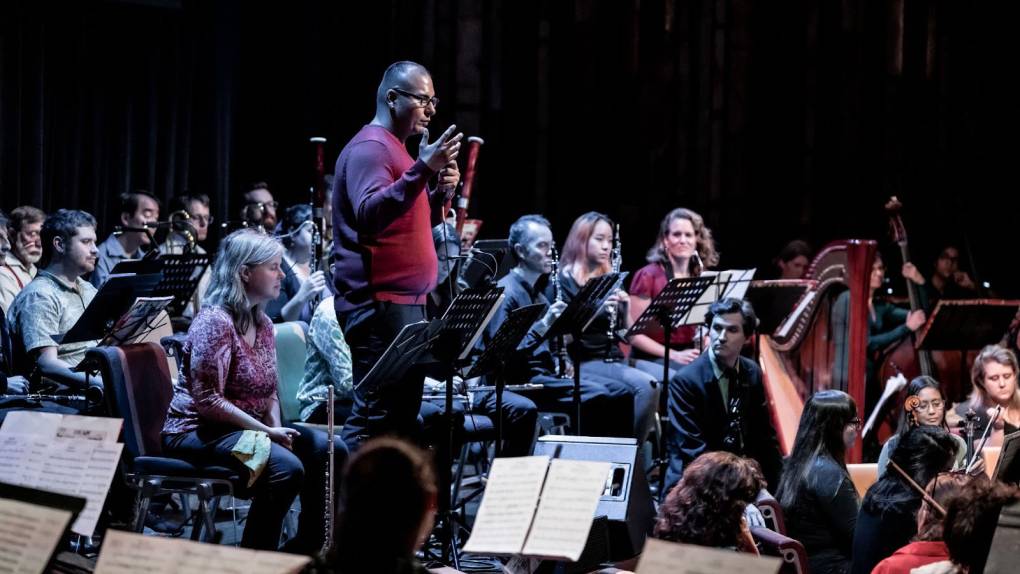
‘Requiem Sinfónica’ Honors Ghost Ship Victims with Music and Hope
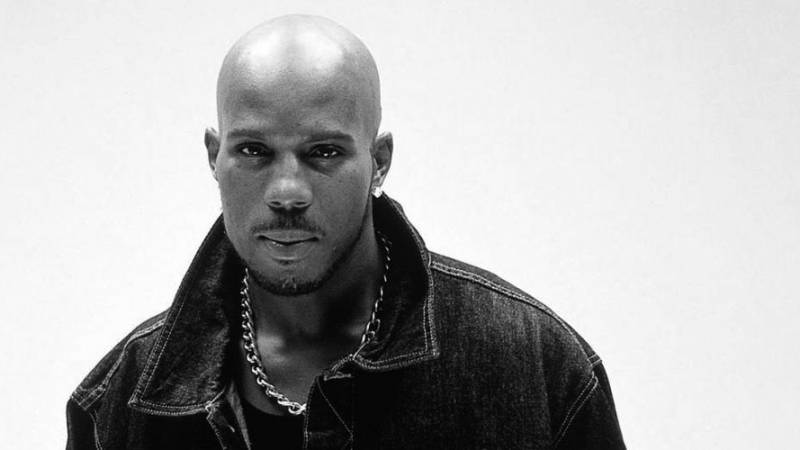
For a Young Girl in the Bay Area, DMX Made Sense of Life's Emotional Complexities
In ‘Alice Street,’ Oakland Artist-Activists Build Power By Bridging Communities
The African Roots of Waacking, Breaking and Other Dances
Will Oakland’s New Plan to Protect Downtown Arts and Culture Succeed?
'It’s Criminal': Cultural Funding Cuts Frustrate Oakland Artists
A New Artistic Director Feels Right at Home
Sponsored
Player sponsored by
window.__IS_SSR__=true
window.__INITIAL_STATE__={
"attachmentsReducer": {
"audio_0": {
"type": "attachments",
"id": "audio_0",
"imgSizes": {
"kqedFullSize": {
"file": "https://ww2.kqed.org/news/wp-content/themes/KQED-unified/img/audio_bgs/background0.jpg"
}
}
},
"audio_1": {
"type": "attachments",
"id": "audio_1",
"imgSizes": {
"kqedFullSize": {
"file": "https://ww2.kqed.org/news/wp-content/themes/KQED-unified/img/audio_bgs/background1.jpg"
}
}
},
"audio_2": {
"type": "attachments",
"id": "audio_2",
"imgSizes": {
"kqedFullSize": {
"file": "https://ww2.kqed.org/news/wp-content/themes/KQED-unified/img/audio_bgs/background2.jpg"
}
}
},
"audio_3": {
"type": "attachments",
"id": "audio_3",
"imgSizes": {
"kqedFullSize": {
"file": "https://ww2.kqed.org/news/wp-content/themes/KQED-unified/img/audio_bgs/background3.jpg"
}
}
},
"audio_4": {
"type": "attachments",
"id": "audio_4",
"imgSizes": {
"kqedFullSize": {
"file": "https://ww2.kqed.org/news/wp-content/themes/KQED-unified/img/audio_bgs/background4.jpg"
}
}
},
"placeholder": {
"type": "attachments",
"id": "placeholder",
"imgSizes": {
"thumbnail": {
"file": "https://cdn.kqed.org/wp-content/uploads/2024/12/KQED-Default-Image-816638274-2000x1333-1-160x107.jpg",
"width": 160,
"height": 107,
"mimeType": "image/jpeg"
},
"medium": {
"file": "https://cdn.kqed.org/wp-content/uploads/2024/12/KQED-Default-Image-816638274-2000x1333-1-800x533.jpg",
"width": 800,
"height": 533,
"mimeType": "image/jpeg"
},
"medium_large": {
"file": "https://cdn.kqed.org/wp-content/uploads/2024/12/KQED-Default-Image-816638274-2000x1333-1-768x512.jpg",
"width": 768,
"height": 512,
"mimeType": "image/jpeg"
},
"large": {
"file": "https://cdn.kqed.org/wp-content/uploads/2024/12/KQED-Default-Image-816638274-2000x1333-1-1020x680.jpg",
"width": 1020,
"height": 680,
"mimeType": "image/jpeg"
},
"1536x1536": {
"file": "https://cdn.kqed.org/wp-content/uploads/2024/12/KQED-Default-Image-816638274-2000x1333-1-1536x1024.jpg",
"width": 1536,
"height": 1024,
"mimeType": "image/jpeg"
},
"fd-lrg": {
"file": "https://cdn.kqed.org/wp-content/uploads/2024/12/KQED-Default-Image-816638274-2000x1333-1-1536x1024.jpg",
"width": 1536,
"height": 1024,
"mimeType": "image/jpeg"
},
"fd-med": {
"file": "https://cdn.kqed.org/wp-content/uploads/2024/12/KQED-Default-Image-816638274-2000x1333-1-1020x680.jpg",
"width": 1020,
"height": 680,
"mimeType": "image/jpeg"
},
"fd-sm": {
"file": "https://cdn.kqed.org/wp-content/uploads/2024/12/KQED-Default-Image-816638274-2000x1333-1-800x533.jpg",
"width": 800,
"height": 533,
"mimeType": "image/jpeg"
},
"post-thumbnail": {
"file": "https://cdn.kqed.org/wp-content/uploads/2024/12/KQED-Default-Image-816638274-2000x1333-1-672x372.jpg",
"width": 672,
"height": 372,
"mimeType": "image/jpeg"
},
"twentyfourteen-full-width": {
"file": "https://cdn.kqed.org/wp-content/uploads/2024/12/KQED-Default-Image-816638274-2000x1333-1-1038x576.jpg",
"width": 1038,
"height": 576,
"mimeType": "image/jpeg"
},
"xxsmall": {
"file": "https://cdn.kqed.org/wp-content/uploads/2024/12/KQED-Default-Image-816638274-2000x1333-1-160x107.jpg",
"width": 160,
"height": 107,
"mimeType": "image/jpeg"
},
"xsmall": {
"file": "https://cdn.kqed.org/wp-content/uploads/2024/12/KQED-Default-Image-816638274-2000x1333-1-672x372.jpg",
"width": 672,
"height": 372,
"mimeType": "image/jpeg"
},
"small": {
"file": "https://cdn.kqed.org/wp-content/uploads/2024/12/KQED-Default-Image-816638274-2000x1333-1-672x372.jpg",
"width": 672,
"height": 372,
"mimeType": "image/jpeg"
},
"xlarge": {
"file": "https://cdn.kqed.org/wp-content/uploads/2024/12/KQED-Default-Image-816638274-2000x1333-1-1020x680.jpg",
"width": 1020,
"height": 680,
"mimeType": "image/jpeg"
},
"full-width": {
"file": "https://cdn.kqed.org/wp-content/uploads/2024/12/KQED-Default-Image-816638274-2000x1333-1-1920x1280.jpg",
"width": 1920,
"height": 1280,
"mimeType": "image/jpeg"
},
"guest-author-32": {
"file": "https://cdn.kqed.org/wp-content/uploads/2025/01/KQED-Default-Image-816638274-1333x1333-1-160x160.jpg",
"width": 32,
"height": 32,
"mimeType": "image/jpeg"
},
"guest-author-50": {
"file": "https://cdn.kqed.org/wp-content/uploads/2025/01/KQED-Default-Image-816638274-1333x1333-1-160x160.jpg",
"width": 50,
"height": 50,
"mimeType": "image/jpeg"
},
"guest-author-64": {
"file": "https://cdn.kqed.org/wp-content/uploads/2025/01/KQED-Default-Image-816638274-1333x1333-1-160x160.jpg",
"width": 64,
"height": 64,
"mimeType": "image/jpeg"
},
"guest-author-96": {
"file": "https://cdn.kqed.org/wp-content/uploads/2025/01/KQED-Default-Image-816638274-1333x1333-1-160x160.jpg",
"width": 96,
"height": 96,
"mimeType": "image/jpeg"
},
"guest-author-128": {
"file": "https://cdn.kqed.org/wp-content/uploads/2025/01/KQED-Default-Image-816638274-1333x1333-1-160x160.jpg",
"width": 128,
"height": 128,
"mimeType": "image/jpeg"
},
"detail": {
"file": "https://cdn.kqed.org/wp-content/uploads/2025/01/KQED-Default-Image-816638274-1333x1333-1-160x160.jpg",
"width": 160,
"height": 160,
"mimeType": "image/jpeg"
},
"kqedFullSize": {
"file": "https://cdn.kqed.org/wp-content/uploads/2024/12/KQED-Default-Image-816638274-2000x1333-1.jpg",
"width": 2000,
"height": 1333
}
}
},
"arts_13922066": {
"type": "attachments",
"id": "arts_13922066",
"meta": {
"index": "attachments_1716263798",
"site": "arts",
"id": "13922066",
"found": true
},
"parent": 13922065,
"imgSizes": {
"twentyfourteen-full-width": {
"file": "https://ww2.kqed.org/app/uploads/sites/2/2022/11/AwesomeOrchestra.Alex_-1038x576.jpg",
"width": 1038,
"mimeType": "image/jpeg",
"height": 576
},
"thumbnail": {
"file": "https://ww2.kqed.org/app/uploads/sites/2/2022/11/AwesomeOrchestra.Alex_-160x90.jpg",
"width": 160,
"mimeType": "image/jpeg",
"height": 90
},
"post-thumbnail": {
"file": "https://ww2.kqed.org/app/uploads/sites/2/2022/11/AwesomeOrchestra.Alex_-672x372.jpg",
"width": 672,
"mimeType": "image/jpeg",
"height": 372
},
"kqedFullSize": {
"file": "https://ww2.kqed.org/app/uploads/sites/2/2022/11/AwesomeOrchestra.Alex_.jpg",
"width": 1600,
"height": 900
},
"large": {
"file": "https://ww2.kqed.org/app/uploads/sites/2/2022/11/AwesomeOrchestra.Alex_-1020x574.jpg",
"width": 1020,
"mimeType": "image/jpeg",
"height": 574
},
"1536x1536": {
"file": "https://ww2.kqed.org/app/uploads/sites/2/2022/11/AwesomeOrchestra.Alex_-1536x864.jpg",
"width": 1536,
"mimeType": "image/jpeg",
"height": 864
},
"medium": {
"file": "https://ww2.kqed.org/app/uploads/sites/2/2022/11/AwesomeOrchestra.Alex_-800x450.jpg",
"width": 800,
"mimeType": "image/jpeg",
"height": 450
},
"medium_large": {
"file": "https://ww2.kqed.org/app/uploads/sites/2/2022/11/AwesomeOrchestra.Alex_-768x432.jpg",
"width": 768,
"mimeType": "image/jpeg",
"height": 432
}
},
"publishDate": 1669758049,
"modified": 1669758545,
"caption": "Composer Arturo Rodriguez at Awesöme Orchestra's End-of-Year Concert in 2019.",
"description": null,
"title": "AwesomeOrchestra.Alex",
"credit": "Dave Weiland",
"status": "inherit",
"altTag": "A man in a red shirt stands among an orchestra, with members holding various instruments",
"fetchFailed": false,
"isLoading": false
},
"arts_13895553": {
"type": "attachments",
"id": "arts_13895553",
"meta": {
"index": "attachments_1716263798",
"site": "arts",
"id": "13895553",
"found": true
},
"parent": 13895541,
"imgSizes": {
"thumbnail": {
"file": "https://ww2.kqed.org/app/uploads/sites/2/2021/04/DMX-1BW-160x90.jpg",
"width": 160,
"mimeType": "image/jpeg",
"height": 90
},
"post-thumbnail": {
"file": "https://ww2.kqed.org/app/uploads/sites/2/2021/04/DMX-1BW-672x372.jpg",
"width": 672,
"mimeType": "image/jpeg",
"height": 372
},
"kqedFullSize": {
"file": "https://ww2.kqed.org/app/uploads/sites/2/2021/04/DMX-1BW.jpg",
"width": 889,
"height": 500
},
"medium": {
"file": "https://ww2.kqed.org/app/uploads/sites/2/2021/04/DMX-1BW-800x450.jpg",
"width": 800,
"mimeType": "image/jpeg",
"height": 450
},
"medium_large": {
"file": "https://ww2.kqed.org/app/uploads/sites/2/2021/04/DMX-1BW-768x432.jpg",
"width": 768,
"mimeType": "image/jpeg",
"height": 432
}
},
"publishDate": 1618024853,
"modified": 1618024867,
"caption": "DMX's honest, vulnerable delivery showed an entire generation a new way of understanding the world they would soon enter. ",
"description": "DMX's honest, vulnerable delivery showed an entire generation a new way of understanding the world they would soon enter. ",
"title": "DMX-1BW",
"credit": "Def Jam",
"status": "inherit",
"altTag": "DMX",
"fetchFailed": false,
"isLoading": false
},
"arts_13875808": {
"type": "attachments",
"id": "arts_13875808",
"meta": {
"index": "attachments_1716263798",
"site": "arts",
"id": "13875808",
"found": true
},
"parent": 13875585,
"imgSizes": {
"twentyfourteen-full-width": {
"file": "https://ww2.kqed.org/app/uploads/sites/2/2020/03/photo-by-Zoe-Mountain-1038x576.jpg",
"width": 1038,
"mimeType": "image/jpeg",
"height": 576
},
"thumbnail": {
"file": "https://ww2.kqed.org/app/uploads/sites/2/2020/03/photo-by-Zoe-Mountain-160x90.jpg",
"width": 160,
"mimeType": "image/jpeg",
"height": 90
},
"post-thumbnail": {
"file": "https://ww2.kqed.org/app/uploads/sites/2/2020/03/photo-by-Zoe-Mountain-672x372.jpg",
"width": 672,
"mimeType": "image/jpeg",
"height": 372
},
"kqedFullSize": {
"file": "https://ww2.kqed.org/app/uploads/sites/2/2020/03/photo-by-Zoe-Mountain.jpg",
"width": 1920,
"height": 1080
},
"large": {
"file": "https://ww2.kqed.org/app/uploads/sites/2/2020/03/photo-by-Zoe-Mountain-1020x574.jpg",
"width": 1020,
"mimeType": "image/jpeg",
"height": 574
},
"full-width": {
"file": "https://ww2.kqed.org/app/uploads/sites/2/2020/03/photo-by-Zoe-Mountain-1920x1080.jpg",
"width": 1920,
"mimeType": "image/jpeg",
"height": 1080
},
"medium": {
"file": "https://ww2.kqed.org/app/uploads/sites/2/2020/03/photo-by-Zoe-Mountain-800x450.jpg",
"width": 800,
"mimeType": "image/jpeg",
"height": 450
},
"medium_large": {
"file": "https://ww2.kqed.org/app/uploads/sites/2/2020/03/photo-by-Zoe-Mountain-768x432.jpg",
"width": 768,
"mimeType": "image/jpeg",
"height": 432
}
},
"publishDate": 1583172030,
"modified": 1583172118,
"caption": "The creation and erasure of a mural catalyzes an anti-gentrification coalition in 'Alice Street.'",
"description": "The creation and erasure of a mural catalyzes an anti-gentrification coalition in 'Alice Street.'",
"title": "The creation and erasure of a mural catalyzes an anti-gentrification coalition in 'Alice Street.'",
"credit": "Zoe Mountain/Courtesy of filmmaker",
"status": "inherit",
"fetchFailed": false,
"isLoading": false
},
"arts_13874295": {
"type": "attachments",
"id": "arts_13874295",
"meta": {
"index": "attachments_1716263798",
"site": "arts",
"id": "13874295",
"found": true
},
"parent": 13874293,
"imgSizes": {
"twentyfourteen-full-width": {
"file": "https://ww2.kqed.org/app/uploads/sites/2/2020/02/0-2-1038x576.jpg",
"width": 1038,
"mimeType": "image/jpeg",
"height": 576
},
"thumbnail": {
"file": "https://ww2.kqed.org/app/uploads/sites/2/2020/02/0-2-160x90.jpg",
"width": 160,
"mimeType": "image/jpeg",
"height": 90
},
"post-thumbnail": {
"file": "https://ww2.kqed.org/app/uploads/sites/2/2020/02/0-2-672x372.jpg",
"width": 672,
"mimeType": "image/jpeg",
"height": 372
},
"kqedFullSize": {
"file": "https://ww2.kqed.org/app/uploads/sites/2/2020/02/0-2.jpg",
"width": 1988,
"height": 1118
},
"large": {
"file": "https://ww2.kqed.org/app/uploads/sites/2/2020/02/0-2-1020x574.jpg",
"width": 1020,
"mimeType": "image/jpeg",
"height": 574
},
"full-width": {
"file": "https://ww2.kqed.org/app/uploads/sites/2/2020/02/0-2-1920x1080.jpg",
"width": 1920,
"mimeType": "image/jpeg",
"height": 1080
},
"medium": {
"file": "https://ww2.kqed.org/app/uploads/sites/2/2020/02/0-2-800x450.jpg",
"width": 800,
"mimeType": "image/jpeg",
"height": 450
},
"medium_large": {
"file": "https://ww2.kqed.org/app/uploads/sites/2/2020/02/0-2-768x432.jpg",
"width": 768,
"mimeType": "image/jpeg",
"height": 432
}
},
"publishDate": 1580774352,
"modified": 1581026690,
"caption": "Kanukai Chigamba dancing at AfroRooted's 2019 event",
"description": "Kanukai Chigamba dancing at AfroRooted's 2019 event",
"title": "Kanukai Chigamba dancing at AfroRooted's 2019 event",
"credit": "Gladys Liu",
"status": "inherit",
"fetchFailed": false,
"isLoading": false
},
"arts_13861187": {
"type": "attachments",
"id": "arts_13861187",
"meta": {
"index": "attachments_1716263798",
"site": "arts",
"id": "13861187",
"found": true
},
"parent": 13861153,
"imgSizes": {
"twentyfourteen-full-width": {
"file": "https://ww2.kqed.org/app/uploads/sites/2/2019/07/Universal-Language-Mural-Obscured-by-Development-1038x576.jpg",
"width": 1038,
"mimeType": "image/jpeg",
"height": 576
},
"thumbnail": {
"file": "https://ww2.kqed.org/app/uploads/sites/2/2019/07/Universal-Language-Mural-Obscured-by-Development-160x96.jpg",
"width": 160,
"mimeType": "image/jpeg",
"height": 96
},
"post-thumbnail": {
"file": "https://ww2.kqed.org/app/uploads/sites/2/2019/07/Universal-Language-Mural-Obscured-by-Development-672x372.jpg",
"width": 672,
"mimeType": "image/jpeg",
"height": 372
},
"kqedFullSize": {
"file": "https://ww2.kqed.org/app/uploads/sites/2/2019/07/Universal-Language-Mural-Obscured-by-Development.jpg",
"width": 1920,
"height": 1155
},
"large": {
"file": "https://ww2.kqed.org/app/uploads/sites/2/2019/07/Universal-Language-Mural-Obscured-by-Development-1020x614.jpg",
"width": 1020,
"mimeType": "image/jpeg",
"height": 614
},
"complete_open_graph": {
"file": "https://ww2.kqed.org/app/uploads/sites/2/2019/07/Universal-Language-Mural-Obscured-by-Development-1200x722.jpg",
"width": 1200,
"mimeType": "image/jpeg",
"height": 722
},
"full-width": {
"file": "https://ww2.kqed.org/app/uploads/sites/2/2019/07/Universal-Language-Mural-Obscured-by-Development-1920x1155.jpg",
"width": 1920,
"mimeType": "image/jpeg",
"height": 1155
},
"medium": {
"file": "https://ww2.kqed.org/app/uploads/sites/2/2019/07/Universal-Language-Mural-Obscured-by-Development-800x481.jpg",
"width": 800,
"mimeType": "image/jpeg",
"height": 481
},
"medium_large": {
"file": "https://ww2.kqed.org/app/uploads/sites/2/2019/07/Universal-Language-Mural-Obscured-by-Development-768x462.jpg",
"width": 768,
"mimeType": "image/jpeg",
"height": 462
}
},
"publishDate": 1562869479,
"modified": 1568054875,
"caption": "A panel of the disappearing \"Universal Language\" mural, showing the Congolese artist Malonga Casquelourd, in front of Oakland's changing skyline.",
"description": "A panel of the disappearing \"Universal Language\" mural, showing the Congolese artist Malonga Casquelourd, in front of Oakland's changing skyline.",
"title": "Universal-Language-Mural-Obscured-by-Development",
"credit": "Sam Lefebvre/KQED",
"status": "inherit",
"fetchFailed": false,
"isLoading": false
},
"arts_13861185": {
"type": "attachments",
"id": "arts_13861185",
"meta": {
"index": "attachments_1716263798",
"site": "arts",
"id": "13861185",
"found": true
},
"parent": 0,
"imgSizes": {
"twentyfourteen-full-width": {
"file": "https://ww2.kqed.org/app/uploads/sites/2/2019/07/Theo-Aytchan-Williams-of-Sambafunk-1038x576.jpg",
"width": 1038,
"mimeType": "image/jpeg",
"height": 576
},
"thumbnail": {
"file": "https://ww2.kqed.org/app/uploads/sites/2/2019/07/Theo-Aytchan-Williams-of-Sambafunk-160x90.jpg",
"width": 160,
"mimeType": "image/jpeg",
"height": 90
},
"post-thumbnail": {
"file": "https://ww2.kqed.org/app/uploads/sites/2/2019/07/Theo-Aytchan-Williams-of-Sambafunk-672x372.jpg",
"width": 672,
"mimeType": "image/jpeg",
"height": 372
},
"kqedFullSize": {
"file": "https://ww2.kqed.org/app/uploads/sites/2/2019/07/Theo-Aytchan-Williams-of-Sambafunk.jpg",
"width": 1920,
"height": 1080
},
"large": {
"file": "https://ww2.kqed.org/app/uploads/sites/2/2019/07/Theo-Aytchan-Williams-of-Sambafunk-1020x574.jpg",
"width": 1020,
"mimeType": "image/jpeg",
"height": 574
},
"complete_open_graph": {
"file": "https://ww2.kqed.org/app/uploads/sites/2/2019/07/Theo-Aytchan-Williams-of-Sambafunk-1200x675.jpg",
"width": 1200,
"mimeType": "image/jpeg",
"height": 675
},
"full-width": {
"file": "https://ww2.kqed.org/app/uploads/sites/2/2019/07/Theo-Aytchan-Williams-of-Sambafunk-1920x1080.jpg",
"width": 1920,
"mimeType": "image/jpeg",
"height": 1080
},
"medium": {
"file": "https://ww2.kqed.org/app/uploads/sites/2/2019/07/Theo-Aytchan-Williams-of-Sambafunk-800x450.jpg",
"width": 800,
"mimeType": "image/jpeg",
"height": 450
},
"medium_large": {
"file": "https://ww2.kqed.org/app/uploads/sites/2/2019/07/Theo-Aytchan-Williams-of-Sambafunk-768x432.jpg",
"width": 768,
"mimeType": "image/jpeg",
"height": 432
}
},
"publishDate": 1562869467,
"modified": 1562869841,
"caption": "Theo Aytchan Williams, the founding director of SambaFunk!, stands outside the Malonga Casquelourd Center for the Arts in downtown Oakland. ",
"description": "Theo Aytchan Williams, the founding director of SambaFunk!, stands outside the Malonga Casquelourd Center for the Arts in downtown Oakland. ",
"title": "Theo-Aytchan-Williams-of-Sambafunk",
"credit": "Sam Lefebvre/KQED",
"status": "inherit",
"fetchFailed": false,
"isLoading": false
},
"arts_13812021": {
"type": "attachments",
"id": "arts_13812021",
"meta": {
"index": "attachments_1716263798",
"site": "arts",
"id": "13812021",
"found": true
},
"parent": 13812015,
"imgSizes": {
"small": {
"file": "https://ww2.kqed.org/app/uploads/sites/2/2017/10/Axis-Dance-Company-members-rehearse-their-new-piece-Radical-Impact-e1508371054683-520x292.jpg",
"width": 520,
"mimeType": "image/jpeg",
"height": 292
},
"thumbnail": {
"file": "https://ww2.kqed.org/app/uploads/sites/2/2017/10/Axis-Dance-Company-members-rehearse-their-new-piece-Radical-Impact-e1508371054683-160x90.jpg",
"width": 160,
"mimeType": "image/jpeg",
"height": 90
},
"post-thumbnail": {
"file": "https://ww2.kqed.org/app/uploads/sites/2/2017/10/Axis-Dance-Company-members-rehearse-their-new-piece-Radical-Impact-e1508371054683-672x372.jpg",
"width": 672,
"mimeType": "image/jpeg",
"height": 372
},
"xsmall": {
"file": "https://ww2.kqed.org/app/uploads/sites/2/2017/10/Axis-Dance-Company-members-rehearse-their-new-piece-Radical-Impact-e1508371054683-375x211.jpg",
"width": 375,
"mimeType": "image/jpeg",
"height": 211
},
"kqedFullSize": {
"file": "https://ww2.kqed.org/app/uploads/sites/2/2017/10/Axis-Dance-Company-members-rehearse-their-new-piece-Radical-Impact-e1508371054683.jpg",
"width": 719,
"height": 404
},
"guest-author-50": {
"file": "https://ww2.kqed.org/app/uploads/sites/2/2017/10/Axis-Dance-Company-members-rehearse-their-new-piece-Radical-Impact-e1508371054683-50x50.jpg",
"width": 50,
"mimeType": "image/jpeg",
"height": 50
},
"guest-author-96": {
"file": "https://ww2.kqed.org/app/uploads/sites/2/2017/10/Axis-Dance-Company-members-rehearse-their-new-piece-Radical-Impact-e1508371054683-96x96.jpg",
"width": 96,
"mimeType": "image/jpeg",
"height": 96
},
"guest-author-64": {
"file": "https://ww2.kqed.org/app/uploads/sites/2/2017/10/Axis-Dance-Company-members-rehearse-their-new-piece-Radical-Impact-e1508371054683-64x64.jpg",
"width": 64,
"mimeType": "image/jpeg",
"height": 64
},
"detail": {
"file": "https://ww2.kqed.org/app/uploads/sites/2/2017/10/Axis-Dance-Company-members-rehearse-their-new-piece-Radical-Impact-e1508371054683-150x150.jpg",
"width": 150,
"mimeType": "image/jpeg",
"height": 150
},
"guest-author-32": {
"file": "https://ww2.kqed.org/app/uploads/sites/2/2017/10/Axis-Dance-Company-members-rehearse-their-new-piece-Radical-Impact-e1508371054683-32x32.jpg",
"width": 32,
"mimeType": "image/jpeg",
"height": 32
},
"guest-author-128": {
"file": "https://ww2.kqed.org/app/uploads/sites/2/2017/10/Axis-Dance-Company-members-rehearse-their-new-piece-Radical-Impact-e1508371054683-128x128.jpg",
"width": 128,
"mimeType": "image/jpeg",
"height": 128
},
"xxsmall": {
"file": "https://ww2.kqed.org/app/uploads/sites/2/2017/10/Axis-Dance-Company-members-rehearse-their-new-piece-Radical-Impact-e1508371054683-240x135.jpg",
"width": 240,
"mimeType": "image/jpeg",
"height": 135
}
},
"publishDate": 1508370982,
"modified": 1508371074,
"caption": "Axis Dance Company members rehearse their new piece 'Radical Impact'",
"description": "Axis Dance Company members rehearse their new piece 'Radical Impact'",
"title": "Axis Dance Company members rehearse their new piece 'Radical Impact'",
"credit": "Photo: Cy Musiker/KQED",
"status": "inherit",
"fetchFailed": false,
"isLoading": false
}
},
"audioPlayerReducer": {
"postId": "stream_live",
"isPaused": true,
"isPlaying": false,
"pfsActive": false,
"pledgeModalIsOpen": true,
"playerDrawerIsOpen": false
},
"authorsReducer": {
"byline_arts_13895541": {
"type": "authors",
"id": "byline_arts_13895541",
"meta": {
"override": true
},
"slug": "byline_arts_13895541",
"name": "Nijla Mu'min ",
"isLoading": false
},
"cmusiker": {
"type": "authors",
"id": "32",
"meta": {
"index": "authors_1716337520",
"id": "32",
"found": true
},
"name": "Cy Musiker",
"firstName": "Cy",
"lastName": "Musiker",
"slug": "cmusiker",
"email": "cmusiker@kqed.org",
"display_author_email": false,
"staff_mastheads": [],
"title": "KQED Contributor",
"bio": "Cy Musiker is a former co-host of The Do List and a former reporter covering the arts for KQED News and The California Report. He loves live performance, especially great theater, jazz, roots music, anything by Mahler. Cy has an MJ from UC Berkeley's School of Journalism, and got his BA from Hampshire College. His work has been recognized by the Society for Professional Journalists with their Sigma Delta Chi Award for Public Service in Journalism. When he can, Cy likes to swim in Tomales Bay, run with his dog in the East Bay Hills, and hike the Sierra.",
"avatar": "https://secure.gravatar.com/avatar/05eaba5c5696ce8f062e4ea2df428a43?s=600&d=blank&r=g",
"twitter": null,
"facebook": null,
"instagram": null,
"linkedin": null,
"sites": [
{
"site": "arts",
"roles": [
"Contributor",
"subscriber"
]
},
{
"site": "news",
"roles": [
"author"
]
},
{
"site": "bayareabites",
"roles": [
"contributor"
]
}
],
"headData": {
"title": "Cy Musiker | KQED",
"description": "KQED Contributor",
"ogImgSrc": "https://secure.gravatar.com/avatar/05eaba5c5696ce8f062e4ea2df428a43?s=600&d=blank&r=g",
"twImgSrc": "https://secure.gravatar.com/avatar/05eaba5c5696ce8f062e4ea2df428a43?s=600&d=blank&r=g"
},
"isLoading": false,
"link": "/author/cmusiker"
},
"slefebvre": {
"type": "authors",
"id": "11091",
"meta": {
"index": "authors_1716337520",
"id": "11091",
"found": true
},
"name": "Sam Lefebvre",
"firstName": "Sam",
"lastName": "Lefebvre",
"slug": "slefebvre",
"email": "sdlefebvre@gmail.com",
"display_author_email": false,
"staff_mastheads": [],
"title": null,
"bio": "Sam Lefebvre is an award-winning reporter at KQED Arts. He has worked as an editor and columnist at the \u003cem>East Bay Express\u003c/em>, \u003cem>SF Weekly \u003c/em>and Impose Magazine, and his journalism and criticism has appeared in \u003cem>The New York Times\u003c/em>, the Guardian and Pitchfork.",
"avatar": "https://secure.gravatar.com/avatar/143b570c3dec13ae74c6aa2369b04fc8?s=600&d=blank&r=g",
"twitter": "Lefebvre_Sam",
"facebook": null,
"instagram": null,
"linkedin": null,
"sites": [
{
"site": "arts",
"roles": [
"editor"
]
},
{
"site": "news",
"roles": [
"author"
]
}
],
"headData": {
"title": "Sam Lefebvre | KQED",
"description": null,
"ogImgSrc": "https://secure.gravatar.com/avatar/143b570c3dec13ae74c6aa2369b04fc8?s=600&d=blank&r=g",
"twImgSrc": "https://secure.gravatar.com/avatar/143b570c3dec13ae74c6aa2369b04fc8?s=600&d=blank&r=g"
},
"isLoading": false,
"link": "/author/slefebvre"
},
"ogpenn": {
"type": "authors",
"id": "11491",
"meta": {
"index": "authors_1716337520",
"id": "11491",
"found": true
},
"name": "Pendarvis Harshaw",
"firstName": "Pendarvis",
"lastName": "Harshaw",
"slug": "ogpenn",
"email": "ogpenn@gmail.com",
"display_author_email": false,
"staff_mastheads": [
"arts"
],
"title": "Community Engagement Reporter",
"bio": "Pendarvis Harshaw is an educator, host and writer with KQED Arts.",
"avatar": "https://secure.gravatar.com/avatar/093d33baff5354890e29ad83d58d2c49?s=600&d=blank&r=g",
"twitter": null,
"facebook": null,
"instagram": "ogpenn",
"linkedin": null,
"sites": [
{
"site": "arts",
"roles": [
"editor"
]
},
{
"site": "news",
"roles": [
"editor"
]
},
{
"site": "bayareabites",
"roles": [
"author"
]
},
{
"site": "hiphop",
"roles": [
"editor"
]
}
],
"headData": {
"title": "Pendarvis Harshaw | KQED",
"description": "Community Engagement Reporter",
"ogImgSrc": "https://secure.gravatar.com/avatar/093d33baff5354890e29ad83d58d2c49?s=600&d=blank&r=g",
"twImgSrc": "https://secure.gravatar.com/avatar/093d33baff5354890e29ad83d58d2c49?s=600&d=blank&r=g"
},
"isLoading": false,
"link": "/author/ogpenn"
},
"ksong": {
"type": "authors",
"id": "11813",
"meta": {
"index": "authors_1716337520",
"id": "11813",
"found": true
},
"name": "Kristie Song",
"firstName": "Kristie",
"lastName": "Song",
"slug": "ksong",
"email": "ksong@kqed.org",
"display_author_email": false,
"staff_mastheads": [],
"title": "Editorial Intern ",
"bio": "Kristie Song is an Arts & Culture Intern at KQED. She is currently a graduate student at UC Berkeley, where she studies audio and multimedia journalism. Previously, she covered the local community for Oakland North, produced episodes for The Science of Happiness, and served as news director for KUCI, UC Irvine’s radio station. Outside of reporting, she likes drawing comics, listening to angsty rock, and practicing the guitar.",
"avatar": "https://secure.gravatar.com/avatar/c1149e78c3c44f92d4945a8ab0711af6?s=600&d=blank&r=g",
"twitter": null,
"facebook": null,
"instagram": null,
"linkedin": null,
"sites": [
{
"site": "arts",
"roles": [
"editor"
]
}
],
"headData": {
"title": "Kristie Song | KQED",
"description": "Editorial Intern ",
"ogImgSrc": "https://secure.gravatar.com/avatar/c1149e78c3c44f92d4945a8ab0711af6?s=600&d=blank&r=g",
"twImgSrc": "https://secure.gravatar.com/avatar/c1149e78c3c44f92d4945a8ab0711af6?s=600&d=blank&r=g"
},
"isLoading": false,
"link": "/author/ksong"
}
},
"breakingNewsReducer": {},
"pagesReducer": {},
"postsReducer": {
"stream_live": {
"type": "live",
"id": "stream_live",
"audioUrl": "https://streams.kqed.org/kqedradio",
"title": "Live Stream",
"excerpt": "Live Stream information currently unavailable.",
"link": "/radio",
"featImg": "",
"label": {
"name": "KQED Live",
"link": "/"
}
},
"stream_kqedNewscast": {
"type": "posts",
"id": "stream_kqedNewscast",
"audioUrl": "https://www.kqed.org/.stream/anon/radio/RDnews/newscast.mp3?_=1",
"title": "KQED Newscast",
"featImg": "",
"label": {
"name": "88.5 FM",
"link": "/"
}
},
"arts_13922065": {
"type": "posts",
"id": "arts_13922065",
"meta": {
"index": "posts_1716263798",
"site": "arts",
"id": "13922065",
"score": null,
"sort": [
1669759148000
]
},
"parent": 0,
"labelTerm": {
"site": "arts",
"term": 140
},
"blocks": [],
"publishDate": 1669759148,
"format": "standard",
"title": "‘Requiem Sinfónica’ Honors Ghost Ship Victims with Music and Hope",
"headTitle": "‘Requiem Sinfónica’ Honors Ghost Ship Victims with Music and Hope | KQED",
"content": "\u003cp>In the late hours of Dec. 2, 2016, a fire swept through the Ghost Ship warehouse in Oakland and \u003ca href=\"https://www.kqed.org/ghostshipmemorial\">claimed the lives of 36 people\u003c/a> — a loss that left friends, families and the Oakland artist community confused and hollow. Angry and disheartened at the lack of answers and accountability following the tragedy, flutist and composer \u003ca href=\"https://artietrodriguez.wixsite.com/artierodriguezflute\">Arturo Rodriguez\u003c/a> began developing \u003cem>Requiem Sinfónica: A Requiem Without Words\u003c/em>, a commemorative nine-movement orchestral suite that \u003ca href=\"https://www.eventbrite.com/e/awesome-orchestra-presents-requiem-sinfonica-requiem-without-words-tickets-420791989167\">debuts in full on Saturday, Dec. 3\u003c/a>, at the Malonga Casquelourd Center in Oakland.\u003c/p>\n\u003cp>For Rodriguez, the process of writing the requiem mirrored his restlessness about the tragedy. Melodies and themes floated in and out of his head. Unrefined echoes of cello and lower bass notes appeared like shadows, looming overhead as he tried to jot them all down. As Rodriguez contemplated the form of the musical requiem, where the journey of souls toward paradise is traditionally explored through lyricism, he opted to forego a choir and focus on the instrumentation.\u003c/p>\n\u003cp>[aside link1='https://www.kqed.org/ghostshipmemorial,Honoring Those Lost to the Ghost Ship Fire' hero='https://cdn.kqed.org/wp-content/uploads/sites/2/2017/02/OaklandFireMemorial-11x17.jpg']“My work is supposed to represent the silencing of voices. I don’t know what their last words were,” Rodriguez said. “I can only imagine what they were thinking to themselves. So in a way, this music is their thoughts in musical form: it’s their acceptance, their trauma, their anger, hate, every emotion.”\u003c/p>\n\u003cp>With the support of fellow members from \u003ca href=\"https://awesomeorchestra.org/\">Awesöme Orchestra Collective\u003c/a>, a nonprofit that hosts open music-reading sessions to make orchestral music and performance more accessible, Rodriguez hopes to highlight the sense of hope and family he’s gained from connecting with musicians and family members personally impacted by the tragedy.\u003c/p>\n\u003cp>“It’s so beautifully humanizing, the way that they love each other and look out for each other. I think, because the music is so involved, I became involved,” said Rodriguez. “It was an opportunity to really become invested in something that was not myself and my own musical exploration. It was also like, ‘What do I want to tell the families with this music? How do I want to express my gratitude to them?’”\u003c/p>\n\u003cfigure id=\"attachment_13922067\" class=\"wp-caption aligncenter\" style=\"max-width: 800px\">\u003cimg loading=\"lazy\" decoding=\"async\" src=\"https://ww2.kqed.org/app/uploads/sites/2/2022/11/AOC.rehearsal-800x411.jpg\" alt=\"A room of symphonic musicians plays with music stands and instruments\" width=\"800\" height=\"411\" class=\"size-medium wp-image-13922067\" srcset=\"https://cdn.kqed.org/wp-content/uploads/sites/2/2022/11/AOC.rehearsal-800x411.jpg 800w, https://cdn.kqed.org/wp-content/uploads/sites/2/2022/11/AOC.rehearsal-1020x523.jpg 1020w, https://cdn.kqed.org/wp-content/uploads/sites/2/2022/11/AOC.rehearsal-160x82.jpg 160w, https://cdn.kqed.org/wp-content/uploads/sites/2/2022/11/AOC.rehearsal-768x394.jpg 768w, https://cdn.kqed.org/wp-content/uploads/sites/2/2022/11/AOC.rehearsal-1536x788.jpg 1536w, https://cdn.kqed.org/wp-content/uploads/sites/2/2022/11/AOC.rehearsal.jpg 1600w\" sizes=\"(max-width: 800px) 100vw, 800px\">\u003cfigcaption class=\"wp-caption-text\">Awesöme Orchestra members rehearse ‘Requiem Sinfónica.’\u003cbr> \u003ccite>(Courtesy Arturo Rodriguez)\u003c/cite>\u003c/figcaption>\u003c/figure>\n\u003cp>Through nine movements, Rodriguez layers various percussion, brass, woodwind and strings into lush musical scenes that depict coming to terms with death, and a journey toward peace. David Möschler, Awesöme Orchestra artistic director and Requiem Sinfónica conductor, explains that many of the musicians in the 65-piece ensemble have a personal connection to the fire, and have been rehearsing arduously to perfect Rodriguez’s complex composition.\u003c/p>\n\u003cp>[ad fullwidth]\u003c/p>\n\u003cp>“The music requires a lot of endurance from the players because of its length. Because of the wide range of eclectic, stylistic influences, the music can switch really quickly from one mood to another,” said Möschler. “Any of the players will tell you, it’s not a piece to show up and just sort of sightread. It really requires focus and knowing how it goes, and the style and the sound.”\u003c/p>\n\u003cp>[aside postID='arts_13793868']Rodriguez spent over three years revising and workshopping the 90-minute requiem, with the entire process spanning six years. And as the various musical elements shifted, his intentions evolved.\u003c/p>\n\u003cp>“I’m starting to look at it [Requiem Sinfónica] as an ask to our political leaders and social leaders to allow us to have more of a voice,” said Rodriguez. “What does a safe artist’s space look like? How do we take care of the people that essentially create the culture that life is based on? These are questions that I want answered.” \u003c/p>\n\u003cp>On Saturday, the concert hall will fill with the low hum and vibrations of tuning instruments. Swirling with these sounds will be anticipation, grief, celebration and hope — and as family and friends hold one another, their loved ones will continue to live on in the music all around them.\u003c/p>\n\u003cp>\u003cimg loading=\"lazy\" decoding=\"async\" src=\"https://ww2.kqed.org/app/uploads/sites/2/2017/03/Q.Logo_.Break_-400x39.jpg\" alt=\"\" width=\"400\" height=\"39\" class=\"aligncenter size-full wp-image-12904247\" srcset=\"https://cdn.kqed.org/wp-content/uploads/sites/2/2017/03/Q.Logo_.Break_-400x39.jpg 400w, https://cdn.kqed.org/wp-content/uploads/sites/2/2017/03/Q.Logo_.Break_-400x39-160x16.jpg 160w, https://cdn.kqed.org/wp-content/uploads/sites/2/2017/03/Q.Logo_.Break_-400x39-240x23.jpg 240w, https://cdn.kqed.org/wp-content/uploads/sites/2/2017/03/Q.Logo_.Break_-400x39-375x37.jpg 375w\" sizes=\"(max-width: 400px) 100vw, 400px\">\u003c/p>\n\u003cp>\u003c/p>\n\u003cp>\u003cem>‘Requiem Sinfónica: A Requiem Without Words’ premieres Saturday, Dec. 3, at the Malonga Casquelord Center for the Arts in Oakland. Attendance is free. In-person seats are limited; a \u003ca href=\"https://docs.google.com/forms/d/e/1FAIpQLSe2h0-cz_kL9WySNOpDadnFsyRWHUdW_J5rOdWlt-aoLjWhAg/viewform\">livestream link is available\u003c/a> upon RSVP. \u003ca href=\"https://www.eventbrite.com/e/awesome-orchestra-presents-requiem-sinfonica-requiem-without-words-tickets-420791989167\">Details here\u003c/a>.\u003c/em>\u003c/p>\n\n",
"stats": {
"hasVideo": false,
"hasChartOrMap": false,
"hasAudio": false,
"hasPolis": false,
"wordCount": 755,
"hasGoogleForm": false,
"hasGallery": false,
"hasHearkenModule": false,
"iframeSrcs": [],
"paragraphCount": 14
},
"modified": 1705006119,
"excerpt": "Composer Arturo Rodriguez premieres his musical remembrance for the 36 people who died in the 2016 Ghost Ship fire in Oakland.",
"headData": {
"twImgId": "",
"twTitle": "",
"ogTitle": "",
"ogImgId": "",
"twDescription": "",
"description": "Composer Arturo Rodriguez premieres his musical remembrance for the 36 people who died in the 2016 Ghost Ship fire in Oakland.",
"title": "‘Requiem Sinfónica’ Honors Ghost Ship Victims with Music and Hope | KQED",
"ogDescription": "",
"schema": {
"@context": "https://schema.org",
"@type": "Article",
"headline": "‘Requiem Sinfónica’ Honors Ghost Ship Victims with Music and Hope",
"datePublished": "2022-11-29T13:59:08-08:00",
"dateModified": "2024-01-11T12:48:39-08:00",
"image": "https://cdn.kqed.org/wp-content/uploads/2020/02/KQED-OG-Image@1x.png"
}
},
"guestAuthors": [],
"slug": "requiem-sinfonica-ghost-ship",
"status": "publish",
"templateType": "standard",
"excludeFromSiteSearch": "Include",
"featuredImageType": "standard",
"sticky": false,
"WpOldSlug": "requiem-sinfonica-honors-ghost-ship-victims-with-music-and-hope",
"path": "/arts/13922065/requiem-sinfonica-ghost-ship",
"audioTrackLength": null,
"parsedContent": [
{
"type": "contentString",
"content": "\u003cdiv class=\"post-body\">\u003cp>\u003cp>In the late hours of Dec. 2, 2016, a fire swept through the Ghost Ship warehouse in Oakland and \u003ca href=\"https://www.kqed.org/ghostshipmemorial\">claimed the lives of 36 people\u003c/a> — a loss that left friends, families and the Oakland artist community confused and hollow. Angry and disheartened at the lack of answers and accountability following the tragedy, flutist and composer \u003ca href=\"https://artietrodriguez.wixsite.com/artierodriguezflute\">Arturo Rodriguez\u003c/a> began developing \u003cem>Requiem Sinfónica: A Requiem Without Words\u003c/em>, a commemorative nine-movement orchestral suite that \u003ca href=\"https://www.eventbrite.com/e/awesome-orchestra-presents-requiem-sinfonica-requiem-without-words-tickets-420791989167\">debuts in full on Saturday, Dec. 3\u003c/a>, at the Malonga Casquelourd Center in Oakland.\u003c/p>\n\u003cp>For Rodriguez, the process of writing the requiem mirrored his restlessness about the tragedy. Melodies and themes floated in and out of his head. Unrefined echoes of cello and lower bass notes appeared like shadows, looming overhead as he tried to jot them all down. As Rodriguez contemplated the form of the musical requiem, where the journey of souls toward paradise is traditionally explored through lyricism, he opted to forego a choir and focus on the instrumentation.\u003c/p>\n\u003cp>\u003c/p>\u003c/div>",
"attributes": {
"named": {},
"numeric": []
}
},
{
"type": "component",
"content": "",
"name": "aside",
"attributes": {
"named": {
"link1": "https://www.kqed.org/ghostshipmemorial,Honoring Those Lost to the Ghost Ship Fire",
"hero": "https://cdn.kqed.org/wp-content/uploads/sites/2/2017/02/OaklandFireMemorial-11x17.jpg",
"label": ""
},
"numeric": []
}
},
{
"type": "contentString",
"content": "\u003cdiv class=\"post-body\">\u003cp>“My work is supposed to represent the silencing of voices. I don’t know what their last words were,” Rodriguez said. “I can only imagine what they were thinking to themselves. So in a way, this music is their thoughts in musical form: it’s their acceptance, their trauma, their anger, hate, every emotion.”\u003c/p>\n\u003cp>With the support of fellow members from \u003ca href=\"https://awesomeorchestra.org/\">Awesöme Orchestra Collective\u003c/a>, a nonprofit that hosts open music-reading sessions to make orchestral music and performance more accessible, Rodriguez hopes to highlight the sense of hope and family he’s gained from connecting with musicians and family members personally impacted by the tragedy.\u003c/p>\n\u003cp>“It’s so beautifully humanizing, the way that they love each other and look out for each other. I think, because the music is so involved, I became involved,” said Rodriguez. “It was an opportunity to really become invested in something that was not myself and my own musical exploration. It was also like, ‘What do I want to tell the families with this music? How do I want to express my gratitude to them?’”\u003c/p>\n\u003cfigure id=\"attachment_13922067\" class=\"wp-caption aligncenter\" style=\"max-width: 800px\">\u003cimg loading=\"lazy\" decoding=\"async\" src=\"https://ww2.kqed.org/app/uploads/sites/2/2022/11/AOC.rehearsal-800x411.jpg\" alt=\"A room of symphonic musicians plays with music stands and instruments\" width=\"800\" height=\"411\" class=\"size-medium wp-image-13922067\" srcset=\"https://cdn.kqed.org/wp-content/uploads/sites/2/2022/11/AOC.rehearsal-800x411.jpg 800w, https://cdn.kqed.org/wp-content/uploads/sites/2/2022/11/AOC.rehearsal-1020x523.jpg 1020w, https://cdn.kqed.org/wp-content/uploads/sites/2/2022/11/AOC.rehearsal-160x82.jpg 160w, https://cdn.kqed.org/wp-content/uploads/sites/2/2022/11/AOC.rehearsal-768x394.jpg 768w, https://cdn.kqed.org/wp-content/uploads/sites/2/2022/11/AOC.rehearsal-1536x788.jpg 1536w, https://cdn.kqed.org/wp-content/uploads/sites/2/2022/11/AOC.rehearsal.jpg 1600w\" sizes=\"(max-width: 800px) 100vw, 800px\">\u003cfigcaption class=\"wp-caption-text\">Awesöme Orchestra members rehearse ‘Requiem Sinfónica.’\u003cbr> \u003ccite>(Courtesy Arturo Rodriguez)\u003c/cite>\u003c/figcaption>\u003c/figure>\n\u003cp>Through nine movements, Rodriguez layers various percussion, brass, woodwind and strings into lush musical scenes that depict coming to terms with death, and a journey toward peace. David Möschler, Awesöme Orchestra artistic director and Requiem Sinfónica conductor, explains that many of the musicians in the 65-piece ensemble have a personal connection to the fire, and have been rehearsing arduously to perfect Rodriguez’s complex composition.\u003c/p>\n\u003cp>\u003c/p>\u003c/div>",
"attributes": {
"named": {},
"numeric": []
}
},
{
"type": "component",
"content": "",
"name": "ad",
"attributes": {
"named": {
"label": "fullwidth"
},
"numeric": [
"fullwidth"
]
}
},
{
"type": "contentString",
"content": "\u003cdiv class=\"post-body\">\u003cp>\u003c/p>\n\u003cp>“The music requires a lot of endurance from the players because of its length. Because of the wide range of eclectic, stylistic influences, the music can switch really quickly from one mood to another,” said Möschler. “Any of the players will tell you, it’s not a piece to show up and just sort of sightread. It really requires focus and knowing how it goes, and the style and the sound.”\u003c/p>\n\u003cp>\u003c/p>\u003c/div>",
"attributes": {
"named": {},
"numeric": []
}
},
{
"type": "component",
"content": "",
"name": "aside",
"attributes": {
"named": {
"postid": "arts_13793868",
"label": ""
},
"numeric": []
}
},
{
"type": "contentString",
"content": "\u003cdiv class=\"post-body\">\u003cp>Rodriguez spent over three years revising and workshopping the 90-minute requiem, with the entire process spanning six years. And as the various musical elements shifted, his intentions evolved.\u003c/p>\n\u003cp>“I’m starting to look at it [Requiem Sinfónica] as an ask to our political leaders and social leaders to allow us to have more of a voice,” said Rodriguez. “What does a safe artist’s space look like? How do we take care of the people that essentially create the culture that life is based on? These are questions that I want answered.” \u003c/p>\n\u003cp>On Saturday, the concert hall will fill with the low hum and vibrations of tuning instruments. Swirling with these sounds will be anticipation, grief, celebration and hope — and as family and friends hold one another, their loved ones will continue to live on in the music all around them.\u003c/p>\n\u003cp>\u003cimg loading=\"lazy\" decoding=\"async\" src=\"https://ww2.kqed.org/app/uploads/sites/2/2017/03/Q.Logo_.Break_-400x39.jpg\" alt=\"\" width=\"400\" height=\"39\" class=\"aligncenter size-full wp-image-12904247\" srcset=\"https://cdn.kqed.org/wp-content/uploads/sites/2/2017/03/Q.Logo_.Break_-400x39.jpg 400w, https://cdn.kqed.org/wp-content/uploads/sites/2/2017/03/Q.Logo_.Break_-400x39-160x16.jpg 160w, https://cdn.kqed.org/wp-content/uploads/sites/2/2017/03/Q.Logo_.Break_-400x39-240x23.jpg 240w, https://cdn.kqed.org/wp-content/uploads/sites/2/2017/03/Q.Logo_.Break_-400x39-375x37.jpg 375w\" sizes=\"(max-width: 400px) 100vw, 400px\">\u003c/p>\n\u003cp>\u003c/p>\n\u003cp>\u003cem>‘Requiem Sinfónica: A Requiem Without Words’ premieres Saturday, Dec. 3, at the Malonga Casquelord Center for the Arts in Oakland. Attendance is free. In-person seats are limited; a \u003ca href=\"https://docs.google.com/forms/d/e/1FAIpQLSe2h0-cz_kL9WySNOpDadnFsyRWHUdW_J5rOdWlt-aoLjWhAg/viewform\">livestream link is available\u003c/a> upon RSVP. \u003ca href=\"https://www.eventbrite.com/e/awesome-orchestra-presents-requiem-sinfonica-requiem-without-words-tickets-420791989167\">Details here\u003c/a>.\u003c/em>\u003c/p>\n\n\u003c/div>\u003c/p>",
"attributes": {
"named": {},
"numeric": []
}
}
],
"link": "/arts/13922065/requiem-sinfonica-ghost-ship",
"authors": [
"11813"
],
"programs": [
"arts_140"
],
"categories": [
"arts_1",
"arts_69",
"arts_1564"
],
"tags": [
"arts_15393",
"arts_1559",
"arts_1627",
"arts_2819",
"arts_1143",
"arts_585"
],
"featImg": "arts_13922066",
"label": "arts_140"
},
"arts_13895541": {
"type": "posts",
"id": "arts_13895541",
"meta": {
"index": "posts_1716263798",
"site": "arts",
"id": "13895541",
"score": null,
"sort": [
1618025200000
]
},
"parent": 0,
"labelTerm": {},
"blocks": [],
"publishDate": 1618025200,
"format": "standard",
"title": "For a Young Girl in the Bay Area, DMX Made Sense of Life's Emotional Complexities",
"headTitle": "For a Young Girl in the Bay Area, DMX Made Sense of Life’s Emotional Complexities | KQED",
"content": "\u003cp>When I was twelve years old, I’d ride BART each week to \u003ca href=\"https://mccatheater.com/\" rel=\"noopener noreferrer\" target=\"_blank\">Alice Arts Center\u003c/a> in Oakland to attend hip-hop dance class. There, one of the first dance routines I learned was set to DMX’s “\u003ca href=\"https://www.youtube.com/watch?v=ThlhSnRk21E\" rel=\"noopener noreferrer\" target=\"_blank\">Ruff Ryders Anthem\u003c/a>.” \u003c/p>\n\u003cp>Can you imagine a room full of pre-teen Black girls, giving their heart and soul to movement, while DMX’s voice rings out with passion over Swizz Beatz’s siren-like production? To this day, it’s one of the most exhilarating dance performances I’ve ever done. We didn’t really know what the song was about, but we felt the urgency in DMX’s voice, and it made us feel alive. Like we could dance forever.\u003c/p>\n\u003cp>[aside postID='arts_13895484']This was around 1998. I was in junior high school. I was confused and curious about life, often lonely, and unsure of who or what I wanted to be. Music, books, poetry, and dancing spoke to me in ways that I didn’t quite understand. They just made me feel alive. DMX’s music was playing at the first house party I attended in Hayward, as my female friends grinded against boys, sweat slipped off arms, and daisy duke shorts and jersey tops clung to bodies. “Party Up” blasted from the speakers and we \u003ca href=\"https://www.youtube.com/watch?v=thIVtEOtlWM\" rel=\"noopener noreferrer\" target=\"_blank\">lost our minds\u003c/a>, literally, on the dance floor.\u003c/p>\n\u003cp>In junior high and high school, we were all trying to make sense of new feelings, new changes in our bodies, and DMX’s music was a welcome exploration of the warring sides of humanity—the striving for a better way, the fun fearlessness, the demons that haunt our movement, and the pain that \u003ca href=\"https://www.youtube.com/watch?v=arJy3T65l6A\" rel=\"noopener noreferrer\" target=\"_blank\">propels us to flight\u003c/a>. Surely, at our young ages, we hadn’t experienced the extreme highs and lows that DMX did, but we were pulled into his honest, emotional delivery, and felt it deeply. At a time when I was coming into my own understanding of being an artist, to be a witness to his artistry was a gift. \u003c/p>\n\u003cp>https://www.youtube.com/watch?v=4AognXgM9FQ\u003c/p>\n\u003cp>[ad fullwidth]\u003c/p>\n\u003cp>DMX gave us vivid stories about lives we didn’t live, and became the rapper we all had a crush on. I remember listening to “\u003ca href=\"https://www.youtube.com/watch?v=_NvVyjHUwaU\" rel=\"noopener noreferrer\" target=\"_blank\">How’s It Goin Down\u003c/a>” as a teenager and being swept into a world of lost love. This song unfolded like a movie to me, right down to the specific description: “Coming through, like I do, you know, getting my bark on / Knew she was a thug ‘cause when I met her she had a scarf on / 54-11, size 7 in girls / Babyface, would look like she was 11 with curls / Girlfriend (what!) remember me, from way back, I’m the same cat / With the wave cap, the motherfucker that TNT used to blaze at.” I was \u003cem>sad\u003c/em> that DMX and this woman couldn’t be together. Faith Evans’ soft vocals during the chorus made this sense of yearning palpable and real. \u003c/p>\n\u003cp>Through his music, DMX made it okay to own our emotions, to wrestle with them, to feel, and to heal, openly, without fear of shame or judgement. He was vulnerable in a way that we were taught not to be, and that’s where he connected with so many. I saw my black and brown classmates fighting to hold back tears after being clowned and dissed, after losing or winning physical fights, or coming to school after traumatic home experiences in pain, only to feign happiness, to smile as if things were okay. Black boys were encouraged to adopt a tough masculine persona that erased the texture of their emotions, and the toxicity of that kind of existence only damaged their lives further, as they adopted troubling patterns of exerting dominance over others in unhealthy ways.\u003c/p>\n\u003cp>https://www.youtube.com/watch?v=9Ww-TQUeA3E\u003c/p>\n\u003cp>But something in DMX’s music—in his own admissions of pain, trauma, flaws, and joy; in the way he played with pitch and tone in his vocal delivery, the way his voice could go from a low rasp to a heightened hymn; in the way he could carry a whole song—gave us another way to see the complexities and contradictions of life. On “\u003ca href=\"https://www.youtube.com/watch?v=9Ww-TQUeA3E\" rel=\"noopener noreferrer\" target=\"_blank\">Slippin’\u003c/a>,” when he rapped “Damn, was it my fault, somethin’ I did / To make a father leave his first kid at 7 doin’ my first bid?,” I felt the pain of his abandonment, but also a sense of unyielding hope.\u003c/p>\n\u003cp>DMX often \u003ca href=\"https://www.nytimes.com/2012/02/25/arts/music/the-rapper-dmx-performs-at-sobs.html\" rel=\"noopener noreferrer\" target=\"_blank\">prayed onstage\u003c/a>, and when he cried onstage during a prayer, it radiated strength and a kind of transparent, elevated spirituality that most hadn’t achieved yet. He was not interested in hiding, or showing only parts of himself. He was a whole, complete person and artist and this is how we remember him. \u003c/p>\n\u003cp>DMX expanded the emotional depth of his art form. As artists, may we all strive to do the same.\u003c/p>\n\u003cp>\u003cimg loading=\"lazy\" decoding=\"async\" src=\"https://ww2.kqed.org/app/uploads/sites/2/2017/03/Q.Logo_.Break_-400x39.jpg\" alt=\"\" width=\"400\" height=\"39\" class=\"aligncenter size-full wp-image-12904247\" srcset=\"https://cdn.kqed.org/wp-content/uploads/sites/2/2017/03/Q.Logo_.Break_-400x39.jpg 400w, https://cdn.kqed.org/wp-content/uploads/sites/2/2017/03/Q.Logo_.Break_-400x39-160x16.jpg 160w, https://cdn.kqed.org/wp-content/uploads/sites/2/2017/03/Q.Logo_.Break_-400x39-240x23.jpg 240w, https://cdn.kqed.org/wp-content/uploads/sites/2/2017/03/Q.Logo_.Break_-400x39-375x37.jpg 375w\" sizes=\"(max-width: 400px) 100vw, 400px\">\u003c/p>\n\u003cp>\u003c/p>\n\u003cp>\u003cem>Nijla Mu’min is an award-winning writer and filmmaker raised in Oakland. Her feature film ‘Jinn’ premiered in 2018, and she has since directed episodes of ‘Insecure’ and ‘Queen Sugar’ for television. Learn more \u003ca href=\"https://www.nijlamumin.com/about\" rel=\"noopener noreferrer\" target=\"_blank\">here\u003c/a>. \u003c/em>\u003c/p>\n\n",
"stats": {
"hasVideo": true,
"hasChartOrMap": false,
"hasAudio": false,
"hasPolis": false,
"wordCount": 900,
"hasGoogleForm": false,
"hasGallery": false,
"hasHearkenModule": false,
"iframeSrcs": [],
"paragraphCount": 13
},
"modified": 1705019187,
"excerpt": "DMX's vulnerability showed my generation a new way of understanding the world we would soon enter.",
"headData": {
"twImgId": "",
"twTitle": "",
"ogTitle": "",
"ogImgId": "",
"twDescription": "",
"description": "DMX's vulnerability showed my generation a new way of understanding the world we would soon enter.",
"title": "For a Young Girl in the Bay Area, DMX Made Sense of Life's Emotional Complexities | KQED",
"ogDescription": "",
"schema": {
"@context": "https://schema.org",
"@type": "Article",
"headline": "For a Young Girl in the Bay Area, DMX Made Sense of Life's Emotional Complexities",
"datePublished": "2021-04-09T20:26:40-07:00",
"dateModified": "2024-01-11T16:26:27-08:00",
"image": "https://cdn.kqed.org/wp-content/uploads/2020/02/KQED-OG-Image@1x.png"
}
},
"guestAuthors": [],
"slug": "for-a-young-girl-in-oakland-dmx-made-sense-of-lifes-emotional-complexities",
"status": "publish",
"sourceUrl": "https://www.kqed.org/artscommentary",
"templateType": "standard",
"nprByline": "Nijla Mu'min ",
"featuredImageType": "standard",
"sticky": false,
"source": "commentary",
"path": "/arts/13895541/for-a-young-girl-in-oakland-dmx-made-sense-of-lifes-emotional-complexities",
"audioTrackLength": null,
"parsedContent": [
{
"type": "contentString",
"content": "\u003cdiv class=\"post-body\">\u003cp>\u003cp>When I was twelve years old, I’d ride BART each week to \u003ca href=\"https://mccatheater.com/\" rel=\"noopener noreferrer\" target=\"_blank\">Alice Arts Center\u003c/a> in Oakland to attend hip-hop dance class. There, one of the first dance routines I learned was set to DMX’s “\u003ca href=\"https://www.youtube.com/watch?v=ThlhSnRk21E\" rel=\"noopener noreferrer\" target=\"_blank\">Ruff Ryders Anthem\u003c/a>.” \u003c/p>\n\u003cp>Can you imagine a room full of pre-teen Black girls, giving their heart and soul to movement, while DMX’s voice rings out with passion over Swizz Beatz’s siren-like production? To this day, it’s one of the most exhilarating dance performances I’ve ever done. We didn’t really know what the song was about, but we felt the urgency in DMX’s voice, and it made us feel alive. Like we could dance forever.\u003c/p>\n\u003cp>\u003c/p>\u003c/div>",
"attributes": {
"named": {},
"numeric": []
}
},
{
"type": "component",
"content": "",
"name": "aside",
"attributes": {
"named": {
"postid": "arts_13895484",
"label": ""
},
"numeric": []
}
},
{
"type": "contentString",
"content": "\u003cdiv class=\"post-body\">\u003cp>This was around 1998. I was in junior high school. I was confused and curious about life, often lonely, and unsure of who or what I wanted to be. Music, books, poetry, and dancing spoke to me in ways that I didn’t quite understand. They just made me feel alive. DMX’s music was playing at the first house party I attended in Hayward, as my female friends grinded against boys, sweat slipped off arms, and daisy duke shorts and jersey tops clung to bodies. “Party Up” blasted from the speakers and we \u003ca href=\"https://www.youtube.com/watch?v=thIVtEOtlWM\" rel=\"noopener noreferrer\" target=\"_blank\">lost our minds\u003c/a>, literally, on the dance floor.\u003c/p>\n\u003cp>In junior high and high school, we were all trying to make sense of new feelings, new changes in our bodies, and DMX’s music was a welcome exploration of the warring sides of humanity—the striving for a better way, the fun fearlessness, the demons that haunt our movement, and the pain that \u003ca href=\"https://www.youtube.com/watch?v=arJy3T65l6A\" rel=\"noopener noreferrer\" target=\"_blank\">propels us to flight\u003c/a>. Surely, at our young ages, we hadn’t experienced the extreme highs and lows that DMX did, but we were pulled into his honest, emotional delivery, and felt it deeply. At a time when I was coming into my own understanding of being an artist, to be a witness to his artistry was a gift. \u003c/p>\u003c/p>\u003cp>\u003cspan class='utils-parseShortcode-shortcodes-__youtubeShortcode__embedYoutube'>\n \u003cspan class='utils-parseShortcode-shortcodes-__youtubeShortcode__embedYoutubeInside'>\n \u003ciframe\n loading='lazy'\n class='utils-parseShortcode-shortcodes-__youtubeShortcode__youtubePlayer'\n type='text/html'\n src='//www.youtube.com/embed/4AognXgM9FQ'\n title='//www.youtube.com/embed/4AognXgM9FQ'\n allowfullscreen='true'\n style='border:0;'>\u003c/iframe>\n \u003c/span>\n \u003c/span>\u003c/p>\u003cp>\u003cp>\u003c/p>\u003c/div>",
"attributes": {
"named": {},
"numeric": []
}
},
{
"type": "component",
"content": "",
"name": "ad",
"attributes": {
"named": {
"label": "fullwidth"
},
"numeric": [
"fullwidth"
]
}
},
{
"type": "contentString",
"content": "\u003cdiv class=\"post-body\">\u003cp>\u003c/p>\n\u003cp>DMX gave us vivid stories about lives we didn’t live, and became the rapper we all had a crush on. I remember listening to “\u003ca href=\"https://www.youtube.com/watch?v=_NvVyjHUwaU\" rel=\"noopener noreferrer\" target=\"_blank\">How’s It Goin Down\u003c/a>” as a teenager and being swept into a world of lost love. This song unfolded like a movie to me, right down to the specific description: “Coming through, like I do, you know, getting my bark on / Knew she was a thug ‘cause when I met her she had a scarf on / 54-11, size 7 in girls / Babyface, would look like she was 11 with curls / Girlfriend (what!) remember me, from way back, I’m the same cat / With the wave cap, the motherfucker that TNT used to blaze at.” I was \u003cem>sad\u003c/em> that DMX and this woman couldn’t be together. Faith Evans’ soft vocals during the chorus made this sense of yearning palpable and real. \u003c/p>\n\u003cp>Through his music, DMX made it okay to own our emotions, to wrestle with them, to feel, and to heal, openly, without fear of shame or judgement. He was vulnerable in a way that we were taught not to be, and that’s where he connected with so many. I saw my black and brown classmates fighting to hold back tears after being clowned and dissed, after losing or winning physical fights, or coming to school after traumatic home experiences in pain, only to feign happiness, to smile as if things were okay. Black boys were encouraged to adopt a tough masculine persona that erased the texture of their emotions, and the toxicity of that kind of existence only damaged their lives further, as they adopted troubling patterns of exerting dominance over others in unhealthy ways.\u003c/p>\u003c/p>\u003cp>\u003cspan class='utils-parseShortcode-shortcodes-__youtubeShortcode__embedYoutube'>\n \u003cspan class='utils-parseShortcode-shortcodes-__youtubeShortcode__embedYoutubeInside'>\n \u003ciframe\n loading='lazy'\n class='utils-parseShortcode-shortcodes-__youtubeShortcode__youtubePlayer'\n type='text/html'\n src='//www.youtube.com/embed/9Ww-TQUeA3E'\n title='//www.youtube.com/embed/9Ww-TQUeA3E'\n allowfullscreen='true'\n style='border:0;'>\u003c/iframe>\n \u003c/span>\n \u003c/span>\u003c/p>\u003cp>\u003cp>But something in DMX’s music—in his own admissions of pain, trauma, flaws, and joy; in the way he played with pitch and tone in his vocal delivery, the way his voice could go from a low rasp to a heightened hymn; in the way he could carry a whole song—gave us another way to see the complexities and contradictions of life. On “\u003ca href=\"https://www.youtube.com/watch?v=9Ww-TQUeA3E\" rel=\"noopener noreferrer\" target=\"_blank\">Slippin’\u003c/a>,” when he rapped “Damn, was it my fault, somethin’ I did / To make a father leave his first kid at 7 doin’ my first bid?,” I felt the pain of his abandonment, but also a sense of unyielding hope.\u003c/p>\n\u003cp>DMX often \u003ca href=\"https://www.nytimes.com/2012/02/25/arts/music/the-rapper-dmx-performs-at-sobs.html\" rel=\"noopener noreferrer\" target=\"_blank\">prayed onstage\u003c/a>, and when he cried onstage during a prayer, it radiated strength and a kind of transparent, elevated spirituality that most hadn’t achieved yet. He was not interested in hiding, or showing only parts of himself. He was a whole, complete person and artist and this is how we remember him. \u003c/p>\n\u003cp>DMX expanded the emotional depth of his art form. As artists, may we all strive to do the same.\u003c/p>\n\u003cp>\u003cimg loading=\"lazy\" decoding=\"async\" src=\"https://ww2.kqed.org/app/uploads/sites/2/2017/03/Q.Logo_.Break_-400x39.jpg\" alt=\"\" width=\"400\" height=\"39\" class=\"aligncenter size-full wp-image-12904247\" srcset=\"https://cdn.kqed.org/wp-content/uploads/sites/2/2017/03/Q.Logo_.Break_-400x39.jpg 400w, https://cdn.kqed.org/wp-content/uploads/sites/2/2017/03/Q.Logo_.Break_-400x39-160x16.jpg 160w, https://cdn.kqed.org/wp-content/uploads/sites/2/2017/03/Q.Logo_.Break_-400x39-240x23.jpg 240w, https://cdn.kqed.org/wp-content/uploads/sites/2/2017/03/Q.Logo_.Break_-400x39-375x37.jpg 375w\" sizes=\"(max-width: 400px) 100vw, 400px\">\u003c/p>\n\u003cp>\u003c/p>\n\u003cp>\u003cem>Nijla Mu’min is an award-winning writer and filmmaker raised in Oakland. Her feature film ‘Jinn’ premiered in 2018, and she has since directed episodes of ‘Insecure’ and ‘Queen Sugar’ for television. Learn more \u003ca href=\"https://www.nijlamumin.com/about\" rel=\"noopener noreferrer\" target=\"_blank\">here\u003c/a>. \u003c/em>\u003c/p>\n\n\u003c/div>\u003c/p>",
"attributes": {
"named": {},
"numeric": []
}
}
],
"link": "/arts/13895541/for-a-young-girl-in-oakland-dmx-made-sense-of-lifes-emotional-complexities",
"authors": [
"byline_arts_13895541"
],
"categories": [
"arts_1",
"arts_2303",
"arts_69",
"arts_1564"
],
"tags": [
"arts_5814",
"arts_2767",
"arts_10342",
"arts_10278",
"arts_831",
"arts_2819",
"arts_1143"
],
"featImg": "arts_13895553",
"label": "source_arts_13895541"
},
"arts_13875585": {
"type": "posts",
"id": "arts_13875585",
"meta": {
"index": "posts_1716263798",
"site": "arts",
"id": "13875585",
"score": null,
"sort": [
1583190041000
]
},
"guestAuthors": [],
"slug": "in-alice-street-oakland-artist-activists-build-power-by-bridging-communities",
"title": "In ‘Alice Street,’ Oakland Artist-Activists Build Power By Bridging Communities",
"publishDate": 1583190041,
"format": "standard",
"headTitle": "In ‘Alice Street,’ Oakland Artist-Activists Build Power By Bridging Communities | KQED",
"labelTerm": {
"site": "arts"
},
"content": "\u003cp>Throughout last year, the steel and concrete frame of a new building in downtown Oakland grew to obscure a sprawling mural. Protesters with picket signs disappeared from view, along with dancers, drummers and martial arts practitioners, leaving the faces of centerpieces Malonga Casquelourd and Ruth Beckford, pillars of the city’s black performing arts tradition. To passersby today the entire artwork is imperceptible behind an incoming housing development. [aside postID=arts_13861153,arts_13875113,arts_13866026,arts_13861121]\u003c/p>\n\u003cp>\u003cem>Alice Street\u003c/em>, a forthcoming documentary by Spencer Wilkinson, shows how the \u003cem>Universal Language\u003c/em> mural’s creation and erasure alike catalyzed a multiracial anti-gentrification coalition with significant, ongoing effects on real estate development and city planning in downtown Oakland. Set in just a few city blocks, it’s a story about intractable loss as well as collective refusal, depicting artists’ role in grassroots activism that builds power by bridging communities.\u003c/p>\n\u003cp>Wilkinson, 44, an Oakland filmmaker whose first feature, \u003cem>One Voice\u003c/em> (2018), focused on the Oakland Interfaith Gospel Choir, did not anticipate filming for five years when he started chronicling the mural’s design as part of a work-trade deal in 2014. Now he’s submitting the 70-minute \u003cem>\u003ca href=\"https://alicestreetfilm.com/\">Alice Street\u003c/a>\u003c/em> documentary to film festivals and arranging screenings in other cities grappling with gentrification. Wilkinson expects to announce more Bay Area screenings in the coming months.\u003c/p>\n\u003cp>[youtube https://www.youtube.com/watch?v=1lJRPZLuY9c&w=560&h=315]\u003c/p>\n\u003cp>\u003cem>Alice Street\u003c/em> begins with Destiny Muhammad reciting a poem at the corner of 14th and Alice streets in downtown Oakland to subtle, vaguely religious music by Micah Berek. “An intersection of traditions, ancient rhythms, culture keepers and urban oracles,” she says. A montage shows the neighborhood’s cultural diversity and changing built environment. The credits roll, framed by cranes. Imposed on aerial footage of the low-slung flatlands are sharply rising housing costs.\u003c/p>\n\u003cp>[ad fullwidth]\u003c/p>\n\u003cp>The film shortly settles on aerosol artist Desi Mundo and studio painter Pancho Pescador of the Community Rejuvenation Project embarking on their largest mural yet: Four walls around a parking lot at Alice and 14th streets. For inspiration, they look directly across the street to the Malonga Casquelourd Center for the Arts, a historic city-owned hub of Afro-diasporic drumming and dance, and also to the Chinatown senior apartments and community center Hotel Oakland.\u003c/p>\n\u003cp>The story has no single conflict or antagonist. The challenge at first appears to be the muralists’ desire to represent two communities to which they’re admitted outsiders, and the project’s most outspoken opponent is an elderly white woman who objects to its exclusion of white people. As soon as the mural is designed and painted to the satisfaction of most neighborhood stakeholders, though, a housing development proposal threatens to render it totally invisible.\u003c/p>\n\u003cfigure id=\"attachment_10139725\" class=\"wp-caption aligncenter\" style=\"max-width: 800px\">\u003cimg loading=\"lazy\" decoding=\"async\" src=\"https://ww2.kqed.org/app/uploads/sites/2/2014/07/Mural-Wide.jpg\" alt='The \"Universal Language\" mural on Alice Street in downtown Oakland in 2014.' width=\"800\" height=\"533\" class=\"size-full wp-image-10139725\" srcset=\"https://cdn.kqed.org/wp-content/uploads/sites/2/2014/07/Mural-Wide.jpg 800w, https://cdn.kqed.org/wp-content/uploads/sites/2/2014/07/Mural-Wide-400x266.jpg 400w, https://cdn.kqed.org/wp-content/uploads/sites/2/2014/07/Mural-Wide-300x199.jpg 300w\" sizes=\"(max-width: 800px) 100vw, 800px\">\u003cfigcaption class=\"wp-caption-text\">The “Universal Language” mural on Alice Street in downtown Oakland in 2014. \u003ccite>(Courtesy Community Rejuvenation Project)\u003c/cite>\u003c/figcaption>\u003c/figure>\n\u003cp>“People in the Bay Area are starting to see the benefits of Oakland,” says Maria Poncel of Bay Development, explaining to Mundo and Pescador that the mural will continue to exist behind the planned 16-story tower. “We’re going through sort of a second renaissance.” It’s one of several awkward remarks from developers, property owners and elected officials (has Mayor Libby Schaaf retired “secret sauce”?) that Wilkinson seems to highlight for their evident shallowness.\u003c/p>\n\u003cp>Halfway through the documentary, then, the mural intended to celebrate cultures at risk of displacement itself confronts disappearance, multiplying its symbolic potency. And the Malonga-Hotel Oakland bloc strengthened through the mural’s development acquires political power that Wilkinson—using interviews and historical flashbacks about racist city planning practices and housing discrimination in Oakland—casts in a longer lineage of racial solidarity.\u003c/p>\n\u003cp>The goal of the new coalition isn’t immediately evident in the documentary. Theo Williams, leader of Malonga tenant SambaFunk, says at a meeting that he doesn’t necessarily oppose the development, yet no one in the film persuasively argues on its behalf. Complicating the narrative are new problems: Noise complaints resurface concerns about intolerant new neighbors to the Malonga, and the activists crash a city planning process, demanding meaningful representation.\u003c/p>\n\u003cfigure id=\"attachment_13875809\" class=\"wp-caption aligncenter\" style=\"max-width: 1920px\">\u003cimg loading=\"lazy\" decoding=\"async\" src=\"https://ww2.kqed.org/app/uploads/sites/2/2020/03/Diamano-Coura.photo-Spencer.jpg\" alt=\"The Diamano Coura West African Dance Company rehearses at the Malonga Casquelourd Center for the Arts.\" width=\"1920\" height=\"1069\" class=\"size-full wp-image-13875809\" srcset=\"https://cdn.kqed.org/wp-content/uploads/sites/2/2020/03/Diamano-Coura.photo-Spencer.jpg 1920w, https://cdn.kqed.org/wp-content/uploads/sites/2/2020/03/Diamano-Coura.photo-Spencer-160x89.jpg 160w, https://cdn.kqed.org/wp-content/uploads/sites/2/2020/03/Diamano-Coura.photo-Spencer-800x445.jpg 800w, https://cdn.kqed.org/wp-content/uploads/sites/2/2020/03/Diamano-Coura.photo-Spencer-768x428.jpg 768w, https://cdn.kqed.org/wp-content/uploads/sites/2/2020/03/Diamano-Coura.photo-Spencer-1020x568.jpg 1020w\" sizes=\"(max-width: 1920px) 100vw, 1920px\">\u003cfigcaption class=\"wp-caption-text\">The Diamano Coura West African Dance Company rehearses at the Malonga Casquelourd Center for the Arts. \u003ccite>(Spencer Wilkinson)\u003c/cite>\u003c/figcaption>\u003c/figure>\n\u003cp>Unsurprisingly for grassroots activism, it’s a dizzying cycle of setback and success. A subplot about Jerry Brown’s early 2000s attempt as Oakland mayor to shutter what was then the Alice Arts Center is a welcome rejoinder to recent hagiography, but it creates some narrative whiplash. Still, the story regains focus when the coalition formally appeals the building’s planning commission approval in order to negotiate a community benefits agreement with the developer.\u003c/p>\n\u003cp>The coalition secured funds for the Malonga and for a replacement mural (now being designed for the wall of the Greenlining Institute nearby). It also modeled a strategy since used by the coalition to extract concessions from developers worth an estimated $20 million, organizer Eric Arnold says in the film—including 90 affordable homes. With this tactic the same activists \u003ca href=\"https://www.kqed.org/arts/13861121/kaiser-auditorium-redevelopment-proceeds-with-permanent-affordability-for-arts-groups\">recently won\u003c/a> a raft of benefits for arts groups in the Kaiser Convention Center redevelopment.\u003c/p>\n\u003cp>“Resilience” is too often a buzzword that serves to normalize communities’ capacity to withstand abuse, especially from the mouths of powerful people in media and politics. It’s also too flat for the dynamic artist-activists shown in \u003cem>Alice Street\u003c/em>, who dance in the streets and navigate city bureaucracy with equal verve. “And then we marched over to the planning office,” recalls Arnold of one decisive action. “It was probably the first time they’ve heard music inside of that office.”\u003c/p>\n\u003cfigure id=\"attachment_13875810\" class=\"wp-caption aligncenter\" style=\"max-width: 1920px\">\u003cimg loading=\"lazy\" decoding=\"async\" src=\"https://ww2.kqed.org/app/uploads/sites/2/2020/03/Mural-Construction-photo-Spencer.jpg\" alt=\"The 'Universal Language' mural is today completely obscured by a housing development.\" width=\"1920\" height=\"1080\" class=\"size-full wp-image-13875810\" srcset=\"https://cdn.kqed.org/wp-content/uploads/sites/2/2020/03/Mural-Construction-photo-Spencer.jpg 1920w, https://cdn.kqed.org/wp-content/uploads/sites/2/2020/03/Mural-Construction-photo-Spencer-160x90.jpg 160w, https://cdn.kqed.org/wp-content/uploads/sites/2/2020/03/Mural-Construction-photo-Spencer-800x450.jpg 800w, https://cdn.kqed.org/wp-content/uploads/sites/2/2020/03/Mural-Construction-photo-Spencer-768x432.jpg 768w, https://cdn.kqed.org/wp-content/uploads/sites/2/2020/03/Mural-Construction-photo-Spencer-1020x574.jpg 1020w\" sizes=\"(max-width: 1920px) 100vw, 1920px\">\u003cfigcaption class=\"wp-caption-text\">The ‘Universal Language’ mural is today completely obscured by a housing development. \u003ccite>(Spencer Wilkinson)\u003c/cite>\u003c/figcaption>\u003c/figure>\n\u003cp>Inevitably some of the story lines in \u003cem>Alice Street\u003c/em> go unresolved. The cultural stabilization strategies in the Downtown Oakland Specific Plan published last year derive partly from activism shown in the film, but supporters are \u003ca href=\"https://www.kqed.org/arts/13866026/will-oaklands-new-plan-to-protect-downtown-arts-and-culture-succeed\">disappointed\u003c/a> with what little officials have done to enact them. Likewise, tenants of the city-owned Malonga continue to feel chronically neglected, with Williams of SambaFunk recently \u003ca href=\"https://www.kqed.org/arts/13875113/oakland-appoints-cultural-affairs-commissioners\">telling KQED\u003c/a> its problems haven’t changed since 1998.\u003c/p>\n\u003cp>Still, the documentary also captures a heartening generational shift. Standout interviewees Beckford and Michael Lange, the actor and director, died before the film’s completion, but \u003cem>Alice Street\u003c/em> shows their commitment to Oakland’s cultural life enduring in Lailan Sandra Huen, Anyka Barber, Casquelourd’s son Kiazi Malonga and others. Wilkinson, meanwhile, is developing educational curriculum to promote the community benefits agreement model beyond Oakland.\u003c/p>\n\u003cp>[ad floatright]\u003c/p>\n\u003cp>It probably doesn’t feel like a silver lining to the muralists, but the four walls of \u003cem>Universal Language\u003c/em> haven’t been buffed or repainted. The artwork remains. Recently on Broadway, demolition exposed some mid-20th century advertisements on the side of a building, relics of a barely-recognizable city. It suggests the possibility that \u003cem>Universal Language\u003c/em> could daylight again in the lifetime of Oakland’s current residents. The question is who among us will be here to see.\u003c/p>\n\n",
"blocks": [],
"excerpt": "How a mural’s creation and erasure catalyzed an anti-gentrification coalition in Oakland. ",
"status": "publish",
"parent": 0,
"modified": 1726764217,
"stats": {
"hasAudio": false,
"hasVideo": true,
"hasChartOrMap": false,
"iframeSrcs": [],
"hasGoogleForm": false,
"hasGallery": false,
"hasHearkenModule": false,
"hasPolis": false,
"paragraphCount": 18,
"wordCount": 1212
},
"headData": {
"title": "In ‘Alice Street,’ Oakland Artist-Activists Build Power By Bridging Communities | KQED",
"description": "How a mural’s creation and erasure catalyzed an anti-gentrification coalition in Oakland. ",
"ogTitle": "",
"ogDescription": "",
"ogImgId": "",
"twTitle": "",
"twDescription": "",
"twImgId": "",
"schema": {
"@context": "https://schema.org",
"@type": "Article",
"headline": "In ‘Alice Street,’ Oakland Artist-Activists Build Power By Bridging Communities",
"datePublished": "2020-03-02T15:00:41-08:00",
"dateModified": "2024-09-19T09:43:37-07:00",
"image": "https://cdn.kqed.org/wp-content/uploads/2020/02/KQED-OG-Image@1x.png"
}
},
"sticky": false,
"templateType": "standard",
"featuredImageType": "standard",
"path": "/arts/13875585/in-alice-street-oakland-artist-activists-build-power-by-bridging-communities",
"audioTrackLength": null,
"parsedContent": [
{
"type": "contentString",
"content": "\u003cdiv class=\"post-body\">\u003cp>\u003cp>Throughout last year, the steel and concrete frame of a new building in downtown Oakland grew to obscure a sprawling mural. Protesters with picket signs disappeared from view, along with dancers, drummers and martial arts practitioners, leaving the faces of centerpieces Malonga Casquelourd and Ruth Beckford, pillars of the city’s black performing arts tradition. To passersby today the entire artwork is imperceptible behind an incoming housing development. \u003c/p>\u003c/div>",
"attributes": {
"named": {},
"numeric": []
}
},
{
"type": "component",
"content": "",
"name": "aside",
"attributes": {
"named": {
"postid": "arts_13861153,arts_13875113,arts_13866026,arts_13861121",
"label": ""
},
"numeric": []
}
},
{
"type": "contentString",
"content": "\u003cdiv class=\"post-body\">\u003cp>\u003c/p>\n\u003cp>\u003cem>Alice Street\u003c/em>, a forthcoming documentary by Spencer Wilkinson, shows how the \u003cem>Universal Language\u003c/em> mural’s creation and erasure alike catalyzed a multiracial anti-gentrification coalition with significant, ongoing effects on real estate development and city planning in downtown Oakland. Set in just a few city blocks, it’s a story about intractable loss as well as collective refusal, depicting artists’ role in grassroots activism that builds power by bridging communities.\u003c/p>\n\u003cp>Wilkinson, 44, an Oakland filmmaker whose first feature, \u003cem>One Voice\u003c/em> (2018), focused on the Oakland Interfaith Gospel Choir, did not anticipate filming for five years when he started chronicling the mural’s design as part of a work-trade deal in 2014. Now he’s submitting the 70-minute \u003cem>\u003ca href=\"https://alicestreetfilm.com/\">Alice Street\u003c/a>\u003c/em> documentary to film festivals and arranging screenings in other cities grappling with gentrification. Wilkinson expects to announce more Bay Area screenings in the coming months.\u003c/p>\n\u003cp>\u003c/p>\u003cp>\u003cspan class='utils-parseShortcode-shortcodes-__youtubeShortcode__embedYoutube'>\n \u003cspan class='utils-parseShortcode-shortcodes-__youtubeShortcode__embedYoutubeInside'>\n \u003ciframe\n loading='lazy'\n class='utils-parseShortcode-shortcodes-__youtubeShortcode__youtubePlayer'\n type='text/html'\n src='//www.youtube.com/embed/1lJRPZLuY9c'\n title='//www.youtube.com/embed/1lJRPZLuY9c'\n allowfullscreen='true'\n style='border:0;'>\u003c/iframe>\n \u003c/span>\n \u003c/span>\u003c/p>\u003cp>\u003c/p>\n\u003cp>\u003cem>Alice Street\u003c/em> begins with Destiny Muhammad reciting a poem at the corner of 14th and Alice streets in downtown Oakland to subtle, vaguely religious music by Micah Berek. “An intersection of traditions, ancient rhythms, culture keepers and urban oracles,” she says. A montage shows the neighborhood’s cultural diversity and changing built environment. The credits roll, framed by cranes. Imposed on aerial footage of the low-slung flatlands are sharply rising housing costs.\u003c/p>\n\u003cp>\u003c/p>\u003c/div>",
"attributes": {
"named": {},
"numeric": []
}
},
{
"type": "component",
"content": "",
"name": "ad",
"attributes": {
"named": {
"label": "fullwidth"
},
"numeric": [
"fullwidth"
]
}
},
{
"type": "contentString",
"content": "\u003cdiv class=\"post-body\">\u003cp>\u003c/p>\n\u003cp>The film shortly settles on aerosol artist Desi Mundo and studio painter Pancho Pescador of the Community Rejuvenation Project embarking on their largest mural yet: Four walls around a parking lot at Alice and 14th streets. For inspiration, they look directly across the street to the Malonga Casquelourd Center for the Arts, a historic city-owned hub of Afro-diasporic drumming and dance, and also to the Chinatown senior apartments and community center Hotel Oakland.\u003c/p>\n\u003cp>The story has no single conflict or antagonist. The challenge at first appears to be the muralists’ desire to represent two communities to which they’re admitted outsiders, and the project’s most outspoken opponent is an elderly white woman who objects to its exclusion of white people. As soon as the mural is designed and painted to the satisfaction of most neighborhood stakeholders, though, a housing development proposal threatens to render it totally invisible.\u003c/p>\n\u003cfigure id=\"attachment_10139725\" class=\"wp-caption aligncenter\" style=\"max-width: 800px\">\u003cimg loading=\"lazy\" decoding=\"async\" src=\"https://ww2.kqed.org/app/uploads/sites/2/2014/07/Mural-Wide.jpg\" alt='The \"Universal Language\" mural on Alice Street in downtown Oakland in 2014.' width=\"800\" height=\"533\" class=\"size-full wp-image-10139725\" srcset=\"https://cdn.kqed.org/wp-content/uploads/sites/2/2014/07/Mural-Wide.jpg 800w, https://cdn.kqed.org/wp-content/uploads/sites/2/2014/07/Mural-Wide-400x266.jpg 400w, https://cdn.kqed.org/wp-content/uploads/sites/2/2014/07/Mural-Wide-300x199.jpg 300w\" sizes=\"(max-width: 800px) 100vw, 800px\">\u003cfigcaption class=\"wp-caption-text\">The “Universal Language” mural on Alice Street in downtown Oakland in 2014. \u003ccite>(Courtesy Community Rejuvenation Project)\u003c/cite>\u003c/figcaption>\u003c/figure>\n\u003cp>“People in the Bay Area are starting to see the benefits of Oakland,” says Maria Poncel of Bay Development, explaining to Mundo and Pescador that the mural will continue to exist behind the planned 16-story tower. “We’re going through sort of a second renaissance.” It’s one of several awkward remarks from developers, property owners and elected officials (has Mayor Libby Schaaf retired “secret sauce”?) that Wilkinson seems to highlight for their evident shallowness.\u003c/p>\n\u003cp>Halfway through the documentary, then, the mural intended to celebrate cultures at risk of displacement itself confronts disappearance, multiplying its symbolic potency. And the Malonga-Hotel Oakland bloc strengthened through the mural’s development acquires political power that Wilkinson—using interviews and historical flashbacks about racist city planning practices and housing discrimination in Oakland—casts in a longer lineage of racial solidarity.\u003c/p>\n\u003cp>The goal of the new coalition isn’t immediately evident in the documentary. Theo Williams, leader of Malonga tenant SambaFunk, says at a meeting that he doesn’t necessarily oppose the development, yet no one in the film persuasively argues on its behalf. Complicating the narrative are new problems: Noise complaints resurface concerns about intolerant new neighbors to the Malonga, and the activists crash a city planning process, demanding meaningful representation.\u003c/p>\n\u003cfigure id=\"attachment_13875809\" class=\"wp-caption aligncenter\" style=\"max-width: 1920px\">\u003cimg loading=\"lazy\" decoding=\"async\" src=\"https://ww2.kqed.org/app/uploads/sites/2/2020/03/Diamano-Coura.photo-Spencer.jpg\" alt=\"The Diamano Coura West African Dance Company rehearses at the Malonga Casquelourd Center for the Arts.\" width=\"1920\" height=\"1069\" class=\"size-full wp-image-13875809\" srcset=\"https://cdn.kqed.org/wp-content/uploads/sites/2/2020/03/Diamano-Coura.photo-Spencer.jpg 1920w, https://cdn.kqed.org/wp-content/uploads/sites/2/2020/03/Diamano-Coura.photo-Spencer-160x89.jpg 160w, https://cdn.kqed.org/wp-content/uploads/sites/2/2020/03/Diamano-Coura.photo-Spencer-800x445.jpg 800w, https://cdn.kqed.org/wp-content/uploads/sites/2/2020/03/Diamano-Coura.photo-Spencer-768x428.jpg 768w, https://cdn.kqed.org/wp-content/uploads/sites/2/2020/03/Diamano-Coura.photo-Spencer-1020x568.jpg 1020w\" sizes=\"(max-width: 1920px) 100vw, 1920px\">\u003cfigcaption class=\"wp-caption-text\">The Diamano Coura West African Dance Company rehearses at the Malonga Casquelourd Center for the Arts. \u003ccite>(Spencer Wilkinson)\u003c/cite>\u003c/figcaption>\u003c/figure>\n\u003cp>Unsurprisingly for grassroots activism, it’s a dizzying cycle of setback and success. A subplot about Jerry Brown’s early 2000s attempt as Oakland mayor to shutter what was then the Alice Arts Center is a welcome rejoinder to recent hagiography, but it creates some narrative whiplash. Still, the story regains focus when the coalition formally appeals the building’s planning commission approval in order to negotiate a community benefits agreement with the developer.\u003c/p>\n\u003cp>The coalition secured funds for the Malonga and for a replacement mural (now being designed for the wall of the Greenlining Institute nearby). It also modeled a strategy since used by the coalition to extract concessions from developers worth an estimated $20 million, organizer Eric Arnold says in the film—including 90 affordable homes. With this tactic the same activists \u003ca href=\"https://www.kqed.org/arts/13861121/kaiser-auditorium-redevelopment-proceeds-with-permanent-affordability-for-arts-groups\">recently won\u003c/a> a raft of benefits for arts groups in the Kaiser Convention Center redevelopment.\u003c/p>\n\u003cp>“Resilience” is too often a buzzword that serves to normalize communities’ capacity to withstand abuse, especially from the mouths of powerful people in media and politics. It’s also too flat for the dynamic artist-activists shown in \u003cem>Alice Street\u003c/em>, who dance in the streets and navigate city bureaucracy with equal verve. “And then we marched over to the planning office,” recalls Arnold of one decisive action. “It was probably the first time they’ve heard music inside of that office.”\u003c/p>\n\u003cfigure id=\"attachment_13875810\" class=\"wp-caption aligncenter\" style=\"max-width: 1920px\">\u003cimg loading=\"lazy\" decoding=\"async\" src=\"https://ww2.kqed.org/app/uploads/sites/2/2020/03/Mural-Construction-photo-Spencer.jpg\" alt=\"The 'Universal Language' mural is today completely obscured by a housing development.\" width=\"1920\" height=\"1080\" class=\"size-full wp-image-13875810\" srcset=\"https://cdn.kqed.org/wp-content/uploads/sites/2/2020/03/Mural-Construction-photo-Spencer.jpg 1920w, https://cdn.kqed.org/wp-content/uploads/sites/2/2020/03/Mural-Construction-photo-Spencer-160x90.jpg 160w, https://cdn.kqed.org/wp-content/uploads/sites/2/2020/03/Mural-Construction-photo-Spencer-800x450.jpg 800w, https://cdn.kqed.org/wp-content/uploads/sites/2/2020/03/Mural-Construction-photo-Spencer-768x432.jpg 768w, https://cdn.kqed.org/wp-content/uploads/sites/2/2020/03/Mural-Construction-photo-Spencer-1020x574.jpg 1020w\" sizes=\"(max-width: 1920px) 100vw, 1920px\">\u003cfigcaption class=\"wp-caption-text\">The ‘Universal Language’ mural is today completely obscured by a housing development. \u003ccite>(Spencer Wilkinson)\u003c/cite>\u003c/figcaption>\u003c/figure>\n\u003cp>Inevitably some of the story lines in \u003cem>Alice Street\u003c/em> go unresolved. The cultural stabilization strategies in the Downtown Oakland Specific Plan published last year derive partly from activism shown in the film, but supporters are \u003ca href=\"https://www.kqed.org/arts/13866026/will-oaklands-new-plan-to-protect-downtown-arts-and-culture-succeed\">disappointed\u003c/a> with what little officials have done to enact them. Likewise, tenants of the city-owned Malonga continue to feel chronically neglected, with Williams of SambaFunk recently \u003ca href=\"https://www.kqed.org/arts/13875113/oakland-appoints-cultural-affairs-commissioners\">telling KQED\u003c/a> its problems haven’t changed since 1998.\u003c/p>\n\u003cp>Still, the documentary also captures a heartening generational shift. Standout interviewees Beckford and Michael Lange, the actor and director, died before the film’s completion, but \u003cem>Alice Street\u003c/em> shows their commitment to Oakland’s cultural life enduring in Lailan Sandra Huen, Anyka Barber, Casquelourd’s son Kiazi Malonga and others. Wilkinson, meanwhile, is developing educational curriculum to promote the community benefits agreement model beyond Oakland.\u003c/p>\n\u003cp>\u003c/p>\u003c/div>",
"attributes": {
"named": {},
"numeric": []
}
},
{
"type": "component",
"content": "",
"name": "ad",
"attributes": {
"named": {
"label": "floatright"
},
"numeric": [
"floatright"
]
}
},
{
"type": "contentString",
"content": "\u003cdiv class=\"post-body\">\u003cp>\u003c/p>\n\u003cp>It probably doesn’t feel like a silver lining to the muralists, but the four walls of \u003cem>Universal Language\u003c/em> haven’t been buffed or repainted. The artwork remains. Recently on Broadway, demolition exposed some mid-20th century advertisements on the side of a building, relics of a barely-recognizable city. It suggests the possibility that \u003cem>Universal Language\u003c/em> could daylight again in the lifetime of Oakland’s current residents. The question is who among us will be here to see.\u003c/p>\n\n\u003c/div>\u003c/p>",
"attributes": {
"named": {},
"numeric": []
}
}
],
"link": "/arts/13875585/in-alice-street-oakland-artist-activists-build-power-by-bridging-communities",
"authors": [
"11091"
],
"categories": [
"arts_1",
"arts_966",
"arts_74"
],
"tags": [
"arts_7821",
"arts_13672",
"arts_1118",
"arts_2819",
"arts_1737",
"arts_596",
"arts_1143"
],
"featImg": "arts_13875808",
"label": "arts"
},
"arts_13874293": {
"type": "posts",
"id": "arts_13874293",
"meta": {
"index": "posts_1716263798",
"site": "arts",
"id": "13874293",
"score": null,
"sort": [
1580939777000
]
},
"guestAuthors": [],
"slug": "the-african-roots-of-waacking-breaking-and-other-dances",
"title": "The African Roots of Waacking, Breaking and Other Dances",
"publishDate": 1580939777,
"format": "standard",
"headTitle": "The African Roots of Waacking, Breaking and Other Dances | KQED",
"labelTerm": {
"term": 140,
"site": "arts"
},
"content": "\u003cp>In the 1970s, a dance grew out of Los Angeles’ underground LGBTQ disco clubs that would eventually lead to an international-cross cultural connection, a tight friendship, and an upcoming dance battle this month in Oakland.\u003c/p>\n\u003cp>On Feb. 15th, the Malonga Casquelourd Center for the Arts hosts \u003ca href=\"https://www.eventbrite.com/e/afrorooted-dance-battle-vol-2-tickets-88970329651?fbclid=IwAR2KikIZX-bhzuEYcHrbu-HJBHheg6_hfoLF2ebUaZoGbFG277WXCTB252M\">AfroRooted 2020\u003c/a>, a celebration of dance styles rooted in African traditions. Along with performances, the night includes a cipher and a dance battle with a $400 cash prize for the winner.\u003c/p>\n\u003cp>None of it would be possible if it weren’t for two women’s common love of the dance style known as \u003ca href=\"https://www.radiotimes.com/news/tv/2020-01-04/what-is-waacking-the-lowdown-on-the-style-of-dance-seen-on-the-greatest-dancer/\" target=\"_blank\" rel=\"noopener noreferrer\">waacking\u003c/a>.\u003c/p>\n\u003cp>When one of AfroRooted’s co-founders, Karla “Karlita” Flores, was chosen for an international trip as part of the \u003ca href=\"https://eca.state.gov/program/next-level?term_referrer=node/65343&term_referrer_title=Videos\">State Department\u003c/a>’s Next Level cultural program, she was sent to East Africa in order to use hip-hop as a form of building international relationships and cultural diplomacy.\u003c/p>\n\u003cfigure id=\"attachment_13874297\" class=\"wp-caption alignnone\" style=\"max-width: 800px\">\u003cimg loading=\"lazy\" decoding=\"async\" class=\"size-medium wp-image-13874297\" src=\"https://ww2.kqed.org/app/uploads/sites/2/2020/02/0-800x533.jpg\" alt='Karla \"Karlita\" Flores and Lilian Maxmillian Nabaggala' width=\"800\" height=\"533\" srcset=\"https://cdn.kqed.org/wp-content/uploads/sites/2/2020/02/0-800x533.jpg 800w, https://cdn.kqed.org/wp-content/uploads/sites/2/2020/02/0-160x107.jpg 160w, https://cdn.kqed.org/wp-content/uploads/sites/2/2020/02/0-768x512.jpg 768w, https://cdn.kqed.org/wp-content/uploads/sites/2/2020/02/0-1020x680.jpg 1020w, https://cdn.kqed.org/wp-content/uploads/sites/2/2020/02/0-1920x1280.jpg 1920w, https://cdn.kqed.org/wp-content/uploads/sites/2/2020/02/0.jpg 2048w\" sizes=\"(max-width: 800px) 100vw, 800px\">\u003cfigcaption class=\"wp-caption-text\">AfroRooted co-founders Karla “Karlita” Flores and Lilian Maxmillian Nabaggala . \u003ccite>(Kibazzi Pius)\u003c/cite>\u003c/figcaption>\u003c/figure>\n\u003cp>Flores tells me that she landed in Tanzania, working as an instructor and performer for a few weeks. She extended her stay and eventually made her way to Uganda, where friends connected her to the local community—including a top dancer, Lilian Maxmillian Nabaggala.\u003c/p>\n\u003cp>[ad fullwidth]\u003c/p>\n\u003cp>“Waacking is the one thing we connected on,” says Flores of her friendship with Nabaggala. Flores, a breaker or B-girl by trade, was taught waacking by \u003cem>Soul Train\u003c/em> dance legend \u003ca href=\"https://www.broadwaydancecenter.com/faculty/tyrone-proctor\">Tyrone “The Bone” Proctor\u003c/a>. Flores says Nabaggala, a world removed from the dance’s Southern California origins, learned it by watching videos online. And while healing from an injury, Nabaggala found solace in the arm-and-hand focused movements.\u003c/p>\n\u003cp>“It’s a dance form a lot of women gravitate towards, because it’s all about celebrating your femininity,” Flores says.\u003c/p>\n\u003cp>Nabaggala and Flores started working together, making videos and leading classes. They were both well-versed in other forms of dance, from hip-hop and house to Latin, and during that time period Flores’ dancing palette expanded, as Nabaggala introduced Flores to traditional dances.\u003c/p>\n\u003cp>“We noticed similarities between the freestyle world, or the urban dance world, and traditional movements,” says Flores. “And that was the seed being planted for what is now AfroRooted.”\u003c/p>\n\u003cp>[youtube https://www.youtube.com/watch?v=DcHeDb_ztWQ]\u003c/p>\n\u003cp>Flores says there’s a clear connection between the culture on this continent and the motherland. But the downside to culture spreading around the world is that it sometimes becomes watered down. Flores notes, “As hip-hop has become global, there’s been a detachment from the history of these dances.”\u003c/p>\n\u003cp>That’s why last year, AfroRooted threw their first event at MVMNT Studios in Berkeley, which proved to be a huge success. This year, they’re gearing up for part two.\u003c/p>\n\u003cp>That includes teaming up with dance scholar \u003ca href=\"https://tdps.berkeley.edu/people/faculty/tigner\" target=\"_blank\" rel=\"noopener noreferrer\">Latanya D. Tigner\u003c/a>, who is in residency at the Malonga Casquelourd Center. The event will be hosted by emcee \u003ca href=\"http://madlinesinfo.com/\" target=\"_blank\" rel=\"noopener noreferrer\">MADLines\u003c/a>. And Nabaggala herself is making the long journey from East Africa to the East Bay to be a part of the action.\u003c/p>\n\u003cfigure id=\"attachment_13874408\" class=\"wp-caption alignnone\" style=\"max-width: 800px\">\u003cimg loading=\"lazy\" decoding=\"async\" class=\"wp-image-13874408 size-medium\" src=\"https://ww2.kqed.org/app/uploads/sites/2/2020/02/0-3-800x450.jpg\" alt=\" Krow and Shaka performing at AfroRooted 2019\" width=\"800\" height=\"450\" srcset=\"https://cdn.kqed.org/wp-content/uploads/sites/2/2020/02/0-3-800x450.jpg 800w, https://cdn.kqed.org/wp-content/uploads/sites/2/2020/02/0-3-160x90.jpg 160w, https://cdn.kqed.org/wp-content/uploads/sites/2/2020/02/0-3-768x432.jpg 768w, https://cdn.kqed.org/wp-content/uploads/sites/2/2020/02/0-3-1020x574.jpg 1020w, https://cdn.kqed.org/wp-content/uploads/sites/2/2020/02/0-3-1920x1080.jpg 1920w, https://cdn.kqed.org/wp-content/uploads/sites/2/2020/02/0-3.jpg 2048w\" sizes=\"(max-width: 800px) 100vw, 800px\">\u003cfigcaption class=\"wp-caption-text\">Krow and Shaka performing at AfroRooted 2019 \u003ccite>(Ivy Chen)\u003c/cite>\u003c/figcaption>\u003c/figure>\n\u003cp>The main focus of the evening is a series of two-on-two battles, with cash prizes for the first and second place winners. Even more so, the event is about bridging dance communities and showing the African influence in the movements. This should be especially evident in the final round of the battle, as the dancers compete while West African drummers play.\u003c/p>\n\u003cp>Flores notes that many of these dances were born of “oppressive situations and really challenging times.” It’s all about knowing your history, and tracing it back further than hip-hop, according to Flores.\u003c/p>\n\u003cp>“There’s blueprints to street dances that you can trace back to Africa,” she says. “That’s what AfroRooted is about.”\u003c/p>\n\u003cp>\u003cimg loading=\"lazy\" decoding=\"async\" class=\"aligncenter size-medium wp-image-12127869\" src=\"https://ww2.kqed.org/app/uploads/sites/2/2016/09/Q.Logo_.Break_-800x78.jpg\" alt=\"\" width=\"800\" height=\"78\" srcset=\"https://cdn.kqed.org/wp-content/uploads/sites/2/2016/09/Q.Logo_.Break_.jpg 800w, https://cdn.kqed.org/wp-content/uploads/sites/2/2016/09/Q.Logo_.Break_-400x39.jpg 400w, https://cdn.kqed.org/wp-content/uploads/sites/2/2016/09/Q.Logo_.Break_-768x75.jpg 768w\" sizes=\"(max-width: 800px) 100vw, 800px\">\u003c/p>\n\u003cp>\u003c/p>\n\u003cp>\u003cem>AfroRooted’s Dance Battle Vol. 2 takes place Saturday, Feb. 15, at the Malonga Casquelourd Center for the Arts in Oakland. \u003ca href=\"https://www.eventbrite.com/e/afrorooted-dance-battle-vol-2-tickets-88970329651\">Details here\u003c/a>.\u003c/em>\u003c/p>\n\n",
"blocks": [],
"excerpt": "The second edition of AfroRooted’s dance battle returns in Oakland, the result of a cross-continental friendship.",
"status": "publish",
"parent": 0,
"modified": 1726764319,
"stats": {
"hasAudio": false,
"hasVideo": true,
"hasChartOrMap": false,
"iframeSrcs": [],
"hasGoogleForm": false,
"hasGallery": false,
"hasHearkenModule": false,
"hasPolis": false,
"paragraphCount": 20,
"wordCount": 702
},
"headData": {
"title": "The African Roots of Waacking, Breaking and Other Dances | KQED",
"description": "The second edition of AfroRooted’s dance battle returns in Oakland, the result of a cross-continental friendship.",
"ogTitle": "",
"ogDescription": "",
"ogImgId": "",
"twTitle": "",
"twDescription": "",
"twImgId": "",
"schema": {
"@context": "https://schema.org",
"@type": "Article",
"headline": "The African Roots of Waacking, Breaking and Other Dances",
"datePublished": "2020-02-05T13:56:17-08:00",
"dateModified": "2024-09-19T09:45:19-07:00",
"image": "https://cdn.kqed.org/wp-content/uploads/2020/02/KQED-OG-Image@1x.png"
}
},
"sticky": false,
"templateType": "standard",
"featuredImageType": "standard",
"startTime": 1581814800,
"endTime": 1581836400,
"startTimeString": "Feb. 15, 2020",
"venueName": "Malonga Casquelord Center for the Arts",
"venueAddress": "1428 Alice St., Oakland",
"eventLink": "https://mccatheater.com/",
"path": "/arts/13874293/the-african-roots-of-waacking-breaking-and-other-dances",
"audioTrackLength": null,
"parsedContent": [
{
"type": "contentString",
"content": "\u003cdiv class=\"post-body\">\u003cp>\u003cp>In the 1970s, a dance grew out of Los Angeles’ underground LGBTQ disco clubs that would eventually lead to an international-cross cultural connection, a tight friendship, and an upcoming dance battle this month in Oakland.\u003c/p>\n\u003cp>On Feb. 15th, the Malonga Casquelourd Center for the Arts hosts \u003ca href=\"https://www.eventbrite.com/e/afrorooted-dance-battle-vol-2-tickets-88970329651?fbclid=IwAR2KikIZX-bhzuEYcHrbu-HJBHheg6_hfoLF2ebUaZoGbFG277WXCTB252M\">AfroRooted 2020\u003c/a>, a celebration of dance styles rooted in African traditions. Along with performances, the night includes a cipher and a dance battle with a $400 cash prize for the winner.\u003c/p>\n\u003cp>None of it would be possible if it weren’t for two women’s common love of the dance style known as \u003ca href=\"https://www.radiotimes.com/news/tv/2020-01-04/what-is-waacking-the-lowdown-on-the-style-of-dance-seen-on-the-greatest-dancer/\" target=\"_blank\" rel=\"noopener noreferrer\">waacking\u003c/a>.\u003c/p>\n\u003cp>When one of AfroRooted’s co-founders, Karla “Karlita” Flores, was chosen for an international trip as part of the \u003ca href=\"https://eca.state.gov/program/next-level?term_referrer=node/65343&term_referrer_title=Videos\">State Department\u003c/a>’s Next Level cultural program, she was sent to East Africa in order to use hip-hop as a form of building international relationships and cultural diplomacy.\u003c/p>\n\u003cfigure id=\"attachment_13874297\" class=\"wp-caption alignnone\" style=\"max-width: 800px\">\u003cimg loading=\"lazy\" decoding=\"async\" class=\"size-medium wp-image-13874297\" src=\"https://ww2.kqed.org/app/uploads/sites/2/2020/02/0-800x533.jpg\" alt='Karla \"Karlita\" Flores and Lilian Maxmillian Nabaggala' width=\"800\" height=\"533\" srcset=\"https://cdn.kqed.org/wp-content/uploads/sites/2/2020/02/0-800x533.jpg 800w, https://cdn.kqed.org/wp-content/uploads/sites/2/2020/02/0-160x107.jpg 160w, https://cdn.kqed.org/wp-content/uploads/sites/2/2020/02/0-768x512.jpg 768w, https://cdn.kqed.org/wp-content/uploads/sites/2/2020/02/0-1020x680.jpg 1020w, https://cdn.kqed.org/wp-content/uploads/sites/2/2020/02/0-1920x1280.jpg 1920w, https://cdn.kqed.org/wp-content/uploads/sites/2/2020/02/0.jpg 2048w\" sizes=\"(max-width: 800px) 100vw, 800px\">\u003cfigcaption class=\"wp-caption-text\">AfroRooted co-founders Karla “Karlita” Flores and Lilian Maxmillian Nabaggala . \u003ccite>(Kibazzi Pius)\u003c/cite>\u003c/figcaption>\u003c/figure>\n\u003cp>Flores tells me that she landed in Tanzania, working as an instructor and performer for a few weeks. She extended her stay and eventually made her way to Uganda, where friends connected her to the local community—including a top dancer, Lilian Maxmillian Nabaggala.\u003c/p>\n\u003cp>\u003c/p>\u003c/div>",
"attributes": {
"named": {},
"numeric": []
}
},
{
"type": "component",
"content": "",
"name": "ad",
"attributes": {
"named": {
"label": "fullwidth"
},
"numeric": [
"fullwidth"
]
}
},
{
"type": "contentString",
"content": "\u003cdiv class=\"post-body\">\u003cp>\u003c/p>\n\u003cp>“Waacking is the one thing we connected on,” says Flores of her friendship with Nabaggala. Flores, a breaker or B-girl by trade, was taught waacking by \u003cem>Soul Train\u003c/em> dance legend \u003ca href=\"https://www.broadwaydancecenter.com/faculty/tyrone-proctor\">Tyrone “The Bone” Proctor\u003c/a>. Flores says Nabaggala, a world removed from the dance’s Southern California origins, learned it by watching videos online. And while healing from an injury, Nabaggala found solace in the arm-and-hand focused movements.\u003c/p>\n\u003cp>“It’s a dance form a lot of women gravitate towards, because it’s all about celebrating your femininity,” Flores says.\u003c/p>\n\u003cp>Nabaggala and Flores started working together, making videos and leading classes. They were both well-versed in other forms of dance, from hip-hop and house to Latin, and during that time period Flores’ dancing palette expanded, as Nabaggala introduced Flores to traditional dances.\u003c/p>\n\u003cp>“We noticed similarities between the freestyle world, or the urban dance world, and traditional movements,” says Flores. “And that was the seed being planted for what is now AfroRooted.”\u003c/p>\n\u003cp>\u003c/p>\u003cp>\u003cspan class='utils-parseShortcode-shortcodes-__youtubeShortcode__embedYoutube'>\n \u003cspan class='utils-parseShortcode-shortcodes-__youtubeShortcode__embedYoutubeInside'>\n \u003ciframe\n loading='lazy'\n class='utils-parseShortcode-shortcodes-__youtubeShortcode__youtubePlayer'\n type='text/html'\n src='//www.youtube.com/embed/DcHeDb_ztWQ'\n title='//www.youtube.com/embed/DcHeDb_ztWQ'\n allowfullscreen='true'\n style='border:0;'>\u003c/iframe>\n \u003c/span>\n \u003c/span>\u003c/p>\u003cp>\u003c/p>\n\u003cp>Flores says there’s a clear connection between the culture on this continent and the motherland. But the downside to culture spreading around the world is that it sometimes becomes watered down. Flores notes, “As hip-hop has become global, there’s been a detachment from the history of these dances.”\u003c/p>\n\u003cp>That’s why last year, AfroRooted threw their first event at MVMNT Studios in Berkeley, which proved to be a huge success. This year, they’re gearing up for part two.\u003c/p>\n\u003cp>That includes teaming up with dance scholar \u003ca href=\"https://tdps.berkeley.edu/people/faculty/tigner\" target=\"_blank\" rel=\"noopener noreferrer\">Latanya D. Tigner\u003c/a>, who is in residency at the Malonga Casquelourd Center. The event will be hosted by emcee \u003ca href=\"http://madlinesinfo.com/\" target=\"_blank\" rel=\"noopener noreferrer\">MADLines\u003c/a>. And Nabaggala herself is making the long journey from East Africa to the East Bay to be a part of the action.\u003c/p>\n\u003cfigure id=\"attachment_13874408\" class=\"wp-caption alignnone\" style=\"max-width: 800px\">\u003cimg loading=\"lazy\" decoding=\"async\" class=\"wp-image-13874408 size-medium\" src=\"https://ww2.kqed.org/app/uploads/sites/2/2020/02/0-3-800x450.jpg\" alt=\" Krow and Shaka performing at AfroRooted 2019\" width=\"800\" height=\"450\" srcset=\"https://cdn.kqed.org/wp-content/uploads/sites/2/2020/02/0-3-800x450.jpg 800w, https://cdn.kqed.org/wp-content/uploads/sites/2/2020/02/0-3-160x90.jpg 160w, https://cdn.kqed.org/wp-content/uploads/sites/2/2020/02/0-3-768x432.jpg 768w, https://cdn.kqed.org/wp-content/uploads/sites/2/2020/02/0-3-1020x574.jpg 1020w, https://cdn.kqed.org/wp-content/uploads/sites/2/2020/02/0-3-1920x1080.jpg 1920w, https://cdn.kqed.org/wp-content/uploads/sites/2/2020/02/0-3.jpg 2048w\" sizes=\"(max-width: 800px) 100vw, 800px\">\u003cfigcaption class=\"wp-caption-text\">Krow and Shaka performing at AfroRooted 2019 \u003ccite>(Ivy Chen)\u003c/cite>\u003c/figcaption>\u003c/figure>\n\u003cp>The main focus of the evening is a series of two-on-two battles, with cash prizes for the first and second place winners. Even more so, the event is about bridging dance communities and showing the African influence in the movements. This should be especially evident in the final round of the battle, as the dancers compete while West African drummers play.\u003c/p>\n\u003cp>Flores notes that many of these dances were born of “oppressive situations and really challenging times.” It’s all about knowing your history, and tracing it back further than hip-hop, according to Flores.\u003c/p>\n\u003cp>“There’s blueprints to street dances that you can trace back to Africa,” she says. “That’s what AfroRooted is about.”\u003c/p>\n\u003cp>\u003cimg loading=\"lazy\" decoding=\"async\" class=\"aligncenter size-medium wp-image-12127869\" src=\"https://ww2.kqed.org/app/uploads/sites/2/2016/09/Q.Logo_.Break_-800x78.jpg\" alt=\"\" width=\"800\" height=\"78\" srcset=\"https://cdn.kqed.org/wp-content/uploads/sites/2/2016/09/Q.Logo_.Break_.jpg 800w, https://cdn.kqed.org/wp-content/uploads/sites/2/2016/09/Q.Logo_.Break_-400x39.jpg 400w, https://cdn.kqed.org/wp-content/uploads/sites/2/2016/09/Q.Logo_.Break_-768x75.jpg 768w\" sizes=\"(max-width: 800px) 100vw, 800px\">\u003c/p>\n\u003cp>\u003c/p>\n\u003cp>\u003cem>AfroRooted’s Dance Battle Vol. 2 takes place Saturday, Feb. 15, at the Malonga Casquelourd Center for the Arts in Oakland. \u003ca href=\"https://www.eventbrite.com/e/afrorooted-dance-battle-vol-2-tickets-88970329651\">Details here\u003c/a>.\u003c/em>\u003c/p>\n\n\u003c/div>\u003c/p>",
"attributes": {
"named": {},
"numeric": []
}
}
],
"link": "/arts/13874293/the-african-roots-of-waacking-breaking-and-other-dances",
"authors": [
"11491"
],
"programs": [
"arts_140"
],
"categories": [
"arts_966"
],
"tags": [
"arts_879",
"arts_2819"
],
"featImg": "arts_13874295",
"label": "arts_140"
},
"arts_13866026": {
"type": "posts",
"id": "arts_13866026",
"meta": {
"index": "posts_1716263798",
"site": "arts",
"id": "13866026",
"score": null,
"sort": [
1568073638000
]
},
"guestAuthors": [],
"slug": "will-oaklands-new-plan-to-protect-downtown-arts-and-culture-succeed",
"title": "Will Oakland’s New Plan to Protect Downtown Arts and Culture Succeed?",
"publishDate": 1568073638,
"format": "standard",
"headTitle": "Will Oakland’s New Plan to Protect Downtown Arts and Culture Succeed? | KQED",
"labelTerm": {
"site": "arts"
},
"content": "\u003cp>The City of Oakland has released a 342-page review draft of its Downtown Oakland Specific Plan (DOSP), a policy framework for development, transportation and public space as well as cultural arts in its rapidly changing urban core, and officials are now soliciting public feedback. [aside postID=arts_13861153,arts_13853547,arts_13862998] \u003c/p>\n\u003cp>It largely carries forward cultural stabilization strategies from similarly-aimed task forces and planning documents dating as far back as 2015 that local arts figures support but wish to see funded and implemented more swiftly than in recent years. \u003c/p>\n\u003cp>The \u003ca href=\"https://cao-94612.s3.amazonaws.com/documents/FINAL_DOSP-Public-Review-Draft-Plan_082819_Compressed.pdf\">document\u003c/a>, four years in the making and projected for adoption in 2020, includes a raft of policy proposals to support arts and culture in the area approximately bounded by Lake Merritt, Interstate 980, 27th Street and the Oakland Estuary in a chapter entitled “Culture Keeping.” \u003c/p>\n\u003cp>It’s an area experiencing dramatic development, with thousands of housing units opening or under construction, and intense competition for commercial and office space. Changes to the built environment, along with downtown’s declining black population and an influx of affluent residents, pose challenges to nonprofits, galleries, venues and other cultural resources. \u003c/p>\n\u003cp>Downtown Oakland has 161 arts and culture businesses, institutions and nonprofits, 62 nightlife and entertainment establishments and 184 murals, according to the DOSP. “Unprecedented economic investment … has introduced a new dynamic in the cultural landscape that, left unaddressed, endangers this mosaic,” reads the chapter introduction. \u003c/p>\n\u003cfigure id=\"attachment_13863001\" class=\"wp-caption aligncenter\" style=\"max-width: 800px\">\u003cimg loading=\"lazy\" decoding=\"async\" src=\"https://ww2.kqed.org/arts/wp-content/uploads/sites/2/2019/08/13th-Street-800x450.jpg\" alt=\"The 13th Street Commons project shows the extraordinary power of Business Improvement District organizations to shape, and police, public space.\" width=\"800\" height=\"450\" class=\"size-medium wp-image-13863001\" srcset=\"https://cdn.kqed.org/wp-content/uploads/sites/2/2019/08/13th-Street-800x450.jpg 800w, https://cdn.kqed.org/wp-content/uploads/sites/2/2019/08/13th-Street-160x90.jpg 160w, https://cdn.kqed.org/wp-content/uploads/sites/2/2019/08/13th-Street-768x432.jpg 768w, https://cdn.kqed.org/wp-content/uploads/sites/2/2019/08/13th-Street-1020x574.jpg 1020w, https://cdn.kqed.org/wp-content/uploads/sites/2/2019/08/13th-Street-1200x675.jpg 1200w, https://cdn.kqed.org/wp-content/uploads/sites/2/2019/08/13th-Street.jpg 1920w\" sizes=\"(max-width: 800px) 100vw, 800px\">\u003cfigcaption class=\"wp-caption-text\">The 13th Street Commons project shows the extraordinary power of Business Improvement District organizations to shape, and police, public space. \u003ccite>(Sam Lefebvre/KQED)\u003c/cite>\u003c/figcaption>\u003c/figure>\n\u003cp>The plan proposes formalizing unofficial cultural districts such as Chinatown and the cluster of galleries near the Oakland First Fridays street festival, plus allocating resources to the already-established Black Arts Movement and Business District (BAMBD). These districts would be incorporated into a network of public spaces with culturally-relevant streetscape elements. \u003c/p>\n\u003cp>[ad fullwidth]\u003c/p>\n\u003cp>Among the ten intersections listed for potential redesign is 13th Street between Broadway and Franklin Street. There the Downtown Oakland Association, a consortium of area property owners, plans to create a plaza to dissuade loitering, raising concerns about the organization’s swelling power to shape and police public space, as KQED \u003ca href=\"https://www.kqed.org/arts/13862998/to-reduce-loitering-a-plaza-downtown-oakland-landlords-plan-to-annex-a-street\">previously reported\u003c/a>. \u003c/p>\n\u003cp>Also proposed is requiring developers that displace arts and culture businesses to offer replacement space on-site or else offer relocation assistance; supporting land trusts and other collective ownership models to acquire and preserve properties for arts uses (along the lines of \u003ca href=\"https://www.kqed.org/arts/13838421/with-luxury-development-on-all-sides-oakland-artists-buy-the-right-to-stay-put\">Shadetree\u003c/a>); and offering more below-market-rate leases to galleries in city-owned properties similar to its deals with Pro Arts and Betti Ono. \u003c/p>\n\u003cp>The plan lists difficulties for entertainment venues to comply with special-events regulations including prohibitive costs and “racial bias in permitting and enforcement,” a reference to \u003ca href=\"https://www.eastbayexpress.com/oakland/blacklisted-how-the-oakland-police-department-discriminates-against-rappers-and-music-venues/Content?oid=6482231\">reports\u003c/a> of Oakland cops’ double standards for hip-hop nightclubs that draw largely black audiences. In March city officials \u003ca href=\"https://www.kqed.org/arts/13853547/new-karibbean-citys-after-hours-permit-revoked-prompting-discrimination-accusation\">revoked\u003c/a> New Karibbean City’s after-hours permit at the urging of Oakland police in what proprietor Richard Ali considered the latest example of discrimination against hip-hop venues. \u003c/p>\n\u003cp>Proposed regulatory fixes for downtown entertainment include a streamlined “one-stop shop” for permitting and revising what critics call selectively-enforced aspects of the municipal code pertaining to events. \u003c/p>\n\u003cp>Acknowledging tensions between nightlife operators and residents, the plan also floats an idea—similar to \u003ca href=\"https://www.kqed.org/arts/10632258/legislation-passes-to-protect-sf-nightclubs-from-complainy-pants-neighbors\">legislation\u003c/a> San Francisco adopted in 2015—to protect entertainment venues against noise complaints from residents of newly-constructed buildings. For example, Oakland could proactively require developers to disclose the presence of entertainment venues near new apartments to prospective tenants or buyers.\u003c/p>\n\u003cfigure id=\"attachment_13853569\" class=\"wp-caption aligncenter\" style=\"max-width: 800px\">\u003cimg loading=\"lazy\" decoding=\"async\" src=\"https://ww2.kqed.org/arts/wp-content/uploads/sites/2/2019/03/RichardALID8A4025-800x533.jpg\" alt=\"New Karibbean City proprietor Richard Ali is among the downtown nightlife operators to accuse Oakland police of discriminating against hip-hop venues that draw largely black audiences.\" width=\"800\" height=\"533\" class=\"size-medium wp-image-13853569\" srcset=\"https://cdn.kqed.org/wp-content/uploads/sites/2/2019/03/RichardALID8A4025-800x533.jpg 800w, https://cdn.kqed.org/wp-content/uploads/sites/2/2019/03/RichardALID8A4025-160x107.jpg 160w, https://cdn.kqed.org/wp-content/uploads/sites/2/2019/03/RichardALID8A4025-768x512.jpg 768w, https://cdn.kqed.org/wp-content/uploads/sites/2/2019/03/RichardALID8A4025-1020x680.jpg 1020w, https://cdn.kqed.org/wp-content/uploads/sites/2/2019/03/RichardALID8A4025-1200x800.jpg 1200w, https://cdn.kqed.org/wp-content/uploads/sites/2/2019/03/RichardALID8A4025.jpg 1920w\" sizes=\"(max-width: 800px) 100vw, 800px\">\u003cfigcaption class=\"wp-caption-text\">New Karibbean City proprietor Richard Ali is among the downtown nightlife operators to accuse Oakland police of discriminating against hip-hop venues that draw largely black audiences. \u003ccite>(Stephanie Lister/KQED)\u003c/cite>\u003c/figcaption>\u003c/figure>\n\u003cp>The document incorporates ideas from the Cultural Plan published last year, the special events task force formed after the Dec. 2, 2016 Ghost Ship fire in East Oakland and an artist housing and workspace task force report published in 2015. Local arts figures laud many of the proposals, but worry Oakland lacks the resources and political will to follow through with investment and implementation. \u003c/p>\n\u003cp>Eric Arnold, BAMBD spokesperson and community advisor to the DOSP authors, called the document “aspirational,” noting many of the “Culture Keeping” strategies date back years. “The outcomes listed all sound great, but how do we get there?” He said, “There isn’t the urgency we need.”\u003c/p>\n\u003cp>Some of the DOSP proposals have gained momentum only to stall: The Black Arts Movement and Business District was established in 2016 but just recently received city funding—$75,000 for signage. Stakeholders in the Art + Garage District, as some call the First Fridays gallery cluster, campaigned for formal recognition in 2015, only to have the plan scuttled after area property owners objected, according to supporters. \u003c/p>\n\u003cp>Lonnie Lee, a key Art + Garage District promoter whose Vessel Gallery was \u003ca href=\"https://www.kqed.org/arts/13843911/vessel-gallery-oakland-art-murmur-fixture-to-close-following-lease-termination\">displaced\u003c/a> earlier this year, said she’s baffled that cultural districts are so prominent in the plan after her disheartening experience attempting to form one. “They just want the marketing value,” Lee said. “The districts are nothing without policies—a sign’s not going to keep you.” \u003c/p>\n\u003cp>The DOSP specifically identifies the city-owned Malonga Casquelourd Center for the Arts—a longtime hub for performing arts of the African diaspora, currently housing companies including SambaFunk! and Dimensions Dance Theater—as needing significant upgrades, noting tenants of the facility have complained of deferred maintenance and inadequate staffing since 1999. \u003c/p>\n\u003cp>“Many in the arts community recommended increasing overall funding for arts and culture programs, as well as direct financial assistance to local artists and artists of color,” the plan reads. As \u003ca href=\"https://www.kqed.org/arts/13861153/its-criminal-cultural-funding-cuts-frustrate-oakland-artists\">KQED previously reported\u003c/a>, the Cultural Affairs Unit has launched new initiatives—embedding artists in city departments, reestablishing an arts commission—under the leadership of Cultural Affairs Manager Roberto Bedoya since 2016, yet earlier this year officials cut its grant-making budget by 17 percent. \u003c/p>\n\u003cfigure id=\"attachment_13840998\" class=\"wp-caption aligncenter\" style=\"max-width: 800px\">\u003cimg loading=\"lazy\" decoding=\"async\" src=\"https://ww2.kqed.org/arts/wp-content/uploads/sites/2/2018/09/Oakland-Mayor-Libby-Schaaf-and-Cultural-Affairs-Manager-Roberto-Bedoya-present-the-citys-first-ever-Cultural-Plan.-Credit-Chloe-Veltman-KQED-800x514.jpg\" alt=\"Oakland Mayor Libby Schaaf and Cultural Affairs Manager Roberto Bedoya present the city's first-ever Cultural Plan.\" width=\"800\" height=\"514\" class=\"size-medium wp-image-13840998\" srcset=\"https://cdn.kqed.org/wp-content/uploads/sites/2/2018/09/Oakland-Mayor-Libby-Schaaf-and-Cultural-Affairs-Manager-Roberto-Bedoya-present-the-citys-first-ever-Cultural-Plan.-Credit-Chloe-Veltman-KQED-800x514.jpg 800w, https://cdn.kqed.org/wp-content/uploads/sites/2/2018/09/Oakland-Mayor-Libby-Schaaf-and-Cultural-Affairs-Manager-Roberto-Bedoya-present-the-citys-first-ever-Cultural-Plan.-Credit-Chloe-Veltman-KQED-160x103.jpg 160w, https://cdn.kqed.org/wp-content/uploads/sites/2/2018/09/Oakland-Mayor-Libby-Schaaf-and-Cultural-Affairs-Manager-Roberto-Bedoya-present-the-citys-first-ever-Cultural-Plan.-Credit-Chloe-Veltman-KQED-768x493.jpg 768w, https://cdn.kqed.org/wp-content/uploads/sites/2/2018/09/Oakland-Mayor-Libby-Schaaf-and-Cultural-Affairs-Manager-Roberto-Bedoya-present-the-citys-first-ever-Cultural-Plan.-Credit-Chloe-Veltman-KQED-1020x655.jpg 1020w, https://cdn.kqed.org/wp-content/uploads/sites/2/2018/09/Oakland-Mayor-Libby-Schaaf-and-Cultural-Affairs-Manager-Roberto-Bedoya-present-the-citys-first-ever-Cultural-Plan.-Credit-Chloe-Veltman-KQED-1200x770.jpg 1200w, https://cdn.kqed.org/wp-content/uploads/sites/2/2018/09/Oakland-Mayor-Libby-Schaaf-and-Cultural-Affairs-Manager-Roberto-Bedoya-present-the-citys-first-ever-Cultural-Plan.-Credit-Chloe-Veltman-KQED-1920x1232.jpg 1920w, https://cdn.kqed.org/wp-content/uploads/sites/2/2018/09/Oakland-Mayor-Libby-Schaaf-and-Cultural-Affairs-Manager-Roberto-Bedoya-present-the-citys-first-ever-Cultural-Plan.-Credit-Chloe-Veltman-KQED-1180x757.jpg 1180w, https://cdn.kqed.org/wp-content/uploads/sites/2/2018/09/Oakland-Mayor-Libby-Schaaf-and-Cultural-Affairs-Manager-Roberto-Bedoya-present-the-citys-first-ever-Cultural-Plan.-Credit-Chloe-Veltman-KQED-960x616.jpg 960w, https://cdn.kqed.org/wp-content/uploads/sites/2/2018/09/Oakland-Mayor-Libby-Schaaf-and-Cultural-Affairs-Manager-Roberto-Bedoya-present-the-citys-first-ever-Cultural-Plan.-Credit-Chloe-Veltman-KQED-240x154.jpg 240w, https://cdn.kqed.org/wp-content/uploads/sites/2/2018/09/Oakland-Mayor-Libby-Schaaf-and-Cultural-Affairs-Manager-Roberto-Bedoya-present-the-citys-first-ever-Cultural-Plan.-Credit-Chloe-Veltman-KQED-375x241.jpg 375w, https://cdn.kqed.org/wp-content/uploads/sites/2/2018/09/Oakland-Mayor-Libby-Schaaf-and-Cultural-Affairs-Manager-Roberto-Bedoya-present-the-citys-first-ever-Cultural-Plan.-Credit-Chloe-Veltman-KQED-520x334.jpg 520w, https://cdn.kqed.org/wp-content/uploads/sites/2/2018/09/Oakland-Mayor-Libby-Schaaf-and-Cultural-Affairs-Manager-Roberto-Bedoya-present-the-citys-first-ever-Cultural-Plan.-Credit-Chloe-Veltman-KQED.jpg 2048w\" sizes=\"(max-width: 800px) 100vw, 800px\">\u003cfigcaption class=\"wp-caption-text\">Oakland Mayor Libby Schaaf and Cultural Affairs Manager Roberto Bedoya present the city’s first-ever Cultural Plan. \u003ccite>(Chloe Veltman / KQED)\u003c/cite>\u003c/figcaption>\u003c/figure>\n\u003cp>“A lot of these strategies require a huge infusion of support for Cultural Affairs,” Arnold said. “If you don’t increase their funding, projects requiring their input aren’t really going to happen.” \u003c/p>\n\u003cp>One solution, according to the plan, is to increase the Cultural Funding Program’s share of Oakland’s hotel or transient occupancy tax, although this would require a ballot measure. “That’s a big lift,” said Arnold. “You have community support, but you need political will, money to get it on the ballot and a campaign to draw attention—and the hotel industry will fight back.” \u003c/p>\n\u003cp>The DOSP also proposes contributing public funds to another round of real-estate holding nonprofit \u003ca href=\"https://cast-sf.org/\">Community Arts Stabilization Trust\u003c/a>’s “Keeping Space—Oakland,” which launched late 2016 to provide precarious local arts organizations financial and technical assistance; the first round was philanthropically financed. Oakland’s increasingly close partnership with CAST has previously \u003ca href=\"https://openspace.sfmoma.org/2018/06/culture-cash-oaklands-struggle-to-support-the-arts/\">stirred concerns\u003c/a> of Cultural Funding Program responsibilities being outsourced or privatized. \u003c/p>\n\u003cp>The DOSP, developed with input from community advisory and stakeholder groups and public surveys, is still subject to change and requires approval from the Oakland City Council for adoption.\u003c/p>\n\u003cp>[ad floatright]\u003c/p>\n\u003cp>Events for the public to \u003ca href=\"https://www.oaklandca.gov/meetings/related-to/topics/downtown-oakland-specific-plan?range%5Bdate%5D=1567321200000%3A1569913199999\">learn more and provide feedback\u003c/a> on the document are scheduled for Thursday, Sept. 19 at Latham Square Plaza and Sunday, Sept. 29 at the Jack London Farmers Market. The Oakland Chinatown Chamber of Commerce, Jack London Improvement District and Old Oakland Neighbors are also hosting informational events throughout September. \u003c/p>\n\n",
"blocks": [],
"excerpt": "The 342-page Downtown Oakland Specific Plan includes a raft of policy proposals to support arts and culture in the city’s rapidly changing urban core.",
"status": "publish",
"parent": 0,
"modified": 1726766237,
"stats": {
"hasAudio": false,
"hasVideo": false,
"hasChartOrMap": false,
"iframeSrcs": [],
"hasGoogleForm": false,
"hasGallery": false,
"hasHearkenModule": false,
"hasPolis": false,
"paragraphCount": 24,
"wordCount": 1305
},
"headData": {
"title": "Will Oakland’s New Plan to Protect Downtown Arts and Culture Succeed? | KQED",
"description": "The 342-page Downtown Oakland Specific Plan includes a raft of policy proposals to support arts and culture in the city’s rapidly changing urban core.",
"ogTitle": "",
"ogDescription": "",
"ogImgId": "",
"twTitle": "",
"twDescription": "",
"twImgId": "",
"schema": {
"@context": "https://schema.org",
"@type": "Article",
"headline": "Will Oakland’s New Plan to Protect Downtown Arts and Culture Succeed?",
"datePublished": "2019-09-09T17:00:38-07:00",
"dateModified": "2024-09-19T10:17:17-07:00",
"image": "https://cdn.kqed.org/wp-content/uploads/2020/02/KQED-OG-Image@1x.png"
}
},
"sticky": false,
"templateType": "standard",
"featuredImageType": "standard",
"path": "/arts/13866026/will-oaklands-new-plan-to-protect-downtown-arts-and-culture-succeed",
"audioTrackLength": null,
"parsedContent": [
{
"type": "contentString",
"content": "\u003cdiv class=\"post-body\">\u003cp>\u003cp>The City of Oakland has released a 342-page review draft of its Downtown Oakland Specific Plan (DOSP), a policy framework for development, transportation and public space as well as cultural arts in its rapidly changing urban core, and officials are now soliciting public feedback. \u003c/p>\u003c/div>",
"attributes": {
"named": {},
"numeric": []
}
},
{
"type": "component",
"content": "",
"name": "aside",
"attributes": {
"named": {
"postid": "arts_13861153,arts_13853547,arts_13862998",
"label": ""
},
"numeric": []
}
},
{
"type": "contentString",
"content": "\u003cdiv class=\"post-body\">\u003cp> \u003c/p>\n\u003cp>It largely carries forward cultural stabilization strategies from similarly-aimed task forces and planning documents dating as far back as 2015 that local arts figures support but wish to see funded and implemented more swiftly than in recent years. \u003c/p>\n\u003cp>The \u003ca href=\"https://cao-94612.s3.amazonaws.com/documents/FINAL_DOSP-Public-Review-Draft-Plan_082819_Compressed.pdf\">document\u003c/a>, four years in the making and projected for adoption in 2020, includes a raft of policy proposals to support arts and culture in the area approximately bounded by Lake Merritt, Interstate 980, 27th Street and the Oakland Estuary in a chapter entitled “Culture Keeping.” \u003c/p>\n\u003cp>It’s an area experiencing dramatic development, with thousands of housing units opening or under construction, and intense competition for commercial and office space. Changes to the built environment, along with downtown’s declining black population and an influx of affluent residents, pose challenges to nonprofits, galleries, venues and other cultural resources. \u003c/p>\n\u003cp>Downtown Oakland has 161 arts and culture businesses, institutions and nonprofits, 62 nightlife and entertainment establishments and 184 murals, according to the DOSP. “Unprecedented economic investment … has introduced a new dynamic in the cultural landscape that, left unaddressed, endangers this mosaic,” reads the chapter introduction. \u003c/p>\n\u003cfigure id=\"attachment_13863001\" class=\"wp-caption aligncenter\" style=\"max-width: 800px\">\u003cimg loading=\"lazy\" decoding=\"async\" src=\"https://ww2.kqed.org/arts/wp-content/uploads/sites/2/2019/08/13th-Street-800x450.jpg\" alt=\"The 13th Street Commons project shows the extraordinary power of Business Improvement District organizations to shape, and police, public space.\" width=\"800\" height=\"450\" class=\"size-medium wp-image-13863001\" srcset=\"https://cdn.kqed.org/wp-content/uploads/sites/2/2019/08/13th-Street-800x450.jpg 800w, https://cdn.kqed.org/wp-content/uploads/sites/2/2019/08/13th-Street-160x90.jpg 160w, https://cdn.kqed.org/wp-content/uploads/sites/2/2019/08/13th-Street-768x432.jpg 768w, https://cdn.kqed.org/wp-content/uploads/sites/2/2019/08/13th-Street-1020x574.jpg 1020w, https://cdn.kqed.org/wp-content/uploads/sites/2/2019/08/13th-Street-1200x675.jpg 1200w, https://cdn.kqed.org/wp-content/uploads/sites/2/2019/08/13th-Street.jpg 1920w\" sizes=\"(max-width: 800px) 100vw, 800px\">\u003cfigcaption class=\"wp-caption-text\">The 13th Street Commons project shows the extraordinary power of Business Improvement District organizations to shape, and police, public space. \u003ccite>(Sam Lefebvre/KQED)\u003c/cite>\u003c/figcaption>\u003c/figure>\n\u003cp>The plan proposes formalizing unofficial cultural districts such as Chinatown and the cluster of galleries near the Oakland First Fridays street festival, plus allocating resources to the already-established Black Arts Movement and Business District (BAMBD). These districts would be incorporated into a network of public spaces with culturally-relevant streetscape elements. \u003c/p>\n\u003cp>\u003c/p>\u003c/div>",
"attributes": {
"named": {},
"numeric": []
}
},
{
"type": "component",
"content": "",
"name": "ad",
"attributes": {
"named": {
"label": "fullwidth"
},
"numeric": [
"fullwidth"
]
}
},
{
"type": "contentString",
"content": "\u003cdiv class=\"post-body\">\u003cp>\u003c/p>\n\u003cp>Among the ten intersections listed for potential redesign is 13th Street between Broadway and Franklin Street. There the Downtown Oakland Association, a consortium of area property owners, plans to create a plaza to dissuade loitering, raising concerns about the organization’s swelling power to shape and police public space, as KQED \u003ca href=\"https://www.kqed.org/arts/13862998/to-reduce-loitering-a-plaza-downtown-oakland-landlords-plan-to-annex-a-street\">previously reported\u003c/a>. \u003c/p>\n\u003cp>Also proposed is requiring developers that displace arts and culture businesses to offer replacement space on-site or else offer relocation assistance; supporting land trusts and other collective ownership models to acquire and preserve properties for arts uses (along the lines of \u003ca href=\"https://www.kqed.org/arts/13838421/with-luxury-development-on-all-sides-oakland-artists-buy-the-right-to-stay-put\">Shadetree\u003c/a>); and offering more below-market-rate leases to galleries in city-owned properties similar to its deals with Pro Arts and Betti Ono. \u003c/p>\n\u003cp>The plan lists difficulties for entertainment venues to comply with special-events regulations including prohibitive costs and “racial bias in permitting and enforcement,” a reference to \u003ca href=\"https://www.eastbayexpress.com/oakland/blacklisted-how-the-oakland-police-department-discriminates-against-rappers-and-music-venues/Content?oid=6482231\">reports\u003c/a> of Oakland cops’ double standards for hip-hop nightclubs that draw largely black audiences. In March city officials \u003ca href=\"https://www.kqed.org/arts/13853547/new-karibbean-citys-after-hours-permit-revoked-prompting-discrimination-accusation\">revoked\u003c/a> New Karibbean City’s after-hours permit at the urging of Oakland police in what proprietor Richard Ali considered the latest example of discrimination against hip-hop venues. \u003c/p>\n\u003cp>Proposed regulatory fixes for downtown entertainment include a streamlined “one-stop shop” for permitting and revising what critics call selectively-enforced aspects of the municipal code pertaining to events. \u003c/p>\n\u003cp>Acknowledging tensions between nightlife operators and residents, the plan also floats an idea—similar to \u003ca href=\"https://www.kqed.org/arts/10632258/legislation-passes-to-protect-sf-nightclubs-from-complainy-pants-neighbors\">legislation\u003c/a> San Francisco adopted in 2015—to protect entertainment venues against noise complaints from residents of newly-constructed buildings. For example, Oakland could proactively require developers to disclose the presence of entertainment venues near new apartments to prospective tenants or buyers.\u003c/p>\n\u003cfigure id=\"attachment_13853569\" class=\"wp-caption aligncenter\" style=\"max-width: 800px\">\u003cimg loading=\"lazy\" decoding=\"async\" src=\"https://ww2.kqed.org/arts/wp-content/uploads/sites/2/2019/03/RichardALID8A4025-800x533.jpg\" alt=\"New Karibbean City proprietor Richard Ali is among the downtown nightlife operators to accuse Oakland police of discriminating against hip-hop venues that draw largely black audiences.\" width=\"800\" height=\"533\" class=\"size-medium wp-image-13853569\" srcset=\"https://cdn.kqed.org/wp-content/uploads/sites/2/2019/03/RichardALID8A4025-800x533.jpg 800w, https://cdn.kqed.org/wp-content/uploads/sites/2/2019/03/RichardALID8A4025-160x107.jpg 160w, https://cdn.kqed.org/wp-content/uploads/sites/2/2019/03/RichardALID8A4025-768x512.jpg 768w, https://cdn.kqed.org/wp-content/uploads/sites/2/2019/03/RichardALID8A4025-1020x680.jpg 1020w, https://cdn.kqed.org/wp-content/uploads/sites/2/2019/03/RichardALID8A4025-1200x800.jpg 1200w, https://cdn.kqed.org/wp-content/uploads/sites/2/2019/03/RichardALID8A4025.jpg 1920w\" sizes=\"(max-width: 800px) 100vw, 800px\">\u003cfigcaption class=\"wp-caption-text\">New Karibbean City proprietor Richard Ali is among the downtown nightlife operators to accuse Oakland police of discriminating against hip-hop venues that draw largely black audiences. \u003ccite>(Stephanie Lister/KQED)\u003c/cite>\u003c/figcaption>\u003c/figure>\n\u003cp>The document incorporates ideas from the Cultural Plan published last year, the special events task force formed after the Dec. 2, 2016 Ghost Ship fire in East Oakland and an artist housing and workspace task force report published in 2015. Local arts figures laud many of the proposals, but worry Oakland lacks the resources and political will to follow through with investment and implementation. \u003c/p>\n\u003cp>Eric Arnold, BAMBD spokesperson and community advisor to the DOSP authors, called the document “aspirational,” noting many of the “Culture Keeping” strategies date back years. “The outcomes listed all sound great, but how do we get there?” He said, “There isn’t the urgency we need.”\u003c/p>\n\u003cp>Some of the DOSP proposals have gained momentum only to stall: The Black Arts Movement and Business District was established in 2016 but just recently received city funding—$75,000 for signage. Stakeholders in the Art + Garage District, as some call the First Fridays gallery cluster, campaigned for formal recognition in 2015, only to have the plan scuttled after area property owners objected, according to supporters. \u003c/p>\n\u003cp>Lonnie Lee, a key Art + Garage District promoter whose Vessel Gallery was \u003ca href=\"https://www.kqed.org/arts/13843911/vessel-gallery-oakland-art-murmur-fixture-to-close-following-lease-termination\">displaced\u003c/a> earlier this year, said she’s baffled that cultural districts are so prominent in the plan after her disheartening experience attempting to form one. “They just want the marketing value,” Lee said. “The districts are nothing without policies—a sign’s not going to keep you.” \u003c/p>\n\u003cp>The DOSP specifically identifies the city-owned Malonga Casquelourd Center for the Arts—a longtime hub for performing arts of the African diaspora, currently housing companies including SambaFunk! and Dimensions Dance Theater—as needing significant upgrades, noting tenants of the facility have complained of deferred maintenance and inadequate staffing since 1999. \u003c/p>\n\u003cp>“Many in the arts community recommended increasing overall funding for arts and culture programs, as well as direct financial assistance to local artists and artists of color,” the plan reads. As \u003ca href=\"https://www.kqed.org/arts/13861153/its-criminal-cultural-funding-cuts-frustrate-oakland-artists\">KQED previously reported\u003c/a>, the Cultural Affairs Unit has launched new initiatives—embedding artists in city departments, reestablishing an arts commission—under the leadership of Cultural Affairs Manager Roberto Bedoya since 2016, yet earlier this year officials cut its grant-making budget by 17 percent. \u003c/p>\n\u003cfigure id=\"attachment_13840998\" class=\"wp-caption aligncenter\" style=\"max-width: 800px\">\u003cimg loading=\"lazy\" decoding=\"async\" src=\"https://ww2.kqed.org/arts/wp-content/uploads/sites/2/2018/09/Oakland-Mayor-Libby-Schaaf-and-Cultural-Affairs-Manager-Roberto-Bedoya-present-the-citys-first-ever-Cultural-Plan.-Credit-Chloe-Veltman-KQED-800x514.jpg\" alt=\"Oakland Mayor Libby Schaaf and Cultural Affairs Manager Roberto Bedoya present the city's first-ever Cultural Plan.\" width=\"800\" height=\"514\" class=\"size-medium wp-image-13840998\" srcset=\"https://cdn.kqed.org/wp-content/uploads/sites/2/2018/09/Oakland-Mayor-Libby-Schaaf-and-Cultural-Affairs-Manager-Roberto-Bedoya-present-the-citys-first-ever-Cultural-Plan.-Credit-Chloe-Veltman-KQED-800x514.jpg 800w, https://cdn.kqed.org/wp-content/uploads/sites/2/2018/09/Oakland-Mayor-Libby-Schaaf-and-Cultural-Affairs-Manager-Roberto-Bedoya-present-the-citys-first-ever-Cultural-Plan.-Credit-Chloe-Veltman-KQED-160x103.jpg 160w, https://cdn.kqed.org/wp-content/uploads/sites/2/2018/09/Oakland-Mayor-Libby-Schaaf-and-Cultural-Affairs-Manager-Roberto-Bedoya-present-the-citys-first-ever-Cultural-Plan.-Credit-Chloe-Veltman-KQED-768x493.jpg 768w, https://cdn.kqed.org/wp-content/uploads/sites/2/2018/09/Oakland-Mayor-Libby-Schaaf-and-Cultural-Affairs-Manager-Roberto-Bedoya-present-the-citys-first-ever-Cultural-Plan.-Credit-Chloe-Veltman-KQED-1020x655.jpg 1020w, https://cdn.kqed.org/wp-content/uploads/sites/2/2018/09/Oakland-Mayor-Libby-Schaaf-and-Cultural-Affairs-Manager-Roberto-Bedoya-present-the-citys-first-ever-Cultural-Plan.-Credit-Chloe-Veltman-KQED-1200x770.jpg 1200w, https://cdn.kqed.org/wp-content/uploads/sites/2/2018/09/Oakland-Mayor-Libby-Schaaf-and-Cultural-Affairs-Manager-Roberto-Bedoya-present-the-citys-first-ever-Cultural-Plan.-Credit-Chloe-Veltman-KQED-1920x1232.jpg 1920w, https://cdn.kqed.org/wp-content/uploads/sites/2/2018/09/Oakland-Mayor-Libby-Schaaf-and-Cultural-Affairs-Manager-Roberto-Bedoya-present-the-citys-first-ever-Cultural-Plan.-Credit-Chloe-Veltman-KQED-1180x757.jpg 1180w, https://cdn.kqed.org/wp-content/uploads/sites/2/2018/09/Oakland-Mayor-Libby-Schaaf-and-Cultural-Affairs-Manager-Roberto-Bedoya-present-the-citys-first-ever-Cultural-Plan.-Credit-Chloe-Veltman-KQED-960x616.jpg 960w, https://cdn.kqed.org/wp-content/uploads/sites/2/2018/09/Oakland-Mayor-Libby-Schaaf-and-Cultural-Affairs-Manager-Roberto-Bedoya-present-the-citys-first-ever-Cultural-Plan.-Credit-Chloe-Veltman-KQED-240x154.jpg 240w, https://cdn.kqed.org/wp-content/uploads/sites/2/2018/09/Oakland-Mayor-Libby-Schaaf-and-Cultural-Affairs-Manager-Roberto-Bedoya-present-the-citys-first-ever-Cultural-Plan.-Credit-Chloe-Veltman-KQED-375x241.jpg 375w, https://cdn.kqed.org/wp-content/uploads/sites/2/2018/09/Oakland-Mayor-Libby-Schaaf-and-Cultural-Affairs-Manager-Roberto-Bedoya-present-the-citys-first-ever-Cultural-Plan.-Credit-Chloe-Veltman-KQED-520x334.jpg 520w, https://cdn.kqed.org/wp-content/uploads/sites/2/2018/09/Oakland-Mayor-Libby-Schaaf-and-Cultural-Affairs-Manager-Roberto-Bedoya-present-the-citys-first-ever-Cultural-Plan.-Credit-Chloe-Veltman-KQED.jpg 2048w\" sizes=\"(max-width: 800px) 100vw, 800px\">\u003cfigcaption class=\"wp-caption-text\">Oakland Mayor Libby Schaaf and Cultural Affairs Manager Roberto Bedoya present the city’s first-ever Cultural Plan. \u003ccite>(Chloe Veltman / KQED)\u003c/cite>\u003c/figcaption>\u003c/figure>\n\u003cp>“A lot of these strategies require a huge infusion of support for Cultural Affairs,” Arnold said. “If you don’t increase their funding, projects requiring their input aren’t really going to happen.” \u003c/p>\n\u003cp>One solution, according to the plan, is to increase the Cultural Funding Program’s share of Oakland’s hotel or transient occupancy tax, although this would require a ballot measure. “That’s a big lift,” said Arnold. “You have community support, but you need political will, money to get it on the ballot and a campaign to draw attention—and the hotel industry will fight back.” \u003c/p>\n\u003cp>The DOSP also proposes contributing public funds to another round of real-estate holding nonprofit \u003ca href=\"https://cast-sf.org/\">Community Arts Stabilization Trust\u003c/a>’s “Keeping Space—Oakland,” which launched late 2016 to provide precarious local arts organizations financial and technical assistance; the first round was philanthropically financed. Oakland’s increasingly close partnership with CAST has previously \u003ca href=\"https://openspace.sfmoma.org/2018/06/culture-cash-oaklands-struggle-to-support-the-arts/\">stirred concerns\u003c/a> of Cultural Funding Program responsibilities being outsourced or privatized. \u003c/p>\n\u003cp>The DOSP, developed with input from community advisory and stakeholder groups and public surveys, is still subject to change and requires approval from the Oakland City Council for adoption.\u003c/p>\n\u003cp>\u003c/p>\u003c/div>",
"attributes": {
"named": {},
"numeric": []
}
},
{
"type": "component",
"content": "",
"name": "ad",
"attributes": {
"named": {
"label": "floatright"
},
"numeric": [
"floatright"
]
}
},
{
"type": "contentString",
"content": "\u003cdiv class=\"post-body\">\u003cp>\u003c/p>\n\u003cp>Events for the public to \u003ca href=\"https://www.oaklandca.gov/meetings/related-to/topics/downtown-oakland-specific-plan?range%5Bdate%5D=1567321200000%3A1569913199999\">learn more and provide feedback\u003c/a> on the document are scheduled for Thursday, Sept. 19 at Latham Square Plaza and Sunday, Sept. 29 at the Jack London Farmers Market. The Oakland Chinatown Chamber of Commerce, Jack London Improvement District and Old Oakland Neighbors are also hosting informational events throughout September. \u003c/p>\n\n\u003c/div>\u003c/p>",
"attributes": {
"named": {},
"numeric": []
}
}
],
"link": "/arts/13866026/will-oaklands-new-plan-to-protect-downtown-arts-and-culture-succeed",
"authors": [
"11091"
],
"categories": [
"arts_1",
"arts_235"
],
"tags": [
"arts_7819",
"arts_1118",
"arts_3649",
"arts_2819",
"arts_746",
"arts_596",
"arts_1143",
"arts_5637"
],
"featImg": "arts_13861187",
"label": "arts"
},
"arts_13861153": {
"type": "posts",
"id": "arts_13861153",
"meta": {
"index": "posts_1716263798",
"site": "arts",
"id": "13861153",
"score": null,
"sort": [
1562871417000
]
},
"guestAuthors": [],
"slug": "its-criminal-cultural-funding-cuts-frustrate-oakland-artists",
"title": "'It’s Criminal': Cultural Funding Cuts Frustrate Oakland Artists",
"publishDate": 1562871417,
"format": "standard",
"headTitle": "‘It’s Criminal’: Cultural Funding Cuts Frustrate Oakland Artists | KQED",
"labelTerm": {
"site": "arts"
},
"content": "\u003cp>At 14th and Alice Streets in downtown Oakland, the “Universal Language” mural traces the city’s black performing arts heritage. The late dancer Ruth Beckford, an influential promoter of Afro-Haitian styles, looms above performers with her mentee Deborah Vaughan’s Dimensions Dance Theater, which operates nearby at the \u003ca href=\"http://mccatheater.com/\">Malonga Casquelourd Center for the Arts\u003c/a>. The center’s namesake, Congolese artist and teacher Malonga Casquelourd, beats a drum at the center of another wall.\u003c/p>\n\u003cp>The arts are but one theme of the 2,500 square foot mural, which also references organized labor and grassroots activism in Oakland’s black and Asian neighborhoods. Lead artists Desi Mundo and Pancho Peskador worked with the nonprofit Community Rejuvenation Project to conduct research and community outreach for six months before beginning to paint—an undertaking significantly buoyed a $40,000 grant from the City of Oakland’s Cultural Funding Program.\u003c/p>\n\u003cp>Fewer than five years after its completion in 2014, though, the mural is disappearing behind a housing development on what was previously a parking lot. At the same time, the city program that supported the mural, plus many individual artists and Malonga tenants, recently had its grant-making budget reduced by 17 percent. “It’s criminal,” said Theo Aytchan Williams, director of Malonga tenant \u003ca href=\"https://sambafunk.com/\">SambaFunk\u003c/a>. “How can that happen while the city is beginning to prosper?”\u003c/p>\n\u003cfigure id=\"attachment_13861188\" class=\"wp-caption aligncenter\" style=\"max-width: 800px\">\u003cimg loading=\"lazy\" decoding=\"async\" class=\"size-medium wp-image-13861188\" src=\"https://ww2.kqed.org/arts/wp-content/uploads/sites/2/2019/07/Universal-Language-Mural-Obscured-by-Development-2-800x450.jpg\" alt=\""Universal Language," a mural depicting Oakland's black performing arts heritage, will soon be completely obscured.\" width=\"800\" height=\"450\" srcset=\"https://cdn.kqed.org/wp-content/uploads/sites/2/2019/07/Universal-Language-Mural-Obscured-by-Development-2-800x450.jpg 800w, https://cdn.kqed.org/wp-content/uploads/sites/2/2019/07/Universal-Language-Mural-Obscured-by-Development-2-160x90.jpg 160w, https://cdn.kqed.org/wp-content/uploads/sites/2/2019/07/Universal-Language-Mural-Obscured-by-Development-2-768x432.jpg 768w, https://cdn.kqed.org/wp-content/uploads/sites/2/2019/07/Universal-Language-Mural-Obscured-by-Development-2-1020x574.jpg 1020w, https://cdn.kqed.org/wp-content/uploads/sites/2/2019/07/Universal-Language-Mural-Obscured-by-Development-2-1200x675.jpg 1200w, https://cdn.kqed.org/wp-content/uploads/sites/2/2019/07/Universal-Language-Mural-Obscured-by-Development-2.jpg 1920w\" sizes=\"(max-width: 800px) 100vw, 800px\">\u003cfigcaption class=\"wp-caption-text\">“Universal Language,” a mural depicting Oakland’s black performing arts heritage, will soon be completely obscured. \u003ccite>(Sam Lefebvre/KQED)\u003c/cite>\u003c/figcaption>\u003c/figure>\n\u003cp>Oakland artists and activists have long agitated for boosting the Cultural Funding Program’s budget and infrastructure, holding it up as an important front in the fight against displacement. The grant-making operation rates applicants with an equity lens, supporting work that lifts up communities at risk of cultural erasure as the affordability crisis reshapes the city. “The roster of those top-ranked organizations is the backbone of the Oakland arts community,” said Mundo.\u003c/p>\n\u003cp>In 2018, the Cultural Funding Program supported individual artist projects such as murals, performance series and documentaries; art-in-schools programs run by nonprofits including Destiny Arts Center and Women’s Audio Mission; and general operating subsidies for Creative Growth Art Center, Eastside Arts Alliance and the Oakland Ballet, among other institutions.\u003c/p>\n\u003cp>[ad fullwidth]\u003c/p>\n\u003cp>In some ways, the program has lately grown: Roberto Bedoya became the first Cultural Affairs Director in 2016, announcing an agenda of redressing historical injustice in the Cultural Plan last year. He also secured funding for a staffer to help reestablish an Art Commission; Oakland City Council approved related legislation Tuesday. And soon Bedoya will announce the first “cultural strategists in government”—artists embedded as “thought partners” in city departments.\u003c/p>\n\u003cfigure id=\"attachment_13861187\" class=\"wp-caption aligncenter\" style=\"max-width: 800px\">\u003cimg loading=\"lazy\" decoding=\"async\" class=\"size-medium wp-image-13861187\" src=\"https://ww2.kqed.org/arts/wp-content/uploads/sites/2/2019/07/Universal-Language-Mural-Obscured-by-Development-800x481.jpg\" alt=\"Another panel of "Universal Language," showing the Congolese artist Malonga Casquelourd, in front of Oakland's changing skyline.\" width=\"800\" height=\"481\" srcset=\"https://cdn.kqed.org/wp-content/uploads/sites/2/2019/07/Universal-Language-Mural-Obscured-by-Development-800x481.jpg 800w, https://cdn.kqed.org/wp-content/uploads/sites/2/2019/07/Universal-Language-Mural-Obscured-by-Development-160x96.jpg 160w, https://cdn.kqed.org/wp-content/uploads/sites/2/2019/07/Universal-Language-Mural-Obscured-by-Development-768x462.jpg 768w, https://cdn.kqed.org/wp-content/uploads/sites/2/2019/07/Universal-Language-Mural-Obscured-by-Development-1020x614.jpg 1020w, https://cdn.kqed.org/wp-content/uploads/sites/2/2019/07/Universal-Language-Mural-Obscured-by-Development-1200x722.jpg 1200w, https://cdn.kqed.org/wp-content/uploads/sites/2/2019/07/Universal-Language-Mural-Obscured-by-Development.jpg 1920w\" sizes=\"(max-width: 800px) 100vw, 800px\">\u003cfigcaption class=\"wp-caption-text\">Another panel of “Universal Language,” showing the Congolese artist Malonga Casquelourd, in front of Oakland’s changing skyline. \u003ccite>(Sam Lefebvre/KQED)\u003c/cite>\u003c/figcaption>\u003c/figure>\n\u003cp>As KQED \u003ca href=\"https://www.kqed.org/arts/13840996/oakland-introduces-expanded-art-grants-program-announces-2018-awardees\">previously reported\u003c/a>, Oakland Mayor Libby Schaaf has described Bedoya’s initiatives as part of the Cultural Affairs Unit’s rebound from the “devastating cuts of the recession,” but the budget City Council approved last month leaves his agency with more plans and less money: The annual grants budget is approximately 1,030,000, comprised of $730,000 from the general purpose fund and an anticipated $300,000 from hotel tax revenue, compared to $1,243,120 earmarked in 2017.\u003c/p>\n\u003cp>“Organizational support and arts in schools are the cornerstones of the creation of a future for the arts in our beloved city, and given the rapid, dizzying gentrification we’re experiencing it’s fundamental that you remove not one dollar from our cultural funding program,” said Angela Wellman, director of the Oakland Public Conservatory of Music, at the June 24 meeting.\u003c/p>\n\u003cp>The councilmembers included a policy directive in their budget urging city staff to “identify ways to restore and make permanent additional funding for cultural affairs” by May of next year.\u003c/p>\n\u003cp>According to the Cultural Plan, Oakland’s inflation-adjusted grant-making budget is nearly half of what was in 2001, and in recent years the number of applications has dramatically increased. This year, according to Bedoya, there were 25 percent more grant applicants than in 2018. “People are asking for support,” he said. “We’re still hoping the budget will increase along with the need.”\u003c/p>\n\u003cfigure id=\"attachment_13861183\" class=\"wp-caption aligncenter\" style=\"max-width: 800px\">\u003cimg loading=\"lazy\" decoding=\"async\" class=\"size-medium wp-image-13861183\" src=\"https://ww2.kqed.org/arts/wp-content/uploads/sites/2/2019/07/Malonga-Casquelourd-Center-for-the-Arts-800x450.jpg\" alt=\"The Cultural Funding Program supports many tenants of the city-owned Malonga Casquelourd Center for the Arts.\" width=\"800\" height=\"450\" srcset=\"https://cdn.kqed.org/wp-content/uploads/sites/2/2019/07/Malonga-Casquelourd-Center-for-the-Arts-800x450.jpg 800w, https://cdn.kqed.org/wp-content/uploads/sites/2/2019/07/Malonga-Casquelourd-Center-for-the-Arts-160x90.jpg 160w, https://cdn.kqed.org/wp-content/uploads/sites/2/2019/07/Malonga-Casquelourd-Center-for-the-Arts-768x432.jpg 768w, https://cdn.kqed.org/wp-content/uploads/sites/2/2019/07/Malonga-Casquelourd-Center-for-the-Arts-1020x574.jpg 1020w, https://cdn.kqed.org/wp-content/uploads/sites/2/2019/07/Malonga-Casquelourd-Center-for-the-Arts-1200x675.jpg 1200w, https://cdn.kqed.org/wp-content/uploads/sites/2/2019/07/Malonga-Casquelourd-Center-for-the-Arts.jpg 1920w\" sizes=\"(max-width: 800px) 100vw, 800px\">\u003cfigcaption class=\"wp-caption-text\">The Cultural Funding Program supports many tenants of the city-owned Malonga Casquelourd Center for the Arts. \u003ccite>(Sam Lefebvre/KQED)\u003c/cite>\u003c/figcaption>\u003c/figure>\n\u003cp>Mundo, head of the Community Rejuvenation Project, believes declining grant dollars reflects the “privatization of public artwork.” In downtown Oakland, there are more murals than ever; housing developers tout them as amenities, and sports teams sponsor them for promotion in the guise of grassroots fandom. Instead of the deeply-researched “Universal Language” mural, Mundo said, public artwork is increasingly advertisements or corporate commissions.\u003c/p>\n\u003cp>Mundo noted the bureaucracy of the Cultural Funding Program is its own frustration: Artists shouldn’t have to also be lobbyists and nonprofit administrators. Still, he called it a reliable supporter of projects with a point of view and rich cultural texture. The CFP’s support of “Universal Language,” for example, offset the cost of a Cantonese translator to interview neighbors, and to study performances to capture dancers’ expressive gestures on the wall.\u003c/p>\n\u003cp>“Universal Language” also depicts artists at a City Council meeting in 2003 to protest then-Mayor Jerry Brown’s attempt to shutter the Malonga Casquelourd Center for the Arts (then the Alice Arts Center)—content that isn’t likely to appear in public artwork sponsored by the city’s tourism bureau, Visit Oakland. “But now we’re moving towards a patronage system,” Mundo said. “Less cultural stories, less of the struggle, more of the commercial and abstract.”\u003c/p>\n\u003cfigure id=\"attachment_13861182\" class=\"wp-caption aligncenter\" style=\"max-width: 800px\">\u003cimg loading=\"lazy\" decoding=\"async\" class=\"size-medium wp-image-13861182\" src=\"https://ww2.kqed.org/arts/wp-content/uploads/sites/2/2019/07/CRP-Mural-on-Grand-Showing-Garvey-Community-Rejuvenation-Project-800x450.jpg\" alt=\"A Community Rejuvenation Project on Grand Ave in Oakland depicts the Pan-Africanist Marcus Garvey.\" width=\"800\" height=\"450\" srcset=\"https://cdn.kqed.org/wp-content/uploads/sites/2/2019/07/CRP-Mural-on-Grand-Showing-Garvey-Community-Rejuvenation-Project-800x450.jpg 800w, https://cdn.kqed.org/wp-content/uploads/sites/2/2019/07/CRP-Mural-on-Grand-Showing-Garvey-Community-Rejuvenation-Project-160x90.jpg 160w, https://cdn.kqed.org/wp-content/uploads/sites/2/2019/07/CRP-Mural-on-Grand-Showing-Garvey-Community-Rejuvenation-Project-768x432.jpg 768w, https://cdn.kqed.org/wp-content/uploads/sites/2/2019/07/CRP-Mural-on-Grand-Showing-Garvey-Community-Rejuvenation-Project-1020x574.jpg 1020w, https://cdn.kqed.org/wp-content/uploads/sites/2/2019/07/CRP-Mural-on-Grand-Showing-Garvey-Community-Rejuvenation-Project-1200x675.jpg 1200w, https://cdn.kqed.org/wp-content/uploads/sites/2/2019/07/CRP-Mural-on-Grand-Showing-Garvey-Community-Rejuvenation-Project.jpg 1920w\" sizes=\"(max-width: 800px) 100vw, 800px\">\u003cfigcaption class=\"wp-caption-text\">A Community Rejuvenation Project on Grand Ave in Oakland depicts the Pan-Africanist Marcus Garvey. \u003ccite>(Sam Lefebvre/KQED)\u003c/cite>\u003c/figcaption>\u003c/figure>\n\u003cp>The budget passed last month does include a $100,000 “community murals” fund, but it mostly continues a preexisting “graffiti abatement” fund by another name. Mundo’s organization tracked the abatement dollars, finding some councilmembers didn’t use them for public artwork at all. “It’s really a slush fund,” he said. “They’re almost appropriating money from cultural funding.”\u003c/p>\n\u003cp>Bedoya acknowledged the new fund is similarly aimed at deterring graffiti, but said his department will more closely oversee councilmembers’ projects. And Councilmember Dan Kalb said at the June 24 meeting that he welcomes the greater involvement from Bedoya’s department. “It’s better government to do this through cultural affairs,” Kalb said.\u003c/p>\n\u003cp>Also new in the city’s budget is $75,000 for signage and “capacity building” in the Black Arts Movement Business District, which Oakland established downtown in 2016. Ayodele Nzinga, founding director of Lower Bottom Playaz, said it’s the first time the city has funded the district at all. “The point is they created a district three years ago without so much as a plan or budget for a banner,” she said, adding that district stakeholders will use the money to seek private grants.\u003c/p>\n\u003cfigure id=\"attachment_10139725\" class=\"wp-caption alignright\" style=\"max-width: 300px\">\u003cimg loading=\"lazy\" decoding=\"async\" src=\"https://ww2.kqed.org/arts/wp-content/uploads/sites/2/2014/07/Mural-Wide-300x199.jpg\" alt='The \"Universal Language\" mural on Alice Street in downtown Oakland in 2014. ' width=\"300\" height=\"199\" class=\"size-medium wp-image-10139725\" srcset=\"https://cdn.kqed.org/wp-content/uploads/sites/2/2014/07/Mural-Wide-300x199.jpg 300w, https://cdn.kqed.org/wp-content/uploads/sites/2/2014/07/Mural-Wide-400x266.jpg 400w, https://cdn.kqed.org/wp-content/uploads/sites/2/2014/07/Mural-Wide.jpg 800w\" sizes=\"(max-width: 300px) 100vw, 300px\">\u003cfigcaption class=\"wp-caption-text\">The “Universal Language” mural on Alice Street in downtown Oakland in 2014. \u003ccite>(Courtesy Community Rejuvenation Project)\u003c/cite>\u003c/figcaption>\u003c/figure>\n\u003cp>As much as the “Universal Language” mural shows what Oakland stands to lose by reducing its investment in the arts, it also illustrates the power of cultural groups united by a common grievance. In 2016, when the project set to block “Universal Language” was first approved, the mural’s creators joined with neighborhood activists and Malonga tenants to appeal the development, citing concerns that it would further destabilize the scrappy cultural center.\u003c/p>\n\u003cp>They won a community benefits agreement—and modeled a negotiating tactic \u003ca href=\"https://www.kqed.org/arts/13861121/kaiser-auditorium-redevelopment-proceeds-with-permanent-affordability-for-arts-groups\">recently used\u003c/a> by critics of Orton Development’s plan to renovate the Henry J. Kaiser Convention Center—that required the developer to donate money to the Malonga, and also to help pay for a replacement mural nearby. Eric Arnold, who helped negotiate the deal, said the replacement mural will deal with similar themes, and that it will be on the wall of the Greenlining Institute two blocks away.\u003c/p>\n\u003cp>[ad floatright]\u003c/p>\n\u003cp>To Arnold, the way the mural’s removal spurred a powerful coalition of arts and neighborhood groups is a heartening example of frustrated community members taking matters into their own hands. “Whatever you think is against you, developers, city hall—there’s a way to change the narrative,” he said. The new mural, he added, might incorporate the tale of the old one.\u003c/p>\n\n",
"blocks": [],
"excerpt": "Oakland City Council’s recently approved budget leaves the Cultural Funding Program with more plans and less money. ",
"status": "publish",
"parent": 0,
"modified": 1726766680,
"stats": {
"hasAudio": false,
"hasVideo": false,
"hasChartOrMap": false,
"iframeSrcs": [],
"hasGoogleForm": false,
"hasGallery": false,
"hasHearkenModule": false,
"hasPolis": false,
"paragraphCount": 21,
"wordCount": 1480
},
"headData": {
"title": "'It’s Criminal': Cultural Funding Cuts Frustrate Oakland Artists | KQED",
"description": "Oakland City Council’s recently approved budget leaves the Cultural Funding Program with more plans and less money. ",
"ogTitle": "",
"ogDescription": "",
"ogImgId": "",
"twTitle": "",
"twDescription": "",
"twImgId": "",
"schema": {
"@context": "https://schema.org",
"@type": "Article",
"headline": "'It’s Criminal': Cultural Funding Cuts Frustrate Oakland Artists",
"datePublished": "2019-07-11T11:56:57-07:00",
"dateModified": "2024-09-19T10:24:40-07:00",
"image": "https://cdn.kqed.org/wp-content/uploads/2020/02/KQED-OG-Image@1x.png"
}
},
"sticky": false,
"templateType": "standard",
"featuredImageType": "standard",
"path": "/arts/13861153/its-criminal-cultural-funding-cuts-frustrate-oakland-artists",
"audioTrackLength": null,
"parsedContent": [
{
"type": "contentString",
"content": "\u003cdiv class=\"post-body\">\u003cp>\u003cp>At 14th and Alice Streets in downtown Oakland, the “Universal Language” mural traces the city’s black performing arts heritage. The late dancer Ruth Beckford, an influential promoter of Afro-Haitian styles, looms above performers with her mentee Deborah Vaughan’s Dimensions Dance Theater, which operates nearby at the \u003ca href=\"http://mccatheater.com/\">Malonga Casquelourd Center for the Arts\u003c/a>. The center’s namesake, Congolese artist and teacher Malonga Casquelourd, beats a drum at the center of another wall.\u003c/p>\n\u003cp>The arts are but one theme of the 2,500 square foot mural, which also references organized labor and grassroots activism in Oakland’s black and Asian neighborhoods. Lead artists Desi Mundo and Pancho Peskador worked with the nonprofit Community Rejuvenation Project to conduct research and community outreach for six months before beginning to paint—an undertaking significantly buoyed a $40,000 grant from the City of Oakland’s Cultural Funding Program.\u003c/p>\n\u003cp>Fewer than five years after its completion in 2014, though, the mural is disappearing behind a housing development on what was previously a parking lot. At the same time, the city program that supported the mural, plus many individual artists and Malonga tenants, recently had its grant-making budget reduced by 17 percent. “It’s criminal,” said Theo Aytchan Williams, director of Malonga tenant \u003ca href=\"https://sambafunk.com/\">SambaFunk\u003c/a>. “How can that happen while the city is beginning to prosper?”\u003c/p>\n\u003cfigure id=\"attachment_13861188\" class=\"wp-caption aligncenter\" style=\"max-width: 800px\">\u003cimg loading=\"lazy\" decoding=\"async\" class=\"size-medium wp-image-13861188\" src=\"https://ww2.kqed.org/arts/wp-content/uploads/sites/2/2019/07/Universal-Language-Mural-Obscured-by-Development-2-800x450.jpg\" alt=\""Universal Language," a mural depicting Oakland's black performing arts heritage, will soon be completely obscured.\" width=\"800\" height=\"450\" srcset=\"https://cdn.kqed.org/wp-content/uploads/sites/2/2019/07/Universal-Language-Mural-Obscured-by-Development-2-800x450.jpg 800w, https://cdn.kqed.org/wp-content/uploads/sites/2/2019/07/Universal-Language-Mural-Obscured-by-Development-2-160x90.jpg 160w, https://cdn.kqed.org/wp-content/uploads/sites/2/2019/07/Universal-Language-Mural-Obscured-by-Development-2-768x432.jpg 768w, https://cdn.kqed.org/wp-content/uploads/sites/2/2019/07/Universal-Language-Mural-Obscured-by-Development-2-1020x574.jpg 1020w, https://cdn.kqed.org/wp-content/uploads/sites/2/2019/07/Universal-Language-Mural-Obscured-by-Development-2-1200x675.jpg 1200w, https://cdn.kqed.org/wp-content/uploads/sites/2/2019/07/Universal-Language-Mural-Obscured-by-Development-2.jpg 1920w\" sizes=\"(max-width: 800px) 100vw, 800px\">\u003cfigcaption class=\"wp-caption-text\">“Universal Language,” a mural depicting Oakland’s black performing arts heritage, will soon be completely obscured. \u003ccite>(Sam Lefebvre/KQED)\u003c/cite>\u003c/figcaption>\u003c/figure>\n\u003cp>Oakland artists and activists have long agitated for boosting the Cultural Funding Program’s budget and infrastructure, holding it up as an important front in the fight against displacement. The grant-making operation rates applicants with an equity lens, supporting work that lifts up communities at risk of cultural erasure as the affordability crisis reshapes the city. “The roster of those top-ranked organizations is the backbone of the Oakland arts community,” said Mundo.\u003c/p>\n\u003cp>In 2018, the Cultural Funding Program supported individual artist projects such as murals, performance series and documentaries; art-in-schools programs run by nonprofits including Destiny Arts Center and Women’s Audio Mission; and general operating subsidies for Creative Growth Art Center, Eastside Arts Alliance and the Oakland Ballet, among other institutions.\u003c/p>\n\u003cp>\u003c/p>\u003c/div>",
"attributes": {
"named": {},
"numeric": []
}
},
{
"type": "component",
"content": "",
"name": "ad",
"attributes": {
"named": {
"label": "fullwidth"
},
"numeric": [
"fullwidth"
]
}
},
{
"type": "contentString",
"content": "\u003cdiv class=\"post-body\">\u003cp>\u003c/p>\n\u003cp>In some ways, the program has lately grown: Roberto Bedoya became the first Cultural Affairs Director in 2016, announcing an agenda of redressing historical injustice in the Cultural Plan last year. He also secured funding for a staffer to help reestablish an Art Commission; Oakland City Council approved related legislation Tuesday. And soon Bedoya will announce the first “cultural strategists in government”—artists embedded as “thought partners” in city departments.\u003c/p>\n\u003cfigure id=\"attachment_13861187\" class=\"wp-caption aligncenter\" style=\"max-width: 800px\">\u003cimg loading=\"lazy\" decoding=\"async\" class=\"size-medium wp-image-13861187\" src=\"https://ww2.kqed.org/arts/wp-content/uploads/sites/2/2019/07/Universal-Language-Mural-Obscured-by-Development-800x481.jpg\" alt=\"Another panel of "Universal Language," showing the Congolese artist Malonga Casquelourd, in front of Oakland's changing skyline.\" width=\"800\" height=\"481\" srcset=\"https://cdn.kqed.org/wp-content/uploads/sites/2/2019/07/Universal-Language-Mural-Obscured-by-Development-800x481.jpg 800w, https://cdn.kqed.org/wp-content/uploads/sites/2/2019/07/Universal-Language-Mural-Obscured-by-Development-160x96.jpg 160w, https://cdn.kqed.org/wp-content/uploads/sites/2/2019/07/Universal-Language-Mural-Obscured-by-Development-768x462.jpg 768w, https://cdn.kqed.org/wp-content/uploads/sites/2/2019/07/Universal-Language-Mural-Obscured-by-Development-1020x614.jpg 1020w, https://cdn.kqed.org/wp-content/uploads/sites/2/2019/07/Universal-Language-Mural-Obscured-by-Development-1200x722.jpg 1200w, https://cdn.kqed.org/wp-content/uploads/sites/2/2019/07/Universal-Language-Mural-Obscured-by-Development.jpg 1920w\" sizes=\"(max-width: 800px) 100vw, 800px\">\u003cfigcaption class=\"wp-caption-text\">Another panel of “Universal Language,” showing the Congolese artist Malonga Casquelourd, in front of Oakland’s changing skyline. \u003ccite>(Sam Lefebvre/KQED)\u003c/cite>\u003c/figcaption>\u003c/figure>\n\u003cp>As KQED \u003ca href=\"https://www.kqed.org/arts/13840996/oakland-introduces-expanded-art-grants-program-announces-2018-awardees\">previously reported\u003c/a>, Oakland Mayor Libby Schaaf has described Bedoya’s initiatives as part of the Cultural Affairs Unit’s rebound from the “devastating cuts of the recession,” but the budget City Council approved last month leaves his agency with more plans and less money: The annual grants budget is approximately 1,030,000, comprised of $730,000 from the general purpose fund and an anticipated $300,000 from hotel tax revenue, compared to $1,243,120 earmarked in 2017.\u003c/p>\n\u003cp>“Organizational support and arts in schools are the cornerstones of the creation of a future for the arts in our beloved city, and given the rapid, dizzying gentrification we’re experiencing it’s fundamental that you remove not one dollar from our cultural funding program,” said Angela Wellman, director of the Oakland Public Conservatory of Music, at the June 24 meeting.\u003c/p>\n\u003cp>The councilmembers included a policy directive in their budget urging city staff to “identify ways to restore and make permanent additional funding for cultural affairs” by May of next year.\u003c/p>\n\u003cp>According to the Cultural Plan, Oakland’s inflation-adjusted grant-making budget is nearly half of what was in 2001, and in recent years the number of applications has dramatically increased. This year, according to Bedoya, there were 25 percent more grant applicants than in 2018. “People are asking for support,” he said. “We’re still hoping the budget will increase along with the need.”\u003c/p>\n\u003cfigure id=\"attachment_13861183\" class=\"wp-caption aligncenter\" style=\"max-width: 800px\">\u003cimg loading=\"lazy\" decoding=\"async\" class=\"size-medium wp-image-13861183\" src=\"https://ww2.kqed.org/arts/wp-content/uploads/sites/2/2019/07/Malonga-Casquelourd-Center-for-the-Arts-800x450.jpg\" alt=\"The Cultural Funding Program supports many tenants of the city-owned Malonga Casquelourd Center for the Arts.\" width=\"800\" height=\"450\" srcset=\"https://cdn.kqed.org/wp-content/uploads/sites/2/2019/07/Malonga-Casquelourd-Center-for-the-Arts-800x450.jpg 800w, https://cdn.kqed.org/wp-content/uploads/sites/2/2019/07/Malonga-Casquelourd-Center-for-the-Arts-160x90.jpg 160w, https://cdn.kqed.org/wp-content/uploads/sites/2/2019/07/Malonga-Casquelourd-Center-for-the-Arts-768x432.jpg 768w, https://cdn.kqed.org/wp-content/uploads/sites/2/2019/07/Malonga-Casquelourd-Center-for-the-Arts-1020x574.jpg 1020w, https://cdn.kqed.org/wp-content/uploads/sites/2/2019/07/Malonga-Casquelourd-Center-for-the-Arts-1200x675.jpg 1200w, https://cdn.kqed.org/wp-content/uploads/sites/2/2019/07/Malonga-Casquelourd-Center-for-the-Arts.jpg 1920w\" sizes=\"(max-width: 800px) 100vw, 800px\">\u003cfigcaption class=\"wp-caption-text\">The Cultural Funding Program supports many tenants of the city-owned Malonga Casquelourd Center for the Arts. \u003ccite>(Sam Lefebvre/KQED)\u003c/cite>\u003c/figcaption>\u003c/figure>\n\u003cp>Mundo, head of the Community Rejuvenation Project, believes declining grant dollars reflects the “privatization of public artwork.” In downtown Oakland, there are more murals than ever; housing developers tout them as amenities, and sports teams sponsor them for promotion in the guise of grassroots fandom. Instead of the deeply-researched “Universal Language” mural, Mundo said, public artwork is increasingly advertisements or corporate commissions.\u003c/p>\n\u003cp>Mundo noted the bureaucracy of the Cultural Funding Program is its own frustration: Artists shouldn’t have to also be lobbyists and nonprofit administrators. Still, he called it a reliable supporter of projects with a point of view and rich cultural texture. The CFP’s support of “Universal Language,” for example, offset the cost of a Cantonese translator to interview neighbors, and to study performances to capture dancers’ expressive gestures on the wall.\u003c/p>\n\u003cp>“Universal Language” also depicts artists at a City Council meeting in 2003 to protest then-Mayor Jerry Brown’s attempt to shutter the Malonga Casquelourd Center for the Arts (then the Alice Arts Center)—content that isn’t likely to appear in public artwork sponsored by the city’s tourism bureau, Visit Oakland. “But now we’re moving towards a patronage system,” Mundo said. “Less cultural stories, less of the struggle, more of the commercial and abstract.”\u003c/p>\n\u003cfigure id=\"attachment_13861182\" class=\"wp-caption aligncenter\" style=\"max-width: 800px\">\u003cimg loading=\"lazy\" decoding=\"async\" class=\"size-medium wp-image-13861182\" src=\"https://ww2.kqed.org/arts/wp-content/uploads/sites/2/2019/07/CRP-Mural-on-Grand-Showing-Garvey-Community-Rejuvenation-Project-800x450.jpg\" alt=\"A Community Rejuvenation Project on Grand Ave in Oakland depicts the Pan-Africanist Marcus Garvey.\" width=\"800\" height=\"450\" srcset=\"https://cdn.kqed.org/wp-content/uploads/sites/2/2019/07/CRP-Mural-on-Grand-Showing-Garvey-Community-Rejuvenation-Project-800x450.jpg 800w, https://cdn.kqed.org/wp-content/uploads/sites/2/2019/07/CRP-Mural-on-Grand-Showing-Garvey-Community-Rejuvenation-Project-160x90.jpg 160w, https://cdn.kqed.org/wp-content/uploads/sites/2/2019/07/CRP-Mural-on-Grand-Showing-Garvey-Community-Rejuvenation-Project-768x432.jpg 768w, https://cdn.kqed.org/wp-content/uploads/sites/2/2019/07/CRP-Mural-on-Grand-Showing-Garvey-Community-Rejuvenation-Project-1020x574.jpg 1020w, https://cdn.kqed.org/wp-content/uploads/sites/2/2019/07/CRP-Mural-on-Grand-Showing-Garvey-Community-Rejuvenation-Project-1200x675.jpg 1200w, https://cdn.kqed.org/wp-content/uploads/sites/2/2019/07/CRP-Mural-on-Grand-Showing-Garvey-Community-Rejuvenation-Project.jpg 1920w\" sizes=\"(max-width: 800px) 100vw, 800px\">\u003cfigcaption class=\"wp-caption-text\">A Community Rejuvenation Project on Grand Ave in Oakland depicts the Pan-Africanist Marcus Garvey. \u003ccite>(Sam Lefebvre/KQED)\u003c/cite>\u003c/figcaption>\u003c/figure>\n\u003cp>The budget passed last month does include a $100,000 “community murals” fund, but it mostly continues a preexisting “graffiti abatement” fund by another name. Mundo’s organization tracked the abatement dollars, finding some councilmembers didn’t use them for public artwork at all. “It’s really a slush fund,” he said. “They’re almost appropriating money from cultural funding.”\u003c/p>\n\u003cp>Bedoya acknowledged the new fund is similarly aimed at deterring graffiti, but said his department will more closely oversee councilmembers’ projects. And Councilmember Dan Kalb said at the June 24 meeting that he welcomes the greater involvement from Bedoya’s department. “It’s better government to do this through cultural affairs,” Kalb said.\u003c/p>\n\u003cp>Also new in the city’s budget is $75,000 for signage and “capacity building” in the Black Arts Movement Business District, which Oakland established downtown in 2016. Ayodele Nzinga, founding director of Lower Bottom Playaz, said it’s the first time the city has funded the district at all. “The point is they created a district three years ago without so much as a plan or budget for a banner,” she said, adding that district stakeholders will use the money to seek private grants.\u003c/p>\n\u003cfigure id=\"attachment_10139725\" class=\"wp-caption alignright\" style=\"max-width: 300px\">\u003cimg loading=\"lazy\" decoding=\"async\" src=\"https://ww2.kqed.org/arts/wp-content/uploads/sites/2/2014/07/Mural-Wide-300x199.jpg\" alt='The \"Universal Language\" mural on Alice Street in downtown Oakland in 2014. ' width=\"300\" height=\"199\" class=\"size-medium wp-image-10139725\" srcset=\"https://cdn.kqed.org/wp-content/uploads/sites/2/2014/07/Mural-Wide-300x199.jpg 300w, https://cdn.kqed.org/wp-content/uploads/sites/2/2014/07/Mural-Wide-400x266.jpg 400w, https://cdn.kqed.org/wp-content/uploads/sites/2/2014/07/Mural-Wide.jpg 800w\" sizes=\"(max-width: 300px) 100vw, 300px\">\u003cfigcaption class=\"wp-caption-text\">The “Universal Language” mural on Alice Street in downtown Oakland in 2014. \u003ccite>(Courtesy Community Rejuvenation Project)\u003c/cite>\u003c/figcaption>\u003c/figure>\n\u003cp>As much as the “Universal Language” mural shows what Oakland stands to lose by reducing its investment in the arts, it also illustrates the power of cultural groups united by a common grievance. In 2016, when the project set to block “Universal Language” was first approved, the mural’s creators joined with neighborhood activists and Malonga tenants to appeal the development, citing concerns that it would further destabilize the scrappy cultural center.\u003c/p>\n\u003cp>They won a community benefits agreement—and modeled a negotiating tactic \u003ca href=\"https://www.kqed.org/arts/13861121/kaiser-auditorium-redevelopment-proceeds-with-permanent-affordability-for-arts-groups\">recently used\u003c/a> by critics of Orton Development’s plan to renovate the Henry J. Kaiser Convention Center—that required the developer to donate money to the Malonga, and also to help pay for a replacement mural nearby. Eric Arnold, who helped negotiate the deal, said the replacement mural will deal with similar themes, and that it will be on the wall of the Greenlining Institute two blocks away.\u003c/p>\n\u003cp>\u003c/p>\u003c/div>",
"attributes": {
"named": {},
"numeric": []
}
},
{
"type": "component",
"content": "",
"name": "ad",
"attributes": {
"named": {
"label": "floatright"
},
"numeric": [
"floatright"
]
}
},
{
"type": "contentString",
"content": "\u003cdiv class=\"post-body\">\u003cp>\u003c/p>\n\u003cp>To Arnold, the way the mural’s removal spurred a powerful coalition of arts and neighborhood groups is a heartening example of frustrated community members taking matters into their own hands. “Whatever you think is against you, developers, city hall—there’s a way to change the narrative,” he said. The new mural, he added, might incorporate the tale of the old one.\u003c/p>\n\n\u003c/div>\u003c/p>",
"attributes": {
"named": {},
"numeric": []
}
}
],
"link": "/arts/13861153/its-criminal-cultural-funding-cuts-frustrate-oakland-artists",
"authors": [
"11091"
],
"categories": [
"arts_1",
"arts_966",
"arts_235"
],
"tags": [
"arts_3560",
"arts_7624",
"arts_7821",
"arts_5914",
"arts_7819",
"arts_1118",
"arts_2819",
"arts_1737",
"arts_746",
"arts_596",
"arts_1143",
"arts_2628",
"arts_5637"
],
"featImg": "arts_13861185",
"label": "arts"
},
"arts_13812015": {
"type": "posts",
"id": "arts_13812015",
"meta": {
"index": "posts_1716263798",
"site": "arts",
"id": "13812015",
"score": null,
"sort": [
1508374522000
]
},
"guestAuthors": [],
"slug": "a-new-artistic-director-feels-right-at-home",
"title": "A New Artistic Director Feels Right at Home",
"publishDate": 1508374522,
"format": "standard",
"headTitle": "A New Artistic Director Feels Right at Home | KQED",
"labelTerm": {
"term": 140,
"site": "arts"
},
"content": "\u003cp>Axis Dance is celebrating its 30th anniversary, with a new artistic director in charge. He’s Marc Brew, a dancer and choreographer from Glasgow, who says he feels right at home at Axis, based at Oakland’s Malonga Casquelourd Center for the Arts, because he’s worked with the company so often in the past. Axis is an integrated dance company, meaning some of its dancers have disabilities. Founding director Judith Smith uses a wheelchair, as does Brew; one of the dancers has one arm; and none of that matters when they’re moving to the music with grace and agility.\u003c/p>\n\u003cp>Brew’s calls his new dance \u003cem>Radical Impact, \u003c/em>with original music by Oakland’s Joowan Kim, the leader of the \u003ca href=\"http://www.ensemblemiknawooj.com/\" target=\"_blank\" rel=\"noopener\">Ensemble Mik Nawooj\u003c/a>. Brew says it offers a showcase for the company’s dancers to explain who they really are. “One of the tasks I gave the dancers, (when I first arrived) was a writing task, and the question I gave them was how has your identity changed or shifted during your lifetime,” Brew told me after a rehearsal in Oakland. “And they haven’t shared that response with anyone, and the second movement begins in silence with their solos when they begin to reveal who they are as people.” Also on the program a dance by the great Amy Seiwert. For the Axis Home Season, \u003ca href=\"http://www.axisdance.org/performances/\" target=\"_blank\" rel=\"noopener\">details here.\u003c/a>\u003c/p>\n\u003cp>https://www.youtube.com/watch?v=cwKEt8Q3_tQ\u003c/p>\n\u003cp>[ad fullwidth]\u003c/p>\u003cp>\u003c/p>\n",
"blocks": [],
"excerpt": "Axis Dance welcomes a new artistic director and celebrates a 30th anniversary",
"status": "publish",
"parent": 0,
"modified": 1726782008,
"stats": {
"hasAudio": false,
"hasVideo": true,
"hasChartOrMap": false,
"iframeSrcs": [],
"hasGoogleForm": false,
"hasGallery": false,
"hasHearkenModule": false,
"hasPolis": false,
"paragraphCount": 4,
"wordCount": 254
},
"headData": {
"title": "A New Artistic Director Feels Right at Home | KQED",
"description": "Axis Dance welcomes a new artistic director and celebrates a 30th anniversary",
"ogTitle": "",
"ogDescription": "",
"ogImgId": "",
"twTitle": "",
"twDescription": "",
"twImgId": "",
"schema": {
"@context": "https://schema.org",
"@type": "Article",
"headline": "A New Artistic Director Feels Right at Home",
"datePublished": "2017-10-18T17:55:22-07:00",
"dateModified": "2024-09-19T14:40:08-07:00",
"image": "https://cdn.kqed.org/wp-content/uploads/2020/02/KQED-OG-Image@1x.png"
}
},
"sticky": false,
"path": "/arts/13812015/a-new-artistic-director-feels-right-at-home",
"audioTrackLength": null,
"parsedContent": [
{
"type": "contentString",
"content": "\u003cdiv class=\"post-body\">\u003cp>\u003cp>Axis Dance is celebrating its 30th anniversary, with a new artistic director in charge. He’s Marc Brew, a dancer and choreographer from Glasgow, who says he feels right at home at Axis, based at Oakland’s Malonga Casquelourd Center for the Arts, because he’s worked with the company so often in the past. Axis is an integrated dance company, meaning some of its dancers have disabilities. Founding director Judith Smith uses a wheelchair, as does Brew; one of the dancers has one arm; and none of that matters when they’re moving to the music with grace and agility.\u003c/p>\n\u003cp>Brew’s calls his new dance \u003cem>Radical Impact, \u003c/em>with original music by Oakland’s Joowan Kim, the leader of the \u003ca href=\"http://www.ensemblemiknawooj.com/\" target=\"_blank\" rel=\"noopener\">Ensemble Mik Nawooj\u003c/a>. Brew says it offers a showcase for the company’s dancers to explain who they really are. “One of the tasks I gave the dancers, (when I first arrived) was a writing task, and the question I gave them was how has your identity changed or shifted during your lifetime,” Brew told me after a rehearsal in Oakland. “And they haven’t shared that response with anyone, and the second movement begins in silence with their solos when they begin to reveal who they are as people.” Also on the program a dance by the great Amy Seiwert. For the Axis Home Season, \u003ca href=\"http://www.axisdance.org/performances/\" target=\"_blank\" rel=\"noopener\">details here.\u003c/a>\u003c/p>\u003c/p>\u003cp>\u003cspan class='utils-parseShortcode-shortcodes-__youtubeShortcode__embedYoutube'>\n \u003cspan class='utils-parseShortcode-shortcodes-__youtubeShortcode__embedYoutubeInside'>\n \u003ciframe\n loading='lazy'\n class='utils-parseShortcode-shortcodes-__youtubeShortcode__youtubePlayer'\n type='text/html'\n src='//www.youtube.com/embed/cwKEt8Q3_tQ'\n title='//www.youtube.com/embed/cwKEt8Q3_tQ'\n allowfullscreen='true'\n style='border:0;'>\u003c/iframe>\n \u003c/span>\n \u003c/span>\u003c/p>\u003cp>\u003cp>\u003c/p>\u003c/div>",
"attributes": {
"named": {},
"numeric": []
}
},
{
"type": "component",
"content": "",
"name": "ad",
"attributes": {
"named": {
"label": "fullwidth"
},
"numeric": [
"fullwidth"
]
}
},
{
"type": "contentString",
"content": "\u003cdiv class=\"post-body\">\u003cp>\u003c/p>\u003cp>\u003c/p>\n\u003c/div>\u003c/p>",
"attributes": {
"named": {},
"numeric": []
}
}
],
"link": "/arts/13812015/a-new-artistic-director-feels-right-at-home",
"authors": [
"32"
],
"programs": [
"arts_140"
],
"categories": [
"arts_1",
"arts_966",
"arts_69",
"arts_235"
],
"tags": [
"arts_879",
"arts_1420",
"arts_2819"
],
"featImg": "arts_13812021",
"label": "arts_140"
}
},
"programsReducer": {
"all-things-considered": {
"id": "all-things-considered",
"title": "All Things Considered",
"info": "Every weekday, \u003cem>All Things Considered\u003c/em> hosts Robert Siegel, Audie Cornish, Ari Shapiro, and Kelly McEvers present the program's trademark mix of news, interviews, commentaries, reviews, and offbeat features. Michel Martin hosts on the weekends.",
"airtime": "MON-FRI 1pm-2pm, 4:30pm-6:30pm\u003cbr />SAT-SUN 5pm-6pm",
"imageSrc": "https://cdn.kqed.org/wp-content/uploads/2024/04/All-Things-Considered-Podcast-Tile-360x360-1.jpg",
"officialWebsiteLink": "https://www.npr.org/programs/all-things-considered/",
"meta": {
"site": "news",
"source": "npr"
},
"link": "/radio/program/all-things-considered"
},
"american-suburb-podcast": {
"id": "american-suburb-podcast",
"title": "American Suburb: The Podcast",
"tagline": "The flip side of gentrification, told through one town",
"info": "Gentrification is changing cities across America, forcing people from neighborhoods they have long called home. Call them the displaced. Now those priced out of the Bay Area are looking for a better life in an unlikely place. American Suburb follows this migration to one California town along the Delta, 45 miles from San Francisco. But is this once sleepy suburb ready for them?",
"imageSrc": "https://cdn.kqed.org/wp-content/uploads/2024/04/American-Suburb-Podcast-Tile-703x703-1.jpg",
"officialWebsiteLink": "/news/series/american-suburb-podcast",
"meta": {
"site": "news",
"source": "kqed",
"order": 19
},
"link": "/news/series/american-suburb-podcast/",
"subscribe": {
"npr": "https://rpb3r.app.goo.gl/RBrW",
"apple": "https://itunes.apple.com/WebObjects/MZStore.woa/wa/viewPodcast?mt=2&id=1287748328",
"tuneIn": "https://tunein.com/radio/American-Suburb-p1086805/",
"rss": "https://ww2.kqed.org/news/series/american-suburb-podcast/feed/podcast",
"google": "https://podcasts.google.com/feed/aHR0cHM6Ly9mZWVkcy5tZWdhcGhvbmUuZm0vS1FJTkMzMDExODgxNjA5"
}
},
"baycurious": {
"id": "baycurious",
"title": "Bay Curious",
"tagline": "Exploring the Bay Area, one question at a time",
"info": "KQED’s new podcast, Bay Curious, gets to the bottom of the mysteries — both profound and peculiar — that give the Bay Area its unique identity. And we’ll do it with your help! You ask the questions. You decide what Bay Curious investigates. And you join us on the journey to find the answers.",
"imageSrc": "https://cdn.kqed.org/wp-content/uploads/2024/04/Bay-Curious-Podcast-Tile-703x703-1.jpg",
"imageAlt": "\"KQED Bay Curious",
"officialWebsiteLink": "/news/series/baycurious",
"meta": {
"site": "news",
"source": "kqed",
"order": 3
},
"link": "/podcasts/baycurious",
"subscribe": {
"apple": "https://podcasts.apple.com/us/podcast/bay-curious/id1172473406",
"npr": "https://www.npr.org/podcasts/500557090/bay-curious",
"rss": "https://ww2.kqed.org/news/category/bay-curious-podcast/feed/podcast",
"google": "https://podcasts.google.com/feed/aHR0cHM6Ly93dzIua3FlZC5vcmcvbmV3cy9jYXRlZ29yeS9iYXktY3VyaW91cy1wb2RjYXN0L2ZlZWQvcG9kY2FzdA",
"stitcher": "https://www.stitcher.com/podcast/kqed/bay-curious",
"spotify": "https://open.spotify.com/show/6O76IdmhixfijmhTZLIJ8k"
}
},
"bbc-world-service": {
"id": "bbc-world-service",
"title": "BBC World Service",
"info": "The day's top stories from BBC News compiled twice daily in the week, once at weekends.",
"airtime": "MON-FRI 9pm-10pm, TUE-FRI 1am-2am",
"imageSrc": "https://cdn.kqed.org/wp-content/uploads/2024/04/BBC-World-Service-Podcast-Tile-360x360-1.jpg",
"officialWebsiteLink": "https://www.bbc.co.uk/sounds/play/live:bbc_world_service",
"meta": {
"site": "news",
"source": "BBC World Service"
},
"link": "/radio/program/bbc-world-service",
"subscribe": {
"apple": "https://itunes.apple.com/us/podcast/global-news-podcast/id135067274?mt=2",
"tuneIn": "https://tunein.com/radio/BBC-World-Service-p455581/",
"rss": "https://podcasts.files.bbci.co.uk/p02nq0gn.rss"
}
},
"californiareport": {
"id": "californiareport",
"title": "The California Report",
"tagline": "California, day by day",
"info": "KQED’s statewide radio news program providing daily coverage of issues, trends and public policy decisions.",
"imageSrc": "https://cdn.kqed.org/wp-content/uploads/2024/04/The-California-Report-Podcast-Tile-703x703-1.jpg",
"imageAlt": "KQED The California Report",
"officialWebsiteLink": "/californiareport",
"meta": {
"site": "news",
"source": "kqed",
"order": 8
},
"link": "/californiareport",
"subscribe": {
"apple": "https://podcasts.apple.com/us/podcast/kqeds-the-california-report/id79681292",
"google": "https://podcasts.google.com/feed/aHR0cHM6Ly9mZWVkcy5tZWdhcGhvbmUuZm0vS1FJTkM1MDAyODE4NTgz",
"npr": "https://www.npr.org/podcasts/432285393/the-california-report",
"stitcher": "https://www.stitcher.com/podcast/kqedfm-kqeds-the-california-report-podcast-8838",
"rss": "https://ww2.kqed.org/news/tag/tcram/feed/podcast"
}
},
"californiareportmagazine": {
"id": "californiareportmagazine",
"title": "The California Report Magazine",
"tagline": "Your state, your stories",
"info": "Every week, The California Report Magazine takes you on a road trip for the ears: to visit the places and meet the people who make California unique. The in-depth storytelling podcast from the California Report.",
"airtime": "FRI 4:30pm-5pm, 6:30pm-7pm, 11pm-11:30pm",
"imageSrc": "https://cdn.kqed.org/wp-content/uploads/2024/04/The-California-Report-Magazine-Podcast-Tile-703x703-1.jpg",
"imageAlt": "KQED The California Report Magazine",
"officialWebsiteLink": "/californiareportmagazine",
"meta": {
"site": "news",
"source": "kqed",
"order": 10
},
"link": "/californiareportmagazine",
"subscribe": {
"apple": "https://podcasts.apple.com/us/podcast/the-california-report-magazine/id1314750545",
"google": "https://podcasts.google.com/feed/aHR0cHM6Ly9mZWVkcy5tZWdhcGhvbmUuZm0vS1FJTkM3NjkwNjk1OTAz",
"npr": "https://www.npr.org/podcasts/564733126/the-california-report-magazine",
"stitcher": "https://www.stitcher.com/podcast/kqed/the-california-report-magazine",
"rss": "https://ww2.kqed.org/news/tag/tcrmag/feed/podcast"
}
},
"city-arts": {
"id": "city-arts",
"title": "City Arts & Lectures",
"info": "A one-hour radio program to hear celebrated writers, artists and thinkers address contemporary ideas and values, often discussing the creative process. Please note: tapes or transcripts are not available",
"imageSrc": "https://ww2.kqed.org/radio/wp-content/uploads/sites/50/2018/05/cityartsandlecture-300x300.jpg",
"officialWebsiteLink": "https://www.cityarts.net/",
"airtime": "SUN 1pm-2pm, TUE 10pm, WED 1am",
"meta": {
"site": "news",
"source": "City Arts & Lectures"
},
"link": "https://www.cityarts.net",
"subscribe": {
"tuneIn": "https://tunein.com/radio/City-Arts-and-Lectures-p692/",
"rss": "https://www.cityarts.net/feed/"
}
},
"closealltabs": {
"id": "closealltabs",
"title": "Close All Tabs",
"tagline": "Your irreverent guide to the trends redefining our world",
"info": "Close All Tabs breaks down how digital culture shapes our world through thoughtful insights and irreverent humor.",
"imageSrc": "https://cdn.kqed.org/wp-content/uploads/2025/02/CAT_2_Tile-scaled.jpg",
"imageAlt": "\"KQED Close All Tabs",
"officialWebsiteLink": "/podcasts/closealltabs",
"meta": {
"site": "news",
"source": "kqed",
"order": 1
},
"link": "/podcasts/closealltabs",
"subscribe": {
"apple": "https://podcasts.apple.com/us/podcast/close-all-tabs/id214663465",
"rss": "https://feeds.megaphone.fm/KQINC6993880386",
"amazon": "https://music.amazon.com/podcasts/92d9d4ac-67a3-4eed-b10a-fb45d45b1ef2/close-all-tabs",
"spotify": "https://open.spotify.com/show/6LAJFHnGK1pYXYzv6SIol6?si=deb0cae19813417c"
}
},
"code-switch-life-kit": {
"id": "code-switch-life-kit",
"title": "Code Switch / Life Kit",
"info": "\u003cem>Code Switch\u003c/em>, which listeners will hear in the first part of the hour, has fearless and much-needed conversations about race. Hosted by journalists of color, the show tackles the subject of race head-on, exploring how it impacts every part of society — from politics and pop culture to history, sports and more.\u003cbr />\u003cbr />\u003cem>Life Kit\u003c/em>, which will be in the second part of the hour, guides you through spaces and feelings no one prepares you for — from finances to mental health, from workplace microaggressions to imposter syndrome, from relationships to parenting. The show features experts with real world experience and shares their knowledge. Because everyone needs a little help being human.\u003cbr />\u003cbr />\u003ca href=\"https://www.npr.org/podcasts/510312/codeswitch\">\u003cem>Code Switch\u003c/em> offical site and podcast\u003c/a>\u003cbr />\u003ca href=\"https://www.npr.org/lifekit\">\u003cem>Life Kit\u003c/em> offical site and podcast\u003c/a>\u003cbr />",
"airtime": "SUN 9pm-10pm",
"imageSrc": "https://cdn.kqed.org/wp-content/uploads/2024/04/Code-Switch-Life-Kit-Podcast-Tile-360x360-1.jpg",
"meta": {
"site": "radio",
"source": "npr"
},
"link": "/radio/program/code-switch-life-kit",
"subscribe": {
"apple": "https://podcasts.apple.com/podcast/1112190608?mt=2&at=11l79Y&ct=nprdirectory",
"google": "https://podcasts.google.com/feed/aHR0cHM6Ly93d3cubnByLm9yZy9yc3MvcG9kY2FzdC5waHA_aWQ9NTEwMzEy",
"spotify": "https://open.spotify.com/show/3bExJ9JQpkwNhoHvaIIuyV",
"rss": "https://feeds.npr.org/510312/podcast.xml"
}
},
"commonwealth-club": {
"id": "commonwealth-club",
"title": "Commonwealth Club of California Podcast",
"info": "The Commonwealth Club of California is the nation's oldest and largest public affairs forum. As a non-partisan forum, The Club brings to the public airwaves diverse viewpoints on important topics. The Club's weekly radio broadcast - the oldest in the U.S., dating back to 1924 - is carried across the nation on public radio stations and is now podcasting. Our website archive features audio of our recent programs, as well as selected speeches from our long and distinguished history. This podcast feed is usually updated twice a week and is always un-edited.",
"airtime": "THU 10pm, FRI 1am",
"imageSrc": "https://cdn.kqed.org/wp-content/uploads/2024/04/Commonwealth-Club-Podcast-Tile-360x360-1.jpg",
"officialWebsiteLink": "https://www.commonwealthclub.org/podcasts",
"meta": {
"site": "news",
"source": "Commonwealth Club of California"
},
"link": "/radio/program/commonwealth-club",
"subscribe": {
"apple": "https://itunes.apple.com/us/podcast/commonwealth-club-of-california-podcast/id976334034?mt=2",
"google": "https://podcasts.google.com/feed/aHR0cDovL3d3dy5jb21tb253ZWFsdGhjbHViLm9yZy9hdWRpby9wb2RjYXN0L3dlZWtseS54bWw",
"tuneIn": "https://tunein.com/radio/Commonwealth-Club-of-California-p1060/"
}
},
"forum": {
"id": "forum",
"title": "Forum",
"tagline": "The conversation starts here",
"info": "KQED’s live call-in program discussing local, state, national and international issues, as well as in-depth interviews.",
"airtime": "MON-FRI 9am-11am, 10pm-11pm",
"imageSrc": "https://cdn.kqed.org/wp-content/uploads/2024/04/Forum-Podcast-Tile-703x703-1.jpg",
"imageAlt": "KQED Forum with Mina Kim and Alexis Madrigal",
"officialWebsiteLink": "/forum",
"meta": {
"site": "news",
"source": "kqed",
"order": 9
},
"link": "/forum",
"subscribe": {
"apple": "https://podcasts.apple.com/us/podcast/kqeds-forum/id73329719",
"google": "https://podcasts.google.com/feed/aHR0cHM6Ly9mZWVkcy5tZWdhcGhvbmUuZm0vS1FJTkM5NTU3MzgxNjMz",
"npr": "https://www.npr.org/podcasts/432307980/forum",
"stitcher": "https://www.stitcher.com/podcast/kqedfm-kqeds-forum-podcast",
"rss": "https://feeds.megaphone.fm/KQINC9557381633"
}
},
"freakonomics-radio": {
"id": "freakonomics-radio",
"title": "Freakonomics Radio",
"info": "Freakonomics Radio is a one-hour award-winning podcast and public-radio project hosted by Stephen Dubner, with co-author Steve Levitt as a regular guest. It is produced in partnership with WNYC.",
"imageSrc": "https://ww2.kqed.org/news/wp-content/uploads/sites/10/2018/05/freakonomicsRadio.png",
"officialWebsiteLink": "http://freakonomics.com/",
"airtime": "SUN 1am-2am, SAT 3pm-4pm",
"meta": {
"site": "radio",
"source": "WNYC"
},
"link": "/radio/program/freakonomics-radio",
"subscribe": {
"npr": "https://rpb3r.app.goo.gl/4s8b",
"apple": "https://itunes.apple.com/us/podcast/freakonomics-radio/id354668519",
"tuneIn": "https://tunein.com/podcasts/WNYC-Podcasts/Freakonomics-Radio-p272293/",
"rss": "https://feeds.feedburner.com/freakonomicsradio"
}
},
"fresh-air": {
"id": "fresh-air",
"title": "Fresh Air",
"info": "Hosted by Terry Gross, \u003cem>Fresh Air from WHYY\u003c/em> is the Peabody Award-winning weekday magazine of contemporary arts and issues. One of public radio's most popular programs, Fresh Air features intimate conversations with today's biggest luminaries.",
"airtime": "MON-FRI 7pm-8pm",
"imageSrc": "https://cdn.kqed.org/wp-content/uploads/2024/04/Fresh-Air-Podcast-Tile-360x360-1.jpg",
"officialWebsiteLink": "https://www.npr.org/programs/fresh-air/",
"meta": {
"site": "radio",
"source": "npr"
},
"link": "/radio/program/fresh-air",
"subscribe": {
"npr": "https://rpb3r.app.goo.gl/4s8b",
"apple": "https://itunes.apple.com/WebObjects/MZStore.woa/wa/viewPodcast?s=143441&mt=2&id=214089682&at=11l79Y&ct=nprdirectory",
"tuneIn": "https://tunein.com/radio/Fresh-Air-p17/",
"rss": "https://feeds.npr.org/381444908/podcast.xml"
}
},
"here-and-now": {
"id": "here-and-now",
"title": "Here & Now",
"info": "A live production of NPR and WBUR Boston, in collaboration with stations across the country, Here & Now reflects the fluid world of news as it's happening in the middle of the day, with timely, in-depth news, interviews and conversation. Hosted by Robin Young, Jeremy Hobson and Tonya Mosley.",
"airtime": "MON-THU 11am-12pm",
"imageSrc": "https://cdn.kqed.org/wp-content/uploads/2024/04/Here-And-Now-Podcast-Tile-360x360-1.jpg",
"officialWebsiteLink": "http://www.wbur.org/hereandnow",
"meta": {
"site": "news",
"source": "npr"
},
"link": "/radio/program/here-and-now",
"subsdcribe": {
"apple": "https://itunes.apple.com/WebObjects/MZStore.woa/wa/viewPodcast?mt=2&id=426698661",
"tuneIn": "https://tunein.com/radio/Here--Now-p211/",
"rss": "https://feeds.npr.org/510051/podcast.xml"
}
},
"hidden-brain": {
"id": "hidden-brain",
"title": "Hidden Brain",
"info": "Shankar Vedantam uses science and storytelling to reveal the unconscious patterns that drive human behavior, shape our choices and direct our relationships.",
"imageSrc": "https://ww2.kqed.org/radio/wp-content/uploads/sites/50/2018/05/hiddenbrain.jpg",
"officialWebsiteLink": "https://www.npr.org/series/423302056/hidden-brain",
"airtime": "SUN 7pm-8pm",
"meta": {
"site": "news",
"source": "NPR"
},
"link": "/radio/program/hidden-brain",
"subscribe": {
"apple": "https://itunes.apple.com/us/podcast/hidden-brain/id1028908750?mt=2",
"tuneIn": "https://tunein.com/podcasts/Science-Podcasts/Hidden-Brain-p787503/",
"rss": "https://feeds.npr.org/510308/podcast.xml"
}
},
"how-i-built-this": {
"id": "how-i-built-this",
"title": "How I Built This with Guy Raz",
"info": "Guy Raz dives into the stories behind some of the world's best known companies. How I Built This weaves a narrative journey about innovators, entrepreneurs and idealists—and the movements they built.",
"imageSrc": "https://ww2.kqed.org/news/wp-content/uploads/sites/10/2018/05/howIBuiltThis.png",
"officialWebsiteLink": "https://www.npr.org/podcasts/510313/how-i-built-this",
"airtime": "SUN 7:30pm-8pm",
"meta": {
"site": "news",
"source": "npr"
},
"link": "/radio/program/how-i-built-this",
"subscribe": {
"npr": "https://rpb3r.app.goo.gl/3zxy",
"apple": "https://itunes.apple.com/us/podcast/how-i-built-this-with-guy-raz/id1150510297?mt=2",
"tuneIn": "https://tunein.com/podcasts/Arts--Culture-Podcasts/How-I-Built-This-p910896/",
"rss": "https://feeds.npr.org/510313/podcast.xml"
}
},
"hyphenacion": {
"id": "hyphenacion",
"title": "Hyphenación",
"tagline": "Where conversation and cultura meet",
"info": "What kind of no sabo word is Hyphenación? For us, it’s about living within a hyphenation. Like being a third-gen Mexican-American from the Texas border now living that Bay Area Chicano life. Like Xorje! Each week we bring together a couple of hyphenated Latinos to talk all about personal life choices: family, careers, relationships, belonging … everything is on the table. ",
"imageSrc": "https://cdn.kqed.org/wp-content/uploads/2025/03/Hyphenacion_FinalAssets_PodcastTile.png",
"imageAlt": "KQED Hyphenación",
"officialWebsiteLink": "/podcasts/hyphenacion",
"meta": {
"site": "news",
"source": "kqed",
"order": 15
},
"link": "/podcasts/hyphenacion",
"subscribe": {
"apple": "https://podcasts.apple.com/us/podcast/hyphenaci%C3%B3n/id1191591838",
"spotify": "https://open.spotify.com/show/2p3Fifq96nw9BPcmFdIq0o?si=39209f7b25774f38",
"youtube": "https://www.youtube.com/c/kqedarts",
"amazon": "https://music.amazon.com/podcasts/6c3dd23c-93fb-4aab-97ba-1725fa6315f1/hyphenaci%C3%B3n",
"rss": "https://feeds.megaphone.fm/KQINC2275451163"
}
},
"jerrybrown": {
"id": "jerrybrown",
"title": "The Political Mind of Jerry Brown",
"tagline": "Lessons from a lifetime in politics",
"info": "The Political Mind of Jerry Brown brings listeners the wisdom of the former Governor, Mayor, and presidential candidate. Scott Shafer interviewed Brown for more than 40 hours, covering the former governor's life and half-century in the political game – and Brown has some lessons he'd like to share. ",
"imageSrc": "https://cdn.kqed.org/wp-content/uploads/2024/04/The-Political-Mind-of-Jerry-Brown-Podcast-Tile-703x703-1.jpg",
"imageAlt": "KQED The Political Mind of Jerry Brown",
"officialWebsiteLink": "/podcasts/jerrybrown",
"meta": {
"site": "news",
"source": "kqed",
"order": 18
},
"link": "/podcasts/jerrybrown",
"subscribe": {
"npr": "https://www.npr.org/podcasts/790253322/the-political-mind-of-jerry-brown",
"apple": "https://itunes.apple.com/us/podcast/id1492194549",
"rss": "https://ww2.kqed.org/news/series/jerrybrown/feed/podcast/",
"tuneIn": "http://tun.in/pjGcK",
"stitcher": "https://www.stitcher.com/podcast/kqed/the-political-mind-of-jerry-brown",
"spotify": "https://open.spotify.com/show/54C1dmuyFyKMFttY6X2j6r?si=K8SgRCoISNK6ZbjpXrX5-w",
"google": "https://podcasts.google.com/feed/aHR0cHM6Ly93dzIua3FlZC5vcmcvbmV3cy9zZXJpZXMvamVycnlicm93bi9mZWVkL3BvZGNhc3Qv"
}
},
"latino-usa": {
"id": "latino-usa",
"title": "Latino USA",
"airtime": "MON 1am-2am, SUN 6pm-7pm",
"info": "Latino USA, the radio journal of news and culture, is the only national, English-language radio program produced from a Latino perspective.",
"imageSrc": "https://ww2.kqed.org/radio/wp-content/uploads/sites/50/2018/04/latinoUsa.jpg",
"officialWebsiteLink": "http://latinousa.org/",
"meta": {
"site": "news",
"source": "npr"
},
"link": "/radio/program/latino-usa",
"subscribe": {
"npr": "https://rpb3r.app.goo.gl/xtTd",
"apple": "https://itunes.apple.com/WebObjects/MZStore.woa/wa/viewPodcast?s=143441&mt=2&id=79681317&at=11l79Y&ct=nprdirectory",
"tuneIn": "https://tunein.com/radio/Latino-USA-p621/",
"rss": "https://feeds.npr.org/510016/podcast.xml"
}
},
"marketplace": {
"id": "marketplace",
"title": "Marketplace",
"info": "Our flagship program, helmed by Kai Ryssdal, examines what the day in money delivered, through stories, conversations, newsworthy numbers and more. Updated Monday through Friday at about 3:30 p.m. PT.",
"airtime": "MON-FRI 4pm-4:30pm, MON-WED 6:30pm-7pm",
"imageSrc": "https://cdn.kqed.org/wp-content/uploads/2024/04/Marketplace-Podcast-Tile-360x360-1.jpg",
"officialWebsiteLink": "https://www.marketplace.org/",
"meta": {
"site": "news",
"source": "American Public Media"
},
"link": "/radio/program/marketplace",
"subscribe": {
"apple": "https://itunes.apple.com/WebObjects/MZStore.woa/wa/viewPodcast?s=143441&mt=2&id=201853034&at=11l79Y&ct=nprdirectory",
"tuneIn": "https://tunein.com/radio/APM-Marketplace-p88/",
"rss": "https://feeds.publicradio.org/public_feeds/marketplace-pm/rss/rss"
}
},
"masters-of-scale": {
"id": "masters-of-scale",
"title": "Masters of Scale",
"info": "Masters of Scale is an original podcast in which LinkedIn co-founder and Greylock Partner Reid Hoffman sets out to describe and prove theories that explain how great entrepreneurs take their companies from zero to a gazillion in ingenious fashion.",
"airtime": "Every other Wednesday June 12 through October 16 at 8pm (repeats Thursdays at 2am)",
"imageSrc": "https://cdn.kqed.org/wp-content/uploads/2024/04/Masters-of-Scale-Podcast-Tile-360x360-1.jpg",
"officialWebsiteLink": "https://mastersofscale.com/",
"meta": {
"site": "radio",
"source": "WaitWhat"
},
"link": "/radio/program/masters-of-scale",
"subscribe": {
"apple": "http://mastersofscale.app.link/",
"rss": "https://rss.art19.com/masters-of-scale"
}
},
"mindshift": {
"id": "mindshift",
"title": "MindShift",
"tagline": "A podcast about the future of learning and how we raise our kids",
"info": "The MindShift podcast explores the innovations in education that are shaping how kids learn. Hosts Ki Sung and Katrina Schwartz introduce listeners to educators, researchers, parents and students who are developing effective ways to improve how kids learn. We cover topics like how fed-up administrators are developing surprising tactics to deal with classroom disruptions; how listening to podcasts are helping kids develop reading skills; the consequences of overparenting; and why interdisciplinary learning can engage students on all ends of the traditional achievement spectrum. This podcast is part of the MindShift education site, a division of KQED News. KQED is an NPR/PBS member station based in San Francisco. You can also visit the MindShift website for episodes and supplemental blog posts or tweet us \u003ca href=\"https://twitter.com/MindShiftKQED\">@MindShiftKQED\u003c/a> or visit us at \u003ca href=\"/mindshift\">MindShift.KQED.org\u003c/a>",
"imageSrc": "https://cdn.kqed.org/wp-content/uploads/2024/04/Mindshift-Podcast-Tile-703x703-1.jpg",
"imageAlt": "KQED MindShift: How We Will Learn",
"officialWebsiteLink": "/mindshift/",
"meta": {
"site": "news",
"source": "kqed",
"order": 12
},
"link": "/podcasts/mindshift",
"subscribe": {
"apple": "https://podcasts.apple.com/us/podcast/mindshift-podcast/id1078765985",
"google": "https://podcasts.google.com/feed/aHR0cHM6Ly9mZWVkcy5tZWdhcGhvbmUuZm0vS1FJTkM1NzY0NjAwNDI5",
"npr": "https://www.npr.org/podcasts/464615685/mind-shift-podcast",
"stitcher": "https://www.stitcher.com/podcast/kqed/stories-teachers-share",
"spotify": "https://open.spotify.com/show/0MxSpNYZKNprFLCl7eEtyx"
}
},
"morning-edition": {
"id": "morning-edition",
"title": "Morning Edition",
"info": "\u003cem>Morning Edition\u003c/em> takes listeners around the country and the world with multi-faceted stories and commentaries every weekday. Hosts Steve Inskeep, David Greene and Rachel Martin bring you the latest breaking news and features to prepare you for the day.",
"airtime": "MON-FRI 3am-9am",
"imageSrc": "https://cdn.kqed.org/wp-content/uploads/2024/04/Morning-Edition-Podcast-Tile-360x360-1.jpg",
"officialWebsiteLink": "https://www.npr.org/programs/morning-edition/",
"meta": {
"site": "news",
"source": "npr"
},
"link": "/radio/program/morning-edition"
},
"onourwatch": {
"id": "onourwatch",
"title": "On Our Watch",
"tagline": "Deeply-reported investigative journalism",
"info": "For decades, the process for how police police themselves has been inconsistent – if not opaque. In some states, like California, these proceedings were completely hidden. After a new police transparency law unsealed scores of internal affairs files, our reporters set out to examine these cases and the shadow world of police discipline. On Our Watch brings listeners into the rooms where officers are questioned and witnesses are interrogated to find out who this system is really protecting. Is it the officers, or the public they've sworn to serve?",
"imageSrc": "https://cdn.kqed.org/wp-content/uploads/2024/04/On-Our-Watch-Podcast-Tile-703x703-1.jpg",
"imageAlt": "On Our Watch from NPR and KQED",
"officialWebsiteLink": "/podcasts/onourwatch",
"meta": {
"site": "news",
"source": "kqed",
"order": 11
},
"link": "/podcasts/onourwatch",
"subscribe": {
"apple": "https://podcasts.apple.com/podcast/id1567098962",
"google": "https://podcasts.google.com/feed/aHR0cHM6Ly9mZWVkcy5ucHIub3JnLzUxMDM2MC9wb2RjYXN0LnhtbD9zYz1nb29nbGVwb2RjYXN0cw",
"npr": "https://rpb3r.app.goo.gl/onourwatch",
"spotify": "https://open.spotify.com/show/0OLWoyizopu6tY1XiuX70x",
"tuneIn": "https://tunein.com/radio/On-Our-Watch-p1436229/",
"stitcher": "https://www.stitcher.com/show/on-our-watch",
"rss": "https://feeds.npr.org/510360/podcast.xml"
}
},
"on-the-media": {
"id": "on-the-media",
"title": "On The Media",
"info": "Our weekly podcast explores how the media 'sausage' is made, casts an incisive eye on fluctuations in the marketplace of ideas, and examines threats to the freedom of information and expression in America and abroad. For one hour a week, the show tries to lift the veil from the process of \"making media,\" especially news media, because it's through that lens that we see the world and the world sees us",
"airtime": "SUN 2pm-3pm, MON 12am-1am",
"imageSrc": "https://ww2.kqed.org/radio/wp-content/uploads/sites/50/2018/04/onTheMedia.png",
"officialWebsiteLink": "https://www.wnycstudios.org/shows/otm",
"meta": {
"site": "news",
"source": "wnyc"
},
"link": "/radio/program/on-the-media",
"subscribe": {
"apple": "https://itunes.apple.com/us/podcast/on-the-media/id73330715?mt=2",
"tuneIn": "https://tunein.com/radio/On-the-Media-p69/",
"rss": "http://feeds.wnyc.org/onthemedia"
}
},
"pbs-newshour": {
"id": "pbs-newshour",
"title": "PBS NewsHour",
"info": "Analysis, background reports and updates from the PBS NewsHour putting today's news in context.",
"airtime": "MON-FRI 3pm-4pm",
"imageSrc": "https://cdn.kqed.org/wp-content/uploads/2024/04/PBS-News-Hour-Podcast-Tile-360x360-1.jpg",
"officialWebsiteLink": "https://www.pbs.org/newshour/",
"meta": {
"site": "news",
"source": "pbs"
},
"link": "/radio/program/pbs-newshour",
"subscribe": {
"apple": "https://itunes.apple.com/us/podcast/pbs-newshour-full-show/id394432287?mt=2",
"tuneIn": "https://tunein.com/radio/PBS-NewsHour---Full-Show-p425698/",
"rss": "https://www.pbs.org/newshour/feeds/rss/podcasts/show"
}
},
"perspectives": {
"id": "perspectives",
"title": "Perspectives",
"tagline": "KQED's series of daily listener commentaries since 1991",
"info": "KQED's series of daily listener commentaries since 1991.",
"imageSrc": "https://cdn.kqed.org/wp-content/uploads/2025/01/Perspectives_Tile_Final.jpg",
"officialWebsiteLink": "/perspectives/",
"meta": {
"site": "radio",
"source": "kqed",
"order": 14
},
"link": "/perspectives",
"subscribe": {
"apple": "https://podcasts.apple.com/us/podcast/id73801135",
"npr": "https://www.npr.org/podcasts/432309616/perspectives",
"rss": "https://ww2.kqed.org/perspectives/category/perspectives/feed/",
"google": "https://podcasts.google.com/feed/aHR0cHM6Ly93dzIua3FlZC5vcmcvcGVyc3BlY3RpdmVzL2NhdGVnb3J5L3BlcnNwZWN0aXZlcy9mZWVkLw"
}
},
"planet-money": {
"id": "planet-money",
"title": "Planet Money",
"info": "The economy explained. Imagine you could call up a friend and say, Meet me at the bar and tell me what's going on with the economy. Now imagine that's actually a fun evening.",
"airtime": "SUN 3pm-4pm",
"imageSrc": "https://ww2.kqed.org/radio/wp-content/uploads/sites/50/2018/04/planetmoney.jpg",
"officialWebsiteLink": "https://www.npr.org/sections/money/",
"meta": {
"site": "news",
"source": "npr"
},
"link": "/radio/program/planet-money",
"subscribe": {
"npr": "https://rpb3r.app.goo.gl/M4f5",
"apple": "https://itunes.apple.com/us/podcast/planet-money/id290783428?mt=2",
"tuneIn": "https://tunein.com/podcasts/Business--Economics-Podcasts/Planet-Money-p164680/",
"rss": "https://feeds.npr.org/510289/podcast.xml"
}
},
"politicalbreakdown": {
"id": "politicalbreakdown",
"title": "Political Breakdown",
"tagline": "Politics from a personal perspective",
"info": "Political Breakdown is a new series that explores the political intersection of California and the nation. Each week hosts Scott Shafer and Marisa Lagos are joined with a new special guest to unpack politics -- with personality — and offer an insider’s glimpse at how politics happens.",
"airtime": "THU 6:30pm-7pm",
"imageSrc": "https://cdn.kqed.org/wp-content/uploads/2024/04/Political-Breakdown-2024-Podcast-Tile-703x703-1.jpg",
"imageAlt": "KQED Political Breakdown",
"officialWebsiteLink": "/podcasts/politicalbreakdown",
"meta": {
"site": "radio",
"source": "kqed",
"order": 5
},
"link": "/podcasts/politicalbreakdown",
"subscribe": {
"apple": "https://podcasts.apple.com/us/podcast/political-breakdown/id1327641087",
"google": "https://podcasts.google.com/feed/aHR0cHM6Ly9mZWVkcy5tZWdhcGhvbmUuZm0vS1FJTkM5Nzk2MzI2MTEx",
"npr": "https://www.npr.org/podcasts/572155894/political-breakdown",
"stitcher": "https://www.stitcher.com/podcast/kqed/political-breakdown",
"spotify": "https://open.spotify.com/show/07RVyIjIdk2WDuVehvBMoN",
"rss": "https://ww2.kqed.org/news/tag/political-breakdown/feed/podcast"
}
},
"possible": {
"id": "possible",
"title": "Possible",
"info": "Possible is hosted by entrepreneur Reid Hoffman and writer Aria Finger. Together in Possible, Hoffman and Finger lead enlightening discussions about building a brighter collective future. The show features interviews with visionary guests like Trevor Noah, Sam Altman and Janette Sadik-Khan. Possible paints an optimistic portrait of the world we can create through science, policy, business, art and our shared humanity. It asks: What if everything goes right for once? How can we get there? Each episode also includes a short fiction story generated by advanced AI GPT-4, serving as a thought-provoking springboard to speculate how humanity could leverage technology for good.",
"airtime": "SUN 2pm",
"imageSrc": "https://cdn.kqed.org/wp-content/uploads/2024/04/Possible-Podcast-Tile-360x360-1.jpg",
"officialWebsiteLink": "https://www.possible.fm/",
"meta": {
"site": "news",
"source": "Possible"
},
"link": "/radio/program/possible",
"subscribe": {
"apple": "https://podcasts.apple.com/us/podcast/possible/id1677184070",
"spotify": "https://open.spotify.com/show/730YpdUSNlMyPQwNnyjp4k"
}
},
"pri-the-world": {
"id": "pri-the-world",
"title": "PRI's The World: Latest Edition",
"info": "Each weekday, host Marco Werman and his team of producers bring you the world's most interesting stories in an hour of radio that reminds us just how small our planet really is.",
"airtime": "MON-FRI 2pm-3pm",
"imageSrc": "https://cdn.kqed.org/wp-content/uploads/2024/04/The-World-Podcast-Tile-360x360-1.jpg",
"officialWebsiteLink": "https://www.pri.org/programs/the-world",
"meta": {
"site": "news",
"source": "PRI"
},
"link": "/radio/program/pri-the-world",
"subscribe": {
"apple": "https://itunes.apple.com/us/podcast/pris-the-world-latest-edition/id278196007?mt=2",
"tuneIn": "https://tunein.com/podcasts/News--Politics-Podcasts/PRIs-The-World-p24/",
"rss": "http://feeds.feedburner.com/pri/theworld"
}
},
"radiolab": {
"id": "radiolab",
"title": "Radiolab",
"info": "A two-time Peabody Award-winner, Radiolab is an investigation told through sounds and stories, and centered around one big idea. In the Radiolab world, information sounds like music and science and culture collide. Hosted by Jad Abumrad and Robert Krulwich, the show is designed for listeners who demand skepticism, but appreciate wonder. WNYC Studios is the producer of other leading podcasts including Freakonomics Radio, Death, Sex & Money, On the Media and many more.",
"airtime": "SUN 12am-1am, SAT 2pm-3pm",
"imageSrc": "https://ww2.kqed.org/radio/wp-content/uploads/sites/50/2018/04/radiolab1400.png",
"officialWebsiteLink": "https://www.wnycstudios.org/shows/radiolab/",
"meta": {
"site": "science",
"source": "WNYC"
},
"link": "/radio/program/radiolab",
"subscribe": {
"apple": "https://itunes.apple.com/us/podcast/radiolab/id152249110?mt=2",
"tuneIn": "https://tunein.com/radio/RadioLab-p68032/",
"rss": "https://feeds.wnyc.org/radiolab"
}
},
"reveal": {
"id": "reveal",
"title": "Reveal",
"info": "Created by The Center for Investigative Reporting and PRX, Reveal is public radios first one-hour weekly radio show and podcast dedicated to investigative reporting. Credible, fact based and without a partisan agenda, Reveal combines the power and artistry of driveway moment storytelling with data-rich reporting on critically important issues. The result is stories that inform and inspire, arming our listeners with information to right injustices, hold the powerful accountable and improve lives.Reveal is hosted by Al Letson and showcases the award-winning work of CIR and newsrooms large and small across the nation. In a radio and podcast market crowded with choices, Reveal focuses on important and often surprising stories that illuminate the world for our listeners.",
"airtime": "SAT 4pm-5pm",
"imageSrc": "https://ww2.kqed.org/radio/wp-content/uploads/sites/50/2018/04/reveal300px.png",
"officialWebsiteLink": "https://www.revealnews.org/episodes/",
"meta": {
"site": "news",
"source": "npr"
},
"link": "/radio/program/reveal",
"subscribe": {
"apple": "https://itunes.apple.com/us/podcast/reveal/id886009669",
"tuneIn": "https://tunein.com/radio/Reveal-p679597/",
"rss": "http://feeds.revealradio.org/revealpodcast"
}
},
"rightnowish": {
"id": "rightnowish",
"title": "Rightnowish",
"tagline": "Art is where you find it",
"info": "Rightnowish digs into life in the Bay Area right now… ish. Journalist Pendarvis Harshaw takes us to galleries painted on the sides of liquor stores in West Oakland. We'll dance in warehouses in the Bayview, make smoothies with kids in South Berkeley, and listen to classical music in a 1984 Cutlass Supreme in Richmond. Every week, Pen talks to movers and shakers about how the Bay Area shapes what they create, and how they shape the place we call home.",
"imageSrc": "https://cdn.kqed.org/wp-content/uploads/2024/04/Rightnowish-Podcast-Tile-500x500-1.jpg",
"imageAlt": "KQED Rightnowish with Pendarvis Harshaw",
"officialWebsiteLink": "/podcasts/rightnowish",
"meta": {
"site": "arts",
"source": "kqed",
"order": 16
},
"link": "/podcasts/rightnowish",
"subscribe": {
"npr": "https://www.npr.org/podcasts/721590300/rightnowish",
"rss": "https://ww2.kqed.org/arts/programs/rightnowish/feed/podcast",
"apple": "https://podcasts.apple.com/us/podcast/rightnowish/id1482187648",
"stitcher": "https://www.stitcher.com/podcast/kqed/rightnowish",
"google": "https://podcasts.google.com/feed/aHR0cHM6Ly9mZWVkcy5tZWdhcGhvbmUuZm0vS1FJTkMxMjU5MTY3NDc4",
"spotify": "https://open.spotify.com/show/7kEJuafTzTVan7B78ttz1I"
}
},
"science-friday": {
"id": "science-friday",
"title": "Science Friday",
"info": "Science Friday is a weekly science talk show, broadcast live over public radio stations nationwide. Each week, the show focuses on science topics that are in the news and tries to bring an educated, balanced discussion to bear on the scientific issues at hand. Panels of expert guests join host Ira Flatow, a veteran science journalist, to discuss science and to take questions from listeners during the call-in portion of the program.",
"airtime": "FRI 11am-1pm",
"imageSrc": "https://cdn.kqed.org/wp-content/uploads/2024/04/Science-Friday-Podcast-Tile-360x360-1.jpg",
"officialWebsiteLink": "https://www.wnycstudios.org/shows/science-friday",
"meta": {
"site": "news",
"source": "npr"
},
"link": "/radio/program/science-friday",
"subscribe": {
"apple": "https://itunes.apple.com/WebObjects/MZStore.woa/wa/viewPodcast?s=143441&mt=2&id=73329284&at=11l79Y&ct=nprdirectory",
"tuneIn": "https://tunein.com/radio/Science-Friday-p394/",
"rss": "http://feeds.wnyc.org/science-friday"
}
},
"snap-judgment": {
"id": "snap-judgment",
"title": "Snap Judgment",
"tagline": "Real stories with killer beats",
"info": "The Snap Judgment radio show and podcast mixes real stories with killer beats to produce cinematic, dramatic radio. Snap's musical brand of storytelling dares listeners to see the world through the eyes of another. This is storytelling... with a BEAT!! Snap first aired on public radio stations nationwide in July 2010. Today, Snap Judgment airs on over 450 public radio stations and is brought to the airwaves by KQED & PRX.",
"airtime": "SAT 1pm-2pm, 9pm-10pm",
"imageSrc": "https://cdn.kqed.org/wp-content/uploads/2024/05/Snap-Judgment-Podcast-Tile-703x703-1.jpg",
"officialWebsiteLink": "https://snapjudgment.org",
"meta": {
"site": "arts",
"source": "kqed",
"order": 4
},
"link": "https://snapjudgment.org",
"subscribe": {
"apple": "https://podcasts.apple.com/us/podcast/snap-judgment/id283657561",
"npr": "https://www.npr.org/podcasts/449018144/snap-judgment",
"stitcher": "https://www.pandora.com/podcast/snap-judgment/PC:241?source=stitcher-sunset",
"spotify": "https://open.spotify.com/show/3Cct7ZWmxHNAtLgBTqjC5v",
"rss": "https://snap.feed.snapjudgment.org/"
}
},
"soldout": {
"id": "soldout",
"title": "SOLD OUT: Rethinking Housing in America",
"tagline": "A new future for housing",
"info": "Sold Out: Rethinking Housing in America",
"imageSrc": "https://cdn.kqed.org/wp-content/uploads/2024/04/Sold-Out-Podcast-Tile-703x703-1.jpg",
"imageAlt": "KQED Sold Out: Rethinking Housing in America",
"officialWebsiteLink": "/podcasts/soldout",
"meta": {
"site": "news",
"source": "kqed",
"order": 13
},
"link": "/podcasts/soldout",
"subscribe": {
"npr": "https://www.npr.org/podcasts/911586047/s-o-l-d-o-u-t-a-new-future-for-housing",
"apple": "https://podcasts.apple.com/us/podcast/introducing-sold-out-rethinking-housing-in-america/id1531354937",
"rss": "https://feeds.megaphone.fm/soldout",
"spotify": "https://open.spotify.com/show/38dTBSk2ISFoPiyYNoKn1X",
"stitcher": "https://www.stitcher.com/podcast/kqed/sold-out-rethinking-housing-in-america",
"tunein": "https://tunein.com/radio/SOLD-OUT-Rethinking-Housing-in-America-p1365871/",
"google": "https://podcasts.google.com/feed/aHR0cHM6Ly9mZWVkcy5tZWdhcGhvbmUuZm0vc29sZG91dA"
}
},
"spooked": {
"id": "spooked",
"title": "Spooked",
"tagline": "True-life supernatural stories",
"info": "",
"imageSrc": "https://cdn.kqed.org/wp-content/uploads/2024/10/Spooked-Podcast-Tile-703x703-1.jpg",
"imageAlt": "",
"officialWebsiteLink": "https://spookedpodcast.org/",
"meta": {
"site": "news",
"source": "kqed",
"order": 7
},
"link": "https://spookedpodcast.org/",
"subscribe": {
"apple": "https://podcasts.apple.com/us/podcast/spooked/id1279361017",
"npr": "https://www.npr.org/podcasts/549547848/snap-judgment-presents-spooked",
"spotify": "https://open.spotify.com/show/76571Rfl3m7PLJQZKQIGCT",
"rss": "https://feeds.simplecast.com/TBotaapn"
}
},
"tech-nation": {
"id": "tech-nation",
"title": "Tech Nation Radio Podcast",
"info": "Tech Nation is a weekly public radio program, hosted by Dr. Moira Gunn. Founded in 1993, it has grown from a simple interview show to a multi-faceted production, featuring conversations with noted technology and science leaders, and a weekly science and technology-related commentary.",
"airtime": "FRI 10pm",
"imageSrc": "https://cdn.kqed.org/wp-content/uploads/2024/04/Tech-Nation-Radio-Podcast-Tile-360x360-1.jpg",
"officialWebsiteLink": "http://technation.podomatic.com/",
"meta": {
"site": "science",
"source": "Tech Nation Media"
},
"link": "/radio/program/tech-nation",
"subscribe": {
"rss": "https://technation.podomatic.com/rss2.xml"
}
},
"ted-radio-hour": {
"id": "ted-radio-hour",
"title": "TED Radio Hour",
"info": "The TED Radio Hour is a journey through fascinating ideas, astonishing inventions, fresh approaches to old problems, and new ways to think and create.",
"airtime": "SUN 3pm-4pm, SAT 10pm-11pm",
"imageSrc": "https://ww2.kqed.org/radio/wp-content/uploads/sites/50/2018/04/tedRadioHour.jpg",
"officialWebsiteLink": "https://www.npr.org/programs/ted-radio-hour/?showDate=2018-06-22",
"meta": {
"site": "news",
"source": "npr"
},
"link": "/radio/program/ted-radio-hour",
"subscribe": {
"npr": "https://rpb3r.app.goo.gl/8vsS",
"apple": "https://itunes.apple.com/WebObjects/MZStore.woa/wa/viewPodcast?s=143441&mt=2&id=523121474&at=11l79Y&ct=nprdirectory",
"tuneIn": "https://tunein.com/radio/TED-Radio-Hour-p418021/",
"rss": "https://feeds.npr.org/510298/podcast.xml"
}
},
"thebay": {
"id": "thebay",
"title": "The Bay",
"tagline": "Local news to keep you rooted",
"info": "Host Devin Katayama walks you through the biggest story of the day with reporters and newsmakers.",
"imageSrc": "https://cdn.kqed.org/wp-content/uploads/2024/04/The-Bay-Podcast-Tile-703x703-1.jpg",
"imageAlt": "KQED The Bay",
"officialWebsiteLink": "/podcasts/thebay",
"meta": {
"site": "radio",
"source": "kqed",
"order": 2
},
"link": "/podcasts/thebay",
"subscribe": {
"apple": "https://podcasts.apple.com/us/podcast/the-bay/id1350043452",
"google": "https://podcasts.google.com/feed/aHR0cHM6Ly9mZWVkcy5tZWdhcGhvbmUuZm0vS1FJTkM4MjU5Nzg2MzI3",
"npr": "https://www.npr.org/podcasts/586725995/the-bay",
"stitcher": "https://www.stitcher.com/podcast/kqed/the-bay",
"spotify": "https://open.spotify.com/show/4BIKBKIujizLHlIlBNaAqQ",
"rss": "https://feeds.megaphone.fm/KQINC8259786327"
}
},
"thelatest": {
"id": "thelatest",
"title": "The Latest",
"tagline": "Trusted local news in real time",
"info": "",
"imageSrc": "https://cdn.kqed.org/wp-content/uploads/2025/05/The-Latest-2025-Podcast-Tile-703x703-1.jpg",
"imageAlt": "KQED The Latest",
"officialWebsiteLink": "/thelatest",
"meta": {
"site": "news",
"source": "kqed",
"order": 6
},
"link": "/thelatest",
"subscribe": {
"apple": "https://podcasts.apple.com/us/podcast/the-latest-from-kqed/id1197721799",
"npr": "https://www.npr.org/podcasts/1257949365/the-latest-from-k-q-e-d",
"spotify": "https://open.spotify.com/show/5KIIXMgM9GTi5AepwOYvIZ?si=bd3053fec7244dba",
"rss": "https://feeds.megaphone.fm/KQINC9137121918"
}
},
"theleap": {
"id": "theleap",
"title": "The Leap",
"tagline": "What if you closed your eyes, and jumped?",
"info": "Stories about people making dramatic, risky changes, told by award-winning public radio reporter Judy Campbell.",
"imageSrc": "https://cdn.kqed.org/wp-content/uploads/2024/04/The-Leap-Podcast-Tile-703x703-1.jpg",
"imageAlt": "KQED The Leap",
"officialWebsiteLink": "/podcasts/theleap",
"meta": {
"site": "news",
"source": "kqed",
"order": 17
},
"link": "/podcasts/theleap",
"subscribe": {
"apple": "https://podcasts.apple.com/us/podcast/the-leap/id1046668171",
"google": "https://podcasts.google.com/feed/aHR0cHM6Ly9mZWVkcy5tZWdhcGhvbmUuZm0vS1FJTkM0NTcwODQ2MjY2",
"npr": "https://www.npr.org/podcasts/447248267/the-leap",
"stitcher": "https://www.stitcher.com/podcast/kqed/the-leap",
"spotify": "https://open.spotify.com/show/3sSlVHHzU0ytLwuGs1SD1U",
"rss": "https://ww2.kqed.org/news/programs/the-leap/feed/podcast"
}
},
"the-moth-radio-hour": {
"id": "the-moth-radio-hour",
"title": "The Moth Radio Hour",
"info": "Since its launch in 1997, The Moth has presented thousands of true stories, told live and without notes, to standing-room-only crowds worldwide. Moth storytellers stand alone, under a spotlight, with only a microphone and a roomful of strangers. The storyteller and the audience embark on a high-wire act of shared experience which is both terrifying and exhilarating. Since 2008, The Moth podcast has featured many of our favorite stories told live on Moth stages around the country. For information on all of our programs and live events, visit themoth.org.",
"airtime": "SAT 8pm-9pm and SUN 11am-12pm",
"imageSrc": "https://ww2.kqed.org/radio/wp-content/uploads/sites/50/2018/04/theMoth.jpg",
"officialWebsiteLink": "https://themoth.org/",
"meta": {
"site": "arts",
"source": "prx"
},
"link": "/radio/program/the-moth-radio-hour",
"subscribe": {
"apple": "https://itunes.apple.com/us/podcast/the-moth-podcast/id275699983?mt=2",
"tuneIn": "https://tunein.com/radio/The-Moth-p273888/",
"rss": "http://feeds.themoth.org/themothpodcast"
}
},
"the-new-yorker-radio-hour": {
"id": "the-new-yorker-radio-hour",
"title": "The New Yorker Radio Hour",
"info": "The New Yorker Radio Hour is a weekly program presented by the magazine's editor, David Remnick, and produced by WNYC Studios and The New Yorker. Each episode features a diverse mix of interviews, profiles, storytelling, and an occasional burst of humor inspired by the magazine, and shaped by its writers, artists, and editors. This isn't a radio version of a magazine, but something all its own, reflecting the rich possibilities of audio storytelling and conversation. Theme music for the show was composed and performed by Merrill Garbus of tUnE-YArDs.",
"airtime": "SAT 10am-11am",
"imageSrc": "https://cdn.kqed.org/wp-content/uploads/2024/04/The-New-Yorker-Podcast-Tile-360x360-1.jpg",
"officialWebsiteLink": "https://www.wnycstudios.org/shows/tnyradiohour",
"meta": {
"site": "arts",
"source": "WNYC"
},
"link": "/radio/program/the-new-yorker-radio-hour",
"subscribe": {
"apple": "https://itunes.apple.com/us/podcast/id1050430296",
"tuneIn": "https://tunein.com/podcasts/WNYC-Podcasts/New-Yorker-Radio-Hour-p803804/",
"rss": "https://feeds.feedburner.com/newyorkerradiohour"
}
},
"the-sam-sanders-show": {
"id": "the-sam-sanders-show",
"title": "The Sam Sanders Show",
"info": "One of public radio's most dynamic voices, Sam Sanders helped launch The NPR Politics Podcast and hosted NPR's hit show It's Been A Minute. Now, the award-winning host returns with something brand new, The Sam Sanders Show. Every week, Sam Sanders and friends dig into the culture that shapes our lives: what's driving the biggest trends, how artists really think, and even the memes you can't stop scrolling past. Sam is beloved for his way of unpacking the world and bringing you up close to fresh currents and engaging conversations. The Sam Sanders Show is smart, funny and always a good time.",
"airtime": "FRI 12-1pm AND SAT 11am-12pm",
"imageSrc": "https://cdn.kqed.org/wp-content/uploads/2025/11/The-Sam-Sanders-Show-Podcast-Tile-400x400-1.jpg",
"officialWebsiteLink": "https://www.kcrw.com/shows/the-sam-sanders-show/latest",
"meta": {
"site": "arts",
"source": "KCRW"
},
"link": "https://www.kcrw.com/shows/the-sam-sanders-show/latest",
"subscribe": {
"rss": "https://feed.cdnstream1.com/zjb/feed/download/ac/28/59/ac28594c-e1d0-4231-8728-61865cdc80e8.xml"
}
},
"the-splendid-table": {
"id": "the-splendid-table",
"title": "The Splendid Table",
"info": "\u003cem>The Splendid Table\u003c/em> hosts our nation's conversations about cooking, sustainability and food culture.",
"imageSrc": "https://cdn.kqed.org/wp-content/uploads/2024/04/The-Splendid-Table-Podcast-Tile-360x360-1.jpg",
"officialWebsiteLink": "https://www.splendidtable.org/",
"airtime": "SUN 10-11 pm",
"meta": {
"site": "radio",
"source": "npr"
},
"link": "/radio/program/the-splendid-table"
},
"this-american-life": {
"id": "this-american-life",
"title": "This American Life",
"info": "This American Life is a weekly public radio show, heard by 2.2 million people on more than 500 stations. Another 2.5 million people download the weekly podcast. It is hosted by Ira Glass, produced in collaboration with Chicago Public Media, delivered to stations by PRX The Public Radio Exchange, and has won all of the major broadcasting awards.",
"airtime": "SAT 12pm-1pm, 7pm-8pm",
"imageSrc": "https://ww2.kqed.org/radio/wp-content/uploads/sites/50/2018/04/thisAmericanLife.png",
"officialWebsiteLink": "https://www.thisamericanlife.org/",
"meta": {
"site": "news",
"source": "wbez"
},
"link": "/radio/program/this-american-life",
"subscribe": {
"apple": "https://itunes.apple.com/WebObjects/MZStore.woa/wa/viewPodcast?s=143441&mt=2&id=201671138&at=11l79Y&ct=nprdirectory",
"rss": "https://www.thisamericanlife.org/podcast/rss.xml"
}
},
"tinydeskradio": {
"id": "tinydeskradio",
"title": "Tiny Desk Radio",
"info": "We're bringing the best of Tiny Desk to the airwaves, only on public radio.",
"airtime": "SUN 8pm and SAT 9pm",
"imageSrc": "https://cdn.kqed.org/wp-content/uploads/2025/04/300x300-For-Member-Station-Logo-Tiny-Desk-Radio-@2x.png",
"officialWebsiteLink": "https://www.npr.org/series/g-s1-52030/tiny-desk-radio",
"meta": {
"site": "news",
"source": "npr"
},
"link": "/radio/program/tinydeskradio",
"subscribe": {
"rss": "https://feeds.npr.org/g-s1-52030/rss.xml"
}
},
"wait-wait-dont-tell-me": {
"id": "wait-wait-dont-tell-me",
"title": "Wait Wait... Don't Tell Me!",
"info": "Peter Sagal and Bill Kurtis host the weekly NPR News quiz show alongside some of the best and brightest news and entertainment personalities.",
"airtime": "SUN 10am-11am, SAT 11am-12pm, SAT 6pm-7pm",
"imageSrc": "https://cdn.kqed.org/wp-content/uploads/2024/04/Wait-Wait-Podcast-Tile-300x300-1.jpg",
"officialWebsiteLink": "https://www.npr.org/programs/wait-wait-dont-tell-me/",
"meta": {
"site": "news",
"source": "npr"
},
"link": "/radio/program/wait-wait-dont-tell-me",
"subscribe": {
"npr": "https://rpb3r.app.goo.gl/Xogv",
"apple": "https://itunes.apple.com/WebObjects/MZStore.woa/wa/viewPodcast?s=143441&mt=2&id=121493804&at=11l79Y&ct=nprdirectory",
"tuneIn": "https://tunein.com/radio/Wait-Wait-Dont-Tell-Me-p46/",
"rss": "https://feeds.npr.org/344098539/podcast.xml"
}
},
"weekend-edition-saturday": {
"id": "weekend-edition-saturday",
"title": "Weekend Edition Saturday",
"info": "Weekend Edition Saturday wraps up the week's news and offers a mix of analysis and features on a wide range of topics, including arts, sports, entertainment, and human interest stories. The two-hour program is hosted by NPR's Peabody Award-winning Scott Simon.",
"airtime": "SAT 5am-10am",
"imageSrc": "https://cdn.kqed.org/wp-content/uploads/2024/04/Weekend-Edition-Podcast-Tile-360x360-1.jpg",
"officialWebsiteLink": "https://www.npr.org/programs/weekend-edition-saturday/",
"meta": {
"site": "news",
"source": "npr"
},
"link": "/radio/program/weekend-edition-saturday"
},
"weekend-edition-sunday": {
"id": "weekend-edition-sunday",
"title": "Weekend Edition Sunday",
"info": "Weekend Edition Sunday features interviews with newsmakers, artists, scientists, politicians, musicians, writers, theologians and historians. The program has covered news events from Nelson Mandela's 1990 release from a South African prison to the capture of Saddam Hussein.",
"airtime": "SUN 5am-10am",
"imageSrc": "https://cdn.kqed.org/wp-content/uploads/2024/04/Weekend-Edition-Podcast-Tile-360x360-1.jpg",
"officialWebsiteLink": "https://www.npr.org/programs/weekend-edition-sunday/",
"meta": {
"site": "news",
"source": "npr"
},
"link": "/radio/program/weekend-edition-sunday"
}
},
"racesReducer": {},
"racesGenElectionReducer": {},
"radioSchedulesReducer": {},
"listsReducer": {
"posts/arts?tag=malonga-casquelourd-center-for-the-arts": {
"isFetching": false,
"latestQuery": {
"from": 0,
"postsToRender": 9
},
"tag": null,
"vitalsOnly": true,
"totalRequested": 7,
"isLoading": false,
"isLoadingMore": true,
"total": {
"value": 7,
"relation": "eq"
},
"items": [
"arts_13922065",
"arts_13895541",
"arts_13875585",
"arts_13874293",
"arts_13866026",
"arts_13861153",
"arts_13812015"
]
}
},
"recallGuideReducer": {
"intros": {},
"policy": {},
"candidates": {}
},
"savedArticleReducer": {
"articles": [],
"status": {}
},
"pfsSessionReducer": {},
"subscriptionsReducer": {},
"termsReducer": {
"about": {
"name": "About",
"type": "terms",
"id": "about",
"slug": "about",
"link": "/about",
"taxonomy": "site"
},
"arts": {
"name": "Arts & Culture",
"grouping": [
"arts",
"pop",
"trulyca"
],
"description": "KQED Arts provides daily in-depth coverage of the Bay Area's music, art, film, performing arts, literature and arts news, as well as cultural commentary and criticism.",
"type": "terms",
"id": "arts",
"slug": "arts",
"link": "/arts",
"taxonomy": "site"
},
"artschool": {
"name": "Art School",
"parent": "arts",
"type": "terms",
"id": "artschool",
"slug": "artschool",
"link": "/artschool",
"taxonomy": "site"
},
"bayareabites": {
"name": "KQED food",
"grouping": [
"food",
"bayareabites",
"checkplease"
],
"parent": "food",
"type": "terms",
"id": "bayareabites",
"slug": "bayareabites",
"link": "/food",
"taxonomy": "site"
},
"bayareahiphop": {
"name": "Bay Area Hiphop",
"type": "terms",
"id": "bayareahiphop",
"slug": "bayareahiphop",
"link": "/bayareahiphop",
"taxonomy": "site"
},
"campaign21": {
"name": "Campaign 21",
"type": "terms",
"id": "campaign21",
"slug": "campaign21",
"link": "/campaign21",
"taxonomy": "site"
},
"checkplease": {
"name": "KQED food",
"grouping": [
"food",
"bayareabites",
"checkplease"
],
"parent": "food",
"type": "terms",
"id": "checkplease",
"slug": "checkplease",
"link": "/food",
"taxonomy": "site"
},
"education": {
"name": "Education",
"grouping": [
"education"
],
"type": "terms",
"id": "education",
"slug": "education",
"link": "/education",
"taxonomy": "site"
},
"elections": {
"name": "Elections",
"type": "terms",
"id": "elections",
"slug": "elections",
"link": "/elections",
"taxonomy": "site"
},
"events": {
"name": "Events",
"type": "terms",
"id": "events",
"slug": "events",
"link": "/events",
"taxonomy": "site"
},
"event": {
"name": "Event",
"alias": "events",
"type": "terms",
"id": "event",
"slug": "event",
"link": "/event",
"taxonomy": "site"
},
"filmschoolshorts": {
"name": "Film School Shorts",
"type": "terms",
"id": "filmschoolshorts",
"slug": "filmschoolshorts",
"link": "/filmschoolshorts",
"taxonomy": "site"
},
"food": {
"name": "KQED food",
"grouping": [
"food",
"bayareabites",
"checkplease"
],
"type": "terms",
"id": "food",
"slug": "food",
"link": "/food",
"taxonomy": "site"
},
"forum": {
"name": "Forum",
"relatedContentQuery": "posts/forum?",
"parent": "news",
"type": "terms",
"id": "forum",
"slug": "forum",
"link": "/forum",
"taxonomy": "site"
},
"futureofyou": {
"name": "Future of You",
"grouping": [
"science",
"futureofyou"
],
"parent": "science",
"type": "terms",
"id": "futureofyou",
"slug": "futureofyou",
"link": "/futureofyou",
"taxonomy": "site"
},
"jpepinheart": {
"name": "KQED food",
"relatedContentQuery": "posts/food,bayareabites,checkplease",
"parent": "food",
"type": "terms",
"id": "jpepinheart",
"slug": "jpepinheart",
"link": "/food",
"taxonomy": "site"
},
"liveblog": {
"name": "Live Blog",
"type": "terms",
"id": "liveblog",
"slug": "liveblog",
"link": "/liveblog",
"taxonomy": "site"
},
"livetv": {
"name": "Live TV",
"parent": "tv",
"type": "terms",
"id": "livetv",
"slug": "livetv",
"link": "/livetv",
"taxonomy": "site"
},
"lowdown": {
"name": "The Lowdown",
"relatedContentQuery": "posts/lowdown?",
"parent": "news",
"type": "terms",
"id": "lowdown",
"slug": "lowdown",
"link": "/lowdown",
"taxonomy": "site"
},
"mindshift": {
"name": "Mindshift",
"parent": "news",
"description": "MindShift explores the future of education by highlighting the innovative – and sometimes counterintuitive – ways educators and parents are helping all children succeed.",
"type": "terms",
"id": "mindshift",
"slug": "mindshift",
"link": "/mindshift",
"taxonomy": "site"
},
"news": {
"name": "News",
"grouping": [
"news",
"forum"
],
"type": "terms",
"id": "news",
"slug": "news",
"link": "/news",
"taxonomy": "site"
},
"perspectives": {
"name": "Perspectives",
"parent": "radio",
"type": "terms",
"id": "perspectives",
"slug": "perspectives",
"link": "/perspectives",
"taxonomy": "site"
},
"podcasts": {
"name": "Podcasts",
"type": "terms",
"id": "podcasts",
"slug": "podcasts",
"link": "/podcasts",
"taxonomy": "site"
},
"pop": {
"name": "Pop",
"parent": "arts",
"type": "terms",
"id": "pop",
"slug": "pop",
"link": "/pop",
"taxonomy": "site"
},
"pressroom": {
"name": "Pressroom",
"type": "terms",
"id": "pressroom",
"slug": "pressroom",
"link": "/pressroom",
"taxonomy": "site"
},
"quest": {
"name": "Quest",
"parent": "science",
"type": "terms",
"id": "quest",
"slug": "quest",
"link": "/quest",
"taxonomy": "site"
},
"radio": {
"name": "Radio",
"grouping": [
"forum",
"perspectives"
],
"description": "Listen to KQED Public Radio – home of Forum and The California Report – on 88.5 FM in San Francisco, 89.3 FM in Sacramento, 88.3 FM in Santa Rosa and 88.1 FM in Martinez.",
"type": "terms",
"id": "radio",
"slug": "radio",
"link": "/radio",
"taxonomy": "site"
},
"root": {
"name": "KQED",
"image": "https://ww2.kqed.org/app/uploads/2020/02/KQED-OG-Image@1x.png",
"imageWidth": 1200,
"imageHeight": 630,
"headData": {
"title": "KQED | News, Radio, Podcasts, TV | Public Media for Northern California",
"description": "KQED provides public radio, television, and independent reporting on issues that matter to the Bay Area. We’re the NPR and PBS member station for Northern California."
},
"type": "terms",
"id": "root",
"slug": "root",
"link": "/root",
"taxonomy": "site"
},
"science": {
"name": "Science",
"grouping": [
"science",
"futureofyou"
],
"description": "KQED Science brings you award-winning science and environment coverage from the Bay Area and beyond.",
"type": "terms",
"id": "science",
"slug": "science",
"link": "/science",
"taxonomy": "site"
},
"stateofhealth": {
"name": "State of Health",
"parent": "science",
"type": "terms",
"id": "stateofhealth",
"slug": "stateofhealth",
"link": "/stateofhealth",
"taxonomy": "site"
},
"support": {
"name": "Support",
"type": "terms",
"id": "support",
"slug": "support",
"link": "/support",
"taxonomy": "site"
},
"thedolist": {
"name": "The Do List",
"parent": "arts",
"type": "terms",
"id": "thedolist",
"slug": "thedolist",
"link": "/thedolist",
"taxonomy": "site"
},
"trulyca": {
"name": "Truly CA",
"grouping": [
"arts",
"pop",
"trulyca"
],
"parent": "arts",
"type": "terms",
"id": "trulyca",
"slug": "trulyca",
"link": "/trulyca",
"taxonomy": "site"
},
"tv": {
"name": "TV",
"type": "terms",
"id": "tv",
"slug": "tv",
"link": "/tv",
"taxonomy": "site"
},
"voterguide": {
"name": "Voter Guide",
"parent": "elections",
"alias": "elections",
"type": "terms",
"id": "voterguide",
"slug": "voterguide",
"link": "/voterguide",
"taxonomy": "site"
},
"guiaelectoral": {
"name": "Guia Electoral",
"parent": "elections",
"alias": "elections",
"type": "terms",
"id": "guiaelectoral",
"slug": "guiaelectoral",
"link": "/guiaelectoral",
"taxonomy": "site"
},
"arts_2819": {
"type": "terms",
"id": "arts_2819",
"meta": {
"index": "terms_1716263798",
"site": "arts",
"id": "2819",
"found": true
},
"relationships": {},
"featImg": null,
"name": "Malonga Casquelourd Center for the Arts",
"description": null,
"taxonomy": "tag",
"headData": {
"twImgId": null,
"twTitle": null,
"ogTitle": null,
"ogImgId": null,
"twDescription": null,
"description": null,
"title": "Malonga Casquelourd Center for the Arts Archives | KQED Arts",
"ogDescription": null,
"imageData": {
"ogImageSize": {
"file": "https://cdn.kqed.org/wp-content/uploads/2020/02/KQED-OG-Image@1x.png",
"width": 1200,
"height": 630
},
"twImageSize": {
"file": "https://cdn.kqed.org/wp-content/uploads/2020/02/KQED-OG-Image@1x.png"
},
"twitterCard": "summary_large_image"
}
},
"ttid": 2831,
"slug": "malonga-casquelourd-center-for-the-arts",
"isLoading": false,
"link": "/arts/tag/malonga-casquelourd-center-for-the-arts"
},
"source_arts_13895541": {
"type": "terms",
"id": "source_arts_13895541",
"meta": {
"override": true
},
"name": "commentary",
"link": "https://www.kqed.org/artscommentary",
"isLoading": false
},
"arts_140": {
"type": "terms",
"id": "arts_140",
"meta": {
"index": "terms_1716263798",
"site": "arts",
"id": "140",
"found": true
},
"relationships": {},
"name": "The Do List",
"slug": "the-do-list",
"taxonomy": "program",
"description": null,
"featImg": "https://cdn.kqed.org/wp-content/uploads/sites/2/2015/11/The-Do-LIst-logo-2014-horizontal-015.png",
"headData": {
"title": "The Do List Archives | KQED Arts",
"description": null,
"ogTitle": null,
"ogDescription": null,
"ogImgId": null,
"twTitle": null,
"twDescription": null,
"twImgId": null
},
"ttid": 141,
"isLoading": false,
"link": "/arts/program/the-do-list"
},
"arts_1": {
"type": "terms",
"id": "arts_1",
"meta": {
"index": "terms_1716263798",
"site": "arts",
"id": "1",
"found": true
},
"relationships": {},
"featImg": null,
"name": "Arts",
"description": null,
"taxonomy": "category",
"headData": {
"twImgId": null,
"twTitle": null,
"ogTitle": null,
"ogImgId": null,
"twDescription": null,
"description": null,
"title": "Arts Archives | KQED Arts",
"ogDescription": null
},
"ttid": 1,
"slug": "arts",
"isLoading": false,
"link": "/arts/category/arts"
},
"arts_69": {
"type": "terms",
"id": "arts_69",
"meta": {
"index": "terms_1716263798",
"site": "arts",
"id": "69",
"found": true
},
"relationships": {},
"featImg": null,
"name": "Music",
"description": null,
"taxonomy": "category",
"headData": {
"twImgId": null,
"twTitle": null,
"ogTitle": null,
"ogImgId": null,
"twDescription": null,
"description": null,
"title": "Music Archives | KQED Arts",
"ogDescription": null
},
"ttid": 70,
"slug": "music",
"isLoading": false,
"link": "/arts/category/music"
},
"arts_1564": {
"type": "terms",
"id": "arts_1564",
"meta": {
"index": "terms_1716263798",
"site": "arts",
"id": "1564",
"found": true
},
"relationships": {},
"featImg": null,
"name": "Remembrance",
"description": null,
"taxonomy": "category",
"headData": {
"twImgId": null,
"twTitle": null,
"ogTitle": null,
"ogImgId": null,
"twDescription": null,
"description": null,
"title": "Remembrance Archives | KQED Arts",
"ogDescription": null
},
"ttid": 1576,
"slug": "remembrance",
"isLoading": false,
"link": "/arts/category/remembrance"
},
"arts_15393": {
"type": "terms",
"id": "arts_15393",
"meta": {
"index": "terms_1716263798",
"site": "arts",
"id": "15393",
"found": true
},
"relationships": {},
"featImg": null,
"name": "classical",
"description": null,
"taxonomy": "tag",
"headData": {
"twImgId": null,
"twTitle": null,
"ogTitle": null,
"ogImgId": null,
"twDescription": null,
"description": null,
"title": "classical Archives | KQED Arts",
"ogDescription": null
},
"ttid": 15405,
"slug": "classical",
"isLoading": false,
"link": "/arts/tag/classical"
},
"arts_1559": {
"type": "terms",
"id": "arts_1559",
"meta": {
"index": "terms_1716263798",
"site": "arts",
"id": "1559",
"found": true
},
"relationships": {},
"featImg": null,
"name": "ghost ship",
"description": null,
"taxonomy": "tag",
"headData": {
"twImgId": null,
"twTitle": null,
"ogTitle": null,
"ogImgId": null,
"twDescription": null,
"description": null,
"title": "ghost ship Archives | KQED Arts",
"ogDescription": null
},
"ttid": 1571,
"slug": "ghost-ship",
"isLoading": false,
"link": "/arts/tag/ghost-ship"
},
"arts_1627": {
"type": "terms",
"id": "arts_1627",
"meta": {
"index": "terms_1716263798",
"site": "arts",
"id": "1627",
"found": true
},
"relationships": {},
"featImg": null,
"name": "Ghost Ship fire",
"description": null,
"taxonomy": "tag",
"headData": {
"twImgId": null,
"twTitle": null,
"ogTitle": null,
"ogImgId": null,
"twDescription": null,
"description": null,
"title": "Ghost Ship fire Archives | KQED Arts",
"ogDescription": null
},
"ttid": 1639,
"slug": "ghost-ship-fire",
"isLoading": false,
"link": "/arts/tag/ghost-ship-fire"
},
"arts_1143": {
"type": "terms",
"id": "arts_1143",
"meta": {
"index": "terms_1716263798",
"site": "arts",
"id": "1143",
"found": true
},
"relationships": {},
"featImg": null,
"name": "Oakland",
"description": null,
"taxonomy": "tag",
"headData": {
"twImgId": null,
"twTitle": null,
"ogTitle": null,
"ogImgId": null,
"twDescription": null,
"description": null,
"title": "Oakland Archives | KQED Arts",
"ogDescription": null
},
"ttid": 692,
"slug": "oakland",
"isLoading": false,
"link": "/arts/tag/oakland"
},
"arts_585": {
"type": "terms",
"id": "arts_585",
"meta": {
"index": "terms_1716263798",
"site": "arts",
"id": "585",
"found": true
},
"relationships": {},
"featImg": null,
"name": "thedolist",
"description": null,
"taxonomy": "tag",
"headData": {
"twImgId": null,
"twTitle": null,
"ogTitle": null,
"ogImgId": null,
"twDescription": null,
"description": null,
"title": "thedolist Archives | KQED Arts",
"ogDescription": null
},
"ttid": 590,
"slug": "thedolist",
"isLoading": false,
"link": "/arts/tag/thedolist"
},
"arts_2303": {
"type": "terms",
"id": "arts_2303",
"meta": {
"index": "terms_1716263798",
"site": "arts",
"id": "2303",
"found": true
},
"relationships": {},
"featImg": null,
"name": "Commentary",
"description": null,
"taxonomy": "category",
"headData": {
"twImgId": null,
"twTitle": null,
"ogTitle": null,
"ogImgId": null,
"twDescription": null,
"description": null,
"title": "Commentary Archives | KQED Arts",
"ogDescription": null
},
"ttid": 2315,
"slug": "commentary",
"isLoading": false,
"link": "/arts/category/commentary"
},
"arts_5814": {
"type": "terms",
"id": "arts_5814",
"meta": {
"index": "terms_1716263798",
"site": "arts",
"id": "5814",
"found": true
},
"relationships": {},
"featImg": null,
"name": "BART",
"description": null,
"taxonomy": "tag",
"headData": {
"twImgId": null,
"twTitle": null,
"ogTitle": null,
"ogImgId": null,
"twDescription": null,
"description": null,
"title": "BART Archives | KQED Arts",
"ogDescription": null
},
"ttid": 5826,
"slug": "bart",
"isLoading": false,
"link": "/arts/tag/bart"
},
"arts_2767": {
"type": "terms",
"id": "arts_2767",
"meta": {
"index": "terms_1716263798",
"site": "arts",
"id": "2767",
"found": true
},
"relationships": {},
"featImg": null,
"name": "commentary",
"description": null,
"taxonomy": "tag",
"headData": {
"twImgId": null,
"twTitle": null,
"ogTitle": null,
"ogImgId": null,
"twDescription": null,
"description": null,
"title": "commentary Archives | KQED Arts",
"ogDescription": null
},
"ttid": 2779,
"slug": "commentary",
"isLoading": false,
"link": "/arts/tag/commentary"
},
"arts_10342": {
"type": "terms",
"id": "arts_10342",
"meta": {
"index": "terms_1716263798",
"site": "arts",
"id": "10342",
"found": true
},
"relationships": {},
"featImg": null,
"name": "editorspick",
"description": null,
"taxonomy": "tag",
"headData": {
"twImgId": null,
"twTitle": null,
"ogTitle": null,
"ogImgId": null,
"twDescription": null,
"description": null,
"title": "editorspick Archives | KQED Arts",
"ogDescription": null
},
"ttid": 10354,
"slug": "editorspick",
"isLoading": false,
"link": "/arts/tag/editorspick"
},
"arts_10278": {
"type": "terms",
"id": "arts_10278",
"meta": {
"index": "terms_1716263798",
"site": "arts",
"id": "10278",
"found": true
},
"relationships": {},
"featImg": null,
"name": "featured-arts",
"description": null,
"taxonomy": "tag",
"headData": {
"twImgId": null,
"twTitle": null,
"ogTitle": null,
"ogImgId": null,
"twDescription": null,
"description": null,
"title": "featured-arts Archives | KQED Arts",
"ogDescription": null
},
"ttid": 10290,
"slug": "featured-arts",
"isLoading": false,
"link": "/arts/tag/featured-arts"
},
"arts_831": {
"type": "terms",
"id": "arts_831",
"meta": {
"index": "terms_1716263798",
"site": "arts",
"id": "831",
"found": true
},
"relationships": {},
"featImg": null,
"name": "Hip Hop",
"description": null,
"taxonomy": "tag",
"headData": {
"twImgId": null,
"twTitle": null,
"socialTitle": "Fresh Off the Streets: Get Amped by the Bay's Hottest Hip-Hop Stories",
"ogTitle": null,
"ogImgId": null,
"twDescription": null,
"description": "Discover rising stars, hidden gems, and live events that'll keep your head nodding. Find your next favorite local hip hop artist right here.",
"metaRobotsNoIndex": "index",
"title": "Fresh Off the Streets: Get Amped by the Bay's Hottest Hip-Hop Stories",
"ogDescription": null
},
"ttid": 849,
"slug": "hip-hop",
"isLoading": false,
"link": "/arts/tag/hip-hop"
},
"arts_966": {
"type": "terms",
"id": "arts_966",
"meta": {
"index": "terms_1716263798",
"site": "arts",
"id": "966",
"found": true
},
"relationships": {},
"featImg": null,
"name": "Dance",
"description": null,
"taxonomy": "category",
"headData": {
"twImgId": null,
"twTitle": null,
"ogTitle": null,
"ogImgId": null,
"twDescription": null,
"description": null,
"title": "Dance Archives | KQED Arts",
"ogDescription": null
},
"ttid": 984,
"slug": "dance",
"isLoading": false,
"link": "/arts/category/dance"
},
"arts_74": {
"type": "terms",
"id": "arts_74",
"meta": {
"index": "terms_1716263798",
"site": "arts",
"id": "74",
"found": true
},
"relationships": {},
"featImg": null,
"name": "Movies",
"description": null,
"taxonomy": "category",
"headData": {
"twImgId": null,
"twTitle": null,
"ogTitle": null,
"ogImgId": null,
"twDescription": null,
"description": null,
"title": "Movies Archives | KQED Arts",
"ogDescription": null
},
"ttid": 75,
"slug": "movies",
"isLoading": false,
"link": "/arts/category/movies"
},
"arts_7821": {
"type": "terms",
"id": "arts_7821",
"meta": {
"index": "terms_1716263798",
"site": "arts",
"id": "7821",
"found": true
},
"relationships": {},
"featImg": null,
"name": "desi mundo",
"description": null,
"taxonomy": "tag",
"headData": {
"twImgId": null,
"twTitle": null,
"ogTitle": null,
"ogImgId": null,
"twDescription": null,
"description": null,
"title": "desi mundo Archives | KQED Arts",
"ogDescription": null
},
"ttid": 7833,
"slug": "desi-mundo",
"isLoading": false,
"link": "/arts/tag/desi-mundo"
},
"arts_13672": {
"type": "terms",
"id": "arts_13672",
"meta": {
"index": "terms_1716263798",
"site": "arts",
"id": "13672",
"found": true
},
"relationships": {},
"name": "Documentaries",
"slug": "documentaries",
"taxonomy": "tag",
"description": null,
"featImg": null,
"headData": {
"title": "Documentaries | KQED Arts",
"description": null,
"ogTitle": null,
"ogDescription": null,
"ogImgId": null,
"twTitle": null,
"twDescription": null,
"twImgId": null
},
"ttid": 13684,
"isLoading": false,
"link": "/arts/tag/documentaries"
},
"arts_1118": {
"type": "terms",
"id": "arts_1118",
"meta": {
"index": "terms_1716263798",
"site": "arts",
"id": "1118",
"found": true
},
"relationships": {},
"featImg": null,
"name": "featured",
"description": null,
"taxonomy": "tag",
"headData": {
"twImgId": null,
"twTitle": null,
"ogTitle": null,
"ogImgId": null,
"twDescription": null,
"description": null,
"title": "featured Archives | KQED Arts",
"ogDescription": null
},
"ttid": 1135,
"slug": "featured",
"isLoading": false,
"link": "/arts/tag/featured"
},
"arts_1737": {
"type": "terms",
"id": "arts_1737",
"meta": {
"index": "terms_1716263798",
"site": "arts",
"id": "1737",
"found": true
},
"relationships": {},
"featImg": null,
"name": "murals",
"description": null,
"taxonomy": "tag",
"headData": {
"twImgId": null,
"twTitle": null,
"ogTitle": null,
"ogImgId": null,
"twDescription": null,
"description": null,
"title": "murals Archives | KQED Arts",
"ogDescription": null
},
"ttid": 1749,
"slug": "murals",
"isLoading": false,
"link": "/arts/tag/murals"
},
"arts_596": {
"type": "terms",
"id": "arts_596",
"meta": {
"index": "terms_1716263798",
"site": "arts",
"id": "596",
"found": true
},
"relationships": {},
"featImg": null,
"name": "ntv",
"description": null,
"taxonomy": "tag",
"headData": {
"twImgId": null,
"twTitle": null,
"ogTitle": null,
"ogImgId": null,
"twDescription": null,
"description": null,
"title": "ntv Archives | KQED Arts",
"ogDescription": null
},
"ttid": 602,
"slug": "ntv",
"isLoading": false,
"link": "/arts/tag/ntv"
},
"arts_879": {
"type": "terms",
"id": "arts_879",
"meta": {
"index": "terms_1716263798",
"site": "arts",
"id": "879",
"found": true
},
"relationships": {},
"featImg": null,
"name": "dance",
"description": "Covering dance events in the Bay Area and more.",
"taxonomy": "tag",
"headData": {
"twImgId": null,
"twTitle": null,
"ogTitle": null,
"ogImgId": null,
"twDescription": null,
"description": "Covering dance events in the Bay Area and more.",
"title": "dance Archives | KQED Arts",
"ogDescription": null
},
"ttid": 897,
"slug": "dance",
"isLoading": false,
"link": "/arts/tag/dance"
},
"arts_235": {
"type": "terms",
"id": "arts_235",
"meta": {
"index": "terms_1716263798",
"site": "arts",
"id": "235",
"found": true
},
"relationships": {},
"featImg": null,
"name": "News",
"description": null,
"taxonomy": "category",
"headData": {
"twImgId": null,
"twTitle": null,
"ogTitle": null,
"ogImgId": null,
"twDescription": null,
"description": null,
"title": "News Archives | KQED Arts",
"ogDescription": null
},
"ttid": 236,
"slug": "news",
"isLoading": false,
"link": "/arts/category/news"
},
"arts_7819": {
"type": "terms",
"id": "arts_7819",
"meta": {
"index": "terms_1716263798",
"site": "arts",
"id": "7819",
"found": true
},
"relationships": {},
"featImg": null,
"name": "eric arnold",
"description": null,
"taxonomy": "tag",
"headData": {
"twImgId": null,
"twTitle": null,
"ogTitle": null,
"ogImgId": null,
"twDescription": null,
"description": null,
"title": "eric arnold Archives | KQED Arts",
"ogDescription": null
},
"ttid": 7831,
"slug": "eric-arnold",
"isLoading": false,
"link": "/arts/tag/eric-arnold"
},
"arts_3649": {
"type": "terms",
"id": "arts_3649",
"meta": {
"index": "terms_1716263798",
"site": "arts",
"id": "3649",
"found": true
},
"relationships": {},
"featImg": null,
"name": "galleries",
"description": null,
"taxonomy": "tag",
"headData": {
"twImgId": null,
"twTitle": null,
"ogTitle": null,
"ogImgId": null,
"twDescription": null,
"description": null,
"title": "galleries Archives | KQED Arts",
"ogDescription": null
},
"ttid": 3661,
"slug": "galleries",
"isLoading": false,
"link": "/arts/tag/galleries"
},
"arts_746": {
"type": "terms",
"id": "arts_746",
"meta": {
"index": "terms_1716263798",
"site": "arts",
"id": "746",
"found": true
},
"relationships": {},
"featImg": null,
"name": "news",
"description": null,
"taxonomy": "tag",
"headData": {
"twImgId": null,
"twTitle": null,
"ogTitle": null,
"ogImgId": null,
"twDescription": null,
"description": null,
"title": "news Archives | KQED Arts",
"ogDescription": null
},
"ttid": 764,
"slug": "news-2",
"isLoading": false,
"link": "/arts/tag/news-2"
},
"arts_5637": {
"type": "terms",
"id": "arts_5637",
"meta": {
"index": "terms_1716263798",
"site": "arts",
"id": "5637",
"found": true
},
"relationships": {},
"featImg": null,
"name": "roberto bedoya",
"description": null,
"taxonomy": "tag",
"headData": {
"twImgId": null,
"twTitle": null,
"ogTitle": null,
"ogImgId": null,
"twDescription": null,
"description": null,
"title": "roberto bedoya Archives | KQED Arts",
"ogDescription": null
},
"ttid": 5649,
"slug": "roberto-bedoya",
"isLoading": false,
"link": "/arts/tag/roberto-bedoya"
},
"arts_3560": {
"type": "terms",
"id": "arts_3560",
"meta": {
"index": "terms_1716263798",
"site": "arts",
"id": "3560",
"found": true
},
"relationships": {},
"featImg": null,
"name": "art grants",
"description": null,
"taxonomy": "tag",
"headData": {
"twImgId": null,
"twTitle": null,
"ogTitle": null,
"ogImgId": null,
"twDescription": null,
"description": null,
"title": "art grants Archives | KQED Arts",
"ogDescription": null
},
"ttid": 3572,
"slug": "art-grants",
"isLoading": false,
"link": "/arts/tag/art-grants"
},
"arts_7624": {
"type": "terms",
"id": "arts_7624",
"meta": {
"index": "terms_1716263798",
"site": "arts",
"id": "7624",
"found": true
},
"relationships": {},
"featImg": null,
"name": "ayodele nzinga",
"description": null,
"taxonomy": "tag",
"headData": {
"twImgId": null,
"twTitle": null,
"ogTitle": null,
"ogImgId": null,
"twDescription": null,
"description": null,
"title": "ayodele nzinga Archives | KQED Arts",
"ogDescription": null
},
"ttid": 7636,
"slug": "ayodele-nzinga",
"isLoading": false,
"link": "/arts/tag/ayodele-nzinga"
},
"arts_5914": {
"type": "terms",
"id": "arts_5914",
"meta": {
"index": "terms_1716263798",
"site": "arts",
"id": "5914",
"found": true
},
"relationships": {},
"featImg": null,
"name": "displacement",
"description": null,
"taxonomy": "tag",
"headData": {
"twImgId": null,
"twTitle": null,
"ogTitle": null,
"ogImgId": null,
"twDescription": null,
"description": null,
"title": "displacement Archives | KQED Arts",
"ogDescription": null
},
"ttid": 5926,
"slug": "displacement",
"isLoading": false,
"link": "/arts/tag/displacement"
},
"arts_2628": {
"type": "terms",
"id": "arts_2628",
"meta": {
"index": "terms_1716263798",
"site": "arts",
"id": "2628",
"found": true
},
"relationships": {},
"name": "Public Art",
"slug": "public-art",
"taxonomy": "tag",
"description": null,
"featImg": null,
"headData": {
"title": "Public Art | KQED Arts",
"description": null,
"ogTitle": null,
"ogDescription": null,
"ogImgId": null,
"twTitle": null,
"twDescription": null,
"twImgId": null
},
"ttid": 2640,
"isLoading": false,
"link": "/arts/tag/public-art"
},
"arts_1420": {
"type": "terms",
"id": "arts_1420",
"meta": {
"index": "terms_1716263798",
"site": "arts",
"id": "1420",
"found": true
},
"relationships": {},
"featImg": null,
"name": "jazz",
"description": null,
"taxonomy": "tag",
"headData": {
"twImgId": null,
"twTitle": null,
"ogTitle": null,
"ogImgId": null,
"twDescription": null,
"description": null,
"title": "jazz Archives | KQED Arts",
"ogDescription": null
},
"ttid": 1432,
"slug": "jazz",
"isLoading": false,
"link": "/arts/tag/jazz"
}
},
"userAgentReducer": {
"userAgent": "Mozilla/5.0 AppleWebKit/537.36 (KHTML, like Gecko; compatible; ClaudeBot/1.0; +claudebot@anthropic.com)",
"isBot": true
},
"userPermissionsReducer": {
"wpLoggedIn": false
},
"localStorageReducer": {},
"browserHistoryReducer": [],
"eventsReducer": {},
"fssReducer": {},
"tvDailyScheduleReducer": {},
"tvWeeklyScheduleReducer": {},
"tvPrimetimeScheduleReducer": {},
"tvMonthlyScheduleReducer": {},
"userAccountReducer": {
"user": {
"email": null,
"emailStatus": "EMAIL_UNVALIDATED",
"loggedStatus": "LOGGED_OUT",
"loggingChecked": false,
"articles": [],
"firstName": null,
"lastName": null,
"phoneNumber": null,
"fetchingMembership": false,
"membershipError": false,
"memberships": [
{
"id": null,
"startDate": null,
"firstName": null,
"lastName": null,
"familyNumber": null,
"memberNumber": null,
"memberSince": null,
"expirationDate": null,
"pfsEligible": false,
"isSustaining": false,
"membershipLevel": "Prospect",
"membershipStatus": "Non Member",
"lastGiftDate": null,
"renewalDate": null,
"lastDonationAmount": null
}
]
},
"authModal": {
"isOpen": false,
"view": "LANDING_VIEW"
},
"error": null
},
"youthMediaReducer": {},
"checkPleaseReducer": {
"filterData": {},
"restaurantData": []
},
"location": {
"pathname": "/arts/tag/malonga-casquelourd-center-for-the-arts",
"previousPathname": "/"
}
}