window.__IS_SSR__=true
window.__INITIAL_STATE__={
"attachmentsReducer": {
"audio_0": {
"type": "attachments",
"id": "audio_0",
"imgSizes": {
"kqedFullSize": {
"file": "https://ww2.kqed.org/news/wp-content/themes/KQED-unified/img/audio_bgs/background0.jpg"
}
}
},
"audio_1": {
"type": "attachments",
"id": "audio_1",
"imgSizes": {
"kqedFullSize": {
"file": "https://ww2.kqed.org/news/wp-content/themes/KQED-unified/img/audio_bgs/background1.jpg"
}
}
},
"audio_2": {
"type": "attachments",
"id": "audio_2",
"imgSizes": {
"kqedFullSize": {
"file": "https://ww2.kqed.org/news/wp-content/themes/KQED-unified/img/audio_bgs/background2.jpg"
}
}
},
"audio_3": {
"type": "attachments",
"id": "audio_3",
"imgSizes": {
"kqedFullSize": {
"file": "https://ww2.kqed.org/news/wp-content/themes/KQED-unified/img/audio_bgs/background3.jpg"
}
}
},
"audio_4": {
"type": "attachments",
"id": "audio_4",
"imgSizes": {
"kqedFullSize": {
"file": "https://ww2.kqed.org/news/wp-content/themes/KQED-unified/img/audio_bgs/background4.jpg"
}
}
},
"placeholder": {
"type": "attachments",
"id": "placeholder",
"imgSizes": {
"thumbnail": {
"file": "https://cdn.kqed.org/wp-content/uploads/2024/12/KQED-Default-Image-816638274-2000x1333-1-160x107.jpg",
"width": 160,
"height": 107,
"mimeType": "image/jpeg"
},
"medium": {
"file": "https://cdn.kqed.org/wp-content/uploads/2024/12/KQED-Default-Image-816638274-2000x1333-1-800x533.jpg",
"width": 800,
"height": 533,
"mimeType": "image/jpeg"
},
"medium_large": {
"file": "https://cdn.kqed.org/wp-content/uploads/2024/12/KQED-Default-Image-816638274-2000x1333-1-768x512.jpg",
"width": 768,
"height": 512,
"mimeType": "image/jpeg"
},
"large": {
"file": "https://cdn.kqed.org/wp-content/uploads/2024/12/KQED-Default-Image-816638274-2000x1333-1-1020x680.jpg",
"width": 1020,
"height": 680,
"mimeType": "image/jpeg"
},
"1536x1536": {
"file": "https://cdn.kqed.org/wp-content/uploads/2024/12/KQED-Default-Image-816638274-2000x1333-1-1536x1024.jpg",
"width": 1536,
"height": 1024,
"mimeType": "image/jpeg"
},
"fd-lrg": {
"file": "https://cdn.kqed.org/wp-content/uploads/2024/12/KQED-Default-Image-816638274-2000x1333-1-1536x1024.jpg",
"width": 1536,
"height": 1024,
"mimeType": "image/jpeg"
},
"fd-med": {
"file": "https://cdn.kqed.org/wp-content/uploads/2024/12/KQED-Default-Image-816638274-2000x1333-1-1020x680.jpg",
"width": 1020,
"height": 680,
"mimeType": "image/jpeg"
},
"fd-sm": {
"file": "https://cdn.kqed.org/wp-content/uploads/2024/12/KQED-Default-Image-816638274-2000x1333-1-800x533.jpg",
"width": 800,
"height": 533,
"mimeType": "image/jpeg"
},
"post-thumbnail": {
"file": "https://cdn.kqed.org/wp-content/uploads/2024/12/KQED-Default-Image-816638274-2000x1333-1-672x372.jpg",
"width": 672,
"height": 372,
"mimeType": "image/jpeg"
},
"twentyfourteen-full-width": {
"file": "https://cdn.kqed.org/wp-content/uploads/2024/12/KQED-Default-Image-816638274-2000x1333-1-1038x576.jpg",
"width": 1038,
"height": 576,
"mimeType": "image/jpeg"
},
"xxsmall": {
"file": "https://cdn.kqed.org/wp-content/uploads/2024/12/KQED-Default-Image-816638274-2000x1333-1-160x107.jpg",
"width": 160,
"height": 107,
"mimeType": "image/jpeg"
},
"xsmall": {
"file": "https://cdn.kqed.org/wp-content/uploads/2024/12/KQED-Default-Image-816638274-2000x1333-1-672x372.jpg",
"width": 672,
"height": 372,
"mimeType": "image/jpeg"
},
"small": {
"file": "https://cdn.kqed.org/wp-content/uploads/2024/12/KQED-Default-Image-816638274-2000x1333-1-672x372.jpg",
"width": 672,
"height": 372,
"mimeType": "image/jpeg"
},
"xlarge": {
"file": "https://cdn.kqed.org/wp-content/uploads/2024/12/KQED-Default-Image-816638274-2000x1333-1-1020x680.jpg",
"width": 1020,
"height": 680,
"mimeType": "image/jpeg"
},
"full-width": {
"file": "https://cdn.kqed.org/wp-content/uploads/2024/12/KQED-Default-Image-816638274-2000x1333-1-1920x1280.jpg",
"width": 1920,
"height": 1280,
"mimeType": "image/jpeg"
},
"guest-author-32": {
"file": "https://cdn.kqed.org/wp-content/uploads/2025/01/KQED-Default-Image-816638274-1333x1333-1-160x160.jpg",
"width": 32,
"height": 32,
"mimeType": "image/jpeg"
},
"guest-author-50": {
"file": "https://cdn.kqed.org/wp-content/uploads/2025/01/KQED-Default-Image-816638274-1333x1333-1-160x160.jpg",
"width": 50,
"height": 50,
"mimeType": "image/jpeg"
},
"guest-author-64": {
"file": "https://cdn.kqed.org/wp-content/uploads/2025/01/KQED-Default-Image-816638274-1333x1333-1-160x160.jpg",
"width": 64,
"height": 64,
"mimeType": "image/jpeg"
},
"guest-author-96": {
"file": "https://cdn.kqed.org/wp-content/uploads/2025/01/KQED-Default-Image-816638274-1333x1333-1-160x160.jpg",
"width": 96,
"height": 96,
"mimeType": "image/jpeg"
},
"guest-author-128": {
"file": "https://cdn.kqed.org/wp-content/uploads/2025/01/KQED-Default-Image-816638274-1333x1333-1-160x160.jpg",
"width": 128,
"height": 128,
"mimeType": "image/jpeg"
},
"detail": {
"file": "https://cdn.kqed.org/wp-content/uploads/2025/01/KQED-Default-Image-816638274-1333x1333-1-160x160.jpg",
"width": 160,
"height": 160,
"mimeType": "image/jpeg"
},
"kqedFullSize": {
"file": "https://cdn.kqed.org/wp-content/uploads/2024/12/KQED-Default-Image-816638274-2000x1333-1.jpg",
"width": 2000,
"height": 1333
}
}
},
"arts_13934056": {
"type": "attachments",
"id": "arts_13934056",
"meta": {
"index": "attachments_1716263798",
"site": "arts",
"id": "13934056",
"found": true
},
"parent": 13934043,
"imgSizes": {
"thumbnail": {
"file": "https://ww2.kqed.org/app/uploads/sites/2/2023/08/Tupac.Steinberg.SQUARE.crop_-160x160.jpg",
"width": 160,
"mimeType": "image/jpeg",
"height": 160
},
"post-thumbnail": {
"file": "https://ww2.kqed.org/app/uploads/sites/2/2023/08/Tupac.Steinberg.SQUARE.crop_-445x372.jpg",
"width": 445,
"mimeType": "image/jpeg",
"height": 372
},
"kqedFullSize": {
"file": "https://ww2.kqed.org/app/uploads/sites/2/2023/08/Tupac.Steinberg.SQUARE.crop_.jpg",
"width": 445,
"height": 445
}
},
"publishDate": 1693418397,
"modified": 1693418441,
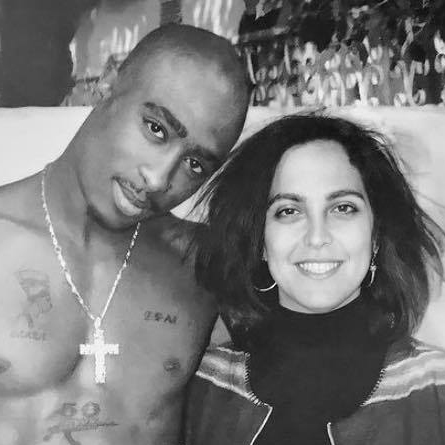
"caption": "Tupac Shakur and Leila Steinberg. Steinberg met Shakur when he was 17, and was his manager from 1989 to 1993. ",
"description": null,
"title": "Tupac.Steinberg.SQUARE.crop",
"credit": "Kathy Crawford",
"status": "inherit",
"altTag": "A shirtless black male with a cross necklace stands with a shorter white woman in jeans and striped top.",
"fetchFailed": false,
"isLoading": false
},
"arts_13924169": {
"type": "attachments",
"id": "arts_13924169",
"meta": {
"index": "attachments_1716263798",
"site": "arts",
"id": "13924169",
"found": true
},
"parent": 13924167,
"imgSizes": {
"twentyfourteen-full-width": {
"file": "https://ww2.kqed.org/app/uploads/sites/2/2023/01/MacMall.SQ_-1038x576.jpg",
"width": 1038,
"mimeType": "image/jpeg",
"height": 576
},
"thumbnail": {
"file": "https://ww2.kqed.org/app/uploads/sites/2/2023/01/MacMall.SQ_-160x160.jpg",
"width": 160,
"mimeType": "image/jpeg",
"height": 160
},
"post-thumbnail": {
"file": "https://ww2.kqed.org/app/uploads/sites/2/2023/01/MacMall.SQ_-672x372.jpg",
"width": 672,
"mimeType": "image/jpeg",
"height": 372
},
"kqedFullSize": {
"file": "https://ww2.kqed.org/app/uploads/sites/2/2023/01/MacMall.SQ_.jpg",
"width": 1080,
"height": 1080
},
"large": {
"file": "https://ww2.kqed.org/app/uploads/sites/2/2023/01/MacMall.SQ_-1020x1020.jpg",
"width": 1020,
"mimeType": "image/jpeg",
"height": 1020
},
"medium": {
"file": "https://ww2.kqed.org/app/uploads/sites/2/2023/01/MacMall.SQ_-800x800.jpg",
"width": 800,
"mimeType": "image/jpeg",
"height": 800
},
"medium_large": {
"file": "https://ww2.kqed.org/app/uploads/sites/2/2023/01/MacMall.SQ_-768x768.jpg",
"width": 768,
"mimeType": "image/jpeg",
"height": 768
}
},
"publishDate": 1674624676,
"modified": 1674624721,
"caption": null,
"description": null,
"title": "MacMall.SQ",
"credit": "Young Black Brotha Records",
"status": "inherit",
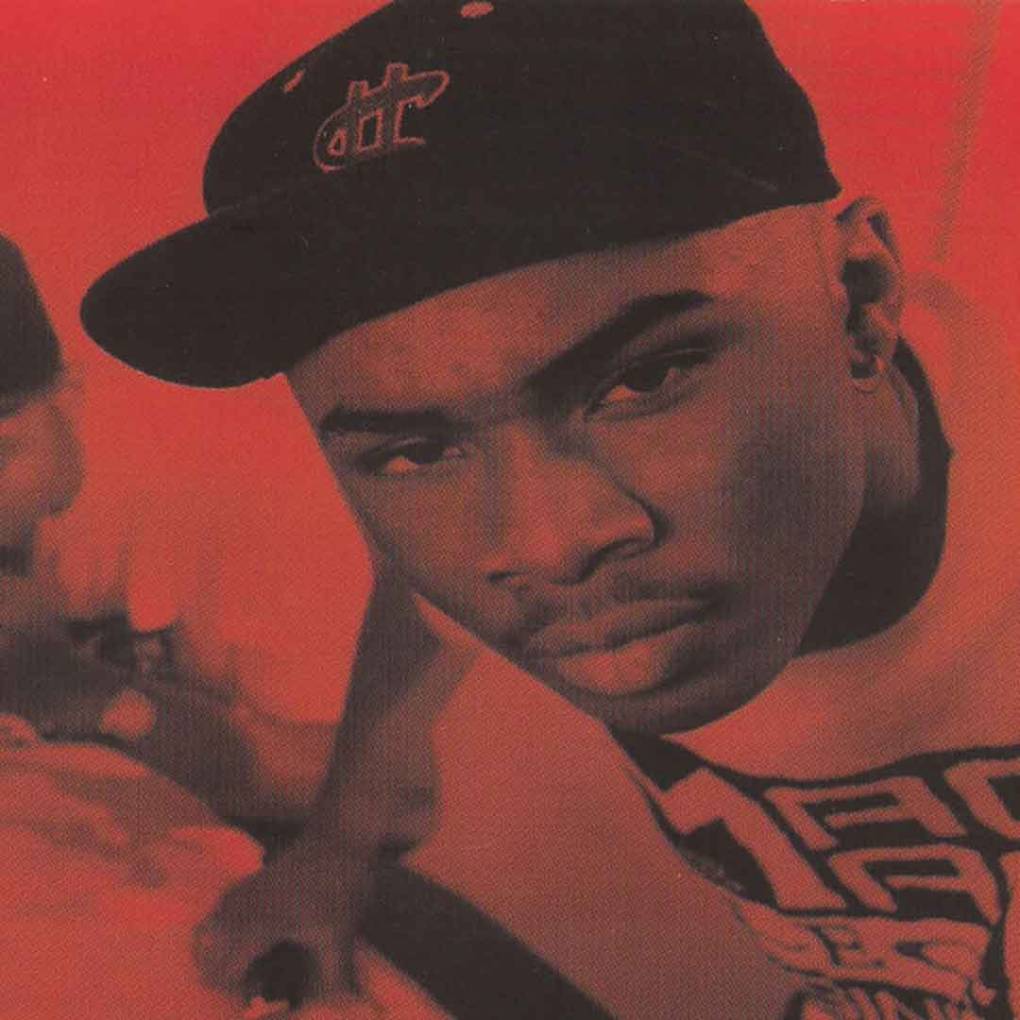
"altTag": "Mac Mall, pictured on the cover of his debut album Illegal Business",
"fetchFailed": false,
"isLoading": false
}
},
"audioPlayerReducer": {
"postId": "stream_live",
"isPaused": true,
"isPlaying": false,
"pfsActive": false,
"pledgeModalIsOpen": true,
"playerDrawerIsOpen": false
},
"authorsReducer": {
"byline_arts_13934043": {
"type": "authors",
"id": "byline_arts_13934043",
"meta": {
"override": true
},
"slug": "byline_arts_13934043",
"name": "Andrew Esensten",
"isLoading": false
},
"byline_arts_13924167": {
"type": "authors",
"id": "byline_arts_13924167",
"meta": {
"override": true
},
"slug": "byline_arts_13924167",
"name": "Mac Mall",
"isLoading": false
}
},
"breakingNewsReducer": {},
"pagesReducer": {},
"postsReducer": {
"stream_live": {
"type": "live",
"id": "stream_live",
"audioUrl": "https://streams.kqed.org/kqedradio",
"title": "Live Stream",
"excerpt": "Live Stream information currently unavailable.",
"link": "/radio",
"featImg": "",
"label": {
"name": "KQED Live",
"link": "/"
}
},
"stream_kqedNewscast": {
"type": "posts",
"id": "stream_kqedNewscast",
"audioUrl": "https://www.kqed.org/.stream/anon/radio/RDnews/newscast.mp3?_=1",
"title": "KQED Newscast",
"featImg": "",
"label": {
"name": "88.5 FM",
"link": "/"
}
},
"arts_13934043": {
"type": "posts",
"id": "arts_13934043",
"meta": {
"index": "posts_1716263798",
"site": "arts",
"id": "13934043",
"score": null,
"sort": [
1693424966000
]
},
"guestAuthors": [],
"slug": "leila-steinberg-tupac-shakur-manager",
"title": "Leila Steinberg, Tupac Shakur’s First Manager: I 'Still Feel Him' Here",
"publishDate": 1693424966,
"format": "aside",
"headTitle": "Leila Steinberg, Tupac Shakur’s First Manager: I ‘Still Feel Him’ Here | KQED",
"labelTerm": {},
"content": "\u003cfigure id=\"attachment_13934055\" class=\"wp-caption aligncenter\" style=\"max-width: 828px\">\u003cimg loading=\"lazy\" decoding=\"async\" class=\"size-full wp-image-13934055\" src=\"https://ww2.kqed.org/app/uploads/sites/2/2023/08/Tupac.Steinberg.jpg\" alt=\"A shirtless black male with a cross necklace stands with a shorter white woman in jeans and striped top.\" width=\"828\" height=\"1030\" srcset=\"https://cdn.kqed.org/wp-content/uploads/sites/2/2023/08/Tupac.Steinberg.jpg 828w, https://cdn.kqed.org/wp-content/uploads/sites/2/2023/08/Tupac.Steinberg-800x995.jpg 800w, https://cdn.kqed.org/wp-content/uploads/sites/2/2023/08/Tupac.Steinberg-160x199.jpg 160w, https://cdn.kqed.org/wp-content/uploads/sites/2/2023/08/Tupac.Steinberg-768x955.jpg 768w\" sizes=\"(max-width: 828px) 100vw, 828px\">\u003cfigcaption class=\"wp-caption-text\">Tupac Shakur and Leila Steinberg. Steinberg met Shakur when he was 17, and was his manager from 1989 to 1993. \u003ccite>(Kathy Crawford)\u003c/cite>\u003c/figcaption>\u003c/figure>\n\u003cp>\u003cem>Editor’s note: This story is part of \u003c/em>\u003ca href=\"https://www.kqed.org/bayareahiphop/\">That’s My Word\u003c/a>\u003cem>, KQED’s year-long exploration of \u003ca href=\"https://www.kqed.org/bayareahiphop/\">Bay Area hip-hop\u003c/a> history.\u003c/em>\u003c/p>\n\u003cp>[dropcap]I[/dropcap]n the late 1980s, Leila Steinberg was a concert promoter and arts educator living in Rohnert Park. Each week, she hosted writing circles for young poets, rappers and actors in her living room. She would give the participants a prompt, and then invite the best ones to perform their pieces during assemblies at schools across the Bay Area.\u003c/p>\n\u003cp>One evening in 1988, a senior at Tamalpais High School in Mill Valley showed up and challenged Steinberg’s approach, telling her the participants should have more input on the content of the assemblies. That \u003ca href=\"https://marinmagazine.com/people/tupac/\">brash 17-year-old\u003c/a> would have a profound impact on Steinberg’s life, and on the lives of so many others around the world.\u003c/p>\n\u003cp>“It was my group until Tupac came,” Steinberg recalled in a recent phone interview. “I was in my 20s, and it was just a passion project that I wanted to do. His joining really allowed me to rethink and reshape what it was to be in a leadership role.”\u003c/p>\n\u003cp>[aside postID='arts_13927810']Steinberg was part of a multicultural community of mentors and friends who helped mold Tupac Shakur, both as an artist and a man, during the years he lived in Northern California. After making his commercial recording debut with Oakland-based rap group \u003ca href=\"https://www.kqed.org/arts/13929900/shock-g-revolutionized-hip-hop-and-created-a-secret-trove-of-funky-art\">Digital Underground\u003c/a>, Shakur achieved enormous success as a solo rapper and actor before being murdered in 1996 at age 25.\u003c/p>\n\u003cp>[ad fullwidth]\u003c/p>\n\u003cp>In addition to promoting his first shows, Steinberg was Shakur’s first manager, as well as a substitute mother of sorts to him at a time when his own mother, Afeni, was struggling with drug addiction. He would eventually leave his Marin City home and crash on Steinberg’s couch, living with her and her family in Rohnert Park.\u003c/p>\n\u003cfigure id=\"attachment_13934059\" class=\"wp-caption aligncenter\" style=\"max-width: 640px\">\u003cimg loading=\"lazy\" decoding=\"async\" class=\"size-full wp-image-13934059\" src=\"https://ww2.kqed.org/app/uploads/sites/2/2023/08/StrictlyDope.jpg\" alt=\"A group of young black males pose in a late 1980s black and white photo\" width=\"640\" height=\"640\" srcset=\"https://cdn.kqed.org/wp-content/uploads/sites/2/2023/08/StrictlyDope.jpg 640w, https://cdn.kqed.org/wp-content/uploads/sites/2/2023/08/StrictlyDope-160x160.jpg 160w\" sizes=\"(max-width: 640px) 100vw, 640px\">\u003cfigcaption class=\"wp-caption-text\">Tupac Shakur, top center, with the Santa Rosa-based group Strictly Dope, circa 1989. Ray Luv is seen at lower right. \u003ccite>(Strictly Dope)\u003c/cite>\u003c/figcaption>\u003c/figure>\n\u003cp>For years, Steinberg wrestled with feelings of guilt over the “toxic” quality of some of the later music Shakur released, and the poor decisions he made that may have contributed to his untimely death.\u003c/p>\n\u003cp>“Tupac was a kid, and he needed a lot more guidance,” she said. “I was too young to understand what I know now. I wish that I could have had more influence, because I always stayed connected to him.”\u003c/p>\n\u003ch2>Finding her role in hip-hop\u003c/h2>\n\u003cp>Steinberg, 61, lived and worked in the Bay Area for about 15 years in the 1980s and ’90s. Today she lives in Los Angeles, where she grew up, though she returns periodically to visit her mother in Santa Rosa. “The Bay is one of the most revolutionary areas you can live in, in this entire country, whether it’s education, politics, religion,” she said.\u003c/p>\n\u003cp>In addition to managing Shakur from 1989 until 1993 (with guidance from Digital Underground’s manager, Atron Gregory), Steinberg managed \u003ca href=\"http://www.kqed.org/bayareahiphop/timeline#tupac-moves-to-santa-rosa-attends-the-poetry-circle-and-forms-strictly-dope\">Ray Luv\u003c/a> and \u003ca href=\"https://www.kqed.org/arts/13924167/mac-mall-illegal-business-my-opinion-excerpt\">Mac Mall\u003c/a>, and she remains close to both of them. She \u003ca href=\"https://www.npr.org/sections/microphonecheck/2015/03/09/391893500/leila-steinberg-with-earl-its-a-journey\">still manages artists\u003c/a>, including the rapper Earl Sweatshirt, through her company Steinberg Management International. It’s a career she fell into by accident. “I was horrible at math and business, so it’s weird that I ended up negotiating million-dollar contracts,” she said.\u003c/p>\n\u003cfigure id=\"attachment_13934054\" class=\"wp-caption aligncenter\" style=\"max-width: 2560px\">\u003cimg loading=\"lazy\" decoding=\"async\" class=\"size-full wp-image-13934054\" src=\"https://ww2.kqed.org/app/uploads/sites/2/2023/08/Steinberg.whiteboard-scaled.jpg\" alt=\"A woman in front of a whiteboard, with the backs of attendees in the foreground.\" width=\"2560\" height=\"1829\" srcset=\"https://cdn.kqed.org/wp-content/uploads/sites/2/2023/08/Steinberg.whiteboard-scaled.jpg 2560w, https://cdn.kqed.org/wp-content/uploads/sites/2/2023/08/Steinberg.whiteboard-800x571.jpg 800w, https://cdn.kqed.org/wp-content/uploads/sites/2/2023/08/Steinberg.whiteboard-1020x729.jpg 1020w, https://cdn.kqed.org/wp-content/uploads/sites/2/2023/08/Steinberg.whiteboard-160x114.jpg 160w, https://cdn.kqed.org/wp-content/uploads/sites/2/2023/08/Steinberg.whiteboard-768x549.jpg 768w, https://cdn.kqed.org/wp-content/uploads/sites/2/2023/08/Steinberg.whiteboard-1536x1097.jpg 1536w, https://cdn.kqed.org/wp-content/uploads/sites/2/2023/08/Steinberg.whiteboard-2048x1463.jpg 2048w, https://cdn.kqed.org/wp-content/uploads/sites/2/2023/08/Steinberg.whiteboard-1920x1372.jpg 1920w\" sizes=\"(max-width: 2560px) 100vw, 2560px\">\u003cfigcaption class=\"wp-caption-text\">Through her nonprofit, Aim4theHeart, Steinberg gives workshops for young people on emotional literacy. \u003ccite>(Louis King)\u003c/cite>\u003c/figcaption>\u003c/figure>\n\u003cp>The daughter of a white, Jewish father who worked as a criminal defense lawyer and a Mexican-born mother with \u003ca href=\"https://www.myjewishlearning.com/article/who-are-sephardic-jews/\">Sephardic Jewish heritage\u003c/a> who was involved in different social movements, Steinberg first became aware of the power of music while sitting in the pews of a synagogue. “When Cantor Behar sang, I felt like that was the deepest connection to God,” she said, referring to Cantor Isaac Behar of L.A.’s \u003ca href=\"https://sephardictemple.org/history/\">Sephardic Temple Tifereth Israel\u003c/a>.\u003c/p>\n\u003cp>She attended a predominantly Black and Latino elementary school in L.A. until sixth grade, when her family moved to a “pretty WASP-y” community in Santa Monica, she said. She gravitated to the arts, singing in youth choirs and taking African dance classes at a cultural center. “I began to learn about African culture and the gift that came from Africa that I didn’t have in my family, in my community,” she said during a \u003ca href=\"https://www.youtube.com/live/EldWC_6B6Fk?feature=share\">2021 forum at UC Berkeley\u003c/a>.\u003c/p>\n\u003cp>[pullquote size='large' align='right' citation='Tupac Shakur, on Leila Steinberg']She understood a lot of things that I was doing that other people couldn’t understand. [/pullquote]Although she studied sports therapy at Sonoma State University and worked at a physical therapy office in Sebastopol, she always thought of herself as an artist. She toured with the band O.J. Ekemode and the Nigerian Allstars for a few years, the only non-Black singer-dancer in the Afrobeat group. On the group’s first U.S. tour, she realized she could have a greater impact in music by helping artists of color get more exposure, so she started organizing shows around the Bay Area and, with her DJ husband, promoting local hip-hop acts.\u003c/p>\n\u003cp>“I never planned on being in hip-hop or rap music,” she said at UC Berkeley. “I really understood the eruption of pain, and that this art form was a very important conversation.” However, she added, “I also struggled with what my role would be.”\u003c/p>\n\u003cp>In \u003cem>Dear Mama\u003c/em>, a 2023 FX docuseries (now streaming on Hulu) that interweaves Shakur’s story with his activist mother’s, Shakur talks about Steinberg’s influence on him.\u003c/p>\n\u003cp>“She was older, she was white, and she’s the one that I used to let look at my poetry,” he says in a clip from a 1995 deposition. “She understood a lot of things that I was doing that other people couldn’t understand. And she’s the one that stayed on me about working hard to do my music.”\u003c/p>\n\u003cfigure id=\"attachment_13924484\" class=\"wp-caption aligncenter\" style=\"max-width: 1240px\">\u003cimg loading=\"lazy\" decoding=\"async\" class=\"size-full wp-image-13924484\" src=\"https://ww2.kqed.org/app/uploads/sites/2/2023/01/Tupac.MacMall..RayLuv.jpg\" alt=\"Three young men, two of them sitting on car hoods, on a city street\" width=\"1240\" height=\"1488\" srcset=\"https://cdn.kqed.org/wp-content/uploads/sites/2/2023/01/Tupac.MacMall..RayLuv.jpg 1240w, https://cdn.kqed.org/wp-content/uploads/sites/2/2023/01/Tupac.MacMall..RayLuv-800x960.jpg 800w, https://cdn.kqed.org/wp-content/uploads/sites/2/2023/01/Tupac.MacMall..RayLuv-1020x1224.jpg 1020w, https://cdn.kqed.org/wp-content/uploads/sites/2/2023/01/Tupac.MacMall..RayLuv-160x192.jpg 160w, https://cdn.kqed.org/wp-content/uploads/sites/2/2023/01/Tupac.MacMall..RayLuv-768x922.jpg 768w\" sizes=\"(max-width: 1240px) 100vw, 1240px\">\u003cfigcaption class=\"wp-caption-text\">(L–R) Tupac Shakur, Mac Mall and Ray Luv on the set of Mac Mall’s music video for ‘Ghetto Theme,’ directed by Tupac. \u003ccite>(Courtesy Mac Mall / 'My Opinion')\u003c/cite>\u003c/figcaption>\u003c/figure>\n\u003ch2>‘She required us to be honest’\u003c/h2>\n\u003cp>Ray Luv met Steinberg when he was 15, and in an interview, he described her as an educator at heart. “She wants people to be aware of what’s going on, and to not just be blowing in the wind, but to have a voice and to use it,” he said.\u003c/p>\n\u003cp>Luv grew up in Santa Rosa, participated in Steinberg’s poetry circles in the late 1980s, and performed with Shakur as a member of the rap group Strictly Dope from 1988 to 1990. He recalled how Steinberg drove them back and forth between the North Bay and recording studios in the East Bay, even when she was several months pregnant.\u003c/p>\n\u003cp>“It had to put an incredible strain on her family,” he said of her commitment to him and his peers. “She was also feeding some of us and putting us up at different times when we didn’t have a place to stay. I’ve seen her acts of kindness.”\u003c/p>\n\u003cp>In return, he added, “She required us to be honest. She required us to give back to the community.”\u003c/p>\n\u003cfigure id=\"attachment_13934062\" class=\"wp-caption aligncenter\" style=\"max-width: 2560px\">\u003cimg loading=\"lazy\" decoding=\"async\" class=\"size-full wp-image-13934062\" src=\"https://ww2.kqed.org/app/uploads/sites/2/2023/08/StarlightSound.Richmond.GabeMeline.web_-scaled.jpg\" alt=\"A vacant commercial corner building with a 1970s-style stone facade\" width=\"2560\" height=\"1920\" srcset=\"https://cdn.kqed.org/wp-content/uploads/sites/2/2023/08/StarlightSound.Richmond.GabeMeline.web_-scaled.jpg 2560w, https://cdn.kqed.org/wp-content/uploads/sites/2/2023/08/StarlightSound.Richmond.GabeMeline.web_-800x600.jpg 800w, https://cdn.kqed.org/wp-content/uploads/sites/2/2023/08/StarlightSound.Richmond.GabeMeline.web_-1020x765.jpg 1020w, https://cdn.kqed.org/wp-content/uploads/sites/2/2023/08/StarlightSound.Richmond.GabeMeline.web_-160x120.jpg 160w, https://cdn.kqed.org/wp-content/uploads/sites/2/2023/08/StarlightSound.Richmond.GabeMeline.web_-768x576.jpg 768w, https://cdn.kqed.org/wp-content/uploads/sites/2/2023/08/StarlightSound.Richmond.GabeMeline.web_-1536x1152.jpg 1536w, https://cdn.kqed.org/wp-content/uploads/sites/2/2023/08/StarlightSound.Richmond.GabeMeline.web_-2048x1536.jpg 2048w, https://cdn.kqed.org/wp-content/uploads/sites/2/2023/08/StarlightSound.Richmond.GabeMeline.web_-1920x1440.jpg 1920w\" sizes=\"(max-width: 2560px) 100vw, 2560px\">\u003cfigcaption class=\"wp-caption-text\">Starlight Sound in Richmond, the recording studio where Leila Steinberg first brought Tupac Shakur to meet Digital Underground, as seen today. \u003ccite>(Gabe Meline/KQED)\u003c/cite>\u003c/figcaption>\u003c/figure>\n\u003cp>Steinberg approached the job of managing Shakur as if she were running a political campaign, drawing upon lessons she learned from an uncle who worked in politics in L.A. “I instinctively began to look at throwing parties and events and shows like a political campaign, and I understood music moves masses,” she said.\u003c/p>\n\u003cp>Yet Shakur did not see himself as a politician. Instead, as Steinberg says in \u003cem>Dear Mama\u003c/em>, “Tupac wanted to seduce the children of white America.”\u003c/p>\n\u003cp>What did she mean by that? “He really wanted to be like the Pied Piper, and he wanted to lure a generation of white children who grew up not understanding struggle or justice, or what’s happened to Black people in this country,” she said in the interview. “He felt through his lyrics and songs he could be a roadmap to empathy and change and transformation.”\u003c/p>\n\u003ch2>Ain’t a woman alive that could take my mama’s place\u003c/h2>\n\u003cp>The documentary \u003cem>Dear Mama\u003c/em> takes its title from one of Shakur’s best-known songs, a loving tribute to his mother included on his 1995 album \u003cem>Me Against the World\u003c/em>.\u003c/p>\n\u003cp>\u003ca href=\"https://www.kqed.org/pop/23762/you-cant-kill-the-revolution-davey-d-on-tupacs-mother-afeni-shakur\">Afeni Shakur\u003c/a> was one of the Panther 21, a group of Black Panthers arrested in New York City in 1969 and charged with conspiring to bomb department stores and police stations. She was pregnant with Shakur while in jail, and defended herself at trial, despite having no legal training. She and the other defendants were \u003ca href=\"https://www.nytimes.com/1971/05/14/archives/black-panther-party-members-freed-after-being-cleared-of-charges-13.html\">acquitted\u003c/a> in 1971, and she raised Shakur and his half-sister in poverty in Harlem, Baltimore and Marin City.\u003c/p>\n\u003cp>[aside postID='pop_23762']Although they came from very different worlds, Steinberg and Shakur bonded over their shared commitment to racial justice.\u003c/p>\n\u003cp>As the Jewish daughter of a dark-skinned Mexican immigrant, Steinberg said she was aware of antisemitism and racism from a young age. “I understood that Jews were not liked, but they could disappear in their Jewishness,” she said. When she got married, she considered changing her last name, “but I felt that I needed to be OK and not hide, because Black people couldn’t hide their skin.”\u003c/p>\n\u003cp>Another thing she had in common with Shakur, she said, was “mother issues.”\u003c/p>\n\u003cp>“We shared a pain of having mothers who came out of ’60s activism and were taken away from their children because of their choices at times,” she said. “The ’60s activism included drugs, sexual behavior and a lifestyle that is really not healthy for a family.” Steinberg’s mother, Corina Abouaf, was involved in the farmworkers’ and women’s movements. Today, mother and daughter are close, Steinberg said.\u003c/p>\n\u003cp>As for her relationship with Afeni, Shakur’s mother, who lived in Sausalito in her later years and died in 2016, Steinberg says it was complicated.\u003c/p>\n\u003cp>“I don’t think that I would have been as involved in pushing Pac’s career forward, and just being there for him, if she wasn’t in the place she was in,” she said. “But I know she loved me and my kids, and I have immense respect and love for her.”\u003c/p>\n\u003cfigure id=\"attachment_13929237\" class=\"wp-caption aligncenter\" style=\"max-width: 1716px\">\u003cimg loading=\"lazy\" decoding=\"async\" class=\"size-full wp-image-13929237\" src=\"https://ww2.kqed.org/app/uploads/sites/2/2023/05/Tupac.Square.jpg\" alt=\"\" width=\"1716\" height=\"1716\" srcset=\"https://cdn.kqed.org/wp-content/uploads/sites/2/2023/05/Tupac.Square.jpg 1716w, https://cdn.kqed.org/wp-content/uploads/sites/2/2023/05/Tupac.Square-800x800.jpg 800w, https://cdn.kqed.org/wp-content/uploads/sites/2/2023/05/Tupac.Square-1020x1020.jpg 1020w, https://cdn.kqed.org/wp-content/uploads/sites/2/2023/05/Tupac.Square-160x160.jpg 160w, https://cdn.kqed.org/wp-content/uploads/sites/2/2023/05/Tupac.Square-768x768.jpg 768w, https://cdn.kqed.org/wp-content/uploads/sites/2/2023/05/Tupac.Square-1536x1536.jpg 1536w\" sizes=\"(max-width: 1716px) 100vw, 1716px\">\u003cfigcaption class=\"wp-caption-text\">Tupac Shakur pictured in Oakland in 1992. \u003ccite>(Gary Reyes / Oakland Tribune Staff Archives (MediaNews Group/Bay Area News via Getty Images))\u003c/cite>\u003c/figcaption>\u003c/figure>\n\u003ch2>‘I still feel his partnership’\u003c/h2>\n\u003cp>Tupac Shakur’s time in the Bay Area was often turbulent. In October 1991, he was \u003ca href=\"https://www.kqed.org/arts/11696060/its-tupac-day-in-oakland-where-he-once-sued-the-police-for-10-million\">beaten by Oakland police officers\u003c/a> after they stopped him for jaywalking; he subsequently sued the police department and received a settlement. The following year, he was involved in \u003ca href=\"https://www.sfgate.com/news/article/PAGE-ONE-Marin-City-Haunted-By-Boy-s-Shooting-3021515.php\">a fight at the Marin City Festival\u003c/a>, during which a 6-year-old boy was killed by a bullet fired from a gun that was registered to Shakur. (He was never charged with a crime.)\u003c/p>\n\u003cp>“I don’t want people to think I condone all his behavior,” Steinberg said. “I fought with him all the time.”\u003c/p>\n\u003cp>[aside postID='arts_11696060']Steinberg doesn’t believe he sexually assaulted a female fan in a New York City hotel room, a crime he was \u003ca href=\"https://www.nytimes.com/1995/02/08/nyregion/rapper-faces-prison-term-for-sex-abuse.html\">convicted\u003c/a> of in 1995, and for which he served nine months in jail. His road manager was also convicted of assaulting the woman, and Steinberg said Shakur should have had better control over the members of his entourage.\u003c/p>\n\u003cp>She has said she \u003ca href=\"https://www.xxlmag.com/changes-2pacs-manager-leila-steinberg-excerpt-from-sept-2011-issue/\">fell in love with Shakur in a spiritual sense\u003c/a>, and the two of them talked about everything. After Shakur was shot in a drive-by shooting in Las Vegas in 1996, Steinberg said she was convinced he would pull through.\u003c/p>\n\u003cp>After he died several days later in a hospital, “I was in shock for a very long time,” she recalled. “I’ve been operating for so long from so much trauma, and I’m finally in a really healthy place.” (His murder has never been solved, but in 2002 the \u003cem>Los Angeles Times\u003c/em> identified a since-deceased gang member from Compton as the probable shooter.)\u003c/p>\n\u003cp>[pullquote size='large' align='right' citation='Leila Steinberg']I don’t want people to think I condone all his behavior. I fought with him all the time.[/pullquote]Steinberg saved many of the poems Shakur wrote between the ages of 17 and 19 and published them, with his prior permission, in the 1999 book \u003cem>\u003ca href=\"https://www.amazon.com/Rose-That-Grew-Concrete/dp/0671028456\">The Rose That Grew From Concrete\u003c/a>\u003c/em>. Her portion of the sales has helped to fund her “Mic Sessions” workshops, which she offers at school, universities and other venues through her nonprofit \u003ca href=\"https://www.aim4theheart.org/\">Aim4theHeart\u003c/a>, and which are designed to promote emotional literacy.\u003c/p>\n\u003cp>For three decades, she \u003ca href=\"https://youtu.be/esm5A-_cIAA\">worked with prisoners at San Quentin State Prison\u003c/a>, until the pandemic forced her to press pause. She is a self-described nomad who often travels with Earl Sweatshirt, explaining that the 29-year-old rapper has allowed her to redeem herself “after all the mistakes with Tupac.” She is the mother of four adult children, including a musician son known as \u003ca href=\"https://soundcloud.com/nykkuu\">Nyku\u003c/a>, and a grandmother. She is writing a memoir.\u003c/p>\n\u003cp>Even today, she said, Shakur is still very much a part of her life.\u003c/p>\n\u003cp>“I thought he would be alive doing the work with me,” she said. “I still feel his partnership in the work. I still feel him tapping me on the shoulder and saying, ‘You have a responsibility. Keep going.’”\u003c/p>\n\u003cp>\u003cimg loading=\"lazy\" decoding=\"async\" class=\"aligncenter size-full wp-image-11687704\" src=\"https://ww2.kqed.org/app/uploads/sites/2/2016/06/Turntable.Break_.jpg\" alt=\"\" width=\"800\" height=\"60\" srcset=\"https://cdn.kqed.org/wp-content/uploads/sites/2/2016/06/Turntable.Break_.jpg 800w, https://cdn.kqed.org/wp-content/uploads/sites/2/2016/06/Turntable.Break_-400x30.jpg 400w, https://cdn.kqed.org/wp-content/uploads/sites/2/2016/06/Turntable.Break_-768x58.jpg 768w\" sizes=\"(max-width: 800px) 100vw, 800px\">\u003c/p>\n\u003cp>[ad floatright]\u003c/p>\n\u003cp>\u003cem>\u003ca href=\"https://jweekly.com/2023/05/09/dear-mama-leila-steinberg-tupacs-first-manager-sees-new-docuseries-series-as-a-chance-to-heal/\">A version of this story first appeared in J. The Jewish News of Northern California\u003c/a>.\u003c/em>\u003c/p>\n\n",
"blocks": [],
"excerpt": "Steinberg was a guiding force for Tupac during his teen years in Marin and Sonoma County, when his career was just getting started.",
"status": "publish",
"parent": 0,
"modified": 1726790665,
"stats": {
"hasAudio": false,
"hasVideo": false,
"hasChartOrMap": false,
"iframeSrcs": [],
"hasGoogleForm": false,
"hasGallery": false,
"hasHearkenModule": false,
"hasPolis": false,
"paragraphCount": 44,
"wordCount": 2433
},
"headData": {
"title": "Leila Steinberg, Tupac Shakur’s First Manager: I 'Still Feel Him' Here | KQED",
"description": "Steinberg was a guiding force for Tupac during his teen years in Marin and Sonoma County, when his career was just getting started.",
"ogTitle": "",
"ogDescription": "",
"ogImgId": "",
"twTitle": "",
"twDescription": "",
"twImgId": "",
"schema": {
"@context": "https://schema.org",
"@type": "Article",
"headline": "Leila Steinberg, Tupac Shakur’s First Manager: I 'Still Feel Him' Here",
"datePublished": "2023-08-30T12:49:26-07:00",
"dateModified": "2024-09-19T17:04:25-07:00",
"image": "https://cdn.kqed.org/wp-content/uploads/2020/02/KQED-OG-Image@1x.png"
}
},
"source": "That's My Word",
"sourceUrl": "/bayareahiphop",
"sticky": false,
"WpOldSlug": "leila-steinberg-tupac-shakurs-first-manager-i-still-feel-him-here",
"nprByline": "Andrew Esensten",
"templateType": "standard",
"featuredImageType": "standard",
"excludeFromSiteSearch": "Include",
"showOnAuthorArchivePages": "No",
"articleAge": "0",
"path": "/arts/13934043/leila-steinberg-tupac-shakur-manager",
"audioTrackLength": null,
"parsedContent": [
{
"type": "contentString",
"content": "\u003cdiv class=\"post-body\">\u003cp>\u003cfigure id=\"attachment_13934055\" class=\"wp-caption aligncenter\" style=\"max-width: 828px\">\u003cimg loading=\"lazy\" decoding=\"async\" class=\"size-full wp-image-13934055\" src=\"https://ww2.kqed.org/app/uploads/sites/2/2023/08/Tupac.Steinberg.jpg\" alt=\"A shirtless black male with a cross necklace stands with a shorter white woman in jeans and striped top.\" width=\"828\" height=\"1030\" srcset=\"https://cdn.kqed.org/wp-content/uploads/sites/2/2023/08/Tupac.Steinberg.jpg 828w, https://cdn.kqed.org/wp-content/uploads/sites/2/2023/08/Tupac.Steinberg-800x995.jpg 800w, https://cdn.kqed.org/wp-content/uploads/sites/2/2023/08/Tupac.Steinberg-160x199.jpg 160w, https://cdn.kqed.org/wp-content/uploads/sites/2/2023/08/Tupac.Steinberg-768x955.jpg 768w\" sizes=\"(max-width: 828px) 100vw, 828px\">\u003cfigcaption class=\"wp-caption-text\">Tupac Shakur and Leila Steinberg. Steinberg met Shakur when he was 17, and was his manager from 1989 to 1993. \u003ccite>(Kathy Crawford)\u003c/cite>\u003c/figcaption>\u003c/figure>\n\u003cp>\u003cem>Editor’s note: This story is part of \u003c/em>\u003ca href=\"https://www.kqed.org/bayareahiphop/\">That’s My Word\u003c/a>\u003cem>, KQED’s year-long exploration of \u003ca href=\"https://www.kqed.org/bayareahiphop/\">Bay Area hip-hop\u003c/a> history.\u003c/em>\u003c/p>\n\u003cp>\u003c/p>\u003cp>\u003cspan class=\"utils-parseShortcode-shortcodes-__dropcapShortcode__dropcap\">I\u003c/span>\u003c/p>\u003cp>n the late 1980s, Leila Steinberg was a concert promoter and arts educator living in Rohnert Park. Each week, she hosted writing circles for young poets, rappers and actors in her living room. She would give the participants a prompt, and then invite the best ones to perform their pieces during assemblies at schools across the Bay Area.\u003c/p>\n\u003cp>One evening in 1988, a senior at Tamalpais High School in Mill Valley showed up and challenged Steinberg’s approach, telling her the participants should have more input on the content of the assemblies. That \u003ca href=\"https://marinmagazine.com/people/tupac/\">brash 17-year-old\u003c/a> would have a profound impact on Steinberg’s life, and on the lives of so many others around the world.\u003c/p>\n\u003cp>“It was my group until Tupac came,” Steinberg recalled in a recent phone interview. “I was in my 20s, and it was just a passion project that I wanted to do. His joining really allowed me to rethink and reshape what it was to be in a leadership role.”\u003c/p>\n\u003cp>\u003c/p>\u003c/div>",
"attributes": {
"named": {},
"numeric": []
}
},
{
"type": "component",
"content": "",
"name": "aside",
"attributes": {
"named": {
"postid": "arts_13927810",
"label": ""
},
"numeric": []
}
},
{
"type": "contentString",
"content": "\u003cdiv class=\"post-body\">\u003cp>Steinberg was part of a multicultural community of mentors and friends who helped mold Tupac Shakur, both as an artist and a man, during the years he lived in Northern California. After making his commercial recording debut with Oakland-based rap group \u003ca href=\"https://www.kqed.org/arts/13929900/shock-g-revolutionized-hip-hop-and-created-a-secret-trove-of-funky-art\">Digital Underground\u003c/a>, Shakur achieved enormous success as a solo rapper and actor before being murdered in 1996 at age 25.\u003c/p>\n\u003cp>\u003c/p>\u003c/div>",
"attributes": {
"named": {},
"numeric": []
}
},
{
"type": "component",
"content": "",
"name": "ad",
"attributes": {
"named": {
"label": "fullwidth"
},
"numeric": [
"fullwidth"
]
}
},
{
"type": "contentString",
"content": "\u003cdiv class=\"post-body\">\u003cp>\u003c/p>\n\u003cp>In addition to promoting his first shows, Steinberg was Shakur’s first manager, as well as a substitute mother of sorts to him at a time when his own mother, Afeni, was struggling with drug addiction. He would eventually leave his Marin City home and crash on Steinberg’s couch, living with her and her family in Rohnert Park.\u003c/p>\n\u003cfigure id=\"attachment_13934059\" class=\"wp-caption aligncenter\" style=\"max-width: 640px\">\u003cimg loading=\"lazy\" decoding=\"async\" class=\"size-full wp-image-13934059\" src=\"https://ww2.kqed.org/app/uploads/sites/2/2023/08/StrictlyDope.jpg\" alt=\"A group of young black males pose in a late 1980s black and white photo\" width=\"640\" height=\"640\" srcset=\"https://cdn.kqed.org/wp-content/uploads/sites/2/2023/08/StrictlyDope.jpg 640w, https://cdn.kqed.org/wp-content/uploads/sites/2/2023/08/StrictlyDope-160x160.jpg 160w\" sizes=\"(max-width: 640px) 100vw, 640px\">\u003cfigcaption class=\"wp-caption-text\">Tupac Shakur, top center, with the Santa Rosa-based group Strictly Dope, circa 1989. Ray Luv is seen at lower right. \u003ccite>(Strictly Dope)\u003c/cite>\u003c/figcaption>\u003c/figure>\n\u003cp>For years, Steinberg wrestled with feelings of guilt over the “toxic” quality of some of the later music Shakur released, and the poor decisions he made that may have contributed to his untimely death.\u003c/p>\n\u003cp>“Tupac was a kid, and he needed a lot more guidance,” she said. “I was too young to understand what I know now. I wish that I could have had more influence, because I always stayed connected to him.”\u003c/p>\n\u003ch2>Finding her role in hip-hop\u003c/h2>\n\u003cp>Steinberg, 61, lived and worked in the Bay Area for about 15 years in the 1980s and ’90s. Today she lives in Los Angeles, where she grew up, though she returns periodically to visit her mother in Santa Rosa. “The Bay is one of the most revolutionary areas you can live in, in this entire country, whether it’s education, politics, religion,” she said.\u003c/p>\n\u003cp>In addition to managing Shakur from 1989 until 1993 (with guidance from Digital Underground’s manager, Atron Gregory), Steinberg managed \u003ca href=\"http://www.kqed.org/bayareahiphop/timeline#tupac-moves-to-santa-rosa-attends-the-poetry-circle-and-forms-strictly-dope\">Ray Luv\u003c/a> and \u003ca href=\"https://www.kqed.org/arts/13924167/mac-mall-illegal-business-my-opinion-excerpt\">Mac Mall\u003c/a>, and she remains close to both of them. She \u003ca href=\"https://www.npr.org/sections/microphonecheck/2015/03/09/391893500/leila-steinberg-with-earl-its-a-journey\">still manages artists\u003c/a>, including the rapper Earl Sweatshirt, through her company Steinberg Management International. It’s a career she fell into by accident. “I was horrible at math and business, so it’s weird that I ended up negotiating million-dollar contracts,” she said.\u003c/p>\n\u003cfigure id=\"attachment_13934054\" class=\"wp-caption aligncenter\" style=\"max-width: 2560px\">\u003cimg loading=\"lazy\" decoding=\"async\" class=\"size-full wp-image-13934054\" src=\"https://ww2.kqed.org/app/uploads/sites/2/2023/08/Steinberg.whiteboard-scaled.jpg\" alt=\"A woman in front of a whiteboard, with the backs of attendees in the foreground.\" width=\"2560\" height=\"1829\" srcset=\"https://cdn.kqed.org/wp-content/uploads/sites/2/2023/08/Steinberg.whiteboard-scaled.jpg 2560w, https://cdn.kqed.org/wp-content/uploads/sites/2/2023/08/Steinberg.whiteboard-800x571.jpg 800w, https://cdn.kqed.org/wp-content/uploads/sites/2/2023/08/Steinberg.whiteboard-1020x729.jpg 1020w, https://cdn.kqed.org/wp-content/uploads/sites/2/2023/08/Steinberg.whiteboard-160x114.jpg 160w, https://cdn.kqed.org/wp-content/uploads/sites/2/2023/08/Steinberg.whiteboard-768x549.jpg 768w, https://cdn.kqed.org/wp-content/uploads/sites/2/2023/08/Steinberg.whiteboard-1536x1097.jpg 1536w, https://cdn.kqed.org/wp-content/uploads/sites/2/2023/08/Steinberg.whiteboard-2048x1463.jpg 2048w, https://cdn.kqed.org/wp-content/uploads/sites/2/2023/08/Steinberg.whiteboard-1920x1372.jpg 1920w\" sizes=\"(max-width: 2560px) 100vw, 2560px\">\u003cfigcaption class=\"wp-caption-text\">Through her nonprofit, Aim4theHeart, Steinberg gives workshops for young people on emotional literacy. \u003ccite>(Louis King)\u003c/cite>\u003c/figcaption>\u003c/figure>\n\u003cp>The daughter of a white, Jewish father who worked as a criminal defense lawyer and a Mexican-born mother with \u003ca href=\"https://www.myjewishlearning.com/article/who-are-sephardic-jews/\">Sephardic Jewish heritage\u003c/a> who was involved in different social movements, Steinberg first became aware of the power of music while sitting in the pews of a synagogue. “When Cantor Behar sang, I felt like that was the deepest connection to God,” she said, referring to Cantor Isaac Behar of L.A.’s \u003ca href=\"https://sephardictemple.org/history/\">Sephardic Temple Tifereth Israel\u003c/a>.\u003c/p>\n\u003cp>She attended a predominantly Black and Latino elementary school in L.A. until sixth grade, when her family moved to a “pretty WASP-y” community in Santa Monica, she said. She gravitated to the arts, singing in youth choirs and taking African dance classes at a cultural center. “I began to learn about African culture and the gift that came from Africa that I didn’t have in my family, in my community,” she said during a \u003ca href=\"https://www.youtube.com/live/EldWC_6B6Fk?feature=share\">2021 forum at UC Berkeley\u003c/a>.\u003c/p>\n\u003cp>\u003c/p>\u003c/div>",
"attributes": {
"named": {},
"numeric": []
}
},
{
"type": "component",
"content": "She understood a lot of things that I was doing that other people couldn’t understand. ",
"name": "pullquote",
"attributes": {
"named": {
"size": "large",
"align": "right",
"citation": "Tupac Shakur, on Leila Steinberg",
"label": ""
},
"numeric": []
}
},
{
"type": "contentString",
"content": "\u003cdiv class=\"post-body\">\u003cp>Although she studied sports therapy at Sonoma State University and worked at a physical therapy office in Sebastopol, she always thought of herself as an artist. She toured with the band O.J. Ekemode and the Nigerian Allstars for a few years, the only non-Black singer-dancer in the Afrobeat group. On the group’s first U.S. tour, she realized she could have a greater impact in music by helping artists of color get more exposure, so she started organizing shows around the Bay Area and, with her DJ husband, promoting local hip-hop acts.\u003c/p>\n\u003cp>“I never planned on being in hip-hop or rap music,” she said at UC Berkeley. “I really understood the eruption of pain, and that this art form was a very important conversation.” However, she added, “I also struggled with what my role would be.”\u003c/p>\n\u003cp>In \u003cem>Dear Mama\u003c/em>, a 2023 FX docuseries (now streaming on Hulu) that interweaves Shakur’s story with his activist mother’s, Shakur talks about Steinberg’s influence on him.\u003c/p>\n\u003cp>“She was older, she was white, and she’s the one that I used to let look at my poetry,” he says in a clip from a 1995 deposition. “She understood a lot of things that I was doing that other people couldn’t understand. And she’s the one that stayed on me about working hard to do my music.”\u003c/p>\n\u003cfigure id=\"attachment_13924484\" class=\"wp-caption aligncenter\" style=\"max-width: 1240px\">\u003cimg loading=\"lazy\" decoding=\"async\" class=\"size-full wp-image-13924484\" src=\"https://ww2.kqed.org/app/uploads/sites/2/2023/01/Tupac.MacMall..RayLuv.jpg\" alt=\"Three young men, two of them sitting on car hoods, on a city street\" width=\"1240\" height=\"1488\" srcset=\"https://cdn.kqed.org/wp-content/uploads/sites/2/2023/01/Tupac.MacMall..RayLuv.jpg 1240w, https://cdn.kqed.org/wp-content/uploads/sites/2/2023/01/Tupac.MacMall..RayLuv-800x960.jpg 800w, https://cdn.kqed.org/wp-content/uploads/sites/2/2023/01/Tupac.MacMall..RayLuv-1020x1224.jpg 1020w, https://cdn.kqed.org/wp-content/uploads/sites/2/2023/01/Tupac.MacMall..RayLuv-160x192.jpg 160w, https://cdn.kqed.org/wp-content/uploads/sites/2/2023/01/Tupac.MacMall..RayLuv-768x922.jpg 768w\" sizes=\"(max-width: 1240px) 100vw, 1240px\">\u003cfigcaption class=\"wp-caption-text\">(L–R) Tupac Shakur, Mac Mall and Ray Luv on the set of Mac Mall’s music video for ‘Ghetto Theme,’ directed by Tupac. \u003ccite>(Courtesy Mac Mall / 'My Opinion')\u003c/cite>\u003c/figcaption>\u003c/figure>\n\u003ch2>‘She required us to be honest’\u003c/h2>\n\u003cp>Ray Luv met Steinberg when he was 15, and in an interview, he described her as an educator at heart. “She wants people to be aware of what’s going on, and to not just be blowing in the wind, but to have a voice and to use it,” he said.\u003c/p>\n\u003cp>Luv grew up in Santa Rosa, participated in Steinberg’s poetry circles in the late 1980s, and performed with Shakur as a member of the rap group Strictly Dope from 1988 to 1990. He recalled how Steinberg drove them back and forth between the North Bay and recording studios in the East Bay, even when she was several months pregnant.\u003c/p>\n\u003cp>“It had to put an incredible strain on her family,” he said of her commitment to him and his peers. “She was also feeding some of us and putting us up at different times when we didn’t have a place to stay. I’ve seen her acts of kindness.”\u003c/p>\n\u003cp>In return, he added, “She required us to be honest. She required us to give back to the community.”\u003c/p>\n\u003cfigure id=\"attachment_13934062\" class=\"wp-caption aligncenter\" style=\"max-width: 2560px\">\u003cimg loading=\"lazy\" decoding=\"async\" class=\"size-full wp-image-13934062\" src=\"https://ww2.kqed.org/app/uploads/sites/2/2023/08/StarlightSound.Richmond.GabeMeline.web_-scaled.jpg\" alt=\"A vacant commercial corner building with a 1970s-style stone facade\" width=\"2560\" height=\"1920\" srcset=\"https://cdn.kqed.org/wp-content/uploads/sites/2/2023/08/StarlightSound.Richmond.GabeMeline.web_-scaled.jpg 2560w, https://cdn.kqed.org/wp-content/uploads/sites/2/2023/08/StarlightSound.Richmond.GabeMeline.web_-800x600.jpg 800w, https://cdn.kqed.org/wp-content/uploads/sites/2/2023/08/StarlightSound.Richmond.GabeMeline.web_-1020x765.jpg 1020w, https://cdn.kqed.org/wp-content/uploads/sites/2/2023/08/StarlightSound.Richmond.GabeMeline.web_-160x120.jpg 160w, https://cdn.kqed.org/wp-content/uploads/sites/2/2023/08/StarlightSound.Richmond.GabeMeline.web_-768x576.jpg 768w, https://cdn.kqed.org/wp-content/uploads/sites/2/2023/08/StarlightSound.Richmond.GabeMeline.web_-1536x1152.jpg 1536w, https://cdn.kqed.org/wp-content/uploads/sites/2/2023/08/StarlightSound.Richmond.GabeMeline.web_-2048x1536.jpg 2048w, https://cdn.kqed.org/wp-content/uploads/sites/2/2023/08/StarlightSound.Richmond.GabeMeline.web_-1920x1440.jpg 1920w\" sizes=\"(max-width: 2560px) 100vw, 2560px\">\u003cfigcaption class=\"wp-caption-text\">Starlight Sound in Richmond, the recording studio where Leila Steinberg first brought Tupac Shakur to meet Digital Underground, as seen today. \u003ccite>(Gabe Meline/KQED)\u003c/cite>\u003c/figcaption>\u003c/figure>\n\u003cp>Steinberg approached the job of managing Shakur as if she were running a political campaign, drawing upon lessons she learned from an uncle who worked in politics in L.A. “I instinctively began to look at throwing parties and events and shows like a political campaign, and I understood music moves masses,” she said.\u003c/p>\n\u003cp>Yet Shakur did not see himself as a politician. Instead, as Steinberg says in \u003cem>Dear Mama\u003c/em>, “Tupac wanted to seduce the children of white America.”\u003c/p>\n\u003cp>What did she mean by that? “He really wanted to be like the Pied Piper, and he wanted to lure a generation of white children who grew up not understanding struggle or justice, or what’s happened to Black people in this country,” she said in the interview. “He felt through his lyrics and songs he could be a roadmap to empathy and change and transformation.”\u003c/p>\n\u003ch2>Ain’t a woman alive that could take my mama’s place\u003c/h2>\n\u003cp>The documentary \u003cem>Dear Mama\u003c/em> takes its title from one of Shakur’s best-known songs, a loving tribute to his mother included on his 1995 album \u003cem>Me Against the World\u003c/em>.\u003c/p>\n\u003cp>\u003ca href=\"https://www.kqed.org/pop/23762/you-cant-kill-the-revolution-davey-d-on-tupacs-mother-afeni-shakur\">Afeni Shakur\u003c/a> was one of the Panther 21, a group of Black Panthers arrested in New York City in 1969 and charged with conspiring to bomb department stores and police stations. She was pregnant with Shakur while in jail, and defended herself at trial, despite having no legal training. She and the other defendants were \u003ca href=\"https://www.nytimes.com/1971/05/14/archives/black-panther-party-members-freed-after-being-cleared-of-charges-13.html\">acquitted\u003c/a> in 1971, and she raised Shakur and his half-sister in poverty in Harlem, Baltimore and Marin City.\u003c/p>\n\u003cp>\u003c/p>\u003c/div>",
"attributes": {
"named": {},
"numeric": []
}
},
{
"type": "component",
"content": "",
"name": "aside",
"attributes": {
"named": {
"postid": "pop_23762",
"label": ""
},
"numeric": []
}
},
{
"type": "contentString",
"content": "\u003cdiv class=\"post-body\">\u003cp>Although they came from very different worlds, Steinberg and Shakur bonded over their shared commitment to racial justice.\u003c/p>\n\u003cp>As the Jewish daughter of a dark-skinned Mexican immigrant, Steinberg said she was aware of antisemitism and racism from a young age. “I understood that Jews were not liked, but they could disappear in their Jewishness,” she said. When she got married, she considered changing her last name, “but I felt that I needed to be OK and not hide, because Black people couldn’t hide their skin.”\u003c/p>\n\u003cp>Another thing she had in common with Shakur, she said, was “mother issues.”\u003c/p>\n\u003cp>“We shared a pain of having mothers who came out of ’60s activism and were taken away from their children because of their choices at times,” she said. “The ’60s activism included drugs, sexual behavior and a lifestyle that is really not healthy for a family.” Steinberg’s mother, Corina Abouaf, was involved in the farmworkers’ and women’s movements. Today, mother and daughter are close, Steinberg said.\u003c/p>\n\u003cp>As for her relationship with Afeni, Shakur’s mother, who lived in Sausalito in her later years and died in 2016, Steinberg says it was complicated.\u003c/p>\n\u003cp>“I don’t think that I would have been as involved in pushing Pac’s career forward, and just being there for him, if she wasn’t in the place she was in,” she said. “But I know she loved me and my kids, and I have immense respect and love for her.”\u003c/p>\n\u003cfigure id=\"attachment_13929237\" class=\"wp-caption aligncenter\" style=\"max-width: 1716px\">\u003cimg loading=\"lazy\" decoding=\"async\" class=\"size-full wp-image-13929237\" src=\"https://ww2.kqed.org/app/uploads/sites/2/2023/05/Tupac.Square.jpg\" alt=\"\" width=\"1716\" height=\"1716\" srcset=\"https://cdn.kqed.org/wp-content/uploads/sites/2/2023/05/Tupac.Square.jpg 1716w, https://cdn.kqed.org/wp-content/uploads/sites/2/2023/05/Tupac.Square-800x800.jpg 800w, https://cdn.kqed.org/wp-content/uploads/sites/2/2023/05/Tupac.Square-1020x1020.jpg 1020w, https://cdn.kqed.org/wp-content/uploads/sites/2/2023/05/Tupac.Square-160x160.jpg 160w, https://cdn.kqed.org/wp-content/uploads/sites/2/2023/05/Tupac.Square-768x768.jpg 768w, https://cdn.kqed.org/wp-content/uploads/sites/2/2023/05/Tupac.Square-1536x1536.jpg 1536w\" sizes=\"(max-width: 1716px) 100vw, 1716px\">\u003cfigcaption class=\"wp-caption-text\">Tupac Shakur pictured in Oakland in 1992. \u003ccite>(Gary Reyes / Oakland Tribune Staff Archives (MediaNews Group/Bay Area News via Getty Images))\u003c/cite>\u003c/figcaption>\u003c/figure>\n\u003ch2>‘I still feel his partnership’\u003c/h2>\n\u003cp>Tupac Shakur’s time in the Bay Area was often turbulent. In October 1991, he was \u003ca href=\"https://www.kqed.org/arts/11696060/its-tupac-day-in-oakland-where-he-once-sued-the-police-for-10-million\">beaten by Oakland police officers\u003c/a> after they stopped him for jaywalking; he subsequently sued the police department and received a settlement. The following year, he was involved in \u003ca href=\"https://www.sfgate.com/news/article/PAGE-ONE-Marin-City-Haunted-By-Boy-s-Shooting-3021515.php\">a fight at the Marin City Festival\u003c/a>, during which a 6-year-old boy was killed by a bullet fired from a gun that was registered to Shakur. (He was never charged with a crime.)\u003c/p>\n\u003cp>“I don’t want people to think I condone all his behavior,” Steinberg said. “I fought with him all the time.”\u003c/p>\n\u003cp>\u003c/p>\u003c/div>",
"attributes": {
"named": {},
"numeric": []
}
},
{
"type": "component",
"content": "",
"name": "aside",
"attributes": {
"named": {
"postid": "arts_11696060",
"label": ""
},
"numeric": []
}
},
{
"type": "contentString",
"content": "\u003cdiv class=\"post-body\">\u003cp>Steinberg doesn’t believe he sexually assaulted a female fan in a New York City hotel room, a crime he was \u003ca href=\"https://www.nytimes.com/1995/02/08/nyregion/rapper-faces-prison-term-for-sex-abuse.html\">convicted\u003c/a> of in 1995, and for which he served nine months in jail. His road manager was also convicted of assaulting the woman, and Steinberg said Shakur should have had better control over the members of his entourage.\u003c/p>\n\u003cp>She has said she \u003ca href=\"https://www.xxlmag.com/changes-2pacs-manager-leila-steinberg-excerpt-from-sept-2011-issue/\">fell in love with Shakur in a spiritual sense\u003c/a>, and the two of them talked about everything. After Shakur was shot in a drive-by shooting in Las Vegas in 1996, Steinberg said she was convinced he would pull through.\u003c/p>\n\u003cp>After he died several days later in a hospital, “I was in shock for a very long time,” she recalled. “I’ve been operating for so long from so much trauma, and I’m finally in a really healthy place.” (His murder has never been solved, but in 2002 the \u003cem>Los Angeles Times\u003c/em> identified a since-deceased gang member from Compton as the probable shooter.)\u003c/p>\n\u003cp>\u003c/p>\u003c/div>",
"attributes": {
"named": {},
"numeric": []
}
},
{
"type": "component",
"content": "I don’t want people to think I condone all his behavior. I fought with him all the time.",
"name": "pullquote",
"attributes": {
"named": {
"size": "large",
"align": "right",
"citation": "Leila Steinberg",
"label": ""
},
"numeric": []
}
},
{
"type": "contentString",
"content": "\u003cdiv class=\"post-body\">\u003cp>Steinberg saved many of the poems Shakur wrote between the ages of 17 and 19 and published them, with his prior permission, in the 1999 book \u003cem>\u003ca href=\"https://www.amazon.com/Rose-That-Grew-Concrete/dp/0671028456\">The Rose That Grew From Concrete\u003c/a>\u003c/em>. Her portion of the sales has helped to fund her “Mic Sessions” workshops, which she offers at school, universities and other venues through her nonprofit \u003ca href=\"https://www.aim4theheart.org/\">Aim4theHeart\u003c/a>, and which are designed to promote emotional literacy.\u003c/p>\n\u003cp>For three decades, she \u003ca href=\"https://youtu.be/esm5A-_cIAA\">worked with prisoners at San Quentin State Prison\u003c/a>, until the pandemic forced her to press pause. She is a self-described nomad who often travels with Earl Sweatshirt, explaining that the 29-year-old rapper has allowed her to redeem herself “after all the mistakes with Tupac.” She is the mother of four adult children, including a musician son known as \u003ca href=\"https://soundcloud.com/nykkuu\">Nyku\u003c/a>, and a grandmother. She is writing a memoir.\u003c/p>\n\u003cp>Even today, she said, Shakur is still very much a part of her life.\u003c/p>\n\u003cp>“I thought he would be alive doing the work with me,” she said. “I still feel his partnership in the work. I still feel him tapping me on the shoulder and saying, ‘You have a responsibility. Keep going.’”\u003c/p>\n\u003cp>\u003cimg loading=\"lazy\" decoding=\"async\" class=\"aligncenter size-full wp-image-11687704\" src=\"https://ww2.kqed.org/app/uploads/sites/2/2016/06/Turntable.Break_.jpg\" alt=\"\" width=\"800\" height=\"60\" srcset=\"https://cdn.kqed.org/wp-content/uploads/sites/2/2016/06/Turntable.Break_.jpg 800w, https://cdn.kqed.org/wp-content/uploads/sites/2/2016/06/Turntable.Break_-400x30.jpg 400w, https://cdn.kqed.org/wp-content/uploads/sites/2/2016/06/Turntable.Break_-768x58.jpg 768w\" sizes=\"(max-width: 800px) 100vw, 800px\">\u003c/p>\n\u003cp>\u003c/p>\u003c/div>",
"attributes": {
"named": {},
"numeric": []
}
},
{
"type": "component",
"content": "",
"name": "ad",
"attributes": {
"named": {
"label": "floatright"
},
"numeric": [
"floatright"
]
}
},
{
"type": "contentString",
"content": "\u003cdiv class=\"post-body\">\u003cp>\u003c/p>\n\u003cp>\u003cem>\u003ca href=\"https://jweekly.com/2023/05/09/dear-mama-leila-steinberg-tupacs-first-manager-sees-new-docuseries-series-as-a-chance-to-heal/\">A version of this story first appeared in J. The Jewish News of Northern California\u003c/a>.\u003c/em>\u003c/p>\n\n\u003c/div>\u003c/p>",
"attributes": {
"named": {},
"numeric": []
}
}
],
"link": "/arts/13934043/leila-steinberg-tupac-shakur-manager",
"authors": [
"byline_arts_13934043"
],
"series": [
"arts_22314"
],
"categories": [
"arts_1",
"arts_69"
],
"tags": [
"arts_14230",
"arts_10278",
"arts_831",
"arts_19565",
"arts_2721",
"arts_19347",
"arts_4269"
],
"featImg": "arts_13934056",
"label": "source_arts_13934043"
},
"arts_13924167": {
"type": "posts",
"id": "arts_13924167",
"meta": {
"index": "posts_1716263798",
"site": "arts",
"id": "13924167",
"score": null,
"sort": [
1675281760000
]
},
"guestAuthors": [],
"slug": "mac-mall-illegal-business-my-opinion-excerpt",
"title": "How I Made a Bay Area Classic at Age 15",
"publishDate": 1675281760,
"format": "standard",
"headTitle": "How I Made a Bay Area Classic at Age 15 | KQED",
"labelTerm": {},
"content": "\u003cp>\u003cem>\u003cstrong>Editor’s note:\u003c/strong> This story is part of \u003c/em>\u003ca href=\"http://kqed.org/bayareahiphop\">That’s My Word\u003c/a>\u003cem>, KQED’s year-long exploration of Bay Area hip-hop history, with new content dropping all throughout 2023.\u003c/em>\u003c/p>\n\u003cp>\u003cem>In this edited excerpt from his book \u003c/em>My Opinion\u003cem> (\u003ca href=\"https://www.amazon.com/My-Opinion-Mac-Mall/dp/0692456570/\">available here\u003c/a>), Vallejo legend Mac Mall recalls signing his first record deal and recording his classic debut album, \u003c/em>Illegal Business\u003cem>, at age 15.\u003c/em>\u003c/p>\n\u003cp>[dropcap]W[/dropcap]hen I heard that \u003ca href=\"https://www.discogs.com/artist/184149-Khayree\" target=\"_blank\" rel=\"noopener\">Khayree\u003c/a> wanted to holla at me about signing to a new label he was starting called Young Black Brotha Records, I had mixed emotions. On one hand, I was superjuiced, ’cause in my opinion, Khayree was and is a genius. His music is how the Crestside streets sound. I knew that if we hooked up, I would become a part of a legacy, but on the other hand, I was havin’ a run of some real buzzard luck. It seemed like nothing was going my way. I would get close enough to touch my goal, and the rug would get snatched from under me. A part of me thought this time would be no different.\u003c/p>\n\u003cp>Khayree was like a myth to me then. I never saw him hangin’ out; I just heard and felt the passion in his music. He definitely had his finger on the pulse of the Country Club and the whole Bay with the records he made for Strictly Business.\u003c/p>\n\u003cp>One of the things that eased my mind was Ceese telling me that it was real business. A Crestside OG and local DJ, Ceese was family; my mother used to babysit him way back when. He was always straight up and honest, so to me, his word was his bond. I got Khayree’s number from Ceese, went directly home, and called him. We talked two or three times, but they were only short conversations, because Khayree was as busy as a dope dealer on the first. Between his campaigning to free Mac Dre, who had been railroaded by the feds, and Ray Luv, who was signed to Strictly Business and dropped the Bay Area classic “\u003ca href=\"https://youtu.be/IVS-j8mGvqU\" target=\"_blank\" rel=\"noopener\">Get Ya Money On\u003c/a>,” Khayree didn’t have much time to chat on the phone. He told me he would come to the Crest to chop it up with me face to face and would probably bring some tracks, so I had to be ready to spit.\u003c/p>\n\u003cp>[ad fullwidth]\u003c/p>\n\u003cp>When the day arrived, a few cuddies and I were posted up in front of my house on Mark Avenue. Khayree pulled up in his dark blue BMW. We knew it was him, ’cause not too many cars like that came through the turf. My crew knew Khayree was in the ‘hood to talk business with me, so they left me there in front of my house. My first impression of Khayree was that he was taller than he looked on the record covers and TV, and he wasn’t mean muggin’; he was actually smiling. So I put my best cold-as-the-North-Pole face on and gave him some dap, and then he ran down his plans on how he was creating Young Black Brotha (YBB) Records. He really didn’t have to sell me on the idea, though, ’cause I was a jump, skip, and a hop from a cell block or a pine box, so I felt I had nothing to lose.\u003c/p>\n\u003cp>Khayree had heard me rap on the four-track demo tape Mac Dre had produced for me, but I guess he wanted to hear me flow live to find out if my skills were actual and factual. I think this is where the man upstairs who controls all game stepped in, ’cause the first piece of music he played for me was knockin’, and I must say, the rap I spit felt tailor made for the beat. The track and rap ended up being the title track to what would become my debut record \u003cem>Illegal Business\u003c/em>. After I spit a few raps to a couple different beats, I guess Khayree was convinced, so we agreed we would make Young Black Brotha Records a reality. The next step, though, would be a hard one. We would have to persuade my parents to let their 15-year-old son get involved with strangers in a business they knew little, if anything, about.\u003c/p>\n\u003cp>[aside label='From the Book' link1='https://www.amazon.com/My-Opinion-Mac-Mall/dp/0692456570/,My Opinion (133 pages; $20)' hero='https://ww2.kqed.org/app/uploads/sites/2/2023/01/MacMall.MyOpinion.jpg']My relationship with my pops wasn’t too cool at this time. We barely even spoke, so I felt he would be against it or wouldn’t care. My mom was under a lot of stress ’cause of the funk between me and my pops, and all she heard about the music business were horror stories of people getting strung out on drugs or dying broke because the record company robbed them. Plus, with the way I was livin’ at that time, she could have thought only the worst.\u003c/p>\n\u003cp>Ceese set up a meeting at my house with him, Khayree, my parents, and me to discuss my future in the record industry. You should have seen us: Ceese and Khayree were sitting on the couch looking like they just stepped out of a rap video, and my folks and I were on the other side of the couch looking like we just stepped out of an episode of \u003cem>Good Times\u003c/em>.\u003c/p>\n\u003cp>My parents asked the usual questions like how this would affect me in school, who would look out for me and make sure I wouldn’t fall victim to drugs, and what was up with the contract (who got what, how much, and when). Since I was a minor, a parent would have to sign along with me. For that reason, I was worried; if my pops told my mom not to sign out of spite, maybe mom wouldn’t sign just to keep things cool between them. If that went down, I was right back where I started: the bottom of the bottom.\u003c/p>\n\u003cp>After Khayree finished his presentation, Ceese assured my parents that he would look out for me as best as he could, acting as DJ/mentor. Like I said, Ceese was family. After Ceese and Khayree bounced, my parents let me know that they thought I shouldn’t risk my future on a dream and that I should concentrate on school. Then they informed me that if I disobeyed them and chose a music career, I would be doing so alone and without their support.\u003c/p>\n\u003cp>When they told me that, it really fucked me up. I mean, this was one of the biggest decisions in my life, and not having them have my back felt like they disowned me anyway. My mind was made up — matter of fact, it was a no-brainer.\u003c/p>\n\u003cp>My mom and pops wanted me to focus on school, but Hogan High School, which I was attending then, was just the minor leagues of the Crest against the rest of Vallejo funk. There, I focused only on fighting with the enemy and smoking weed with the cuddies, and getting a name for myself was more important than studying or homework. My parents didn’t want me to risk my future on a dream, but my life was at risk every day I woke up and went outside. I felt the music industry couldn’t be worse than growing up in the ‘hood.\u003c/p>\n\u003cp>Pops had washed his hands of the situation, so I was able to convince my mother to sign the contract. I had to promise her that I would finish school and stay out of trouble. I gave her my word, we both signed, and it was official: Mac Mall was the first artist signed to Young Black Brotha.\u003c/p>\n\u003cp>https://youtu.be/g8Bfxiq5Cos\u003c/p>\n\u003ch2>Writing Up a Storm for ‘Illegal Business’\u003c/h2>\n\u003cp>So Khayree started giving me tracks, and we began putting together what would become my first record, \u003cem>Illegal Business\u003c/em>. Leila Steinberg, who managed Ray and had managed Tupac before he got with Digital Underground, agreed to be my manager. With Dre in the feds, Ray took on a big cuddie role, letting me come along with him and perform at clubs and concerts. I felt like things were starting to happen — until Ray Luv caught a bullshit case and had to go to San Quentin for a ninety-day op.\u003c/p>\n\u003cp>Leila spent a lot of time trying to make sure he didn’t get washed in the legal system and catch some serious time. Khayree was still shooting me tracks for the records, and I was writing up a storm. In the Crestside, the streets were on fire; it was like cats stopped grinding and started robbing banks. Every neighborhood d-boy switched his pitch up and became a modern-day Jesse James. Cuddies were runnin’ up in every bank and credit union around. Some licks were so sweet, cats hit the same spot twice. This was the time some key members of my crew went down, mostly for robbery charges.\u003c/p>\n\u003cp>At first, the turf took the fed as a joke, but soon nobody would be laughin’. The ‘hood lost some real soldiers to the funk, which was getting deeper by the day. With all this shit jumpin’ off around me, it definitely influenced my rhymes.\u003c/p>\n\u003cp>My family had decided to take a vacation to Detroit that summer to go see my grandmother, Juanita Rocker. Juanita was a strong, strict, smart woman. She invested in real estate and owned property throughout Detroit. I spent a lot of summers in Motown helping repair houses and doing other business. I couldn’t see it then, but now I appreciate the knowledge I received while I was out there. [aside postid='arts_13923766' hero='https://ww2.kqed.org/app/uploads/sites/2/2023/01/RBL.Small_.GIF.gif']\u003c/p>\n\u003cp>But this summer in particular, I wasn’t trying to go out there. I had some Khayree beats to write to, the cuddies from the Strictly Ses (which we changed our name to) and I were putting it down in the town. I was right there in the middle of it. I wasn’t trying to miss any of the action. But after my mom made me go, the trip was actually cool. I got a chance to step back from my reality and put together some real raw material for my CD.\u003c/p>\n\u003cp>When I got back to the Crest, it was on. Khayree had the game plan made and was ready to execute. He decided we were gonna call the record \u003cem>Illegal Business\u003c/em>, since that was one of the first and tightest songs we made. We were gonna do a savage record cover, where I would be lookin’ like I was plotting a heist. When I heard that, I was with it, but the next thing he said threw me off. He told me he wanted to add another L to my name, ’cause he didn’t think people would get Mall from Mal. At first I didn’t want to do it, but trick it! I was getting in the game, so that’s all that mattered.\u003c/p>\n\u003cp>When I started my sophomore year at Hogan High, I was hyphy — I mean, I was experiencing stuff no teenager or most adults get a chance to. My mom made me promise that if I rapped, I would have to keep my grades up, so I did just enough to keep her off my back. When people started seeing that what I was doing was profitable, school became an obstacle for them. I would have fools tell me that I would be making more money than the principal, so I should concentrate on my flows instead of school. It sounded cool, but I made a promise to my mother to finish school, and that was what I was gonna do. I’m not gonna say that I was an angel or anything. I would cut class to do songs — even at lunch time — anything I had to do to make it happen.\u003c/p>\n\u003cp>https://www.youtube.com/watch?v=VYUNInmYtlI\u003c/p>\n\u003cp>When I finished the record, I knew it was good, but I really didn’t know what we had our hands on. I gave tapes to some cuddies, but I didn’t know how people outside the turf would take to it. Because of Ray Luv’s single “Get Ya Money On,” KMEL, the rap station in the Bay, gave us some love. I remember when I first heard my song “\u003ca href=\"https://youtu.be/CUm-vin3gR0\" target=\"_blank\" rel=\"noopener\">I Gots 2 Have It\u003c/a>” on the radio. A DJ named Theo Mizuhara, the most popular DJ at the time, played it. I was on Mark Avenue with the cuddie from the crew, just smoking blunts and drinking forties, when a cuddie of mine told me they were playin’ my song. I tell ya, I had an out-of-body experience. I couldn’t believe that was me on the radio for the whole Bay to hear. The cuddies were so juiced that we hopped in the cars and rolled all around the turf, dancing and yelling, telling everybody who would listen that I was on the radio.\u003c/p>\n\u003cp>When we dropped the record that summer, I could feel something was about to happen. We had a strong street buzz, and slowly but surely, the record picked up momentum. It was a great time for Bay Area music then.\u003c/p>\n\u003cp>There was JT & the Get Low Playaz, Dre Dog, Cougnut, and RBL getting down in Frisco; Dru Down, The Luniz, 3X Krazy, and Richie Rich out in Oakland; Lil Ric in Richmond; and Brotha Lynch and C-Bo out in Sac. Man, I tell you, it was a good time to be a rapper.\u003c/p>\n\u003cp>\u003c!-- iframe plugin v.4.3 wordpress.org/plugins/iframe/ -->\u003cbr>\n\u003ciframe style=\"border-radius:12px\" src=\"https://open.spotify.com/embed/playlist/0qR8qB6JbTVhK2HDodBv4b?utm_source=generator\" width=\"100%\" height=\"352\" frameborder=\"0\" allowfullscreen allow=\"autoplay; clipboard-write; encrypted-media; fullscreen; picture-in-picture\" loading=\"lazy\" scrolling=\"yes\" class=\"iframe-class\">\u003c/iframe>\u003c/p>\n\u003ch2>Hooking Up With Tupac, One of the Hardest to Ever Live\u003c/h2>\n\u003cp>With Mac Dre in the feds, E-40 became the king of Vallejo rap. If 40 was the king of Vallejo rap, then I was the prince. A lot of people don’t know this, but 40 and I are cousins, with our roots goin’ back to Louisiana. Actually, when I was younger, my mother and aunt wanted me to hook up with 40 and put out a record, since we were family. We chopped it up, but nothing ever came of it.\u003c/p>\n\u003cp>It was at E-40’s “Practice Lookin’ Hard” video that I met one of the hardest niggas to ever live: Tupac Amaru Shakur.\u003c/p>\n\u003cfigure id=\"attachment_13924484\" class=\"wp-caption aligncenter\" style=\"max-width: 640px\">\u003cimg loading=\"lazy\" decoding=\"async\" class=\"size-large wp-image-13924484\" src=\"https://ww2.kqed.org/app/uploads/sites/2/2023/01/Tupac.MacMall..RayLuv-1020x1224.jpg\" alt=\"Three young men, two of them sitting on car hoods, on a city street\" width=\"640\" height=\"768\" srcset=\"https://cdn.kqed.org/wp-content/uploads/sites/2/2023/01/Tupac.MacMall..RayLuv-1020x1224.jpg 1020w, https://cdn.kqed.org/wp-content/uploads/sites/2/2023/01/Tupac.MacMall..RayLuv-800x960.jpg 800w, https://cdn.kqed.org/wp-content/uploads/sites/2/2023/01/Tupac.MacMall..RayLuv-160x192.jpg 160w, https://cdn.kqed.org/wp-content/uploads/sites/2/2023/01/Tupac.MacMall..RayLuv-768x922.jpg 768w, https://cdn.kqed.org/wp-content/uploads/sites/2/2023/01/Tupac.MacMall..RayLuv.jpg 1240w\" sizes=\"(max-width: 640px) 100vw, 640px\">\u003cfigcaption class=\"wp-caption-text\">(L–R) Tupac Shakur, Mac Mall and Ray Luv on the set of Mac Mall’s music video, “Ghetto Theme,” directed by Tupac. \u003ccite>(Courtesy Mac Mall / 'My Opinion')\u003c/cite>\u003c/figcaption>\u003c/figure>\n\u003cp>My cousin Shanda had brought me to the video; it was cool, even though I don’t think I got in one scene. The thing that made it worth being there was when Pac showed up for his cameo. Pac was there with Mopreme, Stretch, Big Syke, and a couple of his folks from the Bay. He looked like success; at the time, he was on his way to becoming the biggest rap star alive, and the best thing about it was that he was from the Bay.\u003c/p>\n\u003cp>I remember back in the day when Pac ran with the Jungle, a turf in Marin. Mac Dre did a show out there, and our ‘hoods had funk. We basically had to fight and shoot our way out of the projects, but that was then, and this was now. I can’t front, I was starstruck. I always related to Tupac, not only ’cause he was from the Bay but because I felt that when he rapped, he spoke for every young Black man in America — shit, the world! He represented how far you could take it if you worked hard and kept it real. Pac was at the video chillin’ just like a regular person, only difference was that everybody was jockin’ him. I remember he was smoking some chocolate ty he had brought back from New York.\u003c/p>\n\u003cp>My cousin Shanda, who was talking shit as usual, had made a remark about his weed, and that’s when I took my chance to introduce myself. I walked up to him and said, “What’s up, Pac? My name is Mac Mall.” Then I gave him some dap.\u003c/p>\n\u003cp>When he heard my name, his eyes got big. Now, anybody who knew Pac knew how hyper he could get about shit. He was like, “You Mac Mall from Young Black Brotha? I love your shit, dog! Me and all my niggas is slammin’ that shit right now! I know your manager, Leila. I’m gonna call you up; we got to do something!”\u003c/p>\n\u003cp>When I heard this coming out of the mouth of one of my rap idols and the biggest rapper in the game, I felt validated and honored. I finally felt like I was on the right track. Shit, if the best said I was good, then I had to be doing something right!\u003c/p>\n\u003cp>When he told me “we had to do something,” I really didn’t trip; in the rap game, when somebody tells you that, it’s kind of like somebody in Hollywood telling you, “Hey, I’ll call you, and we’ll do lunch.”\u003c/p>\n\u003cp>https://youtu.be/EL3N3D5B0CA\u003c/p>\n\u003cp>But Tupac wasn’t Hollywood. He called Leila, whom he hadn’t spoken to in a while, and the next time he was in the Bay, he came through the YBB studio to check out our operation and do some tracks with me and Khayree. We had already shot the video for “Sic Wit Dis” a few months prior, and it was during this visit that Tupac told us that he wanted to direct a video for a song on my record called “Ghetto Theme.” I was floored! I couldn’t believe he would take time out of his busy schedule to direct and be in a video for little ol’ me. Tupac will forever be a friend in my eyes for that.\u003c/p>\n\u003cp>Even now, I think about how God brought Pac into my life. I mean Tupac was large; he didn’t even have to talk to me, let alone take me under his wing. I don’t know why God did it, but I’m happy he did. Here I was in the 11th grade with a CD in stores, doing shows around the country, starting to see a little paper, and having the biggest rapper as a big cuddie! It felt good; life was sweet!\u003c/p>\n\u003cp>But you can’t have the sweet without the bitter. The bitter came in the form of hate; it seemed like the better I did, the more some people hated on me. It didn’t bother me, ’cause I had my crew, but when some of them dudes started to hate, it really cut me deep. I had to come face to face with the fact that everybody wasn’t going to see my dream the way I saw it. It hurt that rap came between us, but this was bigger than me. This was destiny. I had to handle my business. Pac and I got close, and even though he was fighting cases, doing movies, and making music, I was still able to call him and ask him for advice or just to chop it up. [aside postid='arts_13924170' hero='https://ww2.kqed.org/app/uploads/sites/2/2023/01/Saafir.Battle.72dpi.jpg']\u003c/p>\n\u003cp>I remember when Pac wanted to take me to the Soul Train Awards that year. Since I was young, he decided he’d call my mom and ask her personally for permission rather than having his people do it. He couldn’t have called at a worse time, ’cause I wasn’t doing well in school. When he asked her, she straight-up told him no. I almost fainted. I had to explain to her that this was a once-in-a-lifetime opportunity, and I had to get out there. Luckily I was able to get my grades together and go.\u003c/p>\n\u003cp>Man, going to Hollywood for the Soul Train Awards with Tupac was major! It also was the first time Ray Luv and Tupac had spoken since the Strictly Dope days. Strictly Dope was a group Pac and Ray started back in the day. Pac left the group to join Digital Underground, so he and Ray weren’t on good terms. Once we hooked up with Pac, though, he and Ray went into a back room, chopped it up, and squashed whatever problem they had. When we got to the awards, I saw how the big dogs do it. It was superstars everywhere. Pac let me sit in the front next to him, while Ray and Thug Life had other seats in the back. Man, I was literally sitting next to Madonna, and Jamie Foxx, Dr. Dre, and Snoop were by us.\u003c/p>\n\u003cp>People I watched on TV were right in front of my face — not to mention, I was with the biggest rapper/ actor in the game. “Man, if the cuddies could see me now,” I thought.\u003c/p>\n\u003cp>[ad floatright]\u003c/p>\n\u003cp>\u003cimg loading=\"lazy\" decoding=\"async\" class=\"aligncenter size-full wp-image-11687704\" src=\"https://ww2.kqed.org/app/uploads/sites/2/2016/06/Turntable.Break_.jpg\" alt=\"\" width=\"800\" height=\"60\" srcset=\"https://cdn.kqed.org/wp-content/uploads/sites/2/2016/06/Turntable.Break_.jpg 800w, https://cdn.kqed.org/wp-content/uploads/sites/2/2016/06/Turntable.Break_-400x30.jpg 400w, https://cdn.kqed.org/wp-content/uploads/sites/2/2016/06/Turntable.Break_-768x58.jpg 768w\" sizes=\"(max-width: 800px) 100vw, 800px\">\u003c/p>\n\n",
"blocks": [],
"excerpt": "As mobb music exploded in the early '90s, Mac Mall balanced school and 'Illegal Business.'",
"status": "publish",
"parent": 0,
"modified": 1726791228,
"stats": {
"hasAudio": false,
"hasVideo": true,
"hasChartOrMap": false,
"iframeSrcs": [],
"hasGoogleForm": false,
"hasGallery": false,
"hasHearkenModule": false,
"hasPolis": false,
"paragraphCount": 42,
"wordCount": 3656
},
"headData": {
"title": "Mac Mall: How I Made a Bay Area Rap Classic at Age 15 | KQED",
"description": "As mobb music exploded in the early '90s, Mac Mall balanced school and 'Illegal Business.'",
"ogTitle": "How I Made a Bay Area Rap Classic at Age 15",
"ogDescription": "Mac Mall writes about balancing school and 'Illegal Business' as mobb music exploded in the early '90s.",
"ogImgId": "arts_13924169",
"twTitle": "How I Made a Bay Area Rap Classic at Age 15",
"twDescription": "Mac Mall writes about balancing school and 'Illegal Business' as mobb music exploded in the early '90s.",
"twImgId": "arts_13924169",
"socialTitle": "Mac Mall: How I Made a Bay Area Rap Classic at Age 15 %%page%% %%sep%% KQED",
"socialDescription": "As mobb music exploded in the early '90s, Mac Mall balanced school and 'Illegal Business.'",
"schema": {
"@context": "https://schema.org",
"@type": "Article",
"headline": "How I Made a Bay Area Classic at Age 15",
"datePublished": "2023-02-01T12:02:40-08:00",
"dateModified": "2024-09-19T17:13:48-07:00",
"image": "https://cdn.kqed.org/wp-content/uploads/2020/02/KQED-OG-Image@1x.png"
}
},
"source": "That's My Word",
"sourceUrl": "http://www.kqed.org/bayareahiphop",
"sticky": false,
"nprByline": "Mac Mall",
"templateType": "standard",
"featuredImageType": "standard",
"excludeFromSiteSearch": "Include",
"showOnAuthorArchivePages": "No",
"articleAge": "0",
"path": "/arts/13924167/mac-mall-illegal-business-my-opinion-excerpt",
"audioTrackLength": null,
"parsedContent": [
{
"type": "contentString",
"content": "\u003cdiv class=\"post-body\">\u003cp>\u003cp>\u003cem>\u003cstrong>Editor’s note:\u003c/strong> This story is part of \u003c/em>\u003ca href=\"http://kqed.org/bayareahiphop\">That’s My Word\u003c/a>\u003cem>, KQED’s year-long exploration of Bay Area hip-hop history, with new content dropping all throughout 2023.\u003c/em>\u003c/p>\n\u003cp>\u003cem>In this edited excerpt from his book \u003c/em>My Opinion\u003cem> (\u003ca href=\"https://www.amazon.com/My-Opinion-Mac-Mall/dp/0692456570/\">available here\u003c/a>), Vallejo legend Mac Mall recalls signing his first record deal and recording his classic debut album, \u003c/em>Illegal Business\u003cem>, at age 15.\u003c/em>\u003c/p>\n\u003cp>\u003c/p>\u003cp>\u003cspan class=\"utils-parseShortcode-shortcodes-__dropcapShortcode__dropcap\">W\u003c/span>\u003c/p>\u003cp>hen I heard that \u003ca href=\"https://www.discogs.com/artist/184149-Khayree\" target=\"_blank\" rel=\"noopener\">Khayree\u003c/a> wanted to holla at me about signing to a new label he was starting called Young Black Brotha Records, I had mixed emotions. On one hand, I was superjuiced, ’cause in my opinion, Khayree was and is a genius. His music is how the Crestside streets sound. I knew that if we hooked up, I would become a part of a legacy, but on the other hand, I was havin’ a run of some real buzzard luck. It seemed like nothing was going my way. I would get close enough to touch my goal, and the rug would get snatched from under me. A part of me thought this time would be no different.\u003c/p>\n\u003cp>Khayree was like a myth to me then. I never saw him hangin’ out; I just heard and felt the passion in his music. He definitely had his finger on the pulse of the Country Club and the whole Bay with the records he made for Strictly Business.\u003c/p>\n\u003cp>One of the things that eased my mind was Ceese telling me that it was real business. A Crestside OG and local DJ, Ceese was family; my mother used to babysit him way back when. He was always straight up and honest, so to me, his word was his bond. I got Khayree’s number from Ceese, went directly home, and called him. We talked two or three times, but they were only short conversations, because Khayree was as busy as a dope dealer on the first. Between his campaigning to free Mac Dre, who had been railroaded by the feds, and Ray Luv, who was signed to Strictly Business and dropped the Bay Area classic “\u003ca href=\"https://youtu.be/IVS-j8mGvqU\" target=\"_blank\" rel=\"noopener\">Get Ya Money On\u003c/a>,” Khayree didn’t have much time to chat on the phone. He told me he would come to the Crest to chop it up with me face to face and would probably bring some tracks, so I had to be ready to spit.\u003c/p>\n\u003cp>\u003c/p>\u003c/div>",
"attributes": {
"named": {},
"numeric": []
}
},
{
"type": "component",
"content": "",
"name": "ad",
"attributes": {
"named": {
"label": "fullwidth"
},
"numeric": [
"fullwidth"
]
}
},
{
"type": "contentString",
"content": "\u003cdiv class=\"post-body\">\u003cp>\u003c/p>\n\u003cp>When the day arrived, a few cuddies and I were posted up in front of my house on Mark Avenue. Khayree pulled up in his dark blue BMW. We knew it was him, ’cause not too many cars like that came through the turf. My crew knew Khayree was in the ‘hood to talk business with me, so they left me there in front of my house. My first impression of Khayree was that he was taller than he looked on the record covers and TV, and he wasn’t mean muggin’; he was actually smiling. So I put my best cold-as-the-North-Pole face on and gave him some dap, and then he ran down his plans on how he was creating Young Black Brotha (YBB) Records. He really didn’t have to sell me on the idea, though, ’cause I was a jump, skip, and a hop from a cell block or a pine box, so I felt I had nothing to lose.\u003c/p>\n\u003cp>Khayree had heard me rap on the four-track demo tape Mac Dre had produced for me, but I guess he wanted to hear me flow live to find out if my skills were actual and factual. I think this is where the man upstairs who controls all game stepped in, ’cause the first piece of music he played for me was knockin’, and I must say, the rap I spit felt tailor made for the beat. The track and rap ended up being the title track to what would become my debut record \u003cem>Illegal Business\u003c/em>. After I spit a few raps to a couple different beats, I guess Khayree was convinced, so we agreed we would make Young Black Brotha Records a reality. The next step, though, would be a hard one. We would have to persuade my parents to let their 15-year-old son get involved with strangers in a business they knew little, if anything, about.\u003c/p>\n\u003cp>\u003c/p>\u003c/div>",
"attributes": {
"named": {},
"numeric": []
}
},
{
"type": "component",
"content": "",
"name": "aside",
"attributes": {
"named": {
"label": "From the Book ",
"link1": "https://www.amazon.com/My-Opinion-Mac-Mall/dp/0692456570/,My Opinion (133 pages; $20)",
"hero": "https://ww2.kqed.org/app/uploads/sites/2/2023/01/MacMall.MyOpinion.jpg"
},
"numeric": []
}
},
{
"type": "contentString",
"content": "\u003cdiv class=\"post-body\">\u003cp>My relationship with my pops wasn’t too cool at this time. We barely even spoke, so I felt he would be against it or wouldn’t care. My mom was under a lot of stress ’cause of the funk between me and my pops, and all she heard about the music business were horror stories of people getting strung out on drugs or dying broke because the record company robbed them. Plus, with the way I was livin’ at that time, she could have thought only the worst.\u003c/p>\n\u003cp>Ceese set up a meeting at my house with him, Khayree, my parents, and me to discuss my future in the record industry. You should have seen us: Ceese and Khayree were sitting on the couch looking like they just stepped out of a rap video, and my folks and I were on the other side of the couch looking like we just stepped out of an episode of \u003cem>Good Times\u003c/em>.\u003c/p>\n\u003cp>My parents asked the usual questions like how this would affect me in school, who would look out for me and make sure I wouldn’t fall victim to drugs, and what was up with the contract (who got what, how much, and when). Since I was a minor, a parent would have to sign along with me. For that reason, I was worried; if my pops told my mom not to sign out of spite, maybe mom wouldn’t sign just to keep things cool between them. If that went down, I was right back where I started: the bottom of the bottom.\u003c/p>\n\u003cp>After Khayree finished his presentation, Ceese assured my parents that he would look out for me as best as he could, acting as DJ/mentor. Like I said, Ceese was family. After Ceese and Khayree bounced, my parents let me know that they thought I shouldn’t risk my future on a dream and that I should concentrate on school. Then they informed me that if I disobeyed them and chose a music career, I would be doing so alone and without their support.\u003c/p>\n\u003cp>When they told me that, it really fucked me up. I mean, this was one of the biggest decisions in my life, and not having them have my back felt like they disowned me anyway. My mind was made up — matter of fact, it was a no-brainer.\u003c/p>\n\u003cp>My mom and pops wanted me to focus on school, but Hogan High School, which I was attending then, was just the minor leagues of the Crest against the rest of Vallejo funk. There, I focused only on fighting with the enemy and smoking weed with the cuddies, and getting a name for myself was more important than studying or homework. My parents didn’t want me to risk my future on a dream, but my life was at risk every day I woke up and went outside. I felt the music industry couldn’t be worse than growing up in the ‘hood.\u003c/p>\n\u003cp>Pops had washed his hands of the situation, so I was able to convince my mother to sign the contract. I had to promise her that I would finish school and stay out of trouble. I gave her my word, we both signed, and it was official: Mac Mall was the first artist signed to Young Black Brotha.\u003c/p>\u003c/p>\u003cp>\u003cspan class='utils-parseShortcode-shortcodes-__youtubeShortcode__embedYoutube'>\n \u003cspan class='utils-parseShortcode-shortcodes-__youtubeShortcode__embedYoutubeInside'>\n \u003ciframe\n loading='lazy'\n class='utils-parseShortcode-shortcodes-__youtubeShortcode__youtubePlayer'\n type='text/html'\n src='//www.youtube.com/embed/g8Bfxiq5Cos'\n title='//www.youtube.com/embed/g8Bfxiq5Cos'\n allowfullscreen='true'\n style='border:0;'>\u003c/iframe>\n \u003c/span>\n \u003c/span>\u003c/p>\u003cp>\u003ch2>Writing Up a Storm for ‘Illegal Business’\u003c/h2>\n\u003cp>So Khayree started giving me tracks, and we began putting together what would become my first record, \u003cem>Illegal Business\u003c/em>. Leila Steinberg, who managed Ray and had managed Tupac before he got with Digital Underground, agreed to be my manager. With Dre in the feds, Ray took on a big cuddie role, letting me come along with him and perform at clubs and concerts. I felt like things were starting to happen — until Ray Luv caught a bullshit case and had to go to San Quentin for a ninety-day op.\u003c/p>\n\u003cp>Leila spent a lot of time trying to make sure he didn’t get washed in the legal system and catch some serious time. Khayree was still shooting me tracks for the records, and I was writing up a storm. In the Crestside, the streets were on fire; it was like cats stopped grinding and started robbing banks. Every neighborhood d-boy switched his pitch up and became a modern-day Jesse James. Cuddies were runnin’ up in every bank and credit union around. Some licks were so sweet, cats hit the same spot twice. This was the time some key members of my crew went down, mostly for robbery charges.\u003c/p>\n\u003cp>At first, the turf took the fed as a joke, but soon nobody would be laughin’. The ‘hood lost some real soldiers to the funk, which was getting deeper by the day. With all this shit jumpin’ off around me, it definitely influenced my rhymes.\u003c/p>\n\u003cp>My family had decided to take a vacation to Detroit that summer to go see my grandmother, Juanita Rocker. Juanita was a strong, strict, smart woman. She invested in real estate and owned property throughout Detroit. I spent a lot of summers in Motown helping repair houses and doing other business. I couldn’t see it then, but now I appreciate the knowledge I received while I was out there. \u003c/p>\u003c/div>",
"attributes": {
"named": {},
"numeric": []
}
},
{
"type": "component",
"content": "",
"name": "aside",
"attributes": {
"named": {
"postid": "arts_13923766",
"hero": "https://ww2.kqed.org/app/uploads/sites/2/2023/01/RBL.Small_.GIF.gif",
"label": ""
},
"numeric": []
}
},
{
"type": "contentString",
"content": "\u003cdiv class=\"post-body\">\u003cp>\u003c/p>\n\u003cp>But this summer in particular, I wasn’t trying to go out there. I had some Khayree beats to write to, the cuddies from the Strictly Ses (which we changed our name to) and I were putting it down in the town. I was right there in the middle of it. I wasn’t trying to miss any of the action. But after my mom made me go, the trip was actually cool. I got a chance to step back from my reality and put together some real raw material for my CD.\u003c/p>\n\u003cp>When I got back to the Crest, it was on. Khayree had the game plan made and was ready to execute. He decided we were gonna call the record \u003cem>Illegal Business\u003c/em>, since that was one of the first and tightest songs we made. We were gonna do a savage record cover, where I would be lookin’ like I was plotting a heist. When I heard that, I was with it, but the next thing he said threw me off. He told me he wanted to add another L to my name, ’cause he didn’t think people would get Mall from Mal. At first I didn’t want to do it, but trick it! I was getting in the game, so that’s all that mattered.\u003c/p>\n\u003cp>When I started my sophomore year at Hogan High, I was hyphy — I mean, I was experiencing stuff no teenager or most adults get a chance to. My mom made me promise that if I rapped, I would have to keep my grades up, so I did just enough to keep her off my back. When people started seeing that what I was doing was profitable, school became an obstacle for them. I would have fools tell me that I would be making more money than the principal, so I should concentrate on my flows instead of school. It sounded cool, but I made a promise to my mother to finish school, and that was what I was gonna do. I’m not gonna say that I was an angel or anything. I would cut class to do songs — even at lunch time — anything I had to do to make it happen.\u003c/p>\u003c/p>\u003cp>\u003cspan class='utils-parseShortcode-shortcodes-__youtubeShortcode__embedYoutube'>\n \u003cspan class='utils-parseShortcode-shortcodes-__youtubeShortcode__embedYoutubeInside'>\n \u003ciframe\n loading='lazy'\n class='utils-parseShortcode-shortcodes-__youtubeShortcode__youtubePlayer'\n type='text/html'\n src='//www.youtube.com/embed/VYUNInmYtlI'\n title='//www.youtube.com/embed/VYUNInmYtlI'\n allowfullscreen='true'\n style='border:0;'>\u003c/iframe>\n \u003c/span>\n \u003c/span>\u003c/p>\u003cp>\u003cp>When I finished the record, I knew it was good, but I really didn’t know what we had our hands on. I gave tapes to some cuddies, but I didn’t know how people outside the turf would take to it. Because of Ray Luv’s single “Get Ya Money On,” KMEL, the rap station in the Bay, gave us some love. I remember when I first heard my song “\u003ca href=\"https://youtu.be/CUm-vin3gR0\" target=\"_blank\" rel=\"noopener\">I Gots 2 Have It\u003c/a>” on the radio. A DJ named Theo Mizuhara, the most popular DJ at the time, played it. I was on Mark Avenue with the cuddie from the crew, just smoking blunts and drinking forties, when a cuddie of mine told me they were playin’ my song. I tell ya, I had an out-of-body experience. I couldn’t believe that was me on the radio for the whole Bay to hear. The cuddies were so juiced that we hopped in the cars and rolled all around the turf, dancing and yelling, telling everybody who would listen that I was on the radio.\u003c/p>\n\u003cp>When we dropped the record that summer, I could feel something was about to happen. We had a strong street buzz, and slowly but surely, the record picked up momentum. It was a great time for Bay Area music then.\u003c/p>\n\u003cp>There was JT & the Get Low Playaz, Dre Dog, Cougnut, and RBL getting down in Frisco; Dru Down, The Luniz, 3X Krazy, and Richie Rich out in Oakland; Lil Ric in Richmond; and Brotha Lynch and C-Bo out in Sac. Man, I tell you, it was a good time to be a rapper.\u003c/p>\n\u003cp>\u003c!-- iframe plugin v.4.3 wordpress.org/plugins/iframe/ -->\u003cbr>\n\u003ciframe style=\"border-radius:12px\" src=\"https://open.spotify.com/embed/playlist/0qR8qB6JbTVhK2HDodBv4b?utm_source=generator\" width=\"100%\" height=\"352\" frameborder=\"0\" allowfullscreen allow=\"autoplay; clipboard-write; encrypted-media; fullscreen; picture-in-picture\" loading=\"lazy\" scrolling=\"yes\" class=\"iframe-class\">\u003c/iframe>\u003c/p>\n\u003ch2>Hooking Up With Tupac, One of the Hardest to Ever Live\u003c/h2>\n\u003cp>With Mac Dre in the feds, E-40 became the king of Vallejo rap. If 40 was the king of Vallejo rap, then I was the prince. A lot of people don’t know this, but 40 and I are cousins, with our roots goin’ back to Louisiana. Actually, when I was younger, my mother and aunt wanted me to hook up with 40 and put out a record, since we were family. We chopped it up, but nothing ever came of it.\u003c/p>\n\u003cp>It was at E-40’s “Practice Lookin’ Hard” video that I met one of the hardest niggas to ever live: Tupac Amaru Shakur.\u003c/p>\n\u003cfigure id=\"attachment_13924484\" class=\"wp-caption aligncenter\" style=\"max-width: 640px\">\u003cimg loading=\"lazy\" decoding=\"async\" class=\"size-large wp-image-13924484\" src=\"https://ww2.kqed.org/app/uploads/sites/2/2023/01/Tupac.MacMall..RayLuv-1020x1224.jpg\" alt=\"Three young men, two of them sitting on car hoods, on a city street\" width=\"640\" height=\"768\" srcset=\"https://cdn.kqed.org/wp-content/uploads/sites/2/2023/01/Tupac.MacMall..RayLuv-1020x1224.jpg 1020w, https://cdn.kqed.org/wp-content/uploads/sites/2/2023/01/Tupac.MacMall..RayLuv-800x960.jpg 800w, https://cdn.kqed.org/wp-content/uploads/sites/2/2023/01/Tupac.MacMall..RayLuv-160x192.jpg 160w, https://cdn.kqed.org/wp-content/uploads/sites/2/2023/01/Tupac.MacMall..RayLuv-768x922.jpg 768w, https://cdn.kqed.org/wp-content/uploads/sites/2/2023/01/Tupac.MacMall..RayLuv.jpg 1240w\" sizes=\"(max-width: 640px) 100vw, 640px\">\u003cfigcaption class=\"wp-caption-text\">(L–R) Tupac Shakur, Mac Mall and Ray Luv on the set of Mac Mall’s music video, “Ghetto Theme,” directed by Tupac. \u003ccite>(Courtesy Mac Mall / 'My Opinion')\u003c/cite>\u003c/figcaption>\u003c/figure>\n\u003cp>My cousin Shanda had brought me to the video; it was cool, even though I don’t think I got in one scene. The thing that made it worth being there was when Pac showed up for his cameo. Pac was there with Mopreme, Stretch, Big Syke, and a couple of his folks from the Bay. He looked like success; at the time, he was on his way to becoming the biggest rap star alive, and the best thing about it was that he was from the Bay.\u003c/p>\n\u003cp>I remember back in the day when Pac ran with the Jungle, a turf in Marin. Mac Dre did a show out there, and our ‘hoods had funk. We basically had to fight and shoot our way out of the projects, but that was then, and this was now. I can’t front, I was starstruck. I always related to Tupac, not only ’cause he was from the Bay but because I felt that when he rapped, he spoke for every young Black man in America — shit, the world! He represented how far you could take it if you worked hard and kept it real. Pac was at the video chillin’ just like a regular person, only difference was that everybody was jockin’ him. I remember he was smoking some chocolate ty he had brought back from New York.\u003c/p>\n\u003cp>My cousin Shanda, who was talking shit as usual, had made a remark about his weed, and that’s when I took my chance to introduce myself. I walked up to him and said, “What’s up, Pac? My name is Mac Mall.” Then I gave him some dap.\u003c/p>\n\u003cp>When he heard my name, his eyes got big. Now, anybody who knew Pac knew how hyper he could get about shit. He was like, “You Mac Mall from Young Black Brotha? I love your shit, dog! Me and all my niggas is slammin’ that shit right now! I know your manager, Leila. I’m gonna call you up; we got to do something!”\u003c/p>\n\u003cp>When I heard this coming out of the mouth of one of my rap idols and the biggest rapper in the game, I felt validated and honored. I finally felt like I was on the right track. Shit, if the best said I was good, then I had to be doing something right!\u003c/p>\n\u003cp>When he told me “we had to do something,” I really didn’t trip; in the rap game, when somebody tells you that, it’s kind of like somebody in Hollywood telling you, “Hey, I’ll call you, and we’ll do lunch.”\u003c/p>\u003c/p>\u003cp>\u003cspan class='utils-parseShortcode-shortcodes-__youtubeShortcode__embedYoutube'>\n \u003cspan class='utils-parseShortcode-shortcodes-__youtubeShortcode__embedYoutubeInside'>\n \u003ciframe\n loading='lazy'\n class='utils-parseShortcode-shortcodes-__youtubeShortcode__youtubePlayer'\n type='text/html'\n src='//www.youtube.com/embed/EL3N3D5B0CA'\n title='//www.youtube.com/embed/EL3N3D5B0CA'\n allowfullscreen='true'\n style='border:0;'>\u003c/iframe>\n \u003c/span>\n \u003c/span>\u003c/p>\u003cp>\u003cp>But Tupac wasn’t Hollywood. He called Leila, whom he hadn’t spoken to in a while, and the next time he was in the Bay, he came through the YBB studio to check out our operation and do some tracks with me and Khayree. We had already shot the video for “Sic Wit Dis” a few months prior, and it was during this visit that Tupac told us that he wanted to direct a video for a song on my record called “Ghetto Theme.” I was floored! I couldn’t believe he would take time out of his busy schedule to direct and be in a video for little ol’ me. Tupac will forever be a friend in my eyes for that.\u003c/p>\n\u003cp>Even now, I think about how God brought Pac into my life. I mean Tupac was large; he didn’t even have to talk to me, let alone take me under his wing. I don’t know why God did it, but I’m happy he did. Here I was in the 11th grade with a CD in stores, doing shows around the country, starting to see a little paper, and having the biggest rapper as a big cuddie! It felt good; life was sweet!\u003c/p>\n\u003cp>But you can’t have the sweet without the bitter. The bitter came in the form of hate; it seemed like the better I did, the more some people hated on me. It didn’t bother me, ’cause I had my crew, but when some of them dudes started to hate, it really cut me deep. I had to come face to face with the fact that everybody wasn’t going to see my dream the way I saw it. It hurt that rap came between us, but this was bigger than me. This was destiny. I had to handle my business. Pac and I got close, and even though he was fighting cases, doing movies, and making music, I was still able to call him and ask him for advice or just to chop it up. \u003c/p>\u003c/div>",
"attributes": {
"named": {},
"numeric": []
}
},
{
"type": "component",
"content": "",
"name": "aside",
"attributes": {
"named": {
"postid": "arts_13924170",
"hero": "https://ww2.kqed.org/app/uploads/sites/2/2023/01/Saafir.Battle.72dpi.jpg",
"label": ""
},
"numeric": []
}
},
{
"type": "contentString",
"content": "\u003cdiv class=\"post-body\">\u003cp>\u003c/p>\n\u003cp>I remember when Pac wanted to take me to the Soul Train Awards that year. Since I was young, he decided he’d call my mom and ask her personally for permission rather than having his people do it. He couldn’t have called at a worse time, ’cause I wasn’t doing well in school. When he asked her, she straight-up told him no. I almost fainted. I had to explain to her that this was a once-in-a-lifetime opportunity, and I had to get out there. Luckily I was able to get my grades together and go.\u003c/p>\n\u003cp>Man, going to Hollywood for the Soul Train Awards with Tupac was major! It also was the first time Ray Luv and Tupac had spoken since the Strictly Dope days. Strictly Dope was a group Pac and Ray started back in the day. Pac left the group to join Digital Underground, so he and Ray weren’t on good terms. Once we hooked up with Pac, though, he and Ray went into a back room, chopped it up, and squashed whatever problem they had. When we got to the awards, I saw how the big dogs do it. It was superstars everywhere. Pac let me sit in the front next to him, while Ray and Thug Life had other seats in the back. Man, I was literally sitting next to Madonna, and Jamie Foxx, Dr. Dre, and Snoop were by us.\u003c/p>\n\u003cp>People I watched on TV were right in front of my face — not to mention, I was with the biggest rapper/ actor in the game. “Man, if the cuddies could see me now,” I thought.\u003c/p>\n\u003cp>\u003c/p>\u003c/div>",
"attributes": {
"named": {},
"numeric": []
}
},
{
"type": "component",
"content": "",
"name": "ad",
"attributes": {
"named": {
"label": "floatright"
},
"numeric": [
"floatright"
]
}
},
{
"type": "contentString",
"content": "\u003cdiv class=\"post-body\">\u003cp>\u003c/p>\n\u003cp>\u003cimg loading=\"lazy\" decoding=\"async\" class=\"aligncenter size-full wp-image-11687704\" src=\"https://ww2.kqed.org/app/uploads/sites/2/2016/06/Turntable.Break_.jpg\" alt=\"\" width=\"800\" height=\"60\" srcset=\"https://cdn.kqed.org/wp-content/uploads/sites/2/2016/06/Turntable.Break_.jpg 800w, https://cdn.kqed.org/wp-content/uploads/sites/2/2016/06/Turntable.Break_-400x30.jpg 400w, https://cdn.kqed.org/wp-content/uploads/sites/2/2016/06/Turntable.Break_-768x58.jpg 768w\" sizes=\"(max-width: 800px) 100vw, 800px\">\u003c/p>\n\n\u003c/div>\u003c/p>",
"attributes": {
"named": {},
"numeric": []
}
}
],
"link": "/arts/13924167/mac-mall-illegal-business-my-opinion-excerpt",
"authors": [
"byline_arts_13924167"
],
"series": [
"arts_22314"
],
"categories": [
"arts_1",
"arts_73",
"arts_69"
],
"tags": [
"arts_831",
"arts_19565",
"arts_17464",
"arts_19496",
"arts_19347",
"arts_4269",
"arts_3800"
],
"featImg": "arts_13924169",
"label": "source_arts_13924167"
}
},
"programsReducer": {
"all-things-considered": {
"id": "all-things-considered",
"title": "All Things Considered",
"info": "Every weekday, \u003cem>All Things Considered\u003c/em> hosts Robert Siegel, Audie Cornish, Ari Shapiro, and Kelly McEvers present the program's trademark mix of news, interviews, commentaries, reviews, and offbeat features. Michel Martin hosts on the weekends.",
"airtime": "MON-FRI 1pm-2pm, 4:30pm-6:30pm\u003cbr />SAT-SUN 5pm-6pm",
"imageSrc": "https://cdn.kqed.org/wp-content/uploads/2024/04/All-Things-Considered-Podcast-Tile-360x360-1.jpg",
"officialWebsiteLink": "https://www.npr.org/programs/all-things-considered/",
"meta": {
"site": "news",
"source": "npr"
},
"link": "/radio/program/all-things-considered"
},
"american-suburb-podcast": {
"id": "american-suburb-podcast",
"title": "American Suburb: The Podcast",
"tagline": "The flip side of gentrification, told through one town",
"info": "Gentrification is changing cities across America, forcing people from neighborhoods they have long called home. Call them the displaced. Now those priced out of the Bay Area are looking for a better life in an unlikely place. American Suburb follows this migration to one California town along the Delta, 45 miles from San Francisco. But is this once sleepy suburb ready for them?",
"imageSrc": "https://cdn.kqed.org/wp-content/uploads/2024/04/American-Suburb-Podcast-Tile-703x703-1.jpg",
"officialWebsiteLink": "/news/series/american-suburb-podcast",
"meta": {
"site": "news",
"source": "kqed",
"order": 19
},
"link": "/news/series/american-suburb-podcast/",
"subscribe": {
"npr": "https://rpb3r.app.goo.gl/RBrW",
"apple": "https://itunes.apple.com/WebObjects/MZStore.woa/wa/viewPodcast?mt=2&id=1287748328",
"tuneIn": "https://tunein.com/radio/American-Suburb-p1086805/",
"rss": "https://ww2.kqed.org/news/series/american-suburb-podcast/feed/podcast",
"google": "https://podcasts.google.com/feed/aHR0cHM6Ly9mZWVkcy5tZWdhcGhvbmUuZm0vS1FJTkMzMDExODgxNjA5"
}
},
"baycurious": {
"id": "baycurious",
"title": "Bay Curious",
"tagline": "Exploring the Bay Area, one question at a time",
"info": "KQED’s new podcast, Bay Curious, gets to the bottom of the mysteries — both profound and peculiar — that give the Bay Area its unique identity. And we’ll do it with your help! You ask the questions. You decide what Bay Curious investigates. And you join us on the journey to find the answers.",
"imageSrc": "https://cdn.kqed.org/wp-content/uploads/2024/04/Bay-Curious-Podcast-Tile-703x703-1.jpg",
"imageAlt": "KQED Bay Curious",
"officialWebsiteLink": "/news/series/baycurious",
"meta": {
"site": "news",
"source": "kqed",
"order": 3
},
"link": "/podcasts/baycurious",
"subscribe": {
"apple": "https://podcasts.apple.com/us/podcast/bay-curious/id1172473406",
"npr": "https://www.npr.org/podcasts/500557090/bay-curious",
"rss": "https://ww2.kqed.org/news/category/bay-curious-podcast/feed/podcast",
"amazon": "https://music.amazon.com/podcasts/9a90d476-aa04-455d-9a4c-0871ed6216d4/bay-curious",
"stitcher": "https://www.stitcher.com/podcast/kqed/bay-curious",
"spotify": "https://open.spotify.com/show/6O76IdmhixfijmhTZLIJ8k"
}
},
"bbc-world-service": {
"id": "bbc-world-service",
"title": "BBC World Service",
"info": "The day's top stories from BBC News compiled twice daily in the week, once at weekends.",
"airtime": "MON-FRI 9pm-10pm, TUE-FRI 1am-2am",
"imageSrc": "https://cdn.kqed.org/wp-content/uploads/2024/04/BBC-World-Service-Podcast-Tile-360x360-1.jpg",
"officialWebsiteLink": "https://www.bbc.co.uk/sounds/play/live:bbc_world_service",
"meta": {
"site": "news",
"source": "BBC World Service"
},
"link": "/radio/program/bbc-world-service",
"subscribe": {
"apple": "https://itunes.apple.com/us/podcast/global-news-podcast/id135067274?mt=2",
"tuneIn": "https://tunein.com/radio/BBC-World-Service-p455581/",
"rss": "https://podcasts.files.bbci.co.uk/p02nq0gn.rss"
}
},
"californiareport": {
"id": "californiareport",
"title": "The California Report",
"tagline": "California, day by day",
"info": "KQED’s statewide radio news program providing daily coverage of issues, trends and public policy decisions.",
"imageSrc": "https://cdn.kqed.org/wp-content/uploads/2024/04/The-California-Report-Podcast-Tile-703x703-1.jpg",
"imageAlt": "KQED The California Report",
"officialWebsiteLink": "/californiareport",
"meta": {
"site": "news",
"source": "kqed",
"order": 8
},
"link": "/californiareport",
"subscribe": {
"apple": "https://podcasts.apple.com/us/podcast/kqeds-the-california-report/id79681292",
"google": "https://podcasts.google.com/feed/aHR0cHM6Ly9mZWVkcy5tZWdhcGhvbmUuZm0vS1FJTkM1MDAyODE4NTgz",
"npr": "https://www.npr.org/podcasts/432285393/the-california-report",
"stitcher": "https://www.stitcher.com/podcast/kqedfm-kqeds-the-california-report-podcast-8838",
"rss": "https://ww2.kqed.org/news/tag/tcram/feed/podcast"
}
},
"californiareportmagazine": {
"id": "californiareportmagazine",
"title": "The California Report Magazine",
"tagline": "Your state, your stories",
"info": "Every week, The California Report Magazine takes you on a road trip for the ears: to visit the places and meet the people who make California unique. The in-depth storytelling podcast from the California Report.",
"airtime": "FRI 4:30pm-5pm, 6:30pm-7pm, 11pm-11:30pm",
"imageSrc": "https://cdn.kqed.org/wp-content/uploads/2024/04/The-California-Report-Magazine-Podcast-Tile-703x703-1.jpg",
"imageAlt": "KQED The California Report Magazine",
"officialWebsiteLink": "/californiareportmagazine",
"meta": {
"site": "news",
"source": "kqed",
"order": 10
},
"link": "/californiareportmagazine",
"subscribe": {
"apple": "https://podcasts.apple.com/us/podcast/the-california-report-magazine/id1314750545",
"google": "https://podcasts.google.com/feed/aHR0cHM6Ly9mZWVkcy5tZWdhcGhvbmUuZm0vS1FJTkM3NjkwNjk1OTAz",
"npr": "https://www.npr.org/podcasts/564733126/the-california-report-magazine",
"stitcher": "https://www.stitcher.com/podcast/kqed/the-california-report-magazine",
"rss": "https://ww2.kqed.org/news/tag/tcrmag/feed/podcast"
}
},
"city-arts": {
"id": "city-arts",
"title": "City Arts & Lectures",
"info": "A one-hour radio program to hear celebrated writers, artists and thinkers address contemporary ideas and values, often discussing the creative process. Please note: tapes or transcripts are not available",
"imageSrc": "https://ww2.kqed.org/radio/wp-content/uploads/sites/50/2018/05/cityartsandlecture-300x300.jpg",
"officialWebsiteLink": "https://www.cityarts.net/",
"airtime": "SUN 1pm-2pm, TUE 10pm, WED 1am",
"meta": {
"site": "news",
"source": "City Arts & Lectures"
},
"link": "https://www.cityarts.net",
"subscribe": {
"tuneIn": "https://tunein.com/radio/City-Arts-and-Lectures-p692/",
"rss": "https://www.cityarts.net/feed/"
}
},
"closealltabs": {
"id": "closealltabs",
"title": "Close All Tabs",
"tagline": "Your irreverent guide to the trends redefining our world",
"info": "Close All Tabs breaks down how digital culture shapes our world through thoughtful insights and irreverent humor.",
"imageSrc": "https://cdn.kqed.org/wp-content/uploads/2025/02/CAT_2_Tile-scaled.jpg",
"imageAlt": "KQED Close All Tabs",
"officialWebsiteLink": "/podcasts/closealltabs",
"meta": {
"site": "news",
"source": "kqed",
"order": 1
},
"link": "/podcasts/closealltabs",
"subscribe": {
"apple": "https://podcasts.apple.com/us/podcast/close-all-tabs/id214663465",
"rss": "https://feeds.megaphone.fm/KQINC6993880386",
"amazon": "https://music.amazon.com/podcasts/92d9d4ac-67a3-4eed-b10a-fb45d45b1ef2/close-all-tabs",
"spotify": "https://open.spotify.com/show/6LAJFHnGK1pYXYzv6SIol6?si=deb0cae19813417c"
}
},
"code-switch-life-kit": {
"id": "code-switch-life-kit",
"title": "Code Switch / Life Kit",
"info": "\u003cem>Code Switch\u003c/em>, which listeners will hear in the first part of the hour, has fearless and much-needed conversations about race. Hosted by journalists of color, the show tackles the subject of race head-on, exploring how it impacts every part of society — from politics and pop culture to history, sports and more.\u003cbr />\u003cbr />\u003cem>Life Kit\u003c/em>, which will be in the second part of the hour, guides you through spaces and feelings no one prepares you for — from finances to mental health, from workplace microaggressions to imposter syndrome, from relationships to parenting. The show features experts with real world experience and shares their knowledge. Because everyone needs a little help being human.\u003cbr />\u003cbr />\u003ca href=\"https://www.npr.org/podcasts/510312/codeswitch\">\u003cem>Code Switch\u003c/em> offical site and podcast\u003c/a>\u003cbr />\u003ca href=\"https://www.npr.org/lifekit\">\u003cem>Life Kit\u003c/em> offical site and podcast\u003c/a>\u003cbr />",
"airtime": "SUN 9pm-10pm",
"imageSrc": "https://cdn.kqed.org/wp-content/uploads/2024/04/Code-Switch-Life-Kit-Podcast-Tile-360x360-1.jpg",
"meta": {
"site": "radio",
"source": "npr"
},
"link": "/radio/program/code-switch-life-kit",
"subscribe": {
"apple": "https://podcasts.apple.com/podcast/1112190608?mt=2&at=11l79Y&ct=nprdirectory",
"google": "https://podcasts.google.com/feed/aHR0cHM6Ly93d3cubnByLm9yZy9yc3MvcG9kY2FzdC5waHA_aWQ9NTEwMzEy",
"spotify": "https://open.spotify.com/show/3bExJ9JQpkwNhoHvaIIuyV",
"rss": "https://feeds.npr.org/510312/podcast.xml"
}
},
"commonwealth-club": {
"id": "commonwealth-club",
"title": "Commonwealth Club of California Podcast",
"info": "The Commonwealth Club of California is the nation's oldest and largest public affairs forum. As a non-partisan forum, The Club brings to the public airwaves diverse viewpoints on important topics. The Club's weekly radio broadcast - the oldest in the U.S., dating back to 1924 - is carried across the nation on public radio stations and is now podcasting. Our website archive features audio of our recent programs, as well as selected speeches from our long and distinguished history. This podcast feed is usually updated twice a week and is always un-edited.",
"airtime": "THU 10pm, FRI 1am",
"imageSrc": "https://cdn.kqed.org/wp-content/uploads/2024/04/Commonwealth-Club-Podcast-Tile-360x360-1.jpg",
"officialWebsiteLink": "https://www.commonwealthclub.org/podcasts",
"meta": {
"site": "news",
"source": "Commonwealth Club of California"
},
"link": "/radio/program/commonwealth-club",
"subscribe": {
"apple": "https://itunes.apple.com/us/podcast/commonwealth-club-of-california-podcast/id976334034?mt=2",
"google": "https://podcasts.google.com/feed/aHR0cDovL3d3dy5jb21tb253ZWFsdGhjbHViLm9yZy9hdWRpby9wb2RjYXN0L3dlZWtseS54bWw",
"tuneIn": "https://tunein.com/radio/Commonwealth-Club-of-California-p1060/"
}
},
"forum": {
"id": "forum",
"title": "Forum",
"tagline": "The conversation starts here",
"info": "KQED’s live call-in program discussing local, state, national and international issues, as well as in-depth interviews.",
"airtime": "MON-FRI 9am-11am, 10pm-11pm",
"imageSrc": "https://cdn.kqed.org/wp-content/uploads/2024/04/Forum-Podcast-Tile-703x703-1.jpg",
"imageAlt": "KQED Forum with Mina Kim and Alexis Madrigal",
"officialWebsiteLink": "/forum",
"meta": {
"site": "news",
"source": "kqed",
"order": 9
},
"link": "/forum",
"subscribe": {
"apple": "https://podcasts.apple.com/us/podcast/kqeds-forum/id73329719",
"google": "https://podcasts.google.com/feed/aHR0cHM6Ly9mZWVkcy5tZWdhcGhvbmUuZm0vS1FJTkM5NTU3MzgxNjMz",
"npr": "https://www.npr.org/podcasts/432307980/forum",
"stitcher": "https://www.stitcher.com/podcast/kqedfm-kqeds-forum-podcast",
"rss": "https://feeds.megaphone.fm/KQINC9557381633"
}
},
"freakonomics-radio": {
"id": "freakonomics-radio",
"title": "Freakonomics Radio",
"info": "Freakonomics Radio is a one-hour award-winning podcast and public-radio project hosted by Stephen Dubner, with co-author Steve Levitt as a regular guest. It is produced in partnership with WNYC.",
"imageSrc": "https://ww2.kqed.org/news/wp-content/uploads/sites/10/2018/05/freakonomicsRadio.png",
"officialWebsiteLink": "http://freakonomics.com/",
"airtime": "SUN 1am-2am, SAT 3pm-4pm",
"meta": {
"site": "radio",
"source": "WNYC"
},
"link": "/radio/program/freakonomics-radio",
"subscribe": {
"npr": "https://rpb3r.app.goo.gl/4s8b",
"apple": "https://itunes.apple.com/us/podcast/freakonomics-radio/id354668519",
"tuneIn": "https://tunein.com/podcasts/WNYC-Podcasts/Freakonomics-Radio-p272293/",
"rss": "https://feeds.feedburner.com/freakonomicsradio"
}
},
"fresh-air": {
"id": "fresh-air",
"title": "Fresh Air",
"info": "Hosted by Terry Gross, \u003cem>Fresh Air from WHYY\u003c/em> is the Peabody Award-winning weekday magazine of contemporary arts and issues. One of public radio's most popular programs, Fresh Air features intimate conversations with today's biggest luminaries.",
"airtime": "MON-FRI 7pm-8pm",
"imageSrc": "https://cdn.kqed.org/wp-content/uploads/2024/04/Fresh-Air-Podcast-Tile-360x360-1.jpg",
"officialWebsiteLink": "https://www.npr.org/programs/fresh-air/",
"meta": {
"site": "radio",
"source": "npr"
},
"link": "/radio/program/fresh-air",
"subscribe": {
"npr": "https://rpb3r.app.goo.gl/4s8b",
"apple": "https://itunes.apple.com/WebObjects/MZStore.woa/wa/viewPodcast?s=143441&mt=2&id=214089682&at=11l79Y&ct=nprdirectory",
"tuneIn": "https://tunein.com/radio/Fresh-Air-p17/",
"rss": "https://feeds.npr.org/381444908/podcast.xml"
}
},
"here-and-now": {
"id": "here-and-now",
"title": "Here & Now",
"info": "A live production of NPR and WBUR Boston, in collaboration with stations across the country, Here & Now reflects the fluid world of news as it's happening in the middle of the day, with timely, in-depth news, interviews and conversation. Hosted by Robin Young, Jeremy Hobson and Tonya Mosley.",
"airtime": "MON-THU 11am-12pm",
"imageSrc": "https://cdn.kqed.org/wp-content/uploads/2024/04/Here-And-Now-Podcast-Tile-360x360-1.jpg",
"officialWebsiteLink": "http://www.wbur.org/hereandnow",
"meta": {
"site": "news",
"source": "npr"
},
"link": "/radio/program/here-and-now",
"subsdcribe": {
"apple": "https://itunes.apple.com/WebObjects/MZStore.woa/wa/viewPodcast?mt=2&id=426698661",
"tuneIn": "https://tunein.com/radio/Here--Now-p211/",
"rss": "https://feeds.npr.org/510051/podcast.xml"
}
},
"hidden-brain": {
"id": "hidden-brain",
"title": "Hidden Brain",
"info": "Shankar Vedantam uses science and storytelling to reveal the unconscious patterns that drive human behavior, shape our choices and direct our relationships.",
"imageSrc": "https://ww2.kqed.org/radio/wp-content/uploads/sites/50/2018/05/hiddenbrain.jpg",
"officialWebsiteLink": "https://www.npr.org/series/423302056/hidden-brain",
"airtime": "SUN 7pm-8pm",
"meta": {
"site": "news",
"source": "NPR"
},
"link": "/radio/program/hidden-brain",
"subscribe": {
"apple": "https://itunes.apple.com/us/podcast/hidden-brain/id1028908750?mt=2",
"tuneIn": "https://tunein.com/podcasts/Science-Podcasts/Hidden-Brain-p787503/",
"rss": "https://feeds.npr.org/510308/podcast.xml"
}
},
"how-i-built-this": {
"id": "how-i-built-this",
"title": "How I Built This with Guy Raz",
"info": "Guy Raz dives into the stories behind some of the world's best known companies. How I Built This weaves a narrative journey about innovators, entrepreneurs and idealists—and the movements they built.",
"imageSrc": "https://ww2.kqed.org/news/wp-content/uploads/sites/10/2018/05/howIBuiltThis.png",
"officialWebsiteLink": "https://www.npr.org/podcasts/510313/how-i-built-this",
"airtime": "SUN 7:30pm-8pm",
"meta": {
"site": "news",
"source": "npr"
},
"link": "/radio/program/how-i-built-this",
"subscribe": {
"npr": "https://rpb3r.app.goo.gl/3zxy",
"apple": "https://itunes.apple.com/us/podcast/how-i-built-this-with-guy-raz/id1150510297?mt=2",
"tuneIn": "https://tunein.com/podcasts/Arts--Culture-Podcasts/How-I-Built-This-p910896/",
"rss": "https://feeds.npr.org/510313/podcast.xml"
}
},
"hyphenacion": {
"id": "hyphenacion",
"title": "Hyphenación",
"tagline": "Where conversation and cultura meet",
"info": "What kind of no sabo word is Hyphenación? For us, it’s about living within a hyphenation. Like being a third-gen Mexican-American from the Texas border now living that Bay Area Chicano life. Like Xorje! Each week we bring together a couple of hyphenated Latinos to talk all about personal life choices: family, careers, relationships, belonging … everything is on the table. ",
"imageSrc": "https://cdn.kqed.org/wp-content/uploads/2025/03/Hyphenacion_FinalAssets_PodcastTile.png",
"imageAlt": "KQED Hyphenación",
"officialWebsiteLink": "/podcasts/hyphenacion",
"meta": {
"site": "news",
"source": "kqed",
"order": 15
},
"link": "/podcasts/hyphenacion",
"subscribe": {
"apple": "https://podcasts.apple.com/us/podcast/hyphenaci%C3%B3n/id1191591838",
"spotify": "https://open.spotify.com/show/2p3Fifq96nw9BPcmFdIq0o?si=39209f7b25774f38",
"youtube": "https://www.youtube.com/c/kqedarts",
"amazon": "https://music.amazon.com/podcasts/6c3dd23c-93fb-4aab-97ba-1725fa6315f1/hyphenaci%C3%B3n",
"rss": "https://feeds.megaphone.fm/KQINC2275451163"
}
},
"jerrybrown": {
"id": "jerrybrown",
"title": "The Political Mind of Jerry Brown",
"tagline": "Lessons from a lifetime in politics",
"info": "The Political Mind of Jerry Brown brings listeners the wisdom of the former Governor, Mayor, and presidential candidate. Scott Shafer interviewed Brown for more than 40 hours, covering the former governor's life and half-century in the political game – and Brown has some lessons he'd like to share. ",
"imageSrc": "https://cdn.kqed.org/wp-content/uploads/2024/04/The-Political-Mind-of-Jerry-Brown-Podcast-Tile-703x703-1.jpg",
"imageAlt": "KQED The Political Mind of Jerry Brown",
"officialWebsiteLink": "/podcasts/jerrybrown",
"meta": {
"site": "news",
"source": "kqed",
"order": 18
},
"link": "/podcasts/jerrybrown",
"subscribe": {
"npr": "https://www.npr.org/podcasts/790253322/the-political-mind-of-jerry-brown",
"apple": "https://itunes.apple.com/us/podcast/id1492194549",
"rss": "https://ww2.kqed.org/news/series/jerrybrown/feed/podcast/",
"tuneIn": "http://tun.in/pjGcK",
"stitcher": "https://www.stitcher.com/podcast/kqed/the-political-mind-of-jerry-brown",
"spotify": "https://open.spotify.com/show/54C1dmuyFyKMFttY6X2j6r?si=K8SgRCoISNK6ZbjpXrX5-w",
"google": "https://podcasts.google.com/feed/aHR0cHM6Ly93dzIua3FlZC5vcmcvbmV3cy9zZXJpZXMvamVycnlicm93bi9mZWVkL3BvZGNhc3Qv"
}
},
"latino-usa": {
"id": "latino-usa",
"title": "Latino USA",
"airtime": "MON 1am-2am, SUN 6pm-7pm",
"info": "Latino USA, the radio journal of news and culture, is the only national, English-language radio program produced from a Latino perspective.",
"imageSrc": "https://ww2.kqed.org/radio/wp-content/uploads/sites/50/2018/04/latinoUsa.jpg",
"officialWebsiteLink": "http://latinousa.org/",
"meta": {
"site": "news",
"source": "npr"
},
"link": "/radio/program/latino-usa",
"subscribe": {
"npr": "https://rpb3r.app.goo.gl/xtTd",
"apple": "https://itunes.apple.com/WebObjects/MZStore.woa/wa/viewPodcast?s=143441&mt=2&id=79681317&at=11l79Y&ct=nprdirectory",
"tuneIn": "https://tunein.com/radio/Latino-USA-p621/",
"rss": "https://feeds.npr.org/510016/podcast.xml"
}
},
"marketplace": {
"id": "marketplace",
"title": "Marketplace",
"info": "Our flagship program, helmed by Kai Ryssdal, examines what the day in money delivered, through stories, conversations, newsworthy numbers and more. Updated Monday through Friday at about 3:30 p.m. PT.",
"airtime": "MON-FRI 4pm-4:30pm, MON-WED 6:30pm-7pm",
"imageSrc": "https://cdn.kqed.org/wp-content/uploads/2024/04/Marketplace-Podcast-Tile-360x360-1.jpg",
"officialWebsiteLink": "https://www.marketplace.org/",
"meta": {
"site": "news",
"source": "American Public Media"
},
"link": "/radio/program/marketplace",
"subscribe": {
"apple": "https://itunes.apple.com/WebObjects/MZStore.woa/wa/viewPodcast?s=143441&mt=2&id=201853034&at=11l79Y&ct=nprdirectory",
"tuneIn": "https://tunein.com/radio/APM-Marketplace-p88/",
"rss": "https://feeds.publicradio.org/public_feeds/marketplace-pm/rss/rss"
}
},
"masters-of-scale": {
"id": "masters-of-scale",
"title": "Masters of Scale",
"info": "Masters of Scale is an original podcast in which LinkedIn co-founder and Greylock Partner Reid Hoffman sets out to describe and prove theories that explain how great entrepreneurs take their companies from zero to a gazillion in ingenious fashion.",
"airtime": "Every other Wednesday June 12 through October 16 at 8pm (repeats Thursdays at 2am)",
"imageSrc": "https://cdn.kqed.org/wp-content/uploads/2024/04/Masters-of-Scale-Podcast-Tile-360x360-1.jpg",
"officialWebsiteLink": "https://mastersofscale.com/",
"meta": {
"site": "radio",
"source": "WaitWhat"
},
"link": "/radio/program/masters-of-scale",
"subscribe": {
"apple": "http://mastersofscale.app.link/",
"rss": "https://rss.art19.com/masters-of-scale"
}
},
"mindshift": {
"id": "mindshift",
"title": "MindShift",
"tagline": "A podcast about the future of learning and how we raise our kids",
"info": "The MindShift podcast explores the innovations in education that are shaping how kids learn. Hosts Ki Sung and Katrina Schwartz introduce listeners to educators, researchers, parents and students who are developing effective ways to improve how kids learn. We cover topics like how fed-up administrators are developing surprising tactics to deal with classroom disruptions; how listening to podcasts are helping kids develop reading skills; the consequences of overparenting; and why interdisciplinary learning can engage students on all ends of the traditional achievement spectrum. This podcast is part of the MindShift education site, a division of KQED News. KQED is an NPR/PBS member station based in San Francisco. You can also visit the MindShift website for episodes and supplemental blog posts or tweet us \u003ca href=\"https://twitter.com/MindShiftKQED\">@MindShiftKQED\u003c/a> or visit us at \u003ca href=\"/mindshift\">MindShift.KQED.org\u003c/a>",
"imageSrc": "https://cdn.kqed.org/wp-content/uploads/2024/04/Mindshift-Podcast-Tile-703x703-1.jpg",
"imageAlt": "KQED MindShift: How We Will Learn",
"officialWebsiteLink": "/mindshift/",
"meta": {
"site": "news",
"source": "kqed",
"order": 12
},
"link": "/podcasts/mindshift",
"subscribe": {
"apple": "https://podcasts.apple.com/us/podcast/mindshift-podcast/id1078765985",
"google": "https://podcasts.google.com/feed/aHR0cHM6Ly9mZWVkcy5tZWdhcGhvbmUuZm0vS1FJTkM1NzY0NjAwNDI5",
"npr": "https://www.npr.org/podcasts/464615685/mind-shift-podcast",
"stitcher": "https://www.stitcher.com/podcast/kqed/stories-teachers-share",
"spotify": "https://open.spotify.com/show/0MxSpNYZKNprFLCl7eEtyx"
}
},
"morning-edition": {
"id": "morning-edition",
"title": "Morning Edition",
"info": "\u003cem>Morning Edition\u003c/em> takes listeners around the country and the world with multi-faceted stories and commentaries every weekday. Hosts Steve Inskeep, David Greene and Rachel Martin bring you the latest breaking news and features to prepare you for the day.",
"airtime": "MON-FRI 3am-9am",
"imageSrc": "https://cdn.kqed.org/wp-content/uploads/2024/04/Morning-Edition-Podcast-Tile-360x360-1.jpg",
"officialWebsiteLink": "https://www.npr.org/programs/morning-edition/",
"meta": {
"site": "news",
"source": "npr"
},
"link": "/radio/program/morning-edition"
},
"onourwatch": {
"id": "onourwatch",
"title": "On Our Watch",
"tagline": "Deeply-reported investigative journalism",
"info": "For decades, the process for how police police themselves has been inconsistent – if not opaque. In some states, like California, these proceedings were completely hidden. After a new police transparency law unsealed scores of internal affairs files, our reporters set out to examine these cases and the shadow world of police discipline. On Our Watch brings listeners into the rooms where officers are questioned and witnesses are interrogated to find out who this system is really protecting. Is it the officers, or the public they've sworn to serve?",
"imageSrc": "https://cdn.kqed.org/wp-content/uploads/2024/04/On-Our-Watch-Podcast-Tile-703x703-1.jpg",
"imageAlt": "On Our Watch from NPR and KQED",
"officialWebsiteLink": "/podcasts/onourwatch",
"meta": {
"site": "news",
"source": "kqed",
"order": 11
},
"link": "/podcasts/onourwatch",
"subscribe": {
"apple": "https://podcasts.apple.com/podcast/id1567098962",
"google": "https://podcasts.google.com/feed/aHR0cHM6Ly9mZWVkcy5ucHIub3JnLzUxMDM2MC9wb2RjYXN0LnhtbD9zYz1nb29nbGVwb2RjYXN0cw",
"npr": "https://rpb3r.app.goo.gl/onourwatch",
"spotify": "https://open.spotify.com/show/0OLWoyizopu6tY1XiuX70x",
"tuneIn": "https://tunein.com/radio/On-Our-Watch-p1436229/",
"stitcher": "https://www.stitcher.com/show/on-our-watch",
"rss": "https://feeds.npr.org/510360/podcast.xml"
}
},
"on-the-media": {
"id": "on-the-media",
"title": "On The Media",
"info": "Our weekly podcast explores how the media 'sausage' is made, casts an incisive eye on fluctuations in the marketplace of ideas, and examines threats to the freedom of information and expression in America and abroad. For one hour a week, the show tries to lift the veil from the process of \"making media,\" especially news media, because it's through that lens that we see the world and the world sees us",
"airtime": "SUN 2pm-3pm, MON 12am-1am",
"imageSrc": "https://ww2.kqed.org/radio/wp-content/uploads/sites/50/2018/04/onTheMedia.png",
"officialWebsiteLink": "https://www.wnycstudios.org/shows/otm",
"meta": {
"site": "news",
"source": "wnyc"
},
"link": "/radio/program/on-the-media",
"subscribe": {
"apple": "https://itunes.apple.com/us/podcast/on-the-media/id73330715?mt=2",
"tuneIn": "https://tunein.com/radio/On-the-Media-p69/",
"rss": "http://feeds.wnyc.org/onthemedia"
}
},
"pbs-newshour": {
"id": "pbs-newshour",
"title": "PBS NewsHour",
"info": "Analysis, background reports and updates from the PBS NewsHour putting today's news in context.",
"airtime": "MON-FRI 3pm-4pm",
"imageSrc": "https://cdn.kqed.org/wp-content/uploads/2024/04/PBS-News-Hour-Podcast-Tile-360x360-1.jpg",
"officialWebsiteLink": "https://www.pbs.org/newshour/",
"meta": {
"site": "news",
"source": "pbs"
},
"link": "/radio/program/pbs-newshour",
"subscribe": {
"apple": "https://itunes.apple.com/us/podcast/pbs-newshour-full-show/id394432287?mt=2",
"tuneIn": "https://tunein.com/radio/PBS-NewsHour---Full-Show-p425698/",
"rss": "https://www.pbs.org/newshour/feeds/rss/podcasts/show"
}
},
"perspectives": {
"id": "perspectives",
"title": "Perspectives",
"tagline": "KQED's series of daily listener commentaries since 1991",
"info": "KQED's series of daily listener commentaries since 1991.",
"imageSrc": "https://cdn.kqed.org/wp-content/uploads/2025/01/Perspectives_Tile_Final.jpg",
"imageAlt": "KQED Perspectives",
"officialWebsiteLink": "/perspectives/",
"meta": {
"site": "radio",
"source": "kqed",
"order": 14
},
"link": "/perspectives",
"subscribe": {
"apple": "https://podcasts.apple.com/us/podcast/id73801135",
"npr": "https://www.npr.org/podcasts/432309616/perspectives",
"rss": "https://ww2.kqed.org/perspectives/category/perspectives/feed/",
"google": "https://podcasts.google.com/feed/aHR0cHM6Ly93dzIua3FlZC5vcmcvcGVyc3BlY3RpdmVzL2NhdGVnb3J5L3BlcnNwZWN0aXZlcy9mZWVkLw"
}
},
"planet-money": {
"id": "planet-money",
"title": "Planet Money",
"info": "The economy explained. Imagine you could call up a friend and say, Meet me at the bar and tell me what's going on with the economy. Now imagine that's actually a fun evening.",
"airtime": "SUN 3pm-4pm",
"imageSrc": "https://ww2.kqed.org/radio/wp-content/uploads/sites/50/2018/04/planetmoney.jpg",
"officialWebsiteLink": "https://www.npr.org/sections/money/",
"meta": {
"site": "news",
"source": "npr"
},
"link": "/radio/program/planet-money",
"subscribe": {
"npr": "https://rpb3r.app.goo.gl/M4f5",
"apple": "https://itunes.apple.com/us/podcast/planet-money/id290783428?mt=2",
"tuneIn": "https://tunein.com/podcasts/Business--Economics-Podcasts/Planet-Money-p164680/",
"rss": "https://feeds.npr.org/510289/podcast.xml"
}
},
"politicalbreakdown": {
"id": "politicalbreakdown",
"title": "Political Breakdown",
"tagline": "Politics from a personal perspective",
"info": "Political Breakdown is a new series that explores the political intersection of California and the nation. Each week hosts Scott Shafer and Marisa Lagos are joined with a new special guest to unpack politics -- with personality — and offer an insider’s glimpse at how politics happens.",
"airtime": "THU 6:30pm-7pm",
"imageSrc": "https://cdn.kqed.org/wp-content/uploads/2024/04/Political-Breakdown-2024-Podcast-Tile-703x703-1.jpg",
"imageAlt": "KQED Political Breakdown",
"officialWebsiteLink": "/podcasts/politicalbreakdown",
"meta": {
"site": "radio",
"source": "kqed",
"order": 5
},
"link": "/podcasts/politicalbreakdown",
"subscribe": {
"apple": "https://podcasts.apple.com/us/podcast/political-breakdown/id1327641087",
"google": "https://podcasts.google.com/feed/aHR0cHM6Ly9mZWVkcy5tZWdhcGhvbmUuZm0vS1FJTkM5Nzk2MzI2MTEx",
"npr": "https://www.npr.org/podcasts/572155894/political-breakdown",
"stitcher": "https://www.stitcher.com/podcast/kqed/political-breakdown",
"spotify": "https://open.spotify.com/show/07RVyIjIdk2WDuVehvBMoN",
"rss": "https://ww2.kqed.org/news/tag/political-breakdown/feed/podcast"
}
},
"possible": {
"id": "possible",
"title": "Possible",
"info": "Possible is hosted by entrepreneur Reid Hoffman and writer Aria Finger. Together in Possible, Hoffman and Finger lead enlightening discussions about building a brighter collective future. The show features interviews with visionary guests like Trevor Noah, Sam Altman and Janette Sadik-Khan. Possible paints an optimistic portrait of the world we can create through science, policy, business, art and our shared humanity. It asks: What if everything goes right for once? How can we get there? Each episode also includes a short fiction story generated by advanced AI GPT-4, serving as a thought-provoking springboard to speculate how humanity could leverage technology for good.",
"airtime": "SUN 2pm",
"imageSrc": "https://cdn.kqed.org/wp-content/uploads/2024/04/Possible-Podcast-Tile-360x360-1.jpg",
"officialWebsiteLink": "https://www.possible.fm/",
"meta": {
"site": "news",
"source": "Possible"
},
"link": "/radio/program/possible",
"subscribe": {
"apple": "https://podcasts.apple.com/us/podcast/possible/id1677184070",
"spotify": "https://open.spotify.com/show/730YpdUSNlMyPQwNnyjp4k"
}
},
"pri-the-world": {
"id": "pri-the-world",
"title": "PRI's The World: Latest Edition",
"info": "Each weekday, host Marco Werman and his team of producers bring you the world's most interesting stories in an hour of radio that reminds us just how small our planet really is.",
"airtime": "MON-FRI 2pm-3pm",
"imageSrc": "https://cdn.kqed.org/wp-content/uploads/2024/04/The-World-Podcast-Tile-360x360-1.jpg",
"officialWebsiteLink": "https://www.pri.org/programs/the-world",
"meta": {
"site": "news",
"source": "PRI"
},
"link": "/radio/program/pri-the-world",
"subscribe": {
"apple": "https://itunes.apple.com/us/podcast/pris-the-world-latest-edition/id278196007?mt=2",
"tuneIn": "https://tunein.com/podcasts/News--Politics-Podcasts/PRIs-The-World-p24/",
"rss": "http://feeds.feedburner.com/pri/theworld"
}
},
"radiolab": {
"id": "radiolab",
"title": "Radiolab",
"info": "A two-time Peabody Award-winner, Radiolab is an investigation told through sounds and stories, and centered around one big idea. In the Radiolab world, information sounds like music and science and culture collide. Hosted by Jad Abumrad and Robert Krulwich, the show is designed for listeners who demand skepticism, but appreciate wonder. WNYC Studios is the producer of other leading podcasts including Freakonomics Radio, Death, Sex & Money, On the Media and many more.",
"airtime": "SUN 12am-1am, SAT 2pm-3pm",
"imageSrc": "https://ww2.kqed.org/radio/wp-content/uploads/sites/50/2018/04/radiolab1400.png",
"officialWebsiteLink": "https://www.wnycstudios.org/shows/radiolab/",
"meta": {
"site": "science",
"source": "WNYC"
},
"link": "/radio/program/radiolab",
"subscribe": {
"apple": "https://itunes.apple.com/us/podcast/radiolab/id152249110?mt=2",
"tuneIn": "https://tunein.com/radio/RadioLab-p68032/",
"rss": "https://feeds.wnyc.org/radiolab"
}
},
"reveal": {
"id": "reveal",
"title": "Reveal",
"info": "Created by The Center for Investigative Reporting and PRX, Reveal is public radios first one-hour weekly radio show and podcast dedicated to investigative reporting. Credible, fact based and without a partisan agenda, Reveal combines the power and artistry of driveway moment storytelling with data-rich reporting on critically important issues. The result is stories that inform and inspire, arming our listeners with information to right injustices, hold the powerful accountable and improve lives.Reveal is hosted by Al Letson and showcases the award-winning work of CIR and newsrooms large and small across the nation. In a radio and podcast market crowded with choices, Reveal focuses on important and often surprising stories that illuminate the world for our listeners.",
"airtime": "SAT 4pm-5pm",
"imageSrc": "https://ww2.kqed.org/radio/wp-content/uploads/sites/50/2018/04/reveal300px.png",
"officialWebsiteLink": "https://www.revealnews.org/episodes/",
"meta": {
"site": "news",
"source": "npr"
},
"link": "/radio/program/reveal",
"subscribe": {
"apple": "https://itunes.apple.com/us/podcast/reveal/id886009669",
"tuneIn": "https://tunein.com/radio/Reveal-p679597/",
"rss": "http://feeds.revealradio.org/revealpodcast"
}
},
"rightnowish": {
"id": "rightnowish",
"title": "Rightnowish",
"tagline": "Art is where you find it",
"info": "Rightnowish digs into life in the Bay Area right now… ish. Journalist Pendarvis Harshaw takes us to galleries painted on the sides of liquor stores in West Oakland. We'll dance in warehouses in the Bayview, make smoothies with kids in South Berkeley, and listen to classical music in a 1984 Cutlass Supreme in Richmond. Every week, Pen talks to movers and shakers about how the Bay Area shapes what they create, and how they shape the place we call home.",
"imageSrc": "https://cdn.kqed.org/wp-content/uploads/2024/04/Rightnowish-Podcast-Tile-500x500-1.jpg",
"imageAlt": "KQED Rightnowish with Pendarvis Harshaw",
"officialWebsiteLink": "/podcasts/rightnowish",
"meta": {
"site": "arts",
"source": "kqed",
"order": 16
},
"link": "/podcasts/rightnowish",
"subscribe": {
"npr": "https://www.npr.org/podcasts/721590300/rightnowish",
"rss": "https://ww2.kqed.org/arts/programs/rightnowish/feed/podcast",
"apple": "https://podcasts.apple.com/us/podcast/rightnowish/id1482187648",
"stitcher": "https://www.stitcher.com/podcast/kqed/rightnowish",
"google": "https://podcasts.google.com/feed/aHR0cHM6Ly9mZWVkcy5tZWdhcGhvbmUuZm0vS1FJTkMxMjU5MTY3NDc4",
"spotify": "https://open.spotify.com/show/7kEJuafTzTVan7B78ttz1I"
}
},
"science-friday": {
"id": "science-friday",
"title": "Science Friday",
"info": "Science Friday is a weekly science talk show, broadcast live over public radio stations nationwide. Each week, the show focuses on science topics that are in the news and tries to bring an educated, balanced discussion to bear on the scientific issues at hand. Panels of expert guests join host Ira Flatow, a veteran science journalist, to discuss science and to take questions from listeners during the call-in portion of the program.",
"airtime": "FRI 11am-1pm",
"imageSrc": "https://cdn.kqed.org/wp-content/uploads/2024/04/Science-Friday-Podcast-Tile-360x360-1.jpg",
"officialWebsiteLink": "https://www.wnycstudios.org/shows/science-friday",
"meta": {
"site": "news",
"source": "npr"
},
"link": "/radio/program/science-friday",
"subscribe": {
"apple": "https://itunes.apple.com/WebObjects/MZStore.woa/wa/viewPodcast?s=143441&mt=2&id=73329284&at=11l79Y&ct=nprdirectory",
"tuneIn": "https://tunein.com/radio/Science-Friday-p394/",
"rss": "http://feeds.wnyc.org/science-friday"
}
},
"snap-judgment": {
"id": "snap-judgment",
"title": "Snap Judgment",
"tagline": "Real stories with killer beats",
"info": "The Snap Judgment radio show and podcast mixes real stories with killer beats to produce cinematic, dramatic radio. Snap's musical brand of storytelling dares listeners to see the world through the eyes of another. This is storytelling... with a BEAT!! Snap first aired on public radio stations nationwide in July 2010. Today, Snap Judgment airs on over 450 public radio stations and is brought to the airwaves by KQED & PRX.",
"airtime": "SAT 1pm-2pm, 9pm-10pm",
"imageSrc": "https://cdn.kqed.org/wp-content/uploads/2024/05/Snap-Judgment-Podcast-Tile-703x703-1.jpg",
"imageAlt": "KQED Snap Judgment",
"officialWebsiteLink": "https://snapjudgment.org",
"meta": {
"site": "arts",
"source": "kqed",
"order": 4
},
"link": "https://snapjudgment.org",
"subscribe": {
"apple": "https://podcasts.apple.com/us/podcast/snap-judgment/id283657561",
"npr": "https://www.npr.org/podcasts/449018144/snap-judgment",
"stitcher": "https://www.pandora.com/podcast/snap-judgment/PC:241?source=stitcher-sunset",
"spotify": "https://open.spotify.com/show/3Cct7ZWmxHNAtLgBTqjC5v",
"rss": "https://snap.feed.snapjudgment.org/"
}
},
"soldout": {
"id": "soldout",
"title": "SOLD OUT: Rethinking Housing in America",
"tagline": "A new future for housing",
"info": "Sold Out: Rethinking Housing in America",
"imageSrc": "https://cdn.kqed.org/wp-content/uploads/2024/04/Sold-Out-Podcast-Tile-703x703-1.jpg",
"imageAlt": "KQED Sold Out: Rethinking Housing in America",
"officialWebsiteLink": "/podcasts/soldout",
"meta": {
"site": "news",
"source": "kqed",
"order": 13
},
"link": "/podcasts/soldout",
"subscribe": {
"npr": "https://www.npr.org/podcasts/911586047/s-o-l-d-o-u-t-a-new-future-for-housing",
"apple": "https://podcasts.apple.com/us/podcast/introducing-sold-out-rethinking-housing-in-america/id1531354937",
"rss": "https://feeds.megaphone.fm/soldout",
"spotify": "https://open.spotify.com/show/38dTBSk2ISFoPiyYNoKn1X",
"stitcher": "https://www.stitcher.com/podcast/kqed/sold-out-rethinking-housing-in-america",
"tunein": "https://tunein.com/radio/SOLD-OUT-Rethinking-Housing-in-America-p1365871/",
"google": "https://podcasts.google.com/feed/aHR0cHM6Ly9mZWVkcy5tZWdhcGhvbmUuZm0vc29sZG91dA"
}
},
"spooked": {
"id": "spooked",
"title": "Spooked",
"tagline": "True-life supernatural stories",
"info": "",
"imageSrc": "https://cdn.kqed.org/wp-content/uploads/2024/10/Spooked-Podcast-Tile-703x703-1.jpg",
"imageAlt": "KQED Spooked",
"officialWebsiteLink": "https://spookedpodcast.org/",
"meta": {
"site": "news",
"source": "kqed",
"order": 7
},
"link": "https://spookedpodcast.org/",
"subscribe": {
"apple": "https://podcasts.apple.com/us/podcast/spooked/id1279361017",
"npr": "https://www.npr.org/podcasts/549547848/snap-judgment-presents-spooked",
"spotify": "https://open.spotify.com/show/76571Rfl3m7PLJQZKQIGCT",
"rss": "https://feeds.simplecast.com/TBotaapn"
}
},
"tech-nation": {
"id": "tech-nation",
"title": "Tech Nation Radio Podcast",
"info": "Tech Nation is a weekly public radio program, hosted by Dr. Moira Gunn. Founded in 1993, it has grown from a simple interview show to a multi-faceted production, featuring conversations with noted technology and science leaders, and a weekly science and technology-related commentary.",
"airtime": "FRI 10pm",
"imageSrc": "https://cdn.kqed.org/wp-content/uploads/2024/04/Tech-Nation-Radio-Podcast-Tile-360x360-1.jpg",
"officialWebsiteLink": "http://technation.podomatic.com/",
"meta": {
"site": "science",
"source": "Tech Nation Media"
},
"link": "/radio/program/tech-nation",
"subscribe": {
"rss": "https://technation.podomatic.com/rss2.xml"
}
},
"ted-radio-hour": {
"id": "ted-radio-hour",
"title": "TED Radio Hour",
"info": "The TED Radio Hour is a journey through fascinating ideas, astonishing inventions, fresh approaches to old problems, and new ways to think and create.",
"airtime": "SUN 3pm-4pm, SAT 10pm-11pm",
"imageSrc": "https://ww2.kqed.org/radio/wp-content/uploads/sites/50/2018/04/tedRadioHour.jpg",
"officialWebsiteLink": "https://www.npr.org/programs/ted-radio-hour/?showDate=2018-06-22",
"meta": {
"site": "news",
"source": "npr"
},
"link": "/radio/program/ted-radio-hour",
"subscribe": {
"npr": "https://rpb3r.app.goo.gl/8vsS",
"apple": "https://itunes.apple.com/WebObjects/MZStore.woa/wa/viewPodcast?s=143441&mt=2&id=523121474&at=11l79Y&ct=nprdirectory",
"tuneIn": "https://tunein.com/radio/TED-Radio-Hour-p418021/",
"rss": "https://feeds.npr.org/510298/podcast.xml"
}
},
"thebay": {
"id": "thebay",
"title": "The Bay",
"tagline": "Local news to keep you rooted",
"info": "Host Devin Katayama walks you through the biggest story of the day with reporters and newsmakers.",
"imageSrc": "https://cdn.kqed.org/wp-content/uploads/2024/04/The-Bay-Podcast-Tile-703x703-1.jpg",
"imageAlt": "KQED The Bay",
"officialWebsiteLink": "/podcasts/thebay",
"meta": {
"site": "radio",
"source": "kqed",
"order": 2
},
"link": "/podcasts/thebay",
"subscribe": {
"apple": "https://podcasts.apple.com/us/podcast/the-bay/id1350043452",
"google": "https://podcasts.google.com/feed/aHR0cHM6Ly9mZWVkcy5tZWdhcGhvbmUuZm0vS1FJTkM4MjU5Nzg2MzI3",
"npr": "https://www.npr.org/podcasts/586725995/the-bay",
"stitcher": "https://www.stitcher.com/podcast/kqed/the-bay",
"spotify": "https://open.spotify.com/show/4BIKBKIujizLHlIlBNaAqQ",
"rss": "https://feeds.megaphone.fm/KQINC8259786327"
}
},
"thelatest": {
"id": "thelatest",
"title": "The Latest",
"tagline": "Trusted local news in real time",
"info": "",
"imageSrc": "https://cdn.kqed.org/wp-content/uploads/2025/05/The-Latest-2025-Podcast-Tile-703x703-1.jpg",
"imageAlt": "KQED The Latest",
"officialWebsiteLink": "/thelatest",
"meta": {
"site": "news",
"source": "kqed",
"order": 6
},
"link": "/thelatest",
"subscribe": {
"apple": "https://podcasts.apple.com/us/podcast/the-latest-from-kqed/id1197721799",
"npr": "https://www.npr.org/podcasts/1257949365/the-latest-from-k-q-e-d",
"spotify": "https://open.spotify.com/show/5KIIXMgM9GTi5AepwOYvIZ?si=bd3053fec7244dba",
"rss": "https://feeds.megaphone.fm/KQINC9137121918"
}
},
"theleap": {
"id": "theleap",
"title": "The Leap",
"tagline": "What if you closed your eyes, and jumped?",
"info": "Stories about people making dramatic, risky changes, told by award-winning public radio reporter Judy Campbell.",
"imageSrc": "https://cdn.kqed.org/wp-content/uploads/2024/04/The-Leap-Podcast-Tile-703x703-1.jpg",
"imageAlt": "KQED The Leap",
"officialWebsiteLink": "/podcasts/theleap",
"meta": {
"site": "news",
"source": "kqed",
"order": 17
},
"link": "/podcasts/theleap",
"subscribe": {
"apple": "https://podcasts.apple.com/us/podcast/the-leap/id1046668171",
"google": "https://podcasts.google.com/feed/aHR0cHM6Ly9mZWVkcy5tZWdhcGhvbmUuZm0vS1FJTkM0NTcwODQ2MjY2",
"npr": "https://www.npr.org/podcasts/447248267/the-leap",
"stitcher": "https://www.stitcher.com/podcast/kqed/the-leap",
"spotify": "https://open.spotify.com/show/3sSlVHHzU0ytLwuGs1SD1U",
"rss": "https://ww2.kqed.org/news/programs/the-leap/feed/podcast"
}
},
"the-moth-radio-hour": {
"id": "the-moth-radio-hour",
"title": "The Moth Radio Hour",
"info": "Since its launch in 1997, The Moth has presented thousands of true stories, told live and without notes, to standing-room-only crowds worldwide. Moth storytellers stand alone, under a spotlight, with only a microphone and a roomful of strangers. The storyteller and the audience embark on a high-wire act of shared experience which is both terrifying and exhilarating. Since 2008, The Moth podcast has featured many of our favorite stories told live on Moth stages around the country. For information on all of our programs and live events, visit themoth.org.",
"airtime": "SAT 8pm-9pm and SUN 11am-12pm",
"imageSrc": "https://ww2.kqed.org/radio/wp-content/uploads/sites/50/2018/04/theMoth.jpg",
"officialWebsiteLink": "https://themoth.org/",
"meta": {
"site": "arts",
"source": "prx"
},
"link": "/radio/program/the-moth-radio-hour",
"subscribe": {
"apple": "https://itunes.apple.com/us/podcast/the-moth-podcast/id275699983?mt=2",
"tuneIn": "https://tunein.com/radio/The-Moth-p273888/",
"rss": "http://feeds.themoth.org/themothpodcast"
}
},
"the-new-yorker-radio-hour": {
"id": "the-new-yorker-radio-hour",
"title": "The New Yorker Radio Hour",
"info": "The New Yorker Radio Hour is a weekly program presented by the magazine's editor, David Remnick, and produced by WNYC Studios and The New Yorker. Each episode features a diverse mix of interviews, profiles, storytelling, and an occasional burst of humor inspired by the magazine, and shaped by its writers, artists, and editors. This isn't a radio version of a magazine, but something all its own, reflecting the rich possibilities of audio storytelling and conversation. Theme music for the show was composed and performed by Merrill Garbus of tUnE-YArDs.",
"airtime": "SAT 10am-11am",
"imageSrc": "https://cdn.kqed.org/wp-content/uploads/2024/04/The-New-Yorker-Podcast-Tile-360x360-1.jpg",
"officialWebsiteLink": "https://www.wnycstudios.org/shows/tnyradiohour",
"meta": {
"site": "arts",
"source": "WNYC"
},
"link": "/radio/program/the-new-yorker-radio-hour",
"subscribe": {
"apple": "https://itunes.apple.com/us/podcast/id1050430296",
"tuneIn": "https://tunein.com/podcasts/WNYC-Podcasts/New-Yorker-Radio-Hour-p803804/",
"rss": "https://feeds.feedburner.com/newyorkerradiohour"
}
},
"the-sam-sanders-show": {
"id": "the-sam-sanders-show",
"title": "The Sam Sanders Show",
"info": "One of public radio's most dynamic voices, Sam Sanders helped launch The NPR Politics Podcast and hosted NPR's hit show It's Been A Minute. Now, the award-winning host returns with something brand new, The Sam Sanders Show. Every week, Sam Sanders and friends dig into the culture that shapes our lives: what's driving the biggest trends, how artists really think, and even the memes you can't stop scrolling past. Sam is beloved for his way of unpacking the world and bringing you up close to fresh currents and engaging conversations. The Sam Sanders Show is smart, funny and always a good time.",
"airtime": "FRI 12-1pm AND SAT 11am-12pm",
"imageSrc": "https://cdn.kqed.org/wp-content/uploads/2025/11/The-Sam-Sanders-Show-Podcast-Tile-400x400-1.jpg",
"officialWebsiteLink": "https://www.kcrw.com/shows/the-sam-sanders-show/latest",
"meta": {
"site": "arts",
"source": "KCRW"
},
"link": "https://www.kcrw.com/shows/the-sam-sanders-show/latest",
"subscribe": {
"rss": "https://feed.cdnstream1.com/zjb/feed/download/ac/28/59/ac28594c-e1d0-4231-8728-61865cdc80e8.xml"
}
},
"the-splendid-table": {
"id": "the-splendid-table",
"title": "The Splendid Table",
"info": "\u003cem>The Splendid Table\u003c/em> hosts our nation's conversations about cooking, sustainability and food culture.",
"imageSrc": "https://cdn.kqed.org/wp-content/uploads/2024/04/The-Splendid-Table-Podcast-Tile-360x360-1.jpg",
"officialWebsiteLink": "https://www.splendidtable.org/",
"airtime": "SUN 10-11 pm",
"meta": {
"site": "radio",
"source": "npr"
},
"link": "/radio/program/the-splendid-table"
},
"this-american-life": {
"id": "this-american-life",
"title": "This American Life",
"info": "This American Life is a weekly public radio show, heard by 2.2 million people on more than 500 stations. Another 2.5 million people download the weekly podcast. It is hosted by Ira Glass, produced in collaboration with Chicago Public Media, delivered to stations by PRX The Public Radio Exchange, and has won all of the major broadcasting awards.",
"airtime": "SAT 12pm-1pm, 7pm-8pm",
"imageSrc": "https://ww2.kqed.org/radio/wp-content/uploads/sites/50/2018/04/thisAmericanLife.png",
"officialWebsiteLink": "https://www.thisamericanlife.org/",
"meta": {
"site": "news",
"source": "wbez"
},
"link": "/radio/program/this-american-life",
"subscribe": {
"apple": "https://itunes.apple.com/WebObjects/MZStore.woa/wa/viewPodcast?s=143441&mt=2&id=201671138&at=11l79Y&ct=nprdirectory",
"rss": "https://www.thisamericanlife.org/podcast/rss.xml"
}
},
"tinydeskradio": {
"id": "tinydeskradio",
"title": "Tiny Desk Radio",
"info": "We're bringing the best of Tiny Desk to the airwaves, only on public radio.",
"airtime": "SUN 8pm and SAT 9pm",
"imageSrc": "https://cdn.kqed.org/wp-content/uploads/2025/04/300x300-For-Member-Station-Logo-Tiny-Desk-Radio-@2x.png",
"officialWebsiteLink": "https://www.npr.org/series/g-s1-52030/tiny-desk-radio",
"meta": {
"site": "news",
"source": "npr"
},
"link": "/radio/program/tinydeskradio",
"subscribe": {
"rss": "https://feeds.npr.org/g-s1-52030/rss.xml"
}
},
"wait-wait-dont-tell-me": {
"id": "wait-wait-dont-tell-me",
"title": "Wait Wait... Don't Tell Me!",
"info": "Peter Sagal and Bill Kurtis host the weekly NPR News quiz show alongside some of the best and brightest news and entertainment personalities.",
"airtime": "SUN 10am-11am, SAT 11am-12pm, SAT 6pm-7pm",
"imageSrc": "https://cdn.kqed.org/wp-content/uploads/2024/04/Wait-Wait-Podcast-Tile-300x300-1.jpg",
"officialWebsiteLink": "https://www.npr.org/programs/wait-wait-dont-tell-me/",
"meta": {
"site": "news",
"source": "npr"
},
"link": "/radio/program/wait-wait-dont-tell-me",
"subscribe": {
"npr": "https://rpb3r.app.goo.gl/Xogv",
"apple": "https://itunes.apple.com/WebObjects/MZStore.woa/wa/viewPodcast?s=143441&mt=2&id=121493804&at=11l79Y&ct=nprdirectory",
"tuneIn": "https://tunein.com/radio/Wait-Wait-Dont-Tell-Me-p46/",
"rss": "https://feeds.npr.org/344098539/podcast.xml"
}
},
"weekend-edition-saturday": {
"id": "weekend-edition-saturday",
"title": "Weekend Edition Saturday",
"info": "Weekend Edition Saturday wraps up the week's news and offers a mix of analysis and features on a wide range of topics, including arts, sports, entertainment, and human interest stories. The two-hour program is hosted by NPR's Peabody Award-winning Scott Simon.",
"airtime": "SAT 5am-10am",
"imageSrc": "https://cdn.kqed.org/wp-content/uploads/2024/04/Weekend-Edition-Podcast-Tile-360x360-1.jpg",
"officialWebsiteLink": "https://www.npr.org/programs/weekend-edition-saturday/",
"meta": {
"site": "news",
"source": "npr"
},
"link": "/radio/program/weekend-edition-saturday"
},
"weekend-edition-sunday": {
"id": "weekend-edition-sunday",
"title": "Weekend Edition Sunday",
"info": "Weekend Edition Sunday features interviews with newsmakers, artists, scientists, politicians, musicians, writers, theologians and historians. The program has covered news events from Nelson Mandela's 1990 release from a South African prison to the capture of Saddam Hussein.",
"airtime": "SUN 5am-10am",
"imageSrc": "https://cdn.kqed.org/wp-content/uploads/2024/04/Weekend-Edition-Podcast-Tile-360x360-1.jpg",
"officialWebsiteLink": "https://www.npr.org/programs/weekend-edition-sunday/",
"meta": {
"site": "news",
"source": "npr"
},
"link": "/radio/program/weekend-edition-sunday"
}
},
"racesReducer": {},
"racesGenElectionReducer": {},
"radioSchedulesReducer": {},
"listsReducer": {
"posts/arts?tag=leila-steinberg": {
"isFetching": false,
"latestQuery": {
"from": 0,
"postsToRender": 9
},
"tag": null,
"vitalsOnly": true,
"totalRequested": 2,
"isLoading": false,
"isLoadingMore": true,
"total": {
"value": 2,
"relation": "eq"
},
"items": [
"arts_13934043",
"arts_13924167"
]
}
},
"recallGuideReducer": {
"intros": {},
"policy": {},
"candidates": {}
},
"savedArticleReducer": {
"articles": [],
"status": {}
},
"pfsSessionReducer": {},
"subscriptionsReducer": {},
"termsReducer": {
"about": {
"name": "About",
"type": "terms",
"id": "about",
"slug": "about",
"link": "/about",
"taxonomy": "site"
},
"arts": {
"name": "Arts & Culture",
"grouping": [
"arts",
"pop",
"trulyca"
],
"description": "KQED Arts provides daily in-depth coverage of the Bay Area's music, art, film, performing arts, literature and arts news, as well as cultural commentary and criticism.",
"type": "terms",
"id": "arts",
"slug": "arts",
"link": "/arts",
"taxonomy": "site"
},
"artschool": {
"name": "Art School",
"parent": "arts",
"type": "terms",
"id": "artschool",
"slug": "artschool",
"link": "/artschool",
"taxonomy": "site"
},
"bayareabites": {
"name": "KQED food",
"grouping": [
"food",
"bayareabites",
"checkplease"
],
"parent": "food",
"type": "terms",
"id": "bayareabites",
"slug": "bayareabites",
"link": "/food",
"taxonomy": "site"
},
"bayareahiphop": {
"name": "Bay Area Hiphop",
"type": "terms",
"id": "bayareahiphop",
"slug": "bayareahiphop",
"link": "/bayareahiphop",
"taxonomy": "site"
},
"campaign21": {
"name": "Campaign 21",
"type": "terms",
"id": "campaign21",
"slug": "campaign21",
"link": "/campaign21",
"taxonomy": "site"
},
"checkplease": {
"name": "KQED food",
"grouping": [
"food",
"bayareabites",
"checkplease"
],
"parent": "food",
"type": "terms",
"id": "checkplease",
"slug": "checkplease",
"link": "/food",
"taxonomy": "site"
},
"education": {
"name": "Education",
"grouping": [
"education"
],
"type": "terms",
"id": "education",
"slug": "education",
"link": "/education",
"taxonomy": "site"
},
"elections": {
"name": "Elections",
"type": "terms",
"id": "elections",
"slug": "elections",
"link": "/elections",
"taxonomy": "site"
},
"events": {
"name": "Events",
"type": "terms",
"id": "events",
"slug": "events",
"link": "/events",
"taxonomy": "site"
},
"event": {
"name": "Event",
"alias": "events",
"type": "terms",
"id": "event",
"slug": "event",
"link": "/event",
"taxonomy": "site"
},
"filmschoolshorts": {
"name": "Film School Shorts",
"type": "terms",
"id": "filmschoolshorts",
"slug": "filmschoolshorts",
"link": "/filmschoolshorts",
"taxonomy": "site"
},
"food": {
"name": "KQED food",
"grouping": [
"food",
"bayareabites",
"checkplease"
],
"type": "terms",
"id": "food",
"slug": "food",
"link": "/food",
"taxonomy": "site"
},
"forum": {
"name": "Forum",
"relatedContentQuery": "posts/forum?",
"parent": "news",
"type": "terms",
"id": "forum",
"slug": "forum",
"link": "/forum",
"taxonomy": "site"
},
"futureofyou": {
"name": "Future of You",
"grouping": [
"science",
"futureofyou"
],
"parent": "science",
"type": "terms",
"id": "futureofyou",
"slug": "futureofyou",
"link": "/futureofyou",
"taxonomy": "site"
},
"jpepinheart": {
"name": "KQED food",
"relatedContentQuery": "posts/food,bayareabites,checkplease",
"parent": "food",
"type": "terms",
"id": "jpepinheart",
"slug": "jpepinheart",
"link": "/food",
"taxonomy": "site"
},
"liveblog": {
"name": "Live Blog",
"type": "terms",
"id": "liveblog",
"slug": "liveblog",
"link": "/liveblog",
"taxonomy": "site"
},
"livetv": {
"name": "Live TV",
"parent": "tv",
"type": "terms",
"id": "livetv",
"slug": "livetv",
"link": "/livetv",
"taxonomy": "site"
},
"lowdown": {
"name": "The Lowdown",
"relatedContentQuery": "posts/lowdown?",
"parent": "news",
"type": "terms",
"id": "lowdown",
"slug": "lowdown",
"link": "/lowdown",
"taxonomy": "site"
},
"mindshift": {
"name": "Mindshift",
"parent": "news",
"description": "MindShift explores the future of education by highlighting the innovative – and sometimes counterintuitive – ways educators and parents are helping all children succeed.",
"type": "terms",
"id": "mindshift",
"slug": "mindshift",
"link": "/mindshift",
"taxonomy": "site"
},
"news": {
"name": "News",
"grouping": [
"news",
"forum"
],
"type": "terms",
"id": "news",
"slug": "news",
"link": "/news",
"taxonomy": "site"
},
"perspectives": {
"name": "Perspectives",
"parent": "radio",
"type": "terms",
"id": "perspectives",
"slug": "perspectives",
"link": "/perspectives",
"taxonomy": "site"
},
"podcasts": {
"name": "Podcasts",
"type": "terms",
"id": "podcasts",
"slug": "podcasts",
"link": "/podcasts",
"taxonomy": "site"
},
"pop": {
"name": "Pop",
"parent": "arts",
"type": "terms",
"id": "pop",
"slug": "pop",
"link": "/pop",
"taxonomy": "site"
},
"pressroom": {
"name": "Pressroom",
"type": "terms",
"id": "pressroom",
"slug": "pressroom",
"link": "/pressroom",
"taxonomy": "site"
},
"quest": {
"name": "Quest",
"parent": "science",
"type": "terms",
"id": "quest",
"slug": "quest",
"link": "/quest",
"taxonomy": "site"
},
"radio": {
"name": "Radio",
"grouping": [
"forum",
"perspectives"
],
"description": "Listen to KQED Public Radio – home of Forum and The California Report – on 88.5 FM in San Francisco, 89.3 FM in Sacramento, 88.3 FM in Santa Rosa and 88.1 FM in Martinez.",
"type": "terms",
"id": "radio",
"slug": "radio",
"link": "/radio",
"taxonomy": "site"
},
"root": {
"name": "KQED",
"image": "https://ww2.kqed.org/app/uploads/2020/02/KQED-OG-Image@1x.png",
"imageWidth": 1200,
"imageHeight": 630,
"headData": {
"title": "KQED | News, Radio, Podcasts, TV | Public Media for Northern California",
"description": "KQED provides public radio, television, and independent reporting on issues that matter to the Bay Area. We’re the NPR and PBS member station for Northern California."
},
"type": "terms",
"id": "root",
"slug": "root",
"link": "/root",
"taxonomy": "site"
},
"science": {
"name": "Science",
"grouping": [
"science",
"futureofyou"
],
"description": "KQED Science brings you award-winning science and environment coverage from the Bay Area and beyond.",
"type": "terms",
"id": "science",
"slug": "science",
"link": "/science",
"taxonomy": "site"
},
"stateofhealth": {
"name": "State of Health",
"parent": "science",
"type": "terms",
"id": "stateofhealth",
"slug": "stateofhealth",
"link": "/stateofhealth",
"taxonomy": "site"
},
"support": {
"name": "Support",
"type": "terms",
"id": "support",
"slug": "support",
"link": "/support",
"taxonomy": "site"
},
"thedolist": {
"name": "The Do List",
"parent": "arts",
"type": "terms",
"id": "thedolist",
"slug": "thedolist",
"link": "/thedolist",
"taxonomy": "site"
},
"trulyca": {
"name": "Truly CA",
"grouping": [
"arts",
"pop",
"trulyca"
],
"parent": "arts",
"type": "terms",
"id": "trulyca",
"slug": "trulyca",
"link": "/trulyca",
"taxonomy": "site"
},
"tv": {
"name": "TV",
"type": "terms",
"id": "tv",
"slug": "tv",
"link": "/tv",
"taxonomy": "site"
},
"voterguide": {
"name": "Voter Guide",
"parent": "elections",
"alias": "elections",
"type": "terms",
"id": "voterguide",
"slug": "voterguide",
"link": "/voterguide",
"taxonomy": "site"
},
"guiaelectoral": {
"name": "Guia Electoral",
"parent": "elections",
"alias": "elections",
"type": "terms",
"id": "guiaelectoral",
"slug": "guiaelectoral",
"link": "/guiaelectoral",
"taxonomy": "site"
},
"arts_19565": {
"type": "terms",
"id": "arts_19565",
"meta": {
"index": "terms_1716263798",
"site": "arts",
"id": "19565",
"found": true
},
"relationships": {},
"featImg": null,
"name": "leila steinberg",
"description": null,
"taxonomy": "tag",
"headData": {
"twImgId": null,
"twTitle": null,
"ogTitle": null,
"ogImgId": null,
"twDescription": null,
"description": null,
"title": "leila steinberg Archives | KQED Arts",
"ogDescription": null,
"imageData": {
"ogImageSize": {
"file": "https://cdn.kqed.org/wp-content/uploads/2020/02/KQED-OG-Image@1x.png",
"width": 1200,
"height": 630
},
"twImageSize": {
"file": "https://cdn.kqed.org/wp-content/uploads/2020/02/KQED-OG-Image@1x.png"
},
"twitterCard": "summary_large_image"
}
},
"ttid": 19577,
"slug": "leila-steinberg",
"isLoading": false,
"link": "/arts/tag/leila-steinberg"
},
"source_arts_13934043": {
"type": "terms",
"id": "source_arts_13934043",
"meta": {
"override": true
},
"name": "That's My Word",
"link": "/bayareahiphop",
"isLoading": false
},
"source_arts_13924167": {
"type": "terms",
"id": "source_arts_13924167",
"meta": {
"override": true
},
"name": "That's My Word",
"link": "http://www.kqed.org/bayareahiphop",
"isLoading": false
},
"arts_22314": {
"type": "terms",
"id": "arts_22314",
"meta": {
"index": "terms_1716263798",
"site": "arts",
"id": "22314",
"found": true
},
"relationships": {},
"name": "That’s My Word",
"slug": "thats-my-word",
"taxonomy": "series",
"description": null,
"featImg": null,
"headData": {
"title": "That’s My Word | KQED Arts",
"description": null,
"ogTitle": null,
"ogDescription": null,
"ogImgId": null,
"twTitle": null,
"twDescription": null,
"twImgId": null
},
"ttid": 22326,
"isLoading": false,
"link": "/arts/series/thats-my-word"
},
"arts_1": {
"type": "terms",
"id": "arts_1",
"meta": {
"index": "terms_1716263798",
"site": "arts",
"id": "1",
"found": true
},
"relationships": {},
"featImg": null,
"name": "Arts",
"description": null,
"taxonomy": "category",
"headData": {
"twImgId": null,
"twTitle": null,
"ogTitle": null,
"ogImgId": null,
"twDescription": null,
"description": null,
"title": "Arts Archives | KQED Arts",
"ogDescription": null
},
"ttid": 1,
"slug": "arts",
"isLoading": false,
"link": "/arts/category/arts"
},
"arts_69": {
"type": "terms",
"id": "arts_69",
"meta": {
"index": "terms_1716263798",
"site": "arts",
"id": "69",
"found": true
},
"relationships": {},
"featImg": null,
"name": "Music",
"description": null,
"taxonomy": "category",
"headData": {
"twImgId": null,
"twTitle": null,
"ogTitle": null,
"ogImgId": null,
"twDescription": null,
"description": null,
"title": "Music Archives | KQED Arts",
"ogDescription": null
},
"ttid": 70,
"slug": "music",
"isLoading": false,
"link": "/arts/category/music"
},
"arts_14230": {
"type": "terms",
"id": "arts_14230",
"meta": {
"index": "terms_1716263798",
"site": "arts",
"id": "14230",
"found": true
},
"relationships": {},
"featImg": null,
"name": "digital underground",
"description": null,
"taxonomy": "tag",
"headData": {
"twImgId": null,
"twTitle": null,
"ogTitle": null,
"ogImgId": null,
"twDescription": null,
"description": null,
"title": "digital underground Archives | KQED Arts",
"ogDescription": null
},
"ttid": 14242,
"slug": "digital-underground",
"isLoading": false,
"link": "/arts/tag/digital-underground"
},
"arts_10278": {
"type": "terms",
"id": "arts_10278",
"meta": {
"index": "terms_1716263798",
"site": "arts",
"id": "10278",
"found": true
},
"relationships": {},
"featImg": null,
"name": "featured-arts",
"description": null,
"taxonomy": "tag",
"headData": {
"twImgId": null,
"twTitle": null,
"ogTitle": null,
"ogImgId": null,
"twDescription": null,
"description": null,
"title": "featured-arts Archives | KQED Arts",
"ogDescription": null
},
"ttid": 10290,
"slug": "featured-arts",
"isLoading": false,
"link": "/arts/tag/featured-arts"
},
"arts_831": {
"type": "terms",
"id": "arts_831",
"meta": {
"index": "terms_1716263798",
"site": "arts",
"id": "831",
"found": true
},
"relationships": {},
"featImg": null,
"name": "Hip Hop",
"description": null,
"taxonomy": "tag",
"headData": {
"twImgId": null,
"twTitle": null,
"socialTitle": "Fresh Off the Streets: Get Amped by the Bay's Hottest Hip-Hop Stories",
"ogTitle": null,
"ogImgId": null,
"twDescription": null,
"description": "Discover rising stars, hidden gems, and live events that'll keep your head nodding. Find your next favorite local hip hop artist right here.",
"metaRobotsNoIndex": "index",
"title": "Fresh Off the Streets: Get Amped by the Bay's Hottest Hip-Hop Stories",
"ogDescription": null
},
"ttid": 849,
"slug": "hip-hop",
"isLoading": false,
"link": "/arts/tag/hip-hop"
},
"arts_2721": {
"type": "terms",
"id": "arts_2721",
"meta": {
"index": "terms_1716263798",
"site": "arts",
"id": "2721",
"found": true
},
"relationships": {},
"featImg": null,
"name": "Santa Rosa",
"description": null,
"taxonomy": "tag",
"headData": {
"twImgId": null,
"twTitle": null,
"ogTitle": null,
"ogImgId": null,
"twDescription": null,
"description": null,
"title": "Santa Rosa Archives | KQED Arts",
"ogDescription": null
},
"ttid": 2733,
"slug": "santa-rosa",
"isLoading": false,
"link": "/arts/tag/santa-rosa"
},
"arts_19347": {
"type": "terms",
"id": "arts_19347",
"meta": {
"index": "terms_1716263798",
"site": "arts",
"id": "19347",
"found": true
},
"relationships": {},
"featImg": null,
"name": "tmw-latest",
"description": null,
"taxonomy": "tag",
"headData": {
"twImgId": null,
"twTitle": null,
"ogTitle": null,
"ogImgId": null,
"twDescription": null,
"description": null,
"title": "tmw-latest Archives | KQED Arts",
"ogDescription": null
},
"ttid": 19359,
"slug": "tmw-latest",
"isLoading": false,
"link": "/arts/tag/tmw-latest"
},
"arts_4269": {
"type": "terms",
"id": "arts_4269",
"meta": {
"index": "terms_1716263798",
"site": "arts",
"id": "4269",
"found": true
},
"relationships": {},
"featImg": null,
"name": "tupac shakur",
"description": null,
"taxonomy": "tag",
"headData": {
"twImgId": null,
"twTitle": null,
"ogTitle": null,
"ogImgId": null,
"twDescription": null,
"description": null,
"title": "tupac shakur Archives | KQED Arts",
"ogDescription": null
},
"ttid": 4281,
"slug": "tupac-shakur",
"isLoading": false,
"link": "/arts/tag/tupac-shakur"
},
"arts_73": {
"type": "terms",
"id": "arts_73",
"meta": {
"index": "terms_1716263798",
"site": "arts",
"id": "73",
"found": true
},
"relationships": {},
"featImg": null,
"name": "Books",
"description": null,
"taxonomy": "category",
"headData": {
"twImgId": null,
"twTitle": null,
"ogTitle": null,
"ogImgId": null,
"twDescription": null,
"description": null,
"title": "Books Archives | KQED Arts",
"ogDescription": null
},
"ttid": 74,
"slug": "literature",
"isLoading": false,
"link": "/arts/category/literature"
},
"arts_17464": {
"type": "terms",
"id": "arts_17464",
"meta": {
"index": "terms_1716263798",
"site": "arts",
"id": "17464",
"found": true
},
"relationships": {},
"featImg": null,
"name": "Mac Dre",
"description": null,
"taxonomy": "tag",
"headData": {
"twImgId": null,
"twTitle": null,
"ogTitle": null,
"ogImgId": null,
"twDescription": null,
"description": null,
"title": "Mac Dre Archives | KQED Arts",
"ogDescription": null
},
"ttid": 17476,
"slug": "mac-dre",
"isLoading": false,
"link": "/arts/tag/mac-dre"
},
"arts_19496": {
"type": "terms",
"id": "arts_19496",
"meta": {
"index": "terms_1716263798",
"site": "arts",
"id": "19496",
"found": true
},
"relationships": {},
"featImg": null,
"name": "mac mall",
"description": null,
"taxonomy": "tag",
"headData": {
"twImgId": null,
"twTitle": null,
"ogTitle": null,
"ogImgId": null,
"twDescription": null,
"description": null,
"title": "mac mall Archives | KQED Arts",
"ogDescription": null
},
"ttid": 19508,
"slug": "mac-mall",
"isLoading": false,
"link": "/arts/tag/mac-mall"
},
"arts_3800": {
"type": "terms",
"id": "arts_3800",
"meta": {
"index": "terms_1716263798",
"site": "arts",
"id": "3800",
"found": true
},
"relationships": {},
"featImg": null,
"name": "vallejo",
"description": null,
"taxonomy": "tag",
"headData": {
"twImgId": null,
"twTitle": null,
"ogTitle": null,
"ogImgId": null,
"twDescription": null,
"description": null,
"title": "vallejo Archives | KQED Arts",
"ogDescription": null
},
"ttid": 3812,
"slug": "vallejo",
"isLoading": false,
"link": "/arts/tag/vallejo"
}
},
"userAgentReducer": {
"userAgent": "Mozilla/5.0 AppleWebKit/537.36 (KHTML, like Gecko; compatible; ClaudeBot/1.0; +claudebot@anthropic.com)",
"isBot": true
},
"userPermissionsReducer": {
"wpLoggedIn": false
},
"localStorageReducer": {},
"browserHistoryReducer": [],
"eventsReducer": {},
"fssReducer": {},
"tvDailyScheduleReducer": {},
"tvWeeklyScheduleReducer": {},
"tvPrimetimeScheduleReducer": {},
"tvMonthlyScheduleReducer": {},
"userAccountReducer": {
"user": {
"email": null,
"emailStatus": "EMAIL_UNVALIDATED",
"loggedStatus": "LOGGED_OUT",
"loggingChecked": false,
"articles": [],
"firstName": null,
"lastName": null,
"phoneNumber": null,
"fetchingMembership": false,
"membershipError": false,
"memberships": [
{
"id": null,
"startDate": null,
"firstName": null,
"lastName": null,
"familyNumber": null,
"memberNumber": null,
"memberSince": null,
"expirationDate": null,
"pfsEligible": false,
"isSustaining": false,
"membershipLevel": "Prospect",
"membershipStatus": "Non Member",
"lastGiftDate": null,
"renewalDate": null,
"lastDonationAmount": null
}
]
},
"authModal": {
"isOpen": false,
"view": "LANDING_VIEW"
},
"error": null
},
"youthMediaReducer": {},
"checkPleaseReducer": {
"filterData": {
"region": {
"key": "Restaurant Region",
"filters": [
"Any Region"
]
},
"cuisine": {
"key": "Restaurant Cuisine",
"filters": [
"Any Cuisine"
]
}
},
"restaurantDataById": {},
"restaurantIdsSorted": [],
"error": null
},
"location": {
"pathname": "/arts/tag/leila-steinberg",
"previousPathname": "/"
}
}