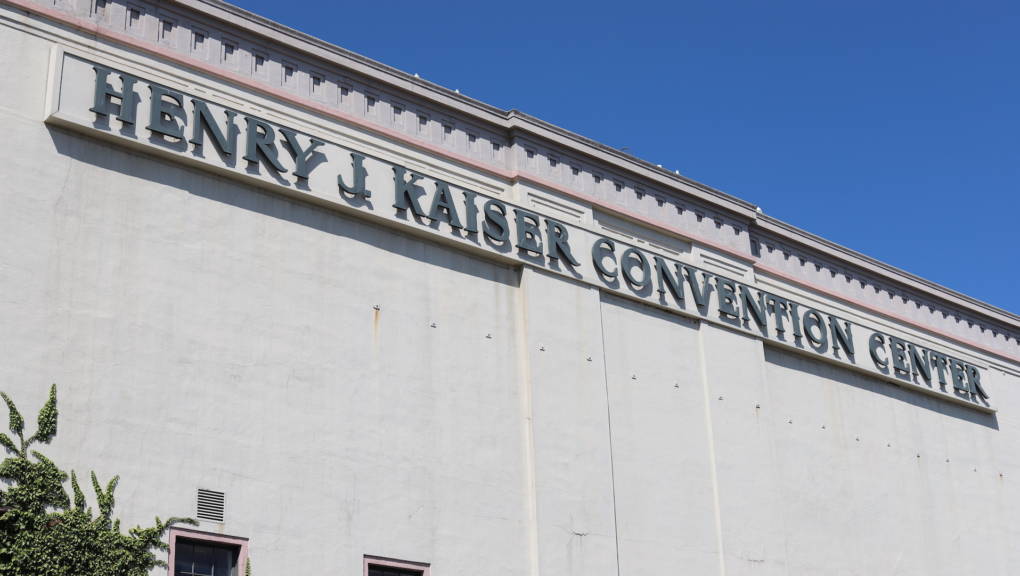
henry j. kaiser convention centerhenry j. kaiser convention center
How an Old Friendship Brought Chaka Khan to an Oakland Stage
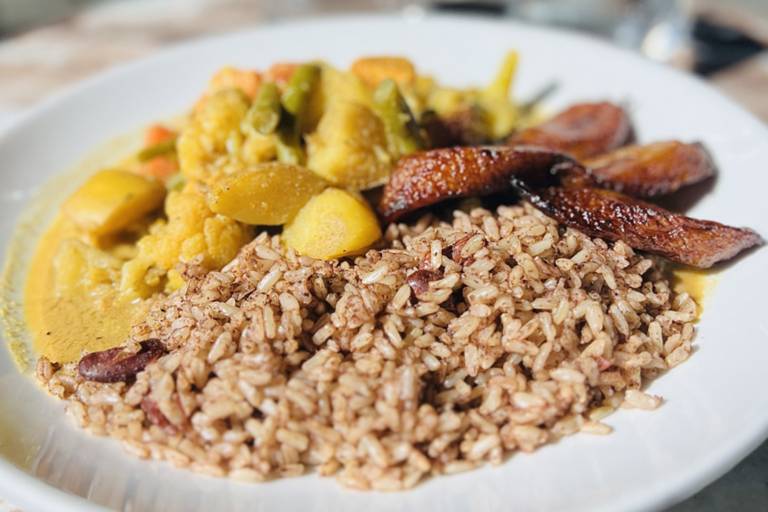
Oakland Celebrates 100 Years of Black History With a Night of Culture and Creativity — and Free Food
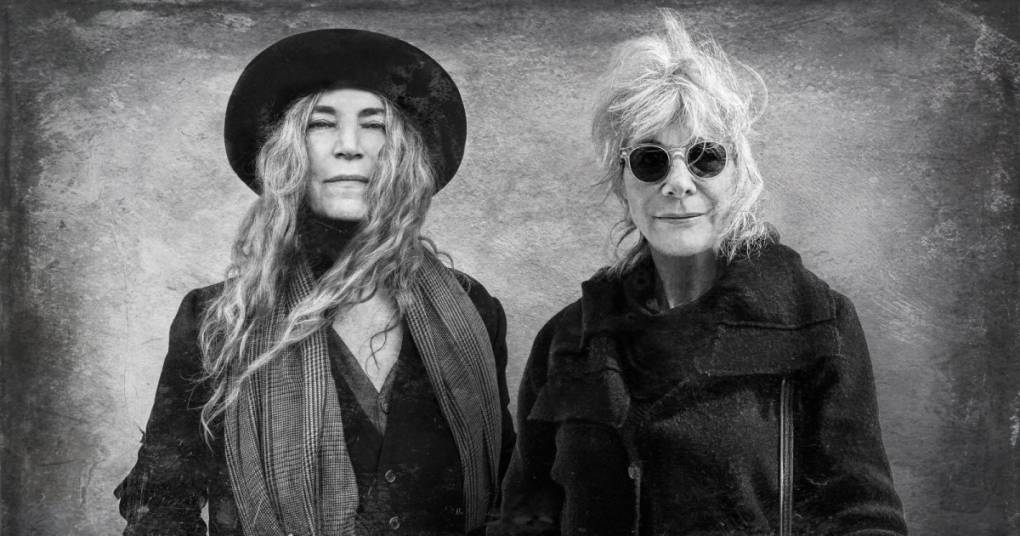
Patti Smith and Lynn Goldsmith Discuss New Book in Newly Reopened Theater
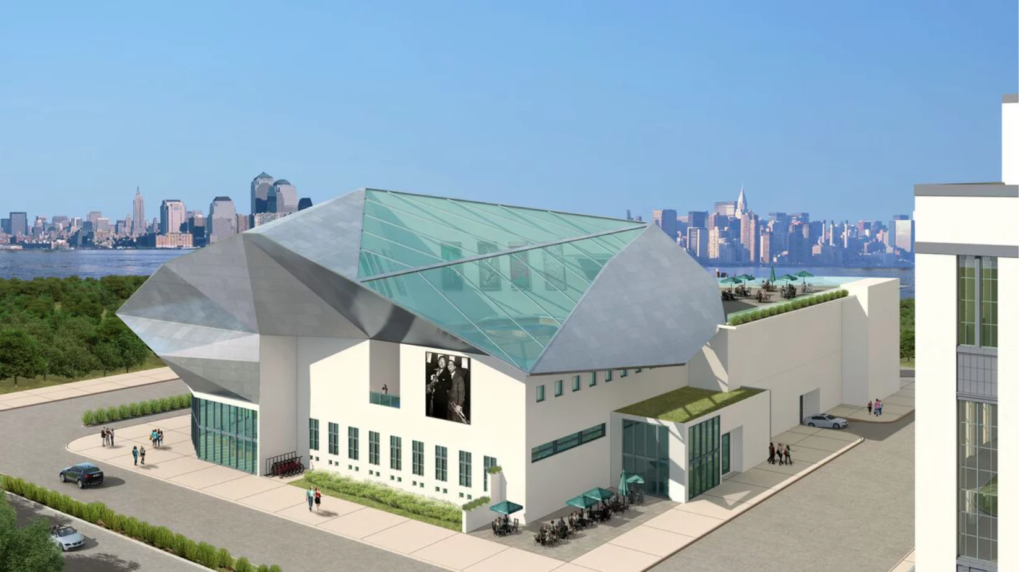
Proposed Oakland Museum of Jazz and Art for City-Owned Site Moves Forward
Oakland Museum of California to Undergo $20m Renovation to Exterior, Courtyard
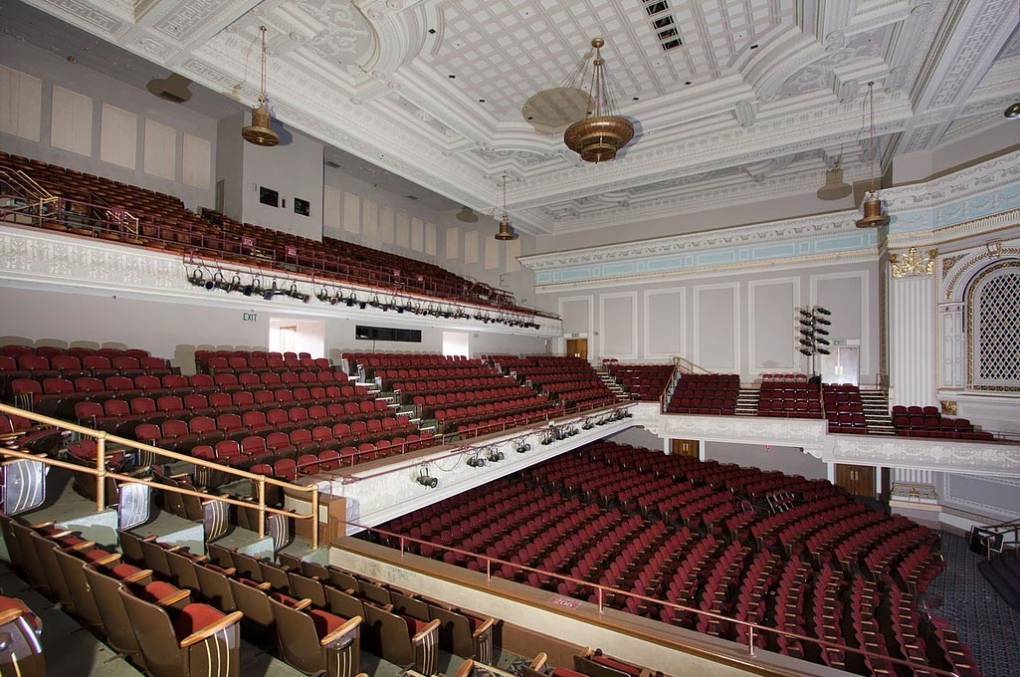
Kaiser Auditorium Redevelopment Proceeds With ‘Permanent Affordability’ for Arts Groups
'No Public Benefit': Arts Groups Challenge Kaiser Auditorium Redevelopment Plan
Player sponsored by
window.__IS_SSR__=true
window.__INITIAL_STATE__={
"attachmentsReducer": {
"audio_0": {
"type": "attachments",
"id": "audio_0",
"imgSizes": {
"kqedFullSize": {
"file": "https://ww2.kqed.org/news/wp-content/themes/KQED-unified/img/audio_bgs/background0.jpg"
}
}
},
"audio_1": {
"type": "attachments",
"id": "audio_1",
"imgSizes": {
"kqedFullSize": {
"file": "https://ww2.kqed.org/news/wp-content/themes/KQED-unified/img/audio_bgs/background1.jpg"
}
}
},
"audio_2": {
"type": "attachments",
"id": "audio_2",
"imgSizes": {
"kqedFullSize": {
"file": "https://ww2.kqed.org/news/wp-content/themes/KQED-unified/img/audio_bgs/background2.jpg"
}
}
},
"audio_3": {
"type": "attachments",
"id": "audio_3",
"imgSizes": {
"kqedFullSize": {
"file": "https://ww2.kqed.org/news/wp-content/themes/KQED-unified/img/audio_bgs/background3.jpg"
}
}
},
"audio_4": {
"type": "attachments",
"id": "audio_4",
"imgSizes": {
"kqedFullSize": {
"file": "https://ww2.kqed.org/news/wp-content/themes/KQED-unified/img/audio_bgs/background4.jpg"
}
}
},
"placeholder": {
"type": "attachments",
"id": "placeholder",
"imgSizes": {
"thumbnail": {
"file": "https://cdn.kqed.org/wp-content/uploads/2024/12/KQED-Default-Image-816638274-2000x1333-1-160x107.jpg",
"width": 160,
"height": 107,
"mimeType": "image/jpeg"
},
"medium": {
"file": "https://cdn.kqed.org/wp-content/uploads/2024/12/KQED-Default-Image-816638274-2000x1333-1-800x533.jpg",
"width": 800,
"height": 533,
"mimeType": "image/jpeg"
},
"medium_large": {
"file": "https://cdn.kqed.org/wp-content/uploads/2024/12/KQED-Default-Image-816638274-2000x1333-1-768x512.jpg",
"width": 768,
"height": 512,
"mimeType": "image/jpeg"
},
"large": {
"file": "https://cdn.kqed.org/wp-content/uploads/2024/12/KQED-Default-Image-816638274-2000x1333-1-1020x680.jpg",
"width": 1020,
"height": 680,
"mimeType": "image/jpeg"
},
"1536x1536": {
"file": "https://cdn.kqed.org/wp-content/uploads/2024/12/KQED-Default-Image-816638274-2000x1333-1-1536x1024.jpg",
"width": 1536,
"height": 1024,
"mimeType": "image/jpeg"
},
"fd-lrg": {
"file": "https://cdn.kqed.org/wp-content/uploads/2024/12/KQED-Default-Image-816638274-2000x1333-1-1536x1024.jpg",
"width": 1536,
"height": 1024,
"mimeType": "image/jpeg"
},
"fd-med": {
"file": "https://cdn.kqed.org/wp-content/uploads/2024/12/KQED-Default-Image-816638274-2000x1333-1-1020x680.jpg",
"width": 1020,
"height": 680,
"mimeType": "image/jpeg"
},
"fd-sm": {
"file": "https://cdn.kqed.org/wp-content/uploads/2024/12/KQED-Default-Image-816638274-2000x1333-1-800x533.jpg",
"width": 800,
"height": 533,
"mimeType": "image/jpeg"
},
"post-thumbnail": {
"file": "https://cdn.kqed.org/wp-content/uploads/2024/12/KQED-Default-Image-816638274-2000x1333-1-672x372.jpg",
"width": 672,
"height": 372,
"mimeType": "image/jpeg"
},
"twentyfourteen-full-width": {
"file": "https://cdn.kqed.org/wp-content/uploads/2024/12/KQED-Default-Image-816638274-2000x1333-1-1038x576.jpg",
"width": 1038,
"height": 576,
"mimeType": "image/jpeg"
},
"xxsmall": {
"file": "https://cdn.kqed.org/wp-content/uploads/2024/12/KQED-Default-Image-816638274-2000x1333-1-160x107.jpg",
"width": 160,
"height": 107,
"mimeType": "image/jpeg"
},
"xsmall": {
"file": "https://cdn.kqed.org/wp-content/uploads/2024/12/KQED-Default-Image-816638274-2000x1333-1-672x372.jpg",
"width": 672,
"height": 372,
"mimeType": "image/jpeg"
},
"small": {
"file": "https://cdn.kqed.org/wp-content/uploads/2024/12/KQED-Default-Image-816638274-2000x1333-1-672x372.jpg",
"width": 672,
"height": 372,
"mimeType": "image/jpeg"
},
"xlarge": {
"file": "https://cdn.kqed.org/wp-content/uploads/2024/12/KQED-Default-Image-816638274-2000x1333-1-1020x680.jpg",
"width": 1020,
"height": 680,
"mimeType": "image/jpeg"
},
"full-width": {
"file": "https://cdn.kqed.org/wp-content/uploads/2024/12/KQED-Default-Image-816638274-2000x1333-1-1920x1280.jpg",
"width": 1920,
"height": 1280,
"mimeType": "image/jpeg"
},
"guest-author-32": {
"file": "https://cdn.kqed.org/wp-content/uploads/2025/01/KQED-Default-Image-816638274-1333x1333-1-160x160.jpg",
"width": 32,
"height": 32,
"mimeType": "image/jpeg"
},
"guest-author-50": {
"file": "https://cdn.kqed.org/wp-content/uploads/2025/01/KQED-Default-Image-816638274-1333x1333-1-160x160.jpg",
"width": 50,
"height": 50,
"mimeType": "image/jpeg"
},
"guest-author-64": {
"file": "https://cdn.kqed.org/wp-content/uploads/2025/01/KQED-Default-Image-816638274-1333x1333-1-160x160.jpg",
"width": 64,
"height": 64,
"mimeType": "image/jpeg"
},
"guest-author-96": {
"file": "https://cdn.kqed.org/wp-content/uploads/2025/01/KQED-Default-Image-816638274-1333x1333-1-160x160.jpg",
"width": 96,
"height": 96,
"mimeType": "image/jpeg"
},
"guest-author-128": {
"file": "https://cdn.kqed.org/wp-content/uploads/2025/01/KQED-Default-Image-816638274-1333x1333-1-160x160.jpg",
"width": 128,
"height": 128,
"mimeType": "image/jpeg"
},
"detail": {
"file": "https://cdn.kqed.org/wp-content/uploads/2025/01/KQED-Default-Image-816638274-1333x1333-1-160x160.jpg",
"width": 160,
"height": 160,
"mimeType": "image/jpeg"
},
"kqedFullSize": {
"file": "https://cdn.kqed.org/wp-content/uploads/2024/12/KQED-Default-Image-816638274-2000x1333-1.jpg",
"width": 2000,
"height": 1333
}
}
},
"arts_13990155": {
"type": "attachments",
"id": "arts_13990155",
"meta": {
"index": "attachments_1716263798",
"site": "arts",
"id": "13990155",
"found": true
},
"title": "052026CHAKA KHAN!_GH_011-KQED",
"publishDate": 1779469884,
"status": "inherit",
"parent": 0,
"modified": 1779469904,
"caption": "Chaka Khan performs at the Henry J. Kaiser Center for the Arts in Oakland on May 20, 2026.",
"credit": "Gustavo Hernandez/KQED",
"altTag": null,
"description": null,
"imgSizes": {
"thumbnail": {
"file": "https://cdn.kqed.org/wp-content/uploads/sites/2/2026/05/052026CHAKA-KHAN_GH_011-KQED-160x107.jpg",
"width": 160,
"height": 107,
"mimeType": "image/jpeg"
},
"medium_large": {
"file": "https://cdn.kqed.org/wp-content/uploads/sites/2/2026/05/052026CHAKA-KHAN_GH_011-KQED-768x512.jpg",
"width": 768,
"height": 512,
"mimeType": "image/jpeg"
},
"1536x1536": {
"file": "https://cdn.kqed.org/wp-content/uploads/sites/2/2026/05/052026CHAKA-KHAN_GH_011-KQED-1536x1024.jpg",
"width": 1536,
"height": 1024,
"mimeType": "image/jpeg"
},
"post-thumbnail": {
"file": "https://cdn.kqed.org/wp-content/uploads/sites/2/2026/05/052026CHAKA-KHAN_GH_011-KQED-672x372.jpg",
"width": 672,
"height": 372,
"mimeType": "image/jpeg"
},
"twentyfourteen-full-width": {
"file": "https://cdn.kqed.org/wp-content/uploads/sites/2/2026/05/052026CHAKA-KHAN_GH_011-KQED-1038x576.jpg",
"width": 1038,
"height": 576,
"mimeType": "image/jpeg"
},
"npr-cds-wide": {
"file": "https://cdn.kqed.org/wp-content/uploads/sites/2/2026/05/052026CHAKA-KHAN_GH_011-KQED-1200x675.jpg",
"width": 1200,
"height": 675,
"mimeType": "image/jpeg"
},
"npr-cds-square": {
"file": "https://cdn.kqed.org/wp-content/uploads/sites/2/2026/05/052026CHAKA-KHAN_GH_011-KQED-600x600.jpg",
"width": 600,
"height": 600,
"mimeType": "image/jpeg"
},
"kqedFullSize": {
"file": "https://cdn.kqed.org/wp-content/uploads/sites/2/2026/05/052026CHAKA-KHAN_GH_011-KQED.jpg",
"width": 2000,
"height": 1333
}
},
"isLoading": false,
"fetchFailed": false
},
"arts_13987174": {
"type": "attachments",
"id": "arts_13987174",
"meta": {
"index": "attachments_1716263798",
"site": "arts",
"id": "13987174",
"found": true
},
"title": "calabash rice and plantains",
"publishDate": 1772133129,
"status": "inherit",
"parent": 13987170,
"modified": 1772133381,
"caption": "A plate of rice and peas with vegetable curry from Calabash. The Jamaican restaurant is one of several Oakland food businesses serving free tastes at the city's Black History Month event on Feb. 26, 2026.",
"credit": "Courtesy of Calabash",
"altTag": "A plate of Jamaican rice and peas with vegetable curry.",
"description": null,
"imgSizes": {
"thumbnail": {
"file": "https://cdn.kqed.org/wp-content/uploads/sites/2/2026/02/calabash-rice-and-plantains-160x107.jpg",
"width": 160,
"height": 107,
"mimeType": "image/jpeg"
},
"medium_large": {
"file": "https://cdn.kqed.org/wp-content/uploads/sites/2/2026/02/calabash-rice-and-plantains-768x512.jpg",
"width": 768,
"height": 512,
"mimeType": "image/jpeg"
},
"1536x1536": {
"file": "https://cdn.kqed.org/wp-content/uploads/sites/2/2026/02/calabash-rice-and-plantains-1536x1024.jpg",
"width": 1536,
"height": 1024,
"mimeType": "image/jpeg"
},
"post-thumbnail": {
"file": "https://cdn.kqed.org/wp-content/uploads/sites/2/2026/02/calabash-rice-and-plantains-672x372.jpg",
"width": 672,
"height": 372,
"mimeType": "image/jpeg"
},
"twentyfourteen-full-width": {
"file": "https://cdn.kqed.org/wp-content/uploads/sites/2/2026/02/calabash-rice-and-plantains-1038x576.jpg",
"width": 1038,
"height": 576,
"mimeType": "image/jpeg"
},
"npr-cds-wide": {
"file": "https://cdn.kqed.org/wp-content/uploads/sites/2/2026/02/calabash-rice-and-plantains-1200x675.jpg",
"width": 1200,
"height": 675,
"mimeType": "image/jpeg"
},
"kqedFullSize": {
"file": "https://cdn.kqed.org/wp-content/uploads/sites/2/2026/02/calabash-rice-and-plantains.jpg",
"width": 2000,
"height": 1333
}
},
"isLoading": false,
"fetchFailed": false
},
"arts_13966104": {
"type": "attachments",
"id": "arts_13966104",
"meta": {
"index": "attachments_1716263798",
"site": "arts",
"id": "13966104",
"found": true
},
"title": "Smith.Goldsmith.jpg",
"publishDate": 1728067937,
"status": "inherit",
"parent": 13966099,
"modified": 1728067962,
"caption": "(L–R) Patti Smith and Lynn Goldsmith.",
"credit": "Courtesy Noise Pop",
"altTag": null,
"description": null,
"imgSizes": {
"medium": {
"file": "https://cdn.kqed.org/wp-content/uploads/sites/2/2024/10/Smith.Goldsmith.jpg-800x420.jpg",
"width": 800,
"height": 420,
"mimeType": "image/jpeg"
},
"large": {
"file": "https://cdn.kqed.org/wp-content/uploads/sites/2/2024/10/Smith.Goldsmith.jpg-1020x536.jpg",
"width": 1020,
"height": 536,
"mimeType": "image/jpeg"
},
"thumbnail": {
"file": "https://cdn.kqed.org/wp-content/uploads/sites/2/2024/10/Smith.Goldsmith.jpg-160x84.jpg",
"width": 160,
"height": 84,
"mimeType": "image/jpeg"
},
"medium_large": {
"file": "https://cdn.kqed.org/wp-content/uploads/sites/2/2024/10/Smith.Goldsmith.jpg-768x403.jpg",
"width": 768,
"height": 403,
"mimeType": "image/jpeg"
},
"post-thumbnail": {
"file": "https://cdn.kqed.org/wp-content/uploads/sites/2/2024/10/Smith.Goldsmith.jpg-672x372.jpg",
"width": 672,
"height": 372,
"mimeType": "image/jpeg"
},
"twentyfourteen-full-width": {
"file": "https://cdn.kqed.org/wp-content/uploads/sites/2/2024/10/Smith.Goldsmith.jpg-1038x576.jpg",
"width": 1038,
"height": 576,
"mimeType": "image/jpeg"
},
"kqedFullSize": {
"file": "https://cdn.kqed.org/wp-content/uploads/sites/2/2024/10/Smith.Goldsmith.jpg.jpg",
"width": 1200,
"height": 630
}
},
"isLoading": false,
"fetchFailed": false
},
"arts_13869507": {
"type": "attachments",
"id": "arts_13869507",
"meta": {
"index": "attachments_1716263798",
"site": "arts",
"id": "13869507",
"found": true
},
"parent": 13869505,
"imgSizes": {
"twentyfourteen-full-width": {
"file": "https://ww2.kqed.org/app/uploads/sites/2/2019/11/Screen-Shot-2019-11-06-at-9.36.10-AM-1038x576.png",
"width": 1038,
"mimeType": "image/png",
"height": 576
},
"thumbnail": {
"file": "https://ww2.kqed.org/app/uploads/sites/2/2019/11/Screen-Shot-2019-11-06-at-9.36.10-AM-160x90.png",
"width": 160,
"mimeType": "image/png",
"height": 90
},
"post-thumbnail": {
"file": "https://ww2.kqed.org/app/uploads/sites/2/2019/11/Screen-Shot-2019-11-06-at-9.36.10-AM-672x372.png",
"width": 672,
"mimeType": "image/png",
"height": 372
},
"kqedFullSize": {
"file": "https://ww2.kqed.org/app/uploads/sites/2/2019/11/Screen-Shot-2019-11-06-at-9.36.10-AM.png",
"width": 1648,
"height": 924
},
"large": {
"file": "https://ww2.kqed.org/app/uploads/sites/2/2019/11/Screen-Shot-2019-11-06-at-9.36.10-AM-1020x572.png",
"width": 1020,
"mimeType": "image/png",
"height": 572
},
"complete_open_graph": {
"file": "https://ww2.kqed.org/app/uploads/sites/2/2019/11/Screen-Shot-2019-11-06-at-9.36.10-AM-1200x673.png",
"width": 1200,
"mimeType": "image/png",
"height": 673
},
"medium": {
"file": "https://ww2.kqed.org/app/uploads/sites/2/2019/11/Screen-Shot-2019-11-06-at-9.36.10-AM-800x449.png",
"width": 800,
"mimeType": "image/png",
"height": 449
},
"medium_large": {
"file": "https://ww2.kqed.org/app/uploads/sites/2/2019/11/Screen-Shot-2019-11-06-at-9.36.10-AM-768x431.png",
"width": 768,
"mimeType": "image/png",
"height": 431
}
},
"publishDate": 1573061784,
"modified": 1573061840,
"caption": "Museum of Jazz and Art concept design for Fire Alarm Building site near Lake Merritt.",
"description": "Museum of Jazz and Art concept design for Fire Alarm Building site near Lake Merritt.",
"title": "Museum of Jazz and Art concept design for Fire Alarm Building site near Lake Merritt.",
"credit": "David Allen Architectural Engineering / Courtesy Museum of Jazz and Art",
"status": "inherit",
"isLoading": false,
"fetchFailed": false
},
"arts_13865207": {
"type": "attachments",
"id": "arts_13865207",
"meta": {
"index": "attachments_1716263798",
"site": "arts",
"id": "13865207",
"found": true
},
"parent": 13865204,
"imgSizes": {
"twentyfourteen-full-width": {
"file": "https://ww2.kqed.org/app/uploads/sites/2/2019/08/OMCA_Rishell-Court-Day-1-1038x576.jpg",
"width": 1038,
"mimeType": "image/jpeg",
"height": 576
},
"thumbnail": {
"file": "https://ww2.kqed.org/app/uploads/sites/2/2019/08/OMCA_Rishell-Court-Day-1-160x87.jpg",
"width": 160,
"mimeType": "image/jpeg",
"height": 87
},
"post-thumbnail": {
"file": "https://ww2.kqed.org/app/uploads/sites/2/2019/08/OMCA_Rishell-Court-Day-1-672x372.jpg",
"width": 672,
"mimeType": "image/jpeg",
"height": 372
},
"kqedFullSize": {
"file": "https://ww2.kqed.org/app/uploads/sites/2/2019/08/OMCA_Rishell-Court-Day-1.jpg",
"width": 1920,
"height": 1042
},
"large": {
"file": "https://ww2.kqed.org/app/uploads/sites/2/2019/08/OMCA_Rishell-Court-Day-1-1020x554.jpg",
"width": 1020,
"mimeType": "image/jpeg",
"height": 554
},
"complete_open_graph": {
"file": "https://ww2.kqed.org/app/uploads/sites/2/2019/08/OMCA_Rishell-Court-Day-1-1200x651.jpg",
"width": 1200,
"mimeType": "image/jpeg",
"height": 651
},
"full-width": {
"file": "https://ww2.kqed.org/app/uploads/sites/2/2019/08/OMCA_Rishell-Court-Day-1-1920x1042.jpg",
"width": 1920,
"mimeType": "image/jpeg",
"height": 1042
},
"medium": {
"file": "https://ww2.kqed.org/app/uploads/sites/2/2019/08/OMCA_Rishell-Court-Day-1-800x434.jpg",
"width": 800,
"mimeType": "image/jpeg",
"height": 434
},
"medium_large": {
"file": "https://ww2.kqed.org/app/uploads/sites/2/2019/08/OMCA_Rishell-Court-Day-1-768x417.jpg",
"width": 768,
"mimeType": "image/jpeg",
"height": 417
}
},
"publishDate": 1567025387,
"modified": 1567028286,
"caption": "Rendering shows new entrances to Oakland Museum of California's courtyard from 12th Street along Lake Merritt.",
"description": "A rendering shows new entrances to Oakland Museum of California's courtyard from 12th Street along Lake Merritt. A massive remodel will open the museum's concrete walls.",
"title": "Rendering shows new entrances to Oakland Museum of California's courtyard from 12th Street along Lake Merritt.",
"credit": "Courtesy OMCA ",
"status": "inherit",
"isLoading": false,
"fetchFailed": false
},
"arts_13852549": {
"type": "attachments",
"id": "arts_13852549",
"meta": {
"index": "attachments_1716263798",
"site": "arts",
"id": "13852549",
"found": true
},
"parent": 13852472,
"imgSizes": {
"twentyfourteen-full-width": {
"file": "https://ww2.kqed.org/app/uploads/sites/2/2019/03/k10-1025x576.jpg",
"width": 1025,
"mimeType": "image/jpeg",
"height": 576
},
"thumbnail": {
"file": "https://ww2.kqed.org/app/uploads/sites/2/2019/03/k10-160x106.jpg",
"width": 160,
"mimeType": "image/jpeg",
"height": 106
},
"post-thumbnail": {
"file": "https://ww2.kqed.org/app/uploads/sites/2/2019/03/k10-672x372.jpg",
"width": 672,
"mimeType": "image/jpeg",
"height": 372
},
"kqedFullSize": {
"file": "https://ww2.kqed.org/app/uploads/sites/2/2019/03/k10.jpg",
"width": 1025,
"height": 680
},
"large": {
"file": "https://ww2.kqed.org/app/uploads/sites/2/2019/03/k10-1020x677.jpg",
"width": 1020,
"mimeType": "image/jpeg",
"height": 677
},
"guest-author-50": {
"file": "https://ww2.kqed.org/app/uploads/sites/2/2019/03/k10-50x50.jpg",
"width": 50,
"mimeType": "image/jpeg",
"height": 50
},
"guest-author-96": {
"file": "https://ww2.kqed.org/app/uploads/sites/2/2019/03/k10-96x96.jpg",
"width": 96,
"mimeType": "image/jpeg",
"height": 96
},
"medium": {
"file": "https://ww2.kqed.org/app/uploads/sites/2/2019/03/k10-800x531.jpg",
"width": 800,
"mimeType": "image/jpeg",
"height": 531
},
"guest-author-64": {
"file": "https://ww2.kqed.org/app/uploads/sites/2/2019/03/k10-64x64.jpg",
"width": 64,
"mimeType": "image/jpeg",
"height": 64
},
"guest-author-32": {
"file": "https://ww2.kqed.org/app/uploads/sites/2/2019/03/k10-32x32.jpg",
"width": 32,
"mimeType": "image/jpeg",
"height": 32
},
"medium_large": {
"file": "https://ww2.kqed.org/app/uploads/sites/2/2019/03/k10-768x510.jpg",
"width": 768,
"mimeType": "image/jpeg",
"height": 510
},
"guest-author-128": {
"file": "https://ww2.kqed.org/app/uploads/sites/2/2019/03/k10-128x128.jpg",
"width": 128,
"mimeType": "image/jpeg",
"height": 128
}
},
"publishDate": 1552010030,
"modified": 1552028243,
"caption": "The 1,900-seat Calvin Simmons theatre at the Oakland Civic Auditorium.",
"description": "The 1,900-seat Calvin Simmons theatre at the Oakland Civic Auditorium.",
"title": "k10",
"credit": "Frank Deras Photography/Courtesy Orton Development",
"status": "inherit",
"isLoading": false,
"fetchFailed": false
},
"arts_13859576": {
"type": "attachments",
"id": "arts_13859576",
"meta": {
"index": "attachments_1716263798",
"site": "arts",
"id": "13859576",
"found": true
},
"parent": 0,
"imgSizes": {
"twentyfourteen-full-width": {
"file": "https://ww2.kqed.org/app/uploads/sites/2/2019/06/Kaiser-Auditorium-Henry-J-KAiser-Convention-Center-Sign-1038x576.jpg",
"width": 1038,
"mimeType": "image/jpeg",
"height": 576
},
"thumbnail": {
"file": "https://ww2.kqed.org/app/uploads/sites/2/2019/06/Kaiser-Auditorium-Henry-J-KAiser-Convention-Center-Sign-160x90.jpg",
"width": 160,
"mimeType": "image/jpeg",
"height": 90
},
"post-thumbnail": {
"file": "https://ww2.kqed.org/app/uploads/sites/2/2019/06/Kaiser-Auditorium-Henry-J-KAiser-Convention-Center-Sign-672x372.jpg",
"width": 672,
"mimeType": "image/jpeg",
"height": 372
},
"kqedFullSize": {
"file": "https://ww2.kqed.org/app/uploads/sites/2/2019/06/Kaiser-Auditorium-Henry-J-KAiser-Convention-Center-Sign.jpg",
"width": 1915,
"height": 1082
},
"large": {
"file": "https://ww2.kqed.org/app/uploads/sites/2/2019/06/Kaiser-Auditorium-Henry-J-KAiser-Convention-Center-Sign-1020x576.jpg",
"width": 1020,
"mimeType": "image/jpeg",
"height": 576
},
"complete_open_graph": {
"file": "https://ww2.kqed.org/app/uploads/sites/2/2019/06/Kaiser-Auditorium-Henry-J-KAiser-Convention-Center-Sign-1200x678.jpg",
"width": 1200,
"mimeType": "image/jpeg",
"height": 678
},
"medium": {
"file": "https://ww2.kqed.org/app/uploads/sites/2/2019/06/Kaiser-Auditorium-Henry-J-KAiser-Convention-Center-Sign-800x452.jpg",
"width": 800,
"mimeType": "image/jpeg",
"height": 452
},
"medium_large": {
"file": "https://ww2.kqed.org/app/uploads/sites/2/2019/06/Kaiser-Auditorium-Henry-J-KAiser-Convention-Center-Sign-768x434.jpg",
"width": 768,
"mimeType": "image/jpeg",
"height": 434
}
},
"publishDate": 1560470932,
"modified": 1560471505,
"caption": "The Henry J. Kaiser Convention Center, for decades the center of civic life in Oakland, has been empty since 2006. ",
"description": "The Henry J. Kaiser Convention Center, for decades the center of civic life in Oakland, has been empty since 2006. ",
"title": "The Henry J. Kaiser Convention Center, for decades the center of civic life in Oakland, has been empty since 2006.",
"credit": "Sam Lefebvre/KQED",
"status": "inherit",
"isLoading": false,
"fetchFailed": false
}
},
"audioPlayerReducer": {
"postId": "stream_live",
"isPaused": true,
"isPlaying": false,
"pfsActive": false,
"pledgeModalIsOpen": true,
"playerDrawerIsOpen": false
},
"authorsReducer": {
"gmeline": {
"type": "authors",
"id": "185",
"meta": {
"index": "authors_1716337520",
"id": "185",
"found": true
},
"name": "Gabe Meline",
"firstName": "Gabe",
"lastName": "Meline",
"slug": "gmeline",
"email": "gmeline@kqed.org",
"display_author_email": true,
"staff_mastheads": [
"arts"
],
"title": "Senior Editor, KQED Arts & Culture",
"bio": "Gabe Meline entered journalism at age 15 making photocopied zines, and has since earned awards from the Edward R. Murrow Awards, the Society for Professional Journalists, the Online Journalism Awards, the Association of Alternative Newsweeklies and the California Newspaper Publishers Association. Prior to KQED, he was the editor of the \u003cem>North Bay Bohemian\u003c/em> and a touring musician. He lives with his wife and daughter in his hometown of Santa Rosa, CA.",
"avatar": "https://secure.gravatar.com/avatar/80e9715844c5fc3f07edac5b08973b76?s=600&d=blank&r=g",
"twitter": null,
"bluesky": null,
"facebook": null,
"instagram": null,
"linkedin": null,
"sites": [
{
"site": "",
"roles": [
"editor"
]
},
{
"site": "arts",
"roles": [
"administrator"
]
},
{
"site": "artschool",
"roles": [
"editor"
]
},
{
"site": "news",
"roles": [
"author"
]
},
{
"site": "pop",
"roles": [
"editor"
]
},
{
"site": "bayareabites",
"roles": [
"editor"
]
},
{
"site": "food",
"roles": [
"editor"
]
},
{
"site": "liveblog",
"roles": [
"editor"
]
},
{
"site": "hiphop",
"roles": [
"editor"
]
}
],
"headData": {
"title": "Gabe Meline | KQED",
"description": "Senior Editor, KQED Arts & Culture",
"ogImgSrc": "https://secure.gravatar.com/avatar/80e9715844c5fc3f07edac5b08973b76?s=600&d=blank&r=g",
"twImgSrc": "https://secure.gravatar.com/avatar/80e9715844c5fc3f07edac5b08973b76?s=600&d=blank&r=g"
},
"isLoading": false,
"link": "/author/gmeline"
},
"slefebvre": {
"type": "authors",
"id": "11091",
"meta": {
"index": "authors_1716337520",
"id": "11091",
"found": true
},
"name": "Sam Lefebvre",
"firstName": "Sam",
"lastName": "Lefebvre",
"slug": "slefebvre",
"email": "sdlefebvre@gmail.com",
"display_author_email": false,
"staff_mastheads": [],
"title": null,
"bio": "Sam Lefebvre is an award-winning reporter at KQED Arts. He has worked as an editor and columnist at the \u003cem>East Bay Express\u003c/em>, \u003cem>SF Weekly \u003c/em>and Impose Magazine, and his journalism and criticism has appeared in \u003cem>The New York Times\u003c/em>, the Guardian and Pitchfork.",
"avatar": "https://secure.gravatar.com/avatar/143b570c3dec13ae74c6aa2369b04fc8?s=600&d=blank&r=g",
"twitter": "Lefebvre_Sam",
"facebook": null,
"instagram": null,
"linkedin": null,
"sites": [
{
"site": "arts",
"roles": [
"editor"
]
},
{
"site": "news",
"roles": [
"author"
]
}
],
"headData": {
"title": "Sam Lefebvre | KQED",
"description": null,
"ogImgSrc": "https://secure.gravatar.com/avatar/143b570c3dec13ae74c6aa2369b04fc8?s=600&d=blank&r=g",
"twImgSrc": "https://secure.gravatar.com/avatar/143b570c3dec13ae74c6aa2369b04fc8?s=600&d=blank&r=g"
},
"isLoading": false,
"link": "/author/slefebvre"
},
"ogpenn": {
"type": "authors",
"id": "11491",
"meta": {
"index": "authors_1716337520",
"id": "11491",
"found": true
},
"name": "Pendarvis Harshaw",
"firstName": "Pendarvis",
"lastName": "Harshaw",
"slug": "ogpenn",
"email": "ogpenn@gmail.com",
"display_author_email": false,
"staff_mastheads": [
"arts"
],
"title": "Community Engagement Reporter",
"bio": "Pendarvis Harshaw is an educator, host and writer with KQED Arts.",
"avatar": "https://secure.gravatar.com/avatar/093d33baff5354890e29ad83d58d2c49?s=600&d=blank&r=g",
"twitter": null,
"bluesky": null,
"facebook": null,
"instagram": "ogpenn",
"linkedin": null,
"sites": [
{
"site": "arts",
"roles": [
"editor"
]
},
{
"site": "news",
"roles": [
"editor"
]
},
{
"site": "bayareabites",
"roles": [
"author"
]
},
{
"site": "hiphop",
"roles": [
"editor"
]
}
],
"headData": {
"title": "Pendarvis Harshaw | KQED",
"description": "Community Engagement Reporter",
"ogImgSrc": "https://secure.gravatar.com/avatar/093d33baff5354890e29ad83d58d2c49?s=600&d=blank&r=g",
"twImgSrc": "https://secure.gravatar.com/avatar/093d33baff5354890e29ad83d58d2c49?s=600&d=blank&r=g"
},
"isLoading": false,
"link": "/author/ogpenn"
},
"ltsai": {
"type": "authors",
"id": "11743",
"meta": {
"index": "authors_1716337520",
"id": "11743",
"found": true
},
"name": "Luke Tsai",
"firstName": "Luke",
"lastName": "Tsai",
"slug": "ltsai",
"email": "ltsai@kqed.org",
"display_author_email": true,
"staff_mastheads": [
"arts"
],
"title": "Food Editor",
"bio": "Luke Tsai is KQED's food editor and resident stinky tofu connoisseur. Prior to KQED, he was an editor at Eater SF, \u003cem>San Francisco \u003c/em>magazine, and the \u003cem>East Bay Express\u003c/em>, and his work has also appeared in TASTE, the \u003cem>San Francisco Chronicle\u003c/em>, and the \u003cem>Best Food Writing\u003c/em> anthology. When he isn't writing or editing, you'll find him eating most everything he can get his hands on.",
"avatar": "https://secure.gravatar.com/avatar/d1ff591a3047b143a0e23cf7f28fcac0?s=600&d=blank&r=g",
"twitter": "theluketsai",
"bluesky": null,
"facebook": null,
"instagram": null,
"linkedin": null,
"sites": [
{
"site": "",
"roles": [
"editor"
]
},
{
"site": "arts",
"roles": [
"administrator"
]
},
{
"site": "news",
"roles": [
"editor",
"contributor"
]
},
{
"site": "bayareabites",
"roles": [
"editor"
]
},
{
"site": "food",
"roles": [
"editor"
]
}
],
"headData": {
"title": "Luke Tsai | KQED",
"description": "Food Editor",
"ogImgSrc": "https://secure.gravatar.com/avatar/d1ff591a3047b143a0e23cf7f28fcac0?s=600&d=blank&r=g",
"twImgSrc": "https://secure.gravatar.com/avatar/d1ff591a3047b143a0e23cf7f28fcac0?s=600&d=blank&r=g"
},
"isLoading": false,
"link": "/author/ltsai"
}
},
"breakingNewsReducer": {},
"pagesReducer": {},
"postsReducer": {
"stream_live": {
"type": "live",
"id": "stream_live",
"audioUrl": "https://streams.kqed.org/kqedradio",
"title": "Live Stream",
"excerpt": "Live Stream information currently unavailable.",
"link": "/radio",
"featImg": "",
"label": {
"name": "KQED Live",
"link": "/"
}
},
"stream_kqedNewscast": {
"type": "posts",
"id": "stream_kqedNewscast",
"audioUrl": "https://www.kqed.org/.stream/anon/radio/RDnews/newscast.mp3?_=1",
"title": "KQED Newscast",
"featImg": "",
"label": {
"name": "88.5 FM",
"link": "/"
}
},
"arts_13990169": {
"type": "posts",
"id": "arts_13990169",
"meta": {
"index": "posts_1716263798",
"site": "arts",
"id": "13990169",
"score": null,
"sort": [
1779912455000
]
},
"guestAuthors": [],
"slug": "chaka-khan-chann-berry-henry-j-kaiser-oakland",
"title": "How an Old Friendship Brought Chaka Khan to an Oakland Stage",
"publishDate": 1779912455,
"format": "standard",
"headTitle": "How an Old Friendship Brought Chaka Khan to an Oakland Stage | KQED",
"labelTerm": {
"site": "arts"
},
"content": "\u003cp>Last Wednesday night, as Chaka Khan’s song “\u003ca href=\"https://www.youtube.com/watch?v=RecY5iZn6B0\">Like Sugar\u003c/a>” blasted over the sound system at the Calvin Simmons Theatre at Oakland’s Henry J. Kaiser Center for the Arts, rows of folks in fly attire stood and danced.\u003c/p>\n\n\n\n\u003cp>On stage, wearing an all-black ensemble complete with golden rings on her fingers, her trademark auburn-colored hair flowing beyond her shoulders, 10-time Grammy Award-winning vocalist Chaka Khan danced as well.\u003c/p>\n\n\n\n\u003cp>The crowd had just taken in a fireside chat that covered a range of topics from Khan’s career: Sarah Vaughan’s influence; her experience with the group Rufus; raising children while traveling and performing; and the feeling of owning 80 acres of land in Georgia.\u003c/p>\n\n\n\n\u003cp>Khan opened up about her time as a member of the Black Panther Party for Self-Defense in Chicago, where she was a friend of the late Chairman Fred Hampton. And she took questions from the crowd; at one point she got an aspiring singer to perform on the spot.\u003c/p>\n\n\n\n\u003cp>During the event, Khan also sang, performing the songs “\u003ca href=\"https://www.youtube.com/watch?v=QEHkZi5m8dI\">Destiny\u003c/a>,” “\u003ca href=\"https://www.youtube.com/watch?v=aCdDQPPhHzg\">Alfie\u003c/a>,” “\u003ca href=\"https://www.youtube.com/watch?v=fyLKYWiUMxs\">I Love You Porgy\u003c/a>,” and “\u003ca href=\"https://www.youtube.com/watch?v=OVI2I9m7ybM\">Love Me Still\u003c/a>” to thunderous applause.\u003c/p>\n\n\n\n\u003cfigure class=\"wp-block-image size-full\">\u003cimg loading=\"lazy\" decoding=\"async\" width=\"2000\" height=\"1333\" src=\"https://cdn.kqed.org/wp-content/uploads/sites/2/2026/05/052026CHAKA-KHAN_GH_008-KQED.jpg\" alt=\"Black woman and Black man stride across stage in front of large audience\" class=\"wp-image-13990153\" srcset=\"https://cdn.kqed.org/wp-content/uploads/sites/2/2026/05/052026CHAKA-KHAN_GH_008-KQED.jpg 2000w, https://cdn.kqed.org/wp-content/uploads/sites/2/2026/05/052026CHAKA-KHAN_GH_008-KQED-160x107.jpg 160w, https://cdn.kqed.org/wp-content/uploads/sites/2/2026/05/052026CHAKA-KHAN_GH_008-KQED-768x512.jpg 768w, https://cdn.kqed.org/wp-content/uploads/sites/2/2026/05/052026CHAKA-KHAN_GH_008-KQED-1536x1024.jpg 1536w\" sizes=\"auto, (max-width: 2000px) 100vw, 2000px\">\u003cfigcaption class=\"wp-element-caption\">Chaka Khan and host Chann Berry walk onto the stage at the Henry J. Kaiser Center for the Arts in Oakland on May 20, 2026. (Gustavo Hernandez/KQED)\u003c/figcaption>\u003c/figure>\n\n\n\n\u003cp>The flowing performance and intimate conversation was a product of the renowned artist’s relationship to the host, filmmaker and longtime friend of Chaka Khan, \u003ca href=\"https://www.instagram.com/d.channsinberry/\">D. Channsin “Chann” Berry\u003c/a>.\u003c/p>\n\n\n\n\u003cp>[ad fullwidth]\u003c/p>\n\u003cp>“We’re spiritually aligned,” Berry tells me while discussing their friendship. “And have been for many, many, many years.”\u003c/p>\n\n\n\n\u003cp>Ahead of the event, while sitting in a dressing room with white walls and a soft evening light coming through a western-facing window, Berry tells me all about his connection with Khan and why he chose to kick off his \u003cem>Conversations in Music\u003c/em> live podcast series in Oakland.\u003c/p>\n\n\n\n\u003cp>A musician and filmmaker himself, known for producing and directing \u003cem>\u003ca href=\"https://www.imdb.com/title/tt1966396/\">Dark Girls\u003c/a>\u003c/em> (2011) and\u003cem> \u003c/em>\u003ca href=\"https://www.imdb.com/title/tt11951482/\">\u003cem>Dark Girls \u003c/em>2\u003c/a> (2020), as well as \u003cem>\u003ca href=\"https://www.imdb.com/title/tt0924207/\">The Black Line\u003c/a>\u003c/em> (2013) and\u003ca href=\"https://chicagodefender.com/149951/\"> \u003cem>The Church House… Sexuality In The Black Church\u003c/em>\u003c/a> (2015), Berry is originally from New Jersey. After attending Rutgers University he launched his career by taking a cross-country leap. \u003c/p>\n\n\n\n\u003cp>“And it was where God wanted me to be,” Berry says, discussing his move to Oakland in the 1980s. “There’s something magical and special for a young Black man coming from New Jersey or New York, and landing in the Bay.” \u003c/p>\n\n\n\n\u003cp>As an artist, he found this region nurturing. “It was just positive energy that came to me and from everybody,” says Berry, “whether I’m in Oakland or I’m in San Francisco, or I’m in Sausalito, Marin or Tiburon.”\u003c/p>\n\n\n\n\u003cfigure class=\"wp-block-image size-full\">\u003cimg loading=\"lazy\" decoding=\"async\" width=\"2000\" height=\"1333\" src=\"https://cdn.kqed.org/wp-content/uploads/sites/2/2026/05/052026CHAKA-KHAN_GH_003-KQED.jpg\" alt=\"\" class=\"wp-image-13990152\" srcset=\"https://cdn.kqed.org/wp-content/uploads/sites/2/2026/05/052026CHAKA-KHAN_GH_003-KQED.jpg 2000w, https://cdn.kqed.org/wp-content/uploads/sites/2/2026/05/052026CHAKA-KHAN_GH_003-KQED-160x107.jpg 160w, https://cdn.kqed.org/wp-content/uploads/sites/2/2026/05/052026CHAKA-KHAN_GH_003-KQED-768x512.jpg 768w, https://cdn.kqed.org/wp-content/uploads/sites/2/2026/05/052026CHAKA-KHAN_GH_003-KQED-1536x1024.jpg 1536w\" sizes=\"auto, (max-width: 2000px) 100vw, 2000px\">\u003cfigcaption class=\"wp-element-caption\">Filmmaker and talk show host Chann Berry poses backstage before ‘Conversations in Music’ with special guest Chaka Khan at the Henry J. Kaiser Center for the Arts in Oakland on May 20, 2026. (Gustavo Hernandez/KQED)\u003c/figcaption>\u003c/figure>\n\n\n\n\u003cp>He harnessed that positive energy and support, and over the span of a decade he produced his first film, titled \u003cem>My Father’s Music… Jazz\u003c/em>. The documentary featured Dizzy Gillespie, Max Roach, Miles Davis, Mary Stallings, Stanley Turrentine, Oscar Peterson, Joe Williams, Chaka Khan and Carlos Santana.\u003c/p>\n\n\n\n\u003cp>“It premiered at the Castro in San Francisco to a packed audience,” says Berry, who at the time was terrified because he pieced the whole film together with pocket money earned while working multiple media-related jobs, including as a jock on 102.9 KBLX. “I saved up my coins — and a lot of people helped me out as well — and did my first film.”\u003c/p>\n\n\n\n\u003cp>Berry later moved to Los Angeles. For eight years he worked in development for feature films at Disney, delivering million dollar checks and learning how the industry works. “I got a chance to find out what the business was all about from the mouse,” Berry says with a laugh.\u003c/p>\n\n\n\n\u003cp>A filmmaker and songwriter, his career has included collaborations with the likes of Bill Duke, Oprah and Prince. \u003c/p>\n\n\n\n\u003cp>“I wrote a song for Rosie Gaines,” Berry says, referring to the singer from Pittsburg known for her hit song “\u003ca href=\"https://www.youtube.com/watch?v=SUlBXdjG-Z8\">Closer than Close\u003c/a>,” and her duet with Tevin Campbell from the film\u003cem> A Goofy Movie,\u003c/em> “\u003ca href=\"https://www.youtube.com/watch?v=j4asUD0Ip5c\">I2I\u003c/a>” (Eye to Eye). \u003c/p>\n\n\n\n\u003cp>Gaines, a member of Prince’s New Power Generation group, worked with Prince to “Pain,” a song Berry wrote. Then she called Berry. “She told me to sit down,” says Berry. “Prince gets on the phone, and then he’s like ‘Nice to meet you. Funky song, man. I hope you like what I did to it.’” The musicians then played the song over the phone. \u003c/p>\n\n\n\n\u003cp>“I was just laid out, man!” Berry exclaims, eyes growing wide behind his glasses. \u003c/p>\n\n\n\n\u003cfigure class=\"wp-block-image size-full\">\u003cimg loading=\"lazy\" decoding=\"async\" width=\"2000\" height=\"1333\" src=\"https://cdn.kqed.org/wp-content/uploads/sites/2/2026/05/052026CHAKA-KHAN_GH_014-KQED.jpg\" alt=\"\" class=\"wp-image-13990156\" srcset=\"https://cdn.kqed.org/wp-content/uploads/sites/2/2026/05/052026CHAKA-KHAN_GH_014-KQED.jpg 2000w, https://cdn.kqed.org/wp-content/uploads/sites/2/2026/05/052026CHAKA-KHAN_GH_014-KQED-160x107.jpg 160w, https://cdn.kqed.org/wp-content/uploads/sites/2/2026/05/052026CHAKA-KHAN_GH_014-KQED-768x512.jpg 768w, https://cdn.kqed.org/wp-content/uploads/sites/2/2026/05/052026CHAKA-KHAN_GH_014-KQED-1536x1024.jpg 1536w\" sizes=\"auto, (max-width: 2000px) 100vw, 2000px\">\u003cfigcaption class=\"wp-element-caption\">Audience members arrive and gather in the lobby before ‘Conversations in Music’ featuring Chaka Khan at the Henry J. Kaiser Center for the Arts in Oakland on May 20, 2026. (Gustavo Hernandez/KQED)\u003c/figcaption>\u003c/figure>\n\n\n\n\u003cp>Due to Prince’s conflict with Warner Bros. at the time, their version of the song was never released. Berry took it back and Chaka Khan later recorded it. “\u003ca href=\"https://www.youtube.com/watch?v=8YKl25pRHlY\">Pain\u003c/a>” appeared on the soundtrack for the hit TV show \u003cem>Living Single.\u003c/em> \u003c/p>\n\n\n\n\u003cp>But his connection with Khan goes back far before that track, and prior to Berry’s first film.\u003c/p>\n\n\n\n\u003cp>“I was like 16, she was 21,” Berry says, discussing their first interaction. “She was with Rufus, and they had come to North New Jersey, to Symphony Hall, to do a concert. And I was a fan.” He met her backstage and their friendship developed from there.\u003c/p>\n\n\n\n\u003cp>As Berry worked, he learned to navigate “the system” by retaining independence as a film producer. He locked in on telling stories that center Black women, tailoring his works for Black audiences. And at the same time, Khan’s career progressed profoundly.\u003c/p>\n\n\n\n\u003cp>Now, after numerous hit songs and dealing with the highs and lows of stardom, Khan is a member of the Rock & Roll of Fame. \u003c/p>\n\n\n\n\u003cp>Her music has influenced generations, and her songs have been widely sampled. One of Kanye West’s first hits, “Through The Wire” was pulled from Khan’s 1985 groove “Through the Fire.” And Mac Dre’s classic “Too Hard for The F*ckin Radio,” which was recently interpolated by Drake, was built on a sample from Khan’s “Tell Me Something Good” (which was written by Stevie Wonder).\u003c/p>\n\n\n\n\u003cfigure class=\"wp-block-image size-full\">\u003cimg loading=\"lazy\" decoding=\"async\" width=\"2000\" height=\"1333\" src=\"https://cdn.kqed.org/wp-content/uploads/sites/2/2026/05/052026CHAKA-KHAN_GH_009-KQED.jpg\" alt=\"\" class=\"wp-image-13990154\" srcset=\"https://cdn.kqed.org/wp-content/uploads/sites/2/2026/05/052026CHAKA-KHAN_GH_009-KQED.jpg 2000w, https://cdn.kqed.org/wp-content/uploads/sites/2/2026/05/052026CHAKA-KHAN_GH_009-KQED-160x107.jpg 160w, https://cdn.kqed.org/wp-content/uploads/sites/2/2026/05/052026CHAKA-KHAN_GH_009-KQED-768x512.jpg 768w, https://cdn.kqed.org/wp-content/uploads/sites/2/2026/05/052026CHAKA-KHAN_GH_009-KQED-1536x1024.jpg 1536w\" sizes=\"auto, (max-width: 2000px) 100vw, 2000px\">\u003cfigcaption class=\"wp-element-caption\">Audience members listen as Chaka Khan speaks during ‘Conversations in Music’ at the Henry J. Kaiser Center for the Arts in Oakland on May 20, 2026. (Gustavo Hernandez/KQED)\u003c/figcaption>\u003c/figure>\n\n\n\n\u003cp>When asked why he’d start his series of live podcast events by interviewing Chaka Khan, Berry simply retorts, “Because she’s an icon.”\u003c/p>\n\n\n\n\u003cp>He adds that Khan is one of “the last great vocalists of our time.” He puts her alongside Aretha Franklin, Mahalia Jackson and Barbra Streisand as voices we’ll never hear again. \u003c/p>\n\n\n\n\u003cp>Despite the lofty admiration, their close relationship was on display all evening. The audience laughed and made comments as the duo talked like two old friends having a phone conversation. And at the end of the event, they showed just how in-step they are.\u003c/p>\n\n\n\n\u003cp>[ad floatright]\u003c/p>\n\u003cp>As “Like Sugar” played over the sound system and the audience got up to dance, Khan’s old friend was the first one two-stepping alongside her.\u003c/p>\n\n",
"blocks": [
{
"blockName": "core/paragraph",
"attrs": [],
"innerHTML": "\n\u003cp>Last Wednesday night, as Chaka Khan’s song “\u003ca href=\"https://www.youtube.com/watch?v=RecY5iZn6B0\">Like Sugar\u003c/a>” blasted over the sound system at the Calvin Simmons Theatre at Oakland’s Henry J. Kaiser Center for the Arts, rows of folks in fly attire stood and danced.\u003c/p>\n",
"innerContent": [
"\n\u003cp>Last Wednesday night, as Chaka Khan’s song “\u003ca href=\"https://www.youtube.com/watch?v=RecY5iZn6B0\">Like Sugar\u003c/a>” blasted over the sound system at the Calvin Simmons Theatre at Oakland’s Henry J. Kaiser Center for the Arts, rows of folks in fly attire stood and danced.\u003c/p>\n"
],
"innerBlocks": []
},
{
"blockName": "core/paragraph",
"attrs": [],
"innerHTML": "\n\u003cp>On stage, wearing an all-black ensemble complete with golden rings on her fingers, her trademark auburn-colored hair flowing beyond her shoulders, 10-time Grammy Award-winning vocalist Chaka Khan danced as well.\u003c/p>\n",
"innerContent": [
"\n\u003cp>On stage, wearing an all-black ensemble complete with golden rings on her fingers, her trademark auburn-colored hair flowing beyond her shoulders, 10-time Grammy Award-winning vocalist Chaka Khan danced as well.\u003c/p>\n"
],
"innerBlocks": []
},
{
"blockName": "core/paragraph",
"attrs": [],
"innerHTML": "\n\u003cp>The crowd had just taken in a fireside chat that covered a range of topics from Khan’s career: Sarah Vaughan’s influence; her experience with the group Rufus; raising children while traveling and performing; and the feeling of owning 80 acres of land in Georgia.\u003c/p>\n",
"innerContent": [
"\n\u003cp>The crowd had just taken in a fireside chat that covered a range of topics from Khan’s career: Sarah Vaughan’s influence; her experience with the group Rufus; raising children while traveling and performing; and the feeling of owning 80 acres of land in Georgia.\u003c/p>\n"
],
"innerBlocks": []
},
{
"blockName": "core/paragraph",
"attrs": [],
"innerHTML": "\n\u003cp>Khan opened up about her time as a member of the Black Panther Party for Self-Defense in Chicago, where she was a friend of the late Chairman Fred Hampton. And she took questions from the crowd; at one point she got an aspiring singer to perform on the spot.\u003c/p>\n",
"innerContent": [
"\n\u003cp>Khan opened up about her time as a member of the Black Panther Party for Self-Defense in Chicago, where she was a friend of the late Chairman Fred Hampton. And she took questions from the crowd; at one point she got an aspiring singer to perform on the spot.\u003c/p>\n"
],
"innerBlocks": []
},
{
"blockName": "core/paragraph",
"attrs": [],
"innerHTML": "\n\u003cp>During the event, Khan also sang, performing the songs “\u003ca href=\"https://www.youtube.com/watch?v=QEHkZi5m8dI\">Destiny\u003c/a>,” “\u003ca href=\"https://www.youtube.com/watch?v=aCdDQPPhHzg\">Alfie\u003c/a>,” “\u003ca href=\"https://www.youtube.com/watch?v=fyLKYWiUMxs\">I Love You Porgy\u003c/a>,” and “\u003ca href=\"https://www.youtube.com/watch?v=OVI2I9m7ybM\">Love Me Still\u003c/a>” to thunderous applause.\u003c/p>\n",
"innerContent": [
"\n\u003cp>During the event, Khan also sang, performing the songs “\u003ca href=\"https://www.youtube.com/watch?v=QEHkZi5m8dI\">Destiny\u003c/a>,” “\u003ca href=\"https://www.youtube.com/watch?v=aCdDQPPhHzg\">Alfie\u003c/a>,” “\u003ca href=\"https://www.youtube.com/watch?v=fyLKYWiUMxs\">I Love You Porgy\u003c/a>,” and “\u003ca href=\"https://www.youtube.com/watch?v=OVI2I9m7ybM\">Love Me Still\u003c/a>” to thunderous applause.\u003c/p>\n"
],
"innerBlocks": []
},
{
"blockName": "core/image",
"attrs": {
"id": 13990153,
"sizeSlug": "full",
"linkDestination": "none",
"imageCredit": "Gustavo Hernandez/KQED",
"srcset": "https://cdn.kqed.org/wp-content/uploads/sites/2/2026/05/052026CHAKA-KHAN_GH_008-KQED.jpg 2000w, https://cdn.kqed.org/wp-content/uploads/sites/2/2026/05/052026CHAKA-KHAN_GH_008-KQED-160x107.jpg 160w, https://cdn.kqed.org/wp-content/uploads/sites/2/2026/05/052026CHAKA-KHAN_GH_008-KQED-768x512.jpg 768w, https://cdn.kqed.org/wp-content/uploads/sites/2/2026/05/052026CHAKA-KHAN_GH_008-KQED-1536x1024.jpg 1536w",
"sizes": "(min-width: 992px) min(100vw, 1536px), (min-width: 768px) min(100vw, 1280px), min(100vw, 1020px)"
},
"innerHTML": "\n\u003cfigure class=\"wp-block-image size-full\">\u003cimg src=\"https://cdn.kqed.org/wp-content/uploads/sites/2/2026/05/052026CHAKA-KHAN_GH_008-KQED.jpg\" alt=\"Black woman and Black man stride across stage in front of large audience\" class=\"wp-image-13990153\" srcset=\"https://cdn.kqed.org/wp-content/uploads/sites/2/2026/05/052026CHAKA-KHAN_GH_008-KQED.jpg 2000w, https://cdn.kqed.org/wp-content/uploads/sites/2/2026/05/052026CHAKA-KHAN_GH_008-KQED-160x107.jpg 160w, https://cdn.kqed.org/wp-content/uploads/sites/2/2026/05/052026CHAKA-KHAN_GH_008-KQED-768x512.jpg 768w, https://cdn.kqed.org/wp-content/uploads/sites/2/2026/05/052026CHAKA-KHAN_GH_008-KQED-1536x1024.jpg 1536w\" sizes=\"(min-width: 992px) min(100vw, 1536px), (min-width: 768px) min(100vw, 1280px), min(100vw, 1020px)\"/>\u003cfigcaption class=\"wp-element-caption\">Chaka Khan and host Chann Berry walk onto the stage at the Henry J. Kaiser Center for the Arts in Oakland on May 20, 2026.\u003c/figcaption>\u003c/figure>\n",
"innerContent": [
"\n\u003cfigure class=\"wp-block-image size-full\">\u003cimg src=\"https://cdn.kqed.org/wp-content/uploads/sites/2/2026/05/052026CHAKA-KHAN_GH_008-KQED.jpg\" alt=\"Black woman and Black man stride across stage in front of large audience\" class=\"wp-image-13990153\"/>\u003cfigcaption class=\"wp-element-caption\">Chaka Khan and host Chann Berry walk onto the stage at the Henry J. Kaiser Center for the Arts in Oakland on May 20, 2026.\u003c/figcaption>\u003c/figure>\n"
],
"innerBlocks": []
},
{
"blockName": "core/paragraph",
"attrs": [],
"innerHTML": "\n\u003cp>The flowing performance and intimate conversation was a product of the renowned artist’s relationship to the host, filmmaker and longtime friend of Chaka Khan, \u003ca href=\"https://www.instagram.com/d.channsinberry/\">D. Channsin “Chann” Berry\u003c/a>.\u003c/p>\n",
"innerContent": [
"\n\u003cp>The flowing performance and intimate conversation was a product of the renowned artist’s relationship to the host, filmmaker and longtime friend of Chaka Khan, \u003ca href=\"https://www.instagram.com/d.channsinberry/\">D. Channsin “Chann” Berry\u003c/a>.\u003c/p>\n"
],
"innerBlocks": []
},
{
"blockName": "kqed/ad",
"attrs": {
"format": "fullwidth"
},
"innerBlocks": [],
"innerHTML": "",
"innerContent": []
},
{
"blockName": "core/paragraph",
"attrs": [],
"innerHTML": "\n\u003cp>“We’re spiritually aligned,” Berry tells me while discussing their friendship. “And have been for many, many, many years.”\u003c/p>\n",
"innerContent": [
"\n\u003cp>“We’re spiritually aligned,” Berry tells me while discussing their friendship. “And have been for many, many, many years.”\u003c/p>\n"
],
"innerBlocks": []
},
{
"blockName": "core/paragraph",
"attrs": [],
"innerHTML": "\n\u003cp>Ahead of the event, while sitting in a dressing room with white walls and a soft evening light coming through a western-facing window, Berry tells me all about his connection with Khan and why he chose to kick off his \u003cem>Conversations in Music\u003c/em> live podcast series in Oakland.\u003c/p>\n",
"innerContent": [
"\n\u003cp>Ahead of the event, while sitting in a dressing room with white walls and a soft evening light coming through a western-facing window, Berry tells me all about his connection with Khan and why he chose to kick off his \u003cem>Conversations in Music\u003c/em> live podcast series in Oakland.\u003c/p>\n"
],
"innerBlocks": []
},
{
"blockName": "core/paragraph",
"attrs": [],
"innerHTML": "\n\u003cp>A musician and filmmaker himself, known for producing and directing \u003cem>\u003ca href=\"https://www.imdb.com/title/tt1966396/\">Dark Girls\u003c/a>\u003c/em> (2011) and\u003cem> \u003c/em>\u003ca href=\"https://www.imdb.com/title/tt11951482/\">\u003cem>Dark Girls \u003c/em>2\u003c/a> (2020), as well as \u003cem>\u003ca href=\"https://www.imdb.com/title/tt0924207/\">The Black Line\u003c/a>\u003c/em> (2013) and\u003ca href=\"https://chicagodefender.com/149951/\"> \u003cem>The Church House… Sexuality In The Black Church\u003c/em>\u003c/a> (2015), Berry is originally from New Jersey. After attending Rutgers University he launched his career by taking a cross-country leap. \u003c/p>\n",
"innerContent": [
"\n\u003cp>A musician and filmmaker himself, known for producing and directing \u003cem>\u003ca href=\"https://www.imdb.com/title/tt1966396/\">Dark Girls\u003c/a>\u003c/em> (2011) and\u003cem> \u003c/em>\u003ca href=\"https://www.imdb.com/title/tt11951482/\">\u003cem>Dark Girls \u003c/em>2\u003c/a> (2020), as well as \u003cem>\u003ca href=\"https://www.imdb.com/title/tt0924207/\">The Black Line\u003c/a>\u003c/em> (2013) and\u003ca href=\"https://chicagodefender.com/149951/\"> \u003cem>The Church House… Sexuality In The Black Church\u003c/em>\u003c/a> (2015), Berry is originally from New Jersey. After attending Rutgers University he launched his career by taking a cross-country leap. \u003c/p>\n"
],
"innerBlocks": []
},
{
"blockName": "core/paragraph",
"attrs": [],
"innerHTML": "\n\u003cp>“And it was where God wanted me to be,” Berry says, discussing his move to Oakland in the 1980s. “There’s something magical and special for a young Black man coming from New Jersey or New York, and landing in the Bay.” \u003c/p>\n",
"innerContent": [
"\n\u003cp>“And it was where God wanted me to be,” Berry says, discussing his move to Oakland in the 1980s. “There’s something magical and special for a young Black man coming from New Jersey or New York, and landing in the Bay.” \u003c/p>\n"
],
"innerBlocks": []
},
{
"blockName": "core/paragraph",
"attrs": [],
"innerHTML": "\n\u003cp>As an artist, he found this region nurturing. “It was just positive energy that came to me and from everybody,” says Berry, “whether I’m in Oakland or I’m in San Francisco, or I’m in Sausalito, Marin or Tiburon.”\u003c/p>\n",
"innerContent": [
"\n\u003cp>As an artist, he found this region nurturing. “It was just positive energy that came to me and from everybody,” says Berry, “whether I’m in Oakland or I’m in San Francisco, or I’m in Sausalito, Marin or Tiburon.”\u003c/p>\n"
],
"innerBlocks": []
},
{
"blockName": "core/image",
"attrs": {
"id": 13990152,
"sizeSlug": "full",
"linkDestination": "none",
"imageCredit": "Gustavo Hernandez/KQED",
"srcset": "https://cdn.kqed.org/wp-content/uploads/sites/2/2026/05/052026CHAKA-KHAN_GH_003-KQED.jpg 2000w, https://cdn.kqed.org/wp-content/uploads/sites/2/2026/05/052026CHAKA-KHAN_GH_003-KQED-160x107.jpg 160w, https://cdn.kqed.org/wp-content/uploads/sites/2/2026/05/052026CHAKA-KHAN_GH_003-KQED-768x512.jpg 768w, https://cdn.kqed.org/wp-content/uploads/sites/2/2026/05/052026CHAKA-KHAN_GH_003-KQED-1536x1024.jpg 1536w",
"sizes": "(min-width: 992px) min(100vw, 1536px), (min-width: 768px) min(100vw, 1280px), min(100vw, 1020px)"
},
"innerHTML": "\n\u003cfigure class=\"wp-block-image size-full\">\u003cimg src=\"https://cdn.kqed.org/wp-content/uploads/sites/2/2026/05/052026CHAKA-KHAN_GH_003-KQED.jpg\" alt=\"\" class=\"wp-image-13990152\" srcset=\"https://cdn.kqed.org/wp-content/uploads/sites/2/2026/05/052026CHAKA-KHAN_GH_003-KQED.jpg 2000w, https://cdn.kqed.org/wp-content/uploads/sites/2/2026/05/052026CHAKA-KHAN_GH_003-KQED-160x107.jpg 160w, https://cdn.kqed.org/wp-content/uploads/sites/2/2026/05/052026CHAKA-KHAN_GH_003-KQED-768x512.jpg 768w, https://cdn.kqed.org/wp-content/uploads/sites/2/2026/05/052026CHAKA-KHAN_GH_003-KQED-1536x1024.jpg 1536w\" sizes=\"(min-width: 992px) min(100vw, 1536px), (min-width: 768px) min(100vw, 1280px), min(100vw, 1020px)\"/>\u003cfigcaption class=\"wp-element-caption\">Filmmaker and talk show host Chann Berry poses backstage before ‘Conversations in Music’ with special guest Chaka Khan at the Henry J. Kaiser Center for the Arts in Oakland on May 20, 2026.\u003c/figcaption>\u003c/figure>\n",
"innerContent": [
"\n\u003cfigure class=\"wp-block-image size-full\">\u003cimg src=\"https://cdn.kqed.org/wp-content/uploads/sites/2/2026/05/052026CHAKA-KHAN_GH_003-KQED.jpg\" alt=\"\" class=\"wp-image-13990152\"/>\u003cfigcaption class=\"wp-element-caption\">Filmmaker and talk show host Chann Berry poses backstage before ‘Conversations in Music’ with special guest Chaka Khan at the Henry J. Kaiser Center for the Arts in Oakland on May 20, 2026.\u003c/figcaption>\u003c/figure>\n"
],
"innerBlocks": []
},
{
"blockName": "core/paragraph",
"attrs": [],
"innerHTML": "\n\u003cp>He harnessed that positive energy and support, and over the span of a decade he produced his first film, titled \u003cem>My Father’s Music… Jazz\u003c/em>. The documentary featured Dizzy Gillespie, Max Roach, Miles Davis, Mary Stallings, Stanley Turrentine, Oscar Peterson, Joe Williams, Chaka Khan and Carlos Santana.\u003c/p>\n",
"innerContent": [
"\n\u003cp>He harnessed that positive energy and support, and over the span of a decade he produced his first film, titled \u003cem>My Father’s Music… Jazz\u003c/em>. The documentary featured Dizzy Gillespie, Max Roach, Miles Davis, Mary Stallings, Stanley Turrentine, Oscar Peterson, Joe Williams, Chaka Khan and Carlos Santana.\u003c/p>\n"
],
"innerBlocks": []
},
{
"blockName": "core/paragraph",
"attrs": [],
"innerHTML": "\n\u003cp>“It premiered at the Castro in San Francisco to a packed audience,” says Berry, who at the time was terrified because he pieced the whole film together with pocket money earned while working multiple media-related jobs, including as a jock on 102.9 KBLX. “I saved up my coins — and a lot of people helped me out as well — and did my first film.”\u003c/p>\n",
"innerContent": [
"\n\u003cp>“It premiered at the Castro in San Francisco to a packed audience,” says Berry, who at the time was terrified because he pieced the whole film together with pocket money earned while working multiple media-related jobs, including as a jock on 102.9 KBLX. “I saved up my coins — and a lot of people helped me out as well — and did my first film.”\u003c/p>\n"
],
"innerBlocks": []
},
{
"blockName": "core/paragraph",
"attrs": [],
"innerHTML": "\n\u003cp>Berry later moved to Los Angeles. For eight years he worked in development for feature films at Disney, delivering million dollar checks and learning how the industry works. “I got a chance to find out what the business was all about from the mouse,” Berry says with a laugh.\u003c/p>\n",
"innerContent": [
"\n\u003cp>Berry later moved to Los Angeles. For eight years he worked in development for feature films at Disney, delivering million dollar checks and learning how the industry works. “I got a chance to find out what the business was all about from the mouse,” Berry says with a laugh.\u003c/p>\n"
],
"innerBlocks": []
},
{
"blockName": "core/paragraph",
"attrs": [],
"innerHTML": "\n\u003cp>A filmmaker and songwriter, his career has included collaborations with the likes of Bill Duke, Oprah and Prince. \u003c/p>\n",
"innerContent": [
"\n\u003cp>A filmmaker and songwriter, his career has included collaborations with the likes of Bill Duke, Oprah and Prince. \u003c/p>\n"
],
"innerBlocks": []
},
{
"blockName": "core/paragraph",
"attrs": [],
"innerHTML": "\n\u003cp>“I wrote a song for Rosie Gaines,” Berry says, referring to the singer from Pittsburg known for her hit song “\u003ca href=\"https://www.youtube.com/watch?v=SUlBXdjG-Z8\">Closer than Close\u003c/a>,” and her duet with Tevin Campbell from the film\u003cem> A Goofy Movie,\u003c/em> “\u003ca href=\"https://www.youtube.com/watch?v=j4asUD0Ip5c\">I2I\u003c/a>” (Eye to Eye). \u003c/p>\n",
"innerContent": [
"\n\u003cp>“I wrote a song for Rosie Gaines,” Berry says, referring to the singer from Pittsburg known for her hit song “\u003ca href=\"https://www.youtube.com/watch?v=SUlBXdjG-Z8\">Closer than Close\u003c/a>,” and her duet with Tevin Campbell from the film\u003cem> A Goofy Movie,\u003c/em> “\u003ca href=\"https://www.youtube.com/watch?v=j4asUD0Ip5c\">I2I\u003c/a>” (Eye to Eye). \u003c/p>\n"
],
"innerBlocks": []
},
{
"blockName": "core/paragraph",
"attrs": [],
"innerHTML": "\n\u003cp>Gaines, a member of Prince’s New Power Generation group, worked with Prince to “Pain,” a song Berry wrote. Then she called Berry. “She told me to sit down,” says Berry. “Prince gets on the phone, and then he’s like ‘Nice to meet you. Funky song, man. I hope you like what I did to it.’” The musicians then played the song over the phone. \u003c/p>\n",
"innerContent": [
"\n\u003cp>Gaines, a member of Prince’s New Power Generation group, worked with Prince to “Pain,” a song Berry wrote. Then she called Berry. “She told me to sit down,” says Berry. “Prince gets on the phone, and then he’s like ‘Nice to meet you. Funky song, man. I hope you like what I did to it.’” The musicians then played the song over the phone. \u003c/p>\n"
],
"innerBlocks": []
},
{
"blockName": "core/paragraph",
"attrs": [],
"innerHTML": "\n\u003cp>“I was just laid out, man!” Berry exclaims, eyes growing wide behind his glasses. \u003c/p>\n",
"innerContent": [
"\n\u003cp>“I was just laid out, man!” Berry exclaims, eyes growing wide behind his glasses. \u003c/p>\n"
],
"innerBlocks": []
},
{
"blockName": "core/image",
"attrs": {
"id": 13990156,
"sizeSlug": "full",
"linkDestination": "none",
"imageCredit": "Gustavo Hernandez/KQED",
"srcset": "https://cdn.kqed.org/wp-content/uploads/sites/2/2026/05/052026CHAKA-KHAN_GH_014-KQED.jpg 2000w, https://cdn.kqed.org/wp-content/uploads/sites/2/2026/05/052026CHAKA-KHAN_GH_014-KQED-160x107.jpg 160w, https://cdn.kqed.org/wp-content/uploads/sites/2/2026/05/052026CHAKA-KHAN_GH_014-KQED-768x512.jpg 768w, https://cdn.kqed.org/wp-content/uploads/sites/2/2026/05/052026CHAKA-KHAN_GH_014-KQED-1536x1024.jpg 1536w",
"sizes": "(min-width: 992px) min(100vw, 1536px), (min-width: 768px) min(100vw, 1280px), min(100vw, 1020px)"
},
"innerHTML": "\n\u003cfigure class=\"wp-block-image size-full\">\u003cimg src=\"https://cdn.kqed.org/wp-content/uploads/sites/2/2026/05/052026CHAKA-KHAN_GH_014-KQED.jpg\" alt=\"\" class=\"wp-image-13990156\" srcset=\"https://cdn.kqed.org/wp-content/uploads/sites/2/2026/05/052026CHAKA-KHAN_GH_014-KQED.jpg 2000w, https://cdn.kqed.org/wp-content/uploads/sites/2/2026/05/052026CHAKA-KHAN_GH_014-KQED-160x107.jpg 160w, https://cdn.kqed.org/wp-content/uploads/sites/2/2026/05/052026CHAKA-KHAN_GH_014-KQED-768x512.jpg 768w, https://cdn.kqed.org/wp-content/uploads/sites/2/2026/05/052026CHAKA-KHAN_GH_014-KQED-1536x1024.jpg 1536w\" sizes=\"(min-width: 992px) min(100vw, 1536px), (min-width: 768px) min(100vw, 1280px), min(100vw, 1020px)\"/>\u003cfigcaption class=\"wp-element-caption\">Audience members arrive and gather in the lobby before ‘Conversations in Music’ featuring Chaka Khan at the Henry J. Kaiser Center for the Arts in Oakland on May 20, 2026.\u003c/figcaption>\u003c/figure>\n",
"innerContent": [
"\n\u003cfigure class=\"wp-block-image size-full\">\u003cimg src=\"https://cdn.kqed.org/wp-content/uploads/sites/2/2026/05/052026CHAKA-KHAN_GH_014-KQED.jpg\" alt=\"\" class=\"wp-image-13990156\"/>\u003cfigcaption class=\"wp-element-caption\">Audience members arrive and gather in the lobby before ‘Conversations in Music’ featuring Chaka Khan at the Henry J. Kaiser Center for the Arts in Oakland on May 20, 2026.\u003c/figcaption>\u003c/figure>\n"
],
"innerBlocks": []
},
{
"blockName": "core/paragraph",
"attrs": [],
"innerHTML": "\n\u003cp>Due to Prince’s conflict with Warner Bros. at the time, their version of the song was never released. Berry took it back and Chaka Khan later recorded it. “\u003ca href=\"https://www.youtube.com/watch?v=8YKl25pRHlY\">Pain\u003c/a>” appeared on the soundtrack for the hit TV show \u003cem>Living Single.\u003c/em> \u003c/p>\n",
"innerContent": [
"\n\u003cp>Due to Prince’s conflict with Warner Bros. at the time, their version of the song was never released. Berry took it back and Chaka Khan later recorded it. “\u003ca href=\"https://www.youtube.com/watch?v=8YKl25pRHlY\">Pain\u003c/a>” appeared on the soundtrack for the hit TV show \u003cem>Living Single.\u003c/em> \u003c/p>\n"
],
"innerBlocks": []
},
{
"blockName": "core/paragraph",
"attrs": [],
"innerHTML": "\n\u003cp>But his connection with Khan goes back far before that track, and prior to Berry’s first film.\u003c/p>\n",
"innerContent": [
"\n\u003cp>But his connection with Khan goes back far before that track, and prior to Berry’s first film.\u003c/p>\n"
],
"innerBlocks": []
},
{
"blockName": "core/paragraph",
"attrs": [],
"innerHTML": "\n\u003cp>“I was like 16, she was 21,” Berry says, discussing their first interaction. “She was with Rufus, and they had come to North New Jersey, to Symphony Hall, to do a concert. And I was a fan.” He met her backstage and their friendship developed from there.\u003c/p>\n",
"innerContent": [
"\n\u003cp>“I was like 16, she was 21,” Berry says, discussing their first interaction. “She was with Rufus, and they had come to North New Jersey, to Symphony Hall, to do a concert. And I was a fan.” He met her backstage and their friendship developed from there.\u003c/p>\n"
],
"innerBlocks": []
},
{
"blockName": "core/paragraph",
"attrs": [],
"innerHTML": "\n\u003cp>As Berry worked, he learned to navigate “the system” by retaining independence as a film producer. He locked in on telling stories that center Black women, tailoring his works for Black audiences. And at the same time, Khan’s career progressed profoundly.\u003c/p>\n",
"innerContent": [
"\n\u003cp>As Berry worked, he learned to navigate “the system” by retaining independence as a film producer. He locked in on telling stories that center Black women, tailoring his works for Black audiences. And at the same time, Khan’s career progressed profoundly.\u003c/p>\n"
],
"innerBlocks": []
},
{
"blockName": "core/paragraph",
"attrs": [],
"innerHTML": "\n\u003cp>Now, after numerous hit songs and dealing with the highs and lows of stardom, Khan is a member of the Rock & Roll of Fame. \u003c/p>\n",
"innerContent": [
"\n\u003cp>Now, after numerous hit songs and dealing with the highs and lows of stardom, Khan is a member of the Rock & Roll of Fame. \u003c/p>\n"
],
"innerBlocks": []
},
{
"blockName": "core/paragraph",
"attrs": [],
"innerHTML": "\n\u003cp>Her music has influenced generations, and her songs have been widely sampled. One of Kanye West’s first hits, “Through The Wire” was pulled from Khan’s 1985 groove “Through the Fire.” And Mac Dre’s classic “Too Hard for The F*ckin Radio,” which was recently interpolated by Drake, was built on a sample from Khan’s “Tell Me Something Good” (which was written by Stevie Wonder).\u003c/p>\n",
"innerContent": [
"\n\u003cp>Her music has influenced generations, and her songs have been widely sampled. One of Kanye West’s first hits, “Through The Wire” was pulled from Khan’s 1985 groove “Through the Fire.” And Mac Dre’s classic “Too Hard for The F*ckin Radio,” which was recently interpolated by Drake, was built on a sample from Khan’s “Tell Me Something Good” (which was written by Stevie Wonder).\u003c/p>\n"
],
"innerBlocks": []
},
{
"blockName": "core/image",
"attrs": {
"id": 13990154,
"sizeSlug": "full",
"linkDestination": "none",
"imageCredit": "Gustavo Hernandez/KQED",
"srcset": "https://cdn.kqed.org/wp-content/uploads/sites/2/2026/05/052026CHAKA-KHAN_GH_009-KQED.jpg 2000w, https://cdn.kqed.org/wp-content/uploads/sites/2/2026/05/052026CHAKA-KHAN_GH_009-KQED-160x107.jpg 160w, https://cdn.kqed.org/wp-content/uploads/sites/2/2026/05/052026CHAKA-KHAN_GH_009-KQED-768x512.jpg 768w, https://cdn.kqed.org/wp-content/uploads/sites/2/2026/05/052026CHAKA-KHAN_GH_009-KQED-1536x1024.jpg 1536w",
"sizes": "(min-width: 992px) min(100vw, 1536px), (min-width: 768px) min(100vw, 1280px), min(100vw, 1020px)"
},
"innerHTML": "\n\u003cfigure class=\"wp-block-image size-full\">\u003cimg src=\"https://cdn.kqed.org/wp-content/uploads/sites/2/2026/05/052026CHAKA-KHAN_GH_009-KQED.jpg\" alt=\"\" class=\"wp-image-13990154\" srcset=\"https://cdn.kqed.org/wp-content/uploads/sites/2/2026/05/052026CHAKA-KHAN_GH_009-KQED.jpg 2000w, https://cdn.kqed.org/wp-content/uploads/sites/2/2026/05/052026CHAKA-KHAN_GH_009-KQED-160x107.jpg 160w, https://cdn.kqed.org/wp-content/uploads/sites/2/2026/05/052026CHAKA-KHAN_GH_009-KQED-768x512.jpg 768w, https://cdn.kqed.org/wp-content/uploads/sites/2/2026/05/052026CHAKA-KHAN_GH_009-KQED-1536x1024.jpg 1536w\" sizes=\"(min-width: 992px) min(100vw, 1536px), (min-width: 768px) min(100vw, 1280px), min(100vw, 1020px)\"/>\u003cfigcaption class=\"wp-element-caption\">Audience members listen as Chaka Khan speaks during ‘Conversations in Music’ at the Henry J. Kaiser Center for the Arts in Oakland on May 20, 2026.\u003c/figcaption>\u003c/figure>\n",
"innerContent": [
"\n\u003cfigure class=\"wp-block-image size-full\">\u003cimg src=\"https://cdn.kqed.org/wp-content/uploads/sites/2/2026/05/052026CHAKA-KHAN_GH_009-KQED.jpg\" alt=\"\" class=\"wp-image-13990154\"/>\u003cfigcaption class=\"wp-element-caption\">Audience members listen as Chaka Khan speaks during ‘Conversations in Music’ at the Henry J. Kaiser Center for the Arts in Oakland on May 20, 2026.\u003c/figcaption>\u003c/figure>\n"
],
"innerBlocks": []
},
{
"blockName": "core/paragraph",
"attrs": [],
"innerHTML": "\n\u003cp>When asked why he’d start his series of live podcast events by interviewing Chaka Khan, Berry simply retorts, “Because she’s an icon.”\u003c/p>\n",
"innerContent": [
"\n\u003cp>When asked why he’d start his series of live podcast events by interviewing Chaka Khan, Berry simply retorts, “Because she’s an icon.”\u003c/p>\n"
],
"innerBlocks": []
},
{
"blockName": "core/paragraph",
"attrs": [],
"innerHTML": "\n\u003cp>He adds that Khan is one of “the last great vocalists of our time.” He puts her alongside Aretha Franklin, Mahalia Jackson and Barbra Streisand as voices we’ll never hear again. \u003c/p>\n",
"innerContent": [
"\n\u003cp>He adds that Khan is one of “the last great vocalists of our time.” He puts her alongside Aretha Franklin, Mahalia Jackson and Barbra Streisand as voices we’ll never hear again. \u003c/p>\n"
],
"innerBlocks": []
},
{
"blockName": "core/paragraph",
"attrs": [],
"innerHTML": "\n\u003cp>Despite the lofty admiration, their close relationship was on display all evening. The audience laughed and made comments as the duo talked like two old friends having a phone conversation. And at the end of the event, they showed just how in-step they are.\u003c/p>\n",
"innerContent": [
"\n\u003cp>Despite the lofty admiration, their close relationship was on display all evening. The audience laughed and made comments as the duo talked like two old friends having a phone conversation. And at the end of the event, they showed just how in-step they are.\u003c/p>\n"
],
"innerBlocks": []
},
{
"blockName": "kqed/ad",
"attrs": {
"format": "floatright"
},
"innerBlocks": [],
"innerHTML": "",
"innerContent": []
},
{
"blockName": "core/paragraph",
"attrs": [],
"innerHTML": "\n\u003cp>As “Like Sugar” played over the sound system and the audience got up to dance, Khan’s old friend was the first one two-stepping alongside her.\u003c/p>\n",
"innerContent": [
"\n\u003cp>As “Like Sugar” played over the sound system and the audience got up to dance, Khan’s old friend was the first one two-stepping alongside her.\u003c/p>\n"
],
"innerBlocks": []
}
],
"excerpt": "Filmmaker Chann Berry chatted with the legendary vocalist at the Henry J. Kaiser Theatre on May 20.",
"status": "publish",
"parent": 0,
"modified": 1779912465,
"stats": {
"hasAudio": false,
"hasVideo": false,
"hasChartOrMap": false,
"iframeSrcs": [],
"hasGoogleForm": false,
"hasGallery": false,
"hasHearkenModule": false,
"hasPolis": false,
"paragraphCount": 30,
"wordCount": 1334
},
"headData": {
"title": "How an Old Friendship Brought Chaka Khan to Oakland | KQED",
"description": "Filmmaker Chann Berry chatted with the legendary vocalist at the Henry J. Kaiser Theatre on May 20.",
"ogTitle": "How an Old Friendship Brought Chaka Khan to an Oakland Stage",
"ogDescription": "",
"ogImgId": "",
"twTitle": "How an Old Friendship Brought Chaka Khan to an Oakland Stage",
"twDescription": "",
"twImgId": "",
"socialTitle": "How an Old Friendship Brought Chaka Khan to Oakland %%page%% %%sep%% KQED",
"schema": {
"@context": "https://schema.org",
"@type": "Article",
"headline": "How an Old Friendship Brought Chaka Khan to an Oakland Stage",
"datePublished": "2026-05-27T13:07:35-07:00",
"dateModified": "2026-05-27T13:07:45-07:00",
"image": "https://cdn.kqed.org/wp-content/uploads/2020/02/KQED-OG-Image@1x.png"
}
},
"primaryCategory": {
"termId": 1,
"slug": "arts",
"name": "Arts"
},
"sticky": false,
"nprStoryId": "kqed-13990169",
"templateType": "standard",
"featuredImageType": "standard",
"excludeFromSiteSearch": "Include",
"articleAge": "0",
"path": "/arts/13990169/chaka-khan-chann-berry-henry-j-kaiser-oakland",
"audioTrackLength": null,
"parsedContent": [
{
"type": "contentString",
"content": "\u003cdiv class=\"post-body\">\u003cp>\u003cp>Last Wednesday night, as Chaka Khan’s song “\u003ca href=\"https://www.youtube.com/watch?v=RecY5iZn6B0\">Like Sugar\u003c/a>” blasted over the sound system at the Calvin Simmons Theatre at Oakland’s Henry J. Kaiser Center for the Arts, rows of folks in fly attire stood and danced.\u003c/p>\n\n\n\n\u003cp>On stage, wearing an all-black ensemble complete with golden rings on her fingers, her trademark auburn-colored hair flowing beyond her shoulders, 10-time Grammy Award-winning vocalist Chaka Khan danced as well.\u003c/p>\n\n\n\n\u003cp>The crowd had just taken in a fireside chat that covered a range of topics from Khan’s career: Sarah Vaughan’s influence; her experience with the group Rufus; raising children while traveling and performing; and the feeling of owning 80 acres of land in Georgia.\u003c/p>\n\n\n\n\u003cp>Khan opened up about her time as a member of the Black Panther Party for Self-Defense in Chicago, where she was a friend of the late Chairman Fred Hampton. And she took questions from the crowd; at one point she got an aspiring singer to perform on the spot.\u003c/p>\n\n\n\n\u003cp>During the event, Khan also sang, performing the songs “\u003ca href=\"https://www.youtube.com/watch?v=QEHkZi5m8dI\">Destiny\u003c/a>,” “\u003ca href=\"https://www.youtube.com/watch?v=aCdDQPPhHzg\">Alfie\u003c/a>,” “\u003ca href=\"https://www.youtube.com/watch?v=fyLKYWiUMxs\">I Love You Porgy\u003c/a>,” and “\u003ca href=\"https://www.youtube.com/watch?v=OVI2I9m7ybM\">Love Me Still\u003c/a>” to thunderous applause.\u003c/p>\n\n\n\n\u003cfigure class=\"wp-block-image size-full\">\u003cimg loading=\"lazy\" decoding=\"async\" width=\"2000\" height=\"1333\" src=\"https://cdn.kqed.org/wp-content/uploads/sites/2/2026/05/052026CHAKA-KHAN_GH_008-KQED.jpg\" alt=\"Black woman and Black man stride across stage in front of large audience\" class=\"wp-image-13990153\" srcset=\"https://cdn.kqed.org/wp-content/uploads/sites/2/2026/05/052026CHAKA-KHAN_GH_008-KQED.jpg 2000w, https://cdn.kqed.org/wp-content/uploads/sites/2/2026/05/052026CHAKA-KHAN_GH_008-KQED-160x107.jpg 160w, https://cdn.kqed.org/wp-content/uploads/sites/2/2026/05/052026CHAKA-KHAN_GH_008-KQED-768x512.jpg 768w, https://cdn.kqed.org/wp-content/uploads/sites/2/2026/05/052026CHAKA-KHAN_GH_008-KQED-1536x1024.jpg 1536w\" sizes=\"auto, (max-width: 2000px) 100vw, 2000px\">\u003cfigcaption class=\"wp-element-caption\">Chaka Khan and host Chann Berry walk onto the stage at the Henry J. Kaiser Center for the Arts in Oakland on May 20, 2026. (Gustavo Hernandez/KQED)\u003c/figcaption>\u003c/figure>\n\n\n\n\u003cp>The flowing performance and intimate conversation was a product of the renowned artist’s relationship to the host, filmmaker and longtime friend of Chaka Khan, \u003ca href=\"https://www.instagram.com/d.channsinberry/\">D. Channsin “Chann” Berry\u003c/a>.\u003c/p>\n\n\n\n\u003cp>\u003c/p>\u003c/div>",
"attributes": {
"named": {},
"numeric": []
}
},
{
"type": "component",
"content": "",
"name": "ad",
"attributes": {
"named": {
"label": "fullwidth"
},
"numeric": [
"fullwidth"
]
}
},
{
"type": "contentString",
"content": "\u003cdiv class=\"post-body\">\u003cp>\u003c/p>\n\u003cp>“We’re spiritually aligned,” Berry tells me while discussing their friendship. “And have been for many, many, many years.”\u003c/p>\n\n\n\n\u003cp>Ahead of the event, while sitting in a dressing room with white walls and a soft evening light coming through a western-facing window, Berry tells me all about his connection with Khan and why he chose to kick off his \u003cem>Conversations in Music\u003c/em> live podcast series in Oakland.\u003c/p>\n\n\n\n\u003cp>A musician and filmmaker himself, known for producing and directing \u003cem>\u003ca href=\"https://www.imdb.com/title/tt1966396/\">Dark Girls\u003c/a>\u003c/em> (2011) and\u003cem> \u003c/em>\u003ca href=\"https://www.imdb.com/title/tt11951482/\">\u003cem>Dark Girls \u003c/em>2\u003c/a> (2020), as well as \u003cem>\u003ca href=\"https://www.imdb.com/title/tt0924207/\">The Black Line\u003c/a>\u003c/em> (2013) and\u003ca href=\"https://chicagodefender.com/149951/\"> \u003cem>The Church House… Sexuality In The Black Church\u003c/em>\u003c/a> (2015), Berry is originally from New Jersey. After attending Rutgers University he launched his career by taking a cross-country leap. \u003c/p>\n\n\n\n\u003cp>“And it was where God wanted me to be,” Berry says, discussing his move to Oakland in the 1980s. “There’s something magical and special for a young Black man coming from New Jersey or New York, and landing in the Bay.” \u003c/p>\n\n\n\n\u003cp>As an artist, he found this region nurturing. “It was just positive energy that came to me and from everybody,” says Berry, “whether I’m in Oakland or I’m in San Francisco, or I’m in Sausalito, Marin or Tiburon.”\u003c/p>\n\n\n\n\u003cfigure class=\"wp-block-image size-full\">\u003cimg loading=\"lazy\" decoding=\"async\" width=\"2000\" height=\"1333\" src=\"https://cdn.kqed.org/wp-content/uploads/sites/2/2026/05/052026CHAKA-KHAN_GH_003-KQED.jpg\" alt=\"\" class=\"wp-image-13990152\" srcset=\"https://cdn.kqed.org/wp-content/uploads/sites/2/2026/05/052026CHAKA-KHAN_GH_003-KQED.jpg 2000w, https://cdn.kqed.org/wp-content/uploads/sites/2/2026/05/052026CHAKA-KHAN_GH_003-KQED-160x107.jpg 160w, https://cdn.kqed.org/wp-content/uploads/sites/2/2026/05/052026CHAKA-KHAN_GH_003-KQED-768x512.jpg 768w, https://cdn.kqed.org/wp-content/uploads/sites/2/2026/05/052026CHAKA-KHAN_GH_003-KQED-1536x1024.jpg 1536w\" sizes=\"auto, (max-width: 2000px) 100vw, 2000px\">\u003cfigcaption class=\"wp-element-caption\">Filmmaker and talk show host Chann Berry poses backstage before ‘Conversations in Music’ with special guest Chaka Khan at the Henry J. Kaiser Center for the Arts in Oakland on May 20, 2026. (Gustavo Hernandez/KQED)\u003c/figcaption>\u003c/figure>\n\n\n\n\u003cp>He harnessed that positive energy and support, and over the span of a decade he produced his first film, titled \u003cem>My Father’s Music… Jazz\u003c/em>. The documentary featured Dizzy Gillespie, Max Roach, Miles Davis, Mary Stallings, Stanley Turrentine, Oscar Peterson, Joe Williams, Chaka Khan and Carlos Santana.\u003c/p>\n\n\n\n\u003cp>“It premiered at the Castro in San Francisco to a packed audience,” says Berry, who at the time was terrified because he pieced the whole film together with pocket money earned while working multiple media-related jobs, including as a jock on 102.9 KBLX. “I saved up my coins — and a lot of people helped me out as well — and did my first film.”\u003c/p>\n\n\n\n\u003cp>Berry later moved to Los Angeles. For eight years he worked in development for feature films at Disney, delivering million dollar checks and learning how the industry works. “I got a chance to find out what the business was all about from the mouse,” Berry says with a laugh.\u003c/p>\n\n\n\n\u003cp>A filmmaker and songwriter, his career has included collaborations with the likes of Bill Duke, Oprah and Prince. \u003c/p>\n\n\n\n\u003cp>“I wrote a song for Rosie Gaines,” Berry says, referring to the singer from Pittsburg known for her hit song “\u003ca href=\"https://www.youtube.com/watch?v=SUlBXdjG-Z8\">Closer than Close\u003c/a>,” and her duet with Tevin Campbell from the film\u003cem> A Goofy Movie,\u003c/em> “\u003ca href=\"https://www.youtube.com/watch?v=j4asUD0Ip5c\">I2I\u003c/a>” (Eye to Eye). \u003c/p>\n\n\n\n\u003cp>Gaines, a member of Prince’s New Power Generation group, worked with Prince to “Pain,” a song Berry wrote. Then she called Berry. “She told me to sit down,” says Berry. “Prince gets on the phone, and then he’s like ‘Nice to meet you. Funky song, man. I hope you like what I did to it.’” The musicians then played the song over the phone. \u003c/p>\n\n\n\n\u003cp>“I was just laid out, man!” Berry exclaims, eyes growing wide behind his glasses. \u003c/p>\n\n\n\n\u003cfigure class=\"wp-block-image size-full\">\u003cimg loading=\"lazy\" decoding=\"async\" width=\"2000\" height=\"1333\" src=\"https://cdn.kqed.org/wp-content/uploads/sites/2/2026/05/052026CHAKA-KHAN_GH_014-KQED.jpg\" alt=\"\" class=\"wp-image-13990156\" srcset=\"https://cdn.kqed.org/wp-content/uploads/sites/2/2026/05/052026CHAKA-KHAN_GH_014-KQED.jpg 2000w, https://cdn.kqed.org/wp-content/uploads/sites/2/2026/05/052026CHAKA-KHAN_GH_014-KQED-160x107.jpg 160w, https://cdn.kqed.org/wp-content/uploads/sites/2/2026/05/052026CHAKA-KHAN_GH_014-KQED-768x512.jpg 768w, https://cdn.kqed.org/wp-content/uploads/sites/2/2026/05/052026CHAKA-KHAN_GH_014-KQED-1536x1024.jpg 1536w\" sizes=\"auto, (max-width: 2000px) 100vw, 2000px\">\u003cfigcaption class=\"wp-element-caption\">Audience members arrive and gather in the lobby before ‘Conversations in Music’ featuring Chaka Khan at the Henry J. Kaiser Center for the Arts in Oakland on May 20, 2026. (Gustavo Hernandez/KQED)\u003c/figcaption>\u003c/figure>\n\n\n\n\u003cp>Due to Prince’s conflict with Warner Bros. at the time, their version of the song was never released. Berry took it back and Chaka Khan later recorded it. “\u003ca href=\"https://www.youtube.com/watch?v=8YKl25pRHlY\">Pain\u003c/a>” appeared on the soundtrack for the hit TV show \u003cem>Living Single.\u003c/em> \u003c/p>\n\n\n\n\u003cp>But his connection with Khan goes back far before that track, and prior to Berry’s first film.\u003c/p>\n\n\n\n\u003cp>“I was like 16, she was 21,” Berry says, discussing their first interaction. “She was with Rufus, and they had come to North New Jersey, to Symphony Hall, to do a concert. And I was a fan.” He met her backstage and their friendship developed from there.\u003c/p>\n\n\n\n\u003cp>As Berry worked, he learned to navigate “the system” by retaining independence as a film producer. He locked in on telling stories that center Black women, tailoring his works for Black audiences. And at the same time, Khan’s career progressed profoundly.\u003c/p>\n\n\n\n\u003cp>Now, after numerous hit songs and dealing with the highs and lows of stardom, Khan is a member of the Rock & Roll of Fame. \u003c/p>\n\n\n\n\u003cp>Her music has influenced generations, and her songs have been widely sampled. One of Kanye West’s first hits, “Through The Wire” was pulled from Khan’s 1985 groove “Through the Fire.” And Mac Dre’s classic “Too Hard for The F*ckin Radio,” which was recently interpolated by Drake, was built on a sample from Khan’s “Tell Me Something Good” (which was written by Stevie Wonder).\u003c/p>\n\n\n\n\u003cfigure class=\"wp-block-image size-full\">\u003cimg loading=\"lazy\" decoding=\"async\" width=\"2000\" height=\"1333\" src=\"https://cdn.kqed.org/wp-content/uploads/sites/2/2026/05/052026CHAKA-KHAN_GH_009-KQED.jpg\" alt=\"\" class=\"wp-image-13990154\" srcset=\"https://cdn.kqed.org/wp-content/uploads/sites/2/2026/05/052026CHAKA-KHAN_GH_009-KQED.jpg 2000w, https://cdn.kqed.org/wp-content/uploads/sites/2/2026/05/052026CHAKA-KHAN_GH_009-KQED-160x107.jpg 160w, https://cdn.kqed.org/wp-content/uploads/sites/2/2026/05/052026CHAKA-KHAN_GH_009-KQED-768x512.jpg 768w, https://cdn.kqed.org/wp-content/uploads/sites/2/2026/05/052026CHAKA-KHAN_GH_009-KQED-1536x1024.jpg 1536w\" sizes=\"auto, (max-width: 2000px) 100vw, 2000px\">\u003cfigcaption class=\"wp-element-caption\">Audience members listen as Chaka Khan speaks during ‘Conversations in Music’ at the Henry J. Kaiser Center for the Arts in Oakland on May 20, 2026. (Gustavo Hernandez/KQED)\u003c/figcaption>\u003c/figure>\n\n\n\n\u003cp>When asked why he’d start his series of live podcast events by interviewing Chaka Khan, Berry simply retorts, “Because she’s an icon.”\u003c/p>\n\n\n\n\u003cp>He adds that Khan is one of “the last great vocalists of our time.” He puts her alongside Aretha Franklin, Mahalia Jackson and Barbra Streisand as voices we’ll never hear again. \u003c/p>\n\n\n\n\u003cp>Despite the lofty admiration, their close relationship was on display all evening. The audience laughed and made comments as the duo talked like two old friends having a phone conversation. And at the end of the event, they showed just how in-step they are.\u003c/p>\n\n\n\n\u003cp>\u003c/p>\u003c/div>",
"attributes": {
"named": {},
"numeric": []
}
},
{
"type": "component",
"content": "",
"name": "ad",
"attributes": {
"named": {
"label": "floatright"
},
"numeric": [
"floatright"
]
}
},
{
"type": "contentString",
"content": "\u003cdiv class=\"post-body\">\u003cp>\u003c/p>\n\u003cp>As “Like Sugar” played over the sound system and the audience got up to dance, Khan’s old friend was the first one two-stepping alongside her.\u003c/p>\n\n\u003c/div>\u003c/p>",
"attributes": {
"named": {},
"numeric": []
}
}
],
"link": "/arts/13990169/chaka-khan-chann-berry-henry-j-kaiser-oakland",
"authors": [
"11491"
],
"categories": [
"arts_1",
"arts_69"
],
"tags": [
"arts_10278",
"arts_7623",
"arts_1143"
],
"featImg": "arts_13990155",
"label": "arts"
},
"arts_13987170": {
"type": "posts",
"id": "arts_13987170",
"meta": {
"index": "posts_1716263798",
"site": "arts",
"id": "13987170",
"score": null,
"sort": [
1772133787000
]
},
"guestAuthors": [],
"slug": "oakland-black-history-month-free-food",
"title": "Oakland Celebrates 100 Years of Black History With a Night of Culture and Creativity — and Free Food",
"publishDate": 1772133787,
"format": "standard",
"headTitle": "Oakland Celebrates 100 Years of Black History With a Night of Culture and Creativity — and Free Food | KQED",
"labelTerm": {},
"content": "\u003cp>On Thursday, Feb. 26, the city of \u003ca href=\"https://www.kqed.org/arts/tag/oakland\">Oakland\u003c/a> will celebrate 100 years of Black history with a night of music, art, wine tastings and spoken word poetry at the \u003ca href=\"https://oaklandside.org/2026/01/20/oakland-henry-j-kaiser-center-for-the-arts-reopening/\">newly reopened Henry J. Kaiser Center for the Arts\u003c/a>.\u003c/p>\n\u003cp>Of course, no celebration of Black culture would be complete without a spread of delicious food. So event organizers have tapped some of the Town’s most prominent Black chefs to dish out plates of jerk chicken and barbecue.\u003c/p>\n\u003cp>It’s going to be an all-out party, then. The best part? Everything will be entirely free.\u003c/p>\n\u003cp>“We want to build a sense of joy and spiritualism in Oakland,” says chef Nigel Jones of \u003ca href=\"https://www.instagram.com/calabasheats/?hl=en\">Calabash\u003c/a>, one of the participating restaurants. “That’s the energy we want to bring for 2026.”\u003c/p>\n\u003cfigure id=\"attachment_13859578\" class=\"wp-caption alignnone\" style=\"max-width: 1920px\">\u003cimg loading=\"lazy\" decoding=\"async\" class=\"size-full wp-image-13859578\" src=\"https://cdn.kqed.org/wp-content/uploads/sites/2/2019/06/Kaiser-Auditorium-Sculptural-niche-3.jpg\" alt=\"A sculptural niche on the north side of the Henry J. Kaiser Convention Center.\" width=\"1920\" height=\"1081\" srcset=\"https://cdn.kqed.org/wp-content/uploads/sites/2/2019/06/Kaiser-Auditorium-Sculptural-niche-3.jpg 1920w, https://cdn.kqed.org/wp-content/uploads/sites/2/2019/06/Kaiser-Auditorium-Sculptural-niche-3-160x90.jpg 160w, https://cdn.kqed.org/wp-content/uploads/sites/2/2019/06/Kaiser-Auditorium-Sculptural-niche-3-800x450.jpg 800w, https://cdn.kqed.org/wp-content/uploads/sites/2/2019/06/Kaiser-Auditorium-Sculptural-niche-3-768x432.jpg 768w, https://cdn.kqed.org/wp-content/uploads/sites/2/2019/06/Kaiser-Auditorium-Sculptural-niche-3-1020x574.jpg 1020w, https://cdn.kqed.org/wp-content/uploads/sites/2/2019/06/Kaiser-Auditorium-Sculptural-niche-3-1200x676.jpg 1200w\" sizes=\"auto, (max-width: 1920px) 100vw, 1920px\">\u003cfigcaption class=\"wp-caption-text\">A sculptural niche on the north side of the newly reopened Henry J. Kaiser Center for the Arts, circa 2019. \u003ccite>(Sam Lefebvre/KQED)\u003c/cite>\u003c/figcaption>\u003c/figure>\n\u003cp>The theme of Oakland’s centennial event — “Black History in Motion: Culture, Community & the Future We Build (1926–2026)” — alludes to the historian Carter G. Woodson’s creation of the \u003ca href=\"https://www.zinnedproject.org/news/tdih/carter-woodson-black-history-month/\">first Negro History Week\u003c/a> in 1926. That weeklong celebration eventually evolved into what we now know as Black History Month.\u003c/p>\n\u003cp>[ad fullwidth]\u003c/p>\n\u003cp>[aside postID='arts_13986966,arts_13926878']Hosted by Oakland City Council President Kevin Jenkins, along with fellow Councilmembers Carroll Fife, Ken Houston and Rowena Brown, Thursday night’s event is meant to be a showcase of the depth and breadth of Black creativity in Oakland. Former \u003ci>America’s Got Talent \u003c/i>contestant Dee Dee Simon will perform, as will the MC and spoken word poet \u003ca href=\"https://www.kqed.org/arts/13976567/ryannicole-gets-real-about-the-world-on-new-album-yourstruly\">RyanNicole\u003c/a>. Dr. Chris Wachira of the Kenyan American winery Wachira Wines will be on hand to pour free tastes. And a Black Authors’ Corner will feature \u003ca href=\"https://www.kqed.org/arts/13985813/a-new-art-installation-celebrates-oscar-grants-40th-birthday\">Wanda Johnson\u003c/a>, Oscar Grant’s mother, who wrote a \u003ca href=\"https://wandajohnsonspeaks.com/product/from-tragedy-to-triumph/\">memoir\u003c/a> about her son’s heartbreaking death.\u003c/p>\n\u003cp>Meanwhile, featured chefs dishing out tastes will include Jones (of Calabash and Kingston 11), caterer \u003ca href=\"https://www.instagram.com/juslaeats/?hl=en\">Jusala\u003c/a>, Dottie Moore and the team from longtime barbecue staple Everett & Jones. Jones, for his part, will serve what has been his signature dish since his \u003ca href=\"https://www.kqed.org/arts/13926878/kingston-11-jamaican-restaurant-closing-oakland-black-owned-business\">Kingston 11 days\u003c/a>: slow-roasted jerk chicken, served with a side of rice and peas and sweet plantains.\u003c/p>\n\u003cp>All of the food will be free, passed out on a first come, first served basis. (Good reason, perhaps, to show up early.)\u003c/p>\n\u003cfigure id=\"attachment_13987176\" class=\"wp-caption alignnone\" style=\"max-width: 1408px\">\u003cimg loading=\"lazy\" decoding=\"async\" class=\"size-full wp-image-13987176\" src=\"https://cdn.kqed.org/wp-content/uploads/sites/2/2026/02/nigel-jones.jpg\" alt=\"Portrait of a chef in a baseball cap posing in his restaurant.\" width=\"1408\" height=\"2000\" srcset=\"https://cdn.kqed.org/wp-content/uploads/sites/2/2026/02/nigel-jones.jpg 1408w, https://cdn.kqed.org/wp-content/uploads/sites/2/2026/02/nigel-jones-160x227.jpg 160w, https://cdn.kqed.org/wp-content/uploads/sites/2/2026/02/nigel-jones-768x1091.jpg 768w, https://cdn.kqed.org/wp-content/uploads/sites/2/2026/02/nigel-jones-1081x1536.jpg 1081w\" sizes=\"auto, (max-width: 1408px) 100vw, 1408px\">\u003cfigcaption class=\"wp-caption-text\">Calabash chef-owner Nigel Jones says he’s optimistic about the future of Oakland. \u003ccite>(Courtesy of Nigel Jones)\u003c/cite>\u003c/figcaption>\u003c/figure>\n\u003cp>Jones notes that while it has been a challenging few years for all restaurants in Oakland, Black-owned food businesses have had a particularly difficult time. By and large, they’re scrappy, independent operations, often without any financial cushion. And the COVID shutdowns were brutal for restaurants like Calabash that depend on downtown foot traffic.\u003c/p>\n\u003cp>Despite the struggles, Jones says he’s hopeful for the future of Oakland.\u003c/p>\n\u003cp>“Oakland doesn’t have tech. We don’t have oil. We don’t have any anchor stores to drive people downtown. But what we do have is culture,” Jones says, noting how inspired he was by the thousands of people who came out to the \u003ca href=\"https://www.kqed.org/arts/13986966/black-joy-parade-oakland-2026\">Black Joy Parade\u003c/a> this past weekend.\u003c/p>\n\u003cp>“The culture that we have in Oakland — that’s the thing that we need to invest in. That’s what we need to support.”\u003c/p>\n\u003chr>\n\u003cp>\u003c/p>\n\u003cp>\u003ca href=\"https://www.instagram.com/p/DU_OJ2-oDnE/?hl=en\">\u003ci>Oakland’s Black History Month centennial celebration\u003c/i>\u003c/a>\u003ci> is on Feb. 26, 6–9 p.m., at the Henry J. Kaiser Center for the Arts (10 10th St., Oakland). The event is free and open to the public. Guests are encouraged to attend in “African swag or business attire.”\u003c/i>\u003c/p>\n\n",
"blocks": [],
"excerpt": "Chef Nigel Jones of Calabash is one of the chefs dishing out free tastes. ",
"status": "publish",
"parent": 0,
"modified": 1772133787,
"stats": {
"hasAudio": false,
"hasVideo": false,
"hasChartOrMap": false,
"iframeSrcs": [],
"hasGoogleForm": false,
"hasGallery": false,
"hasHearkenModule": false,
"hasPolis": false,
"paragraphCount": 15,
"wordCount": 637
},
"headData": {
"title": "Oakland Celebrates Black History with Night of Music and Free Food | KQED",
"description": "Chef Nigel Jones of Calabash is one of the chefs dishing out free tastes. ",
"ogTitle": "Oakland Celebrates 100 Years of Black History With a Night of Culture and Creativity — and Free Food",
"ogDescription": "",
"ogImgId": "",
"twTitle": "Oakland Celebrates 100 Years of Black History With a Night of Culture and Creativity — and Free Food",
"twDescription": "",
"twImgId": "",
"socialTitle": "Oakland Celebrates Black History with Night of Music and Free Food %%page%% %%sep%% KQED",
"schema": {
"@context": "https://schema.org",
"@type": "Article",
"headline": "Oakland Celebrates 100 Years of Black History With a Night of Culture and Creativity — and Free Food",
"datePublished": "2026-02-26T11:23:07-08:00",
"dateModified": "2026-02-26T11:23:07-08:00",
"image": "https://cdn.kqed.org/wp-content/uploads/2020/02/KQED-OG-Image@1x.png"
}
},
"primaryCategory": {
"termId": 12276,
"slug": "food",
"name": "Food"
},
"source": "Food",
"sourceUrl": "https://www.kqed.org/food",
"sticky": false,
"nprStoryId": "kqed-13987170",
"templateType": "standard",
"featuredImageType": "standard",
"excludeFromSiteSearch": "Include",
"articleAge": "0",
"path": "/arts/13987170/oakland-black-history-month-free-food",
"audioTrackLength": null,
"parsedContent": [
{
"type": "contentString",
"content": "\u003cdiv class=\"post-body\">\u003cp>\u003cp>On Thursday, Feb. 26, the city of \u003ca href=\"https://www.kqed.org/arts/tag/oakland\">Oakland\u003c/a> will celebrate 100 years of Black history with a night of music, art, wine tastings and spoken word poetry at the \u003ca href=\"https://oaklandside.org/2026/01/20/oakland-henry-j-kaiser-center-for-the-arts-reopening/\">newly reopened Henry J. Kaiser Center for the Arts\u003c/a>.\u003c/p>\n\u003cp>Of course, no celebration of Black culture would be complete without a spread of delicious food. So event organizers have tapped some of the Town’s most prominent Black chefs to dish out plates of jerk chicken and barbecue.\u003c/p>\n\u003cp>It’s going to be an all-out party, then. The best part? Everything will be entirely free.\u003c/p>\n\u003cp>“We want to build a sense of joy and spiritualism in Oakland,” says chef Nigel Jones of \u003ca href=\"https://www.instagram.com/calabasheats/?hl=en\">Calabash\u003c/a>, one of the participating restaurants. “That’s the energy we want to bring for 2026.”\u003c/p>\n\u003cfigure id=\"attachment_13859578\" class=\"wp-caption alignnone\" style=\"max-width: 1920px\">\u003cimg loading=\"lazy\" decoding=\"async\" class=\"size-full wp-image-13859578\" src=\"https://cdn.kqed.org/wp-content/uploads/sites/2/2019/06/Kaiser-Auditorium-Sculptural-niche-3.jpg\" alt=\"A sculptural niche on the north side of the Henry J. Kaiser Convention Center.\" width=\"1920\" height=\"1081\" srcset=\"https://cdn.kqed.org/wp-content/uploads/sites/2/2019/06/Kaiser-Auditorium-Sculptural-niche-3.jpg 1920w, https://cdn.kqed.org/wp-content/uploads/sites/2/2019/06/Kaiser-Auditorium-Sculptural-niche-3-160x90.jpg 160w, https://cdn.kqed.org/wp-content/uploads/sites/2/2019/06/Kaiser-Auditorium-Sculptural-niche-3-800x450.jpg 800w, https://cdn.kqed.org/wp-content/uploads/sites/2/2019/06/Kaiser-Auditorium-Sculptural-niche-3-768x432.jpg 768w, https://cdn.kqed.org/wp-content/uploads/sites/2/2019/06/Kaiser-Auditorium-Sculptural-niche-3-1020x574.jpg 1020w, https://cdn.kqed.org/wp-content/uploads/sites/2/2019/06/Kaiser-Auditorium-Sculptural-niche-3-1200x676.jpg 1200w\" sizes=\"auto, (max-width: 1920px) 100vw, 1920px\">\u003cfigcaption class=\"wp-caption-text\">A sculptural niche on the north side of the newly reopened Henry J. Kaiser Center for the Arts, circa 2019. \u003ccite>(Sam Lefebvre/KQED)\u003c/cite>\u003c/figcaption>\u003c/figure>\n\u003cp>The theme of Oakland’s centennial event — “Black History in Motion: Culture, Community & the Future We Build (1926–2026)” — alludes to the historian Carter G. Woodson’s creation of the \u003ca href=\"https://www.zinnedproject.org/news/tdih/carter-woodson-black-history-month/\">first Negro History Week\u003c/a> in 1926. That weeklong celebration eventually evolved into what we now know as Black History Month.\u003c/p>\n\u003cp>\u003c/p>\u003c/div>",
"attributes": {
"named": {},
"numeric": []
}
},
{
"type": "component",
"content": "",
"name": "ad",
"attributes": {
"named": {
"label": "fullwidth"
},
"numeric": [
"fullwidth"
]
}
},
{
"type": "contentString",
"content": "\u003cdiv class=\"post-body\">\u003cp>\u003c/p>\n\u003cp>\u003c/p>\u003c/div>",
"attributes": {
"named": {},
"numeric": []
}
},
{
"type": "component",
"content": "",
"name": "aside",
"attributes": {
"named": {
"postid": "arts_13986966,arts_13926878",
"label": ""
},
"numeric": []
}
},
{
"type": "contentString",
"content": "\u003cdiv class=\"post-body\">\u003cp>Hosted by Oakland City Council President Kevin Jenkins, along with fellow Councilmembers Carroll Fife, Ken Houston and Rowena Brown, Thursday night’s event is meant to be a showcase of the depth and breadth of Black creativity in Oakland. Former \u003ci>America’s Got Talent \u003c/i>contestant Dee Dee Simon will perform, as will the MC and spoken word poet \u003ca href=\"https://www.kqed.org/arts/13976567/ryannicole-gets-real-about-the-world-on-new-album-yourstruly\">RyanNicole\u003c/a>. Dr. Chris Wachira of the Kenyan American winery Wachira Wines will be on hand to pour free tastes. And a Black Authors’ Corner will feature \u003ca href=\"https://www.kqed.org/arts/13985813/a-new-art-installation-celebrates-oscar-grants-40th-birthday\">Wanda Johnson\u003c/a>, Oscar Grant’s mother, who wrote a \u003ca href=\"https://wandajohnsonspeaks.com/product/from-tragedy-to-triumph/\">memoir\u003c/a> about her son’s heartbreaking death.\u003c/p>\n\u003cp>Meanwhile, featured chefs dishing out tastes will include Jones (of Calabash and Kingston 11), caterer \u003ca href=\"https://www.instagram.com/juslaeats/?hl=en\">Jusala\u003c/a>, Dottie Moore and the team from longtime barbecue staple Everett & Jones. Jones, for his part, will serve what has been his signature dish since his \u003ca href=\"https://www.kqed.org/arts/13926878/kingston-11-jamaican-restaurant-closing-oakland-black-owned-business\">Kingston 11 days\u003c/a>: slow-roasted jerk chicken, served with a side of rice and peas and sweet plantains.\u003c/p>\n\u003cp>All of the food will be free, passed out on a first come, first served basis. (Good reason, perhaps, to show up early.)\u003c/p>\n\u003cfigure id=\"attachment_13987176\" class=\"wp-caption alignnone\" style=\"max-width: 1408px\">\u003cimg loading=\"lazy\" decoding=\"async\" class=\"size-full wp-image-13987176\" src=\"https://cdn.kqed.org/wp-content/uploads/sites/2/2026/02/nigel-jones.jpg\" alt=\"Portrait of a chef in a baseball cap posing in his restaurant.\" width=\"1408\" height=\"2000\" srcset=\"https://cdn.kqed.org/wp-content/uploads/sites/2/2026/02/nigel-jones.jpg 1408w, https://cdn.kqed.org/wp-content/uploads/sites/2/2026/02/nigel-jones-160x227.jpg 160w, https://cdn.kqed.org/wp-content/uploads/sites/2/2026/02/nigel-jones-768x1091.jpg 768w, https://cdn.kqed.org/wp-content/uploads/sites/2/2026/02/nigel-jones-1081x1536.jpg 1081w\" sizes=\"auto, (max-width: 1408px) 100vw, 1408px\">\u003cfigcaption class=\"wp-caption-text\">Calabash chef-owner Nigel Jones says he’s optimistic about the future of Oakland. \u003ccite>(Courtesy of Nigel Jones)\u003c/cite>\u003c/figcaption>\u003c/figure>\n\u003cp>Jones notes that while it has been a challenging few years for all restaurants in Oakland, Black-owned food businesses have had a particularly difficult time. By and large, they’re scrappy, independent operations, often without any financial cushion. And the COVID shutdowns were brutal for restaurants like Calabash that depend on downtown foot traffic.\u003c/p>\n\u003cp>Despite the struggles, Jones says he’s hopeful for the future of Oakland.\u003c/p>\n\u003cp>“Oakland doesn’t have tech. We don’t have oil. We don’t have any anchor stores to drive people downtown. But what we do have is culture,” Jones says, noting how inspired he was by the thousands of people who came out to the \u003ca href=\"https://www.kqed.org/arts/13986966/black-joy-parade-oakland-2026\">Black Joy Parade\u003c/a> this past weekend.\u003c/p>\n\u003cp>“The culture that we have in Oakland — that’s the thing that we need to invest in. That’s what we need to support.”\u003c/p>\n\u003chr>\n\u003cp>\u003c/p>\n\u003cp>\u003ca href=\"https://www.instagram.com/p/DU_OJ2-oDnE/?hl=en\">\u003ci>Oakland’s Black History Month centennial celebration\u003c/i>\u003c/a>\u003ci> is on Feb. 26, 6–9 p.m., at the Henry J. Kaiser Center for the Arts (10 10th St., Oakland). The event is free and open to the public. Guests are encouraged to attend in “African swag or business attire.”\u003c/i>\u003c/p>\n\n\u003c/div>\u003c/p>",
"attributes": {
"named": {},
"numeric": []
}
}
],
"link": "/arts/13987170/oakland-black-history-month-free-food",
"authors": [
"11743"
],
"programs": [
"arts_140"
],
"categories": [
"arts_1",
"arts_12276"
],
"tags": [
"arts_4096",
"arts_21619",
"arts_10278",
"arts_1297",
"arts_7623",
"arts_1143",
"arts_585"
],
"featImg": "arts_13987174",
"label": "source_arts_13987170"
},
"arts_13966099": {
"type": "posts",
"id": "arts_13966099",
"meta": {
"index": "posts_1716263798",
"site": "arts",
"id": "13966099",
"score": null,
"sort": [
1728068401000
]
},
"guestAuthors": [],
"slug": "patti-smith-and-lynn-goldsmith-discuss-new-book-in-reopened-oakland-theater",
"title": "Patti Smith and Lynn Goldsmith Discuss New Book in Newly Reopened Theater",
"publishDate": 1728068401,
"format": "standard",
"headTitle": "Patti Smith and Lynn Goldsmith Discuss New Book in Newly Reopened Theater | KQED",
"labelTerm": {
"term": 140,
"site": "arts"
},
"content": "\u003cp>Without question, Robert Mappelthorpe is the photographer with which poet, writer and musician Patti Smith will always most closely be associated. As his working partner, lover and lifetime confidant, Smith beautifully chronicled their relationship in the award-winning memoir \u003cem>Just Kids\u003c/em>; Mappelthorpe, for his part, shot the now-iconic cover portrait for Smith’s debut album, \u003cem>Horses\u003c/em>. \u003c/p>\n\u003cp>[aside postID='news_12007103']Meanwhile, Smith’s relationship with photographer Lynn Goldsmith, who three years after \u003cem>Horses\u003c/em> shot the cover for Smith’s commercial breakthrough \u003cem>Easter\u003c/em>, is the subject of another book, \u003cem>Before Easter After\u003c/em> (Rizzoli; $65). Combining Goldsmith’s striking color portraits with Smith’s poetry and reflections of the era, it chronicles a secondary but no less important relationship between Smith and the camera lens.\u003c/p>\n\u003cp>On the heels of Smith’s appearance at the Hardly Strictly Bluegrass Festival in Golden Gate Park, she and Goldsmith appear Monday in a conversation moderated by KQED contributor Emma Silvers. Along with Goldsmith’s photography and the pair’s stories of a pivotal era, the night also marks the public reopening of the Calvin Simmons Theatre, located in Oakland’s historic Henry J. Kaiser Center for the Arts, after a renovation. \u003c/p>\n\u003chr>\n\u003cp>\u003cem>Patti Smith and Lynn Goldsmith appear in conversation on Monday, Oct. 7, at the Calvin Simmons Theatre in Oakland. \u003ca href=\"http://events.noisepop.com/events/2024/10/7/an-intimate-evening-with-lynn-goldsmith-and-patti-smith-in-conversation-tickets\">Details here\u003c/a>. \u003c/em>\u003c/p>\n\u003cp>[ad fullwidth]\u003c/p>\u003cp>\u003c/p>\n",
"blocks": [],
"excerpt": "The poet laureate of 1970s NYC punk and prolific photographer-to-the-stars appear in conversation. ",
"status": "publish",
"parent": 0,
"modified": 1728068913,
"stats": {
"hasAudio": false,
"hasVideo": false,
"hasChartOrMap": false,
"iframeSrcs": [],
"hasGoogleForm": false,
"hasGallery": false,
"hasHearkenModule": false,
"hasPolis": false,
"paragraphCount": 6,
"wordCount": 227
},
"headData": {
"title": "Patti Smith and Lynn Goldsmith Discuss New Book in Newly Reopened Theater | KQED",
"description": "The poet laureate of 1970s NYC punk and prolific photographer-to-the-stars appear in conversation. ",
"ogTitle": "",
"ogDescription": "",
"ogImgId": "",
"twTitle": "",
"twDescription": "",
"twImgId": "",
"schema": {
"@context": "https://schema.org",
"@type": "Article",
"headline": "Patti Smith and Lynn Goldsmith Discuss New Book in Newly Reopened Theater",
"datePublished": "2024-10-04T12:00:01-07:00",
"dateModified": "2024-10-04T12:08:33-07:00",
"image": "https://cdn.kqed.org/wp-content/uploads/2020/02/KQED-OG-Image@1x.png"
}
},
"sticky": false,
"nprStoryId": "kqed-13966099",
"templateType": "standard",
"featuredImageType": "standard",
"excludeFromSiteSearch": "Include",
"articleAge": "0",
"path": "/arts/13966099/patti-smith-and-lynn-goldsmith-discuss-new-book-in-reopened-oakland-theater",
"audioTrackLength": null,
"parsedContent": [
{
"type": "contentString",
"content": "\u003cdiv class=\"post-body\">\u003cp>\u003cp>Without question, Robert Mappelthorpe is the photographer with which poet, writer and musician Patti Smith will always most closely be associated. As his working partner, lover and lifetime confidant, Smith beautifully chronicled their relationship in the award-winning memoir \u003cem>Just Kids\u003c/em>; Mappelthorpe, for his part, shot the now-iconic cover portrait for Smith’s debut album, \u003cem>Horses\u003c/em>. \u003c/p>\n\u003cp>\u003c/p>\u003c/div>",
"attributes": {
"named": {},
"numeric": []
}
},
{
"type": "component",
"content": "",
"name": "aside",
"attributes": {
"named": {
"postid": "news_12007103",
"label": ""
},
"numeric": []
}
},
{
"type": "contentString",
"content": "\u003cdiv class=\"post-body\">\u003cp>Meanwhile, Smith’s relationship with photographer Lynn Goldsmith, who three years after \u003cem>Horses\u003c/em> shot the cover for Smith’s commercial breakthrough \u003cem>Easter\u003c/em>, is the subject of another book, \u003cem>Before Easter After\u003c/em> (Rizzoli; $65). Combining Goldsmith’s striking color portraits with Smith’s poetry and reflections of the era, it chronicles a secondary but no less important relationship between Smith and the camera lens.\u003c/p>\n\u003cp>On the heels of Smith’s appearance at the Hardly Strictly Bluegrass Festival in Golden Gate Park, she and Goldsmith appear Monday in a conversation moderated by KQED contributor Emma Silvers. Along with Goldsmith’s photography and the pair’s stories of a pivotal era, the night also marks the public reopening of the Calvin Simmons Theatre, located in Oakland’s historic Henry J. Kaiser Center for the Arts, after a renovation. \u003c/p>\n\u003chr>\n\u003cp>\u003cem>Patti Smith and Lynn Goldsmith appear in conversation on Monday, Oct. 7, at the Calvin Simmons Theatre in Oakland. \u003ca href=\"http://events.noisepop.com/events/2024/10/7/an-intimate-evening-with-lynn-goldsmith-and-patti-smith-in-conversation-tickets\">Details here\u003c/a>. \u003c/em>\u003c/p>\n\u003cp>\u003c/p>\u003c/div>",
"attributes": {
"named": {},
"numeric": []
}
},
{
"type": "component",
"content": "",
"name": "ad",
"attributes": {
"named": {
"label": "fullwidth"
},
"numeric": [
"fullwidth"
]
}
},
{
"type": "contentString",
"content": "\u003cdiv class=\"post-body\">\u003cp>\u003c/p>\u003cp>\u003c/p>\n\u003c/div>\u003c/p>",
"attributes": {
"named": {},
"numeric": []
}
}
],
"link": "/arts/13966099/patti-smith-and-lynn-goldsmith-discuss-new-book-in-reopened-oakland-theater",
"authors": [
"185"
],
"programs": [
"arts_140"
],
"categories": [
"arts_1",
"arts_73",
"arts_69",
"arts_22313",
"arts_70"
],
"tags": [
"arts_7623",
"arts_1143",
"arts_822",
"arts_913",
"arts_585"
],
"featImg": "arts_13966104",
"label": "arts_140"
},
"arts_13869505": {
"type": "posts",
"id": "arts_13869505",
"meta": {
"index": "posts_1716263798",
"site": "arts",
"id": "13869505",
"score": null,
"sort": [
1573070695000
]
},
"guestAuthors": [],
"slug": "proposed-oakland-museum-of-jazz-and-art-for-city-owned-site-moves-forward",
"title": "Proposed Oakland Museum of Jazz and Art for City-Owned Site Moves Forward",
"publishDate": 1573070695,
"format": "standard",
"headTitle": "Proposed Oakland Museum of Jazz and Art for City-Owned Site Moves Forward | KQED",
"labelTerm": {
"site": "arts"
},
"content": "\u003cp>A proposed Museum of Jazz and Art for the current site of a historic, city-owned building near downtown Oakland and Lake Merritt proceeded Tuesday over objections from parklands and public library advocates, indicating more private development of public land around Lake Merritt.\u003c/p>\n\u003cp>Oakland City Council on Tuesday voted to waive a competitive process generally required for leasing or selling city-owned property and begin negotiating with the \u003ca href=\"https://www.moja-us.org/\">Museum of Jazz and Art\u003c/a> (MOJA) team to develop the parcel at 1310 Oak Street, currently the site of a parking lot and the Fire Alarm Building completed in 1911. The design proposal calls for building a three-story education and exhibition center in what’s now the parking lot, and preserving the historic structure.\u003c/p>\n\u003cp>[aside postID=arts_13865204,arts_13861121]\u003c/p>\n\u003cp>The proposed 70,000-square-foot facility including a 400-capacity venue—still in its development infancy—is the longtime dream of Oakland architectural engineer David Allen, but he told KQED it’s too early to detail financing for the estimated $90 million project.\u003c/p>\n\u003cp>The Museum of Jazz and Art previously vied unsuccessfully for sites in downtown Oakland and Jack London Square. The nonprofit organization has reported $170,000 in revenue since 2013, and lists on its board of directors former Pandora Media executive Joe Kennedy. Allen provided letters of support for MOJA from congressperson Barbara Lee and the Tomkat Foundation.\u003c/p>\n\u003cp>[ad fullwidth]\u003c/p>\n\u003cp>MOJA has provided little information about the proposed museum’s collection and programming. Its website promises musician grants and low-interest loans, tutoring and mentorship, support for existing Oakland youth jazz programs, and a national jazz hall of fame. “The most important thing is the public benefit component,” Allen said, adding that if the Oak Street site falls through he intends to shop the museum in Los Angeles or San Francisco.\u003c/p>\n\u003cp>Supporters say MOJA will provide creative and economic benefits that realize the city’s cultural equity goals, plus anchor the Black Arts Movement and Business District (BAMBD), which has sought greater public investment for years. Councilmember Nikki Fortunato-Bas, who introduced the resolution with colleague Lynette Gibson-McElhaney, called it an opportunity to preserve Oakland’s cultural heritage, and noted her experience mediating tense public benefits negotiations for the Henry J. Kaiser Convention Center development.\u003c/p>\n\u003cp>“What we’re moving forward is the very beginning of a process,” said Fortunato-Bas.\u003c/p>\n\u003cp>BAMBD spokesperson Eric Arnold and several local activists and arts figures including Carroll Fife of Alliance of Californians for Community Empowerment and Leah King of Youth Speaks commented in favor of the project. They said it would redress the injustices of urban renewal, mentioning BART construction destroying West Oakland’s black nightlife corridor.\u003c/p>\n\u003cp>“This would be a giant step, to paraphrase John Coltrane, in implementing the cultural equity called for in the cultural plan,” Arnold said.\u003c/p>\n\u003cp>“Where public land cannot be used for housing, it’s important to use it for cultural preservation,” Fife said. “Preserve the property for the public good.” \u003c/p>\n\u003cfigure id=\"attachment_13869361\" class=\"wp-caption aligncenter\" style=\"max-width: 800px\">\u003cimg loading=\"lazy\" decoding=\"async\" class=\"size-medium wp-image-13869361\" src=\"https://ww2.kqed.org/arts/wp-content/uploads/sites/2/2019/11/IMG_3844-800x450.gif\" alt=\"The Fire Alarm Building at 1310 Oak Street is currently used by city employees.\" width=\"800\" height=\"450\" srcset=\"https://cdn.kqed.org/wp-content/uploads/sites/2/2019/11/IMG_3844-800x450.gif 800w, https://cdn.kqed.org/wp-content/uploads/sites/2/2019/11/IMG_3844-160x90.gif 160w, https://cdn.kqed.org/wp-content/uploads/sites/2/2019/11/IMG_3844-768x432.gif 768w, https://cdn.kqed.org/wp-content/uploads/sites/2/2019/11/IMG_3844-1020x574.gif 1020w, https://cdn.kqed.org/wp-content/uploads/sites/2/2019/11/IMG_3844-1200x675.gif 1200w, https://cdn.kqed.org/wp-content/uploads/sites/2/2019/11/IMG_3844-1920x1080.gif 1920w\" sizes=\"(max-width: 800px) 100vw, 800px\">\u003cfigcaption class=\"wp-caption-text\">The Fire Alarm Building at 1310 Oak Street is currently used by city employees.\u003c/figcaption>\u003c/figure>\n\u003cp>The property consists of approximately one acre in the shadow of the Alameda County Superior Courthouse and the Oakland Public Library Main Branch, with the single-story, 4,500 square foot Fire Alarm Building surrounded by trees, parking and, lately, tents. The structure is used by city employees in various departments, and Lake Chalet restaurant leases some of the parking.\u003c/p>\n\u003cp>Members of the Coalition of Advocates for Lake Merritt (CALM) and supporters of the Oakland Public Library said Tuesday and at an earlier committee hearing that councilmembers are advancing the MOJA proposal prematurely. The Fire Alarm Building has been identified in planning documents as an ideal expansion site for the library’s main branch, and they believe the MOJA negotiations should pause pending the library’s planned feasibility study of the site.\u003c/p>\n\u003cp>“The library could do more, but its main branch is too small and outdated to meet the needs of Oakland’s population,” said retired Oakland librarian Helen Bloch at an Oct. 22 committee hearing. “I ask that, because this is public land, the site be studied for uses that benefit all Oaklanders.”\u003c/p>\n\u003cfigure id=\"attachment_13869363\" class=\"wp-caption aligncenter\" style=\"max-width: 800px\">\u003cimg loading=\"lazy\" decoding=\"async\" class=\"size-medium wp-image-13869363\" src=\"https://ww2.kqed.org/arts/wp-content/uploads/sites/2/2019/11/IMG_3850-800x450.gif\" alt=\"The Fire Alarm Building is surrounded by a parking lot, trees and, lately, tents.\" width=\"800\" height=\"450\" srcset=\"https://cdn.kqed.org/wp-content/uploads/sites/2/2019/11/IMG_3850-800x450.gif 800w, https://cdn.kqed.org/wp-content/uploads/sites/2/2019/11/IMG_3850-160x90.gif 160w, https://cdn.kqed.org/wp-content/uploads/sites/2/2019/11/IMG_3850-768x432.gif 768w, https://cdn.kqed.org/wp-content/uploads/sites/2/2019/11/IMG_3850-1020x574.gif 1020w, https://cdn.kqed.org/wp-content/uploads/sites/2/2019/11/IMG_3850-1200x675.gif 1200w, https://cdn.kqed.org/wp-content/uploads/sites/2/2019/11/IMG_3850-1920x1080.gif 1920w\" sizes=\"(max-width: 800px) 100vw, 800px\">\u003cfigcaption class=\"wp-caption-text\">The Fire Alarm Building is surrounded by a parking lot, trees and, lately, tents. \u003ccite>(Sam Lefebvre/KQED)\u003c/cite>\u003c/figcaption>\u003c/figure>\n\u003cp>CALM member John Klein said the organization previously opposed development on the Oak Street parcel, and suggested other sites for MOJA. The land around the Fire Alarm Building should remain open space, he said, and be better incorporated into the greenbelt surrounding Lake Merritt. “18 years we’ve been looking out for this property,” Klein said. “Here we are again.”\u003c/p>\n\u003cp>James Vann of CALM also argued Tuesday that councilmembers are violating California’s Surplus Land Act, which requires government agencies to prioritize affordable housing when leasing or selling public land, and urged them not to \u003ca href=\"https://www.eastbayexpress.com/SevenDays/archives/2015/07/06/breaking-news-oakland-city-attorney-said-luxury-tower-deal-is-illegal\">repeat\u003c/a> the mistake. Underlying the tension is the city’s delay in creating a promised policy for the disposition of public properties that could be used as emergency homeless shelters or affordable housing.\u003c/p>\n\u003cp>Naomi Schiff of the Oakland Heritage Alliance, a preservationist group, shared concern at the Oct. 22 hearing that the project continues a trend of privatizing historic civic structures, a common criticism of the recent Kaiser Convention Center development deal.\u003c/p>\n\u003cp>\u003c/p>\n\u003cp>“I like jazz, I like museums,” she said. “I’m also extremely concerned about nibbling away at the public realm.”\u003c/p>\n\n",
"blocks": [],
"excerpt": "Parklands and public library advocates oppose the development plan for the site of the historic Fire Alarm Building on the edge of Lake Merritt.",
"status": "publish",
"parent": 0,
"modified": 1726764930,
"stats": {
"hasAudio": false,
"hasVideo": false,
"hasChartOrMap": false,
"iframeSrcs": [],
"hasGoogleForm": false,
"hasGallery": false,
"hasHearkenModule": false,
"hasPolis": false,
"paragraphCount": 20,
"wordCount": 934
},
"headData": {
"title": "Proposed Oakland Museum of Jazz and Art for City-Owned Site Moves Forward | KQED",
"description": "Parklands and public library advocates oppose the development plan for the site of the historic Fire Alarm Building on the edge of Lake Merritt.",
"ogTitle": "",
"ogDescription": "",
"ogImgId": "",
"twTitle": "",
"twDescription": "",
"twImgId": "",
"schema": {
"@context": "https://schema.org",
"@type": "Article",
"headline": "Proposed Oakland Museum of Jazz and Art for City-Owned Site Moves Forward",
"datePublished": "2019-11-06T12:04:55-08:00",
"dateModified": "2024-09-19T09:55:30-07:00",
"image": "https://cdn.kqed.org/wp-content/uploads/2020/02/KQED-OG-Image@1x.png"
}
},
"sticky": false,
"templateType": "standard",
"featuredImageType": "standard",
"path": "/arts/13869505/proposed-oakland-museum-of-jazz-and-art-for-city-owned-site-moves-forward",
"audioTrackLength": null,
"parsedContent": [
{
"type": "contentString",
"content": "\u003cdiv class=\"post-body\">\u003cp>\u003cp>A proposed Museum of Jazz and Art for the current site of a historic, city-owned building near downtown Oakland and Lake Merritt proceeded Tuesday over objections from parklands and public library advocates, indicating more private development of public land around Lake Merritt.\u003c/p>\n\u003cp>Oakland City Council on Tuesday voted to waive a competitive process generally required for leasing or selling city-owned property and begin negotiating with the \u003ca href=\"https://www.moja-us.org/\">Museum of Jazz and Art\u003c/a> (MOJA) team to develop the parcel at 1310 Oak Street, currently the site of a parking lot and the Fire Alarm Building completed in 1911. The design proposal calls for building a three-story education and exhibition center in what’s now the parking lot, and preserving the historic structure.\u003c/p>\n\u003cp>\u003c/p>\u003c/div>",
"attributes": {
"named": {},
"numeric": []
}
},
{
"type": "component",
"content": "",
"name": "aside",
"attributes": {
"named": {
"postid": "arts_13865204,arts_13861121",
"label": ""
},
"numeric": []
}
},
{
"type": "contentString",
"content": "\u003cdiv class=\"post-body\">\u003cp>\u003c/p>\n\u003cp>The proposed 70,000-square-foot facility including a 400-capacity venue—still in its development infancy—is the longtime dream of Oakland architectural engineer David Allen, but he told KQED it’s too early to detail financing for the estimated $90 million project.\u003c/p>\n\u003cp>The Museum of Jazz and Art previously vied unsuccessfully for sites in downtown Oakland and Jack London Square. The nonprofit organization has reported $170,000 in revenue since 2013, and lists on its board of directors former Pandora Media executive Joe Kennedy. Allen provided letters of support for MOJA from congressperson Barbara Lee and the Tomkat Foundation.\u003c/p>\n\u003cp>\u003c/p>\u003c/div>",
"attributes": {
"named": {},
"numeric": []
}
},
{
"type": "component",
"content": "",
"name": "ad",
"attributes": {
"named": {
"label": "fullwidth"
},
"numeric": [
"fullwidth"
]
}
},
{
"type": "contentString",
"content": "\u003cdiv class=\"post-body\">\u003cp>\u003c/p>\n\u003cp>MOJA has provided little information about the proposed museum’s collection and programming. Its website promises musician grants and low-interest loans, tutoring and mentorship, support for existing Oakland youth jazz programs, and a national jazz hall of fame. “The most important thing is the public benefit component,” Allen said, adding that if the Oak Street site falls through he intends to shop the museum in Los Angeles or San Francisco.\u003c/p>\n\u003cp>Supporters say MOJA will provide creative and economic benefits that realize the city’s cultural equity goals, plus anchor the Black Arts Movement and Business District (BAMBD), which has sought greater public investment for years. Councilmember Nikki Fortunato-Bas, who introduced the resolution with colleague Lynette Gibson-McElhaney, called it an opportunity to preserve Oakland’s cultural heritage, and noted her experience mediating tense public benefits negotiations for the Henry J. Kaiser Convention Center development.\u003c/p>\n\u003cp>“What we’re moving forward is the very beginning of a process,” said Fortunato-Bas.\u003c/p>\n\u003cp>BAMBD spokesperson Eric Arnold and several local activists and arts figures including Carroll Fife of Alliance of Californians for Community Empowerment and Leah King of Youth Speaks commented in favor of the project. They said it would redress the injustices of urban renewal, mentioning BART construction destroying West Oakland’s black nightlife corridor.\u003c/p>\n\u003cp>“This would be a giant step, to paraphrase John Coltrane, in implementing the cultural equity called for in the cultural plan,” Arnold said.\u003c/p>\n\u003cp>“Where public land cannot be used for housing, it’s important to use it for cultural preservation,” Fife said. “Preserve the property for the public good.” \u003c/p>\n\u003cfigure id=\"attachment_13869361\" class=\"wp-caption aligncenter\" style=\"max-width: 800px\">\u003cimg loading=\"lazy\" decoding=\"async\" class=\"size-medium wp-image-13869361\" src=\"https://ww2.kqed.org/arts/wp-content/uploads/sites/2/2019/11/IMG_3844-800x450.gif\" alt=\"The Fire Alarm Building at 1310 Oak Street is currently used by city employees.\" width=\"800\" height=\"450\" srcset=\"https://cdn.kqed.org/wp-content/uploads/sites/2/2019/11/IMG_3844-800x450.gif 800w, https://cdn.kqed.org/wp-content/uploads/sites/2/2019/11/IMG_3844-160x90.gif 160w, https://cdn.kqed.org/wp-content/uploads/sites/2/2019/11/IMG_3844-768x432.gif 768w, https://cdn.kqed.org/wp-content/uploads/sites/2/2019/11/IMG_3844-1020x574.gif 1020w, https://cdn.kqed.org/wp-content/uploads/sites/2/2019/11/IMG_3844-1200x675.gif 1200w, https://cdn.kqed.org/wp-content/uploads/sites/2/2019/11/IMG_3844-1920x1080.gif 1920w\" sizes=\"(max-width: 800px) 100vw, 800px\">\u003cfigcaption class=\"wp-caption-text\">The Fire Alarm Building at 1310 Oak Street is currently used by city employees.\u003c/figcaption>\u003c/figure>\n\u003cp>The property consists of approximately one acre in the shadow of the Alameda County Superior Courthouse and the Oakland Public Library Main Branch, with the single-story, 4,500 square foot Fire Alarm Building surrounded by trees, parking and, lately, tents. The structure is used by city employees in various departments, and Lake Chalet restaurant leases some of the parking.\u003c/p>\n\u003cp>Members of the Coalition of Advocates for Lake Merritt (CALM) and supporters of the Oakland Public Library said Tuesday and at an earlier committee hearing that councilmembers are advancing the MOJA proposal prematurely. The Fire Alarm Building has been identified in planning documents as an ideal expansion site for the library’s main branch, and they believe the MOJA negotiations should pause pending the library’s planned feasibility study of the site.\u003c/p>\n\u003cp>“The library could do more, but its main branch is too small and outdated to meet the needs of Oakland’s population,” said retired Oakland librarian Helen Bloch at an Oct. 22 committee hearing. “I ask that, because this is public land, the site be studied for uses that benefit all Oaklanders.”\u003c/p>\n\u003cfigure id=\"attachment_13869363\" class=\"wp-caption aligncenter\" style=\"max-width: 800px\">\u003cimg loading=\"lazy\" decoding=\"async\" class=\"size-medium wp-image-13869363\" src=\"https://ww2.kqed.org/arts/wp-content/uploads/sites/2/2019/11/IMG_3850-800x450.gif\" alt=\"The Fire Alarm Building is surrounded by a parking lot, trees and, lately, tents.\" width=\"800\" height=\"450\" srcset=\"https://cdn.kqed.org/wp-content/uploads/sites/2/2019/11/IMG_3850-800x450.gif 800w, https://cdn.kqed.org/wp-content/uploads/sites/2/2019/11/IMG_3850-160x90.gif 160w, https://cdn.kqed.org/wp-content/uploads/sites/2/2019/11/IMG_3850-768x432.gif 768w, https://cdn.kqed.org/wp-content/uploads/sites/2/2019/11/IMG_3850-1020x574.gif 1020w, https://cdn.kqed.org/wp-content/uploads/sites/2/2019/11/IMG_3850-1200x675.gif 1200w, https://cdn.kqed.org/wp-content/uploads/sites/2/2019/11/IMG_3850-1920x1080.gif 1920w\" sizes=\"(max-width: 800px) 100vw, 800px\">\u003cfigcaption class=\"wp-caption-text\">The Fire Alarm Building is surrounded by a parking lot, trees and, lately, tents. \u003ccite>(Sam Lefebvre/KQED)\u003c/cite>\u003c/figcaption>\u003c/figure>\n\u003cp>CALM member John Klein said the organization previously opposed development on the Oak Street parcel, and suggested other sites for MOJA. The land around the Fire Alarm Building should remain open space, he said, and be better incorporated into the greenbelt surrounding Lake Merritt. “18 years we’ve been looking out for this property,” Klein said. “Here we are again.”\u003c/p>\n\u003cp>James Vann of CALM also argued Tuesday that councilmembers are violating California’s Surplus Land Act, which requires government agencies to prioritize affordable housing when leasing or selling public land, and urged them not to \u003ca href=\"https://www.eastbayexpress.com/SevenDays/archives/2015/07/06/breaking-news-oakland-city-attorney-said-luxury-tower-deal-is-illegal\">repeat\u003c/a> the mistake. Underlying the tension is the city’s delay in creating a promised policy for the disposition of public properties that could be used as emergency homeless shelters or affordable housing.\u003c/p>\n\u003cp>Naomi Schiff of the Oakland Heritage Alliance, a preservationist group, shared concern at the Oct. 22 hearing that the project continues a trend of privatizing historic civic structures, a common criticism of the recent Kaiser Convention Center development deal.\u003c/p>\n\u003cp>\u003c/p>\n\u003cp>“I like jazz, I like museums,” she said. “I’m also extremely concerned about nibbling away at the public realm.”\u003c/p>\n\n\u003c/div>\u003c/p>",
"attributes": {
"named": {},
"numeric": []
}
}
],
"link": "/arts/13869505/proposed-oakland-museum-of-jazz-and-art-for-city-owned-site-moves-forward",
"authors": [
"11091"
],
"categories": [
"arts_1",
"arts_69",
"arts_235"
],
"tags": [
"arts_1118",
"arts_7623",
"arts_1785",
"arts_3648",
"arts_746",
"arts_596",
"arts_1143",
"arts_5826"
],
"featImg": "arts_13869507",
"label": "arts"
},
"arts_13865204": {
"type": "posts",
"id": "arts_13865204",
"meta": {
"index": "posts_1716263798",
"site": "arts",
"id": "13865204",
"score": null,
"sort": [
1567037495000
]
},
"guestAuthors": [],
"slug": "oakland-museum-of-california-to-undergo-20m-renovation-to-exterior-courtyard",
"title": "Oakland Museum of California to Undergo $20m Renovation to Exterior, Courtyard",
"publishDate": 1567037495,
"format": "standard",
"headTitle": "Oakland Museum of California to Undergo $20m Renovation to Exterior, Courtyard | KQED",
"labelTerm": {
"site": "arts"
},
"content": "\u003cp>In 2015, when an estimated one million Golden State Warriors fans overtook the area south of Lake Merritt to celebrate Oakland’s newly-crowned basketball champions, many of them passed by the tall, concrete exterior walls of the Oakland Museum of California without even noticing the cultural institution within. [aside postID=arts_13854867,arts_13844595,arts_13827876]\u003c/p>\n\u003cp>For museum director Lori Fogarty, it was a revelation: The parade revealed to her the art, history and science museum’s need to physically reflect its community engagement mission by opening up its brutalist concrete edifice—especially on the corner facing 12th Street and Lake Merritt. \u003c/p>\n\u003cp>Now \u003ca href=\"https://museumca.org/\">Oakland Museum of California\u003c/a> (OMCA) is preparing to do just that, dramatically renovating its 7.7 acre grounds with a mind to accessibility as well as overhauling landscaping and outdoor sculptures.\u003c/p>\n\u003cp>The idea, Fogarty said during a recent tour, is to make the structure porous enough that pedestrians approaching Lake Merritt from Laney College or Chinatown intuitively navigate through the museum’s terraced gardens, and to connect with the long-awaited redevelopment of the adjacent Henry J. Kaiser Convention Center and its 1,500-seat Calvin Simmons Theater. \u003c/p>\n\u003cfigure id=\"attachment_13865198\" class=\"wp-caption aligncenter\" style=\"max-width: 800px\">\u003cimg loading=\"lazy\" decoding=\"async\" src=\"https://ww2.kqed.org/arts/wp-content/uploads/sites/2/2019/08/OMCA-From-12th-Street-800x450.jpg\" alt=\"Currently Oakland Museum of California has little visibility from 12th Street.\" width=\"800\" height=\"450\" class=\"size-medium wp-image-13865198\" srcset=\"https://cdn.kqed.org/wp-content/uploads/sites/2/2019/08/OMCA-From-12th-Street-800x450.jpg 800w, https://cdn.kqed.org/wp-content/uploads/sites/2/2019/08/OMCA-From-12th-Street-160x90.jpg 160w, https://cdn.kqed.org/wp-content/uploads/sites/2/2019/08/OMCA-From-12th-Street-768x432.jpg 768w, https://cdn.kqed.org/wp-content/uploads/sites/2/2019/08/OMCA-From-12th-Street-1020x574.jpg 1020w, https://cdn.kqed.org/wp-content/uploads/sites/2/2019/08/OMCA-From-12th-Street-1200x675.jpg 1200w, https://cdn.kqed.org/wp-content/uploads/sites/2/2019/08/OMCA-From-12th-Street.jpg 1920w\" sizes=\"(max-width: 800px) 100vw, 800px\">\u003cfigcaption class=\"wp-caption-text\">Currently Oakland Museum of California has little visibility from 12th Street. \u003ccite>(Sam Lefebvre/KQED)\u003c/cite>\u003c/figcaption>\u003c/figure>\n\u003cp>“It’s about opening up the museum to the surrounding community,” Fogarty said of the project expected to reach completion by next fall. “We want this to be considered a public park.”\u003c/p>\n\u003cp>[ad fullwidth]\u003c/p>\n\u003cp>The museum’s central courtyard is currently arrayed with planters, sculptures and multilevel walkways. “But a lot of people don’t know the gardens are here,” Fogarty said. The plan includes three, 20 foot wide openings in what are now featureless walls on the northeast corner facing the lake, and an outdoor stage for programming such as the Friday Nights series.\u003c/p>\n\u003cp>A new, wheelchair-accessible ramp will similarly lead from 10th Street to the museum cafe through what’s currently a windowless slab of concrete. (Right now the cafe attracts few besides OMCA staff, county workers, and jurors and lawyers from the neighboring courthouse.) Cafe and gardens access will not require a museum ticket, and Fogarty hopes to expand their hours.\u003c/p>\n\u003cfigure id=\"attachment_13865200\" class=\"wp-caption aligncenter\" style=\"max-width: 800px\">\u003cimg loading=\"lazy\" decoding=\"async\" src=\"https://ww2.kqed.org/arts/wp-content/uploads/sites/2/2019/08/OMCA_10th-Street-800x463.jpg\" alt=\"A new, wheelchair-accessible ramp will lead from 10th Street to the museum cafe through what is now a windowless slab of concrete.\" width=\"800\" height=\"463\" class=\"size-medium wp-image-13865200\" srcset=\"https://cdn.kqed.org/wp-content/uploads/sites/2/2019/08/OMCA_10th-Street-800x463.jpg 800w, https://cdn.kqed.org/wp-content/uploads/sites/2/2019/08/OMCA_10th-Street-160x93.jpg 160w, https://cdn.kqed.org/wp-content/uploads/sites/2/2019/08/OMCA_10th-Street-768x444.jpg 768w, https://cdn.kqed.org/wp-content/uploads/sites/2/2019/08/OMCA_10th-Street-1020x590.jpg 1020w, https://cdn.kqed.org/wp-content/uploads/sites/2/2019/08/OMCA_10th-Street-1200x694.jpg 1200w, https://cdn.kqed.org/wp-content/uploads/sites/2/2019/08/OMCA_10th-Street.jpg 1920w\" sizes=\"(max-width: 800px) 100vw, 800px\">\u003cfigcaption class=\"wp-caption-text\">A new, wheelchair-accessible ramp will lead from 10th Street to the museum cafe through what is now a windowless slab of concrete. \u003ccite>(Courtesy OMCA)\u003c/cite>\u003c/figcaption>\u003c/figure>\n\u003cp>The renovation, led by Hood Design Studio and Mark Cavagnero Associates, is projected to cost $18-$20 million and is scheduled to finish by fall 2020; construction is not expected to disrupt gallery access. OMCA has raised most of the money, Fogarty said, as part of an ongoing $85 million capital campaign aimed largely at boosting the museum’s resources for acquisitions and programming.\u003c/p>\n\u003cp>OMCA opened in 1969 as a free “museum for the people” with multiple entrances. Fogarty said early designs by architect Kevin Roche included 12th St. openings. Mentioning demonstrations at the courthouse at the time, particularly rallies supporting embattled Black Panther leader Huey Newton, she speculated that the corner was ultimately enclosed due to “security concerns.” \u003c/p>\n\u003cp>The City of Oakland, which owns the museum property, is supporting the project through new markets tax credits. Earlier this year Oakland City Council approved $20 million in tax credits to be divided between the museum and Orton Development’s \u003ca href=\"https://www.kqed.org/arts/13861121/kaiser-auditorium-redevelopment-proceeds-with-permanent-affordability-for-arts-groups\" rel=\"noopener\" target=\"_blank\">Kaiser Convention Center renovation\u003c/a>, although Fogarty said she does now know the exact amount OMCA will receive. \u003c/p>\n\u003cfigure id=\"attachment_13865202\" class=\"wp-caption aligncenter\" style=\"max-width: 800px\">\u003cimg loading=\"lazy\" decoding=\"async\" src=\"https://ww2.kqed.org/arts/wp-content/uploads/sites/2/2019/08/OMCA_Stage-Night-800x439.jpg\" alt=\"Rendering shows an outdoor stage for programming such as OMCA's Friday Nights series.\" width=\"800\" height=\"439\" class=\"size-medium wp-image-13865202\" srcset=\"https://cdn.kqed.org/wp-content/uploads/sites/2/2019/08/OMCA_Stage-Night-800x439.jpg 800w, https://cdn.kqed.org/wp-content/uploads/sites/2/2019/08/OMCA_Stage-Night-160x88.jpg 160w, https://cdn.kqed.org/wp-content/uploads/sites/2/2019/08/OMCA_Stage-Night-768x422.jpg 768w, https://cdn.kqed.org/wp-content/uploads/sites/2/2019/08/OMCA_Stage-Night-1020x560.jpg 1020w, https://cdn.kqed.org/wp-content/uploads/sites/2/2019/08/OMCA_Stage-Night-1200x659.jpg 1200w, https://cdn.kqed.org/wp-content/uploads/sites/2/2019/08/OMCA_Stage-Night.jpg 1920w\" sizes=\"(max-width: 800px) 100vw, 800px\">\u003cfigcaption class=\"wp-caption-text\">Rendering shows an outdoor stage for programming such as OMCA’s Friday Nights series. \u003ccite>(Courtesy OMCA)\u003c/cite>\u003c/figcaption>\u003c/figure>\n\u003cp>The details bring into focus a new look for the south end of Lake Merritt, where the Kaiser Convention Center is also \u003ca href=\"https://www.kqed.org/arts/13861121/kaiser-auditorium-redevelopment-proceeds-with-permanent-affordability-for-arts-groups\">slated to reopen as mostly office space\u003c/a> by fall 2020. Fogarty said the driveway between the museum and the landmark Kaiser building, which Orton plans to rechristen the “Oakland Civic,” will be closed to vehicles; Hood Design is the landscaping contractor on both projects. \u003c/p>\n\u003cp>The museum renovation also involves rotating its outdoor sculptures. Nine of 23 sculptures will be sold, placed in storage or returned to lenders, and six new pieces will be installed. Among the objects slated for removal is one of three pieces by Berkeley sculptor Stephen De Staebler as well as large-scale sculptures by artists including Fletcher Benton and Michael Bigger. \u003c/p>\n\u003cp>Incoming works, meanwhile, include abstract ceramicist Peter Voulkos’ 1969 cast bronze sculpture \u003cem>Mr. Ishi\u003c/em> as well as works by Betty Gold, John Mason and Jun Kaneko. Bruce Beasley’s \u003cem>Foray III\u003c/em> will be swapped for \u003cem>Pillars of Cypress\u003c/em>. Other notable objects exhibited outdoors are Tony Labat’s painted steel \u003cem>Big Peace IV\u003c/em> and Viola Frey’s glazed ceramic figure \u003cem>American Nude Series (Woman with Elbow on Raised Knee)\u003c/em>. According to Fogarty, the outdoor collection will also be augmented by interpretative plaques. \u003c/p>\n\u003cfigure id=\"attachment_13865203\" class=\"wp-caption aligncenter\" style=\"max-width: 800px\">\u003cimg loading=\"lazy\" decoding=\"async\" src=\"https://ww2.kqed.org/arts/wp-content/uploads/sites/2/2019/08/Site-Plan-800x450.jpg\" alt='Oakland Museum of California opened in 1969 as a free \"museum for the people.\"' width=\"800\" height=\"450\" class=\"size-medium wp-image-13865203\" srcset=\"https://cdn.kqed.org/wp-content/uploads/sites/2/2019/08/Site-Plan-800x450.jpg 800w, https://cdn.kqed.org/wp-content/uploads/sites/2/2019/08/Site-Plan-160x90.jpg 160w, https://cdn.kqed.org/wp-content/uploads/sites/2/2019/08/Site-Plan-768x432.jpg 768w, https://cdn.kqed.org/wp-content/uploads/sites/2/2019/08/Site-Plan-1020x574.jpg 1020w, https://cdn.kqed.org/wp-content/uploads/sites/2/2019/08/Site-Plan-1200x675.jpg 1200w, https://cdn.kqed.org/wp-content/uploads/sites/2/2019/08/Site-Plan.jpg 1920w\" sizes=\"(max-width: 800px) 100vw, 800px\">\u003cfigcaption class=\"wp-caption-text\">Oakland Museum of California opened in 1969 as a free “museum for the people.” \u003ccite>(Courtesy OMCA)\u003c/cite>\u003c/figcaption>\u003c/figure>\n\u003cp>The landscaping plan from Hood Design involves theming each outdoor terrace around one of five California ecoregions emphasizing native flora. (The mature oak, redwood and olive trees will remain.) “We’re a museum of California art, history and natural sciences and these are not native plants,” Fogarty said. \u003c/p>\n\u003cp>Fogarty went on to say that for decades until the museum cut operational ties to the City of Oakland in 2010, the landscaping was managed by the public works department. “So right now we have a kind of low-maintenance homogeneity,” she said. \u003c/p>\n\u003cp>Hood Design, in a presentation, has described visitors moving from the study of art and cultural and natural history in OMCA’s galleries to contemplating nature itself outdoors. \u003c/p>\n\u003cp>Oakland Museum of California reopened its galleries in 2010 after a $58 million renovation that was also led by Mark Cavagnero Associates. The project expanded OMCA’s exhibition and programming spaces and transformed the museum’s skylit canopy entrance from Oak Street.\u003c/p>\n\u003cp> \u003c/p>\n\u003cp>\u003c/p>\n\u003cp>\u003cem>(Editor’s Note: This story has been updated to reflect a corrected list provided by the Oakland Museum of California of sculptures to be removed.)\u003c/em>\u003c/p>\n\n",
"blocks": [],
"excerpt": "The museum's plans will open up its concrete walls, improve accessibility and overhaul its landscaping and outdoor sculptures. ",
"status": "publish",
"parent": 0,
"modified": 1726766302,
"stats": {
"hasAudio": false,
"hasVideo": false,
"hasChartOrMap": false,
"iframeSrcs": [],
"hasGoogleForm": false,
"hasGallery": false,
"hasHearkenModule": false,
"hasPolis": false,
"paragraphCount": 20,
"wordCount": 1024
},
"headData": {
"title": "Oakland Museum of California to Undergo $20m Renovation to Exterior, Courtyard | KQED",
"description": "The museum's plans will open up its concrete walls, improve accessibility and overhaul its landscaping and outdoor sculptures. ",
"ogTitle": "",
"ogDescription": "",
"ogImgId": "",
"twTitle": "",
"twDescription": "",
"twImgId": "",
"schema": {
"@context": "https://schema.org",
"@type": "Article",
"headline": "Oakland Museum of California to Undergo $20m Renovation to Exterior, Courtyard",
"datePublished": "2019-08-28T17:11:35-07:00",
"dateModified": "2024-09-19T10:18:22-07:00",
"image": "https://cdn.kqed.org/wp-content/uploads/2020/02/KQED-OG-Image@1x.png"
}
},
"sticky": false,
"templateType": "standard",
"featuredImageType": "standard",
"path": "/arts/13865204/oakland-museum-of-california-to-undergo-20m-renovation-to-exterior-courtyard",
"audioTrackLength": null,
"parsedContent": [
{
"type": "contentString",
"content": "\u003cdiv class=\"post-body\">\u003cp>\u003cp>In 2015, when an estimated one million Golden State Warriors fans overtook the area south of Lake Merritt to celebrate Oakland’s newly-crowned basketball champions, many of them passed by the tall, concrete exterior walls of the Oakland Museum of California without even noticing the cultural institution within. \u003c/p>\u003c/div>",
"attributes": {
"named": {},
"numeric": []
}
},
{
"type": "component",
"content": "",
"name": "aside",
"attributes": {
"named": {
"postid": "arts_13854867,arts_13844595,arts_13827876",
"label": ""
},
"numeric": []
}
},
{
"type": "contentString",
"content": "\u003cdiv class=\"post-body\">\u003cp>\u003c/p>\n\u003cp>For museum director Lori Fogarty, it was a revelation: The parade revealed to her the art, history and science museum’s need to physically reflect its community engagement mission by opening up its brutalist concrete edifice—especially on the corner facing 12th Street and Lake Merritt. \u003c/p>\n\u003cp>Now \u003ca href=\"https://museumca.org/\">Oakland Museum of California\u003c/a> (OMCA) is preparing to do just that, dramatically renovating its 7.7 acre grounds with a mind to accessibility as well as overhauling landscaping and outdoor sculptures.\u003c/p>\n\u003cp>The idea, Fogarty said during a recent tour, is to make the structure porous enough that pedestrians approaching Lake Merritt from Laney College or Chinatown intuitively navigate through the museum’s terraced gardens, and to connect with the long-awaited redevelopment of the adjacent Henry J. Kaiser Convention Center and its 1,500-seat Calvin Simmons Theater. \u003c/p>\n\u003cfigure id=\"attachment_13865198\" class=\"wp-caption aligncenter\" style=\"max-width: 800px\">\u003cimg loading=\"lazy\" decoding=\"async\" src=\"https://ww2.kqed.org/arts/wp-content/uploads/sites/2/2019/08/OMCA-From-12th-Street-800x450.jpg\" alt=\"Currently Oakland Museum of California has little visibility from 12th Street.\" width=\"800\" height=\"450\" class=\"size-medium wp-image-13865198\" srcset=\"https://cdn.kqed.org/wp-content/uploads/sites/2/2019/08/OMCA-From-12th-Street-800x450.jpg 800w, https://cdn.kqed.org/wp-content/uploads/sites/2/2019/08/OMCA-From-12th-Street-160x90.jpg 160w, https://cdn.kqed.org/wp-content/uploads/sites/2/2019/08/OMCA-From-12th-Street-768x432.jpg 768w, https://cdn.kqed.org/wp-content/uploads/sites/2/2019/08/OMCA-From-12th-Street-1020x574.jpg 1020w, https://cdn.kqed.org/wp-content/uploads/sites/2/2019/08/OMCA-From-12th-Street-1200x675.jpg 1200w, https://cdn.kqed.org/wp-content/uploads/sites/2/2019/08/OMCA-From-12th-Street.jpg 1920w\" sizes=\"(max-width: 800px) 100vw, 800px\">\u003cfigcaption class=\"wp-caption-text\">Currently Oakland Museum of California has little visibility from 12th Street. \u003ccite>(Sam Lefebvre/KQED)\u003c/cite>\u003c/figcaption>\u003c/figure>\n\u003cp>“It’s about opening up the museum to the surrounding community,” Fogarty said of the project expected to reach completion by next fall. “We want this to be considered a public park.”\u003c/p>\n\u003cp>\u003c/p>\u003c/div>",
"attributes": {
"named": {},
"numeric": []
}
},
{
"type": "component",
"content": "",
"name": "ad",
"attributes": {
"named": {
"label": "fullwidth"
},
"numeric": [
"fullwidth"
]
}
},
{
"type": "contentString",
"content": "\u003cdiv class=\"post-body\">\u003cp>\u003c/p>\n\u003cp>The museum’s central courtyard is currently arrayed with planters, sculptures and multilevel walkways. “But a lot of people don’t know the gardens are here,” Fogarty said. The plan includes three, 20 foot wide openings in what are now featureless walls on the northeast corner facing the lake, and an outdoor stage for programming such as the Friday Nights series.\u003c/p>\n\u003cp>A new, wheelchair-accessible ramp will similarly lead from 10th Street to the museum cafe through what’s currently a windowless slab of concrete. (Right now the cafe attracts few besides OMCA staff, county workers, and jurors and lawyers from the neighboring courthouse.) Cafe and gardens access will not require a museum ticket, and Fogarty hopes to expand their hours.\u003c/p>\n\u003cfigure id=\"attachment_13865200\" class=\"wp-caption aligncenter\" style=\"max-width: 800px\">\u003cimg loading=\"lazy\" decoding=\"async\" src=\"https://ww2.kqed.org/arts/wp-content/uploads/sites/2/2019/08/OMCA_10th-Street-800x463.jpg\" alt=\"A new, wheelchair-accessible ramp will lead from 10th Street to the museum cafe through what is now a windowless slab of concrete.\" width=\"800\" height=\"463\" class=\"size-medium wp-image-13865200\" srcset=\"https://cdn.kqed.org/wp-content/uploads/sites/2/2019/08/OMCA_10th-Street-800x463.jpg 800w, https://cdn.kqed.org/wp-content/uploads/sites/2/2019/08/OMCA_10th-Street-160x93.jpg 160w, https://cdn.kqed.org/wp-content/uploads/sites/2/2019/08/OMCA_10th-Street-768x444.jpg 768w, https://cdn.kqed.org/wp-content/uploads/sites/2/2019/08/OMCA_10th-Street-1020x590.jpg 1020w, https://cdn.kqed.org/wp-content/uploads/sites/2/2019/08/OMCA_10th-Street-1200x694.jpg 1200w, https://cdn.kqed.org/wp-content/uploads/sites/2/2019/08/OMCA_10th-Street.jpg 1920w\" sizes=\"(max-width: 800px) 100vw, 800px\">\u003cfigcaption class=\"wp-caption-text\">A new, wheelchair-accessible ramp will lead from 10th Street to the museum cafe through what is now a windowless slab of concrete. \u003ccite>(Courtesy OMCA)\u003c/cite>\u003c/figcaption>\u003c/figure>\n\u003cp>The renovation, led by Hood Design Studio and Mark Cavagnero Associates, is projected to cost $18-$20 million and is scheduled to finish by fall 2020; construction is not expected to disrupt gallery access. OMCA has raised most of the money, Fogarty said, as part of an ongoing $85 million capital campaign aimed largely at boosting the museum’s resources for acquisitions and programming.\u003c/p>\n\u003cp>OMCA opened in 1969 as a free “museum for the people” with multiple entrances. Fogarty said early designs by architect Kevin Roche included 12th St. openings. Mentioning demonstrations at the courthouse at the time, particularly rallies supporting embattled Black Panther leader Huey Newton, she speculated that the corner was ultimately enclosed due to “security concerns.” \u003c/p>\n\u003cp>The City of Oakland, which owns the museum property, is supporting the project through new markets tax credits. Earlier this year Oakland City Council approved $20 million in tax credits to be divided between the museum and Orton Development’s \u003ca href=\"https://www.kqed.org/arts/13861121/kaiser-auditorium-redevelopment-proceeds-with-permanent-affordability-for-arts-groups\" rel=\"noopener\" target=\"_blank\">Kaiser Convention Center renovation\u003c/a>, although Fogarty said she does now know the exact amount OMCA will receive. \u003c/p>\n\u003cfigure id=\"attachment_13865202\" class=\"wp-caption aligncenter\" style=\"max-width: 800px\">\u003cimg loading=\"lazy\" decoding=\"async\" src=\"https://ww2.kqed.org/arts/wp-content/uploads/sites/2/2019/08/OMCA_Stage-Night-800x439.jpg\" alt=\"Rendering shows an outdoor stage for programming such as OMCA's Friday Nights series.\" width=\"800\" height=\"439\" class=\"size-medium wp-image-13865202\" srcset=\"https://cdn.kqed.org/wp-content/uploads/sites/2/2019/08/OMCA_Stage-Night-800x439.jpg 800w, https://cdn.kqed.org/wp-content/uploads/sites/2/2019/08/OMCA_Stage-Night-160x88.jpg 160w, https://cdn.kqed.org/wp-content/uploads/sites/2/2019/08/OMCA_Stage-Night-768x422.jpg 768w, https://cdn.kqed.org/wp-content/uploads/sites/2/2019/08/OMCA_Stage-Night-1020x560.jpg 1020w, https://cdn.kqed.org/wp-content/uploads/sites/2/2019/08/OMCA_Stage-Night-1200x659.jpg 1200w, https://cdn.kqed.org/wp-content/uploads/sites/2/2019/08/OMCA_Stage-Night.jpg 1920w\" sizes=\"(max-width: 800px) 100vw, 800px\">\u003cfigcaption class=\"wp-caption-text\">Rendering shows an outdoor stage for programming such as OMCA’s Friday Nights series. \u003ccite>(Courtesy OMCA)\u003c/cite>\u003c/figcaption>\u003c/figure>\n\u003cp>The details bring into focus a new look for the south end of Lake Merritt, where the Kaiser Convention Center is also \u003ca href=\"https://www.kqed.org/arts/13861121/kaiser-auditorium-redevelopment-proceeds-with-permanent-affordability-for-arts-groups\">slated to reopen as mostly office space\u003c/a> by fall 2020. Fogarty said the driveway between the museum and the landmark Kaiser building, which Orton plans to rechristen the “Oakland Civic,” will be closed to vehicles; Hood Design is the landscaping contractor on both projects. \u003c/p>\n\u003cp>The museum renovation also involves rotating its outdoor sculptures. Nine of 23 sculptures will be sold, placed in storage or returned to lenders, and six new pieces will be installed. Among the objects slated for removal is one of three pieces by Berkeley sculptor Stephen De Staebler as well as large-scale sculptures by artists including Fletcher Benton and Michael Bigger. \u003c/p>\n\u003cp>Incoming works, meanwhile, include abstract ceramicist Peter Voulkos’ 1969 cast bronze sculpture \u003cem>Mr. Ishi\u003c/em> as well as works by Betty Gold, John Mason and Jun Kaneko. Bruce Beasley’s \u003cem>Foray III\u003c/em> will be swapped for \u003cem>Pillars of Cypress\u003c/em>. Other notable objects exhibited outdoors are Tony Labat’s painted steel \u003cem>Big Peace IV\u003c/em> and Viola Frey’s glazed ceramic figure \u003cem>American Nude Series (Woman with Elbow on Raised Knee)\u003c/em>. According to Fogarty, the outdoor collection will also be augmented by interpretative plaques. \u003c/p>\n\u003cfigure id=\"attachment_13865203\" class=\"wp-caption aligncenter\" style=\"max-width: 800px\">\u003cimg loading=\"lazy\" decoding=\"async\" src=\"https://ww2.kqed.org/arts/wp-content/uploads/sites/2/2019/08/Site-Plan-800x450.jpg\" alt='Oakland Museum of California opened in 1969 as a free \"museum for the people.\"' width=\"800\" height=\"450\" class=\"size-medium wp-image-13865203\" srcset=\"https://cdn.kqed.org/wp-content/uploads/sites/2/2019/08/Site-Plan-800x450.jpg 800w, https://cdn.kqed.org/wp-content/uploads/sites/2/2019/08/Site-Plan-160x90.jpg 160w, https://cdn.kqed.org/wp-content/uploads/sites/2/2019/08/Site-Plan-768x432.jpg 768w, https://cdn.kqed.org/wp-content/uploads/sites/2/2019/08/Site-Plan-1020x574.jpg 1020w, https://cdn.kqed.org/wp-content/uploads/sites/2/2019/08/Site-Plan-1200x675.jpg 1200w, https://cdn.kqed.org/wp-content/uploads/sites/2/2019/08/Site-Plan.jpg 1920w\" sizes=\"(max-width: 800px) 100vw, 800px\">\u003cfigcaption class=\"wp-caption-text\">Oakland Museum of California opened in 1969 as a free “museum for the people.” \u003ccite>(Courtesy OMCA)\u003c/cite>\u003c/figcaption>\u003c/figure>\n\u003cp>The landscaping plan from Hood Design involves theming each outdoor terrace around one of five California ecoregions emphasizing native flora. (The mature oak, redwood and olive trees will remain.) “We’re a museum of California art, history and natural sciences and these are not native plants,” Fogarty said. \u003c/p>\n\u003cp>Fogarty went on to say that for decades until the museum cut operational ties to the City of Oakland in 2010, the landscaping was managed by the public works department. “So right now we have a kind of low-maintenance homogeneity,” she said. \u003c/p>\n\u003cp>Hood Design, in a presentation, has described visitors moving from the study of art and cultural and natural history in OMCA’s galleries to contemplating nature itself outdoors. \u003c/p>\n\u003cp>Oakland Museum of California reopened its galleries in 2010 after a $58 million renovation that was also led by Mark Cavagnero Associates. The project expanded OMCA’s exhibition and programming spaces and transformed the museum’s skylit canopy entrance from Oak Street.\u003c/p>\n\u003cp> \u003c/p>\n\u003cp>\u003c/p>\n\u003cp>\u003cem>(Editor’s Note: This story has been updated to reflect a corrected list provided by the Oakland Museum of California of sculptures to be removed.)\u003c/em>\u003c/p>\n\n\u003c/div>\u003c/p>",
"attributes": {
"named": {},
"numeric": []
}
}
],
"link": "/arts/13865204/oakland-museum-of-california-to-undergo-20m-renovation-to-exterior-courtyard",
"authors": [
"11091"
],
"categories": [
"arts_1",
"arts_235",
"arts_70"
],
"tags": [
"arts_1118",
"arts_7623",
"arts_1785",
"arts_746",
"arts_596",
"arts_2755"
],
"featImg": "arts_13865207",
"label": "arts"
},
"arts_13861121": {
"type": "posts",
"id": "arts_13861121",
"meta": {
"index": "posts_1716263798",
"site": "arts",
"id": "13861121",
"score": null,
"sort": [
1562804546000
]
},
"guestAuthors": [],
"slug": "kaiser-auditorium-redevelopment-proceeds-with-permanent-affordability-for-arts-groups",
"title": "Kaiser Auditorium Redevelopment Proceeds With ‘Permanent Affordability’ for Arts Groups",
"publishDate": 1562804546,
"format": "standard",
"headTitle": "Kaiser Auditorium Redevelopment Proceeds With ‘Permanent Affordability’ for Arts Groups | KQED",
"labelTerm": {
"site": "arts"
},
"content": "\u003cp>\u003cem>Updated Thursday, 12:30 p.m.\u003c/em>\u003c/p>\n\u003cp>Well past midnight in Oakland City Hall, the revival of a long-dormant landmark came one step closer to reality.\u003c/p>\n\u003cp>In the 11th hour of a meeting that started Tuesday afternoon, Oakland City Council cleared the way for Orton Development to renovate and run the Henry J. Kaiser Convention Center as a vast complex of office and performance space after the developer agreed to a raft of subsidies and benefits for nonprofit and arts groups.\u003c/p>\n\u003cp>A coalition of arts and neighborhood groups had formally appealed the project on the grounds that it lacked sufficient commitments to affordability and accessibility. On Tuesday night, though, the coalition withdrew its challenge after striking an agreement providing what spokesperson Eric Arnold called “permanent affordability” for organizations struggling to remain in Oakland. [aside postID=arts_13859506,arts_13852472]\u003c/p>\n\u003cp>“Our arts and culture scene is under the imminent threat of displacement,” Arnold said. “This agreement doesn’t reverse the tide, but it does offer some mitigation for the foreseeable future.” \u003c/p>\n\u003cp>[ad fullwidth]\u003c/p>\n\u003cp>The 215,000-square-foot building, which Orton intends to rechristen the “Oakland Civic,” was completed in 1914 and for the rest of the 20th century provided an important gathering space beside Lake Merritt. But it’s been empty since 2006, a conspicuous monument to disinvestment. \u003c/p>\n\u003cp>Now, four years after Orton first won redevelopment rights, the $64.5 million project is expected to break ground early 2020. Oakland is contributing $3.1 million in grants and as much as $20 million in New Markets Tax Credits, a federal program for spurring investment in poor areas. \u003c/p>\n\u003cp>“We have found our conversations with the coalition very fruitful,” said Orton project manager David Dial. “We look forward to partnering with them as we develop a cultural equity framework for access and find ways to provide additional community benefits through the life of the project.”\u003c/p>\n\u003cp>Orton plans to convert the Kaiser’s cavernous arena into offices, restore the Calvin Simmons Theater as a 1,500-seat performance venue, and provide smaller ballrooms for flexible uses. Part of the idea is to centralize administration, rehearsal and performance for arts outfits including the Oakland Symphony and Oakland Ballet, which currently lack consistent facilities.\u003c/p>\n\u003cp>Graham Lustig, artistic director of the Oakland Ballet, said at the meeting that he’s excited by the potential for collaboration between tenants of the building, which years ago housed the ballet and symphony. He also said the ballet’s rent has increased sixfold in the past four years. \u003c/p>\n\u003cp>The community-benefits agreement, which Councilmember Nikki Fortunato-Bas attached to Orton’s lease, includes subsidies for struggling organizations, particularly in the nearby Chinatown, Eastlake and downtown neighborhoods; various onetime and ongoing payments; and a community oversight structure that empowers members of the appellant coalition. \u003c/p>\n\u003cfigure id=\"attachment_13852543\" class=\"wp-caption aligncenter\" style=\"max-width: 800px\">\u003cimg loading=\"lazy\" decoding=\"async\" src=\"https://ww2.kqed.org/arts/wp-content/uploads/sites/2/2019/03/k1-800x449.jpg\" alt=\"A rendering of Orton Development's proposed north facade of the rechristened "Oakland Civic."\" width=\"800\" height=\"449\" class=\"size-medium wp-image-13852543\" srcset=\"https://cdn.kqed.org/wp-content/uploads/sites/2/2019/03/k1-800x449.jpg 800w, https://cdn.kqed.org/wp-content/uploads/sites/2/2019/03/k1-160x90.jpg 160w, https://cdn.kqed.org/wp-content/uploads/sites/2/2019/03/k1-768x431.jpg 768w, https://cdn.kqed.org/wp-content/uploads/sites/2/2019/03/k1-1020x572.jpg 1020w, https://cdn.kqed.org/wp-content/uploads/sites/2/2019/03/k1.jpg 1182w\" sizes=\"(max-width: 800px) 100vw, 800px\">\u003cfigcaption class=\"wp-caption-text\">A rendering of Orton Development’s proposed north facade of the rechristened “Oakland Civic.” \u003ccite>(Courtesy Orton Development)\u003c/cite>\u003c/figcaption>\u003c/figure>\n\u003cp>Bas, who mediated the appellant coalition’s intense negotiations with Orton in recent weeks, called the deal equitable, accessible and inclusive in a statement. “The Oakland-based artists and people of color living around the project should not have to be afraid of this development, on public land, perpetuating the record rates of displacement happening in Oakland,” she said. \u003c/p>\n\u003cp>Orton must offer up to 10,000 square feet of office space at between $2.00-$2.80 per square foot to what the agreement calls “equity targets,” broadly meaning small area nonprofits, as well as theater and ballroom usage to the qualifying organizations at the “lowest published” rates. Orton will also maintain an $80,000 endowment, replenished annually with operating revenue, to further offset those groups’ production costs incurred by programming. \u003c/p>\n\u003cp>Because these terms are for the duration of a lease of up to 99 years, Arnold described the agreement as a form of commercial rent control that reflects cultural stabilization strategies recommended by Oakland Mayor Libby Schaaf’s Artist Housing and Workspace Task Force. \u003c/p>\n\u003cfigure id=\"attachment_13859575\" class=\"wp-caption aligncenter\" style=\"max-width: 800px\">\u003cimg loading=\"lazy\" decoding=\"async\" src=\"https://ww2.kqed.org/arts/wp-content/uploads/sites/2/2019/06/Kaiser-Auditorium-Calvin-Simmons-Theater-Sign-800x451.jpg\" alt=\"Orton Development plans to restore the Calvin Simmons Theater as a 1,500-seat performance space.\" width=\"800\" height=\"451\" class=\"size-medium wp-image-13859575\" srcset=\"https://cdn.kqed.org/wp-content/uploads/sites/2/2019/06/Kaiser-Auditorium-Calvin-Simmons-Theater-Sign-800x451.jpg 800w, https://cdn.kqed.org/wp-content/uploads/sites/2/2019/06/Kaiser-Auditorium-Calvin-Simmons-Theater-Sign-160x90.jpg 160w, https://cdn.kqed.org/wp-content/uploads/sites/2/2019/06/Kaiser-Auditorium-Calvin-Simmons-Theater-Sign-768x433.jpg 768w, https://cdn.kqed.org/wp-content/uploads/sites/2/2019/06/Kaiser-Auditorium-Calvin-Simmons-Theater-Sign-1020x576.jpg 1020w, https://cdn.kqed.org/wp-content/uploads/sites/2/2019/06/Kaiser-Auditorium-Calvin-Simmons-Theater-Sign-1200x677.jpg 1200w, https://cdn.kqed.org/wp-content/uploads/sites/2/2019/06/Kaiser-Auditorium-Calvin-Simmons-Theater-Sign.jpg 1914w\" sizes=\"(max-width: 800px) 100vw, 800px\">\u003cfigcaption class=\"wp-caption-text\">Orton Development plans to restore the Calvin Simmons Theater as a 1,500-seat performance space. \u003ccite>(Sam Lefebvre/KQED)\u003c/cite>\u003c/figcaption>\u003c/figure>\n\u003cp>To ensure community access to the programmatic space, the agreement also establishes an elaborate oversight structure: Orton will create a nonprofit to manage the Calvin Simmons Theater and administer the endowment in collaboration with a community advisory board. The coalition will create a separate entity, Friends of the Calvin Simmons Theatre, to develop a community access program for educational institutions and recommend on-site artwork. \u003c/p>\n\u003cp>Orton is also required to give $100,000 to Friends of the Calvin Simmons Theatre and $75,000 to the coalition’s anti-displacement fund, which is administered by the East Bay Community Fund. The coalition will soon announce a grant application process for the anti-displacement fund, which was created to mitigate gentrification pressures on local businesses. \u003c/p>\n\u003cfigure id=\"attachment_13859580\" class=\"wp-caption alignright\" style=\"max-width: 800px\">\u003cimg loading=\"lazy\" decoding=\"async\" src=\"https://ww2.kqed.org/arts/wp-content/uploads/sites/2/2019/06/Kaiser-Auditorium-with-Tuff-Shed-Homeless-Encampment-800x479.jpg\" alt='A city-sanctioned \"Tuff Shed\" homeless encampment occupies part of the Henry J. Kaiser Convention Center parking lot in Oakland.' width=\"800\" height=\"479\" class=\"size-medium wp-image-13859580\" srcset=\"https://cdn.kqed.org/wp-content/uploads/sites/2/2019/06/Kaiser-Auditorium-with-Tuff-Shed-Homeless-Encampment-800x479.jpg 800w, https://cdn.kqed.org/wp-content/uploads/sites/2/2019/06/Kaiser-Auditorium-with-Tuff-Shed-Homeless-Encampment-160x96.jpg 160w, https://cdn.kqed.org/wp-content/uploads/sites/2/2019/06/Kaiser-Auditorium-with-Tuff-Shed-Homeless-Encampment-768x460.jpg 768w, https://cdn.kqed.org/wp-content/uploads/sites/2/2019/06/Kaiser-Auditorium-with-Tuff-Shed-Homeless-Encampment-1020x611.jpg 1020w, https://cdn.kqed.org/wp-content/uploads/sites/2/2019/06/Kaiser-Auditorium-with-Tuff-Shed-Homeless-Encampment-1200x719.jpg 1200w, https://cdn.kqed.org/wp-content/uploads/sites/2/2019/06/Kaiser-Auditorium-with-Tuff-Shed-Homeless-Encampment.jpg 1920w\" sizes=\"(max-width: 800px) 100vw, 800px\">\u003cfigcaption class=\"wp-caption-text\">A city-sanctioned “Tuff Shed” homeless encampment occupies part of the Henry J. Kaiser Convention Center parking lot in Oakland. \u003ccite>(Sam Lefebvre/KQED)\u003c/cite>\u003c/figcaption>\u003c/figure>\n\u003cp>The Community Coalition for Equitable Development includes neighborhood stakeholders such as the Black Arts Movement and Business District, Eastside Arts Alliance, Eastlake United for Justice, Asian Pacific Environmental Network and the Malonga Arts Residents Association. \u003c/p>\n\u003cp>Orton is also required by the agreement to make a donation to the Sogorea Te’ Land Trust, which works to return Chochenyo and Karkin Ohlone land to indigenous stewardship, and acknowledge the location of the building on Ohlone land through a plaque or announcement. \u003c/p>\n\u003cp>\u003c/p>\n\u003cp>As KQED \u003ca href=\"https://www.kqed.org/arts/13859506/no-public-benefit-arts-groups-challenge-kaiser-auditorium-redevelopment-plan\">previously reported\u003c/a>, the project has attracted criticism for the underlying public-private partnership model, which outsources a civic treasure to a for-profit entity, and from people who’d rather see the arena space restored for performances or more public-facing uses. The offices will serve hundreds of people in a space that for decades served thousands.\u003c/p>\n\n",
"blocks": [],
"excerpt": "Oakland City Council approved Orton Development’s lease on the lakeside landmark after the developer finalized a last-minute community-benefits agreement.",
"status": "publish",
"parent": 0,
"modified": 1726704593,
"stats": {
"hasAudio": false,
"hasVideo": false,
"hasChartOrMap": false,
"iframeSrcs": [],
"hasGoogleForm": false,
"hasGallery": false,
"hasHearkenModule": false,
"hasPolis": false,
"paragraphCount": 21,
"wordCount": 991
},
"headData": {
"title": "Kaiser Auditorium Redevelopment Proceeds With ‘Permanent Affordability’ for Arts Groups | KQED",
"description": "Oakland City Council approved Orton Development’s lease on the lakeside landmark after the developer finalized a last-minute community-benefits agreement.",
"ogTitle": "",
"ogDescription": "",
"ogImgId": "",
"twTitle": "",
"twDescription": "",
"twImgId": "",
"schema": {
"@context": "https://schema.org",
"@type": "Article",
"headline": "Kaiser Auditorium Redevelopment Proceeds With ‘Permanent Affordability’ for Arts Groups",
"datePublished": "2019-07-10T17:22:26-07:00",
"dateModified": "2024-09-18T17:09:53-07:00",
"image": "https://cdn.kqed.org/wp-content/uploads/2020/02/KQED-OG-Image@1x.png"
}
},
"sticky": false,
"templateType": "standard",
"featuredImageType": "standard",
"path": "/arts/13861121/kaiser-auditorium-redevelopment-proceeds-with-permanent-affordability-for-arts-groups",
"audioTrackLength": null,
"parsedContent": [
{
"type": "contentString",
"content": "\u003cdiv class=\"post-body\">\u003cp>\u003cp>\u003cem>Updated Thursday, 12:30 p.m.\u003c/em>\u003c/p>\n\u003cp>Well past midnight in Oakland City Hall, the revival of a long-dormant landmark came one step closer to reality.\u003c/p>\n\u003cp>In the 11th hour of a meeting that started Tuesday afternoon, Oakland City Council cleared the way for Orton Development to renovate and run the Henry J. Kaiser Convention Center as a vast complex of office and performance space after the developer agreed to a raft of subsidies and benefits for nonprofit and arts groups.\u003c/p>\n\u003cp>A coalition of arts and neighborhood groups had formally appealed the project on the grounds that it lacked sufficient commitments to affordability and accessibility. On Tuesday night, though, the coalition withdrew its challenge after striking an agreement providing what spokesperson Eric Arnold called “permanent affordability” for organizations struggling to remain in Oakland. \u003c/p>\u003c/div>",
"attributes": {
"named": {},
"numeric": []
}
},
{
"type": "component",
"content": "",
"name": "aside",
"attributes": {
"named": {
"postid": "arts_13859506,arts_13852472",
"label": ""
},
"numeric": []
}
},
{
"type": "contentString",
"content": "\u003cdiv class=\"post-body\">\u003cp>\u003c/p>\n\u003cp>“Our arts and culture scene is under the imminent threat of displacement,” Arnold said. “This agreement doesn’t reverse the tide, but it does offer some mitigation for the foreseeable future.” \u003c/p>\n\u003cp>\u003c/p>\u003c/div>",
"attributes": {
"named": {},
"numeric": []
}
},
{
"type": "component",
"content": "",
"name": "ad",
"attributes": {
"named": {
"label": "fullwidth"
},
"numeric": [
"fullwidth"
]
}
},
{
"type": "contentString",
"content": "\u003cdiv class=\"post-body\">\u003cp>\u003c/p>\n\u003cp>The 215,000-square-foot building, which Orton intends to rechristen the “Oakland Civic,” was completed in 1914 and for the rest of the 20th century provided an important gathering space beside Lake Merritt. But it’s been empty since 2006, a conspicuous monument to disinvestment. \u003c/p>\n\u003cp>Now, four years after Orton first won redevelopment rights, the $64.5 million project is expected to break ground early 2020. Oakland is contributing $3.1 million in grants and as much as $20 million in New Markets Tax Credits, a federal program for spurring investment in poor areas. \u003c/p>\n\u003cp>“We have found our conversations with the coalition very fruitful,” said Orton project manager David Dial. “We look forward to partnering with them as we develop a cultural equity framework for access and find ways to provide additional community benefits through the life of the project.”\u003c/p>\n\u003cp>Orton plans to convert the Kaiser’s cavernous arena into offices, restore the Calvin Simmons Theater as a 1,500-seat performance venue, and provide smaller ballrooms for flexible uses. Part of the idea is to centralize administration, rehearsal and performance for arts outfits including the Oakland Symphony and Oakland Ballet, which currently lack consistent facilities.\u003c/p>\n\u003cp>Graham Lustig, artistic director of the Oakland Ballet, said at the meeting that he’s excited by the potential for collaboration between tenants of the building, which years ago housed the ballet and symphony. He also said the ballet’s rent has increased sixfold in the past four years. \u003c/p>\n\u003cp>The community-benefits agreement, which Councilmember Nikki Fortunato-Bas attached to Orton’s lease, includes subsidies for struggling organizations, particularly in the nearby Chinatown, Eastlake and downtown neighborhoods; various onetime and ongoing payments; and a community oversight structure that empowers members of the appellant coalition. \u003c/p>\n\u003cfigure id=\"attachment_13852543\" class=\"wp-caption aligncenter\" style=\"max-width: 800px\">\u003cimg loading=\"lazy\" decoding=\"async\" src=\"https://ww2.kqed.org/arts/wp-content/uploads/sites/2/2019/03/k1-800x449.jpg\" alt=\"A rendering of Orton Development's proposed north facade of the rechristened "Oakland Civic."\" width=\"800\" height=\"449\" class=\"size-medium wp-image-13852543\" srcset=\"https://cdn.kqed.org/wp-content/uploads/sites/2/2019/03/k1-800x449.jpg 800w, https://cdn.kqed.org/wp-content/uploads/sites/2/2019/03/k1-160x90.jpg 160w, https://cdn.kqed.org/wp-content/uploads/sites/2/2019/03/k1-768x431.jpg 768w, https://cdn.kqed.org/wp-content/uploads/sites/2/2019/03/k1-1020x572.jpg 1020w, https://cdn.kqed.org/wp-content/uploads/sites/2/2019/03/k1.jpg 1182w\" sizes=\"(max-width: 800px) 100vw, 800px\">\u003cfigcaption class=\"wp-caption-text\">A rendering of Orton Development’s proposed north facade of the rechristened “Oakland Civic.” \u003ccite>(Courtesy Orton Development)\u003c/cite>\u003c/figcaption>\u003c/figure>\n\u003cp>Bas, who mediated the appellant coalition’s intense negotiations with Orton in recent weeks, called the deal equitable, accessible and inclusive in a statement. “The Oakland-based artists and people of color living around the project should not have to be afraid of this development, on public land, perpetuating the record rates of displacement happening in Oakland,” she said. \u003c/p>\n\u003cp>Orton must offer up to 10,000 square feet of office space at between $2.00-$2.80 per square foot to what the agreement calls “equity targets,” broadly meaning small area nonprofits, as well as theater and ballroom usage to the qualifying organizations at the “lowest published” rates. Orton will also maintain an $80,000 endowment, replenished annually with operating revenue, to further offset those groups’ production costs incurred by programming. \u003c/p>\n\u003cp>Because these terms are for the duration of a lease of up to 99 years, Arnold described the agreement as a form of commercial rent control that reflects cultural stabilization strategies recommended by Oakland Mayor Libby Schaaf’s Artist Housing and Workspace Task Force. \u003c/p>\n\u003cfigure id=\"attachment_13859575\" class=\"wp-caption aligncenter\" style=\"max-width: 800px\">\u003cimg loading=\"lazy\" decoding=\"async\" src=\"https://ww2.kqed.org/arts/wp-content/uploads/sites/2/2019/06/Kaiser-Auditorium-Calvin-Simmons-Theater-Sign-800x451.jpg\" alt=\"Orton Development plans to restore the Calvin Simmons Theater as a 1,500-seat performance space.\" width=\"800\" height=\"451\" class=\"size-medium wp-image-13859575\" srcset=\"https://cdn.kqed.org/wp-content/uploads/sites/2/2019/06/Kaiser-Auditorium-Calvin-Simmons-Theater-Sign-800x451.jpg 800w, https://cdn.kqed.org/wp-content/uploads/sites/2/2019/06/Kaiser-Auditorium-Calvin-Simmons-Theater-Sign-160x90.jpg 160w, https://cdn.kqed.org/wp-content/uploads/sites/2/2019/06/Kaiser-Auditorium-Calvin-Simmons-Theater-Sign-768x433.jpg 768w, https://cdn.kqed.org/wp-content/uploads/sites/2/2019/06/Kaiser-Auditorium-Calvin-Simmons-Theater-Sign-1020x576.jpg 1020w, https://cdn.kqed.org/wp-content/uploads/sites/2/2019/06/Kaiser-Auditorium-Calvin-Simmons-Theater-Sign-1200x677.jpg 1200w, https://cdn.kqed.org/wp-content/uploads/sites/2/2019/06/Kaiser-Auditorium-Calvin-Simmons-Theater-Sign.jpg 1914w\" sizes=\"(max-width: 800px) 100vw, 800px\">\u003cfigcaption class=\"wp-caption-text\">Orton Development plans to restore the Calvin Simmons Theater as a 1,500-seat performance space. \u003ccite>(Sam Lefebvre/KQED)\u003c/cite>\u003c/figcaption>\u003c/figure>\n\u003cp>To ensure community access to the programmatic space, the agreement also establishes an elaborate oversight structure: Orton will create a nonprofit to manage the Calvin Simmons Theater and administer the endowment in collaboration with a community advisory board. The coalition will create a separate entity, Friends of the Calvin Simmons Theatre, to develop a community access program for educational institutions and recommend on-site artwork. \u003c/p>\n\u003cp>Orton is also required to give $100,000 to Friends of the Calvin Simmons Theatre and $75,000 to the coalition’s anti-displacement fund, which is administered by the East Bay Community Fund. The coalition will soon announce a grant application process for the anti-displacement fund, which was created to mitigate gentrification pressures on local businesses. \u003c/p>\n\u003cfigure id=\"attachment_13859580\" class=\"wp-caption alignright\" style=\"max-width: 800px\">\u003cimg loading=\"lazy\" decoding=\"async\" src=\"https://ww2.kqed.org/arts/wp-content/uploads/sites/2/2019/06/Kaiser-Auditorium-with-Tuff-Shed-Homeless-Encampment-800x479.jpg\" alt='A city-sanctioned \"Tuff Shed\" homeless encampment occupies part of the Henry J. Kaiser Convention Center parking lot in Oakland.' width=\"800\" height=\"479\" class=\"size-medium wp-image-13859580\" srcset=\"https://cdn.kqed.org/wp-content/uploads/sites/2/2019/06/Kaiser-Auditorium-with-Tuff-Shed-Homeless-Encampment-800x479.jpg 800w, https://cdn.kqed.org/wp-content/uploads/sites/2/2019/06/Kaiser-Auditorium-with-Tuff-Shed-Homeless-Encampment-160x96.jpg 160w, https://cdn.kqed.org/wp-content/uploads/sites/2/2019/06/Kaiser-Auditorium-with-Tuff-Shed-Homeless-Encampment-768x460.jpg 768w, https://cdn.kqed.org/wp-content/uploads/sites/2/2019/06/Kaiser-Auditorium-with-Tuff-Shed-Homeless-Encampment-1020x611.jpg 1020w, https://cdn.kqed.org/wp-content/uploads/sites/2/2019/06/Kaiser-Auditorium-with-Tuff-Shed-Homeless-Encampment-1200x719.jpg 1200w, https://cdn.kqed.org/wp-content/uploads/sites/2/2019/06/Kaiser-Auditorium-with-Tuff-Shed-Homeless-Encampment.jpg 1920w\" sizes=\"(max-width: 800px) 100vw, 800px\">\u003cfigcaption class=\"wp-caption-text\">A city-sanctioned “Tuff Shed” homeless encampment occupies part of the Henry J. Kaiser Convention Center parking lot in Oakland. \u003ccite>(Sam Lefebvre/KQED)\u003c/cite>\u003c/figcaption>\u003c/figure>\n\u003cp>The Community Coalition for Equitable Development includes neighborhood stakeholders such as the Black Arts Movement and Business District, Eastside Arts Alliance, Eastlake United for Justice, Asian Pacific Environmental Network and the Malonga Arts Residents Association. \u003c/p>\n\u003cp>Orton is also required by the agreement to make a donation to the Sogorea Te’ Land Trust, which works to return Chochenyo and Karkin Ohlone land to indigenous stewardship, and acknowledge the location of the building on Ohlone land through a plaque or announcement. \u003c/p>\n\u003cp>\u003c/p>\n\u003cp>As KQED \u003ca href=\"https://www.kqed.org/arts/13859506/no-public-benefit-arts-groups-challenge-kaiser-auditorium-redevelopment-plan\">previously reported\u003c/a>, the project has attracted criticism for the underlying public-private partnership model, which outsources a civic treasure to a for-profit entity, and from people who’d rather see the arena space restored for performances or more public-facing uses. The offices will serve hundreds of people in a space that for decades served thousands.\u003c/p>\n\n\u003c/div>\u003c/p>",
"attributes": {
"named": {},
"numeric": []
}
}
],
"link": "/arts/13861121/kaiser-auditorium-redevelopment-proceeds-with-permanent-affordability-for-arts-groups",
"authors": [
"11091"
],
"categories": [
"arts_1",
"arts_235"
],
"tags": [
"arts_5914",
"arts_7819",
"arts_1118",
"arts_7623",
"arts_746",
"arts_596",
"arts_1143",
"arts_3281",
"arts_5826"
],
"featImg": "arts_13852549",
"label": "arts"
},
"arts_13859506": {
"type": "posts",
"id": "arts_13859506",
"meta": {
"index": "posts_1716263798",
"site": "arts",
"id": "13859506",
"score": null,
"sort": [
1560549659000
]
},
"guestAuthors": [],
"slug": "no-public-benefit-arts-groups-challenge-kaiser-auditorium-redevelopment-plan",
"title": "'No Public Benefit': Arts Groups Challenge Kaiser Auditorium Redevelopment Plan",
"publishDate": 1560549659,
"format": "standard",
"headTitle": "‘No Public Benefit’: Arts Groups Challenge Kaiser Auditorium Redevelopment Plan | KQED",
"labelTerm": {
"site": "arts"
},
"content": "\u003cp>\u003cem>Updated Tuesday, 3:45 p.m. \u003c/em>\u003c/p>\n\u003cp>A coalition of Oakland arts and culture groups have appealed Orton Development’s plan to renovate and manage the city-owned Henry J. Kaiser Convention Center, showing intensified scrutiny of the derelict civic landmark’s expected return as office and performance space.\u003c/p>\n\u003cp>The coalition, which includes organizations such as the Black Arts Movement Business District Community Development Corporation, East Side Arts Alliance, Asian Pacific-Islander Environmental Network and the Malonga Arts Residents Association, wants the City of Oakland to halt Orton’s $50 million plan until ensuring stronger commitments to affordability and accessibility, or else solicit new redevelopment proposals altogether. \u003c/p>\n\u003cp>It’s a proposal to serve several hundred in a space that, critics point out, for decades served several thousand. Some stakeholders would still prefer to see the main arena space restored as an arena or for more public-facing uses, making the thought of private offices doubly offensive. [aside postID='arts_13852472']\u003c/p>\n\u003cp>The appeal, which aims to reverse a planning commission approval from April, says Orton has neglected its public access obligations and failed to offer enough office and performance space at rates affordable to the Oakland arts and nonprofit organizations the developer says it wants to attract. In other words, it’s a challenge from the very groups the project purports to serve.\u003c/p>\n\u003cp>[ad fullwidth]\u003c/p>\n\u003cp>At issue for the activists and arts and neighborhood groups represented by the appellant coalition is whether or not Orton is offering sufficient community benefits in light of the building’s cultural significance and the pending terms of its claim on the former convention center. If approved, Orton would have a 99-year lease with the City of Oakland. \u003c/p>\n\u003cp>The appellants also argue that officials have disregarded the city’s equity goals—in particular, a mandate to redress historic injustices by ensuring people of color share in the benefits of the city’s economic upswing. These goals are articulated in deeply-researched city documents such as the \u003ca href=\"https://www.kqed.org/arts/13827589/oakland-releases-draft-of-citys-cultural-plan-its-first-in-30-years\" target=\"_blank\" rel=\"noopener\">Cultural Plan\u003c/a> and Strategies for Protecting Arts & Culture Space in Oakland.\u003c/p>\n\u003cp>“Having these policies and not enacting them is called benign neglect,” said coalition member Ayodele Nzinga, founding director of Lower Bottom Playaz and a key part of the Black Arts Movement Business District. “From what we know of this deal, there’s no public benefit.”\u003c/p>\n\u003cfigure id=\"attachment_13859578\" class=\"wp-caption aligncenter\" style=\"max-width: 800px\">\u003cimg loading=\"lazy\" decoding=\"async\" src=\"https://ww2.kqed.org/arts/wp-content/uploads/sites/2/2019/06/Kaiser-Auditorium-Sculptural-niche-3-800x450.jpg\" alt=\"A sculptural niche on the north side of the Henry J. Kaiser Convention Center.\" width=\"800\" height=\"450\" class=\"size-medium wp-image-13859578\" srcset=\"https://cdn.kqed.org/wp-content/uploads/sites/2/2019/06/Kaiser-Auditorium-Sculptural-niche-3-800x450.jpg 800w, https://cdn.kqed.org/wp-content/uploads/sites/2/2019/06/Kaiser-Auditorium-Sculptural-niche-3-160x90.jpg 160w, https://cdn.kqed.org/wp-content/uploads/sites/2/2019/06/Kaiser-Auditorium-Sculptural-niche-3-768x432.jpg 768w, https://cdn.kqed.org/wp-content/uploads/sites/2/2019/06/Kaiser-Auditorium-Sculptural-niche-3-1020x574.jpg 1020w, https://cdn.kqed.org/wp-content/uploads/sites/2/2019/06/Kaiser-Auditorium-Sculptural-niche-3-1200x676.jpg 1200w, https://cdn.kqed.org/wp-content/uploads/sites/2/2019/06/Kaiser-Auditorium-Sculptural-niche-3.jpg 1920w\" sizes=\"(max-width: 800px) 100vw, 800px\">\u003cfigcaption class=\"wp-caption-text\">A sculptural niche on the north side of the Henry J. Kaiser Convention Center. \u003ccite>(Sam Lefebvre/KQED)\u003c/cite>\u003c/figcaption>\u003c/figure>\n\u003cp>Underlying the conflict is a deeper anxiety about outsourcing the revival of a public asset to a private entity. Mitchell Schwarzer, an architecture and urbanism historian who teaches at California College of the Arts, believes it reflects the city favoring professionals at the expense of the commons, a trend he described recently in an \u003ca href=\"https://placesjournal.org/article/privatizing-the-public-city/\" target=\"_blank\" rel=\"noopener\">article\u003c/a> for \u003cem>Places Journal\u003c/em>. \u003c/p>\n\u003cp>“To take what was the most important civic gathering space and turn it into privatized offices, even for nonprofits, that’s terribly symptomatic of where Oakland is going,” he said, calling the 1914 building the centerpiece of Oakland’s “City Beautiful” push for regal public amenities. \u003c/p>\n\u003cp>The 215,000-square-foot Beaux Arts building hosted presidents, sports and performers for most of the 20th century, but it’s stood empty since 2006—a conspicuous monument to disinvestment beside Laney College and Oakland Museum of California on the southern edge of Lake Merritt. A city-sanctioned “Tuff Shed” homeless encampment occupies part of the parking lot. \u003c/p>\n\u003cfigure id=\"attachment_13859580\" class=\"wp-caption aligncenter\" style=\"max-width: 800px\">\u003cimg loading=\"lazy\" decoding=\"async\" src=\"https://ww2.kqed.org/arts/wp-content/uploads/sites/2/2019/06/Kaiser-Auditorium-with-Tuff-Shed-Homeless-Encampment-800x479.jpg\" alt='A city-sanctioned \"Tuff Shed\" homeless encampment occupies part of the Henry J. Kaiser Convention Center parking lot in Oakland.' width=\"800\" height=\"479\" class=\"size-medium wp-image-13859580\" srcset=\"https://cdn.kqed.org/wp-content/uploads/sites/2/2019/06/Kaiser-Auditorium-with-Tuff-Shed-Homeless-Encampment-800x479.jpg 800w, https://cdn.kqed.org/wp-content/uploads/sites/2/2019/06/Kaiser-Auditorium-with-Tuff-Shed-Homeless-Encampment-160x96.jpg 160w, https://cdn.kqed.org/wp-content/uploads/sites/2/2019/06/Kaiser-Auditorium-with-Tuff-Shed-Homeless-Encampment-768x460.jpg 768w, https://cdn.kqed.org/wp-content/uploads/sites/2/2019/06/Kaiser-Auditorium-with-Tuff-Shed-Homeless-Encampment-1020x611.jpg 1020w, https://cdn.kqed.org/wp-content/uploads/sites/2/2019/06/Kaiser-Auditorium-with-Tuff-Shed-Homeless-Encampment-1200x719.jpg 1200w, https://cdn.kqed.org/wp-content/uploads/sites/2/2019/06/Kaiser-Auditorium-with-Tuff-Shed-Homeless-Encampment.jpg 1920w\" sizes=\"(max-width: 800px) 100vw, 800px\">\u003cfigcaption class=\"wp-caption-text\">A city-sanctioned “Tuff Shed” homeless encampment occupies part of the Henry J. Kaiser Convention Center parking lot in Oakland. \u003ccite>(Sam Lefebvre/KQED)\u003c/cite>\u003c/figcaption>\u003c/figure>\n\u003cp>Orton won redevelopment rights in 2015, and now intends to turn the main arena into offices, with workspace reserved for nonprofits and arts groups struggling to afford commercial rent in Oakland. Their plan also includes restoring the smaller Calvin Simmons Theater as a 1,500-seat performance space. Part of the idea is to centralize administration, storage, rehearsal and programmatic facilities for performing arts outfits such as the Oakland Ballet and the Oakland Symphony. \u003c/p>\n\u003cp>(The Calvin Simmons Theater hosted the Oakland Symphony, whose former leader it’s named after, until the 1970s, and current music director Michael Morgan has lauded its acoustics.)\u003c/p>\n\u003cp>Orton expects the rechristened “Oakland Civic” project to cost $64.5 million. Financing, pending council approval, involves a large subsidy from the city: $3.1 million in grants and up to $20 million in New Markets Tax Credits, a federal program for spurring investment in poor areas, with the developer covering the remainder. \u003c/p>\n\u003cp>Orton project manager David Dial didn’t respond to an interview request, but this week the developer provided the appellant coalition its first discussion draft of a community benefits agreement. The document proposes 17 percent of office space for nonprofit arts and education groups, much of it at $2-$2.80 per square foot for “small organizations led by people of color.” Orton plans to offer long-term leases, and create an endowment to subsidize theater rentals.\u003c/p>\n\u003cfigure id=\"attachment_13859575\" class=\"wp-caption aligncenter\" style=\"max-width: 800px\">\u003cimg loading=\"lazy\" decoding=\"async\" src=\"https://ww2.kqed.org/arts/wp-content/uploads/sites/2/2019/06/Kaiser-Auditorium-Calvin-Simmons-Theater-Sign-800x451.jpg\" alt=\"Orton Development plans to restore the Calvin Simmons Theater as a 1,500-seat performance space.\" width=\"800\" height=\"451\" class=\"size-medium wp-image-13859575\" srcset=\"https://cdn.kqed.org/wp-content/uploads/sites/2/2019/06/Kaiser-Auditorium-Calvin-Simmons-Theater-Sign-800x451.jpg 800w, https://cdn.kqed.org/wp-content/uploads/sites/2/2019/06/Kaiser-Auditorium-Calvin-Simmons-Theater-Sign-160x90.jpg 160w, https://cdn.kqed.org/wp-content/uploads/sites/2/2019/06/Kaiser-Auditorium-Calvin-Simmons-Theater-Sign-768x433.jpg 768w, https://cdn.kqed.org/wp-content/uploads/sites/2/2019/06/Kaiser-Auditorium-Calvin-Simmons-Theater-Sign-1020x576.jpg 1020w, https://cdn.kqed.org/wp-content/uploads/sites/2/2019/06/Kaiser-Auditorium-Calvin-Simmons-Theater-Sign-1200x677.jpg 1200w, https://cdn.kqed.org/wp-content/uploads/sites/2/2019/06/Kaiser-Auditorium-Calvin-Simmons-Theater-Sign.jpg 1914w\" sizes=\"(max-width: 800px) 100vw, 800px\">\u003cfigcaption class=\"wp-caption-text\">Orton Development plans to restore the Calvin Simmons Theater as a 1,500-seat performance space. \u003ccite>(Sam Lefebvre/KQED)\u003c/cite>\u003c/figcaption>\u003c/figure>\n\u003cp>Appellant coalition member Eric Arnold, a former City of Oakland equity consultant who’s helped negotiate several community benefits agreements, said the proposal shows good faith from Orton. “But it does not reflect a thorough community engagement process—it’s taken four years to get to this point,” he said.\u003c/p>\n\u003cp>Arnold wants firmer commitments to Calvin Simmons Theater accessibility, lest it become as cost-prohibitive to use as the Paramount and Fox theaters. “They’re exclusionary—exactly the model we don’t want to repeat,” he said, adding that the Kaiser redevelopment overall is a key opportunity for the City of Oakland to implement its own strategies for cultural preservation.\u003c/p>\n\u003cp>Without the terms of Orton’s own lease with the City of Oakland, though, Nzinga said it’s difficult for stakeholders to actually assess the agreement. “This project is not only typical of the city’s failure to develop a public lands use policy, it’s indicative of how their public engagement strategy fails,” Nzinga said. “It doesn’t allow for community input until after the ship has sailed.” \u003c/p>\n\u003cfigure id=\"attachment_13852543\" class=\"wp-caption aligncenter\" style=\"max-width: 800px\">\u003cimg loading=\"lazy\" decoding=\"async\" src=\"https://ww2.kqed.org/arts/wp-content/uploads/sites/2/2019/03/k1-800x449.jpg\" alt=\"A rendering of Orton Development's proposed north facade of the rechristened "Oakland Civic."\" width=\"800\" height=\"449\" class=\"size-medium wp-image-13852543\" srcset=\"https://cdn.kqed.org/wp-content/uploads/sites/2/2019/03/k1-800x449.jpg 800w, https://cdn.kqed.org/wp-content/uploads/sites/2/2019/03/k1-160x90.jpg 160w, https://cdn.kqed.org/wp-content/uploads/sites/2/2019/03/k1-768x431.jpg 768w, https://cdn.kqed.org/wp-content/uploads/sites/2/2019/03/k1-1020x572.jpg 1020w, https://cdn.kqed.org/wp-content/uploads/sites/2/2019/03/k1.jpg 1182w\" sizes=\"(max-width: 800px) 100vw, 800px\">\u003cfigcaption class=\"wp-caption-text\">A rendering of Orton Development’s proposed north facade of the rechristened “Oakland Civic.” \u003ccite>(Courtesy Orton Development)\u003c/cite>\u003c/figcaption>\u003c/figure>\n\u003cp>Nzinga similarly believes the city is avoiding giving the appeal a public airing. Oakland councilmember Nikki Fortunato Bas, whose district includes the Kaiser Convention Center, said at a May committee hearing that she hadn’t received the appeal until days prior, prompting her colleagues to criticize city administration for poor communication with elected officials. \u003c/p>\n\u003cp>(Bas did not provide a statement for this article.) \u003c/p>\n\u003cp>Mark Sawicki, Oakland’s director of economic and workforce development, said at the meeting that the council’s vote on the appeal, assuming it’s denied, needs to be fast-tracked in order for the city to help Orton take advantage of the tax credits—which expire at the end of the year. \u003c/p>\n\u003cp>City council is scheduled to vote on the appeal Tuesday, and a report from the department of building and planning recommends denial, saying the challenge is addressed to the wrong entity. “The Planning Commission does not have authority to legislate the terms of disposition or use of public land—only the City Council does,” it reads.\u003c/p>\n\u003cp>[ad floatright]\u003c/p>\n\u003cp>Arnold called the Kaiser redevelopment the “perfect storm,” a high-stakes test of officials’ ability to strike a good deal for their constituents. “This is one of the city’s last big public assets,” he said. “So it’s imperative to derive maximum public benefits.”\u003c/p>\n\n",
"blocks": [],
"excerpt": "The landmark’s anticipated redevelopment is encountering resistance from the very groups it purports to serve.",
"status": "publish",
"parent": 0,
"modified": 1726766768,
"stats": {
"hasAudio": false,
"hasVideo": false,
"hasChartOrMap": false,
"iframeSrcs": [],
"hasGoogleForm": false,
"hasGallery": false,
"hasHearkenModule": false,
"hasPolis": false,
"paragraphCount": 25,
"wordCount": 1326
},
"headData": {
"title": "'No Public Benefit': Arts Groups Challenge Kaiser Auditorium Redevelopment Plan | KQED",
"description": "The landmark’s anticipated redevelopment is encountering resistance from the very groups it purports to serve.",
"ogTitle": "",
"ogDescription": "",
"ogImgId": "",
"twTitle": "",
"twDescription": "",
"twImgId": "",
"schema": {
"@context": "https://schema.org",
"@type": "Article",
"headline": "'No Public Benefit': Arts Groups Challenge Kaiser Auditorium Redevelopment Plan",
"datePublished": "2019-06-14T15:00:59-07:00",
"dateModified": "2024-09-19T10:26:08-07:00",
"image": "https://cdn.kqed.org/wp-content/uploads/2020/02/KQED-OG-Image@1x.png"
}
},
"sticky": false,
"path": "/arts/13859506/no-public-benefit-arts-groups-challenge-kaiser-auditorium-redevelopment-plan",
"audioTrackLength": null,
"parsedContent": [
{
"type": "contentString",
"content": "\u003cdiv class=\"post-body\">\u003cp>\u003cp>\u003cem>Updated Tuesday, 3:45 p.m. \u003c/em>\u003c/p>\n\u003cp>A coalition of Oakland arts and culture groups have appealed Orton Development’s plan to renovate and manage the city-owned Henry J. Kaiser Convention Center, showing intensified scrutiny of the derelict civic landmark’s expected return as office and performance space.\u003c/p>\n\u003cp>The coalition, which includes organizations such as the Black Arts Movement Business District Community Development Corporation, East Side Arts Alliance, Asian Pacific-Islander Environmental Network and the Malonga Arts Residents Association, wants the City of Oakland to halt Orton’s $50 million plan until ensuring stronger commitments to affordability and accessibility, or else solicit new redevelopment proposals altogether. \u003c/p>\n\u003cp>It’s a proposal to serve several hundred in a space that, critics point out, for decades served several thousand. Some stakeholders would still prefer to see the main arena space restored as an arena or for more public-facing uses, making the thought of private offices doubly offensive. \u003c/p>\u003c/div>",
"attributes": {
"named": {},
"numeric": []
}
},
{
"type": "component",
"content": "",
"name": "aside",
"attributes": {
"named": {
"postid": "arts_13852472",
"label": ""
},
"numeric": []
}
},
{
"type": "contentString",
"content": "\u003cdiv class=\"post-body\">\u003cp>\u003c/p>\n\u003cp>The appeal, which aims to reverse a planning commission approval from April, says Orton has neglected its public access obligations and failed to offer enough office and performance space at rates affordable to the Oakland arts and nonprofit organizations the developer says it wants to attract. In other words, it’s a challenge from the very groups the project purports to serve.\u003c/p>\n\u003cp>\u003c/p>\u003c/div>",
"attributes": {
"named": {},
"numeric": []
}
},
{
"type": "component",
"content": "",
"name": "ad",
"attributes": {
"named": {
"label": "fullwidth"
},
"numeric": [
"fullwidth"
]
}
},
{
"type": "contentString",
"content": "\u003cdiv class=\"post-body\">\u003cp>\u003c/p>\n\u003cp>At issue for the activists and arts and neighborhood groups represented by the appellant coalition is whether or not Orton is offering sufficient community benefits in light of the building’s cultural significance and the pending terms of its claim on the former convention center. If approved, Orton would have a 99-year lease with the City of Oakland. \u003c/p>\n\u003cp>The appellants also argue that officials have disregarded the city’s equity goals—in particular, a mandate to redress historic injustices by ensuring people of color share in the benefits of the city’s economic upswing. These goals are articulated in deeply-researched city documents such as the \u003ca href=\"https://www.kqed.org/arts/13827589/oakland-releases-draft-of-citys-cultural-plan-its-first-in-30-years\" target=\"_blank\" rel=\"noopener\">Cultural Plan\u003c/a> and Strategies for Protecting Arts & Culture Space in Oakland.\u003c/p>\n\u003cp>“Having these policies and not enacting them is called benign neglect,” said coalition member Ayodele Nzinga, founding director of Lower Bottom Playaz and a key part of the Black Arts Movement Business District. “From what we know of this deal, there’s no public benefit.”\u003c/p>\n\u003cfigure id=\"attachment_13859578\" class=\"wp-caption aligncenter\" style=\"max-width: 800px\">\u003cimg loading=\"lazy\" decoding=\"async\" src=\"https://ww2.kqed.org/arts/wp-content/uploads/sites/2/2019/06/Kaiser-Auditorium-Sculptural-niche-3-800x450.jpg\" alt=\"A sculptural niche on the north side of the Henry J. Kaiser Convention Center.\" width=\"800\" height=\"450\" class=\"size-medium wp-image-13859578\" srcset=\"https://cdn.kqed.org/wp-content/uploads/sites/2/2019/06/Kaiser-Auditorium-Sculptural-niche-3-800x450.jpg 800w, https://cdn.kqed.org/wp-content/uploads/sites/2/2019/06/Kaiser-Auditorium-Sculptural-niche-3-160x90.jpg 160w, https://cdn.kqed.org/wp-content/uploads/sites/2/2019/06/Kaiser-Auditorium-Sculptural-niche-3-768x432.jpg 768w, https://cdn.kqed.org/wp-content/uploads/sites/2/2019/06/Kaiser-Auditorium-Sculptural-niche-3-1020x574.jpg 1020w, https://cdn.kqed.org/wp-content/uploads/sites/2/2019/06/Kaiser-Auditorium-Sculptural-niche-3-1200x676.jpg 1200w, https://cdn.kqed.org/wp-content/uploads/sites/2/2019/06/Kaiser-Auditorium-Sculptural-niche-3.jpg 1920w\" sizes=\"(max-width: 800px) 100vw, 800px\">\u003cfigcaption class=\"wp-caption-text\">A sculptural niche on the north side of the Henry J. Kaiser Convention Center. \u003ccite>(Sam Lefebvre/KQED)\u003c/cite>\u003c/figcaption>\u003c/figure>\n\u003cp>Underlying the conflict is a deeper anxiety about outsourcing the revival of a public asset to a private entity. Mitchell Schwarzer, an architecture and urbanism historian who teaches at California College of the Arts, believes it reflects the city favoring professionals at the expense of the commons, a trend he described recently in an \u003ca href=\"https://placesjournal.org/article/privatizing-the-public-city/\" target=\"_blank\" rel=\"noopener\">article\u003c/a> for \u003cem>Places Journal\u003c/em>. \u003c/p>\n\u003cp>“To take what was the most important civic gathering space and turn it into privatized offices, even for nonprofits, that’s terribly symptomatic of where Oakland is going,” he said, calling the 1914 building the centerpiece of Oakland’s “City Beautiful” push for regal public amenities. \u003c/p>\n\u003cp>The 215,000-square-foot Beaux Arts building hosted presidents, sports and performers for most of the 20th century, but it’s stood empty since 2006—a conspicuous monument to disinvestment beside Laney College and Oakland Museum of California on the southern edge of Lake Merritt. A city-sanctioned “Tuff Shed” homeless encampment occupies part of the parking lot. \u003c/p>\n\u003cfigure id=\"attachment_13859580\" class=\"wp-caption aligncenter\" style=\"max-width: 800px\">\u003cimg loading=\"lazy\" decoding=\"async\" src=\"https://ww2.kqed.org/arts/wp-content/uploads/sites/2/2019/06/Kaiser-Auditorium-with-Tuff-Shed-Homeless-Encampment-800x479.jpg\" alt='A city-sanctioned \"Tuff Shed\" homeless encampment occupies part of the Henry J. Kaiser Convention Center parking lot in Oakland.' width=\"800\" height=\"479\" class=\"size-medium wp-image-13859580\" srcset=\"https://cdn.kqed.org/wp-content/uploads/sites/2/2019/06/Kaiser-Auditorium-with-Tuff-Shed-Homeless-Encampment-800x479.jpg 800w, https://cdn.kqed.org/wp-content/uploads/sites/2/2019/06/Kaiser-Auditorium-with-Tuff-Shed-Homeless-Encampment-160x96.jpg 160w, https://cdn.kqed.org/wp-content/uploads/sites/2/2019/06/Kaiser-Auditorium-with-Tuff-Shed-Homeless-Encampment-768x460.jpg 768w, https://cdn.kqed.org/wp-content/uploads/sites/2/2019/06/Kaiser-Auditorium-with-Tuff-Shed-Homeless-Encampment-1020x611.jpg 1020w, https://cdn.kqed.org/wp-content/uploads/sites/2/2019/06/Kaiser-Auditorium-with-Tuff-Shed-Homeless-Encampment-1200x719.jpg 1200w, https://cdn.kqed.org/wp-content/uploads/sites/2/2019/06/Kaiser-Auditorium-with-Tuff-Shed-Homeless-Encampment.jpg 1920w\" sizes=\"(max-width: 800px) 100vw, 800px\">\u003cfigcaption class=\"wp-caption-text\">A city-sanctioned “Tuff Shed” homeless encampment occupies part of the Henry J. Kaiser Convention Center parking lot in Oakland. \u003ccite>(Sam Lefebvre/KQED)\u003c/cite>\u003c/figcaption>\u003c/figure>\n\u003cp>Orton won redevelopment rights in 2015, and now intends to turn the main arena into offices, with workspace reserved for nonprofits and arts groups struggling to afford commercial rent in Oakland. Their plan also includes restoring the smaller Calvin Simmons Theater as a 1,500-seat performance space. Part of the idea is to centralize administration, storage, rehearsal and programmatic facilities for performing arts outfits such as the Oakland Ballet and the Oakland Symphony. \u003c/p>\n\u003cp>(The Calvin Simmons Theater hosted the Oakland Symphony, whose former leader it’s named after, until the 1970s, and current music director Michael Morgan has lauded its acoustics.)\u003c/p>\n\u003cp>Orton expects the rechristened “Oakland Civic” project to cost $64.5 million. Financing, pending council approval, involves a large subsidy from the city: $3.1 million in grants and up to $20 million in New Markets Tax Credits, a federal program for spurring investment in poor areas, with the developer covering the remainder. \u003c/p>\n\u003cp>Orton project manager David Dial didn’t respond to an interview request, but this week the developer provided the appellant coalition its first discussion draft of a community benefits agreement. The document proposes 17 percent of office space for nonprofit arts and education groups, much of it at $2-$2.80 per square foot for “small organizations led by people of color.” Orton plans to offer long-term leases, and create an endowment to subsidize theater rentals.\u003c/p>\n\u003cfigure id=\"attachment_13859575\" class=\"wp-caption aligncenter\" style=\"max-width: 800px\">\u003cimg loading=\"lazy\" decoding=\"async\" src=\"https://ww2.kqed.org/arts/wp-content/uploads/sites/2/2019/06/Kaiser-Auditorium-Calvin-Simmons-Theater-Sign-800x451.jpg\" alt=\"Orton Development plans to restore the Calvin Simmons Theater as a 1,500-seat performance space.\" width=\"800\" height=\"451\" class=\"size-medium wp-image-13859575\" srcset=\"https://cdn.kqed.org/wp-content/uploads/sites/2/2019/06/Kaiser-Auditorium-Calvin-Simmons-Theater-Sign-800x451.jpg 800w, https://cdn.kqed.org/wp-content/uploads/sites/2/2019/06/Kaiser-Auditorium-Calvin-Simmons-Theater-Sign-160x90.jpg 160w, https://cdn.kqed.org/wp-content/uploads/sites/2/2019/06/Kaiser-Auditorium-Calvin-Simmons-Theater-Sign-768x433.jpg 768w, https://cdn.kqed.org/wp-content/uploads/sites/2/2019/06/Kaiser-Auditorium-Calvin-Simmons-Theater-Sign-1020x576.jpg 1020w, https://cdn.kqed.org/wp-content/uploads/sites/2/2019/06/Kaiser-Auditorium-Calvin-Simmons-Theater-Sign-1200x677.jpg 1200w, https://cdn.kqed.org/wp-content/uploads/sites/2/2019/06/Kaiser-Auditorium-Calvin-Simmons-Theater-Sign.jpg 1914w\" sizes=\"(max-width: 800px) 100vw, 800px\">\u003cfigcaption class=\"wp-caption-text\">Orton Development plans to restore the Calvin Simmons Theater as a 1,500-seat performance space. \u003ccite>(Sam Lefebvre/KQED)\u003c/cite>\u003c/figcaption>\u003c/figure>\n\u003cp>Appellant coalition member Eric Arnold, a former City of Oakland equity consultant who’s helped negotiate several community benefits agreements, said the proposal shows good faith from Orton. “But it does not reflect a thorough community engagement process—it’s taken four years to get to this point,” he said.\u003c/p>\n\u003cp>Arnold wants firmer commitments to Calvin Simmons Theater accessibility, lest it become as cost-prohibitive to use as the Paramount and Fox theaters. “They’re exclusionary—exactly the model we don’t want to repeat,” he said, adding that the Kaiser redevelopment overall is a key opportunity for the City of Oakland to implement its own strategies for cultural preservation.\u003c/p>\n\u003cp>Without the terms of Orton’s own lease with the City of Oakland, though, Nzinga said it’s difficult for stakeholders to actually assess the agreement. “This project is not only typical of the city’s failure to develop a public lands use policy, it’s indicative of how their public engagement strategy fails,” Nzinga said. “It doesn’t allow for community input until after the ship has sailed.” \u003c/p>\n\u003cfigure id=\"attachment_13852543\" class=\"wp-caption aligncenter\" style=\"max-width: 800px\">\u003cimg loading=\"lazy\" decoding=\"async\" src=\"https://ww2.kqed.org/arts/wp-content/uploads/sites/2/2019/03/k1-800x449.jpg\" alt=\"A rendering of Orton Development's proposed north facade of the rechristened "Oakland Civic."\" width=\"800\" height=\"449\" class=\"size-medium wp-image-13852543\" srcset=\"https://cdn.kqed.org/wp-content/uploads/sites/2/2019/03/k1-800x449.jpg 800w, https://cdn.kqed.org/wp-content/uploads/sites/2/2019/03/k1-160x90.jpg 160w, https://cdn.kqed.org/wp-content/uploads/sites/2/2019/03/k1-768x431.jpg 768w, https://cdn.kqed.org/wp-content/uploads/sites/2/2019/03/k1-1020x572.jpg 1020w, https://cdn.kqed.org/wp-content/uploads/sites/2/2019/03/k1.jpg 1182w\" sizes=\"(max-width: 800px) 100vw, 800px\">\u003cfigcaption class=\"wp-caption-text\">A rendering of Orton Development’s proposed north facade of the rechristened “Oakland Civic.” \u003ccite>(Courtesy Orton Development)\u003c/cite>\u003c/figcaption>\u003c/figure>\n\u003cp>Nzinga similarly believes the city is avoiding giving the appeal a public airing. Oakland councilmember Nikki Fortunato Bas, whose district includes the Kaiser Convention Center, said at a May committee hearing that she hadn’t received the appeal until days prior, prompting her colleagues to criticize city administration for poor communication with elected officials. \u003c/p>\n\u003cp>(Bas did not provide a statement for this article.) \u003c/p>\n\u003cp>Mark Sawicki, Oakland’s director of economic and workforce development, said at the meeting that the council’s vote on the appeal, assuming it’s denied, needs to be fast-tracked in order for the city to help Orton take advantage of the tax credits—which expire at the end of the year. \u003c/p>\n\u003cp>City council is scheduled to vote on the appeal Tuesday, and a report from the department of building and planning recommends denial, saying the challenge is addressed to the wrong entity. “The Planning Commission does not have authority to legislate the terms of disposition or use of public land—only the City Council does,” it reads.\u003c/p>\n\u003cp>\u003c/p>\u003c/div>",
"attributes": {
"named": {},
"numeric": []
}
},
{
"type": "component",
"content": "",
"name": "ad",
"attributes": {
"named": {
"label": "floatright"
},
"numeric": [
"floatright"
]
}
},
{
"type": "contentString",
"content": "\u003cdiv class=\"post-body\">\u003cp>\u003c/p>\n\u003cp>Arnold called the Kaiser redevelopment the “perfect storm,” a high-stakes test of officials’ ability to strike a good deal for their constituents. “This is one of the city’s last big public assets,” he said. “So it’s imperative to derive maximum public benefits.”\u003c/p>\n\n\u003c/div>\u003c/p>",
"attributes": {
"named": {},
"numeric": []
}
}
],
"link": "/arts/13859506/no-public-benefit-arts-groups-challenge-kaiser-auditorium-redevelopment-plan",
"authors": [
"11091"
],
"categories": [
"arts_1",
"arts_235"
],
"tags": [
"arts_7624",
"arts_1118",
"arts_7623",
"arts_746",
"arts_596",
"arts_1143",
"arts_3281",
"arts_5826"
],
"featImg": "arts_13859576",
"label": "arts"
}
},
"programsReducer": {
"all-things-considered": {
"id": "all-things-considered",
"title": "All Things Considered",
"info": "Every weekday, \u003cem>All Things Considered\u003c/em> hosts Robert Siegel, Audie Cornish, Ari Shapiro, and Kelly McEvers present the program's trademark mix of news, interviews, commentaries, reviews, and offbeat features. Michel Martin hosts on the weekends.",
"airtime": "MON-FRI 1pm-2pm, 4:30pm-6:30pm\u003cbr />SAT-SUN 5pm-6pm",
"imageSrc": "https://cdn.kqed.org/wp-content/uploads/2024/04/All-Things-Considered-Podcast-Tile-360x360-1.jpg",
"officialWebsiteLink": "https://www.npr.org/programs/all-things-considered/",
"meta": {
"site": "news",
"source": "npr"
},
"link": "/radio/program/all-things-considered"
},
"american-suburb-podcast": {
"id": "american-suburb-podcast",
"title": "American Suburb: The Podcast",
"tagline": "The flip side of gentrification, told through one town",
"info": "Gentrification is changing cities across America, forcing people from neighborhoods they have long called home. Call them the displaced. Now those priced out of the Bay Area are looking for a better life in an unlikely place. American Suburb follows this migration to one California town along the Delta, 45 miles from San Francisco. But is this once sleepy suburb ready for them?",
"imageSrc": "https://cdn.kqed.org/wp-content/uploads/2024/04/American-Suburb-Podcast-Tile-703x703-1.jpg",
"officialWebsiteLink": "/news/series/american-suburb-podcast",
"meta": {
"site": "news",
"source": "kqed",
"order": 19
},
"link": "/news/series/american-suburb-podcast/",
"subscribe": {
"npr": "https://rpb3r.app.goo.gl/RBrW",
"apple": "https://itunes.apple.com/WebObjects/MZStore.woa/wa/viewPodcast?mt=2&id=1287748328",
"tuneIn": "https://tunein.com/radio/American-Suburb-p1086805/",
"rss": "https://ww2.kqed.org/news/series/american-suburb-podcast/feed/podcast",
"google": "https://podcasts.google.com/feed/aHR0cHM6Ly9mZWVkcy5tZWdhcGhvbmUuZm0vS1FJTkMzMDExODgxNjA5"
}
},
"baycurious": {
"id": "baycurious",
"title": "Bay Curious",
"tagline": "Exploring the Bay Area, one question at a time",
"info": "KQED’s new podcast, Bay Curious, gets to the bottom of the mysteries — both profound and peculiar — that give the Bay Area its unique identity. And we’ll do it with your help! You ask the questions. You decide what Bay Curious investigates. And you join us on the journey to find the answers.",
"imageSrc": "https://cdn.kqed.org/wp-content/uploads/2024/04/Bay-Curious-Podcast-Tile-703x703-1.jpg",
"imageAlt": "KQED Bay Curious",
"officialWebsiteLink": "/news/series/baycurious",
"meta": {
"site": "news",
"source": "kqed",
"order": 3
},
"link": "/podcasts/baycurious",
"subscribe": {
"apple": "https://podcasts.apple.com/us/podcast/bay-curious/id1172473406",
"npr": "https://www.npr.org/podcasts/500557090/bay-curious",
"rss": "https://ww2.kqed.org/news/category/bay-curious-podcast/feed/podcast",
"amazon": "https://music.amazon.com/podcasts/9a90d476-aa04-455d-9a4c-0871ed6216d4/bay-curious",
"stitcher": "https://www.stitcher.com/podcast/kqed/bay-curious",
"spotify": "https://open.spotify.com/show/6O76IdmhixfijmhTZLIJ8k"
}
},
"bbc-world-service": {
"id": "bbc-world-service",
"title": "BBC World Service",
"info": "The day's top stories from BBC News compiled twice daily in the week, once at weekends.",
"airtime": "MON-FRI 9pm-10pm, TUE-FRI 1am-2am",
"imageSrc": "https://cdn.kqed.org/wp-content/uploads/2024/04/BBC-World-Service-Podcast-Tile-360x360-1.jpg",
"officialWebsiteLink": "https://www.bbc.co.uk/sounds/play/live:bbc_world_service",
"meta": {
"site": "news",
"source": "BBC World Service"
},
"link": "/radio/program/bbc-world-service",
"subscribe": {
"apple": "https://itunes.apple.com/us/podcast/global-news-podcast/id135067274?mt=2",
"tuneIn": "https://tunein.com/radio/BBC-World-Service-p455581/",
"rss": "https://podcasts.files.bbci.co.uk/p02nq0gn.rss"
}
},
"californiareport": {
"id": "californiareport",
"title": "The California Report",
"tagline": "California, day by day",
"info": "KQED’s statewide radio news program providing daily coverage of issues, trends and public policy decisions.",
"imageSrc": "https://cdn.kqed.org/wp-content/uploads/2024/04/The-California-Report-Podcast-Tile-703x703-1.jpg",
"imageAlt": "KQED The California Report",
"officialWebsiteLink": "/californiareport",
"meta": {
"site": "news",
"source": "kqed",
"order": 8
},
"link": "/californiareport",
"subscribe": {
"apple": "https://podcasts.apple.com/us/podcast/kqeds-the-california-report/id79681292",
"amazon": "https://music.amazon.com/podcasts/26099305-72af-4542-9dde-ac1807fe36d5/kqed-s-the-california-report",
"npr": "https://www.npr.org/podcasts/432285393/the-california-report",
"stitcher": "https://www.stitcher.com/podcast/kqedfm-kqeds-the-california-report-podcast-8838",
"rss": "https://ww2.kqed.org/news/tag/tcram/feed/podcast"
}
},
"californiareportmagazine": {
"id": "californiareportmagazine",
"title": "The California Report Magazine",
"tagline": "Your state, your stories",
"info": "Every week, The California Report Magazine takes you on a road trip for the ears: to visit the places and meet the people who make California unique. The in-depth storytelling podcast from the California Report.",
"airtime": "FRI 4:30pm-5pm, 6:30pm-7pm, 11pm-11:30pm",
"imageSrc": "https://cdn.kqed.org/wp-content/uploads/2024/04/The-California-Report-Magazine-Podcast-Tile-703x703-1.jpg",
"imageAlt": "KQED The California Report Magazine",
"officialWebsiteLink": "/californiareportmagazine",
"meta": {
"site": "news",
"source": "kqed",
"order": 10
},
"link": "/californiareportmagazine",
"subscribe": {
"apple": "https://podcasts.apple.com/us/podcast/the-california-report-magazine/id1314750545",
"google": "https://podcasts.google.com/feed/aHR0cHM6Ly9mZWVkcy5tZWdhcGhvbmUuZm0vS1FJTkM3NjkwNjk1OTAz",
"npr": "https://www.npr.org/podcasts/564733126/the-california-report-magazine",
"stitcher": "https://www.stitcher.com/podcast/kqed/the-california-report-magazine",
"rss": "https://ww2.kqed.org/news/tag/tcrmag/feed/podcast"
}
},
"city-arts": {
"id": "city-arts",
"title": "City Arts & Lectures",
"info": "A one-hour radio program to hear celebrated writers, artists and thinkers address contemporary ideas and values, often discussing the creative process. Please note: tapes or transcripts are not available",
"imageSrc": "https://ww2.kqed.org/radio/wp-content/uploads/sites/50/2018/05/cityartsandlecture-300x300.jpg",
"officialWebsiteLink": "https://www.cityarts.net/",
"airtime": "SUN 1pm-2pm, TUE 10pm, WED 1am",
"meta": {
"site": "news",
"source": "City Arts & Lectures"
},
"link": "https://www.cityarts.net",
"subscribe": {
"tuneIn": "https://tunein.com/radio/City-Arts-and-Lectures-p692/",
"rss": "https://www.cityarts.net/feed/"
}
},
"closealltabs": {
"id": "closealltabs",
"title": "Close All Tabs",
"tagline": "Your irreverent guide to the trends redefining our world",
"info": "Close All Tabs breaks down how digital culture shapes our world through thoughtful insights and irreverent humor.",
"imageSrc": "https://cdn.kqed.org/wp-content/uploads/2025/02/CAT_2_Tile-scaled.jpg",
"imageAlt": "KQED Close All Tabs",
"officialWebsiteLink": "/podcasts/closealltabs",
"meta": {
"site": "news",
"source": "kqed",
"order": 1
},
"link": "/podcasts/closealltabs",
"subscribe": {
"apple": "https://podcasts.apple.com/us/podcast/close-all-tabs/id214663465",
"rss": "https://feeds.megaphone.fm/KQINC6993880386",
"amazon": "https://music.amazon.com/podcasts/92d9d4ac-67a3-4eed-b10a-fb45d45b1ef2/close-all-tabs",
"spotify": "https://open.spotify.com/show/6LAJFHnGK1pYXYzv6SIol6?si=deb0cae19813417c"
}
},
"code-switch-life-kit": {
"id": "code-switch-life-kit",
"title": "Code Switch / Life Kit",
"info": "\u003cem>Code Switch\u003c/em>, which listeners will hear in the first part of the hour, has fearless and much-needed conversations about race. Hosted by journalists of color, the show tackles the subject of race head-on, exploring how it impacts every part of society — from politics and pop culture to history, sports and more.\u003cbr />\u003cbr />\u003cem>Life Kit\u003c/em>, which will be in the second part of the hour, guides you through spaces and feelings no one prepares you for — from finances to mental health, from workplace microaggressions to imposter syndrome, from relationships to parenting. The show features experts with real world experience and shares their knowledge. Because everyone needs a little help being human.\u003cbr />\u003cbr />\u003ca href=\"https://www.npr.org/podcasts/510312/codeswitch\">\u003cem>Code Switch\u003c/em> offical site and podcast\u003c/a>\u003cbr />\u003ca href=\"https://www.npr.org/lifekit\">\u003cem>Life Kit\u003c/em> offical site and podcast\u003c/a>\u003cbr />",
"airtime": "SUN 9pm-10pm",
"imageSrc": "https://cdn.kqed.org/wp-content/uploads/2024/04/Code-Switch-Life-Kit-Podcast-Tile-360x360-1.jpg",
"meta": {
"site": "radio",
"source": "npr"
},
"link": "/radio/program/code-switch-life-kit",
"subscribe": {
"apple": "https://podcasts.apple.com/podcast/1112190608?mt=2&at=11l79Y&ct=nprdirectory",
"google": "https://podcasts.google.com/feed/aHR0cHM6Ly93d3cubnByLm9yZy9yc3MvcG9kY2FzdC5waHA_aWQ9NTEwMzEy",
"spotify": "https://open.spotify.com/show/3bExJ9JQpkwNhoHvaIIuyV",
"rss": "https://feeds.npr.org/510312/podcast.xml"
}
},
"commonwealth-club": {
"id": "commonwealth-club",
"title": "Commonwealth Club of California Podcast",
"info": "The Commonwealth Club of California is the nation's oldest and largest public affairs forum. As a non-partisan forum, The Club brings to the public airwaves diverse viewpoints on important topics. The Club's weekly radio broadcast - the oldest in the U.S., dating back to 1924 - is carried across the nation on public radio stations and is now podcasting. Our website archive features audio of our recent programs, as well as selected speeches from our long and distinguished history. This podcast feed is usually updated twice a week and is always un-edited.",
"airtime": "THU 10pm, FRI 1am",
"imageSrc": "https://cdn.kqed.org/wp-content/uploads/2024/04/Commonwealth-Club-Podcast-Tile-360x360-1.jpg",
"officialWebsiteLink": "https://www.commonwealthclub.org/podcasts",
"meta": {
"site": "news",
"source": "Commonwealth Club of California"
},
"link": "/radio/program/commonwealth-club",
"subscribe": {
"apple": "https://itunes.apple.com/us/podcast/commonwealth-club-of-california-podcast/id976334034?mt=2",
"google": "https://podcasts.google.com/feed/aHR0cDovL3d3dy5jb21tb253ZWFsdGhjbHViLm9yZy9hdWRpby9wb2RjYXN0L3dlZWtseS54bWw",
"tuneIn": "https://tunein.com/radio/Commonwealth-Club-of-California-p1060/"
}
},
"forum": {
"id": "forum",
"title": "Forum",
"tagline": "The conversation starts here",
"info": "KQED’s live call-in program discussing local, state, national and international issues, as well as in-depth interviews.",
"airtime": "MON-FRI 9am-11am, 10pm-11pm",
"imageSrc": "https://cdn.kqed.org/wp-content/uploads/2024/04/Forum-Podcast-Tile-703x703-1.jpg",
"imageAlt": "KQED Forum with Mina Kim and Alexis Madrigal",
"officialWebsiteLink": "/forum",
"meta": {
"site": "news",
"source": "kqed",
"order": 9
},
"link": "/forum",
"subscribe": {
"apple": "https://podcasts.apple.com/us/podcast/kqeds-forum/id73329719",
"google": "https://podcasts.google.com/feed/aHR0cHM6Ly9mZWVkcy5tZWdhcGhvbmUuZm0vS1FJTkM5NTU3MzgxNjMz",
"npr": "https://www.npr.org/podcasts/432307980/forum",
"stitcher": "https://www.stitcher.com/podcast/kqedfm-kqeds-forum-podcast",
"rss": "https://feeds.megaphone.fm/KQINC9557381633"
}
},
"freakonomics-radio": {
"id": "freakonomics-radio",
"title": "Freakonomics Radio",
"info": "Freakonomics Radio is a one-hour award-winning podcast and public-radio project hosted by Stephen Dubner, with co-author Steve Levitt as a regular guest. It is produced in partnership with WNYC.",
"imageSrc": "https://ww2.kqed.org/news/wp-content/uploads/sites/10/2018/05/freakonomicsRadio.png",
"officialWebsiteLink": "http://freakonomics.com/",
"airtime": "SUN 1am-2am, SAT 3pm-4pm",
"meta": {
"site": "radio",
"source": "WNYC"
},
"link": "/radio/program/freakonomics-radio",
"subscribe": {
"npr": "https://rpb3r.app.goo.gl/4s8b",
"apple": "https://itunes.apple.com/us/podcast/freakonomics-radio/id354668519",
"tuneIn": "https://tunein.com/podcasts/WNYC-Podcasts/Freakonomics-Radio-p272293/",
"rss": "https://feeds.feedburner.com/freakonomicsradio"
}
},
"fresh-air": {
"id": "fresh-air",
"title": "Fresh Air",
"info": "Hosted by Terry Gross, \u003cem>Fresh Air from WHYY\u003c/em> is the Peabody Award-winning weekday magazine of contemporary arts and issues. One of public radio's most popular programs, Fresh Air features intimate conversations with today's biggest luminaries.",
"airtime": "MON-FRI 7pm-8pm",
"imageSrc": "https://cdn.kqed.org/wp-content/uploads/2024/04/Fresh-Air-Podcast-Tile-360x360-1.jpg",
"officialWebsiteLink": "https://www.npr.org/programs/fresh-air/",
"meta": {
"site": "radio",
"source": "npr"
},
"link": "/radio/program/fresh-air",
"subscribe": {
"npr": "https://rpb3r.app.goo.gl/4s8b",
"apple": "https://itunes.apple.com/WebObjects/MZStore.woa/wa/viewPodcast?s=143441&mt=2&id=214089682&at=11l79Y&ct=nprdirectory",
"tuneIn": "https://tunein.com/radio/Fresh-Air-p17/",
"rss": "https://feeds.npr.org/381444908/podcast.xml"
}
},
"here-and-now": {
"id": "here-and-now",
"title": "Here & Now",
"info": "A live production of NPR and WBUR Boston, in collaboration with stations across the country, Here & Now reflects the fluid world of news as it's happening in the middle of the day, with timely, in-depth news, interviews and conversation. Hosted by Robin Young, Jeremy Hobson and Tonya Mosley.",
"airtime": "MON-THU 11am-12pm",
"imageSrc": "https://cdn.kqed.org/wp-content/uploads/2024/04/Here-And-Now-Podcast-Tile-360x360-1.jpg",
"officialWebsiteLink": "http://www.wbur.org/hereandnow",
"meta": {
"site": "news",
"source": "npr"
},
"link": "/radio/program/here-and-now",
"subsdcribe": {
"apple": "https://itunes.apple.com/WebObjects/MZStore.woa/wa/viewPodcast?mt=2&id=426698661",
"tuneIn": "https://tunein.com/radio/Here--Now-p211/",
"rss": "https://feeds.npr.org/510051/podcast.xml"
}
},
"hidden-brain": {
"id": "hidden-brain",
"title": "Hidden Brain",
"info": "Shankar Vedantam uses science and storytelling to reveal the unconscious patterns that drive human behavior, shape our choices and direct our relationships.",
"imageSrc": "https://ww2.kqed.org/radio/wp-content/uploads/sites/50/2018/05/hiddenbrain.jpg",
"officialWebsiteLink": "https://www.npr.org/series/423302056/hidden-brain",
"airtime": "SUN 7pm-8pm",
"meta": {
"site": "news",
"source": "NPR"
},
"link": "/radio/program/hidden-brain",
"subscribe": {
"apple": "https://itunes.apple.com/us/podcast/hidden-brain/id1028908750?mt=2",
"tuneIn": "https://tunein.com/podcasts/Science-Podcasts/Hidden-Brain-p787503/",
"rss": "https://feeds.npr.org/510308/podcast.xml"
}
},
"how-i-built-this": {
"id": "how-i-built-this",
"title": "How I Built This with Guy Raz",
"info": "Guy Raz dives into the stories behind some of the world's best known companies. How I Built This weaves a narrative journey about innovators, entrepreneurs and idealists—and the movements they built.",
"imageSrc": "https://ww2.kqed.org/news/wp-content/uploads/sites/10/2018/05/howIBuiltThis.png",
"officialWebsiteLink": "https://www.npr.org/podcasts/510313/how-i-built-this",
"airtime": "SUN 7:30pm-8pm",
"meta": {
"site": "news",
"source": "npr"
},
"link": "/radio/program/how-i-built-this",
"subscribe": {
"npr": "https://rpb3r.app.goo.gl/3zxy",
"apple": "https://itunes.apple.com/us/podcast/how-i-built-this-with-guy-raz/id1150510297?mt=2",
"tuneIn": "https://tunein.com/podcasts/Arts--Culture-Podcasts/How-I-Built-This-p910896/",
"rss": "https://feeds.npr.org/510313/podcast.xml"
}
},
"hyphenacion": {
"id": "hyphenacion",
"title": "Hyphenación",
"tagline": "Where conversation and cultura meet",
"info": "What kind of no sabo word is Hyphenación? For us, it’s about living within a hyphenation. Like being a third-gen Mexican-American from the Texas border now living that Bay Area Chicano life. Like Xorje! Each week we bring together a couple of hyphenated Latinos to talk all about personal life choices: family, careers, relationships, belonging … everything is on the table. ",
"imageSrc": "https://cdn.kqed.org/wp-content/uploads/2025/03/Hyphenacion_FinalAssets_PodcastTile.png",
"imageAlt": "KQED Hyphenación",
"officialWebsiteLink": "/podcasts/hyphenacion",
"meta": {
"site": "news",
"source": "kqed",
"order": 15
},
"link": "/podcasts/hyphenacion",
"subscribe": {
"apple": "https://podcasts.apple.com/us/podcast/hyphenaci%C3%B3n/id1191591838",
"spotify": "https://open.spotify.com/show/2p3Fifq96nw9BPcmFdIq0o?si=39209f7b25774f38",
"youtube": "https://www.youtube.com/c/kqedarts",
"amazon": "https://music.amazon.com/podcasts/6c3dd23c-93fb-4aab-97ba-1725fa6315f1/hyphenaci%C3%B3n",
"rss": "https://feeds.megaphone.fm/KQINC2275451163"
}
},
"jerrybrown": {
"id": "jerrybrown",
"title": "The Political Mind of Jerry Brown",
"tagline": "Lessons from a lifetime in politics",
"info": "The Political Mind of Jerry Brown brings listeners the wisdom of the former Governor, Mayor, and presidential candidate. Scott Shafer interviewed Brown for more than 40 hours, covering the former governor's life and half-century in the political game – and Brown has some lessons he'd like to share. ",
"imageSrc": "https://cdn.kqed.org/wp-content/uploads/2024/04/The-Political-Mind-of-Jerry-Brown-Podcast-Tile-703x703-1.jpg",
"imageAlt": "KQED The Political Mind of Jerry Brown",
"officialWebsiteLink": "/podcasts/jerrybrown",
"meta": {
"site": "news",
"source": "kqed",
"order": 18
},
"link": "/podcasts/jerrybrown",
"subscribe": {
"npr": "https://www.npr.org/podcasts/790253322/the-political-mind-of-jerry-brown",
"apple": "https://itunes.apple.com/us/podcast/id1492194549",
"rss": "https://ww2.kqed.org/news/series/jerrybrown/feed/podcast/",
"tuneIn": "http://tun.in/pjGcK",
"stitcher": "https://www.stitcher.com/podcast/kqed/the-political-mind-of-jerry-brown",
"spotify": "https://open.spotify.com/show/54C1dmuyFyKMFttY6X2j6r?si=K8SgRCoISNK6ZbjpXrX5-w",
"amazon": "https://music.amazon.com/podcasts/44420f75-3b0e-4301-ab3b-16da6b09e543/the-political-mind-of-jerry-brown"
}
},
"latino-usa": {
"id": "latino-usa",
"title": "Latino USA",
"airtime": "MON 1am-2am, SUN 6pm-7pm",
"info": "Latino USA, the radio journal of news and culture, is the only national, English-language radio program produced from a Latino perspective.",
"imageSrc": "https://ww2.kqed.org/radio/wp-content/uploads/sites/50/2018/04/latinoUsa.jpg",
"officialWebsiteLink": "http://latinousa.org/",
"meta": {
"site": "news",
"source": "npr"
},
"link": "/radio/program/latino-usa",
"subscribe": {
"npr": "https://rpb3r.app.goo.gl/xtTd",
"apple": "https://itunes.apple.com/WebObjects/MZStore.woa/wa/viewPodcast?s=143441&mt=2&id=79681317&at=11l79Y&ct=nprdirectory",
"tuneIn": "https://tunein.com/radio/Latino-USA-p621/",
"rss": "https://feeds.npr.org/510016/podcast.xml"
}
},
"marketplace": {
"id": "marketplace",
"title": "Marketplace",
"info": "Our flagship program, helmed by Kai Ryssdal, examines what the day in money delivered, through stories, conversations, newsworthy numbers and more. Updated Monday through Friday at about 3:30 p.m. PT.",
"airtime": "MON-FRI 4pm-4:30pm, MON-WED 6:30pm-7pm",
"imageSrc": "https://cdn.kqed.org/wp-content/uploads/2024/04/Marketplace-Podcast-Tile-360x360-1.jpg",
"officialWebsiteLink": "https://www.marketplace.org/",
"meta": {
"site": "news",
"source": "American Public Media"
},
"link": "/radio/program/marketplace",
"subscribe": {
"apple": "https://itunes.apple.com/WebObjects/MZStore.woa/wa/viewPodcast?s=143441&mt=2&id=201853034&at=11l79Y&ct=nprdirectory",
"tuneIn": "https://tunein.com/radio/APM-Marketplace-p88/",
"rss": "https://feeds.publicradio.org/public_feeds/marketplace-pm/rss/rss"
}
},
"masters-of-scale": {
"id": "masters-of-scale",
"title": "Masters of Scale",
"info": "Masters of Scale is an original podcast in which LinkedIn co-founder and Greylock Partner Reid Hoffman sets out to describe and prove theories that explain how great entrepreneurs take their companies from zero to a gazillion in ingenious fashion.",
"airtime": "Every other Wednesday June 12 through October 16 at 8pm (repeats Thursdays at 2am)",
"imageSrc": "https://cdn.kqed.org/wp-content/uploads/2024/04/Masters-of-Scale-Podcast-Tile-360x360-1.jpg",
"officialWebsiteLink": "https://mastersofscale.com/",
"meta": {
"site": "radio",
"source": "WaitWhat"
},
"link": "/radio/program/masters-of-scale",
"subscribe": {
"apple": "http://mastersofscale.app.link/",
"rss": "https://rss.art19.com/masters-of-scale"
}
},
"mindshift": {
"id": "mindshift",
"title": "MindShift",
"tagline": "A podcast about the future of learning and how we raise our kids",
"info": "The MindShift podcast explores the innovations in education that are shaping how kids learn. Hosts Ki Sung and Katrina Schwartz introduce listeners to educators, researchers, parents and students who are developing effective ways to improve how kids learn. We cover topics like how fed-up administrators are developing surprising tactics to deal with classroom disruptions; how listening to podcasts are helping kids develop reading skills; the consequences of overparenting; and why interdisciplinary learning can engage students on all ends of the traditional achievement spectrum. This podcast is part of the MindShift education site, a division of KQED News. KQED is an NPR/PBS member station based in San Francisco. You can also visit the MindShift website for episodes and supplemental blog posts or tweet us \u003ca href=\"https://twitter.com/MindShiftKQED\">@MindShiftKQED\u003c/a> or visit us at \u003ca href=\"/mindshift\">MindShift.KQED.org\u003c/a>",
"imageSrc": "https://cdn.kqed.org/wp-content/uploads/2024/04/Mindshift-Podcast-Tile-703x703-1.jpg",
"imageAlt": "KQED MindShift: How We Will Learn",
"officialWebsiteLink": "/mindshift/",
"meta": {
"site": "news",
"source": "kqed",
"order": 12
},
"link": "/podcasts/mindshift",
"subscribe": {
"apple": "https://podcasts.apple.com/us/podcast/mindshift-podcast/id1078765985",
"google": "https://podcasts.google.com/feed/aHR0cHM6Ly9mZWVkcy5tZWdhcGhvbmUuZm0vS1FJTkM1NzY0NjAwNDI5",
"npr": "https://www.npr.org/podcasts/464615685/mind-shift-podcast",
"stitcher": "https://www.stitcher.com/podcast/kqed/stories-teachers-share",
"spotify": "https://open.spotify.com/show/0MxSpNYZKNprFLCl7eEtyx"
}
},
"morning-edition": {
"id": "morning-edition",
"title": "Morning Edition",
"info": "\u003cem>Morning Edition\u003c/em> takes listeners around the country and the world with multi-faceted stories and commentaries every weekday. Hosts Steve Inskeep, David Greene and Rachel Martin bring you the latest breaking news and features to prepare you for the day.",
"airtime": "MON-FRI 3am-9am",
"imageSrc": "https://cdn.kqed.org/wp-content/uploads/2024/04/Morning-Edition-Podcast-Tile-360x360-1.jpg",
"officialWebsiteLink": "https://www.npr.org/programs/morning-edition/",
"meta": {
"site": "news",
"source": "npr"
},
"link": "/radio/program/morning-edition"
},
"onourwatch": {
"id": "onourwatch",
"title": "On Our Watch",
"tagline": "Deeply-reported investigative journalism",
"info": "For decades, the process for how police police themselves has been inconsistent – if not opaque. In some states, like California, these proceedings were completely hidden. After a new police transparency law unsealed scores of internal affairs files, our reporters set out to examine these cases and the shadow world of police discipline. On Our Watch brings listeners into the rooms where officers are questioned and witnesses are interrogated to find out who this system is really protecting. Is it the officers, or the public they've sworn to serve?",
"imageSrc": "https://cdn.kqed.org/wp-content/uploads/2024/04/On-Our-Watch-Podcast-Tile-703x703-1.jpg",
"imageAlt": "On Our Watch from NPR and KQED",
"officialWebsiteLink": "/podcasts/onourwatch",
"meta": {
"site": "news",
"source": "kqed",
"order": 11
},
"link": "/podcasts/onourwatch",
"subscribe": {
"apple": "https://podcasts.apple.com/podcast/id1567098962",
"google": "https://podcasts.google.com/feed/aHR0cHM6Ly9mZWVkcy5ucHIub3JnLzUxMDM2MC9wb2RjYXN0LnhtbD9zYz1nb29nbGVwb2RjYXN0cw",
"npr": "https://rpb3r.app.goo.gl/onourwatch",
"spotify": "https://open.spotify.com/show/0OLWoyizopu6tY1XiuX70x",
"tuneIn": "https://tunein.com/radio/On-Our-Watch-p1436229/",
"stitcher": "https://www.stitcher.com/show/on-our-watch",
"rss": "https://feeds.npr.org/510360/podcast.xml"
}
},
"on-the-media": {
"id": "on-the-media",
"title": "On The Media",
"info": "Our weekly podcast explores how the media 'sausage' is made, casts an incisive eye on fluctuations in the marketplace of ideas, and examines threats to the freedom of information and expression in America and abroad. For one hour a week, the show tries to lift the veil from the process of \"making media,\" especially news media, because it's through that lens that we see the world and the world sees us",
"airtime": "SUN 2pm-3pm, MON 12am-1am",
"imageSrc": "https://ww2.kqed.org/radio/wp-content/uploads/sites/50/2018/04/onTheMedia.png",
"officialWebsiteLink": "https://www.wnycstudios.org/shows/otm",
"meta": {
"site": "news",
"source": "wnyc"
},
"link": "/radio/program/on-the-media",
"subscribe": {
"apple": "https://itunes.apple.com/us/podcast/on-the-media/id73330715?mt=2",
"tuneIn": "https://tunein.com/radio/On-the-Media-p69/",
"rss": "http://feeds.wnyc.org/onthemedia"
}
},
"pbs-newshour": {
"id": "pbs-newshour",
"title": "PBS NewsHour",
"info": "Analysis, background reports and updates from the PBS NewsHour putting today's news in context.",
"airtime": "MON-FRI 3pm-4pm",
"imageSrc": "https://cdn.kqed.org/wp-content/uploads/2024/04/PBS-News-Hour-Podcast-Tile-360x360-1.jpg",
"officialWebsiteLink": "https://www.pbs.org/newshour/",
"meta": {
"site": "news",
"source": "pbs"
},
"link": "/radio/program/pbs-newshour",
"subscribe": {
"apple": "https://itunes.apple.com/us/podcast/pbs-newshour-full-show/id394432287?mt=2",
"tuneIn": "https://tunein.com/radio/PBS-NewsHour---Full-Show-p425698/",
"rss": "https://www.pbs.org/newshour/feeds/rss/podcasts/show"
}
},
"perspectives": {
"id": "perspectives",
"title": "Perspectives",
"tagline": "KQED's series of daily listener commentaries since 1991",
"info": "KQED's series of daily listener commentaries since 1991.",
"imageSrc": "https://cdn.kqed.org/wp-content/uploads/2025/01/Perspectives_Tile_Final.jpg",
"imageAlt": "KQED Perspectives",
"officialWebsiteLink": "/perspectives/",
"meta": {
"site": "radio",
"source": "kqed",
"order": 14
},
"link": "/perspectives",
"subscribe": {
"apple": "https://podcasts.apple.com/us/podcast/id73801135",
"npr": "https://www.npr.org/podcasts/432309616/perspectives",
"rss": "https://ww2.kqed.org/perspectives/category/perspectives/feed/",
"google": "https://podcasts.google.com/feed/aHR0cHM6Ly93dzIua3FlZC5vcmcvcGVyc3BlY3RpdmVzL2NhdGVnb3J5L3BlcnNwZWN0aXZlcy9mZWVkLw"
}
},
"planet-money": {
"id": "planet-money",
"title": "Planet Money",
"info": "The economy explained. Imagine you could call up a friend and say, Meet me at the bar and tell me what's going on with the economy. Now imagine that's actually a fun evening.",
"airtime": "SUN 3pm-4pm",
"imageSrc": "https://ww2.kqed.org/radio/wp-content/uploads/sites/50/2018/04/planetmoney.jpg",
"officialWebsiteLink": "https://www.npr.org/sections/money/",
"meta": {
"site": "news",
"source": "npr"
},
"link": "/radio/program/planet-money",
"subscribe": {
"npr": "https://rpb3r.app.goo.gl/M4f5",
"apple": "https://itunes.apple.com/us/podcast/planet-money/id290783428?mt=2",
"tuneIn": "https://tunein.com/podcasts/Business--Economics-Podcasts/Planet-Money-p164680/",
"rss": "https://feeds.npr.org/510289/podcast.xml"
}
},
"politicalbreakdown": {
"id": "politicalbreakdown",
"title": "Political Breakdown",
"tagline": "Politics from a personal perspective",
"info": "Political Breakdown is a new series that explores the political intersection of California and the nation. Each week hosts Scott Shafer and Marisa Lagos are joined with a new special guest to unpack politics -- with personality — and offer an insider’s glimpse at how politics happens.",
"airtime": "THU 6:30pm-7pm",
"imageSrc": "https://cdn.kqed.org/wp-content/uploads/2024/04/Political-Breakdown-2024-Podcast-Tile-703x703-1.jpg",
"imageAlt": "KQED Political Breakdown",
"officialWebsiteLink": "/podcasts/politicalbreakdown",
"meta": {
"site": "radio",
"source": "kqed",
"order": 5
},
"link": "/podcasts/politicalbreakdown",
"subscribe": {
"apple": "https://podcasts.apple.com/us/podcast/political-breakdown/id1327641087",
"amazon": "https://music.amazon.com/podcasts/e0c2d153-ad36-4c8d-901d-f1da6a724824/political-breakdown",
"npr": "https://www.npr.org/podcasts/572155894/political-breakdown",
"stitcher": "https://www.stitcher.com/podcast/kqed/political-breakdown",
"spotify": "https://open.spotify.com/show/07RVyIjIdk2WDuVehvBMoN",
"rss": "https://ww2.kqed.org/news/tag/political-breakdown/feed/podcast"
}
},
"possible": {
"id": "possible",
"title": "Possible",
"info": "Possible is hosted by entrepreneur Reid Hoffman and writer Aria Finger. Together in Possible, Hoffman and Finger lead enlightening discussions about building a brighter collective future. The show features interviews with visionary guests like Trevor Noah, Sam Altman and Janette Sadik-Khan. Possible paints an optimistic portrait of the world we can create through science, policy, business, art and our shared humanity. It asks: What if everything goes right for once? How can we get there? Each episode also includes a short fiction story generated by advanced AI GPT-4, serving as a thought-provoking springboard to speculate how humanity could leverage technology for good.",
"airtime": "SUN 2pm",
"imageSrc": "https://cdn.kqed.org/wp-content/uploads/2024/04/Possible-Podcast-Tile-360x360-1.jpg",
"officialWebsiteLink": "https://www.possible.fm/",
"meta": {
"site": "news",
"source": "Possible"
},
"link": "/radio/program/possible",
"subscribe": {
"apple": "https://podcasts.apple.com/us/podcast/possible/id1677184070",
"spotify": "https://open.spotify.com/show/730YpdUSNlMyPQwNnyjp4k"
}
},
"pri-the-world": {
"id": "pri-the-world",
"title": "PRI's The World: Latest Edition",
"info": "Each weekday, host Marco Werman and his team of producers bring you the world's most interesting stories in an hour of radio that reminds us just how small our planet really is.",
"airtime": "MON-FRI 2pm-3pm",
"imageSrc": "https://cdn.kqed.org/wp-content/uploads/2024/04/The-World-Podcast-Tile-360x360-1.jpg",
"officialWebsiteLink": "https://www.pri.org/programs/the-world",
"meta": {
"site": "news",
"source": "PRI"
},
"link": "/radio/program/pri-the-world",
"subscribe": {
"apple": "https://itunes.apple.com/us/podcast/pris-the-world-latest-edition/id278196007?mt=2",
"tuneIn": "https://tunein.com/podcasts/News--Politics-Podcasts/PRIs-The-World-p24/",
"rss": "http://feeds.feedburner.com/pri/theworld"
}
},
"radiolab": {
"id": "radiolab",
"title": "Radiolab",
"info": "A two-time Peabody Award-winner, Radiolab is an investigation told through sounds and stories, and centered around one big idea. In the Radiolab world, information sounds like music and science and culture collide. Hosted by Jad Abumrad and Robert Krulwich, the show is designed for listeners who demand skepticism, but appreciate wonder. WNYC Studios is the producer of other leading podcasts including Freakonomics Radio, Death, Sex & Money, On the Media and many more.",
"airtime": "SUN 12am-1am, SAT 2pm-3pm",
"imageSrc": "https://ww2.kqed.org/radio/wp-content/uploads/sites/50/2018/04/radiolab1400.png",
"officialWebsiteLink": "https://www.wnycstudios.org/shows/radiolab/",
"meta": {
"site": "science",
"source": "WNYC"
},
"link": "/radio/program/radiolab",
"subscribe": {
"apple": "https://itunes.apple.com/us/podcast/radiolab/id152249110?mt=2",
"tuneIn": "https://tunein.com/radio/RadioLab-p68032/",
"rss": "https://feeds.wnyc.org/radiolab"
}
},
"reveal": {
"id": "reveal",
"title": "Reveal",
"info": "Created by The Center for Investigative Reporting and PRX, Reveal is public radios first one-hour weekly radio show and podcast dedicated to investigative reporting. Credible, fact based and without a partisan agenda, Reveal combines the power and artistry of driveway moment storytelling with data-rich reporting on critically important issues. The result is stories that inform and inspire, arming our listeners with information to right injustices, hold the powerful accountable and improve lives.Reveal is hosted by Al Letson and showcases the award-winning work of CIR and newsrooms large and small across the nation. In a radio and podcast market crowded with choices, Reveal focuses on important and often surprising stories that illuminate the world for our listeners.",
"airtime": "SAT 4pm-5pm",
"imageSrc": "https://ww2.kqed.org/radio/wp-content/uploads/sites/50/2018/04/reveal300px.png",
"officialWebsiteLink": "https://www.revealnews.org/episodes/",
"meta": {
"site": "news",
"source": "npr"
},
"link": "/radio/program/reveal",
"subscribe": {
"apple": "https://itunes.apple.com/us/podcast/reveal/id886009669",
"tuneIn": "https://tunein.com/radio/Reveal-p679597/",
"rss": "http://feeds.revealradio.org/revealpodcast"
}
},
"rightnowish": {
"id": "rightnowish",
"title": "Rightnowish",
"tagline": "Art is where you find it",
"info": "Rightnowish digs into life in the Bay Area right now… ish. Journalist Pendarvis Harshaw takes us to galleries painted on the sides of liquor stores in West Oakland. We'll dance in warehouses in the Bayview, make smoothies with kids in South Berkeley, and listen to classical music in a 1984 Cutlass Supreme in Richmond. Every week, Pen talks to movers and shakers about how the Bay Area shapes what they create, and how they shape the place we call home.",
"imageSrc": "https://cdn.kqed.org/wp-content/uploads/2024/04/Rightnowish-Podcast-Tile-500x500-1.jpg",
"imageAlt": "KQED Rightnowish with Pendarvis Harshaw",
"officialWebsiteLink": "/podcasts/rightnowish",
"meta": {
"site": "arts",
"source": "kqed",
"order": 16
},
"link": "/podcasts/rightnowish",
"subscribe": {
"npr": "https://www.npr.org/podcasts/721590300/rightnowish",
"rss": "https://ww2.kqed.org/arts/programs/rightnowish/feed/podcast",
"apple": "https://podcasts.apple.com/us/podcast/rightnowish/id1482187648",
"stitcher": "https://www.stitcher.com/podcast/kqed/rightnowish",
"google": "https://podcasts.google.com/feed/aHR0cHM6Ly9mZWVkcy5tZWdhcGhvbmUuZm0vS1FJTkMxMjU5MTY3NDc4",
"spotify": "https://open.spotify.com/show/7kEJuafTzTVan7B78ttz1I"
}
},
"science-friday": {
"id": "science-friday",
"title": "Science Friday",
"info": "Science Friday is a weekly science talk show, broadcast live over public radio stations nationwide. Each week, the show focuses on science topics that are in the news and tries to bring an educated, balanced discussion to bear on the scientific issues at hand. Panels of expert guests join host Ira Flatow, a veteran science journalist, to discuss science and to take questions from listeners during the call-in portion of the program.",
"airtime": "FRI 11am-1pm",
"imageSrc": "https://cdn.kqed.org/wp-content/uploads/2024/04/Science-Friday-Podcast-Tile-360x360-1.jpg",
"officialWebsiteLink": "https://www.wnycstudios.org/shows/science-friday",
"meta": {
"site": "news",
"source": "npr"
},
"link": "/radio/program/science-friday",
"subscribe": {
"apple": "https://itunes.apple.com/WebObjects/MZStore.woa/wa/viewPodcast?s=143441&mt=2&id=73329284&at=11l79Y&ct=nprdirectory",
"tuneIn": "https://tunein.com/radio/Science-Friday-p394/",
"rss": "http://feeds.wnyc.org/science-friday"
}
},
"snap-judgment": {
"id": "snap-judgment",
"title": "Snap Judgment",
"tagline": "Real stories with killer beats",
"info": "The Snap Judgment radio show and podcast mixes real stories with killer beats to produce cinematic, dramatic radio. Snap's musical brand of storytelling dares listeners to see the world through the eyes of another. This is storytelling... with a BEAT!! Snap first aired on public radio stations nationwide in July 2010. Today, Snap Judgment airs on over 450 public radio stations and is brought to the airwaves by KQED & PRX.",
"airtime": "SAT 1pm-2pm, 9pm-10pm",
"imageSrc": "https://cdn.kqed.org/wp-content/uploads/2024/05/Snap-Judgment-Podcast-Tile-703x703-1.jpg",
"imageAlt": "KQED Snap Judgment",
"officialWebsiteLink": "https://snapjudgment.org",
"meta": {
"site": "arts",
"source": "kqed",
"order": 4
},
"link": "https://snapjudgment.org",
"subscribe": {
"apple": "https://podcasts.apple.com/us/podcast/snap-judgment/id283657561",
"npr": "https://www.npr.org/podcasts/449018144/snap-judgment",
"stitcher": "https://www.pandora.com/podcast/snap-judgment/PC:241?source=stitcher-sunset",
"spotify": "https://open.spotify.com/show/3Cct7ZWmxHNAtLgBTqjC5v",
"rss": "https://snap.feed.snapjudgment.org/"
}
},
"soldout": {
"id": "soldout",
"title": "SOLD OUT: Rethinking Housing in America",
"tagline": "A new future for housing",
"info": "Sold Out: Rethinking Housing in America",
"imageSrc": "https://cdn.kqed.org/wp-content/uploads/2024/04/Sold-Out-Podcast-Tile-703x703-1.jpg",
"imageAlt": "KQED Sold Out: Rethinking Housing in America",
"officialWebsiteLink": "/podcasts/soldout",
"meta": {
"site": "news",
"source": "kqed",
"order": 13
},
"link": "/podcasts/soldout",
"subscribe": {
"npr": "https://www.npr.org/podcasts/911586047/s-o-l-d-o-u-t-a-new-future-for-housing",
"apple": "https://podcasts.apple.com/us/podcast/introducing-sold-out-rethinking-housing-in-america/id1531354937",
"rss": "https://feeds.megaphone.fm/soldout",
"spotify": "https://open.spotify.com/show/38dTBSk2ISFoPiyYNoKn1X",
"stitcher": "https://www.stitcher.com/podcast/kqed/sold-out-rethinking-housing-in-america",
"tunein": "https://tunein.com/radio/SOLD-OUT-Rethinking-Housing-in-America-p1365871/"
}
},
"spooked": {
"id": "spooked",
"title": "Spooked",
"tagline": "True-life supernatural stories",
"info": "",
"imageSrc": "https://cdn.kqed.org/wp-content/uploads/2024/10/Spooked-Podcast-Tile-703x703-1.jpg",
"imageAlt": "KQED Spooked",
"officialWebsiteLink": "https://spookedpodcast.org/",
"meta": {
"site": "news",
"source": "kqed",
"order": 7
},
"link": "https://spookedpodcast.org/",
"subscribe": {
"apple": "https://podcasts.apple.com/us/podcast/spooked/id1279361017",
"npr": "https://www.npr.org/podcasts/549547848/snap-judgment-presents-spooked",
"spotify": "https://open.spotify.com/show/76571Rfl3m7PLJQZKQIGCT",
"rss": "https://feeds.simplecast.com/TBotaapn"
}
},
"tech-nation": {
"id": "tech-nation",
"title": "Tech Nation Radio Podcast",
"info": "Tech Nation is a weekly public radio program, hosted by Dr. Moira Gunn. Founded in 1993, it has grown from a simple interview show to a multi-faceted production, featuring conversations with noted technology and science leaders, and a weekly science and technology-related commentary.",
"airtime": "FRI 10pm",
"imageSrc": "https://cdn.kqed.org/wp-content/uploads/2024/04/Tech-Nation-Radio-Podcast-Tile-360x360-1.jpg",
"officialWebsiteLink": "http://technation.podomatic.com/",
"meta": {
"site": "science",
"source": "Tech Nation Media"
},
"link": "/radio/program/tech-nation",
"subscribe": {
"rss": "https://technation.podomatic.com/rss2.xml"
}
},
"ted-radio-hour": {
"id": "ted-radio-hour",
"title": "TED Radio Hour",
"info": "The TED Radio Hour is a journey through fascinating ideas, astonishing inventions, fresh approaches to old problems, and new ways to think and create.",
"airtime": "SUN 3pm-4pm, SAT 10pm-11pm",
"imageSrc": "https://ww2.kqed.org/radio/wp-content/uploads/sites/50/2018/04/tedRadioHour.jpg",
"officialWebsiteLink": "https://www.npr.org/programs/ted-radio-hour/?showDate=2018-06-22",
"meta": {
"site": "news",
"source": "npr"
},
"link": "/radio/program/ted-radio-hour",
"subscribe": {
"npr": "https://rpb3r.app.goo.gl/8vsS",
"apple": "https://itunes.apple.com/WebObjects/MZStore.woa/wa/viewPodcast?s=143441&mt=2&id=523121474&at=11l79Y&ct=nprdirectory",
"tuneIn": "https://tunein.com/radio/TED-Radio-Hour-p418021/",
"rss": "https://feeds.npr.org/510298/podcast.xml"
}
},
"thebay": {
"id": "thebay",
"title": "The Bay",
"tagline": "Local news to keep you rooted",
"info": "Host Devin Katayama walks you through the biggest story of the day with reporters and newsmakers.",
"imageSrc": "https://cdn.kqed.org/wp-content/uploads/2024/04/The-Bay-Podcast-Tile-703x703-1.jpg",
"imageAlt": "KQED The Bay",
"officialWebsiteLink": "/podcasts/thebay",
"meta": {
"site": "radio",
"source": "kqed",
"order": 2
},
"link": "/podcasts/thebay",
"subscribe": {
"apple": "https://podcasts.apple.com/us/podcast/the-bay/id1350043452",
"amazon": "https://music.amazon.com/podcasts/d800ea4c-7a2c-42f2-b861-edaf78a5db0b/the-bay",
"npr": "https://www.npr.org/podcasts/586725995/the-bay",
"stitcher": "https://www.stitcher.com/podcast/kqed/the-bay",
"spotify": "https://open.spotify.com/show/4BIKBKIujizLHlIlBNaAqQ",
"rss": "https://feeds.megaphone.fm/KQINC8259786327"
}
},
"thelatest": {
"id": "thelatest",
"title": "The Latest",
"tagline": "Trusted local news in real time",
"info": "",
"imageSrc": "https://cdn.kqed.org/wp-content/uploads/2025/05/The-Latest-2025-Podcast-Tile-703x703-1.jpg",
"imageAlt": "KQED The Latest",
"officialWebsiteLink": "/thelatest",
"meta": {
"site": "news",
"source": "kqed",
"order": 6
},
"link": "/thelatest",
"subscribe": {
"apple": "https://podcasts.apple.com/us/podcast/the-latest-from-kqed/id1197721799",
"npr": "https://www.npr.org/podcasts/1257949365/the-latest-from-k-q-e-d",
"spotify": "https://open.spotify.com/show/5KIIXMgM9GTi5AepwOYvIZ?si=bd3053fec7244dba",
"rss": "https://feeds.megaphone.fm/KQINC9137121918"
}
},
"theleap": {
"id": "theleap",
"title": "The Leap",
"tagline": "What if you closed your eyes, and jumped?",
"info": "Stories about people making dramatic, risky changes, told by award-winning public radio reporter Judy Campbell.",
"imageSrc": "https://cdn.kqed.org/wp-content/uploads/2024/04/The-Leap-Podcast-Tile-703x703-1.jpg",
"imageAlt": "KQED The Leap",
"officialWebsiteLink": "/podcasts/theleap",
"meta": {
"site": "news",
"source": "kqed",
"order": 17
},
"link": "/podcasts/theleap",
"subscribe": {
"apple": "https://podcasts.apple.com/us/podcast/the-leap/id1046668171",
"npr": "https://www.npr.org/podcasts/447248267/the-leap",
"stitcher": "https://www.stitcher.com/podcast/kqed/the-leap",
"spotify": "https://open.spotify.com/show/3sSlVHHzU0ytLwuGs1SD1U",
"rss": "https://ww2.kqed.org/news/programs/the-leap/feed/podcast"
}
},
"the-moth-radio-hour": {
"id": "the-moth-radio-hour",
"title": "The Moth Radio Hour",
"info": "Since its launch in 1997, The Moth has presented thousands of true stories, told live and without notes, to standing-room-only crowds worldwide. Moth storytellers stand alone, under a spotlight, with only a microphone and a roomful of strangers. The storyteller and the audience embark on a high-wire act of shared experience which is both terrifying and exhilarating. Since 2008, The Moth podcast has featured many of our favorite stories told live on Moth stages around the country. For information on all of our programs and live events, visit themoth.org.",
"airtime": "SAT 8pm-9pm and SUN 11am-12pm",
"imageSrc": "https://ww2.kqed.org/radio/wp-content/uploads/sites/50/2018/04/theMoth.jpg",
"officialWebsiteLink": "https://themoth.org/",
"meta": {
"site": "arts",
"source": "prx"
},
"link": "/radio/program/the-moth-radio-hour",
"subscribe": {
"apple": "https://itunes.apple.com/us/podcast/the-moth-podcast/id275699983?mt=2",
"tuneIn": "https://tunein.com/radio/The-Moth-p273888/",
"rss": "http://feeds.themoth.org/themothpodcast"
}
},
"the-new-yorker-radio-hour": {
"id": "the-new-yorker-radio-hour",
"title": "The New Yorker Radio Hour",
"info": "The New Yorker Radio Hour is a weekly program presented by the magazine's editor, David Remnick, and produced by WNYC Studios and The New Yorker. Each episode features a diverse mix of interviews, profiles, storytelling, and an occasional burst of humor inspired by the magazine, and shaped by its writers, artists, and editors. This isn't a radio version of a magazine, but something all its own, reflecting the rich possibilities of audio storytelling and conversation. Theme music for the show was composed and performed by Merrill Garbus of tUnE-YArDs.",
"airtime": "SAT 10am-11am",
"imageSrc": "https://cdn.kqed.org/wp-content/uploads/2024/04/The-New-Yorker-Podcast-Tile-360x360-1.jpg",
"officialWebsiteLink": "https://www.wnycstudios.org/shows/tnyradiohour",
"meta": {
"site": "arts",
"source": "WNYC"
},
"link": "/radio/program/the-new-yorker-radio-hour",
"subscribe": {
"apple": "https://itunes.apple.com/us/podcast/id1050430296",
"tuneIn": "https://tunein.com/podcasts/WNYC-Podcasts/New-Yorker-Radio-Hour-p803804/",
"rss": "https://feeds.feedburner.com/newyorkerradiohour"
}
},
"the-sam-sanders-show": {
"id": "the-sam-sanders-show",
"title": "The Sam Sanders Show",
"info": "One of public radio's most dynamic voices, Sam Sanders helped launch The NPR Politics Podcast and hosted NPR's hit show It's Been A Minute. Now, the award-winning host returns with something brand new, The Sam Sanders Show. Every week, Sam Sanders and friends dig into the culture that shapes our lives: what's driving the biggest trends, how artists really think, and even the memes you can't stop scrolling past. Sam is beloved for his way of unpacking the world and bringing you up close to fresh currents and engaging conversations. The Sam Sanders Show is smart, funny and always a good time.",
"airtime": "FRI 12-1pm AND SAT 11am-12pm",
"imageSrc": "https://cdn.kqed.org/wp-content/uploads/2025/11/The-Sam-Sanders-Show-Podcast-Tile-400x400-1.jpg",
"officialWebsiteLink": "https://www.kcrw.com/shows/the-sam-sanders-show/latest",
"meta": {
"site": "arts",
"source": "KCRW"
},
"link": "https://www.kcrw.com/shows/the-sam-sanders-show/latest",
"subscribe": {
"rss": "https://feed.cdnstream1.com/zjb/feed/download/ac/28/59/ac28594c-e1d0-4231-8728-61865cdc80e8.xml"
}
},
"the-splendid-table": {
"id": "the-splendid-table",
"title": "The Splendid Table",
"info": "\u003cem>The Splendid Table\u003c/em> hosts our nation's conversations about cooking, sustainability and food culture.",
"imageSrc": "https://cdn.kqed.org/wp-content/uploads/2024/04/The-Splendid-Table-Podcast-Tile-360x360-1.jpg",
"officialWebsiteLink": "https://www.splendidtable.org/",
"airtime": "SUN 10-11 pm",
"meta": {
"site": "radio",
"source": "npr"
},
"link": "/radio/program/the-splendid-table"
},
"this-american-life": {
"id": "this-american-life",
"title": "This American Life",
"info": "This American Life is a weekly public radio show, heard by 2.2 million people on more than 500 stations. Another 2.5 million people download the weekly podcast. It is hosted by Ira Glass, produced in collaboration with Chicago Public Media, delivered to stations by PRX The Public Radio Exchange, and has won all of the major broadcasting awards.",
"airtime": "SAT 12pm-1pm, 7pm-8pm",
"imageSrc": "https://ww2.kqed.org/radio/wp-content/uploads/sites/50/2018/04/thisAmericanLife.png",
"officialWebsiteLink": "https://www.thisamericanlife.org/",
"meta": {
"site": "news",
"source": "wbez"
},
"link": "/radio/program/this-american-life",
"subscribe": {
"apple": "https://itunes.apple.com/WebObjects/MZStore.woa/wa/viewPodcast?s=143441&mt=2&id=201671138&at=11l79Y&ct=nprdirectory",
"rss": "https://www.thisamericanlife.org/podcast/rss.xml"
}
},
"tinydeskradio": {
"id": "tinydeskradio",
"title": "Tiny Desk Radio",
"info": "We're bringing the best of Tiny Desk to the airwaves, only on public radio.",
"airtime": "SUN 8pm and SAT 9pm",
"imageSrc": "https://cdn.kqed.org/wp-content/uploads/2025/04/300x300-For-Member-Station-Logo-Tiny-Desk-Radio-@2x.png",
"officialWebsiteLink": "https://www.npr.org/series/g-s1-52030/tiny-desk-radio",
"meta": {
"site": "news",
"source": "npr"
},
"link": "/radio/program/tinydeskradio",
"subscribe": {
"rss": "https://feeds.npr.org/g-s1-52030/rss.xml"
}
},
"wait-wait-dont-tell-me": {
"id": "wait-wait-dont-tell-me",
"title": "Wait Wait... Don't Tell Me!",
"info": "Peter Sagal and Bill Kurtis host the weekly NPR News quiz show alongside some of the best and brightest news and entertainment personalities.",
"airtime": "SUN 10am-11am, SAT 11am-12pm, SAT 6pm-7pm",
"imageSrc": "https://cdn.kqed.org/wp-content/uploads/2024/04/Wait-Wait-Podcast-Tile-300x300-1.jpg",
"officialWebsiteLink": "https://www.npr.org/programs/wait-wait-dont-tell-me/",
"meta": {
"site": "news",
"source": "npr"
},
"link": "/radio/program/wait-wait-dont-tell-me",
"subscribe": {
"npr": "https://rpb3r.app.goo.gl/Xogv",
"apple": "https://itunes.apple.com/WebObjects/MZStore.woa/wa/viewPodcast?s=143441&mt=2&id=121493804&at=11l79Y&ct=nprdirectory",
"tuneIn": "https://tunein.com/radio/Wait-Wait-Dont-Tell-Me-p46/",
"rss": "https://feeds.npr.org/344098539/podcast.xml"
}
},
"weekend-edition-saturday": {
"id": "weekend-edition-saturday",
"title": "Weekend Edition Saturday",
"info": "Weekend Edition Saturday wraps up the week's news and offers a mix of analysis and features on a wide range of topics, including arts, sports, entertainment, and human interest stories. The two-hour program is hosted by NPR's Peabody Award-winning Scott Simon.",
"airtime": "SAT 5am-10am",
"imageSrc": "https://cdn.kqed.org/wp-content/uploads/2024/04/Weekend-Edition-Podcast-Tile-360x360-1.jpg",
"officialWebsiteLink": "https://www.npr.org/programs/weekend-edition-saturday/",
"meta": {
"site": "news",
"source": "npr"
},
"link": "/radio/program/weekend-edition-saturday"
},
"weekend-edition-sunday": {
"id": "weekend-edition-sunday",
"title": "Weekend Edition Sunday",
"info": "Weekend Edition Sunday features interviews with newsmakers, artists, scientists, politicians, musicians, writers, theologians and historians. The program has covered news events from Nelson Mandela's 1990 release from a South African prison to the capture of Saddam Hussein.",
"airtime": "SUN 5am-10am",
"imageSrc": "https://cdn.kqed.org/wp-content/uploads/2024/04/Weekend-Edition-Podcast-Tile-360x360-1.jpg",
"officialWebsiteLink": "https://www.npr.org/programs/weekend-edition-sunday/",
"meta": {
"site": "news",
"source": "npr"
},
"link": "/radio/program/weekend-edition-sunday"
}
},
"racesReducer": {},
"racesGenElectionReducer": {},
"racesGenElection2026Reducer": {},
"radioSchedulesReducer": {},
"listsReducer": {
"posts/arts?tag=henry-j-kaiser-convention-center": {
"isFetching": false,
"latestQuery": {
"from": 0,
"postsToRender": 9
},
"tag": null,
"vitalsOnly": true,
"totalRequested": 7,
"isLoading": false,
"isLoadingMore": true,
"total": {
"value": 7,
"relation": "eq"
},
"items": [
"arts_13990169",
"arts_13987170",
"arts_13966099",
"arts_13869505",
"arts_13865204",
"arts_13861121",
"arts_13859506"
]
}
},
"recallGuideReducer": {
"intros": {},
"policy": {},
"candidates": {}
},
"savedArticleReducer": {
"articles": [],
"status": {}
},
"pfsSessionReducer": {},
"subscriptionsReducer": {},
"termsReducer": {
"about": {
"name": "About",
"type": "terms",
"id": "about",
"slug": "about",
"link": "/about",
"taxonomy": "site"
},
"arts": {
"name": "Arts & Culture",
"grouping": [
"arts",
"pop",
"trulyca"
],
"description": "KQED Arts provides daily in-depth coverage of the Bay Area's music, art, film, performing arts, literature and arts news, as well as cultural commentary and criticism.",
"type": "terms",
"id": "arts",
"slug": "arts",
"link": "/arts",
"taxonomy": "site"
},
"artschool": {
"name": "Art School",
"parent": "arts",
"type": "terms",
"id": "artschool",
"slug": "artschool",
"link": "/artschool",
"taxonomy": "site"
},
"bayareabites": {
"name": "KQED food",
"grouping": [
"food",
"bayareabites",
"checkplease"
],
"parent": "food",
"type": "terms",
"id": "bayareabites",
"slug": "bayareabites",
"link": "/food",
"taxonomy": "site"
},
"bayareahiphop": {
"name": "Bay Area Hiphop",
"type": "terms",
"id": "bayareahiphop",
"slug": "bayareahiphop",
"link": "/bayareahiphop",
"taxonomy": "site"
},
"campaign21": {
"name": "Campaign 21",
"type": "terms",
"id": "campaign21",
"slug": "campaign21",
"link": "/campaign21",
"taxonomy": "site"
},
"checkplease": {
"name": "KQED food",
"grouping": [
"food",
"bayareabites",
"checkplease"
],
"parent": "food",
"type": "terms",
"id": "checkplease",
"slug": "checkplease",
"link": "/food",
"taxonomy": "site"
},
"education": {
"name": "Education",
"grouping": [
"education"
],
"type": "terms",
"id": "education",
"slug": "education",
"link": "/education",
"taxonomy": "site"
},
"elections": {
"name": "Elections",
"type": "terms",
"id": "elections",
"slug": "elections",
"link": "/elections",
"taxonomy": "site"
},
"events": {
"name": "Events",
"type": "terms",
"id": "events",
"slug": "events",
"link": "/events",
"taxonomy": "site"
},
"event": {
"name": "Event",
"alias": "events",
"type": "terms",
"id": "event",
"slug": "event",
"link": "/event",
"taxonomy": "site"
},
"filmschoolshorts": {
"name": "Film School Shorts",
"type": "terms",
"id": "filmschoolshorts",
"slug": "filmschoolshorts",
"link": "/filmschoolshorts",
"taxonomy": "site"
},
"food": {
"name": "KQED food",
"grouping": [
"food",
"bayareabites",
"checkplease"
],
"type": "terms",
"id": "food",
"slug": "food",
"link": "/food",
"taxonomy": "site"
},
"forum": {
"name": "Forum",
"relatedContentQuery": "posts/forum?",
"parent": "news",
"type": "terms",
"id": "forum",
"slug": "forum",
"link": "/forum",
"taxonomy": "site"
},
"futureofyou": {
"name": "Future of You",
"grouping": [
"science",
"futureofyou"
],
"parent": "science",
"type": "terms",
"id": "futureofyou",
"slug": "futureofyou",
"link": "/futureofyou",
"taxonomy": "site"
},
"jpepinheart": {
"name": "KQED food",
"relatedContentQuery": "posts/food,bayareabites,checkplease",
"parent": "food",
"type": "terms",
"id": "jpepinheart",
"slug": "jpepinheart",
"link": "/food",
"taxonomy": "site"
},
"liveblog": {
"name": "Live Blog",
"type": "terms",
"id": "liveblog",
"slug": "liveblog",
"link": "/liveblog",
"taxonomy": "site"
},
"livetv": {
"name": "Live TV",
"parent": "tv",
"type": "terms",
"id": "livetv",
"slug": "livetv",
"link": "/livetv",
"taxonomy": "site"
},
"lowdown": {
"name": "The Lowdown",
"relatedContentQuery": "posts/lowdown?",
"parent": "news",
"type": "terms",
"id": "lowdown",
"slug": "lowdown",
"link": "/lowdown",
"taxonomy": "site"
},
"mindshift": {
"name": "Mindshift",
"parent": "news",
"description": "MindShift explores the future of education by highlighting the innovative – and sometimes counterintuitive – ways educators and parents are helping all children succeed.",
"type": "terms",
"id": "mindshift",
"slug": "mindshift",
"link": "/mindshift",
"taxonomy": "site"
},
"news": {
"name": "News",
"grouping": [
"news",
"forum"
],
"type": "terms",
"id": "news",
"slug": "news",
"link": "/news",
"taxonomy": "site"
},
"perspectives": {
"name": "Perspectives",
"parent": "radio",
"type": "terms",
"id": "perspectives",
"slug": "perspectives",
"link": "/perspectives",
"taxonomy": "site"
},
"podcasts": {
"name": "Podcasts",
"type": "terms",
"id": "podcasts",
"slug": "podcasts",
"link": "/podcasts",
"taxonomy": "site"
},
"pop": {
"name": "Pop",
"parent": "arts",
"type": "terms",
"id": "pop",
"slug": "pop",
"link": "/pop",
"taxonomy": "site"
},
"pressroom": {
"name": "Pressroom",
"type": "terms",
"id": "pressroom",
"slug": "pressroom",
"link": "/pressroom",
"taxonomy": "site"
},
"quest": {
"name": "Quest",
"parent": "science",
"type": "terms",
"id": "quest",
"slug": "quest",
"link": "/quest",
"taxonomy": "site"
},
"radio": {
"name": "Radio",
"grouping": [
"forum",
"perspectives"
],
"description": "Listen to KQED Public Radio – home of Forum and The California Report – on 88.5 FM in San Francisco, 89.3 FM in Sacramento, 88.3 FM in Santa Rosa and 88.1 FM in Martinez.",
"type": "terms",
"id": "radio",
"slug": "radio",
"link": "/radio",
"taxonomy": "site"
},
"root": {
"name": "KQED",
"image": "https://ww2.kqed.org/app/uploads/2020/02/KQED-OG-Image@1x.png",
"imageWidth": 1200,
"imageHeight": 630,
"headData": {
"title": "KQED | News, Radio, Podcasts, TV | Public Media for Northern California",
"description": "KQED provides public radio, television, and independent reporting on issues that matter to the Bay Area. We’re the NPR and PBS member station for Northern California."
},
"type": "terms",
"id": "root",
"slug": "root",
"link": "/root",
"taxonomy": "site"
},
"science": {
"name": "Science",
"grouping": [
"science",
"futureofyou"
],
"description": "KQED Science brings you award-winning science and environment coverage from the Bay Area and beyond.",
"type": "terms",
"id": "science",
"slug": "science",
"link": "/science",
"taxonomy": "site"
},
"stateofhealth": {
"name": "State of Health",
"parent": "science",
"type": "terms",
"id": "stateofhealth",
"slug": "stateofhealth",
"link": "/stateofhealth",
"taxonomy": "site"
},
"support": {
"name": "Support",
"type": "terms",
"id": "support",
"slug": "support",
"link": "/support",
"taxonomy": "site"
},
"thedolist": {
"name": "The Do List",
"parent": "arts",
"type": "terms",
"id": "thedolist",
"slug": "thedolist",
"link": "/thedolist",
"taxonomy": "site"
},
"trulyca": {
"name": "Truly CA",
"grouping": [
"arts",
"pop",
"trulyca"
],
"parent": "arts",
"type": "terms",
"id": "trulyca",
"slug": "trulyca",
"link": "/trulyca",
"taxonomy": "site"
},
"tv": {
"name": "TV",
"type": "terms",
"id": "tv",
"slug": "tv",
"link": "/tv",
"taxonomy": "site"
},
"voterguide": {
"name": "Voter Guide",
"parent": "elections",
"alias": "elections",
"type": "terms",
"id": "voterguide",
"slug": "voterguide",
"link": "/voterguide",
"taxonomy": "site"
},
"guiaelectoral": {
"name": "Guia Electoral",
"parent": "elections",
"alias": "elections",
"type": "terms",
"id": "guiaelectoral",
"slug": "guiaelectoral",
"link": "/guiaelectoral",
"taxonomy": "site"
},
"arts_7623": {
"type": "terms",
"id": "arts_7623",
"meta": {
"index": "terms_1716263798",
"site": "arts",
"id": "7623",
"found": true
},
"relationships": {},
"featImg": null,
"name": "henry j. kaiser convention center",
"description": null,
"taxonomy": "tag",
"headData": {
"twImgId": null,
"twTitle": null,
"ogTitle": null,
"ogImgId": null,
"twDescription": null,
"description": null,
"title": "henry j. kaiser convention center Archives | KQED Arts",
"ogDescription": null,
"imageData": {
"ogImageSize": {
"file": "https://cdn.kqed.org/wp-content/uploads/2020/02/KQED-OG-Image@1x.png",
"width": 1200,
"height": 630
},
"twImageSize": {
"file": "https://cdn.kqed.org/wp-content/uploads/2020/02/KQED-OG-Image@1x.png"
},
"twitterCard": "summary_large_image"
}
},
"ttid": 7635,
"slug": "henry-j-kaiser-convention-center",
"isLoading": false,
"link": "/arts/tag/henry-j-kaiser-convention-center"
},
"source_arts_13987170": {
"type": "terms",
"id": "source_arts_13987170",
"meta": {
"override": true
},
"name": "Food",
"link": "https://www.kqed.org/food",
"isLoading": false
},
"arts_1": {
"type": "terms",
"id": "arts_1",
"meta": {
"index": "terms_1716263798",
"site": "arts",
"id": "1",
"found": true
},
"relationships": {},
"featImg": null,
"name": "Arts",
"description": null,
"taxonomy": "category",
"headData": {
"twImgId": null,
"twTitle": null,
"ogTitle": null,
"ogImgId": null,
"twDescription": null,
"description": null,
"title": "Arts Archives | KQED Arts",
"ogDescription": null
},
"ttid": 1,
"slug": "arts",
"isLoading": false,
"link": "/arts/category/arts"
},
"arts_69": {
"type": "terms",
"id": "arts_69",
"meta": {
"index": "terms_1716263798",
"site": "arts",
"id": "69",
"found": true
},
"relationships": {},
"featImg": null,
"name": "Music",
"description": null,
"taxonomy": "category",
"headData": {
"twImgId": null,
"twTitle": null,
"ogTitle": null,
"ogImgId": null,
"twDescription": null,
"description": null,
"title": "Music Archives | KQED Arts",
"ogDescription": null
},
"ttid": 70,
"slug": "music",
"isLoading": false,
"link": "/arts/category/music"
},
"arts_10278": {
"type": "terms",
"id": "arts_10278",
"meta": {
"index": "terms_1716263798",
"site": "arts",
"id": "10278",
"found": true
},
"relationships": {},
"featImg": null,
"name": "featured-arts",
"description": null,
"taxonomy": "tag",
"headData": {
"twImgId": null,
"twTitle": null,
"ogTitle": null,
"ogImgId": null,
"twDescription": null,
"description": null,
"title": "featured-arts Archives | KQED Arts",
"ogDescription": null
},
"ttid": 10290,
"slug": "featured-arts",
"isLoading": false,
"link": "/arts/tag/featured-arts"
},
"arts_1143": {
"type": "terms",
"id": "arts_1143",
"meta": {
"index": "terms_1716263798",
"site": "arts",
"id": "1143",
"found": true
},
"relationships": {},
"featImg": null,
"name": "Oakland",
"description": null,
"taxonomy": "tag",
"headData": {
"twImgId": null,
"twTitle": null,
"ogTitle": null,
"ogImgId": null,
"twDescription": null,
"description": null,
"title": "Oakland Archives | KQED Arts",
"ogDescription": null
},
"ttid": 692,
"slug": "oakland",
"isLoading": false,
"link": "/arts/tag/oakland"
},
"arts_21866": {
"type": "terms",
"id": "arts_21866",
"meta": {
"index": "terms_1716263798",
"site": "arts",
"id": "21866",
"found": true
},
"relationships": {},
"featImg": null,
"name": "Arts and Culture",
"description": null,
"taxonomy": "interest",
"headData": {
"twImgId": null,
"twTitle": null,
"ogTitle": null,
"ogImgId": null,
"twDescription": null,
"description": null,
"title": "Arts and Culture Archives | KQED Arts",
"ogDescription": null
},
"ttid": 21878,
"slug": "arts-and-culture",
"isLoading": false,
"link": "/arts/interest/arts-and-culture"
},
"arts_21879": {
"type": "terms",
"id": "arts_21879",
"meta": {
"index": "terms_1716263798",
"site": "arts",
"id": "21879",
"found": true
},
"relationships": {},
"featImg": null,
"name": "Entertainment",
"description": null,
"taxonomy": "interest",
"headData": {
"twImgId": null,
"twTitle": null,
"ogTitle": null,
"ogImgId": null,
"twDescription": null,
"description": null,
"title": "Entertainment Archives | KQED Arts",
"ogDescription": null
},
"ttid": 21891,
"slug": "entertainment",
"isLoading": false,
"link": "/arts/interest/entertainment"
},
"arts_21860": {
"type": "terms",
"id": "arts_21860",
"meta": {
"index": "terms_1716263798",
"site": "arts",
"id": "21860",
"found": true
},
"relationships": {},
"featImg": null,
"name": "Oakland",
"description": null,
"taxonomy": "interest",
"headData": {
"twImgId": null,
"twTitle": null,
"ogTitle": null,
"ogImgId": null,
"twDescription": null,
"description": null,
"title": "Oakland Archives | KQED Arts",
"ogDescription": null
},
"ttid": 21872,
"slug": "oakland",
"isLoading": false,
"link": "/arts/interest/oakland"
},
"arts_140": {
"type": "terms",
"id": "arts_140",
"meta": {
"index": "terms_1716263798",
"site": "arts",
"id": "140",
"found": true
},
"relationships": {},
"name": "The Do List",
"slug": "the-do-list",
"taxonomy": "program",
"description": null,
"featImg": "https://cdn.kqed.org/wp-content/uploads/sites/2/2015/11/The-Do-LIst-logo-2014-horizontal-015.png",
"headData": {
"title": "The Do List Archives | KQED Arts",
"description": null,
"ogTitle": null,
"ogDescription": null,
"ogImgId": null,
"twTitle": null,
"twDescription": null,
"twImgId": null
},
"ttid": 141,
"isLoading": false,
"link": "/arts/program/the-do-list"
},
"arts_12276": {
"type": "terms",
"id": "arts_12276",
"meta": {
"index": "terms_1716263798",
"site": "arts",
"id": "12276",
"found": true
},
"relationships": {},
"featImg": null,
"name": "Food",
"description": null,
"taxonomy": "category",
"headData": {
"twImgId": null,
"twTitle": null,
"ogTitle": null,
"ogImgId": null,
"twDescription": null,
"description": "Explore the Bay Area culinary scene through KQED's food stories, recipes, dining experiences, and stories from the diverse tastemakers that define the Bay's cuisines.",
"title": "Bay Area Food Archives, Articles, News, and Reviews | KQED",
"ogDescription": null
},
"ttid": 12288,
"slug": "food",
"isLoading": false,
"link": "/arts/category/food"
},
"arts_4096": {
"type": "terms",
"id": "arts_4096",
"meta": {
"index": "terms_1716263798",
"site": "arts",
"id": "4096",
"found": true
},
"relationships": {},
"featImg": null,
"name": "black history month",
"description": null,
"taxonomy": "tag",
"headData": {
"twImgId": null,
"twTitle": null,
"ogTitle": null,
"ogImgId": null,
"twDescription": null,
"description": null,
"title": "black history month Archives | KQED Arts",
"ogDescription": null
},
"ttid": 4108,
"slug": "black-history-month",
"isLoading": false,
"link": "/arts/tag/black-history-month"
},
"arts_21619": {
"type": "terms",
"id": "arts_21619",
"meta": {
"index": "terms_1716263798",
"site": "arts",
"id": "21619",
"found": true
},
"relationships": {},
"featImg": null,
"name": "caribbean food",
"description": null,
"taxonomy": "tag",
"headData": {
"twImgId": null,
"twTitle": null,
"ogTitle": null,
"ogImgId": null,
"twDescription": null,
"description": null,
"title": "caribbean food Archives | KQED Arts",
"ogDescription": null
},
"ttid": 21631,
"slug": "caribbean-food",
"isLoading": false,
"link": "/arts/tag/caribbean-food"
},
"arts_1297": {
"type": "terms",
"id": "arts_1297",
"meta": {
"index": "terms_1716263798",
"site": "arts",
"id": "1297",
"found": true
},
"relationships": {},
"featImg": null,
"name": "food",
"description": null,
"taxonomy": "tag",
"headData": {
"twImgId": null,
"twTitle": null,
"ogTitle": null,
"ogImgId": null,
"twDescription": null,
"description": null,
"title": "food Archives | KQED Arts",
"ogDescription": null
},
"ttid": 1309,
"slug": "food",
"isLoading": false,
"link": "/arts/tag/food"
},
"arts_585": {
"type": "terms",
"id": "arts_585",
"meta": {
"index": "terms_1716263798",
"site": "arts",
"id": "585",
"found": true
},
"relationships": {},
"featImg": null,
"name": "thedolist",
"description": null,
"taxonomy": "tag",
"headData": {
"twImgId": null,
"twTitle": null,
"ogTitle": null,
"ogImgId": null,
"twDescription": null,
"description": null,
"title": "thedolist Archives | KQED Arts",
"ogDescription": null
},
"ttid": 590,
"slug": "thedolist",
"isLoading": false,
"link": "/arts/tag/thedolist"
},
"arts_21870": {
"type": "terms",
"id": "arts_21870",
"meta": {
"index": "terms_1716263798",
"site": "arts",
"id": "21870",
"found": true
},
"relationships": {},
"featImg": null,
"name": "Events",
"description": null,
"taxonomy": "interest",
"headData": {
"twImgId": null,
"twTitle": null,
"ogTitle": null,
"ogImgId": null,
"twDescription": null,
"description": null,
"title": "Events Archives | KQED Arts",
"ogDescription": null
},
"ttid": 21882,
"slug": "events",
"isLoading": false,
"link": "/arts/interest/events"
},
"arts_21865": {
"type": "terms",
"id": "arts_21865",
"meta": {
"index": "terms_1716263798",
"site": "arts",
"id": "21865",
"found": true
},
"relationships": {},
"featImg": null,
"name": "Food and Drink",
"description": null,
"taxonomy": "interest",
"headData": {
"twImgId": null,
"twTitle": null,
"ogTitle": null,
"ogImgId": null,
"twDescription": null,
"description": null,
"title": "Food and Drink Archives | KQED Arts",
"ogDescription": null
},
"ttid": 21877,
"slug": "food-and-drink",
"isLoading": false,
"link": "/arts/interest/food-and-drink"
},
"arts_73": {
"type": "terms",
"id": "arts_73",
"meta": {
"index": "terms_1716263798",
"site": "arts",
"id": "73",
"found": true
},
"relationships": {},
"featImg": null,
"name": "Books",
"description": null,
"taxonomy": "category",
"headData": {
"twImgId": null,
"twTitle": null,
"ogTitle": null,
"ogImgId": null,
"twDescription": null,
"description": null,
"title": "Books Archives | KQED Arts",
"ogDescription": null
},
"ttid": 74,
"slug": "literature",
"isLoading": false,
"link": "/arts/category/literature"
},
"arts_22313": {
"type": "terms",
"id": "arts_22313",
"meta": {
"index": "terms_1716263798",
"site": "arts",
"id": "22313",
"found": true
},
"relationships": {},
"name": "The Do List",
"slug": "the-do-list",
"taxonomy": "category",
"description": null,
"featImg": null,
"headData": {
"title": "The Do List | KQED Arts",
"description": null,
"ogTitle": null,
"ogDescription": null,
"ogImgId": null,
"twTitle": null,
"twDescription": null,
"twImgId": null
},
"ttid": 22325,
"isLoading": false,
"link": "/arts/category/the-do-list"
},
"arts_70": {
"type": "terms",
"id": "arts_70",
"meta": {
"index": "terms_1716263798",
"site": "arts",
"id": "70",
"found": true
},
"relationships": {},
"featImg": null,
"name": "Visual Arts",
"description": null,
"taxonomy": "category",
"headData": {
"twImgId": null,
"twTitle": null,
"ogTitle": null,
"ogImgId": null,
"twDescription": null,
"description": null,
"title": "Visual Arts Archives | KQED Arts",
"ogDescription": null
},
"ttid": 71,
"slug": "visualarts",
"isLoading": false,
"link": "/arts/category/visualarts"
},
"arts_822": {
"type": "terms",
"id": "arts_822",
"meta": {
"index": "terms_1716263798",
"site": "arts",
"id": "822",
"found": true
},
"relationships": {},
"featImg": null,
"name": "photography",
"description": null,
"taxonomy": "tag",
"headData": {
"twImgId": null,
"twTitle": null,
"ogTitle": null,
"ogImgId": null,
"twDescription": null,
"description": null,
"title": "photography Archives | KQED Arts",
"ogDescription": null
},
"ttid": 840,
"slug": "photography",
"isLoading": false,
"link": "/arts/tag/photography"
},
"arts_913": {
"type": "terms",
"id": "arts_913",
"meta": {
"index": "terms_1716263798",
"site": "arts",
"id": "913",
"found": true
},
"relationships": {},
"featImg": null,
"name": "punk",
"description": null,
"taxonomy": "tag",
"headData": {
"twImgId": null,
"twTitle": null,
"ogTitle": null,
"ogImgId": null,
"twDescription": null,
"description": null,
"title": "punk Archives | KQED Arts",
"ogDescription": null
},
"ttid": 931,
"slug": "punk",
"isLoading": false,
"link": "/arts/tag/punk"
},
"arts_21871": {
"type": "terms",
"id": "arts_21871",
"meta": {
"index": "terms_1716263798",
"site": "arts",
"id": "21871",
"found": true
},
"relationships": {},
"featImg": null,
"name": "East Bay",
"description": null,
"taxonomy": "interest",
"headData": {
"twImgId": null,
"twTitle": null,
"ogTitle": null,
"ogImgId": null,
"twDescription": null,
"description": null,
"title": "East Bay Archives | KQED Arts",
"ogDescription": null
},
"ttid": 21883,
"slug": "east-bay",
"isLoading": false,
"link": "/arts/interest/east-bay"
},
"arts_235": {
"type": "terms",
"id": "arts_235",
"meta": {
"index": "terms_1716263798",
"site": "arts",
"id": "235",
"found": true
},
"relationships": {},
"featImg": null,
"name": "News",
"description": null,
"taxonomy": "category",
"headData": {
"twImgId": null,
"twTitle": null,
"ogTitle": null,
"ogImgId": null,
"twDescription": null,
"description": null,
"title": "News Archives | KQED Arts",
"ogDescription": null
},
"ttid": 236,
"slug": "news",
"isLoading": false,
"link": "/arts/category/news"
},
"arts_1118": {
"type": "terms",
"id": "arts_1118",
"meta": {
"index": "terms_1716263798",
"site": "arts",
"id": "1118",
"found": true
},
"relationships": {},
"featImg": null,
"name": "featured",
"description": null,
"taxonomy": "tag",
"headData": {
"twImgId": null,
"twTitle": null,
"ogTitle": null,
"ogImgId": null,
"twDescription": null,
"description": null,
"title": "featured Archives | KQED Arts",
"ogDescription": null
},
"ttid": 1135,
"slug": "featured",
"isLoading": false,
"link": "/arts/tag/featured"
},
"arts_1785": {
"type": "terms",
"id": "arts_1785",
"meta": {
"index": "terms_1716263798",
"site": "arts",
"id": "1785",
"found": true
},
"relationships": {},
"featImg": null,
"name": "lake merritt",
"description": null,
"taxonomy": "tag",
"headData": {
"twImgId": null,
"twTitle": null,
"ogTitle": null,
"ogImgId": null,
"twDescription": null,
"description": null,
"title": "lake merritt Archives | KQED Arts",
"ogDescription": null
},
"ttid": 1797,
"slug": "lake-merritt",
"isLoading": false,
"link": "/arts/tag/lake-merritt"
},
"arts_3648": {
"type": "terms",
"id": "arts_3648",
"meta": {
"index": "terms_1716263798",
"site": "arts",
"id": "3648",
"found": true
},
"relationships": {},
"featImg": null,
"name": "museums",
"description": null,
"taxonomy": "tag",
"headData": {
"twImgId": null,
"twTitle": null,
"ogTitle": null,
"ogImgId": null,
"twDescription": null,
"description": null,
"title": "museums Archives | KQED Arts",
"ogDescription": null
},
"ttid": 3660,
"slug": "museums",
"isLoading": false,
"link": "/arts/tag/museums"
},
"arts_746": {
"type": "terms",
"id": "arts_746",
"meta": {
"index": "terms_1716263798",
"site": "arts",
"id": "746",
"found": true
},
"relationships": {},
"featImg": null,
"name": "news",
"description": null,
"taxonomy": "tag",
"headData": {
"twImgId": null,
"twTitle": null,
"ogTitle": null,
"ogImgId": null,
"twDescription": null,
"description": null,
"title": "news Archives | KQED Arts",
"ogDescription": null
},
"ttid": 764,
"slug": "news-2",
"isLoading": false,
"link": "/arts/tag/news-2"
},
"arts_596": {
"type": "terms",
"id": "arts_596",
"meta": {
"index": "terms_1716263798",
"site": "arts",
"id": "596",
"found": true
},
"relationships": {},
"featImg": null,
"name": "ntv",
"description": null,
"taxonomy": "tag",
"headData": {
"twImgId": null,
"twTitle": null,
"ogTitle": null,
"ogImgId": null,
"twDescription": null,
"description": null,
"title": "ntv Archives | KQED Arts",
"ogDescription": null
},
"ttid": 602,
"slug": "ntv",
"isLoading": false,
"link": "/arts/tag/ntv"
},
"arts_5826": {
"type": "terms",
"id": "arts_5826",
"meta": {
"index": "terms_1716263798",
"site": "arts",
"id": "5826",
"found": true
},
"relationships": {},
"featImg": null,
"name": "politics",
"description": null,
"taxonomy": "tag",
"headData": {
"twImgId": null,
"twTitle": null,
"ogTitle": null,
"ogImgId": null,
"twDescription": null,
"description": null,
"title": "politics Archives | KQED Arts",
"ogDescription": null
},
"ttid": 5838,
"slug": "politics",
"isLoading": false,
"link": "/arts/tag/politics"
},
"arts_2755": {
"type": "terms",
"id": "arts_2755",
"meta": {
"index": "terms_1716263798",
"site": "arts",
"id": "2755",
"found": true
},
"relationships": {},
"featImg": null,
"name": "Oakland Museum of California",
"description": null,
"taxonomy": "tag",
"headData": {
"twImgId": null,
"twTitle": null,
"ogTitle": null,
"ogImgId": null,
"twDescription": null,
"description": null,
"title": "Oakland Museum of California Archives | KQED Arts",
"ogDescription": null
},
"ttid": 2767,
"slug": "oakland-museum-of-california",
"isLoading": false,
"link": "/arts/tag/oakland-museum-of-california"
},
"arts_5914": {
"type": "terms",
"id": "arts_5914",
"meta": {
"index": "terms_1716263798",
"site": "arts",
"id": "5914",
"found": true
},
"relationships": {},
"featImg": null,
"name": "displacement",
"description": null,
"taxonomy": "tag",
"headData": {
"twImgId": null,
"twTitle": null,
"ogTitle": null,
"ogImgId": null,
"twDescription": null,
"description": null,
"title": "displacement Archives | KQED Arts",
"ogDescription": null
},
"ttid": 5926,
"slug": "displacement",
"isLoading": false,
"link": "/arts/tag/displacement"
},
"arts_7819": {
"type": "terms",
"id": "arts_7819",
"meta": {
"index": "terms_1716263798",
"site": "arts",
"id": "7819",
"found": true
},
"relationships": {},
"featImg": null,
"name": "eric arnold",
"description": null,
"taxonomy": "tag",
"headData": {
"twImgId": null,
"twTitle": null,
"ogTitle": null,
"ogImgId": null,
"twDescription": null,
"description": null,
"title": "eric arnold Archives | KQED Arts",
"ogDescription": null
},
"ttid": 7831,
"slug": "eric-arnold",
"isLoading": false,
"link": "/arts/tag/eric-arnold"
},
"arts_3281": {
"type": "terms",
"id": "arts_3281",
"meta": {
"index": "terms_1716263798",
"site": "arts",
"id": "3281",
"found": true
},
"relationships": {},
"featImg": null,
"name": "Oakland Symphony",
"description": null,
"taxonomy": "tag",
"headData": {
"twImgId": null,
"twTitle": null,
"ogTitle": null,
"ogImgId": null,
"twDescription": null,
"description": null,
"title": "Oakland Symphony Archives | KQED Arts",
"ogDescription": null
},
"ttid": 3293,
"slug": "oakland-symphony",
"isLoading": false,
"link": "/arts/tag/oakland-symphony"
},
"arts_7624": {
"type": "terms",
"id": "arts_7624",
"meta": {
"index": "terms_1716263798",
"site": "arts",
"id": "7624",
"found": true
},
"relationships": {},
"featImg": null,
"name": "ayodele nzinga",
"description": null,
"taxonomy": "tag",
"headData": {
"twImgId": null,
"twTitle": null,
"ogTitle": null,
"ogImgId": null,
"twDescription": null,
"description": null,
"title": "ayodele nzinga Archives | KQED Arts",
"ogDescription": null
},
"ttid": 7636,
"slug": "ayodele-nzinga",
"isLoading": false,
"link": "/arts/tag/ayodele-nzinga"
}
},
"userAgentReducer": {
"userAgent": "Mozilla/5.0 AppleWebKit/537.36 (KHTML, like Gecko; compatible; ClaudeBot/1.0; +claudebot@anthropic.com)",
"isBot": true
},
"userPermissionsReducer": {
"wpLoggedIn": false
},
"localStorageReducer": {},
"browserHistoryReducer": [],
"eventsReducer": {},
"fssReducer": {},
"tvDailyScheduleReducer": {},
"tvWeeklyScheduleReducer": {},
"tvPrimetimeScheduleReducer": {},
"tvMonthlyScheduleReducer": {},
"userAccountReducer": {
"user": {
"email": null,
"emailStatus": "EMAIL_UNVALIDATED",
"loggedStatus": "LOGGED_OUT",
"loggingChecked": false,
"articles": [],
"firstName": null,
"lastName": null,
"phoneNumber": null,
"fetchingMembership": false,
"membershipError": false,
"memberships": [
{
"id": null,
"startDate": null,
"firstName": null,
"lastName": null,
"familyNumber": null,
"memberNumber": null,
"memberSince": null,
"expirationDate": null,
"pfsEligible": false,
"isSustaining": false,
"membershipLevel": "Prospect",
"membershipStatus": "Non Member",
"lastGiftDate": null,
"renewalDate": null,
"lastDonationAmount": null
}
]
},
"authModal": {
"isOpen": false,
"view": "LANDING_VIEW"
},
"error": null
},
"youthMediaReducer": {},
"checkPleaseReducer": {
"filterData": {
"region": {
"key": "Restaurant Region",
"filters": [
"Any Region"
]
},
"cuisine": {
"key": "Restaurant Cuisine",
"filters": [
"Any Cuisine"
]
}
},
"restaurantDataById": {},
"restaurantIdsSorted": [],
"error": null
},
"location": {
"pathname": "/arts/tag/henry-j-kaiser-convention-center",
"previousPathname": "/"
}
}