window.__IS_SSR__=true
window.__INITIAL_STATE__={
"attachmentsReducer": {
"audio_0": {
"type": "attachments",
"id": "audio_0",
"imgSizes": {
"kqedFullSize": {
"file": "https://ww2.kqed.org/news/wp-content/themes/KQED-unified/img/audio_bgs/background0.jpg"
}
}
},
"audio_1": {
"type": "attachments",
"id": "audio_1",
"imgSizes": {
"kqedFullSize": {
"file": "https://ww2.kqed.org/news/wp-content/themes/KQED-unified/img/audio_bgs/background1.jpg"
}
}
},
"audio_2": {
"type": "attachments",
"id": "audio_2",
"imgSizes": {
"kqedFullSize": {
"file": "https://ww2.kqed.org/news/wp-content/themes/KQED-unified/img/audio_bgs/background2.jpg"
}
}
},
"audio_3": {
"type": "attachments",
"id": "audio_3",
"imgSizes": {
"kqedFullSize": {
"file": "https://ww2.kqed.org/news/wp-content/themes/KQED-unified/img/audio_bgs/background3.jpg"
}
}
},
"audio_4": {
"type": "attachments",
"id": "audio_4",
"imgSizes": {
"kqedFullSize": {
"file": "https://ww2.kqed.org/news/wp-content/themes/KQED-unified/img/audio_bgs/background4.jpg"
}
}
},
"placeholder": {
"type": "attachments",
"id": "placeholder",
"imgSizes": {
"thumbnail": {
"file": "https://cdn.kqed.org/wp-content/uploads/2024/12/KQED-Default-Image-816638274-2000x1333-1-160x107.jpg",
"width": 160,
"height": 107,
"mimeType": "image/jpeg"
},
"medium": {
"file": "https://cdn.kqed.org/wp-content/uploads/2024/12/KQED-Default-Image-816638274-2000x1333-1-800x533.jpg",
"width": 800,
"height": 533,
"mimeType": "image/jpeg"
},
"medium_large": {
"file": "https://cdn.kqed.org/wp-content/uploads/2024/12/KQED-Default-Image-816638274-2000x1333-1-768x512.jpg",
"width": 768,
"height": 512,
"mimeType": "image/jpeg"
},
"large": {
"file": "https://cdn.kqed.org/wp-content/uploads/2024/12/KQED-Default-Image-816638274-2000x1333-1-1020x680.jpg",
"width": 1020,
"height": 680,
"mimeType": "image/jpeg"
},
"1536x1536": {
"file": "https://cdn.kqed.org/wp-content/uploads/2024/12/KQED-Default-Image-816638274-2000x1333-1-1536x1024.jpg",
"width": 1536,
"height": 1024,
"mimeType": "image/jpeg"
},
"fd-lrg": {
"file": "https://cdn.kqed.org/wp-content/uploads/2024/12/KQED-Default-Image-816638274-2000x1333-1-1536x1024.jpg",
"width": 1536,
"height": 1024,
"mimeType": "image/jpeg"
},
"fd-med": {
"file": "https://cdn.kqed.org/wp-content/uploads/2024/12/KQED-Default-Image-816638274-2000x1333-1-1020x680.jpg",
"width": 1020,
"height": 680,
"mimeType": "image/jpeg"
},
"fd-sm": {
"file": "https://cdn.kqed.org/wp-content/uploads/2024/12/KQED-Default-Image-816638274-2000x1333-1-800x533.jpg",
"width": 800,
"height": 533,
"mimeType": "image/jpeg"
},
"post-thumbnail": {
"file": "https://cdn.kqed.org/wp-content/uploads/2024/12/KQED-Default-Image-816638274-2000x1333-1-672x372.jpg",
"width": 672,
"height": 372,
"mimeType": "image/jpeg"
},
"twentyfourteen-full-width": {
"file": "https://cdn.kqed.org/wp-content/uploads/2024/12/KQED-Default-Image-816638274-2000x1333-1-1038x576.jpg",
"width": 1038,
"height": 576,
"mimeType": "image/jpeg"
},
"xxsmall": {
"file": "https://cdn.kqed.org/wp-content/uploads/2024/12/KQED-Default-Image-816638274-2000x1333-1-160x107.jpg",
"width": 160,
"height": 107,
"mimeType": "image/jpeg"
},
"xsmall": {
"file": "https://cdn.kqed.org/wp-content/uploads/2024/12/KQED-Default-Image-816638274-2000x1333-1-672x372.jpg",
"width": 672,
"height": 372,
"mimeType": "image/jpeg"
},
"small": {
"file": "https://cdn.kqed.org/wp-content/uploads/2024/12/KQED-Default-Image-816638274-2000x1333-1-672x372.jpg",
"width": 672,
"height": 372,
"mimeType": "image/jpeg"
},
"xlarge": {
"file": "https://cdn.kqed.org/wp-content/uploads/2024/12/KQED-Default-Image-816638274-2000x1333-1-1020x680.jpg",
"width": 1020,
"height": 680,
"mimeType": "image/jpeg"
},
"full-width": {
"file": "https://cdn.kqed.org/wp-content/uploads/2024/12/KQED-Default-Image-816638274-2000x1333-1-1920x1280.jpg",
"width": 1920,
"height": 1280,
"mimeType": "image/jpeg"
},
"guest-author-32": {
"file": "https://cdn.kqed.org/wp-content/uploads/2025/01/KQED-Default-Image-816638274-1333x1333-1-160x160.jpg",
"width": 32,
"height": 32,
"mimeType": "image/jpeg"
},
"guest-author-50": {
"file": "https://cdn.kqed.org/wp-content/uploads/2025/01/KQED-Default-Image-816638274-1333x1333-1-160x160.jpg",
"width": 50,
"height": 50,
"mimeType": "image/jpeg"
},
"guest-author-64": {
"file": "https://cdn.kqed.org/wp-content/uploads/2025/01/KQED-Default-Image-816638274-1333x1333-1-160x160.jpg",
"width": 64,
"height": 64,
"mimeType": "image/jpeg"
},
"guest-author-96": {
"file": "https://cdn.kqed.org/wp-content/uploads/2025/01/KQED-Default-Image-816638274-1333x1333-1-160x160.jpg",
"width": 96,
"height": 96,
"mimeType": "image/jpeg"
},
"guest-author-128": {
"file": "https://cdn.kqed.org/wp-content/uploads/2025/01/KQED-Default-Image-816638274-1333x1333-1-160x160.jpg",
"width": 128,
"height": 128,
"mimeType": "image/jpeg"
},
"detail": {
"file": "https://cdn.kqed.org/wp-content/uploads/2025/01/KQED-Default-Image-816638274-1333x1333-1-160x160.jpg",
"width": 160,
"height": 160,
"mimeType": "image/jpeg"
},
"kqedFullSize": {
"file": "https://cdn.kqed.org/wp-content/uploads/2024/12/KQED-Default-Image-816638274-2000x1333-1.jpg",
"width": 2000,
"height": 1333
}
}
},
"arts_13983057": {
"type": "attachments",
"id": "arts_13983057",
"meta": {
"index": "attachments_1716263798",
"site": "arts",
"id": "13983057",
"found": true
},
"title": "18250511275_SUNDOWNCINEMAOCT00785_TV-KQED",
"publishDate": 1761753628,
"status": "inherit",
"parent": 0,
"modified": 1761777412,
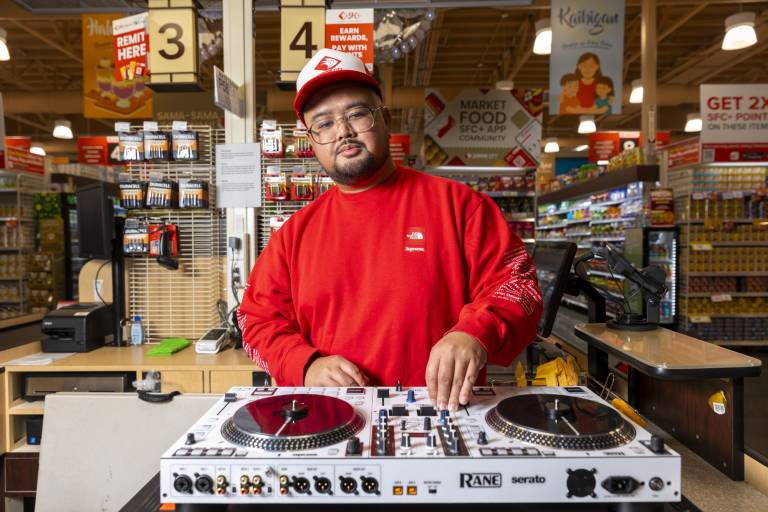
"caption": "JP Breganza, the Filipino American DJ who spearheaded a popular series of Seafood City dance parties, poses for a portrait at the Seafood City in Daly City on October 23, 2025. Breganza is now kicking off a new series of Filipino parties in Vallejo called Isa Pa.",
"credit": "Tâm Vũ/KQED",
"altTag": "A DJ poses for a portrait at his turntable, which is set up inside a grocery store.",
"description": null,
"imgSizes": {
"thumbnail": {
"file": "https://cdn.kqed.org/wp-content/uploads/sites/2/2025/10/18250511275_SUNDOWNCINEMAOCT00785_TV-KQED-160x107.jpg",
"width": 160,
"height": 107,
"mimeType": "image/jpeg"
},
"medium_large": {
"file": "https://cdn.kqed.org/wp-content/uploads/sites/2/2025/10/18250511275_SUNDOWNCINEMAOCT00785_TV-KQED-768x512.jpg",
"width": 768,
"height": 512,
"mimeType": "image/jpeg"
},
"1536x1536": {
"file": "https://cdn.kqed.org/wp-content/uploads/sites/2/2025/10/18250511275_SUNDOWNCINEMAOCT00785_TV-KQED-1536x1024.jpg",
"width": 1536,
"height": 1024,
"mimeType": "image/jpeg"
},
"post-thumbnail": {
"file": "https://cdn.kqed.org/wp-content/uploads/sites/2/2025/10/18250511275_SUNDOWNCINEMAOCT00785_TV-KQED-672x372.jpg",
"width": 672,
"height": 372,
"mimeType": "image/jpeg"
},
"twentyfourteen-full-width": {
"file": "https://cdn.kqed.org/wp-content/uploads/sites/2/2025/10/18250511275_SUNDOWNCINEMAOCT00785_TV-KQED-1038x576.jpg",
"width": 1038,
"height": 576,
"mimeType": "image/jpeg"
},
"npr-cds-wide": {
"file": "https://cdn.kqed.org/wp-content/uploads/sites/2/2025/10/18250511275_SUNDOWNCINEMAOCT00785_TV-KQED-1600x900.jpg",
"width": 1600,
"height": 900,
"mimeType": "image/jpeg"
},
"kqedFullSize": {
"file": "https://cdn.kqed.org/wp-content/uploads/sites/2/2025/10/18250511275_SUNDOWNCINEMAOCT00785_TV-KQED.jpg",
"width": 2000,
"height": 1333
}
},
"isLoading": false,
"fetchFailed": false
},
"arts_13990277": {
"type": "attachments",
"id": "arts_13990277",
"meta": {
"index": "attachments_1716263798",
"site": "arts",
"id": "13990277",
"found": true
},
"title": "TitaBeccas2-crop",
"publishDate": 1780019661,
"status": "inherit",
"parent": 13990274,
"modified": 1780020087,
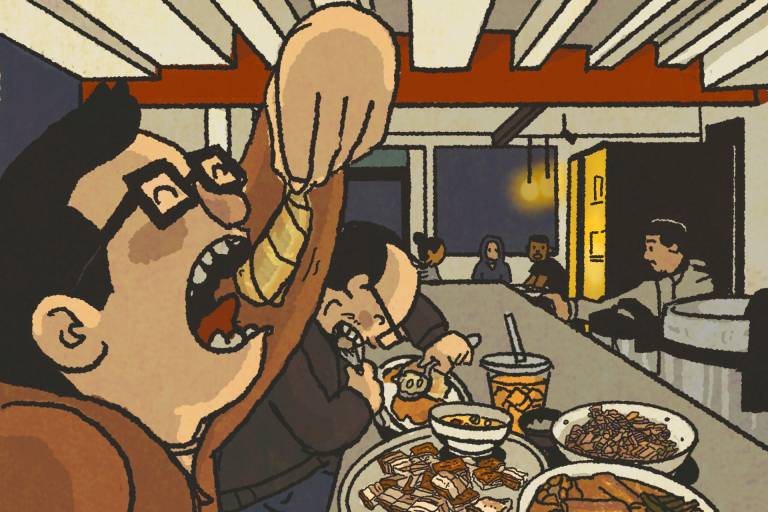
"caption": "In downtown Oakland, Tita Becca's serves some of the tastiest homestyle Filipino food in the Bay Area — until as late as 2 a.m. on weekends.",
"credit": "Thien Pham",
"altTag": "Illustration: Man devouring a shrimp lumpia while seating a diner counter.",
"description": null,
"imgSizes": {
"thumbnail": {
"file": "https://cdn.kqed.org/wp-content/uploads/sites/2/2026/05/TitaBeccas2-crop-160x107.jpg",
"width": 160,
"height": 107,
"mimeType": "image/jpeg"
},
"medium_large": {
"file": "https://cdn.kqed.org/wp-content/uploads/sites/2/2026/05/TitaBeccas2-crop-768x512.jpg",
"width": 768,
"height": 512,
"mimeType": "image/jpeg"
},
"1536x1536": {
"file": "https://cdn.kqed.org/wp-content/uploads/sites/2/2026/05/TitaBeccas2-crop-1536x1024.jpg",
"width": 1536,
"height": 1024,
"mimeType": "image/jpeg"
},
"post-thumbnail": {
"file": "https://cdn.kqed.org/wp-content/uploads/sites/2/2026/05/TitaBeccas2-crop-672x372.jpg",
"width": 672,
"height": 372,
"mimeType": "image/jpeg"
},
"twentyfourteen-full-width": {
"file": "https://cdn.kqed.org/wp-content/uploads/sites/2/2026/05/TitaBeccas2-crop-1038x576.jpg",
"width": 1038,
"height": 576,
"mimeType": "image/jpeg"
},
"npr-cds-wide": {
"file": "https://cdn.kqed.org/wp-content/uploads/sites/2/2026/05/TitaBeccas2-crop-1200x675.jpg",
"width": 1200,
"height": 675,
"mimeType": "image/jpeg"
},
"npr-cds-square": {
"file": "https://cdn.kqed.org/wp-content/uploads/sites/2/2026/05/TitaBeccas2-crop-600x600.jpg",
"width": 600,
"height": 600,
"mimeType": "image/jpeg"
},
"kqedFullSize": {
"file": "https://cdn.kqed.org/wp-content/uploads/sites/2/2026/05/TitaBeccas2-crop.jpg",
"width": 1920,
"height": 1280
}
},
"isLoading": false,
"fetchFailed": false
},
"arts_13983411": {
"type": "attachments",
"id": "arts_13983411",
"meta": {
"index": "attachments_1716263798",
"site": "arts",
"id": "13983411",
"found": true
},
"title": "pili nut pie",
"publishDate": 1762296799,
"status": "inherit",
"parent": 0,
"modified": 1762297322,
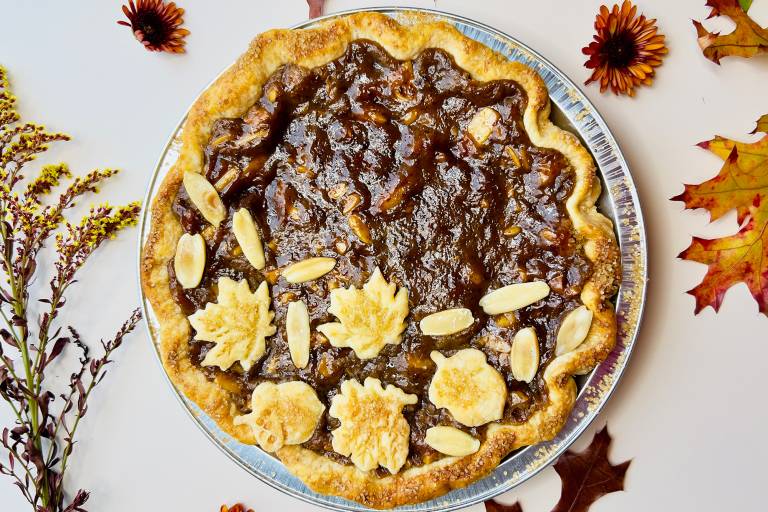
"caption": "Homebaked by Sweet Condesa's maple pili nut pie is a Filipino spin on pecan pie, inspired by the popular Filipino snack of candied pili nuts. The home-based bakery is selling a limited number of pies for Thanksgiving.",
"credit": "Aeden Nicholas Gabriel, courtesy of Homebaked by Sweet Condesa",
"altTag": "Overhead shot of a festive holiday pie with a glistening brown filling, topped with pieces of dough shaped like maple leaves.",
"description": null,
"imgSizes": {
"thumbnail": {
"file": "https://cdn.kqed.org/wp-content/uploads/sites/2/2025/11/pili-nut-pie-160x107.jpg",
"width": 160,
"height": 107,
"mimeType": "image/jpeg"
},
"medium_large": {
"file": "https://cdn.kqed.org/wp-content/uploads/sites/2/2025/11/pili-nut-pie-768x512.jpg",
"width": 768,
"height": 512,
"mimeType": "image/jpeg"
},
"1536x1536": {
"file": "https://cdn.kqed.org/wp-content/uploads/sites/2/2025/11/pili-nut-pie-1536x1025.jpg",
"width": 1536,
"height": 1025,
"mimeType": "image/jpeg"
},
"post-thumbnail": {
"file": "https://cdn.kqed.org/wp-content/uploads/sites/2/2025/11/pili-nut-pie-672x372.jpg",
"width": 672,
"height": 372,
"mimeType": "image/jpeg"
},
"twentyfourteen-full-width": {
"file": "https://cdn.kqed.org/wp-content/uploads/sites/2/2025/11/pili-nut-pie-1038x576.jpg",
"width": 1038,
"height": 576,
"mimeType": "image/jpeg"
},
"npr-cds-wide": {
"file": "https://cdn.kqed.org/wp-content/uploads/sites/2/2025/11/pili-nut-pie-1200x675.jpg",
"width": 1200,
"height": 675,
"mimeType": "image/jpeg"
},
"kqedFullSize": {
"file": "https://cdn.kqed.org/wp-content/uploads/sites/2/2025/11/pili-nut-pie.jpg",
"width": 2000,
"height": 1334
}
},
"isLoading": false,
"fetchFailed": false
},
"arts_13983048": {
"type": "attachments",
"id": "arts_13983048",
"meta": {
"index": "attachments_1716263798",
"site": "arts",
"id": "13983048",
"found": true
},
"title": "251018-FILIPINODANCEPARTY00196_TV-KQED",
"publishDate": 1761753572,
"status": "inherit",
"parent": 0,
"modified": 1761775431,
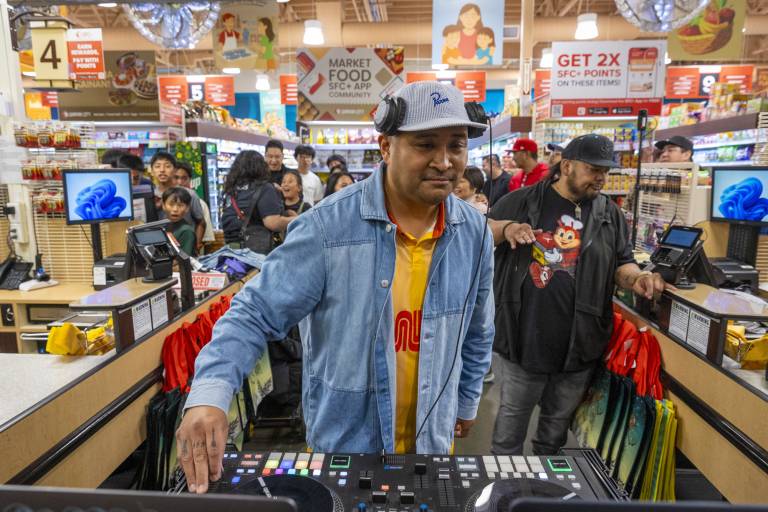
"caption": "DJ Boogie Brown performs a set during a dance party at Seafood City in Daly City on October 18, 2025. Seafood City, a Filipino supermarket chain, has been celebrating Filipino American History Month by throwing late-night DJ parties at store locations around the U.S.",
"credit": "Tâm Vũ/KQED",
"altTag": "A DJ in a blue denim shirt works the turntable inside a crowded grocery store.",
"description": null,
"imgSizes": {
"thumbnail": {
"file": "https://cdn.kqed.org/wp-content/uploads/sites/2/2025/10/251018-FILIPINODANCEPARTY00196_TV-KQED-160x107.jpg",
"width": 160,
"height": 107,
"mimeType": "image/jpeg"
},
"medium_large": {
"file": "https://cdn.kqed.org/wp-content/uploads/sites/2/2025/10/251018-FILIPINODANCEPARTY00196_TV-KQED-768x512.jpg",
"width": 768,
"height": 512,
"mimeType": "image/jpeg"
},
"1536x1536": {
"file": "https://cdn.kqed.org/wp-content/uploads/sites/2/2025/10/251018-FILIPINODANCEPARTY00196_TV-KQED-1536x1024.jpg",
"width": 1536,
"height": 1024,
"mimeType": "image/jpeg"
},
"post-thumbnail": {
"file": "https://cdn.kqed.org/wp-content/uploads/sites/2/2025/10/251018-FILIPINODANCEPARTY00196_TV-KQED-672x372.jpg",
"width": 672,
"height": 372,
"mimeType": "image/jpeg"
},
"twentyfourteen-full-width": {
"file": "https://cdn.kqed.org/wp-content/uploads/sites/2/2025/10/251018-FILIPINODANCEPARTY00196_TV-KQED-1038x576.jpg",
"width": 1038,
"height": 576,
"mimeType": "image/jpeg"
},
"npr-cds-wide": {
"file": "https://cdn.kqed.org/wp-content/uploads/sites/2/2025/10/251018-FILIPINODANCEPARTY00196_TV-KQED-1600x900.jpg",
"width": 1600,
"height": 900,
"mimeType": "image/jpeg"
},
"kqedFullSize": {
"file": "https://cdn.kqed.org/wp-content/uploads/sites/2/2025/10/251018-FILIPINODANCEPARTY00196_TV-KQED.jpg",
"width": 2000,
"height": 1333
}
},
"isLoading": false,
"fetchFailed": false
},
"arts_13978361": {
"type": "attachments",
"id": "arts_13978361",
"meta": {
"index": "attachments_1716263798",
"site": "arts",
"id": "13978361",
"found": true
},
"title": "Mama Go's2-crop",
"publishDate": 1751585727,
"status": "inherit",
"parent": 13978355,
"modified": 1751585760,
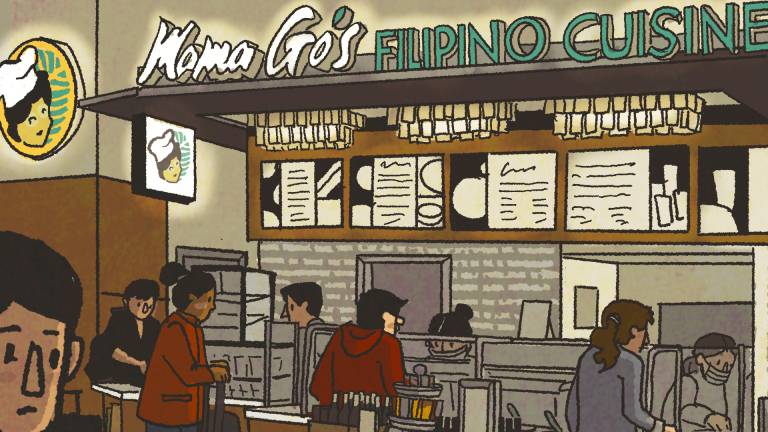
"caption": "The kiosk is open until 11:30 p.m. each night — and then it opens again at 3:30 a.m. for Filipino breakfast.",
"credit": "Thien Pham",
"altTag": "A busy food kiosk inside an airport. The sign overhead reads, \"Mama Go's Filipino Cuisine.\"",
"description": null,
"imgSizes": {
"thumbnail": {
"file": "https://cdn.kqed.org/wp-content/uploads/sites/2/2025/07/Mama-Gos2-crop-160x90.jpg",
"width": 160,
"height": 90,
"mimeType": "image/jpeg"
},
"medium_large": {
"file": "https://cdn.kqed.org/wp-content/uploads/sites/2/2025/07/Mama-Gos2-crop-768x432.jpg",
"width": 768,
"height": 432,
"mimeType": "image/jpeg"
},
"1536x1536": {
"file": "https://cdn.kqed.org/wp-content/uploads/sites/2/2025/07/Mama-Gos2-crop-1536x864.jpg",
"width": 1536,
"height": 864,
"mimeType": "image/jpeg"
},
"post-thumbnail": {
"file": "https://cdn.kqed.org/wp-content/uploads/sites/2/2025/07/Mama-Gos2-crop-672x372.jpg",
"width": 672,
"height": 372,
"mimeType": "image/jpeg"
},
"twentyfourteen-full-width": {
"file": "https://cdn.kqed.org/wp-content/uploads/sites/2/2025/07/Mama-Gos2-crop-1038x576.jpg",
"width": 1038,
"height": 576,
"mimeType": "image/jpeg"
},
"kqedFullSize": {
"file": "https://cdn.kqed.org/wp-content/uploads/sites/2/2025/07/Mama-Gos2-crop.jpg",
"width": 1920,
"height": 1080
}
},
"isLoading": false,
"fetchFailed": false
},
"arts_13971538": {
"type": "attachments",
"id": "arts_13971538",
"meta": {
"index": "attachments_1716263798",
"site": "arts",
"id": "13971538",
"found": true
},
"title": "Untitled_Artwork 1-crop",
"publishDate": 1738892501,
"status": "inherit",
"parent": 13971532,
"modified": 1738892540,
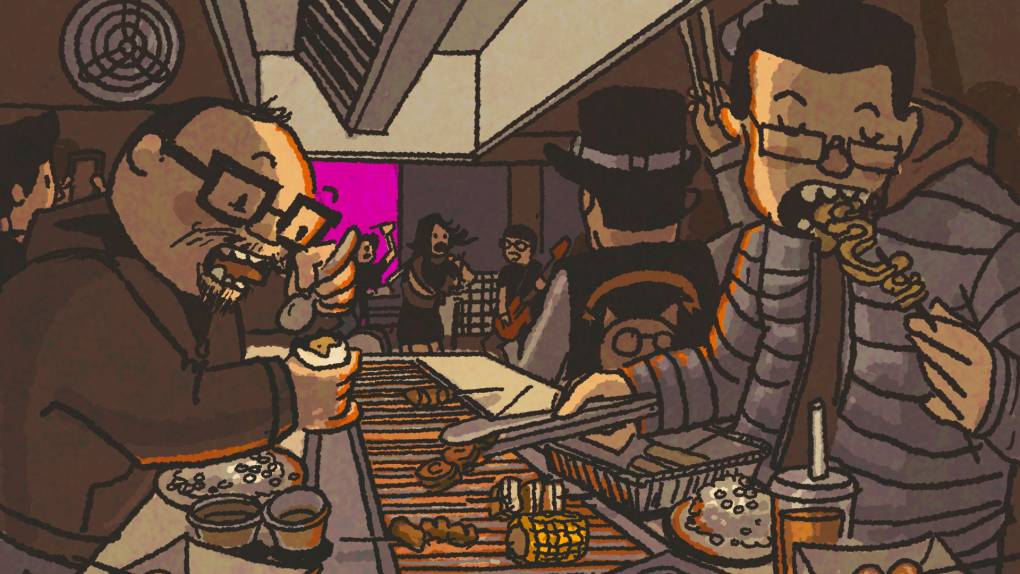
"caption": "At The Grill at Miss G, the centerpiece of the restaurant is a large communal grill. Located in Hayward, the Filipino barbecue spot is known for its raucous late-night atmosphere. ",
"credit": "Thien Pham",
"altTag": "Illustration: Two men grill their own meat skewers at a large communal grill while a band performs in the background.",
"description": null,
"imgSizes": {
"medium": {
"file": "https://cdn.kqed.org/wp-content/uploads/sites/2/2025/02/Untitled_Artwork-1-crop-800x450.jpg",
"width": 800,
"height": 450,
"mimeType": "image/jpeg"
},
"large": {
"file": "https://cdn.kqed.org/wp-content/uploads/sites/2/2025/02/Untitled_Artwork-1-crop-1020x574.jpg",
"width": 1020,
"height": 574,
"mimeType": "image/jpeg"
},
"thumbnail": {
"file": "https://cdn.kqed.org/wp-content/uploads/sites/2/2025/02/Untitled_Artwork-1-crop-160x90.jpg",
"width": 160,
"height": 90,
"mimeType": "image/jpeg"
},
"medium_large": {
"file": "https://cdn.kqed.org/wp-content/uploads/sites/2/2025/02/Untitled_Artwork-1-crop-768x432.jpg",
"width": 768,
"height": 432,
"mimeType": "image/jpeg"
},
"1536x1536": {
"file": "https://cdn.kqed.org/wp-content/uploads/sites/2/2025/02/Untitled_Artwork-1-crop-1536x864.jpg",
"width": 1536,
"height": 864,
"mimeType": "image/jpeg"
},
"post-thumbnail": {
"file": "https://cdn.kqed.org/wp-content/uploads/sites/2/2025/02/Untitled_Artwork-1-crop-672x372.jpg",
"width": 672,
"height": 372,
"mimeType": "image/jpeg"
},
"twentyfourteen-full-width": {
"file": "https://cdn.kqed.org/wp-content/uploads/sites/2/2025/02/Untitled_Artwork-1-crop-1038x576.jpg",
"width": 1038,
"height": 576,
"mimeType": "image/jpeg"
},
"kqedFullSize": {
"file": "https://cdn.kqed.org/wp-content/uploads/sites/2/2025/02/Untitled_Artwork-1-crop.jpg",
"width": 1920,
"height": 1080
}
},
"isLoading": false,
"fetchFailed": false
},
"arts_13970238": {
"type": "attachments",
"id": "arts_13970238",
"meta": {
"index": "attachments_1716263798",
"site": "arts",
"id": "13970238",
"found": true
},
"title": "harajuku totoro",
"publishDate": 1736820343,
"status": "inherit",
"parent": 13970225,
"modified": 1736820577,
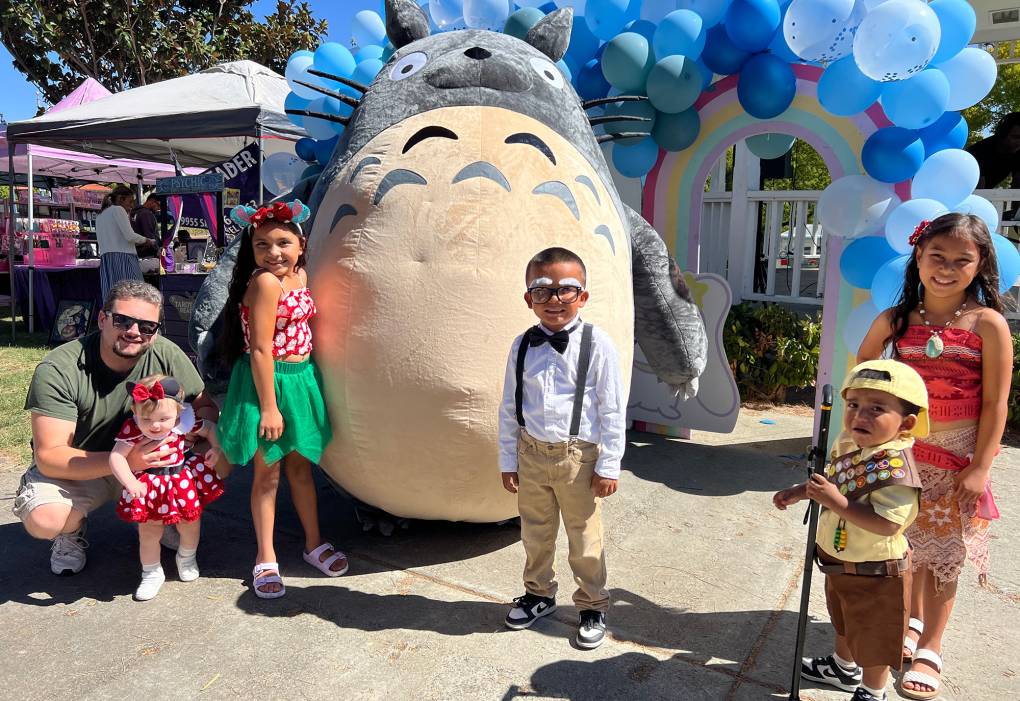
"caption": "Kids dressed as Disney/Pixar characters pose for a picture with Totoro at a past Harajuku Foodie Fest event. The Benicia-based festival series combines anime, kawaii culture and local street food vendors.",
"credit": "Courtesy of Harajuku Marketplace",
"altTag": "Children dressed up as Pixar and Disney characters pose in front of a giant stuffed Totoro.",
"description": null,
"imgSizes": {
"medium": {
"file": "https://cdn.kqed.org/wp-content/uploads/sites/2/2025/01/harajuku-totoro-800x550.jpg",
"width": 800,
"height": 550,
"mimeType": "image/jpeg"
},
"large": {
"file": "https://cdn.kqed.org/wp-content/uploads/sites/2/2025/01/harajuku-totoro-1020x701.jpg",
"width": 1020,
"height": 701,
"mimeType": "image/jpeg"
},
"thumbnail": {
"file": "https://cdn.kqed.org/wp-content/uploads/sites/2/2025/01/harajuku-totoro-160x110.jpg",
"width": 160,
"height": 110,
"mimeType": "image/jpeg"
},
"medium_large": {
"file": "https://cdn.kqed.org/wp-content/uploads/sites/2/2025/01/harajuku-totoro-768x528.jpg",
"width": 768,
"height": 528,
"mimeType": "image/jpeg"
},
"1536x1536": {
"file": "https://cdn.kqed.org/wp-content/uploads/sites/2/2025/01/harajuku-totoro-1536x1056.jpg",
"width": 1536,
"height": 1056,
"mimeType": "image/jpeg"
},
"post-thumbnail": {
"file": "https://cdn.kqed.org/wp-content/uploads/sites/2/2025/01/harajuku-totoro-672x372.jpg",
"width": 672,
"height": 372,
"mimeType": "image/jpeg"
},
"twentyfourteen-full-width": {
"file": "https://cdn.kqed.org/wp-content/uploads/sites/2/2025/01/harajuku-totoro-1038x576.jpg",
"width": 1038,
"height": 576,
"mimeType": "image/jpeg"
},
"full-width": {
"file": "https://cdn.kqed.org/wp-content/uploads/sites/2/2025/01/harajuku-totoro-1920x1320.jpg",
"width": 1920,
"height": 1320,
"mimeType": "image/jpeg"
},
"kqedFullSize": {
"file": "https://cdn.kqed.org/wp-content/uploads/sites/2/2025/01/harajuku-totoro.jpg",
"width": 2000,
"height": 1375
}
},
"isLoading": false,
"fetchFailed": false
},
"arts_13961870": {
"type": "attachments",
"id": "arts_13961870",
"meta": {
"index": "attachments_1716263798",
"site": "arts",
"id": "13961870",
"found": true
},
"title": "2",
"publishDate": 1722460637,
"status": "inherit",
"parent": 13961696,
"modified": 1722461712,
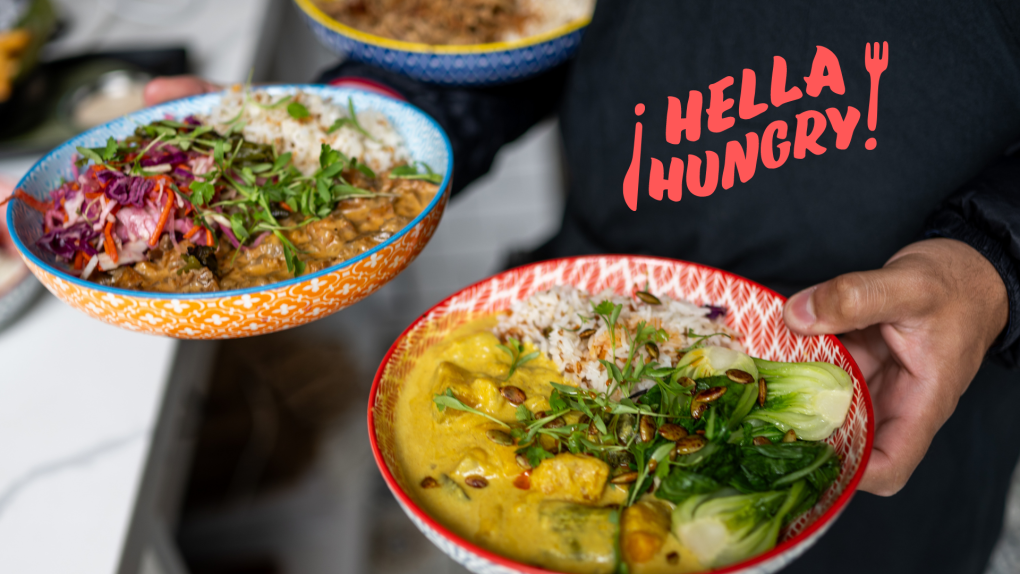
"caption": "Mestiza, the newly reopened Filipino restaurant in San Francisco's SoMa district, features fresh, plant-leaning dishes like a calabasa coconut curry (pictured on the right).",
"credit": "Beth LaBerge/KQED",
"altTag": "A chef holding two Filipino dishes, including a coconut curry topped with bok choy.",
"description": null,
"imgSizes": {
"medium": {
"file": "https://cdn.kqed.org/wp-content/uploads/sites/2/2024/07/2-800x450.png",
"width": 800,
"height": 450,
"mimeType": "image/png"
},
"large": {
"file": "https://cdn.kqed.org/wp-content/uploads/sites/2/2024/07/2-1020x574.png",
"width": 1020,
"height": 574,
"mimeType": "image/png"
},
"thumbnail": {
"file": "https://cdn.kqed.org/wp-content/uploads/sites/2/2024/07/2-160x90.png",
"width": 160,
"height": 90,
"mimeType": "image/png"
},
"medium_large": {
"file": "https://cdn.kqed.org/wp-content/uploads/sites/2/2024/07/2-768x432.png",
"width": 768,
"height": 432,
"mimeType": "image/png"
},
"1536x1536": {
"file": "https://cdn.kqed.org/wp-content/uploads/sites/2/2024/07/2-1536x864.png",
"width": 1536,
"height": 864,
"mimeType": "image/png"
},
"post-thumbnail": {
"file": "https://cdn.kqed.org/wp-content/uploads/sites/2/2024/07/2-672x372.png",
"width": 672,
"height": 372,
"mimeType": "image/png"
},
"twentyfourteen-full-width": {
"file": "https://cdn.kqed.org/wp-content/uploads/sites/2/2024/07/2-1038x576.png",
"width": 1038,
"height": 576,
"mimeType": "image/png"
},
"kqedFullSize": {
"file": "https://cdn.kqed.org/wp-content/uploads/sites/2/2024/07/2.png",
"width": 1920,
"height": 1080
}
},
"isLoading": false,
"fetchFailed": false
},
"arts_13957301": {
"type": "attachments",
"id": "arts_13957301",
"meta": {
"index": "attachments_1716263798",
"site": "arts",
"id": "13957301",
"found": true
},
"title": "240503-TIPUNAN-35-BL-KQED",
"publishDate": 1715030088,
"status": "inherit",
"parent": 0,
"modified": 1718306268,
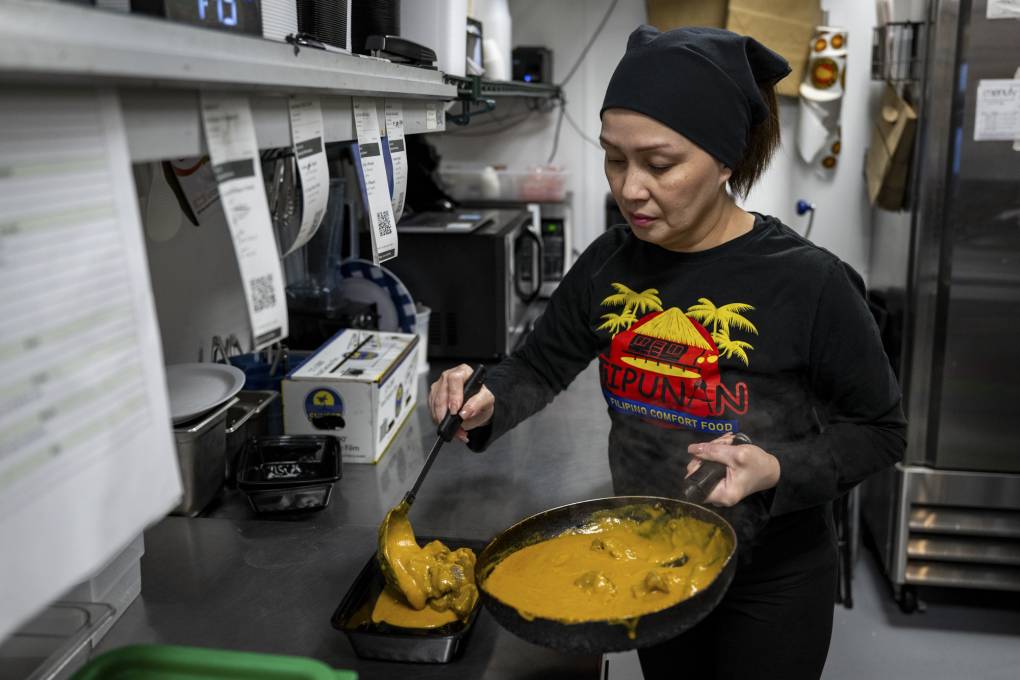
"caption": "Executive Chef Kai Torres-Cansino prepares an order of kare-kare in the kitchen of Tipunan, a restaurant serving Filipino comfort food at the Oakland Food Hall ghost kitchen facility on May 3, 2024. ",
"credit": "Beth LaBerge/KQED",
"altTag": "A woman in a black headwrap prepares Filipino food inside a restaurant kitchen.",
"description": null,
"imgSizes": {
"medium": {
"file": "https://cdn.kqed.org/wp-content/uploads/sites/2/2024/05/240503-TIPUNAN-35-BL-KQED-800x533.jpg",
"width": 800,
"height": 533,
"mimeType": "image/jpeg"
},
"large": {
"file": "https://cdn.kqed.org/wp-content/uploads/sites/2/2024/05/240503-TIPUNAN-35-BL-KQED-1020x680.jpg",
"width": 1020,
"height": 680,
"mimeType": "image/jpeg"
},
"thumbnail": {
"file": "https://cdn.kqed.org/wp-content/uploads/sites/2/2024/05/240503-TIPUNAN-35-BL-KQED-160x107.jpg",
"width": 160,
"height": 107,
"mimeType": "image/jpeg"
},
"medium_large": {
"file": "https://cdn.kqed.org/wp-content/uploads/sites/2/2024/05/240503-TIPUNAN-35-BL-KQED-768x512.jpg",
"width": 768,
"height": 512,
"mimeType": "image/jpeg"
},
"1536x1536": {
"file": "https://cdn.kqed.org/wp-content/uploads/sites/2/2024/05/240503-TIPUNAN-35-BL-KQED-1536x1024.jpg",
"width": 1536,
"height": 1024,
"mimeType": "image/jpeg"
},
"post-thumbnail": {
"file": "https://cdn.kqed.org/wp-content/uploads/sites/2/2024/05/240503-TIPUNAN-35-BL-KQED-672x372.jpg",
"width": 672,
"height": 372,
"mimeType": "image/jpeg"
},
"twentyfourteen-full-width": {
"file": "https://cdn.kqed.org/wp-content/uploads/sites/2/2024/05/240503-TIPUNAN-35-BL-KQED-1038x576.jpg",
"width": 1038,
"height": 576,
"mimeType": "image/jpeg"
},
"full-width": {
"file": "https://cdn.kqed.org/wp-content/uploads/sites/2/2024/05/240503-TIPUNAN-35-BL-KQED-1920x1280.jpg",
"width": 1920,
"height": 1280,
"mimeType": "image/jpeg"
},
"kqedFullSize": {
"file": "https://cdn.kqed.org/wp-content/uploads/sites/2/2024/05/240503-TIPUNAN-35-BL-KQED.jpg",
"width": 2000,
"height": 1333
}
},
"isLoading": false,
"fetchFailed": false
},
"arts_13958262": {
"type": "attachments",
"id": "arts_13958262",
"meta": {
"index": "attachments_1716263798",
"site": "arts",
"id": "13958262",
"found": true
},
"title": "Screen Shot 2024-05-21 at 1.49.37 PM",
"publishDate": 1716325383,
"status": "inherit",
"parent": 13958245,
"modified": 1716325545,
"caption": "Nump's new single, 'Halo Halo,\" is inspired by his love of the Filipino treat. The song will be released on Friday, May 24.",
"credit": "Courtesy of Nump / Instagram @ceo_nump_beastmobile",
"altTag": "Screenshot from a video: A man in a \"Nump's Lumpia\" T-Shirt laughs, with two glasses of halo halo in front of him.",
"description": null,
"imgSizes": {
"medium": {
"file": "https://cdn.kqed.org/wp-content/uploads/sites/2/2024/05/Screen-Shot-2024-05-21-at-1.49.37-PM-800x550.jpg",
"width": 800,
"height": 550,
"mimeType": "image/jpeg"
},
"large": {
"file": "https://cdn.kqed.org/wp-content/uploads/sites/2/2024/05/Screen-Shot-2024-05-21-at-1.49.37-PM-1020x701.jpg",
"width": 1020,
"height": 701,
"mimeType": "image/jpeg"
},
"thumbnail": {
"file": "https://cdn.kqed.org/wp-content/uploads/sites/2/2024/05/Screen-Shot-2024-05-21-at-1.49.37-PM-160x110.jpg",
"width": 160,
"height": 110,
"mimeType": "image/jpeg"
},
"medium_large": {
"file": "https://cdn.kqed.org/wp-content/uploads/sites/2/2024/05/Screen-Shot-2024-05-21-at-1.49.37-PM-768x528.jpg",
"width": 768,
"height": 528,
"mimeType": "image/jpeg"
},
"1536x1536": {
"file": "https://cdn.kqed.org/wp-content/uploads/sites/2/2024/05/Screen-Shot-2024-05-21-at-1.49.37-PM-1536x1056.jpg",
"width": 1536,
"height": 1056,
"mimeType": "image/jpeg"
},
"post-thumbnail": {
"file": "https://cdn.kqed.org/wp-content/uploads/sites/2/2024/05/Screen-Shot-2024-05-21-at-1.49.37-PM-672x372.jpg",
"width": 672,
"height": 372,
"mimeType": "image/jpeg"
},
"twentyfourteen-full-width": {
"file": "https://cdn.kqed.org/wp-content/uploads/sites/2/2024/05/Screen-Shot-2024-05-21-at-1.49.37-PM-1038x576.jpg",
"width": 1038,
"height": 576,
"mimeType": "image/jpeg"
},
"kqedFullSize": {
"file": "https://cdn.kqed.org/wp-content/uploads/sites/2/2024/05/Screen-Shot-2024-05-21-at-1.49.37-PM.jpg",
"width": 1920,
"height": 1320
}
},
"isLoading": false,
"fetchFailed": false
},
"arts_13957469": {
"type": "attachments",
"id": "arts_13957469",
"meta": {
"index": "attachments_1716263798",
"site": "arts",
"id": "13957469",
"found": true
},
"parent": 13957388,
"imgSizes": {
"twentyfourteen-full-width": {
"file": "https://cdn.kqed.org/wp-content/uploads/sites/2/2024/05/20191122_075513-1038x576.jpg",
"width": 1038,
"mimeType": "image/jpeg",
"height": 576
},
"thumbnail": {
"file": "https://cdn.kqed.org/wp-content/uploads/sites/2/2024/05/20191122_075513-160x90.jpg",
"width": 160,
"mimeType": "image/jpeg",
"height": 90
},
"post-thumbnail": {
"file": "https://cdn.kqed.org/wp-content/uploads/sites/2/2024/05/20191122_075513-672x372.jpg",
"width": 672,
"mimeType": "image/jpeg",
"height": 372
},
"kqedFullSize": {
"file": "https://cdn.kqed.org/wp-content/uploads/sites/2/2024/05/20191122_075513.jpg",
"width": 1920,
"height": 1080
},
"large": {
"file": "https://cdn.kqed.org/wp-content/uploads/sites/2/2024/05/20191122_075513-1020x574.jpg",
"width": 1020,
"mimeType": "image/jpeg",
"height": 574
},
"1536x1536": {
"file": "https://cdn.kqed.org/wp-content/uploads/sites/2/2024/05/20191122_075513-1536x864.jpg",
"width": 1536,
"mimeType": "image/jpeg",
"height": 864
},
"medium": {
"file": "https://cdn.kqed.org/wp-content/uploads/sites/2/2024/05/20191122_075513-800x450.jpg",
"width": 800,
"mimeType": "image/jpeg",
"height": 450
},
"medium_large": {
"file": "https://cdn.kqed.org/wp-content/uploads/sites/2/2024/05/20191122_075513-768x432.jpg",
"width": 768,
"mimeType": "image/jpeg",
"height": 432
}
},
"publishDate": 1715193438,
"modified": 1715193577,
"caption": "Filipino cupcakes, known as ensaymadas, at Ellis Creamery.",
"description": null,
"title": "20191122_075513",
"credit": "Courtesy Khristian Rabut",
"status": "inherit",
"altTag": "White, green and multi-colored cupcakes on a white counter",
"isLoading": false,
"fetchFailed": false
},
"arts_13956689": {
"type": "attachments",
"id": "arts_13956689",
"meta": {
"index": "attachments_1716263798",
"site": "arts",
"id": "13956689",
"found": true
},
"parent": 13956683,
"imgSizes": {
"twentyfourteen-full-width": {
"file": "https://cdn.kqed.org/wp-content/uploads/sites/2/2024/04/Cafe-Colma-Eating-Food-crop-1038x576.jpg",
"width": 1038,
"mimeType": "image/jpeg",
"height": 576
},
"thumbnail": {
"file": "https://cdn.kqed.org/wp-content/uploads/sites/2/2024/04/Cafe-Colma-Eating-Food-crop-160x90.jpg",
"width": 160,
"mimeType": "image/jpeg",
"height": 90
},
"post-thumbnail": {
"file": "https://cdn.kqed.org/wp-content/uploads/sites/2/2024/04/Cafe-Colma-Eating-Food-crop-672x372.jpg",
"width": 672,
"mimeType": "image/jpeg",
"height": 372
},
"kqedFullSize": {
"file": "https://cdn.kqed.org/wp-content/uploads/sites/2/2024/04/Cafe-Colma-Eating-Food-crop.jpg",
"width": 1920,
"height": 1080
},
"large": {
"file": "https://cdn.kqed.org/wp-content/uploads/sites/2/2024/04/Cafe-Colma-Eating-Food-crop-1020x574.jpg",
"width": 1020,
"mimeType": "image/jpeg",
"height": 574
},
"1536x1536": {
"file": "https://cdn.kqed.org/wp-content/uploads/sites/2/2024/04/Cafe-Colma-Eating-Food-crop-1536x864.jpg",
"width": 1536,
"mimeType": "image/jpeg",
"height": 864
},
"medium": {
"file": "https://cdn.kqed.org/wp-content/uploads/sites/2/2024/04/Cafe-Colma-Eating-Food-crop-800x450.jpg",
"width": 800,
"mimeType": "image/jpeg",
"height": 450
},
"medium_large": {
"file": "https://cdn.kqed.org/wp-content/uploads/sites/2/2024/04/Cafe-Colma-Eating-Food-crop-768x432.jpg",
"width": 768,
"mimeType": "image/jpeg",
"height": 432
}
},
"publishDate": 1714083434,
"modified": 1714083554,
"caption": "Located inside Lucky Chances Casino in Colma, Cafe Colma serves tasty Filipino dishes 24/7.",
"description": null,
"title": "Cafe Colma - Eating Food - crop",
"credit": "Raynato Castro",
"status": "inherit",
"altTag": "Illustration of three men devouring halo-halo and other Filipino food at a diner counter.",
"isLoading": false,
"fetchFailed": false
}
},
"audioPlayerReducer": {
"postId": "stream_live",
"isPaused": true,
"isPlaying": false,
"pfsActive": false,
"pledgeModalIsOpen": true,
"playerDrawerIsOpen": false,
"liveAudioPlayStartedAt": 0,
"liveAudioPlayContext": ""
},
"authorsReducer": {
"ltsai": {
"type": "authors",
"id": "11743",
"meta": {
"index": "authors_1716337520",
"id": "11743",
"found": true
},
"name": "Luke Tsai",
"firstName": "Luke",
"lastName": "Tsai",
"slug": "ltsai",
"email": "ltsai@kqed.org",
"display_author_email": true,
"staff_mastheads": [
"arts"
],
"title": "Food Editor",
"bio": "Luke Tsai is KQED's food editor and resident stinky tofu connoisseur. Prior to KQED, he was an editor at Eater SF, \u003cem>San Francisco \u003c/em>magazine, and the \u003cem>East Bay Express\u003c/em>, and his work has also appeared in TASTE, the \u003cem>San Francisco Chronicle\u003c/em>, and the \u003cem>Best Food Writing\u003c/em> anthology. When he isn't writing or editing, you'll find him eating most everything he can get his hands on.",
"avatar": "https://secure.gravatar.com/avatar/1e59b45bf191526e7339d6ba46e33a57b2030d25c27660ecc64ea3cb863e34f7?s=600&d=blank&r=g",
"twitter": "theluketsai",
"bluesky": null,
"facebook": null,
"instagram": null,
"linkedin": null,
"sites": [
{
"site": "",
"roles": [
"editor"
]
},
{
"site": "arts",
"roles": [
"administrator"
]
},
{
"site": "news",
"roles": [
"editor",
"contributor"
]
},
{
"site": "bayareabites",
"roles": [
"editor"
]
},
{
"site": "food",
"roles": [
"editor"
]
}
],
"headData": {
"title": "Luke Tsai | KQED",
"description": "Food Editor",
"ogImgSrc": "https://secure.gravatar.com/avatar/1e59b45bf191526e7339d6ba46e33a57b2030d25c27660ecc64ea3cb863e34f7?s=600&d=blank&r=g",
"twImgSrc": "https://secure.gravatar.com/avatar/1e59b45bf191526e7339d6ba46e33a57b2030d25c27660ecc64ea3cb863e34f7?s=600&d=blank&r=g"
},
"isLoading": false,
"link": "/author/ltsai"
},
"achazaro": {
"type": "authors",
"id": "11748",
"meta": {
"index": "authors_1716337520",
"id": "11748",
"found": true
},
"name": "Alan Chazaro",
"firstName": "Alan",
"lastName": "Chazaro",
"slug": "achazaro",
"email": "agchazaro@gmail.com",
"display_author_email": true,
"staff_mastheads": [],
"title": "Food Writer and Reporter",
"bio": "Alan Chazaro is the author of \u003cem>This Is Not a Frank Ocean Cover Album\u003c/em> (Black Lawrence Press, 2019), \u003cem>Piñata Theory\u003c/em> (Black Lawrence Press, 2020), and \u003cem>Notes from the Eastern Span of the Bay Bridge\u003c/em> (Ghost City Press, 2021). He is a graduate of June Jordan’s Poetry for the People program at UC Berkeley and a former Lawrence Ferlinghetti Fellow at the University of San Francisco. He writes about sports, food, art, music, education, and culture while repping the Bay on \u003ca href=\"https://twitter.com/alan_chazaro\">Twitter\u003c/a> and \u003ca href=\"https://www.instagram.com/alan_chazaro/?hl=en\">Instagram\u003c/a> at @alan_chazaro.",
"avatar": "https://secure.gravatar.com/avatar/ea8b6dd970fc5c29e7a188e7d5861df7?s=600&d=blank&r=g",
"twitter": "alan_chazaro",
"facebook": null,
"instagram": null,
"linkedin": null,
"sites": [
{
"site": "arts",
"roles": [
"contributor"
]
},
{
"site": "news",
"roles": [
"editor"
]
}
],
"headData": {
"title": "Alan Chazaro | KQED",
"description": "Food Writer and Reporter",
"ogImgSrc": "https://secure.gravatar.com/avatar/ea8b6dd970fc5c29e7a188e7d5861df7?s=600&d=blank&r=g",
"twImgSrc": "https://secure.gravatar.com/avatar/ea8b6dd970fc5c29e7a188e7d5861df7?s=600&d=blank&r=g"
},
"isLoading": false,
"link": "/author/achazaro"
},
"tpham": {
"type": "authors",
"id": "11753",
"meta": {
"index": "authors_1716337520",
"id": "11753",
"found": true
},
"name": "Thien Pham",
"firstName": "Thien",
"lastName": "Pham",
"slug": "tpham",
"email": "thiendog@gmail.com",
"display_author_email": false,
"staff_mastheads": [],
"title": "KQED Contributor",
"bio": null,
"avatar": "https://secure.gravatar.com/avatar/a5b4729969ad46d88e7b9ec9dd4f3fa6af84dd0fa8fa91f01d8d9481694999bc?s=600&d=blank&r=g",
"twitter": null,
"bluesky": null,
"facebook": null,
"instagram": null,
"linkedin": null,
"sites": [
{
"site": "arts",
"roles": [
"contributor"
]
}
],
"headData": {
"title": "Thien Pham | KQED",
"description": "KQED Contributor",
"ogImgSrc": "https://secure.gravatar.com/avatar/a5b4729969ad46d88e7b9ec9dd4f3fa6af84dd0fa8fa91f01d8d9481694999bc?s=600&d=blank&r=g",
"twImgSrc": "https://secure.gravatar.com/avatar/a5b4729969ad46d88e7b9ec9dd4f3fa6af84dd0fa8fa91f01d8d9481694999bc?s=600&d=blank&r=g"
},
"isLoading": false,
"link": "/author/tpham"
},
"rockyrivera": {
"type": "authors",
"id": "11846",
"meta": {
"index": "authors_1716337520",
"id": "11846",
"found": true
},
"name": "Rocky Rivera",
"firstName": "Rocky",
"lastName": "Rivera",
"slug": "rockyrivera",
"email": "ms.rocky.rivera@gmail.com",
"display_author_email": false,
"staff_mastheads": [],
"title": "KQED Contributor",
"bio": "Rocky Rivera is a journalist, emcee, author and activist from San Francisco. She has released four albums through her label, Beatrock Music, and a ten-volume mixtape series with DJ Roza. She released her first book in 2021, entitled \u003cem>Snakeskin: Essays by Rocky Rivera\u003c/em>. Her latest album dropped in September 2024 and is called \"Long Kiss Goodnight\" with emcee/producer Otayo Dubb. She currently writes the Frisco Foodies column as a love letter to her hometown.",
"avatar": "https://secure.gravatar.com/avatar/946241ee2c59e6040607dfc75240d91b?s=600&d=blank&r=g",
"twitter": null,
"facebook": "https://m.facebook.com/rockyriveramusic",
"instagram": "https://instagram.com/rockyrivera",
"linkedin": "https://www.linkedin.com/in/krishtinedeleon/",
"sites": [
{
"site": "arts",
"roles": [
"author"
]
}
],
"headData": {
"title": "Rocky Rivera | KQED",
"description": "KQED Contributor",
"ogImgSrc": "https://secure.gravatar.com/avatar/946241ee2c59e6040607dfc75240d91b?s=600&d=blank&r=g",
"twImgSrc": "https://secure.gravatar.com/avatar/946241ee2c59e6040607dfc75240d91b?s=600&d=blank&r=g"
},
"isLoading": false,
"link": "/author/rockyrivera"
},
"rcastro": {
"type": "authors",
"id": "12029",
"meta": {
"index": "authors_1716337520",
"id": "12029",
"found": true
},
"name": "Raynato Castro",
"firstName": "Raynato",
"lastName": "Castro",
"slug": "rcastro",
"email": "rcastrodds@gmail.com",
"display_author_email": false,
"staff_mastheads": [],
"title": "KQED Contributor",
"bio": null,
"avatar": "https://secure.gravatar.com/avatar/bc9f1f13dc825c80cdf5963339a8c47f4a021d21376fc3a141ac91685ee054e1?s=600&d=blank&r=g",
"twitter": null,
"bluesky": null,
"facebook": null,
"instagram": null,
"linkedin": null,
"sites": [
{
"site": "arts",
"roles": [
"contributor"
]
}
],
"headData": {
"title": "Raynato Castro | KQED",
"description": "KQED Contributor",
"ogImgSrc": "https://secure.gravatar.com/avatar/bc9f1f13dc825c80cdf5963339a8c47f4a021d21376fc3a141ac91685ee054e1?s=600&d=blank&r=g",
"twImgSrc": "https://secure.gravatar.com/avatar/bc9f1f13dc825c80cdf5963339a8c47f4a021d21376fc3a141ac91685ee054e1?s=600&d=blank&r=g"
},
"isLoading": false,
"link": "/author/rcastro"
}
},
"pagesReducer": {
"arts_tag_filipino-food": {
"type": "terms",
"id": "arts_14183",
"meta": {
"index": "terms_1716263798",
"site": "arts",
"id": "14183",
"score": 9.306035
},
"featImg": null,
"name": "Filipino food",
"description": null,
"taxonomy": "tag",
"headData": {
"twImgId": null,
"twTitle": null,
"ogTitle": null,
"ogImgId": null,
"twDescription": null,
"description": null,
"title": "Filipino food Archives | KQED Arts",
"ogDescription": null
},
"ttid": 14195,
"slug": "filipino-food",
"isLoading": false,
"title": "Filipino food",
"pageMeta": {
"site": "arts",
"WpPageTemplate": "page-topic-editorial",
"currentPage": 1
},
"blocks": [
{
"blockName": "kqed/post-list",
"attrs": {
"layout": "cardArticle2",
"query": "posts/arts?tag=filipino-food",
"seeMore": false,
"paginated": true,
"page": 1
}
},
{
"blockName": "kqed/ad"
}
]
}
},
"pfsSessionReducer": {},
"postsReducer": {
"stream_live": {
"type": "live",
"id": "stream_live",
"audioUrl": "https://streams.kqed.org/kqedradio",
"title": "Live Stream",
"excerpt": "Live Stream information currently unavailable.",
"link": "/radio",
"featImg": "",
"label": {
"name": "KQED Live",
"link": "/"
}
},
"stream_kqedNewscast": {
"type": "posts",
"id": "stream_kqedNewscast",
"audioUrl": "https://www.kqed.org/.stream/anon/radio/RDnews/newscast.mp3?_=1",
"title": "KQED Newscast",
"featImg": "",
"label": {
"name": "88.5 FM",
"link": "/"
}
},
"arts_13992320": {
"type": "posts",
"id": "arts_13992320",
"meta": {
"index": "posts_1716263798",
"site": "arts",
"id": "13992320",
"score": null,
"sort": [
1785531902000
]
},
"guestAuthors": [],
"slug": "seafood-city-dj-filipino-party-vallejo-isa-pa",
"title": "Seafood City DJ Brings the Filipino Party Home to Vallejo ",
"publishDate": 1785531902,
"format": "standard",
"headTitle": "Seafood City DJ Brings the Filipino Party Home to Vallejo | KQED",
"labelTerm": {
"term": 140,
"site": "arts"
},
"content": "\u003cp>One night last September, as JP Breganza stood behind the decks inside Seafood City in Daly City, he saw what felt to him like an unimaginable sight: hundreds of \u003ca href=\"https://www.kqed.org/arts/tag/filipino\">Filipino\u003c/a> Americans across generations all crammed inside a Filipino supermarket, ready to \u003cem>get down\u003c/em>.\u003c/p>\n\n\n\n\u003cp>What the Vallejo-raised DJ didn’t realize at the time was his dance party that night would become a \u003ca href=\"https://www.kqed.org/arts/13983119/seafood-city-filipino-supermarket-dj-dance-party-daly-city\">viral sensation\u003c/a>, sparking a national movement as Seafood City locations across the country began hosting their own late-night DJ parties — massive community gatherings that doubled as heartfelt expressions of Filipino cultural pride.\u003c/p>\n\n\n\n\u003cp>As the original creator of those Seafood City parties, Breganza remains deeply proud of their cultural impact. “Families were finding each other at Seafood City who hadn’t even talked to each other for years,” he says today. \u003c/p>\n\n\n\n\u003cp>At the same time, he found himself longing for something a little bit more intimate, where his original vision — born out of nostalgia for the Filipino family parties he grew up attending — wouldn’t be lost. So, for the past several months, Breganza stepped away from the giant supermarket parties to work on a new project: \u003ca href=\"https://www.instagram.com/isapaonemore/\">Isa Pa\u003c/a>, a series of free Filipino house parties he’ll be hosting on the backyard patio at Village, a new wine bar in his hometown of Vallejo. The first party gets underway this Saturday, Aug. 1. \u003c/p>\n\n\n\n\u003cfigure class=\"wp-block-image size-full\">\u003cimg loading=\"lazy\" decoding=\"async\" width=\"2000\" height=\"1333\" src=\"https://cdn.kqed.org/wp-content/uploads/sites/2/2025/10/251018-filipinodanceparty00774_TV_qed.jpg\" alt=\"Crowd of Filipinos dancing inside a supermarket.\" class=\"wp-image-13983132\" srcset=\"https://cdn.kqed.org/wp-content/uploads/sites/2/2025/10/251018-filipinodanceparty00774_TV_qed.jpg 2000w, https://cdn.kqed.org/wp-content/uploads/sites/2/2025/10/251018-filipinodanceparty00774_TV_qed-160x107.jpg 160w, https://cdn.kqed.org/wp-content/uploads/sites/2/2025/10/251018-filipinodanceparty00774_TV_qed-768x512.jpg 768w, https://cdn.kqed.org/wp-content/uploads/sites/2/2025/10/251018-filipinodanceparty00774_TV_qed-1536x1024.jpg 1536w\" sizes=\"auto, (max-width: 2000px) 100vw, 2000px\">\u003cfigcaption class=\"wp-element-caption\">A crowd of partygoers dancing during a late-night DJ party at Seafood City in Daly City on October 18, 2025. (Tâm Vũ/KQED)\u003c/figcaption>\u003c/figure>\n\n\n\n\u003cp>The name, Isa Pa, means “one more” in Tagalog. It’s a nostalgic phrase for Breganza, who recalls how, as a kid attending Filipino parties with his family, he’d always hear the elders say “isa pa, isa pa” when taking group photos.\u003c/p>\n\n\n\n\u003cp>[ad fullwidth]\u003c/p>\n\u003cp>“I was so tired of that term,” he says. “I just wanted to keep on playing with my friends!” Now that he’s in his 30s himself, Breganza says he realizes that those elders didn’t just mean they wanted to take one more picture. They also just wanted one more moment to cherish. \u003c/p>\n\n\n\n\u003cp>Ultimately, that’s the sentiment Breganza wants to share. He recalls how Bay Area Filipinos used to party every week over the smallest things. “I didn’t realize there was less and less of that in the post-pandemic, post-Pacquiao era,” he says, referencing the way Manny Pacquiao fights used to be the “in-between parties” they would throw to bridge the gap between birthdays and graduations. These days, time seems to be moving faster than ever before.\u003c/p>\n\n\n\n\u003cp>So, Breganza says, “Why don’t we throw one more party and see where it goes from there?” \u003c/p>\n\n\n\n\u003cp>While Seafood City’s Late-Night Madness parties were largely focused on DJs, Breganza wanted Isa Pa to be a little bit wider in scope in the way they, as he puts it, “celebrate perseverance through Filipino artistry.” He wants to highlight chefs, dancers and all different kinds of musicians, from all over the Bay.\u003c/p>\n\n\n\n\n\n\u003cp>This Saturday’s event, for instance, has a full slate of DJs — including the Peninsula-based Taiwanese Filipino \u003ca href=\"https://www.instagram.com/djdailomac/\">Dailo Mac\u003c/a>, the South Bay’s \u003ca href=\"https://www.instagram.com/p/C4y2E0fxrYE/?img_index=1\">Psychology Department\u003c/a> and Breganza himself representing the North Bay. Meanwhile, the headliner will be \u003ca href=\"https://www.instagram.com/theosada3/\">The Osada 3\u003c/a>, a band of teenage siblings that’s built a following for its feel-good, nostalgic \u003ca href=\"https://www.instagram.com/p/DViGUZ1FFyz/?img_index=1\">Fugees\u003c/a> and \u003ca href=\"https://www.instagram.com/p/DaCkTaPM07P/\">Tribe Called Quest\u003c/a> covers. \u003c/p>\n\n\n\n\u003cp>Foodwise, chef \u003ca href=\"https://www.instagram.com/noroscoroscono/\">Jordan Orosco\u003c/a>, who cooks at Village, has created a couple of special menu additions for the party: Spam musubi with garlic rice and a sisig silog topped with Thai chilis and the chef’s Tito’s special sauce blend. For that night only, the bar will also be slinging San Miguel lagers — the beer of choice for many old-school Filipinos.\u003c/p>\n\n\n\n\u003cp>Breganza says he drew inspiration from two existing events: \u003ca href=\"https://www.instagram.com/manilasound.la/\">Manila Sound\u003c/a>, which has hosted similar backyard parties at a brewpub in Los Angeles since 2022, and \u003ca href=\"https://www.instagram.com/barriobounce/\">Barrio Bounce\u003c/a>, a Southeast Asian music collective known for its parties centered on \u003ca href=\"https://www.instagram.com/p/DRBkrWPkT3g/?img_index=1\">budots\u003c/a>, a genre of Filipino electronic dance music. “Those two lay down the blueprint,” he says.\u003c/p>\n\n\n\n\u003cfigure class=\"wp-block-image size-full\">\u003cimg loading=\"lazy\" decoding=\"async\" width=\"2000\" height=\"1333\" src=\"https://cdn.kqed.org/wp-content/uploads/sites/2/2026/07/5EDE3F67-2021-4150-BB3B-28EF0ABCBD3E.jpg\" alt=\"A DJ works the turntables inside a hut, surrounded by Filipinos digging into a spread of food.\" class=\"wp-image-13992323\" srcset=\"https://cdn.kqed.org/wp-content/uploads/sites/2/2026/07/5EDE3F67-2021-4150-BB3B-28EF0ABCBD3E.jpg 2000w, https://cdn.kqed.org/wp-content/uploads/sites/2/2026/07/5EDE3F67-2021-4150-BB3B-28EF0ABCBD3E-160x107.jpg 160w, https://cdn.kqed.org/wp-content/uploads/sites/2/2026/07/5EDE3F67-2021-4150-BB3B-28EF0ABCBD3E-768x512.jpg 768w, https://cdn.kqed.org/wp-content/uploads/sites/2/2026/07/5EDE3F67-2021-4150-BB3B-28EF0ABCBD3E-1536x1024.jpg 1536w\" sizes=\"auto, (max-width: 2000px) 100vw, 2000px\">\u003cfigcaption class=\"wp-element-caption\">Breganza (center) presides over one of his “Tiny Kubo” Isa Pa sessions, which are loosely inspired by NPR’s Tiny Desk series. (Drew Nogaliza)\u003c/figcaption>\u003c/figure>\n\n\n\n\u003cp>For now, Breganza plans to host Isa Pa parties at Village on a quarterly basis. His hope, in part, is “just for the Bay Area to understand the concept of an OPM (\u003ca href=\"https://www.undiscoveredsf.com/blog/2019/8/15/what-is-original-pilipino-music-opm\">Original Pilipino Music\u003c/a>) party,” he says. But his overarching vision for Isa Pa is even more robust. Between parties, he plans to host more intimate gatherings of musicians, chefs and dancers at a bahay kubo (or traditional Filipino hut) that a friend has in his backyard in Vallejo. \u003c/p>\n\n\n\n\u003cp>Breganza has been filming these smaller gatherings, which are only open to friends and family, and posting the videos on social media — six or seven of them so far. The name he’s taken to calling these sessions? “\u003ca href=\"https://www.instagram.com/p/DWlUfs3DM7P/\">The Tiny Kubo\u003c/a>.” \u003c/p>\n\n\n\n\u003cp>“It’s basically a Filipino \u003ca href=\"https://www.npr.org/series/tiny-desk-concerts/\">Tiny Desk\u003c/a>,” Breganza says.\u003c/p>\n\n\n\n\u003cp>He isn’t sure yet how this new platform will evolve or whether, like those massively successful Seafood City parties, it’ll turn into a broader national movement embraced by record labels and other Filipino American organizations. “But I hope it turns into something,” he says.\u003c/p>\n\n\n\n\u003chr class=\"wp-block-separator has-alpha-channel-opacity\">\n\n\n\n\u003cp>\u003cem>The first Isa Pa party will take place on Saturday, Aug. 1 at Village (1503 Tennessee St.) in Vallejo, from 4–8 p.m., with an all-vinyl after party from 8 p.m. until the bar closes at 11 p.m. Admission is free, though guests should \u003c/em>\u003ca href=\"https://posh.vip/e/isa-pa-one-more-party-vallejo-ca\">\u003cem>RSVP online\u003c/em>\u003c/a>\u003cem>.\u003c/em>\u003c/p>\n\n\n\n\u003cp>\u003c/p>\n\u003cp>\u003c/p>\n\n",
"blocks": [
{
"blockName": "core/paragraph",
"attrs": [],
"innerHTML": "\n\u003cp>One night last September, as JP Breganza stood behind the decks inside Seafood City in Daly City, he saw what felt to him like an unimaginable sight: hundreds of \u003ca href=\"https://www.kqed.org/arts/tag/filipino\">Filipino\u003c/a> Americans across generations all crammed inside a Filipino supermarket, ready to \u003cem>get down\u003c/em>.\u003c/p>\n",
"innerContent": [
"\n\u003cp>One night last September, as JP Breganza stood behind the decks inside Seafood City in Daly City, he saw what felt to him like an unimaginable sight: hundreds of \u003ca href=\"https://www.kqed.org/arts/tag/filipino\">Filipino\u003c/a> Americans across generations all crammed inside a Filipino supermarket, ready to \u003cem>get down\u003c/em>.\u003c/p>\n"
],
"innerBlocks": []
},
{
"blockName": "core/paragraph",
"attrs": [],
"innerHTML": "\n\u003cp>What the Vallejo-raised DJ didn’t realize at the time was his dance party that night would become a \u003ca href=\"https://www.kqed.org/arts/13983119/seafood-city-filipino-supermarket-dj-dance-party-daly-city\">viral sensation\u003c/a>, sparking a national movement as Seafood City locations across the country began hosting their own late-night DJ parties — massive community gatherings that doubled as heartfelt expressions of Filipino cultural pride.\u003c/p>\n",
"innerContent": [
"\n\u003cp>What the Vallejo-raised DJ didn’t realize at the time was his dance party that night would become a \u003ca href=\"https://www.kqed.org/arts/13983119/seafood-city-filipino-supermarket-dj-dance-party-daly-city\">viral sensation\u003c/a>, sparking a national movement as Seafood City locations across the country began hosting their own late-night DJ parties — massive community gatherings that doubled as heartfelt expressions of Filipino cultural pride.\u003c/p>\n"
],
"innerBlocks": []
},
{
"blockName": "core/paragraph",
"attrs": [],
"innerHTML": "\n\u003cp>As the original creator of those Seafood City parties, Breganza remains deeply proud of their cultural impact. “Families were finding each other at Seafood City who hadn’t even talked to each other for years,” he says today. \u003c/p>\n",
"innerContent": [
"\n\u003cp>As the original creator of those Seafood City parties, Breganza remains deeply proud of their cultural impact. “Families were finding each other at Seafood City who hadn’t even talked to each other for years,” he says today. \u003c/p>\n"
],
"innerBlocks": []
},
{
"blockName": "core/paragraph",
"attrs": [],
"innerHTML": "\n\u003cp>At the same time, he found himself longing for something a little bit more intimate, where his original vision — born out of nostalgia for the Filipino family parties he grew up attending — wouldn’t be lost. So, for the past several months, Breganza stepped away from the giant supermarket parties to work on a new project: \u003ca href=\"https://www.instagram.com/isapaonemore/\">Isa Pa\u003c/a>, a series of free Filipino house parties he’ll be hosting on the backyard patio at Village, a new wine bar in his hometown of Vallejo. The first party gets underway this Saturday, Aug. 1. \u003c/p>\n",
"innerContent": [
"\n\u003cp>At the same time, he found himself longing for something a little bit more intimate, where his original vision — born out of nostalgia for the Filipino family parties he grew up attending — wouldn’t be lost. So, for the past several months, Breganza stepped away from the giant supermarket parties to work on a new project: \u003ca href=\"https://www.instagram.com/isapaonemore/\">Isa Pa\u003c/a>, a series of free Filipino house parties he’ll be hosting on the backyard patio at Village, a new wine bar in his hometown of Vallejo. The first party gets underway this Saturday, Aug. 1. \u003c/p>\n"
],
"innerBlocks": []
},
{
"blockName": "core/image",
"attrs": {
"id": 13983132,
"sizeSlug": "full",
"linkDestination": "none",
"imageCredit": "Tâm Vũ/KQED",
"srcset": "https://cdn.kqed.org/wp-content/uploads/sites/2/2025/10/251018-filipinodanceparty00774_TV_qed.jpg 2000w, https://cdn.kqed.org/wp-content/uploads/sites/2/2025/10/251018-filipinodanceparty00774_TV_qed-160x107.jpg 160w, https://cdn.kqed.org/wp-content/uploads/sites/2/2025/10/251018-filipinodanceparty00774_TV_qed-768x512.jpg 768w, https://cdn.kqed.org/wp-content/uploads/sites/2/2025/10/251018-filipinodanceparty00774_TV_qed-1536x1024.jpg 1536w",
"sizes": "(min-width: 992px) min(100vw, 1536px), (min-width: 768px) min(100vw, 1280px), min(100vw, 1020px)"
},
"innerHTML": "\n\u003cfigure class=\"wp-block-image size-full\">\u003cimg src=\"https://cdn.kqed.org/wp-content/uploads/sites/2/2025/10/251018-filipinodanceparty00774_TV_qed.jpg\" alt=\"Crowd of Filipinos dancing inside a supermarket.\" class=\"wp-image-13983132\" srcset=\"https://cdn.kqed.org/wp-content/uploads/sites/2/2025/10/251018-filipinodanceparty00774_TV_qed.jpg 2000w, https://cdn.kqed.org/wp-content/uploads/sites/2/2025/10/251018-filipinodanceparty00774_TV_qed-160x107.jpg 160w, https://cdn.kqed.org/wp-content/uploads/sites/2/2025/10/251018-filipinodanceparty00774_TV_qed-768x512.jpg 768w, https://cdn.kqed.org/wp-content/uploads/sites/2/2025/10/251018-filipinodanceparty00774_TV_qed-1536x1024.jpg 1536w\" sizes=\"(min-width: 992px) min(100vw, 1536px), (min-width: 768px) min(100vw, 1280px), min(100vw, 1020px)\" />\u003cfigcaption class=\"wp-element-caption\">A crowd of partygoers dancing during a late-night DJ party at Seafood City in Daly City on October 18, 2025.\u003c/figcaption>\u003c/figure>\n",
"innerContent": [
"\n\u003cfigure class=\"wp-block-image size-full\">\u003cimg src=\"https://cdn.kqed.org/wp-content/uploads/sites/2/2025/10/251018-filipinodanceparty00774_TV_qed.jpg\" alt=\"Crowd of Filipinos dancing inside a supermarket.\" class=\"wp-image-13983132\" />\u003cfigcaption class=\"wp-element-caption\">A crowd of partygoers dancing during a late-night DJ party at Seafood City in Daly City on October 18, 2025.\u003c/figcaption>\u003c/figure>\n"
],
"innerBlocks": []
},
{
"blockName": "core/paragraph",
"attrs": [],
"innerHTML": "\n\u003cp>The name, Isa Pa, means “one more” in Tagalog. It’s a nostalgic phrase for Breganza, who recalls how, as a kid attending Filipino parties with his family, he’d always hear the elders say “isa pa, isa pa” when taking group photos.\u003c/p>\n",
"innerContent": [
"\n\u003cp>The name, Isa Pa, means “one more” in Tagalog. It’s a nostalgic phrase for Breganza, who recalls how, as a kid attending Filipino parties with his family, he’d always hear the elders say “isa pa, isa pa” when taking group photos.\u003c/p>\n"
],
"innerBlocks": []
},
{
"blockName": "kqed/ad",
"attrs": {
"format": "fullwidth"
},
"innerBlocks": [],
"innerHTML": "",
"innerContent": []
},
{
"blockName": "core/paragraph",
"attrs": [],
"innerHTML": "\n\u003cp>“I was so tired of that term,” he says. “I just wanted to keep on playing with my friends!” Now that he’s in his 30s himself, Breganza says he realizes that those elders didn’t just mean they wanted to take one more picture. They also just wanted one more moment to cherish. \u003c/p>\n",
"innerContent": [
"\n\u003cp>“I was so tired of that term,” he says. “I just wanted to keep on playing with my friends!” Now that he’s in his 30s himself, Breganza says he realizes that those elders didn’t just mean they wanted to take one more picture. They also just wanted one more moment to cherish. \u003c/p>\n"
],
"innerBlocks": []
},
{
"blockName": "core/paragraph",
"attrs": [],
"innerHTML": "\n\u003cp>Ultimately, that’s the sentiment Breganza wants to share. He recalls how Bay Area Filipinos used to party every week over the smallest things. “I didn’t realize there was less and less of that in the post-pandemic, post-Pacquiao era,” he says, referencing the way Manny Pacquiao fights used to be the “in-between parties” they would throw to bridge the gap between birthdays and graduations. These days, time seems to be moving faster than ever before.\u003c/p>\n",
"innerContent": [
"\n\u003cp>Ultimately, that’s the sentiment Breganza wants to share. He recalls how Bay Area Filipinos used to party every week over the smallest things. “I didn’t realize there was less and less of that in the post-pandemic, post-Pacquiao era,” he says, referencing the way Manny Pacquiao fights used to be the “in-between parties” they would throw to bridge the gap between birthdays and graduations. These days, time seems to be moving faster than ever before.\u003c/p>\n"
],
"innerBlocks": []
},
{
"blockName": "core/paragraph",
"attrs": [],
"innerHTML": "\n\u003cp>So, Breganza says, “Why don’t we throw one more party and see where it goes from there?” \u003c/p>\n",
"innerContent": [
"\n\u003cp>So, Breganza says, “Why don’t we throw one more party and see where it goes from there?” \u003c/p>\n"
],
"innerBlocks": []
},
{
"blockName": "core/paragraph",
"attrs": [],
"innerHTML": "\n\u003cp>While Seafood City’s Late-Night Madness parties were largely focused on DJs, Breganza wanted Isa Pa to be a little bit wider in scope in the way they, as he puts it, “celebrate perseverance through Filipino artistry.” He wants to highlight chefs, dancers and all different kinds of musicians, from all over the Bay.\u003c/p>\n",
"innerContent": [
"\n\u003cp>While Seafood City’s Late-Night Madness parties were largely focused on DJs, Breganza wanted Isa Pa to be a little bit wider in scope in the way they, as he puts it, “celebrate perseverance through Filipino artistry.” He wants to highlight chefs, dancers and all different kinds of musicians, from all over the Bay.\u003c/p>\n"
],
"innerBlocks": []
},
{
"blockName": "kqed-v2/related-articles",
"attrs": {
"postIds": [
"arts_13983119",
"arts_13990274"
],
"labelWasCleared": true
},
"innerHTML": "",
"innerContent": [],
"innerBlocks": []
},
{
"blockName": "core/paragraph",
"attrs": [],
"innerHTML": "\n\u003cp>This Saturday’s event, for instance, has a full slate of DJs — including the Peninsula-based Taiwanese Filipino \u003ca href=\"https://www.instagram.com/djdailomac/\">Dailo Mac\u003c/a>, the South Bay’s \u003ca href=\"https://www.instagram.com/p/C4y2E0fxrYE/?img_index=1\">Psychology Department\u003c/a> and Breganza himself representing the North Bay. Meanwhile, the headliner will be \u003ca href=\"https://www.instagram.com/theosada3/\">The Osada 3\u003c/a>, a band of teenage siblings that’s built a following for its feel-good, nostalgic \u003ca href=\"https://www.instagram.com/p/DViGUZ1FFyz/?img_index=1\">Fugees\u003c/a> and \u003ca href=\"https://www.instagram.com/p/DaCkTaPM07P/\">Tribe Called Quest\u003c/a> covers. \u003c/p>\n",
"innerContent": [
"\n\u003cp>This Saturday’s event, for instance, has a full slate of DJs — including the Peninsula-based Taiwanese Filipino \u003ca href=\"https://www.instagram.com/djdailomac/\">Dailo Mac\u003c/a>, the South Bay’s \u003ca href=\"https://www.instagram.com/p/C4y2E0fxrYE/?img_index=1\">Psychology Department\u003c/a> and Breganza himself representing the North Bay. Meanwhile, the headliner will be \u003ca href=\"https://www.instagram.com/theosada3/\">The Osada 3\u003c/a>, a band of teenage siblings that’s built a following for its feel-good, nostalgic \u003ca href=\"https://www.instagram.com/p/DViGUZ1FFyz/?img_index=1\">Fugees\u003c/a> and \u003ca href=\"https://www.instagram.com/p/DaCkTaPM07P/\">Tribe Called Quest\u003c/a> covers. \u003c/p>\n"
],
"innerBlocks": []
},
{
"blockName": "core/paragraph",
"attrs": [],
"innerHTML": "\n\u003cp>Foodwise, chef \u003ca href=\"https://www.instagram.com/noroscoroscono/\">Jordan Orosco\u003c/a>, who cooks at Village, has created a couple of special menu additions for the party: Spam musubi with garlic rice and a sisig silog topped with Thai chilis and the chef’s Tito’s special sauce blend. For that night only, the bar will also be slinging San Miguel lagers — the beer of choice for many old-school Filipinos.\u003c/p>\n",
"innerContent": [
"\n\u003cp>Foodwise, chef \u003ca href=\"https://www.instagram.com/noroscoroscono/\">Jordan Orosco\u003c/a>, who cooks at Village, has created a couple of special menu additions for the party: Spam musubi with garlic rice and a sisig silog topped with Thai chilis and the chef’s Tito’s special sauce blend. For that night only, the bar will also be slinging San Miguel lagers — the beer of choice for many old-school Filipinos.\u003c/p>\n"
],
"innerBlocks": []
},
{
"blockName": "core/paragraph",
"attrs": [],
"innerHTML": "\n\u003cp>Breganza says he drew inspiration from two existing events: \u003ca href=\"https://www.instagram.com/manilasound.la/\">Manila Sound\u003c/a>, which has hosted similar backyard parties at a brewpub in Los Angeles since 2022, and \u003ca href=\"https://www.instagram.com/barriobounce/\">Barrio Bounce\u003c/a>, a Southeast Asian music collective known for its parties centered on \u003ca href=\"https://www.instagram.com/p/DRBkrWPkT3g/?img_index=1\">budots\u003c/a>, a genre of Filipino electronic dance music. “Those two lay down the blueprint,” he says.\u003c/p>\n",
"innerContent": [
"\n\u003cp>Breganza says he drew inspiration from two existing events: \u003ca href=\"https://www.instagram.com/manilasound.la/\">Manila Sound\u003c/a>, which has hosted similar backyard parties at a brewpub in Los Angeles since 2022, and \u003ca href=\"https://www.instagram.com/barriobounce/\">Barrio Bounce\u003c/a>, a Southeast Asian music collective known for its parties centered on \u003ca href=\"https://www.instagram.com/p/DRBkrWPkT3g/?img_index=1\">budots\u003c/a>, a genre of Filipino electronic dance music. “Those two lay down the blueprint,” he says.\u003c/p>\n"
],
"innerBlocks": []
},
{
"blockName": "core/image",
"attrs": {
"id": 13992323,
"sizeSlug": "full",
"linkDestination": "none",
"imageCredit": "Drew Nogaliza",
"srcset": "https://cdn.kqed.org/wp-content/uploads/sites/2/2026/07/5EDE3F67-2021-4150-BB3B-28EF0ABCBD3E.jpg 2000w, https://cdn.kqed.org/wp-content/uploads/sites/2/2026/07/5EDE3F67-2021-4150-BB3B-28EF0ABCBD3E-160x107.jpg 160w, https://cdn.kqed.org/wp-content/uploads/sites/2/2026/07/5EDE3F67-2021-4150-BB3B-28EF0ABCBD3E-768x512.jpg 768w, https://cdn.kqed.org/wp-content/uploads/sites/2/2026/07/5EDE3F67-2021-4150-BB3B-28EF0ABCBD3E-1536x1024.jpg 1536w",
"sizes": "(min-width: 992px) min(100vw, 1536px), (min-width: 768px) min(100vw, 1280px), min(100vw, 1020px)"
},
"innerHTML": "\n\u003cfigure class=\"wp-block-image size-full\">\u003cimg src=\"https://cdn.kqed.org/wp-content/uploads/sites/2/2026/07/5EDE3F67-2021-4150-BB3B-28EF0ABCBD3E.jpg\" alt=\"A DJ works the turntables inside a hut, surrounded by Filipinos digging into a spread of food.\" class=\"wp-image-13992323\" srcset=\"https://cdn.kqed.org/wp-content/uploads/sites/2/2026/07/5EDE3F67-2021-4150-BB3B-28EF0ABCBD3E.jpg 2000w, https://cdn.kqed.org/wp-content/uploads/sites/2/2026/07/5EDE3F67-2021-4150-BB3B-28EF0ABCBD3E-160x107.jpg 160w, https://cdn.kqed.org/wp-content/uploads/sites/2/2026/07/5EDE3F67-2021-4150-BB3B-28EF0ABCBD3E-768x512.jpg 768w, https://cdn.kqed.org/wp-content/uploads/sites/2/2026/07/5EDE3F67-2021-4150-BB3B-28EF0ABCBD3E-1536x1024.jpg 1536w\" sizes=\"(min-width: 992px) min(100vw, 1536px), (min-width: 768px) min(100vw, 1280px), min(100vw, 1020px)\" />\u003cfigcaption class=\"wp-element-caption\">Breganza (center) presides over one of his “Tiny Kubo” Isa Pa sessions, which are loosely inspired by NPR’s Tiny Desk series.\u003c/figcaption>\u003c/figure>\n",
"innerContent": [
"\n\u003cfigure class=\"wp-block-image size-full\">\u003cimg src=\"https://cdn.kqed.org/wp-content/uploads/sites/2/2026/07/5EDE3F67-2021-4150-BB3B-28EF0ABCBD3E.jpg\" alt=\"A DJ works the turntables inside a hut, surrounded by Filipinos digging into a spread of food.\" class=\"wp-image-13992323\" />\u003cfigcaption class=\"wp-element-caption\">Breganza (center) presides over one of his “Tiny Kubo” Isa Pa sessions, which are loosely inspired by NPR’s Tiny Desk series.\u003c/figcaption>\u003c/figure>\n"
],
"innerBlocks": []
},
{
"blockName": "core/paragraph",
"attrs": [],
"innerHTML": "\n\u003cp>For now, Breganza plans to host Isa Pa parties at Village on a quarterly basis. His hope, in part, is “just for the Bay Area to understand the concept of an OPM (\u003ca href=\"https://www.undiscoveredsf.com/blog/2019/8/15/what-is-original-pilipino-music-opm\">Original Pilipino Music\u003c/a>) party,” he says. But his overarching vision for Isa Pa is even more robust. Between parties, he plans to host more intimate gatherings of musicians, chefs and dancers at a bahay kubo (or traditional Filipino hut) that a friend has in his backyard in Vallejo. \u003c/p>\n",
"innerContent": [
"\n\u003cp>For now, Breganza plans to host Isa Pa parties at Village on a quarterly basis. His hope, in part, is “just for the Bay Area to understand the concept of an OPM (\u003ca href=\"https://www.undiscoveredsf.com/blog/2019/8/15/what-is-original-pilipino-music-opm\">Original Pilipino Music\u003c/a>) party,” he says. But his overarching vision for Isa Pa is even more robust. Between parties, he plans to host more intimate gatherings of musicians, chefs and dancers at a bahay kubo (or traditional Filipino hut) that a friend has in his backyard in Vallejo. \u003c/p>\n"
],
"innerBlocks": []
},
{
"blockName": "core/paragraph",
"attrs": [],
"innerHTML": "\n\u003cp>Breganza has been filming these smaller gatherings, which are only open to friends and family, and posting the videos on social media — six or seven of them so far. The name he’s taken to calling these sessions? “\u003ca href=\"https://www.instagram.com/p/DWlUfs3DM7P/\">The Tiny Kubo\u003c/a>.” \u003c/p>\n",
"innerContent": [
"\n\u003cp>Breganza has been filming these smaller gatherings, which are only open to friends and family, and posting the videos on social media — six or seven of them so far. The name he’s taken to calling these sessions? “\u003ca href=\"https://www.instagram.com/p/DWlUfs3DM7P/\">The Tiny Kubo\u003c/a>.” \u003c/p>\n"
],
"innerBlocks": []
},
{
"blockName": "core/paragraph",
"attrs": [],
"innerHTML": "\n\u003cp>“It’s basically a Filipino \u003ca href=\"https://www.npr.org/series/tiny-desk-concerts/\">Tiny Desk\u003c/a>,” Breganza says.\u003c/p>\n",
"innerContent": [
"\n\u003cp>“It’s basically a Filipino \u003ca href=\"https://www.npr.org/series/tiny-desk-concerts/\">Tiny Desk\u003c/a>,” Breganza says.\u003c/p>\n"
],
"innerBlocks": []
},
{
"blockName": "core/paragraph",
"attrs": [],
"innerHTML": "\n\u003cp>He isn’t sure yet how this new platform will evolve or whether, like those massively successful Seafood City parties, it’ll turn into a broader national movement embraced by record labels and other Filipino American organizations. “But I hope it turns into something,” he says.\u003c/p>\n",
"innerContent": [
"\n\u003cp>He isn’t sure yet how this new platform will evolve or whether, like those massively successful Seafood City parties, it’ll turn into a broader national movement embraced by record labels and other Filipino American organizations. “But I hope it turns into something,” he says.\u003c/p>\n"
],
"innerBlocks": []
},
{
"blockName": "core/separator",
"attrs": [],
"innerHTML": "\n\u003chr class=\"wp-block-separator has-alpha-channel-opacity\" />\n",
"innerContent": [
"\n\u003chr class=\"wp-block-separator has-alpha-channel-opacity\" />\n"
],
"innerBlocks": []
},
{
"blockName": "core/paragraph",
"attrs": [],
"innerHTML": "\n\u003cp>\u003cem>The first Isa Pa party will take place on Saturday, Aug. 1 at Village (1503 Tennessee St.) in Vallejo, from 4–8 p.m., with an all-vinyl after party from 8 p.m. until the bar closes at 11 p.m. Admission is free, though guests should \u003c/em>\u003ca href=\"https://posh.vip/e/isa-pa-one-more-party-vallejo-ca\">\u003cem>RSVP online\u003c/em>\u003c/a>\u003cem>.\u003c/em>\u003c/p>\n",
"innerContent": [
"\n\u003cp>\u003cem>The first Isa Pa party will take place on Saturday, Aug. 1 at Village (1503 Tennessee St.) in Vallejo, from 4–8 p.m., with an all-vinyl after party from 8 p.m. until the bar closes at 11 p.m. Admission is free, though guests should \u003c/em>\u003ca href=\"https://posh.vip/e/isa-pa-one-more-party-vallejo-ca\">\u003cem>RSVP online\u003c/em>\u003c/a>\u003cem>.\u003c/em>\u003c/p>\n"
],
"innerBlocks": []
},
{
"blockName": "kqed/ad",
"attrs": {
"format": "floatright"
},
"innerBlocks": [],
"innerHTML": "",
"innerContent": []
},
{
"blockName": "core/paragraph",
"attrs": [],
"innerHTML": "\n\u003cp>\u003c/p>\n",
"innerContent": [
"\n\u003cp>\u003c/p>\n"
],
"innerBlocks": []
}
],
"excerpt": "Filipino food, DJs and musicians round out a new, free party called Isa Pa.",
"status": "publish",
"parent": 0,
"modified": 1785534179,
"stats": {
"hasAudio": false,
"hasVideo": false,
"hasChartOrMap": false,
"iframeSrcs": [],
"hasGoogleForm": false,
"hasGallery": false,
"hasHearkenModule": false,
"hasPolis": false,
"paragraphCount": 20,
"wordCount": 1001
},
"headData": {
"title": "Seafood City DJ Brings the Filipino Party Home to Vallejo | KQED",
"description": "Filipino food, DJs and musicians round out a new, free party called Isa Pa.",
"ogTitle": "",
"ogDescription": "",
"ogImgId": "",
"twTitle": "",
"twDescription": "",
"twImgId": "",
"schema": {
"@context": "https://schema.org",
"@type": "Article",
"headline": "Seafood City DJ Brings the Filipino Party Home to Vallejo ",
"datePublished": "2026-07-31T14:05:02-07:00",
"dateModified": "2026-07-31T14:42:59-07:00",
"image": "https://cdn.kqed.org/wp-content/uploads/2020/02/KQED-OG-Image@1x.png"
}
},
"primaryCategory": {
"termId": 1,
"slug": "arts",
"name": "Arts"
},
"sticky": false,
"nprStoryId": "kqed-13992320",
"templateType": "standard",
"featuredImageType": "standard",
"excludeFromSiteSearch": "Include",
"articleAge": "0",
"path": "/arts/13992320/seafood-city-dj-filipino-party-vallejo-isa-pa",
"audioTrackLength": null,
"parsedContent": [
{
"type": "contentString",
"content": "\u003cdiv class=\"post-body\">\u003cp>\u003cp>One night last September, as JP Breganza stood behind the decks inside Seafood City in Daly City, he saw what felt to him like an unimaginable sight: hundreds of \u003ca href=\"https://www.kqed.org/arts/tag/filipino\">Filipino\u003c/a> Americans across generations all crammed inside a Filipino supermarket, ready to \u003cem>get down\u003c/em>.\u003c/p>\n\n\n\n\u003cp>What the Vallejo-raised DJ didn’t realize at the time was his dance party that night would become a \u003ca href=\"https://www.kqed.org/arts/13983119/seafood-city-filipino-supermarket-dj-dance-party-daly-city\">viral sensation\u003c/a>, sparking a national movement as Seafood City locations across the country began hosting their own late-night DJ parties — massive community gatherings that doubled as heartfelt expressions of Filipino cultural pride.\u003c/p>\n\n\n\n\u003cp>As the original creator of those Seafood City parties, Breganza remains deeply proud of their cultural impact. “Families were finding each other at Seafood City who hadn’t even talked to each other for years,” he says today. \u003c/p>\n\n\n\n\u003cp>At the same time, he found himself longing for something a little bit more intimate, where his original vision — born out of nostalgia for the Filipino family parties he grew up attending — wouldn’t be lost. So, for the past several months, Breganza stepped away from the giant supermarket parties to work on a new project: \u003ca href=\"https://www.instagram.com/isapaonemore/\">Isa Pa\u003c/a>, a series of free Filipino house parties he’ll be hosting on the backyard patio at Village, a new wine bar in his hometown of Vallejo. The first party gets underway this Saturday, Aug. 1. \u003c/p>\n\n\n\n\u003cfigure class=\"wp-block-image size-full\">\u003cimg loading=\"lazy\" decoding=\"async\" width=\"2000\" height=\"1333\" src=\"https://cdn.kqed.org/wp-content/uploads/sites/2/2025/10/251018-filipinodanceparty00774_TV_qed.jpg\" alt=\"Crowd of Filipinos dancing inside a supermarket.\" class=\"wp-image-13983132\" srcset=\"https://cdn.kqed.org/wp-content/uploads/sites/2/2025/10/251018-filipinodanceparty00774_TV_qed.jpg 2000w, https://cdn.kqed.org/wp-content/uploads/sites/2/2025/10/251018-filipinodanceparty00774_TV_qed-160x107.jpg 160w, https://cdn.kqed.org/wp-content/uploads/sites/2/2025/10/251018-filipinodanceparty00774_TV_qed-768x512.jpg 768w, https://cdn.kqed.org/wp-content/uploads/sites/2/2025/10/251018-filipinodanceparty00774_TV_qed-1536x1024.jpg 1536w\" sizes=\"auto, (max-width: 2000px) 100vw, 2000px\">\u003cfigcaption class=\"wp-element-caption\">A crowd of partygoers dancing during a late-night DJ party at Seafood City in Daly City on October 18, 2025. (Tâm Vũ/KQED)\u003c/figcaption>\u003c/figure>\n\n\n\n\u003cp>The name, Isa Pa, means “one more” in Tagalog. It’s a nostalgic phrase for Breganza, who recalls how, as a kid attending Filipino parties with his family, he’d always hear the elders say “isa pa, isa pa” when taking group photos.\u003c/p>\n\n\n\n\u003cp>\u003c/p>\u003c/div>",
"attributes": {
"named": {},
"numeric": []
}
},
{
"type": "component",
"content": "",
"name": "ad",
"attributes": {
"named": {
"label": "fullwidth"
},
"numeric": [
"fullwidth"
]
}
},
{
"type": "contentString",
"content": "\u003cdiv class=\"post-body\">\u003cp>\u003c/p>\n\u003cp>“I was so tired of that term,” he says. “I just wanted to keep on playing with my friends!” Now that he’s in his 30s himself, Breganza says he realizes that those elders didn’t just mean they wanted to take one more picture. They also just wanted one more moment to cherish. \u003c/p>\n\n\n\n\u003cp>Ultimately, that’s the sentiment Breganza wants to share. He recalls how Bay Area Filipinos used to party every week over the smallest things. “I didn’t realize there was less and less of that in the post-pandemic, post-Pacquiao era,” he says, referencing the way Manny Pacquiao fights used to be the “in-between parties” they would throw to bridge the gap between birthdays and graduations. These days, time seems to be moving faster than ever before.\u003c/p>\n\n\n\n\u003cp>So, Breganza says, “Why don’t we throw one more party and see where it goes from there?” \u003c/p>\n\n\n\n\u003cp>While Seafood City’s Late-Night Madness parties were largely focused on DJs, Breganza wanted Isa Pa to be a little bit wider in scope in the way they, as he puts it, “celebrate perseverance through Filipino artistry.” He wants to highlight chefs, dancers and all different kinds of musicians, from all over the Bay.\u003c/p>\n\n\n\n\n\n\u003cp>This Saturday’s event, for instance, has a full slate of DJs — including the Peninsula-based Taiwanese Filipino \u003ca href=\"https://www.instagram.com/djdailomac/\">Dailo Mac\u003c/a>, the South Bay’s \u003ca href=\"https://www.instagram.com/p/C4y2E0fxrYE/?img_index=1\">Psychology Department\u003c/a> and Breganza himself representing the North Bay. Meanwhile, the headliner will be \u003ca href=\"https://www.instagram.com/theosada3/\">The Osada 3\u003c/a>, a band of teenage siblings that’s built a following for its feel-good, nostalgic \u003ca href=\"https://www.instagram.com/p/DViGUZ1FFyz/?img_index=1\">Fugees\u003c/a> and \u003ca href=\"https://www.instagram.com/p/DaCkTaPM07P/\">Tribe Called Quest\u003c/a> covers. \u003c/p>\n\n\n\n\u003cp>Foodwise, chef \u003ca href=\"https://www.instagram.com/noroscoroscono/\">Jordan Orosco\u003c/a>, who cooks at Village, has created a couple of special menu additions for the party: Spam musubi with garlic rice and a sisig silog topped with Thai chilis and the chef’s Tito’s special sauce blend. For that night only, the bar will also be slinging San Miguel lagers — the beer of choice for many old-school Filipinos.\u003c/p>\n\n\n\n\u003cp>Breganza says he drew inspiration from two existing events: \u003ca href=\"https://www.instagram.com/manilasound.la/\">Manila Sound\u003c/a>, which has hosted similar backyard parties at a brewpub in Los Angeles since 2022, and \u003ca href=\"https://www.instagram.com/barriobounce/\">Barrio Bounce\u003c/a>, a Southeast Asian music collective known for its parties centered on \u003ca href=\"https://www.instagram.com/p/DRBkrWPkT3g/?img_index=1\">budots\u003c/a>, a genre of Filipino electronic dance music. “Those two lay down the blueprint,” he says.\u003c/p>\n\n\n\n\u003cfigure class=\"wp-block-image size-full\">\u003cimg loading=\"lazy\" decoding=\"async\" width=\"2000\" height=\"1333\" src=\"https://cdn.kqed.org/wp-content/uploads/sites/2/2026/07/5EDE3F67-2021-4150-BB3B-28EF0ABCBD3E.jpg\" alt=\"A DJ works the turntables inside a hut, surrounded by Filipinos digging into a spread of food.\" class=\"wp-image-13992323\" srcset=\"https://cdn.kqed.org/wp-content/uploads/sites/2/2026/07/5EDE3F67-2021-4150-BB3B-28EF0ABCBD3E.jpg 2000w, https://cdn.kqed.org/wp-content/uploads/sites/2/2026/07/5EDE3F67-2021-4150-BB3B-28EF0ABCBD3E-160x107.jpg 160w, https://cdn.kqed.org/wp-content/uploads/sites/2/2026/07/5EDE3F67-2021-4150-BB3B-28EF0ABCBD3E-768x512.jpg 768w, https://cdn.kqed.org/wp-content/uploads/sites/2/2026/07/5EDE3F67-2021-4150-BB3B-28EF0ABCBD3E-1536x1024.jpg 1536w\" sizes=\"auto, (max-width: 2000px) 100vw, 2000px\">\u003cfigcaption class=\"wp-element-caption\">Breganza (center) presides over one of his “Tiny Kubo” Isa Pa sessions, which are loosely inspired by NPR’s Tiny Desk series. (Drew Nogaliza)\u003c/figcaption>\u003c/figure>\n\n\n\n\u003cp>For now, Breganza plans to host Isa Pa parties at Village on a quarterly basis. His hope, in part, is “just for the Bay Area to understand the concept of an OPM (\u003ca href=\"https://www.undiscoveredsf.com/blog/2019/8/15/what-is-original-pilipino-music-opm\">Original Pilipino Music\u003c/a>) party,” he says. But his overarching vision for Isa Pa is even more robust. Between parties, he plans to host more intimate gatherings of musicians, chefs and dancers at a bahay kubo (or traditional Filipino hut) that a friend has in his backyard in Vallejo. \u003c/p>\n\n\n\n\u003cp>Breganza has been filming these smaller gatherings, which are only open to friends and family, and posting the videos on social media — six or seven of them so far. The name he’s taken to calling these sessions? “\u003ca href=\"https://www.instagram.com/p/DWlUfs3DM7P/\">The Tiny Kubo\u003c/a>.” \u003c/p>\n\n\n\n\u003cp>“It’s basically a Filipino \u003ca href=\"https://www.npr.org/series/tiny-desk-concerts/\">Tiny Desk\u003c/a>,” Breganza says.\u003c/p>\n\n\n\n\u003cp>He isn’t sure yet how this new platform will evolve or whether, like those massively successful Seafood City parties, it’ll turn into a broader national movement embraced by record labels and other Filipino American organizations. “But I hope it turns into something,” he says.\u003c/p>\n\n\n\n\u003chr class=\"wp-block-separator has-alpha-channel-opacity\">\n\n\n\n\u003cp>\u003cem>The first Isa Pa party will take place on Saturday, Aug. 1 at Village (1503 Tennessee St.) in Vallejo, from 4–8 p.m., with an all-vinyl after party from 8 p.m. until the bar closes at 11 p.m. Admission is free, though guests should \u003c/em>\u003ca href=\"https://posh.vip/e/isa-pa-one-more-party-vallejo-ca\">\u003cem>RSVP online\u003c/em>\u003c/a>\u003cem>.\u003c/em>\u003c/p>\n\n\n\n\u003cp>\u003c/p>\n\u003cp>\u003c/p>\n\n\u003c/div>\u003c/p>",
"attributes": {
"named": {},
"numeric": []
}
}
],
"link": "/arts/13992320/seafood-city-dj-filipino-party-vallejo-isa-pa",
"authors": [
"11743"
],
"programs": [
"arts_140"
],
"categories": [
"arts_1",
"arts_12276"
],
"tags": [
"arts_2852",
"arts_10278",
"arts_2855",
"arts_14183",
"arts_1176",
"arts_1297",
"arts_585",
"arts_3800"
],
"featImg": "arts_13983057",
"label": "arts_140"
},
"arts_13990274": {
"type": "posts",
"id": "arts_13990274",
"meta": {
"index": "posts_1716263798",
"site": "arts",
"id": "13990274",
"score": null,
"sort": [
1780066800000
]
},
"guestAuthors": [],
"slug": "tita-beccas-filipino-diner-oakland-late-night",
"title": "This Late-Night Filipino Diner in Downtown Oakland Is Hidden in Plain Sight",
"publishDate": 1780066800,
"format": "standard",
"headTitle": "This Late-Night Filipino Diner in Downtown Oakland Is Hidden in Plain Sight | KQED",
"labelTerm": {},
"content": "\u003cfigure class=\"wp-block-image size-full\">\u003cimg loading=\"lazy\" decoding=\"async\" width=\"1920\" height=\"1920\" src=\"https://cdn.kqed.org/wp-content/uploads/sites/2/2026/05/TitaBeccas2.jpg\" alt=\"Illustration: Man devouring a shrimp lumpia while seating a diner counter. There's a huge spread of Filipino food in front of him.\" class=\"wp-image-13990278\" srcset=\"https://cdn.kqed.org/wp-content/uploads/sites/2/2026/05/TitaBeccas2.jpg 1920w, https://cdn.kqed.org/wp-content/uploads/sites/2/2026/05/TitaBeccas2-160x160.jpg 160w, https://cdn.kqed.org/wp-content/uploads/sites/2/2026/05/TitaBeccas2-768x768.jpg 768w, https://cdn.kqed.org/wp-content/uploads/sites/2/2026/05/TitaBeccas2-1536x1536.jpg 1536w, https://cdn.kqed.org/wp-content/uploads/sites/2/2026/05/TitaBeccas2-600x600.jpg 600w\" sizes=\"auto, (max-width: 1920px) 100vw, 1920px\">\u003cfigcaption class=\"wp-element-caption\">In downtown Oakland, Tita Becca’s serves some of the tastiest homestyle Filipino food in the Bay Area — until as late as 2 a.m. on weekends. (Thien Pham)\u003c/figcaption>\u003c/figure>\n\n\n\n\u003cp>\u003ca href=\"https://www.kqed.org/arts/tag/the-midnight-diners\">\u003cem>The Midnight Diners\u003c/em>\u003c/a>\u003cem> is a regular collaboration between KQED food editor Luke Tsai and graphic novelist \u003c/em>\u003ca href=\"https://www.instagram.com/thiendog/?hl=en\">\u003cem>Thien Pham\u003c/em>\u003c/a>\u003cem>. Follow them each week as they explore the hot pot restaurants, taco carts and 24-hour casino buffets that make up the Bay Area’s after-hours dining scene. \u003c/em>\u003c/p>\n\n\n\n\u003cp>\u003ca href=\"https://www.google.com/maps/place/Tita+Becca's/@37.8050666,-122.269489,17z/data=!3m1!4b1!4m6!3m5!1s0x808f810010cb4c49:0x6216a723cfa2d8bc!8m2!3d37.8050666!4d-122.269489!16s%2Fg%2F11nc868hz3!18m1!1e1?entry=ttu&g_ep=EgoyMDI2MDUyNi4wIKXMDSoASAFQAw%3D%3D\">Tita Becca’s\u003c/a> is the kind of restaurant that almost doesn’t seem real. \u003c/p>\n\n\n\n\u003cp>What do you \u003cem>mean\u003c/em> there’s an old-fashioned \u003ca href=\"https://www.kqed.org/arts/tag/filipino\">Filipino\u003c/a> diner right smack in the middle of downtown Oakland where you can sit on a ’50s-style bar stool eating some of the most delicious pork sisig and kare-kare you’ve ever tasted — as late as 2 o’clock in the morning, no less? \u003c/p>\n\n\n\n\u003cp>Even as we savored each bite, it felt like some kind of fever dream. At the time of our visit, a couple weeks ago, the restaurant had no \u003ca href=\"https://www.yelp.com/biz/tita-beccas-oakland\">Yelp reviews\u003c/a> and barely any \u003ca href=\"https://www.instagram.com/titabeccas/\">social media presence\u003c/a>. The lone “Tita Becca’s” sign painted on the wall outside gave no indication of what kind of food we might find inside (though a Pinoy would have recognized the \u003ca href=\"https://en.wikipedia.org/wiki/Flag_of_the_Philippines\">bright yellow sun\u003c/a> in the logo). The only reason we’d heard of the place at all was because of a kind reader who emailed us a glowing report.\u003c/p>\n\n\n\n\u003cp>When we pulled up to the restaurant at a little before 10 p.m. on a recent Friday, an older Filipino dude in a Warriors jersey and flip-flops was posted up outside, nursing the last few sips of a bottle of beer. Inside, the dining room was set up like the kind of old-timey diner you might see painted on a picture postcard: the long counter, the vintage stools, the nostalgic red and turquoise color scheme. The restaurant was almost entirely empty — just one young Filipino guy sitting at the counter, ladling pork sinigang over a bowl of white rice. The R&B playlist blaring from the speakers consisted almost entirely of sultry Mariah Carey jams. \u003c/p>\n\n\n\n\u003cp>[ad fullwidth]\u003c/p>\n\u003cp>Already, the place passed the vibe check. A perfect hundred out of a hundred points.\u003c/p>\n\n\n\n\u003cp>What you might expect to find at a restaurant that looks like this are three-egg omelettes and big stacks of pancakes with a pile of hash browns on the side. (We found out later that until late last year, the space had been home to a more classic American greasy spoon called Leo’s Diner.) Instead, Tita Becca’s serves a full — and surprisingly extensive — menu of homestyle Filipino dishes.\u003c/p>\n\n\n\n\u003cfigure class=\"wp-block-image size-full\">\u003cimg loading=\"lazy\" decoding=\"async\" width=\"1920\" height=\"1920\" src=\"https://cdn.kqed.org/wp-content/uploads/sites/2/2026/05/TitaBeccas1.jpg\" alt=\"Illustration: a low-slung diner lit up at night. The sign painted on the wall reads "Tita Becca's," with a yellow sun logo above.\" class=\"wp-image-13990281\" srcset=\"https://cdn.kqed.org/wp-content/uploads/sites/2/2026/05/TitaBeccas1.jpg 1920w, https://cdn.kqed.org/wp-content/uploads/sites/2/2026/05/TitaBeccas1-160x160.jpg 160w, https://cdn.kqed.org/wp-content/uploads/sites/2/2026/05/TitaBeccas1-768x768.jpg 768w, https://cdn.kqed.org/wp-content/uploads/sites/2/2026/05/TitaBeccas1-1536x1536.jpg 1536w, https://cdn.kqed.org/wp-content/uploads/sites/2/2026/05/TitaBeccas1-600x600.jpg 600w\" sizes=\"auto, (max-width: 1920px) 100vw, 1920px\">\u003cfigcaption class=\"wp-element-caption\">The restaurant is set up like a classic all-American diner — except that all of the food is Filipino. (Thien Pham)\u003c/figcaption>\u003c/figure>\n\n\n\n\u003cp>Chatting with the staff a bit, we learned that the restaurant is a family enterprise through and through. Mark, a gregarious middle-aged Filipino American with a wispy beard, is the main owner and public face of the business. His adult son was working up front, behind the counter, taking orders. And though she only popped her head out of the kitchen once or twice, we could see that Mark’s mother, \u003cem>the\u003c/em> Tita Becca herself, was the real heart and soul of the restaurant — the one whose recipes made us start to feel homesick and nostalgic for her food even before we’d finished eating.\u003c/p>\n\n\n\n\u003cp>To put it plainly: Everything was mind-blowingly delicious. We started with an order of shrimp lumpia — whole large shrimp, their tails still attached, encased by the wrapper and deep fried until they were super-crunchy and almost too hot to eat. These were deeply satisfying, with or without the obligatory sweet chili dipping sauce. \u003c/p>\n\n\n\n\u003cp>Meanwhile, the Pampanga-style pork sisig was a revelation of textures and flavors. There was the crispiness of fried pork skin, along with the soft fat and the meaty, gelatinous bits. There was the heat of the chiles, the crisp tanginess of red onions and also an earthy undercurrent from the bits of chicken liver that they’d mixed into the sauce. Most of all, there was this wonderful brightness, from calamansi and lemon juice, that cut into the richness of the dish. Ladling the sisig over rice, we were able to keep eating it and eating it without ever getting tired of the taste.\u003c/p>\n\n\n\n\n\n\u003cp>Later, the owner confided that this wasn’t even the full version of the dish. They’d run out of the pig’s head meats — the ears, cheeks and so forth — that usually go into it, so they made a cobbled-together version using chopped up lechon.\u003c/p>\n\n\n\n\u003cp>If we’d known that ahead of time, we probably wouldn’t have also ordered the lechon kawali, the beloved Filipino dish of fried skin-on pork belly. We didn’t exactly have anything to complain about, though — it was one of the moistest and most jigglingly tender versions we’ve had in the Bay, with some of the crunchiest skin. The fatty pork was especially nice with either of the vinegar dips the shop offers, one spiked with chiles and the other with both chiles and chopped tomatoes. \u003c/p>\n\n\n\n\u003cp>And perhaps everyone knows by now that \u003ca href=\"https://www.kqed.org/arts/13956683/late-night-filipino-food-24-hour-cafe-colma-lucky-chances\">I can’t ever \u003cem>not \u003c/em>order oxtail kare-kare\u003c/a> if I see it on a menu. The peanut sauce in Tita Becca’s version was rich and velvety; the eggplant, bok choy and string beans were all cooked to exactly the right texture. And while the oxtails were small, there were \u003cem>a lot\u003c/em> of them — the meat was so tender, and it was so very satisfying to suck on the bones.\u003c/p>\n\n\n\n\u003cp>Most impressive of all? Tita Becca’s makes its own bagoong (fermented shrimp paste), the salty-funky condiment traditionally served with kare-kare, in house, so that it was less aggressively salty than the jarred kind, with the same pungent umami punch. We kept stirring it in, and the dish kept tasting better and better. We could’ve eaten infinite amounts of rice.\u003c/p>\n\n\n\n\u003cp>In the end, our only regret was that we only had the stomach space to try four dishes — that we’d missed out on the other homey stews like the sinigang and the Bicol Express. How could any of it not have been delicious? Someone’s mom was cooking for us back there, probably the best home cook we knew in our circle of friends. That was the feeling we got, anyway.\u003c/p>\n\n\n\n\u003cp>By the time we finished our meal, only a few more customers had straggled in through the door. A millennial Filipina who sat at the restaurant’s one larger table and ordered a family-style meal for her group of non-Filipino friends. A couple of takeout customers bringing food over to the queer bar next door. It really felt like we had stumbled on a secret hiding in plain sight. And after we walked out at the end of the night, I started to worry, sincerely, that maybe we’d dreamed the whole thing. \u003c/p>\n\n\n\n\u003chr class=\"wp-block-separator has-alpha-channel-opacity\">\n\n\n\n\u003cp>[ad floatright]\u003c/p>\n\u003cp>\u003ca href=\"https://www.instagram.com/titabeccas/\">\u003cem>Tita Becca’s\u003c/em>\u003c/a>\u003cem> is open Tuesday to Thursday 5–9 p.m., Friday 5 p.m.–2 a.m., Saturday noon–2 a.m. and Sunday noon to 6 p.m. at 400 15th St. in Oakland.\u003c/em>\u003c/p>\n\n",
"blocks": [
{
"blockName": "core/image",
"attrs": {
"id": 13990278,
"sizeSlug": "full",
"linkDestination": "none",
"imageCredit": "Thien Pham",
"srcset": "https://cdn.kqed.org/wp-content/uploads/sites/2/2026/05/TitaBeccas2.jpg 1920w, https://cdn.kqed.org/wp-content/uploads/sites/2/2026/05/TitaBeccas2-160x160.jpg 160w, https://cdn.kqed.org/wp-content/uploads/sites/2/2026/05/TitaBeccas2-768x768.jpg 768w, https://cdn.kqed.org/wp-content/uploads/sites/2/2026/05/TitaBeccas2-1536x1536.jpg 1536w, https://cdn.kqed.org/wp-content/uploads/sites/2/2026/05/TitaBeccas2-600x600.jpg 600w",
"sizes": "(min-width: 992px) min(100vw, 1536px), (min-width: 768px) min(100vw, 1280px), min(100vw, 1020px)"
},
"innerHTML": "\n\u003cfigure class=\"wp-block-image size-full\">\u003cimg src=\"https://cdn.kqed.org/wp-content/uploads/sites/2/2026/05/TitaBeccas2.jpg\" alt=\"Illustration: Man devouring a shrimp lumpia while seating a diner counter. There's a huge spread of Filipino food in front of him.\" class=\"wp-image-13990278\" srcset=\"https://cdn.kqed.org/wp-content/uploads/sites/2/2026/05/TitaBeccas2.jpg 1920w, https://cdn.kqed.org/wp-content/uploads/sites/2/2026/05/TitaBeccas2-160x160.jpg 160w, https://cdn.kqed.org/wp-content/uploads/sites/2/2026/05/TitaBeccas2-768x768.jpg 768w, https://cdn.kqed.org/wp-content/uploads/sites/2/2026/05/TitaBeccas2-1536x1536.jpg 1536w, https://cdn.kqed.org/wp-content/uploads/sites/2/2026/05/TitaBeccas2-600x600.jpg 600w\" sizes=\"(min-width: 992px) min(100vw, 1536px), (min-width: 768px) min(100vw, 1280px), min(100vw, 1020px)\" />\u003cfigcaption class=\"wp-element-caption\">In downtown Oakland, Tita Becca’s serves some of the tastiest homestyle Filipino food in the Bay Area — until as late as 2 a.m. on weekends.\u003c/figcaption>\u003c/figure>\n",
"innerContent": [
"\n\u003cfigure class=\"wp-block-image size-full\">\u003cimg src=\"https://cdn.kqed.org/wp-content/uploads/sites/2/2026/05/TitaBeccas2.jpg\" alt=\"Illustration: Man devouring a shrimp lumpia while seating a diner counter. There's a huge spread of Filipino food in front of him.\" class=\"wp-image-13990278\" />\u003cfigcaption class=\"wp-element-caption\">In downtown Oakland, Tita Becca’s serves some of the tastiest homestyle Filipino food in the Bay Area — until as late as 2 a.m. on weekends.\u003c/figcaption>\u003c/figure>\n"
],
"innerBlocks": []
},
{
"blockName": "core/paragraph",
"attrs": [],
"innerHTML": "\n\u003cp>\u003ca href=\"https://www.kqed.org/arts/tag/the-midnight-diners\">\u003cem>The Midnight Diners\u003c/em>\u003c/a>\u003cem> is a regular collaboration between KQED food editor Luke Tsai and graphic novelist \u003c/em>\u003ca href=\"https://www.instagram.com/thiendog/?hl=en\">\u003cem>Thien Pham\u003c/em>\u003c/a>\u003cem>. Follow them each week as they explore the hot pot restaurants, taco carts and 24-hour casino buffets that make up the Bay Area’s after-hours dining scene. \u003c/em>\u003c/p>\n",
"innerContent": [
"\n\u003cp>\u003ca href=\"https://www.kqed.org/arts/tag/the-midnight-diners\">\u003cem>The Midnight Diners\u003c/em>\u003c/a>\u003cem> is a regular collaboration between KQED food editor Luke Tsai and graphic novelist \u003c/em>\u003ca href=\"https://www.instagram.com/thiendog/?hl=en\">\u003cem>Thien Pham\u003c/em>\u003c/a>\u003cem>. Follow them each week as they explore the hot pot restaurants, taco carts and 24-hour casino buffets that make up the Bay Area’s after-hours dining scene. \u003c/em>\u003c/p>\n"
],
"innerBlocks": []
},
{
"blockName": "core/paragraph",
"attrs": [],
"innerHTML": "\n\u003cp>\u003ca href=\"https://www.google.com/maps/place/Tita+Becca's/@37.8050666,-122.269489,17z/data=!3m1!4b1!4m6!3m5!1s0x808f810010cb4c49:0x6216a723cfa2d8bc!8m2!3d37.8050666!4d-122.269489!16s%2Fg%2F11nc868hz3!18m1!1e1?entry=ttu&g_ep=EgoyMDI2MDUyNi4wIKXMDSoASAFQAw%3D%3D\">Tita Becca’s\u003c/a> is the kind of restaurant that almost doesn’t seem real. \u003c/p>\n",
"innerContent": [
"\n\u003cp>\u003ca href=\"https://www.google.com/maps/place/Tita+Becca's/@37.8050666,-122.269489,17z/data=!3m1!4b1!4m6!3m5!1s0x808f810010cb4c49:0x6216a723cfa2d8bc!8m2!3d37.8050666!4d-122.269489!16s%2Fg%2F11nc868hz3!18m1!1e1?entry=ttu&g_ep=EgoyMDI2MDUyNi4wIKXMDSoASAFQAw%3D%3D\">Tita Becca’s\u003c/a> is the kind of restaurant that almost doesn’t seem real. \u003c/p>\n"
],
"innerBlocks": []
},
{
"blockName": "core/paragraph",
"attrs": [],
"innerHTML": "\n\u003cp>What do you \u003cem>mean\u003c/em> there’s an old-fashioned \u003ca href=\"https://www.kqed.org/arts/tag/filipino\">Filipino\u003c/a> diner right smack in the middle of downtown Oakland where you can sit on a ’50s-style bar stool eating some of the most delicious pork sisig and kare-kare you’ve ever tasted — as late as 2 o’clock in the morning, no less? \u003c/p>\n",
"innerContent": [
"\n\u003cp>What do you \u003cem>mean\u003c/em> there’s an old-fashioned \u003ca href=\"https://www.kqed.org/arts/tag/filipino\">Filipino\u003c/a> diner right smack in the middle of downtown Oakland where you can sit on a ’50s-style bar stool eating some of the most delicious pork sisig and kare-kare you’ve ever tasted — as late as 2 o’clock in the morning, no less? \u003c/p>\n"
],
"innerBlocks": []
},
{
"blockName": "core/paragraph",
"attrs": [],
"innerHTML": "\n\u003cp>Even as we savored each bite, it felt like some kind of fever dream. At the time of our visit, a couple weeks ago, the restaurant had no \u003ca href=\"https://www.yelp.com/biz/tita-beccas-oakland\">Yelp reviews\u003c/a> and barely any \u003ca href=\"https://www.instagram.com/titabeccas/\">social media presence\u003c/a>. The lone “Tita Becca’s” sign painted on the wall outside gave no indication of what kind of food we might find inside (though a Pinoy would have recognized the \u003ca href=\"https://en.wikipedia.org/wiki/Flag_of_the_Philippines\">bright yellow sun\u003c/a> in the logo). The only reason we’d heard of the place at all was because of a kind reader who emailed us a glowing report.\u003c/p>\n",
"innerContent": [
"\n\u003cp>Even as we savored each bite, it felt like some kind of fever dream. At the time of our visit, a couple weeks ago, the restaurant had no \u003ca href=\"https://www.yelp.com/biz/tita-beccas-oakland\">Yelp reviews\u003c/a> and barely any \u003ca href=\"https://www.instagram.com/titabeccas/\">social media presence\u003c/a>. The lone “Tita Becca’s” sign painted on the wall outside gave no indication of what kind of food we might find inside (though a Pinoy would have recognized the \u003ca href=\"https://en.wikipedia.org/wiki/Flag_of_the_Philippines\">bright yellow sun\u003c/a> in the logo). The only reason we’d heard of the place at all was because of a kind reader who emailed us a glowing report.\u003c/p>\n"
],
"innerBlocks": []
},
{
"blockName": "core/paragraph",
"attrs": [],
"innerHTML": "\n\u003cp>When we pulled up to the restaurant at a little before 10 p.m. on a recent Friday, an older Filipino dude in a Warriors jersey and flip-flops was posted up outside, nursing the last few sips of a bottle of beer. Inside, the dining room was set up like the kind of old-timey diner you might see painted on a picture postcard: the long counter, the vintage stools, the nostalgic red and turquoise color scheme. The restaurant was almost entirely empty — just one young Filipino guy sitting at the counter, ladling pork sinigang over a bowl of white rice. The R&B playlist blaring from the speakers consisted almost entirely of sultry Mariah Carey jams. \u003c/p>\n",
"innerContent": [
"\n\u003cp>When we pulled up to the restaurant at a little before 10 p.m. on a recent Friday, an older Filipino dude in a Warriors jersey and flip-flops was posted up outside, nursing the last few sips of a bottle of beer. Inside, the dining room was set up like the kind of old-timey diner you might see painted on a picture postcard: the long counter, the vintage stools, the nostalgic red and turquoise color scheme. The restaurant was almost entirely empty — just one young Filipino guy sitting at the counter, ladling pork sinigang over a bowl of white rice. The R&B playlist blaring from the speakers consisted almost entirely of sultry Mariah Carey jams. \u003c/p>\n"
],
"innerBlocks": []
},
{
"blockName": "kqed/ad",
"attrs": {
"format": "fullwidth"
},
"innerBlocks": [],
"innerHTML": "",
"innerContent": []
},
{
"blockName": "core/paragraph",
"attrs": [],
"innerHTML": "\n\u003cp>Already, the place passed the vibe check. A perfect hundred out of a hundred points.\u003c/p>\n",
"innerContent": [
"\n\u003cp>Already, the place passed the vibe check. A perfect hundred out of a hundred points.\u003c/p>\n"
],
"innerBlocks": []
},
{
"blockName": "core/paragraph",
"attrs": [],
"innerHTML": "\n\u003cp>What you might expect to find at a restaurant that looks like this are three-egg omelettes and big stacks of pancakes with a pile of hash browns on the side. (We found out later that until late last year, the space had been home to a more classic American greasy spoon called Leo’s Diner.) Instead, Tita Becca’s serves a full — and surprisingly extensive — menu of homestyle Filipino dishes.\u003c/p>\n",
"innerContent": [
"\n\u003cp>What you might expect to find at a restaurant that looks like this are three-egg omelettes and big stacks of pancakes with a pile of hash browns on the side. (We found out later that until late last year, the space had been home to a more classic American greasy spoon called Leo’s Diner.) Instead, Tita Becca’s serves a full — and surprisingly extensive — menu of homestyle Filipino dishes.\u003c/p>\n"
],
"innerBlocks": []
},
{
"blockName": "core/image",
"attrs": {
"id": 13990281,
"sizeSlug": "full",
"linkDestination": "none",
"imageCredit": "Thien Pham",
"srcset": "https://cdn.kqed.org/wp-content/uploads/sites/2/2026/05/TitaBeccas1.jpg 1920w, https://cdn.kqed.org/wp-content/uploads/sites/2/2026/05/TitaBeccas1-160x160.jpg 160w, https://cdn.kqed.org/wp-content/uploads/sites/2/2026/05/TitaBeccas1-768x768.jpg 768w, https://cdn.kqed.org/wp-content/uploads/sites/2/2026/05/TitaBeccas1-1536x1536.jpg 1536w, https://cdn.kqed.org/wp-content/uploads/sites/2/2026/05/TitaBeccas1-600x600.jpg 600w",
"sizes": "(min-width: 992px) min(100vw, 1536px), (min-width: 768px) min(100vw, 1280px), min(100vw, 1020px)"
},
"innerHTML": "\n\u003cfigure class=\"wp-block-image size-full\">\u003cimg src=\"https://cdn.kqed.org/wp-content/uploads/sites/2/2026/05/TitaBeccas1.jpg\" alt=\"Illustration: a low-slung diner lit up at night. The sign painted on the wall reads "Tita Becca's," with a yellow sun logo above.\" class=\"wp-image-13990281\" srcset=\"https://cdn.kqed.org/wp-content/uploads/sites/2/2026/05/TitaBeccas1.jpg 1920w, https://cdn.kqed.org/wp-content/uploads/sites/2/2026/05/TitaBeccas1-160x160.jpg 160w, https://cdn.kqed.org/wp-content/uploads/sites/2/2026/05/TitaBeccas1-768x768.jpg 768w, https://cdn.kqed.org/wp-content/uploads/sites/2/2026/05/TitaBeccas1-1536x1536.jpg 1536w, https://cdn.kqed.org/wp-content/uploads/sites/2/2026/05/TitaBeccas1-600x600.jpg 600w\" sizes=\"(min-width: 992px) min(100vw, 1536px), (min-width: 768px) min(100vw, 1280px), min(100vw, 1020px)\" />\u003cfigcaption class=\"wp-element-caption\">The restaurant is set up like a classic all-American diner — except that all of the food is Filipino.\u003c/figcaption>\u003c/figure>\n",
"innerContent": [
"\n\u003cfigure class=\"wp-block-image size-full\">\u003cimg src=\"https://cdn.kqed.org/wp-content/uploads/sites/2/2026/05/TitaBeccas1.jpg\" alt=\"Illustration: a low-slung diner lit up at night. The sign painted on the wall reads "Tita Becca's," with a yellow sun logo above.\" class=\"wp-image-13990281\" />\u003cfigcaption class=\"wp-element-caption\">The restaurant is set up like a classic all-American diner — except that all of the food is Filipino.\u003c/figcaption>\u003c/figure>\n"
],
"innerBlocks": []
},
{
"blockName": "core/paragraph",
"attrs": [],
"innerHTML": "\n\u003cp>Chatting with the staff a bit, we learned that the restaurant is a family enterprise through and through. Mark, a gregarious middle-aged Filipino American with a wispy beard, is the main owner and public face of the business. His adult son was working up front, behind the counter, taking orders. And though she only popped her head out of the kitchen once or twice, we could see that Mark’s mother, \u003cem>the\u003c/em> Tita Becca herself, was the real heart and soul of the restaurant — the one whose recipes made us start to feel homesick and nostalgic for her food even before we’d finished eating.\u003c/p>\n",
"innerContent": [
"\n\u003cp>Chatting with the staff a bit, we learned that the restaurant is a family enterprise through and through. Mark, a gregarious middle-aged Filipino American with a wispy beard, is the main owner and public face of the business. His adult son was working up front, behind the counter, taking orders. And though she only popped her head out of the kitchen once or twice, we could see that Mark’s mother, \u003cem>the\u003c/em> Tita Becca herself, was the real heart and soul of the restaurant — the one whose recipes made us start to feel homesick and nostalgic for her food even before we’d finished eating.\u003c/p>\n"
],
"innerBlocks": []
},
{
"blockName": "core/paragraph",
"attrs": [],
"innerHTML": "\n\u003cp>To put it plainly: Everything was mind-blowingly delicious. We started with an order of shrimp lumpia — whole large shrimp, their tails still attached, encased by the wrapper and deep fried until they were super-crunchy and almost too hot to eat. These were deeply satisfying, with or without the obligatory sweet chili dipping sauce. \u003c/p>\n",
"innerContent": [
"\n\u003cp>To put it plainly: Everything was mind-blowingly delicious. We started with an order of shrimp lumpia — whole large shrimp, their tails still attached, encased by the wrapper and deep fried until they were super-crunchy and almost too hot to eat. These were deeply satisfying, with or without the obligatory sweet chili dipping sauce. \u003c/p>\n"
],
"innerBlocks": []
},
{
"blockName": "core/paragraph",
"attrs": [],
"innerHTML": "\n\u003cp>Meanwhile, the Pampanga-style pork sisig was a revelation of textures and flavors. There was the crispiness of fried pork skin, along with the soft fat and the meaty, gelatinous bits. There was the heat of the chiles, the crisp tanginess of red onions and also an earthy undercurrent from the bits of chicken liver that they’d mixed into the sauce. Most of all, there was this wonderful brightness, from calamansi and lemon juice, that cut into the richness of the dish. Ladling the sisig over rice, we were able to keep eating it and eating it without ever getting tired of the taste.\u003c/p>\n",
"innerContent": [
"\n\u003cp>Meanwhile, the Pampanga-style pork sisig was a revelation of textures and flavors. There was the crispiness of fried pork skin, along with the soft fat and the meaty, gelatinous bits. There was the heat of the chiles, the crisp tanginess of red onions and also an earthy undercurrent from the bits of chicken liver that they’d mixed into the sauce. Most of all, there was this wonderful brightness, from calamansi and lemon juice, that cut into the richness of the dish. Ladling the sisig over rice, we were able to keep eating it and eating it without ever getting tired of the taste.\u003c/p>\n"
],
"innerBlocks": []
},
{
"blockName": "kqed-v2/related-articles",
"attrs": {
"postIds": [
"arts_13989673",
"arts_13978355",
"arts_13956683"
],
"labelWasCleared": true
},
"innerHTML": "",
"innerContent": [],
"innerBlocks": []
},
{
"blockName": "core/paragraph",
"attrs": [],
"innerHTML": "\n\u003cp>Later, the owner confided that this wasn’t even the full version of the dish. They’d run out of the pig’s head meats — the ears, cheeks and so forth — that usually go into it, so they made a cobbled-together version using chopped up lechon.\u003c/p>\n",
"innerContent": [
"\n\u003cp>Later, the owner confided that this wasn’t even the full version of the dish. They’d run out of the pig’s head meats — the ears, cheeks and so forth — that usually go into it, so they made a cobbled-together version using chopped up lechon.\u003c/p>\n"
],
"innerBlocks": []
},
{
"blockName": "core/paragraph",
"attrs": [],
"innerHTML": "\n\u003cp>If we’d known that ahead of time, we probably wouldn’t have also ordered the lechon kawali, the beloved Filipino dish of fried skin-on pork belly. We didn’t exactly have anything to complain about, though — it was one of the moistest and most jigglingly tender versions we’ve had in the Bay, with some of the crunchiest skin. The fatty pork was especially nice with either of the vinegar dips the shop offers, one spiked with chiles and the other with both chiles and chopped tomatoes. \u003c/p>\n",
"innerContent": [
"\n\u003cp>If we’d known that ahead of time, we probably wouldn’t have also ordered the lechon kawali, the beloved Filipino dish of fried skin-on pork belly. We didn’t exactly have anything to complain about, though — it was one of the moistest and most jigglingly tender versions we’ve had in the Bay, with some of the crunchiest skin. The fatty pork was especially nice with either of the vinegar dips the shop offers, one spiked with chiles and the other with both chiles and chopped tomatoes. \u003c/p>\n"
],
"innerBlocks": []
},
{
"blockName": "core/paragraph",
"attrs": [],
"innerHTML": "\n\u003cp>And perhaps everyone knows by now that \u003ca href=\"https://www.kqed.org/arts/13956683/late-night-filipino-food-24-hour-cafe-colma-lucky-chances\">I can’t ever \u003cem>not \u003c/em>order oxtail kare-kare\u003c/a> if I see it on a menu. The peanut sauce in Tita Becca’s version was rich and velvety; the eggplant, bok choy and string beans were all cooked to exactly the right texture. And while the oxtails were small, there were \u003cem>a lot\u003c/em> of them — the meat was so tender, and it was so very satisfying to suck on the bones.\u003c/p>\n",
"innerContent": [
"\n\u003cp>And perhaps everyone knows by now that \u003ca href=\"https://www.kqed.org/arts/13956683/late-night-filipino-food-24-hour-cafe-colma-lucky-chances\">I can’t ever \u003cem>not \u003c/em>order oxtail kare-kare\u003c/a> if I see it on a menu. The peanut sauce in Tita Becca’s version was rich and velvety; the eggplant, bok choy and string beans were all cooked to exactly the right texture. And while the oxtails were small, there were \u003cem>a lot\u003c/em> of them — the meat was so tender, and it was so very satisfying to suck on the bones.\u003c/p>\n"
],
"innerBlocks": []
},
{
"blockName": "core/paragraph",
"attrs": [],
"innerHTML": "\n\u003cp>Most impressive of all? Tita Becca’s makes its own bagoong (fermented shrimp paste), the salty-funky condiment traditionally served with kare-kare, in house, so that it was less aggressively salty than the jarred kind, with the same pungent umami punch. We kept stirring it in, and the dish kept tasting better and better. We could’ve eaten infinite amounts of rice.\u003c/p>\n",
"innerContent": [
"\n\u003cp>Most impressive of all? Tita Becca’s makes its own bagoong (fermented shrimp paste), the salty-funky condiment traditionally served with kare-kare, in house, so that it was less aggressively salty than the jarred kind, with the same pungent umami punch. We kept stirring it in, and the dish kept tasting better and better. We could’ve eaten infinite amounts of rice.\u003c/p>\n"
],
"innerBlocks": []
},
{
"blockName": "core/paragraph",
"attrs": [],
"innerHTML": "\n\u003cp>In the end, our only regret was that we only had the stomach space to try four dishes — that we’d missed out on the other homey stews like the sinigang and the Bicol Express. How could any of it not have been delicious? Someone’s mom was cooking for us back there, probably the best home cook we knew in our circle of friends. That was the feeling we got, anyway.\u003c/p>\n",
"innerContent": [
"\n\u003cp>In the end, our only regret was that we only had the stomach space to try four dishes — that we’d missed out on the other homey stews like the sinigang and the Bicol Express. How could any of it not have been delicious? Someone’s mom was cooking for us back there, probably the best home cook we knew in our circle of friends. That was the feeling we got, anyway.\u003c/p>\n"
],
"innerBlocks": []
},
{
"blockName": "core/paragraph",
"attrs": [],
"innerHTML": "\n\u003cp>By the time we finished our meal, only a few more customers had straggled in through the door. A millennial Filipina who sat at the restaurant’s one larger table and ordered a family-style meal for her group of non-Filipino friends. A couple of takeout customers bringing food over to the queer bar next door. It really felt like we had stumbled on a secret hiding in plain sight. And after we walked out at the end of the night, I started to worry, sincerely, that maybe we’d dreamed the whole thing. \u003c/p>\n",
"innerContent": [
"\n\u003cp>By the time we finished our meal, only a few more customers had straggled in through the door. A millennial Filipina who sat at the restaurant’s one larger table and ordered a family-style meal for her group of non-Filipino friends. A couple of takeout customers bringing food over to the queer bar next door. It really felt like we had stumbled on a secret hiding in plain sight. And after we walked out at the end of the night, I started to worry, sincerely, that maybe we’d dreamed the whole thing. \u003c/p>\n"
],
"innerBlocks": []
},
{
"blockName": "core/separator",
"attrs": [],
"innerHTML": "\n\u003chr class=\"wp-block-separator has-alpha-channel-opacity\" />\n",
"innerContent": [
"\n\u003chr class=\"wp-block-separator has-alpha-channel-opacity\" />\n"
],
"innerBlocks": []
},
{
"blockName": "kqed/ad",
"attrs": {
"format": "floatright"
},
"innerBlocks": [],
"innerHTML": "",
"innerContent": []
},
{
"blockName": "core/paragraph",
"attrs": [],
"innerHTML": "\n\u003cp>\u003ca href=\"https://www.instagram.com/titabeccas/\">\u003cem>Tita Becca’s\u003c/em>\u003c/a>\u003cem> is open Tuesday to Thursday 5–9 p.m., Friday 5 p.m.–2 a.m., Saturday noon–2 a.m. and Sunday noon to 6 p.m. at 400 15th St. in Oakland.\u003c/em>\u003c/p>\n",
"innerContent": [
"\n\u003cp>\u003ca href=\"https://www.instagram.com/titabeccas/\">\u003cem>Tita Becca’s\u003c/em>\u003c/a>\u003cem> is open Tuesday to Thursday 5–9 p.m., Friday 5 p.m.–2 a.m., Saturday noon–2 a.m. and Sunday noon to 6 p.m. at 400 15th St. in Oakland.\u003c/em>\u003c/p>\n"
],
"innerBlocks": []
}
],
"excerpt": "The secret is out about Tita Becca’s amazing homestyle pork sisig and kare-kare. ",
"status": "publish",
"parent": 0,
"modified": 1780385651,
"stats": {
"hasAudio": false,
"hasVideo": false,
"hasChartOrMap": false,
"iframeSrcs": [],
"hasGoogleForm": false,
"hasGallery": false,
"hasHearkenModule": false,
"hasPolis": false,
"paragraphCount": 19,
"wordCount": 1275
},
"headData": {
"title": "Tita Becca's Is Oakland's Great Late-Night Filipino Diner | KQED",
"description": "The secret is out about Tita Becca’s amazing homestyle pork sisig and kare-kare. ",
"ogTitle": "This Late-Night Filipino Diner in Downtown Oakland Is Hidden in Plain Sight",
"ogDescription": "",
"ogImgId": "",
"twTitle": "This Late-Night Filipino Diner in Downtown Oakland Is Hidden in Plain Sight",
"twDescription": "",
"twImgId": "",
"socialTitle": "Tita Becca's Is Oakland's Great Late-Night Filipino Diner %%page%% %%sep%% KQED",
"schema": {
"@context": "https://schema.org",
"@type": "Article",
"headline": "This Late-Night Filipino Diner in Downtown Oakland Is Hidden in Plain Sight",
"datePublished": "2026-05-29T08:00:00-07:00",
"dateModified": "2026-06-02T00:34:11-07:00",
"image": "https://cdn.kqed.org/wp-content/uploads/2020/02/KQED-OG-Image@1x.png"
}
},
"primaryCategory": {
"termId": 12276,
"slug": "food",
"name": "Food"
},
"source": "The Midnight Diners",
"sourceUrl": "https://www.kqed.org/arts/tag/the-midnight-diners",
"sticky": false,
"nprStoryId": "kqed-13990274",
"templateType": "standard",
"featuredImageType": "none",
"excludeFromSiteSearch": "Include",
"articleAge": "0",
"path": "/arts/13990274/tita-beccas-filipino-diner-oakland-late-night",
"audioTrackLength": null,
"parsedContent": [
{
"type": "contentString",
"content": "\u003cdiv class=\"post-body\">\u003cp>\u003cfigure class=\"wp-block-image size-full\">\u003cimg loading=\"lazy\" decoding=\"async\" width=\"1920\" height=\"1920\" src=\"https://cdn.kqed.org/wp-content/uploads/sites/2/2026/05/TitaBeccas2.jpg\" alt=\"Illustration: Man devouring a shrimp lumpia while seating a diner counter. There's a huge spread of Filipino food in front of him.\" class=\"wp-image-13990278\" srcset=\"https://cdn.kqed.org/wp-content/uploads/sites/2/2026/05/TitaBeccas2.jpg 1920w, https://cdn.kqed.org/wp-content/uploads/sites/2/2026/05/TitaBeccas2-160x160.jpg 160w, https://cdn.kqed.org/wp-content/uploads/sites/2/2026/05/TitaBeccas2-768x768.jpg 768w, https://cdn.kqed.org/wp-content/uploads/sites/2/2026/05/TitaBeccas2-1536x1536.jpg 1536w, https://cdn.kqed.org/wp-content/uploads/sites/2/2026/05/TitaBeccas2-600x600.jpg 600w\" sizes=\"auto, (max-width: 1920px) 100vw, 1920px\">\u003cfigcaption class=\"wp-element-caption\">In downtown Oakland, Tita Becca’s serves some of the tastiest homestyle Filipino food in the Bay Area — until as late as 2 a.m. on weekends. (Thien Pham)\u003c/figcaption>\u003c/figure>\n\n\n\n\u003cp>\u003ca href=\"https://www.kqed.org/arts/tag/the-midnight-diners\">\u003cem>The Midnight Diners\u003c/em>\u003c/a>\u003cem> is a regular collaboration between KQED food editor Luke Tsai and graphic novelist \u003c/em>\u003ca href=\"https://www.instagram.com/thiendog/?hl=en\">\u003cem>Thien Pham\u003c/em>\u003c/a>\u003cem>. Follow them each week as they explore the hot pot restaurants, taco carts and 24-hour casino buffets that make up the Bay Area’s after-hours dining scene. \u003c/em>\u003c/p>\n\n\n\n\u003cp>\u003ca href=\"https://www.google.com/maps/place/Tita+Becca's/@37.8050666,-122.269489,17z/data=!3m1!4b1!4m6!3m5!1s0x808f810010cb4c49:0x6216a723cfa2d8bc!8m2!3d37.8050666!4d-122.269489!16s%2Fg%2F11nc868hz3!18m1!1e1?entry=ttu&g_ep=EgoyMDI2MDUyNi4wIKXMDSoASAFQAw%3D%3D\">Tita Becca’s\u003c/a> is the kind of restaurant that almost doesn’t seem real. \u003c/p>\n\n\n\n\u003cp>What do you \u003cem>mean\u003c/em> there’s an old-fashioned \u003ca href=\"https://www.kqed.org/arts/tag/filipino\">Filipino\u003c/a> diner right smack in the middle of downtown Oakland where you can sit on a ’50s-style bar stool eating some of the most delicious pork sisig and kare-kare you’ve ever tasted — as late as 2 o’clock in the morning, no less? \u003c/p>\n\n\n\n\u003cp>Even as we savored each bite, it felt like some kind of fever dream. At the time of our visit, a couple weeks ago, the restaurant had no \u003ca href=\"https://www.yelp.com/biz/tita-beccas-oakland\">Yelp reviews\u003c/a> and barely any \u003ca href=\"https://www.instagram.com/titabeccas/\">social media presence\u003c/a>. The lone “Tita Becca’s” sign painted on the wall outside gave no indication of what kind of food we might find inside (though a Pinoy would have recognized the \u003ca href=\"https://en.wikipedia.org/wiki/Flag_of_the_Philippines\">bright yellow sun\u003c/a> in the logo). The only reason we’d heard of the place at all was because of a kind reader who emailed us a glowing report.\u003c/p>\n\n\n\n\u003cp>When we pulled up to the restaurant at a little before 10 p.m. on a recent Friday, an older Filipino dude in a Warriors jersey and flip-flops was posted up outside, nursing the last few sips of a bottle of beer. Inside, the dining room was set up like the kind of old-timey diner you might see painted on a picture postcard: the long counter, the vintage stools, the nostalgic red and turquoise color scheme. The restaurant was almost entirely empty — just one young Filipino guy sitting at the counter, ladling pork sinigang over a bowl of white rice. The R&B playlist blaring from the speakers consisted almost entirely of sultry Mariah Carey jams. \u003c/p>\n\n\n\n\u003cp>\u003c/p>\u003c/div>",
"attributes": {
"named": {},
"numeric": []
}
},
{
"type": "component",
"content": "",
"name": "ad",
"attributes": {
"named": {
"label": "fullwidth"
},
"numeric": [
"fullwidth"
]
}
},
{
"type": "contentString",
"content": "\u003cdiv class=\"post-body\">\u003cp>\u003c/p>\n\u003cp>Already, the place passed the vibe check. A perfect hundred out of a hundred points.\u003c/p>\n\n\n\n\u003cp>What you might expect to find at a restaurant that looks like this are three-egg omelettes and big stacks of pancakes with a pile of hash browns on the side. (We found out later that until late last year, the space had been home to a more classic American greasy spoon called Leo’s Diner.) Instead, Tita Becca’s serves a full — and surprisingly extensive — menu of homestyle Filipino dishes.\u003c/p>\n\n\n\n\u003cfigure class=\"wp-block-image size-full\">\u003cimg loading=\"lazy\" decoding=\"async\" width=\"1920\" height=\"1920\" src=\"https://cdn.kqed.org/wp-content/uploads/sites/2/2026/05/TitaBeccas1.jpg\" alt=\"Illustration: a low-slung diner lit up at night. The sign painted on the wall reads "Tita Becca's," with a yellow sun logo above.\" class=\"wp-image-13990281\" srcset=\"https://cdn.kqed.org/wp-content/uploads/sites/2/2026/05/TitaBeccas1.jpg 1920w, https://cdn.kqed.org/wp-content/uploads/sites/2/2026/05/TitaBeccas1-160x160.jpg 160w, https://cdn.kqed.org/wp-content/uploads/sites/2/2026/05/TitaBeccas1-768x768.jpg 768w, https://cdn.kqed.org/wp-content/uploads/sites/2/2026/05/TitaBeccas1-1536x1536.jpg 1536w, https://cdn.kqed.org/wp-content/uploads/sites/2/2026/05/TitaBeccas1-600x600.jpg 600w\" sizes=\"auto, (max-width: 1920px) 100vw, 1920px\">\u003cfigcaption class=\"wp-element-caption\">The restaurant is set up like a classic all-American diner — except that all of the food is Filipino. (Thien Pham)\u003c/figcaption>\u003c/figure>\n\n\n\n\u003cp>Chatting with the staff a bit, we learned that the restaurant is a family enterprise through and through. Mark, a gregarious middle-aged Filipino American with a wispy beard, is the main owner and public face of the business. His adult son was working up front, behind the counter, taking orders. And though she only popped her head out of the kitchen once or twice, we could see that Mark’s mother, \u003cem>the\u003c/em> Tita Becca herself, was the real heart and soul of the restaurant — the one whose recipes made us start to feel homesick and nostalgic for her food even before we’d finished eating.\u003c/p>\n\n\n\n\u003cp>To put it plainly: Everything was mind-blowingly delicious. We started with an order of shrimp lumpia — whole large shrimp, their tails still attached, encased by the wrapper and deep fried until they were super-crunchy and almost too hot to eat. These were deeply satisfying, with or without the obligatory sweet chili dipping sauce. \u003c/p>\n\n\n\n\u003cp>Meanwhile, the Pampanga-style pork sisig was a revelation of textures and flavors. There was the crispiness of fried pork skin, along with the soft fat and the meaty, gelatinous bits. There was the heat of the chiles, the crisp tanginess of red onions and also an earthy undercurrent from the bits of chicken liver that they’d mixed into the sauce. Most of all, there was this wonderful brightness, from calamansi and lemon juice, that cut into the richness of the dish. Ladling the sisig over rice, we were able to keep eating it and eating it without ever getting tired of the taste.\u003c/p>\n\n\n\n\n\n\u003cp>Later, the owner confided that this wasn’t even the full version of the dish. They’d run out of the pig’s head meats — the ears, cheeks and so forth — that usually go into it, so they made a cobbled-together version using chopped up lechon.\u003c/p>\n\n\n\n\u003cp>If we’d known that ahead of time, we probably wouldn’t have also ordered the lechon kawali, the beloved Filipino dish of fried skin-on pork belly. We didn’t exactly have anything to complain about, though — it was one of the moistest and most jigglingly tender versions we’ve had in the Bay, with some of the crunchiest skin. The fatty pork was especially nice with either of the vinegar dips the shop offers, one spiked with chiles and the other with both chiles and chopped tomatoes. \u003c/p>\n\n\n\n\u003cp>And perhaps everyone knows by now that \u003ca href=\"https://www.kqed.org/arts/13956683/late-night-filipino-food-24-hour-cafe-colma-lucky-chances\">I can’t ever \u003cem>not \u003c/em>order oxtail kare-kare\u003c/a> if I see it on a menu. The peanut sauce in Tita Becca’s version was rich and velvety; the eggplant, bok choy and string beans were all cooked to exactly the right texture. And while the oxtails were small, there were \u003cem>a lot\u003c/em> of them — the meat was so tender, and it was so very satisfying to suck on the bones.\u003c/p>\n\n\n\n\u003cp>Most impressive of all? Tita Becca’s makes its own bagoong (fermented shrimp paste), the salty-funky condiment traditionally served with kare-kare, in house, so that it was less aggressively salty than the jarred kind, with the same pungent umami punch. We kept stirring it in, and the dish kept tasting better and better. We could’ve eaten infinite amounts of rice.\u003c/p>\n\n\n\n\u003cp>In the end, our only regret was that we only had the stomach space to try four dishes — that we’d missed out on the other homey stews like the sinigang and the Bicol Express. How could any of it not have been delicious? Someone’s mom was cooking for us back there, probably the best home cook we knew in our circle of friends. That was the feeling we got, anyway.\u003c/p>\n\n\n\n\u003cp>By the time we finished our meal, only a few more customers had straggled in through the door. A millennial Filipina who sat at the restaurant’s one larger table and ordered a family-style meal for her group of non-Filipino friends. A couple of takeout customers bringing food over to the queer bar next door. It really felt like we had stumbled on a secret hiding in plain sight. And after we walked out at the end of the night, I started to worry, sincerely, that maybe we’d dreamed the whole thing. \u003c/p>\n\n\n\n\u003chr class=\"wp-block-separator has-alpha-channel-opacity\">\n\n\n\n\u003cp>\u003c/p>\u003c/div>",
"attributes": {
"named": {},
"numeric": []
}
},
{
"type": "component",
"content": "",
"name": "ad",
"attributes": {
"named": {
"label": "floatright"
},
"numeric": [
"floatright"
]
}
},
{
"type": "contentString",
"content": "\u003cdiv class=\"post-body\">\u003cp>\u003c/p>\n\u003cp>\u003ca href=\"https://www.instagram.com/titabeccas/\">\u003cem>Tita Becca’s\u003c/em>\u003c/a>\u003cem> is open Tuesday to Thursday 5–9 p.m., Friday 5 p.m.–2 a.m., Saturday noon–2 a.m. and Sunday noon to 6 p.m. at 400 15th St. in Oakland.\u003c/em>\u003c/p>\n\n\u003c/div>\u003c/p>",
"attributes": {
"named": {},
"numeric": []
}
}
],
"link": "/arts/13990274/tita-beccas-filipino-diner-oakland-late-night",
"authors": [
"11743",
"11753"
],
"series": [
"arts_22316"
],
"categories": [
"arts_1",
"arts_12276",
"arts_235"
],
"tags": [
"arts_10278",
"arts_2855",
"arts_14183",
"arts_1297",
"arts_8805",
"arts_1143",
"arts_21928"
],
"featImg": "arts_13990277",
"label": "source_arts_13990274"
},
"arts_13983413": {
"type": "posts",
"id": "arts_13983413",
"meta": {
"index": "posts_1716263798",
"site": "arts",
"id": "13983413",
"score": null,
"sort": [
1762298599000
]
},
"guestAuthors": [],
"slug": "sweet-condesa-filipino-pies-thanksgiving-2025",
"title": "The Bay Area’s ‘Pinay Pie Lady’ Is Back, Just in Time for Thanksgiving",
"publishDate": 1762298599,
"format": "standard",
"headTitle": "The Bay Area’s ‘Pinay Pie Lady’ Is Back, Just in Time for Thanksgiving | KQED",
"labelTerm": {},
"content": "\u003cp>Two years ago, Melody Lorenzo, aka the Bay Area’s “\u003ca href=\"https://www.kqed.org/arts/13938798/filipino-christmas-pies-sweet-condesa-sf-pinay-pie-lady\">Pinay Pie Lady\u003c/a>,” put on what she thought was going to be her last holiday pie sale. It was the culmination of years of creative tinkering at her bakery, Sweet Condesa, which took classic \u003ca href=\"https://www.kqed.org/arts/tag/filipino-food\">Filipino\u003c/a> desserts like halo-halo, bibingka and queso de bola, and \u003ca href=\"https://sf.eater.com/2020/11/9/21557156/sweet-condesa-filipino-bakery-ube-calamansi-turon-pie-thanksgiving-oakland\">recast them into the format of an all-American pie\u003c/a>.\u003c/p>\n\u003cp>The pies were wildly popular. But at the time, Lorenzo’s lease on her commercial kitchen was set to expire in a few months, and she was, quite frankly, burned out after seven years of fighting to keep her business afloat.\u003c/p>\n\u003cp>“I was trying to take care of myself,” Lorenzo says. “Ever since the pandemic, I’d been on a hustle mode — like, I don’t shut off, basically.”\u003c/p>\n\u003cp>Lorenzo shut Sweet Condesa down officially last summer and stepped away from baking altogether for a year. Still, the desire to create never left her. She’d walk to her neighborhood farmers market, and people would recognize her as “Sweet Condesa” and tell her how much they’d enjoyed her desserts.\u003c/p>\n\u003cp>“I know I made an impact,” she says.\u003c/p>\n\u003cfigure id=\"attachment_13983409\" class=\"wp-caption alignnone\" style=\"max-width: 2000px\">\u003cimg loading=\"lazy\" decoding=\"async\" class=\"size-full wp-image-13983409\" src=\"https://cdn.kqed.org/wp-content/uploads/sites/2/2025/11/Headshot-photo-by-Melissa-de-Mata.jpg\" alt=\"A Filipino woman poses for a portrait while holding a coffee mug, sitting on a wooden bench in some lush green garden setting.\" width=\"2000\" height=\"2000\" srcset=\"https://cdn.kqed.org/wp-content/uploads/sites/2/2025/11/Headshot-photo-by-Melissa-de-Mata.jpg 2000w, https://cdn.kqed.org/wp-content/uploads/sites/2/2025/11/Headshot-photo-by-Melissa-de-Mata-160x160.jpg 160w, https://cdn.kqed.org/wp-content/uploads/sites/2/2025/11/Headshot-photo-by-Melissa-de-Mata-768x768.jpg 768w, https://cdn.kqed.org/wp-content/uploads/sites/2/2025/11/Headshot-photo-by-Melissa-de-Mata-1536x1536.jpg 1536w\" sizes=\"auto, (max-width: 2000px) 100vw, 2000px\">\u003cfigcaption class=\"wp-caption-text\">Melody Lorenzo is the founder of Sweet Condesa — now rebranded as Homebaked by Sweet Condesa. The home-based cottage food business specializes in Filipino-inspired desserts. \u003ccite>(Melissa de Mata, courtesy of Homebaked by Sweet Condesa)\u003c/cite>\u003c/figcaption>\u003c/figure>\n\u003cp>She started thinking whether there might be a way she could start her business up again, but in a smaller-scale, more sustainable way.\u003c/p>\n\u003cp>[ad fullwidth]\u003c/p>\n\u003cp>So, just in time for Thanksgiving, Lorenzo has relaunched her business as “\u003ca href=\"https://www.homebakedbysweetcondesa.com/\">Homebaked by Sweet Condesa\u003c/a>,” a bakery that she runs out of her home kitchen in San Francisco’s Outer Sunset neighborhood. To start out, she’ll sell her Filipino baked treats, like guava bars and ube pie-chunk cookies at pop-ups held once or twice a month, mostly at \u003ca href=\"https://www.instagram.com/ballastcoffee/?hl=en\">Ballast Coffee\u003c/a>, a Filipino-owned coffee shop in West Portal.\u003c/p>\n\u003cp>And yes, of course, she will be selling Thanksgiving pies.\u003c/p>\n\u003cp>“I wanted it to be more fun again — no expectations, no sales goals,” Lorenzo says. “I just want to share my creations again with the community, not feel forced to keep going because I need to make X amount of money to afford my overhead.”\u003c/p>\n\u003cp>Because of the restrictions on \u003ca href=\"https://www.kqed.org/bayareabites/117095/a-new-law-would-legalize-selling-home-cooked-food-in-california\">cottage food businesses\u003c/a> like hers, Lorenzo is in the process of reworking many of her most popular desserts to make them shelf-stable — so, no more custard-based calamansi or halo-halo pies for now. But the limitations haven’t deterred Lorenzo from her original mission to incorporate traditional Filipino flavors into her dessert repertoire.\u003c/p>\n\u003cfigure id=\"attachment_13983412\" class=\"wp-caption alignnone\" style=\"max-width: 2000px\">\u003cimg loading=\"lazy\" decoding=\"async\" class=\"size-full wp-image-13983412\" src=\"https://cdn.kqed.org/wp-content/uploads/sites/2/2025/11/sweet-condesa-pie-hero-shot.jpg\" alt=\"A spread of desserts on a festival holiday table decorated with autumn foliage. There are two pies and a cornbread-like cake topped with toasted coconut flakes.\" width=\"2000\" height=\"1334\" srcset=\"https://cdn.kqed.org/wp-content/uploads/sites/2/2025/11/sweet-condesa-pie-hero-shot.jpg 2000w, https://cdn.kqed.org/wp-content/uploads/sites/2/2025/11/sweet-condesa-pie-hero-shot-160x107.jpg 160w, https://cdn.kqed.org/wp-content/uploads/sites/2/2025/11/sweet-condesa-pie-hero-shot-768x512.jpg 768w, https://cdn.kqed.org/wp-content/uploads/sites/2/2025/11/sweet-condesa-pie-hero-shot-1536x1025.jpg 1536w\" sizes=\"auto, (max-width: 2000px) 100vw, 2000px\">\u003cfigcaption class=\"wp-caption-text\">Sweet Condesa’s Thanksgiving offerings, from left to right: dulce de leche bibingka cornbread, peach mango cobbler pie, and maple pili nut pie. \u003ccite>(Aeden Nicholas Gabriel, courtesy of Homebaked by Sweet Condesa)\u003c/cite>\u003c/figcaption>\u003c/figure>\n\u003cp>For Thanksgiving, she’s reworked one of her popular pie recipes — her peach mango cobbler pie ($65 for a nine-inch pie) — and created another new pie from scratch. The former, of course, is a play on a Filipino fast-food classic: Jollibee’s signature peach mango hand pie, which was Lorenzo’s go-to when she was growing up in the Philippines. Her version features home-made peach-mango jam, a graham cracker crust and a streusel topping for extra crunch. It’s particularly delicious served warm with a scoop of vanilla ice cream on top, Lorenzo says.\u003c/p>\n\u003cp>The new pie, a maple pili nut pie ($80), is Lorenzo’s Filipino twist on pecan pie. It’s similarly caramelized and gooey, but instead of pecans, she uses pili nuts — a slender, creamy nut with a macadamia-like texture that’s indigenous to the Philippines.\u003c/p>\n\u003cp>Candied pili nuts are a popular snack on the islands. “I wanted to recreate that into a pie that has a similar flavor,” Lorenzo explains.\u003c/p>\n\u003cp>Both pies are egg-free — another concession to cottage food regulations, but also a boon for folks with egg allergies.\u003c/p>\n\u003cfigure id=\"attachment_13983410\" class=\"wp-caption alignnone\" style=\"max-width: 1500px\">\u003cimg loading=\"lazy\" decoding=\"async\" class=\"size-full wp-image-13983410\" src=\"https://cdn.kqed.org/wp-content/uploads/sites/2/2025/11/pili-nut-pie-slice.jpg\" alt=\"A caramel-y brown pie, with a single slice cut out and served on a plate.\" width=\"1500\" height=\"2000\" srcset=\"https://cdn.kqed.org/wp-content/uploads/sites/2/2025/11/pili-nut-pie-slice.jpg 1500w, https://cdn.kqed.org/wp-content/uploads/sites/2/2025/11/pili-nut-pie-slice-160x213.jpg 160w, https://cdn.kqed.org/wp-content/uploads/sites/2/2025/11/pili-nut-pie-slice-768x1024.jpg 768w, https://cdn.kqed.org/wp-content/uploads/sites/2/2025/11/pili-nut-pie-slice-1152x1536.jpg 1152w\" sizes=\"auto, (max-width: 1500px) 100vw, 1500px\">\u003cfigcaption class=\"wp-caption-text\">The maple pili nut pie has a similar nuttiness and caramelized quality as a pecan pie. \u003ccite>(Aeden Nicholas Gabriel, courtesy of Homebaked by Sweet Condesa)\u003c/cite>\u003c/figcaption>\u003c/figure>\n\u003cp>\u003cspan style=\"font-weight: 400\">[aside postID='arts_13983119,arts_13978355,arts_13937608']\u003c/span>In addition to the pies, Lorenzo is also selling a third Thanksgiving dessert, a dulce de leche bibingka cornbread ($55) — which, as its name implies, is a cross between American cornbread and the traditional Filipino coconut rice cake known as bibingka.\u003c/p>\n\u003cp>All of Sweet Condesa’s Thanksgiving treats are \u003ca href=\"https://www.hotplate.com/homebakedbysweetcondesa\">available for online preorder\u003c/a> starting at 2 p.m. on Tuesday, Nov. 4. And since Lorenzo is just baking out of her home kitchen now, supplies will be even more limited than in the past: She expects she’ll only be able to bake a total of 40 or 50 pies this year. But if all goes well, she might be able to increase her output for Christmas pie season, by which time she hopes to have found a way to rework that calamansi pie.\u003c/p>\n\u003cp>“I’m just trying to make it work so I can offer [my pies] again,” she says. “The people who found out are just super excited.”\u003c/p>\n\u003chr>\n\u003cp>\u003ci>\u003ca href=\"https://www.homebakedbysweetcondesa.com/\">Homebaked by Sweet Condesa’s\u003c/a> Thanksgiving desserts are available for \u003c/i>\u003ca href=\"https://www.hotplate.com/homebakedbysweetcondesa\">\u003ci>online pre-order\u003c/i>\u003c/a>\u003ci>, starting at 2 p.m. on November 4. Pickup options are on Wednesday, Nov. 26, 10 a.m.–noon at Ballast Coffee (329 W. Portal Ave., San Francisco), and 3–5 p.m. at Mestiza (214 Townsend St., San Francisco). Supplies are very limited.\u003c/i>\u003c/p>\n\u003cp>\u003c/p>\n\u003cp>\u003ci>Sweet Condesa’s next Ballast Coffee pop-ups will be Nov. 15 and Nov. 22, 11 a.m.–1 p.m.\u003c/i>\u003c/p>\n\n",
"blocks": [],
"excerpt": "Sweet Condesa returns with a new lineup of Filipino-inspired treats.",
"status": "publish",
"parent": 0,
"modified": 1762299452,
"stats": {
"hasAudio": false,
"hasVideo": false,
"hasChartOrMap": false,
"iframeSrcs": [],
"hasGoogleForm": false,
"hasGallery": false,
"hasHearkenModule": false,
"hasPolis": false,
"paragraphCount": 21,
"wordCount": 987
},
"headData": {
"title": "Sweet Condesa's Filipino Pies Are Back, Just in Time for Thanksgiving | KQED",
"description": "Sweet Condesa returns with a new lineup of Filipino-inspired treats.",
"ogTitle": "The Bay Area’s ‘Pinay Pie Lady’ Is Back, Just in Time for Thanksgiving",
"ogDescription": "",
"ogImgId": "",
"twTitle": "The Bay Area’s ‘Pinay Pie Lady’ Is Back, Just in Time for Thanksgiving",
"twDescription": "",
"twImgId": "",
"socialTitle": "Sweet Condesa's Filipino Pies Are Back, Just in Time for Thanksgiving %%page%% %%sep%% KQED",
"schema": {
"@context": "https://schema.org",
"@type": "Article",
"headline": "The Bay Area’s ‘Pinay Pie Lady’ Is Back, Just in Time for Thanksgiving",
"datePublished": "2025-11-04T15:23:19-08:00",
"dateModified": "2025-11-04T15:37:32-08:00",
"image": "https://cdn.kqed.org/wp-content/uploads/2020/02/KQED-OG-Image@1x.png"
}
},
"primaryCategory": {
"termId": 12276,
"slug": "food",
"name": "Food"
},
"source": "The Do List",
"sourceUrl": "https://www.kqed.org/thedolist",
"sticky": false,
"nprStoryId": "kqed-13983413",
"templateType": "standard",
"featuredImageType": "standard",
"excludeFromSiteSearch": "Include",
"articleAge": "0",
"path": "/arts/13983413/sweet-condesa-filipino-pies-thanksgiving-2025",
"audioTrackLength": null,
"parsedContent": [
{
"type": "contentString",
"content": "\u003cdiv class=\"post-body\">\u003cp>\u003cp>Two years ago, Melody Lorenzo, aka the Bay Area’s “\u003ca href=\"https://www.kqed.org/arts/13938798/filipino-christmas-pies-sweet-condesa-sf-pinay-pie-lady\">Pinay Pie Lady\u003c/a>,” put on what she thought was going to be her last holiday pie sale. It was the culmination of years of creative tinkering at her bakery, Sweet Condesa, which took classic \u003ca href=\"https://www.kqed.org/arts/tag/filipino-food\">Filipino\u003c/a> desserts like halo-halo, bibingka and queso de bola, and \u003ca href=\"https://sf.eater.com/2020/11/9/21557156/sweet-condesa-filipino-bakery-ube-calamansi-turon-pie-thanksgiving-oakland\">recast them into the format of an all-American pie\u003c/a>.\u003c/p>\n\u003cp>The pies were wildly popular. But at the time, Lorenzo’s lease on her commercial kitchen was set to expire in a few months, and she was, quite frankly, burned out after seven years of fighting to keep her business afloat.\u003c/p>\n\u003cp>“I was trying to take care of myself,” Lorenzo says. “Ever since the pandemic, I’d been on a hustle mode — like, I don’t shut off, basically.”\u003c/p>\n\u003cp>Lorenzo shut Sweet Condesa down officially last summer and stepped away from baking altogether for a year. Still, the desire to create never left her. She’d walk to her neighborhood farmers market, and people would recognize her as “Sweet Condesa” and tell her how much they’d enjoyed her desserts.\u003c/p>\n\u003cp>“I know I made an impact,” she says.\u003c/p>\n\u003cfigure id=\"attachment_13983409\" class=\"wp-caption alignnone\" style=\"max-width: 2000px\">\u003cimg loading=\"lazy\" decoding=\"async\" class=\"size-full wp-image-13983409\" src=\"https://cdn.kqed.org/wp-content/uploads/sites/2/2025/11/Headshot-photo-by-Melissa-de-Mata.jpg\" alt=\"A Filipino woman poses for a portrait while holding a coffee mug, sitting on a wooden bench in some lush green garden setting.\" width=\"2000\" height=\"2000\" srcset=\"https://cdn.kqed.org/wp-content/uploads/sites/2/2025/11/Headshot-photo-by-Melissa-de-Mata.jpg 2000w, https://cdn.kqed.org/wp-content/uploads/sites/2/2025/11/Headshot-photo-by-Melissa-de-Mata-160x160.jpg 160w, https://cdn.kqed.org/wp-content/uploads/sites/2/2025/11/Headshot-photo-by-Melissa-de-Mata-768x768.jpg 768w, https://cdn.kqed.org/wp-content/uploads/sites/2/2025/11/Headshot-photo-by-Melissa-de-Mata-1536x1536.jpg 1536w\" sizes=\"auto, (max-width: 2000px) 100vw, 2000px\">\u003cfigcaption class=\"wp-caption-text\">Melody Lorenzo is the founder of Sweet Condesa — now rebranded as Homebaked by Sweet Condesa. The home-based cottage food business specializes in Filipino-inspired desserts. \u003ccite>(Melissa de Mata, courtesy of Homebaked by Sweet Condesa)\u003c/cite>\u003c/figcaption>\u003c/figure>\n\u003cp>She started thinking whether there might be a way she could start her business up again, but in a smaller-scale, more sustainable way.\u003c/p>\n\u003cp>\u003c/p>\u003c/div>",
"attributes": {
"named": {},
"numeric": []
}
},
{
"type": "component",
"content": "",
"name": "ad",
"attributes": {
"named": {
"label": "fullwidth"
},
"numeric": [
"fullwidth"
]
}
},
{
"type": "contentString",
"content": "\u003cdiv class=\"post-body\">\u003cp>\u003c/p>\n\u003cp>So, just in time for Thanksgiving, Lorenzo has relaunched her business as “\u003ca href=\"https://www.homebakedbysweetcondesa.com/\">Homebaked by Sweet Condesa\u003c/a>,” a bakery that she runs out of her home kitchen in San Francisco’s Outer Sunset neighborhood. To start out, she’ll sell her Filipino baked treats, like guava bars and ube pie-chunk cookies at pop-ups held once or twice a month, mostly at \u003ca href=\"https://www.instagram.com/ballastcoffee/?hl=en\">Ballast Coffee\u003c/a>, a Filipino-owned coffee shop in West Portal.\u003c/p>\n\u003cp>And yes, of course, she will be selling Thanksgiving pies.\u003c/p>\n\u003cp>“I wanted it to be more fun again — no expectations, no sales goals,” Lorenzo says. “I just want to share my creations again with the community, not feel forced to keep going because I need to make X amount of money to afford my overhead.”\u003c/p>\n\u003cp>Because of the restrictions on \u003ca href=\"https://www.kqed.org/bayareabites/117095/a-new-law-would-legalize-selling-home-cooked-food-in-california\">cottage food businesses\u003c/a> like hers, Lorenzo is in the process of reworking many of her most popular desserts to make them shelf-stable — so, no more custard-based calamansi or halo-halo pies for now. But the limitations haven’t deterred Lorenzo from her original mission to incorporate traditional Filipino flavors into her dessert repertoire.\u003c/p>\n\u003cfigure id=\"attachment_13983412\" class=\"wp-caption alignnone\" style=\"max-width: 2000px\">\u003cimg loading=\"lazy\" decoding=\"async\" class=\"size-full wp-image-13983412\" src=\"https://cdn.kqed.org/wp-content/uploads/sites/2/2025/11/sweet-condesa-pie-hero-shot.jpg\" alt=\"A spread of desserts on a festival holiday table decorated with autumn foliage. There are two pies and a cornbread-like cake topped with toasted coconut flakes.\" width=\"2000\" height=\"1334\" srcset=\"https://cdn.kqed.org/wp-content/uploads/sites/2/2025/11/sweet-condesa-pie-hero-shot.jpg 2000w, https://cdn.kqed.org/wp-content/uploads/sites/2/2025/11/sweet-condesa-pie-hero-shot-160x107.jpg 160w, https://cdn.kqed.org/wp-content/uploads/sites/2/2025/11/sweet-condesa-pie-hero-shot-768x512.jpg 768w, https://cdn.kqed.org/wp-content/uploads/sites/2/2025/11/sweet-condesa-pie-hero-shot-1536x1025.jpg 1536w\" sizes=\"auto, (max-width: 2000px) 100vw, 2000px\">\u003cfigcaption class=\"wp-caption-text\">Sweet Condesa’s Thanksgiving offerings, from left to right: dulce de leche bibingka cornbread, peach mango cobbler pie, and maple pili nut pie. \u003ccite>(Aeden Nicholas Gabriel, courtesy of Homebaked by Sweet Condesa)\u003c/cite>\u003c/figcaption>\u003c/figure>\n\u003cp>For Thanksgiving, she’s reworked one of her popular pie recipes — her peach mango cobbler pie ($65 for a nine-inch pie) — and created another new pie from scratch. The former, of course, is a play on a Filipino fast-food classic: Jollibee’s signature peach mango hand pie, which was Lorenzo’s go-to when she was growing up in the Philippines. Her version features home-made peach-mango jam, a graham cracker crust and a streusel topping for extra crunch. It’s particularly delicious served warm with a scoop of vanilla ice cream on top, Lorenzo says.\u003c/p>\n\u003cp>The new pie, a maple pili nut pie ($80), is Lorenzo’s Filipino twist on pecan pie. It’s similarly caramelized and gooey, but instead of pecans, she uses pili nuts — a slender, creamy nut with a macadamia-like texture that’s indigenous to the Philippines.\u003c/p>\n\u003cp>Candied pili nuts are a popular snack on the islands. “I wanted to recreate that into a pie that has a similar flavor,” Lorenzo explains.\u003c/p>\n\u003cp>Both pies are egg-free — another concession to cottage food regulations, but also a boon for folks with egg allergies.\u003c/p>\n\u003cfigure id=\"attachment_13983410\" class=\"wp-caption alignnone\" style=\"max-width: 1500px\">\u003cimg loading=\"lazy\" decoding=\"async\" class=\"size-full wp-image-13983410\" src=\"https://cdn.kqed.org/wp-content/uploads/sites/2/2025/11/pili-nut-pie-slice.jpg\" alt=\"A caramel-y brown pie, with a single slice cut out and served on a plate.\" width=\"1500\" height=\"2000\" srcset=\"https://cdn.kqed.org/wp-content/uploads/sites/2/2025/11/pili-nut-pie-slice.jpg 1500w, https://cdn.kqed.org/wp-content/uploads/sites/2/2025/11/pili-nut-pie-slice-160x213.jpg 160w, https://cdn.kqed.org/wp-content/uploads/sites/2/2025/11/pili-nut-pie-slice-768x1024.jpg 768w, https://cdn.kqed.org/wp-content/uploads/sites/2/2025/11/pili-nut-pie-slice-1152x1536.jpg 1152w\" sizes=\"auto, (max-width: 1500px) 100vw, 1500px\">\u003cfigcaption class=\"wp-caption-text\">The maple pili nut pie has a similar nuttiness and caramelized quality as a pecan pie. \u003ccite>(Aeden Nicholas Gabriel, courtesy of Homebaked by Sweet Condesa)\u003c/cite>\u003c/figcaption>\u003c/figure>\n\u003cp>\u003cspan style=\"font-weight: 400\">\u003c/p>\u003c/div>",
"attributes": {
"named": {},
"numeric": []
}
},
{
"type": "component",
"content": "",
"name": "aside",
"attributes": {
"named": {
"postid": "arts_13983119,arts_13978355,arts_13937608",
"label": ""
},
"numeric": []
}
},
{
"type": "contentString",
"content": "\u003cdiv class=\"post-body\">\u003cp>\u003c/span>In addition to the pies, Lorenzo is also selling a third Thanksgiving dessert, a dulce de leche bibingka cornbread ($55) — which, as its name implies, is a cross between American cornbread and the traditional Filipino coconut rice cake known as bibingka.\u003c/p>\n\u003cp>All of Sweet Condesa’s Thanksgiving treats are \u003ca href=\"https://www.hotplate.com/homebakedbysweetcondesa\">available for online preorder\u003c/a> starting at 2 p.m. on Tuesday, Nov. 4. And since Lorenzo is just baking out of her home kitchen now, supplies will be even more limited than in the past: She expects she’ll only be able to bake a total of 40 or 50 pies this year. But if all goes well, she might be able to increase her output for Christmas pie season, by which time she hopes to have found a way to rework that calamansi pie.\u003c/p>\n\u003cp>“I’m just trying to make it work so I can offer [my pies] again,” she says. “The people who found out are just super excited.”\u003c/p>\n\u003chr>\n\u003cp>\u003ci>\u003ca href=\"https://www.homebakedbysweetcondesa.com/\">Homebaked by Sweet Condesa’s\u003c/a> Thanksgiving desserts are available for \u003c/i>\u003ca href=\"https://www.hotplate.com/homebakedbysweetcondesa\">\u003ci>online pre-order\u003c/i>\u003c/a>\u003ci>, starting at 2 p.m. on November 4. Pickup options are on Wednesday, Nov. 26, 10 a.m.–noon at Ballast Coffee (329 W. Portal Ave., San Francisco), and 3–5 p.m. at Mestiza (214 Townsend St., San Francisco). Supplies are very limited.\u003c/i>\u003c/p>\n\u003cp>\u003c/p>\n\u003cp>\u003ci>Sweet Condesa’s next Ballast Coffee pop-ups will be Nov. 15 and Nov. 22, 11 a.m.–1 p.m.\u003c/i>\u003c/p>\n\n\u003c/div>\u003c/p>",
"attributes": {
"named": {},
"numeric": []
}
}
],
"link": "/arts/13983413/sweet-condesa-filipino-pies-thanksgiving-2025",
"authors": [
"11743"
],
"programs": [
"arts_140"
],
"categories": [
"arts_1",
"arts_12276",
"arts_22313"
],
"tags": [
"arts_10278",
"arts_14183",
"arts_1297",
"arts_1146",
"arts_6062",
"arts_585"
],
"featImg": "arts_13983411",
"label": "source_arts_13983413"
},
"arts_13983119": {
"type": "posts",
"id": "arts_13983119",
"meta": {
"index": "posts_1716263798",
"site": "arts",
"id": "13983119",
"score": null,
"sort": [
1761779175000
]
},
"guestAuthors": [],
"slug": "seafood-city-filipino-supermarket-dj-dance-party-daly-city",
"title": "The Bay Area’s Hottest Club Is a Filipino Supermarket",
"publishDate": 1761779175,
"format": "standard",
"headTitle": "The Bay Area’s Hottest Club Is a Filipino Supermarket | KQED",
"labelTerm": {},
"content": "\u003cp>At nine o’clock on a recent Saturday night, the \u003ca href=\"https://www.kqed.org/arts/tag/daly-city\">Daly City\u003c/a> parking lot is packed, and a line crawls down half a block while pop music blares through the front doors. I grip my daughter’s hand and lead her through the sea of people, praying we don’t get separated in the chaos. Then, “Love Me” by Fia drops, and the whole crowd sways in unison, a group of girls in front serenading each other with the chorus.\u003c/p>\n\u003cp>It’s a typical night at the club, except we aren’t at a nightclub tonight. Instead, we’re at the brand new Seafood City supermarket at St. Francis Square, and the packed area I’m making a beeline for is the snack aisle, not the women’s bathroom on Ladies’ Night. Off to the side, the hungry crowd lines up patiently for pancit, kwek kwek (batter-fried quail eggs) and BBQ on a stick. Meanwhile, a lone shopper pulls up to the one checkout aisle that’s open with a full basket of groceries. I glance at him in equal parts pity and amusement, wondering if it’s the worst day for him to go grocery shopping or the best. But the truth is, no one seems bothered that the supermarket has erupted into an all-out dance party. Everyone is having the time of their lives.\u003c/p>\n\u003cp>These days, it seems that clubs are \u003ci>out\u003c/i>, and Filipino grocery stores are \u003ci>in\u003c/i>. All you need are comfortable shoes, an appetite for street food and a brave friend to join you in the line dance when a Tita beckons.\u003c/p>\n\u003cfigure id=\"attachment_13983051\" class=\"wp-caption alignnone\" style=\"max-width: 2000px\">\u003cimg loading=\"lazy\" decoding=\"async\" class=\"size-full wp-image-13983051\" src=\"https://cdn.kqed.org/wp-content/uploads/sites/2/2025/10/251018-FILIPINODANCEPARTY00288_TV-KQED.jpg\" alt=\"A Black party attendee dances in the middle of a circle that's formed in the middle of a supermarket.\" width=\"2000\" height=\"1333\" srcset=\"https://cdn.kqed.org/wp-content/uploads/sites/2/2025/10/251018-FILIPINODANCEPARTY00288_TV-KQED.jpg 2000w, https://cdn.kqed.org/wp-content/uploads/sites/2/2025/10/251018-FILIPINODANCEPARTY00288_TV-KQED-160x107.jpg 160w, https://cdn.kqed.org/wp-content/uploads/sites/2/2025/10/251018-FILIPINODANCEPARTY00288_TV-KQED-768x512.jpg 768w, https://cdn.kqed.org/wp-content/uploads/sites/2/2025/10/251018-FILIPINODANCEPARTY00288_TV-KQED-1536x1024.jpg 1536w\" sizes=\"auto, (max-width: 2000px) 100vw, 2000px\">\u003cfigcaption class=\"wp-caption-text\">Paul Harrell (center) dances in the circle that’s formed inside the store. \u003ccite>(Tâm Vũ/KQED)\u003c/cite>\u003c/figcaption>\u003c/figure>\n\u003cp>For the entire month of October, which happens to be Filipino American History Month, videos of this “Late Night Market Madness” party series have been popping up all over social media, showing a similar scene at Seafood City locations around the country: Bay Area luminaries \u003ca href=\"https://www.kqed.org/arts/13938479/p-lo-filipino-food-bay-area-hella-hungry\">P-Lo\u003c/a> and \u003ca href=\"https://www.instagram.com/noodz/reels/?hl=en\">DJ Noodles\u003c/a> flexed their Filipino star power at Eagle Rock Plaza in L.A., and DJs in Seattle hyped up the crowd with a Backstreet Boys singalong.\u003c/p>\n\u003cp>But the whole thing started in Daly City. The supermarket dance parties were the brainchild of Vallejo-raised JP Breganza, who DJed his first Seafood City gig in September to kick off the store’s new night market series. Videos of those first parties — shot by the Filipino American nonprofit \u003ca href=\"https://www.instagram.com/sf_kollective/?hl=en\">SF Kollective\u003c/a>, which co-organized several of the events — immediately went viral. \u003ca href=\"https://www.instagram.com/p/DOQs-t2kRWS/?hl=en\">In the videos\u003c/a>, the store isn’t as crowded as it would get for the later editions. But you can see random shoppers, and even Seafood City employees, getting down to Breganza’s perfectly curated set of danceable \u003ca href=\"https://www.undiscoveredsf.com/blog/2019/8/15/what-is-original-pilipino-music-opm\">Original Pilipino Music\u003c/a> (OPM), \u003ca href=\"https://en.wikipedia.org/wiki/Budots\">budots\u003c/a> tracks from Bandcamp, and other songs that he scoured obscure Facebook DJ groups to find — all with the goal of hyping up an intergenerational crowd. He always ended by playing his favorite Filipino alt-rock band, Mayonnaise.\u003c/p>\n\u003cp>[ad fullwidth]\u003c/p>\n\u003cp>“That whole set was to celebrate Filipino-dom in its entirety,” Breganza says about his selection of artists not usually heard outside of the Philippines.\u003c/p>\n\u003cp>The unique grocery store partnership might have never happened if Breganza hadn’t started thinking outside the box, going out of his way to play DJ sets in the most random places: an all-night \u003ca href=\"https://www.instagram.com/p/DMxwnKvxd8C/?hl=en\">Street Fighter 2 gaming session\u003c/a>, on a \u003ca href=\"https://www.instagram.com/p/DMUjanNOjG-/?hl=en\">cliffside\u003c/a>, and even at a \u003ca href=\"https://www.instagram.com/p/DOF9Hu1Dv3-/?hl=en\">driving range\u003c/a>. “I don’t like the club,” he says. “I don’t like what it offers, the environment that it brings and what it enables.\u003c/p>\n\u003cfigure id=\"attachment_13983057\" class=\"wp-caption alignnone\" style=\"max-width: 2000px\">\u003cimg loading=\"lazy\" decoding=\"async\" class=\"size-full wp-image-13983057\" src=\"https://cdn.kqed.org/wp-content/uploads/sites/2/2025/10/18250511275_SUNDOWNCINEMAOCT00785_TV-KQED.jpg\" alt=\"A DJ poses for a portrait at his turntable, which is set up inside a grocery store.\" width=\"2000\" height=\"1333\" srcset=\"https://cdn.kqed.org/wp-content/uploads/sites/2/2025/10/18250511275_SUNDOWNCINEMAOCT00785_TV-KQED.jpg 2000w, https://cdn.kqed.org/wp-content/uploads/sites/2/2025/10/18250511275_SUNDOWNCINEMAOCT00785_TV-KQED-160x107.jpg 160w, https://cdn.kqed.org/wp-content/uploads/sites/2/2025/10/18250511275_SUNDOWNCINEMAOCT00785_TV-KQED-768x512.jpg 768w, https://cdn.kqed.org/wp-content/uploads/sites/2/2025/10/18250511275_SUNDOWNCINEMAOCT00785_TV-KQED-1536x1024.jpg 1536w\" sizes=\"auto, (max-width: 2000px) 100vw, 2000px\">\u003cfigcaption class=\"wp-caption-text\">JP Breganza, the Filipino American DJ who spearheaded Seafood City’s popular dance party series, poses for a portrait at the supermarket’s Daly City location. \u003ccite>(Tâm Vũ/KQED)\u003c/cite>\u003c/figcaption>\u003c/figure>\n\u003cp>He began recording his more low-key live sets and posting them online. “Honestly speaking, I was being petty to the DJ community, saying [the scene] is oversaturated and that there’s nowhere to play. And I’m the type of person to go, ‘Well, have you played under a tree or on top of a rock?’”\u003c/p>\n\u003cp>In July, someone commented on one of those videos, “You should do this at Seafood City.” Breganza thought it was a dumb idea — but also exactly the kind of thing he was willing to try. Of course, every Filipino kid growing up in the States has memories of buying groceries at Seafood City, which has been a staple in Filipino American enclaves, especially in California, since the late ’80s. It was usually out of necessity, though, and not recreational. Still, Breganza reposted the comment, tagging Jollibee, Island Pacific Supermarket and Seafood City. Seafood City bit first, and the rest was history: Five hours later, they’d booked him for the series of night market events they were about to promote.\u003c/p>\n\u003cfigure id=\"attachment_13983055\" class=\"wp-caption alignnone\" style=\"max-width: 2000px\">\u003cimg loading=\"lazy\" decoding=\"async\" class=\"size-full wp-image-13983055\" src=\"https://cdn.kqed.org/wp-content/uploads/sites/2/2025/10/251018-FILIPINODANCEPARTY01006_TV-KQED.jpg\" alt=\"A crowd lined up outside a Seafood City supermarket at nighttime.\" width=\"2000\" height=\"1333\" srcset=\"https://cdn.kqed.org/wp-content/uploads/sites/2/2025/10/251018-FILIPINODANCEPARTY01006_TV-KQED.jpg 2000w, https://cdn.kqed.org/wp-content/uploads/sites/2/2025/10/251018-FILIPINODANCEPARTY01006_TV-KQED-160x107.jpg 160w, https://cdn.kqed.org/wp-content/uploads/sites/2/2025/10/251018-FILIPINODANCEPARTY01006_TV-KQED-768x512.jpg 768w, https://cdn.kqed.org/wp-content/uploads/sites/2/2025/10/251018-FILIPINODANCEPARTY01006_TV-KQED-1536x1024.jpg 1536w\" sizes=\"auto, (max-width: 2000px) 100vw, 2000px\">\u003cfigcaption class=\"wp-caption-text\">A crowd of attendees lining up outside the Daly City grocery store. \u003ccite>(Tâm Vũ/KQED)\u003c/cite>\u003c/figcaption>\u003c/figure>\n\u003cp>But at its core, the Seafood City dance party craze that Breganza started isn’t \u003ci>just \u003c/i>about DJing in an unusual location. Growing up in the Bay Area’s Filipino American community, he says Daly City always had a special place in his heart. It’s the place he associates with the huge Filipino family parties where he watched his aunties and cousins and grandparents interact. “Whenever I went to Daly City, I always knew it was gonna be a big party. I had no idea who was going to be there,” he remembers. “I’m going to see all the aunties and uncles that I still don’t know their names because there’s so many of them. That’s also where I meet all the kids. I was absorbing it all.”\u003c/p>\n\u003cp>\u003cspan style=\"font-weight: 400\">[aside postID='arts_13977860,arts_13959765,arts_13938479']\u003c/span>As the youngest among his family friends, Breganza was used to peeking in during these house parties and seeing people learn how to play a video game or set up turntables for a dance in the garage. That was exactly the type of intergenerational atmosphere he wanted to recreate at Seafood City. After all those treks between Vallejo and Daly City when he was growing up, it made sense for his set to pay homage to what he calls a “\u003ca href=\"https://www.instagram.com/jpbreganza/reel/DPr-nh2EjAG/?hl=en\">home that once was\u003c/a>.”\u003c/p>\n\u003cp>It wasn’t until the day of the first gig that Breganza learned that Seafood City would be shutting down two checkstands, and that he would actually be spinning inside of the store during store hours. That setup changed everything. “I brought the loudest speakers, just to make sure I filled up the whole store,” he says, explaining how he brought his own equipment for the two-hour drive from Rancho Cordova, where he now lives. “The most important part for me was also for the employees to experience it, because they’re not built for the nightlife and they need the music. I’m giving them a piece of home.”\u003c/p>\n\u003cfigure id=\"attachment_13983052\" class=\"wp-caption alignnone\" style=\"max-width: 2000px\">\u003cimg loading=\"lazy\" decoding=\"async\" class=\"size-full wp-image-13983052\" src=\"https://cdn.kqed.org/wp-content/uploads/sites/2/2025/10/251018-FILIPINODANCEPARTY00383_TV-KQED.jpg\" alt=\"A cashier rings up a customer inside a busy supermarket.\" width=\"2000\" height=\"1333\" srcset=\"https://cdn.kqed.org/wp-content/uploads/sites/2/2025/10/251018-FILIPINODANCEPARTY00383_TV-KQED.jpg 2000w, https://cdn.kqed.org/wp-content/uploads/sites/2/2025/10/251018-FILIPINODANCEPARTY00383_TV-KQED-160x107.jpg 160w, https://cdn.kqed.org/wp-content/uploads/sites/2/2025/10/251018-FILIPINODANCEPARTY00383_TV-KQED-768x512.jpg 768w, https://cdn.kqed.org/wp-content/uploads/sites/2/2025/10/251018-FILIPINODANCEPARTY00383_TV-KQED-1536x1024.jpg 1536w\" sizes=\"auto, (max-width: 2000px) 100vw, 2000px\">\u003cfigcaption class=\"wp-caption-text\">Jasmin San Jose, a cashier, rings up a customer in the middle of one of Seafood City’s late-night DJ parties. \u003ccite>(Tâm Vũ/KQED)\u003c/cite>\u003c/figcaption>\u003c/figure>\n\u003cp>For other Filipino Americans who came out to the Seafood City parties after they’d turned into a full-blown phenomenon, the supermarket blowouts felt like more than just another store promotion. On the night I visited, DJ Illyst from San José was one of the DJs on deck, and she had, of course, never spun at a grocery store during the year and a half that she’d been DJing professionally. “It feels like a family party. Doing all the line dances, the singalongs — there’s way more energy than going to the club,” she says.\u003c/p>\n\u003cp>Meanwhile, Steph Balon, executive director of the nonprofit \u003ca href=\"https://kapwakulturalcenter.org/\">Kapwa Kultural Center & Café\u003c/a>, was there in the crowd with her nine-year-old son, Koa, for the second night in a row. The previous night, when DJ Cutso was on the turntables, Koa had felt the spirit of the song so intensely that “before I knew it, he was gone,” Balon recalls. Eventually, she found him on top of the checkstand, dancing his heart out for the cheering crowd. It made Balon think about her own childhood growing up between San Ramon and the Peninsula. She remembers how at family parties, everyone would dance in a circle, egged on by their aunts and uncles. Now, her son was getting to partake in the same coming-of-age ritual. Only it was on a larger scale — and at the grocery store of all places.\u003c/p>\n\u003cfigure id=\"attachment_13983047\" class=\"wp-caption alignnone\" style=\"max-width: 2000px\">\u003cimg loading=\"lazy\" decoding=\"async\" class=\"size-full wp-image-13983047\" src=\"https://cdn.kqed.org/wp-content/uploads/sites/2/2025/10/251018-FILIPINODANCEPARTY00040_TV-KQED.jpg\" alt=\"Four young children eating a spread of Filipino street food in a supermarket food court.\" width=\"2000\" height=\"1333\" srcset=\"https://cdn.kqed.org/wp-content/uploads/sites/2/2025/10/251018-FILIPINODANCEPARTY00040_TV-KQED.jpg 2000w, https://cdn.kqed.org/wp-content/uploads/sites/2/2025/10/251018-FILIPINODANCEPARTY00040_TV-KQED-160x107.jpg 160w, https://cdn.kqed.org/wp-content/uploads/sites/2/2025/10/251018-FILIPINODANCEPARTY00040_TV-KQED-768x512.jpg 768w, https://cdn.kqed.org/wp-content/uploads/sites/2/2025/10/251018-FILIPINODANCEPARTY00040_TV-KQED-1536x1024.jpg 1536w\" sizes=\"auto, (max-width: 2000px) 100vw, 2000px\">\u003cfigcaption class=\"wp-caption-text\">Four young children take a break from the dance party to enjoy a spread of Filipino street food in the Seafood City food court. \u003ccite>(Tâm Vũ/KQED)\u003c/cite>\u003c/figcaption>\u003c/figure>\n\u003cp>Now that the events’ popularity has spread all the way to L.A., Las Vegas and Houston, with flashier, more famous DJs, I ask Breganza whether he minds that Seafood City has taken his “dumb idea” and run with it. But Breganza says, “It was never about [claiming] it’s my terrain.” He’s just happy that the idea to spin a set in every Filipino enclave has taken off — with or without him.\u003c/p>\n\u003cp>“I want to work on a project where I can curate regional sound amongst the Filipino community,” he says of his ultimate goal. “What if the Houston DJs were playing chopped-and-screwed versions of OPM, or Chicago was playing house versions?”\u003c/p>\n\u003cp>For now, he’s focusing on the Bay Area, and instilling a sense of Filipino pride along with that early ’90s family party nostalgia. Starting with these Daly City supermarket gigs, he’s already done just that, turning a “dumb idea” into a brilliant marketing partnership — and also something much deeper. Whether it’s creating that perfect love ballad mashup for his set or grabbing the mic to entertain shoppers and workers alike, Breganza doesn’t want the important stuff to get lost in the virality of the moment, or competition between different Seafood City locations.\u003c/p>\n\u003cfigure id=\"attachment_13983050\" class=\"wp-caption alignnone\" style=\"max-width: 2000px\">\u003cimg loading=\"lazy\" decoding=\"async\" class=\"size-full wp-image-13983050\" src=\"https://cdn.kqed.org/wp-content/uploads/sites/2/2025/10/251018-FILIPINODANCEPARTY00264_TV-KQED.jpg\" alt=\"A crowd of Filipino Americans dancing and singing inside a grocery store.\" width=\"2000\" height=\"1333\" srcset=\"https://cdn.kqed.org/wp-content/uploads/sites/2/2025/10/251018-FILIPINODANCEPARTY00264_TV-KQED.jpg 2000w, https://cdn.kqed.org/wp-content/uploads/sites/2/2025/10/251018-FILIPINODANCEPARTY00264_TV-KQED-160x107.jpg 160w, https://cdn.kqed.org/wp-content/uploads/sites/2/2025/10/251018-FILIPINODANCEPARTY00264_TV-KQED-768x512.jpg 768w, https://cdn.kqed.org/wp-content/uploads/sites/2/2025/10/251018-FILIPINODANCEPARTY00264_TV-KQED-1536x1024.jpg 1536w\" sizes=\"auto, (max-width: 2000px) 100vw, 2000px\">\u003cfigcaption class=\"wp-caption-text\">Alyssa Borland (front) dances during DJ Boogie Brown’s set. \u003ccite>(Tâm Vũ/KQED)\u003c/cite>\u003c/figcaption>\u003c/figure>\n\u003cp>As SF Kollective co-founder Dean Urriza \u003ca href=\"https://www.instagram.com/reel/DQUGtLPEa5Y/?utm_source=ig_web_copy_link&igsh=MzRlODBiNWFlZA==\">recently pointed out\u003c/a> on Instagram: “This is and always will be about community, and showing up for each other, not showing out.”\u003c/p>\n\u003cp>What Breganza hopes to provide, then, is that missing piece — that feeling of being among family, even with people you’ve never met. On the night I came out to Seafood City, I’d brought four cousins with me. We all grew up in Daly City when our Lola and Lolo immigrated from the Philippines in the mid-’80s. For us, the party was a chance to relive childhood memories one Filipino love ballad at a time — in true Filipino tradition, with plenty of delicious food to share with our neighbors and friends.\u003c/p>\n\u003chr>\n\u003cp>[ad floatright]\u003c/p>\n\u003cp>\u003ci>The final Late Night Madness dance parties for Filipino American History Month will be on Oct. 31 and Nov. 1 from 8 p.m.–midnight at the Daly City Seafood City (1420 Southgate Ave.). Since the event coincides with Halloween, guests who come in their best Filipino costumes will get a free BBQ meal. \u003c/i>\u003ca href=\"https://www.instagram.com/sosyalstages/?hl=en\">\u003ci>Sosyal Stages\u003c/i>\u003c/a>\u003ci> will be spinning EDM. The event is all ages, and entry is free.\u003c/i>\u003c/p>\n\n",
"blocks": [],
"excerpt": "For Filipino Americans, dance parties at the Seafood City in Daly City are more than just a viral sensation.",
"status": "publish",
"parent": 0,
"modified": 1761845437,
"stats": {
"hasAudio": false,
"hasVideo": false,
"hasChartOrMap": false,
"iframeSrcs": [],
"hasGoogleForm": false,
"hasGallery": false,
"hasHearkenModule": false,
"hasPolis": false,
"paragraphCount": 22,
"wordCount": 1987
},
"headData": {
"title": "The Bay Area’s Hottest Dance Parties Are at a Filipino Supermarket | KQED",
"description": "For Filipino Americans, dance parties at the Seafood City in Daly City are more than just a viral sensation.",
"ogTitle": "The Bay Area’s Hottest Club Is a Filipino Supermarket",
"ogDescription": "",
"ogImgId": "",
"twTitle": "The Bay Area’s Hottest Club Is a Filipino Supermarket",
"twDescription": "",
"twImgId": "",
"socialTitle": "The Bay Area’s Hottest Dance Parties Are at a Filipino Supermarket %%page%% %%sep%% KQED",
"schema": {
"@context": "https://schema.org",
"@type": "Article",
"headline": "The Bay Area’s Hottest Club Is a Filipino Supermarket",
"datePublished": "2025-10-29T16:06:15-07:00",
"dateModified": "2025-10-30T10:30:37-07:00",
"image": "https://cdn.kqed.org/wp-content/uploads/2020/02/KQED-OG-Image@1x.png"
}
},
"primaryCategory": {
"termId": 1,
"slug": "arts",
"name": "Arts"
},
"source": "Arts & Culture",
"sourceUrl": "https://www.kqed.org/arts",
"sticky": false,
"nprStoryId": "kqed-13983119",
"templateType": "standard",
"featuredImageType": "standard",
"excludeFromSiteSearch": "Include",
"articleAge": "0",
"path": "/arts/13983119/seafood-city-filipino-supermarket-dj-dance-party-daly-city",
"audioTrackLength": null,
"parsedContent": [
{
"type": "contentString",
"content": "\u003cdiv class=\"post-body\">\u003cp>\u003cp>At nine o’clock on a recent Saturday night, the \u003ca href=\"https://www.kqed.org/arts/tag/daly-city\">Daly City\u003c/a> parking lot is packed, and a line crawls down half a block while pop music blares through the front doors. I grip my daughter’s hand and lead her through the sea of people, praying we don’t get separated in the chaos. Then, “Love Me” by Fia drops, and the whole crowd sways in unison, a group of girls in front serenading each other with the chorus.\u003c/p>\n\u003cp>It’s a typical night at the club, except we aren’t at a nightclub tonight. Instead, we’re at the brand new Seafood City supermarket at St. Francis Square, and the packed area I’m making a beeline for is the snack aisle, not the women’s bathroom on Ladies’ Night. Off to the side, the hungry crowd lines up patiently for pancit, kwek kwek (batter-fried quail eggs) and BBQ on a stick. Meanwhile, a lone shopper pulls up to the one checkout aisle that’s open with a full basket of groceries. I glance at him in equal parts pity and amusement, wondering if it’s the worst day for him to go grocery shopping or the best. But the truth is, no one seems bothered that the supermarket has erupted into an all-out dance party. Everyone is having the time of their lives.\u003c/p>\n\u003cp>These days, it seems that clubs are \u003ci>out\u003c/i>, and Filipino grocery stores are \u003ci>in\u003c/i>. All you need are comfortable shoes, an appetite for street food and a brave friend to join you in the line dance when a Tita beckons.\u003c/p>\n\u003cfigure id=\"attachment_13983051\" class=\"wp-caption alignnone\" style=\"max-width: 2000px\">\u003cimg loading=\"lazy\" decoding=\"async\" class=\"size-full wp-image-13983051\" src=\"https://cdn.kqed.org/wp-content/uploads/sites/2/2025/10/251018-FILIPINODANCEPARTY00288_TV-KQED.jpg\" alt=\"A Black party attendee dances in the middle of a circle that's formed in the middle of a supermarket.\" width=\"2000\" height=\"1333\" srcset=\"https://cdn.kqed.org/wp-content/uploads/sites/2/2025/10/251018-FILIPINODANCEPARTY00288_TV-KQED.jpg 2000w, https://cdn.kqed.org/wp-content/uploads/sites/2/2025/10/251018-FILIPINODANCEPARTY00288_TV-KQED-160x107.jpg 160w, https://cdn.kqed.org/wp-content/uploads/sites/2/2025/10/251018-FILIPINODANCEPARTY00288_TV-KQED-768x512.jpg 768w, https://cdn.kqed.org/wp-content/uploads/sites/2/2025/10/251018-FILIPINODANCEPARTY00288_TV-KQED-1536x1024.jpg 1536w\" sizes=\"auto, (max-width: 2000px) 100vw, 2000px\">\u003cfigcaption class=\"wp-caption-text\">Paul Harrell (center) dances in the circle that’s formed inside the store. \u003ccite>(Tâm Vũ/KQED)\u003c/cite>\u003c/figcaption>\u003c/figure>\n\u003cp>For the entire month of October, which happens to be Filipino American History Month, videos of this “Late Night Market Madness” party series have been popping up all over social media, showing a similar scene at Seafood City locations around the country: Bay Area luminaries \u003ca href=\"https://www.kqed.org/arts/13938479/p-lo-filipino-food-bay-area-hella-hungry\">P-Lo\u003c/a> and \u003ca href=\"https://www.instagram.com/noodz/reels/?hl=en\">DJ Noodles\u003c/a> flexed their Filipino star power at Eagle Rock Plaza in L.A., and DJs in Seattle hyped up the crowd with a Backstreet Boys singalong.\u003c/p>\n\u003cp>But the whole thing started in Daly City. The supermarket dance parties were the brainchild of Vallejo-raised JP Breganza, who DJed his first Seafood City gig in September to kick off the store’s new night market series. Videos of those first parties — shot by the Filipino American nonprofit \u003ca href=\"https://www.instagram.com/sf_kollective/?hl=en\">SF Kollective\u003c/a>, which co-organized several of the events — immediately went viral. \u003ca href=\"https://www.instagram.com/p/DOQs-t2kRWS/?hl=en\">In the videos\u003c/a>, the store isn’t as crowded as it would get for the later editions. But you can see random shoppers, and even Seafood City employees, getting down to Breganza’s perfectly curated set of danceable \u003ca href=\"https://www.undiscoveredsf.com/blog/2019/8/15/what-is-original-pilipino-music-opm\">Original Pilipino Music\u003c/a> (OPM), \u003ca href=\"https://en.wikipedia.org/wiki/Budots\">budots\u003c/a> tracks from Bandcamp, and other songs that he scoured obscure Facebook DJ groups to find — all with the goal of hyping up an intergenerational crowd. He always ended by playing his favorite Filipino alt-rock band, Mayonnaise.\u003c/p>\n\u003cp>\u003c/p>\u003c/div>",
"attributes": {
"named": {},
"numeric": []
}
},
{
"type": "component",
"content": "",
"name": "ad",
"attributes": {
"named": {
"label": "fullwidth"
},
"numeric": [
"fullwidth"
]
}
},
{
"type": "contentString",
"content": "\u003cdiv class=\"post-body\">\u003cp>\u003c/p>\n\u003cp>“That whole set was to celebrate Filipino-dom in its entirety,” Breganza says about his selection of artists not usually heard outside of the Philippines.\u003c/p>\n\u003cp>The unique grocery store partnership might have never happened if Breganza hadn’t started thinking outside the box, going out of his way to play DJ sets in the most random places: an all-night \u003ca href=\"https://www.instagram.com/p/DMxwnKvxd8C/?hl=en\">Street Fighter 2 gaming session\u003c/a>, on a \u003ca href=\"https://www.instagram.com/p/DMUjanNOjG-/?hl=en\">cliffside\u003c/a>, and even at a \u003ca href=\"https://www.instagram.com/p/DOF9Hu1Dv3-/?hl=en\">driving range\u003c/a>. “I don’t like the club,” he says. “I don’t like what it offers, the environment that it brings and what it enables.\u003c/p>\n\u003cfigure id=\"attachment_13983057\" class=\"wp-caption alignnone\" style=\"max-width: 2000px\">\u003cimg loading=\"lazy\" decoding=\"async\" class=\"size-full wp-image-13983057\" src=\"https://cdn.kqed.org/wp-content/uploads/sites/2/2025/10/18250511275_SUNDOWNCINEMAOCT00785_TV-KQED.jpg\" alt=\"A DJ poses for a portrait at his turntable, which is set up inside a grocery store.\" width=\"2000\" height=\"1333\" srcset=\"https://cdn.kqed.org/wp-content/uploads/sites/2/2025/10/18250511275_SUNDOWNCINEMAOCT00785_TV-KQED.jpg 2000w, https://cdn.kqed.org/wp-content/uploads/sites/2/2025/10/18250511275_SUNDOWNCINEMAOCT00785_TV-KQED-160x107.jpg 160w, https://cdn.kqed.org/wp-content/uploads/sites/2/2025/10/18250511275_SUNDOWNCINEMAOCT00785_TV-KQED-768x512.jpg 768w, https://cdn.kqed.org/wp-content/uploads/sites/2/2025/10/18250511275_SUNDOWNCINEMAOCT00785_TV-KQED-1536x1024.jpg 1536w\" sizes=\"auto, (max-width: 2000px) 100vw, 2000px\">\u003cfigcaption class=\"wp-caption-text\">JP Breganza, the Filipino American DJ who spearheaded Seafood City’s popular dance party series, poses for a portrait at the supermarket’s Daly City location. \u003ccite>(Tâm Vũ/KQED)\u003c/cite>\u003c/figcaption>\u003c/figure>\n\u003cp>He began recording his more low-key live sets and posting them online. “Honestly speaking, I was being petty to the DJ community, saying [the scene] is oversaturated and that there’s nowhere to play. And I’m the type of person to go, ‘Well, have you played under a tree or on top of a rock?’”\u003c/p>\n\u003cp>In July, someone commented on one of those videos, “You should do this at Seafood City.” Breganza thought it was a dumb idea — but also exactly the kind of thing he was willing to try. Of course, every Filipino kid growing up in the States has memories of buying groceries at Seafood City, which has been a staple in Filipino American enclaves, especially in California, since the late ’80s. It was usually out of necessity, though, and not recreational. Still, Breganza reposted the comment, tagging Jollibee, Island Pacific Supermarket and Seafood City. Seafood City bit first, and the rest was history: Five hours later, they’d booked him for the series of night market events they were about to promote.\u003c/p>\n\u003cfigure id=\"attachment_13983055\" class=\"wp-caption alignnone\" style=\"max-width: 2000px\">\u003cimg loading=\"lazy\" decoding=\"async\" class=\"size-full wp-image-13983055\" src=\"https://cdn.kqed.org/wp-content/uploads/sites/2/2025/10/251018-FILIPINODANCEPARTY01006_TV-KQED.jpg\" alt=\"A crowd lined up outside a Seafood City supermarket at nighttime.\" width=\"2000\" height=\"1333\" srcset=\"https://cdn.kqed.org/wp-content/uploads/sites/2/2025/10/251018-FILIPINODANCEPARTY01006_TV-KQED.jpg 2000w, https://cdn.kqed.org/wp-content/uploads/sites/2/2025/10/251018-FILIPINODANCEPARTY01006_TV-KQED-160x107.jpg 160w, https://cdn.kqed.org/wp-content/uploads/sites/2/2025/10/251018-FILIPINODANCEPARTY01006_TV-KQED-768x512.jpg 768w, https://cdn.kqed.org/wp-content/uploads/sites/2/2025/10/251018-FILIPINODANCEPARTY01006_TV-KQED-1536x1024.jpg 1536w\" sizes=\"auto, (max-width: 2000px) 100vw, 2000px\">\u003cfigcaption class=\"wp-caption-text\">A crowd of attendees lining up outside the Daly City grocery store. \u003ccite>(Tâm Vũ/KQED)\u003c/cite>\u003c/figcaption>\u003c/figure>\n\u003cp>But at its core, the Seafood City dance party craze that Breganza started isn’t \u003ci>just \u003c/i>about DJing in an unusual location. Growing up in the Bay Area’s Filipino American community, he says Daly City always had a special place in his heart. It’s the place he associates with the huge Filipino family parties where he watched his aunties and cousins and grandparents interact. “Whenever I went to Daly City, I always knew it was gonna be a big party. I had no idea who was going to be there,” he remembers. “I’m going to see all the aunties and uncles that I still don’t know their names because there’s so many of them. That’s also where I meet all the kids. I was absorbing it all.”\u003c/p>\n\u003cp>\u003cspan style=\"font-weight: 400\">\u003c/p>\u003c/div>",
"attributes": {
"named": {},
"numeric": []
}
},
{
"type": "component",
"content": "",
"name": "aside",
"attributes": {
"named": {
"postid": "arts_13977860,arts_13959765,arts_13938479",
"label": ""
},
"numeric": []
}
},
{
"type": "contentString",
"content": "\u003cdiv class=\"post-body\">\u003cp>\u003c/span>As the youngest among his family friends, Breganza was used to peeking in during these house parties and seeing people learn how to play a video game or set up turntables for a dance in the garage. That was exactly the type of intergenerational atmosphere he wanted to recreate at Seafood City. After all those treks between Vallejo and Daly City when he was growing up, it made sense for his set to pay homage to what he calls a “\u003ca href=\"https://www.instagram.com/jpbreganza/reel/DPr-nh2EjAG/?hl=en\">home that once was\u003c/a>.”\u003c/p>\n\u003cp>It wasn’t until the day of the first gig that Breganza learned that Seafood City would be shutting down two checkstands, and that he would actually be spinning inside of the store during store hours. That setup changed everything. “I brought the loudest speakers, just to make sure I filled up the whole store,” he says, explaining how he brought his own equipment for the two-hour drive from Rancho Cordova, where he now lives. “The most important part for me was also for the employees to experience it, because they’re not built for the nightlife and they need the music. I’m giving them a piece of home.”\u003c/p>\n\u003cfigure id=\"attachment_13983052\" class=\"wp-caption alignnone\" style=\"max-width: 2000px\">\u003cimg loading=\"lazy\" decoding=\"async\" class=\"size-full wp-image-13983052\" src=\"https://cdn.kqed.org/wp-content/uploads/sites/2/2025/10/251018-FILIPINODANCEPARTY00383_TV-KQED.jpg\" alt=\"A cashier rings up a customer inside a busy supermarket.\" width=\"2000\" height=\"1333\" srcset=\"https://cdn.kqed.org/wp-content/uploads/sites/2/2025/10/251018-FILIPINODANCEPARTY00383_TV-KQED.jpg 2000w, https://cdn.kqed.org/wp-content/uploads/sites/2/2025/10/251018-FILIPINODANCEPARTY00383_TV-KQED-160x107.jpg 160w, https://cdn.kqed.org/wp-content/uploads/sites/2/2025/10/251018-FILIPINODANCEPARTY00383_TV-KQED-768x512.jpg 768w, https://cdn.kqed.org/wp-content/uploads/sites/2/2025/10/251018-FILIPINODANCEPARTY00383_TV-KQED-1536x1024.jpg 1536w\" sizes=\"auto, (max-width: 2000px) 100vw, 2000px\">\u003cfigcaption class=\"wp-caption-text\">Jasmin San Jose, a cashier, rings up a customer in the middle of one of Seafood City’s late-night DJ parties. \u003ccite>(Tâm Vũ/KQED)\u003c/cite>\u003c/figcaption>\u003c/figure>\n\u003cp>For other Filipino Americans who came out to the Seafood City parties after they’d turned into a full-blown phenomenon, the supermarket blowouts felt like more than just another store promotion. On the night I visited, DJ Illyst from San José was one of the DJs on deck, and she had, of course, never spun at a grocery store during the year and a half that she’d been DJing professionally. “It feels like a family party. Doing all the line dances, the singalongs — there’s way more energy than going to the club,” she says.\u003c/p>\n\u003cp>Meanwhile, Steph Balon, executive director of the nonprofit \u003ca href=\"https://kapwakulturalcenter.org/\">Kapwa Kultural Center & Café\u003c/a>, was there in the crowd with her nine-year-old son, Koa, for the second night in a row. The previous night, when DJ Cutso was on the turntables, Koa had felt the spirit of the song so intensely that “before I knew it, he was gone,” Balon recalls. Eventually, she found him on top of the checkstand, dancing his heart out for the cheering crowd. It made Balon think about her own childhood growing up between San Ramon and the Peninsula. She remembers how at family parties, everyone would dance in a circle, egged on by their aunts and uncles. Now, her son was getting to partake in the same coming-of-age ritual. Only it was on a larger scale — and at the grocery store of all places.\u003c/p>\n\u003cfigure id=\"attachment_13983047\" class=\"wp-caption alignnone\" style=\"max-width: 2000px\">\u003cimg loading=\"lazy\" decoding=\"async\" class=\"size-full wp-image-13983047\" src=\"https://cdn.kqed.org/wp-content/uploads/sites/2/2025/10/251018-FILIPINODANCEPARTY00040_TV-KQED.jpg\" alt=\"Four young children eating a spread of Filipino street food in a supermarket food court.\" width=\"2000\" height=\"1333\" srcset=\"https://cdn.kqed.org/wp-content/uploads/sites/2/2025/10/251018-FILIPINODANCEPARTY00040_TV-KQED.jpg 2000w, https://cdn.kqed.org/wp-content/uploads/sites/2/2025/10/251018-FILIPINODANCEPARTY00040_TV-KQED-160x107.jpg 160w, https://cdn.kqed.org/wp-content/uploads/sites/2/2025/10/251018-FILIPINODANCEPARTY00040_TV-KQED-768x512.jpg 768w, https://cdn.kqed.org/wp-content/uploads/sites/2/2025/10/251018-FILIPINODANCEPARTY00040_TV-KQED-1536x1024.jpg 1536w\" sizes=\"auto, (max-width: 2000px) 100vw, 2000px\">\u003cfigcaption class=\"wp-caption-text\">Four young children take a break from the dance party to enjoy a spread of Filipino street food in the Seafood City food court. \u003ccite>(Tâm Vũ/KQED)\u003c/cite>\u003c/figcaption>\u003c/figure>\n\u003cp>Now that the events’ popularity has spread all the way to L.A., Las Vegas and Houston, with flashier, more famous DJs, I ask Breganza whether he minds that Seafood City has taken his “dumb idea” and run with it. But Breganza says, “It was never about [claiming] it’s my terrain.” He’s just happy that the idea to spin a set in every Filipino enclave has taken off — with or without him.\u003c/p>\n\u003cp>“I want to work on a project where I can curate regional sound amongst the Filipino community,” he says of his ultimate goal. “What if the Houston DJs were playing chopped-and-screwed versions of OPM, or Chicago was playing house versions?”\u003c/p>\n\u003cp>For now, he’s focusing on the Bay Area, and instilling a sense of Filipino pride along with that early ’90s family party nostalgia. Starting with these Daly City supermarket gigs, he’s already done just that, turning a “dumb idea” into a brilliant marketing partnership — and also something much deeper. Whether it’s creating that perfect love ballad mashup for his set or grabbing the mic to entertain shoppers and workers alike, Breganza doesn’t want the important stuff to get lost in the virality of the moment, or competition between different Seafood City locations.\u003c/p>\n\u003cfigure id=\"attachment_13983050\" class=\"wp-caption alignnone\" style=\"max-width: 2000px\">\u003cimg loading=\"lazy\" decoding=\"async\" class=\"size-full wp-image-13983050\" src=\"https://cdn.kqed.org/wp-content/uploads/sites/2/2025/10/251018-FILIPINODANCEPARTY00264_TV-KQED.jpg\" alt=\"A crowd of Filipino Americans dancing and singing inside a grocery store.\" width=\"2000\" height=\"1333\" srcset=\"https://cdn.kqed.org/wp-content/uploads/sites/2/2025/10/251018-FILIPINODANCEPARTY00264_TV-KQED.jpg 2000w, https://cdn.kqed.org/wp-content/uploads/sites/2/2025/10/251018-FILIPINODANCEPARTY00264_TV-KQED-160x107.jpg 160w, https://cdn.kqed.org/wp-content/uploads/sites/2/2025/10/251018-FILIPINODANCEPARTY00264_TV-KQED-768x512.jpg 768w, https://cdn.kqed.org/wp-content/uploads/sites/2/2025/10/251018-FILIPINODANCEPARTY00264_TV-KQED-1536x1024.jpg 1536w\" sizes=\"auto, (max-width: 2000px) 100vw, 2000px\">\u003cfigcaption class=\"wp-caption-text\">Alyssa Borland (front) dances during DJ Boogie Brown’s set. \u003ccite>(Tâm Vũ/KQED)\u003c/cite>\u003c/figcaption>\u003c/figure>\n\u003cp>As SF Kollective co-founder Dean Urriza \u003ca href=\"https://www.instagram.com/reel/DQUGtLPEa5Y/?utm_source=ig_web_copy_link&igsh=MzRlODBiNWFlZA==\">recently pointed out\u003c/a> on Instagram: “This is and always will be about community, and showing up for each other, not showing out.”\u003c/p>\n\u003cp>What Breganza hopes to provide, then, is that missing piece — that feeling of being among family, even with people you’ve never met. On the night I came out to Seafood City, I’d brought four cousins with me. We all grew up in Daly City when our Lola and Lolo immigrated from the Philippines in the mid-’80s. For us, the party was a chance to relive childhood memories one Filipino love ballad at a time — in true Filipino tradition, with plenty of delicious food to share with our neighbors and friends.\u003c/p>\n\u003chr>\n\u003cp>\u003c/p>\u003c/div>",
"attributes": {
"named": {},
"numeric": []
}
},
{
"type": "component",
"content": "",
"name": "ad",
"attributes": {
"named": {
"label": "floatright"
},
"numeric": [
"floatright"
]
}
},
{
"type": "contentString",
"content": "\u003cdiv class=\"post-body\">\u003cp>\u003c/p>\n\u003cp>\u003ci>The final Late Night Madness dance parties for Filipino American History Month will be on Oct. 31 and Nov. 1 from 8 p.m.–midnight at the Daly City Seafood City (1420 Southgate Ave.). Since the event coincides with Halloween, guests who come in their best Filipino costumes will get a free BBQ meal. \u003c/i>\u003ca href=\"https://www.instagram.com/sosyalstages/?hl=en\">\u003ci>Sosyal Stages\u003c/i>\u003c/a>\u003ci> will be spinning EDM. The event is all ages, and entry is free.\u003c/i>\u003c/p>\n\n\u003c/div>\u003c/p>",
"attributes": {
"named": {},
"numeric": []
}
}
],
"link": "/arts/13983119/seafood-city-filipino-supermarket-dj-dance-party-daly-city",
"authors": [
"11846"
],
"programs": [
"arts_140"
],
"categories": [
"arts_1",
"arts_12276",
"arts_235"
],
"tags": [
"arts_2854",
"arts_2852",
"arts_10278",
"arts_2855",
"arts_14183",
"arts_1176",
"arts_1297",
"arts_822",
"arts_585"
],
"featImg": "arts_13983048",
"label": "source_arts_13983119"
},
"arts_13978355": {
"type": "posts",
"id": "arts_13978355",
"meta": {
"index": "posts_1716263798",
"site": "arts",
"id": "13978355",
"score": null,
"sort": [
1751586199000
]
},
"guestAuthors": [],
"slug": "mama-gos-filipino-food-sfo-airport-late-night-san-francisco",
"title": "Mama Go’s Serves the Best Late-Night Airport Food at SFO",
"publishDate": 1751586199,
"format": "aside",
"headTitle": "Mama Go’s Serves the Best Late-Night Airport Food at SFO | KQED",
"labelTerm": {},
"content": "\u003cfigure id=\"attachment_13978358\" class=\"wp-caption alignnone\" style=\"max-width: 1920px\">\u003cimg loading=\"lazy\" decoding=\"async\" class=\"size-full wp-image-13978358\" src=\"https://cdn.kqed.org/wp-content/uploads/sites/2/2025/07/Mama-Gos.jpg\" alt=\"Two men devour trays of Filipino food out of cafeteria-style trays. Behind them, travelers pull carry-on suitcases in the background. \" width=\"1920\" height=\"1920\" srcset=\"https://cdn.kqed.org/wp-content/uploads/sites/2/2025/07/Mama-Gos.jpg 1920w, https://cdn.kqed.org/wp-content/uploads/sites/2/2025/07/Mama-Gos-160x160.jpg 160w, https://cdn.kqed.org/wp-content/uploads/sites/2/2025/07/Mama-Gos-768x768.jpg 768w, https://cdn.kqed.org/wp-content/uploads/sites/2/2025/07/Mama-Gos-1536x1536.jpg 1536w\" sizes=\"auto, (max-width: 1920px) 100vw, 1920px\">\u003cfigcaption class=\"wp-caption-text\">Located in the Harvey Milk Terminal concourse at SFO, Mama Go’s serves a real rarity: home-style Filipino food at the airport. \u003ccite>(Thien Pham)\u003c/cite>\u003c/figcaption>\u003c/figure>\n\u003cp>\u003ca href=\"https://www.kqed.org/arts/tag/the-midnight-diners\">\u003ci>The Midnight Diners\u003c/i>\u003c/a>\u003ci> is a regular collaboration between KQED food editor Luke Tsai and graphic novelist \u003c/i>\u003ca href=\"https://www.instagram.com/thiendog/?hl=en\">\u003ci>Thien Pham\u003c/i>\u003c/a>\u003ci>. Follow them each week as they explore the hot pot restaurants, taco carts and 24-hour casino buffets that make up the Bay Area’s after-hours dining scene.\u003c/i>\u003c/p>\n\u003cp>We stepped off the airplane and onto the gleaming white \u003ca href=\"https://www.kqed.org/arts/tag/harvey-milk\">Harvey Milk\u003c/a> Terminal concourse with a rumbling in our stomachs and beef kaldereta on our minds.\u003c/p>\n\u003cp>It was nearly 10 o’clock on a Sunday night, when the options for late-night dining in San Francisco are even slimmer than usual. But we were lucky: We’d heard that \u003ca href=\"https://www.instagram.com/mamagos_filipino/?hl=en\">Mama Go’s\u003c/a>, located just outside our gate, serves its menu of home-style Filipino classics until 11:30 p.m. every night. As we soon learned, it’s probably the best restaurant in the entire airport.\u003c/p>\n\u003cp>We were hardly the only folks on our flight who made a beeline directly toward Mama Go’s, joining other travelers grabbing a quick bite before boarding their redeyes. The shared dining area encompassed a wide spectrum of late-night airport life: An off-shift ground crew member waited for his boba order. An older white guy in a neatly pressed dress shirt tucked a napkin bib into his collar, opened up the newspaper, and proceeded to dig into a big bowl of pancit bihon. A Gen Z Filipina absentmindedly picked at a plate of garlic rice while scrolling her phone.\u003c/p>\n\u003cp>The kiosk is set up similarly to the dozens of turo-turo (“point-point”) steam table restaurants you can find scattered throughout the Bay, except with slightly (but not outrageously) higher prices and a more tightly curated selection of pre-cooked dishes. During our visit, a couple of hours before close, the restaurant had sold out of a few a la carte offerings like its arroz caldo and grilled chicken skewers. In any case, the highlight of the menu at Mama Go’s by far is its array of homey, slow-cooked stews, which you can order as part of a two- or three-item combo plate for around $20 — easily the best bang for your buck.\u003c/p>\n\u003cp>[ad fullwidth]\u003c/p>\n\u003cp>Airport food or not, all of the meaty stews we tried were showstoppers, as comforting and compulsively eatable as anything you’d find at a Daly City or Vallejo neighborhood Filipino spot. Take that beef kaldereta, for instance. I’ve eaten slightly more elaborate versions made with oxtail and studded with green olives. But the airport kiosk’s take on the classic beef stew was as satisfying as any I’ve had — generous chunks of exquisitely tender meat, soft potatoes, and bell peppers in a rich, velvety brown gravy that tasted amazing over garlic rice. I could have eaten three bowls.\u003c/p>\n\u003cp>The Bicol express might have been even better. It featured cubes of tender, fatty pork bathed in a creamy coconut sauce with a surprising chili kick and a jolt of funky shrimp paste umami — the kind of flavor-packed dish I’d expect to find at a Filipino family potluck instead of just steps away from the airport’s children’s play area.\u003c/p>\n\u003cp>The restaurant also sells a very solid version of chicken adobo — boneless, skinless thigh meat to make things easier for the on-the-go crowd, but as lovingly slow-cooked as the other stews, with a bright vinegar tang that perked up our palates.\u003c/p>\n\u003cp>The combo plates all come with a side dish (we went with the cigar-shaped lumpia Shanghai, naturally), a choice of rice or noodles, and a bowl of sibuya soup topped with crispy onions that went soft after soaking up the clear, hot broth.\u003c/p>\n\u003cfigure id=\"attachment_13978359\" class=\"wp-caption alignnone\" style=\"max-width: 1920px\">\u003cimg loading=\"lazy\" decoding=\"async\" class=\"size-full wp-image-13978359\" src=\"https://cdn.kqed.org/wp-content/uploads/sites/2/2025/07/Mama-Gos2.jpg\" alt=\"A busy food kiosk inside an airport. The sign overhead reads, "Mama Go's Filipino Cuisine."\" width=\"1920\" height=\"1920\" srcset=\"https://cdn.kqed.org/wp-content/uploads/sites/2/2025/07/Mama-Gos2.jpg 1920w, https://cdn.kqed.org/wp-content/uploads/sites/2/2025/07/Mama-Gos2-160x160.jpg 160w, https://cdn.kqed.org/wp-content/uploads/sites/2/2025/07/Mama-Gos2-768x768.jpg 768w, https://cdn.kqed.org/wp-content/uploads/sites/2/2025/07/Mama-Gos2-1536x1536.jpg 1536w\" sizes=\"auto, (max-width: 1920px) 100vw, 1920px\">\u003cfigcaption class=\"wp-caption-text\">The kiosk is open until 11:30 p.m. each night — and then it opens again at 3:30 a.m. for Filipino breakfast. \u003ccite>(Thien Pham)\u003c/cite>\u003c/figcaption>\u003c/figure>\n\u003cp>[aside postID='arts_13977177,arts_13956683,arts_13966812']Mama Go’s claims to be the first Filipino restaurant to open at any airport in the United States, and there’s something so fitting and poetic about chicken adobo, garlic rice and lumpia being a traveler’s first and/or last taste of San Francisco. In fact, we only had a chance to experience one end of the restaurant’s late-night clutchness. Mama Go’s closes for just a few hours each night before opening again at 3:30 a.m. (!) to serve a full slate of Filipino breakfast dishes — silog plates with eggs, garlic rice, and your choice of grilled meat (or vegan patty) — to predawn travelers getting ready to board the earliest flights of the day. (When I flew back from the East Coast earlier this week, the prospect of a silog tempted me to \u003ci>not \u003c/i>reschedule a flight that was delayed so much I would have landed at SFO after 3 a.m. Sadly, Mrs. Midnight Diners was not amused.)\u003c/p>\n\u003cp>What really makes Mama Go’s stand out, however, is the way it offers a counterpoint to the inhumanity of commercial airline travel today — the shrinking legroom and overhead compartments, the \u003ca href=\"https://www.vox.com/the-goods/2019/4/17/18412450/tsa-airport-full-body-scanners-racist\">racial profiling\u003c/a>, the fee-ification of every last aspect of the travel experience. Even at SFO, which has better food than the bulk of American airports, almost all of the options are blandly corporate to the utmost degree: fast-casual fried chicken ordered from a touch-screen, overpriced chain restaurant banh mi, or a celebrity chef’s 28th or 29th new pizza franchise.\u003c/p>\n\u003cp>Against that backdrop, a home-style meal from Mama Go’s feels particularly special. To be sure, the restaurant’s parent company has its own \u003ca href=\"https://ladyluckgourmet.com/about-us/our-team/\">corporate hierarchy\u003c/a> — but for now, at least, the SFO kiosk is the only location in the world. The staff is warm and welcoming. And there is something wonderful and incredibly human about eating a meal like this at the airport. Luxuriating in a hearty stew (or two or three) and a mound of garlic rice. Sipping from a bowl of hot broth between bites. Just taking a minute to breathe.\u003c/p>\n\u003chr>\n\u003cp>[ad floatright]\u003c/p>\n\u003cp>\u003ca href=\"https://mamagos.com/\">\u003ci>Mama Go’s Filipino Cuisine\u003c/i>\u003c/a>\u003ci> is open 3:30 a.m.–11:30 p.m. daily in Terminal 1 of the San Francisco International Airport, near Gate B18.\u003c/i>\u003c/p>\n\n",
"blocks": [],
"excerpt": "The home-style Filipino meals — including breakfast at 3:30 a.m. — are a surprising find in Terminal 1.",
"status": "publish",
"parent": 0,
"modified": 1751593153,
"stats": {
"hasAudio": false,
"hasVideo": false,
"hasChartOrMap": false,
"iframeSrcs": [],
"hasGoogleForm": false,
"hasGallery": false,
"hasHearkenModule": false,
"hasPolis": false,
"paragraphCount": 15,
"wordCount": 1092
},
"headData": {
"title": "This Filipino Restaurant Serves the Best Airport Food at SFO | KQED",
"description": "The home-style Filipino meals — including breakfast at 3:30 a.m. — are a surprising find in Terminal 1.",
"ogTitle": "Mama Go’s Serves the Best Late-Night Airport Food at SFO",
"ogDescription": "",
"ogImgId": "",
"twTitle": "Mama Go’s Serves the Best Late-Night Airport Food at SFO",
"twDescription": "",
"twImgId": "",
"socialTitle": "This Filipino Restaurant Serves the Best Airport Food at SFO %%page%% %%sep%% KQED",
"schema": {
"@context": "https://schema.org",
"@type": "Article",
"headline": "Mama Go’s Serves the Best Late-Night Airport Food at SFO",
"datePublished": "2025-07-03T16:43:19-07:00",
"dateModified": "2025-07-03T18:39:13-07:00",
"image": "https://cdn.kqed.org/wp-content/uploads/2020/02/KQED-OG-Image@1x.png"
}
},
"primaryCategory": {
"termId": 12276,
"slug": "food",
"name": "Food"
},
"source": "The Midnight Diners",
"sourceUrl": "https://www.kqed.org/arts/tag/the-midnight-diners",
"sticky": false,
"nprStoryId": "kqed-13978355",
"templateType": "standard",
"featuredImageType": "standard",
"excludeFromSiteSearch": "Include",
"articleAge": "0",
"path": "/arts/13978355/mama-gos-filipino-food-sfo-airport-late-night-san-francisco",
"audioTrackLength": null,
"parsedContent": [
{
"type": "contentString",
"content": "\u003cdiv class=\"post-body\">\u003cp>\u003cfigure id=\"attachment_13978358\" class=\"wp-caption alignnone\" style=\"max-width: 1920px\">\u003cimg loading=\"lazy\" decoding=\"async\" class=\"size-full wp-image-13978358\" src=\"https://cdn.kqed.org/wp-content/uploads/sites/2/2025/07/Mama-Gos.jpg\" alt=\"Two men devour trays of Filipino food out of cafeteria-style trays. Behind them, travelers pull carry-on suitcases in the background. \" width=\"1920\" height=\"1920\" srcset=\"https://cdn.kqed.org/wp-content/uploads/sites/2/2025/07/Mama-Gos.jpg 1920w, https://cdn.kqed.org/wp-content/uploads/sites/2/2025/07/Mama-Gos-160x160.jpg 160w, https://cdn.kqed.org/wp-content/uploads/sites/2/2025/07/Mama-Gos-768x768.jpg 768w, https://cdn.kqed.org/wp-content/uploads/sites/2/2025/07/Mama-Gos-1536x1536.jpg 1536w\" sizes=\"auto, (max-width: 1920px) 100vw, 1920px\">\u003cfigcaption class=\"wp-caption-text\">Located in the Harvey Milk Terminal concourse at SFO, Mama Go’s serves a real rarity: home-style Filipino food at the airport. \u003ccite>(Thien Pham)\u003c/cite>\u003c/figcaption>\u003c/figure>\n\u003cp>\u003ca href=\"https://www.kqed.org/arts/tag/the-midnight-diners\">\u003ci>The Midnight Diners\u003c/i>\u003c/a>\u003ci> is a regular collaboration between KQED food editor Luke Tsai and graphic novelist \u003c/i>\u003ca href=\"https://www.instagram.com/thiendog/?hl=en\">\u003ci>Thien Pham\u003c/i>\u003c/a>\u003ci>. Follow them each week as they explore the hot pot restaurants, taco carts and 24-hour casino buffets that make up the Bay Area’s after-hours dining scene.\u003c/i>\u003c/p>\n\u003cp>We stepped off the airplane and onto the gleaming white \u003ca href=\"https://www.kqed.org/arts/tag/harvey-milk\">Harvey Milk\u003c/a> Terminal concourse with a rumbling in our stomachs and beef kaldereta on our minds.\u003c/p>\n\u003cp>It was nearly 10 o’clock on a Sunday night, when the options for late-night dining in San Francisco are even slimmer than usual. But we were lucky: We’d heard that \u003ca href=\"https://www.instagram.com/mamagos_filipino/?hl=en\">Mama Go’s\u003c/a>, located just outside our gate, serves its menu of home-style Filipino classics until 11:30 p.m. every night. As we soon learned, it’s probably the best restaurant in the entire airport.\u003c/p>\n\u003cp>We were hardly the only folks on our flight who made a beeline directly toward Mama Go’s, joining other travelers grabbing a quick bite before boarding their redeyes. The shared dining area encompassed a wide spectrum of late-night airport life: An off-shift ground crew member waited for his boba order. An older white guy in a neatly pressed dress shirt tucked a napkin bib into his collar, opened up the newspaper, and proceeded to dig into a big bowl of pancit bihon. A Gen Z Filipina absentmindedly picked at a plate of garlic rice while scrolling her phone.\u003c/p>\n\u003cp>The kiosk is set up similarly to the dozens of turo-turo (“point-point”) steam table restaurants you can find scattered throughout the Bay, except with slightly (but not outrageously) higher prices and a more tightly curated selection of pre-cooked dishes. During our visit, a couple of hours before close, the restaurant had sold out of a few a la carte offerings like its arroz caldo and grilled chicken skewers. In any case, the highlight of the menu at Mama Go’s by far is its array of homey, slow-cooked stews, which you can order as part of a two- or three-item combo plate for around $20 — easily the best bang for your buck.\u003c/p>\n\u003cp>\u003c/p>\u003c/div>",
"attributes": {
"named": {},
"numeric": []
}
},
{
"type": "component",
"content": "",
"name": "ad",
"attributes": {
"named": {
"label": "fullwidth"
},
"numeric": [
"fullwidth"
]
}
},
{
"type": "contentString",
"content": "\u003cdiv class=\"post-body\">\u003cp>\u003c/p>\n\u003cp>Airport food or not, all of the meaty stews we tried were showstoppers, as comforting and compulsively eatable as anything you’d find at a Daly City or Vallejo neighborhood Filipino spot. Take that beef kaldereta, for instance. I’ve eaten slightly more elaborate versions made with oxtail and studded with green olives. But the airport kiosk’s take on the classic beef stew was as satisfying as any I’ve had — generous chunks of exquisitely tender meat, soft potatoes, and bell peppers in a rich, velvety brown gravy that tasted amazing over garlic rice. I could have eaten three bowls.\u003c/p>\n\u003cp>The Bicol express might have been even better. It featured cubes of tender, fatty pork bathed in a creamy coconut sauce with a surprising chili kick and a jolt of funky shrimp paste umami — the kind of flavor-packed dish I’d expect to find at a Filipino family potluck instead of just steps away from the airport’s children’s play area.\u003c/p>\n\u003cp>The restaurant also sells a very solid version of chicken adobo — boneless, skinless thigh meat to make things easier for the on-the-go crowd, but as lovingly slow-cooked as the other stews, with a bright vinegar tang that perked up our palates.\u003c/p>\n\u003cp>The combo plates all come with a side dish (we went with the cigar-shaped lumpia Shanghai, naturally), a choice of rice or noodles, and a bowl of sibuya soup topped with crispy onions that went soft after soaking up the clear, hot broth.\u003c/p>\n\u003cfigure id=\"attachment_13978359\" class=\"wp-caption alignnone\" style=\"max-width: 1920px\">\u003cimg loading=\"lazy\" decoding=\"async\" class=\"size-full wp-image-13978359\" src=\"https://cdn.kqed.org/wp-content/uploads/sites/2/2025/07/Mama-Gos2.jpg\" alt=\"A busy food kiosk inside an airport. The sign overhead reads, "Mama Go's Filipino Cuisine."\" width=\"1920\" height=\"1920\" srcset=\"https://cdn.kqed.org/wp-content/uploads/sites/2/2025/07/Mama-Gos2.jpg 1920w, https://cdn.kqed.org/wp-content/uploads/sites/2/2025/07/Mama-Gos2-160x160.jpg 160w, https://cdn.kqed.org/wp-content/uploads/sites/2/2025/07/Mama-Gos2-768x768.jpg 768w, https://cdn.kqed.org/wp-content/uploads/sites/2/2025/07/Mama-Gos2-1536x1536.jpg 1536w\" sizes=\"auto, (max-width: 1920px) 100vw, 1920px\">\u003cfigcaption class=\"wp-caption-text\">The kiosk is open until 11:30 p.m. each night — and then it opens again at 3:30 a.m. for Filipino breakfast. \u003ccite>(Thien Pham)\u003c/cite>\u003c/figcaption>\u003c/figure>\n\u003cp>\u003c/p>\u003c/div>",
"attributes": {
"named": {},
"numeric": []
}
},
{
"type": "component",
"content": "",
"name": "aside",
"attributes": {
"named": {
"postid": "arts_13977177,arts_13956683,arts_13966812",
"label": ""
},
"numeric": []
}
},
{
"type": "contentString",
"content": "\u003cdiv class=\"post-body\">\u003cp>Mama Go’s claims to be the first Filipino restaurant to open at any airport in the United States, and there’s something so fitting and poetic about chicken adobo, garlic rice and lumpia being a traveler’s first and/or last taste of San Francisco. In fact, we only had a chance to experience one end of the restaurant’s late-night clutchness. Mama Go’s closes for just a few hours each night before opening again at 3:30 a.m. (!) to serve a full slate of Filipino breakfast dishes — silog plates with eggs, garlic rice, and your choice of grilled meat (or vegan patty) — to predawn travelers getting ready to board the earliest flights of the day. (When I flew back from the East Coast earlier this week, the prospect of a silog tempted me to \u003ci>not \u003c/i>reschedule a flight that was delayed so much I would have landed at SFO after 3 a.m. Sadly, Mrs. Midnight Diners was not amused.)\u003c/p>\n\u003cp>What really makes Mama Go’s stand out, however, is the way it offers a counterpoint to the inhumanity of commercial airline travel today — the shrinking legroom and overhead compartments, the \u003ca href=\"https://www.vox.com/the-goods/2019/4/17/18412450/tsa-airport-full-body-scanners-racist\">racial profiling\u003c/a>, the fee-ification of every last aspect of the travel experience. Even at SFO, which has better food than the bulk of American airports, almost all of the options are blandly corporate to the utmost degree: fast-casual fried chicken ordered from a touch-screen, overpriced chain restaurant banh mi, or a celebrity chef’s 28th or 29th new pizza franchise.\u003c/p>\n\u003cp>Against that backdrop, a home-style meal from Mama Go’s feels particularly special. To be sure, the restaurant’s parent company has its own \u003ca href=\"https://ladyluckgourmet.com/about-us/our-team/\">corporate hierarchy\u003c/a> — but for now, at least, the SFO kiosk is the only location in the world. The staff is warm and welcoming. And there is something wonderful and incredibly human about eating a meal like this at the airport. Luxuriating in a hearty stew (or two or three) and a mound of garlic rice. Sipping from a bowl of hot broth between bites. Just taking a minute to breathe.\u003c/p>\n\u003chr>\n\u003cp>\u003c/p>\u003c/div>",
"attributes": {
"named": {},
"numeric": []
}
},
{
"type": "component",
"content": "",
"name": "ad",
"attributes": {
"named": {
"label": "floatright"
},
"numeric": [
"floatright"
]
}
},
{
"type": "contentString",
"content": "\u003cdiv class=\"post-body\">\u003cp>\u003c/p>\n\u003cp>\u003ca href=\"https://mamagos.com/\">\u003ci>Mama Go’s Filipino Cuisine\u003c/i>\u003c/a>\u003ci> is open 3:30 a.m.–11:30 p.m. daily in Terminal 1 of the San Francisco International Airport, near Gate B18.\u003c/i>\u003c/p>\n\n\u003c/div>\u003c/p>",
"attributes": {
"named": {},
"numeric": []
}
}
],
"link": "/arts/13978355/mama-gos-filipino-food-sfo-airport-late-night-san-francisco",
"authors": [
"11743",
"11753"
],
"series": [
"arts_22316"
],
"categories": [
"arts_1",
"arts_12276"
],
"tags": [
"arts_10278",
"arts_14183",
"arts_1297",
"arts_8805",
"arts_1146",
"arts_4231",
"arts_21928"
],
"featImg": "arts_13978361",
"label": "source_arts_13978355"
},
"arts_13971532": {
"type": "posts",
"id": "arts_13971532",
"meta": {
"index": "posts_1716263798",
"site": "arts",
"id": "13971532",
"score": null,
"sort": [
1738893153000
]
},
"guestAuthors": [],
"slug": "hayward-filipino-barbecue-the-grill-by-miss-g-midnight-diners",
"title": "The Grill by Miss G Is the Rowdiest Late-Night Filipino Meat Stick Party in the Bay",
"publishDate": 1738893153,
"format": "aside",
"headTitle": "The Grill by Miss G Is the Rowdiest Late-Night Filipino Meat Stick Party in the Bay | KQED",
"labelTerm": {},
"content": "\u003cfigure id=\"attachment_13971537\" class=\"wp-caption alignnone\" style=\"max-width: 1920px\">\u003cimg loading=\"lazy\" decoding=\"async\" class=\"size-full wp-image-13971537\" src=\"https://cdn.kqed.org/wp-content/uploads/sites/2/2025/02/Untitled_Artwork-1.jpg\" alt=\"Illustration: Two men grill their own meat skewers at a large communal grill while a band performs in the background.\" width=\"1920\" height=\"1920\" srcset=\"https://cdn.kqed.org/wp-content/uploads/sites/2/2025/02/Untitled_Artwork-1.jpg 1920w, https://cdn.kqed.org/wp-content/uploads/sites/2/2025/02/Untitled_Artwork-1-800x800.jpg 800w, https://cdn.kqed.org/wp-content/uploads/sites/2/2025/02/Untitled_Artwork-1-1020x1020.jpg 1020w, https://cdn.kqed.org/wp-content/uploads/sites/2/2025/02/Untitled_Artwork-1-160x160.jpg 160w, https://cdn.kqed.org/wp-content/uploads/sites/2/2025/02/Untitled_Artwork-1-768x768.jpg 768w, https://cdn.kqed.org/wp-content/uploads/sites/2/2025/02/Untitled_Artwork-1-1536x1536.jpg 1536w\" sizes=\"auto, (max-width: 1920px) 100vw, 1920px\">\u003cfigcaption class=\"wp-caption-text\">At The Grill at Miss G, the centerpiece of the restaurant is a large communal grill. Located in Hayward, the Filipino barbecue spot is known for its raucous late-night atmosphere. \u003ccite>(Thien Pham)\u003c/cite>\u003c/figcaption>\u003c/figure>\n\u003cp>\u003ca href=\"https://www.kqed.org/arts/tag/the-midnight-diners\">\u003ci>The Midnight Diners\u003c/i>\u003c/a>\u003ci> is a regular collaboration between KQED food editor Luke Tsai and graphic novelist \u003c/i>\u003ca href=\"https://www.instagram.com/thiendog/?hl=en\">\u003ci>Thien Pham\u003c/i>\u003c/a>\u003ci>. Follow them each week as they explore the hot pot restaurants, taco carts and 24-hour casino buffets that make up the Bay Area’s after-hours dining scene.\u003c/i>\u003c/p>\n\u003cp>It’s hard to describe how overstimulating it was walking into \u003ca href=\"https://www.instagram.com/thegrillby_missg/\">The Grill by Miss G\u003c/a> at 9 o’clock on a recent Friday night. The Hayward \u003ca href=\"https://www.kqed.org/arts/tag/filipino-food\">Filipino\u003c/a> meat skewers spot was about as packed as I’ve ever seen any restaurant — practically standing room only, so crowded we could barely squeeze our way in. A Filipino cover band was singing an emo rock version of Madonna’s “Crazy For You,” to raucous applause. And, as it turns out, a local Filipino motorcycle gang, the Crispy Patas, were having a holiday party, so about half the people there were rough-and-tumble types decked out in heavy leather jackets emblazoned with a stylized, goggles-wearing cartoon pig head.\u003c/p>\n\u003cp>Then there were regular folks like us, who’d come just to grab a late dinner. For us, the main point of interest was the big, communal grill in the middle of the restaurant, wafting with smoke and the smell of charred meat, where about a dozen diners were lined up, cooking skewer after sticky-sweet meat skewer.\u003c/p>\n\u003cp>If that sounds like a lot of things going on at once, well, that’s The Grill by Miss G — maybe the rowdiest, most high-spirited and \u003ci>most Filipino\u003c/i> late-night Filipino restaurant in the Bay. The kind of spot where every night feels like a party.\u003c/p>\n\u003cp>The restaurant has been an East Bay staple since 2017, mostly under its original name, Toto’s Grill. I discovered the place during the height of the pandemic, when the dining room and self-grilling station were closed. Undeterred, groups of friends and family would simply bring their takeout cartons out to the parking lot, set their spread of hot skewers on the hood of their car, and blast the stereo — voilà, an impromptu picnic.\u003c/p>\n\u003cp>[ad fullwidth]\u003c/p>\n\u003cp>It was one of my most memorable COVID-era takeout meals, and I swore I’d come back for the full experience once restrictions were lifted. By the time I did, a new owner had rebranded the restaurant as “The Grill by Miss G,” extended its weekend hours to midnight, and turned the place into even more of a party spot — more concerts, more live-band karaoke, more appearances by Filipino celebrities. (Recent collaborations have featured \u003ci>X-Factor Philippines \u003c/i>finalist \u003ca href=\"https://www.instagram.com/p/DCRvh2Nvv0L/\">Mark Mabasa\u003c/a> and the chess grandmaster Eugene Torre.)\u003c/p>\n\u003cp>The biggest attraction, though, is still those meat sticks. The Bay Area has no shortage of Filipino barbecue joints — Daly City legend \u003ca href=\"https://www.filamcuisine.com/\">Fil-Am Cuisine\u003c/a> is probably the most famous of the bunch, but you’ll find a big tray of pork skewers at almost any turo-turo steam table joint. The Grill, however, is the only restaurant I’ve been to in the Bay that really evokes the spirit of street-side Filipino barbecue.\u003c/p>\n\u003cfigure id=\"attachment_13971539\" class=\"wp-caption alignnone\" style=\"max-width: 1920px\">\u003cimg loading=\"lazy\" decoding=\"async\" class=\"size-full wp-image-13971539\" src=\"https://cdn.kqed.org/wp-content/uploads/sites/2/2025/02/Untitled_Artwork-3-1.jpg\" alt='Illustration: The exterior of a restaurant lit up at night. The sign in front reads, \"The Grill by Miss G.\"' width=\"1920\" height=\"1920\" srcset=\"https://cdn.kqed.org/wp-content/uploads/sites/2/2025/02/Untitled_Artwork-3-1.jpg 1920w, https://cdn.kqed.org/wp-content/uploads/sites/2/2025/02/Untitled_Artwork-3-1-800x800.jpg 800w, https://cdn.kqed.org/wp-content/uploads/sites/2/2025/02/Untitled_Artwork-3-1-1020x1020.jpg 1020w, https://cdn.kqed.org/wp-content/uploads/sites/2/2025/02/Untitled_Artwork-3-1-160x160.jpg 160w, https://cdn.kqed.org/wp-content/uploads/sites/2/2025/02/Untitled_Artwork-3-1-768x768.jpg 768w, https://cdn.kqed.org/wp-content/uploads/sites/2/2025/02/Untitled_Artwork-3-1-1536x1536.jpg 1536w\" sizes=\"auto, (max-width: 1920px) 100vw, 1920px\">\u003cfigcaption class=\"wp-caption-text\">Formerly known as Toto’s Grill, the restaurant is open until midnight on the weekend. \u003ccite>(Thien Pham)\u003c/cite>\u003c/figcaption>\u003c/figure>\n\u003cp>Part of that has to do with the sheer variety of meats on offer, most priced at around $2 a stick. You can, of course, get your standard pork and chicken skewers, which are plump, full of flavor and exceptionally well-charred — a solid foundation for your meal. But half the fun of eating at The Grill is trying out the gnarlier offal cuts lined up on the buffet counter. On the night of our visit, almost every diner snagged several sticks of fatty pork intestine, which softened to a stretchy, super-rich consistency when heated on the grill, and were delicious dipped in spicy vinegar sauce. And where else are you going to get chicken isaw (grilled chicken intestines)? These were an even hotter ticket, kept hidden behind the counter so you have to know to ask for them. Each skewer is just one long intestine, folded into a tight coil and threaded onto the stick. Its intense gameyness and rubber band–like texture make it a delicacy for advanced offal eaters.\u003c/p>\n\u003cp>Even if innards aren’t your thing, you’ll still find plenty of fun dishes to try. The Grill’s bright orange kwek kwek, or batter-fried quail eggs, are the pinnacle homey, comforting street food — crunchy on the outside with a soft, creamy yolk in the center. And we loved the kikiam, a kind of fish cake wrapped in crispy tofu skin, which was especially tasty when slathered in the restaurant’s sweet, \u003ca href=\"https://www.certifiedfoodies.com/2013/08/14/fish-ball-sauce-recipe/\">Manong’s-style\u003c/a> brown fishball sauce.\u003c/p>\n\u003cp>On the night of our visit, the restaurant was selling little tubs of oxtail caldereta studded with green olives and peas, the meat stewed to saucy, tender, suck-on-the-bones perfection — fantastic ladled over white rice. The Grill is also one of a relatively small number of Bay Area restaurants where you can get balut, the legendary Filipino specialty of boiled fertilized duck eggs. It was my first time. I cracked open the top of the shell to sip the warm broth inside. Sprinkled the tiny, embryonic bird with a bit of salt, pepper and vinegar. Then, with a burst of courage, took it all down in one decisive slurp. The duck embryo itself was surprisingly soft and earthy-tasting, and absolutely delicious.\u003c/p>\n\u003cp>\u003cspan style=\"font-weight: 400\">\u003cspan style=\"color: #2b2b2b;font-weight: 400\">[aside postID='arts_13970445,arts_13956683,arts_13968142']\u003c/span>\u003c/span>Of course, the other thing that sets The Grill apart is the self-grilling aspect — though, to be clear, everything is cooked ahead of time, so the grill at the center of the restaurant is more of a reheating station. Still, we loved the communal aspect of the experience. If you’ve ever seen the shiny, state-of-the-art grills you might find at an upscale Korean BBQ spot, this is … not that. If anything, the grill itself is a little bit janky, with hot spots randomly shooting out flames, and other sections that are barely warm.\u003c/p>\n\u003cp>But everyone brings the tray of skewers they’ve selected to the grill at the center of the restaurant, and stands around, shoulder to shoulder with strangers. Afraid of overcooking our meats, we carefully tended to just a handful of sticks at a time, flipping each one over until they started sizzling. (The others around us were clearly old pros, lining up 20 or 30 sticks in one go like it was nothing.)\u003c/p>\n\u003cp>What we loved most was this uniquely Filipino family party atmosphere, like we’d gathered at a gregarious auntie’s house or in a church basement. Though it’s poor etiquette to hog a space at the grill for too long while people are waiting, we all ate at least a couple of skewers fresh, when they were at their hot and juicy peak, before heading back to our tables. People sipped liquids of unknown provenance from paper cups. Meanwhile, maybe five feet from the grill, the emcee for the night was belting out 4 Non Blondes’ “What’s Up?” like a rock star, working the crowd with a full band to back her up, her voice and her verve practically indistinguishable from the original (though her slight Filipino accent somehow made it even more bad-ass). We had to full-on shout in order to carry on any kind of conversation.\u003c/p>\n\u003cp>It was a spectacle all right, and maybe more stimulation than I usually crave on a Friday night — and also, easily, the most fun I’d had at dinner in months.\u003c/p>\n\u003chr>\n\u003cp>[ad floatright]\u003c/p>\n\u003cp>\u003ca href=\"https://www.instagram.com/thegrillby_missg/\">\u003ci>The Grill By Miss G\u003c/i>\u003c/a>\u003ci> is open Thursday 2–10 p.m., Friday and Saturday 2 p.m.–midnight, and Sunday noon–8 p.m. at 21933 Foothill Blvd. in Hayward. \u003c/i>\u003c/p>\n\n",
"blocks": [],
"excerpt": "Come for the grilled skewers. Stay for the communal vibes, high-level karaoke and balut. ",
"status": "publish",
"parent": 0,
"modified": 1740178519,
"stats": {
"hasAudio": false,
"hasVideo": false,
"hasChartOrMap": false,
"iframeSrcs": [],
"hasGoogleForm": false,
"hasGallery": false,
"hasHearkenModule": false,
"hasPolis": false,
"paragraphCount": 17,
"wordCount": 1376
},
"headData": {
"title": "The Best Late-Night Filipino BBQ Spot in the Bay Is in Hayward | KQED",
"description": "Come for the grilled skewers. Stay for the communal vibes, high-level karaoke and balut. ",
"ogTitle": "The Grill by Miss G Is the Rowdiest Late-Night Filipino Meat Stick Party in the Bay",
"ogDescription": "",
"ogImgId": "",
"twTitle": "The Grill by Miss G Is the Rowdiest Late-Night Filipino Meat Stick Party in the Bay",
"twDescription": "",
"twImgId": "",
"socialTitle": "The Best Late-Night Filipino BBQ Spot in the Bay Is in Hayward %%page%% %%sep%% KQED",
"schema": {
"@context": "https://schema.org",
"@type": "Article",
"headline": "The Grill by Miss G Is the Rowdiest Late-Night Filipino Meat Stick Party in the Bay",
"datePublished": "2025-02-06T17:52:33-08:00",
"dateModified": "2025-02-21T14:55:19-08:00",
"image": "https://cdn.kqed.org/wp-content/uploads/2020/02/KQED-OG-Image@1x.png"
}
},
"source": "The Midnight Diners",
"sourceUrl": "https://www.kqed.org/arts/tag/the-midnight-diners",
"sticky": false,
"nprStoryId": "kqed-13971532",
"excludeFromSiteSearch": "Include",
"articleAge": "0",
"path": "/arts/13971532/hayward-filipino-barbecue-the-grill-by-miss-g-midnight-diners",
"audioTrackLength": null,
"parsedContent": [
{
"type": "contentString",
"content": "\u003cdiv class=\"post-body\">\u003cp>\u003cfigure id=\"attachment_13971537\" class=\"wp-caption alignnone\" style=\"max-width: 1920px\">\u003cimg loading=\"lazy\" decoding=\"async\" class=\"size-full wp-image-13971537\" src=\"https://cdn.kqed.org/wp-content/uploads/sites/2/2025/02/Untitled_Artwork-1.jpg\" alt=\"Illustration: Two men grill their own meat skewers at a large communal grill while a band performs in the background.\" width=\"1920\" height=\"1920\" srcset=\"https://cdn.kqed.org/wp-content/uploads/sites/2/2025/02/Untitled_Artwork-1.jpg 1920w, https://cdn.kqed.org/wp-content/uploads/sites/2/2025/02/Untitled_Artwork-1-800x800.jpg 800w, https://cdn.kqed.org/wp-content/uploads/sites/2/2025/02/Untitled_Artwork-1-1020x1020.jpg 1020w, https://cdn.kqed.org/wp-content/uploads/sites/2/2025/02/Untitled_Artwork-1-160x160.jpg 160w, https://cdn.kqed.org/wp-content/uploads/sites/2/2025/02/Untitled_Artwork-1-768x768.jpg 768w, https://cdn.kqed.org/wp-content/uploads/sites/2/2025/02/Untitled_Artwork-1-1536x1536.jpg 1536w\" sizes=\"auto, (max-width: 1920px) 100vw, 1920px\">\u003cfigcaption class=\"wp-caption-text\">At The Grill at Miss G, the centerpiece of the restaurant is a large communal grill. Located in Hayward, the Filipino barbecue spot is known for its raucous late-night atmosphere. \u003ccite>(Thien Pham)\u003c/cite>\u003c/figcaption>\u003c/figure>\n\u003cp>\u003ca href=\"https://www.kqed.org/arts/tag/the-midnight-diners\">\u003ci>The Midnight Diners\u003c/i>\u003c/a>\u003ci> is a regular collaboration between KQED food editor Luke Tsai and graphic novelist \u003c/i>\u003ca href=\"https://www.instagram.com/thiendog/?hl=en\">\u003ci>Thien Pham\u003c/i>\u003c/a>\u003ci>. Follow them each week as they explore the hot pot restaurants, taco carts and 24-hour casino buffets that make up the Bay Area’s after-hours dining scene.\u003c/i>\u003c/p>\n\u003cp>It’s hard to describe how overstimulating it was walking into \u003ca href=\"https://www.instagram.com/thegrillby_missg/\">The Grill by Miss G\u003c/a> at 9 o’clock on a recent Friday night. The Hayward \u003ca href=\"https://www.kqed.org/arts/tag/filipino-food\">Filipino\u003c/a> meat skewers spot was about as packed as I’ve ever seen any restaurant — practically standing room only, so crowded we could barely squeeze our way in. A Filipino cover band was singing an emo rock version of Madonna’s “Crazy For You,” to raucous applause. And, as it turns out, a local Filipino motorcycle gang, the Crispy Patas, were having a holiday party, so about half the people there were rough-and-tumble types decked out in heavy leather jackets emblazoned with a stylized, goggles-wearing cartoon pig head.\u003c/p>\n\u003cp>Then there were regular folks like us, who’d come just to grab a late dinner. For us, the main point of interest was the big, communal grill in the middle of the restaurant, wafting with smoke and the smell of charred meat, where about a dozen diners were lined up, cooking skewer after sticky-sweet meat skewer.\u003c/p>\n\u003cp>If that sounds like a lot of things going on at once, well, that’s The Grill by Miss G — maybe the rowdiest, most high-spirited and \u003ci>most Filipino\u003c/i> late-night Filipino restaurant in the Bay. The kind of spot where every night feels like a party.\u003c/p>\n\u003cp>The restaurant has been an East Bay staple since 2017, mostly under its original name, Toto’s Grill. I discovered the place during the height of the pandemic, when the dining room and self-grilling station were closed. Undeterred, groups of friends and family would simply bring their takeout cartons out to the parking lot, set their spread of hot skewers on the hood of their car, and blast the stereo — voilà, an impromptu picnic.\u003c/p>\n\u003cp>\u003c/p>\u003c/div>",
"attributes": {
"named": {},
"numeric": []
}
},
{
"type": "component",
"content": "",
"name": "ad",
"attributes": {
"named": {
"label": "fullwidth"
},
"numeric": [
"fullwidth"
]
}
},
{
"type": "contentString",
"content": "\u003cdiv class=\"post-body\">\u003cp>\u003c/p>\n\u003cp>It was one of my most memorable COVID-era takeout meals, and I swore I’d come back for the full experience once restrictions were lifted. By the time I did, a new owner had rebranded the restaurant as “The Grill by Miss G,” extended its weekend hours to midnight, and turned the place into even more of a party spot — more concerts, more live-band karaoke, more appearances by Filipino celebrities. (Recent collaborations have featured \u003ci>X-Factor Philippines \u003c/i>finalist \u003ca href=\"https://www.instagram.com/p/DCRvh2Nvv0L/\">Mark Mabasa\u003c/a> and the chess grandmaster Eugene Torre.)\u003c/p>\n\u003cp>The biggest attraction, though, is still those meat sticks. The Bay Area has no shortage of Filipino barbecue joints — Daly City legend \u003ca href=\"https://www.filamcuisine.com/\">Fil-Am Cuisine\u003c/a> is probably the most famous of the bunch, but you’ll find a big tray of pork skewers at almost any turo-turo steam table joint. The Grill, however, is the only restaurant I’ve been to in the Bay that really evokes the spirit of street-side Filipino barbecue.\u003c/p>\n\u003cfigure id=\"attachment_13971539\" class=\"wp-caption alignnone\" style=\"max-width: 1920px\">\u003cimg loading=\"lazy\" decoding=\"async\" class=\"size-full wp-image-13971539\" src=\"https://cdn.kqed.org/wp-content/uploads/sites/2/2025/02/Untitled_Artwork-3-1.jpg\" alt='Illustration: The exterior of a restaurant lit up at night. The sign in front reads, \"The Grill by Miss G.\"' width=\"1920\" height=\"1920\" srcset=\"https://cdn.kqed.org/wp-content/uploads/sites/2/2025/02/Untitled_Artwork-3-1.jpg 1920w, https://cdn.kqed.org/wp-content/uploads/sites/2/2025/02/Untitled_Artwork-3-1-800x800.jpg 800w, https://cdn.kqed.org/wp-content/uploads/sites/2/2025/02/Untitled_Artwork-3-1-1020x1020.jpg 1020w, https://cdn.kqed.org/wp-content/uploads/sites/2/2025/02/Untitled_Artwork-3-1-160x160.jpg 160w, https://cdn.kqed.org/wp-content/uploads/sites/2/2025/02/Untitled_Artwork-3-1-768x768.jpg 768w, https://cdn.kqed.org/wp-content/uploads/sites/2/2025/02/Untitled_Artwork-3-1-1536x1536.jpg 1536w\" sizes=\"auto, (max-width: 1920px) 100vw, 1920px\">\u003cfigcaption class=\"wp-caption-text\">Formerly known as Toto’s Grill, the restaurant is open until midnight on the weekend. \u003ccite>(Thien Pham)\u003c/cite>\u003c/figcaption>\u003c/figure>\n\u003cp>Part of that has to do with the sheer variety of meats on offer, most priced at around $2 a stick. You can, of course, get your standard pork and chicken skewers, which are plump, full of flavor and exceptionally well-charred — a solid foundation for your meal. But half the fun of eating at The Grill is trying out the gnarlier offal cuts lined up on the buffet counter. On the night of our visit, almost every diner snagged several sticks of fatty pork intestine, which softened to a stretchy, super-rich consistency when heated on the grill, and were delicious dipped in spicy vinegar sauce. And where else are you going to get chicken isaw (grilled chicken intestines)? These were an even hotter ticket, kept hidden behind the counter so you have to know to ask for them. Each skewer is just one long intestine, folded into a tight coil and threaded onto the stick. Its intense gameyness and rubber band–like texture make it a delicacy for advanced offal eaters.\u003c/p>\n\u003cp>Even if innards aren’t your thing, you’ll still find plenty of fun dishes to try. The Grill’s bright orange kwek kwek, or batter-fried quail eggs, are the pinnacle homey, comforting street food — crunchy on the outside with a soft, creamy yolk in the center. And we loved the kikiam, a kind of fish cake wrapped in crispy tofu skin, which was especially tasty when slathered in the restaurant’s sweet, \u003ca href=\"https://www.certifiedfoodies.com/2013/08/14/fish-ball-sauce-recipe/\">Manong’s-style\u003c/a> brown fishball sauce.\u003c/p>\n\u003cp>On the night of our visit, the restaurant was selling little tubs of oxtail caldereta studded with green olives and peas, the meat stewed to saucy, tender, suck-on-the-bones perfection — fantastic ladled over white rice. The Grill is also one of a relatively small number of Bay Area restaurants where you can get balut, the legendary Filipino specialty of boiled fertilized duck eggs. It was my first time. I cracked open the top of the shell to sip the warm broth inside. Sprinkled the tiny, embryonic bird with a bit of salt, pepper and vinegar. Then, with a burst of courage, took it all down in one decisive slurp. The duck embryo itself was surprisingly soft and earthy-tasting, and absolutely delicious.\u003c/p>\n\u003cp>\u003cspan style=\"font-weight: 400\">\u003cspan style=\"color: #2b2b2b;font-weight: 400\">\u003c/p>\u003c/div>",
"attributes": {
"named": {},
"numeric": []
}
},
{
"type": "component",
"content": "",
"name": "aside",
"attributes": {
"named": {
"postid": "arts_13970445,arts_13956683,arts_13968142",
"label": ""
},
"numeric": []
}
},
{
"type": "contentString",
"content": "\u003cdiv class=\"post-body\">\u003cp>\u003c/span>\u003c/span>Of course, the other thing that sets The Grill apart is the self-grilling aspect — though, to be clear, everything is cooked ahead of time, so the grill at the center of the restaurant is more of a reheating station. Still, we loved the communal aspect of the experience. If you’ve ever seen the shiny, state-of-the-art grills you might find at an upscale Korean BBQ spot, this is … not that. If anything, the grill itself is a little bit janky, with hot spots randomly shooting out flames, and other sections that are barely warm.\u003c/p>\n\u003cp>But everyone brings the tray of skewers they’ve selected to the grill at the center of the restaurant, and stands around, shoulder to shoulder with strangers. Afraid of overcooking our meats, we carefully tended to just a handful of sticks at a time, flipping each one over until they started sizzling. (The others around us were clearly old pros, lining up 20 or 30 sticks in one go like it was nothing.)\u003c/p>\n\u003cp>What we loved most was this uniquely Filipino family party atmosphere, like we’d gathered at a gregarious auntie’s house or in a church basement. Though it’s poor etiquette to hog a space at the grill for too long while people are waiting, we all ate at least a couple of skewers fresh, when they were at their hot and juicy peak, before heading back to our tables. People sipped liquids of unknown provenance from paper cups. Meanwhile, maybe five feet from the grill, the emcee for the night was belting out 4 Non Blondes’ “What’s Up?” like a rock star, working the crowd with a full band to back her up, her voice and her verve practically indistinguishable from the original (though her slight Filipino accent somehow made it even more bad-ass). We had to full-on shout in order to carry on any kind of conversation.\u003c/p>\n\u003cp>It was a spectacle all right, and maybe more stimulation than I usually crave on a Friday night — and also, easily, the most fun I’d had at dinner in months.\u003c/p>\n\u003chr>\n\u003cp>\u003c/p>\u003c/div>",
"attributes": {
"named": {},
"numeric": []
}
},
{
"type": "component",
"content": "",
"name": "ad",
"attributes": {
"named": {
"label": "floatright"
},
"numeric": [
"floatright"
]
}
},
{
"type": "contentString",
"content": "\u003cdiv class=\"post-body\">\u003cp>\u003c/p>\n\u003cp>\u003ca href=\"https://www.instagram.com/thegrillby_missg/\">\u003ci>The Grill By Miss G\u003c/i>\u003c/a>\u003ci> is open Thursday 2–10 p.m., Friday and Saturday 2 p.m.–midnight, and Sunday noon–8 p.m. at 21933 Foothill Blvd. in Hayward. \u003c/i>\u003c/p>\n\n\u003c/div>\u003c/p>",
"attributes": {
"named": {},
"numeric": []
}
}
],
"link": "/arts/13971532/hayward-filipino-barbecue-the-grill-by-miss-g-midnight-diners",
"authors": [
"11743",
"11753"
],
"series": [
"arts_22316"
],
"categories": [
"arts_1",
"arts_12276"
],
"tags": [
"arts_13831",
"arts_10278",
"arts_14183",
"arts_1297",
"arts_22278",
"arts_8805",
"arts_21928"
],
"featImg": "arts_13971538",
"label": "source_arts_13971532"
},
"arts_13970225": {
"type": "posts",
"id": "arts_13970225",
"meta": {
"index": "posts_1716263798",
"site": "arts",
"id": "13970225",
"score": null,
"sort": [
1736874052000
]
},
"guestAuthors": [],
"slug": "the-bay-areas-cutest-food-festival-is-throwing-a-lumpia-party",
"title": "The Bay Area’s Cutest Food Festival Is Throwing a Lumpia Party",
"publishDate": 1736874052,
"format": "standard",
"headTitle": "The Bay Area’s Cutest Food Festival Is Throwing a Lumpia Party | KQED",
"labelTerm": {},
"content": "\u003cp>Samantha Larot’s idea for the \u003ca href=\"https://www.instagram.com/harajukumarketplace/?hl=en%5C\">Harajuku Foodie Fest\u003c/a> was a simple one: By the summer of 2023, she’d been throwing successful food and craft pop-ups for much of the pandemic, starting with a handful of vendors outside her \u003ca href=\"https://aquarianplants.com/\">plant shop in Benicia\u003c/a> and eventually moving to the nearby City Park when she outgrew that space. She’d also been a lifelong lover of \u003ca href=\"https://www.kqed.org/arts/tag/anime\">anime\u003c/a>, Japanese art and “kawaii” culture — everything cute and pastel pink.\u003c/p>\n\u003cp>Why not combine the two?\u003c/p>\n\u003cp>So was born the first Harajuku Marketplace, in August of 2023, and it drew such a huge, enthusiastic crowd — more than 13,000 attendees from all over Northern California — that Larot knew she had to do it again. (“It was meant to be a one-off,” she says.) Now, Larot hosts the self-described “cutest foodie marketplace” in the Bay two to three times a month, both in Benicia and beyond, catering to the (very large) subset of Bay Area food lovers who also dabble in cosplay and Hello Kitty merch.\u003c/p>\n\u003cp>\u003cspan style=\"font-weight: 400\">[aside postID='arts_13935285,arts_13932574']\u003c/span>“They’re nostalgic characters for our [generation],” Larot says. “A lot of our parents who grew up in the ’90s bring their kids, so it’s fun for them too.”\u003c/p>\n\u003cp>The \u003ca href=\"https://www.eventbrite.com/e/lumpia-fest-tickets-1013205513967\">latest iteration of the festival\u003c/a>, which will be held at Daly City’s Cow Palace on Saturday, Jan. 18, will have an additional theme: It will double as a \u003ca href=\"https://www.kqed.org/arts/tag/lumpia\">lumpia\u003c/a> party. As Larot notes, one of the main differences between the Harajuku festival and other Bay Area manga or anime events is its emphasis on local street food vendors — 30 in all for Saturday’s event. It’s at least as much a food festival as it is an anime marketplace. As for the lumpia theme, Larot explains, “I’m Filipino. And I wanted to start including some of my culture.”\u003c/p>\n\u003cfigure id=\"attachment_13970239\" class=\"wp-caption alignnone\" style=\"max-width: 2000px\">\u003cimg loading=\"lazy\" decoding=\"async\" class=\"size-full wp-image-13970239\" src=\"https://cdn.kqed.org/wp-content/uploads/sites/2/2025/01/harajuku-composite.jpg\" alt=\"Left: a food vendor shows off a box of lumpia. Right: a festival attendee dressed as a character from 'One Piece' holds a tray of skewered meats.\" width=\"2000\" height=\"1500\" srcset=\"https://cdn.kqed.org/wp-content/uploads/sites/2/2025/01/harajuku-composite.jpg 2000w, https://cdn.kqed.org/wp-content/uploads/sites/2/2025/01/harajuku-composite-800x600.jpg 800w, https://cdn.kqed.org/wp-content/uploads/sites/2/2025/01/harajuku-composite-1020x765.jpg 1020w, https://cdn.kqed.org/wp-content/uploads/sites/2/2025/01/harajuku-composite-160x120.jpg 160w, https://cdn.kqed.org/wp-content/uploads/sites/2/2025/01/harajuku-composite-768x576.jpg 768w, https://cdn.kqed.org/wp-content/uploads/sites/2/2025/01/harajuku-composite-1536x1152.jpg 1536w, https://cdn.kqed.org/wp-content/uploads/sites/2/2025/01/harajuku-composite-1920x1440.jpg 1920w\" sizes=\"auto, (max-width: 2000px) 100vw, 2000px\">\u003cfigcaption class=\"wp-caption-text\">Left: A vendor at a past edition of Harajuku Lumpia Fest. Right: A festival attendee dressed as Monkey D. Luffy from ‘One Piece.’ \u003ccite>(Courtesy of Harajuku Marketplace)\u003c/cite>\u003c/figcaption>\u003c/figure>\n\u003cp>For Harajuku Lumpia Fest, that means a whole host of Filipino food vendors, running the gamut from \u003ca href=\"https://www.instagram.com/lasangpinoy_tusoktusok/\">Lasang Pinoy\u003c/a>, a traditional street food vendor hawking meat skewers and classic lumpia Shanghai, to \u003ca href=\"https://www.instagram.com/lumpiabucket/\">Lumpia Bucket\u003c/a>, which is known for selling massive buckets of lumpia either layered with chicharon or overloaded, Jack in the Box–style, with \u003ca href=\"https://www.instagram.com/p/C-wfIqvRwnL/\">lettuce, sour cream and cheese\u003c/a>. Plenty of non-Filipino vendors, including longtime Harajuku favorites like Vallejo’s \u003ca href=\"https://www.instagram.com/sushiobsessionvallejo/?hl=en\">Sushi Obsession\u003c/a> (known for its “sushi nachos”), will also be in attendance.\u003c/p>\n\u003cp>[ad fullwidth]\u003c/p>\n\u003cp>And since this \u003ci>is\u003c/i>, at the end of the day, an event focused on cute merch, the first 500 attendees will receive a free lumpia-themed tote bag, and the first 150 will receive a Lumpia Fest T-shirt.\u003c/p>\n\u003cp>On the art side of things, Larot says the Harajuku events are also much more locally focused than most anime conventions. “Some vendors will have \u003ci>Pokémon\u003c/i>, \u003ci>Sailor Moon\u003c/i> and Studio Ghibli,” she says. “But we also have local artists creating original artwork that you’re not going to find anywhere else.”\u003c/p>\n\u003cfigure id=\"attachment_13970240\" class=\"wp-caption alignnone\" style=\"max-width: 1707px\">\u003cimg loading=\"lazy\" decoding=\"async\" class=\"size-full wp-image-13970240\" src=\"https://cdn.kqed.org/wp-content/uploads/sites/2/2025/01/harajuku-cosplay-scaled.jpg\" alt=\"Two festival attendees dressed like anime characters.\" width=\"1707\" height=\"2560\" srcset=\"https://cdn.kqed.org/wp-content/uploads/sites/2/2025/01/harajuku-cosplay-scaled.jpg 1707w, https://cdn.kqed.org/wp-content/uploads/sites/2/2025/01/harajuku-cosplay-800x1200.jpg 800w, https://cdn.kqed.org/wp-content/uploads/sites/2/2025/01/harajuku-cosplay-1020x1530.jpg 1020w, https://cdn.kqed.org/wp-content/uploads/sites/2/2025/01/harajuku-cosplay-160x240.jpg 160w, https://cdn.kqed.org/wp-content/uploads/sites/2/2025/01/harajuku-cosplay-768x1152.jpg 768w, https://cdn.kqed.org/wp-content/uploads/sites/2/2025/01/harajuku-cosplay-1024x1536.jpg 1024w, https://cdn.kqed.org/wp-content/uploads/sites/2/2025/01/harajuku-cosplay-1365x2048.jpg 1365w, https://cdn.kqed.org/wp-content/uploads/sites/2/2025/01/harajuku-cosplay-1920x2880.jpg 1920w\" sizes=\"auto, (max-width: 1707px) 100vw, 1707px\">\u003cfigcaption class=\"wp-caption-text\">Festival attendees are encouraged to come decked out in their most ‘kawaii’ outfits. \u003ccite>(Courtesy of Harajuku Marketplace)\u003c/cite>\u003c/figcaption>\u003c/figure>\n\u003cp>The Jan. 18 festival is actually a makeup rain date after the original event was washed out by the spate of wet weather in mid-December (though the Cow Palace is an indoor space, many of the food vendors set up outside). Given the catastrophic wildfires that have swept through Los Angeles in the interim, the festival is also offering tickets that include a “The Bay Loves L.A.” fundraiser tote bag, with proceeds going toward fire relief.\u003c/p>\n\u003chr>\n\u003cp>\u003c/p>\n\u003cp>\u003ci>Harajuku Lumpia Fest takes place on Saturday, Jan. 18, 10 a.m.–5 p.m., at Cow Palace (2600 Geneva Ave.) in Daly City. \u003c/i>\u003ca href=\"https://www.eventbrite.com/e/lumpia-fest-tickets-1013205513967\">\u003ci>Tickets\u003c/i>\u003c/a>\u003ci> start at $5 with online early registration.\u003c/i>\u003c/p>\n\n",
"blocks": [],
"excerpt": "Harajuku Foodie Fest comes to the Cow Palace in Daly City.",
"status": "publish",
"parent": 0,
"modified": 1736821263,
"stats": {
"hasAudio": false,
"hasVideo": false,
"hasChartOrMap": false,
"iframeSrcs": [],
"hasGoogleForm": false,
"hasGallery": false,
"hasHearkenModule": false,
"hasPolis": false,
"paragraphCount": 12,
"wordCount": 683
},
"headData": {
"title": "The Bay Area’s Cutest Food Festival Is Throwing a Lumpia Party | KQED",
"description": "Harajuku Foodie Fest comes to the Cow Palace in Daly City.",
"ogTitle": "",
"ogDescription": "",
"ogImgId": "",
"twTitle": "",
"twDescription": "",
"twImgId": "",
"schema": {
"@context": "https://schema.org",
"@type": "Article",
"headline": "The Bay Area’s Cutest Food Festival Is Throwing a Lumpia Party",
"datePublished": "2025-01-14T09:00:52-08:00",
"dateModified": "2025-01-13T18:21:03-08:00",
"image": "https://cdn.kqed.org/wp-content/uploads/2020/02/KQED-OG-Image@1x.png"
}
},
"source": "Food",
"sourceUrl": "https://www.kqed.org/food",
"sticky": false,
"excludeFromSiteSearch": "Include",
"articleAge": "0",
"path": "/arts/13970225/the-bay-areas-cutest-food-festival-is-throwing-a-lumpia-party",
"audioTrackLength": null,
"parsedContent": [
{
"type": "contentString",
"content": "\u003cdiv class=\"post-body\">\u003cp>\u003cp>Samantha Larot’s idea for the \u003ca href=\"https://www.instagram.com/harajukumarketplace/?hl=en%5C\">Harajuku Foodie Fest\u003c/a> was a simple one: By the summer of 2023, she’d been throwing successful food and craft pop-ups for much of the pandemic, starting with a handful of vendors outside her \u003ca href=\"https://aquarianplants.com/\">plant shop in Benicia\u003c/a> and eventually moving to the nearby City Park when she outgrew that space. She’d also been a lifelong lover of \u003ca href=\"https://www.kqed.org/arts/tag/anime\">anime\u003c/a>, Japanese art and “kawaii” culture — everything cute and pastel pink.\u003c/p>\n\u003cp>Why not combine the two?\u003c/p>\n\u003cp>So was born the first Harajuku Marketplace, in August of 2023, and it drew such a huge, enthusiastic crowd — more than 13,000 attendees from all over Northern California — that Larot knew she had to do it again. (“It was meant to be a one-off,” she says.) Now, Larot hosts the self-described “cutest foodie marketplace” in the Bay two to three times a month, both in Benicia and beyond, catering to the (very large) subset of Bay Area food lovers who also dabble in cosplay and Hello Kitty merch.\u003c/p>\n\u003cp>\u003cspan style=\"font-weight: 400\">\u003c/p>\u003c/div>",
"attributes": {
"named": {},
"numeric": []
}
},
{
"type": "component",
"content": "",
"name": "aside",
"attributes": {
"named": {
"postid": "arts_13935285,arts_13932574",
"label": ""
},
"numeric": []
}
},
{
"type": "contentString",
"content": "\u003cdiv class=\"post-body\">\u003cp>\u003c/span>“They’re nostalgic characters for our [generation],” Larot says. “A lot of our parents who grew up in the ’90s bring their kids, so it’s fun for them too.”\u003c/p>\n\u003cp>The \u003ca href=\"https://www.eventbrite.com/e/lumpia-fest-tickets-1013205513967\">latest iteration of the festival\u003c/a>, which will be held at Daly City’s Cow Palace on Saturday, Jan. 18, will have an additional theme: It will double as a \u003ca href=\"https://www.kqed.org/arts/tag/lumpia\">lumpia\u003c/a> party. As Larot notes, one of the main differences between the Harajuku festival and other Bay Area manga or anime events is its emphasis on local street food vendors — 30 in all for Saturday’s event. It’s at least as much a food festival as it is an anime marketplace. As for the lumpia theme, Larot explains, “I’m Filipino. And I wanted to start including some of my culture.”\u003c/p>\n\u003cfigure id=\"attachment_13970239\" class=\"wp-caption alignnone\" style=\"max-width: 2000px\">\u003cimg loading=\"lazy\" decoding=\"async\" class=\"size-full wp-image-13970239\" src=\"https://cdn.kqed.org/wp-content/uploads/sites/2/2025/01/harajuku-composite.jpg\" alt=\"Left: a food vendor shows off a box of lumpia. Right: a festival attendee dressed as a character from 'One Piece' holds a tray of skewered meats.\" width=\"2000\" height=\"1500\" srcset=\"https://cdn.kqed.org/wp-content/uploads/sites/2/2025/01/harajuku-composite.jpg 2000w, https://cdn.kqed.org/wp-content/uploads/sites/2/2025/01/harajuku-composite-800x600.jpg 800w, https://cdn.kqed.org/wp-content/uploads/sites/2/2025/01/harajuku-composite-1020x765.jpg 1020w, https://cdn.kqed.org/wp-content/uploads/sites/2/2025/01/harajuku-composite-160x120.jpg 160w, https://cdn.kqed.org/wp-content/uploads/sites/2/2025/01/harajuku-composite-768x576.jpg 768w, https://cdn.kqed.org/wp-content/uploads/sites/2/2025/01/harajuku-composite-1536x1152.jpg 1536w, https://cdn.kqed.org/wp-content/uploads/sites/2/2025/01/harajuku-composite-1920x1440.jpg 1920w\" sizes=\"auto, (max-width: 2000px) 100vw, 2000px\">\u003cfigcaption class=\"wp-caption-text\">Left: A vendor at a past edition of Harajuku Lumpia Fest. Right: A festival attendee dressed as Monkey D. Luffy from ‘One Piece.’ \u003ccite>(Courtesy of Harajuku Marketplace)\u003c/cite>\u003c/figcaption>\u003c/figure>\n\u003cp>For Harajuku Lumpia Fest, that means a whole host of Filipino food vendors, running the gamut from \u003ca href=\"https://www.instagram.com/lasangpinoy_tusoktusok/\">Lasang Pinoy\u003c/a>, a traditional street food vendor hawking meat skewers and classic lumpia Shanghai, to \u003ca href=\"https://www.instagram.com/lumpiabucket/\">Lumpia Bucket\u003c/a>, which is known for selling massive buckets of lumpia either layered with chicharon or overloaded, Jack in the Box–style, with \u003ca href=\"https://www.instagram.com/p/C-wfIqvRwnL/\">lettuce, sour cream and cheese\u003c/a>. Plenty of non-Filipino vendors, including longtime Harajuku favorites like Vallejo’s \u003ca href=\"https://www.instagram.com/sushiobsessionvallejo/?hl=en\">Sushi Obsession\u003c/a> (known for its “sushi nachos”), will also be in attendance.\u003c/p>\n\u003cp>\u003c/p>\u003c/div>",
"attributes": {
"named": {},
"numeric": []
}
},
{
"type": "component",
"content": "",
"name": "ad",
"attributes": {
"named": {
"label": "fullwidth"
},
"numeric": [
"fullwidth"
]
}
},
{
"type": "contentString",
"content": "\u003cdiv class=\"post-body\">\u003cp>\u003c/p>\n\u003cp>And since this \u003ci>is\u003c/i>, at the end of the day, an event focused on cute merch, the first 500 attendees will receive a free lumpia-themed tote bag, and the first 150 will receive a Lumpia Fest T-shirt.\u003c/p>\n\u003cp>On the art side of things, Larot says the Harajuku events are also much more locally focused than most anime conventions. “Some vendors will have \u003ci>Pokémon\u003c/i>, \u003ci>Sailor Moon\u003c/i> and Studio Ghibli,” she says. “But we also have local artists creating original artwork that you’re not going to find anywhere else.”\u003c/p>\n\u003cfigure id=\"attachment_13970240\" class=\"wp-caption alignnone\" style=\"max-width: 1707px\">\u003cimg loading=\"lazy\" decoding=\"async\" class=\"size-full wp-image-13970240\" src=\"https://cdn.kqed.org/wp-content/uploads/sites/2/2025/01/harajuku-cosplay-scaled.jpg\" alt=\"Two festival attendees dressed like anime characters.\" width=\"1707\" height=\"2560\" srcset=\"https://cdn.kqed.org/wp-content/uploads/sites/2/2025/01/harajuku-cosplay-scaled.jpg 1707w, https://cdn.kqed.org/wp-content/uploads/sites/2/2025/01/harajuku-cosplay-800x1200.jpg 800w, https://cdn.kqed.org/wp-content/uploads/sites/2/2025/01/harajuku-cosplay-1020x1530.jpg 1020w, https://cdn.kqed.org/wp-content/uploads/sites/2/2025/01/harajuku-cosplay-160x240.jpg 160w, https://cdn.kqed.org/wp-content/uploads/sites/2/2025/01/harajuku-cosplay-768x1152.jpg 768w, https://cdn.kqed.org/wp-content/uploads/sites/2/2025/01/harajuku-cosplay-1024x1536.jpg 1024w, https://cdn.kqed.org/wp-content/uploads/sites/2/2025/01/harajuku-cosplay-1365x2048.jpg 1365w, https://cdn.kqed.org/wp-content/uploads/sites/2/2025/01/harajuku-cosplay-1920x2880.jpg 1920w\" sizes=\"auto, (max-width: 1707px) 100vw, 1707px\">\u003cfigcaption class=\"wp-caption-text\">Festival attendees are encouraged to come decked out in their most ‘kawaii’ outfits. \u003ccite>(Courtesy of Harajuku Marketplace)\u003c/cite>\u003c/figcaption>\u003c/figure>\n\u003cp>The Jan. 18 festival is actually a makeup rain date after the original event was washed out by the spate of wet weather in mid-December (though the Cow Palace is an indoor space, many of the food vendors set up outside). Given the catastrophic wildfires that have swept through Los Angeles in the interim, the festival is also offering tickets that include a “The Bay Loves L.A.” fundraiser tote bag, with proceeds going toward fire relief.\u003c/p>\n\u003chr>\n\u003cp>\u003c/p>\n\u003cp>\u003ci>Harajuku Lumpia Fest takes place on Saturday, Jan. 18, 10 a.m.–5 p.m., at Cow Palace (2600 Geneva Ave.) in Daly City. \u003c/i>\u003ca href=\"https://www.eventbrite.com/e/lumpia-fest-tickets-1013205513967\">\u003ci>Tickets\u003c/i>\u003c/a>\u003ci> start at $5 with online early registration.\u003c/i>\u003c/p>\n\n\u003c/div>\u003c/p>",
"attributes": {
"named": {},
"numeric": []
}
}
],
"link": "/arts/13970225/the-bay-areas-cutest-food-festival-is-throwing-a-lumpia-party",
"authors": [
"11743"
],
"programs": [
"arts_140"
],
"categories": [
"arts_1",
"arts_12276",
"arts_22313"
],
"tags": [
"arts_22013",
"arts_18849",
"arts_2854",
"arts_10278",
"arts_22068",
"arts_14183",
"arts_1297",
"arts_15892",
"arts_585"
],
"featImg": "arts_13970238",
"label": "source_arts_13970225"
},
"arts_13961696": {
"type": "posts",
"id": "arts_13961696",
"meta": {
"index": "posts_1716263798",
"site": "arts",
"id": "13961696",
"score": null,
"sort": [
1722610802000
]
},
"guestAuthors": [],
"slug": "mestiza-filipino-vegan-restaurant-kamayan-soma-sf",
"title": "SF's Mestiza Returns With 13-Inch Lumpia and Vegan Filipino Bites",
"publishDate": 1722610802,
"format": "standard",
"headTitle": "SF’s Mestiza Returns With 13-Inch Lumpia and Vegan Filipino Bites | KQED",
"labelTerm": {},
"content": "\u003cp>\u003cstrong>\u003ca href=\"https://www.kqed.org/hellahungry\">\u003ci>¡Hella Hungry!\u003c/i>\u003c/a>\u003ci> is a series of interviews with Bay Area foodmakers exploring the region’s culinary innovations through the mouth of a first-generation local.\u003c/i>\u003c/strong>\u003c/p>\n\u003cp>[dropcap]O[/dropcap]perating a restaurant in San Francisco isn’t for the faint-hearted.\u003c/p>\n\u003cp>In a \u003ci>San Francisco Chronicle\u003c/i> column published earlier this year, former restaurant \u003ca href=\"https://www.sfchronicle.com/opinion/article/san-francisco-restaurant-small-business-18494773.php\">critic Soleil Ho outlined the debilitating costs of running a food business in a city\u003c/a> where even the most heralded institutions straddle a precarious tightrope “between stability and destitution.” In Ho’s eyes, the American notion of getting rewarded for hard work is merely a “fairy tale” — and that’s especially apparent in \u003ca href=\"https://www.sfchronicle.com/food/restaurants/article/sales-revenue-san-francisco-18659409.php\">the local restaurant industry’s recent struggles\u003c/a>.\u003c/p>\n\u003cp>Don’t tell Deanna Sison, though. As a savvy Filipina American hustler who operates a chicken-and-waffles spot (\u003ca href=\"https://www.instagram.com/littleskilletsf/?hl=en\">Little Skillet\u003c/a>) inside a cocktail bar (\u003ca href=\"https://www.instagram.com/victoryhallsf/?hl=en\">Victory Hall\u003c/a>) in Frisco’s SoMa district, Sison is far from feeble-spirited.\u003c/p>\n\u003cp>Now, she’s doubling — tripling? — down on her vision by re-launching Mestiza, the fast-casual Filipino noshery she opened in 2016. After the restaurant shuttered in 2020 due to the pandemic, most people would have just walked away. Not Sison.\u003c/p>\n\u003cfigure id=\"attachment_13961825\" class=\"wp-caption alignnone\" style=\"max-width: 2000px\">\u003cimg loading=\"lazy\" decoding=\"async\" class=\"size-full wp-image-13961825\" src=\"https://cdn.kqed.org/wp-content/uploads/sites/2/2024/07/240730-MESTIZA-07-BL-KQED.jpg\" alt=\"\" width=\"2000\" height=\"1333\" srcset=\"https://cdn.kqed.org/wp-content/uploads/sites/2/2024/07/240730-MESTIZA-07-BL-KQED.jpg 2000w, https://cdn.kqed.org/wp-content/uploads/sites/2/2024/07/240730-MESTIZA-07-BL-KQED-800x533.jpg 800w, https://cdn.kqed.org/wp-content/uploads/sites/2/2024/07/240730-MESTIZA-07-BL-KQED-1020x680.jpg 1020w, https://cdn.kqed.org/wp-content/uploads/sites/2/2024/07/240730-MESTIZA-07-BL-KQED-160x107.jpg 160w, https://cdn.kqed.org/wp-content/uploads/sites/2/2024/07/240730-MESTIZA-07-BL-KQED-768x512.jpg 768w, https://cdn.kqed.org/wp-content/uploads/sites/2/2024/07/240730-MESTIZA-07-BL-KQED-1536x1024.jpg 1536w, https://cdn.kqed.org/wp-content/uploads/sites/2/2024/07/240730-MESTIZA-07-BL-KQED-1920x1280.jpg 1920w\" sizes=\"(max-width: 2000px) 100vw, 2000px\">\u003cfigcaption class=\"wp-caption-text\">Deanna Sison poses for a portrait at her restaurant Mestiza, which reopened at a new location in SoMa in April 2024. \u003ccite>(Beth LaBerge/KQED)\u003c/cite>\u003c/figcaption>\u003c/figure>\n\u003cp>Open since April, Mestiza blooms again in a fresh, open-air venue with a vegetarian-friendly twist that isn’t usually at the forefront of Filipino cuisine. The revamped menu features a 13-inch lumpia roll stuffed with sweet potato, shaved Brussels sprouts and water chestnuts, served with pineapple-chili dipping sauce; flamed kofta skewers made from mashed chickpeas; crunchy quinoa-and-mint salad tossed with spicy mango-jalapeño slaw and tamarind vinaigrette; and for those with a sweet tooth, oat milk vanilla soft-serve doused with chili crisps.\u003c/p>\n\u003cp>[ad fullwidth]\u003c/p>\n\u003cp>The restaurant additionally offers a bold kamayan dinner meant to be eaten with one’s bare hands: an island-style platter for large groups served on giant banana leaves piled high with fish, fruit, vegetables and lumpia.\u003c/p>\n\u003cp>The vegan-leaning offerings are at once succulent, tropical and abundant — a reflection of both Sison’s health-conscious dietary shifts and chef Syl Mislang’s heritage as a Filipina Mexican. There’s also a hefty dose of savory proteins like pork adobo, grilled shrimp and cured pork belly.\u003c/p>\n\u003cp>When I visited Sison at the new location, I could see why she refused to let it all go. A sense of place (there’s a vibrant \u003ca href=\"https://www.instagram.com/indiangiver\">Cheyenne Randall\u003c/a> mural on the back wall) and family (Sison’s mother regularly visits to water the patio plants) was palpable.\u003c/p>\n\u003cp>For Sison, who has worked in SoMa since arriving in the Bay Area from Florida in 1999, Mestiza is about more than her culinary ambitions. It’s also a reflection of everything she has risked in pursuit of a fuller identity. She came to the Bay Area as a film student eager to build community, particularly among Pinoys, a group she admits was scarce in the American South of the ’80s. Decades later, in Sison’s homebase of San Francisco’s Filipino Cultural District, she hasn’t backed down from her original intentions.\u003c/p>\n\u003cfigure id=\"attachment_13961823\" class=\"wp-caption alignnone\" style=\"max-width: 2000px\">\u003cimg loading=\"lazy\" decoding=\"async\" class=\"size-full wp-image-13961823\" src=\"https://cdn.kqed.org/wp-content/uploads/sites/2/2024/07/240730-MESTIZA-02-BL-KQED.jpg\" alt=\"\" width=\"2000\" height=\"1333\" srcset=\"https://cdn.kqed.org/wp-content/uploads/sites/2/2024/07/240730-MESTIZA-02-BL-KQED.jpg 2000w, https://cdn.kqed.org/wp-content/uploads/sites/2/2024/07/240730-MESTIZA-02-BL-KQED-800x533.jpg 800w, https://cdn.kqed.org/wp-content/uploads/sites/2/2024/07/240730-MESTIZA-02-BL-KQED-1020x680.jpg 1020w, https://cdn.kqed.org/wp-content/uploads/sites/2/2024/07/240730-MESTIZA-02-BL-KQED-160x107.jpg 160w, https://cdn.kqed.org/wp-content/uploads/sites/2/2024/07/240730-MESTIZA-02-BL-KQED-768x512.jpg 768w, https://cdn.kqed.org/wp-content/uploads/sites/2/2024/07/240730-MESTIZA-02-BL-KQED-1536x1024.jpg 1536w, https://cdn.kqed.org/wp-content/uploads/sites/2/2024/07/240730-MESTIZA-02-BL-KQED-1920x1280.jpg 1920w\" sizes=\"(max-width: 2000px) 100vw, 2000px\">\u003cfigcaption class=\"wp-caption-text\">A mural by artist Cheyenne Randall titled ‘Vanilla Sky’ covers the back wall of the restaurant. The mural depicts the Filipina singer Grace Nono. \u003ccite>(Beth LaBerge/KQED)\u003c/cite>\u003c/figcaption>\u003c/figure>\n\u003cp>In its most elemental nature, Mestiza reminds us that, no matter the setbacks, our hunger should never go unattended — especially when that hunger feeds a sense of self.\u003c/p>\n\u003cp>\u003ci>This interview has been edited for length and clarity.\u003c/i>\u003c/p>\n\u003cp style=\"text-align: center\">********\u003c/p>\n\u003cp>\u003cb>Alan Chazaro: What’s your connection to SoMa? I know you’re proud of your roots here.\u003c/b>\u003c/p>\n\u003cp>\u003cb>Deanna Sison:\u003c/b> I was born in Florida, then moved to Germany when I was 10. I moved back to the U.S. when I went to college in Florida, but was always drawn to San Francisco. When I finished school, my one focus was to make it west: to go to San Francisco. The appeal was mainly around the diversity, but also the food culture. I came here in 1999 after college and have been here ever since. My first job was on Natoma Street. I had a Bachelor of Arts in film, and this neighborhood was a hub for independent filmmakers.\u003c/p>\n\u003cp>\u003cb>Whoa, I was not expecting that. What have been the biggest changes in the area since then?\u003c/b>\u003c/p>\n\u003cp>I’ve seen the whole neighborhood evolve and go through multiple changes. There are still some remnants from that time, but there was something about SoMa that used to feel very industrial and creative, filled with artists, working-class people. It had an edginess. Through the years it has turned into mostly a tech neighborhood with echoes of that gritty, innovative atmosphere.\u003c/p>\n\u003cp>To be here and have my own roots feels just as important because of Filipino Americans and their history in this neighborhood. I came to this city to connect with my Filipino roots. When the neighborhood was designated as the Filipino Cultural District in 2017, it was a reawakening for me. It actually coincided with the opening of the previous Mestiza. I had been open for a year and a half before that. It was a big moment of discovery, a journey to reconnect with what it meant to be Filipino American. To be in this neighborhood. To continue that legacy that preceded my time here. It was important for me to stay in this neighborhood for those cultural and practical reasons.\u003c/p>\n\u003cfigure id=\"attachment_13961824\" class=\"wp-caption alignnone\" style=\"max-width: 2000px\">\u003cimg loading=\"lazy\" decoding=\"async\" class=\"size-full wp-image-13961824\" src=\"https://cdn.kqed.org/wp-content/uploads/sites/2/2024/07/240730-MESTIZA-04-BL-KQED.jpg\" alt=\"\" width=\"2000\" height=\"1333\" srcset=\"https://cdn.kqed.org/wp-content/uploads/sites/2/2024/07/240730-MESTIZA-04-BL-KQED.jpg 2000w, https://cdn.kqed.org/wp-content/uploads/sites/2/2024/07/240730-MESTIZA-04-BL-KQED-800x533.jpg 800w, https://cdn.kqed.org/wp-content/uploads/sites/2/2024/07/240730-MESTIZA-04-BL-KQED-1020x680.jpg 1020w, https://cdn.kqed.org/wp-content/uploads/sites/2/2024/07/240730-MESTIZA-04-BL-KQED-160x107.jpg 160w, https://cdn.kqed.org/wp-content/uploads/sites/2/2024/07/240730-MESTIZA-04-BL-KQED-768x512.jpg 768w, https://cdn.kqed.org/wp-content/uploads/sites/2/2024/07/240730-MESTIZA-04-BL-KQED-1536x1024.jpg 1536w, https://cdn.kqed.org/wp-content/uploads/sites/2/2024/07/240730-MESTIZA-04-BL-KQED-1920x1280.jpg 1920w\" sizes=\"(max-width: 2000px) 100vw, 2000px\">\u003cfigcaption class=\"wp-caption-text\">Sison sits with her mother, who is a frequent presence at the restaurant. \u003ccite>(Beth LaBerge/KQED)\u003c/cite>\u003c/figcaption>\u003c/figure>\n\u003cp>\u003cb>I imagine Filipinos in Florida weren’t extremely visible back then. Or were they?\u003c/b>\u003c/p>\n\u003cp>It didn’t feel huge. In my younger years, the Filipinos would sometimes get together. It didn’t feel like I was hanging out with Filipinos a lot though. Only during family gatherings in the community. Maybe once a month at a local park. For important celebrations. But in my school there were only one or two others. It didn’t feel as prevalent [as it does in the Bay Area].\u003c/p>\n\u003cp>\u003cb>Your mom was watering the plants when I visited. She told me she grew up in the Philippines as one out of nine children. What’s her connection to this area?\u003c/b>\u003c/p>\n\u003cp>My mom was born in San Francisco and moved back to the Philippines and was raised there. But she came back to San Francisco eventually. There was just something in the ether about coming back here. It’s the only place I would choose to live anywhere in the country. Not LA. Not New York City. I actually did New York for a while. San Francisco is geographically my home.\u003c/p>\n\u003cp>\u003cb>Have you ever been to the Philippines? \u003c/b>\u003c/p>\n\u003cp>I’ve only been twice in my life. The first time I was seven years old. It was eye-opening. The role that food plays in everyday life is extremely important. It’s the connector between everyone. There was never a table that didn’t have food on it. As a kid, being at my aunt’s house, they’d go out and kill a chicken to put on the table that night. They made fresh coconut milk. All of the activities of making food: preparing it, serving it, enjoying it. Food is just such a big part of your daily experience. When I went back in my 20s, I basically went from one meal to the next. Big tables laden with food. Maybe coffee in between. Food is just a magnet to come and gather and connect. I remember that clearly. Memories are captured in the taste, flavors, smells of food. Sometimes no one even had to speak. We had food.\u003c/p>\n\u003cp>\u003cb>What’s your background in the culinary world? When did you get into the food industry?\u003c/b>\u003c/p>\n\u003cp>I always had second and third jobs in food service throughout my life. My first job was at Burger King. I worked in fast food, cocktailing, bussing, baking. On and on. I’ve had every role in a restaurant. Even when I was taking up jobs in film, I had a second or third job at a restaurant or bar. I found the perfect job on Craigslist working for an indie production company that created cooking shows. It was a PBS show. That was my favorite. I just wanted to watch those PBS cooking shows as a kid (laughs). Not cartoons.\u003c/p>\n\u003cp>The producer was at KQED, and she started \u003ca href=\"https://www.kqed.org/jacquespepin\">Jacques Pépin\u003c/a> and a few other series. They branched off to producing their own shows and distribution. They needed a production assistant. I ended up getting the job, and she was amazed at what I knew about cooking shows. I was there for five, six years. That was eye-opening for not just food and restaurants, but food culture. In that role I was able to go and read cookbooks, meet authors, professors, teachers. Cooking techniques. We were filming, but we had to prep a lot of food that would be aired on segments. I learned a lot that way.\u003c/p>\n\u003cfigure id=\"attachment_13961829\" class=\"wp-caption alignnone\" style=\"max-width: 2000px\">\u003cimg loading=\"lazy\" decoding=\"async\" class=\"size-full wp-image-13961829\" src=\"https://cdn.kqed.org/wp-content/uploads/sites/2/2024/07/240730-MESTIZA-16-BL-KQED.jpg\" alt=\"\" width=\"2000\" height=\"1333\" srcset=\"https://cdn.kqed.org/wp-content/uploads/sites/2/2024/07/240730-MESTIZA-16-BL-KQED.jpg 2000w, https://cdn.kqed.org/wp-content/uploads/sites/2/2024/07/240730-MESTIZA-16-BL-KQED-800x533.jpg 800w, https://cdn.kqed.org/wp-content/uploads/sites/2/2024/07/240730-MESTIZA-16-BL-KQED-1020x680.jpg 1020w, https://cdn.kqed.org/wp-content/uploads/sites/2/2024/07/240730-MESTIZA-16-BL-KQED-160x107.jpg 160w, https://cdn.kqed.org/wp-content/uploads/sites/2/2024/07/240730-MESTIZA-16-BL-KQED-768x512.jpg 768w, https://cdn.kqed.org/wp-content/uploads/sites/2/2024/07/240730-MESTIZA-16-BL-KQED-1536x1024.jpg 1536w, https://cdn.kqed.org/wp-content/uploads/sites/2/2024/07/240730-MESTIZA-16-BL-KQED-1920x1280.jpg 1920w\" sizes=\"(max-width: 2000px) 100vw, 2000px\">\u003cfigcaption class=\"wp-caption-text\">Chef Syl Mislang prepares an order of calabasa coconut curry. \u003ccite>(Beth LaBerge/KQED)\u003c/cite>\u003c/figcaption>\u003c/figure>\n\u003cp>\u003cb>How has the concept of Mestiza evolved over time, especially since closing in 2020? You took four years to re-open it.\u003c/b>\u003c/p>\n\u003cp>When I first opened, the space I took over was a taqueria that I knew from my time working in SoMa. I wanted to preserve that concept of a taqueria. Having experienced it in the neighborhood, I felt it was an important thing. But I wanted to bring my own heritage to the mix. That was the original Mestiza. It was a celebration of the Mexican and Filipino connection. There was a trade route for 200 years between Manila and Mexico, and we were both colonized by the Spaniards. We share a lot of cultural aspects. Catholicism. Holidays. Our names. Ingredients. So we made the menu around that fusion. Then we closed in 2020 because of the pandemic. We flirted with staying partially open, but it just didn’t work.\u003c/p>\n\u003cp>Until about 2022, I had been thinking about it but not really planning on reopening it. Some developers approached me to bring the concept to certain locations. It never felt right. Then, this spot around the corner from Little Skillet and Victory Hall opened up. I remember it from my 20s, a little Caribbean lunch spot with sangrias all day long that I enjoyed. It felt like it could be the perfect place for a new iteration of Mestiza.\u003c/p>\n\u003cp>\u003cb>Where did the idea of doing more plant-forward dishes originate? What are the joys and challenges with that — especially since Filipino food can be very meat-heavy?\u003c/b>\u003c/p>\n\u003cp>\u003cspan style=\"font-weight: 400\">[aside postID='arts_13938479,arts_13959765,arts_13956683']\u003c/span>That was a long process. COVID definitely was the only opportunity that I had to really evaluate my habits, our behaviors as a society. What do we put into our bodies? How important is our health? My dad had gout and high cholesterol and died of a heart attack. I have cousins with diabetes. So many of our illnesses are related to our diets. During COVID I experimented with all kinds of diets. Gluten-free. Plant-only. Plant-forward. Exercising. It had a profound impact on how I felt, my energy. Knowing I felt healthier during that scary time of sickness made me realize we should be healthier and better to ourselves. That informed my decision.\u003c/p>\n\u003cp>I thought about doing fully plant-based, but I felt, personally, that my body needs different kinds of protein. It doesn’t have to be such a drastic change in your diet. It can be incremental. It’s healthy for us, and the planet, to have choices. Being plant-forward means focusing on plants and minimizing the amount of meats we use, but it doesn’t completely exclude meat. I don’t know that going strictly plant based is 100% healthy for everyone’s body. But it’s lighter, easier to digest, and even more nurturing in some ways, with other nutritious vitamins and minerals.\u003c/p>\n\u003cfigure id=\"attachment_13961831\" class=\"wp-caption alignnone\" style=\"max-width: 2000px\">\u003cimg loading=\"lazy\" decoding=\"async\" class=\"size-full wp-image-13961831\" src=\"https://cdn.kqed.org/wp-content/uploads/sites/2/2024/07/240730-MESTIZA-29-BL-KQED.jpg\" alt=\"\" width=\"2000\" height=\"1333\" srcset=\"https://cdn.kqed.org/wp-content/uploads/sites/2/2024/07/240730-MESTIZA-29-BL-KQED.jpg 2000w, https://cdn.kqed.org/wp-content/uploads/sites/2/2024/07/240730-MESTIZA-29-BL-KQED-800x533.jpg 800w, https://cdn.kqed.org/wp-content/uploads/sites/2/2024/07/240730-MESTIZA-29-BL-KQED-1020x680.jpg 1020w, https://cdn.kqed.org/wp-content/uploads/sites/2/2024/07/240730-MESTIZA-29-BL-KQED-160x107.jpg 160w, https://cdn.kqed.org/wp-content/uploads/sites/2/2024/07/240730-MESTIZA-29-BL-KQED-768x512.jpg 768w, https://cdn.kqed.org/wp-content/uploads/sites/2/2024/07/240730-MESTIZA-29-BL-KQED-1536x1024.jpg 1536w, https://cdn.kqed.org/wp-content/uploads/sites/2/2024/07/240730-MESTIZA-29-BL-KQED-1920x1280.jpg 1920w\" sizes=\"(max-width: 2000px) 100vw, 2000px\">\u003cfigcaption class=\"wp-caption-text\">An abundant spread of pulled pork adobo and shrimp gambas. \u003ccite>(Beth LaBerge/KQED)\u003c/cite>\u003c/figcaption>\u003c/figure>\n\u003cp>\u003cb>Who else is doing plant-based Filipino cuisine around here?\u003c/b>\u003c/p>\n\u003cp>Reina [Montenegro] helped me in the beginning to go plant-based. \u003ca href=\"https://www.instagram.com/chef.reina/?hl=en\">Chef Reina\u003c/a> has a spot in Brisbane. It’s vegan Filipino. She helped me a lot in my exploration of that idea. Just trying to extract the best flavors and texture from Filipino food. Shout out Chef Reina.\u003c/p>\n\u003cp>\u003cb>What are your favorite places to get Filipino food in the Bay?\u003c/b>\u003c/p>\n\u003cp>There is a strong community of Filipino and Filipino Americans doing work right now in the Bay Area. We’re all pretty tight and encourage each other. Sarap Shop. Ox and Tiger. Abaca. That’s top-notch fine dining Filipino. It’s kind of its own genre. Chef Harold Villarosa helped me out; he has spots all over the country. Tselogs, a super solid restaurant with great food. I’m just impressed by the community we have in general. Everyone is super dope. [Chef Alex Retodo from] Lumpia Company has partnered with E-40, I love them. [They] bring so much of that Bay Area culture, and I respect them as business owners. Señor Sisig, with chefs Evan and Gil. Oh, and there was this one kamayan restaurant in SoMa. About six years ago, we took our whole staff there and it was a great experience that we still talk about.\u003c/p>\n\u003cp>\u003cb>Can you tell me more about the kamayan feast you host?\u003c/b>\u003c/p>\n\u003cp>Kamayan feast is offered any night of the week for a minimum reservation of four people or more. We used to only do it twice a week, but it’s so heavily requested now. It comes from the idea of hands, eating with your hands. The experience incorporates all of your senses. Seeing something gorgeous, touching it, tasting it, smelling it. It’s tactile. It’s communal and meant to be shared with others. It’s similar to sitting at my grandmother’s table. There’s something fulfilling when you share an experience full of joy with others. That creates memories, and it becomes an indelible memory when you use all of your sense. That’s what resonates. We love seeing people’s reactions when we bring a board to the table. We’re here in service of our community.\u003c/p>\n\u003cfigure id=\"attachment_13961827\" class=\"wp-caption alignnone\" style=\"max-width: 2000px\">\u003cimg loading=\"lazy\" decoding=\"async\" class=\"size-full wp-image-13961827\" src=\"https://cdn.kqed.org/wp-content/uploads/sites/2/2024/07/240730-MESTIZA-14-BL-KQED.jpg\" alt=\"\" width=\"2000\" height=\"1333\" srcset=\"https://cdn.kqed.org/wp-content/uploads/sites/2/2024/07/240730-MESTIZA-14-BL-KQED.jpg 2000w, https://cdn.kqed.org/wp-content/uploads/sites/2/2024/07/240730-MESTIZA-14-BL-KQED-800x533.jpg 800w, https://cdn.kqed.org/wp-content/uploads/sites/2/2024/07/240730-MESTIZA-14-BL-KQED-1020x680.jpg 1020w, https://cdn.kqed.org/wp-content/uploads/sites/2/2024/07/240730-MESTIZA-14-BL-KQED-160x107.jpg 160w, https://cdn.kqed.org/wp-content/uploads/sites/2/2024/07/240730-MESTIZA-14-BL-KQED-768x512.jpg 768w, https://cdn.kqed.org/wp-content/uploads/sites/2/2024/07/240730-MESTIZA-14-BL-KQED-1536x1024.jpg 1536w, https://cdn.kqed.org/wp-content/uploads/sites/2/2024/07/240730-MESTIZA-14-BL-KQED-1920x1280.jpg 1920w\" sizes=\"(max-width: 2000px) 100vw, 2000px\">\u003cfigcaption class=\"wp-caption-text\">The lumpia at Mestiza measure 13 inches long. \u003ccite>(Beth LaBerge/KQED)\u003c/cite>\u003c/figcaption>\u003c/figure>\n\u003cp>\u003cb>Very important question: How long is the lumpia at Mestiza? I’ve honestly never seen one that length. What’s your secret?\u003c/b>\u003c/p>\n\u003cp>Ummmm (laughs). I think it’s 13 inches. We just leave our ends open. I like those crispy ends. You have to get the filling to a right consistency so it doesn’t fall out. Roll it open ended. Frozen. And fried. I love it.\u003c/p>\n\u003chr>\n\u003cp>[ad floatright]\u003c/p>\n\u003cp>\u003ca href=\"https://www.instagram.com/mestizasf/?hl=en\">\u003ci>Mestiza\u003c/i>\u003c/a>\u003ci> (214 Townsend St., San Francisco) is open Tues. through Sat. from 11:30 a.m. to 7:30 p.m.\u003c/i>\u003c/p>\n\n",
"blocks": [],
"excerpt": "The restaurant has a new focus on plant-forward dining, kamayan feasts and devilishly appetizing desserts.",
"status": "publish",
"parent": 0,
"modified": 1727131743,
"stats": {
"hasAudio": false,
"hasVideo": false,
"hasChartOrMap": false,
"iframeSrcs": [],
"hasGoogleForm": false,
"hasGallery": false,
"hasHearkenModule": false,
"hasPolis": false,
"paragraphCount": 43,
"wordCount": 2580
},
"headData": {
"title": "SF's Mestiza Returns With 13-Inch Lumpia and Vegan Filipino Bites | KQED",
"description": "The restaurant has a new focus on plant-forward dining, kamayan feasts and devilishly appetizing desserts.",
"ogTitle": "",
"ogDescription": "",
"ogImgId": "",
"twTitle": "",
"twDescription": "",
"twImgId": "",
"schema": {
"@context": "https://schema.org",
"@type": "Article",
"headline": "SF's Mestiza Returns With 13-Inch Lumpia and Vegan Filipino Bites",
"datePublished": "2024-08-02T08:00:02-07:00",
"dateModified": "2024-09-23T15:49:03-07:00",
"image": "https://cdn.kqed.org/wp-content/uploads/2020/02/KQED-OG-Image@1x.png"
}
},
"source": "Food",
"sourceUrl": "https://www.kqed.org/food",
"sticky": false,
"nprStoryId": "kqed-13961696",
"excludeFromSiteSearch": "Include",
"articleAge": "0",
"path": "/arts/13961696/mestiza-filipino-vegan-restaurant-kamayan-soma-sf",
"audioTrackLength": null,
"parsedContent": [
{
"type": "contentString",
"content": "\u003cdiv class=\"post-body\">\u003cp>\u003cp>\u003cstrong>\u003ca href=\"https://www.kqed.org/hellahungry\">\u003ci>¡Hella Hungry!\u003c/i>\u003c/a>\u003ci> is a series of interviews with Bay Area foodmakers exploring the region’s culinary innovations through the mouth of a first-generation local.\u003c/i>\u003c/strong>\u003c/p>\n\u003cp>\u003c/p>\u003cp>\u003cspan class=\"utils-parseShortcode-shortcodes-__dropcapShortcode__dropcap\">O\u003c/span>\u003c/p>\u003cp>perating a restaurant in San Francisco isn’t for the faint-hearted.\u003c/p>\n\u003cp>In a \u003ci>San Francisco Chronicle\u003c/i> column published earlier this year, former restaurant \u003ca href=\"https://www.sfchronicle.com/opinion/article/san-francisco-restaurant-small-business-18494773.php\">critic Soleil Ho outlined the debilitating costs of running a food business in a city\u003c/a> where even the most heralded institutions straddle a precarious tightrope “between stability and destitution.” In Ho’s eyes, the American notion of getting rewarded for hard work is merely a “fairy tale” — and that’s especially apparent in \u003ca href=\"https://www.sfchronicle.com/food/restaurants/article/sales-revenue-san-francisco-18659409.php\">the local restaurant industry’s recent struggles\u003c/a>.\u003c/p>\n\u003cp>Don’t tell Deanna Sison, though. As a savvy Filipina American hustler who operates a chicken-and-waffles spot (\u003ca href=\"https://www.instagram.com/littleskilletsf/?hl=en\">Little Skillet\u003c/a>) inside a cocktail bar (\u003ca href=\"https://www.instagram.com/victoryhallsf/?hl=en\">Victory Hall\u003c/a>) in Frisco’s SoMa district, Sison is far from feeble-spirited.\u003c/p>\n\u003cp>Now, she’s doubling — tripling? — down on her vision by re-launching Mestiza, the fast-casual Filipino noshery she opened in 2016. After the restaurant shuttered in 2020 due to the pandemic, most people would have just walked away. Not Sison.\u003c/p>\n\u003cfigure id=\"attachment_13961825\" class=\"wp-caption alignnone\" style=\"max-width: 2000px\">\u003cimg loading=\"lazy\" decoding=\"async\" class=\"size-full wp-image-13961825\" src=\"https://cdn.kqed.org/wp-content/uploads/sites/2/2024/07/240730-MESTIZA-07-BL-KQED.jpg\" alt=\"\" width=\"2000\" height=\"1333\" srcset=\"https://cdn.kqed.org/wp-content/uploads/sites/2/2024/07/240730-MESTIZA-07-BL-KQED.jpg 2000w, https://cdn.kqed.org/wp-content/uploads/sites/2/2024/07/240730-MESTIZA-07-BL-KQED-800x533.jpg 800w, https://cdn.kqed.org/wp-content/uploads/sites/2/2024/07/240730-MESTIZA-07-BL-KQED-1020x680.jpg 1020w, https://cdn.kqed.org/wp-content/uploads/sites/2/2024/07/240730-MESTIZA-07-BL-KQED-160x107.jpg 160w, https://cdn.kqed.org/wp-content/uploads/sites/2/2024/07/240730-MESTIZA-07-BL-KQED-768x512.jpg 768w, https://cdn.kqed.org/wp-content/uploads/sites/2/2024/07/240730-MESTIZA-07-BL-KQED-1536x1024.jpg 1536w, https://cdn.kqed.org/wp-content/uploads/sites/2/2024/07/240730-MESTIZA-07-BL-KQED-1920x1280.jpg 1920w\" sizes=\"(max-width: 2000px) 100vw, 2000px\">\u003cfigcaption class=\"wp-caption-text\">Deanna Sison poses for a portrait at her restaurant Mestiza, which reopened at a new location in SoMa in April 2024. \u003ccite>(Beth LaBerge/KQED)\u003c/cite>\u003c/figcaption>\u003c/figure>\n\u003cp>Open since April, Mestiza blooms again in a fresh, open-air venue with a vegetarian-friendly twist that isn’t usually at the forefront of Filipino cuisine. The revamped menu features a 13-inch lumpia roll stuffed with sweet potato, shaved Brussels sprouts and water chestnuts, served with pineapple-chili dipping sauce; flamed kofta skewers made from mashed chickpeas; crunchy quinoa-and-mint salad tossed with spicy mango-jalapeño slaw and tamarind vinaigrette; and for those with a sweet tooth, oat milk vanilla soft-serve doused with chili crisps.\u003c/p>\n\u003cp>\u003c/p>\u003c/div>",
"attributes": {
"named": {},
"numeric": []
}
},
{
"type": "component",
"content": "",
"name": "ad",
"attributes": {
"named": {
"label": "fullwidth"
},
"numeric": [
"fullwidth"
]
}
},
{
"type": "contentString",
"content": "\u003cdiv class=\"post-body\">\u003cp>\u003c/p>\n\u003cp>The restaurant additionally offers a bold kamayan dinner meant to be eaten with one’s bare hands: an island-style platter for large groups served on giant banana leaves piled high with fish, fruit, vegetables and lumpia.\u003c/p>\n\u003cp>The vegan-leaning offerings are at once succulent, tropical and abundant — a reflection of both Sison’s health-conscious dietary shifts and chef Syl Mislang’s heritage as a Filipina Mexican. There’s also a hefty dose of savory proteins like pork adobo, grilled shrimp and cured pork belly.\u003c/p>\n\u003cp>When I visited Sison at the new location, I could see why she refused to let it all go. A sense of place (there’s a vibrant \u003ca href=\"https://www.instagram.com/indiangiver\">Cheyenne Randall\u003c/a> mural on the back wall) and family (Sison’s mother regularly visits to water the patio plants) was palpable.\u003c/p>\n\u003cp>For Sison, who has worked in SoMa since arriving in the Bay Area from Florida in 1999, Mestiza is about more than her culinary ambitions. It’s also a reflection of everything she has risked in pursuit of a fuller identity. She came to the Bay Area as a film student eager to build community, particularly among Pinoys, a group she admits was scarce in the American South of the ’80s. Decades later, in Sison’s homebase of San Francisco’s Filipino Cultural District, she hasn’t backed down from her original intentions.\u003c/p>\n\u003cfigure id=\"attachment_13961823\" class=\"wp-caption alignnone\" style=\"max-width: 2000px\">\u003cimg loading=\"lazy\" decoding=\"async\" class=\"size-full wp-image-13961823\" src=\"https://cdn.kqed.org/wp-content/uploads/sites/2/2024/07/240730-MESTIZA-02-BL-KQED.jpg\" alt=\"\" width=\"2000\" height=\"1333\" srcset=\"https://cdn.kqed.org/wp-content/uploads/sites/2/2024/07/240730-MESTIZA-02-BL-KQED.jpg 2000w, https://cdn.kqed.org/wp-content/uploads/sites/2/2024/07/240730-MESTIZA-02-BL-KQED-800x533.jpg 800w, https://cdn.kqed.org/wp-content/uploads/sites/2/2024/07/240730-MESTIZA-02-BL-KQED-1020x680.jpg 1020w, https://cdn.kqed.org/wp-content/uploads/sites/2/2024/07/240730-MESTIZA-02-BL-KQED-160x107.jpg 160w, https://cdn.kqed.org/wp-content/uploads/sites/2/2024/07/240730-MESTIZA-02-BL-KQED-768x512.jpg 768w, https://cdn.kqed.org/wp-content/uploads/sites/2/2024/07/240730-MESTIZA-02-BL-KQED-1536x1024.jpg 1536w, https://cdn.kqed.org/wp-content/uploads/sites/2/2024/07/240730-MESTIZA-02-BL-KQED-1920x1280.jpg 1920w\" sizes=\"(max-width: 2000px) 100vw, 2000px\">\u003cfigcaption class=\"wp-caption-text\">A mural by artist Cheyenne Randall titled ‘Vanilla Sky’ covers the back wall of the restaurant. The mural depicts the Filipina singer Grace Nono. \u003ccite>(Beth LaBerge/KQED)\u003c/cite>\u003c/figcaption>\u003c/figure>\n\u003cp>In its most elemental nature, Mestiza reminds us that, no matter the setbacks, our hunger should never go unattended — especially when that hunger feeds a sense of self.\u003c/p>\n\u003cp>\u003ci>This interview has been edited for length and clarity.\u003c/i>\u003c/p>\n\u003cp style=\"text-align: center\">********\u003c/p>\n\u003cp>\u003cb>Alan Chazaro: What’s your connection to SoMa? I know you’re proud of your roots here.\u003c/b>\u003c/p>\n\u003cp>\u003cb>Deanna Sison:\u003c/b> I was born in Florida, then moved to Germany when I was 10. I moved back to the U.S. when I went to college in Florida, but was always drawn to San Francisco. When I finished school, my one focus was to make it west: to go to San Francisco. The appeal was mainly around the diversity, but also the food culture. I came here in 1999 after college and have been here ever since. My first job was on Natoma Street. I had a Bachelor of Arts in film, and this neighborhood was a hub for independent filmmakers.\u003c/p>\n\u003cp>\u003cb>Whoa, I was not expecting that. What have been the biggest changes in the area since then?\u003c/b>\u003c/p>\n\u003cp>I’ve seen the whole neighborhood evolve and go through multiple changes. There are still some remnants from that time, but there was something about SoMa that used to feel very industrial and creative, filled with artists, working-class people. It had an edginess. Through the years it has turned into mostly a tech neighborhood with echoes of that gritty, innovative atmosphere.\u003c/p>\n\u003cp>To be here and have my own roots feels just as important because of Filipino Americans and their history in this neighborhood. I came to this city to connect with my Filipino roots. When the neighborhood was designated as the Filipino Cultural District in 2017, it was a reawakening for me. It actually coincided with the opening of the previous Mestiza. I had been open for a year and a half before that. It was a big moment of discovery, a journey to reconnect with what it meant to be Filipino American. To be in this neighborhood. To continue that legacy that preceded my time here. It was important for me to stay in this neighborhood for those cultural and practical reasons.\u003c/p>\n\u003cfigure id=\"attachment_13961824\" class=\"wp-caption alignnone\" style=\"max-width: 2000px\">\u003cimg loading=\"lazy\" decoding=\"async\" class=\"size-full wp-image-13961824\" src=\"https://cdn.kqed.org/wp-content/uploads/sites/2/2024/07/240730-MESTIZA-04-BL-KQED.jpg\" alt=\"\" width=\"2000\" height=\"1333\" srcset=\"https://cdn.kqed.org/wp-content/uploads/sites/2/2024/07/240730-MESTIZA-04-BL-KQED.jpg 2000w, https://cdn.kqed.org/wp-content/uploads/sites/2/2024/07/240730-MESTIZA-04-BL-KQED-800x533.jpg 800w, https://cdn.kqed.org/wp-content/uploads/sites/2/2024/07/240730-MESTIZA-04-BL-KQED-1020x680.jpg 1020w, https://cdn.kqed.org/wp-content/uploads/sites/2/2024/07/240730-MESTIZA-04-BL-KQED-160x107.jpg 160w, https://cdn.kqed.org/wp-content/uploads/sites/2/2024/07/240730-MESTIZA-04-BL-KQED-768x512.jpg 768w, https://cdn.kqed.org/wp-content/uploads/sites/2/2024/07/240730-MESTIZA-04-BL-KQED-1536x1024.jpg 1536w, https://cdn.kqed.org/wp-content/uploads/sites/2/2024/07/240730-MESTIZA-04-BL-KQED-1920x1280.jpg 1920w\" sizes=\"(max-width: 2000px) 100vw, 2000px\">\u003cfigcaption class=\"wp-caption-text\">Sison sits with her mother, who is a frequent presence at the restaurant. \u003ccite>(Beth LaBerge/KQED)\u003c/cite>\u003c/figcaption>\u003c/figure>\n\u003cp>\u003cb>I imagine Filipinos in Florida weren’t extremely visible back then. Or were they?\u003c/b>\u003c/p>\n\u003cp>It didn’t feel huge. In my younger years, the Filipinos would sometimes get together. It didn’t feel like I was hanging out with Filipinos a lot though. Only during family gatherings in the community. Maybe once a month at a local park. For important celebrations. But in my school there were only one or two others. It didn’t feel as prevalent [as it does in the Bay Area].\u003c/p>\n\u003cp>\u003cb>Your mom was watering the plants when I visited. She told me she grew up in the Philippines as one out of nine children. What’s her connection to this area?\u003c/b>\u003c/p>\n\u003cp>My mom was born in San Francisco and moved back to the Philippines and was raised there. But she came back to San Francisco eventually. There was just something in the ether about coming back here. It’s the only place I would choose to live anywhere in the country. Not LA. Not New York City. I actually did New York for a while. San Francisco is geographically my home.\u003c/p>\n\u003cp>\u003cb>Have you ever been to the Philippines? \u003c/b>\u003c/p>\n\u003cp>I’ve only been twice in my life. The first time I was seven years old. It was eye-opening. The role that food plays in everyday life is extremely important. It’s the connector between everyone. There was never a table that didn’t have food on it. As a kid, being at my aunt’s house, they’d go out and kill a chicken to put on the table that night. They made fresh coconut milk. All of the activities of making food: preparing it, serving it, enjoying it. Food is just such a big part of your daily experience. When I went back in my 20s, I basically went from one meal to the next. Big tables laden with food. Maybe coffee in between. Food is just a magnet to come and gather and connect. I remember that clearly. Memories are captured in the taste, flavors, smells of food. Sometimes no one even had to speak. We had food.\u003c/p>\n\u003cp>\u003cb>What’s your background in the culinary world? When did you get into the food industry?\u003c/b>\u003c/p>\n\u003cp>I always had second and third jobs in food service throughout my life. My first job was at Burger King. I worked in fast food, cocktailing, bussing, baking. On and on. I’ve had every role in a restaurant. Even when I was taking up jobs in film, I had a second or third job at a restaurant or bar. I found the perfect job on Craigslist working for an indie production company that created cooking shows. It was a PBS show. That was my favorite. I just wanted to watch those PBS cooking shows as a kid (laughs). Not cartoons.\u003c/p>\n\u003cp>The producer was at KQED, and she started \u003ca href=\"https://www.kqed.org/jacquespepin\">Jacques Pépin\u003c/a> and a few other series. They branched off to producing their own shows and distribution. They needed a production assistant. I ended up getting the job, and she was amazed at what I knew about cooking shows. I was there for five, six years. That was eye-opening for not just food and restaurants, but food culture. In that role I was able to go and read cookbooks, meet authors, professors, teachers. Cooking techniques. We were filming, but we had to prep a lot of food that would be aired on segments. I learned a lot that way.\u003c/p>\n\u003cfigure id=\"attachment_13961829\" class=\"wp-caption alignnone\" style=\"max-width: 2000px\">\u003cimg loading=\"lazy\" decoding=\"async\" class=\"size-full wp-image-13961829\" src=\"https://cdn.kqed.org/wp-content/uploads/sites/2/2024/07/240730-MESTIZA-16-BL-KQED.jpg\" alt=\"\" width=\"2000\" height=\"1333\" srcset=\"https://cdn.kqed.org/wp-content/uploads/sites/2/2024/07/240730-MESTIZA-16-BL-KQED.jpg 2000w, https://cdn.kqed.org/wp-content/uploads/sites/2/2024/07/240730-MESTIZA-16-BL-KQED-800x533.jpg 800w, https://cdn.kqed.org/wp-content/uploads/sites/2/2024/07/240730-MESTIZA-16-BL-KQED-1020x680.jpg 1020w, https://cdn.kqed.org/wp-content/uploads/sites/2/2024/07/240730-MESTIZA-16-BL-KQED-160x107.jpg 160w, https://cdn.kqed.org/wp-content/uploads/sites/2/2024/07/240730-MESTIZA-16-BL-KQED-768x512.jpg 768w, https://cdn.kqed.org/wp-content/uploads/sites/2/2024/07/240730-MESTIZA-16-BL-KQED-1536x1024.jpg 1536w, https://cdn.kqed.org/wp-content/uploads/sites/2/2024/07/240730-MESTIZA-16-BL-KQED-1920x1280.jpg 1920w\" sizes=\"(max-width: 2000px) 100vw, 2000px\">\u003cfigcaption class=\"wp-caption-text\">Chef Syl Mislang prepares an order of calabasa coconut curry. \u003ccite>(Beth LaBerge/KQED)\u003c/cite>\u003c/figcaption>\u003c/figure>\n\u003cp>\u003cb>How has the concept of Mestiza evolved over time, especially since closing in 2020? You took four years to re-open it.\u003c/b>\u003c/p>\n\u003cp>When I first opened, the space I took over was a taqueria that I knew from my time working in SoMa. I wanted to preserve that concept of a taqueria. Having experienced it in the neighborhood, I felt it was an important thing. But I wanted to bring my own heritage to the mix. That was the original Mestiza. It was a celebration of the Mexican and Filipino connection. There was a trade route for 200 years between Manila and Mexico, and we were both colonized by the Spaniards. We share a lot of cultural aspects. Catholicism. Holidays. Our names. Ingredients. So we made the menu around that fusion. Then we closed in 2020 because of the pandemic. We flirted with staying partially open, but it just didn’t work.\u003c/p>\n\u003cp>Until about 2022, I had been thinking about it but not really planning on reopening it. Some developers approached me to bring the concept to certain locations. It never felt right. Then, this spot around the corner from Little Skillet and Victory Hall opened up. I remember it from my 20s, a little Caribbean lunch spot with sangrias all day long that I enjoyed. It felt like it could be the perfect place for a new iteration of Mestiza.\u003c/p>\n\u003cp>\u003cb>Where did the idea of doing more plant-forward dishes originate? What are the joys and challenges with that — especially since Filipino food can be very meat-heavy?\u003c/b>\u003c/p>\n\u003cp>\u003cspan style=\"font-weight: 400\">\u003c/p>\u003c/div>",
"attributes": {
"named": {},
"numeric": []
}
},
{
"type": "component",
"content": "",
"name": "aside",
"attributes": {
"named": {
"postid": "arts_13938479,arts_13959765,arts_13956683",
"label": ""
},
"numeric": []
}
},
{
"type": "contentString",
"content": "\u003cdiv class=\"post-body\">\u003cp>\u003c/span>That was a long process. COVID definitely was the only opportunity that I had to really evaluate my habits, our behaviors as a society. What do we put into our bodies? How important is our health? My dad had gout and high cholesterol and died of a heart attack. I have cousins with diabetes. So many of our illnesses are related to our diets. During COVID I experimented with all kinds of diets. Gluten-free. Plant-only. Plant-forward. Exercising. It had a profound impact on how I felt, my energy. Knowing I felt healthier during that scary time of sickness made me realize we should be healthier and better to ourselves. That informed my decision.\u003c/p>\n\u003cp>I thought about doing fully plant-based, but I felt, personally, that my body needs different kinds of protein. It doesn’t have to be such a drastic change in your diet. It can be incremental. It’s healthy for us, and the planet, to have choices. Being plant-forward means focusing on plants and minimizing the amount of meats we use, but it doesn’t completely exclude meat. I don’t know that going strictly plant based is 100% healthy for everyone’s body. But it’s lighter, easier to digest, and even more nurturing in some ways, with other nutritious vitamins and minerals.\u003c/p>\n\u003cfigure id=\"attachment_13961831\" class=\"wp-caption alignnone\" style=\"max-width: 2000px\">\u003cimg loading=\"lazy\" decoding=\"async\" class=\"size-full wp-image-13961831\" src=\"https://cdn.kqed.org/wp-content/uploads/sites/2/2024/07/240730-MESTIZA-29-BL-KQED.jpg\" alt=\"\" width=\"2000\" height=\"1333\" srcset=\"https://cdn.kqed.org/wp-content/uploads/sites/2/2024/07/240730-MESTIZA-29-BL-KQED.jpg 2000w, https://cdn.kqed.org/wp-content/uploads/sites/2/2024/07/240730-MESTIZA-29-BL-KQED-800x533.jpg 800w, https://cdn.kqed.org/wp-content/uploads/sites/2/2024/07/240730-MESTIZA-29-BL-KQED-1020x680.jpg 1020w, https://cdn.kqed.org/wp-content/uploads/sites/2/2024/07/240730-MESTIZA-29-BL-KQED-160x107.jpg 160w, https://cdn.kqed.org/wp-content/uploads/sites/2/2024/07/240730-MESTIZA-29-BL-KQED-768x512.jpg 768w, https://cdn.kqed.org/wp-content/uploads/sites/2/2024/07/240730-MESTIZA-29-BL-KQED-1536x1024.jpg 1536w, https://cdn.kqed.org/wp-content/uploads/sites/2/2024/07/240730-MESTIZA-29-BL-KQED-1920x1280.jpg 1920w\" sizes=\"(max-width: 2000px) 100vw, 2000px\">\u003cfigcaption class=\"wp-caption-text\">An abundant spread of pulled pork adobo and shrimp gambas. \u003ccite>(Beth LaBerge/KQED)\u003c/cite>\u003c/figcaption>\u003c/figure>\n\u003cp>\u003cb>Who else is doing plant-based Filipino cuisine around here?\u003c/b>\u003c/p>\n\u003cp>Reina [Montenegro] helped me in the beginning to go plant-based. \u003ca href=\"https://www.instagram.com/chef.reina/?hl=en\">Chef Reina\u003c/a> has a spot in Brisbane. It’s vegan Filipino. She helped me a lot in my exploration of that idea. Just trying to extract the best flavors and texture from Filipino food. Shout out Chef Reina.\u003c/p>\n\u003cp>\u003cb>What are your favorite places to get Filipino food in the Bay?\u003c/b>\u003c/p>\n\u003cp>There is a strong community of Filipino and Filipino Americans doing work right now in the Bay Area. We’re all pretty tight and encourage each other. Sarap Shop. Ox and Tiger. Abaca. That’s top-notch fine dining Filipino. It’s kind of its own genre. Chef Harold Villarosa helped me out; he has spots all over the country. Tselogs, a super solid restaurant with great food. I’m just impressed by the community we have in general. Everyone is super dope. [Chef Alex Retodo from] Lumpia Company has partnered with E-40, I love them. [They] bring so much of that Bay Area culture, and I respect them as business owners. Señor Sisig, with chefs Evan and Gil. Oh, and there was this one kamayan restaurant in SoMa. About six years ago, we took our whole staff there and it was a great experience that we still talk about.\u003c/p>\n\u003cp>\u003cb>Can you tell me more about the kamayan feast you host?\u003c/b>\u003c/p>\n\u003cp>Kamayan feast is offered any night of the week for a minimum reservation of four people or more. We used to only do it twice a week, but it’s so heavily requested now. It comes from the idea of hands, eating with your hands. The experience incorporates all of your senses. Seeing something gorgeous, touching it, tasting it, smelling it. It’s tactile. It’s communal and meant to be shared with others. It’s similar to sitting at my grandmother’s table. There’s something fulfilling when you share an experience full of joy with others. That creates memories, and it becomes an indelible memory when you use all of your sense. That’s what resonates. We love seeing people’s reactions when we bring a board to the table. We’re here in service of our community.\u003c/p>\n\u003cfigure id=\"attachment_13961827\" class=\"wp-caption alignnone\" style=\"max-width: 2000px\">\u003cimg loading=\"lazy\" decoding=\"async\" class=\"size-full wp-image-13961827\" src=\"https://cdn.kqed.org/wp-content/uploads/sites/2/2024/07/240730-MESTIZA-14-BL-KQED.jpg\" alt=\"\" width=\"2000\" height=\"1333\" srcset=\"https://cdn.kqed.org/wp-content/uploads/sites/2/2024/07/240730-MESTIZA-14-BL-KQED.jpg 2000w, https://cdn.kqed.org/wp-content/uploads/sites/2/2024/07/240730-MESTIZA-14-BL-KQED-800x533.jpg 800w, https://cdn.kqed.org/wp-content/uploads/sites/2/2024/07/240730-MESTIZA-14-BL-KQED-1020x680.jpg 1020w, https://cdn.kqed.org/wp-content/uploads/sites/2/2024/07/240730-MESTIZA-14-BL-KQED-160x107.jpg 160w, https://cdn.kqed.org/wp-content/uploads/sites/2/2024/07/240730-MESTIZA-14-BL-KQED-768x512.jpg 768w, https://cdn.kqed.org/wp-content/uploads/sites/2/2024/07/240730-MESTIZA-14-BL-KQED-1536x1024.jpg 1536w, https://cdn.kqed.org/wp-content/uploads/sites/2/2024/07/240730-MESTIZA-14-BL-KQED-1920x1280.jpg 1920w\" sizes=\"(max-width: 2000px) 100vw, 2000px\">\u003cfigcaption class=\"wp-caption-text\">The lumpia at Mestiza measure 13 inches long. \u003ccite>(Beth LaBerge/KQED)\u003c/cite>\u003c/figcaption>\u003c/figure>\n\u003cp>\u003cb>Very important question: How long is the lumpia at Mestiza? I’ve honestly never seen one that length. What’s your secret?\u003c/b>\u003c/p>\n\u003cp>Ummmm (laughs). I think it’s 13 inches. We just leave our ends open. I like those crispy ends. You have to get the filling to a right consistency so it doesn’t fall out. Roll it open ended. Frozen. And fried. I love it.\u003c/p>\n\u003chr>\n\u003cp>\u003c/p>\u003c/div>",
"attributes": {
"named": {},
"numeric": []
}
},
{
"type": "component",
"content": "",
"name": "ad",
"attributes": {
"named": {
"label": "floatright"
},
"numeric": [
"floatright"
]
}
},
{
"type": "contentString",
"content": "\u003cdiv class=\"post-body\">\u003cp>\u003c/p>\n\u003cp>\u003ca href=\"https://www.instagram.com/mestizasf/?hl=en\">\u003ci>Mestiza\u003c/i>\u003c/a>\u003ci> (214 Townsend St., San Francisco) is open Tues. through Sat. from 11:30 a.m. to 7:30 p.m.\u003c/i>\u003c/p>\n\n\u003c/div>\u003c/p>",
"attributes": {
"named": {},
"numeric": []
}
}
],
"link": "/arts/13961696/mestiza-filipino-vegan-restaurant-kamayan-soma-sf",
"authors": [
"11748"
],
"series": [
"arts_22307"
],
"categories": [
"arts_1",
"arts_12276"
],
"tags": [
"arts_10278",
"arts_2855",
"arts_14183",
"arts_1176",
"arts_1297",
"arts_17573",
"arts_15892",
"arts_16375",
"arts_1146",
"arts_4903",
"arts_8836",
"arts_14087",
"arts_22075"
],
"featImg": "arts_13961870",
"label": "source_arts_13961696"
},
"arts_13959765": {
"type": "posts",
"id": "arts_13959765",
"meta": {
"index": "posts_1716263798",
"site": "arts",
"id": "13959765",
"score": null,
"sort": [
1718308825000
]
},
"guestAuthors": [],
"slug": "best-filipino-restaurant-oakland-tipunan-ghost-kitchen",
"title": "The Best Filipino Restaurant in the Bay Area Isn’t a Restaurant at All",
"publishDate": 1718308825,
"format": "standard",
"headTitle": "The Best Filipino Restaurant in the Bay Area Isn’t a Restaurant at All | KQED",
"labelTerm": {},
"content": "\u003cp>\u003cstrong>\u003cem>Frisco Foodies is a recurring column in which a San Francisco local shares food memories of growing up in a now rapidly changing city.\u003c/em>\u003c/strong>\u003c/p>\n\u003cp>[dropcap]I[/dropcap]n 1986, when my family first moved to San Francisco from Angeles City, in the Philippines, we were enamored with American fast food: seafood pizza at Shakey’s and Uno’s deep dish on Friday nights, a bucket of KFC with corn and coleslaw, and a “choco shake” from the “McDo’s” drive-thru on Gellert on the way to Lolo’s house.\u003c/p>\n\u003cp>But on special occasions, we would gather the family for a big Filipino feast. We’d head to Fiesta Filipina in Daly City and eat pancit palabok and lechon kawali in an upscale setting, amongst other Filipinos who longed for that sense of community. I remember shifting uncomfortably on the bamboo chairs that mirrored my own living room set at home, my mom always urging me to order the fresh young coconut juice with the red straw peeking out of its top hat, and the halo-halo for dessert. Though we usually ate these dishes at home, the experience of enjoying them out among our people was what made growing up Pinay in The City feel special.\u003c/p>\n\u003cp>Back then, there were so many big Filipino family restaurants to choose from. If you grew up Filipino on the Peninsula in the ’80s and ’90s, you know how to finish the vintage restaurant jingle, “Tito Rey’s…” To this day, any Gen Xer or elder Millennial worth their soy sauce will respond, “…Night or Day!” The bustling 200-seat eatery-turned-nightclub in South San Francisco, with its full bar and ballroom, accommodated the large wave of Filipinos who immigrated to the Bay Area after World War II, increasing the population fivefold. Sadly, the restaurant is no longer around, but the memories of that jingle — and a time when newly-immigrated parents like mine had a place to dine, drink and dance the night away — are burned into my brain.\u003c/p>\n\u003cfigure id=\"attachment_13959780\" class=\"wp-caption alignnone\" style=\"max-width: 2000px\">\u003cimg loading=\"lazy\" decoding=\"async\" class=\"size-full wp-image-13959780\" src=\"https://cdn.kqed.org/wp-content/uploads/sites/2/2024/06/FF-5-1980s-filipino-restaurant.jpg\" alt=\"Vintage photo of a man singing karaoke at a Filipino restaurant in the 1980s. A group of children seated at a table look on.\" width=\"2000\" height=\"1372\" srcset=\"https://cdn.kqed.org/wp-content/uploads/sites/2/2024/06/FF-5-1980s-filipino-restaurant.jpg 2000w, https://cdn.kqed.org/wp-content/uploads/sites/2/2024/06/FF-5-1980s-filipino-restaurant-800x549.jpg 800w, https://cdn.kqed.org/wp-content/uploads/sites/2/2024/06/FF-5-1980s-filipino-restaurant-1020x700.jpg 1020w, https://cdn.kqed.org/wp-content/uploads/sites/2/2024/06/FF-5-1980s-filipino-restaurant-160x110.jpg 160w, https://cdn.kqed.org/wp-content/uploads/sites/2/2024/06/FF-5-1980s-filipino-restaurant-768x527.jpg 768w, https://cdn.kqed.org/wp-content/uploads/sites/2/2024/06/FF-5-1980s-filipino-restaurant-1536x1054.jpg 1536w, https://cdn.kqed.org/wp-content/uploads/sites/2/2024/06/FF-5-1980s-filipino-restaurant-1920x1317.jpg 1920w\" sizes=\"(max-width: 2000px) 100vw, 2000px\">\u003cfigcaption class=\"wp-caption-text\">A young Rocky Rivera (2nd from the right, in green) watches a karaoke singer at a restaurant in Angeles City in the Philippines during the mid-1980s. \u003ccite>(Courtesy of Rocky Rivera)\u003c/cite>\u003c/figcaption>\u003c/figure>\n\u003cp>And as we grew older, it was South City establishments like Tito Rey’s and Solita’s that allowed my dance troupe to use their restaurant as a venue because they always had a ballroom — or, at the very least, a dance floor. It was there that I learned that a “Filipino goodbye” was the opposite of an \u003ca href=\"https://slate.com/human-interest/2023/09/irish-goodbye-exit-why-chronic-illness.html\">Irish one\u003c/a>. Kids like me would whine to their parents “Can we go now?” while they made their leisurely rounds bidding farewell.\u003c/p>\n\u003cp>[ad fullwidth]\u003c/p>\n\u003cp>It’s hard to imagine doing the same now that I’m the parent. It seems like most of today’s Filipino restaurants have either gone fine dining or fast fusion — and, in the meantime, all of those big, family-focused spots have closed. None of the new places are jumping on a Saturday night with a live cover band and couples dressed to the nines, cha-cha-ing it up to the latest hits. Those “third places” for Bay Area Filipinos have largely disappeared, even as our food has finally hit the mainstream. Few places are providing for our need to be fed \u003ci>and\u003c/i> entertained.\u003c/p>\n\u003cp>To be honest, not many of them are serving the kind of Filipino food I want to eat either. This upbringing of abundance made my palate sharp, discerning and always waxing nostalgic. I constantly compare the food at local Fil-Am restaurants to my own mother or grandmother’s style of cooking. And since both sides of my family hail from Pampanga, the culinary capital of the Philippines, I’m not often impressed.\u003c/p>\n\u003cfigure id=\"attachment_13957299\" class=\"wp-caption alignnone\" style=\"max-width: 2000px\">\u003cimg loading=\"lazy\" decoding=\"async\" class=\"size-full wp-image-13957299\" src=\"https://cdn.kqed.org/wp-content/uploads/sites/2/2024/05/240503-TIPUNAN-16-BL-KQED.jpg\" alt=\"Pork sisig in a plastic takeout container.\" width=\"2000\" height=\"1333\" srcset=\"https://cdn.kqed.org/wp-content/uploads/sites/2/2024/05/240503-TIPUNAN-16-BL-KQED.jpg 2000w, https://cdn.kqed.org/wp-content/uploads/sites/2/2024/05/240503-TIPUNAN-16-BL-KQED-800x533.jpg 800w, https://cdn.kqed.org/wp-content/uploads/sites/2/2024/05/240503-TIPUNAN-16-BL-KQED-1020x680.jpg 1020w, https://cdn.kqed.org/wp-content/uploads/sites/2/2024/05/240503-TIPUNAN-16-BL-KQED-160x107.jpg 160w, https://cdn.kqed.org/wp-content/uploads/sites/2/2024/05/240503-TIPUNAN-16-BL-KQED-768x512.jpg 768w, https://cdn.kqed.org/wp-content/uploads/sites/2/2024/05/240503-TIPUNAN-16-BL-KQED-1536x1024.jpg 1536w, https://cdn.kqed.org/wp-content/uploads/sites/2/2024/05/240503-TIPUNAN-16-BL-KQED-1920x1280.jpg 1920w\" sizes=\"(max-width: 2000px) 100vw, 2000px\">\u003cfigcaption class=\"wp-caption-text\">An order of Tipunan’s pork sisig, served in a takeout container. \u003ccite>(Beth LaBerge/KQED)\u003c/cite>\u003c/figcaption>\u003c/figure>\n\u003cp>Until one day in 2020 when I \u003ca href=\"https://www.kqed.org/arts/13921079/mom-tribute-dia-de-los-muertos-filipino-food-altar-frisco-foodies\">really needed a plate of comfort food\u003c/a> and found it at Tipunan in Oakland — in my opinion, the best classic Filipino food in all of the Bay Area. Deep in the throes of the pandemic, the restaurant’s rich pork belly kare-kare and tangy sinigang provided solace when I was grieving the loss of my mother, strengthening my connection to the motherland that I felt was jeopardized after her passing. And when my father-in-law passed six months after that, we put a plate of his favorite — pork sisig — on our family altar, again courtesy of Tipunan. We ate a lot of takeout during that time, with condolences offered in the form of Venmo pings and food delivery gift cards. It was the ideal consolation for the void we all felt, except for one thing: The place didn’t exist. Which is to say, it didn’t have a physical restaurant space beyond its DoorDash ordering menu.\u003c/p>\n\u003cp style=\"text-align: center\">***\u003c/p>\n\u003cp>On a recent Friday, Chef Kai Torres-Cansino meets me in the small dining area of Oakland Food Hall, a ghost kitchen facility off East 12th, along with her partner in life and business, Jojo Cansino. They are the founders of Tipunan, which in Tagalog means “gathering place”— an irony not lost on me when I made a vow to finally track them down. Before they moved into this new space in Jingletown, there was no dine-in portion of the restaurant, just a kitchen a few blocks away off East 18th. Even now, the handful of picnic tables outside their new facility are mostly occupied by DoorDash drivers rather than actual customers.\u003c/p>\n\u003cfigure id=\"attachment_13957303\" class=\"wp-caption alignnone\" style=\"max-width: 2000px\">\u003cimg loading=\"lazy\" decoding=\"async\" class=\"size-full wp-image-13957303\" src=\"https://cdn.kqed.org/wp-content/uploads/sites/2/2024/05/240503-TIPUNAN-43-BL-KQED.jpg\" alt=\"Exterior of the Oakland Food Hall ghost kitchen facility.\" width=\"2000\" height=\"1333\" srcset=\"https://cdn.kqed.org/wp-content/uploads/sites/2/2024/05/240503-TIPUNAN-43-BL-KQED.jpg 2000w, https://cdn.kqed.org/wp-content/uploads/sites/2/2024/05/240503-TIPUNAN-43-BL-KQED-800x533.jpg 800w, https://cdn.kqed.org/wp-content/uploads/sites/2/2024/05/240503-TIPUNAN-43-BL-KQED-1020x680.jpg 1020w, https://cdn.kqed.org/wp-content/uploads/sites/2/2024/05/240503-TIPUNAN-43-BL-KQED-160x107.jpg 160w, https://cdn.kqed.org/wp-content/uploads/sites/2/2024/05/240503-TIPUNAN-43-BL-KQED-768x512.jpg 768w, https://cdn.kqed.org/wp-content/uploads/sites/2/2024/05/240503-TIPUNAN-43-BL-KQED-1536x1024.jpg 1536w, https://cdn.kqed.org/wp-content/uploads/sites/2/2024/05/240503-TIPUNAN-43-BL-KQED-1920x1280.jpg 1920w\" sizes=\"(max-width: 2000px) 100vw, 2000px\">\u003cfigcaption class=\"wp-caption-text\">The exterior of Oakland Food Hall, which markets itself as a “restaurant co-op” primarily specializing in to-go meals. \u003ccite>(Beth LaBerge/KQED)\u003c/cite>\u003c/figcaption>\u003c/figure>\n\u003cp>Inside these ghost kitchens, Chef Kai cooks her homestyle dishes from Bicol and Pampanga, the cities in the Philippines where her mother and father grew up, respectively. These recipes were passed down from generation to generation, and growing up, she remembers experiencing them most vividly during big reunions with her father’s side of the family in Pampanga.\u003c/p>\n\u003cp>“Have you tried my tocino?” she asks, referring to the specialty dish of sweet marinated pork. “I really love it because it’s really Kapampangan tocino.” She tells me about how she tweaked the recipe to make it taste more similar to the carabao style that’s popular in her hometown. “It’s a little bit sweet-and-sour taste but very Kapampangan. It’s so good,” she says with pride.\u003c/p>\n\u003cp>Growing up, she learned how to cook from her mom: first chopping tomatoes, then moving up to boiling water and, later, sautéeing and grilling. Her family owned bowling lanes in Manila and Pampanga, so they always ran a cafe on-site, giving Kai the experience to know what good food should taste like — and, more importantly, how to make it to order.\u003c/p>\n\u003cfigure id=\"attachment_13957298\" class=\"wp-caption alignnone\" style=\"max-width: 2000px\">\u003cimg loading=\"lazy\" decoding=\"async\" class=\"size-full wp-image-13957298\" src=\"https://cdn.kqed.org/wp-content/uploads/sites/2/2024/05/240503-TIPUNAN-14-BL-KQED.jpg\" alt=\"\" width=\"2000\" height=\"1333\" srcset=\"https://cdn.kqed.org/wp-content/uploads/sites/2/2024/05/240503-TIPUNAN-14-BL-KQED.jpg 2000w, https://cdn.kqed.org/wp-content/uploads/sites/2/2024/05/240503-TIPUNAN-14-BL-KQED-800x533.jpg 800w, https://cdn.kqed.org/wp-content/uploads/sites/2/2024/05/240503-TIPUNAN-14-BL-KQED-1020x680.jpg 1020w, https://cdn.kqed.org/wp-content/uploads/sites/2/2024/05/240503-TIPUNAN-14-BL-KQED-160x107.jpg 160w, https://cdn.kqed.org/wp-content/uploads/sites/2/2024/05/240503-TIPUNAN-14-BL-KQED-768x512.jpg 768w, https://cdn.kqed.org/wp-content/uploads/sites/2/2024/05/240503-TIPUNAN-14-BL-KQED-1536x1024.jpg 1536w, https://cdn.kqed.org/wp-content/uploads/sites/2/2024/05/240503-TIPUNAN-14-BL-KQED-1920x1280.jpg 1920w\" sizes=\"(max-width: 2000px) 100vw, 2000px\">\u003cfigcaption class=\"wp-caption-text\">A spread of Filipino dishes includes kare-kare, a classic stew with a thick savory peanut sauce. For dining in, the Oakland Food Hall offers a handful of seats inside and several picnic tables outside — though often these are occupied by delivery app drivers. \u003ccite>(Beth LaBerge/KQED)\u003c/cite>\u003c/figcaption>\u003c/figure>\n\u003cp>During this visit to Tipunan, I’ve ordered my usuals: pork rib sinigang, pork sisig, crispy pork belly kare-kare and turon, or caramelized banana lumpia, for dessert. As usual, the sinigang is perfectly sour with tamarind. The kare-kare comes with its savory peanut sauce, bok choy and cabbage kept separate from the ulam, like my Lola used to do, to prevent it from getting soggy — and of course, the crispy pork belly, which takes at least 24 hours to prepare, is spectacular. They also offer healthier tofu versions of their sisig and kare-kare, though Chef Kai stresses that she’s “not a fan of fusion.” “That’s why the food is very classic,” she says.\u003c/p>\n\u003cp>Serving classic Filipino food is easier said than done, as many in the diaspora are extra harsh on businesses that don’t match their taste of home cooking. Any Filipino restaurant will share the same review: “It’s good, but not as good as my Nanay’s and Lola’s.” But Tipunan’s many four- and five-star reviews on DoorDash differ, likening the chef’s cooking to their own family’s spread, a feeling that hits the heart as much as it fills the stomach.\u003c/p>\n\u003cp>While Chef Kai has the seasoned palate, her partner, Jojo, is the one who surprised her with a business proposal. “The idea came about because at home, I don’t do any of the cooking because I am usually busy at work,”Jojo explains. “My wife does all the cooking.” So Jojo proposed starting their own business, at first just selling Kai’s prized banana bread and then, eventually, her Filipino home cooking.\u003c/p>\n\u003cfigure id=\"attachment_13957302\" class=\"wp-caption alignnone\" style=\"max-width: 2000px\">\u003cimg loading=\"lazy\" decoding=\"async\" class=\"size-full wp-image-13957302\" src=\"https://cdn.kqed.org/wp-content/uploads/sites/2/2024/05/240503-TIPUNAN-38-BL-KQED.jpg\" alt=\"A touch screen menu for a Filipino restaurant.\" width=\"2000\" height=\"1333\" srcset=\"https://cdn.kqed.org/wp-content/uploads/sites/2/2024/05/240503-TIPUNAN-38-BL-KQED.jpg 2000w, https://cdn.kqed.org/wp-content/uploads/sites/2/2024/05/240503-TIPUNAN-38-BL-KQED-800x533.jpg 800w, https://cdn.kqed.org/wp-content/uploads/sites/2/2024/05/240503-TIPUNAN-38-BL-KQED-1020x680.jpg 1020w, https://cdn.kqed.org/wp-content/uploads/sites/2/2024/05/240503-TIPUNAN-38-BL-KQED-160x107.jpg 160w, https://cdn.kqed.org/wp-content/uploads/sites/2/2024/05/240503-TIPUNAN-38-BL-KQED-768x512.jpg 768w, https://cdn.kqed.org/wp-content/uploads/sites/2/2024/05/240503-TIPUNAN-38-BL-KQED-1536x1024.jpg 1536w, https://cdn.kqed.org/wp-content/uploads/sites/2/2024/05/240503-TIPUNAN-38-BL-KQED-1920x1280.jpg 1920w\" sizes=\"(max-width: 2000px) 100vw, 2000px\">\u003cfigcaption class=\"wp-caption-text\">At Oakland Food Hall, food from over 20 restaurants can be ordered online or on a touchscreen. \u003ccite>(Beth LaBerge/KQED)\u003c/cite>\u003c/figcaption>\u003c/figure>\n\u003cp>“I have the spirit of an entrepreneur and I’ve been working for myself for, maybe, fifteen years. And [Kai] was working for a corporate food service,” Jojo recalls. She says she inherited that knack for business from her grandmother, Corazon M. Espino, the first woman governor of the Nueva Vizcaya province in the Philippines. Because she and Kai started the business during the pandemic, they prioritized starting small with a kitchen that had a low start-up cost. For a whole year, it was just the two of them working late into the night and washing dishes afterward. When they got an opportunity to relocate to Oakland Food Hall, it was the streamlined system and better access point for delivery drivers that sealed the deal.\u003c/p>\n\u003cp>I must admit that I panicked during the time Tipunan went offline to move locations. I thought to myself that it was too good to be true, wondering about the volatility of starting their business in Oakland, which only has two other traditional Filipino restaurants in the entire city. When they finally went back online, I vowed to track down who was behind this mysterious restaurant with zero social media presence and not even a storefront to promote their business. But now, seeing Tipunan thrive amongst the other kitchens in the food hall, I have hope in this scrappy contender borne from a shared entrepreneurial spirit and love for our culture’s traditional recipes.\u003c/p>\n\u003cp>\u003cspan style=\"font-weight: 400\">[aside postID='arts_13921079,arts_13939383,arts_13956683']\u003c/span>As I look around the massive building that houses over twenty partner restaurants in one place, I marvel at its capacity to feed the community, while also employing multiple businesses in one location. It touts itself as a “restaurant co-op” whose mission is “to become your go-to spot for to-go meal.” Inside is a maze of kitchens that are more similar to studios in Hollywood lots than actual restaurants. It’s hard to tell if these “cloud” or “ghost kitchens” are good or bad for the actual workers, but they were a necessity during the pandemic when we were all forced to stay at home indefinitely.\u003c/p>\n\u003cp>And since Tipunan moved in from their previous ghost kitchen in May of 2022, they’ve increased their staff to five and expanded their menu to include bulgogi tacos and burritos. “Some people lost their job and closed their restaurants during the pandemic, and we were the lucky ones because that’s when Tipunan was born,” says Kai. Unlike a full-service restaurant, they’ve been able to experiment with new items and ideas with lower risk, first introducing them to existing customers before branching out.\u003c/p>\n\u003cp>Deep down, however, Jojo still wishes they could open a dine-in location. In fact, the couple first met at a \u003ca href=\"https://thefortsf.com/\">Filipino restaurant on the Peninsula \u003c/a>— one that still has events and live music on Saturday nights. “I want to have a space like that, where people on the weekends say, ‘Hey what are you doing? Let’s go hang out at Tipunan. Let’s get something to eat.’ And when you get there, there’s entertainment, we have fun and we create memories,” she says. The most important thing, however, is that they now have a business that’s able to support five employees. “That to me, is rewarding by itself.”\u003c/p>\n\u003cfigure id=\"attachment_13957300\" class=\"wp-caption alignnone\" style=\"max-width: 2000px\">\u003cimg loading=\"lazy\" decoding=\"async\" class=\"size-full wp-image-13957300\" src=\"https://cdn.kqed.org/wp-content/uploads/sites/2/2024/05/240503-TIPUNAN-20-BL-KQED.jpg\" alt='Two Filipino women in black \"Tipunan\" shirts sit laughinh on a picnic table.' width=\"2000\" height=\"1333\" srcset=\"https://cdn.kqed.org/wp-content/uploads/sites/2/2024/05/240503-TIPUNAN-20-BL-KQED.jpg 2000w, https://cdn.kqed.org/wp-content/uploads/sites/2/2024/05/240503-TIPUNAN-20-BL-KQED-800x533.jpg 800w, https://cdn.kqed.org/wp-content/uploads/sites/2/2024/05/240503-TIPUNAN-20-BL-KQED-1020x680.jpg 1020w, https://cdn.kqed.org/wp-content/uploads/sites/2/2024/05/240503-TIPUNAN-20-BL-KQED-160x107.jpg 160w, https://cdn.kqed.org/wp-content/uploads/sites/2/2024/05/240503-TIPUNAN-20-BL-KQED-768x512.jpg 768w, https://cdn.kqed.org/wp-content/uploads/sites/2/2024/05/240503-TIPUNAN-20-BL-KQED-1536x1024.jpg 1536w, https://cdn.kqed.org/wp-content/uploads/sites/2/2024/05/240503-TIPUNAN-20-BL-KQED-1920x1280.jpg 1920w\" sizes=\"(max-width: 2000px) 100vw, 2000px\">\u003cfigcaption class=\"wp-caption-text\">Founders Jojo Cansino (left) and Chef Kai Torres-Cansino sit on a picnic table outside of Tipunan’s ghost kitchen facility. \u003ccite>(Beth LaBerge/KQED)\u003c/cite>\u003c/figcaption>\u003c/figure>\n\u003cp>With so many full-fledged restaurants in the Bay Area still unable to operate seven days a week, those childhood memories of being out and about eating FIlipino food with my family feel like \u003ca href=\"https://www.foundsf.org/index.php?title=DALY_CITY:_THE_NEW_FILIPINOTOWN\">ancient history\u003c/a>. Hearing elders belt out karaoke hits, their voices hoarse with raucous laughter and drowned in San Miguel beer, felt like a piece of home — except it was right there in South City. A place to find the love of your life, even, like Kai and Jojo did.\u003c/p>\n\u003cp>For now, I’m just grateful that a place like Tipunan exists to preserve those old recipes and to feed us during all of those important family celebrations — even if we’re laying out the takeout cartons on the dining room table at home.\u003c/p>\n\u003cp>And, for Chef Kai, at least, the idea of running one of those big family restaurants that used to rule the Bay Area’s Filipino scene is more than a little daunting. “At this kitchen, we’re already here 12 hours a day. How much more at a dine-in to maintain the consistency and quality, and then have the entertainment and bar? I’m gonna be drunk every night!” she laughs.\u003c/p>\n\u003chr>\n\u003cp>\u003ca href=\"https://tipunan.com/\">\u003ci>Tipunan\u003c/i>\u003c/a>\u003ci> is open for \u003c/i>\u003ca href=\"https://tipunan.com/order-online\">\u003ci>online orders\u003c/i>\u003c/a>\u003ci>, with pickup available at 2353 E.12th St. in Oakland.\u003c/i>\u003c/p>\n\u003cp>[ad floatright]\u003c/p>\n\u003cp>\u003cem>\u003ca href=\"https://www.kqed.org/arts/13921079/mom-tribute-dia-de-los-muertos-filipino-food-altar-frisco-foodies\">Rocky Rivera\u003c/a> is a journalist, emcee, author and activist from San Francisco. She has four musical projects out, three of those with her label Beatrock Music. She released her first book, entitled \u003c/em>Snakeskin: Essays by Rocky Rivera, \u003cem> in 2021\u003c/em>\u003cem>.\u003c/em>\u003c/p>\n\n",
"blocks": [],
"excerpt": "Tipunan is serving the Bay's most delicious, most traditional Filipino food out of an Oakland ghost kitchen.",
"status": "publish",
"parent": 0,
"modified": 1718559219,
"stats": {
"hasAudio": false,
"hasVideo": false,
"hasChartOrMap": false,
"iframeSrcs": [],
"hasGoogleForm": false,
"hasGallery": false,
"hasHearkenModule": false,
"hasPolis": false,
"paragraphCount": 27,
"wordCount": 2438
},
"headData": {
"title": "The Bay Area's Best Filipino Restaurant Is Run Out of a Ghost Kitchen | KQED",
"description": "Tipunan is serving the Bay's most delicious, most traditional Filipino food out of an Oakland ghost kitchen.",
"ogTitle": "The Best Filipino Restaurant in the Bay Area Isn’t a Restaurant at All",
"ogDescription": "",
"ogImgId": "",
"twTitle": "The Best Filipino Restaurant in the Bay Area Isn’t a Restaurant at All",
"twDescription": "",
"twImgId": "",
"socialTitle": "The Bay Area's Best Filipino Restaurant Is Run Out of a Ghost Kitchen %%page%% %%sep%% KQED",
"schema": {
"@context": "https://schema.org",
"@type": "Article",
"headline": "The Best Filipino Restaurant in the Bay Area Isn’t a Restaurant at All",
"datePublished": "2024-06-13T13:00:25-07:00",
"dateModified": "2024-06-16T10:33:39-07:00",
"image": "https://cdn.kqed.org/wp-content/uploads/2020/02/KQED-OG-Image@1x.png"
}
},
"source": "Frisco Foodies",
"sourceUrl": "https://www.kqed.org/arts/tag/frisco-foodies",
"sticky": false,
"nprStoryId": "kqed-13959765",
"templateType": "standard",
"featuredImageType": "standard",
"excludeFromSiteSearch": "Include",
"articleAge": "0",
"path": "/arts/13959765/best-filipino-restaurant-oakland-tipunan-ghost-kitchen",
"audioTrackLength": null,
"parsedContent": [
{
"type": "contentString",
"content": "\u003cdiv class=\"post-body\">\u003cp>\u003cp>\u003cstrong>\u003cem>Frisco Foodies is a recurring column in which a San Francisco local shares food memories of growing up in a now rapidly changing city.\u003c/em>\u003c/strong>\u003c/p>\n\u003cp>\u003c/p>\u003cp>\u003cspan class=\"utils-parseShortcode-shortcodes-__dropcapShortcode__dropcap\">I\u003c/span>\u003c/p>\u003cp>n 1986, when my family first moved to San Francisco from Angeles City, in the Philippines, we were enamored with American fast food: seafood pizza at Shakey’s and Uno’s deep dish on Friday nights, a bucket of KFC with corn and coleslaw, and a “choco shake” from the “McDo’s” drive-thru on Gellert on the way to Lolo’s house.\u003c/p>\n\u003cp>But on special occasions, we would gather the family for a big Filipino feast. We’d head to Fiesta Filipina in Daly City and eat pancit palabok and lechon kawali in an upscale setting, amongst other Filipinos who longed for that sense of community. I remember shifting uncomfortably on the bamboo chairs that mirrored my own living room set at home, my mom always urging me to order the fresh young coconut juice with the red straw peeking out of its top hat, and the halo-halo for dessert. Though we usually ate these dishes at home, the experience of enjoying them out among our people was what made growing up Pinay in The City feel special.\u003c/p>\n\u003cp>Back then, there were so many big Filipino family restaurants to choose from. If you grew up Filipino on the Peninsula in the ’80s and ’90s, you know how to finish the vintage restaurant jingle, “Tito Rey’s…” To this day, any Gen Xer or elder Millennial worth their soy sauce will respond, “…Night or Day!” The bustling 200-seat eatery-turned-nightclub in South San Francisco, with its full bar and ballroom, accommodated the large wave of Filipinos who immigrated to the Bay Area after World War II, increasing the population fivefold. Sadly, the restaurant is no longer around, but the memories of that jingle — and a time when newly-immigrated parents like mine had a place to dine, drink and dance the night away — are burned into my brain.\u003c/p>\n\u003cfigure id=\"attachment_13959780\" class=\"wp-caption alignnone\" style=\"max-width: 2000px\">\u003cimg loading=\"lazy\" decoding=\"async\" class=\"size-full wp-image-13959780\" src=\"https://cdn.kqed.org/wp-content/uploads/sites/2/2024/06/FF-5-1980s-filipino-restaurant.jpg\" alt=\"Vintage photo of a man singing karaoke at a Filipino restaurant in the 1980s. A group of children seated at a table look on.\" width=\"2000\" height=\"1372\" srcset=\"https://cdn.kqed.org/wp-content/uploads/sites/2/2024/06/FF-5-1980s-filipino-restaurant.jpg 2000w, https://cdn.kqed.org/wp-content/uploads/sites/2/2024/06/FF-5-1980s-filipino-restaurant-800x549.jpg 800w, https://cdn.kqed.org/wp-content/uploads/sites/2/2024/06/FF-5-1980s-filipino-restaurant-1020x700.jpg 1020w, https://cdn.kqed.org/wp-content/uploads/sites/2/2024/06/FF-5-1980s-filipino-restaurant-160x110.jpg 160w, https://cdn.kqed.org/wp-content/uploads/sites/2/2024/06/FF-5-1980s-filipino-restaurant-768x527.jpg 768w, https://cdn.kqed.org/wp-content/uploads/sites/2/2024/06/FF-5-1980s-filipino-restaurant-1536x1054.jpg 1536w, https://cdn.kqed.org/wp-content/uploads/sites/2/2024/06/FF-5-1980s-filipino-restaurant-1920x1317.jpg 1920w\" sizes=\"(max-width: 2000px) 100vw, 2000px\">\u003cfigcaption class=\"wp-caption-text\">A young Rocky Rivera (2nd from the right, in green) watches a karaoke singer at a restaurant in Angeles City in the Philippines during the mid-1980s. \u003ccite>(Courtesy of Rocky Rivera)\u003c/cite>\u003c/figcaption>\u003c/figure>\n\u003cp>And as we grew older, it was South City establishments like Tito Rey’s and Solita’s that allowed my dance troupe to use their restaurant as a venue because they always had a ballroom — or, at the very least, a dance floor. It was there that I learned that a “Filipino goodbye” was the opposite of an \u003ca href=\"https://slate.com/human-interest/2023/09/irish-goodbye-exit-why-chronic-illness.html\">Irish one\u003c/a>. Kids like me would whine to their parents “Can we go now?” while they made their leisurely rounds bidding farewell.\u003c/p>\n\u003cp>\u003c/p>\u003c/div>",
"attributes": {
"named": {},
"numeric": []
}
},
{
"type": "component",
"content": "",
"name": "ad",
"attributes": {
"named": {
"label": "fullwidth"
},
"numeric": [
"fullwidth"
]
}
},
{
"type": "contentString",
"content": "\u003cdiv class=\"post-body\">\u003cp>\u003c/p>\n\u003cp>It’s hard to imagine doing the same now that I’m the parent. It seems like most of today’s Filipino restaurants have either gone fine dining or fast fusion — and, in the meantime, all of those big, family-focused spots have closed. None of the new places are jumping on a Saturday night with a live cover band and couples dressed to the nines, cha-cha-ing it up to the latest hits. Those “third places” for Bay Area Filipinos have largely disappeared, even as our food has finally hit the mainstream. Few places are providing for our need to be fed \u003ci>and\u003c/i> entertained.\u003c/p>\n\u003cp>To be honest, not many of them are serving the kind of Filipino food I want to eat either. This upbringing of abundance made my palate sharp, discerning and always waxing nostalgic. I constantly compare the food at local Fil-Am restaurants to my own mother or grandmother’s style of cooking. And since both sides of my family hail from Pampanga, the culinary capital of the Philippines, I’m not often impressed.\u003c/p>\n\u003cfigure id=\"attachment_13957299\" class=\"wp-caption alignnone\" style=\"max-width: 2000px\">\u003cimg loading=\"lazy\" decoding=\"async\" class=\"size-full wp-image-13957299\" src=\"https://cdn.kqed.org/wp-content/uploads/sites/2/2024/05/240503-TIPUNAN-16-BL-KQED.jpg\" alt=\"Pork sisig in a plastic takeout container.\" width=\"2000\" height=\"1333\" srcset=\"https://cdn.kqed.org/wp-content/uploads/sites/2/2024/05/240503-TIPUNAN-16-BL-KQED.jpg 2000w, https://cdn.kqed.org/wp-content/uploads/sites/2/2024/05/240503-TIPUNAN-16-BL-KQED-800x533.jpg 800w, https://cdn.kqed.org/wp-content/uploads/sites/2/2024/05/240503-TIPUNAN-16-BL-KQED-1020x680.jpg 1020w, https://cdn.kqed.org/wp-content/uploads/sites/2/2024/05/240503-TIPUNAN-16-BL-KQED-160x107.jpg 160w, https://cdn.kqed.org/wp-content/uploads/sites/2/2024/05/240503-TIPUNAN-16-BL-KQED-768x512.jpg 768w, https://cdn.kqed.org/wp-content/uploads/sites/2/2024/05/240503-TIPUNAN-16-BL-KQED-1536x1024.jpg 1536w, https://cdn.kqed.org/wp-content/uploads/sites/2/2024/05/240503-TIPUNAN-16-BL-KQED-1920x1280.jpg 1920w\" sizes=\"(max-width: 2000px) 100vw, 2000px\">\u003cfigcaption class=\"wp-caption-text\">An order of Tipunan’s pork sisig, served in a takeout container. \u003ccite>(Beth LaBerge/KQED)\u003c/cite>\u003c/figcaption>\u003c/figure>\n\u003cp>Until one day in 2020 when I \u003ca href=\"https://www.kqed.org/arts/13921079/mom-tribute-dia-de-los-muertos-filipino-food-altar-frisco-foodies\">really needed a plate of comfort food\u003c/a> and found it at Tipunan in Oakland — in my opinion, the best classic Filipino food in all of the Bay Area. Deep in the throes of the pandemic, the restaurant’s rich pork belly kare-kare and tangy sinigang provided solace when I was grieving the loss of my mother, strengthening my connection to the motherland that I felt was jeopardized after her passing. And when my father-in-law passed six months after that, we put a plate of his favorite — pork sisig — on our family altar, again courtesy of Tipunan. We ate a lot of takeout during that time, with condolences offered in the form of Venmo pings and food delivery gift cards. It was the ideal consolation for the void we all felt, except for one thing: The place didn’t exist. Which is to say, it didn’t have a physical restaurant space beyond its DoorDash ordering menu.\u003c/p>\n\u003cp style=\"text-align: center\">***\u003c/p>\n\u003cp>On a recent Friday, Chef Kai Torres-Cansino meets me in the small dining area of Oakland Food Hall, a ghost kitchen facility off East 12th, along with her partner in life and business, Jojo Cansino. They are the founders of Tipunan, which in Tagalog means “gathering place”— an irony not lost on me when I made a vow to finally track them down. Before they moved into this new space in Jingletown, there was no dine-in portion of the restaurant, just a kitchen a few blocks away off East 18th. Even now, the handful of picnic tables outside their new facility are mostly occupied by DoorDash drivers rather than actual customers.\u003c/p>\n\u003cfigure id=\"attachment_13957303\" class=\"wp-caption alignnone\" style=\"max-width: 2000px\">\u003cimg loading=\"lazy\" decoding=\"async\" class=\"size-full wp-image-13957303\" src=\"https://cdn.kqed.org/wp-content/uploads/sites/2/2024/05/240503-TIPUNAN-43-BL-KQED.jpg\" alt=\"Exterior of the Oakland Food Hall ghost kitchen facility.\" width=\"2000\" height=\"1333\" srcset=\"https://cdn.kqed.org/wp-content/uploads/sites/2/2024/05/240503-TIPUNAN-43-BL-KQED.jpg 2000w, https://cdn.kqed.org/wp-content/uploads/sites/2/2024/05/240503-TIPUNAN-43-BL-KQED-800x533.jpg 800w, https://cdn.kqed.org/wp-content/uploads/sites/2/2024/05/240503-TIPUNAN-43-BL-KQED-1020x680.jpg 1020w, https://cdn.kqed.org/wp-content/uploads/sites/2/2024/05/240503-TIPUNAN-43-BL-KQED-160x107.jpg 160w, https://cdn.kqed.org/wp-content/uploads/sites/2/2024/05/240503-TIPUNAN-43-BL-KQED-768x512.jpg 768w, https://cdn.kqed.org/wp-content/uploads/sites/2/2024/05/240503-TIPUNAN-43-BL-KQED-1536x1024.jpg 1536w, https://cdn.kqed.org/wp-content/uploads/sites/2/2024/05/240503-TIPUNAN-43-BL-KQED-1920x1280.jpg 1920w\" sizes=\"(max-width: 2000px) 100vw, 2000px\">\u003cfigcaption class=\"wp-caption-text\">The exterior of Oakland Food Hall, which markets itself as a “restaurant co-op” primarily specializing in to-go meals. \u003ccite>(Beth LaBerge/KQED)\u003c/cite>\u003c/figcaption>\u003c/figure>\n\u003cp>Inside these ghost kitchens, Chef Kai cooks her homestyle dishes from Bicol and Pampanga, the cities in the Philippines where her mother and father grew up, respectively. These recipes were passed down from generation to generation, and growing up, she remembers experiencing them most vividly during big reunions with her father’s side of the family in Pampanga.\u003c/p>\n\u003cp>“Have you tried my tocino?” she asks, referring to the specialty dish of sweet marinated pork. “I really love it because it’s really Kapampangan tocino.” She tells me about how she tweaked the recipe to make it taste more similar to the carabao style that’s popular in her hometown. “It’s a little bit sweet-and-sour taste but very Kapampangan. It’s so good,” she says with pride.\u003c/p>\n\u003cp>Growing up, she learned how to cook from her mom: first chopping tomatoes, then moving up to boiling water and, later, sautéeing and grilling. Her family owned bowling lanes in Manila and Pampanga, so they always ran a cafe on-site, giving Kai the experience to know what good food should taste like — and, more importantly, how to make it to order.\u003c/p>\n\u003cfigure id=\"attachment_13957298\" class=\"wp-caption alignnone\" style=\"max-width: 2000px\">\u003cimg loading=\"lazy\" decoding=\"async\" class=\"size-full wp-image-13957298\" src=\"https://cdn.kqed.org/wp-content/uploads/sites/2/2024/05/240503-TIPUNAN-14-BL-KQED.jpg\" alt=\"\" width=\"2000\" height=\"1333\" srcset=\"https://cdn.kqed.org/wp-content/uploads/sites/2/2024/05/240503-TIPUNAN-14-BL-KQED.jpg 2000w, https://cdn.kqed.org/wp-content/uploads/sites/2/2024/05/240503-TIPUNAN-14-BL-KQED-800x533.jpg 800w, https://cdn.kqed.org/wp-content/uploads/sites/2/2024/05/240503-TIPUNAN-14-BL-KQED-1020x680.jpg 1020w, https://cdn.kqed.org/wp-content/uploads/sites/2/2024/05/240503-TIPUNAN-14-BL-KQED-160x107.jpg 160w, https://cdn.kqed.org/wp-content/uploads/sites/2/2024/05/240503-TIPUNAN-14-BL-KQED-768x512.jpg 768w, https://cdn.kqed.org/wp-content/uploads/sites/2/2024/05/240503-TIPUNAN-14-BL-KQED-1536x1024.jpg 1536w, https://cdn.kqed.org/wp-content/uploads/sites/2/2024/05/240503-TIPUNAN-14-BL-KQED-1920x1280.jpg 1920w\" sizes=\"(max-width: 2000px) 100vw, 2000px\">\u003cfigcaption class=\"wp-caption-text\">A spread of Filipino dishes includes kare-kare, a classic stew with a thick savory peanut sauce. For dining in, the Oakland Food Hall offers a handful of seats inside and several picnic tables outside — though often these are occupied by delivery app drivers. \u003ccite>(Beth LaBerge/KQED)\u003c/cite>\u003c/figcaption>\u003c/figure>\n\u003cp>During this visit to Tipunan, I’ve ordered my usuals: pork rib sinigang, pork sisig, crispy pork belly kare-kare and turon, or caramelized banana lumpia, for dessert. As usual, the sinigang is perfectly sour with tamarind. The kare-kare comes with its savory peanut sauce, bok choy and cabbage kept separate from the ulam, like my Lola used to do, to prevent it from getting soggy — and of course, the crispy pork belly, which takes at least 24 hours to prepare, is spectacular. They also offer healthier tofu versions of their sisig and kare-kare, though Chef Kai stresses that she’s “not a fan of fusion.” “That’s why the food is very classic,” she says.\u003c/p>\n\u003cp>Serving classic Filipino food is easier said than done, as many in the diaspora are extra harsh on businesses that don’t match their taste of home cooking. Any Filipino restaurant will share the same review: “It’s good, but not as good as my Nanay’s and Lola’s.” But Tipunan’s many four- and five-star reviews on DoorDash differ, likening the chef’s cooking to their own family’s spread, a feeling that hits the heart as much as it fills the stomach.\u003c/p>\n\u003cp>While Chef Kai has the seasoned palate, her partner, Jojo, is the one who surprised her with a business proposal. “The idea came about because at home, I don’t do any of the cooking because I am usually busy at work,”Jojo explains. “My wife does all the cooking.” So Jojo proposed starting their own business, at first just selling Kai’s prized banana bread and then, eventually, her Filipino home cooking.\u003c/p>\n\u003cfigure id=\"attachment_13957302\" class=\"wp-caption alignnone\" style=\"max-width: 2000px\">\u003cimg loading=\"lazy\" decoding=\"async\" class=\"size-full wp-image-13957302\" src=\"https://cdn.kqed.org/wp-content/uploads/sites/2/2024/05/240503-TIPUNAN-38-BL-KQED.jpg\" alt=\"A touch screen menu for a Filipino restaurant.\" width=\"2000\" height=\"1333\" srcset=\"https://cdn.kqed.org/wp-content/uploads/sites/2/2024/05/240503-TIPUNAN-38-BL-KQED.jpg 2000w, https://cdn.kqed.org/wp-content/uploads/sites/2/2024/05/240503-TIPUNAN-38-BL-KQED-800x533.jpg 800w, https://cdn.kqed.org/wp-content/uploads/sites/2/2024/05/240503-TIPUNAN-38-BL-KQED-1020x680.jpg 1020w, https://cdn.kqed.org/wp-content/uploads/sites/2/2024/05/240503-TIPUNAN-38-BL-KQED-160x107.jpg 160w, https://cdn.kqed.org/wp-content/uploads/sites/2/2024/05/240503-TIPUNAN-38-BL-KQED-768x512.jpg 768w, https://cdn.kqed.org/wp-content/uploads/sites/2/2024/05/240503-TIPUNAN-38-BL-KQED-1536x1024.jpg 1536w, https://cdn.kqed.org/wp-content/uploads/sites/2/2024/05/240503-TIPUNAN-38-BL-KQED-1920x1280.jpg 1920w\" sizes=\"(max-width: 2000px) 100vw, 2000px\">\u003cfigcaption class=\"wp-caption-text\">At Oakland Food Hall, food from over 20 restaurants can be ordered online or on a touchscreen. \u003ccite>(Beth LaBerge/KQED)\u003c/cite>\u003c/figcaption>\u003c/figure>\n\u003cp>“I have the spirit of an entrepreneur and I’ve been working for myself for, maybe, fifteen years. And [Kai] was working for a corporate food service,” Jojo recalls. She says she inherited that knack for business from her grandmother, Corazon M. Espino, the first woman governor of the Nueva Vizcaya province in the Philippines. Because she and Kai started the business during the pandemic, they prioritized starting small with a kitchen that had a low start-up cost. For a whole year, it was just the two of them working late into the night and washing dishes afterward. When they got an opportunity to relocate to Oakland Food Hall, it was the streamlined system and better access point for delivery drivers that sealed the deal.\u003c/p>\n\u003cp>I must admit that I panicked during the time Tipunan went offline to move locations. I thought to myself that it was too good to be true, wondering about the volatility of starting their business in Oakland, which only has two other traditional Filipino restaurants in the entire city. When they finally went back online, I vowed to track down who was behind this mysterious restaurant with zero social media presence and not even a storefront to promote their business. But now, seeing Tipunan thrive amongst the other kitchens in the food hall, I have hope in this scrappy contender borne from a shared entrepreneurial spirit and love for our culture’s traditional recipes.\u003c/p>\n\u003cp>\u003cspan style=\"font-weight: 400\">\u003c/p>\u003c/div>",
"attributes": {
"named": {},
"numeric": []
}
},
{
"type": "component",
"content": "",
"name": "aside",
"attributes": {
"named": {
"postid": "arts_13921079,arts_13939383,arts_13956683",
"label": ""
},
"numeric": []
}
},
{
"type": "contentString",
"content": "\u003cdiv class=\"post-body\">\u003cp>\u003c/span>As I look around the massive building that houses over twenty partner restaurants in one place, I marvel at its capacity to feed the community, while also employing multiple businesses in one location. It touts itself as a “restaurant co-op” whose mission is “to become your go-to spot for to-go meal.” Inside is a maze of kitchens that are more similar to studios in Hollywood lots than actual restaurants. It’s hard to tell if these “cloud” or “ghost kitchens” are good or bad for the actual workers, but they were a necessity during the pandemic when we were all forced to stay at home indefinitely.\u003c/p>\n\u003cp>And since Tipunan moved in from their previous ghost kitchen in May of 2022, they’ve increased their staff to five and expanded their menu to include bulgogi tacos and burritos. “Some people lost their job and closed their restaurants during the pandemic, and we were the lucky ones because that’s when Tipunan was born,” says Kai. Unlike a full-service restaurant, they’ve been able to experiment with new items and ideas with lower risk, first introducing them to existing customers before branching out.\u003c/p>\n\u003cp>Deep down, however, Jojo still wishes they could open a dine-in location. In fact, the couple first met at a \u003ca href=\"https://thefortsf.com/\">Filipino restaurant on the Peninsula \u003c/a>— one that still has events and live music on Saturday nights. “I want to have a space like that, where people on the weekends say, ‘Hey what are you doing? Let’s go hang out at Tipunan. Let’s get something to eat.’ And when you get there, there’s entertainment, we have fun and we create memories,” she says. The most important thing, however, is that they now have a business that’s able to support five employees. “That to me, is rewarding by itself.”\u003c/p>\n\u003cfigure id=\"attachment_13957300\" class=\"wp-caption alignnone\" style=\"max-width: 2000px\">\u003cimg loading=\"lazy\" decoding=\"async\" class=\"size-full wp-image-13957300\" src=\"https://cdn.kqed.org/wp-content/uploads/sites/2/2024/05/240503-TIPUNAN-20-BL-KQED.jpg\" alt='Two Filipino women in black \"Tipunan\" shirts sit laughinh on a picnic table.' width=\"2000\" height=\"1333\" srcset=\"https://cdn.kqed.org/wp-content/uploads/sites/2/2024/05/240503-TIPUNAN-20-BL-KQED.jpg 2000w, https://cdn.kqed.org/wp-content/uploads/sites/2/2024/05/240503-TIPUNAN-20-BL-KQED-800x533.jpg 800w, https://cdn.kqed.org/wp-content/uploads/sites/2/2024/05/240503-TIPUNAN-20-BL-KQED-1020x680.jpg 1020w, https://cdn.kqed.org/wp-content/uploads/sites/2/2024/05/240503-TIPUNAN-20-BL-KQED-160x107.jpg 160w, https://cdn.kqed.org/wp-content/uploads/sites/2/2024/05/240503-TIPUNAN-20-BL-KQED-768x512.jpg 768w, https://cdn.kqed.org/wp-content/uploads/sites/2/2024/05/240503-TIPUNAN-20-BL-KQED-1536x1024.jpg 1536w, https://cdn.kqed.org/wp-content/uploads/sites/2/2024/05/240503-TIPUNAN-20-BL-KQED-1920x1280.jpg 1920w\" sizes=\"(max-width: 2000px) 100vw, 2000px\">\u003cfigcaption class=\"wp-caption-text\">Founders Jojo Cansino (left) and Chef Kai Torres-Cansino sit on a picnic table outside of Tipunan’s ghost kitchen facility. \u003ccite>(Beth LaBerge/KQED)\u003c/cite>\u003c/figcaption>\u003c/figure>\n\u003cp>With so many full-fledged restaurants in the Bay Area still unable to operate seven days a week, those childhood memories of being out and about eating FIlipino food with my family feel like \u003ca href=\"https://www.foundsf.org/index.php?title=DALY_CITY:_THE_NEW_FILIPINOTOWN\">ancient history\u003c/a>. Hearing elders belt out karaoke hits, their voices hoarse with raucous laughter and drowned in San Miguel beer, felt like a piece of home — except it was right there in South City. A place to find the love of your life, even, like Kai and Jojo did.\u003c/p>\n\u003cp>For now, I’m just grateful that a place like Tipunan exists to preserve those old recipes and to feed us during all of those important family celebrations — even if we’re laying out the takeout cartons on the dining room table at home.\u003c/p>\n\u003cp>And, for Chef Kai, at least, the idea of running one of those big family restaurants that used to rule the Bay Area’s Filipino scene is more than a little daunting. “At this kitchen, we’re already here 12 hours a day. How much more at a dine-in to maintain the consistency and quality, and then have the entertainment and bar? I’m gonna be drunk every night!” she laughs.\u003c/p>\n\u003chr>\n\u003cp>\u003ca href=\"https://tipunan.com/\">\u003ci>Tipunan\u003c/i>\u003c/a>\u003ci> is open for \u003c/i>\u003ca href=\"https://tipunan.com/order-online\">\u003ci>online orders\u003c/i>\u003c/a>\u003ci>, with pickup available at 2353 E.12th St. in Oakland.\u003c/i>\u003c/p>\n\u003cp>\u003c/p>\u003c/div>",
"attributes": {
"named": {},
"numeric": []
}
},
{
"type": "component",
"content": "",
"name": "ad",
"attributes": {
"named": {
"label": "floatright"
},
"numeric": [
"floatright"
]
}
},
{
"type": "contentString",
"content": "\u003cdiv class=\"post-body\">\u003cp>\u003c/p>\n\u003cp>\u003cem>\u003ca href=\"https://www.kqed.org/arts/13921079/mom-tribute-dia-de-los-muertos-filipino-food-altar-frisco-foodies\">Rocky Rivera\u003c/a> is a journalist, emcee, author and activist from San Francisco. She has four musical projects out, three of those with her label Beatrock Music. She released her first book, entitled \u003c/em>Snakeskin: Essays by Rocky Rivera, \u003cem> in 2021\u003c/em>\u003cem>.\u003c/em>\u003c/p>\n\n\u003c/div>\u003c/p>",
"attributes": {
"named": {},
"numeric": []
}
}
],
"link": "/arts/13959765/best-filipino-restaurant-oakland-tipunan-ghost-kitchen",
"authors": [
"11846"
],
"categories": [
"arts_1",
"arts_12276"
],
"tags": [
"arts_10278",
"arts_14183",
"arts_1297",
"arts_18971",
"arts_1143",
"arts_4200"
],
"featImg": "arts_13957301",
"label": "source_arts_13959765"
},
"arts_13958245": {
"type": "posts",
"id": "arts_13958245",
"meta": {
"index": "posts_1716263798",
"site": "arts",
"id": "13958245",
"score": null,
"sort": [
1716326740000
]
},
"guestAuthors": [],
"slug": "nump-halo-halo-release-party-will-include-macs-by-icky",
"title": "Nump’s Newest Single Is a Love Song Inspired by Halo Halo",
"publishDate": 1716326740,
"format": "standard",
"headTitle": "Nump’s Newest Single Is a Love Song Inspired by Halo Halo | KQED",
"labelTerm": {},
"content": "\u003cp>As summertime’s slow, relaxing pace descend upon us, one Filipino American rapper is here to remind us that sunny days are meant for partying — and ice cream.\u003c/p>\n\u003cp>\u003ca href=\"https://www.instagram.com/ceo_nump_beastmobile/?hl=en\">Nump\u003c/a>, the East Bay rapper of “I Gott Grapes” fame \u003ca href=\"https://www.kqed.org/arts/13924042/nump-hyphy-i-gott-grapes-interview\">who also engineered some of hyphy music’s biggest hits\u003c/a>, has mastered the art of riling others up with both his thumping basslines and romanticizing of purple-colored foods. The man who refers to himself as Manny Snackquiao delivers once again with his freshest single, “\u003ca href=\"https://www.instagram.com/p/C7NvFfpNy2c/\">Halo Halo\u003c/a>” — named after the Filipino cold treat that typically includes crushed ice, condensed milk, ube ice cream, leche flan and other sweet toppings.\u003c/p>\n\u003cp>The rapper’s latest effort, which features another Bay Area hyphy legend in Vallejo’s \u003ca href=\"https://www.instagram.com/babybash/?hl=en\">Baby Bash\u003c/a> and production from Houston’s \u003ca href=\"https://www.instagram.com/imixbrucebang/?hl=en\">Bruce Bang\u003c/a>, is adding an extra scoop of sweetness with a release party this Friday at the Union City Filipino-owned cafe \u003ca href=\"https://www.instagram.com/macs.by.icky/?hl=en\">Macs By Ickys\u003c/a> — equally cult-favored for its creation of the\u003ca href=\"https://www.kqed.org/arts/13929263/ube-choco-taco-macs-by-icky-filipino-union-city\"> ube choco taco ice cream sandwich\u003c/a>.\u003c/p>\n\u003cblockquote class=\"tiktok-embed\" style=\"max-width: 605px;min-width: 325px\" cite=\"https://www.tiktok.com/@jessehperez1/video/7367190323035950378\" data-video-id=\"7367190323035950378\">\n\u003csection>\u003ca title=\"@jessehperez1\" href=\"https://www.tiktok.com/@jessehperez1?refer=embed\" target=\"_blank\" rel=\"noopener\">@jessehperez1\u003c/a> New music May 24 – Halo Halo by Nump featuring Baby Bash. \u003ca title=\"halohalo\" href=\"https://www.tiktok.com/tag/halohalo?refer=embed\" target=\"_blank\" rel=\"noopener\">#halohalo\u003c/a> @Baby Bash \u003ca title=\"nump\" href=\"https://www.tiktok.com/tag/nump?refer=embed\" target=\"_blank\" rel=\"noopener\">#Nump\u003c/a> \u003ca title=\"filipino\" href=\"https://www.tiktok.com/tag/filipino?refer=embed\" target=\"_blank\" rel=\"noopener\">#filipino\u003c/a> \u003ca title=\"♬ original sound - JPerez\" href=\"https://www.tiktok.com/music/original-sound-7367190355119115051?refer=embed\" target=\"_blank\" rel=\"noopener\">♬ original sound – JPerez\u003c/a>\u003c/section>\n\u003c/blockquote>\n\u003cp>[tiktok]\u003c/p>\n\u003cp>During Nump’s appearance at the cafe, attendees can get a taste of halo halo soft serve, an original Macs By Icky flavor that is essentially a frozen swirl of halo halo goodness in a cup. If that’s not enough to make this the official Bay Area Filipino event of the summer, Nump will also give those in attendance a chance to appear in the official music video for his newest blap.\u003c/p>\n\u003cp>[ad fullwidth]\u003c/p>\n\u003cp>\u003cspan style=\"color: #2b2b2b;font-weight: 400\">\u003cb>\u003cstrong>\u003cspan style=\"font-weight: 400\">[aside postID='arts_13940127,arts_13924042']\u003c/span>\u003c/strong>\u003c/b>\u003c/span>Leading up to the song’s release, \u003ca href=\"https://www.instagram.com/p/C7DgCrmt5iA/?hl=en\">Nump has been touring different dessert shops in search of halo halo\u003c/a>, going as far as Hawaii. His partnership with Macs By Icky formed organically when \u003ca href=\"https://www.instagram.com/p/C6rYXaLPFyx/?hl=en&img_index=1\">Nump posted on his Instagram page asking, “Who got the best halo halo?”\u003c/a> The masses responded by tagging Union City’s Filipino dessert destination. From there, the well-known lyricist reached out to the local business and quarterbacked the play.\u003c/p>\n\u003cp>The snippet of “\u003ca href=\"https://www.instagram.com/p/C69FL3npGmW/\">Halo Halo\u003c/a>” that can be heard on Nump’s page has a chill island love song vibe, and one can only assume that the entire song will be as sugary and delicious as the dessert itself. Consider this the kick-off anthem to start your “Hot Halo Halo Summer.”\u003c/p>\n\u003chr>\n\u003cp>\u003c/p>\n\u003cp>\u003ci>Nump’s “Halo Halo” release party will be hosted at Macs By Icky (3900 Smith St., Union City) on Fri., May 24 at 5 p.m. The music video filming will start at 6 p.m.\u003c/i>\u003c/p>\n\n",
"blocks": [],
"excerpt": "The hyphy rapper will debut his latest song at Macs By Icky, the Filipino-owned cafe in Union City.",
"status": "publish",
"parent": 0,
"modified": 1716401842,
"stats": {
"hasAudio": false,
"hasVideo": false,
"hasChartOrMap": false,
"iframeSrcs": [],
"hasGoogleForm": false,
"hasGallery": false,
"hasHearkenModule": false,
"hasPolis": false,
"paragraphCount": 10,
"wordCount": 458
},
"headData": {
"title": "Nump’s Newest Single Is a Love Song Inspired by Halo Halo | KQED",
"description": "The hyphy rapper will debut his latest song at Macs By Icky, the Filipino-owned cafe in Union City.",
"ogTitle": "",
"ogDescription": "",
"ogImgId": "",
"twTitle": "",
"twDescription": "",
"twImgId": "",
"schema": {
"@context": "https://schema.org",
"@type": "Article",
"headline": "Nump’s Newest Single Is a Love Song Inspired by Halo Halo",
"datePublished": "2024-05-21T14:25:40-07:00",
"dateModified": "2024-05-22T11:17:22-07:00",
"image": "https://cdn.kqed.org/wp-content/uploads/2020/02/KQED-OG-Image@1x.png"
}
},
"source": "Food",
"sourceUrl": "https://www.kqed.org/food",
"sticky": false,
"nprStoryId": "kqed-13958245",
"excludeFromSiteSearch": "Include",
"articleAge": "0",
"path": "/arts/13958245/nump-halo-halo-release-party-will-include-macs-by-icky",
"audioTrackLength": null,
"parsedContent": [
{
"type": "contentString",
"content": "\u003cdiv class=\"post-body\">\u003cp>\u003cp>As summertime’s slow, relaxing pace descend upon us, one Filipino American rapper is here to remind us that sunny days are meant for partying — and ice cream.\u003c/p>\n\u003cp>\u003ca href=\"https://www.instagram.com/ceo_nump_beastmobile/?hl=en\">Nump\u003c/a>, the East Bay rapper of “I Gott Grapes” fame \u003ca href=\"https://www.kqed.org/arts/13924042/nump-hyphy-i-gott-grapes-interview\">who also engineered some of hyphy music’s biggest hits\u003c/a>, has mastered the art of riling others up with both his thumping basslines and romanticizing of purple-colored foods. The man who refers to himself as Manny Snackquiao delivers once again with his freshest single, “\u003ca href=\"https://www.instagram.com/p/C7NvFfpNy2c/\">Halo Halo\u003c/a>” — named after the Filipino cold treat that typically includes crushed ice, condensed milk, ube ice cream, leche flan and other sweet toppings.\u003c/p>\n\u003cp>The rapper’s latest effort, which features another Bay Area hyphy legend in Vallejo’s \u003ca href=\"https://www.instagram.com/babybash/?hl=en\">Baby Bash\u003c/a> and production from Houston’s \u003ca href=\"https://www.instagram.com/imixbrucebang/?hl=en\">Bruce Bang\u003c/a>, is adding an extra scoop of sweetness with a release party this Friday at the Union City Filipino-owned cafe \u003ca href=\"https://www.instagram.com/macs.by.icky/?hl=en\">Macs By Ickys\u003c/a> — equally cult-favored for its creation of the\u003ca href=\"https://www.kqed.org/arts/13929263/ube-choco-taco-macs-by-icky-filipino-union-city\"> ube choco taco ice cream sandwich\u003c/a>.\u003c/p>\n\u003cblockquote class=\"tiktok-embed\" style=\"max-width: 605px;min-width: 325px\" cite=\"https://www.tiktok.com/@jessehperez1/video/7367190323035950378\" data-video-id=\"7367190323035950378\">\n\u003csection>\u003ca title=\"@jessehperez1\" href=\"https://www.tiktok.com/@jessehperez1?refer=embed\" target=\"_blank\" rel=\"noopener\">@jessehperez1\u003c/a> New music May 24 – Halo Halo by Nump featuring Baby Bash. \u003ca title=\"halohalo\" href=\"https://www.tiktok.com/tag/halohalo?refer=embed\" target=\"_blank\" rel=\"noopener\">#halohalo\u003c/a> @Baby Bash \u003ca title=\"nump\" href=\"https://www.tiktok.com/tag/nump?refer=embed\" target=\"_blank\" rel=\"noopener\">#Nump\u003c/a> \u003ca title=\"filipino\" href=\"https://www.tiktok.com/tag/filipino?refer=embed\" target=\"_blank\" rel=\"noopener\">#filipino\u003c/a> \u003ca title=\"♬ original sound - JPerez\" href=\"https://www.tiktok.com/music/original-sound-7367190355119115051?refer=embed\" target=\"_blank\" rel=\"noopener\">♬ original sound – JPerez\u003c/a>\u003c/section>\n\u003c/blockquote>\n\u003cp>\u003c/p>\u003c/div>",
"attributes": {
"named": {},
"numeric": []
}
},
{
"type": "component",
"content": "",
"name": "tiktok",
"attributes": {
"named": {
"label": ""
},
"numeric": []
}
},
{
"type": "contentString",
"content": "\u003cdiv class=\"post-body\">\u003cp>\u003c/p>\n\u003cp>During Nump’s appearance at the cafe, attendees can get a taste of halo halo soft serve, an original Macs By Icky flavor that is essentially a frozen swirl of halo halo goodness in a cup. If that’s not enough to make this the official Bay Area Filipino event of the summer, Nump will also give those in attendance a chance to appear in the official music video for his newest blap.\u003c/p>\n\u003cp>\u003c/p>\u003c/div>",
"attributes": {
"named": {},
"numeric": []
}
},
{
"type": "component",
"content": "",
"name": "ad",
"attributes": {
"named": {
"label": "fullwidth"
},
"numeric": [
"fullwidth"
]
}
},
{
"type": "contentString",
"content": "\u003cdiv class=\"post-body\">\u003cp>\u003c/p>\n\u003cp>\u003cspan style=\"color: #2b2b2b;font-weight: 400\">\u003cb>\u003cstrong>\u003cspan style=\"font-weight: 400\">\u003c/p>\u003c/div>",
"attributes": {
"named": {},
"numeric": []
}
},
{
"type": "component",
"content": "",
"name": "aside",
"attributes": {
"named": {
"postid": "arts_13940127,arts_13924042",
"label": ""
},
"numeric": []
}
},
{
"type": "contentString",
"content": "\u003cdiv class=\"post-body\">\u003cp>\u003c/span>\u003c/strong>\u003c/b>\u003c/span>Leading up to the song’s release, \u003ca href=\"https://www.instagram.com/p/C7DgCrmt5iA/?hl=en\">Nump has been touring different dessert shops in search of halo halo\u003c/a>, going as far as Hawaii. His partnership with Macs By Icky formed organically when \u003ca href=\"https://www.instagram.com/p/C6rYXaLPFyx/?hl=en&img_index=1\">Nump posted on his Instagram page asking, “Who got the best halo halo?”\u003c/a> The masses responded by tagging Union City’s Filipino dessert destination. From there, the well-known lyricist reached out to the local business and quarterbacked the play.\u003c/p>\n\u003cp>The snippet of “\u003ca href=\"https://www.instagram.com/p/C69FL3npGmW/\">Halo Halo\u003c/a>” that can be heard on Nump’s page has a chill island love song vibe, and one can only assume that the entire song will be as sugary and delicious as the dessert itself. Consider this the kick-off anthem to start your “Hot Halo Halo Summer.”\u003c/p>\n\u003chr>\n\u003cp>\u003c/p>\n\u003cp>\u003ci>Nump’s “Halo Halo” release party will be hosted at Macs By Icky (3900 Smith St., Union City) on Fri., May 24 at 5 p.m. The music video filming will start at 6 p.m.\u003c/i>\u003c/p>\n\n\u003c/div>\u003c/p>",
"attributes": {
"named": {},
"numeric": []
}
}
],
"link": "/arts/13958245/nump-halo-halo-release-party-will-include-macs-by-icky",
"authors": [
"11748"
],
"programs": [
"arts_140"
],
"categories": [
"arts_1",
"arts_12276"
],
"tags": [
"arts_8505",
"arts_22144",
"arts_2855",
"arts_14183",
"arts_1176",
"arts_6975",
"arts_22078",
"arts_974",
"arts_585",
"arts_16240",
"arts_18037"
],
"featImg": "arts_13958262",
"label": "source_arts_13958245"
},
"arts_13957388": {
"type": "posts",
"id": "arts_13957388",
"meta": {
"index": "posts_1716263798",
"site": "arts",
"id": "13957388",
"score": null,
"sort": [
1715193758000
]
},
"guestAuthors": [],
"slug": "ellis-creamery-tracy-gas-station-filipino-dessert-moving",
"title": "Tracy's Popular Gas-Station Filipino Dessert Shop Is Moving",
"publishDate": 1715193758,
"format": "standard",
"headTitle": "Tracy’s Popular Gas-Station Filipino Dessert Shop Is Moving | KQED",
"labelTerm": {},
"content": "\u003cp>When \u003ca href=\"https://www.instagram.com/ellis.creamery/?hl=en\">Ellis Creamery\u003c/a> first opened in 2021, the \u003ca href=\"https://www.kqed.org/arts/13919707/ellis-creamery-filipino-ice-cream-bakery-halo-halo-gas-station-tracy\">Filipino dessert shop formerly hidden at the back of a Tracy gas station\u003c/a> didn’t necessarily expect to become a Bay Area internet sensation.\u003c/p>\n\u003cp>After all, the shop had modest beginnings: Filipina immigrant Marie Rabut juggled a full-time job in healthcare while baking and selling traditional island desserts from her home during the pandemic. One year later, her husband Khristian left his role as a consultant and bought a pre-existing dessert shop inside a local gas station to give Marie’s baked goods an unlikely brick-and-mortar outlet. They kept the shop’s name, Ellis Creamery, and went on to achieve viral fandom.\u003c/p>\n\u003cp>Customers have driven from all over Northern California to taste the couple’s \u003ca href=\"https://www.instagram.com/p/C2gHZHsPczv/?hl=en\">delicious, homestyle Pinoy treats\u003c/a>: heavenly ice cream scoops of Oreo-infused Ube Cookies and Cream; halo-halo topped with crushed meringue; buttercream silvanas; gargantuan ensaymadas and more. On its busiest days, the lines inside National Petroleum’s convenience shop would wrap around from the back counter through the front door.\u003c/p>\n\u003cp>Now, though, Ellis Creamery’s fairytale popularity inside a suburban gas station is entering a new chapter — and a new location.\u003c/p>\n\u003cfigure id=\"attachment_13957468\" class=\"wp-caption aligncenter\" style=\"max-width: 1920px\">\u003cimg loading=\"lazy\" decoding=\"async\" class=\"size-full wp-image-13957468\" src=\"https://cdn.kqed.org/wp-content/uploads/sites/2/2024/05/20230913_090939.jpg\" alt=\"\" width=\"1920\" height=\"1920\" srcset=\"https://cdn.kqed.org/wp-content/uploads/sites/2/2024/05/20230913_090939.jpg 1920w, https://cdn.kqed.org/wp-content/uploads/sites/2/2024/05/20230913_090939-800x800.jpg 800w, https://cdn.kqed.org/wp-content/uploads/sites/2/2024/05/20230913_090939-1020x1020.jpg 1020w, https://cdn.kqed.org/wp-content/uploads/sites/2/2024/05/20230913_090939-160x160.jpg 160w, https://cdn.kqed.org/wp-content/uploads/sites/2/2024/05/20230913_090939-768x768.jpg 768w, https://cdn.kqed.org/wp-content/uploads/sites/2/2024/05/20230913_090939-1536x1536.jpg 1536w\" sizes=\"(max-width: 1920px) 100vw, 1920px\">\u003cfigcaption class=\"wp-caption-text\">An ube pistachio cake at Ellis Creamery. \u003ccite>(Courtesy Khristian Rabut)\u003c/cite>\u003c/figcaption>\u003c/figure>\n\u003cp>In late February 2024, the gas station’s owner informed the Rabuts that a cannabis dispensary was moving in. It meant Ellis Creamery would either have to significantly downsize their operations to make room, or else find a new location. The Filipino dessert makers reasoned that it would be better to find a new location rather than squeeze themselves further into the back corner of an already crowded space.\u003c/p>\n\u003cp>[ad fullwidth]\u003c/p>\n\u003cp>“Dispensary business is big money and we’re a small fry,” Khristian Rabut says. “They offered us to stay with a smaller counter, but I didn’t think that would work.”\u003c/p>\n\u003cp>As part of their month-to-month agreement, Ellis Creamery agreed to vacate the gas station in the first week of March.\u003c/p>\n\u003cp>Later this summer, Marie and Khristian plan to reopen inside a Tracy storefront that formerly housed a taco shop. Though the 10-year lease for the new location is significantly more expensive, the couple plans to utilize their new digs in a way that the small gas station’s back kitchen — a former Subway — didn’t allow.\u003c/p>\n\u003cfigure id=\"attachment_13957467\" class=\"wp-caption aligncenter\" style=\"max-width: 1920px\">\u003cimg loading=\"lazy\" decoding=\"async\" class=\"size-full wp-image-13957467\" src=\"https://cdn.kqed.org/wp-content/uploads/sites/2/2024/05/whatsapp_image_2024-04-08_at_23.25.06_b24ec1e3.jpg\" alt=\"\" width=\"1920\" height=\"1920\" srcset=\"https://cdn.kqed.org/wp-content/uploads/sites/2/2024/05/whatsapp_image_2024-04-08_at_23.25.06_b24ec1e3.jpg 1920w, https://cdn.kqed.org/wp-content/uploads/sites/2/2024/05/whatsapp_image_2024-04-08_at_23.25.06_b24ec1e3-800x800.jpg 800w, https://cdn.kqed.org/wp-content/uploads/sites/2/2024/05/whatsapp_image_2024-04-08_at_23.25.06_b24ec1e3-1020x1020.jpg 1020w, https://cdn.kqed.org/wp-content/uploads/sites/2/2024/05/whatsapp_image_2024-04-08_at_23.25.06_b24ec1e3-160x160.jpg 160w, https://cdn.kqed.org/wp-content/uploads/sites/2/2024/05/whatsapp_image_2024-04-08_at_23.25.06_b24ec1e3-768x768.jpg 768w, https://cdn.kqed.org/wp-content/uploads/sites/2/2024/05/whatsapp_image_2024-04-08_at_23.25.06_b24ec1e3-1536x1536.jpg 1536w\" sizes=\"(max-width: 1920px) 100vw, 1920px\">\u003cfigcaption class=\"wp-caption-text\">Long lines were a common sight at Ellis Creamery’s gas station location. \u003ccite>(Courtesy Khristian Rabut)\u003c/cite>\u003c/figcaption>\u003c/figure>\n\u003cp>“We’re thinking of adding a popular coffee bread from the Philippines [kopi roti] and traditional rice cakes,” Khristian says. “We also can serve cakes every day; we can have slices of cakes to eat with coffee, lemonade, fruit teas. Our plan is to have limited seating with a place for [patrons] to enjoy the food.”\u003c/p>\n\u003cp>Khristian also rattles off ideas about shortbreads, lengua de gato (Filipino butter cookies) and uraro (cookies made from arrowroot flour). Such breakfast treats and beverages weren’t previously on offer inside the gas station due to limited space and lack of proper appliances, he tells me. They also never had seating available — until now. Though somewhat forced into the business expansion, the Rabuts are excited for the opportunity to continue serving the community and provide the area’s only full-blown Filipino cafe.\u003c/p>\n\u003cp>“We’re thankful for our staff and customers,” Marie says. “They have been very supportive, and are waiting for us [to open the new location].”\u003c/p>\n\u003cp>\u003c/p>\n\u003cp>In order to make ends meet, the humble dessert makers have launched a crowdfunding campaign (which includes sweet treats in exchange for those who are able to contribute), while previous plans of expanding to San Jose have been put on pause for the time being. In the meantime, fans of Ellis Creamery can find their limited offerings at various outlets in Tracy — including \u003ca href=\"https://www.instagram.com/tracyharbourfishandchips/?hl=en\">Tracy Harbour Fish and Chips\u003c/a>, \u003ca href=\"https://www.hawaiianbarbecue.com/locations/tracy/\">L&L Hawaiian Barbecue\u003c/a> and \u003ca href=\"https://www.drinkbambu.com/properties/tracy\">Bambu Dessert Drinks \u003c/a>— as well as \u003ca href=\"https://www.instagram.com/groundstackcoffee/\">Groundstack Coffee\u003c/a> in Stockton.\u003c/p>\n\n",
"blocks": [],
"excerpt": "Ellis Creamery will move into a former taqueria in Tracy, leaving its humble gas station location on I-205.",
"status": "publish",
"parent": 0,
"modified": 1726701560,
"stats": {
"hasAudio": false,
"hasVideo": false,
"hasChartOrMap": false,
"iframeSrcs": [],
"hasGoogleForm": false,
"hasGallery": false,
"hasHearkenModule": false,
"hasPolis": false,
"paragraphCount": 14,
"wordCount": 687
},
"headData": {
"title": "Tracy's Popular Gas-Station Filipino Dessert Shop Is Moving | KQED",
"description": "Ellis Creamery will move into a former taqueria in Tracy, leaving its humble gas station location on I-205.",
"ogTitle": "",
"ogDescription": "",
"ogImgId": "",
"twTitle": "",
"twDescription": "",
"twImgId": "",
"schema": {
"@context": "https://schema.org",
"@type": "Article",
"headline": "Tracy's Popular Gas-Station Filipino Dessert Shop Is Moving",
"datePublished": "2024-05-08T11:42:38-07:00",
"dateModified": "2024-09-18T16:19:20-07:00",
"image": "https://cdn.kqed.org/wp-content/uploads/2020/02/KQED-OG-Image@1x.png"
}
},
"source": "Food",
"sourceUrl": "https://www.kqed.org/food",
"sticky": false,
"WpOldSlug": "tracys-popular-gas-station-filipino-dessert-shop-is-moving",
"nprStoryId": "kqed-13957388",
"templateType": "standard",
"featuredImageType": "standard",
"excludeFromSiteSearch": "Include",
"articleAge": "0",
"path": "/arts/13957388/ellis-creamery-tracy-gas-station-filipino-dessert-moving",
"audioTrackLength": null,
"parsedContent": [
{
"type": "contentString",
"content": "\u003cdiv class=\"post-body\">\u003cp>\u003cp>When \u003ca href=\"https://www.instagram.com/ellis.creamery/?hl=en\">Ellis Creamery\u003c/a> first opened in 2021, the \u003ca href=\"https://www.kqed.org/arts/13919707/ellis-creamery-filipino-ice-cream-bakery-halo-halo-gas-station-tracy\">Filipino dessert shop formerly hidden at the back of a Tracy gas station\u003c/a> didn’t necessarily expect to become a Bay Area internet sensation.\u003c/p>\n\u003cp>After all, the shop had modest beginnings: Filipina immigrant Marie Rabut juggled a full-time job in healthcare while baking and selling traditional island desserts from her home during the pandemic. One year later, her husband Khristian left his role as a consultant and bought a pre-existing dessert shop inside a local gas station to give Marie’s baked goods an unlikely brick-and-mortar outlet. They kept the shop’s name, Ellis Creamery, and went on to achieve viral fandom.\u003c/p>\n\u003cp>Customers have driven from all over Northern California to taste the couple’s \u003ca href=\"https://www.instagram.com/p/C2gHZHsPczv/?hl=en\">delicious, homestyle Pinoy treats\u003c/a>: heavenly ice cream scoops of Oreo-infused Ube Cookies and Cream; halo-halo topped with crushed meringue; buttercream silvanas; gargantuan ensaymadas and more. On its busiest days, the lines inside National Petroleum’s convenience shop would wrap around from the back counter through the front door.\u003c/p>\n\u003cp>Now, though, Ellis Creamery’s fairytale popularity inside a suburban gas station is entering a new chapter — and a new location.\u003c/p>\n\u003cfigure id=\"attachment_13957468\" class=\"wp-caption aligncenter\" style=\"max-width: 1920px\">\u003cimg loading=\"lazy\" decoding=\"async\" class=\"size-full wp-image-13957468\" src=\"https://cdn.kqed.org/wp-content/uploads/sites/2/2024/05/20230913_090939.jpg\" alt=\"\" width=\"1920\" height=\"1920\" srcset=\"https://cdn.kqed.org/wp-content/uploads/sites/2/2024/05/20230913_090939.jpg 1920w, https://cdn.kqed.org/wp-content/uploads/sites/2/2024/05/20230913_090939-800x800.jpg 800w, https://cdn.kqed.org/wp-content/uploads/sites/2/2024/05/20230913_090939-1020x1020.jpg 1020w, https://cdn.kqed.org/wp-content/uploads/sites/2/2024/05/20230913_090939-160x160.jpg 160w, https://cdn.kqed.org/wp-content/uploads/sites/2/2024/05/20230913_090939-768x768.jpg 768w, https://cdn.kqed.org/wp-content/uploads/sites/2/2024/05/20230913_090939-1536x1536.jpg 1536w\" sizes=\"(max-width: 1920px) 100vw, 1920px\">\u003cfigcaption class=\"wp-caption-text\">An ube pistachio cake at Ellis Creamery. \u003ccite>(Courtesy Khristian Rabut)\u003c/cite>\u003c/figcaption>\u003c/figure>\n\u003cp>In late February 2024, the gas station’s owner informed the Rabuts that a cannabis dispensary was moving in. It meant Ellis Creamery would either have to significantly downsize their operations to make room, or else find a new location. The Filipino dessert makers reasoned that it would be better to find a new location rather than squeeze themselves further into the back corner of an already crowded space.\u003c/p>\n\u003cp>\u003c/p>\u003c/div>",
"attributes": {
"named": {},
"numeric": []
}
},
{
"type": "component",
"content": "",
"name": "ad",
"attributes": {
"named": {
"label": "fullwidth"
},
"numeric": [
"fullwidth"
]
}
},
{
"type": "contentString",
"content": "\u003cdiv class=\"post-body\">\u003cp>\u003c/p>\n\u003cp>“Dispensary business is big money and we’re a small fry,” Khristian Rabut says. “They offered us to stay with a smaller counter, but I didn’t think that would work.”\u003c/p>\n\u003cp>As part of their month-to-month agreement, Ellis Creamery agreed to vacate the gas station in the first week of March.\u003c/p>\n\u003cp>Later this summer, Marie and Khristian plan to reopen inside a Tracy storefront that formerly housed a taco shop. Though the 10-year lease for the new location is significantly more expensive, the couple plans to utilize their new digs in a way that the small gas station’s back kitchen — a former Subway — didn’t allow.\u003c/p>\n\u003cfigure id=\"attachment_13957467\" class=\"wp-caption aligncenter\" style=\"max-width: 1920px\">\u003cimg loading=\"lazy\" decoding=\"async\" class=\"size-full wp-image-13957467\" src=\"https://cdn.kqed.org/wp-content/uploads/sites/2/2024/05/whatsapp_image_2024-04-08_at_23.25.06_b24ec1e3.jpg\" alt=\"\" width=\"1920\" height=\"1920\" srcset=\"https://cdn.kqed.org/wp-content/uploads/sites/2/2024/05/whatsapp_image_2024-04-08_at_23.25.06_b24ec1e3.jpg 1920w, https://cdn.kqed.org/wp-content/uploads/sites/2/2024/05/whatsapp_image_2024-04-08_at_23.25.06_b24ec1e3-800x800.jpg 800w, https://cdn.kqed.org/wp-content/uploads/sites/2/2024/05/whatsapp_image_2024-04-08_at_23.25.06_b24ec1e3-1020x1020.jpg 1020w, https://cdn.kqed.org/wp-content/uploads/sites/2/2024/05/whatsapp_image_2024-04-08_at_23.25.06_b24ec1e3-160x160.jpg 160w, https://cdn.kqed.org/wp-content/uploads/sites/2/2024/05/whatsapp_image_2024-04-08_at_23.25.06_b24ec1e3-768x768.jpg 768w, https://cdn.kqed.org/wp-content/uploads/sites/2/2024/05/whatsapp_image_2024-04-08_at_23.25.06_b24ec1e3-1536x1536.jpg 1536w\" sizes=\"(max-width: 1920px) 100vw, 1920px\">\u003cfigcaption class=\"wp-caption-text\">Long lines were a common sight at Ellis Creamery’s gas station location. \u003ccite>(Courtesy Khristian Rabut)\u003c/cite>\u003c/figcaption>\u003c/figure>\n\u003cp>“We’re thinking of adding a popular coffee bread from the Philippines [kopi roti] and traditional rice cakes,” Khristian says. “We also can serve cakes every day; we can have slices of cakes to eat with coffee, lemonade, fruit teas. Our plan is to have limited seating with a place for [patrons] to enjoy the food.”\u003c/p>\n\u003cp>Khristian also rattles off ideas about shortbreads, lengua de gato (Filipino butter cookies) and uraro (cookies made from arrowroot flour). Such breakfast treats and beverages weren’t previously on offer inside the gas station due to limited space and lack of proper appliances, he tells me. They also never had seating available — until now. Though somewhat forced into the business expansion, the Rabuts are excited for the opportunity to continue serving the community and provide the area’s only full-blown Filipino cafe.\u003c/p>\n\u003cp>“We’re thankful for our staff and customers,” Marie says. “They have been very supportive, and are waiting for us [to open the new location].”\u003c/p>\n\u003cp>\u003c/p>\n\u003cp>In order to make ends meet, the humble dessert makers have launched a crowdfunding campaign (which includes sweet treats in exchange for those who are able to contribute), while previous plans of expanding to San Jose have been put on pause for the time being. In the meantime, fans of Ellis Creamery can find their limited offerings at various outlets in Tracy — including \u003ca href=\"https://www.instagram.com/tracyharbourfishandchips/?hl=en\">Tracy Harbour Fish and Chips\u003c/a>, \u003ca href=\"https://www.hawaiianbarbecue.com/locations/tracy/\">L&L Hawaiian Barbecue\u003c/a> and \u003ca href=\"https://www.drinkbambu.com/properties/tracy\">Bambu Dessert Drinks \u003c/a>— as well as \u003ca href=\"https://www.instagram.com/groundstackcoffee/\">Groundstack Coffee\u003c/a> in Stockton.\u003c/p>\n\n\u003c/div>\u003c/p>",
"attributes": {
"named": {},
"numeric": []
}
}
],
"link": "/arts/13957388/ellis-creamery-tracy-gas-station-filipino-dessert-moving",
"authors": [
"11748"
],
"categories": [
"arts_1",
"arts_12276"
],
"tags": [
"arts_22144",
"arts_2855",
"arts_14183",
"arts_1176",
"arts_22078",
"arts_14798",
"arts_22141"
],
"featImg": "arts_13957469",
"label": "source_arts_13957388"
},
"arts_13956683": {
"type": "posts",
"id": "arts_13956683",
"meta": {
"index": "posts_1716263798",
"site": "arts",
"id": "13956683",
"score": null,
"sort": [
1714084178000
]
},
"guestAuthors": [],
"slug": "late-night-filipino-food-24-hour-cafe-colma-lucky-chances",
"title": "The Bay Area’s Great American Diner Is a 24-Hour Filipino Casino Restaurant",
"publishDate": 1714084178,
"format": "aside",
"headTitle": "The Bay Area’s Great American Diner Is a 24-Hour Filipino Casino Restaurant | KQED",
"labelTerm": {},
"content": "\u003cfigure id=\"attachment_13956692\" class=\"wp-caption alignnone\" style=\"max-width: 1920px\">\u003cimg loading=\"lazy\" decoding=\"async\" class=\"size-full wp-image-13956692\" src=\"https://cdn.kqed.org/wp-content/uploads/sites/2/2024/04/Cafe-Colma-Eating.jpg\" alt=\"Illustration of three men devouring halo-halo and other Filipino food at a diner counter.\" width=\"1920\" height=\"1920\" srcset=\"https://cdn.kqed.org/wp-content/uploads/sites/2/2024/04/Cafe-Colma-Eating.jpg 1920w, https://cdn.kqed.org/wp-content/uploads/sites/2/2024/04/Cafe-Colma-Eating-800x800.jpg 800w, https://cdn.kqed.org/wp-content/uploads/sites/2/2024/04/Cafe-Colma-Eating-1020x1020.jpg 1020w, https://cdn.kqed.org/wp-content/uploads/sites/2/2024/04/Cafe-Colma-Eating-160x160.jpg 160w, https://cdn.kqed.org/wp-content/uploads/sites/2/2024/04/Cafe-Colma-Eating-768x768.jpg 768w, https://cdn.kqed.org/wp-content/uploads/sites/2/2024/04/Cafe-Colma-Eating-1536x1536.jpg 1536w\" sizes=\"auto, (max-width: 1920px) 100vw, 1920px\" />\u003cfigcaption class=\"wp-caption-text\">Located inside Lucky Chances Casino in Colma, Cafe Colma serves tasty Filipino dishes 24/7. \u003ccite>(Raynato Castro)\u003c/cite>\u003c/figcaption>\u003c/figure>\n\u003cp>\u003ca href=\"https://www.kqed.org/arts/tag/the-midnight-diners\">\u003ci>The Midnight Diners\u003c/i>\u003c/a>\u003ci> is a regular collaboration between KQED food editor Luke Tsai and artist Thien Pham. Follow them each week as they explore the hot pot restaurants, taco carts and 24-hour casino buffets that make up the Bay Area’s after-hours dining scene. This week’s guest artist is local dentist (and \u003c/i>\u003ca href=\"https://www.kqed.org/arts/13915387/amateur-bbq-competition-comic-dentist-pleasant-hill\">\u003ci>barbecue champion\u003c/i>\u003c/a>\u003ci>) Raynato Castro.\u003c/i>\u003c/p>\n\u003cp>Generally speaking, there are two types of people in the Bay Area. Those who have never been to our region’s only 24-hour Filipino restaurant. And those for whom \u003ca href=\"https://www.luckychances.com/dining.aspx\">Cafe Colma\u003c/a> — the frenetic, perpetually crowded diner located inside the Lucky Chances Casino — is nothing short of a local icon.\u003c/p>\n\u003cp>To put it this way: Ever since we started this project, I’ve been jonesing for the kind of nostalgic late-night diner that I grew up loving on the East Coast. You know the kind, with the laminated placemat menus, the milkshakes and Monte Cristos, and endless 24-hour breakfast options that hit just right at 2 a.m. Who knew the closest thing to capturing that vibe would be this Filipino casino cafe?\u003c/p>\n\u003cp>Like any proper diner, Cafe Colma is the place you’d go for brunch with your mom and your siblings, or where the entire extended family might swing by after picking someone up from SFO. It’s also the last stop you’d make after a long night of dancing and/or drunken foolishness — for local Filipinos, that might be after the Asian rave lets out at Temple Nightclub (which is closing soon, \u003ca href=\"https://www.sfchronicle.com/bayarea/article/soma-nightclub-permanently-close-19398549.php\">R.I.P.\u003c/a>). It’s no coincidence that the lines at the restaurant hit their peak at around 2 or 3 a.m.\u003c/p>\n\u003cp>There was only about a 15-minute wait when we rolled in at around 11 o’clock on a recent Friday night, which gave us time to walk around the card room proper, with its bright lights, solemn pai gow tables and 90% Asian crowd. Every so often, a bleary-eyed poker player would turn around and inhale several spoonfuls of fried rice from the little wheeled cart placed next to the table for that purpose.\u003c/p>\n\u003cp>Viewed in that light, the existence of Cafe Colma is purely practical: fuel to keep the most degenerate gamblers going deep into the night. But if we came in expecting a meal of cheap, okay-enough carbs, what we found instead was surprisingly homey and comforting food — and, honestly, the most enjoyable Filipino meal we’d had in months.\u003c/p>\n\u003cfigure id=\"attachment_13956693\" class=\"wp-caption alignnone\" style=\"max-width: 1920px\">\u003cimg loading=\"lazy\" decoding=\"async\" class=\"size-full wp-image-13956693\" src=\"https://cdn.kqed.org/wp-content/uploads/sites/2/2024/04/Lucky-Chances-Card-Room-v4.jpg\" alt=\"In a brightly lit casino room, players sit around a card table. One is eating fried rice off of a little cart behind him.\" width=\"1920\" height=\"1920\" srcset=\"https://cdn.kqed.org/wp-content/uploads/sites/2/2024/04/Lucky-Chances-Card-Room-v4.jpg 1920w, https://cdn.kqed.org/wp-content/uploads/sites/2/2024/04/Lucky-Chances-Card-Room-v4-800x800.jpg 800w, https://cdn.kqed.org/wp-content/uploads/sites/2/2024/04/Lucky-Chances-Card-Room-v4-1020x1020.jpg 1020w, https://cdn.kqed.org/wp-content/uploads/sites/2/2024/04/Lucky-Chances-Card-Room-v4-160x160.jpg 160w, https://cdn.kqed.org/wp-content/uploads/sites/2/2024/04/Lucky-Chances-Card-Room-v4-768x768.jpg 768w, https://cdn.kqed.org/wp-content/uploads/sites/2/2024/04/Lucky-Chances-Card-Room-v4-1536x1536.jpg 1536w\" sizes=\"auto, (max-width: 1920px) 100vw, 1920px\" />\u003cfigcaption class=\"wp-caption-text\">You can eat garlic fried rice while you’re gambling. \u003ccite>(Raynato Castro)\u003c/cite>\u003c/figcaption>\u003c/figure>\n\u003cp>The menu is equal parts Chinese, Filipino and diner-style American, so whether you’re craving pancakes, prime rib or stir-fried bitter melon with scrambled eggs, Cafe Colma has got you covered. At its heart, though, this is a Filipino spot. When we ordered way too much from that section of the menu, we were rewarded with hit after hit.\u003c/p>\n\u003cp>The be-all and end-all is the kare-kare, a version of the classic oxtail and peanut sauce dish that tasted like someone’s grandma made it. The oxtails and beef tripe were impossibly tender and savory, bathed in a creamy peanut sauce that’s spiked with salty, pungent bagoong (fermented shrimp paste) for extra oomph. If you’re a lover of soft, squishy foods — of picking up bones and sucking them clean — this is your Platonic ideal of a dish.\u003c/p>\n\u003cp>\u003cspan style=\"color: #2b2b2b;font-weight: 400\">\u003cb>\u003cstrong>\u003cspan style=\"font-weight: 400\">[aside postID='arts_13955884,arts_13956218,arts_13953224']\u003c/span>\u003c/strong>\u003c/b>\u003c/span>Filipino food is a perfect late-night food because it’s cuisine that understands how to use vinegar to cut into a heavy meal of fried meats. All told, we must have had at least three or four different vinegars on the table. There was a pink one to dress the tokwa’t baboy, a very Filipino “salad” of sorts, made up of boiled pig ears and fried tofu. And then two different vinegar-based sauces for the crispy pata — a positively prehistoric-looking pork leg with the kind of thick, impeccably crunchy skin that every serious pork lover craves. We made quick work of the pata with our bare hands, but the sauces were what made the dish: the bright and spicy vinegar spiked with chilies and raw garlic, and the thicker one that was earthy and slightly sweet, made with pork liver.\u003c/p>\n\u003cp>Of course, we couldn’t leave without trying two of Cafe Colma’s most famous signatures — first, its buttery silogs, or garlic rice breakfast plates, served with fried eggs and your choice of meat. We opted for a surf-and-turf combination of bangus (aka milkfish) and pork chop, and both were fried to juicy, full-flavored perfection. Finally, to finish, who could resist the siren call of ube ice cream–topped halo-halo served in big sundae cups, especially when offered to us after midnight? “You’d better make that two orders,” we said.\u003c/p>\n\u003cp>I used to be one of those food purists who believed that there was some objective measure of deliciousness you could use to judge restaurants, and that nothing else particularly mattered — not the atmosphere or the service or the time of day. But look: There are other Filipino restaurants that serve fried pork and garlic rice that’s better, or at least as good, as Cafe Colma’s. But sitting there at the counter as we spooned up the last bits of red bean and condensed milk from our halo-halo, a little drunk on nostalgia and the prospect of hitting a lucky run at the blackjack table, that prospect was hard to imagine.\u003c/p>\n\u003chr />\n\u003cp>\u003ca href=\"https://www.luckychances.com/dining.aspx\">\u003ci>Cafe Colma\u003c/i>\u003c/a>\u003ci> is open 24/7 inside \u003c/i>\u003ca href=\"https://www.instagram.com/luckychancescasino/?hl=en\">\u003ci>Lucky Chances Casino\u003c/i>\u003c/a>\u003ci> at 1700 Hillside Blvd. in Colma.\u003c/i>\u003c/p>\n",
"blocks": [],
"excerpt": "Go to Cafe Colma for delicious kare-kare and halo-halo at 3 a.m.",
"status": "publish",
"parent": 0,
"modified": 1789163543,
"stats": {
"hasAudio": false,
"hasVideo": false,
"hasChartOrMap": false,
"iframeSrcs": [],
"hasGoogleForm": false,
"hasGallery": false,
"hasHearkenModule": false,
"hasPolis": false,
"paragraphCount": 12,
"wordCount": 962
},
"headData": {
"title": "Cafe Colma Is the 24-Hour Filipino Restaurant at Lucky Chances Casino | KQED",
"description": "Go to Cafe Colma for delicious kare-kare and halo-halo at 3 a.m.",
"ogTitle": "The Bay Area’s Great American Diner Is a 24-Hour Filipino Casino Restaurant",
"ogDescription": "",
"ogImgId": "",
"twTitle": "The Bay Area’s Great American Diner Is a 24-Hour Filipino Casino Restaurant",
"twDescription": "",
"twImgId": "",
"socialTitle": "Cafe Colma Is the 24-Hour Filipino Restaurant at Lucky Chances Casino %%page%% %%sep%% KQED",
"schema": {
"@context": "https://schema.org",
"@type": "Article",
"headline": "The Bay Area’s Great American Diner Is a 24-Hour Filipino Casino Restaurant",
"datePublished": "2024-04-25T15:29:38-07:00",
"dateModified": "2026-09-11T14:52:23-07:00",
"image": "https://cdn.kqed.org/wp-content/uploads/2020/02/KQED-OG-Image@1x.png"
}
},
"primaryCategory": {
"termId": 12276,
"slug": "food",
"name": "Food"
},
"source": "The Midnight Diners",
"sourceUrl": "https://www.kqed.org/arts/tag/the-midnight-diners",
"sticky": false,
"nprStoryId": "kqed-13956683",
"templateType": "standard",
"featuredImageType": "standard",
"excludeFromSiteSearch": "Include",
"articleAge": "0",
"path": "/arts/13956683/late-night-filipino-food-24-hour-cafe-colma-lucky-chances",
"audioTrackLength": null,
"parsedContent": [
{
"type": "contentString",
"content": "\u003cdiv class=\"post-body\">\u003cp>\u003cfigure id=\"attachment_13956692\" class=\"wp-caption alignnone\" style=\"max-width: 1920px\">\u003cimg loading=\"lazy\" decoding=\"async\" class=\"size-full wp-image-13956692\" src=\"https://cdn.kqed.org/wp-content/uploads/sites/2/2024/04/Cafe-Colma-Eating.jpg\" alt=\"Illustration of three men devouring halo-halo and other Filipino food at a diner counter.\" width=\"1920\" height=\"1920\" srcset=\"https://cdn.kqed.org/wp-content/uploads/sites/2/2024/04/Cafe-Colma-Eating.jpg 1920w, https://cdn.kqed.org/wp-content/uploads/sites/2/2024/04/Cafe-Colma-Eating-800x800.jpg 800w, https://cdn.kqed.org/wp-content/uploads/sites/2/2024/04/Cafe-Colma-Eating-1020x1020.jpg 1020w, https://cdn.kqed.org/wp-content/uploads/sites/2/2024/04/Cafe-Colma-Eating-160x160.jpg 160w, https://cdn.kqed.org/wp-content/uploads/sites/2/2024/04/Cafe-Colma-Eating-768x768.jpg 768w, https://cdn.kqed.org/wp-content/uploads/sites/2/2024/04/Cafe-Colma-Eating-1536x1536.jpg 1536w\" sizes=\"auto, (max-width: 1920px) 100vw, 1920px\" />\u003cfigcaption class=\"wp-caption-text\">Located inside Lucky Chances Casino in Colma, Cafe Colma serves tasty Filipino dishes 24/7. \u003ccite>(Raynato Castro)\u003c/cite>\u003c/figcaption>\u003c/figure>\n\u003cp>\u003ca href=\"https://www.kqed.org/arts/tag/the-midnight-diners\">\u003ci>The Midnight Diners\u003c/i>\u003c/a>\u003ci> is a regular collaboration between KQED food editor Luke Tsai and artist Thien Pham. Follow them each week as they explore the hot pot restaurants, taco carts and 24-hour casino buffets that make up the Bay Area’s after-hours dining scene. This week’s guest artist is local dentist (and \u003c/i>\u003ca href=\"https://www.kqed.org/arts/13915387/amateur-bbq-competition-comic-dentist-pleasant-hill\">\u003ci>barbecue champion\u003c/i>\u003c/a>\u003ci>) Raynato Castro.\u003c/i>\u003c/p>\n\u003cp>Generally speaking, there are two types of people in the Bay Area. Those who have never been to our region’s only 24-hour Filipino restaurant. And those for whom \u003ca href=\"https://www.luckychances.com/dining.aspx\">Cafe Colma\u003c/a> — the frenetic, perpetually crowded diner located inside the Lucky Chances Casino — is nothing short of a local icon.\u003c/p>\n\u003cp>To put it this way: Ever since we started this project, I’ve been jonesing for the kind of nostalgic late-night diner that I grew up loving on the East Coast. You know the kind, with the laminated placemat menus, the milkshakes and Monte Cristos, and endless 24-hour breakfast options that hit just right at 2 a.m. Who knew the closest thing to capturing that vibe would be this Filipino casino cafe?\u003c/p>\n\u003cp>Like any proper diner, Cafe Colma is the place you’d go for brunch with your mom and your siblings, or where the entire extended family might swing by after picking someone up from SFO. It’s also the last stop you’d make after a long night of dancing and/or drunken foolishness — for local Filipinos, that might be after the Asian rave lets out at Temple Nightclub (which is closing soon, \u003ca href=\"https://www.sfchronicle.com/bayarea/article/soma-nightclub-permanently-close-19398549.php\">R.I.P.\u003c/a>). It’s no coincidence that the lines at the restaurant hit their peak at around 2 or 3 a.m.\u003c/p>\n\u003cp>There was only about a 15-minute wait when we rolled in at around 11 o’clock on a recent Friday night, which gave us time to walk around the card room proper, with its bright lights, solemn pai gow tables and 90% Asian crowd. Every so often, a bleary-eyed poker player would turn around and inhale several spoonfuls of fried rice from the little wheeled cart placed next to the table for that purpose.\u003c/p>\n\u003cp>Viewed in that light, the existence of Cafe Colma is purely practical: fuel to keep the most degenerate gamblers going deep into the night. But if we came in expecting a meal of cheap, okay-enough carbs, what we found instead was surprisingly homey and comforting food — and, honestly, the most enjoyable Filipino meal we’d had in months.\u003c/p>\n\u003cfigure id=\"attachment_13956693\" class=\"wp-caption alignnone\" style=\"max-width: 1920px\">\u003cimg loading=\"lazy\" decoding=\"async\" class=\"size-full wp-image-13956693\" src=\"https://cdn.kqed.org/wp-content/uploads/sites/2/2024/04/Lucky-Chances-Card-Room-v4.jpg\" alt=\"In a brightly lit casino room, players sit around a card table. One is eating fried rice off of a little cart behind him.\" width=\"1920\" height=\"1920\" srcset=\"https://cdn.kqed.org/wp-content/uploads/sites/2/2024/04/Lucky-Chances-Card-Room-v4.jpg 1920w, https://cdn.kqed.org/wp-content/uploads/sites/2/2024/04/Lucky-Chances-Card-Room-v4-800x800.jpg 800w, https://cdn.kqed.org/wp-content/uploads/sites/2/2024/04/Lucky-Chances-Card-Room-v4-1020x1020.jpg 1020w, https://cdn.kqed.org/wp-content/uploads/sites/2/2024/04/Lucky-Chances-Card-Room-v4-160x160.jpg 160w, https://cdn.kqed.org/wp-content/uploads/sites/2/2024/04/Lucky-Chances-Card-Room-v4-768x768.jpg 768w, https://cdn.kqed.org/wp-content/uploads/sites/2/2024/04/Lucky-Chances-Card-Room-v4-1536x1536.jpg 1536w\" sizes=\"auto, (max-width: 1920px) 100vw, 1920px\" />\u003cfigcaption class=\"wp-caption-text\">You can eat garlic fried rice while you’re gambling. \u003ccite>(Raynato Castro)\u003c/cite>\u003c/figcaption>\u003c/figure>\n\u003cp>The menu is equal parts Chinese, Filipino and diner-style American, so whether you’re craving pancakes, prime rib or stir-fried bitter melon with scrambled eggs, Cafe Colma has got you covered. At its heart, though, this is a Filipino spot. When we ordered way too much from that section of the menu, we were rewarded with hit after hit.\u003c/p>\n\u003cp>The be-all and end-all is the kare-kare, a version of the classic oxtail and peanut sauce dish that tasted like someone’s grandma made it. The oxtails and beef tripe were impossibly tender and savory, bathed in a creamy peanut sauce that’s spiked with salty, pungent bagoong (fermented shrimp paste) for extra oomph. If you’re a lover of soft, squishy foods — of picking up bones and sucking them clean — this is your Platonic ideal of a dish.\u003c/p>\n\u003cp>\u003cspan style=\"color: #2b2b2b;font-weight: 400\">\u003cb>\u003cstrong>\u003cspan style=\"font-weight: 400\">\u003c/p>\u003c/div>",
"attributes": {
"named": {},
"numeric": []
}
},
{
"type": "component",
"content": "",
"name": "aside",
"attributes": {
"named": {
"postid": "arts_13955884,arts_13956218,arts_13953224",
"label": ""
},
"numeric": []
}
},
{
"type": "contentString",
"content": "\u003cdiv class=\"post-body\">\u003cp>\u003c/span>\u003c/strong>\u003c/b>\u003c/span>Filipino food is a perfect late-night food because it’s cuisine that understands how to use vinegar to cut into a heavy meal of fried meats. All told, we must have had at least three or four different vinegars on the table. There was a pink one to dress the tokwa’t baboy, a very Filipino “salad” of sorts, made up of boiled pig ears and fried tofu. And then two different vinegar-based sauces for the crispy pata — a positively prehistoric-looking pork leg with the kind of thick, impeccably crunchy skin that every serious pork lover craves. We made quick work of the pata with our bare hands, but the sauces were what made the dish: the bright and spicy vinegar spiked with chilies and raw garlic, and the thicker one that was earthy and slightly sweet, made with pork liver.\u003c/p>\n\u003cp>Of course, we couldn’t leave without trying two of Cafe Colma’s most famous signatures — first, its buttery silogs, or garlic rice breakfast plates, served with fried eggs and your choice of meat. We opted for a surf-and-turf combination of bangus (aka milkfish) and pork chop, and both were fried to juicy, full-flavored perfection. Finally, to finish, who could resist the siren call of ube ice cream–topped halo-halo served in big sundae cups, especially when offered to us after midnight? “You’d better make that two orders,” we said.\u003c/p>\n\u003cp>I used to be one of those food purists who believed that there was some objective measure of deliciousness you could use to judge restaurants, and that nothing else particularly mattered — not the atmosphere or the service or the time of day. But look: There are other Filipino restaurants that serve fried pork and garlic rice that’s better, or at least as good, as Cafe Colma’s. But sitting there at the counter as we spooned up the last bits of red bean and condensed milk from our halo-halo, a little drunk on nostalgia and the prospect of hitting a lucky run at the blackjack table, that prospect was hard to imagine.\u003c/p>\n\u003chr />\n\u003cp>\u003ca href=\"https://www.luckychances.com/dining.aspx\">\u003ci>Cafe Colma\u003c/i>\u003c/a>\u003ci> is open 24/7 inside \u003c/i>\u003ca href=\"https://www.instagram.com/luckychancescasino/?hl=en\">\u003ci>Lucky Chances Casino\u003c/i>\u003c/a>\u003ci> at 1700 Hillside Blvd. in Colma.\u003c/i>\u003c/p>\n\u003c/div>\u003c/p>",
"attributes": {
"named": {},
"numeric": []
}
}
],
"link": "/arts/13956683/late-night-filipino-food-24-hour-cafe-colma-lucky-chances",
"authors": [
"11743",
"12029"
],
"series": [
"arts_22316"
],
"categories": [
"arts_1",
"arts_12276"
],
"tags": [
"arts_10278",
"arts_14183",
"arts_1297",
"arts_8805",
"arts_21928"
],
"featImg": "arts_13956689",
"label": "source_arts_13956683"
}
},
"podcastsReducer": {
"isFetching": false,
"fetchFailed": false,
"hasFetched": false,
"podcasts": {}
},
"radioProgramsReducer": {
"isFetching": false,
"fetchFailed": false,
"hasFetched": false,
"radioPrograms": {}
},
"radioSearchSegmentsReducer": {},
"programsReducer": {
"all-things-considered": {
"id": "all-things-considered",
"title": "All Things Considered",
"info": "Every weekday, \u003cem>All Things Considered\u003c/em> hosts Robert Siegel, Audie Cornish, Ari Shapiro, and Kelly McEvers present the program's trademark mix of news, interviews, commentaries, reviews, and offbeat features. Michel Martin hosts on the weekends.",
"airtime": "MON-FRI 1pm-2pm, 4:30pm-6:30pm\u003cbr />SAT-SUN 5pm-6pm",
"imageSrc": "https://cdn.kqed.org/wp-content/uploads/2024/04/All-Things-Considered-Podcast-Tile-360x360-1.jpg",
"officialWebsiteLink": "https://www.npr.org/programs/all-things-considered/",
"meta": {
"site": "news",
"source": "npr"
},
"link": "/radio/program/all-things-considered"
},
"american-suburb-podcast": {
"id": "american-suburb-podcast",
"title": "American Suburb: The Podcast",
"tagline": "The flip side of gentrification, told through one town",
"info": "Gentrification is changing cities across America, forcing people from neighborhoods they have long called home. Call them the displaced. Now those priced out of the Bay Area are looking for a better life in an unlikely place. American Suburb follows this migration to one California town along the Delta, 45 miles from San Francisco. But is this once sleepy suburb ready for them?",
"imageSrc": "https://cdn.kqed.org/wp-content/uploads/2024/04/American-Suburb-Podcast-Tile-703x703-1.jpg",
"officialWebsiteLink": "/news/series/american-suburb-podcast",
"meta": {
"site": "news",
"source": "kqed",
"order": 19
},
"link": "/news/series/american-suburb-podcast/",
"subscribe": {
"npr": "https://rpb3r.app.goo.gl/RBrW",
"apple": "https://itunes.apple.com/WebObjects/MZStore.woa/wa/viewPodcast?mt=2&id=1287748328",
"tuneIn": "https://tunein.com/radio/American-Suburb-p1086805/",
"rss": "https://ww2.kqed.org/news/series/american-suburb-podcast/feed/podcast",
"google": "https://podcasts.google.com/feed/aHR0cHM6Ly9mZWVkcy5tZWdhcGhvbmUuZm0vS1FJTkMzMDExODgxNjA5"
}
},
"baycurious": {
"id": "baycurious",
"title": "Bay Curious",
"tagline": "Exploring the Bay Area, one question at a time",
"info": "KQED’s new podcast, Bay Curious, gets to the bottom of the mysteries — both profound and peculiar — that give the Bay Area its unique identity. And we’ll do it with your help! You ask the questions. You decide what Bay Curious investigates. And you join us on the journey to find the answers.",
"imageSrc": "https://cdn.kqed.org/wp-content/uploads/2024/04/Bay-Curious-Podcast-Tile-703x703-1.jpg",
"imageAlt": "KQED Bay Curious",
"officialWebsiteLink": "/news/series/baycurious",
"meta": {
"site": "news",
"source": "kqed",
"order": 3
},
"link": "/podcasts/baycurious",
"subscribe": {
"apple": "https://podcasts.apple.com/us/podcast/bay-curious/id1172473406",
"npr": "https://www.npr.org/podcasts/500557090/bay-curious",
"rss": "https://ww2.kqed.org/news/category/bay-curious-podcast/feed/podcast",
"amazon": "https://music.amazon.com/podcasts/9a90d476-aa04-455d-9a4c-0871ed6216d4/bay-curious",
"stitcher": "https://www.stitcher.com/podcast/kqed/bay-curious",
"spotify": "https://open.spotify.com/show/6O76IdmhixfijmhTZLIJ8k"
}
},
"bbc-world-service": {
"id": "bbc-world-service",
"title": "BBC World Service",
"info": "The day's top stories from BBC News compiled twice daily in the week, once at weekends.",
"airtime": "MON-FRI 9pm-10pm, TUE-FRI 1am-2am",
"imageSrc": "https://cdn.kqed.org/wp-content/uploads/2024/04/BBC-World-Service-Podcast-Tile-360x360-1.jpg",
"officialWebsiteLink": "https://www.bbc.co.uk/sounds/play/live:bbc_world_service",
"meta": {
"site": "news",
"source": "BBC World Service"
},
"link": "/radio/program/bbc-world-service",
"subscribe": {
"apple": "https://itunes.apple.com/us/podcast/global-news-podcast/id135067274?mt=2",
"tuneIn": "https://tunein.com/radio/BBC-World-Service-p455581/",
"rss": "https://podcasts.files.bbci.co.uk/p02nq0gn.rss"
}
},
"californiareport": {
"id": "californiareport",
"title": "The California Report",
"tagline": "California, day by day",
"info": "KQED’s statewide radio news program providing daily coverage of issues, trends and public policy decisions.",
"imageSrc": "https://cdn.kqed.org/wp-content/uploads/2024/04/The-California-Report-Podcast-Tile-703x703-1.jpg",
"imageAlt": "KQED The California Report",
"officialWebsiteLink": "/californiareport",
"meta": {
"site": "news",
"source": "kqed",
"order": 8
},
"link": "/californiareport",
"subscribe": {
"apple": "https://podcasts.apple.com/us/podcast/kqeds-the-california-report/id79681292",
"amazon": "https://music.amazon.com/podcasts/26099305-72af-4542-9dde-ac1807fe36d5/kqed-s-the-california-report",
"npr": "https://www.npr.org/podcasts/432285393/the-california-report",
"stitcher": "https://www.stitcher.com/podcast/kqedfm-kqeds-the-california-report-podcast-8838",
"rss": "https://ww2.kqed.org/news/tag/tcram/feed/podcast"
}
},
"californiareportmagazine": {
"id": "californiareportmagazine",
"title": "The California Report Magazine",
"tagline": "Your state, your stories",
"info": "Every week, The California Report Magazine takes you on a road trip for the ears: to visit the places and meet the people who make California unique. The in-depth storytelling podcast from the California Report.",
"airtime": "FRI 4:30pm-5pm, 6:30pm-7pm, 11pm-11:30pm",
"imageSrc": "https://cdn.kqed.org/wp-content/uploads/2024/04/The-California-Report-Magazine-Podcast-Tile-703x703-1.jpg",
"imageAlt": "KQED The California Report Magazine",
"officialWebsiteLink": "/californiareportmagazine",
"meta": {
"site": "news",
"source": "kqed",
"order": 10
},
"link": "/californiareportmagazine",
"subscribe": {
"apple": "https://podcasts.apple.com/us/podcast/the-california-report-magazine/id1314750545",
"google": "https://podcasts.google.com/feed/aHR0cHM6Ly9mZWVkcy5tZWdhcGhvbmUuZm0vS1FJTkM3NjkwNjk1OTAz",
"npr": "https://www.npr.org/podcasts/564733126/the-california-report-magazine",
"stitcher": "https://www.stitcher.com/podcast/kqed/the-california-report-magazine",
"rss": "https://ww2.kqed.org/news/tag/tcrmag/feed/podcast"
}
},
"city-arts": {
"id": "city-arts",
"title": "City Arts & Lectures",
"info": "A one-hour radio program to hear celebrated writers, artists and thinkers address contemporary ideas and values, often discussing the creative process. Please note: tapes or transcripts are not available",
"imageSrc": "https://ww2.kqed.org/radio/wp-content/uploads/sites/50/2018/05/cityartsandlecture-300x300.jpg",
"officialWebsiteLink": "https://www.cityarts.net/",
"airtime": "SUN 1pm-2pm, TUE 10pm, WED 1am",
"meta": {
"site": "news",
"source": "City Arts & Lectures"
},
"link": "https://www.cityarts.net",
"subscribe": {
"tuneIn": "https://tunein.com/radio/City-Arts-and-Lectures-p692/",
"rss": "https://www.cityarts.net/feed/"
}
},
"closealltabs": {
"id": "closealltabs",
"title": "Close All Tabs",
"tagline": "Your irreverent guide to the trends redefining our world",
"info": "Close All Tabs breaks down how digital culture shapes our world through thoughtful insights and irreverent humor.",
"imageSrc": "https://cdn.kqed.org/wp-content/uploads/2025/02/CAT_2_Tile-scaled.jpg",
"imageAlt": "KQED Close All Tabs",
"officialWebsiteLink": "/podcasts/closealltabs",
"meta": {
"site": "news",
"source": "kqed",
"order": 1
},
"link": "/podcasts/closealltabs",
"subscribe": {
"apple": "https://podcasts.apple.com/us/podcast/close-all-tabs/id214663465",
"rss": "https://feeds.megaphone.fm/KQINC6993880386",
"amazon": "https://music.amazon.com/podcasts/92d9d4ac-67a3-4eed-b10a-fb45d45b1ef2/close-all-tabs",
"spotify": "https://open.spotify.com/show/6LAJFHnGK1pYXYzv6SIol6?si=deb0cae19813417c"
}
},
"code-switch-life-kit": {
"id": "code-switch-life-kit",
"title": "Code Switch / Life Kit",
"info": "\u003cem>Code Switch\u003c/em>, which listeners will hear in the first part of the hour, has fearless and much-needed conversations about race. Hosted by journalists of color, the show tackles the subject of race head-on, exploring how it impacts every part of society — from politics and pop culture to history, sports and more.\u003cbr />\u003cbr />\u003cem>Life Kit\u003c/em>, which will be in the second part of the hour, guides you through spaces and feelings no one prepares you for — from finances to mental health, from workplace microaggressions to imposter syndrome, from relationships to parenting. The show features experts with real world experience and shares their knowledge. Because everyone needs a little help being human.\u003cbr />\u003cbr />\u003ca href=\"https://www.npr.org/podcasts/510312/codeswitch\">\u003cem>Code Switch\u003c/em> offical site and podcast\u003c/a>\u003cbr />\u003ca href=\"https://www.npr.org/lifekit\">\u003cem>Life Kit\u003c/em> offical site and podcast\u003c/a>\u003cbr />",
"airtime": "SUN 9pm-10pm",
"imageSrc": "https://cdn.kqed.org/wp-content/uploads/2024/04/Code-Switch-Life-Kit-Podcast-Tile-360x360-1.jpg",
"meta": {
"site": "radio",
"source": "npr"
},
"link": "/radio/program/code-switch-life-kit",
"subscribe": {
"apple": "https://podcasts.apple.com/podcast/1112190608?mt=2&at=11l79Y&ct=nprdirectory",
"google": "https://podcasts.google.com/feed/aHR0cHM6Ly93d3cubnByLm9yZy9yc3MvcG9kY2FzdC5waHA_aWQ9NTEwMzEy",
"spotify": "https://open.spotify.com/show/3bExJ9JQpkwNhoHvaIIuyV",
"rss": "https://feeds.npr.org/510312/podcast.xml"
}
},
"commonwealth-club": {
"id": "commonwealth-club",
"title": "Commonwealth Club of California Podcast",
"info": "The Commonwealth Club of California is the nation's oldest and largest public affairs forum. As a non-partisan forum, The Club brings to the public airwaves diverse viewpoints on important topics. The Club's weekly radio broadcast - the oldest in the U.S., dating back to 1924 - is carried across the nation on public radio stations and is now podcasting. Our website archive features audio of our recent programs, as well as selected speeches from our long and distinguished history. This podcast feed is usually updated twice a week and is always un-edited.",
"airtime": "THU 10pm, FRI 1am",
"imageSrc": "https://cdn.kqed.org/wp-content/uploads/2024/04/Commonwealth-Club-Podcast-Tile-360x360-1.jpg",
"officialWebsiteLink": "https://www.commonwealthclub.org/podcasts",
"meta": {
"site": "news",
"source": "Commonwealth Club of California"
},
"link": "/radio/program/commonwealth-club",
"subscribe": {
"apple": "https://itunes.apple.com/us/podcast/commonwealth-club-of-california-podcast/id976334034?mt=2",
"google": "https://podcasts.google.com/feed/aHR0cDovL3d3dy5jb21tb253ZWFsdGhjbHViLm9yZy9hdWRpby9wb2RjYXN0L3dlZWtseS54bWw",
"tuneIn": "https://tunein.com/radio/Commonwealth-Club-of-California-p1060/"
}
},
"forum": {
"id": "forum",
"title": "Forum",
"tagline": "The conversation starts here",
"info": "KQED’s live call-in program discussing local, state, national and international issues, as well as in-depth interviews.",
"airtime": "MON-FRI 9am-11am, 10pm-11pm",
"imageSrc": "https://cdn.kqed.org/wp-content/uploads/2024/04/Forum-Podcast-Tile-703x703-1.jpg",
"imageAlt": "KQED Forum with Mina Kim and Alexis Madrigal",
"officialWebsiteLink": "/forum",
"meta": {
"site": "news",
"source": "kqed",
"order": 9
},
"link": "/forum",
"subscribe": {
"apple": "https://podcasts.apple.com/us/podcast/kqeds-forum/id73329719",
"google": "https://podcasts.google.com/feed/aHR0cHM6Ly9mZWVkcy5tZWdhcGhvbmUuZm0vS1FJTkM5NTU3MzgxNjMz",
"npr": "https://www.npr.org/podcasts/432307980/forum",
"stitcher": "https://www.stitcher.com/podcast/kqedfm-kqeds-forum-podcast",
"rss": "https://feeds.megaphone.fm/KQINC9557381633"
}
},
"freakonomics-radio": {
"id": "freakonomics-radio",
"title": "Freakonomics Radio",
"info": "Freakonomics Radio is a one-hour award-winning podcast and public-radio project hosted by Stephen Dubner, with co-author Steve Levitt as a regular guest. It is produced in partnership with WNYC.",
"imageSrc": "https://ww2.kqed.org/news/wp-content/uploads/sites/10/2018/05/freakonomicsRadio.png",
"officialWebsiteLink": "http://freakonomics.com/",
"airtime": "SUN 1am-2am, SAT 3pm-4pm",
"meta": {
"site": "radio",
"source": "WNYC"
},
"link": "/radio/program/freakonomics-radio",
"subscribe": {
"npr": "https://rpb3r.app.goo.gl/4s8b",
"apple": "https://itunes.apple.com/us/podcast/freakonomics-radio/id354668519",
"tuneIn": "https://tunein.com/podcasts/WNYC-Podcasts/Freakonomics-Radio-p272293/",
"rss": "https://feeds.feedburner.com/freakonomicsradio"
}
},
"fresh-air": {
"id": "fresh-air",
"title": "Fresh Air",
"info": "Hosted by Terry Gross, \u003cem>Fresh Air from WHYY\u003c/em> is the Peabody Award-winning weekday magazine of contemporary arts and issues. One of public radio's most popular programs, Fresh Air features intimate conversations with today's biggest luminaries.",
"airtime": "MON-FRI 7pm-8pm",
"imageSrc": "https://cdn.kqed.org/wp-content/uploads/2024/04/Fresh-Air-Podcast-Tile-360x360-1.jpg",
"officialWebsiteLink": "https://www.npr.org/programs/fresh-air/",
"meta": {
"site": "radio",
"source": "npr"
},
"link": "/radio/program/fresh-air",
"subscribe": {
"npr": "https://rpb3r.app.goo.gl/4s8b",
"apple": "https://itunes.apple.com/WebObjects/MZStore.woa/wa/viewPodcast?s=143441&mt=2&id=214089682&at=11l79Y&ct=nprdirectory",
"tuneIn": "https://tunein.com/radio/Fresh-Air-p17/",
"rss": "https://feeds.npr.org/381444908/podcast.xml"
}
},
"here-and-now": {
"id": "here-and-now",
"title": "Here & Now",
"info": "A live production of NPR and WBUR Boston, in collaboration with stations across the country, Here & Now reflects the fluid world of news as it's happening in the middle of the day, with timely, in-depth news, interviews and conversation. Hosted by Robin Young, Jeremy Hobson and Tonya Mosley.",
"airtime": "MON-THU 11am-12pm",
"imageSrc": "https://cdn.kqed.org/wp-content/uploads/2024/04/Here-And-Now-Podcast-Tile-360x360-1.jpg",
"officialWebsiteLink": "http://www.wbur.org/hereandnow",
"meta": {
"site": "news",
"source": "npr"
},
"link": "/radio/program/here-and-now",
"subsdcribe": {
"apple": "https://itunes.apple.com/WebObjects/MZStore.woa/wa/viewPodcast?mt=2&id=426698661",
"tuneIn": "https://tunein.com/radio/Here--Now-p211/",
"rss": "https://feeds.npr.org/510051/podcast.xml"
}
},
"hidden-brain": {
"id": "hidden-brain",
"title": "Hidden Brain",
"info": "Shankar Vedantam uses science and storytelling to reveal the unconscious patterns that drive human behavior, shape our choices and direct our relationships.",
"imageSrc": "https://ww2.kqed.org/radio/wp-content/uploads/sites/50/2018/05/hiddenbrain.jpg",
"officialWebsiteLink": "https://www.npr.org/series/423302056/hidden-brain",
"airtime": "SUN 7pm-8pm",
"meta": {
"site": "news",
"source": "NPR"
},
"link": "/radio/program/hidden-brain",
"subscribe": {
"apple": "https://itunes.apple.com/us/podcast/hidden-brain/id1028908750?mt=2",
"tuneIn": "https://tunein.com/podcasts/Science-Podcasts/Hidden-Brain-p787503/",
"rss": "https://feeds.npr.org/510308/podcast.xml"
}
},
"how-i-built-this": {
"id": "how-i-built-this",
"title": "How I Built This with Guy Raz",
"info": "Guy Raz dives into the stories behind some of the world's best known companies. How I Built This weaves a narrative journey about innovators, entrepreneurs and idealists—and the movements they built.",
"imageSrc": "https://ww2.kqed.org/news/wp-content/uploads/sites/10/2018/05/howIBuiltThis.png",
"officialWebsiteLink": "https://www.npr.org/podcasts/510313/how-i-built-this",
"airtime": "SUN 7:30pm-8pm",
"meta": {
"site": "news",
"source": "npr"
},
"link": "/radio/program/how-i-built-this",
"subscribe": {
"npr": "https://rpb3r.app.goo.gl/3zxy",
"apple": "https://itunes.apple.com/us/podcast/how-i-built-this-with-guy-raz/id1150510297?mt=2",
"tuneIn": "https://tunein.com/podcasts/Arts--Culture-Podcasts/How-I-Built-This-p910896/",
"rss": "https://feeds.npr.org/510313/podcast.xml"
}
},
"hyphenacion": {
"id": "hyphenacion",
"title": "Hyphenación",
"tagline": "Where conversation and cultura meet",
"info": "What kind of no sabo word is Hyphenación? For us, it’s about living within a hyphenation. Like being a third-gen Mexican-American from the Texas border now living that Bay Area Chicano life. Like Xorje! Each week we bring together a couple of hyphenated Latinos to talk all about personal life choices: family, careers, relationships, belonging … everything is on the table. ",
"imageSrc": "https://cdn.kqed.org/wp-content/uploads/2025/03/Hyphenacion_FinalAssets_PodcastTile.png",
"imageAlt": "KQED Hyphenación",
"officialWebsiteLink": "/podcasts/hyphenacion",
"meta": {
"site": "news",
"source": "kqed",
"order": 15
},
"link": "/podcasts/hyphenacion",
"subscribe": {
"apple": "https://podcasts.apple.com/us/podcast/hyphenaci%C3%B3n/id1191591838",
"spotify": "https://open.spotify.com/show/2p3Fifq96nw9BPcmFdIq0o?si=39209f7b25774f38",
"youtube": "https://www.youtube.com/c/kqedarts",
"amazon": "https://music.amazon.com/podcasts/6c3dd23c-93fb-4aab-97ba-1725fa6315f1/hyphenaci%C3%B3n",
"rss": "https://feeds.megaphone.fm/KQINC2275451163"
}
},
"jerrybrown": {
"id": "jerrybrown",
"title": "The Political Mind of Jerry Brown",
"tagline": "Lessons from a lifetime in politics",
"info": "The Political Mind of Jerry Brown brings listeners the wisdom of the former Governor, Mayor, and presidential candidate. Scott Shafer interviewed Brown for more than 40 hours, covering the former governor's life and half-century in the political game – and Brown has some lessons he'd like to share. ",
"imageSrc": "https://cdn.kqed.org/wp-content/uploads/2024/04/The-Political-Mind-of-Jerry-Brown-Podcast-Tile-703x703-1.jpg",
"imageAlt": "KQED The Political Mind of Jerry Brown",
"officialWebsiteLink": "/podcasts/jerrybrown",
"meta": {
"site": "news",
"source": "kqed",
"order": 18
},
"link": "/podcasts/jerrybrown",
"subscribe": {
"npr": "https://www.npr.org/podcasts/790253322/the-political-mind-of-jerry-brown",
"apple": "https://itunes.apple.com/us/podcast/id1492194549",
"rss": "https://ww2.kqed.org/news/series/jerrybrown/feed/podcast/",
"tuneIn": "http://tun.in/pjGcK",
"stitcher": "https://www.stitcher.com/podcast/kqed/the-political-mind-of-jerry-brown",
"spotify": "https://open.spotify.com/show/54C1dmuyFyKMFttY6X2j6r?si=K8SgRCoISNK6ZbjpXrX5-w",
"amazon": "https://music.amazon.com/podcasts/44420f75-3b0e-4301-ab3b-16da6b09e543/the-political-mind-of-jerry-brown"
}
},
"latino-usa": {
"id": "latino-usa",
"title": "Latino USA",
"airtime": "MON 1am-2am, SUN 6pm-7pm",
"info": "Latino USA, the radio journal of news and culture, is the only national, English-language radio program produced from a Latino perspective.",
"imageSrc": "https://ww2.kqed.org/radio/wp-content/uploads/sites/50/2018/04/latinoUsa.jpg",
"officialWebsiteLink": "http://latinousa.org/",
"meta": {
"site": "news",
"source": "npr"
},
"link": "/radio/program/latino-usa",
"subscribe": {
"npr": "https://rpb3r.app.goo.gl/xtTd",
"apple": "https://itunes.apple.com/WebObjects/MZStore.woa/wa/viewPodcast?s=143441&mt=2&id=79681317&at=11l79Y&ct=nprdirectory",
"tuneIn": "https://tunein.com/radio/Latino-USA-p621/",
"rss": "https://feeds.npr.org/510016/podcast.xml"
}
},
"marketplace": {
"id": "marketplace",
"title": "Marketplace",
"info": "Our flagship program, helmed by Kai Ryssdal, examines what the day in money delivered, through stories, conversations, newsworthy numbers and more. Updated Monday through Friday at about 3:30 p.m. PT.",
"airtime": "MON-FRI 4pm-4:30pm, MON-WED 6:30pm-7pm",
"imageSrc": "https://cdn.kqed.org/wp-content/uploads/2024/04/Marketplace-Podcast-Tile-360x360-1.jpg",
"officialWebsiteLink": "https://www.marketplace.org/",
"meta": {
"site": "news",
"source": "American Public Media"
},
"link": "/radio/program/marketplace",
"subscribe": {
"apple": "https://itunes.apple.com/WebObjects/MZStore.woa/wa/viewPodcast?s=143441&mt=2&id=201853034&at=11l79Y&ct=nprdirectory",
"tuneIn": "https://tunein.com/radio/APM-Marketplace-p88/",
"rss": "https://feeds.publicradio.org/public_feeds/marketplace-pm/rss/rss"
}
},
"masters-of-scale": {
"id": "masters-of-scale",
"title": "Masters of Scale",
"info": "Masters of Scale is an original podcast in which LinkedIn co-founder and Greylock Partner Reid Hoffman sets out to describe and prove theories that explain how great entrepreneurs take their companies from zero to a gazillion in ingenious fashion.",
"airtime": "Every other Wednesday June 12 through October 16 at 8pm (repeats Thursdays at 2am)",
"imageSrc": "https://cdn.kqed.org/wp-content/uploads/2024/04/Masters-of-Scale-Podcast-Tile-360x360-1.jpg",
"officialWebsiteLink": "https://mastersofscale.com/",
"meta": {
"site": "radio",
"source": "WaitWhat"
},
"link": "/radio/program/masters-of-scale",
"subscribe": {
"apple": "http://mastersofscale.app.link/",
"rss": "https://rss.art19.com/masters-of-scale"
}
},
"mindshift": {
"id": "mindshift",
"title": "MindShift",
"tagline": "A podcast about the future of learning and how we raise our kids",
"info": "The MindShift podcast explores the innovations in education that are shaping how kids learn. Hosts Ki Sung and Katrina Schwartz introduce listeners to educators, researchers, parents and students who are developing effective ways to improve how kids learn. We cover topics like how fed-up administrators are developing surprising tactics to deal with classroom disruptions; how listening to podcasts are helping kids develop reading skills; the consequences of overparenting; and why interdisciplinary learning can engage students on all ends of the traditional achievement spectrum. This podcast is part of the MindShift education site, a division of KQED News. KQED is an NPR/PBS member station based in San Francisco. You can also visit the MindShift website for episodes and supplemental blog posts or tweet us \u003ca href=\"https://twitter.com/MindShiftKQED\">@MindShiftKQED\u003c/a> or visit us at \u003ca href=\"/mindshift\">MindShift.KQED.org\u003c/a>",
"imageSrc": "https://cdn.kqed.org/wp-content/uploads/2024/04/Mindshift-Podcast-Tile-703x703-1.jpg",
"imageAlt": "KQED MindShift: How We Will Learn",
"officialWebsiteLink": "/mindshift/",
"meta": {
"site": "news",
"source": "kqed",
"order": 12
},
"link": "/podcasts/mindshift",
"subscribe": {
"apple": "https://podcasts.apple.com/us/podcast/mindshift-podcast/id1078765985",
"google": "https://podcasts.google.com/feed/aHR0cHM6Ly9mZWVkcy5tZWdhcGhvbmUuZm0vS1FJTkM1NzY0NjAwNDI5",
"npr": "https://www.npr.org/podcasts/464615685/mind-shift-podcast",
"stitcher": "https://www.stitcher.com/podcast/kqed/stories-teachers-share",
"spotify": "https://open.spotify.com/show/0MxSpNYZKNprFLCl7eEtyx"
}
},
"morning-edition": {
"id": "morning-edition",
"title": "Morning Edition",
"info": "\u003cem>Morning Edition\u003c/em> takes listeners around the country and the world with multi-faceted stories and commentaries every weekday. Hosts Steve Inskeep, David Greene and Rachel Martin bring you the latest breaking news and features to prepare you for the day.",
"airtime": "MON-FRI 3am-9am",
"imageSrc": "https://cdn.kqed.org/wp-content/uploads/2024/04/Morning-Edition-Podcast-Tile-360x360-1.jpg",
"officialWebsiteLink": "https://www.npr.org/programs/morning-edition/",
"meta": {
"site": "news",
"source": "npr"
},
"link": "/radio/program/morning-edition"
},
"onourwatch": {
"id": "onourwatch",
"title": "On Our Watch",
"tagline": "Deeply-reported investigative journalism",
"info": "For decades, the process for how police police themselves has been inconsistent – if not opaque. In some states, like California, these proceedings were completely hidden. After a new police transparency law unsealed scores of internal affairs files, our reporters set out to examine these cases and the shadow world of police discipline. On Our Watch brings listeners into the rooms where officers are questioned and witnesses are interrogated to find out who this system is really protecting. Is it the officers, or the public they've sworn to serve?",
"imageSrc": "https://cdn.kqed.org/wp-content/uploads/2024/04/On-Our-Watch-Podcast-Tile-703x703-1.jpg",
"imageAlt": "On Our Watch from NPR and KQED",
"officialWebsiteLink": "/podcasts/onourwatch",
"meta": {
"site": "news",
"source": "kqed",
"order": 11
},
"link": "/podcasts/onourwatch",
"subscribe": {
"apple": "https://podcasts.apple.com/podcast/id1567098962",
"google": "https://podcasts.google.com/feed/aHR0cHM6Ly9mZWVkcy5ucHIub3JnLzUxMDM2MC9wb2RjYXN0LnhtbD9zYz1nb29nbGVwb2RjYXN0cw",
"npr": "https://rpb3r.app.goo.gl/onourwatch",
"spotify": "https://open.spotify.com/show/0OLWoyizopu6tY1XiuX70x",
"tuneIn": "https://tunein.com/radio/On-Our-Watch-p1436229/",
"stitcher": "https://www.stitcher.com/show/on-our-watch",
"rss": "https://feeds.npr.org/510360/podcast.xml"
}
},
"on-the-media": {
"id": "on-the-media",
"title": "On The Media",
"info": "Our weekly podcast explores how the media 'sausage' is made, casts an incisive eye on fluctuations in the marketplace of ideas, and examines threats to the freedom of information and expression in America and abroad. For one hour a week, the show tries to lift the veil from the process of \"making media,\" especially news media, because it's through that lens that we see the world and the world sees us",
"airtime": "SUN 2pm-3pm, MON 12am-1am",
"imageSrc": "https://ww2.kqed.org/radio/wp-content/uploads/sites/50/2018/04/onTheMedia.png",
"officialWebsiteLink": "https://www.wnycstudios.org/shows/otm",
"meta": {
"site": "news",
"source": "wnyc"
},
"link": "/radio/program/on-the-media",
"subscribe": {
"apple": "https://itunes.apple.com/us/podcast/on-the-media/id73330715?mt=2",
"tuneIn": "https://tunein.com/radio/On-the-Media-p69/",
"rss": "http://feeds.wnyc.org/onthemedia"
}
},
"pbs-newshour": {
"id": "pbs-newshour",
"title": "PBS NewsHour",
"info": "Analysis, background reports and updates from the PBS NewsHour putting today's news in context.",
"airtime": "MON-FRI 3pm-4pm",
"imageSrc": "https://cdn.kqed.org/wp-content/uploads/2024/04/PBS-News-Hour-Podcast-Tile-360x360-1.jpg",
"officialWebsiteLink": "https://www.pbs.org/newshour/",
"meta": {
"site": "news",
"source": "pbs"
},
"link": "/radio/program/pbs-newshour",
"subscribe": {
"apple": "https://itunes.apple.com/us/podcast/pbs-newshour-full-show/id394432287?mt=2",
"tuneIn": "https://tunein.com/radio/PBS-NewsHour---Full-Show-p425698/",
"rss": "https://www.pbs.org/newshour/feeds/rss/podcasts/show"
}
},
"perspectives": {
"id": "perspectives",
"title": "Perspectives",
"tagline": "KQED's series of daily listener commentaries since 1991",
"info": "KQED's series of daily listener commentaries since 1991.",
"imageSrc": "https://cdn.kqed.org/wp-content/uploads/2025/01/Perspectives_Tile_Final.jpg",
"imageAlt": "KQED Perspectives",
"officialWebsiteLink": "/perspectives/",
"meta": {
"site": "radio",
"source": "kqed",
"order": 14
},
"link": "/perspectives",
"subscribe": {
"apple": "https://podcasts.apple.com/us/podcast/id73801135",
"npr": "https://www.npr.org/podcasts/432309616/perspectives",
"rss": "https://ww2.kqed.org/perspectives/category/perspectives/feed/",
"google": "https://podcasts.google.com/feed/aHR0cHM6Ly93dzIua3FlZC5vcmcvcGVyc3BlY3RpdmVzL2NhdGVnb3J5L3BlcnNwZWN0aXZlcy9mZWVkLw"
}
},
"planet-money": {
"id": "planet-money",
"title": "Planet Money",
"info": "The economy explained. Imagine you could call up a friend and say, Meet me at the bar and tell me what's going on with the economy. Now imagine that's actually a fun evening.",
"airtime": "SUN 3pm-4pm",
"imageSrc": "https://ww2.kqed.org/radio/wp-content/uploads/sites/50/2018/04/planetmoney.jpg",
"officialWebsiteLink": "https://www.npr.org/sections/money/",
"meta": {
"site": "news",
"source": "npr"
},
"link": "/radio/program/planet-money",
"subscribe": {
"npr": "https://rpb3r.app.goo.gl/M4f5",
"apple": "https://itunes.apple.com/us/podcast/planet-money/id290783428?mt=2",
"tuneIn": "https://tunein.com/podcasts/Business--Economics-Podcasts/Planet-Money-p164680/",
"rss": "https://feeds.npr.org/510289/podcast.xml"
}
},
"politicalbreakdown": {
"id": "politicalbreakdown",
"title": "Political Breakdown",
"tagline": "Politics from a personal perspective",
"info": "Political Breakdown is a new series that explores the political intersection of California and the nation. Each week hosts Scott Shafer and Marisa Lagos are joined with a new special guest to unpack politics -- with personality — and offer an insider’s glimpse at how politics happens.",
"airtime": "THU 6:30pm-7pm",
"imageSrc": "https://cdn.kqed.org/wp-content/uploads/2024/04/Political-Breakdown-2024-Podcast-Tile-703x703-1.jpg",
"imageAlt": "KQED Political Breakdown",
"officialWebsiteLink": "/podcasts/politicalbreakdown",
"meta": {
"site": "radio",
"source": "kqed",
"order": 5
},
"link": "/podcasts/politicalbreakdown",
"subscribe": {
"apple": "https://podcasts.apple.com/us/podcast/political-breakdown/id1327641087",
"amazon": "https://music.amazon.com/podcasts/e0c2d153-ad36-4c8d-901d-f1da6a724824/political-breakdown",
"npr": "https://www.npr.org/podcasts/572155894/political-breakdown",
"stitcher": "https://www.stitcher.com/podcast/kqed/political-breakdown",
"spotify": "https://open.spotify.com/show/07RVyIjIdk2WDuVehvBMoN",
"rss": "https://ww2.kqed.org/news/tag/political-breakdown/feed/podcast"
}
},
"possible": {
"id": "possible",
"title": "Possible",
"info": "Possible is hosted by entrepreneur Reid Hoffman and writer Aria Finger. Together in Possible, Hoffman and Finger lead enlightening discussions about building a brighter collective future. The show features interviews with visionary guests like Trevor Noah, Sam Altman and Janette Sadik-Khan. Possible paints an optimistic portrait of the world we can create through science, policy, business, art and our shared humanity. It asks: What if everything goes right for once? How can we get there? Each episode also includes a short fiction story generated by advanced AI GPT-4, serving as a thought-provoking springboard to speculate how humanity could leverage technology for good.",
"airtime": "SUN 2pm",
"imageSrc": "https://cdn.kqed.org/wp-content/uploads/2024/04/Possible-Podcast-Tile-360x360-1.jpg",
"officialWebsiteLink": "https://www.possible.fm/",
"meta": {
"site": "news",
"source": "Possible"
},
"link": "/radio/program/possible",
"subscribe": {
"apple": "https://podcasts.apple.com/us/podcast/possible/id1677184070",
"spotify": "https://open.spotify.com/show/730YpdUSNlMyPQwNnyjp4k"
}
},
"pri-the-world": {
"id": "pri-the-world",
"title": "PRI's The World: Latest Edition",
"info": "Each weekday, host Marco Werman and his team of producers bring you the world's most interesting stories in an hour of radio that reminds us just how small our planet really is.",
"airtime": "MON-FRI 2pm-3pm",
"imageSrc": "https://cdn.kqed.org/wp-content/uploads/2024/04/The-World-Podcast-Tile-360x360-1.jpg",
"officialWebsiteLink": "https://www.pri.org/programs/the-world",
"meta": {
"site": "news",
"source": "PRI"
},
"link": "/radio/program/pri-the-world",
"subscribe": {
"apple": "https://itunes.apple.com/us/podcast/pris-the-world-latest-edition/id278196007?mt=2",
"tuneIn": "https://tunein.com/podcasts/News--Politics-Podcasts/PRIs-The-World-p24/",
"rss": "http://feeds.feedburner.com/pri/theworld"
}
},
"radiolab": {
"id": "radiolab",
"title": "Radiolab",
"info": "A two-time Peabody Award-winner, Radiolab is an investigation told through sounds and stories, and centered around one big idea. In the Radiolab world, information sounds like music and science and culture collide. Hosted by Jad Abumrad and Robert Krulwich, the show is designed for listeners who demand skepticism, but appreciate wonder. WNYC Studios is the producer of other leading podcasts including Freakonomics Radio, Death, Sex & Money, On the Media and many more.",
"airtime": "SUN 12am-1am, SAT 2pm-3pm",
"imageSrc": "https://ww2.kqed.org/radio/wp-content/uploads/sites/50/2018/04/radiolab1400.png",
"officialWebsiteLink": "https://www.wnycstudios.org/shows/radiolab/",
"meta": {
"site": "science",
"source": "WNYC"
},
"link": "/radio/program/radiolab",
"subscribe": {
"apple": "https://itunes.apple.com/us/podcast/radiolab/id152249110?mt=2",
"tuneIn": "https://tunein.com/radio/RadioLab-p68032/",
"rss": "https://feeds.wnyc.org/radiolab"
}
},
"reveal": {
"id": "reveal",
"title": "Reveal",
"info": "Created by The Center for Investigative Reporting and PRX, Reveal is public radios first one-hour weekly radio show and podcast dedicated to investigative reporting. Credible, fact based and without a partisan agenda, Reveal combines the power and artistry of driveway moment storytelling with data-rich reporting on critically important issues. The result is stories that inform and inspire, arming our listeners with information to right injustices, hold the powerful accountable and improve lives.Reveal is hosted by Al Letson and showcases the award-winning work of CIR and newsrooms large and small across the nation. In a radio and podcast market crowded with choices, Reveal focuses on important and often surprising stories that illuminate the world for our listeners.",
"airtime": "SAT 4pm-5pm",
"imageSrc": "https://ww2.kqed.org/radio/wp-content/uploads/sites/50/2018/04/reveal300px.png",
"officialWebsiteLink": "https://www.revealnews.org/episodes/",
"meta": {
"site": "news",
"source": "npr"
},
"link": "/radio/program/reveal",
"subscribe": {
"apple": "https://itunes.apple.com/us/podcast/reveal/id886009669",
"tuneIn": "https://tunein.com/radio/Reveal-p679597/",
"rss": "http://feeds.revealradio.org/revealpodcast"
}
},
"rightnowish": {
"id": "rightnowish",
"title": "Rightnowish",
"tagline": "Art is where you find it",
"info": "Rightnowish digs into life in the Bay Area right now… ish. Journalist Pendarvis Harshaw takes us to galleries painted on the sides of liquor stores in West Oakland. We'll dance in warehouses in the Bayview, make smoothies with kids in South Berkeley, and listen to classical music in a 1984 Cutlass Supreme in Richmond. Every week, Pen talks to movers and shakers about how the Bay Area shapes what they create, and how they shape the place we call home.",
"imageSrc": "https://cdn.kqed.org/wp-content/uploads/2024/04/Rightnowish-Podcast-Tile-500x500-1.jpg",
"imageAlt": "KQED Rightnowish with Pendarvis Harshaw",
"officialWebsiteLink": "/podcasts/rightnowish",
"meta": {
"site": "arts",
"source": "kqed",
"order": 16
},
"link": "/podcasts/rightnowish",
"subscribe": {
"npr": "https://www.npr.org/podcasts/721590300/rightnowish",
"rss": "https://ww2.kqed.org/arts/programs/rightnowish/feed/podcast",
"apple": "https://podcasts.apple.com/us/podcast/rightnowish/id1482187648",
"stitcher": "https://www.stitcher.com/podcast/kqed/rightnowish",
"google": "https://podcasts.google.com/feed/aHR0cHM6Ly9mZWVkcy5tZWdhcGhvbmUuZm0vS1FJTkMxMjU5MTY3NDc4",
"spotify": "https://open.spotify.com/show/7kEJuafTzTVan7B78ttz1I"
}
},
"science-friday": {
"id": "science-friday",
"title": "Science Friday",
"info": "Science Friday is a weekly science talk show, broadcast live over public radio stations nationwide. Each week, the show focuses on science topics that are in the news and tries to bring an educated, balanced discussion to bear on the scientific issues at hand. Panels of expert guests join host Ira Flatow, a veteran science journalist, to discuss science and to take questions from listeners during the call-in portion of the program.",
"airtime": "FRI 11am-1pm",
"imageSrc": "https://cdn.kqed.org/wp-content/uploads/2024/04/Science-Friday-Podcast-Tile-360x360-1.jpg",
"officialWebsiteLink": "https://www.wnycstudios.org/shows/science-friday",
"meta": {
"site": "news",
"source": "npr"
},
"link": "/radio/program/science-friday",
"subscribe": {
"apple": "https://itunes.apple.com/WebObjects/MZStore.woa/wa/viewPodcast?s=143441&mt=2&id=73329284&at=11l79Y&ct=nprdirectory",
"tuneIn": "https://tunein.com/radio/Science-Friday-p394/",
"rss": "http://feeds.wnyc.org/science-friday"
}
},
"snap-judgment": {
"id": "snap-judgment",
"title": "Snap Judgment",
"tagline": "Real stories with killer beats",
"info": "The Snap Judgment radio show and podcast mixes real stories with killer beats to produce cinematic, dramatic radio. Snap's musical brand of storytelling dares listeners to see the world through the eyes of another. This is storytelling... with a BEAT!! Snap first aired on public radio stations nationwide in July 2010. Today, Snap Judgment airs on over 450 public radio stations and is brought to the airwaves by KQED & PRX.",
"airtime": "SAT 1pm-2pm, 9pm-10pm",
"imageSrc": "https://cdn.kqed.org/wp-content/uploads/2024/05/Snap-Judgment-Podcast-Tile-703x703-1.jpg",
"imageAlt": "KQED Snap Judgment",
"officialWebsiteLink": "https://snapjudgment.org",
"meta": {
"site": "arts",
"source": "kqed",
"order": 4
},
"link": "https://snapjudgment.org",
"subscribe": {
"apple": "https://podcasts.apple.com/us/podcast/snap-judgment/id283657561",
"npr": "https://www.npr.org/podcasts/449018144/snap-judgment",
"stitcher": "https://www.pandora.com/podcast/snap-judgment/PC:241?source=stitcher-sunset",
"spotify": "https://open.spotify.com/show/3Cct7ZWmxHNAtLgBTqjC5v",
"rss": "https://snap.feed.snapjudgment.org/"
}
},
"soldout": {
"id": "soldout",
"title": "SOLD OUT: Rethinking Housing in America",
"tagline": "A new future for housing",
"info": "Sold Out: Rethinking Housing in America",
"imageSrc": "https://cdn.kqed.org/wp-content/uploads/2024/04/Sold-Out-Podcast-Tile-703x703-1.jpg",
"imageAlt": "KQED Sold Out: Rethinking Housing in America",
"officialWebsiteLink": "/podcasts/soldout",
"meta": {
"site": "news",
"source": "kqed",
"order": 13
},
"link": "/podcasts/soldout",
"subscribe": {
"npr": "https://www.npr.org/podcasts/911586047/s-o-l-d-o-u-t-a-new-future-for-housing",
"apple": "https://podcasts.apple.com/us/podcast/introducing-sold-out-rethinking-housing-in-america/id1531354937",
"rss": "https://feeds.megaphone.fm/soldout",
"spotify": "https://open.spotify.com/show/38dTBSk2ISFoPiyYNoKn1X",
"stitcher": "https://www.stitcher.com/podcast/kqed/sold-out-rethinking-housing-in-america",
"tunein": "https://tunein.com/radio/SOLD-OUT-Rethinking-Housing-in-America-p1365871/"
}
},
"spooked": {
"id": "spooked",
"title": "Spooked",
"tagline": "True-life supernatural stories",
"info": "",
"imageSrc": "https://cdn.kqed.org/wp-content/uploads/2024/10/Spooked-Podcast-Tile-703x703-1.jpg",
"imageAlt": "KQED Spooked",
"officialWebsiteLink": "https://spookedpodcast.org/",
"meta": {
"site": "news",
"source": "kqed",
"order": 7
},
"link": "https://spookedpodcast.org/",
"subscribe": {
"apple": "https://podcasts.apple.com/us/podcast/spooked/id1279361017",
"npr": "https://www.npr.org/podcasts/549547848/snap-judgment-presents-spooked",
"spotify": "https://open.spotify.com/show/76571Rfl3m7PLJQZKQIGCT",
"rss": "https://feeds.simplecast.com/TBotaapn"
}
},
"tech-nation": {
"id": "tech-nation",
"title": "Tech Nation Radio Podcast",
"info": "Tech Nation is a weekly public radio program, hosted by Dr. Moira Gunn. Founded in 1993, it has grown from a simple interview show to a multi-faceted production, featuring conversations with noted technology and science leaders, and a weekly science and technology-related commentary.",
"airtime": "FRI 10pm",
"imageSrc": "https://cdn.kqed.org/wp-content/uploads/2024/04/Tech-Nation-Radio-Podcast-Tile-360x360-1.jpg",
"officialWebsiteLink": "http://technation.podomatic.com/",
"meta": {
"site": "science",
"source": "Tech Nation Media"
},
"link": "/radio/program/tech-nation",
"subscribe": {
"rss": "https://technation.podomatic.com/rss2.xml"
}
},
"ted-radio-hour": {
"id": "ted-radio-hour",
"title": "TED Radio Hour",
"info": "The TED Radio Hour is a journey through fascinating ideas, astonishing inventions, fresh approaches to old problems, and new ways to think and create.",
"airtime": "SUN 3pm-4pm, SAT 10pm-11pm",
"imageSrc": "https://ww2.kqed.org/radio/wp-content/uploads/sites/50/2018/04/tedRadioHour.jpg",
"officialWebsiteLink": "https://www.npr.org/programs/ted-radio-hour/?showDate=2018-06-22",
"meta": {
"site": "news",
"source": "npr"
},
"link": "/radio/program/ted-radio-hour",
"subscribe": {
"npr": "https://rpb3r.app.goo.gl/8vsS",
"apple": "https://itunes.apple.com/WebObjects/MZStore.woa/wa/viewPodcast?s=143441&mt=2&id=523121474&at=11l79Y&ct=nprdirectory",
"tuneIn": "https://tunein.com/radio/TED-Radio-Hour-p418021/",
"rss": "https://feeds.npr.org/510298/podcast.xml"
}
},
"thebay": {
"id": "thebay",
"title": "The Bay",
"tagline": "Local news to keep you rooted",
"info": "Host Devin Katayama walks you through the biggest story of the day with reporters and newsmakers.",
"imageSrc": "https://cdn.kqed.org/wp-content/uploads/2024/04/The-Bay-Podcast-Tile-703x703-1.jpg",
"imageAlt": "KQED The Bay",
"officialWebsiteLink": "/podcasts/thebay",
"meta": {
"site": "radio",
"source": "kqed",
"order": 2
},
"link": "/podcasts/thebay",
"subscribe": {
"apple": "https://podcasts.apple.com/us/podcast/the-bay/id1350043452",
"amazon": "https://music.amazon.com/podcasts/d800ea4c-7a2c-42f2-b861-edaf78a5db0b/the-bay",
"npr": "https://www.npr.org/podcasts/586725995/the-bay",
"stitcher": "https://www.stitcher.com/podcast/kqed/the-bay",
"spotify": "https://open.spotify.com/show/4BIKBKIujizLHlIlBNaAqQ",
"rss": "https://feeds.megaphone.fm/KQINC8259786327"
}
},
"thelatest": {
"id": "thelatest",
"title": "The Latest",
"tagline": "Trusted local news in real time",
"info": "",
"imageSrc": "https://cdn.kqed.org/wp-content/uploads/2025/05/The-Latest-2025-Podcast-Tile-703x703-1.jpg",
"imageAlt": "KQED The Latest",
"officialWebsiteLink": "/thelatest",
"meta": {
"site": "news",
"source": "kqed",
"order": 6
},
"link": "/thelatest",
"subscribe": {
"apple": "https://podcasts.apple.com/us/podcast/the-latest-from-kqed/id1197721799",
"npr": "https://www.npr.org/podcasts/1257949365/the-latest-from-k-q-e-d",
"spotify": "https://open.spotify.com/show/5KIIXMgM9GTi5AepwOYvIZ?si=bd3053fec7244dba",
"rss": "https://feeds.megaphone.fm/KQINC9137121918"
}
},
"theleap": {
"id": "theleap",
"title": "The Leap",
"tagline": "What if you closed your eyes, and jumped?",
"info": "Stories about people making dramatic, risky changes, told by award-winning public radio reporter Judy Campbell.",
"imageSrc": "https://cdn.kqed.org/wp-content/uploads/2024/04/The-Leap-Podcast-Tile-703x703-1.jpg",
"imageAlt": "KQED The Leap",
"officialWebsiteLink": "/podcasts/theleap",
"meta": {
"site": "news",
"source": "kqed",
"order": 17
},
"link": "/podcasts/theleap",
"subscribe": {
"apple": "https://podcasts.apple.com/us/podcast/the-leap/id1046668171",
"npr": "https://www.npr.org/podcasts/447248267/the-leap",
"stitcher": "https://www.stitcher.com/podcast/kqed/the-leap",
"spotify": "https://open.spotify.com/show/3sSlVHHzU0ytLwuGs1SD1U",
"rss": "https://ww2.kqed.org/news/programs/the-leap/feed/podcast"
}
},
"the-moth-radio-hour": {
"id": "the-moth-radio-hour",
"title": "The Moth Radio Hour",
"info": "Since its launch in 1997, The Moth has presented thousands of true stories, told live and without notes, to standing-room-only crowds worldwide. Moth storytellers stand alone, under a spotlight, with only a microphone and a roomful of strangers. The storyteller and the audience embark on a high-wire act of shared experience which is both terrifying and exhilarating. Since 2008, The Moth podcast has featured many of our favorite stories told live on Moth stages around the country. For information on all of our programs and live events, visit themoth.org.",
"airtime": "SAT 8pm-9pm and SUN 11am-12pm",
"imageSrc": "https://ww2.kqed.org/radio/wp-content/uploads/sites/50/2018/04/theMoth.jpg",
"officialWebsiteLink": "https://themoth.org/",
"meta": {
"site": "arts",
"source": "prx"
},
"link": "/radio/program/the-moth-radio-hour",
"subscribe": {
"apple": "https://itunes.apple.com/us/podcast/the-moth-podcast/id275699983?mt=2",
"tuneIn": "https://tunein.com/radio/The-Moth-p273888/",
"rss": "http://feeds.themoth.org/themothpodcast"
}
},
"the-new-yorker-radio-hour": {
"id": "the-new-yorker-radio-hour",
"title": "The New Yorker Radio Hour",
"info": "The New Yorker Radio Hour is a weekly program presented by the magazine's editor, David Remnick, and produced by WNYC Studios and The New Yorker. Each episode features a diverse mix of interviews, profiles, storytelling, and an occasional burst of humor inspired by the magazine, and shaped by its writers, artists, and editors. This isn't a radio version of a magazine, but something all its own, reflecting the rich possibilities of audio storytelling and conversation. Theme music for the show was composed and performed by Merrill Garbus of tUnE-YArDs.",
"airtime": "SAT 10am-11am",
"imageSrc": "https://cdn.kqed.org/wp-content/uploads/2024/04/The-New-Yorker-Podcast-Tile-360x360-1.jpg",
"officialWebsiteLink": "https://www.wnycstudios.org/shows/tnyradiohour",
"meta": {
"site": "arts",
"source": "WNYC"
},
"link": "/radio/program/the-new-yorker-radio-hour",
"subscribe": {
"apple": "https://itunes.apple.com/us/podcast/id1050430296",
"tuneIn": "https://tunein.com/podcasts/WNYC-Podcasts/New-Yorker-Radio-Hour-p803804/",
"rss": "https://feeds.feedburner.com/newyorkerradiohour"
}
},
"the-sam-sanders-show": {
"id": "the-sam-sanders-show",
"title": "The Sam Sanders Show",
"info": "One of public radio's most dynamic voices, Sam Sanders helped launch The NPR Politics Podcast and hosted NPR's hit show It's Been A Minute. Now, the award-winning host returns with something brand new, The Sam Sanders Show. Every week, Sam Sanders and friends dig into the culture that shapes our lives: what's driving the biggest trends, how artists really think, and even the memes you can't stop scrolling past. Sam is beloved for his way of unpacking the world and bringing you up close to fresh currents and engaging conversations. The Sam Sanders Show is smart, funny and always a good time.",
"airtime": "FRI 12-1pm AND SAT 11am-12pm",
"imageSrc": "https://cdn.kqed.org/wp-content/uploads/2025/11/The-Sam-Sanders-Show-Podcast-Tile-400x400-1.jpg",
"officialWebsiteLink": "https://www.kcrw.com/shows/the-sam-sanders-show/latest",
"meta": {
"site": "arts",
"source": "KCRW"
},
"link": "https://www.kcrw.com/shows/the-sam-sanders-show/latest",
"subscribe": {
"rss": "https://feed.cdnstream1.com/zjb/feed/download/ac/28/59/ac28594c-e1d0-4231-8728-61865cdc80e8.xml"
}
},
"the-splendid-table": {
"id": "the-splendid-table",
"title": "The Splendid Table",
"info": "\u003cem>The Splendid Table\u003c/em> hosts our nation's conversations about cooking, sustainability and food culture.",
"imageSrc": "https://cdn.kqed.org/wp-content/uploads/2024/04/The-Splendid-Table-Podcast-Tile-360x360-1.jpg",
"officialWebsiteLink": "https://www.splendidtable.org/",
"airtime": "SUN 10-11 pm",
"meta": {
"site": "radio",
"source": "npr"
},
"link": "/radio/program/the-splendid-table"
},
"this-american-life": {
"id": "this-american-life",
"title": "This American Life",
"info": "This American Life is a weekly public radio show, heard by 2.2 million people on more than 500 stations. Another 2.5 million people download the weekly podcast. It is hosted by Ira Glass, produced in collaboration with Chicago Public Media, delivered to stations by PRX The Public Radio Exchange, and has won all of the major broadcasting awards.",
"airtime": "SAT 12pm-1pm, 7pm-8pm",
"imageSrc": "https://ww2.kqed.org/radio/wp-content/uploads/sites/50/2018/04/thisAmericanLife.png",
"officialWebsiteLink": "https://www.thisamericanlife.org/",
"meta": {
"site": "news",
"source": "wbez"
},
"link": "/radio/program/this-american-life",
"subscribe": {
"apple": "https://itunes.apple.com/WebObjects/MZStore.woa/wa/viewPodcast?s=143441&mt=2&id=201671138&at=11l79Y&ct=nprdirectory",
"rss": "https://www.thisamericanlife.org/podcast/rss.xml"
}
},
"tinydeskradio": {
"id": "tinydeskradio",
"title": "Tiny Desk Radio",
"info": "We're bringing the best of Tiny Desk to the airwaves, only on public radio.",
"airtime": "SUN 8pm and SAT 9pm",
"imageSrc": "https://cdn.kqed.org/wp-content/uploads/2025/04/300x300-For-Member-Station-Logo-Tiny-Desk-Radio-@2x.png",
"officialWebsiteLink": "https://www.npr.org/series/g-s1-52030/tiny-desk-radio",
"meta": {
"site": "news",
"source": "npr"
},
"link": "/radio/program/tinydeskradio",
"subscribe": {
"rss": "https://feeds.npr.org/g-s1-52030/rss.xml"
}
},
"wait-wait-dont-tell-me": {
"id": "wait-wait-dont-tell-me",
"title": "Wait Wait... Don't Tell Me!",
"info": "Peter Sagal and Bill Kurtis host the weekly NPR News quiz show alongside some of the best and brightest news and entertainment personalities.",
"airtime": "SUN 10am-11am, SAT 11am-12pm, SAT 6pm-7pm",
"imageSrc": "https://cdn.kqed.org/wp-content/uploads/2024/04/Wait-Wait-Podcast-Tile-300x300-1.jpg",
"officialWebsiteLink": "https://www.npr.org/programs/wait-wait-dont-tell-me/",
"meta": {
"site": "news",
"source": "npr"
},
"link": "/radio/program/wait-wait-dont-tell-me",
"subscribe": {
"npr": "https://rpb3r.app.goo.gl/Xogv",
"apple": "https://itunes.apple.com/WebObjects/MZStore.woa/wa/viewPodcast?s=143441&mt=2&id=121493804&at=11l79Y&ct=nprdirectory",
"tuneIn": "https://tunein.com/radio/Wait-Wait-Dont-Tell-Me-p46/",
"rss": "https://feeds.npr.org/344098539/podcast.xml"
}
},
"weekend-edition-saturday": {
"id": "weekend-edition-saturday",
"title": "Weekend Edition Saturday",
"info": "Weekend Edition Saturday wraps up the week's news and offers a mix of analysis and features on a wide range of topics, including arts, sports, entertainment, and human interest stories. The two-hour program is hosted by NPR's Peabody Award-winning Scott Simon.",
"airtime": "SAT 5am-10am",
"imageSrc": "https://cdn.kqed.org/wp-content/uploads/2024/04/Weekend-Edition-Podcast-Tile-360x360-1.jpg",
"officialWebsiteLink": "https://www.npr.org/programs/weekend-edition-saturday/",
"meta": {
"site": "news",
"source": "npr"
},
"link": "/radio/program/weekend-edition-saturday"
},
"weekend-edition-sunday": {
"id": "weekend-edition-sunday",
"title": "Weekend Edition Sunday",
"info": "Weekend Edition Sunday features interviews with newsmakers, artists, scientists, politicians, musicians, writers, theologians and historians. The program has covered news events from Nelson Mandela's 1990 release from a South African prison to the capture of Saddam Hussein.",
"airtime": "SUN 5am-10am",
"imageSrc": "https://cdn.kqed.org/wp-content/uploads/2024/04/Weekend-Edition-Podcast-Tile-360x360-1.jpg",
"officialWebsiteLink": "https://www.npr.org/programs/weekend-edition-sunday/",
"meta": {
"site": "news",
"source": "npr"
},
"link": "/radio/program/weekend-edition-sunday"
}
},
"racesReducer": {},
"racesGenElectionReducer": {},
"racesGenElection2026Reducer": {},
"racesGenElection2026PresidentialReducer": {},
"radioSchedulesReducer": {},
"listsReducer": {
"posts/arts?tag=filipino-food": {
"isFetching": false,
"latestQuery": {
"from": 0,
"size": 12
},
"vitalsOnly": false,
"totalRequested": 12,
"isLoading": false,
"isLoadingMore": true,
"total": {
"value": 40,
"relation": "eq"
},
"items": [
"arts_13992320",
"arts_13990274",
"arts_13983413",
"arts_13983119",
"arts_13978355",
"arts_13971532",
"arts_13970225",
"arts_13961696",
"arts_13959765",
"arts_13958245",
"arts_13957388",
"arts_13956683"
],
"complete": true
}
},
"recallGuideReducer": {
"intros": {},
"policy": {},
"candidates": {}
},
"savedArticleReducer": {
"articles": [],
"status": {}
},
"newslettersReducer": {
"isFetching": false,
"fetchFailed": false,
"hasFetched": false,
"newsletters": {},
"isSubscribing": false,
"isUnsubscribing": false,
"subscribedNewsletters": {}
},
"termsReducer": {
"about": {
"name": "About",
"type": "terms",
"id": "about",
"slug": "about",
"link": "/about",
"taxonomy": "site"
},
"arts": {
"name": "Arts & Culture",
"grouping": [
"arts",
"pop",
"trulyca"
],
"description": "KQED Arts provides daily in-depth coverage of the Bay Area's music, art, film, performing arts, literature and arts news, as well as cultural commentary and criticism.",
"type": "terms",
"id": "arts",
"slug": "arts",
"link": "/arts",
"taxonomy": "site"
},
"artschool": {
"name": "Art School",
"parent": "arts",
"type": "terms",
"id": "artschool",
"slug": "artschool",
"link": "/artschool",
"taxonomy": "site"
},
"bayareabites": {
"name": "KQED food",
"grouping": [
"food",
"bayareabites",
"checkplease"
],
"parent": "food",
"type": "terms",
"id": "bayareabites",
"slug": "bayareabites",
"link": "/food",
"taxonomy": "site"
},
"bayareahiphop": {
"name": "Bay Area Hiphop",
"type": "terms",
"id": "bayareahiphop",
"slug": "bayareahiphop",
"link": "/bayareahiphop",
"taxonomy": "site"
},
"campaign21": {
"name": "Campaign 21",
"type": "terms",
"id": "campaign21",
"slug": "campaign21",
"link": "/campaign21",
"taxonomy": "site"
},
"careers": {
"name": "Careers",
"type": "terms",
"id": "careers",
"slug": "careers",
"link": "/careers",
"taxonomy": "site"
},
"checkplease": {
"name": "KQED food",
"grouping": [
"food",
"bayareabites",
"checkplease"
],
"parent": "food",
"type": "terms",
"id": "checkplease",
"slug": "checkplease",
"link": "/food",
"taxonomy": "site"
},
"education": {
"name": "Education",
"grouping": [
"education"
],
"type": "terms",
"id": "education",
"slug": "education",
"link": "/education",
"taxonomy": "site"
},
"elections": {
"name": "Elections",
"type": "terms",
"id": "elections",
"slug": "elections",
"link": "/elections",
"taxonomy": "site"
},
"events": {
"name": "Events",
"type": "terms",
"id": "events",
"slug": "events",
"link": "/events",
"taxonomy": "site"
},
"event": {
"name": "Event",
"alias": "events",
"type": "terms",
"id": "event",
"slug": "event",
"link": "/event",
"taxonomy": "site"
},
"filmschoolshorts": {
"name": "Film School Shorts",
"type": "terms",
"id": "filmschoolshorts",
"slug": "filmschoolshorts",
"link": "/filmschoolshorts",
"taxonomy": "site"
},
"food": {
"name": "KQED food",
"grouping": [
"food",
"bayareabites",
"checkplease"
],
"type": "terms",
"id": "food",
"slug": "food",
"link": "/food",
"taxonomy": "site"
},
"forum": {
"name": "Forum",
"relatedContentQuery": "posts/forum?",
"parent": "news",
"type": "terms",
"id": "forum",
"slug": "forum",
"link": "/forum",
"taxonomy": "site"
},
"futureofyou": {
"name": "Future of You",
"grouping": [
"science",
"futureofyou"
],
"parent": "science",
"type": "terms",
"id": "futureofyou",
"slug": "futureofyou",
"link": "/futureofyou",
"taxonomy": "site"
},
"jpepinheart": {
"name": "KQED food",
"relatedContentQuery": "posts/food,bayareabites,checkplease",
"parent": "food",
"type": "terms",
"id": "jpepinheart",
"slug": "jpepinheart",
"link": "/food",
"taxonomy": "site"
},
"liveblog": {
"name": "Live Blog",
"type": "terms",
"id": "liveblog",
"slug": "liveblog",
"link": "/liveblog",
"taxonomy": "site"
},
"livetv": {
"name": "Live TV",
"parent": "tv",
"type": "terms",
"id": "livetv",
"slug": "livetv",
"link": "/livetv",
"taxonomy": "site"
},
"lowdown": {
"name": "The Lowdown",
"relatedContentQuery": "posts/lowdown?",
"parent": "news",
"type": "terms",
"id": "lowdown",
"slug": "lowdown",
"link": "/lowdown",
"taxonomy": "site"
},
"mindshift": {
"name": "Mindshift",
"parent": "news",
"description": "MindShift explores the future of education by highlighting the innovative – and sometimes counterintuitive – ways educators and parents are helping all children succeed.",
"type": "terms",
"id": "mindshift",
"slug": "mindshift",
"link": "/mindshift",
"taxonomy": "site"
},
"news": {
"name": "News",
"grouping": [
"news",
"forum"
],
"type": "terms",
"id": "news",
"slug": "news",
"link": "/news",
"taxonomy": "site"
},
"newsletters": {
"name": "newsletters",
"type": "terms",
"id": "newsletters",
"slug": "newsletters",
"link": "/newsletters",
"taxonomy": "site"
},
"perspectives": {
"name": "Perspectives",
"parent": "radio",
"type": "terms",
"id": "perspectives",
"slug": "perspectives",
"link": "/perspectives",
"taxonomy": "site"
},
"podcasts": {
"name": "Podcasts",
"type": "terms",
"id": "podcasts",
"slug": "podcasts",
"link": "/podcasts",
"taxonomy": "site"
},
"pop": {
"name": "Pop",
"parent": "arts",
"type": "terms",
"id": "pop",
"slug": "pop",
"link": "/pop",
"taxonomy": "site"
},
"pressroom": {
"name": "Pressroom",
"type": "terms",
"id": "pressroom",
"slug": "pressroom",
"link": "/pressroom",
"taxonomy": "site"
},
"quest": {
"name": "Quest",
"parent": "science",
"type": "terms",
"id": "quest",
"slug": "quest",
"link": "/quest",
"taxonomy": "site"
},
"radio": {
"name": "Radio",
"grouping": [
"forum",
"perspectives"
],
"description": "Listen to KQED Public Radio – home of Forum and The California Report – on 88.5 FM in San Francisco, 89.3 FM in Sacramento, 88.3 FM in Santa Rosa and 88.1 FM in Martinez.",
"type": "terms",
"id": "radio",
"slug": "radio",
"link": "/radio",
"taxonomy": "site"
},
"root": {
"name": "KQED",
"image": "https://ww2.kqed.org/app/uploads/2020/02/KQED-OG-Image@1x.png",
"imageWidth": 1200,
"imageHeight": 630,
"headData": {
"title": "KQED | News, Radio, Podcasts, TV | Public Media for Northern California",
"description": "KQED provides public radio, television, and independent reporting on issues that matter to the Bay Area. We’re the NPR and PBS member station for Northern California."
},
"type": "terms",
"id": "root",
"slug": "root",
"link": "/root",
"taxonomy": "site"
},
"science": {
"name": "Science",
"grouping": [
"science",
"futureofyou"
],
"description": "KQED Science brings you award-winning science and environment coverage from the Bay Area and beyond.",
"type": "terms",
"id": "science",
"slug": "science",
"link": "/science",
"taxonomy": "site"
},
"stateofhealth": {
"name": "State of Health",
"parent": "science",
"type": "terms",
"id": "stateofhealth",
"slug": "stateofhealth",
"link": "/stateofhealth",
"taxonomy": "site"
},
"support": {
"name": "Support",
"type": "terms",
"id": "support",
"slug": "support",
"link": "/support",
"taxonomy": "site"
},
"thedolist": {
"name": "The Do List",
"parent": "arts",
"type": "terms",
"id": "thedolist",
"slug": "thedolist",
"link": "/thedolist",
"taxonomy": "site"
},
"trulyca": {
"name": "Truly CA",
"grouping": [
"arts",
"pop",
"trulyca"
],
"parent": "arts",
"type": "terms",
"id": "trulyca",
"slug": "trulyca",
"link": "/trulyca",
"taxonomy": "site"
},
"tv": {
"name": "TV",
"type": "terms",
"id": "tv",
"slug": "tv",
"link": "/tv",
"taxonomy": "site"
},
"voterguide": {
"name": "Voter Guide",
"parent": "elections",
"alias": "elections",
"type": "terms",
"id": "voterguide",
"slug": "voterguide",
"link": "/voterguide",
"taxonomy": "site"
},
"guiaelectoral": {
"name": "Guia Electoral",
"parent": "elections",
"alias": "elections",
"type": "terms",
"id": "guiaelectoral",
"slug": "guiaelectoral",
"link": "/guiaelectoral",
"taxonomy": "site"
},
"arts_tag_filipino-food": {
"isLoading": true
},
"arts_14183": {
"type": "terms",
"id": "arts_14183",
"meta": {
"index": "terms_1716263798",
"site": "arts",
"id": "14183",
"found": true
},
"relationships": {},
"featImg": null,
"name": "Filipino food",
"description": null,
"taxonomy": "tag",
"headData": {
"twImgId": null,
"twTitle": null,
"ogTitle": null,
"ogImgId": null,
"twDescription": null,
"description": null,
"title": "Filipino food Archives | KQED Arts",
"ogDescription": null
},
"ttid": 14195,
"slug": "filipino-food",
"isLoading": false,
"link": "/arts/tag/filipino-food"
},
"source_arts_13990274": {
"type": "terms",
"id": "source_arts_13990274",
"meta": {
"override": true
},
"name": "The Midnight Diners",
"link": "https://www.kqed.org/arts/tag/the-midnight-diners",
"isLoading": false
},
"source_arts_13983413": {
"type": "terms",
"id": "source_arts_13983413",
"meta": {
"override": true
},
"name": "The Do List",
"link": "https://www.kqed.org/thedolist",
"isLoading": false
},
"source_arts_13983119": {
"type": "terms",
"id": "source_arts_13983119",
"meta": {
"override": true
},
"name": "Arts & Culture",
"link": "https://www.kqed.org/arts",
"isLoading": false
},
"source_arts_13978355": {
"type": "terms",
"id": "source_arts_13978355",
"meta": {
"override": true
},
"name": "The Midnight Diners",
"link": "https://www.kqed.org/arts/tag/the-midnight-diners",
"isLoading": false
},
"source_arts_13971532": {
"type": "terms",
"id": "source_arts_13971532",
"meta": {
"override": true
},
"name": "The Midnight Diners",
"link": "https://www.kqed.org/arts/tag/the-midnight-diners",
"isLoading": false
},
"source_arts_13970225": {
"type": "terms",
"id": "source_arts_13970225",
"meta": {
"override": true
},
"name": "Food",
"link": "https://www.kqed.org/food",
"isLoading": false
},
"source_arts_13961696": {
"type": "terms",
"id": "source_arts_13961696",
"meta": {
"override": true
},
"name": "Food",
"link": "https://www.kqed.org/food",
"isLoading": false
},
"source_arts_13959765": {
"type": "terms",
"id": "source_arts_13959765",
"meta": {
"override": true
},
"name": "Frisco Foodies",
"link": "https://www.kqed.org/arts/tag/frisco-foodies",
"isLoading": false
},
"source_arts_13958245": {
"type": "terms",
"id": "source_arts_13958245",
"meta": {
"override": true
},
"name": "Food",
"link": "https://www.kqed.org/food",
"isLoading": false
},
"source_arts_13957388": {
"type": "terms",
"id": "source_arts_13957388",
"meta": {
"override": true
},
"name": "Food",
"link": "https://www.kqed.org/food",
"isLoading": false
},
"source_arts_13956683": {
"type": "terms",
"id": "source_arts_13956683",
"meta": {
"override": true
},
"name": "The Midnight Diners",
"link": "https://www.kqed.org/arts/tag/the-midnight-diners",
"isLoading": false
},
"arts_140": {
"type": "terms",
"id": "arts_140",
"meta": {
"index": "terms_1716263798",
"site": "arts",
"id": "140",
"found": true
},
"relationships": {},
"name": "The Do List",
"slug": "the-do-list",
"taxonomy": "program",
"description": null,
"featImg": "https://cdn.kqed.org/wp-content/uploads/sites/2/2015/11/The-Do-LIst-logo-2014-horizontal-015.png",
"headData": {
"title": "The Do List Archives | KQED Arts",
"description": null,
"ogTitle": null,
"ogDescription": null,
"ogImgId": null,
"twTitle": null,
"twDescription": null,
"twImgId": null
},
"ttid": 141,
"isLoading": false,
"link": "/arts/program/the-do-list"
},
"arts_1": {
"type": "terms",
"id": "arts_1",
"meta": {
"index": "terms_1716263798",
"site": "arts",
"id": "1",
"found": true
},
"relationships": {},
"featImg": null,
"name": "Arts",
"description": null,
"taxonomy": "category",
"headData": {
"twImgId": null,
"twTitle": null,
"ogTitle": null,
"ogImgId": null,
"twDescription": null,
"description": null,
"title": "Arts Archives | KQED Arts",
"ogDescription": null
},
"ttid": 1,
"slug": "arts",
"isLoading": false,
"link": "/arts/category/arts"
},
"arts_12276": {
"type": "terms",
"id": "arts_12276",
"meta": {
"index": "terms_1716263798",
"site": "arts",
"id": "12276",
"found": true
},
"relationships": {},
"featImg": null,
"name": "Food",
"description": null,
"taxonomy": "category",
"headData": {
"twImgId": null,
"twTitle": null,
"ogTitle": null,
"ogImgId": null,
"twDescription": null,
"description": "Explore the Bay Area culinary scene through KQED's food stories, recipes, dining experiences, and stories from the diverse tastemakers that define the Bay's cuisines.",
"title": "Bay Area Food Archives, Articles, News, and Reviews | KQED",
"ogDescription": null
},
"ttid": 12288,
"slug": "food",
"isLoading": false,
"link": "/arts/category/food"
},
"arts_2852": {
"type": "terms",
"id": "arts_2852",
"meta": {
"index": "terms_1716263798",
"site": "arts",
"id": "2852",
"found": true
},
"relationships": {},
"featImg": null,
"name": "DJs",
"description": null,
"taxonomy": "tag",
"headData": {
"twImgId": null,
"twTitle": null,
"ogTitle": null,
"ogImgId": null,
"twDescription": null,
"description": null,
"title": "DJs Archives | KQED Arts",
"ogDescription": null
},
"ttid": 2864,
"slug": "djs",
"isLoading": false,
"link": "/arts/tag/djs"
},
"arts_10278": {
"type": "terms",
"id": "arts_10278",
"meta": {
"index": "terms_1716263798",
"site": "arts",
"id": "10278",
"found": true
},
"relationships": {},
"featImg": null,
"name": "featured-arts",
"description": null,
"taxonomy": "tag",
"headData": {
"twImgId": null,
"twTitle": null,
"ogTitle": null,
"ogImgId": null,
"twDescription": null,
"description": null,
"title": "featured-arts Archives | KQED Arts",
"ogDescription": null
},
"ttid": 10290,
"slug": "featured-arts",
"isLoading": false,
"link": "/arts/tag/featured-arts"
},
"arts_2855": {
"type": "terms",
"id": "arts_2855",
"meta": {
"index": "terms_1716263798",
"site": "arts",
"id": "2855",
"found": true
},
"relationships": {},
"featImg": null,
"name": "Filipino",
"description": null,
"taxonomy": "tag",
"headData": {
"twImgId": null,
"twTitle": null,
"ogTitle": null,
"ogImgId": null,
"twDescription": null,
"description": null,
"title": "Filipino Archives | KQED Arts",
"ogDescription": null
},
"ttid": 2867,
"slug": "filipino",
"isLoading": false,
"link": "/arts/tag/filipino"
},
"arts_1176": {
"type": "terms",
"id": "arts_1176",
"meta": {
"index": "terms_1716263798",
"site": "arts",
"id": "1176",
"found": true
},
"relationships": {},
"featImg": null,
"name": "Filipino-American",
"description": null,
"taxonomy": "tag",
"headData": {
"twImgId": null,
"twTitle": null,
"ogTitle": null,
"ogImgId": null,
"twDescription": null,
"description": null,
"title": "Filipino-American Archives | KQED Arts",
"ogDescription": null
},
"ttid": 1188,
"slug": "filipino-american",
"isLoading": false,
"link": "/arts/tag/filipino-american"
},
"arts_1297": {
"type": "terms",
"id": "arts_1297",
"meta": {
"index": "terms_1716263798",
"site": "arts",
"id": "1297",
"found": true
},
"relationships": {},
"featImg": null,
"name": "food",
"description": null,
"taxonomy": "tag",
"headData": {
"twImgId": null,
"twTitle": null,
"ogTitle": null,
"ogImgId": null,
"twDescription": null,
"description": null,
"title": "food Archives | KQED Arts",
"ogDescription": null
},
"ttid": 1309,
"slug": "food",
"isLoading": false,
"link": "/arts/tag/food"
},
"arts_585": {
"type": "terms",
"id": "arts_585",
"meta": {
"index": "terms_1716263798",
"site": "arts",
"id": "585",
"found": true
},
"relationships": {},
"featImg": null,
"name": "thedolist",
"description": null,
"taxonomy": "tag",
"headData": {
"twImgId": null,
"twTitle": null,
"ogTitle": null,
"ogImgId": null,
"twDescription": null,
"description": null,
"title": "thedolist Archives | KQED Arts",
"ogDescription": null
},
"ttid": 590,
"slug": "thedolist",
"isLoading": false,
"link": "/arts/tag/thedolist"
},
"arts_3800": {
"type": "terms",
"id": "arts_3800",
"meta": {
"index": "terms_1716263798",
"site": "arts",
"id": "3800",
"found": true
},
"relationships": {},
"featImg": null,
"name": "vallejo",
"description": null,
"taxonomy": "tag",
"headData": {
"twImgId": null,
"twTitle": null,
"ogTitle": null,
"ogImgId": null,
"twDescription": null,
"description": null,
"title": "vallejo Archives | KQED Arts",
"ogDescription": null
},
"ttid": 3812,
"slug": "vallejo",
"isLoading": false,
"link": "/arts/tag/vallejo"
},
"arts_21866": {
"type": "terms",
"id": "arts_21866",
"meta": {
"index": "terms_1716263798",
"site": "arts",
"id": "21866",
"found": true
},
"relationships": {},
"featImg": null,
"name": "Arts and Culture",
"description": null,
"taxonomy": "interest",
"headData": {
"twImgId": null,
"twTitle": null,
"ogTitle": null,
"ogImgId": null,
"twDescription": null,
"description": null,
"title": "Arts and Culture Archives | KQED Arts",
"ogDescription": null
},
"ttid": 21878,
"slug": "arts-and-culture",
"isLoading": false,
"link": "/arts/interest/arts-and-culture"
},
"arts_21870": {
"type": "terms",
"id": "arts_21870",
"meta": {
"index": "terms_1716263798",
"site": "arts",
"id": "21870",
"found": true
},
"relationships": {},
"featImg": null,
"name": "Events",
"description": null,
"taxonomy": "interest",
"headData": {
"twImgId": null,
"twTitle": null,
"ogTitle": null,
"ogImgId": null,
"twDescription": null,
"description": null,
"title": "Events Archives | KQED Arts",
"ogDescription": null
},
"ttid": 21882,
"slug": "events",
"isLoading": false,
"link": "/arts/interest/events"
},
"arts_21865": {
"type": "terms",
"id": "arts_21865",
"meta": {
"index": "terms_1716263798",
"site": "arts",
"id": "21865",
"found": true
},
"relationships": {},
"featImg": null,
"name": "Food and Drink",
"description": null,
"taxonomy": "interest",
"headData": {
"twImgId": null,
"twTitle": null,
"ogTitle": null,
"ogImgId": null,
"twDescription": null,
"description": null,
"title": "Food and Drink Archives | KQED Arts",
"ogDescription": null
},
"ttid": 21877,
"slug": "food-and-drink",
"isLoading": false,
"link": "/arts/interest/food-and-drink"
},
"arts_22662": {
"type": "terms",
"id": "arts_22662",
"meta": {
"index": "terms_1716263798",
"site": "arts",
"id": "22662",
"found": true
},
"relationships": {},
"name": "Music",
"slug": "music",
"taxonomy": "interest",
"description": null,
"featImg": null,
"headData": {
"title": "Music | KQED Arts",
"description": null,
"ogTitle": null,
"ogDescription": null,
"ogImgId": null,
"twTitle": null,
"twDescription": null,
"twImgId": null
},
"ttid": 22674,
"isLoading": false,
"link": "/arts/interest/music"
},
"arts_21873": {
"type": "terms",
"id": "arts_21873",
"meta": {
"index": "terms_1716263798",
"site": "arts",
"id": "21873",
"found": true
},
"relationships": {},
"featImg": null,
"name": "North Bay",
"description": null,
"taxonomy": "interest",
"headData": {
"twImgId": null,
"twTitle": null,
"ogTitle": null,
"ogImgId": null,
"twDescription": null,
"description": null,
"title": "North Bay Archives | KQED Arts",
"ogDescription": null
},
"ttid": 21885,
"slug": "north-bay",
"isLoading": false,
"link": "/arts/interest/north-bay"
},
"arts_22316": {
"type": "terms",
"id": "arts_22316",
"meta": {
"index": "terms_1716263798",
"site": "arts",
"id": "22316",
"found": true
},
"relationships": {},
"name": "The Midnight Diners",
"slug": "midnight-diners",
"taxonomy": "series",
"description": null,
"featImg": null,
"headData": {
"title": "The Midnight Diners | KQED Arts",
"description": null,
"ogTitle": null,
"ogDescription": null,
"ogImgId": null,
"twTitle": null,
"twDescription": null,
"twImgId": null
},
"ttid": 22328,
"isLoading": false,
"link": "/arts/series/midnight-diners"
},
"arts_235": {
"type": "terms",
"id": "arts_235",
"meta": {
"index": "terms_1716263798",
"site": "arts",
"id": "235",
"found": true
},
"relationships": {},
"featImg": null,
"name": "News",
"description": null,
"taxonomy": "category",
"headData": {
"twImgId": null,
"twTitle": null,
"ogTitle": null,
"ogImgId": null,
"twDescription": null,
"description": null,
"title": "News Archives | KQED Arts",
"ogDescription": null
},
"ttid": 236,
"slug": "news",
"isLoading": false,
"link": "/arts/category/news"
},
"arts_8805": {
"type": "terms",
"id": "arts_8805",
"meta": {
"index": "terms_1716263798",
"site": "arts",
"id": "8805",
"found": true
},
"relationships": {},
"featImg": null,
"name": "late night",
"description": null,
"taxonomy": "tag",
"headData": {
"twImgId": null,
"twTitle": null,
"ogTitle": null,
"ogImgId": null,
"twDescription": null,
"description": null,
"title": "late night Archives | KQED Arts",
"ogDescription": null
},
"ttid": 8817,
"slug": "late-night",
"isLoading": false,
"link": "/arts/tag/late-night"
},
"arts_1143": {
"type": "terms",
"id": "arts_1143",
"meta": {
"index": "terms_1716263798",
"site": "arts",
"id": "1143",
"found": true
},
"relationships": {},
"featImg": null,
"name": "Oakland",
"description": null,
"taxonomy": "tag",
"headData": {
"twImgId": null,
"twTitle": null,
"ogTitle": null,
"ogImgId": null,
"twDescription": null,
"description": null,
"title": "Oakland Archives | KQED Arts",
"ogDescription": null
},
"ttid": 692,
"slug": "oakland",
"isLoading": false,
"link": "/arts/tag/oakland"
},
"arts_21928": {
"type": "terms",
"id": "arts_21928",
"meta": {
"index": "terms_1716263798",
"site": "arts",
"id": "21928",
"found": true
},
"relationships": {},
"featImg": null,
"name": "The Midnight Diners",
"description": "The Midnight Diners is a regular collaboration between KQED food editor Luke Tsai and artist Thien Pham. Follow them each week as they explore the hot pot restaurants, taco carts and 24-hour casino buffets that make up the Bay Area’s after-hours dining scene.",
"taxonomy": "tag",
"headData": {
"twImgId": null,
"twTitle": null,
"ogTitle": null,
"ogImgId": null,
"twDescription": null,
"description": "The Midnight Diners is a regular collaboration between KQED food editor Luke Tsai and artist Thien Pham. Follow them each week as they explore the hot pot restaurants, taco carts and 24-hour casino buffets that make up the Bay Area’s after-hours dining scene.",
"title": "The Midnight Diners Archives | KQED Arts",
"ogDescription": null
},
"ttid": 21940,
"slug": "the-midnight-diners",
"isLoading": false,
"link": "/arts/tag/the-midnight-diners"
},
"arts_21871": {
"type": "terms",
"id": "arts_21871",
"meta": {
"index": "terms_1716263798",
"site": "arts",
"id": "21871",
"found": true
},
"relationships": {},
"featImg": null,
"name": "East Bay",
"description": null,
"taxonomy": "interest",
"headData": {
"twImgId": null,
"twTitle": null,
"ogTitle": null,
"ogImgId": null,
"twDescription": null,
"description": null,
"title": "East Bay Archives | KQED Arts",
"ogDescription": null
},
"ttid": 21883,
"slug": "east-bay",
"isLoading": false,
"link": "/arts/interest/east-bay"
},
"arts_21860": {
"type": "terms",
"id": "arts_21860",
"meta": {
"index": "terms_1716263798",
"site": "arts",
"id": "21860",
"found": true
},
"relationships": {},
"featImg": null,
"name": "Oakland",
"description": null,
"taxonomy": "interest",
"headData": {
"twImgId": null,
"twTitle": null,
"ogTitle": null,
"ogImgId": null,
"twDescription": null,
"description": null,
"title": "Oakland Archives | KQED Arts",
"ogDescription": null
},
"ttid": 21872,
"slug": "oakland",
"isLoading": false,
"link": "/arts/interest/oakland"
},
"arts_22313": {
"type": "terms",
"id": "arts_22313",
"meta": {
"index": "terms_1716263798",
"site": "arts",
"id": "22313",
"found": true
},
"relationships": {},
"name": "The Do List",
"slug": "the-do-list",
"taxonomy": "category",
"description": null,
"featImg": null,
"headData": {
"title": "The Do List | KQED Arts",
"description": null,
"ogTitle": null,
"ogDescription": null,
"ogImgId": null,
"twTitle": null,
"twDescription": null,
"twImgId": null
},
"ttid": 22325,
"isLoading": false,
"link": "/arts/category/the-do-list"
},
"arts_1146": {
"type": "terms",
"id": "arts_1146",
"meta": {
"index": "terms_1716263798",
"site": "arts",
"id": "1146",
"found": true
},
"relationships": {},
"featImg": null,
"name": "San Francisco",
"description": null,
"taxonomy": "tag",
"headData": {
"twImgId": null,
"twTitle": null,
"ogTitle": null,
"ogImgId": null,
"twDescription": null,
"description": null,
"title": "San Francisco Archives | KQED Arts",
"ogDescription": null
},
"ttid": 701,
"slug": "san-francisco",
"isLoading": false,
"link": "/arts/tag/san-francisco"
},
"arts_6062": {
"type": "terms",
"id": "arts_6062",
"meta": {
"index": "terms_1716263798",
"site": "arts",
"id": "6062",
"found": true
},
"relationships": {},
"featImg": null,
"name": "thanksgiving",
"description": null,
"taxonomy": "tag",
"headData": {
"twImgId": null,
"twTitle": null,
"ogTitle": null,
"ogImgId": null,
"twDescription": null,
"description": null,
"title": "thanksgiving Archives | KQED Arts",
"ogDescription": null
},
"ttid": 6074,
"slug": "thanksgiving",
"isLoading": false,
"link": "/arts/tag/thanksgiving"
},
"arts_21859": {
"type": "terms",
"id": "arts_21859",
"meta": {
"index": "terms_1716263798",
"site": "arts",
"id": "21859",
"found": true
},
"relationships": {},
"featImg": null,
"name": "San Francisco",
"description": null,
"taxonomy": "interest",
"headData": {
"twImgId": null,
"twTitle": null,
"ogTitle": null,
"ogImgId": null,
"twDescription": null,
"description": null,
"title": "San Francisco Archives | KQED Arts",
"ogDescription": null
},
"ttid": 21871,
"slug": "san-francisco",
"isLoading": false,
"link": "/arts/interest/san-francisco"
},
"arts_2854": {
"type": "terms",
"id": "arts_2854",
"meta": {
"index": "terms_1716263798",
"site": "arts",
"id": "2854",
"found": true
},
"relationships": {},
"featImg": null,
"name": "daly city",
"description": null,
"taxonomy": "tag",
"headData": {
"twImgId": null,
"twTitle": null,
"ogTitle": null,
"ogImgId": null,
"twDescription": null,
"description": null,
"title": "daly city Archives | KQED Arts",
"ogDescription": null
},
"ttid": 2866,
"slug": "daly-city",
"isLoading": false,
"link": "/arts/tag/daly-city"
},
"arts_822": {
"type": "terms",
"id": "arts_822",
"meta": {
"index": "terms_1716263798",
"site": "arts",
"id": "822",
"found": true
},
"relationships": {},
"featImg": null,
"name": "photography",
"description": null,
"taxonomy": "tag",
"headData": {
"twImgId": null,
"twTitle": null,
"ogTitle": null,
"ogImgId": null,
"twDescription": null,
"description": null,
"title": "photography Archives | KQED Arts",
"ogDescription": null
},
"ttid": 840,
"slug": "photography",
"isLoading": false,
"link": "/arts/tag/photography"
},
"arts_21879": {
"type": "terms",
"id": "arts_21879",
"meta": {
"index": "terms_1716263798",
"site": "arts",
"id": "21879",
"found": true
},
"relationships": {},
"featImg": null,
"name": "Entertainment",
"description": null,
"taxonomy": "interest",
"headData": {
"twImgId": null,
"twTitle": null,
"ogTitle": null,
"ogImgId": null,
"twDescription": null,
"description": null,
"title": "Entertainment Archives | KQED Arts",
"ogDescription": null
},
"ttid": 21891,
"slug": "entertainment",
"isLoading": false,
"link": "/arts/interest/entertainment"
},
"arts_21874": {
"type": "terms",
"id": "arts_21874",
"meta": {
"index": "terms_1716263798",
"site": "arts",
"id": "21874",
"found": true
},
"relationships": {},
"featImg": null,
"name": "Peninsula",
"description": null,
"taxonomy": "interest",
"headData": {
"twImgId": null,
"twTitle": null,
"ogTitle": null,
"ogImgId": null,
"twDescription": null,
"description": null,
"title": "Peninsula Archives | KQED Arts",
"ogDescription": null
},
"ttid": 21886,
"slug": "peninsula",
"isLoading": false,
"link": "/arts/interest/peninsula"
},
"arts_4231": {
"type": "terms",
"id": "arts_4231",
"meta": {
"index": "terms_1716263798",
"site": "arts",
"id": "4231",
"found": true
},
"relationships": {},
"featImg": null,
"name": "SFO",
"description": null,
"taxonomy": "tag",
"headData": {
"twImgId": null,
"twTitle": null,
"ogTitle": null,
"ogImgId": null,
"twDescription": null,
"description": null,
"title": "SFO Archives | KQED Arts",
"ogDescription": null
},
"ttid": 4243,
"slug": "sfo",
"isLoading": false,
"link": "/arts/tag/sfo"
},
"arts_21863": {
"type": "terms",
"id": "arts_21863",
"meta": {
"index": "terms_1716263798",
"site": "arts",
"id": "21863",
"found": true
},
"relationships": {},
"featImg": null,
"name": "News",
"description": null,
"taxonomy": "interest",
"headData": {
"twImgId": null,
"twTitle": null,
"ogTitle": null,
"ogImgId": null,
"twDescription": null,
"description": null,
"title": "News Archives | KQED Arts",
"ogDescription": null
},
"ttid": 21875,
"slug": "news",
"isLoading": false,
"link": "/arts/interest/news"
},
"arts_13831": {
"type": "terms",
"id": "arts_13831",
"meta": {
"index": "terms_1716263798",
"site": "arts",
"id": "13831",
"found": true
},
"relationships": {},
"featImg": null,
"name": "barbecue",
"description": null,
"taxonomy": "tag",
"headData": {
"twImgId": null,
"twTitle": null,
"ogTitle": null,
"ogImgId": null,
"twDescription": null,
"description": null,
"title": "barbecue Archives | KQED Arts",
"ogDescription": null
},
"ttid": 13843,
"slug": "barbecue",
"isLoading": false,
"link": "/arts/tag/barbecue"
},
"arts_22278": {
"type": "terms",
"id": "arts_22278",
"meta": {
"index": "terms_1716263798",
"site": "arts",
"id": "22278",
"found": true
},
"relationships": {},
"name": "hayward",
"slug": "hayward",
"taxonomy": "tag",
"description": null,
"featImg": null,
"headData": {
"title": "hayward | KQED Arts",
"description": null,
"ogTitle": null,
"ogDescription": null,
"ogImgId": null,
"twTitle": null,
"twDescription": null,
"twImgId": null
},
"ttid": 22290,
"isLoading": false,
"link": "/arts/tag/hayward"
},
"arts_22013": {
"type": "terms",
"id": "arts_22013",
"meta": {
"index": "terms_1716263798",
"site": "arts",
"id": "22013",
"found": true
},
"relationships": {},
"featImg": null,
"name": "anime",
"description": null,
"taxonomy": "tag",
"headData": {
"twImgId": null,
"twTitle": null,
"ogTitle": null,
"ogImgId": null,
"twDescription": null,
"description": null,
"title": "anime Archives | KQED Arts",
"ogDescription": null
},
"ttid": 22025,
"slug": "anime",
"isLoading": false,
"link": "/arts/tag/anime"
},
"arts_18849": {
"type": "terms",
"id": "arts_18849",
"meta": {
"index": "terms_1716263798",
"site": "arts",
"id": "18849",
"found": true
},
"relationships": {},
"featImg": null,
"name": "Benicia",
"description": null,
"taxonomy": "tag",
"headData": {
"twImgId": null,
"twTitle": null,
"ogTitle": null,
"ogImgId": null,
"twDescription": null,
"description": null,
"title": "Benicia Archives | KQED Arts",
"ogDescription": null
},
"ttid": 18861,
"slug": "benicia",
"isLoading": false,
"link": "/arts/tag/benicia"
},
"arts_22068": {
"type": "terms",
"id": "arts_22068",
"meta": {
"index": "terms_1716263798",
"site": "arts",
"id": "22068",
"found": true
},
"relationships": {},
"featImg": null,
"name": "festivals",
"description": null,
"taxonomy": "tag",
"headData": {
"twImgId": null,
"twTitle": null,
"ogTitle": null,
"ogImgId": null,
"twDescription": null,
"description": null,
"title": "festivals Archives | KQED Arts",
"ogDescription": null
},
"ttid": 22080,
"slug": "festivals",
"isLoading": false,
"link": "/arts/tag/festivals"
},
"arts_15892": {
"type": "terms",
"id": "arts_15892",
"meta": {
"index": "terms_1716263798",
"site": "arts",
"id": "15892",
"found": true
},
"relationships": {},
"featImg": null,
"name": "lumpia",
"description": null,
"taxonomy": "tag",
"headData": {
"twImgId": null,
"twTitle": null,
"ogTitle": null,
"ogImgId": null,
"twDescription": null,
"description": null,
"title": "lumpia Archives | KQED Arts",
"ogDescription": null
},
"ttid": 15904,
"slug": "lumpia",
"isLoading": false,
"link": "/arts/tag/lumpia"
},
"arts_21868": {
"type": "terms",
"id": "arts_21868",
"meta": {
"index": "terms_1716263798",
"site": "arts",
"id": "21868",
"found": true
},
"relationships": {},
"featImg": null,
"name": "California",
"description": null,
"taxonomy": "interest",
"headData": {
"twImgId": null,
"twTitle": null,
"ogTitle": null,
"ogImgId": null,
"twDescription": null,
"description": null,
"title": "California Archives | KQED Arts",
"ogDescription": null
},
"ttid": 21880,
"slug": "california",
"isLoading": false,
"link": "/arts/interest/california"
},
"arts_22307": {
"type": "terms",
"id": "arts_22307",
"meta": {
"index": "terms_1716263798",
"site": "arts",
"id": "22307",
"found": true
},
"relationships": {},
"name": "¡Hella Hungry!",
"slug": "hella-hungry",
"taxonomy": "series",
"description": null,
"featImg": null,
"headData": {
"title": "¡Hella Hungry! | KQED Arts",
"description": null,
"ogTitle": null,
"ogDescription": null,
"ogImgId": null,
"twTitle": null,
"twDescription": null,
"twImgId": null
},
"ttid": 22319,
"isLoading": false,
"link": "/arts/series/hella-hungry"
},
"arts_17573": {
"type": "terms",
"id": "arts_17573",
"meta": {
"index": "terms_1716263798",
"site": "arts",
"id": "17573",
"found": true
},
"relationships": {},
"featImg": null,
"name": "hella hungry",
"description": null,
"taxonomy": "tag",
"headData": {
"twImgId": null,
"twTitle": null,
"socialTitle": "From Tamales to Trendy Toasts: Hella Hungry Tours Bay Area Flavors",
"ogTitle": null,
"ogImgId": null,
"twDescription": null,
"description": "KQED's food blog, Hella Hungry, dives into the Bay Area's diverse culinary scene. Discover hidden gems, meet passionate chefs, and explore the stories behind the flavors.",
"metaRobotsNoIndex": "index",
"title": "From Tamales to Trendy Toasts: Hella Hungry Tours Bay Area Flavors",
"ogDescription": null
},
"ttid": 17585,
"slug": "hella-hungry",
"isLoading": false,
"link": "/arts/tag/hella-hungry"
},
"arts_16375": {
"type": "terms",
"id": "arts_16375",
"meta": {
"index": "terms_1716263798",
"site": "arts",
"id": "16375",
"found": true
},
"relationships": {},
"featImg": null,
"name": "lumpia company",
"description": null,
"taxonomy": "tag",
"headData": {
"twImgId": null,
"twTitle": null,
"ogTitle": null,
"ogImgId": null,
"twDescription": null,
"description": null,
"title": "lumpia company Archives | KQED Arts",
"ogDescription": null
},
"ttid": 16387,
"slug": "lumpia-company",
"isLoading": false,
"link": "/arts/tag/lumpia-company"
},
"arts_4903": {
"type": "terms",
"id": "arts_4903",
"meta": {
"index": "terms_1716263798",
"site": "arts",
"id": "4903",
"found": true
},
"relationships": {},
"featImg": null,
"name": "soma",
"description": null,
"taxonomy": "tag",
"headData": {
"twImgId": null,
"twTitle": null,
"ogTitle": null,
"ogImgId": null,
"twDescription": null,
"description": null,
"title": "soma Archives | KQED Arts",
"ogDescription": null
},
"ttid": 4915,
"slug": "soma",
"isLoading": false,
"link": "/arts/tag/soma"
},
"arts_8836": {
"type": "terms",
"id": "arts_8836",
"meta": {
"index": "terms_1716263798",
"site": "arts",
"id": "8836",
"found": true
},
"relationships": {},
"featImg": null,
"name": "SOMA Pilipinas",
"description": null,
"taxonomy": "tag",
"headData": {
"twImgId": null,
"twTitle": null,
"ogTitle": null,
"ogImgId": null,
"twDescription": null,
"description": null,
"title": "SOMA Pilipinas Archives | KQED Arts",
"ogDescription": null
},
"ttid": 8848,
"slug": "soma-pilipinas",
"isLoading": false,
"link": "/arts/tag/soma-pilipinas"
},
"arts_14087": {
"type": "terms",
"id": "arts_14087",
"meta": {
"index": "terms_1716263798",
"site": "arts",
"id": "14087",
"found": true
},
"relationships": {},
"featImg": null,
"name": "vegan",
"description": null,
"taxonomy": "tag",
"headData": {
"twImgId": null,
"twTitle": null,
"ogTitle": null,
"ogImgId": null,
"twDescription": null,
"description": null,
"title": "vegan Archives | KQED Arts",
"ogDescription": null
},
"ttid": 14099,
"slug": "vegan",
"isLoading": false,
"link": "/arts/tag/vegan"
},
"arts_22075": {
"type": "terms",
"id": "arts_22075",
"meta": {
"index": "terms_1716263798",
"site": "arts",
"id": "22075",
"found": true
},
"relationships": {},
"featImg": null,
"name": "vegetarian",
"description": null,
"taxonomy": "tag",
"headData": {
"twImgId": null,
"twTitle": null,
"ogTitle": null,
"ogImgId": null,
"twDescription": null,
"description": null,
"title": "vegetarian Archives | KQED Arts",
"ogDescription": null
},
"ttid": 22087,
"slug": "vegetarian",
"isLoading": false,
"link": "/arts/tag/vegetarian"
},
"arts_18971": {
"type": "terms",
"id": "arts_18971",
"meta": {
"index": "terms_1716263798",
"site": "arts",
"id": "18971",
"found": true
},
"relationships": {},
"featImg": null,
"name": "frisco foodies",
"description": null,
"taxonomy": "tag",
"headData": {
"twImgId": null,
"twTitle": null,
"ogTitle": null,
"ogImgId": null,
"twDescription": null,
"description": null,
"title": "frisco foodies Archives | KQED Arts",
"ogDescription": null
},
"ttid": 18983,
"slug": "frisco-foodies",
"isLoading": false,
"link": "/arts/tag/frisco-foodies"
},
"arts_4200": {
"type": "terms",
"id": "arts_4200",
"meta": {
"index": "terms_1716263798",
"site": "arts",
"id": "4200",
"found": true
},
"relationships": {},
"featImg": null,
"name": "South San Francisco",
"description": null,
"taxonomy": "tag",
"headData": {
"twImgId": null,
"twTitle": null,
"ogTitle": null,
"ogImgId": null,
"twDescription": null,
"description": null,
"title": "South San Francisco Archives | KQED Arts",
"ogDescription": null
},
"ttid": 4212,
"slug": "south-san-francisco",
"isLoading": false,
"link": "/arts/tag/south-san-francisco"
},
"arts_21878": {
"type": "terms",
"id": "arts_21878",
"meta": {
"index": "terms_1716263798",
"site": "arts",
"id": "21878",
"found": true
},
"relationships": {},
"featImg": null,
"name": "Immigration",
"description": null,
"taxonomy": "interest",
"headData": {
"twImgId": null,
"twTitle": null,
"ogTitle": null,
"ogImgId": null,
"twDescription": null,
"description": null,
"title": "Immigration Archives | KQED Arts",
"ogDescription": null
},
"ttid": 21890,
"slug": "immigration",
"isLoading": false,
"link": "/arts/interest/immigration"
},
"arts_8505": {
"type": "terms",
"id": "arts_8505",
"meta": {
"index": "terms_1716263798",
"site": "arts",
"id": "8505",
"found": true
},
"relationships": {},
"featImg": null,
"name": "bay area hip-hop",
"description": null,
"taxonomy": "tag",
"headData": {
"twImgId": null,
"twTitle": null,
"ogTitle": null,
"ogImgId": null,
"twDescription": null,
"description": null,
"title": "bay area hip-hop Archives | KQED Arts",
"ogDescription": null
},
"ttid": 8517,
"slug": "bay-area-hip-hop",
"isLoading": false,
"link": "/arts/tag/bay-area-hip-hop"
},
"arts_22144": {
"type": "terms",
"id": "arts_22144",
"meta": {
"index": "terms_1716263798",
"site": "arts",
"id": "22144",
"found": true
},
"relationships": {},
"featImg": null,
"name": "dessert",
"description": null,
"taxonomy": "tag",
"headData": {
"twImgId": null,
"twTitle": null,
"ogTitle": null,
"ogImgId": null,
"twDescription": null,
"description": null,
"title": "dessert Archives | KQED Arts",
"ogDescription": null
},
"ttid": 22156,
"slug": "dessert",
"isLoading": false,
"link": "/arts/tag/dessert"
},
"arts_6975": {
"type": "terms",
"id": "arts_6975",
"meta": {
"index": "terms_1716263798",
"site": "arts",
"id": "6975",
"found": true
},
"relationships": {},
"featImg": null,
"name": "Hyphy",
"description": null,
"taxonomy": "tag",
"headData": {
"twImgId": null,
"twTitle": null,
"ogTitle": null,
"ogImgId": null,
"twDescription": null,
"description": null,
"title": "Hyphy Archives | KQED Arts",
"ogDescription": null
},
"ttid": 6987,
"slug": "hyphy",
"isLoading": false,
"link": "/arts/tag/hyphy"
},
"arts_22078": {
"type": "terms",
"id": "arts_22078",
"meta": {
"index": "terms_1716263798",
"site": "arts",
"id": "22078",
"found": true
},
"relationships": {},
"featImg": null,
"name": "ice cream",
"description": null,
"taxonomy": "tag",
"headData": {
"twImgId": null,
"twTitle": null,
"ogTitle": null,
"ogImgId": null,
"twDescription": null,
"description": null,
"title": "ice cream Archives | KQED Arts",
"ogDescription": null
},
"ttid": 22090,
"slug": "ice-cream",
"isLoading": false,
"link": "/arts/tag/ice-cream"
},
"arts_974": {
"type": "terms",
"id": "arts_974",
"meta": {
"index": "terms_1716263798",
"site": "arts",
"id": "974",
"found": true
},
"relationships": {},
"featImg": null,
"name": "rap",
"description": null,
"taxonomy": "tag",
"headData": {
"twImgId": null,
"twTitle": null,
"ogTitle": null,
"ogImgId": null,
"twDescription": null,
"description": null,
"title": "rap Archives | KQED Arts",
"ogDescription": null
},
"ttid": 992,
"slug": "rap",
"isLoading": false,
"link": "/arts/tag/rap"
},
"arts_16240": {
"type": "terms",
"id": "arts_16240",
"meta": {
"index": "terms_1716263798",
"site": "arts",
"id": "16240",
"found": true
},
"relationships": {},
"featImg": null,
"name": "ube",
"description": null,
"taxonomy": "tag",
"headData": {
"twImgId": null,
"twTitle": null,
"ogTitle": null,
"ogImgId": null,
"twDescription": null,
"description": null,
"title": "ube Archives | KQED Arts",
"ogDescription": null
},
"ttid": 16252,
"slug": "ube",
"isLoading": false,
"link": "/arts/tag/ube"
},
"arts_18037": {
"type": "terms",
"id": "arts_18037",
"meta": {
"index": "terms_1716263798",
"site": "arts",
"id": "18037",
"found": true
},
"relationships": {},
"featImg": null,
"name": "Union City",
"description": null,
"taxonomy": "tag",
"headData": {
"twImgId": null,
"twTitle": null,
"ogTitle": null,
"ogImgId": null,
"twDescription": null,
"description": null,
"title": "Union City Archives | KQED Arts",
"ogDescription": null
},
"ttid": 18049,
"slug": "union-city",
"isLoading": false,
"link": "/arts/tag/union-city"
},
"arts_14798": {
"type": "terms",
"id": "arts_14798",
"meta": {
"index": "terms_1716263798",
"site": "arts",
"id": "14798",
"found": true
},
"relationships": {},
"featImg": null,
"name": "immigrant",
"description": null,
"taxonomy": "tag",
"headData": {
"twImgId": null,
"twTitle": null,
"ogTitle": null,
"ogImgId": null,
"twDescription": null,
"description": null,
"title": "immigrant Archives | KQED Arts",
"ogDescription": null
},
"ttid": 14810,
"slug": "immigrant",
"isLoading": false,
"link": "/arts/tag/immigrant"
},
"arts_22141": {
"type": "terms",
"id": "arts_22141",
"meta": {
"index": "terms_1716263798",
"site": "arts",
"id": "22141",
"found": true
},
"relationships": {},
"featImg": null,
"name": "tracy",
"description": null,
"taxonomy": "tag",
"headData": {
"twImgId": null,
"twTitle": null,
"ogTitle": null,
"ogImgId": null,
"twDescription": null,
"description": null,
"title": "tracy Archives | KQED Arts",
"ogDescription": null
},
"ttid": 22153,
"slug": "tracy",
"isLoading": false,
"link": "/arts/tag/tracy"
}
},
"userPermissionsReducer": {
"wpLoggedIn": false
},
"eventsReducer": {},
"fssReducer": {},
"tvDailyScheduleReducer": {},
"tvWeeklyScheduleReducer": {},
"tvPrimetimeScheduleReducer": {},
"tvMonthlyScheduleReducer": {},
"userAccountReducer": {
"user": {
"email": null,
"emailStatus": "EMAIL_UNVALIDATED",
"loggedStatus": "LOGGED_OUT",
"loggingChecked": false,
"articles": [],
"firstName": null,
"lastName": null,
"phoneNumber": null,
"fetchingMembership": false,
"membershipError": false,
"memberships": [
{
"id": null,
"startDate": null,
"firstName": null,
"lastName": null,
"familyNumber": null,
"memberNumber": null,
"memberSince": null,
"expirationDate": null,
"pfsEligible": false,
"isSustaining": false,
"membershipLevel": "Prospect",
"membershipStatus": "Non Member",
"lastGiftDate": null,
"renewalDate": null,
"lastDonationAmount": null
}
]
},
"authModal": {
"isOpen": false,
"view": "LANDING_VIEW"
},
"error": null
},
"youthMediaReducer": {},
"checkPleaseReducer": {
"filterData": {
"region": {
"key": "Restaurant Region",
"filters": [
"Any Region"
]
},
"cuisine": {
"key": "Restaurant Cuisine",
"filters": [
"Any Cuisine"
]
}
},
"restaurantDataById": {},
"restaurantIdsSorted": [],
"error": null
},
"userAgentReducer": {
"userAgent": "Mozilla/5.0 AppleWebKit/537.36 (KHTML, like Gecko; compatible; ClaudeBot/1.0; +claudebot@anthropic.com)",
"isBot": true
},
"requestOutcomesReducer": {
"notFound": []
}
}