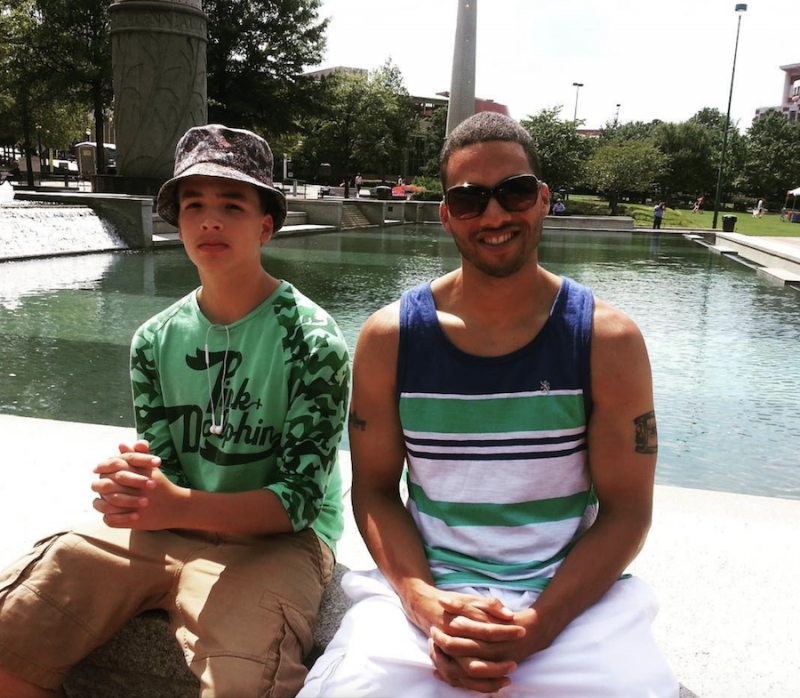
Somebody’s Sick In The World: Fatherhood During COVID-19
Kareem Chadly’s Fatherhood Work Leads to First in Series of ‘Dad Chats’
A Father Making Art Into a Better Life for His Sons in East Oakland
Before We Get Much Older
Player sponsored by
window.__IS_SSR__=true
window.__INITIAL_STATE__={
"attachmentsReducer": {
"audio_0": {
"type": "attachments",
"id": "audio_0",
"imgSizes": {
"kqedFullSize": {
"file": "https://ww2.kqed.org/news/wp-content/themes/KQED-unified/img/audio_bgs/background0.jpg"
}
}
},
"audio_1": {
"type": "attachments",
"id": "audio_1",
"imgSizes": {
"kqedFullSize": {
"file": "https://ww2.kqed.org/news/wp-content/themes/KQED-unified/img/audio_bgs/background1.jpg"
}
}
},
"audio_2": {
"type": "attachments",
"id": "audio_2",
"imgSizes": {
"kqedFullSize": {
"file": "https://ww2.kqed.org/news/wp-content/themes/KQED-unified/img/audio_bgs/background2.jpg"
}
}
},
"audio_3": {
"type": "attachments",
"id": "audio_3",
"imgSizes": {
"kqedFullSize": {
"file": "https://ww2.kqed.org/news/wp-content/themes/KQED-unified/img/audio_bgs/background3.jpg"
}
}
},
"audio_4": {
"type": "attachments",
"id": "audio_4",
"imgSizes": {
"kqedFullSize": {
"file": "https://ww2.kqed.org/news/wp-content/themes/KQED-unified/img/audio_bgs/background4.jpg"
}
}
},
"placeholder": {
"type": "attachments",
"id": "placeholder",
"imgSizes": {
"thumbnail": {
"file": "https://cdn.kqed.org/wp-content/uploads/2024/12/KQED-Default-Image-816638274-2000x1333-1-160x107.jpg",
"width": 160,
"height": 107,
"mimeType": "image/jpeg"
},
"medium": {
"file": "https://cdn.kqed.org/wp-content/uploads/2024/12/KQED-Default-Image-816638274-2000x1333-1-800x533.jpg",
"width": 800,
"height": 533,
"mimeType": "image/jpeg"
},
"medium_large": {
"file": "https://cdn.kqed.org/wp-content/uploads/2024/12/KQED-Default-Image-816638274-2000x1333-1-768x512.jpg",
"width": 768,
"height": 512,
"mimeType": "image/jpeg"
},
"large": {
"file": "https://cdn.kqed.org/wp-content/uploads/2024/12/KQED-Default-Image-816638274-2000x1333-1-1020x680.jpg",
"width": 1020,
"height": 680,
"mimeType": "image/jpeg"
},
"1536x1536": {
"file": "https://cdn.kqed.org/wp-content/uploads/2024/12/KQED-Default-Image-816638274-2000x1333-1-1536x1024.jpg",
"width": 1536,
"height": 1024,
"mimeType": "image/jpeg"
},
"fd-lrg": {
"file": "https://cdn.kqed.org/wp-content/uploads/2024/12/KQED-Default-Image-816638274-2000x1333-1-1536x1024.jpg",
"width": 1536,
"height": 1024,
"mimeType": "image/jpeg"
},
"fd-med": {
"file": "https://cdn.kqed.org/wp-content/uploads/2024/12/KQED-Default-Image-816638274-2000x1333-1-1020x680.jpg",
"width": 1020,
"height": 680,
"mimeType": "image/jpeg"
},
"fd-sm": {
"file": "https://cdn.kqed.org/wp-content/uploads/2024/12/KQED-Default-Image-816638274-2000x1333-1-800x533.jpg",
"width": 800,
"height": 533,
"mimeType": "image/jpeg"
},
"post-thumbnail": {
"file": "https://cdn.kqed.org/wp-content/uploads/2024/12/KQED-Default-Image-816638274-2000x1333-1-672x372.jpg",
"width": 672,
"height": 372,
"mimeType": "image/jpeg"
},
"twentyfourteen-full-width": {
"file": "https://cdn.kqed.org/wp-content/uploads/2024/12/KQED-Default-Image-816638274-2000x1333-1-1038x576.jpg",
"width": 1038,
"height": 576,
"mimeType": "image/jpeg"
},
"xxsmall": {
"file": "https://cdn.kqed.org/wp-content/uploads/2024/12/KQED-Default-Image-816638274-2000x1333-1-160x107.jpg",
"width": 160,
"height": 107,
"mimeType": "image/jpeg"
},
"xsmall": {
"file": "https://cdn.kqed.org/wp-content/uploads/2024/12/KQED-Default-Image-816638274-2000x1333-1-672x372.jpg",
"width": 672,
"height": 372,
"mimeType": "image/jpeg"
},
"small": {
"file": "https://cdn.kqed.org/wp-content/uploads/2024/12/KQED-Default-Image-816638274-2000x1333-1-672x372.jpg",
"width": 672,
"height": 372,
"mimeType": "image/jpeg"
},
"xlarge": {
"file": "https://cdn.kqed.org/wp-content/uploads/2024/12/KQED-Default-Image-816638274-2000x1333-1-1020x680.jpg",
"width": 1020,
"height": 680,
"mimeType": "image/jpeg"
},
"full-width": {
"file": "https://cdn.kqed.org/wp-content/uploads/2024/12/KQED-Default-Image-816638274-2000x1333-1-1920x1280.jpg",
"width": 1920,
"height": 1280,
"mimeType": "image/jpeg"
},
"guest-author-32": {
"file": "https://cdn.kqed.org/wp-content/uploads/2025/01/KQED-Default-Image-816638274-1333x1333-1-160x160.jpg",
"width": 32,
"height": 32,
"mimeType": "image/jpeg"
},
"guest-author-50": {
"file": "https://cdn.kqed.org/wp-content/uploads/2025/01/KQED-Default-Image-816638274-1333x1333-1-160x160.jpg",
"width": 50,
"height": 50,
"mimeType": "image/jpeg"
},
"guest-author-64": {
"file": "https://cdn.kqed.org/wp-content/uploads/2025/01/KQED-Default-Image-816638274-1333x1333-1-160x160.jpg",
"width": 64,
"height": 64,
"mimeType": "image/jpeg"
},
"guest-author-96": {
"file": "https://cdn.kqed.org/wp-content/uploads/2025/01/KQED-Default-Image-816638274-1333x1333-1-160x160.jpg",
"width": 96,
"height": 96,
"mimeType": "image/jpeg"
},
"guest-author-128": {
"file": "https://cdn.kqed.org/wp-content/uploads/2025/01/KQED-Default-Image-816638274-1333x1333-1-160x160.jpg",
"width": 128,
"height": 128,
"mimeType": "image/jpeg"
},
"detail": {
"file": "https://cdn.kqed.org/wp-content/uploads/2025/01/KQED-Default-Image-816638274-1333x1333-1-160x160.jpg",
"width": 160,
"height": 160,
"mimeType": "image/jpeg"
},
"kqedFullSize": {
"file": "https://cdn.kqed.org/wp-content/uploads/2024/12/KQED-Default-Image-816638274-2000x1333-1.jpg",
"width": 2000,
"height": 1333
}
}
},
"arts_13898925": {
"type": "attachments",
"id": "arts_13898925",
"meta": {
"index": "attachments_1716263798",
"site": "arts",
"id": "13898925",
"found": true
},
"parent": 13898520,
"imgSizes": {
"twentyfourteen-full-width": {
"file": "https://ww2.kqed.org/app/uploads/sites/2/2021/06/IMG_0025-1038x576.jpg",
"width": 1038,
"mimeType": "image/jpeg",
"height": 576
},
"thumbnail": {
"file": "https://ww2.kqed.org/app/uploads/sites/2/2021/06/IMG_0025-160x120.jpg",
"width": 160,
"mimeType": "image/jpeg",
"height": 120
},
"post-thumbnail": {
"file": "https://ww2.kqed.org/app/uploads/sites/2/2021/06/IMG_0025-672x372.jpg",
"width": 672,
"mimeType": "image/jpeg",
"height": 372
},
"kqedFullSize": {
"file": "https://ww2.kqed.org/app/uploads/sites/2/2021/06/IMG_0025-scaled.jpg",
"width": 2560,
"height": 1920
},
"2048x2048": {
"file": "https://ww2.kqed.org/app/uploads/sites/2/2021/06/IMG_0025-2048x1536.jpg",
"width": 2048,
"mimeType": "image/jpeg",
"height": 1536
},
"large": {
"file": "https://ww2.kqed.org/app/uploads/sites/2/2021/06/IMG_0025-1020x765.jpg",
"width": 1020,
"mimeType": "image/jpeg",
"height": 765
},
"1536x1536": {
"file": "https://ww2.kqed.org/app/uploads/sites/2/2021/06/IMG_0025-1536x1152.jpg",
"width": 1536,
"mimeType": "image/jpeg",
"height": 1152
},
"full-width": {
"file": "https://ww2.kqed.org/app/uploads/sites/2/2021/06/IMG_0025-1920x1440.jpg",
"width": 1920,
"mimeType": "image/jpeg",
"height": 1440
},
"medium": {
"file": "https://ww2.kqed.org/app/uploads/sites/2/2021/06/IMG_0025-800x600.jpg",
"width": 800,
"mimeType": "image/jpeg",
"height": 600
},
"medium_large": {
"file": "https://ww2.kqed.org/app/uploads/sites/2/2021/06/IMG_0025-768x576.jpg",
"width": 768,
"mimeType": "image/jpeg",
"height": 576
}
},
"publishDate": 1623946199,
"modified": 1623952556,
"caption": "While cute, our gray and white kitten, Skye, has proven that she can be a handful.",
"description": "While cute, our gray and white kitten, Skye, has proven that she can be a handful.",
"title": "While cute, our gray and white kitten, Skye, has proven that she can be a handful.",
"credit": "Pendarvis Harshaw",
"status": "inherit",
"altTag": "While cute, our gray and white kitten Skye, has proven that she can be a handful.",
"isLoading": false,
"fetchFailed": false
},
"arts_13882120": {
"type": "attachments",
"id": "arts_13882120",
"meta": {
"index": "attachments_1716263798",
"site": "arts",
"id": "13882120",
"found": true
},
"parent": 13882117,
"imgSizes": {
"twentyfourteen-full-width": {
"file": "https://ww2.kqed.org/app/uploads/sites/2/2020/06/2F4CC2AE-5FD7-417D-A032-227965DA7DDE-1038x576.jpg",
"width": 1038,
"mimeType": "image/jpeg",
"height": 576
},
"thumbnail": {
"file": "https://ww2.kqed.org/app/uploads/sites/2/2020/06/2F4CC2AE-5FD7-417D-A032-227965DA7DDE-160x120.jpg",
"width": 160,
"mimeType": "image/jpeg",
"height": 120
},
"post-thumbnail": {
"file": "https://ww2.kqed.org/app/uploads/sites/2/2020/06/2F4CC2AE-5FD7-417D-A032-227965DA7DDE-672x372.jpg",
"width": 672,
"mimeType": "image/jpeg",
"height": 372
},
"kqedFullSize": {
"file": "https://ww2.kqed.org/app/uploads/sites/2/2020/06/2F4CC2AE-5FD7-417D-A032-227965DA7DDE.jpg",
"width": 3600,
"height": 2700
},
"large": {
"file": "https://ww2.kqed.org/app/uploads/sites/2/2020/06/2F4CC2AE-5FD7-417D-A032-227965DA7DDE-1020x765.jpg",
"width": 1020,
"mimeType": "image/jpeg",
"height": 765
},
"full-width": {
"file": "https://ww2.kqed.org/app/uploads/sites/2/2020/06/2F4CC2AE-5FD7-417D-A032-227965DA7DDE-1920x1440.jpg",
"width": 1920,
"mimeType": "image/jpeg",
"height": 1440
},
"medium": {
"file": "https://ww2.kqed.org/app/uploads/sites/2/2020/06/2F4CC2AE-5FD7-417D-A032-227965DA7DDE-800x600.jpg",
"width": 800,
"mimeType": "image/jpeg",
"height": 600
},
"medium_large": {
"file": "https://ww2.kqed.org/app/uploads/sites/2/2020/06/2F4CC2AE-5FD7-417D-A032-227965DA7DDE-768x576.jpg",
"width": 768,
"mimeType": "image/jpeg",
"height": 576
}
},
"publishDate": 1592377634,
"modified": 1592377685,
"caption": "My daughter fell in love with sticks and rocks during shelter-in-place. This one might've been her favorite",
"description": "My daughter fell in love with sticks and rocks during shelter-in-place. This one might've been her favorite",
"title": "My daughter fell in love with sticks and rocks during shelter-in-place. This one might've been her favorite",
"credit": "Pendarvis Harshaw",
"status": "inherit",
"isLoading": false,
"fetchFailed": false
},
"arts_13882198": {
"type": "attachments",
"id": "arts_13882198",
"meta": {
"index": "attachments_1716263798",
"site": "arts",
"id": "13882198",
"found": true
},
"parent": 13882189,
"imgSizes": {
"twentyfourteen-full-width": {
"file": "https://ww2.kqed.org/app/uploads/sites/2/2020/06/Screen-Shot-2020-06-18-at-8.23.06-AM-900x576.png",
"width": 900,
"mimeType": "image/png",
"height": 576
},
"thumbnail": {
"file": "https://ww2.kqed.org/app/uploads/sites/2/2020/06/Screen-Shot-2020-06-18-at-8.23.06-AM-160x140.png",
"width": 160,
"mimeType": "image/png",
"height": 140
},
"post-thumbnail": {
"file": "https://ww2.kqed.org/app/uploads/sites/2/2020/06/Screen-Shot-2020-06-18-at-8.23.06-AM-672x372.png",
"width": 672,
"mimeType": "image/png",
"height": 372
},
"kqedFullSize": {
"file": "https://ww2.kqed.org/app/uploads/sites/2/2020/06/Screen-Shot-2020-06-18-at-8.23.06-AM.png",
"width": 900,
"height": 785
},
"medium": {
"file": "https://ww2.kqed.org/app/uploads/sites/2/2020/06/Screen-Shot-2020-06-18-at-8.23.06-AM-800x698.png",
"width": 800,
"mimeType": "image/png",
"height": 698
},
"medium_large": {
"file": "https://ww2.kqed.org/app/uploads/sites/2/2020/06/Screen-Shot-2020-06-18-at-8.23.06-AM-768x670.png",
"width": 768,
"mimeType": "image/png",
"height": 670
}
},
"publishDate": 1592500008,
"modified": 1592502622,
"caption": "The late Damani Chadly and his father Kareem.",
"description": "The late Damani Chadly and his father Kareem.",
"title": "The late Damani Chadly and his father Kareem",
"credit": "Kareem Chadly",
"status": "inherit",
"isLoading": false,
"fetchFailed": false
},
"arts_13835199": {
"type": "attachments",
"id": "arts_13835199",
"meta": {
"index": "attachments_1716263798",
"site": "arts",
"id": "13835199",
"found": true
},
"parent": 13835196,
"imgSizes": {
"small": {
"file": "https://ww2.kqed.org/app/uploads/sites/2/2018/06/Jamaica.MAIN_-520x309.jpg",
"width": 520,
"mimeType": "image/jpeg",
"height": 309
},
"twentyfourteen-full-width": {
"file": "https://ww2.kqed.org/app/uploads/sites/2/2018/06/Jamaica.MAIN_-1038x576.jpg",
"width": 1038,
"mimeType": "image/jpeg",
"height": 576
},
"thumbnail": {
"file": "https://ww2.kqed.org/app/uploads/sites/2/2018/06/Jamaica.MAIN_-160x95.jpg",
"width": 160,
"mimeType": "image/jpeg",
"height": 95
},
"fd-sm": {
"file": "https://ww2.kqed.org/app/uploads/sites/2/2018/06/Jamaica.MAIN_-960x570.jpg",
"width": 960,
"mimeType": "image/jpeg",
"height": 570
},
"post-thumbnail": {
"file": "https://ww2.kqed.org/app/uploads/sites/2/2018/06/Jamaica.MAIN_-672x372.jpg",
"width": 672,
"mimeType": "image/jpeg",
"height": 372
},
"xsmall": {
"file": "https://ww2.kqed.org/app/uploads/sites/2/2018/06/Jamaica.MAIN_-375x223.jpg",
"width": 375,
"mimeType": "image/jpeg",
"height": 223
},
"kqedFullSize": {
"file": "https://ww2.kqed.org/app/uploads/sites/2/2018/06/Jamaica.MAIN_.jpg",
"width": 1920,
"height": 1140
},
"large": {
"file": "https://ww2.kqed.org/app/uploads/sites/2/2018/06/Jamaica.MAIN_-1020x606.jpg",
"width": 1020,
"mimeType": "image/jpeg",
"height": 606
},
"xlarge": {
"file": "https://ww2.kqed.org/app/uploads/sites/2/2018/06/Jamaica.MAIN_-1180x701.jpg",
"width": 1180,
"mimeType": "image/jpeg",
"height": 701
},
"complete_open_graph": {
"file": "https://ww2.kqed.org/app/uploads/sites/2/2018/06/Jamaica.MAIN_-1200x713.jpg",
"width": 1200,
"mimeType": "image/jpeg",
"height": 713
},
"guest-author-50": {
"file": "https://ww2.kqed.org/app/uploads/sites/2/2018/06/Jamaica.MAIN_-50x50.jpg",
"width": 50,
"mimeType": "image/jpeg",
"height": 50
},
"guest-author-96": {
"file": "https://ww2.kqed.org/app/uploads/sites/2/2018/06/Jamaica.MAIN_-96x96.jpg",
"width": 96,
"mimeType": "image/jpeg",
"height": 96
},
"medium": {
"file": "https://ww2.kqed.org/app/uploads/sites/2/2018/06/Jamaica.MAIN_-800x475.jpg",
"width": 800,
"mimeType": "image/jpeg",
"height": 475
},
"guest-author-64": {
"file": "https://ww2.kqed.org/app/uploads/sites/2/2018/06/Jamaica.MAIN_-64x64.jpg",
"width": 64,
"mimeType": "image/jpeg",
"height": 64
},
"guest-author-32": {
"file": "https://ww2.kqed.org/app/uploads/sites/2/2018/06/Jamaica.MAIN_-32x32.jpg",
"width": 32,
"mimeType": "image/jpeg",
"height": 32
},
"fd-lrg": {
"file": "https://ww2.kqed.org/app/uploads/sites/2/2018/06/Jamaica.MAIN_-1920x1140.jpg",
"width": 1920,
"mimeType": "image/jpeg",
"height": 1140
},
"fd-med": {
"file": "https://ww2.kqed.org/app/uploads/sites/2/2018/06/Jamaica.MAIN_-1180x701.jpg",
"width": 1180,
"mimeType": "image/jpeg",
"height": 701
},
"full-width": {
"file": "https://ww2.kqed.org/app/uploads/sites/2/2018/06/Jamaica.MAIN_-1920x1140.jpg",
"width": 1920,
"mimeType": "image/jpeg",
"height": 1140
},
"detail": {
"file": "https://ww2.kqed.org/app/uploads/sites/2/2018/06/Jamaica.MAIN_-150x150.jpg",
"width": 150,
"mimeType": "image/jpeg",
"height": 150
},
"medium_large": {
"file": "https://ww2.kqed.org/app/uploads/sites/2/2018/06/Jamaica.MAIN_-768x456.jpg",
"width": 768,
"mimeType": "image/jpeg",
"height": 456
},
"guest-author-128": {
"file": "https://ww2.kqed.org/app/uploads/sites/2/2018/06/Jamaica.MAIN_-128x128.jpg",
"width": 128,
"mimeType": "image/jpeg",
"height": 128
},
"xxsmall": {
"file": "https://ww2.kqed.org/app/uploads/sites/2/2018/06/Jamaica.MAIN_-240x143.jpg",
"width": 240,
"mimeType": "image/jpeg",
"height": 143
}
},
"publishDate": 1529179746,
"modified": 1529179858,
"caption": "Jamaica the Artist with two of his six boys in Oakland. Becoming a working artist allowed him to provide for his sons above and beyond his own upbringing. ",
"description": "Jamaica the Artist with two of his six boys in Oakland. Becoming a working artist allowed him to provide for his sons above and beyond his own upbringing. ",
"title": "Jamaica.MAIN",
"credit": "Pendarvis Harshaw",
"status": "inherit",
"isLoading": false,
"fetchFailed": false
},
"arts_13488116": {
"type": "attachments",
"id": "arts_13488116",
"meta": {
"index": "attachments_1716263798",
"site": "arts",
"id": "13488116",
"found": true
},
"parent": 13455395,
"imgSizes": {
"small": {
"file": "https://ww2.kqed.org/app/uploads/sites/2/2017/06/DesertTrip.MAIN_Take2-520x312.jpg",
"width": 520,
"mimeType": "image/jpeg",
"height": 312
},
"twentyfourteen-full-width": {
"file": "https://ww2.kqed.org/app/uploads/sites/2/2017/06/DesertTrip.MAIN_Take2-1038x576.jpg",
"width": 1038,
"mimeType": "image/jpeg",
"height": 576
},
"thumbnail": {
"file": "https://ww2.kqed.org/app/uploads/sites/2/2017/06/DesertTrip.MAIN_Take2-160x96.jpg",
"width": 160,
"mimeType": "image/jpeg",
"height": 96
},
"fd-sm": {
"file": "https://ww2.kqed.org/app/uploads/sites/2/2017/06/DesertTrip.MAIN_Take2-960x576.jpg",
"width": 960,
"mimeType": "image/jpeg",
"height": 576
},
"post-thumbnail": {
"file": "https://ww2.kqed.org/app/uploads/sites/2/2017/06/DesertTrip.MAIN_Take2-672x372.jpg",
"width": 672,
"mimeType": "image/jpeg",
"height": 372
},
"xsmall": {
"file": "https://ww2.kqed.org/app/uploads/sites/2/2017/06/DesertTrip.MAIN_Take2-375x225.jpg",
"width": 375,
"mimeType": "image/jpeg",
"height": 225
},
"kqedFullSize": {
"file": "https://ww2.kqed.org/app/uploads/sites/2/2017/06/DesertTrip.MAIN_Take2.jpg",
"width": 1920,
"height": 1151
},
"large": {
"file": "https://ww2.kqed.org/app/uploads/sites/2/2017/06/DesertTrip.MAIN_Take2-1020x611.jpg",
"width": 1020,
"mimeType": "image/jpeg",
"height": 611
},
"xlarge": {
"file": "https://ww2.kqed.org/app/uploads/sites/2/2017/06/DesertTrip.MAIN_Take2-1180x707.jpg",
"width": 1180,
"mimeType": "image/jpeg",
"height": 707
},
"guest-author-50": {
"file": "https://ww2.kqed.org/app/uploads/sites/2/2017/06/DesertTrip.MAIN_Take2-50x50.jpg",
"width": 50,
"mimeType": "image/jpeg",
"height": 50
},
"guest-author-96": {
"file": "https://ww2.kqed.org/app/uploads/sites/2/2017/06/DesertTrip.MAIN_Take2-96x96.jpg",
"width": 96,
"mimeType": "image/jpeg",
"height": 96
},
"medium": {
"file": "https://ww2.kqed.org/app/uploads/sites/2/2017/06/DesertTrip.MAIN_Take2-800x480.jpg",
"width": 800,
"mimeType": "image/jpeg",
"height": 480
},
"guest-author-64": {
"file": "https://ww2.kqed.org/app/uploads/sites/2/2017/06/DesertTrip.MAIN_Take2-64x64.jpg",
"width": 64,
"mimeType": "image/jpeg",
"height": 64
},
"guest-author-32": {
"file": "https://ww2.kqed.org/app/uploads/sites/2/2017/06/DesertTrip.MAIN_Take2-32x32.jpg",
"width": 32,
"mimeType": "image/jpeg",
"height": 32
},
"fd-lrg": {
"file": "https://ww2.kqed.org/app/uploads/sites/2/2017/06/DesertTrip.MAIN_Take2-1920x1151.jpg",
"width": 1920,
"mimeType": "image/jpeg",
"height": 1151
},
"fd-med": {
"file": "https://ww2.kqed.org/app/uploads/sites/2/2017/06/DesertTrip.MAIN_Take2-1180x707.jpg",
"width": 1180,
"mimeType": "image/jpeg",
"height": 707
},
"full-width": {
"file": "https://ww2.kqed.org/app/uploads/sites/2/2017/06/DesertTrip.MAIN_Take2-1920x1151.jpg",
"width": 1920,
"mimeType": "image/jpeg",
"height": 1151
},
"detail": {
"file": "https://ww2.kqed.org/app/uploads/sites/2/2017/06/DesertTrip.MAIN_Take2-150x150.jpg",
"width": 150,
"mimeType": "image/jpeg",
"height": 150
},
"medium_large": {
"file": "https://ww2.kqed.org/app/uploads/sites/2/2017/06/DesertTrip.MAIN_Take2-768x460.jpg",
"width": 768,
"mimeType": "image/jpeg",
"height": 460
},
"guest-author-128": {
"file": "https://ww2.kqed.org/app/uploads/sites/2/2017/06/DesertTrip.MAIN_Take2-128x128.jpg",
"width": 128,
"mimeType": "image/jpeg",
"height": 128
},
"xxsmall": {
"file": "https://ww2.kqed.org/app/uploads/sites/2/2017/06/DesertTrip.MAIN_Take2-240x144.jpg",
"width": 240,
"mimeType": "image/jpeg",
"height": 144
}
},
"publishDate": 1498086416,
"modified": 1498086416,
"caption": null,
"description": null,
"title": "DesertTrip.MAIN_Take2",
"credit": null,
"status": "inherit",
"isLoading": false,
"fetchFailed": false
}
},
"audioPlayerReducer": {
"postId": "stream_live",
"isPaused": true,
"isPlaying": false,
"pfsActive": false,
"pledgeModalIsOpen": true,
"playerDrawerIsOpen": false
},
"authorsReducer": {
"gmeline": {
"type": "authors",
"id": "185",
"meta": {
"index": "authors_1716337520",
"id": "185",
"found": true
},
"name": "Gabe Meline",
"firstName": "Gabe",
"lastName": "Meline",
"slug": "gmeline",
"email": "gmeline@kqed.org",
"display_author_email": true,
"staff_mastheads": [
"arts"
],
"title": "Senior Editor, KQED Arts & Culture",
"bio": "Gabe Meline entered journalism at age 15 making photocopied zines, and has since earned awards from the Edward R. Murrow Awards, the Society for Professional Journalists, the Online Journalism Awards, the Association of Alternative Newsweeklies and the California Newspaper Publishers Association. Prior to KQED, he was the editor of the \u003cem>North Bay Bohemian\u003c/em> and a touring musician. He lives with his wife and daughter in his hometown of Santa Rosa, CA.",
"avatar": "https://secure.gravatar.com/avatar/80e9715844c5fc3f07edac5b08973b76?s=600&d=blank&r=g",
"twitter": null,
"bluesky": null,
"facebook": null,
"instagram": null,
"linkedin": null,
"sites": [
{
"site": "",
"roles": [
"editor"
]
},
{
"site": "arts",
"roles": [
"administrator"
]
},
{
"site": "artschool",
"roles": [
"editor"
]
},
{
"site": "news",
"roles": [
"author"
]
},
{
"site": "pop",
"roles": [
"editor"
]
},
{
"site": "bayareabites",
"roles": [
"editor"
]
},
{
"site": "food",
"roles": [
"editor"
]
},
{
"site": "liveblog",
"roles": [
"editor"
]
},
{
"site": "hiphop",
"roles": [
"editor"
]
}
],
"headData": {
"title": "Gabe Meline | KQED",
"description": "Senior Editor, KQED Arts & Culture",
"ogImgSrc": "https://secure.gravatar.com/avatar/80e9715844c5fc3f07edac5b08973b76?s=600&d=blank&r=g",
"twImgSrc": "https://secure.gravatar.com/avatar/80e9715844c5fc3f07edac5b08973b76?s=600&d=blank&r=g"
},
"isLoading": false,
"link": "/author/gmeline"
},
"ogpenn": {
"type": "authors",
"id": "11491",
"meta": {
"index": "authors_1716337520",
"id": "11491",
"found": true
},
"name": "Pendarvis Harshaw",
"firstName": "Pendarvis",
"lastName": "Harshaw",
"slug": "ogpenn",
"email": "ogpenn@gmail.com",
"display_author_email": false,
"staff_mastheads": [
"arts"
],
"title": "Community Engagement Reporter",
"bio": "Pendarvis Harshaw is an educator, host and writer with KQED Arts.",
"avatar": "https://secure.gravatar.com/avatar/093d33baff5354890e29ad83d58d2c49?s=600&d=blank&r=g",
"twitter": null,
"facebook": null,
"instagram": "ogpenn",
"linkedin": null,
"sites": [
{
"site": "arts",
"roles": [
"editor"
]
},
{
"site": "news",
"roles": [
"editor"
]
},
{
"site": "bayareabites",
"roles": [
"author"
]
},
{
"site": "hiphop",
"roles": [
"editor"
]
}
],
"headData": {
"title": "Pendarvis Harshaw | KQED",
"description": "Community Engagement Reporter",
"ogImgSrc": "https://secure.gravatar.com/avatar/093d33baff5354890e29ad83d58d2c49?s=600&d=blank&r=g",
"twImgSrc": "https://secure.gravatar.com/avatar/093d33baff5354890e29ad83d58d2c49?s=600&d=blank&r=g"
},
"isLoading": false,
"link": "/author/ogpenn"
},
"mmedina": {
"type": "authors",
"id": "11528",
"meta": {
"index": "authors_1716337520",
"id": "11528",
"found": true
},
"name": "Marisol Medina-Cadena",
"firstName": "Marisol",
"lastName": "Medina-Cadena",
"slug": "mmedina",
"email": "mmedina@KQED.org",
"display_author_email": true,
"staff_mastheads": [],
"title": "Producer, Rightnowish Podcast",
"bio": "Marisol Medina-Cadena is a radio reporter and podcast producer. Before working at KQED, she produced for PBS member station, KCET, in Los Angeles. In 2017, Marisol won an Emmy Award for her work on the televised documentary, \u003cem>City Rising\u003c/em>, examining California's affordable housing crisis and the historical roots of gentrification.",
"avatar": "https://secure.gravatar.com/avatar/6c3db46a1cabb5e1fe9a365b5f4e681e?s=600&d=blank&r=g",
"twitter": "marisolreports",
"facebook": null,
"instagram": null,
"linkedin": null,
"sites": [
{
"site": "arts",
"roles": []
},
{
"site": "news",
"roles": [
"edit_others_posts"
]
}
],
"headData": {
"title": "Marisol Medina-Cadena | KQED",
"description": "Producer, Rightnowish Podcast",
"ogImgSrc": "https://secure.gravatar.com/avatar/6c3db46a1cabb5e1fe9a365b5f4e681e?s=600&d=blank&r=g",
"twImgSrc": "https://secure.gravatar.com/avatar/6c3db46a1cabb5e1fe9a365b5f4e681e?s=600&d=blank&r=g"
},
"isLoading": false,
"link": "/author/mmedina"
}
},
"breakingNewsReducer": {},
"pagesReducer": {},
"postsReducer": {
"stream_live": {
"type": "live",
"id": "stream_live",
"audioUrl": "https://streams.kqed.org/kqedradio",
"title": "Live Stream",
"excerpt": "Live Stream information currently unavailable.",
"link": "/radio",
"featImg": "",
"label": {
"name": "KQED Live",
"link": "/"
}
},
"stream_kqedNewscast": {
"type": "posts",
"id": "stream_kqedNewscast",
"audioUrl": "https://www.kqed.org/.stream/anon/radio/RDnews/newscast.mp3?_=1",
"title": "KQED Newscast",
"featImg": "",
"label": {
"name": "88.5 FM",
"link": "/"
}
},
"arts_13898520": {
"type": "posts",
"id": "arts_13898520",
"meta": {
"index": "posts_1716263798",
"site": "arts",
"id": "13898520",
"score": null,
"sort": [
1624010438000
]
},
"guestAuthors": [],
"slug": "cat-daddy",
"title": "Cat Daddy: A Lesson on Pets and Parenting",
"publishDate": 1624010438,
"format": "audio",
"headTitle": "Cat Daddy: A Lesson on Pets and Parenting | KQED",
"labelTerm": {},
"content": "\u003cp>I’m a cat dad, ya’ll.\u003c/p>\n\u003cp>I mean, I’m also the parent of a human child; an awesome little girl named Z. But the cat dad thing is the new wrinkle in our father-daughter dynamic, and it’s proven to be … interesting.\u003c/p>\n\u003cp>For my daughter’s fourth birthday we adopted this adorable gray and white kitten that we named Skye. My thinking behind getting the cat: it’ll teach my child about the responsibility of loving and caring for a living creature.\u003c/p>\n\u003cp>I clearly didn’t think it through.\u003c/p>\n\u003cfigure id=\"attachment_13898926\" class=\"wp-caption alignnone\" style=\"max-width: 800px\">\u003cimg loading=\"lazy\" decoding=\"async\" class=\"size-medium wp-image-13898926\" src=\"https://ww2.kqed.org/app/uploads/sites/2/2021/06/DSC8994-800x535.jpg\" alt=\"Skye shows her tongue to Z, as the kid runs from the mischievous kitten.\" width=\"800\" height=\"535\" srcset=\"https://cdn.kqed.org/wp-content/uploads/sites/2/2021/06/DSC8994-800x535.jpg 800w, https://cdn.kqed.org/wp-content/uploads/sites/2/2021/06/DSC8994-1020x682.jpg 1020w, https://cdn.kqed.org/wp-content/uploads/sites/2/2021/06/DSC8994-160x107.jpg 160w, https://cdn.kqed.org/wp-content/uploads/sites/2/2021/06/DSC8994-768x513.jpg 768w, https://cdn.kqed.org/wp-content/uploads/sites/2/2021/06/DSC8994-1536x1027.jpg 1536w, https://cdn.kqed.org/wp-content/uploads/sites/2/2021/06/DSC8994.jpg 1616w\" sizes=\"(max-width: 800px) 100vw, 800px\">\u003cfigcaption class=\"wp-caption-text\">Skye shows her tongue to Z, as the kid runs from the mischievous kitten. \u003ccite>(Pendarvis Harshaw)\u003c/cite>\u003c/figcaption>\u003c/figure>\n\u003cp>Since day one the cat and the kid have waged war on each other. Faces have been scratched and tails pulled.\u003c/p>\n\u003cp>Just last month Z found one of my Rightnowish stickers and asked if she could have it. I said “Yeah, you can put it anywhere you want.” Moments later the cat walked past with the sticker hanging from its butt.\u003c/p>\n\u003cp>It’s not all conflict. They play with each other, and there’s an everlasting game of tag in my hallway.\u003c/p>\n\u003cp>Z loves Skye. And I don’t know if Skye loves Z, but the cat surely acts differently when Z isn’t here. That’s when the cat wages war on me.\u003c/p>\n\u003cfigure id=\"attachment_13898927\" class=\"wp-caption alignnone\" style=\"max-width: 800px\">\u003cimg loading=\"lazy\" decoding=\"async\" class=\"size-medium wp-image-13898927\" src=\"https://ww2.kqed.org/app/uploads/sites/2/2021/06/DSC8999-800x535.jpg\" alt=\"Z sits in the background wearing pajamas, as she and Skye, who is in the foreground, play with a cat toy.\" width=\"800\" height=\"535\" srcset=\"https://cdn.kqed.org/wp-content/uploads/sites/2/2021/06/DSC8999-800x535.jpg 800w, https://cdn.kqed.org/wp-content/uploads/sites/2/2021/06/DSC8999-1020x682.jpg 1020w, https://cdn.kqed.org/wp-content/uploads/sites/2/2021/06/DSC8999-160x107.jpg 160w, https://cdn.kqed.org/wp-content/uploads/sites/2/2021/06/DSC8999-768x513.jpg 768w, https://cdn.kqed.org/wp-content/uploads/sites/2/2021/06/DSC8999-1536x1027.jpg 1536w, https://cdn.kqed.org/wp-content/uploads/sites/2/2021/06/DSC8999.jpg 1616w\" sizes=\"(max-width: 800px) 100vw, 800px\">\u003cfigcaption class=\"wp-caption-text\">Z sits in the background wearing pajamas, as she and Skye, who is in the foreground, play with a cat toy. \u003ccite>(Pendarvis Harshaw)\u003c/cite>\u003c/figcaption>\u003c/figure>\n\u003cp>At the break of dawn, Skye will sit outside my bedroom door meowing nonstop. Whenever I do push-ups, the cat will swat at me like a it’s a game of whack-a-mole. And when I’m taking my \u003cem>me time,\u003c/em> the cat will do everything but jump in the bathtub with me.\u003c/p>\n\u003cp>What started off as a sweet gift intended to teach a young child a valuable life lesson has turned into yet another trip around the learning curve for me as a dad.\u003c/p>\n\u003cp>In this special Father’s Day episode of Rightnowish, I bring you into the story of my daughter, Z, our cat, Skye, and my revelation about where responsibility ultimately resides when you’re a parent.\u003c/p>\n\u003cp>\u003c!-- iframe plugin v.4.3 wordpress.org/plugins/iframe/ -->\u003cbr>\n\u003ciframe loading=\"lazy\" frameborder=\"0\" height=\"200\" scrolling=\"no\" src=\"https://playlist.megaphone.fm?e=KQINC6241458897\" width=\"100%\" class=\"iframe-class\">\u003c/iframe>\u003c/p>\n\u003cp>\u003cem>This episode was produced by Marisol Medina-Cadena.\u003c/em>\u003c/p>\n\u003cp>\u003cimg loading=\"lazy\" decoding=\"async\" class=\"aligncenter size-full wp-image-12127869\" src=\"https://ww2.kqed.org/app/uploads/sites/2/2016/09/Q.Logo_.Break_.jpg\" alt=\"\" width=\"800\" height=\"78\" srcset=\"https://cdn.kqed.org/wp-content/uploads/sites/2/2016/09/Q.Logo_.Break_.jpg 800w, https://cdn.kqed.org/wp-content/uploads/sites/2/2016/09/Q.Logo_.Break_-400x39.jpg 400w, https://cdn.kqed.org/wp-content/uploads/sites/2/2016/09/Q.Logo_.Break_-768x75.jpg 768w\" sizes=\"(max-width: 800px) 100vw, 800px\">\u003c/p>\n\u003cp>\u003cstrong>\u003cem>Rightnowish is an arts and culture podcast produced at KQED. Listen to it wherever you get your podcasts or click the play button at the top of this page and subscribe to the show on \u003ca href=\"https://www.npr.org/podcasts/721590300/rightnowish\">NPR One\u003c/a>, \u003ca href=\"https://open.spotify.com/show/7kEJuafTzTVan7B78ttz1I\">Spotify\u003c/a>, \u003ca href=\"https://podcasts.apple.com/us/podcast/rightnowish/id1482187648\">Apple Podcasts\u003c/a>, \u003ca href=\"https://tunein.com/podcasts/Arts--Culture-Podcasts/Rightnowish-p1258245/\">TuneIn\u003c/a>, \u003ca href=\"https://www.stitcher.com/podcast/kqed/rightnowish\">Stitcher\u003c/a> or wherever you get your podcasts. \u003c/em>\u003c/strong>\u003c/p>\n\u003cp>[ad fullwidth]\u003c/p>\n\u003cp>\u003c/p>\n",
"blocks": [],
"excerpt": "In this special Father's Day episode of Rightnowish, the story a daughter, a cat and their dad. ",
"status": "publish",
"parent": 0,
"modified": 1726759930,
"stats": {
"hasAudio": true,
"hasVideo": false,
"hasChartOrMap": false,
"iframeSrcs": [],
"hasGoogleForm": false,
"hasGallery": false,
"hasHearkenModule": false,
"hasPolis": false,
"paragraphCount": 17,
"wordCount": 444
},
"headData": {
"title": "Cat Daddy: A Lesson on Pets and Parenting | KQED",
"description": "In this special Father's Day episode of Rightnowish, the story a daughter, a cat and their dad. ",
"ogTitle": "",
"ogDescription": "",
"ogImgId": "",
"twTitle": "",
"twDescription": "",
"twImgId": "",
"schema": {
"@context": "https://schema.org",
"@type": "Article",
"headline": "Cat Daddy: A Lesson on Pets and Parenting",
"datePublished": "2021-06-18T03:00:38-07:00",
"dateModified": "2024-09-19T08:32:10-07:00",
"image": "https://cdn.kqed.org/wp-content/uploads/2020/02/KQED-OG-Image@1x.png"
}
},
"source": "Rightnowish",
"sourceUrl": "https://www.kqed.org/podcasts/rightnowish",
"audioUrl": "https://www.podtrac.com/pts/redirect.mp3/traffic.megaphone.fm/KQINC6241458897.mp3?updated=1623433016",
"sticky": false,
"path": "/arts/13898520/cat-daddy",
"audioTrackLength": null,
"parsedContent": [
{
"type": "contentString",
"content": "\u003cdiv class=\"post-body\">\u003cp>\u003cp>I’m a cat dad, ya’ll.\u003c/p>\n\u003cp>I mean, I’m also the parent of a human child; an awesome little girl named Z. But the cat dad thing is the new wrinkle in our father-daughter dynamic, and it’s proven to be … interesting.\u003c/p>\n\u003cp>For my daughter’s fourth birthday we adopted this adorable gray and white kitten that we named Skye. My thinking behind getting the cat: it’ll teach my child about the responsibility of loving and caring for a living creature.\u003c/p>\n\u003cp>I clearly didn’t think it through.\u003c/p>\n\u003cfigure id=\"attachment_13898926\" class=\"wp-caption alignnone\" style=\"max-width: 800px\">\u003cimg loading=\"lazy\" decoding=\"async\" class=\"size-medium wp-image-13898926\" src=\"https://ww2.kqed.org/app/uploads/sites/2/2021/06/DSC8994-800x535.jpg\" alt=\"Skye shows her tongue to Z, as the kid runs from the mischievous kitten.\" width=\"800\" height=\"535\" srcset=\"https://cdn.kqed.org/wp-content/uploads/sites/2/2021/06/DSC8994-800x535.jpg 800w, https://cdn.kqed.org/wp-content/uploads/sites/2/2021/06/DSC8994-1020x682.jpg 1020w, https://cdn.kqed.org/wp-content/uploads/sites/2/2021/06/DSC8994-160x107.jpg 160w, https://cdn.kqed.org/wp-content/uploads/sites/2/2021/06/DSC8994-768x513.jpg 768w, https://cdn.kqed.org/wp-content/uploads/sites/2/2021/06/DSC8994-1536x1027.jpg 1536w, https://cdn.kqed.org/wp-content/uploads/sites/2/2021/06/DSC8994.jpg 1616w\" sizes=\"(max-width: 800px) 100vw, 800px\">\u003cfigcaption class=\"wp-caption-text\">Skye shows her tongue to Z, as the kid runs from the mischievous kitten. \u003ccite>(Pendarvis Harshaw)\u003c/cite>\u003c/figcaption>\u003c/figure>\n\u003cp>Since day one the cat and the kid have waged war on each other. Faces have been scratched and tails pulled.\u003c/p>\n\u003cp>Just last month Z found one of my Rightnowish stickers and asked if she could have it. I said “Yeah, you can put it anywhere you want.” Moments later the cat walked past with the sticker hanging from its butt.\u003c/p>\n\u003cp>It’s not all conflict. They play with each other, and there’s an everlasting game of tag in my hallway.\u003c/p>\n\u003cp>Z loves Skye. And I don’t know if Skye loves Z, but the cat surely acts differently when Z isn’t here. That’s when the cat wages war on me.\u003c/p>\n\u003cfigure id=\"attachment_13898927\" class=\"wp-caption alignnone\" style=\"max-width: 800px\">\u003cimg loading=\"lazy\" decoding=\"async\" class=\"size-medium wp-image-13898927\" src=\"https://ww2.kqed.org/app/uploads/sites/2/2021/06/DSC8999-800x535.jpg\" alt=\"Z sits in the background wearing pajamas, as she and Skye, who is in the foreground, play with a cat toy.\" width=\"800\" height=\"535\" srcset=\"https://cdn.kqed.org/wp-content/uploads/sites/2/2021/06/DSC8999-800x535.jpg 800w, https://cdn.kqed.org/wp-content/uploads/sites/2/2021/06/DSC8999-1020x682.jpg 1020w, https://cdn.kqed.org/wp-content/uploads/sites/2/2021/06/DSC8999-160x107.jpg 160w, https://cdn.kqed.org/wp-content/uploads/sites/2/2021/06/DSC8999-768x513.jpg 768w, https://cdn.kqed.org/wp-content/uploads/sites/2/2021/06/DSC8999-1536x1027.jpg 1536w, https://cdn.kqed.org/wp-content/uploads/sites/2/2021/06/DSC8999.jpg 1616w\" sizes=\"(max-width: 800px) 100vw, 800px\">\u003cfigcaption class=\"wp-caption-text\">Z sits in the background wearing pajamas, as she and Skye, who is in the foreground, play with a cat toy. \u003ccite>(Pendarvis Harshaw)\u003c/cite>\u003c/figcaption>\u003c/figure>\n\u003cp>At the break of dawn, Skye will sit outside my bedroom door meowing nonstop. Whenever I do push-ups, the cat will swat at me like a it’s a game of whack-a-mole. And when I’m taking my \u003cem>me time,\u003c/em> the cat will do everything but jump in the bathtub with me.\u003c/p>\n\u003cp>What started off as a sweet gift intended to teach a young child a valuable life lesson has turned into yet another trip around the learning curve for me as a dad.\u003c/p>\n\u003cp>In this special Father’s Day episode of Rightnowish, I bring you into the story of my daughter, Z, our cat, Skye, and my revelation about where responsibility ultimately resides when you’re a parent.\u003c/p>\n\u003cp>\u003c!-- iframe plugin v.4.3 wordpress.org/plugins/iframe/ -->\u003cbr>\n\u003ciframe loading=\"lazy\" frameborder=\"0\" height=\"200\" scrolling=\"no\" src=\"https://playlist.megaphone.fm?e=KQINC6241458897\" width=\"100%\" class=\"iframe-class\">\u003c/iframe>\u003c/p>\n\u003cp>\u003cem>This episode was produced by Marisol Medina-Cadena.\u003c/em>\u003c/p>\n\u003cp>\u003cimg loading=\"lazy\" decoding=\"async\" class=\"aligncenter size-full wp-image-12127869\" src=\"https://ww2.kqed.org/app/uploads/sites/2/2016/09/Q.Logo_.Break_.jpg\" alt=\"\" width=\"800\" height=\"78\" srcset=\"https://cdn.kqed.org/wp-content/uploads/sites/2/2016/09/Q.Logo_.Break_.jpg 800w, https://cdn.kqed.org/wp-content/uploads/sites/2/2016/09/Q.Logo_.Break_-400x39.jpg 400w, https://cdn.kqed.org/wp-content/uploads/sites/2/2016/09/Q.Logo_.Break_-768x75.jpg 768w\" sizes=\"(max-width: 800px) 100vw, 800px\">\u003c/p>\n\u003cp>\u003cstrong>\u003cem>Rightnowish is an arts and culture podcast produced at KQED. Listen to it wherever you get your podcasts or click the play button at the top of this page and subscribe to the show on \u003ca href=\"https://www.npr.org/podcasts/721590300/rightnowish\">NPR One\u003c/a>, \u003ca href=\"https://open.spotify.com/show/7kEJuafTzTVan7B78ttz1I\">Spotify\u003c/a>, \u003ca href=\"https://podcasts.apple.com/us/podcast/rightnowish/id1482187648\">Apple Podcasts\u003c/a>, \u003ca href=\"https://tunein.com/podcasts/Arts--Culture-Podcasts/Rightnowish-p1258245/\">TuneIn\u003c/a>, \u003ca href=\"https://www.stitcher.com/podcast/kqed/rightnowish\">Stitcher\u003c/a> or wherever you get your podcasts. \u003c/em>\u003c/strong>\u003c/p>\n\u003cp>\u003c/p>\u003c/div>",
"attributes": {
"named": {},
"numeric": []
}
},
{
"type": "component",
"content": "",
"name": "ad",
"attributes": {
"named": {
"label": "fullwidth"
},
"numeric": [
"fullwidth"
]
}
},
{
"type": "contentString",
"content": "\u003cdiv class=\"post-body\">\u003cp>\u003c/p>\n\u003cp>\u003c/p>\n\u003c/div>\u003c/p>",
"attributes": {
"named": {},
"numeric": []
}
}
],
"link": "/arts/13898520/cat-daddy",
"authors": [
"11491",
"11528"
],
"programs": [
"arts_8720"
],
"categories": [
"arts_1",
"arts_21759"
],
"tags": [
"arts_9340",
"arts_1903",
"arts_1118",
"arts_6285",
"arts_6764"
],
"featImg": "arts_13898925",
"label": "source_arts_13898520"
},
"arts_13882117": {
"type": "posts",
"id": "arts_13882117",
"meta": {
"index": "posts_1716263798",
"site": "arts",
"id": "13882117",
"score": null,
"sort": [
1592689254000
]
},
"parent": 0,
"labelTerm": {
"site": "arts"
},
"blocks": [],
"publishDate": 1592689254,
"format": "standard",
"title": "Somebody’s Sick In The World: Fatherhood During COVID-19",
"headTitle": "Somebody’s Sick In The World: Fatherhood During COVID-19 | KQED",
"content": "\u003cp>\u003cspan style=\"font-size: 4.6875em;float: left;line-height: 0.733em;padding: 0.05em 0.1em 0 0;font-family: times, serif, georgia\">T\u003c/span>he seemingly astronomical task of protecting a three year-old girl from germs is actually kind of easy. Protecting her from the rest of the world—that’s a little more difficult. And because the rest of the world has influenced me, the hardest part of all might just be protecting her from me.\u003c/p>\n\u003cp>\u003cimg loading=\"lazy\" decoding=\"async\" class=\"alignright size-thumbnail wp-image-13833985\" src=\"https://ww2.kqed.org/arts/wp-content/uploads/sites/2/2018/05/OGPenn.Cap_-160x184.jpg\" alt=\"\" width=\"160\" height=\"184\" srcset=\"https://cdn.kqed.org/wp-content/uploads/sites/2/2018/05/OGPenn.Cap_-160x184.jpg 160w, https://cdn.kqed.org/wp-content/uploads/sites/2/2018/05/OGPenn.Cap_.jpg 180w\" sizes=\"(max-width: 160px) 100vw, 160px\">\u003c/p>\n\u003cp>As sheltering in place comes to an end, so will this life of home schooling during a pandemic. I couldn’t fit all of the lessons learned during this time period onto a single syllabus. But I can tell you that the overarching theme of this semester was the fact that I’m the one who was in school. Not my three-year-old daughter.\u003c/p>\n\u003cp>It didn’t start that way.\u003c/p>\n\u003cp>I tried being a good teacher. I had structure and everything. Breakfast and \u003cem>Sesame Street\u003c/em> while I send emails. 10:30am recess meant a walk to a nearby patch of grass to play soccer or Frisbee, or even a jog while she sat in the stroller, periodically yelling for me to pause so she could pick flowers. 2:30pm is nap time, or “just go to your room and close your eyes and be quiet for an hour—please” time. And then a book before bedtime, ideally around 8pm.\u003c/p>\n\u003cp>Problem was, my structure wasn’t made of steel—more like bamboo.\u003c/p>\n\u003cp>Between Zoom video meetings one day, we built a whole tent. We’ve become regulars at the dance parties that happen in club “living room.” And those events last way past bedtime.\u003c/p>\n\u003cp>The other day, I laid my daughter down for her 2:30pm break, and went to my closet to interview \u003ca href=\"https://www.kqed.org/arts/13881954/getting-out-of-the-way-for-your-creative-child\" target=\"_blank\" rel=\"noopener noreferrer\">Sydney Nycole and Gary Reeves\u003c/a> for a \u003cem>Rightnowish\u003c/em> podcast episode about father-daughter relationships. I walked away from the Zoom call to realize my daughter had gone number two in the potty, properly wiped, washed her hands and was jumping on my bed. I mean, she didn’t flush the toilet, but I was impressed nonetheless.\u003c/p>\n\u003cp>She’s taught me that she’s capable of learning fast.\u003c/p>\n\u003cfigure id=\"attachment_13882121\" class=\"wp-caption alignnone\" style=\"max-width: 800px\">\u003cimg loading=\"lazy\" decoding=\"async\" class=\"size-medium wp-image-13882121\" src=\"https://ww2.kqed.org/app/uploads/sites/2/2020/06/F066ACED-BD11-42C5-9F23-FEA476BEC46A-800x450.jpg\" alt=\"On a run for take-out, we paused for a photo opp\" width=\"800\" height=\"450\" srcset=\"https://cdn.kqed.org/wp-content/uploads/sites/2/2020/06/F066ACED-BD11-42C5-9F23-FEA476BEC46A-800x450.jpg 800w, https://cdn.kqed.org/wp-content/uploads/sites/2/2020/06/F066ACED-BD11-42C5-9F23-FEA476BEC46A-160x90.jpg 160w, https://cdn.kqed.org/wp-content/uploads/sites/2/2020/06/F066ACED-BD11-42C5-9F23-FEA476BEC46A-768x432.jpg 768w, https://cdn.kqed.org/wp-content/uploads/sites/2/2020/06/F066ACED-BD11-42C5-9F23-FEA476BEC46A-1020x574.jpg 1020w, https://cdn.kqed.org/wp-content/uploads/sites/2/2020/06/F066ACED-BD11-42C5-9F23-FEA476BEC46A.jpg 1309w\" sizes=\"(max-width: 800px) 100vw, 800px\">\u003cfigcaption class=\"wp-caption-text\">On a run for take-out, we paused for a photo op. \u003ccite>(Pendarvis Harshaw)\u003c/cite>\u003c/figcaption>\u003c/figure>\n\u003cp>\u003cspan style=\"font-size: 4.6875em;float: left;line-height: 0.733em;padding: 0.05em 0.1em 0 0;font-family: times, serif, georgia\">I\u003c/span> told her we couldn’t go on our library trips anymore because there’s a virus out there making people in the world sick. She took it as “somebody is sick in the world,” and that’s what she’s been saying for three months.\u003c/p>\n\u003cp>And it’s that simple for her. For me it’s much more complex. But I’ve been trying to take notes and process it all.\u003c/p>\n\u003cp>I can now confirm Doc McStuffins is not a doctor but an engineer—she fixes inanimate objects. Grumpy Bear, of the Care Bear family, once said he likes his “clowns to look like clowns,” and it hit home as I thought about a certain elected official. (That same elected official came to mind when Pocahontas’ father said, “These white men are dangerous.”)\u003c/p>\n\u003cp>The main character in the cartoon \u003cem>Pinkalicious\u003c/em> talks about what she wants to be when she grows up, and it changes every episode. As I sit across the living room writing essays about combating oppression, I whisper, \u003cem>don’t grow up, it’s a trap\u003c/em>. You’ll end up like me: with an immovable belly and a beard that brings out more grey hair every time I shave. I feel like Tim Allen in \u003cem>The Santa Clause\u003c/em>.\u003c/p>\n\u003cp>Even with the dad bod and old-man face, I’m learning lessons I should’ve gathered as a child—oftentimes, \u003cem>from\u003c/em> a child. Or children’s shows. Or other adults who are also learning from their children.\u003c/p>\n\u003cp>In listening to the first few episodes of Alicia Garza’s podcast, \u003cem>Lady Don’t Take No\u003c/em>, I learned that even high-profile people, like BART \u003ca href=\"https://lady-dont-take-no.simplecast.com/episodes/lateefah-simons-edges-J7_dlyUt\">Board Director Lateefah Simon\u003c/a> and \u003ca href=\"https://lady-dont-take-no.simplecast.com/episodes/w-kamau-bells-epic-dm-slide\">political comedian W. Kamau Bell\u003c/a> are also having unique experiences as parents during this time—on top of all the other hats they’re wearing. Glad I’m not alone.\u003c/p>\n\u003cfigure id=\"attachment_13882269\" class=\"wp-caption aligncenter\" style=\"max-width: 770px\">\u003cimg loading=\"lazy\" decoding=\"async\" class=\"size-full wp-image-13882269\" src=\"https://ww2.kqed.org/app/uploads/sites/2/2020/06/JoeEskenazi.jpg\" alt=\"Joe Eskenazi interrupted by son Leo on live television.\" width=\"770\" height=\"433\" srcset=\"https://cdn.kqed.org/wp-content/uploads/sites/2/2020/06/JoeEskenazi.jpg 770w, https://cdn.kqed.org/wp-content/uploads/sites/2/2020/06/JoeEskenazi-160x90.jpg 160w, https://cdn.kqed.org/wp-content/uploads/sites/2/2020/06/JoeEskenazi-768x432.jpg 768w\" sizes=\"(max-width: 770px) 100vw, 770px\">\u003cfigcaption class=\"wp-caption-text\">Joe Eskenazi interrupted by son Leo on live television. \u003ccite>(ABC)\u003c/cite>\u003c/figcaption>\u003c/figure>\n\u003cp>\u003ca href=\"https://abc7news.com/kid-interrupts-interview-live-coronavirus-san-francisco-bay-area-abc7/6109071/\">\u003ci>Mission Local\u003c/i> reporter Joe Eskenazi\u003c/a> taught me how to maintain your cool—even when your child busts through a locked door while you’re on camera doing a live interview. Again, glad I’m not alone.\u003c/p>\n\u003cp>The greatest parent-to-parent lesson has come from my sister, who recently married a man who has kids of his own. His youngest is a six-year-old with special needs. My sister realized quickly that she couldn’t recreate the classroom setting, and the take-home assignments weren’t working. But she found guidance in simply teaching what she knows: arts, gardening, language and all the other skills she’s gathered through living.\u003c/p>\n\u003cp>Let your strongpoints be the areas of focus, and through that, other aspects of education will follow.\u003c/p>\n\u003cp>So that’s what I’ve done. During trips for groceries, my daughter and I spell out the items we put in the grocery cart. I’m not good at math, but I can cook my ass off—so we practice numbers in the kitchen. Not good at doing hair … so, bless her amazing mother, Tanara, for teaching me the importance of head wraps and hair-bows. Actually, I’m not good at a lot of things, so bless her amazing mother in general.\u003c/p>\n\u003cp>I’ve failed a lot as a father, ya’ll.\u003c/p>\n\u003cp>I mean, during this shelter in place, there have been some \u003cem>comical\u003c/em> failures. Like, that time I thought I could put a fitted sheet on a suspended pull-up bar and create a swing in the doorway of my closet. It worked until the kid’s momentum went askew, causing her head to meet the closet’s doorframe. She laughed it off and wanted to swing again. I immediately disassembled it.\u003c/p>\n\u003cp>And there have been some not so comical failures, things that haunt me to this day.\u003c/p>\n\u003cp>[ad fullwidth]\u003c/p>\n\u003cp>\u003cspan style=\"font-size: 4.6875em;float: left;line-height: 0.733em;padding: 0.05em 0.1em 0 0;font-family: times, serif, georgia\">B\u003c/span>ack when I found out I was having a child, I was bad human. There’s no other way to put it.\u003c/p>\n\u003cp>It was an unexpected pregnancy. We weren’t “in a relationship,” I didn’t have a stable job and I was living in a room in my homeboy’s house.\u003c/p>\n\u003cp>So the news of a child moved me to have child-like fits. I argued with Tanara. I became depressed, and fell into a real dark space.\u003c/p>\n\u003cp>I’ve since worked on myself. Tanara and I have a much better relationship, and I’m proud to say it’s growing everyday. I have not just a job but a career. And I have an apartment; my daughter even has her own room.\u003c/p>\n\u003cp>But I still struggle with what I’d like to call “heavy gravity” situations around what it means to be a father. Only now, it’s in a different context.\u003c/p>\n\u003cp>A Mother’s Day call to my 85-year-old grandmother, the woman who raised my father, put in perspective what it means for me to be a dad. A \u003cem>real\u003c/em> dad.\u003c/p>\n\u003cp>My pops never knew his real father. My mother’s father passed before she was a teen. My sister and I grew up without our father in the household, as did my niece and nephew. But we all had stepfathers.\u003c/p>\n\u003cp>Nonetheless, after talking to granny, that depressive bullshit hit again.\u003c/p>\n\u003cp>It wasn’t the same way I was feeling before my daughter was born. This was a more rational understanding of a certain weight to the situation at hand.\u003c/p>\n\u003cp>My family history. Combined with fears, concerns and the around-the-clock reporting on COVID. Coupled with example after example of how racist and misogynistic this country is. I felt low.\u003c/p>\n\u003cp>The time I’ve spent these past three months with my daughter have been the most intimate time I’ve had with another human in my adult life. The highs of this period outweigh the lows by a ton. But during that low period, that’s when it got real.\u003c/p>\n\u003cp>The thoughts about the number of fathers not being in the lives of their children—not just in my family, but historically in the African American community. And how my generation of men is doing wonders at \u003ca href=\"https://www.cdc.gov/nchs/data/nhsr/nhsr071.pdf\" target=\"_blank\" rel=\"noopener noreferrer\">breaking that cycle\u003c/a>, but still struggling in relationships with our co-parents.\u003c/p>\n\u003cp>And directly tied into that is the misogynistic ideology that this country was built on. And being that I’m from this country, and specifically Oakland, California—that mindset is in me. And I’m trying to exorcise it. I have to. How can I raise a Black woman in this sick world when I’m not fully healthy myself?\u003c/p>\n\u003cp>I promise y’all, I’m trying to learn, grow and be malleable. I figure it’s all a part of the structure of fatherhood: don’t be steel, be bamboo.\u003c/p>\n\u003cp>\u003cem>There’s somebody sick in the world.\u003c/em> And I’m trying to cure myself.\u003c/p>\n\u003cp>[ad floatright]\u003c/p>\n",
"stats": {
"hasVideo": false,
"hasChartOrMap": false,
"hasAudio": false,
"hasPolis": false,
"wordCount": 1582,
"hasGoogleForm": false,
"hasGallery": false,
"hasHearkenModule": false,
"iframeSrcs": [],
"paragraphCount": 39
},
"modified": 1705020541,
"excerpt": "Protecting a three-year-old girl from germs is easy. Protecting her from the world—that’s more difficult.",
"headData": {
"twImgId": "",
"twTitle": "",
"ogTitle": "",
"ogImgId": "",
"twDescription": "",
"description": "Protecting a three-year-old girl from germs is easy. Protecting her from the world—that’s more difficult.",
"title": "Somebody’s Sick In The World: Fatherhood During COVID-19 | KQED",
"ogDescription": "",
"schema": {
"@context": "https://schema.org",
"@type": "Article",
"headline": "Somebody’s Sick In The World: Fatherhood During COVID-19",
"datePublished": "2020-06-20T14:40:54-07:00",
"dateModified": "2024-01-11T16:49:01-08:00",
"image": "https://cdn.kqed.org/wp-content/uploads/2020/02/KQED-OG-Image@1x.png"
}
},
"guestAuthors": [],
"slug": "somebodys-sick-in-the-world-fatherhood-during-covid-19",
"status": "publish",
"templateType": "standard",
"excludeFromSiteSearch": "Include",
"featuredImageType": "standard",
"sticky": false,
"articleAge": "0",
"path": "/arts/13882117/somebodys-sick-in-the-world-fatherhood-during-covid-19",
"audioTrackLength": null,
"parsedContent": [
{
"type": "contentString",
"content": "\u003cdiv class=\"post-body\">\u003cp>\u003cp>\u003cspan style=\"font-size: 4.6875em;float: left;line-height: 0.733em;padding: 0.05em 0.1em 0 0;font-family: times, serif, georgia\">T\u003c/span>he seemingly astronomical task of protecting a three year-old girl from germs is actually kind of easy. Protecting her from the rest of the world—that’s a little more difficult. And because the rest of the world has influenced me, the hardest part of all might just be protecting her from me.\u003c/p>\n\u003cp>\u003cimg loading=\"lazy\" decoding=\"async\" class=\"alignright size-thumbnail wp-image-13833985\" src=\"https://ww2.kqed.org/arts/wp-content/uploads/sites/2/2018/05/OGPenn.Cap_-160x184.jpg\" alt=\"\" width=\"160\" height=\"184\" srcset=\"https://cdn.kqed.org/wp-content/uploads/sites/2/2018/05/OGPenn.Cap_-160x184.jpg 160w, https://cdn.kqed.org/wp-content/uploads/sites/2/2018/05/OGPenn.Cap_.jpg 180w\" sizes=\"(max-width: 160px) 100vw, 160px\">\u003c/p>\n\u003cp>As sheltering in place comes to an end, so will this life of home schooling during a pandemic. I couldn’t fit all of the lessons learned during this time period onto a single syllabus. But I can tell you that the overarching theme of this semester was the fact that I’m the one who was in school. Not my three-year-old daughter.\u003c/p>\n\u003cp>It didn’t start that way.\u003c/p>\n\u003cp>I tried being a good teacher. I had structure and everything. Breakfast and \u003cem>Sesame Street\u003c/em> while I send emails. 10:30am recess meant a walk to a nearby patch of grass to play soccer or Frisbee, or even a jog while she sat in the stroller, periodically yelling for me to pause so she could pick flowers. 2:30pm is nap time, or “just go to your room and close your eyes and be quiet for an hour—please” time. And then a book before bedtime, ideally around 8pm.\u003c/p>\n\u003cp>Problem was, my structure wasn’t made of steel—more like bamboo.\u003c/p>\n\u003cp>Between Zoom video meetings one day, we built a whole tent. We’ve become regulars at the dance parties that happen in club “living room.” And those events last way past bedtime.\u003c/p>\n\u003cp>The other day, I laid my daughter down for her 2:30pm break, and went to my closet to interview \u003ca href=\"https://www.kqed.org/arts/13881954/getting-out-of-the-way-for-your-creative-child\" target=\"_blank\" rel=\"noopener noreferrer\">Sydney Nycole and Gary Reeves\u003c/a> for a \u003cem>Rightnowish\u003c/em> podcast episode about father-daughter relationships. I walked away from the Zoom call to realize my daughter had gone number two in the potty, properly wiped, washed her hands and was jumping on my bed. I mean, she didn’t flush the toilet, but I was impressed nonetheless.\u003c/p>\n\u003cp>She’s taught me that she’s capable of learning fast.\u003c/p>\n\u003cfigure id=\"attachment_13882121\" class=\"wp-caption alignnone\" style=\"max-width: 800px\">\u003cimg loading=\"lazy\" decoding=\"async\" class=\"size-medium wp-image-13882121\" src=\"https://ww2.kqed.org/app/uploads/sites/2/2020/06/F066ACED-BD11-42C5-9F23-FEA476BEC46A-800x450.jpg\" alt=\"On a run for take-out, we paused for a photo opp\" width=\"800\" height=\"450\" srcset=\"https://cdn.kqed.org/wp-content/uploads/sites/2/2020/06/F066ACED-BD11-42C5-9F23-FEA476BEC46A-800x450.jpg 800w, https://cdn.kqed.org/wp-content/uploads/sites/2/2020/06/F066ACED-BD11-42C5-9F23-FEA476BEC46A-160x90.jpg 160w, https://cdn.kqed.org/wp-content/uploads/sites/2/2020/06/F066ACED-BD11-42C5-9F23-FEA476BEC46A-768x432.jpg 768w, https://cdn.kqed.org/wp-content/uploads/sites/2/2020/06/F066ACED-BD11-42C5-9F23-FEA476BEC46A-1020x574.jpg 1020w, https://cdn.kqed.org/wp-content/uploads/sites/2/2020/06/F066ACED-BD11-42C5-9F23-FEA476BEC46A.jpg 1309w\" sizes=\"(max-width: 800px) 100vw, 800px\">\u003cfigcaption class=\"wp-caption-text\">On a run for take-out, we paused for a photo op. \u003ccite>(Pendarvis Harshaw)\u003c/cite>\u003c/figcaption>\u003c/figure>\n\u003cp>\u003cspan style=\"font-size: 4.6875em;float: left;line-height: 0.733em;padding: 0.05em 0.1em 0 0;font-family: times, serif, georgia\">I\u003c/span> told her we couldn’t go on our library trips anymore because there’s a virus out there making people in the world sick. She took it as “somebody is sick in the world,” and that’s what she’s been saying for three months.\u003c/p>\n\u003cp>And it’s that simple for her. For me it’s much more complex. But I’ve been trying to take notes and process it all.\u003c/p>\n\u003cp>I can now confirm Doc McStuffins is not a doctor but an engineer—she fixes inanimate objects. Grumpy Bear, of the Care Bear family, once said he likes his “clowns to look like clowns,” and it hit home as I thought about a certain elected official. (That same elected official came to mind when Pocahontas’ father said, “These white men are dangerous.”)\u003c/p>\n\u003cp>The main character in the cartoon \u003cem>Pinkalicious\u003c/em> talks about what she wants to be when she grows up, and it changes every episode. As I sit across the living room writing essays about combating oppression, I whisper, \u003cem>don’t grow up, it’s a trap\u003c/em>. You’ll end up like me: with an immovable belly and a beard that brings out more grey hair every time I shave. I feel like Tim Allen in \u003cem>The Santa Clause\u003c/em>.\u003c/p>\n\u003cp>Even with the dad bod and old-man face, I’m learning lessons I should’ve gathered as a child—oftentimes, \u003cem>from\u003c/em> a child. Or children’s shows. Or other adults who are also learning from their children.\u003c/p>\n\u003cp>In listening to the first few episodes of Alicia Garza’s podcast, \u003cem>Lady Don’t Take No\u003c/em>, I learned that even high-profile people, like BART \u003ca href=\"https://lady-dont-take-no.simplecast.com/episodes/lateefah-simons-edges-J7_dlyUt\">Board Director Lateefah Simon\u003c/a> and \u003ca href=\"https://lady-dont-take-no.simplecast.com/episodes/w-kamau-bells-epic-dm-slide\">political comedian W. Kamau Bell\u003c/a> are also having unique experiences as parents during this time—on top of all the other hats they’re wearing. Glad I’m not alone.\u003c/p>\n\u003cfigure id=\"attachment_13882269\" class=\"wp-caption aligncenter\" style=\"max-width: 770px\">\u003cimg loading=\"lazy\" decoding=\"async\" class=\"size-full wp-image-13882269\" src=\"https://ww2.kqed.org/app/uploads/sites/2/2020/06/JoeEskenazi.jpg\" alt=\"Joe Eskenazi interrupted by son Leo on live television.\" width=\"770\" height=\"433\" srcset=\"https://cdn.kqed.org/wp-content/uploads/sites/2/2020/06/JoeEskenazi.jpg 770w, https://cdn.kqed.org/wp-content/uploads/sites/2/2020/06/JoeEskenazi-160x90.jpg 160w, https://cdn.kqed.org/wp-content/uploads/sites/2/2020/06/JoeEskenazi-768x432.jpg 768w\" sizes=\"(max-width: 770px) 100vw, 770px\">\u003cfigcaption class=\"wp-caption-text\">Joe Eskenazi interrupted by son Leo on live television. \u003ccite>(ABC)\u003c/cite>\u003c/figcaption>\u003c/figure>\n\u003cp>\u003ca href=\"https://abc7news.com/kid-interrupts-interview-live-coronavirus-san-francisco-bay-area-abc7/6109071/\">\u003ci>Mission Local\u003c/i> reporter Joe Eskenazi\u003c/a> taught me how to maintain your cool—even when your child busts through a locked door while you’re on camera doing a live interview. Again, glad I’m not alone.\u003c/p>\n\u003cp>The greatest parent-to-parent lesson has come from my sister, who recently married a man who has kids of his own. His youngest is a six-year-old with special needs. My sister realized quickly that she couldn’t recreate the classroom setting, and the take-home assignments weren’t working. But she found guidance in simply teaching what she knows: arts, gardening, language and all the other skills she’s gathered through living.\u003c/p>\n\u003cp>Let your strongpoints be the areas of focus, and through that, other aspects of education will follow.\u003c/p>\n\u003cp>So that’s what I’ve done. During trips for groceries, my daughter and I spell out the items we put in the grocery cart. I’m not good at math, but I can cook my ass off—so we practice numbers in the kitchen. Not good at doing hair … so, bless her amazing mother, Tanara, for teaching me the importance of head wraps and hair-bows. Actually, I’m not good at a lot of things, so bless her amazing mother in general.\u003c/p>\n\u003cp>I’ve failed a lot as a father, ya’ll.\u003c/p>\n\u003cp>I mean, during this shelter in place, there have been some \u003cem>comical\u003c/em> failures. Like, that time I thought I could put a fitted sheet on a suspended pull-up bar and create a swing in the doorway of my closet. It worked until the kid’s momentum went askew, causing her head to meet the closet’s doorframe. She laughed it off and wanted to swing again. I immediately disassembled it.\u003c/p>\n\u003cp>And there have been some not so comical failures, things that haunt me to this day.\u003c/p>\n\u003cp>\u003c/p>\u003c/div>",
"attributes": {
"named": {},
"numeric": []
}
},
{
"type": "component",
"content": "",
"name": "ad",
"attributes": {
"named": {
"label": "fullwidth"
},
"numeric": [
"fullwidth"
]
}
},
{
"type": "contentString",
"content": "\u003cdiv class=\"post-body\">\u003cp>\u003c/p>\n\u003cp>\u003cspan style=\"font-size: 4.6875em;float: left;line-height: 0.733em;padding: 0.05em 0.1em 0 0;font-family: times, serif, georgia\">B\u003c/span>ack when I found out I was having a child, I was bad human. There’s no other way to put it.\u003c/p>\n\u003cp>It was an unexpected pregnancy. We weren’t “in a relationship,” I didn’t have a stable job and I was living in a room in my homeboy’s house.\u003c/p>\n\u003cp>So the news of a child moved me to have child-like fits. I argued with Tanara. I became depressed, and fell into a real dark space.\u003c/p>\n\u003cp>I’ve since worked on myself. Tanara and I have a much better relationship, and I’m proud to say it’s growing everyday. I have not just a job but a career. And I have an apartment; my daughter even has her own room.\u003c/p>\n\u003cp>But I still struggle with what I’d like to call “heavy gravity” situations around what it means to be a father. Only now, it’s in a different context.\u003c/p>\n\u003cp>A Mother’s Day call to my 85-year-old grandmother, the woman who raised my father, put in perspective what it means for me to be a dad. A \u003cem>real\u003c/em> dad.\u003c/p>\n\u003cp>My pops never knew his real father. My mother’s father passed before she was a teen. My sister and I grew up without our father in the household, as did my niece and nephew. But we all had stepfathers.\u003c/p>\n\u003cp>Nonetheless, after talking to granny, that depressive bullshit hit again.\u003c/p>\n\u003cp>It wasn’t the same way I was feeling before my daughter was born. This was a more rational understanding of a certain weight to the situation at hand.\u003c/p>\n\u003cp>My family history. Combined with fears, concerns and the around-the-clock reporting on COVID. Coupled with example after example of how racist and misogynistic this country is. I felt low.\u003c/p>\n\u003cp>The time I’ve spent these past three months with my daughter have been the most intimate time I’ve had with another human in my adult life. The highs of this period outweigh the lows by a ton. But during that low period, that’s when it got real.\u003c/p>\n\u003cp>The thoughts about the number of fathers not being in the lives of their children—not just in my family, but historically in the African American community. And how my generation of men is doing wonders at \u003ca href=\"https://www.cdc.gov/nchs/data/nhsr/nhsr071.pdf\" target=\"_blank\" rel=\"noopener noreferrer\">breaking that cycle\u003c/a>, but still struggling in relationships with our co-parents.\u003c/p>\n\u003cp>And directly tied into that is the misogynistic ideology that this country was built on. And being that I’m from this country, and specifically Oakland, California—that mindset is in me. And I’m trying to exorcise it. I have to. How can I raise a Black woman in this sick world when I’m not fully healthy myself?\u003c/p>\n\u003cp>I promise y’all, I’m trying to learn, grow and be malleable. I figure it’s all a part of the structure of fatherhood: don’t be steel, be bamboo.\u003c/p>\n\u003cp>\u003cem>There’s somebody sick in the world.\u003c/em> And I’m trying to cure myself.\u003c/p>\n\u003cp>\u003c/p>\u003c/div>",
"attributes": {
"named": {},
"numeric": []
}
},
{
"type": "component",
"content": "",
"name": "ad",
"attributes": {
"named": {
"label": "floatright"
},
"numeric": [
"floatright"
]
}
},
{
"type": "contentString",
"content": "\u003cdiv class=\"post-body\">\u003cp>\u003c/p>\n\u003c/div>\u003c/p>",
"attributes": {
"named": {},
"numeric": []
}
}
],
"link": "/arts/13882117/somebodys-sick-in-the-world-fatherhood-during-covid-19",
"authors": [
"11491"
],
"categories": [
"arts_1"
],
"tags": [
"arts_10127",
"arts_1903",
"arts_10278",
"arts_6013",
"arts_6285"
],
"featImg": "arts_13882120",
"label": "arts"
},
"arts_13882189": {
"type": "posts",
"id": "arts_13882189",
"meta": {
"index": "posts_1716263798",
"site": "arts",
"id": "13882189",
"score": null,
"sort": [
1592502835000
]
},
"guestAuthors": [],
"slug": "kareem-chadlys-fatherhood-work-leads-to-first-in-series-of-dad-chats",
"title": "Kareem Chadly’s Fatherhood Work Leads to First in Series of ‘Dad Chats’",
"publishDate": 1592502835,
"format": "standard",
"headTitle": "Kareem Chadly’s Fatherhood Work Leads to First in Series of ‘Dad Chats’ | KQED",
"labelTerm": {
"term": 140,
"site": "arts"
},
"content": "\u003cp>In December of 2018, former 106.1 KMEL on-air personality Kareem “Radio Reem” Chadly’s son \u003ca href=\"https://www.ktvu.com/news/father-mourns-son-17-shot-dead-in-fremont\" target=\"_blank\" rel=\"noopener noreferrer\">Damani Chadly\u003c/a> was shot and killed in Fremont.\u003c/p>\n\u003cp>Since then, Kareem has stepped away from the world of media production to spend time with close family and travel the world. This weekend, Kareem is organizing his first public-facing event since the passing of his son.\u003c/p>\n\u003cp>On Friday at 6pm, \u003ca href=\"https://dadsevokingchange.org/\" target=\"_blank\" rel=\"noopener noreferrer\">Dads Evoking Change\u003c/a>, the nonprofit Kareem founded just days after his son’s death— which he made to honor Damani Elijah Chadly by pulling from his son’s initials, is holding the first of its planned monthly seminars.\u003c/p>\n\u003cp>Kareem says the purpose of the organization is to give assistance, counseling and legal information to fathers through guest presentations from experts in given fields.\u003c/p>\n\u003cp>This week’s guest will be East Bay attorney Norah Alyami of \u003ca href=\"https://www.familylawadvocatesgroup.com/about-norah-n-alyami/\" target=\"_blank\" rel=\"noopener noreferrer\">Family Law Advocates Group PC\u003c/a>. And will be hosted by \u003ca href=\"https://www.merritt.edu/wp/afram/jason-seals/\" target=\"_blank\" rel=\"noopener noreferrer\">Jason Seals\u003c/a>, Chair of the Ethnic Studies Department at Merritt College.\u003c/p>\n\u003cp>[ad fullwidth]\u003c/p>\n\u003cp>Kareem says it’s important to have someone in Norah’s line of work speak with fathers who are experiencing legal issues, as it’s something he wishes he had while dealing with the custody and child support system when his son was a child.\u003c/p>\n\u003cfigure id=\"attachment_13882200\" class=\"wp-caption alignnone\" style=\"max-width: 800px\">\u003cimg loading=\"lazy\" decoding=\"async\" class=\"size-medium wp-image-13882200\" src=\"https://ww2.kqed.org/app/uploads/sites/2/2020/06/Screen-Shot-2020-06-18-at-8.29.14-AM-800x724.png\" alt=\"Kareem and Damani over the years.\" width=\"800\" height=\"724\" srcset=\"https://cdn.kqed.org/wp-content/uploads/sites/2/2020/06/Screen-Shot-2020-06-18-at-8.29.14-AM-800x724.png 800w, https://cdn.kqed.org/wp-content/uploads/sites/2/2020/06/Screen-Shot-2020-06-18-at-8.29.14-AM-160x145.png 160w, https://cdn.kqed.org/wp-content/uploads/sites/2/2020/06/Screen-Shot-2020-06-18-at-8.29.14-AM-768x695.png 768w, https://cdn.kqed.org/wp-content/uploads/sites/2/2020/06/Screen-Shot-2020-06-18-at-8.29.14-AM-1020x923.png 1020w, https://cdn.kqed.org/wp-content/uploads/sites/2/2020/06/Screen-Shot-2020-06-18-at-8.29.14-AM.png 1200w\" sizes=\"(max-width: 800px) 100vw, 800px\">\u003cfigcaption class=\"wp-caption-text\">Kareem and Damani over the years. \u003ccite>(Kareem Chadly)\u003c/cite>\u003c/figcaption>\u003c/figure>\n\u003cp>“It was the most soul-crushing experience,” Kareem says looking back at the time spent in and out of court. “To have this room full of people who don’t know my son from the next kid, to tell me what’s right for my son. It didn’t make sense.”\u003c/p>\n\u003cp>Kareem says he’d see father after father walk into the courtroom and leave with a similar sentiment. He believes that although at the time he had physical custody of his son, the court still looked at him, and other Black men, as stereotypes—not as fathers involved in their children’s lives.\u003c/p>\n\u003cp>Kareem says, “All these systems were \u003ca href=\"https://www.npr.org/2015/11/19/456632896/how-u-s-parents-racked-up-113-billion-in-child-support-debt#:~:text=It%20was%20officially%20launched%20in,of%20the%20Social%20Security%20Act.\" target=\"_blank\" rel=\"noopener noreferrer\">set up in the ’70s\u003c/a>—I get it. But we’re dealing with a family structure that has changed.”\u003c/p>\n\u003cp>Kareem points to \u003ca href=\"https://www.cdc.gov/nchs/data/nhsr/nhsr071.pdf\" target=\"_blank\" rel=\"noopener noreferrer\">research\u003c/a> that shows African American men’s involvement in their children’s lives. Combined with the current wave of challenges to government systems, it’s now the perfect time to have this conversation.\u003c/p>\n\u003cp>“My life has turned to really wanting to fight for these rights, and affect legislation as it relates to child custody and child support,” says Kareem.\u003c/p>\n\u003cp>“If I can help one father, I’ll feel good.”\u003c/p>\n\u003cp>\u003c/p>\n\u003cp>More details about Friday’s event \u003ca href=\"https://dadsevokingchange.org/dad-chats\" target=\"_blank\" rel=\"noopener noreferrer\">here\u003c/a>.\u003c/p>\n\n",
"blocks": [],
"excerpt": "After the death of his son, Chadly created a foundation to give assistance, counseling and legal information to fathers.",
"status": "publish",
"parent": 0,
"modified": 1726761850,
"stats": {
"hasAudio": false,
"hasVideo": false,
"hasChartOrMap": false,
"iframeSrcs": [],
"hasGoogleForm": false,
"hasGallery": false,
"hasHearkenModule": false,
"hasPolis": false,
"paragraphCount": 15,
"wordCount": 461
},
"headData": {
"title": "Kareem Chadly’s Fatherhood Work Leads to First in Series of ‘Dad Chats’ | KQED",
"description": "After the death of his son, Chadly created a foundation to give assistance, counseling and legal information to fathers.",
"ogTitle": "",
"ogDescription": "",
"ogImgId": "",
"twTitle": "",
"twDescription": "",
"twImgId": "",
"schema": {
"@context": "https://schema.org",
"@type": "Article",
"headline": "Kareem Chadly’s Fatherhood Work Leads to First in Series of ‘Dad Chats’",
"datePublished": "2020-06-18T10:53:55-07:00",
"dateModified": "2024-09-19T09:04:10-07:00",
"image": "https://cdn.kqed.org/wp-content/uploads/2020/02/KQED-OG-Image@1x.png"
}
},
"sticky": false,
"templateType": "standard",
"featuredImageType": "standard",
"path": "/arts/13882189/kareem-chadlys-fatherhood-work-leads-to-first-in-series-of-dad-chats",
"audioTrackLength": null,
"parsedContent": [
{
"type": "contentString",
"content": "\u003cdiv class=\"post-body\">\u003cp>\u003cp>In December of 2018, former 106.1 KMEL on-air personality Kareem “Radio Reem” Chadly’s son \u003ca href=\"https://www.ktvu.com/news/father-mourns-son-17-shot-dead-in-fremont\" target=\"_blank\" rel=\"noopener noreferrer\">Damani Chadly\u003c/a> was shot and killed in Fremont.\u003c/p>\n\u003cp>Since then, Kareem has stepped away from the world of media production to spend time with close family and travel the world. This weekend, Kareem is organizing his first public-facing event since the passing of his son.\u003c/p>\n\u003cp>On Friday at 6pm, \u003ca href=\"https://dadsevokingchange.org/\" target=\"_blank\" rel=\"noopener noreferrer\">Dads Evoking Change\u003c/a>, the nonprofit Kareem founded just days after his son’s death— which he made to honor Damani Elijah Chadly by pulling from his son’s initials, is holding the first of its planned monthly seminars.\u003c/p>\n\u003cp>Kareem says the purpose of the organization is to give assistance, counseling and legal information to fathers through guest presentations from experts in given fields.\u003c/p>\n\u003cp>This week’s guest will be East Bay attorney Norah Alyami of \u003ca href=\"https://www.familylawadvocatesgroup.com/about-norah-n-alyami/\" target=\"_blank\" rel=\"noopener noreferrer\">Family Law Advocates Group PC\u003c/a>. And will be hosted by \u003ca href=\"https://www.merritt.edu/wp/afram/jason-seals/\" target=\"_blank\" rel=\"noopener noreferrer\">Jason Seals\u003c/a>, Chair of the Ethnic Studies Department at Merritt College.\u003c/p>\n\u003cp>\u003c/p>\u003c/div>",
"attributes": {
"named": {},
"numeric": []
}
},
{
"type": "component",
"content": "",
"name": "ad",
"attributes": {
"named": {
"label": "fullwidth"
},
"numeric": [
"fullwidth"
]
}
},
{
"type": "contentString",
"content": "\u003cdiv class=\"post-body\">\u003cp>\u003c/p>\n\u003cp>Kareem says it’s important to have someone in Norah’s line of work speak with fathers who are experiencing legal issues, as it’s something he wishes he had while dealing with the custody and child support system when his son was a child.\u003c/p>\n\u003cfigure id=\"attachment_13882200\" class=\"wp-caption alignnone\" style=\"max-width: 800px\">\u003cimg loading=\"lazy\" decoding=\"async\" class=\"size-medium wp-image-13882200\" src=\"https://ww2.kqed.org/app/uploads/sites/2/2020/06/Screen-Shot-2020-06-18-at-8.29.14-AM-800x724.png\" alt=\"Kareem and Damani over the years.\" width=\"800\" height=\"724\" srcset=\"https://cdn.kqed.org/wp-content/uploads/sites/2/2020/06/Screen-Shot-2020-06-18-at-8.29.14-AM-800x724.png 800w, https://cdn.kqed.org/wp-content/uploads/sites/2/2020/06/Screen-Shot-2020-06-18-at-8.29.14-AM-160x145.png 160w, https://cdn.kqed.org/wp-content/uploads/sites/2/2020/06/Screen-Shot-2020-06-18-at-8.29.14-AM-768x695.png 768w, https://cdn.kqed.org/wp-content/uploads/sites/2/2020/06/Screen-Shot-2020-06-18-at-8.29.14-AM-1020x923.png 1020w, https://cdn.kqed.org/wp-content/uploads/sites/2/2020/06/Screen-Shot-2020-06-18-at-8.29.14-AM.png 1200w\" sizes=\"(max-width: 800px) 100vw, 800px\">\u003cfigcaption class=\"wp-caption-text\">Kareem and Damani over the years. \u003ccite>(Kareem Chadly)\u003c/cite>\u003c/figcaption>\u003c/figure>\n\u003cp>“It was the most soul-crushing experience,” Kareem says looking back at the time spent in and out of court. “To have this room full of people who don’t know my son from the next kid, to tell me what’s right for my son. It didn’t make sense.”\u003c/p>\n\u003cp>Kareem says he’d see father after father walk into the courtroom and leave with a similar sentiment. He believes that although at the time he had physical custody of his son, the court still looked at him, and other Black men, as stereotypes—not as fathers involved in their children’s lives.\u003c/p>\n\u003cp>Kareem says, “All these systems were \u003ca href=\"https://www.npr.org/2015/11/19/456632896/how-u-s-parents-racked-up-113-billion-in-child-support-debt#:~:text=It%20was%20officially%20launched%20in,of%20the%20Social%20Security%20Act.\" target=\"_blank\" rel=\"noopener noreferrer\">set up in the ’70s\u003c/a>—I get it. But we’re dealing with a family structure that has changed.”\u003c/p>\n\u003cp>Kareem points to \u003ca href=\"https://www.cdc.gov/nchs/data/nhsr/nhsr071.pdf\" target=\"_blank\" rel=\"noopener noreferrer\">research\u003c/a> that shows African American men’s involvement in their children’s lives. Combined with the current wave of challenges to government systems, it’s now the perfect time to have this conversation.\u003c/p>\n\u003cp>“My life has turned to really wanting to fight for these rights, and affect legislation as it relates to child custody and child support,” says Kareem.\u003c/p>\n\u003cp>“If I can help one father, I’ll feel good.”\u003c/p>\n\u003cp>\u003c/p>\n\u003cp>More details about Friday’s event \u003ca href=\"https://dadsevokingchange.org/dad-chats\" target=\"_blank\" rel=\"noopener noreferrer\">here\u003c/a>.\u003c/p>\n\n\u003c/div>\u003c/p>",
"attributes": {
"named": {},
"numeric": []
}
}
],
"link": "/arts/13882189/kareem-chadlys-fatherhood-work-leads-to-first-in-series-of-dad-chats",
"authors": [
"11491"
],
"programs": [
"arts_140"
],
"categories": [
"arts_1"
],
"tags": [
"arts_1903",
"arts_6285"
],
"featImg": "arts_13882198",
"label": "arts_140"
},
"arts_13835196": {
"type": "posts",
"id": "arts_13835196",
"meta": {
"index": "posts_1716263798",
"site": "arts",
"id": "13835196",
"score": null,
"sort": [
1529240446000
]
},
"parent": 0,
"labelTerm": {
"site": "arts"
},
"blocks": [],
"publishDate": 1529240446,
"format": "standard",
"title": "A Father Making Art Into a Better Life for His Sons in East Oakland",
"headTitle": "A Father Making Art Into a Better Life for His Sons in East Oakland | KQED",
"content": "\u003cp>\u003cspan style=\"font-size: 4.6875em;float: left;line-height: 0.733em;padding: 0.05em 0.1em 0 0;font-family: times, serif, georgia\">J\u003c/span>amaica The Artist recently cut his long locs, so I hardly recognized him at Lake Merritt last Sunday. But he caught my attention as I overheard him discussing the ups and downs of being an artist in Oakland, as well as being a father; not just a father, but dad to six African American boys.\u003c/p>\n\u003cp>\u003cimg loading=\"lazy\" decoding=\"async\" class=\"alignright size-thumbnail wp-image-13833985\" src=\"https://ww2.kqed.org/arts/wp-content/uploads/sites/2/2018/05/OGPenn.Cap_-160x184.jpg\" alt=\"\" width=\"160\" height=\"184\" srcset=\"https://cdn.kqed.org/wp-content/uploads/sites/2/2018/05/OGPenn.Cap_-160x184.jpg 160w, https://cdn.kqed.org/wp-content/uploads/sites/2/2018/05/OGPenn.Cap_.jpg 180w\" sizes=\"(max-width: 160px) 100vw, 160px\">\u003c/p>\n\u003cp>When I looked a little closer, I realized I’d taken photos of him painting a mural, dedicated to the late rap artist known as the Jacka, on MacArthur and 94th Avenue in deep East Oakland. I also had photos of him painting by the lake just over two years ago. I can’t recall where I first met him, but I knew him, or at least his name.\u003c/p>\n\u003cp>I decided it was time I got to know his story.\u003c/p>\n\u003cp>Jamaica’s real name is Brandon Ehieze, his last name attributed to his Nigerian lineage. A friend of his nicknamed him Baby Jamaica, because of the locs he had at the time. The name stuck. Now people know him as Jamaica The Artist, or simply Jamaica.\u003c/p>\n\u003cp>[ad fullwidth]\u003c/p>\n\u003cp>And people \u003cem>know\u003c/em> him. He’s connected to a huge family of Bay Area based artists, maintaining a brotherhood-like bond with rappers like Shady Nate and working relationships with visual artists, like GATS. His networking ability and artistic skill means his work is featured all around town: on the old American Steel Building in West Oakland, on the walls of Complex Oakland on 14th and Broadway, or on the walls of Mistah Fab’s new Dope Era store.\u003c/p>\n\u003cp>He works constantly. Sleeps rarely. And is a firm believer in the motto: “You have to go through it to get to it.”\u003c/p>\n\u003cfigure id=\"attachment_13835200\" class=\"wp-caption aligncenter\" style=\"max-width: 800px\">\u003cimg loading=\"lazy\" decoding=\"async\" class=\"size-medium wp-image-13835200\" src=\"https://ww2.kqed.org/arts/wp-content/uploads/sites/2/2018/06/Jamaica.Portrait-800x533.jpg\" alt=\"Jamaica the Artist in his deep East Oakland studio.\" width=\"800\" height=\"533\" srcset=\"https://cdn.kqed.org/wp-content/uploads/sites/2/2018/06/Jamaica.Portrait-800x533.jpg 800w, https://cdn.kqed.org/wp-content/uploads/sites/2/2018/06/Jamaica.Portrait-160x107.jpg 160w, https://cdn.kqed.org/wp-content/uploads/sites/2/2018/06/Jamaica.Portrait-768x512.jpg 768w, https://cdn.kqed.org/wp-content/uploads/sites/2/2018/06/Jamaica.Portrait-1020x680.jpg 1020w, https://cdn.kqed.org/wp-content/uploads/sites/2/2018/06/Jamaica.Portrait-1200x800.jpg 1200w, https://cdn.kqed.org/wp-content/uploads/sites/2/2018/06/Jamaica.Portrait.jpg 1920w, https://cdn.kqed.org/wp-content/uploads/sites/2/2018/06/Jamaica.Portrait-1180x787.jpg 1180w, https://cdn.kqed.org/wp-content/uploads/sites/2/2018/06/Jamaica.Portrait-960x640.jpg 960w, https://cdn.kqed.org/wp-content/uploads/sites/2/2018/06/Jamaica.Portrait-240x160.jpg 240w, https://cdn.kqed.org/wp-content/uploads/sites/2/2018/06/Jamaica.Portrait-375x250.jpg 375w, https://cdn.kqed.org/wp-content/uploads/sites/2/2018/06/Jamaica.Portrait-520x347.jpg 520w\" sizes=\"(max-width: 800px) 100vw, 800px\">\u003cfigcaption class=\"wp-caption-text\">Jamaica the Artist in his deep East Oakland studio. \u003ccite>(Pendarvis Harshaw)\u003c/cite>\u003c/figcaption>\u003c/figure>\n\u003cp>\u003cspan style=\"font-size: 4.6875em;float: left;line-height: 0.733em;padding: 0.05em 0.1em 0 0;font-family: times, serif, georgia\">J\u003c/span>amaica’s studio is in the back of East Oakland, somewhere between the Coliseum and the airport, in a maze of warehouses and office buildings. Inside of his two-room studio, there’s ample evidence of his artistry. A pair of freshly painted Nike Huaraches dry on the windowsill. The T-shirt press sits stopped in mid-operation. On the table lay painted Warriors shirts, made in celebration of the most recent championship. And amidst the paint supplies and colorful creations, there’s Jamaica.\u003c/p>\n\u003cp>When I walk in the studio, he’s deep in the art of cleaning, a self-proclaimed “clean freak”—something he probably picked up while incarcerated, he tells me. So we sit down in the second room of the studio—the cleaner side—for a little chat about art, entrepreneurship and being a father to six African American boys in Oakland.\u003c/p>\n\u003cp>Two box fans buzz in the background as I place my recorder on the lip of his weed-rolling tray, letting the tape roll as he does the same with his herb. Above his head is an abstract painting of Erykah Badu, which spans the length of the wall. The first thing he tells me is his fandom of Queen Badu, and how one time he almost fought a friend because they called Erykah a b-word that wasn’t Badu.\u003c/p>\n\u003cp>The second thing he tells me is the origin story of his artistic ability.\u003c/p>\n\u003cp>The first spark came when his mother’s friend, an Oakland fire captain, used to give Jamaica sketchbooks when he was elementary school aged, around the same time Jamaica used to hit hip-hop shows with his older brother and perform as a background dancer. His own creative impulse just needed to find the right canvas, is all.\u003c/p>\n\u003cfigure id=\"attachment_13835206\" class=\"wp-caption aligncenter\" style=\"max-width: 800px\">\u003cimg loading=\"lazy\" decoding=\"async\" class=\"size-full wp-image-13835206\" src=\"https://ww2.kqed.org/arts/wp-content/uploads/sites/2/2018/06/JamaicaLakeMerritt.jpg\" alt=\"Jamaica the Artist painting at Lake Merritt.\" width=\"800\" height=\"531\" srcset=\"https://cdn.kqed.org/wp-content/uploads/sites/2/2018/06/JamaicaLakeMerritt.jpg 800w, https://cdn.kqed.org/wp-content/uploads/sites/2/2018/06/JamaicaLakeMerritt-160x106.jpg 160w, https://cdn.kqed.org/wp-content/uploads/sites/2/2018/06/JamaicaLakeMerritt-768x510.jpg 768w, https://cdn.kqed.org/wp-content/uploads/sites/2/2018/06/JamaicaLakeMerritt-240x159.jpg 240w, https://cdn.kqed.org/wp-content/uploads/sites/2/2018/06/JamaicaLakeMerritt-375x249.jpg 375w, https://cdn.kqed.org/wp-content/uploads/sites/2/2018/06/JamaicaLakeMerritt-520x345.jpg 520w\" sizes=\"(max-width: 800px) 100vw, 800px\">\u003cfigcaption class=\"wp-caption-text\">Jamaica the Artist painting at Lake Merritt. \u003ccite>(Pendarvis Harshaw)\u003c/cite>\u003c/figcaption>\u003c/figure>\n\u003cp>“I had some Bugle Boy jeans, and a yellow highlighter, I’ll never forget it,” says Jamaica. “I drew some shit on my pants, my mom saw that, and was like, ‘Boy, what the hell is wrong with you!?’” His mom properly punished him, and left him thinking, “I’m not drawing on anything else ever again in life.”\u003c/p>\n\u003cp>That lasted until one fateful night during the hyphy movement, when a group of his friends were about to perform, and needed some cool shirts made. He charged them $15 each, and created his business right then and there.\u003c/p>\n\u003cp>The business, however, was short-lived. He was soon arrested for charges related to a robbery and kidnapping; the incident happened just months after his first son was born.\u003c/p>\n\u003cp>After his release from prison, he was searching for work when, sure enough, a friend pulled up needing another shirt made. He got to work.\u003c/p>\n\u003cp>“Now I’m tearin’ stuff up when it comes to walls, shoes, canvases, clothes. And it’s like, damn, I got my ass whooped for this, and now I’m getting paid for this,” says Jamaica.\u003c/p>\n\u003cp>I ask the types of things he paints. “Shoes, shirts, walls, canvases, banners. Yeah, man, whatever you want, I’ll paint a car! Straight up, I’ll paint your house,” Jamaica says, rattling off the list without pausing for breath. “I’ve got to go finish my little cousin’s fireplace in a minute.”\u003c/p>\n\u003cfigure id=\"attachment_13835201\" class=\"wp-caption aligncenter\" style=\"max-width: 800px\">\u003cimg loading=\"lazy\" decoding=\"async\" class=\"size-medium wp-image-13835201\" src=\"https://ww2.kqed.org/arts/wp-content/uploads/sites/2/2018/06/Jamaica1-800x533.jpg\" alt=\"Jamaica the Artist in his deep East Oakland studio.\" width=\"800\" height=\"533\" srcset=\"https://cdn.kqed.org/wp-content/uploads/sites/2/2018/06/Jamaica1-800x533.jpg 800w, https://cdn.kqed.org/wp-content/uploads/sites/2/2018/06/Jamaica1-160x107.jpg 160w, https://cdn.kqed.org/wp-content/uploads/sites/2/2018/06/Jamaica1-768x512.jpg 768w, https://cdn.kqed.org/wp-content/uploads/sites/2/2018/06/Jamaica1-1020x680.jpg 1020w, https://cdn.kqed.org/wp-content/uploads/sites/2/2018/06/Jamaica1-1200x800.jpg 1200w, https://cdn.kqed.org/wp-content/uploads/sites/2/2018/06/Jamaica1.jpg 1920w, https://cdn.kqed.org/wp-content/uploads/sites/2/2018/06/Jamaica1-1180x787.jpg 1180w, https://cdn.kqed.org/wp-content/uploads/sites/2/2018/06/Jamaica1-960x640.jpg 960w, https://cdn.kqed.org/wp-content/uploads/sites/2/2018/06/Jamaica1-240x160.jpg 240w, https://cdn.kqed.org/wp-content/uploads/sites/2/2018/06/Jamaica1-375x250.jpg 375w, https://cdn.kqed.org/wp-content/uploads/sites/2/2018/06/Jamaica1-520x347.jpg 520w\" sizes=\"(max-width: 800px) 100vw, 800px\">\u003cfigcaption class=\"wp-caption-text\">Jamaica the Artist in his deep East Oakland studio. \u003ccite>(Pendarvis Harshaw)\u003c/cite>\u003c/figcaption>\u003c/figure>\n\u003cp>\u003cspan style=\"font-size: 4.6875em;float: left;line-height: 0.733em;padding: 0.05em 0.1em 0 0;font-family: times, serif, georgia\">J\u003c/span>amaica literally sleeps in his studio, which may not seem attractive to most, but it’s something he’s happy to do. “I’ve slept in trap houses with roaches, and rats, and heroin bundles, and coke addicts sleeping next to me,” Jamaica told me. “I feel good to be in an art studio I built from the ground up.”\u003c/p>\n\u003cp>And with support from his children’s mothers, his current girlfriend and his family, he manages to make sure his sons have more than he had as a child.\u003c/p>\n\u003cp>“I go back to the things that I didn’t like as a kid—did I even have the chance to say, ‘Daddy, I want them shoes?’” Jamaica reflects, noting that he grew up without his father. “It’s not like I get (my children) every pair of Jordans they want, but I make sure they have fresh clothes.”\u003c/p>\n\u003cp>He knows he’s not perfect. No parent is. Hell, no human is. With that in mind, his advice to his sons—Brandon Jr., Knowledge, Bomani, Sincere, Legend and another child due in September of this year—is almost perfection in verse:\u003c/p>\n\u003cp>“Stop following what your friends think is cool. I thought certain shit was cool, but it wasn’t. You can’t even claim your name if you aren’t living your truth.”\u003c/p>\n\u003cp>Jamaica continues, his fatherhood showing. “We live in a world where being you isn’t cool until you’re getting money for it. I always tell my sons to be the best you you can be. And then get paid for it!”\u003c/p>\n\u003cp>In other words: Go through it to get to it.\u003c/p>\n\u003cp>\u003cimg loading=\"lazy\" decoding=\"async\" class=\"aligncenter size-full wp-image-12127869\" src=\"https://ww2.kqed.org/arts/wp-content/uploads/sites/2/2016/09/Q.Logo_.Break_.jpg\" alt=\"\" width=\"800\" height=\"78\" srcset=\"https://cdn.kqed.org/wp-content/uploads/sites/2/2016/09/Q.Logo_.Break_.jpg 800w, https://cdn.kqed.org/wp-content/uploads/sites/2/2016/09/Q.Logo_.Break_-400x39.jpg 400w, https://cdn.kqed.org/wp-content/uploads/sites/2/2016/09/Q.Logo_.Break_-768x75.jpg 768w\" sizes=\"(max-width: 800px) 100vw, 800px\">\u003c/p>\n\u003cp>[ad floatright]\u003c/p>\n\u003cp>\u003cem>Pendarvis Harshaw is the author of ‘\u003ca href=\"http://www.latimes.com/local/abcarian/la-me-abcarian-og-harshaw-20170409-story.html\" target=\"_blank\" rel=\"noopener noreferrer\">OG Told Me\u003c/a>,’ a memoir about growing up in Oakland. Find him on Twitter \u003ca href=\"https://twitter.com/ogpenn\" target=\"_blank\" rel=\"noopener noreferrer\">here\u003c/a>.\u003c/em>\u003c/p>\n\n",
"stats": {
"hasVideo": false,
"hasChartOrMap": false,
"hasAudio": false,
"hasPolis": false,
"wordCount": 1226,
"hasGoogleForm": false,
"hasGallery": false,
"hasHearkenModule": false,
"iframeSrcs": [],
"paragraphCount": 29
},
"modified": 1705027628,
"excerpt": "Jamaica the Artist used to get in trouble for painting. Now he supports six sons with it.",
"headData": {
"twImgId": "",
"twTitle": "",
"ogTitle": "",
"ogImgId": "",
"twDescription": "",
"description": "Jamaica the Artist used to get in trouble for painting. Now he supports six sons with it.",
"title": "A Father Making Art Into a Better Life for His Sons in East Oakland | KQED",
"ogDescription": "",
"schema": {
"@context": "https://schema.org",
"@type": "Article",
"headline": "A Father Making Art Into a Better Life for His Sons in East Oakland",
"datePublished": "2018-06-17T06:00:46-07:00",
"dateModified": "2024-01-11T18:47:08-08:00",
"image": "https://cdn.kqed.org/wp-content/uploads/2020/02/KQED-OG-Image@1x.png"
}
},
"guestAuthors": [],
"slug": "a-father-making-art-into-a-better-life-for-his-sons-in-east-oakland",
"status": "publish",
"excludeFromSiteSearch": "Include",
"sticky": false,
"articleAge": "0",
"path": "/arts/13835196/a-father-making-art-into-a-better-life-for-his-sons-in-east-oakland",
"audioTrackLength": null,
"parsedContent": [
{
"type": "contentString",
"content": "\u003cdiv class=\"post-body\">\u003cp>\u003cp>\u003cspan style=\"font-size: 4.6875em;float: left;line-height: 0.733em;padding: 0.05em 0.1em 0 0;font-family: times, serif, georgia\">J\u003c/span>amaica The Artist recently cut his long locs, so I hardly recognized him at Lake Merritt last Sunday. But he caught my attention as I overheard him discussing the ups and downs of being an artist in Oakland, as well as being a father; not just a father, but dad to six African American boys.\u003c/p>\n\u003cp>\u003cimg loading=\"lazy\" decoding=\"async\" class=\"alignright size-thumbnail wp-image-13833985\" src=\"https://ww2.kqed.org/arts/wp-content/uploads/sites/2/2018/05/OGPenn.Cap_-160x184.jpg\" alt=\"\" width=\"160\" height=\"184\" srcset=\"https://cdn.kqed.org/wp-content/uploads/sites/2/2018/05/OGPenn.Cap_-160x184.jpg 160w, https://cdn.kqed.org/wp-content/uploads/sites/2/2018/05/OGPenn.Cap_.jpg 180w\" sizes=\"(max-width: 160px) 100vw, 160px\">\u003c/p>\n\u003cp>When I looked a little closer, I realized I’d taken photos of him painting a mural, dedicated to the late rap artist known as the Jacka, on MacArthur and 94th Avenue in deep East Oakland. I also had photos of him painting by the lake just over two years ago. I can’t recall where I first met him, but I knew him, or at least his name.\u003c/p>\n\u003cp>I decided it was time I got to know his story.\u003c/p>\n\u003cp>Jamaica’s real name is Brandon Ehieze, his last name attributed to his Nigerian lineage. A friend of his nicknamed him Baby Jamaica, because of the locs he had at the time. The name stuck. Now people know him as Jamaica The Artist, or simply Jamaica.\u003c/p>\n\u003cp>\u003c/p>\u003c/div>",
"attributes": {
"named": {},
"numeric": []
}
},
{
"type": "component",
"content": "",
"name": "ad",
"attributes": {
"named": {
"label": "fullwidth"
},
"numeric": [
"fullwidth"
]
}
},
{
"type": "contentString",
"content": "\u003cdiv class=\"post-body\">\u003cp>\u003c/p>\n\u003cp>And people \u003cem>know\u003c/em> him. He’s connected to a huge family of Bay Area based artists, maintaining a brotherhood-like bond with rappers like Shady Nate and working relationships with visual artists, like GATS. His networking ability and artistic skill means his work is featured all around town: on the old American Steel Building in West Oakland, on the walls of Complex Oakland on 14th and Broadway, or on the walls of Mistah Fab’s new Dope Era store.\u003c/p>\n\u003cp>He works constantly. Sleeps rarely. And is a firm believer in the motto: “You have to go through it to get to it.”\u003c/p>\n\u003cfigure id=\"attachment_13835200\" class=\"wp-caption aligncenter\" style=\"max-width: 800px\">\u003cimg loading=\"lazy\" decoding=\"async\" class=\"size-medium wp-image-13835200\" src=\"https://ww2.kqed.org/arts/wp-content/uploads/sites/2/2018/06/Jamaica.Portrait-800x533.jpg\" alt=\"Jamaica the Artist in his deep East Oakland studio.\" width=\"800\" height=\"533\" srcset=\"https://cdn.kqed.org/wp-content/uploads/sites/2/2018/06/Jamaica.Portrait-800x533.jpg 800w, https://cdn.kqed.org/wp-content/uploads/sites/2/2018/06/Jamaica.Portrait-160x107.jpg 160w, https://cdn.kqed.org/wp-content/uploads/sites/2/2018/06/Jamaica.Portrait-768x512.jpg 768w, https://cdn.kqed.org/wp-content/uploads/sites/2/2018/06/Jamaica.Portrait-1020x680.jpg 1020w, https://cdn.kqed.org/wp-content/uploads/sites/2/2018/06/Jamaica.Portrait-1200x800.jpg 1200w, https://cdn.kqed.org/wp-content/uploads/sites/2/2018/06/Jamaica.Portrait.jpg 1920w, https://cdn.kqed.org/wp-content/uploads/sites/2/2018/06/Jamaica.Portrait-1180x787.jpg 1180w, https://cdn.kqed.org/wp-content/uploads/sites/2/2018/06/Jamaica.Portrait-960x640.jpg 960w, https://cdn.kqed.org/wp-content/uploads/sites/2/2018/06/Jamaica.Portrait-240x160.jpg 240w, https://cdn.kqed.org/wp-content/uploads/sites/2/2018/06/Jamaica.Portrait-375x250.jpg 375w, https://cdn.kqed.org/wp-content/uploads/sites/2/2018/06/Jamaica.Portrait-520x347.jpg 520w\" sizes=\"(max-width: 800px) 100vw, 800px\">\u003cfigcaption class=\"wp-caption-text\">Jamaica the Artist in his deep East Oakland studio. \u003ccite>(Pendarvis Harshaw)\u003c/cite>\u003c/figcaption>\u003c/figure>\n\u003cp>\u003cspan style=\"font-size: 4.6875em;float: left;line-height: 0.733em;padding: 0.05em 0.1em 0 0;font-family: times, serif, georgia\">J\u003c/span>amaica’s studio is in the back of East Oakland, somewhere between the Coliseum and the airport, in a maze of warehouses and office buildings. Inside of his two-room studio, there’s ample evidence of his artistry. A pair of freshly painted Nike Huaraches dry on the windowsill. The T-shirt press sits stopped in mid-operation. On the table lay painted Warriors shirts, made in celebration of the most recent championship. And amidst the paint supplies and colorful creations, there’s Jamaica.\u003c/p>\n\u003cp>When I walk in the studio, he’s deep in the art of cleaning, a self-proclaimed “clean freak”—something he probably picked up while incarcerated, he tells me. So we sit down in the second room of the studio—the cleaner side—for a little chat about art, entrepreneurship and being a father to six African American boys in Oakland.\u003c/p>\n\u003cp>Two box fans buzz in the background as I place my recorder on the lip of his weed-rolling tray, letting the tape roll as he does the same with his herb. Above his head is an abstract painting of Erykah Badu, which spans the length of the wall. The first thing he tells me is his fandom of Queen Badu, and how one time he almost fought a friend because they called Erykah a b-word that wasn’t Badu.\u003c/p>\n\u003cp>The second thing he tells me is the origin story of his artistic ability.\u003c/p>\n\u003cp>The first spark came when his mother’s friend, an Oakland fire captain, used to give Jamaica sketchbooks when he was elementary school aged, around the same time Jamaica used to hit hip-hop shows with his older brother and perform as a background dancer. His own creative impulse just needed to find the right canvas, is all.\u003c/p>\n\u003cfigure id=\"attachment_13835206\" class=\"wp-caption aligncenter\" style=\"max-width: 800px\">\u003cimg loading=\"lazy\" decoding=\"async\" class=\"size-full wp-image-13835206\" src=\"https://ww2.kqed.org/arts/wp-content/uploads/sites/2/2018/06/JamaicaLakeMerritt.jpg\" alt=\"Jamaica the Artist painting at Lake Merritt.\" width=\"800\" height=\"531\" srcset=\"https://cdn.kqed.org/wp-content/uploads/sites/2/2018/06/JamaicaLakeMerritt.jpg 800w, https://cdn.kqed.org/wp-content/uploads/sites/2/2018/06/JamaicaLakeMerritt-160x106.jpg 160w, https://cdn.kqed.org/wp-content/uploads/sites/2/2018/06/JamaicaLakeMerritt-768x510.jpg 768w, https://cdn.kqed.org/wp-content/uploads/sites/2/2018/06/JamaicaLakeMerritt-240x159.jpg 240w, https://cdn.kqed.org/wp-content/uploads/sites/2/2018/06/JamaicaLakeMerritt-375x249.jpg 375w, https://cdn.kqed.org/wp-content/uploads/sites/2/2018/06/JamaicaLakeMerritt-520x345.jpg 520w\" sizes=\"(max-width: 800px) 100vw, 800px\">\u003cfigcaption class=\"wp-caption-text\">Jamaica the Artist painting at Lake Merritt. \u003ccite>(Pendarvis Harshaw)\u003c/cite>\u003c/figcaption>\u003c/figure>\n\u003cp>“I had some Bugle Boy jeans, and a yellow highlighter, I’ll never forget it,” says Jamaica. “I drew some shit on my pants, my mom saw that, and was like, ‘Boy, what the hell is wrong with you!?’” His mom properly punished him, and left him thinking, “I’m not drawing on anything else ever again in life.”\u003c/p>\n\u003cp>That lasted until one fateful night during the hyphy movement, when a group of his friends were about to perform, and needed some cool shirts made. He charged them $15 each, and created his business right then and there.\u003c/p>\n\u003cp>The business, however, was short-lived. He was soon arrested for charges related to a robbery and kidnapping; the incident happened just months after his first son was born.\u003c/p>\n\u003cp>After his release from prison, he was searching for work when, sure enough, a friend pulled up needing another shirt made. He got to work.\u003c/p>\n\u003cp>“Now I’m tearin’ stuff up when it comes to walls, shoes, canvases, clothes. And it’s like, damn, I got my ass whooped for this, and now I’m getting paid for this,” says Jamaica.\u003c/p>\n\u003cp>I ask the types of things he paints. “Shoes, shirts, walls, canvases, banners. Yeah, man, whatever you want, I’ll paint a car! Straight up, I’ll paint your house,” Jamaica says, rattling off the list without pausing for breath. “I’ve got to go finish my little cousin’s fireplace in a minute.”\u003c/p>\n\u003cfigure id=\"attachment_13835201\" class=\"wp-caption aligncenter\" style=\"max-width: 800px\">\u003cimg loading=\"lazy\" decoding=\"async\" class=\"size-medium wp-image-13835201\" src=\"https://ww2.kqed.org/arts/wp-content/uploads/sites/2/2018/06/Jamaica1-800x533.jpg\" alt=\"Jamaica the Artist in his deep East Oakland studio.\" width=\"800\" height=\"533\" srcset=\"https://cdn.kqed.org/wp-content/uploads/sites/2/2018/06/Jamaica1-800x533.jpg 800w, https://cdn.kqed.org/wp-content/uploads/sites/2/2018/06/Jamaica1-160x107.jpg 160w, https://cdn.kqed.org/wp-content/uploads/sites/2/2018/06/Jamaica1-768x512.jpg 768w, https://cdn.kqed.org/wp-content/uploads/sites/2/2018/06/Jamaica1-1020x680.jpg 1020w, https://cdn.kqed.org/wp-content/uploads/sites/2/2018/06/Jamaica1-1200x800.jpg 1200w, https://cdn.kqed.org/wp-content/uploads/sites/2/2018/06/Jamaica1.jpg 1920w, https://cdn.kqed.org/wp-content/uploads/sites/2/2018/06/Jamaica1-1180x787.jpg 1180w, https://cdn.kqed.org/wp-content/uploads/sites/2/2018/06/Jamaica1-960x640.jpg 960w, https://cdn.kqed.org/wp-content/uploads/sites/2/2018/06/Jamaica1-240x160.jpg 240w, https://cdn.kqed.org/wp-content/uploads/sites/2/2018/06/Jamaica1-375x250.jpg 375w, https://cdn.kqed.org/wp-content/uploads/sites/2/2018/06/Jamaica1-520x347.jpg 520w\" sizes=\"(max-width: 800px) 100vw, 800px\">\u003cfigcaption class=\"wp-caption-text\">Jamaica the Artist in his deep East Oakland studio. \u003ccite>(Pendarvis Harshaw)\u003c/cite>\u003c/figcaption>\u003c/figure>\n\u003cp>\u003cspan style=\"font-size: 4.6875em;float: left;line-height: 0.733em;padding: 0.05em 0.1em 0 0;font-family: times, serif, georgia\">J\u003c/span>amaica literally sleeps in his studio, which may not seem attractive to most, but it’s something he’s happy to do. “I’ve slept in trap houses with roaches, and rats, and heroin bundles, and coke addicts sleeping next to me,” Jamaica told me. “I feel good to be in an art studio I built from the ground up.”\u003c/p>\n\u003cp>And with support from his children’s mothers, his current girlfriend and his family, he manages to make sure his sons have more than he had as a child.\u003c/p>\n\u003cp>“I go back to the things that I didn’t like as a kid—did I even have the chance to say, ‘Daddy, I want them shoes?’” Jamaica reflects, noting that he grew up without his father. “It’s not like I get (my children) every pair of Jordans they want, but I make sure they have fresh clothes.”\u003c/p>\n\u003cp>He knows he’s not perfect. No parent is. Hell, no human is. With that in mind, his advice to his sons—Brandon Jr., Knowledge, Bomani, Sincere, Legend and another child due in September of this year—is almost perfection in verse:\u003c/p>\n\u003cp>“Stop following what your friends think is cool. I thought certain shit was cool, but it wasn’t. You can’t even claim your name if you aren’t living your truth.”\u003c/p>\n\u003cp>Jamaica continues, his fatherhood showing. “We live in a world where being you isn’t cool until you’re getting money for it. I always tell my sons to be the best you you can be. And then get paid for it!”\u003c/p>\n\u003cp>In other words: Go through it to get to it.\u003c/p>\n\u003cp>\u003cimg loading=\"lazy\" decoding=\"async\" class=\"aligncenter size-full wp-image-12127869\" src=\"https://ww2.kqed.org/arts/wp-content/uploads/sites/2/2016/09/Q.Logo_.Break_.jpg\" alt=\"\" width=\"800\" height=\"78\" srcset=\"https://cdn.kqed.org/wp-content/uploads/sites/2/2016/09/Q.Logo_.Break_.jpg 800w, https://cdn.kqed.org/wp-content/uploads/sites/2/2016/09/Q.Logo_.Break_-400x39.jpg 400w, https://cdn.kqed.org/wp-content/uploads/sites/2/2016/09/Q.Logo_.Break_-768x75.jpg 768w\" sizes=\"(max-width: 800px) 100vw, 800px\">\u003c/p>\n\u003cp>\u003c/p>\u003c/div>",
"attributes": {
"named": {},
"numeric": []
}
},
{
"type": "component",
"content": "",
"name": "ad",
"attributes": {
"named": {
"label": "floatright"
},
"numeric": [
"floatright"
]
}
},
{
"type": "contentString",
"content": "\u003cdiv class=\"post-body\">\u003cp>\u003c/p>\n\u003cp>\u003cem>Pendarvis Harshaw is the author of ‘\u003ca href=\"http://www.latimes.com/local/abcarian/la-me-abcarian-og-harshaw-20170409-story.html\" target=\"_blank\" rel=\"noopener noreferrer\">OG Told Me\u003c/a>,’ a memoir about growing up in Oakland. Find him on Twitter \u003ca href=\"https://twitter.com/ogpenn\" target=\"_blank\" rel=\"noopener noreferrer\">here\u003c/a>.\u003c/em>\u003c/p>\n\n\u003c/div>\u003c/p>",
"attributes": {
"named": {},
"numeric": []
}
}
],
"link": "/arts/13835196/a-father-making-art-into-a-better-life-for-his-sons-in-east-oakland",
"authors": [
"11491"
],
"categories": [
"arts_2303"
],
"tags": [
"arts_2767",
"arts_5016",
"arts_1903",
"arts_1118",
"arts_5139",
"arts_1737",
"arts_1143",
"arts_2356",
"arts_6285"
],
"featImg": "arts_13835199",
"label": "arts"
},
"arts_13455395": {
"type": "posts",
"id": "arts_13455395",
"meta": {
"index": "posts_1716263798",
"site": "arts",
"id": "13455395",
"score": null,
"sort": [
1497790854000
]
},
"guestAuthors": [],
"slug": "taking-dad-to-oldchella-desert-trip-fathers-day",
"title": "Before We Get Much Older",
"publishDate": 1497790854,
"format": "image",
"headTitle": "Before We Get Much Older | KQED",
"labelTerm": {
"site": "arts"
},
"content": "\u003cp>\u003cspan style=\"font-size: 4.6875em;float: left;line-height: 0.733em;padding: 0.05em 0.1em 0 0;font-family: times, serif, georgia\">I\u003c/span> remember the night clearly: I was 12, had just started listening to the Sex Pistols and the Dead Kennedys as 12-year-olds do, and had utterly confused my dad in the process.\u003c/p>\n\u003cp>“What,” he asked, in the living room after dinner, “do you \u003cem>like\u003c/em> about this music?”\u003c/p>\n\u003cp>I wasn’t about to say the lyrics, which fed into my inexperienced fascination with political and cultural subversion. I dithered. “Oh, you know,” I told my dad, lamely. “The loud guitars and crashing cymbals. The energy.”\u003c/p>\n\u003cp>He paused, thought for a second, and then uttered seven words that changed our relationship forever.\u003c/p>\n\u003cp>“I’ve got a record you might like.”\u003c/p>\n\u003cp>[ad fullwidth]\u003c/p>\n\u003cp>He went to the shelf and slowly slid out what looked like a plain brown album. He dropped the needle. And there I sat for the next half hour with my dad, in 1987, in our living room with its 10-inch Sony TV and brown carpet and upright piano, taking in a primordial sound like nothing I’d heard before.\u003c/p>\n\u003cp>The songs were defiant, full of yearning and rage. The music thundered with a gale force, rumbling like a train in danger of careening off its tracks. It was a sound that repeatedly refused to die, some songs ending and then starting up again three or four separate times.\u003c/p>\n\u003cp>The Who’s \u003cem>Live at Leeds\u003c/em> had entered my life. My dad knew something I didn’t, and I vowed to figure out what it was.\u003c/p>\n\u003cfigure id=\"attachment_13461773\" class=\"wp-caption aligncenter\" style=\"max-width: 800px\">\u003cimg loading=\"lazy\" decoding=\"async\" src=\"https://ww2.kqed.org/arts/wp-content/uploads/sites/2/2017/06/WhoLP.jpg-800x489.jpg\" alt=\"The Who's 'Live at Leeds' LP.\" width=\"800\" height=\"489\" class=\"size-medium wp-image-13461773\" srcset=\"https://cdn.kqed.org/wp-content/uploads/sites/2/2017/06/WhoLP.jpg-800x489.jpg 800w, https://cdn.kqed.org/wp-content/uploads/sites/2/2017/06/WhoLP.jpg-160x98.jpg 160w, https://cdn.kqed.org/wp-content/uploads/sites/2/2017/06/WhoLP.jpg-768x469.jpg 768w, https://cdn.kqed.org/wp-content/uploads/sites/2/2017/06/WhoLP.jpg-1020x623.jpg 1020w, https://cdn.kqed.org/wp-content/uploads/sites/2/2017/06/WhoLP.jpg.jpg 1920w, https://cdn.kqed.org/wp-content/uploads/sites/2/2017/06/WhoLP.jpg-1180x721.jpg 1180w, https://cdn.kqed.org/wp-content/uploads/sites/2/2017/06/WhoLP.jpg-960x587.jpg 960w, https://cdn.kqed.org/wp-content/uploads/sites/2/2017/06/WhoLP.jpg-240x147.jpg 240w, https://cdn.kqed.org/wp-content/uploads/sites/2/2017/06/WhoLP.jpg-375x229.jpg 375w, https://cdn.kqed.org/wp-content/uploads/sites/2/2017/06/WhoLP.jpg-520x318.jpg 520w\" sizes=\"(max-width: 800px) 100vw, 800px\">\u003cfigcaption class=\"wp-caption-text\">The Who’s ‘Live at Leeds’ LP. \u003ccite>(Gabe Meline)\u003c/cite>\u003c/figcaption>\u003c/figure>\n\u003cp>\u003cspan style=\"font-size: 4.6875em;float: left;line-height: 0.733em;padding: 0.05em 0.1em 0 0;font-family: times, serif, georgia\">I\u003c/span>n 2016, when the organizers of Coachella announced \u003ca href=\"http://deserttrip.com/\" target=\"_blank\" rel=\"noopener\">Desert Trip\u003c/a>, a three-day festival with the Who, the Rolling Stones, Paul McCartney, Bob Dylan, Neil Young and Roger Waters, two things happened. It was instantly dubbed “Oldchella” by the music press. Also, I knew I had to go, and that I had to bring my dad. \u003c/p>\n\u003cp>The night of listening to \u003cem>Live at Leeds\u003c/em> was no grand musical reconciliation, mind you. Up until I left home (early, at age 16), I still cautiously closed my bedroom door when I listened to any music that could be construed as a problem: Nomeansno, D.R.I., Christ on Parade, the Subhumans, Dayglo Abortions, Born Against. We were, at the time, a Mormon household. I’d sat through maddening lectures at Mormon boys’ camp by high-ranking apostles about the evils of punk and hardcore, confounded at their misunderstanding of this music that had given me so much positive energy and inspiration. I assumed my parents felt it was evil too. When there was a knock at my bedroom door, I’d always lift the needle or pause the tape before opening it.\u003c/p>\n\u003cp>There was other trouble. My grades dipped. My mom and dad scraped together the money to send me to a Catholic school, where, with a wealthy student population, there were more drugs and booze than ever. I snuck out of the house to go to shows. I stole copies from the local Kinko’s to make \u003ca href=\"http://library.duke.edu/digitalcollections/zines_bwzdd0014/\" target=\"_blank\" rel=\"noopener\">my zine\u003c/a> about how much I hated high school. I had questionable relationships and an even more questionable wardrobe. I felt perfectly normal and productive, and to this day I believe I was doing just fine in those years, but I also know my parents were worried sick over me.\u003c/p>\n\u003cp>Through it all—the screaming, the ultimatums, the day I packed a duffel bag and sneaked out, the years afterward of being broke and unhealthy, and slowly but dangerously finding my place in the world—my dad and I always had the Who. We could talk for hours about them. It was more than just the music. The Who represented, to me, the knowledge that no matter how distant we got from each other, we still had a connection. \u003c/p>\n\u003cfigure id=\"attachment_13461775\" class=\"wp-caption aligncenter\" style=\"max-width: 549px\">\u003cimg loading=\"lazy\" decoding=\"async\" src=\"https://ww2.kqed.org/arts/wp-content/uploads/sites/2/2017/06/DesertTrip.Poster.jpg\" alt=\"The official poster for the Desert Trip festival in Indio, Calif.\" width=\"549\" height=\"392\" class=\"size-full wp-image-13461775\" srcset=\"https://cdn.kqed.org/wp-content/uploads/sites/2/2017/06/DesertTrip.Poster.jpg 549w, https://cdn.kqed.org/wp-content/uploads/sites/2/2017/06/DesertTrip.Poster-160x114.jpg 160w, https://cdn.kqed.org/wp-content/uploads/sites/2/2017/06/DesertTrip.Poster-240x171.jpg 240w, https://cdn.kqed.org/wp-content/uploads/sites/2/2017/06/DesertTrip.Poster-375x268.jpg 375w, https://cdn.kqed.org/wp-content/uploads/sites/2/2017/06/DesertTrip.Poster-520x371.jpg 520w\" sizes=\"(max-width: 549px) 100vw, 549px\">\u003cfigcaption class=\"wp-caption-text\">The official poster for the Desert Trip festival in Indio, Calif. \u003ccite>(Goldenvoice)\u003c/cite>\u003c/figcaption>\u003c/figure>\n\u003cp>I often joke that if you want me to understand something, you’ll have to make it about records. I’m a parent now, so I know firsthand what it’s like to love your child unconditionally. But in those trying years, long before I’d ever imagine being a father myself, the best way I understood my dad’s unconditional love was this: \u003cem>We’ll always have the Who\u003c/em>.\u003c/p>\n\u003cp>A few months before the festival, I called him and asked if he’d be my +1 to Desert Trip. He said yes. We rented a car, booked a trailer in a mobile home park in the Palm Springs desert, and when the big weekend came, we started driving south on the father-son road trip of a lifetime.\u003c/p>\n\u003cp> \u003c/p>\n\u003cp>\u003cspan style=\"font-size: 4.6875em;float: left;line-height: 0.733em;padding: 0.05em 0.1em 0 0;font-family: times, serif, georgia\">“H\u003c/span>ere’s where the road was filled with stopped cars,” my dad says, as we drive along Hwy. 580 near Altamont. “It was like a parking lot. Everybody just left their cars in the road and started walking.”\u003c/p>\n\u003cp>I guess I’ve been leaving out the fact that my dad has always been as rabid about music as me. Yes, my dad went to Altamont, the infamous free concert in 1969 headlined by the Rolling Stones. He frequented the Fillmore in high school, seeing the Dead, Janis, the Doors, the Animals and countless others. (He swears he never did drugs; I believe it.) He still has his ticket stubs, posters, handbills—including some that he passed out at school so he could get into shows for free.\u003c/p>\n\u003cp>He even once saw Elvis Presley, bringing along a slender brunette from his school who’d captured his attention. On the way back, they parked at the vista point north of the Golden Gate Bridge and, with the lights of San Francisco twinkling through the fog and the fervor of “Love Me Tender” still lingering, he kissed her for the first time. When he proposed a year later, she said yes, and that’s how he married my mom.\u003c/p>\n\u003cfigure id=\"attachment_13461777\" class=\"wp-caption aligncenter\" style=\"max-width: 800px\">\u003cimg loading=\"lazy\" decoding=\"async\" src=\"https://ww2.kqed.org/arts/wp-content/uploads/sites/2/2017/06/SoundsOfNight-800x653.jpg\" alt=\"My dad's first band, the Sounds of Night, circa mid-1960s. My dad played bass (left), just like I'd do when he handed his bass guitar down to me.\" width=\"800\" height=\"653\" class=\"size-medium wp-image-13461777\" srcset=\"https://cdn.kqed.org/wp-content/uploads/sites/2/2017/06/SoundsOfNight-800x653.jpg 800w, https://cdn.kqed.org/wp-content/uploads/sites/2/2017/06/SoundsOfNight-160x131.jpg 160w, https://cdn.kqed.org/wp-content/uploads/sites/2/2017/06/SoundsOfNight-768x627.jpg 768w, https://cdn.kqed.org/wp-content/uploads/sites/2/2017/06/SoundsOfNight-1020x832.jpg 1020w, https://cdn.kqed.org/wp-content/uploads/sites/2/2017/06/SoundsOfNight.jpg 1920w, https://cdn.kqed.org/wp-content/uploads/sites/2/2017/06/SoundsOfNight-1180x963.jpg 1180w, https://cdn.kqed.org/wp-content/uploads/sites/2/2017/06/SoundsOfNight-960x784.jpg 960w, https://cdn.kqed.org/wp-content/uploads/sites/2/2017/06/SoundsOfNight-240x196.jpg 240w, https://cdn.kqed.org/wp-content/uploads/sites/2/2017/06/SoundsOfNight-375x306.jpg 375w, https://cdn.kqed.org/wp-content/uploads/sites/2/2017/06/SoundsOfNight-520x424.jpg 520w\" sizes=\"(max-width: 800px) 100vw, 800px\">\u003cfigcaption class=\"wp-caption-text\">My dad’s first band, the Sounds of Night, circa mid-1960s. My dad (at left) played bass, just like I’d do when he handed his bass guitar down to me. \u003ccite>(Ken Studio)\u003c/cite>\u003c/figcaption>\u003c/figure>\n\u003cp>Once my sisters and I were born, the new responsibilities we brought didn’t kill my dad’s love of music. He still played bass in his band at local dances and pizza parlors. He still bought records on a weekly basis. He worked construction from dawn ’til 5pm or 6pm to support his family, so he didn’t get out as much, though I do have distinct childhood memories of waiting with him at Ticketron kiosks and BASS outlets to buy concert tickets. He installed new speakers and premium cassette decks in all our cars, and pretended not to love it when my mom would crank the volume up to 10, and sing out the car window at the top of her lungs.\u003c/p>\n\u003cp>But I’m getting ahead of myself. My dad also went to Altamont.\u003c/p>\n\u003cp>The actual concert site of Altamont doesn’t look like anything from the freeway now, and as we drive past it, I relish my dad’s retelling of that day’s events. He and a buddy took a Greyhound, he tells me, from Santa Rosa to San Francisco; they transferred to a bus toward Livermore, and then hitchhiked with strangers into the concert. The bands were distant, the sound was bad. He didn’t pick up on the festival’s bad vibes, let alone witness what came to be the defining moment of Altamont: the \u003ca href=\"https://en.wikipedia.org/wiki/Death_of_Meredith_Hunter\" target=\"_blank\" rel=\"noopener\">stabbing and beating to death\u003c/a> of Meredith Hunter, a black 18-year-old fan, by the Hell’s Angels. \u003c/p>\n\u003cfigure id=\"attachment_13461780\" class=\"wp-caption aligncenter\" style=\"max-width: 800px\">\u003cimg loading=\"lazy\" decoding=\"async\" src=\"https://ww2.kqed.org/arts/wp-content/uploads/sites/2/2017/06/SideofHighway-800x570.jpg\" alt=\"On the side of the road, somewhere in California.\" width=\"800\" height=\"570\" class=\"size-medium wp-image-13461780\" srcset=\"https://cdn.kqed.org/wp-content/uploads/sites/2/2017/06/SideofHighway-800x570.jpg 800w, https://cdn.kqed.org/wp-content/uploads/sites/2/2017/06/SideofHighway-160x114.jpg 160w, https://cdn.kqed.org/wp-content/uploads/sites/2/2017/06/SideofHighway-768x547.jpg 768w, https://cdn.kqed.org/wp-content/uploads/sites/2/2017/06/SideofHighway-1020x727.jpg 1020w, https://cdn.kqed.org/wp-content/uploads/sites/2/2017/06/SideofHighway.jpg 1920w, https://cdn.kqed.org/wp-content/uploads/sites/2/2017/06/SideofHighway-1180x841.jpg 1180w, https://cdn.kqed.org/wp-content/uploads/sites/2/2017/06/SideofHighway-960x684.jpg 960w, https://cdn.kqed.org/wp-content/uploads/sites/2/2017/06/SideofHighway-240x171.jpg 240w, https://cdn.kqed.org/wp-content/uploads/sites/2/2017/06/SideofHighway-375x267.jpg 375w, https://cdn.kqed.org/wp-content/uploads/sites/2/2017/06/SideofHighway-520x371.jpg 520w\" sizes=\"(max-width: 800px) 100vw, 800px\">\u003cfigcaption class=\"wp-caption-text\">On the side of the road, somewhere in California. \u003ccite>(Gabe Meline)\u003c/cite>\u003c/figcaption>\u003c/figure>\n\u003cp>Instead, after the Rolling Stones finished, he hitchhiked back to Livermore in the back of a pickup truck driven by a likely very drunk and/or high teenager doing 80mph on bumpy dirt backroads, bussed back to San Francisco and then Santa Rosa, and got home at 4:30 in the morning. \u003c/p>\n\u003cp>Hearing this story now, on the way to Southern California, my mind is blown. I knew he’d gone to Altamont. But hitchhiking? Riding with drunk drivers? Coming home at 4:30am? These are details of the story he’d conveniently left out when I was younger—and, truth be told, secretly doing all of those same things myself. \u003c/p>\n\u003cp> \u003c/p>\n\u003cp>\u003cspan style=\"font-size: 4.6875em;float: left;line-height: 0.733em;padding: 0.05em 0.1em 0 0;font-family: times, serif, georgia\">T\u003c/span>he rest of the drive toward Oldchella is filled with similar stories. We reminisce about the time in 1989 that our family went to see Paul McCartney at UC Berkeley’s Memorial Stadium. We talk about the several times he took my mom to see the Stones, the ticket prices getting higher and higher each time until it was untenable to keep seeing them.\u003c/p>\n\u003cp>In the 10 years since my mom died, my dad and I have gotten closer. We’ve gone on other journeys together: a week-long baseball trip of stadiums on the east coast; a trip to the Masters golf tournament in Georgia. We’ve seen a \u003cem>lot\u003c/em> of music together. But being in a car with nothing to see for miles has a way of opening up conversation. It goes beyond talking about music, or telling stories, or confirming memories; you can think more deeply about what all of these things actually mean, and how they affect your life. \u003c/p>\n\u003cp>For example, somewhere along the endless, unchanging stretch of I-5, he tells me again about seeing the Who, at the Cow Palace in 1967. Their out-of-place appearance on a lineup with the Association and the Everly Brothers was part of a “new generation” showcase sponsored by White Front department stores. They played six songs, destroyed their equipment, and left. My dad was amazed. It would be the only time he’d see the Who—until this weekend, now, almost 50 years later.\u003c/p>\n\u003cfigure id=\"attachment_13461776\" class=\"wp-caption aligncenter\" style=\"max-width: 800px\">\u003cimg loading=\"lazy\" decoding=\"async\" src=\"https://ww2.kqed.org/arts/wp-content/uploads/sites/2/2017/06/TicketStubs-800x335.jpg\" alt=\"My dad's ticket stubs for Elvis Presley (left), the night he first kissed my mom; and the Who (right), in 1967, almost 50 years before our road trip.\" width=\"800\" height=\"335\" class=\"size-medium wp-image-13461776\" srcset=\"https://cdn.kqed.org/wp-content/uploads/sites/2/2017/06/TicketStubs-800x335.jpg 800w, https://cdn.kqed.org/wp-content/uploads/sites/2/2017/06/TicketStubs-160x67.jpg 160w, https://cdn.kqed.org/wp-content/uploads/sites/2/2017/06/TicketStubs-768x322.jpg 768w, https://cdn.kqed.org/wp-content/uploads/sites/2/2017/06/TicketStubs-1020x428.jpg 1020w, https://cdn.kqed.org/wp-content/uploads/sites/2/2017/06/TicketStubs.jpg 1920w, https://cdn.kqed.org/wp-content/uploads/sites/2/2017/06/TicketStubs-1180x495.jpg 1180w, https://cdn.kqed.org/wp-content/uploads/sites/2/2017/06/TicketStubs-960x403.jpg 960w, https://cdn.kqed.org/wp-content/uploads/sites/2/2017/06/TicketStubs-240x101.jpg 240w, https://cdn.kqed.org/wp-content/uploads/sites/2/2017/06/TicketStubs-375x157.jpg 375w, https://cdn.kqed.org/wp-content/uploads/sites/2/2017/06/TicketStubs-520x218.jpg 520w\" sizes=\"(max-width: 800px) 100vw, 800px\">\u003cfigcaption class=\"wp-caption-text\">My dad’s ticket stubs for Elvis Presley (left), the night he first kissed my mom; and the Who (right), in 1967, almost 50 years before our road trip.\u003c/figcaption>\u003c/figure>\n\u003cp>Whenever he retells how the Who smashed their instruments that night at the Cow Palace, my dad never fails to mention the role played by bassist John Entwistle. While Roger Daltrey swung his microphone around by its cord; while Pete Townshend obliterated his guitar and thrust it through the speakers of his Vox amplifier; while Keith Moon upended his drums off their riser, throwing them all over the stage—amidst this post-musical anarchy there stood Entwistle, nicknamed “The Ox,” stoic and unmoved, still playing the bass.\u003c/p>\n\u003cp>“He was like a rock, just this anchor for all the chaos going on around him,” my dad says, still awestruck. “No matter what happened, he stayed with the song. He was the glue.”\u003c/p>\n\u003cp>My dad has never made the obvious connection here, but growing up, we gave him a lot of tumult to deal with. We threw our teenage drama and emotional upheaval and reckless actions and stupid anger at each other—me, my sisters, my mom, all of us. All it took was a few words from my dad to remind us what was important. Even after my mom was killed in the car crash, when we were all utterly destroyed, when he of all people should have been destroyed the most, he kept us rooted. He was our ox. Our John Entwistle.\u003c/p>\n\u003cp> \u003c/p>\n\u003cp>\u003cspan style=\"font-size: 4.6875em;float: left;line-height: 0.733em;padding: 0.05em 0.1em 0 0;font-family: times, serif, georgia\">W\u003c/span>hen we finally get to Desert Trip and ride the Ferris wheel for a bird’s-eye view of where we’ll spend the next three evenings, we realize that the festival grounds are huge. My dad, who’s either worked on or led construction crews all of his adult life, can’t help but hypothesize about the logistics of putting on something this size. “This is like a city! How long did it take them to set everything up?” he asks. “How many people do you think are working here? How much \u003cem>money\u003c/em> do you think this place makes every day?” \u003c/p>\n\u003cp>I have no clue, honestly. As we make our way to watch Bob Dylan, I’m busy thinking about my dad’s old boxes of 45s.\u003c/p>\n\u003cfigure id=\"attachment_13461778\" class=\"wp-caption aligncenter\" style=\"max-width: 800px\">\u003cimg loading=\"lazy\" decoding=\"async\" src=\"https://ww2.kqed.org/arts/wp-content/uploads/sites/2/2017/06/45Boxes-800x600.jpg\" alt=\"My dad's 45 boxes, a Rosetta Stone of music in our house.\" width=\"800\" height=\"600\" class=\"size-medium wp-image-13461778\" srcset=\"https://cdn.kqed.org/wp-content/uploads/sites/2/2017/06/45Boxes-800x600.jpg 800w, https://cdn.kqed.org/wp-content/uploads/sites/2/2017/06/45Boxes-160x120.jpg 160w, https://cdn.kqed.org/wp-content/uploads/sites/2/2017/06/45Boxes-768x576.jpg 768w, https://cdn.kqed.org/wp-content/uploads/sites/2/2017/06/45Boxes-1020x765.jpg 1020w, https://cdn.kqed.org/wp-content/uploads/sites/2/2017/06/45Boxes.jpg 1920w, https://cdn.kqed.org/wp-content/uploads/sites/2/2017/06/45Boxes-1180x885.jpg 1180w, https://cdn.kqed.org/wp-content/uploads/sites/2/2017/06/45Boxes-960x720.jpg 960w, https://cdn.kqed.org/wp-content/uploads/sites/2/2017/06/45Boxes-240x180.jpg 240w, https://cdn.kqed.org/wp-content/uploads/sites/2/2017/06/45Boxes-375x281.jpg 375w, https://cdn.kqed.org/wp-content/uploads/sites/2/2017/06/45Boxes-520x390.jpg 520w\" sizes=\"(max-width: 800px) 100vw, 800px\">\u003cfigcaption class=\"wp-caption-text\">My dad’s 45 boxes, a Rosetta Stone of music in our house. \u003ccite>(Photo: Liz Seward)\u003c/cite>\u003c/figcaption>\u003c/figure>\n\u003cp>I first found them when I was eight, maybe nine. The two avocado-green boxes were falling apart. The lids had come off their hinges years ago; masking tape from the tool drawer in my dad’s construction van held the corners together. But for me, those two boxes contained the whole world. Records by the Beatles, the Vanilla Fudge, the Count Five, the Stones, the Small Faces, Hendrix. I could randomly pull out any 45 and be hit with either a seminal ’60s anthem the world knew by heart but I’d not yet heard, or an obscure garage-rock gem that would feed my burgeoning music nerd-dom. I’d sit with those boxes at our living-room record player for hours, and let my imagination run wild.\u003c/p>\n\u003cp>To a curious young kid, those boxes held creativity, wild abandon, freedom. They also held no records at all by Bob Dylan.\u003c/p>\n\u003cp>I own dozens of Dylan albums now, but my dad had just one when I was growing up: Hugo Montenegro’s \u003cem>Dawn of Dylan\u003c/em>, a schlocky orchestral LP of Dylan songs, filed on his shelf between the Doors and the Eagles. I don’t know how he wound up with it. “I could never stand his voice,” he’d told me when I was 13, and had asked him why he didn’t have any others. Fair enough.\u003c/p>\n\u003cp>At the festival, we find our seats for Dylan, who’s been in the news for the past day as a “voice of a generation” for winning the Nobel Prize for Literature. Ironically, on this road trip, he’s not someone my dad and I can really bond over. When I was 16, partly out of concession to my fandom and partly just to tick off the box, he bought tickets for the family to see Bob Dylan in Santa Rosa. I’m pretty sure he hated it. My mom definitely hated it. (Years later, I would even have the chance to talk with Tom Waits about being at this show, and even \u003cem>he\u003c/em> hated it. It was a bad era for Dylan.)\u003c/p>\n\u003cfigure id=\"attachment_13461781\" class=\"wp-caption aligncenter\" style=\"max-width: 800px\">\u003cimg loading=\"lazy\" decoding=\"async\" src=\"https://ww2.kqed.org/arts/wp-content/uploads/sites/2/2017/06/Crowd.DesertTrip-800x534.jpg\" alt=\"A crowd slowly fills the Polo Fields at Indio for the Desert Trip music festival.\" width=\"800\" height=\"534\" class=\"size-medium wp-image-13461781\" srcset=\"https://cdn.kqed.org/wp-content/uploads/sites/2/2017/06/Crowd.DesertTrip-800x534.jpg 800w, https://cdn.kqed.org/wp-content/uploads/sites/2/2017/06/Crowd.DesertTrip-160x107.jpg 160w, https://cdn.kqed.org/wp-content/uploads/sites/2/2017/06/Crowd.DesertTrip-768x513.jpg 768w, https://cdn.kqed.org/wp-content/uploads/sites/2/2017/06/Crowd.DesertTrip-1020x681.jpg 1020w, https://cdn.kqed.org/wp-content/uploads/sites/2/2017/06/Crowd.DesertTrip.jpg 1920w, https://cdn.kqed.org/wp-content/uploads/sites/2/2017/06/Crowd.DesertTrip-1180x788.jpg 1180w, https://cdn.kqed.org/wp-content/uploads/sites/2/2017/06/Crowd.DesertTrip-960x641.jpg 960w, https://cdn.kqed.org/wp-content/uploads/sites/2/2017/06/Crowd.DesertTrip-240x160.jpg 240w, https://cdn.kqed.org/wp-content/uploads/sites/2/2017/06/Crowd.DesertTrip-375x250.jpg 375w, https://cdn.kqed.org/wp-content/uploads/sites/2/2017/06/Crowd.DesertTrip-520x347.jpg 520w\" sizes=\"(max-width: 800px) 100vw, 800px\">\u003cfigcaption class=\"wp-caption-text\">A crowd slowly fills the Polo Fields at Indio for the Desert Trip music festival. \u003ccite>(Photo: Andrew Jorgensen/Courtesy Goldenvoice)\u003c/cite>\u003c/figcaption>\u003c/figure>\n\u003cp>But as baffled as I was that evening in 1992—by his drastic rearrangements, and reptilian voice—I was also intrigued. Now, 25 years later in the stands at Desert Trip, that same wonder comes back as Dylan takes the stage and plays song after song, resurrecting vignettes from my life: The time I played “Don’t Think Twice, It’s Alright” on the guitar in class after breaking up with my first major girlfriend, \u003cem>who’d introduced me to Bob Dylan\u003c/em>. How every line of “It’s All Over Now, Baby Blue” directly correlated to a moment in our relationship. How we both hated “Rainy Day Women #12 and 35” and “Highway 61 Revisited.”\u003c/p>\n\u003cp>How I took time off from Dylan, but discovered \u003cem>Blood on the Tracks\u003c/em> at age 22 while living in a garage and playing “Simple Twist of Fate” and “Tangled Up in Blue.” How I once dated a girl who loved Barry Manilow and only knew “To Make You Feel My Love” because Garth Brooks had covered it. How I used to close the record store I worked at by putting on “Desolation Row” at 4:50pm, every single shift, eventually listening to it hundreds of times. How, the night before moving into the house my wife and I have now lived in for 14 years, I set up the stereo in the empty living room alone and played \u003cem>Time Out of Mind\u003c/em>, with “Love Sick” reverberating off the walls and hardwood floors, an eerie welcome to a new home.\u003c/p>\n\u003cfigure id=\"attachment_13461782\" class=\"wp-caption aligncenter\" style=\"max-width: 800px\">\u003cimg loading=\"lazy\" decoding=\"async\" src=\"https://ww2.kqed.org/arts/wp-content/uploads/sites/2/2017/06/Dylan.Jumbotron-800x499.jpg\" alt=\"Bob Dylan, mysterious as ever at Desert Trip, where he only allowed the screens to show him from behind or above.\" width=\"800\" height=\"499\" class=\"size-medium wp-image-13461782\" srcset=\"https://cdn.kqed.org/wp-content/uploads/sites/2/2017/06/Dylan.Jumbotron-800x499.jpg 800w, https://cdn.kqed.org/wp-content/uploads/sites/2/2017/06/Dylan.Jumbotron-160x100.jpg 160w, https://cdn.kqed.org/wp-content/uploads/sites/2/2017/06/Dylan.Jumbotron-768x479.jpg 768w, https://cdn.kqed.org/wp-content/uploads/sites/2/2017/06/Dylan.Jumbotron-1020x636.jpg 1020w, https://cdn.kqed.org/wp-content/uploads/sites/2/2017/06/Dylan.Jumbotron.jpg 1920w, https://cdn.kqed.org/wp-content/uploads/sites/2/2017/06/Dylan.Jumbotron-1180x736.jpg 1180w, https://cdn.kqed.org/wp-content/uploads/sites/2/2017/06/Dylan.Jumbotron-960x599.jpg 960w, https://cdn.kqed.org/wp-content/uploads/sites/2/2017/06/Dylan.Jumbotron-240x150.jpg 240w, https://cdn.kqed.org/wp-content/uploads/sites/2/2017/06/Dylan.Jumbotron-375x234.jpg 375w, https://cdn.kqed.org/wp-content/uploads/sites/2/2017/06/Dylan.Jumbotron-520x324.jpg 520w\" sizes=\"(max-width: 800px) 100vw, 800px\">\u003cfigcaption class=\"wp-caption-text\">Bob Dylan, mysterious as ever at Desert Trip, only allowing the cameras to show him from behind or above.\u003c/figcaption>\u003c/figure>\n\u003cp>The morning of the Nobel Prize announcement, I’d woken up to a storm of denigrating, snarky comments on Twitter, mostly from people younger than me. I know that for my age, I have a higher-than-average attachment to Dylan, but I truly couldn’t understand it. Wasn’t Dylan, like, unilaterally recognized as a songwriting titan? How could anyone feel resentful about him winning an award?\u003c/p>\n\u003cp>Ah, but then. I remembered. The same impulse is in me, too, just a slightly different strain. It’s always been there, this nagging thing that I’ve wrestled with for years. I don’t know if it has a name, but these are the words I blurt out when it consumes me:\u003c/p>\n\u003cp>\u003cem>I hate the stupid Baby Boomer generation\u003c/em>.\u003c/p>\n\u003cp> \u003c/p>\n\u003cp>\u003cspan style=\"font-size: 4.6875em;float: left;line-height: 0.733em;padding: 0.05em 0.1em 0 0;font-family: times, serif, georgia\">H\u003c/span>ere is where I clarify that I don’t actually hate the Baby Boomer generation. \u003c/p>\n\u003cp>But anyone who grew up in the shadow of the Boomers knows this feeling. It’s simple math: in the ’80s, the Baby Boomers took up a lot of space. Their huge, unprecedented population was both the coveted demographic for advertisers, \u003cem>and\u003c/em> in charge of doing the advertising. They made the decisions that shaped mainstream culture at large in the Reagan era.\u003c/p>\n\u003cp>You remember, probably, how this affected music. Sixties bands had big comebacks as pop stars. The Moody Blues had “Wildest Dreams.” The Grateful Dead had “Touch of Grey.” Starship, the neon-wearing, synthesizer-playing, hairspray-laden ’80s incarnation of Jefferson Airplane, had “\u003ca href=\"http://www.rollingstone.com/music/pictures/readers-poll-the-10-worst-songs-of-the-1980s-20111006/1-starship-we-built-this-city-0260875\" target=\"_blank\" rel=\"noopener\">We Built This City\u003c/a>.” \u003c/p>\n\u003cfigure id=\"attachment_13461795\" class=\"wp-caption aligncenter\" style=\"max-width: 800px\">\u003cimg loading=\"lazy\" decoding=\"async\" src=\"https://ww2.kqed.org/arts/wp-content/uploads/sites/2/2017/06/Starship-800x435.jpg\" alt=\"It all came to this: Starship, the 1980s incarnation of Jefferson Airplane, in a photo for their smash album 'Knee Deep in the Hoopla.'\" width=\"800\" height=\"435\" class=\"size-medium wp-image-13461795\" srcset=\"https://cdn.kqed.org/wp-content/uploads/sites/2/2017/06/Starship-800x435.jpg 800w, https://cdn.kqed.org/wp-content/uploads/sites/2/2017/06/Starship-160x87.jpg 160w, https://cdn.kqed.org/wp-content/uploads/sites/2/2017/06/Starship-768x418.jpg 768w, https://cdn.kqed.org/wp-content/uploads/sites/2/2017/06/Starship-1020x555.jpg 1020w, https://cdn.kqed.org/wp-content/uploads/sites/2/2017/06/Starship.jpg 1920w, https://cdn.kqed.org/wp-content/uploads/sites/2/2017/06/Starship-1180x642.jpg 1180w, https://cdn.kqed.org/wp-content/uploads/sites/2/2017/06/Starship-960x523.jpg 960w, https://cdn.kqed.org/wp-content/uploads/sites/2/2017/06/Starship-240x131.jpg 240w, https://cdn.kqed.org/wp-content/uploads/sites/2/2017/06/Starship-375x204.jpg 375w, https://cdn.kqed.org/wp-content/uploads/sites/2/2017/06/Starship-520x283.jpg 520w\" sizes=\"(max-width: 800px) 100vw, 800px\">\u003cfigcaption class=\"wp-caption-text\">Starship, the 1980s incarnation of Jefferson Airplane, in a photo for their smash album ‘Knee Deep in the Hoopla.’\u003c/figcaption>\u003c/figure>\n\u003cp>Meanwhile, acts like the Replacements and the Smiths were making some of the most important and interesting rock music in the world, to say nothing of the many boundary-pushing punk and independent-label bands (let alone hip-hop, then blossoming as an art). But with Boomers in charge at radio, working A&R at labels, and—let’s be real—fueled by a cocaine self-importance, there was no room for these vibrant new artists in the mainstream. You’d turn on MTV and see Glenn Frey trying to go new wave, or Phil Collins crooning over electronic drums, all while incredible evolutions in modern rock and punk and rap were happening in America, not only unnoticed but completely shut out, relegated to low-watt college radio and fanzines and niche record stores.\u003c/p>\n\u003cp>Even after Nirvana broke, Boomers clung stridently to “their” music, insisting that Eric Clapton and the Rolling Stones were The All-Time Most Important Rock Institutions on Earth (see: every \u003cem>Rolling Stone\u003c/em> list circa 1992-1999). I know this, because I worked at a record store for 14 years, and some days I felt like I was paid to have the same conversation about the Beatles over and over again all day long.\u003c/p>\n\u003cp>These days, not only have most of the Boomers aged out of positions of influence in the music industry, but the old channels for influence have been broken up, reclaimed by the internet, and placed in the hands of teens. That’s how influence should work: from the bottom up.\u003c/p>\n\u003cp>For my formative years, though, when Boomers were in power? Influence was top-down. As a result, I can sing you the entirety of “Kokomo” by the Beach Boys, and I’m not happy about it.\u003c/p>\n\u003cfigure id=\"attachment_13462487\" class=\"wp-caption aligncenter\" style=\"max-width: 800px\">\u003cimg loading=\"lazy\" decoding=\"async\" src=\"https://ww2.kqed.org/arts/wp-content/uploads/sites/2/2017/06/Girl.Crowd_.DesertTrip-800x533.jpg\" alt=\"Two women sing along at Desert Trip in Indio, Calif., in 2016.\" width=\"800\" height=\"533\" class=\"size-medium wp-image-13462487\" srcset=\"https://cdn.kqed.org/wp-content/uploads/sites/2/2017/06/Girl.Crowd_.DesertTrip-800x533.jpg 800w, https://cdn.kqed.org/wp-content/uploads/sites/2/2017/06/Girl.Crowd_.DesertTrip-160x107.jpg 160w, https://cdn.kqed.org/wp-content/uploads/sites/2/2017/06/Girl.Crowd_.DesertTrip-768x512.jpg 768w, https://cdn.kqed.org/wp-content/uploads/sites/2/2017/06/Girl.Crowd_.DesertTrip-1020x680.jpg 1020w, https://cdn.kqed.org/wp-content/uploads/sites/2/2017/06/Girl.Crowd_.DesertTrip.jpg 1920w, https://cdn.kqed.org/wp-content/uploads/sites/2/2017/06/Girl.Crowd_.DesertTrip-1180x787.jpg 1180w, https://cdn.kqed.org/wp-content/uploads/sites/2/2017/06/Girl.Crowd_.DesertTrip-960x640.jpg 960w, https://cdn.kqed.org/wp-content/uploads/sites/2/2017/06/Girl.Crowd_.DesertTrip-240x160.jpg 240w, https://cdn.kqed.org/wp-content/uploads/sites/2/2017/06/Girl.Crowd_.DesertTrip-375x250.jpg 375w, https://cdn.kqed.org/wp-content/uploads/sites/2/2017/06/Girl.Crowd_.DesertTrip-520x347.jpg 520w\" sizes=\"(max-width: 800px) 100vw, 800px\">\u003cfigcaption class=\"wp-caption-text\">Two women sing along at Desert Trip in Indio, Calif., in 2016. \u003ccite>(Tod Seelie/Courtesy Goldenvoice)\u003c/cite>\u003c/figcaption>\u003c/figure>\n\u003cp>\u003cspan style=\"font-size: 4.6875em;float: left;line-height: 0.733em;padding: 0.05em 0.1em 0 0;font-family: times, serif, georgia\">S\u003c/span>o the Rolling Stones play. They do their thing. They do it well. There are no surprises.\u003c/p>\n\u003cp>I can very vividly recall, as a kid, seeing the Rolling Stones’ video for “Start Me Up” on our 10-inch Sony television. \u003ca href=\"https://www.youtube.com/watch?v=SGyOaCXr8Lw\" target=\"_blank\" rel=\"noopener\">Watching it now\u003c/a> is like a college course in the awkwardness of the then-nascent art form of the music video: it’s really cringeworthy. But what I remember most from watching it when I was six is my mom in complete shock, shrieking quasi-hysterically to my dad: “They’re so OLD! Look at them! Look at their grey hair!”\u003c/p>\n\u003cp>My dad was unmoved. “Well,” he replied, “\u003cem>we’re\u003c/em> old.”\u003c/p>\n\u003cp>They were 30.\u003c/p>\n\u003cp>Despite the many great Rolling Stones songs from my dad’s 45 boxes, and the entire \u003cem>Their Satanic Majesties Request\u003c/em> album rearranging my young brain, the Rolling Stones never gave me a reason to go see them live. With their abhorrently expensive ticket prices, I’d worn it as a badge of pride that I hadn’t been suckered to one of their shows. But: if you really love the Stones, and you happen to have thousands of dollars you could light on fire with no fundamental impact on your life, then Mick Jagger will be happy to take your money.\u003c/p>\n\u003cfigure id=\"attachment_13462005\" class=\"wp-caption aligncenter\" style=\"max-width: 800px\">\u003cimg loading=\"lazy\" decoding=\"async\" src=\"https://ww2.kqed.org/arts/wp-content/uploads/sites/2/2017/06/RollingStones.DesertTrip-800x533.jpg\" alt=\"The Rolling Stones perform at Desert Trip in Indio, Calif., in 2016.\" width=\"800\" height=\"533\" class=\"size-medium wp-image-13462005\" srcset=\"https://cdn.kqed.org/wp-content/uploads/sites/2/2017/06/RollingStones.DesertTrip-800x533.jpg 800w, https://cdn.kqed.org/wp-content/uploads/sites/2/2017/06/RollingStones.DesertTrip-160x107.jpg 160w, https://cdn.kqed.org/wp-content/uploads/sites/2/2017/06/RollingStones.DesertTrip-768x512.jpg 768w, https://cdn.kqed.org/wp-content/uploads/sites/2/2017/06/RollingStones.DesertTrip-1020x680.jpg 1020w, https://cdn.kqed.org/wp-content/uploads/sites/2/2017/06/RollingStones.DesertTrip.jpg 1920w, https://cdn.kqed.org/wp-content/uploads/sites/2/2017/06/RollingStones.DesertTrip-1180x787.jpg 1180w, https://cdn.kqed.org/wp-content/uploads/sites/2/2017/06/RollingStones.DesertTrip-960x640.jpg 960w, https://cdn.kqed.org/wp-content/uploads/sites/2/2017/06/RollingStones.DesertTrip-240x160.jpg 240w, https://cdn.kqed.org/wp-content/uploads/sites/2/2017/06/RollingStones.DesertTrip-375x250.jpg 375w, https://cdn.kqed.org/wp-content/uploads/sites/2/2017/06/RollingStones.DesertTrip-520x347.jpg 520w\" sizes=\"(max-width: 800px) 100vw, 800px\">\u003cfigcaption class=\"wp-caption-text\">The Rolling Stones perform at Desert Trip in Indio, Calif., in 2016. \u003ccite>(Photo: Kevin Mazur/Courtesy Goldenvoice)\u003c/cite>\u003c/figcaption>\u003c/figure>\n\u003cp>Sometime during opener “Jumpin’ Jack Flash,” I hear a guy near us loudly tell his friend, “I can’t believe this! These guys are legends!” That’s what the Stones are selling these days: brief, vicarious access to their “legend” status.\u003c/p>\n\u003cp>Meanwhile, I keep thinking that the Rolling Stones couldn’t happen in today’s world. For that matter, the entire British Invasion—built on the notion that American audiences had little to no access to their own country’s blues music and, even if they had, would prefer it played by white people—couldn’t happen in today’s world. Look at \u003ca href=\"http://www.thedailybeast.com/the-cultural-crimes-of-iggy-azalea\" target=\"_blank\" rel=\"noopener\">what’s happened\u003c/a> to the Australian rapper Iggy Azalea in the internet era of outrage over cultural appropriation, and get back to me.\u003c/p>\n\u003cp>Or better yet: imagine Iggy Azalea 50 years from now, launching into “Fancy” in front of 80,000 people, all of them having forked over a whole paycheck to be in her presence. That’s how surreal the Rolling Stones are to me in this moment.\u003c/p>\n\u003cp>A guitar lick starts the next song and knocks me out of my thoughts. I instantly go a little weak. It’s “Tumblin’ Dice,” and my dad has played this song dozens of times, and I can’t help but feel transported. “Man, I love this song,” I shout to my dad. \u003c/p>\n\u003cp>He nods, smiling a big, carefree smile. He loves it too.\u003c/p>\n\u003cp> \u003c/p>\n\u003cp>\u003cspan style=\"font-size: 4.6875em;float: left;line-height: 0.733em;padding: 0.05em 0.1em 0 0;font-family: times, serif, georgia\">T\u003c/span>he next day, we leave our trailer and drive north to Pioneertown. We have no idea what’s there, other than a tiny bar in the middle of nowhere called Pappy & Harriet’s where Paul McCartney played a \u003ca href=\"http://www.latimes.com/entertainment/music/la-et-ms-paul-mccartney-pappy-20161013-snap-story.html\" target=\"_blank\" rel=\"noopener\">surprise show\u003c/a> two nights before. \u003c/p>\n\u003cfigure id=\"attachment_13462017\" class=\"wp-caption aligncenter\" style=\"max-width: 800px\">\u003cimg loading=\"lazy\" decoding=\"async\" src=\"https://ww2.kqed.org/arts/wp-content/uploads/sites/2/2017/06/PappyHarriets.DesertTrip-800x565.jpg\" alt=\"Checking out Pappy and Harriet's, two days after Paul McCartney performed on its tiny stage.\" width=\"800\" height=\"565\" class=\"size-medium wp-image-13462017\" srcset=\"https://cdn.kqed.org/wp-content/uploads/sites/2/2017/06/PappyHarriets.DesertTrip-800x565.jpg 800w, https://cdn.kqed.org/wp-content/uploads/sites/2/2017/06/PappyHarriets.DesertTrip-160x113.jpg 160w, https://cdn.kqed.org/wp-content/uploads/sites/2/2017/06/PappyHarriets.DesertTrip-768x542.jpg 768w, https://cdn.kqed.org/wp-content/uploads/sites/2/2017/06/PappyHarriets.DesertTrip-1020x720.jpg 1020w, https://cdn.kqed.org/wp-content/uploads/sites/2/2017/06/PappyHarriets.DesertTrip.jpg 1920w, https://cdn.kqed.org/wp-content/uploads/sites/2/2017/06/PappyHarriets.DesertTrip-1180x833.jpg 1180w, https://cdn.kqed.org/wp-content/uploads/sites/2/2017/06/PappyHarriets.DesertTrip-960x678.jpg 960w, https://cdn.kqed.org/wp-content/uploads/sites/2/2017/06/PappyHarriets.DesertTrip-240x169.jpg 240w, https://cdn.kqed.org/wp-content/uploads/sites/2/2017/06/PappyHarriets.DesertTrip-375x265.jpg 375w, https://cdn.kqed.org/wp-content/uploads/sites/2/2017/06/PappyHarriets.DesertTrip-520x367.jpg 520w\" sizes=\"(max-width: 800px) 100vw, 800px\">\u003cfigcaption class=\"wp-caption-text\">Checking out Pappy and Harriet’s, two days after Paul McCartney performed on its tiny stage. \u003ccite>(Gabe Meline)\u003c/cite>\u003c/figcaption>\u003c/figure>\n\u003cp>It turns out “in the middle of nowhere” isn’t just a phrase. There’s nothing for miles. Pioneertown is a old-west ghost town, built for Roy Rogers westerns, with fake wooden storefronts and scattered spitoons. Then, at the end of the dirt street, there’s the place where a living Beatle performed for 300 people on a ramshackle stage no taller than a sidewalk curb.\u003c/p>\n\u003cp>We talk to a local woman; she tells us that prior to the show, McCartney and his band warmed up inside an empty building across the street marked “Likker Barn,” and that she and some others stood outside, ears to the wall, eavesdropping on rock ‘n’ roll royalty. Can you imagine?\u003c/p>\n\u003cp>This turns out to be one of several diversions on our trip, including a) seeing Frank Sinatra’s gravesite, b) seeing Elvis Presley’s honeymoon house, and c) seeing Tower of Power in concert. We spend the rest of the day driving through Joshua Tree National Forest, with a brief stop beforehand at the Joshua Tree Inn, where Gram Parsons died. (My wife and I fell in love listening to a lot of Gram Parsons, and eventually danced to his desolate, sad song “$1,000 Wedding” at our own $1,000 wedding. It feels nice to pay respects.)\u003c/p>\n\u003cfigure id=\"attachment_13462018\" class=\"wp-caption aligncenter\" style=\"max-width: 800px\">\u003cimg loading=\"lazy\" decoding=\"async\" src=\"https://ww2.kqed.org/arts/wp-content/uploads/sites/2/2017/06/DesertTrip.JoshuaTree-800x561.jpg\" alt=\"Driving through Joshua Tree National Park.\" width=\"800\" height=\"561\" class=\"size-medium wp-image-13462018\" srcset=\"https://cdn.kqed.org/wp-content/uploads/sites/2/2017/06/DesertTrip.JoshuaTree-800x561.jpg 800w, https://cdn.kqed.org/wp-content/uploads/sites/2/2017/06/DesertTrip.JoshuaTree-160x112.jpg 160w, https://cdn.kqed.org/wp-content/uploads/sites/2/2017/06/DesertTrip.JoshuaTree-768x539.jpg 768w, https://cdn.kqed.org/wp-content/uploads/sites/2/2017/06/DesertTrip.JoshuaTree-1020x716.jpg 1020w, https://cdn.kqed.org/wp-content/uploads/sites/2/2017/06/DesertTrip.JoshuaTree.jpg 1920w, https://cdn.kqed.org/wp-content/uploads/sites/2/2017/06/DesertTrip.JoshuaTree-1180x828.jpg 1180w, https://cdn.kqed.org/wp-content/uploads/sites/2/2017/06/DesertTrip.JoshuaTree-960x674.jpg 960w, https://cdn.kqed.org/wp-content/uploads/sites/2/2017/06/DesertTrip.JoshuaTree-240x168.jpg 240w, https://cdn.kqed.org/wp-content/uploads/sites/2/2017/06/DesertTrip.JoshuaTree-375x263.jpg 375w, https://cdn.kqed.org/wp-content/uploads/sites/2/2017/06/DesertTrip.JoshuaTree-520x365.jpg 520w\" sizes=\"(max-width: 800px) 100vw, 800px\">\u003cfigcaption class=\"wp-caption-text\">Driving through Joshua Tree National Park. \u003ccite>(Gabe Meline)\u003c/cite>\u003c/figcaption>\u003c/figure>\n\u003cp>Inside Joshua Tree, I survey the barren, eroded landscape and decide to play a hypnotic album by Stars of the Lid, essentially an indie new age duo. The soft music swells and fades, a strangely fitting soundtrack. My dad is surprised that I would even like such music.\u003c/p>\n\u003cp>I laugh. I tell him about the odd new age revival currently happening, and how loving noise acts like Yellow Swans and Merzbow led me to push further into the abstract, which led me to Kreng and Sylvain Chauveau and Jóhann Jóhannsson, and then to the music of Caretaker, which, like William Basinski’s ‘Disintegration Loops,’ repeats fragments of old music until they’re destroyed, and how, to me, Caretaker, Basinski and Stars of the Lid’s cyclical repetition of destruction eerily mimics the centuries of nature’s toil which created the rock formations around us in the desert. \u003c/p>\n\u003cp>“I am always so amazed at how much music you know about,” he says.\u003c/p>\n\u003cp>I laugh again. I’ll say it here, for posterity: It all started with him.\u003c/p>\n\u003cp> \u003c/p>\n\u003cp>\u003cspan style=\"font-size: 4.6875em;float: left;line-height: 0.733em;padding: 0.05em 0.1em 0 0;font-family: times, serif, georgia\">N\u003c/span>eil Young and Roger Waters are the two outliers on the festival, for me and my dad, at least. My dad had \u003cem>Harvest\u003c/em> and \u003cem>After the Gold Rush\u003c/em> when I began diving into his record collection, but they didn’t do anything for me. Later, at 16, when grunge bands cited him as a godfather? I hated grunge, and if Neil Young was responsible for any of it, well, I held him in contempt.\u003c/p>\n\u003cp>It wasn’t until years later, at about 21, that I heard \u003cem>Tonight’s the Night\u003c/em> and I understood Neil Young’s thing. The emotional weariness, the ragged playing, the unadorned storytelling and intoxicated sadness—it still affects me. \u003c/p>\n\u003cfigure id=\"attachment_13462020\" class=\"wp-caption aligncenter\" style=\"max-width: 800px\">\u003cimg loading=\"lazy\" decoding=\"async\" src=\"https://ww2.kqed.org/arts/wp-content/uploads/sites/2/2017/06/NeilYoung.DesertTrip-800x546.jpg\" alt=\"Neil Young performs at Desert Trip in Indio, Calif., in 2016.\" width=\"800\" height=\"546\" class=\"size-medium wp-image-13462020\" srcset=\"https://cdn.kqed.org/wp-content/uploads/sites/2/2017/06/NeilYoung.DesertTrip-800x546.jpg 800w, https://cdn.kqed.org/wp-content/uploads/sites/2/2017/06/NeilYoung.DesertTrip-160x109.jpg 160w, https://cdn.kqed.org/wp-content/uploads/sites/2/2017/06/NeilYoung.DesertTrip-768x524.jpg 768w, https://cdn.kqed.org/wp-content/uploads/sites/2/2017/06/NeilYoung.DesertTrip-1020x696.jpg 1020w, https://cdn.kqed.org/wp-content/uploads/sites/2/2017/06/NeilYoung.DesertTrip.jpg 1920w, https://cdn.kqed.org/wp-content/uploads/sites/2/2017/06/NeilYoung.DesertTrip-1180x805.jpg 1180w, https://cdn.kqed.org/wp-content/uploads/sites/2/2017/06/NeilYoung.DesertTrip-960x655.jpg 960w, https://cdn.kqed.org/wp-content/uploads/sites/2/2017/06/NeilYoung.DesertTrip-240x164.jpg 240w, https://cdn.kqed.org/wp-content/uploads/sites/2/2017/06/NeilYoung.DesertTrip-375x256.jpg 375w, https://cdn.kqed.org/wp-content/uploads/sites/2/2017/06/NeilYoung.DesertTrip-520x355.jpg 520w\" sizes=\"(max-width: 800px) 100vw, 800px\">\u003cfigcaption class=\"wp-caption-text\">Neil Young performs at Desert Trip in Indio, Calif., in 2016. \u003ccite>(Photo: Kevin Mazur/Courtesy Goldenvoice)\u003c/cite>\u003c/figcaption>\u003c/figure>\n\u003cp>Neil Young is great. He moves from piano to pump organ to guitar, to slowly building a whole band behind him, and he plays all the songs you’d want him to play. “Old Man” resonates on this trip with my dad, as does hearing “Harvest Moon” while an actual harvest moon rises behind the Polo Grounds’ palm trees. But does it convert me into a Neil Young fanatic? No.\u003c/p>\n\u003cp>I’ll get Roger Waters out of the way here, too—aside from one very stoned afternoon at a rich Catholic school kid’s house listening to \u003cem>Dark Side of the Moon\u003c/em>, Pink Floyd has meant little to me and even less to my dad. I can’t overestimate their sonic influence on sound production and engineering at large, but they were never my thing. Onstage, Waters leads a large crew of musicians, the world’s greatest Pink Floyd cover band, in a greatest-hits set, and though the surround-sound effects are dazzling, your imagination can probably fill in the rest. If you’ve just read a billion words so far to get to the epic Pink Floyd section, I apologize. \u003c/p>\n\u003cp>That leaves McCartney and the Who. They both surprise me more than I could imagine.\u003c/p>\n\u003cp> \u003c/p>\n\u003cp>\u003cspan style=\"font-size: 4.6875em;float: left;line-height: 0.733em;padding: 0.05em 0.1em 0 0;font-family: times, serif, georgia\">W\u003c/span>hen I was 10, I listened to the Beatles in the same way that others read the Bible. I listened and re-listened to their albums until I felt like I understood every musical parable being conveyed. I pored over every lyric like it was scripture, every chord structure like it was a commandment. I learned to play the songs on piano and guitar for others, a missionary spreading the gospel. I dove headlong into books about them, serving as theological sermons about the divine meaning of it all.\u003c/p>\n\u003cp>And then? After two immersive years, I graduated from Bible school. The Beatles were in my blood, a deeply imbued part of me that I could never extract. And hence, I didn’t need to keep listening to them, or obsessing over them; in ways, I simply \u003cem>was\u003c/em> them. I was ready for that which was built upon the solid rock of their foundation. \u003c/p>\n\u003cfigure id=\"attachment_13462021\" class=\"wp-caption aligncenter\" style=\"max-width: 800px\">\u003cimg loading=\"lazy\" decoding=\"async\" src=\"https://ww2.kqed.org/arts/wp-content/uploads/sites/2/2017/06/WOman.Crowd_.DesertTrip-800x534.jpg\" alt=\"A woman takes in the music at Desert Trip in Indio, Calif., in 2016.\" width=\"800\" height=\"534\" class=\"size-medium wp-image-13462021\" srcset=\"https://cdn.kqed.org/wp-content/uploads/sites/2/2017/06/WOman.Crowd_.DesertTrip-800x534.jpg 800w, https://cdn.kqed.org/wp-content/uploads/sites/2/2017/06/WOman.Crowd_.DesertTrip-160x107.jpg 160w, https://cdn.kqed.org/wp-content/uploads/sites/2/2017/06/WOman.Crowd_.DesertTrip-768x513.jpg 768w, https://cdn.kqed.org/wp-content/uploads/sites/2/2017/06/WOman.Crowd_.DesertTrip-1020x681.jpg 1020w, https://cdn.kqed.org/wp-content/uploads/sites/2/2017/06/WOman.Crowd_.DesertTrip.jpg 1920w, https://cdn.kqed.org/wp-content/uploads/sites/2/2017/06/WOman.Crowd_.DesertTrip-1180x788.jpg 1180w, https://cdn.kqed.org/wp-content/uploads/sites/2/2017/06/WOman.Crowd_.DesertTrip-960x641.jpg 960w, https://cdn.kqed.org/wp-content/uploads/sites/2/2017/06/WOman.Crowd_.DesertTrip-240x160.jpg 240w, https://cdn.kqed.org/wp-content/uploads/sites/2/2017/06/WOman.Crowd_.DesertTrip-375x250.jpg 375w, https://cdn.kqed.org/wp-content/uploads/sites/2/2017/06/WOman.Crowd_.DesertTrip-520x347.jpg 520w\" sizes=\"(max-width: 800px) 100vw, 800px\">\u003cfigcaption class=\"wp-caption-text\">A woman takes in the music at Desert Trip in Indio, Calif., in 2016. \u003ccite>(Photo: Neil Husvar / Courtesy Goldenvoice)\u003c/cite>\u003c/figcaption>\u003c/figure>\n\u003cp>Not everyone graduated, I would learn. I try very hard not to be a snob or to denigrate others’ musical preferences, but I really, really do not need to have another conversation about the greatness of the Beatles. Being a superfan of the Beatles is like decorating your apartment exclusively in \u003cem>Star Wars\u003c/em> décor, or owning a kitchen full of “I ♥ Chocolate” accessories. The goodness of these things is so self-evident that to celebrate them openly and fanatically feels eerie and suspect: “Air! It’s great! Everyone should breathe it!”\u003c/p>\n\u003cp>Nevertheless, I have hooked myself back up to the oxygen tank over the years. After seeing him in 1989 with the family, I saw McCartney again in 2014 at Outside Lands in Golden Gate Park, an experience I loved perhaps even more. That’s because after years of fighting with the world’s unending worship of the Beatles and disavowing them in Joe Strummer-esque “phony Beatlemania” fashion, it felt good to make amends in person. To realize that I could still sing along with every single word, and be reminded of why they mattered to me.\u003c/p>\n\u003cp>Only one thing was missing. There was an important name on all those Beatles records I devoured at age 10, and it wasn’t John, Paul, George or Ringo, or even George Martin: it was “Robert J. Meline,” followed by my dad’s home address, “2717 Magowan Dr., Santa Rosa”—the house of \u003cem>his\u003c/em> dad, a mailman and WWII veteran—written on the record sleeve in his unmistakable blocky handwriting. Watching McCartney play “Lady Madonna” and “Paperback Writer” and tell stories about Clapton and Hendrix and perform the entire finale of \u003cem>Abbey Road\u003c/em>, I kept thinking, that night in Golden Gate Park, “I wish my dad were here.”\u003c/p>\n\u003cp>So here with him in Indio, the wish is finally coming true. McCartney comes out, strums the opening chord of “A Hard Day’s Night,” and we’re off: “Day Tripper,” “I’ve Just Seen a Face,” “Ob-La-Di, Ob-La-Da,” “And I Love Her.” He plays “Birthday” and “We Can Work It Out,” both songs my dad and I have played; he brings out Rihanna for “FourFiveSeconds” and Neil Young for “Why Don’t We Do It In the Road?” and “A Day in the Life”; he even throws in “Being for the Benefit of Mr. Kite.”\u003c/p>\n\u003cfigure id=\"attachment_13462022\" class=\"wp-caption aligncenter\" style=\"max-width: 800px\">\u003cimg loading=\"lazy\" decoding=\"async\" src=\"https://ww2.kqed.org/arts/wp-content/uploads/sites/2/2017/06/McCartney.DesertTrip-800x568.jpg\" alt=\"Paul McCartney performs at Desert Trip in Indio, Calif., in 2016.\" width=\"800\" height=\"568\" class=\"size-medium wp-image-13462022\" srcset=\"https://cdn.kqed.org/wp-content/uploads/sites/2/2017/06/McCartney.DesertTrip-800x568.jpg 800w, https://cdn.kqed.org/wp-content/uploads/sites/2/2017/06/McCartney.DesertTrip-160x114.jpg 160w, https://cdn.kqed.org/wp-content/uploads/sites/2/2017/06/McCartney.DesertTrip-768x545.jpg 768w, https://cdn.kqed.org/wp-content/uploads/sites/2/2017/06/McCartney.DesertTrip-1020x724.jpg 1020w, https://cdn.kqed.org/wp-content/uploads/sites/2/2017/06/McCartney.DesertTrip.jpg 1920w, https://cdn.kqed.org/wp-content/uploads/sites/2/2017/06/McCartney.DesertTrip-1180x837.jpg 1180w, https://cdn.kqed.org/wp-content/uploads/sites/2/2017/06/McCartney.DesertTrip-960x681.jpg 960w, https://cdn.kqed.org/wp-content/uploads/sites/2/2017/06/McCartney.DesertTrip-240x170.jpg 240w, https://cdn.kqed.org/wp-content/uploads/sites/2/2017/06/McCartney.DesertTrip-375x266.jpg 375w, https://cdn.kqed.org/wp-content/uploads/sites/2/2017/06/McCartney.DesertTrip-520x369.jpg 520w\" sizes=\"(max-width: 800px) 100vw, 800px\">\u003cfigcaption class=\"wp-caption-text\">Paul McCartney performs at Desert Trip in Indio, Calif., in 2016. \u003ccite>(Photo: Kevin Mazur/Courtesy Goldenvoice)\u003c/cite>\u003c/figcaption>\u003c/figure>\n\u003cp>But something is off. It’s not the grand reunion of myself, Paul, and my dad that I’d built up in my mind. McCartney is stiff, telling the same exact stories he’d told the last time I saw him, and playing the same songs. May dad and I sing parts of songs here and there, but it’s not… \u003cem>ecstatic\u003c/em>. The rest of the people in our section sit down in their seats the whole time, and part of me doesn’t blame them.\u003c/p>\n\u003cp>Ever since I first read the sermon on the mount in the Bible, I’ve imagined in my mind a specific scene, a specific mountain, and a specific crowd of people. And while McCartney plays, I realize the scene I’ve always had in mind for the sermon on the mount looks a lot like this concert, with one man in front of 80,000 people in a huge field. John Lennon once quipped that the Beatles were bigger than Jesus. What if Jesus had lived to be 74? What if he returned to the mount for the ‘Blessed Are The Meek Reunion Tour,’ reciting the Beatitudes and other hits, for $399 plus convenience fees per ticket? How weird would that be? Is that what I’m witnessing with Paul McCartney?\u003c/p>\n\u003cp>Jesus had the right idea, long before “My Generation.” Now \u003cem>there’s\u003c/em> a guy who died before he got old.\u003c/p>\n\u003cp> \u003c/p>\n\u003cp>\u003cspan style=\"font-size: 4.6875em;float: left;line-height: 0.733em;padding: 0.05em 0.1em 0 0;font-family: times, serif, georgia\">T\u003c/span>he scream in “Won’t Get Fooled Again” is the greatest rock and roll scream of all time. \u003c/p>\n\u003cp>This is wisdom imparted to me by my dad. This is also not up for debate. Many have tried to match the scream. All have failed. I have listened to upwards of 20,000 albums in my life, scouring along the way for a better scream like an archaeologist searching for the lost ark, and have come up empty-handed.\u003c/p>\n\u003cfigure id=\"attachment_13462023\" class=\"wp-caption aligncenter\" style=\"max-width: 800px\">\u003cimg loading=\"lazy\" decoding=\"async\" src=\"https://ww2.kqed.org/arts/wp-content/uploads/sites/2/2017/06/RogerDaltrey.DesertTrip-800x560.jpg\" alt=\"Roger Daltrey of the Who performs at Desert Trip in Indio, Calif., in 2016.\" width=\"800\" height=\"560\" class=\"size-medium wp-image-13462023\" srcset=\"https://cdn.kqed.org/wp-content/uploads/sites/2/2017/06/RogerDaltrey.DesertTrip-800x560.jpg 800w, https://cdn.kqed.org/wp-content/uploads/sites/2/2017/06/RogerDaltrey.DesertTrip-160x112.jpg 160w, https://cdn.kqed.org/wp-content/uploads/sites/2/2017/06/RogerDaltrey.DesertTrip-768x537.jpg 768w, https://cdn.kqed.org/wp-content/uploads/sites/2/2017/06/RogerDaltrey.DesertTrip-1020x713.jpg 1020w, https://cdn.kqed.org/wp-content/uploads/sites/2/2017/06/RogerDaltrey.DesertTrip.jpg 1920w, https://cdn.kqed.org/wp-content/uploads/sites/2/2017/06/RogerDaltrey.DesertTrip-1180x825.jpg 1180w, https://cdn.kqed.org/wp-content/uploads/sites/2/2017/06/RogerDaltrey.DesertTrip-960x672.jpg 960w, https://cdn.kqed.org/wp-content/uploads/sites/2/2017/06/RogerDaltrey.DesertTrip-240x168.jpg 240w, https://cdn.kqed.org/wp-content/uploads/sites/2/2017/06/RogerDaltrey.DesertTrip-375x262.jpg 375w, https://cdn.kqed.org/wp-content/uploads/sites/2/2017/06/RogerDaltrey.DesertTrip-520x364.jpg 520w\" sizes=\"(max-width: 800px) 100vw, 800px\">\u003cfigcaption class=\"wp-caption-text\">Roger Daltrey of the Who performs at Desert Trip in Indio, Calif., in 2016. \u003ccite>(Kevin Mazur/Courtesy Goldenvoice)\u003c/cite>\u003c/figcaption>\u003c/figure>\n\u003cp>When I formed my first band, I demanded we cover “Won’t Get Fooled Again” for the sole purpose of trying my hand at the scream. The closer I could get to Roger Daltrey’s holy eruption, I surmised, the closer I would be to God. There are dusty videotapes in my dad’s attic, containing the results. They are disastrous. When I was on tour constantly for the next seven years in other bands—playing bass, just like my dad, in fact playing the same 1972 Fender Jazz Bass that he handed down to me—I would warm up my voice by attempting the scream. To the backstage staff at venues all over America and Europe: I’m sorry.\u003c/p>\n\u003cp>So as my dad and I find our seats to watch the Who, I’m a little nervous. I want the Who to be great. I want this so I can be reassured that with age and the passing of time, relationships can retain their magic. This is the wholly asinine promise of nostalgia, and I openly admit that I fall for it. I need Daltrey and Pete Townshend to be alright so I’ll know that me and my dad will be alright.\u003c/p>\n\u003cp>But mostly, I want the scream.\u003c/p>\n\u003cp> \u003c/p>\n\u003cp>\u003cspan style=\"font-size: 4.6875em;float: left;line-height: 0.733em;padding: 0.05em 0.1em 0 0;font-family: times, serif, georgia\">I\u003c/span> know what you might be thinking. The Who is gonna play “My Generation,” right, and me and my dad will look at each other knowingly during the line “I hope I die before I get old,” silently acknowledging our age. We’ll share a poignant understanding that despite our generation’s differences we’re all still human, all of us gathered here under the palm trees in a huge Polo field. \u003c/p>\n\u003cp>But “My Generation” comes and goes with scant notice, let alone fanfare, tucked within a barrage of the band’s early hits, one after another. “I Can’t Explain,” “The Seeker,” “The Kids are Alright,” “I Can See for Miles”—\u003cem>holy shit, this band’s songs are so good\u003c/em>—then songs from \u003cem>Who’s Next\u003c/em>, like “Behind Blue Eyes” and “Bargain.”\u003c/p>\n\u003cfigure id=\"attachment_13462026\" class=\"wp-caption aligncenter\" style=\"max-width: 800px\">\u003cimg loading=\"lazy\" decoding=\"async\" src=\"https://ww2.kqed.org/arts/wp-content/uploads/sites/2/2017/06/Crowd.Night_.DesertTrip-800x534.jpg\" alt=\"The crowd at Desert Trip in Indio, Calif., in 2016.\" width=\"800\" height=\"534\" class=\"size-medium wp-image-13462026\" srcset=\"https://cdn.kqed.org/wp-content/uploads/sites/2/2017/06/Crowd.Night_.DesertTrip-800x534.jpg 800w, https://cdn.kqed.org/wp-content/uploads/sites/2/2017/06/Crowd.Night_.DesertTrip-160x107.jpg 160w, https://cdn.kqed.org/wp-content/uploads/sites/2/2017/06/Crowd.Night_.DesertTrip-768x513.jpg 768w, https://cdn.kqed.org/wp-content/uploads/sites/2/2017/06/Crowd.Night_.DesertTrip-1020x681.jpg 1020w, https://cdn.kqed.org/wp-content/uploads/sites/2/2017/06/Crowd.Night_.DesertTrip.jpg 1920w, https://cdn.kqed.org/wp-content/uploads/sites/2/2017/06/Crowd.Night_.DesertTrip-1180x788.jpg 1180w, https://cdn.kqed.org/wp-content/uploads/sites/2/2017/06/Crowd.Night_.DesertTrip-960x641.jpg 960w, https://cdn.kqed.org/wp-content/uploads/sites/2/2017/06/Crowd.Night_.DesertTrip-240x160.jpg 240w, https://cdn.kqed.org/wp-content/uploads/sites/2/2017/06/Crowd.Night_.DesertTrip-375x250.jpg 375w, https://cdn.kqed.org/wp-content/uploads/sites/2/2017/06/Crowd.Night_.DesertTrip-520x347.jpg 520w\" sizes=\"(max-width: 800px) 100vw, 800px\">\u003cfigcaption class=\"wp-caption-text\">The crowd at Desert Trip in Indio, Calif., in 2016. \u003ccite>(Andrew Jorgensen/Courtesy Goldenvoice)\u003c/cite>\u003c/figcaption>\u003c/figure>\n\u003cp>And then something happens. During “The Rock,” from \u003cem>Quadrophenia\u003c/em>, scenes from 50 years of global upheaval are projected on the stage’s enormous screens. The Paris shooting, the Great Recession, 9-11, Tiannamen Square, the L.A. riots, Nixon’s resignation, the Iran hostage crisis, Chernobyl, John Lennon’s death, and on and on and on. Much of the footage is from Vietnam. Lots and lots of Vietnam.\u003c/p>\n\u003cp>I can’t ever know what it was like to live through Vietnam. I remember being eight, in 1983, and being pulled up by my mother to stand and applaud when a group of grizzled-looking Vietnam veterans walked in our hometown parade, and being told that they were heroes, and that people dumped buckets of sewage on them when they came home from the war, which was a terrible, stupid war, and for that reason, I should clap for them now. I did not know at such a young age what to make of these mixed messages—“applaud these good people who fought a bad war”—but I understood that Vietnam was a complicated thing.\u003c/p>\n\u003cp>It hits me, watching this montage, how a complicated thing like Vietnam would be so much different today. In 1968, there weren’t cameras in everyone’s pocket, and no ability to transmit information instantaneously, no social media. There were three TV channels and about as many magazines with resources enough to send journalists to the front lines. Today, everybody’s story is told instantly, but the story during Vietnam was littered with gaps: censorship, spin, classified information, oversights, untold experiences, unspoken tragedies, and whole swaths of war experience ignored.\u003c/p>\n\u003cp>Rock ‘n’ roll filled in those gaps. It gave a voice to the disenfranchisement, the unrest, the disillusionment. It spoke not only for my dad—who nervously picked up a newspaper with the local draft lottery results one afternoon and returned home, relieved, when his number was high—but for millions of others who were drafted, or had loved ones who were. It certainly spoke for the hundreds of thousands who were wounded or killed. \u003c/p>\n\u003cfigure id=\"attachment_13462024\" class=\"wp-caption aligncenter\" style=\"max-width: 800px\">\u003cimg loading=\"lazy\" decoding=\"async\" src=\"https://ww2.kqed.org/arts/wp-content/uploads/sites/2/2017/06/TheWho.DesertTrip-800x575.jpg\" alt=\"Roger Daltrey and Pete Townshend of the Who perform at Desert Trip in Indio, Calif., in 2016.\" width=\"800\" height=\"575\" class=\"size-medium wp-image-13462024\" srcset=\"https://cdn.kqed.org/wp-content/uploads/sites/2/2017/06/TheWho.DesertTrip-800x575.jpg 800w, https://cdn.kqed.org/wp-content/uploads/sites/2/2017/06/TheWho.DesertTrip-160x115.jpg 160w, https://cdn.kqed.org/wp-content/uploads/sites/2/2017/06/TheWho.DesertTrip-768x552.jpg 768w, https://cdn.kqed.org/wp-content/uploads/sites/2/2017/06/TheWho.DesertTrip-1020x733.jpg 1020w, https://cdn.kqed.org/wp-content/uploads/sites/2/2017/06/TheWho.DesertTrip.jpg 1920w, https://cdn.kqed.org/wp-content/uploads/sites/2/2017/06/TheWho.DesertTrip-1180x848.jpg 1180w, https://cdn.kqed.org/wp-content/uploads/sites/2/2017/06/TheWho.DesertTrip-960x690.jpg 960w, https://cdn.kqed.org/wp-content/uploads/sites/2/2017/06/TheWho.DesertTrip-240x173.jpg 240w, https://cdn.kqed.org/wp-content/uploads/sites/2/2017/06/TheWho.DesertTrip-375x270.jpg 375w, https://cdn.kqed.org/wp-content/uploads/sites/2/2017/06/TheWho.DesertTrip-520x374.jpg 520w\" sizes=\"(max-width: 800px) 100vw, 800px\">\u003cfigcaption class=\"wp-caption-text\">Roger Daltrey and Pete Townshend of the Who perform at Desert Trip in Indio, Calif., in 2016. \u003ccite>(Kevin Mazur/Courtesy Goldenvoice)\u003c/cite>\u003c/figcaption>\u003c/figure>\n\u003cp>Generation Xers and Millennials like to say they got a raw deal, and they’re right. Baby Boomers took all the jobs, and then ruined the economy. There is nothing but a dismal future for young people right now.\u003c/p>\n\u003cp>But rock ‘n’ roll—or at least the kind of rock ‘n’ roll that told the untold story of the 1960s—also reminds us that the Boomers were literally \u003cem>sent off to die\u003c/em>. For no good reason. For over a decade. Sent to war by their own parents, the “greatest generation.” We have student-loan debt. They had body bags.\u003c/p>\n\u003cp>That’s an oversimplification, I know. But I’m here watching the Who just trying to have a good time with my dad, and next thing I know I’m making peace with my entire disdain and resentment for an imaginary culture war between generations that in reality doesn’t exist. \u003c/p>\n\u003cp>Just as all this love is reigning over me, the band plays the opening notes of the next song, “Love Reign O’er Me,” and it’s so ridiculously perfect, and the chorus so majestic, that I get tiny goosebumps all over. Later, during “Baba O’Riley,” Daltrey sings the words “Let’s get together before we get much older,” and the sentiment fills me with gratitude for my dad and I deciding to take this four-day road trip together, now, before we get much older. \u003c/p>\n\u003cfigure id=\"attachment_13462025\" class=\"wp-caption aligncenter\" style=\"max-width: 800px\">\u003cimg loading=\"lazy\" decoding=\"async\" src=\"https://ww2.kqed.org/arts/wp-content/uploads/sites/2/2017/06/Dad.DesertTrip-800x599.jpg\" alt=\"My dad, on the last night of Desert Trip.\" width=\"800\" height=\"599\" class=\"size-medium wp-image-13462025\" srcset=\"https://cdn.kqed.org/wp-content/uploads/sites/2/2017/06/Dad.DesertTrip-800x599.jpg 800w, https://cdn.kqed.org/wp-content/uploads/sites/2/2017/06/Dad.DesertTrip-160x120.jpg 160w, https://cdn.kqed.org/wp-content/uploads/sites/2/2017/06/Dad.DesertTrip-768x575.jpg 768w, https://cdn.kqed.org/wp-content/uploads/sites/2/2017/06/Dad.DesertTrip-1020x764.jpg 1020w, https://cdn.kqed.org/wp-content/uploads/sites/2/2017/06/Dad.DesertTrip.jpg 1920w, https://cdn.kqed.org/wp-content/uploads/sites/2/2017/06/Dad.DesertTrip-1180x884.jpg 1180w, https://cdn.kqed.org/wp-content/uploads/sites/2/2017/06/Dad.DesertTrip-960x719.jpg 960w, https://cdn.kqed.org/wp-content/uploads/sites/2/2017/06/Dad.DesertTrip-240x180.jpg 240w, https://cdn.kqed.org/wp-content/uploads/sites/2/2017/06/Dad.DesertTrip-375x281.jpg 375w, https://cdn.kqed.org/wp-content/uploads/sites/2/2017/06/Dad.DesertTrip-520x389.jpg 520w\" sizes=\"(max-width: 800px) 100vw, 800px\">\u003cfigcaption class=\"wp-caption-text\">My dad, on the last night of Desert Trip. \u003ccite>(Gabe Meline)\u003c/cite>\u003c/figcaption>\u003c/figure>\n\u003cp>And of course, the Who ends their set with “Won’t Get Fooled Again.” \u003c/p>\n\u003cp>At this point—after heavy realizations about age, the passing of time, political upheaval, generational empathy—the scream is almost an afterthought. But during the long synthesizer break right before the scream, my hands are twitching. I even hold them up to my dad: “I’m worried!” I say, nervously. “What if it sucks?!”\u003c/p>\n\u003cp>The drum fill starts. The high synthesizer notes ring out. The stage lights pulse as the whole thing builds.\u003c/p>\n\u003cp>\u003cstrong>AND THE SCREAM IS AWESOME\u003c/strong>.\u003c/p>\n\u003cp>By which I mean that the scream ricochets around the entire field, up to the skies, and in that moment it feels like it covers the entire world. Daltrey is writhing and Townshend is sliding on his knees across the stage and me and my dad are just so, so giddy and bonkers with stupid excitement, and we can’t stop grinning like 12-year-olds, a father and his son filled with crazy elation for hours afterwards.\u003c/p>\n\u003cp>And I can’t stop repeating a still, quiet mantra in my head:\u003c/p>\n\u003cp>\u003cem>The scream is awesome. Rock ‘n’ roll is transcendent. My dad is here. Everything’s gonna be alright\u003c/em>. \u003c/p>\n\u003cp>[ad floatright]\u003c/p>\n\u003cp>\u003cimg loading=\"lazy\" decoding=\"async\" src=\"https://ww2.kqed.org/arts/wp-content/uploads/sites/2/2016/09/Q.Logo_.Break_-800x78.jpg\" alt=\"\" width=\"800\" height=\"78\" class=\"aligncenter size-medium wp-image-12127869\" srcset=\"https://cdn.kqed.org/wp-content/uploads/sites/2/2016/09/Q.Logo_.Break_.jpg 800w, https://cdn.kqed.org/wp-content/uploads/sites/2/2016/09/Q.Logo_.Break_-400x39.jpg 400w, https://cdn.kqed.org/wp-content/uploads/sites/2/2016/09/Q.Logo_.Break_-768x75.jpg 768w\" sizes=\"(max-width: 800px) 100vw, 800px\">\u003c/p>\n\n",
"blocks": [],
"excerpt": "How I took my dad on a four-day road trip to Oldchella, saw the icons of 1960s rock 'n' roll, and found a strange sort of peace and harmony.",
"status": "publish",
"parent": 0,
"modified": 1726704331,
"stats": {
"hasAudio": false,
"hasVideo": false,
"hasChartOrMap": false,
"iframeSrcs": [],
"hasGoogleForm": false,
"hasGallery": false,
"hasHearkenModule": false,
"hasPolis": false,
"paragraphCount": 103,
"wordCount": 7029
},
"headData": {
"title": "Before We Get Much Older | KQED",
"description": "How I took my dad on a four-day road trip to Oldchella, saw the icons of 1960s rock 'n' roll, and found a strange sort of peace and harmony.",
"ogTitle": "",
"ogDescription": "",
"ogImgId": "",
"twTitle": "",
"twDescription": "",
"twImgId": "",
"schema": {
"@context": "https://schema.org",
"@type": "Article",
"headline": "Before We Get Much Older",
"datePublished": "2017-06-18T06:00:54-07:00",
"dateModified": "2024-09-18T17:05:31-07:00",
"image": "https://cdn.kqed.org/wp-content/uploads/2020/02/KQED-OG-Image@1x.png"
}
},
"sticky": false,
"path": "/arts/13455395/taking-dad-to-oldchella-desert-trip-fathers-day",
"audioTrackLength": null,
"parsedContent": [
{
"type": "contentString",
"content": "\u003cdiv class=\"post-body\">\u003cp>\u003cp>\u003cspan style=\"font-size: 4.6875em;float: left;line-height: 0.733em;padding: 0.05em 0.1em 0 0;font-family: times, serif, georgia\">I\u003c/span> remember the night clearly: I was 12, had just started listening to the Sex Pistols and the Dead Kennedys as 12-year-olds do, and had utterly confused my dad in the process.\u003c/p>\n\u003cp>“What,” he asked, in the living room after dinner, “do you \u003cem>like\u003c/em> about this music?”\u003c/p>\n\u003cp>I wasn’t about to say the lyrics, which fed into my inexperienced fascination with political and cultural subversion. I dithered. “Oh, you know,” I told my dad, lamely. “The loud guitars and crashing cymbals. The energy.”\u003c/p>\n\u003cp>He paused, thought for a second, and then uttered seven words that changed our relationship forever.\u003c/p>\n\u003cp>“I’ve got a record you might like.”\u003c/p>\n\u003cp>\u003c/p>\u003c/div>",
"attributes": {
"named": {},
"numeric": []
}
},
{
"type": "component",
"content": "",
"name": "ad",
"attributes": {
"named": {
"label": "fullwidth"
},
"numeric": [
"fullwidth"
]
}
},
{
"type": "contentString",
"content": "\u003cdiv class=\"post-body\">\u003cp>\u003c/p>\n\u003cp>He went to the shelf and slowly slid out what looked like a plain brown album. He dropped the needle. And there I sat for the next half hour with my dad, in 1987, in our living room with its 10-inch Sony TV and brown carpet and upright piano, taking in a primordial sound like nothing I’d heard before.\u003c/p>\n\u003cp>The songs were defiant, full of yearning and rage. The music thundered with a gale force, rumbling like a train in danger of careening off its tracks. It was a sound that repeatedly refused to die, some songs ending and then starting up again three or four separate times.\u003c/p>\n\u003cp>The Who’s \u003cem>Live at Leeds\u003c/em> had entered my life. My dad knew something I didn’t, and I vowed to figure out what it was.\u003c/p>\n\u003cfigure id=\"attachment_13461773\" class=\"wp-caption aligncenter\" style=\"max-width: 800px\">\u003cimg loading=\"lazy\" decoding=\"async\" src=\"https://ww2.kqed.org/arts/wp-content/uploads/sites/2/2017/06/WhoLP.jpg-800x489.jpg\" alt=\"The Who's 'Live at Leeds' LP.\" width=\"800\" height=\"489\" class=\"size-medium wp-image-13461773\" srcset=\"https://cdn.kqed.org/wp-content/uploads/sites/2/2017/06/WhoLP.jpg-800x489.jpg 800w, https://cdn.kqed.org/wp-content/uploads/sites/2/2017/06/WhoLP.jpg-160x98.jpg 160w, https://cdn.kqed.org/wp-content/uploads/sites/2/2017/06/WhoLP.jpg-768x469.jpg 768w, https://cdn.kqed.org/wp-content/uploads/sites/2/2017/06/WhoLP.jpg-1020x623.jpg 1020w, https://cdn.kqed.org/wp-content/uploads/sites/2/2017/06/WhoLP.jpg.jpg 1920w, https://cdn.kqed.org/wp-content/uploads/sites/2/2017/06/WhoLP.jpg-1180x721.jpg 1180w, https://cdn.kqed.org/wp-content/uploads/sites/2/2017/06/WhoLP.jpg-960x587.jpg 960w, https://cdn.kqed.org/wp-content/uploads/sites/2/2017/06/WhoLP.jpg-240x147.jpg 240w, https://cdn.kqed.org/wp-content/uploads/sites/2/2017/06/WhoLP.jpg-375x229.jpg 375w, https://cdn.kqed.org/wp-content/uploads/sites/2/2017/06/WhoLP.jpg-520x318.jpg 520w\" sizes=\"(max-width: 800px) 100vw, 800px\">\u003cfigcaption class=\"wp-caption-text\">The Who’s ‘Live at Leeds’ LP. \u003ccite>(Gabe Meline)\u003c/cite>\u003c/figcaption>\u003c/figure>\n\u003cp>\u003cspan style=\"font-size: 4.6875em;float: left;line-height: 0.733em;padding: 0.05em 0.1em 0 0;font-family: times, serif, georgia\">I\u003c/span>n 2016, when the organizers of Coachella announced \u003ca href=\"http://deserttrip.com/\" target=\"_blank\" rel=\"noopener\">Desert Trip\u003c/a>, a three-day festival with the Who, the Rolling Stones, Paul McCartney, Bob Dylan, Neil Young and Roger Waters, two things happened. It was instantly dubbed “Oldchella” by the music press. Also, I knew I had to go, and that I had to bring my dad. \u003c/p>\n\u003cp>The night of listening to \u003cem>Live at Leeds\u003c/em> was no grand musical reconciliation, mind you. Up until I left home (early, at age 16), I still cautiously closed my bedroom door when I listened to any music that could be construed as a problem: Nomeansno, D.R.I., Christ on Parade, the Subhumans, Dayglo Abortions, Born Against. We were, at the time, a Mormon household. I’d sat through maddening lectures at Mormon boys’ camp by high-ranking apostles about the evils of punk and hardcore, confounded at their misunderstanding of this music that had given me so much positive energy and inspiration. I assumed my parents felt it was evil too. When there was a knock at my bedroom door, I’d always lift the needle or pause the tape before opening it.\u003c/p>\n\u003cp>There was other trouble. My grades dipped. My mom and dad scraped together the money to send me to a Catholic school, where, with a wealthy student population, there were more drugs and booze than ever. I snuck out of the house to go to shows. I stole copies from the local Kinko’s to make \u003ca href=\"http://library.duke.edu/digitalcollections/zines_bwzdd0014/\" target=\"_blank\" rel=\"noopener\">my zine\u003c/a> about how much I hated high school. I had questionable relationships and an even more questionable wardrobe. I felt perfectly normal and productive, and to this day I believe I was doing just fine in those years, but I also know my parents were worried sick over me.\u003c/p>\n\u003cp>Through it all—the screaming, the ultimatums, the day I packed a duffel bag and sneaked out, the years afterward of being broke and unhealthy, and slowly but dangerously finding my place in the world—my dad and I always had the Who. We could talk for hours about them. It was more than just the music. The Who represented, to me, the knowledge that no matter how distant we got from each other, we still had a connection. \u003c/p>\n\u003cfigure id=\"attachment_13461775\" class=\"wp-caption aligncenter\" style=\"max-width: 549px\">\u003cimg loading=\"lazy\" decoding=\"async\" src=\"https://ww2.kqed.org/arts/wp-content/uploads/sites/2/2017/06/DesertTrip.Poster.jpg\" alt=\"The official poster for the Desert Trip festival in Indio, Calif.\" width=\"549\" height=\"392\" class=\"size-full wp-image-13461775\" srcset=\"https://cdn.kqed.org/wp-content/uploads/sites/2/2017/06/DesertTrip.Poster.jpg 549w, https://cdn.kqed.org/wp-content/uploads/sites/2/2017/06/DesertTrip.Poster-160x114.jpg 160w, https://cdn.kqed.org/wp-content/uploads/sites/2/2017/06/DesertTrip.Poster-240x171.jpg 240w, https://cdn.kqed.org/wp-content/uploads/sites/2/2017/06/DesertTrip.Poster-375x268.jpg 375w, https://cdn.kqed.org/wp-content/uploads/sites/2/2017/06/DesertTrip.Poster-520x371.jpg 520w\" sizes=\"(max-width: 549px) 100vw, 549px\">\u003cfigcaption class=\"wp-caption-text\">The official poster for the Desert Trip festival in Indio, Calif. \u003ccite>(Goldenvoice)\u003c/cite>\u003c/figcaption>\u003c/figure>\n\u003cp>I often joke that if you want me to understand something, you’ll have to make it about records. I’m a parent now, so I know firsthand what it’s like to love your child unconditionally. But in those trying years, long before I’d ever imagine being a father myself, the best way I understood my dad’s unconditional love was this: \u003cem>We’ll always have the Who\u003c/em>.\u003c/p>\n\u003cp>A few months before the festival, I called him and asked if he’d be my +1 to Desert Trip. He said yes. We rented a car, booked a trailer in a mobile home park in the Palm Springs desert, and when the big weekend came, we started driving south on the father-son road trip of a lifetime.\u003c/p>\n\u003cp> \u003c/p>\n\u003cp>\u003cspan style=\"font-size: 4.6875em;float: left;line-height: 0.733em;padding: 0.05em 0.1em 0 0;font-family: times, serif, georgia\">“H\u003c/span>ere’s where the road was filled with stopped cars,” my dad says, as we drive along Hwy. 580 near Altamont. “It was like a parking lot. Everybody just left their cars in the road and started walking.”\u003c/p>\n\u003cp>I guess I’ve been leaving out the fact that my dad has always been as rabid about music as me. Yes, my dad went to Altamont, the infamous free concert in 1969 headlined by the Rolling Stones. He frequented the Fillmore in high school, seeing the Dead, Janis, the Doors, the Animals and countless others. (He swears he never did drugs; I believe it.) He still has his ticket stubs, posters, handbills—including some that he passed out at school so he could get into shows for free.\u003c/p>\n\u003cp>He even once saw Elvis Presley, bringing along a slender brunette from his school who’d captured his attention. On the way back, they parked at the vista point north of the Golden Gate Bridge and, with the lights of San Francisco twinkling through the fog and the fervor of “Love Me Tender” still lingering, he kissed her for the first time. When he proposed a year later, she said yes, and that’s how he married my mom.\u003c/p>\n\u003cfigure id=\"attachment_13461777\" class=\"wp-caption aligncenter\" style=\"max-width: 800px\">\u003cimg loading=\"lazy\" decoding=\"async\" src=\"https://ww2.kqed.org/arts/wp-content/uploads/sites/2/2017/06/SoundsOfNight-800x653.jpg\" alt=\"My dad's first band, the Sounds of Night, circa mid-1960s. My dad played bass (left), just like I'd do when he handed his bass guitar down to me.\" width=\"800\" height=\"653\" class=\"size-medium wp-image-13461777\" srcset=\"https://cdn.kqed.org/wp-content/uploads/sites/2/2017/06/SoundsOfNight-800x653.jpg 800w, https://cdn.kqed.org/wp-content/uploads/sites/2/2017/06/SoundsOfNight-160x131.jpg 160w, https://cdn.kqed.org/wp-content/uploads/sites/2/2017/06/SoundsOfNight-768x627.jpg 768w, https://cdn.kqed.org/wp-content/uploads/sites/2/2017/06/SoundsOfNight-1020x832.jpg 1020w, https://cdn.kqed.org/wp-content/uploads/sites/2/2017/06/SoundsOfNight.jpg 1920w, https://cdn.kqed.org/wp-content/uploads/sites/2/2017/06/SoundsOfNight-1180x963.jpg 1180w, https://cdn.kqed.org/wp-content/uploads/sites/2/2017/06/SoundsOfNight-960x784.jpg 960w, https://cdn.kqed.org/wp-content/uploads/sites/2/2017/06/SoundsOfNight-240x196.jpg 240w, https://cdn.kqed.org/wp-content/uploads/sites/2/2017/06/SoundsOfNight-375x306.jpg 375w, https://cdn.kqed.org/wp-content/uploads/sites/2/2017/06/SoundsOfNight-520x424.jpg 520w\" sizes=\"(max-width: 800px) 100vw, 800px\">\u003cfigcaption class=\"wp-caption-text\">My dad’s first band, the Sounds of Night, circa mid-1960s. My dad (at left) played bass, just like I’d do when he handed his bass guitar down to me. \u003ccite>(Ken Studio)\u003c/cite>\u003c/figcaption>\u003c/figure>\n\u003cp>Once my sisters and I were born, the new responsibilities we brought didn’t kill my dad’s love of music. He still played bass in his band at local dances and pizza parlors. He still bought records on a weekly basis. He worked construction from dawn ’til 5pm or 6pm to support his family, so he didn’t get out as much, though I do have distinct childhood memories of waiting with him at Ticketron kiosks and BASS outlets to buy concert tickets. He installed new speakers and premium cassette decks in all our cars, and pretended not to love it when my mom would crank the volume up to 10, and sing out the car window at the top of her lungs.\u003c/p>\n\u003cp>But I’m getting ahead of myself. My dad also went to Altamont.\u003c/p>\n\u003cp>The actual concert site of Altamont doesn’t look like anything from the freeway now, and as we drive past it, I relish my dad’s retelling of that day’s events. He and a buddy took a Greyhound, he tells me, from Santa Rosa to San Francisco; they transferred to a bus toward Livermore, and then hitchhiked with strangers into the concert. The bands were distant, the sound was bad. He didn’t pick up on the festival’s bad vibes, let alone witness what came to be the defining moment of Altamont: the \u003ca href=\"https://en.wikipedia.org/wiki/Death_of_Meredith_Hunter\" target=\"_blank\" rel=\"noopener\">stabbing and beating to death\u003c/a> of Meredith Hunter, a black 18-year-old fan, by the Hell’s Angels. \u003c/p>\n\u003cfigure id=\"attachment_13461780\" class=\"wp-caption aligncenter\" style=\"max-width: 800px\">\u003cimg loading=\"lazy\" decoding=\"async\" src=\"https://ww2.kqed.org/arts/wp-content/uploads/sites/2/2017/06/SideofHighway-800x570.jpg\" alt=\"On the side of the road, somewhere in California.\" width=\"800\" height=\"570\" class=\"size-medium wp-image-13461780\" srcset=\"https://cdn.kqed.org/wp-content/uploads/sites/2/2017/06/SideofHighway-800x570.jpg 800w, https://cdn.kqed.org/wp-content/uploads/sites/2/2017/06/SideofHighway-160x114.jpg 160w, https://cdn.kqed.org/wp-content/uploads/sites/2/2017/06/SideofHighway-768x547.jpg 768w, https://cdn.kqed.org/wp-content/uploads/sites/2/2017/06/SideofHighway-1020x727.jpg 1020w, https://cdn.kqed.org/wp-content/uploads/sites/2/2017/06/SideofHighway.jpg 1920w, https://cdn.kqed.org/wp-content/uploads/sites/2/2017/06/SideofHighway-1180x841.jpg 1180w, https://cdn.kqed.org/wp-content/uploads/sites/2/2017/06/SideofHighway-960x684.jpg 960w, https://cdn.kqed.org/wp-content/uploads/sites/2/2017/06/SideofHighway-240x171.jpg 240w, https://cdn.kqed.org/wp-content/uploads/sites/2/2017/06/SideofHighway-375x267.jpg 375w, https://cdn.kqed.org/wp-content/uploads/sites/2/2017/06/SideofHighway-520x371.jpg 520w\" sizes=\"(max-width: 800px) 100vw, 800px\">\u003cfigcaption class=\"wp-caption-text\">On the side of the road, somewhere in California. \u003ccite>(Gabe Meline)\u003c/cite>\u003c/figcaption>\u003c/figure>\n\u003cp>Instead, after the Rolling Stones finished, he hitchhiked back to Livermore in the back of a pickup truck driven by a likely very drunk and/or high teenager doing 80mph on bumpy dirt backroads, bussed back to San Francisco and then Santa Rosa, and got home at 4:30 in the morning. \u003c/p>\n\u003cp>Hearing this story now, on the way to Southern California, my mind is blown. I knew he’d gone to Altamont. But hitchhiking? Riding with drunk drivers? Coming home at 4:30am? These are details of the story he’d conveniently left out when I was younger—and, truth be told, secretly doing all of those same things myself. \u003c/p>\n\u003cp> \u003c/p>\n\u003cp>\u003cspan style=\"font-size: 4.6875em;float: left;line-height: 0.733em;padding: 0.05em 0.1em 0 0;font-family: times, serif, georgia\">T\u003c/span>he rest of the drive toward Oldchella is filled with similar stories. We reminisce about the time in 1989 that our family went to see Paul McCartney at UC Berkeley’s Memorial Stadium. We talk about the several times he took my mom to see the Stones, the ticket prices getting higher and higher each time until it was untenable to keep seeing them.\u003c/p>\n\u003cp>In the 10 years since my mom died, my dad and I have gotten closer. We’ve gone on other journeys together: a week-long baseball trip of stadiums on the east coast; a trip to the Masters golf tournament in Georgia. We’ve seen a \u003cem>lot\u003c/em> of music together. But being in a car with nothing to see for miles has a way of opening up conversation. It goes beyond talking about music, or telling stories, or confirming memories; you can think more deeply about what all of these things actually mean, and how they affect your life. \u003c/p>\n\u003cp>For example, somewhere along the endless, unchanging stretch of I-5, he tells me again about seeing the Who, at the Cow Palace in 1967. Their out-of-place appearance on a lineup with the Association and the Everly Brothers was part of a “new generation” showcase sponsored by White Front department stores. They played six songs, destroyed their equipment, and left. My dad was amazed. It would be the only time he’d see the Who—until this weekend, now, almost 50 years later.\u003c/p>\n\u003cfigure id=\"attachment_13461776\" class=\"wp-caption aligncenter\" style=\"max-width: 800px\">\u003cimg loading=\"lazy\" decoding=\"async\" src=\"https://ww2.kqed.org/arts/wp-content/uploads/sites/2/2017/06/TicketStubs-800x335.jpg\" alt=\"My dad's ticket stubs for Elvis Presley (left), the night he first kissed my mom; and the Who (right), in 1967, almost 50 years before our road trip.\" width=\"800\" height=\"335\" class=\"size-medium wp-image-13461776\" srcset=\"https://cdn.kqed.org/wp-content/uploads/sites/2/2017/06/TicketStubs-800x335.jpg 800w, https://cdn.kqed.org/wp-content/uploads/sites/2/2017/06/TicketStubs-160x67.jpg 160w, https://cdn.kqed.org/wp-content/uploads/sites/2/2017/06/TicketStubs-768x322.jpg 768w, https://cdn.kqed.org/wp-content/uploads/sites/2/2017/06/TicketStubs-1020x428.jpg 1020w, https://cdn.kqed.org/wp-content/uploads/sites/2/2017/06/TicketStubs.jpg 1920w, https://cdn.kqed.org/wp-content/uploads/sites/2/2017/06/TicketStubs-1180x495.jpg 1180w, https://cdn.kqed.org/wp-content/uploads/sites/2/2017/06/TicketStubs-960x403.jpg 960w, https://cdn.kqed.org/wp-content/uploads/sites/2/2017/06/TicketStubs-240x101.jpg 240w, https://cdn.kqed.org/wp-content/uploads/sites/2/2017/06/TicketStubs-375x157.jpg 375w, https://cdn.kqed.org/wp-content/uploads/sites/2/2017/06/TicketStubs-520x218.jpg 520w\" sizes=\"(max-width: 800px) 100vw, 800px\">\u003cfigcaption class=\"wp-caption-text\">My dad’s ticket stubs for Elvis Presley (left), the night he first kissed my mom; and the Who (right), in 1967, almost 50 years before our road trip.\u003c/figcaption>\u003c/figure>\n\u003cp>Whenever he retells how the Who smashed their instruments that night at the Cow Palace, my dad never fails to mention the role played by bassist John Entwistle. While Roger Daltrey swung his microphone around by its cord; while Pete Townshend obliterated his guitar and thrust it through the speakers of his Vox amplifier; while Keith Moon upended his drums off their riser, throwing them all over the stage—amidst this post-musical anarchy there stood Entwistle, nicknamed “The Ox,” stoic and unmoved, still playing the bass.\u003c/p>\n\u003cp>“He was like a rock, just this anchor for all the chaos going on around him,” my dad says, still awestruck. “No matter what happened, he stayed with the song. He was the glue.”\u003c/p>\n\u003cp>My dad has never made the obvious connection here, but growing up, we gave him a lot of tumult to deal with. We threw our teenage drama and emotional upheaval and reckless actions and stupid anger at each other—me, my sisters, my mom, all of us. All it took was a few words from my dad to remind us what was important. Even after my mom was killed in the car crash, when we were all utterly destroyed, when he of all people should have been destroyed the most, he kept us rooted. He was our ox. Our John Entwistle.\u003c/p>\n\u003cp> \u003c/p>\n\u003cp>\u003cspan style=\"font-size: 4.6875em;float: left;line-height: 0.733em;padding: 0.05em 0.1em 0 0;font-family: times, serif, georgia\">W\u003c/span>hen we finally get to Desert Trip and ride the Ferris wheel for a bird’s-eye view of where we’ll spend the next three evenings, we realize that the festival grounds are huge. My dad, who’s either worked on or led construction crews all of his adult life, can’t help but hypothesize about the logistics of putting on something this size. “This is like a city! How long did it take them to set everything up?” he asks. “How many people do you think are working here? How much \u003cem>money\u003c/em> do you think this place makes every day?” \u003c/p>\n\u003cp>I have no clue, honestly. As we make our way to watch Bob Dylan, I’m busy thinking about my dad’s old boxes of 45s.\u003c/p>\n\u003cfigure id=\"attachment_13461778\" class=\"wp-caption aligncenter\" style=\"max-width: 800px\">\u003cimg loading=\"lazy\" decoding=\"async\" src=\"https://ww2.kqed.org/arts/wp-content/uploads/sites/2/2017/06/45Boxes-800x600.jpg\" alt=\"My dad's 45 boxes, a Rosetta Stone of music in our house.\" width=\"800\" height=\"600\" class=\"size-medium wp-image-13461778\" srcset=\"https://cdn.kqed.org/wp-content/uploads/sites/2/2017/06/45Boxes-800x600.jpg 800w, https://cdn.kqed.org/wp-content/uploads/sites/2/2017/06/45Boxes-160x120.jpg 160w, https://cdn.kqed.org/wp-content/uploads/sites/2/2017/06/45Boxes-768x576.jpg 768w, https://cdn.kqed.org/wp-content/uploads/sites/2/2017/06/45Boxes-1020x765.jpg 1020w, https://cdn.kqed.org/wp-content/uploads/sites/2/2017/06/45Boxes.jpg 1920w, https://cdn.kqed.org/wp-content/uploads/sites/2/2017/06/45Boxes-1180x885.jpg 1180w, https://cdn.kqed.org/wp-content/uploads/sites/2/2017/06/45Boxes-960x720.jpg 960w, https://cdn.kqed.org/wp-content/uploads/sites/2/2017/06/45Boxes-240x180.jpg 240w, https://cdn.kqed.org/wp-content/uploads/sites/2/2017/06/45Boxes-375x281.jpg 375w, https://cdn.kqed.org/wp-content/uploads/sites/2/2017/06/45Boxes-520x390.jpg 520w\" sizes=\"(max-width: 800px) 100vw, 800px\">\u003cfigcaption class=\"wp-caption-text\">My dad’s 45 boxes, a Rosetta Stone of music in our house. \u003ccite>(Photo: Liz Seward)\u003c/cite>\u003c/figcaption>\u003c/figure>\n\u003cp>I first found them when I was eight, maybe nine. The two avocado-green boxes were falling apart. The lids had come off their hinges years ago; masking tape from the tool drawer in my dad’s construction van held the corners together. But for me, those two boxes contained the whole world. Records by the Beatles, the Vanilla Fudge, the Count Five, the Stones, the Small Faces, Hendrix. I could randomly pull out any 45 and be hit with either a seminal ’60s anthem the world knew by heart but I’d not yet heard, or an obscure garage-rock gem that would feed my burgeoning music nerd-dom. I’d sit with those boxes at our living-room record player for hours, and let my imagination run wild.\u003c/p>\n\u003cp>To a curious young kid, those boxes held creativity, wild abandon, freedom. They also held no records at all by Bob Dylan.\u003c/p>\n\u003cp>I own dozens of Dylan albums now, but my dad had just one when I was growing up: Hugo Montenegro’s \u003cem>Dawn of Dylan\u003c/em>, a schlocky orchestral LP of Dylan songs, filed on his shelf between the Doors and the Eagles. I don’t know how he wound up with it. “I could never stand his voice,” he’d told me when I was 13, and had asked him why he didn’t have any others. Fair enough.\u003c/p>\n\u003cp>At the festival, we find our seats for Dylan, who’s been in the news for the past day as a “voice of a generation” for winning the Nobel Prize for Literature. Ironically, on this road trip, he’s not someone my dad and I can really bond over. When I was 16, partly out of concession to my fandom and partly just to tick off the box, he bought tickets for the family to see Bob Dylan in Santa Rosa. I’m pretty sure he hated it. My mom definitely hated it. (Years later, I would even have the chance to talk with Tom Waits about being at this show, and even \u003cem>he\u003c/em> hated it. It was a bad era for Dylan.)\u003c/p>\n\u003cfigure id=\"attachment_13461781\" class=\"wp-caption aligncenter\" style=\"max-width: 800px\">\u003cimg loading=\"lazy\" decoding=\"async\" src=\"https://ww2.kqed.org/arts/wp-content/uploads/sites/2/2017/06/Crowd.DesertTrip-800x534.jpg\" alt=\"A crowd slowly fills the Polo Fields at Indio for the Desert Trip music festival.\" width=\"800\" height=\"534\" class=\"size-medium wp-image-13461781\" srcset=\"https://cdn.kqed.org/wp-content/uploads/sites/2/2017/06/Crowd.DesertTrip-800x534.jpg 800w, https://cdn.kqed.org/wp-content/uploads/sites/2/2017/06/Crowd.DesertTrip-160x107.jpg 160w, https://cdn.kqed.org/wp-content/uploads/sites/2/2017/06/Crowd.DesertTrip-768x513.jpg 768w, https://cdn.kqed.org/wp-content/uploads/sites/2/2017/06/Crowd.DesertTrip-1020x681.jpg 1020w, https://cdn.kqed.org/wp-content/uploads/sites/2/2017/06/Crowd.DesertTrip.jpg 1920w, https://cdn.kqed.org/wp-content/uploads/sites/2/2017/06/Crowd.DesertTrip-1180x788.jpg 1180w, https://cdn.kqed.org/wp-content/uploads/sites/2/2017/06/Crowd.DesertTrip-960x641.jpg 960w, https://cdn.kqed.org/wp-content/uploads/sites/2/2017/06/Crowd.DesertTrip-240x160.jpg 240w, https://cdn.kqed.org/wp-content/uploads/sites/2/2017/06/Crowd.DesertTrip-375x250.jpg 375w, https://cdn.kqed.org/wp-content/uploads/sites/2/2017/06/Crowd.DesertTrip-520x347.jpg 520w\" sizes=\"(max-width: 800px) 100vw, 800px\">\u003cfigcaption class=\"wp-caption-text\">A crowd slowly fills the Polo Fields at Indio for the Desert Trip music festival. \u003ccite>(Photo: Andrew Jorgensen/Courtesy Goldenvoice)\u003c/cite>\u003c/figcaption>\u003c/figure>\n\u003cp>But as baffled as I was that evening in 1992—by his drastic rearrangements, and reptilian voice—I was also intrigued. Now, 25 years later in the stands at Desert Trip, that same wonder comes back as Dylan takes the stage and plays song after song, resurrecting vignettes from my life: The time I played “Don’t Think Twice, It’s Alright” on the guitar in class after breaking up with my first major girlfriend, \u003cem>who’d introduced me to Bob Dylan\u003c/em>. How every line of “It’s All Over Now, Baby Blue” directly correlated to a moment in our relationship. How we both hated “Rainy Day Women #12 and 35” and “Highway 61 Revisited.”\u003c/p>\n\u003cp>How I took time off from Dylan, but discovered \u003cem>Blood on the Tracks\u003c/em> at age 22 while living in a garage and playing “Simple Twist of Fate” and “Tangled Up in Blue.” How I once dated a girl who loved Barry Manilow and only knew “To Make You Feel My Love” because Garth Brooks had covered it. How I used to close the record store I worked at by putting on “Desolation Row” at 4:50pm, every single shift, eventually listening to it hundreds of times. How, the night before moving into the house my wife and I have now lived in for 14 years, I set up the stereo in the empty living room alone and played \u003cem>Time Out of Mind\u003c/em>, with “Love Sick” reverberating off the walls and hardwood floors, an eerie welcome to a new home.\u003c/p>\n\u003cfigure id=\"attachment_13461782\" class=\"wp-caption aligncenter\" style=\"max-width: 800px\">\u003cimg loading=\"lazy\" decoding=\"async\" src=\"https://ww2.kqed.org/arts/wp-content/uploads/sites/2/2017/06/Dylan.Jumbotron-800x499.jpg\" alt=\"Bob Dylan, mysterious as ever at Desert Trip, where he only allowed the screens to show him from behind or above.\" width=\"800\" height=\"499\" class=\"size-medium wp-image-13461782\" srcset=\"https://cdn.kqed.org/wp-content/uploads/sites/2/2017/06/Dylan.Jumbotron-800x499.jpg 800w, https://cdn.kqed.org/wp-content/uploads/sites/2/2017/06/Dylan.Jumbotron-160x100.jpg 160w, https://cdn.kqed.org/wp-content/uploads/sites/2/2017/06/Dylan.Jumbotron-768x479.jpg 768w, https://cdn.kqed.org/wp-content/uploads/sites/2/2017/06/Dylan.Jumbotron-1020x636.jpg 1020w, https://cdn.kqed.org/wp-content/uploads/sites/2/2017/06/Dylan.Jumbotron.jpg 1920w, https://cdn.kqed.org/wp-content/uploads/sites/2/2017/06/Dylan.Jumbotron-1180x736.jpg 1180w, https://cdn.kqed.org/wp-content/uploads/sites/2/2017/06/Dylan.Jumbotron-960x599.jpg 960w, https://cdn.kqed.org/wp-content/uploads/sites/2/2017/06/Dylan.Jumbotron-240x150.jpg 240w, https://cdn.kqed.org/wp-content/uploads/sites/2/2017/06/Dylan.Jumbotron-375x234.jpg 375w, https://cdn.kqed.org/wp-content/uploads/sites/2/2017/06/Dylan.Jumbotron-520x324.jpg 520w\" sizes=\"(max-width: 800px) 100vw, 800px\">\u003cfigcaption class=\"wp-caption-text\">Bob Dylan, mysterious as ever at Desert Trip, only allowing the cameras to show him from behind or above.\u003c/figcaption>\u003c/figure>\n\u003cp>The morning of the Nobel Prize announcement, I’d woken up to a storm of denigrating, snarky comments on Twitter, mostly from people younger than me. I know that for my age, I have a higher-than-average attachment to Dylan, but I truly couldn’t understand it. Wasn’t Dylan, like, unilaterally recognized as a songwriting titan? How could anyone feel resentful about him winning an award?\u003c/p>\n\u003cp>Ah, but then. I remembered. The same impulse is in me, too, just a slightly different strain. It’s always been there, this nagging thing that I’ve wrestled with for years. I don’t know if it has a name, but these are the words I blurt out when it consumes me:\u003c/p>\n\u003cp>\u003cem>I hate the stupid Baby Boomer generation\u003c/em>.\u003c/p>\n\u003cp> \u003c/p>\n\u003cp>\u003cspan style=\"font-size: 4.6875em;float: left;line-height: 0.733em;padding: 0.05em 0.1em 0 0;font-family: times, serif, georgia\">H\u003c/span>ere is where I clarify that I don’t actually hate the Baby Boomer generation. \u003c/p>\n\u003cp>But anyone who grew up in the shadow of the Boomers knows this feeling. It’s simple math: in the ’80s, the Baby Boomers took up a lot of space. Their huge, unprecedented population was both the coveted demographic for advertisers, \u003cem>and\u003c/em> in charge of doing the advertising. They made the decisions that shaped mainstream culture at large in the Reagan era.\u003c/p>\n\u003cp>You remember, probably, how this affected music. Sixties bands had big comebacks as pop stars. The Moody Blues had “Wildest Dreams.” The Grateful Dead had “Touch of Grey.” Starship, the neon-wearing, synthesizer-playing, hairspray-laden ’80s incarnation of Jefferson Airplane, had “\u003ca href=\"http://www.rollingstone.com/music/pictures/readers-poll-the-10-worst-songs-of-the-1980s-20111006/1-starship-we-built-this-city-0260875\" target=\"_blank\" rel=\"noopener\">We Built This City\u003c/a>.” \u003c/p>\n\u003cfigure id=\"attachment_13461795\" class=\"wp-caption aligncenter\" style=\"max-width: 800px\">\u003cimg loading=\"lazy\" decoding=\"async\" src=\"https://ww2.kqed.org/arts/wp-content/uploads/sites/2/2017/06/Starship-800x435.jpg\" alt=\"It all came to this: Starship, the 1980s incarnation of Jefferson Airplane, in a photo for their smash album 'Knee Deep in the Hoopla.'\" width=\"800\" height=\"435\" class=\"size-medium wp-image-13461795\" srcset=\"https://cdn.kqed.org/wp-content/uploads/sites/2/2017/06/Starship-800x435.jpg 800w, https://cdn.kqed.org/wp-content/uploads/sites/2/2017/06/Starship-160x87.jpg 160w, https://cdn.kqed.org/wp-content/uploads/sites/2/2017/06/Starship-768x418.jpg 768w, https://cdn.kqed.org/wp-content/uploads/sites/2/2017/06/Starship-1020x555.jpg 1020w, https://cdn.kqed.org/wp-content/uploads/sites/2/2017/06/Starship.jpg 1920w, https://cdn.kqed.org/wp-content/uploads/sites/2/2017/06/Starship-1180x642.jpg 1180w, https://cdn.kqed.org/wp-content/uploads/sites/2/2017/06/Starship-960x523.jpg 960w, https://cdn.kqed.org/wp-content/uploads/sites/2/2017/06/Starship-240x131.jpg 240w, https://cdn.kqed.org/wp-content/uploads/sites/2/2017/06/Starship-375x204.jpg 375w, https://cdn.kqed.org/wp-content/uploads/sites/2/2017/06/Starship-520x283.jpg 520w\" sizes=\"(max-width: 800px) 100vw, 800px\">\u003cfigcaption class=\"wp-caption-text\">Starship, the 1980s incarnation of Jefferson Airplane, in a photo for their smash album ‘Knee Deep in the Hoopla.’\u003c/figcaption>\u003c/figure>\n\u003cp>Meanwhile, acts like the Replacements and the Smiths were making some of the most important and interesting rock music in the world, to say nothing of the many boundary-pushing punk and independent-label bands (let alone hip-hop, then blossoming as an art). But with Boomers in charge at radio, working A&R at labels, and—let’s be real—fueled by a cocaine self-importance, there was no room for these vibrant new artists in the mainstream. You’d turn on MTV and see Glenn Frey trying to go new wave, or Phil Collins crooning over electronic drums, all while incredible evolutions in modern rock and punk and rap were happening in America, not only unnoticed but completely shut out, relegated to low-watt college radio and fanzines and niche record stores.\u003c/p>\n\u003cp>Even after Nirvana broke, Boomers clung stridently to “their” music, insisting that Eric Clapton and the Rolling Stones were The All-Time Most Important Rock Institutions on Earth (see: every \u003cem>Rolling Stone\u003c/em> list circa 1992-1999). I know this, because I worked at a record store for 14 years, and some days I felt like I was paid to have the same conversation about the Beatles over and over again all day long.\u003c/p>\n\u003cp>These days, not only have most of the Boomers aged out of positions of influence in the music industry, but the old channels for influence have been broken up, reclaimed by the internet, and placed in the hands of teens. That’s how influence should work: from the bottom up.\u003c/p>\n\u003cp>For my formative years, though, when Boomers were in power? Influence was top-down. As a result, I can sing you the entirety of “Kokomo” by the Beach Boys, and I’m not happy about it.\u003c/p>\n\u003cfigure id=\"attachment_13462487\" class=\"wp-caption aligncenter\" style=\"max-width: 800px\">\u003cimg loading=\"lazy\" decoding=\"async\" src=\"https://ww2.kqed.org/arts/wp-content/uploads/sites/2/2017/06/Girl.Crowd_.DesertTrip-800x533.jpg\" alt=\"Two women sing along at Desert Trip in Indio, Calif., in 2016.\" width=\"800\" height=\"533\" class=\"size-medium wp-image-13462487\" srcset=\"https://cdn.kqed.org/wp-content/uploads/sites/2/2017/06/Girl.Crowd_.DesertTrip-800x533.jpg 800w, https://cdn.kqed.org/wp-content/uploads/sites/2/2017/06/Girl.Crowd_.DesertTrip-160x107.jpg 160w, https://cdn.kqed.org/wp-content/uploads/sites/2/2017/06/Girl.Crowd_.DesertTrip-768x512.jpg 768w, https://cdn.kqed.org/wp-content/uploads/sites/2/2017/06/Girl.Crowd_.DesertTrip-1020x680.jpg 1020w, https://cdn.kqed.org/wp-content/uploads/sites/2/2017/06/Girl.Crowd_.DesertTrip.jpg 1920w, https://cdn.kqed.org/wp-content/uploads/sites/2/2017/06/Girl.Crowd_.DesertTrip-1180x787.jpg 1180w, https://cdn.kqed.org/wp-content/uploads/sites/2/2017/06/Girl.Crowd_.DesertTrip-960x640.jpg 960w, https://cdn.kqed.org/wp-content/uploads/sites/2/2017/06/Girl.Crowd_.DesertTrip-240x160.jpg 240w, https://cdn.kqed.org/wp-content/uploads/sites/2/2017/06/Girl.Crowd_.DesertTrip-375x250.jpg 375w, https://cdn.kqed.org/wp-content/uploads/sites/2/2017/06/Girl.Crowd_.DesertTrip-520x347.jpg 520w\" sizes=\"(max-width: 800px) 100vw, 800px\">\u003cfigcaption class=\"wp-caption-text\">Two women sing along at Desert Trip in Indio, Calif., in 2016. \u003ccite>(Tod Seelie/Courtesy Goldenvoice)\u003c/cite>\u003c/figcaption>\u003c/figure>\n\u003cp>\u003cspan style=\"font-size: 4.6875em;float: left;line-height: 0.733em;padding: 0.05em 0.1em 0 0;font-family: times, serif, georgia\">S\u003c/span>o the Rolling Stones play. They do their thing. They do it well. There are no surprises.\u003c/p>\n\u003cp>I can very vividly recall, as a kid, seeing the Rolling Stones’ video for “Start Me Up” on our 10-inch Sony television. \u003ca href=\"https://www.youtube.com/watch?v=SGyOaCXr8Lw\" target=\"_blank\" rel=\"noopener\">Watching it now\u003c/a> is like a college course in the awkwardness of the then-nascent art form of the music video: it’s really cringeworthy. But what I remember most from watching it when I was six is my mom in complete shock, shrieking quasi-hysterically to my dad: “They’re so OLD! Look at them! Look at their grey hair!”\u003c/p>\n\u003cp>My dad was unmoved. “Well,” he replied, “\u003cem>we’re\u003c/em> old.”\u003c/p>\n\u003cp>They were 30.\u003c/p>\n\u003cp>Despite the many great Rolling Stones songs from my dad’s 45 boxes, and the entire \u003cem>Their Satanic Majesties Request\u003c/em> album rearranging my young brain, the Rolling Stones never gave me a reason to go see them live. With their abhorrently expensive ticket prices, I’d worn it as a badge of pride that I hadn’t been suckered to one of their shows. But: if you really love the Stones, and you happen to have thousands of dollars you could light on fire with no fundamental impact on your life, then Mick Jagger will be happy to take your money.\u003c/p>\n\u003cfigure id=\"attachment_13462005\" class=\"wp-caption aligncenter\" style=\"max-width: 800px\">\u003cimg loading=\"lazy\" decoding=\"async\" src=\"https://ww2.kqed.org/arts/wp-content/uploads/sites/2/2017/06/RollingStones.DesertTrip-800x533.jpg\" alt=\"The Rolling Stones perform at Desert Trip in Indio, Calif., in 2016.\" width=\"800\" height=\"533\" class=\"size-medium wp-image-13462005\" srcset=\"https://cdn.kqed.org/wp-content/uploads/sites/2/2017/06/RollingStones.DesertTrip-800x533.jpg 800w, https://cdn.kqed.org/wp-content/uploads/sites/2/2017/06/RollingStones.DesertTrip-160x107.jpg 160w, https://cdn.kqed.org/wp-content/uploads/sites/2/2017/06/RollingStones.DesertTrip-768x512.jpg 768w, https://cdn.kqed.org/wp-content/uploads/sites/2/2017/06/RollingStones.DesertTrip-1020x680.jpg 1020w, https://cdn.kqed.org/wp-content/uploads/sites/2/2017/06/RollingStones.DesertTrip.jpg 1920w, https://cdn.kqed.org/wp-content/uploads/sites/2/2017/06/RollingStones.DesertTrip-1180x787.jpg 1180w, https://cdn.kqed.org/wp-content/uploads/sites/2/2017/06/RollingStones.DesertTrip-960x640.jpg 960w, https://cdn.kqed.org/wp-content/uploads/sites/2/2017/06/RollingStones.DesertTrip-240x160.jpg 240w, https://cdn.kqed.org/wp-content/uploads/sites/2/2017/06/RollingStones.DesertTrip-375x250.jpg 375w, https://cdn.kqed.org/wp-content/uploads/sites/2/2017/06/RollingStones.DesertTrip-520x347.jpg 520w\" sizes=\"(max-width: 800px) 100vw, 800px\">\u003cfigcaption class=\"wp-caption-text\">The Rolling Stones perform at Desert Trip in Indio, Calif., in 2016. \u003ccite>(Photo: Kevin Mazur/Courtesy Goldenvoice)\u003c/cite>\u003c/figcaption>\u003c/figure>\n\u003cp>Sometime during opener “Jumpin’ Jack Flash,” I hear a guy near us loudly tell his friend, “I can’t believe this! These guys are legends!” That’s what the Stones are selling these days: brief, vicarious access to their “legend” status.\u003c/p>\n\u003cp>Meanwhile, I keep thinking that the Rolling Stones couldn’t happen in today’s world. For that matter, the entire British Invasion—built on the notion that American audiences had little to no access to their own country’s blues music and, even if they had, would prefer it played by white people—couldn’t happen in today’s world. Look at \u003ca href=\"http://www.thedailybeast.com/the-cultural-crimes-of-iggy-azalea\" target=\"_blank\" rel=\"noopener\">what’s happened\u003c/a> to the Australian rapper Iggy Azalea in the internet era of outrage over cultural appropriation, and get back to me.\u003c/p>\n\u003cp>Or better yet: imagine Iggy Azalea 50 years from now, launching into “Fancy” in front of 80,000 people, all of them having forked over a whole paycheck to be in her presence. That’s how surreal the Rolling Stones are to me in this moment.\u003c/p>\n\u003cp>A guitar lick starts the next song and knocks me out of my thoughts. I instantly go a little weak. It’s “Tumblin’ Dice,” and my dad has played this song dozens of times, and I can’t help but feel transported. “Man, I love this song,” I shout to my dad. \u003c/p>\n\u003cp>He nods, smiling a big, carefree smile. He loves it too.\u003c/p>\n\u003cp> \u003c/p>\n\u003cp>\u003cspan style=\"font-size: 4.6875em;float: left;line-height: 0.733em;padding: 0.05em 0.1em 0 0;font-family: times, serif, georgia\">T\u003c/span>he next day, we leave our trailer and drive north to Pioneertown. We have no idea what’s there, other than a tiny bar in the middle of nowhere called Pappy & Harriet’s where Paul McCartney played a \u003ca href=\"http://www.latimes.com/entertainment/music/la-et-ms-paul-mccartney-pappy-20161013-snap-story.html\" target=\"_blank\" rel=\"noopener\">surprise show\u003c/a> two nights before. \u003c/p>\n\u003cfigure id=\"attachment_13462017\" class=\"wp-caption aligncenter\" style=\"max-width: 800px\">\u003cimg loading=\"lazy\" decoding=\"async\" src=\"https://ww2.kqed.org/arts/wp-content/uploads/sites/2/2017/06/PappyHarriets.DesertTrip-800x565.jpg\" alt=\"Checking out Pappy and Harriet's, two days after Paul McCartney performed on its tiny stage.\" width=\"800\" height=\"565\" class=\"size-medium wp-image-13462017\" srcset=\"https://cdn.kqed.org/wp-content/uploads/sites/2/2017/06/PappyHarriets.DesertTrip-800x565.jpg 800w, https://cdn.kqed.org/wp-content/uploads/sites/2/2017/06/PappyHarriets.DesertTrip-160x113.jpg 160w, https://cdn.kqed.org/wp-content/uploads/sites/2/2017/06/PappyHarriets.DesertTrip-768x542.jpg 768w, https://cdn.kqed.org/wp-content/uploads/sites/2/2017/06/PappyHarriets.DesertTrip-1020x720.jpg 1020w, https://cdn.kqed.org/wp-content/uploads/sites/2/2017/06/PappyHarriets.DesertTrip.jpg 1920w, https://cdn.kqed.org/wp-content/uploads/sites/2/2017/06/PappyHarriets.DesertTrip-1180x833.jpg 1180w, https://cdn.kqed.org/wp-content/uploads/sites/2/2017/06/PappyHarriets.DesertTrip-960x678.jpg 960w, https://cdn.kqed.org/wp-content/uploads/sites/2/2017/06/PappyHarriets.DesertTrip-240x169.jpg 240w, https://cdn.kqed.org/wp-content/uploads/sites/2/2017/06/PappyHarriets.DesertTrip-375x265.jpg 375w, https://cdn.kqed.org/wp-content/uploads/sites/2/2017/06/PappyHarriets.DesertTrip-520x367.jpg 520w\" sizes=\"(max-width: 800px) 100vw, 800px\">\u003cfigcaption class=\"wp-caption-text\">Checking out Pappy and Harriet’s, two days after Paul McCartney performed on its tiny stage. \u003ccite>(Gabe Meline)\u003c/cite>\u003c/figcaption>\u003c/figure>\n\u003cp>It turns out “in the middle of nowhere” isn’t just a phrase. There’s nothing for miles. Pioneertown is a old-west ghost town, built for Roy Rogers westerns, with fake wooden storefronts and scattered spitoons. Then, at the end of the dirt street, there’s the place where a living Beatle performed for 300 people on a ramshackle stage no taller than a sidewalk curb.\u003c/p>\n\u003cp>We talk to a local woman; she tells us that prior to the show, McCartney and his band warmed up inside an empty building across the street marked “Likker Barn,” and that she and some others stood outside, ears to the wall, eavesdropping on rock ‘n’ roll royalty. Can you imagine?\u003c/p>\n\u003cp>This turns out to be one of several diversions on our trip, including a) seeing Frank Sinatra’s gravesite, b) seeing Elvis Presley’s honeymoon house, and c) seeing Tower of Power in concert. We spend the rest of the day driving through Joshua Tree National Forest, with a brief stop beforehand at the Joshua Tree Inn, where Gram Parsons died. (My wife and I fell in love listening to a lot of Gram Parsons, and eventually danced to his desolate, sad song “$1,000 Wedding” at our own $1,000 wedding. It feels nice to pay respects.)\u003c/p>\n\u003cfigure id=\"attachment_13462018\" class=\"wp-caption aligncenter\" style=\"max-width: 800px\">\u003cimg loading=\"lazy\" decoding=\"async\" src=\"https://ww2.kqed.org/arts/wp-content/uploads/sites/2/2017/06/DesertTrip.JoshuaTree-800x561.jpg\" alt=\"Driving through Joshua Tree National Park.\" width=\"800\" height=\"561\" class=\"size-medium wp-image-13462018\" srcset=\"https://cdn.kqed.org/wp-content/uploads/sites/2/2017/06/DesertTrip.JoshuaTree-800x561.jpg 800w, https://cdn.kqed.org/wp-content/uploads/sites/2/2017/06/DesertTrip.JoshuaTree-160x112.jpg 160w, https://cdn.kqed.org/wp-content/uploads/sites/2/2017/06/DesertTrip.JoshuaTree-768x539.jpg 768w, https://cdn.kqed.org/wp-content/uploads/sites/2/2017/06/DesertTrip.JoshuaTree-1020x716.jpg 1020w, https://cdn.kqed.org/wp-content/uploads/sites/2/2017/06/DesertTrip.JoshuaTree.jpg 1920w, https://cdn.kqed.org/wp-content/uploads/sites/2/2017/06/DesertTrip.JoshuaTree-1180x828.jpg 1180w, https://cdn.kqed.org/wp-content/uploads/sites/2/2017/06/DesertTrip.JoshuaTree-960x674.jpg 960w, https://cdn.kqed.org/wp-content/uploads/sites/2/2017/06/DesertTrip.JoshuaTree-240x168.jpg 240w, https://cdn.kqed.org/wp-content/uploads/sites/2/2017/06/DesertTrip.JoshuaTree-375x263.jpg 375w, https://cdn.kqed.org/wp-content/uploads/sites/2/2017/06/DesertTrip.JoshuaTree-520x365.jpg 520w\" sizes=\"(max-width: 800px) 100vw, 800px\">\u003cfigcaption class=\"wp-caption-text\">Driving through Joshua Tree National Park. \u003ccite>(Gabe Meline)\u003c/cite>\u003c/figcaption>\u003c/figure>\n\u003cp>Inside Joshua Tree, I survey the barren, eroded landscape and decide to play a hypnotic album by Stars of the Lid, essentially an indie new age duo. The soft music swells and fades, a strangely fitting soundtrack. My dad is surprised that I would even like such music.\u003c/p>\n\u003cp>I laugh. I tell him about the odd new age revival currently happening, and how loving noise acts like Yellow Swans and Merzbow led me to push further into the abstract, which led me to Kreng and Sylvain Chauveau and Jóhann Jóhannsson, and then to the music of Caretaker, which, like William Basinski’s ‘Disintegration Loops,’ repeats fragments of old music until they’re destroyed, and how, to me, Caretaker, Basinski and Stars of the Lid’s cyclical repetition of destruction eerily mimics the centuries of nature’s toil which created the rock formations around us in the desert. \u003c/p>\n\u003cp>“I am always so amazed at how much music you know about,” he says.\u003c/p>\n\u003cp>I laugh again. I’ll say it here, for posterity: It all started with him.\u003c/p>\n\u003cp> \u003c/p>\n\u003cp>\u003cspan style=\"font-size: 4.6875em;float: left;line-height: 0.733em;padding: 0.05em 0.1em 0 0;font-family: times, serif, georgia\">N\u003c/span>eil Young and Roger Waters are the two outliers on the festival, for me and my dad, at least. My dad had \u003cem>Harvest\u003c/em> and \u003cem>After the Gold Rush\u003c/em> when I began diving into his record collection, but they didn’t do anything for me. Later, at 16, when grunge bands cited him as a godfather? I hated grunge, and if Neil Young was responsible for any of it, well, I held him in contempt.\u003c/p>\n\u003cp>It wasn’t until years later, at about 21, that I heard \u003cem>Tonight’s the Night\u003c/em> and I understood Neil Young’s thing. The emotional weariness, the ragged playing, the unadorned storytelling and intoxicated sadness—it still affects me. \u003c/p>\n\u003cfigure id=\"attachment_13462020\" class=\"wp-caption aligncenter\" style=\"max-width: 800px\">\u003cimg loading=\"lazy\" decoding=\"async\" src=\"https://ww2.kqed.org/arts/wp-content/uploads/sites/2/2017/06/NeilYoung.DesertTrip-800x546.jpg\" alt=\"Neil Young performs at Desert Trip in Indio, Calif., in 2016.\" width=\"800\" height=\"546\" class=\"size-medium wp-image-13462020\" srcset=\"https://cdn.kqed.org/wp-content/uploads/sites/2/2017/06/NeilYoung.DesertTrip-800x546.jpg 800w, https://cdn.kqed.org/wp-content/uploads/sites/2/2017/06/NeilYoung.DesertTrip-160x109.jpg 160w, https://cdn.kqed.org/wp-content/uploads/sites/2/2017/06/NeilYoung.DesertTrip-768x524.jpg 768w, https://cdn.kqed.org/wp-content/uploads/sites/2/2017/06/NeilYoung.DesertTrip-1020x696.jpg 1020w, https://cdn.kqed.org/wp-content/uploads/sites/2/2017/06/NeilYoung.DesertTrip.jpg 1920w, https://cdn.kqed.org/wp-content/uploads/sites/2/2017/06/NeilYoung.DesertTrip-1180x805.jpg 1180w, https://cdn.kqed.org/wp-content/uploads/sites/2/2017/06/NeilYoung.DesertTrip-960x655.jpg 960w, https://cdn.kqed.org/wp-content/uploads/sites/2/2017/06/NeilYoung.DesertTrip-240x164.jpg 240w, https://cdn.kqed.org/wp-content/uploads/sites/2/2017/06/NeilYoung.DesertTrip-375x256.jpg 375w, https://cdn.kqed.org/wp-content/uploads/sites/2/2017/06/NeilYoung.DesertTrip-520x355.jpg 520w\" sizes=\"(max-width: 800px) 100vw, 800px\">\u003cfigcaption class=\"wp-caption-text\">Neil Young performs at Desert Trip in Indio, Calif., in 2016. \u003ccite>(Photo: Kevin Mazur/Courtesy Goldenvoice)\u003c/cite>\u003c/figcaption>\u003c/figure>\n\u003cp>Neil Young is great. He moves from piano to pump organ to guitar, to slowly building a whole band behind him, and he plays all the songs you’d want him to play. “Old Man” resonates on this trip with my dad, as does hearing “Harvest Moon” while an actual harvest moon rises behind the Polo Grounds’ palm trees. But does it convert me into a Neil Young fanatic? No.\u003c/p>\n\u003cp>I’ll get Roger Waters out of the way here, too—aside from one very stoned afternoon at a rich Catholic school kid’s house listening to \u003cem>Dark Side of the Moon\u003c/em>, Pink Floyd has meant little to me and even less to my dad. I can’t overestimate their sonic influence on sound production and engineering at large, but they were never my thing. Onstage, Waters leads a large crew of musicians, the world’s greatest Pink Floyd cover band, in a greatest-hits set, and though the surround-sound effects are dazzling, your imagination can probably fill in the rest. If you’ve just read a billion words so far to get to the epic Pink Floyd section, I apologize. \u003c/p>\n\u003cp>That leaves McCartney and the Who. They both surprise me more than I could imagine.\u003c/p>\n\u003cp> \u003c/p>\n\u003cp>\u003cspan style=\"font-size: 4.6875em;float: left;line-height: 0.733em;padding: 0.05em 0.1em 0 0;font-family: times, serif, georgia\">W\u003c/span>hen I was 10, I listened to the Beatles in the same way that others read the Bible. I listened and re-listened to their albums until I felt like I understood every musical parable being conveyed. I pored over every lyric like it was scripture, every chord structure like it was a commandment. I learned to play the songs on piano and guitar for others, a missionary spreading the gospel. I dove headlong into books about them, serving as theological sermons about the divine meaning of it all.\u003c/p>\n\u003cp>And then? After two immersive years, I graduated from Bible school. The Beatles were in my blood, a deeply imbued part of me that I could never extract. And hence, I didn’t need to keep listening to them, or obsessing over them; in ways, I simply \u003cem>was\u003c/em> them. I was ready for that which was built upon the solid rock of their foundation. \u003c/p>\n\u003cfigure id=\"attachment_13462021\" class=\"wp-caption aligncenter\" style=\"max-width: 800px\">\u003cimg loading=\"lazy\" decoding=\"async\" src=\"https://ww2.kqed.org/arts/wp-content/uploads/sites/2/2017/06/WOman.Crowd_.DesertTrip-800x534.jpg\" alt=\"A woman takes in the music at Desert Trip in Indio, Calif., in 2016.\" width=\"800\" height=\"534\" class=\"size-medium wp-image-13462021\" srcset=\"https://cdn.kqed.org/wp-content/uploads/sites/2/2017/06/WOman.Crowd_.DesertTrip-800x534.jpg 800w, https://cdn.kqed.org/wp-content/uploads/sites/2/2017/06/WOman.Crowd_.DesertTrip-160x107.jpg 160w, https://cdn.kqed.org/wp-content/uploads/sites/2/2017/06/WOman.Crowd_.DesertTrip-768x513.jpg 768w, https://cdn.kqed.org/wp-content/uploads/sites/2/2017/06/WOman.Crowd_.DesertTrip-1020x681.jpg 1020w, https://cdn.kqed.org/wp-content/uploads/sites/2/2017/06/WOman.Crowd_.DesertTrip.jpg 1920w, https://cdn.kqed.org/wp-content/uploads/sites/2/2017/06/WOman.Crowd_.DesertTrip-1180x788.jpg 1180w, https://cdn.kqed.org/wp-content/uploads/sites/2/2017/06/WOman.Crowd_.DesertTrip-960x641.jpg 960w, https://cdn.kqed.org/wp-content/uploads/sites/2/2017/06/WOman.Crowd_.DesertTrip-240x160.jpg 240w, https://cdn.kqed.org/wp-content/uploads/sites/2/2017/06/WOman.Crowd_.DesertTrip-375x250.jpg 375w, https://cdn.kqed.org/wp-content/uploads/sites/2/2017/06/WOman.Crowd_.DesertTrip-520x347.jpg 520w\" sizes=\"(max-width: 800px) 100vw, 800px\">\u003cfigcaption class=\"wp-caption-text\">A woman takes in the music at Desert Trip in Indio, Calif., in 2016. \u003ccite>(Photo: Neil Husvar / Courtesy Goldenvoice)\u003c/cite>\u003c/figcaption>\u003c/figure>\n\u003cp>Not everyone graduated, I would learn. I try very hard not to be a snob or to denigrate others’ musical preferences, but I really, really do not need to have another conversation about the greatness of the Beatles. Being a superfan of the Beatles is like decorating your apartment exclusively in \u003cem>Star Wars\u003c/em> décor, or owning a kitchen full of “I ♥ Chocolate” accessories. The goodness of these things is so self-evident that to celebrate them openly and fanatically feels eerie and suspect: “Air! It’s great! Everyone should breathe it!”\u003c/p>\n\u003cp>Nevertheless, I have hooked myself back up to the oxygen tank over the years. After seeing him in 1989 with the family, I saw McCartney again in 2014 at Outside Lands in Golden Gate Park, an experience I loved perhaps even more. That’s because after years of fighting with the world’s unending worship of the Beatles and disavowing them in Joe Strummer-esque “phony Beatlemania” fashion, it felt good to make amends in person. To realize that I could still sing along with every single word, and be reminded of why they mattered to me.\u003c/p>\n\u003cp>Only one thing was missing. There was an important name on all those Beatles records I devoured at age 10, and it wasn’t John, Paul, George or Ringo, or even George Martin: it was “Robert J. Meline,” followed by my dad’s home address, “2717 Magowan Dr., Santa Rosa”—the house of \u003cem>his\u003c/em> dad, a mailman and WWII veteran—written on the record sleeve in his unmistakable blocky handwriting. Watching McCartney play “Lady Madonna” and “Paperback Writer” and tell stories about Clapton and Hendrix and perform the entire finale of \u003cem>Abbey Road\u003c/em>, I kept thinking, that night in Golden Gate Park, “I wish my dad were here.”\u003c/p>\n\u003cp>So here with him in Indio, the wish is finally coming true. McCartney comes out, strums the opening chord of “A Hard Day’s Night,” and we’re off: “Day Tripper,” “I’ve Just Seen a Face,” “Ob-La-Di, Ob-La-Da,” “And I Love Her.” He plays “Birthday” and “We Can Work It Out,” both songs my dad and I have played; he brings out Rihanna for “FourFiveSeconds” and Neil Young for “Why Don’t We Do It In the Road?” and “A Day in the Life”; he even throws in “Being for the Benefit of Mr. Kite.”\u003c/p>\n\u003cfigure id=\"attachment_13462022\" class=\"wp-caption aligncenter\" style=\"max-width: 800px\">\u003cimg loading=\"lazy\" decoding=\"async\" src=\"https://ww2.kqed.org/arts/wp-content/uploads/sites/2/2017/06/McCartney.DesertTrip-800x568.jpg\" alt=\"Paul McCartney performs at Desert Trip in Indio, Calif., in 2016.\" width=\"800\" height=\"568\" class=\"size-medium wp-image-13462022\" srcset=\"https://cdn.kqed.org/wp-content/uploads/sites/2/2017/06/McCartney.DesertTrip-800x568.jpg 800w, https://cdn.kqed.org/wp-content/uploads/sites/2/2017/06/McCartney.DesertTrip-160x114.jpg 160w, https://cdn.kqed.org/wp-content/uploads/sites/2/2017/06/McCartney.DesertTrip-768x545.jpg 768w, https://cdn.kqed.org/wp-content/uploads/sites/2/2017/06/McCartney.DesertTrip-1020x724.jpg 1020w, https://cdn.kqed.org/wp-content/uploads/sites/2/2017/06/McCartney.DesertTrip.jpg 1920w, https://cdn.kqed.org/wp-content/uploads/sites/2/2017/06/McCartney.DesertTrip-1180x837.jpg 1180w, https://cdn.kqed.org/wp-content/uploads/sites/2/2017/06/McCartney.DesertTrip-960x681.jpg 960w, https://cdn.kqed.org/wp-content/uploads/sites/2/2017/06/McCartney.DesertTrip-240x170.jpg 240w, https://cdn.kqed.org/wp-content/uploads/sites/2/2017/06/McCartney.DesertTrip-375x266.jpg 375w, https://cdn.kqed.org/wp-content/uploads/sites/2/2017/06/McCartney.DesertTrip-520x369.jpg 520w\" sizes=\"(max-width: 800px) 100vw, 800px\">\u003cfigcaption class=\"wp-caption-text\">Paul McCartney performs at Desert Trip in Indio, Calif., in 2016. \u003ccite>(Photo: Kevin Mazur/Courtesy Goldenvoice)\u003c/cite>\u003c/figcaption>\u003c/figure>\n\u003cp>But something is off. It’s not the grand reunion of myself, Paul, and my dad that I’d built up in my mind. McCartney is stiff, telling the same exact stories he’d told the last time I saw him, and playing the same songs. May dad and I sing parts of songs here and there, but it’s not… \u003cem>ecstatic\u003c/em>. The rest of the people in our section sit down in their seats the whole time, and part of me doesn’t blame them.\u003c/p>\n\u003cp>Ever since I first read the sermon on the mount in the Bible, I’ve imagined in my mind a specific scene, a specific mountain, and a specific crowd of people. And while McCartney plays, I realize the scene I’ve always had in mind for the sermon on the mount looks a lot like this concert, with one man in front of 80,000 people in a huge field. John Lennon once quipped that the Beatles were bigger than Jesus. What if Jesus had lived to be 74? What if he returned to the mount for the ‘Blessed Are The Meek Reunion Tour,’ reciting the Beatitudes and other hits, for $399 plus convenience fees per ticket? How weird would that be? Is that what I’m witnessing with Paul McCartney?\u003c/p>\n\u003cp>Jesus had the right idea, long before “My Generation.” Now \u003cem>there’s\u003c/em> a guy who died before he got old.\u003c/p>\n\u003cp> \u003c/p>\n\u003cp>\u003cspan style=\"font-size: 4.6875em;float: left;line-height: 0.733em;padding: 0.05em 0.1em 0 0;font-family: times, serif, georgia\">T\u003c/span>he scream in “Won’t Get Fooled Again” is the greatest rock and roll scream of all time. \u003c/p>\n\u003cp>This is wisdom imparted to me by my dad. This is also not up for debate. Many have tried to match the scream. All have failed. I have listened to upwards of 20,000 albums in my life, scouring along the way for a better scream like an archaeologist searching for the lost ark, and have come up empty-handed.\u003c/p>\n\u003cfigure id=\"attachment_13462023\" class=\"wp-caption aligncenter\" style=\"max-width: 800px\">\u003cimg loading=\"lazy\" decoding=\"async\" src=\"https://ww2.kqed.org/arts/wp-content/uploads/sites/2/2017/06/RogerDaltrey.DesertTrip-800x560.jpg\" alt=\"Roger Daltrey of the Who performs at Desert Trip in Indio, Calif., in 2016.\" width=\"800\" height=\"560\" class=\"size-medium wp-image-13462023\" srcset=\"https://cdn.kqed.org/wp-content/uploads/sites/2/2017/06/RogerDaltrey.DesertTrip-800x560.jpg 800w, https://cdn.kqed.org/wp-content/uploads/sites/2/2017/06/RogerDaltrey.DesertTrip-160x112.jpg 160w, https://cdn.kqed.org/wp-content/uploads/sites/2/2017/06/RogerDaltrey.DesertTrip-768x537.jpg 768w, https://cdn.kqed.org/wp-content/uploads/sites/2/2017/06/RogerDaltrey.DesertTrip-1020x713.jpg 1020w, https://cdn.kqed.org/wp-content/uploads/sites/2/2017/06/RogerDaltrey.DesertTrip.jpg 1920w, https://cdn.kqed.org/wp-content/uploads/sites/2/2017/06/RogerDaltrey.DesertTrip-1180x825.jpg 1180w, https://cdn.kqed.org/wp-content/uploads/sites/2/2017/06/RogerDaltrey.DesertTrip-960x672.jpg 960w, https://cdn.kqed.org/wp-content/uploads/sites/2/2017/06/RogerDaltrey.DesertTrip-240x168.jpg 240w, https://cdn.kqed.org/wp-content/uploads/sites/2/2017/06/RogerDaltrey.DesertTrip-375x262.jpg 375w, https://cdn.kqed.org/wp-content/uploads/sites/2/2017/06/RogerDaltrey.DesertTrip-520x364.jpg 520w\" sizes=\"(max-width: 800px) 100vw, 800px\">\u003cfigcaption class=\"wp-caption-text\">Roger Daltrey of the Who performs at Desert Trip in Indio, Calif., in 2016. \u003ccite>(Kevin Mazur/Courtesy Goldenvoice)\u003c/cite>\u003c/figcaption>\u003c/figure>\n\u003cp>When I formed my first band, I demanded we cover “Won’t Get Fooled Again” for the sole purpose of trying my hand at the scream. The closer I could get to Roger Daltrey’s holy eruption, I surmised, the closer I would be to God. There are dusty videotapes in my dad’s attic, containing the results. They are disastrous. When I was on tour constantly for the next seven years in other bands—playing bass, just like my dad, in fact playing the same 1972 Fender Jazz Bass that he handed down to me—I would warm up my voice by attempting the scream. To the backstage staff at venues all over America and Europe: I’m sorry.\u003c/p>\n\u003cp>So as my dad and I find our seats to watch the Who, I’m a little nervous. I want the Who to be great. I want this so I can be reassured that with age and the passing of time, relationships can retain their magic. This is the wholly asinine promise of nostalgia, and I openly admit that I fall for it. I need Daltrey and Pete Townshend to be alright so I’ll know that me and my dad will be alright.\u003c/p>\n\u003cp>But mostly, I want the scream.\u003c/p>\n\u003cp> \u003c/p>\n\u003cp>\u003cspan style=\"font-size: 4.6875em;float: left;line-height: 0.733em;padding: 0.05em 0.1em 0 0;font-family: times, serif, georgia\">I\u003c/span> know what you might be thinking. The Who is gonna play “My Generation,” right, and me and my dad will look at each other knowingly during the line “I hope I die before I get old,” silently acknowledging our age. We’ll share a poignant understanding that despite our generation’s differences we’re all still human, all of us gathered here under the palm trees in a huge Polo field. \u003c/p>\n\u003cp>But “My Generation” comes and goes with scant notice, let alone fanfare, tucked within a barrage of the band’s early hits, one after another. “I Can’t Explain,” “The Seeker,” “The Kids are Alright,” “I Can See for Miles”—\u003cem>holy shit, this band’s songs are so good\u003c/em>—then songs from \u003cem>Who’s Next\u003c/em>, like “Behind Blue Eyes” and “Bargain.”\u003c/p>\n\u003cfigure id=\"attachment_13462026\" class=\"wp-caption aligncenter\" style=\"max-width: 800px\">\u003cimg loading=\"lazy\" decoding=\"async\" src=\"https://ww2.kqed.org/arts/wp-content/uploads/sites/2/2017/06/Crowd.Night_.DesertTrip-800x534.jpg\" alt=\"The crowd at Desert Trip in Indio, Calif., in 2016.\" width=\"800\" height=\"534\" class=\"size-medium wp-image-13462026\" srcset=\"https://cdn.kqed.org/wp-content/uploads/sites/2/2017/06/Crowd.Night_.DesertTrip-800x534.jpg 800w, https://cdn.kqed.org/wp-content/uploads/sites/2/2017/06/Crowd.Night_.DesertTrip-160x107.jpg 160w, https://cdn.kqed.org/wp-content/uploads/sites/2/2017/06/Crowd.Night_.DesertTrip-768x513.jpg 768w, https://cdn.kqed.org/wp-content/uploads/sites/2/2017/06/Crowd.Night_.DesertTrip-1020x681.jpg 1020w, https://cdn.kqed.org/wp-content/uploads/sites/2/2017/06/Crowd.Night_.DesertTrip.jpg 1920w, https://cdn.kqed.org/wp-content/uploads/sites/2/2017/06/Crowd.Night_.DesertTrip-1180x788.jpg 1180w, https://cdn.kqed.org/wp-content/uploads/sites/2/2017/06/Crowd.Night_.DesertTrip-960x641.jpg 960w, https://cdn.kqed.org/wp-content/uploads/sites/2/2017/06/Crowd.Night_.DesertTrip-240x160.jpg 240w, https://cdn.kqed.org/wp-content/uploads/sites/2/2017/06/Crowd.Night_.DesertTrip-375x250.jpg 375w, https://cdn.kqed.org/wp-content/uploads/sites/2/2017/06/Crowd.Night_.DesertTrip-520x347.jpg 520w\" sizes=\"(max-width: 800px) 100vw, 800px\">\u003cfigcaption class=\"wp-caption-text\">The crowd at Desert Trip in Indio, Calif., in 2016. \u003ccite>(Andrew Jorgensen/Courtesy Goldenvoice)\u003c/cite>\u003c/figcaption>\u003c/figure>\n\u003cp>And then something happens. During “The Rock,” from \u003cem>Quadrophenia\u003c/em>, scenes from 50 years of global upheaval are projected on the stage’s enormous screens. The Paris shooting, the Great Recession, 9-11, Tiannamen Square, the L.A. riots, Nixon’s resignation, the Iran hostage crisis, Chernobyl, John Lennon’s death, and on and on and on. Much of the footage is from Vietnam. Lots and lots of Vietnam.\u003c/p>\n\u003cp>I can’t ever know what it was like to live through Vietnam. I remember being eight, in 1983, and being pulled up by my mother to stand and applaud when a group of grizzled-looking Vietnam veterans walked in our hometown parade, and being told that they were heroes, and that people dumped buckets of sewage on them when they came home from the war, which was a terrible, stupid war, and for that reason, I should clap for them now. I did not know at such a young age what to make of these mixed messages—“applaud these good people who fought a bad war”—but I understood that Vietnam was a complicated thing.\u003c/p>\n\u003cp>It hits me, watching this montage, how a complicated thing like Vietnam would be so much different today. In 1968, there weren’t cameras in everyone’s pocket, and no ability to transmit information instantaneously, no social media. There were three TV channels and about as many magazines with resources enough to send journalists to the front lines. Today, everybody’s story is told instantly, but the story during Vietnam was littered with gaps: censorship, spin, classified information, oversights, untold experiences, unspoken tragedies, and whole swaths of war experience ignored.\u003c/p>\n\u003cp>Rock ‘n’ roll filled in those gaps. It gave a voice to the disenfranchisement, the unrest, the disillusionment. It spoke not only for my dad—who nervously picked up a newspaper with the local draft lottery results one afternoon and returned home, relieved, when his number was high—but for millions of others who were drafted, or had loved ones who were. It certainly spoke for the hundreds of thousands who were wounded or killed. \u003c/p>\n\u003cfigure id=\"attachment_13462024\" class=\"wp-caption aligncenter\" style=\"max-width: 800px\">\u003cimg loading=\"lazy\" decoding=\"async\" src=\"https://ww2.kqed.org/arts/wp-content/uploads/sites/2/2017/06/TheWho.DesertTrip-800x575.jpg\" alt=\"Roger Daltrey and Pete Townshend of the Who perform at Desert Trip in Indio, Calif., in 2016.\" width=\"800\" height=\"575\" class=\"size-medium wp-image-13462024\" srcset=\"https://cdn.kqed.org/wp-content/uploads/sites/2/2017/06/TheWho.DesertTrip-800x575.jpg 800w, https://cdn.kqed.org/wp-content/uploads/sites/2/2017/06/TheWho.DesertTrip-160x115.jpg 160w, https://cdn.kqed.org/wp-content/uploads/sites/2/2017/06/TheWho.DesertTrip-768x552.jpg 768w, https://cdn.kqed.org/wp-content/uploads/sites/2/2017/06/TheWho.DesertTrip-1020x733.jpg 1020w, https://cdn.kqed.org/wp-content/uploads/sites/2/2017/06/TheWho.DesertTrip.jpg 1920w, https://cdn.kqed.org/wp-content/uploads/sites/2/2017/06/TheWho.DesertTrip-1180x848.jpg 1180w, https://cdn.kqed.org/wp-content/uploads/sites/2/2017/06/TheWho.DesertTrip-960x690.jpg 960w, https://cdn.kqed.org/wp-content/uploads/sites/2/2017/06/TheWho.DesertTrip-240x173.jpg 240w, https://cdn.kqed.org/wp-content/uploads/sites/2/2017/06/TheWho.DesertTrip-375x270.jpg 375w, https://cdn.kqed.org/wp-content/uploads/sites/2/2017/06/TheWho.DesertTrip-520x374.jpg 520w\" sizes=\"(max-width: 800px) 100vw, 800px\">\u003cfigcaption class=\"wp-caption-text\">Roger Daltrey and Pete Townshend of the Who perform at Desert Trip in Indio, Calif., in 2016. \u003ccite>(Kevin Mazur/Courtesy Goldenvoice)\u003c/cite>\u003c/figcaption>\u003c/figure>\n\u003cp>Generation Xers and Millennials like to say they got a raw deal, and they’re right. Baby Boomers took all the jobs, and then ruined the economy. There is nothing but a dismal future for young people right now.\u003c/p>\n\u003cp>But rock ‘n’ roll—or at least the kind of rock ‘n’ roll that told the untold story of the 1960s—also reminds us that the Boomers were literally \u003cem>sent off to die\u003c/em>. For no good reason. For over a decade. Sent to war by their own parents, the “greatest generation.” We have student-loan debt. They had body bags.\u003c/p>\n\u003cp>That’s an oversimplification, I know. But I’m here watching the Who just trying to have a good time with my dad, and next thing I know I’m making peace with my entire disdain and resentment for an imaginary culture war between generations that in reality doesn’t exist. \u003c/p>\n\u003cp>Just as all this love is reigning over me, the band plays the opening notes of the next song, “Love Reign O’er Me,” and it’s so ridiculously perfect, and the chorus so majestic, that I get tiny goosebumps all over. Later, during “Baba O’Riley,” Daltrey sings the words “Let’s get together before we get much older,” and the sentiment fills me with gratitude for my dad and I deciding to take this four-day road trip together, now, before we get much older. \u003c/p>\n\u003cfigure id=\"attachment_13462025\" class=\"wp-caption aligncenter\" style=\"max-width: 800px\">\u003cimg loading=\"lazy\" decoding=\"async\" src=\"https://ww2.kqed.org/arts/wp-content/uploads/sites/2/2017/06/Dad.DesertTrip-800x599.jpg\" alt=\"My dad, on the last night of Desert Trip.\" width=\"800\" height=\"599\" class=\"size-medium wp-image-13462025\" srcset=\"https://cdn.kqed.org/wp-content/uploads/sites/2/2017/06/Dad.DesertTrip-800x599.jpg 800w, https://cdn.kqed.org/wp-content/uploads/sites/2/2017/06/Dad.DesertTrip-160x120.jpg 160w, https://cdn.kqed.org/wp-content/uploads/sites/2/2017/06/Dad.DesertTrip-768x575.jpg 768w, https://cdn.kqed.org/wp-content/uploads/sites/2/2017/06/Dad.DesertTrip-1020x764.jpg 1020w, https://cdn.kqed.org/wp-content/uploads/sites/2/2017/06/Dad.DesertTrip.jpg 1920w, https://cdn.kqed.org/wp-content/uploads/sites/2/2017/06/Dad.DesertTrip-1180x884.jpg 1180w, https://cdn.kqed.org/wp-content/uploads/sites/2/2017/06/Dad.DesertTrip-960x719.jpg 960w, https://cdn.kqed.org/wp-content/uploads/sites/2/2017/06/Dad.DesertTrip-240x180.jpg 240w, https://cdn.kqed.org/wp-content/uploads/sites/2/2017/06/Dad.DesertTrip-375x281.jpg 375w, https://cdn.kqed.org/wp-content/uploads/sites/2/2017/06/Dad.DesertTrip-520x389.jpg 520w\" sizes=\"(max-width: 800px) 100vw, 800px\">\u003cfigcaption class=\"wp-caption-text\">My dad, on the last night of Desert Trip. \u003ccite>(Gabe Meline)\u003c/cite>\u003c/figcaption>\u003c/figure>\n\u003cp>And of course, the Who ends their set with “Won’t Get Fooled Again.” \u003c/p>\n\u003cp>At this point—after heavy realizations about age, the passing of time, political upheaval, generational empathy—the scream is almost an afterthought. But during the long synthesizer break right before the scream, my hands are twitching. I even hold them up to my dad: “I’m worried!” I say, nervously. “What if it sucks?!”\u003c/p>\n\u003cp>The drum fill starts. The high synthesizer notes ring out. The stage lights pulse as the whole thing builds.\u003c/p>\n\u003cp>\u003cstrong>AND THE SCREAM IS AWESOME\u003c/strong>.\u003c/p>\n\u003cp>By which I mean that the scream ricochets around the entire field, up to the skies, and in that moment it feels like it covers the entire world. Daltrey is writhing and Townshend is sliding on his knees across the stage and me and my dad are just so, so giddy and bonkers with stupid excitement, and we can’t stop grinning like 12-year-olds, a father and his son filled with crazy elation for hours afterwards.\u003c/p>\n\u003cp>And I can’t stop repeating a still, quiet mantra in my head:\u003c/p>\n\u003cp>\u003cem>The scream is awesome. Rock ‘n’ roll is transcendent. My dad is here. Everything’s gonna be alright\u003c/em>. \u003c/p>\n\u003cp>\u003c/p>\u003c/div>",
"attributes": {
"named": {},
"numeric": []
}
},
{
"type": "component",
"content": "",
"name": "ad",
"attributes": {
"named": {
"label": "floatright"
},
"numeric": [
"floatright"
]
}
},
{
"type": "contentString",
"content": "\u003cdiv class=\"post-body\">\u003cp>\u003c/p>\n\u003cp>\u003cimg loading=\"lazy\" decoding=\"async\" src=\"https://ww2.kqed.org/arts/wp-content/uploads/sites/2/2016/09/Q.Logo_.Break_-800x78.jpg\" alt=\"\" width=\"800\" height=\"78\" class=\"aligncenter size-medium wp-image-12127869\" srcset=\"https://cdn.kqed.org/wp-content/uploads/sites/2/2016/09/Q.Logo_.Break_.jpg 800w, https://cdn.kqed.org/wp-content/uploads/sites/2/2016/09/Q.Logo_.Break_-400x39.jpg 400w, https://cdn.kqed.org/wp-content/uploads/sites/2/2016/09/Q.Logo_.Break_-768x75.jpg 768w\" sizes=\"(max-width: 800px) 100vw, 800px\">\u003c/p>\n\n\u003c/div>\u003c/p>",
"attributes": {
"named": {},
"numeric": []
}
}
],
"link": "/arts/13455395/taking-dad-to-oldchella-desert-trip-fathers-day",
"authors": [
"185"
],
"categories": [
"arts_69"
],
"tags": [
"arts_1537",
"arts_991",
"arts_1903",
"arts_1118",
"arts_1908",
"arts_905"
],
"featImg": "arts_13488116",
"label": "arts"
}
},
"programsReducer": {
"all-things-considered": {
"id": "all-things-considered",
"title": "All Things Considered",
"info": "Every weekday, \u003cem>All Things Considered\u003c/em> hosts Robert Siegel, Audie Cornish, Ari Shapiro, and Kelly McEvers present the program's trademark mix of news, interviews, commentaries, reviews, and offbeat features. Michel Martin hosts on the weekends.",
"airtime": "MON-FRI 1pm-2pm, 4:30pm-6:30pm\u003cbr />SAT-SUN 5pm-6pm",
"imageSrc": "https://cdn.kqed.org/wp-content/uploads/2024/04/All-Things-Considered-Podcast-Tile-360x360-1.jpg",
"officialWebsiteLink": "https://www.npr.org/programs/all-things-considered/",
"meta": {
"site": "news",
"source": "npr"
},
"link": "/radio/program/all-things-considered"
},
"american-suburb-podcast": {
"id": "american-suburb-podcast",
"title": "American Suburb: The Podcast",
"tagline": "The flip side of gentrification, told through one town",
"info": "Gentrification is changing cities across America, forcing people from neighborhoods they have long called home. Call them the displaced. Now those priced out of the Bay Area are looking for a better life in an unlikely place. American Suburb follows this migration to one California town along the Delta, 45 miles from San Francisco. But is this once sleepy suburb ready for them?",
"imageSrc": "https://cdn.kqed.org/wp-content/uploads/2024/04/American-Suburb-Podcast-Tile-703x703-1.jpg",
"officialWebsiteLink": "/news/series/american-suburb-podcast",
"meta": {
"site": "news",
"source": "kqed",
"order": 19
},
"link": "/news/series/american-suburb-podcast/",
"subscribe": {
"npr": "https://rpb3r.app.goo.gl/RBrW",
"apple": "https://itunes.apple.com/WebObjects/MZStore.woa/wa/viewPodcast?mt=2&id=1287748328",
"tuneIn": "https://tunein.com/radio/American-Suburb-p1086805/",
"rss": "https://ww2.kqed.org/news/series/american-suburb-podcast/feed/podcast",
"google": "https://podcasts.google.com/feed/aHR0cHM6Ly9mZWVkcy5tZWdhcGhvbmUuZm0vS1FJTkMzMDExODgxNjA5"
}
},
"baycurious": {
"id": "baycurious",
"title": "Bay Curious",
"tagline": "Exploring the Bay Area, one question at a time",
"info": "KQED’s new podcast, Bay Curious, gets to the bottom of the mysteries — both profound and peculiar — that give the Bay Area its unique identity. And we’ll do it with your help! You ask the questions. You decide what Bay Curious investigates. And you join us on the journey to find the answers.",
"imageSrc": "https://cdn.kqed.org/wp-content/uploads/2024/04/Bay-Curious-Podcast-Tile-703x703-1.jpg",
"imageAlt": "KQED Bay Curious",
"officialWebsiteLink": "/news/series/baycurious",
"meta": {
"site": "news",
"source": "kqed",
"order": 3
},
"link": "/podcasts/baycurious",
"subscribe": {
"apple": "https://podcasts.apple.com/us/podcast/bay-curious/id1172473406",
"npr": "https://www.npr.org/podcasts/500557090/bay-curious",
"rss": "https://ww2.kqed.org/news/category/bay-curious-podcast/feed/podcast",
"amazon": "https://music.amazon.com/podcasts/9a90d476-aa04-455d-9a4c-0871ed6216d4/bay-curious",
"stitcher": "https://www.stitcher.com/podcast/kqed/bay-curious",
"spotify": "https://open.spotify.com/show/6O76IdmhixfijmhTZLIJ8k"
}
},
"bbc-world-service": {
"id": "bbc-world-service",
"title": "BBC World Service",
"info": "The day's top stories from BBC News compiled twice daily in the week, once at weekends.",
"airtime": "MON-FRI 9pm-10pm, TUE-FRI 1am-2am",
"imageSrc": "https://cdn.kqed.org/wp-content/uploads/2024/04/BBC-World-Service-Podcast-Tile-360x360-1.jpg",
"officialWebsiteLink": "https://www.bbc.co.uk/sounds/play/live:bbc_world_service",
"meta": {
"site": "news",
"source": "BBC World Service"
},
"link": "/radio/program/bbc-world-service",
"subscribe": {
"apple": "https://itunes.apple.com/us/podcast/global-news-podcast/id135067274?mt=2",
"tuneIn": "https://tunein.com/radio/BBC-World-Service-p455581/",
"rss": "https://podcasts.files.bbci.co.uk/p02nq0gn.rss"
}
},
"californiareport": {
"id": "californiareport",
"title": "The California Report",
"tagline": "California, day by day",
"info": "KQED’s statewide radio news program providing daily coverage of issues, trends and public policy decisions.",
"imageSrc": "https://cdn.kqed.org/wp-content/uploads/2024/04/The-California-Report-Podcast-Tile-703x703-1.jpg",
"imageAlt": "KQED The California Report",
"officialWebsiteLink": "/californiareport",
"meta": {
"site": "news",
"source": "kqed",
"order": 8
},
"link": "/californiareport",
"subscribe": {
"apple": "https://podcasts.apple.com/us/podcast/kqeds-the-california-report/id79681292",
"amazon": "https://music.amazon.com/podcasts/26099305-72af-4542-9dde-ac1807fe36d5/kqed-s-the-california-report",
"npr": "https://www.npr.org/podcasts/432285393/the-california-report",
"stitcher": "https://www.stitcher.com/podcast/kqedfm-kqeds-the-california-report-podcast-8838",
"rss": "https://ww2.kqed.org/news/tag/tcram/feed/podcast"
}
},
"californiareportmagazine": {
"id": "californiareportmagazine",
"title": "The California Report Magazine",
"tagline": "Your state, your stories",
"info": "Every week, The California Report Magazine takes you on a road trip for the ears: to visit the places and meet the people who make California unique. The in-depth storytelling podcast from the California Report.",
"airtime": "FRI 4:30pm-5pm, 6:30pm-7pm, 11pm-11:30pm",
"imageSrc": "https://cdn.kqed.org/wp-content/uploads/2024/04/The-California-Report-Magazine-Podcast-Tile-703x703-1.jpg",
"imageAlt": "KQED The California Report Magazine",
"officialWebsiteLink": "/californiareportmagazine",
"meta": {
"site": "news",
"source": "kqed",
"order": 10
},
"link": "/californiareportmagazine",
"subscribe": {
"apple": "https://podcasts.apple.com/us/podcast/the-california-report-magazine/id1314750545",
"google": "https://podcasts.google.com/feed/aHR0cHM6Ly9mZWVkcy5tZWdhcGhvbmUuZm0vS1FJTkM3NjkwNjk1OTAz",
"npr": "https://www.npr.org/podcasts/564733126/the-california-report-magazine",
"stitcher": "https://www.stitcher.com/podcast/kqed/the-california-report-magazine",
"rss": "https://ww2.kqed.org/news/tag/tcrmag/feed/podcast"
}
},
"city-arts": {
"id": "city-arts",
"title": "City Arts & Lectures",
"info": "A one-hour radio program to hear celebrated writers, artists and thinkers address contemporary ideas and values, often discussing the creative process. Please note: tapes or transcripts are not available",
"imageSrc": "https://ww2.kqed.org/radio/wp-content/uploads/sites/50/2018/05/cityartsandlecture-300x300.jpg",
"officialWebsiteLink": "https://www.cityarts.net/",
"airtime": "SUN 1pm-2pm, TUE 10pm, WED 1am",
"meta": {
"site": "news",
"source": "City Arts & Lectures"
},
"link": "https://www.cityarts.net",
"subscribe": {
"tuneIn": "https://tunein.com/radio/City-Arts-and-Lectures-p692/",
"rss": "https://www.cityarts.net/feed/"
}
},
"closealltabs": {
"id": "closealltabs",
"title": "Close All Tabs",
"tagline": "Your irreverent guide to the trends redefining our world",
"info": "Close All Tabs breaks down how digital culture shapes our world through thoughtful insights and irreverent humor.",
"imageSrc": "https://cdn.kqed.org/wp-content/uploads/2025/02/CAT_2_Tile-scaled.jpg",
"imageAlt": "KQED Close All Tabs",
"officialWebsiteLink": "/podcasts/closealltabs",
"meta": {
"site": "news",
"source": "kqed",
"order": 1
},
"link": "/podcasts/closealltabs",
"subscribe": {
"apple": "https://podcasts.apple.com/us/podcast/close-all-tabs/id214663465",
"rss": "https://feeds.megaphone.fm/KQINC6993880386",
"amazon": "https://music.amazon.com/podcasts/92d9d4ac-67a3-4eed-b10a-fb45d45b1ef2/close-all-tabs",
"spotify": "https://open.spotify.com/show/6LAJFHnGK1pYXYzv6SIol6?si=deb0cae19813417c"
}
},
"code-switch-life-kit": {
"id": "code-switch-life-kit",
"title": "Code Switch / Life Kit",
"info": "\u003cem>Code Switch\u003c/em>, which listeners will hear in the first part of the hour, has fearless and much-needed conversations about race. Hosted by journalists of color, the show tackles the subject of race head-on, exploring how it impacts every part of society — from politics and pop culture to history, sports and more.\u003cbr />\u003cbr />\u003cem>Life Kit\u003c/em>, which will be in the second part of the hour, guides you through spaces and feelings no one prepares you for — from finances to mental health, from workplace microaggressions to imposter syndrome, from relationships to parenting. The show features experts with real world experience and shares their knowledge. Because everyone needs a little help being human.\u003cbr />\u003cbr />\u003ca href=\"https://www.npr.org/podcasts/510312/codeswitch\">\u003cem>Code Switch\u003c/em> offical site and podcast\u003c/a>\u003cbr />\u003ca href=\"https://www.npr.org/lifekit\">\u003cem>Life Kit\u003c/em> offical site and podcast\u003c/a>\u003cbr />",
"airtime": "SUN 9pm-10pm",
"imageSrc": "https://cdn.kqed.org/wp-content/uploads/2024/04/Code-Switch-Life-Kit-Podcast-Tile-360x360-1.jpg",
"meta": {
"site": "radio",
"source": "npr"
},
"link": "/radio/program/code-switch-life-kit",
"subscribe": {
"apple": "https://podcasts.apple.com/podcast/1112190608?mt=2&at=11l79Y&ct=nprdirectory",
"google": "https://podcasts.google.com/feed/aHR0cHM6Ly93d3cubnByLm9yZy9yc3MvcG9kY2FzdC5waHA_aWQ9NTEwMzEy",
"spotify": "https://open.spotify.com/show/3bExJ9JQpkwNhoHvaIIuyV",
"rss": "https://feeds.npr.org/510312/podcast.xml"
}
},
"commonwealth-club": {
"id": "commonwealth-club",
"title": "Commonwealth Club of California Podcast",
"info": "The Commonwealth Club of California is the nation's oldest and largest public affairs forum. As a non-partisan forum, The Club brings to the public airwaves diverse viewpoints on important topics. The Club's weekly radio broadcast - the oldest in the U.S., dating back to 1924 - is carried across the nation on public radio stations and is now podcasting. Our website archive features audio of our recent programs, as well as selected speeches from our long and distinguished history. This podcast feed is usually updated twice a week and is always un-edited.",
"airtime": "THU 10pm, FRI 1am",
"imageSrc": "https://cdn.kqed.org/wp-content/uploads/2024/04/Commonwealth-Club-Podcast-Tile-360x360-1.jpg",
"officialWebsiteLink": "https://www.commonwealthclub.org/podcasts",
"meta": {
"site": "news",
"source": "Commonwealth Club of California"
},
"link": "/radio/program/commonwealth-club",
"subscribe": {
"apple": "https://itunes.apple.com/us/podcast/commonwealth-club-of-california-podcast/id976334034?mt=2",
"google": "https://podcasts.google.com/feed/aHR0cDovL3d3dy5jb21tb253ZWFsdGhjbHViLm9yZy9hdWRpby9wb2RjYXN0L3dlZWtseS54bWw",
"tuneIn": "https://tunein.com/radio/Commonwealth-Club-of-California-p1060/"
}
},
"forum": {
"id": "forum",
"title": "Forum",
"tagline": "The conversation starts here",
"info": "KQED’s live call-in program discussing local, state, national and international issues, as well as in-depth interviews.",
"airtime": "MON-FRI 9am-11am, 10pm-11pm",
"imageSrc": "https://cdn.kqed.org/wp-content/uploads/2024/04/Forum-Podcast-Tile-703x703-1.jpg",
"imageAlt": "KQED Forum with Mina Kim and Alexis Madrigal",
"officialWebsiteLink": "/forum",
"meta": {
"site": "news",
"source": "kqed",
"order": 9
},
"link": "/forum",
"subscribe": {
"apple": "https://podcasts.apple.com/us/podcast/kqeds-forum/id73329719",
"google": "https://podcasts.google.com/feed/aHR0cHM6Ly9mZWVkcy5tZWdhcGhvbmUuZm0vS1FJTkM5NTU3MzgxNjMz",
"npr": "https://www.npr.org/podcasts/432307980/forum",
"stitcher": "https://www.stitcher.com/podcast/kqedfm-kqeds-forum-podcast",
"rss": "https://feeds.megaphone.fm/KQINC9557381633"
}
},
"freakonomics-radio": {
"id": "freakonomics-radio",
"title": "Freakonomics Radio",
"info": "Freakonomics Radio is a one-hour award-winning podcast and public-radio project hosted by Stephen Dubner, with co-author Steve Levitt as a regular guest. It is produced in partnership with WNYC.",
"imageSrc": "https://ww2.kqed.org/news/wp-content/uploads/sites/10/2018/05/freakonomicsRadio.png",
"officialWebsiteLink": "http://freakonomics.com/",
"airtime": "SUN 1am-2am, SAT 3pm-4pm",
"meta": {
"site": "radio",
"source": "WNYC"
},
"link": "/radio/program/freakonomics-radio",
"subscribe": {
"npr": "https://rpb3r.app.goo.gl/4s8b",
"apple": "https://itunes.apple.com/us/podcast/freakonomics-radio/id354668519",
"tuneIn": "https://tunein.com/podcasts/WNYC-Podcasts/Freakonomics-Radio-p272293/",
"rss": "https://feeds.feedburner.com/freakonomicsradio"
}
},
"fresh-air": {
"id": "fresh-air",
"title": "Fresh Air",
"info": "Hosted by Terry Gross, \u003cem>Fresh Air from WHYY\u003c/em> is the Peabody Award-winning weekday magazine of contemporary arts and issues. One of public radio's most popular programs, Fresh Air features intimate conversations with today's biggest luminaries.",
"airtime": "MON-FRI 7pm-8pm",
"imageSrc": "https://cdn.kqed.org/wp-content/uploads/2024/04/Fresh-Air-Podcast-Tile-360x360-1.jpg",
"officialWebsiteLink": "https://www.npr.org/programs/fresh-air/",
"meta": {
"site": "radio",
"source": "npr"
},
"link": "/radio/program/fresh-air",
"subscribe": {
"npr": "https://rpb3r.app.goo.gl/4s8b",
"apple": "https://itunes.apple.com/WebObjects/MZStore.woa/wa/viewPodcast?s=143441&mt=2&id=214089682&at=11l79Y&ct=nprdirectory",
"tuneIn": "https://tunein.com/radio/Fresh-Air-p17/",
"rss": "https://feeds.npr.org/381444908/podcast.xml"
}
},
"here-and-now": {
"id": "here-and-now",
"title": "Here & Now",
"info": "A live production of NPR and WBUR Boston, in collaboration with stations across the country, Here & Now reflects the fluid world of news as it's happening in the middle of the day, with timely, in-depth news, interviews and conversation. Hosted by Robin Young, Jeremy Hobson and Tonya Mosley.",
"airtime": "MON-THU 11am-12pm",
"imageSrc": "https://cdn.kqed.org/wp-content/uploads/2024/04/Here-And-Now-Podcast-Tile-360x360-1.jpg",
"officialWebsiteLink": "http://www.wbur.org/hereandnow",
"meta": {
"site": "news",
"source": "npr"
},
"link": "/radio/program/here-and-now",
"subsdcribe": {
"apple": "https://itunes.apple.com/WebObjects/MZStore.woa/wa/viewPodcast?mt=2&id=426698661",
"tuneIn": "https://tunein.com/radio/Here--Now-p211/",
"rss": "https://feeds.npr.org/510051/podcast.xml"
}
},
"hidden-brain": {
"id": "hidden-brain",
"title": "Hidden Brain",
"info": "Shankar Vedantam uses science and storytelling to reveal the unconscious patterns that drive human behavior, shape our choices and direct our relationships.",
"imageSrc": "https://ww2.kqed.org/radio/wp-content/uploads/sites/50/2018/05/hiddenbrain.jpg",
"officialWebsiteLink": "https://www.npr.org/series/423302056/hidden-brain",
"airtime": "SUN 7pm-8pm",
"meta": {
"site": "news",
"source": "NPR"
},
"link": "/radio/program/hidden-brain",
"subscribe": {
"apple": "https://itunes.apple.com/us/podcast/hidden-brain/id1028908750?mt=2",
"tuneIn": "https://tunein.com/podcasts/Science-Podcasts/Hidden-Brain-p787503/",
"rss": "https://feeds.npr.org/510308/podcast.xml"
}
},
"how-i-built-this": {
"id": "how-i-built-this",
"title": "How I Built This with Guy Raz",
"info": "Guy Raz dives into the stories behind some of the world's best known companies. How I Built This weaves a narrative journey about innovators, entrepreneurs and idealists—and the movements they built.",
"imageSrc": "https://ww2.kqed.org/news/wp-content/uploads/sites/10/2018/05/howIBuiltThis.png",
"officialWebsiteLink": "https://www.npr.org/podcasts/510313/how-i-built-this",
"airtime": "SUN 7:30pm-8pm",
"meta": {
"site": "news",
"source": "npr"
},
"link": "/radio/program/how-i-built-this",
"subscribe": {
"npr": "https://rpb3r.app.goo.gl/3zxy",
"apple": "https://itunes.apple.com/us/podcast/how-i-built-this-with-guy-raz/id1150510297?mt=2",
"tuneIn": "https://tunein.com/podcasts/Arts--Culture-Podcasts/How-I-Built-This-p910896/",
"rss": "https://feeds.npr.org/510313/podcast.xml"
}
},
"hyphenacion": {
"id": "hyphenacion",
"title": "Hyphenación",
"tagline": "Where conversation and cultura meet",
"info": "What kind of no sabo word is Hyphenación? For us, it’s about living within a hyphenation. Like being a third-gen Mexican-American from the Texas border now living that Bay Area Chicano life. Like Xorje! Each week we bring together a couple of hyphenated Latinos to talk all about personal life choices: family, careers, relationships, belonging … everything is on the table. ",
"imageSrc": "https://cdn.kqed.org/wp-content/uploads/2025/03/Hyphenacion_FinalAssets_PodcastTile.png",
"imageAlt": "KQED Hyphenación",
"officialWebsiteLink": "/podcasts/hyphenacion",
"meta": {
"site": "news",
"source": "kqed",
"order": 15
},
"link": "/podcasts/hyphenacion",
"subscribe": {
"apple": "https://podcasts.apple.com/us/podcast/hyphenaci%C3%B3n/id1191591838",
"spotify": "https://open.spotify.com/show/2p3Fifq96nw9BPcmFdIq0o?si=39209f7b25774f38",
"youtube": "https://www.youtube.com/c/kqedarts",
"amazon": "https://music.amazon.com/podcasts/6c3dd23c-93fb-4aab-97ba-1725fa6315f1/hyphenaci%C3%B3n",
"rss": "https://feeds.megaphone.fm/KQINC2275451163"
}
},
"jerrybrown": {
"id": "jerrybrown",
"title": "The Political Mind of Jerry Brown",
"tagline": "Lessons from a lifetime in politics",
"info": "The Political Mind of Jerry Brown brings listeners the wisdom of the former Governor, Mayor, and presidential candidate. Scott Shafer interviewed Brown for more than 40 hours, covering the former governor's life and half-century in the political game – and Brown has some lessons he'd like to share. ",
"imageSrc": "https://cdn.kqed.org/wp-content/uploads/2024/04/The-Political-Mind-of-Jerry-Brown-Podcast-Tile-703x703-1.jpg",
"imageAlt": "KQED The Political Mind of Jerry Brown",
"officialWebsiteLink": "/podcasts/jerrybrown",
"meta": {
"site": "news",
"source": "kqed",
"order": 18
},
"link": "/podcasts/jerrybrown",
"subscribe": {
"npr": "https://www.npr.org/podcasts/790253322/the-political-mind-of-jerry-brown",
"apple": "https://itunes.apple.com/us/podcast/id1492194549",
"rss": "https://ww2.kqed.org/news/series/jerrybrown/feed/podcast/",
"tuneIn": "http://tun.in/pjGcK",
"stitcher": "https://www.stitcher.com/podcast/kqed/the-political-mind-of-jerry-brown",
"spotify": "https://open.spotify.com/show/54C1dmuyFyKMFttY6X2j6r?si=K8SgRCoISNK6ZbjpXrX5-w",
"amazon": "https://music.amazon.com/podcasts/44420f75-3b0e-4301-ab3b-16da6b09e543/the-political-mind-of-jerry-brown"
}
},
"latino-usa": {
"id": "latino-usa",
"title": "Latino USA",
"airtime": "MON 1am-2am, SUN 6pm-7pm",
"info": "Latino USA, the radio journal of news and culture, is the only national, English-language radio program produced from a Latino perspective.",
"imageSrc": "https://ww2.kqed.org/radio/wp-content/uploads/sites/50/2018/04/latinoUsa.jpg",
"officialWebsiteLink": "http://latinousa.org/",
"meta": {
"site": "news",
"source": "npr"
},
"link": "/radio/program/latino-usa",
"subscribe": {
"npr": "https://rpb3r.app.goo.gl/xtTd",
"apple": "https://itunes.apple.com/WebObjects/MZStore.woa/wa/viewPodcast?s=143441&mt=2&id=79681317&at=11l79Y&ct=nprdirectory",
"tuneIn": "https://tunein.com/radio/Latino-USA-p621/",
"rss": "https://feeds.npr.org/510016/podcast.xml"
}
},
"marketplace": {
"id": "marketplace",
"title": "Marketplace",
"info": "Our flagship program, helmed by Kai Ryssdal, examines what the day in money delivered, through stories, conversations, newsworthy numbers and more. Updated Monday through Friday at about 3:30 p.m. PT.",
"airtime": "MON-FRI 4pm-4:30pm, MON-WED 6:30pm-7pm",
"imageSrc": "https://cdn.kqed.org/wp-content/uploads/2024/04/Marketplace-Podcast-Tile-360x360-1.jpg",
"officialWebsiteLink": "https://www.marketplace.org/",
"meta": {
"site": "news",
"source": "American Public Media"
},
"link": "/radio/program/marketplace",
"subscribe": {
"apple": "https://itunes.apple.com/WebObjects/MZStore.woa/wa/viewPodcast?s=143441&mt=2&id=201853034&at=11l79Y&ct=nprdirectory",
"tuneIn": "https://tunein.com/radio/APM-Marketplace-p88/",
"rss": "https://feeds.publicradio.org/public_feeds/marketplace-pm/rss/rss"
}
},
"masters-of-scale": {
"id": "masters-of-scale",
"title": "Masters of Scale",
"info": "Masters of Scale is an original podcast in which LinkedIn co-founder and Greylock Partner Reid Hoffman sets out to describe and prove theories that explain how great entrepreneurs take their companies from zero to a gazillion in ingenious fashion.",
"airtime": "Every other Wednesday June 12 through October 16 at 8pm (repeats Thursdays at 2am)",
"imageSrc": "https://cdn.kqed.org/wp-content/uploads/2024/04/Masters-of-Scale-Podcast-Tile-360x360-1.jpg",
"officialWebsiteLink": "https://mastersofscale.com/",
"meta": {
"site": "radio",
"source": "WaitWhat"
},
"link": "/radio/program/masters-of-scale",
"subscribe": {
"apple": "http://mastersofscale.app.link/",
"rss": "https://rss.art19.com/masters-of-scale"
}
},
"mindshift": {
"id": "mindshift",
"title": "MindShift",
"tagline": "A podcast about the future of learning and how we raise our kids",
"info": "The MindShift podcast explores the innovations in education that are shaping how kids learn. Hosts Ki Sung and Katrina Schwartz introduce listeners to educators, researchers, parents and students who are developing effective ways to improve how kids learn. We cover topics like how fed-up administrators are developing surprising tactics to deal with classroom disruptions; how listening to podcasts are helping kids develop reading skills; the consequences of overparenting; and why interdisciplinary learning can engage students on all ends of the traditional achievement spectrum. This podcast is part of the MindShift education site, a division of KQED News. KQED is an NPR/PBS member station based in San Francisco. You can also visit the MindShift website for episodes and supplemental blog posts or tweet us \u003ca href=\"https://twitter.com/MindShiftKQED\">@MindShiftKQED\u003c/a> or visit us at \u003ca href=\"/mindshift\">MindShift.KQED.org\u003c/a>",
"imageSrc": "https://cdn.kqed.org/wp-content/uploads/2024/04/Mindshift-Podcast-Tile-703x703-1.jpg",
"imageAlt": "KQED MindShift: How We Will Learn",
"officialWebsiteLink": "/mindshift/",
"meta": {
"site": "news",
"source": "kqed",
"order": 12
},
"link": "/podcasts/mindshift",
"subscribe": {
"apple": "https://podcasts.apple.com/us/podcast/mindshift-podcast/id1078765985",
"google": "https://podcasts.google.com/feed/aHR0cHM6Ly9mZWVkcy5tZWdhcGhvbmUuZm0vS1FJTkM1NzY0NjAwNDI5",
"npr": "https://www.npr.org/podcasts/464615685/mind-shift-podcast",
"stitcher": "https://www.stitcher.com/podcast/kqed/stories-teachers-share",
"spotify": "https://open.spotify.com/show/0MxSpNYZKNprFLCl7eEtyx"
}
},
"morning-edition": {
"id": "morning-edition",
"title": "Morning Edition",
"info": "\u003cem>Morning Edition\u003c/em> takes listeners around the country and the world with multi-faceted stories and commentaries every weekday. Hosts Steve Inskeep, David Greene and Rachel Martin bring you the latest breaking news and features to prepare you for the day.",
"airtime": "MON-FRI 3am-9am",
"imageSrc": "https://cdn.kqed.org/wp-content/uploads/2024/04/Morning-Edition-Podcast-Tile-360x360-1.jpg",
"officialWebsiteLink": "https://www.npr.org/programs/morning-edition/",
"meta": {
"site": "news",
"source": "npr"
},
"link": "/radio/program/morning-edition"
},
"onourwatch": {
"id": "onourwatch",
"title": "On Our Watch",
"tagline": "Deeply-reported investigative journalism",
"info": "For decades, the process for how police police themselves has been inconsistent – if not opaque. In some states, like California, these proceedings were completely hidden. After a new police transparency law unsealed scores of internal affairs files, our reporters set out to examine these cases and the shadow world of police discipline. On Our Watch brings listeners into the rooms where officers are questioned and witnesses are interrogated to find out who this system is really protecting. Is it the officers, or the public they've sworn to serve?",
"imageSrc": "https://cdn.kqed.org/wp-content/uploads/2024/04/On-Our-Watch-Podcast-Tile-703x703-1.jpg",
"imageAlt": "On Our Watch from NPR and KQED",
"officialWebsiteLink": "/podcasts/onourwatch",
"meta": {
"site": "news",
"source": "kqed",
"order": 11
},
"link": "/podcasts/onourwatch",
"subscribe": {
"apple": "https://podcasts.apple.com/podcast/id1567098962",
"google": "https://podcasts.google.com/feed/aHR0cHM6Ly9mZWVkcy5ucHIub3JnLzUxMDM2MC9wb2RjYXN0LnhtbD9zYz1nb29nbGVwb2RjYXN0cw",
"npr": "https://rpb3r.app.goo.gl/onourwatch",
"spotify": "https://open.spotify.com/show/0OLWoyizopu6tY1XiuX70x",
"tuneIn": "https://tunein.com/radio/On-Our-Watch-p1436229/",
"stitcher": "https://www.stitcher.com/show/on-our-watch",
"rss": "https://feeds.npr.org/510360/podcast.xml"
}
},
"on-the-media": {
"id": "on-the-media",
"title": "On The Media",
"info": "Our weekly podcast explores how the media 'sausage' is made, casts an incisive eye on fluctuations in the marketplace of ideas, and examines threats to the freedom of information and expression in America and abroad. For one hour a week, the show tries to lift the veil from the process of \"making media,\" especially news media, because it's through that lens that we see the world and the world sees us",
"airtime": "SUN 2pm-3pm, MON 12am-1am",
"imageSrc": "https://ww2.kqed.org/radio/wp-content/uploads/sites/50/2018/04/onTheMedia.png",
"officialWebsiteLink": "https://www.wnycstudios.org/shows/otm",
"meta": {
"site": "news",
"source": "wnyc"
},
"link": "/radio/program/on-the-media",
"subscribe": {
"apple": "https://itunes.apple.com/us/podcast/on-the-media/id73330715?mt=2",
"tuneIn": "https://tunein.com/radio/On-the-Media-p69/",
"rss": "http://feeds.wnyc.org/onthemedia"
}
},
"pbs-newshour": {
"id": "pbs-newshour",
"title": "PBS NewsHour",
"info": "Analysis, background reports and updates from the PBS NewsHour putting today's news in context.",
"airtime": "MON-FRI 3pm-4pm",
"imageSrc": "https://cdn.kqed.org/wp-content/uploads/2024/04/PBS-News-Hour-Podcast-Tile-360x360-1.jpg",
"officialWebsiteLink": "https://www.pbs.org/newshour/",
"meta": {
"site": "news",
"source": "pbs"
},
"link": "/radio/program/pbs-newshour",
"subscribe": {
"apple": "https://itunes.apple.com/us/podcast/pbs-newshour-full-show/id394432287?mt=2",
"tuneIn": "https://tunein.com/radio/PBS-NewsHour---Full-Show-p425698/",
"rss": "https://www.pbs.org/newshour/feeds/rss/podcasts/show"
}
},
"perspectives": {
"id": "perspectives",
"title": "Perspectives",
"tagline": "KQED's series of daily listener commentaries since 1991",
"info": "KQED's series of daily listener commentaries since 1991.",
"imageSrc": "https://cdn.kqed.org/wp-content/uploads/2025/01/Perspectives_Tile_Final.jpg",
"imageAlt": "KQED Perspectives",
"officialWebsiteLink": "/perspectives/",
"meta": {
"site": "radio",
"source": "kqed",
"order": 14
},
"link": "/perspectives",
"subscribe": {
"apple": "https://podcasts.apple.com/us/podcast/id73801135",
"npr": "https://www.npr.org/podcasts/432309616/perspectives",
"rss": "https://ww2.kqed.org/perspectives/category/perspectives/feed/",
"google": "https://podcasts.google.com/feed/aHR0cHM6Ly93dzIua3FlZC5vcmcvcGVyc3BlY3RpdmVzL2NhdGVnb3J5L3BlcnNwZWN0aXZlcy9mZWVkLw"
}
},
"planet-money": {
"id": "planet-money",
"title": "Planet Money",
"info": "The economy explained. Imagine you could call up a friend and say, Meet me at the bar and tell me what's going on with the economy. Now imagine that's actually a fun evening.",
"airtime": "SUN 3pm-4pm",
"imageSrc": "https://ww2.kqed.org/radio/wp-content/uploads/sites/50/2018/04/planetmoney.jpg",
"officialWebsiteLink": "https://www.npr.org/sections/money/",
"meta": {
"site": "news",
"source": "npr"
},
"link": "/radio/program/planet-money",
"subscribe": {
"npr": "https://rpb3r.app.goo.gl/M4f5",
"apple": "https://itunes.apple.com/us/podcast/planet-money/id290783428?mt=2",
"tuneIn": "https://tunein.com/podcasts/Business--Economics-Podcasts/Planet-Money-p164680/",
"rss": "https://feeds.npr.org/510289/podcast.xml"
}
},
"politicalbreakdown": {
"id": "politicalbreakdown",
"title": "Political Breakdown",
"tagline": "Politics from a personal perspective",
"info": "Political Breakdown is a new series that explores the political intersection of California and the nation. Each week hosts Scott Shafer and Marisa Lagos are joined with a new special guest to unpack politics -- with personality — and offer an insider’s glimpse at how politics happens.",
"airtime": "THU 6:30pm-7pm",
"imageSrc": "https://cdn.kqed.org/wp-content/uploads/2024/04/Political-Breakdown-2024-Podcast-Tile-703x703-1.jpg",
"imageAlt": "KQED Political Breakdown",
"officialWebsiteLink": "/podcasts/politicalbreakdown",
"meta": {
"site": "radio",
"source": "kqed",
"order": 5
},
"link": "/podcasts/politicalbreakdown",
"subscribe": {
"apple": "https://podcasts.apple.com/us/podcast/political-breakdown/id1327641087",
"amazon": "https://music.amazon.com/podcasts/e0c2d153-ad36-4c8d-901d-f1da6a724824/political-breakdown",
"npr": "https://www.npr.org/podcasts/572155894/political-breakdown",
"stitcher": "https://www.stitcher.com/podcast/kqed/political-breakdown",
"spotify": "https://open.spotify.com/show/07RVyIjIdk2WDuVehvBMoN",
"rss": "https://ww2.kqed.org/news/tag/political-breakdown/feed/podcast"
}
},
"possible": {
"id": "possible",
"title": "Possible",
"info": "Possible is hosted by entrepreneur Reid Hoffman and writer Aria Finger. Together in Possible, Hoffman and Finger lead enlightening discussions about building a brighter collective future. The show features interviews with visionary guests like Trevor Noah, Sam Altman and Janette Sadik-Khan. Possible paints an optimistic portrait of the world we can create through science, policy, business, art and our shared humanity. It asks: What if everything goes right for once? How can we get there? Each episode also includes a short fiction story generated by advanced AI GPT-4, serving as a thought-provoking springboard to speculate how humanity could leverage technology for good.",
"airtime": "SUN 2pm",
"imageSrc": "https://cdn.kqed.org/wp-content/uploads/2024/04/Possible-Podcast-Tile-360x360-1.jpg",
"officialWebsiteLink": "https://www.possible.fm/",
"meta": {
"site": "news",
"source": "Possible"
},
"link": "/radio/program/possible",
"subscribe": {
"apple": "https://podcasts.apple.com/us/podcast/possible/id1677184070",
"spotify": "https://open.spotify.com/show/730YpdUSNlMyPQwNnyjp4k"
}
},
"pri-the-world": {
"id": "pri-the-world",
"title": "PRI's The World: Latest Edition",
"info": "Each weekday, host Marco Werman and his team of producers bring you the world's most interesting stories in an hour of radio that reminds us just how small our planet really is.",
"airtime": "MON-FRI 2pm-3pm",
"imageSrc": "https://cdn.kqed.org/wp-content/uploads/2024/04/The-World-Podcast-Tile-360x360-1.jpg",
"officialWebsiteLink": "https://www.pri.org/programs/the-world",
"meta": {
"site": "news",
"source": "PRI"
},
"link": "/radio/program/pri-the-world",
"subscribe": {
"apple": "https://itunes.apple.com/us/podcast/pris-the-world-latest-edition/id278196007?mt=2",
"tuneIn": "https://tunein.com/podcasts/News--Politics-Podcasts/PRIs-The-World-p24/",
"rss": "http://feeds.feedburner.com/pri/theworld"
}
},
"radiolab": {
"id": "radiolab",
"title": "Radiolab",
"info": "A two-time Peabody Award-winner, Radiolab is an investigation told through sounds and stories, and centered around one big idea. In the Radiolab world, information sounds like music and science and culture collide. Hosted by Jad Abumrad and Robert Krulwich, the show is designed for listeners who demand skepticism, but appreciate wonder. WNYC Studios is the producer of other leading podcasts including Freakonomics Radio, Death, Sex & Money, On the Media and many more.",
"airtime": "SUN 12am-1am, SAT 2pm-3pm",
"imageSrc": "https://ww2.kqed.org/radio/wp-content/uploads/sites/50/2018/04/radiolab1400.png",
"officialWebsiteLink": "https://www.wnycstudios.org/shows/radiolab/",
"meta": {
"site": "science",
"source": "WNYC"
},
"link": "/radio/program/radiolab",
"subscribe": {
"apple": "https://itunes.apple.com/us/podcast/radiolab/id152249110?mt=2",
"tuneIn": "https://tunein.com/radio/RadioLab-p68032/",
"rss": "https://feeds.wnyc.org/radiolab"
}
},
"reveal": {
"id": "reveal",
"title": "Reveal",
"info": "Created by The Center for Investigative Reporting and PRX, Reveal is public radios first one-hour weekly radio show and podcast dedicated to investigative reporting. Credible, fact based and without a partisan agenda, Reveal combines the power and artistry of driveway moment storytelling with data-rich reporting on critically important issues. The result is stories that inform and inspire, arming our listeners with information to right injustices, hold the powerful accountable and improve lives.Reveal is hosted by Al Letson and showcases the award-winning work of CIR and newsrooms large and small across the nation. In a radio and podcast market crowded with choices, Reveal focuses on important and often surprising stories that illuminate the world for our listeners.",
"airtime": "SAT 4pm-5pm",
"imageSrc": "https://ww2.kqed.org/radio/wp-content/uploads/sites/50/2018/04/reveal300px.png",
"officialWebsiteLink": "https://www.revealnews.org/episodes/",
"meta": {
"site": "news",
"source": "npr"
},
"link": "/radio/program/reveal",
"subscribe": {
"apple": "https://itunes.apple.com/us/podcast/reveal/id886009669",
"tuneIn": "https://tunein.com/radio/Reveal-p679597/",
"rss": "http://feeds.revealradio.org/revealpodcast"
}
},
"rightnowish": {
"id": "rightnowish",
"title": "Rightnowish",
"tagline": "Art is where you find it",
"info": "Rightnowish digs into life in the Bay Area right now… ish. Journalist Pendarvis Harshaw takes us to galleries painted on the sides of liquor stores in West Oakland. We'll dance in warehouses in the Bayview, make smoothies with kids in South Berkeley, and listen to classical music in a 1984 Cutlass Supreme in Richmond. Every week, Pen talks to movers and shakers about how the Bay Area shapes what they create, and how they shape the place we call home.",
"imageSrc": "https://cdn.kqed.org/wp-content/uploads/2024/04/Rightnowish-Podcast-Tile-500x500-1.jpg",
"imageAlt": "KQED Rightnowish with Pendarvis Harshaw",
"officialWebsiteLink": "/podcasts/rightnowish",
"meta": {
"site": "arts",
"source": "kqed",
"order": 16
},
"link": "/podcasts/rightnowish",
"subscribe": {
"npr": "https://www.npr.org/podcasts/721590300/rightnowish",
"rss": "https://ww2.kqed.org/arts/programs/rightnowish/feed/podcast",
"apple": "https://podcasts.apple.com/us/podcast/rightnowish/id1482187648",
"stitcher": "https://www.stitcher.com/podcast/kqed/rightnowish",
"google": "https://podcasts.google.com/feed/aHR0cHM6Ly9mZWVkcy5tZWdhcGhvbmUuZm0vS1FJTkMxMjU5MTY3NDc4",
"spotify": "https://open.spotify.com/show/7kEJuafTzTVan7B78ttz1I"
}
},
"science-friday": {
"id": "science-friday",
"title": "Science Friday",
"info": "Science Friday is a weekly science talk show, broadcast live over public radio stations nationwide. Each week, the show focuses on science topics that are in the news and tries to bring an educated, balanced discussion to bear on the scientific issues at hand. Panels of expert guests join host Ira Flatow, a veteran science journalist, to discuss science and to take questions from listeners during the call-in portion of the program.",
"airtime": "FRI 11am-1pm",
"imageSrc": "https://cdn.kqed.org/wp-content/uploads/2024/04/Science-Friday-Podcast-Tile-360x360-1.jpg",
"officialWebsiteLink": "https://www.wnycstudios.org/shows/science-friday",
"meta": {
"site": "news",
"source": "npr"
},
"link": "/radio/program/science-friday",
"subscribe": {
"apple": "https://itunes.apple.com/WebObjects/MZStore.woa/wa/viewPodcast?s=143441&mt=2&id=73329284&at=11l79Y&ct=nprdirectory",
"tuneIn": "https://tunein.com/radio/Science-Friday-p394/",
"rss": "http://feeds.wnyc.org/science-friday"
}
},
"snap-judgment": {
"id": "snap-judgment",
"title": "Snap Judgment",
"tagline": "Real stories with killer beats",
"info": "The Snap Judgment radio show and podcast mixes real stories with killer beats to produce cinematic, dramatic radio. Snap's musical brand of storytelling dares listeners to see the world through the eyes of another. This is storytelling... with a BEAT!! Snap first aired on public radio stations nationwide in July 2010. Today, Snap Judgment airs on over 450 public radio stations and is brought to the airwaves by KQED & PRX.",
"airtime": "SAT 1pm-2pm, 9pm-10pm",
"imageSrc": "https://cdn.kqed.org/wp-content/uploads/2024/05/Snap-Judgment-Podcast-Tile-703x703-1.jpg",
"imageAlt": "KQED Snap Judgment",
"officialWebsiteLink": "https://snapjudgment.org",
"meta": {
"site": "arts",
"source": "kqed",
"order": 4
},
"link": "https://snapjudgment.org",
"subscribe": {
"apple": "https://podcasts.apple.com/us/podcast/snap-judgment/id283657561",
"npr": "https://www.npr.org/podcasts/449018144/snap-judgment",
"stitcher": "https://www.pandora.com/podcast/snap-judgment/PC:241?source=stitcher-sunset",
"spotify": "https://open.spotify.com/show/3Cct7ZWmxHNAtLgBTqjC5v",
"rss": "https://snap.feed.snapjudgment.org/"
}
},
"soldout": {
"id": "soldout",
"title": "SOLD OUT: Rethinking Housing in America",
"tagline": "A new future for housing",
"info": "Sold Out: Rethinking Housing in America",
"imageSrc": "https://cdn.kqed.org/wp-content/uploads/2024/04/Sold-Out-Podcast-Tile-703x703-1.jpg",
"imageAlt": "KQED Sold Out: Rethinking Housing in America",
"officialWebsiteLink": "/podcasts/soldout",
"meta": {
"site": "news",
"source": "kqed",
"order": 13
},
"link": "/podcasts/soldout",
"subscribe": {
"npr": "https://www.npr.org/podcasts/911586047/s-o-l-d-o-u-t-a-new-future-for-housing",
"apple": "https://podcasts.apple.com/us/podcast/introducing-sold-out-rethinking-housing-in-america/id1531354937",
"rss": "https://feeds.megaphone.fm/soldout",
"spotify": "https://open.spotify.com/show/38dTBSk2ISFoPiyYNoKn1X",
"stitcher": "https://www.stitcher.com/podcast/kqed/sold-out-rethinking-housing-in-america",
"tunein": "https://tunein.com/radio/SOLD-OUT-Rethinking-Housing-in-America-p1365871/"
}
},
"spooked": {
"id": "spooked",
"title": "Spooked",
"tagline": "True-life supernatural stories",
"info": "",
"imageSrc": "https://cdn.kqed.org/wp-content/uploads/2024/10/Spooked-Podcast-Tile-703x703-1.jpg",
"imageAlt": "KQED Spooked",
"officialWebsiteLink": "https://spookedpodcast.org/",
"meta": {
"site": "news",
"source": "kqed",
"order": 7
},
"link": "https://spookedpodcast.org/",
"subscribe": {
"apple": "https://podcasts.apple.com/us/podcast/spooked/id1279361017",
"npr": "https://www.npr.org/podcasts/549547848/snap-judgment-presents-spooked",
"spotify": "https://open.spotify.com/show/76571Rfl3m7PLJQZKQIGCT",
"rss": "https://feeds.simplecast.com/TBotaapn"
}
},
"tech-nation": {
"id": "tech-nation",
"title": "Tech Nation Radio Podcast",
"info": "Tech Nation is a weekly public radio program, hosted by Dr. Moira Gunn. Founded in 1993, it has grown from a simple interview show to a multi-faceted production, featuring conversations with noted technology and science leaders, and a weekly science and technology-related commentary.",
"airtime": "FRI 10pm",
"imageSrc": "https://cdn.kqed.org/wp-content/uploads/2024/04/Tech-Nation-Radio-Podcast-Tile-360x360-1.jpg",
"officialWebsiteLink": "http://technation.podomatic.com/",
"meta": {
"site": "science",
"source": "Tech Nation Media"
},
"link": "/radio/program/tech-nation",
"subscribe": {
"rss": "https://technation.podomatic.com/rss2.xml"
}
},
"ted-radio-hour": {
"id": "ted-radio-hour",
"title": "TED Radio Hour",
"info": "The TED Radio Hour is a journey through fascinating ideas, astonishing inventions, fresh approaches to old problems, and new ways to think and create.",
"airtime": "SUN 3pm-4pm, SAT 10pm-11pm",
"imageSrc": "https://ww2.kqed.org/radio/wp-content/uploads/sites/50/2018/04/tedRadioHour.jpg",
"officialWebsiteLink": "https://www.npr.org/programs/ted-radio-hour/?showDate=2018-06-22",
"meta": {
"site": "news",
"source": "npr"
},
"link": "/radio/program/ted-radio-hour",
"subscribe": {
"npr": "https://rpb3r.app.goo.gl/8vsS",
"apple": "https://itunes.apple.com/WebObjects/MZStore.woa/wa/viewPodcast?s=143441&mt=2&id=523121474&at=11l79Y&ct=nprdirectory",
"tuneIn": "https://tunein.com/radio/TED-Radio-Hour-p418021/",
"rss": "https://feeds.npr.org/510298/podcast.xml"
}
},
"thebay": {
"id": "thebay",
"title": "The Bay",
"tagline": "Local news to keep you rooted",
"info": "Host Devin Katayama walks you through the biggest story of the day with reporters and newsmakers.",
"imageSrc": "https://cdn.kqed.org/wp-content/uploads/2024/04/The-Bay-Podcast-Tile-703x703-1.jpg",
"imageAlt": "KQED The Bay",
"officialWebsiteLink": "/podcasts/thebay",
"meta": {
"site": "radio",
"source": "kqed",
"order": 2
},
"link": "/podcasts/thebay",
"subscribe": {
"apple": "https://podcasts.apple.com/us/podcast/the-bay/id1350043452",
"amazon": "https://music.amazon.com/podcasts/d800ea4c-7a2c-42f2-b861-edaf78a5db0b/the-bay",
"npr": "https://www.npr.org/podcasts/586725995/the-bay",
"stitcher": "https://www.stitcher.com/podcast/kqed/the-bay",
"spotify": "https://open.spotify.com/show/4BIKBKIujizLHlIlBNaAqQ",
"rss": "https://feeds.megaphone.fm/KQINC8259786327"
}
},
"thelatest": {
"id": "thelatest",
"title": "The Latest",
"tagline": "Trusted local news in real time",
"info": "",
"imageSrc": "https://cdn.kqed.org/wp-content/uploads/2025/05/The-Latest-2025-Podcast-Tile-703x703-1.jpg",
"imageAlt": "KQED The Latest",
"officialWebsiteLink": "/thelatest",
"meta": {
"site": "news",
"source": "kqed",
"order": 6
},
"link": "/thelatest",
"subscribe": {
"apple": "https://podcasts.apple.com/us/podcast/the-latest-from-kqed/id1197721799",
"npr": "https://www.npr.org/podcasts/1257949365/the-latest-from-k-q-e-d",
"spotify": "https://open.spotify.com/show/5KIIXMgM9GTi5AepwOYvIZ?si=bd3053fec7244dba",
"rss": "https://feeds.megaphone.fm/KQINC9137121918"
}
},
"theleap": {
"id": "theleap",
"title": "The Leap",
"tagline": "What if you closed your eyes, and jumped?",
"info": "Stories about people making dramatic, risky changes, told by award-winning public radio reporter Judy Campbell.",
"imageSrc": "https://cdn.kqed.org/wp-content/uploads/2024/04/The-Leap-Podcast-Tile-703x703-1.jpg",
"imageAlt": "KQED The Leap",
"officialWebsiteLink": "/podcasts/theleap",
"meta": {
"site": "news",
"source": "kqed",
"order": 17
},
"link": "/podcasts/theleap",
"subscribe": {
"apple": "https://podcasts.apple.com/us/podcast/the-leap/id1046668171",
"npr": "https://www.npr.org/podcasts/447248267/the-leap",
"stitcher": "https://www.stitcher.com/podcast/kqed/the-leap",
"spotify": "https://open.spotify.com/show/3sSlVHHzU0ytLwuGs1SD1U",
"rss": "https://ww2.kqed.org/news/programs/the-leap/feed/podcast"
}
},
"the-moth-radio-hour": {
"id": "the-moth-radio-hour",
"title": "The Moth Radio Hour",
"info": "Since its launch in 1997, The Moth has presented thousands of true stories, told live and without notes, to standing-room-only crowds worldwide. Moth storytellers stand alone, under a spotlight, with only a microphone and a roomful of strangers. The storyteller and the audience embark on a high-wire act of shared experience which is both terrifying and exhilarating. Since 2008, The Moth podcast has featured many of our favorite stories told live on Moth stages around the country. For information on all of our programs and live events, visit themoth.org.",
"airtime": "SAT 8pm-9pm and SUN 11am-12pm",
"imageSrc": "https://ww2.kqed.org/radio/wp-content/uploads/sites/50/2018/04/theMoth.jpg",
"officialWebsiteLink": "https://themoth.org/",
"meta": {
"site": "arts",
"source": "prx"
},
"link": "/radio/program/the-moth-radio-hour",
"subscribe": {
"apple": "https://itunes.apple.com/us/podcast/the-moth-podcast/id275699983?mt=2",
"tuneIn": "https://tunein.com/radio/The-Moth-p273888/",
"rss": "http://feeds.themoth.org/themothpodcast"
}
},
"the-new-yorker-radio-hour": {
"id": "the-new-yorker-radio-hour",
"title": "The New Yorker Radio Hour",
"info": "The New Yorker Radio Hour is a weekly program presented by the magazine's editor, David Remnick, and produced by WNYC Studios and The New Yorker. Each episode features a diverse mix of interviews, profiles, storytelling, and an occasional burst of humor inspired by the magazine, and shaped by its writers, artists, and editors. This isn't a radio version of a magazine, but something all its own, reflecting the rich possibilities of audio storytelling and conversation. Theme music for the show was composed and performed by Merrill Garbus of tUnE-YArDs.",
"airtime": "SAT 10am-11am",
"imageSrc": "https://cdn.kqed.org/wp-content/uploads/2024/04/The-New-Yorker-Podcast-Tile-360x360-1.jpg",
"officialWebsiteLink": "https://www.wnycstudios.org/shows/tnyradiohour",
"meta": {
"site": "arts",
"source": "WNYC"
},
"link": "/radio/program/the-new-yorker-radio-hour",
"subscribe": {
"apple": "https://itunes.apple.com/us/podcast/id1050430296",
"tuneIn": "https://tunein.com/podcasts/WNYC-Podcasts/New-Yorker-Radio-Hour-p803804/",
"rss": "https://feeds.feedburner.com/newyorkerradiohour"
}
},
"the-sam-sanders-show": {
"id": "the-sam-sanders-show",
"title": "The Sam Sanders Show",
"info": "One of public radio's most dynamic voices, Sam Sanders helped launch The NPR Politics Podcast and hosted NPR's hit show It's Been A Minute. Now, the award-winning host returns with something brand new, The Sam Sanders Show. Every week, Sam Sanders and friends dig into the culture that shapes our lives: what's driving the biggest trends, how artists really think, and even the memes you can't stop scrolling past. Sam is beloved for his way of unpacking the world and bringing you up close to fresh currents and engaging conversations. The Sam Sanders Show is smart, funny and always a good time.",
"airtime": "FRI 12-1pm AND SAT 11am-12pm",
"imageSrc": "https://cdn.kqed.org/wp-content/uploads/2025/11/The-Sam-Sanders-Show-Podcast-Tile-400x400-1.jpg",
"officialWebsiteLink": "https://www.kcrw.com/shows/the-sam-sanders-show/latest",
"meta": {
"site": "arts",
"source": "KCRW"
},
"link": "https://www.kcrw.com/shows/the-sam-sanders-show/latest",
"subscribe": {
"rss": "https://feed.cdnstream1.com/zjb/feed/download/ac/28/59/ac28594c-e1d0-4231-8728-61865cdc80e8.xml"
}
},
"the-splendid-table": {
"id": "the-splendid-table",
"title": "The Splendid Table",
"info": "\u003cem>The Splendid Table\u003c/em> hosts our nation's conversations about cooking, sustainability and food culture.",
"imageSrc": "https://cdn.kqed.org/wp-content/uploads/2024/04/The-Splendid-Table-Podcast-Tile-360x360-1.jpg",
"officialWebsiteLink": "https://www.splendidtable.org/",
"airtime": "SUN 10-11 pm",
"meta": {
"site": "radio",
"source": "npr"
},
"link": "/radio/program/the-splendid-table"
},
"this-american-life": {
"id": "this-american-life",
"title": "This American Life",
"info": "This American Life is a weekly public radio show, heard by 2.2 million people on more than 500 stations. Another 2.5 million people download the weekly podcast. It is hosted by Ira Glass, produced in collaboration with Chicago Public Media, delivered to stations by PRX The Public Radio Exchange, and has won all of the major broadcasting awards.",
"airtime": "SAT 12pm-1pm, 7pm-8pm",
"imageSrc": "https://ww2.kqed.org/radio/wp-content/uploads/sites/50/2018/04/thisAmericanLife.png",
"officialWebsiteLink": "https://www.thisamericanlife.org/",
"meta": {
"site": "news",
"source": "wbez"
},
"link": "/radio/program/this-american-life",
"subscribe": {
"apple": "https://itunes.apple.com/WebObjects/MZStore.woa/wa/viewPodcast?s=143441&mt=2&id=201671138&at=11l79Y&ct=nprdirectory",
"rss": "https://www.thisamericanlife.org/podcast/rss.xml"
}
},
"tinydeskradio": {
"id": "tinydeskradio",
"title": "Tiny Desk Radio",
"info": "We're bringing the best of Tiny Desk to the airwaves, only on public radio.",
"airtime": "SUN 8pm and SAT 9pm",
"imageSrc": "https://cdn.kqed.org/wp-content/uploads/2025/04/300x300-For-Member-Station-Logo-Tiny-Desk-Radio-@2x.png",
"officialWebsiteLink": "https://www.npr.org/series/g-s1-52030/tiny-desk-radio",
"meta": {
"site": "news",
"source": "npr"
},
"link": "/radio/program/tinydeskradio",
"subscribe": {
"rss": "https://feeds.npr.org/g-s1-52030/rss.xml"
}
},
"wait-wait-dont-tell-me": {
"id": "wait-wait-dont-tell-me",
"title": "Wait Wait... Don't Tell Me!",
"info": "Peter Sagal and Bill Kurtis host the weekly NPR News quiz show alongside some of the best and brightest news and entertainment personalities.",
"airtime": "SUN 10am-11am, SAT 11am-12pm, SAT 6pm-7pm",
"imageSrc": "https://cdn.kqed.org/wp-content/uploads/2024/04/Wait-Wait-Podcast-Tile-300x300-1.jpg",
"officialWebsiteLink": "https://www.npr.org/programs/wait-wait-dont-tell-me/",
"meta": {
"site": "news",
"source": "npr"
},
"link": "/radio/program/wait-wait-dont-tell-me",
"subscribe": {
"npr": "https://rpb3r.app.goo.gl/Xogv",
"apple": "https://itunes.apple.com/WebObjects/MZStore.woa/wa/viewPodcast?s=143441&mt=2&id=121493804&at=11l79Y&ct=nprdirectory",
"tuneIn": "https://tunein.com/radio/Wait-Wait-Dont-Tell-Me-p46/",
"rss": "https://feeds.npr.org/344098539/podcast.xml"
}
},
"weekend-edition-saturday": {
"id": "weekend-edition-saturday",
"title": "Weekend Edition Saturday",
"info": "Weekend Edition Saturday wraps up the week's news and offers a mix of analysis and features on a wide range of topics, including arts, sports, entertainment, and human interest stories. The two-hour program is hosted by NPR's Peabody Award-winning Scott Simon.",
"airtime": "SAT 5am-10am",
"imageSrc": "https://cdn.kqed.org/wp-content/uploads/2024/04/Weekend-Edition-Podcast-Tile-360x360-1.jpg",
"officialWebsiteLink": "https://www.npr.org/programs/weekend-edition-saturday/",
"meta": {
"site": "news",
"source": "npr"
},
"link": "/radio/program/weekend-edition-saturday"
},
"weekend-edition-sunday": {
"id": "weekend-edition-sunday",
"title": "Weekend Edition Sunday",
"info": "Weekend Edition Sunday features interviews with newsmakers, artists, scientists, politicians, musicians, writers, theologians and historians. The program has covered news events from Nelson Mandela's 1990 release from a South African prison to the capture of Saddam Hussein.",
"airtime": "SUN 5am-10am",
"imageSrc": "https://cdn.kqed.org/wp-content/uploads/2024/04/Weekend-Edition-Podcast-Tile-360x360-1.jpg",
"officialWebsiteLink": "https://www.npr.org/programs/weekend-edition-sunday/",
"meta": {
"site": "news",
"source": "npr"
},
"link": "/radio/program/weekend-edition-sunday"
}
},
"racesReducer": {},
"racesGenElectionReducer": {},
"radioSchedulesReducer": {},
"listsReducer": {
"posts/arts?tag=fathers-day": {
"isFetching": false,
"latestQuery": {
"from": 0,
"postsToRender": 9
},
"tag": null,
"vitalsOnly": true,
"totalRequested": 5,
"isLoading": false,
"isLoadingMore": true,
"total": {
"value": 5,
"relation": "eq"
},
"items": [
"arts_13898520",
"arts_13882117",
"arts_13882189",
"arts_13835196",
"arts_13455395"
]
}
},
"recallGuideReducer": {
"intros": {},
"policy": {},
"candidates": {}
},
"savedArticleReducer": {
"articles": [],
"status": {}
},
"pfsSessionReducer": {},
"subscriptionsReducer": {},
"termsReducer": {
"about": {
"name": "About",
"type": "terms",
"id": "about",
"slug": "about",
"link": "/about",
"taxonomy": "site"
},
"arts": {
"name": "Arts & Culture",
"grouping": [
"arts",
"pop",
"trulyca"
],
"description": "KQED Arts provides daily in-depth coverage of the Bay Area's music, art, film, performing arts, literature and arts news, as well as cultural commentary and criticism.",
"type": "terms",
"id": "arts",
"slug": "arts",
"link": "/arts",
"taxonomy": "site"
},
"artschool": {
"name": "Art School",
"parent": "arts",
"type": "terms",
"id": "artschool",
"slug": "artschool",
"link": "/artschool",
"taxonomy": "site"
},
"bayareabites": {
"name": "KQED food",
"grouping": [
"food",
"bayareabites",
"checkplease"
],
"parent": "food",
"type": "terms",
"id": "bayareabites",
"slug": "bayareabites",
"link": "/food",
"taxonomy": "site"
},
"bayareahiphop": {
"name": "Bay Area Hiphop",
"type": "terms",
"id": "bayareahiphop",
"slug": "bayareahiphop",
"link": "/bayareahiphop",
"taxonomy": "site"
},
"campaign21": {
"name": "Campaign 21",
"type": "terms",
"id": "campaign21",
"slug": "campaign21",
"link": "/campaign21",
"taxonomy": "site"
},
"checkplease": {
"name": "KQED food",
"grouping": [
"food",
"bayareabites",
"checkplease"
],
"parent": "food",
"type": "terms",
"id": "checkplease",
"slug": "checkplease",
"link": "/food",
"taxonomy": "site"
},
"education": {
"name": "Education",
"grouping": [
"education"
],
"type": "terms",
"id": "education",
"slug": "education",
"link": "/education",
"taxonomy": "site"
},
"elections": {
"name": "Elections",
"type": "terms",
"id": "elections",
"slug": "elections",
"link": "/elections",
"taxonomy": "site"
},
"events": {
"name": "Events",
"type": "terms",
"id": "events",
"slug": "events",
"link": "/events",
"taxonomy": "site"
},
"event": {
"name": "Event",
"alias": "events",
"type": "terms",
"id": "event",
"slug": "event",
"link": "/event",
"taxonomy": "site"
},
"filmschoolshorts": {
"name": "Film School Shorts",
"type": "terms",
"id": "filmschoolshorts",
"slug": "filmschoolshorts",
"link": "/filmschoolshorts",
"taxonomy": "site"
},
"food": {
"name": "KQED food",
"grouping": [
"food",
"bayareabites",
"checkplease"
],
"type": "terms",
"id": "food",
"slug": "food",
"link": "/food",
"taxonomy": "site"
},
"forum": {
"name": "Forum",
"relatedContentQuery": "posts/forum?",
"parent": "news",
"type": "terms",
"id": "forum",
"slug": "forum",
"link": "/forum",
"taxonomy": "site"
},
"futureofyou": {
"name": "Future of You",
"grouping": [
"science",
"futureofyou"
],
"parent": "science",
"type": "terms",
"id": "futureofyou",
"slug": "futureofyou",
"link": "/futureofyou",
"taxonomy": "site"
},
"jpepinheart": {
"name": "KQED food",
"relatedContentQuery": "posts/food,bayareabites,checkplease",
"parent": "food",
"type": "terms",
"id": "jpepinheart",
"slug": "jpepinheart",
"link": "/food",
"taxonomy": "site"
},
"liveblog": {
"name": "Live Blog",
"type": "terms",
"id": "liveblog",
"slug": "liveblog",
"link": "/liveblog",
"taxonomy": "site"
},
"livetv": {
"name": "Live TV",
"parent": "tv",
"type": "terms",
"id": "livetv",
"slug": "livetv",
"link": "/livetv",
"taxonomy": "site"
},
"lowdown": {
"name": "The Lowdown",
"relatedContentQuery": "posts/lowdown?",
"parent": "news",
"type": "terms",
"id": "lowdown",
"slug": "lowdown",
"link": "/lowdown",
"taxonomy": "site"
},
"mindshift": {
"name": "Mindshift",
"parent": "news",
"description": "MindShift explores the future of education by highlighting the innovative – and sometimes counterintuitive – ways educators and parents are helping all children succeed.",
"type": "terms",
"id": "mindshift",
"slug": "mindshift",
"link": "/mindshift",
"taxonomy": "site"
},
"news": {
"name": "News",
"grouping": [
"news",
"forum"
],
"type": "terms",
"id": "news",
"slug": "news",
"link": "/news",
"taxonomy": "site"
},
"perspectives": {
"name": "Perspectives",
"parent": "radio",
"type": "terms",
"id": "perspectives",
"slug": "perspectives",
"link": "/perspectives",
"taxonomy": "site"
},
"podcasts": {
"name": "Podcasts",
"type": "terms",
"id": "podcasts",
"slug": "podcasts",
"link": "/podcasts",
"taxonomy": "site"
},
"pop": {
"name": "Pop",
"parent": "arts",
"type": "terms",
"id": "pop",
"slug": "pop",
"link": "/pop",
"taxonomy": "site"
},
"pressroom": {
"name": "Pressroom",
"type": "terms",
"id": "pressroom",
"slug": "pressroom",
"link": "/pressroom",
"taxonomy": "site"
},
"quest": {
"name": "Quest",
"parent": "science",
"type": "terms",
"id": "quest",
"slug": "quest",
"link": "/quest",
"taxonomy": "site"
},
"radio": {
"name": "Radio",
"grouping": [
"forum",
"perspectives"
],
"description": "Listen to KQED Public Radio – home of Forum and The California Report – on 88.5 FM in San Francisco, 89.3 FM in Sacramento, 88.3 FM in Santa Rosa and 88.1 FM in Martinez.",
"type": "terms",
"id": "radio",
"slug": "radio",
"link": "/radio",
"taxonomy": "site"
},
"root": {
"name": "KQED",
"image": "https://ww2.kqed.org/app/uploads/2020/02/KQED-OG-Image@1x.png",
"imageWidth": 1200,
"imageHeight": 630,
"headData": {
"title": "KQED | News, Radio, Podcasts, TV | Public Media for Northern California",
"description": "KQED provides public radio, television, and independent reporting on issues that matter to the Bay Area. We’re the NPR and PBS member station for Northern California."
},
"type": "terms",
"id": "root",
"slug": "root",
"link": "/root",
"taxonomy": "site"
},
"science": {
"name": "Science",
"grouping": [
"science",
"futureofyou"
],
"description": "KQED Science brings you award-winning science and environment coverage from the Bay Area and beyond.",
"type": "terms",
"id": "science",
"slug": "science",
"link": "/science",
"taxonomy": "site"
},
"stateofhealth": {
"name": "State of Health",
"parent": "science",
"type": "terms",
"id": "stateofhealth",
"slug": "stateofhealth",
"link": "/stateofhealth",
"taxonomy": "site"
},
"support": {
"name": "Support",
"type": "terms",
"id": "support",
"slug": "support",
"link": "/support",
"taxonomy": "site"
},
"thedolist": {
"name": "The Do List",
"parent": "arts",
"type": "terms",
"id": "thedolist",
"slug": "thedolist",
"link": "/thedolist",
"taxonomy": "site"
},
"trulyca": {
"name": "Truly CA",
"grouping": [
"arts",
"pop",
"trulyca"
],
"parent": "arts",
"type": "terms",
"id": "trulyca",
"slug": "trulyca",
"link": "/trulyca",
"taxonomy": "site"
},
"tv": {
"name": "TV",
"type": "terms",
"id": "tv",
"slug": "tv",
"link": "/tv",
"taxonomy": "site"
},
"voterguide": {
"name": "Voter Guide",
"parent": "elections",
"alias": "elections",
"type": "terms",
"id": "voterguide",
"slug": "voterguide",
"link": "/voterguide",
"taxonomy": "site"
},
"guiaelectoral": {
"name": "Guia Electoral",
"parent": "elections",
"alias": "elections",
"type": "terms",
"id": "guiaelectoral",
"slug": "guiaelectoral",
"link": "/guiaelectoral",
"taxonomy": "site"
},
"arts_1903": {
"type": "terms",
"id": "arts_1903",
"meta": {
"index": "terms_1716263798",
"site": "arts",
"id": "1903",
"found": true
},
"relationships": {},
"featImg": null,
"name": "father's day",
"description": null,
"taxonomy": "tag",
"headData": {
"twImgId": null,
"twTitle": null,
"ogTitle": null,
"ogImgId": null,
"twDescription": null,
"description": null,
"title": "father's day Archives | KQED Arts",
"ogDescription": null,
"imageData": {
"ogImageSize": {
"file": "https://cdn.kqed.org/wp-content/uploads/2020/02/KQED-OG-Image@1x.png",
"width": 1200,
"height": 630
},
"twImageSize": {
"file": "https://cdn.kqed.org/wp-content/uploads/2020/02/KQED-OG-Image@1x.png"
},
"twitterCard": "summary_large_image"
}
},
"ttid": 1915,
"slug": "fathers-day",
"isLoading": false,
"link": "/arts/tag/fathers-day"
},
"source_arts_13898520": {
"type": "terms",
"id": "source_arts_13898520",
"meta": {
"override": true
},
"name": "Rightnowish",
"link": "https://www.kqed.org/podcasts/rightnowish",
"isLoading": false
},
"arts_8720": {
"type": "terms",
"id": "arts_8720",
"meta": {
"index": "terms_1716263798",
"site": "arts",
"id": "8720",
"found": true
},
"relationships": {},
"featImg": null,
"name": "Rightnowish",
"description": null,
"taxonomy": "program",
"headData": {
"twImgId": null,
"twTitle": null,
"ogTitle": null,
"ogImgId": null,
"twDescription": null,
"description": null,
"title": "Rightnowish Archives | KQED Arts",
"ogDescription": null
},
"ttid": 8732,
"slug": "rightnowish",
"isLoading": false,
"link": "/arts/program/rightnowish"
},
"arts_1": {
"type": "terms",
"id": "arts_1",
"meta": {
"index": "terms_1716263798",
"site": "arts",
"id": "1",
"found": true
},
"relationships": {},
"featImg": null,
"name": "Arts",
"description": null,
"taxonomy": "category",
"headData": {
"twImgId": null,
"twTitle": null,
"ogTitle": null,
"ogImgId": null,
"twDescription": null,
"description": null,
"title": "Arts Archives | KQED Arts",
"ogDescription": null
},
"ttid": 1,
"slug": "arts",
"isLoading": false,
"link": "/arts/category/arts"
},
"arts_21759": {
"type": "terms",
"id": "arts_21759",
"meta": {
"index": "terms_1716263798",
"site": "arts",
"id": "21759",
"found": true
},
"relationships": {},
"featImg": null,
"name": "Podcast",
"description": null,
"taxonomy": "category",
"headData": {
"twImgId": null,
"twTitle": null,
"ogTitle": null,
"ogImgId": null,
"twDescription": null,
"description": null,
"title": "Podcast Archives | KQED Arts",
"ogDescription": null
},
"ttid": 21771,
"slug": "podcast",
"isLoading": false,
"link": "/arts/category/podcast"
},
"arts_9340": {
"type": "terms",
"id": "arts_9340",
"meta": {
"index": "terms_1716263798",
"site": "arts",
"id": "9340",
"found": true
},
"relationships": {},
"featImg": null,
"name": "cats",
"description": null,
"taxonomy": "tag",
"headData": {
"twImgId": null,
"twTitle": null,
"ogTitle": null,
"ogImgId": null,
"twDescription": null,
"description": null,
"title": "cats Archives | KQED Arts",
"ogDescription": null
},
"ttid": 9352,
"slug": "cats",
"isLoading": false,
"link": "/arts/tag/cats"
},
"arts_1118": {
"type": "terms",
"id": "arts_1118",
"meta": {
"index": "terms_1716263798",
"site": "arts",
"id": "1118",
"found": true
},
"relationships": {},
"featImg": null,
"name": "featured",
"description": null,
"taxonomy": "tag",
"headData": {
"twImgId": null,
"twTitle": null,
"ogTitle": null,
"ogImgId": null,
"twDescription": null,
"description": null,
"title": "featured Archives | KQED Arts",
"ogDescription": null
},
"ttid": 1135,
"slug": "featured",
"isLoading": false,
"link": "/arts/tag/featured"
},
"arts_6285": {
"type": "terms",
"id": "arts_6285",
"meta": {
"index": "terms_1716263798",
"site": "arts",
"id": "6285",
"found": true
},
"relationships": {},
"featImg": null,
"name": "Parenthood",
"description": null,
"taxonomy": "tag",
"headData": {
"twImgId": null,
"twTitle": null,
"ogTitle": null,
"ogImgId": null,
"twDescription": null,
"description": null,
"title": "Parenthood Archives | KQED Arts",
"ogDescription": null
},
"ttid": 6297,
"slug": "parenthood",
"isLoading": false,
"link": "/arts/tag/parenthood"
},
"arts_6764": {
"type": "terms",
"id": "arts_6764",
"meta": {
"index": "terms_1716263798",
"site": "arts",
"id": "6764",
"found": true
},
"relationships": {},
"featImg": "https://ww2.kqed.org/app/uploads/sites/2/2019/02/Rightnowish-Link-for-Social.jpg",
"name": "Rightnowish",
"description": "Art is where you find it. Each week, follow lifelong Oaklander, Pendarvis Harshaw, on a brief but memorable trip through the Bay Area’s creative hubs. ",
"taxonomy": "tag",
"headData": {
"twImgId": null,
"twTitle": null,
"ogTitle": null,
"ogImgId": null,
"twDescription": null,
"description": "Art is where you find it. Each week, follow lifelong Oaklander, Pendarvis Harshaw, on a brief but memorable trip through the Bay Area’s creative hubs.",
"title": "Rightnowish Archives | KQED Arts",
"ogDescription": null
},
"ttid": 6776,
"slug": "rightnowish",
"isLoading": false,
"link": "/arts/tag/rightnowish"
},
"arts_10127": {
"type": "terms",
"id": "arts_10127",
"meta": {
"index": "terms_1716263798",
"site": "arts",
"id": "10127",
"found": true
},
"relationships": {},
"featImg": null,
"name": "covid-19",
"description": null,
"taxonomy": "tag",
"headData": {
"twImgId": null,
"twTitle": null,
"ogTitle": null,
"ogImgId": null,
"twDescription": null,
"description": null,
"title": "covid-19 Archives | KQED Arts",
"ogDescription": null
},
"ttid": 10139,
"slug": "covid-19",
"isLoading": false,
"link": "/arts/tag/covid-19"
},
"arts_10278": {
"type": "terms",
"id": "arts_10278",
"meta": {
"index": "terms_1716263798",
"site": "arts",
"id": "10278",
"found": true
},
"relationships": {},
"featImg": null,
"name": "featured-arts",
"description": null,
"taxonomy": "tag",
"headData": {
"twImgId": null,
"twTitle": null,
"ogTitle": null,
"ogImgId": null,
"twDescription": null,
"description": null,
"title": "featured-arts Archives | KQED Arts",
"ogDescription": null
},
"ttid": 10290,
"slug": "featured-arts",
"isLoading": false,
"link": "/arts/tag/featured-arts"
},
"arts_6013": {
"type": "terms",
"id": "arts_6013",
"meta": {
"index": "terms_1716263798",
"site": "arts",
"id": "6013",
"found": true
},
"relationships": {},
"featImg": null,
"name": "misogyny",
"description": null,
"taxonomy": "tag",
"headData": {
"twImgId": null,
"twTitle": null,
"ogTitle": null,
"ogImgId": null,
"twDescription": null,
"description": null,
"title": "misogyny Archives | KQED Arts",
"ogDescription": null
},
"ttid": 6025,
"slug": "misogyny",
"isLoading": false,
"link": "/arts/tag/misogyny"
},
"arts_140": {
"type": "terms",
"id": "arts_140",
"meta": {
"index": "terms_1716263798",
"site": "arts",
"id": "140",
"found": true
},
"relationships": {},
"name": "The Do List",
"slug": "the-do-list",
"taxonomy": "program",
"description": null,
"featImg": "https://cdn.kqed.org/wp-content/uploads/sites/2/2015/11/The-Do-LIst-logo-2014-horizontal-015.png",
"headData": {
"title": "The Do List Archives | KQED Arts",
"description": null,
"ogTitle": null,
"ogDescription": null,
"ogImgId": null,
"twTitle": null,
"twDescription": null,
"twImgId": null
},
"ttid": 141,
"isLoading": false,
"link": "/arts/program/the-do-list"
},
"arts_2303": {
"type": "terms",
"id": "arts_2303",
"meta": {
"index": "terms_1716263798",
"site": "arts",
"id": "2303",
"found": true
},
"relationships": {},
"featImg": null,
"name": "Commentary",
"description": null,
"taxonomy": "category",
"headData": {
"twImgId": null,
"twTitle": null,
"ogTitle": null,
"ogImgId": null,
"twDescription": null,
"description": null,
"title": "Commentary Archives | KQED Arts",
"ogDescription": null
},
"ttid": 2315,
"slug": "commentary",
"isLoading": false,
"link": "/arts/category/commentary"
},
"arts_2767": {
"type": "terms",
"id": "arts_2767",
"meta": {
"index": "terms_1716263798",
"site": "arts",
"id": "2767",
"found": true
},
"relationships": {},
"featImg": null,
"name": "commentary",
"description": null,
"taxonomy": "tag",
"headData": {
"twImgId": null,
"twTitle": null,
"ogTitle": null,
"ogImgId": null,
"twDescription": null,
"description": null,
"title": "commentary Archives | KQED Arts",
"ogDescription": null
},
"ttid": 2779,
"slug": "commentary",
"isLoading": false,
"link": "/arts/tag/commentary"
},
"arts_5016": {
"type": "terms",
"id": "arts_5016",
"meta": {
"index": "terms_1716263798",
"site": "arts",
"id": "5016",
"found": true
},
"relationships": {},
"featImg": null,
"name": "east oakland",
"description": null,
"taxonomy": "tag",
"headData": {
"twImgId": null,
"twTitle": null,
"ogTitle": null,
"ogImgId": null,
"twDescription": null,
"description": null,
"title": "east oakland Archives | KQED Arts",
"ogDescription": null
},
"ttid": 5028,
"slug": "east-oakland",
"isLoading": false,
"link": "/arts/tag/east-oakland"
},
"arts_5139": {
"type": "terms",
"id": "arts_5139",
"meta": {
"index": "terms_1716263798",
"site": "arts",
"id": "5139",
"found": true
},
"relationships": {},
"featImg": null,
"name": "jacka",
"description": null,
"taxonomy": "tag",
"headData": {
"twImgId": null,
"twTitle": null,
"ogTitle": null,
"ogImgId": null,
"twDescription": null,
"description": null,
"title": "jacka Archives | KQED Arts",
"ogDescription": null
},
"ttid": 5151,
"slug": "jacka",
"isLoading": false,
"link": "/arts/tag/jacka"
},
"arts_1737": {
"type": "terms",
"id": "arts_1737",
"meta": {
"index": "terms_1716263798",
"site": "arts",
"id": "1737",
"found": true
},
"relationships": {},
"featImg": null,
"name": "murals",
"description": null,
"taxonomy": "tag",
"headData": {
"twImgId": null,
"twTitle": null,
"ogTitle": null,
"ogImgId": null,
"twDescription": null,
"description": null,
"title": "murals Archives | KQED Arts",
"ogDescription": null
},
"ttid": 1749,
"slug": "murals",
"isLoading": false,
"link": "/arts/tag/murals"
},
"arts_1143": {
"type": "terms",
"id": "arts_1143",
"meta": {
"index": "terms_1716263798",
"site": "arts",
"id": "1143",
"found": true
},
"relationships": {},
"featImg": null,
"name": "Oakland",
"description": null,
"taxonomy": "tag",
"headData": {
"twImgId": null,
"twTitle": null,
"ogTitle": null,
"ogImgId": null,
"twDescription": null,
"description": null,
"title": "Oakland Archives | KQED Arts",
"ogDescription": null
},
"ttid": 692,
"slug": "oakland",
"isLoading": false,
"link": "/arts/tag/oakland"
},
"arts_2356": {
"type": "terms",
"id": "arts_2356",
"meta": {
"index": "terms_1716263798",
"site": "arts",
"id": "2356",
"found": true
},
"relationships": {},
"featImg": null,
"name": "ogpenn",
"description": null,
"taxonomy": "tag",
"headData": {
"twImgId": null,
"twTitle": null,
"ogTitle": null,
"ogImgId": null,
"twDescription": null,
"description": null,
"title": "ogpenn Archives | KQED Arts",
"ogDescription": null
},
"ttid": 2368,
"slug": "ogpenn",
"isLoading": false,
"link": "/arts/tag/ogpenn"
},
"arts_69": {
"type": "terms",
"id": "arts_69",
"meta": {
"index": "terms_1716263798",
"site": "arts",
"id": "69",
"found": true
},
"relationships": {},
"featImg": null,
"name": "Music",
"description": null,
"taxonomy": "category",
"headData": {
"twImgId": null,
"twTitle": null,
"ogTitle": null,
"ogImgId": null,
"twDescription": null,
"description": null,
"title": "Music Archives | KQED Arts",
"ogDescription": null
},
"ttid": 70,
"slug": "music",
"isLoading": false,
"link": "/arts/category/music"
},
"arts_1537": {
"type": "terms",
"id": "arts_1537",
"meta": {
"index": "terms_1716263798",
"site": "arts",
"id": "1537",
"found": true
},
"relationships": {},
"featImg": null,
"name": "Bob Dylan",
"description": null,
"taxonomy": "tag",
"headData": {
"twImgId": null,
"twTitle": null,
"ogTitle": null,
"ogImgId": null,
"twDescription": null,
"description": null,
"title": "Bob Dylan Archives | KQED Arts",
"ogDescription": null
},
"ttid": 1549,
"slug": "bob-dylan",
"isLoading": false,
"link": "/arts/tag/bob-dylan"
},
"arts_991": {
"type": "terms",
"id": "arts_991",
"meta": {
"index": "terms_1716263798",
"site": "arts",
"id": "991",
"found": true
},
"relationships": {},
"featImg": null,
"name": "Essay",
"description": null,
"taxonomy": "tag",
"headData": {
"twImgId": null,
"twTitle": null,
"ogTitle": null,
"ogImgId": null,
"twDescription": null,
"description": null,
"title": "Essay Archives | KQED Arts",
"ogDescription": null
},
"ttid": 1009,
"slug": "essay",
"isLoading": false,
"link": "/arts/tag/essay"
},
"arts_1908": {
"type": "terms",
"id": "arts_1908",
"meta": {
"index": "terms_1716263798",
"site": "arts",
"id": "1908",
"found": true
},
"relationships": {},
"featImg": null,
"name": "longreads",
"description": null,
"taxonomy": "tag",
"headData": {
"twImgId": null,
"twTitle": null,
"ogTitle": null,
"ogImgId": null,
"twDescription": null,
"description": null,
"title": "longreads Archives | KQED Arts",
"ogDescription": null
},
"ttid": 1920,
"slug": "longreads",
"isLoading": false,
"link": "/arts/tag/longreads"
},
"arts_905": {
"type": "terms",
"id": "arts_905",
"meta": {
"index": "terms_1716263798",
"site": "arts",
"id": "905",
"found": true
},
"relationships": {},
"featImg": null,
"name": "rock",
"description": null,
"taxonomy": "tag",
"headData": {
"twImgId": null,
"twTitle": null,
"ogTitle": null,
"ogImgId": null,
"twDescription": null,
"description": null,
"title": "rock Archives | KQED Arts",
"ogDescription": null
},
"ttid": 923,
"slug": "rock",
"isLoading": false,
"link": "/arts/tag/rock"
}
},
"userAgentReducer": {
"userAgent": "Mozilla/5.0 AppleWebKit/537.36 (KHTML, like Gecko; compatible; ClaudeBot/1.0; +claudebot@anthropic.com)",
"isBot": true
},
"userPermissionsReducer": {
"wpLoggedIn": false
},
"localStorageReducer": {},
"browserHistoryReducer": [],
"eventsReducer": {},
"fssReducer": {},
"tvDailyScheduleReducer": {},
"tvWeeklyScheduleReducer": {},
"tvPrimetimeScheduleReducer": {},
"tvMonthlyScheduleReducer": {},
"userAccountReducer": {
"user": {
"email": null,
"emailStatus": "EMAIL_UNVALIDATED",
"loggedStatus": "LOGGED_OUT",
"loggingChecked": false,
"articles": [],
"firstName": null,
"lastName": null,
"phoneNumber": null,
"fetchingMembership": false,
"membershipError": false,
"memberships": [
{
"id": null,
"startDate": null,
"firstName": null,
"lastName": null,
"familyNumber": null,
"memberNumber": null,
"memberSince": null,
"expirationDate": null,
"pfsEligible": false,
"isSustaining": false,
"membershipLevel": "Prospect",
"membershipStatus": "Non Member",
"lastGiftDate": null,
"renewalDate": null,
"lastDonationAmount": null
}
]
},
"authModal": {
"isOpen": false,
"view": "LANDING_VIEW"
},
"error": null
},
"youthMediaReducer": {},
"checkPleaseReducer": {
"filterData": {
"region": {
"key": "Restaurant Region",
"filters": [
"Any Region"
]
},
"cuisine": {
"key": "Restaurant Cuisine",
"filters": [
"Any Cuisine"
]
}
},
"restaurantDataById": {},
"restaurantIdsSorted": [],
"error": null
},
"location": {
"pathname": "/arts/tag/fathers-day",
"previousPathname": "/"
}
}