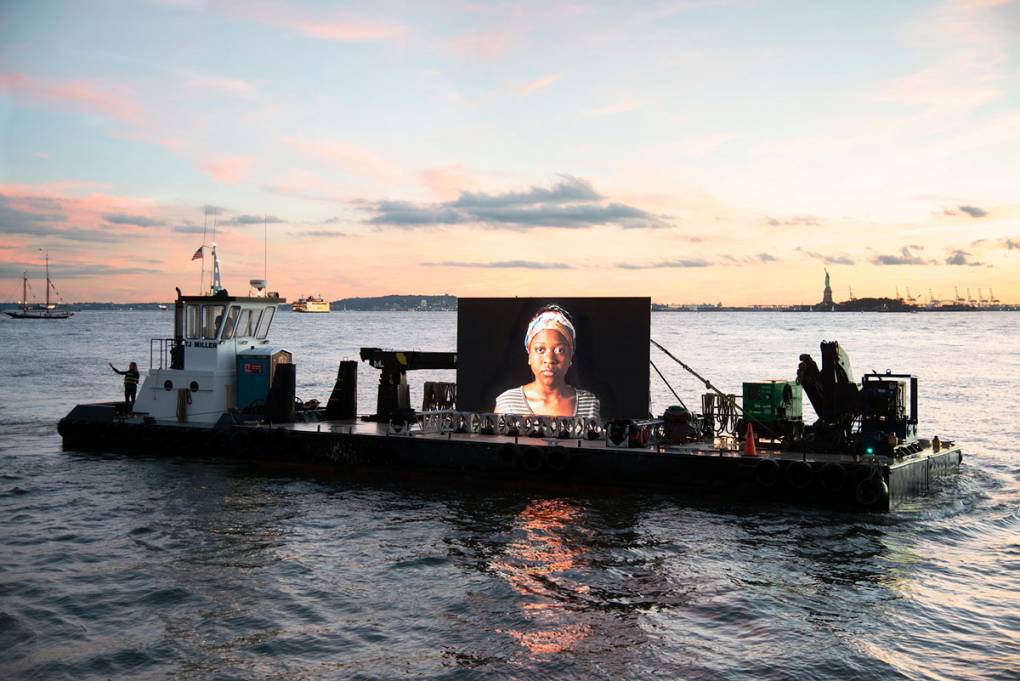
Shimon Attie’s ‘Night Watch’ Lights Up Bay Area Waterways
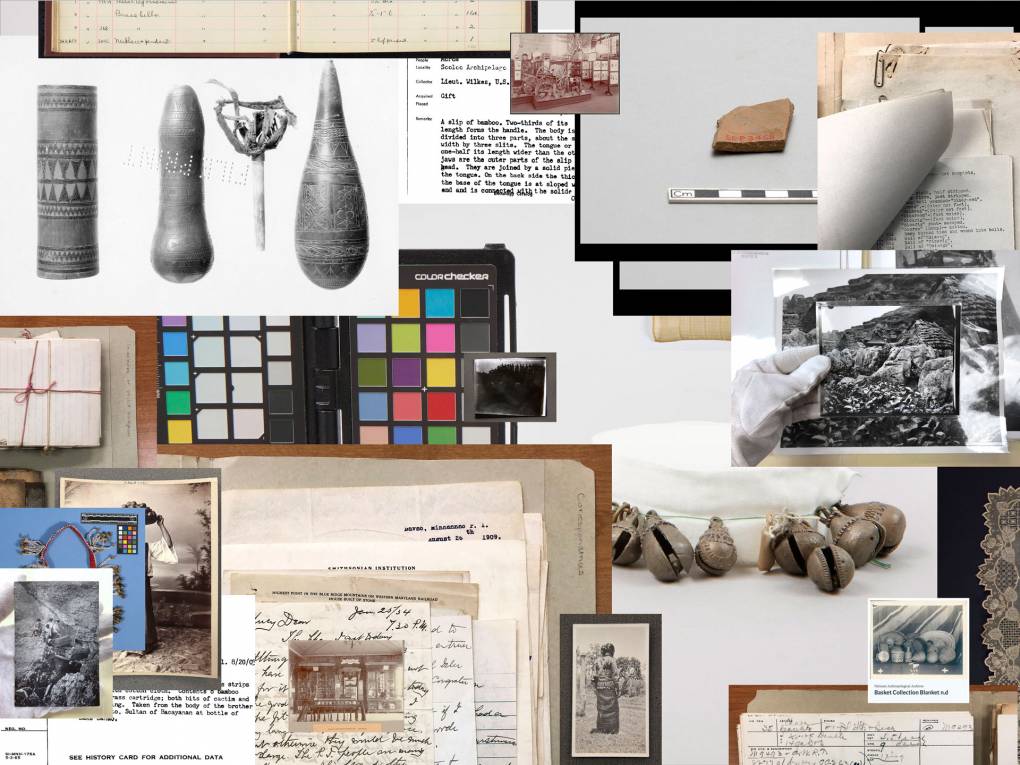
Stephanie Syjuco’s ‘Native Resolution’ Won’t Let Racism Remain Filed Away
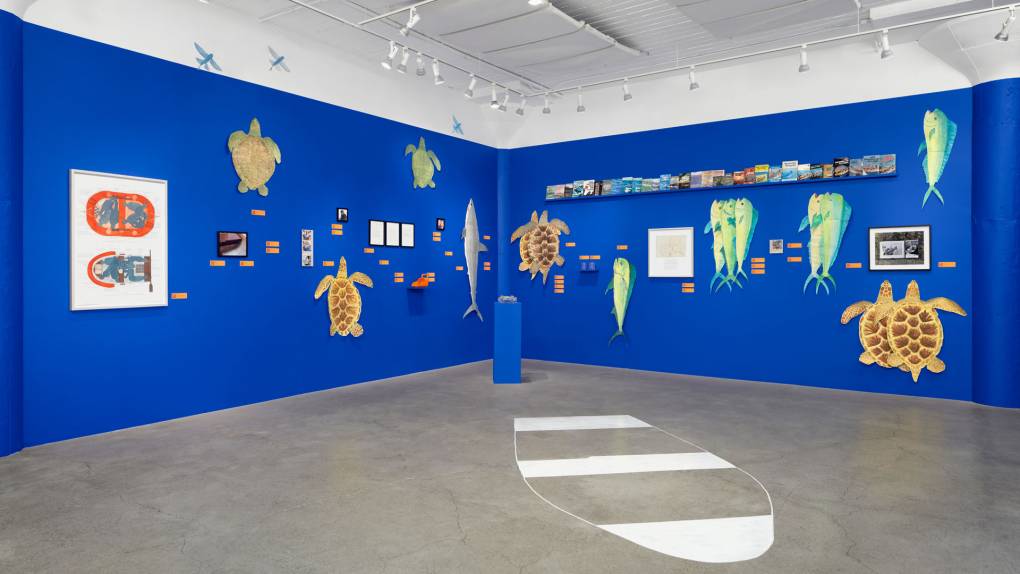
Nina Katchadourian Takes an Adventure Story into Deeper Emotional Waters
‘Curbside Exhibition’ at Catharine Clark Eases Back into Art Viewing
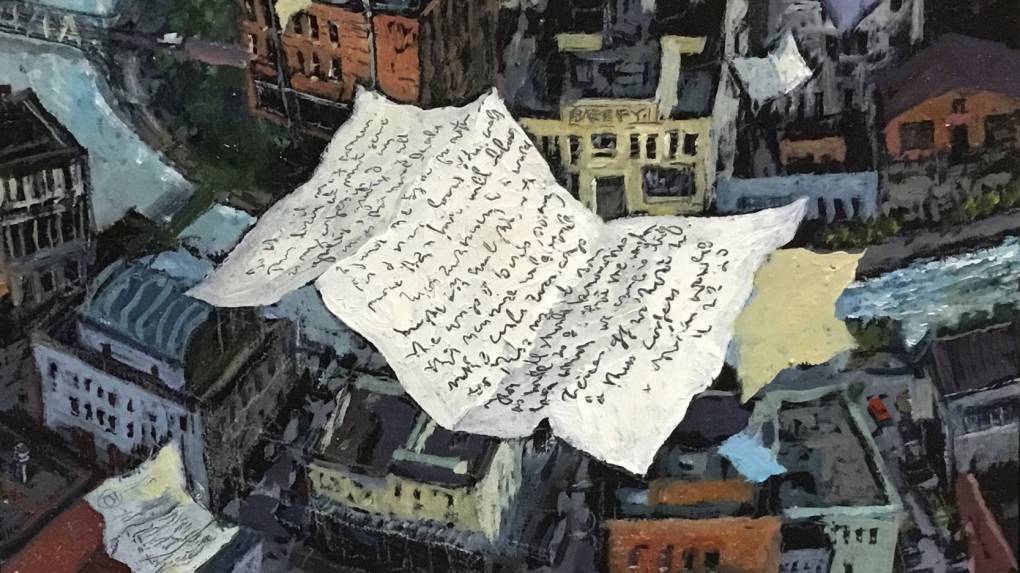
Steep Prices, Absent SFMOMA Signaled an SF Art Exodus
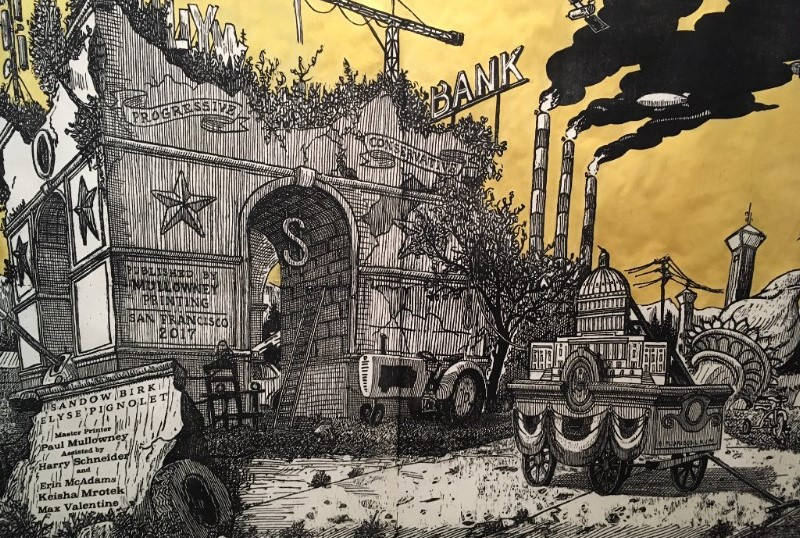
An American Procession Marching Toward Confrontation
Sponsored
Player sponsored by
window.__IS_SSR__=true
window.__INITIAL_STATE__={
"attachmentsReducer": {
"audio_0": {
"type": "attachments",
"id": "audio_0",
"imgSizes": {
"kqedFullSize": {
"file": "https://ww2.kqed.org/news/wp-content/themes/KQED-unified/img/audio_bgs/background0.jpg"
}
}
},
"audio_1": {
"type": "attachments",
"id": "audio_1",
"imgSizes": {
"kqedFullSize": {
"file": "https://ww2.kqed.org/news/wp-content/themes/KQED-unified/img/audio_bgs/background1.jpg"
}
}
},
"audio_2": {
"type": "attachments",
"id": "audio_2",
"imgSizes": {
"kqedFullSize": {
"file": "https://ww2.kqed.org/news/wp-content/themes/KQED-unified/img/audio_bgs/background2.jpg"
}
}
},
"audio_3": {
"type": "attachments",
"id": "audio_3",
"imgSizes": {
"kqedFullSize": {
"file": "https://ww2.kqed.org/news/wp-content/themes/KQED-unified/img/audio_bgs/background3.jpg"
}
}
},
"audio_4": {
"type": "attachments",
"id": "audio_4",
"imgSizes": {
"kqedFullSize": {
"file": "https://ww2.kqed.org/news/wp-content/themes/KQED-unified/img/audio_bgs/background4.jpg"
}
}
},
"placeholder": {
"type": "attachments",
"id": "placeholder",
"imgSizes": {
"thumbnail": {
"file": "https://cdn.kqed.org/wp-content/uploads/2024/12/KQED-Default-Image-816638274-2000x1333-1-160x107.jpg",
"width": 160,
"height": 107,
"mimeType": "image/jpeg"
},
"medium": {
"file": "https://cdn.kqed.org/wp-content/uploads/2024/12/KQED-Default-Image-816638274-2000x1333-1-800x533.jpg",
"width": 800,
"height": 533,
"mimeType": "image/jpeg"
},
"medium_large": {
"file": "https://cdn.kqed.org/wp-content/uploads/2024/12/KQED-Default-Image-816638274-2000x1333-1-768x512.jpg",
"width": 768,
"height": 512,
"mimeType": "image/jpeg"
},
"large": {
"file": "https://cdn.kqed.org/wp-content/uploads/2024/12/KQED-Default-Image-816638274-2000x1333-1-1020x680.jpg",
"width": 1020,
"height": 680,
"mimeType": "image/jpeg"
},
"1536x1536": {
"file": "https://cdn.kqed.org/wp-content/uploads/2024/12/KQED-Default-Image-816638274-2000x1333-1-1536x1024.jpg",
"width": 1536,
"height": 1024,
"mimeType": "image/jpeg"
},
"fd-lrg": {
"file": "https://cdn.kqed.org/wp-content/uploads/2024/12/KQED-Default-Image-816638274-2000x1333-1-1536x1024.jpg",
"width": 1536,
"height": 1024,
"mimeType": "image/jpeg"
},
"fd-med": {
"file": "https://cdn.kqed.org/wp-content/uploads/2024/12/KQED-Default-Image-816638274-2000x1333-1-1020x680.jpg",
"width": 1020,
"height": 680,
"mimeType": "image/jpeg"
},
"fd-sm": {
"file": "https://cdn.kqed.org/wp-content/uploads/2024/12/KQED-Default-Image-816638274-2000x1333-1-800x533.jpg",
"width": 800,
"height": 533,
"mimeType": "image/jpeg"
},
"post-thumbnail": {
"file": "https://cdn.kqed.org/wp-content/uploads/2024/12/KQED-Default-Image-816638274-2000x1333-1-672x372.jpg",
"width": 672,
"height": 372,
"mimeType": "image/jpeg"
},
"twentyfourteen-full-width": {
"file": "https://cdn.kqed.org/wp-content/uploads/2024/12/KQED-Default-Image-816638274-2000x1333-1-1038x576.jpg",
"width": 1038,
"height": 576,
"mimeType": "image/jpeg"
},
"xxsmall": {
"file": "https://cdn.kqed.org/wp-content/uploads/2024/12/KQED-Default-Image-816638274-2000x1333-1-160x107.jpg",
"width": 160,
"height": 107,
"mimeType": "image/jpeg"
},
"xsmall": {
"file": "https://cdn.kqed.org/wp-content/uploads/2024/12/KQED-Default-Image-816638274-2000x1333-1-672x372.jpg",
"width": 672,
"height": 372,
"mimeType": "image/jpeg"
},
"small": {
"file": "https://cdn.kqed.org/wp-content/uploads/2024/12/KQED-Default-Image-816638274-2000x1333-1-672x372.jpg",
"width": 672,
"height": 372,
"mimeType": "image/jpeg"
},
"xlarge": {
"file": "https://cdn.kqed.org/wp-content/uploads/2024/12/KQED-Default-Image-816638274-2000x1333-1-1020x680.jpg",
"width": 1020,
"height": 680,
"mimeType": "image/jpeg"
},
"full-width": {
"file": "https://cdn.kqed.org/wp-content/uploads/2024/12/KQED-Default-Image-816638274-2000x1333-1-1920x1280.jpg",
"width": 1920,
"height": 1280,
"mimeType": "image/jpeg"
},
"guest-author-32": {
"file": "https://cdn.kqed.org/wp-content/uploads/2025/01/KQED-Default-Image-816638274-1333x1333-1-160x160.jpg",
"width": 32,
"height": 32,
"mimeType": "image/jpeg"
},
"guest-author-50": {
"file": "https://cdn.kqed.org/wp-content/uploads/2025/01/KQED-Default-Image-816638274-1333x1333-1-160x160.jpg",
"width": 50,
"height": 50,
"mimeType": "image/jpeg"
},
"guest-author-64": {
"file": "https://cdn.kqed.org/wp-content/uploads/2025/01/KQED-Default-Image-816638274-1333x1333-1-160x160.jpg",
"width": 64,
"height": 64,
"mimeType": "image/jpeg"
},
"guest-author-96": {
"file": "https://cdn.kqed.org/wp-content/uploads/2025/01/KQED-Default-Image-816638274-1333x1333-1-160x160.jpg",
"width": 96,
"height": 96,
"mimeType": "image/jpeg"
},
"guest-author-128": {
"file": "https://cdn.kqed.org/wp-content/uploads/2025/01/KQED-Default-Image-816638274-1333x1333-1-160x160.jpg",
"width": 128,
"height": 128,
"mimeType": "image/jpeg"
},
"detail": {
"file": "https://cdn.kqed.org/wp-content/uploads/2025/01/KQED-Default-Image-816638274-1333x1333-1-160x160.jpg",
"width": 160,
"height": 160,
"mimeType": "image/jpeg"
},
"kqedFullSize": {
"file": "https://cdn.kqed.org/wp-content/uploads/2024/12/KQED-Default-Image-816638274-2000x1333-1.jpg",
"width": 2000,
"height": 1333
}
}
},
"arts_13902043": {
"type": "attachments",
"id": "arts_13902043",
"meta": {
"index": "attachments_1716263798",
"site": "arts",
"id": "13902043",
"found": true
},
"parent": 13902030,
"imgSizes": {
"twentyfourteen-full-width": {
"file": "https://ww2.kqed.org/app/uploads/sites/2/2021/08/Night-Watch-Norris-at-Sunset_1200-1038x576.jpg",
"width": 1038,
"mimeType": "image/jpeg",
"height": 576
},
"thumbnail": {
"file": "https://ww2.kqed.org/app/uploads/sites/2/2021/08/Night-Watch-Norris-at-Sunset_1200-160x107.jpg",
"width": 160,
"mimeType": "image/jpeg",
"height": 107
},
"post-thumbnail": {
"file": "https://ww2.kqed.org/app/uploads/sites/2/2021/08/Night-Watch-Norris-at-Sunset_1200-672x372.jpg",
"width": 672,
"mimeType": "image/jpeg",
"height": 372
},
"kqedFullSize": {
"file": "https://ww2.kqed.org/app/uploads/sites/2/2021/08/Night-Watch-Norris-at-Sunset_1200.jpg",
"width": 1200,
"height": 801
},
"large": {
"file": "https://ww2.kqed.org/app/uploads/sites/2/2021/08/Night-Watch-Norris-at-Sunset_1200-1020x681.jpg",
"width": 1020,
"mimeType": "image/jpeg",
"height": 681
},
"medium": {
"file": "https://ww2.kqed.org/app/uploads/sites/2/2021/08/Night-Watch-Norris-at-Sunset_1200-800x534.jpg",
"width": 800,
"mimeType": "image/jpeg",
"height": 534
},
"medium_large": {
"file": "https://ww2.kqed.org/app/uploads/sites/2/2021/08/Night-Watch-Norris-at-Sunset_1200-768x513.jpg",
"width": 768,
"mimeType": "image/jpeg",
"height": 513
}
},
"publishDate": 1630023560,
"modified": 1630023682,
"caption": "Shimon Attie, ‘Night Watch (Norris with Liberty),’ 2018; Originally produced by Moreart.org in New York City.",
"description": "Shimon Attie, ‘Night Watch (Norris with Liberty),’ 2018; Originally produced by Moreart.org in New York City.",
"title": "Night-Watch-(Norris-at-Sunset)_1200",
"credit": "Courtesy the artist",
"status": "inherit",
"altTag": "A screen mounted to a floating barge shows a portrait of a woman.",
"fetchFailed": false,
"isLoading": false
},
"arts_13895206": {
"type": "attachments",
"id": "arts_13895206",
"meta": {
"index": "attachments_1716263798",
"site": "arts",
"id": "13895206",
"found": true
},
"parent": 13894535,
"imgSizes": {
"twentyfourteen-full-width": {
"file": "https://ww2.kqed.org/app/uploads/sites/2/2021/04/Syjuco_pileup-brass-bells-2021_COVER-1038x576.jpg",
"width": 1038,
"mimeType": "image/jpeg",
"height": 576
},
"thumbnail": {
"file": "https://ww2.kqed.org/app/uploads/sites/2/2021/04/Syjuco_pileup-brass-bells-2021_COVER-160x120.jpg",
"width": 160,
"mimeType": "image/jpeg",
"height": 120
},
"post-thumbnail": {
"file": "https://ww2.kqed.org/app/uploads/sites/2/2021/04/Syjuco_pileup-brass-bells-2021_COVER-672x372.jpg",
"width": 672,
"mimeType": "image/jpeg",
"height": 372
},
"kqedFullSize": {
"file": "https://ww2.kqed.org/app/uploads/sites/2/2021/04/Syjuco_pileup-brass-bells-2021_COVER.jpg",
"width": 1920,
"height": 1440
},
"large": {
"file": "https://ww2.kqed.org/app/uploads/sites/2/2021/04/Syjuco_pileup-brass-bells-2021_COVER-1020x765.jpg",
"width": 1020,
"mimeType": "image/jpeg",
"height": 765
},
"1536x1536": {
"file": "https://ww2.kqed.org/app/uploads/sites/2/2021/04/Syjuco_pileup-brass-bells-2021_COVER-1536x1152.jpg",
"width": 1536,
"mimeType": "image/jpeg",
"height": 1152
},
"medium": {
"file": "https://ww2.kqed.org/app/uploads/sites/2/2021/04/Syjuco_pileup-brass-bells-2021_COVER-800x600.jpg",
"width": 800,
"mimeType": "image/jpeg",
"height": 600
},
"medium_large": {
"file": "https://ww2.kqed.org/app/uploads/sites/2/2021/04/Syjuco_pileup-brass-bells-2021_COVER-768x576.jpg",
"width": 768,
"mimeType": "image/jpeg",
"height": 576
}
},
"publishDate": 1617649854,
"modified": 1617649884,
"caption": "Stephanie Syjuco, 'Pileup (Brass Bells),' 2021.",
"description": "Stephanie Syjuco, 'Pileup (Brass Bells),' 2021.",
"title": "Syjuco_pileup-brass-bells-2021_COVER",
"credit": "Courtesy Catharine Clark Gallery",
"status": "inherit",
"altTag": null,
"fetchFailed": false,
"isLoading": false
},
"arts_13892442": {
"type": "attachments",
"id": "arts_13892442",
"meta": {
"index": "attachments_1716263798",
"site": "arts",
"id": "13892442",
"found": true
},
"parent": 13892431,
"imgSizes": {
"twentyfourteen-full-width": {
"file": "https://ww2.kqed.org/app/uploads/sites/2/2021/02/Katchadourian_To-Feel-Something-That-Was-Not-of-Our-World_2020_Install-Shot_COVER-1038x576.jpg",
"width": 1038,
"mimeType": "image/jpeg",
"height": 576
},
"thumbnail": {
"file": "https://ww2.kqed.org/app/uploads/sites/2/2021/02/Katchadourian_To-Feel-Something-That-Was-Not-of-Our-World_2020_Install-Shot_COVER-160x90.jpg",
"width": 160,
"mimeType": "image/jpeg",
"height": 90
},
"post-thumbnail": {
"file": "https://ww2.kqed.org/app/uploads/sites/2/2021/02/Katchadourian_To-Feel-Something-That-Was-Not-of-Our-World_2020_Install-Shot_COVER-672x372.jpg",
"width": 672,
"mimeType": "image/jpeg",
"height": 372
},
"kqedFullSize": {
"file": "https://ww2.kqed.org/app/uploads/sites/2/2021/02/Katchadourian_To-Feel-Something-That-Was-Not-of-Our-World_2020_Install-Shot_COVER.jpg",
"width": 1920,
"height": 1080
},
"large": {
"file": "https://ww2.kqed.org/app/uploads/sites/2/2021/02/Katchadourian_To-Feel-Something-That-Was-Not-of-Our-World_2020_Install-Shot_COVER-1020x574.jpg",
"width": 1020,
"mimeType": "image/jpeg",
"height": 574
},
"1536x1536": {
"file": "https://ww2.kqed.org/app/uploads/sites/2/2021/02/Katchadourian_To-Feel-Something-That-Was-Not-of-Our-World_2020_Install-Shot_COVER-1536x864.jpg",
"width": 1536,
"mimeType": "image/jpeg",
"height": 864
},
"medium": {
"file": "https://ww2.kqed.org/app/uploads/sites/2/2021/02/Katchadourian_To-Feel-Something-That-Was-Not-of-Our-World_2020_Install-Shot_COVER-800x450.jpg",
"width": 800,
"mimeType": "image/jpeg",
"height": 450
},
"medium_large": {
"file": "https://ww2.kqed.org/app/uploads/sites/2/2021/02/Katchadourian_To-Feel-Something-That-Was-Not-of-Our-World_2020_Install-Shot_COVER-768x432.jpg",
"width": 768,
"mimeType": "image/jpeg",
"height": 432
}
},
"publishDate": 1612896167,
"modified": 1612896252,
"caption": "Nina Katchadourian, installation view of 'To Feel Something That Was Not of Our World,' 2021 at Catharine Clark Gallery, San Francisco.",
"description": "Nina Katchadourian, installation view of 'To Feel Something That Was Not of Our World,' 2021 at Catharine Clark Gallery, San Francisco.",
"title": "Katchadourian_To-Feel-Something-That-Was-Not-of-Our-World_2020_Install-Shot_COVER",
"credit": "John Janca",
"status": "inherit",
"altTag": null,
"fetchFailed": false,
"isLoading": false
},
"arts_13881113": {
"type": "attachments",
"id": "arts_13881113",
"meta": {
"index": "attachments_1716263798",
"site": "arts",
"id": "13881113",
"found": true
},
"parent": 13881106,
"imgSizes": {
"twentyfourteen-full-width": {
"file": "https://ww2.kqed.org/app/uploads/sites/2/2020/05/Arnold_A-Signed-Confession_2020_COVER-1038x576.jpg",
"width": 1038,
"mimeType": "image/jpeg",
"height": 576
},
"thumbnail": {
"file": "https://ww2.kqed.org/app/uploads/sites/2/2020/05/Arnold_A-Signed-Confession_2020_COVER-160x90.jpg",
"width": 160,
"mimeType": "image/jpeg",
"height": 90
},
"post-thumbnail": {
"file": "https://ww2.kqed.org/app/uploads/sites/2/2020/05/Arnold_A-Signed-Confession_2020_COVER-672x372.jpg",
"width": 672,
"mimeType": "image/jpeg",
"height": 372
},
"kqedFullSize": {
"file": "https://ww2.kqed.org/app/uploads/sites/2/2020/05/Arnold_A-Signed-Confession_2020_COVER.jpg",
"width": 1667,
"height": 937
},
"large": {
"file": "https://ww2.kqed.org/app/uploads/sites/2/2020/05/Arnold_A-Signed-Confession_2020_COVER-1020x573.jpg",
"width": 1020,
"mimeType": "image/jpeg",
"height": 573
},
"medium": {
"file": "https://ww2.kqed.org/app/uploads/sites/2/2020/05/Arnold_A-Signed-Confession_2020_COVER-800x450.jpg",
"width": 800,
"mimeType": "image/jpeg",
"height": 450
},
"medium_large": {
"file": "https://ww2.kqed.org/app/uploads/sites/2/2020/05/Arnold_A-Signed-Confession_2020_COVER-768x432.jpg",
"width": 768,
"mimeType": "image/jpeg",
"height": 432
}
},
"publishDate": 1590616704,
"modified": 1590616744,
"caption": "Chester Arnold, 'A Signed Confession,' 2020.",
"description": "Chester Arnold, 'A Signed Confession,' 2020.",
"title": "Arnold_A-Signed-Confession_2020_COVER",
"credit": "Courtesy the artist and Catharine Clark Gallery",
"status": "inherit",
"fetchFailed": false,
"isLoading": false
},
"arts_13870868": {
"type": "attachments",
"id": "arts_13870868",
"meta": {
"index": "attachments_1716263798",
"site": "arts",
"id": "13870868",
"found": true
},
"parent": 13870604,
"imgSizes": {
"twentyfourteen-full-width": {
"file": "https://ww2.kqed.org/app/uploads/sites/2/2018/12/HERO-GuerreroCOVER-1038x576.jpg",
"width": 1038,
"mimeType": "image/jpeg",
"height": 576
},
"thumbnail": {
"file": "https://ww2.kqed.org/app/uploads/sites/2/2018/12/HERO-GuerreroCOVER-160x90.jpg",
"width": 160,
"mimeType": "image/jpeg",
"height": 90
},
"post-thumbnail": {
"file": "https://ww2.kqed.org/app/uploads/sites/2/2018/12/HERO-GuerreroCOVER-672x372.jpg",
"width": 672,
"mimeType": "image/jpeg",
"height": 372
},
"kqedFullSize": {
"file": "https://ww2.kqed.org/app/uploads/sites/2/2018/12/HERO-GuerreroCOVER.jpg",
"width": 1920,
"height": 1080
},
"large": {
"file": "https://ww2.kqed.org/app/uploads/sites/2/2018/12/HERO-GuerreroCOVER-1020x574.jpg",
"width": 1020,
"mimeType": "image/jpeg",
"height": 574
},
"complete_open_graph": {
"file": "https://ww2.kqed.org/app/uploads/sites/2/2018/12/HERO-GuerreroCOVER-1200x675.jpg",
"width": 1200,
"mimeType": "image/jpeg",
"height": 675
},
"full-width": {
"file": "https://ww2.kqed.org/app/uploads/sites/2/2018/12/HERO-GuerreroCOVER-1920x1080.jpg",
"width": 1920,
"mimeType": "image/jpeg",
"height": 1080
},
"medium": {
"file": "https://ww2.kqed.org/app/uploads/sites/2/2018/12/HERO-GuerreroCOVER-800x450.jpg",
"width": 800,
"mimeType": "image/jpeg",
"height": 450
},
"medium_large": {
"file": "https://ww2.kqed.org/app/uploads/sites/2/2018/12/HERO-GuerreroCOVER-768x432.jpg",
"width": 768,
"mimeType": "image/jpeg",
"height": 432
}
},
"publishDate": 1575482610,
"modified": 1575482652,
"caption": "The new Guerrero Gallery during the opening of Hilary Pecis' 'El Verano' in 2016.",
"description": "The new Guerrero Gallery during the opening of Hilary Pecis' 'El Verano' in 2016.",
"title": "HERO-GuerreroCOVER",
"credit": "Alan Gonzalez; Courtesy of Guerrero Gallery",
"status": "inherit",
"fetchFailed": false,
"isLoading": false
},
"arts_13817418": {
"type": "attachments",
"id": "arts_13817418",
"meta": {
"index": "attachments_1716263798",
"site": "arts",
"id": "13817418",
"found": true
},
"parent": 13817415,
"imgSizes": {
"small": {
"file": "https://ww2.kqed.org/app/uploads/sites/2/2017/12/Sandow-Birk-and-Elyse-Pignolets-American-Procession-centerpiece-e1513215014305-520x350.jpg",
"width": 520,
"mimeType": "image/jpeg",
"height": 350
},
"thumbnail": {
"file": "https://ww2.kqed.org/app/uploads/sites/2/2017/12/Sandow-Birk-and-Elyse-Pignolets-American-Procession-centerpiece-e1513215014305-160x108.jpg",
"width": 160,
"mimeType": "image/jpeg",
"height": 108
},
"post-thumbnail": {
"file": "https://ww2.kqed.org/app/uploads/sites/2/2017/12/Sandow-Birk-and-Elyse-Pignolets-American-Procession-centerpiece-e1513215014305-672x372.jpg",
"width": 672,
"mimeType": "image/jpeg",
"height": 372
},
"xsmall": {
"file": "https://ww2.kqed.org/app/uploads/sites/2/2017/12/Sandow-Birk-and-Elyse-Pignolets-American-Procession-centerpiece-e1513215014305-375x252.jpg",
"width": 375,
"mimeType": "image/jpeg",
"height": 252
},
"kqedFullSize": {
"file": "https://ww2.kqed.org/app/uploads/sites/2/2017/12/Sandow-Birk-and-Elyse-Pignolets-American-Procession-centerpiece-e1513215014305.jpg",
"width": 800,
"height": 538
},
"guest-author-50": {
"file": "https://ww2.kqed.org/app/uploads/sites/2/2017/12/Sandow-Birk-and-Elyse-Pignolets-American-Procession-centerpiece-e1513215014305-50x50.jpg",
"width": 50,
"mimeType": "image/jpeg",
"height": 50
},
"guest-author-96": {
"file": "https://ww2.kqed.org/app/uploads/sites/2/2017/12/Sandow-Birk-and-Elyse-Pignolets-American-Procession-centerpiece-e1513215014305-96x96.jpg",
"width": 96,
"mimeType": "image/jpeg",
"height": 96
},
"medium": {
"file": "https://ww2.kqed.org/app/uploads/sites/2/2017/12/Sandow-Birk-and-Elyse-Pignolets-American-Procession-centerpiece-e1513215014305-800x538.jpg",
"width": 800,
"mimeType": "image/jpeg",
"height": 538
},
"guest-author-64": {
"file": "https://ww2.kqed.org/app/uploads/sites/2/2017/12/Sandow-Birk-and-Elyse-Pignolets-American-Procession-centerpiece-e1513215014305-64x64.jpg",
"width": 64,
"mimeType": "image/jpeg",
"height": 64
},
"guest-author-32": {
"file": "https://ww2.kqed.org/app/uploads/sites/2/2017/12/Sandow-Birk-and-Elyse-Pignolets-American-Procession-centerpiece-e1513215014305-32x32.jpg",
"width": 32,
"mimeType": "image/jpeg",
"height": 32
},
"detail": {
"file": "https://ww2.kqed.org/app/uploads/sites/2/2017/12/Sandow-Birk-and-Elyse-Pignolets-American-Procession-centerpiece-e1513215014305-150x150.jpg",
"width": 150,
"mimeType": "image/jpeg",
"height": 150
},
"medium_large": {
"file": "https://ww2.kqed.org/app/uploads/sites/2/2017/12/Sandow-Birk-and-Elyse-Pignolets-American-Procession-centerpiece-e1513215014305-768x516.jpg",
"width": 768,
"mimeType": "image/jpeg",
"height": 516
},
"guest-author-128": {
"file": "https://ww2.kqed.org/app/uploads/sites/2/2017/12/Sandow-Birk-and-Elyse-Pignolets-American-Procession-centerpiece-e1513215014305-128x128.jpg",
"width": 128,
"mimeType": "image/jpeg",
"height": 128
},
"xxsmall": {
"file": "https://ww2.kqed.org/app/uploads/sites/2/2017/12/Sandow-Birk-and-Elyse-Pignolets-American-Procession-centerpiece-e1513215014305-240x161.jpg",
"width": 240,
"mimeType": "image/jpeg",
"height": 161
}
},
"publishDate": 1513214903,
"modified": 1513214983,
"caption": "The centerpiece of Sandow Birk and Elyse Pignolet's massive woodblock \"American Procession\" ",
"description": "The centerpiece of Sandow Birk and Elyse Pignolet's massive woodblock \"American Procession\" ",
"title": "The centerpiece of Sandow Birk and Elyse Pignolet's massive woodblock \"American Procession\"",
"credit": null,
"status": "inherit",
"fetchFailed": false,
"isLoading": false
}
},
"audioPlayerReducer": {
"postId": "stream_live",
"isPaused": true,
"isPlaying": false,
"pfsActive": false,
"pledgeModalIsOpen": true,
"playerDrawerIsOpen": false
},
"authorsReducer": {
"cmusiker": {
"type": "authors",
"id": "32",
"meta": {
"index": "authors_1716337520",
"id": "32",
"found": true
},
"name": "Cy Musiker",
"firstName": "Cy",
"lastName": "Musiker",
"slug": "cmusiker",
"email": "cmusiker@kqed.org",
"display_author_email": false,
"staff_mastheads": [],
"title": "KQED Contributor",
"bio": "Cy Musiker is a former co-host of The Do List and a former reporter covering the arts for KQED News and The California Report. He loves live performance, especially great theater, jazz, roots music, anything by Mahler. Cy has an MJ from UC Berkeley's School of Journalism, and got his BA from Hampshire College. His work has been recognized by the Society for Professional Journalists with their Sigma Delta Chi Award for Public Service in Journalism. When he can, Cy likes to swim in Tomales Bay, run with his dog in the East Bay Hills, and hike the Sierra.",
"avatar": "https://secure.gravatar.com/avatar/05eaba5c5696ce8f062e4ea2df428a43?s=600&d=blank&r=g",
"twitter": null,
"facebook": null,
"instagram": null,
"linkedin": null,
"sites": [
{
"site": "arts",
"roles": [
"Contributor",
"subscriber"
]
},
{
"site": "news",
"roles": [
"author"
]
},
{
"site": "bayareabites",
"roles": [
"contributor"
]
}
],
"headData": {
"title": "Cy Musiker | KQED",
"description": "KQED Contributor",
"ogImgSrc": "https://secure.gravatar.com/avatar/05eaba5c5696ce8f062e4ea2df428a43?s=600&d=blank&r=g",
"twImgSrc": "https://secure.gravatar.com/avatar/05eaba5c5696ce8f062e4ea2df428a43?s=600&d=blank&r=g"
},
"isLoading": false,
"link": "/author/cmusiker"
},
"shotchkiss": {
"type": "authors",
"id": "61",
"meta": {
"index": "authors_1716337520",
"id": "61",
"found": true
},
"name": "Sarah Hotchkiss",
"firstName": "Sarah",
"lastName": "Hotchkiss",
"slug": "shotchkiss",
"email": "shotchkiss@kqed.org",
"display_author_email": true,
"staff_mastheads": [
"arts"
],
"title": "Senior Editor",
"bio": "Sarah Hotchkiss is a San Francisco \u003ca href=\"http://www.sarahhotchkiss.com\">artist\u003c/a> and arts writer. In 2019, she received the Dorothea & Leo Rabkin Foundation grant for visual art journalism and in 2020 she received a Society of Professional Journalists, Northern California award for excellence in arts and culture reporting.",
"avatar": "https://secure.gravatar.com/avatar/ca38c7f54590856cd4947d26274f8a90?s=600&d=blank&r=g",
"twitter": null,
"facebook": null,
"instagram": null,
"linkedin": null,
"sites": [
{
"site": "",
"roles": [
"editor"
]
},
{
"site": "arts",
"roles": [
"Contributor",
"administrator"
]
},
{
"site": "artschool",
"roles": [
"administrator"
]
},
{
"site": "news",
"roles": [
"editor"
]
},
{
"site": "pop",
"roles": [
"administrator"
]
},
{
"site": "bayareabites",
"roles": [
"editor"
]
},
{
"site": "spark",
"roles": [
"editor"
]
},
{
"site": "checkplease",
"roles": [
"editor"
]
}
],
"headData": {
"title": "Sarah Hotchkiss | KQED",
"description": "Senior Editor",
"ogImgSrc": "https://secure.gravatar.com/avatar/ca38c7f54590856cd4947d26274f8a90?s=600&d=blank&r=g",
"twImgSrc": "https://secure.gravatar.com/avatar/ca38c7f54590856cd4947d26274f8a90?s=600&d=blank&r=g"
},
"isLoading": false,
"link": "/author/shotchkiss"
},
"rseikaly": {
"type": "authors",
"id": "77",
"meta": {
"index": "authors_1716337520",
"id": "77",
"found": true
},
"name": "Roula Seikaly",
"firstName": "Roula",
"lastName": "Seikaly",
"slug": "rseikaly",
"email": "roula@roulaseikaly.com",
"display_author_email": false,
"staff_mastheads": [],
"title": "KQED Contributor",
"bio": "Roula Seikaly in an independent writer and curator based in Berkeley, California, and Senior Editor at \u003ca href=\"http://hafny.org/\">Humble Arts Foundation\u003c/a>. She has curated exhibitions at Colorado Photographic Arts Center, Filter Photo Festival, Blue Sky Gallery, SF Camerawork, SOMArts, and the Utah Museum of Arts. She is a regular contributor to Photograph, Hyerallergic, BOMB Magazine, and KQED Arts.",
"avatar": "https://secure.gravatar.com/avatar/771cde409896af1326a07050f2e4e489?s=600&d=blank&r=g",
"twitter": null,
"facebook": null,
"instagram": null,
"linkedin": null,
"sites": [
{
"site": "arts",
"roles": [
"Contributor",
"contributor"
]
}
],
"headData": {
"title": "Roula Seikaly | KQED",
"description": "KQED Contributor",
"ogImgSrc": "https://secure.gravatar.com/avatar/771cde409896af1326a07050f2e4e489?s=600&d=blank&r=g",
"twImgSrc": "https://secure.gravatar.com/avatar/771cde409896af1326a07050f2e4e489?s=600&d=blank&r=g"
},
"isLoading": false,
"link": "/author/rseikaly"
}
},
"breakingNewsReducer": {},
"pagesReducer": {},
"postsReducer": {
"stream_live": {
"type": "live",
"id": "stream_live",
"audioUrl": "https://streams.kqed.org/kqedradio",
"title": "Live Stream",
"excerpt": "Live Stream information currently unavailable.",
"link": "/radio",
"featImg": "",
"label": {
"name": "KQED Live",
"link": "/"
}
},
"stream_kqedNewscast": {
"type": "posts",
"id": "stream_kqedNewscast",
"audioUrl": "https://www.kqed.org/.stream/anon/radio/RDnews/newscast.mp3?_=1",
"title": "KQED Newscast",
"featImg": "",
"label": {
"name": "88.5 FM",
"link": "/"
}
},
"arts_13903014": {
"type": "posts",
"id": "arts_13903014",
"meta": {
"index": "posts_1716263798",
"site": "arts",
"id": "13903014",
"score": null,
"sort": [
1630350430000
]
},
"parent": 0,
"labelTerm": {
"site": "arts",
"term": 140
},
"blocks": [],
"publishDate": 1630350430,
"format": "standard",
"title": "Shimon Attie’s ‘Night Watch’ Lights Up Bay Area Waterways",
"headTitle": "Shimon Attie’s ‘Night Watch’ Lights Up Bay Area Waterways | KQED",
"content": "\u003cp>If being indoors isn’t your jam these days, BOXBLUR (a performance program launched by Catharine Clark Gallery) and the Immersive Arts Alliance have organized three nights of waterfront viewing for Shimon Attie’s floating video project: a slow-moving barge boasting a 20-foot-wide LED screen. \u003cem>Night Watch\u003c/em> displays silent video portraits of 12 refugees who received political asylum in the United States, images that make tangible what it means to leave one’s homeland in the face of violence and discrimination. The project will be accompanied by live music and dance performances at waterfronts along the barge’s nightly routes, events at over 40 Bay Area partner organizations, and a \u003ca href=\"https://cclarkgallery.com/exhibitions/attie-solo-exhibition-2021\" rel=\"noopener noreferrer\" target=\"_blank\">solo exhibition\u003c/a> of Attie’s work at Catharine Clark (Sept. 18–Oct. 30).\u003c/p>\n\u003cp>\u003ci>Shimon Attie’s ‘\u003ca href=\"https://cclarkgallery.com/exhibitions/boxblur-attie-night-watch-2021\" rel=\"noopener noreferrer\" target=\"_blank\">Night Watch\u003c/a>’ is on view Sept. 17–19, 6:15–9pm in the San Francisco Bay and Oakland Estuary.\u003c/i>\u003c/p>\n\u003cp>[ad fullwidth]\u003c/p>\u003cp>\u003c/p>\n",
"stats": {
"hasVideo": false,
"hasChartOrMap": false,
"hasAudio": false,
"hasPolis": false,
"wordCount": 161,
"hasGoogleForm": false,
"hasGallery": false,
"hasHearkenModule": false,
"iframeSrcs": [],
"paragraphCount": 4
},
"modified": 1705007875,
"excerpt": "A slow-moving barge with a 20-foot-wide LED screen displays video portraits of refugees in the US.",
"headData": {
"twImgId": "",
"twTitle": "",
"ogTitle": "",
"ogImgId": "",
"twDescription": "",
"description": "A slow-moving barge with a 20-foot-wide LED screen displays video portraits of refugees in the US.",
"title": "Shimon Attie’s ‘Night Watch’ Lights Up Bay Area Waterways | KQED",
"ogDescription": "",
"schema": {
"@context": "https://schema.org",
"@type": "Article",
"headline": "Shimon Attie’s ‘Night Watch’ Lights Up Bay Area Waterways",
"datePublished": "2021-08-30T12:07:10-07:00",
"dateModified": "2024-01-11T13:17:55-08:00",
"image": "https://cdn.kqed.org/wp-content/uploads/2020/02/KQED-OG-Image@1x.png"
}
},
"guestAuthors": [],
"slug": "shimon-atties-night-watch-lights-up-bay-area-waterways",
"status": "publish",
"templateType": "standard",
"featuredImageType": "standard",
"sticky": false,
"path": "/arts/13903014/shimon-atties-night-watch-lights-up-bay-area-waterways",
"audioTrackLength": null,
"parsedContent": [
{
"type": "contentString",
"content": "\u003cdiv class=\"post-body\">\u003cp>\u003cp>If being indoors isn’t your jam these days, BOXBLUR (a performance program launched by Catharine Clark Gallery) and the Immersive Arts Alliance have organized three nights of waterfront viewing for Shimon Attie’s floating video project: a slow-moving barge boasting a 20-foot-wide LED screen. \u003cem>Night Watch\u003c/em> displays silent video portraits of 12 refugees who received political asylum in the United States, images that make tangible what it means to leave one’s homeland in the face of violence and discrimination. The project will be accompanied by live music and dance performances at waterfronts along the barge’s nightly routes, events at over 40 Bay Area partner organizations, and a \u003ca href=\"https://cclarkgallery.com/exhibitions/attie-solo-exhibition-2021\" rel=\"noopener noreferrer\" target=\"_blank\">solo exhibition\u003c/a> of Attie’s work at Catharine Clark (Sept. 18–Oct. 30).\u003c/p>\n\u003cp>\u003ci>Shimon Attie’s ‘\u003ca href=\"https://cclarkgallery.com/exhibitions/boxblur-attie-night-watch-2021\" rel=\"noopener noreferrer\" target=\"_blank\">Night Watch\u003c/a>’ is on view Sept. 17–19, 6:15–9pm in the San Francisco Bay and Oakland Estuary.\u003c/i>\u003c/p>\n\u003cp>\u003c/p>\u003c/div>",
"attributes": {
"named": {},
"numeric": []
}
},
{
"type": "component",
"content": "",
"name": "ad",
"attributes": {
"named": {
"label": "fullwidth"
},
"numeric": [
"fullwidth"
]
}
},
{
"type": "contentString",
"content": "\u003cdiv class=\"post-body\">\u003cp>\u003c/p>\u003cp>\u003c/p>\n\u003c/div>\u003c/p>",
"attributes": {
"named": {},
"numeric": []
}
}
],
"link": "/arts/13903014/shimon-atties-night-watch-lights-up-bay-area-waterways",
"authors": [
"61"
],
"programs": [
"arts_140"
],
"categories": [
"arts_1"
],
"tags": [
"arts_3456",
"arts_585",
"arts_901"
],
"featImg": "arts_13902043",
"label": "arts_140"
},
"arts_13894535": {
"type": "posts",
"id": "arts_13894535",
"meta": {
"index": "posts_1716263798",
"site": "arts",
"id": "13894535",
"score": null,
"sort": [
1617664079000
]
},
"parent": 0,
"labelTerm": {
"site": "arts"
},
"blocks": [],
"publishDate": 1617664079,
"format": "standard",
"title": "Stephanie Syjuco’s ‘Native Resolution’ Won’t Let Racism Remain Filed Away",
"headTitle": "Stephanie Syjuco’s ‘Native Resolution’ Won’t Let Racism Remain Filed Away | KQED",
"content": "\u003cp>In her latest exhibition, Oakland artist Stephanie Syjuco powerfully implicates photography as one of imperialism’s most effective tools. Made by mining archives for images of Indigenous Filipinos, her show at Catharine Clark Gallery, \u003ca href=\"https://cclarkgallery.com/\" target=\"_blank\" rel=\"noopener noreferrer\">\u003ci>Native Resolution\u003c/i>\u003c/a> examines photography, anthropology and archiving as overlapping knowledge structures that shape both imagination and American history. The resulting (and absorbing) multimedia installation considers the effect and force of institutional practices that bury racism in historical records.\u003c/p>\n\u003cp>During a two-week artist residency in 2019 supported in part by the \u003ca href=\"https://camstl.org/\" target=\"_blank\" rel=\"noopener noreferrer\">Contemporary Art Museum St. Louis\u003c/a>, Syjuco plumbed the city’s archives for pictures of the \u003ca href=\"https://www.npr.org/templates/story/story.php?storyId=1909651\" target=\"_blank\" rel=\"noopener noreferrer\">Philippine Reservation\u003c/a>, the 47-acre site within the 1904 St. Louis World’s Fair. The result is \u003cem>Block Out the Sun\u003c/em>, a five-minute video presented in the gallery’s media room, in which black-and-white photographs appear and disappear on-screen, synched to the sound of a camera shutter.\u003c/p>\n\u003cfigure id=\"attachment_13895205\" class=\"wp-caption aligncenter\" style=\"max-width: 1200px\">\u003cimg loading=\"lazy\" decoding=\"async\" src=\"https://ww2.kqed.org/app/uploads/sites/2/2021/04/Syjuco_Native-Resolution_2021_Install-Shot_04_press_1200.jpg\" alt=\"\" width=\"1200\" height=\"800\" class=\"size-full wp-image-13895205\" srcset=\"https://cdn.kqed.org/wp-content/uploads/sites/2/2021/04/Syjuco_Native-Resolution_2021_Install-Shot_04_press_1200.jpg 1200w, https://cdn.kqed.org/wp-content/uploads/sites/2/2021/04/Syjuco_Native-Resolution_2021_Install-Shot_04_press_1200-800x533.jpg 800w, https://cdn.kqed.org/wp-content/uploads/sites/2/2021/04/Syjuco_Native-Resolution_2021_Install-Shot_04_press_1200-1020x680.jpg 1020w, https://cdn.kqed.org/wp-content/uploads/sites/2/2021/04/Syjuco_Native-Resolution_2021_Install-Shot_04_press_1200-160x107.jpg 160w, https://cdn.kqed.org/wp-content/uploads/sites/2/2021/04/Syjuco_Native-Resolution_2021_Install-Shot_04_press_1200-768x512.jpg 768w\" sizes=\"(max-width: 1200px) 100vw, 1200px\">\u003cfigcaption class=\"wp-caption-text\">Installation view of Stephanie Syjuco’s ‘Block Out the Sun,’ 2021. \u003ccite>(Courtesy Catharine Clark Gallery)\u003c/cite>\u003c/figcaption>\u003c/figure>\n\u003cp>As archival records, the images purportedly record the inhabitants’ cultural, religious and domestic activities as they were displayed to curious fair audiences. As extensions of the imperialist gaze, the photographs capture a glimpse of life in a “living exhibition” (read: \u003ca href=\"https://thenewinquiry.com/blog/specimen-days-human-zoos-at-the-1904-worlds-fair/\">human zoo\u003c/a>). The installation was not the first of its kind, and it was wildly popular with world’s fair organizers and visitors. (In part, for for how such exhibitions reified presumed racial difference.) \u003c/p>\n\u003cp>Syjuco inserts herself in this spectatorial re-enactment by placing her hands over the photographed subjects, shielding them and refusing our want to see. Watching the images linger briefly on screen felt like watching a family slideshow, but it wasn’t my family, and I wasn’t sure I should be seeing it. Even with Syjuco’s protective intervention, I engaged the same lurid privilege of looking that so many white visitors to the St. Louis fair experienced more than 100 years ago. I \u003cem>strongly\u003c/em> recommend gallery visitors start their visit to \u003ci>Native Resolution\u003c/i> with this piece.\u003c/p>\n\u003cp>Other artworks in the show show Syjuco investigating even larger archives—as a 2019/2020 Smithsonian Artist Research Fellow, she dug into the \u003ca href=\"https://americanhistory.si.edu/\" target=\"_blank\" rel=\"noopener noreferrer\">National Museum of American History\u003c/a> and the \u003ca href=\"https://naturalhistory.si.edu/research/anthropology\" target=\"_blank\" rel=\"noopener noreferrer\">National Museum of Natural History’s Department of Anthropology\u003c/a> for representations of Indigenous Filipinos. In 1898, at the end of the Spanish American War, the Philippines was one of three colonial holdings (along with Guam and Puerto Rico) that Spain ceded to the United States by the terms of the Treaty of Paris. In that moment, the populations living in these newly acquired colonial outposts began to enter American historical records not as discrete individuals endowed with agency and innate human rights, but as biological and anthropological specimens to be studied.\u003c/p>\n\u003cfigure id=\"attachment_13895203\" class=\"wp-caption aligncenter\" style=\"max-width: 1200px\">\u003cimg loading=\"lazy\" decoding=\"async\" src=\"https://ww2.kqed.org/app/uploads/sites/2/2021/04/fixedfocus_layout_press_1200.jpg\" alt=\"\" width=\"1200\" height=\"1472\" class=\"size-full wp-image-13895203\" srcset=\"https://cdn.kqed.org/wp-content/uploads/sites/2/2021/04/fixedfocus_layout_press_1200.jpg 1200w, https://cdn.kqed.org/wp-content/uploads/sites/2/2021/04/fixedfocus_layout_press_1200-800x981.jpg 800w, https://cdn.kqed.org/wp-content/uploads/sites/2/2021/04/fixedfocus_layout_press_1200-1020x1251.jpg 1020w, https://cdn.kqed.org/wp-content/uploads/sites/2/2021/04/fixedfocus_layout_press_1200-160x196.jpg 160w, https://cdn.kqed.org/wp-content/uploads/sites/2/2021/04/fixedfocus_layout_press_1200-768x942.jpg 768w\" sizes=\"(max-width: 1200px) 100vw, 1200px\">\u003cfigcaption class=\"wp-caption-text\">Stephanie Syjuco, ‘Fixed Focus (Dead Center),’ 2021. \u003ccite>(Courtesy Catharine Clark Gallery)\u003c/cite>\u003c/figcaption>\u003c/figure>\n\u003cp>\u003cem>Fixed Focus (Dead Center)\u003c/em> is an imposing grid of 36 photographed photocopies of typed archival notes. The original documents were compiled between 1899 and 1913 by the American ethnographic explorer and ardent colonialist \u003ca href=\"https://visualizingcultures.mit.edu/photography_and_power_02/dw02_essay01.html\" target=\"_blank\" rel=\"noopener noreferrer\">Dean Conant Worcester\u003c/a>. Syjuco draws our attention to corrections in the texts, suggesting that this and other archives are rife with errors that have significantly influenced how Filipinos (and other colonized populations) are constructed. \u003c/p>\n\u003cp>[ad fullwidth]\u003c/p>\n\u003cp>Beyond the corrections that Syjuco situates at the center of each panel, little to no information may be derived from the fragmented text. It’s a confounding viewing experience, and a potent reminder that what passes as authoritative institutional knowledge may be incomplete or inaccurate.\u003c/p>\n\u003cp>Syjuco is not a passive observer to the catastrophes that unfold in this archival ephemera. It’s her hands that we see in \u003cem>Block Out the Sun\u003c/em>, protecting the objectified subjects from contemporary spectators. She is the one who willfully, perhaps zealously, crumples the \u003ca href=\"https://photogravure.com/process/\" target=\"_blank\" rel=\"noopener noreferrer\">photogravures\u003c/a> in \u003ci>Afterimage\u003c/i>, hung in a stately row along the gallery’s back wall. Printed on Gampi paper, some of the images in this series look like they were staged in a photographer’s studio, while others suggest the subjects didn’t know or could not prevent the photograph being taken. Syjuco nearly destroys the delicate, tissue-thin prints, undermining photography’s celebrated power to convey information, and once again thwarting our desire to consume that information.\u003c/p>\n\u003cfigure id=\"attachment_13895204\" class=\"wp-caption aligncenter\" style=\"max-width: 1200px\">\u003cimg loading=\"lazy\" decoding=\"async\" src=\"https://ww2.kqed.org/app/uploads/sites/2/2021/04/Syjuco_Afterimages-Interference-of-Vision_2021_1200.jpg\" alt=\"\" width=\"1200\" height=\"898\" class=\"size-full wp-image-13895204\" srcset=\"https://cdn.kqed.org/wp-content/uploads/sites/2/2021/04/Syjuco_Afterimages-Interference-of-Vision_2021_1200.jpg 1200w, https://cdn.kqed.org/wp-content/uploads/sites/2/2021/04/Syjuco_Afterimages-Interference-of-Vision_2021_1200-800x599.jpg 800w, https://cdn.kqed.org/wp-content/uploads/sites/2/2021/04/Syjuco_Afterimages-Interference-of-Vision_2021_1200-1020x763.jpg 1020w, https://cdn.kqed.org/wp-content/uploads/sites/2/2021/04/Syjuco_Afterimages-Interference-of-Vision_2021_1200-160x120.jpg 160w, https://cdn.kqed.org/wp-content/uploads/sites/2/2021/04/Syjuco_Afterimages-Interference-of-Vision_2021_1200-768x575.jpg 768w\" sizes=\"(max-width: 1200px) 100vw, 1200px\">\u003cfigcaption class=\"wp-caption-text\">Stephanie Syjuco, ‘Afterimages (Interference of Vision),’ 2021 \u003ccite>(Courtesy Catharine Clark Gallery)\u003c/cite>\u003c/figcaption>\u003c/figure>\n\u003cp>In September 1901, President William McKinley \u003ca href=\"https://millercenter.org/the-presidency/presidential-speeches/september-5-1901-speech-buffalo-new-york\" target=\"_blank\" rel=\"noopener noreferrer\">spoke at the Pan-American Exposition in Buffalo\u003c/a>. A full three years before the St. Louis World’s Fair delighted visitors with exhibitions of the latest global technology and cultural fare, McKinley argued for expanding trade and commerce, and through those proxies, securing American interests on the world stage. More immediately, he said, world’s fairs “broaden and brighten the daily life of the people. They open mighty storehouses of information to the student.” \u003c/p>\n\u003cp>More than a century later, Stephanie Syjuco’s work actually fulfills that promise of openness far more than the world’s fairs ever did.\u003c/p>\n\u003cp>\u003cimg loading=\"lazy\" decoding=\"async\" src=\"https://ww2.kqed.org/app/uploads/sites/2/2016/09/Q.Logo_.Break_.jpg\" alt=\"\" width=\"800\" height=\"78\" class=\"aligncenter size-full wp-image-12127869\" srcset=\"https://cdn.kqed.org/wp-content/uploads/sites/2/2016/09/Q.Logo_.Break_.jpg 800w, https://cdn.kqed.org/wp-content/uploads/sites/2/2016/09/Q.Logo_.Break_-400x39.jpg 400w, https://cdn.kqed.org/wp-content/uploads/sites/2/2016/09/Q.Logo_.Break_-768x75.jpg 768w\" sizes=\"(max-width: 800px) 100vw, 800px\">\u003c/p>\n\u003cp>\u003c/p>\n\u003cp>\u003cem>‘Native Resolution’ is on view at Catharine Clark Gallery through April 10. To schedule an appointment, \u003ca href=\"https://square.site/book/BG0D7KE5H758F/catharine-clark-gallery-san-francisco-ca\" target=\"_blank\" rel=\"noopener noreferrer\">click here\u003c/a>.\u003c/em>\u003c/p>\n\n",
"stats": {
"hasVideo": false,
"hasChartOrMap": false,
"hasAudio": false,
"hasPolis": false,
"wordCount": 874,
"hasGoogleForm": false,
"hasGallery": false,
"hasHearkenModule": false,
"iframeSrcs": [],
"paragraphCount": 14
},
"modified": 1705019218,
"excerpt": "For a solo show at Catharine Clark Gallery, the Oakland artist mined American archives for images of Indigenous Filipinos.",
"headData": {
"twImgId": "",
"twTitle": "",
"ogTitle": "",
"ogImgId": "",
"twDescription": "",
"description": "For a solo show at Catharine Clark Gallery, the Oakland artist mined American archives for images of Indigenous Filipinos.",
"title": "Stephanie Syjuco’s ‘Native Resolution’ Won’t Let Racism Remain Filed Away | KQED",
"ogDescription": "",
"schema": {
"@context": "https://schema.org",
"@type": "Article",
"headline": "Stephanie Syjuco’s ‘Native Resolution’ Won’t Let Racism Remain Filed Away",
"datePublished": "2021-04-05T16:07:59-07:00",
"dateModified": "2024-01-11T16:26:58-08:00",
"image": "https://cdn.kqed.org/wp-content/uploads/2020/02/KQED-OG-Image@1x.png"
}
},
"guestAuthors": [],
"slug": "stephanie-syjucos-native-resolutions-wont-let-racism-remain-filed-away",
"status": "publish",
"templateType": "standard",
"featuredImageType": "standard",
"sticky": false,
"path": "/arts/13894535/stephanie-syjucos-native-resolutions-wont-let-racism-remain-filed-away",
"audioTrackLength": null,
"parsedContent": [
{
"type": "contentString",
"content": "\u003cdiv class=\"post-body\">\u003cp>\u003cp>In her latest exhibition, Oakland artist Stephanie Syjuco powerfully implicates photography as one of imperialism’s most effective tools. Made by mining archives for images of Indigenous Filipinos, her show at Catharine Clark Gallery, \u003ca href=\"https://cclarkgallery.com/\" target=\"_blank\" rel=\"noopener noreferrer\">\u003ci>Native Resolution\u003c/i>\u003c/a> examines photography, anthropology and archiving as overlapping knowledge structures that shape both imagination and American history. The resulting (and absorbing) multimedia installation considers the effect and force of institutional practices that bury racism in historical records.\u003c/p>\n\u003cp>During a two-week artist residency in 2019 supported in part by the \u003ca href=\"https://camstl.org/\" target=\"_blank\" rel=\"noopener noreferrer\">Contemporary Art Museum St. Louis\u003c/a>, Syjuco plumbed the city’s archives for pictures of the \u003ca href=\"https://www.npr.org/templates/story/story.php?storyId=1909651\" target=\"_blank\" rel=\"noopener noreferrer\">Philippine Reservation\u003c/a>, the 47-acre site within the 1904 St. Louis World’s Fair. The result is \u003cem>Block Out the Sun\u003c/em>, a five-minute video presented in the gallery’s media room, in which black-and-white photographs appear and disappear on-screen, synched to the sound of a camera shutter.\u003c/p>\n\u003cfigure id=\"attachment_13895205\" class=\"wp-caption aligncenter\" style=\"max-width: 1200px\">\u003cimg loading=\"lazy\" decoding=\"async\" src=\"https://ww2.kqed.org/app/uploads/sites/2/2021/04/Syjuco_Native-Resolution_2021_Install-Shot_04_press_1200.jpg\" alt=\"\" width=\"1200\" height=\"800\" class=\"size-full wp-image-13895205\" srcset=\"https://cdn.kqed.org/wp-content/uploads/sites/2/2021/04/Syjuco_Native-Resolution_2021_Install-Shot_04_press_1200.jpg 1200w, https://cdn.kqed.org/wp-content/uploads/sites/2/2021/04/Syjuco_Native-Resolution_2021_Install-Shot_04_press_1200-800x533.jpg 800w, https://cdn.kqed.org/wp-content/uploads/sites/2/2021/04/Syjuco_Native-Resolution_2021_Install-Shot_04_press_1200-1020x680.jpg 1020w, https://cdn.kqed.org/wp-content/uploads/sites/2/2021/04/Syjuco_Native-Resolution_2021_Install-Shot_04_press_1200-160x107.jpg 160w, https://cdn.kqed.org/wp-content/uploads/sites/2/2021/04/Syjuco_Native-Resolution_2021_Install-Shot_04_press_1200-768x512.jpg 768w\" sizes=\"(max-width: 1200px) 100vw, 1200px\">\u003cfigcaption class=\"wp-caption-text\">Installation view of Stephanie Syjuco’s ‘Block Out the Sun,’ 2021. \u003ccite>(Courtesy Catharine Clark Gallery)\u003c/cite>\u003c/figcaption>\u003c/figure>\n\u003cp>As archival records, the images purportedly record the inhabitants’ cultural, religious and domestic activities as they were displayed to curious fair audiences. As extensions of the imperialist gaze, the photographs capture a glimpse of life in a “living exhibition” (read: \u003ca href=\"https://thenewinquiry.com/blog/specimen-days-human-zoos-at-the-1904-worlds-fair/\">human zoo\u003c/a>). The installation was not the first of its kind, and it was wildly popular with world’s fair organizers and visitors. (In part, for for how such exhibitions reified presumed racial difference.) \u003c/p>\n\u003cp>Syjuco inserts herself in this spectatorial re-enactment by placing her hands over the photographed subjects, shielding them and refusing our want to see. Watching the images linger briefly on screen felt like watching a family slideshow, but it wasn’t my family, and I wasn’t sure I should be seeing it. Even with Syjuco’s protective intervention, I engaged the same lurid privilege of looking that so many white visitors to the St. Louis fair experienced more than 100 years ago. I \u003cem>strongly\u003c/em> recommend gallery visitors start their visit to \u003ci>Native Resolution\u003c/i> with this piece.\u003c/p>\n\u003cp>Other artworks in the show show Syjuco investigating even larger archives—as a 2019/2020 Smithsonian Artist Research Fellow, she dug into the \u003ca href=\"https://americanhistory.si.edu/\" target=\"_blank\" rel=\"noopener noreferrer\">National Museum of American History\u003c/a> and the \u003ca href=\"https://naturalhistory.si.edu/research/anthropology\" target=\"_blank\" rel=\"noopener noreferrer\">National Museum of Natural History’s Department of Anthropology\u003c/a> for representations of Indigenous Filipinos. In 1898, at the end of the Spanish American War, the Philippines was one of three colonial holdings (along with Guam and Puerto Rico) that Spain ceded to the United States by the terms of the Treaty of Paris. In that moment, the populations living in these newly acquired colonial outposts began to enter American historical records not as discrete individuals endowed with agency and innate human rights, but as biological and anthropological specimens to be studied.\u003c/p>\n\u003cfigure id=\"attachment_13895203\" class=\"wp-caption aligncenter\" style=\"max-width: 1200px\">\u003cimg loading=\"lazy\" decoding=\"async\" src=\"https://ww2.kqed.org/app/uploads/sites/2/2021/04/fixedfocus_layout_press_1200.jpg\" alt=\"\" width=\"1200\" height=\"1472\" class=\"size-full wp-image-13895203\" srcset=\"https://cdn.kqed.org/wp-content/uploads/sites/2/2021/04/fixedfocus_layout_press_1200.jpg 1200w, https://cdn.kqed.org/wp-content/uploads/sites/2/2021/04/fixedfocus_layout_press_1200-800x981.jpg 800w, https://cdn.kqed.org/wp-content/uploads/sites/2/2021/04/fixedfocus_layout_press_1200-1020x1251.jpg 1020w, https://cdn.kqed.org/wp-content/uploads/sites/2/2021/04/fixedfocus_layout_press_1200-160x196.jpg 160w, https://cdn.kqed.org/wp-content/uploads/sites/2/2021/04/fixedfocus_layout_press_1200-768x942.jpg 768w\" sizes=\"(max-width: 1200px) 100vw, 1200px\">\u003cfigcaption class=\"wp-caption-text\">Stephanie Syjuco, ‘Fixed Focus (Dead Center),’ 2021. \u003ccite>(Courtesy Catharine Clark Gallery)\u003c/cite>\u003c/figcaption>\u003c/figure>\n\u003cp>\u003cem>Fixed Focus (Dead Center)\u003c/em> is an imposing grid of 36 photographed photocopies of typed archival notes. The original documents were compiled between 1899 and 1913 by the American ethnographic explorer and ardent colonialist \u003ca href=\"https://visualizingcultures.mit.edu/photography_and_power_02/dw02_essay01.html\" target=\"_blank\" rel=\"noopener noreferrer\">Dean Conant Worcester\u003c/a>. Syjuco draws our attention to corrections in the texts, suggesting that this and other archives are rife with errors that have significantly influenced how Filipinos (and other colonized populations) are constructed. \u003c/p>\n\u003cp>\u003c/p>\u003c/div>",
"attributes": {
"named": {},
"numeric": []
}
},
{
"type": "component",
"content": "",
"name": "ad",
"attributes": {
"named": {
"label": "fullwidth"
},
"numeric": [
"fullwidth"
]
}
},
{
"type": "contentString",
"content": "\u003cdiv class=\"post-body\">\u003cp>\u003c/p>\n\u003cp>Beyond the corrections that Syjuco situates at the center of each panel, little to no information may be derived from the fragmented text. It’s a confounding viewing experience, and a potent reminder that what passes as authoritative institutional knowledge may be incomplete or inaccurate.\u003c/p>\n\u003cp>Syjuco is not a passive observer to the catastrophes that unfold in this archival ephemera. It’s her hands that we see in \u003cem>Block Out the Sun\u003c/em>, protecting the objectified subjects from contemporary spectators. She is the one who willfully, perhaps zealously, crumples the \u003ca href=\"https://photogravure.com/process/\" target=\"_blank\" rel=\"noopener noreferrer\">photogravures\u003c/a> in \u003ci>Afterimage\u003c/i>, hung in a stately row along the gallery’s back wall. Printed on Gampi paper, some of the images in this series look like they were staged in a photographer’s studio, while others suggest the subjects didn’t know or could not prevent the photograph being taken. Syjuco nearly destroys the delicate, tissue-thin prints, undermining photography’s celebrated power to convey information, and once again thwarting our desire to consume that information.\u003c/p>\n\u003cfigure id=\"attachment_13895204\" class=\"wp-caption aligncenter\" style=\"max-width: 1200px\">\u003cimg loading=\"lazy\" decoding=\"async\" src=\"https://ww2.kqed.org/app/uploads/sites/2/2021/04/Syjuco_Afterimages-Interference-of-Vision_2021_1200.jpg\" alt=\"\" width=\"1200\" height=\"898\" class=\"size-full wp-image-13895204\" srcset=\"https://cdn.kqed.org/wp-content/uploads/sites/2/2021/04/Syjuco_Afterimages-Interference-of-Vision_2021_1200.jpg 1200w, https://cdn.kqed.org/wp-content/uploads/sites/2/2021/04/Syjuco_Afterimages-Interference-of-Vision_2021_1200-800x599.jpg 800w, https://cdn.kqed.org/wp-content/uploads/sites/2/2021/04/Syjuco_Afterimages-Interference-of-Vision_2021_1200-1020x763.jpg 1020w, https://cdn.kqed.org/wp-content/uploads/sites/2/2021/04/Syjuco_Afterimages-Interference-of-Vision_2021_1200-160x120.jpg 160w, https://cdn.kqed.org/wp-content/uploads/sites/2/2021/04/Syjuco_Afterimages-Interference-of-Vision_2021_1200-768x575.jpg 768w\" sizes=\"(max-width: 1200px) 100vw, 1200px\">\u003cfigcaption class=\"wp-caption-text\">Stephanie Syjuco, ‘Afterimages (Interference of Vision),’ 2021 \u003ccite>(Courtesy Catharine Clark Gallery)\u003c/cite>\u003c/figcaption>\u003c/figure>\n\u003cp>In September 1901, President William McKinley \u003ca href=\"https://millercenter.org/the-presidency/presidential-speeches/september-5-1901-speech-buffalo-new-york\" target=\"_blank\" rel=\"noopener noreferrer\">spoke at the Pan-American Exposition in Buffalo\u003c/a>. A full three years before the St. Louis World’s Fair delighted visitors with exhibitions of the latest global technology and cultural fare, McKinley argued for expanding trade and commerce, and through those proxies, securing American interests on the world stage. More immediately, he said, world’s fairs “broaden and brighten the daily life of the people. They open mighty storehouses of information to the student.” \u003c/p>\n\u003cp>More than a century later, Stephanie Syjuco’s work actually fulfills that promise of openness far more than the world’s fairs ever did.\u003c/p>\n\u003cp>\u003cimg loading=\"lazy\" decoding=\"async\" src=\"https://ww2.kqed.org/app/uploads/sites/2/2016/09/Q.Logo_.Break_.jpg\" alt=\"\" width=\"800\" height=\"78\" class=\"aligncenter size-full wp-image-12127869\" srcset=\"https://cdn.kqed.org/wp-content/uploads/sites/2/2016/09/Q.Logo_.Break_.jpg 800w, https://cdn.kqed.org/wp-content/uploads/sites/2/2016/09/Q.Logo_.Break_-400x39.jpg 400w, https://cdn.kqed.org/wp-content/uploads/sites/2/2016/09/Q.Logo_.Break_-768x75.jpg 768w\" sizes=\"(max-width: 800px) 100vw, 800px\">\u003c/p>\n\u003cp>\u003c/p>\n\u003cp>\u003cem>‘Native Resolution’ is on view at Catharine Clark Gallery through April 10. To schedule an appointment, \u003ca href=\"https://square.site/book/BG0D7KE5H758F/catharine-clark-gallery-san-francisco-ca\" target=\"_blank\" rel=\"noopener noreferrer\">click here\u003c/a>.\u003c/em>\u003c/p>\n\n\u003c/div>\u003c/p>",
"attributes": {
"named": {},
"numeric": []
}
}
],
"link": "/arts/13894535/stephanie-syjucos-native-resolutions-wont-let-racism-remain-filed-away",
"authors": [
"77"
],
"categories": [
"arts_1"
],
"tags": [
"arts_3456",
"arts_10278",
"arts_822",
"arts_769"
],
"featImg": "arts_13895206",
"label": "arts"
},
"arts_13892431": {
"type": "posts",
"id": "arts_13892431",
"meta": {
"index": "posts_1716263798",
"site": "arts",
"id": "13892431",
"score": null,
"sort": [
1612972806000
]
},
"parent": 0,
"labelTerm": {
"site": "arts",
"term": 140
},
"blocks": [],
"publishDate": 1612972806,
"format": "standard",
"title": "Nina Katchadourian Takes an Adventure Story into Deeper Emotional Waters",
"headTitle": "Nina Katchadourian Takes an Adventure Story into Deeper Emotional Waters | KQED",
"content": "\u003cp>How close can we get to understanding someone else’s experience? This is likely not the question Nina Katchadourian asked herself when she began working on her show \u003ci>\u003ca href=\"https://cclarkgallery.com/exhibitions/katchadourian-to-feel-something-that-was-not-of-our-world-solo-exhibition21\" rel=\"noopener noreferrer\" target=\"_blank\">To Feel Something That Was Not of Our World\u003c/a>\u003c/i>, now on view at San Francisco’s Catharine Clark Gallery. But it’s the question I’ve been asking myself while tracing her various approaches to the story at the center of this exhibition.\u003c/p>\n\u003cp>That story is an adventure story, but only because we didn’t live through it ourselves. It starts optimistically in 1971, with the Robertson family selling their farm in Staffordshire, England to buy a 43-foot schooner and a chance to sail the world. But their high-seas life only lasted about one-and-a-half years. In June 1972, a pod of orcas rammed into the ship’s hull in the Pacific Ocean, sinking it in around one minute. The passengers—parents Dougal and Lyn; sons Douglas, Neil and Sandy; and new crew member Robin Williams—escaped to an inflatable raft with minimal tools and supplies and one small dinghy. \u003c/p>\n\u003cp>They survived adrift for 38 days.\u003c/p>\n\u003cfigure id=\"attachment_13892441\" class=\"wp-caption aligncenter\" style=\"max-width: 1200px\">\u003cimg loading=\"lazy\" decoding=\"async\" src=\"https://ww2.kqed.org/app/uploads/sites/2/2021/02/Katchadourian_To-Feel-Something-That-Was-Not-of-Our-World_2020_Install-Shot_1200.jpg\" alt=\"\" width=\"1200\" height=\"800\" class=\"size-full wp-image-13892441\" srcset=\"https://cdn.kqed.org/wp-content/uploads/sites/2/2021/02/Katchadourian_To-Feel-Something-That-Was-Not-of-Our-World_2020_Install-Shot_1200.jpg 1200w, https://cdn.kqed.org/wp-content/uploads/sites/2/2021/02/Katchadourian_To-Feel-Something-That-Was-Not-of-Our-World_2020_Install-Shot_1200-800x533.jpg 800w, https://cdn.kqed.org/wp-content/uploads/sites/2/2021/02/Katchadourian_To-Feel-Something-That-Was-Not-of-Our-World_2020_Install-Shot_1200-1020x680.jpg 1020w, https://cdn.kqed.org/wp-content/uploads/sites/2/2021/02/Katchadourian_To-Feel-Something-That-Was-Not-of-Our-World_2020_Install-Shot_1200-160x107.jpg 160w, https://cdn.kqed.org/wp-content/uploads/sites/2/2021/02/Katchadourian_To-Feel-Something-That-Was-Not-of-Our-World_2020_Install-Shot_1200-768x512.jpg 768w\" sizes=\"(max-width: 1200px) 100vw, 1200px\">\u003cfigcaption class=\"wp-caption-text\">Nina Katchadourian, ‘Paper Orca,’ 2020. \u003ccite>(John Janca)\u003c/cite>\u003c/figcaption>\u003c/figure>\n\u003cp>Katchadourian first came across their story when she was seven, when her mother read her the 1973 book \u003ci>\u003ca href=\"https://bookshop.org/books/survive-the-savage-sea-sheridan-house-maritime-classics/9781493049387\" rel=\"noopener noreferrer\" target=\"_blank\">Survive the Savage Sea\u003c/a>\u003c/i>, Dougal Robertson’s account of the family’s experience drawn from his detailed logbook. At the time, the tale was pure adventure to Katchadourian, like the fictional escapades of another (Swiss) family. \u003c/p>\n\u003cp>Almost 50 years later, the Robertsons’ story remained a touchstone. Katchadourian reread the book nearly every year; in 2011 she visited the National Maritime Museum of Cornwall to see their dinghy. But it wasn’t until spring 2020 that she wrote a letter to Douglas, now 66, tentatively reaching out to see if he might talk to her for what would become \u003ci>To Feel Something\u003c/i>. Katchadourian was planning to work on the project for the duration of the family’s time at sea, June 15 to July 22; Douglas generously suggested they speak every one of those days.\u003c/p>\n\u003cp>[ad fullwidth]\u003c/p>\n\u003cp>By the end of that 38-day period, Katchadourian’s understanding of the Robertson family’s experience shifted profoundly. There was no more remove. Passages from \u003ci>Survive the Savage Sea\u003c/i>, read aloud by Douglas in a voice often breaking with emotion, were firsthand accounts of his own family’s ordeal, a series of harrowing setbacks and life-saving accomplishments punctuated by moments of otherworldly natural beauty.\u003c/p>\n\u003cp>In \u003ci>To Feel Something\u003c/i>, Katchadourian creates a dynamic timeline of the Robertsons adrift through life-sized paper replicas of sea life, physical props and audio accessed through QR codes. Her own text messages and conversations with Douglas narrating viewers’ way around the gallery, starting with a six-minute \u003ca href=\"https://vimeo.com/492688833\" rel=\"noopener noreferrer\" target=\"_blank\">orientation video\u003c/a> that sketches out the sequence of events and Katchadourian’s relationship to the material. It all feels very museum-y, but in no way stuffy. The National Maritime Museum of Cornwall may have the family’s dingy, but do they have a 22-foot-long two-dimensional rendering of an orca?\u003c/p>\n\u003cp>Like the best exhibition designers, Katchadourian employs various methods of drawing viewers physically and emotionally into the material. For each flying fish, sea turtle, dorado or shark the family managed to bring aboard first an inflatable raft and then their fiberglass dinghy, Katchadourian made a corresponding paper fish drawing. To demonstrate the size of the dinghy (which held four adults, two children and all their worldly possessions for the final 20 days), she painted its shape on the concrete floor. Diagrams depicting the cramped sleeping, bailing and inflating arrangements hang nearby.\u003c/p>\n\u003cfigure id=\"attachment_13892440\" class=\"wp-caption aligncenter\" style=\"max-width: 1200px\">\u003cimg loading=\"lazy\" decoding=\"async\" src=\"https://ww2.kqed.org/app/uploads/sites/2/2021/02/Katchadourian_To-Feel-Something-That-Was-Not-of-Our-World_2020_Install-Shot_2_1200.jpg\" alt=\"\" width=\"1200\" height=\"800\" class=\"size-full wp-image-13892440\" srcset=\"https://cdn.kqed.org/wp-content/uploads/sites/2/2021/02/Katchadourian_To-Feel-Something-That-Was-Not-of-Our-World_2020_Install-Shot_2_1200.jpg 1200w, https://cdn.kqed.org/wp-content/uploads/sites/2/2021/02/Katchadourian_To-Feel-Something-That-Was-Not-of-Our-World_2020_Install-Shot_2_1200-800x533.jpg 800w, https://cdn.kqed.org/wp-content/uploads/sites/2/2021/02/Katchadourian_To-Feel-Something-That-Was-Not-of-Our-World_2020_Install-Shot_2_1200-1020x680.jpg 1020w, https://cdn.kqed.org/wp-content/uploads/sites/2/2021/02/Katchadourian_To-Feel-Something-That-Was-Not-of-Our-World_2020_Install-Shot_2_1200-160x107.jpg 160w, https://cdn.kqed.org/wp-content/uploads/sites/2/2021/02/Katchadourian_To-Feel-Something-That-Was-Not-of-Our-World_2020_Install-Shot_2_1200-768x512.jpg 768w\" sizes=\"(max-width: 1200px) 100vw, 1200px\">\u003cfigcaption class=\"wp-caption-text\">Nina Katchadourian, ‘Dorado Family, Flying Fish #1-9,’ and ‘Turtle,’ all 2020; Florist’s wire and monofilament, dimensions variable. \u003ccite>(John Janca)\u003c/cite>\u003c/figcaption>\u003c/figure>\n\u003cp>Against ultramarine blue walls (color chosen by Douglas) some of Katchadourian’s approaches are playful, like a video that lives out Douglas’ dream of a fresh fruit salad, or the Playmobil figures that represent the stranded seafarers. Other items in the exhibition draw ties between the Robertsons and Katchadourian’s own family. A photo of her family in a little sailboat eerily resembles the picture taken of the Robertsons as they boarded their rescuer, a Japanese fishing boat. A print of a sampler made by Katchadourian’s “bonus grandmother,” an orphan of the Armenian genocide, underlines the many narratives missing from the historical record, unlike Dougal’s much-published words.\u003c/p>\n\u003cp>[aside postID='arts_13809040']All these objects, videos and cellphone screenshots, combined with around 75 audio clips, varying in length from less than a minute to several, make \u003ci>To Feel Something\u003c/i> epic in scope, and nearly impossible to absorb all at once. But this is, to me, the show’s most effective tactic. Caught up in the drama of nabbing a sea turtle, the loss of rainwater, the time they signaled a ship that didn’t see them, I wanted only to know everything about the Robertsons and their time at sea, even if that meant buying \u003ci>Survive the Savage Sea\u003c/i> and reading it myself. \u003c/p>\n\u003cp>We consume real-life adventure stories to live vicariously through someone else’s experience, to learn how they survived. We want those hard-won revelations without the hardness of winning them ourselves. We want to glimpse the “pinnacle of contentment,” as Dougal described their rescue, and what it feels like to save yourself from death. Well removed from those extremes, we attempt to absorb their lessons into our more ordinary existences. \u003c/p>\n\u003cp>In times where even the ordinary is extreme, the Robertson family’s learnings become newly valuable, whether they’re lessons in patience (“You only have to slay the dragon that you’ve got to deal with today”) or visions of a future to come, one in which we’ve escaped our homes and returned to a wider world. In that vein, the exhibition’s title comes from a description of their rescue, which Douglas didn’t believe in until the fishing boat’s rope fell across their own prow. “To feel something that was not of our world,” Douglas says, “it was so good.”\u003c/p>\n\u003cp>[ad floatright]\u003c/p>\n\u003cp>\u003ci>‘To Feel Something That Was Not of Our World’ is on view at Catharine Clark Gallery (248 Utah St., San Francisco) through Feb. 20. \u003ca href=\"https://cclarkgallery.com/exhibitions/katchadourian-to-feel-something-that-was-not-of-our-world-solo-exhibition21\" rel=\"noopener noreferrer\" target=\"_blank\">Details here\u003c/a>.\u003c/i>\u003c/p>\n\n",
"stats": {
"hasVideo": false,
"hasChartOrMap": false,
"hasAudio": false,
"hasPolis": false,
"wordCount": 1098,
"hasGoogleForm": false,
"hasGallery": false,
"hasHearkenModule": false,
"iframeSrcs": [],
"paragraphCount": 15
},
"modified": 1705019505,
"excerpt": "The show combines life-sized drawings and audio clips to empathetically depict a family adrift for 38 days in 1972.",
"headData": {
"twImgId": "",
"twTitle": "",
"ogTitle": "",
"ogImgId": "",
"twDescription": "",
"description": "The show combines life-sized drawings and audio clips to empathetically depict a family adrift for 38 days in 1972.",
"title": "Nina Katchadourian Takes an Adventure Story into Deeper Emotional Waters | KQED",
"ogDescription": "",
"schema": {
"@context": "https://schema.org",
"@type": "Article",
"headline": "Nina Katchadourian Takes an Adventure Story into Deeper Emotional Waters",
"datePublished": "2021-02-10T08:00:06-08:00",
"dateModified": "2024-01-11T16:31:45-08:00",
"image": "https://cdn.kqed.org/wp-content/uploads/2020/02/KQED-OG-Image@1x.png"
}
},
"guestAuthors": [],
"slug": "nina-katchadourian-tells-a-story-of-high-seas-survival-at-catharine-clark",
"status": "publish",
"templateType": "standard",
"featuredImageType": "standard",
"sticky": false,
"path": "/arts/13892431/nina-katchadourian-tells-a-story-of-high-seas-survival-at-catharine-clark",
"audioTrackLength": null,
"parsedContent": [
{
"type": "contentString",
"content": "\u003cdiv class=\"post-body\">\u003cp>\u003cp>How close can we get to understanding someone else’s experience? This is likely not the question Nina Katchadourian asked herself when she began working on her show \u003ci>\u003ca href=\"https://cclarkgallery.com/exhibitions/katchadourian-to-feel-something-that-was-not-of-our-world-solo-exhibition21\" rel=\"noopener noreferrer\" target=\"_blank\">To Feel Something That Was Not of Our World\u003c/a>\u003c/i>, now on view at San Francisco’s Catharine Clark Gallery. But it’s the question I’ve been asking myself while tracing her various approaches to the story at the center of this exhibition.\u003c/p>\n\u003cp>That story is an adventure story, but only because we didn’t live through it ourselves. It starts optimistically in 1971, with the Robertson family selling their farm in Staffordshire, England to buy a 43-foot schooner and a chance to sail the world. But their high-seas life only lasted about one-and-a-half years. In June 1972, a pod of orcas rammed into the ship’s hull in the Pacific Ocean, sinking it in around one minute. The passengers—parents Dougal and Lyn; sons Douglas, Neil and Sandy; and new crew member Robin Williams—escaped to an inflatable raft with minimal tools and supplies and one small dinghy. \u003c/p>\n\u003cp>They survived adrift for 38 days.\u003c/p>\n\u003cfigure id=\"attachment_13892441\" class=\"wp-caption aligncenter\" style=\"max-width: 1200px\">\u003cimg loading=\"lazy\" decoding=\"async\" src=\"https://ww2.kqed.org/app/uploads/sites/2/2021/02/Katchadourian_To-Feel-Something-That-Was-Not-of-Our-World_2020_Install-Shot_1200.jpg\" alt=\"\" width=\"1200\" height=\"800\" class=\"size-full wp-image-13892441\" srcset=\"https://cdn.kqed.org/wp-content/uploads/sites/2/2021/02/Katchadourian_To-Feel-Something-That-Was-Not-of-Our-World_2020_Install-Shot_1200.jpg 1200w, https://cdn.kqed.org/wp-content/uploads/sites/2/2021/02/Katchadourian_To-Feel-Something-That-Was-Not-of-Our-World_2020_Install-Shot_1200-800x533.jpg 800w, https://cdn.kqed.org/wp-content/uploads/sites/2/2021/02/Katchadourian_To-Feel-Something-That-Was-Not-of-Our-World_2020_Install-Shot_1200-1020x680.jpg 1020w, https://cdn.kqed.org/wp-content/uploads/sites/2/2021/02/Katchadourian_To-Feel-Something-That-Was-Not-of-Our-World_2020_Install-Shot_1200-160x107.jpg 160w, https://cdn.kqed.org/wp-content/uploads/sites/2/2021/02/Katchadourian_To-Feel-Something-That-Was-Not-of-Our-World_2020_Install-Shot_1200-768x512.jpg 768w\" sizes=\"(max-width: 1200px) 100vw, 1200px\">\u003cfigcaption class=\"wp-caption-text\">Nina Katchadourian, ‘Paper Orca,’ 2020. \u003ccite>(John Janca)\u003c/cite>\u003c/figcaption>\u003c/figure>\n\u003cp>Katchadourian first came across their story when she was seven, when her mother read her the 1973 book \u003ci>\u003ca href=\"https://bookshop.org/books/survive-the-savage-sea-sheridan-house-maritime-classics/9781493049387\" rel=\"noopener noreferrer\" target=\"_blank\">Survive the Savage Sea\u003c/a>\u003c/i>, Dougal Robertson’s account of the family’s experience drawn from his detailed logbook. At the time, the tale was pure adventure to Katchadourian, like the fictional escapades of another (Swiss) family. \u003c/p>\n\u003cp>Almost 50 years later, the Robertsons’ story remained a touchstone. Katchadourian reread the book nearly every year; in 2011 she visited the National Maritime Museum of Cornwall to see their dinghy. But it wasn’t until spring 2020 that she wrote a letter to Douglas, now 66, tentatively reaching out to see if he might talk to her for what would become \u003ci>To Feel Something\u003c/i>. Katchadourian was planning to work on the project for the duration of the family’s time at sea, June 15 to July 22; Douglas generously suggested they speak every one of those days.\u003c/p>\n\u003cp>\u003c/p>\u003c/div>",
"attributes": {
"named": {},
"numeric": []
}
},
{
"type": "component",
"content": "",
"name": "ad",
"attributes": {
"named": {
"label": "fullwidth"
},
"numeric": [
"fullwidth"
]
}
},
{
"type": "contentString",
"content": "\u003cdiv class=\"post-body\">\u003cp>\u003c/p>\n\u003cp>By the end of that 38-day period, Katchadourian’s understanding of the Robertson family’s experience shifted profoundly. There was no more remove. Passages from \u003ci>Survive the Savage Sea\u003c/i>, read aloud by Douglas in a voice often breaking with emotion, were firsthand accounts of his own family’s ordeal, a series of harrowing setbacks and life-saving accomplishments punctuated by moments of otherworldly natural beauty.\u003c/p>\n\u003cp>In \u003ci>To Feel Something\u003c/i>, Katchadourian creates a dynamic timeline of the Robertsons adrift through life-sized paper replicas of sea life, physical props and audio accessed through QR codes. Her own text messages and conversations with Douglas narrating viewers’ way around the gallery, starting with a six-minute \u003ca href=\"https://vimeo.com/492688833\" rel=\"noopener noreferrer\" target=\"_blank\">orientation video\u003c/a> that sketches out the sequence of events and Katchadourian’s relationship to the material. It all feels very museum-y, but in no way stuffy. The National Maritime Museum of Cornwall may have the family’s dingy, but do they have a 22-foot-long two-dimensional rendering of an orca?\u003c/p>\n\u003cp>Like the best exhibition designers, Katchadourian employs various methods of drawing viewers physically and emotionally into the material. For each flying fish, sea turtle, dorado or shark the family managed to bring aboard first an inflatable raft and then their fiberglass dinghy, Katchadourian made a corresponding paper fish drawing. To demonstrate the size of the dinghy (which held four adults, two children and all their worldly possessions for the final 20 days), she painted its shape on the concrete floor. Diagrams depicting the cramped sleeping, bailing and inflating arrangements hang nearby.\u003c/p>\n\u003cfigure id=\"attachment_13892440\" class=\"wp-caption aligncenter\" style=\"max-width: 1200px\">\u003cimg loading=\"lazy\" decoding=\"async\" src=\"https://ww2.kqed.org/app/uploads/sites/2/2021/02/Katchadourian_To-Feel-Something-That-Was-Not-of-Our-World_2020_Install-Shot_2_1200.jpg\" alt=\"\" width=\"1200\" height=\"800\" class=\"size-full wp-image-13892440\" srcset=\"https://cdn.kqed.org/wp-content/uploads/sites/2/2021/02/Katchadourian_To-Feel-Something-That-Was-Not-of-Our-World_2020_Install-Shot_2_1200.jpg 1200w, https://cdn.kqed.org/wp-content/uploads/sites/2/2021/02/Katchadourian_To-Feel-Something-That-Was-Not-of-Our-World_2020_Install-Shot_2_1200-800x533.jpg 800w, https://cdn.kqed.org/wp-content/uploads/sites/2/2021/02/Katchadourian_To-Feel-Something-That-Was-Not-of-Our-World_2020_Install-Shot_2_1200-1020x680.jpg 1020w, https://cdn.kqed.org/wp-content/uploads/sites/2/2021/02/Katchadourian_To-Feel-Something-That-Was-Not-of-Our-World_2020_Install-Shot_2_1200-160x107.jpg 160w, https://cdn.kqed.org/wp-content/uploads/sites/2/2021/02/Katchadourian_To-Feel-Something-That-Was-Not-of-Our-World_2020_Install-Shot_2_1200-768x512.jpg 768w\" sizes=\"(max-width: 1200px) 100vw, 1200px\">\u003cfigcaption class=\"wp-caption-text\">Nina Katchadourian, ‘Dorado Family, Flying Fish #1-9,’ and ‘Turtle,’ all 2020; Florist’s wire and monofilament, dimensions variable. \u003ccite>(John Janca)\u003c/cite>\u003c/figcaption>\u003c/figure>\n\u003cp>Against ultramarine blue walls (color chosen by Douglas) some of Katchadourian’s approaches are playful, like a video that lives out Douglas’ dream of a fresh fruit salad, or the Playmobil figures that represent the stranded seafarers. Other items in the exhibition draw ties between the Robertsons and Katchadourian’s own family. A photo of her family in a little sailboat eerily resembles the picture taken of the Robertsons as they boarded their rescuer, a Japanese fishing boat. A print of a sampler made by Katchadourian’s “bonus grandmother,” an orphan of the Armenian genocide, underlines the many narratives missing from the historical record, unlike Dougal’s much-published words.\u003c/p>\n\u003cp>\u003c/p>\u003c/div>",
"attributes": {
"named": {},
"numeric": []
}
},
{
"type": "component",
"content": "",
"name": "aside",
"attributes": {
"named": {
"postid": "arts_13809040",
"label": ""
},
"numeric": []
}
},
{
"type": "contentString",
"content": "\u003cdiv class=\"post-body\">\u003cp>All these objects, videos and cellphone screenshots, combined with around 75 audio clips, varying in length from less than a minute to several, make \u003ci>To Feel Something\u003c/i> epic in scope, and nearly impossible to absorb all at once. But this is, to me, the show’s most effective tactic. Caught up in the drama of nabbing a sea turtle, the loss of rainwater, the time they signaled a ship that didn’t see them, I wanted only to know everything about the Robertsons and their time at sea, even if that meant buying \u003ci>Survive the Savage Sea\u003c/i> and reading it myself. \u003c/p>\n\u003cp>We consume real-life adventure stories to live vicariously through someone else’s experience, to learn how they survived. We want those hard-won revelations without the hardness of winning them ourselves. We want to glimpse the “pinnacle of contentment,” as Dougal described their rescue, and what it feels like to save yourself from death. Well removed from those extremes, we attempt to absorb their lessons into our more ordinary existences. \u003c/p>\n\u003cp>In times where even the ordinary is extreme, the Robertson family’s learnings become newly valuable, whether they’re lessons in patience (“You only have to slay the dragon that you’ve got to deal with today”) or visions of a future to come, one in which we’ve escaped our homes and returned to a wider world. In that vein, the exhibition’s title comes from a description of their rescue, which Douglas didn’t believe in until the fishing boat’s rope fell across their own prow. “To feel something that was not of our world,” Douglas says, “it was so good.”\u003c/p>\n\u003cp>\u003c/p>\u003c/div>",
"attributes": {
"named": {},
"numeric": []
}
},
{
"type": "component",
"content": "",
"name": "ad",
"attributes": {
"named": {
"label": "floatright"
},
"numeric": [
"floatright"
]
}
},
{
"type": "contentString",
"content": "\u003cdiv class=\"post-body\">\u003cp>\u003c/p>\n\u003cp>\u003ci>‘To Feel Something That Was Not of Our World’ is on view at Catharine Clark Gallery (248 Utah St., San Francisco) through Feb. 20. \u003ca href=\"https://cclarkgallery.com/exhibitions/katchadourian-to-feel-something-that-was-not-of-our-world-solo-exhibition21\" rel=\"noopener noreferrer\" target=\"_blank\">Details here\u003c/a>.\u003c/i>\u003c/p>\n\n\u003c/div>\u003c/p>",
"attributes": {
"named": {},
"numeric": []
}
}
],
"link": "/arts/13892431/nina-katchadourian-tells-a-story-of-high-seas-survival-at-catharine-clark",
"authors": [
"61"
],
"programs": [
"arts_140"
],
"categories": [
"arts_1",
"arts_70"
],
"tags": [
"arts_3456",
"arts_10278",
"arts_585",
"arts_901"
],
"featImg": "arts_13892442",
"label": "arts_140"
},
"arts_13881106": {
"type": "posts",
"id": "arts_13881106",
"meta": {
"index": "posts_1716263798",
"site": "arts",
"id": "13881106",
"score": null,
"sort": [
1590624372000
]
},
"parent": 0,
"labelTerm": {
"site": "arts",
"term": 140
},
"blocks": [],
"publishDate": 1590624372,
"format": "standard",
"title": "‘Curbside Exhibition’ at Catharine Clark Eases Back into Art Viewing",
"headTitle": "‘Curbside Exhibition’ at Catharine Clark Eases Back into Art Viewing | KQED",
"content": "\u003cp>Visiting art shows used to be a regular part of my job. I’d see at least one show a week, sometimes more if I was feeling ambitious or visiting an area dense with galleries. But 70-some days into shelter in place, I’ve gotten so out of practice I can’t remember what I saw last. Was it \u003ca href=\"https://www.kqed.org/arts/13875930/charlie-leeses-sculptures-lumber-indoors-at-bass-reiner\" rel=\"noopener noreferrer\" target=\"_blank\">Charlie Leese’s show\u003c/a> for Bass & Reiner? Or the \u003ca href=\"https://500cappstreet.org/current-exhibitions/\" rel=\"noopener noreferrer\" target=\"_blank\">reopening\u003c/a> of 500 Capp Street?\u003c/p>\n\u003cp>Nowadays, I don’t venture out much. Leaving the neighborhood has become the equivalent of a major expedition, not undertaken lightly and with about as much protective gear in tow. \u003c/p>\n\u003cfigure id=\"attachment_13881114\" class=\"wp-caption aligncenter\" style=\"max-width: 1200px\">\u003cimg loading=\"lazy\" decoding=\"async\" src=\"https://ww2.kqed.org/app/uploads/sites/2/2020/05/Arnold_Gone-to-Seed_2017_1200.jpg\" alt=\"\" width=\"1200\" height=\"983\" class=\"size-full wp-image-13881114\" srcset=\"https://cdn.kqed.org/wp-content/uploads/sites/2/2020/05/Arnold_Gone-to-Seed_2017_1200.jpg 1200w, https://cdn.kqed.org/wp-content/uploads/sites/2/2020/05/Arnold_Gone-to-Seed_2017_1200-160x131.jpg 160w, https://cdn.kqed.org/wp-content/uploads/sites/2/2020/05/Arnold_Gone-to-Seed_2017_1200-800x655.jpg 800w, https://cdn.kqed.org/wp-content/uploads/sites/2/2020/05/Arnold_Gone-to-Seed_2017_1200-768x629.jpg 768w, https://cdn.kqed.org/wp-content/uploads/sites/2/2020/05/Arnold_Gone-to-Seed_2017_1200-1020x836.jpg 1020w\" sizes=\"(max-width: 1200px) 100vw, 1200px\">\u003cfigcaption class=\"wp-caption-text\">Chester Arnold, ‘Gone to Seed,’ 2017. \u003ccite>(Courtesy the artist and Catharine Clark Gallery)\u003c/cite>\u003c/figcaption>\u003c/figure>\n\u003cp>Until this past Saturday, I’d almost forgotten how nice it is to have a reason to go somewhere—anywhere. The event in question was the opening of \u003ci>Curbside Exhibition\u003c/i> at \u003ca href=\"https://cclarkgallery.com/\" rel=\"noopener noreferrer\" target=\"_blank\">Catharine Clark Gallery\u003c/a>, recent work by Sonoma artist Chester Arnold. The gallery’s first attempt at a socially distanced exhibition presents Arnold’s miniature oil-on-panel paintings behind a window facing the building’s lobby, a space shared with Brian Gross Fine Art. \u003c/p>\n\u003cp>It was a mixture of old-school opening and new-world rules. Buckets of sparkling water sat near dispensers of hand sanitizer; Clark greeted visitors in person, pointing to arrows marking out increments of six feet on the lobby floor. The gallery’s precautions to minimize risk to both staff and visitors were reassuring. (Everyone must wear masks and only three visitors are allowed in the lobby at a time, with staff remaining at a distance, behind a blocked doorway into the gallery proper.)\u003c/p>\n\u003cp>Arnold’s paintings are well suited to this approximation of a show. His small-scale works and fine brushwork necessitate up-close viewing, but seeing them through glass doesn’t diminish their effect. At the opening, an additional folding table was covered in works on paper, Arnold’s ongoing series of trompe-l’oeil folded letters. The whole experience felt a bit like an impromptu backroom show, mostly thanks to the personal attention of gallery staff and Clark herself.\u003c/p>\n\u003cfigure id=\"attachment_13881115\" class=\"wp-caption aligncenter\" style=\"max-width: 1200px\">\u003cimg loading=\"lazy\" decoding=\"async\" src=\"https://ww2.kqed.org/app/uploads/sites/2/2020/05/Arnold_Retirement_6-x-8-inches_2019_1200.jpg\" alt=\"\" width=\"1200\" height=\"894\" class=\"size-full wp-image-13881115\" srcset=\"https://cdn.kqed.org/wp-content/uploads/sites/2/2020/05/Arnold_Retirement_6-x-8-inches_2019_1200.jpg 1200w, https://cdn.kqed.org/wp-content/uploads/sites/2/2020/05/Arnold_Retirement_6-x-8-inches_2019_1200-160x119.jpg 160w, https://cdn.kqed.org/wp-content/uploads/sites/2/2020/05/Arnold_Retirement_6-x-8-inches_2019_1200-800x596.jpg 800w, https://cdn.kqed.org/wp-content/uploads/sites/2/2020/05/Arnold_Retirement_6-x-8-inches_2019_1200-768x572.jpg 768w, https://cdn.kqed.org/wp-content/uploads/sites/2/2020/05/Arnold_Retirement_6-x-8-inches_2019_1200-1020x760.jpg 1020w\" sizes=\"(max-width: 1200px) 100vw, 1200px\">\u003cfigcaption class=\"wp-caption-text\">Chester Arnold, ‘Retirement,’ 2019. \u003ccite>(Courtesy the artist and Catharine Clark Gallery)\u003c/cite>\u003c/figcaption>\u003c/figure>\n\u003cp>I have to admit that seeing people—even just the top halves of their faces—was slightly overwhelming. I’ve become inept at small talk after months of conversing with only close friends and family. (When a casual acquaintance recently tried to chat with me at the farmers market, I blurted out “Have a great Sunday!” while pretty much running away.)\u003c/p>\n\u003cp>[ad fullwidth]\u003c/p>\n\u003cp>Arnold’s work reflects back a certain amount of the claustrophobia and isolation that define life now. (When I visited, loose plastic bags and bits of paper blew up and down Utah Street; the city looked desolate.) And inside the lobby, three of Arnold’s paintings show handwritten letters flying over cities. The paintings’ internal sense of scale is hard to pin down. The letters could be physically close, high above the cities, or (as I choose to see them) the folded pieces of paper are enormous, large enough to crush the sturdy buildings below.\u003c/p>\n\u003cp>In the 6-by-8-inch painting \u003ci>Retirement\u003c/i>, a bucolic landscape appears through an oval hole in a red brick wall. Bending to look through a window at the oil-on-panel painting, I enacted a strange hall of mirrors, peering through a thing to see a painting that mimics peering through another thing. Even when not rendering actual peepholes, many of Arnold’s paintings force a narrow gaze, like on the lower half of an oak tree’s thickly textured trunk. Or on a dandelion bursting out of a cracked ground. \u003c/p>\n\u003cfigure id=\"attachment_13881116\" class=\"wp-caption aligncenter\" style=\"max-width: 1200px\">\u003cimg loading=\"lazy\" decoding=\"async\" src=\"https://ww2.kqed.org/app/uploads/sites/2/2020/05/Arnold_Straw-Harvest_2020_1200.jpg\" alt=\"\" width=\"1200\" height=\"956\" class=\"size-full wp-image-13881116\" srcset=\"https://cdn.kqed.org/wp-content/uploads/sites/2/2020/05/Arnold_Straw-Harvest_2020_1200.jpg 1200w, https://cdn.kqed.org/wp-content/uploads/sites/2/2020/05/Arnold_Straw-Harvest_2020_1200-160x127.jpg 160w, https://cdn.kqed.org/wp-content/uploads/sites/2/2020/05/Arnold_Straw-Harvest_2020_1200-800x637.jpg 800w, https://cdn.kqed.org/wp-content/uploads/sites/2/2020/05/Arnold_Straw-Harvest_2020_1200-768x612.jpg 768w, https://cdn.kqed.org/wp-content/uploads/sites/2/2020/05/Arnold_Straw-Harvest_2020_1200-1020x813.jpg 1020w\" sizes=\"(max-width: 1200px) 100vw, 1200px\">\u003cfigcaption class=\"wp-caption-text\">Chester Arnold, ‘Straw Harvest,’ 2020. \u003ccite>(Courtesy the artist and Catharine Clark Gallery)\u003c/cite>\u003c/figcaption>\u003c/figure>\n\u003cp>But his work also zooms out, almost impossibly far. \u003ci>Final Destination\u003c/i> shows man-made structures atop a rocky, isolated island. \u003ci>High Seas\u003c/i> depicts a boat dwarfed by a cresting—and gigantic—wave. Vertiginous views above an M.C. Escher-like mine are painted on panels that measure smaller than postcards. Humans are tiny in these paintings; the surrounding world, so much more powerful. \u003c/p>\n\u003cp>It’s not currently reassuring to contemplate humanity’s fragility. But Arnold’s paintings also show individuals engaged in the mundane tasks of stacking baled hay and walking through nature. Their activity is implied in the scrawled handwriting of his windy letter paintings. Not everything worthwhile is grand.\u003c/p>\n\u003cp>Which is why the act of leaving home; of awkwardly attempting greetings and chitchat; of seeing artwork in person, however briefly, felt hopeful.\u003c/p>\n\u003cp>And that’s something.\u003c/p>\n\u003cp>\u003cimg loading=\"lazy\" decoding=\"async\" src=\"https://ww2.kqed.org/app/uploads/sites/2/2016/09/Q.Logo_.Break_.jpg\" alt=\"\" width=\"800\" height=\"78\" class=\"aligncenter size-full wp-image-12127869\" srcset=\"https://cdn.kqed.org/wp-content/uploads/sites/2/2016/09/Q.Logo_.Break_.jpg 800w, https://cdn.kqed.org/wp-content/uploads/sites/2/2016/09/Q.Logo_.Break_-400x39.jpg 400w, https://cdn.kqed.org/wp-content/uploads/sites/2/2016/09/Q.Logo_.Break_-768x75.jpg 768w\" sizes=\"(max-width: 800px) 100vw, 800px\">\u003c/p>\n\u003cp>\u003c/p>\n\u003cp>\u003ci>Chester Arnold’s ‘Curbside Exhibition’ is on view at Catharine Clark Gallery in San Francisco through June 5. \u003ca href=\"https://cclarkgallery.com/exhibitions/curbside-exhibitions\" rel=\"noopener noreferrer\" target=\"_blank\">Details here\u003c/a>.\u003c/i> \u003c/p>\n\n",
"stats": {
"hasVideo": false,
"hasChartOrMap": false,
"hasAudio": false,
"hasPolis": false,
"wordCount": 827,
"hasGoogleForm": false,
"hasGallery": false,
"hasHearkenModule": false,
"iframeSrcs": [],
"paragraphCount": 16
},
"modified": 1705020659,
"excerpt": "A socially distanced exhibition of recent paintings by Chester Arnold is a hopeful sign of reopening. ",
"headData": {
"twImgId": "",
"twTitle": "",
"ogTitle": "",
"ogImgId": "",
"twDescription": "",
"description": "A socially distanced exhibition of recent paintings by Chester Arnold is a hopeful sign of reopening. ",
"title": "‘Curbside Exhibition’ at Catharine Clark Eases Back into Art Viewing | KQED",
"ogDescription": "",
"schema": {
"@context": "https://schema.org",
"@type": "Article",
"headline": "‘Curbside Exhibition’ at Catharine Clark Eases Back into Art Viewing",
"datePublished": "2020-05-27T17:06:12-07:00",
"dateModified": "2024-01-11T16:50:59-08:00",
"image": "https://cdn.kqed.org/wp-content/uploads/2020/02/KQED-OG-Image@1x.png"
}
},
"guestAuthors": [],
"slug": "curbside-exhibition-at-catharine-clark-eases-back-into-art-viewing",
"status": "publish",
"templateType": "standard",
"featuredImageType": "standard",
"sticky": false,
"path": "/arts/13881106/curbside-exhibition-at-catharine-clark-eases-back-into-art-viewing",
"audioTrackLength": null,
"parsedContent": [
{
"type": "contentString",
"content": "\u003cdiv class=\"post-body\">\u003cp>\u003cp>Visiting art shows used to be a regular part of my job. I’d see at least one show a week, sometimes more if I was feeling ambitious or visiting an area dense with galleries. But 70-some days into shelter in place, I’ve gotten so out of practice I can’t remember what I saw last. Was it \u003ca href=\"https://www.kqed.org/arts/13875930/charlie-leeses-sculptures-lumber-indoors-at-bass-reiner\" rel=\"noopener noreferrer\" target=\"_blank\">Charlie Leese’s show\u003c/a> for Bass & Reiner? Or the \u003ca href=\"https://500cappstreet.org/current-exhibitions/\" rel=\"noopener noreferrer\" target=\"_blank\">reopening\u003c/a> of 500 Capp Street?\u003c/p>\n\u003cp>Nowadays, I don’t venture out much. Leaving the neighborhood has become the equivalent of a major expedition, not undertaken lightly and with about as much protective gear in tow. \u003c/p>\n\u003cfigure id=\"attachment_13881114\" class=\"wp-caption aligncenter\" style=\"max-width: 1200px\">\u003cimg loading=\"lazy\" decoding=\"async\" src=\"https://ww2.kqed.org/app/uploads/sites/2/2020/05/Arnold_Gone-to-Seed_2017_1200.jpg\" alt=\"\" width=\"1200\" height=\"983\" class=\"size-full wp-image-13881114\" srcset=\"https://cdn.kqed.org/wp-content/uploads/sites/2/2020/05/Arnold_Gone-to-Seed_2017_1200.jpg 1200w, https://cdn.kqed.org/wp-content/uploads/sites/2/2020/05/Arnold_Gone-to-Seed_2017_1200-160x131.jpg 160w, https://cdn.kqed.org/wp-content/uploads/sites/2/2020/05/Arnold_Gone-to-Seed_2017_1200-800x655.jpg 800w, https://cdn.kqed.org/wp-content/uploads/sites/2/2020/05/Arnold_Gone-to-Seed_2017_1200-768x629.jpg 768w, https://cdn.kqed.org/wp-content/uploads/sites/2/2020/05/Arnold_Gone-to-Seed_2017_1200-1020x836.jpg 1020w\" sizes=\"(max-width: 1200px) 100vw, 1200px\">\u003cfigcaption class=\"wp-caption-text\">Chester Arnold, ‘Gone to Seed,’ 2017. \u003ccite>(Courtesy the artist and Catharine Clark Gallery)\u003c/cite>\u003c/figcaption>\u003c/figure>\n\u003cp>Until this past Saturday, I’d almost forgotten how nice it is to have a reason to go somewhere—anywhere. The event in question was the opening of \u003ci>Curbside Exhibition\u003c/i> at \u003ca href=\"https://cclarkgallery.com/\" rel=\"noopener noreferrer\" target=\"_blank\">Catharine Clark Gallery\u003c/a>, recent work by Sonoma artist Chester Arnold. The gallery’s first attempt at a socially distanced exhibition presents Arnold’s miniature oil-on-panel paintings behind a window facing the building’s lobby, a space shared with Brian Gross Fine Art. \u003c/p>\n\u003cp>It was a mixture of old-school opening and new-world rules. Buckets of sparkling water sat near dispensers of hand sanitizer; Clark greeted visitors in person, pointing to arrows marking out increments of six feet on the lobby floor. The gallery’s precautions to minimize risk to both staff and visitors were reassuring. (Everyone must wear masks and only three visitors are allowed in the lobby at a time, with staff remaining at a distance, behind a blocked doorway into the gallery proper.)\u003c/p>\n\u003cp>Arnold’s paintings are well suited to this approximation of a show. His small-scale works and fine brushwork necessitate up-close viewing, but seeing them through glass doesn’t diminish their effect. At the opening, an additional folding table was covered in works on paper, Arnold’s ongoing series of trompe-l’oeil folded letters. The whole experience felt a bit like an impromptu backroom show, mostly thanks to the personal attention of gallery staff and Clark herself.\u003c/p>\n\u003cfigure id=\"attachment_13881115\" class=\"wp-caption aligncenter\" style=\"max-width: 1200px\">\u003cimg loading=\"lazy\" decoding=\"async\" src=\"https://ww2.kqed.org/app/uploads/sites/2/2020/05/Arnold_Retirement_6-x-8-inches_2019_1200.jpg\" alt=\"\" width=\"1200\" height=\"894\" class=\"size-full wp-image-13881115\" srcset=\"https://cdn.kqed.org/wp-content/uploads/sites/2/2020/05/Arnold_Retirement_6-x-8-inches_2019_1200.jpg 1200w, https://cdn.kqed.org/wp-content/uploads/sites/2/2020/05/Arnold_Retirement_6-x-8-inches_2019_1200-160x119.jpg 160w, https://cdn.kqed.org/wp-content/uploads/sites/2/2020/05/Arnold_Retirement_6-x-8-inches_2019_1200-800x596.jpg 800w, https://cdn.kqed.org/wp-content/uploads/sites/2/2020/05/Arnold_Retirement_6-x-8-inches_2019_1200-768x572.jpg 768w, https://cdn.kqed.org/wp-content/uploads/sites/2/2020/05/Arnold_Retirement_6-x-8-inches_2019_1200-1020x760.jpg 1020w\" sizes=\"(max-width: 1200px) 100vw, 1200px\">\u003cfigcaption class=\"wp-caption-text\">Chester Arnold, ‘Retirement,’ 2019. \u003ccite>(Courtesy the artist and Catharine Clark Gallery)\u003c/cite>\u003c/figcaption>\u003c/figure>\n\u003cp>I have to admit that seeing people—even just the top halves of their faces—was slightly overwhelming. I’ve become inept at small talk after months of conversing with only close friends and family. (When a casual acquaintance recently tried to chat with me at the farmers market, I blurted out “Have a great Sunday!” while pretty much running away.)\u003c/p>\n\u003cp>\u003c/p>\u003c/div>",
"attributes": {
"named": {},
"numeric": []
}
},
{
"type": "component",
"content": "",
"name": "ad",
"attributes": {
"named": {
"label": "fullwidth"
},
"numeric": [
"fullwidth"
]
}
},
{
"type": "contentString",
"content": "\u003cdiv class=\"post-body\">\u003cp>\u003c/p>\n\u003cp>Arnold’s work reflects back a certain amount of the claustrophobia and isolation that define life now. (When I visited, loose plastic bags and bits of paper blew up and down Utah Street; the city looked desolate.) And inside the lobby, three of Arnold’s paintings show handwritten letters flying over cities. The paintings’ internal sense of scale is hard to pin down. The letters could be physically close, high above the cities, or (as I choose to see them) the folded pieces of paper are enormous, large enough to crush the sturdy buildings below.\u003c/p>\n\u003cp>In the 6-by-8-inch painting \u003ci>Retirement\u003c/i>, a bucolic landscape appears through an oval hole in a red brick wall. Bending to look through a window at the oil-on-panel painting, I enacted a strange hall of mirrors, peering through a thing to see a painting that mimics peering through another thing. Even when not rendering actual peepholes, many of Arnold’s paintings force a narrow gaze, like on the lower half of an oak tree’s thickly textured trunk. Or on a dandelion bursting out of a cracked ground. \u003c/p>\n\u003cfigure id=\"attachment_13881116\" class=\"wp-caption aligncenter\" style=\"max-width: 1200px\">\u003cimg loading=\"lazy\" decoding=\"async\" src=\"https://ww2.kqed.org/app/uploads/sites/2/2020/05/Arnold_Straw-Harvest_2020_1200.jpg\" alt=\"\" width=\"1200\" height=\"956\" class=\"size-full wp-image-13881116\" srcset=\"https://cdn.kqed.org/wp-content/uploads/sites/2/2020/05/Arnold_Straw-Harvest_2020_1200.jpg 1200w, https://cdn.kqed.org/wp-content/uploads/sites/2/2020/05/Arnold_Straw-Harvest_2020_1200-160x127.jpg 160w, https://cdn.kqed.org/wp-content/uploads/sites/2/2020/05/Arnold_Straw-Harvest_2020_1200-800x637.jpg 800w, https://cdn.kqed.org/wp-content/uploads/sites/2/2020/05/Arnold_Straw-Harvest_2020_1200-768x612.jpg 768w, https://cdn.kqed.org/wp-content/uploads/sites/2/2020/05/Arnold_Straw-Harvest_2020_1200-1020x813.jpg 1020w\" sizes=\"(max-width: 1200px) 100vw, 1200px\">\u003cfigcaption class=\"wp-caption-text\">Chester Arnold, ‘Straw Harvest,’ 2020. \u003ccite>(Courtesy the artist and Catharine Clark Gallery)\u003c/cite>\u003c/figcaption>\u003c/figure>\n\u003cp>But his work also zooms out, almost impossibly far. \u003ci>Final Destination\u003c/i> shows man-made structures atop a rocky, isolated island. \u003ci>High Seas\u003c/i> depicts a boat dwarfed by a cresting—and gigantic—wave. Vertiginous views above an M.C. Escher-like mine are painted on panels that measure smaller than postcards. Humans are tiny in these paintings; the surrounding world, so much more powerful. \u003c/p>\n\u003cp>It’s not currently reassuring to contemplate humanity’s fragility. But Arnold’s paintings also show individuals engaged in the mundane tasks of stacking baled hay and walking through nature. Their activity is implied in the scrawled handwriting of his windy letter paintings. Not everything worthwhile is grand.\u003c/p>\n\u003cp>Which is why the act of leaving home; of awkwardly attempting greetings and chitchat; of seeing artwork in person, however briefly, felt hopeful.\u003c/p>\n\u003cp>And that’s something.\u003c/p>\n\u003cp>\u003cimg loading=\"lazy\" decoding=\"async\" src=\"https://ww2.kqed.org/app/uploads/sites/2/2016/09/Q.Logo_.Break_.jpg\" alt=\"\" width=\"800\" height=\"78\" class=\"aligncenter size-full wp-image-12127869\" srcset=\"https://cdn.kqed.org/wp-content/uploads/sites/2/2016/09/Q.Logo_.Break_.jpg 800w, https://cdn.kqed.org/wp-content/uploads/sites/2/2016/09/Q.Logo_.Break_-400x39.jpg 400w, https://cdn.kqed.org/wp-content/uploads/sites/2/2016/09/Q.Logo_.Break_-768x75.jpg 768w\" sizes=\"(max-width: 800px) 100vw, 800px\">\u003c/p>\n\u003cp>\u003c/p>\n\u003cp>\u003ci>Chester Arnold’s ‘Curbside Exhibition’ is on view at Catharine Clark Gallery in San Francisco through June 5. \u003ca href=\"https://cclarkgallery.com/exhibitions/curbside-exhibitions\" rel=\"noopener noreferrer\" target=\"_blank\">Details here\u003c/a>.\u003c/i> \u003c/p>\n\n\u003c/div>\u003c/p>",
"attributes": {
"named": {},
"numeric": []
}
}
],
"link": "/arts/13881106/curbside-exhibition-at-catharine-clark-eases-back-into-art-viewing",
"authors": [
"61"
],
"programs": [
"arts_140"
],
"categories": [
"arts_1",
"arts_70"
],
"tags": [
"arts_3456",
"arts_10126",
"arts_10278",
"arts_2636",
"arts_769",
"arts_585"
],
"featImg": "arts_13881113",
"label": "arts_140"
},
"arts_13870604": {
"type": "posts",
"id": "arts_13870604",
"meta": {
"index": "posts_1716263798",
"site": "arts",
"id": "13870604",
"score": null,
"sort": [
1575493955000
]
},
"parent": 0,
"labelTerm": {
"site": "arts"
},
"blocks": [],
"publishDate": 1575493955,
"format": "standard",
"disqusTitle": "Steep Prices, Absent SFMOMA Signaled an SF Art Exodus",
"title": "Steep Prices, Absent SFMOMA Signaled an SF Art Exodus",
"headTitle": "KQED Arts",
"content": "\u003cp>Looking back on the nearly three years the San Francisco Museum of Modern Art was closed for construction, what Catharine Clark remembers most is the psychic burden on gallery owners like herself. \u003c/p>\n\u003cp>“I think there was this sense that there was nothing to come to San Francisco for,” she says, “given that the ‘symbol’ of contemporary art was not open, galleries were closing, and artists were leaving the city. And that was a perception outside of the city, but it was something that we also internalized.”\u003c/p>\n\u003cp>While the city’s largest art museum shut its doors to add 100,000 square feet of exhibition space, the San Francisco gallery scene went through a period of wild instability, shifting from one reliable Union Square hub to several disparate destinations. It suffered, as Clark points out, an identity crisis of sorts. Between 2013 and 2016, galleries throughout the city abandoned traditional structures, rebranded as project spaces, closed and (only sometimes) reopened.\u003c/p>\n\u003cp>The past decade has been a markedly volatile one in the Bay Area visual arts scene, with artists leaving in droves for more affordable and roomier cities. Galleries joined the exodus, moving operations into homes, online or, in one case, Bozeman, Montana. Amid skyrocketing commercial rents, an aging collector base and \u003ca href=\"https://www.kqed.org/arts/13804930/no-filter-necessary-in-sfs-instagram-ready-color-factory\" target=\"_blank\" rel=\"noopener noreferrer\">shifting audience priorities\u003c/a> in the Instagram age, the three-year absence of SFMOMA gave galleries ample time to reflect on a question they’re still asking: Is it time for a new model?\u003c/p>\n\u003cfigure id=\"attachment_13870619\" class=\"wp-caption aligncenter\" style=\"max-width: 1920px\">\u003cimg class=\"size-full wp-image-13870619\" src=\"https://ww2.kqed.org/app/uploads/sites/2/2019/12/2.-Sn%C3%B8hetta-expansion-of-the-new-SFMOMA-2016-photo-%C2%A9-Henrik-Kam-courtesy-SFMOMA-e1575322557631.jpg\" alt=\"Snøhetta expansion of the new SFMOMA, 2016.\" width=\"1920\" height=\"1345\">\u003cfigcaption class=\"wp-caption-text\">The Snøhetta expansion of SFMOMA in 2016. \u003ccite>(Henrik Kam; courtesy SFMOMA)\u003c/cite>\u003c/figcaption>\u003c/figure>\n\u003cp>In 2013, \u003ca href=\"https://cclarkgallery.com/\" target=\"_blank\" rel=\"noopener noreferrer\">Catharine Clark Gallery\u003c/a> occupied a prime location on Minna Street: a street-level space with a roll-up door facing SFMOMA. And while the street wouldn’t be closed during the museum’s expansion project, she knew construction would be disruptive. She also faced an imminent rent hike, so Clark began looking for a new location.\u003c/p>\n\u003cp>[ad fullwidth]\u003c/p>\n\u003cp>“There were already starting to be murmurs that the art world was about to collapse in San Francisco under this impossibility of renewing leases,” Clark remembers. “In most cases, it wasn’t that leases weren’t being offered, it’s just that they just weren’t being offered at prices galleries could afford.”\u003c/p>\n\u003cp>Eventually, Clark found a raw Potrero Hill space, the zoning of which saved her from competing with tech companies searching for office space. Now she wonders if another move is on the horizon. “When my lease is up here I don’t know what’s going to happen next,” she says. After four locations and 29 years, the gallery has grown, ushering its artists from emerging to mid-career status. If she were starting out today, Clark says, she’d never be able to follow a similar path.\u003c/p>\n\u003cp>What this ultimately means, she says, is that younger, less established artists aren’t getting as many opportunities to show their work—price points have to be high enough to cover a gallery’s rent.\u003c/p>\n\u003cp>Commercial galleries of all levels are a crucial part of a healthy arts ecosystem, along with collectors who buy locally and invest in the trajectory of an artist’s career. Galleries willing to take a gamble on emerging artists provide them with the stepping stones between scrappy project spaces and museum shows. These galleries contextualize an artist’s work, provide opportunities for formal presentations and open their doors for viewing hours that extend beyond the length of a casual studio visit. And, most importantly, galleries can make artists money (usually, 50 percent of every sale).\u003c/p>\n\u003cfigure id=\"attachment_13870622\" class=\"wp-caption aligncenter\" style=\"max-width: 801px\">\u003cimg class=\"size-full wp-image-13870622\" src=\"https://ww2.kqed.org/app/uploads/sites/2/2019/12/Inaugural-Opening-Catharine-Clark-Gallery-on-Minna-St.jpg\" alt='People gathered outside the gallery on MInna Street, a banner reads \"GRNAD OPENING\" over the roll-up door.' width=\"801\" height=\"600\" srcset=\"https://ww2.kqed.org/app/uploads/sites/2/2019/12/Inaugural-Opening-Catharine-Clark-Gallery-on-Minna-St.jpg 801w, https://ww2.kqed.org/app/uploads/sites/2/2019/12/Inaugural-Opening-Catharine-Clark-Gallery-on-Minna-St-160x120.jpg 160w, https://ww2.kqed.org/app/uploads/sites/2/2019/12/Inaugural-Opening-Catharine-Clark-Gallery-on-Minna-St-800x599.jpg 800w, https://ww2.kqed.org/app/uploads/sites/2/2019/12/Inaugural-Opening-Catharine-Clark-Gallery-on-Minna-St-768x575.jpg 768w\" sizes=\"(max-width: 801px) 100vw, 801px\">\u003cfigcaption class=\"wp-caption-text\">The inaugural opening of Catharine Clark Gallery at 150 Minna Street in 2007. \u003ccite>(Courtesy of Catharine Clark Gallery)\u003c/cite>\u003c/figcaption>\u003c/figure>\n\u003cp>While SFMOMA’s doors were closed, the museum vehemently resisted hibernation. Its permanent collection popped up in shows organized with fellow Bay Area institutions; the museum’s semi-biennial (the SECA Award) took place in four different locations—all of them non-art spaces. SFMOMA even staged a large-scale group show in the sleepy South Bay city of Los Gatos. All of this was part of a coordinated effort called \u003ci>On the Go\u003c/i>, which maintained the museum’s momentum and public presence while demonstrating a previously unknown agility.\u003c/p>\n\u003cp>Amid evictions and extreme rent hikes, it’s not surprising that many San Francisco galleries followed SFMOMA’s lead.\u003c/p>\n\u003cp>\u003ca href=\"https://www.guerrerogallery.com/\" target=\"_blank\" rel=\"noopener noreferrer\">Guerrero Gallery\u003c/a>, faced with a new lease in 2013 that would double the rent on its Mission District location, opted instead to stage pop-up exhibitions in Oakland, San Francisco, Los Angeles and even owner Andres Guerrero’s home. Running lean and getting lucky, Guerrero says, he was able to accumulate enough capital over those three years to open a new space in 2016.\u003c/p>\n\u003cp>\u003ca href=\"https://renabranstengallery.com/\" target=\"_blank\" rel=\"noopener noreferrer\">Rena Bransten Gallery\u003c/a>, evicted in 2014 after 27 years in its Geary Street building (the tech company MuleSoft, now owned by Salesforce, wanted to expand its square footage), opened a project space on Market Street, proclaiming a shift to “site-specific installations and explorations of non-traditional exhibition models.”\u003c/p>\n\u003cp>Now located in \u003ca href=\"http://minnesotastreetproject.com/\" target=\"_blank\" rel=\"noopener noreferrer\">Minnesota Street Project\u003c/a>, the compound of 13 galleries, artist studios and art storage founded in 2016, the gallery has returned to a more traditional model and schedule. Director Trish Bransten says they took from their experience on Market Street a greater appreciation of pushing artists to adapt to a new space and think beyond what Bransten calls “an object-driven format.”\u003c/p>\n\u003cfigure id=\"attachment_13870623\" class=\"wp-caption aligncenter\" style=\"max-width: 2000px\">\u003cimg class=\"wp-image-13870623 size-full\" src=\"https://ww2.kqed.org/app/uploads/sites/2/2019/12/2019_08-LIND-Fog-of-Conspiracy_WEB-01.jpg\" alt=\"\" width=\"2000\" height=\"1335\" srcset=\"https://ww2.kqed.org/app/uploads/sites/2/2019/12/2019_08-LIND-Fog-of-Conspiracy_WEB-01.jpg 2000w, https://ww2.kqed.org/app/uploads/sites/2/2019/12/2019_08-LIND-Fog-of-Conspiracy_WEB-01-160x107.jpg 160w, https://ww2.kqed.org/app/uploads/sites/2/2019/12/2019_08-LIND-Fog-of-Conspiracy_WEB-01-800x534.jpg 800w, https://ww2.kqed.org/app/uploads/sites/2/2019/12/2019_08-LIND-Fog-of-Conspiracy_WEB-01-768x513.jpg 768w, https://ww2.kqed.org/app/uploads/sites/2/2019/12/2019_08-LIND-Fog-of-Conspiracy_WEB-01-1020x681.jpg 1020w, https://ww2.kqed.org/app/uploads/sites/2/2019/12/2019_08-LIND-Fog-of-Conspiracy_WEB-01-1200x801.jpg 1200w, https://ww2.kqed.org/app/uploads/sites/2/2019/12/2019_08-LIND-Fog-of-Conspiracy_WEB-01-1920x1282.jpg 1920w\" sizes=\"(max-width: 2000px) 100vw, 2000px\">\u003cfigcaption class=\"wp-caption-text\">The installation view of Gregory Lind's final exhibition at 49 Geary in 2019, 'Fog of Conspiracy.' \u003ccite>(Courtesy of Gregory Lind Gallery)\u003c/cite>\u003c/figcaption>\u003c/figure>\n\u003cp>As galleries scrambled for space, the conversations among artists centered around news of recent Ellis Act evictions, impending moves to Los Angeles and whose studio was turning into condos. Somewhat belatedly, the San Francisco Arts Commission issued \u003ca href=\"https://www.kqed.org/arts/10960748/survey-confirms-market-forces-pushing-artists-out-of-san-francisco\" target=\"_blank\" rel=\"noopener noreferrer\">a survey of Bay Area artists\u003c/a> in 2015, finding over 70 percent of the nearly 600 respondents had been or were being displaced from their workplace, home or both. In partial response to this, in January 2019, the city identified four priority areas the newly established \u003ca href=\"https://sfgov.org/arts/sites/default/files/030419_CSAP_Plan__0.pdf\" target=\"_blank\" rel=\"noopener noreferrer\">Arts Impact Endowment\u003c/a> will support—just 10 percent is earmarked for individual artist support, and none for establishing either affordable artist housing or studio space.\u003c/p>\n\u003cp>When \u003ca href=\"http://gregorylindgallery.com/index.php\" target=\"_blank\" rel=\"noopener noreferrer\">Gregory Lind\u003c/a> closed his 20-year-old gallery in August of this year, the decision wasn’t about rent, but about changing demographics and behaviors in the art-viewing public—indicative, perhaps, of larger population shifts in the Bay Area. As Lind explains it, while older collectors withdrew from purchasing art and visiting galleries, younger generations seemed to lean towards impersonal, faster interactions rather than wandering through a carefully staged exhibition.\u003c/p>\n\u003cp>“I don’t want to generalize, because there are always exceptions,” he prefaces, “but the overall feeling was less interesting conversations, more sales online and, of course, the necessity to do even more art fairs. ... I didn’t feel like I wanted another five-year lease to continue this and be disappointed that people were more interested in Instagram than coming to the gallery.”\u003c/p>\n\u003cp>For those who believe in primary interactions with artwork, in placement and curation—and face-to-face conversations about all of the above—it remains to be seen how an industry that requires space will continue to adapt in this unaffordable city. Without special protections from local government, or new Minnesota Street Project-style spaces emerging, rent remains an overarching concern. In June 2019, commercial real estate in San Francisco averaged a \u003ca href=\"https://www.sfchronicle.com/business/article/SF-office-rents-soar-to-fresh-record-amid-supply-14070073.php#\" target=\"_blank\" rel=\"noopener noreferrer\">record high\u003c/a> of over $84 per square foot.\u003c/p>\n\u003cp>[ad floatright]\u003c/p>\n\u003cp>“I’ve thought about this over the years as I’ve watched the slow decline of the art scene in the Bay Area,” says \u003ca href=\"https://etaletc.com/\" target=\"_blank\" rel=\"noopener noreferrer\">Et al.\u003c/a> gallery co-director Aaron Harbour, who opened his first space in Chinatown in 2013. “The only monster is the rent, the price of real estate. Everything else is survivable.”\u003c/p>\n\n",
"disqusIdentifier": "13870604 https://ww2.kqed.org/arts/?p=13870604",
"disqusUrl": "https://ww2.kqed.org/arts/2019/12/04/steep-prices-and-an-absent-sfmoma-signaled-an-art-exodus-for-san-francisco/",
"stats": {
"hasVideo": false,
"hasChartOrMap": false,
"hasAudio": false,
"hasPolis": false,
"wordCount": 1349,
"hasGoogleForm": false,
"hasGallery": false,
"hasHearkenModule": false,
"iframeSrcs": [],
"paragraphCount": 21
},
"modified": 1575494124,
"excerpt": "A dwindling gallery scene meant fewer pathways to sustainable careers for emerging artists.",
"headData": {
"twImgId": "",
"twTitle": "",
"ogTitle": "",
"ogImgId": "",
"twDescription": "",
"description": "A dwindling gallery scene meant fewer pathways to sustainable careers for emerging artists.",
"title": "Steep Prices, Absent SFMOMA Signaled an SF Art Exodus | KQED",
"ogDescription": "",
"schema": {
"@context": "https://schema.org",
"@type": "Article",
"headline": "Steep Prices, Absent SFMOMA Signaled an SF Art Exodus",
"datePublished": "2019-12-04T13:12:35-08:00",
"dateModified": "2019-12-04T13:15:24-08:00",
"image": "https://cdn.kqed.org/wp-content/uploads/2020/02/KQED-OG-Image@1x.png"
}
},
"guestAuthors": [],
"slug": "steep-prices-and-an-absent-sfmoma-signaled-an-art-exodus-for-san-francisco",
"status": "publish",
"templateType": "eod",
"featuredImageType": "standard",
"postYear": "2013",
"postArticleBullets": [
{
"bulletLink": "/arts/12443354/1-7-million-real-estate-grant-aims-to-keep-artists-in-oakland",
"bullet": "The Kenneth Rainin Foundation helps establish the Community Arts Stabilization Trust with the goal of securing real estate for arts organizations as rents rise in the Bay Area. "
},
{
"bulletLink": "/news/121445/anti-eviction-protesters-in-s-f-oakland-again-target-silicon-valley-buses",
"bullet": "As Google and other tech companies roll out charter buses to transport workers from Oakland and San Francisco to their headquarters in Silicon Valley, protestors demonstrate against rising rents and evictions fueled by the tech boom."
},
{
"bulletLink": "/forum/201301181000/sfjazz-center-opens",
"bullet": "The $63 million SFJAZZ Center opens in San Francisco, debuting a state-of-the-art concert hall and educational programming for public school students across the Bay Area."
}
],
"path": "/arts/13870604/steep-prices-and-an-absent-sfmoma-signaled-an-art-exodus-for-san-francisco",
"audioTrackLength": null,
"parsedContent": [
{
"type": "contentString",
"content": "\u003cdiv class=\"post-body\">\u003cp>\u003cp>Looking back on the nearly three years the San Francisco Museum of Modern Art was closed for construction, what Catharine Clark remembers most is the psychic burden on gallery owners like herself. \u003c/p>\n\u003cp>“I think there was this sense that there was nothing to come to San Francisco for,” she says, “given that the ‘symbol’ of contemporary art was not open, galleries were closing, and artists were leaving the city. And that was a perception outside of the city, but it was something that we also internalized.”\u003c/p>\n\u003cp>While the city’s largest art museum shut its doors to add 100,000 square feet of exhibition space, the San Francisco gallery scene went through a period of wild instability, shifting from one reliable Union Square hub to several disparate destinations. It suffered, as Clark points out, an identity crisis of sorts. Between 2013 and 2016, galleries throughout the city abandoned traditional structures, rebranded as project spaces, closed and (only sometimes) reopened.\u003c/p>\n\u003cp>The past decade has been a markedly volatile one in the Bay Area visual arts scene, with artists leaving in droves for more affordable and roomier cities. Galleries joined the exodus, moving operations into homes, online or, in one case, Bozeman, Montana. Amid skyrocketing commercial rents, an aging collector base and \u003ca href=\"https://www.kqed.org/arts/13804930/no-filter-necessary-in-sfs-instagram-ready-color-factory\" target=\"_blank\" rel=\"noopener noreferrer\">shifting audience priorities\u003c/a> in the Instagram age, the three-year absence of SFMOMA gave galleries ample time to reflect on a question they’re still asking: Is it time for a new model?\u003c/p>\n\u003cfigure id=\"attachment_13870619\" class=\"wp-caption aligncenter\" style=\"max-width: 1920px\">\u003cimg class=\"size-full wp-image-13870619\" src=\"https://ww2.kqed.org/app/uploads/sites/2/2019/12/2.-Sn%C3%B8hetta-expansion-of-the-new-SFMOMA-2016-photo-%C2%A9-Henrik-Kam-courtesy-SFMOMA-e1575322557631.jpg\" alt=\"Snøhetta expansion of the new SFMOMA, 2016.\" width=\"1920\" height=\"1345\">\u003cfigcaption class=\"wp-caption-text\">The Snøhetta expansion of SFMOMA in 2016. \u003ccite>(Henrik Kam; courtesy SFMOMA)\u003c/cite>\u003c/figcaption>\u003c/figure>\n\u003cp>In 2013, \u003ca href=\"https://cclarkgallery.com/\" target=\"_blank\" rel=\"noopener noreferrer\">Catharine Clark Gallery\u003c/a> occupied a prime location on Minna Street: a street-level space with a roll-up door facing SFMOMA. And while the street wouldn’t be closed during the museum’s expansion project, she knew construction would be disruptive. She also faced an imminent rent hike, so Clark began looking for a new location.\u003c/p>\n\u003cp>\u003c/p>\u003c/div>",
"attributes": {
"named": {},
"numeric": []
}
},
{
"type": "component",
"content": "",
"name": "ad",
"attributes": {
"named": {
"label": "fullwidth"
},
"numeric": [
"fullwidth"
]
}
},
{
"type": "contentString",
"content": "\u003cdiv class=\"post-body\">\u003cp>\u003c/p>\n\u003cp>“There were already starting to be murmurs that the art world was about to collapse in San Francisco under this impossibility of renewing leases,” Clark remembers. “In most cases, it wasn’t that leases weren’t being offered, it’s just that they just weren’t being offered at prices galleries could afford.”\u003c/p>\n\u003cp>Eventually, Clark found a raw Potrero Hill space, the zoning of which saved her from competing with tech companies searching for office space. Now she wonders if another move is on the horizon. “When my lease is up here I don’t know what’s going to happen next,” she says. After four locations and 29 years, the gallery has grown, ushering its artists from emerging to mid-career status. If she were starting out today, Clark says, she’d never be able to follow a similar path.\u003c/p>\n\u003cp>What this ultimately means, she says, is that younger, less established artists aren’t getting as many opportunities to show their work—price points have to be high enough to cover a gallery’s rent.\u003c/p>\n\u003cp>Commercial galleries of all levels are a crucial part of a healthy arts ecosystem, along with collectors who buy locally and invest in the trajectory of an artist’s career. Galleries willing to take a gamble on emerging artists provide them with the stepping stones between scrappy project spaces and museum shows. These galleries contextualize an artist’s work, provide opportunities for formal presentations and open their doors for viewing hours that extend beyond the length of a casual studio visit. And, most importantly, galleries can make artists money (usually, 50 percent of every sale).\u003c/p>\n\u003cfigure id=\"attachment_13870622\" class=\"wp-caption aligncenter\" style=\"max-width: 801px\">\u003cimg class=\"size-full wp-image-13870622\" src=\"https://ww2.kqed.org/app/uploads/sites/2/2019/12/Inaugural-Opening-Catharine-Clark-Gallery-on-Minna-St.jpg\" alt='People gathered outside the gallery on MInna Street, a banner reads \"GRNAD OPENING\" over the roll-up door.' width=\"801\" height=\"600\" srcset=\"https://ww2.kqed.org/app/uploads/sites/2/2019/12/Inaugural-Opening-Catharine-Clark-Gallery-on-Minna-St.jpg 801w, https://ww2.kqed.org/app/uploads/sites/2/2019/12/Inaugural-Opening-Catharine-Clark-Gallery-on-Minna-St-160x120.jpg 160w, https://ww2.kqed.org/app/uploads/sites/2/2019/12/Inaugural-Opening-Catharine-Clark-Gallery-on-Minna-St-800x599.jpg 800w, https://ww2.kqed.org/app/uploads/sites/2/2019/12/Inaugural-Opening-Catharine-Clark-Gallery-on-Minna-St-768x575.jpg 768w\" sizes=\"(max-width: 801px) 100vw, 801px\">\u003cfigcaption class=\"wp-caption-text\">The inaugural opening of Catharine Clark Gallery at 150 Minna Street in 2007. \u003ccite>(Courtesy of Catharine Clark Gallery)\u003c/cite>\u003c/figcaption>\u003c/figure>\n\u003cp>While SFMOMA’s doors were closed, the museum vehemently resisted hibernation. Its permanent collection popped up in shows organized with fellow Bay Area institutions; the museum’s semi-biennial (the SECA Award) took place in four different locations—all of them non-art spaces. SFMOMA even staged a large-scale group show in the sleepy South Bay city of Los Gatos. All of this was part of a coordinated effort called \u003ci>On the Go\u003c/i>, which maintained the museum’s momentum and public presence while demonstrating a previously unknown agility.\u003c/p>\n\u003cp>Amid evictions and extreme rent hikes, it’s not surprising that many San Francisco galleries followed SFMOMA’s lead.\u003c/p>\n\u003cp>\u003ca href=\"https://www.guerrerogallery.com/\" target=\"_blank\" rel=\"noopener noreferrer\">Guerrero Gallery\u003c/a>, faced with a new lease in 2013 that would double the rent on its Mission District location, opted instead to stage pop-up exhibitions in Oakland, San Francisco, Los Angeles and even owner Andres Guerrero’s home. Running lean and getting lucky, Guerrero says, he was able to accumulate enough capital over those three years to open a new space in 2016.\u003c/p>\n\u003cp>\u003ca href=\"https://renabranstengallery.com/\" target=\"_blank\" rel=\"noopener noreferrer\">Rena Bransten Gallery\u003c/a>, evicted in 2014 after 27 years in its Geary Street building (the tech company MuleSoft, now owned by Salesforce, wanted to expand its square footage), opened a project space on Market Street, proclaiming a shift to “site-specific installations and explorations of non-traditional exhibition models.”\u003c/p>\n\u003cp>Now located in \u003ca href=\"http://minnesotastreetproject.com/\" target=\"_blank\" rel=\"noopener noreferrer\">Minnesota Street Project\u003c/a>, the compound of 13 galleries, artist studios and art storage founded in 2016, the gallery has returned to a more traditional model and schedule. Director Trish Bransten says they took from their experience on Market Street a greater appreciation of pushing artists to adapt to a new space and think beyond what Bransten calls “an object-driven format.”\u003c/p>\n\u003cfigure id=\"attachment_13870623\" class=\"wp-caption aligncenter\" style=\"max-width: 2000px\">\u003cimg class=\"wp-image-13870623 size-full\" src=\"https://ww2.kqed.org/app/uploads/sites/2/2019/12/2019_08-LIND-Fog-of-Conspiracy_WEB-01.jpg\" alt=\"\" width=\"2000\" height=\"1335\" srcset=\"https://ww2.kqed.org/app/uploads/sites/2/2019/12/2019_08-LIND-Fog-of-Conspiracy_WEB-01.jpg 2000w, https://ww2.kqed.org/app/uploads/sites/2/2019/12/2019_08-LIND-Fog-of-Conspiracy_WEB-01-160x107.jpg 160w, https://ww2.kqed.org/app/uploads/sites/2/2019/12/2019_08-LIND-Fog-of-Conspiracy_WEB-01-800x534.jpg 800w, https://ww2.kqed.org/app/uploads/sites/2/2019/12/2019_08-LIND-Fog-of-Conspiracy_WEB-01-768x513.jpg 768w, https://ww2.kqed.org/app/uploads/sites/2/2019/12/2019_08-LIND-Fog-of-Conspiracy_WEB-01-1020x681.jpg 1020w, https://ww2.kqed.org/app/uploads/sites/2/2019/12/2019_08-LIND-Fog-of-Conspiracy_WEB-01-1200x801.jpg 1200w, https://ww2.kqed.org/app/uploads/sites/2/2019/12/2019_08-LIND-Fog-of-Conspiracy_WEB-01-1920x1282.jpg 1920w\" sizes=\"(max-width: 2000px) 100vw, 2000px\">\u003cfigcaption class=\"wp-caption-text\">The installation view of Gregory Lind's final exhibition at 49 Geary in 2019, 'Fog of Conspiracy.' \u003ccite>(Courtesy of Gregory Lind Gallery)\u003c/cite>\u003c/figcaption>\u003c/figure>\n\u003cp>As galleries scrambled for space, the conversations among artists centered around news of recent Ellis Act evictions, impending moves to Los Angeles and whose studio was turning into condos. Somewhat belatedly, the San Francisco Arts Commission issued \u003ca href=\"https://www.kqed.org/arts/10960748/survey-confirms-market-forces-pushing-artists-out-of-san-francisco\" target=\"_blank\" rel=\"noopener noreferrer\">a survey of Bay Area artists\u003c/a> in 2015, finding over 70 percent of the nearly 600 respondents had been or were being displaced from their workplace, home or both. In partial response to this, in January 2019, the city identified four priority areas the newly established \u003ca href=\"https://sfgov.org/arts/sites/default/files/030419_CSAP_Plan__0.pdf\" target=\"_blank\" rel=\"noopener noreferrer\">Arts Impact Endowment\u003c/a> will support—just 10 percent is earmarked for individual artist support, and none for establishing either affordable artist housing or studio space.\u003c/p>\n\u003cp>When \u003ca href=\"http://gregorylindgallery.com/index.php\" target=\"_blank\" rel=\"noopener noreferrer\">Gregory Lind\u003c/a> closed his 20-year-old gallery in August of this year, the decision wasn’t about rent, but about changing demographics and behaviors in the art-viewing public—indicative, perhaps, of larger population shifts in the Bay Area. As Lind explains it, while older collectors withdrew from purchasing art and visiting galleries, younger generations seemed to lean towards impersonal, faster interactions rather than wandering through a carefully staged exhibition.\u003c/p>\n\u003cp>“I don’t want to generalize, because there are always exceptions,” he prefaces, “but the overall feeling was less interesting conversations, more sales online and, of course, the necessity to do even more art fairs. ... I didn’t feel like I wanted another five-year lease to continue this and be disappointed that people were more interested in Instagram than coming to the gallery.”\u003c/p>\n\u003cp>For those who believe in primary interactions with artwork, in placement and curation—and face-to-face conversations about all of the above—it remains to be seen how an industry that requires space will continue to adapt in this unaffordable city. Without special protections from local government, or new Minnesota Street Project-style spaces emerging, rent remains an overarching concern. In June 2019, commercial real estate in San Francisco averaged a \u003ca href=\"https://www.sfchronicle.com/business/article/SF-office-rents-soar-to-fresh-record-amid-supply-14070073.php#\" target=\"_blank\" rel=\"noopener noreferrer\">record high\u003c/a> of over $84 per square foot.\u003c/p>\n\u003cp>\u003c/p>\u003c/div>",
"attributes": {
"named": {},
"numeric": []
}
},
{
"type": "component",
"content": "",
"name": "ad",
"attributes": {
"named": {
"label": "floatright"
},
"numeric": [
"floatright"
]
}
},
{
"type": "contentString",
"content": "\u003cdiv class=\"post-body\">\u003cp>\u003c/p>\n\u003cp>“I’ve thought about this over the years as I’ve watched the slow decline of the art scene in the Bay Area,” says \u003ca href=\"https://etaletc.com/\" target=\"_blank\" rel=\"noopener noreferrer\">Et al.\u003c/a> gallery co-director Aaron Harbour, who opened his first space in Chinatown in 2013. “The only monster is the rent, the price of real estate. Everything else is survivable.”\u003c/p>\n\n\u003c/div>\u003c/p>",
"attributes": {
"named": {},
"numeric": []
}
}
],
"link": "/arts/13870604/steep-prices-and-an-absent-sfmoma-signaled-an-art-exodus-for-san-francisco",
"authors": [
"61"
],
"categories": [
"arts_835",
"arts_235",
"arts_70"
],
"tags": [
"arts_9349",
"arts_3456",
"arts_7321",
"arts_9345",
"arts_1381",
"arts_9344"
],
"featImg": "arts_13870868",
"label": "arts"
},
"arts_13817415": {
"type": "posts",
"id": "arts_13817415",
"meta": {
"index": "posts_1716263798",
"site": "arts",
"id": "13817415",
"score": null,
"sort": [
1513235284000
]
},
"parent": 0,
"labelTerm": {
"site": "arts",
"term": 140
},
"blocks": [],
"publishDate": 1513235284,
"format": "standard",
"title": "An American Procession Marching Toward Confrontation",
"headTitle": "An American Procession Marching Toward Confrontation | KQED",
"content": "\u003cp>Lots of artists have joined the so-called resistance since the election of Donald Trump as president. Among the most thoughtful are Southern California’s Sandow Birk and his wife Elyse Pignolet. The duo make paintings and prints that are often bitter, bloody satires on world politics, American consumerism, and the depravities of war — and now, the two have collaborated on a massive, 40-foot-long woodblock print (in three parts) called “American Procession.” It depicts a parade of figures from 300 years of American history, both famous and obscure. Abraham Lincoln, Cesar Chavez, Sonia Sotomayor, San Francisco musician and mayoral candidate Jello Biafra and dozens more march from the left. Steve Bannon, Antonin Scalia, Cotton Mather, California railroad baron Charles Crocker and dozens more march from the right.\u003c/p>\n\u003cfigure id=\"attachment_13817419\" class=\"wp-caption aligncenter\" style=\"max-width: 800px\">\u003cimg loading=\"lazy\" decoding=\"async\" class=\"size-medium wp-image-13817419\" src=\"https://ww2.kqed.org/arts/wp-content/uploads/sites/2/2017/12/A-studio-image-of-Sandow-Birk-and-Elyse-Pignolets-American-Procession-at-Mullowney-Printing-in-San-Francisco-800x600.jpg\" alt='A studio image of Sandow Birk and Elyse Pignolets \"American Procession\" at Mullowney Printing in San Francisco' width=\"800\" height=\"600\" srcset=\"https://cdn.kqed.org/wp-content/uploads/sites/2/2017/12/A-studio-image-of-Sandow-Birk-and-Elyse-Pignolets-American-Procession-at-Mullowney-Printing-in-San-Francisco-800x600.jpg 800w, https://cdn.kqed.org/wp-content/uploads/sites/2/2017/12/A-studio-image-of-Sandow-Birk-and-Elyse-Pignolets-American-Procession-at-Mullowney-Printing-in-San-Francisco-160x120.jpg 160w, https://cdn.kqed.org/wp-content/uploads/sites/2/2017/12/A-studio-image-of-Sandow-Birk-and-Elyse-Pignolets-American-Procession-at-Mullowney-Printing-in-San-Francisco-768x576.jpg 768w, https://cdn.kqed.org/wp-content/uploads/sites/2/2017/12/A-studio-image-of-Sandow-Birk-and-Elyse-Pignolets-American-Procession-at-Mullowney-Printing-in-San-Francisco-1020x765.jpg 1020w, https://cdn.kqed.org/wp-content/uploads/sites/2/2017/12/A-studio-image-of-Sandow-Birk-and-Elyse-Pignolets-American-Procession-at-Mullowney-Printing-in-San-Francisco-1920x1440.jpg 1920w, https://cdn.kqed.org/wp-content/uploads/sites/2/2017/12/A-studio-image-of-Sandow-Birk-and-Elyse-Pignolets-American-Procession-at-Mullowney-Printing-in-San-Francisco-1180x885.jpg 1180w, https://cdn.kqed.org/wp-content/uploads/sites/2/2017/12/A-studio-image-of-Sandow-Birk-and-Elyse-Pignolets-American-Procession-at-Mullowney-Printing-in-San-Francisco-960x720.jpg 960w, https://cdn.kqed.org/wp-content/uploads/sites/2/2017/12/A-studio-image-of-Sandow-Birk-and-Elyse-Pignolets-American-Procession-at-Mullowney-Printing-in-San-Francisco-240x180.jpg 240w, https://cdn.kqed.org/wp-content/uploads/sites/2/2017/12/A-studio-image-of-Sandow-Birk-and-Elyse-Pignolets-American-Procession-at-Mullowney-Printing-in-San-Francisco-375x281.jpg 375w, https://cdn.kqed.org/wp-content/uploads/sites/2/2017/12/A-studio-image-of-Sandow-Birk-and-Elyse-Pignolets-American-Procession-at-Mullowney-Printing-in-San-Francisco-520x390.jpg 520w, https://cdn.kqed.org/wp-content/uploads/sites/2/2017/12/A-studio-image-of-Sandow-Birk-and-Elyse-Pignolets-American-Procession-at-Mullowney-Printing-in-San-Francisco.jpg 2016w\" sizes=\"(max-width: 800px) 100vw, 800px\">\u003cfigcaption class=\"wp-caption-text\">A studio image of Sandow Birk and Elyse Pignolets “American Procession” at Mullowney Printing in San Francisco. \u003ccite>(Photo: Courtesy of Catherine Clark Gallery)\u003c/cite>\u003c/figcaption>\u003c/figure>\n\u003cp>At the center of “American Procession,” where the two forces might be expected to meet in ideological battle, is a triumphal arch in ruins, so I hope Birk and Pignolet are not predicting the future of our current hyper-partisan politics. The giant woodblock prints (inspired by a ceramic mural depicting a parade of all the kings of Saxony, two blocks long, which the two saw in Dresden some years ago) get a preview at two showings: Dec. 16 at Catharine Clark Gallery, and Jan. 20 at Mullowney Printing. Both events are free, but you’ll have to call the venues for details.\u003c/p>\n\u003cp>[ad fullwidth]\u003c/p>\u003cp>\u003c/p>\n",
"stats": {
"hasVideo": false,
"hasChartOrMap": false,
"hasAudio": false,
"hasPolis": false,
"wordCount": 267,
"hasGoogleForm": false,
"hasGallery": false,
"hasHearkenModule": false,
"iframeSrcs": [],
"paragraphCount": 4
},
"modified": 1705028916,
"excerpt": "Figures from the American left and right march into ideological battle in a giant woodblock print.",
"headData": {
"twImgId": "",
"twTitle": "",
"ogTitle": "",
"ogImgId": "",
"twDescription": "",
"description": "Figures from the American left and right march into ideological battle in a giant woodblock print.",
"title": "An American Procession Marching Toward Confrontation | KQED",
"ogDescription": "",
"schema": {
"@context": "https://schema.org",
"@type": "Article",
"headline": "An American Procession Marching Toward Confrontation",
"datePublished": "2017-12-13T23:08:04-08:00",
"dateModified": "2024-01-11T19:08:36-08:00",
"image": "https://cdn.kqed.org/wp-content/uploads/2020/02/KQED-OG-Image@1x.png"
}
},
"guestAuthors": [],
"slug": "an-american-procession-marching-toward-confrontation",
"status": "publish",
"sticky": false,
"path": "/arts/13817415/an-american-procession-marching-toward-confrontation",
"audioTrackLength": null,
"parsedContent": [
{
"type": "contentString",
"content": "\u003cdiv class=\"post-body\">\u003cp>\u003cp>Lots of artists have joined the so-called resistance since the election of Donald Trump as president. Among the most thoughtful are Southern California’s Sandow Birk and his wife Elyse Pignolet. The duo make paintings and prints that are often bitter, bloody satires on world politics, American consumerism, and the depravities of war — and now, the two have collaborated on a massive, 40-foot-long woodblock print (in three parts) called “American Procession.” It depicts a parade of figures from 300 years of American history, both famous and obscure. Abraham Lincoln, Cesar Chavez, Sonia Sotomayor, San Francisco musician and mayoral candidate Jello Biafra and dozens more march from the left. Steve Bannon, Antonin Scalia, Cotton Mather, California railroad baron Charles Crocker and dozens more march from the right.\u003c/p>\n\u003cfigure id=\"attachment_13817419\" class=\"wp-caption aligncenter\" style=\"max-width: 800px\">\u003cimg loading=\"lazy\" decoding=\"async\" class=\"size-medium wp-image-13817419\" src=\"https://ww2.kqed.org/arts/wp-content/uploads/sites/2/2017/12/A-studio-image-of-Sandow-Birk-and-Elyse-Pignolets-American-Procession-at-Mullowney-Printing-in-San-Francisco-800x600.jpg\" alt='A studio image of Sandow Birk and Elyse Pignolets \"American Procession\" at Mullowney Printing in San Francisco' width=\"800\" height=\"600\" srcset=\"https://cdn.kqed.org/wp-content/uploads/sites/2/2017/12/A-studio-image-of-Sandow-Birk-and-Elyse-Pignolets-American-Procession-at-Mullowney-Printing-in-San-Francisco-800x600.jpg 800w, https://cdn.kqed.org/wp-content/uploads/sites/2/2017/12/A-studio-image-of-Sandow-Birk-and-Elyse-Pignolets-American-Procession-at-Mullowney-Printing-in-San-Francisco-160x120.jpg 160w, https://cdn.kqed.org/wp-content/uploads/sites/2/2017/12/A-studio-image-of-Sandow-Birk-and-Elyse-Pignolets-American-Procession-at-Mullowney-Printing-in-San-Francisco-768x576.jpg 768w, https://cdn.kqed.org/wp-content/uploads/sites/2/2017/12/A-studio-image-of-Sandow-Birk-and-Elyse-Pignolets-American-Procession-at-Mullowney-Printing-in-San-Francisco-1020x765.jpg 1020w, https://cdn.kqed.org/wp-content/uploads/sites/2/2017/12/A-studio-image-of-Sandow-Birk-and-Elyse-Pignolets-American-Procession-at-Mullowney-Printing-in-San-Francisco-1920x1440.jpg 1920w, https://cdn.kqed.org/wp-content/uploads/sites/2/2017/12/A-studio-image-of-Sandow-Birk-and-Elyse-Pignolets-American-Procession-at-Mullowney-Printing-in-San-Francisco-1180x885.jpg 1180w, https://cdn.kqed.org/wp-content/uploads/sites/2/2017/12/A-studio-image-of-Sandow-Birk-and-Elyse-Pignolets-American-Procession-at-Mullowney-Printing-in-San-Francisco-960x720.jpg 960w, https://cdn.kqed.org/wp-content/uploads/sites/2/2017/12/A-studio-image-of-Sandow-Birk-and-Elyse-Pignolets-American-Procession-at-Mullowney-Printing-in-San-Francisco-240x180.jpg 240w, https://cdn.kqed.org/wp-content/uploads/sites/2/2017/12/A-studio-image-of-Sandow-Birk-and-Elyse-Pignolets-American-Procession-at-Mullowney-Printing-in-San-Francisco-375x281.jpg 375w, https://cdn.kqed.org/wp-content/uploads/sites/2/2017/12/A-studio-image-of-Sandow-Birk-and-Elyse-Pignolets-American-Procession-at-Mullowney-Printing-in-San-Francisco-520x390.jpg 520w, https://cdn.kqed.org/wp-content/uploads/sites/2/2017/12/A-studio-image-of-Sandow-Birk-and-Elyse-Pignolets-American-Procession-at-Mullowney-Printing-in-San-Francisco.jpg 2016w\" sizes=\"(max-width: 800px) 100vw, 800px\">\u003cfigcaption class=\"wp-caption-text\">A studio image of Sandow Birk and Elyse Pignolets “American Procession” at Mullowney Printing in San Francisco. \u003ccite>(Photo: Courtesy of Catherine Clark Gallery)\u003c/cite>\u003c/figcaption>\u003c/figure>\n\u003cp>At the center of “American Procession,” where the two forces might be expected to meet in ideological battle, is a triumphal arch in ruins, so I hope Birk and Pignolet are not predicting the future of our current hyper-partisan politics. The giant woodblock prints (inspired by a ceramic mural depicting a parade of all the kings of Saxony, two blocks long, which the two saw in Dresden some years ago) get a preview at two showings: Dec. 16 at Catharine Clark Gallery, and Jan. 20 at Mullowney Printing. Both events are free, but you’ll have to call the venues for details.\u003c/p>\n\u003cp>\u003c/p>\u003c/div>",
"attributes": {
"named": {},
"numeric": []
}
},
{
"type": "component",
"content": "",
"name": "ad",
"attributes": {
"named": {
"label": "fullwidth"
},
"numeric": [
"fullwidth"
]
}
},
{
"type": "contentString",
"content": "\u003cdiv class=\"post-body\">\u003cp>\u003c/p>\u003cp>\u003c/p>\n\u003c/div>\u003c/p>",
"attributes": {
"named": {},
"numeric": []
}
}
],
"link": "/arts/13817415/an-american-procession-marching-toward-confrontation",
"authors": [
"32"
],
"programs": [
"arts_140"
],
"categories": [
"arts_70"
],
"tags": [
"arts_3456",
"arts_1006",
"arts_596"
],
"featImg": "arts_13817418",
"label": "arts_140"
}
},
"programsReducer": {
"all-things-considered": {
"id": "all-things-considered",
"title": "All Things Considered",
"info": "Every weekday, \u003cem>All Things Considered\u003c/em> hosts Robert Siegel, Audie Cornish, Ari Shapiro, and Kelly McEvers present the program's trademark mix of news, interviews, commentaries, reviews, and offbeat features. Michel Martin hosts on the weekends.",
"airtime": "MON-FRI 1pm-2pm, 4:30pm-6:30pm\u003cbr />SAT-SUN 5pm-6pm",
"imageSrc": "https://cdn.kqed.org/wp-content/uploads/2024/04/All-Things-Considered-Podcast-Tile-360x360-1.jpg",
"officialWebsiteLink": "https://www.npr.org/programs/all-things-considered/",
"meta": {
"site": "news",
"source": "npr"
},
"link": "/radio/program/all-things-considered"
},
"american-suburb-podcast": {
"id": "american-suburb-podcast",
"title": "American Suburb: The Podcast",
"tagline": "The flip side of gentrification, told through one town",
"info": "Gentrification is changing cities across America, forcing people from neighborhoods they have long called home. Call them the displaced. Now those priced out of the Bay Area are looking for a better life in an unlikely place. American Suburb follows this migration to one California town along the Delta, 45 miles from San Francisco. But is this once sleepy suburb ready for them?",
"imageSrc": "https://cdn.kqed.org/wp-content/uploads/2024/04/American-Suburb-Podcast-Tile-703x703-1.jpg",
"officialWebsiteLink": "/news/series/american-suburb-podcast",
"meta": {
"site": "news",
"source": "kqed",
"order": 19
},
"link": "/news/series/american-suburb-podcast/",
"subscribe": {
"npr": "https://rpb3r.app.goo.gl/RBrW",
"apple": "https://itunes.apple.com/WebObjects/MZStore.woa/wa/viewPodcast?mt=2&id=1287748328",
"tuneIn": "https://tunein.com/radio/American-Suburb-p1086805/",
"rss": "https://ww2.kqed.org/news/series/american-suburb-podcast/feed/podcast",
"google": "https://podcasts.google.com/feed/aHR0cHM6Ly9mZWVkcy5tZWdhcGhvbmUuZm0vS1FJTkMzMDExODgxNjA5"
}
},
"baycurious": {
"id": "baycurious",
"title": "Bay Curious",
"tagline": "Exploring the Bay Area, one question at a time",
"info": "KQED’s new podcast, Bay Curious, gets to the bottom of the mysteries — both profound and peculiar — that give the Bay Area its unique identity. And we’ll do it with your help! You ask the questions. You decide what Bay Curious investigates. And you join us on the journey to find the answers.",
"imageSrc": "https://cdn.kqed.org/wp-content/uploads/2024/04/Bay-Curious-Podcast-Tile-703x703-1.jpg",
"imageAlt": "\"KQED Bay Curious",
"officialWebsiteLink": "/news/series/baycurious",
"meta": {
"site": "news",
"source": "kqed",
"order": 3
},
"link": "/podcasts/baycurious",
"subscribe": {
"apple": "https://podcasts.apple.com/us/podcast/bay-curious/id1172473406",
"npr": "https://www.npr.org/podcasts/500557090/bay-curious",
"rss": "https://ww2.kqed.org/news/category/bay-curious-podcast/feed/podcast",
"google": "https://podcasts.google.com/feed/aHR0cHM6Ly93dzIua3FlZC5vcmcvbmV3cy9jYXRlZ29yeS9iYXktY3VyaW91cy1wb2RjYXN0L2ZlZWQvcG9kY2FzdA",
"stitcher": "https://www.stitcher.com/podcast/kqed/bay-curious",
"spotify": "https://open.spotify.com/show/6O76IdmhixfijmhTZLIJ8k"
}
},
"bbc-world-service": {
"id": "bbc-world-service",
"title": "BBC World Service",
"info": "The day's top stories from BBC News compiled twice daily in the week, once at weekends.",
"airtime": "MON-FRI 9pm-10pm, TUE-FRI 1am-2am",
"imageSrc": "https://cdn.kqed.org/wp-content/uploads/2024/04/BBC-World-Service-Podcast-Tile-360x360-1.jpg",
"officialWebsiteLink": "https://www.bbc.co.uk/sounds/play/live:bbc_world_service",
"meta": {
"site": "news",
"source": "BBC World Service"
},
"link": "/radio/program/bbc-world-service",
"subscribe": {
"apple": "https://itunes.apple.com/us/podcast/global-news-podcast/id135067274?mt=2",
"tuneIn": "https://tunein.com/radio/BBC-World-Service-p455581/",
"rss": "https://podcasts.files.bbci.co.uk/p02nq0gn.rss"
}
},
"californiareport": {
"id": "californiareport",
"title": "The California Report",
"tagline": "California, day by day",
"info": "KQED’s statewide radio news program providing daily coverage of issues, trends and public policy decisions.",
"imageSrc": "https://cdn.kqed.org/wp-content/uploads/2024/04/The-California-Report-Podcast-Tile-703x703-1.jpg",
"imageAlt": "KQED The California Report",
"officialWebsiteLink": "/californiareport",
"meta": {
"site": "news",
"source": "kqed",
"order": 8
},
"link": "/californiareport",
"subscribe": {
"apple": "https://podcasts.apple.com/us/podcast/kqeds-the-california-report/id79681292",
"google": "https://podcasts.google.com/feed/aHR0cHM6Ly9mZWVkcy5tZWdhcGhvbmUuZm0vS1FJTkM1MDAyODE4NTgz",
"npr": "https://www.npr.org/podcasts/432285393/the-california-report",
"stitcher": "https://www.stitcher.com/podcast/kqedfm-kqeds-the-california-report-podcast-8838",
"rss": "https://ww2.kqed.org/news/tag/tcram/feed/podcast"
}
},
"californiareportmagazine": {
"id": "californiareportmagazine",
"title": "The California Report Magazine",
"tagline": "Your state, your stories",
"info": "Every week, The California Report Magazine takes you on a road trip for the ears: to visit the places and meet the people who make California unique. The in-depth storytelling podcast from the California Report.",
"airtime": "FRI 4:30pm-5pm, 6:30pm-7pm, 11pm-11:30pm",
"imageSrc": "https://cdn.kqed.org/wp-content/uploads/2024/04/The-California-Report-Magazine-Podcast-Tile-703x703-1.jpg",
"imageAlt": "KQED The California Report Magazine",
"officialWebsiteLink": "/californiareportmagazine",
"meta": {
"site": "news",
"source": "kqed",
"order": 10
},
"link": "/californiareportmagazine",
"subscribe": {
"apple": "https://podcasts.apple.com/us/podcast/the-california-report-magazine/id1314750545",
"google": "https://podcasts.google.com/feed/aHR0cHM6Ly9mZWVkcy5tZWdhcGhvbmUuZm0vS1FJTkM3NjkwNjk1OTAz",
"npr": "https://www.npr.org/podcasts/564733126/the-california-report-magazine",
"stitcher": "https://www.stitcher.com/podcast/kqed/the-california-report-magazine",
"rss": "https://ww2.kqed.org/news/tag/tcrmag/feed/podcast"
}
},
"city-arts": {
"id": "city-arts",
"title": "City Arts & Lectures",
"info": "A one-hour radio program to hear celebrated writers, artists and thinkers address contemporary ideas and values, often discussing the creative process. Please note: tapes or transcripts are not available",
"imageSrc": "https://ww2.kqed.org/radio/wp-content/uploads/sites/50/2018/05/cityartsandlecture-300x300.jpg",
"officialWebsiteLink": "https://www.cityarts.net/",
"airtime": "SUN 1pm-2pm, TUE 10pm, WED 1am",
"meta": {
"site": "news",
"source": "City Arts & Lectures"
},
"link": "https://www.cityarts.net",
"subscribe": {
"tuneIn": "https://tunein.com/radio/City-Arts-and-Lectures-p692/",
"rss": "https://www.cityarts.net/feed/"
}
},
"closealltabs": {
"id": "closealltabs",
"title": "Close All Tabs",
"tagline": "Your irreverent guide to the trends redefining our world",
"info": "Close All Tabs breaks down how digital culture shapes our world through thoughtful insights and irreverent humor.",
"imageSrc": "https://cdn.kqed.org/wp-content/uploads/2025/02/CAT_2_Tile-scaled.jpg",
"imageAlt": "\"KQED Close All Tabs",
"officialWebsiteLink": "/podcasts/closealltabs",
"meta": {
"site": "news",
"source": "kqed",
"order": 1
},
"link": "/podcasts/closealltabs",
"subscribe": {
"apple": "https://podcasts.apple.com/us/podcast/close-all-tabs/id214663465",
"rss": "https://feeds.megaphone.fm/KQINC6993880386",
"amazon": "https://music.amazon.com/podcasts/92d9d4ac-67a3-4eed-b10a-fb45d45b1ef2/close-all-tabs",
"spotify": "https://open.spotify.com/show/6LAJFHnGK1pYXYzv6SIol6?si=deb0cae19813417c"
}
},
"code-switch-life-kit": {
"id": "code-switch-life-kit",
"title": "Code Switch / Life Kit",
"info": "\u003cem>Code Switch\u003c/em>, which listeners will hear in the first part of the hour, has fearless and much-needed conversations about race. Hosted by journalists of color, the show tackles the subject of race head-on, exploring how it impacts every part of society — from politics and pop culture to history, sports and more.\u003cbr />\u003cbr />\u003cem>Life Kit\u003c/em>, which will be in the second part of the hour, guides you through spaces and feelings no one prepares you for — from finances to mental health, from workplace microaggressions to imposter syndrome, from relationships to parenting. The show features experts with real world experience and shares their knowledge. Because everyone needs a little help being human.\u003cbr />\u003cbr />\u003ca href=\"https://www.npr.org/podcasts/510312/codeswitch\">\u003cem>Code Switch\u003c/em> offical site and podcast\u003c/a>\u003cbr />\u003ca href=\"https://www.npr.org/lifekit\">\u003cem>Life Kit\u003c/em> offical site and podcast\u003c/a>\u003cbr />",
"airtime": "SUN 9pm-10pm",
"imageSrc": "https://cdn.kqed.org/wp-content/uploads/2024/04/Code-Switch-Life-Kit-Podcast-Tile-360x360-1.jpg",
"meta": {
"site": "radio",
"source": "npr"
},
"link": "/radio/program/code-switch-life-kit",
"subscribe": {
"apple": "https://podcasts.apple.com/podcast/1112190608?mt=2&at=11l79Y&ct=nprdirectory",
"google": "https://podcasts.google.com/feed/aHR0cHM6Ly93d3cubnByLm9yZy9yc3MvcG9kY2FzdC5waHA_aWQ9NTEwMzEy",
"spotify": "https://open.spotify.com/show/3bExJ9JQpkwNhoHvaIIuyV",
"rss": "https://feeds.npr.org/510312/podcast.xml"
}
},
"commonwealth-club": {
"id": "commonwealth-club",
"title": "Commonwealth Club of California Podcast",
"info": "The Commonwealth Club of California is the nation's oldest and largest public affairs forum. As a non-partisan forum, The Club brings to the public airwaves diverse viewpoints on important topics. The Club's weekly radio broadcast - the oldest in the U.S., dating back to 1924 - is carried across the nation on public radio stations and is now podcasting. Our website archive features audio of our recent programs, as well as selected speeches from our long and distinguished history. This podcast feed is usually updated twice a week and is always un-edited.",
"airtime": "THU 10pm, FRI 1am",
"imageSrc": "https://cdn.kqed.org/wp-content/uploads/2024/04/Commonwealth-Club-Podcast-Tile-360x360-1.jpg",
"officialWebsiteLink": "https://www.commonwealthclub.org/podcasts",
"meta": {
"site": "news",
"source": "Commonwealth Club of California"
},
"link": "/radio/program/commonwealth-club",
"subscribe": {
"apple": "https://itunes.apple.com/us/podcast/commonwealth-club-of-california-podcast/id976334034?mt=2",
"google": "https://podcasts.google.com/feed/aHR0cDovL3d3dy5jb21tb253ZWFsdGhjbHViLm9yZy9hdWRpby9wb2RjYXN0L3dlZWtseS54bWw",
"tuneIn": "https://tunein.com/radio/Commonwealth-Club-of-California-p1060/"
}
},
"forum": {
"id": "forum",
"title": "Forum",
"tagline": "The conversation starts here",
"info": "KQED’s live call-in program discussing local, state, national and international issues, as well as in-depth interviews.",
"airtime": "MON-FRI 9am-11am, 10pm-11pm",
"imageSrc": "https://cdn.kqed.org/wp-content/uploads/2024/04/Forum-Podcast-Tile-703x703-1.jpg",
"imageAlt": "KQED Forum with Mina Kim and Alexis Madrigal",
"officialWebsiteLink": "/forum",
"meta": {
"site": "news",
"source": "kqed",
"order": 9
},
"link": "/forum",
"subscribe": {
"apple": "https://podcasts.apple.com/us/podcast/kqeds-forum/id73329719",
"google": "https://podcasts.google.com/feed/aHR0cHM6Ly9mZWVkcy5tZWdhcGhvbmUuZm0vS1FJTkM5NTU3MzgxNjMz",
"npr": "https://www.npr.org/podcasts/432307980/forum",
"stitcher": "https://www.stitcher.com/podcast/kqedfm-kqeds-forum-podcast",
"rss": "https://feeds.megaphone.fm/KQINC9557381633"
}
},
"freakonomics-radio": {
"id": "freakonomics-radio",
"title": "Freakonomics Radio",
"info": "Freakonomics Radio is a one-hour award-winning podcast and public-radio project hosted by Stephen Dubner, with co-author Steve Levitt as a regular guest. It is produced in partnership with WNYC.",
"imageSrc": "https://ww2.kqed.org/news/wp-content/uploads/sites/10/2018/05/freakonomicsRadio.png",
"officialWebsiteLink": "http://freakonomics.com/",
"airtime": "SUN 1am-2am, SAT 3pm-4pm",
"meta": {
"site": "radio",
"source": "WNYC"
},
"link": "/radio/program/freakonomics-radio",
"subscribe": {
"npr": "https://rpb3r.app.goo.gl/4s8b",
"apple": "https://itunes.apple.com/us/podcast/freakonomics-radio/id354668519",
"tuneIn": "https://tunein.com/podcasts/WNYC-Podcasts/Freakonomics-Radio-p272293/",
"rss": "https://feeds.feedburner.com/freakonomicsradio"
}
},
"fresh-air": {
"id": "fresh-air",
"title": "Fresh Air",
"info": "Hosted by Terry Gross, \u003cem>Fresh Air from WHYY\u003c/em> is the Peabody Award-winning weekday magazine of contemporary arts and issues. One of public radio's most popular programs, Fresh Air features intimate conversations with today's biggest luminaries.",
"airtime": "MON-FRI 7pm-8pm",
"imageSrc": "https://cdn.kqed.org/wp-content/uploads/2024/04/Fresh-Air-Podcast-Tile-360x360-1.jpg",
"officialWebsiteLink": "https://www.npr.org/programs/fresh-air/",
"meta": {
"site": "radio",
"source": "npr"
},
"link": "/radio/program/fresh-air",
"subscribe": {
"npr": "https://rpb3r.app.goo.gl/4s8b",
"apple": "https://itunes.apple.com/WebObjects/MZStore.woa/wa/viewPodcast?s=143441&mt=2&id=214089682&at=11l79Y&ct=nprdirectory",
"tuneIn": "https://tunein.com/radio/Fresh-Air-p17/",
"rss": "https://feeds.npr.org/381444908/podcast.xml"
}
},
"here-and-now": {
"id": "here-and-now",
"title": "Here & Now",
"info": "A live production of NPR and WBUR Boston, in collaboration with stations across the country, Here & Now reflects the fluid world of news as it's happening in the middle of the day, with timely, in-depth news, interviews and conversation. Hosted by Robin Young, Jeremy Hobson and Tonya Mosley.",
"airtime": "MON-THU 11am-12pm",
"imageSrc": "https://cdn.kqed.org/wp-content/uploads/2024/04/Here-And-Now-Podcast-Tile-360x360-1.jpg",
"officialWebsiteLink": "http://www.wbur.org/hereandnow",
"meta": {
"site": "news",
"source": "npr"
},
"link": "/radio/program/here-and-now",
"subsdcribe": {
"apple": "https://itunes.apple.com/WebObjects/MZStore.woa/wa/viewPodcast?mt=2&id=426698661",
"tuneIn": "https://tunein.com/radio/Here--Now-p211/",
"rss": "https://feeds.npr.org/510051/podcast.xml"
}
},
"hidden-brain": {
"id": "hidden-brain",
"title": "Hidden Brain",
"info": "Shankar Vedantam uses science and storytelling to reveal the unconscious patterns that drive human behavior, shape our choices and direct our relationships.",
"imageSrc": "https://ww2.kqed.org/radio/wp-content/uploads/sites/50/2018/05/hiddenbrain.jpg",
"officialWebsiteLink": "https://www.npr.org/series/423302056/hidden-brain",
"airtime": "SUN 7pm-8pm",
"meta": {
"site": "news",
"source": "NPR"
},
"link": "/radio/program/hidden-brain",
"subscribe": {
"apple": "https://itunes.apple.com/us/podcast/hidden-brain/id1028908750?mt=2",
"tuneIn": "https://tunein.com/podcasts/Science-Podcasts/Hidden-Brain-p787503/",
"rss": "https://feeds.npr.org/510308/podcast.xml"
}
},
"how-i-built-this": {
"id": "how-i-built-this",
"title": "How I Built This with Guy Raz",
"info": "Guy Raz dives into the stories behind some of the world's best known companies. How I Built This weaves a narrative journey about innovators, entrepreneurs and idealists—and the movements they built.",
"imageSrc": "https://ww2.kqed.org/news/wp-content/uploads/sites/10/2018/05/howIBuiltThis.png",
"officialWebsiteLink": "https://www.npr.org/podcasts/510313/how-i-built-this",
"airtime": "SUN 7:30pm-8pm",
"meta": {
"site": "news",
"source": "npr"
},
"link": "/radio/program/how-i-built-this",
"subscribe": {
"npr": "https://rpb3r.app.goo.gl/3zxy",
"apple": "https://itunes.apple.com/us/podcast/how-i-built-this-with-guy-raz/id1150510297?mt=2",
"tuneIn": "https://tunein.com/podcasts/Arts--Culture-Podcasts/How-I-Built-This-p910896/",
"rss": "https://feeds.npr.org/510313/podcast.xml"
}
},
"hyphenacion": {
"id": "hyphenacion",
"title": "Hyphenación",
"tagline": "Where conversation and cultura meet",
"info": "What kind of no sabo word is Hyphenación? For us, it’s about living within a hyphenation. Like being a third-gen Mexican-American from the Texas border now living that Bay Area Chicano life. Like Xorje! Each week we bring together a couple of hyphenated Latinos to talk all about personal life choices: family, careers, relationships, belonging … everything is on the table. ",
"imageSrc": "https://cdn.kqed.org/wp-content/uploads/2025/03/Hyphenacion_FinalAssets_PodcastTile.png",
"imageAlt": "KQED Hyphenación",
"officialWebsiteLink": "/podcasts/hyphenacion",
"meta": {
"site": "news",
"source": "kqed",
"order": 15
},
"link": "/podcasts/hyphenacion",
"subscribe": {
"apple": "https://podcasts.apple.com/us/podcast/hyphenaci%C3%B3n/id1191591838",
"spotify": "https://open.spotify.com/show/2p3Fifq96nw9BPcmFdIq0o?si=39209f7b25774f38",
"youtube": "https://www.youtube.com/c/kqedarts",
"amazon": "https://music.amazon.com/podcasts/6c3dd23c-93fb-4aab-97ba-1725fa6315f1/hyphenaci%C3%B3n",
"rss": "https://feeds.megaphone.fm/KQINC2275451163"
}
},
"jerrybrown": {
"id": "jerrybrown",
"title": "The Political Mind of Jerry Brown",
"tagline": "Lessons from a lifetime in politics",
"info": "The Political Mind of Jerry Brown brings listeners the wisdom of the former Governor, Mayor, and presidential candidate. Scott Shafer interviewed Brown for more than 40 hours, covering the former governor's life and half-century in the political game – and Brown has some lessons he'd like to share. ",
"imageSrc": "https://cdn.kqed.org/wp-content/uploads/2024/04/The-Political-Mind-of-Jerry-Brown-Podcast-Tile-703x703-1.jpg",
"imageAlt": "KQED The Political Mind of Jerry Brown",
"officialWebsiteLink": "/podcasts/jerrybrown",
"meta": {
"site": "news",
"source": "kqed",
"order": 18
},
"link": "/podcasts/jerrybrown",
"subscribe": {
"npr": "https://www.npr.org/podcasts/790253322/the-political-mind-of-jerry-brown",
"apple": "https://itunes.apple.com/us/podcast/id1492194549",
"rss": "https://ww2.kqed.org/news/series/jerrybrown/feed/podcast/",
"tuneIn": "http://tun.in/pjGcK",
"stitcher": "https://www.stitcher.com/podcast/kqed/the-political-mind-of-jerry-brown",
"spotify": "https://open.spotify.com/show/54C1dmuyFyKMFttY6X2j6r?si=K8SgRCoISNK6ZbjpXrX5-w",
"google": "https://podcasts.google.com/feed/aHR0cHM6Ly93dzIua3FlZC5vcmcvbmV3cy9zZXJpZXMvamVycnlicm93bi9mZWVkL3BvZGNhc3Qv"
}
},
"latino-usa": {
"id": "latino-usa",
"title": "Latino USA",
"airtime": "MON 1am-2am, SUN 6pm-7pm",
"info": "Latino USA, the radio journal of news and culture, is the only national, English-language radio program produced from a Latino perspective.",
"imageSrc": "https://ww2.kqed.org/radio/wp-content/uploads/sites/50/2018/04/latinoUsa.jpg",
"officialWebsiteLink": "http://latinousa.org/",
"meta": {
"site": "news",
"source": "npr"
},
"link": "/radio/program/latino-usa",
"subscribe": {
"npr": "https://rpb3r.app.goo.gl/xtTd",
"apple": "https://itunes.apple.com/WebObjects/MZStore.woa/wa/viewPodcast?s=143441&mt=2&id=79681317&at=11l79Y&ct=nprdirectory",
"tuneIn": "https://tunein.com/radio/Latino-USA-p621/",
"rss": "https://feeds.npr.org/510016/podcast.xml"
}
},
"marketplace": {
"id": "marketplace",
"title": "Marketplace",
"info": "Our flagship program, helmed by Kai Ryssdal, examines what the day in money delivered, through stories, conversations, newsworthy numbers and more. Updated Monday through Friday at about 3:30 p.m. PT.",
"airtime": "MON-FRI 4pm-4:30pm, MON-WED 6:30pm-7pm",
"imageSrc": "https://cdn.kqed.org/wp-content/uploads/2024/04/Marketplace-Podcast-Tile-360x360-1.jpg",
"officialWebsiteLink": "https://www.marketplace.org/",
"meta": {
"site": "news",
"source": "American Public Media"
},
"link": "/radio/program/marketplace",
"subscribe": {
"apple": "https://itunes.apple.com/WebObjects/MZStore.woa/wa/viewPodcast?s=143441&mt=2&id=201853034&at=11l79Y&ct=nprdirectory",
"tuneIn": "https://tunein.com/radio/APM-Marketplace-p88/",
"rss": "https://feeds.publicradio.org/public_feeds/marketplace-pm/rss/rss"
}
},
"masters-of-scale": {
"id": "masters-of-scale",
"title": "Masters of Scale",
"info": "Masters of Scale is an original podcast in which LinkedIn co-founder and Greylock Partner Reid Hoffman sets out to describe and prove theories that explain how great entrepreneurs take their companies from zero to a gazillion in ingenious fashion.",
"airtime": "Every other Wednesday June 12 through October 16 at 8pm (repeats Thursdays at 2am)",
"imageSrc": "https://cdn.kqed.org/wp-content/uploads/2024/04/Masters-of-Scale-Podcast-Tile-360x360-1.jpg",
"officialWebsiteLink": "https://mastersofscale.com/",
"meta": {
"site": "radio",
"source": "WaitWhat"
},
"link": "/radio/program/masters-of-scale",
"subscribe": {
"apple": "http://mastersofscale.app.link/",
"rss": "https://rss.art19.com/masters-of-scale"
}
},
"mindshift": {
"id": "mindshift",
"title": "MindShift",
"tagline": "A podcast about the future of learning and how we raise our kids",
"info": "The MindShift podcast explores the innovations in education that are shaping how kids learn. Hosts Ki Sung and Katrina Schwartz introduce listeners to educators, researchers, parents and students who are developing effective ways to improve how kids learn. We cover topics like how fed-up administrators are developing surprising tactics to deal with classroom disruptions; how listening to podcasts are helping kids develop reading skills; the consequences of overparenting; and why interdisciplinary learning can engage students on all ends of the traditional achievement spectrum. This podcast is part of the MindShift education site, a division of KQED News. KQED is an NPR/PBS member station based in San Francisco. You can also visit the MindShift website for episodes and supplemental blog posts or tweet us \u003ca href=\"https://twitter.com/MindShiftKQED\">@MindShiftKQED\u003c/a> or visit us at \u003ca href=\"/mindshift\">MindShift.KQED.org\u003c/a>",
"imageSrc": "https://cdn.kqed.org/wp-content/uploads/2024/04/Mindshift-Podcast-Tile-703x703-1.jpg",
"imageAlt": "KQED MindShift: How We Will Learn",
"officialWebsiteLink": "/mindshift/",
"meta": {
"site": "news",
"source": "kqed",
"order": 12
},
"link": "/podcasts/mindshift",
"subscribe": {
"apple": "https://podcasts.apple.com/us/podcast/mindshift-podcast/id1078765985",
"google": "https://podcasts.google.com/feed/aHR0cHM6Ly9mZWVkcy5tZWdhcGhvbmUuZm0vS1FJTkM1NzY0NjAwNDI5",
"npr": "https://www.npr.org/podcasts/464615685/mind-shift-podcast",
"stitcher": "https://www.stitcher.com/podcast/kqed/stories-teachers-share",
"spotify": "https://open.spotify.com/show/0MxSpNYZKNprFLCl7eEtyx"
}
},
"morning-edition": {
"id": "morning-edition",
"title": "Morning Edition",
"info": "\u003cem>Morning Edition\u003c/em> takes listeners around the country and the world with multi-faceted stories and commentaries every weekday. Hosts Steve Inskeep, David Greene and Rachel Martin bring you the latest breaking news and features to prepare you for the day.",
"airtime": "MON-FRI 3am-9am",
"imageSrc": "https://cdn.kqed.org/wp-content/uploads/2024/04/Morning-Edition-Podcast-Tile-360x360-1.jpg",
"officialWebsiteLink": "https://www.npr.org/programs/morning-edition/",
"meta": {
"site": "news",
"source": "npr"
},
"link": "/radio/program/morning-edition"
},
"onourwatch": {
"id": "onourwatch",
"title": "On Our Watch",
"tagline": "Deeply-reported investigative journalism",
"info": "For decades, the process for how police police themselves has been inconsistent – if not opaque. In some states, like California, these proceedings were completely hidden. After a new police transparency law unsealed scores of internal affairs files, our reporters set out to examine these cases and the shadow world of police discipline. On Our Watch brings listeners into the rooms where officers are questioned and witnesses are interrogated to find out who this system is really protecting. Is it the officers, or the public they've sworn to serve?",
"imageSrc": "https://cdn.kqed.org/wp-content/uploads/2024/04/On-Our-Watch-Podcast-Tile-703x703-1.jpg",
"imageAlt": "On Our Watch from NPR and KQED",
"officialWebsiteLink": "/podcasts/onourwatch",
"meta": {
"site": "news",
"source": "kqed",
"order": 11
},
"link": "/podcasts/onourwatch",
"subscribe": {
"apple": "https://podcasts.apple.com/podcast/id1567098962",
"google": "https://podcasts.google.com/feed/aHR0cHM6Ly9mZWVkcy5ucHIub3JnLzUxMDM2MC9wb2RjYXN0LnhtbD9zYz1nb29nbGVwb2RjYXN0cw",
"npr": "https://rpb3r.app.goo.gl/onourwatch",
"spotify": "https://open.spotify.com/show/0OLWoyizopu6tY1XiuX70x",
"tuneIn": "https://tunein.com/radio/On-Our-Watch-p1436229/",
"stitcher": "https://www.stitcher.com/show/on-our-watch",
"rss": "https://feeds.npr.org/510360/podcast.xml"
}
},
"on-the-media": {
"id": "on-the-media",
"title": "On The Media",
"info": "Our weekly podcast explores how the media 'sausage' is made, casts an incisive eye on fluctuations in the marketplace of ideas, and examines threats to the freedom of information and expression in America and abroad. For one hour a week, the show tries to lift the veil from the process of \"making media,\" especially news media, because it's through that lens that we see the world and the world sees us",
"airtime": "SUN 2pm-3pm, MON 12am-1am",
"imageSrc": "https://ww2.kqed.org/radio/wp-content/uploads/sites/50/2018/04/onTheMedia.png",
"officialWebsiteLink": "https://www.wnycstudios.org/shows/otm",
"meta": {
"site": "news",
"source": "wnyc"
},
"link": "/radio/program/on-the-media",
"subscribe": {
"apple": "https://itunes.apple.com/us/podcast/on-the-media/id73330715?mt=2",
"tuneIn": "https://tunein.com/radio/On-the-Media-p69/",
"rss": "http://feeds.wnyc.org/onthemedia"
}
},
"pbs-newshour": {
"id": "pbs-newshour",
"title": "PBS NewsHour",
"info": "Analysis, background reports and updates from the PBS NewsHour putting today's news in context.",
"airtime": "MON-FRI 3pm-4pm",
"imageSrc": "https://cdn.kqed.org/wp-content/uploads/2024/04/PBS-News-Hour-Podcast-Tile-360x360-1.jpg",
"officialWebsiteLink": "https://www.pbs.org/newshour/",
"meta": {
"site": "news",
"source": "pbs"
},
"link": "/radio/program/pbs-newshour",
"subscribe": {
"apple": "https://itunes.apple.com/us/podcast/pbs-newshour-full-show/id394432287?mt=2",
"tuneIn": "https://tunein.com/radio/PBS-NewsHour---Full-Show-p425698/",
"rss": "https://www.pbs.org/newshour/feeds/rss/podcasts/show"
}
},
"perspectives": {
"id": "perspectives",
"title": "Perspectives",
"tagline": "KQED's series of daily listener commentaries since 1991",
"info": "KQED's series of daily listener commentaries since 1991.",
"imageSrc": "https://cdn.kqed.org/wp-content/uploads/2025/01/Perspectives_Tile_Final.jpg",
"officialWebsiteLink": "/perspectives/",
"meta": {
"site": "radio",
"source": "kqed",
"order": 14
},
"link": "/perspectives",
"subscribe": {
"apple": "https://podcasts.apple.com/us/podcast/id73801135",
"npr": "https://www.npr.org/podcasts/432309616/perspectives",
"rss": "https://ww2.kqed.org/perspectives/category/perspectives/feed/",
"google": "https://podcasts.google.com/feed/aHR0cHM6Ly93dzIua3FlZC5vcmcvcGVyc3BlY3RpdmVzL2NhdGVnb3J5L3BlcnNwZWN0aXZlcy9mZWVkLw"
}
},
"planet-money": {
"id": "planet-money",
"title": "Planet Money",
"info": "The economy explained. Imagine you could call up a friend and say, Meet me at the bar and tell me what's going on with the economy. Now imagine that's actually a fun evening.",
"airtime": "SUN 3pm-4pm",
"imageSrc": "https://ww2.kqed.org/radio/wp-content/uploads/sites/50/2018/04/planetmoney.jpg",
"officialWebsiteLink": "https://www.npr.org/sections/money/",
"meta": {
"site": "news",
"source": "npr"
},
"link": "/radio/program/planet-money",
"subscribe": {
"npr": "https://rpb3r.app.goo.gl/M4f5",
"apple": "https://itunes.apple.com/us/podcast/planet-money/id290783428?mt=2",
"tuneIn": "https://tunein.com/podcasts/Business--Economics-Podcasts/Planet-Money-p164680/",
"rss": "https://feeds.npr.org/510289/podcast.xml"
}
},
"politicalbreakdown": {
"id": "politicalbreakdown",
"title": "Political Breakdown",
"tagline": "Politics from a personal perspective",
"info": "Political Breakdown is a new series that explores the political intersection of California and the nation. Each week hosts Scott Shafer and Marisa Lagos are joined with a new special guest to unpack politics -- with personality — and offer an insider’s glimpse at how politics happens.",
"airtime": "THU 6:30pm-7pm",
"imageSrc": "https://cdn.kqed.org/wp-content/uploads/2024/04/Political-Breakdown-2024-Podcast-Tile-703x703-1.jpg",
"imageAlt": "KQED Political Breakdown",
"officialWebsiteLink": "/podcasts/politicalbreakdown",
"meta": {
"site": "radio",
"source": "kqed",
"order": 5
},
"link": "/podcasts/politicalbreakdown",
"subscribe": {
"apple": "https://podcasts.apple.com/us/podcast/political-breakdown/id1327641087",
"google": "https://podcasts.google.com/feed/aHR0cHM6Ly9mZWVkcy5tZWdhcGhvbmUuZm0vS1FJTkM5Nzk2MzI2MTEx",
"npr": "https://www.npr.org/podcasts/572155894/political-breakdown",
"stitcher": "https://www.stitcher.com/podcast/kqed/political-breakdown",
"spotify": "https://open.spotify.com/show/07RVyIjIdk2WDuVehvBMoN",
"rss": "https://ww2.kqed.org/news/tag/political-breakdown/feed/podcast"
}
},
"possible": {
"id": "possible",
"title": "Possible",
"info": "Possible is hosted by entrepreneur Reid Hoffman and writer Aria Finger. Together in Possible, Hoffman and Finger lead enlightening discussions about building a brighter collective future. The show features interviews with visionary guests like Trevor Noah, Sam Altman and Janette Sadik-Khan. Possible paints an optimistic portrait of the world we can create through science, policy, business, art and our shared humanity. It asks: What if everything goes right for once? How can we get there? Each episode also includes a short fiction story generated by advanced AI GPT-4, serving as a thought-provoking springboard to speculate how humanity could leverage technology for good.",
"airtime": "SUN 2pm",
"imageSrc": "https://cdn.kqed.org/wp-content/uploads/2024/04/Possible-Podcast-Tile-360x360-1.jpg",
"officialWebsiteLink": "https://www.possible.fm/",
"meta": {
"site": "news",
"source": "Possible"
},
"link": "/radio/program/possible",
"subscribe": {
"apple": "https://podcasts.apple.com/us/podcast/possible/id1677184070",
"spotify": "https://open.spotify.com/show/730YpdUSNlMyPQwNnyjp4k"
}
},
"pri-the-world": {
"id": "pri-the-world",
"title": "PRI's The World: Latest Edition",
"info": "Each weekday, host Marco Werman and his team of producers bring you the world's most interesting stories in an hour of radio that reminds us just how small our planet really is.",
"airtime": "MON-FRI 2pm-3pm",
"imageSrc": "https://cdn.kqed.org/wp-content/uploads/2024/04/The-World-Podcast-Tile-360x360-1.jpg",
"officialWebsiteLink": "https://www.pri.org/programs/the-world",
"meta": {
"site": "news",
"source": "PRI"
},
"link": "/radio/program/pri-the-world",
"subscribe": {
"apple": "https://itunes.apple.com/us/podcast/pris-the-world-latest-edition/id278196007?mt=2",
"tuneIn": "https://tunein.com/podcasts/News--Politics-Podcasts/PRIs-The-World-p24/",
"rss": "http://feeds.feedburner.com/pri/theworld"
}
},
"radiolab": {
"id": "radiolab",
"title": "Radiolab",
"info": "A two-time Peabody Award-winner, Radiolab is an investigation told through sounds and stories, and centered around one big idea. In the Radiolab world, information sounds like music and science and culture collide. Hosted by Jad Abumrad and Robert Krulwich, the show is designed for listeners who demand skepticism, but appreciate wonder. WNYC Studios is the producer of other leading podcasts including Freakonomics Radio, Death, Sex & Money, On the Media and many more.",
"airtime": "SUN 12am-1am, SAT 2pm-3pm",
"imageSrc": "https://ww2.kqed.org/radio/wp-content/uploads/sites/50/2018/04/radiolab1400.png",
"officialWebsiteLink": "https://www.wnycstudios.org/shows/radiolab/",
"meta": {
"site": "science",
"source": "WNYC"
},
"link": "/radio/program/radiolab",
"subscribe": {
"apple": "https://itunes.apple.com/us/podcast/radiolab/id152249110?mt=2",
"tuneIn": "https://tunein.com/radio/RadioLab-p68032/",
"rss": "https://feeds.wnyc.org/radiolab"
}
},
"reveal": {
"id": "reveal",
"title": "Reveal",
"info": "Created by The Center for Investigative Reporting and PRX, Reveal is public radios first one-hour weekly radio show and podcast dedicated to investigative reporting. Credible, fact based and without a partisan agenda, Reveal combines the power and artistry of driveway moment storytelling with data-rich reporting on critically important issues. The result is stories that inform and inspire, arming our listeners with information to right injustices, hold the powerful accountable and improve lives.Reveal is hosted by Al Letson and showcases the award-winning work of CIR and newsrooms large and small across the nation. In a radio and podcast market crowded with choices, Reveal focuses on important and often surprising stories that illuminate the world for our listeners.",
"airtime": "SAT 4pm-5pm",
"imageSrc": "https://ww2.kqed.org/radio/wp-content/uploads/sites/50/2018/04/reveal300px.png",
"officialWebsiteLink": "https://www.revealnews.org/episodes/",
"meta": {
"site": "news",
"source": "npr"
},
"link": "/radio/program/reveal",
"subscribe": {
"apple": "https://itunes.apple.com/us/podcast/reveal/id886009669",
"tuneIn": "https://tunein.com/radio/Reveal-p679597/",
"rss": "http://feeds.revealradio.org/revealpodcast"
}
},
"rightnowish": {
"id": "rightnowish",
"title": "Rightnowish",
"tagline": "Art is where you find it",
"info": "Rightnowish digs into life in the Bay Area right now… ish. Journalist Pendarvis Harshaw takes us to galleries painted on the sides of liquor stores in West Oakland. We'll dance in warehouses in the Bayview, make smoothies with kids in South Berkeley, and listen to classical music in a 1984 Cutlass Supreme in Richmond. Every week, Pen talks to movers and shakers about how the Bay Area shapes what they create, and how they shape the place we call home.",
"imageSrc": "https://cdn.kqed.org/wp-content/uploads/2024/04/Rightnowish-Podcast-Tile-500x500-1.jpg",
"imageAlt": "KQED Rightnowish with Pendarvis Harshaw",
"officialWebsiteLink": "/podcasts/rightnowish",
"meta": {
"site": "arts",
"source": "kqed",
"order": 16
},
"link": "/podcasts/rightnowish",
"subscribe": {
"npr": "https://www.npr.org/podcasts/721590300/rightnowish",
"rss": "https://ww2.kqed.org/arts/programs/rightnowish/feed/podcast",
"apple": "https://podcasts.apple.com/us/podcast/rightnowish/id1482187648",
"stitcher": "https://www.stitcher.com/podcast/kqed/rightnowish",
"google": "https://podcasts.google.com/feed/aHR0cHM6Ly9mZWVkcy5tZWdhcGhvbmUuZm0vS1FJTkMxMjU5MTY3NDc4",
"spotify": "https://open.spotify.com/show/7kEJuafTzTVan7B78ttz1I"
}
},
"science-friday": {
"id": "science-friday",
"title": "Science Friday",
"info": "Science Friday is a weekly science talk show, broadcast live over public radio stations nationwide. Each week, the show focuses on science topics that are in the news and tries to bring an educated, balanced discussion to bear on the scientific issues at hand. Panels of expert guests join host Ira Flatow, a veteran science journalist, to discuss science and to take questions from listeners during the call-in portion of the program.",
"airtime": "FRI 11am-1pm",
"imageSrc": "https://cdn.kqed.org/wp-content/uploads/2024/04/Science-Friday-Podcast-Tile-360x360-1.jpg",
"officialWebsiteLink": "https://www.wnycstudios.org/shows/science-friday",
"meta": {
"site": "news",
"source": "npr"
},
"link": "/radio/program/science-friday",
"subscribe": {
"apple": "https://itunes.apple.com/WebObjects/MZStore.woa/wa/viewPodcast?s=143441&mt=2&id=73329284&at=11l79Y&ct=nprdirectory",
"tuneIn": "https://tunein.com/radio/Science-Friday-p394/",
"rss": "http://feeds.wnyc.org/science-friday"
}
},
"snap-judgment": {
"id": "snap-judgment",
"title": "Snap Judgment",
"tagline": "Real stories with killer beats",
"info": "The Snap Judgment radio show and podcast mixes real stories with killer beats to produce cinematic, dramatic radio. Snap's musical brand of storytelling dares listeners to see the world through the eyes of another. This is storytelling... with a BEAT!! Snap first aired on public radio stations nationwide in July 2010. Today, Snap Judgment airs on over 450 public radio stations and is brought to the airwaves by KQED & PRX.",
"airtime": "SAT 1pm-2pm, 9pm-10pm",
"imageSrc": "https://cdn.kqed.org/wp-content/uploads/2024/05/Snap-Judgment-Podcast-Tile-703x703-1.jpg",
"officialWebsiteLink": "https://snapjudgment.org",
"meta": {
"site": "arts",
"source": "kqed",
"order": 4
},
"link": "https://snapjudgment.org",
"subscribe": {
"apple": "https://podcasts.apple.com/us/podcast/snap-judgment/id283657561",
"npr": "https://www.npr.org/podcasts/449018144/snap-judgment",
"stitcher": "https://www.pandora.com/podcast/snap-judgment/PC:241?source=stitcher-sunset",
"spotify": "https://open.spotify.com/show/3Cct7ZWmxHNAtLgBTqjC5v",
"rss": "https://snap.feed.snapjudgment.org/"
}
},
"soldout": {
"id": "soldout",
"title": "SOLD OUT: Rethinking Housing in America",
"tagline": "A new future for housing",
"info": "Sold Out: Rethinking Housing in America",
"imageSrc": "https://cdn.kqed.org/wp-content/uploads/2024/04/Sold-Out-Podcast-Tile-703x703-1.jpg",
"imageAlt": "KQED Sold Out: Rethinking Housing in America",
"officialWebsiteLink": "/podcasts/soldout",
"meta": {
"site": "news",
"source": "kqed",
"order": 13
},
"link": "/podcasts/soldout",
"subscribe": {
"npr": "https://www.npr.org/podcasts/911586047/s-o-l-d-o-u-t-a-new-future-for-housing",
"apple": "https://podcasts.apple.com/us/podcast/introducing-sold-out-rethinking-housing-in-america/id1531354937",
"rss": "https://feeds.megaphone.fm/soldout",
"spotify": "https://open.spotify.com/show/38dTBSk2ISFoPiyYNoKn1X",
"stitcher": "https://www.stitcher.com/podcast/kqed/sold-out-rethinking-housing-in-america",
"tunein": "https://tunein.com/radio/SOLD-OUT-Rethinking-Housing-in-America-p1365871/",
"google": "https://podcasts.google.com/feed/aHR0cHM6Ly9mZWVkcy5tZWdhcGhvbmUuZm0vc29sZG91dA"
}
},
"spooked": {
"id": "spooked",
"title": "Spooked",
"tagline": "True-life supernatural stories",
"info": "",
"imageSrc": "https://cdn.kqed.org/wp-content/uploads/2024/10/Spooked-Podcast-Tile-703x703-1.jpg",
"imageAlt": "",
"officialWebsiteLink": "https://spookedpodcast.org/",
"meta": {
"site": "news",
"source": "kqed",
"order": 7
},
"link": "https://spookedpodcast.org/",
"subscribe": {
"apple": "https://podcasts.apple.com/us/podcast/spooked/id1279361017",
"npr": "https://www.npr.org/podcasts/549547848/snap-judgment-presents-spooked",
"spotify": "https://open.spotify.com/show/76571Rfl3m7PLJQZKQIGCT",
"rss": "https://feeds.simplecast.com/TBotaapn"
}
},
"tech-nation": {
"id": "tech-nation",
"title": "Tech Nation Radio Podcast",
"info": "Tech Nation is a weekly public radio program, hosted by Dr. Moira Gunn. Founded in 1993, it has grown from a simple interview show to a multi-faceted production, featuring conversations with noted technology and science leaders, and a weekly science and technology-related commentary.",
"airtime": "FRI 10pm",
"imageSrc": "https://cdn.kqed.org/wp-content/uploads/2024/04/Tech-Nation-Radio-Podcast-Tile-360x360-1.jpg",
"officialWebsiteLink": "http://technation.podomatic.com/",
"meta": {
"site": "science",
"source": "Tech Nation Media"
},
"link": "/radio/program/tech-nation",
"subscribe": {
"rss": "https://technation.podomatic.com/rss2.xml"
}
},
"ted-radio-hour": {
"id": "ted-radio-hour",
"title": "TED Radio Hour",
"info": "The TED Radio Hour is a journey through fascinating ideas, astonishing inventions, fresh approaches to old problems, and new ways to think and create.",
"airtime": "SUN 3pm-4pm, SAT 10pm-11pm",
"imageSrc": "https://ww2.kqed.org/radio/wp-content/uploads/sites/50/2018/04/tedRadioHour.jpg",
"officialWebsiteLink": "https://www.npr.org/programs/ted-radio-hour/?showDate=2018-06-22",
"meta": {
"site": "news",
"source": "npr"
},
"link": "/radio/program/ted-radio-hour",
"subscribe": {
"npr": "https://rpb3r.app.goo.gl/8vsS",
"apple": "https://itunes.apple.com/WebObjects/MZStore.woa/wa/viewPodcast?s=143441&mt=2&id=523121474&at=11l79Y&ct=nprdirectory",
"tuneIn": "https://tunein.com/radio/TED-Radio-Hour-p418021/",
"rss": "https://feeds.npr.org/510298/podcast.xml"
}
},
"thebay": {
"id": "thebay",
"title": "The Bay",
"tagline": "Local news to keep you rooted",
"info": "Host Devin Katayama walks you through the biggest story of the day with reporters and newsmakers.",
"imageSrc": "https://cdn.kqed.org/wp-content/uploads/2024/04/The-Bay-Podcast-Tile-703x703-1.jpg",
"imageAlt": "KQED The Bay",
"officialWebsiteLink": "/podcasts/thebay",
"meta": {
"site": "radio",
"source": "kqed",
"order": 2
},
"link": "/podcasts/thebay",
"subscribe": {
"apple": "https://podcasts.apple.com/us/podcast/the-bay/id1350043452",
"google": "https://podcasts.google.com/feed/aHR0cHM6Ly9mZWVkcy5tZWdhcGhvbmUuZm0vS1FJTkM4MjU5Nzg2MzI3",
"npr": "https://www.npr.org/podcasts/586725995/the-bay",
"stitcher": "https://www.stitcher.com/podcast/kqed/the-bay",
"spotify": "https://open.spotify.com/show/4BIKBKIujizLHlIlBNaAqQ",
"rss": "https://feeds.megaphone.fm/KQINC8259786327"
}
},
"thelatest": {
"id": "thelatest",
"title": "The Latest",
"tagline": "Trusted local news in real time",
"info": "",
"imageSrc": "https://cdn.kqed.org/wp-content/uploads/2025/05/The-Latest-2025-Podcast-Tile-703x703-1.jpg",
"imageAlt": "KQED The Latest",
"officialWebsiteLink": "/thelatest",
"meta": {
"site": "news",
"source": "kqed",
"order": 6
},
"link": "/thelatest",
"subscribe": {
"apple": "https://podcasts.apple.com/us/podcast/the-latest-from-kqed/id1197721799",
"npr": "https://www.npr.org/podcasts/1257949365/the-latest-from-k-q-e-d",
"spotify": "https://open.spotify.com/show/5KIIXMgM9GTi5AepwOYvIZ?si=bd3053fec7244dba",
"rss": "https://feeds.megaphone.fm/KQINC9137121918"
}
},
"theleap": {
"id": "theleap",
"title": "The Leap",
"tagline": "What if you closed your eyes, and jumped?",
"info": "Stories about people making dramatic, risky changes, told by award-winning public radio reporter Judy Campbell.",
"imageSrc": "https://cdn.kqed.org/wp-content/uploads/2024/04/The-Leap-Podcast-Tile-703x703-1.jpg",
"imageAlt": "KQED The Leap",
"officialWebsiteLink": "/podcasts/theleap",
"meta": {
"site": "news",
"source": "kqed",
"order": 17
},
"link": "/podcasts/theleap",
"subscribe": {
"apple": "https://podcasts.apple.com/us/podcast/the-leap/id1046668171",
"google": "https://podcasts.google.com/feed/aHR0cHM6Ly9mZWVkcy5tZWdhcGhvbmUuZm0vS1FJTkM0NTcwODQ2MjY2",
"npr": "https://www.npr.org/podcasts/447248267/the-leap",
"stitcher": "https://www.stitcher.com/podcast/kqed/the-leap",
"spotify": "https://open.spotify.com/show/3sSlVHHzU0ytLwuGs1SD1U",
"rss": "https://ww2.kqed.org/news/programs/the-leap/feed/podcast"
}
},
"the-moth-radio-hour": {
"id": "the-moth-radio-hour",
"title": "The Moth Radio Hour",
"info": "Since its launch in 1997, The Moth has presented thousands of true stories, told live and without notes, to standing-room-only crowds worldwide. Moth storytellers stand alone, under a spotlight, with only a microphone and a roomful of strangers. The storyteller and the audience embark on a high-wire act of shared experience which is both terrifying and exhilarating. Since 2008, The Moth podcast has featured many of our favorite stories told live on Moth stages around the country. For information on all of our programs and live events, visit themoth.org.",
"airtime": "SAT 8pm-9pm and SUN 11am-12pm",
"imageSrc": "https://ww2.kqed.org/radio/wp-content/uploads/sites/50/2018/04/theMoth.jpg",
"officialWebsiteLink": "https://themoth.org/",
"meta": {
"site": "arts",
"source": "prx"
},
"link": "/radio/program/the-moth-radio-hour",
"subscribe": {
"apple": "https://itunes.apple.com/us/podcast/the-moth-podcast/id275699983?mt=2",
"tuneIn": "https://tunein.com/radio/The-Moth-p273888/",
"rss": "http://feeds.themoth.org/themothpodcast"
}
},
"the-new-yorker-radio-hour": {
"id": "the-new-yorker-radio-hour",
"title": "The New Yorker Radio Hour",
"info": "The New Yorker Radio Hour is a weekly program presented by the magazine's editor, David Remnick, and produced by WNYC Studios and The New Yorker. Each episode features a diverse mix of interviews, profiles, storytelling, and an occasional burst of humor inspired by the magazine, and shaped by its writers, artists, and editors. This isn't a radio version of a magazine, but something all its own, reflecting the rich possibilities of audio storytelling and conversation. Theme music for the show was composed and performed by Merrill Garbus of tUnE-YArDs.",
"airtime": "SAT 10am-11am",
"imageSrc": "https://cdn.kqed.org/wp-content/uploads/2024/04/The-New-Yorker-Podcast-Tile-360x360-1.jpg",
"officialWebsiteLink": "https://www.wnycstudios.org/shows/tnyradiohour",
"meta": {
"site": "arts",
"source": "WNYC"
},
"link": "/radio/program/the-new-yorker-radio-hour",
"subscribe": {
"apple": "https://itunes.apple.com/us/podcast/id1050430296",
"tuneIn": "https://tunein.com/podcasts/WNYC-Podcasts/New-Yorker-Radio-Hour-p803804/",
"rss": "https://feeds.feedburner.com/newyorkerradiohour"
}
},
"the-sam-sanders-show": {
"id": "the-sam-sanders-show",
"title": "The Sam Sanders Show",
"info": "One of public radio's most dynamic voices, Sam Sanders helped launch The NPR Politics Podcast and hosted NPR's hit show It's Been A Minute. Now, the award-winning host returns with something brand new, The Sam Sanders Show. Every week, Sam Sanders and friends dig into the culture that shapes our lives: what's driving the biggest trends, how artists really think, and even the memes you can't stop scrolling past. Sam is beloved for his way of unpacking the world and bringing you up close to fresh currents and engaging conversations. The Sam Sanders Show is smart, funny and always a good time.",
"airtime": "FRI 12-1pm AND SAT 11am-12pm",
"imageSrc": "https://cdn.kqed.org/wp-content/uploads/2025/11/The-Sam-Sanders-Show-Podcast-Tile-400x400-1.jpg",
"officialWebsiteLink": "https://www.kcrw.com/shows/the-sam-sanders-show/latest",
"meta": {
"site": "arts",
"source": "KCRW"
},
"link": "https://www.kcrw.com/shows/the-sam-sanders-show/latest",
"subscribe": {
"rss": "https://feed.cdnstream1.com/zjb/feed/download/ac/28/59/ac28594c-e1d0-4231-8728-61865cdc80e8.xml"
}
},
"the-splendid-table": {
"id": "the-splendid-table",
"title": "The Splendid Table",
"info": "\u003cem>The Splendid Table\u003c/em> hosts our nation's conversations about cooking, sustainability and food culture.",
"imageSrc": "https://cdn.kqed.org/wp-content/uploads/2024/04/The-Splendid-Table-Podcast-Tile-360x360-1.jpg",
"officialWebsiteLink": "https://www.splendidtable.org/",
"airtime": "SUN 10-11 pm",
"meta": {
"site": "radio",
"source": "npr"
},
"link": "/radio/program/the-splendid-table"
},
"this-american-life": {
"id": "this-american-life",
"title": "This American Life",
"info": "This American Life is a weekly public radio show, heard by 2.2 million people on more than 500 stations. Another 2.5 million people download the weekly podcast. It is hosted by Ira Glass, produced in collaboration with Chicago Public Media, delivered to stations by PRX The Public Radio Exchange, and has won all of the major broadcasting awards.",
"airtime": "SAT 12pm-1pm, 7pm-8pm",
"imageSrc": "https://ww2.kqed.org/radio/wp-content/uploads/sites/50/2018/04/thisAmericanLife.png",
"officialWebsiteLink": "https://www.thisamericanlife.org/",
"meta": {
"site": "news",
"source": "wbez"
},
"link": "/radio/program/this-american-life",
"subscribe": {
"apple": "https://itunes.apple.com/WebObjects/MZStore.woa/wa/viewPodcast?s=143441&mt=2&id=201671138&at=11l79Y&ct=nprdirectory",
"rss": "https://www.thisamericanlife.org/podcast/rss.xml"
}
},
"tinydeskradio": {
"id": "tinydeskradio",
"title": "Tiny Desk Radio",
"info": "We're bringing the best of Tiny Desk to the airwaves, only on public radio.",
"airtime": "SUN 8pm and SAT 9pm",
"imageSrc": "https://cdn.kqed.org/wp-content/uploads/2025/04/300x300-For-Member-Station-Logo-Tiny-Desk-Radio-@2x.png",
"officialWebsiteLink": "https://www.npr.org/series/g-s1-52030/tiny-desk-radio",
"meta": {
"site": "news",
"source": "npr"
},
"link": "/radio/program/tinydeskradio",
"subscribe": {
"rss": "https://feeds.npr.org/g-s1-52030/rss.xml"
}
},
"wait-wait-dont-tell-me": {
"id": "wait-wait-dont-tell-me",
"title": "Wait Wait... Don't Tell Me!",
"info": "Peter Sagal and Bill Kurtis host the weekly NPR News quiz show alongside some of the best and brightest news and entertainment personalities.",
"airtime": "SUN 10am-11am, SAT 11am-12pm, SAT 6pm-7pm",
"imageSrc": "https://cdn.kqed.org/wp-content/uploads/2024/04/Wait-Wait-Podcast-Tile-300x300-1.jpg",
"officialWebsiteLink": "https://www.npr.org/programs/wait-wait-dont-tell-me/",
"meta": {
"site": "news",
"source": "npr"
},
"link": "/radio/program/wait-wait-dont-tell-me",
"subscribe": {
"npr": "https://rpb3r.app.goo.gl/Xogv",
"apple": "https://itunes.apple.com/WebObjects/MZStore.woa/wa/viewPodcast?s=143441&mt=2&id=121493804&at=11l79Y&ct=nprdirectory",
"tuneIn": "https://tunein.com/radio/Wait-Wait-Dont-Tell-Me-p46/",
"rss": "https://feeds.npr.org/344098539/podcast.xml"
}
},
"weekend-edition-saturday": {
"id": "weekend-edition-saturday",
"title": "Weekend Edition Saturday",
"info": "Weekend Edition Saturday wraps up the week's news and offers a mix of analysis and features on a wide range of topics, including arts, sports, entertainment, and human interest stories. The two-hour program is hosted by NPR's Peabody Award-winning Scott Simon.",
"airtime": "SAT 5am-10am",
"imageSrc": "https://cdn.kqed.org/wp-content/uploads/2024/04/Weekend-Edition-Podcast-Tile-360x360-1.jpg",
"officialWebsiteLink": "https://www.npr.org/programs/weekend-edition-saturday/",
"meta": {
"site": "news",
"source": "npr"
},
"link": "/radio/program/weekend-edition-saturday"
},
"weekend-edition-sunday": {
"id": "weekend-edition-sunday",
"title": "Weekend Edition Sunday",
"info": "Weekend Edition Sunday features interviews with newsmakers, artists, scientists, politicians, musicians, writers, theologians and historians. The program has covered news events from Nelson Mandela's 1990 release from a South African prison to the capture of Saddam Hussein.",
"airtime": "SUN 5am-10am",
"imageSrc": "https://cdn.kqed.org/wp-content/uploads/2024/04/Weekend-Edition-Podcast-Tile-360x360-1.jpg",
"officialWebsiteLink": "https://www.npr.org/programs/weekend-edition-sunday/",
"meta": {
"site": "news",
"source": "npr"
},
"link": "/radio/program/weekend-edition-sunday"
}
},
"racesReducer": {},
"racesGenElectionReducer": {},
"radioSchedulesReducer": {},
"listsReducer": {
"posts/arts?tag=catharine-clark-gallery": {
"isFetching": false,
"latestQuery": {
"from": 0,
"postsToRender": 9
},
"tag": null,
"vitalsOnly": true,
"totalRequested": 6,
"isLoading": false,
"isLoadingMore": true,
"total": {
"value": 6,
"relation": "eq"
},
"items": [
"arts_13903014",
"arts_13894535",
"arts_13892431",
"arts_13881106",
"arts_13870604",
"arts_13817415"
]
}
},
"recallGuideReducer": {
"intros": {},
"policy": {},
"candidates": {}
},
"savedArticleReducer": {
"articles": [],
"status": {}
},
"pfsSessionReducer": {},
"subscriptionsReducer": {},
"termsReducer": {
"about": {
"name": "About",
"type": "terms",
"id": "about",
"slug": "about",
"link": "/about",
"taxonomy": "site"
},
"arts": {
"name": "Arts & Culture",
"grouping": [
"arts",
"pop",
"trulyca"
],
"description": "KQED Arts provides daily in-depth coverage of the Bay Area's music, art, film, performing arts, literature and arts news, as well as cultural commentary and criticism.",
"type": "terms",
"id": "arts",
"slug": "arts",
"link": "/arts",
"taxonomy": "site"
},
"artschool": {
"name": "Art School",
"parent": "arts",
"type": "terms",
"id": "artschool",
"slug": "artschool",
"link": "/artschool",
"taxonomy": "site"
},
"bayareabites": {
"name": "KQED food",
"grouping": [
"food",
"bayareabites",
"checkplease"
],
"parent": "food",
"type": "terms",
"id": "bayareabites",
"slug": "bayareabites",
"link": "/food",
"taxonomy": "site"
},
"bayareahiphop": {
"name": "Bay Area Hiphop",
"type": "terms",
"id": "bayareahiphop",
"slug": "bayareahiphop",
"link": "/bayareahiphop",
"taxonomy": "site"
},
"campaign21": {
"name": "Campaign 21",
"type": "terms",
"id": "campaign21",
"slug": "campaign21",
"link": "/campaign21",
"taxonomy": "site"
},
"checkplease": {
"name": "KQED food",
"grouping": [
"food",
"bayareabites",
"checkplease"
],
"parent": "food",
"type": "terms",
"id": "checkplease",
"slug": "checkplease",
"link": "/food",
"taxonomy": "site"
},
"education": {
"name": "Education",
"grouping": [
"education"
],
"type": "terms",
"id": "education",
"slug": "education",
"link": "/education",
"taxonomy": "site"
},
"elections": {
"name": "Elections",
"type": "terms",
"id": "elections",
"slug": "elections",
"link": "/elections",
"taxonomy": "site"
},
"events": {
"name": "Events",
"type": "terms",
"id": "events",
"slug": "events",
"link": "/events",
"taxonomy": "site"
},
"event": {
"name": "Event",
"alias": "events",
"type": "terms",
"id": "event",
"slug": "event",
"link": "/event",
"taxonomy": "site"
},
"filmschoolshorts": {
"name": "Film School Shorts",
"type": "terms",
"id": "filmschoolshorts",
"slug": "filmschoolshorts",
"link": "/filmschoolshorts",
"taxonomy": "site"
},
"food": {
"name": "KQED food",
"grouping": [
"food",
"bayareabites",
"checkplease"
],
"type": "terms",
"id": "food",
"slug": "food",
"link": "/food",
"taxonomy": "site"
},
"forum": {
"name": "Forum",
"relatedContentQuery": "posts/forum?",
"parent": "news",
"type": "terms",
"id": "forum",
"slug": "forum",
"link": "/forum",
"taxonomy": "site"
},
"futureofyou": {
"name": "Future of You",
"grouping": [
"science",
"futureofyou"
],
"parent": "science",
"type": "terms",
"id": "futureofyou",
"slug": "futureofyou",
"link": "/futureofyou",
"taxonomy": "site"
},
"jpepinheart": {
"name": "KQED food",
"relatedContentQuery": "posts/food,bayareabites,checkplease",
"parent": "food",
"type": "terms",
"id": "jpepinheart",
"slug": "jpepinheart",
"link": "/food",
"taxonomy": "site"
},
"liveblog": {
"name": "Live Blog",
"type": "terms",
"id": "liveblog",
"slug": "liveblog",
"link": "/liveblog",
"taxonomy": "site"
},
"livetv": {
"name": "Live TV",
"parent": "tv",
"type": "terms",
"id": "livetv",
"slug": "livetv",
"link": "/livetv",
"taxonomy": "site"
},
"lowdown": {
"name": "The Lowdown",
"relatedContentQuery": "posts/lowdown?",
"parent": "news",
"type": "terms",
"id": "lowdown",
"slug": "lowdown",
"link": "/lowdown",
"taxonomy": "site"
},
"mindshift": {
"name": "Mindshift",
"parent": "news",
"description": "MindShift explores the future of education by highlighting the innovative – and sometimes counterintuitive – ways educators and parents are helping all children succeed.",
"type": "terms",
"id": "mindshift",
"slug": "mindshift",
"link": "/mindshift",
"taxonomy": "site"
},
"news": {
"name": "News",
"grouping": [
"news",
"forum"
],
"type": "terms",
"id": "news",
"slug": "news",
"link": "/news",
"taxonomy": "site"
},
"perspectives": {
"name": "Perspectives",
"parent": "radio",
"type": "terms",
"id": "perspectives",
"slug": "perspectives",
"link": "/perspectives",
"taxonomy": "site"
},
"podcasts": {
"name": "Podcasts",
"type": "terms",
"id": "podcasts",
"slug": "podcasts",
"link": "/podcasts",
"taxonomy": "site"
},
"pop": {
"name": "Pop",
"parent": "arts",
"type": "terms",
"id": "pop",
"slug": "pop",
"link": "/pop",
"taxonomy": "site"
},
"pressroom": {
"name": "Pressroom",
"type": "terms",
"id": "pressroom",
"slug": "pressroom",
"link": "/pressroom",
"taxonomy": "site"
},
"quest": {
"name": "Quest",
"parent": "science",
"type": "terms",
"id": "quest",
"slug": "quest",
"link": "/quest",
"taxonomy": "site"
},
"radio": {
"name": "Radio",
"grouping": [
"forum",
"perspectives"
],
"description": "Listen to KQED Public Radio – home of Forum and The California Report – on 88.5 FM in San Francisco, 89.3 FM in Sacramento, 88.3 FM in Santa Rosa and 88.1 FM in Martinez.",
"type": "terms",
"id": "radio",
"slug": "radio",
"link": "/radio",
"taxonomy": "site"
},
"root": {
"name": "KQED",
"image": "https://ww2.kqed.org/app/uploads/2020/02/KQED-OG-Image@1x.png",
"imageWidth": 1200,
"imageHeight": 630,
"headData": {
"title": "KQED | News, Radio, Podcasts, TV | Public Media for Northern California",
"description": "KQED provides public radio, television, and independent reporting on issues that matter to the Bay Area. We’re the NPR and PBS member station for Northern California."
},
"type": "terms",
"id": "root",
"slug": "root",
"link": "/root",
"taxonomy": "site"
},
"science": {
"name": "Science",
"grouping": [
"science",
"futureofyou"
],
"description": "KQED Science brings you award-winning science and environment coverage from the Bay Area and beyond.",
"type": "terms",
"id": "science",
"slug": "science",
"link": "/science",
"taxonomy": "site"
},
"stateofhealth": {
"name": "State of Health",
"parent": "science",
"type": "terms",
"id": "stateofhealth",
"slug": "stateofhealth",
"link": "/stateofhealth",
"taxonomy": "site"
},
"support": {
"name": "Support",
"type": "terms",
"id": "support",
"slug": "support",
"link": "/support",
"taxonomy": "site"
},
"thedolist": {
"name": "The Do List",
"parent": "arts",
"type": "terms",
"id": "thedolist",
"slug": "thedolist",
"link": "/thedolist",
"taxonomy": "site"
},
"trulyca": {
"name": "Truly CA",
"grouping": [
"arts",
"pop",
"trulyca"
],
"parent": "arts",
"type": "terms",
"id": "trulyca",
"slug": "trulyca",
"link": "/trulyca",
"taxonomy": "site"
},
"tv": {
"name": "TV",
"type": "terms",
"id": "tv",
"slug": "tv",
"link": "/tv",
"taxonomy": "site"
},
"voterguide": {
"name": "Voter Guide",
"parent": "elections",
"alias": "elections",
"type": "terms",
"id": "voterguide",
"slug": "voterguide",
"link": "/voterguide",
"taxonomy": "site"
},
"guiaelectoral": {
"name": "Guia Electoral",
"parent": "elections",
"alias": "elections",
"type": "terms",
"id": "guiaelectoral",
"slug": "guiaelectoral",
"link": "/guiaelectoral",
"taxonomy": "site"
},
"arts_3456": {
"type": "terms",
"id": "arts_3456",
"meta": {
"index": "terms_1716263798",
"site": "arts",
"id": "3456",
"found": true
},
"relationships": {},
"featImg": null,
"name": "Catharine Clark Gallery",
"description": null,
"taxonomy": "tag",
"headData": {
"twImgId": null,
"twTitle": null,
"ogTitle": null,
"ogImgId": null,
"twDescription": null,
"description": null,
"title": "Catharine Clark Gallery Archives | KQED Arts",
"ogDescription": null,
"imageData": {
"ogImageSize": {
"file": "https://cdn.kqed.org/wp-content/uploads/2020/02/KQED-OG-Image@1x.png",
"width": 1200,
"height": 630
},
"twImageSize": {
"file": "https://cdn.kqed.org/wp-content/uploads/2020/02/KQED-OG-Image@1x.png"
},
"twitterCard": "summary_large_image"
}
},
"ttid": 3468,
"slug": "catharine-clark-gallery",
"isLoading": false,
"link": "/arts/tag/catharine-clark-gallery"
},
"arts_140": {
"type": "terms",
"id": "arts_140",
"meta": {
"index": "terms_1716263798",
"site": "arts",
"id": "140",
"found": true
},
"relationships": {},
"name": "The Do List",
"slug": "the-do-list",
"taxonomy": "program",
"description": null,
"featImg": "https://cdn.kqed.org/wp-content/uploads/sites/2/2015/11/The-Do-LIst-logo-2014-horizontal-015.png",
"headData": {
"title": "The Do List Archives | KQED Arts",
"description": null,
"ogTitle": null,
"ogDescription": null,
"ogImgId": null,
"twTitle": null,
"twDescription": null,
"twImgId": null
},
"ttid": 141,
"isLoading": false,
"link": "/arts/program/the-do-list"
},
"arts_1": {
"type": "terms",
"id": "arts_1",
"meta": {
"index": "terms_1716263798",
"site": "arts",
"id": "1",
"found": true
},
"relationships": {},
"featImg": null,
"name": "Arts",
"description": null,
"taxonomy": "category",
"headData": {
"twImgId": null,
"twTitle": null,
"ogTitle": null,
"ogImgId": null,
"twDescription": null,
"description": null,
"title": "Arts Archives | KQED Arts",
"ogDescription": null
},
"ttid": 1,
"slug": "arts",
"isLoading": false,
"link": "/arts/category/arts"
},
"arts_585": {
"type": "terms",
"id": "arts_585",
"meta": {
"index": "terms_1716263798",
"site": "arts",
"id": "585",
"found": true
},
"relationships": {},
"featImg": null,
"name": "thedolist",
"description": null,
"taxonomy": "tag",
"headData": {
"twImgId": null,
"twTitle": null,
"ogTitle": null,
"ogImgId": null,
"twDescription": null,
"description": null,
"title": "thedolist Archives | KQED Arts",
"ogDescription": null
},
"ttid": 590,
"slug": "thedolist",
"isLoading": false,
"link": "/arts/tag/thedolist"
},
"arts_901": {
"type": "terms",
"id": "arts_901",
"meta": {
"index": "terms_1716263798",
"site": "arts",
"id": "901",
"found": true
},
"relationships": {},
"featImg": null,
"name": "visual art",
"description": null,
"taxonomy": "tag",
"headData": {
"twImgId": null,
"twTitle": null,
"ogTitle": null,
"ogImgId": null,
"twDescription": null,
"description": null,
"title": "visual art Archives | KQED Arts",
"ogDescription": null
},
"ttid": 919,
"slug": "visual-art",
"isLoading": false,
"link": "/arts/tag/visual-art"
},
"arts_10278": {
"type": "terms",
"id": "arts_10278",
"meta": {
"index": "terms_1716263798",
"site": "arts",
"id": "10278",
"found": true
},
"relationships": {},
"featImg": null,
"name": "featured-arts",
"description": null,
"taxonomy": "tag",
"headData": {
"twImgId": null,
"twTitle": null,
"ogTitle": null,
"ogImgId": null,
"twDescription": null,
"description": null,
"title": "featured-arts Archives | KQED Arts",
"ogDescription": null
},
"ttid": 10290,
"slug": "featured-arts",
"isLoading": false,
"link": "/arts/tag/featured-arts"
},
"arts_822": {
"type": "terms",
"id": "arts_822",
"meta": {
"index": "terms_1716263798",
"site": "arts",
"id": "822",
"found": true
},
"relationships": {},
"featImg": null,
"name": "photography",
"description": null,
"taxonomy": "tag",
"headData": {
"twImgId": null,
"twTitle": null,
"ogTitle": null,
"ogImgId": null,
"twDescription": null,
"description": null,
"title": "photography Archives | KQED Arts",
"ogDescription": null
},
"ttid": 840,
"slug": "photography",
"isLoading": false,
"link": "/arts/tag/photography"
},
"arts_769": {
"type": "terms",
"id": "arts_769",
"meta": {
"index": "terms_1716263798",
"site": "arts",
"id": "769",
"found": true
},
"relationships": {},
"featImg": null,
"name": "review",
"description": null,
"taxonomy": "tag",
"headData": {
"twImgId": null,
"twTitle": null,
"ogTitle": null,
"ogImgId": null,
"twDescription": null,
"description": null,
"title": "review Archives | KQED Arts",
"ogDescription": null
},
"ttid": 787,
"slug": "review",
"isLoading": false,
"link": "/arts/tag/review"
},
"arts_70": {
"type": "terms",
"id": "arts_70",
"meta": {
"index": "terms_1716263798",
"site": "arts",
"id": "70",
"found": true
},
"relationships": {},
"featImg": null,
"name": "Visual Arts",
"description": null,
"taxonomy": "category",
"headData": {
"twImgId": null,
"twTitle": null,
"ogTitle": null,
"ogImgId": null,
"twDescription": null,
"description": null,
"title": "Visual Arts Archives | KQED Arts",
"ogDescription": null
},
"ttid": 71,
"slug": "visualarts",
"isLoading": false,
"link": "/arts/category/visualarts"
},
"arts_10126": {
"type": "terms",
"id": "arts_10126",
"meta": {
"index": "terms_1716263798",
"site": "arts",
"id": "10126",
"found": true
},
"relationships": {},
"featImg": null,
"name": "coronavirus",
"description": null,
"taxonomy": "tag",
"headData": {
"twImgId": null,
"twTitle": null,
"ogTitle": null,
"ogImgId": null,
"twDescription": null,
"description": null,
"title": "coronavirus Archives | KQED Arts",
"ogDescription": null
},
"ttid": 10138,
"slug": "coronavirus",
"isLoading": false,
"link": "/arts/tag/coronavirus"
},
"arts_2636": {
"type": "terms",
"id": "arts_2636",
"meta": {
"index": "terms_1716263798",
"site": "arts",
"id": "2636",
"found": true
},
"relationships": {},
"featImg": null,
"name": "painting",
"description": null,
"taxonomy": "tag",
"headData": {
"twImgId": null,
"twTitle": null,
"ogTitle": null,
"ogImgId": null,
"twDescription": null,
"description": null,
"title": "painting Archives | KQED Arts",
"ogDescription": null
},
"ttid": 2648,
"slug": "painting",
"isLoading": false,
"link": "/arts/tag/painting"
},
"arts_235": {
"type": "terms",
"id": "arts_235",
"meta": {
"index": "terms_1716263798",
"site": "arts",
"id": "235",
"found": true
},
"relationships": {},
"featImg": null,
"name": "News",
"description": null,
"taxonomy": "category",
"headData": {
"twImgId": null,
"twTitle": null,
"ogTitle": null,
"ogImgId": null,
"twDescription": null,
"description": null,
"title": "News Archives | KQED Arts",
"ogDescription": null
},
"ttid": 236,
"slug": "news",
"isLoading": false,
"link": "/arts/category/news"
},
"arts_7321": {
"type": "terms",
"id": "arts_7321",
"meta": {
"index": "terms_1716263798",
"site": "arts",
"id": "7321",
"found": true
},
"relationships": {},
"featImg": null,
"name": "housing crisis",
"description": null,
"taxonomy": "tag",
"headData": {
"twImgId": null,
"twTitle": null,
"ogTitle": null,
"ogImgId": null,
"twDescription": null,
"description": null,
"title": "housing crisis Archives | KQED Arts",
"ogDescription": null
},
"ttid": 7333,
"slug": "housing-crisis",
"isLoading": false,
"link": "/arts/tag/housing-crisis"
},
"arts_9345": {
"type": "terms",
"id": "arts_9345",
"meta": {
"index": "terms_1716263798",
"site": "arts",
"id": "9345",
"found": true
},
"relationships": {},
"featImg": null,
"name": "our turbulent decade",
"description": null,
"taxonomy": "tag",
"headData": {
"twImgId": null,
"twTitle": null,
"ogTitle": null,
"ogImgId": null,
"twDescription": null,
"description": null,
"title": "our turbulent decade Archives | KQED Arts",
"ogDescription": null
},
"ttid": 9357,
"slug": "our-turbulent-decade",
"isLoading": false,
"link": "/arts/tag/our-turbulent-decade"
},
"arts_1381": {
"type": "terms",
"id": "arts_1381",
"meta": {
"index": "terms_1716263798",
"site": "arts",
"id": "1381",
"found": true
},
"relationships": {},
"featImg": null,
"name": "SFMOMA",
"description": null,
"taxonomy": "tag",
"headData": {
"twImgId": null,
"twTitle": null,
"ogTitle": null,
"ogImgId": null,
"twDescription": null,
"description": null,
"title": "SFMOMA Archives | KQED Arts",
"ogDescription": null
},
"ttid": 1393,
"slug": "sfmoma",
"isLoading": false,
"link": "/arts/tag/sfmoma"
},
"arts_9344": {
"type": "terms",
"id": "arts_9344",
"meta": {
"index": "terms_1716263798",
"site": "arts",
"id": "9344",
"found": true
},
"relationships": {},
"featImg": null,
"name": "the 2010s",
"description": null,
"taxonomy": "tag",
"headData": {
"twImgId": null,
"twTitle": null,
"ogTitle": null,
"ogImgId": null,
"twDescription": null,
"description": null,
"title": "the 2010s Archives | KQED Arts",
"ogDescription": null
},
"ttid": 9356,
"slug": "the-2010s",
"isLoading": false,
"link": "/arts/tag/the-2010s"
},
"arts_1006": {
"type": "terms",
"id": "arts_1006",
"meta": {
"index": "terms_1716263798",
"site": "arts",
"id": "1006",
"found": true
},
"relationships": {},
"featImg": null,
"name": "guide",
"description": null,
"taxonomy": "tag",
"headData": {
"twImgId": null,
"twTitle": null,
"ogTitle": null,
"ogImgId": null,
"twDescription": null,
"description": null,
"title": "guide Archives | KQED Arts",
"ogDescription": null
},
"ttid": 1023,
"slug": "guide",
"isLoading": false,
"link": "/arts/tag/guide"
},
"arts_596": {
"type": "terms",
"id": "arts_596",
"meta": {
"index": "terms_1716263798",
"site": "arts",
"id": "596",
"found": true
},
"relationships": {},
"featImg": null,
"name": "ntv",
"description": null,
"taxonomy": "tag",
"headData": {
"twImgId": null,
"twTitle": null,
"ogTitle": null,
"ogImgId": null,
"twDescription": null,
"description": null,
"title": "ntv Archives | KQED Arts",
"ogDescription": null
},
"ttid": 602,
"slug": "ntv",
"isLoading": false,
"link": "/arts/tag/ntv"
}
},
"userAgentReducer": {
"userAgent": "Mozilla/5.0 AppleWebKit/537.36 (KHTML, like Gecko; compatible; ClaudeBot/1.0; +claudebot@anthropic.com)",
"isBot": true
},
"userPermissionsReducer": {
"wpLoggedIn": false
},
"localStorageReducer": {},
"browserHistoryReducer": [],
"eventsReducer": {},
"fssReducer": {},
"tvDailyScheduleReducer": {},
"tvWeeklyScheduleReducer": {},
"tvPrimetimeScheduleReducer": {},
"tvMonthlyScheduleReducer": {},
"userAccountReducer": {
"user": {
"email": null,
"emailStatus": "EMAIL_UNVALIDATED",
"loggedStatus": "LOGGED_OUT",
"loggingChecked": false,
"articles": [],
"firstName": null,
"lastName": null,
"phoneNumber": null,
"fetchingMembership": false,
"membershipError": false,
"memberships": [
{
"id": null,
"startDate": null,
"firstName": null,
"lastName": null,
"familyNumber": null,
"memberNumber": null,
"memberSince": null,
"expirationDate": null,
"pfsEligible": false,
"isSustaining": false,
"membershipLevel": "Prospect",
"membershipStatus": "Non Member",
"lastGiftDate": null,
"renewalDate": null,
"lastDonationAmount": null
}
]
},
"authModal": {
"isOpen": false,
"view": "LANDING_VIEW"
},
"error": null
},
"youthMediaReducer": {},
"checkPleaseReducer": {
"filterData": {},
"restaurantData": []
},
"location": {
"pathname": "/arts/tag/catharine-clark-gallery",
"previousPathname": "/"
}
}