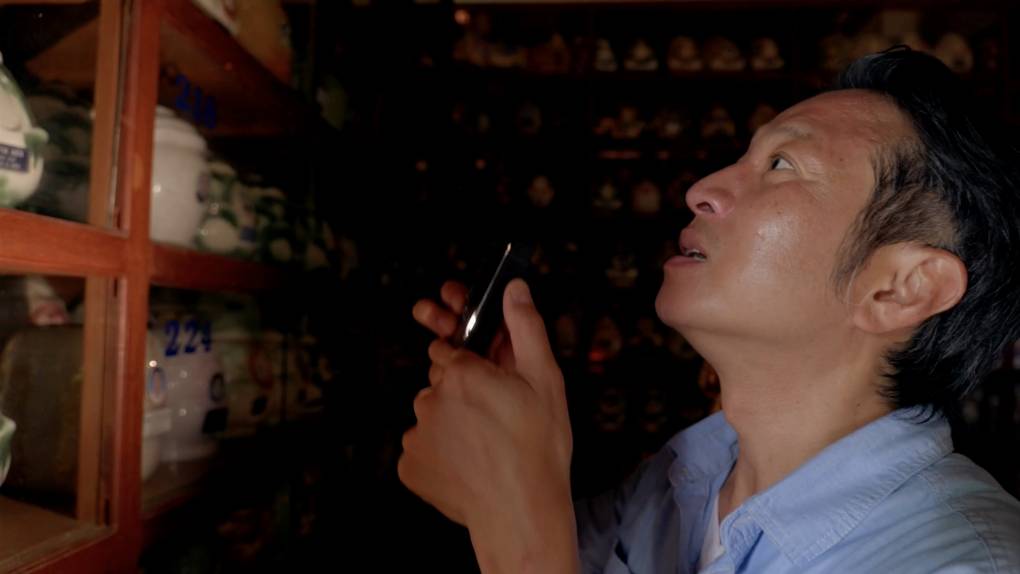
In ‘Year of The Cat,’ a Filmmaker Searches for the Truth About His Vietnamese Family History
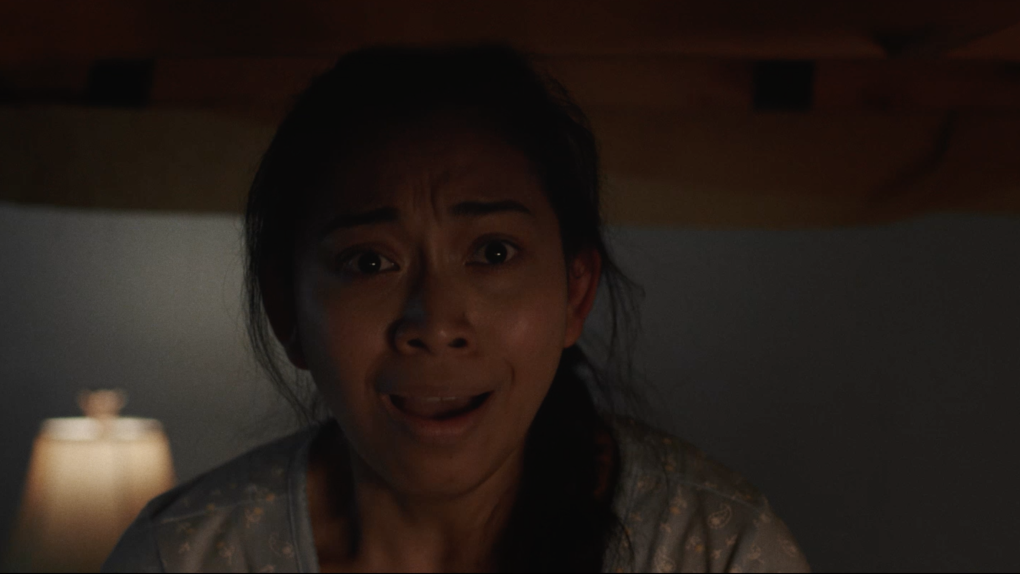
‘Mosquito Lady’ Shows the Horror of Losing Reproductive Freedom
‘Crossings’ Continues Deann Borshay Liem’s Career-Spanning Korea Project
‘Americanized’ Explores Identity On and Off the Basketball Court at CAAM Fest
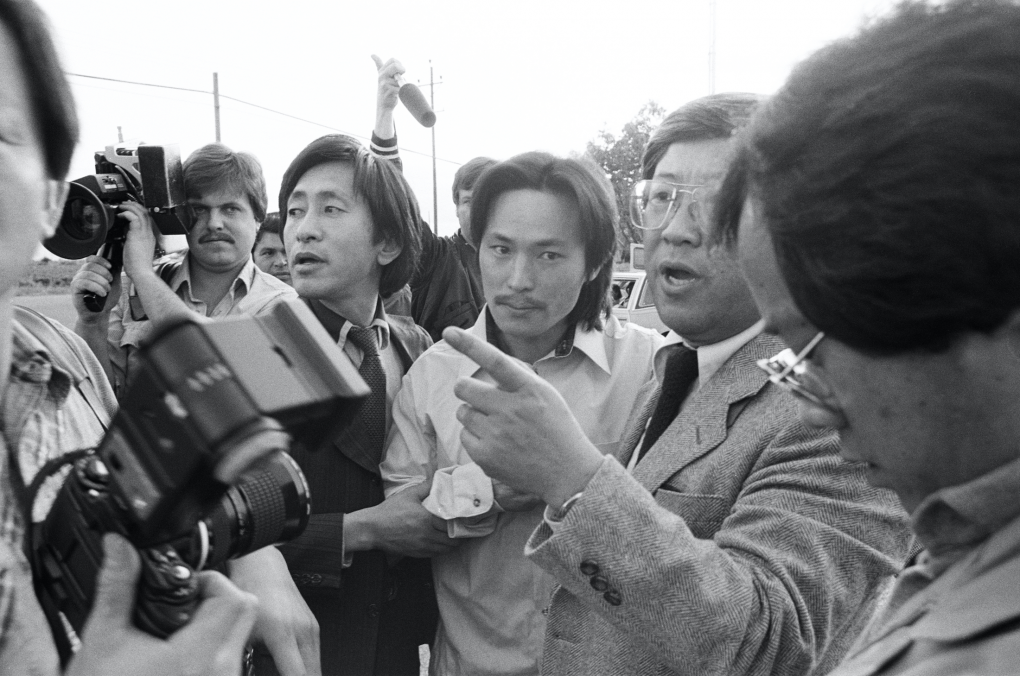
‘Free Chol Soo Lee’ Resurrects a Reluctant Asian American Icon
Now Playing! CAAMFest Brings Grit, Wit and Guts
Now Playing! CAAMFest, UNAFF and Isaac Julien Brighten the Home Screen
Now Playing! Local Filmmakers’ Personal Portraits Propel CAAMFest 37
Now Playing! CAAMFest Salutes Pathbreakers, Then and Now
Sponsored
Player sponsored by
window.__IS_SSR__=true
window.__INITIAL_STATE__={
"attachmentsReducer": {
"audio_0": {
"type": "attachments",
"id": "audio_0",
"imgSizes": {
"kqedFullSize": {
"file": "https://ww2.kqed.org/news/wp-content/themes/KQED-unified/img/audio_bgs/background0.jpg"
}
}
},
"audio_1": {
"type": "attachments",
"id": "audio_1",
"imgSizes": {
"kqedFullSize": {
"file": "https://ww2.kqed.org/news/wp-content/themes/KQED-unified/img/audio_bgs/background1.jpg"
}
}
},
"audio_2": {
"type": "attachments",
"id": "audio_2",
"imgSizes": {
"kqedFullSize": {
"file": "https://ww2.kqed.org/news/wp-content/themes/KQED-unified/img/audio_bgs/background2.jpg"
}
}
},
"audio_3": {
"type": "attachments",
"id": "audio_3",
"imgSizes": {
"kqedFullSize": {
"file": "https://ww2.kqed.org/news/wp-content/themes/KQED-unified/img/audio_bgs/background3.jpg"
}
}
},
"audio_4": {
"type": "attachments",
"id": "audio_4",
"imgSizes": {
"kqedFullSize": {
"file": "https://ww2.kqed.org/news/wp-content/themes/KQED-unified/img/audio_bgs/background4.jpg"
}
}
},
"placeholder": {
"type": "attachments",
"id": "placeholder",
"imgSizes": {
"thumbnail": {
"file": "https://cdn.kqed.org/wp-content/uploads/2024/12/KQED-Default-Image-816638274-2000x1333-1-160x107.jpg",
"width": 160,
"height": 107,
"mimeType": "image/jpeg"
},
"medium": {
"file": "https://cdn.kqed.org/wp-content/uploads/2024/12/KQED-Default-Image-816638274-2000x1333-1-800x533.jpg",
"width": 800,
"height": 533,
"mimeType": "image/jpeg"
},
"medium_large": {
"file": "https://cdn.kqed.org/wp-content/uploads/2024/12/KQED-Default-Image-816638274-2000x1333-1-768x512.jpg",
"width": 768,
"height": 512,
"mimeType": "image/jpeg"
},
"large": {
"file": "https://cdn.kqed.org/wp-content/uploads/2024/12/KQED-Default-Image-816638274-2000x1333-1-1020x680.jpg",
"width": 1020,
"height": 680,
"mimeType": "image/jpeg"
},
"1536x1536": {
"file": "https://cdn.kqed.org/wp-content/uploads/2024/12/KQED-Default-Image-816638274-2000x1333-1-1536x1024.jpg",
"width": 1536,
"height": 1024,
"mimeType": "image/jpeg"
},
"fd-lrg": {
"file": "https://cdn.kqed.org/wp-content/uploads/2024/12/KQED-Default-Image-816638274-2000x1333-1-1536x1024.jpg",
"width": 1536,
"height": 1024,
"mimeType": "image/jpeg"
},
"fd-med": {
"file": "https://cdn.kqed.org/wp-content/uploads/2024/12/KQED-Default-Image-816638274-2000x1333-1-1020x680.jpg",
"width": 1020,
"height": 680,
"mimeType": "image/jpeg"
},
"fd-sm": {
"file": "https://cdn.kqed.org/wp-content/uploads/2024/12/KQED-Default-Image-816638274-2000x1333-1-800x533.jpg",
"width": 800,
"height": 533,
"mimeType": "image/jpeg"
},
"post-thumbnail": {
"file": "https://cdn.kqed.org/wp-content/uploads/2024/12/KQED-Default-Image-816638274-2000x1333-1-672x372.jpg",
"width": 672,
"height": 372,
"mimeType": "image/jpeg"
},
"twentyfourteen-full-width": {
"file": "https://cdn.kqed.org/wp-content/uploads/2024/12/KQED-Default-Image-816638274-2000x1333-1-1038x576.jpg",
"width": 1038,
"height": 576,
"mimeType": "image/jpeg"
},
"xxsmall": {
"file": "https://cdn.kqed.org/wp-content/uploads/2024/12/KQED-Default-Image-816638274-2000x1333-1-160x107.jpg",
"width": 160,
"height": 107,
"mimeType": "image/jpeg"
},
"xsmall": {
"file": "https://cdn.kqed.org/wp-content/uploads/2024/12/KQED-Default-Image-816638274-2000x1333-1-672x372.jpg",
"width": 672,
"height": 372,
"mimeType": "image/jpeg"
},
"small": {
"file": "https://cdn.kqed.org/wp-content/uploads/2024/12/KQED-Default-Image-816638274-2000x1333-1-672x372.jpg",
"width": 672,
"height": 372,
"mimeType": "image/jpeg"
},
"xlarge": {
"file": "https://cdn.kqed.org/wp-content/uploads/2024/12/KQED-Default-Image-816638274-2000x1333-1-1020x680.jpg",
"width": 1020,
"height": 680,
"mimeType": "image/jpeg"
},
"full-width": {
"file": "https://cdn.kqed.org/wp-content/uploads/2024/12/KQED-Default-Image-816638274-2000x1333-1-1920x1280.jpg",
"width": 1920,
"height": 1280,
"mimeType": "image/jpeg"
},
"guest-author-32": {
"file": "https://cdn.kqed.org/wp-content/uploads/2025/01/KQED-Default-Image-816638274-1333x1333-1-160x160.jpg",
"width": 32,
"height": 32,
"mimeType": "image/jpeg"
},
"guest-author-50": {
"file": "https://cdn.kqed.org/wp-content/uploads/2025/01/KQED-Default-Image-816638274-1333x1333-1-160x160.jpg",
"width": 50,
"height": 50,
"mimeType": "image/jpeg"
},
"guest-author-64": {
"file": "https://cdn.kqed.org/wp-content/uploads/2025/01/KQED-Default-Image-816638274-1333x1333-1-160x160.jpg",
"width": 64,
"height": 64,
"mimeType": "image/jpeg"
},
"guest-author-96": {
"file": "https://cdn.kqed.org/wp-content/uploads/2025/01/KQED-Default-Image-816638274-1333x1333-1-160x160.jpg",
"width": 96,
"height": 96,
"mimeType": "image/jpeg"
},
"guest-author-128": {
"file": "https://cdn.kqed.org/wp-content/uploads/2025/01/KQED-Default-Image-816638274-1333x1333-1-160x160.jpg",
"width": 128,
"height": 128,
"mimeType": "image/jpeg"
},
"detail": {
"file": "https://cdn.kqed.org/wp-content/uploads/2025/01/KQED-Default-Image-816638274-1333x1333-1-160x160.jpg",
"width": 160,
"height": 160,
"mimeType": "image/jpeg"
},
"kqedFullSize": {
"file": "https://cdn.kqed.org/wp-content/uploads/2024/12/KQED-Default-Image-816638274-2000x1333-1.jpg",
"width": 2000,
"height": 1333
}
}
},
"arts_13975163": {
"type": "attachments",
"id": "arts_13975163",
"meta": {
"index": "attachments_1716263798",
"site": "arts",
"id": "13975163",
"found": true
},
"title": "Tony Nguyen looking at urns",
"publishDate": 1745372737,
"status": "inherit",
"parent": 13975100,
"modified": 1745522014,
"caption": "Filmmaker Tony Nguyen looks through a collection of urns while on a quest to learn about his father's identity. ",
"credit": "Tony Nguyen",
"altTag": "A man holding a cellphone with the light on as he searches through a dark room.",
"description": null,
"imgSizes": {
"medium": {
"file": "https://cdn.kqed.org/wp-content/uploads/sites/2/2025/04/tony-looking-at-urns-4-800x450.jpeg",
"width": 800,
"height": 450,
"mimeType": "image/jpeg"
},
"large": {
"file": "https://cdn.kqed.org/wp-content/uploads/sites/2/2025/04/tony-looking-at-urns-4-1020x574.jpeg",
"width": 1020,
"height": 574,
"mimeType": "image/jpeg"
},
"thumbnail": {
"file": "https://cdn.kqed.org/wp-content/uploads/sites/2/2025/04/tony-looking-at-urns-4-160x90.jpeg",
"width": 160,
"height": 90,
"mimeType": "image/jpeg"
},
"medium_large": {
"file": "https://cdn.kqed.org/wp-content/uploads/sites/2/2025/04/tony-looking-at-urns-4-768x432.jpeg",
"width": 768,
"height": 432,
"mimeType": "image/jpeg"
},
"1536x1536": {
"file": "https://cdn.kqed.org/wp-content/uploads/sites/2/2025/04/tony-looking-at-urns-4-1536x864.jpeg",
"width": 1536,
"height": 864,
"mimeType": "image/jpeg"
},
"2048x2048": {
"file": "https://cdn.kqed.org/wp-content/uploads/sites/2/2025/04/tony-looking-at-urns-4-2048x1152.jpeg",
"width": 2048,
"height": 1152,
"mimeType": "image/jpeg"
},
"post-thumbnail": {
"file": "https://cdn.kqed.org/wp-content/uploads/sites/2/2025/04/tony-looking-at-urns-4-672x372.jpeg",
"width": 672,
"height": 372,
"mimeType": "image/jpeg"
},
"twentyfourteen-full-width": {
"file": "https://cdn.kqed.org/wp-content/uploads/sites/2/2025/04/tony-looking-at-urns-4-1038x576.jpeg",
"width": 1038,
"height": 576,
"mimeType": "image/jpeg"
},
"full-width": {
"file": "https://cdn.kqed.org/wp-content/uploads/sites/2/2025/04/tony-looking-at-urns-4-1920x1080.jpeg",
"width": 1920,
"height": 1080,
"mimeType": "image/jpeg"
},
"kqedFullSize": {
"file": "https://cdn.kqed.org/wp-content/uploads/sites/2/2025/04/tony-looking-at-urns-4-scaled.jpeg",
"width": 2560,
"height": 1440
}
},
"fetchFailed": false,
"isLoading": false
},
"arts_13957694": {
"type": "attachments",
"id": "arts_13957694",
"meta": {
"index": "attachments_1716263798",
"site": "arts",
"id": "13957694",
"found": true
},
"parent": 13957691,
"imgSizes": {
"twentyfourteen-full-width": {
"file": "https://cdn.kqed.org/wp-content/uploads/sites/2/2024/05/MOSQUITOLADY_01-cropped-1038x576.png",
"width": 1038,
"mimeType": "image/png",
"height": 576
},
"thumbnail": {
"file": "https://cdn.kqed.org/wp-content/uploads/sites/2/2024/05/MOSQUITOLADY_01-cropped-160x90.png",
"width": 160,
"mimeType": "image/png",
"height": 90
},
"post-thumbnail": {
"file": "https://cdn.kqed.org/wp-content/uploads/sites/2/2024/05/MOSQUITOLADY_01-cropped-672x372.png",
"width": 672,
"mimeType": "image/png",
"height": 372
},
"kqedFullSize": {
"file": "https://cdn.kqed.org/wp-content/uploads/sites/2/2024/05/MOSQUITOLADY_01-cropped.png",
"width": 2661,
"height": 1497
},
"2048x2048": {
"file": "https://cdn.kqed.org/wp-content/uploads/sites/2/2024/05/MOSQUITOLADY_01-cropped-2048x1152.png",
"width": 2048,
"mimeType": "image/png",
"height": 1152
},
"large": {
"file": "https://cdn.kqed.org/wp-content/uploads/sites/2/2024/05/MOSQUITOLADY_01-cropped-1020x574.png",
"width": 1020,
"mimeType": "image/png",
"height": 574
},
"1536x1536": {
"file": "https://cdn.kqed.org/wp-content/uploads/sites/2/2024/05/MOSQUITOLADY_01-cropped-1536x864.png",
"width": 1536,
"mimeType": "image/png",
"height": 864
},
"full-width": {
"file": "https://cdn.kqed.org/wp-content/uploads/sites/2/2024/05/MOSQUITOLADY_01-cropped-1920x1080.png",
"width": 1920,
"mimeType": "image/png",
"height": 1080
},
"medium": {
"file": "https://cdn.kqed.org/wp-content/uploads/sites/2/2024/05/MOSQUITOLADY_01-cropped-800x450.png",
"width": 800,
"mimeType": "image/png",
"height": 450
},
"medium_large": {
"file": "https://cdn.kqed.org/wp-content/uploads/sites/2/2024/05/MOSQUITOLADY_01-cropped-768x432.png",
"width": 768,
"mimeType": "image/png",
"height": 432
}
},
"publishDate": 1715631844,
"modified": 1715631989,
"caption": "Hanna Lorica stars in 'Mosquito Lady' as Gemma, a pregnant teenager who turns to the neighbor her parents warned her about for help.",
"description": null,
"title": "MOSQUITOLADY_01-cropped",
"credit": "Kristine Gerolaga",
"status": "inherit",
"altTag": "A still from 'Mosquito Lady' showing the main character with a look of terror on her face in a dimly lit room.",
"fetchFailed": false,
"isLoading": false
},
"arts_13929060": {
"type": "attachments",
"id": "arts_13929060",
"meta": {
"index": "attachments_1716263798",
"site": "arts",
"id": "13929060",
"found": true
},
"parent": 13929046,
"imgSizes": {
"twentyfourteen-full-width": {
"file": "https://ww2.kqed.org/app/uploads/sites/2/2023/05/Crossings.16.9-1038x576.jpg",
"width": 1038,
"mimeType": "image/jpeg",
"height": 576
},
"thumbnail": {
"file": "https://ww2.kqed.org/app/uploads/sites/2/2023/05/Crossings.16.9-160x91.jpg",
"width": 160,
"mimeType": "image/jpeg",
"height": 91
},
"post-thumbnail": {
"file": "https://ww2.kqed.org/app/uploads/sites/2/2023/05/Crossings.16.9-672x372.jpg",
"width": 672,
"mimeType": "image/jpeg",
"height": 372
},
"kqedFullSize": {
"file": "https://ww2.kqed.org/app/uploads/sites/2/2023/05/Crossings.16.9.jpg",
"width": 1200,
"height": 680
},
"large": {
"file": "https://ww2.kqed.org/app/uploads/sites/2/2023/05/Crossings.16.9-1020x578.jpg",
"width": 1020,
"mimeType": "image/jpeg",
"height": 578
},
"medium": {
"file": "https://ww2.kqed.org/app/uploads/sites/2/2023/05/Crossings.16.9-800x453.jpg",
"width": 800,
"mimeType": "image/jpeg",
"height": 453
},
"medium_large": {
"file": "https://ww2.kqed.org/app/uploads/sites/2/2023/05/Crossings.16.9-768x435.jpg",
"width": 768,
"mimeType": "image/jpeg",
"height": 435
}
},
"publishDate": 1683845161,
"modified": 1683845203,
"caption": "A still from 'Crossings,' directed by Deann Borshay Liem. ",
"description": null,
"title": "Crossings.16.9",
"credit": "Niana Liu",
"status": "inherit",
"altTag": null,
"fetchFailed": false,
"isLoading": false
},
"arts_13913661": {
"type": "attachments",
"id": "arts_13913661",
"meta": {
"index": "attachments_1716263798",
"site": "arts",
"id": "13913661",
"found": true
},
"parent": 13913648,
"imgSizes": {
"twentyfourteen-full-width": {
"file": "https://ww2.kqed.org/app/uploads/sites/2/2022/05/Americanized_FilmStill_7-DP-Drew-Daniels-1038x576.jpeg",
"width": 1038,
"mimeType": "image/jpeg",
"height": 576
},
"thumbnail": {
"file": "https://ww2.kqed.org/app/uploads/sites/2/2022/05/Americanized_FilmStill_7-DP-Drew-Daniels-160x59.jpeg",
"width": 160,
"mimeType": "image/jpeg",
"height": 59
},
"post-thumbnail": {
"file": "https://ww2.kqed.org/app/uploads/sites/2/2022/05/Americanized_FilmStill_7-DP-Drew-Daniels-672x372.jpeg",
"width": 672,
"mimeType": "image/jpeg",
"height": 372
},
"kqedFullSize": {
"file": "https://ww2.kqed.org/app/uploads/sites/2/2022/05/Americanized_FilmStill_7-DP-Drew-Daniels-scaled.jpeg",
"width": 2560,
"height": 945
},
"2048x2048": {
"file": "https://ww2.kqed.org/app/uploads/sites/2/2022/05/Americanized_FilmStill_7-DP-Drew-Daniels-2048x756.jpeg",
"width": 2048,
"mimeType": "image/jpeg",
"height": 756
},
"large": {
"file": "https://ww2.kqed.org/app/uploads/sites/2/2022/05/Americanized_FilmStill_7-DP-Drew-Daniels-1020x376.jpeg",
"width": 1020,
"mimeType": "image/jpeg",
"height": 376
},
"1536x1536": {
"file": "https://ww2.kqed.org/app/uploads/sites/2/2022/05/Americanized_FilmStill_7-DP-Drew-Daniels-1536x567.jpeg",
"width": 1536,
"mimeType": "image/jpeg",
"height": 567
},
"full-width": {
"file": "https://ww2.kqed.org/app/uploads/sites/2/2022/05/Americanized_FilmStill_7-DP-Drew-Daniels-1920x709.jpeg",
"width": 1920,
"mimeType": "image/jpeg",
"height": 709
},
"medium": {
"file": "https://ww2.kqed.org/app/uploads/sites/2/2022/05/Americanized_FilmStill_7-DP-Drew-Daniels-800x295.jpeg",
"width": 800,
"mimeType": "image/jpeg",
"height": 295
},
"medium_large": {
"file": "https://ww2.kqed.org/app/uploads/sites/2/2022/05/Americanized_FilmStill_7-DP-Drew-Daniels-768x283.jpeg",
"width": 768,
"mimeType": "image/jpeg",
"height": 283
}
},
"publishDate": 1652987533,
"modified": 1652988816,
"caption": "Terry Hu stars in Erica Eng's 'Americanized.'",
"description": null,
"title": "Americanized_FilmStill_7 (DP Drew Daniels)",
"credit": "Courtesy of Erica Eng. Director of photography: Drew Daniels.",
"status": "inherit",
"altTag": null,
"fetchFailed": false,
"isLoading": false
},
"arts_13913152": {
"type": "attachments",
"id": "arts_13913152",
"meta": {
"index": "attachments_1716263798",
"site": "arts",
"id": "13913152",
"found": true
},
"parent": 13913134,
"imgSizes": {
"twentyfourteen-full-width": {
"file": "https://ww2.kqed.org/app/uploads/sites/2/2022/05/01-Free_Chol_Soo_Lee-1038x576.png",
"width": 1038,
"mimeType": "image/png",
"height": 576
},
"thumbnail": {
"file": "https://ww2.kqed.org/app/uploads/sites/2/2022/05/01-Free_Chol_Soo_Lee-160x106.png",
"width": 160,
"mimeType": "image/png",
"height": 106
},
"post-thumbnail": {
"file": "https://ww2.kqed.org/app/uploads/sites/2/2022/05/01-Free_Chol_Soo_Lee-672x372.png",
"width": 672,
"mimeType": "image/png",
"height": 372
},
"kqedFullSize": {
"file": "https://ww2.kqed.org/app/uploads/sites/2/2022/05/01-Free_Chol_Soo_Lee.png",
"width": 2200,
"height": 1459
},
"2048x2048": {
"file": "https://ww2.kqed.org/app/uploads/sites/2/2022/05/01-Free_Chol_Soo_Lee-2048x1358.png",
"width": 2048,
"mimeType": "image/png",
"height": 1358
},
"large": {
"file": "https://ww2.kqed.org/app/uploads/sites/2/2022/05/01-Free_Chol_Soo_Lee-1020x676.png",
"width": 1020,
"mimeType": "image/png",
"height": 676
},
"1536x1536": {
"file": "https://ww2.kqed.org/app/uploads/sites/2/2022/05/01-Free_Chol_Soo_Lee-1536x1019.png",
"width": 1536,
"mimeType": "image/png",
"height": 1019
},
"full-width": {
"file": "https://ww2.kqed.org/app/uploads/sites/2/2022/05/01-Free_Chol_Soo_Lee-1920x1273.png",
"width": 1920,
"mimeType": "image/png",
"height": 1273
},
"medium": {
"file": "https://ww2.kqed.org/app/uploads/sites/2/2022/05/01-Free_Chol_Soo_Lee-800x531.png",
"width": 800,
"mimeType": "image/png",
"height": 531
},
"medium_large": {
"file": "https://ww2.kqed.org/app/uploads/sites/2/2022/05/01-Free_Chol_Soo_Lee-768x509.png",
"width": 768,
"mimeType": "image/png",
"height": 509
}
},
"publishDate": 1652224352,
"modified": 1652224754,
"caption": "Still from 'Free Chol Soo Lee.'",
"description": null,
"title": "01-Free_Chol_Soo_Lee",
"credit": "Courtesy the filmmakers",
"status": "inherit",
"altTag": "Black and white image of crowd of reporters around young man",
"fetchFailed": false,
"isLoading": false
},
"arts_13897141": {
"type": "attachments",
"id": "arts_13897141",
"meta": {
"index": "attachments_1716263798",
"site": "arts",
"id": "13897141",
"found": true
},
"parent": 13897123,
"imgSizes": {
"twentyfourteen-full-width": {
"file": "https://ww2.kqed.org/app/uploads/sites/2/2021/05/SNAKEHEAD_SisterTse3_COVER-1038x576.jpg",
"width": 1038,
"mimeType": "image/jpeg",
"height": 576
},
"thumbnail": {
"file": "https://ww2.kqed.org/app/uploads/sites/2/2021/05/SNAKEHEAD_SisterTse3_COVER-160x90.jpg",
"width": 160,
"mimeType": "image/jpeg",
"height": 90
},
"post-thumbnail": {
"file": "https://ww2.kqed.org/app/uploads/sites/2/2021/05/SNAKEHEAD_SisterTse3_COVER-672x372.jpg",
"width": 672,
"mimeType": "image/jpeg",
"height": 372
},
"kqedFullSize": {
"file": "https://ww2.kqed.org/app/uploads/sites/2/2021/05/SNAKEHEAD_SisterTse3_COVER.jpg",
"width": 1920,
"height": 1080
},
"large": {
"file": "https://ww2.kqed.org/app/uploads/sites/2/2021/05/SNAKEHEAD_SisterTse3_COVER-1020x574.jpg",
"width": 1020,
"mimeType": "image/jpeg",
"height": 574
},
"1536x1536": {
"file": "https://ww2.kqed.org/app/uploads/sites/2/2021/05/SNAKEHEAD_SisterTse3_COVER-1536x864.jpg",
"width": 1536,
"mimeType": "image/jpeg",
"height": 864
},
"medium": {
"file": "https://ww2.kqed.org/app/uploads/sites/2/2021/05/SNAKEHEAD_SisterTse3_COVER-800x450.jpg",
"width": 800,
"mimeType": "image/jpeg",
"height": 450
},
"medium_large": {
"file": "https://ww2.kqed.org/app/uploads/sites/2/2021/05/SNAKEHEAD_SisterTse3_COVER-768x432.jpg",
"width": 768,
"mimeType": "image/jpeg",
"height": 432
}
},
"publishDate": 1620933463,
"modified": 1620933794,
"caption": "Shuya Chang as Siste Tse in Evan Jackson Leong's 'Snakehead.'",
"description": "Shuya Chang as Siste Tse in Evan Jackson Leong's 'Snakehead.'",
"title": "SNAKEHEAD_SisterTse3_COVER",
"credit": "CAAMFest",
"status": "inherit",
"altTag": null,
"fetchFailed": false,
"isLoading": false
},
"arts_13887964": {
"type": "attachments",
"id": "arts_13887964",
"meta": {
"index": "attachments_1716263798",
"site": "arts",
"id": "13887964",
"found": true
},
"parent": 13887913,
"imgSizes": {
"thumbnail": {
"file": "https://ww2.kqed.org/app/uploads/sites/2/2020/10/CHA.CAAM_-160x90.jpg",
"width": 160,
"mimeType": "image/jpeg",
"height": 90
},
"post-thumbnail": {
"file": "https://ww2.kqed.org/app/uploads/sites/2/2020/10/CHA.CAAM_-672x372.jpg",
"width": 672,
"mimeType": "image/jpeg",
"height": 372
},
"kqedFullSize": {
"file": "https://ww2.kqed.org/app/uploads/sites/2/2020/10/CHA.CAAM_.jpg",
"width": 800,
"height": 450
},
"medium_large": {
"file": "https://ww2.kqed.org/app/uploads/sites/2/2020/10/CHA.CAAM_-768x432.jpg",
"width": 768,
"mimeType": "image/jpeg",
"height": 432
}
},
"publishDate": 1602719762,
"modified": 1602719818,
"caption": "'Coming Home Again,' directed by Wayne Wang, opens this year's CAAMFest Forward.",
"description": "'Coming Home Again,' directed by Wayne Wang, opens this year's CAAMFest Forward.",
"title": "CHA.CAAM",
"credit": "Courtesy CAAMFest",
"status": "inherit",
"fetchFailed": false,
"isLoading": false
},
"arts_13856780": {
"type": "attachments",
"id": "arts_13856780",
"meta": {
"index": "attachments_1716263798",
"site": "arts",
"id": "13856780",
"found": true
},
"parent": 13856757,
"imgSizes": {
"twentyfourteen-full-width": {
"file": "https://ww2.kqed.org/app/uploads/sites/2/2019/05/Geographies_of_Kinship_03_COVER-1038x576.jpg",
"width": 1038,
"mimeType": "image/jpeg",
"height": 576
},
"thumbnail": {
"file": "https://ww2.kqed.org/app/uploads/sites/2/2019/05/Geographies_of_Kinship_03_COVER-160x90.jpg",
"width": 160,
"mimeType": "image/jpeg",
"height": 90
},
"post-thumbnail": {
"file": "https://ww2.kqed.org/app/uploads/sites/2/2019/05/Geographies_of_Kinship_03_COVER-672x372.jpg",
"width": 672,
"mimeType": "image/jpeg",
"height": 372
},
"kqedFullSize": {
"file": "https://ww2.kqed.org/app/uploads/sites/2/2019/05/Geographies_of_Kinship_03_COVER.jpg",
"width": 1920,
"height": 1080
},
"large": {
"file": "https://ww2.kqed.org/app/uploads/sites/2/2019/05/Geographies_of_Kinship_03_COVER-1020x574.jpg",
"width": 1020,
"mimeType": "image/jpeg",
"height": 574
},
"complete_open_graph": {
"file": "https://ww2.kqed.org/app/uploads/sites/2/2019/05/Geographies_of_Kinship_03_COVER-1200x675.jpg",
"width": 1200,
"mimeType": "image/jpeg",
"height": 675
},
"full-width": {
"file": "https://ww2.kqed.org/app/uploads/sites/2/2019/05/Geographies_of_Kinship_03_COVER-1920x1080.jpg",
"width": 1920,
"mimeType": "image/jpeg",
"height": 1080
},
"medium": {
"file": "https://ww2.kqed.org/app/uploads/sites/2/2019/05/Geographies_of_Kinship_03_COVER-800x450.jpg",
"width": 800,
"mimeType": "image/jpeg",
"height": 450
},
"medium_large": {
"file": "https://ww2.kqed.org/app/uploads/sites/2/2019/05/Geographies_of_Kinship_03_COVER-768x432.jpg",
"width": 768,
"mimeType": "image/jpeg",
"height": 432
}
},
"publishDate": 1557206784,
"modified": 1557206906,
"caption": "Still from 'Geographies of Kinship,' Estelle Cooke-Sampson as a child with her adoptive father, Sgt. Cooke, at the St. Paul’s Orphanage in Seoul, South Korea.",
"description": "Still from 'Geographies of Kinship,' Estelle Cooke-Sampson as a child with her adoptive father, Sgt. Cooke, at the St. Paul’s Orphanage in Seoul, South Korea.",
"title": "Geographies_of_Kinship_03_COVER",
"credit": "Courtesy Estelle Cooke-Sampson",
"status": "inherit",
"fetchFailed": false,
"isLoading": false
},
"arts_13831476": {
"type": "attachments",
"id": "arts_13831476",
"meta": {
"index": "attachments_1716263798",
"site": "arts",
"id": "13831476",
"found": true
},
"parent": 13831431,
"imgSizes": {
"small": {
"file": "https://ww2.kqed.org/app/uploads/sites/2/2018/05/Unlovable-520x293.jpg",
"width": 520,
"mimeType": "image/jpeg",
"height": 293
},
"thumbnail": {
"file": "https://ww2.kqed.org/app/uploads/sites/2/2018/05/Unlovable-160x90.jpg",
"width": 160,
"mimeType": "image/jpeg",
"height": 90
},
"post-thumbnail": {
"file": "https://ww2.kqed.org/app/uploads/sites/2/2018/05/Unlovable-672x372.jpg",
"width": 672,
"mimeType": "image/jpeg",
"height": 372
},
"xsmall": {
"file": "https://ww2.kqed.org/app/uploads/sites/2/2018/05/Unlovable-375x211.jpg",
"width": 375,
"mimeType": "image/jpeg",
"height": 211
},
"kqedFullSize": {
"file": "https://ww2.kqed.org/app/uploads/sites/2/2018/05/Unlovable.jpg",
"width": 800,
"height": 450
},
"guest-author-50": {
"file": "https://ww2.kqed.org/app/uploads/sites/2/2018/05/Unlovable-50x50.jpg",
"width": 50,
"mimeType": "image/jpeg",
"height": 50
},
"guest-author-96": {
"file": "https://ww2.kqed.org/app/uploads/sites/2/2018/05/Unlovable-96x96.jpg",
"width": 96,
"mimeType": "image/jpeg",
"height": 96
},
"medium": {
"file": "https://ww2.kqed.org/app/uploads/sites/2/2018/05/Unlovable-800x450.jpg",
"width": 800,
"mimeType": "image/jpeg",
"height": 450
},
"guest-author-64": {
"file": "https://ww2.kqed.org/app/uploads/sites/2/2018/05/Unlovable-64x64.jpg",
"width": 64,
"mimeType": "image/jpeg",
"height": 64
},
"guest-author-32": {
"file": "https://ww2.kqed.org/app/uploads/sites/2/2018/05/Unlovable-32x32.jpg",
"width": 32,
"mimeType": "image/jpeg",
"height": 32
},
"detail": {
"file": "https://ww2.kqed.org/app/uploads/sites/2/2018/05/Unlovable-150x150.jpg",
"width": 150,
"mimeType": "image/jpeg",
"height": 150
},
"medium_large": {
"file": "https://ww2.kqed.org/app/uploads/sites/2/2018/05/Unlovable-768x432.jpg",
"width": 768,
"mimeType": "image/jpeg",
"height": 432
},
"guest-author-128": {
"file": "https://ww2.kqed.org/app/uploads/sites/2/2018/05/Unlovable-128x128.jpg",
"width": 128,
"mimeType": "image/jpeg",
"height": 128
},
"xxsmall": {
"file": "https://ww2.kqed.org/app/uploads/sites/2/2018/05/Unlovable-240x135.jpg",
"width": 240,
"mimeType": "image/jpeg",
"height": 135
}
},
"publishDate": 1525723091,
"modified": 1525723224,
"caption": "Charlene deGuzman, born and raised in San Jose, stars in Suzi Yoonessi's 'Unlovable.'",
"description": "Charlene deGuzman, born and raised in San Jose, stars in Suzi Yoonessi's 'Unlovable.'",
"title": "Unlovable",
"credit": "Courtesy CAAMFest",
"status": "inherit",
"fetchFailed": false,
"isLoading": false
}
},
"audioPlayerReducer": {
"postId": "stream_live",
"isPaused": true,
"isPlaying": false,
"pfsActive": false,
"pledgeModalIsOpen": true,
"playerDrawerIsOpen": false
},
"authorsReducer": {
"byline_arts_13957691": {
"type": "authors",
"id": "byline_arts_13957691",
"meta": {
"override": true
},
"slug": "byline_arts_13957691",
"name": "Amyra Soriano",
"isLoading": false
},
"byline_arts_13913648": {
"type": "authors",
"id": "byline_arts_13913648",
"meta": {
"override": true
},
"slug": "byline_arts_13913648",
"name": "Amyra Soriano",
"isLoading": false
},
"mfox": {
"type": "authors",
"id": "22",
"meta": {
"index": "authors_1716337520",
"id": "22",
"found": true
},
"name": "Michael Fox",
"firstName": "Michael",
"lastName": "Fox",
"slug": "mfox",
"email": "foxonfilm@yahoo.com",
"display_author_email": false,
"staff_mastheads": [],
"title": "KQED Contributor",
"bio": "Michael Fox has written about film for dozens of publications since 1987. He is a founding member of the San Francisco Bay Area Film Critics Circle.",
"avatar": "https://secure.gravatar.com/avatar/81710be6517181c0d40977bb09011d5f?s=600&d=blank&r=g",
"twitter": null,
"facebook": null,
"instagram": null,
"linkedin": null,
"sites": [
{
"site": "arts",
"roles": [
"Contributor",
"contributor"
]
}
],
"headData": {
"title": "Michael Fox | KQED",
"description": "KQED Contributor",
"ogImgSrc": "https://secure.gravatar.com/avatar/81710be6517181c0d40977bb09011d5f?s=600&d=blank&r=g",
"twImgSrc": "https://secure.gravatar.com/avatar/81710be6517181c0d40977bb09011d5f?s=600&d=blank&r=g"
},
"isLoading": false,
"link": "/author/mfox"
},
"ogpenn": {
"type": "authors",
"id": "11491",
"meta": {
"index": "authors_1716337520",
"id": "11491",
"found": true
},
"name": "Pendarvis Harshaw",
"firstName": "Pendarvis",
"lastName": "Harshaw",
"slug": "ogpenn",
"email": "ogpenn@gmail.com",
"display_author_email": false,
"staff_mastheads": [
"arts"
],
"title": "Community Engagement Reporter",
"bio": "Pendarvis Harshaw is an educator, host and writer with KQED Arts.",
"avatar": "https://secure.gravatar.com/avatar/093d33baff5354890e29ad83d58d2c49?s=600&d=blank&r=g",
"twitter": null,
"facebook": null,
"instagram": "ogpenn",
"linkedin": null,
"sites": [
{
"site": "arts",
"roles": [
"editor"
]
},
{
"site": "news",
"roles": [
"editor"
]
},
{
"site": "bayareabites",
"roles": [
"author"
]
},
{
"site": "hiphop",
"roles": [
"editor"
]
}
],
"headData": {
"title": "Pendarvis Harshaw | KQED",
"description": "Community Engagement Reporter",
"ogImgSrc": "https://secure.gravatar.com/avatar/093d33baff5354890e29ad83d58d2c49?s=600&d=blank&r=g",
"twImgSrc": "https://secure.gravatar.com/avatar/093d33baff5354890e29ad83d58d2c49?s=600&d=blank&r=g"
},
"isLoading": false,
"link": "/author/ogpenn"
}
},
"breakingNewsReducer": {},
"pagesReducer": {},
"postsReducer": {
"stream_live": {
"type": "live",
"id": "stream_live",
"audioUrl": "https://streams.kqed.org/kqedradio",
"title": "Live Stream",
"excerpt": "Live Stream information currently unavailable.",
"link": "/radio",
"featImg": "",
"label": {
"name": "KQED Live",
"link": "/"
}
},
"stream_kqedNewscast": {
"type": "posts",
"id": "stream_kqedNewscast",
"audioUrl": "https://www.kqed.org/.stream/anon/radio/RDnews/newscast.mp3?_=1",
"title": "KQED Newscast",
"featImg": "",
"label": {
"name": "88.5 FM",
"link": "/"
}
},
"arts_13975100": {
"type": "posts",
"id": "arts_13975100",
"meta": {
"index": "posts_1716263798",
"site": "arts",
"id": "13975100",
"score": null,
"sort": [
1746025230000
]
},
"guestAuthors": [],
"slug": "in-year-of-the-cat-a-filmmaker-searches-for-the-truth-about-his-vietnamese-family-history",
"title": "In ‘Year of The Cat,’ a Filmmaker Searches for the Truth About His Vietnamese Family History",
"publishDate": 1746025230,
"format": "standard",
"headTitle": "In ‘Year of The Cat,’ a Filmmaker Searches for the Truth About His Vietnamese Family History | KQED",
"labelTerm": {
"term": 140,
"site": "arts"
},
"content": "\u003cp>The year of the cat is what differentiates the Vietnamese zodiac calendar from the Chinese and Korean calendars. In \u003ca href=\"https://www.kqed.org/news/tag/vietnam\">Vietnam\u003c/a>, the year of the cat replaces the year of the rabbit.\u003c/p>\n\u003cp>And 1975 was the year of the cat.\u003c/p>\n\u003cp>On April 30 of that year, Saigon, the capital city of South Vietnam, fell to communist forces from Northern Vietnam. As U.S. troops rapidly retreated, hundreds of thousands of Vietnamese fled their homeland.\u003c/p>\n\u003cp>The year 1975 “marks the beginning of mass migration for my mother, and folks like my mother,” Tony Nguyen tells me. “And my mother was pregnant with me at that time.”\u003c/p>\n\u003cfigure id=\"attachment_13975165\" class=\"wp-caption aligncenter\" style=\"max-width: 800px\">\u003cimg loading=\"lazy\" decoding=\"async\" class=\"wp-image-13975165 size-medium\" src=\"https://cdn.kqed.org/wp-content/uploads/sites/2/2025/04/0-8-800x1000.jpg\" alt=\"\" width=\"800\" height=\"1000\" srcset=\"https://cdn.kqed.org/wp-content/uploads/sites/2/2025/04/0-8-800x1000.jpg 800w, https://cdn.kqed.org/wp-content/uploads/sites/2/2025/04/0-8-1020x1275.jpg 1020w, https://cdn.kqed.org/wp-content/uploads/sites/2/2025/04/0-8-160x200.jpg 160w, https://cdn.kqed.org/wp-content/uploads/sites/2/2025/04/0-8-768x960.jpg 768w, https://cdn.kqed.org/wp-content/uploads/sites/2/2025/04/0-8-1229x1536.jpg 1229w, https://cdn.kqed.org/wp-content/uploads/sites/2/2025/04/0-8.jpg 1277w\" sizes=\"auto, (max-width: 800px) 100vw, 800px\">\u003cfigcaption class=\"wp-caption-text\">A clipping from the Seymour Tribune shows filmmaker Tony Nguyen’s mother (far right) shortly after fleeing Vietnam and seeking refuge in the U.S. She was seven months pregnant with Tony at the time, in September of 1975. \u003ccite>(Courtesy of Tony Nguyen)\u003c/cite>\u003c/figcaption>\u003c/figure>\n\u003cp>An Oakland-based filmmaker born in Indiana in the fall of 1975, Nguyen explains that the process of making his latest film, in some ways, began that very year.\u003c/p>\n\u003cp>[ad fullwidth]\u003c/p>\n\u003cp>\u003cem>\u003ca href=\"https://caamfest.com/2025/movies/year-of-the-cat/\">Year of the Cat\u003c/a>\u003c/em>, a 98-minute documentary which screens May 9 as part of \u003ca href=\"https://caamfest.com/2025/\" target=\"_blank\" rel=\"noopener\">CAAMFest\u003c/a> in San Francisco, chronicles Nguyen’s quest to find his father. Along the way, Nguyen learns more than anticipated about both his family and world history, all while creating a roadmap of sorts for the next generation.\u003c/p>\n\u003cp>Nguyen digs through digital phonebooks and listens to first-person accounts that won’t appear in history textbooks. He takes DNA tests, tests the patience of strangers, and knocks on doors unannounced at houses in U.S. suburbs. At one point in the film, he breaks a sweat while walking through a cemetery in Vietnam.\u003c/p>\n\u003cp>And in the end, he finds what he’s looking for: the truth.\u003c/p>\n\u003cfigure id=\"attachment_13975166\" class=\"wp-caption aligncenter\" style=\"max-width: 800px\">\u003cimg loading=\"lazy\" decoding=\"async\" class=\"wp-image-13975166 size-medium\" src=\"https://cdn.kqed.org/wp-content/uploads/sites/2/2025/04/tony-and-bop-1-800x450.jpeg\" alt=\"An over-the-shoulder shot of two men talking while sitting on a park bench.\" width=\"800\" height=\"450\" srcset=\"https://cdn.kqed.org/wp-content/uploads/sites/2/2025/04/tony-and-bop-1-800x450.jpeg 800w, https://cdn.kqed.org/wp-content/uploads/sites/2/2025/04/tony-and-bop-1-1020x574.jpeg 1020w, https://cdn.kqed.org/wp-content/uploads/sites/2/2025/04/tony-and-bop-1-160x90.jpeg 160w, https://cdn.kqed.org/wp-content/uploads/sites/2/2025/04/tony-and-bop-1-768x432.jpeg 768w, https://cdn.kqed.org/wp-content/uploads/sites/2/2025/04/tony-and-bop-1-1536x864.jpeg 1536w, https://cdn.kqed.org/wp-content/uploads/sites/2/2025/04/tony-and-bop-1-2048x1152.jpeg 2048w, https://cdn.kqed.org/wp-content/uploads/sites/2/2025/04/tony-and-bop-1-1920x1080.jpeg 1920w\" sizes=\"auto, (max-width: 800px) 100vw, 800px\">\u003cfigcaption class=\"wp-caption-text\">Tony Nguyen gets acquainted with his newly found half-brother in a scene from ‘Year of The Cat.’ \u003ccite>(Tony Nguyen)\u003c/cite>\u003c/figcaption>\u003c/figure>\n\u003cp>It’s quite a journey for a film that begins as Nguyen and a younger relative, there to translate his broken Vietnamese, sit down with Nguyen’s mother to discuss his father’s whereabouts.\u003c/p>\n\u003cp>His mom, who’d recently survived a stroke, engages in a tough-to-watch conversation. In the scene, Nguyen’s checkered relationship with his mother (and his motherland) becomes clear as he listens to her tell of living through the fall of Saigon, surviving sexual assault, seeking refuge and divulging family secrets.\u003c/p>\n\u003cp>Nguyen then follows all the leads he can to find more information about his father. In addition to consulting family members and contacting people through ancestry sites, he hires \u003ca href=\"https://www.youtube.com/channel/UCScMaU2pIseOUJcRz9ACjfQ\" target=\"_blank\" rel=\"noopener\">Kyle Le\u003c/a>, a Vietnamese YouTuber who specializes in reuniting people.\u003c/p>\n\u003cp>Around 30 minutes into the film, Nguyen hits a wall in his research. So he records and sends a video to someone he’s been connected with via an ancestry site. It’s a Hail Mary of sorts, in a scene which gives the viewer a full understanding of what’s at stake.\u003c/p>\n\u003cfigure id=\"attachment_13975167\" class=\"wp-caption aligncenter\" style=\"max-width: 800px\">\u003cimg loading=\"lazy\" decoding=\"async\" class=\"wp-image-13975167 size-medium\" src=\"https://cdn.kqed.org/wp-content/uploads/sites/2/2025/04/0-6-800x450.jpg\" alt=\"Two people hugging while sitting. \" width=\"800\" height=\"450\" srcset=\"https://cdn.kqed.org/wp-content/uploads/sites/2/2025/04/0-6-800x450.jpg 800w, https://cdn.kqed.org/wp-content/uploads/sites/2/2025/04/0-6-1020x574.jpg 1020w, https://cdn.kqed.org/wp-content/uploads/sites/2/2025/04/0-6-160x90.jpg 160w, https://cdn.kqed.org/wp-content/uploads/sites/2/2025/04/0-6-768x432.jpg 768w, https://cdn.kqed.org/wp-content/uploads/sites/2/2025/04/0-6-1536x864.jpg 1536w, https://cdn.kqed.org/wp-content/uploads/sites/2/2025/04/0-6-2048x1152.jpg 2048w, https://cdn.kqed.org/wp-content/uploads/sites/2/2025/04/0-6-1920x1080.jpg 1920w\" sizes=\"auto, (max-width: 800px) 100vw, 800px\">\u003cfigcaption class=\"wp-caption-text\">Filmmaker Tony Nguyen shares an embrace with his newly acquainted half-sister. \u003ccite>(Tony Nguyen)\u003c/cite>\u003c/figcaption>\u003c/figure>\n\u003cp>As he records the video, he describes his own children and how he cares for them, explaining that fatherhood has inspired him to find out more about his own father. And then he nods to a larger story — one that speaks to the heart of those who fled Vietnam 50 years ago.\u003c/p>\n\u003cp>As the camera cuts away from him, the audience gets a glimpse of a maneki-neko, a golden cat figurine believed to bring good luck. Nguyen says, in a voiceover, “I upload the video to YouTube, and say a prayer to the cats in the kitchen.”\u003c/p>\n\u003cp>Throughout the film Nguyen’s emotions range from sorrow to determination as he repeatedly makes phone calls to strangers and pushes the boundaries of what’s socially acceptable.\u003c/p>\n\u003cp>“In the moment,” he says, “I was all gloves off.”\u003c/p>\n\u003cfigure id=\"attachment_13975164\" class=\"wp-caption aligncenter\" style=\"max-width: 800px\">\u003cimg loading=\"lazy\" decoding=\"async\" class=\"wp-image-13975164 size-medium\" src=\"https://cdn.kqed.org/wp-content/uploads/sites/2/2025/04/tony-and-kyle-wide-2-800x450.jpeg\" alt=\"A wide shot of two men sitting at a cafe in Vietnam. \" width=\"800\" height=\"450\" srcset=\"https://cdn.kqed.org/wp-content/uploads/sites/2/2025/04/tony-and-kyle-wide-2-800x450.jpeg 800w, https://cdn.kqed.org/wp-content/uploads/sites/2/2025/04/tony-and-kyle-wide-2-1020x574.jpeg 1020w, https://cdn.kqed.org/wp-content/uploads/sites/2/2025/04/tony-and-kyle-wide-2-160x90.jpeg 160w, https://cdn.kqed.org/wp-content/uploads/sites/2/2025/04/tony-and-kyle-wide-2-768x432.jpeg 768w, https://cdn.kqed.org/wp-content/uploads/sites/2/2025/04/tony-and-kyle-wide-2-1536x864.jpeg 1536w, https://cdn.kqed.org/wp-content/uploads/sites/2/2025/04/tony-and-kyle-wide-2-2048x1152.jpeg 2048w, https://cdn.kqed.org/wp-content/uploads/sites/2/2025/04/tony-and-kyle-wide-2-1920x1080.jpeg 1920w\" sizes=\"auto, (max-width: 800px) 100vw, 800px\">\u003cfigcaption class=\"wp-caption-text\">YouTuber Kyle Le and filmmaker Tony Nguyen take a break from their research as they sit at a cafe in Vietnam. \u003ccite>(Tony Nguyen)\u003c/cite>\u003c/figcaption>\u003c/figure>\n\u003cp>“What you’re seeing is very much so true to my search,” Nguyen says during a phone interview, adding that he wanted the film to retain even his unflattering acts, like contacting people repeatedly.\u003c/p>\n\u003cp>“I was trying to be respectful; at least in my eyes, that’s what respect looks like,” Nguyen says in regard to knocking on doors and reaching out to strangers whose DNA results showed a match. “Not getting anywhere with those family members, I just felt like I needed to take that risk.”\u003c/p>\n\u003cp>He cites being born into loss as his motivation to seek answers.\u003c/p>\n\u003cp>“My mother’s loss of a country, coming here to America as a refugee, not growing up with a father, not knowing anything about him, never seeing a picture and so forth,” Nguyen says.\u003c/p>\n\u003cp>Nguyen aimed to be ethical about his pursuit of the truth. He didn’t steal hair samples or go through anyone’s trash. But “in the end, in terms of the actual search for my father, I did what I thought was best,” he says.\u003c/p>\n\u003cfigure id=\"attachment_13975168\" class=\"wp-caption aligncenter\" style=\"max-width: 800px\">\u003cimg loading=\"lazy\" decoding=\"async\" class=\"wp-image-13975168 size-medium\" src=\"https://cdn.kqed.org/wp-content/uploads/sites/2/2025/04/tony-looking-at-urns-4-2-800x450.jpeg\" alt=\"A man crouches while holding a cellphone with the light on, looking at a room full of urns. \" width=\"800\" height=\"450\" srcset=\"https://cdn.kqed.org/wp-content/uploads/sites/2/2025/04/tony-looking-at-urns-4-2-800x450.jpeg 800w, https://cdn.kqed.org/wp-content/uploads/sites/2/2025/04/tony-looking-at-urns-4-2-1020x574.jpeg 1020w, https://cdn.kqed.org/wp-content/uploads/sites/2/2025/04/tony-looking-at-urns-4-2-160x90.jpeg 160w, https://cdn.kqed.org/wp-content/uploads/sites/2/2025/04/tony-looking-at-urns-4-2-768x432.jpeg 768w, https://cdn.kqed.org/wp-content/uploads/sites/2/2025/04/tony-looking-at-urns-4-2-1536x864.jpeg 1536w, https://cdn.kqed.org/wp-content/uploads/sites/2/2025/04/tony-looking-at-urns-4-2-2048x1152.jpeg 2048w, https://cdn.kqed.org/wp-content/uploads/sites/2/2025/04/tony-looking-at-urns-4-2-1920x1080.jpeg 1920w\" sizes=\"auto, (max-width: 800px) 100vw, 800px\">\u003cfigcaption class=\"wp-caption-text\">Filmmaker Tony Nguyen crouches while looking at a collection of urns as he searches for the truth about his father’s identity. \u003ccite>(Tony Nguyen)\u003c/cite>\u003c/figcaption>\u003c/figure>\n\u003cp>Nguyen’s search for answers began five years before the film was finished, with what he calls a “naive idea” that he’d go straight from point A to point B. He certainly didn’t.\u003c/p>\n\u003cp>However, over the course of the process, he helped a cousin discover a half-sibling, and found two half-siblings of his own. He came across images of his father with long hair, and discovered that his father, like Nguyen, was an artist too.\u003c/p>\n\u003cp>In a scene at the documentary’s end, Nguyen and his kids have dinner, and his 15 year-old son, without breaking from eating, says he respects his dad for embarking on his journey. After five years, many family stories and ultimately discovering the truth about his father, Nguyen’s mission is complete.\u003c/p>\n\u003cp>“I see this as a document for my children’s generation,” says Nguyen of the film. “And hopefully future generations within my own family.”\u003c/p>\n\u003chr>\n\u003cp>[ad floatright]\u003c/p>\n\u003cp>\u003cem>‘The Year of The Cat’ makes its Bay Area premiere as part of CAAMFest on May 9 at the AMC Kabuki in San Francisco. \u003ca href=\"https://caamfest.com/2025/movies/year-of-the-cat/\">Details here\u003c/a>. \u003c/em>\u003c/p>\n\n",
"blocks": [],
"excerpt": "Oakland-based Tony Nguyen's latest documentary revisits his family's history amid the fall of Saigon. ",
"status": "publish",
"parent": 0,
"modified": 1750185689,
"stats": {
"hasAudio": false,
"hasVideo": false,
"hasChartOrMap": false,
"iframeSrcs": [],
"hasGoogleForm": false,
"hasGallery": false,
"hasHearkenModule": false,
"hasPolis": false,
"paragraphCount": 28,
"wordCount": 1114
},
"headData": {
"title": "In ‘Year of The Cat,’ a Filmmaker Searches for the Truth About His Vietnamese Family History | KQED",
"description": "Oakland-based Tony Nguyen's latest documentary revisits his family's history amid the fall of Saigon. ",
"ogTitle": "",
"ogDescription": "",
"ogImgId": "",
"twTitle": "",
"twDescription": "",
"twImgId": "",
"schema": {
"@context": "https://schema.org",
"@type": "Article",
"headline": "In ‘Year of The Cat,’ a Filmmaker Searches for the Truth About His Vietnamese Family History",
"datePublished": "2025-04-30T08:00:30-07:00",
"dateModified": "2025-06-17T11:41:29-07:00",
"image": "https://cdn.kqed.org/wp-content/uploads/2020/02/KQED-OG-Image@1x.png"
}
},
"sticky": false,
"nprStoryId": "kqed-13975100",
"templateType": "standard",
"featuredImageType": "standard",
"excludeFromSiteSearch": "Include",
"articleAge": "0",
"path": "/arts/13975100/in-year-of-the-cat-a-filmmaker-searches-for-the-truth-about-his-vietnamese-family-history",
"audioTrackLength": null,
"parsedContent": [
{
"type": "contentString",
"content": "\u003cdiv class=\"post-body\">\u003cp>\u003cp>The year of the cat is what differentiates the Vietnamese zodiac calendar from the Chinese and Korean calendars. In \u003ca href=\"https://www.kqed.org/news/tag/vietnam\">Vietnam\u003c/a>, the year of the cat replaces the year of the rabbit.\u003c/p>\n\u003cp>And 1975 was the year of the cat.\u003c/p>\n\u003cp>On April 30 of that year, Saigon, the capital city of South Vietnam, fell to communist forces from Northern Vietnam. As U.S. troops rapidly retreated, hundreds of thousands of Vietnamese fled their homeland.\u003c/p>\n\u003cp>The year 1975 “marks the beginning of mass migration for my mother, and folks like my mother,” Tony Nguyen tells me. “And my mother was pregnant with me at that time.”\u003c/p>\n\u003cfigure id=\"attachment_13975165\" class=\"wp-caption aligncenter\" style=\"max-width: 800px\">\u003cimg loading=\"lazy\" decoding=\"async\" class=\"wp-image-13975165 size-medium\" src=\"https://cdn.kqed.org/wp-content/uploads/sites/2/2025/04/0-8-800x1000.jpg\" alt=\"\" width=\"800\" height=\"1000\" srcset=\"https://cdn.kqed.org/wp-content/uploads/sites/2/2025/04/0-8-800x1000.jpg 800w, https://cdn.kqed.org/wp-content/uploads/sites/2/2025/04/0-8-1020x1275.jpg 1020w, https://cdn.kqed.org/wp-content/uploads/sites/2/2025/04/0-8-160x200.jpg 160w, https://cdn.kqed.org/wp-content/uploads/sites/2/2025/04/0-8-768x960.jpg 768w, https://cdn.kqed.org/wp-content/uploads/sites/2/2025/04/0-8-1229x1536.jpg 1229w, https://cdn.kqed.org/wp-content/uploads/sites/2/2025/04/0-8.jpg 1277w\" sizes=\"auto, (max-width: 800px) 100vw, 800px\">\u003cfigcaption class=\"wp-caption-text\">A clipping from the Seymour Tribune shows filmmaker Tony Nguyen’s mother (far right) shortly after fleeing Vietnam and seeking refuge in the U.S. She was seven months pregnant with Tony at the time, in September of 1975. \u003ccite>(Courtesy of Tony Nguyen)\u003c/cite>\u003c/figcaption>\u003c/figure>\n\u003cp>An Oakland-based filmmaker born in Indiana in the fall of 1975, Nguyen explains that the process of making his latest film, in some ways, began that very year.\u003c/p>\n\u003cp>\u003c/p>\u003c/div>",
"attributes": {
"named": {},
"numeric": []
}
},
{
"type": "component",
"content": "",
"name": "ad",
"attributes": {
"named": {
"label": "fullwidth"
},
"numeric": [
"fullwidth"
]
}
},
{
"type": "contentString",
"content": "\u003cdiv class=\"post-body\">\u003cp>\u003c/p>\n\u003cp>\u003cem>\u003ca href=\"https://caamfest.com/2025/movies/year-of-the-cat/\">Year of the Cat\u003c/a>\u003c/em>, a 98-minute documentary which screens May 9 as part of \u003ca href=\"https://caamfest.com/2025/\" target=\"_blank\" rel=\"noopener\">CAAMFest\u003c/a> in San Francisco, chronicles Nguyen’s quest to find his father. Along the way, Nguyen learns more than anticipated about both his family and world history, all while creating a roadmap of sorts for the next generation.\u003c/p>\n\u003cp>Nguyen digs through digital phonebooks and listens to first-person accounts that won’t appear in history textbooks. He takes DNA tests, tests the patience of strangers, and knocks on doors unannounced at houses in U.S. suburbs. At one point in the film, he breaks a sweat while walking through a cemetery in Vietnam.\u003c/p>\n\u003cp>And in the end, he finds what he’s looking for: the truth.\u003c/p>\n\u003cfigure id=\"attachment_13975166\" class=\"wp-caption aligncenter\" style=\"max-width: 800px\">\u003cimg loading=\"lazy\" decoding=\"async\" class=\"wp-image-13975166 size-medium\" src=\"https://cdn.kqed.org/wp-content/uploads/sites/2/2025/04/tony-and-bop-1-800x450.jpeg\" alt=\"An over-the-shoulder shot of two men talking while sitting on a park bench.\" width=\"800\" height=\"450\" srcset=\"https://cdn.kqed.org/wp-content/uploads/sites/2/2025/04/tony-and-bop-1-800x450.jpeg 800w, https://cdn.kqed.org/wp-content/uploads/sites/2/2025/04/tony-and-bop-1-1020x574.jpeg 1020w, https://cdn.kqed.org/wp-content/uploads/sites/2/2025/04/tony-and-bop-1-160x90.jpeg 160w, https://cdn.kqed.org/wp-content/uploads/sites/2/2025/04/tony-and-bop-1-768x432.jpeg 768w, https://cdn.kqed.org/wp-content/uploads/sites/2/2025/04/tony-and-bop-1-1536x864.jpeg 1536w, https://cdn.kqed.org/wp-content/uploads/sites/2/2025/04/tony-and-bop-1-2048x1152.jpeg 2048w, https://cdn.kqed.org/wp-content/uploads/sites/2/2025/04/tony-and-bop-1-1920x1080.jpeg 1920w\" sizes=\"auto, (max-width: 800px) 100vw, 800px\">\u003cfigcaption class=\"wp-caption-text\">Tony Nguyen gets acquainted with his newly found half-brother in a scene from ‘Year of The Cat.’ \u003ccite>(Tony Nguyen)\u003c/cite>\u003c/figcaption>\u003c/figure>\n\u003cp>It’s quite a journey for a film that begins as Nguyen and a younger relative, there to translate his broken Vietnamese, sit down with Nguyen’s mother to discuss his father’s whereabouts.\u003c/p>\n\u003cp>His mom, who’d recently survived a stroke, engages in a tough-to-watch conversation. In the scene, Nguyen’s checkered relationship with his mother (and his motherland) becomes clear as he listens to her tell of living through the fall of Saigon, surviving sexual assault, seeking refuge and divulging family secrets.\u003c/p>\n\u003cp>Nguyen then follows all the leads he can to find more information about his father. In addition to consulting family members and contacting people through ancestry sites, he hires \u003ca href=\"https://www.youtube.com/channel/UCScMaU2pIseOUJcRz9ACjfQ\" target=\"_blank\" rel=\"noopener\">Kyle Le\u003c/a>, a Vietnamese YouTuber who specializes in reuniting people.\u003c/p>\n\u003cp>Around 30 minutes into the film, Nguyen hits a wall in his research. So he records and sends a video to someone he’s been connected with via an ancestry site. It’s a Hail Mary of sorts, in a scene which gives the viewer a full understanding of what’s at stake.\u003c/p>\n\u003cfigure id=\"attachment_13975167\" class=\"wp-caption aligncenter\" style=\"max-width: 800px\">\u003cimg loading=\"lazy\" decoding=\"async\" class=\"wp-image-13975167 size-medium\" src=\"https://cdn.kqed.org/wp-content/uploads/sites/2/2025/04/0-6-800x450.jpg\" alt=\"Two people hugging while sitting. \" width=\"800\" height=\"450\" srcset=\"https://cdn.kqed.org/wp-content/uploads/sites/2/2025/04/0-6-800x450.jpg 800w, https://cdn.kqed.org/wp-content/uploads/sites/2/2025/04/0-6-1020x574.jpg 1020w, https://cdn.kqed.org/wp-content/uploads/sites/2/2025/04/0-6-160x90.jpg 160w, https://cdn.kqed.org/wp-content/uploads/sites/2/2025/04/0-6-768x432.jpg 768w, https://cdn.kqed.org/wp-content/uploads/sites/2/2025/04/0-6-1536x864.jpg 1536w, https://cdn.kqed.org/wp-content/uploads/sites/2/2025/04/0-6-2048x1152.jpg 2048w, https://cdn.kqed.org/wp-content/uploads/sites/2/2025/04/0-6-1920x1080.jpg 1920w\" sizes=\"auto, (max-width: 800px) 100vw, 800px\">\u003cfigcaption class=\"wp-caption-text\">Filmmaker Tony Nguyen shares an embrace with his newly acquainted half-sister. \u003ccite>(Tony Nguyen)\u003c/cite>\u003c/figcaption>\u003c/figure>\n\u003cp>As he records the video, he describes his own children and how he cares for them, explaining that fatherhood has inspired him to find out more about his own father. And then he nods to a larger story — one that speaks to the heart of those who fled Vietnam 50 years ago.\u003c/p>\n\u003cp>As the camera cuts away from him, the audience gets a glimpse of a maneki-neko, a golden cat figurine believed to bring good luck. Nguyen says, in a voiceover, “I upload the video to YouTube, and say a prayer to the cats in the kitchen.”\u003c/p>\n\u003cp>Throughout the film Nguyen’s emotions range from sorrow to determination as he repeatedly makes phone calls to strangers and pushes the boundaries of what’s socially acceptable.\u003c/p>\n\u003cp>“In the moment,” he says, “I was all gloves off.”\u003c/p>\n\u003cfigure id=\"attachment_13975164\" class=\"wp-caption aligncenter\" style=\"max-width: 800px\">\u003cimg loading=\"lazy\" decoding=\"async\" class=\"wp-image-13975164 size-medium\" src=\"https://cdn.kqed.org/wp-content/uploads/sites/2/2025/04/tony-and-kyle-wide-2-800x450.jpeg\" alt=\"A wide shot of two men sitting at a cafe in Vietnam. \" width=\"800\" height=\"450\" srcset=\"https://cdn.kqed.org/wp-content/uploads/sites/2/2025/04/tony-and-kyle-wide-2-800x450.jpeg 800w, https://cdn.kqed.org/wp-content/uploads/sites/2/2025/04/tony-and-kyle-wide-2-1020x574.jpeg 1020w, https://cdn.kqed.org/wp-content/uploads/sites/2/2025/04/tony-and-kyle-wide-2-160x90.jpeg 160w, https://cdn.kqed.org/wp-content/uploads/sites/2/2025/04/tony-and-kyle-wide-2-768x432.jpeg 768w, https://cdn.kqed.org/wp-content/uploads/sites/2/2025/04/tony-and-kyle-wide-2-1536x864.jpeg 1536w, https://cdn.kqed.org/wp-content/uploads/sites/2/2025/04/tony-and-kyle-wide-2-2048x1152.jpeg 2048w, https://cdn.kqed.org/wp-content/uploads/sites/2/2025/04/tony-and-kyle-wide-2-1920x1080.jpeg 1920w\" sizes=\"auto, (max-width: 800px) 100vw, 800px\">\u003cfigcaption class=\"wp-caption-text\">YouTuber Kyle Le and filmmaker Tony Nguyen take a break from their research as they sit at a cafe in Vietnam. \u003ccite>(Tony Nguyen)\u003c/cite>\u003c/figcaption>\u003c/figure>\n\u003cp>“What you’re seeing is very much so true to my search,” Nguyen says during a phone interview, adding that he wanted the film to retain even his unflattering acts, like contacting people repeatedly.\u003c/p>\n\u003cp>“I was trying to be respectful; at least in my eyes, that’s what respect looks like,” Nguyen says in regard to knocking on doors and reaching out to strangers whose DNA results showed a match. “Not getting anywhere with those family members, I just felt like I needed to take that risk.”\u003c/p>\n\u003cp>He cites being born into loss as his motivation to seek answers.\u003c/p>\n\u003cp>“My mother’s loss of a country, coming here to America as a refugee, not growing up with a father, not knowing anything about him, never seeing a picture and so forth,” Nguyen says.\u003c/p>\n\u003cp>Nguyen aimed to be ethical about his pursuit of the truth. He didn’t steal hair samples or go through anyone’s trash. But “in the end, in terms of the actual search for my father, I did what I thought was best,” he says.\u003c/p>\n\u003cfigure id=\"attachment_13975168\" class=\"wp-caption aligncenter\" style=\"max-width: 800px\">\u003cimg loading=\"lazy\" decoding=\"async\" class=\"wp-image-13975168 size-medium\" src=\"https://cdn.kqed.org/wp-content/uploads/sites/2/2025/04/tony-looking-at-urns-4-2-800x450.jpeg\" alt=\"A man crouches while holding a cellphone with the light on, looking at a room full of urns. \" width=\"800\" height=\"450\" srcset=\"https://cdn.kqed.org/wp-content/uploads/sites/2/2025/04/tony-looking-at-urns-4-2-800x450.jpeg 800w, https://cdn.kqed.org/wp-content/uploads/sites/2/2025/04/tony-looking-at-urns-4-2-1020x574.jpeg 1020w, https://cdn.kqed.org/wp-content/uploads/sites/2/2025/04/tony-looking-at-urns-4-2-160x90.jpeg 160w, https://cdn.kqed.org/wp-content/uploads/sites/2/2025/04/tony-looking-at-urns-4-2-768x432.jpeg 768w, https://cdn.kqed.org/wp-content/uploads/sites/2/2025/04/tony-looking-at-urns-4-2-1536x864.jpeg 1536w, https://cdn.kqed.org/wp-content/uploads/sites/2/2025/04/tony-looking-at-urns-4-2-2048x1152.jpeg 2048w, https://cdn.kqed.org/wp-content/uploads/sites/2/2025/04/tony-looking-at-urns-4-2-1920x1080.jpeg 1920w\" sizes=\"auto, (max-width: 800px) 100vw, 800px\">\u003cfigcaption class=\"wp-caption-text\">Filmmaker Tony Nguyen crouches while looking at a collection of urns as he searches for the truth about his father’s identity. \u003ccite>(Tony Nguyen)\u003c/cite>\u003c/figcaption>\u003c/figure>\n\u003cp>Nguyen’s search for answers began five years before the film was finished, with what he calls a “naive idea” that he’d go straight from point A to point B. He certainly didn’t.\u003c/p>\n\u003cp>However, over the course of the process, he helped a cousin discover a half-sibling, and found two half-siblings of his own. He came across images of his father with long hair, and discovered that his father, like Nguyen, was an artist too.\u003c/p>\n\u003cp>In a scene at the documentary’s end, Nguyen and his kids have dinner, and his 15 year-old son, without breaking from eating, says he respects his dad for embarking on his journey. After five years, many family stories and ultimately discovering the truth about his father, Nguyen’s mission is complete.\u003c/p>\n\u003cp>“I see this as a document for my children’s generation,” says Nguyen of the film. “And hopefully future generations within my own family.”\u003c/p>\n\u003chr>\n\u003cp>\u003c/p>\u003c/div>",
"attributes": {
"named": {},
"numeric": []
}
},
{
"type": "component",
"content": "",
"name": "ad",
"attributes": {
"named": {
"label": "floatright"
},
"numeric": [
"floatright"
]
}
},
{
"type": "contentString",
"content": "\u003cdiv class=\"post-body\">\u003cp>\u003c/p>\n\u003cp>\u003cem>‘The Year of The Cat’ makes its Bay Area premiere as part of CAAMFest on May 9 at the AMC Kabuki in San Francisco. \u003ca href=\"https://caamfest.com/2025/movies/year-of-the-cat/\">Details here\u003c/a>. \u003c/em>\u003c/p>\n\n\u003c/div>\u003c/p>",
"attributes": {
"named": {},
"numeric": []
}
}
],
"link": "/arts/13975100/in-year-of-the-cat-a-filmmaker-searches-for-the-truth-about-his-vietnamese-family-history",
"authors": [
"11491"
],
"programs": [
"arts_140"
],
"categories": [
"arts_1",
"arts_22352",
"arts_74",
"arts_235"
],
"tags": [
"arts_4762",
"arts_13672",
"arts_10278",
"arts_769",
"arts_2473"
],
"featImg": "arts_13975163",
"label": "arts_140"
},
"arts_13957691": {
"type": "posts",
"id": "arts_13957691",
"meta": {
"index": "posts_1716263798",
"site": "arts",
"id": "13957691",
"score": null,
"sort": [
1715635218000
]
},
"parent": 0,
"labelTerm": {
"site": "arts",
"term": 140
},
"blocks": [],
"publishDate": 1715635218,
"format": "aside",
"title": "‘Mosquito Lady’ Shows the Horror of Losing Reproductive Freedom",
"headTitle": "‘Mosquito Lady’ Shows the Horror of Losing Reproductive Freedom | KQED",
"content": "\u003cfigure id=\"attachment_13957695\" class=\"wp-caption aligncenter\" style=\"max-width: 3584px\">\u003cimg loading=\"lazy\" decoding=\"async\" class=\"size-full wp-image-13957695\" src=\"https://cdn.kqed.org/wp-content/uploads/sites/2/2024/05/MOSQUITOLADY_01.png\" alt=\"A still from 'Mosquito Lady' showing the main character with a look of terror on her face in a dimly lit room.\" width=\"3584\" height=\"1497\" srcset=\"https://cdn.kqed.org/wp-content/uploads/sites/2/2024/05/MOSQUITOLADY_01.png 3584w, https://cdn.kqed.org/wp-content/uploads/sites/2/2024/05/MOSQUITOLADY_01-800x334.png 800w, https://cdn.kqed.org/wp-content/uploads/sites/2/2024/05/MOSQUITOLADY_01-1020x426.png 1020w, https://cdn.kqed.org/wp-content/uploads/sites/2/2024/05/MOSQUITOLADY_01-160x67.png 160w, https://cdn.kqed.org/wp-content/uploads/sites/2/2024/05/MOSQUITOLADY_01-768x321.png 768w, https://cdn.kqed.org/wp-content/uploads/sites/2/2024/05/MOSQUITOLADY_01-1536x642.png 1536w, https://cdn.kqed.org/wp-content/uploads/sites/2/2024/05/MOSQUITOLADY_01-2048x855.png 2048w, https://cdn.kqed.org/wp-content/uploads/sites/2/2024/05/MOSQUITOLADY_01-1920x802.png 1920w\" sizes=\"(max-width: 3584px) 100vw, 3584px\">\u003cfigcaption class=\"wp-caption-text\">Hanna Lorica stars in ‘Mosquito Lady’ as Gemma, a pregnant teenager who turns to a mysterious neighbor for help. \u003ccite>(Kristine Gerolaga)\u003c/cite>\u003c/figcaption>\u003c/figure>\n\u003cp>Imagine being a teenager with a belly bump the size of a basketball, barely hidden underneath a baggy shirt. Google searches for an escape from motherhood feel like dead ends, and no one else your age knows any better.\u003c/p>\n\u003cp>Vallejo-bred actress and filmmaker \u003ca href=\"https://www.kristinegerolaga.com/\">Kristine Gerolaga\u003c/a>’s latest horror film, \u003ca href=\"https://www.kristinegerolaga.com/mosquitolady\">\u003cem>Mosquito Lady\u003c/em>\u003c/a>, follows a pregnant girl named Gemma who, in lieu of parental support, turns to the creepy neighbor they warned her about — even if that means her life’s on the line.\u003c/p>\n\u003cp>This short film is nothing like \u003cem>Juno\u003c/em>. \u003ca href=\"https://caamfest.com/2024/movies/mosquito-lady/\">Screening May 18 at CAAMFest\u003c/a>, \u003cem>Mosquito Lady\u003c/em> dives into topics like bodily autonomy and reproductive rights, and builds a sense of true dread with a twist from Filipino folklore.\u003c/p>\n\u003cp>https://vimeo.com/866459770\u003c/p>\n\u003cp>The film’s mythological element takes the shape of the manananggal, a baby-eating, vampire-esque monster with wings. “Sightings” have been reported in provincial regions of the Philippines. Its kryptonite? Sunlight.\u003c/p>\n\u003cp>[ad fullwidth]\u003c/p>\n\u003cp>Sure, there’s terror in a blood-sucking, flying woman with no legs, but the cryptic fear in \u003cem>Mosquito Lady\u003c/em> lurks between what’s said and what isn’t. In Gemma’s case, that stems from being an overwhelmed kid without guidance or resources — plus the shackles of familial expectations to keep things under wraps and not end up like cousin so-and-so.\u003c/p>\n\u003cfigure id=\"attachment_13957696\" class=\"wp-caption alignright\" style=\"max-width: 800px\">\u003cimg loading=\"lazy\" decoding=\"async\" class=\"size-full wp-image-13957696\" src=\"https://cdn.kqed.org/wp-content/uploads/sites/2/2024/05/KRISTINE_GEROLAGA.jpg\" alt=\"\" width=\"800\" height=\"1200\" srcset=\"https://cdn.kqed.org/wp-content/uploads/sites/2/2024/05/KRISTINE_GEROLAGA.jpg 800w, https://cdn.kqed.org/wp-content/uploads/sites/2/2024/05/KRISTINE_GEROLAGA-160x240.jpg 160w, https://cdn.kqed.org/wp-content/uploads/sites/2/2024/05/KRISTINE_GEROLAGA-768x1152.jpg 768w\" sizes=\"(max-width: 800px) 100vw, 800px\">\u003cfigcaption class=\"wp-caption-text\">Filmmaker Kristine Gerolaga. \u003ccite>(Courtesy of the artist)\u003c/cite>\u003c/figcaption>\u003c/figure>\n\u003cp>Without access to reproductive care, Gemma visits the manananggal’s house and, to no surprise, finds some truth to the eerie stories.\u003c/p>\n\u003cp>Gerolaga’s idea for the short film sparked around 2016, when 18 states adopted new abortion restrictions. In 2022, Roe v. Wade was overturned, ending federal abortion rights altogether. (California, Hawaii and Illinois are \u003ca href=\"https://www.usnews.com/news/best-states/articles/a-guide-to-abortion-laws-by-state\">among the states\u003c/a> that still allow abortions until fetal viability, or until a fetus can live on its own outside of the uterus.)\u003c/p>\n\u003cp>Currently, only 39 states \u003ca href=\"https://www.plannedparenthood.org/learn/for-educators/whats-state-sex-education-us\">mandate some form of sexual education\u003c/a> in the school curriculum. Personally, I couldn’t tell you what we learned in what was probably a one-day workshop when I was in school over a decade ago.\u003c/p>\n\u003cp>For Gerolaga, it was the same story. “The way we were taught about sexual health and our bodies, it was limited to, ‘Don’t have sex,’” Gerolaga says. “‘If you do — if you get pregnant — we’re gonna kick you out.’ You know, like, your life is over.”\u003c/p>\n\u003cp>She continues, “I tried to put into \u003cem>Mosquito Lady\u003c/em>, you know, as loving as my family is and as supportive as they are, it made me realize what it must have been like for them to grow up as well with expectations placed on them by their own parents — and their parents and their parents. And how it’s just been an ongoing cycle.”\u003c/p>\n\u003cp>In the film, Gemma, played by Bay Area local Hanna Lorica, sits across her parents like a child on timeout. The scene cuts between close-up shots of Gemma’s anxious reactions and her point of view. The sound design is so on point that the viewer vividly experiences her fear — holding your breath in hopes that the chaos will die down if you wait long enough.\u003c/p>\n\u003cfigure id=\"attachment_13957697\" class=\"wp-caption aligncenter\" style=\"max-width: 3584px\">\u003cimg loading=\"lazy\" decoding=\"async\" class=\"size-full wp-image-13957697\" src=\"https://cdn.kqed.org/wp-content/uploads/sites/2/2024/05/MOSQUITOLADY_02.png\" alt=\"\" width=\"3584\" height=\"1499\" srcset=\"https://cdn.kqed.org/wp-content/uploads/sites/2/2024/05/MOSQUITOLADY_02.png 3584w, https://cdn.kqed.org/wp-content/uploads/sites/2/2024/05/MOSQUITOLADY_02-800x335.png 800w, https://cdn.kqed.org/wp-content/uploads/sites/2/2024/05/MOSQUITOLADY_02-1020x427.png 1020w, https://cdn.kqed.org/wp-content/uploads/sites/2/2024/05/MOSQUITOLADY_02-160x67.png 160w, https://cdn.kqed.org/wp-content/uploads/sites/2/2024/05/MOSQUITOLADY_02-768x321.png 768w, https://cdn.kqed.org/wp-content/uploads/sites/2/2024/05/MOSQUITOLADY_02-1536x642.png 1536w, https://cdn.kqed.org/wp-content/uploads/sites/2/2024/05/MOSQUITOLADY_02-2048x857.png 2048w, https://cdn.kqed.org/wp-content/uploads/sites/2/2024/05/MOSQUITOLADY_02-1920x803.png 1920w\" sizes=\"(max-width: 3584px) 100vw, 3584px\">\u003cfigcaption class=\"wp-caption-text\">The manananggal, a blood-sucking creature from Filipino folklore, isn’t the only terrifying thing about ‘Mosquito Lady.’ \u003ccite>(Kristine Gerolaga)\u003c/cite>\u003c/figcaption>\u003c/figure>\n\u003cp>“As an adult now, [I’m] thinking back to those times of just how ashamed and scared I was,” reflects Gerolaga, “of being a girl, being someone who could get pregnant, being someone who could be blamed for getting pregnant… and just having to deal with that at a young age and the consequences of those things.” [aside postid='arts_13957410']\u003c/p>\n\u003cp>Looking towards the future, she continues, “We’re now of the age that we’re having kids, right? Our generation. I hope it does make us think about how we’re going to talk to our own kids about their bodies, their sexual health, their sexuality, their rights. And maybe break that cycle of shame, right?”\u003c/p>\n\u003cp>In addition to Mosquito\u003cem> Lady \u003c/em>— which premiered at Beyond Fest 2023 and won Best Effects at Brooklyn Horror Film Festival — Gerolaga has written and directed a variety of projects, including her short film \u003cem>Concealer\u003c/em> and a micro-series titled \u003ca href=\"https://www.youtube.com/@krimstine8835\">@starringkristine on YouTube\u003c/a>. She’s now developing her debut feature film, \u003cem>LAMOK\u003c/em>, with support from Sundance Institute’s Screenwriters Lab and Horror Fellowship. [aside postid='arts_13957514']\u003c/p>\n\u003cp>Her biggest takeaway from bringing her vision for \u003cem>Mosquito Lady\u003c/em> to life? Gerolaga says, “We deserve to be healthy and happy — and understand our bodies.”\u003c/p>\n\u003chr>\n\u003cp>\u003c/p>\n\u003cp>\u003cem>As part of this year’s \u003ca href=\"https://caamfest.com/2024/\">CAAMFest\u003c/a>, ‘Mosquito Lady’ will have its Bay Area premiere on May 18 at San Francisco’s Roxie Theater. \u003ca href=\"https://caamfest.com/2024/movies/mosquito-lady/\">Details and tickets here\u003c/a>. \u003c/em>\u003c/p>\n\n",
"stats": {
"hasVideo": false,
"hasChartOrMap": false,
"hasAudio": false,
"hasPolis": false,
"wordCount": 860,
"hasGoogleForm": false,
"hasGallery": false,
"hasHearkenModule": false,
"iframeSrcs": [],
"paragraphCount": 18
},
"modified": 1715635218,
"excerpt": "The short film, screening at CAAMFest, tells a story of a teen pregnancy — with a twist from Filipino folklore. ",
"headData": {
"twImgId": "",
"twTitle": "",
"ogTitle": "",
"ogImgId": "",
"twDescription": "",
"description": "The short film, screening at CAAMFest, tells a story of a teen pregnancy — with a twist from Filipino folklore. ",
"title": "‘Mosquito Lady’ Shows the Horror of Losing Reproductive Freedom | KQED",
"ogDescription": "",
"schema": {
"@context": "https://schema.org",
"@type": "Article",
"headline": "‘Mosquito Lady’ Shows the Horror of Losing Reproductive Freedom",
"datePublished": "2024-05-13T14:20:18-07:00",
"dateModified": "2024-05-13T14:20:18-07:00",
"image": "https://cdn.kqed.org/wp-content/uploads/2020/02/KQED-OG-Image@1x.png"
}
},
"guestAuthors": [],
"slug": "mosquito-lady-short-film-kristine-gerolaga-caamfest",
"status": "publish",
"templateType": "standard",
"nprByline": "Amyra Soriano",
"excludeFromSiteSearch": "Include",
"featuredImageType": "standard",
"sticky": false,
"showOnAuthorArchivePages": "No",
"articleAge": "0",
"nprStoryId": "kqed-13957691",
"path": "/arts/13957691/mosquito-lady-short-film-kristine-gerolaga-caamfest",
"audioTrackLength": null,
"parsedContent": [
{
"type": "contentString",
"content": "\u003cdiv class=\"post-body\">\u003cp>\u003cfigure id=\"attachment_13957695\" class=\"wp-caption aligncenter\" style=\"max-width: 3584px\">\u003cimg loading=\"lazy\" decoding=\"async\" class=\"size-full wp-image-13957695\" src=\"https://cdn.kqed.org/wp-content/uploads/sites/2/2024/05/MOSQUITOLADY_01.png\" alt=\"A still from 'Mosquito Lady' showing the main character with a look of terror on her face in a dimly lit room.\" width=\"3584\" height=\"1497\" srcset=\"https://cdn.kqed.org/wp-content/uploads/sites/2/2024/05/MOSQUITOLADY_01.png 3584w, https://cdn.kqed.org/wp-content/uploads/sites/2/2024/05/MOSQUITOLADY_01-800x334.png 800w, https://cdn.kqed.org/wp-content/uploads/sites/2/2024/05/MOSQUITOLADY_01-1020x426.png 1020w, https://cdn.kqed.org/wp-content/uploads/sites/2/2024/05/MOSQUITOLADY_01-160x67.png 160w, https://cdn.kqed.org/wp-content/uploads/sites/2/2024/05/MOSQUITOLADY_01-768x321.png 768w, https://cdn.kqed.org/wp-content/uploads/sites/2/2024/05/MOSQUITOLADY_01-1536x642.png 1536w, https://cdn.kqed.org/wp-content/uploads/sites/2/2024/05/MOSQUITOLADY_01-2048x855.png 2048w, https://cdn.kqed.org/wp-content/uploads/sites/2/2024/05/MOSQUITOLADY_01-1920x802.png 1920w\" sizes=\"(max-width: 3584px) 100vw, 3584px\">\u003cfigcaption class=\"wp-caption-text\">Hanna Lorica stars in ‘Mosquito Lady’ as Gemma, a pregnant teenager who turns to a mysterious neighbor for help. \u003ccite>(Kristine Gerolaga)\u003c/cite>\u003c/figcaption>\u003c/figure>\n\u003cp>Imagine being a teenager with a belly bump the size of a basketball, barely hidden underneath a baggy shirt. Google searches for an escape from motherhood feel like dead ends, and no one else your age knows any better.\u003c/p>\n\u003cp>Vallejo-bred actress and filmmaker \u003ca href=\"https://www.kristinegerolaga.com/\">Kristine Gerolaga\u003c/a>’s latest horror film, \u003ca href=\"https://www.kristinegerolaga.com/mosquitolady\">\u003cem>Mosquito Lady\u003c/em>\u003c/a>, follows a pregnant girl named Gemma who, in lieu of parental support, turns to the creepy neighbor they warned her about — even if that means her life’s on the line.\u003c/p>\n\u003cp>This short film is nothing like \u003cem>Juno\u003c/em>. \u003ca href=\"https://caamfest.com/2024/movies/mosquito-lady/\">Screening May 18 at CAAMFest\u003c/a>, \u003cem>Mosquito Lady\u003c/em> dives into topics like bodily autonomy and reproductive rights, and builds a sense of true dread with a twist from Filipino folklore.\u003c/p>\u003c/p>\u003c/div>",
"attributes": {
"named": {},
"numeric": []
}
},
{
"type": "component",
"content": "",
"name": "vimeoLink",
"attributes": {
"named": {
"vimeoId": "866459770"
},
"numeric": []
}
},
{
"type": "contentString",
"content": "\u003cdiv class=\"post-body\">\u003cp>\u003cp>The film’s mythological element takes the shape of the manananggal, a baby-eating, vampire-esque monster with wings. “Sightings” have been reported in provincial regions of the Philippines. Its kryptonite? Sunlight.\u003c/p>\n\u003cp>\u003c/p>\u003c/div>",
"attributes": {
"named": {},
"numeric": []
}
},
{
"type": "component",
"content": "",
"name": "ad",
"attributes": {
"named": {
"label": "fullwidth"
},
"numeric": [
"fullwidth"
]
}
},
{
"type": "contentString",
"content": "\u003cdiv class=\"post-body\">\u003cp>\u003c/p>\n\u003cp>Sure, there’s terror in a blood-sucking, flying woman with no legs, but the cryptic fear in \u003cem>Mosquito Lady\u003c/em> lurks between what’s said and what isn’t. In Gemma’s case, that stems from being an overwhelmed kid without guidance or resources — plus the shackles of familial expectations to keep things under wraps and not end up like cousin so-and-so.\u003c/p>\n\u003cfigure id=\"attachment_13957696\" class=\"wp-caption alignright\" style=\"max-width: 800px\">\u003cimg loading=\"lazy\" decoding=\"async\" class=\"size-full wp-image-13957696\" src=\"https://cdn.kqed.org/wp-content/uploads/sites/2/2024/05/KRISTINE_GEROLAGA.jpg\" alt=\"\" width=\"800\" height=\"1200\" srcset=\"https://cdn.kqed.org/wp-content/uploads/sites/2/2024/05/KRISTINE_GEROLAGA.jpg 800w, https://cdn.kqed.org/wp-content/uploads/sites/2/2024/05/KRISTINE_GEROLAGA-160x240.jpg 160w, https://cdn.kqed.org/wp-content/uploads/sites/2/2024/05/KRISTINE_GEROLAGA-768x1152.jpg 768w\" sizes=\"(max-width: 800px) 100vw, 800px\">\u003cfigcaption class=\"wp-caption-text\">Filmmaker Kristine Gerolaga. \u003ccite>(Courtesy of the artist)\u003c/cite>\u003c/figcaption>\u003c/figure>\n\u003cp>Without access to reproductive care, Gemma visits the manananggal’s house and, to no surprise, finds some truth to the eerie stories.\u003c/p>\n\u003cp>Gerolaga’s idea for the short film sparked around 2016, when 18 states adopted new abortion restrictions. In 2022, Roe v. Wade was overturned, ending federal abortion rights altogether. (California, Hawaii and Illinois are \u003ca href=\"https://www.usnews.com/news/best-states/articles/a-guide-to-abortion-laws-by-state\">among the states\u003c/a> that still allow abortions until fetal viability, or until a fetus can live on its own outside of the uterus.)\u003c/p>\n\u003cp>Currently, only 39 states \u003ca href=\"https://www.plannedparenthood.org/learn/for-educators/whats-state-sex-education-us\">mandate some form of sexual education\u003c/a> in the school curriculum. Personally, I couldn’t tell you what we learned in what was probably a one-day workshop when I was in school over a decade ago.\u003c/p>\n\u003cp>For Gerolaga, it was the same story. “The way we were taught about sexual health and our bodies, it was limited to, ‘Don’t have sex,’” Gerolaga says. “‘If you do — if you get pregnant — we’re gonna kick you out.’ You know, like, your life is over.”\u003c/p>\n\u003cp>She continues, “I tried to put into \u003cem>Mosquito Lady\u003c/em>, you know, as loving as my family is and as supportive as they are, it made me realize what it must have been like for them to grow up as well with expectations placed on them by their own parents — and their parents and their parents. And how it’s just been an ongoing cycle.”\u003c/p>\n\u003cp>In the film, Gemma, played by Bay Area local Hanna Lorica, sits across her parents like a child on timeout. The scene cuts between close-up shots of Gemma’s anxious reactions and her point of view. The sound design is so on point that the viewer vividly experiences her fear — holding your breath in hopes that the chaos will die down if you wait long enough.\u003c/p>\n\u003cfigure id=\"attachment_13957697\" class=\"wp-caption aligncenter\" style=\"max-width: 3584px\">\u003cimg loading=\"lazy\" decoding=\"async\" class=\"size-full wp-image-13957697\" src=\"https://cdn.kqed.org/wp-content/uploads/sites/2/2024/05/MOSQUITOLADY_02.png\" alt=\"\" width=\"3584\" height=\"1499\" srcset=\"https://cdn.kqed.org/wp-content/uploads/sites/2/2024/05/MOSQUITOLADY_02.png 3584w, https://cdn.kqed.org/wp-content/uploads/sites/2/2024/05/MOSQUITOLADY_02-800x335.png 800w, https://cdn.kqed.org/wp-content/uploads/sites/2/2024/05/MOSQUITOLADY_02-1020x427.png 1020w, https://cdn.kqed.org/wp-content/uploads/sites/2/2024/05/MOSQUITOLADY_02-160x67.png 160w, https://cdn.kqed.org/wp-content/uploads/sites/2/2024/05/MOSQUITOLADY_02-768x321.png 768w, https://cdn.kqed.org/wp-content/uploads/sites/2/2024/05/MOSQUITOLADY_02-1536x642.png 1536w, https://cdn.kqed.org/wp-content/uploads/sites/2/2024/05/MOSQUITOLADY_02-2048x857.png 2048w, https://cdn.kqed.org/wp-content/uploads/sites/2/2024/05/MOSQUITOLADY_02-1920x803.png 1920w\" sizes=\"(max-width: 3584px) 100vw, 3584px\">\u003cfigcaption class=\"wp-caption-text\">The manananggal, a blood-sucking creature from Filipino folklore, isn’t the only terrifying thing about ‘Mosquito Lady.’ \u003ccite>(Kristine Gerolaga)\u003c/cite>\u003c/figcaption>\u003c/figure>\n\u003cp>“As an adult now, [I’m] thinking back to those times of just how ashamed and scared I was,” reflects Gerolaga, “of being a girl, being someone who could get pregnant, being someone who could be blamed for getting pregnant… and just having to deal with that at a young age and the consequences of those things.” \u003c/p>\u003c/div>",
"attributes": {
"named": {},
"numeric": []
}
},
{
"type": "component",
"content": "",
"name": "aside",
"attributes": {
"named": {
"postid": "arts_13957410",
"label": ""
},
"numeric": []
}
},
{
"type": "contentString",
"content": "\u003cdiv class=\"post-body\">\u003cp>\u003c/p>\n\u003cp>Looking towards the future, she continues, “We’re now of the age that we’re having kids, right? Our generation. I hope it does make us think about how we’re going to talk to our own kids about their bodies, their sexual health, their sexuality, their rights. And maybe break that cycle of shame, right?”\u003c/p>\n\u003cp>In addition to Mosquito\u003cem> Lady \u003c/em>— which premiered at Beyond Fest 2023 and won Best Effects at Brooklyn Horror Film Festival — Gerolaga has written and directed a variety of projects, including her short film \u003cem>Concealer\u003c/em> and a micro-series titled \u003ca href=\"https://www.youtube.com/@krimstine8835\">@starringkristine on YouTube\u003c/a>. She’s now developing her debut feature film, \u003cem>LAMOK\u003c/em>, with support from Sundance Institute’s Screenwriters Lab and Horror Fellowship. \u003c/p>\u003c/div>",
"attributes": {
"named": {},
"numeric": []
}
},
{
"type": "component",
"content": "",
"name": "aside",
"attributes": {
"named": {
"postid": "arts_13957514",
"label": ""
},
"numeric": []
}
},
{
"type": "contentString",
"content": "\u003cdiv class=\"post-body\">\u003cp>\u003c/p>\n\u003cp>Her biggest takeaway from bringing her vision for \u003cem>Mosquito Lady\u003c/em> to life? Gerolaga says, “We deserve to be healthy and happy — and understand our bodies.”\u003c/p>\n\u003chr>\n\u003cp>\u003c/p>\n\u003cp>\u003cem>As part of this year’s \u003ca href=\"https://caamfest.com/2024/\">CAAMFest\u003c/a>, ‘Mosquito Lady’ will have its Bay Area premiere on May 18 at San Francisco’s Roxie Theater. \u003ca href=\"https://caamfest.com/2024/movies/mosquito-lady/\">Details and tickets here\u003c/a>. \u003c/em>\u003c/p>\n\n\u003c/div>\u003c/p>",
"attributes": {
"named": {},
"numeric": []
}
}
],
"link": "/arts/13957691/mosquito-lady-short-film-kristine-gerolaga-caamfest",
"authors": [
"byline_arts_13957691"
],
"programs": [
"arts_140"
],
"categories": [
"arts_1",
"arts_74"
],
"tags": [
"arts_4762",
"arts_10278",
"arts_585"
],
"featImg": "arts_13957694",
"label": "arts_140"
},
"arts_13929046": {
"type": "posts",
"id": "arts_13929046",
"meta": {
"index": "posts_1716263798",
"site": "arts",
"id": "13929046",
"score": null,
"sort": [
1683845921000
]
},
"guestAuthors": [],
"slug": "crossings-continues-deann-borshay-liems-career-spanning-korea-project",
"title": "‘Crossings’ Continues Deann Borshay Liem’s Career-Spanning Korea Project",
"publishDate": 1683845921,
"format": "standard",
"headTitle": "‘Crossings’ Continues Deann Borshay Liem’s Career-Spanning Korea Project | KQED",
"labelTerm": {
"term": 140,
"site": "arts"
},
"content": "\u003cp>In 2000, Deann Borshay Liem’s revelatory debut, \u003cem>First Person Plural\u003c/em>, recounted her experiences as a Korean adoptee growing up in the East Bay suburbs and then looking for her birth family as an adult. \u003c/p>\n\u003cp>A landmark of personal documentary, the film (which premiered at Sundance, aired nationally on PBS and is well worth watching on \u003ca href=\"https://www.kanopy.com/en/sfpl/video/49880\">Kanopy\u003c/a>) painted a complicated picture of identity and aspirational assimilation (crystallized by Borshay’s acceptance as a UC Berkeley cheerleader) while exposing the buried transnational history of Korean adoption in the 1950s and ’60s.\u003c/p>\n\u003cp>Liem continued to mine her life, and face uncomfortable truths about Korea’s adoption campaign, in her 2010 follow-up \u003cem>In the Matter of Cha Jung Hee\u003c/em> (also on Kanopy) and \u003cem>Geographies of Kinship\u003c/em> (2019). The ad hoc trilogy powerfully conveys how distant and seemingly concluded events relegated to a couple sentences in a history book reverberate forever in countless lives and families.\u003c/p>\n\u003cfigure id=\"attachment_13929057\" class=\"wp-caption aligncenter\" style=\"max-width: 800px\">\u003cimg loading=\"lazy\" decoding=\"async\" src=\"https://ww2.kqed.org/app/uploads/sites/2/2023/05/NianaLiu_04801-800x534.jpg\" alt=\"\" width=\"800\" height=\"534\" class=\"size-medium wp-image-13929057\" srcset=\"https://cdn.kqed.org/wp-content/uploads/sites/2/2023/05/NianaLiu_04801-800x534.jpg 800w, https://cdn.kqed.org/wp-content/uploads/sites/2/2023/05/NianaLiu_04801-160x107.jpg 160w, https://cdn.kqed.org/wp-content/uploads/sites/2/2023/05/NianaLiu_04801-768x512.jpg 768w, https://cdn.kqed.org/wp-content/uploads/sites/2/2023/05/NianaLiu_04801.jpg 1000w\" sizes=\"(max-width: 800px) 100vw, 800px\">\u003cfigcaption class=\"wp-caption-text\">A still from ‘Crossings,’ directed by Deann Borshay Liem. \u003ccite>(Niana Liu)\u003c/cite>\u003c/figcaption>\u003c/figure>\n\u003cp>“In reflecting on the works that I’ve directed, it turns out all of them touch on the Korean War,” Liem says today. “It wasn’t that I intended to make films that address the war in the beginning. Now I understand: It is the singular trauma of my generation, and the generation that preceded me, and also after me. It’s the event that formed who I am, that brought me to this country and it’s the root of the Korean-American community in the United States.”\u003c/p>\n\u003cp>Liem was the natural filmmaker to document Women Cross DMZ, Korean-American activist Christine Ahn’s ambitious and fraught 2015 undertaking — with 30 women peace activists from 13 countries — to walk from North Korea to South Korea across the demilitarized zone. Long delayed, yet sadly still timely, \u003cem>Crossings\u003c/em> concludes its festival run May 13 in CAAMFest.\u003c/p>\n\u003cp>[ad fullwidth]\u003c/p>\n\u003cp>\u003cem>Crossings\u003c/em> deftly recounts the group’s step-by-step adjustments to the obstacles thrown at them. While it’s tempting to laugh at diplomatic and political absurdity, the respective governments were not amused by Women Cross DMZ’s symbolic gambit to temporarily erase the border between North and South Korea.\u003c/p>\n\u003cfigure id=\"attachment_13929059\" class=\"wp-caption aligncenter\" style=\"max-width: 800px\">\u003cimg loading=\"lazy\" decoding=\"async\" src=\"https://ww2.kqed.org/app/uploads/sites/2/2023/05/Crossings.banner-800x472.jpg\" alt=\"\" width=\"800\" height=\"472\" class=\"size-medium wp-image-13929059\" srcset=\"https://cdn.kqed.org/wp-content/uploads/sites/2/2023/05/Crossings.banner-800x472.jpg 800w, https://cdn.kqed.org/wp-content/uploads/sites/2/2023/05/Crossings.banner-1020x602.jpg 1020w, https://cdn.kqed.org/wp-content/uploads/sites/2/2023/05/Crossings.banner-160x94.jpg 160w, https://cdn.kqed.org/wp-content/uploads/sites/2/2023/05/Crossings.banner-768x453.jpg 768w, https://cdn.kqed.org/wp-content/uploads/sites/2/2023/05/Crossings.banner-1536x906.jpg 1536w, https://cdn.kqed.org/wp-content/uploads/sites/2/2023/05/Crossings.banner.jpg 1800w\" sizes=\"(max-width: 800px) 100vw, 800px\">\u003cfigcaption class=\"wp-caption-text\">A still from ‘Crossings,’ directed by Deann Borshay Liem. \u003ccite>(Niana Liu)\u003c/cite>\u003c/figcaption>\u003c/figure>\n\u003cp>Ahn’s tested cohorts include Nobel Laureates Leymah Gbowee of Liberia and Mairead Maguire of Northern Ireland, alongside women’s movement pioneer Gloria Steinem and Code Pink co-founder Medea Benjamin. The group’s goal of advancing peace is rooted in the overriding yet largely unknown fact that a peace agreement was never signed when the conflict was stopped in 1950.\u003c/p>\n\u003cp>“The Korean War literally did not end,” Liem explains. “We have this armistice that suspended the fighting but no formal peace. The war in many ways is still being prosecuted through policies of isolation, sanctions and threats of military strikes. It’s important to shed light on the U.S. role, not only in dividing the peninsula but continuing the status quo of unresolved conflict. The U.S. can play such a critical role in whether progress is made toward reconciliation and peace, or not.”\u003c/p>\n\u003cp>For precisely that reason, Liem says, she made \u003cem>Crossings\u003c/em> for an American audience. She gives Steinem — the best-known figure to U.S. viewers — ample screen time, without overstating or misrepresenting her influence among the coterie of strong, strategic women from abroad.\u003c/p>\n\u003cp>While the Women Cross DMZ activists in the film discuss and debate countermoves to logistical hurdles, they weigh how the media (in South and North Korea, to be sure, but all over the world) will spin their words and actions. Yet they are still blindsided when an innocuous comment by Christine Ahn at a group visit to supreme leader Kim Jong-Un’s birthplace — chosen by the activists instead of a proffered, propagandist statue visit — is portrayed by South Korean journalists as sympathetic to the North Korea regime.\u003c/p>\n\u003cfigure id=\"attachment_13929058\" class=\"wp-caption aligncenter\" style=\"max-width: 800px\">\u003cimg loading=\"lazy\" decoding=\"async\" src=\"https://ww2.kqed.org/app/uploads/sites/2/2023/05/Crossings.march_-800x473.jpg\" alt=\"\" width=\"800\" height=\"473\" class=\"size-medium wp-image-13929058\" srcset=\"https://cdn.kqed.org/wp-content/uploads/sites/2/2023/05/Crossings.march_-800x473.jpg 800w, https://cdn.kqed.org/wp-content/uploads/sites/2/2023/05/Crossings.march_-1020x603.jpg 1020w, https://cdn.kqed.org/wp-content/uploads/sites/2/2023/05/Crossings.march_-160x95.jpg 160w, https://cdn.kqed.org/wp-content/uploads/sites/2/2023/05/Crossings.march_-768x454.jpg 768w, https://cdn.kqed.org/wp-content/uploads/sites/2/2023/05/Crossings.march_-1536x908.jpg 1536w, https://cdn.kqed.org/wp-content/uploads/sites/2/2023/05/Crossings.march_.jpg 1800w\" sizes=\"(max-width: 800px) 100vw, 800px\">\u003cfigcaption class=\"wp-caption-text\">A still from ‘Crossings,’ directed by Deann Borshay Liem. \u003ccite>(Stephen Wunrow)\u003c/cite>\u003c/figcaption>\u003c/figure>\n\u003cp>“Whenever U.S.-North Korea conflicts arise, we typically see goose-stepping soldiers on Kim Il Sung Plaza or shots of Kim Jung Un that are not very favorable — certain sets of shots that are repeated over and over again,” the soft-spoken Berkeley filmmaker says. “There just isn’t much available, right? I call it North Korea wallpaper: Images that reinforce what we think we know, and what we think we know is very limited and infused with both racial stereotypes and specific stereotypes about the North Korean people.”\u003c/p>\n\u003cp>Much of \u003cem>Crossings\u003c/em> unfolds in North Korea, which gives viewers a nearly unknown perspective of the country and its people that runs against certain preconceptions. At a symposium in Pyongyang attended by the activists, an elderly North Korean woman describes the mutilations she received from a GI during the war. When the Women Cross DMZ group has opportunities to interact with people in public in North Korea, they (and we) judge the local women’s spontaneity and authenticity.\u003c/p>\n\u003cp>[aside postID='arts_12929599']“My initial interest,” Liem says, “was are the [activists] going to cross the DMZ? What do they have to do to cross? How are they going to negotiate the different approvals from North, South, the UN Command? What would their conversations be like at night, behind closed doors? But ultimately I became very interested in a different question: Could the women actually see the North Korean people as human beings? Could they see their humanity and what would that look like?”\u003c/p>\n\u003cp>Liem adds, “I understood at some point that the women were struggling with their presence in the North and struggling with their own values. You come with so many preconceptions, you don’t trust anything people are saying. How do you understand what you’re experiencing? Was there a way my audience — peace activists, feminists — could see North Korea through these people’s eyes?”\u003c/p>\n\u003cp>This derives from Americans’ view of North Korea as an authoritarian state, but it’s also rooted in the way that country has been identified as an enemy of the United States for 75 years. And yet the Korean War is, in the American imagination, the forgotten war. A million North Koreans and two million South Koreans died, along with a million Chinese.\u003c/p>\n\u003cp>“This is a trauma that is seared into the collective consciousness of the Korean people,” Liem says, “and the Chinese people, actually.”\u003c/p>\n\u003cp>\u003cimg loading=\"lazy\" decoding=\"async\" src=\"https://ww2.kqed.org/app/uploads/sites/2/2017/03/Q.Logo_.Break_-400x39.jpg\" alt=\"\" width=\"400\" height=\"39\" class=\"aligncenter size-full wp-image-12904247\" srcset=\"https://cdn.kqed.org/wp-content/uploads/sites/2/2017/03/Q.Logo_.Break_-400x39.jpg 400w, https://cdn.kqed.org/wp-content/uploads/sites/2/2017/03/Q.Logo_.Break_-400x39-160x16.jpg 160w, https://cdn.kqed.org/wp-content/uploads/sites/2/2017/03/Q.Logo_.Break_-400x39-240x23.jpg 240w, https://cdn.kqed.org/wp-content/uploads/sites/2/2017/03/Q.Logo_.Break_-400x39-375x37.jpg 375w\" sizes=\"(max-width: 400px) 100vw, 400px\">\u003c/p>\n\u003cp>[ad floatright]\u003c/p>\n\u003cp>\u003cem>‘Crossings’ screens at 5:30 p.m. on Saturday, May 13, at the Great Star Theater in San Francisco. \u003ca href=\"https://caamfest.com/2023/movies/crossings/\" rel=\"noopener\" target=\"_blank\">Details here\u003c/a>. The film will air on the World Channel in July, coinciding with the 75th anniversary of the armistice.\u003c/em>\u003c/p>\n\n",
"blocks": [],
"excerpt": "Liem’s film follows the obstacles women activists face while crossing between North and South Korea.",
"status": "publish",
"parent": 0,
"modified": 1726758677,
"stats": {
"hasAudio": false,
"hasVideo": false,
"hasChartOrMap": false,
"iframeSrcs": [],
"hasGoogleForm": false,
"hasGallery": false,
"hasHearkenModule": false,
"hasPolis": false,
"paragraphCount": 20,
"wordCount": 1165
},
"headData": {
"title": "‘Crossings’ Continues Deann Borshay Liem’s Career-Spanning Korea Project | KQED",
"description": "Liem’s film follows the obstacles women activists face while crossing between North and South Korea.",
"ogTitle": "",
"ogDescription": "",
"ogImgId": "",
"twTitle": "",
"twDescription": "",
"twImgId": "",
"schema": {
"@context": "https://schema.org",
"@type": "Article",
"headline": "‘Crossings’ Continues Deann Borshay Liem’s Career-Spanning Korea Project",
"datePublished": "2023-05-11T15:58:41-07:00",
"dateModified": "2024-09-19T08:11:17-07:00",
"image": "https://cdn.kqed.org/wp-content/uploads/2020/02/KQED-OG-Image@1x.png"
}
},
"sticky": false,
"templateType": "standard",
"featuredImageType": "standard",
"subhead": "CAAMFest screens the East Bay filmmaker's documentary about women peace activists traversing the DMZ in 2015.",
"excludeFromSiteSearch": "Include",
"articleAge": "0",
"path": "/arts/13929046/crossings-continues-deann-borshay-liems-career-spanning-korea-project",
"audioTrackLength": null,
"parsedContent": [
{
"type": "contentString",
"content": "\u003cdiv class=\"post-body\">\u003cp>\u003cp>In 2000, Deann Borshay Liem’s revelatory debut, \u003cem>First Person Plural\u003c/em>, recounted her experiences as a Korean adoptee growing up in the East Bay suburbs and then looking for her birth family as an adult. \u003c/p>\n\u003cp>A landmark of personal documentary, the film (which premiered at Sundance, aired nationally on PBS and is well worth watching on \u003ca href=\"https://www.kanopy.com/en/sfpl/video/49880\">Kanopy\u003c/a>) painted a complicated picture of identity and aspirational assimilation (crystallized by Borshay’s acceptance as a UC Berkeley cheerleader) while exposing the buried transnational history of Korean adoption in the 1950s and ’60s.\u003c/p>\n\u003cp>Liem continued to mine her life, and face uncomfortable truths about Korea’s adoption campaign, in her 2010 follow-up \u003cem>In the Matter of Cha Jung Hee\u003c/em> (also on Kanopy) and \u003cem>Geographies of Kinship\u003c/em> (2019). The ad hoc trilogy powerfully conveys how distant and seemingly concluded events relegated to a couple sentences in a history book reverberate forever in countless lives and families.\u003c/p>\n\u003cfigure id=\"attachment_13929057\" class=\"wp-caption aligncenter\" style=\"max-width: 800px\">\u003cimg loading=\"lazy\" decoding=\"async\" src=\"https://ww2.kqed.org/app/uploads/sites/2/2023/05/NianaLiu_04801-800x534.jpg\" alt=\"\" width=\"800\" height=\"534\" class=\"size-medium wp-image-13929057\" srcset=\"https://cdn.kqed.org/wp-content/uploads/sites/2/2023/05/NianaLiu_04801-800x534.jpg 800w, https://cdn.kqed.org/wp-content/uploads/sites/2/2023/05/NianaLiu_04801-160x107.jpg 160w, https://cdn.kqed.org/wp-content/uploads/sites/2/2023/05/NianaLiu_04801-768x512.jpg 768w, https://cdn.kqed.org/wp-content/uploads/sites/2/2023/05/NianaLiu_04801.jpg 1000w\" sizes=\"(max-width: 800px) 100vw, 800px\">\u003cfigcaption class=\"wp-caption-text\">A still from ‘Crossings,’ directed by Deann Borshay Liem. \u003ccite>(Niana Liu)\u003c/cite>\u003c/figcaption>\u003c/figure>\n\u003cp>“In reflecting on the works that I’ve directed, it turns out all of them touch on the Korean War,” Liem says today. “It wasn’t that I intended to make films that address the war in the beginning. Now I understand: It is the singular trauma of my generation, and the generation that preceded me, and also after me. It’s the event that formed who I am, that brought me to this country and it’s the root of the Korean-American community in the United States.”\u003c/p>\n\u003cp>Liem was the natural filmmaker to document Women Cross DMZ, Korean-American activist Christine Ahn’s ambitious and fraught 2015 undertaking — with 30 women peace activists from 13 countries — to walk from North Korea to South Korea across the demilitarized zone. Long delayed, yet sadly still timely, \u003cem>Crossings\u003c/em> concludes its festival run May 13 in CAAMFest.\u003c/p>\n\u003cp>\u003c/p>\u003c/div>",
"attributes": {
"named": {},
"numeric": []
}
},
{
"type": "component",
"content": "",
"name": "ad",
"attributes": {
"named": {
"label": "fullwidth"
},
"numeric": [
"fullwidth"
]
}
},
{
"type": "contentString",
"content": "\u003cdiv class=\"post-body\">\u003cp>\u003c/p>\n\u003cp>\u003cem>Crossings\u003c/em> deftly recounts the group’s step-by-step adjustments to the obstacles thrown at them. While it’s tempting to laugh at diplomatic and political absurdity, the respective governments were not amused by Women Cross DMZ’s symbolic gambit to temporarily erase the border between North and South Korea.\u003c/p>\n\u003cfigure id=\"attachment_13929059\" class=\"wp-caption aligncenter\" style=\"max-width: 800px\">\u003cimg loading=\"lazy\" decoding=\"async\" src=\"https://ww2.kqed.org/app/uploads/sites/2/2023/05/Crossings.banner-800x472.jpg\" alt=\"\" width=\"800\" height=\"472\" class=\"size-medium wp-image-13929059\" srcset=\"https://cdn.kqed.org/wp-content/uploads/sites/2/2023/05/Crossings.banner-800x472.jpg 800w, https://cdn.kqed.org/wp-content/uploads/sites/2/2023/05/Crossings.banner-1020x602.jpg 1020w, https://cdn.kqed.org/wp-content/uploads/sites/2/2023/05/Crossings.banner-160x94.jpg 160w, https://cdn.kqed.org/wp-content/uploads/sites/2/2023/05/Crossings.banner-768x453.jpg 768w, https://cdn.kqed.org/wp-content/uploads/sites/2/2023/05/Crossings.banner-1536x906.jpg 1536w, https://cdn.kqed.org/wp-content/uploads/sites/2/2023/05/Crossings.banner.jpg 1800w\" sizes=\"(max-width: 800px) 100vw, 800px\">\u003cfigcaption class=\"wp-caption-text\">A still from ‘Crossings,’ directed by Deann Borshay Liem. \u003ccite>(Niana Liu)\u003c/cite>\u003c/figcaption>\u003c/figure>\n\u003cp>Ahn’s tested cohorts include Nobel Laureates Leymah Gbowee of Liberia and Mairead Maguire of Northern Ireland, alongside women’s movement pioneer Gloria Steinem and Code Pink co-founder Medea Benjamin. The group’s goal of advancing peace is rooted in the overriding yet largely unknown fact that a peace agreement was never signed when the conflict was stopped in 1950.\u003c/p>\n\u003cp>“The Korean War literally did not end,” Liem explains. “We have this armistice that suspended the fighting but no formal peace. The war in many ways is still being prosecuted through policies of isolation, sanctions and threats of military strikes. It’s important to shed light on the U.S. role, not only in dividing the peninsula but continuing the status quo of unresolved conflict. The U.S. can play such a critical role in whether progress is made toward reconciliation and peace, or not.”\u003c/p>\n\u003cp>For precisely that reason, Liem says, she made \u003cem>Crossings\u003c/em> for an American audience. She gives Steinem — the best-known figure to U.S. viewers — ample screen time, without overstating or misrepresenting her influence among the coterie of strong, strategic women from abroad.\u003c/p>\n\u003cp>While the Women Cross DMZ activists in the film discuss and debate countermoves to logistical hurdles, they weigh how the media (in South and North Korea, to be sure, but all over the world) will spin their words and actions. Yet they are still blindsided when an innocuous comment by Christine Ahn at a group visit to supreme leader Kim Jong-Un’s birthplace — chosen by the activists instead of a proffered, propagandist statue visit — is portrayed by South Korean journalists as sympathetic to the North Korea regime.\u003c/p>\n\u003cfigure id=\"attachment_13929058\" class=\"wp-caption aligncenter\" style=\"max-width: 800px\">\u003cimg loading=\"lazy\" decoding=\"async\" src=\"https://ww2.kqed.org/app/uploads/sites/2/2023/05/Crossings.march_-800x473.jpg\" alt=\"\" width=\"800\" height=\"473\" class=\"size-medium wp-image-13929058\" srcset=\"https://cdn.kqed.org/wp-content/uploads/sites/2/2023/05/Crossings.march_-800x473.jpg 800w, https://cdn.kqed.org/wp-content/uploads/sites/2/2023/05/Crossings.march_-1020x603.jpg 1020w, https://cdn.kqed.org/wp-content/uploads/sites/2/2023/05/Crossings.march_-160x95.jpg 160w, https://cdn.kqed.org/wp-content/uploads/sites/2/2023/05/Crossings.march_-768x454.jpg 768w, https://cdn.kqed.org/wp-content/uploads/sites/2/2023/05/Crossings.march_-1536x908.jpg 1536w, https://cdn.kqed.org/wp-content/uploads/sites/2/2023/05/Crossings.march_.jpg 1800w\" sizes=\"(max-width: 800px) 100vw, 800px\">\u003cfigcaption class=\"wp-caption-text\">A still from ‘Crossings,’ directed by Deann Borshay Liem. \u003ccite>(Stephen Wunrow)\u003c/cite>\u003c/figcaption>\u003c/figure>\n\u003cp>“Whenever U.S.-North Korea conflicts arise, we typically see goose-stepping soldiers on Kim Il Sung Plaza or shots of Kim Jung Un that are not very favorable — certain sets of shots that are repeated over and over again,” the soft-spoken Berkeley filmmaker says. “There just isn’t much available, right? I call it North Korea wallpaper: Images that reinforce what we think we know, and what we think we know is very limited and infused with both racial stereotypes and specific stereotypes about the North Korean people.”\u003c/p>\n\u003cp>Much of \u003cem>Crossings\u003c/em> unfolds in North Korea, which gives viewers a nearly unknown perspective of the country and its people that runs against certain preconceptions. At a symposium in Pyongyang attended by the activists, an elderly North Korean woman describes the mutilations she received from a GI during the war. When the Women Cross DMZ group has opportunities to interact with people in public in North Korea, they (and we) judge the local women’s spontaneity and authenticity.\u003c/p>\n\u003cp>\u003c/p>\u003c/div>",
"attributes": {
"named": {},
"numeric": []
}
},
{
"type": "component",
"content": "",
"name": "aside",
"attributes": {
"named": {
"postid": "arts_12929599",
"label": ""
},
"numeric": []
}
},
{
"type": "contentString",
"content": "\u003cdiv class=\"post-body\">\u003cp>“My initial interest,” Liem says, “was are the [activists] going to cross the DMZ? What do they have to do to cross? How are they going to negotiate the different approvals from North, South, the UN Command? What would their conversations be like at night, behind closed doors? But ultimately I became very interested in a different question: Could the women actually see the North Korean people as human beings? Could they see their humanity and what would that look like?”\u003c/p>\n\u003cp>Liem adds, “I understood at some point that the women were struggling with their presence in the North and struggling with their own values. You come with so many preconceptions, you don’t trust anything people are saying. How do you understand what you’re experiencing? Was there a way my audience — peace activists, feminists — could see North Korea through these people’s eyes?”\u003c/p>\n\u003cp>This derives from Americans’ view of North Korea as an authoritarian state, but it’s also rooted in the way that country has been identified as an enemy of the United States for 75 years. And yet the Korean War is, in the American imagination, the forgotten war. A million North Koreans and two million South Koreans died, along with a million Chinese.\u003c/p>\n\u003cp>“This is a trauma that is seared into the collective consciousness of the Korean people,” Liem says, “and the Chinese people, actually.”\u003c/p>\n\u003cp>\u003cimg loading=\"lazy\" decoding=\"async\" src=\"https://ww2.kqed.org/app/uploads/sites/2/2017/03/Q.Logo_.Break_-400x39.jpg\" alt=\"\" width=\"400\" height=\"39\" class=\"aligncenter size-full wp-image-12904247\" srcset=\"https://cdn.kqed.org/wp-content/uploads/sites/2/2017/03/Q.Logo_.Break_-400x39.jpg 400w, https://cdn.kqed.org/wp-content/uploads/sites/2/2017/03/Q.Logo_.Break_-400x39-160x16.jpg 160w, https://cdn.kqed.org/wp-content/uploads/sites/2/2017/03/Q.Logo_.Break_-400x39-240x23.jpg 240w, https://cdn.kqed.org/wp-content/uploads/sites/2/2017/03/Q.Logo_.Break_-400x39-375x37.jpg 375w\" sizes=\"(max-width: 400px) 100vw, 400px\">\u003c/p>\n\u003cp>\u003c/p>\u003c/div>",
"attributes": {
"named": {},
"numeric": []
}
},
{
"type": "component",
"content": "",
"name": "ad",
"attributes": {
"named": {
"label": "floatright"
},
"numeric": [
"floatright"
]
}
},
{
"type": "contentString",
"content": "\u003cdiv class=\"post-body\">\u003cp>\u003c/p>\n\u003cp>\u003cem>‘Crossings’ screens at 5:30 p.m. on Saturday, May 13, at the Great Star Theater in San Francisco. \u003ca href=\"https://caamfest.com/2023/movies/crossings/\" rel=\"noopener\" target=\"_blank\">Details here\u003c/a>. The film will air on the World Channel in July, coinciding with the 75th anniversary of the armistice.\u003c/em>\u003c/p>\n\n\u003c/div>\u003c/p>",
"attributes": {
"named": {},
"numeric": []
}
}
],
"link": "/arts/13929046/crossings-continues-deann-borshay-liems-career-spanning-korea-project",
"authors": [
"22"
],
"programs": [
"arts_140"
],
"categories": [
"arts_1",
"arts_74"
],
"tags": [
"arts_4762",
"arts_10278",
"arts_585"
],
"featImg": "arts_13929060",
"label": "arts_140"
},
"arts_13913648": {
"type": "posts",
"id": "arts_13913648",
"meta": {
"index": "posts_1716263798",
"site": "arts",
"id": "13913648",
"score": null,
"sort": [
1652988987000
]
},
"parent": 0,
"labelTerm": {
"site": "arts",
"term": 140
},
"blocks": [],
"publishDate": 1652988987,
"format": "standard",
"title": "‘Americanized’ Explores Identity On and Off the Basketball Court at CAAM Fest",
"headTitle": "‘Americanized’ Explores Identity On and Off the Basketball Court at CAAM Fest | KQED",
"content": "\u003cp>High school. Whether you loved it or hated it, you’ll never forget those four years. Cue the not-so-cute braces, growing body parts and beginner booze. Hpnotiq, I’m looking at you.\u003c/p>\n\u003cp>While classic films like \u003cem>The Breakfast Club\u003c/em>, \u003cem>Love & Basketball\u003c/em> and \u003cem>Clueless\u003c/em> fixated on jocks, popular kids, nerds and misfits, the high school experience in a city as dynamic as Oakland is a universe of its own.\u003c/p>\n\u003cp>Writer and director \u003ca href=\"https://www.ericaeng.com/\" target=\"_blank\" rel=\"noopener noreferrer\">Erica Eng\u003c/a> brings us back to those formative years in her 2021 short film \u003ca href=\"https://www.ericaeng.com/americanized\" target=\"_blank\" rel=\"noopener noreferrer\">\u003cem>Americanized\u003c/em>\u003c/a>, shot at her old stomping grounds at Skyline High School in The Town.\u003c/p>\n\u003cp>https://youtu.be/kDoBVpN5rY0\u003c/p>\n\u003cp>The film, which screens on May 22 at Oakland’s New Parkway Theater as part of \u003ca href=\"https://caamedia.org/caamfest/\" target=\"_blank\" rel=\"noopener noreferrer\">CAAMFest\u003c/a>, starts off with a cornrowed basketball player (also named Eng) slappin’ Zion I’s “\u003ca href=\"https://www.youtube.com/watch?v=Tt7wJnQxWwg\" target=\"_blank\" rel=\"noopener noreferrer\">The Bay\u003c/a>,” a track the Oakland-bred director listened to on repeat in college.\u003c/p>\n\u003cp>[ad fullwidth]\u003c/p>\n\u003cp>Having been benched most of the season, the protagonist (played by Terry Hu) must fight hard to prove that, even as a newbie, she deserves her shot on the court. And like Eng in real life, the main character grapples with her identity and fitting in.\u003c/p>\n\u003cp>Looking back at her teenage years, Eng says, “I felt very Bay Area-culture embedded. I felt proud of coming from the city, and just being a part of the Bay.” The writer-director graduated high school in the early 2000s, when the hyphy movement was taking off thanks to now-iconic tracks like Mac Dre’s “Thizzle Dance.”\u003c/p>\n\u003cp>If you’re from the Bay, an unwritten code exists. It’s like, if you know, you know. “The music, the style, like the hip-hop culture, it was all to show how the main character identified with American culture the most,” Eng says.\u003c/p>\n\u003cfigure id=\"attachment_13913662\" class=\"wp-caption aligncenter\" style=\"max-width: 800px\">\u003cimg loading=\"lazy\" decoding=\"async\" class=\"size-medium wp-image-13913662\" src=\"https://ww2.kqed.org/app/uploads/sites/2/2022/05/Americanized-BTS-1-photo-cred-Pete-Lee-800x533.jpeg\" alt=\"\" width=\"800\" height=\"533\" srcset=\"https://cdn.kqed.org/wp-content/uploads/sites/2/2022/05/Americanized-BTS-1-photo-cred-Pete-Lee-800x533.jpeg 800w, https://cdn.kqed.org/wp-content/uploads/sites/2/2022/05/Americanized-BTS-1-photo-cred-Pete-Lee-1020x680.jpeg 1020w, https://cdn.kqed.org/wp-content/uploads/sites/2/2022/05/Americanized-BTS-1-photo-cred-Pete-Lee-160x107.jpeg 160w, https://cdn.kqed.org/wp-content/uploads/sites/2/2022/05/Americanized-BTS-1-photo-cred-Pete-Lee-768x512.jpeg 768w, https://cdn.kqed.org/wp-content/uploads/sites/2/2022/05/Americanized-BTS-1-photo-cred-Pete-Lee-1536x1024.jpeg 1536w, https://cdn.kqed.org/wp-content/uploads/sites/2/2022/05/Americanized-BTS-1-photo-cred-Pete-Lee-2048x1366.jpeg 2048w, https://cdn.kqed.org/wp-content/uploads/sites/2/2022/05/Americanized-BTS-1-photo-cred-Pete-Lee-1920x1280.jpeg 1920w\" sizes=\"(max-width: 800px) 100vw, 800px\">\u003cfigcaption class=\"wp-caption-text\">Erica Eng (center right) on the set of ‘Americanized.’ \u003ccite>(Pete Lee)\u003c/cite>\u003c/figcaption>\u003c/figure>\n\u003cp>Off the court, it’s another battle in the 17-minute narrative. Skyline’s Asian clique doesn’t see eye to eye with the main character and deems her too “Americanized.” “Others might feel like she doesn’t know where she comes from,” Eng explains. “And that could also be true too.”\u003c/p>\n\u003cp>The film explores Eng’s Chinese heritage when we see the protagonist’s home life and her affectionate relationship with her grandmother. However, the fictional Eng pushes her family aside. Like most teenagers, she wants to find acceptance with the kids at school instead. [aside postid='arts_13823736']\u003c/p>\n\u003cp>“My understanding of my identity didn’t just happen in high school,” Eng reflects. “It’s been something I’ve always been kind of working through until my late 20s. So, I think some of the realizations I’ve had in my life I tried to condense into the day in the life of a girl.”\u003c/p>\n\u003cp>Societal norms create all-or-nothing depictions of identity, but \u003cem>Americanized\u003c/em> refuses to put its main character in a box. “I know people look at it like, ‘Oh, the only Asian on the team,’ and I was. But it’s not about race on the team. And if people were to watch the film carefully, they never talked about race,” Eng explains. “The end of the film really talks about how she’s a bad player. And that to me was really important that people understood that nuance.”\u003c/p>\n\u003cfigure id=\"attachment_13913660\" class=\"wp-caption aligncenter\" style=\"max-width: 800px\">\u003cimg loading=\"lazy\" decoding=\"async\" class=\"size-medium wp-image-13913660\" src=\"https://ww2.kqed.org/app/uploads/sites/2/2022/05/Americanized_FilmStill_3-DP-Drew-Daniels-800x292.jpeg\" alt=\"\" width=\"800\" height=\"292\" srcset=\"https://cdn.kqed.org/wp-content/uploads/sites/2/2022/05/Americanized_FilmStill_3-DP-Drew-Daniels-800x292.jpeg 800w, https://cdn.kqed.org/wp-content/uploads/sites/2/2022/05/Americanized_FilmStill_3-DP-Drew-Daniels-1020x372.jpeg 1020w, https://cdn.kqed.org/wp-content/uploads/sites/2/2022/05/Americanized_FilmStill_3-DP-Drew-Daniels-160x58.jpeg 160w, https://cdn.kqed.org/wp-content/uploads/sites/2/2022/05/Americanized_FilmStill_3-DP-Drew-Daniels-768x280.jpeg 768w, https://cdn.kqed.org/wp-content/uploads/sites/2/2022/05/Americanized_FilmStill_3-DP-Drew-Daniels-1536x561.jpeg 1536w, https://cdn.kqed.org/wp-content/uploads/sites/2/2022/05/Americanized_FilmStill_3-DP-Drew-Daniels-2048x748.jpeg 2048w, https://cdn.kqed.org/wp-content/uploads/sites/2/2022/05/Americanized_FilmStill_3-DP-Drew-Daniels-1920x701.jpeg 1920w\" sizes=\"(max-width: 800px) 100vw, 800px\">\u003cfigcaption class=\"wp-caption-text\">A still from ‘Americanized.’ \u003ccite>(Courtesy of Erica Eng. Director of photography: Drew Daniels.)\u003c/cite>\u003c/figcaption>\u003c/figure>\n\u003cp>As a director, Eng has created commercials for Netflix, Verizon, McAfee and Bank of America as well as numerous music videos, such as D Smoke’s “\u003ca href=\"https://www.youtube.com/watch?v=sprU1lvqacU\" target=\"_blank\" rel=\"noopener noreferrer\">Fighter\u003c/a>” and J.Lately’s “\u003ca href=\"https://www.youtube.com/watch?v=Y6fYrOmmT-w\" target=\"_blank\" rel=\"noopener noreferrer\">Papayas & Blunt Smoke\u003c/a>.”\u003c/p>\n\u003cp>\u003cem>Americanized\u003c/em> is the first short film Eng wrote and directed herself. It’s taken home 16 awards, including Best Dramatic Short and Audience Choice Award at Cinequest Film & VR Festival and the Young Cineastes Award at Palm Springs International ShortFest.\u003c/p>\n\u003cp>On the big screen, we get a feel of Eng’s cinematic style, alongside that of Drew Daniels, the director of photography. The film’s visual appeal comes from a mix of handheld, point-of-view tracking and close-up shots that set viewers right in the center of it all–almost like you’re a friend tagging along. [aside postid='arts_13913577']\u003c/p>\n\u003cp>Recently, Eng was chosen for Disney’s Launchpad Shorts Incubator program, SHOOT Magazine’s New Directors Showcase and Commercial Directors Diversity Program. Eng’s next short, titled \u003cem>Off Fairfax\u003c/em>, will premiere at New York’s Tribeca Film Festival in June.\u003c/p>\n\u003cp>\u003cem>Americanized\u003c/em> is a story about learning who you are and accepting the parts that you or others may view as not enough. “We’re all so similar,” Eng says. “We’re all the same, but we all feel like we’re so isolated when we’re young.”\u003c/p>\n\u003cp>\u003cimg loading=\"lazy\" decoding=\"async\" class=\"aligncenter size-medium wp-image-12127869\" src=\"https://ww2.kqed.org/app/uploads/sites/2/2016/09/Q.Logo_.Break_-800x78.jpg\" alt=\"\" width=\"800\" height=\"78\" srcset=\"https://cdn.kqed.org/wp-content/uploads/sites/2/2016/09/Q.Logo_.Break_.jpg 800w, https://cdn.kqed.org/wp-content/uploads/sites/2/2016/09/Q.Logo_.Break_-400x39.jpg 400w, https://cdn.kqed.org/wp-content/uploads/sites/2/2016/09/Q.Logo_.Break_-768x75.jpg 768w\" sizes=\"(max-width: 800px) 100vw, 800px\">\u003c/p>\n\u003cp>\u003c/p>\n\u003cp>\u003cem>Americanized is part of \u003ca href=\"https://prod3.agileticketing.net/websales/pages/info.aspx?evtinfo=734799~d7bba85b-e59d-45d4-98ef-a83d94035b4e&epguid=9e517fbf-c251-4398-89a8-971865c19146&\" target=\"_blank\" rel=\"noopener noreferrer\">CAAMFest’s Homegrown Shorts\u003c/a> program alongside My Name is Lai (directed by Lucy Saephan), Crashing Wheels on Concrete (directed by So Young Shelly Yo), Love & Corona (directed by Nicole Maxali) and Hannah’s Biography (directed by Patricia Lee). The screening takes place on May 22 at 2pm at New Parkway Theater.\u003c/em>\u003c/p>\n\n",
"stats": {
"hasVideo": false,
"hasChartOrMap": false,
"hasAudio": false,
"hasPolis": false,
"wordCount": 923,
"hasGoogleForm": false,
"hasGallery": false,
"hasHearkenModule": false,
"iframeSrcs": [],
"paragraphCount": 20
},
"modified": 1705006826,
"excerpt": "Erica Eng's autobiographical short film navigates belonging and Chinese heritage in Oakland.",
"headData": {
"twImgId": "",
"twTitle": "",
"ogTitle": "",
"ogImgId": "",
"twDescription": "",
"description": "Erica Eng's autobiographical short film navigates belonging and Chinese heritage in Oakland.",
"title": "‘Americanized’ Explores Identity On and Off the Basketball Court at CAAM Fest | KQED",
"ogDescription": "",
"schema": {
"@context": "https://schema.org",
"@type": "Article",
"headline": "‘Americanized’ Explores Identity On and Off the Basketball Court at CAAM Fest",
"datePublished": "2022-05-19T12:36:27-07:00",
"dateModified": "2024-01-11T13:00:26-08:00",
"image": "https://cdn.kqed.org/wp-content/uploads/2020/02/KQED-OG-Image@1x.png"
}
},
"guestAuthors": [],
"slug": "erica-eng-americanized-caamfest-skyline-oakland",
"status": "publish",
"templateType": "standard",
"nprByline": "Amyra Soriano",
"excludeFromSiteSearch": "Include",
"featuredImageType": "standard",
"sticky": false,
"showOnAuthorArchivePages": "No",
"path": "/arts/13913648/erica-eng-americanized-caamfest-skyline-oakland",
"audioTrackLength": null,
"parsedContent": [
{
"type": "contentString",
"content": "\u003cdiv class=\"post-body\">\u003cp>\u003cp>High school. Whether you loved it or hated it, you’ll never forget those four years. Cue the not-so-cute braces, growing body parts and beginner booze. Hpnotiq, I’m looking at you.\u003c/p>\n\u003cp>While classic films like \u003cem>The Breakfast Club\u003c/em>, \u003cem>Love & Basketball\u003c/em> and \u003cem>Clueless\u003c/em> fixated on jocks, popular kids, nerds and misfits, the high school experience in a city as dynamic as Oakland is a universe of its own.\u003c/p>\n\u003cp>Writer and director \u003ca href=\"https://www.ericaeng.com/\" target=\"_blank\" rel=\"noopener noreferrer\">Erica Eng\u003c/a> brings us back to those formative years in her 2021 short film \u003ca href=\"https://www.ericaeng.com/americanized\" target=\"_blank\" rel=\"noopener noreferrer\">\u003cem>Americanized\u003c/em>\u003c/a>, shot at her old stomping grounds at Skyline High School in The Town.\u003c/p>\u003c/p>\u003cp>\u003cspan class='utils-parseShortcode-shortcodes-__youtubeShortcode__embedYoutube'>\n \u003cspan class='utils-parseShortcode-shortcodes-__youtubeShortcode__embedYoutubeInside'>\n \u003ciframe\n loading='lazy'\n class='utils-parseShortcode-shortcodes-__youtubeShortcode__youtubePlayer'\n type='text/html'\n src='//www.youtube.com/embed/kDoBVpN5rY0'\n title='//www.youtube.com/embed/kDoBVpN5rY0'\n allowfullscreen='true'\n style='border:0;'>\u003c/iframe>\n \u003c/span>\n \u003c/span>\u003c/p>\u003cp>\u003cp>The film, which screens on May 22 at Oakland’s New Parkway Theater as part of \u003ca href=\"https://caamedia.org/caamfest/\" target=\"_blank\" rel=\"noopener noreferrer\">CAAMFest\u003c/a>, starts off with a cornrowed basketball player (also named Eng) slappin’ Zion I’s “\u003ca href=\"https://www.youtube.com/watch?v=Tt7wJnQxWwg\" target=\"_blank\" rel=\"noopener noreferrer\">The Bay\u003c/a>,” a track the Oakland-bred director listened to on repeat in college.\u003c/p>\n\u003cp>\u003c/p>\u003c/div>",
"attributes": {
"named": {},
"numeric": []
}
},
{
"type": "component",
"content": "",
"name": "ad",
"attributes": {
"named": {
"label": "fullwidth"
},
"numeric": [
"fullwidth"
]
}
},
{
"type": "contentString",
"content": "\u003cdiv class=\"post-body\">\u003cp>\u003c/p>\n\u003cp>Having been benched most of the season, the protagonist (played by Terry Hu) must fight hard to prove that, even as a newbie, she deserves her shot on the court. And like Eng in real life, the main character grapples with her identity and fitting in.\u003c/p>\n\u003cp>Looking back at her teenage years, Eng says, “I felt very Bay Area-culture embedded. I felt proud of coming from the city, and just being a part of the Bay.” The writer-director graduated high school in the early 2000s, when the hyphy movement was taking off thanks to now-iconic tracks like Mac Dre’s “Thizzle Dance.”\u003c/p>\n\u003cp>If you’re from the Bay, an unwritten code exists. It’s like, if you know, you know. “The music, the style, like the hip-hop culture, it was all to show how the main character identified with American culture the most,” Eng says.\u003c/p>\n\u003cfigure id=\"attachment_13913662\" class=\"wp-caption aligncenter\" style=\"max-width: 800px\">\u003cimg loading=\"lazy\" decoding=\"async\" class=\"size-medium wp-image-13913662\" src=\"https://ww2.kqed.org/app/uploads/sites/2/2022/05/Americanized-BTS-1-photo-cred-Pete-Lee-800x533.jpeg\" alt=\"\" width=\"800\" height=\"533\" srcset=\"https://cdn.kqed.org/wp-content/uploads/sites/2/2022/05/Americanized-BTS-1-photo-cred-Pete-Lee-800x533.jpeg 800w, https://cdn.kqed.org/wp-content/uploads/sites/2/2022/05/Americanized-BTS-1-photo-cred-Pete-Lee-1020x680.jpeg 1020w, https://cdn.kqed.org/wp-content/uploads/sites/2/2022/05/Americanized-BTS-1-photo-cred-Pete-Lee-160x107.jpeg 160w, https://cdn.kqed.org/wp-content/uploads/sites/2/2022/05/Americanized-BTS-1-photo-cred-Pete-Lee-768x512.jpeg 768w, https://cdn.kqed.org/wp-content/uploads/sites/2/2022/05/Americanized-BTS-1-photo-cred-Pete-Lee-1536x1024.jpeg 1536w, https://cdn.kqed.org/wp-content/uploads/sites/2/2022/05/Americanized-BTS-1-photo-cred-Pete-Lee-2048x1366.jpeg 2048w, https://cdn.kqed.org/wp-content/uploads/sites/2/2022/05/Americanized-BTS-1-photo-cred-Pete-Lee-1920x1280.jpeg 1920w\" sizes=\"(max-width: 800px) 100vw, 800px\">\u003cfigcaption class=\"wp-caption-text\">Erica Eng (center right) on the set of ‘Americanized.’ \u003ccite>(Pete Lee)\u003c/cite>\u003c/figcaption>\u003c/figure>\n\u003cp>Off the court, it’s another battle in the 17-minute narrative. Skyline’s Asian clique doesn’t see eye to eye with the main character and deems her too “Americanized.” “Others might feel like she doesn’t know where she comes from,” Eng explains. “And that could also be true too.”\u003c/p>\n\u003cp>The film explores Eng’s Chinese heritage when we see the protagonist’s home life and her affectionate relationship with her grandmother. However, the fictional Eng pushes her family aside. Like most teenagers, she wants to find acceptance with the kids at school instead. \u003c/p>\u003c/div>",
"attributes": {
"named": {},
"numeric": []
}
},
{
"type": "component",
"content": "",
"name": "aside",
"attributes": {
"named": {
"postid": "arts_13823736",
"label": ""
},
"numeric": []
}
},
{
"type": "contentString",
"content": "\u003cdiv class=\"post-body\">\u003cp>\u003c/p>\n\u003cp>“My understanding of my identity didn’t just happen in high school,” Eng reflects. “It’s been something I’ve always been kind of working through until my late 20s. So, I think some of the realizations I’ve had in my life I tried to condense into the day in the life of a girl.”\u003c/p>\n\u003cp>Societal norms create all-or-nothing depictions of identity, but \u003cem>Americanized\u003c/em> refuses to put its main character in a box. “I know people look at it like, ‘Oh, the only Asian on the team,’ and I was. But it’s not about race on the team. And if people were to watch the film carefully, they never talked about race,” Eng explains. “The end of the film really talks about how she’s a bad player. And that to me was really important that people understood that nuance.”\u003c/p>\n\u003cfigure id=\"attachment_13913660\" class=\"wp-caption aligncenter\" style=\"max-width: 800px\">\u003cimg loading=\"lazy\" decoding=\"async\" class=\"size-medium wp-image-13913660\" src=\"https://ww2.kqed.org/app/uploads/sites/2/2022/05/Americanized_FilmStill_3-DP-Drew-Daniels-800x292.jpeg\" alt=\"\" width=\"800\" height=\"292\" srcset=\"https://cdn.kqed.org/wp-content/uploads/sites/2/2022/05/Americanized_FilmStill_3-DP-Drew-Daniels-800x292.jpeg 800w, https://cdn.kqed.org/wp-content/uploads/sites/2/2022/05/Americanized_FilmStill_3-DP-Drew-Daniels-1020x372.jpeg 1020w, https://cdn.kqed.org/wp-content/uploads/sites/2/2022/05/Americanized_FilmStill_3-DP-Drew-Daniels-160x58.jpeg 160w, https://cdn.kqed.org/wp-content/uploads/sites/2/2022/05/Americanized_FilmStill_3-DP-Drew-Daniels-768x280.jpeg 768w, https://cdn.kqed.org/wp-content/uploads/sites/2/2022/05/Americanized_FilmStill_3-DP-Drew-Daniels-1536x561.jpeg 1536w, https://cdn.kqed.org/wp-content/uploads/sites/2/2022/05/Americanized_FilmStill_3-DP-Drew-Daniels-2048x748.jpeg 2048w, https://cdn.kqed.org/wp-content/uploads/sites/2/2022/05/Americanized_FilmStill_3-DP-Drew-Daniels-1920x701.jpeg 1920w\" sizes=\"(max-width: 800px) 100vw, 800px\">\u003cfigcaption class=\"wp-caption-text\">A still from ‘Americanized.’ \u003ccite>(Courtesy of Erica Eng. Director of photography: Drew Daniels.)\u003c/cite>\u003c/figcaption>\u003c/figure>\n\u003cp>As a director, Eng has created commercials for Netflix, Verizon, McAfee and Bank of America as well as numerous music videos, such as D Smoke’s “\u003ca href=\"https://www.youtube.com/watch?v=sprU1lvqacU\" target=\"_blank\" rel=\"noopener noreferrer\">Fighter\u003c/a>” and J.Lately’s “\u003ca href=\"https://www.youtube.com/watch?v=Y6fYrOmmT-w\" target=\"_blank\" rel=\"noopener noreferrer\">Papayas & Blunt Smoke\u003c/a>.”\u003c/p>\n\u003cp>\u003cem>Americanized\u003c/em> is the first short film Eng wrote and directed herself. It’s taken home 16 awards, including Best Dramatic Short and Audience Choice Award at Cinequest Film & VR Festival and the Young Cineastes Award at Palm Springs International ShortFest.\u003c/p>\n\u003cp>On the big screen, we get a feel of Eng’s cinematic style, alongside that of Drew Daniels, the director of photography. The film’s visual appeal comes from a mix of handheld, point-of-view tracking and close-up shots that set viewers right in the center of it all–almost like you’re a friend tagging along. \u003c/p>\u003c/div>",
"attributes": {
"named": {},
"numeric": []
}
},
{
"type": "component",
"content": "",
"name": "aside",
"attributes": {
"named": {
"postid": "arts_13913577",
"label": ""
},
"numeric": []
}
},
{
"type": "contentString",
"content": "\u003cdiv class=\"post-body\">\u003cp>\u003c/p>\n\u003cp>Recently, Eng was chosen for Disney’s Launchpad Shorts Incubator program, SHOOT Magazine’s New Directors Showcase and Commercial Directors Diversity Program. Eng’s next short, titled \u003cem>Off Fairfax\u003c/em>, will premiere at New York’s Tribeca Film Festival in June.\u003c/p>\n\u003cp>\u003cem>Americanized\u003c/em> is a story about learning who you are and accepting the parts that you or others may view as not enough. “We’re all so similar,” Eng says. “We’re all the same, but we all feel like we’re so isolated when we’re young.”\u003c/p>\n\u003cp>\u003cimg loading=\"lazy\" decoding=\"async\" class=\"aligncenter size-medium wp-image-12127869\" src=\"https://ww2.kqed.org/app/uploads/sites/2/2016/09/Q.Logo_.Break_-800x78.jpg\" alt=\"\" width=\"800\" height=\"78\" srcset=\"https://cdn.kqed.org/wp-content/uploads/sites/2/2016/09/Q.Logo_.Break_.jpg 800w, https://cdn.kqed.org/wp-content/uploads/sites/2/2016/09/Q.Logo_.Break_-400x39.jpg 400w, https://cdn.kqed.org/wp-content/uploads/sites/2/2016/09/Q.Logo_.Break_-768x75.jpg 768w\" sizes=\"(max-width: 800px) 100vw, 800px\">\u003c/p>\n\u003cp>\u003c/p>\n\u003cp>\u003cem>Americanized is part of \u003ca href=\"https://prod3.agileticketing.net/websales/pages/info.aspx?evtinfo=734799~d7bba85b-e59d-45d4-98ef-a83d94035b4e&epguid=9e517fbf-c251-4398-89a8-971865c19146&\" target=\"_blank\" rel=\"noopener noreferrer\">CAAMFest’s Homegrown Shorts\u003c/a> program alongside My Name is Lai (directed by Lucy Saephan), Crashing Wheels on Concrete (directed by So Young Shelly Yo), Love & Corona (directed by Nicole Maxali) and Hannah’s Biography (directed by Patricia Lee). The screening takes place on May 22 at 2pm at New Parkway Theater.\u003c/em>\u003c/p>\n\n\u003c/div>\u003c/p>",
"attributes": {
"named": {},
"numeric": []
}
}
],
"link": "/arts/13913648/erica-eng-americanized-caamfest-skyline-oakland",
"authors": [
"byline_arts_13913648"
],
"programs": [
"arts_140"
],
"categories": [
"arts_1",
"arts_74"
],
"tags": [
"arts_4672",
"arts_4762",
"arts_10278",
"arts_977",
"arts_585"
],
"featImg": "arts_13913661",
"label": "arts_140"
},
"arts_13913134": {
"type": "posts",
"id": "arts_13913134",
"meta": {
"index": "posts_1716263798",
"site": "arts",
"id": "13913134",
"score": null,
"sort": [
1652224917000
]
},
"parent": 0,
"labelTerm": {
"site": "arts",
"term": 140
},
"blocks": [],
"publishDate": 1652224917,
"format": "standard",
"title": "‘Free Chol Soo Lee’ Resurrects a Reluctant Asian American Icon",
"headTitle": "‘Free Chol Soo Lee’ Resurrects a Reluctant Asian American Icon | KQED",
"content": "\u003cp>As tempting as it is to call Chol Soo Lee a tragic figure, it would be a disservice. No one-word summation can accurately describe his roller-coaster life of shocking spills and stratospheric thrills.\u003c/p>\n\u003cp>Lee was the central figure in a pivotal chapter of San Francisco history, albeit one that is perhaps not widely remembered outside of the Korean American community. In 1973, a few months shy of his 21st birthday, Lee was arrested for a gang hit at the corner of Pacific and Grant on a Sunday afternoon.\u003c/p>\n\u003cp>Los Angeles filmmakers Eugene Yi and Julie Ha recount Lee’s terrible saga without histrionics or melodrama in their invaluable debut \u003ca href=\"https://caamfest.com/40/movies/free-chol-soo-lee/\" rel=\"noopener noreferrer\" target=\"_blank\">\u003cem>Free Chol Soo Lee\u003c/em>\u003c/a>. The documentary, which premiered at Sundance, opens the 40th annual CAAMFest on Thursday, May 12 at the Castro. \u003c/p>\n\u003cp>Lee was wrongfully convicted of the Chinatown murder on the basis of numerous criminal justice errors that depended, in part, on the racist belief of white eyewitnesses that “all Asians looked alike.”\u003c/p>\n\u003cfigure id=\"attachment_13913154\" class=\"wp-caption aligncenter\" style=\"max-width: 1200px\">\u003cimg loading=\"lazy\" decoding=\"async\" src=\"https://ww2.kqed.org/app/uploads/sites/2/2022/05/02-Free_Chol_Soo_Lee_1200.jpg\" alt=\"Black and white image of Korean man speaking\" width=\"1200\" height=\"939\" class=\"size-full wp-image-13913154\" srcset=\"https://cdn.kqed.org/wp-content/uploads/sites/2/2022/05/02-Free_Chol_Soo_Lee_1200.jpg 1200w, https://cdn.kqed.org/wp-content/uploads/sites/2/2022/05/02-Free_Chol_Soo_Lee_1200-800x626.jpg 800w, https://cdn.kqed.org/wp-content/uploads/sites/2/2022/05/02-Free_Chol_Soo_Lee_1200-1020x798.jpg 1020w, https://cdn.kqed.org/wp-content/uploads/sites/2/2022/05/02-Free_Chol_Soo_Lee_1200-160x125.jpg 160w, https://cdn.kqed.org/wp-content/uploads/sites/2/2022/05/02-Free_Chol_Soo_Lee_1200-768x601.jpg 768w\" sizes=\"(max-width: 1200px) 100vw, 1200px\">\u003cfigcaption class=\"wp-caption-text\">Chol Soo Lee \u003ccite>(Courtesy of filmmakers)\u003c/cite>\u003c/figcaption>\u003c/figure>\n\u003cp>“The institutions, the media and law enforcement, the judicial system have continued to remain ignorant and insensitive,” Sacramento-based Korean American journalist K.W. Lee says in the film. “And that’s why I felt it was my calling to make some small dent in that wall of ignorance and insensitivity.”\u003c/p>\n\u003cp>[ad fullwidth]\u003c/p>\n\u003cp>K.W. Lee visited Choo Sol Lee in prison, and wrote dozens of articles about him and the flawed case. The reporter sent books to the inmate, and over time became something of a father figure to him. \u003ci>Free Chol Soo Lee\u003c/i> introduces us to many voices of conscience, but none are more compelling than K.W. Lee’s. \u003c/p>\n\u003cp>A friend of Chol Soo Lee, Ranko Yamada, along with other college students (including the late San Francisco public defender Jeff Adachi), organized to publicize his case and to raise funds for his defense. Their efforts to free Lee—who ultimately spent a decade in prison, four of those years on Death Row—depended on the cross-generational success of tapping into Korean American churches.\u003c/p>\n\u003cp>\u003cem>Free Chol Soo Lee\u003c/em>, however, is far richer and more nuanced than a mere heroes-and-villains recounting of justice denied, or delayed. (To that end, the filmmakers dispense with the manipulative music and overtones that are endemic in wrongful-imprisonment documentaries on mainstream streaming services and lesser cable networks.)\u003c/p>\n\u003cfigure id=\"attachment_13913153\" class=\"wp-caption aligncenter\" style=\"max-width: 2200px\">\u003cimg loading=\"lazy\" decoding=\"async\" src=\"https://ww2.kqed.org/app/uploads/sites/2/2022/05/02-KY_CSL_79_5B_04_02.png\" alt=\"Black and white image of people holding signs\" width=\"2200\" height=\"1397\" class=\"size-full wp-image-13913153\" srcset=\"https://cdn.kqed.org/wp-content/uploads/sites/2/2022/05/02-KY_CSL_79_5B_04_02.png 2200w, https://cdn.kqed.org/wp-content/uploads/sites/2/2022/05/02-KY_CSL_79_5B_04_02-800x508.png 800w, https://cdn.kqed.org/wp-content/uploads/sites/2/2022/05/02-KY_CSL_79_5B_04_02-1020x648.png 1020w, https://cdn.kqed.org/wp-content/uploads/sites/2/2022/05/02-KY_CSL_79_5B_04_02-160x102.png 160w, https://cdn.kqed.org/wp-content/uploads/sites/2/2022/05/02-KY_CSL_79_5B_04_02-768x488.png 768w, https://cdn.kqed.org/wp-content/uploads/sites/2/2022/05/02-KY_CSL_79_5B_04_02-1536x975.png 1536w, https://cdn.kqed.org/wp-content/uploads/sites/2/2022/05/02-KY_CSL_79_5B_04_02-2048x1300.png 2048w, https://cdn.kqed.org/wp-content/uploads/sites/2/2022/05/02-KY_CSL_79_5B_04_02-1920x1219.png 1920w\" sizes=\"(max-width: 2200px) 100vw, 2200px\">\u003cfigcaption class=\"wp-caption-text\">Protesters in support of Chol Soo Lee. \u003ccite>(Courtesy the filmmakers)\u003c/cite>\u003c/figcaption>\u003c/figure>\n\u003cp>The charming but poorly educated Lee, who’d been uprooted from his happy Korean childhood and brought by his damaged mother to the Bay Area, was unprepared to be celebrated as a symbol and spokesperson for Asian American activism and community empowerment. How does a guy who’s spent the last 10 years confined to a cell live up to the expectations of an entire community? And how does a community deal with their cause’s ongoing troubles and demons?\u003c/p>\n\u003cp>The documentary, which will air on PBS’ \u003ci>Independent Lens\u003c/i> later this year, recognizes Lee’s importance to the Korean American community as an example of prejudice and injustice. But the film also remains steadfastly determined to keep the man—and his complicated journey of isolation, torment and frustration—front and center. The excerpts from his posthumously published memoir, voiced with conversational power by Sebastian Yoon, contribute enormously to that effort.\u003c/p>\n\u003cp>Consequently, only after 90 minutes can we grasp that the title is ironic as well as declamatory: Chol Soo Lee was never free, except in fleeting moments.\u003c/p>\n\u003cp>What imbues \u003cem>Free Chol Soo Lee\u003c/em> with a sense of grace, though, is Lee’s eventual maturity. He moved beyond the victimhood and resentment that understandably afflicted him for stretches in his life, and took responsibility for his mistakes.\u003c/p>\n\u003cp>As usual, K.W. Lee has the clearest perspective. “It was just by the grace of God that I eluded the fate that fell on him,” he says. “Because there’s a very thin line between him and me. I was lucky. He was not lucky. There are an awful lot of unlucky people. Especially Asians.”\u003c/p>\n\u003cp>\u003cimg loading=\"lazy\" decoding=\"async\" src=\"https://ww2.kqed.org/app/uploads/sites/2/2016/09/Q.Logo_.Break_.jpg\" alt=\"\" width=\"800\" height=\"78\" class=\"aligncenter size-full wp-image-12127869\" srcset=\"https://cdn.kqed.org/wp-content/uploads/sites/2/2016/09/Q.Logo_.Break_.jpg 800w, https://cdn.kqed.org/wp-content/uploads/sites/2/2016/09/Q.Logo_.Break_-400x39.jpg 400w, https://cdn.kqed.org/wp-content/uploads/sites/2/2016/09/Q.Logo_.Break_-768x75.jpg 768w\" sizes=\"(max-width: 800px) 100vw, 800px\">\u003c/p>\n\u003cp>\u003c/p>\n\u003cp>\u003ci>‘Free Chol Soo See’ opens CAAMFest at 6:30pm on Thursday, May 12 at the Castro Theater. Free tickets are available \u003ca href=\"https://caamfest.com/40/movies/free-chol-soo-lee/\" rel=\"noopener noreferrer\" target=\"_blank\">here\u003c/a>.\u003c/i>\u003c/p>\n\n",
"stats": {
"hasVideo": false,
"hasChartOrMap": false,
"hasAudio": false,
"hasPolis": false,
"wordCount": 728,
"hasGoogleForm": false,
"hasGallery": false,
"hasHearkenModule": false,
"iframeSrcs": [],
"paragraphCount": 17
},
"modified": 1705006869,
"excerpt": "The documentary, airing April 24 on ‘Independent Lens,’ keeps the wrongfully convicted man — and his complicated journey — front and center.",
"headData": {
"twImgId": "",
"twTitle": "‘Free Chol Soo Lee’ Resurrects a Reluctant Asian American Icon",
"socialTitle": "‘Free Chol Soo Lee’ Review: An Invaluable Documentary %%page%% %%sep%% KQED",
"ogTitle": "‘Free Chol Soo Lee’ Resurrects a Reluctant Asian American Icon",
"ogImgId": "",
"twDescription": "",
"description": "The documentary, airing April 24 on ‘Independent Lens,’ keeps the wrongfully convicted man — and his complicated journey — front and center.",
"socialDescription": "The documentary, airing April 24 on ‘Independent Lens,’ keeps the wrongfully convicted man — and his complicated journey — front and center.",
"title": "‘Free Chol Soo Lee’ Review: An Invaluable Documentary | KQED",
"ogDescription": "",
"schema": {
"@context": "https://schema.org",
"@type": "Article",
"headline": "‘Free Chol Soo Lee’ Resurrects a Reluctant Asian American Icon",
"datePublished": "2022-05-10T16:21:57-07:00",
"dateModified": "2024-01-11T13:01:09-08:00",
"image": "https://cdn.kqed.org/wp-content/uploads/2020/02/KQED-OG-Image@1x.png"
}
},
"guestAuthors": [],
"slug": "free-chol-soo-lee-caamfest-documentary-asian-american-history",
"status": "publish",
"templateType": "standard",
"excludeFromSiteSearch": "Include",
"featuredImageType": "standard",
"sticky": false,
"articleAge": "0",
"path": "/arts/13913134/free-chol-soo-lee-caamfest-documentary-asian-american-history",
"audioTrackLength": null,
"parsedContent": [
{
"type": "contentString",
"content": "\u003cdiv class=\"post-body\">\u003cp>\u003cp>As tempting as it is to call Chol Soo Lee a tragic figure, it would be a disservice. No one-word summation can accurately describe his roller-coaster life of shocking spills and stratospheric thrills.\u003c/p>\n\u003cp>Lee was the central figure in a pivotal chapter of San Francisco history, albeit one that is perhaps not widely remembered outside of the Korean American community. In 1973, a few months shy of his 21st birthday, Lee was arrested for a gang hit at the corner of Pacific and Grant on a Sunday afternoon.\u003c/p>\n\u003cp>Los Angeles filmmakers Eugene Yi and Julie Ha recount Lee’s terrible saga without histrionics or melodrama in their invaluable debut \u003ca href=\"https://caamfest.com/40/movies/free-chol-soo-lee/\" rel=\"noopener noreferrer\" target=\"_blank\">\u003cem>Free Chol Soo Lee\u003c/em>\u003c/a>. The documentary, which premiered at Sundance, opens the 40th annual CAAMFest on Thursday, May 12 at the Castro. \u003c/p>\n\u003cp>Lee was wrongfully convicted of the Chinatown murder on the basis of numerous criminal justice errors that depended, in part, on the racist belief of white eyewitnesses that “all Asians looked alike.”\u003c/p>\n\u003cfigure id=\"attachment_13913154\" class=\"wp-caption aligncenter\" style=\"max-width: 1200px\">\u003cimg loading=\"lazy\" decoding=\"async\" src=\"https://ww2.kqed.org/app/uploads/sites/2/2022/05/02-Free_Chol_Soo_Lee_1200.jpg\" alt=\"Black and white image of Korean man speaking\" width=\"1200\" height=\"939\" class=\"size-full wp-image-13913154\" srcset=\"https://cdn.kqed.org/wp-content/uploads/sites/2/2022/05/02-Free_Chol_Soo_Lee_1200.jpg 1200w, https://cdn.kqed.org/wp-content/uploads/sites/2/2022/05/02-Free_Chol_Soo_Lee_1200-800x626.jpg 800w, https://cdn.kqed.org/wp-content/uploads/sites/2/2022/05/02-Free_Chol_Soo_Lee_1200-1020x798.jpg 1020w, https://cdn.kqed.org/wp-content/uploads/sites/2/2022/05/02-Free_Chol_Soo_Lee_1200-160x125.jpg 160w, https://cdn.kqed.org/wp-content/uploads/sites/2/2022/05/02-Free_Chol_Soo_Lee_1200-768x601.jpg 768w\" sizes=\"(max-width: 1200px) 100vw, 1200px\">\u003cfigcaption class=\"wp-caption-text\">Chol Soo Lee \u003ccite>(Courtesy of filmmakers)\u003c/cite>\u003c/figcaption>\u003c/figure>\n\u003cp>“The institutions, the media and law enforcement, the judicial system have continued to remain ignorant and insensitive,” Sacramento-based Korean American journalist K.W. Lee says in the film. “And that’s why I felt it was my calling to make some small dent in that wall of ignorance and insensitivity.”\u003c/p>\n\u003cp>\u003c/p>\u003c/div>",
"attributes": {
"named": {},
"numeric": []
}
},
{
"type": "component",
"content": "",
"name": "ad",
"attributes": {
"named": {
"label": "fullwidth"
},
"numeric": [
"fullwidth"
]
}
},
{
"type": "contentString",
"content": "\u003cdiv class=\"post-body\">\u003cp>\u003c/p>\n\u003cp>K.W. Lee visited Choo Sol Lee in prison, and wrote dozens of articles about him and the flawed case. The reporter sent books to the inmate, and over time became something of a father figure to him. \u003ci>Free Chol Soo Lee\u003c/i> introduces us to many voices of conscience, but none are more compelling than K.W. Lee’s. \u003c/p>\n\u003cp>A friend of Chol Soo Lee, Ranko Yamada, along with other college students (including the late San Francisco public defender Jeff Adachi), organized to publicize his case and to raise funds for his defense. Their efforts to free Lee—who ultimately spent a decade in prison, four of those years on Death Row—depended on the cross-generational success of tapping into Korean American churches.\u003c/p>\n\u003cp>\u003cem>Free Chol Soo Lee\u003c/em>, however, is far richer and more nuanced than a mere heroes-and-villains recounting of justice denied, or delayed. (To that end, the filmmakers dispense with the manipulative music and overtones that are endemic in wrongful-imprisonment documentaries on mainstream streaming services and lesser cable networks.)\u003c/p>\n\u003cfigure id=\"attachment_13913153\" class=\"wp-caption aligncenter\" style=\"max-width: 2200px\">\u003cimg loading=\"lazy\" decoding=\"async\" src=\"https://ww2.kqed.org/app/uploads/sites/2/2022/05/02-KY_CSL_79_5B_04_02.png\" alt=\"Black and white image of people holding signs\" width=\"2200\" height=\"1397\" class=\"size-full wp-image-13913153\" srcset=\"https://cdn.kqed.org/wp-content/uploads/sites/2/2022/05/02-KY_CSL_79_5B_04_02.png 2200w, https://cdn.kqed.org/wp-content/uploads/sites/2/2022/05/02-KY_CSL_79_5B_04_02-800x508.png 800w, https://cdn.kqed.org/wp-content/uploads/sites/2/2022/05/02-KY_CSL_79_5B_04_02-1020x648.png 1020w, https://cdn.kqed.org/wp-content/uploads/sites/2/2022/05/02-KY_CSL_79_5B_04_02-160x102.png 160w, https://cdn.kqed.org/wp-content/uploads/sites/2/2022/05/02-KY_CSL_79_5B_04_02-768x488.png 768w, https://cdn.kqed.org/wp-content/uploads/sites/2/2022/05/02-KY_CSL_79_5B_04_02-1536x975.png 1536w, https://cdn.kqed.org/wp-content/uploads/sites/2/2022/05/02-KY_CSL_79_5B_04_02-2048x1300.png 2048w, https://cdn.kqed.org/wp-content/uploads/sites/2/2022/05/02-KY_CSL_79_5B_04_02-1920x1219.png 1920w\" sizes=\"(max-width: 2200px) 100vw, 2200px\">\u003cfigcaption class=\"wp-caption-text\">Protesters in support of Chol Soo Lee. \u003ccite>(Courtesy the filmmakers)\u003c/cite>\u003c/figcaption>\u003c/figure>\n\u003cp>The charming but poorly educated Lee, who’d been uprooted from his happy Korean childhood and brought by his damaged mother to the Bay Area, was unprepared to be celebrated as a symbol and spokesperson for Asian American activism and community empowerment. How does a guy who’s spent the last 10 years confined to a cell live up to the expectations of an entire community? And how does a community deal with their cause’s ongoing troubles and demons?\u003c/p>\n\u003cp>The documentary, which will air on PBS’ \u003ci>Independent Lens\u003c/i> later this year, recognizes Lee’s importance to the Korean American community as an example of prejudice and injustice. But the film also remains steadfastly determined to keep the man—and his complicated journey of isolation, torment and frustration—front and center. The excerpts from his posthumously published memoir, voiced with conversational power by Sebastian Yoon, contribute enormously to that effort.\u003c/p>\n\u003cp>Consequently, only after 90 minutes can we grasp that the title is ironic as well as declamatory: Chol Soo Lee was never free, except in fleeting moments.\u003c/p>\n\u003cp>What imbues \u003cem>Free Chol Soo Lee\u003c/em> with a sense of grace, though, is Lee’s eventual maturity. He moved beyond the victimhood and resentment that understandably afflicted him for stretches in his life, and took responsibility for his mistakes.\u003c/p>\n\u003cp>As usual, K.W. Lee has the clearest perspective. “It was just by the grace of God that I eluded the fate that fell on him,” he says. “Because there’s a very thin line between him and me. I was lucky. He was not lucky. There are an awful lot of unlucky people. Especially Asians.”\u003c/p>\n\u003cp>\u003cimg loading=\"lazy\" decoding=\"async\" src=\"https://ww2.kqed.org/app/uploads/sites/2/2016/09/Q.Logo_.Break_.jpg\" alt=\"\" width=\"800\" height=\"78\" class=\"aligncenter size-full wp-image-12127869\" srcset=\"https://cdn.kqed.org/wp-content/uploads/sites/2/2016/09/Q.Logo_.Break_.jpg 800w, https://cdn.kqed.org/wp-content/uploads/sites/2/2016/09/Q.Logo_.Break_-400x39.jpg 400w, https://cdn.kqed.org/wp-content/uploads/sites/2/2016/09/Q.Logo_.Break_-768x75.jpg 768w\" sizes=\"(max-width: 800px) 100vw, 800px\">\u003c/p>\n\u003cp>\u003c/p>\n\u003cp>\u003ci>‘Free Chol Soo See’ opens CAAMFest at 6:30pm on Thursday, May 12 at the Castro Theater. Free tickets are available \u003ca href=\"https://caamfest.com/40/movies/free-chol-soo-lee/\" rel=\"noopener noreferrer\" target=\"_blank\">here\u003c/a>.\u003c/i>\u003c/p>\n\n\u003c/div>\u003c/p>",
"attributes": {
"named": {},
"numeric": []
}
}
],
"link": "/arts/13913134/free-chol-soo-lee-caamfest-documentary-asian-american-history",
"authors": [
"22"
],
"programs": [
"arts_140"
],
"categories": [
"arts_1",
"arts_74"
],
"tags": [
"arts_4762",
"arts_13672",
"arts_977",
"arts_769",
"arts_585"
],
"featImg": "arts_13913152",
"label": "arts_140"
},
"arts_13897123": {
"type": "posts",
"id": "arts_13897123",
"meta": {
"index": "posts_1716263798",
"site": "arts",
"id": "13897123",
"score": null,
"sort": [
1620935693000
]
},
"parent": 0,
"labelTerm": {
"site": "arts",
"term": 140
},
"blocks": [],
"publishDate": 1620935693,
"format": "standard",
"title": "Now Playing! CAAMFest Brings Grit, Wit and Guts",
"headTitle": "Now Playing! CAAMFest Brings Grit, Wit and Guts | KQED",
"content": "\u003cp>In China, a “snakehead” is a human smuggler whose clients pay a lot of money to be transported illegally to the West. Sister Tse, the single-minded protagonist of Evan Jackson Leong’s pretty/gritty debut feature, \u003cem>\u003ca href=\"https://caamfest.com/2021/movies/snakehead/\" rel=\"noopener noreferrer\" target=\"_blank\">Snakehead\u003c/a>\u003c/em>, doesn’t have any cash, so her only way of getting to New York is to sell herself: She’ll work off the debt—to a Chinatown crime family. You can guess what job they have in mind.\u003c/p>\n\u003cp>But Sister Tse (the wiry Shuya Chang) is both tougher and smarter than the rest, and escapes the brothel to win the respect and trust of ruthless Godmother Dai Mah (Jade Wu). Garnering more responsibility and bigger paydays (including a harrowing outing as a snakehead), Sister Tse keeps one eye on her balance owed and the other on her deep-secret raison d’être: The daughter she gave up years earlier, an innocent seedling in the foul Big Apple.\u003c/p>\n\u003cp>https://youtu.be/Th3dzOAYnus\u003c/p>\n\u003cp>\u003cem>Snakehead\u003c/em>, an implausible (though enjoyable) neon-and-crimson blend of lurid underworld saga, wishful maternal drama and arthouse postcard, is hardly the Hallmark card version of the Asian American experience. Its inclusion in \u003ca href=\"https://caamfest.com/2021/\" rel=\"noopener noreferrer\" target=\"_blank\">CAAMFest\u003c/a> (formerly the S.F. International Asian American Film Festival), as a gala presentation, no less, would have been controversial once upon a time. Not that that would have deterred the programmers; one of CAAMFest’s breakthrough—and continuing—accomplishments is demolishing the notion that an identity festival should only show positive representations. Or to put it another way, that culture (even pop) and art should function as public relations.\u003c/p>\n\u003cp>The risk always remains that portraits of flawed, complicated characters might be used to perpetuate stereotypes, I suppose. But if the last White House’s coining of “kung flu” and “Wuhan flu” told us anything, it’s that con men and bigots will use any pretense to manipulate their marks. \u003c/p>\n\u003cp>[ad fullwidth]\u003c/p>\n\u003cp>So CAAMFest, which runs online May 13–23 along with three drive-in programs at Fort Mason (including a \u003ca href=\"https://caamfest.com/2021/schedule/?show=2021-05-15\" rel=\"noopener noreferrer\" target=\"_blank\">Hong Kong double bill\u003c/a> of Wong Kar-wai’s \u003cem>Happy Together\u003c/em> and the Bay Area premiere of Adam Wong’s \u003cem>The Way We Keep Dancing\u003c/em> on May 15), stays the course, maintaining its inclusivity along with its fearlessness. And that inclusivity extends to \u003ca href=\"https://caamfest.com/2021/free-screenings-and-events/\" rel=\"noopener noreferrer\" target=\"_blank\">free screenings\u003c/a> (the documentaries \u003cem>Amy Tan: Unintended Memoir\u003c/em>, \u003cem>The Donut King\u003c/em> and \u003cem>Ricochet\u003c/em>) and panels (including a \u003ca href=\"https://caamfest.com/2021/schedule/?show=2021-05-22\" rel=\"noopener noreferrer\" target=\"_blank\">May 22 interview\u003c/a> with Evan Jackson Leong prior to \u003cem>Snakehead\u003c/em>).\u003c/p>\n\u003cfigure id=\"attachment_13897140\" class=\"wp-caption aligncenter\" style=\"max-width: 1200px\">\u003cimg loading=\"lazy\" decoding=\"async\" src=\"https://ww2.kqed.org/app/uploads/sites/2/2021/05/Junho_Still4_1200.jpg\" alt=\"\" width=\"1200\" height=\"633\" class=\"size-full wp-image-13897140\" srcset=\"https://cdn.kqed.org/wp-content/uploads/sites/2/2021/05/Junho_Still4_1200.jpg 1200w, https://cdn.kqed.org/wp-content/uploads/sites/2/2021/05/Junho_Still4_1200-800x422.jpg 800w, https://cdn.kqed.org/wp-content/uploads/sites/2/2021/05/Junho_Still4_1200-1020x538.jpg 1020w, https://cdn.kqed.org/wp-content/uploads/sites/2/2021/05/Junho_Still4_1200-160x84.jpg 160w, https://cdn.kqed.org/wp-content/uploads/sites/2/2021/05/Junho_Still4_1200-768x405.jpg 768w\" sizes=\"(max-width: 1200px) 100vw, 1200px\">\u003cfigcaption class=\"wp-caption-text\">Still from David Seok Hoon Boo’s ‘Junho.’ \u003ccite>(CAAMFest)\u003c/cite>\u003c/figcaption>\u003c/figure>\n\u003cp>San Francisco, whose screen persona seems to be evolving with the city itself, takes a twirl in the spotlight in another debut feature, David Seok Hoon Boo’s \u003cem>\u003ca href=\"https://caamfest.com/2021/movies/junho/\" rel=\"noopener noreferrer\" target=\"_blank\">Junho\u003c/a>\u003c/em>. The titular character, a young acolyte in a South Korean acting company that operates like a hierarchy for hazing as much as a venue for theater, jets away to the Bay when a scandalous violation rocks the troupe.\u003c/p>\n\u003cp>Junho (Wonjun Jo) wasn’t the perpetrator, but he’s tormented by guilt and gutlessness. San Francisco has long represented in movies the possibility of reinvention, if not transformation, but the filmmaker (who did his graduate work at SFAI and is a cofounder of the Bay Area Film Collective) casts the city as hideout rather than catalyst. Junho drinks and rages, his nights spent working in a taco truck and his days flashing back to the young woman he befriended but didn’t protect.\u003c/p>\n\u003cp>Counterintuitively, the meandering interior journey of \u003cem>Junho\u003c/em> entails more screen time than the globe-spanning saga of \u003cem>Snakehead\u003c/em>. Eventually it sinks in for Junho, by way of the shimmering but chilly views from the Embarcadero and the unwelcoming streets of recently developed SoMa: You can run but you can’t hide—from yourself.\u003c/p>\n\u003cp>\u003c/p>\n\u003cp>\u003ci>CAAMFest 2021 runs May 13–23 with online and drive-in screenings. \u003ca href=\"https://caamfest.com/2021/\" rel=\"noopener noreferrer\" target=\"_blank\">Details here\u003c/a>.\u003c/i> \u003c/p>\n\n",
"stats": {
"hasVideo": false,
"hasChartOrMap": false,
"hasAudio": false,
"hasPolis": false,
"wordCount": 660,
"hasGoogleForm": false,
"hasGallery": false,
"hasHearkenModule": false,
"iframeSrcs": [],
"paragraphCount": 11
},
"modified": 1705008384,
"excerpt": "The annual Asian American film festival breaks the bonds of solely positive representations.",
"headData": {
"twImgId": "",
"twTitle": "",
"ogTitle": "",
"ogImgId": "",
"twDescription": "",
"description": "The annual Asian American film festival breaks the bonds of solely positive representations.",
"title": "Now Playing! CAAMFest Brings Grit, Wit and Guts | KQED",
"ogDescription": "",
"schema": {
"@context": "https://schema.org",
"@type": "Article",
"headline": "Now Playing! CAAMFest Brings Grit, Wit and Guts",
"datePublished": "2021-05-13T12:54:53-07:00",
"dateModified": "2024-01-11T13:26:24-08:00",
"image": "https://cdn.kqed.org/wp-content/uploads/2020/02/KQED-OG-Image@1x.png"
}
},
"guestAuthors": [],
"slug": "now-playing-caamfest-brings-grit-wit-and-guts",
"status": "publish",
"templateType": "standard",
"featuredImageType": "standard",
"sticky": false,
"path": "/arts/13897123/now-playing-caamfest-brings-grit-wit-and-guts",
"audioTrackLength": null,
"parsedContent": [
{
"type": "contentString",
"content": "\u003cdiv class=\"post-body\">\u003cp>\u003cp>In China, a “snakehead” is a human smuggler whose clients pay a lot of money to be transported illegally to the West. Sister Tse, the single-minded protagonist of Evan Jackson Leong’s pretty/gritty debut feature, \u003cem>\u003ca href=\"https://caamfest.com/2021/movies/snakehead/\" rel=\"noopener noreferrer\" target=\"_blank\">Snakehead\u003c/a>\u003c/em>, doesn’t have any cash, so her only way of getting to New York is to sell herself: She’ll work off the debt—to a Chinatown crime family. You can guess what job they have in mind.\u003c/p>\n\u003cp>But Sister Tse (the wiry Shuya Chang) is both tougher and smarter than the rest, and escapes the brothel to win the respect and trust of ruthless Godmother Dai Mah (Jade Wu). Garnering more responsibility and bigger paydays (including a harrowing outing as a snakehead), Sister Tse keeps one eye on her balance owed and the other on her deep-secret raison d’être: The daughter she gave up years earlier, an innocent seedling in the foul Big Apple.\u003c/p>\u003c/p>\u003cp>\u003cspan class='utils-parseShortcode-shortcodes-__youtubeShortcode__embedYoutube'>\n \u003cspan class='utils-parseShortcode-shortcodes-__youtubeShortcode__embedYoutubeInside'>\n \u003ciframe\n loading='lazy'\n class='utils-parseShortcode-shortcodes-__youtubeShortcode__youtubePlayer'\n type='text/html'\n src='//www.youtube.com/embed/Th3dzOAYnus'\n title='//www.youtube.com/embed/Th3dzOAYnus'\n allowfullscreen='true'\n style='border:0;'>\u003c/iframe>\n \u003c/span>\n \u003c/span>\u003c/p>\u003cp>\u003cp>\u003cem>Snakehead\u003c/em>, an implausible (though enjoyable) neon-and-crimson blend of lurid underworld saga, wishful maternal drama and arthouse postcard, is hardly the Hallmark card version of the Asian American experience. Its inclusion in \u003ca href=\"https://caamfest.com/2021/\" rel=\"noopener noreferrer\" target=\"_blank\">CAAMFest\u003c/a> (formerly the S.F. International Asian American Film Festival), as a gala presentation, no less, would have been controversial once upon a time. Not that that would have deterred the programmers; one of CAAMFest’s breakthrough—and continuing—accomplishments is demolishing the notion that an identity festival should only show positive representations. Or to put it another way, that culture (even pop) and art should function as public relations.\u003c/p>\n\u003cp>The risk always remains that portraits of flawed, complicated characters might be used to perpetuate stereotypes, I suppose. But if the last White House’s coining of “kung flu” and “Wuhan flu” told us anything, it’s that con men and bigots will use any pretense to manipulate their marks. \u003c/p>\n\u003cp>\u003c/p>\u003c/div>",
"attributes": {
"named": {},
"numeric": []
}
},
{
"type": "component",
"content": "",
"name": "ad",
"attributes": {
"named": {
"label": "fullwidth"
},
"numeric": [
"fullwidth"
]
}
},
{
"type": "contentString",
"content": "\u003cdiv class=\"post-body\">\u003cp>\u003c/p>\n\u003cp>So CAAMFest, which runs online May 13–23 along with three drive-in programs at Fort Mason (including a \u003ca href=\"https://caamfest.com/2021/schedule/?show=2021-05-15\" rel=\"noopener noreferrer\" target=\"_blank\">Hong Kong double bill\u003c/a> of Wong Kar-wai’s \u003cem>Happy Together\u003c/em> and the Bay Area premiere of Adam Wong’s \u003cem>The Way We Keep Dancing\u003c/em> on May 15), stays the course, maintaining its inclusivity along with its fearlessness. And that inclusivity extends to \u003ca href=\"https://caamfest.com/2021/free-screenings-and-events/\" rel=\"noopener noreferrer\" target=\"_blank\">free screenings\u003c/a> (the documentaries \u003cem>Amy Tan: Unintended Memoir\u003c/em>, \u003cem>The Donut King\u003c/em> and \u003cem>Ricochet\u003c/em>) and panels (including a \u003ca href=\"https://caamfest.com/2021/schedule/?show=2021-05-22\" rel=\"noopener noreferrer\" target=\"_blank\">May 22 interview\u003c/a> with Evan Jackson Leong prior to \u003cem>Snakehead\u003c/em>).\u003c/p>\n\u003cfigure id=\"attachment_13897140\" class=\"wp-caption aligncenter\" style=\"max-width: 1200px\">\u003cimg loading=\"lazy\" decoding=\"async\" src=\"https://ww2.kqed.org/app/uploads/sites/2/2021/05/Junho_Still4_1200.jpg\" alt=\"\" width=\"1200\" height=\"633\" class=\"size-full wp-image-13897140\" srcset=\"https://cdn.kqed.org/wp-content/uploads/sites/2/2021/05/Junho_Still4_1200.jpg 1200w, https://cdn.kqed.org/wp-content/uploads/sites/2/2021/05/Junho_Still4_1200-800x422.jpg 800w, https://cdn.kqed.org/wp-content/uploads/sites/2/2021/05/Junho_Still4_1200-1020x538.jpg 1020w, https://cdn.kqed.org/wp-content/uploads/sites/2/2021/05/Junho_Still4_1200-160x84.jpg 160w, https://cdn.kqed.org/wp-content/uploads/sites/2/2021/05/Junho_Still4_1200-768x405.jpg 768w\" sizes=\"(max-width: 1200px) 100vw, 1200px\">\u003cfigcaption class=\"wp-caption-text\">Still from David Seok Hoon Boo’s ‘Junho.’ \u003ccite>(CAAMFest)\u003c/cite>\u003c/figcaption>\u003c/figure>\n\u003cp>San Francisco, whose screen persona seems to be evolving with the city itself, takes a twirl in the spotlight in another debut feature, David Seok Hoon Boo’s \u003cem>\u003ca href=\"https://caamfest.com/2021/movies/junho/\" rel=\"noopener noreferrer\" target=\"_blank\">Junho\u003c/a>\u003c/em>. The titular character, a young acolyte in a South Korean acting company that operates like a hierarchy for hazing as much as a venue for theater, jets away to the Bay when a scandalous violation rocks the troupe.\u003c/p>\n\u003cp>Junho (Wonjun Jo) wasn’t the perpetrator, but he’s tormented by guilt and gutlessness. San Francisco has long represented in movies the possibility of reinvention, if not transformation, but the filmmaker (who did his graduate work at SFAI and is a cofounder of the Bay Area Film Collective) casts the city as hideout rather than catalyst. Junho drinks and rages, his nights spent working in a taco truck and his days flashing back to the young woman he befriended but didn’t protect.\u003c/p>\n\u003cp>Counterintuitively, the meandering interior journey of \u003cem>Junho\u003c/em> entails more screen time than the globe-spanning saga of \u003cem>Snakehead\u003c/em>. Eventually it sinks in for Junho, by way of the shimmering but chilly views from the Embarcadero and the unwelcoming streets of recently developed SoMa: You can run but you can’t hide—from yourself.\u003c/p>\n\u003cp>\u003c/p>\n\u003cp>\u003ci>CAAMFest 2021 runs May 13–23 with online and drive-in screenings. \u003ca href=\"https://caamfest.com/2021/\" rel=\"noopener noreferrer\" target=\"_blank\">Details here\u003c/a>.\u003c/i> \u003c/p>\n\n\u003c/div>\u003c/p>",
"attributes": {
"named": {},
"numeric": []
}
}
],
"link": "/arts/13897123/now-playing-caamfest-brings-grit-wit-and-guts",
"authors": [
"22"
],
"programs": [
"arts_140"
],
"categories": [
"arts_1",
"arts_74"
],
"tags": [
"arts_4762",
"arts_10278",
"arts_585"
],
"featImg": "arts_13897141",
"label": "arts_140"
},
"arts_13887913": {
"type": "posts",
"id": "arts_13887913",
"meta": {
"index": "posts_1716263798",
"site": "arts",
"id": "13887913",
"score": null,
"sort": [
1602720163000
]
},
"parent": 0,
"labelTerm": {
"site": "arts",
"term": 140
},
"blocks": [],
"publishDate": 1602720163,
"format": "standard",
"title": "Now Playing! CAAMFest, UNAFF and Isaac Julien Brighten the Home Screen",
"headTitle": "Now Playing! CAAMFest, UNAFF and Isaac Julien Brighten the Home Screen | KQED",
"content": "\u003cp>An ever-growing number of Bay Area film festivals have successfully gravitated online in the coronavirus era. I suggest they jointly adopt an umbrella slogan: Think Global, Watch Local. Not terribly original, perhaps, but with a sharp logo? Pure magic. The message? The wide world of cinema is available in our living rooms.\u003c/p>\n\u003cp>\u003ca href=\"https://caamfest.com/forward/\" rel=\"noopener noreferrer\" target=\"_blank\">\u003cstrong>CAAMFest Forward\u003c/strong>\u003c/a>\u003cbr>\nOct. 14-18\u003cbr>\nStreaming and drive-in\u003cbr>\nFew festivals anywhere have embraced change—nay, reinvention—in recent years like the Center for Asian American Media. Going online, as CAAMFest did in May with the “Heritage at Home” program reconstituted from its COVID-affected annual bash, was a piece of cake. (A very big piece, but still.) \u003c/p>\n\u003cp>To mark its 40th anniversary, CAAMFest has put together an ambitious second festival in one (plague) year. Wayne Wang’s \u003cem>Coming Home Again\u003c/em>, inspired by Chang-rae Lee’s first-person essay about a Korean American son returning to San Francisco to care for his mother, receives its U.S. premiere. Another stateside debut, writer-director Norris Wong’s romantic social drama \u003cem>My Prince Edward\u003c/em>, traces the build-up to a Hong Kong wedding day jeopardized by a decade-old sham marriage.\u003c/p>\n\u003cp>\u003cem>76 Days\u003c/em>, an essential documentary in a year filled with nonfiction investigations and exposés, captures the crisis and chaos of Wuhan, China during the initial outbreak of COVID-19. Slow your pulse by indulging in an hour of contemplative bliss with \u003cem>The Story Beyond a Cup of Sake\u003c/em>, Hironori Sakurai’s immersion in a small Nagano brewery. There’s a whole lot more in the CAAMFest Forward lineup, and you don’t need a passport.\u003c/p>\n\u003cfigure id=\"attachment_13887965\" class=\"wp-caption aligncenter\" style=\"max-width: 800px\">\u003cimg loading=\"lazy\" decoding=\"async\" src=\"https://ww2.kqed.org/app/uploads/sites/2/2020/10/LOTH-Metro-Pictures-Install-01-800x599.jpg\" alt=\"Installation view of Isaac Julien’s 'Lessons of the Hour.' \" width=\"800\" height=\"599\" class=\"size-medium wp-image-13887965\" srcset=\"https://cdn.kqed.org/wp-content/uploads/sites/2/2020/10/LOTH-Metro-Pictures-Install-01-800x599.jpg 800w, https://cdn.kqed.org/wp-content/uploads/sites/2/2020/10/LOTH-Metro-Pictures-Install-01-1020x764.jpg 1020w, https://cdn.kqed.org/wp-content/uploads/sites/2/2020/10/LOTH-Metro-Pictures-Install-01-160x120.jpg 160w, https://cdn.kqed.org/wp-content/uploads/sites/2/2020/10/LOTH-Metro-Pictures-Install-01-768x575.jpg 768w, https://cdn.kqed.org/wp-content/uploads/sites/2/2020/10/LOTH-Metro-Pictures-Install-01-1536x1151.jpg 1536w, https://cdn.kqed.org/wp-content/uploads/sites/2/2020/10/LOTH-Metro-Pictures-Install-01.jpg 1869w\" sizes=\"(max-width: 800px) 100vw, 800px\">\u003cfigcaption class=\"wp-caption-text\">Installation view of Isaac Julien’s ‘Lessons of the Hour.’ \u003ccite>(McEvoy Foundation for the Arts)\u003c/cite>\u003c/figcaption>\u003c/figure>\n\u003cp>\u003cstrong>Isaac Julien’s \u003cem>Lessons of the Hour\u003c/em>\u003c/strong>\u003cbr>\nOct. 14, 2020 through March 13, 2021\u003cbr>\n\u003ca href=\"https://www.mcevoyarts.org\" rel=\"noopener noreferrer\" target=\"_blank\">McEvoy Foundation for the Arts\u003c/a>\u003cbr>\nThe British artist Isaac Julien emerged 30 years ago with a pair of breakthrough films, \u003cem>Looking for Langton\u003c/em> and \u003cem>Young Soul Rebels\u003c/em>, that centered the complicated experiences of being Black and queer. In the ensuing years, he’s adopted, and mastered, the difficult format of the multi-screen gallery installation—as those who caught the U.S. premiere of \u003cem>\u003ca href=\"https://www.kqed.org/arts/13817198/dont-let-its-title-confuse-you-playtime-isnt-all-fun-and-games\" rel=\"noopener noreferrer\" target=\"_blank\">Playtime\u003c/a>\u003c/em> at Fort Mason a couple years ago will attest.\u003c/p>\n\u003cp>[ad fullwidth]\u003c/p>\n\u003cp>That show dealt with money, power and privilege, and so does \u003cem>Lessons of the Hour\u003c/em>, albeit from a vastly different perspective: Julien’s subject is Frederick Douglass, the powerhouse activist and influential intellectual who remains one of the towering figures of the 19th Century. There are any number of ways in which Douglass speaks loudly in the present moment, but one that Julien spotlights is the urgency of choosing a political life or, rather, the impossibility of pursuing an apolitical life.\u003c/p>\n\u003cp>Julien participates in two upcoming Zoom events: The first, with Leila Weefur, the Oakland artist and writer who curated the short-film program “New Labor Movements” running concurrently at McEvoy Arts, is on Oct. 15. Julien then joins Angela Davis in conversation on Nov. 11. Clear your calendar.\u003c/p>\n\u003cfigure id=\"attachment_13887966\" class=\"wp-caption aligncenter\" style=\"max-width: 800px\">\u003cimg loading=\"lazy\" decoding=\"async\" src=\"https://ww2.kqed.org/app/uploads/sites/2/2020/10/LastMambo.jpg\" alt=\"'The Last Mambo' is Rita Hargrave and Reginald D. Brown’s dynamic and eye-opening history of Latin music in the Bay Area.\" width=\"800\" height=\"578\" class=\"size-full wp-image-13887966\" srcset=\"https://cdn.kqed.org/wp-content/uploads/sites/2/2020/10/LastMambo.jpg 800w, https://cdn.kqed.org/wp-content/uploads/sites/2/2020/10/LastMambo-160x116.jpg 160w, https://cdn.kqed.org/wp-content/uploads/sites/2/2020/10/LastMambo-768x555.jpg 768w\" sizes=\"(max-width: 800px) 100vw, 800px\">\u003cfigcaption class=\"wp-caption-text\">‘The Last Mambo’ is Rita Hargrave and Reginald D. Brown’s dynamic and eye-opening history of Latin music in the Bay Area. \u003ccite>(UNAFF)\u003c/cite>\u003c/figcaption>\u003c/figure>\n\u003cp>\u003ca href=\"https://unaff2020.eventive.org/welcome\" rel=\"noopener noreferrer\" target=\"_blank\">\u003cstrong>United Nations Association Film Festival\u003c/strong>\u003c/a> (UNAFF)\u003cbr>\nOct. 15-25\u003cbr>\nStreaming\u003cbr>\nFor more than 20 years, thanks in large measure to local volunteers wading through hundreds of documentaries from around the globe, UNAFF has brought the best nonfiction social-issue films to the Bay Area. Many of those films played other local festivals, but that hardly means they were overexposed. Furthermore, screenings at the Stanford/Palo Alto-associated festival invariably provoked impassioned and informed Q&As and discussions.\u003c/p>\n\u003cp>It’s all online this year, so access to the films is even greater. Lose yourself in the program for a stretch and discover rare birds like \u003cem>Secrets of the Surface: The Mathematical Vision of Maryam Mirzakhani\u003c/em>, veteran East Bay filmmaker George Csicsery’s quietly inspiring portrait of Iran’s beloved female savant. Alternatively, pick up on the beat of \u003cem>The Last Mambo\u003c/em>, Rita Hargrave and Reginald D. Brown’s dynamic and eye-opening history of Latin music in the Bay Area.\u003c/p>\n\u003cp>\u003c/p>\n\u003cp>Indefatigable founder and director Jasmina Bojic coins a different tagline for UNAFF every year, attuned to the tenor of the times. “The power of empathy” is the 2020 theme, and it’s the bedrock of Charles Burnett and Daniel Loewenthal’s historical documentary \u003cem>The Power to Heal: Medicare and the Civil Rights Revolution\u003c/em>. The moral arc of the universe is bending.\u003c/p>\n\n",
"stats": {
"hasVideo": false,
"hasChartOrMap": false,
"hasAudio": false,
"hasPolis": false,
"wordCount": 779,
"hasGoogleForm": false,
"hasGallery": false,
"hasHearkenModule": false,
"iframeSrcs": [],
"paragraphCount": 12
},
"modified": 1705019984,
"excerpt": "So many Bay Area film festivals have moved online that the wide world of cinema is available in our living rooms.",
"headData": {
"twImgId": "",
"twTitle": "",
"ogTitle": "",
"ogImgId": "",
"twDescription": "",
"description": "So many Bay Area film festivals have moved online that the wide world of cinema is available in our living rooms.",
"title": "Now Playing! CAAMFest, UNAFF and Isaac Julien Brighten the Home Screen | KQED",
"ogDescription": "",
"schema": {
"@context": "https://schema.org",
"@type": "Article",
"headline": "Now Playing! CAAMFest, UNAFF and Isaac Julien Brighten the Home Screen",
"datePublished": "2020-10-14T17:02:43-07:00",
"dateModified": "2024-01-11T16:39:44-08:00",
"image": "https://cdn.kqed.org/wp-content/uploads/2020/02/KQED-OG-Image@1x.png"
}
},
"guestAuthors": [],
"slug": "now-playing-caamfest-unaff-and-isaac-julien-brighten-the-home-screen",
"status": "publish",
"templateType": "standard",
"featuredImageType": "standard",
"sticky": false,
"path": "/arts/13887913/now-playing-caamfest-unaff-and-isaac-julien-brighten-the-home-screen",
"audioTrackLength": null,
"parsedContent": [
{
"type": "contentString",
"content": "\u003cdiv class=\"post-body\">\u003cp>\u003cp>An ever-growing number of Bay Area film festivals have successfully gravitated online in the coronavirus era. I suggest they jointly adopt an umbrella slogan: Think Global, Watch Local. Not terribly original, perhaps, but with a sharp logo? Pure magic. The message? The wide world of cinema is available in our living rooms.\u003c/p>\n\u003cp>\u003ca href=\"https://caamfest.com/forward/\" rel=\"noopener noreferrer\" target=\"_blank\">\u003cstrong>CAAMFest Forward\u003c/strong>\u003c/a>\u003cbr>\nOct. 14-18\u003cbr>\nStreaming and drive-in\u003cbr>\nFew festivals anywhere have embraced change—nay, reinvention—in recent years like the Center for Asian American Media. Going online, as CAAMFest did in May with the “Heritage at Home” program reconstituted from its COVID-affected annual bash, was a piece of cake. (A very big piece, but still.) \u003c/p>\n\u003cp>To mark its 40th anniversary, CAAMFest has put together an ambitious second festival in one (plague) year. Wayne Wang’s \u003cem>Coming Home Again\u003c/em>, inspired by Chang-rae Lee’s first-person essay about a Korean American son returning to San Francisco to care for his mother, receives its U.S. premiere. Another stateside debut, writer-director Norris Wong’s romantic social drama \u003cem>My Prince Edward\u003c/em>, traces the build-up to a Hong Kong wedding day jeopardized by a decade-old sham marriage.\u003c/p>\n\u003cp>\u003cem>76 Days\u003c/em>, an essential documentary in a year filled with nonfiction investigations and exposés, captures the crisis and chaos of Wuhan, China during the initial outbreak of COVID-19. Slow your pulse by indulging in an hour of contemplative bliss with \u003cem>The Story Beyond a Cup of Sake\u003c/em>, Hironori Sakurai’s immersion in a small Nagano brewery. There’s a whole lot more in the CAAMFest Forward lineup, and you don’t need a passport.\u003c/p>\n\u003cfigure id=\"attachment_13887965\" class=\"wp-caption aligncenter\" style=\"max-width: 800px\">\u003cimg loading=\"lazy\" decoding=\"async\" src=\"https://ww2.kqed.org/app/uploads/sites/2/2020/10/LOTH-Metro-Pictures-Install-01-800x599.jpg\" alt=\"Installation view of Isaac Julien’s 'Lessons of the Hour.' \" width=\"800\" height=\"599\" class=\"size-medium wp-image-13887965\" srcset=\"https://cdn.kqed.org/wp-content/uploads/sites/2/2020/10/LOTH-Metro-Pictures-Install-01-800x599.jpg 800w, https://cdn.kqed.org/wp-content/uploads/sites/2/2020/10/LOTH-Metro-Pictures-Install-01-1020x764.jpg 1020w, https://cdn.kqed.org/wp-content/uploads/sites/2/2020/10/LOTH-Metro-Pictures-Install-01-160x120.jpg 160w, https://cdn.kqed.org/wp-content/uploads/sites/2/2020/10/LOTH-Metro-Pictures-Install-01-768x575.jpg 768w, https://cdn.kqed.org/wp-content/uploads/sites/2/2020/10/LOTH-Metro-Pictures-Install-01-1536x1151.jpg 1536w, https://cdn.kqed.org/wp-content/uploads/sites/2/2020/10/LOTH-Metro-Pictures-Install-01.jpg 1869w\" sizes=\"(max-width: 800px) 100vw, 800px\">\u003cfigcaption class=\"wp-caption-text\">Installation view of Isaac Julien’s ‘Lessons of the Hour.’ \u003ccite>(McEvoy Foundation for the Arts)\u003c/cite>\u003c/figcaption>\u003c/figure>\n\u003cp>\u003cstrong>Isaac Julien’s \u003cem>Lessons of the Hour\u003c/em>\u003c/strong>\u003cbr>\nOct. 14, 2020 through March 13, 2021\u003cbr>\n\u003ca href=\"https://www.mcevoyarts.org\" rel=\"noopener noreferrer\" target=\"_blank\">McEvoy Foundation for the Arts\u003c/a>\u003cbr>\nThe British artist Isaac Julien emerged 30 years ago with a pair of breakthrough films, \u003cem>Looking for Langton\u003c/em> and \u003cem>Young Soul Rebels\u003c/em>, that centered the complicated experiences of being Black and queer. In the ensuing years, he’s adopted, and mastered, the difficult format of the multi-screen gallery installation—as those who caught the U.S. premiere of \u003cem>\u003ca href=\"https://www.kqed.org/arts/13817198/dont-let-its-title-confuse-you-playtime-isnt-all-fun-and-games\" rel=\"noopener noreferrer\" target=\"_blank\">Playtime\u003c/a>\u003c/em> at Fort Mason a couple years ago will attest.\u003c/p>\n\u003cp>\u003c/p>\u003c/div>",
"attributes": {
"named": {},
"numeric": []
}
},
{
"type": "component",
"content": "",
"name": "ad",
"attributes": {
"named": {
"label": "fullwidth"
},
"numeric": [
"fullwidth"
]
}
},
{
"type": "contentString",
"content": "\u003cdiv class=\"post-body\">\u003cp>\u003c/p>\n\u003cp>That show dealt with money, power and privilege, and so does \u003cem>Lessons of the Hour\u003c/em>, albeit from a vastly different perspective: Julien’s subject is Frederick Douglass, the powerhouse activist and influential intellectual who remains one of the towering figures of the 19th Century. There are any number of ways in which Douglass speaks loudly in the present moment, but one that Julien spotlights is the urgency of choosing a political life or, rather, the impossibility of pursuing an apolitical life.\u003c/p>\n\u003cp>Julien participates in two upcoming Zoom events: The first, with Leila Weefur, the Oakland artist and writer who curated the short-film program “New Labor Movements” running concurrently at McEvoy Arts, is on Oct. 15. Julien then joins Angela Davis in conversation on Nov. 11. Clear your calendar.\u003c/p>\n\u003cfigure id=\"attachment_13887966\" class=\"wp-caption aligncenter\" style=\"max-width: 800px\">\u003cimg loading=\"lazy\" decoding=\"async\" src=\"https://ww2.kqed.org/app/uploads/sites/2/2020/10/LastMambo.jpg\" alt=\"'The Last Mambo' is Rita Hargrave and Reginald D. Brown’s dynamic and eye-opening history of Latin music in the Bay Area.\" width=\"800\" height=\"578\" class=\"size-full wp-image-13887966\" srcset=\"https://cdn.kqed.org/wp-content/uploads/sites/2/2020/10/LastMambo.jpg 800w, https://cdn.kqed.org/wp-content/uploads/sites/2/2020/10/LastMambo-160x116.jpg 160w, https://cdn.kqed.org/wp-content/uploads/sites/2/2020/10/LastMambo-768x555.jpg 768w\" sizes=\"(max-width: 800px) 100vw, 800px\">\u003cfigcaption class=\"wp-caption-text\">‘The Last Mambo’ is Rita Hargrave and Reginald D. Brown’s dynamic and eye-opening history of Latin music in the Bay Area. \u003ccite>(UNAFF)\u003c/cite>\u003c/figcaption>\u003c/figure>\n\u003cp>\u003ca href=\"https://unaff2020.eventive.org/welcome\" rel=\"noopener noreferrer\" target=\"_blank\">\u003cstrong>United Nations Association Film Festival\u003c/strong>\u003c/a> (UNAFF)\u003cbr>\nOct. 15-25\u003cbr>\nStreaming\u003cbr>\nFor more than 20 years, thanks in large measure to local volunteers wading through hundreds of documentaries from around the globe, UNAFF has brought the best nonfiction social-issue films to the Bay Area. Many of those films played other local festivals, but that hardly means they were overexposed. Furthermore, screenings at the Stanford/Palo Alto-associated festival invariably provoked impassioned and informed Q&As and discussions.\u003c/p>\n\u003cp>It’s all online this year, so access to the films is even greater. Lose yourself in the program for a stretch and discover rare birds like \u003cem>Secrets of the Surface: The Mathematical Vision of Maryam Mirzakhani\u003c/em>, veteran East Bay filmmaker George Csicsery’s quietly inspiring portrait of Iran’s beloved female savant. Alternatively, pick up on the beat of \u003cem>The Last Mambo\u003c/em>, Rita Hargrave and Reginald D. Brown’s dynamic and eye-opening history of Latin music in the Bay Area.\u003c/p>\n\u003cp>\u003c/p>\n\u003cp>Indefatigable founder and director Jasmina Bojic coins a different tagline for UNAFF every year, attuned to the tenor of the times. “The power of empathy” is the 2020 theme, and it’s the bedrock of Charles Burnett and Daniel Loewenthal’s historical documentary \u003cem>The Power to Heal: Medicare and the Civil Rights Revolution\u003c/em>. The moral arc of the universe is bending.\u003c/p>\n\n\u003c/div>\u003c/p>",
"attributes": {
"named": {},
"numeric": []
}
}
],
"link": "/arts/13887913/now-playing-caamfest-unaff-and-isaac-julien-brighten-the-home-screen",
"authors": [
"22"
],
"programs": [
"arts_140"
],
"categories": [
"arts_74"
],
"tags": [
"arts_4762",
"arts_10278",
"arts_977",
"arts_6376",
"arts_585",
"arts_901"
],
"featImg": "arts_13887964",
"label": "arts_140"
},
"arts_13856757": {
"type": "posts",
"id": "arts_13856757",
"meta": {
"index": "posts_1716263798",
"site": "arts",
"id": "13856757",
"score": null,
"sort": [
1557241211000
]
},
"parent": 0,
"labelTerm": {
"site": "arts",
"term": 140
},
"blocks": [],
"publishDate": 1557241211,
"format": "standard",
"title": "Now Playing! Local Filmmakers’ Personal Portraits Propel CAAMFest 37",
"headTitle": "Now Playing! Local Filmmakers’ Personal Portraits Propel CAAMFest 37 | KQED",
"content": "\u003cp>The lighthearted title of Bay Area filmmaker Valerie Soe’s brand new documentary, \u003cem>Love Boat: Taiwan\u003c/em>, also serves to evoke a sense of mystery. That just comes with the territory when romance is involved. Except the Taiwanese government steadfastly maintains (wink wink) that matchmaking wasn’t and isn’t an ulterior motive for luring countless young Chinese-Americans to the island over the years on free cultural vacations—dubbed “the love boat” by irreverent travelers—primarily designed to heighten and tighten connections to their heritage.\u003c/p>\n\u003cfigure id=\"attachment_13856782\" class=\"wp-caption alignright\" style=\"max-width: 640px\">\u003cimg loading=\"lazy\" decoding=\"async\" class=\"size-full wp-image-13856782\" src=\"https://ww2.kqed.org/arts/wp-content/uploads/sites/2/2019/05/Love_Boat_01_640.jpg\" alt=\"Still from 'Love Boat: Taiwan.'\" width=\"640\" height=\"928\" srcset=\"https://cdn.kqed.org/wp-content/uploads/sites/2/2019/05/Love_Boat_01_640.jpg 640w, https://cdn.kqed.org/wp-content/uploads/sites/2/2019/05/Love_Boat_01_640-160x232.jpg 160w\" sizes=\"(max-width: 640px) 100vw, 640px\">\u003cfigcaption class=\"wp-caption-text\">Still from ‘Love Boat: Taiwan.’\u003c/figcaption>\u003c/figure>\n\u003cp>Soe effortlessly blends irreverence with insight, steering \u003cem>Love Boat: Taiwan\u003c/em> (May 17 at the Roxie) from the pleasant shoals of awkward personal experience into deep-water themes of assimilation, identity and obligation. It’s natural that Soe’s doc would premiere at \u003ca href=\"https://caamfest.com/2019/\" target=\"_blank\" rel=\"noopener\">CAAMFest\u003c/a>, the Center for Asian American Media’s annual film festival, which runs May 9–19 in San Francisco and Oakland. But the film’s relevance to all immigrants shouldn’t be overlooked.\u003c/p>\n\u003cp>The night before (May 16 at the Asian Art Museum), CAAMFest honors Soe with a survey of her previous short films and Mila Zuo’s short portrait, \u003cem>Detourning Asia/America with Valerie Soe\u003c/em>. The program includes episodes of performance artist Kristina Wong’s seriocomic web series, for a doubleheader of witty feminist truths.\u003c/p>\n\u003cp>The spotlight also falls on another essential local woman filmmaker, Deann Borshay Liem, with the closing night world premiere of \u003cem>Geographies of Kinship\u003c/em> (May 19 at the Roxie). Borshay Liem’s latest shocking investigation into the lives of Korean children adopted by Western families in the 1950s manages to be both shattering and hopeful. If you’ve never seen Borshay Liem’s stunning debut, \u003cem>First Person Plural\u003c/em>, that 1999 landmark of personal documentary will be reprised at the San Francisco Public Library on May 18.\u003c/p>\n\u003cp>Borshay Liem and Soe are emblematic of the 37th edition of CAAMFest, which ventures near, far and wide. This is one festival where you don’t actually have to see a film to experience stereotypes being smashed. Just read the program.\u003c/p>\n\u003cp>[ad fullwidth]\u003c/p>\u003cp>\u003c/p>\n",
"stats": {
"hasVideo": false,
"hasChartOrMap": false,
"hasAudio": false,
"hasPolis": false,
"wordCount": 367,
"hasGoogleForm": false,
"hasGallery": false,
"hasHearkenModule": false,
"iframeSrcs": [],
"paragraphCount": 7
},
"modified": 1705026238,
"excerpt": "This is one festival where you don’t actually have to see a film to experience stereotypes being smashed. Just read the program.",
"headData": {
"twImgId": "",
"twTitle": "",
"ogTitle": "",
"ogImgId": "",
"twDescription": "",
"description": "This is one festival where you don’t actually have to see a film to experience stereotypes being smashed. Just read the program.",
"title": "Now Playing! Local Filmmakers’ Personal Portraits Propel CAAMFest 37 | KQED",
"ogDescription": "",
"schema": {
"@context": "https://schema.org",
"@type": "Article",
"headline": "Now Playing! Local Filmmakers’ Personal Portraits Propel CAAMFest 37",
"datePublished": "2019-05-07T08:00:11-07:00",
"dateModified": "2024-01-11T18:23:58-08:00",
"image": "https://cdn.kqed.org/wp-content/uploads/2020/02/KQED-OG-Image@1x.png"
}
},
"guestAuthors": [],
"slug": "now-playing-caamfest-37",
"status": "publish",
"sticky": false,
"path": "/arts/13856757/now-playing-caamfest-37",
"audioTrackLength": null,
"parsedContent": [
{
"type": "contentString",
"content": "\u003cdiv class=\"post-body\">\u003cp>\u003cp>The lighthearted title of Bay Area filmmaker Valerie Soe’s brand new documentary, \u003cem>Love Boat: Taiwan\u003c/em>, also serves to evoke a sense of mystery. That just comes with the territory when romance is involved. Except the Taiwanese government steadfastly maintains (wink wink) that matchmaking wasn’t and isn’t an ulterior motive for luring countless young Chinese-Americans to the island over the years on free cultural vacations—dubbed “the love boat” by irreverent travelers—primarily designed to heighten and tighten connections to their heritage.\u003c/p>\n\u003cfigure id=\"attachment_13856782\" class=\"wp-caption alignright\" style=\"max-width: 640px\">\u003cimg loading=\"lazy\" decoding=\"async\" class=\"size-full wp-image-13856782\" src=\"https://ww2.kqed.org/arts/wp-content/uploads/sites/2/2019/05/Love_Boat_01_640.jpg\" alt=\"Still from 'Love Boat: Taiwan.'\" width=\"640\" height=\"928\" srcset=\"https://cdn.kqed.org/wp-content/uploads/sites/2/2019/05/Love_Boat_01_640.jpg 640w, https://cdn.kqed.org/wp-content/uploads/sites/2/2019/05/Love_Boat_01_640-160x232.jpg 160w\" sizes=\"(max-width: 640px) 100vw, 640px\">\u003cfigcaption class=\"wp-caption-text\">Still from ‘Love Boat: Taiwan.’\u003c/figcaption>\u003c/figure>\n\u003cp>Soe effortlessly blends irreverence with insight, steering \u003cem>Love Boat: Taiwan\u003c/em> (May 17 at the Roxie) from the pleasant shoals of awkward personal experience into deep-water themes of assimilation, identity and obligation. It’s natural that Soe’s doc would premiere at \u003ca href=\"https://caamfest.com/2019/\" target=\"_blank\" rel=\"noopener\">CAAMFest\u003c/a>, the Center for Asian American Media’s annual film festival, which runs May 9–19 in San Francisco and Oakland. But the film’s relevance to all immigrants shouldn’t be overlooked.\u003c/p>\n\u003cp>The night before (May 16 at the Asian Art Museum), CAAMFest honors Soe with a survey of her previous short films and Mila Zuo’s short portrait, \u003cem>Detourning Asia/America with Valerie Soe\u003c/em>. The program includes episodes of performance artist Kristina Wong’s seriocomic web series, for a doubleheader of witty feminist truths.\u003c/p>\n\u003cp>The spotlight also falls on another essential local woman filmmaker, Deann Borshay Liem, with the closing night world premiere of \u003cem>Geographies of Kinship\u003c/em> (May 19 at the Roxie). Borshay Liem’s latest shocking investigation into the lives of Korean children adopted by Western families in the 1950s manages to be both shattering and hopeful. If you’ve never seen Borshay Liem’s stunning debut, \u003cem>First Person Plural\u003c/em>, that 1999 landmark of personal documentary will be reprised at the San Francisco Public Library on May 18.\u003c/p>\n\u003cp>Borshay Liem and Soe are emblematic of the 37th edition of CAAMFest, which ventures near, far and wide. This is one festival where you don’t actually have to see a film to experience stereotypes being smashed. Just read the program.\u003c/p>\n\u003cp>\u003c/p>\u003c/div>",
"attributes": {
"named": {},
"numeric": []
}
},
{
"type": "component",
"content": "",
"name": "ad",
"attributes": {
"named": {
"label": "fullwidth"
},
"numeric": [
"fullwidth"
]
}
},
{
"type": "contentString",
"content": "\u003cdiv class=\"post-body\">\u003cp>\u003c/p>\u003cp>\u003c/p>\n\u003c/div>\u003c/p>",
"attributes": {
"named": {},
"numeric": []
}
}
],
"link": "/arts/13856757/now-playing-caamfest-37",
"authors": [
"22"
],
"programs": [
"arts_140"
],
"categories": [
"arts_74"
],
"tags": [
"arts_4762",
"arts_1118",
"arts_977",
"arts_1006",
"arts_596",
"arts_1334"
],
"featImg": "arts_13856780",
"label": "arts_140"
},
"arts_13831431": {
"type": "posts",
"id": "arts_13831431",
"meta": {
"index": "posts_1716263798",
"site": "arts",
"id": "13831431",
"score": null,
"sort": [
1525730410000
]
},
"parent": 0,
"labelTerm": {
"site": "arts"
},
"blocks": [],
"publishDate": 1525730410,
"format": "standard",
"title": "Now Playing! CAAMFest Salutes Pathbreakers, Then and Now",
"headTitle": "Now Playing! CAAMFest Salutes Pathbreakers, Then and Now | KQED",
"content": "\u003cp>Over three-plus decades, the San Francisco International Asian American Film Festival has expanded, evolved and shape-shifted into the cultural compendium \u003ca href=\"https://caamfest.com/2018/\" rel=\"noopener\" target=\"_blank\">CAAMFest\u003c/a>. Movies still comprise the lion’s share of the program (May 10-24 in numerous venues in San Francisco and Oakland), with music and food now taking a turn in the spotlight. What hasn’t changed across the years, though, is the festival’s commitment to Asian American history by way of tributes to directors, actors and public figures who overcame prejudice and racism.\u003c/p>\n\u003cfigure id=\"attachment_13831477\" class=\"wp-caption aligncenter\" style=\"max-width: 800px\">\u003cimg loading=\"lazy\" decoding=\"async\" src=\"https://ww2.kqed.org/arts/wp-content/uploads/sites/2/2018/05/Norman.Mineta-800x450.jpg\" alt=\"Norman Mineta, the subject of Dianne Fukami’s documentary 'An American Story: Norman Mineta and His Legacy.'\" width=\"800\" height=\"450\" class=\"size-medium wp-image-13831477\" srcset=\"https://cdn.kqed.org/wp-content/uploads/sites/2/2018/05/Norman.Mineta-800x450.jpg 800w, https://cdn.kqed.org/wp-content/uploads/sites/2/2018/05/Norman.Mineta-160x90.jpg 160w, https://cdn.kqed.org/wp-content/uploads/sites/2/2018/05/Norman.Mineta-768x432.jpg 768w, https://cdn.kqed.org/wp-content/uploads/sites/2/2018/05/Norman.Mineta-1020x574.jpg 1020w, https://cdn.kqed.org/wp-content/uploads/sites/2/2018/05/Norman.Mineta-1200x675.jpg 1200w, https://cdn.kqed.org/wp-content/uploads/sites/2/2018/05/Norman.Mineta.jpg 1920w, https://cdn.kqed.org/wp-content/uploads/sites/2/2018/05/Norman.Mineta-1180x664.jpg 1180w, https://cdn.kqed.org/wp-content/uploads/sites/2/2018/05/Norman.Mineta-960x540.jpg 960w, https://cdn.kqed.org/wp-content/uploads/sites/2/2018/05/Norman.Mineta-240x135.jpg 240w, https://cdn.kqed.org/wp-content/uploads/sites/2/2018/05/Norman.Mineta-375x211.jpg 375w, https://cdn.kqed.org/wp-content/uploads/sites/2/2018/05/Norman.Mineta-520x293.jpg 520w\" sizes=\"(max-width: 800px) 100vw, 800px\">\u003cfigcaption class=\"wp-caption-text\">Norman Mineta, the subject of Dianne Fukami’s documentary ‘An American Story: Norman Mineta and His Legacy.’ \u003ccite>(Courtesy CAAMFest)\u003c/cite>\u003c/figcaption>\u003c/figure>\n\u003cp>Norman Mineta, the first Japanese-American mayor of a major U.S. city (San Jose, in 1971), is just such an individual. Later a congressman and Secretary of Transportation, Mineta is expected at the Castro on opening night for the world premiere of Dianne Fukami’s \u003cem>An American Story: Norman Mineta and His Legacy\u003c/em>. Another Bay Area icon, the writer, actress and activist Brenda Wong Aoki, showcases her range and versatility May 24 at Herbst Theatre in the performance film \u003cem>Aunt Lily’s Flower Book: 100 Years of Legalized Racism\u003c/em>.\u003c/p>\n\u003cp>Taking a cue from Aoki, the young female filmmakers of \u003cem>Dead Pigs\u003c/em> (May 13 at the Kabuki and May 20 at the Roxie) and \u003cem>Unlovable\u003c/em> (May 11 at the Kabuki and May 20 at the Roxie) chose titles that grab attention. Cathy Yan’s ambitious debut \u003cem>Dead Pigs\u003c/em> follows five characters across China’s newly fluid social strata who are upended in some way by the discovery of thousands of deceased swine floating down the river. Suzi Yoonessi’s U.S. indie feature \u003cem>Unlovable\u003c/em>, co-written with lead actress Charlene deGuzman, follows a sex/love addict going through the highs and lows of a 12-step program. \u003cem>Unlovable\u003c/em> embodies another key aspect of CAAMFest: Highlighting the breadth of representation of Asian Americans in contemporary cinema. Did Norman Mineta imagine this degree of expression, acceptance and freedom half a century ago?\u003c/p>\n\u003cp>[ad fullwidth]\u003c/p>\u003cp>\u003c/p>\n",
"stats": {
"hasVideo": false,
"hasChartOrMap": false,
"hasAudio": false,
"hasPolis": false,
"wordCount": 349,
"hasGoogleForm": false,
"hasGallery": false,
"hasHearkenModule": false,
"iframeSrcs": [],
"paragraphCount": 5
},
"modified": 1705027928,
"excerpt": "Over three-plus decades, the San Francisco Asian American Film Festival has expanded, evolved and shape-shifted into the cultural compendium CAAMFest.",
"headData": {
"twImgId": "",
"twTitle": "",
"ogTitle": "",
"ogImgId": "",
"twDescription": "",
"description": "Over three-plus decades, the San Francisco Asian American Film Festival has expanded, evolved and shape-shifted into the cultural compendium CAAMFest.",
"title": "Now Playing! CAAMFest Salutes Pathbreakers, Then and Now | KQED",
"ogDescription": "",
"schema": {
"@context": "https://schema.org",
"@type": "Article",
"headline": "Now Playing! CAAMFest Salutes Pathbreakers, Then and Now",
"datePublished": "2018-05-07T15:00:10-07:00",
"dateModified": "2024-01-11T18:52:08-08:00",
"image": "https://cdn.kqed.org/wp-content/uploads/2020/02/KQED-OG-Image@1x.png"
}
},
"guestAuthors": [],
"slug": "now-playing-caamfest-salutes-pathbreakers-then-and-now",
"status": "publish",
"sticky": false,
"path": "/arts/13831431/now-playing-caamfest-salutes-pathbreakers-then-and-now",
"audioTrackLength": null,
"parsedContent": [
{
"type": "contentString",
"content": "\u003cdiv class=\"post-body\">\u003cp>\u003cp>Over three-plus decades, the San Francisco International Asian American Film Festival has expanded, evolved and shape-shifted into the cultural compendium \u003ca href=\"https://caamfest.com/2018/\" rel=\"noopener\" target=\"_blank\">CAAMFest\u003c/a>. Movies still comprise the lion’s share of the program (May 10-24 in numerous venues in San Francisco and Oakland), with music and food now taking a turn in the spotlight. What hasn’t changed across the years, though, is the festival’s commitment to Asian American history by way of tributes to directors, actors and public figures who overcame prejudice and racism.\u003c/p>\n\u003cfigure id=\"attachment_13831477\" class=\"wp-caption aligncenter\" style=\"max-width: 800px\">\u003cimg loading=\"lazy\" decoding=\"async\" src=\"https://ww2.kqed.org/arts/wp-content/uploads/sites/2/2018/05/Norman.Mineta-800x450.jpg\" alt=\"Norman Mineta, the subject of Dianne Fukami’s documentary 'An American Story: Norman Mineta and His Legacy.'\" width=\"800\" height=\"450\" class=\"size-medium wp-image-13831477\" srcset=\"https://cdn.kqed.org/wp-content/uploads/sites/2/2018/05/Norman.Mineta-800x450.jpg 800w, https://cdn.kqed.org/wp-content/uploads/sites/2/2018/05/Norman.Mineta-160x90.jpg 160w, https://cdn.kqed.org/wp-content/uploads/sites/2/2018/05/Norman.Mineta-768x432.jpg 768w, https://cdn.kqed.org/wp-content/uploads/sites/2/2018/05/Norman.Mineta-1020x574.jpg 1020w, https://cdn.kqed.org/wp-content/uploads/sites/2/2018/05/Norman.Mineta-1200x675.jpg 1200w, https://cdn.kqed.org/wp-content/uploads/sites/2/2018/05/Norman.Mineta.jpg 1920w, https://cdn.kqed.org/wp-content/uploads/sites/2/2018/05/Norman.Mineta-1180x664.jpg 1180w, https://cdn.kqed.org/wp-content/uploads/sites/2/2018/05/Norman.Mineta-960x540.jpg 960w, https://cdn.kqed.org/wp-content/uploads/sites/2/2018/05/Norman.Mineta-240x135.jpg 240w, https://cdn.kqed.org/wp-content/uploads/sites/2/2018/05/Norman.Mineta-375x211.jpg 375w, https://cdn.kqed.org/wp-content/uploads/sites/2/2018/05/Norman.Mineta-520x293.jpg 520w\" sizes=\"(max-width: 800px) 100vw, 800px\">\u003cfigcaption class=\"wp-caption-text\">Norman Mineta, the subject of Dianne Fukami’s documentary ‘An American Story: Norman Mineta and His Legacy.’ \u003ccite>(Courtesy CAAMFest)\u003c/cite>\u003c/figcaption>\u003c/figure>\n\u003cp>Norman Mineta, the first Japanese-American mayor of a major U.S. city (San Jose, in 1971), is just such an individual. Later a congressman and Secretary of Transportation, Mineta is expected at the Castro on opening night for the world premiere of Dianne Fukami’s \u003cem>An American Story: Norman Mineta and His Legacy\u003c/em>. Another Bay Area icon, the writer, actress and activist Brenda Wong Aoki, showcases her range and versatility May 24 at Herbst Theatre in the performance film \u003cem>Aunt Lily’s Flower Book: 100 Years of Legalized Racism\u003c/em>.\u003c/p>\n\u003cp>Taking a cue from Aoki, the young female filmmakers of \u003cem>Dead Pigs\u003c/em> (May 13 at the Kabuki and May 20 at the Roxie) and \u003cem>Unlovable\u003c/em> (May 11 at the Kabuki and May 20 at the Roxie) chose titles that grab attention. Cathy Yan’s ambitious debut \u003cem>Dead Pigs\u003c/em> follows five characters across China’s newly fluid social strata who are upended in some way by the discovery of thousands of deceased swine floating down the river. Suzi Yoonessi’s U.S. indie feature \u003cem>Unlovable\u003c/em>, co-written with lead actress Charlene deGuzman, follows a sex/love addict going through the highs and lows of a 12-step program. \u003cem>Unlovable\u003c/em> embodies another key aspect of CAAMFest: Highlighting the breadth of representation of Asian Americans in contemporary cinema. Did Norman Mineta imagine this degree of expression, acceptance and freedom half a century ago?\u003c/p>\n\u003cp>\u003c/p>\u003c/div>",
"attributes": {
"named": {},
"numeric": []
}
},
{
"type": "component",
"content": "",
"name": "ad",
"attributes": {
"named": {
"label": "fullwidth"
},
"numeric": [
"fullwidth"
]
}
},
{
"type": "contentString",
"content": "\u003cdiv class=\"post-body\">\u003cp>\u003c/p>\u003cp>\u003c/p>\n\u003c/div>\u003c/p>",
"attributes": {
"named": {},
"numeric": []
}
}
],
"link": "/arts/13831431/now-playing-caamfest-salutes-pathbreakers-then-and-now",
"authors": [
"22"
],
"categories": [
"arts_74"
],
"tags": [
"arts_4762",
"arts_1118",
"arts_596",
"arts_1084"
],
"featImg": "arts_13831476",
"label": "arts"
}
},
"programsReducer": {
"all-things-considered": {
"id": "all-things-considered",
"title": "All Things Considered",
"info": "Every weekday, \u003cem>All Things Considered\u003c/em> hosts Robert Siegel, Audie Cornish, Ari Shapiro, and Kelly McEvers present the program's trademark mix of news, interviews, commentaries, reviews, and offbeat features. Michel Martin hosts on the weekends.",
"airtime": "MON-FRI 1pm-2pm, 4:30pm-6:30pm\u003cbr />SAT-SUN 5pm-6pm",
"imageSrc": "https://cdn.kqed.org/wp-content/uploads/2024/04/All-Things-Considered-Podcast-Tile-360x360-1.jpg",
"officialWebsiteLink": "https://www.npr.org/programs/all-things-considered/",
"meta": {
"site": "news",
"source": "npr"
},
"link": "/radio/program/all-things-considered"
},
"american-suburb-podcast": {
"id": "american-suburb-podcast",
"title": "American Suburb: The Podcast",
"tagline": "The flip side of gentrification, told through one town",
"info": "Gentrification is changing cities across America, forcing people from neighborhoods they have long called home. Call them the displaced. Now those priced out of the Bay Area are looking for a better life in an unlikely place. American Suburb follows this migration to one California town along the Delta, 45 miles from San Francisco. But is this once sleepy suburb ready for them?",
"imageSrc": "https://cdn.kqed.org/wp-content/uploads/2024/04/American-Suburb-Podcast-Tile-703x703-1.jpg",
"officialWebsiteLink": "/news/series/american-suburb-podcast",
"meta": {
"site": "news",
"source": "kqed",
"order": 19
},
"link": "/news/series/american-suburb-podcast/",
"subscribe": {
"npr": "https://rpb3r.app.goo.gl/RBrW",
"apple": "https://itunes.apple.com/WebObjects/MZStore.woa/wa/viewPodcast?mt=2&id=1287748328",
"tuneIn": "https://tunein.com/radio/American-Suburb-p1086805/",
"rss": "https://ww2.kqed.org/news/series/american-suburb-podcast/feed/podcast",
"google": "https://podcasts.google.com/feed/aHR0cHM6Ly9mZWVkcy5tZWdhcGhvbmUuZm0vS1FJTkMzMDExODgxNjA5"
}
},
"baycurious": {
"id": "baycurious",
"title": "Bay Curious",
"tagline": "Exploring the Bay Area, one question at a time",
"info": "KQED’s new podcast, Bay Curious, gets to the bottom of the mysteries — both profound and peculiar — that give the Bay Area its unique identity. And we’ll do it with your help! You ask the questions. You decide what Bay Curious investigates. And you join us on the journey to find the answers.",
"imageSrc": "https://cdn.kqed.org/wp-content/uploads/2024/04/Bay-Curious-Podcast-Tile-703x703-1.jpg",
"imageAlt": "\"KQED Bay Curious",
"officialWebsiteLink": "/news/series/baycurious",
"meta": {
"site": "news",
"source": "kqed",
"order": 3
},
"link": "/podcasts/baycurious",
"subscribe": {
"apple": "https://podcasts.apple.com/us/podcast/bay-curious/id1172473406",
"npr": "https://www.npr.org/podcasts/500557090/bay-curious",
"rss": "https://ww2.kqed.org/news/category/bay-curious-podcast/feed/podcast",
"google": "https://podcasts.google.com/feed/aHR0cHM6Ly93dzIua3FlZC5vcmcvbmV3cy9jYXRlZ29yeS9iYXktY3VyaW91cy1wb2RjYXN0L2ZlZWQvcG9kY2FzdA",
"stitcher": "https://www.stitcher.com/podcast/kqed/bay-curious",
"spotify": "https://open.spotify.com/show/6O76IdmhixfijmhTZLIJ8k"
}
},
"bbc-world-service": {
"id": "bbc-world-service",
"title": "BBC World Service",
"info": "The day's top stories from BBC News compiled twice daily in the week, once at weekends.",
"airtime": "MON-FRI 9pm-10pm, TUE-FRI 1am-2am",
"imageSrc": "https://cdn.kqed.org/wp-content/uploads/2024/04/BBC-World-Service-Podcast-Tile-360x360-1.jpg",
"officialWebsiteLink": "https://www.bbc.co.uk/sounds/play/live:bbc_world_service",
"meta": {
"site": "news",
"source": "BBC World Service"
},
"link": "/radio/program/bbc-world-service",
"subscribe": {
"apple": "https://itunes.apple.com/us/podcast/global-news-podcast/id135067274?mt=2",
"tuneIn": "https://tunein.com/radio/BBC-World-Service-p455581/",
"rss": "https://podcasts.files.bbci.co.uk/p02nq0gn.rss"
}
},
"californiareport": {
"id": "californiareport",
"title": "The California Report",
"tagline": "California, day by day",
"info": "KQED’s statewide radio news program providing daily coverage of issues, trends and public policy decisions.",
"imageSrc": "https://cdn.kqed.org/wp-content/uploads/2024/04/The-California-Report-Podcast-Tile-703x703-1.jpg",
"imageAlt": "KQED The California Report",
"officialWebsiteLink": "/californiareport",
"meta": {
"site": "news",
"source": "kqed",
"order": 8
},
"link": "/californiareport",
"subscribe": {
"apple": "https://podcasts.apple.com/us/podcast/kqeds-the-california-report/id79681292",
"google": "https://podcasts.google.com/feed/aHR0cHM6Ly9mZWVkcy5tZWdhcGhvbmUuZm0vS1FJTkM1MDAyODE4NTgz",
"npr": "https://www.npr.org/podcasts/432285393/the-california-report",
"stitcher": "https://www.stitcher.com/podcast/kqedfm-kqeds-the-california-report-podcast-8838",
"rss": "https://ww2.kqed.org/news/tag/tcram/feed/podcast"
}
},
"californiareportmagazine": {
"id": "californiareportmagazine",
"title": "The California Report Magazine",
"tagline": "Your state, your stories",
"info": "Every week, The California Report Magazine takes you on a road trip for the ears: to visit the places and meet the people who make California unique. The in-depth storytelling podcast from the California Report.",
"airtime": "FRI 4:30pm-5pm, 6:30pm-7pm, 11pm-11:30pm",
"imageSrc": "https://cdn.kqed.org/wp-content/uploads/2024/04/The-California-Report-Magazine-Podcast-Tile-703x703-1.jpg",
"imageAlt": "KQED The California Report Magazine",
"officialWebsiteLink": "/californiareportmagazine",
"meta": {
"site": "news",
"source": "kqed",
"order": 10
},
"link": "/californiareportmagazine",
"subscribe": {
"apple": "https://podcasts.apple.com/us/podcast/the-california-report-magazine/id1314750545",
"google": "https://podcasts.google.com/feed/aHR0cHM6Ly9mZWVkcy5tZWdhcGhvbmUuZm0vS1FJTkM3NjkwNjk1OTAz",
"npr": "https://www.npr.org/podcasts/564733126/the-california-report-magazine",
"stitcher": "https://www.stitcher.com/podcast/kqed/the-california-report-magazine",
"rss": "https://ww2.kqed.org/news/tag/tcrmag/feed/podcast"
}
},
"city-arts": {
"id": "city-arts",
"title": "City Arts & Lectures",
"info": "A one-hour radio program to hear celebrated writers, artists and thinkers address contemporary ideas and values, often discussing the creative process. Please note: tapes or transcripts are not available",
"imageSrc": "https://ww2.kqed.org/radio/wp-content/uploads/sites/50/2018/05/cityartsandlecture-300x300.jpg",
"officialWebsiteLink": "https://www.cityarts.net/",
"airtime": "SUN 1pm-2pm, TUE 10pm, WED 1am",
"meta": {
"site": "news",
"source": "City Arts & Lectures"
},
"link": "https://www.cityarts.net",
"subscribe": {
"tuneIn": "https://tunein.com/radio/City-Arts-and-Lectures-p692/",
"rss": "https://www.cityarts.net/feed/"
}
},
"closealltabs": {
"id": "closealltabs",
"title": "Close All Tabs",
"tagline": "Your irreverent guide to the trends redefining our world",
"info": "Close All Tabs breaks down how digital culture shapes our world through thoughtful insights and irreverent humor.",
"imageSrc": "https://cdn.kqed.org/wp-content/uploads/2025/02/CAT_2_Tile-scaled.jpg",
"imageAlt": "\"KQED Close All Tabs",
"officialWebsiteLink": "/podcasts/closealltabs",
"meta": {
"site": "news",
"source": "kqed",
"order": 1
},
"link": "/podcasts/closealltabs",
"subscribe": {
"apple": "https://podcasts.apple.com/us/podcast/close-all-tabs/id214663465",
"rss": "https://feeds.megaphone.fm/KQINC6993880386",
"amazon": "https://music.amazon.com/podcasts/92d9d4ac-67a3-4eed-b10a-fb45d45b1ef2/close-all-tabs",
"spotify": "https://open.spotify.com/show/6LAJFHnGK1pYXYzv6SIol6?si=deb0cae19813417c"
}
},
"code-switch-life-kit": {
"id": "code-switch-life-kit",
"title": "Code Switch / Life Kit",
"info": "\u003cem>Code Switch\u003c/em>, which listeners will hear in the first part of the hour, has fearless and much-needed conversations about race. Hosted by journalists of color, the show tackles the subject of race head-on, exploring how it impacts every part of society — from politics and pop culture to history, sports and more.\u003cbr />\u003cbr />\u003cem>Life Kit\u003c/em>, which will be in the second part of the hour, guides you through spaces and feelings no one prepares you for — from finances to mental health, from workplace microaggressions to imposter syndrome, from relationships to parenting. The show features experts with real world experience and shares their knowledge. Because everyone needs a little help being human.\u003cbr />\u003cbr />\u003ca href=\"https://www.npr.org/podcasts/510312/codeswitch\">\u003cem>Code Switch\u003c/em> offical site and podcast\u003c/a>\u003cbr />\u003ca href=\"https://www.npr.org/lifekit\">\u003cem>Life Kit\u003c/em> offical site and podcast\u003c/a>\u003cbr />",
"airtime": "SUN 9pm-10pm",
"imageSrc": "https://cdn.kqed.org/wp-content/uploads/2024/04/Code-Switch-Life-Kit-Podcast-Tile-360x360-1.jpg",
"meta": {
"site": "radio",
"source": "npr"
},
"link": "/radio/program/code-switch-life-kit",
"subscribe": {
"apple": "https://podcasts.apple.com/podcast/1112190608?mt=2&at=11l79Y&ct=nprdirectory",
"google": "https://podcasts.google.com/feed/aHR0cHM6Ly93d3cubnByLm9yZy9yc3MvcG9kY2FzdC5waHA_aWQ9NTEwMzEy",
"spotify": "https://open.spotify.com/show/3bExJ9JQpkwNhoHvaIIuyV",
"rss": "https://feeds.npr.org/510312/podcast.xml"
}
},
"commonwealth-club": {
"id": "commonwealth-club",
"title": "Commonwealth Club of California Podcast",
"info": "The Commonwealth Club of California is the nation's oldest and largest public affairs forum. As a non-partisan forum, The Club brings to the public airwaves diverse viewpoints on important topics. The Club's weekly radio broadcast - the oldest in the U.S., dating back to 1924 - is carried across the nation on public radio stations and is now podcasting. Our website archive features audio of our recent programs, as well as selected speeches from our long and distinguished history. This podcast feed is usually updated twice a week and is always un-edited.",
"airtime": "THU 10pm, FRI 1am",
"imageSrc": "https://cdn.kqed.org/wp-content/uploads/2024/04/Commonwealth-Club-Podcast-Tile-360x360-1.jpg",
"officialWebsiteLink": "https://www.commonwealthclub.org/podcasts",
"meta": {
"site": "news",
"source": "Commonwealth Club of California"
},
"link": "/radio/program/commonwealth-club",
"subscribe": {
"apple": "https://itunes.apple.com/us/podcast/commonwealth-club-of-california-podcast/id976334034?mt=2",
"google": "https://podcasts.google.com/feed/aHR0cDovL3d3dy5jb21tb253ZWFsdGhjbHViLm9yZy9hdWRpby9wb2RjYXN0L3dlZWtseS54bWw",
"tuneIn": "https://tunein.com/radio/Commonwealth-Club-of-California-p1060/"
}
},
"forum": {
"id": "forum",
"title": "Forum",
"tagline": "The conversation starts here",
"info": "KQED’s live call-in program discussing local, state, national and international issues, as well as in-depth interviews.",
"airtime": "MON-FRI 9am-11am, 10pm-11pm",
"imageSrc": "https://cdn.kqed.org/wp-content/uploads/2024/04/Forum-Podcast-Tile-703x703-1.jpg",
"imageAlt": "KQED Forum with Mina Kim and Alexis Madrigal",
"officialWebsiteLink": "/forum",
"meta": {
"site": "news",
"source": "kqed",
"order": 9
},
"link": "/forum",
"subscribe": {
"apple": "https://podcasts.apple.com/us/podcast/kqeds-forum/id73329719",
"google": "https://podcasts.google.com/feed/aHR0cHM6Ly9mZWVkcy5tZWdhcGhvbmUuZm0vS1FJTkM5NTU3MzgxNjMz",
"npr": "https://www.npr.org/podcasts/432307980/forum",
"stitcher": "https://www.stitcher.com/podcast/kqedfm-kqeds-forum-podcast",
"rss": "https://feeds.megaphone.fm/KQINC9557381633"
}
},
"freakonomics-radio": {
"id": "freakonomics-radio",
"title": "Freakonomics Radio",
"info": "Freakonomics Radio is a one-hour award-winning podcast and public-radio project hosted by Stephen Dubner, with co-author Steve Levitt as a regular guest. It is produced in partnership with WNYC.",
"imageSrc": "https://ww2.kqed.org/news/wp-content/uploads/sites/10/2018/05/freakonomicsRadio.png",
"officialWebsiteLink": "http://freakonomics.com/",
"airtime": "SUN 1am-2am, SAT 3pm-4pm",
"meta": {
"site": "radio",
"source": "WNYC"
},
"link": "/radio/program/freakonomics-radio",
"subscribe": {
"npr": "https://rpb3r.app.goo.gl/4s8b",
"apple": "https://itunes.apple.com/us/podcast/freakonomics-radio/id354668519",
"tuneIn": "https://tunein.com/podcasts/WNYC-Podcasts/Freakonomics-Radio-p272293/",
"rss": "https://feeds.feedburner.com/freakonomicsradio"
}
},
"fresh-air": {
"id": "fresh-air",
"title": "Fresh Air",
"info": "Hosted by Terry Gross, \u003cem>Fresh Air from WHYY\u003c/em> is the Peabody Award-winning weekday magazine of contemporary arts and issues. One of public radio's most popular programs, Fresh Air features intimate conversations with today's biggest luminaries.",
"airtime": "MON-FRI 7pm-8pm",
"imageSrc": "https://cdn.kqed.org/wp-content/uploads/2024/04/Fresh-Air-Podcast-Tile-360x360-1.jpg",
"officialWebsiteLink": "https://www.npr.org/programs/fresh-air/",
"meta": {
"site": "radio",
"source": "npr"
},
"link": "/radio/program/fresh-air",
"subscribe": {
"npr": "https://rpb3r.app.goo.gl/4s8b",
"apple": "https://itunes.apple.com/WebObjects/MZStore.woa/wa/viewPodcast?s=143441&mt=2&id=214089682&at=11l79Y&ct=nprdirectory",
"tuneIn": "https://tunein.com/radio/Fresh-Air-p17/",
"rss": "https://feeds.npr.org/381444908/podcast.xml"
}
},
"here-and-now": {
"id": "here-and-now",
"title": "Here & Now",
"info": "A live production of NPR and WBUR Boston, in collaboration with stations across the country, Here & Now reflects the fluid world of news as it's happening in the middle of the day, with timely, in-depth news, interviews and conversation. Hosted by Robin Young, Jeremy Hobson and Tonya Mosley.",
"airtime": "MON-THU 11am-12pm",
"imageSrc": "https://cdn.kqed.org/wp-content/uploads/2024/04/Here-And-Now-Podcast-Tile-360x360-1.jpg",
"officialWebsiteLink": "http://www.wbur.org/hereandnow",
"meta": {
"site": "news",
"source": "npr"
},
"link": "/radio/program/here-and-now",
"subsdcribe": {
"apple": "https://itunes.apple.com/WebObjects/MZStore.woa/wa/viewPodcast?mt=2&id=426698661",
"tuneIn": "https://tunein.com/radio/Here--Now-p211/",
"rss": "https://feeds.npr.org/510051/podcast.xml"
}
},
"hidden-brain": {
"id": "hidden-brain",
"title": "Hidden Brain",
"info": "Shankar Vedantam uses science and storytelling to reveal the unconscious patterns that drive human behavior, shape our choices and direct our relationships.",
"imageSrc": "https://ww2.kqed.org/radio/wp-content/uploads/sites/50/2018/05/hiddenbrain.jpg",
"officialWebsiteLink": "https://www.npr.org/series/423302056/hidden-brain",
"airtime": "SUN 7pm-8pm",
"meta": {
"site": "news",
"source": "NPR"
},
"link": "/radio/program/hidden-brain",
"subscribe": {
"apple": "https://itunes.apple.com/us/podcast/hidden-brain/id1028908750?mt=2",
"tuneIn": "https://tunein.com/podcasts/Science-Podcasts/Hidden-Brain-p787503/",
"rss": "https://feeds.npr.org/510308/podcast.xml"
}
},
"how-i-built-this": {
"id": "how-i-built-this",
"title": "How I Built This with Guy Raz",
"info": "Guy Raz dives into the stories behind some of the world's best known companies. How I Built This weaves a narrative journey about innovators, entrepreneurs and idealists—and the movements they built.",
"imageSrc": "https://ww2.kqed.org/news/wp-content/uploads/sites/10/2018/05/howIBuiltThis.png",
"officialWebsiteLink": "https://www.npr.org/podcasts/510313/how-i-built-this",
"airtime": "SUN 7:30pm-8pm",
"meta": {
"site": "news",
"source": "npr"
},
"link": "/radio/program/how-i-built-this",
"subscribe": {
"npr": "https://rpb3r.app.goo.gl/3zxy",
"apple": "https://itunes.apple.com/us/podcast/how-i-built-this-with-guy-raz/id1150510297?mt=2",
"tuneIn": "https://tunein.com/podcasts/Arts--Culture-Podcasts/How-I-Built-This-p910896/",
"rss": "https://feeds.npr.org/510313/podcast.xml"
}
},
"hyphenacion": {
"id": "hyphenacion",
"title": "Hyphenación",
"tagline": "Where conversation and cultura meet",
"info": "What kind of no sabo word is Hyphenación? For us, it’s about living within a hyphenation. Like being a third-gen Mexican-American from the Texas border now living that Bay Area Chicano life. Like Xorje! Each week we bring together a couple of hyphenated Latinos to talk all about personal life choices: family, careers, relationships, belonging … everything is on the table. ",
"imageSrc": "https://cdn.kqed.org/wp-content/uploads/2025/03/Hyphenacion_FinalAssets_PodcastTile.png",
"imageAlt": "KQED Hyphenación",
"officialWebsiteLink": "/podcasts/hyphenacion",
"meta": {
"site": "news",
"source": "kqed",
"order": 15
},
"link": "/podcasts/hyphenacion",
"subscribe": {
"apple": "https://podcasts.apple.com/us/podcast/hyphenaci%C3%B3n/id1191591838",
"spotify": "https://open.spotify.com/show/2p3Fifq96nw9BPcmFdIq0o?si=39209f7b25774f38",
"youtube": "https://www.youtube.com/c/kqedarts",
"amazon": "https://music.amazon.com/podcasts/6c3dd23c-93fb-4aab-97ba-1725fa6315f1/hyphenaci%C3%B3n",
"rss": "https://feeds.megaphone.fm/KQINC2275451163"
}
},
"jerrybrown": {
"id": "jerrybrown",
"title": "The Political Mind of Jerry Brown",
"tagline": "Lessons from a lifetime in politics",
"info": "The Political Mind of Jerry Brown brings listeners the wisdom of the former Governor, Mayor, and presidential candidate. Scott Shafer interviewed Brown for more than 40 hours, covering the former governor's life and half-century in the political game – and Brown has some lessons he'd like to share. ",
"imageSrc": "https://cdn.kqed.org/wp-content/uploads/2024/04/The-Political-Mind-of-Jerry-Brown-Podcast-Tile-703x703-1.jpg",
"imageAlt": "KQED The Political Mind of Jerry Brown",
"officialWebsiteLink": "/podcasts/jerrybrown",
"meta": {
"site": "news",
"source": "kqed",
"order": 18
},
"link": "/podcasts/jerrybrown",
"subscribe": {
"npr": "https://www.npr.org/podcasts/790253322/the-political-mind-of-jerry-brown",
"apple": "https://itunes.apple.com/us/podcast/id1492194549",
"rss": "https://ww2.kqed.org/news/series/jerrybrown/feed/podcast/",
"tuneIn": "http://tun.in/pjGcK",
"stitcher": "https://www.stitcher.com/podcast/kqed/the-political-mind-of-jerry-brown",
"spotify": "https://open.spotify.com/show/54C1dmuyFyKMFttY6X2j6r?si=K8SgRCoISNK6ZbjpXrX5-w",
"google": "https://podcasts.google.com/feed/aHR0cHM6Ly93dzIua3FlZC5vcmcvbmV3cy9zZXJpZXMvamVycnlicm93bi9mZWVkL3BvZGNhc3Qv"
}
},
"latino-usa": {
"id": "latino-usa",
"title": "Latino USA",
"airtime": "MON 1am-2am, SUN 6pm-7pm",
"info": "Latino USA, the radio journal of news and culture, is the only national, English-language radio program produced from a Latino perspective.",
"imageSrc": "https://ww2.kqed.org/radio/wp-content/uploads/sites/50/2018/04/latinoUsa.jpg",
"officialWebsiteLink": "http://latinousa.org/",
"meta": {
"site": "news",
"source": "npr"
},
"link": "/radio/program/latino-usa",
"subscribe": {
"npr": "https://rpb3r.app.goo.gl/xtTd",
"apple": "https://itunes.apple.com/WebObjects/MZStore.woa/wa/viewPodcast?s=143441&mt=2&id=79681317&at=11l79Y&ct=nprdirectory",
"tuneIn": "https://tunein.com/radio/Latino-USA-p621/",
"rss": "https://feeds.npr.org/510016/podcast.xml"
}
},
"marketplace": {
"id": "marketplace",
"title": "Marketplace",
"info": "Our flagship program, helmed by Kai Ryssdal, examines what the day in money delivered, through stories, conversations, newsworthy numbers and more. Updated Monday through Friday at about 3:30 p.m. PT.",
"airtime": "MON-FRI 4pm-4:30pm, MON-WED 6:30pm-7pm",
"imageSrc": "https://cdn.kqed.org/wp-content/uploads/2024/04/Marketplace-Podcast-Tile-360x360-1.jpg",
"officialWebsiteLink": "https://www.marketplace.org/",
"meta": {
"site": "news",
"source": "American Public Media"
},
"link": "/radio/program/marketplace",
"subscribe": {
"apple": "https://itunes.apple.com/WebObjects/MZStore.woa/wa/viewPodcast?s=143441&mt=2&id=201853034&at=11l79Y&ct=nprdirectory",
"tuneIn": "https://tunein.com/radio/APM-Marketplace-p88/",
"rss": "https://feeds.publicradio.org/public_feeds/marketplace-pm/rss/rss"
}
},
"masters-of-scale": {
"id": "masters-of-scale",
"title": "Masters of Scale",
"info": "Masters of Scale is an original podcast in which LinkedIn co-founder and Greylock Partner Reid Hoffman sets out to describe and prove theories that explain how great entrepreneurs take their companies from zero to a gazillion in ingenious fashion.",
"airtime": "Every other Wednesday June 12 through October 16 at 8pm (repeats Thursdays at 2am)",
"imageSrc": "https://cdn.kqed.org/wp-content/uploads/2024/04/Masters-of-Scale-Podcast-Tile-360x360-1.jpg",
"officialWebsiteLink": "https://mastersofscale.com/",
"meta": {
"site": "radio",
"source": "WaitWhat"
},
"link": "/radio/program/masters-of-scale",
"subscribe": {
"apple": "http://mastersofscale.app.link/",
"rss": "https://rss.art19.com/masters-of-scale"
}
},
"mindshift": {
"id": "mindshift",
"title": "MindShift",
"tagline": "A podcast about the future of learning and how we raise our kids",
"info": "The MindShift podcast explores the innovations in education that are shaping how kids learn. Hosts Ki Sung and Katrina Schwartz introduce listeners to educators, researchers, parents and students who are developing effective ways to improve how kids learn. We cover topics like how fed-up administrators are developing surprising tactics to deal with classroom disruptions; how listening to podcasts are helping kids develop reading skills; the consequences of overparenting; and why interdisciplinary learning can engage students on all ends of the traditional achievement spectrum. This podcast is part of the MindShift education site, a division of KQED News. KQED is an NPR/PBS member station based in San Francisco. You can also visit the MindShift website for episodes and supplemental blog posts or tweet us \u003ca href=\"https://twitter.com/MindShiftKQED\">@MindShiftKQED\u003c/a> or visit us at \u003ca href=\"/mindshift\">MindShift.KQED.org\u003c/a>",
"imageSrc": "https://cdn.kqed.org/wp-content/uploads/2024/04/Mindshift-Podcast-Tile-703x703-1.jpg",
"imageAlt": "KQED MindShift: How We Will Learn",
"officialWebsiteLink": "/mindshift/",
"meta": {
"site": "news",
"source": "kqed",
"order": 12
},
"link": "/podcasts/mindshift",
"subscribe": {
"apple": "https://podcasts.apple.com/us/podcast/mindshift-podcast/id1078765985",
"google": "https://podcasts.google.com/feed/aHR0cHM6Ly9mZWVkcy5tZWdhcGhvbmUuZm0vS1FJTkM1NzY0NjAwNDI5",
"npr": "https://www.npr.org/podcasts/464615685/mind-shift-podcast",
"stitcher": "https://www.stitcher.com/podcast/kqed/stories-teachers-share",
"spotify": "https://open.spotify.com/show/0MxSpNYZKNprFLCl7eEtyx"
}
},
"morning-edition": {
"id": "morning-edition",
"title": "Morning Edition",
"info": "\u003cem>Morning Edition\u003c/em> takes listeners around the country and the world with multi-faceted stories and commentaries every weekday. Hosts Steve Inskeep, David Greene and Rachel Martin bring you the latest breaking news and features to prepare you for the day.",
"airtime": "MON-FRI 3am-9am",
"imageSrc": "https://cdn.kqed.org/wp-content/uploads/2024/04/Morning-Edition-Podcast-Tile-360x360-1.jpg",
"officialWebsiteLink": "https://www.npr.org/programs/morning-edition/",
"meta": {
"site": "news",
"source": "npr"
},
"link": "/radio/program/morning-edition"
},
"onourwatch": {
"id": "onourwatch",
"title": "On Our Watch",
"tagline": "Deeply-reported investigative journalism",
"info": "For decades, the process for how police police themselves has been inconsistent – if not opaque. In some states, like California, these proceedings were completely hidden. After a new police transparency law unsealed scores of internal affairs files, our reporters set out to examine these cases and the shadow world of police discipline. On Our Watch brings listeners into the rooms where officers are questioned and witnesses are interrogated to find out who this system is really protecting. Is it the officers, or the public they've sworn to serve?",
"imageSrc": "https://cdn.kqed.org/wp-content/uploads/2024/04/On-Our-Watch-Podcast-Tile-703x703-1.jpg",
"imageAlt": "On Our Watch from NPR and KQED",
"officialWebsiteLink": "/podcasts/onourwatch",
"meta": {
"site": "news",
"source": "kqed",
"order": 11
},
"link": "/podcasts/onourwatch",
"subscribe": {
"apple": "https://podcasts.apple.com/podcast/id1567098962",
"google": "https://podcasts.google.com/feed/aHR0cHM6Ly9mZWVkcy5ucHIub3JnLzUxMDM2MC9wb2RjYXN0LnhtbD9zYz1nb29nbGVwb2RjYXN0cw",
"npr": "https://rpb3r.app.goo.gl/onourwatch",
"spotify": "https://open.spotify.com/show/0OLWoyizopu6tY1XiuX70x",
"tuneIn": "https://tunein.com/radio/On-Our-Watch-p1436229/",
"stitcher": "https://www.stitcher.com/show/on-our-watch",
"rss": "https://feeds.npr.org/510360/podcast.xml"
}
},
"on-the-media": {
"id": "on-the-media",
"title": "On The Media",
"info": "Our weekly podcast explores how the media 'sausage' is made, casts an incisive eye on fluctuations in the marketplace of ideas, and examines threats to the freedom of information and expression in America and abroad. For one hour a week, the show tries to lift the veil from the process of \"making media,\" especially news media, because it's through that lens that we see the world and the world sees us",
"airtime": "SUN 2pm-3pm, MON 12am-1am",
"imageSrc": "https://ww2.kqed.org/radio/wp-content/uploads/sites/50/2018/04/onTheMedia.png",
"officialWebsiteLink": "https://www.wnycstudios.org/shows/otm",
"meta": {
"site": "news",
"source": "wnyc"
},
"link": "/radio/program/on-the-media",
"subscribe": {
"apple": "https://itunes.apple.com/us/podcast/on-the-media/id73330715?mt=2",
"tuneIn": "https://tunein.com/radio/On-the-Media-p69/",
"rss": "http://feeds.wnyc.org/onthemedia"
}
},
"pbs-newshour": {
"id": "pbs-newshour",
"title": "PBS NewsHour",
"info": "Analysis, background reports and updates from the PBS NewsHour putting today's news in context.",
"airtime": "MON-FRI 3pm-4pm",
"imageSrc": "https://cdn.kqed.org/wp-content/uploads/2024/04/PBS-News-Hour-Podcast-Tile-360x360-1.jpg",
"officialWebsiteLink": "https://www.pbs.org/newshour/",
"meta": {
"site": "news",
"source": "pbs"
},
"link": "/radio/program/pbs-newshour",
"subscribe": {
"apple": "https://itunes.apple.com/us/podcast/pbs-newshour-full-show/id394432287?mt=2",
"tuneIn": "https://tunein.com/radio/PBS-NewsHour---Full-Show-p425698/",
"rss": "https://www.pbs.org/newshour/feeds/rss/podcasts/show"
}
},
"perspectives": {
"id": "perspectives",
"title": "Perspectives",
"tagline": "KQED's series of daily listener commentaries since 1991",
"info": "KQED's series of daily listener commentaries since 1991.",
"imageSrc": "https://cdn.kqed.org/wp-content/uploads/2025/01/Perspectives_Tile_Final.jpg",
"officialWebsiteLink": "/perspectives/",
"meta": {
"site": "radio",
"source": "kqed",
"order": 14
},
"link": "/perspectives",
"subscribe": {
"apple": "https://podcasts.apple.com/us/podcast/id73801135",
"npr": "https://www.npr.org/podcasts/432309616/perspectives",
"rss": "https://ww2.kqed.org/perspectives/category/perspectives/feed/",
"google": "https://podcasts.google.com/feed/aHR0cHM6Ly93dzIua3FlZC5vcmcvcGVyc3BlY3RpdmVzL2NhdGVnb3J5L3BlcnNwZWN0aXZlcy9mZWVkLw"
}
},
"planet-money": {
"id": "planet-money",
"title": "Planet Money",
"info": "The economy explained. Imagine you could call up a friend and say, Meet me at the bar and tell me what's going on with the economy. Now imagine that's actually a fun evening.",
"airtime": "SUN 3pm-4pm",
"imageSrc": "https://ww2.kqed.org/radio/wp-content/uploads/sites/50/2018/04/planetmoney.jpg",
"officialWebsiteLink": "https://www.npr.org/sections/money/",
"meta": {
"site": "news",
"source": "npr"
},
"link": "/radio/program/planet-money",
"subscribe": {
"npr": "https://rpb3r.app.goo.gl/M4f5",
"apple": "https://itunes.apple.com/us/podcast/planet-money/id290783428?mt=2",
"tuneIn": "https://tunein.com/podcasts/Business--Economics-Podcasts/Planet-Money-p164680/",
"rss": "https://feeds.npr.org/510289/podcast.xml"
}
},
"politicalbreakdown": {
"id": "politicalbreakdown",
"title": "Political Breakdown",
"tagline": "Politics from a personal perspective",
"info": "Political Breakdown is a new series that explores the political intersection of California and the nation. Each week hosts Scott Shafer and Marisa Lagos are joined with a new special guest to unpack politics -- with personality — and offer an insider’s glimpse at how politics happens.",
"airtime": "THU 6:30pm-7pm",
"imageSrc": "https://cdn.kqed.org/wp-content/uploads/2024/04/Political-Breakdown-2024-Podcast-Tile-703x703-1.jpg",
"imageAlt": "KQED Political Breakdown",
"officialWebsiteLink": "/podcasts/politicalbreakdown",
"meta": {
"site": "radio",
"source": "kqed",
"order": 5
},
"link": "/podcasts/politicalbreakdown",
"subscribe": {
"apple": "https://podcasts.apple.com/us/podcast/political-breakdown/id1327641087",
"google": "https://podcasts.google.com/feed/aHR0cHM6Ly9mZWVkcy5tZWdhcGhvbmUuZm0vS1FJTkM5Nzk2MzI2MTEx",
"npr": "https://www.npr.org/podcasts/572155894/political-breakdown",
"stitcher": "https://www.stitcher.com/podcast/kqed/political-breakdown",
"spotify": "https://open.spotify.com/show/07RVyIjIdk2WDuVehvBMoN",
"rss": "https://ww2.kqed.org/news/tag/political-breakdown/feed/podcast"
}
},
"possible": {
"id": "possible",
"title": "Possible",
"info": "Possible is hosted by entrepreneur Reid Hoffman and writer Aria Finger. Together in Possible, Hoffman and Finger lead enlightening discussions about building a brighter collective future. The show features interviews with visionary guests like Trevor Noah, Sam Altman and Janette Sadik-Khan. Possible paints an optimistic portrait of the world we can create through science, policy, business, art and our shared humanity. It asks: What if everything goes right for once? How can we get there? Each episode also includes a short fiction story generated by advanced AI GPT-4, serving as a thought-provoking springboard to speculate how humanity could leverage technology for good.",
"airtime": "SUN 2pm",
"imageSrc": "https://cdn.kqed.org/wp-content/uploads/2024/04/Possible-Podcast-Tile-360x360-1.jpg",
"officialWebsiteLink": "https://www.possible.fm/",
"meta": {
"site": "news",
"source": "Possible"
},
"link": "/radio/program/possible",
"subscribe": {
"apple": "https://podcasts.apple.com/us/podcast/possible/id1677184070",
"spotify": "https://open.spotify.com/show/730YpdUSNlMyPQwNnyjp4k"
}
},
"pri-the-world": {
"id": "pri-the-world",
"title": "PRI's The World: Latest Edition",
"info": "Each weekday, host Marco Werman and his team of producers bring you the world's most interesting stories in an hour of radio that reminds us just how small our planet really is.",
"airtime": "MON-FRI 2pm-3pm",
"imageSrc": "https://cdn.kqed.org/wp-content/uploads/2024/04/The-World-Podcast-Tile-360x360-1.jpg",
"officialWebsiteLink": "https://www.pri.org/programs/the-world",
"meta": {
"site": "news",
"source": "PRI"
},
"link": "/radio/program/pri-the-world",
"subscribe": {
"apple": "https://itunes.apple.com/us/podcast/pris-the-world-latest-edition/id278196007?mt=2",
"tuneIn": "https://tunein.com/podcasts/News--Politics-Podcasts/PRIs-The-World-p24/",
"rss": "http://feeds.feedburner.com/pri/theworld"
}
},
"radiolab": {
"id": "radiolab",
"title": "Radiolab",
"info": "A two-time Peabody Award-winner, Radiolab is an investigation told through sounds and stories, and centered around one big idea. In the Radiolab world, information sounds like music and science and culture collide. Hosted by Jad Abumrad and Robert Krulwich, the show is designed for listeners who demand skepticism, but appreciate wonder. WNYC Studios is the producer of other leading podcasts including Freakonomics Radio, Death, Sex & Money, On the Media and many more.",
"airtime": "SUN 12am-1am, SAT 2pm-3pm",
"imageSrc": "https://ww2.kqed.org/radio/wp-content/uploads/sites/50/2018/04/radiolab1400.png",
"officialWebsiteLink": "https://www.wnycstudios.org/shows/radiolab/",
"meta": {
"site": "science",
"source": "WNYC"
},
"link": "/radio/program/radiolab",
"subscribe": {
"apple": "https://itunes.apple.com/us/podcast/radiolab/id152249110?mt=2",
"tuneIn": "https://tunein.com/radio/RadioLab-p68032/",
"rss": "https://feeds.wnyc.org/radiolab"
}
},
"reveal": {
"id": "reveal",
"title": "Reveal",
"info": "Created by The Center for Investigative Reporting and PRX, Reveal is public radios first one-hour weekly radio show and podcast dedicated to investigative reporting. Credible, fact based and without a partisan agenda, Reveal combines the power and artistry of driveway moment storytelling with data-rich reporting on critically important issues. The result is stories that inform and inspire, arming our listeners with information to right injustices, hold the powerful accountable and improve lives.Reveal is hosted by Al Letson and showcases the award-winning work of CIR and newsrooms large and small across the nation. In a radio and podcast market crowded with choices, Reveal focuses on important and often surprising stories that illuminate the world for our listeners.",
"airtime": "SAT 4pm-5pm",
"imageSrc": "https://ww2.kqed.org/radio/wp-content/uploads/sites/50/2018/04/reveal300px.png",
"officialWebsiteLink": "https://www.revealnews.org/episodes/",
"meta": {
"site": "news",
"source": "npr"
},
"link": "/radio/program/reveal",
"subscribe": {
"apple": "https://itunes.apple.com/us/podcast/reveal/id886009669",
"tuneIn": "https://tunein.com/radio/Reveal-p679597/",
"rss": "http://feeds.revealradio.org/revealpodcast"
}
},
"rightnowish": {
"id": "rightnowish",
"title": "Rightnowish",
"tagline": "Art is where you find it",
"info": "Rightnowish digs into life in the Bay Area right now… ish. Journalist Pendarvis Harshaw takes us to galleries painted on the sides of liquor stores in West Oakland. We'll dance in warehouses in the Bayview, make smoothies with kids in South Berkeley, and listen to classical music in a 1984 Cutlass Supreme in Richmond. Every week, Pen talks to movers and shakers about how the Bay Area shapes what they create, and how they shape the place we call home.",
"imageSrc": "https://cdn.kqed.org/wp-content/uploads/2024/04/Rightnowish-Podcast-Tile-500x500-1.jpg",
"imageAlt": "KQED Rightnowish with Pendarvis Harshaw",
"officialWebsiteLink": "/podcasts/rightnowish",
"meta": {
"site": "arts",
"source": "kqed",
"order": 16
},
"link": "/podcasts/rightnowish",
"subscribe": {
"npr": "https://www.npr.org/podcasts/721590300/rightnowish",
"rss": "https://ww2.kqed.org/arts/programs/rightnowish/feed/podcast",
"apple": "https://podcasts.apple.com/us/podcast/rightnowish/id1482187648",
"stitcher": "https://www.stitcher.com/podcast/kqed/rightnowish",
"google": "https://podcasts.google.com/feed/aHR0cHM6Ly9mZWVkcy5tZWdhcGhvbmUuZm0vS1FJTkMxMjU5MTY3NDc4",
"spotify": "https://open.spotify.com/show/7kEJuafTzTVan7B78ttz1I"
}
},
"science-friday": {
"id": "science-friday",
"title": "Science Friday",
"info": "Science Friday is a weekly science talk show, broadcast live over public radio stations nationwide. Each week, the show focuses on science topics that are in the news and tries to bring an educated, balanced discussion to bear on the scientific issues at hand. Panels of expert guests join host Ira Flatow, a veteran science journalist, to discuss science and to take questions from listeners during the call-in portion of the program.",
"airtime": "FRI 11am-1pm",
"imageSrc": "https://cdn.kqed.org/wp-content/uploads/2024/04/Science-Friday-Podcast-Tile-360x360-1.jpg",
"officialWebsiteLink": "https://www.wnycstudios.org/shows/science-friday",
"meta": {
"site": "news",
"source": "npr"
},
"link": "/radio/program/science-friday",
"subscribe": {
"apple": "https://itunes.apple.com/WebObjects/MZStore.woa/wa/viewPodcast?s=143441&mt=2&id=73329284&at=11l79Y&ct=nprdirectory",
"tuneIn": "https://tunein.com/radio/Science-Friday-p394/",
"rss": "http://feeds.wnyc.org/science-friday"
}
},
"snap-judgment": {
"id": "snap-judgment",
"title": "Snap Judgment",
"tagline": "Real stories with killer beats",
"info": "The Snap Judgment radio show and podcast mixes real stories with killer beats to produce cinematic, dramatic radio. Snap's musical brand of storytelling dares listeners to see the world through the eyes of another. This is storytelling... with a BEAT!! Snap first aired on public radio stations nationwide in July 2010. Today, Snap Judgment airs on over 450 public radio stations and is brought to the airwaves by KQED & PRX.",
"airtime": "SAT 1pm-2pm, 9pm-10pm",
"imageSrc": "https://cdn.kqed.org/wp-content/uploads/2024/05/Snap-Judgment-Podcast-Tile-703x703-1.jpg",
"officialWebsiteLink": "https://snapjudgment.org",
"meta": {
"site": "arts",
"source": "kqed",
"order": 4
},
"link": "https://snapjudgment.org",
"subscribe": {
"apple": "https://podcasts.apple.com/us/podcast/snap-judgment/id283657561",
"npr": "https://www.npr.org/podcasts/449018144/snap-judgment",
"stitcher": "https://www.pandora.com/podcast/snap-judgment/PC:241?source=stitcher-sunset",
"spotify": "https://open.spotify.com/show/3Cct7ZWmxHNAtLgBTqjC5v",
"rss": "https://snap.feed.snapjudgment.org/"
}
},
"soldout": {
"id": "soldout",
"title": "SOLD OUT: Rethinking Housing in America",
"tagline": "A new future for housing",
"info": "Sold Out: Rethinking Housing in America",
"imageSrc": "https://cdn.kqed.org/wp-content/uploads/2024/04/Sold-Out-Podcast-Tile-703x703-1.jpg",
"imageAlt": "KQED Sold Out: Rethinking Housing in America",
"officialWebsiteLink": "/podcasts/soldout",
"meta": {
"site": "news",
"source": "kqed",
"order": 13
},
"link": "/podcasts/soldout",
"subscribe": {
"npr": "https://www.npr.org/podcasts/911586047/s-o-l-d-o-u-t-a-new-future-for-housing",
"apple": "https://podcasts.apple.com/us/podcast/introducing-sold-out-rethinking-housing-in-america/id1531354937",
"rss": "https://feeds.megaphone.fm/soldout",
"spotify": "https://open.spotify.com/show/38dTBSk2ISFoPiyYNoKn1X",
"stitcher": "https://www.stitcher.com/podcast/kqed/sold-out-rethinking-housing-in-america",
"tunein": "https://tunein.com/radio/SOLD-OUT-Rethinking-Housing-in-America-p1365871/",
"google": "https://podcasts.google.com/feed/aHR0cHM6Ly9mZWVkcy5tZWdhcGhvbmUuZm0vc29sZG91dA"
}
},
"spooked": {
"id": "spooked",
"title": "Spooked",
"tagline": "True-life supernatural stories",
"info": "",
"imageSrc": "https://cdn.kqed.org/wp-content/uploads/2024/10/Spooked-Podcast-Tile-703x703-1.jpg",
"imageAlt": "",
"officialWebsiteLink": "https://spookedpodcast.org/",
"meta": {
"site": "news",
"source": "kqed",
"order": 7
},
"link": "https://spookedpodcast.org/",
"subscribe": {
"apple": "https://podcasts.apple.com/us/podcast/spooked/id1279361017",
"npr": "https://www.npr.org/podcasts/549547848/snap-judgment-presents-spooked",
"spotify": "https://open.spotify.com/show/76571Rfl3m7PLJQZKQIGCT",
"rss": "https://feeds.simplecast.com/TBotaapn"
}
},
"tech-nation": {
"id": "tech-nation",
"title": "Tech Nation Radio Podcast",
"info": "Tech Nation is a weekly public radio program, hosted by Dr. Moira Gunn. Founded in 1993, it has grown from a simple interview show to a multi-faceted production, featuring conversations with noted technology and science leaders, and a weekly science and technology-related commentary.",
"airtime": "FRI 10pm",
"imageSrc": "https://cdn.kqed.org/wp-content/uploads/2024/04/Tech-Nation-Radio-Podcast-Tile-360x360-1.jpg",
"officialWebsiteLink": "http://technation.podomatic.com/",
"meta": {
"site": "science",
"source": "Tech Nation Media"
},
"link": "/radio/program/tech-nation",
"subscribe": {
"rss": "https://technation.podomatic.com/rss2.xml"
}
},
"ted-radio-hour": {
"id": "ted-radio-hour",
"title": "TED Radio Hour",
"info": "The TED Radio Hour is a journey through fascinating ideas, astonishing inventions, fresh approaches to old problems, and new ways to think and create.",
"airtime": "SUN 3pm-4pm, SAT 10pm-11pm",
"imageSrc": "https://ww2.kqed.org/radio/wp-content/uploads/sites/50/2018/04/tedRadioHour.jpg",
"officialWebsiteLink": "https://www.npr.org/programs/ted-radio-hour/?showDate=2018-06-22",
"meta": {
"site": "news",
"source": "npr"
},
"link": "/radio/program/ted-radio-hour",
"subscribe": {
"npr": "https://rpb3r.app.goo.gl/8vsS",
"apple": "https://itunes.apple.com/WebObjects/MZStore.woa/wa/viewPodcast?s=143441&mt=2&id=523121474&at=11l79Y&ct=nprdirectory",
"tuneIn": "https://tunein.com/radio/TED-Radio-Hour-p418021/",
"rss": "https://feeds.npr.org/510298/podcast.xml"
}
},
"thebay": {
"id": "thebay",
"title": "The Bay",
"tagline": "Local news to keep you rooted",
"info": "Host Devin Katayama walks you through the biggest story of the day with reporters and newsmakers.",
"imageSrc": "https://cdn.kqed.org/wp-content/uploads/2024/04/The-Bay-Podcast-Tile-703x703-1.jpg",
"imageAlt": "KQED The Bay",
"officialWebsiteLink": "/podcasts/thebay",
"meta": {
"site": "radio",
"source": "kqed",
"order": 2
},
"link": "/podcasts/thebay",
"subscribe": {
"apple": "https://podcasts.apple.com/us/podcast/the-bay/id1350043452",
"google": "https://podcasts.google.com/feed/aHR0cHM6Ly9mZWVkcy5tZWdhcGhvbmUuZm0vS1FJTkM4MjU5Nzg2MzI3",
"npr": "https://www.npr.org/podcasts/586725995/the-bay",
"stitcher": "https://www.stitcher.com/podcast/kqed/the-bay",
"spotify": "https://open.spotify.com/show/4BIKBKIujizLHlIlBNaAqQ",
"rss": "https://feeds.megaphone.fm/KQINC8259786327"
}
},
"thelatest": {
"id": "thelatest",
"title": "The Latest",
"tagline": "Trusted local news in real time",
"info": "",
"imageSrc": "https://cdn.kqed.org/wp-content/uploads/2025/05/The-Latest-2025-Podcast-Tile-703x703-1.jpg",
"imageAlt": "KQED The Latest",
"officialWebsiteLink": "/thelatest",
"meta": {
"site": "news",
"source": "kqed",
"order": 6
},
"link": "/thelatest",
"subscribe": {
"apple": "https://podcasts.apple.com/us/podcast/the-latest-from-kqed/id1197721799",
"npr": "https://www.npr.org/podcasts/1257949365/the-latest-from-k-q-e-d",
"spotify": "https://open.spotify.com/show/5KIIXMgM9GTi5AepwOYvIZ?si=bd3053fec7244dba",
"rss": "https://feeds.megaphone.fm/KQINC9137121918"
}
},
"theleap": {
"id": "theleap",
"title": "The Leap",
"tagline": "What if you closed your eyes, and jumped?",
"info": "Stories about people making dramatic, risky changes, told by award-winning public radio reporter Judy Campbell.",
"imageSrc": "https://cdn.kqed.org/wp-content/uploads/2024/04/The-Leap-Podcast-Tile-703x703-1.jpg",
"imageAlt": "KQED The Leap",
"officialWebsiteLink": "/podcasts/theleap",
"meta": {
"site": "news",
"source": "kqed",
"order": 17
},
"link": "/podcasts/theleap",
"subscribe": {
"apple": "https://podcasts.apple.com/us/podcast/the-leap/id1046668171",
"google": "https://podcasts.google.com/feed/aHR0cHM6Ly9mZWVkcy5tZWdhcGhvbmUuZm0vS1FJTkM0NTcwODQ2MjY2",
"npr": "https://www.npr.org/podcasts/447248267/the-leap",
"stitcher": "https://www.stitcher.com/podcast/kqed/the-leap",
"spotify": "https://open.spotify.com/show/3sSlVHHzU0ytLwuGs1SD1U",
"rss": "https://ww2.kqed.org/news/programs/the-leap/feed/podcast"
}
},
"the-moth-radio-hour": {
"id": "the-moth-radio-hour",
"title": "The Moth Radio Hour",
"info": "Since its launch in 1997, The Moth has presented thousands of true stories, told live and without notes, to standing-room-only crowds worldwide. Moth storytellers stand alone, under a spotlight, with only a microphone and a roomful of strangers. The storyteller and the audience embark on a high-wire act of shared experience which is both terrifying and exhilarating. Since 2008, The Moth podcast has featured many of our favorite stories told live on Moth stages around the country. For information on all of our programs and live events, visit themoth.org.",
"airtime": "SAT 8pm-9pm and SUN 11am-12pm",
"imageSrc": "https://ww2.kqed.org/radio/wp-content/uploads/sites/50/2018/04/theMoth.jpg",
"officialWebsiteLink": "https://themoth.org/",
"meta": {
"site": "arts",
"source": "prx"
},
"link": "/radio/program/the-moth-radio-hour",
"subscribe": {
"apple": "https://itunes.apple.com/us/podcast/the-moth-podcast/id275699983?mt=2",
"tuneIn": "https://tunein.com/radio/The-Moth-p273888/",
"rss": "http://feeds.themoth.org/themothpodcast"
}
},
"the-new-yorker-radio-hour": {
"id": "the-new-yorker-radio-hour",
"title": "The New Yorker Radio Hour",
"info": "The New Yorker Radio Hour is a weekly program presented by the magazine's editor, David Remnick, and produced by WNYC Studios and The New Yorker. Each episode features a diverse mix of interviews, profiles, storytelling, and an occasional burst of humor inspired by the magazine, and shaped by its writers, artists, and editors. This isn't a radio version of a magazine, but something all its own, reflecting the rich possibilities of audio storytelling and conversation. Theme music for the show was composed and performed by Merrill Garbus of tUnE-YArDs.",
"airtime": "SAT 10am-11am",
"imageSrc": "https://cdn.kqed.org/wp-content/uploads/2024/04/The-New-Yorker-Podcast-Tile-360x360-1.jpg",
"officialWebsiteLink": "https://www.wnycstudios.org/shows/tnyradiohour",
"meta": {
"site": "arts",
"source": "WNYC"
},
"link": "/radio/program/the-new-yorker-radio-hour",
"subscribe": {
"apple": "https://itunes.apple.com/us/podcast/id1050430296",
"tuneIn": "https://tunein.com/podcasts/WNYC-Podcasts/New-Yorker-Radio-Hour-p803804/",
"rss": "https://feeds.feedburner.com/newyorkerradiohour"
}
},
"the-sam-sanders-show": {
"id": "the-sam-sanders-show",
"title": "The Sam Sanders Show",
"info": "One of public radio's most dynamic voices, Sam Sanders helped launch The NPR Politics Podcast and hosted NPR's hit show It's Been A Minute. Now, the award-winning host returns with something brand new, The Sam Sanders Show. Every week, Sam Sanders and friends dig into the culture that shapes our lives: what's driving the biggest trends, how artists really think, and even the memes you can't stop scrolling past. Sam is beloved for his way of unpacking the world and bringing you up close to fresh currents and engaging conversations. The Sam Sanders Show is smart, funny and always a good time.",
"airtime": "FRI 12-1pm AND SAT 11am-12pm",
"imageSrc": "https://cdn.kqed.org/wp-content/uploads/2025/11/The-Sam-Sanders-Show-Podcast-Tile-400x400-1.jpg",
"officialWebsiteLink": "https://www.kcrw.com/shows/the-sam-sanders-show/latest",
"meta": {
"site": "arts",
"source": "KCRW"
},
"link": "https://www.kcrw.com/shows/the-sam-sanders-show/latest",
"subscribe": {
"rss": "https://feed.cdnstream1.com/zjb/feed/download/ac/28/59/ac28594c-e1d0-4231-8728-61865cdc80e8.xml"
}
},
"the-splendid-table": {
"id": "the-splendid-table",
"title": "The Splendid Table",
"info": "\u003cem>The Splendid Table\u003c/em> hosts our nation's conversations about cooking, sustainability and food culture.",
"imageSrc": "https://cdn.kqed.org/wp-content/uploads/2024/04/The-Splendid-Table-Podcast-Tile-360x360-1.jpg",
"officialWebsiteLink": "https://www.splendidtable.org/",
"airtime": "SUN 10-11 pm",
"meta": {
"site": "radio",
"source": "npr"
},
"link": "/radio/program/the-splendid-table"
},
"this-american-life": {
"id": "this-american-life",
"title": "This American Life",
"info": "This American Life is a weekly public radio show, heard by 2.2 million people on more than 500 stations. Another 2.5 million people download the weekly podcast. It is hosted by Ira Glass, produced in collaboration with Chicago Public Media, delivered to stations by PRX The Public Radio Exchange, and has won all of the major broadcasting awards.",
"airtime": "SAT 12pm-1pm, 7pm-8pm",
"imageSrc": "https://ww2.kqed.org/radio/wp-content/uploads/sites/50/2018/04/thisAmericanLife.png",
"officialWebsiteLink": "https://www.thisamericanlife.org/",
"meta": {
"site": "news",
"source": "wbez"
},
"link": "/radio/program/this-american-life",
"subscribe": {
"apple": "https://itunes.apple.com/WebObjects/MZStore.woa/wa/viewPodcast?s=143441&mt=2&id=201671138&at=11l79Y&ct=nprdirectory",
"rss": "https://www.thisamericanlife.org/podcast/rss.xml"
}
},
"tinydeskradio": {
"id": "tinydeskradio",
"title": "Tiny Desk Radio",
"info": "We're bringing the best of Tiny Desk to the airwaves, only on public radio.",
"airtime": "SUN 8pm and SAT 9pm",
"imageSrc": "https://cdn.kqed.org/wp-content/uploads/2025/04/300x300-For-Member-Station-Logo-Tiny-Desk-Radio-@2x.png",
"officialWebsiteLink": "https://www.npr.org/series/g-s1-52030/tiny-desk-radio",
"meta": {
"site": "news",
"source": "npr"
},
"link": "/radio/program/tinydeskradio",
"subscribe": {
"rss": "https://feeds.npr.org/g-s1-52030/rss.xml"
}
},
"wait-wait-dont-tell-me": {
"id": "wait-wait-dont-tell-me",
"title": "Wait Wait... Don't Tell Me!",
"info": "Peter Sagal and Bill Kurtis host the weekly NPR News quiz show alongside some of the best and brightest news and entertainment personalities.",
"airtime": "SUN 10am-11am, SAT 11am-12pm, SAT 6pm-7pm",
"imageSrc": "https://cdn.kqed.org/wp-content/uploads/2024/04/Wait-Wait-Podcast-Tile-300x300-1.jpg",
"officialWebsiteLink": "https://www.npr.org/programs/wait-wait-dont-tell-me/",
"meta": {
"site": "news",
"source": "npr"
},
"link": "/radio/program/wait-wait-dont-tell-me",
"subscribe": {
"npr": "https://rpb3r.app.goo.gl/Xogv",
"apple": "https://itunes.apple.com/WebObjects/MZStore.woa/wa/viewPodcast?s=143441&mt=2&id=121493804&at=11l79Y&ct=nprdirectory",
"tuneIn": "https://tunein.com/radio/Wait-Wait-Dont-Tell-Me-p46/",
"rss": "https://feeds.npr.org/344098539/podcast.xml"
}
},
"weekend-edition-saturday": {
"id": "weekend-edition-saturday",
"title": "Weekend Edition Saturday",
"info": "Weekend Edition Saturday wraps up the week's news and offers a mix of analysis and features on a wide range of topics, including arts, sports, entertainment, and human interest stories. The two-hour program is hosted by NPR's Peabody Award-winning Scott Simon.",
"airtime": "SAT 5am-10am",
"imageSrc": "https://cdn.kqed.org/wp-content/uploads/2024/04/Weekend-Edition-Podcast-Tile-360x360-1.jpg",
"officialWebsiteLink": "https://www.npr.org/programs/weekend-edition-saturday/",
"meta": {
"site": "news",
"source": "npr"
},
"link": "/radio/program/weekend-edition-saturday"
},
"weekend-edition-sunday": {
"id": "weekend-edition-sunday",
"title": "Weekend Edition Sunday",
"info": "Weekend Edition Sunday features interviews with newsmakers, artists, scientists, politicians, musicians, writers, theologians and historians. The program has covered news events from Nelson Mandela's 1990 release from a South African prison to the capture of Saddam Hussein.",
"airtime": "SUN 5am-10am",
"imageSrc": "https://cdn.kqed.org/wp-content/uploads/2024/04/Weekend-Edition-Podcast-Tile-360x360-1.jpg",
"officialWebsiteLink": "https://www.npr.org/programs/weekend-edition-sunday/",
"meta": {
"site": "news",
"source": "npr"
},
"link": "/radio/program/weekend-edition-sunday"
}
},
"racesReducer": {},
"racesGenElectionReducer": {},
"radioSchedulesReducer": {},
"listsReducer": {
"posts/arts?tag=caamfest": {
"isFetching": false,
"latestQuery": {
"from": 0,
"postsToRender": 9
},
"tag": null,
"vitalsOnly": true,
"totalRequested": 9,
"isLoading": false,
"isLoadingMore": true,
"total": {
"value": 9,
"relation": "eq"
},
"items": [
"arts_13975100",
"arts_13957691",
"arts_13929046",
"arts_13913648",
"arts_13913134",
"arts_13897123",
"arts_13887913",
"arts_13856757",
"arts_13831431"
]
}
},
"recallGuideReducer": {
"intros": {},
"policy": {},
"candidates": {}
},
"savedArticleReducer": {
"articles": [],
"status": {}
},
"pfsSessionReducer": {},
"subscriptionsReducer": {},
"termsReducer": {
"about": {
"name": "About",
"type": "terms",
"id": "about",
"slug": "about",
"link": "/about",
"taxonomy": "site"
},
"arts": {
"name": "Arts & Culture",
"grouping": [
"arts",
"pop",
"trulyca"
],
"description": "KQED Arts provides daily in-depth coverage of the Bay Area's music, art, film, performing arts, literature and arts news, as well as cultural commentary and criticism.",
"type": "terms",
"id": "arts",
"slug": "arts",
"link": "/arts",
"taxonomy": "site"
},
"artschool": {
"name": "Art School",
"parent": "arts",
"type": "terms",
"id": "artschool",
"slug": "artschool",
"link": "/artschool",
"taxonomy": "site"
},
"bayareabites": {
"name": "KQED food",
"grouping": [
"food",
"bayareabites",
"checkplease"
],
"parent": "food",
"type": "terms",
"id": "bayareabites",
"slug": "bayareabites",
"link": "/food",
"taxonomy": "site"
},
"bayareahiphop": {
"name": "Bay Area Hiphop",
"type": "terms",
"id": "bayareahiphop",
"slug": "bayareahiphop",
"link": "/bayareahiphop",
"taxonomy": "site"
},
"campaign21": {
"name": "Campaign 21",
"type": "terms",
"id": "campaign21",
"slug": "campaign21",
"link": "/campaign21",
"taxonomy": "site"
},
"checkplease": {
"name": "KQED food",
"grouping": [
"food",
"bayareabites",
"checkplease"
],
"parent": "food",
"type": "terms",
"id": "checkplease",
"slug": "checkplease",
"link": "/food",
"taxonomy": "site"
},
"education": {
"name": "Education",
"grouping": [
"education"
],
"type": "terms",
"id": "education",
"slug": "education",
"link": "/education",
"taxonomy": "site"
},
"elections": {
"name": "Elections",
"type": "terms",
"id": "elections",
"slug": "elections",
"link": "/elections",
"taxonomy": "site"
},
"events": {
"name": "Events",
"type": "terms",
"id": "events",
"slug": "events",
"link": "/events",
"taxonomy": "site"
},
"event": {
"name": "Event",
"alias": "events",
"type": "terms",
"id": "event",
"slug": "event",
"link": "/event",
"taxonomy": "site"
},
"filmschoolshorts": {
"name": "Film School Shorts",
"type": "terms",
"id": "filmschoolshorts",
"slug": "filmschoolshorts",
"link": "/filmschoolshorts",
"taxonomy": "site"
},
"food": {
"name": "KQED food",
"grouping": [
"food",
"bayareabites",
"checkplease"
],
"type": "terms",
"id": "food",
"slug": "food",
"link": "/food",
"taxonomy": "site"
},
"forum": {
"name": "Forum",
"relatedContentQuery": "posts/forum?",
"parent": "news",
"type": "terms",
"id": "forum",
"slug": "forum",
"link": "/forum",
"taxonomy": "site"
},
"futureofyou": {
"name": "Future of You",
"grouping": [
"science",
"futureofyou"
],
"parent": "science",
"type": "terms",
"id": "futureofyou",
"slug": "futureofyou",
"link": "/futureofyou",
"taxonomy": "site"
},
"jpepinheart": {
"name": "KQED food",
"relatedContentQuery": "posts/food,bayareabites,checkplease",
"parent": "food",
"type": "terms",
"id": "jpepinheart",
"slug": "jpepinheart",
"link": "/food",
"taxonomy": "site"
},
"liveblog": {
"name": "Live Blog",
"type": "terms",
"id": "liveblog",
"slug": "liveblog",
"link": "/liveblog",
"taxonomy": "site"
},
"livetv": {
"name": "Live TV",
"parent": "tv",
"type": "terms",
"id": "livetv",
"slug": "livetv",
"link": "/livetv",
"taxonomy": "site"
},
"lowdown": {
"name": "The Lowdown",
"relatedContentQuery": "posts/lowdown?",
"parent": "news",
"type": "terms",
"id": "lowdown",
"slug": "lowdown",
"link": "/lowdown",
"taxonomy": "site"
},
"mindshift": {
"name": "Mindshift",
"parent": "news",
"description": "MindShift explores the future of education by highlighting the innovative – and sometimes counterintuitive – ways educators and parents are helping all children succeed.",
"type": "terms",
"id": "mindshift",
"slug": "mindshift",
"link": "/mindshift",
"taxonomy": "site"
},
"news": {
"name": "News",
"grouping": [
"news",
"forum"
],
"type": "terms",
"id": "news",
"slug": "news",
"link": "/news",
"taxonomy": "site"
},
"perspectives": {
"name": "Perspectives",
"parent": "radio",
"type": "terms",
"id": "perspectives",
"slug": "perspectives",
"link": "/perspectives",
"taxonomy": "site"
},
"podcasts": {
"name": "Podcasts",
"type": "terms",
"id": "podcasts",
"slug": "podcasts",
"link": "/podcasts",
"taxonomy": "site"
},
"pop": {
"name": "Pop",
"parent": "arts",
"type": "terms",
"id": "pop",
"slug": "pop",
"link": "/pop",
"taxonomy": "site"
},
"pressroom": {
"name": "Pressroom",
"type": "terms",
"id": "pressroom",
"slug": "pressroom",
"link": "/pressroom",
"taxonomy": "site"
},
"quest": {
"name": "Quest",
"parent": "science",
"type": "terms",
"id": "quest",
"slug": "quest",
"link": "/quest",
"taxonomy": "site"
},
"radio": {
"name": "Radio",
"grouping": [
"forum",
"perspectives"
],
"description": "Listen to KQED Public Radio – home of Forum and The California Report – on 88.5 FM in San Francisco, 89.3 FM in Sacramento, 88.3 FM in Santa Rosa and 88.1 FM in Martinez.",
"type": "terms",
"id": "radio",
"slug": "radio",
"link": "/radio",
"taxonomy": "site"
},
"root": {
"name": "KQED",
"image": "https://ww2.kqed.org/app/uploads/2020/02/KQED-OG-Image@1x.png",
"imageWidth": 1200,
"imageHeight": 630,
"headData": {
"title": "KQED | News, Radio, Podcasts, TV | Public Media for Northern California",
"description": "KQED provides public radio, television, and independent reporting on issues that matter to the Bay Area. We’re the NPR and PBS member station for Northern California."
},
"type": "terms",
"id": "root",
"slug": "root",
"link": "/root",
"taxonomy": "site"
},
"science": {
"name": "Science",
"grouping": [
"science",
"futureofyou"
],
"description": "KQED Science brings you award-winning science and environment coverage from the Bay Area and beyond.",
"type": "terms",
"id": "science",
"slug": "science",
"link": "/science",
"taxonomy": "site"
},
"stateofhealth": {
"name": "State of Health",
"parent": "science",
"type": "terms",
"id": "stateofhealth",
"slug": "stateofhealth",
"link": "/stateofhealth",
"taxonomy": "site"
},
"support": {
"name": "Support",
"type": "terms",
"id": "support",
"slug": "support",
"link": "/support",
"taxonomy": "site"
},
"thedolist": {
"name": "The Do List",
"parent": "arts",
"type": "terms",
"id": "thedolist",
"slug": "thedolist",
"link": "/thedolist",
"taxonomy": "site"
},
"trulyca": {
"name": "Truly CA",
"grouping": [
"arts",
"pop",
"trulyca"
],
"parent": "arts",
"type": "terms",
"id": "trulyca",
"slug": "trulyca",
"link": "/trulyca",
"taxonomy": "site"
},
"tv": {
"name": "TV",
"type": "terms",
"id": "tv",
"slug": "tv",
"link": "/tv",
"taxonomy": "site"
},
"voterguide": {
"name": "Voter Guide",
"parent": "elections",
"alias": "elections",
"type": "terms",
"id": "voterguide",
"slug": "voterguide",
"link": "/voterguide",
"taxonomy": "site"
},
"guiaelectoral": {
"name": "Guia Electoral",
"parent": "elections",
"alias": "elections",
"type": "terms",
"id": "guiaelectoral",
"slug": "guiaelectoral",
"link": "/guiaelectoral",
"taxonomy": "site"
},
"arts_4762": {
"type": "terms",
"id": "arts_4762",
"meta": {
"index": "terms_1716263798",
"site": "arts",
"id": "4762",
"found": true
},
"relationships": {},
"featImg": null,
"name": "caamfest",
"description": null,
"taxonomy": "tag",
"headData": {
"twImgId": null,
"twTitle": null,
"ogTitle": null,
"ogImgId": null,
"twDescription": null,
"description": null,
"title": "caamfest Archives | KQED Arts",
"ogDescription": null,
"imageData": {
"ogImageSize": {
"file": "https://cdn.kqed.org/wp-content/uploads/2020/02/KQED-OG-Image@1x.png",
"width": 1200,
"height": 630
},
"twImageSize": {
"file": "https://cdn.kqed.org/wp-content/uploads/2020/02/KQED-OG-Image@1x.png"
},
"twitterCard": "summary_large_image"
}
},
"ttid": 4774,
"slug": "caamfest",
"isLoading": false,
"link": "/arts/tag/caamfest"
},
"arts_140": {
"type": "terms",
"id": "arts_140",
"meta": {
"index": "terms_1716263798",
"site": "arts",
"id": "140",
"found": true
},
"relationships": {},
"name": "The Do List",
"slug": "the-do-list",
"taxonomy": "program",
"description": null,
"featImg": "https://cdn.kqed.org/wp-content/uploads/sites/2/2015/11/The-Do-LIst-logo-2014-horizontal-015.png",
"headData": {
"title": "The Do List Archives | KQED Arts",
"description": null,
"ogTitle": null,
"ogDescription": null,
"ogImgId": null,
"twTitle": null,
"twDescription": null,
"twImgId": null
},
"ttid": 141,
"isLoading": false,
"link": "/arts/program/the-do-list"
},
"arts_1": {
"type": "terms",
"id": "arts_1",
"meta": {
"index": "terms_1716263798",
"site": "arts",
"id": "1",
"found": true
},
"relationships": {},
"featImg": null,
"name": "Arts",
"description": null,
"taxonomy": "category",
"headData": {
"twImgId": null,
"twTitle": null,
"ogTitle": null,
"ogImgId": null,
"twDescription": null,
"description": null,
"title": "Arts Archives | KQED Arts",
"ogDescription": null
},
"ttid": 1,
"slug": "arts",
"isLoading": false,
"link": "/arts/category/arts"
},
"arts_22352": {
"type": "terms",
"id": "arts_22352",
"meta": {
"index": "terms_1716263798",
"site": "arts",
"id": "22352",
"found": true
},
"relationships": {},
"name": "Immigration",
"slug": "immigration",
"taxonomy": "category",
"description": null,
"featImg": null,
"headData": {
"title": "Immigration | KQED Arts",
"description": null,
"ogTitle": null,
"ogDescription": null,
"ogImgId": null,
"twTitle": null,
"twDescription": null,
"twImgId": null
},
"ttid": 22364,
"isLoading": false,
"link": "/arts/category/immigration"
},
"arts_74": {
"type": "terms",
"id": "arts_74",
"meta": {
"index": "terms_1716263798",
"site": "arts",
"id": "74",
"found": true
},
"relationships": {},
"featImg": null,
"name": "Movies",
"description": null,
"taxonomy": "category",
"headData": {
"twImgId": null,
"twTitle": null,
"ogTitle": null,
"ogImgId": null,
"twDescription": null,
"description": null,
"title": "Movies Archives | KQED Arts",
"ogDescription": null
},
"ttid": 75,
"slug": "movies",
"isLoading": false,
"link": "/arts/category/movies"
},
"arts_235": {
"type": "terms",
"id": "arts_235",
"meta": {
"index": "terms_1716263798",
"site": "arts",
"id": "235",
"found": true
},
"relationships": {},
"featImg": null,
"name": "News",
"description": null,
"taxonomy": "category",
"headData": {
"twImgId": null,
"twTitle": null,
"ogTitle": null,
"ogImgId": null,
"twDescription": null,
"description": null,
"title": "News Archives | KQED Arts",
"ogDescription": null
},
"ttid": 236,
"slug": "news",
"isLoading": false,
"link": "/arts/category/news"
},
"arts_13672": {
"type": "terms",
"id": "arts_13672",
"meta": {
"index": "terms_1716263798",
"site": "arts",
"id": "13672",
"found": true
},
"relationships": {},
"name": "Documentaries",
"slug": "documentaries",
"taxonomy": "tag",
"description": null,
"featImg": null,
"headData": {
"title": "Documentaries | KQED Arts",
"description": null,
"ogTitle": null,
"ogDescription": null,
"ogImgId": null,
"twTitle": null,
"twDescription": null,
"twImgId": null
},
"ttid": 13684,
"isLoading": false,
"link": "/arts/tag/documentaries"
},
"arts_10278": {
"type": "terms",
"id": "arts_10278",
"meta": {
"index": "terms_1716263798",
"site": "arts",
"id": "10278",
"found": true
},
"relationships": {},
"featImg": null,
"name": "featured-arts",
"description": null,
"taxonomy": "tag",
"headData": {
"twImgId": null,
"twTitle": null,
"ogTitle": null,
"ogImgId": null,
"twDescription": null,
"description": null,
"title": "featured-arts Archives | KQED Arts",
"ogDescription": null
},
"ttid": 10290,
"slug": "featured-arts",
"isLoading": false,
"link": "/arts/tag/featured-arts"
},
"arts_769": {
"type": "terms",
"id": "arts_769",
"meta": {
"index": "terms_1716263798",
"site": "arts",
"id": "769",
"found": true
},
"relationships": {},
"featImg": null,
"name": "review",
"description": null,
"taxonomy": "tag",
"headData": {
"twImgId": null,
"twTitle": null,
"ogTitle": null,
"ogImgId": null,
"twDescription": null,
"description": null,
"title": "review Archives | KQED Arts",
"ogDescription": null
},
"ttid": 787,
"slug": "review",
"isLoading": false,
"link": "/arts/tag/review"
},
"arts_2473": {
"type": "terms",
"id": "arts_2473",
"meta": {
"index": "terms_1716263798",
"site": "arts",
"id": "2473",
"found": true
},
"relationships": {},
"featImg": null,
"name": "Vietnam",
"description": null,
"taxonomy": "tag",
"headData": {
"twImgId": null,
"twTitle": null,
"ogTitle": null,
"ogImgId": null,
"twDescription": null,
"description": null,
"title": "Vietnam Archives | KQED Arts",
"ogDescription": null
},
"ttid": 2485,
"slug": "vietnam",
"isLoading": false,
"link": "/arts/tag/vietnam"
},
"arts_21866": {
"type": "terms",
"id": "arts_21866",
"meta": {
"index": "terms_1716263798",
"site": "arts",
"id": "21866",
"found": true
},
"relationships": {},
"featImg": null,
"name": "Arts and Culture",
"description": null,
"taxonomy": "interest",
"headData": {
"twImgId": null,
"twTitle": null,
"ogTitle": null,
"ogImgId": null,
"twDescription": null,
"description": null,
"title": "Arts and Culture Archives | KQED Arts",
"ogDescription": null
},
"ttid": 21878,
"slug": "arts-and-culture",
"isLoading": false,
"link": "/arts/interest/arts-and-culture"
},
"arts_21879": {
"type": "terms",
"id": "arts_21879",
"meta": {
"index": "terms_1716263798",
"site": "arts",
"id": "21879",
"found": true
},
"relationships": {},
"featImg": null,
"name": "Entertainment",
"description": null,
"taxonomy": "interest",
"headData": {
"twImgId": null,
"twTitle": null,
"ogTitle": null,
"ogImgId": null,
"twDescription": null,
"description": null,
"title": "Entertainment Archives | KQED Arts",
"ogDescription": null
},
"ttid": 21891,
"slug": "entertainment",
"isLoading": false,
"link": "/arts/interest/entertainment"
},
"arts_21870": {
"type": "terms",
"id": "arts_21870",
"meta": {
"index": "terms_1716263798",
"site": "arts",
"id": "21870",
"found": true
},
"relationships": {},
"featImg": null,
"name": "Events",
"description": null,
"taxonomy": "interest",
"headData": {
"twImgId": null,
"twTitle": null,
"ogTitle": null,
"ogImgId": null,
"twDescription": null,
"description": null,
"title": "Events Archives | KQED Arts",
"ogDescription": null
},
"ttid": 21882,
"slug": "events",
"isLoading": false,
"link": "/arts/interest/events"
},
"arts_21878": {
"type": "terms",
"id": "arts_21878",
"meta": {
"index": "terms_1716263798",
"site": "arts",
"id": "21878",
"found": true
},
"relationships": {},
"featImg": null,
"name": "Immigration",
"description": null,
"taxonomy": "interest",
"headData": {
"twImgId": null,
"twTitle": null,
"ogTitle": null,
"ogImgId": null,
"twDescription": null,
"description": null,
"title": "Immigration Archives | KQED Arts",
"ogDescription": null
},
"ttid": 21890,
"slug": "immigration",
"isLoading": false,
"link": "/arts/interest/immigration"
},
"arts_21859": {
"type": "terms",
"id": "arts_21859",
"meta": {
"index": "terms_1716263798",
"site": "arts",
"id": "21859",
"found": true
},
"relationships": {},
"featImg": null,
"name": "San Francisco",
"description": null,
"taxonomy": "interest",
"headData": {
"twImgId": null,
"twTitle": null,
"ogTitle": null,
"ogImgId": null,
"twDescription": null,
"description": null,
"title": "San Francisco Archives | KQED Arts",
"ogDescription": null
},
"ttid": 21871,
"slug": "san-francisco",
"isLoading": false,
"link": "/arts/interest/san-francisco"
},
"arts_585": {
"type": "terms",
"id": "arts_585",
"meta": {
"index": "terms_1716263798",
"site": "arts",
"id": "585",
"found": true
},
"relationships": {},
"featImg": null,
"name": "thedolist",
"description": null,
"taxonomy": "tag",
"headData": {
"twImgId": null,
"twTitle": null,
"ogTitle": null,
"ogImgId": null,
"twDescription": null,
"description": null,
"title": "thedolist Archives | KQED Arts",
"ogDescription": null
},
"ttid": 590,
"slug": "thedolist",
"isLoading": false,
"link": "/arts/tag/thedolist"
},
"arts_4672": {
"type": "terms",
"id": "arts_4672",
"meta": {
"index": "terms_1716263798",
"site": "arts",
"id": "4672",
"found": true
},
"relationships": {},
"featImg": null,
"name": "Asian American",
"description": null,
"taxonomy": "tag",
"headData": {
"twImgId": null,
"twTitle": null,
"ogTitle": null,
"ogImgId": null,
"twDescription": null,
"description": null,
"title": "Asian American Archives | KQED Arts",
"ogDescription": null
},
"ttid": 4684,
"slug": "asian-american",
"isLoading": false,
"link": "/arts/tag/asian-american"
},
"arts_977": {
"type": "terms",
"id": "arts_977",
"meta": {
"index": "terms_1716263798",
"site": "arts",
"id": "977",
"found": true
},
"relationships": {},
"name": "Film",
"slug": "film",
"taxonomy": "tag",
"description": null,
"featImg": null,
"headData": {
"title": "Film Archives | KQED Arts",
"description": null,
"ogTitle": null,
"ogDescription": null,
"ogImgId": null,
"twTitle": null,
"twDescription": null,
"twImgId": null
},
"ttid": 995,
"isLoading": false,
"link": "/arts/tag/film"
},
"arts_6376": {
"type": "terms",
"id": "arts_6376",
"meta": {
"index": "terms_1716263798",
"site": "arts",
"id": "6376",
"found": true
},
"relationships": {},
"featImg": null,
"name": "mcevoy foundation for the arts",
"description": null,
"taxonomy": "tag",
"headData": {
"twImgId": null,
"twTitle": null,
"ogTitle": null,
"ogImgId": null,
"twDescription": null,
"description": null,
"title": "mcevoy foundation for the arts Archives | KQED Arts",
"ogDescription": null
},
"ttid": 6388,
"slug": "mcevoy-foundation-for-the-arts",
"isLoading": false,
"link": "/arts/tag/mcevoy-foundation-for-the-arts"
},
"arts_901": {
"type": "terms",
"id": "arts_901",
"meta": {
"index": "terms_1716263798",
"site": "arts",
"id": "901",
"found": true
},
"relationships": {},
"featImg": null,
"name": "visual art",
"description": null,
"taxonomy": "tag",
"headData": {
"twImgId": null,
"twTitle": null,
"ogTitle": null,
"ogImgId": null,
"twDescription": null,
"description": null,
"title": "visual art Archives | KQED Arts",
"ogDescription": null
},
"ttid": 919,
"slug": "visual-art",
"isLoading": false,
"link": "/arts/tag/visual-art"
},
"arts_1118": {
"type": "terms",
"id": "arts_1118",
"meta": {
"index": "terms_1716263798",
"site": "arts",
"id": "1118",
"found": true
},
"relationships": {},
"featImg": null,
"name": "featured",
"description": null,
"taxonomy": "tag",
"headData": {
"twImgId": null,
"twTitle": null,
"ogTitle": null,
"ogImgId": null,
"twDescription": null,
"description": null,
"title": "featured Archives | KQED Arts",
"ogDescription": null
},
"ttid": 1135,
"slug": "featured",
"isLoading": false,
"link": "/arts/tag/featured"
},
"arts_1006": {
"type": "terms",
"id": "arts_1006",
"meta": {
"index": "terms_1716263798",
"site": "arts",
"id": "1006",
"found": true
},
"relationships": {},
"featImg": null,
"name": "guide",
"description": null,
"taxonomy": "tag",
"headData": {
"twImgId": null,
"twTitle": null,
"ogTitle": null,
"ogImgId": null,
"twDescription": null,
"description": null,
"title": "guide Archives | KQED Arts",
"ogDescription": null
},
"ttid": 1023,
"slug": "guide",
"isLoading": false,
"link": "/arts/tag/guide"
},
"arts_596": {
"type": "terms",
"id": "arts_596",
"meta": {
"index": "terms_1716263798",
"site": "arts",
"id": "596",
"found": true
},
"relationships": {},
"featImg": null,
"name": "ntv",
"description": null,
"taxonomy": "tag",
"headData": {
"twImgId": null,
"twTitle": null,
"ogTitle": null,
"ogImgId": null,
"twDescription": null,
"description": null,
"title": "ntv Archives | KQED Arts",
"ogDescription": null
},
"ttid": 602,
"slug": "ntv",
"isLoading": false,
"link": "/arts/tag/ntv"
},
"arts_1334": {
"type": "terms",
"id": "arts_1334",
"meta": {
"index": "terms_1716263798",
"site": "arts",
"id": "1334",
"found": true
},
"relationships": {},
"featImg": null,
"name": "the do list",
"description": null,
"taxonomy": "tag",
"headData": {
"twImgId": null,
"twTitle": null,
"ogTitle": null,
"ogImgId": null,
"twDescription": null,
"description": null,
"title": "the do list Archives | KQED Arts",
"ogDescription": null
},
"ttid": 1346,
"slug": "the-do-list",
"isLoading": false,
"link": "/arts/tag/the-do-list"
},
"arts_1084": {
"type": "terms",
"id": "arts_1084",
"meta": {
"index": "terms_1716263798",
"site": "arts",
"id": "1084",
"found": true
},
"relationships": {},
"featImg": null,
"name": "San Jose",
"description": null,
"taxonomy": "tag",
"headData": {
"twImgId": null,
"twTitle": null,
"ogTitle": null,
"ogImgId": null,
"twDescription": null,
"description": null,
"title": "San Jose Archives | KQED Arts",
"ogDescription": null
},
"ttid": 1101,
"slug": "san-jose",
"isLoading": false,
"link": "/arts/tag/san-jose"
}
},
"userAgentReducer": {
"userAgent": "Mozilla/5.0 AppleWebKit/537.36 (KHTML, like Gecko; compatible; ClaudeBot/1.0; +claudebot@anthropic.com)",
"isBot": true
},
"userPermissionsReducer": {
"wpLoggedIn": false
},
"localStorageReducer": {},
"browserHistoryReducer": [],
"eventsReducer": {},
"fssReducer": {},
"tvDailyScheduleReducer": {},
"tvWeeklyScheduleReducer": {},
"tvPrimetimeScheduleReducer": {},
"tvMonthlyScheduleReducer": {},
"userAccountReducer": {
"user": {
"email": null,
"emailStatus": "EMAIL_UNVALIDATED",
"loggedStatus": "LOGGED_OUT",
"loggingChecked": false,
"articles": [],
"firstName": null,
"lastName": null,
"phoneNumber": null,
"fetchingMembership": false,
"membershipError": false,
"memberships": [
{
"id": null,
"startDate": null,
"firstName": null,
"lastName": null,
"familyNumber": null,
"memberNumber": null,
"memberSince": null,
"expirationDate": null,
"pfsEligible": false,
"isSustaining": false,
"membershipLevel": "Prospect",
"membershipStatus": "Non Member",
"lastGiftDate": null,
"renewalDate": null,
"lastDonationAmount": null
}
]
},
"authModal": {
"isOpen": false,
"view": "LANDING_VIEW"
},
"error": null
},
"youthMediaReducer": {},
"checkPleaseReducer": {
"filterData": {},
"restaurantData": []
},
"location": {
"pathname": "/arts/tag/caamfest",
"previousPathname": "/"
}
}