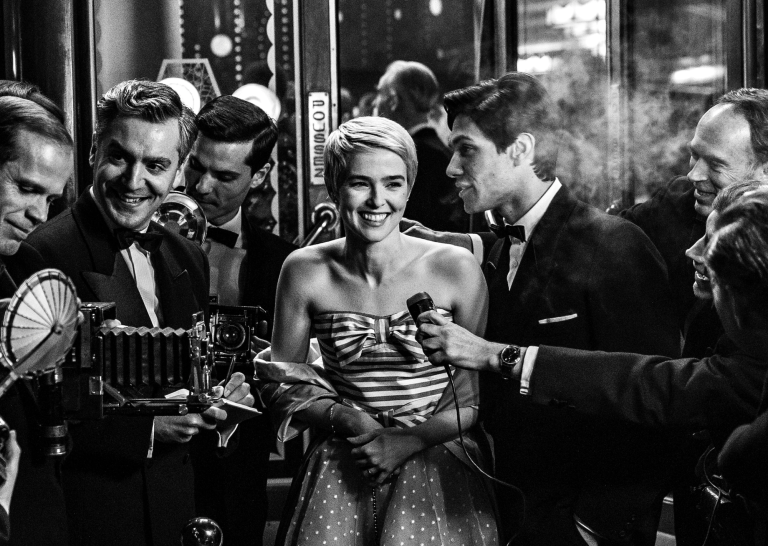
French New Wave Enthusiasts Will Be Breathless Over ‘Nouvelle Vague’
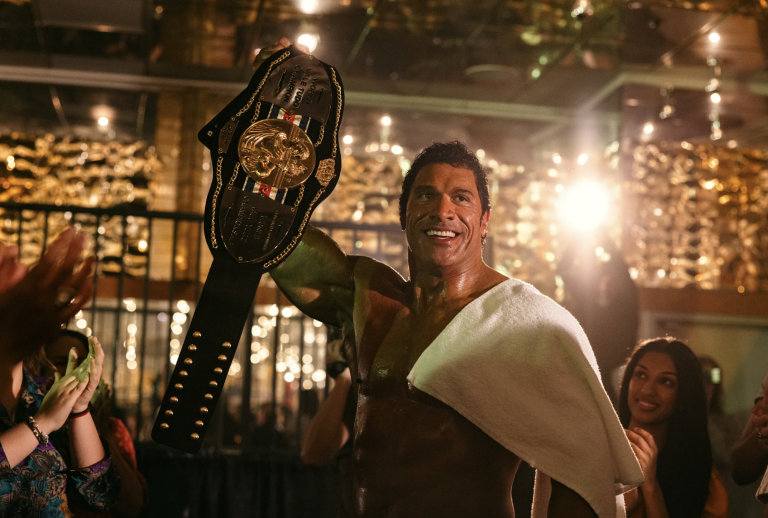
MMA Biopic ‘The Smashing Machine’ Is a Career High for Dwayne Johnson
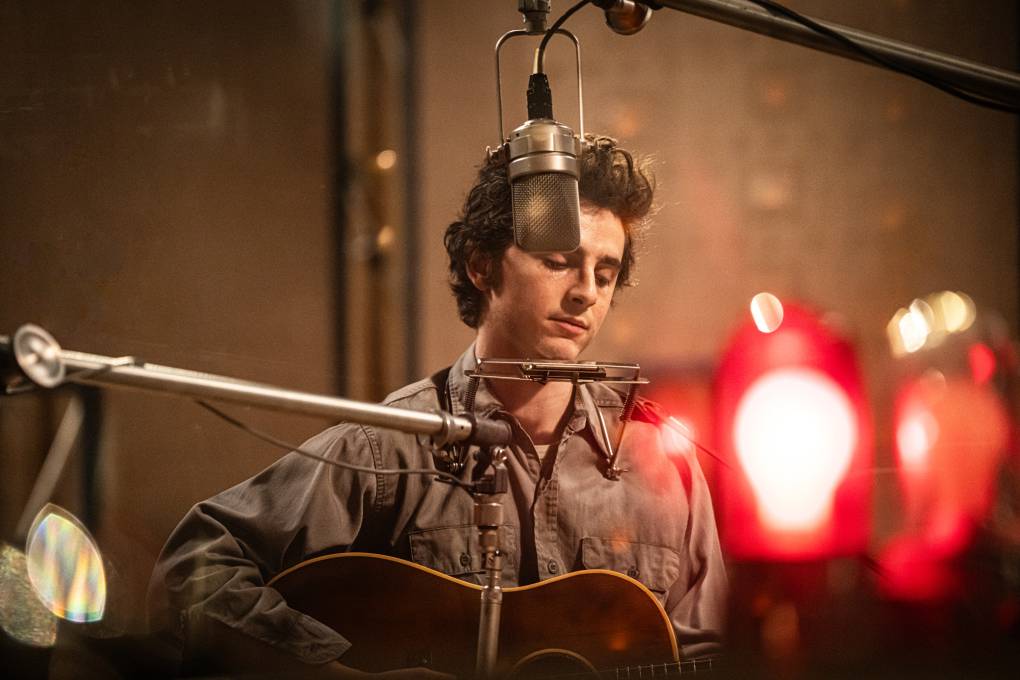
Chalamet Goes Eclectic in Sparkling ‘A Complete Unknown’
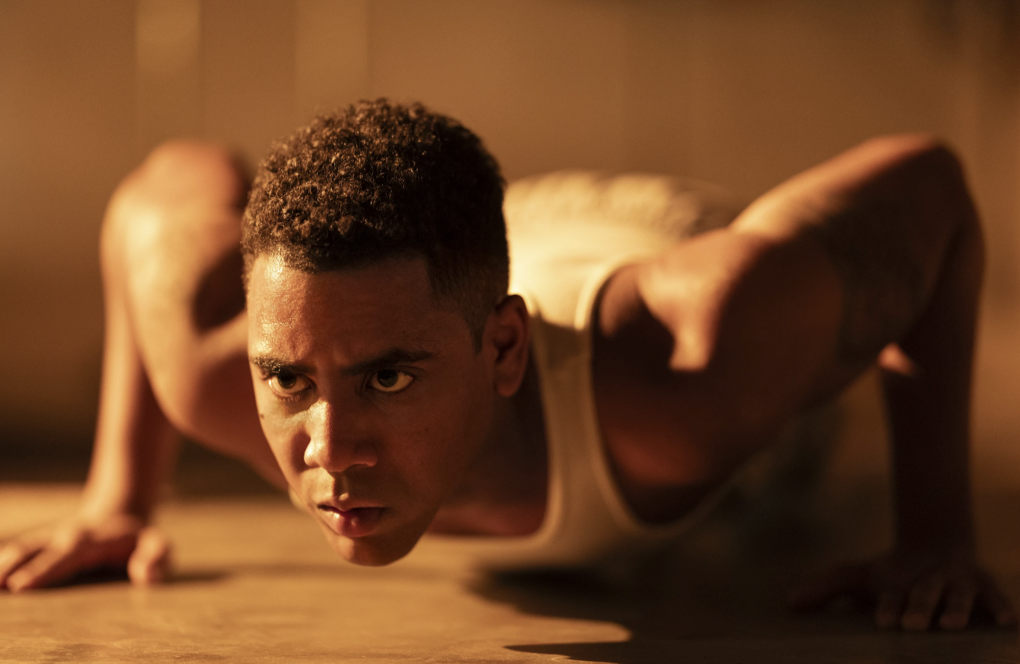
‘Unstoppable’ Is an Inspirational if Formulaic Drama About a Wrestler With One Leg
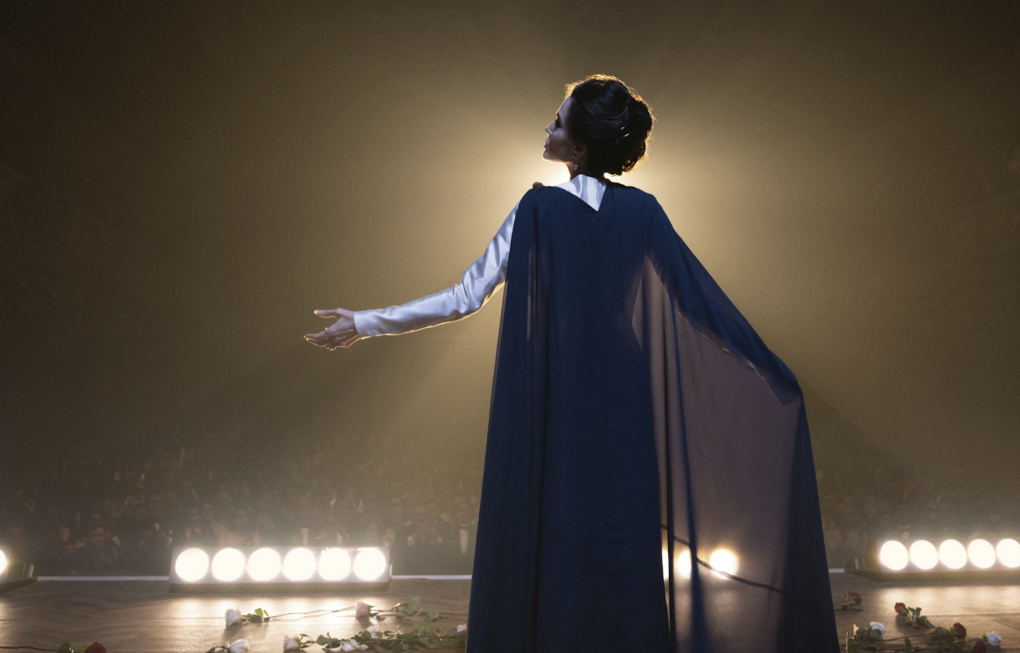
Angelina Jolie Is Graceful and Sharp as Opera Star Maria Callas in ‘Maria’
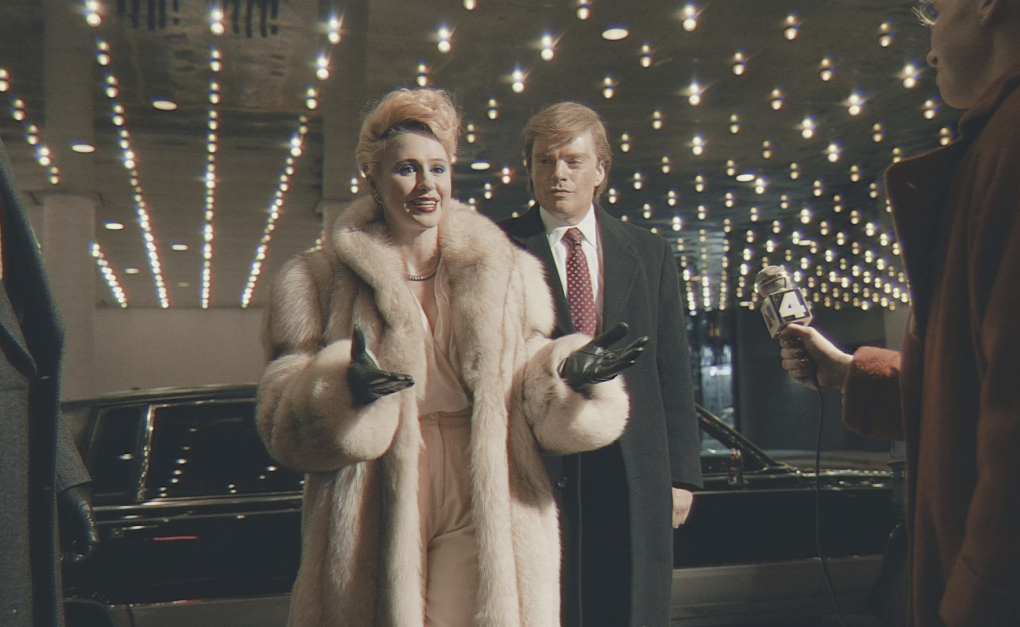
How Did Trump Become Trump? ‘The Apprentice’ Has a Theory
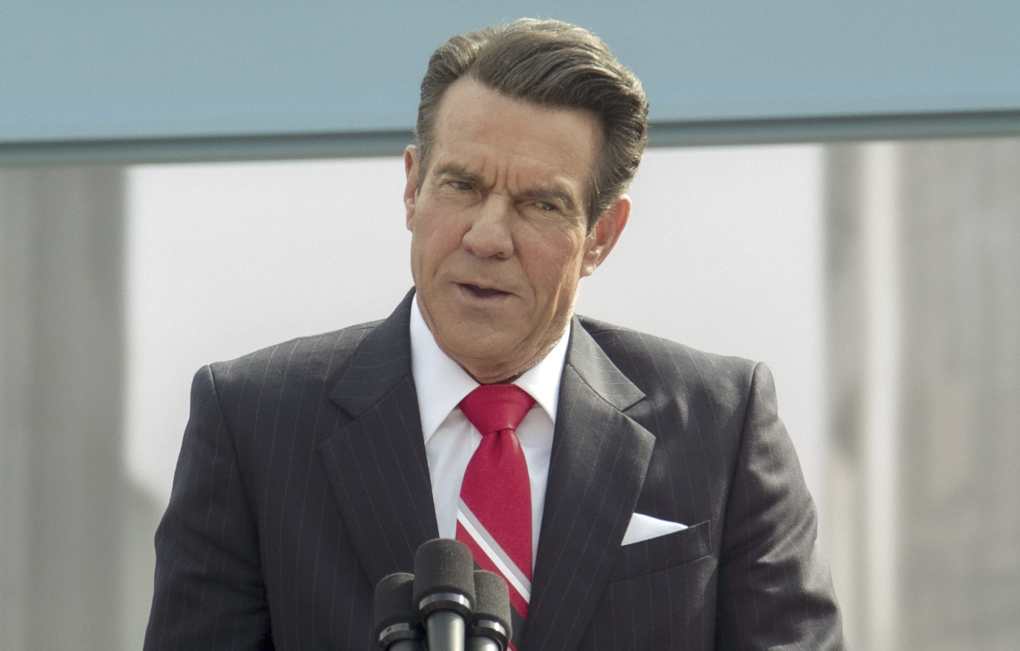
Quaid Looks the Part, but ‘Reagan’ Is More Glowing Commercial Than Biopic
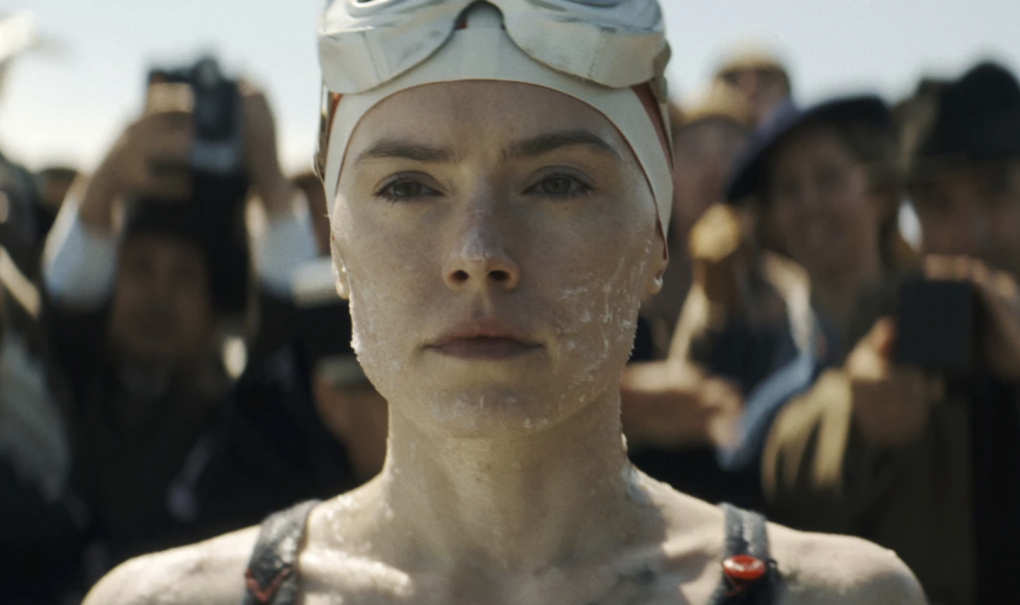
Daisy Ridley Shines in Inspirational Swimming Pic ‘Young Woman and the Sea’
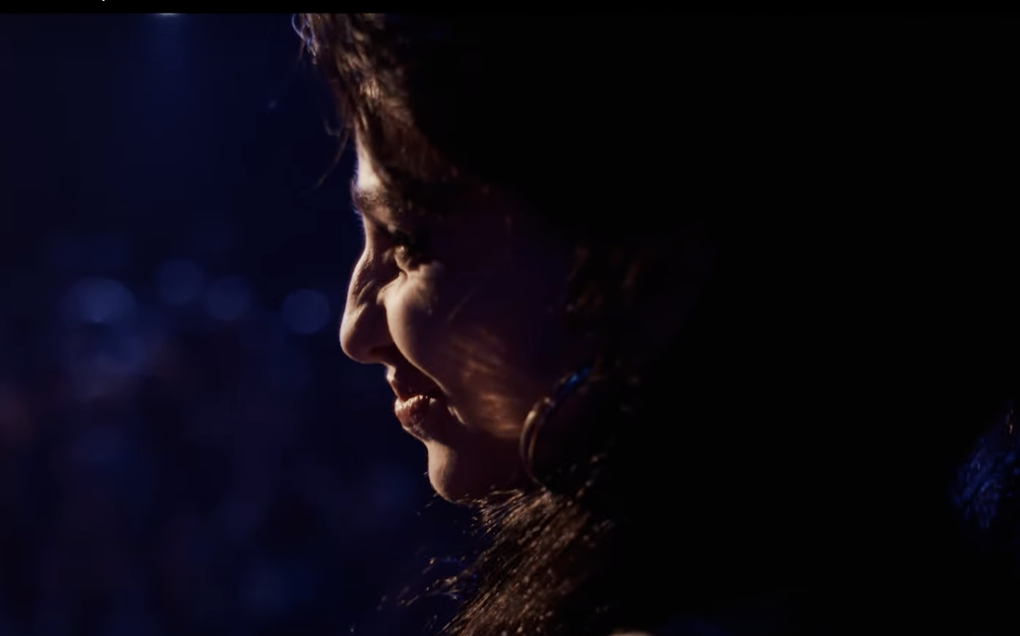
‘Back to Black’ Presents a Thinly Drawn Amy Winehouse, Pulled From the Tabloids
Sponsored
Player sponsored by
window.__IS_SSR__=true
window.__INITIAL_STATE__={
"attachmentsReducer": {
"audio_0": {
"type": "attachments",
"id": "audio_0",
"imgSizes": {
"kqedFullSize": {
"file": "https://ww2.kqed.org/news/wp-content/themes/KQED-unified/img/audio_bgs/background0.jpg"
}
}
},
"audio_1": {
"type": "attachments",
"id": "audio_1",
"imgSizes": {
"kqedFullSize": {
"file": "https://ww2.kqed.org/news/wp-content/themes/KQED-unified/img/audio_bgs/background1.jpg"
}
}
},
"audio_2": {
"type": "attachments",
"id": "audio_2",
"imgSizes": {
"kqedFullSize": {
"file": "https://ww2.kqed.org/news/wp-content/themes/KQED-unified/img/audio_bgs/background2.jpg"
}
}
},
"audio_3": {
"type": "attachments",
"id": "audio_3",
"imgSizes": {
"kqedFullSize": {
"file": "https://ww2.kqed.org/news/wp-content/themes/KQED-unified/img/audio_bgs/background3.jpg"
}
}
},
"audio_4": {
"type": "attachments",
"id": "audio_4",
"imgSizes": {
"kqedFullSize": {
"file": "https://ww2.kqed.org/news/wp-content/themes/KQED-unified/img/audio_bgs/background4.jpg"
}
}
},
"placeholder": {
"type": "attachments",
"id": "placeholder",
"imgSizes": {
"thumbnail": {
"file": "https://cdn.kqed.org/wp-content/uploads/2024/12/KQED-Default-Image-816638274-2000x1333-1-160x107.jpg",
"width": 160,
"height": 107,
"mimeType": "image/jpeg"
},
"medium": {
"file": "https://cdn.kqed.org/wp-content/uploads/2024/12/KQED-Default-Image-816638274-2000x1333-1-800x533.jpg",
"width": 800,
"height": 533,
"mimeType": "image/jpeg"
},
"medium_large": {
"file": "https://cdn.kqed.org/wp-content/uploads/2024/12/KQED-Default-Image-816638274-2000x1333-1-768x512.jpg",
"width": 768,
"height": 512,
"mimeType": "image/jpeg"
},
"large": {
"file": "https://cdn.kqed.org/wp-content/uploads/2024/12/KQED-Default-Image-816638274-2000x1333-1-1020x680.jpg",
"width": 1020,
"height": 680,
"mimeType": "image/jpeg"
},
"1536x1536": {
"file": "https://cdn.kqed.org/wp-content/uploads/2024/12/KQED-Default-Image-816638274-2000x1333-1-1536x1024.jpg",
"width": 1536,
"height": 1024,
"mimeType": "image/jpeg"
},
"fd-lrg": {
"file": "https://cdn.kqed.org/wp-content/uploads/2024/12/KQED-Default-Image-816638274-2000x1333-1-1536x1024.jpg",
"width": 1536,
"height": 1024,
"mimeType": "image/jpeg"
},
"fd-med": {
"file": "https://cdn.kqed.org/wp-content/uploads/2024/12/KQED-Default-Image-816638274-2000x1333-1-1020x680.jpg",
"width": 1020,
"height": 680,
"mimeType": "image/jpeg"
},
"fd-sm": {
"file": "https://cdn.kqed.org/wp-content/uploads/2024/12/KQED-Default-Image-816638274-2000x1333-1-800x533.jpg",
"width": 800,
"height": 533,
"mimeType": "image/jpeg"
},
"post-thumbnail": {
"file": "https://cdn.kqed.org/wp-content/uploads/2024/12/KQED-Default-Image-816638274-2000x1333-1-672x372.jpg",
"width": 672,
"height": 372,
"mimeType": "image/jpeg"
},
"twentyfourteen-full-width": {
"file": "https://cdn.kqed.org/wp-content/uploads/2024/12/KQED-Default-Image-816638274-2000x1333-1-1038x576.jpg",
"width": 1038,
"height": 576,
"mimeType": "image/jpeg"
},
"xxsmall": {
"file": "https://cdn.kqed.org/wp-content/uploads/2024/12/KQED-Default-Image-816638274-2000x1333-1-160x107.jpg",
"width": 160,
"height": 107,
"mimeType": "image/jpeg"
},
"xsmall": {
"file": "https://cdn.kqed.org/wp-content/uploads/2024/12/KQED-Default-Image-816638274-2000x1333-1-672x372.jpg",
"width": 672,
"height": 372,
"mimeType": "image/jpeg"
},
"small": {
"file": "https://cdn.kqed.org/wp-content/uploads/2024/12/KQED-Default-Image-816638274-2000x1333-1-672x372.jpg",
"width": 672,
"height": 372,
"mimeType": "image/jpeg"
},
"xlarge": {
"file": "https://cdn.kqed.org/wp-content/uploads/2024/12/KQED-Default-Image-816638274-2000x1333-1-1020x680.jpg",
"width": 1020,
"height": 680,
"mimeType": "image/jpeg"
},
"full-width": {
"file": "https://cdn.kqed.org/wp-content/uploads/2024/12/KQED-Default-Image-816638274-2000x1333-1-1920x1280.jpg",
"width": 1920,
"height": 1280,
"mimeType": "image/jpeg"
},
"guest-author-32": {
"file": "https://cdn.kqed.org/wp-content/uploads/2025/01/KQED-Default-Image-816638274-1333x1333-1-160x160.jpg",
"width": 32,
"height": 32,
"mimeType": "image/jpeg"
},
"guest-author-50": {
"file": "https://cdn.kqed.org/wp-content/uploads/2025/01/KQED-Default-Image-816638274-1333x1333-1-160x160.jpg",
"width": 50,
"height": 50,
"mimeType": "image/jpeg"
},
"guest-author-64": {
"file": "https://cdn.kqed.org/wp-content/uploads/2025/01/KQED-Default-Image-816638274-1333x1333-1-160x160.jpg",
"width": 64,
"height": 64,
"mimeType": "image/jpeg"
},
"guest-author-96": {
"file": "https://cdn.kqed.org/wp-content/uploads/2025/01/KQED-Default-Image-816638274-1333x1333-1-160x160.jpg",
"width": 96,
"height": 96,
"mimeType": "image/jpeg"
},
"guest-author-128": {
"file": "https://cdn.kqed.org/wp-content/uploads/2025/01/KQED-Default-Image-816638274-1333x1333-1-160x160.jpg",
"width": 128,
"height": 128,
"mimeType": "image/jpeg"
},
"detail": {
"file": "https://cdn.kqed.org/wp-content/uploads/2025/01/KQED-Default-Image-816638274-1333x1333-1-160x160.jpg",
"width": 160,
"height": 160,
"mimeType": "image/jpeg"
},
"kqedFullSize": {
"file": "https://cdn.kqed.org/wp-content/uploads/2024/12/KQED-Default-Image-816638274-2000x1333-1.jpg",
"width": 2000,
"height": 1333
}
}
},
"arts_13983256": {
"type": "attachments",
"id": "arts_13983256",
"meta": {
"index": "attachments_1716263798",
"site": "arts",
"id": "13983256",
"found": true
},
"title": "nouvelle",
"publishDate": 1761870185,
"status": "inherit",
"parent": 13983246,
"modified": 1761870259,
"caption": "Zoey Deutch as Jean Seberg in a scene from ‘Nouvelle Vague.’ ",
"credit": "Jean-Louis Fernandez/Netflix via AP",
"altTag": "A young beautiful white woman with cropped blond hair wearing a strapless gown, stands smiling, surrounded by reporters holding microphones to her face.",
"description": null,
"imgSizes": {
"thumbnail": {
"file": "https://cdn.kqed.org/wp-content/uploads/sites/2/2025/10/nouvelle-160x114.png",
"width": 160,
"height": 114,
"mimeType": "image/png"
},
"medium_large": {
"file": "https://cdn.kqed.org/wp-content/uploads/sites/2/2025/10/nouvelle-768x546.png",
"width": 768,
"height": 546,
"mimeType": "image/png"
},
"1536x1536": {
"file": "https://cdn.kqed.org/wp-content/uploads/sites/2/2025/10/nouvelle-1536x1091.png",
"width": 1536,
"height": 1091,
"mimeType": "image/png"
},
"post-thumbnail": {
"file": "https://cdn.kqed.org/wp-content/uploads/sites/2/2025/10/nouvelle-672x372.png",
"width": 672,
"height": 372,
"mimeType": "image/png"
},
"twentyfourteen-full-width": {
"file": "https://cdn.kqed.org/wp-content/uploads/sites/2/2025/10/nouvelle-1038x576.png",
"width": 1038,
"height": 576,
"mimeType": "image/png"
},
"npr-cds-wide": {
"file": "https://cdn.kqed.org/wp-content/uploads/sites/2/2025/10/nouvelle-1200x675.png",
"width": 1200,
"height": 675,
"mimeType": "image/png"
},
"kqedFullSize": {
"file": "https://cdn.kqed.org/wp-content/uploads/sites/2/2025/10/nouvelle.png",
"width": 2000,
"height": 1421
}
},
"fetchFailed": false,
"isLoading": false
},
"arts_13982080": {
"type": "attachments",
"id": "arts_13982080",
"meta": {
"index": "attachments_1716263798",
"site": "arts",
"id": "13982080",
"found": true
},
"title": "smashing machine",
"publishDate": 1759446746,
"status": "inherit",
"parent": 13982077,
"modified": 1759446813,
"caption": "Dwayne Johnson stars in ‘The Smashing Machine.’ ",
"credit": "Eric Zachanowich/A24 via AP",
"altTag": "A large, very muscular man stands in the middle of applauding crowds waving a wrestling title belt in the air. He is smiling broadly.",
"description": null,
"imgSizes": {
"thumbnail": {
"file": "https://cdn.kqed.org/wp-content/uploads/sites/2/2025/10/smashing-machine-160x108.png",
"width": 160,
"height": 108,
"mimeType": "image/png"
},
"medium_large": {
"file": "https://cdn.kqed.org/wp-content/uploads/sites/2/2025/10/smashing-machine-768x518.png",
"width": 768,
"height": 518,
"mimeType": "image/png"
},
"1536x1536": {
"file": "https://cdn.kqed.org/wp-content/uploads/sites/2/2025/10/smashing-machine-1536x1036.png",
"width": 1536,
"height": 1036,
"mimeType": "image/png"
},
"post-thumbnail": {
"file": "https://cdn.kqed.org/wp-content/uploads/sites/2/2025/10/smashing-machine-672x372.png",
"width": 672,
"height": 372,
"mimeType": "image/png"
},
"twentyfourteen-full-width": {
"file": "https://cdn.kqed.org/wp-content/uploads/sites/2/2025/10/smashing-machine-1038x576.png",
"width": 1038,
"height": 576,
"mimeType": "image/png"
},
"kqedFullSize": {
"file": "https://cdn.kqed.org/wp-content/uploads/sites/2/2025/10/smashing-machine.png",
"width": 2000,
"height": 1349
}
},
"fetchFailed": false,
"isLoading": false
},
"arts_13969741": {
"type": "attachments",
"id": "arts_13969741",
"meta": {
"index": "attachments_1716263798",
"site": "arts",
"id": "13969741",
"found": true
},
"title": "088_180_160_ACU_13495_rgb_2000",
"publishDate": 1734658051,
"status": "inherit",
"parent": 13969721,
"modified": 1734658495,
"caption": "TImothée Chalamet in 'A Complete Unknown.'",
"credit": "Macall Polay/Searchlight Pictures",
"altTag": "man sits in recording booth with guitar, mic hovers above",
"description": null,
"imgSizes": {
"medium": {
"file": "https://cdn.kqed.org/wp-content/uploads/sites/2/2024/12/088_180_160_ACU_13495_rgb_2000-800x533.jpg",
"width": 800,
"height": 533,
"mimeType": "image/jpeg"
},
"large": {
"file": "https://cdn.kqed.org/wp-content/uploads/sites/2/2024/12/088_180_160_ACU_13495_rgb_2000-1020x680.jpg",
"width": 1020,
"height": 680,
"mimeType": "image/jpeg"
},
"thumbnail": {
"file": "https://cdn.kqed.org/wp-content/uploads/sites/2/2024/12/088_180_160_ACU_13495_rgb_2000-160x107.jpg",
"width": 160,
"height": 107,
"mimeType": "image/jpeg"
},
"medium_large": {
"file": "https://cdn.kqed.org/wp-content/uploads/sites/2/2024/12/088_180_160_ACU_13495_rgb_2000-768x512.jpg",
"width": 768,
"height": 512,
"mimeType": "image/jpeg"
},
"1536x1536": {
"file": "https://cdn.kqed.org/wp-content/uploads/sites/2/2024/12/088_180_160_ACU_13495_rgb_2000-1536x1024.jpg",
"width": 1536,
"height": 1024,
"mimeType": "image/jpeg"
},
"post-thumbnail": {
"file": "https://cdn.kqed.org/wp-content/uploads/sites/2/2024/12/088_180_160_ACU_13495_rgb_2000-672x372.jpg",
"width": 672,
"height": 372,
"mimeType": "image/jpeg"
},
"twentyfourteen-full-width": {
"file": "https://cdn.kqed.org/wp-content/uploads/sites/2/2024/12/088_180_160_ACU_13495_rgb_2000-1038x576.jpg",
"width": 1038,
"height": 576,
"mimeType": "image/jpeg"
},
"full-width": {
"file": "https://cdn.kqed.org/wp-content/uploads/sites/2/2024/12/088_180_160_ACU_13495_rgb_2000-1920x1280.jpg",
"width": 1920,
"height": 1280,
"mimeType": "image/jpeg"
},
"kqedFullSize": {
"file": "https://cdn.kqed.org/wp-content/uploads/sites/2/2024/12/088_180_160_ACU_13495_rgb_2000.jpg",
"width": 2000,
"height": 1333
}
},
"fetchFailed": false,
"isLoading": false
},
"arts_13969057": {
"type": "attachments",
"id": "arts_13969057",
"meta": {
"index": "attachments_1716263798",
"site": "arts",
"id": "13969057",
"found": true
},
"title": "unstoppable",
"publishDate": 1733363190,
"status": "inherit",
"parent": 13969055,
"modified": 1733363245,
"caption": "Jharrel Jerome in 'Unstoppable.’",
"credit": "Ana Carballosa/Amazon/MGM via AP",
"altTag": "A Black man in deep concentration lies flat on his stomach getting ready to do a push up.",
"description": null,
"imgSizes": {
"medium": {
"file": "https://cdn.kqed.org/wp-content/uploads/sites/2/2024/12/unstoppable-800x520.png",
"width": 800,
"height": 520,
"mimeType": "image/png"
},
"large": {
"file": "https://cdn.kqed.org/wp-content/uploads/sites/2/2024/12/unstoppable-1020x664.png",
"width": 1020,
"height": 664,
"mimeType": "image/png"
},
"thumbnail": {
"file": "https://cdn.kqed.org/wp-content/uploads/sites/2/2024/12/unstoppable-160x104.png",
"width": 160,
"height": 104,
"mimeType": "image/png"
},
"medium_large": {
"file": "https://cdn.kqed.org/wp-content/uploads/sites/2/2024/12/unstoppable-768x500.png",
"width": 768,
"height": 500,
"mimeType": "image/png"
},
"1536x1536": {
"file": "https://cdn.kqed.org/wp-content/uploads/sites/2/2024/12/unstoppable-1536x999.png",
"width": 1536,
"height": 999,
"mimeType": "image/png"
},
"post-thumbnail": {
"file": "https://cdn.kqed.org/wp-content/uploads/sites/2/2024/12/unstoppable-672x372.png",
"width": 672,
"height": 372,
"mimeType": "image/png"
},
"twentyfourteen-full-width": {
"file": "https://cdn.kqed.org/wp-content/uploads/sites/2/2024/12/unstoppable-1038x576.png",
"width": 1038,
"height": 576,
"mimeType": "image/png"
},
"full-width": {
"file": "https://cdn.kqed.org/wp-content/uploads/sites/2/2024/12/unstoppable-1920x1249.png",
"width": 1920,
"height": 1249,
"mimeType": "image/png"
},
"kqedFullSize": {
"file": "https://cdn.kqed.org/wp-content/uploads/sites/2/2024/12/unstoppable.png",
"width": 2000,
"height": 1301
}
},
"fetchFailed": false,
"isLoading": false
},
"arts_13968741": {
"type": "attachments",
"id": "arts_13968741",
"meta": {
"index": "attachments_1716263798",
"site": "arts",
"id": "13968741",
"found": true
},
"title": "maria",
"publishDate": 1732727076,
"status": "inherit",
"parent": 13968738,
"modified": 1732727164,
"caption": "Angelina Jolie as Maria Callas in a scene from ‘Maria.’",
"credit": "Pablo Larrain/Netflix via AP",
"altTag": "A slender woman viewed from behind, stands on a stage wearing a sheer cape in front of a spotlight.",
"description": null,
"imgSizes": {
"medium": {
"file": "https://cdn.kqed.org/wp-content/uploads/sites/2/2024/11/maria-800x512.png",
"width": 800,
"height": 512,
"mimeType": "image/png"
},
"large": {
"file": "https://cdn.kqed.org/wp-content/uploads/sites/2/2024/11/maria-1020x653.png",
"width": 1020,
"height": 653,
"mimeType": "image/png"
},
"thumbnail": {
"file": "https://cdn.kqed.org/wp-content/uploads/sites/2/2024/11/maria-160x102.png",
"width": 160,
"height": 102,
"mimeType": "image/png"
},
"medium_large": {
"file": "https://cdn.kqed.org/wp-content/uploads/sites/2/2024/11/maria-768x492.png",
"width": 768,
"height": 492,
"mimeType": "image/png"
},
"1536x1536": {
"file": "https://cdn.kqed.org/wp-content/uploads/sites/2/2024/11/maria-1536x983.png",
"width": 1536,
"height": 983,
"mimeType": "image/png"
},
"post-thumbnail": {
"file": "https://cdn.kqed.org/wp-content/uploads/sites/2/2024/11/maria-672x372.png",
"width": 672,
"height": 372,
"mimeType": "image/png"
},
"twentyfourteen-full-width": {
"file": "https://cdn.kqed.org/wp-content/uploads/sites/2/2024/11/maria-1038x576.png",
"width": 1038,
"height": 576,
"mimeType": "image/png"
},
"full-width": {
"file": "https://cdn.kqed.org/wp-content/uploads/sites/2/2024/11/maria-1920x1229.png",
"width": 1920,
"height": 1229,
"mimeType": "image/png"
},
"kqedFullSize": {
"file": "https://cdn.kqed.org/wp-content/uploads/sites/2/2024/11/maria.png",
"width": 2000,
"height": 1280
}
},
"fetchFailed": false,
"isLoading": false
},
"arts_13966348": {
"type": "attachments",
"id": "arts_13966348",
"meta": {
"index": "attachments_1716263798",
"site": "arts",
"id": "13966348",
"found": true
},
"title": "Maria Bakalova and Sebastian Stan in a scene from the film ‘The Apprentice.’",
"publishDate": 1728508013,
"status": "inherit",
"parent": 13966347,
"modified": 1728508078,
"caption": "Maria Bakalova and Sebastian Stan in a scene from the film ‘The Apprentice.’",
"credit": "Pief Weyman/Briarcliff Entertainment via AP",
"altTag": "A woman in a fur coat and a man in a suit talk to a reporter outside a limo.",
"description": null,
"imgSizes": {
"medium": {
"file": "https://cdn.kqed.org/wp-content/uploads/sites/2/2024/10/app-mov-800x492.png",
"width": 800,
"height": 492,
"mimeType": "image/png"
},
"large": {
"file": "https://cdn.kqed.org/wp-content/uploads/sites/2/2024/10/app-mov-1020x627.png",
"width": 1020,
"height": 627,
"mimeType": "image/png"
},
"thumbnail": {
"file": "https://cdn.kqed.org/wp-content/uploads/sites/2/2024/10/app-mov-160x98.png",
"width": 160,
"height": 98,
"mimeType": "image/png"
},
"medium_large": {
"file": "https://cdn.kqed.org/wp-content/uploads/sites/2/2024/10/app-mov-768x472.png",
"width": 768,
"height": 472,
"mimeType": "image/png"
},
"1536x1536": {
"file": "https://cdn.kqed.org/wp-content/uploads/sites/2/2024/10/app-mov-1536x944.png",
"width": 1536,
"height": 944,
"mimeType": "image/png"
},
"post-thumbnail": {
"file": "https://cdn.kqed.org/wp-content/uploads/sites/2/2024/10/app-mov-672x372.png",
"width": 672,
"height": 372,
"mimeType": "image/png"
},
"twentyfourteen-full-width": {
"file": "https://cdn.kqed.org/wp-content/uploads/sites/2/2024/10/app-mov-1038x576.png",
"width": 1038,
"height": 576,
"mimeType": "image/png"
},
"full-width": {
"file": "https://cdn.kqed.org/wp-content/uploads/sites/2/2024/10/app-mov-1920x1180.png",
"width": 1920,
"height": 1180,
"mimeType": "image/png"
},
"kqedFullSize": {
"file": "https://cdn.kqed.org/wp-content/uploads/sites/2/2024/10/app-mov.png",
"width": 2000,
"height": 1229
}
},
"fetchFailed": false,
"isLoading": false
},
"arts_13963397": {
"type": "attachments",
"id": "arts_13963397",
"meta": {
"index": "attachments_1716263798",
"site": "arts",
"id": "13963397",
"found": true
},
"title": "Dennis Quaid in ‘Reagan.’",
"publishDate": 1724954272,
"status": "inherit",
"parent": 13963389,
"modified": 1724954309,
"caption": "Dennis Quaid in ‘Reagan.’",
"credit": "ShowBiz Direct via AP",
"altTag": "A white man with neat hair wearing a grey suit and red tie stands at a podium and speaks above three microphones.",
"description": null,
"imgSizes": {
"medium": {
"file": "https://cdn.kqed.org/wp-content/uploads/sites/2/2024/08/Reagan-800x511.png",
"width": 800,
"height": 511,
"mimeType": "image/png"
},
"large": {
"file": "https://cdn.kqed.org/wp-content/uploads/sites/2/2024/08/Reagan-1020x651.png",
"width": 1020,
"height": 651,
"mimeType": "image/png"
},
"thumbnail": {
"file": "https://cdn.kqed.org/wp-content/uploads/sites/2/2024/08/Reagan-160x102.png",
"width": 160,
"height": 102,
"mimeType": "image/png"
},
"medium_large": {
"file": "https://cdn.kqed.org/wp-content/uploads/sites/2/2024/08/Reagan-768x490.png",
"width": 768,
"height": 490,
"mimeType": "image/png"
},
"1536x1536": {
"file": "https://cdn.kqed.org/wp-content/uploads/sites/2/2024/08/Reagan-1536x981.png",
"width": 1536,
"height": 981,
"mimeType": "image/png"
},
"post-thumbnail": {
"file": "https://cdn.kqed.org/wp-content/uploads/sites/2/2024/08/Reagan-672x372.png",
"width": 672,
"height": 372,
"mimeType": "image/png"
},
"twentyfourteen-full-width": {
"file": "https://cdn.kqed.org/wp-content/uploads/sites/2/2024/08/Reagan-1038x576.png",
"width": 1038,
"height": 576,
"mimeType": "image/png"
},
"full-width": {
"file": "https://cdn.kqed.org/wp-content/uploads/sites/2/2024/08/Reagan-1920x1226.png",
"width": 1920,
"height": 1226,
"mimeType": "image/png"
},
"kqedFullSize": {
"file": "https://cdn.kqed.org/wp-content/uploads/sites/2/2024/08/Reagan.png",
"width": 2000,
"height": 1277
}
},
"fetchFailed": false,
"isLoading": false
},
"arts_13958857": {
"type": "attachments",
"id": "arts_13958857",
"meta": {
"index": "attachments_1716263798",
"site": "arts",
"id": "13958857",
"found": true
},
"title": "Daisy Ridley as Trudy Ederle in ‘Young Woman and the Sea.’",
"publishDate": 1717088784,
"status": "inherit",
"parent": 13958855,
"modified": 1717088883,
"caption": "Daisy Ridley as Trudy Ederle in ‘Young Woman and the Sea.’",
"credit": "Disney via AP",
"altTag": "A young woman wearing a swimsuit, a swimming cap and goggles, with grease on her face, stands with a crowd behind her, serious expression on her face.",
"description": null,
"imgSizes": {
"medium": {
"file": "https://cdn.kqed.org/wp-content/uploads/sites/2/2024/05/Screen-Shot-2024-05-30-at-10.05.11-AM-800x475.png",
"width": 800,
"height": 475,
"mimeType": "image/png"
},
"large": {
"file": "https://cdn.kqed.org/wp-content/uploads/sites/2/2024/05/Screen-Shot-2024-05-30-at-10.05.11-AM-1020x605.png",
"width": 1020,
"height": 605,
"mimeType": "image/png"
},
"thumbnail": {
"file": "https://cdn.kqed.org/wp-content/uploads/sites/2/2024/05/Screen-Shot-2024-05-30-at-10.05.11-AM-160x95.png",
"width": 160,
"height": 95,
"mimeType": "image/png"
},
"medium_large": {
"file": "https://cdn.kqed.org/wp-content/uploads/sites/2/2024/05/Screen-Shot-2024-05-30-at-10.05.11-AM-768x456.png",
"width": 768,
"height": 456,
"mimeType": "image/png"
},
"1536x1536": {
"file": "https://cdn.kqed.org/wp-content/uploads/sites/2/2024/05/Screen-Shot-2024-05-30-at-10.05.11-AM-1536x912.png",
"width": 1536,
"height": 912,
"mimeType": "image/png"
},
"post-thumbnail": {
"file": "https://cdn.kqed.org/wp-content/uploads/sites/2/2024/05/Screen-Shot-2024-05-30-at-10.05.11-AM-672x372.png",
"width": 672,
"height": 372,
"mimeType": "image/png"
},
"twentyfourteen-full-width": {
"file": "https://cdn.kqed.org/wp-content/uploads/sites/2/2024/05/Screen-Shot-2024-05-30-at-10.05.11-AM-1038x576.png",
"width": 1038,
"height": 576,
"mimeType": "image/png"
},
"kqedFullSize": {
"file": "https://cdn.kqed.org/wp-content/uploads/sites/2/2024/05/Screen-Shot-2024-05-30-at-10.05.11-AM.png",
"width": 1624,
"height": 964
}
},
"fetchFailed": false,
"isLoading": false
},
"arts_13957805": {
"type": "attachments",
"id": "arts_13957805",
"meta": {
"index": "attachments_1716263798",
"site": "arts",
"id": "13957805",
"found": true
},
"parent": 13957803,
"imgSizes": {
"twentyfourteen-full-width": {
"file": "https://cdn.kqed.org/wp-content/uploads/sites/2/2024/05/Screen-Shot-2024-05-14-at-1.14.15-PM-1038x576.png",
"width": 1038,
"mimeType": "image/png",
"height": 576
},
"thumbnail": {
"file": "https://cdn.kqed.org/wp-content/uploads/sites/2/2024/05/Screen-Shot-2024-05-14-at-1.14.15-PM-160x100.png",
"width": 160,
"mimeType": "image/png",
"height": 100
},
"post-thumbnail": {
"file": "https://cdn.kqed.org/wp-content/uploads/sites/2/2024/05/Screen-Shot-2024-05-14-at-1.14.15-PM-672x372.png",
"width": 672,
"mimeType": "image/png",
"height": 372
},
"kqedFullSize": {
"file": "https://cdn.kqed.org/wp-content/uploads/sites/2/2024/05/Screen-Shot-2024-05-14-at-1.14.15-PM-e1715717725473.png",
"width": 1920,
"height": 1197
},
"2048x2048": {
"file": "https://cdn.kqed.org/wp-content/uploads/sites/2/2024/05/Screen-Shot-2024-05-14-at-1.14.15-PM-2048x1277.png",
"width": 2048,
"mimeType": "image/png",
"height": 1277
},
"large": {
"file": "https://cdn.kqed.org/wp-content/uploads/sites/2/2024/05/Screen-Shot-2024-05-14-at-1.14.15-PM-1020x636.png",
"width": 1020,
"mimeType": "image/png",
"height": 636
},
"1536x1536": {
"file": "https://cdn.kqed.org/wp-content/uploads/sites/2/2024/05/Screen-Shot-2024-05-14-at-1.14.15-PM-1536x958.png",
"width": 1536,
"mimeType": "image/png",
"height": 958
},
"full-width": {
"file": "https://cdn.kqed.org/wp-content/uploads/sites/2/2024/05/Screen-Shot-2024-05-14-at-1.14.15-PM-1920x1197.png",
"width": 1920,
"mimeType": "image/png",
"height": 1197
},
"medium": {
"file": "https://cdn.kqed.org/wp-content/uploads/sites/2/2024/05/Screen-Shot-2024-05-14-at-1.14.15-PM-800x499.png",
"width": 800,
"mimeType": "image/png",
"height": 499
},
"medium_large": {
"file": "https://cdn.kqed.org/wp-content/uploads/sites/2/2024/05/Screen-Shot-2024-05-14-at-1.14.15-PM-768x479.png",
"width": 768,
"mimeType": "image/png",
"height": 479
}
},
"publishDate": 1715717706,
"modified": 1715717867,
"caption": "Marisa Abela stars as Amy Winehouse in ‘Back to Black.’",
"description": null,
"title": "Marisa Abela stars as Amy Winehouse in ‘Back to Black.’",
"credit": "StudioCanal International",
"status": "inherit",
"altTag": "Side profile of a woman with stage lights on her face in a dark room.",
"fetchFailed": false,
"isLoading": false
}
},
"audioPlayerReducer": {
"postId": "stream_live",
"isPaused": true,
"isPlaying": false,
"pfsActive": false,
"pledgeModalIsOpen": true,
"playerDrawerIsOpen": false
},
"authorsReducer": {
"byline_arts_13983246": {
"type": "authors",
"id": "byline_arts_13983246",
"meta": {
"override": true
},
"slug": "byline_arts_13983246",
"name": "Jake Coyle, Associated Press",
"isLoading": false
},
"byline_arts_13982077": {
"type": "authors",
"id": "byline_arts_13982077",
"meta": {
"override": true
},
"slug": "byline_arts_13982077",
"name": "Jake Coyle, Associated Press",
"isLoading": false
},
"byline_arts_13969055": {
"type": "authors",
"id": "byline_arts_13969055",
"meta": {
"override": true
},
"slug": "byline_arts_13969055",
"name": "Lindsey Bahr, Associated Press",
"isLoading": false
},
"byline_arts_13968738": {
"type": "authors",
"id": "byline_arts_13968738",
"meta": {
"override": true
},
"slug": "byline_arts_13968738",
"name": "Lindsey Bahr, Associated Press",
"isLoading": false
},
"byline_arts_13966347": {
"type": "authors",
"id": "byline_arts_13966347",
"meta": {
"override": true
},
"slug": "byline_arts_13966347",
"name": "Jocelyn Noveck, Associated Press",
"isLoading": false
},
"byline_arts_13963389": {
"type": "authors",
"id": "byline_arts_13963389",
"meta": {
"override": true
},
"slug": "byline_arts_13963389",
"name": "Jocelyn Noveck, Associated Press",
"isLoading": false
},
"byline_arts_13958855": {
"type": "authors",
"id": "byline_arts_13958855",
"meta": {
"override": true
},
"slug": "byline_arts_13958855",
"name": "Lindsey Bahr, Associated Press",
"isLoading": false
},
"mfox": {
"type": "authors",
"id": "22",
"meta": {
"index": "authors_1716337520",
"id": "22",
"found": true
},
"name": "Michael Fox",
"firstName": "Michael",
"lastName": "Fox",
"slug": "mfox",
"email": "foxonfilm@yahoo.com",
"display_author_email": false,
"staff_mastheads": [],
"title": "KQED Contributor",
"bio": "Michael Fox has written about film for dozens of publications since 1987. He is a founding member of the San Francisco Bay Area Film Critics Circle.",
"avatar": "https://secure.gravatar.com/avatar/81710be6517181c0d40977bb09011d5f?s=600&d=blank&r=g",
"twitter": null,
"facebook": null,
"instagram": null,
"linkedin": null,
"sites": [
{
"site": "arts",
"roles": [
"Contributor",
"contributor"
]
}
],
"headData": {
"title": "Michael Fox | KQED",
"description": "KQED Contributor",
"ogImgSrc": "https://secure.gravatar.com/avatar/81710be6517181c0d40977bb09011d5f?s=600&d=blank&r=g",
"twImgSrc": "https://secure.gravatar.com/avatar/81710be6517181c0d40977bb09011d5f?s=600&d=blank&r=g"
},
"isLoading": false,
"link": "/author/mfox"
},
"ralexandra": {
"type": "authors",
"id": "11242",
"meta": {
"index": "authors_1716337520",
"id": "11242",
"found": true
},
"name": "Rae Alexandra",
"firstName": "Rae",
"lastName": "Alexandra",
"slug": "ralexandra",
"email": "ralexandra@kqed.org",
"display_author_email": true,
"staff_mastheads": [
"arts"
],
"title": "Reporter/Producer",
"bio": "Rae Alexandra is a Reporter/Producer for KQED Arts & Culture, and the creator/author of the \u003ca href=\"https://www.kqed.org/arts/program/rebel-girls-from-bay-area-history\">Rebel Girls From Bay Area History\u003c/a> and \u003ca href=\"https://www.kqed.org/bizarrebayarea\">Bizarre Bay Area\u003c/a> series. Her debut book, \u003ca href=\"https://citylights.com/politics-current-events-history/unsung-heroines35-women-who-changed/\">Unsung Heroines: 35 Women Who Changed the Bay Area\u003c/a> will be published by City Lights in Spring 2026. In 2023, Rae was awarded an SPJ Excellence in Journalism Award for Arts & Culture. Rae was born and raised in Wales and subsequently — even after two decades in Northern California — still uses phrases that regularly baffle her coworkers.",
"avatar": "https://secure.gravatar.com/avatar/d5ef3d663d9adae1345d06932a3951de?s=600&d=blank&r=g",
"twitter": null,
"facebook": null,
"instagram": null,
"linkedin": null,
"sites": [
{
"site": "arts",
"roles": [
"editor"
]
},
{
"site": "news",
"roles": [
"editor"
]
},
{
"site": "pop",
"roles": [
"editor"
]
},
{
"site": "bayareabites",
"roles": [
"editor"
]
},
{
"site": "science",
"roles": [
"editor"
]
}
],
"headData": {
"title": "Rae Alexandra | KQED",
"description": "Reporter/Producer",
"ogImgSrc": "https://secure.gravatar.com/avatar/d5ef3d663d9adae1345d06932a3951de?s=600&d=blank&r=g",
"twImgSrc": "https://secure.gravatar.com/avatar/d5ef3d663d9adae1345d06932a3951de?s=600&d=blank&r=g"
},
"isLoading": false,
"link": "/author/ralexandra"
}
},
"breakingNewsReducer": {},
"pagesReducer": {},
"postsReducer": {
"stream_live": {
"type": "live",
"id": "stream_live",
"audioUrl": "https://streams.kqed.org/kqedradio",
"title": "Live Stream",
"excerpt": "Live Stream information currently unavailable.",
"link": "/radio",
"featImg": "",
"label": {
"name": "KQED Live",
"link": "/"
}
},
"stream_kqedNewscast": {
"type": "posts",
"id": "stream_kqedNewscast",
"audioUrl": "https://www.kqed.org/.stream/anon/radio/RDnews/newscast.mp3?_=1",
"title": "KQED Newscast",
"featImg": "",
"label": {
"name": "88.5 FM",
"link": "/"
}
},
"arts_13983246": {
"type": "posts",
"id": "arts_13983246",
"meta": {
"index": "posts_1716263798",
"site": "arts",
"id": "13983246",
"score": null,
"sort": [
1761921149000
]
},
"guestAuthors": [],
"slug": "nouvelle-vague-movie-review-french-new-wave-linklater-on-godard-breathless",
"title": "French New Wave Enthusiasts Will Be Breathless Over ‘Nouvelle Vague’",
"publishDate": 1761921149,
"format": "standard",
"headTitle": "French New Wave Enthusiasts Will Be Breathless Over ‘Nouvelle Vague’ | KQED",
"labelTerm": {},
"content": "\u003cp>Any time a notable figure of the French New Wave is introduced in Richard Linklater’s \u003cem>Nouvelle Vague\u003c/em>, we’re treated to a momentary straight-on shot of them, with a nameplate — Claude Chabrol, Jacques Rivette, Éric Rohmer — at the bottom of the screen. It’s a little like Linklater, as he goes, is cataloging different species of the same 1950s genus, or playing a grand game of New Wave “Guess Who?”\u003c/p>\n\u003cp>\u003cem>Nouvelle Vague\u003c/em> is principally about \u003ca href=\"https://www.kqed.org/arts/13919055/jean-luc-godard-iconic-french-new-wave-director-dies-at-91\">Jean-Luc Godard\u003c/a> (Guillaume Marbeck) and the making of his landmark feature debut, \u003cem>Breathless\u003c/em>. But it is also a wider portrait of a moveable filmmaking feast, of an entire generation of French filmmakers who were passionately engaged, individually and as one, in changing cinema. In 1959, it’s a movement that’s on the move.\u003c/p>\n\u003cp>[aside postid='arts_13982507']To a remarkable degree, Linklater’s film, in French and boxed into the Academy ratio, black-and-white style of \u003cem>Breathless\u003c/em>, has fully imbibed that spirit, resurrecting one of the most hallowed eras of movies to capture an iconoclast in the making. The result is something endlessly stylish and almost absurdly uncanny, even if \u003cem>Nouvelle Vague\u003c/em> never adopts the brash daring of its subject.\u003c/p>\n\u003cp>Instead, \u003cem>Nouvelle Vague\u003c/em> is more of a straightforward though deeply affectionate ode to a singularly unconventional filmmaker. The contrast makes \u003cem>Nouvelle Vague\u003c/em> a curious thing: a meticulous recreation of a rule-breaking cinematic revolution. Godard would have hated it. That doesn’t make it any less enchanting.\u003c/p>\n\u003cp>At the outset of the film, Godard and company have gathered for the premiere of François Truffaut’s \u003cem>The 400 Blows\u003c/em>. For Godard, the last of the Cahiers du Cinéma crowd to transition from writing criticism to directing, anxiety is mounting. He’s 29 and beginning to fear he’s missed the wave.\u003c/p>\n\u003cp>[ad fullwidth]\u003c/p>\n\u003cp>But confidence is not lacking in Godard. (Marbeck, excellent, doesn’t take off his sunglasses for the duration of the movie, including in movie screenings.) On the heels of the Cannes reception for \u003cem>The 400 Blows\u003c/em>, the producer Georges de Beauregard (Bruno Dreyfürst, tremendous) agrees to make \u003cem>Breathless\u003c/em>. Beauregard warily eyes Godard, likely aware of the trouble he’s making for himself. He pleads for Godard to just make a sexy “slice of film noir.”\u003c/p>\n\u003cp>[aside postid='arts_13983105']Godard, though, knows his chance has finally come to transfer all his ideas into film. Before production starts, he visits the elder statesmen of European cinema at the time — \u003ca href=\"https://www.kqed.org/arts/13368964/now-playing-jean-pierre-melville-shoots-out-the-lights\">Jean-Pierre Melville\u003c/a> (Tom Novembre), \u003ca href=\"https://www.kqed.org/arts/121630/fathers_rule_the_roost_5_to_watch\">Roberto Rossellini\u003c/a> (Laurent Mothe) — for advice. “Shoot quickly,” Rossellini tells him.\u003c/p>\n\u003cp>Godard wants no lights, no soundstages and no script. He’ll go into each day not knowing what he’s going to shoot. On the first day of production, he announces: “Time to enter the pantheon.”\u003c/p>\n\u003cp>https://www.youtube.com/watch?v=UufRzKVFseg\u003c/p>\n\u003cp>The bulk of \u003cem>Nouvelle Vague\u003c/em> is the day-to-day shooting of\u003cem> Breathless\u003c/em>, for which Godard cast Jean-Paul Belmondo (Aubry Dullin) as the small-time gangster lead and Jean Seberg (Zoey Deutch) as the \u003cem>Herald Tribune\u003c/em>-selling American student he wants to run off with. (These, like so many of the many roles of \u003cem>Nouvelle Vague\u003c/em>, are so well matched that casting director Catherine Schwartz deserves a shot at the inaugural Oscar.)\u003c/p>\n\u003cp>The thrill of following the making of \u003cem>Breathless\u003c/em> day by day is seeing just how brazenly Godard disregards the assumed conventions of moviemaking. On the first day, he wraps after two hours. For Linklater (\u003cem>Slacker\u003c/em>, \u003ca href=\"https://www.kqed.org/pop/9050/1993-was-20-years-ago-youre-officially-old-now\">\u003cem>Dazed and Confused\u003c/em>\u003c/a>, \u003cem>Before Sunset\u003c/em>), these scenes have a special resonance. Few filmmakers believe more ardently in the benefits of a leisurely hangout.\u003c/p>\n\u003cp>But Godard’s methods have a purpose. “I’m trying to seize reality at random,” he explains.\u003c/p>\n\u003cp>[aside postid='arts_13982780']\u003cem>Nouvelle Vague\u003c/em> captures Godard stealing from his influences (\u003ca href=\"https://www.kqed.org/arts/13817958/life-could-be-very-strange-and-very-hard-and-very-cruel\">Ingmar Bergman\u003c/a>, \u003ca href=\"https://www.kqed.org/arts/10957761/from-the-club-to-the-cathedral-revisiting-duke-ellingtons-controversial-sacred-concert\">Duke Ellington\u003c/a>, Humphrey Bogart) while striving to realize his own voice as an artist. \u003cem>Breathless\u003c/em> is a movie poised between movie eras — a deconstructionist bebop riff on a Hollywood genre film. \u003cem>Nouvelle Vague\u003c/em>, more than anything, is about how becoming an artist requires both reverence for the past and a stubborn insistence on breaking ground on the future.\u003c/p>\n\u003cp>\u003cem>Nouvelle Vague\u003c/em>, which opens in theaters Friday and streams Nov. 14 on \u003ca href=\"https://www.kqed.org/arts/tag/netflix\">Netflix\u003c/a>, is one of two artist portraits by Linklater this fall, the other being \u003ca href=\"https://www.kqed.org/arts/13982507/blue-moon-movie-review-richard-linklater-lorenz-hart-true-story\">\u003cem>Blue Moon\u003c/em>\u003c/a>, with \u003ca href=\"https://www.kqed.org/pop/8017/what-ethan-hawke-movies-taught-me-about-boys\">Ethan Hawke\u003c/a> as the tragic lyricist Lorenz Hart. Both, as it happens, have their Bogart quotes. And both are stirring, cigarette-smoking musings on what makes a great lyric, a memorable song or a movie that will live on forever.\u003c/p>\n\u003cp>In \u003cem>Nouvelle Vague\u003c/em>, you wouldn’t say that it takes a village. It’s Godard’s force of will that propels \u003cem>Breathless\u003c/em>. Each filmmaker gets a Wes Anderson-style close-up in Linklater’s film perhaps because each is pursuing a uniquely personal vision of cinema. In today’s movie world, where risk aversion and brand management carry the day, such a moviemaking spirit often feels extinct or, at least, elusive. \u003cem>Nouvelle Vague\u003c/em>, with a young Godard making things up off the cuff and on the fly, is a reminder how less can be so, so much more. And how it’s nice, as a young filmmaker with big ambitions, to have some company.\u003c/p>\n\u003chr>\n\u003cp>\u003c/p>\n\u003cp>\u003cem>‘Nouvelle Vague’ hits Bay Area movie theaters on Oct. 31, 2025. The film begins streaming on Netflix on Nov. 14, 2025.\u003c/em>\u003c/p>\n\n",
"blocks": [],
"excerpt": "Richard Linklater beautifully recreates the making of Jean-Luc Godard’s most iconic movie.",
"status": "publish",
"parent": 0,
"modified": 1761870804,
"stats": {
"hasAudio": false,
"hasVideo": true,
"hasChartOrMap": false,
"iframeSrcs": [],
"hasGoogleForm": false,
"hasGallery": false,
"hasHearkenModule": false,
"hasPolis": false,
"paragraphCount": 17,
"wordCount": 936
},
"headData": {
"title": "Movie Review: Richard Linklater’s ‘Nouvelle Vague’ | KQED",
"description": "Richard Linklater beautifully recreates the making of Jean-Luc Godard’s most iconic movie.",
"ogTitle": "French New Wave Enthusiasts Will Be Breathless Over ‘Nouvelle Vague’",
"ogDescription": "",
"ogImgId": "",
"twTitle": "French New Wave Enthusiasts Will Be Breathless Over ‘Nouvelle Vague’",
"twDescription": "",
"twImgId": "",
"socialTitle": "Movie Review: Richard Linklater’s ‘Nouvelle Vague’ %%page%% %%sep%% KQED",
"schema": {
"@context": "https://schema.org",
"@type": "Article",
"headline": "French New Wave Enthusiasts Will Be Breathless Over ‘Nouvelle Vague’",
"datePublished": "2025-10-31T07:32:29-07:00",
"dateModified": "2025-10-30T17:33:24-07:00",
"image": "https://cdn.kqed.org/wp-content/uploads/2020/02/KQED-OG-Image@1x.png"
}
},
"primaryCategory": {
"termId": 74,
"slug": "movies",
"name": "Movies"
},
"source": "The Do List",
"sourceUrl": "https://www.kqed.org/thedolist",
"sticky": false,
"nprByline": "Jake Coyle, Associated Press",
"templateType": "standard",
"featuredImageType": "standard",
"excludeFromSiteSearch": "Include",
"showOnAuthorArchivePages": "No",
"articleAge": "0",
"path": "/arts/13983246/nouvelle-vague-movie-review-french-new-wave-linklater-on-godard-breathless",
"audioTrackLength": null,
"parsedContent": [
{
"type": "contentString",
"content": "\u003cdiv class=\"post-body\">\u003cp>\u003cp>Any time a notable figure of the French New Wave is introduced in Richard Linklater’s \u003cem>Nouvelle Vague\u003c/em>, we’re treated to a momentary straight-on shot of them, with a nameplate — Claude Chabrol, Jacques Rivette, Éric Rohmer — at the bottom of the screen. It’s a little like Linklater, as he goes, is cataloging different species of the same 1950s genus, or playing a grand game of New Wave “Guess Who?”\u003c/p>\n\u003cp>\u003cem>Nouvelle Vague\u003c/em> is principally about \u003ca href=\"https://www.kqed.org/arts/13919055/jean-luc-godard-iconic-french-new-wave-director-dies-at-91\">Jean-Luc Godard\u003c/a> (Guillaume Marbeck) and the making of his landmark feature debut, \u003cem>Breathless\u003c/em>. But it is also a wider portrait of a moveable filmmaking feast, of an entire generation of French filmmakers who were passionately engaged, individually and as one, in changing cinema. In 1959, it’s a movement that’s on the move.\u003c/p>\n\u003cp>\u003c/p>\u003c/div>",
"attributes": {
"named": {},
"numeric": []
}
},
{
"type": "component",
"content": "",
"name": "aside",
"attributes": {
"named": {
"postid": "arts_13982507",
"label": ""
},
"numeric": []
}
},
{
"type": "contentString",
"content": "\u003cdiv class=\"post-body\">\u003cp>To a remarkable degree, Linklater’s film, in French and boxed into the Academy ratio, black-and-white style of \u003cem>Breathless\u003c/em>, has fully imbibed that spirit, resurrecting one of the most hallowed eras of movies to capture an iconoclast in the making. The result is something endlessly stylish and almost absurdly uncanny, even if \u003cem>Nouvelle Vague\u003c/em> never adopts the brash daring of its subject.\u003c/p>\n\u003cp>Instead, \u003cem>Nouvelle Vague\u003c/em> is more of a straightforward though deeply affectionate ode to a singularly unconventional filmmaker. The contrast makes \u003cem>Nouvelle Vague\u003c/em> a curious thing: a meticulous recreation of a rule-breaking cinematic revolution. Godard would have hated it. That doesn’t make it any less enchanting.\u003c/p>\n\u003cp>At the outset of the film, Godard and company have gathered for the premiere of François Truffaut’s \u003cem>The 400 Blows\u003c/em>. For Godard, the last of the Cahiers du Cinéma crowd to transition from writing criticism to directing, anxiety is mounting. He’s 29 and beginning to fear he’s missed the wave.\u003c/p>\n\u003cp>\u003c/p>\u003c/div>",
"attributes": {
"named": {},
"numeric": []
}
},
{
"type": "component",
"content": "",
"name": "ad",
"attributes": {
"named": {
"label": "fullwidth"
},
"numeric": [
"fullwidth"
]
}
},
{
"type": "contentString",
"content": "\u003cdiv class=\"post-body\">\u003cp>\u003c/p>\n\u003cp>But confidence is not lacking in Godard. (Marbeck, excellent, doesn’t take off his sunglasses for the duration of the movie, including in movie screenings.) On the heels of the Cannes reception for \u003cem>The 400 Blows\u003c/em>, the producer Georges de Beauregard (Bruno Dreyfürst, tremendous) agrees to make \u003cem>Breathless\u003c/em>. Beauregard warily eyes Godard, likely aware of the trouble he’s making for himself. He pleads for Godard to just make a sexy “slice of film noir.”\u003c/p>\n\u003cp>\u003c/p>\u003c/div>",
"attributes": {
"named": {},
"numeric": []
}
},
{
"type": "component",
"content": "",
"name": "aside",
"attributes": {
"named": {
"postid": "arts_13983105",
"label": ""
},
"numeric": []
}
},
{
"type": "contentString",
"content": "\u003cdiv class=\"post-body\">\u003cp>Godard, though, knows his chance has finally come to transfer all his ideas into film. Before production starts, he visits the elder statesmen of European cinema at the time — \u003ca href=\"https://www.kqed.org/arts/13368964/now-playing-jean-pierre-melville-shoots-out-the-lights\">Jean-Pierre Melville\u003c/a> (Tom Novembre), \u003ca href=\"https://www.kqed.org/arts/121630/fathers_rule_the_roost_5_to_watch\">Roberto Rossellini\u003c/a> (Laurent Mothe) — for advice. “Shoot quickly,” Rossellini tells him.\u003c/p>\n\u003cp>Godard wants no lights, no soundstages and no script. He’ll go into each day not knowing what he’s going to shoot. On the first day of production, he announces: “Time to enter the pantheon.”\u003c/p>\u003c/p>\u003cp>\u003cspan class='utils-parseShortcode-shortcodes-__youtubeShortcode__embedYoutube'>\n \u003cspan class='utils-parseShortcode-shortcodes-__youtubeShortcode__embedYoutubeInside'>\n \u003ciframe\n loading='lazy'\n class='utils-parseShortcode-shortcodes-__youtubeShortcode__youtubePlayer'\n type='text/html'\n src='//www.youtube.com/embed/UufRzKVFseg'\n title='//www.youtube.com/embed/UufRzKVFseg'\n allowfullscreen='true'\n style='border:0;'>\u003c/iframe>\n \u003c/span>\n \u003c/span>\u003c/p>\u003cp>\u003cp>The bulk of \u003cem>Nouvelle Vague\u003c/em> is the day-to-day shooting of\u003cem> Breathless\u003c/em>, for which Godard cast Jean-Paul Belmondo (Aubry Dullin) as the small-time gangster lead and Jean Seberg (Zoey Deutch) as the \u003cem>Herald Tribune\u003c/em>-selling American student he wants to run off with. (These, like so many of the many roles of \u003cem>Nouvelle Vague\u003c/em>, are so well matched that casting director Catherine Schwartz deserves a shot at the inaugural Oscar.)\u003c/p>\n\u003cp>The thrill of following the making of \u003cem>Breathless\u003c/em> day by day is seeing just how brazenly Godard disregards the assumed conventions of moviemaking. On the first day, he wraps after two hours. For Linklater (\u003cem>Slacker\u003c/em>, \u003ca href=\"https://www.kqed.org/pop/9050/1993-was-20-years-ago-youre-officially-old-now\">\u003cem>Dazed and Confused\u003c/em>\u003c/a>, \u003cem>Before Sunset\u003c/em>), these scenes have a special resonance. Few filmmakers believe more ardently in the benefits of a leisurely hangout.\u003c/p>\n\u003cp>But Godard’s methods have a purpose. “I’m trying to seize reality at random,” he explains.\u003c/p>\n\u003cp>\u003c/p>\u003c/div>",
"attributes": {
"named": {},
"numeric": []
}
},
{
"type": "component",
"content": "",
"name": "aside",
"attributes": {
"named": {
"postid": "arts_13982780",
"label": ""
},
"numeric": []
}
},
{
"type": "contentString",
"content": "\u003cdiv class=\"post-body\">\u003cp>\u003cem>Nouvelle Vague\u003c/em> captures Godard stealing from his influences (\u003ca href=\"https://www.kqed.org/arts/13817958/life-could-be-very-strange-and-very-hard-and-very-cruel\">Ingmar Bergman\u003c/a>, \u003ca href=\"https://www.kqed.org/arts/10957761/from-the-club-to-the-cathedral-revisiting-duke-ellingtons-controversial-sacred-concert\">Duke Ellington\u003c/a>, Humphrey Bogart) while striving to realize his own voice as an artist. \u003cem>Breathless\u003c/em> is a movie poised between movie eras — a deconstructionist bebop riff on a Hollywood genre film. \u003cem>Nouvelle Vague\u003c/em>, more than anything, is about how becoming an artist requires both reverence for the past and a stubborn insistence on breaking ground on the future.\u003c/p>\n\u003cp>\u003cem>Nouvelle Vague\u003c/em>, which opens in theaters Friday and streams Nov. 14 on \u003ca href=\"https://www.kqed.org/arts/tag/netflix\">Netflix\u003c/a>, is one of two artist portraits by Linklater this fall, the other being \u003ca href=\"https://www.kqed.org/arts/13982507/blue-moon-movie-review-richard-linklater-lorenz-hart-true-story\">\u003cem>Blue Moon\u003c/em>\u003c/a>, with \u003ca href=\"https://www.kqed.org/pop/8017/what-ethan-hawke-movies-taught-me-about-boys\">Ethan Hawke\u003c/a> as the tragic lyricist Lorenz Hart. Both, as it happens, have their Bogart quotes. And both are stirring, cigarette-smoking musings on what makes a great lyric, a memorable song or a movie that will live on forever.\u003c/p>\n\u003cp>In \u003cem>Nouvelle Vague\u003c/em>, you wouldn’t say that it takes a village. It’s Godard’s force of will that propels \u003cem>Breathless\u003c/em>. Each filmmaker gets a Wes Anderson-style close-up in Linklater’s film perhaps because each is pursuing a uniquely personal vision of cinema. In today’s movie world, where risk aversion and brand management carry the day, such a moviemaking spirit often feels extinct or, at least, elusive. \u003cem>Nouvelle Vague\u003c/em>, with a young Godard making things up off the cuff and on the fly, is a reminder how less can be so, so much more. And how it’s nice, as a young filmmaker with big ambitions, to have some company.\u003c/p>\n\u003chr>\n\u003cp>\u003c/p>\n\u003cp>\u003cem>‘Nouvelle Vague’ hits Bay Area movie theaters on Oct. 31, 2025. The film begins streaming on Netflix on Nov. 14, 2025.\u003c/em>\u003c/p>\n\n\u003c/div>\u003c/p>",
"attributes": {
"named": {},
"numeric": []
}
}
],
"link": "/arts/13983246/nouvelle-vague-movie-review-french-new-wave-linklater-on-godard-breathless",
"authors": [
"byline_arts_13983246"
],
"programs": [
"arts_140"
],
"categories": [
"arts_1",
"arts_74",
"arts_75",
"arts_22313"
],
"tags": [
"arts_21748",
"arts_10443",
"arts_585"
],
"featImg": "arts_13983256",
"label": "source_arts_13983246"
},
"arts_13982077": {
"type": "posts",
"id": "arts_13982077",
"meta": {
"index": "posts_1716263798",
"site": "arts",
"id": "13982077",
"score": null,
"sort": [
1759501189000
]
},
"guestAuthors": [],
"slug": "smashing-machine-movie-review-mark-kerr-biopic-mma-dwayne-rock-johnson",
"title": "MMA Biopic ‘The Smashing Machine’ Is a Career High for Dwayne Johnson",
"publishDate": 1759501189,
"format": "standard",
"headTitle": "MMA Biopic ‘The Smashing Machine’ Is a Career High for Dwayne Johnson | KQED",
"labelTerm": {},
"content": "\u003cp>Benny Safdie’s \u003cem>The Smashing Machine\u003c/em> isn’t what you think it is, especially if you think it’s a movie about a British guy who thinks his typewriter is the tops.\u003c/p>\n\u003cp>\u003cem>The Smashing Machine\u003c/em> would seem to bear all the hallmarks of something grittier, darker and more disturbing than it is. It’s the solo directorial debut of the younger Safdie, whose films with his brother, Josh, have rarely not sprinted headlong into unsettling tumult. Add that sensibility to a true-life tale of a mixed martial arts fighter in the late ’90s, and it’s only natural to spend much of \u003cem>The Smashing Machine\u003c/em> bracing for tragedy, for some ear-splitting descent into macho calamity.\u003c/p>\n\u003cp>[aside postid='arts_13981463']Yet \u003cem>The Smashing Machine\u003c/em>, starring Dwayne Johnson as MMA pioneer Mark Kerr, is something simpler and less curious. A lack of probing was never anything you could accuse a Safdie brothers’ movie of; these are the filmmakers who plunged a camera into the body cavity of a jewelry-store owner in \u003ca href=\"https://www.kqed.org/arts/13872331/uncut-gems-glittering-darkly\">\u003cem>Uncut Gems\u003c/em>\u003c/a>. But, despite its grainy, VHS aesthetics, \u003cem>The Smashing Machine\u003c/em> is a surprisingly conventional and oddly untroubled movie, albeit one that gives Johnson an indie-film platform for one of his finest performances.\u003c/p>\n\u003cp>As Mark, Johnson has drained away much of his big-screen charisma. The part — brawny, often shirtless, frequently raging in the ring — is immediately so close to Johnson’s own professional wrestling background that early scenes look almost documentary-like. But gone is the megawatt grin and the dashing eyebrow lift. Johnson’s normally polished bald head is here covered with a closely cropped dark head of hair.\u003c/p>\n\u003cp>In the movie’s opening, Mark rhapsodizes about his feeling of domination. An opponent’s fear, he says, you can “smell in their scent.” At this point, Mark has known only victory in thumping triumphs that leave him feeling like a god. Losing, he confesses, is unfathomable.\u003c/p>\n\u003cp>[ad fullwidth]\u003c/p>\n\u003cp>The laws of moviedom decree, of course, that Mark will soon lose, and his well-earned sense of invincibility will shatter. \u003cem>The Smashing Machine\u003c/em> bounces between Mark’s home and Japan, where the Pride Fighting Championship takes place. That’s where Mark, a much-celebrated champion, is taken down by an illegal but nevertheless humbling move. After the fact, the match is ruled a tie, but the stink of defeat never dissipates.\u003c/p>\n\u003cp>The real battle, in any case, is at home. Mark’s dependence on opioids for the punishing extremes he endures is becoming desperate. \u003cem>The Smashing Machine\u003c/em> is based on John Hyams’s 2002 documentary of the same name, and part of the nature of that film was the curiosity of Mark’s extreme violence in the ring and his otherwise sweet passivity. In Safdie’s film, Mark is asked in the doctor’s waiting room if fighters hate each other during a bout. “Absolutely not,” he replies.\u003c/p>\n\u003cp>https://www.youtube.com/watch?v=aRpnP3LZ99g\u003c/p>\n\u003cp>But while we don’t doubt Mark’s sincerity — he’s as earnest as he is muscle-bound — Johnson also exudes an inner turmoil, and a struggle to keep his rage at bay while nursing mounting wounds to his ego. His body is so stiff, it’s like he could snap at any moment.\u003c/p>\n\u003cp>That’s the case for Mark, most of all, around his wife, Dawn Staples (Emily Blunt), a former Playboy model who’s shown as alternatively supportive and insensitive to Mark’s situation. They feud often, sometimes immediately before a match, sometimes over how to make his shakes. When he tries to give up opioids, he takes her late-night drinking as a provocation. “Treat me like a man,” he tells her.\u003c/p>\n\u003cp>It’s an awkward, perhaps judgmental characterization that would be all the more glaring if it weren’t for Blunt’s tact as a performer. But it throws \u003cem>The Smashing Machine\u003c/em> off course, especially when the movie seems to want to lean more on its other central relationship: that of Mark and his friend, trainer and sometimes competitor Mark Coleman (played by former Bellator champion Ryan Bader).\u003c/p>\n\u003cp>[aside postid='arts_13981344']In his films with his brother, Safdie has long brought real-life figures into their movie worlds, blurring fictional boundaries. Bader gives \u003cem>The Smashing Machine\u003c/em> a dose of documentary in his presence, but I’d argue that Johnson’s proximity to this world gives the movie its most compelling real-life echoes.\u003c/p>\n\u003cp>I happen to think Johnson is also very good in full movie-star mode, especially when he has the chance to wryly undercut his big-screen presence in comedies like \u003cem>Jumanji: Welcome to the Jungle\u003c/em> or \u003cem>The Tooth Fairy\u003c/em>. But it’s also captivating to see him so thoroughly settled into a character like he is in \u003cem>The Smashing Machine\u003c/em> while totally shorn of his charisma.\u003c/p>\n\u003cp>Yet the potency of that performance is let down by a movie that fails to really grapple with the violent world around Mark, resorting instead for a blander appreciation of these MMA combatants. What does resonate, though, is the portrait of a human colossus who learns to accept defeat — a mountain of a man who looks like he could, without barely trying, rip someone’s head off at any moment. Instead he takes a deep breath, and doesn’t.\u003c/p>\n\u003chr>\n\u003cp>\u003c/p>\n\u003cp>\u003cem>’The Smashing Machine’ is released nationwide on Oct. 3, 2025.\u003c/em>\u003c/p>\n\n",
"blocks": [],
"excerpt": "The former wrestler has drained away much of his big-screen charisma to play MMA pioneer Mark Kerr.",
"status": "publish",
"parent": 0,
"modified": 1759447230,
"stats": {
"hasAudio": false,
"hasVideo": true,
"hasChartOrMap": false,
"iframeSrcs": [],
"hasGoogleForm": false,
"hasGallery": false,
"hasHearkenModule": false,
"hasPolis": false,
"paragraphCount": 16,
"wordCount": 936
},
"headData": {
"title": "Movie Review: ‘The Smashing Machine,’ a Mark Kerr Biopic | KQED",
"description": "The former wrestler has drained away much of his big-screen charisma to play MMA pioneer Mark Kerr.",
"ogTitle": "‘The Smashing Machine’ Is a Career High for Dwayne Johnson",
"ogDescription": "",
"ogImgId": "",
"twTitle": "‘The Smashing Machine’ Is a Career High for Dwayne Johnson",
"twDescription": "",
"twImgId": "",
"socialTitle": "Movie Review: ‘The Smashing Machine,’ a Mark Kerr Biopic %%page%% %%sep%% KQED",
"schema": {
"@context": "https://schema.org",
"@type": "Article",
"headline": "MMA Biopic ‘The Smashing Machine’ Is a Career High for Dwayne Johnson",
"datePublished": "2025-10-03T07:19:49-07:00",
"dateModified": "2025-10-02T16:20:30-07:00",
"image": "https://cdn.kqed.org/wp-content/uploads/2020/02/KQED-OG-Image@1x.png"
}
},
"primaryCategory": {
"termId": 74,
"slug": "movies",
"name": "Movies"
},
"source": "The Do List",
"sourceUrl": "https://www.kqed.org/thedolist",
"sticky": false,
"nprByline": "Jake Coyle, Associated Press",
"templateType": "standard",
"featuredImageType": "standard",
"excludeFromSiteSearch": "Include",
"showOnAuthorArchivePages": "No",
"articleAge": "0",
"path": "/arts/13982077/smashing-machine-movie-review-mark-kerr-biopic-mma-dwayne-rock-johnson",
"audioTrackLength": null,
"parsedContent": [
{
"type": "contentString",
"content": "\u003cdiv class=\"post-body\">\u003cp>\u003cp>Benny Safdie’s \u003cem>The Smashing Machine\u003c/em> isn’t what you think it is, especially if you think it’s a movie about a British guy who thinks his typewriter is the tops.\u003c/p>\n\u003cp>\u003cem>The Smashing Machine\u003c/em> would seem to bear all the hallmarks of something grittier, darker and more disturbing than it is. It’s the solo directorial debut of the younger Safdie, whose films with his brother, Josh, have rarely not sprinted headlong into unsettling tumult. Add that sensibility to a true-life tale of a mixed martial arts fighter in the late ’90s, and it’s only natural to spend much of \u003cem>The Smashing Machine\u003c/em> bracing for tragedy, for some ear-splitting descent into macho calamity.\u003c/p>\n\u003cp>\u003c/p>\u003c/div>",
"attributes": {
"named": {},
"numeric": []
}
},
{
"type": "component",
"content": "",
"name": "aside",
"attributes": {
"named": {
"postid": "arts_13981463",
"label": ""
},
"numeric": []
}
},
{
"type": "contentString",
"content": "\u003cdiv class=\"post-body\">\u003cp>Yet \u003cem>The Smashing Machine\u003c/em>, starring Dwayne Johnson as MMA pioneer Mark Kerr, is something simpler and less curious. A lack of probing was never anything you could accuse a Safdie brothers’ movie of; these are the filmmakers who plunged a camera into the body cavity of a jewelry-store owner in \u003ca href=\"https://www.kqed.org/arts/13872331/uncut-gems-glittering-darkly\">\u003cem>Uncut Gems\u003c/em>\u003c/a>. But, despite its grainy, VHS aesthetics, \u003cem>The Smashing Machine\u003c/em> is a surprisingly conventional and oddly untroubled movie, albeit one that gives Johnson an indie-film platform for one of his finest performances.\u003c/p>\n\u003cp>As Mark, Johnson has drained away much of his big-screen charisma. The part — brawny, often shirtless, frequently raging in the ring — is immediately so close to Johnson’s own professional wrestling background that early scenes look almost documentary-like. But gone is the megawatt grin and the dashing eyebrow lift. Johnson’s normally polished bald head is here covered with a closely cropped dark head of hair.\u003c/p>\n\u003cp>In the movie’s opening, Mark rhapsodizes about his feeling of domination. An opponent’s fear, he says, you can “smell in their scent.” At this point, Mark has known only victory in thumping triumphs that leave him feeling like a god. Losing, he confesses, is unfathomable.\u003c/p>\n\u003cp>\u003c/p>\u003c/div>",
"attributes": {
"named": {},
"numeric": []
}
},
{
"type": "component",
"content": "",
"name": "ad",
"attributes": {
"named": {
"label": "fullwidth"
},
"numeric": [
"fullwidth"
]
}
},
{
"type": "contentString",
"content": "\u003cdiv class=\"post-body\">\u003cp>\u003c/p>\n\u003cp>The laws of moviedom decree, of course, that Mark will soon lose, and his well-earned sense of invincibility will shatter. \u003cem>The Smashing Machine\u003c/em> bounces between Mark’s home and Japan, where the Pride Fighting Championship takes place. That’s where Mark, a much-celebrated champion, is taken down by an illegal but nevertheless humbling move. After the fact, the match is ruled a tie, but the stink of defeat never dissipates.\u003c/p>\n\u003cp>The real battle, in any case, is at home. Mark’s dependence on opioids for the punishing extremes he endures is becoming desperate. \u003cem>The Smashing Machine\u003c/em> is based on John Hyams’s 2002 documentary of the same name, and part of the nature of that film was the curiosity of Mark’s extreme violence in the ring and his otherwise sweet passivity. In Safdie’s film, Mark is asked in the doctor’s waiting room if fighters hate each other during a bout. “Absolutely not,” he replies.\u003c/p>\u003c/p>\u003cp>\u003cspan class='utils-parseShortcode-shortcodes-__youtubeShortcode__embedYoutube'>\n \u003cspan class='utils-parseShortcode-shortcodes-__youtubeShortcode__embedYoutubeInside'>\n \u003ciframe\n loading='lazy'\n class='utils-parseShortcode-shortcodes-__youtubeShortcode__youtubePlayer'\n type='text/html'\n src='//www.youtube.com/embed/aRpnP3LZ99g'\n title='//www.youtube.com/embed/aRpnP3LZ99g'\n allowfullscreen='true'\n style='border:0;'>\u003c/iframe>\n \u003c/span>\n \u003c/span>\u003c/p>\u003cp>\u003cp>But while we don’t doubt Mark’s sincerity — he’s as earnest as he is muscle-bound — Johnson also exudes an inner turmoil, and a struggle to keep his rage at bay while nursing mounting wounds to his ego. His body is so stiff, it’s like he could snap at any moment.\u003c/p>\n\u003cp>That’s the case for Mark, most of all, around his wife, Dawn Staples (Emily Blunt), a former Playboy model who’s shown as alternatively supportive and insensitive to Mark’s situation. They feud often, sometimes immediately before a match, sometimes over how to make his shakes. When he tries to give up opioids, he takes her late-night drinking as a provocation. “Treat me like a man,” he tells her.\u003c/p>\n\u003cp>It’s an awkward, perhaps judgmental characterization that would be all the more glaring if it weren’t for Blunt’s tact as a performer. But it throws \u003cem>The Smashing Machine\u003c/em> off course, especially when the movie seems to want to lean more on its other central relationship: that of Mark and his friend, trainer and sometimes competitor Mark Coleman (played by former Bellator champion Ryan Bader).\u003c/p>\n\u003cp>\u003c/p>\u003c/div>",
"attributes": {
"named": {},
"numeric": []
}
},
{
"type": "component",
"content": "",
"name": "aside",
"attributes": {
"named": {
"postid": "arts_13981344",
"label": ""
},
"numeric": []
}
},
{
"type": "contentString",
"content": "\u003cdiv class=\"post-body\">\u003cp>In his films with his brother, Safdie has long brought real-life figures into their movie worlds, blurring fictional boundaries. Bader gives \u003cem>The Smashing Machine\u003c/em> a dose of documentary in his presence, but I’d argue that Johnson’s proximity to this world gives the movie its most compelling real-life echoes.\u003c/p>\n\u003cp>I happen to think Johnson is also very good in full movie-star mode, especially when he has the chance to wryly undercut his big-screen presence in comedies like \u003cem>Jumanji: Welcome to the Jungle\u003c/em> or \u003cem>The Tooth Fairy\u003c/em>. But it’s also captivating to see him so thoroughly settled into a character like he is in \u003cem>The Smashing Machine\u003c/em> while totally shorn of his charisma.\u003c/p>\n\u003cp>Yet the potency of that performance is let down by a movie that fails to really grapple with the violent world around Mark, resorting instead for a blander appreciation of these MMA combatants. What does resonate, though, is the portrait of a human colossus who learns to accept defeat — a mountain of a man who looks like he could, without barely trying, rip someone’s head off at any moment. Instead he takes a deep breath, and doesn’t.\u003c/p>\n\u003chr>\n\u003cp>\u003c/p>\n\u003cp>\u003cem>’The Smashing Machine’ is released nationwide on Oct. 3, 2025.\u003c/em>\u003c/p>\n\n\u003c/div>\u003c/p>",
"attributes": {
"named": {},
"numeric": []
}
}
],
"link": "/arts/13982077/smashing-machine-movie-review-mark-kerr-biopic-mma-dwayne-rock-johnson",
"authors": [
"byline_arts_13982077"
],
"programs": [
"arts_140"
],
"categories": [
"arts_1",
"arts_74",
"arts_75",
"arts_22313"
],
"tags": [
"arts_21748",
"arts_8905",
"arts_585"
],
"featImg": "arts_13982080",
"label": "source_arts_13982077"
},
"arts_13969721": {
"type": "posts",
"id": "arts_13969721",
"meta": {
"index": "posts_1716263798",
"site": "arts",
"id": "13969721",
"score": null,
"sort": [
1734969635000
]
},
"guestAuthors": [],
"slug": "a-complete-unknown-movie-review-timothee-chalamet",
"title": "Chalamet Goes Eclectic in Sparkling ‘A Complete Unknown’",
"publishDate": 1734969635,
"format": "standard",
"headTitle": "Chalamet Goes Eclectic in Sparkling ‘A Complete Unknown’ | KQED",
"labelTerm": {},
"content": "\u003cp>Bob Dylan enters \u003cem>A Complete Unknown\u003c/em> (opening Christmas Day) in a taxi — a Greyhound bus, actually, off-screen — and exits on a motorcycle. And that, my friends, is the sum and total arc of James Mangold’s miraculous movie.\u003c/p>\n\u003cp>Sure, the title slyly and wryly suggests a narrative through-line of a nobody blowing into town and blowing up (in the current lingo). If the conventions of musical biopics were to hold, breakthroughs and breakdowns would arrive on cue. (For a refresher, go back and listen to the \u003ca href=\"https://www.youtube.com/watch?v=SSJWPw9EFxI\">amplified radio hit\u003c/a> whose lyrics the title is quoting.)\u003c/p>\n\u003cp>And yes, there is a kerfuffle late in this extraordinary musical biopic (which spans 1961 to 1965) when Dylan “rejects” solo acoustic (folk) music and crosses over to the bass-drums-electric guitar of rock ‘n’ roll band-dom at the Newport Folk Festival. To some fans and early supporters, this was (though not anymore; lot of water under the bridge, lot of other stuff, too) an apostasy, a blasphemy, a betrayal on par with Judas’. But \u003cem>A Complete Unknown\u003c/em> isn’t the story of an artist’s development or evolution or, for that matter, the creative process.\u003c/p>\n\u003cfigure id=\"attachment_13969745\" class=\"wp-caption aligncenter\" style=\"max-width: 2000px\">\u003cimg loading=\"lazy\" decoding=\"async\" src=\"https://cdn.kqed.org/wp-content/uploads/sites/2/2024/12/007_020_ACompleteUnknown_Still007_2000.jpg\" alt=\"man holds guitar outside stone house\" width=\"2000\" height=\"836\" class=\"size-full wp-image-13969745\" srcset=\"https://cdn.kqed.org/wp-content/uploads/sites/2/2024/12/007_020_ACompleteUnknown_Still007_2000.jpg 2000w, https://cdn.kqed.org/wp-content/uploads/sites/2/2024/12/007_020_ACompleteUnknown_Still007_2000-800x334.jpg 800w, https://cdn.kqed.org/wp-content/uploads/sites/2/2024/12/007_020_ACompleteUnknown_Still007_2000-1020x426.jpg 1020w, https://cdn.kqed.org/wp-content/uploads/sites/2/2024/12/007_020_ACompleteUnknown_Still007_2000-160x67.jpg 160w, https://cdn.kqed.org/wp-content/uploads/sites/2/2024/12/007_020_ACompleteUnknown_Still007_2000-768x321.jpg 768w, https://cdn.kqed.org/wp-content/uploads/sites/2/2024/12/007_020_ACompleteUnknown_Still007_2000-1536x642.jpg 1536w, https://cdn.kqed.org/wp-content/uploads/sites/2/2024/12/007_020_ACompleteUnknown_Still007_2000-1920x803.jpg 1920w\" sizes=\"auto, (max-width: 2000px) 100vw, 2000px\">\u003cfigcaption class=\"wp-caption-text\">Edward Norton in ‘A Complete Unknown.’ \u003ccite>(Searchlight Pictures)\u003c/cite>\u003c/figcaption>\u003c/figure>\n\u003cp>Since I’m finding it easier to catalog what \u003cem>A Complete Unknown\u003c/em> is not, I’ll add that it isn’t a tale of sons impressing their fathers, then killing them. Woody Guthrie is the first singer we hear (on the soundtrack), and upon his arrival in New York City, Dylan immediately visits the terminally ill folksinger (wordlessly played by Scoot McNairy) in a hospital, where former Weaver Pete Seeger (Edward Norton, a likely Oscar nominee for Supporting Actor) is hanging out with him. \u003c/p>\n\u003cp>Seeger champions Dylan, listening to his in-progress songs, getting him onstage in front of an influential crowd and introducing him to producer John Hammond. By Newport ’65 Dylan has moved on from Seeger’s politely activist brand of folk music, but he doesn’t disrespect him.\u003c/p>\n\u003cp>[ad fullwidth]\u003c/p>\n\u003cp>While \u003cem>A Complete Unknown\u003c/em> encompasses these events and so many more — familiar to you if you are a reader of a certain age or a latter-day Dylanologist — it resists every impulse to shape them into a simple, straightforward distillation. Remarkably and radically, the film doesn’t explain its subject, or presume to explain. It doesn’t underline and italicize turning-point moments, or the incidents that have passed into the mythic realm. It doesn’t overreach for grand statements about the era in which it takes place, or what’s around the corner. \u003c/p>\n\u003cfigure id=\"attachment_13969743\" class=\"wp-caption aligncenter\" style=\"max-width: 2000px\">\u003cimg loading=\"lazy\" decoding=\"async\" src=\"https://cdn.kqed.org/wp-content/uploads/sites/2/2024/12/005_018_ACompleteUnknown_Still006_2000.jpg\" alt=\"man in foreground at mic, woman smiles back at him against stage lights\" width=\"2000\" height=\"836\" class=\"size-full wp-image-13969743\" srcset=\"https://cdn.kqed.org/wp-content/uploads/sites/2/2024/12/005_018_ACompleteUnknown_Still006_2000.jpg 2000w, https://cdn.kqed.org/wp-content/uploads/sites/2/2024/12/005_018_ACompleteUnknown_Still006_2000-800x334.jpg 800w, https://cdn.kqed.org/wp-content/uploads/sites/2/2024/12/005_018_ACompleteUnknown_Still006_2000-1020x426.jpg 1020w, https://cdn.kqed.org/wp-content/uploads/sites/2/2024/12/005_018_ACompleteUnknown_Still006_2000-160x67.jpg 160w, https://cdn.kqed.org/wp-content/uploads/sites/2/2024/12/005_018_ACompleteUnknown_Still006_2000-768x321.jpg 768w, https://cdn.kqed.org/wp-content/uploads/sites/2/2024/12/005_018_ACompleteUnknown_Still006_2000-1536x642.jpg 1536w, https://cdn.kqed.org/wp-content/uploads/sites/2/2024/12/005_018_ACompleteUnknown_Still006_2000-1920x803.jpg 1920w\" sizes=\"auto, (max-width: 2000px) 100vw, 2000px\">\u003cfigcaption class=\"wp-caption-text\">Timothée Chalamet and Monica Barbaro in ‘A Complete Unknown.’ \u003ccite>(Searchlight Pictures)\u003c/cite>\u003c/figcaption>\u003c/figure>\n\u003cp>Incredibly, \u003cem>A Complete Unknown\u003c/em> doesn’t build to a moral or a resolution. The lengthy lead-up to and including Dylan’s third and final appearance at the Newport Folk Festival, which comprise a chunk of the film’s running time, doesn’t play as either a summation or a bookend (of the subject’s scruffy beginnings). It does feel like a climax, though, for a few brief moments until Mangold carefully turns it into an anti-climax, subverting the expectations of how an audience should feel when the credits roll.\u003c/p>\n\u003cp>And yet even without beat-and-repeat narrative imperatives, the movie keeps skipping forward, riding the restless energy of its chain-smoking, lyric-scribbling protagonist.\u003c/p>\n\u003cp>Timothée Chalamet, who gives the performance of his life in the central role, has said his character is not supposed to be Bob Dylan. OK, then. Let’s place \u003cem>A Complete Unknown\u003c/em> alongside \u003cem>Inside Llewyn Davis\u003c/em> (which the Coen Brothers steeped and filtered through Dylan and Dave Van Ronk (who turns up at the beginning and end of \u003cem>A Complete Unknown\u003c/em>) and Todd Haynes’ \u003cem>I’m Not There\u003c/em> (“inspired by false stories,” the trailer declared), which employed six actors portraying various Dylans at different stages.\u003c/p>\n\u003cp>But Chalamet’s performance, operating at a much, much deeper level than impersonation (it doesn’t hurt that he’s a native New Yorker), also contains too many mannerisms and phrasings and trademarks (the sunglasses) to be anyone but Bob Dylan. For the record, Chalamet beautifully sings and plays a slew of Dylan songs. \u003c/p>\n\u003cfigure id=\"attachment_13969742\" class=\"wp-caption aligncenter\" style=\"max-width: 2000px\">\u003cimg loading=\"lazy\" decoding=\"async\" src=\"https://cdn.kqed.org/wp-content/uploads/sites/2/2024/12/004_16alt_ACompleteUnknown_Still005_2000.jpg\" alt=\"woman behind man, both in sunglasses\" width=\"2000\" height=\"836\" class=\"size-full wp-image-13969742\" srcset=\"https://cdn.kqed.org/wp-content/uploads/sites/2/2024/12/004_16alt_ACompleteUnknown_Still005_2000.jpg 2000w, https://cdn.kqed.org/wp-content/uploads/sites/2/2024/12/004_16alt_ACompleteUnknown_Still005_2000-800x334.jpg 800w, https://cdn.kqed.org/wp-content/uploads/sites/2/2024/12/004_16alt_ACompleteUnknown_Still005_2000-1020x426.jpg 1020w, https://cdn.kqed.org/wp-content/uploads/sites/2/2024/12/004_16alt_ACompleteUnknown_Still005_2000-160x67.jpg 160w, https://cdn.kqed.org/wp-content/uploads/sites/2/2024/12/004_16alt_ACompleteUnknown_Still005_2000-768x321.jpg 768w, https://cdn.kqed.org/wp-content/uploads/sites/2/2024/12/004_16alt_ACompleteUnknown_Still005_2000-1536x642.jpg 1536w, https://cdn.kqed.org/wp-content/uploads/sites/2/2024/12/004_16alt_ACompleteUnknown_Still005_2000-1920x803.jpg 1920w\" sizes=\"auto, (max-width: 2000px) 100vw, 2000px\">\u003cfigcaption class=\"wp-caption-text\">Elle Fanning and Timothée Chalamet in ‘A Complete Unknown.’ \u003ccite>(Searchlight Pictures)\u003c/cite>\u003c/figcaption>\u003c/figure>\n\u003cp>Furthermore, the film recreates too many moments — from the photo with girlfriend Suze Rotolo (named Sylvie Russo here, played by Elle Fanning) for the cover of \u003cem>The Freewheelin’ Bob Dylan\u003c/em> to Al Kooper wandering into the “Like a Rolling Stone” sessions, finding the guitar spot taken by Mike Bloomfield and winding up at the organ — to be anything but a rendition of Dylan.\u003c/p>\n\u003cp>So if \u003cem>A Complete Unknown\u003c/em> doesn’t explain Dylan, or even interpret him, what is it about? It’s not about the ’60s, at least not in the way so many movies set in that period try to be, wallowing in the magic and the messiness and the idealism and offering a clarity that’s only visible in hindsight.\u003c/p>\n\u003cp>I’m tempted to call \u003cem>A Complete Unknown\u003c/em> a portrait of an artist becoming an artist. (His debut album contained only two original songs out of 13, as dictated by the record company; the rest are covers of standards. His second LP, \u003cem>The Freewheelin’ Bob Dylan\u003c/em>, notably included just one cover.) Since the film doesn’t give us much insight into his creative process, however, it may be more accurate just to describe Dylan as a man on a mission.\u003c/p>\n\u003cp>Did Dylan secretly want fame and influence, then recoil when it wasn’t on his terms? Or did he realize — consciously or not — popularity’s adverse effects on an artist? \u003cem>A Complete Unknown\u003c/em> never tells us what it thinks about these and other matters, leaving us to reach our own conclusions.\u003c/p>\n\u003cfigure id=\"attachment_13969738\" class=\"wp-caption aligncenter\" style=\"max-width: 2000px\">\u003cimg loading=\"lazy\" decoding=\"async\" src=\"https://cdn.kqed.org/wp-content/uploads/sites/2/2024/12/002_L1000460-3_rgb_2000.jpg\" alt=\"figure in dark clothes crosses street in front of chelsea hotel\" width=\"2000\" height=\"1408\" class=\"size-full wp-image-13969738\" srcset=\"https://cdn.kqed.org/wp-content/uploads/sites/2/2024/12/002_L1000460-3_rgb_2000.jpg 2000w, https://cdn.kqed.org/wp-content/uploads/sites/2/2024/12/002_L1000460-3_rgb_2000-800x563.jpg 800w, https://cdn.kqed.org/wp-content/uploads/sites/2/2024/12/002_L1000460-3_rgb_2000-1020x718.jpg 1020w, https://cdn.kqed.org/wp-content/uploads/sites/2/2024/12/002_L1000460-3_rgb_2000-160x113.jpg 160w, https://cdn.kqed.org/wp-content/uploads/sites/2/2024/12/002_L1000460-3_rgb_2000-768x541.jpg 768w, https://cdn.kqed.org/wp-content/uploads/sites/2/2024/12/002_L1000460-3_rgb_2000-1536x1081.jpg 1536w, https://cdn.kqed.org/wp-content/uploads/sites/2/2024/12/002_L1000460-3_rgb_2000-1920x1352.jpg 1920w\" sizes=\"auto, (max-width: 2000px) 100vw, 2000px\">\u003cfigcaption class=\"wp-caption-text\">Timothée Chalamet in ‘A Complete Unknown.’ \u003ccite>(Searchlight Pictures)\u003c/cite>\u003c/figcaption>\u003c/figure>\n\u003cp>\u003cem>A Complete Unknown\u003c/em>’s inspiration is to convey the world that coalesces around a driven, ambitious and fabulously talented person. Dylan is the willfully enigmatic maelstrom at the center of another maelstrom — ignited by celebrity, genius, money. It is easier for us to see the effect he has on everyone around him than to see him and the ways in which he changes.\u003c/p>\n\u003cp>[aside tag='film']For example, the movie conveys Dylan’s hatred for being recognized and mobbed in public, but is less direct about his reluctance to be adopted by everyone under the age of 30. Or as rocker Syd Straw, on her terrific 1996 album \u003cem>\u003ca href=\"https://sydstrawmusic.bandcamp.com/album/war-and-peace-1996\">War and Peace\u003c/a>\u003c/em>, described that particular Dylan legacy, “I don’t want to be the voice of this or any generation.”\u003c/p>\n\u003cp>One of the benefits of Mangold and co-screenwriter Jay Cocks’ narrative and stylistic approach is the movie almost never feels contrived — you rarely sense that a given scene is included to pay off with a specific point, which is highly unusual for a biopic — and seems more accurate.\u003c/p>\n\u003cp>Accuracy is an illusion, of course, as with any film adapted from real life. \u003cem>A Complete Unknown\u003c/em> curiously omits Dylan’s concerns about racial injustice, save for a brief visit to a street protest. His 1965 U.K. acoustic tour is completely absent. (\u003cem>Dont Look Back\u003c/em>, D.A. Pennebaker’s record of that tour and a longtime documentary touchstone, is streaming for free through Jan. 1 on the \u003ca href=\"https://www.criterionchannel.com/dont-look-back\">Criterion Channel\u003c/a> with or without a subscription.)\u003c/p>\n\u003cp>The depictions of Sylvie and Joan Baez (Monica Barbaro) — who Dylan bounces between — are uneven, though they do reveal a charming but self-obsessed young man more lovable than likable. Memorably, the film gives both Joan and Sylvie scenes where they declare their autonomy from Dylan and claim their own paths. Those moments are believable and effective, yet they do have a faint whiff of historical revisionism.\u003c/p>\n\u003cp>If there’s one thing I am sure of, it is that everything related to Dylan, every step of his life up to the present, is open to interpretation and debate. An unimaginably vast compendium of commentary exists. \u003cem>A Complete Unknown\u003c/em> is a worthy, entertaining and wondrously alive addition. \u003c/p>\n\u003chr>\n\u003cp>[ad floatright]\u003c/p>\n\u003cp>\u003ci>‘A Complete Unknown’ opens in theaters on Dec. 25, 2024.\u003c/i>\u003c/p>\n\n",
"blocks": [],
"excerpt": "James Mangold’s wildly alive Dylan biopic, spanning 1961–65, avoids every cliché and pitfall.",
"status": "publish",
"parent": 0,
"modified": 1753303224,
"stats": {
"hasAudio": false,
"hasVideo": false,
"hasChartOrMap": false,
"iframeSrcs": [],
"hasGoogleForm": false,
"hasGallery": false,
"hasHearkenModule": false,
"hasPolis": false,
"paragraphCount": 23,
"wordCount": 1432
},
"headData": {
"title": "‘A Complete Unknown’ Review: Chalamet Goes Eclectic | KQED",
"description": "James Mangold’s wildly alive Dylan biopic, spanning 1961–65, avoids every cliché and pitfall.",
"ogTitle": "Chalamet Goes Eclectic in Sparkling ‘A Complete Unknown’",
"ogDescription": "",
"ogImgId": "",
"twTitle": "Chalamet Goes Eclectic in Sparkling ‘A Complete Unknown’",
"twDescription": "",
"twImgId": "",
"socialTitle": "‘A Complete Unknown’ Review: Chalamet Goes Eclectic %%page%% %%sep%% KQED",
"schema": {
"@context": "https://schema.org",
"@type": "Article",
"headline": "Chalamet Goes Eclectic in Sparkling ‘A Complete Unknown’",
"datePublished": "2024-12-23T08:00:35-08:00",
"dateModified": "2025-07-23T13:40:24-07:00",
"image": "https://cdn.kqed.org/wp-content/uploads/2020/02/KQED-OG-Image@1x.png"
}
},
"primaryCategory": {
"termId": 1,
"slug": "arts",
"name": "Arts"
},
"source": "The Do List",
"sourceUrl": "https://www.kqed.org/thedolist",
"sticky": false,
"nprStoryId": "kqed-13969721",
"templateType": "standard",
"featuredImageType": "standard",
"excludeFromSiteSearch": "Include",
"articleAge": "0",
"path": "/arts/13969721/a-complete-unknown-movie-review-timothee-chalamet",
"audioTrackLength": null,
"parsedContent": [
{
"type": "contentString",
"content": "\u003cdiv class=\"post-body\">\u003cp>\u003cp>Bob Dylan enters \u003cem>A Complete Unknown\u003c/em> (opening Christmas Day) in a taxi — a Greyhound bus, actually, off-screen — and exits on a motorcycle. And that, my friends, is the sum and total arc of James Mangold’s miraculous movie.\u003c/p>\n\u003cp>Sure, the title slyly and wryly suggests a narrative through-line of a nobody blowing into town and blowing up (in the current lingo). If the conventions of musical biopics were to hold, breakthroughs and breakdowns would arrive on cue. (For a refresher, go back and listen to the \u003ca href=\"https://www.youtube.com/watch?v=SSJWPw9EFxI\">amplified radio hit\u003c/a> whose lyrics the title is quoting.)\u003c/p>\n\u003cp>And yes, there is a kerfuffle late in this extraordinary musical biopic (which spans 1961 to 1965) when Dylan “rejects” solo acoustic (folk) music and crosses over to the bass-drums-electric guitar of rock ‘n’ roll band-dom at the Newport Folk Festival. To some fans and early supporters, this was (though not anymore; lot of water under the bridge, lot of other stuff, too) an apostasy, a blasphemy, a betrayal on par with Judas’. But \u003cem>A Complete Unknown\u003c/em> isn’t the story of an artist’s development or evolution or, for that matter, the creative process.\u003c/p>\n\u003cfigure id=\"attachment_13969745\" class=\"wp-caption aligncenter\" style=\"max-width: 2000px\">\u003cimg loading=\"lazy\" decoding=\"async\" src=\"https://cdn.kqed.org/wp-content/uploads/sites/2/2024/12/007_020_ACompleteUnknown_Still007_2000.jpg\" alt=\"man holds guitar outside stone house\" width=\"2000\" height=\"836\" class=\"size-full wp-image-13969745\" srcset=\"https://cdn.kqed.org/wp-content/uploads/sites/2/2024/12/007_020_ACompleteUnknown_Still007_2000.jpg 2000w, https://cdn.kqed.org/wp-content/uploads/sites/2/2024/12/007_020_ACompleteUnknown_Still007_2000-800x334.jpg 800w, https://cdn.kqed.org/wp-content/uploads/sites/2/2024/12/007_020_ACompleteUnknown_Still007_2000-1020x426.jpg 1020w, https://cdn.kqed.org/wp-content/uploads/sites/2/2024/12/007_020_ACompleteUnknown_Still007_2000-160x67.jpg 160w, https://cdn.kqed.org/wp-content/uploads/sites/2/2024/12/007_020_ACompleteUnknown_Still007_2000-768x321.jpg 768w, https://cdn.kqed.org/wp-content/uploads/sites/2/2024/12/007_020_ACompleteUnknown_Still007_2000-1536x642.jpg 1536w, https://cdn.kqed.org/wp-content/uploads/sites/2/2024/12/007_020_ACompleteUnknown_Still007_2000-1920x803.jpg 1920w\" sizes=\"auto, (max-width: 2000px) 100vw, 2000px\">\u003cfigcaption class=\"wp-caption-text\">Edward Norton in ‘A Complete Unknown.’ \u003ccite>(Searchlight Pictures)\u003c/cite>\u003c/figcaption>\u003c/figure>\n\u003cp>Since I’m finding it easier to catalog what \u003cem>A Complete Unknown\u003c/em> is not, I’ll add that it isn’t a tale of sons impressing their fathers, then killing them. Woody Guthrie is the first singer we hear (on the soundtrack), and upon his arrival in New York City, Dylan immediately visits the terminally ill folksinger (wordlessly played by Scoot McNairy) in a hospital, where former Weaver Pete Seeger (Edward Norton, a likely Oscar nominee for Supporting Actor) is hanging out with him. \u003c/p>\n\u003cp>Seeger champions Dylan, listening to his in-progress songs, getting him onstage in front of an influential crowd and introducing him to producer John Hammond. By Newport ’65 Dylan has moved on from Seeger’s politely activist brand of folk music, but he doesn’t disrespect him.\u003c/p>\n\u003cp>\u003c/p>\u003c/div>",
"attributes": {
"named": {},
"numeric": []
}
},
{
"type": "component",
"content": "",
"name": "ad",
"attributes": {
"named": {
"label": "fullwidth"
},
"numeric": [
"fullwidth"
]
}
},
{
"type": "contentString",
"content": "\u003cdiv class=\"post-body\">\u003cp>\u003c/p>\n\u003cp>While \u003cem>A Complete Unknown\u003c/em> encompasses these events and so many more — familiar to you if you are a reader of a certain age or a latter-day Dylanologist — it resists every impulse to shape them into a simple, straightforward distillation. Remarkably and radically, the film doesn’t explain its subject, or presume to explain. It doesn’t underline and italicize turning-point moments, or the incidents that have passed into the mythic realm. It doesn’t overreach for grand statements about the era in which it takes place, or what’s around the corner. \u003c/p>\n\u003cfigure id=\"attachment_13969743\" class=\"wp-caption aligncenter\" style=\"max-width: 2000px\">\u003cimg loading=\"lazy\" decoding=\"async\" src=\"https://cdn.kqed.org/wp-content/uploads/sites/2/2024/12/005_018_ACompleteUnknown_Still006_2000.jpg\" alt=\"man in foreground at mic, woman smiles back at him against stage lights\" width=\"2000\" height=\"836\" class=\"size-full wp-image-13969743\" srcset=\"https://cdn.kqed.org/wp-content/uploads/sites/2/2024/12/005_018_ACompleteUnknown_Still006_2000.jpg 2000w, https://cdn.kqed.org/wp-content/uploads/sites/2/2024/12/005_018_ACompleteUnknown_Still006_2000-800x334.jpg 800w, https://cdn.kqed.org/wp-content/uploads/sites/2/2024/12/005_018_ACompleteUnknown_Still006_2000-1020x426.jpg 1020w, https://cdn.kqed.org/wp-content/uploads/sites/2/2024/12/005_018_ACompleteUnknown_Still006_2000-160x67.jpg 160w, https://cdn.kqed.org/wp-content/uploads/sites/2/2024/12/005_018_ACompleteUnknown_Still006_2000-768x321.jpg 768w, https://cdn.kqed.org/wp-content/uploads/sites/2/2024/12/005_018_ACompleteUnknown_Still006_2000-1536x642.jpg 1536w, https://cdn.kqed.org/wp-content/uploads/sites/2/2024/12/005_018_ACompleteUnknown_Still006_2000-1920x803.jpg 1920w\" sizes=\"auto, (max-width: 2000px) 100vw, 2000px\">\u003cfigcaption class=\"wp-caption-text\">Timothée Chalamet and Monica Barbaro in ‘A Complete Unknown.’ \u003ccite>(Searchlight Pictures)\u003c/cite>\u003c/figcaption>\u003c/figure>\n\u003cp>Incredibly, \u003cem>A Complete Unknown\u003c/em> doesn’t build to a moral or a resolution. The lengthy lead-up to and including Dylan’s third and final appearance at the Newport Folk Festival, which comprise a chunk of the film’s running time, doesn’t play as either a summation or a bookend (of the subject’s scruffy beginnings). It does feel like a climax, though, for a few brief moments until Mangold carefully turns it into an anti-climax, subverting the expectations of how an audience should feel when the credits roll.\u003c/p>\n\u003cp>And yet even without beat-and-repeat narrative imperatives, the movie keeps skipping forward, riding the restless energy of its chain-smoking, lyric-scribbling protagonist.\u003c/p>\n\u003cp>Timothée Chalamet, who gives the performance of his life in the central role, has said his character is not supposed to be Bob Dylan. OK, then. Let’s place \u003cem>A Complete Unknown\u003c/em> alongside \u003cem>Inside Llewyn Davis\u003c/em> (which the Coen Brothers steeped and filtered through Dylan and Dave Van Ronk (who turns up at the beginning and end of \u003cem>A Complete Unknown\u003c/em>) and Todd Haynes’ \u003cem>I’m Not There\u003c/em> (“inspired by false stories,” the trailer declared), which employed six actors portraying various Dylans at different stages.\u003c/p>\n\u003cp>But Chalamet’s performance, operating at a much, much deeper level than impersonation (it doesn’t hurt that he’s a native New Yorker), also contains too many mannerisms and phrasings and trademarks (the sunglasses) to be anyone but Bob Dylan. For the record, Chalamet beautifully sings and plays a slew of Dylan songs. \u003c/p>\n\u003cfigure id=\"attachment_13969742\" class=\"wp-caption aligncenter\" style=\"max-width: 2000px\">\u003cimg loading=\"lazy\" decoding=\"async\" src=\"https://cdn.kqed.org/wp-content/uploads/sites/2/2024/12/004_16alt_ACompleteUnknown_Still005_2000.jpg\" alt=\"woman behind man, both in sunglasses\" width=\"2000\" height=\"836\" class=\"size-full wp-image-13969742\" srcset=\"https://cdn.kqed.org/wp-content/uploads/sites/2/2024/12/004_16alt_ACompleteUnknown_Still005_2000.jpg 2000w, https://cdn.kqed.org/wp-content/uploads/sites/2/2024/12/004_16alt_ACompleteUnknown_Still005_2000-800x334.jpg 800w, https://cdn.kqed.org/wp-content/uploads/sites/2/2024/12/004_16alt_ACompleteUnknown_Still005_2000-1020x426.jpg 1020w, https://cdn.kqed.org/wp-content/uploads/sites/2/2024/12/004_16alt_ACompleteUnknown_Still005_2000-160x67.jpg 160w, https://cdn.kqed.org/wp-content/uploads/sites/2/2024/12/004_16alt_ACompleteUnknown_Still005_2000-768x321.jpg 768w, https://cdn.kqed.org/wp-content/uploads/sites/2/2024/12/004_16alt_ACompleteUnknown_Still005_2000-1536x642.jpg 1536w, https://cdn.kqed.org/wp-content/uploads/sites/2/2024/12/004_16alt_ACompleteUnknown_Still005_2000-1920x803.jpg 1920w\" sizes=\"auto, (max-width: 2000px) 100vw, 2000px\">\u003cfigcaption class=\"wp-caption-text\">Elle Fanning and Timothée Chalamet in ‘A Complete Unknown.’ \u003ccite>(Searchlight Pictures)\u003c/cite>\u003c/figcaption>\u003c/figure>\n\u003cp>Furthermore, the film recreates too many moments — from the photo with girlfriend Suze Rotolo (named Sylvie Russo here, played by Elle Fanning) for the cover of \u003cem>The Freewheelin’ Bob Dylan\u003c/em> to Al Kooper wandering into the “Like a Rolling Stone” sessions, finding the guitar spot taken by Mike Bloomfield and winding up at the organ — to be anything but a rendition of Dylan.\u003c/p>\n\u003cp>So if \u003cem>A Complete Unknown\u003c/em> doesn’t explain Dylan, or even interpret him, what is it about? It’s not about the ’60s, at least not in the way so many movies set in that period try to be, wallowing in the magic and the messiness and the idealism and offering a clarity that’s only visible in hindsight.\u003c/p>\n\u003cp>I’m tempted to call \u003cem>A Complete Unknown\u003c/em> a portrait of an artist becoming an artist. (His debut album contained only two original songs out of 13, as dictated by the record company; the rest are covers of standards. His second LP, \u003cem>The Freewheelin’ Bob Dylan\u003c/em>, notably included just one cover.) Since the film doesn’t give us much insight into his creative process, however, it may be more accurate just to describe Dylan as a man on a mission.\u003c/p>\n\u003cp>Did Dylan secretly want fame and influence, then recoil when it wasn’t on his terms? Or did he realize — consciously or not — popularity’s adverse effects on an artist? \u003cem>A Complete Unknown\u003c/em> never tells us what it thinks about these and other matters, leaving us to reach our own conclusions.\u003c/p>\n\u003cfigure id=\"attachment_13969738\" class=\"wp-caption aligncenter\" style=\"max-width: 2000px\">\u003cimg loading=\"lazy\" decoding=\"async\" src=\"https://cdn.kqed.org/wp-content/uploads/sites/2/2024/12/002_L1000460-3_rgb_2000.jpg\" alt=\"figure in dark clothes crosses street in front of chelsea hotel\" width=\"2000\" height=\"1408\" class=\"size-full wp-image-13969738\" srcset=\"https://cdn.kqed.org/wp-content/uploads/sites/2/2024/12/002_L1000460-3_rgb_2000.jpg 2000w, https://cdn.kqed.org/wp-content/uploads/sites/2/2024/12/002_L1000460-3_rgb_2000-800x563.jpg 800w, https://cdn.kqed.org/wp-content/uploads/sites/2/2024/12/002_L1000460-3_rgb_2000-1020x718.jpg 1020w, https://cdn.kqed.org/wp-content/uploads/sites/2/2024/12/002_L1000460-3_rgb_2000-160x113.jpg 160w, https://cdn.kqed.org/wp-content/uploads/sites/2/2024/12/002_L1000460-3_rgb_2000-768x541.jpg 768w, https://cdn.kqed.org/wp-content/uploads/sites/2/2024/12/002_L1000460-3_rgb_2000-1536x1081.jpg 1536w, https://cdn.kqed.org/wp-content/uploads/sites/2/2024/12/002_L1000460-3_rgb_2000-1920x1352.jpg 1920w\" sizes=\"auto, (max-width: 2000px) 100vw, 2000px\">\u003cfigcaption class=\"wp-caption-text\">Timothée Chalamet in ‘A Complete Unknown.’ \u003ccite>(Searchlight Pictures)\u003c/cite>\u003c/figcaption>\u003c/figure>\n\u003cp>\u003cem>A Complete Unknown\u003c/em>’s inspiration is to convey the world that coalesces around a driven, ambitious and fabulously talented person. Dylan is the willfully enigmatic maelstrom at the center of another maelstrom — ignited by celebrity, genius, money. It is easier for us to see the effect he has on everyone around him than to see him and the ways in which he changes.\u003c/p>\n\u003cp>\u003c/p>\u003c/div>",
"attributes": {
"named": {},
"numeric": []
}
},
{
"type": "component",
"content": "",
"name": "aside",
"attributes": {
"named": {
"tag": "film",
"label": ""
},
"numeric": []
}
},
{
"type": "contentString",
"content": "\u003cdiv class=\"post-body\">\u003cp>For example, the movie conveys Dylan’s hatred for being recognized and mobbed in public, but is less direct about his reluctance to be adopted by everyone under the age of 30. Or as rocker Syd Straw, on her terrific 1996 album \u003cem>\u003ca href=\"https://sydstrawmusic.bandcamp.com/album/war-and-peace-1996\">War and Peace\u003c/a>\u003c/em>, described that particular Dylan legacy, “I don’t want to be the voice of this or any generation.”\u003c/p>\n\u003cp>One of the benefits of Mangold and co-screenwriter Jay Cocks’ narrative and stylistic approach is the movie almost never feels contrived — you rarely sense that a given scene is included to pay off with a specific point, which is highly unusual for a biopic — and seems more accurate.\u003c/p>\n\u003cp>Accuracy is an illusion, of course, as with any film adapted from real life. \u003cem>A Complete Unknown\u003c/em> curiously omits Dylan’s concerns about racial injustice, save for a brief visit to a street protest. His 1965 U.K. acoustic tour is completely absent. (\u003cem>Dont Look Back\u003c/em>, D.A. Pennebaker’s record of that tour and a longtime documentary touchstone, is streaming for free through Jan. 1 on the \u003ca href=\"https://www.criterionchannel.com/dont-look-back\">Criterion Channel\u003c/a> with or without a subscription.)\u003c/p>\n\u003cp>The depictions of Sylvie and Joan Baez (Monica Barbaro) — who Dylan bounces between — are uneven, though they do reveal a charming but self-obsessed young man more lovable than likable. Memorably, the film gives both Joan and Sylvie scenes where they declare their autonomy from Dylan and claim their own paths. Those moments are believable and effective, yet they do have a faint whiff of historical revisionism.\u003c/p>\n\u003cp>If there’s one thing I am sure of, it is that everything related to Dylan, every step of his life up to the present, is open to interpretation and debate. An unimaginably vast compendium of commentary exists. \u003cem>A Complete Unknown\u003c/em> is a worthy, entertaining and wondrously alive addition. \u003c/p>\n\u003chr>\n\u003cp>\u003c/p>\u003c/div>",
"attributes": {
"named": {},
"numeric": []
}
},
{
"type": "component",
"content": "",
"name": "ad",
"attributes": {
"named": {
"label": "floatright"
},
"numeric": [
"floatright"
]
}
},
{
"type": "contentString",
"content": "\u003cdiv class=\"post-body\">\u003cp>\u003c/p>\n\u003cp>\u003ci>‘A Complete Unknown’ opens in theaters on Dec. 25, 2024.\u003c/i>\u003c/p>\n\n\u003c/div>\u003c/p>",
"attributes": {
"named": {},
"numeric": []
}
}
],
"link": "/arts/13969721/a-complete-unknown-movie-review-timothee-chalamet",
"authors": [
"22"
],
"categories": [
"arts_1",
"arts_74",
"arts_69",
"arts_22313"
],
"tags": [
"arts_21748",
"arts_1537",
"arts_10278",
"arts_977",
"arts_22403",
"arts_585"
],
"featImg": "arts_13969741",
"label": "source_arts_13969721"
},
"arts_13969055": {
"type": "posts",
"id": "arts_13969055",
"meta": {
"index": "posts_1716263798",
"site": "arts",
"id": "13969055",
"score": null,
"sort": [
1733413868000
]
},
"guestAuthors": [],
"slug": "unstoppable-movie-review-anthony-robles-inspirational-drama-wrestler-with-one-leg",
"title": "‘Unstoppable’ Is an Inspirational if Formulaic Drama About a Wrestler With One Leg",
"publishDate": 1733413868,
"format": "standard",
"headTitle": "‘Unstoppable’ Is an Inspirational if Formulaic Drama About a Wrestler With One Leg | KQED",
"labelTerm": {
"term": 140,
"site": "arts"
},
"content": "\u003cp>Anthony Robles’ story seems almost tailor made for a Hollywood film. Born with only one leg, his right, he overcame the prejudices of those around him and his own physical limitations to become a champion wrestler. Though coaches at the top wrestling programs couldn’t see his potential, he was undeterred, coasting on his own determination and his mother Judy’s (Jennifer Lopez) unwavering belief in him.\u003c/p>\n\u003cp>[aside postid='arts_13968835']The film version is aptly titled \u003cem>Unstoppable\u003c/em>, and it’s getting a limited theatrical release starting Friday before it streams on Prime Video on Jan. 16. Directed by William Goldenberg, the Oscar-winning editor of \u003cem>Argo\u003c/em> making his feature directorial debut, \u003cem>Unstoppable\u003c/em> has all the makings of a rousing sports drama that’s sure to have audiences cheering in theaters or on their couches. You’d have to be a certain kind of grinch not to get swept up in the hurdles and triumphs, especially with such a compelling lead performance from Jharrel Jerome. And yet for a story about a guy who shattered expectations, the film itself is rather conventional.\u003c/p>\n\u003cp>Eschewing the temptation to tell his story from birth, \u003cem>Unstoppable\u003c/em>’s arc begins at the end of high school. He chose long ago to not rely on a prosthetic and is comfortable in his body. His sport is wrestling, which he’ll joke later that he chose because it was the only one where the other guy couldn’t run away from him.\u003c/p>\n\u003cp>Though he’s winning at the high school level, the exciting college programs, like Iowa, are not interested in taking a chance on him. His best offer is a full ride at Drexel in Philadelphia, which everyone agrees is better than walking on at one of the better-known schools. But complications on the home front force his hand and soon enough he’s walking on at Arizona State University, trying to prove himself to a coach, Sean Charles (Don Cheadle), who had already advised him to go elsewhere.\u003c/p>\n\u003cp>https://www.youtube.com/watch?v=fxEEdR2ZTDw\u003c/p>\n\u003cp>[ad fullwidth]\u003c/p>\n\u003cp>Mom as eldest son’s biggest cheerleader she isn’t, but Judy has a lot going on. She had Anthony at age 16 and, when we meet up with them, is married and has four young children with Rick (Bobby Cannavale), a toxic husband and father who goes long on the virtues of making the right choices and being a man and providing for his family (which, spoiler, he doesn’t). It’s a very one-note role for Cannavale, just a shorthand villain who’s always just around the corner ready to ruin things, whether it’s dinner or Anthony’s plans to move across the country.\u003c/p>\n\u003cp>[aside postid='arts_13969006']Regardless of how much this is true, \u003cem>Unstoppable\u003c/em> relies too heavily on the cliches of a working-class domestic drama and Rick’s vileness which perhaps is a little insulting to Judy’s experience. This is a woman who managed to achieve incredible things (revealed at the end) despite being a single mother to five. While Lopez is magnetic as always, it’s hard not to wonder what this character might have looked like if one of the three credited screenwriters had been a woman. Judy does get her own arc and demonstrates her agency in a mic drop kind of scene, but it seems like a rather small moment to concentrate on once you’ve learned what she went on to accomplish.\u003c/p>\n\u003cp>The film is really best when it’s about the sport, the impossible training including a run up a rocky hill that Anthony does on his crutches, the matches, and Anthony’s relationships with his coaches who become de facto father figures for him. Michael Peña, as his high school coach, is particularly impactful in his limited scenes, and Cheadle is always a joy. But it’s ultimately Jerome’s show, and a good one at that. Let’s hope it’s the first of many leading film roles for him.\u003c/p>\n\u003chr>\n\u003cp>\u003c/p>\n\u003cp>\u003cem>‘Unstoppable’ is released in limited theaters on Dec. 6, 2024. It begins streaming on Prime Video on Jan. 16, 2025.\u003c/em>\u003c/p>\n\n",
"blocks": [],
"excerpt": "William Goldenberg's directorial debut tells the triumphant true story of Anthony Robles.",
"status": "publish",
"parent": 0,
"modified": 1733363507,
"stats": {
"hasAudio": false,
"hasVideo": true,
"hasChartOrMap": false,
"iframeSrcs": [],
"hasGoogleForm": false,
"hasGallery": false,
"hasHearkenModule": false,
"hasPolis": false,
"paragraphCount": 10,
"wordCount": 719
},
"headData": {
"title": "Jharrel Jerome Inspires in Wrestler Biopic, ‘Unstoppable’ | KQED",
"description": "William Goldenberg's directorial debut tells the triumphant true story of Anthony Robles.",
"ogTitle": "‘Unstoppable’ Is an Inspirational if Formulaic Drama About a Wrestler With One Leg",
"ogDescription": "",
"ogImgId": "",
"twTitle": "‘Unstoppable’ Is an Inspirational if Formulaic Drama About a Wrestler With One Leg",
"twDescription": "",
"twImgId": "",
"socialTitle": "Jharrel Jerome Inspires in Wrestler Biopic, ‘Unstoppable’ %%page%% %%sep%% KQED",
"schema": {
"@context": "https://schema.org",
"@type": "Article",
"headline": "‘Unstoppable’ Is an Inspirational if Formulaic Drama About a Wrestler With One Leg",
"datePublished": "2024-12-05T07:51:08-08:00",
"dateModified": "2024-12-04T17:51:47-08:00",
"image": "https://cdn.kqed.org/wp-content/uploads/2020/02/KQED-OG-Image@1x.png"
}
},
"sticky": false,
"nprByline": "Lindsey Bahr, Associated Press",
"templateType": "standard",
"featuredImageType": "standard",
"excludeFromSiteSearch": "Include",
"showOnAuthorArchivePages": "No",
"articleAge": "0",
"path": "/arts/13969055/unstoppable-movie-review-anthony-robles-inspirational-drama-wrestler-with-one-leg",
"audioTrackLength": null,
"parsedContent": [
{
"type": "contentString",
"content": "\u003cdiv class=\"post-body\">\u003cp>\u003cp>Anthony Robles’ story seems almost tailor made for a Hollywood film. Born with only one leg, his right, he overcame the prejudices of those around him and his own physical limitations to become a champion wrestler. Though coaches at the top wrestling programs couldn’t see his potential, he was undeterred, coasting on his own determination and his mother Judy’s (Jennifer Lopez) unwavering belief in him.\u003c/p>\n\u003cp>\u003c/p>\u003c/div>",
"attributes": {
"named": {},
"numeric": []
}
},
{
"type": "component",
"content": "",
"name": "aside",
"attributes": {
"named": {
"postid": "arts_13968835",
"label": ""
},
"numeric": []
}
},
{
"type": "contentString",
"content": "\u003cdiv class=\"post-body\">\u003cp>The film version is aptly titled \u003cem>Unstoppable\u003c/em>, and it’s getting a limited theatrical release starting Friday before it streams on Prime Video on Jan. 16. Directed by William Goldenberg, the Oscar-winning editor of \u003cem>Argo\u003c/em> making his feature directorial debut, \u003cem>Unstoppable\u003c/em> has all the makings of a rousing sports drama that’s sure to have audiences cheering in theaters or on their couches. You’d have to be a certain kind of grinch not to get swept up in the hurdles and triumphs, especially with such a compelling lead performance from Jharrel Jerome. And yet for a story about a guy who shattered expectations, the film itself is rather conventional.\u003c/p>\n\u003cp>Eschewing the temptation to tell his story from birth, \u003cem>Unstoppable\u003c/em>’s arc begins at the end of high school. He chose long ago to not rely on a prosthetic and is comfortable in his body. His sport is wrestling, which he’ll joke later that he chose because it was the only one where the other guy couldn’t run away from him.\u003c/p>\n\u003cp>Though he’s winning at the high school level, the exciting college programs, like Iowa, are not interested in taking a chance on him. His best offer is a full ride at Drexel in Philadelphia, which everyone agrees is better than walking on at one of the better-known schools. But complications on the home front force his hand and soon enough he’s walking on at Arizona State University, trying to prove himself to a coach, Sean Charles (Don Cheadle), who had already advised him to go elsewhere.\u003c/p>\u003c/p>\u003cp>\u003cspan class='utils-parseShortcode-shortcodes-__youtubeShortcode__embedYoutube'>\n \u003cspan class='utils-parseShortcode-shortcodes-__youtubeShortcode__embedYoutubeInside'>\n \u003ciframe\n loading='lazy'\n class='utils-parseShortcode-shortcodes-__youtubeShortcode__youtubePlayer'\n type='text/html'\n src='//www.youtube.com/embed/fxEEdR2ZTDw'\n title='//www.youtube.com/embed/fxEEdR2ZTDw'\n allowfullscreen='true'\n style='border:0;'>\u003c/iframe>\n \u003c/span>\n \u003c/span>\u003c/p>\u003cp>\u003cp>\u003c/p>\u003c/div>",
"attributes": {
"named": {},
"numeric": []
}
},
{
"type": "component",
"content": "",
"name": "ad",
"attributes": {
"named": {
"label": "fullwidth"
},
"numeric": [
"fullwidth"
]
}
},
{
"type": "contentString",
"content": "\u003cdiv class=\"post-body\">\u003cp>\u003c/p>\n\u003cp>Mom as eldest son’s biggest cheerleader she isn’t, but Judy has a lot going on. She had Anthony at age 16 and, when we meet up with them, is married and has four young children with Rick (Bobby Cannavale), a toxic husband and father who goes long on the virtues of making the right choices and being a man and providing for his family (which, spoiler, he doesn’t). It’s a very one-note role for Cannavale, just a shorthand villain who’s always just around the corner ready to ruin things, whether it’s dinner or Anthony’s plans to move across the country.\u003c/p>\n\u003cp>\u003c/p>\u003c/div>",
"attributes": {
"named": {},
"numeric": []
}
},
{
"type": "component",
"content": "",
"name": "aside",
"attributes": {
"named": {
"postid": "arts_13969006",
"label": ""
},
"numeric": []
}
},
{
"type": "contentString",
"content": "\u003cdiv class=\"post-body\">\u003cp>Regardless of how much this is true, \u003cem>Unstoppable\u003c/em> relies too heavily on the cliches of a working-class domestic drama and Rick’s vileness which perhaps is a little insulting to Judy’s experience. This is a woman who managed to achieve incredible things (revealed at the end) despite being a single mother to five. While Lopez is magnetic as always, it’s hard not to wonder what this character might have looked like if one of the three credited screenwriters had been a woman. Judy does get her own arc and demonstrates her agency in a mic drop kind of scene, but it seems like a rather small moment to concentrate on once you’ve learned what she went on to accomplish.\u003c/p>\n\u003cp>The film is really best when it’s about the sport, the impossible training including a run up a rocky hill that Anthony does on his crutches, the matches, and Anthony’s relationships with his coaches who become de facto father figures for him. Michael Peña, as his high school coach, is particularly impactful in his limited scenes, and Cheadle is always a joy. But it’s ultimately Jerome’s show, and a good one at that. Let’s hope it’s the first of many leading film roles for him.\u003c/p>\n\u003chr>\n\u003cp>\u003c/p>\n\u003cp>\u003cem>‘Unstoppable’ is released in limited theaters on Dec. 6, 2024. It begins streaming on Prime Video on Jan. 16, 2025.\u003c/em>\u003c/p>\n\n\u003c/div>\u003c/p>",
"attributes": {
"named": {},
"numeric": []
}
}
],
"link": "/arts/13969055/unstoppable-movie-review-anthony-robles-inspirational-drama-wrestler-with-one-leg",
"authors": [
"byline_arts_13969055"
],
"programs": [
"arts_140"
],
"categories": [
"arts_1",
"arts_74",
"arts_75",
"arts_13238",
"arts_22313",
"arts_990"
],
"tags": [
"arts_21748",
"arts_8905",
"arts_10521",
"arts_769",
"arts_585"
],
"featImg": "arts_13969057",
"label": "arts_140"
},
"arts_13968738": {
"type": "posts",
"id": "arts_13968738",
"meta": {
"index": "posts_1716263798",
"site": "arts",
"id": "13968738",
"score": null,
"sort": [
1732727500000
]
},
"guestAuthors": [],
"slug": "maria-callas-biopic-movie-review-netflix-streaming-angelina-jolie",
"title": "Angelina Jolie Is Graceful and Sharp as Opera Star Maria Callas in ‘Maria’",
"publishDate": 1732727500,
"format": "standard",
"headTitle": "Angelina Jolie Is Graceful and Sharp as Opera Star Maria Callas in ‘Maria’ | KQED",
"labelTerm": {
"term": 140,
"site": "arts"
},
"content": "\u003cp>Angelina Jolie glides through the final days of Maria Callas’ short life in Pablo Larraín’s \u003cem>Maria\u003c/em>, a dramatic, evocative elegy to the famed soprano. It’s an affair that’s at turns melancholy, biting and grandly theatrical, an aria for a once in a generation star.\u003c/p>\n\u003cp>Reality is of little consequence on the stage and in \u003cem>Maria\u003c/em>. It’s all about the raw feeling, which serves the movie well, more dream than history lesson about La Callas. Early on, she pops some Mandrax and tells her devoted butler Ferruccio (a simply wonderful Pierfrancesco Favino) that a television crew is on the way. Are they real, he wonders.\u003c/p>\n\u003cp>[aside postid='arts_13968359']“As of this morning, what is real and what is not real is my business,” she says calmly and definitively, making a feast out of Steven Knight’s sharp script. It’s one of many great lines and moments for Jolie, whose intensity and resolve belie her fragile appearance. And it’s a signal to the audience as well: Don’t fret about dull facts or that Jolie doesn’t really resemble Callas all that much. This is a biopic as opera — an emotional journey fitting of the great diva, full of flair, beauty, betrayal, revelations and sorrow.\u003c/p>\n\u003cp>In \u003cem>Maria\u003c/em>, we are the companion to a protagonist with an ever-loosening grip on reality, walking with her through Paris, and her life, for one week in September 1977.\u003c/p>\n\u003cp>The images from cinematographer Ed Lachman, playfully shifting in form and style, take us on a scattershot journey through her triumphs on stage, her scandalous romance with Aristotle Onassis (Haluk Bilginer) and her traumatic youth. In the present, at age 53, she sleeps till midday, drinks the minimal calories she ingests, goes to restaurants where the waiters know her name looking for adulation and has visions of performances staged just for her all around the city.\u003c/p>\n\u003cp>[ad fullwidth]\u003c/p>\n\u003cp>Callas is always immaculately dressed and assured, whether reflecting to the imagined news crew (led by Kodi Smit-McPhee) or attempting to find her voice again. Her instrument had famously diminished, leaving her wondering what’s left to live for. The only consistent praise she gets is from her obedient housemaid Bruna (Alba Rohrwacher). It’s no secret that the destination is death. And you suspect that she knows quite well that everything will be a big dimmer when her spotlight is turned off.\u003c/p>\n\u003cp>https://www.youtube.com/watch?v=_7_ze9palm0\u003c/p>\n\u003cp>Larraín has made a lasting mark on cinema with his unofficial trilogy about these famous women with tragic narratives. With \u003cem>Jackie\u003c/em>, \u003cem>Spencer\u003c/em> and now \u003cem>Maria\u003c/em>, his films are also an unintentional antidote to Ryan Murphy’s stranglehold of the grand dames of recent history, which are all style and scandal and little substance. And yet Larraín’s films are not for everyone. If \u003cem>Jackie\u003c/em> and \u003cem>Spencer\u003c/em> did not speak to you, did not show those women as you hoped they would, \u003cem>Maria\u003c/em> will not turn you into a believer. Three movies in, it seems that audiences are either very on board with his vision or not. There is little room for an in between.\u003c/p>\n\u003cp>And yet it’s hard to deny that his films are incredible showcases for actors. Jolie as a movie star is somehow both omnipresent and elusive, and lately she chooses to step in front of the camera all too infrequently. Sometimes you wish she could just follow in Nicole Kidman’s footsteps, for whom quantity does not seem to ever jeopardize quality, and she seems to be having fun doing it all, all the time. Perhaps it’s because performances like Jolie’s in \u003cem>Maria\u003c/em> look so all-consuming.\u003c/p>\n\u003cp>[aside postid='arts_13968437']In the film, Maria scolds a fan for daring to question that she faked sickness to miss a performance. He doesn’t understand the total commitment of body and soul required to make it look effortless, which is probably true. Jolie is not so dramatic, at least publicly, about what it takes to create art. But here the lines blur: Character and actor blend so seamlessly, so ferociously, that you leave not just with heightened empathy for La Callas but Jolie as well.\u003c/p>\n\u003cp>In one of the film’s few regrettable scenes, she’s put face to face with John F. Kennedy (no fault of Caspar Phillipson), whose wife has caught the greedy eye of Onassis. As a testament to the power of Jolie and the script, you almost forgive yet another JFK impersonation for giving her one of the great brushoffs to utter, romantic and withering all at once. Is it all a little much? Of course, but that’s kind of the point of Maria.\u003c/p>\n\u003chr>\n\u003cp>\u003c/p>\n\u003cp>\u003cem>‘Maria’ is out in Bay Area theaters on Nov. 27, 2024, and begins streaming on Netflix on Dec. 11.\u003c/em>\u003c/p>\n\n",
"blocks": [],
"excerpt": "Pablo Larraín follows ‘Jackie’ and ‘Spencer’ with this meditative and melancholy biopic.",
"status": "publish",
"parent": 0,
"modified": 1732727500,
"stats": {
"hasAudio": false,
"hasVideo": true,
"hasChartOrMap": false,
"iframeSrcs": [],
"hasGoogleForm": false,
"hasGallery": false,
"hasHearkenModule": false,
"hasPolis": false,
"paragraphCount": 13,
"wordCount": 833
},
"headData": {
"title": "Movie Review: Angelina Jolie Stars in Netflix’s ‘Maria’ | KQED",
"description": "Pablo Larraín follows ‘Jackie’ and ‘Spencer’ with this meditative and melancholy biopic.",
"ogTitle": "Angelina Jolie Is Graceful and Sharp as Opera Star Maria Callas in ‘Maria’",
"ogDescription": "",
"ogImgId": "",
"twTitle": "Angelina Jolie Is Graceful and Sharp as Opera Star Maria Callas in ‘Maria’",
"twDescription": "",
"twImgId": "",
"socialTitle": "Movie Review: Angelina Jolie Stars in Netflix’s ‘Maria’ %%page%% %%sep%% KQED",
"schema": {
"@context": "https://schema.org",
"@type": "Article",
"headline": "Angelina Jolie Is Graceful and Sharp as Opera Star Maria Callas in ‘Maria’",
"datePublished": "2024-11-27T09:11:40-08:00",
"dateModified": "2024-11-27T09:11:40-08:00",
"image": "https://cdn.kqed.org/wp-content/uploads/2020/02/KQED-OG-Image@1x.png"
}
},
"sticky": false,
"nprByline": "Lindsey Bahr, Associated Press",
"nprStoryId": "kqed-13968738",
"templateType": "standard",
"featuredImageType": "standard",
"excludeFromSiteSearch": "Include",
"showOnAuthorArchivePages": "No",
"articleAge": "0",
"path": "/arts/13968738/maria-callas-biopic-movie-review-netflix-streaming-angelina-jolie",
"audioTrackLength": null,
"parsedContent": [
{
"type": "contentString",
"content": "\u003cdiv class=\"post-body\">\u003cp>\u003cp>Angelina Jolie glides through the final days of Maria Callas’ short life in Pablo Larraín’s \u003cem>Maria\u003c/em>, a dramatic, evocative elegy to the famed soprano. It’s an affair that’s at turns melancholy, biting and grandly theatrical, an aria for a once in a generation star.\u003c/p>\n\u003cp>Reality is of little consequence on the stage and in \u003cem>Maria\u003c/em>. It’s all about the raw feeling, which serves the movie well, more dream than history lesson about La Callas. Early on, she pops some Mandrax and tells her devoted butler Ferruccio (a simply wonderful Pierfrancesco Favino) that a television crew is on the way. Are they real, he wonders.\u003c/p>\n\u003cp>\u003c/p>\u003c/div>",
"attributes": {
"named": {},
"numeric": []
}
},
{
"type": "component",
"content": "",
"name": "aside",
"attributes": {
"named": {
"postid": "arts_13968359",
"label": ""
},
"numeric": []
}
},
{
"type": "contentString",
"content": "\u003cdiv class=\"post-body\">\u003cp>“As of this morning, what is real and what is not real is my business,” she says calmly and definitively, making a feast out of Steven Knight’s sharp script. It’s one of many great lines and moments for Jolie, whose intensity and resolve belie her fragile appearance. And it’s a signal to the audience as well: Don’t fret about dull facts or that Jolie doesn’t really resemble Callas all that much. This is a biopic as opera — an emotional journey fitting of the great diva, full of flair, beauty, betrayal, revelations and sorrow.\u003c/p>\n\u003cp>In \u003cem>Maria\u003c/em>, we are the companion to a protagonist with an ever-loosening grip on reality, walking with her through Paris, and her life, for one week in September 1977.\u003c/p>\n\u003cp>The images from cinematographer Ed Lachman, playfully shifting in form and style, take us on a scattershot journey through her triumphs on stage, her scandalous romance with Aristotle Onassis (Haluk Bilginer) and her traumatic youth. In the present, at age 53, she sleeps till midday, drinks the minimal calories she ingests, goes to restaurants where the waiters know her name looking for adulation and has visions of performances staged just for her all around the city.\u003c/p>\n\u003cp>\u003c/p>\u003c/div>",
"attributes": {
"named": {},
"numeric": []
}
},
{
"type": "component",
"content": "",
"name": "ad",
"attributes": {
"named": {
"label": "fullwidth"
},
"numeric": [
"fullwidth"
]
}
},
{
"type": "contentString",
"content": "\u003cdiv class=\"post-body\">\u003cp>\u003c/p>\n\u003cp>Callas is always immaculately dressed and assured, whether reflecting to the imagined news crew (led by Kodi Smit-McPhee) or attempting to find her voice again. Her instrument had famously diminished, leaving her wondering what’s left to live for. The only consistent praise she gets is from her obedient housemaid Bruna (Alba Rohrwacher). It’s no secret that the destination is death. And you suspect that she knows quite well that everything will be a big dimmer when her spotlight is turned off.\u003c/p>\u003c/p>\u003cp>\u003cspan class='utils-parseShortcode-shortcodes-__youtubeShortcode__embedYoutube'>\n \u003cspan class='utils-parseShortcode-shortcodes-__youtubeShortcode__embedYoutubeInside'>\n \u003ciframe\n loading='lazy'\n class='utils-parseShortcode-shortcodes-__youtubeShortcode__youtubePlayer'\n type='text/html'\n src='//www.youtube.com/embed/_7_ze9palm0'\n title='//www.youtube.com/embed/_7_ze9palm0'\n allowfullscreen='true'\n style='border:0;'>\u003c/iframe>\n \u003c/span>\n \u003c/span>\u003c/p>\u003cp>\u003cp>Larraín has made a lasting mark on cinema with his unofficial trilogy about these famous women with tragic narratives. With \u003cem>Jackie\u003c/em>, \u003cem>Spencer\u003c/em> and now \u003cem>Maria\u003c/em>, his films are also an unintentional antidote to Ryan Murphy’s stranglehold of the grand dames of recent history, which are all style and scandal and little substance. And yet Larraín’s films are not for everyone. If \u003cem>Jackie\u003c/em> and \u003cem>Spencer\u003c/em> did not speak to you, did not show those women as you hoped they would, \u003cem>Maria\u003c/em> will not turn you into a believer. Three movies in, it seems that audiences are either very on board with his vision or not. There is little room for an in between.\u003c/p>\n\u003cp>And yet it’s hard to deny that his films are incredible showcases for actors. Jolie as a movie star is somehow both omnipresent and elusive, and lately she chooses to step in front of the camera all too infrequently. Sometimes you wish she could just follow in Nicole Kidman’s footsteps, for whom quantity does not seem to ever jeopardize quality, and she seems to be having fun doing it all, all the time. Perhaps it’s because performances like Jolie’s in \u003cem>Maria\u003c/em> look so all-consuming.\u003c/p>\n\u003cp>\u003c/p>\u003c/div>",
"attributes": {
"named": {},
"numeric": []
}
},
{
"type": "component",
"content": "",
"name": "aside",
"attributes": {
"named": {
"postid": "arts_13968437",
"label": ""
},
"numeric": []
}
},
{
"type": "contentString",
"content": "\u003cdiv class=\"post-body\">\u003cp>In the film, Maria scolds a fan for daring to question that she faked sickness to miss a performance. He doesn’t understand the total commitment of body and soul required to make it look effortless, which is probably true. Jolie is not so dramatic, at least publicly, about what it takes to create art. But here the lines blur: Character and actor blend so seamlessly, so ferociously, that you leave not just with heightened empathy for La Callas but Jolie as well.\u003c/p>\n\u003cp>In one of the film’s few regrettable scenes, she’s put face to face with John F. Kennedy (no fault of Caspar Phillipson), whose wife has caught the greedy eye of Onassis. As a testament to the power of Jolie and the script, you almost forgive yet another JFK impersonation for giving her one of the great brushoffs to utter, romantic and withering all at once. Is it all a little much? Of course, but that’s kind of the point of Maria.\u003c/p>\n\u003chr>\n\u003cp>\u003c/p>\n\u003cp>\u003cem>‘Maria’ is out in Bay Area theaters on Nov. 27, 2024, and begins streaming on Netflix on Dec. 11.\u003c/em>\u003c/p>\n\n\u003c/div>\u003c/p>",
"attributes": {
"named": {},
"numeric": []
}
}
],
"link": "/arts/13968738/maria-callas-biopic-movie-review-netflix-streaming-angelina-jolie",
"authors": [
"byline_arts_13968738"
],
"programs": [
"arts_140"
],
"categories": [
"arts_1",
"arts_74",
"arts_69",
"arts_75"
],
"tags": [
"arts_21748",
"arts_763",
"arts_769",
"arts_585"
],
"featImg": "arts_13968741",
"label": "arts_140"
},
"arts_13966347": {
"type": "posts",
"id": "arts_13966347",
"meta": {
"index": "posts_1716263798",
"site": "arts",
"id": "13966347",
"score": null,
"sort": [
1728508580000
]
},
"guestAuthors": [],
"slug": "donald-trump-roy-cohn-movie-review-the-apprentice-jeremy-strong-sebastian-stan",
"title": "How Did Trump Become Trump? ‘The Apprentice’ Has a Theory",
"publishDate": 1728508580,
"format": "standard",
"headTitle": "How Did Trump Become Trump? ‘The Apprentice’ Has a Theory | KQED",
"labelTerm": {
"term": 140,
"site": "arts"
},
"content": "\u003cp>Decades before he hosted \u003cem>The Apprentice\u003c/em>, Donald Trump was … an apprentice.\u003c/p>\n\u003cp>His mentor: Roy Cohn, the ruthless attorney who was a prominent New York power broker in the ’70s and ’80s after famously serving as a top aide to Sen. Joseph McCarthy.\u003c/p>\n\u003cp>[aside postid='arts_13966278']The Trump-Cohn connection is well known. But in \u003cem>The Apprentice\u003c/em>, his provocative if not quite shocking, entertaining if not quite illuminating, impeccably acted and inherently controversial film, Ali Abbasi takes it farther.\u003c/p>\n\u003cp>It’s this relationship, posits the Danish Iranian director, that essentially made a young real estate heir — inexperienced but wildly ambitious — into the man who would become the 45th U.S. president, smashing the norms of American politics along the way.\u003c/p>\n\u003cp>Speaking of unlikely paths: The mere route of \u003cem>The Apprentice\u003c/em> to the big screen is fodder for its own movie.\u003c/p>\n\u003cp>[ad fullwidth]\u003c/p>\n\u003cp>Written by Gabriel Sherman and starring an ingeniously cast trio of Sebastian Stan as Trump, Jeremy Strong as Cohn and Maria Bakalova as Ivana Trump, the film failed to get picked up at Cannes in May. That was surely due at least in part to a cease and desist letter from Trump lawyers.\u003c/p>\n\u003cp>Trump’s campaign spokesman called the movie “pure fiction” (the filmmakers call their script “fact-based”). One of the film’s investors — Trump supporter Dan Snyder, former owner of the Washington Commanders — saw it and wanted out. It was only weeks ago that Briarcliff Entertainment announced it would open \u003cem>The Apprentice\u003c/em> this Friday — less than four weeks before the U.S. election.\u003c/p>\n\u003cp>So, what kind of movie do we have here?\u003c/p>\n\u003cp>Contrary to some descriptions, Abbasi says his film isn’t a biopic at all, but a look at a relationship — and at a system that’s about winning at any cost.\u003c/p>\n\u003cp>[aside postid='arts_13966340']He’s also not, he says, trying to be political — an admirable goal but perhaps an impossible one. In any case, it’s hard to imagine anybody coming to this film to make their mind up about Donald Trump. While it’s hardly a hit job — the early Trump scenes are somewhat sympathetic — his supporters, should they come at all, will likely not be fans of many later scenes, most dramatically a rape scene with wife Ivana. Trump is also shown having scalp-reduction surgery to combat baldness, among many other things.\u003c/p>\n\u003cp>But the core of the film is his relationship with Cohn, whom a young Trump, son of Queens developer Fred Trump, meets in the ’70s. “Anybody who’s anybody comes here,” he tells an uninterested date in an exclusive Manhattan club. “They say I’m the youngest person ever admitted.”\u003c/p>\n\u003cp>He’s invited to Cohn’s table. Trump hopes the brash attorney will help his family fight a federal case alleging they discriminate against Black tenants. Cohn eventually agrees. Soon, he’s also paying the bill for Trump’s much-needed upgrade to expensive Brioni suits. He invites Trump to one of his wild parties, attended by notables like Andy Warhol, where, “if you’re indicted, you’re invited.”\u003c/p>\n\u003cp>Most importantly, Cohn imparts to Trump his three most important rules. First, “Attack, attack, attack.” Then: “Admit nothing, deny everything.” And finally: “No matter what happens, you claim victory and never admit defeat.”\u003c/p>\n\u003cp>https://www.youtube.com/watch?v=0tXEN0WNJUg\u003c/p>\n\u003cp>The younger Trump is portrayed here as a bit of a charmer — there are even comparisons to Robert Redford — with lovingly tended hair, aching to succeed and please his exacting father. Stan, on a roll after the recent \u003ca href=\"https://www.kqed.org/arts/13965270/a-different-man-movie-review-a24-sebastian-stan-beauty-adam-pearson\">\u003cem>A Different Man\u003c/em>\u003c/a> about a wholly different kind of transformation, gives a nuanced performance that manages to capture Trumpian qualities but not to mimic. Although familiar mannerisms and speech patterns emerge as Trump ages, this is no \u003ca href=\"https://www.kqed.org/arts/13965835/snl-best-impersonations-of-politicians-kamala-harris-maya-rudolph-tina-fey-palin\">\u003cem>Saturday Night Live\u003c/em>\u003c/a> skit.\u003c/p>\n\u003cp>[aside postid='arts_13966259']As for Strong, who better to play Cohn than the exquisitely tortured Kendall Roy of \u003ca href=\"https://www.kqed.org/arts/tag/succession\">\u003cem>Succession\u003c/em>\u003c/a>? Strong, famous for losing himself in roles, seems to have heard the word “reptilian” and, through sheer force of will and talent, found a way to actually resemble a snake.\u003c/p>\n\u003cp>Trump proves an eager learner, and Cohn’s help proves instrumental in achieving the younger man’s vision: placing a luxury hotel right on 42nd Street, a sleazy area he aims to revitalize. With some Cohn-esque pressure on city officials, the gleaming Grand Hyatt opens in 1980.\u003c/p>\n\u003cp>That’s three years after Trump marries Ivana, the Czech-born model he meets at the club and doggedly woos. Bakalova, who earned an Oscar nod for \u003cem>Borat Subsequent Moviefilm\u003c/em>, is terrific, both warm-hearted and fiery in her famous blonde updo.\u003c/p>\n\u003cp>Their failing marriage makes for the film’s most shocking scene. Ivana tries to spice up their sex life, but her husband says he’s no longer attracted to her — he even hates the fake breasts he made her acquire. She insults him back, and he forces himself upon her violently. (Ivana Trump, who died in 2022, accused Trump of rape in a sworn statement in the ’90s but later said she didn’t mean it literally.)\u003c/p>\n\u003cp>[aside postid='arts_13965858']Ivana has turned cold and bitter by the time she informs Cohn, now dying of AIDS, that a bejeweled gift Trump just gave him is a mere cheap imitation. “Donald has no shame,” she says.\u003c/p>\n\u003cp>Soon, the mentor is gone. And 30 years after the film ends, Trump will become president. This film’s biggest lack is the connective tissue — we don’t ever really understand, alas, how young Trump became President Trump.\u003c/p>\n\u003cp>But we do at least see the power of Cohn’s lessons. As Trump sits down at the end with the writer he’s hired to co-author his 1987 book \u003cem>Trump: The Art of the Deal\u003c/em>, he recites for him his three most important rules.\u003c/p>\n\u003cp>Guess what they are?\u003c/p>\n\u003chr>\n\u003cp>\u003c/p>\n\u003cp>\u003cem>‘The Apprentice’ is released nationwide on Oct. 11, 2024.\u003c/em>\u003c/p>\n\n",
"blocks": [],
"excerpt": "Sebastian Stan and Jeremy Strong are perfectly cast as Donald Trump and Roy Cohn in this controversial film.",
"status": "publish",
"parent": 0,
"modified": 1728508580,
"stats": {
"hasAudio": false,
"hasVideo": true,
"hasChartOrMap": false,
"iframeSrcs": [],
"hasGoogleForm": false,
"hasGallery": false,
"hasHearkenModule": false,
"hasPolis": false,
"paragraphCount": 25,
"wordCount": 1046
},
"headData": {
"title": "Movie Review: ‘The Apprentice’ Explores 1980s Trump | KQED",
"description": "Sebastian Stan and Jeremy Strong are perfectly cast as Donald Trump and Roy Cohn in this controversial film.",
"ogTitle": "How Did Trump Become Trump? ‘The Apprentice’ Has a Theory",
"ogDescription": "",
"ogImgId": "",
"twTitle": "How Did Trump Become Trump? ‘The Apprentice’ Has a Theory",
"twDescription": "",
"twImgId": "",
"socialTitle": "Movie Review: ‘The Apprentice’ Explores 1980s Trump %%page%% %%sep%% KQED",
"schema": {
"@context": "https://schema.org",
"@type": "Article",
"headline": "How Did Trump Become Trump? ‘The Apprentice’ Has a Theory",
"datePublished": "2024-10-09T14:16:20-07:00",
"dateModified": "2024-10-09T14:16:20-07:00",
"image": "https://cdn.kqed.org/wp-content/uploads/2020/02/KQED-OG-Image@1x.png"
}
},
"sticky": false,
"nprByline": "Jocelyn Noveck, Associated Press",
"nprStoryId": "kqed-13966347",
"templateType": "standard",
"featuredImageType": "standard",
"excludeFromSiteSearch": "Include",
"showOnAuthorArchivePages": "No",
"articleAge": "0",
"path": "/arts/13966347/donald-trump-roy-cohn-movie-review-the-apprentice-jeremy-strong-sebastian-stan",
"audioTrackLength": null,
"parsedContent": [
{
"type": "contentString",
"content": "\u003cdiv class=\"post-body\">\u003cp>\u003cp>Decades before he hosted \u003cem>The Apprentice\u003c/em>, Donald Trump was … an apprentice.\u003c/p>\n\u003cp>His mentor: Roy Cohn, the ruthless attorney who was a prominent New York power broker in the ’70s and ’80s after famously serving as a top aide to Sen. Joseph McCarthy.\u003c/p>\n\u003cp>\u003c/p>\u003c/div>",
"attributes": {
"named": {},
"numeric": []
}
},
{
"type": "component",
"content": "",
"name": "aside",
"attributes": {
"named": {
"postid": "arts_13966278",
"label": ""
},
"numeric": []
}
},
{
"type": "contentString",
"content": "\u003cdiv class=\"post-body\">\u003cp>The Trump-Cohn connection is well known. But in \u003cem>The Apprentice\u003c/em>, his provocative if not quite shocking, entertaining if not quite illuminating, impeccably acted and inherently controversial film, Ali Abbasi takes it farther.\u003c/p>\n\u003cp>It’s this relationship, posits the Danish Iranian director, that essentially made a young real estate heir — inexperienced but wildly ambitious — into the man who would become the 45th U.S. president, smashing the norms of American politics along the way.\u003c/p>\n\u003cp>Speaking of unlikely paths: The mere route of \u003cem>The Apprentice\u003c/em> to the big screen is fodder for its own movie.\u003c/p>\n\u003cp>\u003c/p>\u003c/div>",
"attributes": {
"named": {},
"numeric": []
}
},
{
"type": "component",
"content": "",
"name": "ad",
"attributes": {
"named": {
"label": "fullwidth"
},
"numeric": [
"fullwidth"
]
}
},
{
"type": "contentString",
"content": "\u003cdiv class=\"post-body\">\u003cp>\u003c/p>\n\u003cp>Written by Gabriel Sherman and starring an ingeniously cast trio of Sebastian Stan as Trump, Jeremy Strong as Cohn and Maria Bakalova as Ivana Trump, the film failed to get picked up at Cannes in May. That was surely due at least in part to a cease and desist letter from Trump lawyers.\u003c/p>\n\u003cp>Trump’s campaign spokesman called the movie “pure fiction” (the filmmakers call their script “fact-based”). One of the film’s investors — Trump supporter Dan Snyder, former owner of the Washington Commanders — saw it and wanted out. It was only weeks ago that Briarcliff Entertainment announced it would open \u003cem>The Apprentice\u003c/em> this Friday — less than four weeks before the U.S. election.\u003c/p>\n\u003cp>So, what kind of movie do we have here?\u003c/p>\n\u003cp>Contrary to some descriptions, Abbasi says his film isn’t a biopic at all, but a look at a relationship — and at a system that’s about winning at any cost.\u003c/p>\n\u003cp>\u003c/p>\u003c/div>",
"attributes": {
"named": {},
"numeric": []
}
},
{
"type": "component",
"content": "",
"name": "aside",
"attributes": {
"named": {
"postid": "arts_13966340",
"label": ""
},
"numeric": []
}
},
{
"type": "contentString",
"content": "\u003cdiv class=\"post-body\">\u003cp>He’s also not, he says, trying to be political — an admirable goal but perhaps an impossible one. In any case, it’s hard to imagine anybody coming to this film to make their mind up about Donald Trump. While it’s hardly a hit job — the early Trump scenes are somewhat sympathetic — his supporters, should they come at all, will likely not be fans of many later scenes, most dramatically a rape scene with wife Ivana. Trump is also shown having scalp-reduction surgery to combat baldness, among many other things.\u003c/p>\n\u003cp>But the core of the film is his relationship with Cohn, whom a young Trump, son of Queens developer Fred Trump, meets in the ’70s. “Anybody who’s anybody comes here,” he tells an uninterested date in an exclusive Manhattan club. “They say I’m the youngest person ever admitted.”\u003c/p>\n\u003cp>He’s invited to Cohn’s table. Trump hopes the brash attorney will help his family fight a federal case alleging they discriminate against Black tenants. Cohn eventually agrees. Soon, he’s also paying the bill for Trump’s much-needed upgrade to expensive Brioni suits. He invites Trump to one of his wild parties, attended by notables like Andy Warhol, where, “if you’re indicted, you’re invited.”\u003c/p>\n\u003cp>Most importantly, Cohn imparts to Trump his three most important rules. First, “Attack, attack, attack.” Then: “Admit nothing, deny everything.” And finally: “No matter what happens, you claim victory and never admit defeat.”\u003c/p>\u003c/p>\u003cp>\u003cspan class='utils-parseShortcode-shortcodes-__youtubeShortcode__embedYoutube'>\n \u003cspan class='utils-parseShortcode-shortcodes-__youtubeShortcode__embedYoutubeInside'>\n \u003ciframe\n loading='lazy'\n class='utils-parseShortcode-shortcodes-__youtubeShortcode__youtubePlayer'\n type='text/html'\n src='//www.youtube.com/embed/0tXEN0WNJUg'\n title='//www.youtube.com/embed/0tXEN0WNJUg'\n allowfullscreen='true'\n style='border:0;'>\u003c/iframe>\n \u003c/span>\n \u003c/span>\u003c/p>\u003cp>\u003cp>The younger Trump is portrayed here as a bit of a charmer — there are even comparisons to Robert Redford — with lovingly tended hair, aching to succeed and please his exacting father. Stan, on a roll after the recent \u003ca href=\"https://www.kqed.org/arts/13965270/a-different-man-movie-review-a24-sebastian-stan-beauty-adam-pearson\">\u003cem>A Different Man\u003c/em>\u003c/a> about a wholly different kind of transformation, gives a nuanced performance that manages to capture Trumpian qualities but not to mimic. Although familiar mannerisms and speech patterns emerge as Trump ages, this is no \u003ca href=\"https://www.kqed.org/arts/13965835/snl-best-impersonations-of-politicians-kamala-harris-maya-rudolph-tina-fey-palin\">\u003cem>Saturday Night Live\u003c/em>\u003c/a> skit.\u003c/p>\n\u003cp>\u003c/p>\u003c/div>",
"attributes": {
"named": {},
"numeric": []
}
},
{
"type": "component",
"content": "",
"name": "aside",
"attributes": {
"named": {
"postid": "arts_13966259",
"label": ""
},
"numeric": []
}
},
{
"type": "contentString",
"content": "\u003cdiv class=\"post-body\">\u003cp>As for Strong, who better to play Cohn than the exquisitely tortured Kendall Roy of \u003ca href=\"https://www.kqed.org/arts/tag/succession\">\u003cem>Succession\u003c/em>\u003c/a>? Strong, famous for losing himself in roles, seems to have heard the word “reptilian” and, through sheer force of will and talent, found a way to actually resemble a snake.\u003c/p>\n\u003cp>Trump proves an eager learner, and Cohn’s help proves instrumental in achieving the younger man’s vision: placing a luxury hotel right on 42nd Street, a sleazy area he aims to revitalize. With some Cohn-esque pressure on city officials, the gleaming Grand Hyatt opens in 1980.\u003c/p>\n\u003cp>That’s three years after Trump marries Ivana, the Czech-born model he meets at the club and doggedly woos. Bakalova, who earned an Oscar nod for \u003cem>Borat Subsequent Moviefilm\u003c/em>, is terrific, both warm-hearted and fiery in her famous blonde updo.\u003c/p>\n\u003cp>Their failing marriage makes for the film’s most shocking scene. Ivana tries to spice up their sex life, but her husband says he’s no longer attracted to her — he even hates the fake breasts he made her acquire. She insults him back, and he forces himself upon her violently. (Ivana Trump, who died in 2022, accused Trump of rape in a sworn statement in the ’90s but later said she didn’t mean it literally.)\u003c/p>\n\u003cp>\u003c/p>\u003c/div>",
"attributes": {
"named": {},
"numeric": []
}
},
{
"type": "component",
"content": "",
"name": "aside",
"attributes": {
"named": {
"postid": "arts_13965858",
"label": ""
},
"numeric": []
}
},
{
"type": "contentString",
"content": "\u003cdiv class=\"post-body\">\u003cp>Ivana has turned cold and bitter by the time she informs Cohn, now dying of AIDS, that a bejeweled gift Trump just gave him is a mere cheap imitation. “Donald has no shame,” she says.\u003c/p>\n\u003cp>Soon, the mentor is gone. And 30 years after the film ends, Trump will become president. This film’s biggest lack is the connective tissue — we don’t ever really understand, alas, how young Trump became President Trump.\u003c/p>\n\u003cp>But we do at least see the power of Cohn’s lessons. As Trump sits down at the end with the writer he’s hired to co-author his 1987 book \u003cem>Trump: The Art of the Deal\u003c/em>, he recites for him his three most important rules.\u003c/p>\n\u003cp>Guess what they are?\u003c/p>\n\u003chr>\n\u003cp>\u003c/p>\n\u003cp>\u003cem>‘The Apprentice’ is released nationwide on Oct. 11, 2024.\u003c/em>\u003c/p>\n\n\u003c/div>\u003c/p>",
"attributes": {
"named": {},
"numeric": []
}
}
],
"link": "/arts/13966347/donald-trump-roy-cohn-movie-review-the-apprentice-jeremy-strong-sebastian-stan",
"authors": [
"byline_arts_13966347"
],
"programs": [
"arts_140"
],
"categories": [
"arts_1",
"arts_74",
"arts_75"
],
"tags": [
"arts_21748",
"arts_769",
"arts_585"
],
"featImg": "arts_13966348",
"label": "arts_140"
},
"arts_13963389": {
"type": "posts",
"id": "arts_13963389",
"meta": {
"index": "posts_1716263798",
"site": "arts",
"id": "13963389",
"score": null,
"sort": [
1724954650000
]
},
"guestAuthors": [],
"slug": "reagan-movie-review-dennis-quaid-republican-biopic-gorbachev-communism",
"title": "Quaid Looks the Part, but ‘Reagan’ Is More Glowing Commercial Than Biopic",
"publishDate": 1724954650,
"format": "standard",
"headTitle": "Quaid Looks the Part, but ‘Reagan’ Is More Glowing Commercial Than Biopic | KQED",
"labelTerm": {
"site": "arts"
},
"content": "\u003cp>“Is there anything worse than an actor with a cause?” asks an annoyed Jane Wyman, Ronald Reagan’s first wife, early in \u003cem>Reagan\u003c/em>, the new biopic starring Dennis Quaid.\u003c/p>\n\u003cp>Well, after watching two more hours of this story, an adoring look back at the man who served two terms as our 40th president, we can report that there is definitely one thing worse: An actor without a movie.\u003c/p>\n\u003cp>[aside postid='arts_13962898']Let’s not blame the star, though. Quaid, who has played more than one president, has certainly got the charismatic grin, the pomaded hair and especially that distinctive, folksy voice down — close your eyes, and it sounds VERY familiar. If he were to appear on \u003cem>Saturday Night Live\u003c/em> in the role, it would feel like a casting coup akin to Larry David as Bernie Sanders.\u003c/p>\n\u003cp>But this is not an \u003cem>SNL\u003c/em> skit, despite the fact that Jon Voight appears throughout with a heavy Russian accent as a KGB spy, but we’ll get to that. This is a 135-minute film that demands a lot more depth. And, so, to co-opt a political phrase from Bill Clinton, whom Quaid also has played: It’s the script, stupid.\u003c/p>\n\u003cp>https://www.youtube.com/watch?v=J_vdTwQP1a8\u003c/p>\n\u003cp>[ad fullwidth]\u003c/p>\n\u003cp>Lovingly directed by Sean McNamara with a screenplay by Howard Klausner, \u003cem>Reagan\u003c/em> begins with a chilling event (and a parallel to a recent one): the assassination attempt on Reagan in Washington in March 1981, only two months after he became president.\u003c/p>\n\u003cp>There are those who say Reagan cemented his relationship with the public by surviving that attempt; he famously told wife Nancy from his bed: “Honey, I forgot to duck.” In any case, the filmmakers use the event to set up their story, and will return to it later on, chronologically.\u003c/p>\n\u003cp>But their early point is that Reagan came away from the scare with a divine plan. “My mother used to say that everything in life happens for a reason, even the most disheartening setbacks,” he says. And as he will tell Tip O’Neill, the House speaker, everything from then on will be part of that divine plan.\u003c/p>\n\u003cp>[aside postid='arts_13963339']The yet broader point here is that Reagan, according to this film, was basically solely responsible for the eventual downfall of the Soviet Union, because he showed the people of the world what freedom meant. “I knew that he was the one,” says Viktor Petrovich, the retired spy played by Voight as a narrator figure throughout — meaning the one who would bring it all down. The script is based on Paul Kengor’s \u003cem>The Crusader: Ronald Reagan and the Fall of Communism\u003c/em>, and Kengor has said Viktor is based on a number of KGB agents and analysts who tracked Reagan for years.\u003c/p>\n\u003cp>That point is made early and often. The rest is a history reel, with lots of glorious, loving lighting around our star. We go back to his younger years, learning about his mother and what she taught him about faith, and then his Hollywood years as an actor, Screen Actors Guild president (and a Democrat) before fully committing to politics, and the GOP.\u003c/p>\n\u003cp>We also see a newly divorced Reagan meet a winsome Nancy Davis, who will become his second wife, loving partner and constant companion. Like Quaid, Penelope Ann Miller is a perfectly fine actor who has little nuance to work with here. Together, they embark on the path to political stardom, starting with the California governorship. When they arrive at a neighbor’s home to campaign, the housewife at the door hears Reagan’s “RR” initials and thinks he’s Roy Rogers.\u003c/p>\n\u003cp>But a decade and change later, Reagan is sworn in as president, beginning his eight years in office. “It became my obsession to understand what was beneath the facade,” says Voight’s Petrovich, explaining why Reagan was so consequential.\u003c/p>\n\u003cp>Maybe, then, he could let us know?\u003c/p>\n\u003cp>Because when this movie ends, with the president’s death in 2004 a decade after announcing he had Alzheimer’s disease, we don’t know a lot more than when we began about a figure so influential in American politics.\u003c/p>\n\u003cp>Sure, we get all the great hits. ”Mr. Gorbachev, tear down this wall!” we see him say in 1987 in Berlin, a scene with much buildup.\u003c/p>\n\u003cp>[aside postid='arts_13962724']And it’s fun to see the famous debate lines, like “There you go again,” to Jimmy Carter in 1980, and of course his famously deft deflection of the age issue in 1984, with Walter Mondale. “I will not make age an issue of this campaign,” the 73-year-old president told his questioner. “I am not going to exploit for political purposes my opponent’s youth and inexperience.”\u003c/p>\n\u003cp>The line, which made Mondale himself laugh, got Reagan back on track in the race. The movie, not so much.\u003c/p>\n\u003cp>“History is never about when, why, how — it always comes down to ‘who,’” says Voight’s Petrovich. However historians feel about that, we would have gladly taken a more incisive look at when, why, how or anything else that would give us real insight, instead of an extended and glowing commercial, into who this man really was.\u003c/p>\n\u003chr>\n\u003cp>\u003c/p>\n\u003cp>\u003cem>‘Reagan’ is released nationwide on Aug. 30, 2024.\u003c/em>\u003c/p>\n\n",
"blocks": [],
"excerpt": "Dennis Quaid as Ronald Reagan is a casting coup akin to Larry David as Bernie Sanders on ‘Saturday Night Live.’",
"status": "publish",
"parent": 0,
"modified": 1724955594,
"stats": {
"hasAudio": false,
"hasVideo": true,
"hasChartOrMap": false,
"iframeSrcs": [],
"hasGoogleForm": false,
"hasGallery": false,
"hasHearkenModule": false,
"hasPolis": false,
"paragraphCount": 20,
"wordCount": 920
},
"headData": {
"title": "‘Reagan’ Review: Dennis Quaid Leads a Grand Commercial | KQED",
"description": "Dennis Quaid as Ronald Reagan is a casting coup akin to Larry David as Bernie Sanders on ‘Saturday Night Live.’",
"ogTitle": "Quaid Looks the Part, but ‘Reagan’ Is More Glowing Commercial Than Biopic",
"ogDescription": "",
"ogImgId": "",
"twTitle": "Quaid Looks the Part, but ‘Reagan’ Is More Glowing Commercial Than Biopic",
"twDescription": "",
"twImgId": "",
"socialTitle": "‘Reagan’ Review: Dennis Quaid Leads a Grand Commercial %%page%% %%sep%% KQED",
"schema": {
"@context": "https://schema.org",
"@type": "Article",
"headline": "Quaid Looks the Part, but ‘Reagan’ Is More Glowing Commercial Than Biopic",
"datePublished": "2024-08-29T11:04:10-07:00",
"dateModified": "2024-08-29T11:19:54-07:00",
"image": "https://cdn.kqed.org/wp-content/uploads/2020/02/KQED-OG-Image@1x.png"
}
},
"sticky": false,
"nprByline": "Jocelyn Noveck, Associated Press",
"nprStoryId": "kqed-13963389",
"templateType": "standard",
"featuredImageType": "standard",
"excludeFromSiteSearch": "Include",
"showOnAuthorArchivePages": "No",
"articleAge": "0",
"path": "/arts/13963389/reagan-movie-review-dennis-quaid-republican-biopic-gorbachev-communism",
"audioTrackLength": null,
"parsedContent": [
{
"type": "contentString",
"content": "\u003cdiv class=\"post-body\">\u003cp>\u003cp>“Is there anything worse than an actor with a cause?” asks an annoyed Jane Wyman, Ronald Reagan’s first wife, early in \u003cem>Reagan\u003c/em>, the new biopic starring Dennis Quaid.\u003c/p>\n\u003cp>Well, after watching two more hours of this story, an adoring look back at the man who served two terms as our 40th president, we can report that there is definitely one thing worse: An actor without a movie.\u003c/p>\n\u003cp>\u003c/p>\u003c/div>",
"attributes": {
"named": {},
"numeric": []
}
},
{
"type": "component",
"content": "",
"name": "aside",
"attributes": {
"named": {
"postid": "arts_13962898",
"label": ""
},
"numeric": []
}
},
{
"type": "contentString",
"content": "\u003cdiv class=\"post-body\">\u003cp>Let’s not blame the star, though. Quaid, who has played more than one president, has certainly got the charismatic grin, the pomaded hair and especially that distinctive, folksy voice down — close your eyes, and it sounds VERY familiar. If he were to appear on \u003cem>Saturday Night Live\u003c/em> in the role, it would feel like a casting coup akin to Larry David as Bernie Sanders.\u003c/p>\n\u003cp>But this is not an \u003cem>SNL\u003c/em> skit, despite the fact that Jon Voight appears throughout with a heavy Russian accent as a KGB spy, but we’ll get to that. This is a 135-minute film that demands a lot more depth. And, so, to co-opt a political phrase from Bill Clinton, whom Quaid also has played: It’s the script, stupid.\u003c/p>\u003c/p>\u003cp>\u003cspan class='utils-parseShortcode-shortcodes-__youtubeShortcode__embedYoutube'>\n \u003cspan class='utils-parseShortcode-shortcodes-__youtubeShortcode__embedYoutubeInside'>\n \u003ciframe\n loading='lazy'\n class='utils-parseShortcode-shortcodes-__youtubeShortcode__youtubePlayer'\n type='text/html'\n src='//www.youtube.com/embed/J_vdTwQP1a8'\n title='//www.youtube.com/embed/J_vdTwQP1a8'\n allowfullscreen='true'\n style='border:0;'>\u003c/iframe>\n \u003c/span>\n \u003c/span>\u003c/p>\u003cp>\u003cp>\u003c/p>\u003c/div>",
"attributes": {
"named": {},
"numeric": []
}
},
{
"type": "component",
"content": "",
"name": "ad",
"attributes": {
"named": {
"label": "fullwidth"
},
"numeric": [
"fullwidth"
]
}
},
{
"type": "contentString",
"content": "\u003cdiv class=\"post-body\">\u003cp>\u003c/p>\n\u003cp>Lovingly directed by Sean McNamara with a screenplay by Howard Klausner, \u003cem>Reagan\u003c/em> begins with a chilling event (and a parallel to a recent one): the assassination attempt on Reagan in Washington in March 1981, only two months after he became president.\u003c/p>\n\u003cp>There are those who say Reagan cemented his relationship with the public by surviving that attempt; he famously told wife Nancy from his bed: “Honey, I forgot to duck.” In any case, the filmmakers use the event to set up their story, and will return to it later on, chronologically.\u003c/p>\n\u003cp>But their early point is that Reagan came away from the scare with a divine plan. “My mother used to say that everything in life happens for a reason, even the most disheartening setbacks,” he says. And as he will tell Tip O’Neill, the House speaker, everything from then on will be part of that divine plan.\u003c/p>\n\u003cp>\u003c/p>\u003c/div>",
"attributes": {
"named": {},
"numeric": []
}
},
{
"type": "component",
"content": "",
"name": "aside",
"attributes": {
"named": {
"postid": "arts_13963339",
"label": ""
},
"numeric": []
}
},
{
"type": "contentString",
"content": "\u003cdiv class=\"post-body\">\u003cp>The yet broader point here is that Reagan, according to this film, was basically solely responsible for the eventual downfall of the Soviet Union, because he showed the people of the world what freedom meant. “I knew that he was the one,” says Viktor Petrovich, the retired spy played by Voight as a narrator figure throughout — meaning the one who would bring it all down. The script is based on Paul Kengor’s \u003cem>The Crusader: Ronald Reagan and the Fall of Communism\u003c/em>, and Kengor has said Viktor is based on a number of KGB agents and analysts who tracked Reagan for years.\u003c/p>\n\u003cp>That point is made early and often. The rest is a history reel, with lots of glorious, loving lighting around our star. We go back to his younger years, learning about his mother and what she taught him about faith, and then his Hollywood years as an actor, Screen Actors Guild president (and a Democrat) before fully committing to politics, and the GOP.\u003c/p>\n\u003cp>We also see a newly divorced Reagan meet a winsome Nancy Davis, who will become his second wife, loving partner and constant companion. Like Quaid, Penelope Ann Miller is a perfectly fine actor who has little nuance to work with here. Together, they embark on the path to political stardom, starting with the California governorship. When they arrive at a neighbor’s home to campaign, the housewife at the door hears Reagan’s “RR” initials and thinks he’s Roy Rogers.\u003c/p>\n\u003cp>But a decade and change later, Reagan is sworn in as president, beginning his eight years in office. “It became my obsession to understand what was beneath the facade,” says Voight’s Petrovich, explaining why Reagan was so consequential.\u003c/p>\n\u003cp>Maybe, then, he could let us know?\u003c/p>\n\u003cp>Because when this movie ends, with the president’s death in 2004 a decade after announcing he had Alzheimer’s disease, we don’t know a lot more than when we began about a figure so influential in American politics.\u003c/p>\n\u003cp>Sure, we get all the great hits. ”Mr. Gorbachev, tear down this wall!” we see him say in 1987 in Berlin, a scene with much buildup.\u003c/p>\n\u003cp>\u003c/p>\u003c/div>",
"attributes": {
"named": {},
"numeric": []
}
},
{
"type": "component",
"content": "",
"name": "aside",
"attributes": {
"named": {
"postid": "arts_13962724",
"label": ""
},
"numeric": []
}
},
{
"type": "contentString",
"content": "\u003cdiv class=\"post-body\">\u003cp>And it’s fun to see the famous debate lines, like “There you go again,” to Jimmy Carter in 1980, and of course his famously deft deflection of the age issue in 1984, with Walter Mondale. “I will not make age an issue of this campaign,” the 73-year-old president told his questioner. “I am not going to exploit for political purposes my opponent’s youth and inexperience.”\u003c/p>\n\u003cp>The line, which made Mondale himself laugh, got Reagan back on track in the race. The movie, not so much.\u003c/p>\n\u003cp>“History is never about when, why, how — it always comes down to ‘who,’” says Voight’s Petrovich. However historians feel about that, we would have gladly taken a more incisive look at when, why, how or anything else that would give us real insight, instead of an extended and glowing commercial, into who this man really was.\u003c/p>\n\u003chr>\n\u003cp>\u003c/p>\n\u003cp>\u003cem>‘Reagan’ is released nationwide on Aug. 30, 2024.\u003c/em>\u003c/p>\n\n\u003c/div>\u003c/p>",
"attributes": {
"named": {},
"numeric": []
}
}
],
"link": "/arts/13963389/reagan-movie-review-dennis-quaid-republican-biopic-gorbachev-communism",
"authors": [
"byline_arts_13963389"
],
"categories": [
"arts_1",
"arts_7862",
"arts_74",
"arts_75"
],
"tags": [
"arts_21748",
"arts_22015",
"arts_769"
],
"featImg": "arts_13963397",
"label": "arts"
},
"arts_13958855": {
"type": "posts",
"id": "arts_13958855",
"meta": {
"index": "posts_1716263798",
"site": "arts",
"id": "13958855",
"score": null,
"sort": [
1717089504000
]
},
"guestAuthors": [],
"slug": "young-woman-and-the-sea-review-daisy-ridley-as-trudy-ederle-channel-swim",
"title": "Daisy Ridley Shines in Inspirational Swimming Pic ‘Young Woman and the Sea’",
"publishDate": 1717089504,
"format": "standard",
"headTitle": "Daisy Ridley Shines in Inspirational Swimming Pic ‘Young Woman and the Sea’ | KQED",
"labelTerm": {
"term": 140,
"site": "arts"
},
"content": "\u003cp>In August 1926, a 19-year-old New Yorker named Trudy Ederle became the first woman to swim the English Channel. Only five men had finished the 21-mile trek from Cape Gris-Nez in France to Kingsdown Beach in England before — a harrowing journey through frigid waters, unpredictable tides, currents and swarms of jellyfish. Ederle swam 35 miles that day and still beat their times by about two hours.\u003c/p>\n\u003cp>[aside postid='arts_13958735']Don’t worry if this doesn’t sound familiar. Ederle is not what you might call a household name, but she soon could be thanks to Daisy Ridley, who portrays the competitive swimmer in the inspirational new film\u003cem> Young Woman and the Sea\u003c/em>. It is a classically made and effectively stirring sports drama for everyone that feels right on the big screen. Families with young daughters should make this a special priority — this is one of those empowering stories that (mostly) avoids cloying cliches.\u003c/p>\n\u003cp>Just don’t try to write a school paper off of the movie or regale pals with your newfound knowledge of Ederle at a summer Olympics party. Written by Jeff Nathanson and directed by Joachim Rønning, the movie takes extensive liberties with some significant details surrounding her history-making swim. It even glosses over the fact that she won a gold medal at the 1924 Olympics in Paris in the 400-meter freestyle relay. \u003cem>Young Woman and the Sea\u003c/em> dwells on the high hopes for Ederle, who had set over a dozen records in women’s swimming, but only won bronze medals by herself.\u003c/p>\n\u003cp>They weren’t going to let facts get in the way of the truth — or, more accurately, a tidy story with symmetry and emotional payoff. If the whole story is what you’re looking for, the film was adapted from Glenn Stout’s exhaustively researched and widely available book \u003cem>Young Woman and the Sea: How Trudy Ederle Conquered the English Channel and Inspired the World\u003c/em>. But we don’t go the movies for a history lesson: We go to be entertained.\u003c/p>\n\u003cp>https://www.youtube.com/watch?v=7tNvrYzPUrk\u003c/p>\n\u003cp>[ad fullwidth]\u003c/p>\n\u003cp>This story paints Ederle as a survivor, a child of German immigrants who defeated measles and then rose to defy expectations as an exceptional athlete. By 1920, white women were beginning to make headway in sports like tennis and swimming but still beholden to strict standards of “femininity.” Remember those etiquette classes in \u003cem>A League of Their Own\u003c/em>? In this film, Trudy is assigned a misogynist coach who is more concerned with keeping her separated from the men and on a dainty diet of fruit than actually helping her to succeed with proper nourishment and advice.\u003c/p>\n\u003cp>Nathanson’s script puts a special emphasis on Trudy’s relationship with her sister Meg (Tilda Cobham-Hervey), also a swimmer, and her mother (Jeanette Hain) who pushes for the girls to learn and helps keep them in lessons with a determined instructor, Lottie Epstein (Sian Clifford).\u003c/p>\n\u003cp>[aside postid='arts_13958728']Epstein’s positive influence on Trudy is spotlighted, but the fact of her management of the women’s swimming teams during three Olympic Games in the 1920s is brushed aside in service of creating a male antagonist. Charitably, it is a shorthand way to illuminate the very real sexism they all faced. It also erases Epstein’s real accomplishments in order to do so. This is a film that’s also very, very white, though they do include one Black swimmer who bonds with Ederle as they both train for the Channel.\u003c/p>\n\u003cp>But again, the broader history is there for those who are curious and on its own terms this is a story that will keep you engaged. Much of that has to do with Ridley, who aside from \u003cem>Star Wars\u003c/em> has not been blessed with the most memorable roles. As an executive producer on \u003cem>Young Woman and the Sea\u003c/em>, she is perhaps signaling a new phase in her career in which she has more control over things. Trudy Ederle was a great choice, a perfect melding of actor and character that also shows dimensions we didn’t get to see from Rey.\u003c/p>\n\u003cp>A successful film like this is also a stark reminder that movies have only scratched the surface of the fascinating history of women in competitive sports. It doesn’t seem like a coincidence that more than a few of them have gone on to be classics. But maybe after this and \u003cem>Nyad\u003c/em>, open water swimming can take a bit of a breather.\u003c/p>\n\u003chr>\n\u003cp>\u003c/p>\n\u003cp>\u003cem>‘Young Woman and the Sea’ is released nationwide on May 31, 2024.\u003c/em>\u003c/p>\n\n",
"blocks": [],
"excerpt": "Families with young daughters should make this empowering story a special priority.",
"status": "publish",
"parent": 0,
"modified": 1717089504,
"stats": {
"hasAudio": false,
"hasVideo": true,
"hasChartOrMap": false,
"iframeSrcs": [],
"hasGoogleForm": false,
"hasGallery": false,
"hasHearkenModule": false,
"hasPolis": false,
"paragraphCount": 12,
"wordCount": 789
},
"headData": {
"title": "Trudy Ederle’s Epic Swims Shown in ‘Young Woman and the Sea’ | KQED",
"description": "Families with young daughters should make this empowering story a special priority.",
"ogTitle": "Daisy Ridley Shines in Inspirational Swimming Pic ‘Young Woman and the Sea’",
"ogDescription": "",
"ogImgId": "",
"twTitle": "Daisy Ridley Shines in Inspirational Swimming Pic ‘Young Woman and the Sea’",
"twDescription": "",
"twImgId": "",
"socialTitle": "Trudy Ederle’s Epic Swims Shown in ‘Young Woman and the Sea’ %%page%% %%sep%% KQED",
"schema": {
"@context": "https://schema.org",
"@type": "Article",
"headline": "Daisy Ridley Shines in Inspirational Swimming Pic ‘Young Woman and the Sea’",
"datePublished": "2024-05-30T10:18:24-07:00",
"dateModified": "2024-05-30T10:18:24-07:00",
"image": "https://cdn.kqed.org/wp-content/uploads/2020/02/KQED-OG-Image@1x.png"
}
},
"sticky": false,
"nprByline": "Lindsey Bahr, Associated Press",
"nprStoryId": "kqed-13958855",
"templateType": "standard",
"featuredImageType": "standard",
"excludeFromSiteSearch": "Include",
"showOnAuthorArchivePages": "No",
"articleAge": "0",
"path": "/arts/13958855/young-woman-and-the-sea-review-daisy-ridley-as-trudy-ederle-channel-swim",
"audioTrackLength": null,
"parsedContent": [
{
"type": "contentString",
"content": "\u003cdiv class=\"post-body\">\u003cp>\u003cp>In August 1926, a 19-year-old New Yorker named Trudy Ederle became the first woman to swim the English Channel. Only five men had finished the 21-mile trek from Cape Gris-Nez in France to Kingsdown Beach in England before — a harrowing journey through frigid waters, unpredictable tides, currents and swarms of jellyfish. Ederle swam 35 miles that day and still beat their times by about two hours.\u003c/p>\n\u003cp>\u003c/p>\u003c/div>",
"attributes": {
"named": {},
"numeric": []
}
},
{
"type": "component",
"content": "",
"name": "aside",
"attributes": {
"named": {
"postid": "arts_13958735",
"label": ""
},
"numeric": []
}
},
{
"type": "contentString",
"content": "\u003cdiv class=\"post-body\">\u003cp>Don’t worry if this doesn’t sound familiar. Ederle is not what you might call a household name, but she soon could be thanks to Daisy Ridley, who portrays the competitive swimmer in the inspirational new film\u003cem> Young Woman and the Sea\u003c/em>. It is a classically made and effectively stirring sports drama for everyone that feels right on the big screen. Families with young daughters should make this a special priority — this is one of those empowering stories that (mostly) avoids cloying cliches.\u003c/p>\n\u003cp>Just don’t try to write a school paper off of the movie or regale pals with your newfound knowledge of Ederle at a summer Olympics party. Written by Jeff Nathanson and directed by Joachim Rønning, the movie takes extensive liberties with some significant details surrounding her history-making swim. It even glosses over the fact that she won a gold medal at the 1924 Olympics in Paris in the 400-meter freestyle relay. \u003cem>Young Woman and the Sea\u003c/em> dwells on the high hopes for Ederle, who had set over a dozen records in women’s swimming, but only won bronze medals by herself.\u003c/p>\n\u003cp>They weren’t going to let facts get in the way of the truth — or, more accurately, a tidy story with symmetry and emotional payoff. If the whole story is what you’re looking for, the film was adapted from Glenn Stout’s exhaustively researched and widely available book \u003cem>Young Woman and the Sea: How Trudy Ederle Conquered the English Channel and Inspired the World\u003c/em>. But we don’t go the movies for a history lesson: We go to be entertained.\u003c/p>\u003c/p>\u003cp>\u003cspan class='utils-parseShortcode-shortcodes-__youtubeShortcode__embedYoutube'>\n \u003cspan class='utils-parseShortcode-shortcodes-__youtubeShortcode__embedYoutubeInside'>\n \u003ciframe\n loading='lazy'\n class='utils-parseShortcode-shortcodes-__youtubeShortcode__youtubePlayer'\n type='text/html'\n src='//www.youtube.com/embed/7tNvrYzPUrk'\n title='//www.youtube.com/embed/7tNvrYzPUrk'\n allowfullscreen='true'\n style='border:0;'>\u003c/iframe>\n \u003c/span>\n \u003c/span>\u003c/p>\u003cp>\u003cp>\u003c/p>\u003c/div>",
"attributes": {
"named": {},
"numeric": []
}
},
{
"type": "component",
"content": "",
"name": "ad",
"attributes": {
"named": {
"label": "fullwidth"
},
"numeric": [
"fullwidth"
]
}
},
{
"type": "contentString",
"content": "\u003cdiv class=\"post-body\">\u003cp>\u003c/p>\n\u003cp>This story paints Ederle as a survivor, a child of German immigrants who defeated measles and then rose to defy expectations as an exceptional athlete. By 1920, white women were beginning to make headway in sports like tennis and swimming but still beholden to strict standards of “femininity.” Remember those etiquette classes in \u003cem>A League of Their Own\u003c/em>? In this film, Trudy is assigned a misogynist coach who is more concerned with keeping her separated from the men and on a dainty diet of fruit than actually helping her to succeed with proper nourishment and advice.\u003c/p>\n\u003cp>Nathanson’s script puts a special emphasis on Trudy’s relationship with her sister Meg (Tilda Cobham-Hervey), also a swimmer, and her mother (Jeanette Hain) who pushes for the girls to learn and helps keep them in lessons with a determined instructor, Lottie Epstein (Sian Clifford).\u003c/p>\n\u003cp>\u003c/p>\u003c/div>",
"attributes": {
"named": {},
"numeric": []
}
},
{
"type": "component",
"content": "",
"name": "aside",
"attributes": {
"named": {
"postid": "arts_13958728",
"label": ""
},
"numeric": []
}
},
{
"type": "contentString",
"content": "\u003cdiv class=\"post-body\">\u003cp>Epstein’s positive influence on Trudy is spotlighted, but the fact of her management of the women’s swimming teams during three Olympic Games in the 1920s is brushed aside in service of creating a male antagonist. Charitably, it is a shorthand way to illuminate the very real sexism they all faced. It also erases Epstein’s real accomplishments in order to do so. This is a film that’s also very, very white, though they do include one Black swimmer who bonds with Ederle as they both train for the Channel.\u003c/p>\n\u003cp>But again, the broader history is there for those who are curious and on its own terms this is a story that will keep you engaged. Much of that has to do with Ridley, who aside from \u003cem>Star Wars\u003c/em> has not been blessed with the most memorable roles. As an executive producer on \u003cem>Young Woman and the Sea\u003c/em>, she is perhaps signaling a new phase in her career in which she has more control over things. Trudy Ederle was a great choice, a perfect melding of actor and character that also shows dimensions we didn’t get to see from Rey.\u003c/p>\n\u003cp>A successful film like this is also a stark reminder that movies have only scratched the surface of the fascinating history of women in competitive sports. It doesn’t seem like a coincidence that more than a few of them have gone on to be classics. But maybe after this and \u003cem>Nyad\u003c/em>, open water swimming can take a bit of a breather.\u003c/p>\n\u003chr>\n\u003cp>\u003c/p>\n\u003cp>\u003cem>‘Young Woman and the Sea’ is released nationwide on May 31, 2024.\u003c/em>\u003c/p>\n\n\u003c/div>\u003c/p>",
"attributes": {
"named": {},
"numeric": []
}
}
],
"link": "/arts/13958855/young-woman-and-the-sea-review-daisy-ridley-as-trudy-ederle-channel-swim",
"authors": [
"byline_arts_13958855"
],
"programs": [
"arts_140"
],
"categories": [
"arts_1",
"arts_74",
"arts_75",
"arts_13238"
],
"tags": [
"arts_21748",
"arts_769",
"arts_585"
],
"featImg": "arts_13958857",
"label": "arts_140"
},
"arts_13957803": {
"type": "posts",
"id": "arts_13957803",
"meta": {
"index": "posts_1716263798",
"site": "arts",
"id": "13957803",
"score": null,
"sort": [
1715807350000
]
},
"parent": 0,
"labelTerm": {
"site": "arts",
"term": 140
},
"blocks": [],
"publishDate": 1715807350,
"format": "standard",
"title": "‘Back to Black’ Presents a Thinly Drawn Amy Winehouse, Pulled From the Tabloids",
"headTitle": "‘Back to Black’ Presents a Thinly Drawn Amy Winehouse, Pulled From the Tabloids | KQED",
"content": "\u003cp>Throughout the 1990s, there was a slightly bonkers British television show on which members of the public would dress up like famous singers and perform songs as them. \u003ca href=\"https://www.youtube.com/watch?v=O2Xc7nlNYRs\">\u003cem>Stars in Their Eyes\u003c/em>\u003c/a> — essentially, elevated karaoke for a national audience — was full of talented people, performing in full costume, doing impressive impressions.\u003c/p>\n\u003cp>Watching \u003cem>Back to Black\u003c/em> made me think of \u003cem>Stars in Their Eyes \u003c/em>repeatedly.\u003c/p>\n\u003cp>[aside postid='pop_17172']The \u003ca href=\"https://www.kqed.org/arts/13940429/back-to-black-amy-winehouse-biopic-commentary\">new Amy Winehouse biopic\u003c/a> is — like that weird TV show — full of excellent impersonations and on-point recreations of iconic outfits and performances. But it never actually looks beneath the surface. Charting the charismatic songwriter’s rise from scrappy working-class London beginnings to international superstardom, the film is rarely anything more than a thinly drawn approximation of her life.\u003c/p>\n\u003cp>We’ve got Amy Winehouse (Marisa Abela) aggressively yelling about how much she loves jazz and breaking into song at family gatherings. We’ve got her lover, Blake Fielder-Civil (Jack O’Connell), being a cheeky chappy, betting on horses and drinking pints in the pub. Then of course there’s Amy’s dad, Mitch Winehouse (Eddie Marsan), being a salt-of-the-earth supporter of his daughter who occasionally drops some Cockney rhyming slang into a sentence, lest we forget where he’s from.\u003c/p>\n\u003cp>https://www.youtube.com/watch?v=rYzIOBwyhIU\u003c/p>\n\u003cp>[ad fullwidth]\u003c/p>\n\u003cp>The actors do the absolute most with the material at hand — kudos to the entire cast — but a self-conscious script holds them back at every turn. There’s just not enough meat to work with.\u003c/p>\n\u003cp>Part of the problem is that the Amy and Blake we see here are ripped almost entirely from the tabloids of the mid-to-late-aughts. Opportunities are missed at every turn. For example, the movie focuses repeatedly on how plagued by paparazzi photographers Amy was at home in London. Rather than use this as a chance to talk about the psychological toll that attention took on the vulnerable young woman — or even how famous women of this era were treated by those armies of photographers — paparazzi scenes are instead used to recreate some of the worst exploitation those cameras ever captured.\u003c/p>\n\u003cp>[aside postid='pop_112753']Also problematic: the version of Mitch we get in \u003cem>Back to Black\u003c/em> is the most placid, supportive, big-softy version of Amy’s father possible. The Winehouse estate approved this movie\u003cem> \u003c/em>and — despite director Sam Taylor-Johnson’s assertions that the family did not dictate the content of the movie — you can’t help but wonder if its endorsement had an impact. Anyone who has watched Oscar-winning 2015 documentary \u003cem>Amy\u003c/em> knows that the father-daughter dynamics in the Winehouse family were complicated and at times very uncomfortable. The version we get in \u003cem>Back to Black\u003c/em> sometimes feels like little more than a Mitch Winehouse PR campaign.\u003c/p>\n\u003cp>The film does offer a few redeeming elements, starting with the relationship between Amy and her beloved grandmother Cynthia (Lesley Manville). The chemistry between Manville and Abela, while a little forced in their earliest scenes, winds up being the most arresting of the movie, and their pairing ultimately produces the most realistically heart-wrenching moments in\u003cem> Back to Black\u003c/em>. If only the filmmakers had leaned further into this relationship, the viewer might actually have learned something new about Amy’s inner life, motivations and anxieties. (Even her lifelong struggle with bulimia is treated as an afterthought here.)\u003c/p>\n\u003cp>In the end, \u003cem>Back to Black\u003c/em> feels like a movie for people who don’t actually care about Amy Winehouse. It frequently comes off like an animated rendition of the public perception of the singer that existed before the release of the \u003cem>Amy\u003c/em> documentary.\u003c/p>\n\u003cp>That documentary gave her a multitude of layers beneath the exaggerated beehive and eyeliner. \u003cem>Back to Black\u003c/em> seems to want to take us back to a simpler time, drawing only a brief overview of Amy’s key life events and recorded output, and offering existing fans little more than a bleak little trip down (far too recent) memory lane.\u003c/p>\n\u003chr>\n\u003cp>\u003c/p>\n\u003cp>\u003cem>‘Back to Black’ is released nationwide on May 17, 2024.\u003c/em>\u003c/p>\n\n",
"stats": {
"hasVideo": true,
"hasChartOrMap": false,
"hasAudio": false,
"hasPolis": false,
"wordCount": 710,
"hasGoogleForm": false,
"hasGallery": false,
"hasHearkenModule": false,
"iframeSrcs": [],
"paragraphCount": 13
},
"modified": 1715818758,
"excerpt": "The new Amy Winehouse biopic ignores the singer's inner life, despite apparently using her diaries as source material.",
"headData": {
"twImgId": "",
"twTitle": "‘Back to Black’ Is a Thinly Drawn Picture of Amy Winehouse, Pulled From the Tabloids",
"socialTitle": "‘Back to Black’ Movie Review: Great Impersonations, Zero Depth %%page%% %%sep%% KQED",
"ogTitle": "‘Back to Black’ Is a Thinly Drawn Picture of Amy Winehouse, Pulled From the Tabloids",
"ogImgId": "",
"twDescription": "",
"description": "The new Amy Winehouse biopic ignores the singer's inner life, despite apparently using her diaries as source material.",
"title": "‘Back to Black’ Movie Review: Great Impersonations, Zero Depth | KQED",
"ogDescription": "",
"schema": {
"@context": "https://schema.org",
"@type": "Article",
"headline": "‘Back to Black’ Presents a Thinly Drawn Amy Winehouse, Pulled From the Tabloids",
"datePublished": "2024-05-15T14:09:10-07:00",
"dateModified": "2024-05-15T17:19:18-07:00",
"image": "https://cdn.kqed.org/wp-content/uploads/2020/02/KQED-OG-Image@1x.png"
}
},
"guestAuthors": [],
"slug": "amy-winehouse-movie-review-back-to-black-biopic-marisa-abela",
"status": "publish",
"templateType": "standard",
"excludeFromSiteSearch": "Include",
"featuredImageType": "standard",
"sticky": false,
"articleAge": "0",
"nprStoryId": "kqed-13957803",
"path": "/arts/13957803/amy-winehouse-movie-review-back-to-black-biopic-marisa-abela",
"audioTrackLength": null,
"parsedContent": [
{
"type": "contentString",
"content": "\u003cdiv class=\"post-body\">\u003cp>\u003cp>Throughout the 1990s, there was a slightly bonkers British television show on which members of the public would dress up like famous singers and perform songs as them. \u003ca href=\"https://www.youtube.com/watch?v=O2Xc7nlNYRs\">\u003cem>Stars in Their Eyes\u003c/em>\u003c/a> — essentially, elevated karaoke for a national audience — was full of talented people, performing in full costume, doing impressive impressions.\u003c/p>\n\u003cp>Watching \u003cem>Back to Black\u003c/em> made me think of \u003cem>Stars in Their Eyes \u003c/em>repeatedly.\u003c/p>\n\u003cp>\u003c/p>\u003c/div>",
"attributes": {
"named": {},
"numeric": []
}
},
{
"type": "component",
"content": "",
"name": "aside",
"attributes": {
"named": {
"postid": "pop_17172",
"label": ""
},
"numeric": []
}
},
{
"type": "contentString",
"content": "\u003cdiv class=\"post-body\">\u003cp>The \u003ca href=\"https://www.kqed.org/arts/13940429/back-to-black-amy-winehouse-biopic-commentary\">new Amy Winehouse biopic\u003c/a> is — like that weird TV show — full of excellent impersonations and on-point recreations of iconic outfits and performances. But it never actually looks beneath the surface. Charting the charismatic songwriter’s rise from scrappy working-class London beginnings to international superstardom, the film is rarely anything more than a thinly drawn approximation of her life.\u003c/p>\n\u003cp>We’ve got Amy Winehouse (Marisa Abela) aggressively yelling about how much she loves jazz and breaking into song at family gatherings. We’ve got her lover, Blake Fielder-Civil (Jack O’Connell), being a cheeky chappy, betting on horses and drinking pints in the pub. Then of course there’s Amy’s dad, Mitch Winehouse (Eddie Marsan), being a salt-of-the-earth supporter of his daughter who occasionally drops some Cockney rhyming slang into a sentence, lest we forget where he’s from.\u003c/p>\u003c/p>\u003cp>\u003cspan class='utils-parseShortcode-shortcodes-__youtubeShortcode__embedYoutube'>\n \u003cspan class='utils-parseShortcode-shortcodes-__youtubeShortcode__embedYoutubeInside'>\n \u003ciframe\n loading='lazy'\n class='utils-parseShortcode-shortcodes-__youtubeShortcode__youtubePlayer'\n type='text/html'\n src='//www.youtube.com/embed/rYzIOBwyhIU'\n title='//www.youtube.com/embed/rYzIOBwyhIU'\n allowfullscreen='true'\n style='border:0;'>\u003c/iframe>\n \u003c/span>\n \u003c/span>\u003c/p>\u003cp>\u003cp>\u003c/p>\u003c/div>",
"attributes": {
"named": {},
"numeric": []
}
},
{
"type": "component",
"content": "",
"name": "ad",
"attributes": {
"named": {
"label": "fullwidth"
},
"numeric": [
"fullwidth"
]
}
},
{
"type": "contentString",
"content": "\u003cdiv class=\"post-body\">\u003cp>\u003c/p>\n\u003cp>The actors do the absolute most with the material at hand — kudos to the entire cast — but a self-conscious script holds them back at every turn. There’s just not enough meat to work with.\u003c/p>\n\u003cp>Part of the problem is that the Amy and Blake we see here are ripped almost entirely from the tabloids of the mid-to-late-aughts. Opportunities are missed at every turn. For example, the movie focuses repeatedly on how plagued by paparazzi photographers Amy was at home in London. Rather than use this as a chance to talk about the psychological toll that attention took on the vulnerable young woman — or even how famous women of this era were treated by those armies of photographers — paparazzi scenes are instead used to recreate some of the worst exploitation those cameras ever captured.\u003c/p>\n\u003cp>\u003c/p>\u003c/div>",
"attributes": {
"named": {},
"numeric": []
}
},
{
"type": "component",
"content": "",
"name": "aside",
"attributes": {
"named": {
"postid": "pop_112753",
"label": ""
},
"numeric": []
}
},
{
"type": "contentString",
"content": "\u003cdiv class=\"post-body\">\u003cp>Also problematic: the version of Mitch we get in \u003cem>Back to Black\u003c/em> is the most placid, supportive, big-softy version of Amy’s father possible. The Winehouse estate approved this movie\u003cem> \u003c/em>and — despite director Sam Taylor-Johnson’s assertions that the family did not dictate the content of the movie — you can’t help but wonder if its endorsement had an impact. Anyone who has watched Oscar-winning 2015 documentary \u003cem>Amy\u003c/em> knows that the father-daughter dynamics in the Winehouse family were complicated and at times very uncomfortable. The version we get in \u003cem>Back to Black\u003c/em> sometimes feels like little more than a Mitch Winehouse PR campaign.\u003c/p>\n\u003cp>The film does offer a few redeeming elements, starting with the relationship between Amy and her beloved grandmother Cynthia (Lesley Manville). The chemistry between Manville and Abela, while a little forced in their earliest scenes, winds up being the most arresting of the movie, and their pairing ultimately produces the most realistically heart-wrenching moments in\u003cem> Back to Black\u003c/em>. If only the filmmakers had leaned further into this relationship, the viewer might actually have learned something new about Amy’s inner life, motivations and anxieties. (Even her lifelong struggle with bulimia is treated as an afterthought here.)\u003c/p>\n\u003cp>In the end, \u003cem>Back to Black\u003c/em> feels like a movie for people who don’t actually care about Amy Winehouse. It frequently comes off like an animated rendition of the public perception of the singer that existed before the release of the \u003cem>Amy\u003c/em> documentary.\u003c/p>\n\u003cp>That documentary gave her a multitude of layers beneath the exaggerated beehive and eyeliner. \u003cem>Back to Black\u003c/em> seems to want to take us back to a simpler time, drawing only a brief overview of Amy’s key life events and recorded output, and offering existing fans little more than a bleak little trip down (far too recent) memory lane.\u003c/p>\n\u003chr>\n\u003cp>\u003c/p>\n\u003cp>\u003cem>‘Back to Black’ is released nationwide on May 17, 2024.\u003c/em>\u003c/p>\n\n\u003c/div>\u003c/p>",
"attributes": {
"named": {},
"numeric": []
}
}
],
"link": "/arts/13957803/amy-winehouse-movie-review-back-to-black-biopic-marisa-abela",
"authors": [
"11242"
],
"programs": [
"arts_140"
],
"categories": [
"arts_1",
"arts_74",
"arts_69",
"arts_75"
],
"tags": [
"arts_21839",
"arts_21748",
"arts_585"
],
"featImg": "arts_13957805",
"label": "arts_140"
}
},
"programsReducer": {
"all-things-considered": {
"id": "all-things-considered",
"title": "All Things Considered",
"info": "Every weekday, \u003cem>All Things Considered\u003c/em> hosts Robert Siegel, Audie Cornish, Ari Shapiro, and Kelly McEvers present the program's trademark mix of news, interviews, commentaries, reviews, and offbeat features. Michel Martin hosts on the weekends.",
"airtime": "MON-FRI 1pm-2pm, 4:30pm-6:30pm\u003cbr />SAT-SUN 5pm-6pm",
"imageSrc": "https://cdn.kqed.org/wp-content/uploads/2024/04/All-Things-Considered-Podcast-Tile-360x360-1.jpg",
"officialWebsiteLink": "https://www.npr.org/programs/all-things-considered/",
"meta": {
"site": "news",
"source": "npr"
},
"link": "/radio/program/all-things-considered"
},
"american-suburb-podcast": {
"id": "american-suburb-podcast",
"title": "American Suburb: The Podcast",
"tagline": "The flip side of gentrification, told through one town",
"info": "Gentrification is changing cities across America, forcing people from neighborhoods they have long called home. Call them the displaced. Now those priced out of the Bay Area are looking for a better life in an unlikely place. American Suburb follows this migration to one California town along the Delta, 45 miles from San Francisco. But is this once sleepy suburb ready for them?",
"imageSrc": "https://cdn.kqed.org/wp-content/uploads/2024/04/American-Suburb-Podcast-Tile-703x703-1.jpg",
"officialWebsiteLink": "/news/series/american-suburb-podcast",
"meta": {
"site": "news",
"source": "kqed",
"order": 19
},
"link": "/news/series/american-suburb-podcast/",
"subscribe": {
"npr": "https://rpb3r.app.goo.gl/RBrW",
"apple": "https://itunes.apple.com/WebObjects/MZStore.woa/wa/viewPodcast?mt=2&id=1287748328",
"tuneIn": "https://tunein.com/radio/American-Suburb-p1086805/",
"rss": "https://ww2.kqed.org/news/series/american-suburb-podcast/feed/podcast",
"google": "https://podcasts.google.com/feed/aHR0cHM6Ly9mZWVkcy5tZWdhcGhvbmUuZm0vS1FJTkMzMDExODgxNjA5"
}
},
"baycurious": {
"id": "baycurious",
"title": "Bay Curious",
"tagline": "Exploring the Bay Area, one question at a time",
"info": "KQED’s new podcast, Bay Curious, gets to the bottom of the mysteries — both profound and peculiar — that give the Bay Area its unique identity. And we’ll do it with your help! You ask the questions. You decide what Bay Curious investigates. And you join us on the journey to find the answers.",
"imageSrc": "https://cdn.kqed.org/wp-content/uploads/2024/04/Bay-Curious-Podcast-Tile-703x703-1.jpg",
"imageAlt": "\"KQED Bay Curious",
"officialWebsiteLink": "/news/series/baycurious",
"meta": {
"site": "news",
"source": "kqed",
"order": 3
},
"link": "/podcasts/baycurious",
"subscribe": {
"apple": "https://podcasts.apple.com/us/podcast/bay-curious/id1172473406",
"npr": "https://www.npr.org/podcasts/500557090/bay-curious",
"rss": "https://ww2.kqed.org/news/category/bay-curious-podcast/feed/podcast",
"google": "https://podcasts.google.com/feed/aHR0cHM6Ly93dzIua3FlZC5vcmcvbmV3cy9jYXRlZ29yeS9iYXktY3VyaW91cy1wb2RjYXN0L2ZlZWQvcG9kY2FzdA",
"stitcher": "https://www.stitcher.com/podcast/kqed/bay-curious",
"spotify": "https://open.spotify.com/show/6O76IdmhixfijmhTZLIJ8k"
}
},
"bbc-world-service": {
"id": "bbc-world-service",
"title": "BBC World Service",
"info": "The day's top stories from BBC News compiled twice daily in the week, once at weekends.",
"airtime": "MON-FRI 9pm-10pm, TUE-FRI 1am-2am",
"imageSrc": "https://cdn.kqed.org/wp-content/uploads/2024/04/BBC-World-Service-Podcast-Tile-360x360-1.jpg",
"officialWebsiteLink": "https://www.bbc.co.uk/sounds/play/live:bbc_world_service",
"meta": {
"site": "news",
"source": "BBC World Service"
},
"link": "/radio/program/bbc-world-service",
"subscribe": {
"apple": "https://itunes.apple.com/us/podcast/global-news-podcast/id135067274?mt=2",
"tuneIn": "https://tunein.com/radio/BBC-World-Service-p455581/",
"rss": "https://podcasts.files.bbci.co.uk/p02nq0gn.rss"
}
},
"californiareport": {
"id": "californiareport",
"title": "The California Report",
"tagline": "California, day by day",
"info": "KQED’s statewide radio news program providing daily coverage of issues, trends and public policy decisions.",
"imageSrc": "https://cdn.kqed.org/wp-content/uploads/2024/04/The-California-Report-Podcast-Tile-703x703-1.jpg",
"imageAlt": "KQED The California Report",
"officialWebsiteLink": "/californiareport",
"meta": {
"site": "news",
"source": "kqed",
"order": 8
},
"link": "/californiareport",
"subscribe": {
"apple": "https://podcasts.apple.com/us/podcast/kqeds-the-california-report/id79681292",
"google": "https://podcasts.google.com/feed/aHR0cHM6Ly9mZWVkcy5tZWdhcGhvbmUuZm0vS1FJTkM1MDAyODE4NTgz",
"npr": "https://www.npr.org/podcasts/432285393/the-california-report",
"stitcher": "https://www.stitcher.com/podcast/kqedfm-kqeds-the-california-report-podcast-8838",
"rss": "https://ww2.kqed.org/news/tag/tcram/feed/podcast"
}
},
"californiareportmagazine": {
"id": "californiareportmagazine",
"title": "The California Report Magazine",
"tagline": "Your state, your stories",
"info": "Every week, The California Report Magazine takes you on a road trip for the ears: to visit the places and meet the people who make California unique. The in-depth storytelling podcast from the California Report.",
"airtime": "FRI 4:30pm-5pm, 6:30pm-7pm, 11pm-11:30pm",
"imageSrc": "https://cdn.kqed.org/wp-content/uploads/2024/04/The-California-Report-Magazine-Podcast-Tile-703x703-1.jpg",
"imageAlt": "KQED The California Report Magazine",
"officialWebsiteLink": "/californiareportmagazine",
"meta": {
"site": "news",
"source": "kqed",
"order": 10
},
"link": "/californiareportmagazine",
"subscribe": {
"apple": "https://podcasts.apple.com/us/podcast/the-california-report-magazine/id1314750545",
"google": "https://podcasts.google.com/feed/aHR0cHM6Ly9mZWVkcy5tZWdhcGhvbmUuZm0vS1FJTkM3NjkwNjk1OTAz",
"npr": "https://www.npr.org/podcasts/564733126/the-california-report-magazine",
"stitcher": "https://www.stitcher.com/podcast/kqed/the-california-report-magazine",
"rss": "https://ww2.kqed.org/news/tag/tcrmag/feed/podcast"
}
},
"city-arts": {
"id": "city-arts",
"title": "City Arts & Lectures",
"info": "A one-hour radio program to hear celebrated writers, artists and thinkers address contemporary ideas and values, often discussing the creative process. Please note: tapes or transcripts are not available",
"imageSrc": "https://ww2.kqed.org/radio/wp-content/uploads/sites/50/2018/05/cityartsandlecture-300x300.jpg",
"officialWebsiteLink": "https://www.cityarts.net/",
"airtime": "SUN 1pm-2pm, TUE 10pm, WED 1am",
"meta": {
"site": "news",
"source": "City Arts & Lectures"
},
"link": "https://www.cityarts.net",
"subscribe": {
"tuneIn": "https://tunein.com/radio/City-Arts-and-Lectures-p692/",
"rss": "https://www.cityarts.net/feed/"
}
},
"closealltabs": {
"id": "closealltabs",
"title": "Close All Tabs",
"tagline": "Your irreverent guide to the trends redefining our world",
"info": "Close All Tabs breaks down how digital culture shapes our world through thoughtful insights and irreverent humor.",
"imageSrc": "https://cdn.kqed.org/wp-content/uploads/2025/02/CAT_2_Tile-scaled.jpg",
"imageAlt": "\"KQED Close All Tabs",
"officialWebsiteLink": "/podcasts/closealltabs",
"meta": {
"site": "news",
"source": "kqed",
"order": 1
},
"link": "/podcasts/closealltabs",
"subscribe": {
"apple": "https://podcasts.apple.com/us/podcast/close-all-tabs/id214663465",
"rss": "https://feeds.megaphone.fm/KQINC6993880386",
"amazon": "https://music.amazon.com/podcasts/92d9d4ac-67a3-4eed-b10a-fb45d45b1ef2/close-all-tabs",
"spotify": "https://open.spotify.com/show/6LAJFHnGK1pYXYzv6SIol6?si=deb0cae19813417c"
}
},
"code-switch-life-kit": {
"id": "code-switch-life-kit",
"title": "Code Switch / Life Kit",
"info": "\u003cem>Code Switch\u003c/em>, which listeners will hear in the first part of the hour, has fearless and much-needed conversations about race. Hosted by journalists of color, the show tackles the subject of race head-on, exploring how it impacts every part of society — from politics and pop culture to history, sports and more.\u003cbr />\u003cbr />\u003cem>Life Kit\u003c/em>, which will be in the second part of the hour, guides you through spaces and feelings no one prepares you for — from finances to mental health, from workplace microaggressions to imposter syndrome, from relationships to parenting. The show features experts with real world experience and shares their knowledge. Because everyone needs a little help being human.\u003cbr />\u003cbr />\u003ca href=\"https://www.npr.org/podcasts/510312/codeswitch\">\u003cem>Code Switch\u003c/em> offical site and podcast\u003c/a>\u003cbr />\u003ca href=\"https://www.npr.org/lifekit\">\u003cem>Life Kit\u003c/em> offical site and podcast\u003c/a>\u003cbr />",
"airtime": "SUN 9pm-10pm",
"imageSrc": "https://cdn.kqed.org/wp-content/uploads/2024/04/Code-Switch-Life-Kit-Podcast-Tile-360x360-1.jpg",
"meta": {
"site": "radio",
"source": "npr"
},
"link": "/radio/program/code-switch-life-kit",
"subscribe": {
"apple": "https://podcasts.apple.com/podcast/1112190608?mt=2&at=11l79Y&ct=nprdirectory",
"google": "https://podcasts.google.com/feed/aHR0cHM6Ly93d3cubnByLm9yZy9yc3MvcG9kY2FzdC5waHA_aWQ9NTEwMzEy",
"spotify": "https://open.spotify.com/show/3bExJ9JQpkwNhoHvaIIuyV",
"rss": "https://feeds.npr.org/510312/podcast.xml"
}
},
"commonwealth-club": {
"id": "commonwealth-club",
"title": "Commonwealth Club of California Podcast",
"info": "The Commonwealth Club of California is the nation's oldest and largest public affairs forum. As a non-partisan forum, The Club brings to the public airwaves diverse viewpoints on important topics. The Club's weekly radio broadcast - the oldest in the U.S., dating back to 1924 - is carried across the nation on public radio stations and is now podcasting. Our website archive features audio of our recent programs, as well as selected speeches from our long and distinguished history. This podcast feed is usually updated twice a week and is always un-edited.",
"airtime": "THU 10pm, FRI 1am",
"imageSrc": "https://cdn.kqed.org/wp-content/uploads/2024/04/Commonwealth-Club-Podcast-Tile-360x360-1.jpg",
"officialWebsiteLink": "https://www.commonwealthclub.org/podcasts",
"meta": {
"site": "news",
"source": "Commonwealth Club of California"
},
"link": "/radio/program/commonwealth-club",
"subscribe": {
"apple": "https://itunes.apple.com/us/podcast/commonwealth-club-of-california-podcast/id976334034?mt=2",
"google": "https://podcasts.google.com/feed/aHR0cDovL3d3dy5jb21tb253ZWFsdGhjbHViLm9yZy9hdWRpby9wb2RjYXN0L3dlZWtseS54bWw",
"tuneIn": "https://tunein.com/radio/Commonwealth-Club-of-California-p1060/"
}
},
"forum": {
"id": "forum",
"title": "Forum",
"tagline": "The conversation starts here",
"info": "KQED’s live call-in program discussing local, state, national and international issues, as well as in-depth interviews.",
"airtime": "MON-FRI 9am-11am, 10pm-11pm",
"imageSrc": "https://cdn.kqed.org/wp-content/uploads/2024/04/Forum-Podcast-Tile-703x703-1.jpg",
"imageAlt": "KQED Forum with Mina Kim and Alexis Madrigal",
"officialWebsiteLink": "/forum",
"meta": {
"site": "news",
"source": "kqed",
"order": 9
},
"link": "/forum",
"subscribe": {
"apple": "https://podcasts.apple.com/us/podcast/kqeds-forum/id73329719",
"google": "https://podcasts.google.com/feed/aHR0cHM6Ly9mZWVkcy5tZWdhcGhvbmUuZm0vS1FJTkM5NTU3MzgxNjMz",
"npr": "https://www.npr.org/podcasts/432307980/forum",
"stitcher": "https://www.stitcher.com/podcast/kqedfm-kqeds-forum-podcast",
"rss": "https://feeds.megaphone.fm/KQINC9557381633"
}
},
"freakonomics-radio": {
"id": "freakonomics-radio",
"title": "Freakonomics Radio",
"info": "Freakonomics Radio is a one-hour award-winning podcast and public-radio project hosted by Stephen Dubner, with co-author Steve Levitt as a regular guest. It is produced in partnership with WNYC.",
"imageSrc": "https://ww2.kqed.org/news/wp-content/uploads/sites/10/2018/05/freakonomicsRadio.png",
"officialWebsiteLink": "http://freakonomics.com/",
"airtime": "SUN 1am-2am, SAT 3pm-4pm",
"meta": {
"site": "radio",
"source": "WNYC"
},
"link": "/radio/program/freakonomics-radio",
"subscribe": {
"npr": "https://rpb3r.app.goo.gl/4s8b",
"apple": "https://itunes.apple.com/us/podcast/freakonomics-radio/id354668519",
"tuneIn": "https://tunein.com/podcasts/WNYC-Podcasts/Freakonomics-Radio-p272293/",
"rss": "https://feeds.feedburner.com/freakonomicsradio"
}
},
"fresh-air": {
"id": "fresh-air",
"title": "Fresh Air",
"info": "Hosted by Terry Gross, \u003cem>Fresh Air from WHYY\u003c/em> is the Peabody Award-winning weekday magazine of contemporary arts and issues. One of public radio's most popular programs, Fresh Air features intimate conversations with today's biggest luminaries.",
"airtime": "MON-FRI 7pm-8pm",
"imageSrc": "https://cdn.kqed.org/wp-content/uploads/2024/04/Fresh-Air-Podcast-Tile-360x360-1.jpg",
"officialWebsiteLink": "https://www.npr.org/programs/fresh-air/",
"meta": {
"site": "radio",
"source": "npr"
},
"link": "/radio/program/fresh-air",
"subscribe": {
"npr": "https://rpb3r.app.goo.gl/4s8b",
"apple": "https://itunes.apple.com/WebObjects/MZStore.woa/wa/viewPodcast?s=143441&mt=2&id=214089682&at=11l79Y&ct=nprdirectory",
"tuneIn": "https://tunein.com/radio/Fresh-Air-p17/",
"rss": "https://feeds.npr.org/381444908/podcast.xml"
}
},
"here-and-now": {
"id": "here-and-now",
"title": "Here & Now",
"info": "A live production of NPR and WBUR Boston, in collaboration with stations across the country, Here & Now reflects the fluid world of news as it's happening in the middle of the day, with timely, in-depth news, interviews and conversation. Hosted by Robin Young, Jeremy Hobson and Tonya Mosley.",
"airtime": "MON-THU 11am-12pm",
"imageSrc": "https://cdn.kqed.org/wp-content/uploads/2024/04/Here-And-Now-Podcast-Tile-360x360-1.jpg",
"officialWebsiteLink": "http://www.wbur.org/hereandnow",
"meta": {
"site": "news",
"source": "npr"
},
"link": "/radio/program/here-and-now",
"subsdcribe": {
"apple": "https://itunes.apple.com/WebObjects/MZStore.woa/wa/viewPodcast?mt=2&id=426698661",
"tuneIn": "https://tunein.com/radio/Here--Now-p211/",
"rss": "https://feeds.npr.org/510051/podcast.xml"
}
},
"hidden-brain": {
"id": "hidden-brain",
"title": "Hidden Brain",
"info": "Shankar Vedantam uses science and storytelling to reveal the unconscious patterns that drive human behavior, shape our choices and direct our relationships.",
"imageSrc": "https://ww2.kqed.org/radio/wp-content/uploads/sites/50/2018/05/hiddenbrain.jpg",
"officialWebsiteLink": "https://www.npr.org/series/423302056/hidden-brain",
"airtime": "SUN 7pm-8pm",
"meta": {
"site": "news",
"source": "NPR"
},
"link": "/radio/program/hidden-brain",
"subscribe": {
"apple": "https://itunes.apple.com/us/podcast/hidden-brain/id1028908750?mt=2",
"tuneIn": "https://tunein.com/podcasts/Science-Podcasts/Hidden-Brain-p787503/",
"rss": "https://feeds.npr.org/510308/podcast.xml"
}
},
"how-i-built-this": {
"id": "how-i-built-this",
"title": "How I Built This with Guy Raz",
"info": "Guy Raz dives into the stories behind some of the world's best known companies. How I Built This weaves a narrative journey about innovators, entrepreneurs and idealists—and the movements they built.",
"imageSrc": "https://ww2.kqed.org/news/wp-content/uploads/sites/10/2018/05/howIBuiltThis.png",
"officialWebsiteLink": "https://www.npr.org/podcasts/510313/how-i-built-this",
"airtime": "SUN 7:30pm-8pm",
"meta": {
"site": "news",
"source": "npr"
},
"link": "/radio/program/how-i-built-this",
"subscribe": {
"npr": "https://rpb3r.app.goo.gl/3zxy",
"apple": "https://itunes.apple.com/us/podcast/how-i-built-this-with-guy-raz/id1150510297?mt=2",
"tuneIn": "https://tunein.com/podcasts/Arts--Culture-Podcasts/How-I-Built-This-p910896/",
"rss": "https://feeds.npr.org/510313/podcast.xml"
}
},
"hyphenacion": {
"id": "hyphenacion",
"title": "Hyphenación",
"tagline": "Where conversation and cultura meet",
"info": "What kind of no sabo word is Hyphenación? For us, it’s about living within a hyphenation. Like being a third-gen Mexican-American from the Texas border now living that Bay Area Chicano life. Like Xorje! Each week we bring together a couple of hyphenated Latinos to talk all about personal life choices: family, careers, relationships, belonging … everything is on the table. ",
"imageSrc": "https://cdn.kqed.org/wp-content/uploads/2025/03/Hyphenacion_FinalAssets_PodcastTile.png",
"imageAlt": "KQED Hyphenación",
"officialWebsiteLink": "/podcasts/hyphenacion",
"meta": {
"site": "news",
"source": "kqed",
"order": 15
},
"link": "/podcasts/hyphenacion",
"subscribe": {
"apple": "https://podcasts.apple.com/us/podcast/hyphenaci%C3%B3n/id1191591838",
"spotify": "https://open.spotify.com/show/2p3Fifq96nw9BPcmFdIq0o?si=39209f7b25774f38",
"youtube": "https://www.youtube.com/c/kqedarts",
"amazon": "https://music.amazon.com/podcasts/6c3dd23c-93fb-4aab-97ba-1725fa6315f1/hyphenaci%C3%B3n",
"rss": "https://feeds.megaphone.fm/KQINC2275451163"
}
},
"jerrybrown": {
"id": "jerrybrown",
"title": "The Political Mind of Jerry Brown",
"tagline": "Lessons from a lifetime in politics",
"info": "The Political Mind of Jerry Brown brings listeners the wisdom of the former Governor, Mayor, and presidential candidate. Scott Shafer interviewed Brown for more than 40 hours, covering the former governor's life and half-century in the political game – and Brown has some lessons he'd like to share. ",
"imageSrc": "https://cdn.kqed.org/wp-content/uploads/2024/04/The-Political-Mind-of-Jerry-Brown-Podcast-Tile-703x703-1.jpg",
"imageAlt": "KQED The Political Mind of Jerry Brown",
"officialWebsiteLink": "/podcasts/jerrybrown",
"meta": {
"site": "news",
"source": "kqed",
"order": 18
},
"link": "/podcasts/jerrybrown",
"subscribe": {
"npr": "https://www.npr.org/podcasts/790253322/the-political-mind-of-jerry-brown",
"apple": "https://itunes.apple.com/us/podcast/id1492194549",
"rss": "https://ww2.kqed.org/news/series/jerrybrown/feed/podcast/",
"tuneIn": "http://tun.in/pjGcK",
"stitcher": "https://www.stitcher.com/podcast/kqed/the-political-mind-of-jerry-brown",
"spotify": "https://open.spotify.com/show/54C1dmuyFyKMFttY6X2j6r?si=K8SgRCoISNK6ZbjpXrX5-w",
"google": "https://podcasts.google.com/feed/aHR0cHM6Ly93dzIua3FlZC5vcmcvbmV3cy9zZXJpZXMvamVycnlicm93bi9mZWVkL3BvZGNhc3Qv"
}
},
"latino-usa": {
"id": "latino-usa",
"title": "Latino USA",
"airtime": "MON 1am-2am, SUN 6pm-7pm",
"info": "Latino USA, the radio journal of news and culture, is the only national, English-language radio program produced from a Latino perspective.",
"imageSrc": "https://ww2.kqed.org/radio/wp-content/uploads/sites/50/2018/04/latinoUsa.jpg",
"officialWebsiteLink": "http://latinousa.org/",
"meta": {
"site": "news",
"source": "npr"
},
"link": "/radio/program/latino-usa",
"subscribe": {
"npr": "https://rpb3r.app.goo.gl/xtTd",
"apple": "https://itunes.apple.com/WebObjects/MZStore.woa/wa/viewPodcast?s=143441&mt=2&id=79681317&at=11l79Y&ct=nprdirectory",
"tuneIn": "https://tunein.com/radio/Latino-USA-p621/",
"rss": "https://feeds.npr.org/510016/podcast.xml"
}
},
"marketplace": {
"id": "marketplace",
"title": "Marketplace",
"info": "Our flagship program, helmed by Kai Ryssdal, examines what the day in money delivered, through stories, conversations, newsworthy numbers and more. Updated Monday through Friday at about 3:30 p.m. PT.",
"airtime": "MON-FRI 4pm-4:30pm, MON-WED 6:30pm-7pm",
"imageSrc": "https://cdn.kqed.org/wp-content/uploads/2024/04/Marketplace-Podcast-Tile-360x360-1.jpg",
"officialWebsiteLink": "https://www.marketplace.org/",
"meta": {
"site": "news",
"source": "American Public Media"
},
"link": "/radio/program/marketplace",
"subscribe": {
"apple": "https://itunes.apple.com/WebObjects/MZStore.woa/wa/viewPodcast?s=143441&mt=2&id=201853034&at=11l79Y&ct=nprdirectory",
"tuneIn": "https://tunein.com/radio/APM-Marketplace-p88/",
"rss": "https://feeds.publicradio.org/public_feeds/marketplace-pm/rss/rss"
}
},
"masters-of-scale": {
"id": "masters-of-scale",
"title": "Masters of Scale",
"info": "Masters of Scale is an original podcast in which LinkedIn co-founder and Greylock Partner Reid Hoffman sets out to describe and prove theories that explain how great entrepreneurs take their companies from zero to a gazillion in ingenious fashion.",
"airtime": "Every other Wednesday June 12 through October 16 at 8pm (repeats Thursdays at 2am)",
"imageSrc": "https://cdn.kqed.org/wp-content/uploads/2024/04/Masters-of-Scale-Podcast-Tile-360x360-1.jpg",
"officialWebsiteLink": "https://mastersofscale.com/",
"meta": {
"site": "radio",
"source": "WaitWhat"
},
"link": "/radio/program/masters-of-scale",
"subscribe": {
"apple": "http://mastersofscale.app.link/",
"rss": "https://rss.art19.com/masters-of-scale"
}
},
"mindshift": {
"id": "mindshift",
"title": "MindShift",
"tagline": "A podcast about the future of learning and how we raise our kids",
"info": "The MindShift podcast explores the innovations in education that are shaping how kids learn. Hosts Ki Sung and Katrina Schwartz introduce listeners to educators, researchers, parents and students who are developing effective ways to improve how kids learn. We cover topics like how fed-up administrators are developing surprising tactics to deal with classroom disruptions; how listening to podcasts are helping kids develop reading skills; the consequences of overparenting; and why interdisciplinary learning can engage students on all ends of the traditional achievement spectrum. This podcast is part of the MindShift education site, a division of KQED News. KQED is an NPR/PBS member station based in San Francisco. You can also visit the MindShift website for episodes and supplemental blog posts or tweet us \u003ca href=\"https://twitter.com/MindShiftKQED\">@MindShiftKQED\u003c/a> or visit us at \u003ca href=\"/mindshift\">MindShift.KQED.org\u003c/a>",
"imageSrc": "https://cdn.kqed.org/wp-content/uploads/2024/04/Mindshift-Podcast-Tile-703x703-1.jpg",
"imageAlt": "KQED MindShift: How We Will Learn",
"officialWebsiteLink": "/mindshift/",
"meta": {
"site": "news",
"source": "kqed",
"order": 12
},
"link": "/podcasts/mindshift",
"subscribe": {
"apple": "https://podcasts.apple.com/us/podcast/mindshift-podcast/id1078765985",
"google": "https://podcasts.google.com/feed/aHR0cHM6Ly9mZWVkcy5tZWdhcGhvbmUuZm0vS1FJTkM1NzY0NjAwNDI5",
"npr": "https://www.npr.org/podcasts/464615685/mind-shift-podcast",
"stitcher": "https://www.stitcher.com/podcast/kqed/stories-teachers-share",
"spotify": "https://open.spotify.com/show/0MxSpNYZKNprFLCl7eEtyx"
}
},
"morning-edition": {
"id": "morning-edition",
"title": "Morning Edition",
"info": "\u003cem>Morning Edition\u003c/em> takes listeners around the country and the world with multi-faceted stories and commentaries every weekday. Hosts Steve Inskeep, David Greene and Rachel Martin bring you the latest breaking news and features to prepare you for the day.",
"airtime": "MON-FRI 3am-9am",
"imageSrc": "https://cdn.kqed.org/wp-content/uploads/2024/04/Morning-Edition-Podcast-Tile-360x360-1.jpg",
"officialWebsiteLink": "https://www.npr.org/programs/morning-edition/",
"meta": {
"site": "news",
"source": "npr"
},
"link": "/radio/program/morning-edition"
},
"onourwatch": {
"id": "onourwatch",
"title": "On Our Watch",
"tagline": "Deeply-reported investigative journalism",
"info": "For decades, the process for how police police themselves has been inconsistent – if not opaque. In some states, like California, these proceedings were completely hidden. After a new police transparency law unsealed scores of internal affairs files, our reporters set out to examine these cases and the shadow world of police discipline. On Our Watch brings listeners into the rooms where officers are questioned and witnesses are interrogated to find out who this system is really protecting. Is it the officers, or the public they've sworn to serve?",
"imageSrc": "https://cdn.kqed.org/wp-content/uploads/2024/04/On-Our-Watch-Podcast-Tile-703x703-1.jpg",
"imageAlt": "On Our Watch from NPR and KQED",
"officialWebsiteLink": "/podcasts/onourwatch",
"meta": {
"site": "news",
"source": "kqed",
"order": 11
},
"link": "/podcasts/onourwatch",
"subscribe": {
"apple": "https://podcasts.apple.com/podcast/id1567098962",
"google": "https://podcasts.google.com/feed/aHR0cHM6Ly9mZWVkcy5ucHIub3JnLzUxMDM2MC9wb2RjYXN0LnhtbD9zYz1nb29nbGVwb2RjYXN0cw",
"npr": "https://rpb3r.app.goo.gl/onourwatch",
"spotify": "https://open.spotify.com/show/0OLWoyizopu6tY1XiuX70x",
"tuneIn": "https://tunein.com/radio/On-Our-Watch-p1436229/",
"stitcher": "https://www.stitcher.com/show/on-our-watch",
"rss": "https://feeds.npr.org/510360/podcast.xml"
}
},
"on-the-media": {
"id": "on-the-media",
"title": "On The Media",
"info": "Our weekly podcast explores how the media 'sausage' is made, casts an incisive eye on fluctuations in the marketplace of ideas, and examines threats to the freedom of information and expression in America and abroad. For one hour a week, the show tries to lift the veil from the process of \"making media,\" especially news media, because it's through that lens that we see the world and the world sees us",
"airtime": "SUN 2pm-3pm, MON 12am-1am",
"imageSrc": "https://ww2.kqed.org/radio/wp-content/uploads/sites/50/2018/04/onTheMedia.png",
"officialWebsiteLink": "https://www.wnycstudios.org/shows/otm",
"meta": {
"site": "news",
"source": "wnyc"
},
"link": "/radio/program/on-the-media",
"subscribe": {
"apple": "https://itunes.apple.com/us/podcast/on-the-media/id73330715?mt=2",
"tuneIn": "https://tunein.com/radio/On-the-Media-p69/",
"rss": "http://feeds.wnyc.org/onthemedia"
}
},
"pbs-newshour": {
"id": "pbs-newshour",
"title": "PBS NewsHour",
"info": "Analysis, background reports and updates from the PBS NewsHour putting today's news in context.",
"airtime": "MON-FRI 3pm-4pm",
"imageSrc": "https://cdn.kqed.org/wp-content/uploads/2024/04/PBS-News-Hour-Podcast-Tile-360x360-1.jpg",
"officialWebsiteLink": "https://www.pbs.org/newshour/",
"meta": {
"site": "news",
"source": "pbs"
},
"link": "/radio/program/pbs-newshour",
"subscribe": {
"apple": "https://itunes.apple.com/us/podcast/pbs-newshour-full-show/id394432287?mt=2",
"tuneIn": "https://tunein.com/radio/PBS-NewsHour---Full-Show-p425698/",
"rss": "https://www.pbs.org/newshour/feeds/rss/podcasts/show"
}
},
"perspectives": {
"id": "perspectives",
"title": "Perspectives",
"tagline": "KQED's series of daily listener commentaries since 1991",
"info": "KQED's series of daily listener commentaries since 1991.",
"imageSrc": "https://cdn.kqed.org/wp-content/uploads/2025/01/Perspectives_Tile_Final.jpg",
"officialWebsiteLink": "/perspectives/",
"meta": {
"site": "radio",
"source": "kqed",
"order": 14
},
"link": "/perspectives",
"subscribe": {
"apple": "https://podcasts.apple.com/us/podcast/id73801135",
"npr": "https://www.npr.org/podcasts/432309616/perspectives",
"rss": "https://ww2.kqed.org/perspectives/category/perspectives/feed/",
"google": "https://podcasts.google.com/feed/aHR0cHM6Ly93dzIua3FlZC5vcmcvcGVyc3BlY3RpdmVzL2NhdGVnb3J5L3BlcnNwZWN0aXZlcy9mZWVkLw"
}
},
"planet-money": {
"id": "planet-money",
"title": "Planet Money",
"info": "The economy explained. Imagine you could call up a friend and say, Meet me at the bar and tell me what's going on with the economy. Now imagine that's actually a fun evening.",
"airtime": "SUN 3pm-4pm",
"imageSrc": "https://ww2.kqed.org/radio/wp-content/uploads/sites/50/2018/04/planetmoney.jpg",
"officialWebsiteLink": "https://www.npr.org/sections/money/",
"meta": {
"site": "news",
"source": "npr"
},
"link": "/radio/program/planet-money",
"subscribe": {
"npr": "https://rpb3r.app.goo.gl/M4f5",
"apple": "https://itunes.apple.com/us/podcast/planet-money/id290783428?mt=2",
"tuneIn": "https://tunein.com/podcasts/Business--Economics-Podcasts/Planet-Money-p164680/",
"rss": "https://feeds.npr.org/510289/podcast.xml"
}
},
"politicalbreakdown": {
"id": "politicalbreakdown",
"title": "Political Breakdown",
"tagline": "Politics from a personal perspective",
"info": "Political Breakdown is a new series that explores the political intersection of California and the nation. Each week hosts Scott Shafer and Marisa Lagos are joined with a new special guest to unpack politics -- with personality — and offer an insider’s glimpse at how politics happens.",
"airtime": "THU 6:30pm-7pm",
"imageSrc": "https://cdn.kqed.org/wp-content/uploads/2024/04/Political-Breakdown-2024-Podcast-Tile-703x703-1.jpg",
"imageAlt": "KQED Political Breakdown",
"officialWebsiteLink": "/podcasts/politicalbreakdown",
"meta": {
"site": "radio",
"source": "kqed",
"order": 5
},
"link": "/podcasts/politicalbreakdown",
"subscribe": {
"apple": "https://podcasts.apple.com/us/podcast/political-breakdown/id1327641087",
"google": "https://podcasts.google.com/feed/aHR0cHM6Ly9mZWVkcy5tZWdhcGhvbmUuZm0vS1FJTkM5Nzk2MzI2MTEx",
"npr": "https://www.npr.org/podcasts/572155894/political-breakdown",
"stitcher": "https://www.stitcher.com/podcast/kqed/political-breakdown",
"spotify": "https://open.spotify.com/show/07RVyIjIdk2WDuVehvBMoN",
"rss": "https://ww2.kqed.org/news/tag/political-breakdown/feed/podcast"
}
},
"possible": {
"id": "possible",
"title": "Possible",
"info": "Possible is hosted by entrepreneur Reid Hoffman and writer Aria Finger. Together in Possible, Hoffman and Finger lead enlightening discussions about building a brighter collective future. The show features interviews with visionary guests like Trevor Noah, Sam Altman and Janette Sadik-Khan. Possible paints an optimistic portrait of the world we can create through science, policy, business, art and our shared humanity. It asks: What if everything goes right for once? How can we get there? Each episode also includes a short fiction story generated by advanced AI GPT-4, serving as a thought-provoking springboard to speculate how humanity could leverage technology for good.",
"airtime": "SUN 2pm",
"imageSrc": "https://cdn.kqed.org/wp-content/uploads/2024/04/Possible-Podcast-Tile-360x360-1.jpg",
"officialWebsiteLink": "https://www.possible.fm/",
"meta": {
"site": "news",
"source": "Possible"
},
"link": "/radio/program/possible",
"subscribe": {
"apple": "https://podcasts.apple.com/us/podcast/possible/id1677184070",
"spotify": "https://open.spotify.com/show/730YpdUSNlMyPQwNnyjp4k"
}
},
"pri-the-world": {
"id": "pri-the-world",
"title": "PRI's The World: Latest Edition",
"info": "Each weekday, host Marco Werman and his team of producers bring you the world's most interesting stories in an hour of radio that reminds us just how small our planet really is.",
"airtime": "MON-FRI 2pm-3pm",
"imageSrc": "https://cdn.kqed.org/wp-content/uploads/2024/04/The-World-Podcast-Tile-360x360-1.jpg",
"officialWebsiteLink": "https://www.pri.org/programs/the-world",
"meta": {
"site": "news",
"source": "PRI"
},
"link": "/radio/program/pri-the-world",
"subscribe": {
"apple": "https://itunes.apple.com/us/podcast/pris-the-world-latest-edition/id278196007?mt=2",
"tuneIn": "https://tunein.com/podcasts/News--Politics-Podcasts/PRIs-The-World-p24/",
"rss": "http://feeds.feedburner.com/pri/theworld"
}
},
"radiolab": {
"id": "radiolab",
"title": "Radiolab",
"info": "A two-time Peabody Award-winner, Radiolab is an investigation told through sounds and stories, and centered around one big idea. In the Radiolab world, information sounds like music and science and culture collide. Hosted by Jad Abumrad and Robert Krulwich, the show is designed for listeners who demand skepticism, but appreciate wonder. WNYC Studios is the producer of other leading podcasts including Freakonomics Radio, Death, Sex & Money, On the Media and many more.",
"airtime": "SUN 12am-1am, SAT 2pm-3pm",
"imageSrc": "https://ww2.kqed.org/radio/wp-content/uploads/sites/50/2018/04/radiolab1400.png",
"officialWebsiteLink": "https://www.wnycstudios.org/shows/radiolab/",
"meta": {
"site": "science",
"source": "WNYC"
},
"link": "/radio/program/radiolab",
"subscribe": {
"apple": "https://itunes.apple.com/us/podcast/radiolab/id152249110?mt=2",
"tuneIn": "https://tunein.com/radio/RadioLab-p68032/",
"rss": "https://feeds.wnyc.org/radiolab"
}
},
"reveal": {
"id": "reveal",
"title": "Reveal",
"info": "Created by The Center for Investigative Reporting and PRX, Reveal is public radios first one-hour weekly radio show and podcast dedicated to investigative reporting. Credible, fact based and without a partisan agenda, Reveal combines the power and artistry of driveway moment storytelling with data-rich reporting on critically important issues. The result is stories that inform and inspire, arming our listeners with information to right injustices, hold the powerful accountable and improve lives.Reveal is hosted by Al Letson and showcases the award-winning work of CIR and newsrooms large and small across the nation. In a radio and podcast market crowded with choices, Reveal focuses on important and often surprising stories that illuminate the world for our listeners.",
"airtime": "SAT 4pm-5pm",
"imageSrc": "https://ww2.kqed.org/radio/wp-content/uploads/sites/50/2018/04/reveal300px.png",
"officialWebsiteLink": "https://www.revealnews.org/episodes/",
"meta": {
"site": "news",
"source": "npr"
},
"link": "/radio/program/reveal",
"subscribe": {
"apple": "https://itunes.apple.com/us/podcast/reveal/id886009669",
"tuneIn": "https://tunein.com/radio/Reveal-p679597/",
"rss": "http://feeds.revealradio.org/revealpodcast"
}
},
"rightnowish": {
"id": "rightnowish",
"title": "Rightnowish",
"tagline": "Art is where you find it",
"info": "Rightnowish digs into life in the Bay Area right now… ish. Journalist Pendarvis Harshaw takes us to galleries painted on the sides of liquor stores in West Oakland. We'll dance in warehouses in the Bayview, make smoothies with kids in South Berkeley, and listen to classical music in a 1984 Cutlass Supreme in Richmond. Every week, Pen talks to movers and shakers about how the Bay Area shapes what they create, and how they shape the place we call home.",
"imageSrc": "https://cdn.kqed.org/wp-content/uploads/2024/04/Rightnowish-Podcast-Tile-500x500-1.jpg",
"imageAlt": "KQED Rightnowish with Pendarvis Harshaw",
"officialWebsiteLink": "/podcasts/rightnowish",
"meta": {
"site": "arts",
"source": "kqed",
"order": 16
},
"link": "/podcasts/rightnowish",
"subscribe": {
"npr": "https://www.npr.org/podcasts/721590300/rightnowish",
"rss": "https://ww2.kqed.org/arts/programs/rightnowish/feed/podcast",
"apple": "https://podcasts.apple.com/us/podcast/rightnowish/id1482187648",
"stitcher": "https://www.stitcher.com/podcast/kqed/rightnowish",
"google": "https://podcasts.google.com/feed/aHR0cHM6Ly9mZWVkcy5tZWdhcGhvbmUuZm0vS1FJTkMxMjU5MTY3NDc4",
"spotify": "https://open.spotify.com/show/7kEJuafTzTVan7B78ttz1I"
}
},
"science-friday": {
"id": "science-friday",
"title": "Science Friday",
"info": "Science Friday is a weekly science talk show, broadcast live over public radio stations nationwide. Each week, the show focuses on science topics that are in the news and tries to bring an educated, balanced discussion to bear on the scientific issues at hand. Panels of expert guests join host Ira Flatow, a veteran science journalist, to discuss science and to take questions from listeners during the call-in portion of the program.",
"airtime": "FRI 11am-1pm",
"imageSrc": "https://cdn.kqed.org/wp-content/uploads/2024/04/Science-Friday-Podcast-Tile-360x360-1.jpg",
"officialWebsiteLink": "https://www.wnycstudios.org/shows/science-friday",
"meta": {
"site": "news",
"source": "npr"
},
"link": "/radio/program/science-friday",
"subscribe": {
"apple": "https://itunes.apple.com/WebObjects/MZStore.woa/wa/viewPodcast?s=143441&mt=2&id=73329284&at=11l79Y&ct=nprdirectory",
"tuneIn": "https://tunein.com/radio/Science-Friday-p394/",
"rss": "http://feeds.wnyc.org/science-friday"
}
},
"snap-judgment": {
"id": "snap-judgment",
"title": "Snap Judgment",
"tagline": "Real stories with killer beats",
"info": "The Snap Judgment radio show and podcast mixes real stories with killer beats to produce cinematic, dramatic radio. Snap's musical brand of storytelling dares listeners to see the world through the eyes of another. This is storytelling... with a BEAT!! Snap first aired on public radio stations nationwide in July 2010. Today, Snap Judgment airs on over 450 public radio stations and is brought to the airwaves by KQED & PRX.",
"airtime": "SAT 1pm-2pm, 9pm-10pm",
"imageSrc": "https://cdn.kqed.org/wp-content/uploads/2024/05/Snap-Judgment-Podcast-Tile-703x703-1.jpg",
"officialWebsiteLink": "https://snapjudgment.org",
"meta": {
"site": "arts",
"source": "kqed",
"order": 4
},
"link": "https://snapjudgment.org",
"subscribe": {
"apple": "https://podcasts.apple.com/us/podcast/snap-judgment/id283657561",
"npr": "https://www.npr.org/podcasts/449018144/snap-judgment",
"stitcher": "https://www.pandora.com/podcast/snap-judgment/PC:241?source=stitcher-sunset",
"spotify": "https://open.spotify.com/show/3Cct7ZWmxHNAtLgBTqjC5v",
"rss": "https://snap.feed.snapjudgment.org/"
}
},
"soldout": {
"id": "soldout",
"title": "SOLD OUT: Rethinking Housing in America",
"tagline": "A new future for housing",
"info": "Sold Out: Rethinking Housing in America",
"imageSrc": "https://cdn.kqed.org/wp-content/uploads/2024/04/Sold-Out-Podcast-Tile-703x703-1.jpg",
"imageAlt": "KQED Sold Out: Rethinking Housing in America",
"officialWebsiteLink": "/podcasts/soldout",
"meta": {
"site": "news",
"source": "kqed",
"order": 13
},
"link": "/podcasts/soldout",
"subscribe": {
"npr": "https://www.npr.org/podcasts/911586047/s-o-l-d-o-u-t-a-new-future-for-housing",
"apple": "https://podcasts.apple.com/us/podcast/introducing-sold-out-rethinking-housing-in-america/id1531354937",
"rss": "https://feeds.megaphone.fm/soldout",
"spotify": "https://open.spotify.com/show/38dTBSk2ISFoPiyYNoKn1X",
"stitcher": "https://www.stitcher.com/podcast/kqed/sold-out-rethinking-housing-in-america",
"tunein": "https://tunein.com/radio/SOLD-OUT-Rethinking-Housing-in-America-p1365871/",
"google": "https://podcasts.google.com/feed/aHR0cHM6Ly9mZWVkcy5tZWdhcGhvbmUuZm0vc29sZG91dA"
}
},
"spooked": {
"id": "spooked",
"title": "Spooked",
"tagline": "True-life supernatural stories",
"info": "",
"imageSrc": "https://cdn.kqed.org/wp-content/uploads/2024/10/Spooked-Podcast-Tile-703x703-1.jpg",
"imageAlt": "",
"officialWebsiteLink": "https://spookedpodcast.org/",
"meta": {
"site": "news",
"source": "kqed",
"order": 7
},
"link": "https://spookedpodcast.org/",
"subscribe": {
"apple": "https://podcasts.apple.com/us/podcast/spooked/id1279361017",
"npr": "https://www.npr.org/podcasts/549547848/snap-judgment-presents-spooked",
"spotify": "https://open.spotify.com/show/76571Rfl3m7PLJQZKQIGCT",
"rss": "https://feeds.simplecast.com/TBotaapn"
}
},
"tech-nation": {
"id": "tech-nation",
"title": "Tech Nation Radio Podcast",
"info": "Tech Nation is a weekly public radio program, hosted by Dr. Moira Gunn. Founded in 1993, it has grown from a simple interview show to a multi-faceted production, featuring conversations with noted technology and science leaders, and a weekly science and technology-related commentary.",
"airtime": "FRI 10pm",
"imageSrc": "https://cdn.kqed.org/wp-content/uploads/2024/04/Tech-Nation-Radio-Podcast-Tile-360x360-1.jpg",
"officialWebsiteLink": "http://technation.podomatic.com/",
"meta": {
"site": "science",
"source": "Tech Nation Media"
},
"link": "/radio/program/tech-nation",
"subscribe": {
"rss": "https://technation.podomatic.com/rss2.xml"
}
},
"ted-radio-hour": {
"id": "ted-radio-hour",
"title": "TED Radio Hour",
"info": "The TED Radio Hour is a journey through fascinating ideas, astonishing inventions, fresh approaches to old problems, and new ways to think and create.",
"airtime": "SUN 3pm-4pm, SAT 10pm-11pm",
"imageSrc": "https://ww2.kqed.org/radio/wp-content/uploads/sites/50/2018/04/tedRadioHour.jpg",
"officialWebsiteLink": "https://www.npr.org/programs/ted-radio-hour/?showDate=2018-06-22",
"meta": {
"site": "news",
"source": "npr"
},
"link": "/radio/program/ted-radio-hour",
"subscribe": {
"npr": "https://rpb3r.app.goo.gl/8vsS",
"apple": "https://itunes.apple.com/WebObjects/MZStore.woa/wa/viewPodcast?s=143441&mt=2&id=523121474&at=11l79Y&ct=nprdirectory",
"tuneIn": "https://tunein.com/radio/TED-Radio-Hour-p418021/",
"rss": "https://feeds.npr.org/510298/podcast.xml"
}
},
"thebay": {
"id": "thebay",
"title": "The Bay",
"tagline": "Local news to keep you rooted",
"info": "Host Devin Katayama walks you through the biggest story of the day with reporters and newsmakers.",
"imageSrc": "https://cdn.kqed.org/wp-content/uploads/2024/04/The-Bay-Podcast-Tile-703x703-1.jpg",
"imageAlt": "KQED The Bay",
"officialWebsiteLink": "/podcasts/thebay",
"meta": {
"site": "radio",
"source": "kqed",
"order": 2
},
"link": "/podcasts/thebay",
"subscribe": {
"apple": "https://podcasts.apple.com/us/podcast/the-bay/id1350043452",
"google": "https://podcasts.google.com/feed/aHR0cHM6Ly9mZWVkcy5tZWdhcGhvbmUuZm0vS1FJTkM4MjU5Nzg2MzI3",
"npr": "https://www.npr.org/podcasts/586725995/the-bay",
"stitcher": "https://www.stitcher.com/podcast/kqed/the-bay",
"spotify": "https://open.spotify.com/show/4BIKBKIujizLHlIlBNaAqQ",
"rss": "https://feeds.megaphone.fm/KQINC8259786327"
}
},
"thelatest": {
"id": "thelatest",
"title": "The Latest",
"tagline": "Trusted local news in real time",
"info": "",
"imageSrc": "https://cdn.kqed.org/wp-content/uploads/2025/05/The-Latest-2025-Podcast-Tile-703x703-1.jpg",
"imageAlt": "KQED The Latest",
"officialWebsiteLink": "/thelatest",
"meta": {
"site": "news",
"source": "kqed",
"order": 6
},
"link": "/thelatest",
"subscribe": {
"apple": "https://podcasts.apple.com/us/podcast/the-latest-from-kqed/id1197721799",
"npr": "https://www.npr.org/podcasts/1257949365/the-latest-from-k-q-e-d",
"spotify": "https://open.spotify.com/show/5KIIXMgM9GTi5AepwOYvIZ?si=bd3053fec7244dba",
"rss": "https://feeds.megaphone.fm/KQINC9137121918"
}
},
"theleap": {
"id": "theleap",
"title": "The Leap",
"tagline": "What if you closed your eyes, and jumped?",
"info": "Stories about people making dramatic, risky changes, told by award-winning public radio reporter Judy Campbell.",
"imageSrc": "https://cdn.kqed.org/wp-content/uploads/2024/04/The-Leap-Podcast-Tile-703x703-1.jpg",
"imageAlt": "KQED The Leap",
"officialWebsiteLink": "/podcasts/theleap",
"meta": {
"site": "news",
"source": "kqed",
"order": 17
},
"link": "/podcasts/theleap",
"subscribe": {
"apple": "https://podcasts.apple.com/us/podcast/the-leap/id1046668171",
"google": "https://podcasts.google.com/feed/aHR0cHM6Ly9mZWVkcy5tZWdhcGhvbmUuZm0vS1FJTkM0NTcwODQ2MjY2",
"npr": "https://www.npr.org/podcasts/447248267/the-leap",
"stitcher": "https://www.stitcher.com/podcast/kqed/the-leap",
"spotify": "https://open.spotify.com/show/3sSlVHHzU0ytLwuGs1SD1U",
"rss": "https://ww2.kqed.org/news/programs/the-leap/feed/podcast"
}
},
"the-moth-radio-hour": {
"id": "the-moth-radio-hour",
"title": "The Moth Radio Hour",
"info": "Since its launch in 1997, The Moth has presented thousands of true stories, told live and without notes, to standing-room-only crowds worldwide. Moth storytellers stand alone, under a spotlight, with only a microphone and a roomful of strangers. The storyteller and the audience embark on a high-wire act of shared experience which is both terrifying and exhilarating. Since 2008, The Moth podcast has featured many of our favorite stories told live on Moth stages around the country. For information on all of our programs and live events, visit themoth.org.",
"airtime": "SAT 8pm-9pm and SUN 11am-12pm",
"imageSrc": "https://ww2.kqed.org/radio/wp-content/uploads/sites/50/2018/04/theMoth.jpg",
"officialWebsiteLink": "https://themoth.org/",
"meta": {
"site": "arts",
"source": "prx"
},
"link": "/radio/program/the-moth-radio-hour",
"subscribe": {
"apple": "https://itunes.apple.com/us/podcast/the-moth-podcast/id275699983?mt=2",
"tuneIn": "https://tunein.com/radio/The-Moth-p273888/",
"rss": "http://feeds.themoth.org/themothpodcast"
}
},
"the-new-yorker-radio-hour": {
"id": "the-new-yorker-radio-hour",
"title": "The New Yorker Radio Hour",
"info": "The New Yorker Radio Hour is a weekly program presented by the magazine's editor, David Remnick, and produced by WNYC Studios and The New Yorker. Each episode features a diverse mix of interviews, profiles, storytelling, and an occasional burst of humor inspired by the magazine, and shaped by its writers, artists, and editors. This isn't a radio version of a magazine, but something all its own, reflecting the rich possibilities of audio storytelling and conversation. Theme music for the show was composed and performed by Merrill Garbus of tUnE-YArDs.",
"airtime": "SAT 10am-11am",
"imageSrc": "https://cdn.kqed.org/wp-content/uploads/2024/04/The-New-Yorker-Podcast-Tile-360x360-1.jpg",
"officialWebsiteLink": "https://www.wnycstudios.org/shows/tnyradiohour",
"meta": {
"site": "arts",
"source": "WNYC"
},
"link": "/radio/program/the-new-yorker-radio-hour",
"subscribe": {
"apple": "https://itunes.apple.com/us/podcast/id1050430296",
"tuneIn": "https://tunein.com/podcasts/WNYC-Podcasts/New-Yorker-Radio-Hour-p803804/",
"rss": "https://feeds.feedburner.com/newyorkerradiohour"
}
},
"the-sam-sanders-show": {
"id": "the-sam-sanders-show",
"title": "The Sam Sanders Show",
"info": "One of public radio's most dynamic voices, Sam Sanders helped launch The NPR Politics Podcast and hosted NPR's hit show It's Been A Minute. Now, the award-winning host returns with something brand new, The Sam Sanders Show. Every week, Sam Sanders and friends dig into the culture that shapes our lives: what's driving the biggest trends, how artists really think, and even the memes you can't stop scrolling past. Sam is beloved for his way of unpacking the world and bringing you up close to fresh currents and engaging conversations. The Sam Sanders Show is smart, funny and always a good time.",
"airtime": "FRI 12-1pm AND SAT 11am-12pm",
"imageSrc": "https://cdn.kqed.org/wp-content/uploads/2025/11/The-Sam-Sanders-Show-Podcast-Tile-400x400-1.jpg",
"officialWebsiteLink": "https://www.kcrw.com/shows/the-sam-sanders-show/latest",
"meta": {
"site": "arts",
"source": "KCRW"
},
"link": "https://www.kcrw.com/shows/the-sam-sanders-show/latest",
"subscribe": {
"rss": "https://feed.cdnstream1.com/zjb/feed/download/ac/28/59/ac28594c-e1d0-4231-8728-61865cdc80e8.xml"
}
},
"the-splendid-table": {
"id": "the-splendid-table",
"title": "The Splendid Table",
"info": "\u003cem>The Splendid Table\u003c/em> hosts our nation's conversations about cooking, sustainability and food culture.",
"imageSrc": "https://cdn.kqed.org/wp-content/uploads/2024/04/The-Splendid-Table-Podcast-Tile-360x360-1.jpg",
"officialWebsiteLink": "https://www.splendidtable.org/",
"airtime": "SUN 10-11 pm",
"meta": {
"site": "radio",
"source": "npr"
},
"link": "/radio/program/the-splendid-table"
},
"this-american-life": {
"id": "this-american-life",
"title": "This American Life",
"info": "This American Life is a weekly public radio show, heard by 2.2 million people on more than 500 stations. Another 2.5 million people download the weekly podcast. It is hosted by Ira Glass, produced in collaboration with Chicago Public Media, delivered to stations by PRX The Public Radio Exchange, and has won all of the major broadcasting awards.",
"airtime": "SAT 12pm-1pm, 7pm-8pm",
"imageSrc": "https://ww2.kqed.org/radio/wp-content/uploads/sites/50/2018/04/thisAmericanLife.png",
"officialWebsiteLink": "https://www.thisamericanlife.org/",
"meta": {
"site": "news",
"source": "wbez"
},
"link": "/radio/program/this-american-life",
"subscribe": {
"apple": "https://itunes.apple.com/WebObjects/MZStore.woa/wa/viewPodcast?s=143441&mt=2&id=201671138&at=11l79Y&ct=nprdirectory",
"rss": "https://www.thisamericanlife.org/podcast/rss.xml"
}
},
"tinydeskradio": {
"id": "tinydeskradio",
"title": "Tiny Desk Radio",
"info": "We're bringing the best of Tiny Desk to the airwaves, only on public radio.",
"airtime": "SUN 8pm and SAT 9pm",
"imageSrc": "https://cdn.kqed.org/wp-content/uploads/2025/04/300x300-For-Member-Station-Logo-Tiny-Desk-Radio-@2x.png",
"officialWebsiteLink": "https://www.npr.org/series/g-s1-52030/tiny-desk-radio",
"meta": {
"site": "news",
"source": "npr"
},
"link": "/radio/program/tinydeskradio",
"subscribe": {
"rss": "https://feeds.npr.org/g-s1-52030/rss.xml"
}
},
"wait-wait-dont-tell-me": {
"id": "wait-wait-dont-tell-me",
"title": "Wait Wait... Don't Tell Me!",
"info": "Peter Sagal and Bill Kurtis host the weekly NPR News quiz show alongside some of the best and brightest news and entertainment personalities.",
"airtime": "SUN 10am-11am, SAT 11am-12pm, SAT 6pm-7pm",
"imageSrc": "https://cdn.kqed.org/wp-content/uploads/2024/04/Wait-Wait-Podcast-Tile-300x300-1.jpg",
"officialWebsiteLink": "https://www.npr.org/programs/wait-wait-dont-tell-me/",
"meta": {
"site": "news",
"source": "npr"
},
"link": "/radio/program/wait-wait-dont-tell-me",
"subscribe": {
"npr": "https://rpb3r.app.goo.gl/Xogv",
"apple": "https://itunes.apple.com/WebObjects/MZStore.woa/wa/viewPodcast?s=143441&mt=2&id=121493804&at=11l79Y&ct=nprdirectory",
"tuneIn": "https://tunein.com/radio/Wait-Wait-Dont-Tell-Me-p46/",
"rss": "https://feeds.npr.org/344098539/podcast.xml"
}
},
"weekend-edition-saturday": {
"id": "weekend-edition-saturday",
"title": "Weekend Edition Saturday",
"info": "Weekend Edition Saturday wraps up the week's news and offers a mix of analysis and features on a wide range of topics, including arts, sports, entertainment, and human interest stories. The two-hour program is hosted by NPR's Peabody Award-winning Scott Simon.",
"airtime": "SAT 5am-10am",
"imageSrc": "https://cdn.kqed.org/wp-content/uploads/2024/04/Weekend-Edition-Podcast-Tile-360x360-1.jpg",
"officialWebsiteLink": "https://www.npr.org/programs/weekend-edition-saturday/",
"meta": {
"site": "news",
"source": "npr"
},
"link": "/radio/program/weekend-edition-saturday"
},
"weekend-edition-sunday": {
"id": "weekend-edition-sunday",
"title": "Weekend Edition Sunday",
"info": "Weekend Edition Sunday features interviews with newsmakers, artists, scientists, politicians, musicians, writers, theologians and historians. The program has covered news events from Nelson Mandela's 1990 release from a South African prison to the capture of Saddam Hussein.",
"airtime": "SUN 5am-10am",
"imageSrc": "https://cdn.kqed.org/wp-content/uploads/2024/04/Weekend-Edition-Podcast-Tile-360x360-1.jpg",
"officialWebsiteLink": "https://www.npr.org/programs/weekend-edition-sunday/",
"meta": {
"site": "news",
"source": "npr"
},
"link": "/radio/program/weekend-edition-sunday"
}
},
"racesReducer": {},
"racesGenElectionReducer": {},
"radioSchedulesReducer": {},
"listsReducer": {
"posts/arts?tag=biopic": {
"isFetching": false,
"latestQuery": {
"from": 0,
"postsToRender": 9
},
"tag": null,
"vitalsOnly": true,
"totalRequested": 9,
"isLoading": false,
"isLoadingMore": true,
"total": {
"value": 11,
"relation": "eq"
},
"items": [
"arts_13983246",
"arts_13982077",
"arts_13969721",
"arts_13969055",
"arts_13968738",
"arts_13966347",
"arts_13963389",
"arts_13958855",
"arts_13957803"
]
}
},
"recallGuideReducer": {
"intros": {},
"policy": {},
"candidates": {}
},
"savedArticleReducer": {
"articles": [],
"status": {}
},
"pfsSessionReducer": {},
"subscriptionsReducer": {},
"termsReducer": {
"about": {
"name": "About",
"type": "terms",
"id": "about",
"slug": "about",
"link": "/about",
"taxonomy": "site"
},
"arts": {
"name": "Arts & Culture",
"grouping": [
"arts",
"pop",
"trulyca"
],
"description": "KQED Arts provides daily in-depth coverage of the Bay Area's music, art, film, performing arts, literature and arts news, as well as cultural commentary and criticism.",
"type": "terms",
"id": "arts",
"slug": "arts",
"link": "/arts",
"taxonomy": "site"
},
"artschool": {
"name": "Art School",
"parent": "arts",
"type": "terms",
"id": "artschool",
"slug": "artschool",
"link": "/artschool",
"taxonomy": "site"
},
"bayareabites": {
"name": "KQED food",
"grouping": [
"food",
"bayareabites",
"checkplease"
],
"parent": "food",
"type": "terms",
"id": "bayareabites",
"slug": "bayareabites",
"link": "/food",
"taxonomy": "site"
},
"bayareahiphop": {
"name": "Bay Area Hiphop",
"type": "terms",
"id": "bayareahiphop",
"slug": "bayareahiphop",
"link": "/bayareahiphop",
"taxonomy": "site"
},
"campaign21": {
"name": "Campaign 21",
"type": "terms",
"id": "campaign21",
"slug": "campaign21",
"link": "/campaign21",
"taxonomy": "site"
},
"checkplease": {
"name": "KQED food",
"grouping": [
"food",
"bayareabites",
"checkplease"
],
"parent": "food",
"type": "terms",
"id": "checkplease",
"slug": "checkplease",
"link": "/food",
"taxonomy": "site"
},
"education": {
"name": "Education",
"grouping": [
"education"
],
"type": "terms",
"id": "education",
"slug": "education",
"link": "/education",
"taxonomy": "site"
},
"elections": {
"name": "Elections",
"type": "terms",
"id": "elections",
"slug": "elections",
"link": "/elections",
"taxonomy": "site"
},
"events": {
"name": "Events",
"type": "terms",
"id": "events",
"slug": "events",
"link": "/events",
"taxonomy": "site"
},
"event": {
"name": "Event",
"alias": "events",
"type": "terms",
"id": "event",
"slug": "event",
"link": "/event",
"taxonomy": "site"
},
"filmschoolshorts": {
"name": "Film School Shorts",
"type": "terms",
"id": "filmschoolshorts",
"slug": "filmschoolshorts",
"link": "/filmschoolshorts",
"taxonomy": "site"
},
"food": {
"name": "KQED food",
"grouping": [
"food",
"bayareabites",
"checkplease"
],
"type": "terms",
"id": "food",
"slug": "food",
"link": "/food",
"taxonomy": "site"
},
"forum": {
"name": "Forum",
"relatedContentQuery": "posts/forum?",
"parent": "news",
"type": "terms",
"id": "forum",
"slug": "forum",
"link": "/forum",
"taxonomy": "site"
},
"futureofyou": {
"name": "Future of You",
"grouping": [
"science",
"futureofyou"
],
"parent": "science",
"type": "terms",
"id": "futureofyou",
"slug": "futureofyou",
"link": "/futureofyou",
"taxonomy": "site"
},
"jpepinheart": {
"name": "KQED food",
"relatedContentQuery": "posts/food,bayareabites,checkplease",
"parent": "food",
"type": "terms",
"id": "jpepinheart",
"slug": "jpepinheart",
"link": "/food",
"taxonomy": "site"
},
"liveblog": {
"name": "Live Blog",
"type": "terms",
"id": "liveblog",
"slug": "liveblog",
"link": "/liveblog",
"taxonomy": "site"
},
"livetv": {
"name": "Live TV",
"parent": "tv",
"type": "terms",
"id": "livetv",
"slug": "livetv",
"link": "/livetv",
"taxonomy": "site"
},
"lowdown": {
"name": "The Lowdown",
"relatedContentQuery": "posts/lowdown?",
"parent": "news",
"type": "terms",
"id": "lowdown",
"slug": "lowdown",
"link": "/lowdown",
"taxonomy": "site"
},
"mindshift": {
"name": "Mindshift",
"parent": "news",
"description": "MindShift explores the future of education by highlighting the innovative – and sometimes counterintuitive – ways educators and parents are helping all children succeed.",
"type": "terms",
"id": "mindshift",
"slug": "mindshift",
"link": "/mindshift",
"taxonomy": "site"
},
"news": {
"name": "News",
"grouping": [
"news",
"forum"
],
"type": "terms",
"id": "news",
"slug": "news",
"link": "/news",
"taxonomy": "site"
},
"perspectives": {
"name": "Perspectives",
"parent": "radio",
"type": "terms",
"id": "perspectives",
"slug": "perspectives",
"link": "/perspectives",
"taxonomy": "site"
},
"podcasts": {
"name": "Podcasts",
"type": "terms",
"id": "podcasts",
"slug": "podcasts",
"link": "/podcasts",
"taxonomy": "site"
},
"pop": {
"name": "Pop",
"parent": "arts",
"type": "terms",
"id": "pop",
"slug": "pop",
"link": "/pop",
"taxonomy": "site"
},
"pressroom": {
"name": "Pressroom",
"type": "terms",
"id": "pressroom",
"slug": "pressroom",
"link": "/pressroom",
"taxonomy": "site"
},
"quest": {
"name": "Quest",
"parent": "science",
"type": "terms",
"id": "quest",
"slug": "quest",
"link": "/quest",
"taxonomy": "site"
},
"radio": {
"name": "Radio",
"grouping": [
"forum",
"perspectives"
],
"description": "Listen to KQED Public Radio – home of Forum and The California Report – on 88.5 FM in San Francisco, 89.3 FM in Sacramento, 88.3 FM in Santa Rosa and 88.1 FM in Martinez.",
"type": "terms",
"id": "radio",
"slug": "radio",
"link": "/radio",
"taxonomy": "site"
},
"root": {
"name": "KQED",
"image": "https://ww2.kqed.org/app/uploads/2020/02/KQED-OG-Image@1x.png",
"imageWidth": 1200,
"imageHeight": 630,
"headData": {
"title": "KQED | News, Radio, Podcasts, TV | Public Media for Northern California",
"description": "KQED provides public radio, television, and independent reporting on issues that matter to the Bay Area. We’re the NPR and PBS member station for Northern California."
},
"type": "terms",
"id": "root",
"slug": "root",
"link": "/root",
"taxonomy": "site"
},
"science": {
"name": "Science",
"grouping": [
"science",
"futureofyou"
],
"description": "KQED Science brings you award-winning science and environment coverage from the Bay Area and beyond.",
"type": "terms",
"id": "science",
"slug": "science",
"link": "/science",
"taxonomy": "site"
},
"stateofhealth": {
"name": "State of Health",
"parent": "science",
"type": "terms",
"id": "stateofhealth",
"slug": "stateofhealth",
"link": "/stateofhealth",
"taxonomy": "site"
},
"support": {
"name": "Support",
"type": "terms",
"id": "support",
"slug": "support",
"link": "/support",
"taxonomy": "site"
},
"thedolist": {
"name": "The Do List",
"parent": "arts",
"type": "terms",
"id": "thedolist",
"slug": "thedolist",
"link": "/thedolist",
"taxonomy": "site"
},
"trulyca": {
"name": "Truly CA",
"grouping": [
"arts",
"pop",
"trulyca"
],
"parent": "arts",
"type": "terms",
"id": "trulyca",
"slug": "trulyca",
"link": "/trulyca",
"taxonomy": "site"
},
"tv": {
"name": "TV",
"type": "terms",
"id": "tv",
"slug": "tv",
"link": "/tv",
"taxonomy": "site"
},
"voterguide": {
"name": "Voter Guide",
"parent": "elections",
"alias": "elections",
"type": "terms",
"id": "voterguide",
"slug": "voterguide",
"link": "/voterguide",
"taxonomy": "site"
},
"guiaelectoral": {
"name": "Guia Electoral",
"parent": "elections",
"alias": "elections",
"type": "terms",
"id": "guiaelectoral",
"slug": "guiaelectoral",
"link": "/guiaelectoral",
"taxonomy": "site"
},
"arts_21748": {
"type": "terms",
"id": "arts_21748",
"meta": {
"index": "terms_1716263798",
"site": "arts",
"id": "21748",
"found": true
},
"relationships": {},
"featImg": null,
"name": "biopic",
"description": null,
"taxonomy": "tag",
"headData": {
"twImgId": null,
"twTitle": null,
"ogTitle": null,
"ogImgId": null,
"twDescription": null,
"description": null,
"title": "biopic Archives | KQED Arts",
"ogDescription": null,
"imageData": {
"ogImageSize": {
"file": "https://cdn.kqed.org/wp-content/uploads/2020/02/KQED-OG-Image@1x.png",
"width": 1200,
"height": 630
},
"twImageSize": {
"file": "https://cdn.kqed.org/wp-content/uploads/2020/02/KQED-OG-Image@1x.png"
},
"twitterCard": "summary_large_image"
}
},
"ttid": 21760,
"slug": "biopic",
"isLoading": false,
"link": "/arts/tag/biopic"
},
"source_arts_13983246": {
"type": "terms",
"id": "source_arts_13983246",
"meta": {
"override": true
},
"name": "The Do List",
"link": "https://www.kqed.org/thedolist",
"isLoading": false
},
"source_arts_13982077": {
"type": "terms",
"id": "source_arts_13982077",
"meta": {
"override": true
},
"name": "The Do List",
"link": "https://www.kqed.org/thedolist",
"isLoading": false
},
"source_arts_13969721": {
"type": "terms",
"id": "source_arts_13969721",
"meta": {
"override": true
},
"name": "The Do List",
"link": "https://www.kqed.org/thedolist",
"isLoading": false
},
"arts_140": {
"type": "terms",
"id": "arts_140",
"meta": {
"index": "terms_1716263798",
"site": "arts",
"id": "140",
"found": true
},
"relationships": {},
"name": "The Do List",
"slug": "the-do-list",
"taxonomy": "program",
"description": null,
"featImg": "https://cdn.kqed.org/wp-content/uploads/sites/2/2015/11/The-Do-LIst-logo-2014-horizontal-015.png",
"headData": {
"title": "The Do List Archives | KQED Arts",
"description": null,
"ogTitle": null,
"ogDescription": null,
"ogImgId": null,
"twTitle": null,
"twDescription": null,
"twImgId": null
},
"ttid": 141,
"isLoading": false,
"link": "/arts/program/the-do-list"
},
"arts_1": {
"type": "terms",
"id": "arts_1",
"meta": {
"index": "terms_1716263798",
"site": "arts",
"id": "1",
"found": true
},
"relationships": {},
"featImg": null,
"name": "Arts",
"description": null,
"taxonomy": "category",
"headData": {
"twImgId": null,
"twTitle": null,
"ogTitle": null,
"ogImgId": null,
"twDescription": null,
"description": null,
"title": "Arts Archives | KQED Arts",
"ogDescription": null
},
"ttid": 1,
"slug": "arts",
"isLoading": false,
"link": "/arts/category/arts"
},
"arts_74": {
"type": "terms",
"id": "arts_74",
"meta": {
"index": "terms_1716263798",
"site": "arts",
"id": "74",
"found": true
},
"relationships": {},
"featImg": null,
"name": "Movies",
"description": null,
"taxonomy": "category",
"headData": {
"twImgId": null,
"twTitle": null,
"ogTitle": null,
"ogImgId": null,
"twDescription": null,
"description": null,
"title": "Movies Archives | KQED Arts",
"ogDescription": null
},
"ttid": 75,
"slug": "movies",
"isLoading": false,
"link": "/arts/category/movies"
},
"arts_75": {
"type": "terms",
"id": "arts_75",
"meta": {
"index": "terms_1716263798",
"site": "arts",
"id": "75",
"found": true
},
"relationships": {},
"featImg": null,
"name": "Pop Culture",
"description": null,
"taxonomy": "category",
"headData": {
"twImgId": null,
"twTitle": null,
"ogTitle": null,
"ogImgId": null,
"twDescription": null,
"description": null,
"title": "Pop Culture Archives | KQED Arts",
"ogDescription": null
},
"ttid": 76,
"slug": "popculture",
"isLoading": false,
"link": "/arts/category/popculture"
},
"arts_22313": {
"type": "terms",
"id": "arts_22313",
"meta": {
"index": "terms_1716263798",
"site": "arts",
"id": "22313",
"found": true
},
"relationships": {},
"name": "The Do List",
"slug": "the-do-list",
"taxonomy": "category",
"description": null,
"featImg": null,
"headData": {
"title": "The Do List | KQED Arts",
"description": null,
"ogTitle": null,
"ogDescription": null,
"ogImgId": null,
"twTitle": null,
"twDescription": null,
"twImgId": null
},
"ttid": 22325,
"isLoading": false,
"link": "/arts/category/the-do-list"
},
"arts_10443": {
"type": "terms",
"id": "arts_10443",
"meta": {
"index": "terms_1716263798",
"site": "arts",
"id": "10443",
"found": true
},
"relationships": {},
"featImg": null,
"name": "France",
"description": null,
"taxonomy": "tag",
"headData": {
"twImgId": null,
"twTitle": null,
"ogTitle": null,
"ogImgId": null,
"twDescription": null,
"description": null,
"title": "France Archives | KQED Arts",
"ogDescription": null
},
"ttid": 10455,
"slug": "france",
"isLoading": false,
"link": "/arts/tag/france"
},
"arts_585": {
"type": "terms",
"id": "arts_585",
"meta": {
"index": "terms_1716263798",
"site": "arts",
"id": "585",
"found": true
},
"relationships": {},
"featImg": null,
"name": "thedolist",
"description": null,
"taxonomy": "tag",
"headData": {
"twImgId": null,
"twTitle": null,
"ogTitle": null,
"ogImgId": null,
"twDescription": null,
"description": null,
"title": "thedolist Archives | KQED Arts",
"ogDescription": null
},
"ttid": 590,
"slug": "thedolist",
"isLoading": false,
"link": "/arts/tag/thedolist"
},
"arts_21866": {
"type": "terms",
"id": "arts_21866",
"meta": {
"index": "terms_1716263798",
"site": "arts",
"id": "21866",
"found": true
},
"relationships": {},
"featImg": null,
"name": "Arts and Culture",
"description": null,
"taxonomy": "interest",
"headData": {
"twImgId": null,
"twTitle": null,
"ogTitle": null,
"ogImgId": null,
"twDescription": null,
"description": null,
"title": "Arts and Culture Archives | KQED Arts",
"ogDescription": null
},
"ttid": 21878,
"slug": "arts-and-culture",
"isLoading": false,
"link": "/arts/interest/arts-and-culture"
},
"arts_21879": {
"type": "terms",
"id": "arts_21879",
"meta": {
"index": "terms_1716263798",
"site": "arts",
"id": "21879",
"found": true
},
"relationships": {},
"featImg": null,
"name": "Entertainment",
"description": null,
"taxonomy": "interest",
"headData": {
"twImgId": null,
"twTitle": null,
"ogTitle": null,
"ogImgId": null,
"twDescription": null,
"description": null,
"title": "Entertainment Archives | KQED Arts",
"ogDescription": null
},
"ttid": 21891,
"slug": "entertainment",
"isLoading": false,
"link": "/arts/interest/entertainment"
},
"arts_8905": {
"type": "terms",
"id": "arts_8905",
"meta": {
"index": "terms_1716263798",
"site": "arts",
"id": "8905",
"found": true
},
"relationships": {},
"featImg": null,
"name": "drama",
"description": null,
"taxonomy": "tag",
"headData": {
"twImgId": null,
"twTitle": null,
"ogTitle": null,
"ogImgId": null,
"twDescription": null,
"description": null,
"title": "drama Archives | KQED Arts",
"ogDescription": null
},
"ttid": 8917,
"slug": "drama",
"isLoading": false,
"link": "/arts/tag/drama"
},
"arts_69": {
"type": "terms",
"id": "arts_69",
"meta": {
"index": "terms_1716263798",
"site": "arts",
"id": "69",
"found": true
},
"relationships": {},
"featImg": null,
"name": "Music",
"description": null,
"taxonomy": "category",
"headData": {
"twImgId": null,
"twTitle": null,
"ogTitle": null,
"ogImgId": null,
"twDescription": null,
"description": null,
"title": "Music Archives | KQED Arts",
"ogDescription": null
},
"ttid": 70,
"slug": "music",
"isLoading": false,
"link": "/arts/category/music"
},
"arts_1537": {
"type": "terms",
"id": "arts_1537",
"meta": {
"index": "terms_1716263798",
"site": "arts",
"id": "1537",
"found": true
},
"relationships": {},
"featImg": null,
"name": "Bob Dylan",
"description": null,
"taxonomy": "tag",
"headData": {
"twImgId": null,
"twTitle": null,
"ogTitle": null,
"ogImgId": null,
"twDescription": null,
"description": null,
"title": "Bob Dylan Archives | KQED Arts",
"ogDescription": null
},
"ttid": 1549,
"slug": "bob-dylan",
"isLoading": false,
"link": "/arts/tag/bob-dylan"
},
"arts_10278": {
"type": "terms",
"id": "arts_10278",
"meta": {
"index": "terms_1716263798",
"site": "arts",
"id": "10278",
"found": true
},
"relationships": {},
"featImg": null,
"name": "featured-arts",
"description": null,
"taxonomy": "tag",
"headData": {
"twImgId": null,
"twTitle": null,
"ogTitle": null,
"ogImgId": null,
"twDescription": null,
"description": null,
"title": "featured-arts Archives | KQED Arts",
"ogDescription": null
},
"ttid": 10290,
"slug": "featured-arts",
"isLoading": false,
"link": "/arts/tag/featured-arts"
},
"arts_977": {
"type": "terms",
"id": "arts_977",
"meta": {
"index": "terms_1716263798",
"site": "arts",
"id": "977",
"found": true
},
"relationships": {},
"name": "Film",
"slug": "film",
"taxonomy": "tag",
"description": null,
"featImg": null,
"headData": {
"title": "Film Archives | KQED Arts",
"description": null,
"ogTitle": null,
"ogDescription": null,
"ogImgId": null,
"twTitle": null,
"twDescription": null,
"twImgId": null
},
"ttid": 995,
"isLoading": false,
"link": "/arts/tag/film"
},
"arts_22403": {
"type": "terms",
"id": "arts_22403",
"meta": {
"index": "terms_1716263798",
"site": "arts",
"id": "22403",
"found": true
},
"relationships": {},
"name": "joan baez",
"slug": "joan-baez",
"taxonomy": "tag",
"description": null,
"featImg": null,
"headData": {
"title": "joan baez | KQED Arts",
"description": null,
"ogTitle": null,
"ogDescription": null,
"ogImgId": null,
"twTitle": null,
"twDescription": null,
"twImgId": null
},
"ttid": 22415,
"isLoading": false,
"link": "/arts/tag/joan-baez"
},
"arts_13238": {
"type": "terms",
"id": "arts_13238",
"meta": {
"index": "terms_1716263798",
"site": "arts",
"id": "13238",
"found": true
},
"relationships": {},
"featImg": null,
"name": "Sports",
"description": null,
"taxonomy": "category",
"headData": {
"twImgId": null,
"twTitle": null,
"ogTitle": null,
"ogImgId": null,
"twDescription": null,
"description": null,
"title": "Sports Archives | KQED Arts",
"ogDescription": null
},
"ttid": 13250,
"slug": "sports",
"isLoading": false,
"link": "/arts/category/sports"
},
"arts_990": {
"type": "terms",
"id": "arts_990",
"meta": {
"index": "terms_1716263798",
"site": "arts",
"id": "990",
"found": true
},
"relationships": {},
"featImg": null,
"name": "TV",
"description": null,
"taxonomy": "category",
"headData": {
"twImgId": null,
"twTitle": null,
"ogTitle": null,
"ogImgId": null,
"twDescription": null,
"description": null,
"title": "TV Archives | KQED Arts",
"ogDescription": null
},
"ttid": 1008,
"slug": "tv",
"isLoading": false,
"link": "/arts/category/tv"
},
"arts_10521": {
"type": "terms",
"id": "arts_10521",
"meta": {
"index": "terms_1716263798",
"site": "arts",
"id": "10521",
"found": true
},
"relationships": {},
"featImg": null,
"name": "Prime Video",
"description": null,
"taxonomy": "tag",
"headData": {
"twImgId": null,
"twTitle": null,
"ogTitle": null,
"ogImgId": null,
"twDescription": null,
"description": null,
"title": "Prime Video Archives | KQED Arts",
"ogDescription": null
},
"ttid": 10533,
"slug": "prime-video",
"isLoading": false,
"link": "/arts/tag/prime-video"
},
"arts_769": {
"type": "terms",
"id": "arts_769",
"meta": {
"index": "terms_1716263798",
"site": "arts",
"id": "769",
"found": true
},
"relationships": {},
"featImg": null,
"name": "review",
"description": null,
"taxonomy": "tag",
"headData": {
"twImgId": null,
"twTitle": null,
"ogTitle": null,
"ogImgId": null,
"twDescription": null,
"description": null,
"title": "review Archives | KQED Arts",
"ogDescription": null
},
"ttid": 787,
"slug": "review",
"isLoading": false,
"link": "/arts/tag/review"
},
"arts_763": {
"type": "terms",
"id": "arts_763",
"meta": {
"index": "terms_1716263798",
"site": "arts",
"id": "763",
"found": true
},
"relationships": {},
"featImg": null,
"name": "Opera",
"description": null,
"taxonomy": "tag",
"headData": {
"twImgId": null,
"twTitle": null,
"ogTitle": null,
"ogImgId": null,
"twDescription": null,
"description": null,
"title": "Opera Archives | KQED Arts",
"ogDescription": null
},
"ttid": 781,
"slug": "opera",
"isLoading": false,
"link": "/arts/tag/opera"
},
"arts_7862": {
"type": "terms",
"id": "arts_7862",
"meta": {
"index": "terms_1716263798",
"site": "arts",
"id": "7862",
"found": true
},
"relationships": {},
"featImg": null,
"name": "History",
"description": null,
"taxonomy": "category",
"headData": {
"twImgId": null,
"twTitle": null,
"ogTitle": null,
"ogImgId": null,
"twDescription": null,
"description": null,
"title": "History Archives | KQED Arts",
"ogDescription": null
},
"ttid": 7874,
"slug": "history",
"isLoading": false,
"link": "/arts/category/history"
},
"arts_22015": {
"type": "terms",
"id": "arts_22015",
"meta": {
"index": "terms_1716263798",
"site": "arts",
"id": "22015",
"found": true
},
"relationships": {},
"featImg": null,
"name": "presidents",
"description": null,
"taxonomy": "tag",
"headData": {
"twImgId": null,
"twTitle": null,
"ogTitle": null,
"ogImgId": null,
"twDescription": null,
"description": null,
"title": "presidents Archives | KQED Arts",
"ogDescription": null
},
"ttid": 22027,
"slug": "presidents",
"isLoading": false,
"link": "/arts/tag/presidents"
},
"arts_21839": {
"type": "terms",
"id": "arts_21839",
"meta": {
"index": "terms_1716263798",
"site": "arts",
"id": "21839",
"found": true
},
"relationships": {},
"featImg": null,
"name": "Amy Winehouse",
"description": null,
"taxonomy": "tag",
"headData": {
"twImgId": null,
"twTitle": null,
"ogTitle": null,
"ogImgId": null,
"twDescription": null,
"description": null,
"title": "Amy Winehouse Archives | KQED Arts",
"ogDescription": null
},
"ttid": 21851,
"slug": "amy-winehouse",
"isLoading": false,
"link": "/arts/tag/amy-winehouse"
}
},
"userAgentReducer": {
"userAgent": "Mozilla/5.0 AppleWebKit/537.36 (KHTML, like Gecko; compatible; ClaudeBot/1.0; +claudebot@anthropic.com)",
"isBot": true
},
"userPermissionsReducer": {
"wpLoggedIn": false
},
"localStorageReducer": {},
"browserHistoryReducer": [],
"eventsReducer": {},
"fssReducer": {},
"tvDailyScheduleReducer": {},
"tvWeeklyScheduleReducer": {},
"tvPrimetimeScheduleReducer": {},
"tvMonthlyScheduleReducer": {},
"userAccountReducer": {
"user": {
"email": null,
"emailStatus": "EMAIL_UNVALIDATED",
"loggedStatus": "LOGGED_OUT",
"loggingChecked": false,
"articles": [],
"firstName": null,
"lastName": null,
"phoneNumber": null,
"fetchingMembership": false,
"membershipError": false,
"memberships": [
{
"id": null,
"startDate": null,
"firstName": null,
"lastName": null,
"familyNumber": null,
"memberNumber": null,
"memberSince": null,
"expirationDate": null,
"pfsEligible": false,
"isSustaining": false,
"membershipLevel": "Prospect",
"membershipStatus": "Non Member",
"lastGiftDate": null,
"renewalDate": null,
"lastDonationAmount": null
}
]
},
"authModal": {
"isOpen": false,
"view": "LANDING_VIEW"
},
"error": null
},
"youthMediaReducer": {},
"checkPleaseReducer": {
"filterData": {},
"restaurantData": []
},
"location": {
"pathname": "/arts/tag/biopic",
"previousPathname": "/"
}
}