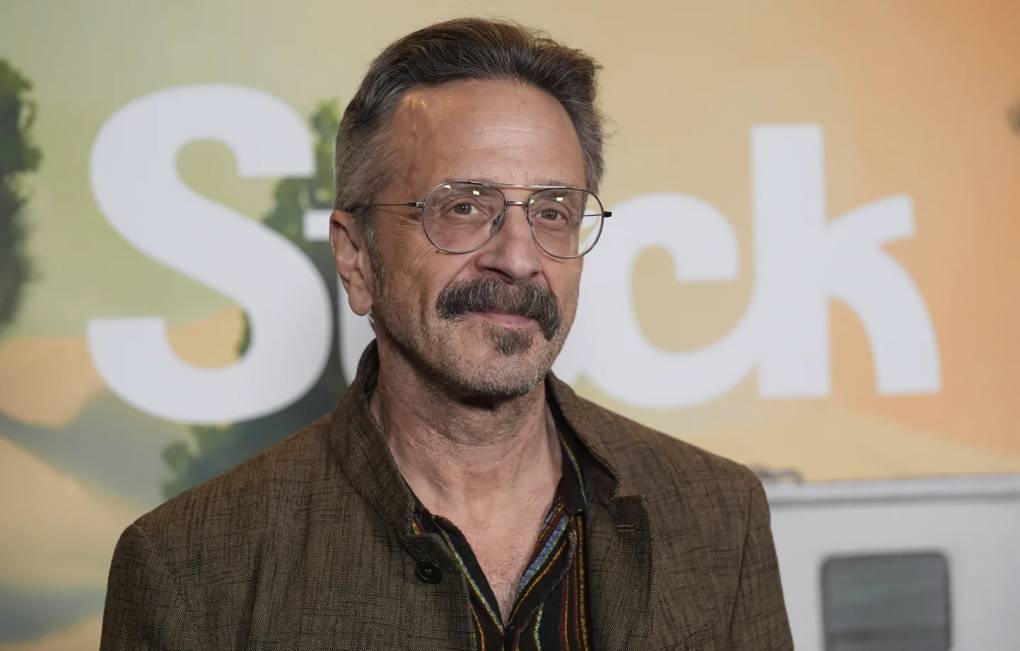
7 Essential Episodes of Marc Maron’s ‘WTF’ Podcast
Who Gets to Be Latino?
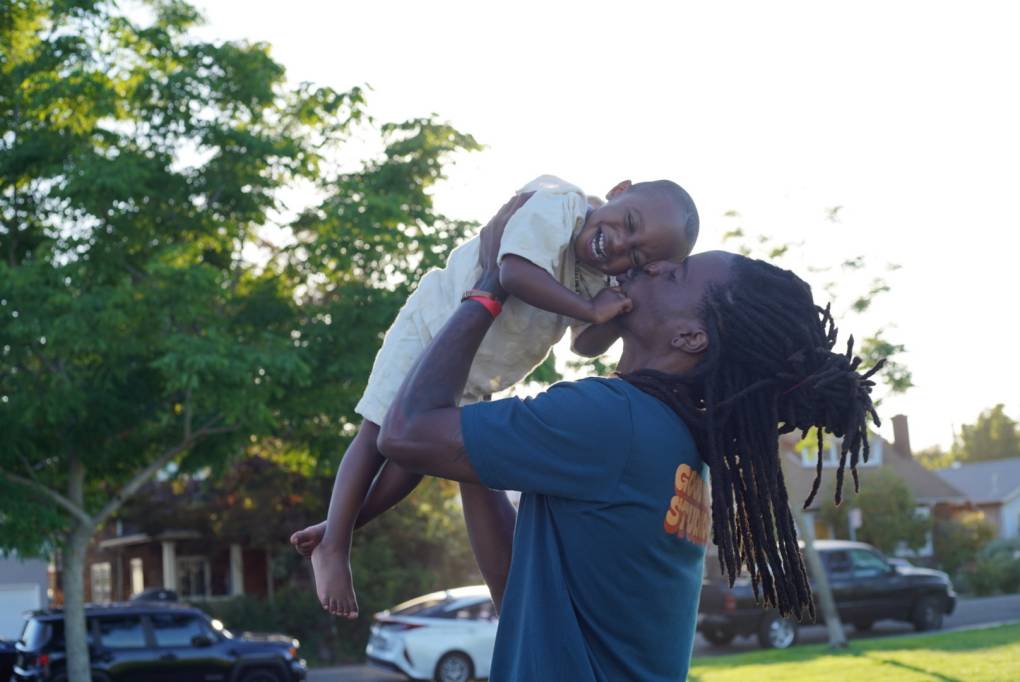
Rightnowish’s Grand Finale: Words of Wisdom From Timothy B.
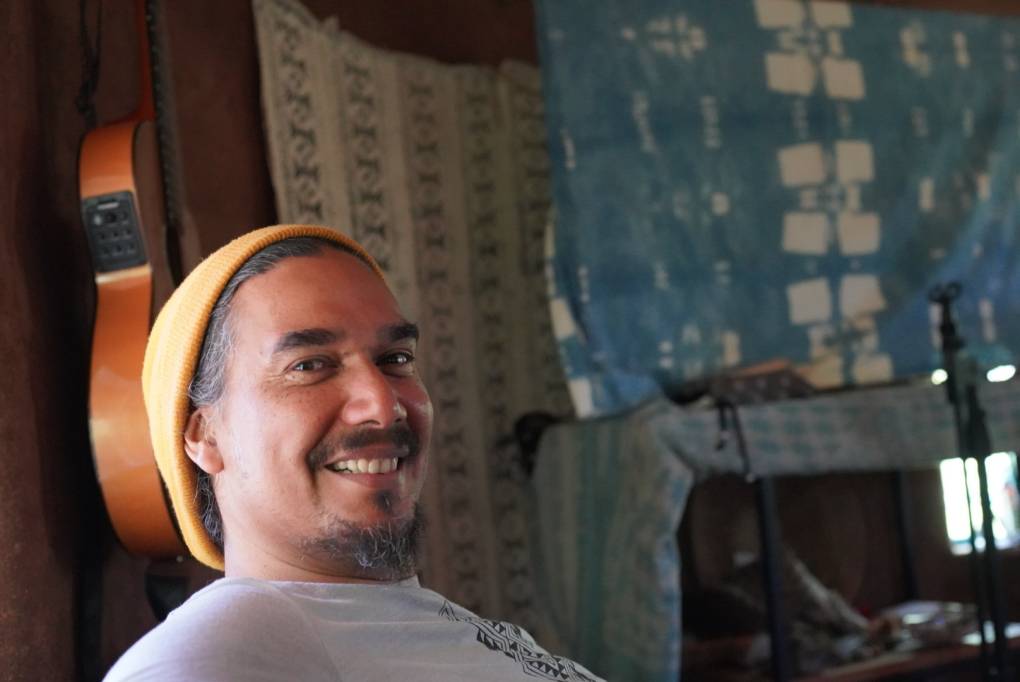
Building a Native Arts and Culture Space From the Ground Up
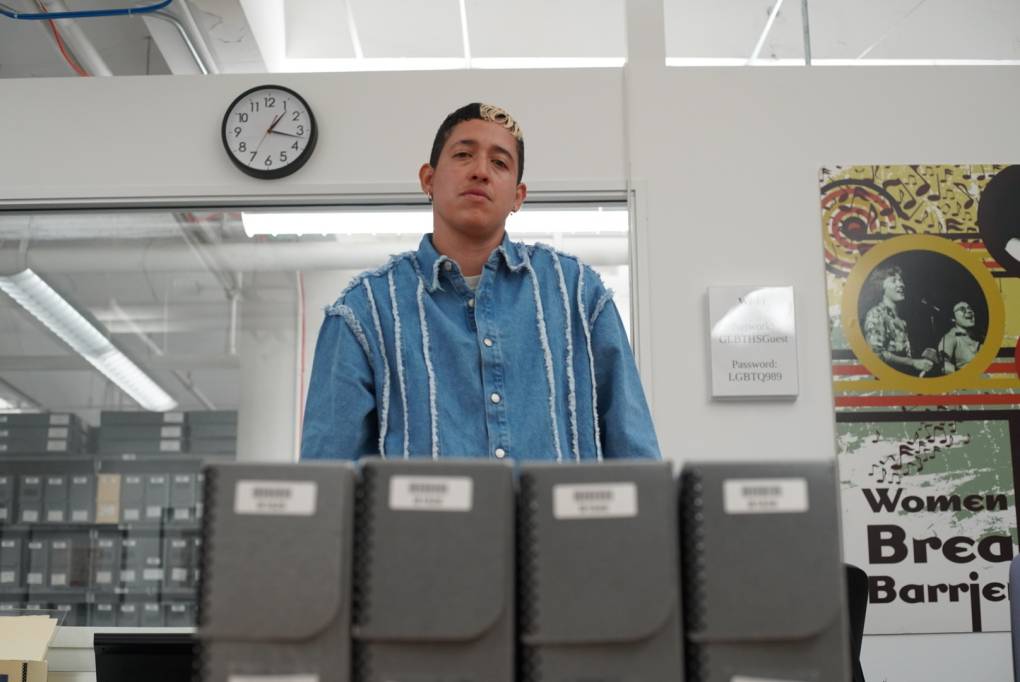
‘All The Nights We Got To Dance’ Is a Tribute to Queer Nightlife in SF
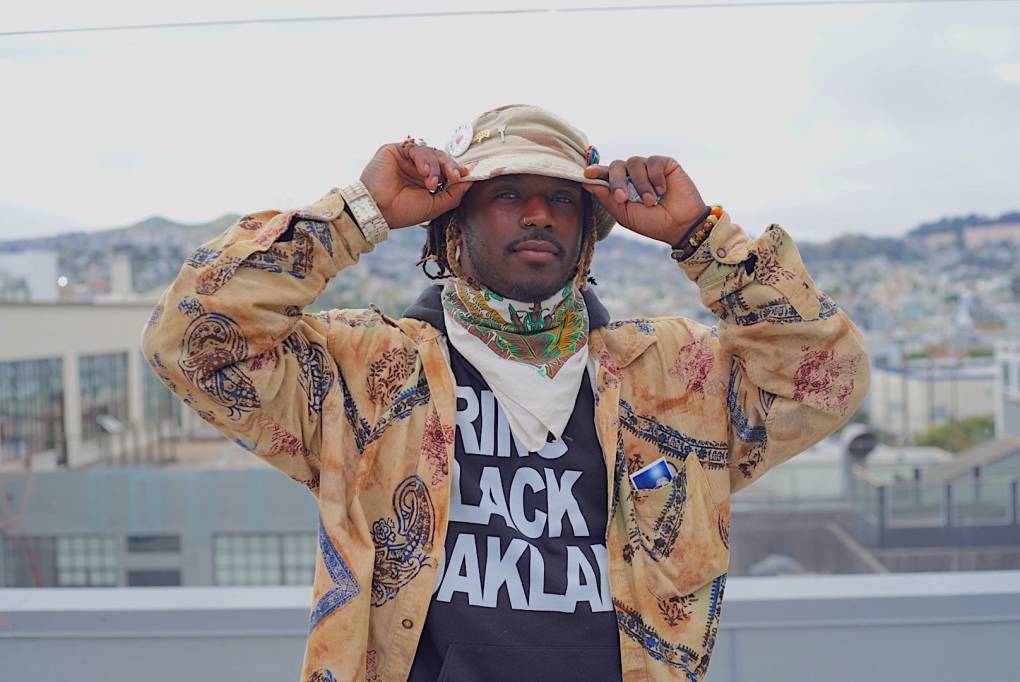
Loove Moore, the 'Out Here Specialist,' Leads by Example
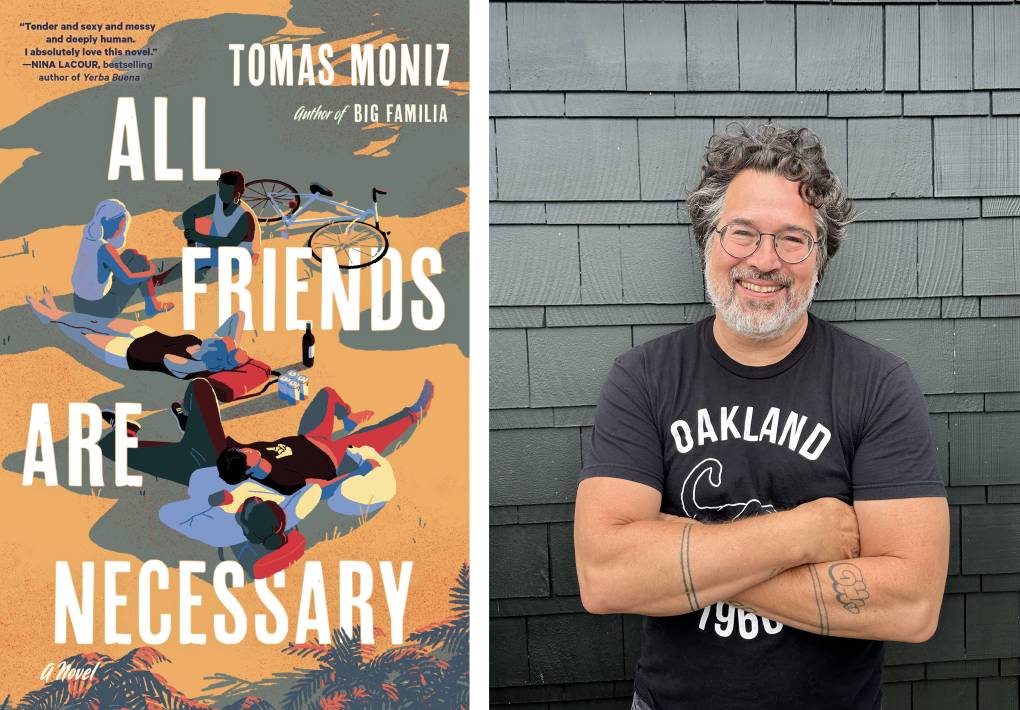
Tomas Moniz’s New Book Is an Ode to Friendship in the Bay Area
Jazz Meets Hip-Hop in Bassist Giulio Xavier Cetto’s World
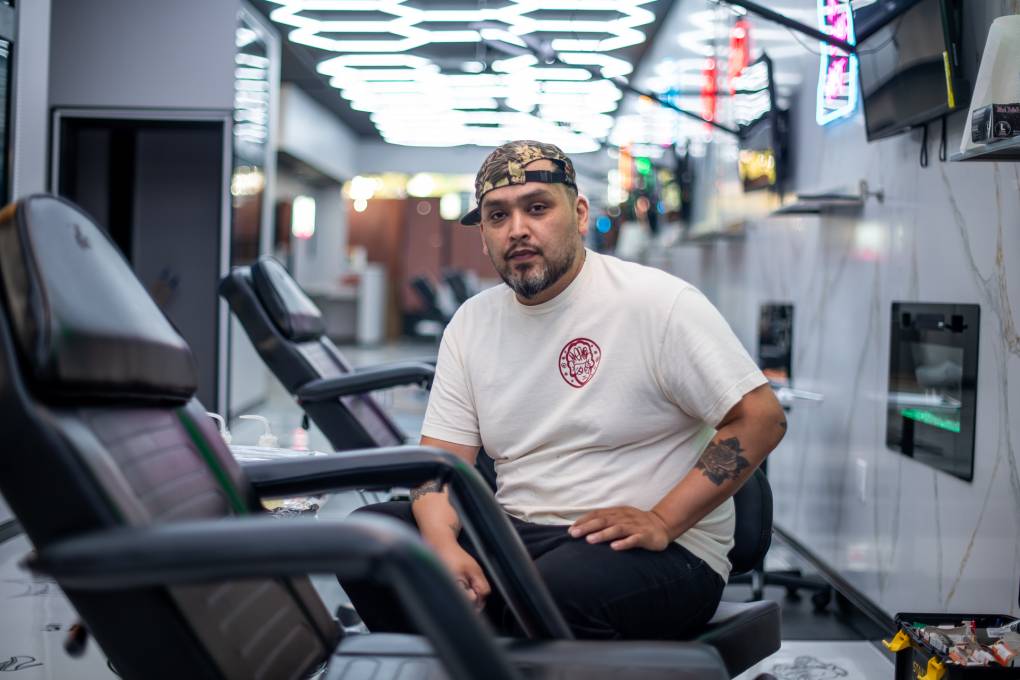
Miguel ‘Bounce’ Perez’s Culture Flows Through His Ink
Player sponsored by
window.__IS_SSR__=true
window.__INITIAL_STATE__={
"attachmentsReducer": {
"audio_0": {
"type": "attachments",
"id": "audio_0",
"imgSizes": {
"kqedFullSize": {
"file": "https://ww2.kqed.org/news/wp-content/themes/KQED-unified/img/audio_bgs/background0.jpg"
}
}
},
"audio_1": {
"type": "attachments",
"id": "audio_1",
"imgSizes": {
"kqedFullSize": {
"file": "https://ww2.kqed.org/news/wp-content/themes/KQED-unified/img/audio_bgs/background1.jpg"
}
}
},
"audio_2": {
"type": "attachments",
"id": "audio_2",
"imgSizes": {
"kqedFullSize": {
"file": "https://ww2.kqed.org/news/wp-content/themes/KQED-unified/img/audio_bgs/background2.jpg"
}
}
},
"audio_3": {
"type": "attachments",
"id": "audio_3",
"imgSizes": {
"kqedFullSize": {
"file": "https://ww2.kqed.org/news/wp-content/themes/KQED-unified/img/audio_bgs/background3.jpg"
}
}
},
"audio_4": {
"type": "attachments",
"id": "audio_4",
"imgSizes": {
"kqedFullSize": {
"file": "https://ww2.kqed.org/news/wp-content/themes/KQED-unified/img/audio_bgs/background4.jpg"
}
}
},
"placeholder": {
"type": "attachments",
"id": "placeholder",
"imgSizes": {
"thumbnail": {
"file": "https://cdn.kqed.org/wp-content/uploads/2024/12/KQED-Default-Image-816638274-2000x1333-1-160x107.jpg",
"width": 160,
"height": 107,
"mimeType": "image/jpeg"
},
"medium": {
"file": "https://cdn.kqed.org/wp-content/uploads/2024/12/KQED-Default-Image-816638274-2000x1333-1-800x533.jpg",
"width": 800,
"height": 533,
"mimeType": "image/jpeg"
},
"medium_large": {
"file": "https://cdn.kqed.org/wp-content/uploads/2024/12/KQED-Default-Image-816638274-2000x1333-1-768x512.jpg",
"width": 768,
"height": 512,
"mimeType": "image/jpeg"
},
"large": {
"file": "https://cdn.kqed.org/wp-content/uploads/2024/12/KQED-Default-Image-816638274-2000x1333-1-1020x680.jpg",
"width": 1020,
"height": 680,
"mimeType": "image/jpeg"
},
"1536x1536": {
"file": "https://cdn.kqed.org/wp-content/uploads/2024/12/KQED-Default-Image-816638274-2000x1333-1-1536x1024.jpg",
"width": 1536,
"height": 1024,
"mimeType": "image/jpeg"
},
"fd-lrg": {
"file": "https://cdn.kqed.org/wp-content/uploads/2024/12/KQED-Default-Image-816638274-2000x1333-1-1536x1024.jpg",
"width": 1536,
"height": 1024,
"mimeType": "image/jpeg"
},
"fd-med": {
"file": "https://cdn.kqed.org/wp-content/uploads/2024/12/KQED-Default-Image-816638274-2000x1333-1-1020x680.jpg",
"width": 1020,
"height": 680,
"mimeType": "image/jpeg"
},
"fd-sm": {
"file": "https://cdn.kqed.org/wp-content/uploads/2024/12/KQED-Default-Image-816638274-2000x1333-1-800x533.jpg",
"width": 800,
"height": 533,
"mimeType": "image/jpeg"
},
"post-thumbnail": {
"file": "https://cdn.kqed.org/wp-content/uploads/2024/12/KQED-Default-Image-816638274-2000x1333-1-672x372.jpg",
"width": 672,
"height": 372,
"mimeType": "image/jpeg"
},
"twentyfourteen-full-width": {
"file": "https://cdn.kqed.org/wp-content/uploads/2024/12/KQED-Default-Image-816638274-2000x1333-1-1038x576.jpg",
"width": 1038,
"height": 576,
"mimeType": "image/jpeg"
},
"xxsmall": {
"file": "https://cdn.kqed.org/wp-content/uploads/2024/12/KQED-Default-Image-816638274-2000x1333-1-160x107.jpg",
"width": 160,
"height": 107,
"mimeType": "image/jpeg"
},
"xsmall": {
"file": "https://cdn.kqed.org/wp-content/uploads/2024/12/KQED-Default-Image-816638274-2000x1333-1-672x372.jpg",
"width": 672,
"height": 372,
"mimeType": "image/jpeg"
},
"small": {
"file": "https://cdn.kqed.org/wp-content/uploads/2024/12/KQED-Default-Image-816638274-2000x1333-1-672x372.jpg",
"width": 672,
"height": 372,
"mimeType": "image/jpeg"
},
"xlarge": {
"file": "https://cdn.kqed.org/wp-content/uploads/2024/12/KQED-Default-Image-816638274-2000x1333-1-1020x680.jpg",
"width": 1020,
"height": 680,
"mimeType": "image/jpeg"
},
"full-width": {
"file": "https://cdn.kqed.org/wp-content/uploads/2024/12/KQED-Default-Image-816638274-2000x1333-1-1920x1280.jpg",
"width": 1920,
"height": 1280,
"mimeType": "image/jpeg"
},
"guest-author-32": {
"file": "https://cdn.kqed.org/wp-content/uploads/2025/01/KQED-Default-Image-816638274-1333x1333-1-160x160.jpg",
"width": 32,
"height": 32,
"mimeType": "image/jpeg"
},
"guest-author-50": {
"file": "https://cdn.kqed.org/wp-content/uploads/2025/01/KQED-Default-Image-816638274-1333x1333-1-160x160.jpg",
"width": 50,
"height": 50,
"mimeType": "image/jpeg"
},
"guest-author-64": {
"file": "https://cdn.kqed.org/wp-content/uploads/2025/01/KQED-Default-Image-816638274-1333x1333-1-160x160.jpg",
"width": 64,
"height": 64,
"mimeType": "image/jpeg"
},
"guest-author-96": {
"file": "https://cdn.kqed.org/wp-content/uploads/2025/01/KQED-Default-Image-816638274-1333x1333-1-160x160.jpg",
"width": 96,
"height": 96,
"mimeType": "image/jpeg"
},
"guest-author-128": {
"file": "https://cdn.kqed.org/wp-content/uploads/2025/01/KQED-Default-Image-816638274-1333x1333-1-160x160.jpg",
"width": 128,
"height": 128,
"mimeType": "image/jpeg"
},
"detail": {
"file": "https://cdn.kqed.org/wp-content/uploads/2025/01/KQED-Default-Image-816638274-1333x1333-1-160x160.jpg",
"width": 160,
"height": 160,
"mimeType": "image/jpeg"
},
"kqedFullSize": {
"file": "https://cdn.kqed.org/wp-content/uploads/2024/12/KQED-Default-Image-816638274-2000x1333-1.jpg",
"width": 2000,
"height": 1333
}
}
},
"arts_13976979": {
"type": "attachments",
"id": "arts_13976979",
"meta": {
"index": "attachments_1716263798",
"site": "arts",
"id": "13976979",
"found": true
},
"title": "MarcMaron",
"publishDate": 1748964709,
"status": "inherit",
"parent": 13976978,
"modified": 1760374823,
"caption": "Marc Maron arrives at the premiere of ‘Stick’ on Thursday, May 29, 2025, at AMC Century City 15 in Los Angeles. ",
"credit": "AP Photo/Chris Pizzello, File",
"altTag": "A man in glasses and a mustache poses on a red carpet.",
"description": null,
"imgSizes": {
"medium": {
"file": "https://cdn.kqed.org/wp-content/uploads/sites/2/2025/06/MarcMaron-800x510.jpg",
"width": 800,
"height": 510,
"mimeType": "image/jpeg"
},
"large": {
"file": "https://cdn.kqed.org/wp-content/uploads/sites/2/2025/06/MarcMaron-1020x651.jpg",
"width": 1020,
"height": 651,
"mimeType": "image/jpeg"
},
"thumbnail": {
"file": "https://cdn.kqed.org/wp-content/uploads/sites/2/2025/06/MarcMaron-160x102.jpg",
"width": 160,
"height": 102,
"mimeType": "image/jpeg"
},
"medium_large": {
"file": "https://cdn.kqed.org/wp-content/uploads/sites/2/2025/06/MarcMaron-768x490.jpg",
"width": 768,
"height": 490,
"mimeType": "image/jpeg"
},
"1536x1536": {
"file": "https://cdn.kqed.org/wp-content/uploads/sites/2/2025/06/MarcMaron-1536x980.jpg",
"width": 1536,
"height": 980,
"mimeType": "image/jpeg"
},
"post-thumbnail": {
"file": "https://cdn.kqed.org/wp-content/uploads/sites/2/2025/06/MarcMaron-672x372.jpg",
"width": 672,
"height": 372,
"mimeType": "image/jpeg"
},
"twentyfourteen-full-width": {
"file": "https://cdn.kqed.org/wp-content/uploads/sites/2/2025/06/MarcMaron-1038x576.jpg",
"width": 1038,
"height": 576,
"mimeType": "image/jpeg"
},
"full-width": {
"file": "https://cdn.kqed.org/wp-content/uploads/sites/2/2025/06/MarcMaron-1920x1225.jpg",
"width": 1920,
"height": 1225,
"mimeType": "image/jpeg"
},
"kqedFullSize": {
"file": "https://cdn.kqed.org/wp-content/uploads/sites/2/2025/06/MarcMaron.jpg",
"width": 2000,
"height": 1276
}
},
"isLoading": false,
"fetchFailed": false
},
"arts_13974498": {
"type": "attachments",
"id": "arts_13974498",
"meta": {
"index": "attachments_1716263798",
"site": "arts",
"id": "13974498",
"found": true
},
"title": "HYP Episode 1",
"publishDate": 1744657709,
"status": "inherit",
"parent": 13974494,
"modified": 1744660404,
"caption": "Host Xorje Olivares (Photo by Alex Tran)",
"credit": null,
"altTag": "Person wearing blue shirt and headphones shrugs in front of a collage of nation flags. Text: \"Do I look Latino?\"",
"description": null,
"imgSizes": {
"medium": {
"file": "https://cdn.kqed.org/wp-content/uploads/sites/2/2025/04/HYP-Full-Video-Thumbnails-800x450.png",
"width": 800,
"height": 450,
"mimeType": "image/png"
},
"large": {
"file": "https://cdn.kqed.org/wp-content/uploads/sites/2/2025/04/HYP-Full-Video-Thumbnails-1020x574.png",
"width": 1020,
"height": 574,
"mimeType": "image/png"
},
"thumbnail": {
"file": "https://cdn.kqed.org/wp-content/uploads/sites/2/2025/04/HYP-Full-Video-Thumbnails-160x90.png",
"width": 160,
"height": 90,
"mimeType": "image/png"
},
"medium_large": {
"file": "https://cdn.kqed.org/wp-content/uploads/sites/2/2025/04/HYP-Full-Video-Thumbnails-768x432.png",
"width": 768,
"height": 432,
"mimeType": "image/png"
},
"post-thumbnail": {
"file": "https://cdn.kqed.org/wp-content/uploads/sites/2/2025/04/HYP-Full-Video-Thumbnails-672x372.png",
"width": 672,
"height": 372,
"mimeType": "image/png"
},
"twentyfourteen-full-width": {
"file": "https://cdn.kqed.org/wp-content/uploads/sites/2/2025/04/HYP-Full-Video-Thumbnails-1038x576.png",
"width": 1038,
"height": 576,
"mimeType": "image/png"
},
"kqedFullSize": {
"file": "https://cdn.kqed.org/wp-content/uploads/sites/2/2025/04/HYP-Full-Video-Thumbnails.png",
"width": 1280,
"height": 720
}
},
"isLoading": false,
"fetchFailed": false
},
"arts_13961190": {
"type": "attachments",
"id": "arts_13961190",
"meta": {
"index": "attachments_1716263798",
"site": "arts",
"id": "13961190",
"found": true
},
"title": "DSC08515",
"publishDate": 1721142856,
"status": "inherit",
"parent": 13961188,
"modified": 1721239852,
"caption": "Artist Timothy B. and his son share a moment at San Pablo Park in Berkeley. ",
"credit": "Pendarvis Harshaw",
"altTag": "Man with locs holding a smiling baby.",
"description": "Artist Timothy B. and his son share a moment at San Pablo Park in Berkeley. ",
"imgSizes": {
"medium": {
"file": "https://cdn.kqed.org/wp-content/uploads/sites/2/2024/07/DSC08515-800x535.jpg",
"width": 800,
"height": 535,
"mimeType": "image/jpeg"
},
"large": {
"file": "https://cdn.kqed.org/wp-content/uploads/sites/2/2024/07/DSC08515-1020x682.jpg",
"width": 1020,
"height": 682,
"mimeType": "image/jpeg"
},
"thumbnail": {
"file": "https://cdn.kqed.org/wp-content/uploads/sites/2/2024/07/DSC08515-160x107.jpg",
"width": 160,
"height": 107,
"mimeType": "image/jpeg"
},
"medium_large": {
"file": "https://cdn.kqed.org/wp-content/uploads/sites/2/2024/07/DSC08515-768x513.jpg",
"width": 768,
"height": 513,
"mimeType": "image/jpeg"
},
"1536x1536": {
"file": "https://cdn.kqed.org/wp-content/uploads/sites/2/2024/07/DSC08515-1536x1027.jpg",
"width": 1536,
"height": 1027,
"mimeType": "image/jpeg"
},
"post-thumbnail": {
"file": "https://cdn.kqed.org/wp-content/uploads/sites/2/2024/07/DSC08515-672x372.jpg",
"width": 672,
"height": 372,
"mimeType": "image/jpeg"
},
"twentyfourteen-full-width": {
"file": "https://cdn.kqed.org/wp-content/uploads/sites/2/2024/07/DSC08515-1038x576.jpg",
"width": 1038,
"height": 576,
"mimeType": "image/jpeg"
},
"kqedFullSize": {
"file": "https://cdn.kqed.org/wp-content/uploads/sites/2/2024/07/DSC08515.jpg",
"width": 1616,
"height": 1080
}
},
"isLoading": false,
"fetchFailed": false
},
"arts_13960790": {
"type": "attachments",
"id": "arts_13960790",
"meta": {
"index": "attachments_1716263798",
"site": "arts",
"id": "13960790",
"found": true
},
"title": "Ras K'dee by Pendarvis Harshaw 3",
"publishDate": 1720548849,
"status": "inherit",
"parent": 13960783,
"modified": 1720635078,
"caption": "Musician Ras K'dee in the studio in Sonoma. ",
"credit": "Pendarvis Harshaw",
"altTag": "Ras K'dee smiles and looks at the camera, while wearing a yellow knitted cap and sitting in his music studio.",
"description": "Ras K'dee smiles and looks at the camera, while wearing a yellow knitted cap and sitting in his music studio.",
"imgSizes": {
"medium": {
"file": "https://cdn.kqed.org/wp-content/uploads/sites/2/2024/07/Ras-KDee-by-Pendarvis-Harshaw-3-800x535.jpg",
"width": 800,
"height": 535,
"mimeType": "image/jpeg"
},
"large": {
"file": "https://cdn.kqed.org/wp-content/uploads/sites/2/2024/07/Ras-KDee-by-Pendarvis-Harshaw-3-1020x682.jpg",
"width": 1020,
"height": 682,
"mimeType": "image/jpeg"
},
"thumbnail": {
"file": "https://cdn.kqed.org/wp-content/uploads/sites/2/2024/07/Ras-KDee-by-Pendarvis-Harshaw-3-160x107.jpg",
"width": 160,
"height": 107,
"mimeType": "image/jpeg"
},
"medium_large": {
"file": "https://cdn.kqed.org/wp-content/uploads/sites/2/2024/07/Ras-KDee-by-Pendarvis-Harshaw-3-768x513.jpg",
"width": 768,
"height": 513,
"mimeType": "image/jpeg"
},
"1536x1536": {
"file": "https://cdn.kqed.org/wp-content/uploads/sites/2/2024/07/Ras-KDee-by-Pendarvis-Harshaw-3-1536x1027.jpg",
"width": 1536,
"height": 1027,
"mimeType": "image/jpeg"
},
"post-thumbnail": {
"file": "https://cdn.kqed.org/wp-content/uploads/sites/2/2024/07/Ras-KDee-by-Pendarvis-Harshaw-3-672x372.jpg",
"width": 672,
"height": 372,
"mimeType": "image/jpeg"
},
"twentyfourteen-full-width": {
"file": "https://cdn.kqed.org/wp-content/uploads/sites/2/2024/07/Ras-KDee-by-Pendarvis-Harshaw-3-1038x576.jpg",
"width": 1038,
"height": 576,
"mimeType": "image/jpeg"
},
"kqedFullSize": {
"file": "https://cdn.kqed.org/wp-content/uploads/sites/2/2024/07/Ras-KDee-by-Pendarvis-Harshaw-3.jpg",
"width": 1616,
"height": 1080
}
},
"isLoading": false,
"fetchFailed": false
},
"arts_13960326": {
"type": "attachments",
"id": "arts_13960326",
"meta": {
"index": "attachments_1716263798",
"site": "arts",
"id": "13960326",
"found": true
},
"title": "Artist and curator Marcel Pardo Ariza poses for a photo at San Francisco's GLBT Historical Society Museum.",
"publishDate": 1719413869,
"status": "inherit",
"parent": 13960325,
"modified": 1719426278,
"caption": "Artist and curator Marcel Pardo Ariza poses for a photo at the archvies of San Francisco's GLBT Historical Society.",
"credit": "Pendarvis Harshaw",
"altTag": "Artist and curator Marcel Pardo Ariza poses for a photo at the archives of San Francisco's GLBT Historical Society.",
"description": "Artist and archivist Marcel Pardo Ariza poses for a photo at San Francisco's GLBT Historical Society Museum.",
"imgSizes": {
"medium": {
"file": "https://cdn.kqed.org/wp-content/uploads/sites/2/2024/06/Marcel-Pardo-Ariza-by-Pendarvis-Harshaw-14-800x535.jpg",
"width": 800,
"height": 535,
"mimeType": "image/jpeg"
},
"large": {
"file": "https://cdn.kqed.org/wp-content/uploads/sites/2/2024/06/Marcel-Pardo-Ariza-by-Pendarvis-Harshaw-14-1020x682.jpg",
"width": 1020,
"height": 682,
"mimeType": "image/jpeg"
},
"thumbnail": {
"file": "https://cdn.kqed.org/wp-content/uploads/sites/2/2024/06/Marcel-Pardo-Ariza-by-Pendarvis-Harshaw-14-160x107.jpg",
"width": 160,
"height": 107,
"mimeType": "image/jpeg"
},
"medium_large": {
"file": "https://cdn.kqed.org/wp-content/uploads/sites/2/2024/06/Marcel-Pardo-Ariza-by-Pendarvis-Harshaw-14-768x513.jpg",
"width": 768,
"height": 513,
"mimeType": "image/jpeg"
},
"1536x1536": {
"file": "https://cdn.kqed.org/wp-content/uploads/sites/2/2024/06/Marcel-Pardo-Ariza-by-Pendarvis-Harshaw-14-1536x1027.jpg",
"width": 1536,
"height": 1027,
"mimeType": "image/jpeg"
},
"post-thumbnail": {
"file": "https://cdn.kqed.org/wp-content/uploads/sites/2/2024/06/Marcel-Pardo-Ariza-by-Pendarvis-Harshaw-14-672x372.jpg",
"width": 672,
"height": 372,
"mimeType": "image/jpeg"
},
"twentyfourteen-full-width": {
"file": "https://cdn.kqed.org/wp-content/uploads/sites/2/2024/06/Marcel-Pardo-Ariza-by-Pendarvis-Harshaw-14-1038x576.jpg",
"width": 1038,
"height": 576,
"mimeType": "image/jpeg"
},
"kqedFullSize": {
"file": "https://cdn.kqed.org/wp-content/uploads/sites/2/2024/06/Marcel-Pardo-Ariza-by-Pendarvis-Harshaw-14.jpg",
"width": 1616,
"height": 1080
}
},
"isLoading": false,
"fetchFailed": false
},
"arts_13959983": {
"type": "attachments",
"id": "arts_13959983",
"meta": {
"index": "attachments_1716263798",
"site": "arts",
"id": "13959983",
"found": true
},
"title": "Loove Moore, the \"Out Here Specialist,\" on the rooftop at KQED.",
"publishDate": 1718743575,
"status": "inherit",
"parent": 13959969,
"modified": 1718743743,
"caption": "Loove Moore, the \"Out Here Specialist,\" on the rooftop at KQED.",
"credit": "Pendarvis Harshaw",
"altTag": "A man wearing a tan bucket hat, handkerchief around his neck, black shirt and tan jacket posing for a photo on a rooftop.",
"description": "A man wearing a tan bucket hat, handkerchief around his neck, black shirt and tan jacket posing for a photo on a rooftop. ",
"imgSizes": {
"medium": {
"file": "https://cdn.kqed.org/wp-content/uploads/sites/2/2024/06/Loove-Moore-at-KQED-9-Photo-by-Pendarvis-Harshaw-800x535.jpg",
"width": 800,
"height": 535,
"mimeType": "image/jpeg"
},
"large": {
"file": "https://cdn.kqed.org/wp-content/uploads/sites/2/2024/06/Loove-Moore-at-KQED-9-Photo-by-Pendarvis-Harshaw-1020x682.jpg",
"width": 1020,
"height": 682,
"mimeType": "image/jpeg"
},
"thumbnail": {
"file": "https://cdn.kqed.org/wp-content/uploads/sites/2/2024/06/Loove-Moore-at-KQED-9-Photo-by-Pendarvis-Harshaw-160x107.jpg",
"width": 160,
"height": 107,
"mimeType": "image/jpeg"
},
"medium_large": {
"file": "https://cdn.kqed.org/wp-content/uploads/sites/2/2024/06/Loove-Moore-at-KQED-9-Photo-by-Pendarvis-Harshaw-768x513.jpg",
"width": 768,
"height": 513,
"mimeType": "image/jpeg"
},
"1536x1536": {
"file": "https://cdn.kqed.org/wp-content/uploads/sites/2/2024/06/Loove-Moore-at-KQED-9-Photo-by-Pendarvis-Harshaw-1536x1027.jpg",
"width": 1536,
"height": 1027,
"mimeType": "image/jpeg"
},
"post-thumbnail": {
"file": "https://cdn.kqed.org/wp-content/uploads/sites/2/2024/06/Loove-Moore-at-KQED-9-Photo-by-Pendarvis-Harshaw-672x372.jpg",
"width": 672,
"height": 372,
"mimeType": "image/jpeg"
},
"twentyfourteen-full-width": {
"file": "https://cdn.kqed.org/wp-content/uploads/sites/2/2024/06/Loove-Moore-at-KQED-9-Photo-by-Pendarvis-Harshaw-1038x576.jpg",
"width": 1038,
"height": 576,
"mimeType": "image/jpeg"
},
"kqedFullSize": {
"file": "https://cdn.kqed.org/wp-content/uploads/sites/2/2024/06/Loove-Moore-at-KQED-9-Photo-by-Pendarvis-Harshaw.jpg",
"width": 1616,
"height": 1080
}
},
"isLoading": false,
"fetchFailed": false
},
"arts_13959652": {
"type": "attachments",
"id": "arts_13959652",
"meta": {
"index": "attachments_1716263798",
"site": "arts",
"id": "13959652",
"found": true
},
"title": "Tomas Moniz, author of All Friends Are Necessary, a novel about friendship in the Bay Area.",
"publishDate": 1718205908,
"status": "inherit",
"parent": 13959550,
"modified": 1718206026,
"caption": "Tomas Moniz, author of All Friends Are Necessary, a novel about friendship in the Bay Area.",
"credit": "Courtesy of Tomas Moniz",
"altTag": "Tomas Moniz, author of All Friends Are Necessary, a novel about friendship in the Bay Area.",
"description": "Tomas Moniz, author of All Friends Are Necessary, a novel about friendship in the Bay Area.",
"imgSizes": {
"medium": {
"file": "https://cdn.kqed.org/wp-content/uploads/sites/2/2024/06/Tomas-Moniz-Author-Photo_credit-Ella-Moniz_plus_Cover-1-800x557.jpg",
"width": 800,
"height": 557,
"mimeType": "image/jpeg"
},
"large": {
"file": "https://cdn.kqed.org/wp-content/uploads/sites/2/2024/06/Tomas-Moniz-Author-Photo_credit-Ella-Moniz_plus_Cover-1-1020x710.jpg",
"width": 1020,
"height": 710,
"mimeType": "image/jpeg"
},
"thumbnail": {
"file": "https://cdn.kqed.org/wp-content/uploads/sites/2/2024/06/Tomas-Moniz-Author-Photo_credit-Ella-Moniz_plus_Cover-1-160x111.jpg",
"width": 160,
"height": 111,
"mimeType": "image/jpeg"
},
"medium_large": {
"file": "https://cdn.kqed.org/wp-content/uploads/sites/2/2024/06/Tomas-Moniz-Author-Photo_credit-Ella-Moniz_plus_Cover-1-768x535.jpg",
"width": 768,
"height": 535,
"mimeType": "image/jpeg"
},
"1536x1536": {
"file": "https://cdn.kqed.org/wp-content/uploads/sites/2/2024/06/Tomas-Moniz-Author-Photo_credit-Ella-Moniz_plus_Cover-1-1536x1070.jpg",
"width": 1536,
"height": 1070,
"mimeType": "image/jpeg"
},
"2048x2048": {
"file": "https://cdn.kqed.org/wp-content/uploads/sites/2/2024/06/Tomas-Moniz-Author-Photo_credit-Ella-Moniz_plus_Cover-1-2048x1426.jpg",
"width": 2048,
"height": 1426,
"mimeType": "image/jpeg"
},
"post-thumbnail": {
"file": "https://cdn.kqed.org/wp-content/uploads/sites/2/2024/06/Tomas-Moniz-Author-Photo_credit-Ella-Moniz_plus_Cover-1-672x372.jpg",
"width": 672,
"height": 372,
"mimeType": "image/jpeg"
},
"twentyfourteen-full-width": {
"file": "https://cdn.kqed.org/wp-content/uploads/sites/2/2024/06/Tomas-Moniz-Author-Photo_credit-Ella-Moniz_plus_Cover-1-1038x576.jpg",
"width": 1038,
"height": 576,
"mimeType": "image/jpeg"
},
"full-width": {
"file": "https://cdn.kqed.org/wp-content/uploads/sites/2/2024/06/Tomas-Moniz-Author-Photo_credit-Ella-Moniz_plus_Cover-1-1920x1337.jpg",
"width": 1920,
"height": 1337,
"mimeType": "image/jpeg"
},
"kqedFullSize": {
"file": "https://cdn.kqed.org/wp-content/uploads/sites/2/2024/06/Tomas-Moniz-Author-Photo_credit-Ella-Moniz_plus_Cover-1-scaled.jpg",
"width": 2560,
"height": 1783
}
},
"isLoading": false,
"fetchFailed": false
},
"arts_13931051": {
"type": "attachments",
"id": "arts_13931051",
"meta": {
"index": "attachments_1716263798",
"site": "arts",
"id": "13931051",
"found": true
},
"parent": 13931047,
"imgSizes": {
"twentyfourteen-full-width": {
"file": "https://ww2.kqed.org/app/uploads/sites/2/2023/06/photo-by-ivan-noble-1038x576.png",
"width": 1038,
"mimeType": "image/png",
"height": 576
},
"thumbnail": {
"file": "https://ww2.kqed.org/app/uploads/sites/2/2023/06/photo-by-ivan-noble-160x172.png",
"width": 160,
"mimeType": "image/png",
"height": 172
},
"post-thumbnail": {
"file": "https://ww2.kqed.org/app/uploads/sites/2/2023/06/photo-by-ivan-noble-672x372.png",
"width": 672,
"mimeType": "image/png",
"height": 372
},
"kqedFullSize": {
"file": "https://ww2.kqed.org/app/uploads/sites/2/2023/06/photo-by-ivan-noble.png",
"width": 1156,
"height": 1245
},
"large": {
"file": "https://ww2.kqed.org/app/uploads/sites/2/2023/06/photo-by-ivan-noble-1020x1099.png",
"width": 1020,
"mimeType": "image/png",
"height": 1099
},
"medium": {
"file": "https://ww2.kqed.org/app/uploads/sites/2/2023/06/photo-by-ivan-noble-800x862.png",
"width": 800,
"mimeType": "image/png",
"height": 862
},
"medium_large": {
"file": "https://ww2.kqed.org/app/uploads/sites/2/2023/06/photo-by-ivan-noble-768x827.png",
"width": 768,
"mimeType": "image/png",
"height": 827
}
},
"publishDate": 1688067849,
"modified": 1688067972,
"caption": "Giulio Xavier Cetto is influenced by his Venezuelan-Italian heritage, Bay Area rap music, and his jazz and classically-trained family. ",
"description": null,
"title": "photo by ivan noble",
"credit": "Ivan Noble",
"status": "inherit",
"altTag": "A black and white photo of Giulio Xavier Cetto playing the upright bass.",
"isLoading": false,
"fetchFailed": false
},
"arts_13918596": {
"type": "attachments",
"id": "arts_13918596",
"meta": {
"index": "attachments_1716263798",
"site": "arts",
"id": "13918596",
"found": true
},
"title": "005_KQEDArts_TattooArtistMiguelBouncePerez_08312022",
"publishDate": 1662076192,
"status": "inherit",
"parent": 13918498,
"modified": 1717030040,
"caption": "Miguel ‘Bounce’ Perez at Philthy Clean Tattoo in Berkeley on Aug. 31, 2022.",
"credit": "Beth LaBerge/KQED",
"altTag": null,
"description": null,
"imgSizes": {
"medium": {
"file": "https://cdn.kqed.org/wp-content/uploads/sites/2/2022/09/005_KQEDArts_TattooArtistMiguelBouncePerez_08312022-800x533.jpg",
"width": 800,
"height": 533,
"mimeType": "image/jpeg"
},
"large": {
"file": "https://cdn.kqed.org/wp-content/uploads/sites/2/2022/09/005_KQEDArts_TattooArtistMiguelBouncePerez_08312022-1020x680.jpg",
"width": 1020,
"height": 680,
"mimeType": "image/jpeg"
},
"thumbnail": {
"file": "https://cdn.kqed.org/wp-content/uploads/sites/2/2022/09/005_KQEDArts_TattooArtistMiguelBouncePerez_08312022-160x107.jpg",
"width": 160,
"height": 107,
"mimeType": "image/jpeg"
},
"medium_large": {
"file": "https://cdn.kqed.org/wp-content/uploads/sites/2/2022/09/005_KQEDArts_TattooArtistMiguelBouncePerez_08312022-768x512.jpg",
"width": 768,
"height": 512,
"mimeType": "image/jpeg"
},
"1536x1536": {
"file": "https://cdn.kqed.org/wp-content/uploads/sites/2/2022/09/005_KQEDArts_TattooArtistMiguelBouncePerez_08312022-1536x1024.jpg",
"width": 1536,
"height": 1024,
"mimeType": "image/jpeg"
},
"post-thumbnail": {
"file": "https://cdn.kqed.org/wp-content/uploads/sites/2/2022/09/005_KQEDArts_TattooArtistMiguelBouncePerez_08312022-672x372.jpg",
"width": 672,
"height": 372,
"mimeType": "image/jpeg"
},
"twentyfourteen-full-width": {
"file": "https://cdn.kqed.org/wp-content/uploads/sites/2/2022/09/005_KQEDArts_TattooArtistMiguelBouncePerez_08312022-1038x576.jpg",
"width": 1038,
"height": 576,
"mimeType": "image/jpeg"
},
"kqedFullSize": {
"file": "https://cdn.kqed.org/wp-content/uploads/sites/2/2022/09/005_KQEDArts_TattooArtistMiguelBouncePerez_08312022.jpg",
"width": 1920,
"height": 1280
}
},
"isLoading": false,
"fetchFailed": false
}
},
"audioPlayerReducer": {
"postId": "stream_live",
"isPaused": true,
"isPlaying": false,
"pfsActive": false,
"pledgeModalIsOpen": true,
"playerDrawerIsOpen": false
},
"authorsReducer": {
"byline_arts_13982313": {
"type": "authors",
"id": "byline_arts_13982313",
"meta": {
"override": true
},
"slug": "byline_arts_13982313",
"name": "Andrew Dalton, Associated Press",
"isLoading": false
},
"ogpenn": {
"type": "authors",
"id": "11491",
"meta": {
"index": "authors_1716337520",
"id": "11491",
"found": true
},
"name": "Pendarvis Harshaw",
"firstName": "Pendarvis",
"lastName": "Harshaw",
"slug": "ogpenn",
"email": "ogpenn@gmail.com",
"display_author_email": false,
"staff_mastheads": [
"arts"
],
"title": "Community Engagement Reporter",
"bio": "Pendarvis Harshaw is an educator, host and writer with KQED Arts.",
"avatar": "https://secure.gravatar.com/avatar/093d33baff5354890e29ad83d58d2c49?s=600&d=blank&r=g",
"twitter": null,
"bluesky": null,
"facebook": null,
"instagram": "ogpenn",
"linkedin": null,
"sites": [
{
"site": "arts",
"roles": [
"editor"
]
},
{
"site": "news",
"roles": [
"editor"
]
},
{
"site": "bayareabites",
"roles": [
"author"
]
},
{
"site": "hiphop",
"roles": [
"editor"
]
}
],
"headData": {
"title": "Pendarvis Harshaw | KQED",
"description": "Community Engagement Reporter",
"ogImgSrc": "https://secure.gravatar.com/avatar/093d33baff5354890e29ad83d58d2c49?s=600&d=blank&r=g",
"twImgSrc": "https://secure.gravatar.com/avatar/093d33baff5354890e29ad83d58d2c49?s=600&d=blank&r=g"
},
"isLoading": false,
"link": "/author/ogpenn"
},
"mmedina": {
"type": "authors",
"id": "11528",
"meta": {
"index": "authors_1716337520",
"id": "11528",
"found": true
},
"name": "Marisol Medina-Cadena",
"firstName": "Marisol",
"lastName": "Medina-Cadena",
"slug": "mmedina",
"email": "mmedina@KQED.org",
"display_author_email": true,
"staff_mastheads": [],
"title": "Producer, Rightnowish Podcast",
"bio": "Marisol Medina-Cadena is a radio reporter and podcast producer. Before working at KQED, she produced for PBS member station, KCET, in Los Angeles. In 2017, Marisol won an Emmy Award for her work on the televised documentary, \u003cem>City Rising\u003c/em>, examining California's affordable housing crisis and the historical roots of gentrification.",
"avatar": "https://secure.gravatar.com/avatar/6c3db46a1cabb5e1fe9a365b5f4e681e?s=600&d=blank&r=g",
"twitter": "marisolreports",
"facebook": null,
"instagram": null,
"linkedin": null,
"sites": [
{
"site": "arts",
"roles": []
},
{
"site": "news",
"roles": [
"edit_others_posts"
]
}
],
"headData": {
"title": "Marisol Medina-Cadena | KQED",
"description": "Producer, Rightnowish Podcast",
"ogImgSrc": "https://secure.gravatar.com/avatar/6c3db46a1cabb5e1fe9a365b5f4e681e?s=600&d=blank&r=g",
"twImgSrc": "https://secure.gravatar.com/avatar/6c3db46a1cabb5e1fe9a365b5f4e681e?s=600&d=blank&r=g"
},
"isLoading": false,
"link": "/author/mmedina"
},
"xolivares": {
"type": "authors",
"id": "11874",
"meta": {
"index": "authors_1716337520",
"id": "11874",
"found": true
},
"name": "Xorje Olivares",
"firstName": "Xorje",
"lastName": "Olivares",
"slug": "xolivares",
"email": "xolivares@kqed.org",
"display_author_email": false,
"staff_mastheads": [],
"title": "KQED Contributor",
"bio": "Xorje Olivares is KQED's senior producer/editor for podcast development. He previously was a supervising producer at Lemonada Media and also spent 10 years as both an on-air personality and live producer for SiriusXM Radio. His written work has been published in Vice, Rolling Stone and Teen Vogue, among others. You can find him on Twitter and Instagram at @xorjeo.",
"avatar": "https://secure.gravatar.com/avatar/46b74ed252c58ca227b0f680d27b3731?s=600&d=blank&r=g",
"twitter": null,
"facebook": null,
"instagram": null,
"linkedin": null,
"sites": [
{
"site": "arts",
"roles": []
}
],
"headData": {
"title": "Xorje Olivares | KQED",
"description": "KQED Contributor",
"ogImgSrc": "https://secure.gravatar.com/avatar/46b74ed252c58ca227b0f680d27b3731?s=600&d=blank&r=g",
"twImgSrc": "https://secure.gravatar.com/avatar/46b74ed252c58ca227b0f680d27b3731?s=600&d=blank&r=g"
},
"isLoading": false,
"link": "/author/xolivares"
},
"aamaral": {
"type": "authors",
"id": "11947",
"meta": {
"index": "authors_1716337520",
"id": "11947",
"found": true
},
"name": "Ana De Almeida Amaral",
"firstName": "Ana",
"lastName": "De Almeida Amaral",
"slug": "aamaral",
"email": "aamaral@kqed.org",
"display_author_email": false,
"staff_mastheads": [],
"title": "KQED Contributor",
"bio": null,
"avatar": "https://secure.gravatar.com/avatar/672b76ff04db4395a9d984fc88202b4e?s=600&d=blank&r=g",
"twitter": null,
"facebook": null,
"instagram": null,
"linkedin": null,
"sites": [
{
"site": "arts",
"roles": [
"editor"
]
}
],
"headData": {
"title": "Ana De Almeida Amaral | KQED",
"description": "KQED Contributor",
"ogImgSrc": "https://secure.gravatar.com/avatar/672b76ff04db4395a9d984fc88202b4e?s=600&d=blank&r=g",
"twImgSrc": "https://secure.gravatar.com/avatar/672b76ff04db4395a9d984fc88202b4e?s=600&d=blank&r=g"
},
"isLoading": false,
"link": "/author/aamaral"
}
},
"breakingNewsReducer": {},
"pagesReducer": {},
"postsReducer": {
"stream_live": {
"type": "live",
"id": "stream_live",
"audioUrl": "https://streams.kqed.org/kqedradio",
"title": "Live Stream",
"excerpt": "Live Stream information currently unavailable.",
"link": "/radio",
"featImg": "",
"label": {
"name": "KQED Live",
"link": "/"
}
},
"stream_kqedNewscast": {
"type": "posts",
"id": "stream_kqedNewscast",
"audioUrl": "https://www.kqed.org/.stream/anon/radio/RDnews/newscast.mp3?_=1",
"title": "KQED Newscast",
"featImg": "",
"label": {
"name": "88.5 FM",
"link": "/"
}
},
"arts_13982313": {
"type": "posts",
"id": "arts_13982313",
"meta": {
"index": "posts_1716263798",
"site": "arts",
"id": "13982313",
"score": null,
"sort": [
1760376454000
]
},
"guestAuthors": [],
"slug": "best-wtf-with-marc-maron-podcast-episodes-robin-williams-lynn-shelton",
"title": "7 Essential Episodes of Marc Maron’s ‘WTF’ Podcast",
"publishDate": 1760376454,
"format": "standard",
"headTitle": "7 Essential Episodes of Marc Maron’s ‘WTF’ Podcast | KQED",
"labelTerm": {
"site": "arts"
},
"content": "\u003cp>\u003ca href=\"https://www.kqed.org/arts/13886679/watch-marc-maron-having-the-same-existential-crises-as-you-only-funnier\">Marc Maron\u003c/a> drops the 1,686th and final episode of \u003ca href=\"https://www.kqed.org/arts/13976978/marc-maron-end-wtf-podcast-last-episode\">his \u003cem>WTF\u003c/em> podcast\u003c/a> Monday.\u003c/p>\n\u003cp>The show began with the comic and actor mainly interviewing stand-up comedians. Maron would go on to talk to legends of music and Hollywood, and a sitting president.\u003c/p>\n\u003cp>Here’s a look at seven essential episodes from the 16-year history of the pioneering longform interview podcast.\u003c/p>\n\u003ch2>Robin Williams\u003c/h2>\n\u003cp>\u003cem>‘WTF’ episode No. 67, April 26, 2010\u003c/em>\u003c/p>\n\u003cp>Fairly famous names had come on Maron’s podcast from its 2009 debut, but Robin Williams, the Oscar, Emmy and Grammy winner and luminary of the stand-up stage, was a huge get just seven months into the show. Maron made the most of it with an unforgettable interview that constantly shifted between comedy and tragedy.\u003c/p>\n\u003cp>[ad fullwidth]\u003c/p>\n\u003cp>“Discussions of death,” Williams said after going on one long riff in his improv style. “It’s very freeing.” He delved into his past thoughts of suicide in a discussion that felt all the more important after Williams killed himself in 2014. Maron re-aired the episode, framed by his own tearful thoughts and memories.\u003c/p>\n\u003cp>[aside postid='arts_13976978']It later earned a place in the National Recording Registry at the Library of Congress. Maron, who almost never listens to his recorded episodes, heard a clip from it for the first time last month when \u003cem>WTF\u003c/em> superfan \u003ca href=\"https://www.kqed.org/arts/13869727/after-comic-garry-shandlings-death-judd-apatow-found-zen-in-his-diaries\">Judd Apatow\u003c/a> came on and played his favorite show moments for the host.\u003c/p>\n\u003cp>“You get his whole life story,” Maron said, “you get his weird improvisational genius, and you get a real sense of struggle.”\u003c/p>\n\u003cp>\u003cem>EDITOR’S NOTE — This story includes discussion of suicide. If you or someone you know needs help, the national suicide and crisis lifeline in the U.S. is available by calling or texting 988. There is also an online chat at 988lifeline.org\u003c/em>\u003c/p>\n\u003ch2>Louis CK\u003c/h2>\n\u003cp>\u003cem>‘WTF’ episodes No. 111 and No. 112, Oct. 4 and 7, 2010\u003c/em>\u003c/p>\n\u003cp>The earliest episodes of \u003cem>WTF\u003c/em> were largely devoted to Maron working out his long-simmering beefs with other stand-up comics. His last question to them often was, “Are We Good?” (The line would become a catchphrase and is the title of a new documentary about him.) Most listeners and Maron himself agree the phenomenon peaked with his epic, two-part peace negotiation with his fellow stand-up and former best friend Louis CK. It took the show, and the medium, to another level. Maron recently said their salvaged friendship did not survive \u003ca href=\"https://www.kqed.org/arts/13923161/louis-c-k-a-list-of-10-horrible-things-he-has-done\">CK facing accusations\u003c/a> in 2017 of sexual misconduct involving several comedians.\u003c/p>\n\u003ch2>Todd Glass\u003c/h2>\n\u003cp>\u003cem>‘WTF’ episode No. 245, Jan. 16, 2012\u003c/em>\u003c/p>\n\u003cp>Comedian Todd Glass used the podcast to come out publicly as gay. It was an indicator that the show could be a place for personal revelations. In later years, comic Maria Bamford and actor Mandy Moore would share details on abusive relationships. Comedian and actor Pete Davidson would discuss, for the first time publicly, his diagnosis with borderline personality disorder. And actor Andrew Garfield would open up about his anxiety and the grief of losing his mother.\u003c/p>\n\u003cp>https://www.youtube.com/watch?v=KLFT2yJFMdM\u003c/p>\n\u003ch2>Barack Obama\u003c/h2>\n\u003cp>\u003cem>‘WTF’ episode No. 613, dropped on: June 22, 2015\u003c/em>\u003c/p>\n\u003cp>It was a crowning moment for both Maron and for podcasting when then-\u003ca href=\"https://www.kqed.org/news/tag/barack-obama\">President Barack Obama\u003c/a> appeared on \u003cem>WTF\u003c/em> for a long interview. With the Secret Service in tow, Obama went through the regular guest ritual of going to the modest Los Angeles home Maron dubbed “The Cat Ranch” and sat in the dirty garage studio where the first nine years of the show were based. A relaxed Obama used the talk to reflect on his two terms as president as they were coming to an end.\u003c/p>\n\u003cp>[aside postid='arts_13973145']“I’ve been through this, I’ve screwed up, I’ve been in the barrel tumbling down Niagara Falls, and I emerged and I lived,” Obama said.\u003c/p>\n\u003cp>“Wow. I don’t think I realized how truly present and somewhat vulnerable he was,” Maron told Apatow when he listened back. “Also, I’m always amazed at my fearlessness to go ahead and finish even the president’s sentences.”\u003c/p>\n\u003ch2>Lynn Shelton\u003c/h2>\n\u003cp>\u003cem>‘WTF’ episode No. 627, Aug. 10, 2015\u003c/em>\u003c/p>\n\u003cp>When filmmaker Lynn Shelton appeared on \u003cem>WTF\u003c/em> in August of 2015, it was a good but unremarkable episode. When it re-aired in 2020, its significance had grown wildly. The interview was the first meeting of Maron and Shelton, who began dating and became long-term life partners and collaborators. After her sudden and unexpected death, Maron, his voice quivering, poured out his feelings in an introduction to the old interview.\u003c/p>\n\u003cp>“I don’t even know if I should be out in public talking,” Maron said. “But this is what I do and this is where I’m at and there’s no right or wrong with grief.”\u003c/p>\n\u003ch2>Lorne Michaels\u003c/h2>\n\u003cp>\u003cem>‘WTF’ episode No. 653, Nov. 9, 2015\u003c/em>\u003c/p>\n\u003cp>For years on the podcast, Maron obsessed over \u003cem>Saturday Night Live\u003c/em> mastermind Lorne Michaels and his power over the comedy world, in part because Maron never managed to make it on to the show. So it was a big moment when Michaels finally became a \u003cem>WTF\u003c/em> guest, and Maron gave him a blow-by-blow of his tryout for \u003cem>SNL\u003c/em> two decades earlier. “God, you REALLY remember this,” Michaels said.\u003c/p>\n\u003cp>To this day, Maron has never appeared on \u003cem>SNL\u003c/em>.\u003c/p>\n\u003ch2>Mavis Staples\u003c/h2>\n\u003cp>\u003cem>‘WTF’ episode No. 1026, June 10, 2019\u003c/em>\u003c/p>\n\u003cp>\u003c/p>\n\u003cp>Music would become increasingly important to \u003cem>WTF\u003c/em> as years passed. Maron’s guitar playing and collecting hobby became an essential part of the show, which he would end with his riffing. Musical guests would eventually become as important as comedians and actors, as he had sit-downs with Bruce Springsteen, Mick Jagger and Neil Young. But his 2019 talk with singer Mavis Staples may be his best of the bunch. The two discussed making music with her family in the Jim Crow South and her shift from gospel great to funk-and-soul legend.\u003c/p>\n\n",
"blocks": [],
"excerpt": "‘WTF’ ends this week after 16 years and 1,686 episodes. ",
"status": "publish",
"parent": 0,
"modified": 1760376454,
"stats": {
"hasAudio": false,
"hasVideo": true,
"hasChartOrMap": false,
"iframeSrcs": [],
"hasGoogleForm": false,
"hasGallery": false,
"hasHearkenModule": false,
"hasPolis": false,
"paragraphCount": 27,
"wordCount": 1043
},
"headData": {
"title": "‘WTF’ With Marc Maron’s Best Ever Episodes | KQED",
"description": "‘WTF’ ends this week after 16 years and 1,686 episodes. ",
"ogTitle": "7 Essential Episodes of Marc Maron’s ‘WTF’ Podcast",
"ogDescription": "",
"ogImgId": "",
"twTitle": "7 Essential Episodes of Marc Maron’s ‘WTF’ Podcast",
"twDescription": "",
"twImgId": "",
"socialTitle": "‘WTF’ With Marc Maron’s Best Ever Episodes %%page%% %%sep%% KQED",
"schema": {
"@context": "https://schema.org",
"@type": "Article",
"headline": "7 Essential Episodes of Marc Maron’s ‘WTF’ Podcast",
"datePublished": "2025-10-13T10:27:34-07:00",
"dateModified": "2025-10-13T10:27:34-07:00",
"image": "https://cdn.kqed.org/wp-content/uploads/2020/02/KQED-OG-Image@1x.png"
}
},
"primaryCategory": {
"termId": 21759,
"slug": "podcast",
"name": "Podcast"
},
"sticky": false,
"nprByline": "Andrew Dalton, Associated Press",
"nprStoryId": "kqed-13982313",
"templateType": "standard",
"featuredImageType": "standard",
"excludeFromSiteSearch": "Include",
"showOnAuthorArchivePages": "No",
"articleAge": "0",
"path": "/arts/13982313/best-wtf-with-marc-maron-podcast-episodes-robin-williams-lynn-shelton",
"audioTrackLength": null,
"parsedContent": [
{
"type": "contentString",
"content": "\u003cdiv class=\"post-body\">\u003cp>\u003cp>\u003ca href=\"https://www.kqed.org/arts/13886679/watch-marc-maron-having-the-same-existential-crises-as-you-only-funnier\">Marc Maron\u003c/a> drops the 1,686th and final episode of \u003ca href=\"https://www.kqed.org/arts/13976978/marc-maron-end-wtf-podcast-last-episode\">his \u003cem>WTF\u003c/em> podcast\u003c/a> Monday.\u003c/p>\n\u003cp>The show began with the comic and actor mainly interviewing stand-up comedians. Maron would go on to talk to legends of music and Hollywood, and a sitting president.\u003c/p>\n\u003cp>Here’s a look at seven essential episodes from the 16-year history of the pioneering longform interview podcast.\u003c/p>\n\u003ch2>Robin Williams\u003c/h2>\n\u003cp>\u003cem>‘WTF’ episode No. 67, April 26, 2010\u003c/em>\u003c/p>\n\u003cp>Fairly famous names had come on Maron’s podcast from its 2009 debut, but Robin Williams, the Oscar, Emmy and Grammy winner and luminary of the stand-up stage, was a huge get just seven months into the show. Maron made the most of it with an unforgettable interview that constantly shifted between comedy and tragedy.\u003c/p>\n\u003cp>\u003c/p>\u003c/div>",
"attributes": {
"named": {},
"numeric": []
}
},
{
"type": "component",
"content": "",
"name": "ad",
"attributes": {
"named": {
"label": "fullwidth"
},
"numeric": [
"fullwidth"
]
}
},
{
"type": "contentString",
"content": "\u003cdiv class=\"post-body\">\u003cp>\u003c/p>\n\u003cp>“Discussions of death,” Williams said after going on one long riff in his improv style. “It’s very freeing.” He delved into his past thoughts of suicide in a discussion that felt all the more important after Williams killed himself in 2014. Maron re-aired the episode, framed by his own tearful thoughts and memories.\u003c/p>\n\u003cp>\u003c/p>\u003c/div>",
"attributes": {
"named": {},
"numeric": []
}
},
{
"type": "component",
"content": "",
"name": "aside",
"attributes": {
"named": {
"postid": "arts_13976978",
"label": ""
},
"numeric": []
}
},
{
"type": "contentString",
"content": "\u003cdiv class=\"post-body\">\u003cp>It later earned a place in the National Recording Registry at the Library of Congress. Maron, who almost never listens to his recorded episodes, heard a clip from it for the first time last month when \u003cem>WTF\u003c/em> superfan \u003ca href=\"https://www.kqed.org/arts/13869727/after-comic-garry-shandlings-death-judd-apatow-found-zen-in-his-diaries\">Judd Apatow\u003c/a> came on and played his favorite show moments for the host.\u003c/p>\n\u003cp>“You get his whole life story,” Maron said, “you get his weird improvisational genius, and you get a real sense of struggle.”\u003c/p>\n\u003cp>\u003cem>EDITOR’S NOTE — This story includes discussion of suicide. If you or someone you know needs help, the national suicide and crisis lifeline in the U.S. is available by calling or texting 988. There is also an online chat at 988lifeline.org\u003c/em>\u003c/p>\n\u003ch2>Louis CK\u003c/h2>\n\u003cp>\u003cem>‘WTF’ episodes No. 111 and No. 112, Oct. 4 and 7, 2010\u003c/em>\u003c/p>\n\u003cp>The earliest episodes of \u003cem>WTF\u003c/em> were largely devoted to Maron working out his long-simmering beefs with other stand-up comics. His last question to them often was, “Are We Good?” (The line would become a catchphrase and is the title of a new documentary about him.) Most listeners and Maron himself agree the phenomenon peaked with his epic, two-part peace negotiation with his fellow stand-up and former best friend Louis CK. It took the show, and the medium, to another level. Maron recently said their salvaged friendship did not survive \u003ca href=\"https://www.kqed.org/arts/13923161/louis-c-k-a-list-of-10-horrible-things-he-has-done\">CK facing accusations\u003c/a> in 2017 of sexual misconduct involving several comedians.\u003c/p>\n\u003ch2>Todd Glass\u003c/h2>\n\u003cp>\u003cem>‘WTF’ episode No. 245, Jan. 16, 2012\u003c/em>\u003c/p>\n\u003cp>Comedian Todd Glass used the podcast to come out publicly as gay. It was an indicator that the show could be a place for personal revelations. In later years, comic Maria Bamford and actor Mandy Moore would share details on abusive relationships. Comedian and actor Pete Davidson would discuss, for the first time publicly, his diagnosis with borderline personality disorder. And actor Andrew Garfield would open up about his anxiety and the grief of losing his mother.\u003c/p>\u003c/p>\u003cp>\u003cspan class='utils-parseShortcode-shortcodes-__youtubeShortcode__embedYoutube'>\n \u003cspan class='utils-parseShortcode-shortcodes-__youtubeShortcode__embedYoutubeInside'>\n \u003ciframe\n loading='lazy'\n class='utils-parseShortcode-shortcodes-__youtubeShortcode__youtubePlayer'\n type='text/html'\n src='//www.youtube.com/embed/KLFT2yJFMdM'\n title='//www.youtube.com/embed/KLFT2yJFMdM'\n allowfullscreen='true'\n style='border:0;'>\u003c/iframe>\n \u003c/span>\n \u003c/span>\u003c/p>\u003cp>\u003ch2>Barack Obama\u003c/h2>\n\u003cp>\u003cem>‘WTF’ episode No. 613, dropped on: June 22, 2015\u003c/em>\u003c/p>\n\u003cp>It was a crowning moment for both Maron and for podcasting when then-\u003ca href=\"https://www.kqed.org/news/tag/barack-obama\">President Barack Obama\u003c/a> appeared on \u003cem>WTF\u003c/em> for a long interview. With the Secret Service in tow, Obama went through the regular guest ritual of going to the modest Los Angeles home Maron dubbed “The Cat Ranch” and sat in the dirty garage studio where the first nine years of the show were based. A relaxed Obama used the talk to reflect on his two terms as president as they were coming to an end.\u003c/p>\n\u003cp>\u003c/p>\u003c/div>",
"attributes": {
"named": {},
"numeric": []
}
},
{
"type": "component",
"content": "",
"name": "aside",
"attributes": {
"named": {
"postid": "arts_13973145",
"label": ""
},
"numeric": []
}
},
{
"type": "contentString",
"content": "\u003cdiv class=\"post-body\">\u003cp>“I’ve been through this, I’ve screwed up, I’ve been in the barrel tumbling down Niagara Falls, and I emerged and I lived,” Obama said.\u003c/p>\n\u003cp>“Wow. I don’t think I realized how truly present and somewhat vulnerable he was,” Maron told Apatow when he listened back. “Also, I’m always amazed at my fearlessness to go ahead and finish even the president’s sentences.”\u003c/p>\n\u003ch2>Lynn Shelton\u003c/h2>\n\u003cp>\u003cem>‘WTF’ episode No. 627, Aug. 10, 2015\u003c/em>\u003c/p>\n\u003cp>When filmmaker Lynn Shelton appeared on \u003cem>WTF\u003c/em> in August of 2015, it was a good but unremarkable episode. When it re-aired in 2020, its significance had grown wildly. The interview was the first meeting of Maron and Shelton, who began dating and became long-term life partners and collaborators. After her sudden and unexpected death, Maron, his voice quivering, poured out his feelings in an introduction to the old interview.\u003c/p>\n\u003cp>“I don’t even know if I should be out in public talking,” Maron said. “But this is what I do and this is where I’m at and there’s no right or wrong with grief.”\u003c/p>\n\u003ch2>Lorne Michaels\u003c/h2>\n\u003cp>\u003cem>‘WTF’ episode No. 653, Nov. 9, 2015\u003c/em>\u003c/p>\n\u003cp>For years on the podcast, Maron obsessed over \u003cem>Saturday Night Live\u003c/em> mastermind Lorne Michaels and his power over the comedy world, in part because Maron never managed to make it on to the show. So it was a big moment when Michaels finally became a \u003cem>WTF\u003c/em> guest, and Maron gave him a blow-by-blow of his tryout for \u003cem>SNL\u003c/em> two decades earlier. “God, you REALLY remember this,” Michaels said.\u003c/p>\n\u003cp>To this day, Maron has never appeared on \u003cem>SNL\u003c/em>.\u003c/p>\n\u003ch2>Mavis Staples\u003c/h2>\n\u003cp>\u003cem>‘WTF’ episode No. 1026, June 10, 2019\u003c/em>\u003c/p>\n\u003cp>\u003c/p>\n\u003cp>Music would become increasingly important to \u003cem>WTF\u003c/em> as years passed. Maron’s guitar playing and collecting hobby became an essential part of the show, which he would end with his riffing. Musical guests would eventually become as important as comedians and actors, as he had sit-downs with Bruce Springsteen, Mick Jagger and Neil Young. But his 2019 talk with singer Mavis Staples may be his best of the bunch. The two discussed making music with her family in the Jim Crow South and her shift from gospel great to funk-and-soul legend.\u003c/p>\n\n\u003c/div>\u003c/p>",
"attributes": {
"named": {},
"numeric": []
}
}
],
"link": "/arts/13982313/best-wtf-with-marc-maron-podcast-episodes-robin-williams-lynn-shelton",
"authors": [
"byline_arts_13982313"
],
"categories": [
"arts_1",
"arts_968",
"arts_21759",
"arts_75"
],
"tags": [
"arts_549",
"arts_22494",
"arts_3837"
],
"featImg": "arts_13976979",
"label": "arts"
},
"arts_13974494": {
"type": "posts",
"id": "arts_13974494",
"meta": {
"index": "posts_1716263798",
"site": "arts",
"id": "13974494",
"score": null,
"sort": [
1744732821000
]
},
"guestAuthors": [],
"slug": "who-gets-to-be-latino",
"title": "Who Gets to Be Latino?",
"publishDate": 1744732821,
"format": "audio",
"headTitle": "Who Gets to Be Latino? | KQED",
"labelTerm": {
"term": 22460,
"site": "arts"
},
"content": "\u003cp>\u003cspan style=\"font-weight: 400\">\u003ca href=\"#episode-transcript\">\u003ci>View the full episode transcript.\u003c/i>\u003c/a>\u003c/span>\u003c/p>\n\u003cp>There’s been much debate amongst Latinos about the proper term to use when addressing the community at large. Who exactly is included in the word Latino? Who is left out of their own demographic based on appearances or perceptions? This week on Hyphenación, host Xorje Olivares gets together with Maria Burgos and Ian Paget, two Latinos who feel like their belonging in this group is often questioned because of the way they look.\u003c/p>\n\u003cp>\u003c!-- iframe plugin v.4.3 wordpress.org/plugins/iframe/ -->\u003cbr>\n\u003ciframe loading=\"lazy\" frameborder=\"0\" height=\"200\" scrolling=\"no\" src=\"https://playlist.megaphone.fm?e=KQINC2603558631&light=true\" width=\"100%\" class=\"iframe-class\">\u003c/iframe>\u003c/p>\n\u003ch2>Watch this episode on Youtube\u003c/h2>\n\u003cp>https://www.youtube.com/watch?v=aWnoGBdpaRo\u003c/p>\n\u003cp> \u003c/p>\n\u003cp>\u003cb>Guests\u003c/b>\u003cspan style=\"font-weight: 400\">:\u003c/span>\u003c/p>\n\u003cul>\n\u003cli>\u003cspan style=\"font-weight: 400\">Ian Paget (\u003c/span>\u003ca href=\"https://www.tiktok.com/@ianpaget_?lang=en\">\u003cspan style=\"font-weight: 400\">TikTok\u003c/span>\u003c/a>\u003cspan style=\"font-weight: 400\"> / \u003c/span>\u003ca href=\"https://www.instagram.com/ianpaget/?hl=en\">\u003cspan style=\"font-weight: 400\">Instagram\u003c/span>\u003c/a>\u003cspan style=\"font-weight: 400\"> /\u003c/span>\u003ca href=\"https://open.spotify.com/show/535UJWr55P9nfgiBAyMEWd?si=42abb893eb6741d3\">\u003cspan style=\"font-weight: 400\"> Tres Leches Podcast\u003c/span>\u003c/a>\u003cspan style=\"font-weight: 400\">)\u003c/span>\u003c/li>\n\u003cli>\u003cspan style=\"font-weight: 400\">Maria Burgos (\u003c/span>\u003ca href=\"https://www.instagram.com/mamapoetress/\">\u003cspan style=\"font-weight: 400\">Instagram\u003c/span>\u003c/a>\u003cspan style=\"font-weight: 400\">)\u003c/span>\u003c/li>\n\u003c/ul>\n\u003cp>\u003cspan style=\"font-weight: 400\">Want to give us feedback on the series or have an idea to share? Shoot us an email at \u003c/span>\u003ca href=\"mailto:hyp@kqed.org\">\u003cspan style=\"font-weight: 400\">hyp@kqed.org\u003c/span>\u003c/a>\u003c/p>\n\u003cp>[ad fullwidth]\u003c/p>\n\u003chr>\n\u003ch2 id=\"episode-transcript\">Episode Transcript\u003c/h2>\n\u003cp>\u003ci data-stringify-type=\"italic\">This is a computer-generated transcript. While our team has reviewed it, there may be errors.\u003c/i>\u003c/p>\n\u003cp>\u003cb>Xorje Olivares, Host:\u003c/b>\u003cspan style=\"font-weight: 400\"> Hey, what’s going on? Welcome to Hyphenación where conversation and culture meet. I’m Xorje Andres Olivares. \u003c/span>\u003cspan style=\"font-weight: 400\">So, you can’t see me right now, but trust me when I say– I look Latino! Or, I look like what a stereotype of a Latino looks like… Ok, let me just describe: I’ve got these bushy cejas, I’ve gotta slightly full stash, dark brown eyes, a buzz cut, and a cross necklace. I have gotten, at times, Indian, Middle Eastern… but mostly? “Dude, that guy is straight up Latino”. But why exactly is that? \u003c/span>\u003c/p>\n\u003cp>\u003cspan style=\"font-weight: 400\">Because intentionally or not, we all make snap judgments about people’s race or ethnicity upon seeing them. And I’m pairing race and ethnicity together, a lot like these government forums that ask ‘Hispanic or Latino?’ But that’s a huge category that the United States has created that now lumps people like me, who’s Mexican-American, with someone who has a background that’s, say, Argentinian or Cuban.\u003c/span>\u003c/p>\n\u003cp>\u003cspan style=\"font-weight: 400\">People who have been studying race for a long time, specifically race, will be the first to say that it’s all made up, guys. This is a social construct. There’s no singular Latino identity or image. Then there’s people who will say, well, they’re speaking Spanish. They’ve got ties to the Americas. Duh, they are Latino. And then you have those who will, say if they’re brown, they’re Mexican. Which, not the time or place… \u003c/span>\u003cspan style=\"font-weight: 400\">But when there are 65 million Latinos living in the U.S., we can’t all be Mexican or brown or Spanish speakers for that matter. So who are we? \u003c/span>\u003cspan style=\"font-weight: 400\">\u003cbr>\n\u003c/span>\u003cb>\u003c/b>\u003c/p>\n\u003cp>\u003cspan style=\"font-weight: 400\">Today, on the very first episode of Hyphenación, I want to ask the question, who gets to be Latino in the U.S.? Who decides who’s Latino? This is Hyphenación, where conversation and cultura meet. \u003c/span>\u003c/p>\n\u003cp>\u003cspan style=\"font-weight: 400\">\u003cb>Olivares: \u003c/b>So you already know I look Mexican-American, and honestly, I’m f*cking proud of that.\u003c/span>\u003cb> \u003c/b>\u003cspan style=\"font-weight: 400\">I’m proud of being Mexican.\u003c/span> \u003cspan style=\"font-weight: 400\">I’m proud of where I’m from, which is South Texas. And if I have to admit, the thing that’s most South Texas about me is I am a flour tortilla guy. I am team flour tortilla you guys, which I know is gonna piss off a lot of people, but ni modo. And on today’s show, I’m excited because each of our guests also comes from a Latino hotspot.\u003c/span>\u003cspan style=\"font-weight: 400\">\u003cbr>\n\u003c/span>\u003cspan style=\"font-weight: 400\">\u003cbr>\n\u003c/span>\u003cspan style=\"font-weight: 400\">Like my first guest who is actor performer, Ian Paget, who is the cohost of the Tres Leches podcast. He spent a lot of his time in Miami. \u003c/span>\u003cspan style=\"font-weight: 400\">\u003cbr>\n\u003c/span>\u003cspan style=\"font-weight: 400\">\u003cbr>\n\u003c/span>\u003cb>Ian Paget, Guest:\u003c/b>\u003cspan style=\"font-weight: 400\"> Hola, Hi\u003c/span>\u003c/p>\n\u003cp>\u003cb>Olivares: \u003c/b>\u003cspan style=\"font-weight: 400\">Ian, thank you so much for joining us today. So I want to ask Ian, what is the most Miami thing about you?\u003c/span>\u003c/p>\n\u003cp>\u003cb>Paget: \u003c/b>\u003cspan style=\"font-weight: 400\">Well, last night it was my accent. Um, because \u003c/span>\u003c/p>\n\u003cp>\u003cb>Olivares:\u003c/b>\u003cspan style=\"font-weight: 400\"> When did she come out? \u003c/span>\u003cspan style=\"font-weight: 400\">\u003cbr>\n\u003c/span>\u003cspan style=\"font-weight: 400\">\u003cbr>\n\u003c/span>\u003cb>Paget: \u003c/b>\u003cspan style=\"font-weight: 400\">Well, you know, it’s funny, like technically it’s specifically, I’ll give it to you. Hello. How, oh my God, how are you? That was happening a lot yesterday. Like just because I was, I was with my best friend Juan and then Johnny and like, we’re all from Miami. And then my friend Rafa was there too. And like, there’s just this like way that all of a sudden the L’s kind of turn a little bit like that, which is crazy. \u003c/span>\u003cspan style=\"font-weight: 400\">\u003cbr>\n\u003c/span>\u003cspan style=\"font-weight: 400\">\u003cbr>\n\u003c/span>\u003cspan style=\"font-weight: 400\">Um, I don’t, you know, so that’s like a specific thing that happened when I am around other people who make me feel like home, you know, like it brings out a home in me. But I’d guess like the most Miami thing about me would be like my love of cafecito. Like I love cafe, it’s like when I go back to Miami, I’m like, ‘hi mom, hi dad,’ I’m going to the coffee shop. \u003c/span>\u003c/p>\n\u003cp>\u003cb>Olivares: \u003c/b>\u003cspan style=\"font-weight: 400\">Nice to see you, priorities. We will hold space for that. \u003c/span>\u003cspan style=\"font-weight: 400\">\u003cbr>\n\u003c/span>\u003cspan style=\"font-weight: 400\">I also wanna welcome poet and writer, Maria Burgos, who was born and raised in the Washington Heights neighborhood of New York City. Maria, what would you say is the most New York thing about you? \u003c/span>\u003c/p>\n\u003cp>\u003cb>Maria Burgos, Guest: \u003c/b>\u003cspan style=\"font-weight: 400\">Wow. I would say just be talking very fast in both Spanish and English. It’s like you ask me something and I’m like, what do you mean? What do you want? No, I got you. And sometimes you’ll get spanglish. And if you get it, you get if you don’t then, you know, context clues. \u003c/span>\u003c/p>\n\u003cp>\u003cb>Paget: \u003c/b>Duolingo.\u003c/p>\n\u003cp>\u003cspan style=\"font-weight: 400\">\u003cb>Burgos: \u003c/b>Right. Period \u003c/span>\u003c/p>\n\u003cp>\u003cb>Olivares: \u003c/b>\u003cspan style=\"font-weight: 400\">It will all work out with the facial expressions, with the gestures, with movements. It’s a language all in and of itself. Well, I want to thank you both for joining me today. And I want us to start by asking this question of how we each identify culturally. Because for me, if you go to my Instagram bio and pretty much every bio, I’ll say puro Tejano, because yes, I’m Mexican-American, but it’s so specific to Texas and like 90s Texas. So, I would be wearing the Selena purple jumpsuit right now if I could, because that’s how deep I am in it. \u003c/span>\u003cspan style=\"font-weight: 400\">\u003cbr>\n\u003c/span>\u003cspan style=\"font-weight: 400\">\u003cbr>\n\u003c/span>\u003cspan style=\"font-weight: 400\">So Maria, if you could say how you identify culturally, what would it be? \u003c/span>\u003c/p>\n\u003cp>\u003cb>Burgos:\u003c/b>\u003ci>\u003cspan style=\"font-weight: 400\"> \u003c/span>\u003c/i>\u003cspan style=\"font-weight: 400\">Culturally, I would say Afro Latina. \u003c/span>\u003c/p>\n\u003cp>\u003cb>Paget:\u003c/b>\u003cspan style=\"font-weight: 400\"> Ay! \u003c/span>\u003c/p>\n\u003cp>\u003cspan style=\"font-weight: 400\">\u003cb>Burgos: \u003c/b>And if you want to get specific, if people need a visual, I would un \u003c/span>\u003cspan style=\"font-weight: 400\">Mangú con los tres golpes\u003c/span>\u003cspan style=\"font-weight: 400\">. Just like that. \u003c/span>\u003c/p>\n\u003cp>\u003cb>Paget: \u003c/b>\u003cspan style=\"font-weight: 400\">Work.\u003c/span>\u003cspan style=\"font-weight: 400\">\u003cbr>\n\u003c/span>\u003cspan style=\"font-weight: 400\">\u003cbr>\n\u003c/span>\u003cb>Burgos: \u003c/b>\u003cspan style=\"font-weight: 400\">With the fried cheese, the eggs, the whole thing, the onions on top, that is me. That’s what you’re gonna get.\u003c/span>\u003c/p>\n\u003cp>\u003cb>Paget: \u003c/b>\u003cspan style=\"font-weight: 400\">Wait, what was it called? Un mangú? Is that what you said? \u003c/span>\u003c/p>\n\u003cp>\u003cb>Burgos: \u003c/b>\u003cspan style=\"font-weight: 400\">Yes, con tres golpes. Tres golpes is the meal when you go to a Dominican-style order. Tres golpe. Fried egg, cheese, and salami. And then you make sure you have the onions on top. So it’s filling. You get a little bit of everything. You’ll feel productive after and strong. \u003c/span>\u003c/p>\n\u003cp>\u003ci>\u003c/i>\u003cb>Paget: \u003c/b>\u003ci>\u003cspan style=\"font-weight: 400\"> \u003c/span>\u003c/i>\u003cspan style=\"font-weight: 400\">I love that we both said a beverage and food, by the way, like our like our first opening things were like. \u003c/span>\u003c/p>\n\u003cp>\u003cb>Olivares: \u003c/b>\u003ci>\u003cspan style=\"font-weight: 400\"> \u003c/span>\u003c/i>\u003cspan style=\"font-weight: 400\">the love language of the \u003c/span>\u003c/p>\n\u003cp>\u003cb>Burgos: \u003c/b>\u003ci>\u003cspan style=\"font-weight: 400\"> \u003c/span>\u003c/i>\u003cspan style=\"font-weight: 400\">And I’m like, yes, cafecito immediately, no matter what, wherever I am, you need a nice cup of coffee for sure. \u003c/span>\u003c/p>\n\u003cp>\u003cb>Olivares: \u003c/b>\u003ci>\u003cspan style=\"font-weight: 400\"> \u003c/span>\u003c/i>\u003cspan style=\"font-weight: 400\">Okay. And Ian, what would you say for you? If your identification culturally, what would it be? \u003c/span>\u003c/p>\n\u003cp>\u003cb>Paget:\u003c/b>\u003ci>\u003cspan style=\"font-weight: 400\"> \u003c/span>\u003c/i>\u003cspan style=\"font-weight: 400\">Ooh, uh, Like funny enough with like your intro, what we’re discussing today, it’s like, I actually think a lot of people don’t even think I’m Latino. Um, but I’m half Honduran. So my mom is from Honduras and then my dad’s he’s, you know, his parents were German. So, um, yeah. And, and then being raised in Miami from like 11 and on, you know, it’s like that. that is a big part of my upbringing and culture or whatever. But yeah, I’m half Honduran. \u003c/span>\u003c/p>\n\u003cp>\u003cspan style=\"font-weight: 400\">\u003cb>Olivares: \u003c/b>Nice. \u003c/span>\u003c/p>\n\u003cp>\u003cb>Burgos:\u003c/b>\u003cspan style=\"font-weight: 400\"> Wow. Yeah. \u003c/span>\u003c/p>\n\u003cp>\u003cb>Olivares: \u003c/b>\u003cspan style=\"font-weight: 400\">I love it. I mean, yes, Maria, you did use Afro Latina, but for the most parts, we didn’t immediately say just the, the alone word of Latino, because that word really does become this umbrella term that wants to encompass everybody and anybody that might have some similarities. And there’s also this phrasing of the Latino community, which the community part sometimes upsets people. \u003c/span>\u003cspan style=\"font-weight: 400\">\u003cbr>\n\u003c/span>\u003cspan style=\"font-weight: 400\">\u003cbr>\n\u003c/span>\u003cspan style=\"font-weight: 400\">But I want to ask you, Ian, about even the language of Latino community. make you feel any certain way?\u003c/span>\u003c/p>\n\u003cp>\u003cb>Paget: \u003c/b>\u003cspan style=\"font-weight: 400\">Uh, it’s funny. I’ve never, I’ve never had own my Latinidad more than in the last couple years, really, because everything is like, well, what are you, who are you? And then if you’re in media, it’s just helpful, people wanna know, and anyway, but I bring this up because I think growing up, I was just like me, and I had my mom, and when you’re in Miami, you don’t really have to say you are part of the Latino community, Or like, I don’t have to wear the badge of that it just like was so all around me Jewish Cubans like, like everyone was around but that’s also specific to my upbringing. And Maria, I would say the same for you\u003c/span>\u003c/p>\n\u003cp>\u003cb>Burgos:\u003c/b>\u003cspan style=\"font-weight: 400\"> Absolutely\u003c/span>\u003c/p>\n\u003cp>\u003cb>Paget:\u003c/b>\u003cspan style=\"font-weight: 400\"> I’m guessing if you’re from the Heights like it’s just…\u003c/span>\u003c/p>\n\u003cp>\u003cb>Burgos: \u003c/b>\u003cspan style=\"font-weight: 400\">100%. I grew up in a very Dominican household. Again, I grew up in Washington Heights. So like, Salsa is my favorite genre. I grew up listening to that Bachata. There’s always liveliness. Waking up at 7am and hearing your neighbors like blasting Bachata to get their day started, like, it was very Dominican. I went to school nearby, like elementary and junior high was close by. And then when I went to high school, it’s like, oh, I’m like loud and being myself but like other people are like, well, what? Why is she speaking Spanish? Why? I’m confused. Like, I want to know more about her. Is she Latina? \u003c/span>\u003cspan style=\"font-weight: 400\">\u003cbr>\n\u003c/span>\u003cspan style=\"font-weight: 400\">\u003cbr>\n\u003c/span>\u003cspan style=\"font-weight: 400\">And it’s just interesting, like to come out of your space and realize, like, oh, I may have to explain. Sometimes I choose not to just because we should, you know, accept people for who they are, accept that we come from different walks of life. Like Ian, he’s. grew up in Miami, but you’re half Honduran and your father has German descent. So like, you know, this is what a lot of us are in the U.S. We’re just mixed up with a whole bunch of different things, right? So I sometimes find myself being like, you know what, receive me how you wanna receive me. \u003c/span>\u003c/p>\n\u003cp>\u003cb>Olivares: \u003c/b>\u003cspan style=\"font-weight: 400\">Ian, what would you say are some of the main things you get confused for? Cause I mentioned at the top for me, it’s Indian, Middle Eastern, which nothing wrong with that. I, I love that those are some of the comparison points I get, but it just doesn’t resonate with me. What are some of these that you’ve had to field over the years?\u003c/span>\u003c/p>\n\u003cp>\u003cb>Paget: \u003c/b>\u003cspan style=\"font-weight: 400\">I definitely get, I get a lot of European. So like it’s European, a specific-sometimes people are like, you know, are you Italian? Are you, you Jewish is even, you know, in its own race, obviously. But like, I always get like a little bit of Spanish, like, oh, are French? Like those are kind of where it sticks. So yeah I’ve gotten like everything over the pond mostly across the pond excuse me. \u003c/span>\u003c/p>\n\u003cp>\u003cb>Olivares: \u003c/b>\u003cspan style=\"font-weight: 400\">And you Maria? \u003c/span>\u003c/p>\n\u003cp>\u003cb>Burgos: \u003c/b>\u003cspan style=\"font-weight: 400\">Wow. I’ve been called Ethiopian a lot. That’s a main thing. They’re like, Oh, you have to be Ethiopian. And I’ve had several Ethiopian people speak to me in their dialect and I’m like, ‘Uh, no, but thank you. I’m so flattered,’ Sometimes just, you know, Black American. Some people are like, are you Puerto Rican? Are you like…so many different little things. than when some, usually it’s. question when I start to speak Spanish. It’s when like everyone freezes and they’re like um wow your, your Spanish is so great like you have an accent and I’m sure Ian you get the same thing and you’re like \u003c/span>\u003c/p>\n\u003cp>\u003cb>Paget: \u003c/b>\u003cspan style=\"font-weight: 400\">Funny that you say that is mine is mine because i don’t look Hispanic, people don’t speak to me in Spanish right so that is not usually the first thing that people notice. This one’s a gag–people ask me like where are you from with like a little bit of a squint in their eye when they see me dance. \u003c/span>\u003c/p>\n\u003cp>\u003cb>Olivares: \u003c/b>\u003cspan style=\"font-weight: 400\">Oh! \u003c/span>\u003c/p>\n\u003cp>\u003cb>Burgos: \u003c/b>\u003cspan style=\"font-weight: 400\">Oooohh, that one!\u003c/span>\u003c/p>\n\u003cp>\u003cb>Paget: \u003c/b>\u003cspan style=\"font-weight: 400\">it’s literally what happens like I’ll be out in spaces and the way I move and the way I dance people are like where are you from? That’s literally the question that sometimes happens. \u003c/span>\u003c/p>\n\u003cp>\u003cb>Burgos:\u003c/b> \u003cspan style=\"font-weight: 400\">They’re like, those hits do not lie. They sure don’t. That’s happened to me too, where they’re like wow, you dance. Uh-huh. And I’m like, I sure do, honey. \u003c/span>\u003c/p>\n\u003cp>\u003cb>Olivares: \u003c/b>\u003cspan style=\"font-weight: 400\">Put on some aventura, some Elivs Crespo, Celia Cruz, I’m here. \u003c/span>\u003c/p>\n\u003cp>\u003cb>Paget: \u003c/b>\u003cspan style=\"font-weight: 400\">Yeah, and I am here. Yeah. Oh my god. Yeah \u003c/span>\u003c/p>\n\u003cp>\u003cb>Olivares: \u003c/b>\u003cspan style=\"font-weight: 400\">I’m curious about the distinction between somebody questioning you about who you are and somebody somehow telling you like, no, no. But where are you really from? Because that’s not a question. That’s somebody telling you to correct yourself, to give them the answer they want. So Maria, has there been a moment where you’re just like, somebody’s telling me something that I do not want to hear anymore. for watching. \u003c/span>\u003c/p>\n\u003cp>\u003cb>Burgos: \u003c/b>\u003cspan style=\"font-weight: 400\">Every day, unfortunately, still living in New York, I get it very often. I remember, for example, years ago, working, I was working as a, I was doing a side job with like banquet serving, and I was talking to one of my colleagues in Spanish, he was, I believe Mexican, and we were just chatting back and forth, adonde ponemos los vasos, adonde putemos los platos, and this man behind me who we were serving. He like waited for me to finish what I was doing, and then was like, I’m so sorry, where are you from? Because you speak Spanish so well, and my wife is Argentinian, and like, I mean, you know, it sounds a little bit different, and I’m not sure, but it was like accusatory, very much like, did you go to school to learn Spanish so while, kind of? And I said, ‘I’m Dominican,’ And granted the proper term is Dominican American, now my parents are Dominican, but I like to be very proud and say I’m Dominican and have people sit with that. Sit with that and hold on to that and figure it out. And he was very, like, taken aback that I was very firm and like, I’m Dominican. And he’s like, yeah, but I’m like, I’m a Dominican, is there anything else I could do for you? And he will sort of just like “Oop.”\u003c/span>\u003c/p>\n\u003cp>\u003cb>Olivares: \u003c/b>\u003cspan style=\"font-weight: 400\">Ian, what is the most recent moment where you had to force somebody to sit with your answer of like, not only am I Latino, I’m Honduran, Honduran-American, just bye. Like end of conversation, punto final, move on.\u003c/span>\u003c/p>\n\u003cp>\u003cb>Paget: \u003c/b>\u003cspan style=\"font-weight: 400\">um oh my god you know i i don’t really experience a lot of moments like that because to me when i get to share that i’m latino to me it’s like it’s such a special like bet you didn’t know this\u003c/span>\u003cspan style=\"font-weight: 400\"> \u003c/span>\u003cspan style=\"font-weight: 400\">also, as I get to answer and tell them— then they’re like super surprised, which I love, cause I’m a show off and I love to surprise people. But I wonder if I was in their head, I wonder if they’re like, oh my God, that’s so cool. I’m literally making something up right now, but this is fun to do hypothetical. But I wonder, if they are like, oh my god, that is great, because I’m white passing. And so to them, they’re like of you’re white passing, look at, oh my gosh, that amazing, but you’re Hispanic. \u003c/span>\u003c/p>\n\u003cp>\u003cb>Olivares:\u003c/b>\u003cspan style=\"font-weight: 400\"> Like something that I have dealt with my entire life, especially leaving my hometown of Eagle Pass, Texas is, oh, this dude’s brown, can’t really hide. In Mexican saying, it’s like el nopal en la frente, where you have the cactus so big on your forehead, you can’t hide that you’re Mexican. \u003c/span>\u003c/p>\n\u003cp>\u003cb>Burgos: \u003c/b>\u003cspan style=\"font-weight: 400\">Yes. \u003c/span>\u003c/p>\n\u003cp>\u003cb>Paget: \u003c/b>\u003cspan style=\"font-weight: 400\">And I, it just hit me. One of the other things that I think is the most obvious thing about me is my queerness is like that I’m gay. It’s just always been… I think maybe that’s another reason why my Latina that has never been a thing that like, obviously I’m white passing, blah, blah. But the most obviously thing about me is like, that’s a gay person. I’ve just never really been able to hide it.\u003c/span>\u003c/p>\n\u003cp>\u003cb>Olivares: \u003c/b>\u003cspan style=\"font-weight: 400\">Mm-hmm. \u003c/span>\u003c/p>\n\u003cp>\u003cb>Paget: \u003c/b>\u003cspan style=\"font-weight: 400\">Anyway, that’s like a separate thing, but\u003c/span>\u003ci>\u003cspan style=\"font-weight: 400\">\u003cbr>\n\u003c/span>\u003c/i>\u003ci>\u003cspan style=\"font-weight: 400\">\u003cbr>\n\u003c/span>\u003c/i>\u003cb>Burgos: \u003c/b>\u003cspan style=\"font-weight: 400\">No,it’s important\u003c/span>\u003c/p>\n\u003cp>\u003cb>Olivares: \u003c/b>\u003cspan style=\"font-weight: 400\">I mean, no, it’s something that it’s absolutely important because it gets to this idea of presentation and the politicization of presentation, like some of the things we can control and some of things that are completely out of it, so I actually want to take a little break because when we come back, obviously there is this, this perception of Latina that that gets to more than what we want Latina to be like people are making choices for us and putting targets on our back because of it. So how do we actually live in that society and in that scenario? So we’re going to talk about that when we get back.\u003c/span>\u003c/p>\n\u003cp>\u003cb>\u003c/b>\u003cb>Olivares: \u003c/b>\u003cspan style=\"font-weight: 400\">So I want to get a little bit deeper into this notion of Latinidad and others’ perception of our identity. And I’m going to do so by sharing this story real quick. So when I was a freshman in high school, my band took a trip to Disney world from f*cking South Texas. We took a charter bus all the way to Orlando, which I don’t suggest. \u003c/span>\u003c/p>\n\u003cp>\u003cb>Paget: \u003c/b>\u003cspan style=\"font-weight: 400\">How long was that ride? \u003c/span>\u003c/p>\n\u003cp>\u003cb>Olivares:\u003c/b>\u003ci>\u003cspan style=\"font-weight: 400\"> \u003c/span>\u003c/i>\u003cspan style=\"font-weight: 400\">Girl, it was a day and a half, we were poor border kids we couldn’t fly we had to pay for a charter bus. And so if that wasn’t bad enough after having been on a charter bus for a day-and-a-half we arrive at the happiest place on earth and we’re in line for the Dumbo ride and I was the designated leader for some reason. And so we’re in line and the attendant asks like, “Aye how many people are in your team?” so we can like such all up together and me trying to be a good leader, I turn around starting to count people, but I think he mistook what I was doing. So he said, “Oh, uh, cuantas personas, groupo…” \u003c/span>\u003cspan style=\"font-weight: 400\">\u003cbr>\n\u003c/span>\u003cspan style=\"font-weight: 400\">\u003cbr>\n\u003c/span>\u003cb>Burgos:\u003c/b>\u003cspan style=\"font-weight: 400\"> What?! Oh my god!\u003c/span>\u003c/p>\n\u003cp>\u003cb>Olivares: \u003c/b>\u003cspan style=\"font-weight: 400\">and the fact that this…\u003c/span>\u003cspan style=\"font-weight: 400\">\u003cbr>\n\u003c/span>\u003cspan style=\"font-weight: 400\">\u003cbr>\n\u003c/span>\u003cb>Paget:\u003c/b>\u003cspan style=\"font-weight: 400\"> …in las escuelas…\u003c/span>\u003c/p>\n\u003cp>\u003cb>Olivares:\u003c/b>\u003cspan style=\"font-weight: 400\"> …in la Bibliotecta…\u003c/span>\u003c/p>\n\u003cp>\u003cb>Burgos: \u003c/b>\u003cspan style=\"font-weight: 400\">Aye, aye, aye.\u003c/span>\u003c/p>\n\u003cp>\u003cb>Olivares:\u003c/b>\u003ci>\u003cspan style=\"font-weight: 400\"> \u003c/span>\u003c/i>\u003cspan style=\"font-weight: 400\">And the fact that this happened 20 plus years ago, and it’s still not haunts me, but like, it’s still is front of mind for me to remember says that how people receive us is really critical. So I’m curious for you, Maria, if you have a moment, like a standout moment for you where someone was like, this is who I think, or this is my assumption of you right off the bat. \u003c/span>\u003c/p>\n\u003cp>\u003cb>Burgos: \u003c/b>\u003cspan style=\"font-weight: 400\">Yes.\u003c/span> \u003cspan style=\"font-weight: 400\">This one’s very interesting so we talked we touched a little bit about colorism in latinidad and um even presenting so for the longest you know my i wore my hair straight and i had a certain esthetic to me just because of course in a lot of hispanic households you feel like you have to present a certain way to be known as latina or latino Um, but then I went through a transition where I went natural and this is my hair now.\u003c/span>\u003cspan style=\"font-weight: 400\">\u003cbr>\n\u003c/span>\u003cspan style=\"font-weight: 400\">\u003cbr>\n\u003c/span>\u003cspan style=\"font-weight: 400\">And I moved back into my childhood apartment because we’re in rent control in New York. I mean, um, a lot of my neighbors that saw me grow up, they would always speak to me in Spanish. They knew they know me. They know my mom, you know, they know my family. So they always spoke to me in Spanish and my neighbor who hadn’t seen me in a while and saw the change was speaking to me in English as if he was meeting me for the first time. So he was like, “oh, how are you my friend Maria? You look good,” and I was like… ¿Cómo está vecino? and he was still like English. And I was like, this is a very weird exchange. \u003c/span>\u003c/p>\n\u003cp>\u003cb>Olivares: \u003c/b>\u003ci>\u003cspan style=\"font-weight: 400\"> \u003c/span>\u003c/i>\u003cspan style=\"font-weight: 400\">Oh, so he continued in English even after you addressed him in Spanish? \u003c/span>\u003c/p>\n\u003cp>\u003cb>Burgos: \u003c/b>\u003cspan style=\"font-weight: 400\">Yes!\u003c/span> \u003cspan style=\"font-weight: 400\">So it was kind of like, okay, clearly you don’t know how to receive me right now because I don’t know, I guess the change somehow made you feel like, okay, she’s not Latina anymore. \u003c/span>\u003c/p>\n\u003cp>\u003cb>Paget: \u003c/b>\u003cspan style=\"font-weight: 400\">but that’s so interesting that like you’re straightening your like the straightening of the hair to me would be like whatever it’s it’s hiding more of your culture and who you are and then to go more to your naturalness and then for him to speak english that feels a little backwards \u003c/span>\u003c/p>\n\u003cp>\u003cb>Burgos: \u003c/b>\u003ci>\u003cspan style=\"font-weight: 400\"> \u003c/span>\u003c/i>\u003cspan style=\"font-weight: 400\">It’s interesting, right? You’re like, you would think with the straight hair, you would not, you’ll be like, oh, she’s not. Cause I feel like I look way more Latina now than ever.\u003c/span> \u003cspan style=\"font-weight: 400\">But unfortunately in certain communities where the beauty standard is a certain, or they want it to be a certain thing. You know, that’s why I mentioned colorism. Like in my school, I did grow up with a lot of girls that were lighter than me and had like a very long hair and the light eyes. So I felt different, but not really, because I also saw me in the community. But when I made this change. I when he yeah, it was a very interesting moment. I was standing there like this is very uncomfortable, but okay. \u003c/span>\u003c/p>\n\u003cp>\u003cb>Olivares:\u003c/b> \u003cspan style=\"font-weight: 400\">And I think it’s so interesting how many, like who exactly is okay with putting you in a, in an uncomfortable position and being okay to stand in this discomfort with you and like, I don’t know, there’s, there was a weird ownership that needs to be taken in that, but Ian, do you have a similar situation where, uh, especially in the line of work that you do, where somebody clocked you or, or made you feel differently about how you actually are in the world?\u003c/span>\u003c/p>\n\u003cp>\u003cb>Paget: \u003c/b>\u003cspan style=\"font-weight: 400\">it hasn’t happened in that instance, like the way Maria just described, but like, I would say it’s happened in a, in a way that like the work I get. So like, I, I bring this example up because it’s like, it was, it was the first time I noticed it, but I got to do West Side Story when I was right out of college, and I was… \u003c/span>\u003cspan style=\"font-weight: 400\">\u003cbr>\n\u003c/span>\u003cspan style=\"font-weight: 400\">\u003cbr>\n\u003c/span>\u003cspan style=\"font-weight: 400\">And if you don’t know the show, it’s like Sharks and Jets, Puerto Ricans against the Americans. And I was cast as one of the Jets on the American side and one of weirdest things about being in a show like that where it’s about two gangs who are against each other and what, you know, like a completely different culture, this and that is like, when we would do dance at the gym, I, the whole time was like, I should be on that side with the Sharks. \u003c/span>\u003cspan style=\"font-weight: 400\">\u003cbr>\n\u003c/span>\u003cspan style=\"font-weight: 400\">\u003cbr>\n\u003c/span>\u003cspan style=\"font-weight: 400\">And I bring this up because like, I think sometimes I, again, I love how I’ve experienced the world and all of that, but like, I have had a little bit of like a resentment towards like, you know, I don’t know, the ether around just like, oh, like, because my last name isn’t Ramirez, which is, if I went with like my mom’s maiden name, Ian Ramirez I think would automatically change how people, like you said, receive me. Yeah, it’s, I think it’s the opposite. It’s the I wish I was seen more Latino than I am. \u003c/span>\u003c/p>\n\u003cp>\u003cb>Olivares: \u003c/b>\u003cspan style=\"font-weight: 400\">I will say that for a lot of us, this this idea of what Latina that is and who is Latino is about media representation and the narratives that are there. And unfortunately, kind of going back to the face and the name that I have, I remember when I was in college, and I was studying broadcast journalism, that all of my professors immediately when I was getting ready to go to into the workforce, they said, “So you’re doing Telemundo, right? You’re doing Univision?” And I was like, my Spanish is not that great, but just the implication that if I was going to be successful in this field, I was immediately going to have to go to the Latino side of things.\u003c/span>\u003cspan style=\"font-weight: 400\">\u003cbr>\n\u003c/span>\u003cspan style=\"font-weight: 400\">\u003cbr>\n\u003c/span>\u003cspan style=\"font-weight: 400\">Um, so I’m curious, starting with you, Ian, about just when somebody does recognize that you are Latino, the more typecasting aspect of it. \u003c/span>\u003c/p>\n\u003cp>\u003cb>Paget: \u003c/b>\u003cspan style=\"font-weight: 400\">I think that’s why I’m really excited to have these conversations is because I don’t think there’s enough story and storytelling being told of like the white passing Latino, like, or like that, that, that it comes- Yeah, it’s just the…\u003c/span>\u003cspan style=\"font-weight: 400\">\u003cbr>\n\u003c/span>\u003cspan style=\"font-weight: 400\">\u003cbr>\n\u003c/span>\u003cb>Burgos:\u003c/b> \u003cspan style=\"font-weight: 400\">Just the spectrum, the spectrum in general of Latino- the variation- We don’t look like one thing and accept that accept it. \u003c/span>\u003c/p>\n\u003cp>\u003cb>Paget: \u003c/b>\u003cspan style=\"font-weight: 400\">Yeah. And that because I don’t have that last name, does that mean I don’t get to tell my version of like, like Latin story, which is very much embedded in my, my life story. You know what I mean? \u003c/span>\u003cspan style=\"font-weight: 400\">\u003cbr>\n\u003c/span>\u003cspan style=\"font-weight: 400\">\u003cbr>\n\u003c/span>\u003cb>Burgos:\u003c/b>\u003cspan style=\"font-weight: 400\"> Exactly.\u003c/span>\u003c/p>\n\u003cp>\u003cspan style=\"font-weight: 400\">\u003cb>Olivares: \u003c/b>And I love that you talk about, it’s about the stories that we make and the stories that we write. And Maria, as a writer, who incorporates a lot of your identity in what you do and in a lot into your performance. Was that an easy decision from day one? \u003c/span>\u003c/p>\n\u003cp>\u003cb>Burgos:\u003c/b>\u003ci>\u003cspan style=\"font-weight: 400\"> \u003c/span>\u003c/i>\u003cspan style=\"font-weight: 400\">Absolutely. In a way, because I, again, growing up and getting older, I think Ian mentioned this, you get older and then that’s when you notice that you are a little bit different because you’re a little outside of your community. I was so tired of like fighting people on my own identity. And I want to talk about that all the time. And Ian is bringing up so many good points where, like, What is a Latino to you? Why are we, we’re living, why do we have to live within the identity as someone made up for us?\u003c/span>\u003c/p>\n\u003cp>Like in movies, in novellas that my mom watches. For the longest, I’m like, oh, are these white people like, you know, acting like Mexicans and it was actually Mexicans, you know what I mean? But I’m like, but I meet Mexicans and they look like a variation of different things. I meet South Americans, I meet Dominicans, I meet Puerto Ricans and I see a spectrum of different people. \u003cspan style=\"font-weight: 400\">\u003cbr>\n\u003c/span>\u003cspan style=\"font-weight: 400\">\u003cbr>\n\u003c/span>\u003cspan style=\"font-weight: 400\">So when I do get met with the question or when I met with like the scrutiny of like, are you sure? I’m like, well, what am I supposed to look like to you? Because apparently you have the definition in your dictionary of what I’m supposed to like.\u003c/span>\u003c/p>\n\u003cp>And like touching on the little bit of acting that I’ve done before, I always get met with like not looking Latina enough and to them it means the straight hair. I have to be maybe a little light skinned. I have certain features and to me that’s confusing because I’m like what? Again, I have met people, there are people in my family that look like Ian and to me I immediately meet them and I’m not seeing like…\u003c/p>\n\u003cp>\u003cb>Paget\u003c/b>\u003cspan style=\"font-weight: 400\">: I need to meet them\u003c/span>\u003c/p>\n\u003cp>\u003cb>Burgos:\u003c/b>\u003cspan style=\"font-weight: 400\"> Right. Ian is my cousin. Oh my god. He can really be my cousin. \u003c/span>\u003c/p>\n\u003cp>\u003cb>Olivares: \u003c/b>\u003cspan style=\"font-weight: 400\">Oh my god, what if this was like a find your roots? \u003c/span>\u003c/p>\n\u003cp>\u003ci>\u003cspan style=\"font-weight: 400\">[Laughter]\u003c/span>\u003c/i>\u003c/p>\n\u003cp>\u003cb>Paget: \u003c/b>\u003cspan style=\"font-weight: 400\">No kidding. \u003c/span>\u003c/p>\n\u003cp>\u003cb>Burgos: \u003c/b>\u003cspan style=\"font-weight: 400\">Yeah, so in my work, I always want to be proud and I always just want to speak to the person that is trying to figure out. \u003c/span>\u003c/p>\n\u003cp>\u003cb>Olivares: \u003c/b>\u003cspan style=\"font-weight: 400\">Mm-hmm \u003c/span>\u003c/p>\n\u003cp>\u003cb>Burgos:\u003c/b> \u003cspan style=\"font-weight: 400\">Like, you know, they don’t feel Latino enough or they don’ feel American enough or whatever it is. It’s like, you are a hyphen and that is okay. Yeah. \u003c/span>\u003c/p>\n\u003cp>\u003cb>Olivares: \u003c/b>\u003cspan style=\"font-weight: 400\">Thank you for the call back to the, to, it is, it’s all about hyphenated identity.\u003c/span> \u003cspan style=\"font-weight: 400\">Well, I want to end by asking each of you, what’s your favorite part about being Latino? And I’ll say that for me, there’s something beautiful about just hearing Spanish and understanding either all of it, a little bit of it. That we have this energy\u003c/span>\u003c/p>\n\u003cp>\u003cb>Burgos: \u003c/b>\u003cspan style=\"font-weight: 400\">Like this intimacy that happens, this like, yeah.\u003c/span>\u003c/p>\n\u003cp>\u003cb>Olivares:\u003c/b> \u003cspan style=\"font-weight: 400\">There’s something beautiful about that communication. So I’m wondering for you, Maria, what is your favorite thing about it? \u003c/span>\u003c/p>\n\u003cp>\u003cb>Burgos: \u003c/b>\u003cspan style=\"font-weight: 400\">I was going to say la comida, but I would like to say always la comida from any, any Latino communities, countries is the food is always going to hit, it’s always going to hit. There’s always gonna be a special dish. But I will also say it’s just our spiciness, that spiciness to show up in the world. Like, we show up. We always show up, we always, like. you know, whether we don’t present however we’re supposed to present, there’s something about us that another Latina person would be like, that is my people right over there, and I’m gonna go chat with them. So yeah, I would say our spicy. \u003c/span>\u003c/p>\n\u003cp>\u003cb>Olivares: \u003c/b>\u003cspan style=\"font-weight: 400\">Ian, what is yours? \u003c/span>\u003c/p>\n\u003cp>\u003cb>Paget: \u003c/b>\u003cspan style=\"font-weight: 400\">Um, I would say there’s a, an immense amount of, uh, heart that I feel like, and I, when you ask like, what’s my favorite part, I think about like my mom a lot, right? And like, because she, to me is my, she’s like my access to that every day. And the way she and my aunts and yes, and like my my Latin side of the family if there’s just such a there’s such a heart for like, you are always family. And that’s how I feel whenever I’m, that’s why I felt speaking to both of you that like immediately there’s just this shorthand, this like way that we get each other. So I guess it would be like the heart, the heart of the community, you know? \u003c/span>\u003c/p>\n\u003cp>\u003cb>Olivares: \u003c/b>\u003cspan style=\"font-weight: 400\">Nice. I love that we’re now like primos. Well we found out that Ian is probably Maria’s primo, but I’m also included in this family, this huge growing Hyphenación family.\u003c/span>\u003cspan style=\"font-weight: 400\">\u003cbr>\n\u003c/span>\u003c/p>\n\u003cp>\u003cb>Olivares: \u003c/b>\u003cspan style=\"font-weight: 400\">So thank you both for joining me for this really in-depth, fantastic conversation. I want to tell our listeners, if you want to follow either of my guests, just go to the show notes and you’ll have all of their information, including how to listen to Ian’s podcast, Tres Leches. And also, if you want to share your thoughts on what should be a topic on Hyphenación, be sure to email us at hyp@kqed.org. ¡Hasta Lleugo! \u003c/span>\u003c/p>\n\u003cp>Hyphenación is a KQED Studios Production. It is produced by Ana De Almeida Amaral, Alex Tran, and me, Xorje Olivares.\u003c/p>\n\u003cp>Chris Hambrick is our editor. Jen Chien is executive producer and KQED’s director of podcasts. Mixing and mastering by Christopher Beale.\u003c/p>\n\u003cp>Some members of the KQED podcast team are represented by the Screen Actors Guild American Federation of Television and Radio Artists, San Francisco, Northern California Local.\u003c/p>\n\u003cp>Special thanks to Megan Tan, Martina Castro, and Paulina Velasco for their development support. Thank you to Maha Sanad and Alana Walker for their audience engagement support, to podcast operations manager Katie Sprenger, Video Operations manager Vivian Morales, and our chief content officer Holly Kernan. Okay mi gente, cuídense.\u003c/p>\n\u003cp>[ad floatright]\u003c/p>\n",
"blocks": [],
"excerpt": "Host Xorje Olivares speaks with Latinos whose belonging is often questioned because of the way they look.",
"status": "publish",
"parent": 0,
"modified": 1744679159,
"stats": {
"hasAudio": true,
"hasVideo": true,
"hasChartOrMap": false,
"iframeSrcs": [],
"hasGoogleForm": false,
"hasGallery": false,
"hasHearkenModule": false,
"hasPolis": false,
"paragraphCount": 101,
"wordCount": 5902
},
"headData": {
"title": "Who Gets to Be Latino? | KQED",
"description": "Who exactly is included in the word Latino? Who is left out of their own demographic based on appearances or perceptions? This week on Hyphenación, host Xorje Olivares gets together with Maria Burgos and Ian Paget, two Latinos who feel like their belonging in this group is often questioned because of the way they look.",
"ogTitle": "",
"ogDescription": "",
"ogImgId": "",
"twTitle": "",
"twDescription": "",
"twImgId": "",
"socialDescription": "Who exactly is included in the word Latino? Who is left out of their own demographic based on appearances or perceptions? This week on Hyphenación, host Xorje Olivares gets together with Maria Burgos and Ian Paget, two Latinos who feel like their belonging in this group is often questioned because of the way they look.",
"schema": {
"@context": "https://schema.org",
"@type": "Article",
"headline": "Who Gets to Be Latino?",
"datePublished": "2025-04-15T09:00:21-07:00",
"dateModified": "2025-04-14T18:05:59-07:00",
"image": "https://cdn.kqed.org/wp-content/uploads/2020/02/KQED-OG-Image@1x.png"
}
},
"videoEmbed": " https://youtu.be/aWnoGBdpaRo",
"audioUrl": "https://chrt.fm/track/G6C7C3/traffic.megaphone.fm/KQINC2603558631.mp3?updated=1744675745",
"sticky": false,
"templateType": "standard",
"featuredImageType": "standard",
"excludeFromSiteSearch": "Include",
"articleAge": "0",
"path": "/arts/13974494/who-gets-to-be-latino",
"audioTrackLength": null,
"parsedContent": [
{
"type": "contentString",
"content": "\u003cdiv class=\"post-body\">\u003cp>\u003cp>\u003cspan style=\"font-weight: 400\">\u003ca href=\"#episode-transcript\">\u003ci>View the full episode transcript.\u003c/i>\u003c/a>\u003c/span>\u003c/p>\n\u003cp>There’s been much debate amongst Latinos about the proper term to use when addressing the community at large. Who exactly is included in the word Latino? Who is left out of their own demographic based on appearances or perceptions? This week on Hyphenación, host Xorje Olivares gets together with Maria Burgos and Ian Paget, two Latinos who feel like their belonging in this group is often questioned because of the way they look.\u003c/p>\n\u003cp>\u003c!-- iframe plugin v.4.3 wordpress.org/plugins/iframe/ -->\u003cbr>\n\u003ciframe loading=\"lazy\" frameborder=\"0\" height=\"200\" scrolling=\"no\" src=\"https://playlist.megaphone.fm?e=KQINC2603558631&light=true\" width=\"100%\" class=\"iframe-class\">\u003c/iframe>\u003c/p>\n\u003ch2>Watch this episode on Youtube\u003c/h2>\u003c/p>\u003cp>\u003cspan class='utils-parseShortcode-shortcodes-__youtubeShortcode__embedYoutube'>\n \u003cspan class='utils-parseShortcode-shortcodes-__youtubeShortcode__embedYoutubeInside'>\n \u003ciframe\n loading='lazy'\n class='utils-parseShortcode-shortcodes-__youtubeShortcode__youtubePlayer'\n type='text/html'\n src='//www.youtube.com/embed/aWnoGBdpaRo'\n title='//www.youtube.com/embed/aWnoGBdpaRo'\n allowfullscreen='true'\n style='border:0;'>\u003c/iframe>\n \u003c/span>\n \u003c/span>\u003c/p>\u003cp>\u003cp> \u003c/p>\n\u003cp>\u003cb>Guests\u003c/b>\u003cspan style=\"font-weight: 400\">:\u003c/span>\u003c/p>\n\u003cul>\n\u003cli>\u003cspan style=\"font-weight: 400\">Ian Paget (\u003c/span>\u003ca href=\"https://www.tiktok.com/@ianpaget_?lang=en\">\u003cspan style=\"font-weight: 400\">TikTok\u003c/span>\u003c/a>\u003cspan style=\"font-weight: 400\"> / \u003c/span>\u003ca href=\"https://www.instagram.com/ianpaget/?hl=en\">\u003cspan style=\"font-weight: 400\">Instagram\u003c/span>\u003c/a>\u003cspan style=\"font-weight: 400\"> /\u003c/span>\u003ca href=\"https://open.spotify.com/show/535UJWr55P9nfgiBAyMEWd?si=42abb893eb6741d3\">\u003cspan style=\"font-weight: 400\"> Tres Leches Podcast\u003c/span>\u003c/a>\u003cspan style=\"font-weight: 400\">)\u003c/span>\u003c/li>\n\u003cli>\u003cspan style=\"font-weight: 400\">Maria Burgos (\u003c/span>\u003ca href=\"https://www.instagram.com/mamapoetress/\">\u003cspan style=\"font-weight: 400\">Instagram\u003c/span>\u003c/a>\u003cspan style=\"font-weight: 400\">)\u003c/span>\u003c/li>\n\u003c/ul>\n\u003cp>\u003cspan style=\"font-weight: 400\">Want to give us feedback on the series or have an idea to share? Shoot us an email at \u003c/span>\u003ca href=\"mailto:hyp@kqed.org\">\u003cspan style=\"font-weight: 400\">hyp@kqed.org\u003c/span>\u003c/a>\u003c/p>\n\u003cp>\u003c/p>\u003c/div>",
"attributes": {
"named": {},
"numeric": []
}
},
{
"type": "component",
"content": "",
"name": "ad",
"attributes": {
"named": {
"label": "fullwidth"
},
"numeric": [
"fullwidth"
]
}
},
{
"type": "contentString",
"content": "\u003cdiv class=\"post-body\">\u003cp>\u003c/p>\n\u003chr>\u003c/div>",
"attributes": {
"named": {},
"numeric": []
}
},
{
"type": "contentString",
"content": "\u003cdiv class=\"post-content post-body\">\u003ch2 id=\"episode-transcript\">Episode Transcript\u003c/h2>\n\u003cp>\u003ci data-stringify-type=\"italic\">This is a computer-generated transcript. While our team has reviewed it, there may be errors.\u003c/i>\u003c/p>\n\u003cp>\u003cb>Xorje Olivares, Host:\u003c/b>\u003cspan style=\"font-weight: 400\"> Hey, what’s going on? Welcome to Hyphenación where conversation and culture meet. I’m Xorje Andres Olivares. \u003c/span>\u003cspan style=\"font-weight: 400\">So, you can’t see me right now, but trust me when I say– I look Latino! Or, I look like what a stereotype of a Latino looks like… Ok, let me just describe: I’ve got these bushy cejas, I’ve gotta slightly full stash, dark brown eyes, a buzz cut, and a cross necklace. I have gotten, at times, Indian, Middle Eastern… but mostly? “Dude, that guy is straight up Latino”. But why exactly is that? \u003c/span>\u003c/p>\n\u003cp>\u003cspan style=\"font-weight: 400\">Because intentionally or not, we all make snap judgments about people’s race or ethnicity upon seeing them. And I’m pairing race and ethnicity together, a lot like these government forums that ask ‘Hispanic or Latino?’ But that’s a huge category that the United States has created that now lumps people like me, who’s Mexican-American, with someone who has a background that’s, say, Argentinian or Cuban.\u003c/span>\u003c/p>\n\u003cp>\u003cspan style=\"font-weight: 400\">People who have been studying race for a long time, specifically race, will be the first to say that it’s all made up, guys. This is a social construct. There’s no singular Latino identity or image. Then there’s people who will say, well, they’re speaking Spanish. They’ve got ties to the Americas. Duh, they are Latino. And then you have those who will, say if they’re brown, they’re Mexican. Which, not the time or place… \u003c/span>\u003cspan style=\"font-weight: 400\">But when there are 65 million Latinos living in the U.S., we can’t all be Mexican or brown or Spanish speakers for that matter. So who are we? \u003c/span>\u003cspan style=\"font-weight: 400\">\u003cbr>\n\u003c/span>\u003cb>\u003c/b>\u003c/p>\n\u003cp>\u003cspan style=\"font-weight: 400\">Today, on the very first episode of Hyphenación, I want to ask the question, who gets to be Latino in the U.S.? Who decides who’s Latino? This is Hyphenación, where conversation and cultura meet. \u003c/span>\u003c/p>\n\u003cp>\u003cspan style=\"font-weight: 400\">\u003cb>Olivares: \u003c/b>So you already know I look Mexican-American, and honestly, I’m f*cking proud of that.\u003c/span>\u003cb> \u003c/b>\u003cspan style=\"font-weight: 400\">I’m proud of being Mexican.\u003c/span> \u003cspan style=\"font-weight: 400\">I’m proud of where I’m from, which is South Texas. And if I have to admit, the thing that’s most South Texas about me is I am a flour tortilla guy. I am team flour tortilla you guys, which I know is gonna piss off a lot of people, but ni modo. And on today’s show, I’m excited because each of our guests also comes from a Latino hotspot.\u003c/span>\u003cspan style=\"font-weight: 400\">\u003cbr>\n\u003c/span>\u003cspan style=\"font-weight: 400\">\u003cbr>\n\u003c/span>\u003cspan style=\"font-weight: 400\">Like my first guest who is actor performer, Ian Paget, who is the cohost of the Tres Leches podcast. He spent a lot of his time in Miami. \u003c/span>\u003cspan style=\"font-weight: 400\">\u003cbr>\n\u003c/span>\u003cspan style=\"font-weight: 400\">\u003cbr>\n\u003c/span>\u003cb>Ian Paget, Guest:\u003c/b>\u003cspan style=\"font-weight: 400\"> Hola, Hi\u003c/span>\u003c/p>\n\u003cp>\u003cb>Olivares: \u003c/b>\u003cspan style=\"font-weight: 400\">Ian, thank you so much for joining us today. So I want to ask Ian, what is the most Miami thing about you?\u003c/span>\u003c/p>\n\u003cp>\u003cb>Paget: \u003c/b>\u003cspan style=\"font-weight: 400\">Well, last night it was my accent. Um, because \u003c/span>\u003c/p>\n\u003cp>\u003cb>Olivares:\u003c/b>\u003cspan style=\"font-weight: 400\"> When did she come out? \u003c/span>\u003cspan style=\"font-weight: 400\">\u003cbr>\n\u003c/span>\u003cspan style=\"font-weight: 400\">\u003cbr>\n\u003c/span>\u003cb>Paget: \u003c/b>\u003cspan style=\"font-weight: 400\">Well, you know, it’s funny, like technically it’s specifically, I’ll give it to you. Hello. How, oh my God, how are you? That was happening a lot yesterday. Like just because I was, I was with my best friend Juan and then Johnny and like, we’re all from Miami. And then my friend Rafa was there too. And like, there’s just this like way that all of a sudden the L’s kind of turn a little bit like that, which is crazy. \u003c/span>\u003cspan style=\"font-weight: 400\">\u003cbr>\n\u003c/span>\u003cspan style=\"font-weight: 400\">\u003cbr>\n\u003c/span>\u003cspan style=\"font-weight: 400\">Um, I don’t, you know, so that’s like a specific thing that happened when I am around other people who make me feel like home, you know, like it brings out a home in me. But I’d guess like the most Miami thing about me would be like my love of cafecito. Like I love cafe, it’s like when I go back to Miami, I’m like, ‘hi mom, hi dad,’ I’m going to the coffee shop. \u003c/span>\u003c/p>\n\u003cp>\u003cb>Olivares: \u003c/b>\u003cspan style=\"font-weight: 400\">Nice to see you, priorities. We will hold space for that. \u003c/span>\u003cspan style=\"font-weight: 400\">\u003cbr>\n\u003c/span>\u003cspan style=\"font-weight: 400\">I also wanna welcome poet and writer, Maria Burgos, who was born and raised in the Washington Heights neighborhood of New York City. Maria, what would you say is the most New York thing about you? \u003c/span>\u003c/p>\n\u003cp>\u003cb>Maria Burgos, Guest: \u003c/b>\u003cspan style=\"font-weight: 400\">Wow. I would say just be talking very fast in both Spanish and English. It’s like you ask me something and I’m like, what do you mean? What do you want? No, I got you. And sometimes you’ll get spanglish. And if you get it, you get if you don’t then, you know, context clues. \u003c/span>\u003c/p>\n\u003cp>\u003cb>Paget: \u003c/b>Duolingo.\u003c/p>\n\u003cp>\u003cspan style=\"font-weight: 400\">\u003cb>Burgos: \u003c/b>Right. Period \u003c/span>\u003c/p>\n\u003cp>\u003cb>Olivares: \u003c/b>\u003cspan style=\"font-weight: 400\">It will all work out with the facial expressions, with the gestures, with movements. It’s a language all in and of itself. Well, I want to thank you both for joining me today. And I want us to start by asking this question of how we each identify culturally. Because for me, if you go to my Instagram bio and pretty much every bio, I’ll say puro Tejano, because yes, I’m Mexican-American, but it’s so specific to Texas and like 90s Texas. So, I would be wearing the Selena purple jumpsuit right now if I could, because that’s how deep I am in it. \u003c/span>\u003cspan style=\"font-weight: 400\">\u003cbr>\n\u003c/span>\u003cspan style=\"font-weight: 400\">\u003cbr>\n\u003c/span>\u003cspan style=\"font-weight: 400\">So Maria, if you could say how you identify culturally, what would it be? \u003c/span>\u003c/p>\n\u003cp>\u003cb>Burgos:\u003c/b>\u003ci>\u003cspan style=\"font-weight: 400\"> \u003c/span>\u003c/i>\u003cspan style=\"font-weight: 400\">Culturally, I would say Afro Latina. \u003c/span>\u003c/p>\n\u003cp>\u003cb>Paget:\u003c/b>\u003cspan style=\"font-weight: 400\"> Ay! \u003c/span>\u003c/p>\n\u003cp>\u003cspan style=\"font-weight: 400\">\u003cb>Burgos: \u003c/b>And if you want to get specific, if people need a visual, I would un \u003c/span>\u003cspan style=\"font-weight: 400\">Mangú con los tres golpes\u003c/span>\u003cspan style=\"font-weight: 400\">. Just like that. \u003c/span>\u003c/p>\n\u003cp>\u003cb>Paget: \u003c/b>\u003cspan style=\"font-weight: 400\">Work.\u003c/span>\u003cspan style=\"font-weight: 400\">\u003cbr>\n\u003c/span>\u003cspan style=\"font-weight: 400\">\u003cbr>\n\u003c/span>\u003cb>Burgos: \u003c/b>\u003cspan style=\"font-weight: 400\">With the fried cheese, the eggs, the whole thing, the onions on top, that is me. That’s what you’re gonna get.\u003c/span>\u003c/p>\n\u003cp>\u003cb>Paget: \u003c/b>\u003cspan style=\"font-weight: 400\">Wait, what was it called? Un mangú? Is that what you said? \u003c/span>\u003c/p>\n\u003cp>\u003cb>Burgos: \u003c/b>\u003cspan style=\"font-weight: 400\">Yes, con tres golpes. Tres golpes is the meal when you go to a Dominican-style order. Tres golpe. Fried egg, cheese, and salami. And then you make sure you have the onions on top. So it’s filling. You get a little bit of everything. You’ll feel productive after and strong. \u003c/span>\u003c/p>\n\u003cp>\u003ci>\u003c/i>\u003cb>Paget: \u003c/b>\u003ci>\u003cspan style=\"font-weight: 400\"> \u003c/span>\u003c/i>\u003cspan style=\"font-weight: 400\">I love that we both said a beverage and food, by the way, like our like our first opening things were like. \u003c/span>\u003c/p>\n\u003cp>\u003cb>Olivares: \u003c/b>\u003ci>\u003cspan style=\"font-weight: 400\"> \u003c/span>\u003c/i>\u003cspan style=\"font-weight: 400\">the love language of the \u003c/span>\u003c/p>\n\u003cp>\u003cb>Burgos: \u003c/b>\u003ci>\u003cspan style=\"font-weight: 400\"> \u003c/span>\u003c/i>\u003cspan style=\"font-weight: 400\">And I’m like, yes, cafecito immediately, no matter what, wherever I am, you need a nice cup of coffee for sure. \u003c/span>\u003c/p>\n\u003cp>\u003cb>Olivares: \u003c/b>\u003ci>\u003cspan style=\"font-weight: 400\"> \u003c/span>\u003c/i>\u003cspan style=\"font-weight: 400\">Okay. And Ian, what would you say for you? If your identification culturally, what would it be? \u003c/span>\u003c/p>\n\u003cp>\u003cb>Paget:\u003c/b>\u003ci>\u003cspan style=\"font-weight: 400\"> \u003c/span>\u003c/i>\u003cspan style=\"font-weight: 400\">Ooh, uh, Like funny enough with like your intro, what we’re discussing today, it’s like, I actually think a lot of people don’t even think I’m Latino. Um, but I’m half Honduran. So my mom is from Honduras and then my dad’s he’s, you know, his parents were German. So, um, yeah. And, and then being raised in Miami from like 11 and on, you know, it’s like that. that is a big part of my upbringing and culture or whatever. But yeah, I’m half Honduran. \u003c/span>\u003c/p>\n\u003cp>\u003cspan style=\"font-weight: 400\">\u003cb>Olivares: \u003c/b>Nice. \u003c/span>\u003c/p>\n\u003cp>\u003cb>Burgos:\u003c/b>\u003cspan style=\"font-weight: 400\"> Wow. Yeah. \u003c/span>\u003c/p>\n\u003cp>\u003cb>Olivares: \u003c/b>\u003cspan style=\"font-weight: 400\">I love it. I mean, yes, Maria, you did use Afro Latina, but for the most parts, we didn’t immediately say just the, the alone word of Latino, because that word really does become this umbrella term that wants to encompass everybody and anybody that might have some similarities. And there’s also this phrasing of the Latino community, which the community part sometimes upsets people. \u003c/span>\u003cspan style=\"font-weight: 400\">\u003cbr>\n\u003c/span>\u003cspan style=\"font-weight: 400\">\u003cbr>\n\u003c/span>\u003cspan style=\"font-weight: 400\">But I want to ask you, Ian, about even the language of Latino community. make you feel any certain way?\u003c/span>\u003c/p>\n\u003cp>\u003cb>Paget: \u003c/b>\u003cspan style=\"font-weight: 400\">Uh, it’s funny. I’ve never, I’ve never had own my Latinidad more than in the last couple years, really, because everything is like, well, what are you, who are you? And then if you’re in media, it’s just helpful, people wanna know, and anyway, but I bring this up because I think growing up, I was just like me, and I had my mom, and when you’re in Miami, you don’t really have to say you are part of the Latino community, Or like, I don’t have to wear the badge of that it just like was so all around me Jewish Cubans like, like everyone was around but that’s also specific to my upbringing. And Maria, I would say the same for you\u003c/span>\u003c/p>\n\u003cp>\u003cb>Burgos:\u003c/b>\u003cspan style=\"font-weight: 400\"> Absolutely\u003c/span>\u003c/p>\n\u003cp>\u003cb>Paget:\u003c/b>\u003cspan style=\"font-weight: 400\"> I’m guessing if you’re from the Heights like it’s just…\u003c/span>\u003c/p>\n\u003cp>\u003cb>Burgos: \u003c/b>\u003cspan style=\"font-weight: 400\">100%. I grew up in a very Dominican household. Again, I grew up in Washington Heights. So like, Salsa is my favorite genre. I grew up listening to that Bachata. There’s always liveliness. Waking up at 7am and hearing your neighbors like blasting Bachata to get their day started, like, it was very Dominican. I went to school nearby, like elementary and junior high was close by. And then when I went to high school, it’s like, oh, I’m like loud and being myself but like other people are like, well, what? Why is she speaking Spanish? Why? I’m confused. Like, I want to know more about her. Is she Latina? \u003c/span>\u003cspan style=\"font-weight: 400\">\u003cbr>\n\u003c/span>\u003cspan style=\"font-weight: 400\">\u003cbr>\n\u003c/span>\u003cspan style=\"font-weight: 400\">And it’s just interesting, like to come out of your space and realize, like, oh, I may have to explain. Sometimes I choose not to just because we should, you know, accept people for who they are, accept that we come from different walks of life. Like Ian, he’s. grew up in Miami, but you’re half Honduran and your father has German descent. So like, you know, this is what a lot of us are in the U.S. We’re just mixed up with a whole bunch of different things, right? So I sometimes find myself being like, you know what, receive me how you wanna receive me. \u003c/span>\u003c/p>\n\u003cp>\u003cb>Olivares: \u003c/b>\u003cspan style=\"font-weight: 400\">Ian, what would you say are some of the main things you get confused for? Cause I mentioned at the top for me, it’s Indian, Middle Eastern, which nothing wrong with that. I, I love that those are some of the comparison points I get, but it just doesn’t resonate with me. What are some of these that you’ve had to field over the years?\u003c/span>\u003c/p>\n\u003cp>\u003cb>Paget: \u003c/b>\u003cspan style=\"font-weight: 400\">I definitely get, I get a lot of European. So like it’s European, a specific-sometimes people are like, you know, are you Italian? Are you, you Jewish is even, you know, in its own race, obviously. But like, I always get like a little bit of Spanish, like, oh, are French? Like those are kind of where it sticks. So yeah I’ve gotten like everything over the pond mostly across the pond excuse me. \u003c/span>\u003c/p>\n\u003cp>\u003cb>Olivares: \u003c/b>\u003cspan style=\"font-weight: 400\">And you Maria? \u003c/span>\u003c/p>\n\u003cp>\u003cb>Burgos: \u003c/b>\u003cspan style=\"font-weight: 400\">Wow. I’ve been called Ethiopian a lot. That’s a main thing. They’re like, Oh, you have to be Ethiopian. And I’ve had several Ethiopian people speak to me in their dialect and I’m like, ‘Uh, no, but thank you. I’m so flattered,’ Sometimes just, you know, Black American. Some people are like, are you Puerto Rican? Are you like…so many different little things. than when some, usually it’s. question when I start to speak Spanish. It’s when like everyone freezes and they’re like um wow your, your Spanish is so great like you have an accent and I’m sure Ian you get the same thing and you’re like \u003c/span>\u003c/p>\n\u003cp>\u003cb>Paget: \u003c/b>\u003cspan style=\"font-weight: 400\">Funny that you say that is mine is mine because i don’t look Hispanic, people don’t speak to me in Spanish right so that is not usually the first thing that people notice. This one’s a gag–people ask me like where are you from with like a little bit of a squint in their eye when they see me dance. \u003c/span>\u003c/p>\n\u003cp>\u003cb>Olivares: \u003c/b>\u003cspan style=\"font-weight: 400\">Oh! \u003c/span>\u003c/p>\n\u003cp>\u003cb>Burgos: \u003c/b>\u003cspan style=\"font-weight: 400\">Oooohh, that one!\u003c/span>\u003c/p>\n\u003cp>\u003cb>Paget: \u003c/b>\u003cspan style=\"font-weight: 400\">it’s literally what happens like I’ll be out in spaces and the way I move and the way I dance people are like where are you from? That’s literally the question that sometimes happens. \u003c/span>\u003c/p>\n\u003cp>\u003cb>Burgos:\u003c/b> \u003cspan style=\"font-weight: 400\">They’re like, those hits do not lie. They sure don’t. That’s happened to me too, where they’re like wow, you dance. Uh-huh. And I’m like, I sure do, honey. \u003c/span>\u003c/p>\n\u003cp>\u003cb>Olivares: \u003c/b>\u003cspan style=\"font-weight: 400\">Put on some aventura, some Elivs Crespo, Celia Cruz, I’m here. \u003c/span>\u003c/p>\n\u003cp>\u003cb>Paget: \u003c/b>\u003cspan style=\"font-weight: 400\">Yeah, and I am here. Yeah. Oh my god. Yeah \u003c/span>\u003c/p>\n\u003cp>\u003cb>Olivares: \u003c/b>\u003cspan style=\"font-weight: 400\">I’m curious about the distinction between somebody questioning you about who you are and somebody somehow telling you like, no, no. But where are you really from? Because that’s not a question. That’s somebody telling you to correct yourself, to give them the answer they want. So Maria, has there been a moment where you’re just like, somebody’s telling me something that I do not want to hear anymore. for watching. \u003c/span>\u003c/p>\n\u003cp>\u003cb>Burgos: \u003c/b>\u003cspan style=\"font-weight: 400\">Every day, unfortunately, still living in New York, I get it very often. I remember, for example, years ago, working, I was working as a, I was doing a side job with like banquet serving, and I was talking to one of my colleagues in Spanish, he was, I believe Mexican, and we were just chatting back and forth, adonde ponemos los vasos, adonde putemos los platos, and this man behind me who we were serving. He like waited for me to finish what I was doing, and then was like, I’m so sorry, where are you from? Because you speak Spanish so well, and my wife is Argentinian, and like, I mean, you know, it sounds a little bit different, and I’m not sure, but it was like accusatory, very much like, did you go to school to learn Spanish so while, kind of? And I said, ‘I’m Dominican,’ And granted the proper term is Dominican American, now my parents are Dominican, but I like to be very proud and say I’m Dominican and have people sit with that. Sit with that and hold on to that and figure it out. And he was very, like, taken aback that I was very firm and like, I’m Dominican. And he’s like, yeah, but I’m like, I’m a Dominican, is there anything else I could do for you? And he will sort of just like “Oop.”\u003c/span>\u003c/p>\n\u003cp>\u003cb>Olivares: \u003c/b>\u003cspan style=\"font-weight: 400\">Ian, what is the most recent moment where you had to force somebody to sit with your answer of like, not only am I Latino, I’m Honduran, Honduran-American, just bye. Like end of conversation, punto final, move on.\u003c/span>\u003c/p>\n\u003cp>\u003cb>Paget: \u003c/b>\u003cspan style=\"font-weight: 400\">um oh my god you know i i don’t really experience a lot of moments like that because to me when i get to share that i’m latino to me it’s like it’s such a special like bet you didn’t know this\u003c/span>\u003cspan style=\"font-weight: 400\"> \u003c/span>\u003cspan style=\"font-weight: 400\">also, as I get to answer and tell them— then they’re like super surprised, which I love, cause I’m a show off and I love to surprise people. But I wonder if I was in their head, I wonder if they’re like, oh my God, that’s so cool. I’m literally making something up right now, but this is fun to do hypothetical. But I wonder, if they are like, oh my god, that is great, because I’m white passing. And so to them, they’re like of you’re white passing, look at, oh my gosh, that amazing, but you’re Hispanic. \u003c/span>\u003c/p>\n\u003cp>\u003cb>Olivares:\u003c/b>\u003cspan style=\"font-weight: 400\"> Like something that I have dealt with my entire life, especially leaving my hometown of Eagle Pass, Texas is, oh, this dude’s brown, can’t really hide. In Mexican saying, it’s like el nopal en la frente, where you have the cactus so big on your forehead, you can’t hide that you’re Mexican. \u003c/span>\u003c/p>\n\u003cp>\u003cb>Burgos: \u003c/b>\u003cspan style=\"font-weight: 400\">Yes. \u003c/span>\u003c/p>\n\u003cp>\u003cb>Paget: \u003c/b>\u003cspan style=\"font-weight: 400\">And I, it just hit me. One of the other things that I think is the most obvious thing about me is my queerness is like that I’m gay. It’s just always been… I think maybe that’s another reason why my Latina that has never been a thing that like, obviously I’m white passing, blah, blah. But the most obviously thing about me is like, that’s a gay person. I’ve just never really been able to hide it.\u003c/span>\u003c/p>\n\u003cp>\u003cb>Olivares: \u003c/b>\u003cspan style=\"font-weight: 400\">Mm-hmm. \u003c/span>\u003c/p>\n\u003cp>\u003cb>Paget: \u003c/b>\u003cspan style=\"font-weight: 400\">Anyway, that’s like a separate thing, but\u003c/span>\u003ci>\u003cspan style=\"font-weight: 400\">\u003cbr>\n\u003c/span>\u003c/i>\u003ci>\u003cspan style=\"font-weight: 400\">\u003cbr>\n\u003c/span>\u003c/i>\u003cb>Burgos: \u003c/b>\u003cspan style=\"font-weight: 400\">No,it’s important\u003c/span>\u003c/p>\n\u003cp>\u003cb>Olivares: \u003c/b>\u003cspan style=\"font-weight: 400\">I mean, no, it’s something that it’s absolutely important because it gets to this idea of presentation and the politicization of presentation, like some of the things we can control and some of things that are completely out of it, so I actually want to take a little break because when we come back, obviously there is this, this perception of Latina that that gets to more than what we want Latina to be like people are making choices for us and putting targets on our back because of it. So how do we actually live in that society and in that scenario? So we’re going to talk about that when we get back.\u003c/span>\u003c/p>\n\u003cp>\u003cb>\u003c/b>\u003cb>Olivares: \u003c/b>\u003cspan style=\"font-weight: 400\">So I want to get a little bit deeper into this notion of Latinidad and others’ perception of our identity. And I’m going to do so by sharing this story real quick. So when I was a freshman in high school, my band took a trip to Disney world from f*cking South Texas. We took a charter bus all the way to Orlando, which I don’t suggest. \u003c/span>\u003c/p>\n\u003cp>\u003cb>Paget: \u003c/b>\u003cspan style=\"font-weight: 400\">How long was that ride? \u003c/span>\u003c/p>\n\u003cp>\u003cb>Olivares:\u003c/b>\u003ci>\u003cspan style=\"font-weight: 400\"> \u003c/span>\u003c/i>\u003cspan style=\"font-weight: 400\">Girl, it was a day and a half, we were poor border kids we couldn’t fly we had to pay for a charter bus. And so if that wasn’t bad enough after having been on a charter bus for a day-and-a-half we arrive at the happiest place on earth and we’re in line for the Dumbo ride and I was the designated leader for some reason. And so we’re in line and the attendant asks like, “Aye how many people are in your team?” so we can like such all up together and me trying to be a good leader, I turn around starting to count people, but I think he mistook what I was doing. So he said, “Oh, uh, cuantas personas, groupo…” \u003c/span>\u003cspan style=\"font-weight: 400\">\u003cbr>\n\u003c/span>\u003cspan style=\"font-weight: 400\">\u003cbr>\n\u003c/span>\u003cb>Burgos:\u003c/b>\u003cspan style=\"font-weight: 400\"> What?! Oh my god!\u003c/span>\u003c/p>\n\u003cp>\u003cb>Olivares: \u003c/b>\u003cspan style=\"font-weight: 400\">and the fact that this…\u003c/span>\u003cspan style=\"font-weight: 400\">\u003cbr>\n\u003c/span>\u003cspan style=\"font-weight: 400\">\u003cbr>\n\u003c/span>\u003cb>Paget:\u003c/b>\u003cspan style=\"font-weight: 400\"> …in las escuelas…\u003c/span>\u003c/p>\n\u003cp>\u003cb>Olivares:\u003c/b>\u003cspan style=\"font-weight: 400\"> …in la Bibliotecta…\u003c/span>\u003c/p>\n\u003cp>\u003cb>Burgos: \u003c/b>\u003cspan style=\"font-weight: 400\">Aye, aye, aye.\u003c/span>\u003c/p>\n\u003cp>\u003cb>Olivares:\u003c/b>\u003ci>\u003cspan style=\"font-weight: 400\"> \u003c/span>\u003c/i>\u003cspan style=\"font-weight: 400\">And the fact that this happened 20 plus years ago, and it’s still not haunts me, but like, it’s still is front of mind for me to remember says that how people receive us is really critical. So I’m curious for you, Maria, if you have a moment, like a standout moment for you where someone was like, this is who I think, or this is my assumption of you right off the bat. \u003c/span>\u003c/p>\n\u003cp>\u003cb>Burgos: \u003c/b>\u003cspan style=\"font-weight: 400\">Yes.\u003c/span> \u003cspan style=\"font-weight: 400\">This one’s very interesting so we talked we touched a little bit about colorism in latinidad and um even presenting so for the longest you know my i wore my hair straight and i had a certain esthetic to me just because of course in a lot of hispanic households you feel like you have to present a certain way to be known as latina or latino Um, but then I went through a transition where I went natural and this is my hair now.\u003c/span>\u003cspan style=\"font-weight: 400\">\u003cbr>\n\u003c/span>\u003cspan style=\"font-weight: 400\">\u003cbr>\n\u003c/span>\u003cspan style=\"font-weight: 400\">And I moved back into my childhood apartment because we’re in rent control in New York. I mean, um, a lot of my neighbors that saw me grow up, they would always speak to me in Spanish. They knew they know me. They know my mom, you know, they know my family. So they always spoke to me in Spanish and my neighbor who hadn’t seen me in a while and saw the change was speaking to me in English as if he was meeting me for the first time. So he was like, “oh, how are you my friend Maria? You look good,” and I was like… ¿Cómo está vecino? and he was still like English. And I was like, this is a very weird exchange. \u003c/span>\u003c/p>\n\u003cp>\u003cb>Olivares: \u003c/b>\u003ci>\u003cspan style=\"font-weight: 400\"> \u003c/span>\u003c/i>\u003cspan style=\"font-weight: 400\">Oh, so he continued in English even after you addressed him in Spanish? \u003c/span>\u003c/p>\n\u003cp>\u003cb>Burgos: \u003c/b>\u003cspan style=\"font-weight: 400\">Yes!\u003c/span> \u003cspan style=\"font-weight: 400\">So it was kind of like, okay, clearly you don’t know how to receive me right now because I don’t know, I guess the change somehow made you feel like, okay, she’s not Latina anymore. \u003c/span>\u003c/p>\n\u003cp>\u003cb>Paget: \u003c/b>\u003cspan style=\"font-weight: 400\">but that’s so interesting that like you’re straightening your like the straightening of the hair to me would be like whatever it’s it’s hiding more of your culture and who you are and then to go more to your naturalness and then for him to speak english that feels a little backwards \u003c/span>\u003c/p>\n\u003cp>\u003cb>Burgos: \u003c/b>\u003ci>\u003cspan style=\"font-weight: 400\"> \u003c/span>\u003c/i>\u003cspan style=\"font-weight: 400\">It’s interesting, right? You’re like, you would think with the straight hair, you would not, you’ll be like, oh, she’s not. Cause I feel like I look way more Latina now than ever.\u003c/span> \u003cspan style=\"font-weight: 400\">But unfortunately in certain communities where the beauty standard is a certain, or they want it to be a certain thing. You know, that’s why I mentioned colorism. Like in my school, I did grow up with a lot of girls that were lighter than me and had like a very long hair and the light eyes. So I felt different, but not really, because I also saw me in the community. But when I made this change. I when he yeah, it was a very interesting moment. I was standing there like this is very uncomfortable, but okay. \u003c/span>\u003c/p>\n\u003cp>\u003cb>Olivares:\u003c/b> \u003cspan style=\"font-weight: 400\">And I think it’s so interesting how many, like who exactly is okay with putting you in a, in an uncomfortable position and being okay to stand in this discomfort with you and like, I don’t know, there’s, there was a weird ownership that needs to be taken in that, but Ian, do you have a similar situation where, uh, especially in the line of work that you do, where somebody clocked you or, or made you feel differently about how you actually are in the world?\u003c/span>\u003c/p>\n\u003cp>\u003cb>Paget: \u003c/b>\u003cspan style=\"font-weight: 400\">it hasn’t happened in that instance, like the way Maria just described, but like, I would say it’s happened in a, in a way that like the work I get. So like, I, I bring this example up because it’s like, it was, it was the first time I noticed it, but I got to do West Side Story when I was right out of college, and I was… \u003c/span>\u003cspan style=\"font-weight: 400\">\u003cbr>\n\u003c/span>\u003cspan style=\"font-weight: 400\">\u003cbr>\n\u003c/span>\u003cspan style=\"font-weight: 400\">And if you don’t know the show, it’s like Sharks and Jets, Puerto Ricans against the Americans. And I was cast as one of the Jets on the American side and one of weirdest things about being in a show like that where it’s about two gangs who are against each other and what, you know, like a completely different culture, this and that is like, when we would do dance at the gym, I, the whole time was like, I should be on that side with the Sharks. \u003c/span>\u003cspan style=\"font-weight: 400\">\u003cbr>\n\u003c/span>\u003cspan style=\"font-weight: 400\">\u003cbr>\n\u003c/span>\u003cspan style=\"font-weight: 400\">And I bring this up because like, I think sometimes I, again, I love how I’ve experienced the world and all of that, but like, I have had a little bit of like a resentment towards like, you know, I don’t know, the ether around just like, oh, like, because my last name isn’t Ramirez, which is, if I went with like my mom’s maiden name, Ian Ramirez I think would automatically change how people, like you said, receive me. Yeah, it’s, I think it’s the opposite. It’s the I wish I was seen more Latino than I am. \u003c/span>\u003c/p>\n\u003cp>\u003cb>Olivares: \u003c/b>\u003cspan style=\"font-weight: 400\">I will say that for a lot of us, this this idea of what Latina that is and who is Latino is about media representation and the narratives that are there. And unfortunately, kind of going back to the face and the name that I have, I remember when I was in college, and I was studying broadcast journalism, that all of my professors immediately when I was getting ready to go to into the workforce, they said, “So you’re doing Telemundo, right? You’re doing Univision?” And I was like, my Spanish is not that great, but just the implication that if I was going to be successful in this field, I was immediately going to have to go to the Latino side of things.\u003c/span>\u003cspan style=\"font-weight: 400\">\u003cbr>\n\u003c/span>\u003cspan style=\"font-weight: 400\">\u003cbr>\n\u003c/span>\u003cspan style=\"font-weight: 400\">Um, so I’m curious, starting with you, Ian, about just when somebody does recognize that you are Latino, the more typecasting aspect of it. \u003c/span>\u003c/p>\n\u003cp>\u003cb>Paget: \u003c/b>\u003cspan style=\"font-weight: 400\">I think that’s why I’m really excited to have these conversations is because I don’t think there’s enough story and storytelling being told of like the white passing Latino, like, or like that, that, that it comes- Yeah, it’s just the…\u003c/span>\u003cspan style=\"font-weight: 400\">\u003cbr>\n\u003c/span>\u003cspan style=\"font-weight: 400\">\u003cbr>\n\u003c/span>\u003cb>Burgos:\u003c/b> \u003cspan style=\"font-weight: 400\">Just the spectrum, the spectrum in general of Latino- the variation- We don’t look like one thing and accept that accept it. \u003c/span>\u003c/p>\n\u003cp>\u003cb>Paget: \u003c/b>\u003cspan style=\"font-weight: 400\">Yeah. And that because I don’t have that last name, does that mean I don’t get to tell my version of like, like Latin story, which is very much embedded in my, my life story. You know what I mean? \u003c/span>\u003cspan style=\"font-weight: 400\">\u003cbr>\n\u003c/span>\u003cspan style=\"font-weight: 400\">\u003cbr>\n\u003c/span>\u003cb>Burgos:\u003c/b>\u003cspan style=\"font-weight: 400\"> Exactly.\u003c/span>\u003c/p>\n\u003cp>\u003cspan style=\"font-weight: 400\">\u003cb>Olivares: \u003c/b>And I love that you talk about, it’s about the stories that we make and the stories that we write. And Maria, as a writer, who incorporates a lot of your identity in what you do and in a lot into your performance. Was that an easy decision from day one? \u003c/span>\u003c/p>\n\u003cp>\u003cb>Burgos:\u003c/b>\u003ci>\u003cspan style=\"font-weight: 400\"> \u003c/span>\u003c/i>\u003cspan style=\"font-weight: 400\">Absolutely. In a way, because I, again, growing up and getting older, I think Ian mentioned this, you get older and then that’s when you notice that you are a little bit different because you’re a little outside of your community. I was so tired of like fighting people on my own identity. And I want to talk about that all the time. And Ian is bringing up so many good points where, like, What is a Latino to you? Why are we, we’re living, why do we have to live within the identity as someone made up for us?\u003c/span>\u003c/p>\n\u003cp>Like in movies, in novellas that my mom watches. For the longest, I’m like, oh, are these white people like, you know, acting like Mexicans and it was actually Mexicans, you know what I mean? But I’m like, but I meet Mexicans and they look like a variation of different things. I meet South Americans, I meet Dominicans, I meet Puerto Ricans and I see a spectrum of different people. \u003cspan style=\"font-weight: 400\">\u003cbr>\n\u003c/span>\u003cspan style=\"font-weight: 400\">\u003cbr>\n\u003c/span>\u003cspan style=\"font-weight: 400\">So when I do get met with the question or when I met with like the scrutiny of like, are you sure? I’m like, well, what am I supposed to look like to you? Because apparently you have the definition in your dictionary of what I’m supposed to like.\u003c/span>\u003c/p>\n\u003cp>And like touching on the little bit of acting that I’ve done before, I always get met with like not looking Latina enough and to them it means the straight hair. I have to be maybe a little light skinned. I have certain features and to me that’s confusing because I’m like what? Again, I have met people, there are people in my family that look like Ian and to me I immediately meet them and I’m not seeing like…\u003c/p>\n\u003cp>\u003cb>Paget\u003c/b>\u003cspan style=\"font-weight: 400\">: I need to meet them\u003c/span>\u003c/p>\n\u003cp>\u003cb>Burgos:\u003c/b>\u003cspan style=\"font-weight: 400\"> Right. Ian is my cousin. Oh my god. He can really be my cousin. \u003c/span>\u003c/p>\n\u003cp>\u003cb>Olivares: \u003c/b>\u003cspan style=\"font-weight: 400\">Oh my god, what if this was like a find your roots? \u003c/span>\u003c/p>\n\u003cp>\u003ci>\u003cspan style=\"font-weight: 400\">[Laughter]\u003c/span>\u003c/i>\u003c/p>\n\u003cp>\u003cb>Paget: \u003c/b>\u003cspan style=\"font-weight: 400\">No kidding. \u003c/span>\u003c/p>\n\u003cp>\u003cb>Burgos: \u003c/b>\u003cspan style=\"font-weight: 400\">Yeah, so in my work, I always want to be proud and I always just want to speak to the person that is trying to figure out. \u003c/span>\u003c/p>\n\u003cp>\u003cb>Olivares: \u003c/b>\u003cspan style=\"font-weight: 400\">Mm-hmm \u003c/span>\u003c/p>\n\u003cp>\u003cb>Burgos:\u003c/b> \u003cspan style=\"font-weight: 400\">Like, you know, they don’t feel Latino enough or they don’ feel American enough or whatever it is. It’s like, you are a hyphen and that is okay. Yeah. \u003c/span>\u003c/p>\n\u003cp>\u003cb>Olivares: \u003c/b>\u003cspan style=\"font-weight: 400\">Thank you for the call back to the, to, it is, it’s all about hyphenated identity.\u003c/span> \u003cspan style=\"font-weight: 400\">Well, I want to end by asking each of you, what’s your favorite part about being Latino? And I’ll say that for me, there’s something beautiful about just hearing Spanish and understanding either all of it, a little bit of it. That we have this energy\u003c/span>\u003c/p>\n\u003cp>\u003cb>Burgos: \u003c/b>\u003cspan style=\"font-weight: 400\">Like this intimacy that happens, this like, yeah.\u003c/span>\u003c/p>\n\u003cp>\u003cb>Olivares:\u003c/b> \u003cspan style=\"font-weight: 400\">There’s something beautiful about that communication. So I’m wondering for you, Maria, what is your favorite thing about it? \u003c/span>\u003c/p>\n\u003cp>\u003cb>Burgos: \u003c/b>\u003cspan style=\"font-weight: 400\">I was going to say la comida, but I would like to say always la comida from any, any Latino communities, countries is the food is always going to hit, it’s always going to hit. There’s always gonna be a special dish. But I will also say it’s just our spiciness, that spiciness to show up in the world. Like, we show up. We always show up, we always, like. you know, whether we don’t present however we’re supposed to present, there’s something about us that another Latina person would be like, that is my people right over there, and I’m gonna go chat with them. So yeah, I would say our spicy. \u003c/span>\u003c/p>\n\u003cp>\u003cb>Olivares: \u003c/b>\u003cspan style=\"font-weight: 400\">Ian, what is yours? \u003c/span>\u003c/p>\n\u003cp>\u003cb>Paget: \u003c/b>\u003cspan style=\"font-weight: 400\">Um, I would say there’s a, an immense amount of, uh, heart that I feel like, and I, when you ask like, what’s my favorite part, I think about like my mom a lot, right? And like, because she, to me is my, she’s like my access to that every day. And the way she and my aunts and yes, and like my my Latin side of the family if there’s just such a there’s such a heart for like, you are always family. And that’s how I feel whenever I’m, that’s why I felt speaking to both of you that like immediately there’s just this shorthand, this like way that we get each other. So I guess it would be like the heart, the heart of the community, you know? \u003c/span>\u003c/p>\n\u003cp>\u003cb>Olivares: \u003c/b>\u003cspan style=\"font-weight: 400\">Nice. I love that we’re now like primos. Well we found out that Ian is probably Maria’s primo, but I’m also included in this family, this huge growing Hyphenación family.\u003c/span>\u003cspan style=\"font-weight: 400\">\u003cbr>\n\u003c/span>\u003c/p>\n\u003cp>\u003cb>Olivares: \u003c/b>\u003cspan style=\"font-weight: 400\">So thank you both for joining me for this really in-depth, fantastic conversation. I want to tell our listeners, if you want to follow either of my guests, just go to the show notes and you’ll have all of their information, including how to listen to Ian’s podcast, Tres Leches. And also, if you want to share your thoughts on what should be a topic on Hyphenación, be sure to email us at hyp@kqed.org. ¡Hasta Lleugo! \u003c/span>\u003c/p>\n\u003cp>Hyphenación is a KQED Studios Production. It is produced by Ana De Almeida Amaral, Alex Tran, and me, Xorje Olivares.\u003c/p>\n\u003cp>Chris Hambrick is our editor. Jen Chien is executive producer and KQED’s director of podcasts. Mixing and mastering by Christopher Beale.\u003c/p>\n\u003cp>Some members of the KQED podcast team are represented by the Screen Actors Guild American Federation of Television and Radio Artists, San Francisco, Northern California Local.\u003c/p>\n\u003cp>Special thanks to Megan Tan, Martina Castro, and Paulina Velasco for their development support. Thank you to Maha Sanad and Alana Walker for their audience engagement support, to podcast operations manager Katie Sprenger, Video Operations manager Vivian Morales, and our chief content officer Holly Kernan. Okay mi gente, cuídense.\u003c/p>\n\u003cp>\u003c/p>\n\u003c/div>"
}
],
"link": "/arts/13974494/who-gets-to-be-latino",
"authors": [
"11874",
"11947"
],
"programs": [
"arts_22460"
],
"categories": [
"arts_1",
"arts_21759"
],
"tags": [
"arts_1256",
"arts_5747",
"arts_3650"
],
"featImg": "arts_13974498",
"label": "arts_22460"
},
"arts_13961188": {
"type": "posts",
"id": "arts_13961188",
"meta": {
"index": "posts_1716263798",
"site": "arts",
"id": "13961188",
"score": null,
"sort": [
1721296854000
]
},
"guestAuthors": [],
"slug": "rightnowishs-grand-finale-words-of-wisdom-from-timothy-b",
"title": "Rightnowish’s Grand Finale: Words of Wisdom From Timothy B.",
"publishDate": 1721296854,
"format": "audio",
"headTitle": "Rightnowish’s Grand Finale: Words of Wisdom From Timothy B. | KQED",
"labelTerm": {
"term": 8720,
"site": "arts"
},
"content": "\u003cp>\u003ca href=\"#episode-transcript\">\u003ci>\u003cspan style=\"font-weight: 400\">View the full episode transcript.\u003c/span>\u003c/i>\u003c/a>\u003c/p>\n\u003cp>On this final episode of the Rightnowish podcast, we end back where we started — but with some pretty significant updates.\u003c/p>\n\u003cp>In the fall of 2019, renowned visual artist \u003ca href=\"https://www.instagram.com/timothyb_art/\" target=\"_blank\" rel=\"noopener\">Timothy B.\u003c/a> gave us the first full Rightnowish interview for an episode titled “\u003ca href=\"https://www.kqed.org/arts/13868502/from-d-boys-to-dope-art\" target=\"_blank\" rel=\"noopener\">From D-Boys to Dope Art.”\u003c/a>\u003c/p>\n\u003cp>During that interview, Timothy B. was flanked by his mother Dana Bluitt and his father Timothy Bluitt Sr. as he shared with us his perspective on mural making, community building and his work in Oakland. We also discussed how Timothy B.’s colorful paintings on the streets of the Town differ drastically from the work his father did in Oakland during the ’80s and early ’90s.\u003c/p>\n\u003cp>Timothy Sr., a representative of East Oakland’s legendary 69 Mob, was incarcerated in a federal penitentiary for over two decades. During that time, Mrs. Bluitt held the family down. Timothy B. took notes from both his mother and father, and flourished because of the strength of his parents.\u003c/p>\n\u003cp>Now, five years after our last conversation on tape, Timothy B. is a father too. Stepping into parenthood has changed his painting schedule and personal priorities. But he remains creative.\u003c/p>\n\u003cfigure id=\"attachment_13961247\" class=\"wp-caption aligncenter\" style=\"max-width: 800px\">\u003cimg loading=\"lazy\" decoding=\"async\" class=\"wp-image-13961247 size-medium\" src=\"https://cdn.kqed.org/wp-content/uploads/sites/2/2024/07/Screenshot-2024-07-16-at-11.40.56%E2%80%AFPM-800x1100.png\" alt=\"Timothy B. stands on a lift in front of a mural he painted at the East Oakland Youth Center dedicated to journalist and political prisoner Mumia Abu-Jamal.\" width=\"800\" height=\"1100\" srcset=\"https://cdn.kqed.org/wp-content/uploads/sites/2/2024/07/Screenshot-2024-07-16-at-11.40.56 PM-800x1100.png 800w, https://cdn.kqed.org/wp-content/uploads/sites/2/2024/07/Screenshot-2024-07-16-at-11.40.56 PM-160x220.png 160w, https://cdn.kqed.org/wp-content/uploads/sites/2/2024/07/Screenshot-2024-07-16-at-11.40.56 PM-768x1056.png 768w, https://cdn.kqed.org/wp-content/uploads/sites/2/2024/07/Screenshot-2024-07-16-at-11.40.56 PM.png 972w\" sizes=\"auto, (max-width: 800px) 100vw, 800px\">\u003cfigcaption class=\"wp-caption-text\">Timothy B. stands on a lift in front of a mural he painted at the East Oakland Youth Center dedicated to journalist and political prisoner Mumia Abu-Jamal. \u003ccite>(Courtesy of Timothy B. )\u003c/cite>\u003c/figcaption>\u003c/figure>\n\u003cp>In fact, having painted numerous murals around the Town and beyond, his work is getting out there more than ever. In Oakland, his work can be seen at places like the corner store on Grand and Ellita, as well as the broad side of buildings on 7th and Washington, 82nd and International, and 15th and Webster. He has more murals in the works, plus he’s expanding beyond walls: this past February, his designs were commissioned, printed on T-shirts and given away at \u003ca href=\"https://www.instagram.com/p/C3RDwNIPJNl/?hl=en\" target=\"_blank\" rel=\"noopener\">a Golden State Warriors home game\u003c/a>.\u003c/p>\n\u003cp>This week, we discuss how Timothy B. has grown, and how Oakland has changed. And then Timothy B. gives us some advice on how to deal with major life transitions; advice I needed to hear as we end the Rightnowish podcast.\u003c/p>\n\u003cp>\u003c!-- iframe plugin v.4.3 wordpress.org/plugins/iframe/ -->\u003cbr>\n\u003ciframe loading=\"lazy\" frameborder=\"0\" height=\"200\" scrolling=\"no\" src=\"https://playlist.megaphone.fm/?e=KQINC4636659965\" width=\"100%\" class=\"iframe-class\">\u003c/iframe>\u003c/p>\n\u003cp>\u003cimg loading=\"lazy\" decoding=\"async\" class=\"aligncenter size-full wp-image-12127869\" src=\"https://ww2.kqed.org/app/uploads/sites/2/2016/09/Q.Logo_.Break_.jpg\" alt=\"\" width=\"800\" height=\"78\" srcset=\"https://cdn.kqed.org/wp-content/uploads/sites/2/2016/09/Q.Logo_.Break_.jpg 800w, https://cdn.kqed.org/wp-content/uploads/sites/2/2016/09/Q.Logo_.Break_-400x39.jpg 400w, https://cdn.kqed.org/wp-content/uploads/sites/2/2016/09/Q.Logo_.Break_-768x75.jpg 768w\" sizes=\"auto, (max-width: 800px) 100vw, 800px\">\u003c/p>\n\u003cp>\u003cstrong>\u003cem>Rightnowish is an arts and culture podcast produced at KQED. Listen to it wherever you get your podcasts or click the play button at the top of this page and subscribe to the show on \u003ca href=\"https://www.npr.org/podcasts/721590300/rightnowish\">NPR One\u003c/a>, \u003ca href=\"https://open.spotify.com/show/7kEJuafTzTVan7B78ttz1I\">Spotify\u003c/a>, \u003ca href=\"https://podcasts.apple.com/us/podcast/rightnowish/id1482187648\">Apple Podcasts\u003c/a>, \u003ca href=\"https://tunein.com/podcasts/Arts--Culture-Podcasts/Rightnowish-p1258245/\">TuneIn\u003c/a>, \u003ca href=\"https://www.stitcher.com/podcast/kqed/rightnowish\">Stitcher\u003c/a> or wherever you get your podcasts. \u003c/em>\u003c/strong>\u003c/p>\n\u003ch2 id=\"episode-transcript\">Episode Transcript\u003c/h2>\n\u003cp>\u003ci>\u003cspan style=\"font-weight: 400\">This is a computer-generated transcript. While our team has reviewed it, there may be errors.\u003c/span>\u003c/i>\u003c/p>\n\u003cp>\u003ci>\u003cspan style=\"font-weight: 400\">[Music]\u003c/span>\u003c/i>\u003c/p>\n\u003cp>\u003cb>Pendarvis Harshaw, Host: \u003c/b>\u003cspan style=\"font-weight: 400\">What’s up Rightnowish listeners, I’m your host Pendarvis Harshaw.\u003cbr>\n\u003c/span>\u003cspan style=\"font-weight: 400\">\u003cbr>\n\u003c/span>\u003cspan style=\"font-weight: 400\">We are here. At the grand finale, the final episode of Rightnowish. We’ve had an amazing 5 year run, so much love, so many memories. Thank you all for rocking with us. \u003c/span>\u003c/p>\n\u003cp>\u003cspan style=\"font-weight: 400\">To host an arts and culture show in the Bay Area, it’s been so dope, I haven’t fully processed it. But for now I can say that I’m extremely grateful…grateful for the emails, comments on social posts and conversations at bars and coffee shops…grateful that we’ve had the support from KQED and from the community…grateful to the people who shared their stories with us, and to everyone who listened. I could go on but, yeah, grateful. \u003c/span>\u003c/p>\n\u003cp>\u003cspan style=\"font-weight: 400\">That being said, to bookend this Rightnowish podcast, we’re going back to where we started: a conversation with the very first guest on the show– renowned visual artist, Timothy B. We caught up with him via zoom from his Oakland studio.\u003c/span>\u003c/p>\n\u003cp>\u003cspan style=\"font-weight: 400\">Timothy’s work can be found all around the Bay, and beyond. He’s painted images of community members, goddesses and of Huey P. Newton. His mural of the late Nipsey Hussle on Grand and Perkins in Oakland is a trademark piece. Another mural on a wall further down Grand pays homage to the memory of Nia Wilson, a young woman who was slain on a BART platform in July of 2018.\u003c/span>\u003c/p>\n\u003cp>\u003cspan style=\"font-weight: 400\">In the first episode of Rightnowish, Timothy B. and I discussed how his work on the streets of the town differs drastically from the work his father did. His dad, Timothy Bliutt Sr., is a factor from East Oakland’s legendary 69 Mob, and he also served a significant amount of time in a federal penitentiary. And from there Mrs. Dana Bluitt, Timothy B.’s mother, held the family down. \u003c/span>\u003c/p>\n\u003cp>\u003cspan style=\"font-weight: 400\">Which brings us to today– over the last five years a lot has changed for Timothy B. He’s a father now. So, for this final episode, we chop it up about Oakland, art and mental health, as well as fatherhood, personal relationships and the process of dealing with life’s big transitions.\u003c/span>\u003c/p>\n\u003cp>\u003cspan style=\"font-weight: 400\">As you might imagine, I could use that advice right now… ish. Yeah, more after this. \u003c/span>\u003c/p>\n\u003cp>\u003cb>Pendarvis Harshaw: \u003c/b>\u003cspan style=\"font-weight: 400\">There we go, there we go, there we go, Timothy B! I’m really excited to talk to you today for a number of reasons, really because you were the first interview in the Rightnowish series. You started us off on a good note, and so much has changed over the past 5 years. And when I think of all the changes that you have experienced, the biggest one is fatherhood. And our past conversation was about family and your parents and how they poured into you, and how that shows up in your artistry and given your relationship with your parents, what does it mean to you to be a father now? \u003c/span>\u003c/p>\n\u003cp>\u003cb>Timothy B: \u003c/b>\u003cspan style=\"font-weight: 400\">You know, my son, he’s, he’s going to be the first to experience having a father and grandfather in I don’t know in how many generations, you know. So, you know, that’s power in itself. Because my father was incarcerated for 24 years of my life, to receive the opportunity to be a father now is monumental. I could give, ya know, my son, he’s…he won’t ever know what it’s like to not have a father around, you know? God forbid anything happens to me. \u003c/span>\u003c/p>\n\u003cp>\u003cspan style=\"font-weight: 400\">As you know, being a father yourself, I’m learning a lot around patience. Being a father is probably like, one of my hardest tasks, you know, just trying to balance everything. And I don’t cook to often, right? I think that’s probably like, my biggest challenge is just cooking different meals \u003c/span>\u003ci>\u003cspan style=\"font-weight: 400\">[laughs] \u003c/span>\u003c/i>\u003cspan style=\"font-weight: 400\">that he would eat.\u003c/span>\u003c/p>\n\u003cp>\u003cb>Pendarvis Harshaw: \u003c/b>\u003cspan style=\"font-weight: 400\">Gotta gotta learn more than just the spaghetti. I remember I stepped my game up. \u003c/span>\u003ci>\u003cspan style=\"font-weight: 400\">[laughs]\u003c/span>\u003c/i>\u003cspan style=\"font-weight: 400\"> I’m tired of having spaghetti, Dawg. \u003c/span>\u003c/p>\n\u003cp>\u003cb>Timothy B: \u003c/b>\u003cspan style=\"font-weight: 400\">Yeah, for me, man, it’s mashed potatoes and broccoli \u003c/span>\u003ci>\u003cspan style=\"font-weight: 400\">[laughs]\u003c/span>\u003c/i>\u003c/p>\n\u003cp>\u003cb>Pendarvis Harshaw:\u003c/b>\u003cspan style=\"font-weight: 400\"> But that’s clutch, that’s clutch yeah. \u003c/span>\u003c/p>\n\u003cp>\u003cb>Timothy B: \u003c/b>\u003cspan style=\"font-weight: 400\">But yeah, it’s been an amazing journey so far. You know, just seeing how, how much joy he bring, not to just myself, but everybody around. I feel like he was just, he was brought at the perfect time. He gave my family hope. \u003c/span>\u003c/p>\n\u003cp>\u003cb>Pendarvis Harshaw: \u003c/b>\u003cspan style=\"font-weight: 400\">You mentioned the balance, the balancing act and, I mean, you are a renowned artist. How has parenthood changed your schedule as an artist?\u003c/span>\u003c/p>\n\u003cp>\u003cb>Timothy B: \u003c/b>\u003cspan style=\"font-weight: 400\">Considering that I have my son four days a week,\u003c/span> \u003cspan style=\"font-weight: 400\">I don’t have much time to focus on my work like I used to. \u003c/span>\u003c/p>\n\u003cp>\u003cspan style=\"font-weight: 400\">When I’m off father-duty, I’m a lot more focused than I used to be. Whereas before I used to cat-off a little bit. But these days, time management skills is a lot much better, ya feel me? So, I think I’m a little more disciplined now than I was back then.\u003c/span>\u003c/p>\n\u003cp>\u003cb>Pendarvis Harshaw: \u003c/b>\u003cspan style=\"font-weight: 400\">What are some of the things that you’re dealing with with life right now? \u003c/span>\u003c/p>\n\u003cp>\u003cb>Timothy B:\u003c/b> \u003cspan style=\"font-weight: 400\">It’s a trip because you know all these great things are happening in the art department. You know a lot of people, they see me accomplishing great things every month. I’m having unveiling, there’s a celebration, I’m being honored by The Warriors and Allen Temple Baptist Church and it’s just love being thrown my way, but at the, on the flip side of it, man I’ve been feeling like sh*t. I’m feeling terrible, you know, just for the reasons that my personal relationships to the people I love the most, you know are in sh*t. It’s like, I don’t know man. Just trying to find that balance. \u003c/span>\u003c/p>\n\u003cp>\u003cb>Pendarvis Harshaw: \u003c/b>\u003cspan style=\"font-weight: 400\">What’s your method to the madness? How do you deal with it all? \u003c/span>\u003c/p>\n\u003cp>\u003cb>Timothy B: \u003c/b>\u003cspan style=\"font-weight: 400\">Martial arts, you know, has really helped. I’ve been, you know, getting some sun. And also just accepting that people are going to feel how they feel, you know. Like, there’s nothing, you know, there’s certain things you just can’t do. You know, you can’t control how people think of you. You know, like, if your intentions is to do right by people, but they don’t, they can’t receive it for whatever reason, yo, that’s outside of you. \u003c/span>\u003c/p>\n\u003cp>\u003cspan style=\"font-weight: 400\">But I’m learning, you know, these days to, you know, continue to just show the love that I want to receive and if they could receive it from you. Cool. You know, if they not, if they can’t, I’m still going to try to pour as much as I can. You feel me? But, you know, just set my boundaries to protect my heart. \u003c/span>\u003c/p>\n\u003cp>\u003ci>\u003cspan style=\"font-weight: 400\">[Music]\u003c/span>\u003c/i>\u003c/p>\n\u003cp>\u003cb>Timothy B: \u003c/b>\u003cspan style=\"font-weight: 400\">You know, the last thing I want to do is like, be here, be out here angry or frustrated. You feel me? So, you know, as of late I’ve been, like, moving in gratitude. \u003c/span>\u003c/p>\n\u003cp>\u003cb>Pendarvis Harshaw: \u003c/b>\u003cspan style=\"font-weight: 400\">You once told me that your artwork is an escape for you. Does it still provide that same escape? \u003c/span>\u003c/p>\n\u003cp>\u003cb>Timothy B: \u003c/b>\u003cspan style=\"font-weight: 400\">Yeah man, it really does. It really does. Because I mean, essentially, you know, I create worlds, you know whenever, you know, I’m logging into the arts, I’m in a whole different zone. Like, I’m in a whole different thinking space, \u003c/span>\u003c/p>\n\u003cp>\u003cb>Pendarvis Harshaw:\u003c/b>\u003cspan style=\"font-weight: 400\">Can you describe your style? \u003c/span>\u003c/p>\n\u003cp>\u003cb>Timothy B: \u003c/b>\u003cspan style=\"font-weight: 400\">I think I have, like a Afro-futuristic, surrealist style. I love, like, a stylistic, illustrative type of art, you know, similar to, like, you know, like, comic book style. \u003c/span>\u003c/p>\n\u003cp>\u003cspan style=\"font-weight: 400\">I’m thinking of, like, I’ll read, like, you know, like the \u003c/span>\u003ci>\u003cspan style=\"font-weight: 400\">Black Panther\u003c/span>\u003c/i>\u003cspan style=\"font-weight: 400\">, the one that was written by Ta-Nehisi Coates.\u003c/span>\u003c/p>\n\u003cp>\u003cb>Timothy B: \u003c/b>\u003cspan style=\"font-weight: 400\">I can’t think of who the illustrator is right now, but his work is is tight. You know, it’s like it’s highly detailed, kind of wanderlust. And whenever I think of my work, you know, I try to give that kind of a Candyland type feel, you know, but with, you know, a real sense of reality, \u003c/span>\u003c/p>\n\u003cp>\u003cb>Pendarvis Harshaw:\u003c/b>\u003cspan style=\"font-weight: 400\">That makes perfect sense. But I like what you say like surrealism, Afrofuturism, a little, you know, flavor to make it shine. And I could fully see that in your work, man. \u003c/span>\u003c/p>\n\u003cp>\u003cspan style=\"font-weight: 400\">I’m thinking about a design you did earlier this year that debuted for The Warriors during Black History Month, real big deal, man. Walk me through the process of designing that image. \u003c/span>\u003c/p>\n\u003cp>\u003cb>Timothy B: \u003c/b>\u003cspan style=\"font-weight: 400\">I usually start with looking at different references. I would write down, like my intentions for the design, how I want it to feel, what I want it to represent. \u003c/span>\u003c/p>\n\u003cp>\u003ci>\u003cspan style=\"font-weight: 400\">[Music]\u003c/span>\u003c/i>\u003c/p>\n\u003cp>\u003cb>Timothy B: \u003c/b>\u003cspan style=\"font-weight: 400\">That piece was like, it was themed around manifesting your life, your destiny, your dreams. And it was of a boy, you know, with his hands out and like his strength, his power is in his hands. Right? And my, you know, thinking about myself, you know, I’ve been able to manifest everything I want in life, you know, like I’m living the dream right now. \u003c/span>\u003c/p>\n\u003cp>\u003cspan style=\"font-weight: 400\">Man, it all came from my hands. You know, I’ve been able to travel the world. I’ve been able to buy the cars I want. I’ve been able to live in the space I want to live in. All because of these hands. \u003c/span>\u003c/p>\n\u003cp>\u003cspan style=\"font-weight: 400\">Behind him was, the elders, you know, that were standing together in prayer, praying over the boy. You know, I come from a big village as you know. My family has always been, ya know, real good at uplifting me in whatever I wanted to do. And, so, you know, that’s what that piece was about. \u003c/span>\u003c/p>\n\u003cp>\u003ci>\u003cspan style=\"font-weight: 400\">[Music]\u003c/span>\u003c/i>\u003c/p>\n\u003cp>\u003cb>Pendarvis Harshaw: \u003c/b>\u003cspan style=\"font-weight: 400\">Having that image printed on hundreds of thousands of t-shirts inside of The Warriors’ Chase Center, what was it like for you to walk in that evening and see your art?\u003c/span>\u003c/p>\n\u003cp>\u003cb>Timothy B: \u003c/b>\u003cspan style=\"font-weight: 400\">It was unreal. I would say it was unreal. Like, I don’t even think it really like resonated until afterwards. It was a reminder that I’ve came a long way. You know, like I, you know, I remember, you know, being in college telling myself that one day all this is going to make sense. \u003c/span>\u003c/p>\n\u003cp>\u003cspan style=\"font-weight: 400\">So now, to be in this position where, like you say, I got t-shirts, I’m doing.. got t-shirts all over the arena, the Chase. You know, I could barely even afford to be in the arena but now, you know, I’m in partnership with The Warriors, you feel me. It was like, man, like, it’s just it’s euphoric. \u003c/span>\u003c/p>\n\u003cp>\u003cb>Pendarvis Harshaw: \u003c/b>\u003cspan style=\"font-weight: 400\">You had your son with you? \u003c/span>\u003c/p>\n\u003cp>\u003cb>Timothy B: \u003c/b>\u003cspan style=\"font-weight: 400\">My son going everywhere with me. You feel me? Like he needs to know that anything is possible at a very young age.\u003c/span>\u003c/p>\n\u003cp>\u003cb>Pendarvis Harshaw: \u003c/b>\u003cspan style=\"font-weight: 400\">What does it mean for someone to come up to you and compliment your work and give you your flowers? \u003c/span>\u003c/p>\n\u003cp>\u003cb>Timothy B: \u003c/b>\u003cspan style=\"font-weight: 400\">What that means to me is that one… people, people see me. And that feels good in itself to be seen, to be recognized, and also to be appreciated for the things that you love to do that you think no one sees. It’d be one thing if I was out here popular for, like, putting out negativity. But when you’re not with that, when you out here putting, you know, spreading love, that’s what you receive. Everywhere you go is just love. \u003c/span>\u003c/p>\n\u003cp>\u003cb>Pendarvis Harshaw: \u003c/b>\u003cspan style=\"font-weight: 400\">Beyond putting paint where it ain’t and just doing an immaculate job at it, you’re also the founder of Good Air Studios, where you host live events and workshops for artists. Bringing it back a little bit, the last time we talked you were at Mouse Cat, and five years, a lot has changed. How was Good Air different from Mouse Cat? \u003c/span>\u003c/p>\n\u003cp>\u003cb>Timothy B: \u003c/b>\u003cspan style=\"font-weight: 400\">The Mouse Cat, personal studio is just all about…it’s my living space, you know. This is where I create, where I sleep, you know, but I needed a space for the community. \u003c/span>\u003c/p>\n\u003cp>\u003cb>Timothy B: \u003c/b>\u003cspan style=\"font-weight: 400\">For the longest time I’ve been doing this arts stuff, running this business by myself. I wanted to share this with other people. There’s a bunch of artists that look up to me and want to work by my side. And I want to be there to work in collaboration with them and teach them and learn from them. So I wanted to, you know, create a space for, you know, me and the community to connect and build. That’s how Good Air Studios came about. \u003c/span>\u003c/p>\n\u003cp>\u003cspan style=\"font-weight: 400\">For months, I was looking in this space, and I was just trying to, you know, figure out how I was going to pay that rent. So I reached out to all my closest friends and, you know, I pitched the idea to them, and then they believed in what I was talking about and now we here. \u003c/span>\u003cb> \u003c/b>\u003cspan style=\"font-weight: 400\">We makin’ enough money to pay rent, you know, but that’s a milestone. \u003c/span>\u003c/p>\n\u003cp>\u003cb>Pendarvis Harshaw:\u003c/b>\u003cspan style=\"font-weight: 400\">That’s gotta be dope to see it happening, the wheels are turning.\u003c/span> \u003cspan style=\"font-weight: 400\">I’ve been to the space it’s high ceilings, you know, like old warehouse just covered in art everywhere, the ping pong tables out front. You got the vibes and all of that is important. But the… what you just said beyond just the esthetics, this is about having space for creatives to come together. Why do you think that’s important for creatives in the Bay area right now? \u003c/span>\u003c/p>\n\u003cp>\u003cb>Timothy B: \u003c/b>\u003cspan style=\"font-weight: 400\">I feel like we as Black artists need a space for us, you know? And that’s what Good Air Studio is, you know? And it’s not just for Black artists, of course, but we are trying to encourage the Black community to come out and even those who don’t really draw like that and who want to learn, you know, we want to host workshops for them so they could develop the confidence to, you know, express themselves through that medium. We doing something really dope. \u003c/span>\u003c/p>\n\u003cp>\u003cb>Pendarvis Harshaw: \u003c/b>\u003cspan style=\"font-weight: 400\"> I feel like you personally, and also the larger ideas that come from you and your circle are very representative of creatives in the Bay Area right now. And also like, looking forward, I feel like y’all have a foot on the pulse of the now and also have some say in what’s to come down the pipeline.\u003c/span>\u003c/p>\n\u003cp>\u003ci>\u003cspan style=\"font-weight: 400\">[Music]\u003c/span>\u003c/i>\u003c/p>\n\u003cp>\u003cb>Pendarvis Harshaw: \u003c/b>\u003cspan style=\"font-weight: 400\">And we’re coming to the end of producing this show. With that, there’s a slight relief that I don’t do the same thing over and over again and there’s some sadness of like losing this thing that I love, right? And you as a person who’s gone through some transitions in your life, what advice would you give to myself and the Rightnowish team as we go through this transition? \u003c/span>\u003c/p>\n\u003cp>\u003cb>Timothy B: \u003c/b>\u003cspan style=\"font-weight: 400\">We all creatives here. So no matter what we doing, we are doing something..we gon do something dope. So I guess my advice is to, continue to move in purpose, you know, and continue to move, towards whatever it is that is fulfilling your spirit, you know, because that is the thing that is going to wake us all up. That’s the… you like, you starting this show, this is the thing that we all needed. We needed to hear these stories of, you know, all these local celebrities. We use these stories that just, you know, remind us of maybe what we doing or, maybe get an insight of, you know, what is out there. Yeah man, continue to explore and experiment, it will happen for you, I promise you. \u003c/span>\u003c/p>\n\u003cp>\u003cb>Pendarvis Harshaw: \u003c/b>\u003cspan style=\"font-weight: 400\">Thank you. Thank you for sharing some insight into your life as a parent and also your life as an artist, man. And like, yeah, I can’t thank you enough because, you know, you changed the visual landscape at a place that we love. And that’s, that’s a hell of a task. So thank you. \u003c/span>\u003c/p>\n\u003cp>\u003ci>\u003cspan style=\"font-weight: 400\">[Music]\u003c/span>\u003c/i>\u003c/p>\n\u003cp>\u003cb>Pendarvis Harshaw: \u003c/b>\u003cspan style=\"font-weight: 400\">There’s this thing that happens in journalism sometimes, where the person you’re interviewing speaks your truths. And all you can do is nod in agreement as the tape rolls. Timothy B.’s thoughts on community interaction — how it’s fueled his art and community service, even while dealing with all that life can throw at him. Yeah, bingo. That’s been a big part of this Rightnowish experience. \u003c/span>\u003c/p>\n\u003cp>\u003cspan style=\"font-weight: 400\">So Timothy B, Thank you again for your words of wisdom, your story and your work. \u003c/span>\u003c/p>\n\u003cp>\u003cspan style=\"font-weight: 400\">To keep up with Timothy B’s visual arts, live events and more follow him on Instagram at timothyb underscore art. That’s t-i-m-o-t-h-y-b underscore art. \u003c/span>\u003c/p>\n\u003cp>\u003cspan style=\"font-weight: 400\">And, wow…. for the last time here go the show credits:\u003c/span>\u003c/p>\n\u003cp>\u003cspan style=\"font-weight: 400\">This episode was hosted by me, Pendarvis Harshaw\u003cbr>\n\u003c/span>\u003cspan style=\"font-weight: 400\">Marisol Medina-Cadena is the Rightnowish producer. \u003c/span>\u003c/p>\n\u003cp>\u003cspan style=\"font-weight: 400\">Some of the music you heard in the episode was sourced from Audio Network.\u003cbr>\n\u003c/span>\u003cbr>\nChris Hambrick and Chris Egusa edited this episode.\u003cbr>\nChristopher Beale is our engineer.\u003cbr>\nThe Rightnowish team is also supported by Jen Chien, Ugur Dursun, Holly Kernan and Katie Sprenger.\u003c/p>\n\u003cp>\u003cspan style=\"font-weight: 400\">\u003cbr>\n\u003c/span>\u003cspan style=\"font-weight: 400\">Aight yall. This is the end. Thanks again. As a wise person once told me: keep it lit. Peace. \u003c/span>\u003c/p>\n\u003cp>\u003cspan style=\"font-weight: 400\">Rightnowish is a KQED production.\u003c/span>\u003c/p>\n\u003cp>[ad fullwidth]\u003c/p>\n\u003cp>[ad floatright]\u003c/p>\n",
"blocks": [],
"excerpt": "Rightnowish ends its five-year run by checking back in with its very first guest, Timothy B. ",
"status": "publish",
"parent": 0,
"modified": 1750117995,
"stats": {
"hasAudio": true,
"hasVideo": false,
"hasChartOrMap": false,
"iframeSrcs": [],
"hasGoogleForm": false,
"hasGallery": false,
"hasHearkenModule": false,
"hasPolis": false,
"paragraphCount": 80,
"wordCount": 3587
},
"headData": {
"title": "Rightnowish’s Grand Finale: Words of Wisdom From Timothy B. | KQED",
"description": "On this final episode of the Rightnowish podcast, we end back where we started and check in with renowned visual artist Timothy B., who was the very first Rightnowish guest.",
"ogTitle": "",
"ogDescription": "",
"ogImgId": "",
"twTitle": "",
"twDescription": "",
"twImgId": "",
"socialDescription": "On this final episode of the Rightnowish podcast, we end back where we started and check in with renowned visual artist Timothy B., who was the very first Rightnowish guest.",
"schema": {
"@context": "https://schema.org",
"@type": "Article",
"headline": "Rightnowish’s Grand Finale: Words of Wisdom From Timothy B.",
"datePublished": "2024-07-18T03:00:54-07:00",
"dateModified": "2025-06-16T16:53:15-07:00",
"image": "https://cdn.kqed.org/wp-content/uploads/2020/02/KQED-OG-Image@1x.png"
}
},
"audioUrl": "https://www.podtrac.com/pts/redirect.mp3/chrt.fm/track/G6C7C3/traffic.megaphone.fm/KQINC4636659965.mp3?updated=1721260825",
"sticky": false,
"nprStoryId": "kqed-13961188",
"templateType": "standard",
"featuredImageType": "standard",
"excludeFromSiteSearch": "Include",
"articleAge": "0",
"path": "/arts/13961188/rightnowishs-grand-finale-words-of-wisdom-from-timothy-b",
"audioTrackLength": null,
"parsedContent": [
{
"type": "contentString",
"content": "\u003cdiv class=\"post-body\">\u003cp>\u003cp>\u003ca href=\"#episode-transcript\">\u003ci>\u003cspan style=\"font-weight: 400\">View the full episode transcript.\u003c/span>\u003c/i>\u003c/a>\u003c/p>\n\u003cp>On this final episode of the Rightnowish podcast, we end back where we started — but with some pretty significant updates.\u003c/p>\n\u003cp>In the fall of 2019, renowned visual artist \u003ca href=\"https://www.instagram.com/timothyb_art/\" target=\"_blank\" rel=\"noopener\">Timothy B.\u003c/a> gave us the first full Rightnowish interview for an episode titled “\u003ca href=\"https://www.kqed.org/arts/13868502/from-d-boys-to-dope-art\" target=\"_blank\" rel=\"noopener\">From D-Boys to Dope Art.”\u003c/a>\u003c/p>\n\u003cp>During that interview, Timothy B. was flanked by his mother Dana Bluitt and his father Timothy Bluitt Sr. as he shared with us his perspective on mural making, community building and his work in Oakland. We also discussed how Timothy B.’s colorful paintings on the streets of the Town differ drastically from the work his father did in Oakland during the ’80s and early ’90s.\u003c/p>\n\u003cp>Timothy Sr., a representative of East Oakland’s legendary 69 Mob, was incarcerated in a federal penitentiary for over two decades. During that time, Mrs. Bluitt held the family down. Timothy B. took notes from both his mother and father, and flourished because of the strength of his parents.\u003c/p>\n\u003cp>Now, five years after our last conversation on tape, Timothy B. is a father too. Stepping into parenthood has changed his painting schedule and personal priorities. But he remains creative.\u003c/p>\n\u003cfigure id=\"attachment_13961247\" class=\"wp-caption aligncenter\" style=\"max-width: 800px\">\u003cimg loading=\"lazy\" decoding=\"async\" class=\"wp-image-13961247 size-medium\" src=\"https://cdn.kqed.org/wp-content/uploads/sites/2/2024/07/Screenshot-2024-07-16-at-11.40.56%E2%80%AFPM-800x1100.png\" alt=\"Timothy B. stands on a lift in front of a mural he painted at the East Oakland Youth Center dedicated to journalist and political prisoner Mumia Abu-Jamal.\" width=\"800\" height=\"1100\" srcset=\"https://cdn.kqed.org/wp-content/uploads/sites/2/2024/07/Screenshot-2024-07-16-at-11.40.56 PM-800x1100.png 800w, https://cdn.kqed.org/wp-content/uploads/sites/2/2024/07/Screenshot-2024-07-16-at-11.40.56 PM-160x220.png 160w, https://cdn.kqed.org/wp-content/uploads/sites/2/2024/07/Screenshot-2024-07-16-at-11.40.56 PM-768x1056.png 768w, https://cdn.kqed.org/wp-content/uploads/sites/2/2024/07/Screenshot-2024-07-16-at-11.40.56 PM.png 972w\" sizes=\"auto, (max-width: 800px) 100vw, 800px\">\u003cfigcaption class=\"wp-caption-text\">Timothy B. stands on a lift in front of a mural he painted at the East Oakland Youth Center dedicated to journalist and political prisoner Mumia Abu-Jamal. \u003ccite>(Courtesy of Timothy B. )\u003c/cite>\u003c/figcaption>\u003c/figure>\n\u003cp>In fact, having painted numerous murals around the Town and beyond, his work is getting out there more than ever. In Oakland, his work can be seen at places like the corner store on Grand and Ellita, as well as the broad side of buildings on 7th and Washington, 82nd and International, and 15th and Webster. He has more murals in the works, plus he’s expanding beyond walls: this past February, his designs were commissioned, printed on T-shirts and given away at \u003ca href=\"https://www.instagram.com/p/C3RDwNIPJNl/?hl=en\" target=\"_blank\" rel=\"noopener\">a Golden State Warriors home game\u003c/a>.\u003c/p>\n\u003cp>This week, we discuss how Timothy B. has grown, and how Oakland has changed. And then Timothy B. gives us some advice on how to deal with major life transitions; advice I needed to hear as we end the Rightnowish podcast.\u003c/p>\n\u003cp>\u003c!-- iframe plugin v.4.3 wordpress.org/plugins/iframe/ -->\u003cbr>\n\u003ciframe loading=\"lazy\" frameborder=\"0\" height=\"200\" scrolling=\"no\" src=\"https://playlist.megaphone.fm/?e=KQINC4636659965\" width=\"100%\" class=\"iframe-class\">\u003c/iframe>\u003c/p>\n\u003cp>\u003cimg loading=\"lazy\" decoding=\"async\" class=\"aligncenter size-full wp-image-12127869\" src=\"https://ww2.kqed.org/app/uploads/sites/2/2016/09/Q.Logo_.Break_.jpg\" alt=\"\" width=\"800\" height=\"78\" srcset=\"https://cdn.kqed.org/wp-content/uploads/sites/2/2016/09/Q.Logo_.Break_.jpg 800w, https://cdn.kqed.org/wp-content/uploads/sites/2/2016/09/Q.Logo_.Break_-400x39.jpg 400w, https://cdn.kqed.org/wp-content/uploads/sites/2/2016/09/Q.Logo_.Break_-768x75.jpg 768w\" sizes=\"auto, (max-width: 800px) 100vw, 800px\">\u003c/p>\n\u003cp>\u003cstrong>\u003cem>Rightnowish is an arts and culture podcast produced at KQED. Listen to it wherever you get your podcasts or click the play button at the top of this page and subscribe to the show on \u003ca href=\"https://www.npr.org/podcasts/721590300/rightnowish\">NPR One\u003c/a>, \u003ca href=\"https://open.spotify.com/show/7kEJuafTzTVan7B78ttz1I\">Spotify\u003c/a>, \u003ca href=\"https://podcasts.apple.com/us/podcast/rightnowish/id1482187648\">Apple Podcasts\u003c/a>, \u003ca href=\"https://tunein.com/podcasts/Arts--Culture-Podcasts/Rightnowish-p1258245/\">TuneIn\u003c/a>, \u003ca href=\"https://www.stitcher.com/podcast/kqed/rightnowish\">Stitcher\u003c/a> or wherever you get your podcasts. \u003c/em>\u003c/strong>\u003c/div>",
"attributes": {
"named": {},
"numeric": []
}
},
{
"type": "contentString",
"content": "\u003cdiv class=\"post-content post-body\">\u003ch2 id=\"episode-transcript\">Episode Transcript\u003c/h2>\n\u003cp>\u003ci>\u003cspan style=\"font-weight: 400\">This is a computer-generated transcript. While our team has reviewed it, there may be errors.\u003c/span>\u003c/i>\u003c/p>\n\u003cp>\u003ci>\u003cspan style=\"font-weight: 400\">[Music]\u003c/span>\u003c/i>\u003c/p>\n\u003cp>\u003cb>Pendarvis Harshaw, Host: \u003c/b>\u003cspan style=\"font-weight: 400\">What’s up Rightnowish listeners, I’m your host Pendarvis Harshaw.\u003cbr>\n\u003c/span>\u003cspan style=\"font-weight: 400\">\u003cbr>\n\u003c/span>\u003cspan style=\"font-weight: 400\">We are here. At the grand finale, the final episode of Rightnowish. We’ve had an amazing 5 year run, so much love, so many memories. Thank you all for rocking with us. \u003c/span>\u003c/p>\n\u003cp>\u003cspan style=\"font-weight: 400\">To host an arts and culture show in the Bay Area, it’s been so dope, I haven’t fully processed it. But for now I can say that I’m extremely grateful…grateful for the emails, comments on social posts and conversations at bars and coffee shops…grateful that we’ve had the support from KQED and from the community…grateful to the people who shared their stories with us, and to everyone who listened. I could go on but, yeah, grateful. \u003c/span>\u003c/p>\n\u003cp>\u003cspan style=\"font-weight: 400\">That being said, to bookend this Rightnowish podcast, we’re going back to where we started: a conversation with the very first guest on the show– renowned visual artist, Timothy B. We caught up with him via zoom from his Oakland studio.\u003c/span>\u003c/p>\n\u003cp>\u003cspan style=\"font-weight: 400\">Timothy’s work can be found all around the Bay, and beyond. He’s painted images of community members, goddesses and of Huey P. Newton. His mural of the late Nipsey Hussle on Grand and Perkins in Oakland is a trademark piece. Another mural on a wall further down Grand pays homage to the memory of Nia Wilson, a young woman who was slain on a BART platform in July of 2018.\u003c/span>\u003c/p>\n\u003cp>\u003cspan style=\"font-weight: 400\">In the first episode of Rightnowish, Timothy B. and I discussed how his work on the streets of the town differs drastically from the work his father did. His dad, Timothy Bliutt Sr., is a factor from East Oakland’s legendary 69 Mob, and he also served a significant amount of time in a federal penitentiary. And from there Mrs. Dana Bluitt, Timothy B.’s mother, held the family down. \u003c/span>\u003c/p>\n\u003cp>\u003cspan style=\"font-weight: 400\">Which brings us to today– over the last five years a lot has changed for Timothy B. He’s a father now. So, for this final episode, we chop it up about Oakland, art and mental health, as well as fatherhood, personal relationships and the process of dealing with life’s big transitions.\u003c/span>\u003c/p>\n\u003cp>\u003cspan style=\"font-weight: 400\">As you might imagine, I could use that advice right now… ish. Yeah, more after this. \u003c/span>\u003c/p>\n\u003cp>\u003cb>Pendarvis Harshaw: \u003c/b>\u003cspan style=\"font-weight: 400\">There we go, there we go, there we go, Timothy B! I’m really excited to talk to you today for a number of reasons, really because you were the first interview in the Rightnowish series. You started us off on a good note, and so much has changed over the past 5 years. And when I think of all the changes that you have experienced, the biggest one is fatherhood. And our past conversation was about family and your parents and how they poured into you, and how that shows up in your artistry and given your relationship with your parents, what does it mean to you to be a father now? \u003c/span>\u003c/p>\n\u003cp>\u003cb>Timothy B: \u003c/b>\u003cspan style=\"font-weight: 400\">You know, my son, he’s, he’s going to be the first to experience having a father and grandfather in I don’t know in how many generations, you know. So, you know, that’s power in itself. Because my father was incarcerated for 24 years of my life, to receive the opportunity to be a father now is monumental. I could give, ya know, my son, he’s…he won’t ever know what it’s like to not have a father around, you know? God forbid anything happens to me. \u003c/span>\u003c/p>\n\u003cp>\u003cspan style=\"font-weight: 400\">As you know, being a father yourself, I’m learning a lot around patience. Being a father is probably like, one of my hardest tasks, you know, just trying to balance everything. And I don’t cook to often, right? I think that’s probably like, my biggest challenge is just cooking different meals \u003c/span>\u003ci>\u003cspan style=\"font-weight: 400\">[laughs] \u003c/span>\u003c/i>\u003cspan style=\"font-weight: 400\">that he would eat.\u003c/span>\u003c/p>\n\u003cp>\u003cb>Pendarvis Harshaw: \u003c/b>\u003cspan style=\"font-weight: 400\">Gotta gotta learn more than just the spaghetti. I remember I stepped my game up. \u003c/span>\u003ci>\u003cspan style=\"font-weight: 400\">[laughs]\u003c/span>\u003c/i>\u003cspan style=\"font-weight: 400\"> I’m tired of having spaghetti, Dawg. \u003c/span>\u003c/p>\n\u003cp>\u003cb>Timothy B: \u003c/b>\u003cspan style=\"font-weight: 400\">Yeah, for me, man, it’s mashed potatoes and broccoli \u003c/span>\u003ci>\u003cspan style=\"font-weight: 400\">[laughs]\u003c/span>\u003c/i>\u003c/p>\n\u003cp>\u003cb>Pendarvis Harshaw:\u003c/b>\u003cspan style=\"font-weight: 400\"> But that’s clutch, that’s clutch yeah. \u003c/span>\u003c/p>\n\u003cp>\u003cb>Timothy B: \u003c/b>\u003cspan style=\"font-weight: 400\">But yeah, it’s been an amazing journey so far. You know, just seeing how, how much joy he bring, not to just myself, but everybody around. I feel like he was just, he was brought at the perfect time. He gave my family hope. \u003c/span>\u003c/p>\n\u003cp>\u003cb>Pendarvis Harshaw: \u003c/b>\u003cspan style=\"font-weight: 400\">You mentioned the balance, the balancing act and, I mean, you are a renowned artist. How has parenthood changed your schedule as an artist?\u003c/span>\u003c/p>\n\u003cp>\u003cb>Timothy B: \u003c/b>\u003cspan style=\"font-weight: 400\">Considering that I have my son four days a week,\u003c/span> \u003cspan style=\"font-weight: 400\">I don’t have much time to focus on my work like I used to. \u003c/span>\u003c/p>\n\u003cp>\u003cspan style=\"font-weight: 400\">When I’m off father-duty, I’m a lot more focused than I used to be. Whereas before I used to cat-off a little bit. But these days, time management skills is a lot much better, ya feel me? So, I think I’m a little more disciplined now than I was back then.\u003c/span>\u003c/p>\n\u003cp>\u003cb>Pendarvis Harshaw: \u003c/b>\u003cspan style=\"font-weight: 400\">What are some of the things that you’re dealing with with life right now? \u003c/span>\u003c/p>\n\u003cp>\u003cb>Timothy B:\u003c/b> \u003cspan style=\"font-weight: 400\">It’s a trip because you know all these great things are happening in the art department. You know a lot of people, they see me accomplishing great things every month. I’m having unveiling, there’s a celebration, I’m being honored by The Warriors and Allen Temple Baptist Church and it’s just love being thrown my way, but at the, on the flip side of it, man I’ve been feeling like sh*t. I’m feeling terrible, you know, just for the reasons that my personal relationships to the people I love the most, you know are in sh*t. It’s like, I don’t know man. Just trying to find that balance. \u003c/span>\u003c/p>\n\u003cp>\u003cb>Pendarvis Harshaw: \u003c/b>\u003cspan style=\"font-weight: 400\">What’s your method to the madness? How do you deal with it all? \u003c/span>\u003c/p>\n\u003cp>\u003cb>Timothy B: \u003c/b>\u003cspan style=\"font-weight: 400\">Martial arts, you know, has really helped. I’ve been, you know, getting some sun. And also just accepting that people are going to feel how they feel, you know. Like, there’s nothing, you know, there’s certain things you just can’t do. You know, you can’t control how people think of you. You know, like, if your intentions is to do right by people, but they don’t, they can’t receive it for whatever reason, yo, that’s outside of you. \u003c/span>\u003c/p>\n\u003cp>\u003cspan style=\"font-weight: 400\">But I’m learning, you know, these days to, you know, continue to just show the love that I want to receive and if they could receive it from you. Cool. You know, if they not, if they can’t, I’m still going to try to pour as much as I can. You feel me? But, you know, just set my boundaries to protect my heart. \u003c/span>\u003c/p>\n\u003cp>\u003ci>\u003cspan style=\"font-weight: 400\">[Music]\u003c/span>\u003c/i>\u003c/p>\n\u003cp>\u003cb>Timothy B: \u003c/b>\u003cspan style=\"font-weight: 400\">You know, the last thing I want to do is like, be here, be out here angry or frustrated. You feel me? So, you know, as of late I’ve been, like, moving in gratitude. \u003c/span>\u003c/p>\n\u003cp>\u003cb>Pendarvis Harshaw: \u003c/b>\u003cspan style=\"font-weight: 400\">You once told me that your artwork is an escape for you. Does it still provide that same escape? \u003c/span>\u003c/p>\n\u003cp>\u003cb>Timothy B: \u003c/b>\u003cspan style=\"font-weight: 400\">Yeah man, it really does. It really does. Because I mean, essentially, you know, I create worlds, you know whenever, you know, I’m logging into the arts, I’m in a whole different zone. Like, I’m in a whole different thinking space, \u003c/span>\u003c/p>\n\u003cp>\u003cb>Pendarvis Harshaw:\u003c/b>\u003cspan style=\"font-weight: 400\">Can you describe your style? \u003c/span>\u003c/p>\n\u003cp>\u003cb>Timothy B: \u003c/b>\u003cspan style=\"font-weight: 400\">I think I have, like a Afro-futuristic, surrealist style. I love, like, a stylistic, illustrative type of art, you know, similar to, like, you know, like, comic book style. \u003c/span>\u003c/p>\n\u003cp>\u003cspan style=\"font-weight: 400\">I’m thinking of, like, I’ll read, like, you know, like the \u003c/span>\u003ci>\u003cspan style=\"font-weight: 400\">Black Panther\u003c/span>\u003c/i>\u003cspan style=\"font-weight: 400\">, the one that was written by Ta-Nehisi Coates.\u003c/span>\u003c/p>\n\u003cp>\u003cb>Timothy B: \u003c/b>\u003cspan style=\"font-weight: 400\">I can’t think of who the illustrator is right now, but his work is is tight. You know, it’s like it’s highly detailed, kind of wanderlust. And whenever I think of my work, you know, I try to give that kind of a Candyland type feel, you know, but with, you know, a real sense of reality, \u003c/span>\u003c/p>\n\u003cp>\u003cb>Pendarvis Harshaw:\u003c/b>\u003cspan style=\"font-weight: 400\">That makes perfect sense. But I like what you say like surrealism, Afrofuturism, a little, you know, flavor to make it shine. And I could fully see that in your work, man. \u003c/span>\u003c/p>\n\u003cp>\u003cspan style=\"font-weight: 400\">I’m thinking about a design you did earlier this year that debuted for The Warriors during Black History Month, real big deal, man. Walk me through the process of designing that image. \u003c/span>\u003c/p>\n\u003cp>\u003cb>Timothy B: \u003c/b>\u003cspan style=\"font-weight: 400\">I usually start with looking at different references. I would write down, like my intentions for the design, how I want it to feel, what I want it to represent. \u003c/span>\u003c/p>\n\u003cp>\u003ci>\u003cspan style=\"font-weight: 400\">[Music]\u003c/span>\u003c/i>\u003c/p>\n\u003cp>\u003cb>Timothy B: \u003c/b>\u003cspan style=\"font-weight: 400\">That piece was like, it was themed around manifesting your life, your destiny, your dreams. And it was of a boy, you know, with his hands out and like his strength, his power is in his hands. Right? And my, you know, thinking about myself, you know, I’ve been able to manifest everything I want in life, you know, like I’m living the dream right now. \u003c/span>\u003c/p>\n\u003cp>\u003cspan style=\"font-weight: 400\">Man, it all came from my hands. You know, I’ve been able to travel the world. I’ve been able to buy the cars I want. I’ve been able to live in the space I want to live in. All because of these hands. \u003c/span>\u003c/p>\n\u003cp>\u003cspan style=\"font-weight: 400\">Behind him was, the elders, you know, that were standing together in prayer, praying over the boy. You know, I come from a big village as you know. My family has always been, ya know, real good at uplifting me in whatever I wanted to do. And, so, you know, that’s what that piece was about. \u003c/span>\u003c/p>\n\u003cp>\u003ci>\u003cspan style=\"font-weight: 400\">[Music]\u003c/span>\u003c/i>\u003c/p>\n\u003cp>\u003cb>Pendarvis Harshaw: \u003c/b>\u003cspan style=\"font-weight: 400\">Having that image printed on hundreds of thousands of t-shirts inside of The Warriors’ Chase Center, what was it like for you to walk in that evening and see your art?\u003c/span>\u003c/p>\n\u003cp>\u003cb>Timothy B: \u003c/b>\u003cspan style=\"font-weight: 400\">It was unreal. I would say it was unreal. Like, I don’t even think it really like resonated until afterwards. It was a reminder that I’ve came a long way. You know, like I, you know, I remember, you know, being in college telling myself that one day all this is going to make sense. \u003c/span>\u003c/p>\n\u003cp>\u003cspan style=\"font-weight: 400\">So now, to be in this position where, like you say, I got t-shirts, I’m doing.. got t-shirts all over the arena, the Chase. You know, I could barely even afford to be in the arena but now, you know, I’m in partnership with The Warriors, you feel me. It was like, man, like, it’s just it’s euphoric. \u003c/span>\u003c/p>\n\u003cp>\u003cb>Pendarvis Harshaw: \u003c/b>\u003cspan style=\"font-weight: 400\">You had your son with you? \u003c/span>\u003c/p>\n\u003cp>\u003cb>Timothy B: \u003c/b>\u003cspan style=\"font-weight: 400\">My son going everywhere with me. You feel me? Like he needs to know that anything is possible at a very young age.\u003c/span>\u003c/p>\n\u003cp>\u003cb>Pendarvis Harshaw: \u003c/b>\u003cspan style=\"font-weight: 400\">What does it mean for someone to come up to you and compliment your work and give you your flowers? \u003c/span>\u003c/p>\n\u003cp>\u003cb>Timothy B: \u003c/b>\u003cspan style=\"font-weight: 400\">What that means to me is that one… people, people see me. And that feels good in itself to be seen, to be recognized, and also to be appreciated for the things that you love to do that you think no one sees. It’d be one thing if I was out here popular for, like, putting out negativity. But when you’re not with that, when you out here putting, you know, spreading love, that’s what you receive. Everywhere you go is just love. \u003c/span>\u003c/p>\n\u003cp>\u003cb>Pendarvis Harshaw: \u003c/b>\u003cspan style=\"font-weight: 400\">Beyond putting paint where it ain’t and just doing an immaculate job at it, you’re also the founder of Good Air Studios, where you host live events and workshops for artists. Bringing it back a little bit, the last time we talked you were at Mouse Cat, and five years, a lot has changed. How was Good Air different from Mouse Cat? \u003c/span>\u003c/p>\n\u003cp>\u003cb>Timothy B: \u003c/b>\u003cspan style=\"font-weight: 400\">The Mouse Cat, personal studio is just all about…it’s my living space, you know. This is where I create, where I sleep, you know, but I needed a space for the community. \u003c/span>\u003c/p>\n\u003cp>\u003cb>Timothy B: \u003c/b>\u003cspan style=\"font-weight: 400\">For the longest time I’ve been doing this arts stuff, running this business by myself. I wanted to share this with other people. There’s a bunch of artists that look up to me and want to work by my side. And I want to be there to work in collaboration with them and teach them and learn from them. So I wanted to, you know, create a space for, you know, me and the community to connect and build. That’s how Good Air Studios came about. \u003c/span>\u003c/p>\n\u003cp>\u003cspan style=\"font-weight: 400\">For months, I was looking in this space, and I was just trying to, you know, figure out how I was going to pay that rent. So I reached out to all my closest friends and, you know, I pitched the idea to them, and then they believed in what I was talking about and now we here. \u003c/span>\u003cb> \u003c/b>\u003cspan style=\"font-weight: 400\">We makin’ enough money to pay rent, you know, but that’s a milestone. \u003c/span>\u003c/p>\n\u003cp>\u003cb>Pendarvis Harshaw:\u003c/b>\u003cspan style=\"font-weight: 400\">That’s gotta be dope to see it happening, the wheels are turning.\u003c/span> \u003cspan style=\"font-weight: 400\">I’ve been to the space it’s high ceilings, you know, like old warehouse just covered in art everywhere, the ping pong tables out front. You got the vibes and all of that is important. But the… what you just said beyond just the esthetics, this is about having space for creatives to come together. Why do you think that’s important for creatives in the Bay area right now? \u003c/span>\u003c/p>\n\u003cp>\u003cb>Timothy B: \u003c/b>\u003cspan style=\"font-weight: 400\">I feel like we as Black artists need a space for us, you know? And that’s what Good Air Studio is, you know? And it’s not just for Black artists, of course, but we are trying to encourage the Black community to come out and even those who don’t really draw like that and who want to learn, you know, we want to host workshops for them so they could develop the confidence to, you know, express themselves through that medium. We doing something really dope. \u003c/span>\u003c/p>\n\u003cp>\u003cb>Pendarvis Harshaw: \u003c/b>\u003cspan style=\"font-weight: 400\"> I feel like you personally, and also the larger ideas that come from you and your circle are very representative of creatives in the Bay Area right now. And also like, looking forward, I feel like y’all have a foot on the pulse of the now and also have some say in what’s to come down the pipeline.\u003c/span>\u003c/p>\n\u003cp>\u003ci>\u003cspan style=\"font-weight: 400\">[Music]\u003c/span>\u003c/i>\u003c/p>\n\u003cp>\u003cb>Pendarvis Harshaw: \u003c/b>\u003cspan style=\"font-weight: 400\">And we’re coming to the end of producing this show. With that, there’s a slight relief that I don’t do the same thing over and over again and there’s some sadness of like losing this thing that I love, right? And you as a person who’s gone through some transitions in your life, what advice would you give to myself and the Rightnowish team as we go through this transition? \u003c/span>\u003c/p>\n\u003cp>\u003cb>Timothy B: \u003c/b>\u003cspan style=\"font-weight: 400\">We all creatives here. So no matter what we doing, we are doing something..we gon do something dope. So I guess my advice is to, continue to move in purpose, you know, and continue to move, towards whatever it is that is fulfilling your spirit, you know, because that is the thing that is going to wake us all up. That’s the… you like, you starting this show, this is the thing that we all needed. We needed to hear these stories of, you know, all these local celebrities. We use these stories that just, you know, remind us of maybe what we doing or, maybe get an insight of, you know, what is out there. Yeah man, continue to explore and experiment, it will happen for you, I promise you. \u003c/span>\u003c/p>\n\u003cp>\u003cb>Pendarvis Harshaw: \u003c/b>\u003cspan style=\"font-weight: 400\">Thank you. Thank you for sharing some insight into your life as a parent and also your life as an artist, man. And like, yeah, I can’t thank you enough because, you know, you changed the visual landscape at a place that we love. And that’s, that’s a hell of a task. So thank you. \u003c/span>\u003c/p>\n\u003cp>\u003ci>\u003cspan style=\"font-weight: 400\">[Music]\u003c/span>\u003c/i>\u003c/p>\n\u003cp>\u003cb>Pendarvis Harshaw: \u003c/b>\u003cspan style=\"font-weight: 400\">There’s this thing that happens in journalism sometimes, where the person you’re interviewing speaks your truths. And all you can do is nod in agreement as the tape rolls. Timothy B.’s thoughts on community interaction — how it’s fueled his art and community service, even while dealing with all that life can throw at him. Yeah, bingo. That’s been a big part of this Rightnowish experience. \u003c/span>\u003c/p>\n\u003cp>\u003cspan style=\"font-weight: 400\">So Timothy B, Thank you again for your words of wisdom, your story and your work. \u003c/span>\u003c/p>\n\u003cp>\u003cspan style=\"font-weight: 400\">To keep up with Timothy B’s visual arts, live events and more follow him on Instagram at timothyb underscore art. That’s t-i-m-o-t-h-y-b underscore art. \u003c/span>\u003c/p>\n\u003cp>\u003cspan style=\"font-weight: 400\">And, wow…. for the last time here go the show credits:\u003c/span>\u003c/p>\n\u003cp>\u003cspan style=\"font-weight: 400\">This episode was hosted by me, Pendarvis Harshaw\u003cbr>\n\u003c/span>\u003cspan style=\"font-weight: 400\">Marisol Medina-Cadena is the Rightnowish producer. \u003c/span>\u003c/p>\n\u003cp>\u003cspan style=\"font-weight: 400\">Some of the music you heard in the episode was sourced from Audio Network.\u003cbr>\n\u003c/span>\u003cbr>\nChris Hambrick and Chris Egusa edited this episode.\u003cbr>\nChristopher Beale is our engineer.\u003cbr>\nThe Rightnowish team is also supported by Jen Chien, Ugur Dursun, Holly Kernan and Katie Sprenger.\u003c/p>\n\u003cp>\u003cspan style=\"font-weight: 400\">\u003cbr>\n\u003c/span>\u003cspan style=\"font-weight: 400\">Aight yall. This is the end. Thanks again. As a wise person once told me: keep it lit. Peace. \u003c/span>\u003c/p>\n\u003cp>\u003cspan style=\"font-weight: 400\">Rightnowish is a KQED production.\u003c/span>\u003c/p>\n\u003cp>\u003c/p>\n\u003cp>\u003c/p>\n\u003c/div>"
}
],
"link": "/arts/13961188/rightnowishs-grand-finale-words-of-wisdom-from-timothy-b",
"authors": [
"11491",
"11528"
],
"programs": [
"arts_8720"
],
"categories": [
"arts_1",
"arts_21759",
"arts_70"
],
"tags": [
"arts_1737",
"arts_1143"
],
"featImg": "arts_13961190",
"label": "arts_8720"
},
"arts_13960783": {
"type": "posts",
"id": "arts_13960783",
"meta": {
"index": "posts_1716263798",
"site": "arts",
"id": "13960783",
"score": null,
"sort": [
1720692046000
]
},
"guestAuthors": [],
"slug": "building-a-native-arts-and-culture-space-from-the-ground-up",
"title": "Building a Native Arts and Culture Space From the Ground Up",
"publishDate": 1720692046,
"format": "audio",
"headTitle": "Building a Native Arts and Culture Space From the Ground Up | KQED",
"labelTerm": {
"term": 8720,
"site": "arts"
},
"content": "\u003cp>\u003ca href=\"#episode-transcript\">\u003ci>\u003cspan style=\"font-weight: 400\">View the full episode transcript.\u003c/span>\u003c/i>\u003c/a>\u003c/p>\n\u003cp>The dense green woods of Sonoma County’s Forestville are home to a two-story music studio and residence that runs on solar energy. Known as \u003ca href=\"https://nestbuildcreate.com/\">The NEST\u003c/a>, the mocha colored building is made completely of wood, clay and cob; and it was created for the purpose of serving Native artists.\u003c/p>\n\u003cp>\u003ca href=\"https://www.instagram.com/raskdee/\" target=\"_blank\" rel=\"noopener\">Ras K’dee\u003c/a>, a Pomo-African hip-hop musician who grew up in the area, is the caretaker of the space, but he didn’t build it alone. He worked with over 350 people, many of them young folks from youth groups like \u003ca href=\"http://podersf.org\">PODER\u003c/a>, who took the 70-mile trip from San Francisco to this town by the Russian River, or Bidapte, “big river” in the Pomo language.\u003c/p>\n\u003cfigure id=\"attachment_13960798\" class=\"wp-caption aligncenter\" style=\"max-width: 800px\">\u003cimg loading=\"lazy\" decoding=\"async\" class=\"wp-image-13960798 size-medium\" src=\"https://cdn.kqed.org/wp-content/uploads/sites/2/2024/07/Ras-KDee-by-Pendarvis-Harshaw-7-800x1067.jpg\" alt=\"Ras K'dee stands in front of the NEST, a solar powered hub for Native artists in Forestville, CA. \" width=\"800\" height=\"1067\" srcset=\"https://cdn.kqed.org/wp-content/uploads/sites/2/2024/07/Ras-KDee-by-Pendarvis-Harshaw-7-800x1067.jpg 800w, https://cdn.kqed.org/wp-content/uploads/sites/2/2024/07/Ras-KDee-by-Pendarvis-Harshaw-7-1020x1360.jpg 1020w, https://cdn.kqed.org/wp-content/uploads/sites/2/2024/07/Ras-KDee-by-Pendarvis-Harshaw-7-160x213.jpg 160w, https://cdn.kqed.org/wp-content/uploads/sites/2/2024/07/Ras-KDee-by-Pendarvis-Harshaw-7-768x1024.jpg 768w, https://cdn.kqed.org/wp-content/uploads/sites/2/2024/07/Ras-KDee-by-Pendarvis-Harshaw-7-1152x1536.jpg 1152w, https://cdn.kqed.org/wp-content/uploads/sites/2/2024/07/Ras-KDee-by-Pendarvis-Harshaw-7-1536x2048.jpg 1536w, https://cdn.kqed.org/wp-content/uploads/sites/2/2024/07/Ras-KDee-by-Pendarvis-Harshaw-7-scaled.jpg 1920w\" sizes=\"(max-width: 800px) 100vw, 800px\">\u003cfigcaption class=\"wp-caption-text\">Ras K’dee stands in front of the NEST, a solar powered hub for Native artists in Forestville, CA. \u003ccite>(Pendarvis Harshaw)\u003c/cite>\u003c/figcaption>\u003c/figure>\n\u003cp>In addition to being the founder of \u003ca href=\"https://www.facebook.com/snagmagazine/\" target=\"_blank\" rel=\"noopener\">SNAG Magazine\u003c/a>, an Indigenous periodical that has been in print for over two decades, Ras K’dee is also a DJ and emcee in the group \u003ca href=\"https://www.audiopharmacy.com/\" target=\"_blank\" rel=\"noopener\">Audiopharmacy\u003c/a>. This week on Rightnowish, we talk about the importance of working together to create spaces for artists to grow, and the ins and outs of land reclamation in the North Bay.\u003c/p>\n\u003cp>\u003c!-- iframe plugin v.4.3 wordpress.org/plugins/iframe/ -->\u003cbr>\n\u003ciframe loading=\"lazy\" frameborder=\"0\" height=\"200\" scrolling=\"no\" src=\"https://playlist.megaphone.fm/?e=KQINC7274032882\" width=\"100%\" class=\"iframe-class\">\u003c/iframe>\u003c/p>\n\u003cp>\u003cimg loading=\"lazy\" decoding=\"async\" class=\"aligncenter size-full wp-image-12127869\" src=\"https://ww2.kqed.org/app/uploads/sites/2/2016/09/Q.Logo_.Break_.jpg\" alt=\"\" width=\"800\" height=\"78\" srcset=\"https://cdn.kqed.org/wp-content/uploads/sites/2/2016/09/Q.Logo_.Break_.jpg 800w, https://cdn.kqed.org/wp-content/uploads/sites/2/2016/09/Q.Logo_.Break_-400x39.jpg 400w, https://cdn.kqed.org/wp-content/uploads/sites/2/2016/09/Q.Logo_.Break_-768x75.jpg 768w\" sizes=\"(max-width: 800px) 100vw, 800px\">\u003c/p>\n\u003cp>\u003cstrong>\u003cem>Rightnowish is an arts and culture podcast produced at KQED. Listen to it wherever you get your podcasts or click the play button at the top of this page and subscribe to the show on \u003ca href=\"https://www.npr.org/podcasts/721590300/rightnowish\">NPR One\u003c/a>, \u003ca href=\"https://open.spotify.com/show/7kEJuafTzTVan7B78ttz1I\">Spotify\u003c/a>, \u003ca href=\"https://podcasts.apple.com/us/podcast/rightnowish/id1482187648\">Apple Podcasts\u003c/a>, \u003ca href=\"https://tunein.com/podcasts/Arts--Culture-Podcasts/Rightnowish-p1258245/\">TuneIn\u003c/a>, \u003ca href=\"https://www.stitcher.com/podcast/kqed/rightnowish\">Stitcher\u003c/a> or wherever you get your podcasts. \u003c/em>\u003c/strong>\u003c/p>\n\u003ch2 id=\"episode-transcript\">Episode Transcript\u003c/h2>\n\u003cp>\u003ci>\u003cspan style=\"font-weight: 400\">This is a computer-generated transcript. While our team has reviewed it, there may be errors.\u003c/span>\u003c/i>\u003c/p>\n\u003cp>\u003ci>\u003cspan style=\"font-weight: 400\">[Music]\u003c/span>\u003c/i>\u003c/p>\n\u003cp>\u003cb>Pendarvis Harshaw\u003c/b>\u003cspan style=\"font-weight: 400\">, \u003c/span>\u003cb>Host:\u003c/b>\u003cspan style=\"font-weight: 400\"> What’s up Rightnowish listeners, it’s your host Pendarvis Harshaw\u003c/span>\u003cspan style=\"font-weight: 400\">. \u003c/span>\u003cspan style=\"font-weight: 400\">I don’t know about you but being in a forest soothes my soul. I got to feel that special bliss a few weeks back when I was in Sonoma County, specifically in the town of Forestville. \u003c/span>\u003c/p>\n\u003cp>\u003cspan style=\"font-weight: 400\">Rightnowish producer Marisol Medina-Cadena and I got to visit a place called “The Nest.” It’s a quarter acre of land nestled among lush trees, and it serves as an arts and culture hub built by and for Indigenous folks. \u003c/span>\u003c/p>\n\u003cp>\u003cspan style=\"font-weight: 400\">Over the last 6 years, it’s been the publishing home of a Native arts magazine called SNAG, which features poems, essays, photographs, and collages about Native identity and activism. \u003c/span>\u003c/p>\n\u003cp>\u003cspan style=\"font-weight: 400\">The Nest has also been a space for Indigenous folks across Northern California to convene for permaculture workshops, ceremonies and community feasts, as well as trainings on natural building. \u003c/span>\u003c/p>\n\u003cp>\u003cspan style=\"font-weight: 400\">And what came out of those training sessions is the construction of a two story art studio made from cob.\u003c/span>\u003c/p>\n\u003cp>\u003cspan style=\"font-weight: 400\">Facilitating these trainings is a DJ and musician who started SNAG magazine. His name is Ras K’dee. \u003c/span>\u003c/p>\n\u003cp>\u003cb>Ras K’dee, Guest\u003c/b>\u003cspan style=\"font-weight: 400\">: I’m Pomo. My ancestry is from right here. The river that flows down that we’re on right now is Bidapte, Big River. And then Ashokawna is where our people are from. And so we’re on our traditional lands right here, this is our traditional grounds.\u003c/span>\u003c/p>\n\u003cp>\u003cb>Pendarvis Harshaw: \u003c/b>\u003cspan style=\"font-weight: 400\">Ras K’dee sees The Nest as the intersection of creativity and environmental responsibility. And so he, with the help of other Indigenous folks have built this place to be completely fueled by solar panels. \u003c/span>\u003c/p>\n\u003cp>\u003cspan style=\"font-weight: 400\">We’ll hear how Indigenous creativity is taking shape at The Nest right after this. \u003c/span>\u003c/p>\n\u003cp>\u003ci>\u003cspan style=\"font-weight: 400\">[Music playing]\u003c/span>\u003c/i>\u003c/p>\n\u003cp>\u003cb>Pendarvis Harshaw:\u003c/b>\u003cspan style=\"font-weight: 400\"> About 15 minutes away from the Russian River is The Nest, a space built by and for Native people. Ras K’dee who was born and raised in Sonoma County was able to purchase this plot of land with the inheritance he got from his grandmother selling her house. \u003c/span>\u003c/p>\n\u003cp>\u003cspan style=\"font-weight: 400\">Ras K’dee, Marisol and I stand outside and take in the beauty.\u003c/span>\u003c/p>\n\u003cp>\u003cb>Ras K’dee: \u003c/b>\u003cspan style=\"font-weight: 400\">We had a land blessing from my, from my grandmother and my aunt, came and did like a land blessing, in the Pomo way, where they sing songs and offer prayers and, and, had our had our community here that were coming to help\u003c/span>\u003ci>\u003cspan style=\"font-weight: 400\">.\u003c/span>\u003c/i>\u003c/p>\n\u003cp>\u003cspan style=\"font-weight: 400\">We got the land in 2012. But slowly, we’ve been building building it up. We actually intentionally didn’t build for, like, four years. We just kind of, like, watch the land and, during in the winter, during the spring, during the summer and just kind of in the fall, kind of see the different seasons and… Four years of that and like slowly just kind of clearing and like putting garden beds and stuff and planting trees.\u003c/span>\u003c/p>\n\u003cp>\u003cb>Pendarvis Harshaw: \u003c/b>\u003cspan style=\"font-weight: 400\">This slow process of tending the land allowed Ras K’dee to be intentional about how to build out the space.\u003c/span>\u003c/p>\n\u003cp>\u003cspan style=\"font-weight: 400\">The first structure he envisioned was the art studio. It’s brown, and 2 stories tall with hexagon sides and has a roof that extends over the sides. It kinda looks like a trumpet mushroom. \u003c/span>\u003c/p>\n\u003cp>\u003cspan style=\"font-weight: 400\">He designed it by thinking about what would be conducive for creating. \u003c/span>\u003c/p>\n\u003cp>\u003cb>Ras K’dee:\u003c/b>\u003cspan style=\"font-weight: 400\"> I was visualizing “what do painters or artists need?” You know, taller ceilings, you know, like, open like, clay wall where they can, like, you know, put their stuff up. \u003c/span>\u003c/p>\n\u003cp>\u003cb>Pendarvis Harshaw: \u003c/b>\u003cspan style=\"font-weight: 400\">And the construction of this is completely made from cob.\u003c/span> \u003cb>\u003c/b>\u003c/p>\n\u003cp>\u003cb>Ras K’dee: \u003c/b>\u003cspan style=\"font-weight: 400\">The building is sitting on mortared stone. And then it goes up about three feet. And then, on top of that is cob, which is the plaster of clay and straw and sand, mixed together. And it makes like a kind you know, really strong, like, kind of like concrete, almost. And so then you have, like, a foot of that and then from that going up is all pallet wall. So those are like pallets that are, that are stuffed with straw and plastered over.\u003c/span>\u003c/p>\n\u003cp>\u003cb>Ras K’dee: \u003c/b>\u003cspan style=\"font-weight: 400\">Structurally it’s got wood and it’s got these big lumber, lumber pieces that are holding it up. And inside you’ll see there’s beams going across. \u003c/span>\u003cspan style=\"font-weight: 400\">\u003cbr>\n\u003c/span>\u003cspan style=\"font-weight: 400\">\u003cbr>\n\u003c/span>\u003cb>Marisol Medina-Cadena, Rightnowish Producer: \u003c/b>\u003cspan style=\"font-weight: 400\">Is it redwood beams?\u003c/span>\u003c/p>\n\u003cp>\u003cb>Ras K’dee : \u003c/b>\u003cspan style=\"font-weight: 400\">Yeah Redwood. Yeah. Wanna go and check it out?\u003c/span>\u003c/p>\n\u003cp>\u003cb>Marisol Medina-Cadena:\u003c/b>\u003cspan style=\"font-weight: 400\"> Yeah, let’s go inside.\u003c/span>\u003c/p>\n\u003cp>\u003cspan style=\"font-weight: 400\"> \u003c/span>\u003ci>\u003cspan style=\"font-weight: 400\">[sounds of footsteps]\u003c/span>\u003c/i>\u003c/p>\n\u003cp>\u003cb>Pendarvis Harshaw: \u003c/b>\u003cspan style=\"font-weight: 400\">Ras K’dee encourages us to touch the cob walls to feel all the love that was poured into making it. We do and it has a calming quality to it. He says, it’s the energy of all the people who he invited to help build it. \u003c/span>\u003c/p>\n\u003cp>\u003cspan style=\"font-weight: 400\"> \u003c/span>\u003ci>\u003cspan style=\"font-weight: 400\">[Music]\u003c/span>\u003c/i>\u003c/p>\n\u003cp>\u003cb>Ras K’dee: \u003c/b>\u003cspan style=\"font-weight: 400\">We had about 350 people work on the structure, over 350 people and mostly youth. There’s a lot of young people, a lot of youth groups. We had PODER and their youth group come up. We had a bunch of families, like friends with families came up.\u003c/span>\u003c/p>\n\u003cp>\u003cb>Ras K Dee: \u003c/b>\u003ci>\u003cspan style=\"font-weight: 400\"> \u003c/span>\u003c/i>\u003cspan style=\"font-weight: 400\">We had my friend Tomaggio and his family… were some of the first people here helping. They had a three year old and a one year old at the time. Inside is like a plastering and mixing area. And so you just put a tarp down and put all the ingredients in. And so the youth are just in there, just, you know jumping around, having fun. And like, we went to lunch and we were eating and, you know, just visiting and having a break and we came back and like the whole thing is like, mixed. We’re like, “oh man, you guys, you guys did the work, you know”?\u003c/span>\u003c/p>\n\u003cp>\u003cspan style=\"font-weight: 400\">But it was really cool like seeing the young people, yeah, just bringing in the clay. Like, the three year old is like giving it to the one year old or the one year old giving it to the three year old and three year old is like, bringing it in to the parents and then the parents are like, putting it on the wall. So that’s kind of like how this started in here.\u003c/span>\u003c/p>\n\u003cp>\u003cb>Marisol Medina-Cadena:\u003c/b>\u003cspan style=\"font-weight: 400\"> How did you even know how to do sustainable type of building?\u003c/span>\u003c/p>\n\u003cp>\u003cb>Ras K’dee:\u003c/b>\u003cspan style=\"font-weight: 400\"> I’m pretty self-taught. I also like went to a lot of workshops. But, really got my chops in Hoopa. At the Hoopa Rez, we built a straw bale structure. It was little bit different of, of a kind of a building. But you basically use the straw bales and you cut them and make them look kind of like Legos. So they’re like… and stack them and then you plaster that. And that that structure is still, still standing.\u003c/span>\u003c/p>\n\u003cp>\u003cspan style=\"font-weight: 400\"> \u003c/span>\u003cspan style=\"font-weight: 400\">That really like gave me a perspective like what it takes and the amount of people and the amount of work that it takes to do this kind of building. But this is my first building that I built from scratch.\u003c/span>\u003c/p>\n\u003cp>\u003cspan style=\"font-weight: 400\"> \u003c/span>\u003cb>Marisol Medina-Cadena:\u003c/b>\u003cspan style=\"font-weight: 400\"> When I was touching the wall, like you said, I noticed it was very cool. Can you talk about how the material itself is good for winter and summer? \u003c/span>\u003c/p>\n\u003cp>\u003cb>Ras K’dee:\u003c/b>\u003cspan style=\"font-weight: 400\"> Yeah, you know, the walls themselves absorb you know, the humidity, the moisture. And the clay walls, they’re like, really they’re known to, be a great barrier in terms of like, creating a more, just relaxed temperature inside. And what the clay does is it absorbs like the humidity and the kind of the, the heat, the moisture and kind of captures it. And when it starts to cool at night, it starts to release it inside. And so it keeps the building naturally fluctuating between just a comfortable temperature. But you’ll notice when we walk outside even, you know that it’s much cooler inside of here.\u003c/span>\u003c/p>\n\u003cp>\u003ci>\u003cspan style=\"font-weight: 400\">[Music]\u003c/span>\u003c/i>\u003c/p>\n\u003cp>\u003cb>Marisol Medina-Cadena:\u003c/b>\u003cspan style=\"font-weight: 400\"> Yeah\u003c/span>\u003c/p>\n\u003cp>\u003cb>Pendarvis Harshaw: \u003c/b>\u003cspan style=\"font-weight: 400\">Yeah\u003c/span>\u003c/p>\n\u003cp>\u003cb>Ras K’dee:\u003c/b>\u003cspan style=\"font-weight: 400\"> Ya know, behind building a structure like this is that it’s nontoxic. You don’t have all the waste chemicals. You don’t have all the waste number one from from the construction industry. There’s a lot of waste. Like, I don’t know if you ever been to a construction site, but you look in the dumpsters, it’s like, full of, like, perfectly good, usable materials, but it’s just stuff they cut off or stuff they’re not going to use. So it’s it’s… I pulled a lot of the lumber for this structure out of dumpsters actually, because people just throw away perfectly good two by sixes.\u003c/span>\u003c/p>\n\u003cp>\u003cspan style=\"font-weight: 400\"> \u003c/span>\u003cb>Pendarvis Harshaw: \u003c/b>\u003cspan style=\"font-weight: 400\">This room is essentially a sleeping den for Ras K’dee. A mattress takes up the full space and original art pieces from visiting artists hang on the walls. \u003c/span>\u003c/p>\n\u003cp>\u003cspan style=\"font-weight: 400\">Next Ras K’dee invites us to check the upstairs level of this structure. For the last couple of years it’s served as a creative studio for visiting artists to retreat and work on their own visual art. Most recently, they had an Anishinaabe artist from Detroit stay and create graphics and articles for SNAG magazine.\u003cbr>\n\u003c/span>\u003cb>\u003cbr>\n\u003c/b>\u003ci>\u003cspan style=\"font-weight: 400\">[Ras’Kdee talking]\u003c/span>\u003c/i>\u003c/p>\n\u003cp>\u003cb>Pendarvis Harshaw: \u003c/b>\u003cspan style=\"font-weight: 400\">We walk up a flight of stairs made from redwood trees.\u003c/span>\u003c/p>\n\u003cp>\u003cb>Ras K’dee:\u003c/b>\u003cspan style=\"font-weight: 400\"> Okay. Watch your head here this is a little low this side. Gotta duck down there. \u003c/span>\u003c/p>\n\u003cp>\u003cspan style=\"font-weight: 400\"> \u003c/span>\u003cb>Marisol Medina-Cadena:\u003c/b>\u003cspan style=\"font-weight: 400\"> It’s cool up here.\u003c/span>\u003c/p>\n\u003cp>\u003cb>Pendarvis Harshaw:\u003c/b>\u003cspan style=\"font-weight: 400\"> It’s a fully fleshed out recording space. There’s acoustic and electric guitars hanging on the walls. a desk with 2 keyboards, sound mixers and recording microphones. The wooden roof has a skylight so the sun shines into the studio and provides beautiful natural lighting that feels conducive for getting the creative juices flowing.\u003c/span>\u003c/p>\n\u003cp>\u003ci>\u003cspan style=\"font-weight: 400\">[Music]\u003c/span>\u003c/i>\u003c/p>\n\u003cp>\u003cb>Pendarvis Harshaw: \u003c/b>\u003cspan style=\"font-weight: 400\">Ras K’dee has even recorded a couple albums here with his group Audiopharmacy. \u003c/span>\u003c/p>\n\u003cp>\u003cb>Ras K Dee\u003c/b>\u003cspan style=\"font-weight: 400\">:\u003c/span> \u003cspan style=\"font-weight: 400\">The founders of the group are all kind of like rooted in hip hop and hip hop, I would say is, you know, really a music that’s founded on sampling. And so it literally sampled every genre, you know, and so that’s kind of like what we are. We’re like, we are every genre, you know. But I play keys, is my main instrument that I, that I grew up playing. \u003c/span>\u003c/p>\n\u003cp>\u003cb>Pendarvis Harshaw: \u003c/b>\u003cspan style=\"font-weight: 400\">After this short tour, we sit down to talk more about the vision behind The Nest.\u003c/span>\u003c/p>\n\u003cp>\u003cb>Pendarvis Harshaw: \u003c/b>\u003cspan style=\"font-weight: 400\">You live here as well? What’s your day to day life like here?\u003c/span>\u003c/p>\n\u003cp>\u003cb>Ras K’dee\u003c/b>\u003cspan style=\"font-weight: 400\">: Taking care of the garden is a big part of my day. Waking up in the morning, watering the garden, doing some weeding. I like to, I like to do a little bit of work. Work in the garden in the morning, and then jumping on my other work that I do. I’m also a musician and artist, so it’s a busy time. You know, we got gigs and stuff, so there’s a lot of calls and stuff happening around negotiating and figuring out gigs. But yeah, just supporting artists, you know is kind of what I do here.\u003c/span>\u003c/p>\n\u003cp>\u003cspan style=\"font-weight: 400\">Right now, I’m working on a mural project in Windsor, we’re, we’ve got like, a 100 foot wall over there and so bringing in the artists for that. \u003c/span>\u003c/p>\n\u003cp>\u003cb>Pendarvis Harshaw:\u003c/b>\u003cspan style=\"font-weight: 400\"> So, juggling the arts, also juggling all that comes with managing nature. You’re in the middle of nowhere. What’s nightlife like out here?\u003c/span>\u003c/p>\n\u003cp>\u003cb>Ras K’dee:\u003c/b>\u003cspan style=\"font-weight: 400\"> Quiet. it’s quiet. Like all those scary movies start creeping in, you know, you’re like, man, it’s dark out here. Like, what’s out here, like, you know, mountain lions, bears, you know, like you start thinking about things. And so it took me a while to like to like, unlearn that programing, you know, like to like, get out of that like, cycle, like fear and just be like, oh, it’s just nature.\u003c/span>\u003c/p>\n\u003cp>\u003cspan style=\"font-weight: 400\">Being out here alone and just kind of like in the elements, I started to really enjoy it and really enjoy that that peace,connecting to to that darkness in a different way. But, there’s constantly people coming through, especially during this, this time of year. We do like a men’s healing circle. \u003c/span>\u003c/p>\n\u003cp>\u003cspan style=\"font-weight: 400\"> \u003c/span>\u003cb>Pendarvis Harshaw:\u003c/b>\u003cspan style=\"font-weight: 400\"> As a kid, were you the builder type?\u003c/span>\u003c/p>\n\u003cp>\u003cspan style=\"font-weight: 400\"> \u003c/span>\u003cb>Ras K’dee:\u003c/b>\u003cspan style=\"font-weight: 400\"> I grew up in Sonoma County. I grew up, not too far from. And in northern Santa Rosa. Where we grew up, it was like the end of town, like our street was like the last street in town, basically. And like, as soon as you leave there, it’s just like hills,and so like, we would be off in the hills, you know, with our B-B guns, our slingshots. And it was like, you know, we go out all our homies, like 4 or 5 of us, you know, me and my brother, my older brother. And we would, we would just be out all day long. \u003c/span>\u003c/p>\n\u003cp>\u003cspan style=\"font-weight: 400\">We’d have different forts built. It was always kind of like in my, back of my head is like, got to get to the forest, got to get back to the forest and build that tree fort. As an adult, you know, this is kind of like a representation of that I think.\u003c/span>\u003c/p>\n\u003cp>\u003cb>Pendarvis Harshaw:\u003c/b>\u003cspan style=\"font-weight: 400\"> In this part of the region in Sonoma County, there’s a couple of other organizations that are doing similar work, like EARTHseed, like Heron Shadow. Are you in communication with these organizations? And is there like a movement occurring?\u003c/span>\u003c/p>\n\u003cp>\u003cb>Ras K’dee:\u003c/b>\u003cspan style=\"font-weight: 400\"> There’s definitely a movement. Yeah. It’s pretty special, actually, to be be a part of it. I am in community with a lot of a lot of the organizations you mentioned. I was just deejaying, actually, at EARTHseed’s “Black to Land” event last week. They open up their, their space to, you know, to, to the Black community. We we all collaborate. We all connect. And Heron Shadow has a farm, so they have more food and, they do like, Indigenous food and Indigenous seeds. They bring back seeds. And so it’s perfect because, you know, like we go over there like, do an exchange or do a collaboration and they gift us this with seeds and gift us with plants to bring back here to plant. So it’s kind of like this, you know, this sharing of resources.\u003c/span>\u003c/p>\n\u003cp>\u003cb>Marisol Medina-Cadena:\u003c/b>\u003cspan style=\"font-weight: 400\"> Being in your space and you talking about all the community groups that come here, it makes me think about how other land back efforts we’re seeing in NorCal are very different, in that it’s like a city, you know, giving a plot of land to a formal nonprofit to steward and tend. But this is like your private space built from your like, family equity. And talk to us about that decision to open up your personal space so that it is a collective thing.\u003c/span>\u003c/p>\n\u003cp>\u003cb>Ras K’dee:\u003c/b>\u003cspan style=\"font-weight: 400\"> This building couldn’t have been made without, you know, people coming. I think it was more of a prayer, you know, like I want to I want to put the prayer here, for this space to be a community space and for it to be, a resource for the community,\u003c/span>\u003c/p>\n\u003cp>\u003cspan style=\"font-weight: 400\">And so we put the prayer in and like, you know, kind of like not knowing, you know, if the community was going to show up, just like, oh, let’s start doing this, this crazy project and see, see who shows up kind of thing and the community, community showed up.\u003c/span>\u003c/p>\n\u003cp>\u003cspan style=\"font-weight: 400\"> \u003c/span>\u003ci>\u003cspan style=\"font-weight: 400\">[Music]\u003c/span>\u003c/i>\u003c/p>\n\u003cp>\u003cb>Marisol Medina-Cadena:\u003c/b>\u003cspan style=\"font-weight: 400\"> I’m wondering when you’re either in the garden or just sitting here with your dog Panda taking in the breeze, the sounds, how do you feel? Or what are you thinking about what this land means for you?\u003c/span>\u003c/p>\n\u003cp>\u003cb>Ras K’dee\u003c/b>\u003cspan style=\"font-weight: 400\">: What I’ve gained is, I guess, a sense of peace. And coming into this land with also like a lot of work to do to like prepare it, it felt like overwhelming, you know, and it felt like, you know, like impossible at first because it was an empty lot and it was just overgrown. And, you know, trees had fallen and it hadn’t been taken care for many years. And yeah, just doing the work to, like, slowly heal the land and steward it in a good way, you know, has really just helped me to like, to heal myself,\u003c/span>\u003c/p>\n\u003cp>\u003cspan style=\"font-weight: 400\">As Indigenous people, you know, we see it as like as, like a generational commitment to the land. You know, like, we’re going to be here for generations. We’re not just here for build our house right now and then sell it and then, you know, move somewhere else, you know, or to Mexico or whatever, you know. What do they call them? Digital nomads. You know, like we’re not thinking in terms of that. We’re thinking in terms of generations.\u003c/span>\u003c/p>\n\u003cp>\u003cspan style=\"font-weight: 400\">So what are we building here right now that that we can leave generationally for, for our for our youth in the future, right. I don’t have youth of my own right now, but I have young people that I that I work with. This is a lifelong project. It’s not a temporary thing.\u003c/span>\u003c/p>\n\u003cp>\u003cspan style=\"font-weight: 400\">We were creating this space as kind of a showcase place where people can come and see, you know, a building that’s that’s cob. And they could touch the wall and feel and see what it looks like and what the different building techniques are and learn about the different building techniques and then be like, oh, I want to, I want to build an adobe, you know, adobe dome. \u003c/span>\u003c/p>\n\u003cp>\u003cspan style=\"font-weight: 400\">But really, really just incubate, incubate art that changes the world, you know, that’s that’s that’s why the space is here. So those are, those are the things that we want to do here and invite the artists that can bring about that change that we need in this world.\u003c/span>\u003c/p>\n\u003cp>\u003cspan style=\"font-weight: 400\"> \u003c/span>\u003ci>\u003cspan style=\"font-weight: 400\">[Music]\u003c/span>\u003c/i>\u003c/p>\n\u003cp>\u003cb>Pendarvis Harshaw:\u003c/b>\u003cspan style=\"font-weight: 400\"> Ras K’dee, we can’t thank you enough. Much appreciation to you for welcoming us to your corner of Sonoma County to see and experience The Nest.\u003c/span>\u003c/p>\n\u003cp>\u003cspan style=\"font-weight: 400\">The Nest is still evolving and Ras K’dee has plans to build a yurt and a dance studio to be able to host more classes and workshops. To stay updated on The Nest follow along on Instagram @SNAG.magazine.\u003c/span>\u003c/p>\n\u003cp>\u003cspan style=\"font-weight: 400\">And to keep up Ras K’dee’s art and music projects, you can check out his IG @raskdee that’s spelled R-A-S-K-D-E-E.\u003c/span>\u003c/p>\n\u003cp>\u003cspan style=\"font-weight: 400\">This episode was hosted by me, Pendarvis Harshaw. Marisol Medina-Cadena produced this episode. Chris Hambrick held it down for edits on this one. Christopher Beale engineered this joint. \u003c/span>\u003c/p>\n\u003cp>\u003cspan style=\"font-weight: 400\">The Rightnowish team is also supported by Jen Chien, Ugur Dursun, Holly Kernan, Cesar Saldaña, and Katie Sprenger. Rightnowish is a KQED production.\u003c/span>\u003c/p>\n\u003cp>\u003cspan style=\"font-weight: 400\">Until next time, peace!\u003c/span>\u003c/p>\n\u003cp>[ad fullwidth]\u003c/p>\n\u003cp>[ad floatright]\u003c/p>\n",
"blocks": [],
"excerpt": "Ras K'dee is DJ, emcee and founder of SNAG Magazine. Now he's building a studio for Indigenous artists. ",
"status": "publish",
"parent": 0,
"modified": 1726875356,
"stats": {
"hasAudio": true,
"hasVideo": false,
"hasChartOrMap": false,
"iframeSrcs": [],
"hasGoogleForm": false,
"hasGallery": false,
"hasHearkenModule": false,
"hasPolis": false,
"paragraphCount": 77,
"wordCount": 3688
},
"headData": {
"title": "Building a Native Arts and Culture Space From the Ground Up | KQED",
"description": "This week on Rightnowish, we talk to Ras K'dee, a DJ, emcee and the founder of SNAG Magazine. Now he's building an arts and culture center to help Indigenous artists to grow.",
"ogTitle": "",
"ogDescription": "",
"ogImgId": "",
"twTitle": "",
"twDescription": "",
"twImgId": "",
"socialDescription": "This week on Rightnowish, we talk to Ras K'dee, a DJ, emcee and the founder of SNAG Magazine. Now he's building an arts and culture center to help Indigenous artists to grow.",
"schema": {
"@context": "https://schema.org",
"@type": "Article",
"headline": "Building a Native Arts and Culture Space From the Ground Up",
"datePublished": "2024-07-11T03:00:46-07:00",
"dateModified": "2024-09-20T16:35:56-07:00",
"image": "https://cdn.kqed.org/wp-content/uploads/2020/02/KQED-OG-Image@1x.png"
}
},
"audioUrl": "https://www.podtrac.com/pts/redirect.mp3/chrt.fm/track/G6C7C3/traffic.megaphone.fm/KQINC7274032882.mp3?updated=1720634574",
"sticky": false,
"templateType": "standard",
"featuredImageType": "standard",
"excludeFromSiteSearch": "Include",
"articleAge": "0",
"path": "/arts/13960783/building-a-native-arts-and-culture-space-from-the-ground-up",
"audioTrackLength": null,
"parsedContent": [
{
"type": "contentString",
"content": "\u003cdiv class=\"post-body\">\u003cp>\u003cp>\u003ca href=\"#episode-transcript\">\u003ci>\u003cspan style=\"font-weight: 400\">View the full episode transcript.\u003c/span>\u003c/i>\u003c/a>\u003c/p>\n\u003cp>The dense green woods of Sonoma County’s Forestville are home to a two-story music studio and residence that runs on solar energy. Known as \u003ca href=\"https://nestbuildcreate.com/\">The NEST\u003c/a>, the mocha colored building is made completely of wood, clay and cob; and it was created for the purpose of serving Native artists.\u003c/p>\n\u003cp>\u003ca href=\"https://www.instagram.com/raskdee/\" target=\"_blank\" rel=\"noopener\">Ras K’dee\u003c/a>, a Pomo-African hip-hop musician who grew up in the area, is the caretaker of the space, but he didn’t build it alone. He worked with over 350 people, many of them young folks from youth groups like \u003ca href=\"http://podersf.org\">PODER\u003c/a>, who took the 70-mile trip from San Francisco to this town by the Russian River, or Bidapte, “big river” in the Pomo language.\u003c/p>\n\u003cfigure id=\"attachment_13960798\" class=\"wp-caption aligncenter\" style=\"max-width: 800px\">\u003cimg loading=\"lazy\" decoding=\"async\" class=\"wp-image-13960798 size-medium\" src=\"https://cdn.kqed.org/wp-content/uploads/sites/2/2024/07/Ras-KDee-by-Pendarvis-Harshaw-7-800x1067.jpg\" alt=\"Ras K'dee stands in front of the NEST, a solar powered hub for Native artists in Forestville, CA. \" width=\"800\" height=\"1067\" srcset=\"https://cdn.kqed.org/wp-content/uploads/sites/2/2024/07/Ras-KDee-by-Pendarvis-Harshaw-7-800x1067.jpg 800w, https://cdn.kqed.org/wp-content/uploads/sites/2/2024/07/Ras-KDee-by-Pendarvis-Harshaw-7-1020x1360.jpg 1020w, https://cdn.kqed.org/wp-content/uploads/sites/2/2024/07/Ras-KDee-by-Pendarvis-Harshaw-7-160x213.jpg 160w, https://cdn.kqed.org/wp-content/uploads/sites/2/2024/07/Ras-KDee-by-Pendarvis-Harshaw-7-768x1024.jpg 768w, https://cdn.kqed.org/wp-content/uploads/sites/2/2024/07/Ras-KDee-by-Pendarvis-Harshaw-7-1152x1536.jpg 1152w, https://cdn.kqed.org/wp-content/uploads/sites/2/2024/07/Ras-KDee-by-Pendarvis-Harshaw-7-1536x2048.jpg 1536w, https://cdn.kqed.org/wp-content/uploads/sites/2/2024/07/Ras-KDee-by-Pendarvis-Harshaw-7-scaled.jpg 1920w\" sizes=\"(max-width: 800px) 100vw, 800px\">\u003cfigcaption class=\"wp-caption-text\">Ras K’dee stands in front of the NEST, a solar powered hub for Native artists in Forestville, CA. \u003ccite>(Pendarvis Harshaw)\u003c/cite>\u003c/figcaption>\u003c/figure>\n\u003cp>In addition to being the founder of \u003ca href=\"https://www.facebook.com/snagmagazine/\" target=\"_blank\" rel=\"noopener\">SNAG Magazine\u003c/a>, an Indigenous periodical that has been in print for over two decades, Ras K’dee is also a DJ and emcee in the group \u003ca href=\"https://www.audiopharmacy.com/\" target=\"_blank\" rel=\"noopener\">Audiopharmacy\u003c/a>. This week on Rightnowish, we talk about the importance of working together to create spaces for artists to grow, and the ins and outs of land reclamation in the North Bay.\u003c/p>\n\u003cp>\u003c!-- iframe plugin v.4.3 wordpress.org/plugins/iframe/ -->\u003cbr>\n\u003ciframe loading=\"lazy\" frameborder=\"0\" height=\"200\" scrolling=\"no\" src=\"https://playlist.megaphone.fm/?e=KQINC7274032882\" width=\"100%\" class=\"iframe-class\">\u003c/iframe>\u003c/p>\n\u003cp>\u003cimg loading=\"lazy\" decoding=\"async\" class=\"aligncenter size-full wp-image-12127869\" src=\"https://ww2.kqed.org/app/uploads/sites/2/2016/09/Q.Logo_.Break_.jpg\" alt=\"\" width=\"800\" height=\"78\" srcset=\"https://cdn.kqed.org/wp-content/uploads/sites/2/2016/09/Q.Logo_.Break_.jpg 800w, https://cdn.kqed.org/wp-content/uploads/sites/2/2016/09/Q.Logo_.Break_-400x39.jpg 400w, https://cdn.kqed.org/wp-content/uploads/sites/2/2016/09/Q.Logo_.Break_-768x75.jpg 768w\" sizes=\"(max-width: 800px) 100vw, 800px\">\u003c/p>\n\u003cp>\u003cstrong>\u003cem>Rightnowish is an arts and culture podcast produced at KQED. Listen to it wherever you get your podcasts or click the play button at the top of this page and subscribe to the show on \u003ca href=\"https://www.npr.org/podcasts/721590300/rightnowish\">NPR One\u003c/a>, \u003ca href=\"https://open.spotify.com/show/7kEJuafTzTVan7B78ttz1I\">Spotify\u003c/a>, \u003ca href=\"https://podcasts.apple.com/us/podcast/rightnowish/id1482187648\">Apple Podcasts\u003c/a>, \u003ca href=\"https://tunein.com/podcasts/Arts--Culture-Podcasts/Rightnowish-p1258245/\">TuneIn\u003c/a>, \u003ca href=\"https://www.stitcher.com/podcast/kqed/rightnowish\">Stitcher\u003c/a> or wherever you get your podcasts. \u003c/em>\u003c/strong>\u003c/div>",
"attributes": {
"named": {},
"numeric": []
}
},
{
"type": "contentString",
"content": "\u003cdiv class=\"post-content post-body\">\u003ch2 id=\"episode-transcript\">Episode Transcript\u003c/h2>\n\u003cp>\u003ci>\u003cspan style=\"font-weight: 400\">This is a computer-generated transcript. While our team has reviewed it, there may be errors.\u003c/span>\u003c/i>\u003c/p>\n\u003cp>\u003ci>\u003cspan style=\"font-weight: 400\">[Music]\u003c/span>\u003c/i>\u003c/p>\n\u003cp>\u003cb>Pendarvis Harshaw\u003c/b>\u003cspan style=\"font-weight: 400\">, \u003c/span>\u003cb>Host:\u003c/b>\u003cspan style=\"font-weight: 400\"> What’s up Rightnowish listeners, it’s your host Pendarvis Harshaw\u003c/span>\u003cspan style=\"font-weight: 400\">. \u003c/span>\u003cspan style=\"font-weight: 400\">I don’t know about you but being in a forest soothes my soul. I got to feel that special bliss a few weeks back when I was in Sonoma County, specifically in the town of Forestville. \u003c/span>\u003c/p>\n\u003cp>\u003cspan style=\"font-weight: 400\">Rightnowish producer Marisol Medina-Cadena and I got to visit a place called “The Nest.” It’s a quarter acre of land nestled among lush trees, and it serves as an arts and culture hub built by and for Indigenous folks. \u003c/span>\u003c/p>\n\u003cp>\u003cspan style=\"font-weight: 400\">Over the last 6 years, it’s been the publishing home of a Native arts magazine called SNAG, which features poems, essays, photographs, and collages about Native identity and activism. \u003c/span>\u003c/p>\n\u003cp>\u003cspan style=\"font-weight: 400\">The Nest has also been a space for Indigenous folks across Northern California to convene for permaculture workshops, ceremonies and community feasts, as well as trainings on natural building. \u003c/span>\u003c/p>\n\u003cp>\u003cspan style=\"font-weight: 400\">And what came out of those training sessions is the construction of a two story art studio made from cob.\u003c/span>\u003c/p>\n\u003cp>\u003cspan style=\"font-weight: 400\">Facilitating these trainings is a DJ and musician who started SNAG magazine. His name is Ras K’dee. \u003c/span>\u003c/p>\n\u003cp>\u003cb>Ras K’dee, Guest\u003c/b>\u003cspan style=\"font-weight: 400\">: I’m Pomo. My ancestry is from right here. The river that flows down that we’re on right now is Bidapte, Big River. And then Ashokawna is where our people are from. And so we’re on our traditional lands right here, this is our traditional grounds.\u003c/span>\u003c/p>\n\u003cp>\u003cb>Pendarvis Harshaw: \u003c/b>\u003cspan style=\"font-weight: 400\">Ras K’dee sees The Nest as the intersection of creativity and environmental responsibility. And so he, with the help of other Indigenous folks have built this place to be completely fueled by solar panels. \u003c/span>\u003c/p>\n\u003cp>\u003cspan style=\"font-weight: 400\">We’ll hear how Indigenous creativity is taking shape at The Nest right after this. \u003c/span>\u003c/p>\n\u003cp>\u003ci>\u003cspan style=\"font-weight: 400\">[Music playing]\u003c/span>\u003c/i>\u003c/p>\n\u003cp>\u003cb>Pendarvis Harshaw:\u003c/b>\u003cspan style=\"font-weight: 400\"> About 15 minutes away from the Russian River is The Nest, a space built by and for Native people. Ras K’dee who was born and raised in Sonoma County was able to purchase this plot of land with the inheritance he got from his grandmother selling her house. \u003c/span>\u003c/p>\n\u003cp>\u003cspan style=\"font-weight: 400\">Ras K’dee, Marisol and I stand outside and take in the beauty.\u003c/span>\u003c/p>\n\u003cp>\u003cb>Ras K’dee: \u003c/b>\u003cspan style=\"font-weight: 400\">We had a land blessing from my, from my grandmother and my aunt, came and did like a land blessing, in the Pomo way, where they sing songs and offer prayers and, and, had our had our community here that were coming to help\u003c/span>\u003ci>\u003cspan style=\"font-weight: 400\">.\u003c/span>\u003c/i>\u003c/p>\n\u003cp>\u003cspan style=\"font-weight: 400\">We got the land in 2012. But slowly, we’ve been building building it up. We actually intentionally didn’t build for, like, four years. We just kind of, like, watch the land and, during in the winter, during the spring, during the summer and just kind of in the fall, kind of see the different seasons and… Four years of that and like slowly just kind of clearing and like putting garden beds and stuff and planting trees.\u003c/span>\u003c/p>\n\u003cp>\u003cb>Pendarvis Harshaw: \u003c/b>\u003cspan style=\"font-weight: 400\">This slow process of tending the land allowed Ras K’dee to be intentional about how to build out the space.\u003c/span>\u003c/p>\n\u003cp>\u003cspan style=\"font-weight: 400\">The first structure he envisioned was the art studio. It’s brown, and 2 stories tall with hexagon sides and has a roof that extends over the sides. It kinda looks like a trumpet mushroom. \u003c/span>\u003c/p>\n\u003cp>\u003cspan style=\"font-weight: 400\">He designed it by thinking about what would be conducive for creating. \u003c/span>\u003c/p>\n\u003cp>\u003cb>Ras K’dee:\u003c/b>\u003cspan style=\"font-weight: 400\"> I was visualizing “what do painters or artists need?” You know, taller ceilings, you know, like, open like, clay wall where they can, like, you know, put their stuff up. \u003c/span>\u003c/p>\n\u003cp>\u003cb>Pendarvis Harshaw: \u003c/b>\u003cspan style=\"font-weight: 400\">And the construction of this is completely made from cob.\u003c/span> \u003cb>\u003c/b>\u003c/p>\n\u003cp>\u003cb>Ras K’dee: \u003c/b>\u003cspan style=\"font-weight: 400\">The building is sitting on mortared stone. And then it goes up about three feet. And then, on top of that is cob, which is the plaster of clay and straw and sand, mixed together. And it makes like a kind you know, really strong, like, kind of like concrete, almost. And so then you have, like, a foot of that and then from that going up is all pallet wall. So those are like pallets that are, that are stuffed with straw and plastered over.\u003c/span>\u003c/p>\n\u003cp>\u003cb>Ras K’dee: \u003c/b>\u003cspan style=\"font-weight: 400\">Structurally it’s got wood and it’s got these big lumber, lumber pieces that are holding it up. And inside you’ll see there’s beams going across. \u003c/span>\u003cspan style=\"font-weight: 400\">\u003cbr>\n\u003c/span>\u003cspan style=\"font-weight: 400\">\u003cbr>\n\u003c/span>\u003cb>Marisol Medina-Cadena, Rightnowish Producer: \u003c/b>\u003cspan style=\"font-weight: 400\">Is it redwood beams?\u003c/span>\u003c/p>\n\u003cp>\u003cb>Ras K’dee : \u003c/b>\u003cspan style=\"font-weight: 400\">Yeah Redwood. Yeah. Wanna go and check it out?\u003c/span>\u003c/p>\n\u003cp>\u003cb>Marisol Medina-Cadena:\u003c/b>\u003cspan style=\"font-weight: 400\"> Yeah, let’s go inside.\u003c/span>\u003c/p>\n\u003cp>\u003cspan style=\"font-weight: 400\"> \u003c/span>\u003ci>\u003cspan style=\"font-weight: 400\">[sounds of footsteps]\u003c/span>\u003c/i>\u003c/p>\n\u003cp>\u003cb>Pendarvis Harshaw: \u003c/b>\u003cspan style=\"font-weight: 400\">Ras K’dee encourages us to touch the cob walls to feel all the love that was poured into making it. We do and it has a calming quality to it. He says, it’s the energy of all the people who he invited to help build it. \u003c/span>\u003c/p>\n\u003cp>\u003cspan style=\"font-weight: 400\"> \u003c/span>\u003ci>\u003cspan style=\"font-weight: 400\">[Music]\u003c/span>\u003c/i>\u003c/p>\n\u003cp>\u003cb>Ras K’dee: \u003c/b>\u003cspan style=\"font-weight: 400\">We had about 350 people work on the structure, over 350 people and mostly youth. There’s a lot of young people, a lot of youth groups. We had PODER and their youth group come up. We had a bunch of families, like friends with families came up.\u003c/span>\u003c/p>\n\u003cp>\u003cb>Ras K Dee: \u003c/b>\u003ci>\u003cspan style=\"font-weight: 400\"> \u003c/span>\u003c/i>\u003cspan style=\"font-weight: 400\">We had my friend Tomaggio and his family… were some of the first people here helping. They had a three year old and a one year old at the time. Inside is like a plastering and mixing area. And so you just put a tarp down and put all the ingredients in. And so the youth are just in there, just, you know jumping around, having fun. And like, we went to lunch and we were eating and, you know, just visiting and having a break and we came back and like the whole thing is like, mixed. We’re like, “oh man, you guys, you guys did the work, you know”?\u003c/span>\u003c/p>\n\u003cp>\u003cspan style=\"font-weight: 400\">But it was really cool like seeing the young people, yeah, just bringing in the clay. Like, the three year old is like giving it to the one year old or the one year old giving it to the three year old and three year old is like, bringing it in to the parents and then the parents are like, putting it on the wall. So that’s kind of like how this started in here.\u003c/span>\u003c/p>\n\u003cp>\u003cb>Marisol Medina-Cadena:\u003c/b>\u003cspan style=\"font-weight: 400\"> How did you even know how to do sustainable type of building?\u003c/span>\u003c/p>\n\u003cp>\u003cb>Ras K’dee:\u003c/b>\u003cspan style=\"font-weight: 400\"> I’m pretty self-taught. I also like went to a lot of workshops. But, really got my chops in Hoopa. At the Hoopa Rez, we built a straw bale structure. It was little bit different of, of a kind of a building. But you basically use the straw bales and you cut them and make them look kind of like Legos. So they’re like… and stack them and then you plaster that. And that that structure is still, still standing.\u003c/span>\u003c/p>\n\u003cp>\u003cspan style=\"font-weight: 400\"> \u003c/span>\u003cspan style=\"font-weight: 400\">That really like gave me a perspective like what it takes and the amount of people and the amount of work that it takes to do this kind of building. But this is my first building that I built from scratch.\u003c/span>\u003c/p>\n\u003cp>\u003cspan style=\"font-weight: 400\"> \u003c/span>\u003cb>Marisol Medina-Cadena:\u003c/b>\u003cspan style=\"font-weight: 400\"> When I was touching the wall, like you said, I noticed it was very cool. Can you talk about how the material itself is good for winter and summer? \u003c/span>\u003c/p>\n\u003cp>\u003cb>Ras K’dee:\u003c/b>\u003cspan style=\"font-weight: 400\"> Yeah, you know, the walls themselves absorb you know, the humidity, the moisture. And the clay walls, they’re like, really they’re known to, be a great barrier in terms of like, creating a more, just relaxed temperature inside. And what the clay does is it absorbs like the humidity and the kind of the, the heat, the moisture and kind of captures it. And when it starts to cool at night, it starts to release it inside. And so it keeps the building naturally fluctuating between just a comfortable temperature. But you’ll notice when we walk outside even, you know that it’s much cooler inside of here.\u003c/span>\u003c/p>\n\u003cp>\u003ci>\u003cspan style=\"font-weight: 400\">[Music]\u003c/span>\u003c/i>\u003c/p>\n\u003cp>\u003cb>Marisol Medina-Cadena:\u003c/b>\u003cspan style=\"font-weight: 400\"> Yeah\u003c/span>\u003c/p>\n\u003cp>\u003cb>Pendarvis Harshaw: \u003c/b>\u003cspan style=\"font-weight: 400\">Yeah\u003c/span>\u003c/p>\n\u003cp>\u003cb>Ras K’dee:\u003c/b>\u003cspan style=\"font-weight: 400\"> Ya know, behind building a structure like this is that it’s nontoxic. You don’t have all the waste chemicals. You don’t have all the waste number one from from the construction industry. There’s a lot of waste. Like, I don’t know if you ever been to a construction site, but you look in the dumpsters, it’s like, full of, like, perfectly good, usable materials, but it’s just stuff they cut off or stuff they’re not going to use. So it’s it’s… I pulled a lot of the lumber for this structure out of dumpsters actually, because people just throw away perfectly good two by sixes.\u003c/span>\u003c/p>\n\u003cp>\u003cspan style=\"font-weight: 400\"> \u003c/span>\u003cb>Pendarvis Harshaw: \u003c/b>\u003cspan style=\"font-weight: 400\">This room is essentially a sleeping den for Ras K’dee. A mattress takes up the full space and original art pieces from visiting artists hang on the walls. \u003c/span>\u003c/p>\n\u003cp>\u003cspan style=\"font-weight: 400\">Next Ras K’dee invites us to check the upstairs level of this structure. For the last couple of years it’s served as a creative studio for visiting artists to retreat and work on their own visual art. Most recently, they had an Anishinaabe artist from Detroit stay and create graphics and articles for SNAG magazine.\u003cbr>\n\u003c/span>\u003cb>\u003cbr>\n\u003c/b>\u003ci>\u003cspan style=\"font-weight: 400\">[Ras’Kdee talking]\u003c/span>\u003c/i>\u003c/p>\n\u003cp>\u003cb>Pendarvis Harshaw: \u003c/b>\u003cspan style=\"font-weight: 400\">We walk up a flight of stairs made from redwood trees.\u003c/span>\u003c/p>\n\u003cp>\u003cb>Ras K’dee:\u003c/b>\u003cspan style=\"font-weight: 400\"> Okay. Watch your head here this is a little low this side. Gotta duck down there. \u003c/span>\u003c/p>\n\u003cp>\u003cspan style=\"font-weight: 400\"> \u003c/span>\u003cb>Marisol Medina-Cadena:\u003c/b>\u003cspan style=\"font-weight: 400\"> It’s cool up here.\u003c/span>\u003c/p>\n\u003cp>\u003cb>Pendarvis Harshaw:\u003c/b>\u003cspan style=\"font-weight: 400\"> It’s a fully fleshed out recording space. There’s acoustic and electric guitars hanging on the walls. a desk with 2 keyboards, sound mixers and recording microphones. The wooden roof has a skylight so the sun shines into the studio and provides beautiful natural lighting that feels conducive for getting the creative juices flowing.\u003c/span>\u003c/p>\n\u003cp>\u003ci>\u003cspan style=\"font-weight: 400\">[Music]\u003c/span>\u003c/i>\u003c/p>\n\u003cp>\u003cb>Pendarvis Harshaw: \u003c/b>\u003cspan style=\"font-weight: 400\">Ras K’dee has even recorded a couple albums here with his group Audiopharmacy. \u003c/span>\u003c/p>\n\u003cp>\u003cb>Ras K Dee\u003c/b>\u003cspan style=\"font-weight: 400\">:\u003c/span> \u003cspan style=\"font-weight: 400\">The founders of the group are all kind of like rooted in hip hop and hip hop, I would say is, you know, really a music that’s founded on sampling. And so it literally sampled every genre, you know, and so that’s kind of like what we are. We’re like, we are every genre, you know. But I play keys, is my main instrument that I, that I grew up playing. \u003c/span>\u003c/p>\n\u003cp>\u003cb>Pendarvis Harshaw: \u003c/b>\u003cspan style=\"font-weight: 400\">After this short tour, we sit down to talk more about the vision behind The Nest.\u003c/span>\u003c/p>\n\u003cp>\u003cb>Pendarvis Harshaw: \u003c/b>\u003cspan style=\"font-weight: 400\">You live here as well? What’s your day to day life like here?\u003c/span>\u003c/p>\n\u003cp>\u003cb>Ras K’dee\u003c/b>\u003cspan style=\"font-weight: 400\">: Taking care of the garden is a big part of my day. Waking up in the morning, watering the garden, doing some weeding. I like to, I like to do a little bit of work. Work in the garden in the morning, and then jumping on my other work that I do. I’m also a musician and artist, so it’s a busy time. You know, we got gigs and stuff, so there’s a lot of calls and stuff happening around negotiating and figuring out gigs. But yeah, just supporting artists, you know is kind of what I do here.\u003c/span>\u003c/p>\n\u003cp>\u003cspan style=\"font-weight: 400\">Right now, I’m working on a mural project in Windsor, we’re, we’ve got like, a 100 foot wall over there and so bringing in the artists for that. \u003c/span>\u003c/p>\n\u003cp>\u003cb>Pendarvis Harshaw:\u003c/b>\u003cspan style=\"font-weight: 400\"> So, juggling the arts, also juggling all that comes with managing nature. You’re in the middle of nowhere. What’s nightlife like out here?\u003c/span>\u003c/p>\n\u003cp>\u003cb>Ras K’dee:\u003c/b>\u003cspan style=\"font-weight: 400\"> Quiet. it’s quiet. Like all those scary movies start creeping in, you know, you’re like, man, it’s dark out here. Like, what’s out here, like, you know, mountain lions, bears, you know, like you start thinking about things. And so it took me a while to like to like, unlearn that programing, you know, like to like, get out of that like, cycle, like fear and just be like, oh, it’s just nature.\u003c/span>\u003c/p>\n\u003cp>\u003cspan style=\"font-weight: 400\">Being out here alone and just kind of like in the elements, I started to really enjoy it and really enjoy that that peace,connecting to to that darkness in a different way. But, there’s constantly people coming through, especially during this, this time of year. We do like a men’s healing circle. \u003c/span>\u003c/p>\n\u003cp>\u003cspan style=\"font-weight: 400\"> \u003c/span>\u003cb>Pendarvis Harshaw:\u003c/b>\u003cspan style=\"font-weight: 400\"> As a kid, were you the builder type?\u003c/span>\u003c/p>\n\u003cp>\u003cspan style=\"font-weight: 400\"> \u003c/span>\u003cb>Ras K’dee:\u003c/b>\u003cspan style=\"font-weight: 400\"> I grew up in Sonoma County. I grew up, not too far from. And in northern Santa Rosa. Where we grew up, it was like the end of town, like our street was like the last street in town, basically. And like, as soon as you leave there, it’s just like hills,and so like, we would be off in the hills, you know, with our B-B guns, our slingshots. And it was like, you know, we go out all our homies, like 4 or 5 of us, you know, me and my brother, my older brother. And we would, we would just be out all day long. \u003c/span>\u003c/p>\n\u003cp>\u003cspan style=\"font-weight: 400\">We’d have different forts built. It was always kind of like in my, back of my head is like, got to get to the forest, got to get back to the forest and build that tree fort. As an adult, you know, this is kind of like a representation of that I think.\u003c/span>\u003c/p>\n\u003cp>\u003cb>Pendarvis Harshaw:\u003c/b>\u003cspan style=\"font-weight: 400\"> In this part of the region in Sonoma County, there’s a couple of other organizations that are doing similar work, like EARTHseed, like Heron Shadow. Are you in communication with these organizations? And is there like a movement occurring?\u003c/span>\u003c/p>\n\u003cp>\u003cb>Ras K’dee:\u003c/b>\u003cspan style=\"font-weight: 400\"> There’s definitely a movement. Yeah. It’s pretty special, actually, to be be a part of it. I am in community with a lot of a lot of the organizations you mentioned. I was just deejaying, actually, at EARTHseed’s “Black to Land” event last week. They open up their, their space to, you know, to, to the Black community. We we all collaborate. We all connect. And Heron Shadow has a farm, so they have more food and, they do like, Indigenous food and Indigenous seeds. They bring back seeds. And so it’s perfect because, you know, like we go over there like, do an exchange or do a collaboration and they gift us this with seeds and gift us with plants to bring back here to plant. So it’s kind of like this, you know, this sharing of resources.\u003c/span>\u003c/p>\n\u003cp>\u003cb>Marisol Medina-Cadena:\u003c/b>\u003cspan style=\"font-weight: 400\"> Being in your space and you talking about all the community groups that come here, it makes me think about how other land back efforts we’re seeing in NorCal are very different, in that it’s like a city, you know, giving a plot of land to a formal nonprofit to steward and tend. But this is like your private space built from your like, family equity. And talk to us about that decision to open up your personal space so that it is a collective thing.\u003c/span>\u003c/p>\n\u003cp>\u003cb>Ras K’dee:\u003c/b>\u003cspan style=\"font-weight: 400\"> This building couldn’t have been made without, you know, people coming. I think it was more of a prayer, you know, like I want to I want to put the prayer here, for this space to be a community space and for it to be, a resource for the community,\u003c/span>\u003c/p>\n\u003cp>\u003cspan style=\"font-weight: 400\">And so we put the prayer in and like, you know, kind of like not knowing, you know, if the community was going to show up, just like, oh, let’s start doing this, this crazy project and see, see who shows up kind of thing and the community, community showed up.\u003c/span>\u003c/p>\n\u003cp>\u003cspan style=\"font-weight: 400\"> \u003c/span>\u003ci>\u003cspan style=\"font-weight: 400\">[Music]\u003c/span>\u003c/i>\u003c/p>\n\u003cp>\u003cb>Marisol Medina-Cadena:\u003c/b>\u003cspan style=\"font-weight: 400\"> I’m wondering when you’re either in the garden or just sitting here with your dog Panda taking in the breeze, the sounds, how do you feel? Or what are you thinking about what this land means for you?\u003c/span>\u003c/p>\n\u003cp>\u003cb>Ras K’dee\u003c/b>\u003cspan style=\"font-weight: 400\">: What I’ve gained is, I guess, a sense of peace. And coming into this land with also like a lot of work to do to like prepare it, it felt like overwhelming, you know, and it felt like, you know, like impossible at first because it was an empty lot and it was just overgrown. And, you know, trees had fallen and it hadn’t been taken care for many years. And yeah, just doing the work to, like, slowly heal the land and steward it in a good way, you know, has really just helped me to like, to heal myself,\u003c/span>\u003c/p>\n\u003cp>\u003cspan style=\"font-weight: 400\">As Indigenous people, you know, we see it as like as, like a generational commitment to the land. You know, like, we’re going to be here for generations. We’re not just here for build our house right now and then sell it and then, you know, move somewhere else, you know, or to Mexico or whatever, you know. What do they call them? Digital nomads. You know, like we’re not thinking in terms of that. We’re thinking in terms of generations.\u003c/span>\u003c/p>\n\u003cp>\u003cspan style=\"font-weight: 400\">So what are we building here right now that that we can leave generationally for, for our for our youth in the future, right. I don’t have youth of my own right now, but I have young people that I that I work with. This is a lifelong project. It’s not a temporary thing.\u003c/span>\u003c/p>\n\u003cp>\u003cspan style=\"font-weight: 400\">We were creating this space as kind of a showcase place where people can come and see, you know, a building that’s that’s cob. And they could touch the wall and feel and see what it looks like and what the different building techniques are and learn about the different building techniques and then be like, oh, I want to, I want to build an adobe, you know, adobe dome. \u003c/span>\u003c/p>\n\u003cp>\u003cspan style=\"font-weight: 400\">But really, really just incubate, incubate art that changes the world, you know, that’s that’s that’s why the space is here. So those are, those are the things that we want to do here and invite the artists that can bring about that change that we need in this world.\u003c/span>\u003c/p>\n\u003cp>\u003cspan style=\"font-weight: 400\"> \u003c/span>\u003ci>\u003cspan style=\"font-weight: 400\">[Music]\u003c/span>\u003c/i>\u003c/p>\n\u003cp>\u003cb>Pendarvis Harshaw:\u003c/b>\u003cspan style=\"font-weight: 400\"> Ras K’dee, we can’t thank you enough. Much appreciation to you for welcoming us to your corner of Sonoma County to see and experience The Nest.\u003c/span>\u003c/p>\n\u003cp>\u003cspan style=\"font-weight: 400\">The Nest is still evolving and Ras K’dee has plans to build a yurt and a dance studio to be able to host more classes and workshops. To stay updated on The Nest follow along on Instagram @SNAG.magazine.\u003c/span>\u003c/p>\n\u003cp>\u003cspan style=\"font-weight: 400\">And to keep up Ras K’dee’s art and music projects, you can check out his IG @raskdee that’s spelled R-A-S-K-D-E-E.\u003c/span>\u003c/p>\n\u003cp>\u003cspan style=\"font-weight: 400\">This episode was hosted by me, Pendarvis Harshaw. Marisol Medina-Cadena produced this episode. Chris Hambrick held it down for edits on this one. Christopher Beale engineered this joint. \u003c/span>\u003c/p>\n\u003cp>\u003cspan style=\"font-weight: 400\">The Rightnowish team is also supported by Jen Chien, Ugur Dursun, Holly Kernan, Cesar Saldaña, and Katie Sprenger. Rightnowish is a KQED production.\u003c/span>\u003c/p>\n\u003cp>\u003cspan style=\"font-weight: 400\">Until next time, peace!\u003c/span>\u003c/p>\n\u003cp>\u003c/p>\n\u003cp>\u003c/p>\n\u003c/div>"
}
],
"link": "/arts/13960783/building-a-native-arts-and-culture-space-from-the-ground-up",
"authors": [
"11491",
"11528"
],
"programs": [
"arts_8720"
],
"categories": [
"arts_1",
"arts_69",
"arts_21759"
],
"tags": [
"arts_10278",
"arts_3178",
"arts_3217"
],
"featImg": "arts_13960790",
"label": "arts_8720"
},
"arts_13960325": {
"type": "posts",
"id": "arts_13960325",
"meta": {
"index": "posts_1716263798",
"site": "arts",
"id": "13960325",
"score": null,
"sort": [
1719482400000
]
},
"guestAuthors": [],
"slug": "all-the-nights-we-got-to-dance-is-a-tribute-to-queer-nightlife-in-sf",
"title": "‘All The Nights We Got To Dance’ Is a Tribute to Queer Nightlife in SF",
"publishDate": 1719482400,
"format": "audio",
"headTitle": "‘All The Nights We Got To Dance’ Is a Tribute to Queer Nightlife in SF | KQED",
"labelTerm": {
"term": 8720,
"site": "arts"
},
"content": "\u003cp>Human memory can be triggered by certain smells, sounds or even a photo. It’s funny how the mind works; one small symbol can lead to the rehashing of feelings from years ago.\u003c/p>\n\u003cp>The latest work from artist \u003ca href=\"https://www.instagram.com/marcelpardoa/\" target=\"_blank\" rel=\"noopener\">Marcel Pardo Ariza\u003c/a> urges people to take a trip down memory lane by using images of gone-but-not-forgotten bar signs. Pardo Ariza is clear: these bars served more than booze. They were sanctuaries for folks from San Francisco’s queer and trans community, and should be celebrated as such.\u003c/p>\n\u003cfigure id=\"attachment_13960327\" class=\"wp-caption aligncenter\" style=\"max-width: 800px\">\u003cimg loading=\"lazy\" decoding=\"async\" class=\"wp-image-13960327 size-medium\" src=\"https://cdn.kqed.org/wp-content/uploads/sites/2/2024/06/Marcel-Pardo-Ariza-by-Pendarvis-Harshaw-2-800x535.jpg\" alt='Marcel Pardo Ariza wears a blue button-up shirt while standing in front of their latest work behind a windowfront, \"All The Nights We Got To Dance.\"' width=\"800\" height=\"535\" srcset=\"https://cdn.kqed.org/wp-content/uploads/sites/2/2024/06/Marcel-Pardo-Ariza-by-Pendarvis-Harshaw-2-800x535.jpg 800w, https://cdn.kqed.org/wp-content/uploads/sites/2/2024/06/Marcel-Pardo-Ariza-by-Pendarvis-Harshaw-2-1020x682.jpg 1020w, https://cdn.kqed.org/wp-content/uploads/sites/2/2024/06/Marcel-Pardo-Ariza-by-Pendarvis-Harshaw-2-160x107.jpg 160w, https://cdn.kqed.org/wp-content/uploads/sites/2/2024/06/Marcel-Pardo-Ariza-by-Pendarvis-Harshaw-2-768x513.jpg 768w, https://cdn.kqed.org/wp-content/uploads/sites/2/2024/06/Marcel-Pardo-Ariza-by-Pendarvis-Harshaw-2-1536x1027.jpg 1536w, https://cdn.kqed.org/wp-content/uploads/sites/2/2024/06/Marcel-Pardo-Ariza-by-Pendarvis-Harshaw-2.jpg 1616w\" sizes=\"auto, (max-width: 800px) 100vw, 800px\">\u003cfigcaption class=\"wp-caption-text\">Artist Marcel Pardo Ariza and their latest installation, ‘All The Nights We Got To Dance.’ \u003ccite>(Pendarvis Harshaw)\u003c/cite>\u003c/figcaption>\u003c/figure>\n\u003cfigure id=\"attachment_13960341\" class=\"wp-caption aligncenter\" style=\"max-width: 800px\">\u003cimg loading=\"lazy\" decoding=\"async\" class=\"wp-image-13960341 size-medium\" src=\"https://cdn.kqed.org/wp-content/uploads/sites/2/2024/06/All-The-Nights-copy-800x583.jpg\" alt=\"On a yellow background, are illustrations of historic Queer and Trans bar signs including Gene Compton’s Cafeteria, Esta Noche, Amelia’s, The Pendulum and more. \" width=\"800\" height=\"583\" srcset=\"https://cdn.kqed.org/wp-content/uploads/sites/2/2024/06/All-The-Nights-copy-800x583.jpg 800w, https://cdn.kqed.org/wp-content/uploads/sites/2/2024/06/All-The-Nights-copy-1020x743.jpg 1020w, https://cdn.kqed.org/wp-content/uploads/sites/2/2024/06/All-The-Nights-copy-160x117.jpg 160w, https://cdn.kqed.org/wp-content/uploads/sites/2/2024/06/All-The-Nights-copy-768x559.jpg 768w, https://cdn.kqed.org/wp-content/uploads/sites/2/2024/06/All-The-Nights-copy-1536x1119.jpg 1536w, https://cdn.kqed.org/wp-content/uploads/sites/2/2024/06/All-The-Nights-copy-2048x1491.jpg 2048w, https://cdn.kqed.org/wp-content/uploads/sites/2/2024/06/All-The-Nights-copy-1920x1398.jpg 1920w\" sizes=\"auto, (max-width: 800px) 100vw, 800px\">\u003cfigcaption class=\"wp-caption-text\">A mockup of the site specific installation ‘All The Nights We Got To Dance.’ \u003ccite>(courtesy of Marcel Pardo Ariza)\u003c/cite>\u003c/figcaption>\u003c/figure>\n\u003cp>\u003cem>All The Nights We Got To Dance\u003c/em> is a site-specific installation in the ground-floor window of The Line Hotel in San Francisco’s Transgender Cultural District. A sunset orange backdrop is covered in hand-painted wooden replicas of bar signs, such as The Lexington, Esta Noche and \u003ca href=\"https://www.glbthistory.org/primary-source-set-finocchios#:~:text=Finocchio's%20opened%20in%20the%20late,tourists%20and%20the%20queer%20community.\" target=\"_blank\" rel=\"noopener\">Finocchio’s\u003c/a> — a club credited as one of the earliest incubators of drag shows in the U.S.\u003c/p>\n\u003cp>[aside postID='arts_13936474']Born in Colombia and based in Oakland, Pardo Ariza worked closely with \u003ca href=\"https://www.glbthistory.org/\" target=\"_blank\" rel=\"noopener\">San Francisco’s GLBT Historical Society \u003c/a>for their latest project\u003ca href=\"https://www.glbthistory.org/\" target=\"_blank\" rel=\"noopener\">, \u003c/a>leveraging the center’s rich archives to inform their work.\u003c/p>\n\u003cp>This week on Rightnowish, we catch up with Pardo Ariza to take a look at their latest installation before heading over to the GLBT Historical Society’s \u003ca href=\"https://www.glbthistory.org/archives-about-visitor-info\">archives\u003c/a>. There, we meet up with Issac Fellman, the center’s managing reference archivist, who brings us files full of actual handbills, photos, flyers and ephemera from all the nights people danced.\u003c/p>\n\u003cp>\u003c!-- iframe plugin v.4.3 wordpress.org/plugins/iframe/ -->\u003cbr>\n\u003ciframe loading=\"lazy\" frameborder=\"0\" height=\"200\" scrolling=\"no\" src=\"https://playlist.megaphone.fm/?e=KQINC7628242492\" width=\"100%\" class=\"iframe-class\">\u003c/iframe>\u003c/p>\n\u003cp>\u003cimg loading=\"lazy\" decoding=\"async\" class=\"aligncenter size-full wp-image-12127869\" src=\"https://ww2.kqed.org/app/uploads/sites/2/2016/09/Q.Logo_.Break_.jpg\" alt=\"\" width=\"800\" height=\"78\" srcset=\"https://cdn.kqed.org/wp-content/uploads/sites/2/2016/09/Q.Logo_.Break_.jpg 800w, https://cdn.kqed.org/wp-content/uploads/sites/2/2016/09/Q.Logo_.Break_-400x39.jpg 400w, https://cdn.kqed.org/wp-content/uploads/sites/2/2016/09/Q.Logo_.Break_-768x75.jpg 768w\" sizes=\"auto, (max-width: 800px) 100vw, 800px\">\u003c/p>\n\u003cp>\u003cstrong>\u003cem>Rightnowish is an arts and culture podcast produced at KQED. Listen to it wherever you get your podcasts or click the play button at the top of this page and subscribe to the show on \u003ca href=\"https://www.npr.org/podcasts/721590300/rightnowish\">NPR One\u003c/a>, \u003ca href=\"https://open.spotify.com/show/7kEJuafTzTVan7B78ttz1I\">Spotify\u003c/a>, \u003ca href=\"https://podcasts.apple.com/us/podcast/rightnowish/id1482187648\">Apple Podcasts\u003c/a>, \u003ca href=\"https://tunein.com/podcasts/Arts--Culture-Podcasts/Rightnowish-p1258245/\">TuneIn\u003c/a>, \u003ca href=\"https://www.stitcher.com/podcast/kqed/rightnowish\">Stitcher\u003c/a> or wherever you get your podcasts. \u003c/em>\u003c/strong>\u003c/p>\n\u003cp>[ad fullwidth]\u003c/p>\n\u003cp>\u003c/p>\n",
"blocks": [],
"excerpt": "Marcel Pardo Ariza's latest art installation celebrates places in queer and trans nightlife.",
"status": "publish",
"parent": 0,
"modified": 1750117900,
"stats": {
"hasAudio": true,
"hasVideo": false,
"hasChartOrMap": false,
"iframeSrcs": [],
"hasGoogleForm": false,
"hasGallery": false,
"hasHearkenModule": false,
"hasPolis": false,
"paragraphCount": 10,
"wordCount": 349
},
"headData": {
"title": "‘All The Nights We Got To Dance’ Is a Tribute to Queer Nightlife in SF | KQED",
"description": "Marcel Pardo Ariza's latest work urges people to take a trip down memory lane through images of gone but not forgotten bar signs from San Francisco's queer and trans nightlife.",
"ogTitle": "",
"ogDescription": "",
"ogImgId": "",
"twTitle": "",
"twDescription": "",
"twImgId": "",
"socialDescription": "Marcel Pardo Ariza's latest work urges people to take a trip down memory lane through images of gone but not forgotten bar signs from San Francisco's queer and trans nightlife.",
"schema": {
"@context": "https://schema.org",
"@type": "Article",
"headline": "‘All The Nights We Got To Dance’ Is a Tribute to Queer Nightlife in SF",
"datePublished": "2024-06-27T03:00:00-07:00",
"dateModified": "2025-06-16T16:51:40-07:00",
"image": "https://cdn.kqed.org/wp-content/uploads/2020/02/KQED-OG-Image@1x.png"
}
},
"audioUrl": "https://www.podtrac.com/pts/redirect.mp3/chrt.fm/track/G6C7C3/traffic.megaphone.fm/KQINC7628242492.mp3?updated=1719449369",
"sticky": false,
"nprStoryId": "kqed-13960325",
"templateType": "standard",
"featuredImageType": "standard",
"excludeFromSiteSearch": "Include",
"articleAge": "0",
"path": "/arts/13960325/all-the-nights-we-got-to-dance-is-a-tribute-to-queer-nightlife-in-sf",
"audioTrackLength": null,
"parsedContent": [
{
"type": "contentString",
"content": "\u003cdiv class=\"post-body\">\u003cp>\u003cp>Human memory can be triggered by certain smells, sounds or even a photo. It’s funny how the mind works; one small symbol can lead to the rehashing of feelings from years ago.\u003c/p>\n\u003cp>The latest work from artist \u003ca href=\"https://www.instagram.com/marcelpardoa/\" target=\"_blank\" rel=\"noopener\">Marcel Pardo Ariza\u003c/a> urges people to take a trip down memory lane by using images of gone-but-not-forgotten bar signs. Pardo Ariza is clear: these bars served more than booze. They were sanctuaries for folks from San Francisco’s queer and trans community, and should be celebrated as such.\u003c/p>\n\u003cfigure id=\"attachment_13960327\" class=\"wp-caption aligncenter\" style=\"max-width: 800px\">\u003cimg loading=\"lazy\" decoding=\"async\" class=\"wp-image-13960327 size-medium\" src=\"https://cdn.kqed.org/wp-content/uploads/sites/2/2024/06/Marcel-Pardo-Ariza-by-Pendarvis-Harshaw-2-800x535.jpg\" alt='Marcel Pardo Ariza wears a blue button-up shirt while standing in front of their latest work behind a windowfront, \"All The Nights We Got To Dance.\"' width=\"800\" height=\"535\" srcset=\"https://cdn.kqed.org/wp-content/uploads/sites/2/2024/06/Marcel-Pardo-Ariza-by-Pendarvis-Harshaw-2-800x535.jpg 800w, https://cdn.kqed.org/wp-content/uploads/sites/2/2024/06/Marcel-Pardo-Ariza-by-Pendarvis-Harshaw-2-1020x682.jpg 1020w, https://cdn.kqed.org/wp-content/uploads/sites/2/2024/06/Marcel-Pardo-Ariza-by-Pendarvis-Harshaw-2-160x107.jpg 160w, https://cdn.kqed.org/wp-content/uploads/sites/2/2024/06/Marcel-Pardo-Ariza-by-Pendarvis-Harshaw-2-768x513.jpg 768w, https://cdn.kqed.org/wp-content/uploads/sites/2/2024/06/Marcel-Pardo-Ariza-by-Pendarvis-Harshaw-2-1536x1027.jpg 1536w, https://cdn.kqed.org/wp-content/uploads/sites/2/2024/06/Marcel-Pardo-Ariza-by-Pendarvis-Harshaw-2.jpg 1616w\" sizes=\"auto, (max-width: 800px) 100vw, 800px\">\u003cfigcaption class=\"wp-caption-text\">Artist Marcel Pardo Ariza and their latest installation, ‘All The Nights We Got To Dance.’ \u003ccite>(Pendarvis Harshaw)\u003c/cite>\u003c/figcaption>\u003c/figure>\n\u003cfigure id=\"attachment_13960341\" class=\"wp-caption aligncenter\" style=\"max-width: 800px\">\u003cimg loading=\"lazy\" decoding=\"async\" class=\"wp-image-13960341 size-medium\" src=\"https://cdn.kqed.org/wp-content/uploads/sites/2/2024/06/All-The-Nights-copy-800x583.jpg\" alt=\"On a yellow background, are illustrations of historic Queer and Trans bar signs including Gene Compton’s Cafeteria, Esta Noche, Amelia’s, The Pendulum and more. \" width=\"800\" height=\"583\" srcset=\"https://cdn.kqed.org/wp-content/uploads/sites/2/2024/06/All-The-Nights-copy-800x583.jpg 800w, https://cdn.kqed.org/wp-content/uploads/sites/2/2024/06/All-The-Nights-copy-1020x743.jpg 1020w, https://cdn.kqed.org/wp-content/uploads/sites/2/2024/06/All-The-Nights-copy-160x117.jpg 160w, https://cdn.kqed.org/wp-content/uploads/sites/2/2024/06/All-The-Nights-copy-768x559.jpg 768w, https://cdn.kqed.org/wp-content/uploads/sites/2/2024/06/All-The-Nights-copy-1536x1119.jpg 1536w, https://cdn.kqed.org/wp-content/uploads/sites/2/2024/06/All-The-Nights-copy-2048x1491.jpg 2048w, https://cdn.kqed.org/wp-content/uploads/sites/2/2024/06/All-The-Nights-copy-1920x1398.jpg 1920w\" sizes=\"auto, (max-width: 800px) 100vw, 800px\">\u003cfigcaption class=\"wp-caption-text\">A mockup of the site specific installation ‘All The Nights We Got To Dance.’ \u003ccite>(courtesy of Marcel Pardo Ariza)\u003c/cite>\u003c/figcaption>\u003c/figure>\n\u003cp>\u003cem>All The Nights We Got To Dance\u003c/em> is a site-specific installation in the ground-floor window of The Line Hotel in San Francisco’s Transgender Cultural District. A sunset orange backdrop is covered in hand-painted wooden replicas of bar signs, such as The Lexington, Esta Noche and \u003ca href=\"https://www.glbthistory.org/primary-source-set-finocchios#:~:text=Finocchio's%20opened%20in%20the%20late,tourists%20and%20the%20queer%20community.\" target=\"_blank\" rel=\"noopener\">Finocchio’s\u003c/a> — a club credited as one of the earliest incubators of drag shows in the U.S.\u003c/p>\n\u003cp>\u003c/p>\u003c/div>",
"attributes": {
"named": {},
"numeric": []
}
},
{
"type": "component",
"content": "",
"name": "aside",
"attributes": {
"named": {
"postid": "arts_13936474",
"label": ""
},
"numeric": []
}
},
{
"type": "contentString",
"content": "\u003cdiv class=\"post-body\">\u003cp>Born in Colombia and based in Oakland, Pardo Ariza worked closely with \u003ca href=\"https://www.glbthistory.org/\" target=\"_blank\" rel=\"noopener\">San Francisco’s GLBT Historical Society \u003c/a>for their latest project\u003ca href=\"https://www.glbthistory.org/\" target=\"_blank\" rel=\"noopener\">, \u003c/a>leveraging the center’s rich archives to inform their work.\u003c/p>\n\u003cp>This week on Rightnowish, we catch up with Pardo Ariza to take a look at their latest installation before heading over to the GLBT Historical Society’s \u003ca href=\"https://www.glbthistory.org/archives-about-visitor-info\">archives\u003c/a>. There, we meet up with Issac Fellman, the center’s managing reference archivist, who brings us files full of actual handbills, photos, flyers and ephemera from all the nights people danced.\u003c/p>\n\u003cp>\u003c!-- iframe plugin v.4.3 wordpress.org/plugins/iframe/ -->\u003cbr>\n\u003ciframe loading=\"lazy\" frameborder=\"0\" height=\"200\" scrolling=\"no\" src=\"https://playlist.megaphone.fm/?e=KQINC7628242492\" width=\"100%\" class=\"iframe-class\">\u003c/iframe>\u003c/p>\n\u003cp>\u003cimg loading=\"lazy\" decoding=\"async\" class=\"aligncenter size-full wp-image-12127869\" src=\"https://ww2.kqed.org/app/uploads/sites/2/2016/09/Q.Logo_.Break_.jpg\" alt=\"\" width=\"800\" height=\"78\" srcset=\"https://cdn.kqed.org/wp-content/uploads/sites/2/2016/09/Q.Logo_.Break_.jpg 800w, https://cdn.kqed.org/wp-content/uploads/sites/2/2016/09/Q.Logo_.Break_-400x39.jpg 400w, https://cdn.kqed.org/wp-content/uploads/sites/2/2016/09/Q.Logo_.Break_-768x75.jpg 768w\" sizes=\"auto, (max-width: 800px) 100vw, 800px\">\u003c/p>\n\u003cp>\u003cstrong>\u003cem>Rightnowish is an arts and culture podcast produced at KQED. Listen to it wherever you get your podcasts or click the play button at the top of this page and subscribe to the show on \u003ca href=\"https://www.npr.org/podcasts/721590300/rightnowish\">NPR One\u003c/a>, \u003ca href=\"https://open.spotify.com/show/7kEJuafTzTVan7B78ttz1I\">Spotify\u003c/a>, \u003ca href=\"https://podcasts.apple.com/us/podcast/rightnowish/id1482187648\">Apple Podcasts\u003c/a>, \u003ca href=\"https://tunein.com/podcasts/Arts--Culture-Podcasts/Rightnowish-p1258245/\">TuneIn\u003c/a>, \u003ca href=\"https://www.stitcher.com/podcast/kqed/rightnowish\">Stitcher\u003c/a> or wherever you get your podcasts. \u003c/em>\u003c/strong>\u003c/p>\n\u003cp>\u003c/p>\u003c/div>",
"attributes": {
"named": {},
"numeric": []
}
},
{
"type": "component",
"content": "",
"name": "ad",
"attributes": {
"named": {
"label": "fullwidth"
},
"numeric": [
"fullwidth"
]
}
},
{
"type": "contentString",
"content": "\u003cdiv class=\"post-body\">\u003cp>\u003c/p>\n\u003cp>\u003c/p>\n\u003c/div>\u003c/p>",
"attributes": {
"named": {},
"numeric": []
}
}
],
"link": "/arts/13960325/all-the-nights-we-got-to-dance-is-a-tribute-to-queer-nightlife-in-sf",
"authors": [
"11491",
"11528"
],
"programs": [
"arts_8720"
],
"categories": [
"arts_1",
"arts_21759"
],
"tags": [
"arts_7705",
"arts_5142",
"arts_22194",
"arts_3226",
"arts_18754",
"arts_4640",
"arts_22195"
],
"featImg": "arts_13960326",
"label": "arts_8720"
},
"arts_13959969": {
"type": "posts",
"id": "arts_13959969",
"meta": {
"index": "posts_1716263798",
"site": "arts",
"id": "13959969",
"score": null,
"sort": [
1718877628000
]
},
"guestAuthors": [],
"slug": "loove-moore-the-out-here-specialist-leads-by-example",
"title": "Loove Moore, the 'Out Here Specialist,' Leads by Example",
"publishDate": 1718877628,
"format": "audio",
"headTitle": "Loove Moore, the ‘Out Here Specialist,’ Leads by Example | KQED",
"labelTerm": {
"term": 8720,
"site": "arts"
},
"content": "\u003cp>\u003ca href=\"#episode-transcript\">View the full episode transcript.\u003c/a>\u003c/p>\n\u003cp>West Oakland’s \u003ca href=\"https://www.instagram.com/theloovemooreshow/\" target=\"_blank\" rel=\"noopener\">Loove Moore\u003c/a> is a superhero. His power? His ability to participate.\u003c/p>\n\u003cp>He’s a talented musician, dancer and community documentarian who interviews people about topics ranging from current events in the Bay Area to their idea of love. Plus he can get down behind the camera, producing all of his own stuff.\u003c/p>\n\u003cfigure id=\"attachment_13959984\" class=\"wp-caption aligncenter\" style=\"max-width: 800px\">\u003cimg loading=\"lazy\" decoding=\"async\" class=\"size-medium wp-image-13959984\" src=\"https://cdn.kqed.org/wp-content/uploads/sites/2/2024/06/DSC07902-800x535.jpg\" alt=\"Loove Moore holds up a hand covered in rings, dominated by one with the image of Goku on his index finger. \" width=\"800\" height=\"535\" srcset=\"https://cdn.kqed.org/wp-content/uploads/sites/2/2024/06/DSC07902-800x535.jpg 800w, https://cdn.kqed.org/wp-content/uploads/sites/2/2024/06/DSC07902-1020x682.jpg 1020w, https://cdn.kqed.org/wp-content/uploads/sites/2/2024/06/DSC07902-160x107.jpg 160w, https://cdn.kqed.org/wp-content/uploads/sites/2/2024/06/DSC07902-768x513.jpg 768w, https://cdn.kqed.org/wp-content/uploads/sites/2/2024/06/DSC07902-1536x1027.jpg 1536w, https://cdn.kqed.org/wp-content/uploads/sites/2/2024/06/DSC07902.jpg 1616w\" sizes=\"(max-width: 800px) 100vw, 800px\">\u003cfigcaption class=\"wp-caption-text\">Loove Moore holds up a hand covered in rings, dominated by one with the image of Goku on his index finger. \u003ccite>(Pendarvis Harshaw)\u003c/cite>\u003c/figcaption>\u003c/figure>\n\u003cp>He’s active online, interacting with thousands of followers across platforms. And he’s in the community, never shying away from small stages or big events. He has no problem with creating his own platform, either, as he did during the height of the pandemic with his open mic series \u003ca href=\"https://www.instagram.com/LooveAtTheLake/\" target=\"_blank\" rel=\"noopener\">Loove At The Lake\u003c/a>.\u003c/p>\n\u003cp>One of Loove Moore’s many monikers is “Dr. Do-A-Lot,” and he lives up to that name.\u003c/p>\n\u003cp>Known for his interview series \u003cem>\u003ca href=\"https://www.youtube.com/channel/UCaxfNVB-y6Bj_OYkjuA4qnQ\" target=\"_blank\" rel=\"noopener\">The Loove Moore Show \u003c/a>\u003c/em>and for making songs that sample classic Bay Area tracks, Loove Moore’s affinity for culture and dedication to his community is driven by a deep-seated spiritual conviction.\u003c/p>\n\u003cp>https://www.youtube.com/watch?v=o5c0xlv2FpI\u003c/p>\n\u003cp>This week we talk about how that spirit guides him through his struggles with codependency, and inspires him to talk to random strangers, hip-hop icons like MC Hammer and even local wildlife — \u003ca href=\"https://www.youtube.com/shorts/_hMsslCa4AA\" target=\"_blank\" rel=\"noopener\">like squirrels\u003c/a>.\u003c/p>\n\u003cp>\u003c!-- iframe plugin v.4.3 wordpress.org/plugins/iframe/ -->\u003cbr>\n\u003ciframe loading=\"lazy\" frameborder=\"0\" height=\"200\" scrolling=\"no\" src=\"https://playlist.megaphone.fm/?e=KQINC7634881419\" width=\"100%\" class=\"iframe-class\">\u003c/iframe>\u003c/p>\n\u003cp>\u003cimg loading=\"lazy\" decoding=\"async\" class=\"aligncenter size-full wp-image-12127869\" src=\"https://ww2.kqed.org/app/uploads/sites/2/2016/09/Q.Logo_.Break_.jpg\" alt=\"\" width=\"800\" height=\"78\" srcset=\"https://cdn.kqed.org/wp-content/uploads/sites/2/2016/09/Q.Logo_.Break_.jpg 800w, https://cdn.kqed.org/wp-content/uploads/sites/2/2016/09/Q.Logo_.Break_-400x39.jpg 400w, https://cdn.kqed.org/wp-content/uploads/sites/2/2016/09/Q.Logo_.Break_-768x75.jpg 768w\" sizes=\"(max-width: 800px) 100vw, 800px\">\u003c/p>\n\u003cp>\u003cstrong>\u003cem>Rightnowish is an arts and culture podcast produced at KQED. Listen to it wherever you get your podcasts or click the play button at the top of this page and subscribe to the show on \u003ca href=\"https://www.npr.org/podcasts/721590300/rightnowish\">NPR One\u003c/a>, \u003ca href=\"https://open.spotify.com/show/7kEJuafTzTVan7B78ttz1I\">Spotify\u003c/a>, \u003ca href=\"https://podcasts.apple.com/us/podcast/rightnowish/id1482187648\">Apple Podcasts\u003c/a>, \u003ca href=\"https://tunein.com/podcasts/Arts--Culture-Podcasts/Rightnowish-p1258245/\">TuneIn\u003c/a>, \u003ca href=\"https://www.stitcher.com/podcast/kqed/rightnowish\">Stitcher\u003c/a> or wherever you get your podcasts. \u003c/em>\u003c/strong>\u003c/p>\n\u003ch2 id=\"episode-transcript\">Episode Transcript\u003c/h2>\n\u003cp>\u003ci>\u003cspan style=\"font-weight: 400\">This is a computer-generated transcript. While our team has reviewed it, there may be errors\u003c/span>\u003c/i>\u003c/p>\n\u003cp>\u003cspan style=\"font-weight: 400\">[\u003c/span>\u003ci>\u003cspan style=\"font-weight: 400\">Music playing\u003c/span>\u003c/i>\u003cspan style=\"font-weight: 400\">]\u003c/span>\u003c/p>\n\u003cp>\u003cb>Loove Moore, Guest: \u003c/b>\u003cspan style=\"font-weight: 400\">Love to me is… it’s everything. It’s the motivational force in, in our life. And that’s why I’m trying to get people to like, giving people the opportunity to cut through to that love. And if you knew better, you do better. \u003c/span>\u003c/p>\n\u003cp>\u003cb>Pendarvis Harshaw, Host: \u003c/b>\u003cspan style=\"font-weight: 400\">That is the voice of the one and only, Loove Moore. On top of being a rapper, Loove Moore has become a fixture in Oakland for his man on the street interviews that he films by himself, edits by himself and posts to his social media platforms. \u003c/span>\u003c/p>\n\u003cp>\u003cspan style=\"font-weight: 400\">Each interview is a unique glimpse into the interactions that Loove Moore has as he runs around the Bay Area. And every conversation results in an uplifting message. True to his name, everything he does is about spreading more love.\u003c/span>\u003c/p>\n\u003cp>\u003cspan style=\"font-weight: 400\">I first caught wind of his work just over four years ago while he was recording these videos at Lake Merritt called “Love at the Lake.” \u003c/span>\u003c/p>\n\u003cp>\u003cb>Loove Moore: \u003c/b>\u003cspan style=\"font-weight: 400\">So I basically would just go out there myself and set up my tables, set up my microphone and like interview people to ask them, like, you know, how they feel about current things happening in the Bay. And then, eventually people would just come pull up and it’s like 5, 10, 15, 20 people out there that don’t know each other! And they get to learn how to play dominoes, share stories, then gave people a platform to perform if they never performed before. \u003c/span>\u003c/p>\n\u003cp>\u003cb>Pendarvis Harshaw: \u003c/b>\u003cspan style=\"font-weight: 400\">What I love about the “The Loove Moore Show” is how he absorbs the energy of the Town and transmits it to the larger public. He brings the care-free persona with the highly evolved lingo from the soil, and wraps it all up in his fly fashion. \u003c/span>\u003c/p>\n\u003cp>\u003cspan style=\"font-weight: 400\">At our interview, my guy showed up in a fresh bucket hat adorned with hella Oakland themed pins, a paisley button down layered over a t-shirt that says ‘Bring Black Oakland’, paired with corduroy pants, hiking boots, and a copper ring that features Goku from Dragon Ball Z. \u003c/span>\u003c/p>\n\u003cp>\u003cb>Loove Moore: \u003c/b>\u003cspan style=\"font-weight: 400\">It’s just real life experiences that I’m wearing and it’s very intentional. \u003c/span>\u003c/p>\n\u003cp>\u003cb>Pendarvis Harshaw: \u003c/b>\u003cspan style=\"font-weight: 400\">Whether it’s bringing different threads together or uniting folks of different backgrounds, Loove Moore can do it all. \u003c/span>\u003c/p>\n\u003cp>\u003cspan style=\"font-weight: 400\">He’ll talk to us about the intention behind his work, how it’s deeper than spreading the Oakland-ism, it’s a spiritual calling. Our convo, after this.\u003c/span>\u003c/p>\n\u003cp>\u003cb>Pendarvis Harshaw: \u003c/b>\u003cspan style=\"font-weight: 400\">I want to start with you as a person. Like you present with this… the fashionable attire and the clothes and the pins and the rings and everything that you bring to the table. For folks who don’t know, who is Loove Moore? \u003c/span>\u003c/p>\n\u003cp>\u003cspan style=\"font-weight: 400\"> \u003c/span>\u003cb>Loove Moore: \u003c/b>\u003cspan style=\"font-weight: 400\">Loove Moore, I mean, I always say, I’m an out-here-specialist, you know? I just be out here. I mean, just one of my superpowers is participation. We be needing icebreakers to connect with each other. We love to connect with each other, but sometimes we have anxieties and fears when it come to connecting with each other and I always was brave enough to do it. \u003c/span>\u003c/p>\n\u003cp>\u003cspan style=\"font-weight: 400\">So I just took it on myself to just like, man, let me just… let me just get comfortable with being uncomfortable. And I got to see how that inspired other people. \u003c/span>\u003c/p>\n\u003cp>\u003cspan style=\"font-weight: 400\">So many people be walking up to me now like, “Oh, you that one positive dude!” or “You had the chipmunk on your head!” People be saying the wildest stuff so I be wanting to get what others people’s perception is like, because for me, at this point I’m just doing. \u003c/span>\u003ci>\u003cspan style=\"font-weight: 400\">[Laughter]\u003c/span>\u003c/i>\u003c/p>\n\u003cp>\u003cb>Pendarvis Harshaw: \u003c/b>\u003cspan style=\"font-weight: 400\">I love it man! bring me back to the origins, the start. Like when did you first start getting out there? \u003c/span>\u003c/p>\n\u003cp>\u003cb>Loove Moore: \u003c/b>\u003cspan style=\"font-weight: 400\">I mean I’m from West Oakland, so I was in West Oakland first, and I moved to San Leandro. I went to McKinley in San Leandro, and that was kind of a good start, like I was outside of like, my main core people. I had to learn how to put myself out there. \u003c/span>\u003cspan style=\"font-weight: 400\">\u003cbr>\n\u003c/span>\u003cspan style=\"font-weight: 400\">\u003cbr>\n\u003c/span>\u003cspan style=\"font-weight: 400\">And during that whole time, I would go to the Boys and Girls Club, San Leandro, and then eventually going to Camp Mendocino. And Camp Mendocino that’s where I like…. it’s crazy. I really just learned how to just flourish and just embrace all of my talents and gifts: swimming in a river, jumping off the rock, talking to girls and talent show! It was just, bruh… it was just so much things to to get into…International Day with so many different people from all around the world. “Pick up your trainers!” We up here trying to clean up the cabin, talking ‘bout pick up your trainers. I’m like, “These are shoes, bro. What are you talking about?” \u003c/span>\u003c/p>\n\u003cp>\u003cspan style=\"font-weight: 400\">So just having those type of relationships with people growing up and coming up, bruh. That was just, man, just God wrote because it ain’t like came up with the most resources and stuff like that but I came the most resourceful. \u003c/span>\u003c/p>\n\u003cp>\u003cb>Pendarvis Harshaw \u003c/b>\u003cspan style=\"font-weight: 400\">You were absorbing it, you were a sponge to it. It sounds like, like all those things you just named. That obviously means that it left an impact on you and you took note of it. And at the start of it all, you mentioned where it started, specifically West Oakland… Acorn. What role did that community play in who you are? \u003c/span>\u003c/p>\n\u003cp>\u003cb>Loove Moore: \u003c/b>\u003cspan style=\"font-weight: 400\">Definitely had a sense of pride, sense of belonging. My grandma was one of the first families to move into uh Acorn. \u003c/span>\u003cb> \u003c/b>\u003cspan style=\"font-weight: 400\">Ya know it’s so many different families that come from, Acorn that’s like my family too. You know, my aunties and uncles and they all grew up with each other. \u003c/span>\u003c/p>\n\u003cp>\u003cspan style=\"font-weight: 400\">So that showed me how important the sense of community was for me to just feel like I don’t have to be threatened by you, by you personally, whoever this person is, but I could love you, and you could love me because you may love somebody that I know that we are family with. \u003c/span>\u003c/p>\n\u003cp>\u003cspan style=\"font-weight: 400\">And that was just very important to me. And I think that’s what, just West Oakland and just the Bay area and that is exactly what it gives me. So that’s why I love on it back because it be loving on me like that everywhere I go. \u003c/span>\u003c/p>\n\u003cp>\u003cb>Pendarvis Harshaw: \u003c/b>\u003cspan style=\"font-weight: 400\">Running through streets with your tripod, with your camera, interviewing people. I’ve seen you, you have the series were your interviewing people about the concept of love,\u003c/span>\u003c/p>\n\u003cp>\u003cspan style=\"font-weight: 400\">[\u003c/span>\u003ci>\u003cspan style=\"font-weight: 400\">Clip of Loove Moore interviewing a man about love\u003c/span>\u003c/i>\u003cspan style=\"font-weight: 400\">]\u003c/span>\u003c/p>\n\u003cp>\u003ci>\u003cspan style=\"font-weight: 400\">Loove Moore: What’s your perspective of love, man how important is showing love to you?\u003cbr>\n\u003c/span>\u003c/i>\u003ci>\u003cspan style=\"font-weight: 400\">Person: L-o-v-e\u003cbr>\n\u003c/span>\u003c/i>\u003ci>\u003cspan style=\"font-weight: 400\">Loove Moore: Hmmh\u003cbr>\n\u003c/span>\u003c/i>\u003ci>\u003cspan style=\"font-weight: 400\">Person:…living on vibrational energy\u003cbr>\n\u003c/span>\u003c/i>\u003ci>\u003cspan style=\"font-weight: 400\">Loove Moore: Woo\u003cbr>\n\u003c/span>\u003c/i>\u003ci>\u003cspan style=\"font-weight: 400\">Person: …meaning when one person’s vibration\u003cbr>\n\u003c/span>\u003c/i>\u003ci>\u003cspan style=\"font-weight: 400\">Loove Moore:Woo\u003cbr>\n\u003c/span>\u003c/i>\u003ci>\u003cspan style=\"font-weight: 400\">Person: …finds its vibrational match\u003cbr>\n\u003c/span>\u003c/i>\u003ci>\u003cspan style=\"font-weight: 400\">Loove Moore: Hmm\u003cbr>\n\u003c/span>\u003c/i>\u003ci>\u003cspan style=\"font-weight: 400\">Person: …that’s when you experience this euphoria called love!… \u003c/span>\u003c/i>\u003c/p>\n\u003cp>\u003cb>Pendarvis Harshaw:\u003c/b>\u003cspan style=\"font-weight: 400\"> Why love? \u003c/span>\u003c/p>\n\u003cp>\u003cb>Loove Moore: \u003c/b>\u003cspan style=\"font-weight: 400\">I think that people get things misconstrued. So you got the light side and shadow side with the duality. So some people say it’s gentrification; I look at it as integration. The balance of that is people coming together.\u003c/span>\u003c/p>\n\u003cp>\u003cspan style=\"font-weight: 400\">My art was to be like let me interview people so you stop judging people like, let’s see what they really think. You know, like you might see somebody like, look, he look like you go to school at Berkeley and like, bruh, you don’t even know this, bruh.\u003cbr>\n\u003c/span>\u003cspan style=\"font-weight: 400\">\u003cbr>\n\u003c/span>\u003cspan style=\"font-weight: 400\">I take the time to talk to people. I’ve lived in Oakland, San Leandro, Tracy, you know, I’ve been around different, at least there, so I know the different like, depths and diasporas of people. So I’m like, let me give people a window into that. \u003c/span>\u003c/p>\n\u003cp>\u003cspan style=\"font-weight: 400\">[\u003c/span>\u003ci>\u003cspan style=\"font-weight: 400\">Music playing\u003c/span>\u003c/i>\u003cspan style=\"font-weight: 400\">]\u003c/span>\u003c/p>\n\u003cp>\u003cb>Loove Moore\u003c/b>\u003cspan style=\"font-weight: 400\">: \u003c/span>\u003ci>\u003cspan style=\"font-weight: 400\"> \u003c/span>\u003c/i>\u003cspan style=\"font-weight: 400\">So I started interviewing with people on that hype and once I start seeing the different answers, I’m like, okay…\u003c/span> \u003cspan style=\"font-weight: 400\">I go to CoDa, which is a 12 step for codependency.\u003c/span> \u003cspan style=\"font-weight: 400\">I would say, like, ‘I just want love!’ And then they was like, “Well, what do you mean by love?” \u003c/span>\u003c/p>\n\u003cp>\u003cspan style=\"font-weight: 400\">The fact that somebody could ask me what love was like, “what is the love that I want to receive?,” and I wasn’t even able to describe that. I couldn’t even describe my emotions at one point. \u003c/span>\u003c/p>\n\u003cp>\u003cspan style=\"font-weight: 400\">People may not necessarily go to CoDa and stuff like that, but how can I create an experience for people to actually dive deeper into their own consciousness and self-reflect on something that’s important to everybody? \u003c/span>\u003c/p>\n\u003cp>\u003cspan style=\"font-weight: 400\">Even my bruh, Brother Peace, he kind of was just like “Hey, brother, you know, you should ask people about what their perspective of love is.” A bruh actually asking me that, a younger bruh in my life, saying that, that means that it was a need there. So I’m just like, let me let me do that. \u003c/span>\u003c/p>\n\u003cp>\u003cspan style=\"font-weight: 400\">And I started asking the question at “Love at the Lake.” So I asked them, “What does love mean to you?” You know, so it was because of not being able to identify and communicate how I like to receive love. That’s what made me to say, oh, I think other people may could benefit from asking them what is love to them? \u003c/span>\u003c/p>\n\u003cp>\u003cb>Pendarvis Harshaw: \u003c/b>\u003cspan style=\"font-weight: 400\">It was between the experience of CoDa, uh codependent anonymous,as well as the conversation with Brother Peace and all that informed you on that path, not that it happened like dominoes one after the other, but like all of it, the combination. \u003c/span>\u003c/p>\n\u003cp>\u003cb>Loove Moore: \u003c/b>\u003cspan style=\"font-weight: 400\">Yeah Yep. \u003c/span>\u003c/p>\n\u003cp>\u003cb>Pendarvis Harshaw: \u003c/b>\u003cspan style=\"font-weight: 400\">There’s one clip that you posted recently, within the past year where you had the opportunity to interview legendary MC hammer. \u003c/span>\u003c/p>\n\u003cp>\u003cspan style=\"font-weight: 400\">[\u003c/span>\u003ci>\u003cspan style=\"font-weight: 400\">Clip of Loove Moore interviewing MC Hammer\u003c/span>\u003c/i>\u003cspan style=\"font-weight: 400\">]\u003c/span>\u003ci>\u003cspan style=\"font-weight: 400\"> \u003c/span>\u003c/i>\u003c/p>\n\u003cp>\u003ci>\u003cspan style=\"font-weight: 400\">Loove Moore: Aight bam! It’s me, A to the Miggity, Loove-Moore. And I’m here with…\u003cbr>\n\u003c/span>\u003c/i>\u003ci>\u003cspan style=\"font-weight: 400\">MC Hammer: Hammer Time\u003cbr>\n\u003c/span>\u003c/i>\u003ci>\u003cspan style=\"font-weight: 400\">Loove Moore: Hammer Time man! This the Loove Moore show so I’ma ask you two questions: first question is, what is your perspective on love?\u003cbr>\n\u003c/span>\u003c/i>\u003ci>\u003cspan style=\"font-weight: 400\">MC Hammer: Love is unconditional ya know what i’m saying, it’s like when you love somebody, you gotta love them from the storm, you gotta love them on the good days and bad days, love is unconditional.\u003cbr>\n\u003c/span>\u003c/i>\u003ci>\u003cspan style=\"font-weight: 400\">Loove Moore: On love! Bam! And second questions is…\u003c/span>\u003c/i>\u003c/p>\n\u003cp>\u003cb>Pen:\u003c/b>\u003cspan style=\"font-weight: 400\"> Bring me into the process. How did that unfold? \u003c/span>\u003c/p>\n\u003cp>\u003cb>Loove Moore: \u003c/b>\u003cspan style=\"font-weight: 400\">We had a turf dancing group and we danced with Hammer like back and then like maybe 06 or 07 something like that. But it was like a group of us, so he didn’t necessarily know me out of everybody. He know me, but you know what I mean? \u003c/span>\u003c/p>\n\u003cp>\u003cspan style=\"font-weight: 400\">It was actually Tupac’s unveiling of his street sign by the Lake Merritt. It was just a potluck of Bay Area-ism in there, you know? So it was cool and um I just went over there, tapped in with him. Him and Little Dee was over there. Right when he seen me, hugged it up and he just juiced, you know, I aint seen him by a couple of years, so he hugged me hecka tight, you know, and that was just good and reaffirming, reaffirming, and like, you know that the genuineness in our connection. And I always respect MC Hammer because it’s a different type of peak that he reached, you know, what I’m saying? Going diamond and stuff like that. Breaking down so many barriers, a TV show! \u003c/span>\u003c/p>\n\u003cp>\u003cspan style=\"font-weight: 400\">I went to my auntie house, it’s a doll of him, I’m like is that Ken? No, that’s MC hammer. Like what, with the parachute pants and everything like, so you know, it’s always just an honor to like, you know, he tapped into me, be so personable, not have all these security and stuff, and just tapped in, gave me a good embrace, like, “Man, good to seeing you,” you know, whoop. And I didn’t even put two and two together, the questions I’m asking, you know. Everybody be on some Hammer and money and stuff like that, like, he broke and all that type of vibe. \u003c/span>\u003c/p>\n\u003cp>\u003cspan style=\"font-weight: 400\">He more solid than most. He gon’ trust me to know that I’m not trying to play him and stuff like that. That was definitely a beautiful moment and definitely some more to come of that. \u003c/span>\u003c/p>\n\u003cp>\u003cb>Pendarvis Harshaw: \u003c/b>\u003cspan style=\"font-weight: 400\">Hammer doesn’t make too many public appearances, nor does he do interviews. And so for you to have that moment with the background of all that, the Bay area luminaries, with Tupac looking down on everybody smiling I’m sure. \u003c/span>\u003c/p>\n\u003cp>\u003cb>Loove Moore:\u003c/b>\u003cspan style=\"font-weight: 400\"> That was an epic moment.\u003c/span>\u003c/p>\n\u003cp>\u003cb>Pendarvis Harshaw: \u003c/b>\u003cspan style=\"font-weight: 400\">Epic moment indeed. Um on the other side of the work that you do, the multimedia that you produce, there’s a video, a series of videos I’ve seen you post where you’re interacting with squirrels. \u003c/span>\u003c/p>\n\u003cp>\u003cb>Loove Moore:\u003c/b>\u003cspan style=\"font-weight: 400\"> [\u003c/span>\u003cem>\u003cspan style=\"font-weight: 400\">Laughs\u003c/span>\u003c/em>\u003cspan style=\"font-weight: 400\">\u003cem>]\u003c/em> Yeah, there’s a series of em. \u003c/span>\u003c/p>\n\u003cp>\u003cb>Pendarvis Harshaw: \u003c/b>\u003cspan style=\"font-weight: 400\">Feeding squirrels, like, close. I’ve never been that close to squirrels. What…why squirrels? \u003c/span>\u003c/p>\n\u003cp>\u003cspan style=\"font-weight: 400\">[\u003c/span>\u003ci>\u003cspan style=\"font-weight: 400\">Music playing\u003c/span>\u003c/i>\u003cspan style=\"font-weight: 400\">]\u003c/span>\u003cspan style=\"font-weight: 400\">\u003cbr>\n\u003c/span>\u003c/p>\n\u003cp>\u003cspan style=\"font-weight: 400\">[\u003cem>Sounds of squirrels chittering and chewing\u003c/em>]\u003c/span>\u003c/p>\n\u003cp>\u003cb>Loove Moore: \u003c/b>\u003cspan style=\"font-weight: 400\">I’m over there working out at the park, Lowell Park in West Oakland.\u003c/span> \u003cspan style=\"font-weight: 400\">Then a squirrel ran up to me and I pet the squirrel. I’m like, \u003c/span>\u003ci>\u003cspan style=\"font-weight: 400\">[click]\u003c/span>\u003c/i>\u003cspan style=\"font-weight: 400\"> picked it up, come on, we on. And it just just crawled on me and was cool. And just walked around with the squirrel for like, a good, like hour or two. And just to have something that you connect with so genuinely from the gate, you know, just relationships with people is like, we got so much trauma, so much hurt. It\u003c/span> \u003cspan style=\"font-weight: 400\">take a, like a, you know, that acclimation period for people to actually tap in. So I just really, that was just a very precious moment. I shot a video there with him, sat there with him for a little while. \u003c/span>\u003c/p>\n\u003cp>\u003cb>Pendarvis Harshaw:\u003c/b>\u003cspan style=\"font-weight: 400\"> What do they represent to you? \u003c/span>\u003c/p>\n\u003cp>\u003cb>Loove Moore: \u003c/b>\u003cspan style=\"font-weight: 400\">You know, I’m Doctor-Do-A-Lot. And I like to be out there with the animals, you know, and just,…animals is special because they… it’s a different language that they speak. Don’t have to say nothing to you, but then, you know, you kind of get it. It’s kind of like when you look out the, outside in a window and you see the, the, the leaves blowing in from the tree and you look outside, oh, ‘I got to wear a jacket cuz it’s cold outside. It’s windy.’ It’s like it didn’t say nothing to you, but you still got it? That’s how animals are like they don’t really speak to you, but it’s like this line of communication. But it still has this like unconditional love when you tap in. \u003c/span>\u003c/p>\n\u003cp>\u003cb>Pendarvis Harshaw: \u003c/b>\u003cspan style=\"font-weight: 400\"> Your social media is through the roof. You know, people see the work that you’re doing. They leave comments. There’s a lot of interaction but behind the scenes so much energy is invested into it. You’ve told me a bit about one experience specifically where you were on the AC Transit bus on the late night, and you had an encounter with a person who was showing early signs of Alzheimer’s. Can you bring me into that story? \u003c/span>\u003c/p>\n\u003cp>\u003cb>Loove Moore: \u003c/b>\u003cspan style=\"font-weight: 400\">Basically my grandma is 82. I take care of her like I was bringing her up. She’s getting early signs of dementia and stuff like Alzheimer’s, whatever that is and just memory loss, so I’m familiar with the signs. \u003c/span>\u003c/p>\n\u003cp>\u003cspan style=\"font-weight: 400\">I left the house at 12:00 at night to go downtown Oakland to film a video, because I just finished this song, “G\u003c/span>\u003cspan style=\"font-weight: 400\">o Crazy on Citas\u003c/span>\u003cspan style=\"font-weight: 400\">” [\u003c/span>\u003ci>\u003cspan style=\"font-weight: 400\">Singing\u003c/span>\u003c/i>\u003cspan style=\"font-weight: 400\">]. I’m filming and then there’s a lady walk up to me and just like, “Oh, can you uh, the bus?” As I kind of like, was talking to her, I could recognize, like this lady… this an old lady!\u003c/span>\u003c/p>\n\u003cp>\u003cspan style=\"font-weight: 400\">I finished the video, did my part, and then when I was telling you, I recognized it, I’m like, “I’m going to take you. It’s good,” because I told her the route. She got the address and I’m like, “I’ll take you. So don’t worry about it. I’ll go the whole route with you. “\u003c/span>\u003c/p>\n\u003cp>\u003ci>\u003cspan style=\"font-weight: 400\">[Music playing]\u003c/span>\u003c/i>\u003c/p>\n\u003cp>\u003ci>\u003cspan style=\"font-weight: 400\">[Sounds of bus breaks and door opening] \u003c/span>\u003c/i>\u003c/p>\n\u003cp>\u003cb>Loove Moore: \u003c/b>\u003cspan style=\"font-weight: 400\">When we get on the bus, the lady is getting on the bus and then the bus driver says, she didn’t say specifically this, but she’s like ‘Meemaw?!’ like some type of name, like some grandma name like Meemaw. And she like, “ohhh, oh…” She’s like “That’s my son’s grandmother!”\u003c/span>\u003c/p>\n\u003cp>\u003cspan style=\"font-weight: 400\">I’m like, what is happening? Okay. But I know the divinity, it happens in so much of my life at this point. But I don’t panic and I expect it, you know. It’s not…when you doubt something it’s a coincidence, but when you when you believe in it and you know it, it’s like that’s divinity! It was supposed to happen. \u003c/span>\u003c/p>\n\u003cp>\u003cb>Pendarvis Harshaw: \u003c/b>\u003cspan style=\"font-weight: 400\">I love it. I love it because you stressed the divinity, the divine, the higher power, the higher purpose. And I feel like a lot of people gravitate to you because you’re so, so Bay area, so Oakland, you, you know, the culture, you know, and there’s something underneath all of it. It’s the love and the love is tied to religion, no? \u003c/span>\u003c/p>\n\u003cp>\u003cb>Loove Moore: \u003c/b>\u003cspan style=\"font-weight: 400\">It’s tied to God. Spirituality plays a big role. You got to take care of yourself, mind, body and soul. \u003c/span>\u003cb> \u003c/b>\u003cspan style=\"font-weight: 400\">The mind takes in information, the body takes in nutrition, and the spirit takes in inspiration. \u003c/span>\u003c/p>\n\u003cp>\u003cspan style=\"font-weight: 400\">I just knew this world was filled with so many illusions, and people make it look like they this and that, and it’s like, that’s not what it really is, you know? I just knew in this world what was going to anchor me to life and makes me want to be here was like my spirit, making my spirit shine through.\u003c/span>\u003c/p>\n\u003cp>\u003cspan style=\"font-weight: 400\">You know cars, possessions, like, If you don’t got none of those, you, you have no value then basically to most people in the world. So if you got a strong spirit and a strong mind, you going to have value anywhere. \u003c/span>\u003c/p>\n\u003cp>\u003cb>Pendarvis Harshaw: \u003c/b>\u003cspan style=\"font-weight: 400\">It emanates\u003c/span> \u003cspan style=\"font-weight: 400\">definitely from, like I said, from the media content, but also from your rings, the pins in your hat, your fashion. You got that glow, that Leroy glow. \u003c/span>\u003c/p>\n\u003cp>\u003cb>Loove Moore: \u003c/b>\u003cspan style=\"font-weight: 400\">On love, Okay. Sho’nuf. \u003c/span>\u003c/p>\n\u003cp>\u003cb>Pendarvis Harshaw: \u003c/b>\u003cspan style=\"font-weight: 400\">Sho’nuf\u003c/span>\u003c/p>\n\u003cp>\u003cspan style=\"font-weight: 400\">And I also know that, recently you’ve experienced some loss in your personal life, and I don’t want to bring you too deep down that rabbit hole. But I do want to ask you, as a person who has that benevolent glow when you are experiencing hard times, losing loved ones, how do you navigate that? \u003c/span>\u003c/p>\n\u003cp>\u003cb>Loove Moore: \u003c/b>\u003cspan style=\"font-weight: 400\">Changing my relationship with, transitioning, like, you know, it’s a celebration, a celebration of their life. It’s still sad. You know, I’m going to feel like…it’s a beauty. It’s beautiful to even feel sad for somebody that passed. Did you want to see them? You can not care at all. You know what I’m saying? So the fact that I even can be sad, I think I see how beautiful it is. And I feel good that I even had the opportunity to be sad over over them passing \u003c/span>\u003c/p>\n\u003cp>\u003cspan style=\"font-weight: 400\">[\u003c/span>\u003ci>\u003cspan style=\"font-weight: 400\">Music playing\u003c/span>\u003c/i>\u003cspan style=\"font-weight: 400\">]\u003c/span>\u003c/p>\n\u003cp>\u003cb>Loove Moore: \u003c/b>\u003cspan style=\"font-weight: 400\">Like, that’s what prayers are, really it’s just remembering to stay connected to the oneness of all of us in prayers can show up in so many different ways. \u003c/span>\u003c/p>\n\u003cp>\u003cspan style=\"font-weight: 400\">I look at healing as like, it’s painful like popping a pimple or something. It’s painful, but you got to get it all out. If you don’t get it all out, it’s gonna come back and grow back harder, you know what I’m saying? So when, you when you go there, you know, just think of that when you ready to do it, you know, like make sure you get the full procedure and get it out, you know, so that, you know, you can fill that back up with the spirit and some new fresh glow. \u003c/span>\u003c/p>\n\u003cp>\u003cb>Pendarvis Harshaw: \u003c/b>\u003cspan style=\"font-weight: 400\">Back to the glow. That’s admirable to see the personal growth behind the scenes as well as the professional growth.\u003c/span>\u003cspan style=\"font-weight: 400\">\u003cbr>\n\u003c/span>\u003cspan style=\"font-weight: 400\">\u003cbr>\n\u003c/span>\u003cspan style=\"font-weight: 400\">How does your work combat this narrative about Oakland being such a negative city? \u003c/span>\u003c/p>\n\u003cp>\u003cb>Loove Moore: \u003c/b>\u003cspan style=\"font-weight: 400\">For me, Oakland is known for, like the Black Panthers, sideshows, um just hippie type situation. So it’s all these different things, but it’s so much more. You got skaters, you got people that, you know, graffiti and artists, and it’s all these different stuff. So my thing personally, is just like, instead of people just thinking that it’s just this mob music and that I’m just like, let me just show other things that be, that happens out here. That’s literally what I do. I’ve been doing it for a while. \u003c/span>\u003c/p>\n\u003cp>\u003cspan style=\"font-weight: 400\">So now that there is this negative narrative going on out here, I naturally combat, you know, that narrative because I’m like, well, I’m doing this, it’s all these positive things going on in Oakland, too. You just choosing to look at the negative side. \u003c/span>\u003c/p>\n\u003cp>\u003cspan style=\"font-weight: 400\">[\u003c/span>\u003ci>\u003cspan style=\"font-weight: 400\">Music playing\u003c/span>\u003c/i>\u003cspan style=\"font-weight: 400\">]\u003c/span>\u003c/p>\n\u003cp>\u003cb>Loove Moore: \u003c/b>\u003cspan style=\"font-weight: 400\">Whether people like me or not like me, rocking with it or not, I got a purpose bruh, and I’m sliding on that because who knows what…God connect the dots I’m just doing me. \u003c/span>\u003c/p>\n\u003cp>\u003cb>Pendarvis Harshaw: \u003c/b>\u003cspan style=\"font-weight: 400\">Loove Moore, we can’t thank you enough! Not just for spreading culture and for spreading love, but for doing what you feel in your heart the creator has sent you to do– that’s a reminder to all of us. So thank you. \u003c/span>\u003c/p>\n\u003cp>\u003cspan style=\"font-weight: 400\">Loove Moore can be found on the streets of the town and on your social media dials, his Instagram and youtube pages can be found by looking up theloovemooreshow. All one word and to be clear that’s love with two o’s and more with two o’s. \u003c/span>\u003c/p>\n\u003cp>\u003cspan style=\"font-weight: 400\">This episode was hosted by me, Pendarvis Harshaw. Marisol Medina-Cadena produced this episode. Chris Hambrick held it down for edits on this one. Christopher Beale engineered this joint. \u003c/span>\u003c/p>\n\u003cp>\u003cspan style=\"font-weight: 400\">The music that you heard was courtesy of Audio Network. \u003c/span>\u003c/p>\n\u003cp>\u003cspan style=\"font-weight: 400\"> \u003c/span>\u003cspan style=\"font-weight: 400\">The Rightnowish team is also supported by Jen Chien, Ugur Dursun, Holly Kernan, Cesar Saldaña, and Katie Sprenger. \u003c/span>\u003c/p>\n\u003cp>\u003cspan style=\"font-weight: 400\">Spread love, it’s the Oakland way. \u003c/span>\u003c/p>\n\u003cp>\u003cspan style=\"font-weight: 400\">Rightnowish is a KQED production.\u003c/span>\u003c/p>\n\u003cp>\u003cspan style=\"font-weight: 400\">Peace.\u003c/span>\u003c/p>\n\u003cp>[ad fullwidth]\u003c/p>\n\u003cp>[ad floatright]\u003c/p>\n",
"blocks": [],
"excerpt": "Loove Moore is a musician whose affinity for community is a deep-seated spiritual conviction.",
"status": "publish",
"parent": 0,
"modified": 1726875364,
"stats": {
"hasAudio": true,
"hasVideo": true,
"hasChartOrMap": false,
"iframeSrcs": [],
"hasGoogleForm": false,
"hasGallery": false,
"hasHearkenModule": false,
"hasPolis": false,
"paragraphCount": 98,
"wordCount": 4500
},
"headData": {
"title": "Loove Moore, the 'Out Here Specialist,' Leads by Example | KQED",
"description": "Loove Moore is a talented musician, dancer, and community documentarian, who interviews people about topics ranging from current events in the Bay Area to their idea of love.",
"ogTitle": "",
"ogDescription": "",
"ogImgId": "",
"twTitle": "",
"twDescription": "",
"twImgId": "",
"socialDescription": "Loove Moore is a talented musician, dancer, and community documentarian, who interviews people about topics ranging from current events in the Bay Area to their idea of love.",
"schema": {
"@context": "https://schema.org",
"@type": "Article",
"headline": "Loove Moore, the 'Out Here Specialist,' Leads by Example",
"datePublished": "2024-06-20T03:00:28-07:00",
"dateModified": "2024-09-20T16:36:04-07:00",
"image": "https://cdn.kqed.org/wp-content/uploads/2020/02/KQED-OG-Image@1x.png"
}
},
"audioUrl": "https://www.podtrac.com/pts/redirect.mp3/chrt.fm/track/G6C7C3/traffic.megaphone.fm/KQINC7634881419.mp3?updated=1718757350",
"sticky": false,
"nprStoryId": "kqed-13959969",
"templateType": "standard",
"featuredImageType": "standard",
"excludeFromSiteSearch": "Include",
"articleAge": "0",
"path": "/arts/13959969/loove-moore-the-out-here-specialist-leads-by-example",
"audioTrackLength": null,
"parsedContent": [
{
"type": "contentString",
"content": "\u003cdiv class=\"post-body\">\u003cp>\u003cp>\u003ca href=\"#episode-transcript\">View the full episode transcript.\u003c/a>\u003c/p>\n\u003cp>West Oakland’s \u003ca href=\"https://www.instagram.com/theloovemooreshow/\" target=\"_blank\" rel=\"noopener\">Loove Moore\u003c/a> is a superhero. His power? His ability to participate.\u003c/p>\n\u003cp>He’s a talented musician, dancer and community documentarian who interviews people about topics ranging from current events in the Bay Area to their idea of love. Plus he can get down behind the camera, producing all of his own stuff.\u003c/p>\n\u003cfigure id=\"attachment_13959984\" class=\"wp-caption aligncenter\" style=\"max-width: 800px\">\u003cimg loading=\"lazy\" decoding=\"async\" class=\"size-medium wp-image-13959984\" src=\"https://cdn.kqed.org/wp-content/uploads/sites/2/2024/06/DSC07902-800x535.jpg\" alt=\"Loove Moore holds up a hand covered in rings, dominated by one with the image of Goku on his index finger. \" width=\"800\" height=\"535\" srcset=\"https://cdn.kqed.org/wp-content/uploads/sites/2/2024/06/DSC07902-800x535.jpg 800w, https://cdn.kqed.org/wp-content/uploads/sites/2/2024/06/DSC07902-1020x682.jpg 1020w, https://cdn.kqed.org/wp-content/uploads/sites/2/2024/06/DSC07902-160x107.jpg 160w, https://cdn.kqed.org/wp-content/uploads/sites/2/2024/06/DSC07902-768x513.jpg 768w, https://cdn.kqed.org/wp-content/uploads/sites/2/2024/06/DSC07902-1536x1027.jpg 1536w, https://cdn.kqed.org/wp-content/uploads/sites/2/2024/06/DSC07902.jpg 1616w\" sizes=\"(max-width: 800px) 100vw, 800px\">\u003cfigcaption class=\"wp-caption-text\">Loove Moore holds up a hand covered in rings, dominated by one with the image of Goku on his index finger. \u003ccite>(Pendarvis Harshaw)\u003c/cite>\u003c/figcaption>\u003c/figure>\n\u003cp>He’s active online, interacting with thousands of followers across platforms. And he’s in the community, never shying away from small stages or big events. He has no problem with creating his own platform, either, as he did during the height of the pandemic with his open mic series \u003ca href=\"https://www.instagram.com/LooveAtTheLake/\" target=\"_blank\" rel=\"noopener\">Loove At The Lake\u003c/a>.\u003c/p>\n\u003cp>One of Loove Moore’s many monikers is “Dr. Do-A-Lot,” and he lives up to that name.\u003c/p>\n\u003cp>Known for his interview series \u003cem>\u003ca href=\"https://www.youtube.com/channel/UCaxfNVB-y6Bj_OYkjuA4qnQ\" target=\"_blank\" rel=\"noopener\">The Loove Moore Show \u003c/a>\u003c/em>and for making songs that sample classic Bay Area tracks, Loove Moore’s affinity for culture and dedication to his community is driven by a deep-seated spiritual conviction.\u003c/p>\u003c/p>\u003cp>\u003cspan class='utils-parseShortcode-shortcodes-__youtubeShortcode__embedYoutube'>\n \u003cspan class='utils-parseShortcode-shortcodes-__youtubeShortcode__embedYoutubeInside'>\n \u003ciframe\n loading='lazy'\n class='utils-parseShortcode-shortcodes-__youtubeShortcode__youtubePlayer'\n type='text/html'\n src='//www.youtube.com/embed/o5c0xlv2FpI'\n title='//www.youtube.com/embed/o5c0xlv2FpI'\n allowfullscreen='true'\n style='border:0;'>\u003c/iframe>\n \u003c/span>\n \u003c/span>\u003c/p>\u003cp>\u003cp>This week we talk about how that spirit guides him through his struggles with codependency, and inspires him to talk to random strangers, hip-hop icons like MC Hammer and even local wildlife — \u003ca href=\"https://www.youtube.com/shorts/_hMsslCa4AA\" target=\"_blank\" rel=\"noopener\">like squirrels\u003c/a>.\u003c/p>\n\u003cp>\u003c!-- iframe plugin v.4.3 wordpress.org/plugins/iframe/ -->\u003cbr>\n\u003ciframe loading=\"lazy\" frameborder=\"0\" height=\"200\" scrolling=\"no\" src=\"https://playlist.megaphone.fm/?e=KQINC7634881419\" width=\"100%\" class=\"iframe-class\">\u003c/iframe>\u003c/p>\n\u003cp>\u003cimg loading=\"lazy\" decoding=\"async\" class=\"aligncenter size-full wp-image-12127869\" src=\"https://ww2.kqed.org/app/uploads/sites/2/2016/09/Q.Logo_.Break_.jpg\" alt=\"\" width=\"800\" height=\"78\" srcset=\"https://cdn.kqed.org/wp-content/uploads/sites/2/2016/09/Q.Logo_.Break_.jpg 800w, https://cdn.kqed.org/wp-content/uploads/sites/2/2016/09/Q.Logo_.Break_-400x39.jpg 400w, https://cdn.kqed.org/wp-content/uploads/sites/2/2016/09/Q.Logo_.Break_-768x75.jpg 768w\" sizes=\"(max-width: 800px) 100vw, 800px\">\u003c/p>\n\u003cp>\u003cstrong>\u003cem>Rightnowish is an arts and culture podcast produced at KQED. Listen to it wherever you get your podcasts or click the play button at the top of this page and subscribe to the show on \u003ca href=\"https://www.npr.org/podcasts/721590300/rightnowish\">NPR One\u003c/a>, \u003ca href=\"https://open.spotify.com/show/7kEJuafTzTVan7B78ttz1I\">Spotify\u003c/a>, \u003ca href=\"https://podcasts.apple.com/us/podcast/rightnowish/id1482187648\">Apple Podcasts\u003c/a>, \u003ca href=\"https://tunein.com/podcasts/Arts--Culture-Podcasts/Rightnowish-p1258245/\">TuneIn\u003c/a>, \u003ca href=\"https://www.stitcher.com/podcast/kqed/rightnowish\">Stitcher\u003c/a> or wherever you get your podcasts. \u003c/em>\u003c/strong>\u003c/div>",
"attributes": {
"named": {},
"numeric": []
}
},
{
"type": "contentString",
"content": "\u003cdiv class=\"post-content post-body\">\u003ch2 id=\"episode-transcript\">Episode Transcript\u003c/h2>\n\u003cp>\u003ci>\u003cspan style=\"font-weight: 400\">This is a computer-generated transcript. While our team has reviewed it, there may be errors\u003c/span>\u003c/i>\u003c/p>\n\u003cp>\u003cspan style=\"font-weight: 400\">[\u003c/span>\u003ci>\u003cspan style=\"font-weight: 400\">Music playing\u003c/span>\u003c/i>\u003cspan style=\"font-weight: 400\">]\u003c/span>\u003c/p>\n\u003cp>\u003cb>Loove Moore, Guest: \u003c/b>\u003cspan style=\"font-weight: 400\">Love to me is… it’s everything. It’s the motivational force in, in our life. And that’s why I’m trying to get people to like, giving people the opportunity to cut through to that love. And if you knew better, you do better. \u003c/span>\u003c/p>\n\u003cp>\u003cb>Pendarvis Harshaw, Host: \u003c/b>\u003cspan style=\"font-weight: 400\">That is the voice of the one and only, Loove Moore. On top of being a rapper, Loove Moore has become a fixture in Oakland for his man on the street interviews that he films by himself, edits by himself and posts to his social media platforms. \u003c/span>\u003c/p>\n\u003cp>\u003cspan style=\"font-weight: 400\">Each interview is a unique glimpse into the interactions that Loove Moore has as he runs around the Bay Area. And every conversation results in an uplifting message. True to his name, everything he does is about spreading more love.\u003c/span>\u003c/p>\n\u003cp>\u003cspan style=\"font-weight: 400\">I first caught wind of his work just over four years ago while he was recording these videos at Lake Merritt called “Love at the Lake.” \u003c/span>\u003c/p>\n\u003cp>\u003cb>Loove Moore: \u003c/b>\u003cspan style=\"font-weight: 400\">So I basically would just go out there myself and set up my tables, set up my microphone and like interview people to ask them, like, you know, how they feel about current things happening in the Bay. And then, eventually people would just come pull up and it’s like 5, 10, 15, 20 people out there that don’t know each other! And they get to learn how to play dominoes, share stories, then gave people a platform to perform if they never performed before. \u003c/span>\u003c/p>\n\u003cp>\u003cb>Pendarvis Harshaw: \u003c/b>\u003cspan style=\"font-weight: 400\">What I love about the “The Loove Moore Show” is how he absorbs the energy of the Town and transmits it to the larger public. He brings the care-free persona with the highly evolved lingo from the soil, and wraps it all up in his fly fashion. \u003c/span>\u003c/p>\n\u003cp>\u003cspan style=\"font-weight: 400\">At our interview, my guy showed up in a fresh bucket hat adorned with hella Oakland themed pins, a paisley button down layered over a t-shirt that says ‘Bring Black Oakland’, paired with corduroy pants, hiking boots, and a copper ring that features Goku from Dragon Ball Z. \u003c/span>\u003c/p>\n\u003cp>\u003cb>Loove Moore: \u003c/b>\u003cspan style=\"font-weight: 400\">It’s just real life experiences that I’m wearing and it’s very intentional. \u003c/span>\u003c/p>\n\u003cp>\u003cb>Pendarvis Harshaw: \u003c/b>\u003cspan style=\"font-weight: 400\">Whether it’s bringing different threads together or uniting folks of different backgrounds, Loove Moore can do it all. \u003c/span>\u003c/p>\n\u003cp>\u003cspan style=\"font-weight: 400\">He’ll talk to us about the intention behind his work, how it’s deeper than spreading the Oakland-ism, it’s a spiritual calling. Our convo, after this.\u003c/span>\u003c/p>\n\u003cp>\u003cb>Pendarvis Harshaw: \u003c/b>\u003cspan style=\"font-weight: 400\">I want to start with you as a person. Like you present with this… the fashionable attire and the clothes and the pins and the rings and everything that you bring to the table. For folks who don’t know, who is Loove Moore? \u003c/span>\u003c/p>\n\u003cp>\u003cspan style=\"font-weight: 400\"> \u003c/span>\u003cb>Loove Moore: \u003c/b>\u003cspan style=\"font-weight: 400\">Loove Moore, I mean, I always say, I’m an out-here-specialist, you know? I just be out here. I mean, just one of my superpowers is participation. We be needing icebreakers to connect with each other. We love to connect with each other, but sometimes we have anxieties and fears when it come to connecting with each other and I always was brave enough to do it. \u003c/span>\u003c/p>\n\u003cp>\u003cspan style=\"font-weight: 400\">So I just took it on myself to just like, man, let me just… let me just get comfortable with being uncomfortable. And I got to see how that inspired other people. \u003c/span>\u003c/p>\n\u003cp>\u003cspan style=\"font-weight: 400\">So many people be walking up to me now like, “Oh, you that one positive dude!” or “You had the chipmunk on your head!” People be saying the wildest stuff so I be wanting to get what others people’s perception is like, because for me, at this point I’m just doing. \u003c/span>\u003ci>\u003cspan style=\"font-weight: 400\">[Laughter]\u003c/span>\u003c/i>\u003c/p>\n\u003cp>\u003cb>Pendarvis Harshaw: \u003c/b>\u003cspan style=\"font-weight: 400\">I love it man! bring me back to the origins, the start. Like when did you first start getting out there? \u003c/span>\u003c/p>\n\u003cp>\u003cb>Loove Moore: \u003c/b>\u003cspan style=\"font-weight: 400\">I mean I’m from West Oakland, so I was in West Oakland first, and I moved to San Leandro. I went to McKinley in San Leandro, and that was kind of a good start, like I was outside of like, my main core people. I had to learn how to put myself out there. \u003c/span>\u003cspan style=\"font-weight: 400\">\u003cbr>\n\u003c/span>\u003cspan style=\"font-weight: 400\">\u003cbr>\n\u003c/span>\u003cspan style=\"font-weight: 400\">And during that whole time, I would go to the Boys and Girls Club, San Leandro, and then eventually going to Camp Mendocino. And Camp Mendocino that’s where I like…. it’s crazy. I really just learned how to just flourish and just embrace all of my talents and gifts: swimming in a river, jumping off the rock, talking to girls and talent show! It was just, bruh… it was just so much things to to get into…International Day with so many different people from all around the world. “Pick up your trainers!” We up here trying to clean up the cabin, talking ‘bout pick up your trainers. I’m like, “These are shoes, bro. What are you talking about?” \u003c/span>\u003c/p>\n\u003cp>\u003cspan style=\"font-weight: 400\">So just having those type of relationships with people growing up and coming up, bruh. That was just, man, just God wrote because it ain’t like came up with the most resources and stuff like that but I came the most resourceful. \u003c/span>\u003c/p>\n\u003cp>\u003cb>Pendarvis Harshaw \u003c/b>\u003cspan style=\"font-weight: 400\">You were absorbing it, you were a sponge to it. It sounds like, like all those things you just named. That obviously means that it left an impact on you and you took note of it. And at the start of it all, you mentioned where it started, specifically West Oakland… Acorn. What role did that community play in who you are? \u003c/span>\u003c/p>\n\u003cp>\u003cb>Loove Moore: \u003c/b>\u003cspan style=\"font-weight: 400\">Definitely had a sense of pride, sense of belonging. My grandma was one of the first families to move into uh Acorn. \u003c/span>\u003cb> \u003c/b>\u003cspan style=\"font-weight: 400\">Ya know it’s so many different families that come from, Acorn that’s like my family too. You know, my aunties and uncles and they all grew up with each other. \u003c/span>\u003c/p>\n\u003cp>\u003cspan style=\"font-weight: 400\">So that showed me how important the sense of community was for me to just feel like I don’t have to be threatened by you, by you personally, whoever this person is, but I could love you, and you could love me because you may love somebody that I know that we are family with. \u003c/span>\u003c/p>\n\u003cp>\u003cspan style=\"font-weight: 400\">And that was just very important to me. And I think that’s what, just West Oakland and just the Bay area and that is exactly what it gives me. So that’s why I love on it back because it be loving on me like that everywhere I go. \u003c/span>\u003c/p>\n\u003cp>\u003cb>Pendarvis Harshaw: \u003c/b>\u003cspan style=\"font-weight: 400\">Running through streets with your tripod, with your camera, interviewing people. I’ve seen you, you have the series were your interviewing people about the concept of love,\u003c/span>\u003c/p>\n\u003cp>\u003cspan style=\"font-weight: 400\">[\u003c/span>\u003ci>\u003cspan style=\"font-weight: 400\">Clip of Loove Moore interviewing a man about love\u003c/span>\u003c/i>\u003cspan style=\"font-weight: 400\">]\u003c/span>\u003c/p>\n\u003cp>\u003ci>\u003cspan style=\"font-weight: 400\">Loove Moore: What’s your perspective of love, man how important is showing love to you?\u003cbr>\n\u003c/span>\u003c/i>\u003ci>\u003cspan style=\"font-weight: 400\">Person: L-o-v-e\u003cbr>\n\u003c/span>\u003c/i>\u003ci>\u003cspan style=\"font-weight: 400\">Loove Moore: Hmmh\u003cbr>\n\u003c/span>\u003c/i>\u003ci>\u003cspan style=\"font-weight: 400\">Person:…living on vibrational energy\u003cbr>\n\u003c/span>\u003c/i>\u003ci>\u003cspan style=\"font-weight: 400\">Loove Moore: Woo\u003cbr>\n\u003c/span>\u003c/i>\u003ci>\u003cspan style=\"font-weight: 400\">Person: …meaning when one person’s vibration\u003cbr>\n\u003c/span>\u003c/i>\u003ci>\u003cspan style=\"font-weight: 400\">Loove Moore:Woo\u003cbr>\n\u003c/span>\u003c/i>\u003ci>\u003cspan style=\"font-weight: 400\">Person: …finds its vibrational match\u003cbr>\n\u003c/span>\u003c/i>\u003ci>\u003cspan style=\"font-weight: 400\">Loove Moore: Hmm\u003cbr>\n\u003c/span>\u003c/i>\u003ci>\u003cspan style=\"font-weight: 400\">Person: …that’s when you experience this euphoria called love!… \u003c/span>\u003c/i>\u003c/p>\n\u003cp>\u003cb>Pendarvis Harshaw:\u003c/b>\u003cspan style=\"font-weight: 400\"> Why love? \u003c/span>\u003c/p>\n\u003cp>\u003cb>Loove Moore: \u003c/b>\u003cspan style=\"font-weight: 400\">I think that people get things misconstrued. So you got the light side and shadow side with the duality. So some people say it’s gentrification; I look at it as integration. The balance of that is people coming together.\u003c/span>\u003c/p>\n\u003cp>\u003cspan style=\"font-weight: 400\">My art was to be like let me interview people so you stop judging people like, let’s see what they really think. You know, like you might see somebody like, look, he look like you go to school at Berkeley and like, bruh, you don’t even know this, bruh.\u003cbr>\n\u003c/span>\u003cspan style=\"font-weight: 400\">\u003cbr>\n\u003c/span>\u003cspan style=\"font-weight: 400\">I take the time to talk to people. I’ve lived in Oakland, San Leandro, Tracy, you know, I’ve been around different, at least there, so I know the different like, depths and diasporas of people. So I’m like, let me give people a window into that. \u003c/span>\u003c/p>\n\u003cp>\u003cspan style=\"font-weight: 400\">[\u003c/span>\u003ci>\u003cspan style=\"font-weight: 400\">Music playing\u003c/span>\u003c/i>\u003cspan style=\"font-weight: 400\">]\u003c/span>\u003c/p>\n\u003cp>\u003cb>Loove Moore\u003c/b>\u003cspan style=\"font-weight: 400\">: \u003c/span>\u003ci>\u003cspan style=\"font-weight: 400\"> \u003c/span>\u003c/i>\u003cspan style=\"font-weight: 400\">So I started interviewing with people on that hype and once I start seeing the different answers, I’m like, okay…\u003c/span> \u003cspan style=\"font-weight: 400\">I go to CoDa, which is a 12 step for codependency.\u003c/span> \u003cspan style=\"font-weight: 400\">I would say, like, ‘I just want love!’ And then they was like, “Well, what do you mean by love?” \u003c/span>\u003c/p>\n\u003cp>\u003cspan style=\"font-weight: 400\">The fact that somebody could ask me what love was like, “what is the love that I want to receive?,” and I wasn’t even able to describe that. I couldn’t even describe my emotions at one point. \u003c/span>\u003c/p>\n\u003cp>\u003cspan style=\"font-weight: 400\">People may not necessarily go to CoDa and stuff like that, but how can I create an experience for people to actually dive deeper into their own consciousness and self-reflect on something that’s important to everybody? \u003c/span>\u003c/p>\n\u003cp>\u003cspan style=\"font-weight: 400\">Even my bruh, Brother Peace, he kind of was just like “Hey, brother, you know, you should ask people about what their perspective of love is.” A bruh actually asking me that, a younger bruh in my life, saying that, that means that it was a need there. So I’m just like, let me let me do that. \u003c/span>\u003c/p>\n\u003cp>\u003cspan style=\"font-weight: 400\">And I started asking the question at “Love at the Lake.” So I asked them, “What does love mean to you?” You know, so it was because of not being able to identify and communicate how I like to receive love. That’s what made me to say, oh, I think other people may could benefit from asking them what is love to them? \u003c/span>\u003c/p>\n\u003cp>\u003cb>Pendarvis Harshaw: \u003c/b>\u003cspan style=\"font-weight: 400\">It was between the experience of CoDa, uh codependent anonymous,as well as the conversation with Brother Peace and all that informed you on that path, not that it happened like dominoes one after the other, but like all of it, the combination. \u003c/span>\u003c/p>\n\u003cp>\u003cb>Loove Moore: \u003c/b>\u003cspan style=\"font-weight: 400\">Yeah Yep. \u003c/span>\u003c/p>\n\u003cp>\u003cb>Pendarvis Harshaw: \u003c/b>\u003cspan style=\"font-weight: 400\">There’s one clip that you posted recently, within the past year where you had the opportunity to interview legendary MC hammer. \u003c/span>\u003c/p>\n\u003cp>\u003cspan style=\"font-weight: 400\">[\u003c/span>\u003ci>\u003cspan style=\"font-weight: 400\">Clip of Loove Moore interviewing MC Hammer\u003c/span>\u003c/i>\u003cspan style=\"font-weight: 400\">]\u003c/span>\u003ci>\u003cspan style=\"font-weight: 400\"> \u003c/span>\u003c/i>\u003c/p>\n\u003cp>\u003ci>\u003cspan style=\"font-weight: 400\">Loove Moore: Aight bam! It’s me, A to the Miggity, Loove-Moore. And I’m here with…\u003cbr>\n\u003c/span>\u003c/i>\u003ci>\u003cspan style=\"font-weight: 400\">MC Hammer: Hammer Time\u003cbr>\n\u003c/span>\u003c/i>\u003ci>\u003cspan style=\"font-weight: 400\">Loove Moore: Hammer Time man! This the Loove Moore show so I’ma ask you two questions: first question is, what is your perspective on love?\u003cbr>\n\u003c/span>\u003c/i>\u003ci>\u003cspan style=\"font-weight: 400\">MC Hammer: Love is unconditional ya know what i’m saying, it’s like when you love somebody, you gotta love them from the storm, you gotta love them on the good days and bad days, love is unconditional.\u003cbr>\n\u003c/span>\u003c/i>\u003ci>\u003cspan style=\"font-weight: 400\">Loove Moore: On love! Bam! And second questions is…\u003c/span>\u003c/i>\u003c/p>\n\u003cp>\u003cb>Pen:\u003c/b>\u003cspan style=\"font-weight: 400\"> Bring me into the process. How did that unfold? \u003c/span>\u003c/p>\n\u003cp>\u003cb>Loove Moore: \u003c/b>\u003cspan style=\"font-weight: 400\">We had a turf dancing group and we danced with Hammer like back and then like maybe 06 or 07 something like that. But it was like a group of us, so he didn’t necessarily know me out of everybody. He know me, but you know what I mean? \u003c/span>\u003c/p>\n\u003cp>\u003cspan style=\"font-weight: 400\">It was actually Tupac’s unveiling of his street sign by the Lake Merritt. It was just a potluck of Bay Area-ism in there, you know? So it was cool and um I just went over there, tapped in with him. Him and Little Dee was over there. Right when he seen me, hugged it up and he just juiced, you know, I aint seen him by a couple of years, so he hugged me hecka tight, you know, and that was just good and reaffirming, reaffirming, and like, you know that the genuineness in our connection. And I always respect MC Hammer because it’s a different type of peak that he reached, you know, what I’m saying? Going diamond and stuff like that. Breaking down so many barriers, a TV show! \u003c/span>\u003c/p>\n\u003cp>\u003cspan style=\"font-weight: 400\">I went to my auntie house, it’s a doll of him, I’m like is that Ken? No, that’s MC hammer. Like what, with the parachute pants and everything like, so you know, it’s always just an honor to like, you know, he tapped into me, be so personable, not have all these security and stuff, and just tapped in, gave me a good embrace, like, “Man, good to seeing you,” you know, whoop. And I didn’t even put two and two together, the questions I’m asking, you know. Everybody be on some Hammer and money and stuff like that, like, he broke and all that type of vibe. \u003c/span>\u003c/p>\n\u003cp>\u003cspan style=\"font-weight: 400\">He more solid than most. He gon’ trust me to know that I’m not trying to play him and stuff like that. That was definitely a beautiful moment and definitely some more to come of that. \u003c/span>\u003c/p>\n\u003cp>\u003cb>Pendarvis Harshaw: \u003c/b>\u003cspan style=\"font-weight: 400\">Hammer doesn’t make too many public appearances, nor does he do interviews. And so for you to have that moment with the background of all that, the Bay area luminaries, with Tupac looking down on everybody smiling I’m sure. \u003c/span>\u003c/p>\n\u003cp>\u003cb>Loove Moore:\u003c/b>\u003cspan style=\"font-weight: 400\"> That was an epic moment.\u003c/span>\u003c/p>\n\u003cp>\u003cb>Pendarvis Harshaw: \u003c/b>\u003cspan style=\"font-weight: 400\">Epic moment indeed. Um on the other side of the work that you do, the multimedia that you produce, there’s a video, a series of videos I’ve seen you post where you’re interacting with squirrels. \u003c/span>\u003c/p>\n\u003cp>\u003cb>Loove Moore:\u003c/b>\u003cspan style=\"font-weight: 400\"> [\u003c/span>\u003cem>\u003cspan style=\"font-weight: 400\">Laughs\u003c/span>\u003c/em>\u003cspan style=\"font-weight: 400\">\u003cem>]\u003c/em> Yeah, there’s a series of em. \u003c/span>\u003c/p>\n\u003cp>\u003cb>Pendarvis Harshaw: \u003c/b>\u003cspan style=\"font-weight: 400\">Feeding squirrels, like, close. I’ve never been that close to squirrels. What…why squirrels? \u003c/span>\u003c/p>\n\u003cp>\u003cspan style=\"font-weight: 400\">[\u003c/span>\u003ci>\u003cspan style=\"font-weight: 400\">Music playing\u003c/span>\u003c/i>\u003cspan style=\"font-weight: 400\">]\u003c/span>\u003cspan style=\"font-weight: 400\">\u003cbr>\n\u003c/span>\u003c/p>\n\u003cp>\u003cspan style=\"font-weight: 400\">[\u003cem>Sounds of squirrels chittering and chewing\u003c/em>]\u003c/span>\u003c/p>\n\u003cp>\u003cb>Loove Moore: \u003c/b>\u003cspan style=\"font-weight: 400\">I’m over there working out at the park, Lowell Park in West Oakland.\u003c/span> \u003cspan style=\"font-weight: 400\">Then a squirrel ran up to me and I pet the squirrel. I’m like, \u003c/span>\u003ci>\u003cspan style=\"font-weight: 400\">[click]\u003c/span>\u003c/i>\u003cspan style=\"font-weight: 400\"> picked it up, come on, we on. And it just just crawled on me and was cool. And just walked around with the squirrel for like, a good, like hour or two. And just to have something that you connect with so genuinely from the gate, you know, just relationships with people is like, we got so much trauma, so much hurt. It\u003c/span> \u003cspan style=\"font-weight: 400\">take a, like a, you know, that acclimation period for people to actually tap in. So I just really, that was just a very precious moment. I shot a video there with him, sat there with him for a little while. \u003c/span>\u003c/p>\n\u003cp>\u003cb>Pendarvis Harshaw:\u003c/b>\u003cspan style=\"font-weight: 400\"> What do they represent to you? \u003c/span>\u003c/p>\n\u003cp>\u003cb>Loove Moore: \u003c/b>\u003cspan style=\"font-weight: 400\">You know, I’m Doctor-Do-A-Lot. And I like to be out there with the animals, you know, and just,…animals is special because they… it’s a different language that they speak. Don’t have to say nothing to you, but then, you know, you kind of get it. It’s kind of like when you look out the, outside in a window and you see the, the, the leaves blowing in from the tree and you look outside, oh, ‘I got to wear a jacket cuz it’s cold outside. It’s windy.’ It’s like it didn’t say nothing to you, but you still got it? That’s how animals are like they don’t really speak to you, but it’s like this line of communication. But it still has this like unconditional love when you tap in. \u003c/span>\u003c/p>\n\u003cp>\u003cb>Pendarvis Harshaw: \u003c/b>\u003cspan style=\"font-weight: 400\"> Your social media is through the roof. You know, people see the work that you’re doing. They leave comments. There’s a lot of interaction but behind the scenes so much energy is invested into it. You’ve told me a bit about one experience specifically where you were on the AC Transit bus on the late night, and you had an encounter with a person who was showing early signs of Alzheimer’s. Can you bring me into that story? \u003c/span>\u003c/p>\n\u003cp>\u003cb>Loove Moore: \u003c/b>\u003cspan style=\"font-weight: 400\">Basically my grandma is 82. I take care of her like I was bringing her up. She’s getting early signs of dementia and stuff like Alzheimer’s, whatever that is and just memory loss, so I’m familiar with the signs. \u003c/span>\u003c/p>\n\u003cp>\u003cspan style=\"font-weight: 400\">I left the house at 12:00 at night to go downtown Oakland to film a video, because I just finished this song, “G\u003c/span>\u003cspan style=\"font-weight: 400\">o Crazy on Citas\u003c/span>\u003cspan style=\"font-weight: 400\">” [\u003c/span>\u003ci>\u003cspan style=\"font-weight: 400\">Singing\u003c/span>\u003c/i>\u003cspan style=\"font-weight: 400\">]. I’m filming and then there’s a lady walk up to me and just like, “Oh, can you uh, the bus?” As I kind of like, was talking to her, I could recognize, like this lady… this an old lady!\u003c/span>\u003c/p>\n\u003cp>\u003cspan style=\"font-weight: 400\">I finished the video, did my part, and then when I was telling you, I recognized it, I’m like, “I’m going to take you. It’s good,” because I told her the route. She got the address and I’m like, “I’ll take you. So don’t worry about it. I’ll go the whole route with you. “\u003c/span>\u003c/p>\n\u003cp>\u003ci>\u003cspan style=\"font-weight: 400\">[Music playing]\u003c/span>\u003c/i>\u003c/p>\n\u003cp>\u003ci>\u003cspan style=\"font-weight: 400\">[Sounds of bus breaks and door opening] \u003c/span>\u003c/i>\u003c/p>\n\u003cp>\u003cb>Loove Moore: \u003c/b>\u003cspan style=\"font-weight: 400\">When we get on the bus, the lady is getting on the bus and then the bus driver says, she didn’t say specifically this, but she’s like ‘Meemaw?!’ like some type of name, like some grandma name like Meemaw. And she like, “ohhh, oh…” She’s like “That’s my son’s grandmother!”\u003c/span>\u003c/p>\n\u003cp>\u003cspan style=\"font-weight: 400\">I’m like, what is happening? Okay. But I know the divinity, it happens in so much of my life at this point. But I don’t panic and I expect it, you know. It’s not…when you doubt something it’s a coincidence, but when you when you believe in it and you know it, it’s like that’s divinity! It was supposed to happen. \u003c/span>\u003c/p>\n\u003cp>\u003cb>Pendarvis Harshaw: \u003c/b>\u003cspan style=\"font-weight: 400\">I love it. I love it because you stressed the divinity, the divine, the higher power, the higher purpose. And I feel like a lot of people gravitate to you because you’re so, so Bay area, so Oakland, you, you know, the culture, you know, and there’s something underneath all of it. It’s the love and the love is tied to religion, no? \u003c/span>\u003c/p>\n\u003cp>\u003cb>Loove Moore: \u003c/b>\u003cspan style=\"font-weight: 400\">It’s tied to God. Spirituality plays a big role. You got to take care of yourself, mind, body and soul. \u003c/span>\u003cb> \u003c/b>\u003cspan style=\"font-weight: 400\">The mind takes in information, the body takes in nutrition, and the spirit takes in inspiration. \u003c/span>\u003c/p>\n\u003cp>\u003cspan style=\"font-weight: 400\">I just knew this world was filled with so many illusions, and people make it look like they this and that, and it’s like, that’s not what it really is, you know? I just knew in this world what was going to anchor me to life and makes me want to be here was like my spirit, making my spirit shine through.\u003c/span>\u003c/p>\n\u003cp>\u003cspan style=\"font-weight: 400\">You know cars, possessions, like, If you don’t got none of those, you, you have no value then basically to most people in the world. So if you got a strong spirit and a strong mind, you going to have value anywhere. \u003c/span>\u003c/p>\n\u003cp>\u003cb>Pendarvis Harshaw: \u003c/b>\u003cspan style=\"font-weight: 400\">It emanates\u003c/span> \u003cspan style=\"font-weight: 400\">definitely from, like I said, from the media content, but also from your rings, the pins in your hat, your fashion. You got that glow, that Leroy glow. \u003c/span>\u003c/p>\n\u003cp>\u003cb>Loove Moore: \u003c/b>\u003cspan style=\"font-weight: 400\">On love, Okay. Sho’nuf. \u003c/span>\u003c/p>\n\u003cp>\u003cb>Pendarvis Harshaw: \u003c/b>\u003cspan style=\"font-weight: 400\">Sho’nuf\u003c/span>\u003c/p>\n\u003cp>\u003cspan style=\"font-weight: 400\">And I also know that, recently you’ve experienced some loss in your personal life, and I don’t want to bring you too deep down that rabbit hole. But I do want to ask you, as a person who has that benevolent glow when you are experiencing hard times, losing loved ones, how do you navigate that? \u003c/span>\u003c/p>\n\u003cp>\u003cb>Loove Moore: \u003c/b>\u003cspan style=\"font-weight: 400\">Changing my relationship with, transitioning, like, you know, it’s a celebration, a celebration of their life. It’s still sad. You know, I’m going to feel like…it’s a beauty. It’s beautiful to even feel sad for somebody that passed. Did you want to see them? You can not care at all. You know what I’m saying? So the fact that I even can be sad, I think I see how beautiful it is. And I feel good that I even had the opportunity to be sad over over them passing \u003c/span>\u003c/p>\n\u003cp>\u003cspan style=\"font-weight: 400\">[\u003c/span>\u003ci>\u003cspan style=\"font-weight: 400\">Music playing\u003c/span>\u003c/i>\u003cspan style=\"font-weight: 400\">]\u003c/span>\u003c/p>\n\u003cp>\u003cb>Loove Moore: \u003c/b>\u003cspan style=\"font-weight: 400\">Like, that’s what prayers are, really it’s just remembering to stay connected to the oneness of all of us in prayers can show up in so many different ways. \u003c/span>\u003c/p>\n\u003cp>\u003cspan style=\"font-weight: 400\">I look at healing as like, it’s painful like popping a pimple or something. It’s painful, but you got to get it all out. If you don’t get it all out, it’s gonna come back and grow back harder, you know what I’m saying? So when, you when you go there, you know, just think of that when you ready to do it, you know, like make sure you get the full procedure and get it out, you know, so that, you know, you can fill that back up with the spirit and some new fresh glow. \u003c/span>\u003c/p>\n\u003cp>\u003cb>Pendarvis Harshaw: \u003c/b>\u003cspan style=\"font-weight: 400\">Back to the glow. That’s admirable to see the personal growth behind the scenes as well as the professional growth.\u003c/span>\u003cspan style=\"font-weight: 400\">\u003cbr>\n\u003c/span>\u003cspan style=\"font-weight: 400\">\u003cbr>\n\u003c/span>\u003cspan style=\"font-weight: 400\">How does your work combat this narrative about Oakland being such a negative city? \u003c/span>\u003c/p>\n\u003cp>\u003cb>Loove Moore: \u003c/b>\u003cspan style=\"font-weight: 400\">For me, Oakland is known for, like the Black Panthers, sideshows, um just hippie type situation. So it’s all these different things, but it’s so much more. You got skaters, you got people that, you know, graffiti and artists, and it’s all these different stuff. So my thing personally, is just like, instead of people just thinking that it’s just this mob music and that I’m just like, let me just show other things that be, that happens out here. That’s literally what I do. I’ve been doing it for a while. \u003c/span>\u003c/p>\n\u003cp>\u003cspan style=\"font-weight: 400\">So now that there is this negative narrative going on out here, I naturally combat, you know, that narrative because I’m like, well, I’m doing this, it’s all these positive things going on in Oakland, too. You just choosing to look at the negative side. \u003c/span>\u003c/p>\n\u003cp>\u003cspan style=\"font-weight: 400\">[\u003c/span>\u003ci>\u003cspan style=\"font-weight: 400\">Music playing\u003c/span>\u003c/i>\u003cspan style=\"font-weight: 400\">]\u003c/span>\u003c/p>\n\u003cp>\u003cb>Loove Moore: \u003c/b>\u003cspan style=\"font-weight: 400\">Whether people like me or not like me, rocking with it or not, I got a purpose bruh, and I’m sliding on that because who knows what…God connect the dots I’m just doing me. \u003c/span>\u003c/p>\n\u003cp>\u003cb>Pendarvis Harshaw: \u003c/b>\u003cspan style=\"font-weight: 400\">Loove Moore, we can’t thank you enough! Not just for spreading culture and for spreading love, but for doing what you feel in your heart the creator has sent you to do– that’s a reminder to all of us. So thank you. \u003c/span>\u003c/p>\n\u003cp>\u003cspan style=\"font-weight: 400\">Loove Moore can be found on the streets of the town and on your social media dials, his Instagram and youtube pages can be found by looking up theloovemooreshow. All one word and to be clear that’s love with two o’s and more with two o’s. \u003c/span>\u003c/p>\n\u003cp>\u003cspan style=\"font-weight: 400\">This episode was hosted by me, Pendarvis Harshaw. Marisol Medina-Cadena produced this episode. Chris Hambrick held it down for edits on this one. Christopher Beale engineered this joint. \u003c/span>\u003c/p>\n\u003cp>\u003cspan style=\"font-weight: 400\">The music that you heard was courtesy of Audio Network. \u003c/span>\u003c/p>\n\u003cp>\u003cspan style=\"font-weight: 400\"> \u003c/span>\u003cspan style=\"font-weight: 400\">The Rightnowish team is also supported by Jen Chien, Ugur Dursun, Holly Kernan, Cesar Saldaña, and Katie Sprenger. \u003c/span>\u003c/p>\n\u003cp>\u003cspan style=\"font-weight: 400\">Spread love, it’s the Oakland way. \u003c/span>\u003c/p>\n\u003cp>\u003cspan style=\"font-weight: 400\">Rightnowish is a KQED production.\u003c/span>\u003c/p>\n\u003cp>\u003cspan style=\"font-weight: 400\">Peace.\u003c/span>\u003c/p>\n\u003cp>\u003c/p>\n\u003cp>\u003c/p>\n\u003c/div>"
}
],
"link": "/arts/13959969/loove-moore-the-out-here-specialist-leads-by-example",
"authors": [
"11491",
"11528"
],
"programs": [
"arts_8720"
],
"categories": [
"arts_1",
"arts_21759"
],
"featImg": "arts_13959983",
"label": "arts_8720"
},
"arts_13959550": {
"type": "posts",
"id": "arts_13959550",
"meta": {
"index": "posts_1716263798",
"site": "arts",
"id": "13959550",
"score": null,
"sort": [
1718272811000
]
},
"guestAuthors": [],
"slug": "tomas-monizs-new-book-is-an-ode-to-friendship-in-the-bay",
"title": "Tomas Moniz’s New Book Is an Ode to Friendship in the Bay Area",
"publishDate": 1718272811,
"format": "audio",
"headTitle": "Tomas Moniz’s New Book Is an Ode to Friendship in the Bay Area | KQED",
"labelTerm": {
"term": 8720,
"site": "arts"
},
"content": "\u003cp>\u003ca href=\"#episode-transcript\">\u003ci>\u003cspan style=\"font-weight: 400\">View the full episode transcript.\u003c/span>\u003c/i>\u003c/a>\u003c/p>\n\u003cp>\u003ca href=\"https://www.tomasmoniz.com/\">Tomas Moniz’s\u003c/a> novel \u003cem>All Friends Are Necessary\u003c/em> explores the profound depths of friendship and the unique ways in which love is expressed.\u003c/p>\n\u003cp>Moniz’s tale centers on a man in his late thirties named Efren “Chino” Flores. After the passing of Flores’ newborn child and the subsequent unraveling of his marriage, Flores moves back to the Bay Area. Equipped with a support system of longtime friends and new acquaintances, Flores embarks on his personal healing journey.\u003c/p>\n\u003cp>Throughout the book, Flores regains his bearings, becomes an entrepreneurial educator and discovers love in different forms of romantic partners. The process ultimately leaves him in a position to support his longtime friends when they need it the most, reciprocating the love they gave him when he was down and out.\u003c/p>\n\u003cp>Moniz knows from his own life experience that the grieving process is a community effort. He’s penned a novel chock-full of remedies for grief, sweet moments between friends, observations about Mother Nature and shoutouts to some key Bay Area landmarks and cultural institutions — all of which we discuss on this week’s episode of Rightnowish.\u003c/p>\n\u003cp>\u003c!-- iframe plugin v.4.3 wordpress.org/plugins/iframe/ -->\u003cbr>\n\u003ciframe loading=\"lazy\" frameborder=\"0\" height=\"200\" scrolling=\"no\" src=\"https://playlist.megaphone.fm/?e=KQINC2288212721\" width=\"100%\" class=\"iframe-class\">\u003c/iframe>\u003c/p>\n\u003cp>\u003cimg loading=\"lazy\" decoding=\"async\" class=\"aligncenter size-full wp-image-12127869\" src=\"https://ww2.kqed.org/app/uploads/sites/2/2016/09/Q.Logo_.Break_.jpg\" alt=\"\" width=\"800\" height=\"78\" srcset=\"https://cdn.kqed.org/wp-content/uploads/sites/2/2016/09/Q.Logo_.Break_.jpg 800w, https://cdn.kqed.org/wp-content/uploads/sites/2/2016/09/Q.Logo_.Break_-400x39.jpg 400w, https://cdn.kqed.org/wp-content/uploads/sites/2/2016/09/Q.Logo_.Break_-768x75.jpg 768w\" sizes=\"(max-width: 800px) 100vw, 800px\">\u003c/p>\n\u003cp>\u003cem>Tomas Moniz will read and sign copies of his new book at\u003ca href=\"https://www.eventbrite.com/e/all-friends-are-necessary-book-launch-tickets-891920005747\"> Doña\u003c/a> (3770 Piedmont Ave., Oakland) on June 13, 2024 at 6:30 p.m. and at \u003ca href=\"https://www.greenapplebooks.com/event/9th-ave-tomas-moniz-michelle-cruz-gonzales\">Green Apple Books\u003c/a> (1231 9th Ave., San Francisco) on June 18, 2024 at 7 p.m.\u003c/em>\u003c/p>\n\u003cp>\u003cem>Also, Moniz is a big fan of exchanging letters. He can be reached at P.O. Box 3555, Berkeley, CA, 94703. \u003c/em>\u003c/p>\n\u003cp>\u003cstrong>\u003cem>Rightnowish is an arts and culture podcast produced at KQED. Listen to it wherever you get your podcasts or click the play button at the top of this page and subscribe to the show on \u003ca href=\"https://www.npr.org/podcasts/721590300/rightnowish\">NPR One\u003c/a>, \u003ca href=\"https://open.spotify.com/show/7kEJuafTzTVan7B78ttz1I\">Spotify\u003c/a>, \u003ca href=\"https://podcasts.apple.com/us/podcast/rightnowish/id1482187648\">Apple Podcasts\u003c/a>, \u003ca href=\"https://tunein.com/podcasts/Arts--Culture-Podcasts/Rightnowish-p1258245/\">TuneIn\u003c/a>, \u003ca href=\"https://www.stitcher.com/podcast/kqed/rightnowish\">Stitcher\u003c/a> or wherever you get your podcasts. \u003c/em>\u003c/strong>\u003c/p>\n\u003cp> \u003c/p>\n\u003ch2 id=\"episode-transcript\">Episode Transcript\u003c/h2>\n\u003cp>\u003ci>\u003c/i>\u003c/p>\n\u003cp>\u003ci>\u003cspan style=\"font-weight: 400\">This is a computer-generated transcript. While our team has reviewed it, there may be errors.\u003c/span>\u003c/i>\u003c/p>\n\u003cp>[\u003ci>\u003cspan style=\"font-weight: 400\">Music\u003c/span>\u003c/i>\u003cspan style=\"font-weight: 400\">]\u003c/span>\u003c/p>\n\u003cp>\u003cb>Pendarvis Harshaw, Host: \u003c/b>\u003cspan style=\"font-weight: 400\">Hey Rightnowish listeners, it’s me, your host Pendarvis Harshaw. Today we’re talking about the joys of friendship, the bonds that save us and challenge us when we need it the most. And this kind of platonic love is wonderfully captured in the new novel, \u003c/span>\u003ci>\u003cspan style=\"font-weight: 400\">All Friends are Necessary\u003c/span>\u003c/i>\u003cspan style=\"font-weight: 400\">, by Berkley-based writer Tomas Moniz.\u003c/span>\u003c/p>\n\u003cp>\u003cspan style=\"font-weight: 400\">In the book, Moniz writes about a man named Efren “Chino” Flores and the ordinary ways that he and his friends show up in each other’s lives to hold each other down through big transitional moments.\u003c/span>\u003c/p>\n\u003cp>\u003cb>Tomas Moniz, Guest: \u003c/b>\u003cspan style=\"font-weight: 400\">There’s a scene that opens the book with them running down the shore of Ocean Beach and jumping into the Pacific Ocean. They’re skinny dipping, right. And the inspiration for this novel came when a similar incident happened in my life where I see my friend’s, butt, like, nakedly running down the shore into the river, and I’m like, ‘that’s the kind of book I want to write a bouncing butt in the moonlight.’\u003c/span>\u003c/p>\n\u003cp>\u003cb>Pendarvis Harshaw: \u003c/b>\u003cspan style=\"font-weight: 400\">In this episode, Tomas, talks to us about the enduring power of friendship, metaphors of ferns blooming, and the personal experiences that propelled him to write this story of navigating loss with the homies by your side.\u003c/span>\u003cspan style=\"font-weight: 400\">\u003cbr>\n\u003c/span>\u003cspan style=\"font-weight: 400\">More from Tomas Moniz, right after this.\u003c/span>\u003c/p>\n\u003cp>\u003cb>Pendarvis Harshaw: \u003c/b>\u003cspan style=\"font-weight: 400\">You bring the readers on this journey through key spots in the Bay area. You’re going from the Mission, you’re in East Oakland, you’re at Lucky Three Seven, Diamond Park. Like, reading about these places and you’re not doing it in a corny way, like, how did you approach highlighting these different places and not making it sound generic?\u003c/span>\u003c/p>\n\u003cp>\u003cb>Tomas Moniz: \u003c/b>\u003cspan style=\"font-weight: 400\">I’m writing about this spot that I love versus just kind of like having it be part of the scenery, having a character interact with it in a genuine way. I think that’s kind of where I hope my writing has taken me now. \u003c/span>\u003c/p>\n\u003cp>\u003cspan style=\"font-weight: 400\">So yeah, the first part takes place in the Mission, right? And so my partner lived there for 15 years, and I spent a lot of time there and just kind of wanting to catch that, the vibrancy of it and biking through it and the spots that we would walk to from her apartment. And just noticing how these places made me feel and trying to capture that feeling in the writing.\u003c/span>\u003c/p>\n\u003cp>\u003cspan style=\"font-weight: 400\">And\u003c/span> \u003cspan style=\"font-weight: 400\">so I did the same thing with the section in part two that takes place in kind of a Guerneville area, right?, the Russian River, the river itself, the redwoods. And then the third part of the book is Oakland, and that’s where I’ve been the past ten years. And so… I was really scared to write about it, but I knew that’s kind of what I wanted. And when Covid hit and, you know, everyone was walking everywhere around the neighborhoods, that’s really what, you know, brought me to the kind of little nooks and crannies of the community that I live in– in East Oakland, the liquor stores, the small restaurants, the, the parks. So that’s kind of what I was really trying to capture there.\u003c/span>\u003c/p>\n\u003cp>\u003cb>Pendarvis Harshaw: \u003c/b>\u003cspan style=\"font-weight: 400\">We should be clear that this book is a novel and you are not the main character. \u003c/span>\u003c/p>\n\u003cp>\u003cb>Tomas Moniz: \u003c/b>\u003cspan style=\"font-weight: 400\">Exactly.\u003c/span>\u003c/p>\n\u003cp>\u003cb>Pendarvis Harshaw: \u003c/b>\u003cspan style=\"font-weight: 400\">The main character is by the name of Efren, who’s just this charismatic person who loves nature, loves people, is a support net for his friends, and his friends are a support net for him. And I got hooked in reading the book, just in the first couple pages there’s an instance where Efren’s calling for a cat and the cat kind of shies away, and then comes back to him. Explain to me what happens there.\u003c/span>\u003c/p>\n\u003cp>\u003cb>Tomas Moniz: \u003c/b>\u003cspan style=\"font-weight: 400\">To me, it was a really important moment because I, one of the things I also wanted to write about in this book was kind of the body and how we are alive in our body. So he tries to get this cat to come give him some attention and of course, the cat scratches him once, you know, like cats do. They give you a little bit of love and they scratch you and run away. So then he has this moment where he’s kind of contemplating the blood that’s beading up on his arm.\u003c/span>\u003c/p>\n\u003cp>\u003cspan style=\"font-weight: 400\"> \u003c/span>\u003cspan style=\"font-weight: 400\">To me it was a good setup for kind of all the bodily scenes that come throughout the book as well. So I was really wanting to try and capture that desire for intimacy with like, something you love, like a small little animal and yet the pain that comes from that as well.\u003c/span>\u003c/p>\n\u003cp>\u003cspan style=\"font-weight: 400\">[\u003c/span>\u003ci>\u003cspan style=\"font-weight: 400\">Music\u003c/span>\u003c/i>\u003cspan style=\"font-weight: 400\">]\u003c/span>\u003c/p>\n\u003cp>\u003cspan style=\"font-weight: 400\">I wanted this kind of way in which his character, you learn this character i\u003c/span>\u003cspan style=\"font-weight: 400\">s\u003c/span>\u003cspan style=\"font-weight: 400\"> familiar with the kind of, the messiness of a body, the things the body secretes in some weird ways. Right. So, like, all this kind of familiarity, I want centered in that novel.\u003c/span>\u003c/p>\n\u003cp>\u003cspan style=\"font-weight: 400\">In fact, a lot of these scenes, these little moments came from small writing prompts that I did over the course of the last, like ten years, where I would write just about body parts. I would write about, kind of like, just little moments of a person’s life and then they found their way into this story.\u003c/span>\u003c/p>\n\u003cp>\u003cb>Pendarvis Harshaw: \u003c/b>\u003cspan style=\"font-weight: 400\">There’s laughter, there’s joy, there’s lighthearted moments. And this book deals with some pretty heavy topics as well.\u003c/span>\u003c/p>\n\u003cp>\u003cb> \u003c/b>\u003cb>Tomas Moniz: \u003c/b>\u003cspan style=\"font-weight: 400\">Yeah.\u003c/span>\u003c/p>\n\u003cp>\u003cb>Pendarvis Harshaw: \u003c/b>\u003cspan style=\"font-weight: 400\"> In the chapter “What name did you choose?”, you write about Efren and his ex Luna and their unfortunate experience in losing their child at birth. It’s beautifully written. It’s heavy. The process of becoming an angel parent is never anything easy to digest. What did you use to inform your words when writing that?\u003c/span>\u003c/p>\n\u003cp>\u003cb>Tomas Moniz: \u003c/b>\u003cspan style=\"font-weight: 400\">My immediate family experienced a pretty intense tragedy where my son’s partner \u003c/span>\u003cb> \u003c/b>\u003cspan style=\"font-weight: 400\">passed away unexpectedly. And he was left a widower at 30 with a 5 month old baby. \u003c/span>\u003c/p>\n\u003cp>\u003cspan style=\"font-weight: 400\">[\u003c/span>\u003ci>\u003cspan style=\"font-weight: 400\">Music\u003c/span>\u003c/i>\u003cspan style=\"font-weight: 400\">]\u003c/span>\u003cspan style=\"font-weight: 400\">\u003cbr>\n\u003c/span>\u003cspan style=\"font-weight: 400\">\u003cbr>\n\u003c/span>\u003cb>Tomas Moniz: \u003c/b>\u003cspan style=\"font-weight: 400\">I mean, I didn’t write for a solid year and a half after that. I didn’t look at the book, didn’t think about it, nothing. We just kind of all came together. How do you get through something like that? How do you support each other? How do you do the dishes and at the same time be angry?\u003c/span>\u003c/p>\n\u003cp>\u003cspan style=\"font-weight: 400\">How do you rock a baby and then at the same time need to deal with a funeral? And so it’s like, I think that is the thing that informs\u003c/span> \u003cspan style=\"font-weight: 400\">the plot points about Efren that are clearly different than the experience, the tragedy and grief that I went through but, like you said, informs the book. \u003c/span>\u003c/p>\n\u003cp>\u003cb>Pendarvis Harshaw: \u003c/b>\u003cspan style=\"font-weight: 400\">Condolences to the family. And I know that that is something that is ever present and constantly being worked through. And so I imagine that this book is a part of that healing process as well. And in this book, Efren finds healing through friends.\u003c/span>\u003c/p>\n\u003cp>\u003cb>Tomas Moniz: \u003c/b>\u003cspan style=\"font-weight: 400\">Right\u003c/span>\u003c/p>\n\u003cp>\u003cb>Pendarvis Harshaw: \u003c/b>\u003cspan style=\"font-weight: 400\">…as he goes through his experience. \u003c/span>\u003cb> \u003c/b>\u003cspan style=\"font-weight: 400\">It’s not the common kind of friendships that he experiences, like, even the platonic friendships are more intimate than I’ve ever experienced. I’m thinking about an an excerpt from page 197. Chino calls his best friend Metal Man to apologize. If you don’t mind, could we pull that up?\u003c/span>\u003c/p>\n\u003cp>\u003cspan style=\"font-weight: 400\">[\u003c/span>\u003ci>\u003cspan style=\"font-weight: 400\">Music\u003c/span>\u003c/i>\u003cspan style=\"font-weight: 400\">]\u003c/span>\u003c/p>\n\u003cp>\u003cb>Tomas Moniz: \u003c/b>\u003cspan style=\"font-weight: 400\">“I’m sorry,” I started. “I see how my reaction was connected to my personal traumas and triggers. I wasn’t able to listen to you unfettered for my own bullshit. I’m not sure what’s going on for me: jealousy, envy, anger. But I love you, and I want to be there for you.”\u003c/span>\u003c/p>\n\u003cp>\u003cspan style=\"font-weight: 400\">“Wow, how long have you been practicing that? Felt like my whole life.” \u003c/span>\u003c/p>\n\u003cp>\u003cspan style=\"font-weight: 400\">Metal Matt said, “But actually, you storming off, kind of helped. I told Suzy about it, and we decided right then and there we needed to figure this shit out.”\u003c/span>\u003c/p>\n\u003cp>\u003cspan style=\"font-weight: 400\">[\u003c/span>\u003ci>\u003cspan style=\"font-weight: 400\">Music\u003c/span>\u003c/i>\u003cspan style=\"font-weight: 400\">]\u003c/span>\u003c/p>\n\u003cp>\u003cb>Tomas Moniz: \u003c/b>\u003cspan style=\"font-weight: 400\">He’s trying so hard to own his own stuff, and yet they can joke about, like, “Yeah, I could see you trying real hard to own your own stuff.” And they go back and forth like that. And there’s a few scenes like that in the novel where they kind of try and unpack their feelings, as well as be there for each other. \u003c/span>\u003c/p>\n\u003cp>\u003cb>Pendarvis Harshaw: \u003c/b>\u003cspan style=\"font-weight: 400\">That’s some jerk stuff that one of my friends would say for sure during a hard moment, you know?\u003c/span>\u003c/p>\n\u003cp>\u003cb>Tomas Moniz: \u003c/b>\u003cspan style=\"font-weight: 400\">Exactly! But it’s also one of those moments and it’s like, it’s lovingly like teasing you in this kind of way that I feel like it’s really important.\u003c/span>\u003c/p>\n\u003cp>\u003cb>Tomas Moniz: \u003c/b>\u003cspan style=\"font-weight: 400\">I feel like the comps to this kind of book are always like, particularly with male friendships, are always like these big adventure stories, these like, on the road kind of trips across the country. And I really wanted to kind of explore the way friendship has shown up in my life, more so than anything else like that, which is the small ways that we hang out with each other. Right? We watch the Warriors lose. Right? And we got to mourn together. Right? We go out and get drinks and we celebrate birthdays or losses. So I think that’s kind of where my focus on intimacy in relation to friendships, and particularly men was. I tried to center that.\u003c/span>\u003c/p>\n\u003cp>\u003cb>Pendarvis Harshaw: \u003c/b>\u003cspan style=\"font-weight: 400\">There’s an interaction between Metal Matt and Efren. I read this passage. I just looked out the window and I was like, man, that is sweet. \u003c/span>\u003c/p>\n\u003cp>\u003cspan style=\"font-weight: 400\">[\u003c/span>\u003ci>\u003cspan style=\"font-weight: 400\">Music\u003c/span>\u003c/i>\u003cspan style=\"font-weight: 400\">]\u003c/span>\u003c/p>\n\u003cp>\u003cb>Tomas Moniz: \u003c/b>\u003cspan style=\"font-weight: 400\">I got up, I walked into the studio to my desk, grabbed a pen and paper, and wrote a note in my fanciest script. I signed the sheet of paper with a flourish and rolled it up like it was the most important legally binding document in the world. I walked back to Metal Matt and handed it to him. He opened it and read it. “Our agreement plan between Metal Matt Matthew and Tio Flores Effron: If you live through this with me, I swear that I will die for you metaphorically, but you know what I mean. Signed and agreed upon at Casa Wildflower, Efren “Chino” Flores.”\u003c/span>\u003c/p>\n\u003cp>\u003cb>Pendarvis Harshaw: \u003c/b>\u003cspan style=\"font-weight: 400\">That particular wording, it was… it was moving. Yeah. Where did that come from for you?\u003c/span>\u003c/p>\n\u003cp>\u003cb>Tomas Moniz: \u003c/b>\u003cspan style=\"font-weight: 400\">I love the fact how friendships grow and evolve. Like we tend to celebrate, you know, friendships early in our lives. And then once we get, you know, into like, primary relationships and jobs, we tend to, like, think back about those as if they’re over, when in fact, you know, if we hold on to them and nurture them, they’re going to grow and develop in really wonderful ways. And I like to see, you know, Efren and Metal Matt doing that same type of thing \u003c/span>\u003cspan style=\"font-weight: 400\">‘cause I’m sad I actually don’t have a lot of friends from my early college days. It’s a regret of mine now that I’m not as close to the people I was so close to when I was a young man.\u003c/span>\u003c/p>\n\u003cp>\u003cb>Pendarvis Harshaw: \u003c/b>\u003cspan style=\"font-weight: 400\">In doing this, you also kind of parallel it with your understanding of nature, specifically ferns. And like, ferns and how they interact is like a metaphor for how friends and how you make connections with them throughout the book.\u003c/span>\u003c/p>\n\u003cp>\u003cspan style=\"font-weight: 400\">[\u003c/span>\u003ci>\u003cspan style=\"font-weight: 400\">Music\u003c/span>\u003c/i>\u003cspan style=\"font-weight: 400\">]\u003c/span>\u003c/p>\n\u003cp>\u003cb>Tomas Moniz: \u003c/b>\u003cspan style=\"font-weight: 400\">However, more commonly, ferns send spores rather than seeds, far and wide, increasing the chance that they will land in a supportive environment and take root.\u003c/span>\u003c/p>\n\u003cp>\u003cb>Pendarvis Harshaw: \u003c/b>\u003cspan style=\"font-weight: 400\">That’s what I saw Efren doing throughout the whole project where he’s reaching out, finding friends, different ways to like, latch on and find support and be in support of others as well.\u003c/span>\u003c/p>\n\u003cp>\u003cb>Tomas Moniz: \u003c/b>\u003cspan style=\"font-weight: 400\">Right. I’m actually really glad you brought that up, because to me, that was, you know, the struggle as a writer is to try and find a good character and kind of allow them to change and grow. And so with Efren, I definitely wanted\u003c/span> \u003cspan style=\"font-weight: 400\">in the first half of the book, he’s receiving this help. He’s learning how to accept, you know, when someone says, “I’m here for you,” and to take that at face value and appreciate it and be thankful for it. But then, you know, the second, third half of the book he has to learn how to also offer that help in a way that he received it earlier.\u003c/span>\u003c/p>\n\u003cp>\u003cspan style=\"font-weight: 400\">[\u003c/span>\u003ci>\u003cspan style=\"font-weight: 400\">Music\u003c/span>\u003c/i>\u003cspan style=\"font-weight: 400\">]\u003c/span>\u003c/p>\n\u003cp>\u003cb>Pendarvis Harshaw: \u003c/b>\u003cspan style=\"font-weight: 400\">The way you write about ferns I feel like you have implanted them on my brain and now I see ferns everywhere. Why ferns?\u003c/span>\u003c/p>\n\u003cp>\u003cb>Tomas Moniz: \u003c/b>\u003cspan style=\"font-weight: 400\">I need this character to have something that’s not, you know, that’s not me. I am in no way a scientist or a botanist and he is. So it forced me to find a language and a way to think about the world that’s different than mine. And so that really helped me create Efren and his mentality.\u003c/span>\u003c/p>\n\u003cp>\u003cspan style=\"font-weight: 400\">[\u003c/span>\u003ci>\u003cspan style=\"font-weight: 400\">Music\u003c/span>\u003c/i>\u003cspan style=\"font-weight: 400\">]\u003c/span>\u003cspan style=\"font-weight: 400\">\u003cbr>\n\u003c/span>\u003cspan style=\"font-weight: 400\">\u003cbr>\n\u003c/span>\u003cb>Tomas Moniz: \u003c/b>\u003cspan style=\"font-weight: 400\">You know, it’s so funny, when I was writing the book, I was so, like, I need to know everything about ferns. So I read all these things. And of course, I have horrible pronunciation with, like, scientific language. So I was so afraid to read aloud anything that involved, like the scientific name or something, because they’re in my book. Right? And I’m just like, oh, how am I’m going to do it? And then my editor was like, you know, “You don’t have to be a fern expert, just make it. It’s fiction.” And i’m like what?? I had to put in the acknowledgments: Like, although I love ferns and I’ve read a lot about them. This is not a scientific book. So I made some stuff up. But yeah, so that was my pleasure in terms of writing about something I didn’t know. \u003c/span>\u003c/p>\n\u003cp>\u003cb>Pendarvis Harshaw: \u003c/b>\u003cspan style=\"font-weight: 400\">Holding onto relationships and allowing people room to grow and like still being with them. Efren does that not only with his platonic friends, but also people he’s been involved with. And even after the relationship, romantic relationship ends, Efren stays in contact and that friendship still continues to grow.\u003c/span>\u003c/p>\n\u003cp>\u003cspan style=\"font-weight: 400\"> \u003c/span>\u003cb>Tomas Moniz:\u003c/b>\u003cspan style=\"font-weight: 400\"> Yeah\u003c/span>\u003c/p>\n\u003cp>\u003cb>Pendarvis Harshaw: \u003c/b>\u003cspan style=\"font-weight: 400\">How?\u003c/span>\u003c/p>\n\u003cp>\u003cb>Tomas Moniz: I\u003c/b>\u003cspan style=\"font-weight: 400\">f you can find a way to honor what you know, what was in the past and where we are now in our present lives, like, that’s a benefit and a joy and a resource to lean on.\u003c/span>\u003c/p>\n\u003cp>\u003cspan style=\"font-weight: 400\">I’m super thankful that the mother of my children-we’re no longer together, we haven’t been together for a decade-but I think we have a better relationship now than we ever did. We’ve done the work since that time to give space and to learn to kind of love each other in the new ways, the new people that we are now. I feel really honored when relationships can evolve and I can be a part of them.\u003c/span>\u003c/p>\n\u003cp>\u003cb>Pendarvis Harshaw: \u003c/b>\u003cspan style=\"font-weight: 400\">That has to take a certain level of maturity, right?\u003c/span>\u003c/p>\n\u003cp>\u003cb>Tomas Moniz: \u003c/b>\u003cspan style=\"font-weight: 400\">Well, and lots of mistakes and like, I mean, it’s like, who do I want to be? I don’t want to lose the stuff that I had with someone that was wonderful. Like, I want those, I want to access those memories with someone.\u003c/span>\u003c/p>\n\u003cp>\u003cb>Pendarvis Harshaw: \u003c/b>\u003cspan style=\"font-weight: 400\">It’s pulling again a lot from your personal lived experience as well as your family’s experience. How much of your friends show up in the characters in this book? Do they read the book and they’re like, hey, that’s me or I do that?\u003c/span>\u003c/p>\n\u003cp>\u003cb>Tomas Moniz: \u003c/b>\u003cspan style=\"font-weight: 400\">I’ve given all my close immediate friends a pass, you never have to read anything I write. You know, everything is filtered through my own creative process. But they know, you know, I have a friend in Portland named Matt who loves metal. So there’s a way in which, like when I first started it, like they’re more closely related to my personal experiences. But then as the book becomes its own thing, it clearly moves away from anyone specifically but there’s little hints that people who know me know.\u003c/span>\u003c/p>\n\u003cp>\u003cb>Pendarvis Harshaw: \u003c/b>\u003cspan style=\"font-weight: 400\">Is there ever any hesitation to write about them?\u003c/span>\u003c/p>\n\u003cp>\u003cb>Tomas Moniz: \u003c/b>\u003cspan style=\"font-weight: 400\">Certainly if I felt like it was writing about someone that they would very clearly be able to identify, I always give them an opportunity to read. And I learned that from writing about my own family.\u003c/span>\u003c/p>\n\u003cp>\u003cspan style=\"font-weight: 400\">Early on when I wrote \u003c/span>\u003ci>\u003cspan style=\"font-weight: 400\">Rad Dad \u003c/span>\u003c/i>\u003cspan style=\"font-weight: 400\">stuff, I wrote about my son and in retrospect, I realize I probably should have let him read things I wrote. And with my daughters, you know, who are younger than him, I let them read everything that I ever said that had anything to do with them, and my experience parenting them. So if they were uncomfortable or didn’t want me to write about it, I didn’t.\u003c/span>\u003c/p>\n\u003cp>\u003cspan style=\"font-weight: 400\">[\u003c/span>\u003ci>\u003cspan style=\"font-weight: 400\">Music\u003c/span>\u003c/i>\u003cspan style=\"font-weight: 400\">]\u003c/span>\u003c/p>\n\u003cp>\u003cb>Tomas Moniz: \u003c/b>\u003cspan style=\"font-weight: 400\">So I’ve learned that kind of lesson. I do try, and if I feel like there’s something there that’s clearly an identifiable thing, I would share it with someone.\u003c/span>\u003c/p>\n\u003cp>\u003cb>Pendarvis Harshaw: \u003c/b>\u003cspan style=\"font-weight: 400\">Personal growth through your own writing.\u003c/span>\u003c/p>\n\u003cp>\u003cb>Tomas Moniz: \u003c/b>\u003cspan style=\"font-weight: 400\">Exactly. Yeah.\u003c/span>\u003c/p>\n\u003cp>\u003cb>Pendarvis Harshaw:\u003c/b>\u003cspan style=\"font-weight: 400\"> Big, Big thanks to author Tomas Moniz. I devoured your book in like, two weeks. It truly was a joy to read.\u003c/span>\u003c/p>\n\u003cp>\u003cspan style=\"font-weight: 400\">Moniz will read excerpts of his book and sign copies at two upcoming events in the bay. First event is Thursday June 13th at Doña restaurant in Oakland and second chance to catch him is at Green Apple Books in San Francisco Tuesday June 18th.\u003c/span>\u003c/p>\n\u003cp>\u003cspan style=\"font-weight: 400\">Tomas also appreciates snail mail from readers and he actually writes back! \u003c/span>\u003cspan style=\"font-weight: 400\">That address is available on our website and in the episode description. And for the digital connection, Tomas can be found @tomas_should_be_writing \u003c/span>\u003cspan style=\"font-weight: 400\">on Instagram.\u003c/span>\u003c/p>\n\u003cp>\u003cspan style=\"font-weight: 400\">Time to give props to the rest of the team that made this episode with me. This episode was hosted by me, Pendarvis Harshaw. Marisol Medina-Cadena produced this episode. Chris Hambrick held it down for edits on this one. Christopher Beale engineered this joint. \u003c/span>\u003c/p>\n\u003cp>\u003cspan style=\"font-weight: 400\">The Rightnowish team is also supported by Jen Chien, Ugur Dursun, Holly Kernan, Cesar Saldaña, and Katie Sprenger . \u003c/span>\u003c/p>\n\u003cp>\u003cspan style=\"font-weight: 400\">Rightnowish is a KQED production. Till next time, peace!\u003c/span>\u003c/p>\n\u003cp>[ad fullwidth]=\u003c/p>\n\u003cp>[ad floatright]\u003c/p>\n",
"blocks": [],
"excerpt": "Author Tomas Moniz discusses the role friendship plays in healing, in his book All Friends Are Necessary.",
"status": "publish",
"parent": 0,
"modified": 1726875369,
"stats": {
"hasAudio": true,
"hasVideo": false,
"hasChartOrMap": false,
"iframeSrcs": [],
"hasGoogleForm": false,
"hasGallery": false,
"hasHearkenModule": false,
"hasPolis": false,
"paragraphCount": 82,
"wordCount": 3623
},
"headData": {
"title": "Tomas Moniz’s New Book Is an Ode to Friendship in the Bay Area | KQED",
"description": "Tomas Moniz's novel All Friends Are Necessary is a story about the profound depths of friendship, and the unique ways love is expressed.",
"ogTitle": "",
"ogDescription": "",
"ogImgId": "",
"twTitle": "",
"twDescription": "",
"twImgId": "",
"socialDescription": "Tomas Moniz's novel All Friends Are Necessary is a story about the profound depths of friendship, and the unique ways love is expressed.",
"schema": {
"@context": "https://schema.org",
"@type": "Article",
"headline": "Tomas Moniz’s New Book Is an Ode to Friendship in the Bay Area",
"datePublished": "2024-06-13T03:00:11-07:00",
"dateModified": "2024-09-20T16:36:09-07:00",
"image": "https://cdn.kqed.org/wp-content/uploads/2020/02/KQED-OG-Image@1x.png"
}
},
"audioUrl": "https://www.podtrac.com/pts/redirect.mp3/chrt.fm/track/G6C7C3/traffic.megaphone.fm/KQINC2288212721.mp3?updated=1718237141",
"sticky": false,
"nprStoryId": "kqed-13959550",
"templateType": "standard",
"featuredImageType": "standard",
"excludeFromSiteSearch": "Include",
"articleAge": "0",
"path": "/arts/13959550/tomas-monizs-new-book-is-an-ode-to-friendship-in-the-bay",
"audioTrackLength": null,
"parsedContent": [
{
"type": "contentString",
"content": "\u003cdiv class=\"post-body\">\u003cp>\u003cp>\u003ca href=\"#episode-transcript\">\u003ci>\u003cspan style=\"font-weight: 400\">View the full episode transcript.\u003c/span>\u003c/i>\u003c/a>\u003c/p>\n\u003cp>\u003ca href=\"https://www.tomasmoniz.com/\">Tomas Moniz’s\u003c/a> novel \u003cem>All Friends Are Necessary\u003c/em> explores the profound depths of friendship and the unique ways in which love is expressed.\u003c/p>\n\u003cp>Moniz’s tale centers on a man in his late thirties named Efren “Chino” Flores. After the passing of Flores’ newborn child and the subsequent unraveling of his marriage, Flores moves back to the Bay Area. Equipped with a support system of longtime friends and new acquaintances, Flores embarks on his personal healing journey.\u003c/p>\n\u003cp>Throughout the book, Flores regains his bearings, becomes an entrepreneurial educator and discovers love in different forms of romantic partners. The process ultimately leaves him in a position to support his longtime friends when they need it the most, reciprocating the love they gave him when he was down and out.\u003c/p>\n\u003cp>Moniz knows from his own life experience that the grieving process is a community effort. He’s penned a novel chock-full of remedies for grief, sweet moments between friends, observations about Mother Nature and shoutouts to some key Bay Area landmarks and cultural institutions — all of which we discuss on this week’s episode of Rightnowish.\u003c/p>\n\u003cp>\u003c!-- iframe plugin v.4.3 wordpress.org/plugins/iframe/ -->\u003cbr>\n\u003ciframe loading=\"lazy\" frameborder=\"0\" height=\"200\" scrolling=\"no\" src=\"https://playlist.megaphone.fm/?e=KQINC2288212721\" width=\"100%\" class=\"iframe-class\">\u003c/iframe>\u003c/p>\n\u003cp>\u003cimg loading=\"lazy\" decoding=\"async\" class=\"aligncenter size-full wp-image-12127869\" src=\"https://ww2.kqed.org/app/uploads/sites/2/2016/09/Q.Logo_.Break_.jpg\" alt=\"\" width=\"800\" height=\"78\" srcset=\"https://cdn.kqed.org/wp-content/uploads/sites/2/2016/09/Q.Logo_.Break_.jpg 800w, https://cdn.kqed.org/wp-content/uploads/sites/2/2016/09/Q.Logo_.Break_-400x39.jpg 400w, https://cdn.kqed.org/wp-content/uploads/sites/2/2016/09/Q.Logo_.Break_-768x75.jpg 768w\" sizes=\"(max-width: 800px) 100vw, 800px\">\u003c/p>\n\u003cp>\u003cem>Tomas Moniz will read and sign copies of his new book at\u003ca href=\"https://www.eventbrite.com/e/all-friends-are-necessary-book-launch-tickets-891920005747\"> Doña\u003c/a> (3770 Piedmont Ave., Oakland) on June 13, 2024 at 6:30 p.m. and at \u003ca href=\"https://www.greenapplebooks.com/event/9th-ave-tomas-moniz-michelle-cruz-gonzales\">Green Apple Books\u003c/a> (1231 9th Ave., San Francisco) on June 18, 2024 at 7 p.m.\u003c/em>\u003c/p>\n\u003cp>\u003cem>Also, Moniz is a big fan of exchanging letters. He can be reached at P.O. Box 3555, Berkeley, CA, 94703. \u003c/em>\u003c/p>\n\u003cp>\u003cstrong>\u003cem>Rightnowish is an arts and culture podcast produced at KQED. Listen to it wherever you get your podcasts or click the play button at the top of this page and subscribe to the show on \u003ca href=\"https://www.npr.org/podcasts/721590300/rightnowish\">NPR One\u003c/a>, \u003ca href=\"https://open.spotify.com/show/7kEJuafTzTVan7B78ttz1I\">Spotify\u003c/a>, \u003ca href=\"https://podcasts.apple.com/us/podcast/rightnowish/id1482187648\">Apple Podcasts\u003c/a>, \u003ca href=\"https://tunein.com/podcasts/Arts--Culture-Podcasts/Rightnowish-p1258245/\">TuneIn\u003c/a>, \u003ca href=\"https://www.stitcher.com/podcast/kqed/rightnowish\">Stitcher\u003c/a> or wherever you get your podcasts. \u003c/em>\u003c/strong>\u003c/div>",
"attributes": {
"named": {},
"numeric": []
}
},
{
"type": "contentString",
"content": "\u003cdiv class=\"post-content post-body\">\u003ch2 id=\"episode-transcript\">Episode Transcript\u003c/h2>\n\u003cp>\u003ci>\u003c/i>\u003c/p>\n\u003cp>\u003ci>\u003cspan style=\"font-weight: 400\">This is a computer-generated transcript. While our team has reviewed it, there may be errors.\u003c/span>\u003c/i>\u003c/p>\n\u003cp>[\u003ci>\u003cspan style=\"font-weight: 400\">Music\u003c/span>\u003c/i>\u003cspan style=\"font-weight: 400\">]\u003c/span>\u003c/p>\n\u003cp>\u003cb>Pendarvis Harshaw, Host: \u003c/b>\u003cspan style=\"font-weight: 400\">Hey Rightnowish listeners, it’s me, your host Pendarvis Harshaw. Today we’re talking about the joys of friendship, the bonds that save us and challenge us when we need it the most. And this kind of platonic love is wonderfully captured in the new novel, \u003c/span>\u003ci>\u003cspan style=\"font-weight: 400\">All Friends are Necessary\u003c/span>\u003c/i>\u003cspan style=\"font-weight: 400\">, by Berkley-based writer Tomas Moniz.\u003c/span>\u003c/p>\n\u003cp>\u003cspan style=\"font-weight: 400\">In the book, Moniz writes about a man named Efren “Chino” Flores and the ordinary ways that he and his friends show up in each other’s lives to hold each other down through big transitional moments.\u003c/span>\u003c/p>\n\u003cp>\u003cb>Tomas Moniz, Guest: \u003c/b>\u003cspan style=\"font-weight: 400\">There’s a scene that opens the book with them running down the shore of Ocean Beach and jumping into the Pacific Ocean. They’re skinny dipping, right. And the inspiration for this novel came when a similar incident happened in my life where I see my friend’s, butt, like, nakedly running down the shore into the river, and I’m like, ‘that’s the kind of book I want to write a bouncing butt in the moonlight.’\u003c/span>\u003c/p>\n\u003cp>\u003cb>Pendarvis Harshaw: \u003c/b>\u003cspan style=\"font-weight: 400\">In this episode, Tomas, talks to us about the enduring power of friendship, metaphors of ferns blooming, and the personal experiences that propelled him to write this story of navigating loss with the homies by your side.\u003c/span>\u003cspan style=\"font-weight: 400\">\u003cbr>\n\u003c/span>\u003cspan style=\"font-weight: 400\">More from Tomas Moniz, right after this.\u003c/span>\u003c/p>\n\u003cp>\u003cb>Pendarvis Harshaw: \u003c/b>\u003cspan style=\"font-weight: 400\">You bring the readers on this journey through key spots in the Bay area. You’re going from the Mission, you’re in East Oakland, you’re at Lucky Three Seven, Diamond Park. Like, reading about these places and you’re not doing it in a corny way, like, how did you approach highlighting these different places and not making it sound generic?\u003c/span>\u003c/p>\n\u003cp>\u003cb>Tomas Moniz: \u003c/b>\u003cspan style=\"font-weight: 400\">I’m writing about this spot that I love versus just kind of like having it be part of the scenery, having a character interact with it in a genuine way. I think that’s kind of where I hope my writing has taken me now. \u003c/span>\u003c/p>\n\u003cp>\u003cspan style=\"font-weight: 400\">So yeah, the first part takes place in the Mission, right? And so my partner lived there for 15 years, and I spent a lot of time there and just kind of wanting to catch that, the vibrancy of it and biking through it and the spots that we would walk to from her apartment. And just noticing how these places made me feel and trying to capture that feeling in the writing.\u003c/span>\u003c/p>\n\u003cp>\u003cspan style=\"font-weight: 400\">And\u003c/span> \u003cspan style=\"font-weight: 400\">so I did the same thing with the section in part two that takes place in kind of a Guerneville area, right?, the Russian River, the river itself, the redwoods. And then the third part of the book is Oakland, and that’s where I’ve been the past ten years. And so… I was really scared to write about it, but I knew that’s kind of what I wanted. And when Covid hit and, you know, everyone was walking everywhere around the neighborhoods, that’s really what, you know, brought me to the kind of little nooks and crannies of the community that I live in– in East Oakland, the liquor stores, the small restaurants, the, the parks. So that’s kind of what I was really trying to capture there.\u003c/span>\u003c/p>\n\u003cp>\u003cb>Pendarvis Harshaw: \u003c/b>\u003cspan style=\"font-weight: 400\">We should be clear that this book is a novel and you are not the main character. \u003c/span>\u003c/p>\n\u003cp>\u003cb>Tomas Moniz: \u003c/b>\u003cspan style=\"font-weight: 400\">Exactly.\u003c/span>\u003c/p>\n\u003cp>\u003cb>Pendarvis Harshaw: \u003c/b>\u003cspan style=\"font-weight: 400\">The main character is by the name of Efren, who’s just this charismatic person who loves nature, loves people, is a support net for his friends, and his friends are a support net for him. And I got hooked in reading the book, just in the first couple pages there’s an instance where Efren’s calling for a cat and the cat kind of shies away, and then comes back to him. Explain to me what happens there.\u003c/span>\u003c/p>\n\u003cp>\u003cb>Tomas Moniz: \u003c/b>\u003cspan style=\"font-weight: 400\">To me, it was a really important moment because I, one of the things I also wanted to write about in this book was kind of the body and how we are alive in our body. So he tries to get this cat to come give him some attention and of course, the cat scratches him once, you know, like cats do. They give you a little bit of love and they scratch you and run away. So then he has this moment where he’s kind of contemplating the blood that’s beading up on his arm.\u003c/span>\u003c/p>\n\u003cp>\u003cspan style=\"font-weight: 400\"> \u003c/span>\u003cspan style=\"font-weight: 400\">To me it was a good setup for kind of all the bodily scenes that come throughout the book as well. So I was really wanting to try and capture that desire for intimacy with like, something you love, like a small little animal and yet the pain that comes from that as well.\u003c/span>\u003c/p>\n\u003cp>\u003cspan style=\"font-weight: 400\">[\u003c/span>\u003ci>\u003cspan style=\"font-weight: 400\">Music\u003c/span>\u003c/i>\u003cspan style=\"font-weight: 400\">]\u003c/span>\u003c/p>\n\u003cp>\u003cspan style=\"font-weight: 400\">I wanted this kind of way in which his character, you learn this character i\u003c/span>\u003cspan style=\"font-weight: 400\">s\u003c/span>\u003cspan style=\"font-weight: 400\"> familiar with the kind of, the messiness of a body, the things the body secretes in some weird ways. Right. So, like, all this kind of familiarity, I want centered in that novel.\u003c/span>\u003c/p>\n\u003cp>\u003cspan style=\"font-weight: 400\">In fact, a lot of these scenes, these little moments came from small writing prompts that I did over the course of the last, like ten years, where I would write just about body parts. I would write about, kind of like, just little moments of a person’s life and then they found their way into this story.\u003c/span>\u003c/p>\n\u003cp>\u003cb>Pendarvis Harshaw: \u003c/b>\u003cspan style=\"font-weight: 400\">There’s laughter, there’s joy, there’s lighthearted moments. And this book deals with some pretty heavy topics as well.\u003c/span>\u003c/p>\n\u003cp>\u003cb> \u003c/b>\u003cb>Tomas Moniz: \u003c/b>\u003cspan style=\"font-weight: 400\">Yeah.\u003c/span>\u003c/p>\n\u003cp>\u003cb>Pendarvis Harshaw: \u003c/b>\u003cspan style=\"font-weight: 400\"> In the chapter “What name did you choose?”, you write about Efren and his ex Luna and their unfortunate experience in losing their child at birth. It’s beautifully written. It’s heavy. The process of becoming an angel parent is never anything easy to digest. What did you use to inform your words when writing that?\u003c/span>\u003c/p>\n\u003cp>\u003cb>Tomas Moniz: \u003c/b>\u003cspan style=\"font-weight: 400\">My immediate family experienced a pretty intense tragedy where my son’s partner \u003c/span>\u003cb> \u003c/b>\u003cspan style=\"font-weight: 400\">passed away unexpectedly. And he was left a widower at 30 with a 5 month old baby. \u003c/span>\u003c/p>\n\u003cp>\u003cspan style=\"font-weight: 400\">[\u003c/span>\u003ci>\u003cspan style=\"font-weight: 400\">Music\u003c/span>\u003c/i>\u003cspan style=\"font-weight: 400\">]\u003c/span>\u003cspan style=\"font-weight: 400\">\u003cbr>\n\u003c/span>\u003cspan style=\"font-weight: 400\">\u003cbr>\n\u003c/span>\u003cb>Tomas Moniz: \u003c/b>\u003cspan style=\"font-weight: 400\">I mean, I didn’t write for a solid year and a half after that. I didn’t look at the book, didn’t think about it, nothing. We just kind of all came together. How do you get through something like that? How do you support each other? How do you do the dishes and at the same time be angry?\u003c/span>\u003c/p>\n\u003cp>\u003cspan style=\"font-weight: 400\">How do you rock a baby and then at the same time need to deal with a funeral? And so it’s like, I think that is the thing that informs\u003c/span> \u003cspan style=\"font-weight: 400\">the plot points about Efren that are clearly different than the experience, the tragedy and grief that I went through but, like you said, informs the book. \u003c/span>\u003c/p>\n\u003cp>\u003cb>Pendarvis Harshaw: \u003c/b>\u003cspan style=\"font-weight: 400\">Condolences to the family. And I know that that is something that is ever present and constantly being worked through. And so I imagine that this book is a part of that healing process as well. And in this book, Efren finds healing through friends.\u003c/span>\u003c/p>\n\u003cp>\u003cb>Tomas Moniz: \u003c/b>\u003cspan style=\"font-weight: 400\">Right\u003c/span>\u003c/p>\n\u003cp>\u003cb>Pendarvis Harshaw: \u003c/b>\u003cspan style=\"font-weight: 400\">…as he goes through his experience. \u003c/span>\u003cb> \u003c/b>\u003cspan style=\"font-weight: 400\">It’s not the common kind of friendships that he experiences, like, even the platonic friendships are more intimate than I’ve ever experienced. I’m thinking about an an excerpt from page 197. Chino calls his best friend Metal Man to apologize. If you don’t mind, could we pull that up?\u003c/span>\u003c/p>\n\u003cp>\u003cspan style=\"font-weight: 400\">[\u003c/span>\u003ci>\u003cspan style=\"font-weight: 400\">Music\u003c/span>\u003c/i>\u003cspan style=\"font-weight: 400\">]\u003c/span>\u003c/p>\n\u003cp>\u003cb>Tomas Moniz: \u003c/b>\u003cspan style=\"font-weight: 400\">“I’m sorry,” I started. “I see how my reaction was connected to my personal traumas and triggers. I wasn’t able to listen to you unfettered for my own bullshit. I’m not sure what’s going on for me: jealousy, envy, anger. But I love you, and I want to be there for you.”\u003c/span>\u003c/p>\n\u003cp>\u003cspan style=\"font-weight: 400\">“Wow, how long have you been practicing that? Felt like my whole life.” \u003c/span>\u003c/p>\n\u003cp>\u003cspan style=\"font-weight: 400\">Metal Matt said, “But actually, you storming off, kind of helped. I told Suzy about it, and we decided right then and there we needed to figure this shit out.”\u003c/span>\u003c/p>\n\u003cp>\u003cspan style=\"font-weight: 400\">[\u003c/span>\u003ci>\u003cspan style=\"font-weight: 400\">Music\u003c/span>\u003c/i>\u003cspan style=\"font-weight: 400\">]\u003c/span>\u003c/p>\n\u003cp>\u003cb>Tomas Moniz: \u003c/b>\u003cspan style=\"font-weight: 400\">He’s trying so hard to own his own stuff, and yet they can joke about, like, “Yeah, I could see you trying real hard to own your own stuff.” And they go back and forth like that. And there’s a few scenes like that in the novel where they kind of try and unpack their feelings, as well as be there for each other. \u003c/span>\u003c/p>\n\u003cp>\u003cb>Pendarvis Harshaw: \u003c/b>\u003cspan style=\"font-weight: 400\">That’s some jerk stuff that one of my friends would say for sure during a hard moment, you know?\u003c/span>\u003c/p>\n\u003cp>\u003cb>Tomas Moniz: \u003c/b>\u003cspan style=\"font-weight: 400\">Exactly! But it’s also one of those moments and it’s like, it’s lovingly like teasing you in this kind of way that I feel like it’s really important.\u003c/span>\u003c/p>\n\u003cp>\u003cb>Tomas Moniz: \u003c/b>\u003cspan style=\"font-weight: 400\">I feel like the comps to this kind of book are always like, particularly with male friendships, are always like these big adventure stories, these like, on the road kind of trips across the country. And I really wanted to kind of explore the way friendship has shown up in my life, more so than anything else like that, which is the small ways that we hang out with each other. Right? We watch the Warriors lose. Right? And we got to mourn together. Right? We go out and get drinks and we celebrate birthdays or losses. So I think that’s kind of where my focus on intimacy in relation to friendships, and particularly men was. I tried to center that.\u003c/span>\u003c/p>\n\u003cp>\u003cb>Pendarvis Harshaw: \u003c/b>\u003cspan style=\"font-weight: 400\">There’s an interaction between Metal Matt and Efren. I read this passage. I just looked out the window and I was like, man, that is sweet. \u003c/span>\u003c/p>\n\u003cp>\u003cspan style=\"font-weight: 400\">[\u003c/span>\u003ci>\u003cspan style=\"font-weight: 400\">Music\u003c/span>\u003c/i>\u003cspan style=\"font-weight: 400\">]\u003c/span>\u003c/p>\n\u003cp>\u003cb>Tomas Moniz: \u003c/b>\u003cspan style=\"font-weight: 400\">I got up, I walked into the studio to my desk, grabbed a pen and paper, and wrote a note in my fanciest script. I signed the sheet of paper with a flourish and rolled it up like it was the most important legally binding document in the world. I walked back to Metal Matt and handed it to him. He opened it and read it. “Our agreement plan between Metal Matt Matthew and Tio Flores Effron: If you live through this with me, I swear that I will die for you metaphorically, but you know what I mean. Signed and agreed upon at Casa Wildflower, Efren “Chino” Flores.”\u003c/span>\u003c/p>\n\u003cp>\u003cb>Pendarvis Harshaw: \u003c/b>\u003cspan style=\"font-weight: 400\">That particular wording, it was… it was moving. Yeah. Where did that come from for you?\u003c/span>\u003c/p>\n\u003cp>\u003cb>Tomas Moniz: \u003c/b>\u003cspan style=\"font-weight: 400\">I love the fact how friendships grow and evolve. Like we tend to celebrate, you know, friendships early in our lives. And then once we get, you know, into like, primary relationships and jobs, we tend to, like, think back about those as if they’re over, when in fact, you know, if we hold on to them and nurture them, they’re going to grow and develop in really wonderful ways. And I like to see, you know, Efren and Metal Matt doing that same type of thing \u003c/span>\u003cspan style=\"font-weight: 400\">‘cause I’m sad I actually don’t have a lot of friends from my early college days. It’s a regret of mine now that I’m not as close to the people I was so close to when I was a young man.\u003c/span>\u003c/p>\n\u003cp>\u003cb>Pendarvis Harshaw: \u003c/b>\u003cspan style=\"font-weight: 400\">In doing this, you also kind of parallel it with your understanding of nature, specifically ferns. And like, ferns and how they interact is like a metaphor for how friends and how you make connections with them throughout the book.\u003c/span>\u003c/p>\n\u003cp>\u003cspan style=\"font-weight: 400\">[\u003c/span>\u003ci>\u003cspan style=\"font-weight: 400\">Music\u003c/span>\u003c/i>\u003cspan style=\"font-weight: 400\">]\u003c/span>\u003c/p>\n\u003cp>\u003cb>Tomas Moniz: \u003c/b>\u003cspan style=\"font-weight: 400\">However, more commonly, ferns send spores rather than seeds, far and wide, increasing the chance that they will land in a supportive environment and take root.\u003c/span>\u003c/p>\n\u003cp>\u003cb>Pendarvis Harshaw: \u003c/b>\u003cspan style=\"font-weight: 400\">That’s what I saw Efren doing throughout the whole project where he’s reaching out, finding friends, different ways to like, latch on and find support and be in support of others as well.\u003c/span>\u003c/p>\n\u003cp>\u003cb>Tomas Moniz: \u003c/b>\u003cspan style=\"font-weight: 400\">Right. I’m actually really glad you brought that up, because to me, that was, you know, the struggle as a writer is to try and find a good character and kind of allow them to change and grow. And so with Efren, I definitely wanted\u003c/span> \u003cspan style=\"font-weight: 400\">in the first half of the book, he’s receiving this help. He’s learning how to accept, you know, when someone says, “I’m here for you,” and to take that at face value and appreciate it and be thankful for it. But then, you know, the second, third half of the book he has to learn how to also offer that help in a way that he received it earlier.\u003c/span>\u003c/p>\n\u003cp>\u003cspan style=\"font-weight: 400\">[\u003c/span>\u003ci>\u003cspan style=\"font-weight: 400\">Music\u003c/span>\u003c/i>\u003cspan style=\"font-weight: 400\">]\u003c/span>\u003c/p>\n\u003cp>\u003cb>Pendarvis Harshaw: \u003c/b>\u003cspan style=\"font-weight: 400\">The way you write about ferns I feel like you have implanted them on my brain and now I see ferns everywhere. Why ferns?\u003c/span>\u003c/p>\n\u003cp>\u003cb>Tomas Moniz: \u003c/b>\u003cspan style=\"font-weight: 400\">I need this character to have something that’s not, you know, that’s not me. I am in no way a scientist or a botanist and he is. So it forced me to find a language and a way to think about the world that’s different than mine. And so that really helped me create Efren and his mentality.\u003c/span>\u003c/p>\n\u003cp>\u003cspan style=\"font-weight: 400\">[\u003c/span>\u003ci>\u003cspan style=\"font-weight: 400\">Music\u003c/span>\u003c/i>\u003cspan style=\"font-weight: 400\">]\u003c/span>\u003cspan style=\"font-weight: 400\">\u003cbr>\n\u003c/span>\u003cspan style=\"font-weight: 400\">\u003cbr>\n\u003c/span>\u003cb>Tomas Moniz: \u003c/b>\u003cspan style=\"font-weight: 400\">You know, it’s so funny, when I was writing the book, I was so, like, I need to know everything about ferns. So I read all these things. And of course, I have horrible pronunciation with, like, scientific language. So I was so afraid to read aloud anything that involved, like the scientific name or something, because they’re in my book. Right? And I’m just like, oh, how am I’m going to do it? And then my editor was like, you know, “You don’t have to be a fern expert, just make it. It’s fiction.” And i’m like what?? I had to put in the acknowledgments: Like, although I love ferns and I’ve read a lot about them. This is not a scientific book. So I made some stuff up. But yeah, so that was my pleasure in terms of writing about something I didn’t know. \u003c/span>\u003c/p>\n\u003cp>\u003cb>Pendarvis Harshaw: \u003c/b>\u003cspan style=\"font-weight: 400\">Holding onto relationships and allowing people room to grow and like still being with them. Efren does that not only with his platonic friends, but also people he’s been involved with. And even after the relationship, romantic relationship ends, Efren stays in contact and that friendship still continues to grow.\u003c/span>\u003c/p>\n\u003cp>\u003cspan style=\"font-weight: 400\"> \u003c/span>\u003cb>Tomas Moniz:\u003c/b>\u003cspan style=\"font-weight: 400\"> Yeah\u003c/span>\u003c/p>\n\u003cp>\u003cb>Pendarvis Harshaw: \u003c/b>\u003cspan style=\"font-weight: 400\">How?\u003c/span>\u003c/p>\n\u003cp>\u003cb>Tomas Moniz: I\u003c/b>\u003cspan style=\"font-weight: 400\">f you can find a way to honor what you know, what was in the past and where we are now in our present lives, like, that’s a benefit and a joy and a resource to lean on.\u003c/span>\u003c/p>\n\u003cp>\u003cspan style=\"font-weight: 400\">I’m super thankful that the mother of my children-we’re no longer together, we haven’t been together for a decade-but I think we have a better relationship now than we ever did. We’ve done the work since that time to give space and to learn to kind of love each other in the new ways, the new people that we are now. I feel really honored when relationships can evolve and I can be a part of them.\u003c/span>\u003c/p>\n\u003cp>\u003cb>Pendarvis Harshaw: \u003c/b>\u003cspan style=\"font-weight: 400\">That has to take a certain level of maturity, right?\u003c/span>\u003c/p>\n\u003cp>\u003cb>Tomas Moniz: \u003c/b>\u003cspan style=\"font-weight: 400\">Well, and lots of mistakes and like, I mean, it’s like, who do I want to be? I don’t want to lose the stuff that I had with someone that was wonderful. Like, I want those, I want to access those memories with someone.\u003c/span>\u003c/p>\n\u003cp>\u003cb>Pendarvis Harshaw: \u003c/b>\u003cspan style=\"font-weight: 400\">It’s pulling again a lot from your personal lived experience as well as your family’s experience. How much of your friends show up in the characters in this book? Do they read the book and they’re like, hey, that’s me or I do that?\u003c/span>\u003c/p>\n\u003cp>\u003cb>Tomas Moniz: \u003c/b>\u003cspan style=\"font-weight: 400\">I’ve given all my close immediate friends a pass, you never have to read anything I write. You know, everything is filtered through my own creative process. But they know, you know, I have a friend in Portland named Matt who loves metal. So there’s a way in which, like when I first started it, like they’re more closely related to my personal experiences. But then as the book becomes its own thing, it clearly moves away from anyone specifically but there’s little hints that people who know me know.\u003c/span>\u003c/p>\n\u003cp>\u003cb>Pendarvis Harshaw: \u003c/b>\u003cspan style=\"font-weight: 400\">Is there ever any hesitation to write about them?\u003c/span>\u003c/p>\n\u003cp>\u003cb>Tomas Moniz: \u003c/b>\u003cspan style=\"font-weight: 400\">Certainly if I felt like it was writing about someone that they would very clearly be able to identify, I always give them an opportunity to read. And I learned that from writing about my own family.\u003c/span>\u003c/p>\n\u003cp>\u003cspan style=\"font-weight: 400\">Early on when I wrote \u003c/span>\u003ci>\u003cspan style=\"font-weight: 400\">Rad Dad \u003c/span>\u003c/i>\u003cspan style=\"font-weight: 400\">stuff, I wrote about my son and in retrospect, I realize I probably should have let him read things I wrote. And with my daughters, you know, who are younger than him, I let them read everything that I ever said that had anything to do with them, and my experience parenting them. So if they were uncomfortable or didn’t want me to write about it, I didn’t.\u003c/span>\u003c/p>\n\u003cp>\u003cspan style=\"font-weight: 400\">[\u003c/span>\u003ci>\u003cspan style=\"font-weight: 400\">Music\u003c/span>\u003c/i>\u003cspan style=\"font-weight: 400\">]\u003c/span>\u003c/p>\n\u003cp>\u003cb>Tomas Moniz: \u003c/b>\u003cspan style=\"font-weight: 400\">So I’ve learned that kind of lesson. I do try, and if I feel like there’s something there that’s clearly an identifiable thing, I would share it with someone.\u003c/span>\u003c/p>\n\u003cp>\u003cb>Pendarvis Harshaw: \u003c/b>\u003cspan style=\"font-weight: 400\">Personal growth through your own writing.\u003c/span>\u003c/p>\n\u003cp>\u003cb>Tomas Moniz: \u003c/b>\u003cspan style=\"font-weight: 400\">Exactly. Yeah.\u003c/span>\u003c/p>\n\u003cp>\u003cb>Pendarvis Harshaw:\u003c/b>\u003cspan style=\"font-weight: 400\"> Big, Big thanks to author Tomas Moniz. I devoured your book in like, two weeks. It truly was a joy to read.\u003c/span>\u003c/p>\n\u003cp>\u003cspan style=\"font-weight: 400\">Moniz will read excerpts of his book and sign copies at two upcoming events in the bay. First event is Thursday June 13th at Doña restaurant in Oakland and second chance to catch him is at Green Apple Books in San Francisco Tuesday June 18th.\u003c/span>\u003c/p>\n\u003cp>\u003cspan style=\"font-weight: 400\">Tomas also appreciates snail mail from readers and he actually writes back! \u003c/span>\u003cspan style=\"font-weight: 400\">That address is available on our website and in the episode description. And for the digital connection, Tomas can be found @tomas_should_be_writing \u003c/span>\u003cspan style=\"font-weight: 400\">on Instagram.\u003c/span>\u003c/p>\n\u003cp>\u003cspan style=\"font-weight: 400\">Time to give props to the rest of the team that made this episode with me. This episode was hosted by me, Pendarvis Harshaw. Marisol Medina-Cadena produced this episode. Chris Hambrick held it down for edits on this one. Christopher Beale engineered this joint. \u003c/span>\u003c/p>\n\u003cp>\u003cspan style=\"font-weight: 400\">The Rightnowish team is also supported by Jen Chien, Ugur Dursun, Holly Kernan, Cesar Saldaña, and Katie Sprenger . \u003c/span>\u003c/p>\n\u003cp>\u003cspan style=\"font-weight: 400\">Rightnowish is a KQED production. Till next time, peace!\u003c/span>\u003c/p>\n\u003cp>=\u003c/p>\n\u003cp>\u003c/p>\n\u003c/div>"
}
],
"link": "/arts/13959550/tomas-monizs-new-book-is-an-ode-to-friendship-in-the-bay",
"authors": [
"11491",
"11528"
],
"programs": [
"arts_8720"
],
"categories": [
"arts_1",
"arts_73",
"arts_21759"
],
"tags": [
"arts_1331",
"arts_22073",
"arts_2838",
"arts_6764"
],
"featImg": "arts_13959652",
"label": "arts_8720"
},
"arts_13959329": {
"type": "posts",
"id": "arts_13959329",
"meta": {
"index": "posts_1716263798",
"site": "arts",
"id": "13959329",
"score": null,
"sort": [
1717668051000
]
},
"guestAuthors": [],
"slug": "jazz-meets-hip-hop-in-bassist-giulio-xavier-cettos-world",
"title": "Jazz Meets Hip-Hop in Bassist Giulio Xavier Cetto’s World",
"publishDate": 1717668051,
"format": "audio",
"headTitle": "Jazz Meets Hip-Hop in Bassist Giulio Xavier Cetto’s World | KQED",
"labelTerm": {
"term": 8720,
"site": "arts"
},
"content": "\u003cp>\u003ca href=\"#episode-transcript\">\u003ci>View the full episode transcript.\u003c/i>\u003c/a>\u003c/p>\n\u003cp>Jazz and hip-hop are technically different genres of music, but for bassist and composer \u003ca href=\"https://www.giulioxaviercetto.com/\">Giulio Xavier Cetto\u003c/a>, the connection between the two is indivisible.\u003c/p>\n\u003cp>Both genres seamlessly compliment each other as they show up in the music Cetto listens to as, as well as the music he makes. When he performed at \u003ca href=\"https://www.youtube.com/watch?v=0kKct_AKz8s\">NPR’s Tiny Desk\u003c/a> with \u003ca href=\"https://www.kassaoverall.com/\">Kassa Overall\u003c/a>, that connection was loud and clear. And it’s even more pronounced when he does shows at San Francisco’s \u003ca href=\"https://blackcatsf.com/\">Black Cat Jazz Supper Club\u003c/a>.\u003c/p>\n\u003cp>“My main goal is to support as a bass player,” says Cetto, who plays both the upright bass and the electric bass. “I want to be like the floor for someone to stand on. I want to be the rock. So I’m going to just listen as best as I can, and be super honest with what I think the music needs best. Sometimes I need to go into a situation and kind of try to be a blank slate. Not think too much. Just kind of be a vessel.”\u003c/p>\n\u003cfigure id=\"attachment_13931053\" class=\"wp-caption aligncenter\" style=\"max-width: 769px\">\u003cimg loading=\"lazy\" decoding=\"async\" class=\"size-full wp-image-13931053\" src=\"https://ww2.kqed.org/app/uploads/sites/2/2023/06/photo-by-Donovan-Washington-1.jpg\" alt=\"In a black and white photo, Giulio Xavier Cetto holds his upright bass. The lighting casts a shadow over his face and arms. \" width=\"769\" height=\"1024\" srcset=\"https://cdn.kqed.org/wp-content/uploads/sites/2/2023/06/photo-by-Donovan-Washington-1.jpg 769w, https://cdn.kqed.org/wp-content/uploads/sites/2/2023/06/photo-by-Donovan-Washington-1-160x213.jpg 160w\" sizes=\"(max-width: 769px) 100vw, 769px\">\u003cfigcaption class=\"wp-caption-text\">Giulio Xavier Cetto curates weekly jazz shows at the Stow Lake Boathouse in Golden Gate Park. \u003ccite>(Donovan Washington)\u003c/cite>\u003c/figcaption>\u003c/figure>\n\u003cp>On this week’s Rightnowish, San Francisco’s own Cetto discusses the story behind his \u003ca href=\"https://www.instagram.com/thejazzthug\">Instagram handle\u003c/a>, his favorite Bay Area music venues, and what it’s like to lead \u003ca href=\"https://www.instagram.com/bigtrippin__/\">Big Trippin\u003c/a>, a band that features drummer Thomas Pridgen, saxophonist John Palowitch and pianist Javier Santiago.\u003c/p>\n\u003cp>\u003cem>This story was originally published June 30, 2023 as part of \u003ci>“Liner Notes” a\u003c/i>\u003ca href=\"https://www.kqed.org/arts/13930249/rightnowish-presents-liner-notes\">\u003cspan class=\"s1\">\u003ci> five-part series\u003c/i>\u003c/span>\u003c/a>\u003ci> about jazz in Bay Area.\u003c/i>\u003c/em>\u003c/p>\n\u003cp>\u003c!-- iframe plugin v.4.3 wordpress.org/plugins/iframe/ -->\u003cbr>\n\u003ciframe loading=\"lazy\" frameborder=\"0\" height=\"200\" scrolling=\"no\" src=\"https://playlist.megaphone.fm/?e=KQINC4362298628\" width=\"100%\" class=\"iframe-class\">\u003c/iframe>\u003c/p>\n\u003ch2 id=\"episode-transcript\">Episode Transcript\u003c/h2>\n\u003cp>\u003ci>\u003cspan style=\"font-weight: 400\">This is a computer-generated transcript. While our team has reviewed it, there may be errors.\u003c/span>\u003c/i>\u003c/p>\n\u003cp>\u003cb>PENDARVIS HARSHAW, HOST:\u003c/b>\u003cspan style=\"font-weight: 400\"> Hello hello, welcome to Rightnowish. I’m your host, Pendarvis Harshaw, coming to you with a special announcement ahead of today’s show. As you may know, the Rightnowish podcast series is coming to an end. Our final episode is July 18th. \u003c/span>\u003c/p>\n\u003cp>\u003cspan style=\"font-weight: 400\">In celebration of all that we’ve done over the course of our five-year run, we’re hosting one final event, an evening filled with live jazz, community convos and beverages to toast. \u003c/span>\u003cspan style=\"font-weight: 400\">The event is called \u003c/span>\u003ca href=\"https://www.kqed.org/event/4170\">\u003cspan style=\"font-weight: 400\">Liner Notes Live: A Rightnowish Jazz Production\u003c/span>\u003c/a>\u003cspan style=\"font-weight: 400\">, and it’s going down Thursday, June 20, at KQED headquarters. For more information, tickets or details about how to live stream the event, visit \u003c/span>\u003ca href=\"http://kqed.org/events\">\u003cspan style=\"font-weight: 400\">kqed.org/events\u003c/span>.\u003c/a>\u003c/p>\n\u003cp>\u003cspan style=\"font-weight: 400\">The theme of our upcoming event is inspired by a series of Rightnowish interviews we dropped about a year ago, where we talked to some well-known Bay Area based jazz artists and practitioners about their art and the current state of jazz in this region. \u003c/span>\u003c/p>\n\u003cp>\u003cspan style=\"font-weight: 400\">Given the announcement of our upcoming jazz event, I think it’s a good time to revisit that Liner Notes series. So we’re going to toss it to Rightnowish producer Marisol Medina-Cadena for her 2023 conversation with jazz bassist Giulio Xavier Cetto. \u003c/span>\u003c/p>\n\u003cp>\u003ci>\u003cspan style=\"font-weight: 400\">[Break]\u003c/span>\u003c/i>\u003c/p>\n\u003cp>\u003cb>MARISOL MEDINA-CADENA:\u003c/b>\u003cspan style=\"font-weight: 400\"> I first saw you two years ago perform. And I remember going up to and being like, “How can I keep up with you?” And you were like, “I’m on the Instagram, I’m @thejazzthug.”\u003c/span>\u003c/p>\n\u003cp>\u003cb>GIULIO XAVIER CETTO, GUEST: \u003c/b>\u003cspan style=\"font-weight: 400\">The jazz thug that’s my, my alias. \u003c/span>\u003c/p>\n\u003cp>\u003cb>MARISOL MEDINA-CADENA:\u003c/b>\u003cspan style=\"font-weight: 400\"> Yeah. What’s the story behind the alias? \u003c/span>\u003c/p>\n\u003cp>\u003cb>GIULIO XAVIER CETTO:\u003c/b>\u003cspan style=\"font-weight: 400\"> It kind of just speaks on my love for hip hop and jazz music. My friend actually made it up one time, he said it and I was like, I like that. I want to go with it. It stuck. And people like it more than I do now. I get called that.I’ll see a flyer and they won’t even put my name. They put the jazz thug. And I’m like, well, I still want my name on there. But yeah, I thought about changing it recently and a bunch of people were like, No, don’t change it. \u003c/span>\u003c/p>\n\u003cp>\u003cb>MARISOL MEDINA-CADENA:\u003c/b>\u003cspan style=\"font-weight: 400\"> Well, I mean, you said it’s your love of jazz and hip hop, so I’d love to hear how you hear the two genres like intersecting. \u003c/span>\u003c/p>\n\u003cp>\u003cb>GIULIO XAVIER CETTO:\u003c/b>\u003cspan style=\"font-weight: 400\"> Definitely. I mean, when I listen to Ahmad Jamal, I hear hip hop and when I listen to Duke Ellington. I hear hip hop and when I listen to NAS or when I listen to, you know, J Dilla, I hear jazz. \u003c/span>\u003c/p>\n\u003cp>\u003cb> \u003c/b>\u003cspan style=\"font-weight: 400\">All my favorite hip hop is like jazz samples, and I just love to play jazz music or improvised music really, and I mean I put on jazz and I put on hip hop all day long, and then when I go out to play, I want to hear them both at the same time. So that’s kind of what happens. \u003c/span>\u003c/p>\n\u003cp>\u003cb>MARISOL MEDINA-CADENA:\u003c/b>\u003cspan style=\"font-weight: 400\"> That really resonates because for me, growing up, my parents played a lot of jazz in the household, but I don’t think I appreciated it until I started getting into hip hop as a teenager and I was like, Oh, they’re like sampling that jazz riff! And then I was like, Whoa, I really like jazz now. \u003c/span>\u003c/p>\n\u003cp>\u003cb>GIULIO XAVIER CETTO:\u003c/b>\u003cspan style=\"font-weight: 400\"> Yes, It kind of brings it back. Right? I love also following that, like hearing the history, like, oh, I know where this is from. I know where the samples came from. That’s like, that always brings me joy. \u003c/span>\u003c/p>\n\u003cp>\u003cb>MARISOL MEDINA-CADENA:\u003c/b>\u003cspan style=\"font-weight: 400\"> Mhmm. \u003c/span>\u003c/p>\n\u003cp>\u003cb>GIULIO XAVIER CETTO:\u003c/b>\u003cspan style=\"font-weight: 400\"> I’ll be that guy. Like, do you know what this is from? And everyone is like No. And then I like, try to explain it. They are like, okay. And I do that when I play because we’ll play a song and I’ll introduce this song…My band, Big Trippin does this song by Gary Bartz, who lives out here in the Bay Area, actually, and it’s called “Gentle Smiles.”\u003c/span>\u003c/p>\n\u003cp>\u003ci>\u003cspan style=\"font-weight: 400\">[Music]\u003c/span>\u003c/i>\u003c/p>\n\u003cp>\u003cb>GIULIO XAVIER CETTO:\u003c/b>\u003cspan style=\"font-weight: 400\"> And I say that and then I’m like, a lot of people don’t, you know, recognize it right away, But I’m like, you know, Tribe Called Quest sampled this song,\u003c/span>\u003cspan style=\"font-weight: 400\"> and then everyone’s like, Oh, and then they hear that part, and then it’s like this full circle moment of realization, which is really fun to see and witness. You see people light up when they hear that part they recognize, you know, it’s cool. \u003c/span>\u003c/p>\n\u003cp>\u003cb>MARISOL MEDINA-CADENA:\u003c/b> How did you get put on to jazz, as a young person?\u003c/p>\n\u003cp>\u003cb> \u003c/b>\u003cb>GIULIO XAVIER CETTO:\u003c/b>\u003cspan style=\"font-weight: 400\"> So my parents played it too. In the house my dad would put on Coltrane, Miles Davis, Pat Metheny, all these people that he loved to listen to. But I wanted to listen to heavy music and I had a whole punk rock phase .\u003c/span>\u003c/p>\n\u003cp>\u003cb> \u003c/b>\u003cspan style=\"font-weight: 400\">And then I worked my way kind of back around and found jazz again, maybe in high school. And that’s when I had realized I’d already heard so much. And I think that made it all the easier to. Just jump right into it and listen to it and it hit so much harder, I think, too, because it had that familiarity and it wasn’t so foreign because my dad always had it in the house playing, and my mom was always listening to her, her music…\u003c/span>\u003c/p>\n\u003cp>\u003ci>\u003cspan style=\"font-weight: 400\">[Music]\u003c/span>\u003c/i>\u003c/p>\n\u003cp>\u003cb>GIULIO XAVIER CETTO:\u003c/b>\u003cspan style=\"font-weight: 400\"> ..all this salsa and Latin music and folkloric music from Venezuela and all that kind of melding together to just make my ears more well-rounded.\u003c/span>\u003c/p>\n\u003cp>\u003cb>MARISOL MEDINA-CADENA:\u003c/b>\u003cspan style=\"font-weight: 400\"> You play with a lot of trios, you play with a lot of heavy hitters too, and everybody has their own sound. \u003c/span>\u003c/p>\n\u003cp>\u003cb>GIULIO XAVIER CETTO:\u003c/b>\u003cspan style=\"font-weight: 400\"> Totally. \u003c/span>\u003c/p>\n\u003cp>\u003cb>MARISOL MEDINA-CADENA:\u003c/b>\u003cspan style=\"font-weight: 400\"> How are you able to adapt to each band? \u003c/span>\u003c/p>\n\u003cp>\u003cb>GIULIO XAVIER CETTO:\u003c/b>\u003cspan style=\"font-weight: 400\"> My main goal is to support as a bass player. I want to be like the the floor for someone to stand on. I want to be, you know, the rock. So. I’m going to just listen as best as I can and be super honest with what I think the music needs best. Sometimes I need to go into a situation and kind of try to be a blank slate. You know, not think too much. Just kind of be a vessel. \u003c/span>\u003c/p>\n\u003cp>\u003cb>MARISOL MEDINA-CADENA:\u003c/b>\u003cspan style=\"font-weight: 400\"> Saying you are a vessel kind of makes me think about the videos I’ve seen of you performing, it looks like you are tapping into some other vibration, you know, your shoulders are into it, your head is rocking.\u003c/span>\u003c/p>\n\u003cp>\u003cb>GIULIO XAVIER CETTO:\u003c/b>\u003cspan style=\"font-weight: 400\"> The bass face is going, yeah.. .\u003c/span>\u003c/p>\n\u003cp>\u003cb>MARISOL MEDINA-CADENA:\u003c/b>\u003cspan style=\"font-weight: 400\"> What are you thinking about inside, internally? \u003c/span>\u003c/p>\n\u003cp>\u003cb> \u003c/b>\u003cb>GIULIO XAVIER CETTO:\u003c/b>\u003cspan style=\"font-weight: 400\"> If I’m really in there like that, I’m thinking about nothing. Nothing is going through my mind but the music and I’m really focused. When the music has taken me over and I’m really having fun, you know, I’m not thinking about anything.\u003c/span>\u003c/p>\n\u003cp>\u003cspan style=\"font-weight: 400\">I have my eyes closed, the whole whole hour set sometimes and open them up. And it’s like waking up in front of people like, Oh, woah, I forgot you were all there, ‘cause when I am really doing it right and really inside the music. Yeah, I’m letting go. the heart is on the sleeve, you know, and the emotions are coming out. And I love to play music that way. \u003c/span>\u003c/p>\n\u003cp>\u003cb>MARISOL MEDINA-CADENA:\u003c/b>\u003cspan style=\"font-weight: 400\"> A reoccurring show you sometimes lead at The Black Cat is called Sunday Slap. \u003c/span>\u003c/p>\n\u003cp>\u003cb>GIULIO XAVIER CETTO:\u003c/b>\u003cspan style=\"font-weight: 400\"> Yes \u003c/span>\u003c/p>\n\u003cp>\u003cb>MARISOL MEDINA-CADENA:\u003c/b>\u003cspan style=\"font-weight: 400\"> It’s described as Dilla meets Coltrane. \u003c/span>\u003c/p>\n\u003cp>\u003cb>GIULIO XAVIER CETTO:\u003c/b>\u003cspan style=\"font-weight: 400\"> There’s a good chance we’re going to play some Dilla and a good chance we might do some Coltrane. But yeah, I’m constantly featuring different emcees, rappers, singers. \u003c/span>\u003c/p>\n\u003cp>\u003cspan style=\"font-weight: 400\">We’ll play, you know, a jazz song, make it hip hop, we’ll do a a hip hop song and make it jazz, you know, we’ll do all that stuff and we’ll we’ll cover a lot of ground in Sunday Slap. It’s usually with my band Big Trippin, and we can do anything. Okay, we’re going to take the feel from this song, the bass line from this other song, and we get to play this jazz standard over it and till it’s unrecognizable. \u003c/span>\u003c/p>\n\u003cp>\u003ci>\u003cspan style=\"font-weight: 400\">[Music]\u003c/span>\u003c/i>\u003c/p>\n\u003cp>\u003cb>GIULIO XAVIER CETTO:\u003c/b>\u003cspan style=\"font-weight: 400\"> Or one of our favorite things to play is this song “Nardis” that’s by Bill Evans but Miles Davis claimed it, and then Kendrick Lamar did a version where he didn’t even play the melody. \u003c/span>\u003cspan style=\"font-weight: 400\">But then I take his version and then we put the melody back over it and suddenly we’ve got this, you know, really cool intersection of jazz and hip hop that a lot of people can get down because people love Miles Davis, people love Kendrick Lamar. Put them together, yeah.\u003c/span>\u003c/p>\n\u003cp>\u003cb>MARISOL MEDINA-CADENA:\u003c/b>\u003cspan style=\"font-weight: 400\"> Another really cool gig you had recently was you went to NPR’s Tiny Desk. \u003c/span>\u003c/p>\n\u003cp>\u003cb>GIULIO XAVIER CETTO:\u003c/b>\u003cspan style=\"font-weight: 400\"> yeah! \u003c/span>\u003cb> \u003c/b>\u003c/p>\n\u003cp>\u003cb>MARISOL MEDINA-CADENA:\u003c/b>\u003cspan style=\"font-weight: 400\"> And you played with Kasa Overall…\u003c/span>\u003c/p>\n\u003cp>\u003cb>GIULIO XAVIER CETTO:\u003c/b>\u003cspan style=\"font-weight: 400\"> yes.\u003c/span>\u003c/p>\n\u003cp>\u003cb>MARISOL MEDINA-CADENA:\u003c/b>\u003cspan style=\"font-weight: 400\"> Talk to me about how that was.\u003c/span>\u003c/p>\n\u003cp>\u003cb>GIULIO XAVIER CETTO: \u003c/b>\u003cspan style=\"font-weight: 400\"> It was amazing. I was stressed out a little bit. It felt like this like really important recording session that a lot of people are going to listen to. You know, I go into recording sessions all the time and think, oh, I hope a lot of people listen to this, or I hope people listen to this. Then you go to Tiny Desk and you’re like, I know a lot of people are going to listen to this. So I think the pressure was on. But it was really special \u003c/span>\u003c/p>\n\u003cp>\u003ci>\u003cspan style=\"font-weight: 400\">[Music]\u003c/span>\u003c/i>\u003c/p>\n\u003cp>\u003cb>GIULIO XAVIER CETTO:\u003c/b> \u003cspan style=\"font-weight: 400\"> And Kasa, I love his music and talking to all this hip hop jazz stuff. I mean, he’s like the perfect person to play with that really speaks to me. I love what he’s doing when it comes to, like, the style of beats he’s making in the music he’s making. But then I know we could just swing out and really play some real type of improvised music and jazz. And so to me, his music calls to me. \u003c/span>\u003c/p>\n\u003cp>\u003cb>MARISOL MEDINA-CADENA:\u003c/b>\u003cspan style=\"font-weight: 400\"> I could see your music and his music in conversation because he has that synthesis of jazz and hip hop and that’s what you do. And so it kind of totally makes sense why you guys just click. \u003c/span>\u003c/p>\n\u003cp>\u003cb>GIULIO XAVIER CETTO:\u003c/b> \u003cspan style=\"font-weight: 400\">I told him I was like, I’m feel like I’m supposed to be in this band man, like. Got to get me in there.\u003c/span>\u003c/p>\n\u003cp>\u003cb>MARISOL MEDINA-CADENA:\u003c/b>\u003cspan style=\"font-weight: 400\"> Mmmm\u003c/span>\u003c/p>\n\u003cp>\u003cb>GIULIO XAVIER CETTO:\u003c/b> \u003cspan style=\"font-weight: 400\">He had been touring without a bass player for a while, so he got me to play with him for the Tiny Desk because it’s acoustic. So there’s not much amplification; it’s got to be kind of this stripped version. \u003c/span>\u003c/p>\n\u003cp>\u003cb>MARISOL MEDINA-CADENA:\u003c/b>\u003cspan style=\"font-weight: 400\"> Cuz you play the upright bass and the bass guitar. So like when folks approach you, how do you make that judgment call? Like, Oh, I think upright would do better or… \u003c/span>\u003c/p>\n\u003cp>\u003cb>GIULIO XAVIER CETTO:\u003c/b> \u003cspan style=\"font-weight: 400\"> Yeah, I’ll get asked just to play a gig and it won’t be, they won’t say which one they want. They are just like, “Can you do this?” And I’ll show up with both basses and then see where the music, what the music tells me to do, you know, because it’s usually clear to me like, Ooo, this is this is an upright song or oooh this is electric, ya know. because they’re very different, you know? \u003c/span>\u003c/p>\n\u003cp>\u003ci>\u003cspan style=\"font-weight: 400\">[Upright bass notes]\u003c/span>\u003c/i>\u003c/p>\n\u003cp>\u003cb>GIULIO XAVIER CETTO:\u003c/b> \u003cspan style=\"font-weight: 400\">Yeah. Super different energies to both. And one is just the sound of wood and has all that percussion behind it to the upright, you know?\u003c/span>\u003c/p>\n\u003cp>\u003ci>\u003cspan style=\"font-weight: 400\">[Electric bass notes]\u003c/span>\u003c/i>\u003c/p>\n\u003cp>\u003cb>GIULIO XAVIER CETTO:\u003c/b> \u003cspan style=\"font-weight: 400\">But then electric bass, like I hit one note that lasts for 30 seconds and just kind of the big, powerful guitar player kind of energy. So, yeah, they both have their their things. It’s such an important part of the music that is easily looked over. And I get people telling me all the time that, Oh, I didn’t even think about the bass until I saw you play. And then I realize how much I like the bass, you know, and how important that is to the music. I’m like Yeah!!! Like it’s the it is the heart of the music. It’s, it’s the it’s the dance floor, you know, it’s that it’s important, you know? \u003c/span>\u003c/p>\n\u003cp>\u003cb>MARISOL MEDINA-CADENA:\u003c/b>\u003cspan style=\"font-weight: 400\"> Your band is called Big Trippin \u003c/span>\u003c/p>\n\u003cp>\u003cb>GIULIO XAVIER CETTO:\u003c/b> \u003cspan style=\"font-weight: 400\"> Yeah. \u003c/span>\u003c/p>\n\u003cp>\u003cb>MARISOL MEDINA-CADENA:\u003c/b>\u003cspan style=\"font-weight: 400\"> And you’re leading this band \u003c/span>\u003cb> \u003c/b>\u003c/p>\n\u003cp>\u003cb>GIULIO XAVIER CETTO:\u003c/b>\u003cspan style=\"font-weight: 400\"> Im leading this band. \u003c/span>\u003c/p>\n\u003cp>\u003cb>MARISOL MEDINA-CADENA:\u003c/b>\u003cspan style=\"font-weight: 400\"> It’s different from a lot of your other gigs where you are just plugging into another group’s style and here you’re leading it. So talk to me about what that’s like.. \u003c/span>\u003c/p>\n\u003cp>\u003cb>GIULIO XAVIER CETTO: \u003c/b>\u003cspan style=\"font-weight: 400\">Yeah it’s four powerful players. We’ve got a guy named John Palowitch, John, our saxophone player. John Palowitch. Javier Santiago plays piano, and this guy, Thomas Pridgen, plays drums and they’re all heavy hitters. And they are all great and they all lead and do their own music. But when I get them all together, I get to choose what we do. \u003c/span>\u003cb> \u003c/b>\u003c/p>\n\u003cp>\u003ci>\u003cspan style=\"font-weight: 400\">[Music]\u003c/span>\u003c/i>\u003c/p>\n\u003cp>\u003cb>GIULIO XAVIER CETTO:\u003c/b> \u003cspan style=\"font-weight: 400\"> You know, quarterback the ideas and where’s the where the song is going to go. Like, okay, let’s do this and repeat that and I, and I’m just calling out plays like the whole time, but they’re all leaders in their own way. So I feel like it’s a collective. They trust my musical intuition and I trust theirs. \u003c/span>\u003c/p>\n\u003cp>\u003cspan style=\"font-weight: 400\">I’m trying to lead a band from the bass chair, which is also interesting ‘cause we have a saxophone player who is playing melodies and and if you saw us, you’d probably think he was the leader or assume ‘cause he’s, when you play the melody, you kind of lead where it goes. But I’m often right there in his ear like, okay, we’re going to play this one now. Take us to the bridge, you know, whatever. that kind of thing. \u003c/span>\u003c/p>\n\u003cp>\u003cb>MARISOL MEDINA-CADENA:\u003c/b>\u003cspan style=\"font-weight: 400\"> yeah\u003c/span>\u003c/p>\n\u003cp>\u003cb>GIULIO XAVIER CETTO:\u003c/b> \u003cspan style=\"font-weight: 400\"> I’m constantly shouting at everybody. –\u003c/span>\u003c/p>\n\u003cp>\u003cb>MARISOL MEDINA-CADENA:\u003c/b>\u003ci>\u003cspan style=\"font-weight: 400\"> [laughs]\u003c/span>\u003c/i>\u003cspan style=\"font-weight: 400\"> \u003c/span>\u003c/p>\n\u003cp>\u003cb> \u003c/b>\u003cb>GIULIO XAVIER CETTO:\u003c/b> \u003cspan style=\"font-weight: 400\"> It’s fun. I really like to lead like that instead of just like, you know, we could just play the song over and over and end it. But usually in the middle, I’m like, Stay on this part. Or like,” okay, now, you know “just you just piano.” Suddenly you’re just changing it up, keeping it interesting the whole time, I really like to lead that way. \u003c/span>\u003c/p>\n\u003cp>\u003cb>MARISOL MEDINA-CADENA:\u003c/b>\u003cspan style=\"font-weight: 400\"> Talk to me about the new self-titled album, Big Trippin, that you guys have been working on for a long time. That will be out later this year… \u003c/span>\u003c/p>\n\u003cp>\u003cb>GIULIO XAVIER CETTO:\u003c/b> \u003cspan style=\"font-weight: 400\"> It’s been about two years in the making. A lot has happened in between us recording it and now. So there’s been some pretty serious delays. But I am really excited to put this music out and I’ve never released music under my name, So this is a big step for me and a big learning process but i just want to share. \u003c/span>\u003c/p>\n\u003cp>\u003cspan style=\"font-weight: 400\">We really bring a lot of energy. So sometimes I feel like we’re knocking wigs off. We’re making everybody a little like, whoa. And we can hit people over the head a little bit musically.\u003c/span> \u003cspan style=\"font-weight: 400\">We are like the extreme sports version of music. It’s intense. \u003c/span>\u003ci>\u003cspan style=\"font-weight: 400\">[laughs] \u003c/span>\u003c/i>\u003c/p>\n\u003cp>\u003cb> \u003c/b>\u003cb>MARISOL MEDINA-CADENA:\u003c/b>\u003cspan style=\"font-weight: 400\"> I mean, you have this cover arrangement of a Ahmad Jamal song and it has like a bunch of 808 beats on it. \u003c/span>\u003c/p>\n\u003cp>\u003ci>\u003cspan style=\"font-weight: 400\">[Music]\u003c/span>\u003c/i>\u003c/p>\n\u003cp>\u003cb>GIULIO XAVIER CETTO:\u003c/b> \u003cspan style=\"font-weight: 400\"> Yep It’s got 808s. It’s it’s a it’s like a trap beat. Like in a trap style, but it’s a Ahmad still, like I said in the beginning of this interview, when I hear Ahmad Jamal, I hear hip hop and it’s this beautiful song of his called Arabesque and. When I heard it right away, I knew I knew what to do with it, that what I wanted to do with it anyway. Not to say that his version isn’t perfect. \u003c/span>\u003c/p>\n\u003cp>\u003cspan style=\"font-weight: 400\">This article actually came out not that long ago of, you know, someone saying like, you don’t have to change the jazz songs like it’s already this masterful work. You don’t have to make your own arrangement all the time. But for me, when I heard this, it spoke to me right away Like I hear it in the style. I couldn’t deny that I wanted to play it in that way. And I think it works beautifully.\u003c/span>\u003c/p>\n\u003cp>\u003cb>MARISOL MEDINA-CADENA:\u003c/b>\u003cspan style=\"font-weight: 400\"> Here in the Bay, we have a lot of sweet jazz venues. Some more intimate than others. You told me in an earlier conversation we had that you really like the lake house? \u003c/span>\u003c/p>\n\u003cp>\u003cb> \u003c/b>\u003cb>GIULIO XAVIER CETTO:\u003c/b> \u003cspan style=\"font-weight: 400\">Yeah. \u003c/span>\u003c/p>\n\u003cp>\u003cb> \u003c/b>\u003cb>MARISOL MEDINA-CADENA:\u003c/b>\u003cspan style=\"font-weight: 400\"> Which is like this unconventional spot. So I’m wondering for folks who haven’t been there or know about that place, can you tell us why it’s a cool place to play? \u003c/span>\u003c/p>\n\u003cp>\u003cb> \u003c/b>\u003cb>GIULIO XAVIER CETTO:\u003c/b> \u003cspan style=\"font-weight: 400\"> Lake House Jazz is at Golden Gate Park at Stow Lake. Inside the boathouse. It’s really unassuming, you know, It’s this little. It’s kind of like a shack. No, it’s not. It’s more than a shack. It’s a boathouse! And in the daytime, it’s like little gift shop. It’s got sweaters and a little snack bar. \u003c/span>\u003c/p>\n\u003cp>\u003ci>\u003cspan style=\"font-weight: 400\">[Music]\u003c/span>\u003c/i>\u003c/p>\n\u003cp>\u003cb>GIULIO XAVIER CETTO:\u003c/b> \u003cspan style=\"font-weight: 400\">But then at night, through a group I work with called S.F. Mellow Sessions, we transform it into a concert venue, and we put out these chairs, seats about like 75, 80 people max. We do the lighting right, and then suddenly it’s this beautiful special space that’s right on Stow Lake, where you can hear music.\u003c/span>\u003c/p>\n\u003cp>\u003cspan style=\"font-weight: 400\">And I love it so much because you can hear a pin drop in there while we’re performing because it’s so small and intimate that everyone is just drawn right in. And I play a lot of places where that’s not the case \u003c/span>\u003ci>\u003cspan style=\"font-weight: 400\">[laughs] \u003c/span>\u003c/i>\u003cspan style=\"font-weight: 400\"> ya know. \u003c/span>\u003c/p>\n\u003cp>\u003cspan style=\"font-weight: 400\">And then you step out of the doors and you’re just looking at the Lake and Golden Gate Park, and it’s it’s really special. Yeah, I really like playing there. And I curate that every Friday. \u003c/span>\u003c/p>\n\u003cp>\u003cb>MARISOL MEDINA-CADENA:\u003c/b>\u003cspan style=\"font-weight: 400\"> What do you think as a bass player like your role is in the larger Bay Area jazz scene? \u003c/span>\u003c/p>\n\u003cp>\u003cb> \u003c/b>\u003cb>GUILIO XAVIER CETTO:\u003c/b> \u003cspan style=\"font-weight: 400\"> When I think of my role in the band and on the scene, supporting everyone as best as I can. I also feel like a connector in the scene. I love bringing artists that don’t know each other together. I’m constantly trying to bridge gaps between people and things. \u003c/span>\u003c/p>\n\u003cp>\u003ci>\u003cspan style=\"font-weight: 400\">[Music]\u003c/span>\u003c/i>\u003c/p>\n\u003cp>\u003cb>GIULIO XAVIER CETTO:\u003c/b> \u003cspan style=\"font-weight: 400\"> I really like that I get called to play with a lot of people coming from out of town. That’s been something really special to me. It lets me be on like multiple scenes. \u003c/span>\u003c/p>\n\u003cp>\u003cspan style=\"font-weight: 400\">There’s months that go by where I get to play with so many people coming from New York or anywhere, and then I’m always like, Oh, let’s go here. Like, I’m going to bring these guys to this session and or like, I want to connect all these worlds all the time. So that brings me joy. That’s my role. \u003c/span>\u003c/p>\n\u003cp>\u003cb>PENDARVIS HARSHAW, HOST: \u003c/b>\u003cspan style=\"font-weight: 400\">That was Marisol Medina-Cadena speaking with the extremely talented Giulio Xavier Cetto, thank you both for that convo.\u003c/span>\u003c/p>\n\u003cp>\u003cspan style=\"font-weight: 400\">Giulio is active! You can catch up with him on IG, at @thejazzthug and you can find his band under @bigtrippin_ That’s b-i-g-t-r-i-p-p-i-n underscore\u003c/span>\u003c/p>\n\u003cp>\u003cspan style=\"font-weight: 400\">And once again, in honor of all that Rightnowish has accomplished, we’ll be enjoying live jazz and partying at KQED’s headquarters as we say goodbye to this podcast on June 20th. More info can be found at\u003c/span>\u003ca href=\"http://kqed.org/\">\u003cspan style=\"font-weight: 400\"> KQED.Org/ Events\u003c/span>\u003c/a>\u003c/p>\n\u003cp>\u003cspan style=\"font-weight: 400\">This episode was produced by Marisol Medina-Cadena. Chris Hambrick is our editor. Christopher Beale is our engineer and sound designer. The Rightnowish team is also supported by Jen Chien, Ugur Dursun, Holly Kernan, Cesar Saldaña, and Katie Sprenger. \u003c/span>\u003c/p>\n\u003cp>\u003cspan style=\"font-weight: 400\">I’m Pendarvis Harshaw. \u003c/span>\u003c/p>\n\u003cp>\u003cspan style=\"font-weight: 400\">Jazz lives on, as does Rightnowish. \u003c/span>\u003c/p>\n\u003cp>\u003cspan style=\"font-weight: 400\">Peace!\u003c/span>\u003c/p>\n\u003cp>\u003cspan style=\"font-weight: 400\">Rightnowish is a KQED production \u003c/span>\u003cb> \u003c/b>\u003cspan style=\"font-weight: 400\"> \u003c/span>\u003c/p>\n\u003cp>\u003cimg loading=\"lazy\" decoding=\"async\" class=\"aligncenter size-full wp-image-12127869\" src=\"https://ww2.kqed.org/app/uploads/sites/2/2016/09/Q.Logo_.Break_.jpg\" alt=\"\" width=\"800\" height=\"78\" srcset=\"https://cdn.kqed.org/wp-content/uploads/sites/2/2016/09/Q.Logo_.Break_.jpg 800w, https://cdn.kqed.org/wp-content/uploads/sites/2/2016/09/Q.Logo_.Break_-400x39.jpg 400w, https://cdn.kqed.org/wp-content/uploads/sites/2/2016/09/Q.Logo_.Break_-768x75.jpg 768w\" sizes=\"(max-width: 800px) 100vw, 800px\">\u003c/p>\n\u003cp>\u003cstrong>\u003cem>Rightnowish is an arts and culture podcast produced at KQED. Listen to it wherever you get your podcasts or click the play button at the top of this page and subscribe to the show on \u003ca href=\"https://www.npr.org/podcasts/721590300/rightnowish\">NPR One\u003c/a>, \u003ca href=\"https://open.spotify.com/show/7kEJuafTzTVan7B78ttz1I\">Spotify\u003c/a>, \u003ca href=\"https://podcasts.apple.com/us/podcast/rightnowish/id1482187648\">Apple Podcasts\u003c/a>, \u003ca href=\"https://tunein.com/podcasts/Arts--Culture-Podcasts/Rightnowish-p1258245/\">TuneIn\u003c/a>, \u003ca href=\"https://www.stitcher.com/podcast/kqed/rightnowish\">Stitcher\u003c/a> or wherever you get your podcasts. \u003c/em>\u003c/strong>\u003c/p>\n\u003cp>[ad fullwidth]=\u003c/p>\n\u003cp>[ad floatright]\u003c/p>\n",
"blocks": [],
"excerpt": "Cetto talks about his craft, playing at Stow Lake, and leading his band Big Trippin from the bass chair. ",
"status": "publish",
"parent": 0,
"modified": 1726875375,
"stats": {
"hasAudio": true,
"hasVideo": false,
"hasChartOrMap": false,
"iframeSrcs": [],
"hasGoogleForm": false,
"hasGallery": false,
"hasHearkenModule": false,
"hasPolis": false,
"paragraphCount": 100,
"wordCount": 4215
},
"headData": {
"title": "Jazz Meets Hip-Hop in Bassist Giulio Xavier Cetto’s World | KQED",
"description": "Giulio Xavier Cetto talks about blending hip hop and jazz in his music, his favorite bay area venue to play in, and leading a band from the bass chair.",
"ogTitle": "",
"ogDescription": "",
"ogImgId": "",
"twTitle": "",
"twDescription": "",
"twImgId": "",
"socialDescription": "Giulio Xavier Cetto talks about blending hip hop and jazz in his music, his favorite bay area venue to play in, and leading a band from the bass chair.",
"schema": {
"@context": "https://schema.org",
"@type": "Article",
"headline": "Jazz Meets Hip-Hop in Bassist Giulio Xavier Cetto’s World",
"datePublished": "2024-06-06T03:00:51-07:00",
"dateModified": "2024-09-20T16:36:15-07:00",
"image": "https://cdn.kqed.org/wp-content/uploads/2020/02/KQED-OG-Image@1x.png"
}
},
"audioUrl": "https://www.podtrac.com/pts/redirect.mp3/chrt.fm/track/G6C7C3/traffic.megaphone.fm/KQINC4362298628.mp3?updated=1717636677",
"sticky": false,
"templateType": "standard",
"featuredImageType": "standard",
"excludeFromSiteSearch": "Include",
"articleAge": "0",
"path": "/arts/13959329/jazz-meets-hip-hop-in-bassist-giulio-xavier-cettos-world",
"audioTrackLength": null,
"parsedContent": [
{
"type": "contentString",
"content": "\u003cdiv class=\"post-body\">\u003cp>\u003cp>\u003ca href=\"#episode-transcript\">\u003ci>View the full episode transcript.\u003c/i>\u003c/a>\u003c/p>\n\u003cp>Jazz and hip-hop are technically different genres of music, but for bassist and composer \u003ca href=\"https://www.giulioxaviercetto.com/\">Giulio Xavier Cetto\u003c/a>, the connection between the two is indivisible.\u003c/p>\n\u003cp>Both genres seamlessly compliment each other as they show up in the music Cetto listens to as, as well as the music he makes. When he performed at \u003ca href=\"https://www.youtube.com/watch?v=0kKct_AKz8s\">NPR’s Tiny Desk\u003c/a> with \u003ca href=\"https://www.kassaoverall.com/\">Kassa Overall\u003c/a>, that connection was loud and clear. And it’s even more pronounced when he does shows at San Francisco’s \u003ca href=\"https://blackcatsf.com/\">Black Cat Jazz Supper Club\u003c/a>.\u003c/p>\n\u003cp>“My main goal is to support as a bass player,” says Cetto, who plays both the upright bass and the electric bass. “I want to be like the floor for someone to stand on. I want to be the rock. So I’m going to just listen as best as I can, and be super honest with what I think the music needs best. Sometimes I need to go into a situation and kind of try to be a blank slate. Not think too much. Just kind of be a vessel.”\u003c/p>\n\u003cfigure id=\"attachment_13931053\" class=\"wp-caption aligncenter\" style=\"max-width: 769px\">\u003cimg loading=\"lazy\" decoding=\"async\" class=\"size-full wp-image-13931053\" src=\"https://ww2.kqed.org/app/uploads/sites/2/2023/06/photo-by-Donovan-Washington-1.jpg\" alt=\"In a black and white photo, Giulio Xavier Cetto holds his upright bass. The lighting casts a shadow over his face and arms. \" width=\"769\" height=\"1024\" srcset=\"https://cdn.kqed.org/wp-content/uploads/sites/2/2023/06/photo-by-Donovan-Washington-1.jpg 769w, https://cdn.kqed.org/wp-content/uploads/sites/2/2023/06/photo-by-Donovan-Washington-1-160x213.jpg 160w\" sizes=\"(max-width: 769px) 100vw, 769px\">\u003cfigcaption class=\"wp-caption-text\">Giulio Xavier Cetto curates weekly jazz shows at the Stow Lake Boathouse in Golden Gate Park. \u003ccite>(Donovan Washington)\u003c/cite>\u003c/figcaption>\u003c/figure>\n\u003cp>On this week’s Rightnowish, San Francisco’s own Cetto discusses the story behind his \u003ca href=\"https://www.instagram.com/thejazzthug\">Instagram handle\u003c/a>, his favorite Bay Area music venues, and what it’s like to lead \u003ca href=\"https://www.instagram.com/bigtrippin__/\">Big Trippin\u003c/a>, a band that features drummer Thomas Pridgen, saxophonist John Palowitch and pianist Javier Santiago.\u003c/p>\n\u003cp>\u003cem>This story was originally published June 30, 2023 as part of \u003ci>“Liner Notes” a\u003c/i>\u003ca href=\"https://www.kqed.org/arts/13930249/rightnowish-presents-liner-notes\">\u003cspan class=\"s1\">\u003ci> five-part series\u003c/i>\u003c/span>\u003c/a>\u003ci> about jazz in Bay Area.\u003c/i>\u003c/em>\u003c/p>\n\u003cp>\u003c!-- iframe plugin v.4.3 wordpress.org/plugins/iframe/ -->\u003cbr>\n\u003ciframe loading=\"lazy\" frameborder=\"0\" height=\"200\" scrolling=\"no\" src=\"https://playlist.megaphone.fm/?e=KQINC4362298628\" width=\"100%\" class=\"iframe-class\">\u003c/iframe>\u003c/div>",
"attributes": {
"named": {},
"numeric": []
}
},
{
"type": "contentString",
"content": "\u003cdiv class=\"post-content post-body\">\u003ch2 id=\"episode-transcript\">Episode Transcript\u003c/h2>\n\u003cp>\u003ci>\u003cspan style=\"font-weight: 400\">This is a computer-generated transcript. While our team has reviewed it, there may be errors.\u003c/span>\u003c/i>\u003c/p>\n\u003cp>\u003cb>PENDARVIS HARSHAW, HOST:\u003c/b>\u003cspan style=\"font-weight: 400\"> Hello hello, welcome to Rightnowish. I’m your host, Pendarvis Harshaw, coming to you with a special announcement ahead of today’s show. As you may know, the Rightnowish podcast series is coming to an end. Our final episode is July 18th. \u003c/span>\u003c/p>\n\u003cp>\u003cspan style=\"font-weight: 400\">In celebration of all that we’ve done over the course of our five-year run, we’re hosting one final event, an evening filled with live jazz, community convos and beverages to toast. \u003c/span>\u003cspan style=\"font-weight: 400\">The event is called \u003c/span>\u003ca href=\"https://www.kqed.org/event/4170\">\u003cspan style=\"font-weight: 400\">Liner Notes Live: A Rightnowish Jazz Production\u003c/span>\u003c/a>\u003cspan style=\"font-weight: 400\">, and it’s going down Thursday, June 20, at KQED headquarters. For more information, tickets or details about how to live stream the event, visit \u003c/span>\u003ca href=\"http://kqed.org/events\">\u003cspan style=\"font-weight: 400\">kqed.org/events\u003c/span>.\u003c/a>\u003c/p>\n\u003cp>\u003cspan style=\"font-weight: 400\">The theme of our upcoming event is inspired by a series of Rightnowish interviews we dropped about a year ago, where we talked to some well-known Bay Area based jazz artists and practitioners about their art and the current state of jazz in this region. \u003c/span>\u003c/p>\n\u003cp>\u003cspan style=\"font-weight: 400\">Given the announcement of our upcoming jazz event, I think it’s a good time to revisit that Liner Notes series. So we’re going to toss it to Rightnowish producer Marisol Medina-Cadena for her 2023 conversation with jazz bassist Giulio Xavier Cetto. \u003c/span>\u003c/p>\n\u003cp>\u003ci>\u003cspan style=\"font-weight: 400\">[Break]\u003c/span>\u003c/i>\u003c/p>\n\u003cp>\u003cb>MARISOL MEDINA-CADENA:\u003c/b>\u003cspan style=\"font-weight: 400\"> I first saw you two years ago perform. And I remember going up to and being like, “How can I keep up with you?” And you were like, “I’m on the Instagram, I’m @thejazzthug.”\u003c/span>\u003c/p>\n\u003cp>\u003cb>GIULIO XAVIER CETTO, GUEST: \u003c/b>\u003cspan style=\"font-weight: 400\">The jazz thug that’s my, my alias. \u003c/span>\u003c/p>\n\u003cp>\u003cb>MARISOL MEDINA-CADENA:\u003c/b>\u003cspan style=\"font-weight: 400\"> Yeah. What’s the story behind the alias? \u003c/span>\u003c/p>\n\u003cp>\u003cb>GIULIO XAVIER CETTO:\u003c/b>\u003cspan style=\"font-weight: 400\"> It kind of just speaks on my love for hip hop and jazz music. My friend actually made it up one time, he said it and I was like, I like that. I want to go with it. It stuck. And people like it more than I do now. I get called that.I’ll see a flyer and they won’t even put my name. They put the jazz thug. And I’m like, well, I still want my name on there. But yeah, I thought about changing it recently and a bunch of people were like, No, don’t change it. \u003c/span>\u003c/p>\n\u003cp>\u003cb>MARISOL MEDINA-CADENA:\u003c/b>\u003cspan style=\"font-weight: 400\"> Well, I mean, you said it’s your love of jazz and hip hop, so I’d love to hear how you hear the two genres like intersecting. \u003c/span>\u003c/p>\n\u003cp>\u003cb>GIULIO XAVIER CETTO:\u003c/b>\u003cspan style=\"font-weight: 400\"> Definitely. I mean, when I listen to Ahmad Jamal, I hear hip hop and when I listen to Duke Ellington. I hear hip hop and when I listen to NAS or when I listen to, you know, J Dilla, I hear jazz. \u003c/span>\u003c/p>\n\u003cp>\u003cb> \u003c/b>\u003cspan style=\"font-weight: 400\">All my favorite hip hop is like jazz samples, and I just love to play jazz music or improvised music really, and I mean I put on jazz and I put on hip hop all day long, and then when I go out to play, I want to hear them both at the same time. So that’s kind of what happens. \u003c/span>\u003c/p>\n\u003cp>\u003cb>MARISOL MEDINA-CADENA:\u003c/b>\u003cspan style=\"font-weight: 400\"> That really resonates because for me, growing up, my parents played a lot of jazz in the household, but I don’t think I appreciated it until I started getting into hip hop as a teenager and I was like, Oh, they’re like sampling that jazz riff! And then I was like, Whoa, I really like jazz now. \u003c/span>\u003c/p>\n\u003cp>\u003cb>GIULIO XAVIER CETTO:\u003c/b>\u003cspan style=\"font-weight: 400\"> Yes, It kind of brings it back. Right? I love also following that, like hearing the history, like, oh, I know where this is from. I know where the samples came from. That’s like, that always brings me joy. \u003c/span>\u003c/p>\n\u003cp>\u003cb>MARISOL MEDINA-CADENA:\u003c/b>\u003cspan style=\"font-weight: 400\"> Mhmm. \u003c/span>\u003c/p>\n\u003cp>\u003cb>GIULIO XAVIER CETTO:\u003c/b>\u003cspan style=\"font-weight: 400\"> I’ll be that guy. Like, do you know what this is from? And everyone is like No. And then I like, try to explain it. They are like, okay. And I do that when I play because we’ll play a song and I’ll introduce this song…My band, Big Trippin does this song by Gary Bartz, who lives out here in the Bay Area, actually, and it’s called “Gentle Smiles.”\u003c/span>\u003c/p>\n\u003cp>\u003ci>\u003cspan style=\"font-weight: 400\">[Music]\u003c/span>\u003c/i>\u003c/p>\n\u003cp>\u003cb>GIULIO XAVIER CETTO:\u003c/b>\u003cspan style=\"font-weight: 400\"> And I say that and then I’m like, a lot of people don’t, you know, recognize it right away, But I’m like, you know, Tribe Called Quest sampled this song,\u003c/span>\u003cspan style=\"font-weight: 400\"> and then everyone’s like, Oh, and then they hear that part, and then it’s like this full circle moment of realization, which is really fun to see and witness. You see people light up when they hear that part they recognize, you know, it’s cool. \u003c/span>\u003c/p>\n\u003cp>\u003cb>MARISOL MEDINA-CADENA:\u003c/b> How did you get put on to jazz, as a young person?\u003c/p>\n\u003cp>\u003cb> \u003c/b>\u003cb>GIULIO XAVIER CETTO:\u003c/b>\u003cspan style=\"font-weight: 400\"> So my parents played it too. In the house my dad would put on Coltrane, Miles Davis, Pat Metheny, all these people that he loved to listen to. But I wanted to listen to heavy music and I had a whole punk rock phase .\u003c/span>\u003c/p>\n\u003cp>\u003cb> \u003c/b>\u003cspan style=\"font-weight: 400\">And then I worked my way kind of back around and found jazz again, maybe in high school. And that’s when I had realized I’d already heard so much. And I think that made it all the easier to. Just jump right into it and listen to it and it hit so much harder, I think, too, because it had that familiarity and it wasn’t so foreign because my dad always had it in the house playing, and my mom was always listening to her, her music…\u003c/span>\u003c/p>\n\u003cp>\u003ci>\u003cspan style=\"font-weight: 400\">[Music]\u003c/span>\u003c/i>\u003c/p>\n\u003cp>\u003cb>GIULIO XAVIER CETTO:\u003c/b>\u003cspan style=\"font-weight: 400\"> ..all this salsa and Latin music and folkloric music from Venezuela and all that kind of melding together to just make my ears more well-rounded.\u003c/span>\u003c/p>\n\u003cp>\u003cb>MARISOL MEDINA-CADENA:\u003c/b>\u003cspan style=\"font-weight: 400\"> You play with a lot of trios, you play with a lot of heavy hitters too, and everybody has their own sound. \u003c/span>\u003c/p>\n\u003cp>\u003cb>GIULIO XAVIER CETTO:\u003c/b>\u003cspan style=\"font-weight: 400\"> Totally. \u003c/span>\u003c/p>\n\u003cp>\u003cb>MARISOL MEDINA-CADENA:\u003c/b>\u003cspan style=\"font-weight: 400\"> How are you able to adapt to each band? \u003c/span>\u003c/p>\n\u003cp>\u003cb>GIULIO XAVIER CETTO:\u003c/b>\u003cspan style=\"font-weight: 400\"> My main goal is to support as a bass player. I want to be like the the floor for someone to stand on. I want to be, you know, the rock. So. I’m going to just listen as best as I can and be super honest with what I think the music needs best. Sometimes I need to go into a situation and kind of try to be a blank slate. You know, not think too much. Just kind of be a vessel. \u003c/span>\u003c/p>\n\u003cp>\u003cb>MARISOL MEDINA-CADENA:\u003c/b>\u003cspan style=\"font-weight: 400\"> Saying you are a vessel kind of makes me think about the videos I’ve seen of you performing, it looks like you are tapping into some other vibration, you know, your shoulders are into it, your head is rocking.\u003c/span>\u003c/p>\n\u003cp>\u003cb>GIULIO XAVIER CETTO:\u003c/b>\u003cspan style=\"font-weight: 400\"> The bass face is going, yeah.. .\u003c/span>\u003c/p>\n\u003cp>\u003cb>MARISOL MEDINA-CADENA:\u003c/b>\u003cspan style=\"font-weight: 400\"> What are you thinking about inside, internally? \u003c/span>\u003c/p>\n\u003cp>\u003cb> \u003c/b>\u003cb>GIULIO XAVIER CETTO:\u003c/b>\u003cspan style=\"font-weight: 400\"> If I’m really in there like that, I’m thinking about nothing. Nothing is going through my mind but the music and I’m really focused. When the music has taken me over and I’m really having fun, you know, I’m not thinking about anything.\u003c/span>\u003c/p>\n\u003cp>\u003cspan style=\"font-weight: 400\">I have my eyes closed, the whole whole hour set sometimes and open them up. And it’s like waking up in front of people like, Oh, woah, I forgot you were all there, ‘cause when I am really doing it right and really inside the music. Yeah, I’m letting go. the heart is on the sleeve, you know, and the emotions are coming out. And I love to play music that way. \u003c/span>\u003c/p>\n\u003cp>\u003cb>MARISOL MEDINA-CADENA:\u003c/b>\u003cspan style=\"font-weight: 400\"> A reoccurring show you sometimes lead at The Black Cat is called Sunday Slap. \u003c/span>\u003c/p>\n\u003cp>\u003cb>GIULIO XAVIER CETTO:\u003c/b>\u003cspan style=\"font-weight: 400\"> Yes \u003c/span>\u003c/p>\n\u003cp>\u003cb>MARISOL MEDINA-CADENA:\u003c/b>\u003cspan style=\"font-weight: 400\"> It’s described as Dilla meets Coltrane. \u003c/span>\u003c/p>\n\u003cp>\u003cb>GIULIO XAVIER CETTO:\u003c/b>\u003cspan style=\"font-weight: 400\"> There’s a good chance we’re going to play some Dilla and a good chance we might do some Coltrane. But yeah, I’m constantly featuring different emcees, rappers, singers. \u003c/span>\u003c/p>\n\u003cp>\u003cspan style=\"font-weight: 400\">We’ll play, you know, a jazz song, make it hip hop, we’ll do a a hip hop song and make it jazz, you know, we’ll do all that stuff and we’ll we’ll cover a lot of ground in Sunday Slap. It’s usually with my band Big Trippin, and we can do anything. Okay, we’re going to take the feel from this song, the bass line from this other song, and we get to play this jazz standard over it and till it’s unrecognizable. \u003c/span>\u003c/p>\n\u003cp>\u003ci>\u003cspan style=\"font-weight: 400\">[Music]\u003c/span>\u003c/i>\u003c/p>\n\u003cp>\u003cb>GIULIO XAVIER CETTO:\u003c/b>\u003cspan style=\"font-weight: 400\"> Or one of our favorite things to play is this song “Nardis” that’s by Bill Evans but Miles Davis claimed it, and then Kendrick Lamar did a version where he didn’t even play the melody. \u003c/span>\u003cspan style=\"font-weight: 400\">But then I take his version and then we put the melody back over it and suddenly we’ve got this, you know, really cool intersection of jazz and hip hop that a lot of people can get down because people love Miles Davis, people love Kendrick Lamar. Put them together, yeah.\u003c/span>\u003c/p>\n\u003cp>\u003cb>MARISOL MEDINA-CADENA:\u003c/b>\u003cspan style=\"font-weight: 400\"> Another really cool gig you had recently was you went to NPR’s Tiny Desk. \u003c/span>\u003c/p>\n\u003cp>\u003cb>GIULIO XAVIER CETTO:\u003c/b>\u003cspan style=\"font-weight: 400\"> yeah! \u003c/span>\u003cb> \u003c/b>\u003c/p>\n\u003cp>\u003cb>MARISOL MEDINA-CADENA:\u003c/b>\u003cspan style=\"font-weight: 400\"> And you played with Kasa Overall…\u003c/span>\u003c/p>\n\u003cp>\u003cb>GIULIO XAVIER CETTO:\u003c/b>\u003cspan style=\"font-weight: 400\"> yes.\u003c/span>\u003c/p>\n\u003cp>\u003cb>MARISOL MEDINA-CADENA:\u003c/b>\u003cspan style=\"font-weight: 400\"> Talk to me about how that was.\u003c/span>\u003c/p>\n\u003cp>\u003cb>GIULIO XAVIER CETTO: \u003c/b>\u003cspan style=\"font-weight: 400\"> It was amazing. I was stressed out a little bit. It felt like this like really important recording session that a lot of people are going to listen to. You know, I go into recording sessions all the time and think, oh, I hope a lot of people listen to this, or I hope people listen to this. Then you go to Tiny Desk and you’re like, I know a lot of people are going to listen to this. So I think the pressure was on. But it was really special \u003c/span>\u003c/p>\n\u003cp>\u003ci>\u003cspan style=\"font-weight: 400\">[Music]\u003c/span>\u003c/i>\u003c/p>\n\u003cp>\u003cb>GIULIO XAVIER CETTO:\u003c/b> \u003cspan style=\"font-weight: 400\"> And Kasa, I love his music and talking to all this hip hop jazz stuff. I mean, he’s like the perfect person to play with that really speaks to me. I love what he’s doing when it comes to, like, the style of beats he’s making in the music he’s making. But then I know we could just swing out and really play some real type of improvised music and jazz. And so to me, his music calls to me. \u003c/span>\u003c/p>\n\u003cp>\u003cb>MARISOL MEDINA-CADENA:\u003c/b>\u003cspan style=\"font-weight: 400\"> I could see your music and his music in conversation because he has that synthesis of jazz and hip hop and that’s what you do. And so it kind of totally makes sense why you guys just click. \u003c/span>\u003c/p>\n\u003cp>\u003cb>GIULIO XAVIER CETTO:\u003c/b> \u003cspan style=\"font-weight: 400\">I told him I was like, I’m feel like I’m supposed to be in this band man, like. Got to get me in there.\u003c/span>\u003c/p>\n\u003cp>\u003cb>MARISOL MEDINA-CADENA:\u003c/b>\u003cspan style=\"font-weight: 400\"> Mmmm\u003c/span>\u003c/p>\n\u003cp>\u003cb>GIULIO XAVIER CETTO:\u003c/b> \u003cspan style=\"font-weight: 400\">He had been touring without a bass player for a while, so he got me to play with him for the Tiny Desk because it’s acoustic. So there’s not much amplification; it’s got to be kind of this stripped version. \u003c/span>\u003c/p>\n\u003cp>\u003cb>MARISOL MEDINA-CADENA:\u003c/b>\u003cspan style=\"font-weight: 400\"> Cuz you play the upright bass and the bass guitar. So like when folks approach you, how do you make that judgment call? Like, Oh, I think upright would do better or… \u003c/span>\u003c/p>\n\u003cp>\u003cb>GIULIO XAVIER CETTO:\u003c/b> \u003cspan style=\"font-weight: 400\"> Yeah, I’ll get asked just to play a gig and it won’t be, they won’t say which one they want. They are just like, “Can you do this?” And I’ll show up with both basses and then see where the music, what the music tells me to do, you know, because it’s usually clear to me like, Ooo, this is this is an upright song or oooh this is electric, ya know. because they’re very different, you know? \u003c/span>\u003c/p>\n\u003cp>\u003ci>\u003cspan style=\"font-weight: 400\">[Upright bass notes]\u003c/span>\u003c/i>\u003c/p>\n\u003cp>\u003cb>GIULIO XAVIER CETTO:\u003c/b> \u003cspan style=\"font-weight: 400\">Yeah. Super different energies to both. And one is just the sound of wood and has all that percussion behind it to the upright, you know?\u003c/span>\u003c/p>\n\u003cp>\u003ci>\u003cspan style=\"font-weight: 400\">[Electric bass notes]\u003c/span>\u003c/i>\u003c/p>\n\u003cp>\u003cb>GIULIO XAVIER CETTO:\u003c/b> \u003cspan style=\"font-weight: 400\">But then electric bass, like I hit one note that lasts for 30 seconds and just kind of the big, powerful guitar player kind of energy. So, yeah, they both have their their things. It’s such an important part of the music that is easily looked over. And I get people telling me all the time that, Oh, I didn’t even think about the bass until I saw you play. And then I realize how much I like the bass, you know, and how important that is to the music. I’m like Yeah!!! Like it’s the it is the heart of the music. It’s, it’s the it’s the dance floor, you know, it’s that it’s important, you know? \u003c/span>\u003c/p>\n\u003cp>\u003cb>MARISOL MEDINA-CADENA:\u003c/b>\u003cspan style=\"font-weight: 400\"> Your band is called Big Trippin \u003c/span>\u003c/p>\n\u003cp>\u003cb>GIULIO XAVIER CETTO:\u003c/b> \u003cspan style=\"font-weight: 400\"> Yeah. \u003c/span>\u003c/p>\n\u003cp>\u003cb>MARISOL MEDINA-CADENA:\u003c/b>\u003cspan style=\"font-weight: 400\"> And you’re leading this band \u003c/span>\u003cb> \u003c/b>\u003c/p>\n\u003cp>\u003cb>GIULIO XAVIER CETTO:\u003c/b>\u003cspan style=\"font-weight: 400\"> Im leading this band. \u003c/span>\u003c/p>\n\u003cp>\u003cb>MARISOL MEDINA-CADENA:\u003c/b>\u003cspan style=\"font-weight: 400\"> It’s different from a lot of your other gigs where you are just plugging into another group’s style and here you’re leading it. So talk to me about what that’s like.. \u003c/span>\u003c/p>\n\u003cp>\u003cb>GIULIO XAVIER CETTO: \u003c/b>\u003cspan style=\"font-weight: 400\">Yeah it’s four powerful players. We’ve got a guy named John Palowitch, John, our saxophone player. John Palowitch. Javier Santiago plays piano, and this guy, Thomas Pridgen, plays drums and they’re all heavy hitters. And they are all great and they all lead and do their own music. But when I get them all together, I get to choose what we do. \u003c/span>\u003cb> \u003c/b>\u003c/p>\n\u003cp>\u003ci>\u003cspan style=\"font-weight: 400\">[Music]\u003c/span>\u003c/i>\u003c/p>\n\u003cp>\u003cb>GIULIO XAVIER CETTO:\u003c/b> \u003cspan style=\"font-weight: 400\"> You know, quarterback the ideas and where’s the where the song is going to go. Like, okay, let’s do this and repeat that and I, and I’m just calling out plays like the whole time, but they’re all leaders in their own way. So I feel like it’s a collective. They trust my musical intuition and I trust theirs. \u003c/span>\u003c/p>\n\u003cp>\u003cspan style=\"font-weight: 400\">I’m trying to lead a band from the bass chair, which is also interesting ‘cause we have a saxophone player who is playing melodies and and if you saw us, you’d probably think he was the leader or assume ‘cause he’s, when you play the melody, you kind of lead where it goes. But I’m often right there in his ear like, okay, we’re going to play this one now. Take us to the bridge, you know, whatever. that kind of thing. \u003c/span>\u003c/p>\n\u003cp>\u003cb>MARISOL MEDINA-CADENA:\u003c/b>\u003cspan style=\"font-weight: 400\"> yeah\u003c/span>\u003c/p>\n\u003cp>\u003cb>GIULIO XAVIER CETTO:\u003c/b> \u003cspan style=\"font-weight: 400\"> I’m constantly shouting at everybody. –\u003c/span>\u003c/p>\n\u003cp>\u003cb>MARISOL MEDINA-CADENA:\u003c/b>\u003ci>\u003cspan style=\"font-weight: 400\"> [laughs]\u003c/span>\u003c/i>\u003cspan style=\"font-weight: 400\"> \u003c/span>\u003c/p>\n\u003cp>\u003cb> \u003c/b>\u003cb>GIULIO XAVIER CETTO:\u003c/b> \u003cspan style=\"font-weight: 400\"> It’s fun. I really like to lead like that instead of just like, you know, we could just play the song over and over and end it. But usually in the middle, I’m like, Stay on this part. Or like,” okay, now, you know “just you just piano.” Suddenly you’re just changing it up, keeping it interesting the whole time, I really like to lead that way. \u003c/span>\u003c/p>\n\u003cp>\u003cb>MARISOL MEDINA-CADENA:\u003c/b>\u003cspan style=\"font-weight: 400\"> Talk to me about the new self-titled album, Big Trippin, that you guys have been working on for a long time. That will be out later this year… \u003c/span>\u003c/p>\n\u003cp>\u003cb>GIULIO XAVIER CETTO:\u003c/b> \u003cspan style=\"font-weight: 400\"> It’s been about two years in the making. A lot has happened in between us recording it and now. So there’s been some pretty serious delays. But I am really excited to put this music out and I’ve never released music under my name, So this is a big step for me and a big learning process but i just want to share. \u003c/span>\u003c/p>\n\u003cp>\u003cspan style=\"font-weight: 400\">We really bring a lot of energy. So sometimes I feel like we’re knocking wigs off. We’re making everybody a little like, whoa. And we can hit people over the head a little bit musically.\u003c/span> \u003cspan style=\"font-weight: 400\">We are like the extreme sports version of music. It’s intense. \u003c/span>\u003ci>\u003cspan style=\"font-weight: 400\">[laughs] \u003c/span>\u003c/i>\u003c/p>\n\u003cp>\u003cb> \u003c/b>\u003cb>MARISOL MEDINA-CADENA:\u003c/b>\u003cspan style=\"font-weight: 400\"> I mean, you have this cover arrangement of a Ahmad Jamal song and it has like a bunch of 808 beats on it. \u003c/span>\u003c/p>\n\u003cp>\u003ci>\u003cspan style=\"font-weight: 400\">[Music]\u003c/span>\u003c/i>\u003c/p>\n\u003cp>\u003cb>GIULIO XAVIER CETTO:\u003c/b> \u003cspan style=\"font-weight: 400\"> Yep It’s got 808s. It’s it’s a it’s like a trap beat. Like in a trap style, but it’s a Ahmad still, like I said in the beginning of this interview, when I hear Ahmad Jamal, I hear hip hop and it’s this beautiful song of his called Arabesque and. When I heard it right away, I knew I knew what to do with it, that what I wanted to do with it anyway. Not to say that his version isn’t perfect. \u003c/span>\u003c/p>\n\u003cp>\u003cspan style=\"font-weight: 400\">This article actually came out not that long ago of, you know, someone saying like, you don’t have to change the jazz songs like it’s already this masterful work. You don’t have to make your own arrangement all the time. But for me, when I heard this, it spoke to me right away Like I hear it in the style. I couldn’t deny that I wanted to play it in that way. And I think it works beautifully.\u003c/span>\u003c/p>\n\u003cp>\u003cb>MARISOL MEDINA-CADENA:\u003c/b>\u003cspan style=\"font-weight: 400\"> Here in the Bay, we have a lot of sweet jazz venues. Some more intimate than others. You told me in an earlier conversation we had that you really like the lake house? \u003c/span>\u003c/p>\n\u003cp>\u003cb> \u003c/b>\u003cb>GIULIO XAVIER CETTO:\u003c/b> \u003cspan style=\"font-weight: 400\">Yeah. \u003c/span>\u003c/p>\n\u003cp>\u003cb> \u003c/b>\u003cb>MARISOL MEDINA-CADENA:\u003c/b>\u003cspan style=\"font-weight: 400\"> Which is like this unconventional spot. So I’m wondering for folks who haven’t been there or know about that place, can you tell us why it’s a cool place to play? \u003c/span>\u003c/p>\n\u003cp>\u003cb> \u003c/b>\u003cb>GIULIO XAVIER CETTO:\u003c/b> \u003cspan style=\"font-weight: 400\"> Lake House Jazz is at Golden Gate Park at Stow Lake. Inside the boathouse. It’s really unassuming, you know, It’s this little. It’s kind of like a shack. No, it’s not. It’s more than a shack. It’s a boathouse! And in the daytime, it’s like little gift shop. It’s got sweaters and a little snack bar. \u003c/span>\u003c/p>\n\u003cp>\u003ci>\u003cspan style=\"font-weight: 400\">[Music]\u003c/span>\u003c/i>\u003c/p>\n\u003cp>\u003cb>GIULIO XAVIER CETTO:\u003c/b> \u003cspan style=\"font-weight: 400\">But then at night, through a group I work with called S.F. Mellow Sessions, we transform it into a concert venue, and we put out these chairs, seats about like 75, 80 people max. We do the lighting right, and then suddenly it’s this beautiful special space that’s right on Stow Lake, where you can hear music.\u003c/span>\u003c/p>\n\u003cp>\u003cspan style=\"font-weight: 400\">And I love it so much because you can hear a pin drop in there while we’re performing because it’s so small and intimate that everyone is just drawn right in. And I play a lot of places where that’s not the case \u003c/span>\u003ci>\u003cspan style=\"font-weight: 400\">[laughs] \u003c/span>\u003c/i>\u003cspan style=\"font-weight: 400\"> ya know. \u003c/span>\u003c/p>\n\u003cp>\u003cspan style=\"font-weight: 400\">And then you step out of the doors and you’re just looking at the Lake and Golden Gate Park, and it’s it’s really special. Yeah, I really like playing there. And I curate that every Friday. \u003c/span>\u003c/p>\n\u003cp>\u003cb>MARISOL MEDINA-CADENA:\u003c/b>\u003cspan style=\"font-weight: 400\"> What do you think as a bass player like your role is in the larger Bay Area jazz scene? \u003c/span>\u003c/p>\n\u003cp>\u003cb> \u003c/b>\u003cb>GUILIO XAVIER CETTO:\u003c/b> \u003cspan style=\"font-weight: 400\"> When I think of my role in the band and on the scene, supporting everyone as best as I can. I also feel like a connector in the scene. I love bringing artists that don’t know each other together. I’m constantly trying to bridge gaps between people and things. \u003c/span>\u003c/p>\n\u003cp>\u003ci>\u003cspan style=\"font-weight: 400\">[Music]\u003c/span>\u003c/i>\u003c/p>\n\u003cp>\u003cb>GIULIO XAVIER CETTO:\u003c/b> \u003cspan style=\"font-weight: 400\"> I really like that I get called to play with a lot of people coming from out of town. That’s been something really special to me. It lets me be on like multiple scenes. \u003c/span>\u003c/p>\n\u003cp>\u003cspan style=\"font-weight: 400\">There’s months that go by where I get to play with so many people coming from New York or anywhere, and then I’m always like, Oh, let’s go here. Like, I’m going to bring these guys to this session and or like, I want to connect all these worlds all the time. So that brings me joy. That’s my role. \u003c/span>\u003c/p>\n\u003cp>\u003cb>PENDARVIS HARSHAW, HOST: \u003c/b>\u003cspan style=\"font-weight: 400\">That was Marisol Medina-Cadena speaking with the extremely talented Giulio Xavier Cetto, thank you both for that convo.\u003c/span>\u003c/p>\n\u003cp>\u003cspan style=\"font-weight: 400\">Giulio is active! You can catch up with him on IG, at @thejazzthug and you can find his band under @bigtrippin_ That’s b-i-g-t-r-i-p-p-i-n underscore\u003c/span>\u003c/p>\n\u003cp>\u003cspan style=\"font-weight: 400\">And once again, in honor of all that Rightnowish has accomplished, we’ll be enjoying live jazz and partying at KQED’s headquarters as we say goodbye to this podcast on June 20th. More info can be found at\u003c/span>\u003ca href=\"http://kqed.org/\">\u003cspan style=\"font-weight: 400\"> KQED.Org/ Events\u003c/span>\u003c/a>\u003c/p>\n\u003cp>\u003cspan style=\"font-weight: 400\">This episode was produced by Marisol Medina-Cadena. Chris Hambrick is our editor. Christopher Beale is our engineer and sound designer. The Rightnowish team is also supported by Jen Chien, Ugur Dursun, Holly Kernan, Cesar Saldaña, and Katie Sprenger. \u003c/span>\u003c/p>\n\u003cp>\u003cspan style=\"font-weight: 400\">I’m Pendarvis Harshaw. \u003c/span>\u003c/p>\n\u003cp>\u003cspan style=\"font-weight: 400\">Jazz lives on, as does Rightnowish. \u003c/span>\u003c/p>\n\u003cp>\u003cspan style=\"font-weight: 400\">Peace!\u003c/span>\u003c/p>\n\u003cp>\u003cspan style=\"font-weight: 400\">Rightnowish is a KQED production \u003c/span>\u003cb> \u003c/b>\u003cspan style=\"font-weight: 400\"> \u003c/span>\u003c/p>\n\u003cp>\u003cimg loading=\"lazy\" decoding=\"async\" class=\"aligncenter size-full wp-image-12127869\" src=\"https://ww2.kqed.org/app/uploads/sites/2/2016/09/Q.Logo_.Break_.jpg\" alt=\"\" width=\"800\" height=\"78\" srcset=\"https://cdn.kqed.org/wp-content/uploads/sites/2/2016/09/Q.Logo_.Break_.jpg 800w, https://cdn.kqed.org/wp-content/uploads/sites/2/2016/09/Q.Logo_.Break_-400x39.jpg 400w, https://cdn.kqed.org/wp-content/uploads/sites/2/2016/09/Q.Logo_.Break_-768x75.jpg 768w\" sizes=\"(max-width: 800px) 100vw, 800px\">\u003c/p>\n\u003cp>\u003cstrong>\u003cem>Rightnowish is an arts and culture podcast produced at KQED. Listen to it wherever you get your podcasts or click the play button at the top of this page and subscribe to the show on \u003ca href=\"https://www.npr.org/podcasts/721590300/rightnowish\">NPR One\u003c/a>, \u003ca href=\"https://open.spotify.com/show/7kEJuafTzTVan7B78ttz1I\">Spotify\u003c/a>, \u003ca href=\"https://podcasts.apple.com/us/podcast/rightnowish/id1482187648\">Apple Podcasts\u003c/a>, \u003ca href=\"https://tunein.com/podcasts/Arts--Culture-Podcasts/Rightnowish-p1258245/\">TuneIn\u003c/a>, \u003ca href=\"https://www.stitcher.com/podcast/kqed/rightnowish\">Stitcher\u003c/a> or wherever you get your podcasts. \u003c/em>\u003c/strong>\u003c/p>\n\u003cp>=\u003c/p>\n\u003cp>\u003c/p>\n\u003c/div>"
}
],
"link": "/arts/13959329/jazz-meets-hip-hop-in-bassist-giulio-xavier-cettos-world",
"authors": [
"11528",
"11491"
],
"programs": [
"arts_8720"
],
"categories": [
"arts_1",
"arts_69",
"arts_21759"
],
"tags": [
"arts_10278",
"arts_1420"
],
"featImg": "arts_13931051",
"label": "arts_8720"
},
"arts_13958831": {
"type": "posts",
"id": "arts_13958831",
"meta": {
"index": "posts_1716263798",
"site": "arts",
"id": "13958831",
"score": null,
"sort": [
1717063257000
]
},
"guestAuthors": [],
"slug": "permanent-behavior-repping-cali-chicano-tattoo-style",
"title": "Miguel ‘Bounce’ Perez’s Culture Flows Through His Ink",
"publishDate": 1717063257,
"format": "audio",
"headTitle": "Miguel ‘Bounce’ Perez’s Culture Flows Through His Ink | KQED",
"labelTerm": {},
"content": "\u003cp>\u003ca href=\"#episode-transcript\">\u003cem>\u003ci>\u003cspan style=\"font-weight: 400\">View the full episode transcript\u003c/span>\u003c/i>.\u003c/em>\u003c/a>\u003c/p>\n\u003cp>\u003ca class=\"c-link\" href=\"https://www.instagram.com/misterbouncer/\" target=\"_blank\" rel=\"noopener noreferrer\" data-stringify-link=\"https://www.instagram.com/misterbouncer/\" data-sk=\"tooltip_parent\" data-remove-tab-index=\"true\">Miguel “Bounce” Perez\u003c/a> is a visual artist who owes a lot of his talents to childhood memories with his family. His mother introduced him to sketching, as she’d draw “chola-style” portraits of women with feathered hair and sharp brows. His uncles taught him the art of lettering in “Cali-Chicano” Old English script. And Bounce’s father was part of a car club in West Berkeley, a neighborhood that was also home to a number of graffiti murals.\u003c/p>\n\u003cp>Through these interactions Perez was introduced to what he does today: spreading culture through murals and tattoos.\u003c/p>\n\u003cfigure id=\"attachment_13918626\" class=\"wp-caption aligncenter\" style=\"max-width: 800px\">\u003cimg loading=\"lazy\" decoding=\"async\" class=\"wp-image-13918626 size-medium\" src=\"https://cdn.kqed.org/wp-content/uploads/sites/2/2022/09/016_KQEDArts_TattooArtistMiguelBouncePerez_08312022-800x533.jpg\" alt=\"\" width=\"800\" height=\"533\" srcset=\"https://cdn.kqed.org/wp-content/uploads/sites/2/2022/09/016_KQEDArts_TattooArtistMiguelBouncePerez_08312022-800x533.jpg 800w, https://cdn.kqed.org/wp-content/uploads/sites/2/2022/09/016_KQEDArts_TattooArtistMiguelBouncePerez_08312022-1020x680.jpg 1020w, https://cdn.kqed.org/wp-content/uploads/sites/2/2022/09/016_KQEDArts_TattooArtistMiguelBouncePerez_08312022-160x107.jpg 160w, https://cdn.kqed.org/wp-content/uploads/sites/2/2022/09/016_KQEDArts_TattooArtistMiguelBouncePerez_08312022-768x512.jpg 768w, https://cdn.kqed.org/wp-content/uploads/sites/2/2022/09/016_KQEDArts_TattooArtistMiguelBouncePerez_08312022-1536x1024.jpg 1536w, https://cdn.kqed.org/wp-content/uploads/sites/2/2022/09/016_KQEDArts_TattooArtistMiguelBouncePerez_08312022.jpg 1920w\" sizes=\"(max-width: 800px) 100vw, 800px\">\u003cfigcaption class=\"wp-caption-text\">Miguel ‘Bounce’ Perez works with Lindsey Tran to create her leg and sleeve tattoos at Philthy Clean Tattoo in Berkeley. \u003ccite>(Beth LaBerge/KQED)\u003c/cite>\u003c/figcaption>\u003c/figure>\n\u003cp>[aside postid='arts_13935864']He’s a versatile artist who sees collaboration with his clients as central to his work. He’s done touch-ups for people who’ve been incarcerated, and even inked a team of mathletes. His art is detailed and graphic, ranging from Mayan goddesses to anime characters.\u003c/p>\n\u003cp>Perez says he doesn’t have a “specialty,” but he’s often asked to do cover-ups of faded tattoos; a community service of sorts.\u003c/p>\n\u003cp>He’s also part of the art collective\u003ca href=\"https://www.trustyourstruggle.org/\"> Trust Your Struggle\u003c/a>, which paints murals in other countries that have been historically colonized and thus, under-resourced.\u003c/p>\n\u003cfigure id=\"attachment_13918595\" class=\"wp-caption aligncenter\" style=\"max-width: 800px\">\u003cimg loading=\"lazy\" decoding=\"async\" class=\"wp-image-13918595 size-medium\" src=\"https://cdn.kqed.org/wp-content/uploads/sites/2/2022/09/010_KQEDArts_TattooArtistMiguelBouncePerez_08312022-800x533.jpg\" alt=\"\" width=\"800\" height=\"533\" srcset=\"https://cdn.kqed.org/wp-content/uploads/sites/2/2022/09/010_KQEDArts_TattooArtistMiguelBouncePerez_08312022-800x533.jpg 800w, https://cdn.kqed.org/wp-content/uploads/sites/2/2022/09/010_KQEDArts_TattooArtistMiguelBouncePerez_08312022-1020x680.jpg 1020w, https://cdn.kqed.org/wp-content/uploads/sites/2/2022/09/010_KQEDArts_TattooArtistMiguelBouncePerez_08312022-160x107.jpg 160w, https://cdn.kqed.org/wp-content/uploads/sites/2/2022/09/010_KQEDArts_TattooArtistMiguelBouncePerez_08312022-768x512.jpg 768w, https://cdn.kqed.org/wp-content/uploads/sites/2/2022/09/010_KQEDArts_TattooArtistMiguelBouncePerez_08312022-1536x1024.jpg 1536w, https://cdn.kqed.org/wp-content/uploads/sites/2/2022/09/010_KQEDArts_TattooArtistMiguelBouncePerez_08312022.jpg 1920w\" sizes=\"(max-width: 800px) 100vw, 800px\">\u003cfigcaption class=\"wp-caption-text\">Miguel Bounce Perez tattoos Lindsey Tran at Philthy Clean Tattoo in Berkeley on Aug. 31, 2022, a continuation of the sleeve Perez tattooed. \u003ccite>(Beth LaBerge/KQED)\u003c/cite>\u003c/figcaption>\u003c/figure>\n\u003cp>Given Perez’s experiences with both impermanent aerosol and indelible ink, I figured he’d be the best person to start this exploration into the culture of tattooing in the Bay Area, and what it feels like to create \u003cem>permanent\u003c/em> artwork— if such a thing exists.\u003c/p>\n\u003cp>\u003cem>This story was originally published September 2, 2022 as part of \u003ci>“Permanent Behavior: Getting Tatted in the Bay” a\u003c/i>\u003ca href=\"https://www.kqed.org/arts/13918368/rightnowish-presents-permanent-behavior-getting-tatted-in-the-bay\">\u003cspan class=\"s1\">\u003ci> four-part series\u003c/i>\u003c/span>\u003c/a>\u003ci>, about local tattoo artists.\u003c/i>\u003c/em>\u003c/p>\n\u003cp>\u003c!-- iframe plugin v.4.3 wordpress.org/plugins/iframe/ -->\u003cbr>\n\u003ciframe loading=\"lazy\" frameborder=\"0\" height=\"200\" scrolling=\"no\" src=\"https://playlist.megaphone.fm/?e=KQINC2771419798\" width=\"100%\" class=\"iframe-class\">\u003c/iframe>\u003c/p>\n\u003ch2 id=\"episode-transcript\">Episode Transcript\u003c/h2>\n\u003cp>\u003ci>\u003cspan style=\"font-weight: 400\">This is a computer-generated transcript. While our team has reviewed it, there may be errors.\u003c/span>\u003c/i>\u003c/p>\n\u003cp>\u003ci>\u003cspan style=\"font-weight: 400\">[Music]\u003c/span>\u003c/i>\u003c/p>\n\u003cp>\u003cb>Pendarvis Harshaw, Host: \u003c/b>\u003cspan style=\"font-weight: 400\">Hey, what’s up ya’ll! Welcome to Rightnowish, I’m your host Pendarvis Harshaw bringing you some heavy news. \u003c/span>\u003c/p>\n\u003cp>\u003cspan style=\"font-weight: 400\">Rightnowish, the podcast that has brought you a taste of Bay Area arts and culture for the past five years, will be ending soon. Our final episode is July 18th. \u003c/span>\u003c/p>\n\u003cp>\u003cspan style=\"font-weight: 400\">We’ve had a great run, gleaned wisdom from the practitioners, gotten insight from the social scientists and soaked up game from the artists who make this place what it is. Thank you all for this run! Looking back at what we’ve done, it’s amazing. We’ve created a huge archive of what was happening in the Bay Area for the past half decade. \u003c/span>\u003c/p>\n\u003cp>\u003cspan style=\"font-weight: 400\">I’ll share more thoughts on the final episode, but for this week we’re going \u003c/span>\u003ci>\u003cspan style=\"font-weight: 400\">into\u003c/span>\u003c/i>\u003cspan style=\"font-weight: 400\"> that rich archive for a classic episode from the summer of 2022, where we talked to a handful of Bay Area tattoo artists for our series called Permanent Behavior.\u003c/span>\u003c/p>\n\u003cp>\u003cspan style=\"font-weight: 400\">Beyond the idea of needles rapidly jabbing through skin and leaving indelible ink, we talked about the ins-and-outs of tattoo culture. The art, the business and the politics. We also discussed family, which is a big part of today’s guest’s story.\u003c/span>\u003c/p>\n\u003cp>\u003cspan style=\"font-weight: 400\">Miguel “Bounce” Perez was raised in West Berkeley, where his parents taught him artistic techniques like shading and cholo-style lettering. \u003c/span>\u003c/p>\n\u003cp>\u003cspan style=\"font-weight: 400\">He also learned about the impact of declining industry in his neighborhood and his family’s connection to the local car culture– all of which poured into his artistic craft. \u003c/span>\u003cspan style=\"font-weight: 400\">At the center of our conversation was this idea of permanency.\u003c/span>\u003cspan style=\"font-weight: 400\"> \u003c/span>\u003c/p>\n\u003cp>\u003cb>Pendarvis Harshaw,\u003c/b>\u003cb>\u003ci> in clip\u003c/i>\u003c/b>\u003cb>: \u003c/b>\u003cspan style=\"font-weight: 400\">You do work that’s permanent and long lasting. Like I just I talk to artists all the time and there’s a certain impermanence to the art. And so in doing tattoos, like, how do you even approach doing something that you know is going to stick with folks forever? \u003c/span>\u003c/p>\n\u003cp>\u003cb>Miguel “Bounce” Perez, Guest: \u003c/b>\u003cspan style=\"font-weight: 400\">That hit me weird, too, because ah, you know, I started got into graffiti mural art and that’s like, you know, part of the game is it’s going to get covered, it’s going to get gone over. And so I like doing something a little more permanent. I feel like definitely at first, I was like, ‘Oh, sh*t, I can’t go fix this up later. I can’t, I can’t like touch it up in a couple of years when it fades.’ I mean, you can kind of with tattoos, but it’s a whole different thing. So made me a little nervous at first, just like, okay, I definitely got to get it \u003c/span>\u003cspan style=\"font-weight: 400\">right first time. I never did anything in my life permanent seemed like.\u003c/span>\u003ci>\u003cspan style=\"font-weight: 400\"> [laughs] \u003c/span>\u003c/i>\u003cspan style=\"font-weight: 400\">When they start tripping about being permanent, ya know, only until you decompose.\u003c/span>\u003ci>\u003cspan style=\"font-weight: 400\"> [laughs] \u003c/span>\u003c/i>\u003c/p>\n\u003cp>\u003cb>Pendarvis Harshaw: \u003c/b>\u003cspan style=\"font-weight: 400\">More deep thoughts from Miguel “Bounce” Perez, right after this. \u003c/span>\u003c/p>\n\u003cp>\u003cb>Pendarvis Harshaw: \u003c/b>\u003cspan style=\"font-weight: 400\">Bring us back to the origins, how’d you get started in art in general?\u003c/span>\u003c/p>\n\u003cp>\u003cb>Miguel “Bounce” Perez: \u003c/b>\u003cspan style=\"font-weight: 400\">The first influences are like from my mom. \u003c/span>\u003c/p>\n\u003cp>\u003ci>\u003cspan style=\"font-weight: 400\">[Music]\u003c/span>\u003c/i>\u003c/p>\n\u003cp>\u003cb>Miguel “Bounce” Perez: \u003c/b>\u003cspan style=\"font-weight: 400\">She used to draw the little old school, like these kind of chola drawings, you know, the Chicano style. Cholas would like the feathered hair, all nice and detailed. \u003c/span>\u003c/p>\n\u003cp>\u003cspan style=\"font-weight: 400\">I remember I used to like kind of create my own little comic characters and my uncles drew too, and they all kind of did that same kind of that Cali-Chicano style. My uncles did like the the cholo letters, you know, we’d see them around the house, like written on the books and all this stuff. \u003c/span>\u003c/p>\n\u003cp>\u003cspan style=\"font-weight: 400\">I think it was just more about like seeing them make stuff with their hands. Like my dad was also like carpenter, mechanic, built lowriders and stuff. \u003c/span>\u003c/p>\n\u003cp>\u003cspan style=\"font-weight: 400\">I think definitely with the family was the first influence and then I think what really… like in school. I would definitely always try to try to wiggle my way into ‘Ay, Can I just do a poster for like half credit and like, you know, only write half the assignment? Oh yeah.’ So, I started like, you know, early on, I knew I could kind of wiggle it that way, so that was cool. \u003c/span>\u003c/p>\n\u003cp>\u003cspan style=\"font-weight: 400\">Like, honestly, one of the things that got me really serious was when, you know, girls would be like, ‘Ooh, that looks pretty. Can you write my name?’ \u003c/span>\u003ci>\u003cspan style=\"font-weight: 400\">[laughs] \u003c/span>\u003c/i>\u003cspan style=\"font-weight: 400\">All right. Yeah. Okay. They like cursive. I mean, let me get my cursive game up.\u003c/span>\u003c/p>\n\u003cp>\u003cb>Pendarvis Harshaw: \u003c/b>\u003cspan style=\"font-weight: 400\">Gotcha. Okay. So it’s the amalgamation of all those influences, you know a little bit of everything pouring into you. How would you describe like cholo style for someone who was goofy, just didn’t know, you know? \u003c/span>\u003c/p>\n\u003cp>\u003cb>Miguel “Bounce” Perez: \u003c/b>\u003cspan style=\"font-weight: 400\">Like the style kind of came from them trying to emulate, like, old English. And what you’re saying is like old English was ah anything important was written in Old English, like a death certificate, birth certificate, always Old English. So like when you look at cholo style, it is like kind of a simplified version of Old English, just like, you know, the straight up and down letters. But all the letters have this similar like structure that they’re made from. \u003c/span>\u003c/p>\n\u003cp>\u003cspan style=\"font-weight: 400\">But it’s something you don’t need a fancy brush to do. You can do it with like one line or the spray paint or, you know, marker or something. And the thing has always been about, representing people that aren’t really seen and it’s like always been about that. \u003c/span>\u003c/p>\n\u003cp>\u003cb>Pendarvis Harshaw: \u003c/b>\u003cspan style=\"font-weight: 400\">It is kind of mind blowing to me that you said, all right, so writing in that like dignified kind of font, if you will, and how it comes from Old English by way of like governing forces. You mentioned like birth certificates, death certificates. And I know that there’s a stereotype around like that type of lettering that it comes from prisons as well, or that there’s, you know, like it’s related to, you know, kind of prison culture. But to say that like, ‘No, this is a way to dignify a people, you know, a group. Hell, whatever I’m writing, whatever word I’m putting in there,’ because I know in like yeah, I know in black culture as well there’s that Old English is definitely a form of tattooing styling that you put words or even commemorate a fallen friend in that font. Sorry, just had a lightbulb moment right there.\u003c/span>\u003ci>\u003cspan style=\"font-weight: 400\"> [laughs] \u003c/span>\u003c/i>\u003c/p>\n\u003cp>\u003ci>\u003cspan style=\"font-weight: 400\">[Music]\u003c/span>\u003c/i>\u003c/p>\n\u003cp>\u003cb>Pendarvis Harshaw: \u003c/b>\u003cspan style=\"font-weight: 400\">Miguel’s a child of immigrants who raised him in the industrial bay side neighborhood of West Berkeley. \u003c/span>\u003c/p>\n\u003cp>\u003cb>Miguel “Bounce” Perez: \u003c/b>\u003cspan style=\"font-weight: 400\">Kind of moved around Berkeley a lot. Mexican side was like more West Berkeley, my Filipino side was more technically in North Berkeley. We called it South Central Berkeley.\u003c/span>\u003c/p>\n\u003cp>Right, p\u003cspan style=\"font-weight: 400\">arents first came over. They both came when they were probably about 13, 12 ish. And they happened to both come to Hunter’s Point, there first, and then came to Berkeley around the sixties, something like that. \u003c/span>\u003c/p>\n\u003cp>\u003cb>Pendarvis Harshaw: \u003c/b>\u003cspan style=\"font-weight: 400\">How did they describe sixties West Berkeley, to you? \u003c/span>\u003c/p>\n\u003cp>\u003cb>Miguel “Bounce” Perez: \u003c/b>\u003cspan style=\"font-weight: 400\">They never really explained too much about like old school Berkeley. They more… feel like they talk more about when they’re in high school and their partying. Kind of always about chillin’. \u003c/span>\u003c/p>\n\u003cp>\u003ci>\u003cspan style=\"font-weight: 400\">[Music]\u003c/span>\u003c/i>\u003c/p>\n\u003cp>\u003cb>Miguel “Bounce” Perez: \u003c/b>\u003cspan style=\"font-weight: 400\">My parents met when they’re when they’re in high school and they’re in Berkeley High. Actually the story is my dad was working at a gas station right on what is like University and MLK or somewhere right there. And my mom was like walking from Berkeley High. And like she said that she saw him smoking a cigarette or somethin’, you know, smoking at the gas station. Some 70’s shi*t. \u003c/span>\u003ci>\u003cspan style=\"font-weight: 400\">[laughs]\u003c/span>\u003c/i>\u003cspan style=\"font-weight: 400\"> She came over and, you know, asked for a light and supposedly, like he lit her hair on fire like, well, he was. \u003c/span>\u003c/p>\n\u003cp>\u003cb>Pendarvis Harshaw: \u003c/b>\u003cspan style=\"font-weight: 400\">At the gas station? How dangerous is that? \u003c/span>\u003c/p>\n\u003cp>\u003cb>Miguel “Bounce” Perez: \u003c/b>\u003cspan style=\"font-weight: 400\">Yeah, that’s the story I heard. I mean, my dad my dad was known for embellishing a little bit, so it could be made up, but it sounds pretty cool. \u003c/span>\u003c/p>\n\u003cp>\u003cb>Pendarvis Harshaw: \u003c/b>\u003cspan style=\"font-weight: 400\">T\u003c/span>\u003cspan style=\"font-weight: 400\">hey were part of a car club, right? \u003c/span>\u003c/p>\n\u003cp>\u003cb>Miguel “Bounce” Perez: \u003c/b>\u003cspan style=\"font-weight: 400\">Yeah, it was called Pueblo Nuevo…Pueblo Nuevo de West Berkeley. My dad and my uncle from my mom’s side had started the car club. \u003c/span>\u003c/p>\n\u003cp>\u003ci>\u003cspan style=\"font-weight: 400\">[Music]\u003c/span>\u003c/i>\u003c/p>\n\u003cp>\u003cb>Pendarvis Harshaw: \u003c/b>\u003cspan style=\"font-weight: 400\">So how did, how did Berkeley, as a city, pour into your work as an artist? \u003c/span>\u003c/p>\n\u003cp>\u003cb>Miguel “Bounce” Perez: \u003c/b>\u003cspan style=\"font-weight: 400\">I feel like there’s a lot of murals around Berkeley that influenced me. The Che mural, the West Campus, the recycling mural that was on MLK. The apartment we lived on, it was on Bancroft and, like McKinley, literally a block below Berkeley High. I went \u003c/span>\u003cspan style=\"font-weight: 400\">from seeing all the Chicano styles that my family was doing and seeing the graff on the street and the murals, I think that definitely seeped its way in. \u003c/span>\u003c/p>\n\u003cp>\u003cb>Pendarvis Harshaw: \u003c/b>\u003cspan style=\"font-weight: 400\">Miguel also came up with a crew known as Trust Your Struggle. The collective of artists do work for low or no cost in communities that could benefit from murals or other visual art that supports local culture. They started in 2003, and they’ve done work not only in the Bay but in Hawaii and the Philippines, and other places. \u003c/span>\u003c/p>\n\u003cp>\u003cb>Miguel “Bounce” Perez: \u003c/b>\u003cspan style=\"font-weight: 400\">T\u003c/span>\u003cspan style=\"font-weight: 400\">rust Your Struggle is like like, it was definitely like-minded folks who had a lot of the same passions and same views on the world, politics and life and everything. I think we’re more just like a crew of homies. \u003c/span>\u003c/p>\n\u003cp>\u003ci>\u003cspan style=\"font-weight: 400\">[Music]\u003c/span>\u003c/i>\u003c/p>\n\u003cp>\u003cb>Miguel “Bounce” Perez: \u003c/b>\u003cspan style=\"font-weight: 400\">Some of the earlier things we were doing was these mural tours. You know, like the first one we went to is Mexico. We went started in Mexico and like worked our way down, like on bus all the way to Nicaragua. It is basically donated murals, you know, linked up with different organizations and painted. And I remember one of the last ones we did in 2009, went to the Philippines. \u003c/span>\u003c/p>\n\u003cp>\u003cspan style=\"font-weight: 400\">We were meeting up with these orgs and stuff. Like this is the one we’d probably raised the most money for and put together. And we get out there and we’re like, ‘Yeah, we’re gonna do this mural for y’all, it’s free, blah, blah, blah.’ And they’re like, ‘Great, this is beautiful.’ And then we see like how they living and they’re like, ‘Oh sh*t. Like, they don’t need a mural. They need food. They need, like, some clothes.’ \u003c/span>\u003c/p>\n\u003cp>\u003cspan style=\"font-weight: 400\">I think it made us think of different ways. it humbled us and you know, like you ain’t gonna save the world with a painting. Like, it might look pretty. But, you know, some of us have got more into, like, actual, like, legislation. Y’know, my boy Rob is, like, doing, like, children’s books, you know? \u003c/span>\u003c/p>\n\u003cp>\u003cspan style=\"font-weight: 400\">I mean, I’m doing tattoos, which is just like not like a political thing, is a smaller scale, intimate thing, but the thing that’s cool about tattoos it’s always, like well not always, there’s definitely some people are not is getting it for the aesthetics but it’s like you know it’s always some transitional period in most people’s lives when they’re getting it. And it’s pretty cool to share that with them and even help them guide them through it. You know, if they don’t have, like, the exact idea what they want to do with it.\u003c/span>\u003c/p>\n\u003cp>\u003cb>Pendarvis Harshaw: \u003c/b>\u003cspan style=\"font-weight: 400\">That’s so tight, bro, like thinking about life in those transitional periods and like change is the only constant. But like to get something to signify that you’ve gone through a transitional period is to say that I want something to last forever from this doorway that I’m going through. And you’re more or less holding that door open or helping, you know, construct the doorway. \u003c/span>\u003c/p>\n\u003cp>\u003cb>Miguel “Bounce” Perez: \u003c/b>\u003cspan style=\"font-weight: 400\">Even sometimes I’m closing it, like, now, you know, don’t go through that door! \u003c/span>\u003c/p>\n\u003cp>\u003cb>Pendarvis Harshaw: \u003c/b>\u003cspan style=\"font-weight: 400\">You’re right, right.\u003c/span>\u003ci>\u003cspan style=\"font-weight: 400\"> [laughs] \u003c/span>\u003c/i>\u003c/p>\n\u003cp>\u003cb>Miguel “Bounce” Perez: \u003c/b>\u003cspan style=\"font-weight: 400\">I don’t know if you want that door. \u003c/span>\u003ci>\u003cspan style=\"font-weight: 400\"> [laughs] \u003c/span>\u003c/i>\u003cspan style=\"font-weight: 400\"> \u003c/span>\u003c/p>\n\u003cp>\u003ci>\u003cspan style=\"font-weight: 400\">[Music]\u003c/span>\u003c/i>\u003c/p>\n\u003cp>\u003cb>Pendarvis Harshaw: \u003c/b>\u003cspan style=\"font-weight: 400\">Do you have any specifically that came from a point of transition in your life? \u003c/span>\u003c/p>\n\u003cp>\u003cb>Miguel “Bounce” Perez: \u003c/b>\u003cspan style=\"font-weight: 400\">The first big ones I got were um, actually my dad had this rose of my mom’s name and I pretty much just tried to, when he passed away in 2009, I pretty much just did the exact same thing he had, on both arms. I mean, those are probably my most meaningful tattoos, maybe I would say. The other ones have been a little more loose. Like, like, ‘Okay, yeah, that looks cool. Let’s do it.’ \u003c/span>\u003c/p>\n\u003cp>\u003cb>Pendarvis Harshaw: \u003c/b>\u003cspan style=\"font-weight: 400\">I definitely know people like, ‘Whatever, I’m in Vegas, time to get tattooed, I ain’t trippin’. But yeah, definitely. When I was younger, it was like, What’s my first tat going to be? Don’t do anything stupid, you know? I went with, you know, my aunt, my mom, my sister, family names, you know, that kind of thing. \u003c/span>\u003c/p>\n\u003cp>\u003cb>Miguel “Bounce” Perez: \u003c/b>\u003cspan style=\"font-weight: 400\">You can’t go wrong with mom’s name, right? \u003cem>[laughs]\u003c/em> \u003c/span>\u003c/p>\n\u003cp>\u003cb>Pendarvis Harshaw: \u003c/b>\u003cspan style=\"font-weight: 400\">Right. And so when your mom saw your tattoo that you did in honor of your father, how did she react? \u003c/span>\u003c/p>\n\u003cp>\u003cb>Miguel “Bounce” Perez: \u003c/b>\u003cspan style=\"font-weight: 400\">Um. I mean, I think it definitely. She was sad just because it reminded her of my dad. You know, I remember even. I mean, her saying one time she was like, ‘Damn, you got your dad’s hands. Like, especially with, like, the tattoo.’ Like the same thing.\u003c/span>\u003c/p>\n\u003cp>\u003cspan style=\"font-weight: 400\">Like, same placement. Yeah. She’s also proud too because she thinks she’s she’s really proud that I get to do what I love for a living, you know? I feel like it’s almost like that was the reason why they sacrificed to come to this country when they’re young so the kids can, like, do what the f*ck they want. \u003c/span>\u003c/p>\n\u003cp>\u003cb>Pendarvis Harshaw: \u003c/b>\u003cspan style=\"font-weight: 400\">Miguel’s got a strong POV when it comes to his work, but he says he doesn’t stick to just one style. \u003c/span>\u003c/p>\n\u003cp>\u003cb>Miguel “Bounce” Perez: \u003c/b>\u003cspan style=\"font-weight: 400\">Well, I think, like the big thing for me with tattooing is, you know, I’ve always been about collaboration in my paintings and painting with the crews has always been collaborative. But these like tattoos, it’s like a real collaboration, like because it’s like this is long term bonding. You’re making every time with somebody. \u003c/span>\u003c/p>\n\u003cp>\u003cb>Miguel “Bounce” Perez: \u003c/b>\u003cspan style=\"font-weight: 400\">So I generally try to have it be about more about what they want, you know. I definitely will take, you know, my knowledge and expertise and try to, like, make sure it’s going to be something that’s going to look good years down the line, make that work with what they want, you know. And I think that’s kind of my specialty is like versatility. \u003c/span>\u003c/p>\n\u003cp>\u003cb>Pendarvis Harshaw: \u003c/b>\u003cspan style=\"font-weight: 400\">I’m sure you get a mixture of people coming in with different ideas for artwork that they want. \u003c/span>\u003c/p>\n\u003cp>\u003cb>Miguel “Bounce” Perez: \u003c/b>\u003cspan style=\"font-weight: 400\">I remember we got this math club one time, which is funny is they all got like inner lip tattoos, but they all like, if you seen them, you know, you would never thought that they would have had tattoos. But I guess that’s why they went with the inner lip, because that’s like the most hidden places, you know? \u003c/span>\u003c/p>\n\u003cp>\u003cb>Pendarvis Harshaw: \u003c/b>\u003cspan style=\"font-weight: 400\">Wait, hold on. Wait. A whole math club got the same inner lip tattoo? What did they get tattooed inside their lip? \u003c/span>\u003c/p>\n\u003cp>\u003cb>Miguel “Bounce” Perez: \u003c/b>\u003cspan style=\"font-weight: 400\">They didn’t all get the same thing, but they all got the same place. I remember one of them, I think, said, ‘F*ck off,’ actually. It was funny, they’re all were ‘Yeah, we’re the math club. Yeah. This is our bonding experience.’ And we get that, you know, we get the range.You get that. But we still get, you know, dudes that are spending a lot of time in prison and, you know, want to like, finish off their prison style tattoo. Actually, I’ve actually done a lot of a couple of prison cover ups, too, like: ‘I got this in prison. Can you fix this for me?’ I’ve done a lot of those I feel like.\u003c/span>\u003c/p>\n\u003cp>\u003cb>Pendarvis Harshaw: \u003c/b>\u003cspan style=\"font-weight: 400\">Do you feel like your work is a community service? \u003c/span>\u003c/p>\n\u003cp>\u003cb>Miguel “Bounce” Perez: \u003c/b>\u003cspan style=\"font-weight: 400\">Yeah, I didn’t really think of it like that, but it really is, man. You know, just yesterday, my boy had a Raiders tattoo that, you know, the dude’s, the Raider face dude was like, was all smushed up. Like, you couldn’t see none of the features and \u003c/span>\u003c/p>\n\u003cp>\u003cspan style=\"font-weight: 400\">couldn’t read the letters and I just brought it back. That was like a service to him, making him feel better about hisself something It’s like a service. It is a really a service, you know. \u003c/span>\u003c/p>\n\u003cp>\u003cb>Pendarvis Harshaw: \u003c/b>\u003cspan style=\"font-weight: 400\">All right. So another comparison or just a question I’ve had… So in the graff world, you go from a tool like learning into scribbles, you know, tagging your name to doing bubble letters and working your way up to, you doing huge murals. Yeah is there a similar chain of command in the tattoo world? \u003c/span>\u003c/p>\n\u003cp>\u003cb>Miguel “Bounce” Perez: \u003c/b>\u003cspan style=\"font-weight: 400\">It’s similar in that, um, you definitely got to, like, pay your dues you know to get, like, respected in the industry. You gotta like, you got to apprentice with somebody who’s already respected. Before like, recently the game has hella changed And a lot of a lot of those old-heads will say it’s f*cked up now because, you know, people are learning how to tattoo off of YouTube and sh*t where as even like ten years ago it’s like, literally like like damn near like a f*cking secret society that you had to like. claw and beg to get your way into it. Like a big thing with your apprenticeship is generally not paid. The Apprentice is the one that has to be there on time, has to spend the most hours. You know, has to do like the most like grunt work. And it’s like two years before you can even start to like pick up a machine or something. I mean, this is definitely more like the whole school classic way is definitely changing these last couple of years which. It’s all f*cked up now with social media. New tattooers would get like one famous client, and then all of a sudden they’re, you know, $2,000 an hour. Like damn, your work isn’t even that good. It’s like a big thing about tattooing is like, you don’t really know what you’re doing until you see, like, some sh*t you did like 15 years down the line, you know? \u003c/span>\u003c/p>\n\u003cp>\u003cspan style=\"font-weight: 400\">Like it can be the prettiest, most detailed thing, but the real test is what’s it going to look like 15, 20 years later, you know? Is it going to stay? Is it going to – are the colors are going to hold up? Are your lines going to fade out. So I think definitely like the old school, the old school tattooers there, they’re definitely focused on that more, you know. So I mean, because even before I got into tattooing that traditional style that\u003c/span>\u003c/p>\n\u003cp>\u003cspan style=\"font-weight: 400\">they call it American Traditional, where it’s like. You know, like the real thick lines, kind of simpler drawings, like, you know, the classic images like the panther or, you know, the kind of like the pin-up style ladies and roses. \u003c/span>\u003c/p>\n\u003cp>\u003cspan style=\"font-weight: 400\">Like a kind of didn’t really feel. Before I really knew about tattooing. I didn’t really appreciate that stuff that much, you know. But then after I started doing it and really like, ‘Oh, there’s a reason why those lines are so thick,’, or there’s a reason why it’s so simple because, you know, they want, you know, they want this to look good in 15 years, you know. And this just a. And there’s a reason why they make it bold and simple. \u003c/span>\u003c/p>\n\u003cp>\u003ci>\u003cspan style=\"font-weight: 400\">[Music]\u003c/span>\u003c/i>\u003c/p>\n\u003cp>\u003cb>Pendarvis Harshaw: \u003c/b>\u003cspan style=\"font-weight: 400\">Thank you Miguel Bounce Perez! So much game, thank you. \u003c/span>\u003c/p>\n\u003cp>\u003cspan style=\"font-weight: 400\">It’s wild to see the convergence of culture, community and environment– as well as family– all pour into the ways you express yourself artistically, both as a muralist and as a tattoo artist. Thanks for taking some time, and giving us a window into your world.\u003cbr>\n\u003c/span>\u003cspan style=\"font-weight: 400\">You can find \u003c/span>\u003cspan style=\"font-weight: 400\">Miguel’s\u003c/span>\u003cspan style=\"font-weight: 400\"> work on Instagram at \u003c/span>\u003ca href=\"https://www.instagram.com/misterbouncer/\">\u003cspan style=\"font-weight: 400\">misterbouncer\u003c/span>\u003c/a>\u003cspan style=\"font-weight: 400\">.\u003cbr>\n\u003c/span>\u003cspan style=\"font-weight: 400\">\u003cbr>\nThis episode was hosted by me, Pendarvis Harshaw. Marisol Medina-Cadena, Kyanna Moghadam and C\u003c/span>\u003cspan style=\"font-weight: 400\">orey Antonio Rose produced \u003c/span>\u003cspan style=\"font-weight: 400\">this episode. Jen Chien and Chris Hambrick edited this episode. Ceil Muller and Christopher Beale engineered this joint. \u003c/span>\u003c/p>\n\u003cp>\u003cspan style=\"font-weight: 400\">The Rightnowish team is also supported by Ugur Dursun, Holly Kernan, Cesar Saldaña, and Katie Sprenger. \u003c/span>\u003c/p>\n\u003cp>\u003cspan style=\"font-weight: 400\">Until next time, y’all take care! Peace.\u003cbr>\n\u003c/span>\u003cspan style=\"font-weight: 400\">Rightnowish is a KQED production.\u003c/span>\u003c/p>\n\u003cp>\u003cimg loading=\"lazy\" decoding=\"async\" class=\"aligncenter size-full wp-image-12127869\" src=\"https://ww2.kqed.org/app/uploads/sites/2/2016/09/Q.Logo_.Break_.jpg\" alt=\"\" width=\"800\" height=\"78\" srcset=\"https://cdn.kqed.org/wp-content/uploads/sites/2/2016/09/Q.Logo_.Break_.jpg 800w, https://cdn.kqed.org/wp-content/uploads/sites/2/2016/09/Q.Logo_.Break_-400x39.jpg 400w, https://cdn.kqed.org/wp-content/uploads/sites/2/2016/09/Q.Logo_.Break_-768x75.jpg 768w\" sizes=\"(max-width: 800px) 100vw, 800px\">\u003c/p>\n\u003cp>\u003cstrong>\u003cem>Rightnowish is an arts and culture podcast produced at KQED. Listen to it wherever you get your podcasts or click the play button at the top of this page and subscribe to the show on \u003ca href=\"https://www.npr.org/podcasts/721590300/rightnowish\">NPR One\u003c/a>, \u003ca href=\"https://open.spotify.com/show/7kEJuafTzTVan7B78ttz1I\">Spotify\u003c/a>, \u003ca href=\"https://podcasts.apple.com/us/podcast/rightnowish/id1482187648\">Apple Podcasts\u003c/a>, \u003ca href=\"https://tunein.com/podcasts/Arts--Culture-Podcasts/Rightnowish-p1258245/\">TuneIn\u003c/a>, \u003ca href=\"https://www.stitcher.com/podcast/kqed/rightnowish\">Stitcher\u003c/a> or wherever you get your podcasts. \u003c/em>\u003c/strong>\u003c/p>\n\u003cp>[ad fullwidth]\u003c/p>\n\u003cp>[ad floatright]\u003c/p>\n",
"blocks": [],
"excerpt": "Tattoo artist Miguel ‘Bounce’ Perez takes inspiration for his art from his family and neighborhood.",
"status": "publish",
"parent": 0,
"modified": 1726875376,
"stats": {
"hasAudio": true,
"hasVideo": false,
"hasChartOrMap": false,
"iframeSrcs": [],
"hasGoogleForm": false,
"hasGallery": false,
"hasHearkenModule": false,
"hasPolis": false,
"paragraphCount": 91,
"wordCount": 4293
},
"headData": {
"title": "Miguel ‘Bounce’ Perez’s Culture Flows Through His Ink | KQED",
"description": "Miguel "Bounce" Perez is a visual artist who owes a lot of his talents to childhood memories with his family. His mother introduced him to sketching, as she'd draw “chola-style” portraits of women with feathered hair and sharp brows. His uncles taught him the art of lettering in "Cali-Chicano" Old English script. And Bounce's father was part of a car club in West Berkeley, a neighborhood that was also home to a number of graffiti murals. Through these interactions Perez was introduced to what he does today: spreading culture through murals and tattoos.",
"ogTitle": "",
"ogDescription": "",
"ogImgId": "",
"twTitle": "",
"twDescription": "",
"twImgId": "",
"socialDescription": "Miguel "Bounce" Perez is a visual artist who owes a lot of his talents to childhood memories with his family. His mother introduced him to sketching, as she'd draw “chola-style” portraits of women with feathered hair and sharp brows. His uncles taught him the art of lettering in "Cali-Chicano" Old English script. And Bounce's father was part of a car club in West Berkeley, a neighborhood that was also home to a number of graffiti murals. Through these interactions Perez was introduced to what he does today: spreading culture through murals and tattoos.",
"schema": {
"@context": "https://schema.org",
"@type": "Article",
"headline": "Miguel ‘Bounce’ Perez’s Culture Flows Through His Ink",
"datePublished": "2024-05-30T03:00:57-07:00",
"dateModified": "2024-09-20T16:36:16-07:00",
"image": "https://cdn.kqed.org/wp-content/uploads/2020/02/KQED-OG-Image@1x.png"
}
},
"source": "Rightnowish ",
"sourceUrl": "https://www.kqed.org/podcasts/rightnowish",
"audioUrl": "https://www.podtrac.com/pts/redirect.mp3/chrt.fm/track/G6C7C3/traffic.megaphone.fm/KQINC2771419798.mp3?updated=1717027065",
"sticky": false,
"templateType": "standard",
"featuredImageType": "standard",
"excludeFromSiteSearch": "Include",
"articleAge": "0",
"path": "/arts/13958831/permanent-behavior-repping-cali-chicano-tattoo-style",
"audioTrackLength": null,
"parsedContent": [
{
"type": "contentString",
"content": "\u003cdiv class=\"post-body\">\u003cp>\u003cp>\u003ca href=\"#episode-transcript\">\u003cem>\u003ci>\u003cspan style=\"font-weight: 400\">View the full episode transcript\u003c/span>\u003c/i>.\u003c/em>\u003c/a>\u003c/p>\n\u003cp>\u003ca class=\"c-link\" href=\"https://www.instagram.com/misterbouncer/\" target=\"_blank\" rel=\"noopener noreferrer\" data-stringify-link=\"https://www.instagram.com/misterbouncer/\" data-sk=\"tooltip_parent\" data-remove-tab-index=\"true\">Miguel “Bounce” Perez\u003c/a> is a visual artist who owes a lot of his talents to childhood memories with his family. His mother introduced him to sketching, as she’d draw “chola-style” portraits of women with feathered hair and sharp brows. His uncles taught him the art of lettering in “Cali-Chicano” Old English script. And Bounce’s father was part of a car club in West Berkeley, a neighborhood that was also home to a number of graffiti murals.\u003c/p>\n\u003cp>Through these interactions Perez was introduced to what he does today: spreading culture through murals and tattoos.\u003c/p>\n\u003cfigure id=\"attachment_13918626\" class=\"wp-caption aligncenter\" style=\"max-width: 800px\">\u003cimg loading=\"lazy\" decoding=\"async\" class=\"wp-image-13918626 size-medium\" src=\"https://cdn.kqed.org/wp-content/uploads/sites/2/2022/09/016_KQEDArts_TattooArtistMiguelBouncePerez_08312022-800x533.jpg\" alt=\"\" width=\"800\" height=\"533\" srcset=\"https://cdn.kqed.org/wp-content/uploads/sites/2/2022/09/016_KQEDArts_TattooArtistMiguelBouncePerez_08312022-800x533.jpg 800w, https://cdn.kqed.org/wp-content/uploads/sites/2/2022/09/016_KQEDArts_TattooArtistMiguelBouncePerez_08312022-1020x680.jpg 1020w, https://cdn.kqed.org/wp-content/uploads/sites/2/2022/09/016_KQEDArts_TattooArtistMiguelBouncePerez_08312022-160x107.jpg 160w, https://cdn.kqed.org/wp-content/uploads/sites/2/2022/09/016_KQEDArts_TattooArtistMiguelBouncePerez_08312022-768x512.jpg 768w, https://cdn.kqed.org/wp-content/uploads/sites/2/2022/09/016_KQEDArts_TattooArtistMiguelBouncePerez_08312022-1536x1024.jpg 1536w, https://cdn.kqed.org/wp-content/uploads/sites/2/2022/09/016_KQEDArts_TattooArtistMiguelBouncePerez_08312022.jpg 1920w\" sizes=\"(max-width: 800px) 100vw, 800px\">\u003cfigcaption class=\"wp-caption-text\">Miguel ‘Bounce’ Perez works with Lindsey Tran to create her leg and sleeve tattoos at Philthy Clean Tattoo in Berkeley. \u003ccite>(Beth LaBerge/KQED)\u003c/cite>\u003c/figcaption>\u003c/figure>\n\u003cp>\u003c/p>\u003c/div>",
"attributes": {
"named": {},
"numeric": []
}
},
{
"type": "component",
"content": "",
"name": "aside",
"attributes": {
"named": {
"postid": "arts_13935864",
"label": ""
},
"numeric": []
}
},
{
"type": "contentString",
"content": "\u003cdiv class=\"post-body\">\u003cp>He’s a versatile artist who sees collaboration with his clients as central to his work. He’s done touch-ups for people who’ve been incarcerated, and even inked a team of mathletes. His art is detailed and graphic, ranging from Mayan goddesses to anime characters.\u003c/p>\n\u003cp>Perez says he doesn’t have a “specialty,” but he’s often asked to do cover-ups of faded tattoos; a community service of sorts.\u003c/p>\n\u003cp>He’s also part of the art collective\u003ca href=\"https://www.trustyourstruggle.org/\"> Trust Your Struggle\u003c/a>, which paints murals in other countries that have been historically colonized and thus, under-resourced.\u003c/p>\n\u003cfigure id=\"attachment_13918595\" class=\"wp-caption aligncenter\" style=\"max-width: 800px\">\u003cimg loading=\"lazy\" decoding=\"async\" class=\"wp-image-13918595 size-medium\" src=\"https://cdn.kqed.org/wp-content/uploads/sites/2/2022/09/010_KQEDArts_TattooArtistMiguelBouncePerez_08312022-800x533.jpg\" alt=\"\" width=\"800\" height=\"533\" srcset=\"https://cdn.kqed.org/wp-content/uploads/sites/2/2022/09/010_KQEDArts_TattooArtistMiguelBouncePerez_08312022-800x533.jpg 800w, https://cdn.kqed.org/wp-content/uploads/sites/2/2022/09/010_KQEDArts_TattooArtistMiguelBouncePerez_08312022-1020x680.jpg 1020w, https://cdn.kqed.org/wp-content/uploads/sites/2/2022/09/010_KQEDArts_TattooArtistMiguelBouncePerez_08312022-160x107.jpg 160w, https://cdn.kqed.org/wp-content/uploads/sites/2/2022/09/010_KQEDArts_TattooArtistMiguelBouncePerez_08312022-768x512.jpg 768w, https://cdn.kqed.org/wp-content/uploads/sites/2/2022/09/010_KQEDArts_TattooArtistMiguelBouncePerez_08312022-1536x1024.jpg 1536w, https://cdn.kqed.org/wp-content/uploads/sites/2/2022/09/010_KQEDArts_TattooArtistMiguelBouncePerez_08312022.jpg 1920w\" sizes=\"(max-width: 800px) 100vw, 800px\">\u003cfigcaption class=\"wp-caption-text\">Miguel Bounce Perez tattoos Lindsey Tran at Philthy Clean Tattoo in Berkeley on Aug. 31, 2022, a continuation of the sleeve Perez tattooed. \u003ccite>(Beth LaBerge/KQED)\u003c/cite>\u003c/figcaption>\u003c/figure>\n\u003cp>Given Perez’s experiences with both impermanent aerosol and indelible ink, I figured he’d be the best person to start this exploration into the culture of tattooing in the Bay Area, and what it feels like to create \u003cem>permanent\u003c/em> artwork— if such a thing exists.\u003c/p>\n\u003cp>\u003cem>This story was originally published September 2, 2022 as part of \u003ci>“Permanent Behavior: Getting Tatted in the Bay” a\u003c/i>\u003ca href=\"https://www.kqed.org/arts/13918368/rightnowish-presents-permanent-behavior-getting-tatted-in-the-bay\">\u003cspan class=\"s1\">\u003ci> four-part series\u003c/i>\u003c/span>\u003c/a>\u003ci>, about local tattoo artists.\u003c/i>\u003c/em>\u003c/p>\n\u003cp>\u003c!-- iframe plugin v.4.3 wordpress.org/plugins/iframe/ -->\u003cbr>\n\u003ciframe loading=\"lazy\" frameborder=\"0\" height=\"200\" scrolling=\"no\" src=\"https://playlist.megaphone.fm/?e=KQINC2771419798\" width=\"100%\" class=\"iframe-class\">\u003c/iframe>\u003c/div>",
"attributes": {
"named": {},
"numeric": []
}
},
{
"type": "contentString",
"content": "\u003cdiv class=\"post-content post-body\">\u003ch2 id=\"episode-transcript\">Episode Transcript\u003c/h2>\n\u003cp>\u003ci>\u003cspan style=\"font-weight: 400\">This is a computer-generated transcript. While our team has reviewed it, there may be errors.\u003c/span>\u003c/i>\u003c/p>\n\u003cp>\u003ci>\u003cspan style=\"font-weight: 400\">[Music]\u003c/span>\u003c/i>\u003c/p>\n\u003cp>\u003cb>Pendarvis Harshaw, Host: \u003c/b>\u003cspan style=\"font-weight: 400\">Hey, what’s up ya’ll! Welcome to Rightnowish, I’m your host Pendarvis Harshaw bringing you some heavy news. \u003c/span>\u003c/p>\n\u003cp>\u003cspan style=\"font-weight: 400\">Rightnowish, the podcast that has brought you a taste of Bay Area arts and culture for the past five years, will be ending soon. Our final episode is July 18th. \u003c/span>\u003c/p>\n\u003cp>\u003cspan style=\"font-weight: 400\">We’ve had a great run, gleaned wisdom from the practitioners, gotten insight from the social scientists and soaked up game from the artists who make this place what it is. Thank you all for this run! Looking back at what we’ve done, it’s amazing. We’ve created a huge archive of what was happening in the Bay Area for the past half decade. \u003c/span>\u003c/p>\n\u003cp>\u003cspan style=\"font-weight: 400\">I’ll share more thoughts on the final episode, but for this week we’re going \u003c/span>\u003ci>\u003cspan style=\"font-weight: 400\">into\u003c/span>\u003c/i>\u003cspan style=\"font-weight: 400\"> that rich archive for a classic episode from the summer of 2022, where we talked to a handful of Bay Area tattoo artists for our series called Permanent Behavior.\u003c/span>\u003c/p>\n\u003cp>\u003cspan style=\"font-weight: 400\">Beyond the idea of needles rapidly jabbing through skin and leaving indelible ink, we talked about the ins-and-outs of tattoo culture. The art, the business and the politics. We also discussed family, which is a big part of today’s guest’s story.\u003c/span>\u003c/p>\n\u003cp>\u003cspan style=\"font-weight: 400\">Miguel “Bounce” Perez was raised in West Berkeley, where his parents taught him artistic techniques like shading and cholo-style lettering. \u003c/span>\u003c/p>\n\u003cp>\u003cspan style=\"font-weight: 400\">He also learned about the impact of declining industry in his neighborhood and his family’s connection to the local car culture– all of which poured into his artistic craft. \u003c/span>\u003cspan style=\"font-weight: 400\">At the center of our conversation was this idea of permanency.\u003c/span>\u003cspan style=\"font-weight: 400\"> \u003c/span>\u003c/p>\n\u003cp>\u003cb>Pendarvis Harshaw,\u003c/b>\u003cb>\u003ci> in clip\u003c/i>\u003c/b>\u003cb>: \u003c/b>\u003cspan style=\"font-weight: 400\">You do work that’s permanent and long lasting. Like I just I talk to artists all the time and there’s a certain impermanence to the art. And so in doing tattoos, like, how do you even approach doing something that you know is going to stick with folks forever? \u003c/span>\u003c/p>\n\u003cp>\u003cb>Miguel “Bounce” Perez, Guest: \u003c/b>\u003cspan style=\"font-weight: 400\">That hit me weird, too, because ah, you know, I started got into graffiti mural art and that’s like, you know, part of the game is it’s going to get covered, it’s going to get gone over. And so I like doing something a little more permanent. I feel like definitely at first, I was like, ‘Oh, sh*t, I can’t go fix this up later. I can’t, I can’t like touch it up in a couple of years when it fades.’ I mean, you can kind of with tattoos, but it’s a whole different thing. So made me a little nervous at first, just like, okay, I definitely got to get it \u003c/span>\u003cspan style=\"font-weight: 400\">right first time. I never did anything in my life permanent seemed like.\u003c/span>\u003ci>\u003cspan style=\"font-weight: 400\"> [laughs] \u003c/span>\u003c/i>\u003cspan style=\"font-weight: 400\">When they start tripping about being permanent, ya know, only until you decompose.\u003c/span>\u003ci>\u003cspan style=\"font-weight: 400\"> [laughs] \u003c/span>\u003c/i>\u003c/p>\n\u003cp>\u003cb>Pendarvis Harshaw: \u003c/b>\u003cspan style=\"font-weight: 400\">More deep thoughts from Miguel “Bounce” Perez, right after this. \u003c/span>\u003c/p>\n\u003cp>\u003cb>Pendarvis Harshaw: \u003c/b>\u003cspan style=\"font-weight: 400\">Bring us back to the origins, how’d you get started in art in general?\u003c/span>\u003c/p>\n\u003cp>\u003cb>Miguel “Bounce” Perez: \u003c/b>\u003cspan style=\"font-weight: 400\">The first influences are like from my mom. \u003c/span>\u003c/p>\n\u003cp>\u003ci>\u003cspan style=\"font-weight: 400\">[Music]\u003c/span>\u003c/i>\u003c/p>\n\u003cp>\u003cb>Miguel “Bounce” Perez: \u003c/b>\u003cspan style=\"font-weight: 400\">She used to draw the little old school, like these kind of chola drawings, you know, the Chicano style. Cholas would like the feathered hair, all nice and detailed. \u003c/span>\u003c/p>\n\u003cp>\u003cspan style=\"font-weight: 400\">I remember I used to like kind of create my own little comic characters and my uncles drew too, and they all kind of did that same kind of that Cali-Chicano style. My uncles did like the the cholo letters, you know, we’d see them around the house, like written on the books and all this stuff. \u003c/span>\u003c/p>\n\u003cp>\u003cspan style=\"font-weight: 400\">I think it was just more about like seeing them make stuff with their hands. Like my dad was also like carpenter, mechanic, built lowriders and stuff. \u003c/span>\u003c/p>\n\u003cp>\u003cspan style=\"font-weight: 400\">I think definitely with the family was the first influence and then I think what really… like in school. I would definitely always try to try to wiggle my way into ‘Ay, Can I just do a poster for like half credit and like, you know, only write half the assignment? Oh yeah.’ So, I started like, you know, early on, I knew I could kind of wiggle it that way, so that was cool. \u003c/span>\u003c/p>\n\u003cp>\u003cspan style=\"font-weight: 400\">Like, honestly, one of the things that got me really serious was when, you know, girls would be like, ‘Ooh, that looks pretty. Can you write my name?’ \u003c/span>\u003ci>\u003cspan style=\"font-weight: 400\">[laughs] \u003c/span>\u003c/i>\u003cspan style=\"font-weight: 400\">All right. Yeah. Okay. They like cursive. I mean, let me get my cursive game up.\u003c/span>\u003c/p>\n\u003cp>\u003cb>Pendarvis Harshaw: \u003c/b>\u003cspan style=\"font-weight: 400\">Gotcha. Okay. So it’s the amalgamation of all those influences, you know a little bit of everything pouring into you. How would you describe like cholo style for someone who was goofy, just didn’t know, you know? \u003c/span>\u003c/p>\n\u003cp>\u003cb>Miguel “Bounce” Perez: \u003c/b>\u003cspan style=\"font-weight: 400\">Like the style kind of came from them trying to emulate, like, old English. And what you’re saying is like old English was ah anything important was written in Old English, like a death certificate, birth certificate, always Old English. So like when you look at cholo style, it is like kind of a simplified version of Old English, just like, you know, the straight up and down letters. But all the letters have this similar like structure that they’re made from. \u003c/span>\u003c/p>\n\u003cp>\u003cspan style=\"font-weight: 400\">But it’s something you don’t need a fancy brush to do. You can do it with like one line or the spray paint or, you know, marker or something. And the thing has always been about, representing people that aren’t really seen and it’s like always been about that. \u003c/span>\u003c/p>\n\u003cp>\u003cb>Pendarvis Harshaw: \u003c/b>\u003cspan style=\"font-weight: 400\">It is kind of mind blowing to me that you said, all right, so writing in that like dignified kind of font, if you will, and how it comes from Old English by way of like governing forces. You mentioned like birth certificates, death certificates. And I know that there’s a stereotype around like that type of lettering that it comes from prisons as well, or that there’s, you know, like it’s related to, you know, kind of prison culture. But to say that like, ‘No, this is a way to dignify a people, you know, a group. Hell, whatever I’m writing, whatever word I’m putting in there,’ because I know in like yeah, I know in black culture as well there’s that Old English is definitely a form of tattooing styling that you put words or even commemorate a fallen friend in that font. Sorry, just had a lightbulb moment right there.\u003c/span>\u003ci>\u003cspan style=\"font-weight: 400\"> [laughs] \u003c/span>\u003c/i>\u003c/p>\n\u003cp>\u003ci>\u003cspan style=\"font-weight: 400\">[Music]\u003c/span>\u003c/i>\u003c/p>\n\u003cp>\u003cb>Pendarvis Harshaw: \u003c/b>\u003cspan style=\"font-weight: 400\">Miguel’s a child of immigrants who raised him in the industrial bay side neighborhood of West Berkeley. \u003c/span>\u003c/p>\n\u003cp>\u003cb>Miguel “Bounce” Perez: \u003c/b>\u003cspan style=\"font-weight: 400\">Kind of moved around Berkeley a lot. Mexican side was like more West Berkeley, my Filipino side was more technically in North Berkeley. We called it South Central Berkeley.\u003c/span>\u003c/p>\n\u003cp>Right, p\u003cspan style=\"font-weight: 400\">arents first came over. They both came when they were probably about 13, 12 ish. And they happened to both come to Hunter’s Point, there first, and then came to Berkeley around the sixties, something like that. \u003c/span>\u003c/p>\n\u003cp>\u003cb>Pendarvis Harshaw: \u003c/b>\u003cspan style=\"font-weight: 400\">How did they describe sixties West Berkeley, to you? \u003c/span>\u003c/p>\n\u003cp>\u003cb>Miguel “Bounce” Perez: \u003c/b>\u003cspan style=\"font-weight: 400\">They never really explained too much about like old school Berkeley. They more… feel like they talk more about when they’re in high school and their partying. Kind of always about chillin’. \u003c/span>\u003c/p>\n\u003cp>\u003ci>\u003cspan style=\"font-weight: 400\">[Music]\u003c/span>\u003c/i>\u003c/p>\n\u003cp>\u003cb>Miguel “Bounce” Perez: \u003c/b>\u003cspan style=\"font-weight: 400\">My parents met when they’re when they’re in high school and they’re in Berkeley High. Actually the story is my dad was working at a gas station right on what is like University and MLK or somewhere right there. And my mom was like walking from Berkeley High. And like she said that she saw him smoking a cigarette or somethin’, you know, smoking at the gas station. Some 70’s shi*t. \u003c/span>\u003ci>\u003cspan style=\"font-weight: 400\">[laughs]\u003c/span>\u003c/i>\u003cspan style=\"font-weight: 400\"> She came over and, you know, asked for a light and supposedly, like he lit her hair on fire like, well, he was. \u003c/span>\u003c/p>\n\u003cp>\u003cb>Pendarvis Harshaw: \u003c/b>\u003cspan style=\"font-weight: 400\">At the gas station? How dangerous is that? \u003c/span>\u003c/p>\n\u003cp>\u003cb>Miguel “Bounce” Perez: \u003c/b>\u003cspan style=\"font-weight: 400\">Yeah, that’s the story I heard. I mean, my dad my dad was known for embellishing a little bit, so it could be made up, but it sounds pretty cool. \u003c/span>\u003c/p>\n\u003cp>\u003cb>Pendarvis Harshaw: \u003c/b>\u003cspan style=\"font-weight: 400\">T\u003c/span>\u003cspan style=\"font-weight: 400\">hey were part of a car club, right? \u003c/span>\u003c/p>\n\u003cp>\u003cb>Miguel “Bounce” Perez: \u003c/b>\u003cspan style=\"font-weight: 400\">Yeah, it was called Pueblo Nuevo…Pueblo Nuevo de West Berkeley. My dad and my uncle from my mom’s side had started the car club. \u003c/span>\u003c/p>\n\u003cp>\u003ci>\u003cspan style=\"font-weight: 400\">[Music]\u003c/span>\u003c/i>\u003c/p>\n\u003cp>\u003cb>Pendarvis Harshaw: \u003c/b>\u003cspan style=\"font-weight: 400\">So how did, how did Berkeley, as a city, pour into your work as an artist? \u003c/span>\u003c/p>\n\u003cp>\u003cb>Miguel “Bounce” Perez: \u003c/b>\u003cspan style=\"font-weight: 400\">I feel like there’s a lot of murals around Berkeley that influenced me. The Che mural, the West Campus, the recycling mural that was on MLK. The apartment we lived on, it was on Bancroft and, like McKinley, literally a block below Berkeley High. I went \u003c/span>\u003cspan style=\"font-weight: 400\">from seeing all the Chicano styles that my family was doing and seeing the graff on the street and the murals, I think that definitely seeped its way in. \u003c/span>\u003c/p>\n\u003cp>\u003cb>Pendarvis Harshaw: \u003c/b>\u003cspan style=\"font-weight: 400\">Miguel also came up with a crew known as Trust Your Struggle. The collective of artists do work for low or no cost in communities that could benefit from murals or other visual art that supports local culture. They started in 2003, and they’ve done work not only in the Bay but in Hawaii and the Philippines, and other places. \u003c/span>\u003c/p>\n\u003cp>\u003cb>Miguel “Bounce” Perez: \u003c/b>\u003cspan style=\"font-weight: 400\">T\u003c/span>\u003cspan style=\"font-weight: 400\">rust Your Struggle is like like, it was definitely like-minded folks who had a lot of the same passions and same views on the world, politics and life and everything. I think we’re more just like a crew of homies. \u003c/span>\u003c/p>\n\u003cp>\u003ci>\u003cspan style=\"font-weight: 400\">[Music]\u003c/span>\u003c/i>\u003c/p>\n\u003cp>\u003cb>Miguel “Bounce” Perez: \u003c/b>\u003cspan style=\"font-weight: 400\">Some of the earlier things we were doing was these mural tours. You know, like the first one we went to is Mexico. We went started in Mexico and like worked our way down, like on bus all the way to Nicaragua. It is basically donated murals, you know, linked up with different organizations and painted. And I remember one of the last ones we did in 2009, went to the Philippines. \u003c/span>\u003c/p>\n\u003cp>\u003cspan style=\"font-weight: 400\">We were meeting up with these orgs and stuff. Like this is the one we’d probably raised the most money for and put together. And we get out there and we’re like, ‘Yeah, we’re gonna do this mural for y’all, it’s free, blah, blah, blah.’ And they’re like, ‘Great, this is beautiful.’ And then we see like how they living and they’re like, ‘Oh sh*t. Like, they don’t need a mural. They need food. They need, like, some clothes.’ \u003c/span>\u003c/p>\n\u003cp>\u003cspan style=\"font-weight: 400\">I think it made us think of different ways. it humbled us and you know, like you ain’t gonna save the world with a painting. Like, it might look pretty. But, you know, some of us have got more into, like, actual, like, legislation. Y’know, my boy Rob is, like, doing, like, children’s books, you know? \u003c/span>\u003c/p>\n\u003cp>\u003cspan style=\"font-weight: 400\">I mean, I’m doing tattoos, which is just like not like a political thing, is a smaller scale, intimate thing, but the thing that’s cool about tattoos it’s always, like well not always, there’s definitely some people are not is getting it for the aesthetics but it’s like you know it’s always some transitional period in most people’s lives when they’re getting it. And it’s pretty cool to share that with them and even help them guide them through it. You know, if they don’t have, like, the exact idea what they want to do with it.\u003c/span>\u003c/p>\n\u003cp>\u003cb>Pendarvis Harshaw: \u003c/b>\u003cspan style=\"font-weight: 400\">That’s so tight, bro, like thinking about life in those transitional periods and like change is the only constant. But like to get something to signify that you’ve gone through a transitional period is to say that I want something to last forever from this doorway that I’m going through. And you’re more or less holding that door open or helping, you know, construct the doorway. \u003c/span>\u003c/p>\n\u003cp>\u003cb>Miguel “Bounce” Perez: \u003c/b>\u003cspan style=\"font-weight: 400\">Even sometimes I’m closing it, like, now, you know, don’t go through that door! \u003c/span>\u003c/p>\n\u003cp>\u003cb>Pendarvis Harshaw: \u003c/b>\u003cspan style=\"font-weight: 400\">You’re right, right.\u003c/span>\u003ci>\u003cspan style=\"font-weight: 400\"> [laughs] \u003c/span>\u003c/i>\u003c/p>\n\u003cp>\u003cb>Miguel “Bounce” Perez: \u003c/b>\u003cspan style=\"font-weight: 400\">I don’t know if you want that door. \u003c/span>\u003ci>\u003cspan style=\"font-weight: 400\"> [laughs] \u003c/span>\u003c/i>\u003cspan style=\"font-weight: 400\"> \u003c/span>\u003c/p>\n\u003cp>\u003ci>\u003cspan style=\"font-weight: 400\">[Music]\u003c/span>\u003c/i>\u003c/p>\n\u003cp>\u003cb>Pendarvis Harshaw: \u003c/b>\u003cspan style=\"font-weight: 400\">Do you have any specifically that came from a point of transition in your life? \u003c/span>\u003c/p>\n\u003cp>\u003cb>Miguel “Bounce” Perez: \u003c/b>\u003cspan style=\"font-weight: 400\">The first big ones I got were um, actually my dad had this rose of my mom’s name and I pretty much just tried to, when he passed away in 2009, I pretty much just did the exact same thing he had, on both arms. I mean, those are probably my most meaningful tattoos, maybe I would say. The other ones have been a little more loose. Like, like, ‘Okay, yeah, that looks cool. Let’s do it.’ \u003c/span>\u003c/p>\n\u003cp>\u003cb>Pendarvis Harshaw: \u003c/b>\u003cspan style=\"font-weight: 400\">I definitely know people like, ‘Whatever, I’m in Vegas, time to get tattooed, I ain’t trippin’. But yeah, definitely. When I was younger, it was like, What’s my first tat going to be? Don’t do anything stupid, you know? I went with, you know, my aunt, my mom, my sister, family names, you know, that kind of thing. \u003c/span>\u003c/p>\n\u003cp>\u003cb>Miguel “Bounce” Perez: \u003c/b>\u003cspan style=\"font-weight: 400\">You can’t go wrong with mom’s name, right? \u003cem>[laughs]\u003c/em> \u003c/span>\u003c/p>\n\u003cp>\u003cb>Pendarvis Harshaw: \u003c/b>\u003cspan style=\"font-weight: 400\">Right. And so when your mom saw your tattoo that you did in honor of your father, how did she react? \u003c/span>\u003c/p>\n\u003cp>\u003cb>Miguel “Bounce” Perez: \u003c/b>\u003cspan style=\"font-weight: 400\">Um. I mean, I think it definitely. She was sad just because it reminded her of my dad. You know, I remember even. I mean, her saying one time she was like, ‘Damn, you got your dad’s hands. Like, especially with, like, the tattoo.’ Like the same thing.\u003c/span>\u003c/p>\n\u003cp>\u003cspan style=\"font-weight: 400\">Like, same placement. Yeah. She’s also proud too because she thinks she’s she’s really proud that I get to do what I love for a living, you know? I feel like it’s almost like that was the reason why they sacrificed to come to this country when they’re young so the kids can, like, do what the f*ck they want. \u003c/span>\u003c/p>\n\u003cp>\u003cb>Pendarvis Harshaw: \u003c/b>\u003cspan style=\"font-weight: 400\">Miguel’s got a strong POV when it comes to his work, but he says he doesn’t stick to just one style. \u003c/span>\u003c/p>\n\u003cp>\u003cb>Miguel “Bounce” Perez: \u003c/b>\u003cspan style=\"font-weight: 400\">Well, I think, like the big thing for me with tattooing is, you know, I’ve always been about collaboration in my paintings and painting with the crews has always been collaborative. But these like tattoos, it’s like a real collaboration, like because it’s like this is long term bonding. You’re making every time with somebody. \u003c/span>\u003c/p>\n\u003cp>\u003cb>Miguel “Bounce” Perez: \u003c/b>\u003cspan style=\"font-weight: 400\">So I generally try to have it be about more about what they want, you know. I definitely will take, you know, my knowledge and expertise and try to, like, make sure it’s going to be something that’s going to look good years down the line, make that work with what they want, you know. And I think that’s kind of my specialty is like versatility. \u003c/span>\u003c/p>\n\u003cp>\u003cb>Pendarvis Harshaw: \u003c/b>\u003cspan style=\"font-weight: 400\">I’m sure you get a mixture of people coming in with different ideas for artwork that they want. \u003c/span>\u003c/p>\n\u003cp>\u003cb>Miguel “Bounce” Perez: \u003c/b>\u003cspan style=\"font-weight: 400\">I remember we got this math club one time, which is funny is they all got like inner lip tattoos, but they all like, if you seen them, you know, you would never thought that they would have had tattoos. But I guess that’s why they went with the inner lip, because that’s like the most hidden places, you know? \u003c/span>\u003c/p>\n\u003cp>\u003cb>Pendarvis Harshaw: \u003c/b>\u003cspan style=\"font-weight: 400\">Wait, hold on. Wait. A whole math club got the same inner lip tattoo? What did they get tattooed inside their lip? \u003c/span>\u003c/p>\n\u003cp>\u003cb>Miguel “Bounce” Perez: \u003c/b>\u003cspan style=\"font-weight: 400\">They didn’t all get the same thing, but they all got the same place. I remember one of them, I think, said, ‘F*ck off,’ actually. It was funny, they’re all were ‘Yeah, we’re the math club. Yeah. This is our bonding experience.’ And we get that, you know, we get the range.You get that. But we still get, you know, dudes that are spending a lot of time in prison and, you know, want to like, finish off their prison style tattoo. Actually, I’ve actually done a lot of a couple of prison cover ups, too, like: ‘I got this in prison. Can you fix this for me?’ I’ve done a lot of those I feel like.\u003c/span>\u003c/p>\n\u003cp>\u003cb>Pendarvis Harshaw: \u003c/b>\u003cspan style=\"font-weight: 400\">Do you feel like your work is a community service? \u003c/span>\u003c/p>\n\u003cp>\u003cb>Miguel “Bounce” Perez: \u003c/b>\u003cspan style=\"font-weight: 400\">Yeah, I didn’t really think of it like that, but it really is, man. You know, just yesterday, my boy had a Raiders tattoo that, you know, the dude’s, the Raider face dude was like, was all smushed up. Like, you couldn’t see none of the features and \u003c/span>\u003c/p>\n\u003cp>\u003cspan style=\"font-weight: 400\">couldn’t read the letters and I just brought it back. That was like a service to him, making him feel better about hisself something It’s like a service. It is a really a service, you know. \u003c/span>\u003c/p>\n\u003cp>\u003cb>Pendarvis Harshaw: \u003c/b>\u003cspan style=\"font-weight: 400\">All right. So another comparison or just a question I’ve had… So in the graff world, you go from a tool like learning into scribbles, you know, tagging your name to doing bubble letters and working your way up to, you doing huge murals. Yeah is there a similar chain of command in the tattoo world? \u003c/span>\u003c/p>\n\u003cp>\u003cb>Miguel “Bounce” Perez: \u003c/b>\u003cspan style=\"font-weight: 400\">It’s similar in that, um, you definitely got to, like, pay your dues you know to get, like, respected in the industry. You gotta like, you got to apprentice with somebody who’s already respected. Before like, recently the game has hella changed And a lot of a lot of those old-heads will say it’s f*cked up now because, you know, people are learning how to tattoo off of YouTube and sh*t where as even like ten years ago it’s like, literally like like damn near like a f*cking secret society that you had to like. claw and beg to get your way into it. Like a big thing with your apprenticeship is generally not paid. The Apprentice is the one that has to be there on time, has to spend the most hours. You know, has to do like the most like grunt work. And it’s like two years before you can even start to like pick up a machine or something. I mean, this is definitely more like the whole school classic way is definitely changing these last couple of years which. It’s all f*cked up now with social media. New tattooers would get like one famous client, and then all of a sudden they’re, you know, $2,000 an hour. Like damn, your work isn’t even that good. It’s like a big thing about tattooing is like, you don’t really know what you’re doing until you see, like, some sh*t you did like 15 years down the line, you know? \u003c/span>\u003c/p>\n\u003cp>\u003cspan style=\"font-weight: 400\">Like it can be the prettiest, most detailed thing, but the real test is what’s it going to look like 15, 20 years later, you know? Is it going to stay? Is it going to – are the colors are going to hold up? Are your lines going to fade out. So I think definitely like the old school, the old school tattooers there, they’re definitely focused on that more, you know. So I mean, because even before I got into tattooing that traditional style that\u003c/span>\u003c/p>\n\u003cp>\u003cspan style=\"font-weight: 400\">they call it American Traditional, where it’s like. You know, like the real thick lines, kind of simpler drawings, like, you know, the classic images like the panther or, you know, the kind of like the pin-up style ladies and roses. \u003c/span>\u003c/p>\n\u003cp>\u003cspan style=\"font-weight: 400\">Like a kind of didn’t really feel. Before I really knew about tattooing. I didn’t really appreciate that stuff that much, you know. But then after I started doing it and really like, ‘Oh, there’s a reason why those lines are so thick,’, or there’s a reason why it’s so simple because, you know, they want, you know, they want this to look good in 15 years, you know. And this just a. And there’s a reason why they make it bold and simple. \u003c/span>\u003c/p>\n\u003cp>\u003ci>\u003cspan style=\"font-weight: 400\">[Music]\u003c/span>\u003c/i>\u003c/p>\n\u003cp>\u003cb>Pendarvis Harshaw: \u003c/b>\u003cspan style=\"font-weight: 400\">Thank you Miguel Bounce Perez! So much game, thank you. \u003c/span>\u003c/p>\n\u003cp>\u003cspan style=\"font-weight: 400\">It’s wild to see the convergence of culture, community and environment– as well as family– all pour into the ways you express yourself artistically, both as a muralist and as a tattoo artist. Thanks for taking some time, and giving us a window into your world.\u003cbr>\n\u003c/span>\u003cspan style=\"font-weight: 400\">You can find \u003c/span>\u003cspan style=\"font-weight: 400\">Miguel’s\u003c/span>\u003cspan style=\"font-weight: 400\"> work on Instagram at \u003c/span>\u003ca href=\"https://www.instagram.com/misterbouncer/\">\u003cspan style=\"font-weight: 400\">misterbouncer\u003c/span>\u003c/a>\u003cspan style=\"font-weight: 400\">.\u003cbr>\n\u003c/span>\u003cspan style=\"font-weight: 400\">\u003cbr>\nThis episode was hosted by me, Pendarvis Harshaw. Marisol Medina-Cadena, Kyanna Moghadam and C\u003c/span>\u003cspan style=\"font-weight: 400\">orey Antonio Rose produced \u003c/span>\u003cspan style=\"font-weight: 400\">this episode. Jen Chien and Chris Hambrick edited this episode. Ceil Muller and Christopher Beale engineered this joint. \u003c/span>\u003c/p>\n\u003cp>\u003cspan style=\"font-weight: 400\">The Rightnowish team is also supported by Ugur Dursun, Holly Kernan, Cesar Saldaña, and Katie Sprenger. \u003c/span>\u003c/p>\n\u003cp>\u003cspan style=\"font-weight: 400\">Until next time, y’all take care! Peace.\u003cbr>\n\u003c/span>\u003cspan style=\"font-weight: 400\">Rightnowish is a KQED production.\u003c/span>\u003c/p>\n\u003cp>\u003cimg loading=\"lazy\" decoding=\"async\" class=\"aligncenter size-full wp-image-12127869\" src=\"https://ww2.kqed.org/app/uploads/sites/2/2016/09/Q.Logo_.Break_.jpg\" alt=\"\" width=\"800\" height=\"78\" srcset=\"https://cdn.kqed.org/wp-content/uploads/sites/2/2016/09/Q.Logo_.Break_.jpg 800w, https://cdn.kqed.org/wp-content/uploads/sites/2/2016/09/Q.Logo_.Break_-400x39.jpg 400w, https://cdn.kqed.org/wp-content/uploads/sites/2/2016/09/Q.Logo_.Break_-768x75.jpg 768w\" sizes=\"(max-width: 800px) 100vw, 800px\">\u003c/p>\n\u003cp>\u003cstrong>\u003cem>Rightnowish is an arts and culture podcast produced at KQED. Listen to it wherever you get your podcasts or click the play button at the top of this page and subscribe to the show on \u003ca href=\"https://www.npr.org/podcasts/721590300/rightnowish\">NPR One\u003c/a>, \u003ca href=\"https://open.spotify.com/show/7kEJuafTzTVan7B78ttz1I\">Spotify\u003c/a>, \u003ca href=\"https://podcasts.apple.com/us/podcast/rightnowish/id1482187648\">Apple Podcasts\u003c/a>, \u003ca href=\"https://tunein.com/podcasts/Arts--Culture-Podcasts/Rightnowish-p1258245/\">TuneIn\u003c/a>, \u003ca href=\"https://www.stitcher.com/podcast/kqed/rightnowish\">Stitcher\u003c/a> or wherever you get your podcasts. \u003c/em>\u003c/strong>\u003c/p>\n\u003cp>\u003c/p>\n\u003cp>\u003c/p>\n\u003c/div>"
}
],
"link": "/arts/13958831/permanent-behavior-repping-cali-chicano-tattoo-style",
"authors": [
"11491",
"11528"
],
"programs": [
"arts_8720"
],
"categories": [
"arts_1",
"arts_21759"
],
"tags": [
"arts_1270",
"arts_3419",
"arts_5747",
"arts_1737",
"arts_18522",
"arts_3224"
],
"featImg": "arts_13918596",
"label": "source_arts_13958831"
}
},
"programsReducer": {
"all-things-considered": {
"id": "all-things-considered",
"title": "All Things Considered",
"info": "Every weekday, \u003cem>All Things Considered\u003c/em> hosts Robert Siegel, Audie Cornish, Ari Shapiro, and Kelly McEvers present the program's trademark mix of news, interviews, commentaries, reviews, and offbeat features. Michel Martin hosts on the weekends.",
"airtime": "MON-FRI 1pm-2pm, 4:30pm-6:30pm\u003cbr />SAT-SUN 5pm-6pm",
"imageSrc": "https://cdn.kqed.org/wp-content/uploads/2024/04/All-Things-Considered-Podcast-Tile-360x360-1.jpg",
"officialWebsiteLink": "https://www.npr.org/programs/all-things-considered/",
"meta": {
"site": "news",
"source": "npr"
},
"link": "/radio/program/all-things-considered"
},
"american-suburb-podcast": {
"id": "american-suburb-podcast",
"title": "American Suburb: The Podcast",
"tagline": "The flip side of gentrification, told through one town",
"info": "Gentrification is changing cities across America, forcing people from neighborhoods they have long called home. Call them the displaced. Now those priced out of the Bay Area are looking for a better life in an unlikely place. American Suburb follows this migration to one California town along the Delta, 45 miles from San Francisco. But is this once sleepy suburb ready for them?",
"imageSrc": "https://cdn.kqed.org/wp-content/uploads/2024/04/American-Suburb-Podcast-Tile-703x703-1.jpg",
"officialWebsiteLink": "/news/series/american-suburb-podcast",
"meta": {
"site": "news",
"source": "kqed",
"order": 19
},
"link": "/news/series/american-suburb-podcast/",
"subscribe": {
"npr": "https://rpb3r.app.goo.gl/RBrW",
"apple": "https://itunes.apple.com/WebObjects/MZStore.woa/wa/viewPodcast?mt=2&id=1287748328",
"tuneIn": "https://tunein.com/radio/American-Suburb-p1086805/",
"rss": "https://ww2.kqed.org/news/series/american-suburb-podcast/feed/podcast",
"google": "https://podcasts.google.com/feed/aHR0cHM6Ly9mZWVkcy5tZWdhcGhvbmUuZm0vS1FJTkMzMDExODgxNjA5"
}
},
"baycurious": {
"id": "baycurious",
"title": "Bay Curious",
"tagline": "Exploring the Bay Area, one question at a time",
"info": "KQED’s new podcast, Bay Curious, gets to the bottom of the mysteries — both profound and peculiar — that give the Bay Area its unique identity. And we’ll do it with your help! You ask the questions. You decide what Bay Curious investigates. And you join us on the journey to find the answers.",
"imageSrc": "https://cdn.kqed.org/wp-content/uploads/2024/04/Bay-Curious-Podcast-Tile-703x703-1.jpg",
"imageAlt": "KQED Bay Curious",
"officialWebsiteLink": "/news/series/baycurious",
"meta": {
"site": "news",
"source": "kqed",
"order": 3
},
"link": "/podcasts/baycurious",
"subscribe": {
"apple": "https://podcasts.apple.com/us/podcast/bay-curious/id1172473406",
"npr": "https://www.npr.org/podcasts/500557090/bay-curious",
"rss": "https://ww2.kqed.org/news/category/bay-curious-podcast/feed/podcast",
"amazon": "https://music.amazon.com/podcasts/9a90d476-aa04-455d-9a4c-0871ed6216d4/bay-curious",
"stitcher": "https://www.stitcher.com/podcast/kqed/bay-curious",
"spotify": "https://open.spotify.com/show/6O76IdmhixfijmhTZLIJ8k"
}
},
"bbc-world-service": {
"id": "bbc-world-service",
"title": "BBC World Service",
"info": "The day's top stories from BBC News compiled twice daily in the week, once at weekends.",
"airtime": "MON-FRI 9pm-10pm, TUE-FRI 1am-2am",
"imageSrc": "https://cdn.kqed.org/wp-content/uploads/2024/04/BBC-World-Service-Podcast-Tile-360x360-1.jpg",
"officialWebsiteLink": "https://www.bbc.co.uk/sounds/play/live:bbc_world_service",
"meta": {
"site": "news",
"source": "BBC World Service"
},
"link": "/radio/program/bbc-world-service",
"subscribe": {
"apple": "https://itunes.apple.com/us/podcast/global-news-podcast/id135067274?mt=2",
"tuneIn": "https://tunein.com/radio/BBC-World-Service-p455581/",
"rss": "https://podcasts.files.bbci.co.uk/p02nq0gn.rss"
}
},
"californiareport": {
"id": "californiareport",
"title": "The California Report",
"tagline": "California, day by day",
"info": "KQED’s statewide radio news program providing daily coverage of issues, trends and public policy decisions.",
"imageSrc": "https://cdn.kqed.org/wp-content/uploads/2024/04/The-California-Report-Podcast-Tile-703x703-1.jpg",
"imageAlt": "KQED The California Report",
"officialWebsiteLink": "/californiareport",
"meta": {
"site": "news",
"source": "kqed",
"order": 8
},
"link": "/californiareport",
"subscribe": {
"apple": "https://podcasts.apple.com/us/podcast/kqeds-the-california-report/id79681292",
"amazon": "https://music.amazon.com/podcasts/26099305-72af-4542-9dde-ac1807fe36d5/kqed-s-the-california-report",
"npr": "https://www.npr.org/podcasts/432285393/the-california-report",
"stitcher": "https://www.stitcher.com/podcast/kqedfm-kqeds-the-california-report-podcast-8838",
"rss": "https://ww2.kqed.org/news/tag/tcram/feed/podcast"
}
},
"californiareportmagazine": {
"id": "californiareportmagazine",
"title": "The California Report Magazine",
"tagline": "Your state, your stories",
"info": "Every week, The California Report Magazine takes you on a road trip for the ears: to visit the places and meet the people who make California unique. The in-depth storytelling podcast from the California Report.",
"airtime": "FRI 4:30pm-5pm, 6:30pm-7pm, 11pm-11:30pm",
"imageSrc": "https://cdn.kqed.org/wp-content/uploads/2024/04/The-California-Report-Magazine-Podcast-Tile-703x703-1.jpg",
"imageAlt": "KQED The California Report Magazine",
"officialWebsiteLink": "/californiareportmagazine",
"meta": {
"site": "news",
"source": "kqed",
"order": 10
},
"link": "/californiareportmagazine",
"subscribe": {
"apple": "https://podcasts.apple.com/us/podcast/the-california-report-magazine/id1314750545",
"google": "https://podcasts.google.com/feed/aHR0cHM6Ly9mZWVkcy5tZWdhcGhvbmUuZm0vS1FJTkM3NjkwNjk1OTAz",
"npr": "https://www.npr.org/podcasts/564733126/the-california-report-magazine",
"stitcher": "https://www.stitcher.com/podcast/kqed/the-california-report-magazine",
"rss": "https://ww2.kqed.org/news/tag/tcrmag/feed/podcast"
}
},
"city-arts": {
"id": "city-arts",
"title": "City Arts & Lectures",
"info": "A one-hour radio program to hear celebrated writers, artists and thinkers address contemporary ideas and values, often discussing the creative process. Please note: tapes or transcripts are not available",
"imageSrc": "https://ww2.kqed.org/radio/wp-content/uploads/sites/50/2018/05/cityartsandlecture-300x300.jpg",
"officialWebsiteLink": "https://www.cityarts.net/",
"airtime": "SUN 1pm-2pm, TUE 10pm, WED 1am",
"meta": {
"site": "news",
"source": "City Arts & Lectures"
},
"link": "https://www.cityarts.net",
"subscribe": {
"tuneIn": "https://tunein.com/radio/City-Arts-and-Lectures-p692/",
"rss": "https://www.cityarts.net/feed/"
}
},
"closealltabs": {
"id": "closealltabs",
"title": "Close All Tabs",
"tagline": "Your irreverent guide to the trends redefining our world",
"info": "Close All Tabs breaks down how digital culture shapes our world through thoughtful insights and irreverent humor.",
"imageSrc": "https://cdn.kqed.org/wp-content/uploads/2025/02/CAT_2_Tile-scaled.jpg",
"imageAlt": "KQED Close All Tabs",
"officialWebsiteLink": "/podcasts/closealltabs",
"meta": {
"site": "news",
"source": "kqed",
"order": 1
},
"link": "/podcasts/closealltabs",
"subscribe": {
"apple": "https://podcasts.apple.com/us/podcast/close-all-tabs/id214663465",
"rss": "https://feeds.megaphone.fm/KQINC6993880386",
"amazon": "https://music.amazon.com/podcasts/92d9d4ac-67a3-4eed-b10a-fb45d45b1ef2/close-all-tabs",
"spotify": "https://open.spotify.com/show/6LAJFHnGK1pYXYzv6SIol6?si=deb0cae19813417c"
}
},
"code-switch-life-kit": {
"id": "code-switch-life-kit",
"title": "Code Switch / Life Kit",
"info": "\u003cem>Code Switch\u003c/em>, which listeners will hear in the first part of the hour, has fearless and much-needed conversations about race. Hosted by journalists of color, the show tackles the subject of race head-on, exploring how it impacts every part of society — from politics and pop culture to history, sports and more.\u003cbr />\u003cbr />\u003cem>Life Kit\u003c/em>, which will be in the second part of the hour, guides you through spaces and feelings no one prepares you for — from finances to mental health, from workplace microaggressions to imposter syndrome, from relationships to parenting. The show features experts with real world experience and shares their knowledge. Because everyone needs a little help being human.\u003cbr />\u003cbr />\u003ca href=\"https://www.npr.org/podcasts/510312/codeswitch\">\u003cem>Code Switch\u003c/em> offical site and podcast\u003c/a>\u003cbr />\u003ca href=\"https://www.npr.org/lifekit\">\u003cem>Life Kit\u003c/em> offical site and podcast\u003c/a>\u003cbr />",
"airtime": "SUN 9pm-10pm",
"imageSrc": "https://cdn.kqed.org/wp-content/uploads/2024/04/Code-Switch-Life-Kit-Podcast-Tile-360x360-1.jpg",
"meta": {
"site": "radio",
"source": "npr"
},
"link": "/radio/program/code-switch-life-kit",
"subscribe": {
"apple": "https://podcasts.apple.com/podcast/1112190608?mt=2&at=11l79Y&ct=nprdirectory",
"google": "https://podcasts.google.com/feed/aHR0cHM6Ly93d3cubnByLm9yZy9yc3MvcG9kY2FzdC5waHA_aWQ9NTEwMzEy",
"spotify": "https://open.spotify.com/show/3bExJ9JQpkwNhoHvaIIuyV",
"rss": "https://feeds.npr.org/510312/podcast.xml"
}
},
"commonwealth-club": {
"id": "commonwealth-club",
"title": "Commonwealth Club of California Podcast",
"info": "The Commonwealth Club of California is the nation's oldest and largest public affairs forum. As a non-partisan forum, The Club brings to the public airwaves diverse viewpoints on important topics. The Club's weekly radio broadcast - the oldest in the U.S., dating back to 1924 - is carried across the nation on public radio stations and is now podcasting. Our website archive features audio of our recent programs, as well as selected speeches from our long and distinguished history. This podcast feed is usually updated twice a week and is always un-edited.",
"airtime": "THU 10pm, FRI 1am",
"imageSrc": "https://cdn.kqed.org/wp-content/uploads/2024/04/Commonwealth-Club-Podcast-Tile-360x360-1.jpg",
"officialWebsiteLink": "https://www.commonwealthclub.org/podcasts",
"meta": {
"site": "news",
"source": "Commonwealth Club of California"
},
"link": "/radio/program/commonwealth-club",
"subscribe": {
"apple": "https://itunes.apple.com/us/podcast/commonwealth-club-of-california-podcast/id976334034?mt=2",
"google": "https://podcasts.google.com/feed/aHR0cDovL3d3dy5jb21tb253ZWFsdGhjbHViLm9yZy9hdWRpby9wb2RjYXN0L3dlZWtseS54bWw",
"tuneIn": "https://tunein.com/radio/Commonwealth-Club-of-California-p1060/"
}
},
"forum": {
"id": "forum",
"title": "Forum",
"tagline": "The conversation starts here",
"info": "KQED’s live call-in program discussing local, state, national and international issues, as well as in-depth interviews.",
"airtime": "MON-FRI 9am-11am, 10pm-11pm",
"imageSrc": "https://cdn.kqed.org/wp-content/uploads/2024/04/Forum-Podcast-Tile-703x703-1.jpg",
"imageAlt": "KQED Forum with Mina Kim and Alexis Madrigal",
"officialWebsiteLink": "/forum",
"meta": {
"site": "news",
"source": "kqed",
"order": 9
},
"link": "/forum",
"subscribe": {
"apple": "https://podcasts.apple.com/us/podcast/kqeds-forum/id73329719",
"google": "https://podcasts.google.com/feed/aHR0cHM6Ly9mZWVkcy5tZWdhcGhvbmUuZm0vS1FJTkM5NTU3MzgxNjMz",
"npr": "https://www.npr.org/podcasts/432307980/forum",
"stitcher": "https://www.stitcher.com/podcast/kqedfm-kqeds-forum-podcast",
"rss": "https://feeds.megaphone.fm/KQINC9557381633"
}
},
"freakonomics-radio": {
"id": "freakonomics-radio",
"title": "Freakonomics Radio",
"info": "Freakonomics Radio is a one-hour award-winning podcast and public-radio project hosted by Stephen Dubner, with co-author Steve Levitt as a regular guest. It is produced in partnership with WNYC.",
"imageSrc": "https://ww2.kqed.org/news/wp-content/uploads/sites/10/2018/05/freakonomicsRadio.png",
"officialWebsiteLink": "http://freakonomics.com/",
"airtime": "SUN 1am-2am, SAT 3pm-4pm",
"meta": {
"site": "radio",
"source": "WNYC"
},
"link": "/radio/program/freakonomics-radio",
"subscribe": {
"npr": "https://rpb3r.app.goo.gl/4s8b",
"apple": "https://itunes.apple.com/us/podcast/freakonomics-radio/id354668519",
"tuneIn": "https://tunein.com/podcasts/WNYC-Podcasts/Freakonomics-Radio-p272293/",
"rss": "https://feeds.feedburner.com/freakonomicsradio"
}
},
"fresh-air": {
"id": "fresh-air",
"title": "Fresh Air",
"info": "Hosted by Terry Gross, \u003cem>Fresh Air from WHYY\u003c/em> is the Peabody Award-winning weekday magazine of contemporary arts and issues. One of public radio's most popular programs, Fresh Air features intimate conversations with today's biggest luminaries.",
"airtime": "MON-FRI 7pm-8pm",
"imageSrc": "https://cdn.kqed.org/wp-content/uploads/2024/04/Fresh-Air-Podcast-Tile-360x360-1.jpg",
"officialWebsiteLink": "https://www.npr.org/programs/fresh-air/",
"meta": {
"site": "radio",
"source": "npr"
},
"link": "/radio/program/fresh-air",
"subscribe": {
"npr": "https://rpb3r.app.goo.gl/4s8b",
"apple": "https://itunes.apple.com/WebObjects/MZStore.woa/wa/viewPodcast?s=143441&mt=2&id=214089682&at=11l79Y&ct=nprdirectory",
"tuneIn": "https://tunein.com/radio/Fresh-Air-p17/",
"rss": "https://feeds.npr.org/381444908/podcast.xml"
}
},
"here-and-now": {
"id": "here-and-now",
"title": "Here & Now",
"info": "A live production of NPR and WBUR Boston, in collaboration with stations across the country, Here & Now reflects the fluid world of news as it's happening in the middle of the day, with timely, in-depth news, interviews and conversation. Hosted by Robin Young, Jeremy Hobson and Tonya Mosley.",
"airtime": "MON-THU 11am-12pm",
"imageSrc": "https://cdn.kqed.org/wp-content/uploads/2024/04/Here-And-Now-Podcast-Tile-360x360-1.jpg",
"officialWebsiteLink": "http://www.wbur.org/hereandnow",
"meta": {
"site": "news",
"source": "npr"
},
"link": "/radio/program/here-and-now",
"subsdcribe": {
"apple": "https://itunes.apple.com/WebObjects/MZStore.woa/wa/viewPodcast?mt=2&id=426698661",
"tuneIn": "https://tunein.com/radio/Here--Now-p211/",
"rss": "https://feeds.npr.org/510051/podcast.xml"
}
},
"hidden-brain": {
"id": "hidden-brain",
"title": "Hidden Brain",
"info": "Shankar Vedantam uses science and storytelling to reveal the unconscious patterns that drive human behavior, shape our choices and direct our relationships.",
"imageSrc": "https://ww2.kqed.org/radio/wp-content/uploads/sites/50/2018/05/hiddenbrain.jpg",
"officialWebsiteLink": "https://www.npr.org/series/423302056/hidden-brain",
"airtime": "SUN 7pm-8pm",
"meta": {
"site": "news",
"source": "NPR"
},
"link": "/radio/program/hidden-brain",
"subscribe": {
"apple": "https://itunes.apple.com/us/podcast/hidden-brain/id1028908750?mt=2",
"tuneIn": "https://tunein.com/podcasts/Science-Podcasts/Hidden-Brain-p787503/",
"rss": "https://feeds.npr.org/510308/podcast.xml"
}
},
"how-i-built-this": {
"id": "how-i-built-this",
"title": "How I Built This with Guy Raz",
"info": "Guy Raz dives into the stories behind some of the world's best known companies. How I Built This weaves a narrative journey about innovators, entrepreneurs and idealists—and the movements they built.",
"imageSrc": "https://ww2.kqed.org/news/wp-content/uploads/sites/10/2018/05/howIBuiltThis.png",
"officialWebsiteLink": "https://www.npr.org/podcasts/510313/how-i-built-this",
"airtime": "SUN 7:30pm-8pm",
"meta": {
"site": "news",
"source": "npr"
},
"link": "/radio/program/how-i-built-this",
"subscribe": {
"npr": "https://rpb3r.app.goo.gl/3zxy",
"apple": "https://itunes.apple.com/us/podcast/how-i-built-this-with-guy-raz/id1150510297?mt=2",
"tuneIn": "https://tunein.com/podcasts/Arts--Culture-Podcasts/How-I-Built-This-p910896/",
"rss": "https://feeds.npr.org/510313/podcast.xml"
}
},
"hyphenacion": {
"id": "hyphenacion",
"title": "Hyphenación",
"tagline": "Where conversation and cultura meet",
"info": "What kind of no sabo word is Hyphenación? For us, it’s about living within a hyphenation. Like being a third-gen Mexican-American from the Texas border now living that Bay Area Chicano life. Like Xorje! Each week we bring together a couple of hyphenated Latinos to talk all about personal life choices: family, careers, relationships, belonging … everything is on the table. ",
"imageSrc": "https://cdn.kqed.org/wp-content/uploads/2025/03/Hyphenacion_FinalAssets_PodcastTile.png",
"imageAlt": "KQED Hyphenación",
"officialWebsiteLink": "/podcasts/hyphenacion",
"meta": {
"site": "news",
"source": "kqed",
"order": 15
},
"link": "/podcasts/hyphenacion",
"subscribe": {
"apple": "https://podcasts.apple.com/us/podcast/hyphenaci%C3%B3n/id1191591838",
"spotify": "https://open.spotify.com/show/2p3Fifq96nw9BPcmFdIq0o?si=39209f7b25774f38",
"youtube": "https://www.youtube.com/c/kqedarts",
"amazon": "https://music.amazon.com/podcasts/6c3dd23c-93fb-4aab-97ba-1725fa6315f1/hyphenaci%C3%B3n",
"rss": "https://feeds.megaphone.fm/KQINC2275451163"
}
},
"jerrybrown": {
"id": "jerrybrown",
"title": "The Political Mind of Jerry Brown",
"tagline": "Lessons from a lifetime in politics",
"info": "The Political Mind of Jerry Brown brings listeners the wisdom of the former Governor, Mayor, and presidential candidate. Scott Shafer interviewed Brown for more than 40 hours, covering the former governor's life and half-century in the political game – and Brown has some lessons he'd like to share. ",
"imageSrc": "https://cdn.kqed.org/wp-content/uploads/2024/04/The-Political-Mind-of-Jerry-Brown-Podcast-Tile-703x703-1.jpg",
"imageAlt": "KQED The Political Mind of Jerry Brown",
"officialWebsiteLink": "/podcasts/jerrybrown",
"meta": {
"site": "news",
"source": "kqed",
"order": 18
},
"link": "/podcasts/jerrybrown",
"subscribe": {
"npr": "https://www.npr.org/podcasts/790253322/the-political-mind-of-jerry-brown",
"apple": "https://itunes.apple.com/us/podcast/id1492194549",
"rss": "https://ww2.kqed.org/news/series/jerrybrown/feed/podcast/",
"tuneIn": "http://tun.in/pjGcK",
"stitcher": "https://www.stitcher.com/podcast/kqed/the-political-mind-of-jerry-brown",
"spotify": "https://open.spotify.com/show/54C1dmuyFyKMFttY6X2j6r?si=K8SgRCoISNK6ZbjpXrX5-w",
"amazon": "https://music.amazon.com/podcasts/44420f75-3b0e-4301-ab3b-16da6b09e543/the-political-mind-of-jerry-brown"
}
},
"latino-usa": {
"id": "latino-usa",
"title": "Latino USA",
"airtime": "MON 1am-2am, SUN 6pm-7pm",
"info": "Latino USA, the radio journal of news and culture, is the only national, English-language radio program produced from a Latino perspective.",
"imageSrc": "https://ww2.kqed.org/radio/wp-content/uploads/sites/50/2018/04/latinoUsa.jpg",
"officialWebsiteLink": "http://latinousa.org/",
"meta": {
"site": "news",
"source": "npr"
},
"link": "/radio/program/latino-usa",
"subscribe": {
"npr": "https://rpb3r.app.goo.gl/xtTd",
"apple": "https://itunes.apple.com/WebObjects/MZStore.woa/wa/viewPodcast?s=143441&mt=2&id=79681317&at=11l79Y&ct=nprdirectory",
"tuneIn": "https://tunein.com/radio/Latino-USA-p621/",
"rss": "https://feeds.npr.org/510016/podcast.xml"
}
},
"marketplace": {
"id": "marketplace",
"title": "Marketplace",
"info": "Our flagship program, helmed by Kai Ryssdal, examines what the day in money delivered, through stories, conversations, newsworthy numbers and more. Updated Monday through Friday at about 3:30 p.m. PT.",
"airtime": "MON-FRI 4pm-4:30pm, MON-WED 6:30pm-7pm",
"imageSrc": "https://cdn.kqed.org/wp-content/uploads/2024/04/Marketplace-Podcast-Tile-360x360-1.jpg",
"officialWebsiteLink": "https://www.marketplace.org/",
"meta": {
"site": "news",
"source": "American Public Media"
},
"link": "/radio/program/marketplace",
"subscribe": {
"apple": "https://itunes.apple.com/WebObjects/MZStore.woa/wa/viewPodcast?s=143441&mt=2&id=201853034&at=11l79Y&ct=nprdirectory",
"tuneIn": "https://tunein.com/radio/APM-Marketplace-p88/",
"rss": "https://feeds.publicradio.org/public_feeds/marketplace-pm/rss/rss"
}
},
"masters-of-scale": {
"id": "masters-of-scale",
"title": "Masters of Scale",
"info": "Masters of Scale is an original podcast in which LinkedIn co-founder and Greylock Partner Reid Hoffman sets out to describe and prove theories that explain how great entrepreneurs take their companies from zero to a gazillion in ingenious fashion.",
"airtime": "Every other Wednesday June 12 through October 16 at 8pm (repeats Thursdays at 2am)",
"imageSrc": "https://cdn.kqed.org/wp-content/uploads/2024/04/Masters-of-Scale-Podcast-Tile-360x360-1.jpg",
"officialWebsiteLink": "https://mastersofscale.com/",
"meta": {
"site": "radio",
"source": "WaitWhat"
},
"link": "/radio/program/masters-of-scale",
"subscribe": {
"apple": "http://mastersofscale.app.link/",
"rss": "https://rss.art19.com/masters-of-scale"
}
},
"mindshift": {
"id": "mindshift",
"title": "MindShift",
"tagline": "A podcast about the future of learning and how we raise our kids",
"info": "The MindShift podcast explores the innovations in education that are shaping how kids learn. Hosts Ki Sung and Katrina Schwartz introduce listeners to educators, researchers, parents and students who are developing effective ways to improve how kids learn. We cover topics like how fed-up administrators are developing surprising tactics to deal with classroom disruptions; how listening to podcasts are helping kids develop reading skills; the consequences of overparenting; and why interdisciplinary learning can engage students on all ends of the traditional achievement spectrum. This podcast is part of the MindShift education site, a division of KQED News. KQED is an NPR/PBS member station based in San Francisco. You can also visit the MindShift website for episodes and supplemental blog posts or tweet us \u003ca href=\"https://twitter.com/MindShiftKQED\">@MindShiftKQED\u003c/a> or visit us at \u003ca href=\"/mindshift\">MindShift.KQED.org\u003c/a>",
"imageSrc": "https://cdn.kqed.org/wp-content/uploads/2024/04/Mindshift-Podcast-Tile-703x703-1.jpg",
"imageAlt": "KQED MindShift: How We Will Learn",
"officialWebsiteLink": "/mindshift/",
"meta": {
"site": "news",
"source": "kqed",
"order": 12
},
"link": "/podcasts/mindshift",
"subscribe": {
"apple": "https://podcasts.apple.com/us/podcast/mindshift-podcast/id1078765985",
"google": "https://podcasts.google.com/feed/aHR0cHM6Ly9mZWVkcy5tZWdhcGhvbmUuZm0vS1FJTkM1NzY0NjAwNDI5",
"npr": "https://www.npr.org/podcasts/464615685/mind-shift-podcast",
"stitcher": "https://www.stitcher.com/podcast/kqed/stories-teachers-share",
"spotify": "https://open.spotify.com/show/0MxSpNYZKNprFLCl7eEtyx"
}
},
"morning-edition": {
"id": "morning-edition",
"title": "Morning Edition",
"info": "\u003cem>Morning Edition\u003c/em> takes listeners around the country and the world with multi-faceted stories and commentaries every weekday. Hosts Steve Inskeep, David Greene and Rachel Martin bring you the latest breaking news and features to prepare you for the day.",
"airtime": "MON-FRI 3am-9am",
"imageSrc": "https://cdn.kqed.org/wp-content/uploads/2024/04/Morning-Edition-Podcast-Tile-360x360-1.jpg",
"officialWebsiteLink": "https://www.npr.org/programs/morning-edition/",
"meta": {
"site": "news",
"source": "npr"
},
"link": "/radio/program/morning-edition"
},
"onourwatch": {
"id": "onourwatch",
"title": "On Our Watch",
"tagline": "Deeply-reported investigative journalism",
"info": "For decades, the process for how police police themselves has been inconsistent – if not opaque. In some states, like California, these proceedings were completely hidden. After a new police transparency law unsealed scores of internal affairs files, our reporters set out to examine these cases and the shadow world of police discipline. On Our Watch brings listeners into the rooms where officers are questioned and witnesses are interrogated to find out who this system is really protecting. Is it the officers, or the public they've sworn to serve?",
"imageSrc": "https://cdn.kqed.org/wp-content/uploads/2024/04/On-Our-Watch-Podcast-Tile-703x703-1.jpg",
"imageAlt": "On Our Watch from NPR and KQED",
"officialWebsiteLink": "/podcasts/onourwatch",
"meta": {
"site": "news",
"source": "kqed",
"order": 11
},
"link": "/podcasts/onourwatch",
"subscribe": {
"apple": "https://podcasts.apple.com/podcast/id1567098962",
"google": "https://podcasts.google.com/feed/aHR0cHM6Ly9mZWVkcy5ucHIub3JnLzUxMDM2MC9wb2RjYXN0LnhtbD9zYz1nb29nbGVwb2RjYXN0cw",
"npr": "https://rpb3r.app.goo.gl/onourwatch",
"spotify": "https://open.spotify.com/show/0OLWoyizopu6tY1XiuX70x",
"tuneIn": "https://tunein.com/radio/On-Our-Watch-p1436229/",
"stitcher": "https://www.stitcher.com/show/on-our-watch",
"rss": "https://feeds.npr.org/510360/podcast.xml"
}
},
"on-the-media": {
"id": "on-the-media",
"title": "On The Media",
"info": "Our weekly podcast explores how the media 'sausage' is made, casts an incisive eye on fluctuations in the marketplace of ideas, and examines threats to the freedom of information and expression in America and abroad. For one hour a week, the show tries to lift the veil from the process of \"making media,\" especially news media, because it's through that lens that we see the world and the world sees us",
"airtime": "SUN 2pm-3pm, MON 12am-1am",
"imageSrc": "https://ww2.kqed.org/radio/wp-content/uploads/sites/50/2018/04/onTheMedia.png",
"officialWebsiteLink": "https://www.wnycstudios.org/shows/otm",
"meta": {
"site": "news",
"source": "wnyc"
},
"link": "/radio/program/on-the-media",
"subscribe": {
"apple": "https://itunes.apple.com/us/podcast/on-the-media/id73330715?mt=2",
"tuneIn": "https://tunein.com/radio/On-the-Media-p69/",
"rss": "http://feeds.wnyc.org/onthemedia"
}
},
"pbs-newshour": {
"id": "pbs-newshour",
"title": "PBS NewsHour",
"info": "Analysis, background reports and updates from the PBS NewsHour putting today's news in context.",
"airtime": "MON-FRI 3pm-4pm",
"imageSrc": "https://cdn.kqed.org/wp-content/uploads/2024/04/PBS-News-Hour-Podcast-Tile-360x360-1.jpg",
"officialWebsiteLink": "https://www.pbs.org/newshour/",
"meta": {
"site": "news",
"source": "pbs"
},
"link": "/radio/program/pbs-newshour",
"subscribe": {
"apple": "https://itunes.apple.com/us/podcast/pbs-newshour-full-show/id394432287?mt=2",
"tuneIn": "https://tunein.com/radio/PBS-NewsHour---Full-Show-p425698/",
"rss": "https://www.pbs.org/newshour/feeds/rss/podcasts/show"
}
},
"perspectives": {
"id": "perspectives",
"title": "Perspectives",
"tagline": "KQED's series of daily listener commentaries since 1991",
"info": "KQED's series of daily listener commentaries since 1991.",
"imageSrc": "https://cdn.kqed.org/wp-content/uploads/2025/01/Perspectives_Tile_Final.jpg",
"imageAlt": "KQED Perspectives",
"officialWebsiteLink": "/perspectives/",
"meta": {
"site": "radio",
"source": "kqed",
"order": 14
},
"link": "/perspectives",
"subscribe": {
"apple": "https://podcasts.apple.com/us/podcast/id73801135",
"npr": "https://www.npr.org/podcasts/432309616/perspectives",
"rss": "https://ww2.kqed.org/perspectives/category/perspectives/feed/",
"google": "https://podcasts.google.com/feed/aHR0cHM6Ly93dzIua3FlZC5vcmcvcGVyc3BlY3RpdmVzL2NhdGVnb3J5L3BlcnNwZWN0aXZlcy9mZWVkLw"
}
},
"planet-money": {
"id": "planet-money",
"title": "Planet Money",
"info": "The economy explained. Imagine you could call up a friend and say, Meet me at the bar and tell me what's going on with the economy. Now imagine that's actually a fun evening.",
"airtime": "SUN 3pm-4pm",
"imageSrc": "https://ww2.kqed.org/radio/wp-content/uploads/sites/50/2018/04/planetmoney.jpg",
"officialWebsiteLink": "https://www.npr.org/sections/money/",
"meta": {
"site": "news",
"source": "npr"
},
"link": "/radio/program/planet-money",
"subscribe": {
"npr": "https://rpb3r.app.goo.gl/M4f5",
"apple": "https://itunes.apple.com/us/podcast/planet-money/id290783428?mt=2",
"tuneIn": "https://tunein.com/podcasts/Business--Economics-Podcasts/Planet-Money-p164680/",
"rss": "https://feeds.npr.org/510289/podcast.xml"
}
},
"politicalbreakdown": {
"id": "politicalbreakdown",
"title": "Political Breakdown",
"tagline": "Politics from a personal perspective",
"info": "Political Breakdown is a new series that explores the political intersection of California and the nation. Each week hosts Scott Shafer and Marisa Lagos are joined with a new special guest to unpack politics -- with personality — and offer an insider’s glimpse at how politics happens.",
"airtime": "THU 6:30pm-7pm",
"imageSrc": "https://cdn.kqed.org/wp-content/uploads/2024/04/Political-Breakdown-2024-Podcast-Tile-703x703-1.jpg",
"imageAlt": "KQED Political Breakdown",
"officialWebsiteLink": "/podcasts/politicalbreakdown",
"meta": {
"site": "radio",
"source": "kqed",
"order": 5
},
"link": "/podcasts/politicalbreakdown",
"subscribe": {
"apple": "https://podcasts.apple.com/us/podcast/political-breakdown/id1327641087",
"amazon": "https://music.amazon.com/podcasts/e0c2d153-ad36-4c8d-901d-f1da6a724824/political-breakdown",
"npr": "https://www.npr.org/podcasts/572155894/political-breakdown",
"stitcher": "https://www.stitcher.com/podcast/kqed/political-breakdown",
"spotify": "https://open.spotify.com/show/07RVyIjIdk2WDuVehvBMoN",
"rss": "https://ww2.kqed.org/news/tag/political-breakdown/feed/podcast"
}
},
"possible": {
"id": "possible",
"title": "Possible",
"info": "Possible is hosted by entrepreneur Reid Hoffman and writer Aria Finger. Together in Possible, Hoffman and Finger lead enlightening discussions about building a brighter collective future. The show features interviews with visionary guests like Trevor Noah, Sam Altman and Janette Sadik-Khan. Possible paints an optimistic portrait of the world we can create through science, policy, business, art and our shared humanity. It asks: What if everything goes right for once? How can we get there? Each episode also includes a short fiction story generated by advanced AI GPT-4, serving as a thought-provoking springboard to speculate how humanity could leverage technology for good.",
"airtime": "SUN 2pm",
"imageSrc": "https://cdn.kqed.org/wp-content/uploads/2024/04/Possible-Podcast-Tile-360x360-1.jpg",
"officialWebsiteLink": "https://www.possible.fm/",
"meta": {
"site": "news",
"source": "Possible"
},
"link": "/radio/program/possible",
"subscribe": {
"apple": "https://podcasts.apple.com/us/podcast/possible/id1677184070",
"spotify": "https://open.spotify.com/show/730YpdUSNlMyPQwNnyjp4k"
}
},
"pri-the-world": {
"id": "pri-the-world",
"title": "PRI's The World: Latest Edition",
"info": "Each weekday, host Marco Werman and his team of producers bring you the world's most interesting stories in an hour of radio that reminds us just how small our planet really is.",
"airtime": "MON-FRI 2pm-3pm",
"imageSrc": "https://cdn.kqed.org/wp-content/uploads/2024/04/The-World-Podcast-Tile-360x360-1.jpg",
"officialWebsiteLink": "https://www.pri.org/programs/the-world",
"meta": {
"site": "news",
"source": "PRI"
},
"link": "/radio/program/pri-the-world",
"subscribe": {
"apple": "https://itunes.apple.com/us/podcast/pris-the-world-latest-edition/id278196007?mt=2",
"tuneIn": "https://tunein.com/podcasts/News--Politics-Podcasts/PRIs-The-World-p24/",
"rss": "http://feeds.feedburner.com/pri/theworld"
}
},
"radiolab": {
"id": "radiolab",
"title": "Radiolab",
"info": "A two-time Peabody Award-winner, Radiolab is an investigation told through sounds and stories, and centered around one big idea. In the Radiolab world, information sounds like music and science and culture collide. Hosted by Jad Abumrad and Robert Krulwich, the show is designed for listeners who demand skepticism, but appreciate wonder. WNYC Studios is the producer of other leading podcasts including Freakonomics Radio, Death, Sex & Money, On the Media and many more.",
"airtime": "SUN 12am-1am, SAT 2pm-3pm",
"imageSrc": "https://ww2.kqed.org/radio/wp-content/uploads/sites/50/2018/04/radiolab1400.png",
"officialWebsiteLink": "https://www.wnycstudios.org/shows/radiolab/",
"meta": {
"site": "science",
"source": "WNYC"
},
"link": "/radio/program/radiolab",
"subscribe": {
"apple": "https://itunes.apple.com/us/podcast/radiolab/id152249110?mt=2",
"tuneIn": "https://tunein.com/radio/RadioLab-p68032/",
"rss": "https://feeds.wnyc.org/radiolab"
}
},
"reveal": {
"id": "reveal",
"title": "Reveal",
"info": "Created by The Center for Investigative Reporting and PRX, Reveal is public radios first one-hour weekly radio show and podcast dedicated to investigative reporting. Credible, fact based and without a partisan agenda, Reveal combines the power and artistry of driveway moment storytelling with data-rich reporting on critically important issues. The result is stories that inform and inspire, arming our listeners with information to right injustices, hold the powerful accountable and improve lives.Reveal is hosted by Al Letson and showcases the award-winning work of CIR and newsrooms large and small across the nation. In a radio and podcast market crowded with choices, Reveal focuses on important and often surprising stories that illuminate the world for our listeners.",
"airtime": "SAT 4pm-5pm",
"imageSrc": "https://ww2.kqed.org/radio/wp-content/uploads/sites/50/2018/04/reveal300px.png",
"officialWebsiteLink": "https://www.revealnews.org/episodes/",
"meta": {
"site": "news",
"source": "npr"
},
"link": "/radio/program/reveal",
"subscribe": {
"apple": "https://itunes.apple.com/us/podcast/reveal/id886009669",
"tuneIn": "https://tunein.com/radio/Reveal-p679597/",
"rss": "http://feeds.revealradio.org/revealpodcast"
}
},
"rightnowish": {
"id": "rightnowish",
"title": "Rightnowish",
"tagline": "Art is where you find it",
"info": "Rightnowish digs into life in the Bay Area right now… ish. Journalist Pendarvis Harshaw takes us to galleries painted on the sides of liquor stores in West Oakland. We'll dance in warehouses in the Bayview, make smoothies with kids in South Berkeley, and listen to classical music in a 1984 Cutlass Supreme in Richmond. Every week, Pen talks to movers and shakers about how the Bay Area shapes what they create, and how they shape the place we call home.",
"imageSrc": "https://cdn.kqed.org/wp-content/uploads/2024/04/Rightnowish-Podcast-Tile-500x500-1.jpg",
"imageAlt": "KQED Rightnowish with Pendarvis Harshaw",
"officialWebsiteLink": "/podcasts/rightnowish",
"meta": {
"site": "arts",
"source": "kqed",
"order": 16
},
"link": "/podcasts/rightnowish",
"subscribe": {
"npr": "https://www.npr.org/podcasts/721590300/rightnowish",
"rss": "https://ww2.kqed.org/arts/programs/rightnowish/feed/podcast",
"apple": "https://podcasts.apple.com/us/podcast/rightnowish/id1482187648",
"stitcher": "https://www.stitcher.com/podcast/kqed/rightnowish",
"google": "https://podcasts.google.com/feed/aHR0cHM6Ly9mZWVkcy5tZWdhcGhvbmUuZm0vS1FJTkMxMjU5MTY3NDc4",
"spotify": "https://open.spotify.com/show/7kEJuafTzTVan7B78ttz1I"
}
},
"science-friday": {
"id": "science-friday",
"title": "Science Friday",
"info": "Science Friday is a weekly science talk show, broadcast live over public radio stations nationwide. Each week, the show focuses on science topics that are in the news and tries to bring an educated, balanced discussion to bear on the scientific issues at hand. Panels of expert guests join host Ira Flatow, a veteran science journalist, to discuss science and to take questions from listeners during the call-in portion of the program.",
"airtime": "FRI 11am-1pm",
"imageSrc": "https://cdn.kqed.org/wp-content/uploads/2024/04/Science-Friday-Podcast-Tile-360x360-1.jpg",
"officialWebsiteLink": "https://www.wnycstudios.org/shows/science-friday",
"meta": {
"site": "news",
"source": "npr"
},
"link": "/radio/program/science-friday",
"subscribe": {
"apple": "https://itunes.apple.com/WebObjects/MZStore.woa/wa/viewPodcast?s=143441&mt=2&id=73329284&at=11l79Y&ct=nprdirectory",
"tuneIn": "https://tunein.com/radio/Science-Friday-p394/",
"rss": "http://feeds.wnyc.org/science-friday"
}
},
"snap-judgment": {
"id": "snap-judgment",
"title": "Snap Judgment",
"tagline": "Real stories with killer beats",
"info": "The Snap Judgment radio show and podcast mixes real stories with killer beats to produce cinematic, dramatic radio. Snap's musical brand of storytelling dares listeners to see the world through the eyes of another. This is storytelling... with a BEAT!! Snap first aired on public radio stations nationwide in July 2010. Today, Snap Judgment airs on over 450 public radio stations and is brought to the airwaves by KQED & PRX.",
"airtime": "SAT 1pm-2pm, 9pm-10pm",
"imageSrc": "https://cdn.kqed.org/wp-content/uploads/2024/05/Snap-Judgment-Podcast-Tile-703x703-1.jpg",
"imageAlt": "KQED Snap Judgment",
"officialWebsiteLink": "https://snapjudgment.org",
"meta": {
"site": "arts",
"source": "kqed",
"order": 4
},
"link": "https://snapjudgment.org",
"subscribe": {
"apple": "https://podcasts.apple.com/us/podcast/snap-judgment/id283657561",
"npr": "https://www.npr.org/podcasts/449018144/snap-judgment",
"stitcher": "https://www.pandora.com/podcast/snap-judgment/PC:241?source=stitcher-sunset",
"spotify": "https://open.spotify.com/show/3Cct7ZWmxHNAtLgBTqjC5v",
"rss": "https://snap.feed.snapjudgment.org/"
}
},
"soldout": {
"id": "soldout",
"title": "SOLD OUT: Rethinking Housing in America",
"tagline": "A new future for housing",
"info": "Sold Out: Rethinking Housing in America",
"imageSrc": "https://cdn.kqed.org/wp-content/uploads/2024/04/Sold-Out-Podcast-Tile-703x703-1.jpg",
"imageAlt": "KQED Sold Out: Rethinking Housing in America",
"officialWebsiteLink": "/podcasts/soldout",
"meta": {
"site": "news",
"source": "kqed",
"order": 13
},
"link": "/podcasts/soldout",
"subscribe": {
"npr": "https://www.npr.org/podcasts/911586047/s-o-l-d-o-u-t-a-new-future-for-housing",
"apple": "https://podcasts.apple.com/us/podcast/introducing-sold-out-rethinking-housing-in-america/id1531354937",
"rss": "https://feeds.megaphone.fm/soldout",
"spotify": "https://open.spotify.com/show/38dTBSk2ISFoPiyYNoKn1X",
"stitcher": "https://www.stitcher.com/podcast/kqed/sold-out-rethinking-housing-in-america",
"tunein": "https://tunein.com/radio/SOLD-OUT-Rethinking-Housing-in-America-p1365871/"
}
},
"spooked": {
"id": "spooked",
"title": "Spooked",
"tagline": "True-life supernatural stories",
"info": "",
"imageSrc": "https://cdn.kqed.org/wp-content/uploads/2024/10/Spooked-Podcast-Tile-703x703-1.jpg",
"imageAlt": "KQED Spooked",
"officialWebsiteLink": "https://spookedpodcast.org/",
"meta": {
"site": "news",
"source": "kqed",
"order": 7
},
"link": "https://spookedpodcast.org/",
"subscribe": {
"apple": "https://podcasts.apple.com/us/podcast/spooked/id1279361017",
"npr": "https://www.npr.org/podcasts/549547848/snap-judgment-presents-spooked",
"spotify": "https://open.spotify.com/show/76571Rfl3m7PLJQZKQIGCT",
"rss": "https://feeds.simplecast.com/TBotaapn"
}
},
"tech-nation": {
"id": "tech-nation",
"title": "Tech Nation Radio Podcast",
"info": "Tech Nation is a weekly public radio program, hosted by Dr. Moira Gunn. Founded in 1993, it has grown from a simple interview show to a multi-faceted production, featuring conversations with noted technology and science leaders, and a weekly science and technology-related commentary.",
"airtime": "FRI 10pm",
"imageSrc": "https://cdn.kqed.org/wp-content/uploads/2024/04/Tech-Nation-Radio-Podcast-Tile-360x360-1.jpg",
"officialWebsiteLink": "http://technation.podomatic.com/",
"meta": {
"site": "science",
"source": "Tech Nation Media"
},
"link": "/radio/program/tech-nation",
"subscribe": {
"rss": "https://technation.podomatic.com/rss2.xml"
}
},
"ted-radio-hour": {
"id": "ted-radio-hour",
"title": "TED Radio Hour",
"info": "The TED Radio Hour is a journey through fascinating ideas, astonishing inventions, fresh approaches to old problems, and new ways to think and create.",
"airtime": "SUN 3pm-4pm, SAT 10pm-11pm",
"imageSrc": "https://ww2.kqed.org/radio/wp-content/uploads/sites/50/2018/04/tedRadioHour.jpg",
"officialWebsiteLink": "https://www.npr.org/programs/ted-radio-hour/?showDate=2018-06-22",
"meta": {
"site": "news",
"source": "npr"
},
"link": "/radio/program/ted-radio-hour",
"subscribe": {
"npr": "https://rpb3r.app.goo.gl/8vsS",
"apple": "https://itunes.apple.com/WebObjects/MZStore.woa/wa/viewPodcast?s=143441&mt=2&id=523121474&at=11l79Y&ct=nprdirectory",
"tuneIn": "https://tunein.com/radio/TED-Radio-Hour-p418021/",
"rss": "https://feeds.npr.org/510298/podcast.xml"
}
},
"thebay": {
"id": "thebay",
"title": "The Bay",
"tagline": "Local news to keep you rooted",
"info": "Host Devin Katayama walks you through the biggest story of the day with reporters and newsmakers.",
"imageSrc": "https://cdn.kqed.org/wp-content/uploads/2024/04/The-Bay-Podcast-Tile-703x703-1.jpg",
"imageAlt": "KQED The Bay",
"officialWebsiteLink": "/podcasts/thebay",
"meta": {
"site": "radio",
"source": "kqed",
"order": 2
},
"link": "/podcasts/thebay",
"subscribe": {
"apple": "https://podcasts.apple.com/us/podcast/the-bay/id1350043452",
"amazon": "https://music.amazon.com/podcasts/d800ea4c-7a2c-42f2-b861-edaf78a5db0b/the-bay",
"npr": "https://www.npr.org/podcasts/586725995/the-bay",
"stitcher": "https://www.stitcher.com/podcast/kqed/the-bay",
"spotify": "https://open.spotify.com/show/4BIKBKIujizLHlIlBNaAqQ",
"rss": "https://feeds.megaphone.fm/KQINC8259786327"
}
},
"thelatest": {
"id": "thelatest",
"title": "The Latest",
"tagline": "Trusted local news in real time",
"info": "",
"imageSrc": "https://cdn.kqed.org/wp-content/uploads/2025/05/The-Latest-2025-Podcast-Tile-703x703-1.jpg",
"imageAlt": "KQED The Latest",
"officialWebsiteLink": "/thelatest",
"meta": {
"site": "news",
"source": "kqed",
"order": 6
},
"link": "/thelatest",
"subscribe": {
"apple": "https://podcasts.apple.com/us/podcast/the-latest-from-kqed/id1197721799",
"npr": "https://www.npr.org/podcasts/1257949365/the-latest-from-k-q-e-d",
"spotify": "https://open.spotify.com/show/5KIIXMgM9GTi5AepwOYvIZ?si=bd3053fec7244dba",
"rss": "https://feeds.megaphone.fm/KQINC9137121918"
}
},
"theleap": {
"id": "theleap",
"title": "The Leap",
"tagline": "What if you closed your eyes, and jumped?",
"info": "Stories about people making dramatic, risky changes, told by award-winning public radio reporter Judy Campbell.",
"imageSrc": "https://cdn.kqed.org/wp-content/uploads/2024/04/The-Leap-Podcast-Tile-703x703-1.jpg",
"imageAlt": "KQED The Leap",
"officialWebsiteLink": "/podcasts/theleap",
"meta": {
"site": "news",
"source": "kqed",
"order": 17
},
"link": "/podcasts/theleap",
"subscribe": {
"apple": "https://podcasts.apple.com/us/podcast/the-leap/id1046668171",
"npr": "https://www.npr.org/podcasts/447248267/the-leap",
"stitcher": "https://www.stitcher.com/podcast/kqed/the-leap",
"spotify": "https://open.spotify.com/show/3sSlVHHzU0ytLwuGs1SD1U",
"rss": "https://ww2.kqed.org/news/programs/the-leap/feed/podcast"
}
},
"the-moth-radio-hour": {
"id": "the-moth-radio-hour",
"title": "The Moth Radio Hour",
"info": "Since its launch in 1997, The Moth has presented thousands of true stories, told live and without notes, to standing-room-only crowds worldwide. Moth storytellers stand alone, under a spotlight, with only a microphone and a roomful of strangers. The storyteller and the audience embark on a high-wire act of shared experience which is both terrifying and exhilarating. Since 2008, The Moth podcast has featured many of our favorite stories told live on Moth stages around the country. For information on all of our programs and live events, visit themoth.org.",
"airtime": "SAT 8pm-9pm and SUN 11am-12pm",
"imageSrc": "https://ww2.kqed.org/radio/wp-content/uploads/sites/50/2018/04/theMoth.jpg",
"officialWebsiteLink": "https://themoth.org/",
"meta": {
"site": "arts",
"source": "prx"
},
"link": "/radio/program/the-moth-radio-hour",
"subscribe": {
"apple": "https://itunes.apple.com/us/podcast/the-moth-podcast/id275699983?mt=2",
"tuneIn": "https://tunein.com/radio/The-Moth-p273888/",
"rss": "http://feeds.themoth.org/themothpodcast"
}
},
"the-new-yorker-radio-hour": {
"id": "the-new-yorker-radio-hour",
"title": "The New Yorker Radio Hour",
"info": "The New Yorker Radio Hour is a weekly program presented by the magazine's editor, David Remnick, and produced by WNYC Studios and The New Yorker. Each episode features a diverse mix of interviews, profiles, storytelling, and an occasional burst of humor inspired by the magazine, and shaped by its writers, artists, and editors. This isn't a radio version of a magazine, but something all its own, reflecting the rich possibilities of audio storytelling and conversation. Theme music for the show was composed and performed by Merrill Garbus of tUnE-YArDs.",
"airtime": "SAT 10am-11am",
"imageSrc": "https://cdn.kqed.org/wp-content/uploads/2024/04/The-New-Yorker-Podcast-Tile-360x360-1.jpg",
"officialWebsiteLink": "https://www.wnycstudios.org/shows/tnyradiohour",
"meta": {
"site": "arts",
"source": "WNYC"
},
"link": "/radio/program/the-new-yorker-radio-hour",
"subscribe": {
"apple": "https://itunes.apple.com/us/podcast/id1050430296",
"tuneIn": "https://tunein.com/podcasts/WNYC-Podcasts/New-Yorker-Radio-Hour-p803804/",
"rss": "https://feeds.feedburner.com/newyorkerradiohour"
}
},
"the-sam-sanders-show": {
"id": "the-sam-sanders-show",
"title": "The Sam Sanders Show",
"info": "One of public radio's most dynamic voices, Sam Sanders helped launch The NPR Politics Podcast and hosted NPR's hit show It's Been A Minute. Now, the award-winning host returns with something brand new, The Sam Sanders Show. Every week, Sam Sanders and friends dig into the culture that shapes our lives: what's driving the biggest trends, how artists really think, and even the memes you can't stop scrolling past. Sam is beloved for his way of unpacking the world and bringing you up close to fresh currents and engaging conversations. The Sam Sanders Show is smart, funny and always a good time.",
"airtime": "FRI 12-1pm AND SAT 11am-12pm",
"imageSrc": "https://cdn.kqed.org/wp-content/uploads/2025/11/The-Sam-Sanders-Show-Podcast-Tile-400x400-1.jpg",
"officialWebsiteLink": "https://www.kcrw.com/shows/the-sam-sanders-show/latest",
"meta": {
"site": "arts",
"source": "KCRW"
},
"link": "https://www.kcrw.com/shows/the-sam-sanders-show/latest",
"subscribe": {
"rss": "https://feed.cdnstream1.com/zjb/feed/download/ac/28/59/ac28594c-e1d0-4231-8728-61865cdc80e8.xml"
}
},
"the-splendid-table": {
"id": "the-splendid-table",
"title": "The Splendid Table",
"info": "\u003cem>The Splendid Table\u003c/em> hosts our nation's conversations about cooking, sustainability and food culture.",
"imageSrc": "https://cdn.kqed.org/wp-content/uploads/2024/04/The-Splendid-Table-Podcast-Tile-360x360-1.jpg",
"officialWebsiteLink": "https://www.splendidtable.org/",
"airtime": "SUN 10-11 pm",
"meta": {
"site": "radio",
"source": "npr"
},
"link": "/radio/program/the-splendid-table"
},
"this-american-life": {
"id": "this-american-life",
"title": "This American Life",
"info": "This American Life is a weekly public radio show, heard by 2.2 million people on more than 500 stations. Another 2.5 million people download the weekly podcast. It is hosted by Ira Glass, produced in collaboration with Chicago Public Media, delivered to stations by PRX The Public Radio Exchange, and has won all of the major broadcasting awards.",
"airtime": "SAT 12pm-1pm, 7pm-8pm",
"imageSrc": "https://ww2.kqed.org/radio/wp-content/uploads/sites/50/2018/04/thisAmericanLife.png",
"officialWebsiteLink": "https://www.thisamericanlife.org/",
"meta": {
"site": "news",
"source": "wbez"
},
"link": "/radio/program/this-american-life",
"subscribe": {
"apple": "https://itunes.apple.com/WebObjects/MZStore.woa/wa/viewPodcast?s=143441&mt=2&id=201671138&at=11l79Y&ct=nprdirectory",
"rss": "https://www.thisamericanlife.org/podcast/rss.xml"
}
},
"tinydeskradio": {
"id": "tinydeskradio",
"title": "Tiny Desk Radio",
"info": "We're bringing the best of Tiny Desk to the airwaves, only on public radio.",
"airtime": "SUN 8pm and SAT 9pm",
"imageSrc": "https://cdn.kqed.org/wp-content/uploads/2025/04/300x300-For-Member-Station-Logo-Tiny-Desk-Radio-@2x.png",
"officialWebsiteLink": "https://www.npr.org/series/g-s1-52030/tiny-desk-radio",
"meta": {
"site": "news",
"source": "npr"
},
"link": "/radio/program/tinydeskradio",
"subscribe": {
"rss": "https://feeds.npr.org/g-s1-52030/rss.xml"
}
},
"wait-wait-dont-tell-me": {
"id": "wait-wait-dont-tell-me",
"title": "Wait Wait... Don't Tell Me!",
"info": "Peter Sagal and Bill Kurtis host the weekly NPR News quiz show alongside some of the best and brightest news and entertainment personalities.",
"airtime": "SUN 10am-11am, SAT 11am-12pm, SAT 6pm-7pm",
"imageSrc": "https://cdn.kqed.org/wp-content/uploads/2024/04/Wait-Wait-Podcast-Tile-300x300-1.jpg",
"officialWebsiteLink": "https://www.npr.org/programs/wait-wait-dont-tell-me/",
"meta": {
"site": "news",
"source": "npr"
},
"link": "/radio/program/wait-wait-dont-tell-me",
"subscribe": {
"npr": "https://rpb3r.app.goo.gl/Xogv",
"apple": "https://itunes.apple.com/WebObjects/MZStore.woa/wa/viewPodcast?s=143441&mt=2&id=121493804&at=11l79Y&ct=nprdirectory",
"tuneIn": "https://tunein.com/radio/Wait-Wait-Dont-Tell-Me-p46/",
"rss": "https://feeds.npr.org/344098539/podcast.xml"
}
},
"weekend-edition-saturday": {
"id": "weekend-edition-saturday",
"title": "Weekend Edition Saturday",
"info": "Weekend Edition Saturday wraps up the week's news and offers a mix of analysis and features on a wide range of topics, including arts, sports, entertainment, and human interest stories. The two-hour program is hosted by NPR's Peabody Award-winning Scott Simon.",
"airtime": "SAT 5am-10am",
"imageSrc": "https://cdn.kqed.org/wp-content/uploads/2024/04/Weekend-Edition-Podcast-Tile-360x360-1.jpg",
"officialWebsiteLink": "https://www.npr.org/programs/weekend-edition-saturday/",
"meta": {
"site": "news",
"source": "npr"
},
"link": "/radio/program/weekend-edition-saturday"
},
"weekend-edition-sunday": {
"id": "weekend-edition-sunday",
"title": "Weekend Edition Sunday",
"info": "Weekend Edition Sunday features interviews with newsmakers, artists, scientists, politicians, musicians, writers, theologians and historians. The program has covered news events from Nelson Mandela's 1990 release from a South African prison to the capture of Saddam Hussein.",
"airtime": "SUN 5am-10am",
"imageSrc": "https://cdn.kqed.org/wp-content/uploads/2024/04/Weekend-Edition-Podcast-Tile-360x360-1.jpg",
"officialWebsiteLink": "https://www.npr.org/programs/weekend-edition-sunday/",
"meta": {
"site": "news",
"source": "npr"
},
"link": "/radio/program/weekend-edition-sunday"
}
},
"racesReducer": {},
"racesGenElectionReducer": {},
"radioSchedulesReducer": {},
"listsReducer": {
"posts/arts?category=podcast": {
"isFetching": false,
"latestQuery": {
"from": 0,
"postsToRender": 9
},
"tag": null,
"vitalsOnly": true,
"totalRequested": 9,
"isLoading": false,
"isLoadingMore": true,
"total": {
"value": 250,
"relation": "eq"
},
"items": [
"arts_13982313",
"arts_13974494",
"arts_13961188",
"arts_13960783",
"arts_13960325",
"arts_13959969",
"arts_13959550",
"arts_13959329",
"arts_13958831"
]
}
},
"recallGuideReducer": {
"intros": {},
"policy": {},
"candidates": {}
},
"savedArticleReducer": {
"articles": [],
"status": {}
},
"pfsSessionReducer": {},
"subscriptionsReducer": {},
"termsReducer": {
"about": {
"name": "About",
"type": "terms",
"id": "about",
"slug": "about",
"link": "/about",
"taxonomy": "site"
},
"arts": {
"name": "Arts & Culture",
"grouping": [
"arts",
"pop",
"trulyca"
],
"description": "KQED Arts provides daily in-depth coverage of the Bay Area's music, art, film, performing arts, literature and arts news, as well as cultural commentary and criticism.",
"type": "terms",
"id": "arts",
"slug": "arts",
"link": "/arts",
"taxonomy": "site"
},
"artschool": {
"name": "Art School",
"parent": "arts",
"type": "terms",
"id": "artschool",
"slug": "artschool",
"link": "/artschool",
"taxonomy": "site"
},
"bayareabites": {
"name": "KQED food",
"grouping": [
"food",
"bayareabites",
"checkplease"
],
"parent": "food",
"type": "terms",
"id": "bayareabites",
"slug": "bayareabites",
"link": "/food",
"taxonomy": "site"
},
"bayareahiphop": {
"name": "Bay Area Hiphop",
"type": "terms",
"id": "bayareahiphop",
"slug": "bayareahiphop",
"link": "/bayareahiphop",
"taxonomy": "site"
},
"campaign21": {
"name": "Campaign 21",
"type": "terms",
"id": "campaign21",
"slug": "campaign21",
"link": "/campaign21",
"taxonomy": "site"
},
"checkplease": {
"name": "KQED food",
"grouping": [
"food",
"bayareabites",
"checkplease"
],
"parent": "food",
"type": "terms",
"id": "checkplease",
"slug": "checkplease",
"link": "/food",
"taxonomy": "site"
},
"education": {
"name": "Education",
"grouping": [
"education"
],
"type": "terms",
"id": "education",
"slug": "education",
"link": "/education",
"taxonomy": "site"
},
"elections": {
"name": "Elections",
"type": "terms",
"id": "elections",
"slug": "elections",
"link": "/elections",
"taxonomy": "site"
},
"events": {
"name": "Events",
"type": "terms",
"id": "events",
"slug": "events",
"link": "/events",
"taxonomy": "site"
},
"event": {
"name": "Event",
"alias": "events",
"type": "terms",
"id": "event",
"slug": "event",
"link": "/event",
"taxonomy": "site"
},
"filmschoolshorts": {
"name": "Film School Shorts",
"type": "terms",
"id": "filmschoolshorts",
"slug": "filmschoolshorts",
"link": "/filmschoolshorts",
"taxonomy": "site"
},
"food": {
"name": "KQED food",
"grouping": [
"food",
"bayareabites",
"checkplease"
],
"type": "terms",
"id": "food",
"slug": "food",
"link": "/food",
"taxonomy": "site"
},
"forum": {
"name": "Forum",
"relatedContentQuery": "posts/forum?",
"parent": "news",
"type": "terms",
"id": "forum",
"slug": "forum",
"link": "/forum",
"taxonomy": "site"
},
"futureofyou": {
"name": "Future of You",
"grouping": [
"science",
"futureofyou"
],
"parent": "science",
"type": "terms",
"id": "futureofyou",
"slug": "futureofyou",
"link": "/futureofyou",
"taxonomy": "site"
},
"jpepinheart": {
"name": "KQED food",
"relatedContentQuery": "posts/food,bayareabites,checkplease",
"parent": "food",
"type": "terms",
"id": "jpepinheart",
"slug": "jpepinheart",
"link": "/food",
"taxonomy": "site"
},
"liveblog": {
"name": "Live Blog",
"type": "terms",
"id": "liveblog",
"slug": "liveblog",
"link": "/liveblog",
"taxonomy": "site"
},
"livetv": {
"name": "Live TV",
"parent": "tv",
"type": "terms",
"id": "livetv",
"slug": "livetv",
"link": "/livetv",
"taxonomy": "site"
},
"lowdown": {
"name": "The Lowdown",
"relatedContentQuery": "posts/lowdown?",
"parent": "news",
"type": "terms",
"id": "lowdown",
"slug": "lowdown",
"link": "/lowdown",
"taxonomy": "site"
},
"mindshift": {
"name": "Mindshift",
"parent": "news",
"description": "MindShift explores the future of education by highlighting the innovative – and sometimes counterintuitive – ways educators and parents are helping all children succeed.",
"type": "terms",
"id": "mindshift",
"slug": "mindshift",
"link": "/mindshift",
"taxonomy": "site"
},
"news": {
"name": "News",
"grouping": [
"news",
"forum"
],
"type": "terms",
"id": "news",
"slug": "news",
"link": "/news",
"taxonomy": "site"
},
"perspectives": {
"name": "Perspectives",
"parent": "radio",
"type": "terms",
"id": "perspectives",
"slug": "perspectives",
"link": "/perspectives",
"taxonomy": "site"
},
"podcasts": {
"name": "Podcasts",
"type": "terms",
"id": "podcasts",
"slug": "podcasts",
"link": "/podcasts",
"taxonomy": "site"
},
"pop": {
"name": "Pop",
"parent": "arts",
"type": "terms",
"id": "pop",
"slug": "pop",
"link": "/pop",
"taxonomy": "site"
},
"pressroom": {
"name": "Pressroom",
"type": "terms",
"id": "pressroom",
"slug": "pressroom",
"link": "/pressroom",
"taxonomy": "site"
},
"quest": {
"name": "Quest",
"parent": "science",
"type": "terms",
"id": "quest",
"slug": "quest",
"link": "/quest",
"taxonomy": "site"
},
"radio": {
"name": "Radio",
"grouping": [
"forum",
"perspectives"
],
"description": "Listen to KQED Public Radio – home of Forum and The California Report – on 88.5 FM in San Francisco, 89.3 FM in Sacramento, 88.3 FM in Santa Rosa and 88.1 FM in Martinez.",
"type": "terms",
"id": "radio",
"slug": "radio",
"link": "/radio",
"taxonomy": "site"
},
"root": {
"name": "KQED",
"image": "https://ww2.kqed.org/app/uploads/2020/02/KQED-OG-Image@1x.png",
"imageWidth": 1200,
"imageHeight": 630,
"headData": {
"title": "KQED | News, Radio, Podcasts, TV | Public Media for Northern California",
"description": "KQED provides public radio, television, and independent reporting on issues that matter to the Bay Area. We’re the NPR and PBS member station for Northern California."
},
"type": "terms",
"id": "root",
"slug": "root",
"link": "/root",
"taxonomy": "site"
},
"science": {
"name": "Science",
"grouping": [
"science",
"futureofyou"
],
"description": "KQED Science brings you award-winning science and environment coverage from the Bay Area and beyond.",
"type": "terms",
"id": "science",
"slug": "science",
"link": "/science",
"taxonomy": "site"
},
"stateofhealth": {
"name": "State of Health",
"parent": "science",
"type": "terms",
"id": "stateofhealth",
"slug": "stateofhealth",
"link": "/stateofhealth",
"taxonomy": "site"
},
"support": {
"name": "Support",
"type": "terms",
"id": "support",
"slug": "support",
"link": "/support",
"taxonomy": "site"
},
"thedolist": {
"name": "The Do List",
"parent": "arts",
"type": "terms",
"id": "thedolist",
"slug": "thedolist",
"link": "/thedolist",
"taxonomy": "site"
},
"trulyca": {
"name": "Truly CA",
"grouping": [
"arts",
"pop",
"trulyca"
],
"parent": "arts",
"type": "terms",
"id": "trulyca",
"slug": "trulyca",
"link": "/trulyca",
"taxonomy": "site"
},
"tv": {
"name": "TV",
"type": "terms",
"id": "tv",
"slug": "tv",
"link": "/tv",
"taxonomy": "site"
},
"voterguide": {
"name": "Voter Guide",
"parent": "elections",
"alias": "elections",
"type": "terms",
"id": "voterguide",
"slug": "voterguide",
"link": "/voterguide",
"taxonomy": "site"
},
"guiaelectoral": {
"name": "Guia Electoral",
"parent": "elections",
"alias": "elections",
"type": "terms",
"id": "guiaelectoral",
"slug": "guiaelectoral",
"link": "/guiaelectoral",
"taxonomy": "site"
},
"arts_21759": {
"type": "terms",
"id": "arts_21759",
"meta": {
"index": "terms_1716263798",
"site": "arts",
"id": "21759",
"found": true
},
"relationships": {},
"featImg": null,
"name": "Podcast",
"description": null,
"taxonomy": "category",
"headData": {
"twImgId": null,
"twTitle": null,
"ogTitle": null,
"ogImgId": null,
"twDescription": null,
"description": null,
"title": "Podcast Archives | KQED Arts",
"ogDescription": null,
"imageData": {
"ogImageSize": {
"file": "https://cdn.kqed.org/wp-content/uploads/2020/02/KQED-OG-Image@1x.png",
"width": 1200,
"height": 630
},
"twImageSize": {
"file": "https://cdn.kqed.org/wp-content/uploads/2020/02/KQED-OG-Image@1x.png"
},
"twitterCard": "summary_large_image"
}
},
"ttid": 21771,
"slug": "podcast",
"isLoading": false,
"link": "/arts/category/podcast"
},
"source_arts_13958831": {
"type": "terms",
"id": "source_arts_13958831",
"meta": {
"override": true
},
"name": "Rightnowish ",
"link": "https://www.kqed.org/podcasts/rightnowish",
"isLoading": false
},
"arts_1": {
"type": "terms",
"id": "arts_1",
"meta": {
"index": "terms_1716263798",
"site": "arts",
"id": "1",
"found": true
},
"relationships": {},
"featImg": null,
"name": "Arts",
"description": null,
"taxonomy": "category",
"headData": {
"twImgId": null,
"twTitle": null,
"ogTitle": null,
"ogImgId": null,
"twDescription": null,
"description": null,
"title": "Arts Archives | KQED Arts",
"ogDescription": null
},
"ttid": 1,
"slug": "arts",
"isLoading": false,
"link": "/arts/category/arts"
},
"arts_968": {
"type": "terms",
"id": "arts_968",
"meta": {
"index": "terms_1716263798",
"site": "arts",
"id": "968",
"found": true
},
"relationships": {},
"featImg": null,
"name": "Comedy",
"description": null,
"taxonomy": "category",
"headData": {
"twImgId": null,
"twTitle": null,
"ogTitle": null,
"ogImgId": null,
"twDescription": null,
"description": null,
"title": "Comedy Archives | KQED Arts",
"ogDescription": null
},
"ttid": 986,
"slug": "comedy",
"isLoading": false,
"link": "/arts/category/comedy"
},
"arts_75": {
"type": "terms",
"id": "arts_75",
"meta": {
"index": "terms_1716263798",
"site": "arts",
"id": "75",
"found": true
},
"relationships": {},
"featImg": null,
"name": "Pop Culture",
"description": null,
"taxonomy": "category",
"headData": {
"twImgId": null,
"twTitle": null,
"ogTitle": null,
"ogImgId": null,
"twDescription": null,
"description": null,
"title": "Pop Culture Archives | KQED Arts",
"ogDescription": null
},
"ttid": 76,
"slug": "popculture",
"isLoading": false,
"link": "/arts/category/popculture"
},
"arts_549": {
"type": "terms",
"id": "arts_549",
"meta": {
"index": "terms_1716263798",
"site": "arts",
"id": "549",
"found": true
},
"relationships": {},
"featImg": null,
"name": "comedy",
"description": null,
"taxonomy": "tag",
"headData": {
"twImgId": null,
"twTitle": null,
"ogTitle": null,
"ogImgId": null,
"twDescription": null,
"description": null,
"title": "comedy Archives | KQED Arts",
"ogDescription": null
},
"ttid": 550,
"slug": "comedy",
"isLoading": false,
"link": "/arts/tag/comedy"
},
"arts_22494": {
"type": "terms",
"id": "arts_22494",
"meta": {
"index": "terms_1716263798",
"site": "arts",
"id": "22494",
"found": true
},
"relationships": {},
"name": "marc maron",
"slug": "marc-maron",
"taxonomy": "tag",
"description": null,
"featImg": null,
"headData": {
"title": "marc maron | KQED Arts",
"description": null,
"ogTitle": null,
"ogDescription": null,
"ogImgId": null,
"twTitle": null,
"twDescription": null,
"twImgId": null
},
"ttid": 22506,
"isLoading": false,
"link": "/arts/tag/marc-maron"
},
"arts_3837": {
"type": "terms",
"id": "arts_3837",
"meta": {
"index": "terms_1716263798",
"site": "arts",
"id": "3837",
"found": true
},
"relationships": {},
"featImg": null,
"name": "podcasts",
"description": null,
"taxonomy": "tag",
"headData": {
"twImgId": null,
"twTitle": null,
"ogTitle": null,
"ogImgId": null,
"twDescription": null,
"description": null,
"title": "podcasts Archives | KQED Arts",
"ogDescription": null
},
"ttid": 3849,
"slug": "podcasts",
"isLoading": false,
"link": "/arts/tag/podcasts"
},
"arts_21866": {
"type": "terms",
"id": "arts_21866",
"meta": {
"index": "terms_1716263798",
"site": "arts",
"id": "21866",
"found": true
},
"relationships": {},
"featImg": null,
"name": "Arts and Culture",
"description": null,
"taxonomy": "interest",
"headData": {
"twImgId": null,
"twTitle": null,
"ogTitle": null,
"ogImgId": null,
"twDescription": null,
"description": null,
"title": "Arts and Culture Archives | KQED Arts",
"ogDescription": null
},
"ttid": 21878,
"slug": "arts-and-culture",
"isLoading": false,
"link": "/arts/interest/arts-and-culture"
},
"arts_21879": {
"type": "terms",
"id": "arts_21879",
"meta": {
"index": "terms_1716263798",
"site": "arts",
"id": "21879",
"found": true
},
"relationships": {},
"featImg": null,
"name": "Entertainment",
"description": null,
"taxonomy": "interest",
"headData": {
"twImgId": null,
"twTitle": null,
"ogTitle": null,
"ogImgId": null,
"twDescription": null,
"description": null,
"title": "Entertainment Archives | KQED Arts",
"ogDescription": null
},
"ttid": 21891,
"slug": "entertainment",
"isLoading": false,
"link": "/arts/interest/entertainment"
},
"arts_22460": {
"type": "terms",
"id": "arts_22460",
"meta": {
"index": "terms_1716263798",
"site": "arts",
"id": "22460",
"found": true
},
"relationships": {},
"name": "Hyphenación",
"slug": "hyphenacion",
"taxonomy": "program",
"description": null,
"featImg": null,
"headData": {
"title": "Hyphenación | KQED Arts",
"description": null,
"ogTitle": null,
"ogDescription": null,
"ogImgId": null,
"twTitle": null,
"twDescription": null,
"twImgId": null
},
"ttid": 22472,
"isLoading": false,
"link": "/arts/program/hyphenacion"
},
"arts_1256": {
"type": "terms",
"id": "arts_1256",
"meta": {
"index": "terms_1716263798",
"site": "arts",
"id": "1256",
"found": true
},
"relationships": {},
"featImg": null,
"name": "Latino",
"description": null,
"taxonomy": "tag",
"headData": {
"twImgId": null,
"twTitle": null,
"ogTitle": null,
"ogImgId": null,
"twDescription": null,
"description": null,
"title": "Latino Archives | KQED Arts",
"ogDescription": null
},
"ttid": 1268,
"slug": "latino",
"isLoading": false,
"link": "/arts/tag/latino"
},
"arts_5747": {
"type": "terms",
"id": "arts_5747",
"meta": {
"index": "terms_1716263798",
"site": "arts",
"id": "5747",
"found": true
},
"relationships": {},
"featImg": null,
"name": "latinx",
"description": null,
"taxonomy": "tag",
"headData": {
"twImgId": null,
"twTitle": null,
"ogTitle": null,
"ogImgId": null,
"twDescription": null,
"description": null,
"title": "latinx Archives | KQED Arts",
"ogDescription": null
},
"ttid": 5759,
"slug": "latinx",
"isLoading": false,
"link": "/arts/tag/latinx"
},
"arts_3650": {
"type": "terms",
"id": "arts_3650",
"meta": {
"index": "terms_1716263798",
"site": "arts",
"id": "3650",
"found": true
},
"relationships": {},
"featImg": null,
"name": "race",
"description": null,
"taxonomy": "tag",
"headData": {
"twImgId": null,
"twTitle": null,
"ogTitle": null,
"ogImgId": null,
"twDescription": null,
"description": null,
"title": "race Archives | KQED Arts",
"ogDescription": null
},
"ttid": 3662,
"slug": "race",
"isLoading": false,
"link": "/arts/tag/race"
},
"arts_8720": {
"type": "terms",
"id": "arts_8720",
"meta": {
"index": "terms_1716263798",
"site": "arts",
"id": "8720",
"found": true
},
"relationships": {},
"featImg": null,
"name": "Rightnowish",
"description": null,
"taxonomy": "program",
"headData": {
"twImgId": null,
"twTitle": null,
"ogTitle": null,
"ogImgId": null,
"twDescription": null,
"description": null,
"title": "Rightnowish Archives | KQED Arts",
"ogDescription": null
},
"ttid": 8732,
"slug": "rightnowish",
"isLoading": false,
"link": "/arts/program/rightnowish"
},
"arts_70": {
"type": "terms",
"id": "arts_70",
"meta": {
"index": "terms_1716263798",
"site": "arts",
"id": "70",
"found": true
},
"relationships": {},
"featImg": null,
"name": "Visual Arts",
"description": null,
"taxonomy": "category",
"headData": {
"twImgId": null,
"twTitle": null,
"ogTitle": null,
"ogImgId": null,
"twDescription": null,
"description": null,
"title": "Visual Arts Archives | KQED Arts",
"ogDescription": null
},
"ttid": 71,
"slug": "visualarts",
"isLoading": false,
"link": "/arts/category/visualarts"
},
"arts_1737": {
"type": "terms",
"id": "arts_1737",
"meta": {
"index": "terms_1716263798",
"site": "arts",
"id": "1737",
"found": true
},
"relationships": {},
"featImg": null,
"name": "murals",
"description": null,
"taxonomy": "tag",
"headData": {
"twImgId": null,
"twTitle": null,
"ogTitle": null,
"ogImgId": null,
"twDescription": null,
"description": null,
"title": "murals Archives | KQED Arts",
"ogDescription": null
},
"ttid": 1749,
"slug": "murals",
"isLoading": false,
"link": "/arts/tag/murals"
},
"arts_1143": {
"type": "terms",
"id": "arts_1143",
"meta": {
"index": "terms_1716263798",
"site": "arts",
"id": "1143",
"found": true
},
"relationships": {},
"featImg": null,
"name": "Oakland",
"description": null,
"taxonomy": "tag",
"headData": {
"twImgId": null,
"twTitle": null,
"ogTitle": null,
"ogImgId": null,
"twDescription": null,
"description": null,
"title": "Oakland Archives | KQED Arts",
"ogDescription": null
},
"ttid": 692,
"slug": "oakland",
"isLoading": false,
"link": "/arts/tag/oakland"
},
"arts_21871": {
"type": "terms",
"id": "arts_21871",
"meta": {
"index": "terms_1716263798",
"site": "arts",
"id": "21871",
"found": true
},
"relationships": {},
"featImg": null,
"name": "East Bay",
"description": null,
"taxonomy": "interest",
"headData": {
"twImgId": null,
"twTitle": null,
"ogTitle": null,
"ogImgId": null,
"twDescription": null,
"description": null,
"title": "East Bay Archives | KQED Arts",
"ogDescription": null
},
"ttid": 21883,
"slug": "east-bay",
"isLoading": false,
"link": "/arts/interest/east-bay"
},
"arts_21860": {
"type": "terms",
"id": "arts_21860",
"meta": {
"index": "terms_1716263798",
"site": "arts",
"id": "21860",
"found": true
},
"relationships": {},
"featImg": null,
"name": "Oakland",
"description": null,
"taxonomy": "interest",
"headData": {
"twImgId": null,
"twTitle": null,
"ogTitle": null,
"ogImgId": null,
"twDescription": null,
"description": null,
"title": "Oakland Archives | KQED Arts",
"ogDescription": null
},
"ttid": 21872,
"slug": "oakland",
"isLoading": false,
"link": "/arts/interest/oakland"
},
"arts_69": {
"type": "terms",
"id": "arts_69",
"meta": {
"index": "terms_1716263798",
"site": "arts",
"id": "69",
"found": true
},
"relationships": {},
"featImg": null,
"name": "Music",
"description": null,
"taxonomy": "category",
"headData": {
"twImgId": null,
"twTitle": null,
"ogTitle": null,
"ogImgId": null,
"twDescription": null,
"description": null,
"title": "Music Archives | KQED Arts",
"ogDescription": null
},
"ttid": 70,
"slug": "music",
"isLoading": false,
"link": "/arts/category/music"
},
"arts_10278": {
"type": "terms",
"id": "arts_10278",
"meta": {
"index": "terms_1716263798",
"site": "arts",
"id": "10278",
"found": true
},
"relationships": {},
"featImg": null,
"name": "featured-arts",
"description": null,
"taxonomy": "tag",
"headData": {
"twImgId": null,
"twTitle": null,
"ogTitle": null,
"ogImgId": null,
"twDescription": null,
"description": null,
"title": "featured-arts Archives | KQED Arts",
"ogDescription": null
},
"ttid": 10290,
"slug": "featured-arts",
"isLoading": false,
"link": "/arts/tag/featured-arts"
},
"arts_3178": {
"type": "terms",
"id": "arts_3178",
"meta": {
"index": "terms_1716263798",
"site": "arts",
"id": "3178",
"found": true
},
"relationships": {},
"featImg": null,
"name": "native american",
"description": null,
"taxonomy": "tag",
"headData": {
"twImgId": null,
"twTitle": null,
"ogTitle": null,
"ogImgId": null,
"twDescription": null,
"description": null,
"title": "native american Archives | KQED Arts",
"ogDescription": null
},
"ttid": 3190,
"slug": "native-american",
"isLoading": false,
"link": "/arts/tag/native-american"
},
"arts_3217": {
"type": "terms",
"id": "arts_3217",
"meta": {
"index": "terms_1716263798",
"site": "arts",
"id": "3217",
"found": true
},
"relationships": {},
"featImg": null,
"name": "sonoma county",
"description": null,
"taxonomy": "tag",
"headData": {
"twImgId": null,
"twTitle": null,
"ogTitle": null,
"ogImgId": null,
"twDescription": null,
"description": null,
"title": "sonoma county Archives | KQED Arts",
"ogDescription": null
},
"ttid": 3229,
"slug": "sonoma-county",
"isLoading": false,
"link": "/arts/tag/sonoma-county"
},
"arts_21873": {
"type": "terms",
"id": "arts_21873",
"meta": {
"index": "terms_1716263798",
"site": "arts",
"id": "21873",
"found": true
},
"relationships": {},
"featImg": null,
"name": "North Bay",
"description": null,
"taxonomy": "interest",
"headData": {
"twImgId": null,
"twTitle": null,
"ogTitle": null,
"ogImgId": null,
"twDescription": null,
"description": null,
"title": "North Bay Archives | KQED Arts",
"ogDescription": null
},
"ttid": 21885,
"slug": "north-bay",
"isLoading": false,
"link": "/arts/interest/north-bay"
},
"arts_7705": {
"type": "terms",
"id": "arts_7705",
"meta": {
"index": "terms_1716263798",
"site": "arts",
"id": "7705",
"found": true
},
"relationships": {},
"featImg": null,
"name": "archives",
"description": null,
"taxonomy": "tag",
"headData": {
"twImgId": null,
"twTitle": null,
"ogTitle": null,
"ogImgId": null,
"twDescription": null,
"description": null,
"title": "archives Archives | KQED Arts",
"ogDescription": null
},
"ttid": 7717,
"slug": "archives",
"isLoading": false,
"link": "/arts/tag/archives"
},
"arts_5142": {
"type": "terms",
"id": "arts_5142",
"meta": {
"index": "terms_1716263798",
"site": "arts",
"id": "5142",
"found": true
},
"relationships": {},
"featImg": null,
"name": "compton's cafeteria riot",
"description": null,
"taxonomy": "tag",
"headData": {
"twImgId": null,
"twTitle": null,
"ogTitle": null,
"ogImgId": null,
"twDescription": null,
"description": null,
"title": "compton's cafeteria riot Archives | KQED Arts",
"ogDescription": null
},
"ttid": 5154,
"slug": "comptons-cafeteria-riot",
"isLoading": false,
"link": "/arts/tag/comptons-cafeteria-riot"
},
"arts_22194": {
"type": "terms",
"id": "arts_22194",
"meta": {
"index": "terms_1716263798",
"site": "arts",
"id": "22194",
"found": true
},
"relationships": {},
"name": "esta noche bar",
"slug": "esta-noche-bar",
"taxonomy": "tag",
"description": null,
"featImg": null,
"headData": {
"title": "esta noche bar Archives | KQED Arts",
"description": null,
"ogTitle": null,
"ogDescription": null,
"ogImgId": null,
"twTitle": null,
"twDescription": null,
"twImgId": null
},
"ttid": 22206,
"isLoading": false,
"link": "/arts/tag/esta-noche-bar"
},
"arts_3226": {
"type": "terms",
"id": "arts_3226",
"meta": {
"index": "terms_1716263798",
"site": "arts",
"id": "3226",
"found": true
},
"relationships": {},
"name": "LGBTQ+",
"slug": "lgbtq",
"taxonomy": "tag",
"description": null,
"featImg": null,
"headData": {
"title": "LGBTQ+ | KQED Arts",
"description": null,
"ogTitle": null,
"ogDescription": null,
"ogImgId": null,
"twTitle": null,
"twDescription": null,
"twImgId": null
},
"ttid": 3238,
"isLoading": false,
"link": "/arts/tag/lgbtq"
},
"arts_18754": {
"type": "terms",
"id": "arts_18754",
"meta": {
"index": "terms_1716263798",
"site": "arts",
"id": "18754",
"found": true
},
"relationships": {},
"featImg": null,
"name": "Marcel Pardo Ariza",
"description": null,
"taxonomy": "tag",
"headData": {
"twImgId": null,
"twTitle": null,
"ogTitle": null,
"ogImgId": null,
"twDescription": null,
"description": null,
"title": "Marcel Pardo Ariza Archives | KQED Arts",
"ogDescription": null
},
"ttid": 18766,
"slug": "marcel-pardo-ariza",
"isLoading": false,
"link": "/arts/tag/marcel-pardo-ariza"
},
"arts_4640": {
"type": "terms",
"id": "arts_4640",
"meta": {
"index": "terms_1716263798",
"site": "arts",
"id": "4640",
"found": true
},
"relationships": {},
"featImg": null,
"name": "queer",
"description": null,
"taxonomy": "tag",
"headData": {
"twImgId": null,
"twTitle": null,
"ogTitle": null,
"ogImgId": null,
"twDescription": null,
"description": null,
"title": "queer Archives | KQED Arts",
"ogDescription": null
},
"ttid": 4652,
"slug": "queer",
"isLoading": false,
"link": "/arts/tag/queer"
},
"arts_22195": {
"type": "terms",
"id": "arts_22195",
"meta": {
"index": "terms_1716263798",
"site": "arts",
"id": "22195",
"found": true
},
"relationships": {},
"name": "transgender cultural district",
"slug": "transgender-cultural-district",
"taxonomy": "tag",
"description": null,
"featImg": null,
"headData": {
"title": "transgender cultural district Archives | KQED Arts",
"description": null,
"ogTitle": null,
"ogDescription": null,
"ogImgId": null,
"twTitle": null,
"twDescription": null,
"twImgId": null
},
"ttid": 22207,
"isLoading": false,
"link": "/arts/tag/transgender-cultural-district"
},
"arts_21859": {
"type": "terms",
"id": "arts_21859",
"meta": {
"index": "terms_1716263798",
"site": "arts",
"id": "21859",
"found": true
},
"relationships": {},
"featImg": null,
"name": "San Francisco",
"description": null,
"taxonomy": "interest",
"headData": {
"twImgId": null,
"twTitle": null,
"ogTitle": null,
"ogImgId": null,
"twDescription": null,
"description": null,
"title": "San Francisco Archives | KQED Arts",
"ogDescription": null
},
"ttid": 21871,
"slug": "san-francisco",
"isLoading": false,
"link": "/arts/interest/san-francisco"
},
"arts_73": {
"type": "terms",
"id": "arts_73",
"meta": {
"index": "terms_1716263798",
"site": "arts",
"id": "73",
"found": true
},
"relationships": {},
"featImg": null,
"name": "Books",
"description": null,
"taxonomy": "category",
"headData": {
"twImgId": null,
"twTitle": null,
"ogTitle": null,
"ogImgId": null,
"twDescription": null,
"description": null,
"title": "Books Archives | KQED Arts",
"ogDescription": null
},
"ttid": 74,
"slug": "literature",
"isLoading": false,
"link": "/arts/category/literature"
},
"arts_1331": {
"type": "terms",
"id": "arts_1331",
"meta": {
"index": "terms_1716263798",
"site": "arts",
"id": "1331",
"found": true
},
"relationships": {},
"featImg": null,
"name": "bay area",
"description": null,
"taxonomy": "tag",
"headData": {
"twImgId": null,
"twTitle": null,
"ogTitle": null,
"ogImgId": null,
"twDescription": null,
"description": null,
"title": "bay area Archives | KQED Arts",
"ogDescription": null
},
"ttid": 1343,
"slug": "bay-area",
"isLoading": false,
"link": "/arts/tag/bay-area"
},
"arts_22073": {
"type": "terms",
"id": "arts_22073",
"meta": {
"index": "terms_1716263798",
"site": "arts",
"id": "22073",
"found": true
},
"relationships": {},
"featImg": null,
"name": "Book",
"description": null,
"taxonomy": "tag",
"headData": {
"twImgId": null,
"twTitle": null,
"ogTitle": null,
"ogImgId": null,
"twDescription": null,
"description": null,
"title": "Book Archives | KQED Arts",
"ogDescription": null
},
"ttid": 22085,
"slug": "book",
"isLoading": false,
"link": "/arts/tag/book"
},
"arts_2838": {
"type": "terms",
"id": "arts_2838",
"meta": {
"index": "terms_1716263798",
"site": "arts",
"id": "2838",
"found": true
},
"relationships": {},
"featImg": null,
"name": "grief",
"description": null,
"taxonomy": "tag",
"headData": {
"twImgId": null,
"twTitle": null,
"ogTitle": null,
"ogImgId": null,
"twDescription": null,
"description": null,
"title": "grief Archives | KQED Arts",
"ogDescription": null
},
"ttid": 2850,
"slug": "grief",
"isLoading": false,
"link": "/arts/tag/grief"
},
"arts_6764": {
"type": "terms",
"id": "arts_6764",
"meta": {
"index": "terms_1716263798",
"site": "arts",
"id": "6764",
"found": true
},
"relationships": {},
"featImg": "https://ww2.kqed.org/app/uploads/sites/2/2019/02/Rightnowish-Link-for-Social.jpg",
"name": "Rightnowish",
"description": "Art is where you find it. Each week, follow lifelong Oaklander, Pendarvis Harshaw, on a brief but memorable trip through the Bay Area’s creative hubs. ",
"taxonomy": "tag",
"headData": {
"twImgId": null,
"twTitle": null,
"ogTitle": null,
"ogImgId": null,
"twDescription": null,
"description": "Art is where you find it. Each week, follow lifelong Oaklander, Pendarvis Harshaw, on a brief but memorable trip through the Bay Area’s creative hubs.",
"title": "Rightnowish Archives | KQED Arts",
"ogDescription": null
},
"ttid": 6776,
"slug": "rightnowish",
"isLoading": false,
"link": "/arts/tag/rightnowish"
},
"arts_1420": {
"type": "terms",
"id": "arts_1420",
"meta": {
"index": "terms_1716263798",
"site": "arts",
"id": "1420",
"found": true
},
"relationships": {},
"featImg": null,
"name": "jazz",
"description": null,
"taxonomy": "tag",
"headData": {
"twImgId": null,
"twTitle": null,
"ogTitle": null,
"ogImgId": null,
"twDescription": null,
"description": null,
"title": "jazz Archives | KQED Arts",
"ogDescription": null
},
"ttid": 1432,
"slug": "jazz",
"isLoading": false,
"link": "/arts/tag/jazz"
},
"arts_1270": {
"type": "terms",
"id": "arts_1270",
"meta": {
"index": "terms_1716263798",
"site": "arts",
"id": "1270",
"found": true
},
"relationships": {},
"featImg": null,
"name": "Berkeley",
"description": null,
"taxonomy": "tag",
"headData": {
"twImgId": null,
"twTitle": null,
"ogTitle": null,
"ogImgId": null,
"twDescription": null,
"description": null,
"title": "Berkeley Archives | KQED Arts",
"ogDescription": null
},
"ttid": 1282,
"slug": "berkeley",
"isLoading": false,
"link": "/arts/tag/berkeley"
},
"arts_3419": {
"type": "terms",
"id": "arts_3419",
"meta": {
"index": "terms_1716263798",
"site": "arts",
"id": "3419",
"found": true
},
"relationships": {},
"featImg": null,
"name": "Chicano",
"description": null,
"taxonomy": "tag",
"headData": {
"twImgId": null,
"twTitle": null,
"ogTitle": null,
"ogImgId": null,
"twDescription": null,
"description": null,
"title": "Chicano Archives | KQED Arts",
"ogDescription": null
},
"ttid": 3431,
"slug": "chicano",
"isLoading": false,
"link": "/arts/tag/chicano"
},
"arts_18522": {
"type": "terms",
"id": "arts_18522",
"meta": {
"index": "terms_1716263798",
"site": "arts",
"id": "18522",
"found": true
},
"relationships": {},
"featImg": null,
"name": "Permanent Behavior",
"description": null,
"taxonomy": "tag",
"headData": {
"twImgId": null,
"twTitle": null,
"ogTitle": null,
"ogImgId": null,
"twDescription": null,
"description": null,
"title": "Permanent Behavior Archives | KQED Arts",
"ogDescription": null
},
"ttid": 18534,
"slug": "permanent-behavior",
"isLoading": false,
"link": "/arts/tag/permanent-behavior"
},
"arts_3224": {
"type": "terms",
"id": "arts_3224",
"meta": {
"index": "terms_1716263798",
"site": "arts",
"id": "3224",
"found": true
},
"relationships": {},
"featImg": null,
"name": "tattoos",
"description": null,
"taxonomy": "tag",
"headData": {
"twImgId": null,
"twTitle": null,
"ogTitle": null,
"ogImgId": null,
"twDescription": null,
"description": null,
"title": "tattoos Archives | KQED Arts",
"ogDescription": null
},
"ttid": 3236,
"slug": "tattoos",
"isLoading": false,
"link": "/arts/tag/tattoos"
}
},
"userAgentReducer": {
"userAgent": "Mozilla/5.0 AppleWebKit/537.36 (KHTML, like Gecko; compatible; ClaudeBot/1.0; +claudebot@anthropic.com)",
"isBot": true
},
"userPermissionsReducer": {
"wpLoggedIn": false
},
"localStorageReducer": {},
"browserHistoryReducer": [],
"eventsReducer": {},
"fssReducer": {},
"tvDailyScheduleReducer": {},
"tvWeeklyScheduleReducer": {},
"tvPrimetimeScheduleReducer": {},
"tvMonthlyScheduleReducer": {},
"userAccountReducer": {
"user": {
"email": null,
"emailStatus": "EMAIL_UNVALIDATED",
"loggedStatus": "LOGGED_OUT",
"loggingChecked": false,
"articles": [],
"firstName": null,
"lastName": null,
"phoneNumber": null,
"fetchingMembership": false,
"membershipError": false,
"memberships": [
{
"id": null,
"startDate": null,
"firstName": null,
"lastName": null,
"familyNumber": null,
"memberNumber": null,
"memberSince": null,
"expirationDate": null,
"pfsEligible": false,
"isSustaining": false,
"membershipLevel": "Prospect",
"membershipStatus": "Non Member",
"lastGiftDate": null,
"renewalDate": null,
"lastDonationAmount": null
}
]
},
"authModal": {
"isOpen": false,
"view": "LANDING_VIEW"
},
"error": null
},
"youthMediaReducer": {},
"checkPleaseReducer": {
"filterData": {
"region": {
"key": "Restaurant Region",
"filters": [
"Any Region"
]
},
"cuisine": {
"key": "Restaurant Cuisine",
"filters": [
"Any Cuisine"
]
}
},
"restaurantDataById": {},
"restaurantIdsSorted": [],
"error": null
},
"location": {
"pathname": "/arts/category/podcast",
"previousPathname": "/"
}
}