Thrills and Spills Highlight the Cursed Mediterranean Cruise of ‘The Odyssey’
Classic-rock fans know by heart the ’60s super-group Blind Faith’s most enduring song: “Come down off your throne and leave your body alone/Somebody must change/You are the reason I’ve been waiting so long/Somebody holds the key.”
I don’t think Steve Winwood had the separated King Odysseus and Queen Penelope of ancient Ithaca in mind when he wrote Can’t Find My Way Home. Nonetheless, one of writer-director Christopher Nolan’s inescapable and unsolvable challenges in adapting The Odyssey (opening Friday, July 17) is that Homer’s touchstone myths, foundational themes and indelible set pieces have inspired countless contemporary works of art and are embedded and assimilated into our stories and vocabulary.
Nolan (Inception, Oppenheimer) is probably the best person this side of Ridley Scott to devise a three-hour, mammoth-budget commercial movie with artistic, literary and intellectual filigrees. He is adept at working on a big canvas, though I’ve never understood how a pop philosopher attained a reputation as a director of profound ideas.
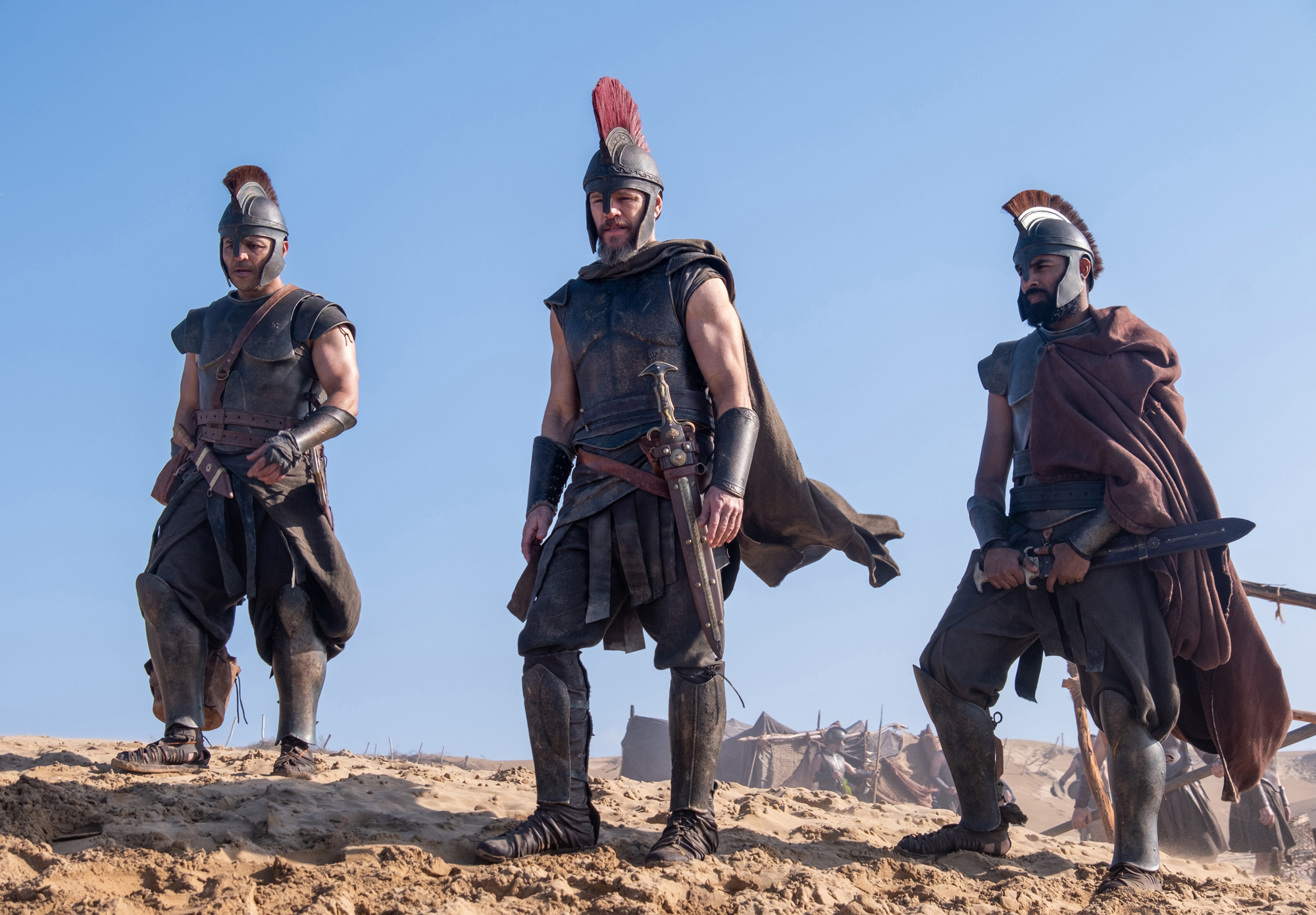
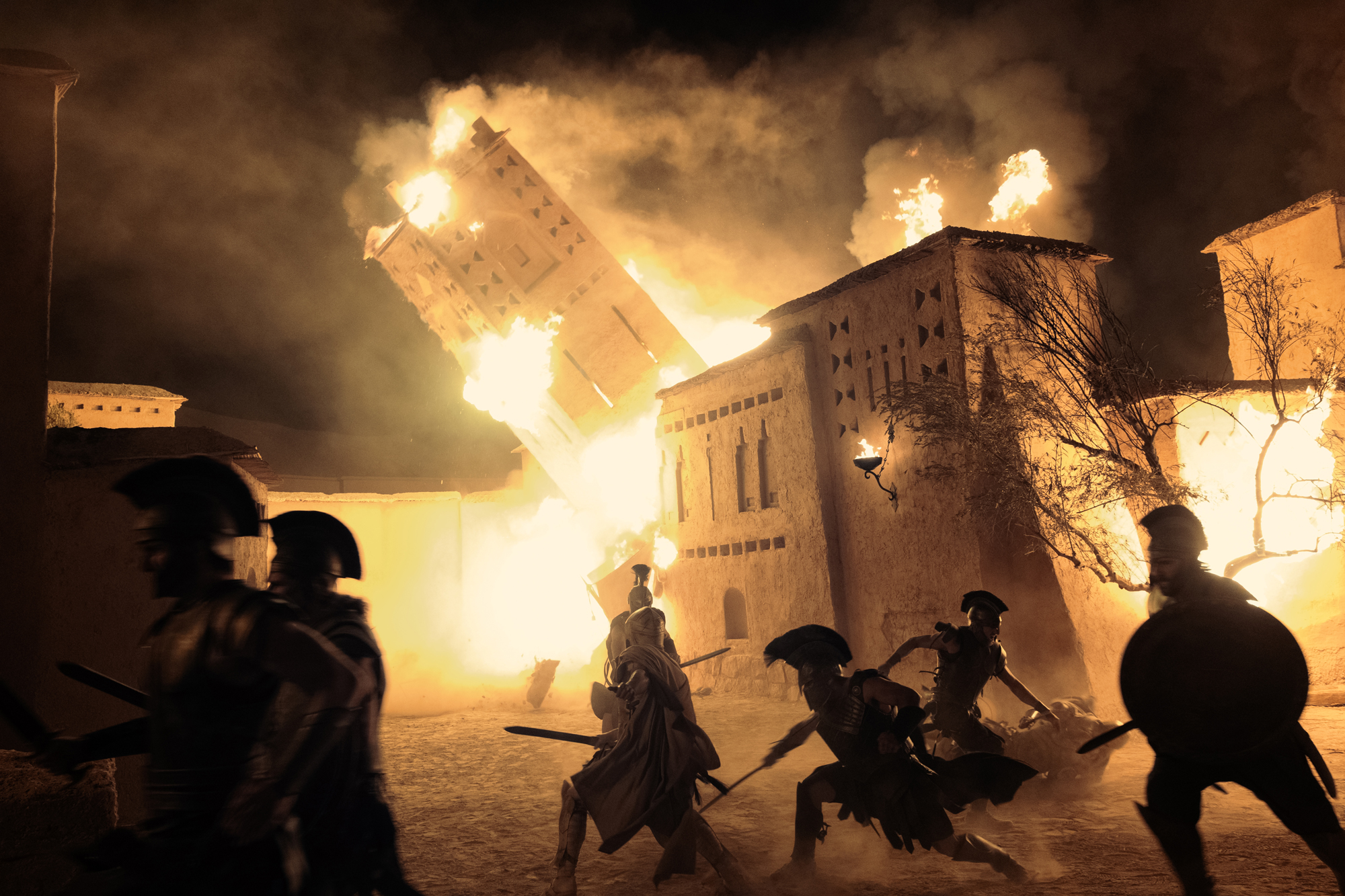
Like so much of Nolan’s oeuvre, The Odyssey is a grand-scale, masculine action-adventure bow-tied with frilly robes of Hallmark-card philosophy. The filmmaker’s ability to thrust audiences into the center of chaotic battles and frenetic dangers — abetted, as always, by a crammed (Oscar, can you hear me?) sound design turbocharged at climactic moments by a drums-and-bass assault — carries the day.
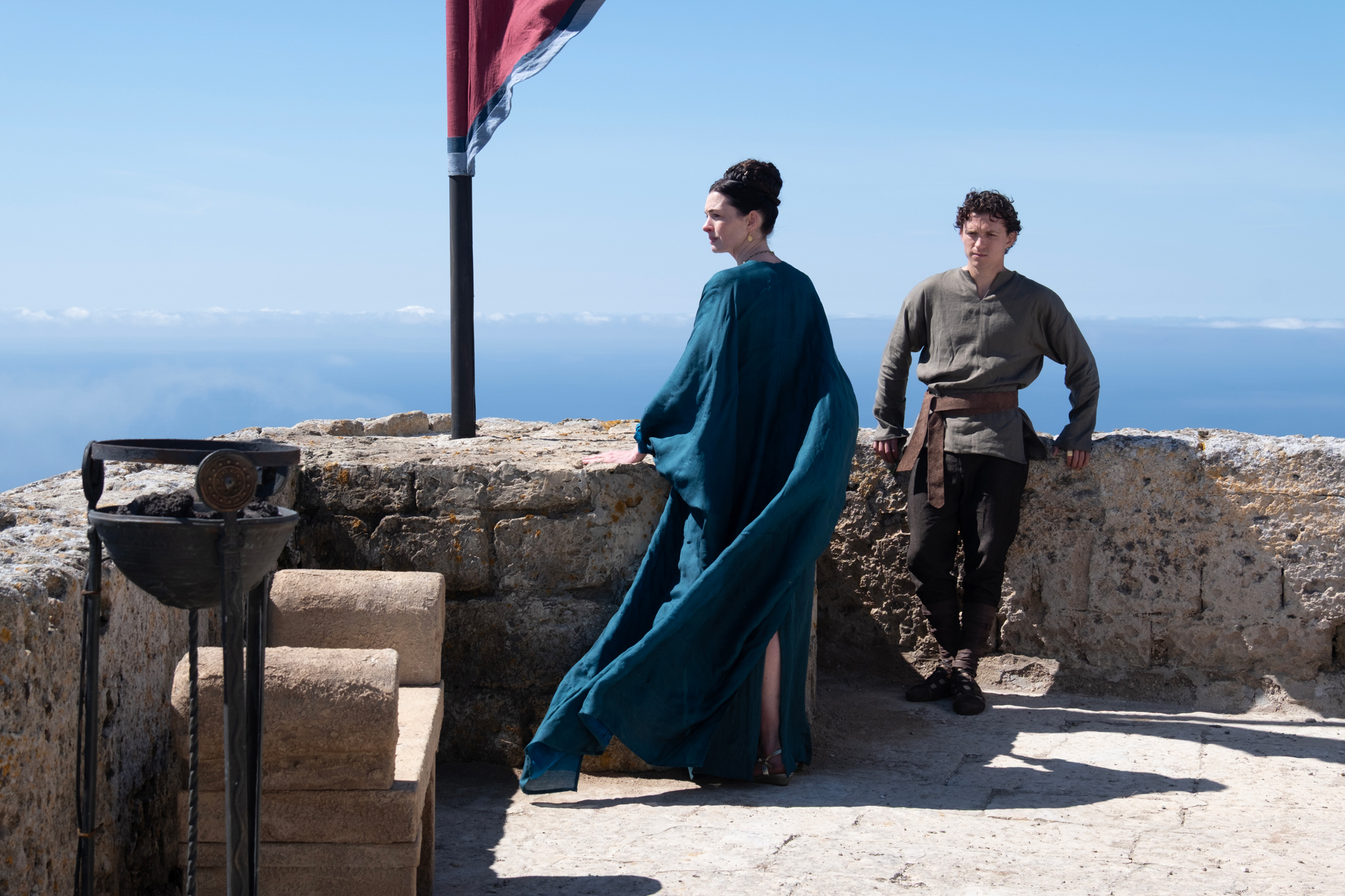
Perhaps inevitably, the movie’s power is undercut by the many expository dialogue scenes. They aren’t boring, exactly, but matinee stars of limited range (Matt Damon, Anne Hathaway, Tom Holland, Robert Pattinson, Zendaya) delivering lines devoid of poetry does not make for emotionally involved audiences.
In other words, if you have any interest at all in The Odyssey, see it now on the biggest screen you can. You will be rewarded with immersion in the spectacle and the scenery. However, if you are indifferent, I encourage you to respect Nolan’s formidable undertaking by avoiding the TV-size streaming and DVD formats down the road.
Nolan’s The Odyssey is largely structured as a series of flashbacks (and flashbacks within flashbacks) recounted by the shipwrecked Odysseus to the ageless Calypso (Charlize Theron) seven years after his army invaded and defeated Troy. The poor guy just wants to get back to his wife and dog, but the gods have arrayed a litany of life-threatening obstacles (Cyclops, Circe, Sirens) for Odysseus and his ever-dwindling battalion of ocean-traveling soldier-sailors.
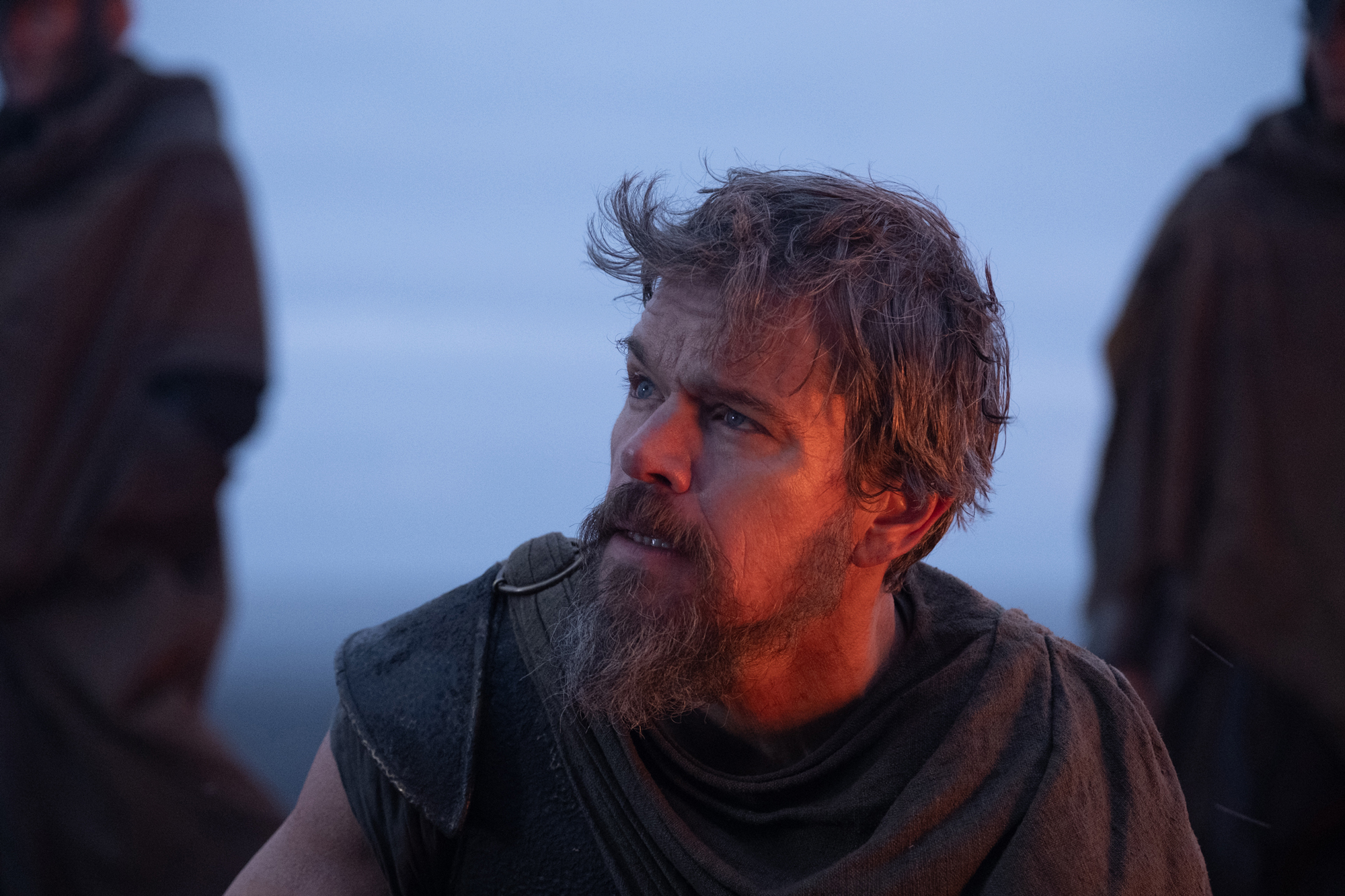
Odysseus possesses supreme confidence but dubious decision-making ability; alas, Nolan and Damon portray him as a relentlessly heroic figure — tailor-made for audience identification — rather than a man of bottomless hubris who has brought his fate (and his men’s) upon himself, with a little assistance from the gods.
Meanwhile, back at the palace, the queen and her son Telemachus (a doughy Tom Holland) debate the dim possibility that the king still draws breath after so many years without a sighting. The dining room overflows with suitors for the queen’s hand and the king’s crown, with the pack headed by Antinous (Robert Pattinson, resembling a young, lean and hungry Dylan McDermott).
Late in the proceedings, after so much horror and death puts Odysseus in a reflective mood, Nolan finally shows us the horrific impact of war on Troy’s civilians. The suffering of these anonymous people is a catalyst for Odysseus’ awakening to the cost of his ego and ambition. In Happy Ending Hollywood, the director wants us to take strength along with that warning, so he reminds us yet again of the merits of sacrifice, loyalty and perseverance during the final stage of Odysseus’ return.
The Odyssey isn’t sufficiently rich and wise enough to accommodate more than a couple jokes (unlike your blasphemous critic), nor is it anywhere near dull or bad enough to invite you to whisper wisecracks in your neighbor’s ear. Only afterward, when I was thinking about Jack Kerouac’s On the Road as well as the extensive, irresistible subgenre of road movies, did it dawn on me that in Fear and Loathing in Las Vegas, the protagonist (aka Hunter S. Thompson) receives his visions from the gods via acid and speed.
I invite you to come up with your own modern-day reference points during or after The Odyssey. There’s the Coen Brothers’ O Brother, Where Art Thou, of course, and Joseph Conrad’s Heart of Darkness as reimagined by Francis Ford Coppola as Apocalypse Now. Telemachus’ impatience, for that matter, may remind you of another stubborn son, Dune’s Paul Atreides.
I do wish that Nolan had had the wit and whimsy to play Blind Faith (“I’m wasted and I can’t find my way home”) over the end credits. Or, swapping British yearning for Southern California wistfulness, Steely Dan’s jazz-pop soliloquy: “Well, the danger on the rocks is surely passed/Still I remain tied to the mast/Could it be that I have found my home at last/Home at last.”
‘The Odyssey’ opens in theaters July 17.