In ‘Wood Street,’ Encampment Residents Fight to Remain

For years, when Oakland police kicked people out of encampments, they’d tell them to go to Wood Street.
Eventually, the Caltrans- and city-owned lot in West Oakland grew into Northern California’s largest community of unhoused people, with 300 residents at its peak during the pandemic. They laid bricks, hammered plywood and planted flowers. They cobbled together makeshift homes and two community centers with showers, bathrooms and a free store. For many struggling with mental health and addiction, the shelter and resources they built for themselves became a lifeline.
Filmmaker Caron Creighton first got to know these residents as a multimedia producer at the San Francisco Chronicle. When the Wood Street encampment received an eviction notice in 2022, she quit her job and spent nearly a year following them with her camera, documenting their efforts to stop the sweeps.
“I just thought it was really powerful,” she says, “people really taking their power back and fighting for what they believed in.”
Creighton’s new documentary, Wood Street, premieres in Oakland this week with screenings at the New Parkway (July 14, 6:30 p.m.) and the Grand Lake Theatre (July 15, 7:30 p.m.). The film follows two Wood Street residents, John Janosko and LaMonté Ford, as they rally their community to defend their home. With the help of lawyers and advocates, Wood Street residents eventually sue the city and state to attempt to stop the evictions.
“All this stuff, these resources, these connections, these people, this caring, this love — that took time,” Janosko said in a 2023 KQED interview about the encampment. “It takes time to be able to get to a point where you’re able to take care of yourself, and also help take care of your community.”
Throughout the film, many residents explain that they’ve settled at Wood Street because there’s a lack of dignified housing alternatives. In order to access temporary shelter beds, unhoused people must abandon their pets and belongings, only to be sent back on the street shortly after. At tiny home sites, residents say they are left to fend for themselves amid a lack of resources and outbreaks of violence. And neither shelters nor tiny home communities have enough space to accommodate Oakland’s estimated 4,410 homeless residents.
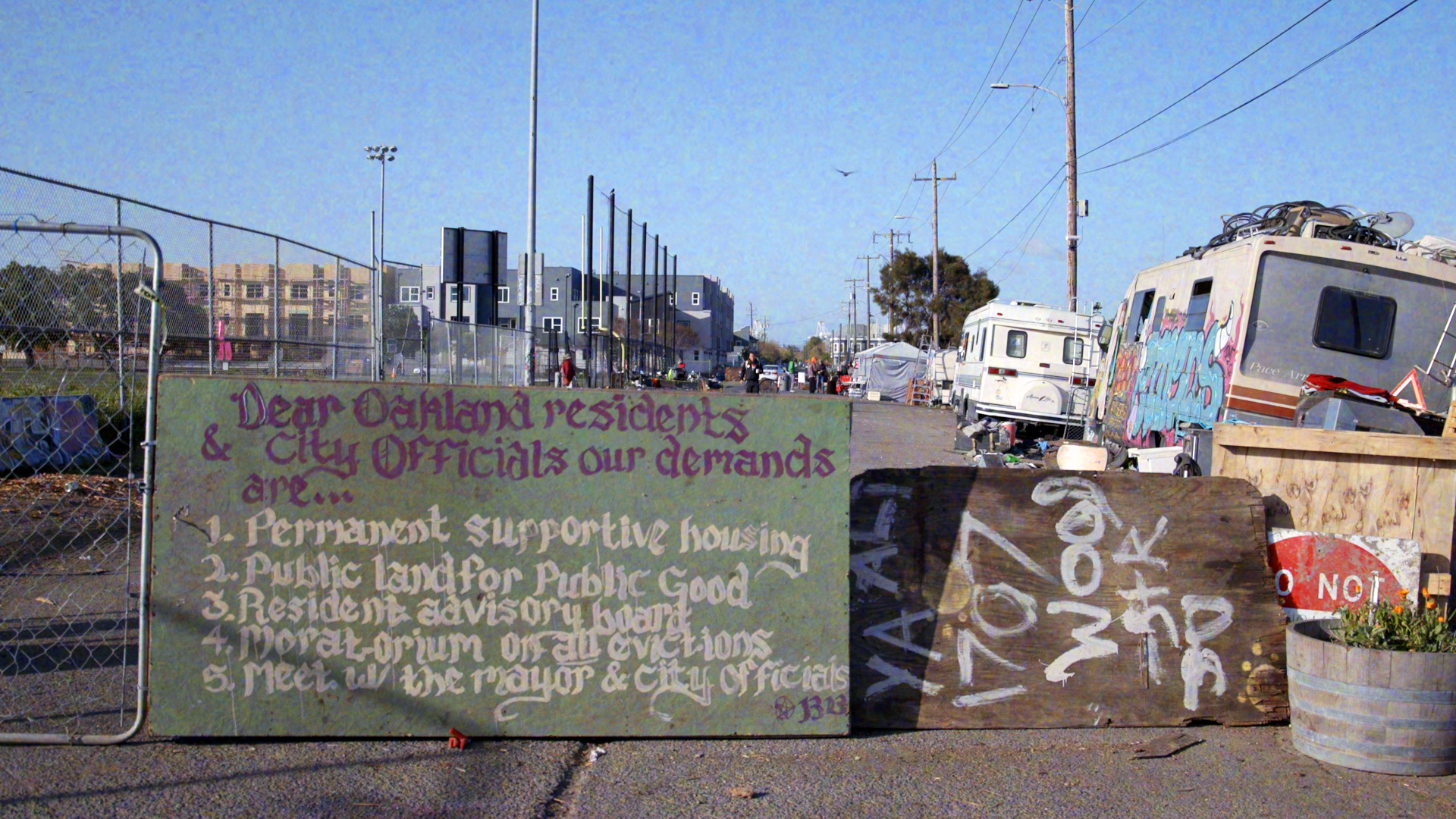
Notably, Wood Street doesn’t feature interviews with politicians or other talking heads. Nor does it portray its protagonists merely as victims. In Janosko’s phone footage of community meals and clean-ups, we see imperfect people making a way despite dismal circumstances.
“As I was a reporter covering homelessness, it felt like you always had to have an outside expert talking about it, but a homeless person’s experience isn’t necessarily considered an expertise,” Creighton says.
With the documentary, she set out to change that. Creighton captures the psychological toll of the looming eviction as residents relapse into addiction, struggle with mental health and lose the tenuous sense of stability they’d managed to build. Strong personalities emerge, and tensions run high.
“I wanted to show how all of these processes move to impact an individual. They impact people’s mental health in such a negative way,” Creighton says. “A lot of people are struggling with addiction, and the stress of an encampment sweep isn’t going to help them get clean.”
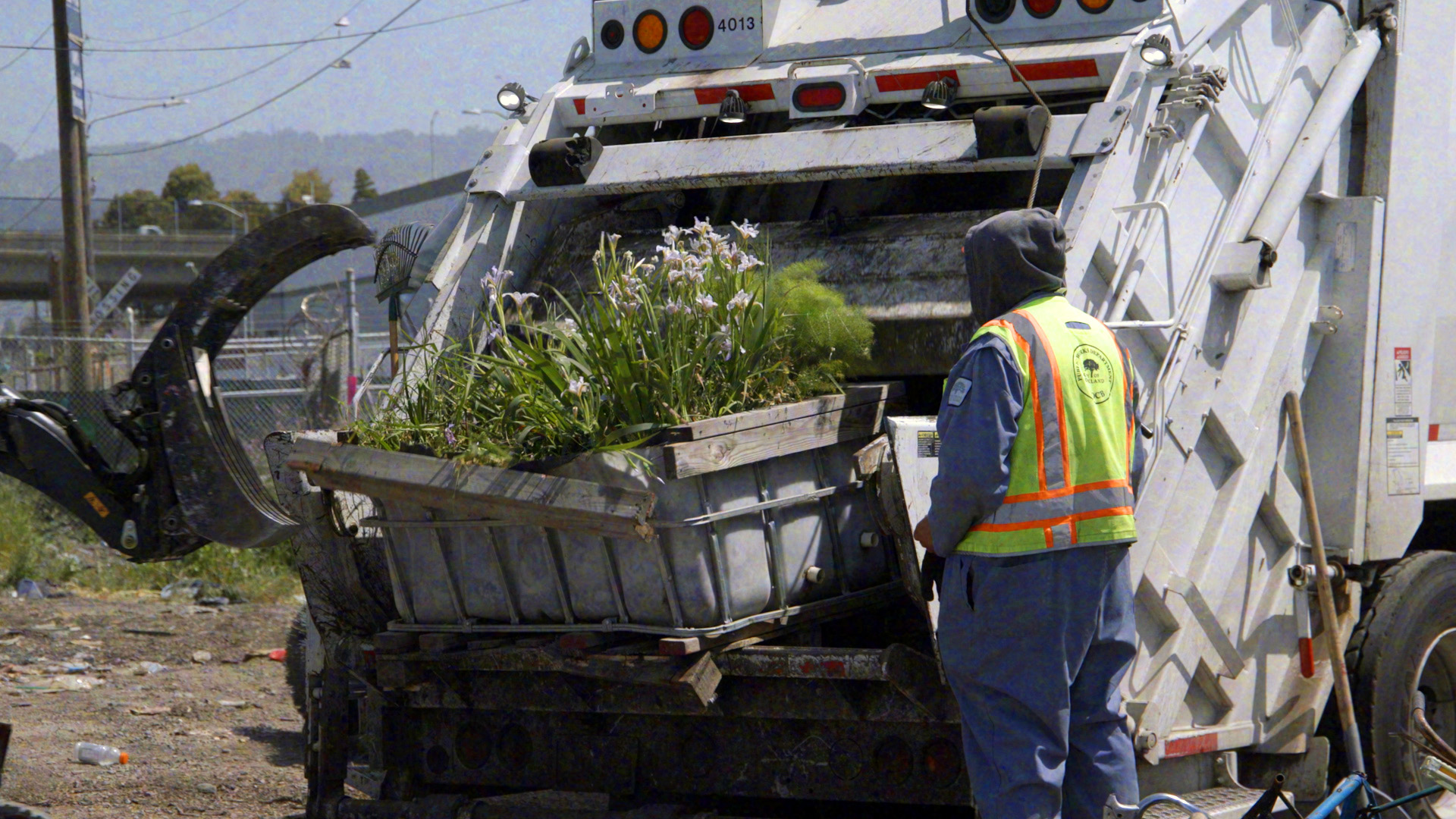
Wood Street comes to a tear-jerking crescendo when bulldozers finally arrive to crush people’s homes and belongings. City officials justify the eviction by citing a new affordable housing development slated for the site. That building is now open, and with rents starting at $1,845 for a studio apartment, it’s out of reach for many low-income workers. The encampment site itself is now a parking lot.
“The word ‘affordable,’ I think, is incredibly misleading,” Creighton says.
After Wood Street was cleared out in 2023, many of the residents moved into a tiny home site, which the city of Oakland also later evicted. Only a fraction of them made it into permanent housing. The rest have scattered to encampments around the area.
Meanwhile, California ramped up encampment sweeps after the Supreme Court’s 2024 Grants Pass Supreme Court ruling. For many homeless people, each sweep means losing irreplaceable documents, possessions and support systems. These life disruptions can have dire consequences, including increased chances of overdose and even death.
“There’s a better way, there has to be,” Creighton says. “We don’t have to be traumatizing people in order to get them off the street.”
‘Wood Street’ screens on Tuesday, July 14 at 6:30 p.m. at the New Parkway (474 24th St., Oakland), and on Wednesday, July 15 at 7:30 p.m., at the Grand Lake Theatre (3200 Grand Ave., Oakland). Sold out online; limited tickets available at the door.