San Francisco’s Fillmore District Looks Toward Its Next Heyday
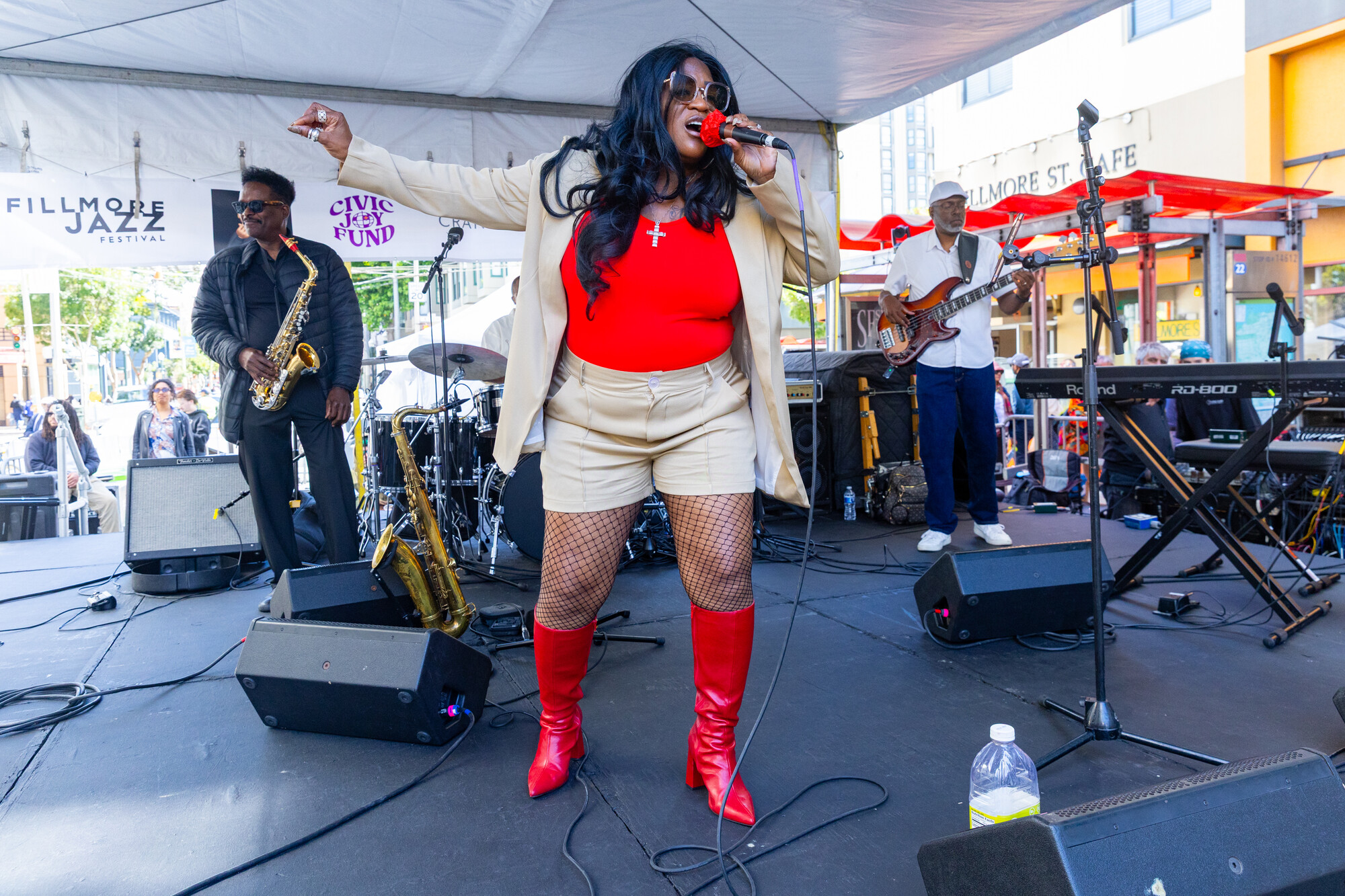
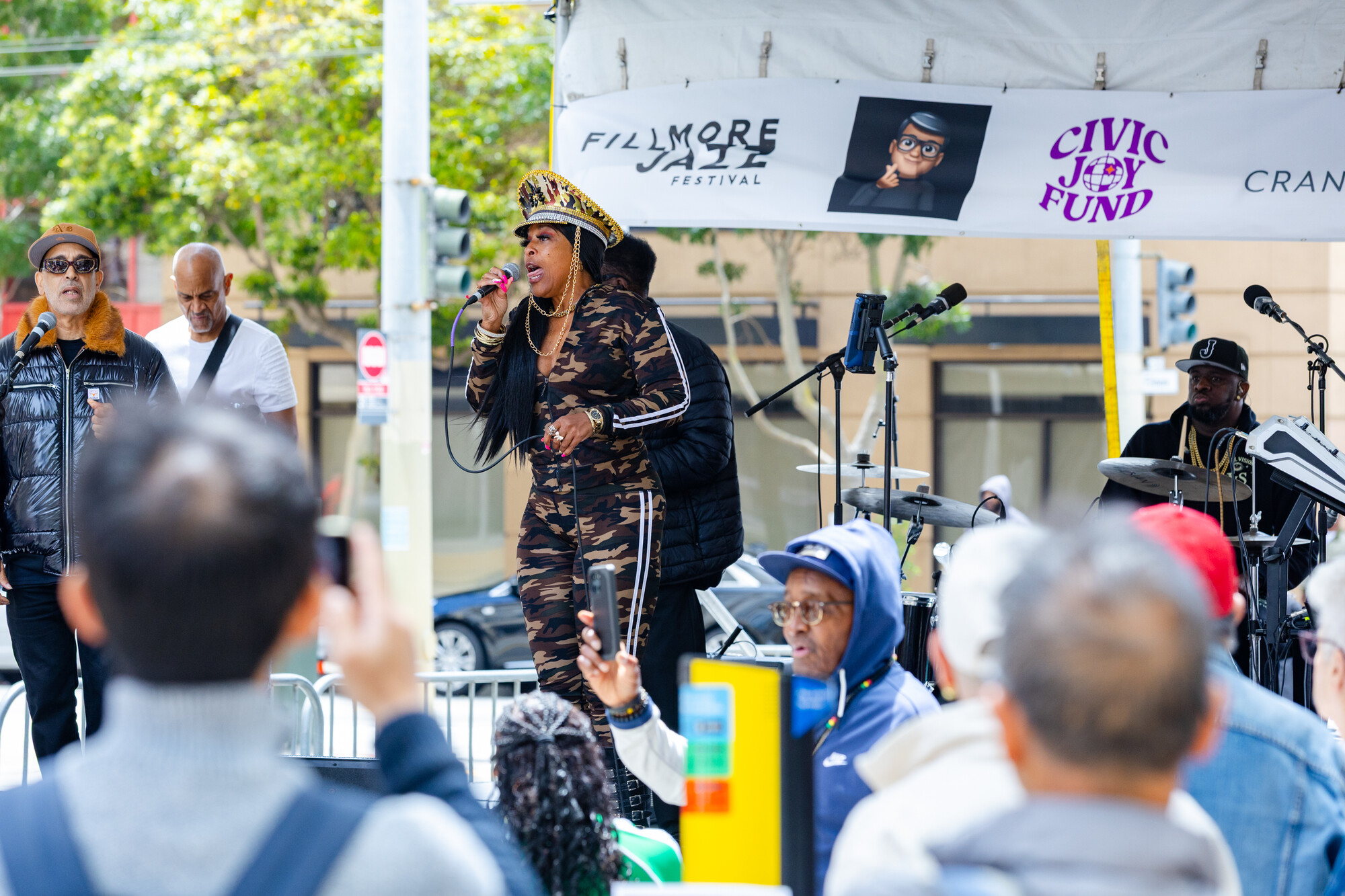
The sun was out in San Francisco on the Fourth of July, and the corner of Fillmore and Eddy was alive. People danced in the street as DJs spun; the Church of St. John Coltrane Band filled the air with spiritual jazz; and vendors lined the block.
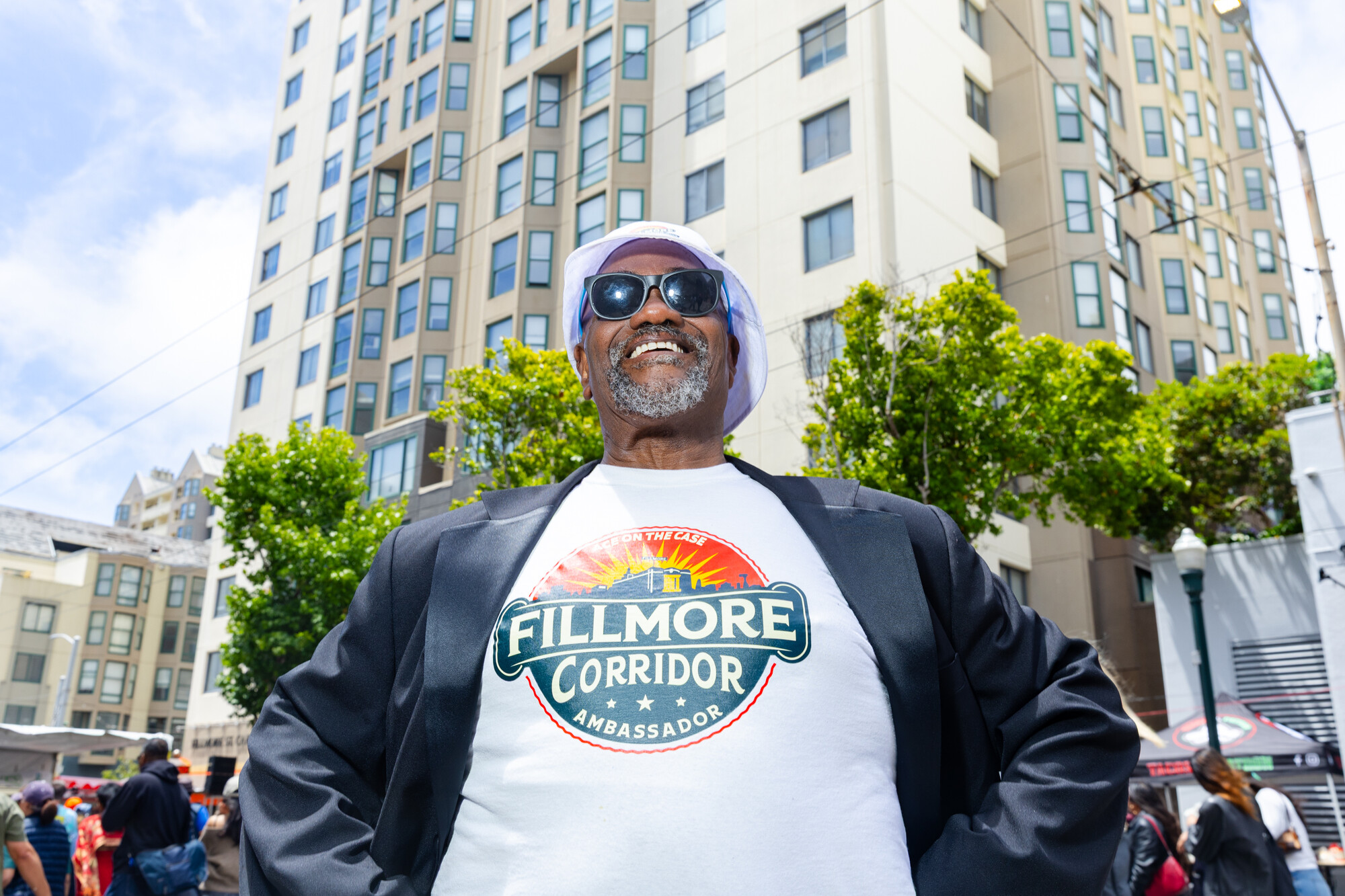
Inside the Fillmore Heritage Center, a sound healing session, film screening and a fireside chat about building bridges across race unfolded simultaneously. Volunteers kept everything moving. Ace Washington, the Fillmore’s longtime corridor ambassador, worked the crowd, moving between the street and the building. Entrepreneur and community organizer Linda Parker Pennington greeted guests as they arrived. It felt less like a reopening and more like a family reunion.
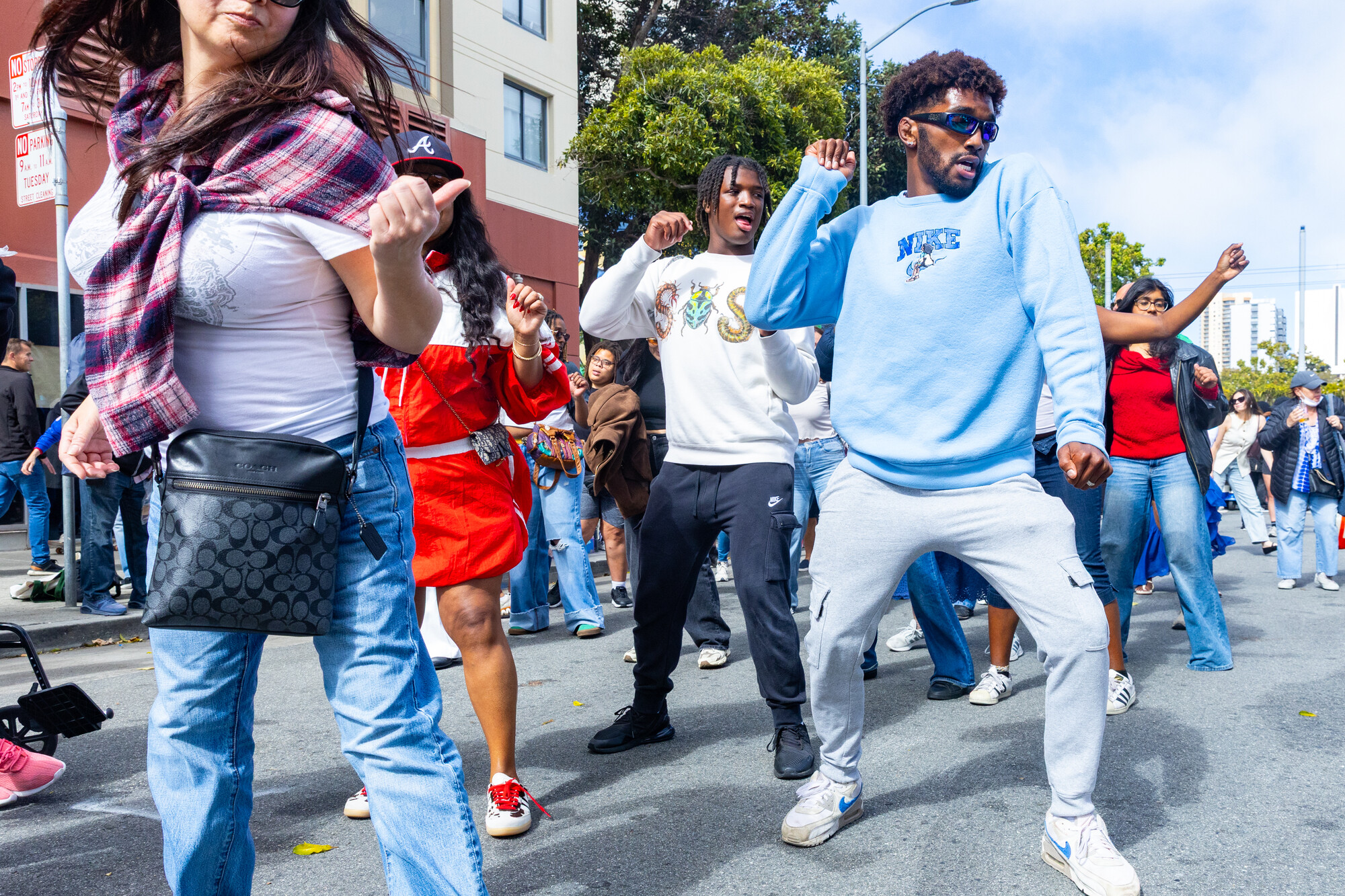
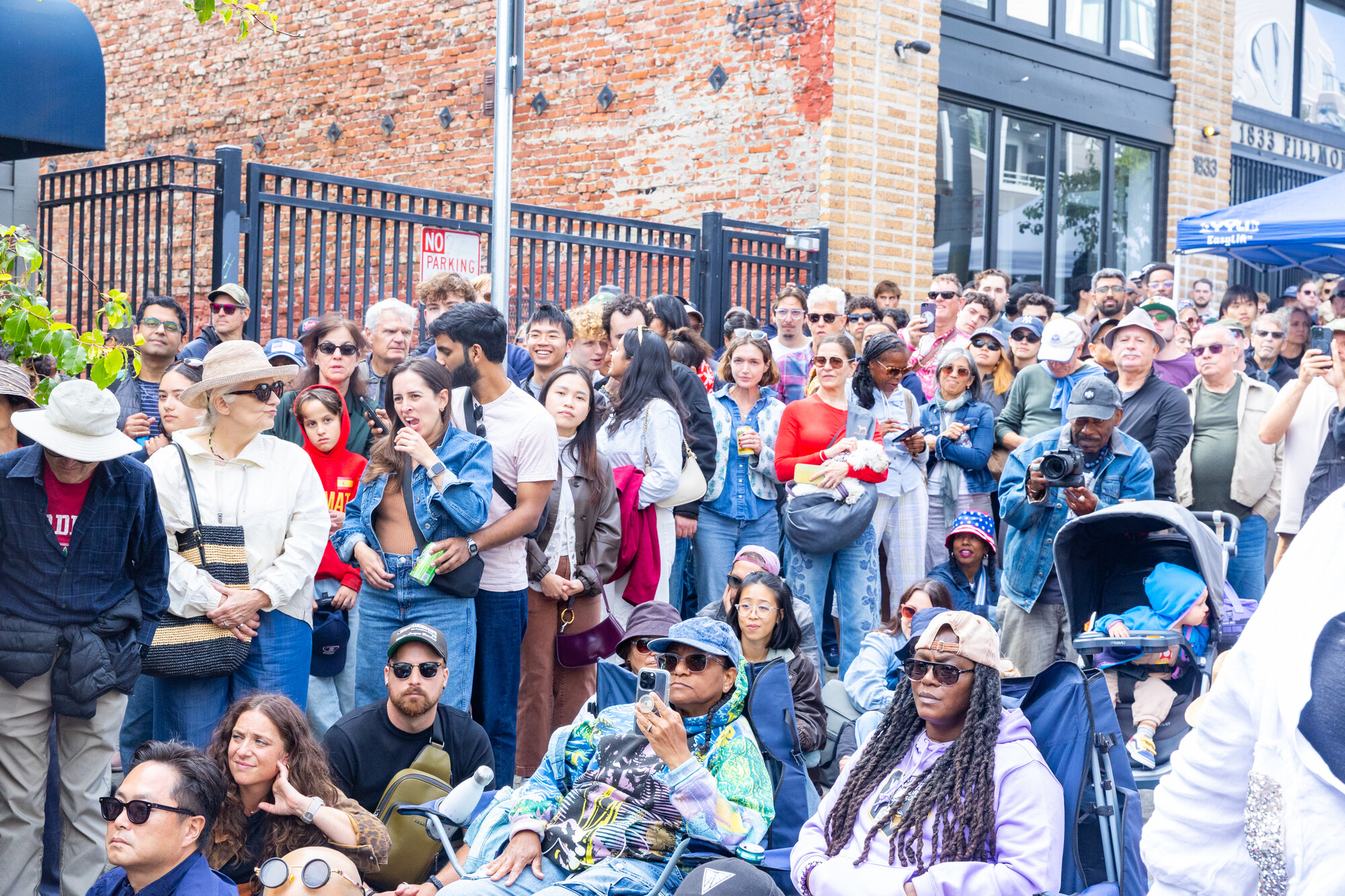
Some people brought lawn chairs, and you don’t bring a lawn chair to a ribbon-cutting. You bring one to a place you intend to stay a while. For the first time in years, the Fillmore Heritage Center wasn’t simply open. It seemed to belong to the neighborhood again, if only for an afternoon. On a corridor where so much has been lost, the Fillmore’s Black community was unmistakably still present.
The weekend marked a new phase in the Heritage Center’s reactivation. The July 4 programming was not a one-off, nor was it a permanent reopening. It was part of a temporary activation period: Through December, community organizations and artists will be invited to propose public-facing events as the city assesses the building and develops options for its long-term future. What remains unsettled is who will shape what comes next.
The Fillmore’s deep cultural legacy
The Fillmore has had an outsized impact on San Francisco’s culture, but the neighborhood has also faced major challenges.
Ask anyone who has loved the Fillmore long enough, and they’ll name a different heyday: the Harlem of the West years, when Billie Holiday and John Coltrane performed in its jazz clubs; the 1990s, when “Fillmoe” artists like San Quinn, JT the Bigga Figga and Rappin’ 4-Tay built a hip-hop legacy; or the 2000s, when Yoshi’s and 1300 on Fillmore made the corridor buzz with concert- and restaurant-goers.
The danger is letting those memories become a ceiling, turning a neighborhood into a museum instead of a community. The advocates working to bring the Heritage Center back aren’t trying to recreate 1958, 1998 or 2008. They’re trying to build a version of the Fillmore that they hope will one day become someone else’s favorite era.
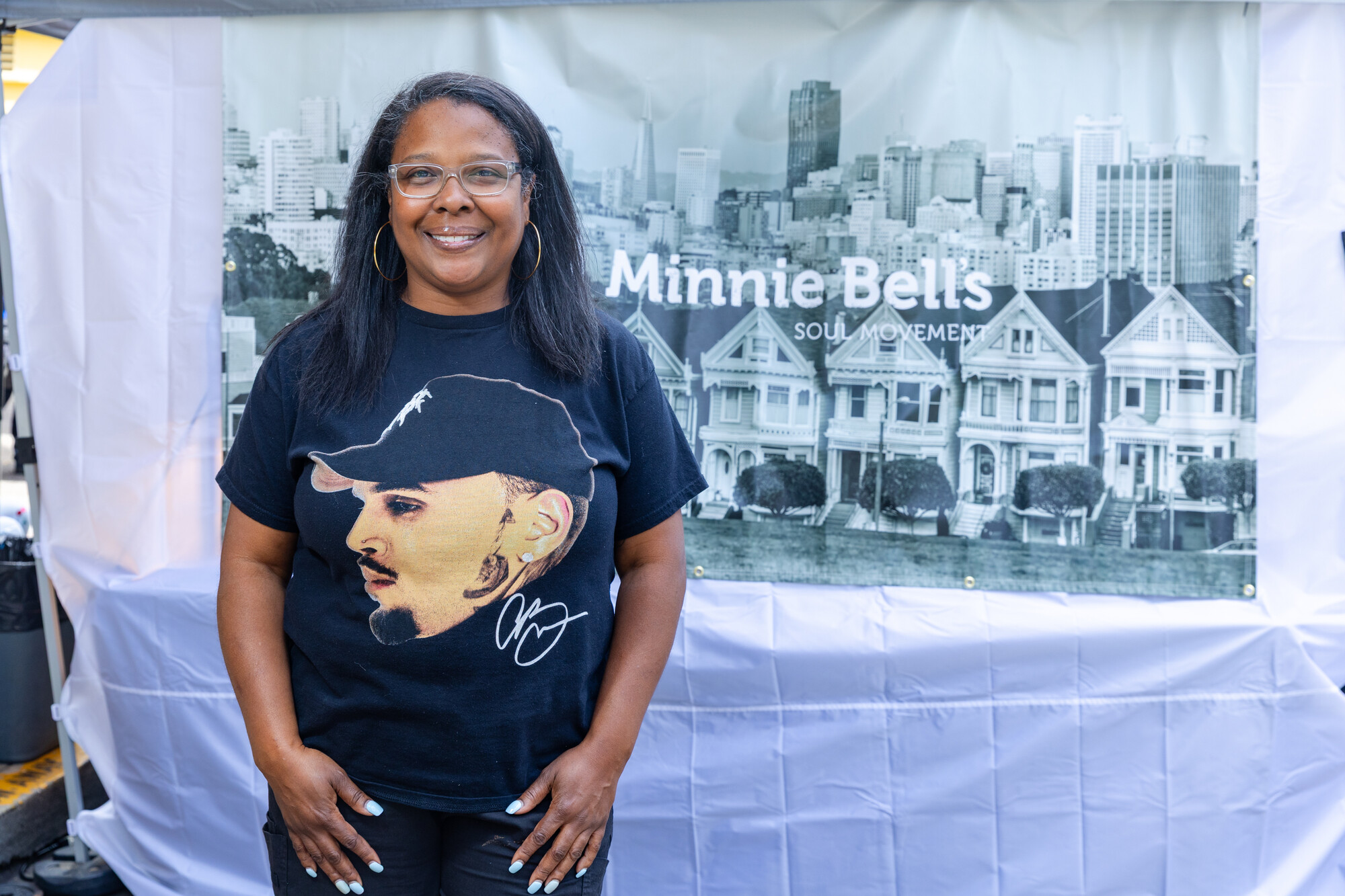
Chef and business owner Fernay McPherson, who runs Minnie Bell’s Soul Movement and serves on the Fillmore Community Action Plan committee, sees that future already taking shape. “We are definitely working on the new heyday, and it will happen,” she said. “I’m not going to say what was here, because we’re still here. We’re just fighting to make our presence known.”
The Fillmore Heritage Center opened in 2007 as an attempt at restitution in concrete and steel. The complex, which cost more than $80 million, was built on land shaped by urban renewal, which displaced thousands of Black residents and hundreds of businesses beginning in the 1960s.
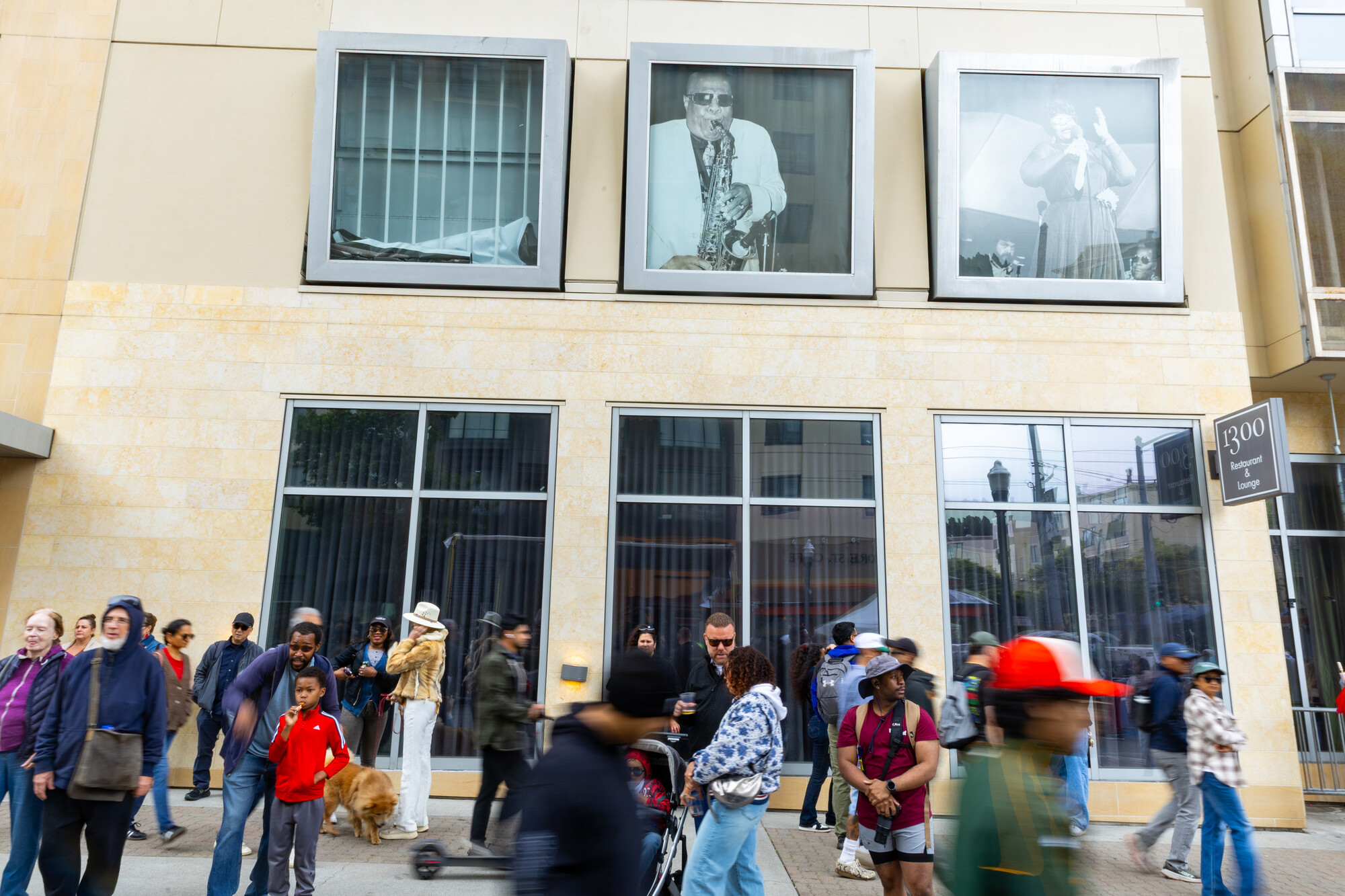
For a moment, it was the cultural and economic anchor the neighborhood had been promised. Then the unraveling came in stages: Yoshi’s San Francisco filed for bankruptcy reorganization in 2012 and closed in 2014. Its replacement, The Addition, closed within months of opening — and the city took over the building’s commercial spaces in 2015, after developer Michael Johnson defaulted on a $5.5 million city loan. By 2017, 1300 on Fillmore, the last holdout, was gone too — tenants worn down by the building’s high operating costs and the weight of a neighborhood’s expectations.
For years afterward, the building sat at the center of a long, unresolved dispute. A 2017 attempt to sell it collapsed when no bidder met the community standards attached to the sale. Proposals came and went, and COVID consumed what remained of the momentum.
Bringing life back to the Fillmore Heritage Center
This June, the Heritage Center’s doors began to crack open during Juneteenth celebrations, offering festival support space and a venue for the Wesley Johnson White Horse Awards honoring Black community leaders. Then, over the Fourth of July weekend, came the Dream Center — the first full weekend of public-facing programming in the building’s current activation period.
Organized by Linda Parker Pennington, an early investor in Yoshi’s and former board chair of the Jazz Heritage Center nonprofit, the weekend brought together wellness workshops, art, youth media, a reparations panel, a genealogy workshop and a screening of filmmaker Jalila Bell’s documentary Culture Connects Us. “I want people to walk in and feel like they’ve arrived at an oasis,” she said. “Regardless of their background. Regardless of their age.”
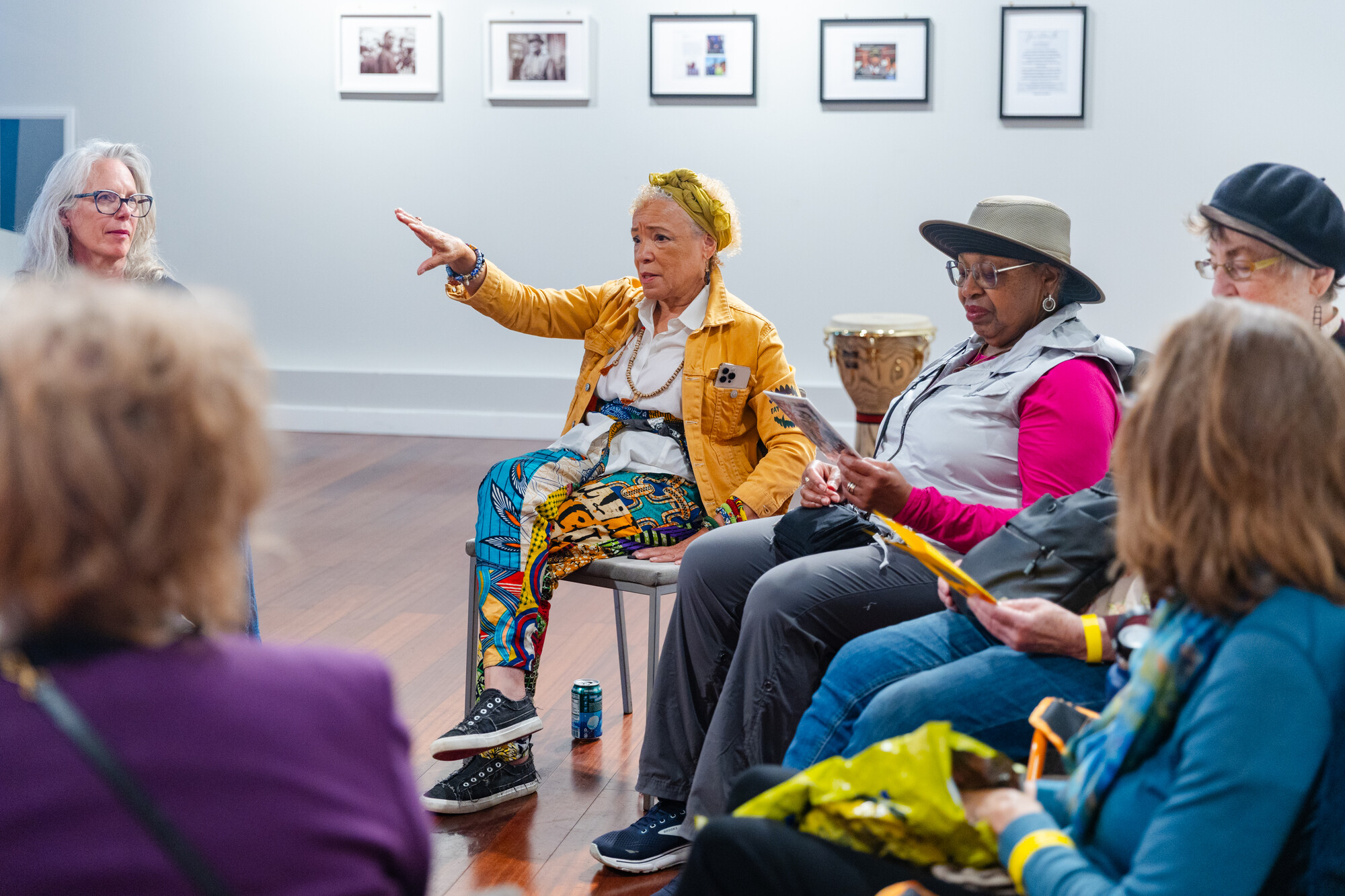
Among the community stakeholders who have consistently stepped up to steward the building’s future is Fillmore Rising, a collective co-led by Majeid Crawford, executive director of the New Community Leadership Foundation, and Ericka Scott, the founder of Honey Art Studio who grew up in the community.
The group’s vision wasn’t drafted in a city office. It grew out of weekly community mapping sessions at Third Baptist Church, where local leaders dreamt up ideas for the space: a curated gallery, an African diaspora restaurant, a 39-seat screening room for independent film and youth programming and a sliding-scale rental model designed to give local event organizers a real path into the building for the first time.
“This is an opportunity for us to see this space again, filled with life,” Scott said.
Crawford has spent years working to bring vibrancy back to the building. After watching proposal after proposal fall apart, he said he has been explicit with the city about what community stewardship requires: a transparent, open application process, not one where proximity to power determines who gets through the door first.
“If a fair, open process cannot be established for all,” Crawford said, “then no one should have access to avoid the appearance of favoritism.”
City leaders have said they are listening. On May 28, Mayor Daniel Lurie joined Supervisor Bilal Mahmood and community leaders at the Heritage Center to announce a package of new investments in the Fillmore, including $230,000 in SF Thrives grants for 23 small businesses in the area. The ribbon-cutting came days after the launch of Fillmore After Dark, a new yearlong night market series. And over Fourth of July weekend, the new Lower Fillmore Entertainment Zone allowed participating businesses to sell alcoholic beverages to-go during the Fillmore Jazz Festival.
Diana Ponce de León, acting director of workforce development at the Office of Economic and Workforce Development (OEWD), acknowledged in an interview that many residents remain skeptical after decades of stalled promises.
“The desire has always been there,” she said. “We are just restarting that process again.”
She was equally clear about where the current momentum originated.
“We didn’t come up with these at all,” she said of the first activations. “The community did, and they’re leveraging their partnerships.”
OEWD is preparing a formal application process for public-facing, one-day events, with availability for up to eight activations a month through December. For now, programming is limited to the lobby, screening room and gallery while the city assesses the building’s condition, needed repairs and possible future uses. By the end of the calendar year, staff will use that work and ongoing community input to develop options for the Fillmore Heritage Center’s next steps.
A community that refuses to give up
The question of who shapes what comes next surfaced in nearly every conversation on the corridor. Not everyone is ready to call this a resurgence, including some of the people doing the work.
Ashley Smiley, senior programs coordinator at the African American Art & Culture Complex, sees the Fillmore Heritage Center’s reopening with both optimism and caution. As one Black cultural institution begins a new chapter, another is preparing to pause its own. The African American Art & Culture Complex is expected to suspend programming this fall while its building undergoes a seismic retrofit, and Smiley still doesn’t know where the organization will land in the meantime.
“Black spaces are very fractured right now,” she said. “I’m 100% optimistic that it can be done. But in that optimism, I also want to acknowledge the things that can be adjusted, because we want sustainability.”
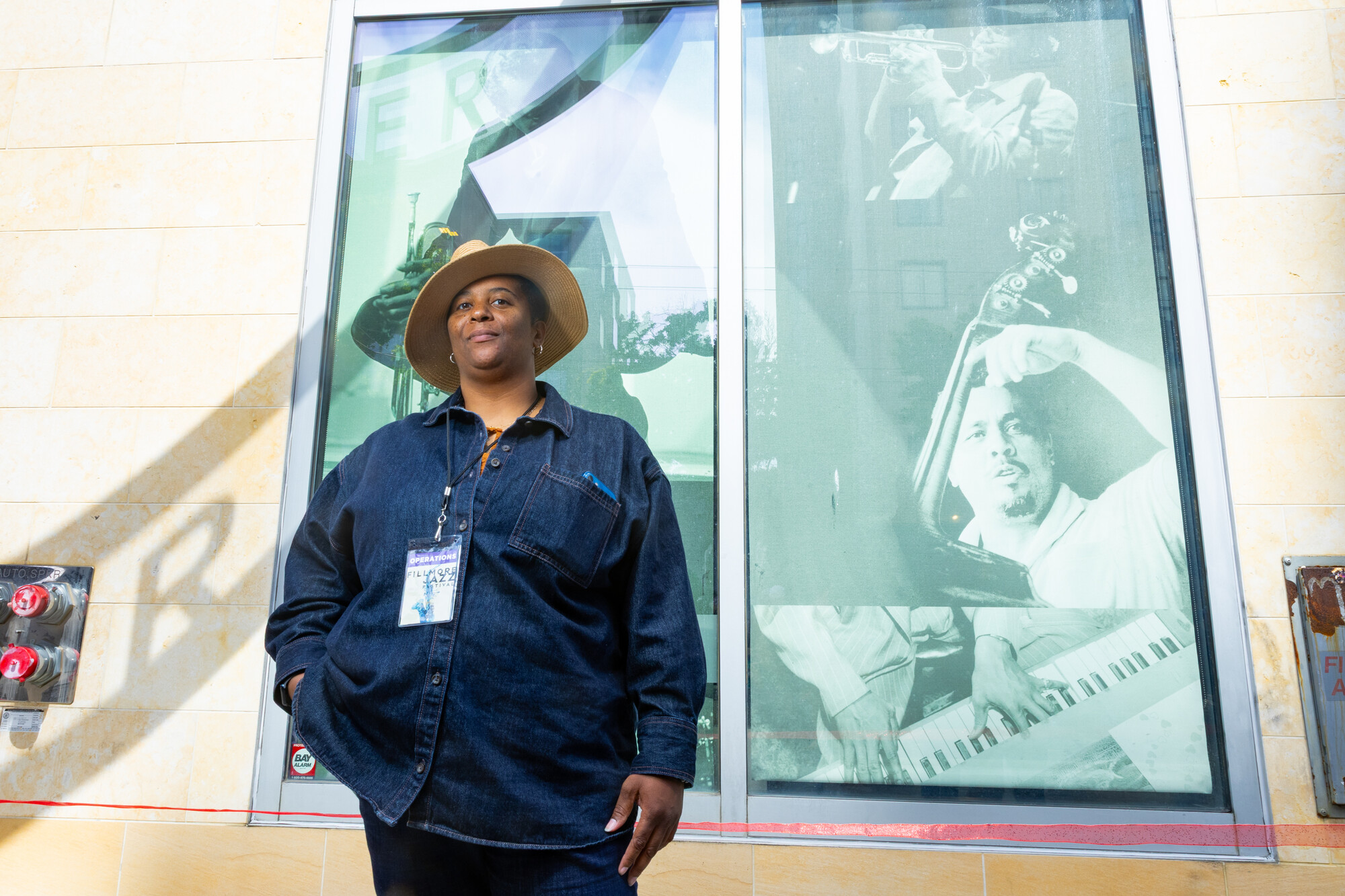
For Smiley, the Heritage Center’s reopening matters because it represents more than a single building. San Francisco’s future, she argues, depends on investing in the neighborhoods where culture is created, not simply where it is presented.
“The art and culture of the city that makes it important isn’t just downtown,” she said. “It grows here. It grows in the Fillmore, it grows in the Bayview, it grows in the Mission.”
The stakes beneath her warning are demographic as much as cultural. San Francisco’s Black population has declined from 13.5% in 1970 to roughly 5% today, according to census data. Yet in interviews, many residents reached instinctively for an even smaller number: “3%.” It wasn’t a statistic so much as a feeling, shorthand for what many believe the neighborhood has lost.
Paulette Brown has spent years advocating for families affected by violence, work shaped by the loss of her son, Aubrey Abrakasa Jr., in 2006. On Saturday, she was back at 1330 Fillmore, still showing up for the community.
“Look at the Heritage Center,” she said. “It’s open. People are having hope again. We’re coming together and sticking together.”
Asked why she keeps showing up, she answered simply.
“I believe hope will prevail,” she said. “And we will all come together as one, and help each other and love on each other.”
The people who filled this building in its first life built a neighborhood.
The people filling it now are building one too.
For updates on the Fillmore Heritage Center, visit the Fillmore Community Action Plan website. The next Fillmore After Dark night market takes place Aug. 14.