Sorting Through the Wreckage of an Immigrant Father’s Death
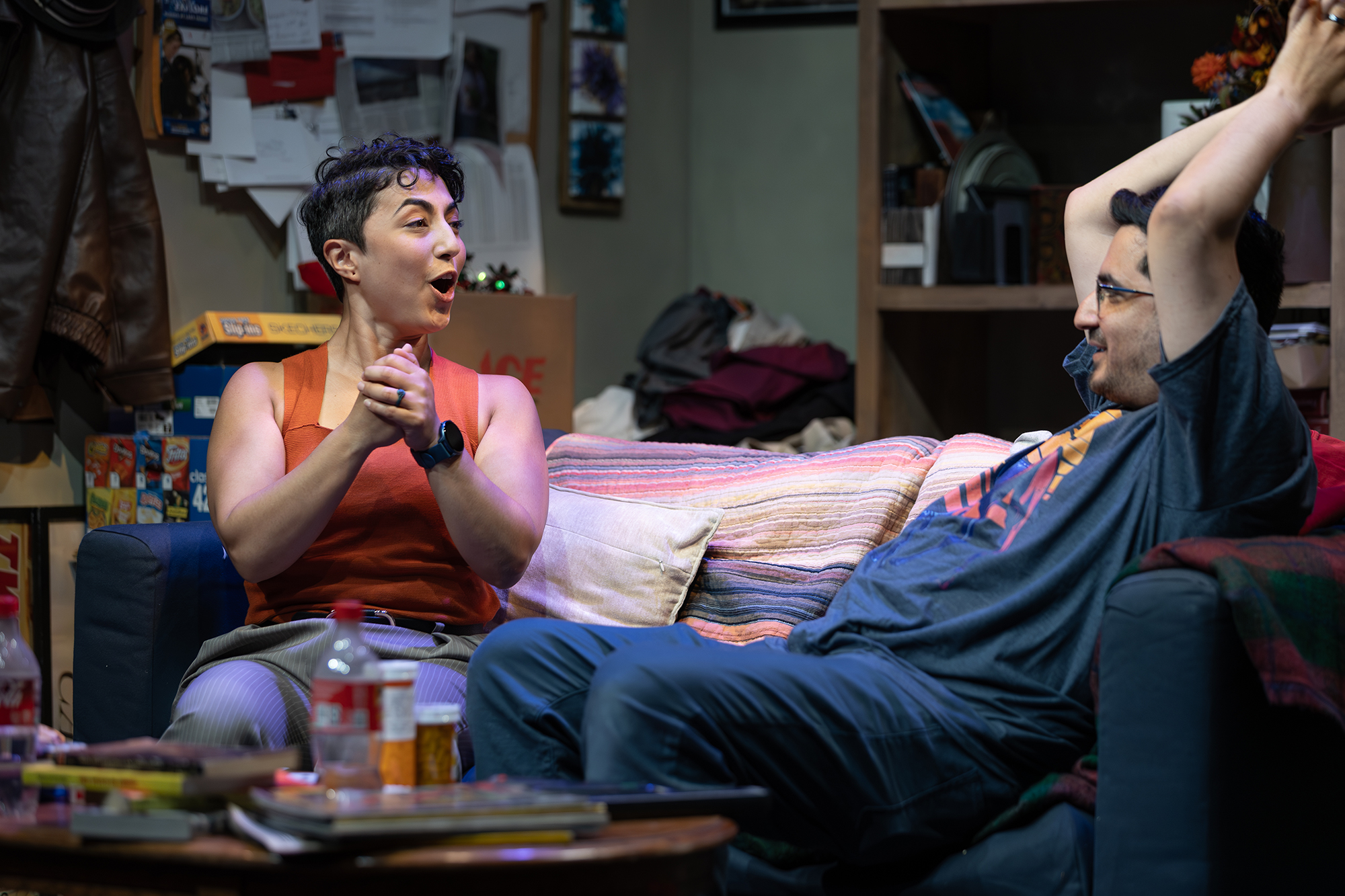
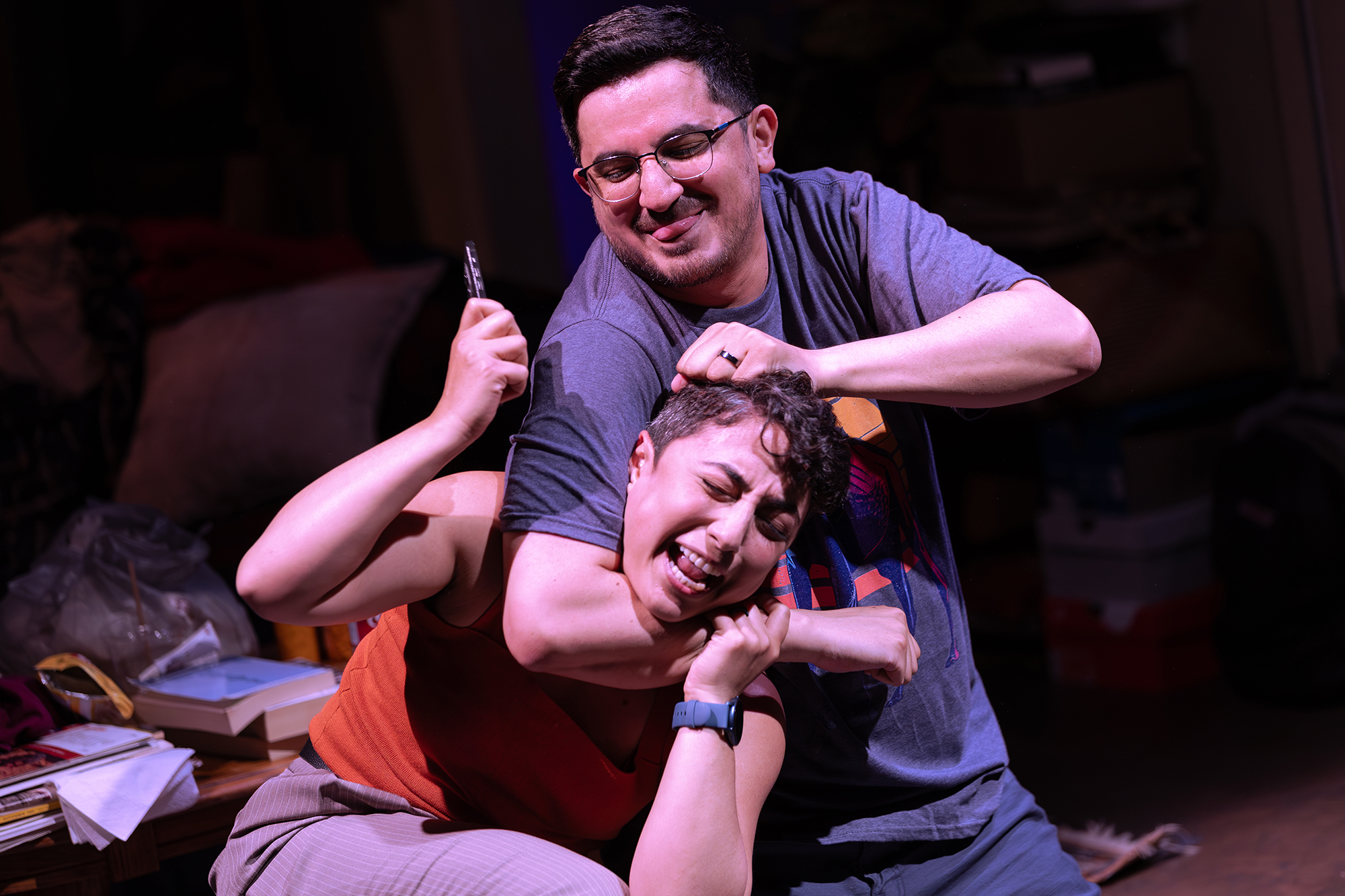
Yusuf is a recovering addict who presents as a lovable yet unserious schlub. Warm and playful, he’s always ready to chop it up with his more stoic big sister, Dina. Their playfulness extends even to hair noogies and wet willies while wrasslin’ on the floor of their late, estranged dad’s house in Houston.
Amid all this is the question: How are they going to plan a traditional Islamic burial that they barely understand — and for a man they hardly knew?
This quandary forms the core of Denmo Ibrahim’s world premiere, Arab Spring, a co-production between Golden Thread Productions and SFBATCO. Set on the eve of the Fourth of July, the show ponders legacy, and how to focus a parent’s loss, offering answers while giving space to the audience for their own hypotheses.
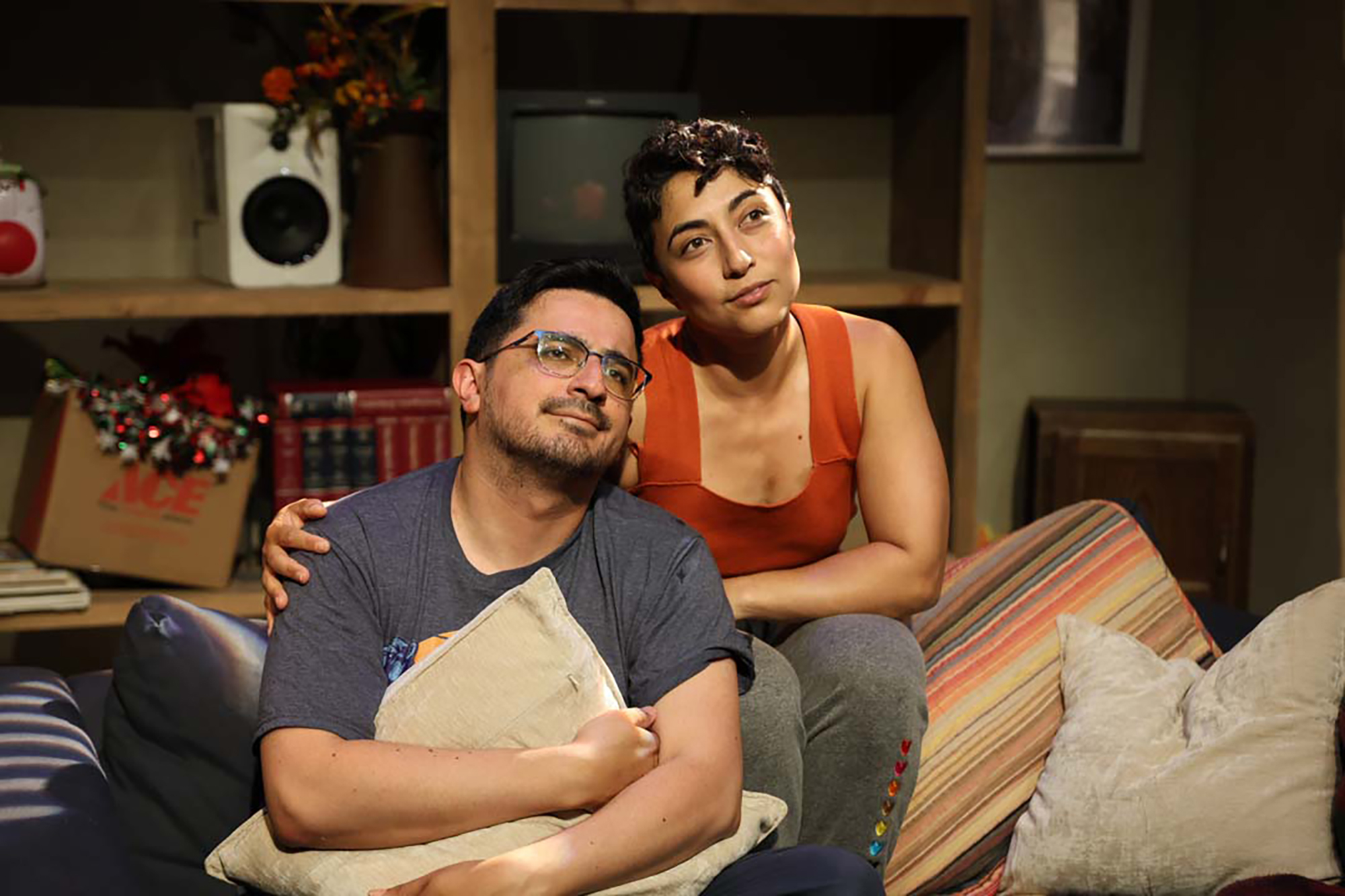
Yusuf (Salim Razawi) is introduced standing in front of the house of his father, Samir, asking facile questions to Siri regarding the anxiety-healing powers of gum. Soon, Dina (Arti Ishak) approaches the house, a total professional, highly educated and serious. Their odd-couple nature manifests in some strained dialogue between the siblings, these two Egyptian American children of immigrants who know they have to get this right, with few avenues as to how.
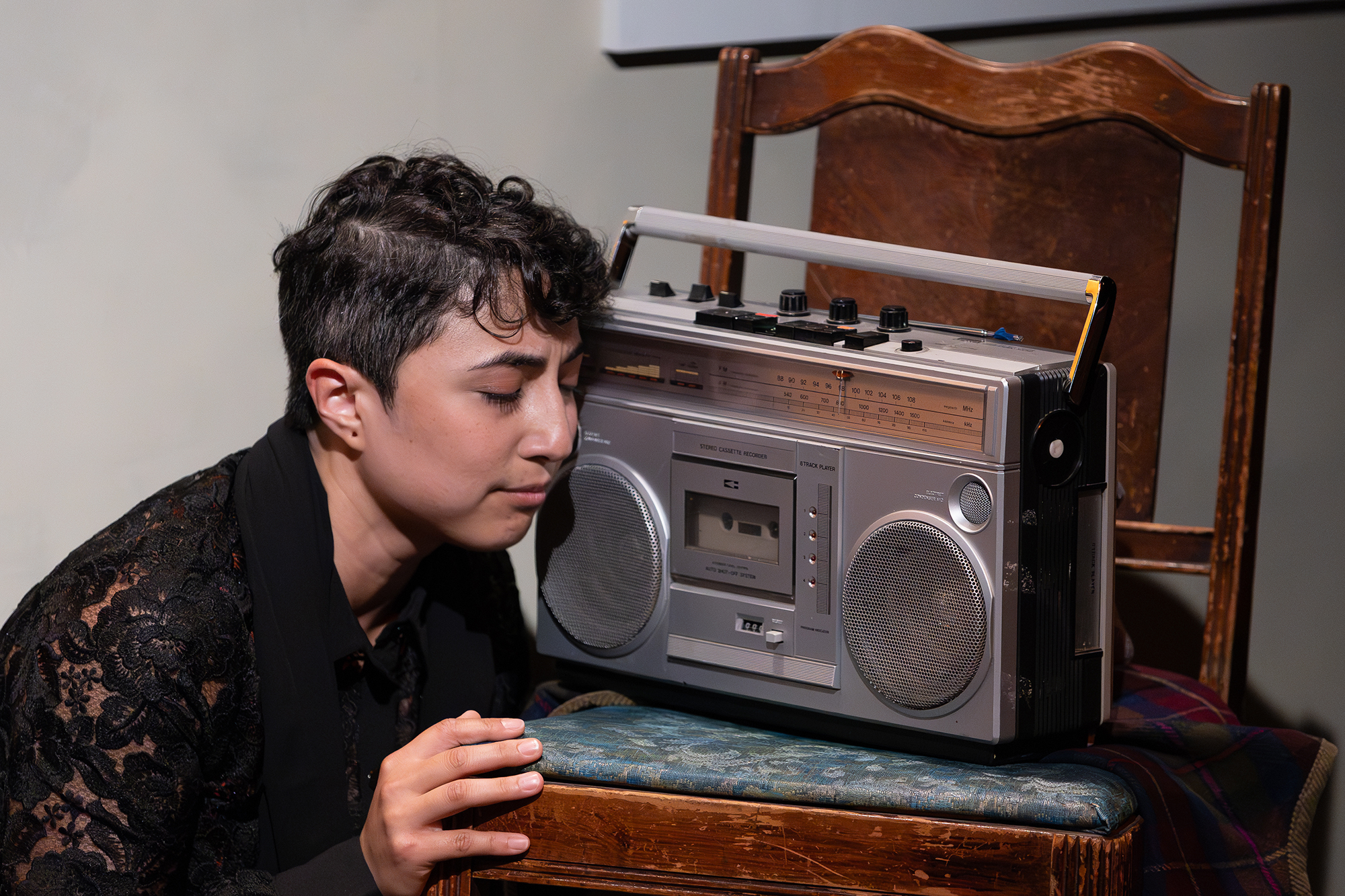
Their dad’s small, semi-hoarding habitat is a time capsule for 1980s technology and pop culture. (The fabulous scenic design is by Mikiko Uesugi.) Entire box sets of Star Wars rest in the corner. A large silver boombox awaits a cassette and D batteries. Clothes are strewn everywhere.
Each sibling gets swallowed by memories inside this tightly inhabited wasteland. Strawberry Shortcake radios are a direct link for Dina to her dad, and cassette tapes contain the recorded voice of the man the siblings must now live without (with Khaled Abol Naga providing the beautiful voiceovers of Samir).
The power of Ibrahim’s play is in the richness of her dialogue, staged with strong and pensive strokes by director Nailah Unole Didanas’ea Harper-Malveaux. Ibrahim’s words carry weight. Natural and flowing, they’re snappy when necessary, and thoughtful, when not leaning into unnecessary schtick.
Any two-hander structure relies on a close connection between the talent, which Razawi and Ishak often find. They share absurdly delightful explanations for why their Arab-American family celebrates Easter; the hilarious chaos of their last Eid as a family before their parents split; and their clunky abilities, in both a logistical and spiritual sense, to plan their dad’s funeral.
Other aspects are simply stunning. That starts with Lev Collins’ technical direction; small televisions screen opaque home movies that were the benchmark of 1980s memory-capturing. Michael Kelly’s sound design is fantastic, namely when Samir’s decadent and regal voice appears, forcing both Yusuf and Dina to stare down the barrel of time.
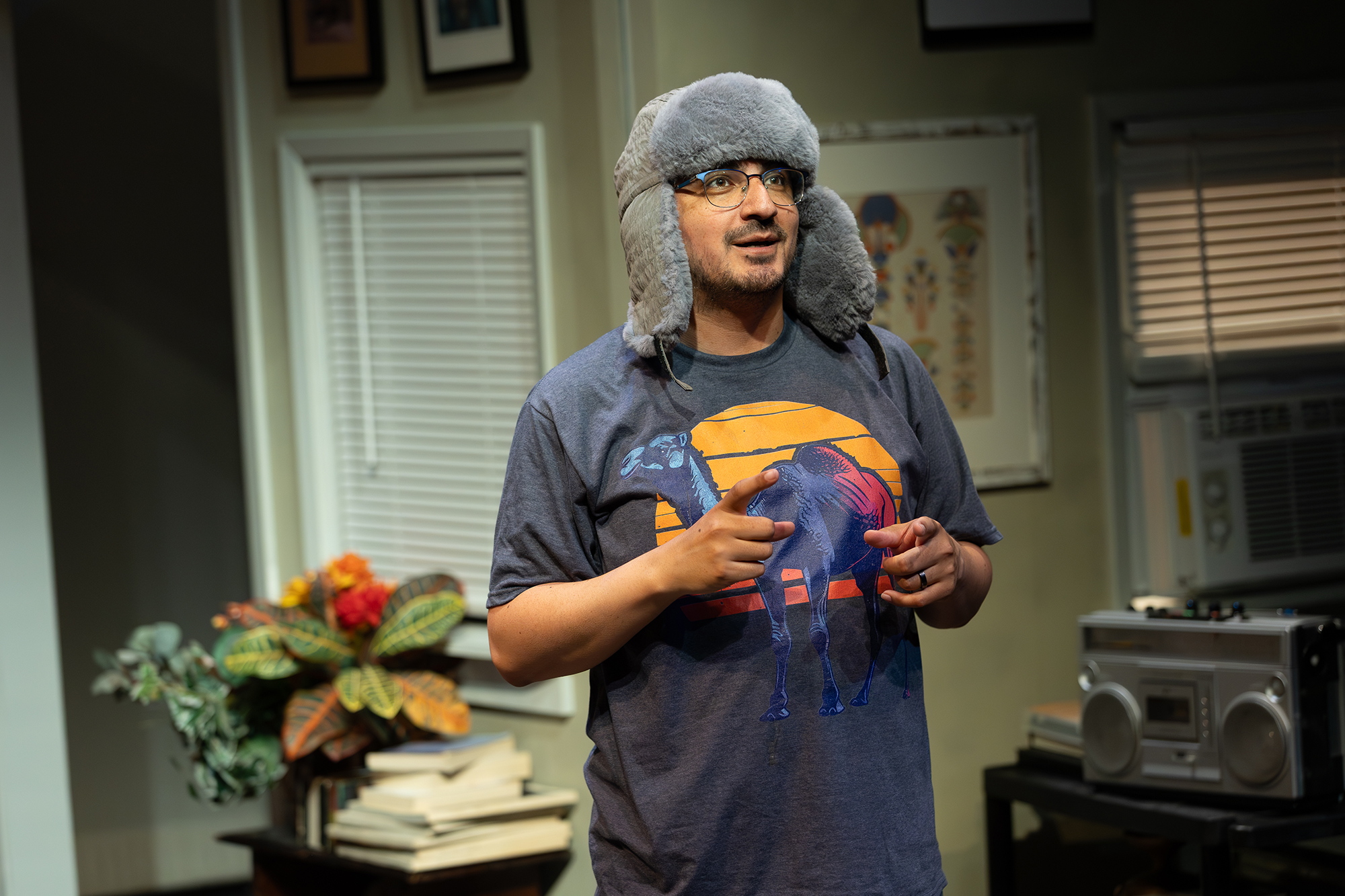
Family secrets arise, forcing questions about where Samir’s loyalties were placed. It’s one of several nuances in Ibrahim’s script, exploring the familiar dynamic of a family unit that, after a parent’s death, becomes a rudderless ship lacking parental structure. In this, a eulogy for this father immediately becomes the most daunting essay in Yusuf’s life.
On the downside, the writing doesn’t always steward a consistent flow. Instead, it acts as a series of vignettes, each asking its characters to lock into heavy emotional demands, only to dismiss those demands and reset on a dime. This deprives the audience of processing the gravity of any situation.
When brutal discoveries are made, forcing both Yusuf and Dina to expel so much emotional capital, how does it affect them moving forward? Rapid shifts in the storytelling mean that the payoffs in certain moments (the cliched slow hug after heapings of shared trauma, for example) don’t always feel earned.
But the structural challenges here don’t diminish the fact that Ibrahim is a writer with oodles of talent, and a knack for understanding how tension can fill a room. Her writing feels personal, with strong fingerprints, allowing those of any culture to see themselves and their family in this story. That’s all the more reason to narrow the scope of the story, and tightly focus on fewer issues, with deeper and fuller interrogation.
Arab Spring is a fierce reminder that our parents, and whatever legacy they may be building, will not physically be with us forever. The messiness of their imperfections, however, aren’t going anywhere, forcing those of us left behind to try and figure out our next move.
‘Arab Spring’ runs through Sunday, July 12 at Potrero Stage in San Francisco. Tickets and more information here.