‘Ask E. Jean’ Reframes a Tabloid Figure in Feminist History
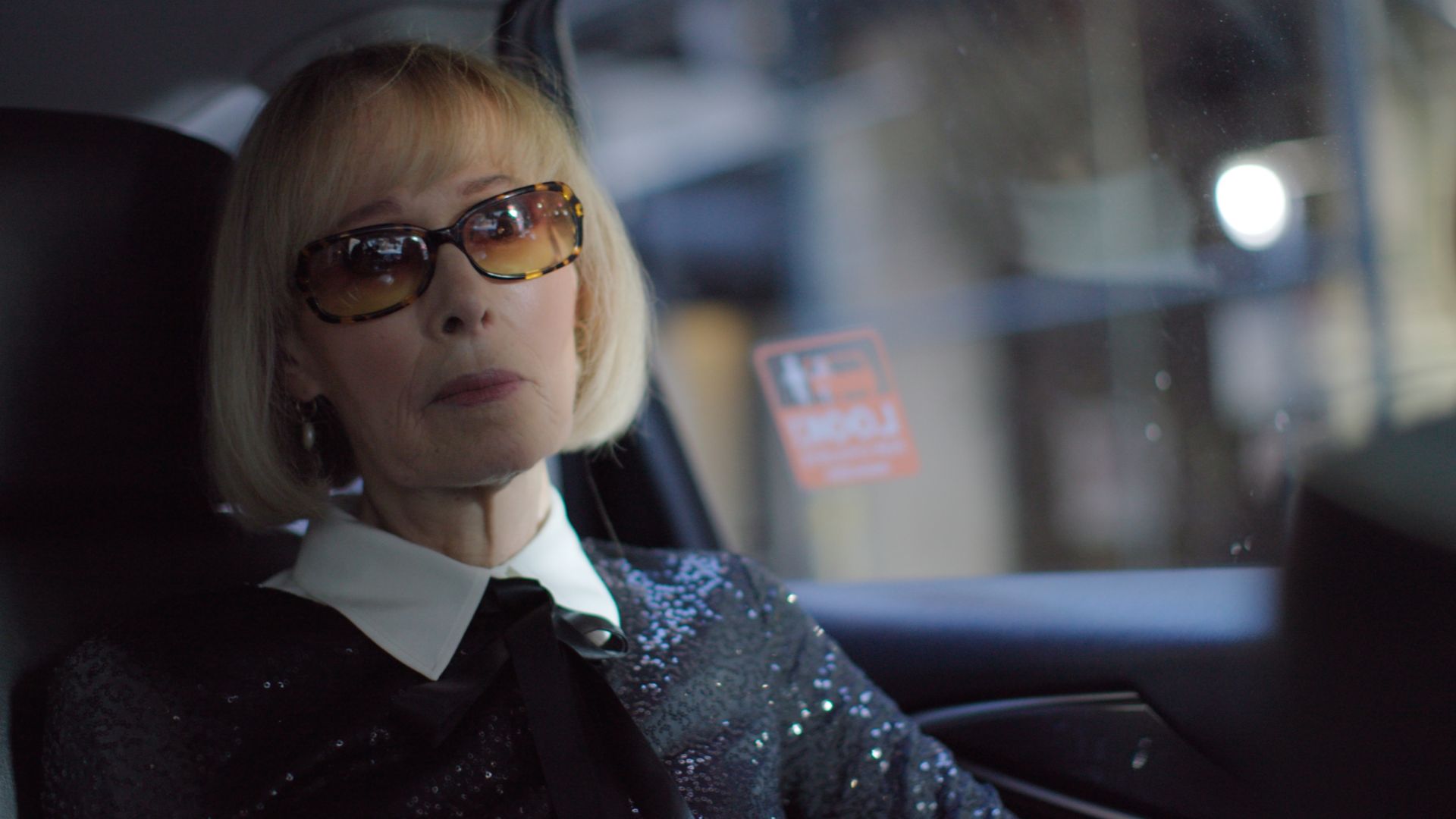
The name E. Jean Carroll may ring a faint bell, a snowflake in the blizzard of offensive behavior that has comprised the “news” in the last decade. The protagonist and focus of the involving documentary Ask E. Jean, however, is neither an offender nor a snowflake.
Carroll is the New York journalist and longtime Elle advice columnist who, inspired by the women who spoke up during the #MeToo movement, accused Donald Trump in 2019 of sexually assaulting her in a Manhattan department store more than 20 years earlier. Carroll won a civil suit and, after Trump called her a liar on CNN and on social media, sued him for defamation and prevailed a second time, with the jury awarding damages of $83.3 million.
Ask E. Jean devotes ample time to the trials, but don’t be distracted by their innate political and sensationalist allure. America’s most popular 34-time felon is a minor figure in Carroll’s saga.
Ivy Meeropol (Bully. Coward. Victim. The Story of Roy Cohn), greatly assisted by Ferne Pearlstein, another veteran documentary maker credited here as editor and story producer, has fashioned a later-in-life coming-of-age story that simultaneously plays as a pop-culture social history of feminism. Ask E. Jean fits nicely on the shelf with the recent post-sexual revolution docs The Disappearance of Shere Hite and Carol Doda Topless at the Condor, alongside the DVD box set of Sex and the City.
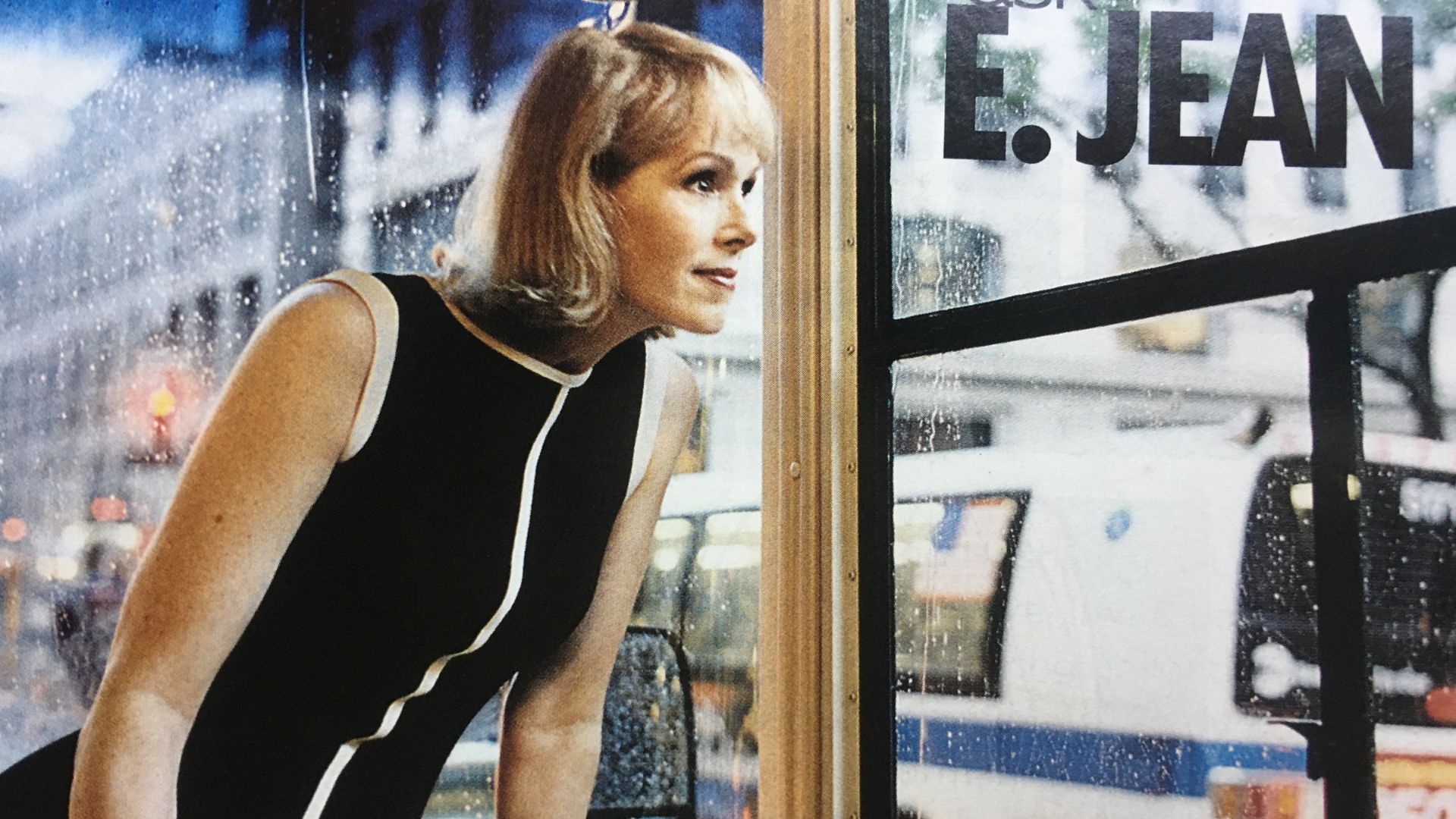
A Midwestern girl who parlayed the personality and panache that earned her Miss Cheerleader USA of 1964, Carroll moved to New York some years later, after she started writing for major magazines and her first marriage ended. Amusingly, her assignments included a camping trip with urban icon Fran Lebowitz.
Carroll had the confidence and talent not only to assert her distinctive voice in print, but to insert herself in her stories. Ambitious and driven, she was in prime position to witness and applaud the generation of women breaking into the corporate ranks in the ’80s and competing with men. Carroll became the trusted confidant for many of them in the 1990s, with her “Ask E. Jean” sex-and-advice column in Elle and a short-lived cable TV call-in show with the same name.
The documentary uses clips from the television show as a throughline, and throwback, in a kind of call-and-response to the contemporary court proceedings. Carroll’s screen persona is flirty, dishy and inviting, like the big-city older sister you wished you had. But her empathy for her guests’ and callers’ plights is limited — she’s adamant that they stop wasting time, pursue their goals and get out of unhelpful relationships.
It’s standard modern romance fare, but not all of Carroll’s female-empowerment gospel has aged well. There’s a remarkable clip of Carroll on Geraldo Rivera’s show discussing Anita Hill and Paula Jones, who had accused Supreme Court nominee Clarence Thomas and President Bill Clinton, respectively, of sexual harassment. Carroll lambastes the women for being “wimps,” for not standing up for themselves and simply telling the men to shut up and scram.
These vintage clips erase some of Carroll’s halo accrued from bravely speaking the truth about a powerful man (who was re-elected President of the United States, can you believe) and wrench the film from the clutches of hagiography. More importantly, they convey the evolution of Carroll’s thinking about the ways our society treats women.
At the height of her success, Carroll embodied the old Virginia Slims slogan, “You’ve come a long way, baby!” She was, after all, the first female contributing editor of Playboy. If a woman had the ability, she could succeed on her own terms. The playing field was level, and nothing was stopping her. Equality between the sexes had been achieved.
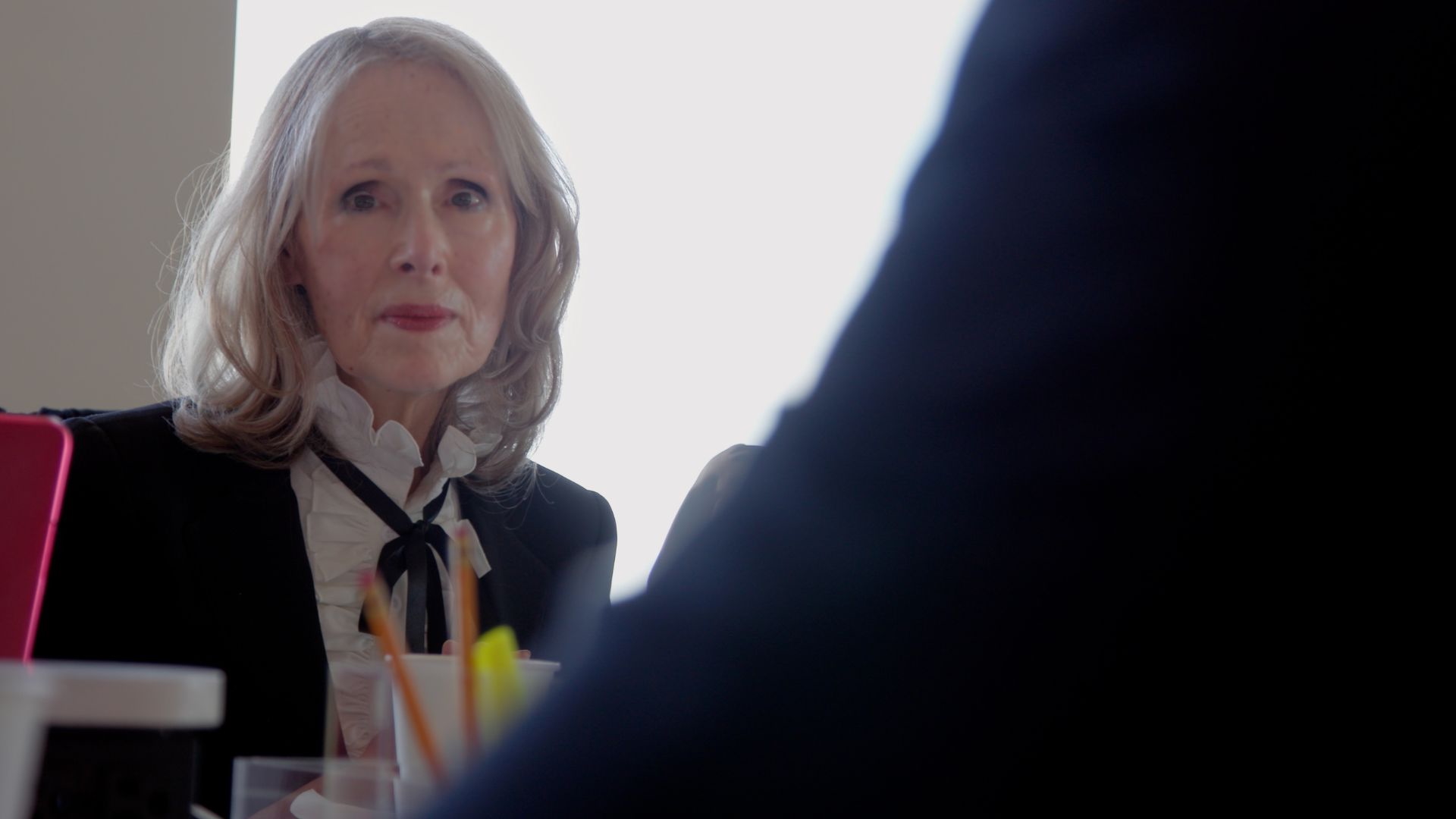
The day Trump assaulted Carroll in 1996, she was a savvy woman who thought she knew it all, and was victimized anyway. And she blamed herself, like many people who’ve been sexually assaulted. As Carroll relates in a recorded deposition, she changed afterward. (Ask E. Jean notes that most sexually assaulted women don’t come forward because they are “rewarded” with intrusive, insulting interrogations, a miniscule conviction rate for rape, and hate mail.)
Ask E. Jean concludes by holding up Carroll as a heroine, and a role model. That’s a strategy for delivering a satisfying movie experience and generating good word of mouth, but I think most viewers will see past it. Particularly since the issues raised by the film are independent from, and not dependent on, whether you like or agree with or empathize with its protagonist.
Ask E. Jean’s contribution is that it naturally provokes the viewer into surfacing and revisiting their own experiences — including the forgotten and suppressed ones — and attitudes. From a big-picture standpoint, the film invites a deep discussion of the historical and current benefits of feminism. And, just maybe, the costs of our society’s limitations on women.
‘Ask E. Jean’ screens June 26–29, 2026 at the Roxie Theater (3125 16th St., San Francisco). Filmmaker Ivy Meeropol appears in person after the Saturday, June 27 show.