How John Steinbeck Fueled the Lore of Big Sur’s ‘Dark Watchers’
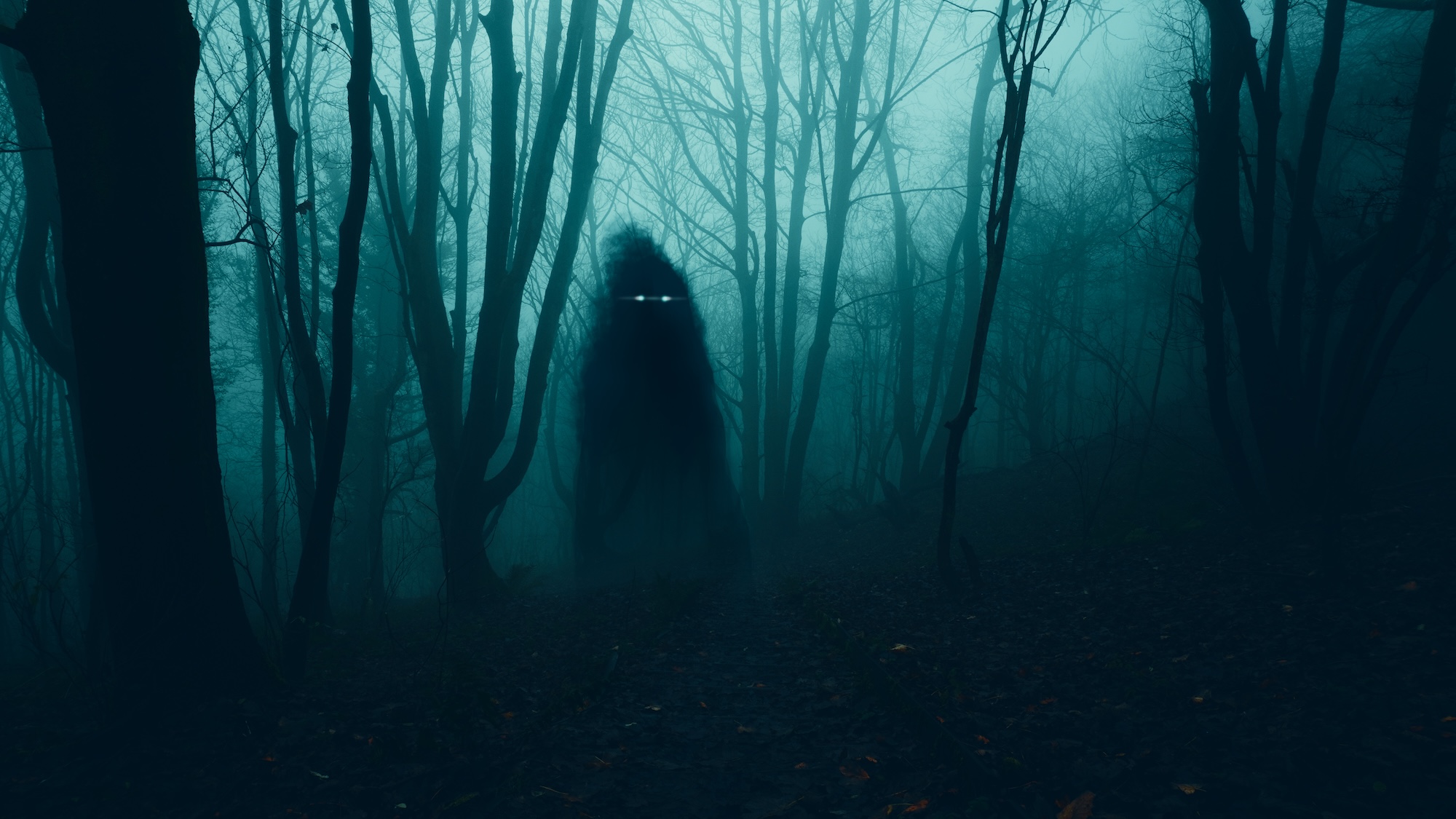
They’ve been part of California mountain lore for centuries: featureless black figures, more than 7 feet tall, often wearing brimmed hats and long cloaks, who appear during dusk and dawn to silently observe the unfortunates who wander into their midst. They are called the Dark Watchers, and believers say they dwell in the Santa Lucia mountain range, unnervingly overlooking human activity in remote areas.
Any discussion of the Dark Watchers — be it in books (like The Big Book of California Ghost Stories by Janice Oberding) or on TV (see: the History Channel’s MonsterQuest: Origins) — usually mentions that these mysterious figures were first named by California’s earliest Spanish settlers. Back then, witnesses apparently called the shadow people in the Big Sur wilderness “Los Vigilantes Oscuros.” Despite this frequently given history, source texts remain elusive. Today, it’s unclear where or how the Spaniards documented the vigilantes at all — perhaps the stories were passed down orally. Some sources say California’s Indigenous people believed in them, though there’s no clear record of that either.
Much of the reason the lore of the Dark Watchers has survived to the present day is John Steinbeck. On the very first page of his 1952 classic East of Eden, the Salinas-born author describes the Santa Lucia mountain range in Monterey County as a place of personal terror. He writes: “The Santa Lucias stood up against the sky to the west and kept the valley from the open sea, and they were dark and brooding — unfriendly and dangerous. I always found in myself a dread of the west.”
In this passage, Steinbeck was continuing a narrative he’d begun 14 years earlier, in a grim little short story, Flight, found in his 1938 collection The Long Valley. Flight tells the story of Pepé Torres, a “gentle, affectionate … but very lazy” 19-year-old who flees into the Santa Lucia mountains after killing a man in Monterey. As his mother assists Pepé’s exit, she warns cryptically, “When thou comest to the high mountains, if thou seest any of the dark watching men, go not near to them nor try to speak to them.”
Pepé does, inevitably, encounter those very men along his ill-fated journey. Steinbeck writes: “Pepé looked suspiciously back every minute or so, and his eyes sought the tops of the ridges ahead. Once, on a white barren spur, he saw a black figure for a moment; but he looked quickly away, for it was one of the dark watchers. No one knew who the watchers were, nor where they lived, but it was better to ignore them and never to show interest in them.”
Another Dark Watcher appears in the story shortly afterwards as, “a dark form against the sky, a man’s figure standing on top of a rock … When a moment later [Pepé] looked up again, the figure was gone.”
These mysterious figures are, in the course of Flight, terrible omens — it doesn’t take long for Pepé to reach a tragic end. But the Dark Watchers were not entirely an invention of Steinbeck’s. A year before Flight was published, poet Robinson Jeffers — a lifelong Carmel resident — wrote in Such Counsels You Gave Me:
“He thought it might be one of the watchers, who are often seen in this length of coast-range, forms that look human to human eyes, but certainly are not human. They come from behind ridges to watch.”
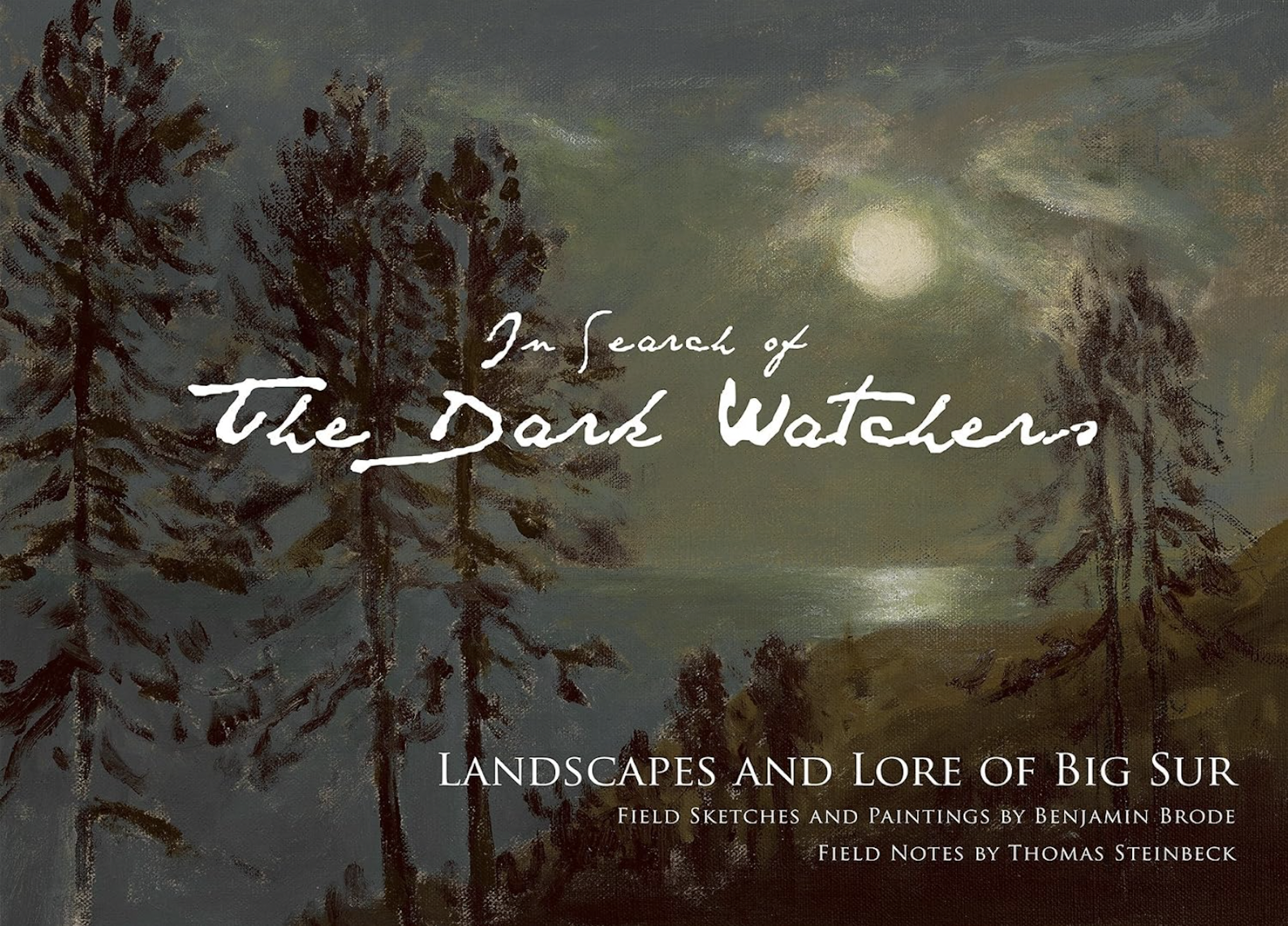
If John Steinbeck was the main reason the lore of the Dark Watchers stayed alive in the 20th century, it’s his son that has done so in the 21st. After publishing his 2014 book In Search of the Dark Watchers: Landscapes and Lore of Big Sur — a collaboration with fine artist Benjamin Brode — Thomas Steinbeck appeared on Simple Life Radio with Cynthia Fernandes. In that 2015 interview, he stated:
“They live in the misty hillsides of Big Sur … migratory beings, possessed of incredible hearing and impeccable eyesight. Like crows, they can sense the presence of gun oil and the smell of plastics and weatherproof coatings, therefore they are immune to high-tech detection and only reveal themselves to trekkers simply equipped with sticks and hats.”
The younger Steinbeck continued: “I’ve gotten this from some of my father’s relatives, that since the time of the conquistadors, people just talked about being in the Big Sur and being watched by these creatures that they can’t quite see. My grandmother … swore that she traded with them. She’d leave them fruit and nuts in a very specific place and when she came back a couple of weeks later, there would be shells with holes drilled in them, decorated feathers, other things … They didn’t use fire, you could never find their camps, they were constantly on the move, and they’ve been there forever. And everybody talks about them.”
Perhaps the oddest thing about Thomas Steinbeck and Benjamin Brode’s take on the Dark Watchers is that they both believe the forest-dwellers are actually small and gnome-like, not the towering creatures most commonly referenced when reported sightings do occur.
Brode added, “The thing about Big Sur is, you can get away from humans really, really easily. The habitat for the Dark Watchers is better than it was maybe 20 years ago.”
And perhaps that’s at the core of all of this. Big Sur is intimidating, otherworldy, and awesome in the most traditional sense of the word. Because of that, it hasn’t just conjured stories of Dark Watchers over the years. Reports of Bigfoot footprints have been reported by multiple sources as recently as November 2025. Reddit users have shared multiple Bigfoot sightings they said happened at Big Sur, from 1978, the late ’80s and beyond. Big Sur is also, infamously, the location where two air force employees claimed a UFO shot down a test missile, using beams of light, in 1964.
Could it be possible that these misty mountains just play tricks on the minds of humans? Might this legend have died without the Steinbecks? It’s impossible to know. But if you catch sight of a Dark Watcher on your next hike, rest assured that they won’t bother you. If they were willing to have such interactions, we might be more sure of their existence.