At Eli’s in Oakland, 98-Year-Olds and Young Blues Fans Keep the Mojo Workin’
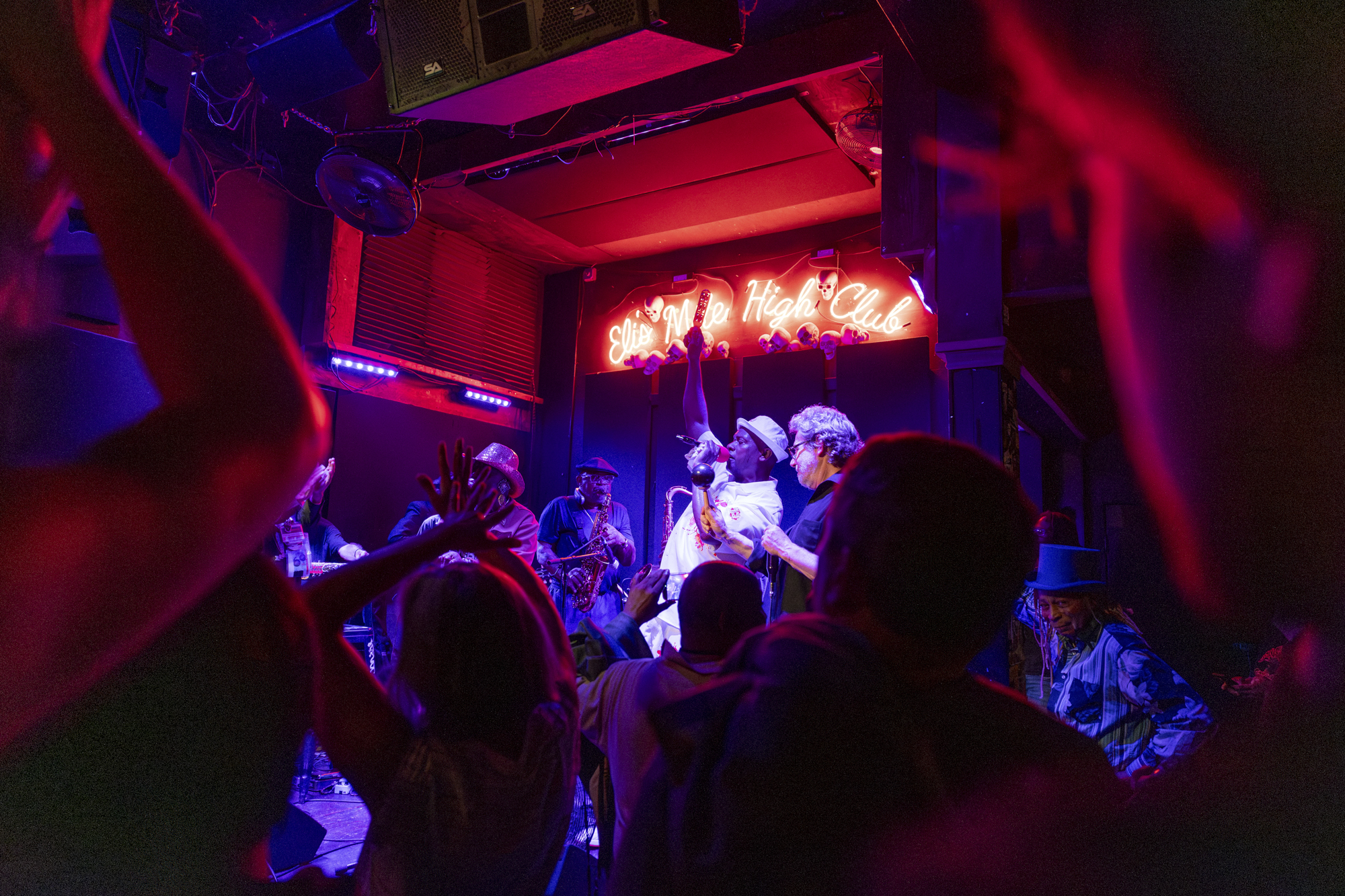
By now, the audience at Eli’s Mile High Club in Oakland knows what to expect from Nat Bolden.
Bolden will sing from on stage, his face alight with glee, whatever jeweled belt buckle or sequined fedora he may be sporting sparkling under the lights, his tenor croon still smooth at age 98. Meanwhile, his duet partner, Sharon Davis, will sing from a chair on the floor below, no longer up to climbing the stairs to the stage but still plenty able to get the audience, many of whom are some 60 years her junior, swaying with her smoky wail.
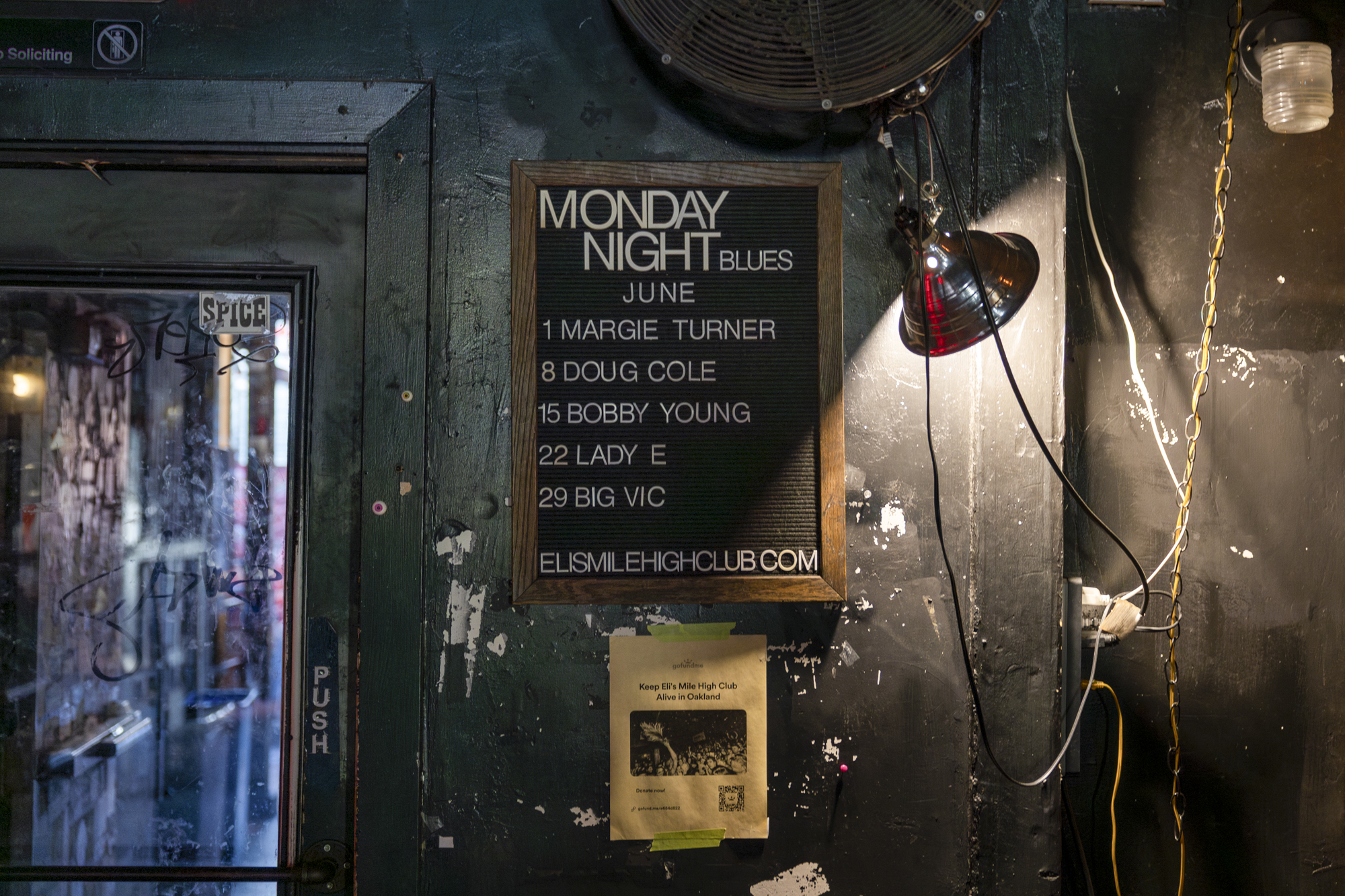
Eli’s has a long and august tradition of the blues; Bolden has been singing there for more than 30 years. A poster for one of his 1995 shows still hangs on the wall, beside bills advertising the likes of genre luminaries Etta James, James Brown and B.B. King. Although these days the bar is mostly a punk and metal joint, when owner Matthew Patane took over in 2014, he was determined to honor its blues history.

At the prompting of artist and longtime regular Margie Turner, Patane started “Blue Mondays,” spotlighting local talent. The now-beloved weekly institution, which turns ten this month, draws an intensely intergenerational and diverse crowd — sporting cowboy hats, canes, lip rings or locs — that goes wild without fail when Bolden and Davis perform. Yoshi’s may offer a little more polish, but no club provides the city’s oldest performers an enthusiastic audience, or teaches a new generation the magic of the blues, quite like Eli’s.
“We’re keeping the blues alive,” Bolden says, “and the blues is keeping me alive.”
‘The stains are in the same place’
The blues came to Oakland from the Deep South during World War II, along with the wave of Black workers who came to work in the city’s shipyards — including Bolden. After a few years as a welder, he bought a blues club called the Til Two, rebelling against the ad hoc segregation of 1950s California that he had hoped to leave behind in Arkansas. “I didn’t care what color you was, you came in,” he says.
His fellow Eli’s regular, 91-year-old Clarence Sims, also came to the area seeking an escape from Jim Crow. “The white fountain, the black fountain, we couldn’t go into the restaurants,” Sims remembers. Growing up in Louisiana, Sims had listened to records on his grandmother’s gramophone, idolizing a performer named Guitar Slim.
“His suit was green, his hat was green, the women was screaming, and I thought, ‘That’s what I want to do,’” he says.
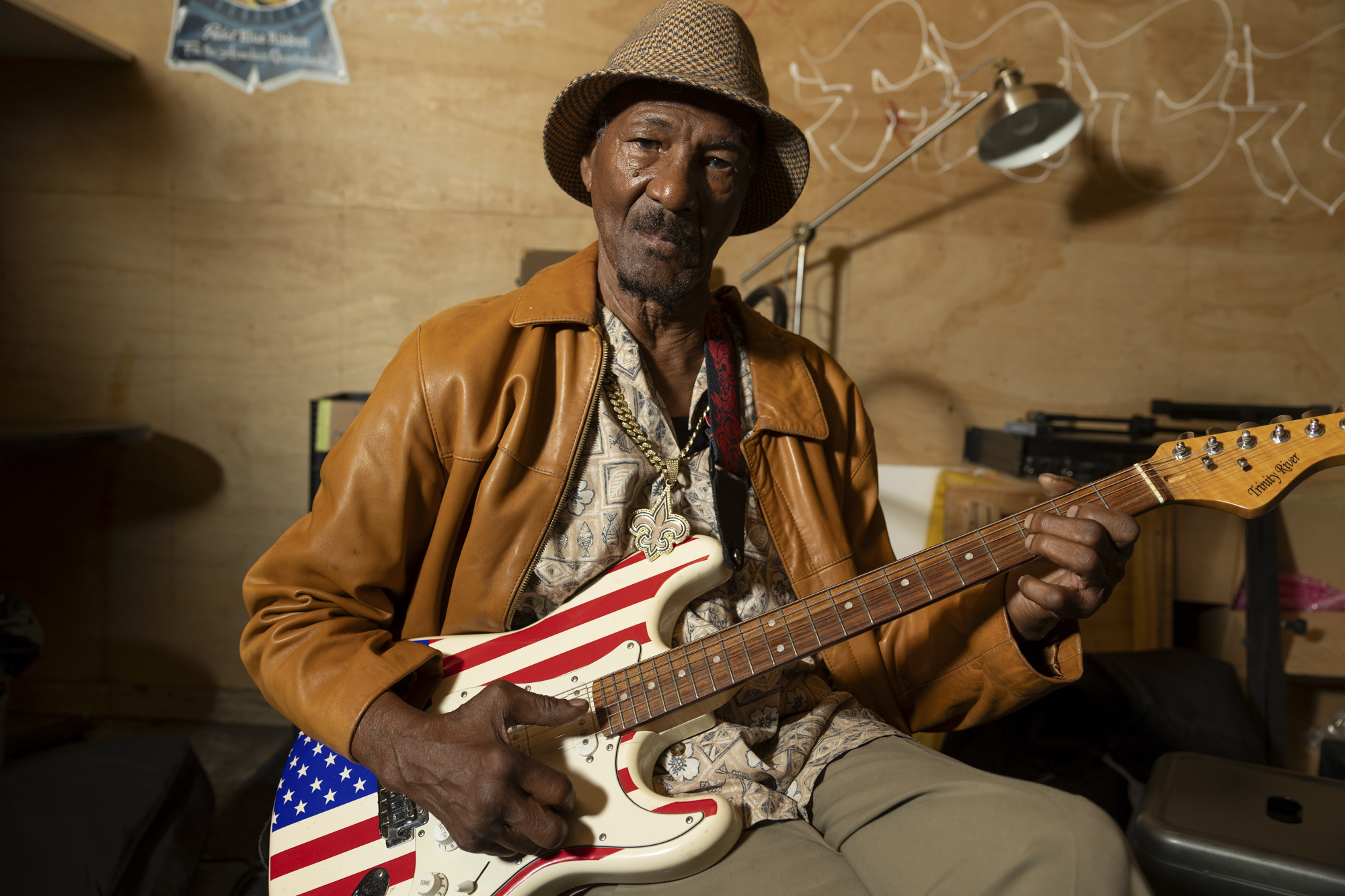
Sims, better known as Fillmore Slim, moved to San Francisco and became one of the city’s most visible pimps, participating in what he calls the “fast life.” After five years in prison, he ended up in a halfway house near Eli’s and sat in on his first jam session.
Local blues enthusiast Eli Thornton had bought the former-dairy-turned-watering-hole not long before and turned it into a music venue. Soon, Sims was performing there regularly; he eventually recorded his first album in the upstairs green room, with musicians tucked into the tiny kitchen and sitting on the toilet.
“Everyone there was dressed sharp, partying, and it was always packed,” remembers West Coast Blues Society executive director Ronnie Stewart, who started his own career at Eli’s. Even now, “it ain’t changed much. The stains are in the same place.”
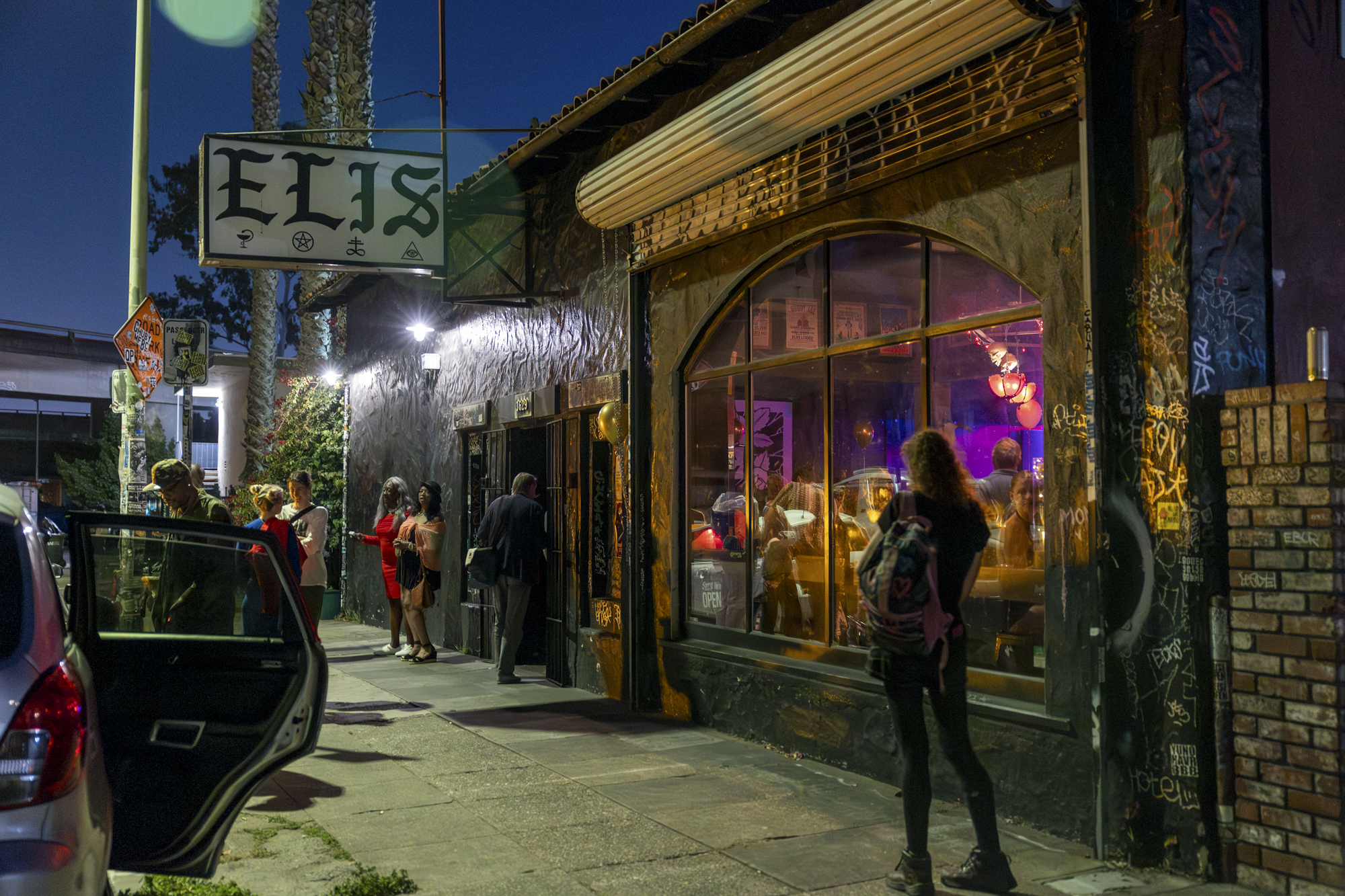
Thornton’s girlfriend shot him inside his own bar in 1979, and eventually musician and regular Troyce Key took over. With the destruction of Seventh Street and blues clubs closing across the city, Key dubbed his bar the “Home of the West Coast Blues.” A 1985 article in the East Bay Express describes a typical night that could be any current Blues Monday, where “yuppies from Berkeley stomp and sway alongside the older black regulars from West and East Oakland.”
Eli’s was, the article declares, “the most successfully integrated blues club in America’s most integrated city.”
A cross-generational blues seminar
When Patane started Blue Mondays, it was important to Turner that the night include an open jam. “There are a lot of good players out there, and they don’t get the opportunity to let you know what they can do — so here they can,” Bolden says. Rotating bands play feature sets, but there’s always a sign-up portion open to all.
Over time, the jam has accrued devoted regulars. First came the older generation: Bolden, Turner, and Sims; long-time Eli’s patron, Ella Pennewell, who often dedicates a song to her late husband, Julien Vaught of the Flamingos; Earnestine Barze, or Lady E, who learned to sing blues at Eli’s after the murder of her son.
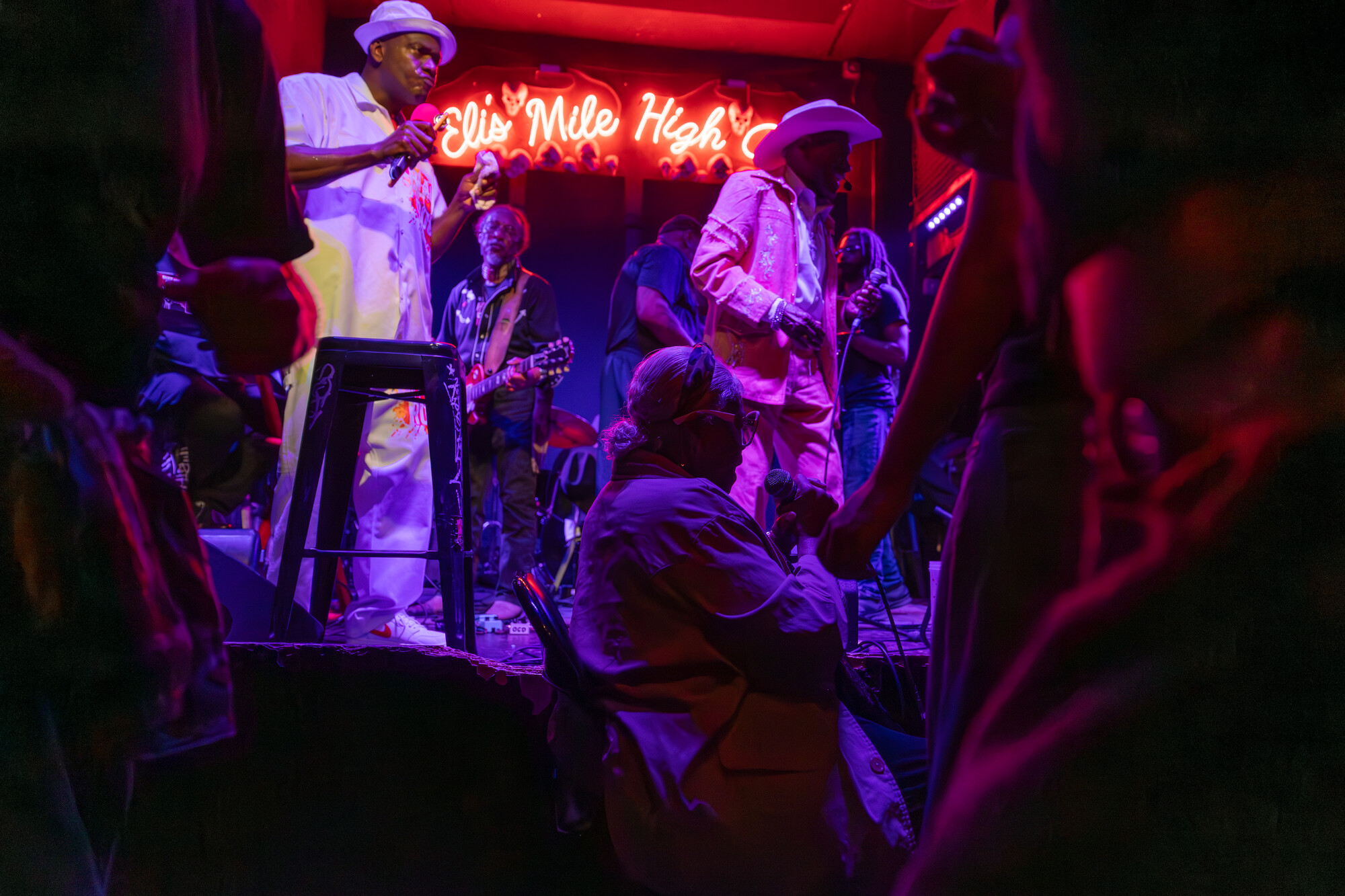
Then, gradually, younger musicians joined in. Kameron Jones, 32, learned to play blues at Eli’s on a saxophone gifted to him by a musician he met there. He calls Eli’s a “blues nursery,” a rare opportunity to get on stage and learn by doing. Bolden, for example, gave Jones his first wireless mic so they could more easily perform together.
Vocalist Muwazu Chisum-Misquitta, 23, has also found a supportive musical home among musicians several decades her senior. Sims in particular has taken to inviting Chisum-Misquitta up to sing backup vocals for him. “I walk in, and it feels like home,” she says. “There’s so much to learn from everybody; everyone is so willing to share.”
Meanwhile, the older generation has found a receptive, enthusiastic audience and reassurance that the blues just might live on. Most Mondays by 9 p.m., Eli’s is full — not just of old timers but also throngs of UC Berkeley students, attracted initially to the free night of music and then drawn in by the palpable warmth on stage.
“Them young kids love the blues, man,” Sims says. “I was really flabbergasted by them young kids playing the guitar and dancing.”
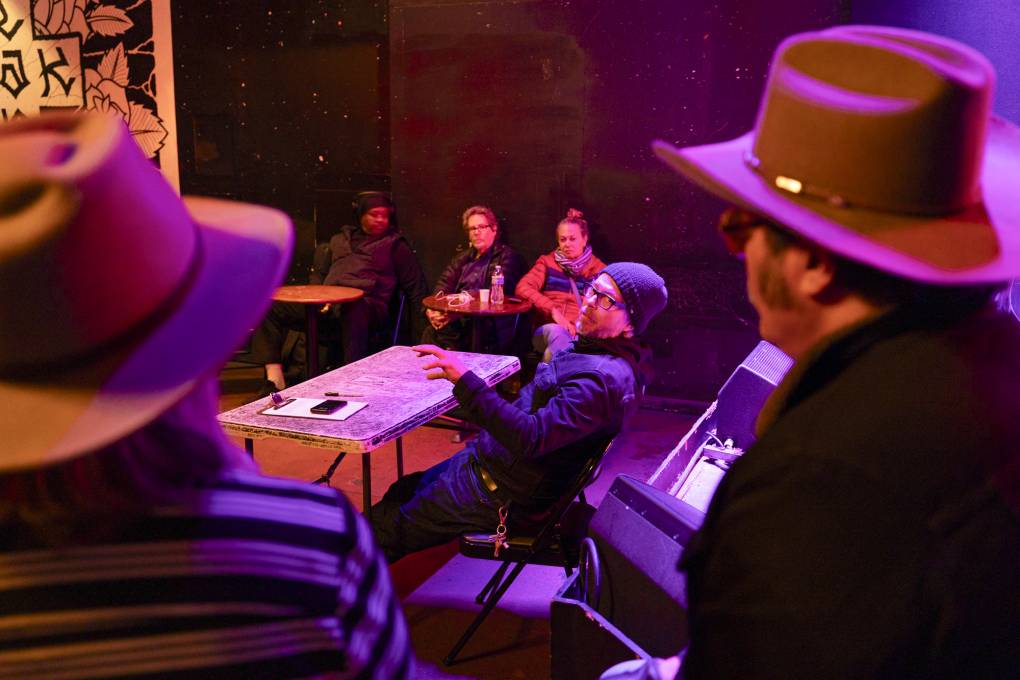
In that way, Eli’s blues night has become a source of communal care, providing encouragement and support for young musicians and dignity and camaraderie for older ones. In between those two groups is T Patrick Farmer, a “seventies baby” who serves as the unofficial hype man of Blue Mondays and a bridge between generations. He sees it as his job to facilitate intergenerational understanding through the language of music, encouraging the young crowd to dance harder and keep their energy up when an old-timer performs.
“I’m telling the crowd, ‘Jump, jump,’ and there’s a connection there,” he says.
And the train keeps a-rollin’
It’s another Monday at Eli’s, and Bolden is making the rounds after his and Davis’ performance, shaking hands with men and leaning in flirtatiously to chat with women. Sims, who inspired Bolden’s flair for fashion, will close out the evening clad in a bright blue blazer, matching yellow-lined pork pie hat, and a bejeweled cane that he uses to ease his still-lanky frame onto a stool.
“I think it’s time to do the national anthem,” he tells the audience, and one of the guitarist plays a few bars of “The Star-Spangled Banner.” “Nahhh, not that national anthem,” he says. “So, do y’all know what the real national anthem is?”
The band answers with the opening chords of “Get Up, I Feel Like Being a Sex Machine,” by James Brown. Sims chants the lyrics in his Louisiana drawl; Farmer jumps to the beat behind him and tells the crowd to do the same. “If you want to save Eli’s, scream!” he yells.
Eli’s took a hit during Covid lockdown and continues to struggle. Tangles with a neighbor and Oakland bureaucratic red tape made things worse, culminating in the city shutting down the bar’s back patio last year. (Efforts to find a solution with the neighbor and city are ongoing.)
“It’s been a challenging time: a lot of small venues are in our situation — fighting to stay alive,” Patane says. Meanwhile, every Monday is still reserved for the blues, music that is endlessly expressive and cathartic.
“It tells a story, and people live that story every day,” Bolden says of what makes the blues tradition worth fighting for. “They work hard, they have trouble at home, they love a person and don’t have that love returned — all that is blues.”
It’s a cause worth the weekly drive to and from Stockton, he adds.
“My legs can be hurting. But then they start up a beat up there, and they quit hurting, and I get up and dance.”