San Francisco’s First Serial Killer Was a Doctor Named J. Milton Bowers ... Probably
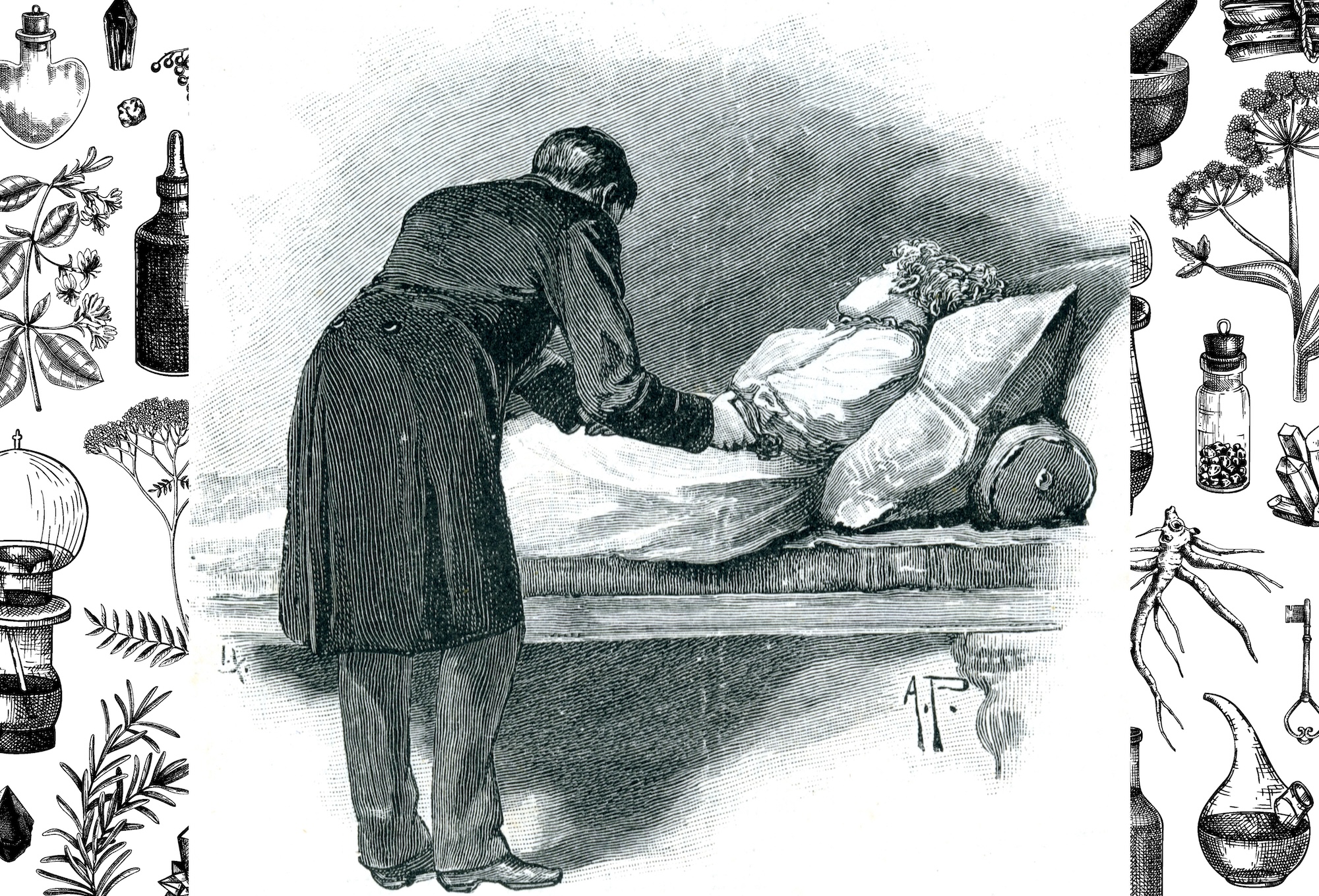
If you’re a Bay Area true crime nerd with an extensive knowledge of the region’s most notorious serial killers, you might be wondering why you’ve never heard of San Francisco’s very first serial killer, Dr. J. Milton Bowers. The answer is that nobody ever conclusively proved it. (Okay, fine, then: alleged serial killer.) If you were a San Franciscan in the 1880s, however, you’d know all about Dr. Bowers. You’d certainly know enough not to marry the bearded weirdo.
Bowers was a physician whose medical specialty was, according to newspaper ads of the era, “diseases of women and children.” Which is unfortunate given that his first three wives ended up dead under suspicious circumstances while under his care. The first, Fannie Hammond, died in 1874 of “undetermined causes” and the couple’s Chicago home burned down shortly after her death. Not suspicious at all!
Bowers immediately moved to New York and married a popular actress and writer named Theresa Sherek, who was 15 years his junior. Together, the couple relocated to San Francisco, but marital bliss was short-lived. Sherek died on Jan. 28, 1881, aged 24, and was buried the very same day. The presumed cause of death was an abscess of the liver.
Within a year, Bowers was married yet again. This time to 29-year-old Cecelia Benhayon, who was a beloved San Francisco socialite. After a sudden and excruciating illness, Cecelia died on Nov. 3, 1885. And — wouldn’t you know it? — her initial death certificate suggested the cause was an abscess of the liver, just like the second Mrs. Bowers.
After Cecelia’s death, San Francisco coroner C. C. O’Donnell was quickly tipped off, via anonymous note, that there was cause to perform an autopsy. When O’Donnell rushed to the Bowers home on Market Street and demanded one, Bowers did everything in his power to prevent the procedure. This included burying Cecelia’s body before the city physician, Dr. Black, could get to it. After some legal wrangling, O’Donnell managed to get poor Cecelia disinterred. One of his arguments for it: Bowers had recently taken out a $17,000 life insurance policy on his wife.
When Dr. Black finally got his scalpel on Cecelia’s remains, lo and behold he found zero evidence of a liver abscess. What he did find was an abnormal-looking stomach, which he promptly placed in a jar and sent to a chemist named Dr. William Johnson. (Pity the delivery boy…) Johnson later testified that he could smell phosphorus on the organ before he’d even tested it for chemicals. His findings were backed by several other doctors and they were conclusive: Cecelia had been poisoned.
At the Nov. 10 inquest, when Bowers was asked to account for the phosphorus in Cecelia’s stomach, he stumbled incredulously for a while, before stating: “I did not give it to her. She must have taken it herself!” When the inquest also raised the fact that the coroner had found evidence of a recent abortion, Bowers replied, “Yes [but] I did not perform it. She did it herself!”
Faced with this level of buffoonery, nine inquest jurors decided that Bowers needed to be placed under arrest immediately. Once in the county jail, Bowers talked to the local press at every opportunity. He complained to the San Francisco Call that he was “unused to close confinement,” but found the strength to insist that if was going to poison his wife, he would have used something less traceable than phosphorus.
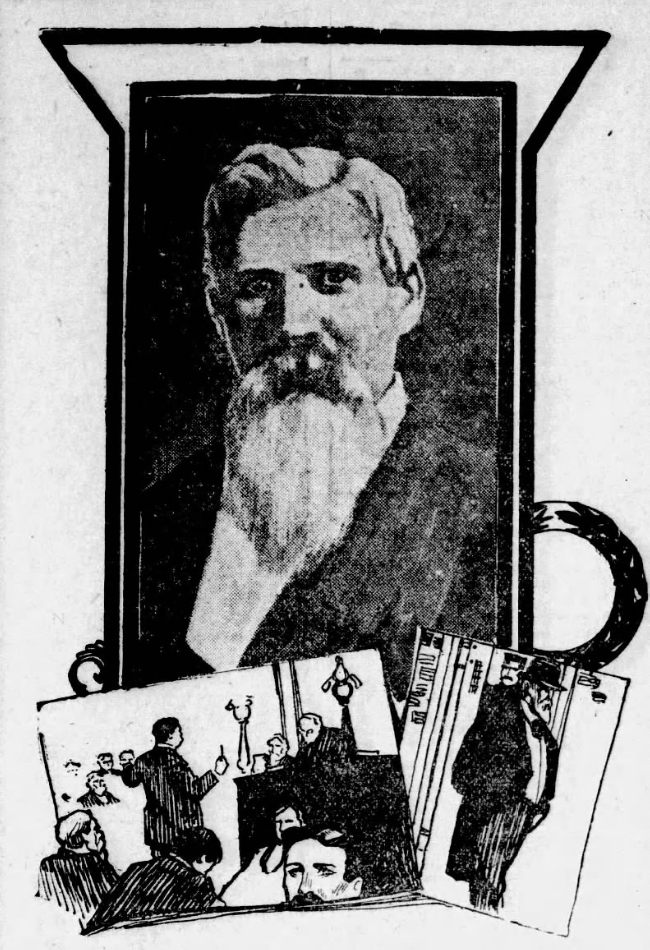
Bowers’ six-week trial — the longest in San Francisco history at the time — began on March 9, 1886 and saw 130 witnesses testify. Cecelia’s loved ones said they had been denied access to her in her final days, and claimed repeatedly that Bowers was a chronically unfaithful man who treated his wife terribly. Cecelia’s brother Henry Benhayon said Bowers once forced Cecelia to share a bed with one of Bowers’ mistresses. More explicit details were shared in court that the San Francisco Chronicle deemed “unfit for publication, even in technical terms.”
Additionally, Henry testified that he found two pills in Cecelia’s deathbed that contained phosphorus. He also said he’d witnessed Cecelia sobbing to Bowers, “You are torturing me to death with medicine.”
In contrast, Bowers’ associates testified that the marriage had been a happy one, and Bowers himself denied all accusations in a day-long testimony. It didn’t work. After a 35-minute deliberation, the jury found Bowers guilty of murder in the first degree. He was sentenced to death by hanging.
All’s well that ends well, right? Well, no. This is actually where things get even stranger…
Eighteen months after the end of Bowers’ trial, Henry Benhayon (yes, Cecelia’s brother again) was found dead in a Geary Street rooming house that was next door to Bowers’ former medical office. Near Henry’s lifeless body (which was found in an odd, face-down position) were three bottles: whiskey, chloroform and a tightly capped bottle of cyanide. Close to those were three letters signed with Henry’s name, one of which stated that he’d planned to murder both his sister and Bowers so he could become guardian to his niece and inherit the insurance money. The letter also stated that Henry had bought the phosphorus used to kill his sister from a unnamed man who had later committed suicide. (How convenient!)
When reporters told Bowers about the confession letter, the doctor said, rather smugly, “Strange that with all my watchfulness, and despite the fact that I was continually at her bedside, that [Henry] should be able to get in and poison her in such a mysterious manner.”
Now, if you’re thinking, “Sounds like Dr. Bowers had his brother-in-law murdered,” you’re not the first. Investigators quickly jumped on the case, and after following some boulder-sized breadcrumbs, arrested a friend of Bowers’ named John Dimmig. Not only was Dimmig a frequent visitor to Bowers in prison, he’d also recently rented the room that Henry’s body was found in. (Dimmig claimed that Henry must have stolen his key.)
Despite Dimmig making several preposterous assertions (like admitting he’d recently bought cyanide, yes, but that it was just for a doctor friend), Dimmig’s murder trial was complicated by confusing witness testimony and conflicting handwriting analysis. (One expert said the confession letter was definitely fake, the other said it absolutely matched Henry’s penmanship.) The trial ended in a hung jury. A second trial six months later also resulted in a deadlock, but this time the judge refused to let the jury give up and go home. The end result? Dimmig was found not guilty.
As a result of Dimmig being acquitted — and brace yourself for this nonsense — the California Supreme Court decided that the confession letter with Henry’s name on it was enough grounds for Bowers to be released. The doctor got out after just four years in the clink. He quickly opened a medical practice in San Francisco that no one wanted to go to. Then he tried again in Oakland, another location where he was a pariah. Finally, he limped on down to San José, where he was less well-known, and opened an office there.
Dr. Bowers died of a stroke in 1904, after battling health problems for two years. The San Francisco Call’s report of his death kindly noted that his fourth wife — a schoolteacher named Mary Bird who married him in 1895 — “fortunately survives him.” The article also quoted one detective, Robert Hogan, who had never forgotten the details of Cecelia Benhayon’s agonizing death.
“Dr. Bowers should have broken his neck from a trap,” Hogan asserted, “instead of dying peaceably from paralysis.”