The San Francisco AIDS Protest That Lasted a Decade
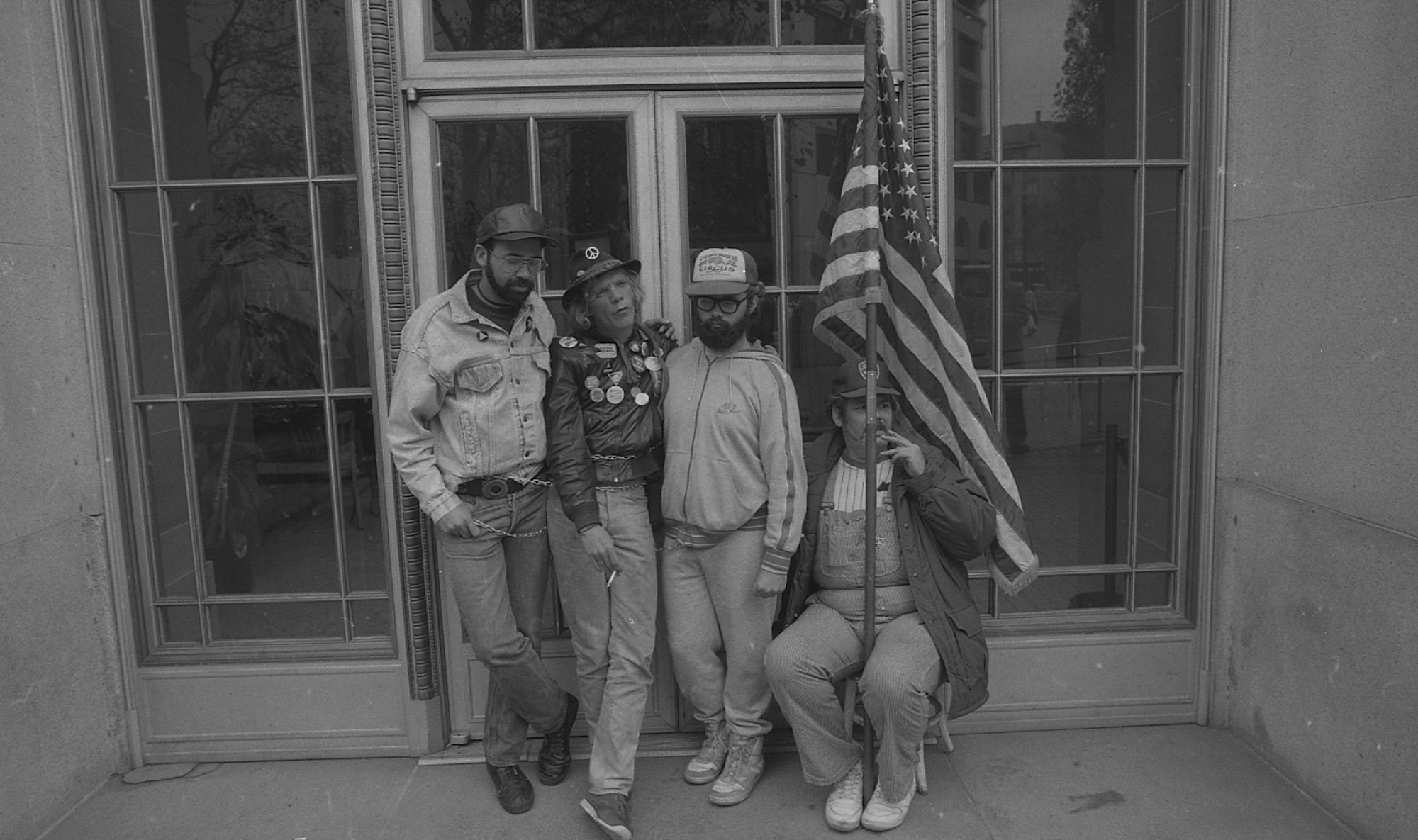
On Oct. 27, 1985, two 26-year-old men arrived at San Francisco’s old Federal Building at 50 United Nations Plaza, chained themselves to a set of doors and started a protest that would last an entire decade.
Their names were Frank Bert and Steven Russell and both were living with ARC, or AIDS-Related Complex. In the 1980s, ARC was a catch-all term used to describe the symptoms most commonly associated with HIV as it developed into AIDS. Bert and Russell chose the U.N. Plaza because it was then home to the regional office of the U.S. Department of Health and Human Services.
The pair wanted to draw attention to the roughly 15,000 San Francisco residents living with ARC at the time. They were also demanding more funding for AIDS research, FDA approval of experimental AIDS treatments, and more benefits for people living with ARC. (ARC patients were granted less social security and disability benefits than AIDS patients.)
Shortly after Bert and Russell’s protest began, Pat Norman — the first openly gay employee of San Francisco’s Health Department — told documentary filmmakers she believed ARC patients were being sidelined on purpose. “[Government officials] don’t want to spend money treating and providing services for people with ARC because it is larger and larger and larger than anybody wants to concede,” she said. “They are trying very hard not to expand the definition and diagnoses of ARC.”
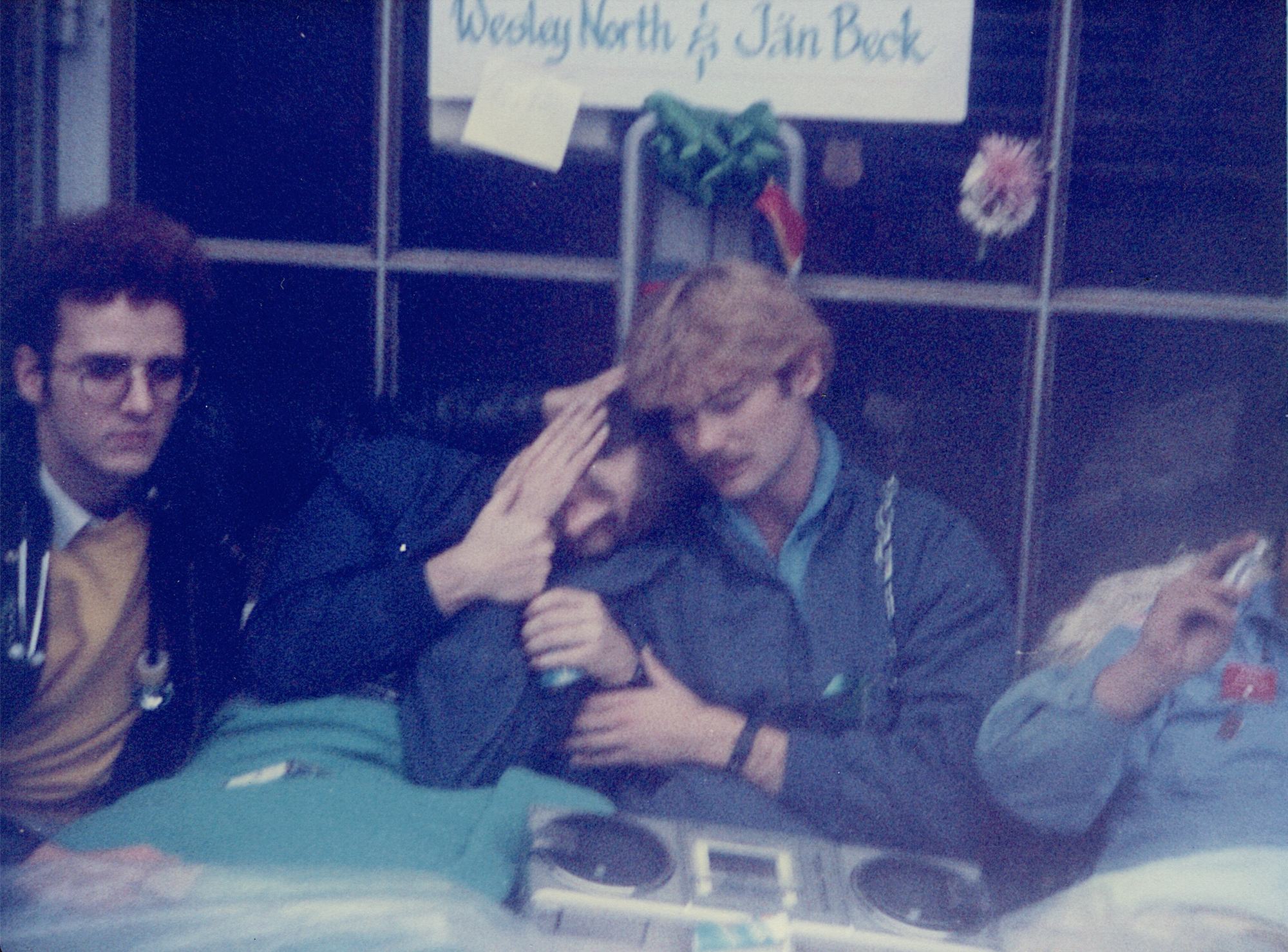
It did not take long for people to start sympathizing with Bert and Russell’s cause. Four days into the protest, the San Francisco Examiner published a photo of the men titled “Other casualties of AIDS.” They sat peacefully under a blanket, wearing multiple layers of clothes, still chained to the doors. The 24/7 protest was kept alive by allies who showed up to give Bert and Russell breaks. The first two helpers were Paul Ramirez, 27 and Wes North, 31.
“When I’m out here, there’s so much love,” North told the San Francisco Chronicle a few weeks later. “When I’m at home alone, I get scared. I think of dying. Here, I feel I’m doing something.”
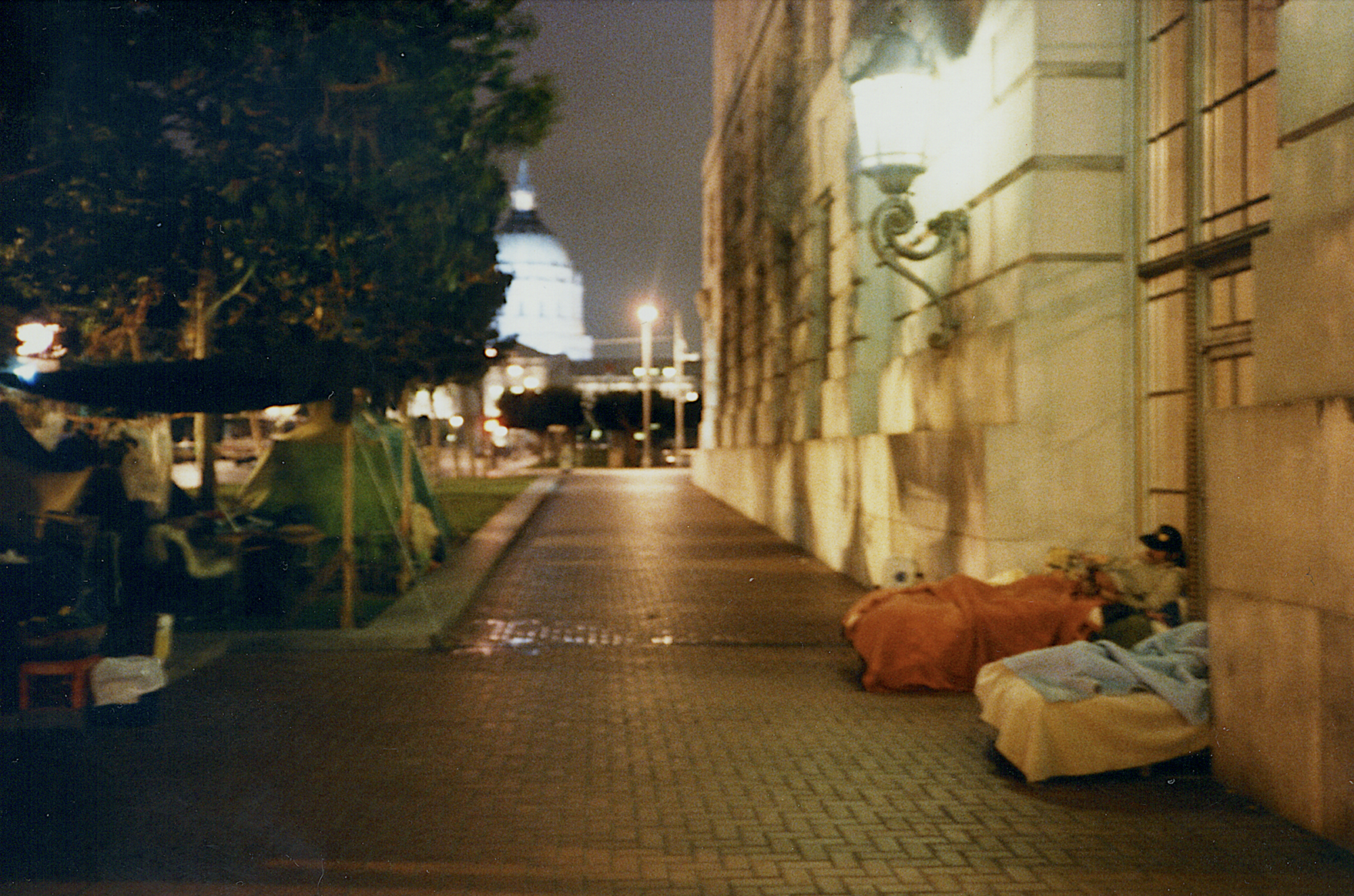
North wasn’t alone. The longer Bert, Russell and their cohort stayed at U.N. Plaza, the more the protest transformed into a community hub. By the end of 1985, 100 people were in attendance, some of whom slept in tents. Federal Building employees started bringing coffee and donuts. A nurse donated a grill. Others dropped off Thanksgiving turkeys and a Christmas tree to get the makeshift village through the holidays.
A woman named Serena Wylie who regularly donated casseroles to the vigil told the Chronicle in December: “[The protesters] have come to be part of my family. There is joy here and a lot of laughter and smiles. There is strength and hope.”
The prolonged action was not without its risks, however. In the early hours of Nov. 3, two straight allies were attacked by strangers at the federal building. (“It is not going to scare us away,” Russell told the Examiner at the time. “If we need to, we will stay here indefinitely.”) In the first week of December, a 39-year-old protester named Jän Beck was rushed to SF General after enduring three seizures and a stroke at the federal building. As soon as he was back on his feet, he went straight back to U.N. Plaza, telling reporters, “I have felt a home here that I have not felt in a long, long time.”
Beck added, “It started out as a desperate, last-ditch effort by people who had seemingly tried everything to get the government to listen. It gained a new spirit and power because people have become empowered.”
That spirit proved to be contagious. Folks gathered at the vigil were not placated by the House and Senate approving $221.5 million for AIDS research at the end of 1985. Everyone stayed put. Some began writing letters to their local and federal representatives, including Mayor Dianne Feinstein and President Ronald Reagan. The Board of Supervisors endorsed the vigil, and Congresswoman Barbara Boxer shared her support too.
The core members of the vigil began fundraising, sending out press releases, and set up an information table on site. An official organization was established to run things, led by project director William Davis and secretary Lance Hunt. Smaller ARC-AIDS vigil committees were formed to create sit-in schedules, plan other political actions and coordinate community outreach.
By February 1986, Hal Freeman, the manager of the Department of Health and Human Services, had resigned after 18 years of service — in protest of his own department’s inaction on AIDS and ARC. At the time, Freeman shared that, “a director in one meeting in Washington was heard to say ‘We don’t want to lend an aura of dignity to these AIDS cases,’ and that, to me, is simple homophobia.” (Freeman died of AIDS just two and a half years after his resignation.)
In its first five years, the ARC-AIDS vigil became a powerful symbol of the suffering caused by inaction on a national level. It spotlit the ongoing crisis. Perhaps even more importantly, it became a safe space for information sharing and harm-reduction resources for thousands of Bay Area residents.
The last five years of the vigil were less consistent; by 1995, just three protesters remained at U.N. Plaza. Their encampment was ultimately destroyed by a December storm. With that, the vigil finally came to an end.
Three decades on, the ARC-AIDS vigil is an inspiring example of grassroots activism in action. It remains an essential reminder of the greatest struggles shouldered by San Francisco’s gay community in the first decade of the AIDS epidemic. That the vigil endured for so long speaks to the slowness of the federal response to the crisis. But the longest-continuous protest in San Francisco history also reflects the resilience, determination and bravery of LGBTQ+ activists in the city. May they be remembered this, and every, Pride month.