The Most Surreal Jazz Singer In the Bay Area Today
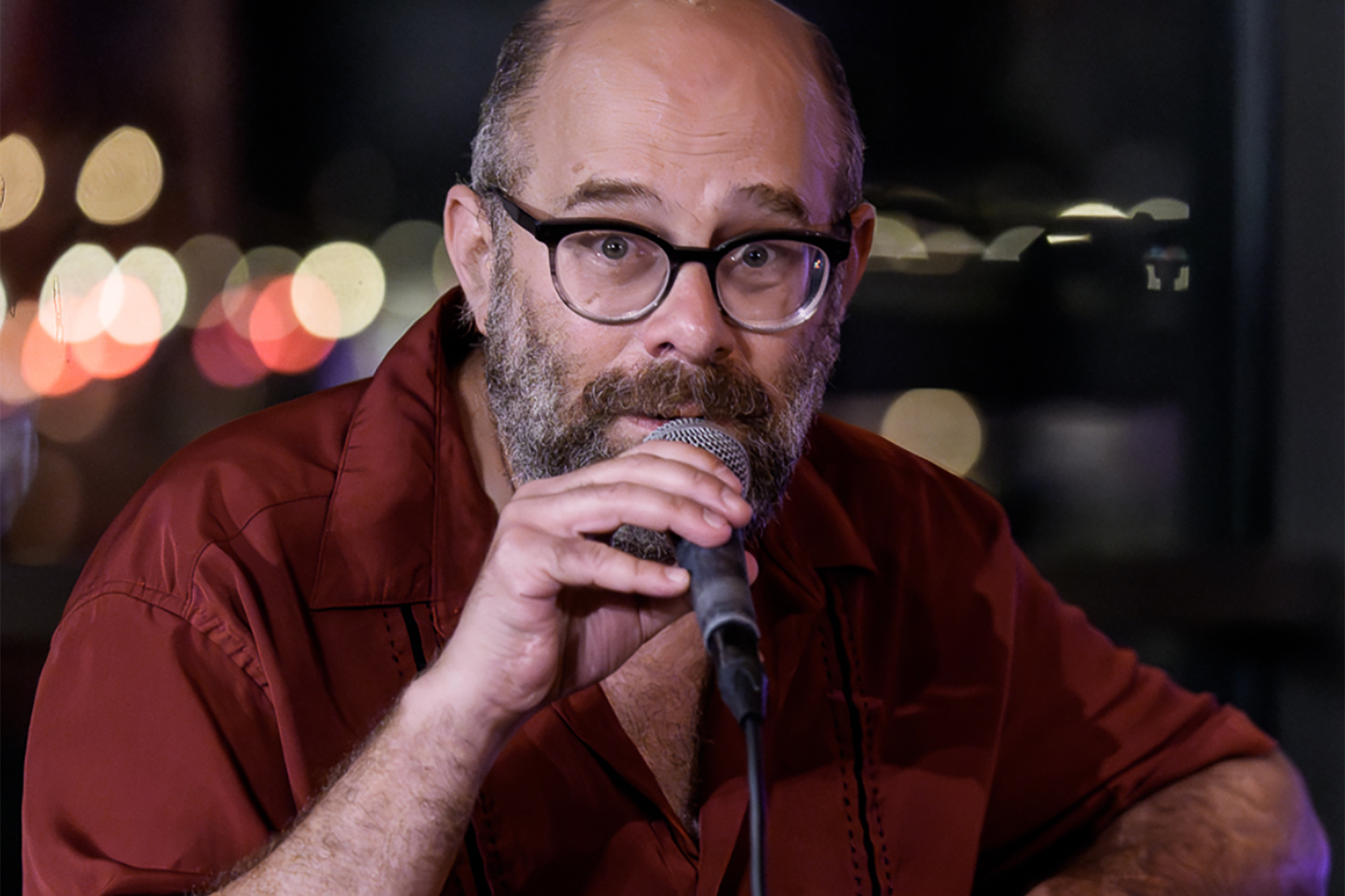
Riding the New York City subway or walking on the streets of the West Village these days, Loren Benedict isn’t surprised when he’s recognized by fans.
In describing the freakish niche fame he’s attained in his mid-50s as a truly singular jazz vocalist, Benedict sounds amused but not mystified. The singer talks about the phenomenon with scientific detachment, befitting his day gig as a physicist at Lawrence Livermore National Laboratory.
“When I play places now, the venue is packed with a bunch of young musicians,” he says in a recent interview from his home in Emeryville. “It’s a pretty serious thing now.”
His social media-fueled notoriety has followed him home to the Bay Area, where Benedict’s been attracting double-takes since the 1990s with his uncanny vocals. Mentored by alto saxophone conceptualist Steve Coleman, Benedict honed a practice that centers on improvising with a syllabic vocabulary that sounds like it should be intelligible as a language, but isn’t.
It’s not unfair to call Benedict a scat singer. But jazz vocalists generally use scatting to solo like horn players, utilizing familiar onomatopoeias like “toodle-oot” and “dwee-bop” over chord changes to improvise melodic extensions. Benedict virtually never sings the tried-and-true scat singer’s fare, and instead deploys his own self-invented palette of vowels and consonants with a narrative flow that emerges like its own unusual song.
After contributing to the 2004 Steve Coleman and Five Elements album Lucidarium, Benedict began collaborating with some of the Bay Area’s most adventurous artists. He’s recorded with guitarist John Scott’s Typical Orchestra, and is on saxophonist Howard Wiley’s albums inspired by music from Louisiana’s Angola State Prison: 2007’s The Angola Project and 2010’s 12 Gates to the City.
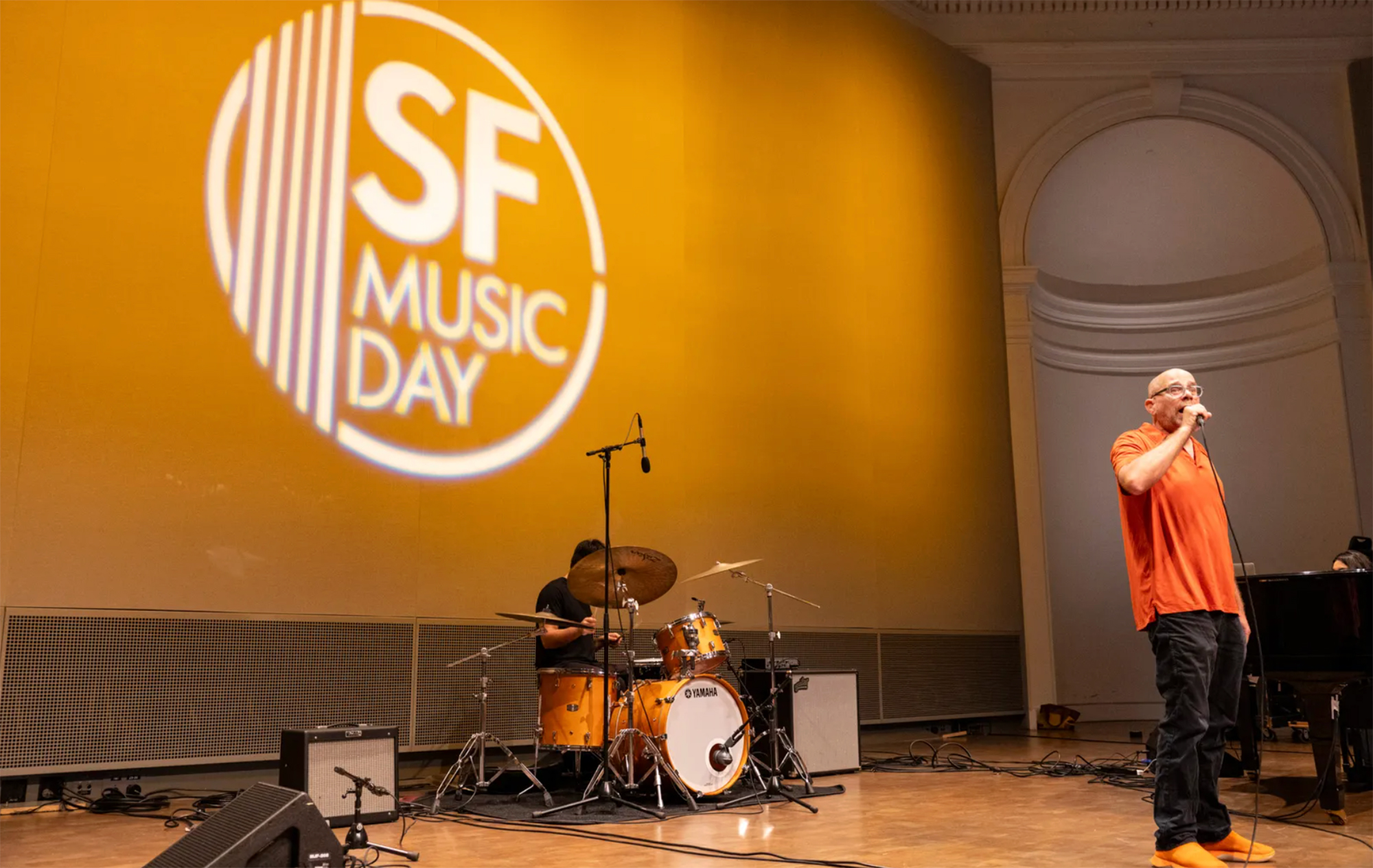
For the past two decades, his most consistent ensemble has been the Holly Martins with saxophonist Kasey Knudsen and guitarist Eric Vogler, an eclectic-minded trio named after Joseph Cotten’s character in the classic 1949 film noir The Third Man.
But Benedict didn’t really become widely known until 2022, when Los Angeles bassist Logan Kane gave him a key suggestion. While recording a duo album with Benedict, Kane, a Pleasanton native who got his start on the Bay Area music scene, noted that Benedict’s videos weren’t attracting much attention on Facebook.
“He said, ‘If you put them on Instagram, they’d take off,’” Benedict recalls. “Now I have way more followers than he has.”
Indeed, everyone wants an imaginary word with Benedict these days. He makes regular trips to New York, where he collaborates with some of the most celebrated musicians on the scene. In a success feedback loop, his name attracts audiences, which makes it easier to land plum engagements.
After a series of gigs with jazz heavyweights in Los Angeles, including piano star Gerald Clayton, he’s got a wide array of activities in the Bay Area this month, including sitting in for several pieces at Mr. Tipple’s June 12 with New York saxophonist Nathan Nakadegawa-Lee, a rising player Benedict’s known since Nakadegawa-Lee was a student at Oakland Tech.
“I cast a fairly wide net in terms of the music I like and participate in, and Nathan is like that, too,” Benedict says. “He’s very good at straight-ahead jazz, but extremely interested in free improv and other ways of organizing collective improvisation.”
Benedict is part of a multi-act evening curated by electronic musician Max Abner that includes geospatial projection artist Eric Theise and cellist Fred Lonberg-Holm at the underground Beauty Supply Arts in Oakland on June 13, and joins Portland singer/songwriter BendreTheGiant on June 17 at Kilowatt in the Mission as part of a triple bill. And after years of attending jam sessions, he’s been asked to host the session at Five Points in San Jose on July 13.
No gig better captures Benedict’s ascension into the jazz firmament than his invitation to join piano star Taylor Eigsti’s concert at the Stanford Jazz Festival July 30 with vocalist Gretchen Parlato and North Carolina drummer Zack Grooves (another artist who parlayed regional renown into social media fame via his YouTube channel).
Eigsti, who’s won two Grammy Awards in recent years, realized that Benedict had broken through to younger musicians when he sat in at a Stanford Jazz Workshop jam session a few years ago “and every kid had their phone out,” he says. “They all knew about Lorin.”
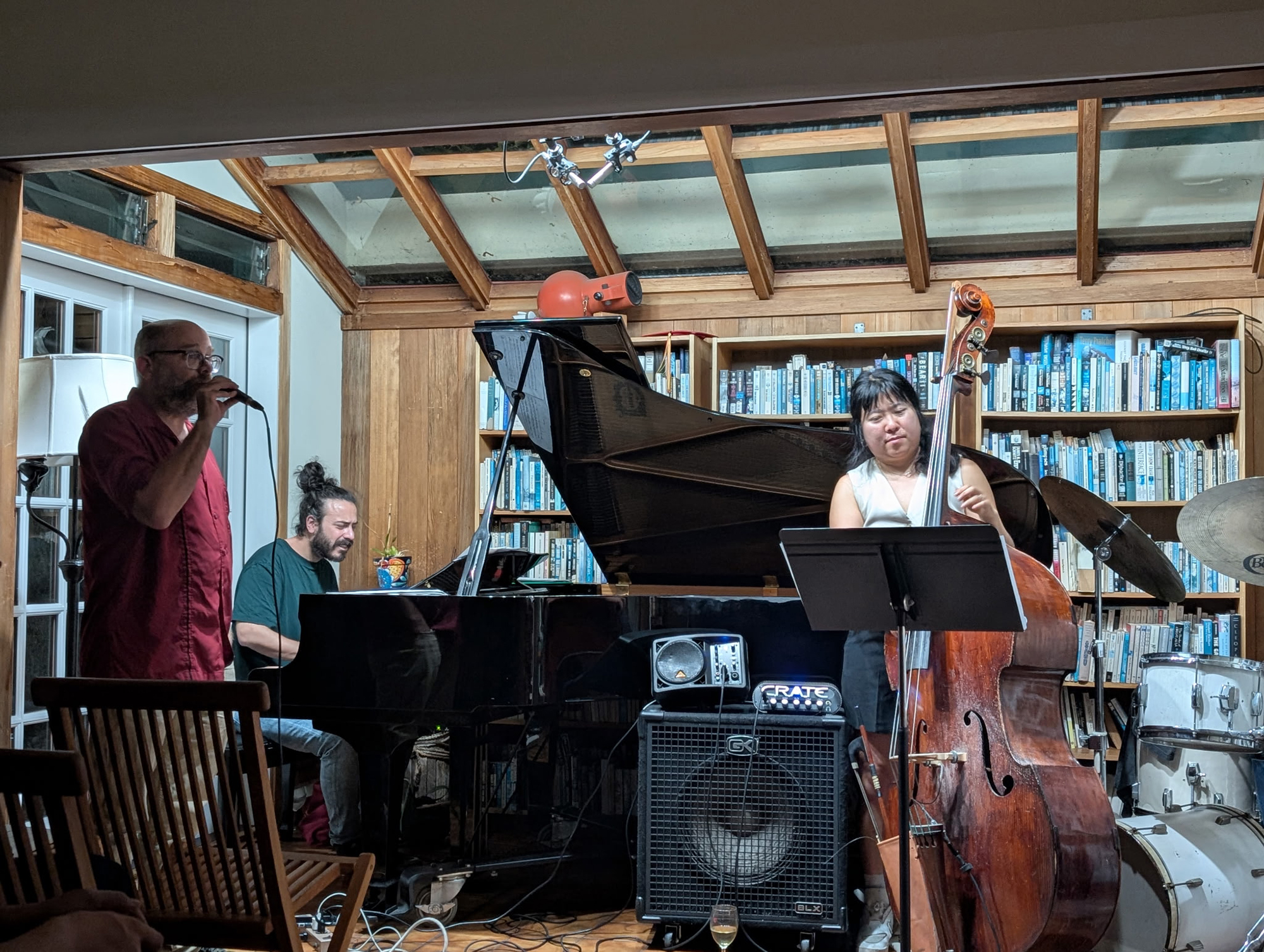
Scat singing can be an acquired taste, and far too many mediocre practitioners have imbued it with an aura of cringe that can obscure the virtuosic flights of Ella Fitzgerald, Sarah Vaughan and Bobby McFerrin. In Benedict’s case, his vocabulary has a way of spilling off the stage, says Eigsti. He and his wife, cellist Marta Bagratuni, “try to speak to each other in Lorin’s language. Gretchen Parlato does that too. He’s been doing this for so long, he’s a legend.”
His legend is fed by the fact that he spends his days crunching data regarding equations of state, which measure the relationship between the pressure applied to a material, its density, and the amount of energy it stores. Does he apply his physics background to his musical pyrotechnics?
“It would be a much more interesting story if there was an overt connection, but there isn’t,” Benedict says. “My view is that there’s a limited amount you can communicate about science or math that’s purely auditory. It’s a real stretch to tell a story.”
Nevertheless, with social media, Benedict’s stories have entered jazz’s mainstream, adding a bracing dose of weirdness that’s in far too short supply.