How Seiji Oda Got the Trunk Boiz Back Outside
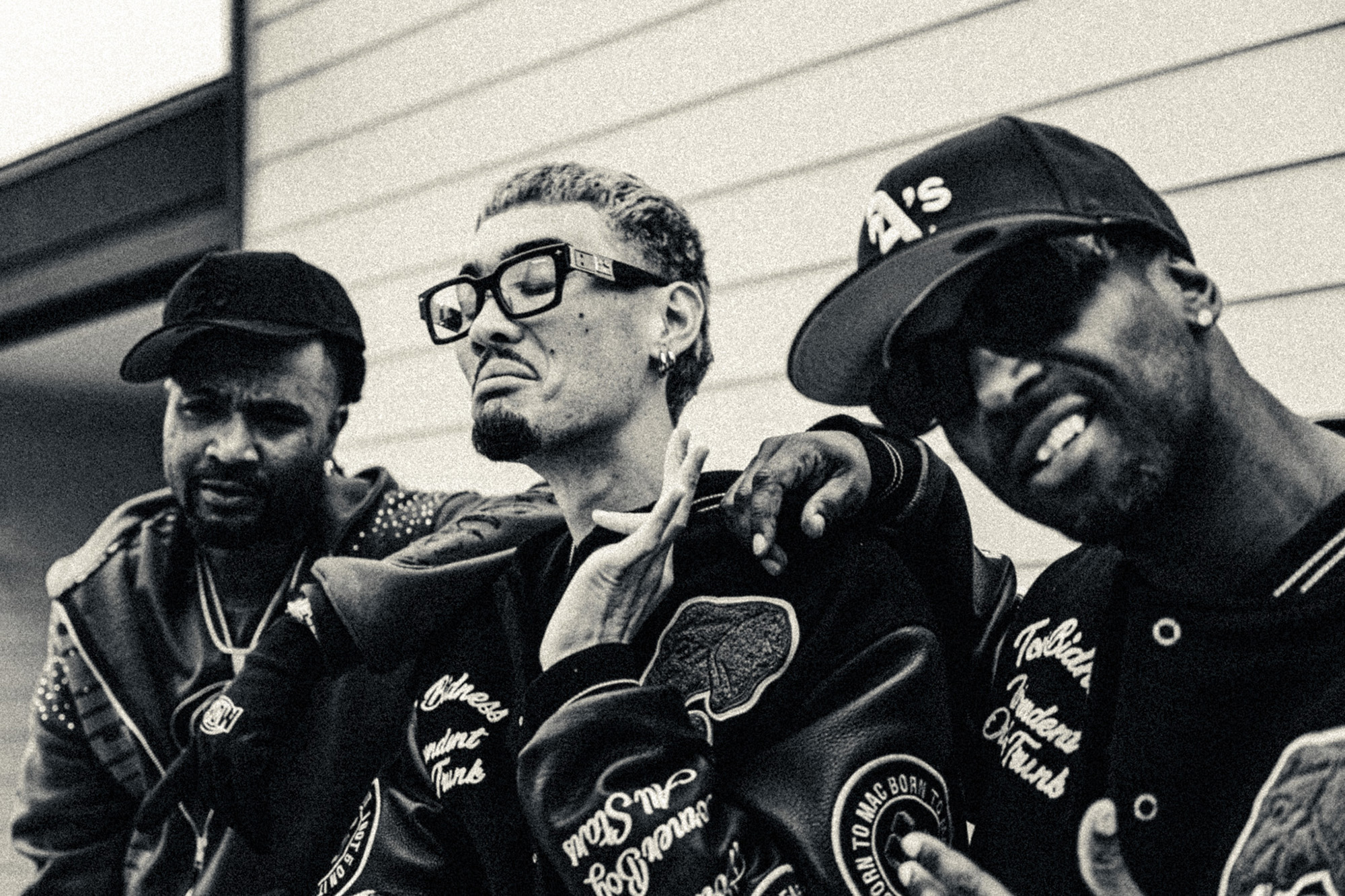
Whenever that high-pitched “would you give meee” shrills through speakers, Bay Areans look for a dance floor or start making one. The mysterious sample on the 2007 Oakland anthem “Cupcake No Fillin’” cemented the Trunk Boiz as local legends. Yet the cousin duo, comprised of B*Janky and F.A. Tha Jefe, went dormant with their music for years.
Last year, emerging Oakland rapper Seiji Oda released “no fillins²,” bringing fresh energy, and a new generation of listeners, to the classic song. “A lot of people tried to remix that beat, man,” F.A. reflects, “but they never could get it right.”
Seiji Oda did. The remix sparked a collaboration that evolved into a new full-length album, RIGHT BACK IN, summoning the Trunk Boiz back outside.
Seiji Oda, 28, was just nine years old when “Cupcake No Fillin’” started blasting out of car speakers across Oakland. Now, as the “third Trunk Boi” and producer of the album, he architects a soundscape textured by voices, nature sounds and sideshow sonics.
Gentle rhythms interlace with signature drum kicks, pushing each track open like a window into the nuanced contradictions of life in the Bay. The avant-garde sound reminds listeners of why we say music slaps to begin with.
“He enhanced our sound,” F.A., 37, reflects. “Like we got the banana split, but he’s like the cherry on the top.”
“[Seiji] brings another special element, like a missing puzzle piece,” B*Janky, 38, adds. “[He] helped us showcase our growth and our versatility.”
As a producer, Seiji Oda approached the artists from a place of deep respect, studying their discography far beyond their sprinkle of hits. He asked himself, “How can I just be of service, and try to make the best thing possible using their [different] styles?”
At times, it meant setting aside egos and doing what was right for a song. For “I Can Tell!,” he handed the reins to producer Oliver McDaniel. Featuring Ajaya Jones and Oda Kai, the track weaves together five voices to rap about the clues that give away if someone’s really from the Bay: “Look how they slide, look what they drive,” they echo on the hook. It’s a standout sure to become a staple at house parties this summer.
The bulk of the project was recorded at Red Heron Studios, in the heart of Oakland’s Chinatown. In addition to the voices on “I Can Tell!,” Fijiiana features on “Sky Scraper,” Michael Sneed appears on “KARMA” and Cait La Dee sings on “Out There,” a remake of a song she originally recorded with The Jacka.
Recently the trio has been showcasing their synergy on stages across Oakland. 510 Day, a community festival and act of defiance against displacement, served as the perfect backdrop to their latest video, “GO DUMB!” A nod to the phrase that defined the hyphy movement during the 2000s, the track is dedicated to the overthinkers who need a push to start creating. “The flow state won’t come, because you’re thinking about it too much,” says F.A. “The best thing you can do as an artist is keep your flow state, go dumb.”
At 510 Day, kids jumped double dutch, turf dancers battled and a crowd of over 100 people stood watching, soaking in the last rays of sun as it set over Lake Merritt. As the track started, Seiji Oda glided through the crowd, inviting people to join in as they filmed.
“We want to make that feel-good music,” B*Janky insists. “It was all age groups out there, all nationalities. We from the Bay, you know what I mean? That’s what we grew up with.”
Before RIGHT BACK IN, the Trunk Boiz had another project they decided to scrap. F.A. believes it was the right move; he now feels it would have brought “negative energy.” B*Janky agrees: “We’re tired of the negativity, that rap that’s getting people killed and going to jail. We want to change the narrative.”
“This feels right. I can put this out and wholeheartedly promote it,” F.A. says, “let my kids sing it, let other people’s kids sing it, old people sing it. It could potentially be on the radio.”
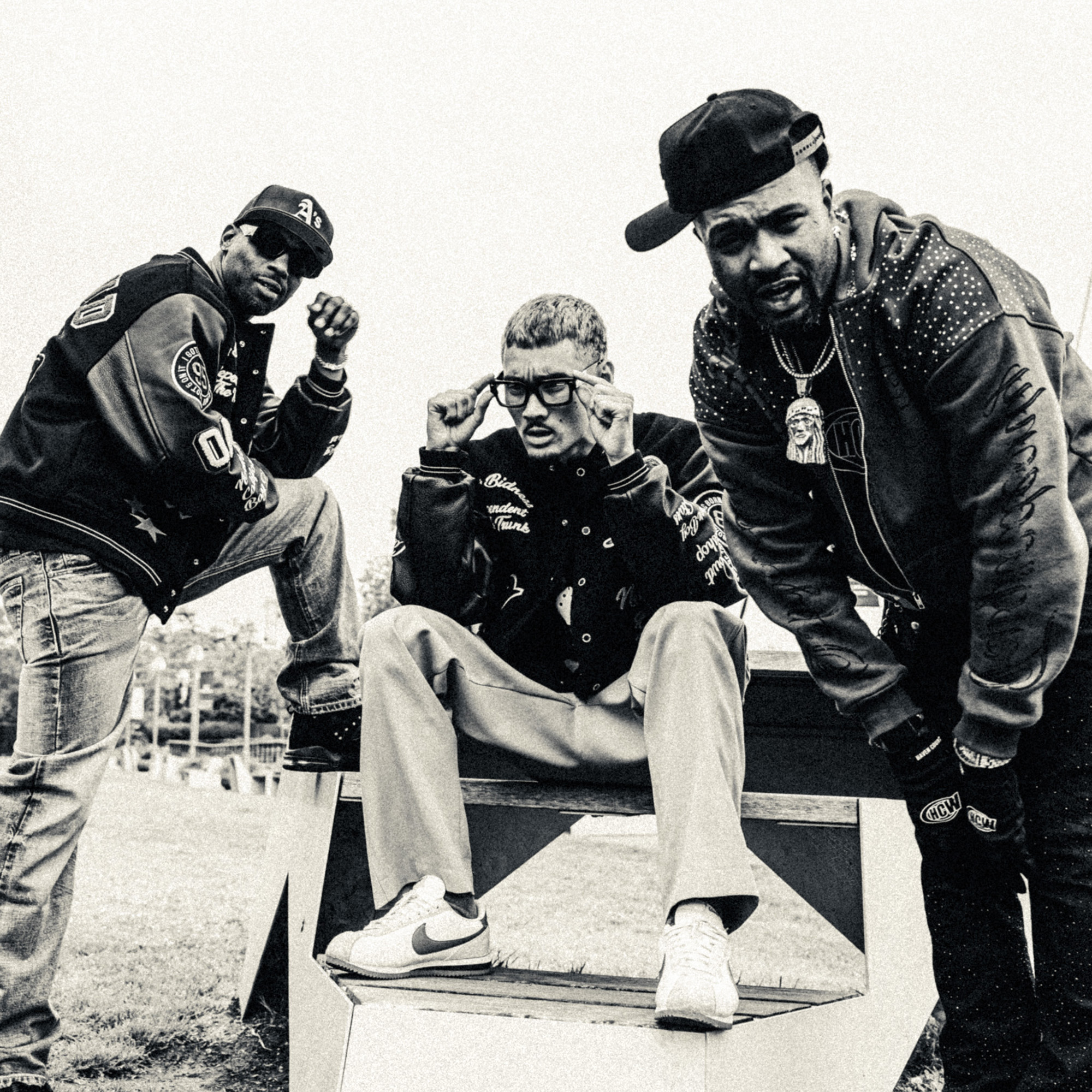
For Seiji Oda, creativity begins with preparation, the kind that allows you to be a vessel when the magic surfaces. “If you listen to the background of ‘GO DUMB!’ there’s a really high voice that’s like, ‘Going, going, going dumb.’ It sounds like a kids’ choir or something,” he notes. In reality, it’s F.A. singing in the studio, which Seiji Oda quickly captured. “If you prepare really well, then you’re prepared for something you couldn’t have even thought of.”
The Trunk Boiz are used to being resourceful with their artistry, or “getting it out the trunk,” which is where their name comes from. B*Janky remembers the BART tours, a masterclass in marketing: “We’d be at the BART station, at the popping gas stations, selling CDs all over. We’d have rappers, singers, turf dancers with us.”
When potential customers hesitated, unsure if they wanted to commit to a CD of music they didn’t know, the Boiz would step in, and one of the artists would sing or rap right on the spot. “Once they hear that voice, that CD sold,” B*Janky continues. “Once we showed them the talent we had.”
That drive and dedication inspired Seiji Oda, who’s part of a generation hustling their art through streams and algorithms. He attributes the depth of face-to-face connection to why people have such a deep affinity for “Cupcake No Fillin’” to this day.
Yet the Trunk Boiz aren’t interested in simply swimming in nostalgia. They’re invested in evolving, adapting to express what feels current and alive for them today. They recently performed with Seiji Oda in front of thousands of people at an Oakland Roots game.
“Music is not an age,” F.A. says. “You could be 50 years old and still make really good music. 2 Chainz didn’t start poppin’ ’til he was like 35.”
F.A. reflects on the need to stay grounded while pursuing a dream on the intro track, “Pick It Up.” “We ain’t really make it, but we made it,” he raps. Today, making it carries a weight that’s far from superficial.
“Me and [F.A.] are the way out for our family,” B*Janky explains. “We ain’t go to the league, to the NBA or NFL. It’ll really be like a load off my shoulder, and feel good, to have my family right.”
Their resilience is evident in lyrics that nod to their younger selves, yet make space to show up as the people they are today. Fulfilling a commitment to pick up that dream and jump right back in.
“Sometimes you got to put it down, reevaluate your situation, and come back to the drawing board,” B*Janky says. “If we would have just stopped making music, they probably wouldn’t be talking about us right now.”