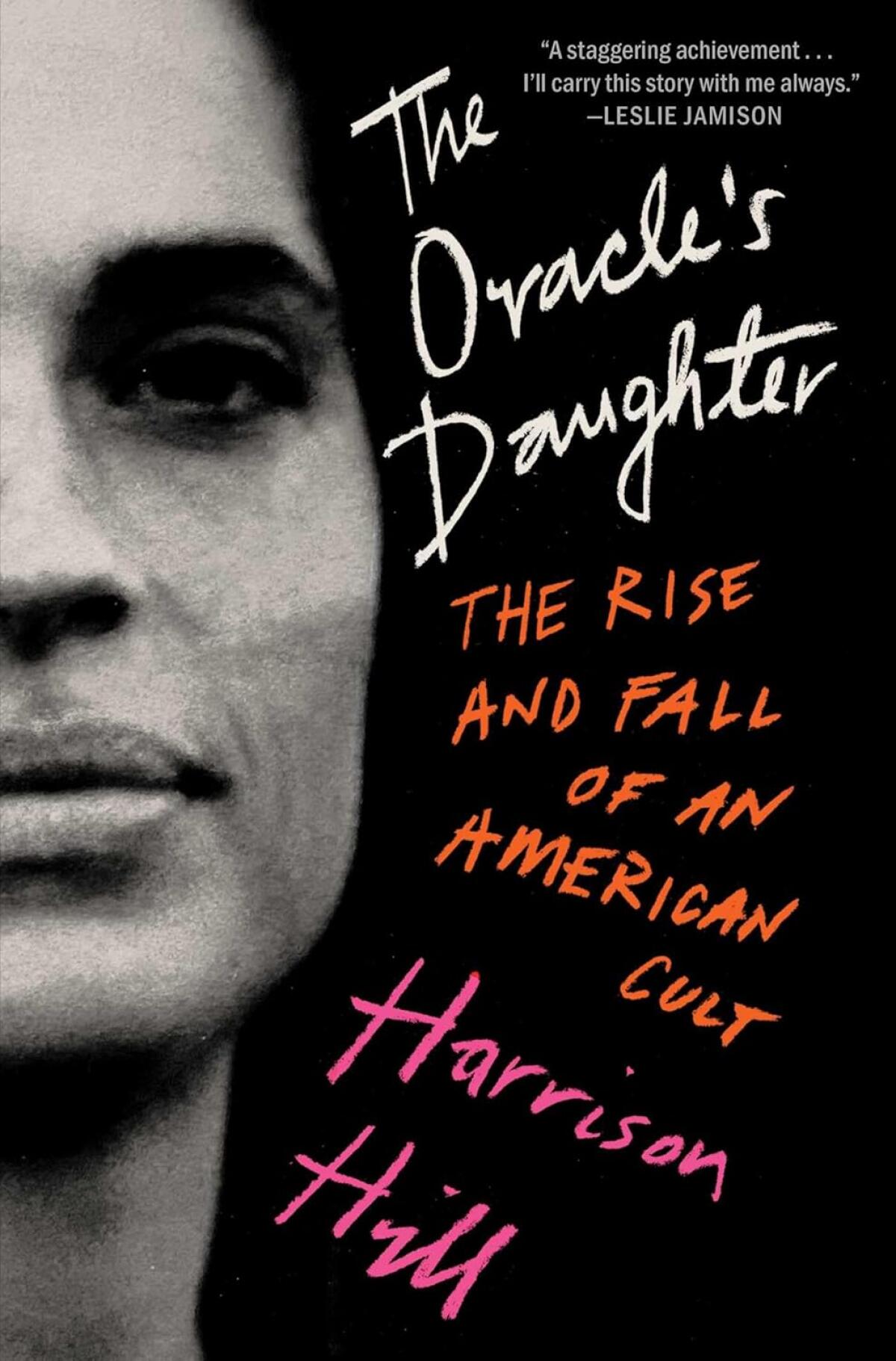
What Draws People Into Cults? A New Book Tracks Two Followers
Harrison Hill's new book ‘The Oracle's Daughter’ is a story about the terror of losing the self.
Ilana Masad, NPR
(Scribner)
In 2017, a gaunt, bespectacled, 71-year-old woman wearing a crisp white uniform with two stars on the shoulder was arrested in New Mexico. This was Deborah Green, nee Lila Carter, the leader and self-described general of the Aggressive Christianity Missions Training Corps (ACMTC) — a cult that had been operating with impunity for three decades, despite various attempts by former members to get law enforcement to shut it down.
“But Deborah looked so small, so frail — so old” when she was arrested, writes Harrison Hill in his new book, The Oracle’s Daughter: The Rise and Fall of an American Cult. And yet this was the woman who with her rantings and ravings about God and hell had struck fear into the hearts of her followers.
Related Article
Hill’s book closely follows two characters — Maura Aluzas and Sarah Green — and their journeys into and out of ACMTC. It also explores the broader landscape of cults in the U.S. and how their logic and approach to religion have become less and less fringe over the years, to the point where ACMTC’s messy doctrine seems, in a twisted way, to have been ahead of its time.
Maura Aluzas met Lila in the late 1960s, when Maura worked at a hospital and helped care for Lila’s dying brother. The young women became close friends for a time; both women were seekers, each wishing to lead a meaningful, intentional life. During the near-decade they were out of touch, both embraced Christianity, and they certainly weren’t alone in their newfound fervor when, in 1980, Lila Carter — now married to Jim Green — reached out to Maura to share that she and her husband had found God; the 1970s had seen a resurgence of religious zeal.
When the Greens returned to California, the families spent time together and Maura’s husband, Steve, was impressed with the Greens’ vision of a spiritual army that would “take up arms against the forces of secularism and mainstream Christianity.” Maura wasn’t entirely convinced, but she loved her husband and still held an old loyalty to the Lila she’d once known, even if this new, born-again version was harsher and stranger. And, so, when Steve wanted to move closer to Lila and Jim Green, Maura Aluzas agreed.
This began a series of incremental choices that wouldn’t, at the time, have felt as extreme as they seem in hindsight. Maura and Steve became the first members of the Greens’ church. They raised children in the harsh environment that Lila — who’d renamed herself Deborah — cultivated. And because of her lingering doubts, or simply because she refused to beat her children as firmly as Deborah thought she should, Maura was punished. She was first ostracized then exiled. Although being banished was painful, for Maura, it eventually became a relief, a way to escape.
The twists and turns Hill follows throughout this true story are extraordinary, and the author does a wonderful job of contextualizing the painful, sometimes horrifying choices his subjects made — especially those involving women leaving their children, which, as he points out, would be perceived very differently if these women had been men.
How and why do people end up in cults? Why did Maura Aluzas join ACMTC if she was never fully on board? Well, Hill reminds readers, no one really “joins” a cult. “They join what they believe to be an alternative community, or an especially devoted religious group.” Gradually, things change, but by then, the group has become a home, a kind of family.
Those born into or raised in a cult, of course, have no choice in the matter of joining. Sarah Green, Deborah and Jim’s first child, grew up in ACMTC, moving with her parents and their followers as they sought to avoid legal consequences for their various actions. When she escaped in adulthood, she left behind three young children of her own — practically speaking, she couldn’t run away with them. She tried to go back to get them, but her mother allowed her to see them only briefly before effectively hiding them away. Part of Sarah still believed that she was very literally going to hell for leaving ACMTC; she rationalized that her children, at least, could still be granted entry to heaven.
Our culture is fascinated by cults, and there’s an element of self-soothing to be found in consuming media about them. We would never join a cult, we tell ourselves. But it’s generally believed now that what makes a person vulnerable to a cult isn’t anything innate about them but rather a confluence of factors relating to their circumstances, their support networks, and the options open to them. I was often reminded, while reading this book, of a now-iconic scene in the second season of Fleabag, when Phoebe Waller-Bridge’s character, who is grieving the death of her friend — which she believes to have been her fault — confesses to the priest she’s in love with that she wants someone to tell her what to do. She wants to be told “what to like, what to hate, what to rage about.” Most of all, she wants someone to tell her what to believe in and how to live her life.
Related Article
It’s a relatable impulse, even for those who consider themselves fiercely independent. As Hill points out, the Greens were hippies, enthusiastic members of the counterculture before they became Christian extremists. “Hippies placed a premium on freedom,” he writes, “on the right to improvise their lives as they saw fit. And yet the 1960s and seventies also revealed the limits of freedom — how an endless array of options could be confusing, overwhelming, even debilitating. Sometimes it simply feels better being told what to do.”
Indeed — and it is precisely when we’re most confused and overwhelmed that we are most susceptible to losing sight of what we actually believe in and how we actually want to live. The Oracle’s Daughter is a story about the terror of losing the self but it’s also, gratifyingly, a story about finding the way back to it.
Ilana Masad is a fiction writer, critic, and founder/host of the podcast The Other Stories. Her latest novel is ‘Beings.’