In a 1969 Neiman Marcus catalog designed to shock, an elegantly attired woman leans against a $10,600 Honeywell “Kitchen Computer.” A basket of fresh produce balances on the machine’s smooth fiberglass top. It’s as if a spaceship’s control panel has beamed into a country kitchen.
Only 20 of the Honeywell 316 computers were ever produced, and even less were actually sold. (They cost about $94,000 in today’s money and required a two-week training course to operate.) But this photoshoot and the computer’s very premise — great at cooking but bad at logistics? — set up a binary that persists to this day: Women may benefit from technology, but they’re certainly not driving its development.
Motherboards, a group exhibition at the San José Museum of Art, tackles this falsity from two fronts. The show features 16 artists and collectives, working in a variety of mediums, who engage with the past and present of the technology industry. And alongside the art, objects from Mountain View’s Computer History Museum prove women were always part of the field — and drove some of its most remarkable innovations.
Maybe this sounds a bit like that dreaded and oft-rehashed intersection of art and technology. But Motherboards excels in referencing concrete facts and figures, and in pulling together surprising and truly beautiful artwork. While “technology” can be a vague and immaterial concept, curator Juan Omar Rodriguez has assembled a show that is satisfyingly tangible.
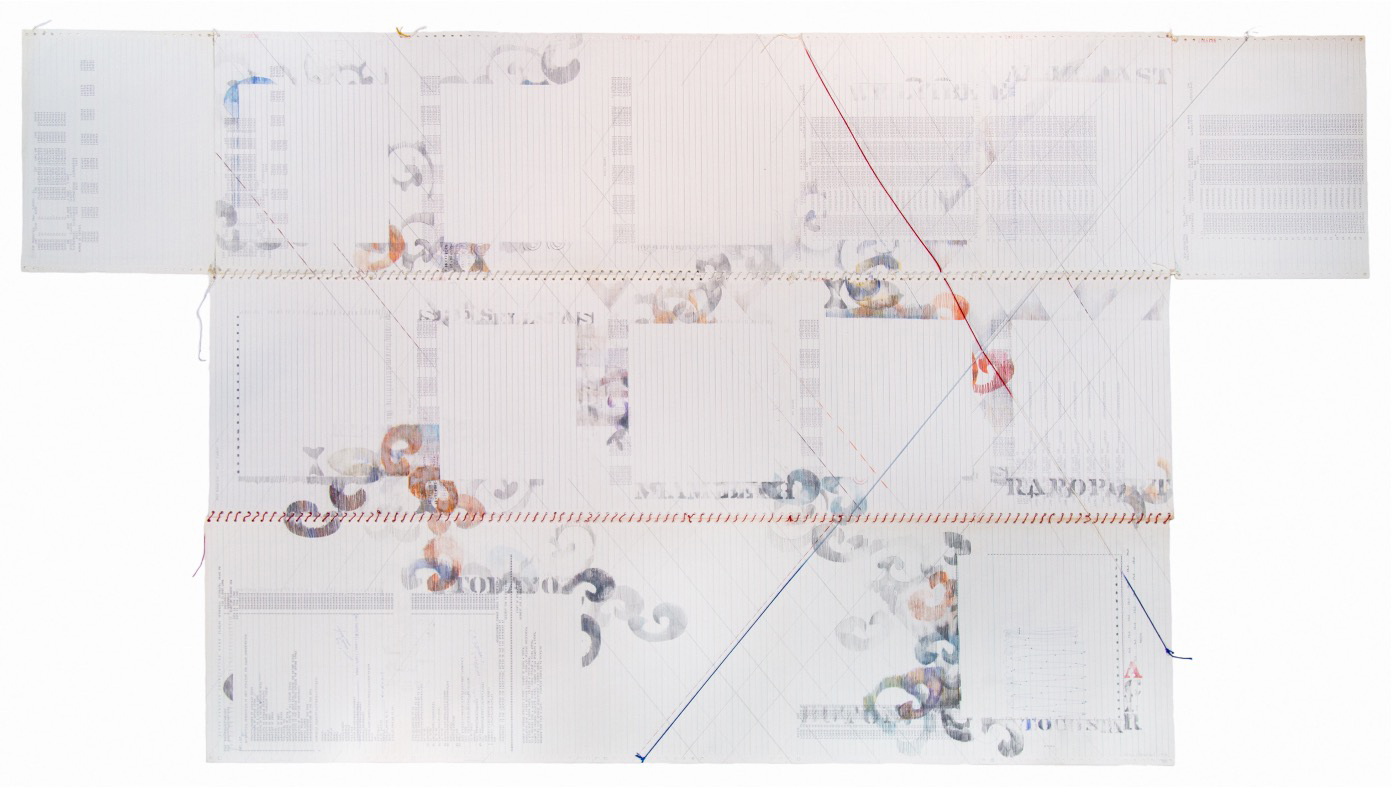
Take Hương Ngô’s sculptural and textile work. Her piece Assembling Power, a delicate framework of wire and electronics parts, resembles an airy model city. Across the orderly architecture, spiky orbs à la Buckminster Fuller lend the scene a utopian vibe. But who builds that utopia, and who gets to live in it? The sculpture is made from the same components her parents once assembled in electronics factories.
