Sponsor MessageBecome a KQED sponsor
upper waypoint

A New South Bay Restaurant Specializes in Decadent Japanese Seafood Bowls

Save ArticleSave Article
Failed to save article

Please try again

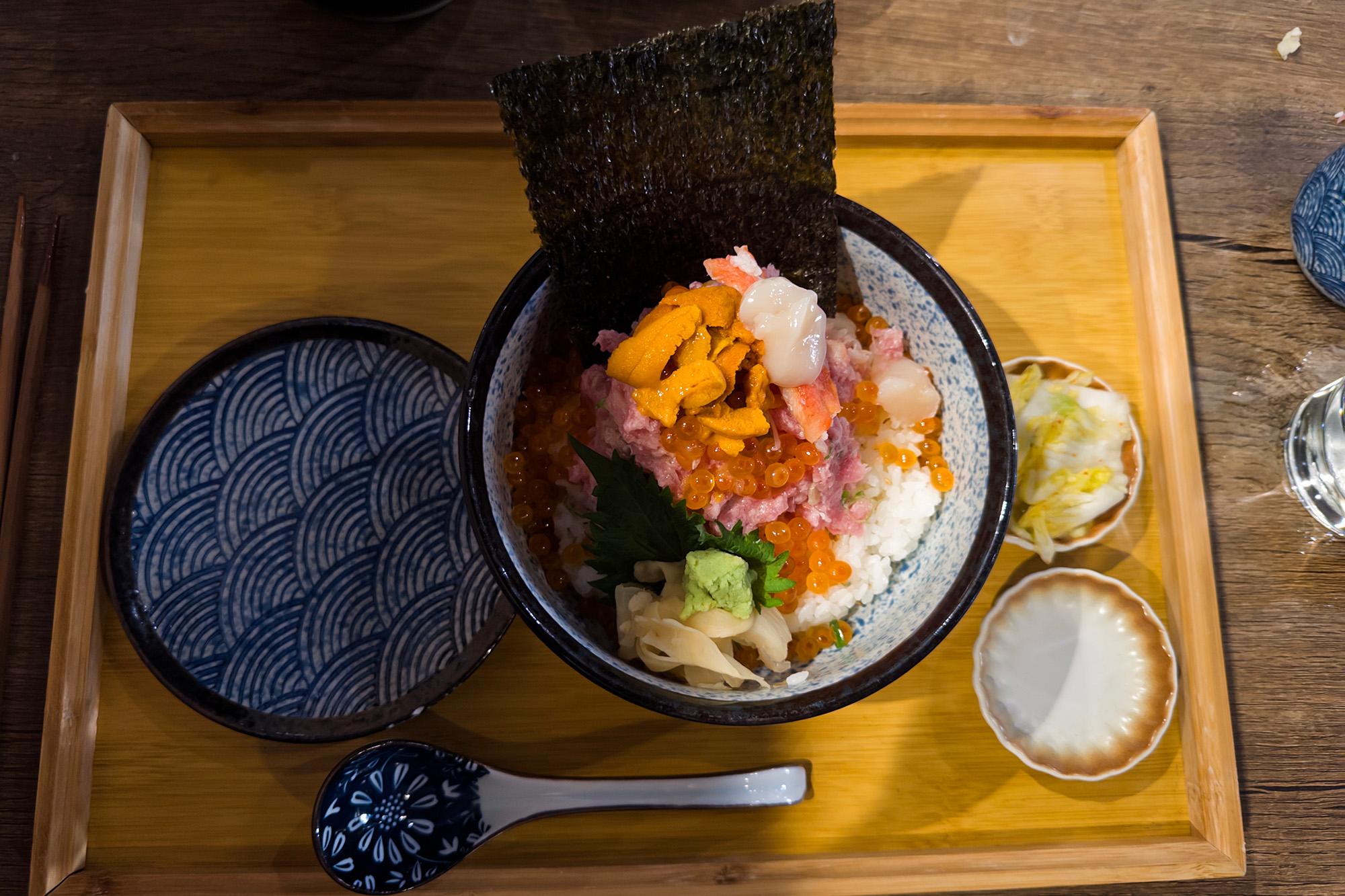
Overhead view of a rice bowl topped abundantly with assorted raw seafood.
Yaichi's luxurious seafood bowls are reminiscent of the ones sold in Japan's fish markets. The Milpitas restaurant opened in October of 2025. (Luke Tsai/KQED)

One of the most memorable breakfasts of my life was at a small sushi stall at the old Tsukiji fish market in Tokyo, where I dug into a big wooden tub of rice topped with a mountain of incredibly fresh-tasting uni, ikura and fatty tuna. It was just past eight o’clock in the morning. After I’d devoured most of the raw seafood, the shopkeeper poured hot dashi over the last little bit so I could slurp it up like the most exquisite rice porridge.

Call it a typical Japanophile’s romanticized tourist experience, but for years I’ve thought about that bowl of seafood. I never found anything quite like it in the Bay Area until a couple of weeks ago when I stumbled on Yaichi, a newish restaurant specializing in fresh seafood bowls, or kaisendon, in the Ulferts Center shopping plaza in Milpitas.
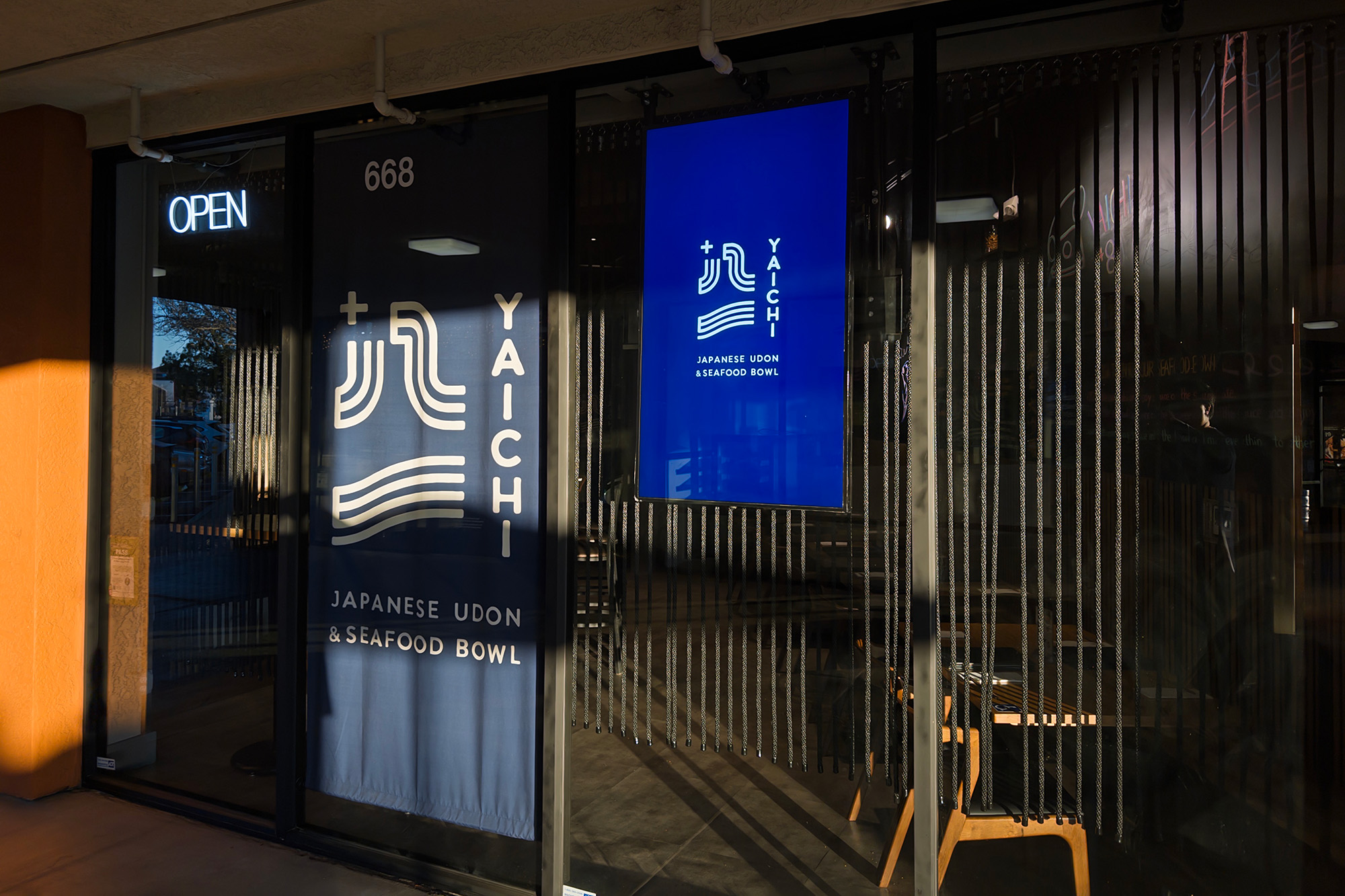
Exterior of a restaurant. The blue curtain hanging in the doorway reads, "Yaichi Japanese Udon & Seafood Bowl."
The restaurant is located in the Ulferts Center shopping plaza in Milpitas. (Luke Tsai/KQED)

Open since this past fall, Yaichi sells three progressively luxed-up versions of its sushi bowl. The basic “Ume” bowl ($26) comes piled extravagantly high with minced yellowfin tuna, flying fish roe, scallops and a plump morsel of snow crab leg meat. The more premium bowls ($32 and $41, respectively) add a generous scattering of ikura (marinated salmon roe) and Hokkaido sea urchin to the mix.

Beginner-friendly instructions displayed on every table teach first-timers how to best enjoy the kaisen don: First, place some of the rice and seafood on a piece of dried seaweed, wrapping it up to eat like a sushi hand roll. Then, mix together some wasabi and house-brewed soy sauce and pour it over the remaining seafood. The briny pop of the ikura and the buttery ocean umami of the uni make for an especially delicious combination when stirred into the warm rice.
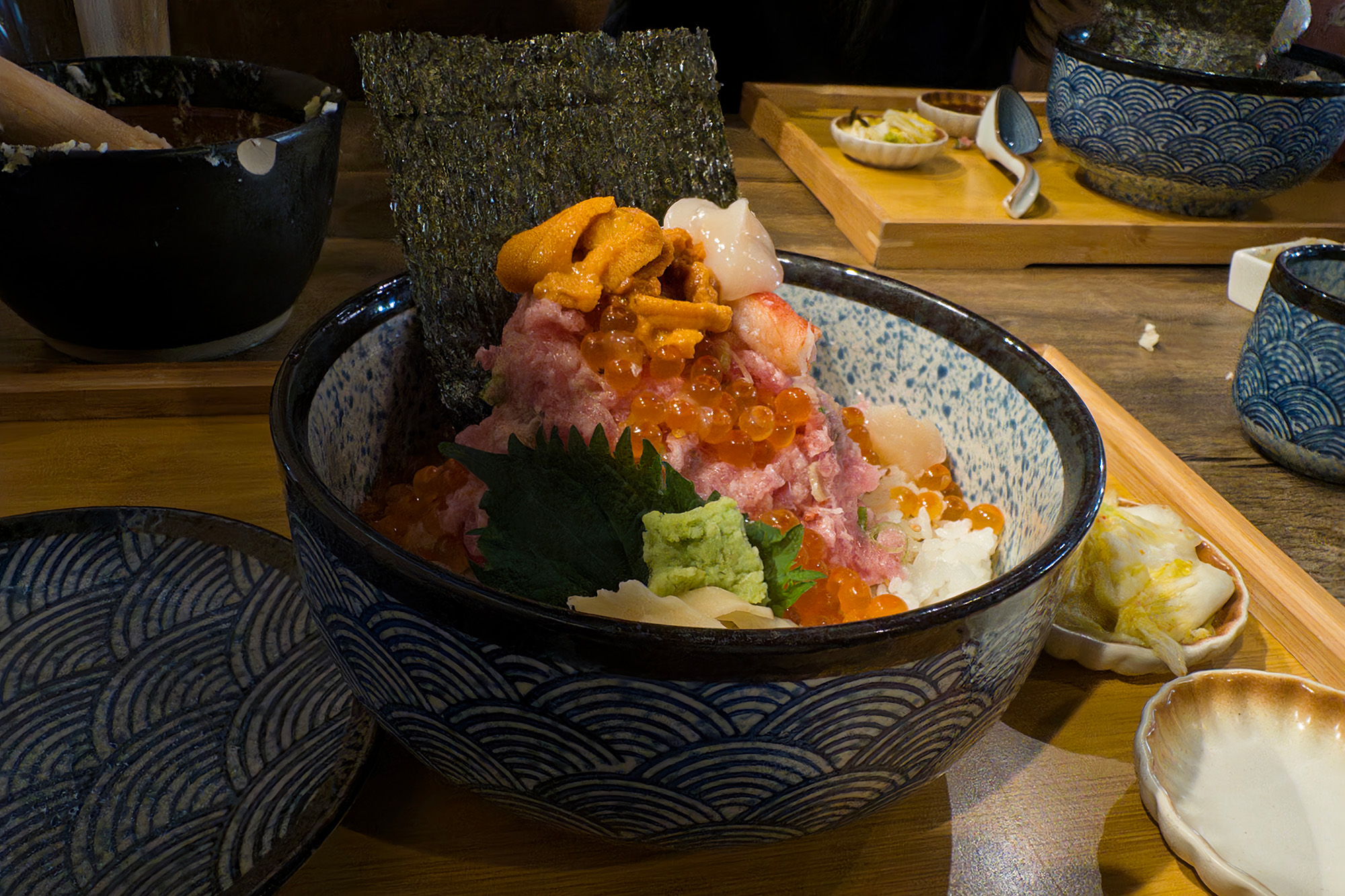
Japanese seafood bowl piled high with salmon roe, sea urchin and other assorted raw seafood.
Another view of the “Matsu” bowl — the fanciest and most expensive of Yaichi’s seafood bowls. (Luke Tsai/KQED)

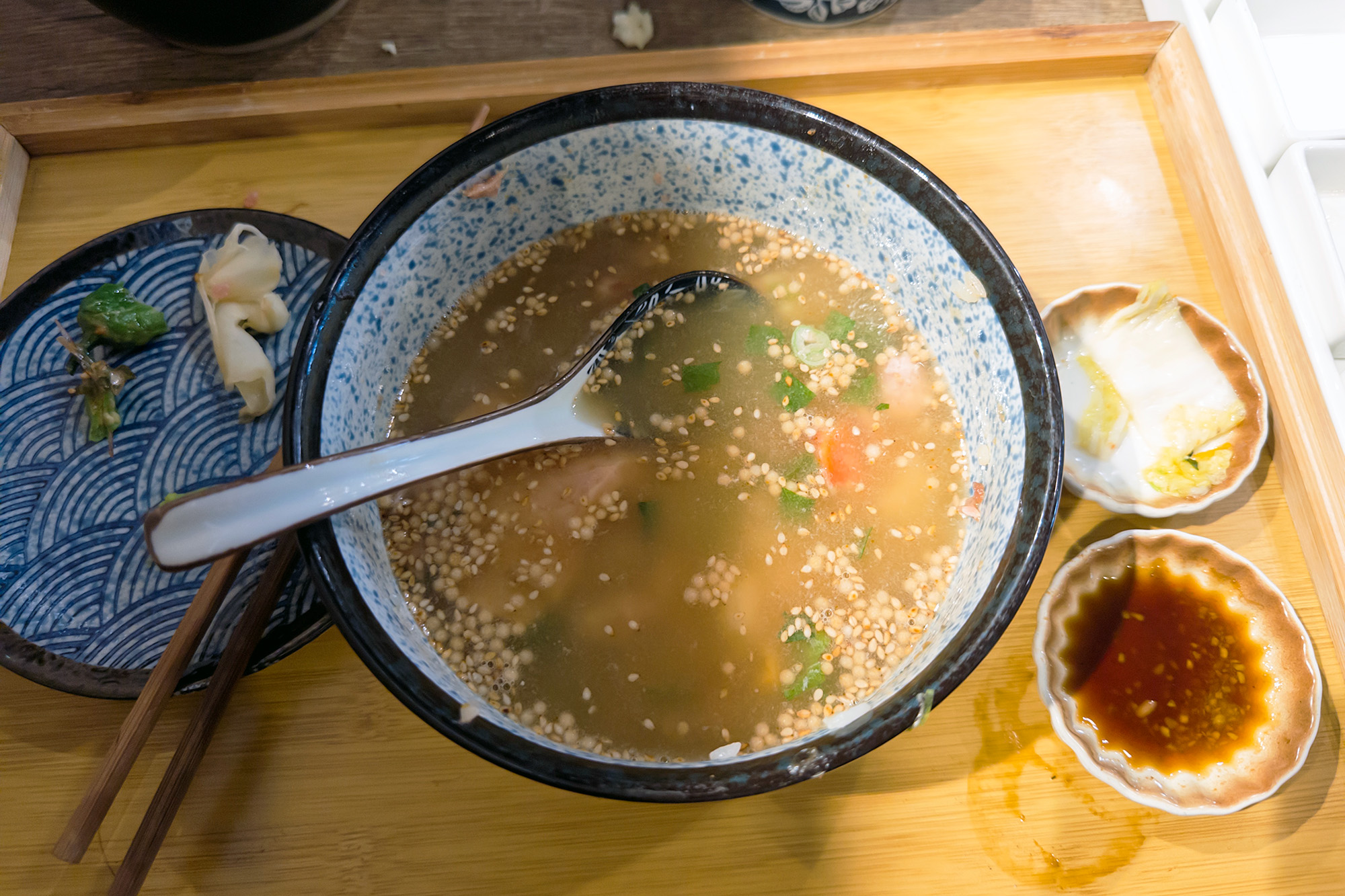
Toward the end of the meal, you can add the optional ochazuke set ($4.50), which comes with shredded shiso, seaweed, tiny rice cracker balls and a single piece of salmon sashimi. Add all that into what’s left of your bowl (make sure you save some of the rice!) and then pour hot dashi over everything, transforming the sushi bowl into a gentle, cozy soup that warms you up from the inside. In that way, diners get to enjoy their kaisendon as two totally different dishes in one.
Sponsored

The restaurant is the brainchild of Tokyo-raised chef-owner Nobu Kashima, who also runs Leichi, a popular izakaya in Santa Clara. In Japan, he explains, you can find kaisendon at casual izakayas, at beachside seafood restaurants and — perhaps most commonly for foreign tourists — at fish market kiosks like the one I ate at Tsikiji. In recent years, popular, Instagram-friendly kaisendon chains in Tokyo have been known to draw two-hour lines during the dinner rush.

Here in the Bay Area, though, Kashima says he hasn’t really seen any restaurants specializing in these giant seafood bowls, though you might find a more modest version on the menu at certain sushi restaurants or izakayas. What’s much more common are chirashi bowls, which feature a variety of sashimi scattered on top of a bowl or bento box of vinegared sushi rice. Kaisendon like Yaichi’s, on the other hand, usually comes with plain, unseasoned rice, which makes it more suitable for the ochazuke treatment — also a relative rarity in the Bay.

A bowl of dashi broth with seafood and rice.
The optional ochuzuke set gives diners an additional way to enjoy the meal. (Luke Tsai/KQED)

Apart from the seafood bowls, Yaichi offers a concise selection of izakaya-style appetizers, my favorite of which was the delightful DIY Japanese potato salad, which comes with a little mortar and wooden pestle. You pound the potatoes to your preferred texture before mixing in the mayonnaise, cucumber, onion, soft-boiled egg and your choice of ham or salted cod roe.

Eventually, the restaurant’s other main specialty will be udon. Kashimi says he’s in the process of importing a noodle machine from Japan so that he can make the udon fresh in-house. Both the noodles and the broth will be made according to the Sanuki style from Kanagawa Prefecture. The noodles are meant to be particularly chewy, and the broth will have a strong fish flavor from dried sardines.

Kanishi says he’s hoping the udon will be available within the coming month. At that point, the emphasis of the restaurant will be split evenly between the udon and the seafood rice bowls.

“Some people really like noodles,” he says. “But if you’re eating noodles every day, you miss the rice. That’s why I want to do both.”


Yaichi is open daily 11:30 a.m.–2 p.m. and 4:30–8:30 p.m., except for Tuesdays, when the restaurant is closed. It’s located in the Ulferts Center at 668 Barber Ln. in Milpitas.

lower waypoint
next waypoint
Player sponsored by