Public Domain Contest Challenges Filmmakers to Remix Betty Boop and More
Nearly 280 filmmakers entered the annual contest celebrating creativity without copyright restrictions.
Chloe Veltman, NPR
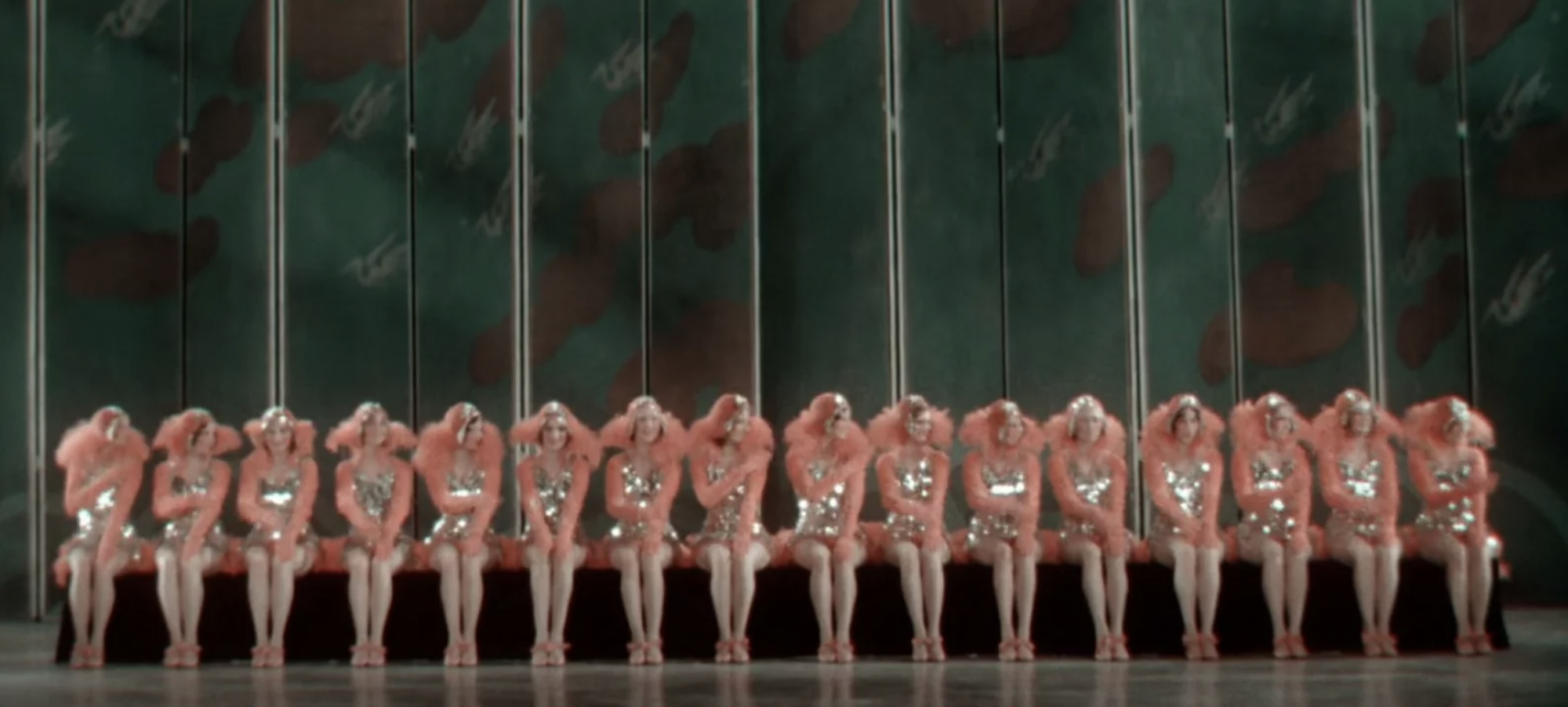
Nearly 280 filmmakers entered the Internet Archive's Public Domain Film Remix Contest this year. Above, a still from ‘King of Jazz.’ The 1930 film was used as source material in several contest submissions. (Universal Pictures/Internet Archive)
One of the most unusual of the creative treasures to enter the public domain this month is King of Jazz. The plotless, experimental 1930 musical film shot in early Technicolor centers on influential bandleader Paul Whiteman, nicknamed “The King of Jazz.”
In one memorable scene, the portly, mustachioed Whiteman opens a small bag and winks at the camera as miniature musicians file out one after another like a colony of ants and take their places on an ornate, table-top bandstand.
A new video based on clips from King of Jazz has won this year’s Public Domain Film Remix Contest — an annual competition that invites filmmakers from around the world to reimagine often long-forgotten literary classics, films, cartoons, music, and visual art that are now in the public domain. This means creators can use these materials freely, without copyright restrictions. In 2026, works created in 1930 entered the public domain.
Titled Rhapsody, Reimagined, the roughly two-minute video captures the King of Jazz‘s surreal quality: Cookie-cutter rows of musicians, showgirls, office workers and random furniture cascade across the screen as Whiteman’s winking face looks on.
“I wanted to transform the figures and bodies into more dream-like shapes through collage and looping and repetition,” said Seattle-based filmmaker Andrea Hale, who created the piece in collaboration with composer Greg Hardgrave. For video artists, Hale said discovering what’s new in the public domain each January is a thrill. “We’re always looking for things to draw from,” Hale said. “Opening that up to a bigger spread of materials is amazing. That’s the dream.”
A massive repository of content
The Internet Archive, the San Francisco-based nonprofit library behind the contest, digitizes and provides public access to a massive repository of content, including many materials used by contest participants. “These materials have often just been in film canisters for decades,” said digital librarian Brewster Kahle, who founded the Internet Archive in 1996.
This year’s submissions range from a reworking of the 1930 film The Blue Angel starring Betty Boop — another public domain entrant this year — instead of Marlene Dietrich, to an AI-generated take on the 1930 Nancy Drew book The Mystery at Lilac Inn.
Kahle said the Internet Archive received nearly 280 entries this time around, the highest number since the competition launched six years ago. “Things are not just musty, old archival documentation of the past,” Kahle said. “People are bringing them to life in new and different ways, without fear of being sued.”
The public domain in the era of AI
Lawsuits have become a growing concern for artists and copyright holders, especially with the rise of generative AI. Recent years have seen a surge in online video takedowns and copyright infringement disputes.
Media companies are trying to address the problem through deals with tech firms, such as Disney and OpenAI’s plan, announced late last year, to introduce a service allowing users to create short videos based on copyrighted characters, including Cinderella and Darth Vader.
“On the one hand, these licensing agreements seem quite a clean solution to thorny legal questions,” said Jennifer Jenkins, director of the Center for the Study of the Public Domain at Duke Law School. “But what’s exciting about the public domain is that material, after a long, robust 95-year copyright term, is just simply free for anyone — without a team of lawyers, without a licensing agreement, without having to work for Disney or OpenAI — to just put online,” Jenkins said.
Jenkins also pointed out an interesting twist for people who create new works using materials from the public domain. “You actually get a copyright in your remix,” she said. “Just like Disney has copyrights in all of its remakes of wonderful public domain works like Snow White or Cinderella.” (The Brothers Grimm popularized these two characters in their 19th century collection Grimm’s Fairy Tales. But their roots are much deeper, going back to European folklore collections of the 1600s and beyond.)
Related Article
However, this only applies to works created by humans — U.S. copyright law currently doesn’t recognize works authored by AI. And Jenkins further cautioned that creators only get a copyright in their new creative contributions to the remix, and not the underlying material.
This year’s Public Domain Film Remix Contest winner Andrea Hale said she’s using a Creative Commons license for Rhapsody, Reimagined. This means the filmmaker retains the copyright to her work but grants permissions that allow other people to freely use, share, and build upon it. “I’m keeping with the spirit of the public domain,” Hale said.