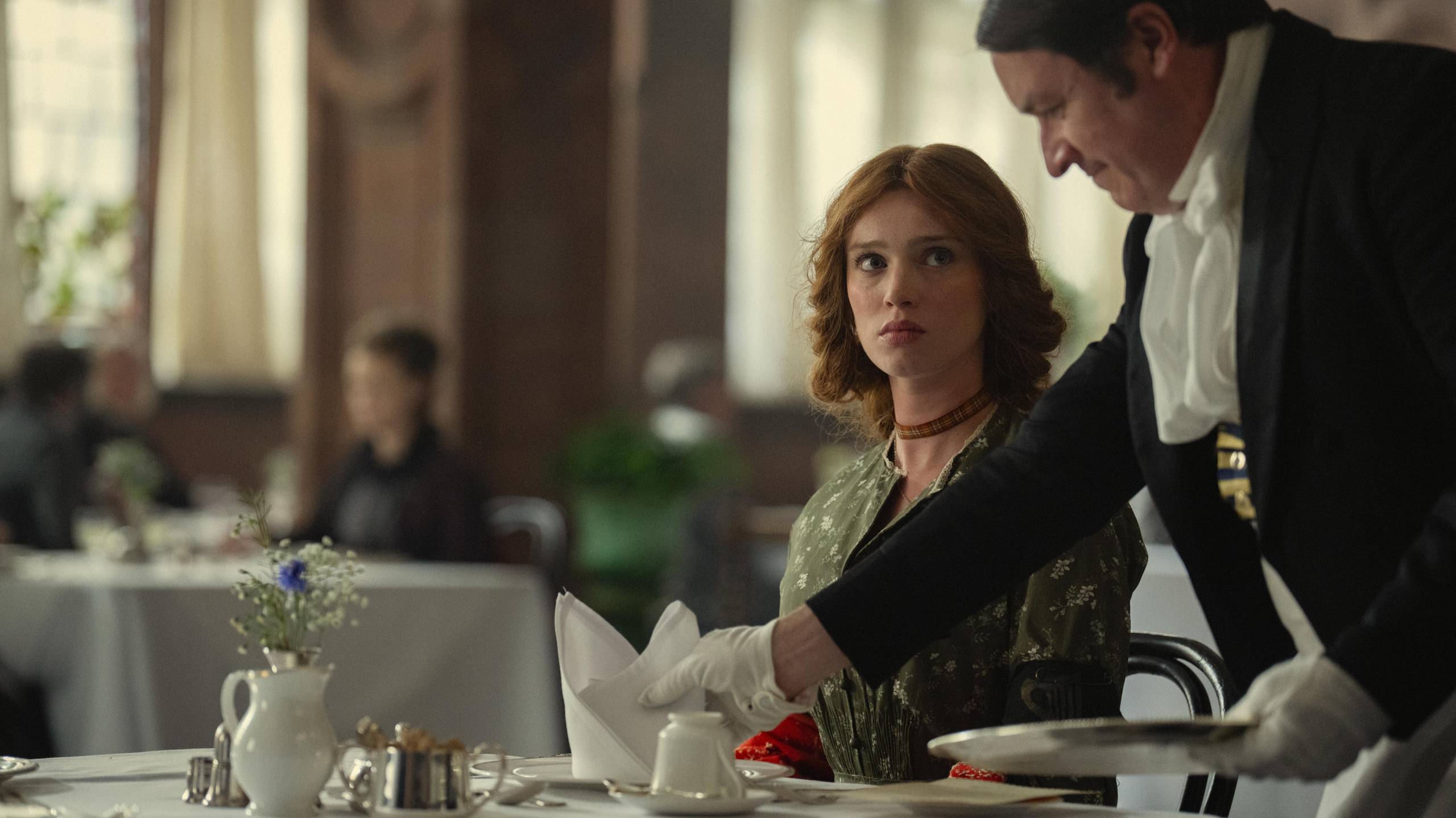
Steven Knight, creator of the intense British period dramas Peaky Blinders and A Thousand Blows, is back with a new, eight-part Netflix series. House of Guinness tells the story of the battle for control of the venerable Irish brewing company in the 1860s.
Let’s begin by noting the way Knight begins House of Guinness: He starts with a very unusual, and very freeing, disclaimer. “This fiction,” it says in a message superimposed on the screen, “is inspired by true stories.”
Right up front, that gives Knight the creative license to do just about anything he wants with his story and his characters, even though it’s taking its inspiration from actual events, locations and personalities. House of Guinness has been described as a sort of 1860s Succession, with the adult children of a very wealthy and powerful man jockeying to gain control of his empire.
And there were, indeed, four grown children of Sir Benjamin Lee Guinness, all of whom had their own ideas about what to do with his fortune and his beer-producing empire. But in House of Guinness, Sir Benjamin — Lord Mayor of Dublin, member of Parliament, owner of the dominant Irish brewery — dies almost immediately.
At the reading of the will, the parcels of the father’s kingdom are handed out — but unevenly, and with a purpose. The eldest son, Arthur, is forced to work with the youngest son, Edward, to run the brewery. The black sheep of the family, the wild child Ben, is severely restricted as to funds and influence — and so is the daughter, Anne, because … well, because it’s the 1860s, and she’s the daughter. Immediately all four siblings start scheming for ways to improve their individual fortunes.