A selection of California’s most storied buildings will be open to visitors throughout the month of September, as Doors Open California, an event series celebrating historic homes, film locations, train stations, museums and more, begins this weekend.
Organized by the California Preservation Foundation, the series gives attendees access to over 70 sites all across the Golden State for a one-time fee of $20.
“It’s about people’s interest in going behind the scenes of places that they typically can’t access,” says Jonathan Haeber, Doors Open program manager and field services director with the California Preservation Foundation.
He describes it as an invitation for people to see places that they’re curious about but normally breeze past in their daily lives. People want to learn more about the history, he says, and the diversity of cultures that are associated with California.
“These buildings, monuments and places,” says Haeber, “hold those memories for people — and in many cases we have the people that are associated with those histories right at the site, sharing their own stories.”
Participating spots include Gold Rush relics, historic mines and a 19th-century adobe home. In Southern California, participants can tour the site of feminist architect Alice Constance Austin’s Llano del Rio, an early 1900s utopian experiment near Palmdale. People near Moss Landing can even step aboard Western Flyer, a 1937 sardine fishing boat made famous by John Steinbeck.
Here in the Bay Area, there’s a wealth of intriguing buildings and sites that’ll be accessible to long-curious locals.
In San Francisco, participants can visit the Haas-Lilienthal House, the city’s only intact Victorian house museum. Donated to SF Heritage by the family in the 1970s with much of the house’s historical furniture and belongings still on site, the majestic 1886 Queen Anne residence is a rare survivor of the 1906 earthquake and fire.
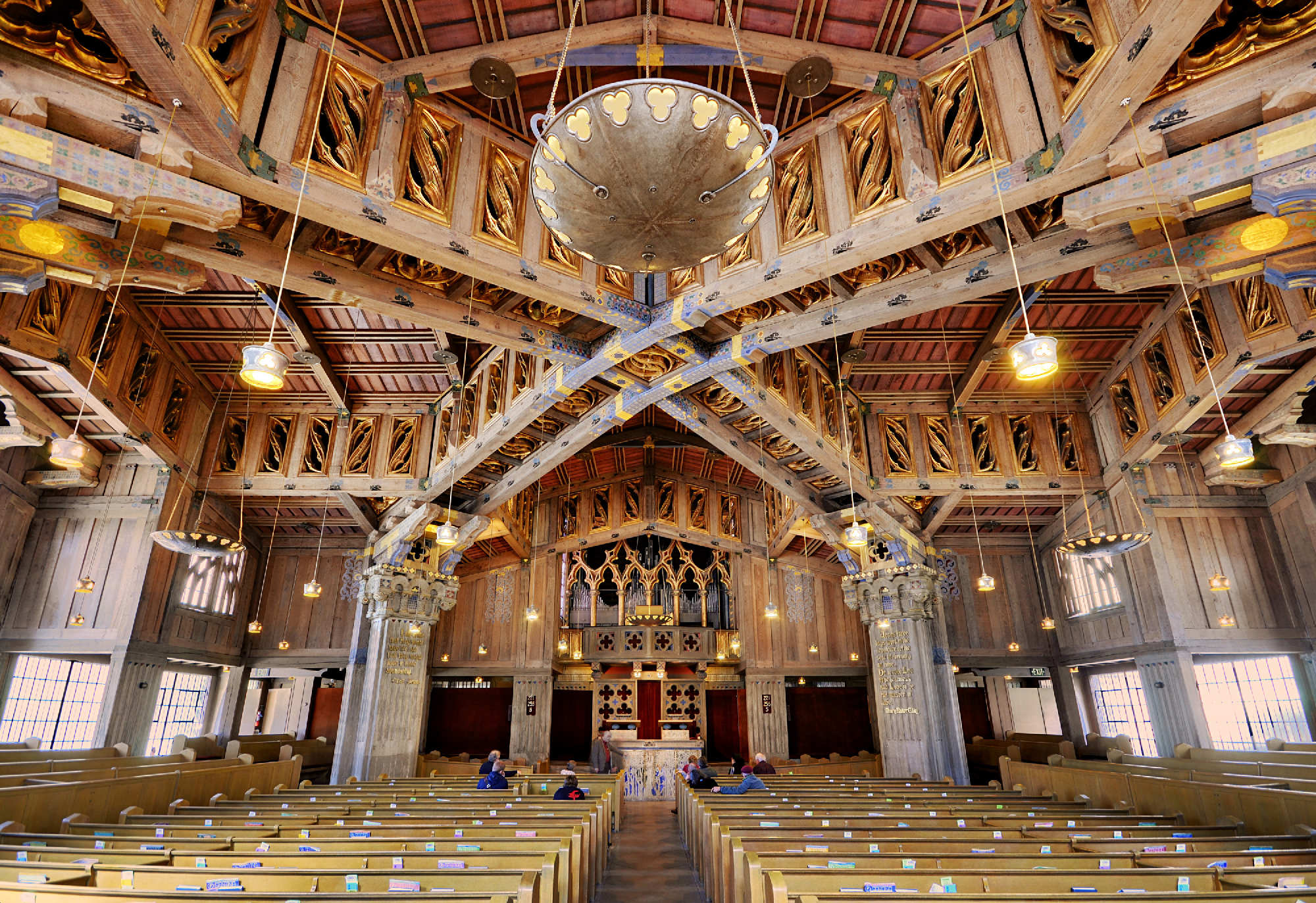
Across the Bay, spots are filling up for tours of Bernard Maybeck’s First Church of Christ, Scientist. The beautiful 1910 structure, considered one of the architect’s masterpieces, is just one of two National Historic Landmarks in Berkeley (the other is Room 307 in UC Berkeley’s Gilman Hall on the UC Berkeley campus, where plutonium was discovered in 1941).
For those with a green thumb, the California Nursery Historical Park in Fremont may be your preferred Doors Open destination. The park, with show gardens, a test orchard, a museum, archives and an 1840 adobe, is the remaining 20 acres of what was once a 463-acre nursery founded in 1884 (aka a perfect picnic spot).
“We’ll be doing this every year in September,” says Haeber, adding that people should mark their calendars. And organizations that would like to be involved in the future, Haeber says, “all they have to do is submit a quick form and they can be a part of next year’s program.”
Doors Open California runs every Saturday and Sunday Sept. 5–27, 2026 at locations across the state.