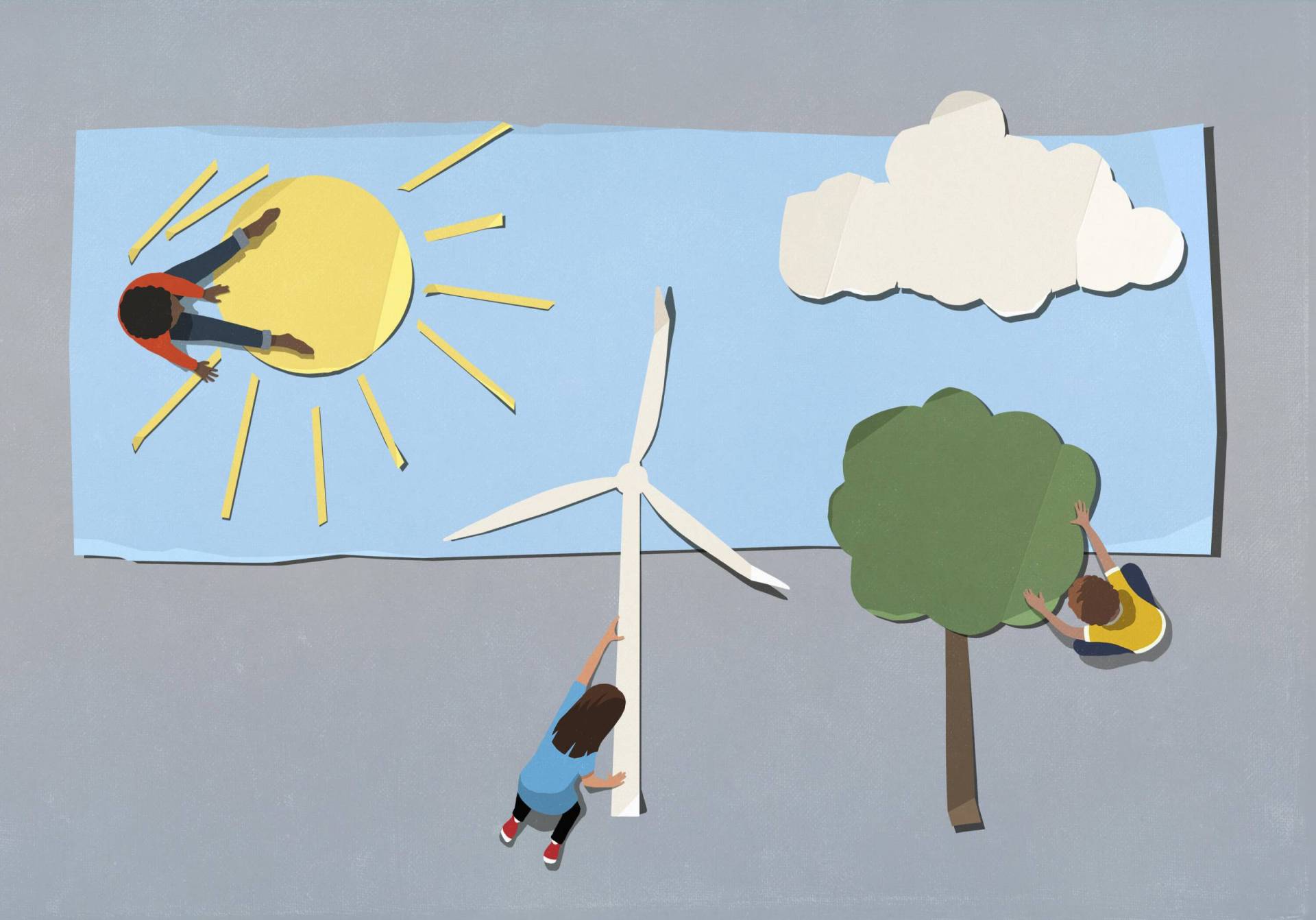
For Earth Day, NPR's Life Kit has compiled ways we can all live more responsibly, from your kitchen to your closet.
Life Kit, NPR
Earth Day is April 22. ((Malte Mueller/Getty Images/fStop))
This story was originally published on April 18, 2022, and has been updated.
Being an Earthling isn’t easy these days. From flash floods and devastating earthquakes to extreme heat, no matter where you are on the planet, the effects of the climate crisis are vast and real.
We know individual actions can only get us so far, and solving the astronomical issue of climate change is the job of governments and policies. But we also know that our decisions matter. Consuming less energy at home, composting and upcycling, using our voices and our votes — all of these individual choices can help tip the scale toward progress.
NPR’s Life Kit team curated some of their favorite sustainability tips from past episodes. They’re not going to solve the climate crisis, but these practices can help garner momentum as we work toward a more sustainable future.
By using home appliances and vehicles that run on electricity, we can help reduce our carbon footprint and leave more fossil fuels in the ground. Here are a few appliances to consider:
Induction stove: These use magnetism to heat a pan and consume less energy than a traditional electric stove.
Clothing dryers with the “Energy Star” label: Efficient dryers that have the Energy Star label use about 20% less energy than regular dryers.
Water heaters that use heat pump technology: They’re two to three times more efficient than most electric water heaters and can help save money on utility bills.
Making these upgrades to your home and lifestyle will cost money — and you will need to plan ahead. So don’t feel like you have to change out your appliances overnight. Instead, buy them as your existing machines wear out.
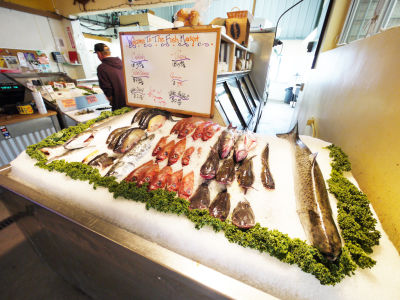
Let’s say you’re at a restaurant or the fresh fish counter at the supermarket and you want to get the salmon — but you’re not sure whether it’s sustainable. To find out, simply ask the server or the fishmonger. Here are two key questions:
Is this fish pole- or line-caught? If the answer is yes, that’s usually a good sign, says Jennifer Dianto Kemmerly, vice president of global ocean initiatives at the Monterey Bay Aquarium. “Even at a commercial scale, a fishing boat can see what they just reeled in and if they caught a fish that’s too small or is a different species they didn’t intend [to catch], they can quickly release it.”
Is this fish caught in the U.S.? If so, it’s probably a sustainable choice. “The U.S. has some of the most stringent regulations” of fishing in the world, Kemmerly says.
Meat production is hard on the environment: It requires a lot of land to raise cattle — and globally, many forests are being cleared to make room for those animals. Deforestation releases lots of heat-trapping carbon dioxide stored in the trees into the environment. And cows themselves release a lot of methane, a powerful greenhouse gas, in the form of burps.
If people in the U.S. and other heavy meat-eating countries could cut back their beef consumption, it could have a major impact on creating a more sustainable food system.
To curb your diet’s environmental impact and fight climate change, you could go vegetarian or vegan — but you don’t have to. It turns out, cutting back a little can have a big impact.
Richard Waite, director of agriculture initiatives at the World Resources Institute, recommends eating less of the most resource-intensive meats: goat, lamb and especially beef — the most commonly consumed of these meats. Cows “take the most land to grow and feed,” he says.
If you want to reduce fashion waste, ask yourself one question before you buy a new item of clothing: “Will I wear this at least 30 times?”
This question, says thrifting advocate Symphony Clarke, can shift your mindset and help you buy clothing with the notion that it should stay with you for a long time.
You can also try the No-Buy Challenge, a popular social media experiment that encourages people to give up buying non-essential items, including fast fashion, for an entire year. The goal is to save money, cut back on overconsumption and be more mindful of wasteful and unsustainable shopping habits.
One of the best tools to help reduce wasted food? The freezer. Here’s how to use it:
If you’re not ready to use fresh fruit and vegetables right away, freeze them. This locks in flavor and nutrients, and it’s better than letting fresh produce languish in the fridge.
Store your compost — fruit and vegetable peels, eggshells, coffee grinds — in the freezer until you’ve filled a bag and can take it to your local community garden or compost collector. That way, you can keep out smells and vermin, and then contribute to creating rich, healthy soil to grow new food.
The plastics problem is overwhelming. There’s so much of it overflowing landfills and littering waterways and a lot of it can’t or won’t be recycled.
Related Article
The most effective thing you can do to cut back on plastic is to figure out how much you use. Environmental activist Shilpi Chhotray suggests going room by room — bathroom, bedroom, kitchen, living room — and doing an audit of the plastics in your home. (Don’t forget to check the trash!)
Not only will this help you understand how much plastic you use, but how you’re using it. That way, you can make a plan for how to cut back.
Are you using a bottle of body wash? Replace it with a bar of soap. Bring your own tote bags for groceries instead of packing your goods in plastic bags, or your favorite reusable mug to your local coffee shop.
Whether you’re a homeowner or a renter, in a lot of states, you may be able to move away from powering your home with fossil fuels — as long as you pay your utility bill.
“Call your local utility company and let them know that you want your electricity to come from 100% clean energy,” says Donnel Baird, the former CEO of BlocPower, a startup company that’s carrying out energy upgrades of buildings in several cities.
While your utility company stays the same, you may be able to choose the supplier of your energy. A quick call to your utility company to make the switch can lead to a meaningful change in the way you power your home.
The podcast portion of this story was produced by Sylvie Douglis with engineering support from Josh Newell, Robert Rodriguez, Gilly Moon and Maggie Luther.
We’d love to hear from you. If you have a good life hack, leave us a voicemail at 202-216-9823, or email us at [email protected]. Your tip could appear in an upcoming episode.