At the opening of the San Francisco Public Library’s newest exhibition, the decibels reached decidedly un-library-like levels. In fact, it was an absolute party. There was a DJ, a bar. At one point, a cart rolled through stacked high with Outta Sight Pizza boxes. The view down the stairs to the main library’s Jewett Gallery was a sea of beaming people, assembled to celebrate San Francisco as a skating destination and a driving source of skate culture.
‘Skateboarding San Francisco’ Celebrates a Concrete Playground
The library’s exhibition of photos, objects and ephemera shows how SF changed skating — and skating changed SF.
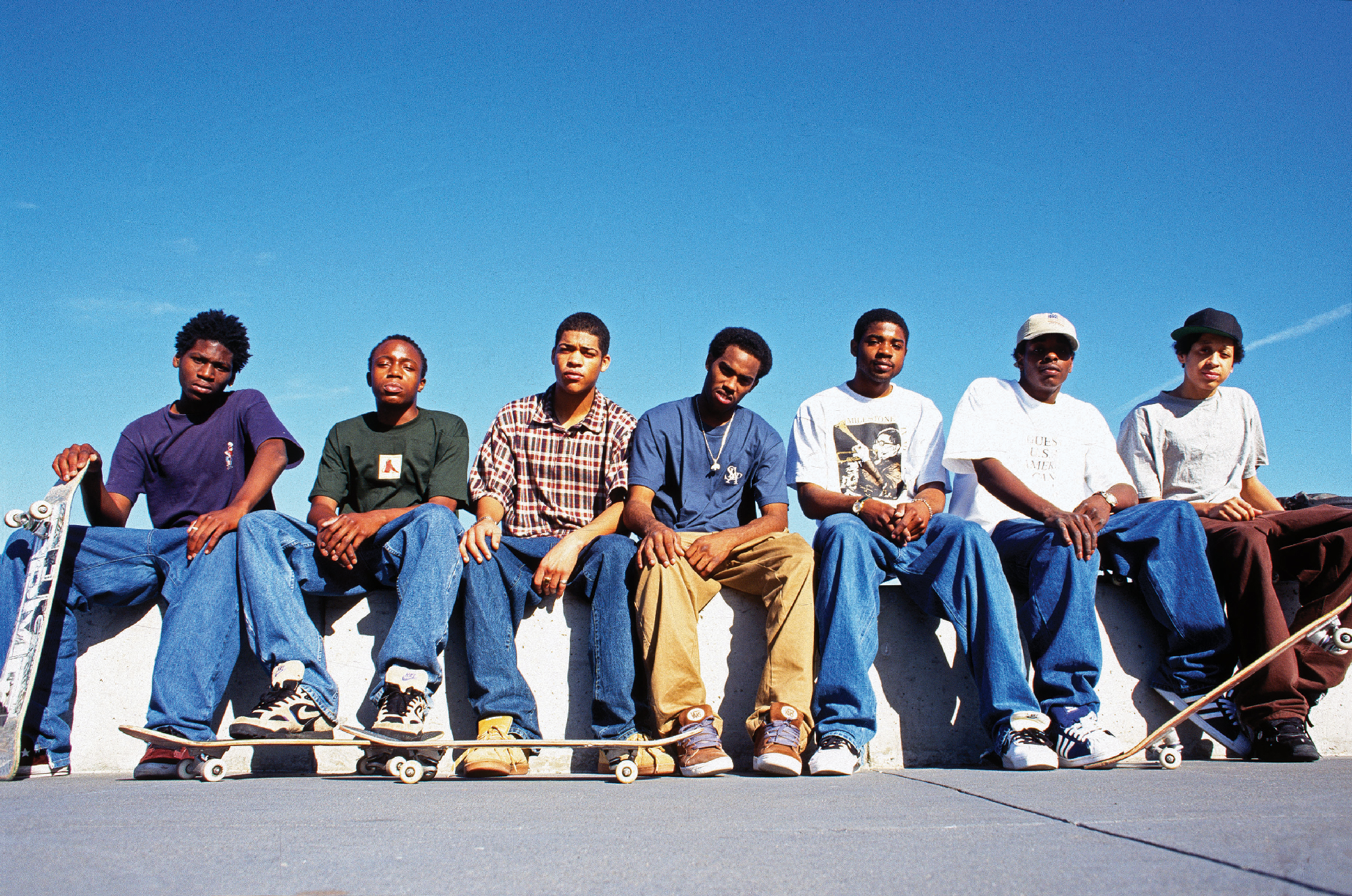
Ahmed (aka Black Reign), Pat Washington, Big Bill, Mike Hernandez, Erfuah, Kareem Campbell, and Geez at Bay Blocks in 1997. (Tobin Yelland)
Related Article
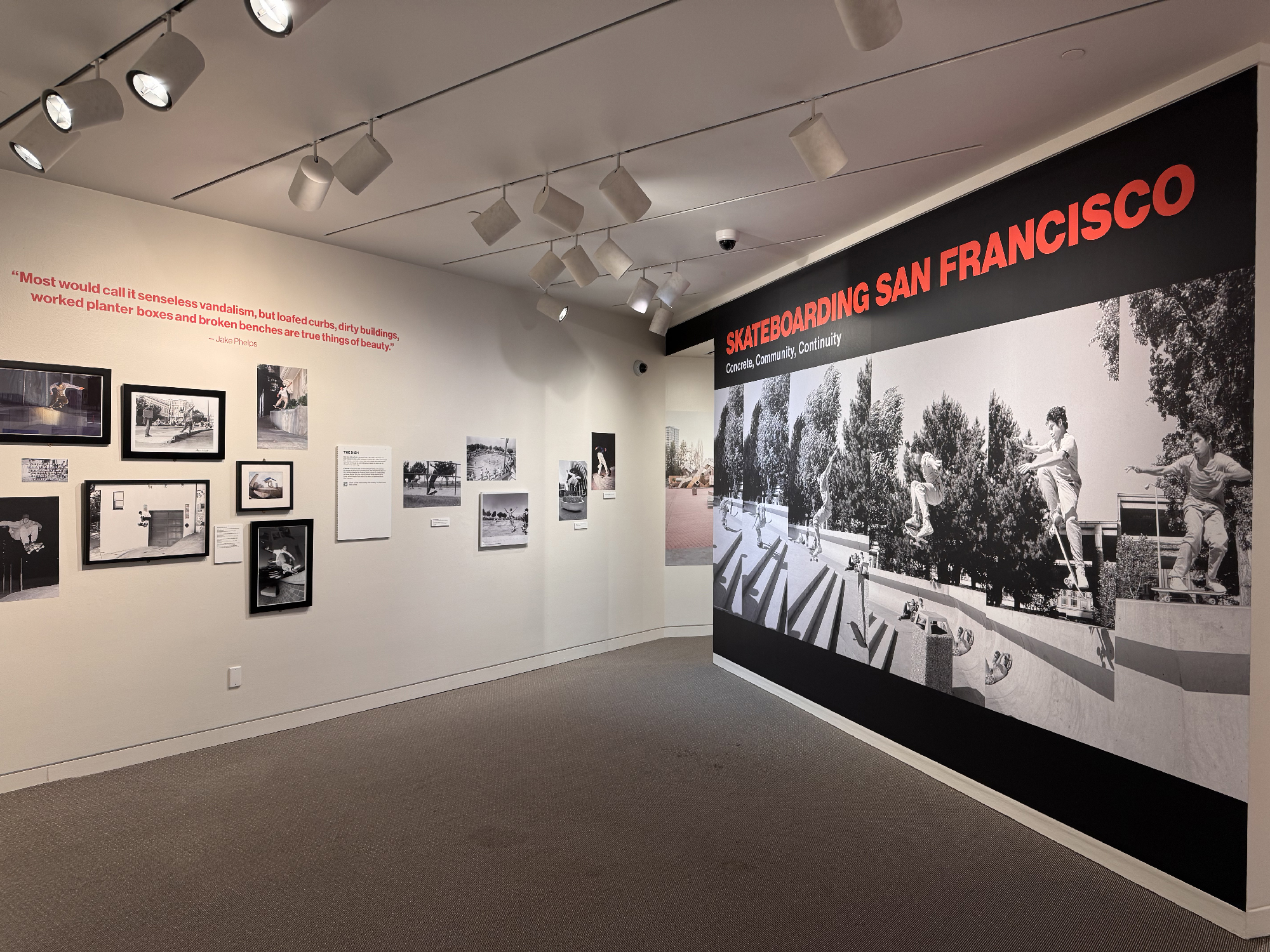
Skateboarding San Francisco: Concrete, Community, Continuity, on view through July 6, 2025, might seem like an unlikely exhibition for an institution that has previously banned skating on its premises. But these days, skateboarding is being recognized for what this show — co-curated the library’s Megan Merritt and Allison Wyckoff and by art historian, skater and This Old Ledge host Ted Barrow — argues it is: a joyful and creative social activity that uniquely responds to and shapes this city.
Case in point: In 1988, City Librarian Michael Lambert made his first visit to San Francisco from South Carolina because it was a skating mecca. Lambert can now be seen promoting the expansion of the UN Plaza skatepark in a three-piece suit. With a similarly grown-up yet puckish spirit, Skateboarding San Francisco manages to be both academic and anarchic all at once.
Leading the way into the show are vinyl designs by artist and professional skater Marbie Miller. Her smiling characters hang out on the stairs, shoot on a camcorder and face plant (with colorful grace). Inside the exhibition, a mixture of framed photographs, wall-sized vinyl blow-ups, artwork, videos, mementos and ephemera guide viewers through some of the city’s legendary spots: The Dish, the city’s oldest skate park; EMB (the Lawrence Halprin-designed Embarcadero Plaza); Hubba Hideout (demolished in 2011); and Wallenberg (an Anza Vista high school).
What’s the foundation of all this activity? Concrete. “San Francisco is a concrete playground,” Tommy Guerrero says in one of the video interviews in the show. “Everything can be skated.” The uneven landscape, steep hills and all, doesn’t hurt either. In a magical 1993 shot by Gabe Morford, Coco Santiago ollies over a classic San Francisco driveway, floating above a patch of horizontal concrete on a vertiginous residential street.
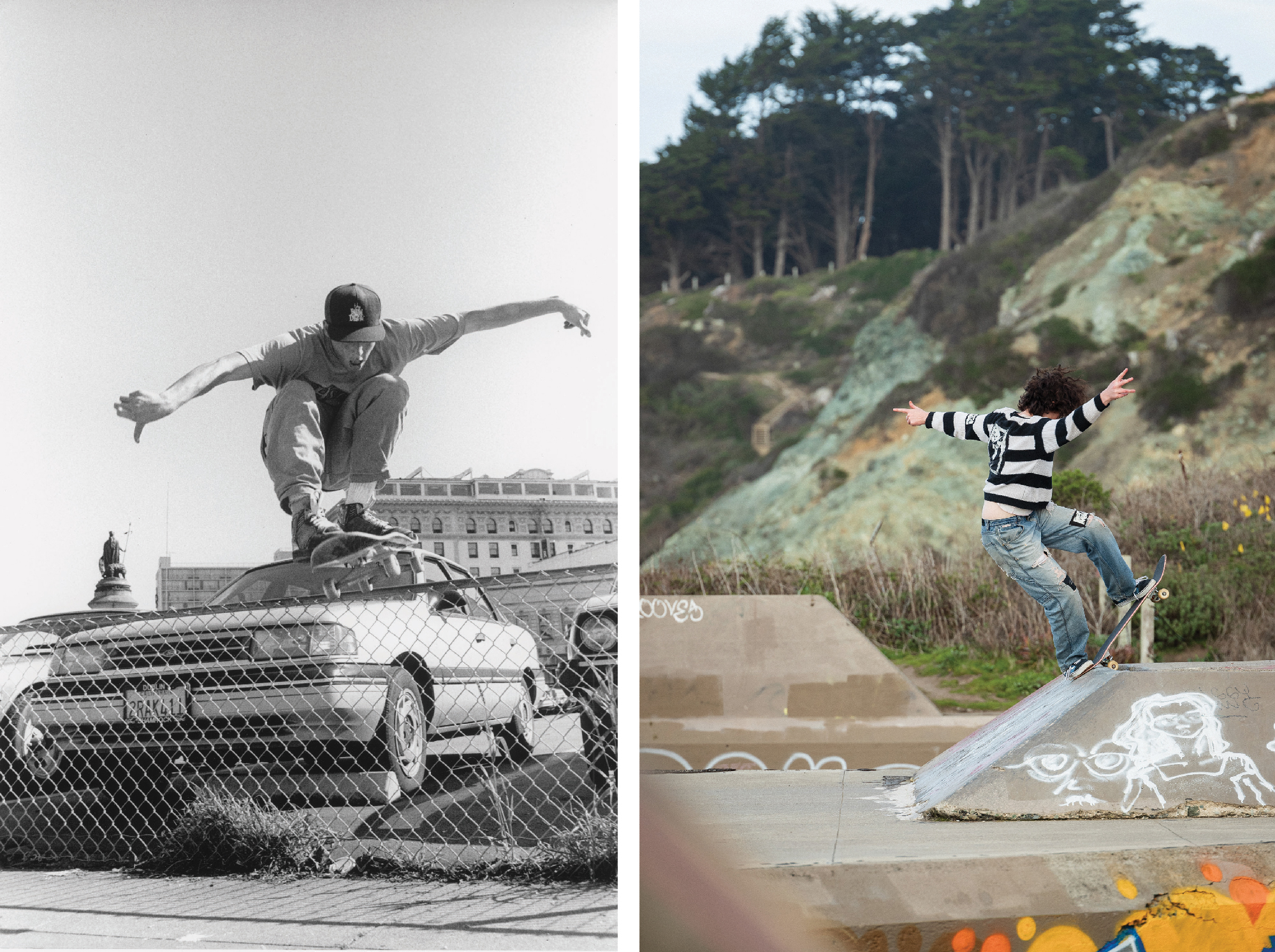
Concrete may be the ideal surface, but the red bricks of Embarcadero Plaza show the marks of every hard-won landing, mapping decades of illicit, inventive physical activity. Recognizing these artifacts, and protecting them, is part of an “archival instinct” baked into skate culture, the show argues. When Hubba Hideout was torn down, skaters preserved chunks of concrete, lengths of rebar, even the door of a control box (included in the show courtesy of professional skater and archivist Frank Gerwer). Despite skating’s reputation as a destructive act, the community diligently preserves its own history.
On display is Jacob Rosenberg’s E440 8mm Canon Camcorder, on which he shot San Francisco’s “charismatic and advanced” skate community in the early 1990s. Show me another underground subculture that’s this assiduous about its video documentation.
But of all the rare images and objects, Skateboarding San Francisco’s showstopper is the Cardiel rail. Or, as a friend texted me after the opening: “the motherfucking JOHN CARDIEL HANDRIAL!!!!!” Running 50 feet diagonally through the gallery space, it’s just a portion of the bronze hand rail once installed on a set of Union Square stairs. In 2001, John Cardiel nailed an impossible 50–50 grind down the entire 24-stair-long rail, cementing his — and its — iconic status.
Years later, Gerwer was one of the renegades who sawed through its posts, loaded it in sections onto a van and saved the rail from demolition when the Apple Store was built.
While part of Skateboarding San Francisco exists inside the Jewett Gallery, in its photos, objects and video clips, another part of it is everything outside the library’s walls — all the rails, banks, gaps and yet-to-be-named spots that exist, for skaters, on an alternate plane of reality. It’s their city, we’re just lucky enough to watch them fly across it.
‘Skateboarding San Francisco: Concrete, Community, Continuity’ is on view at the San Francisco Public Library (100 Larkin St.) through July 6, 2025. Co-curator Ted Barrow will lead tours through the exhibition on April 12 and June 14. Check the library’s site for more programming throughout the exhibition’s run.