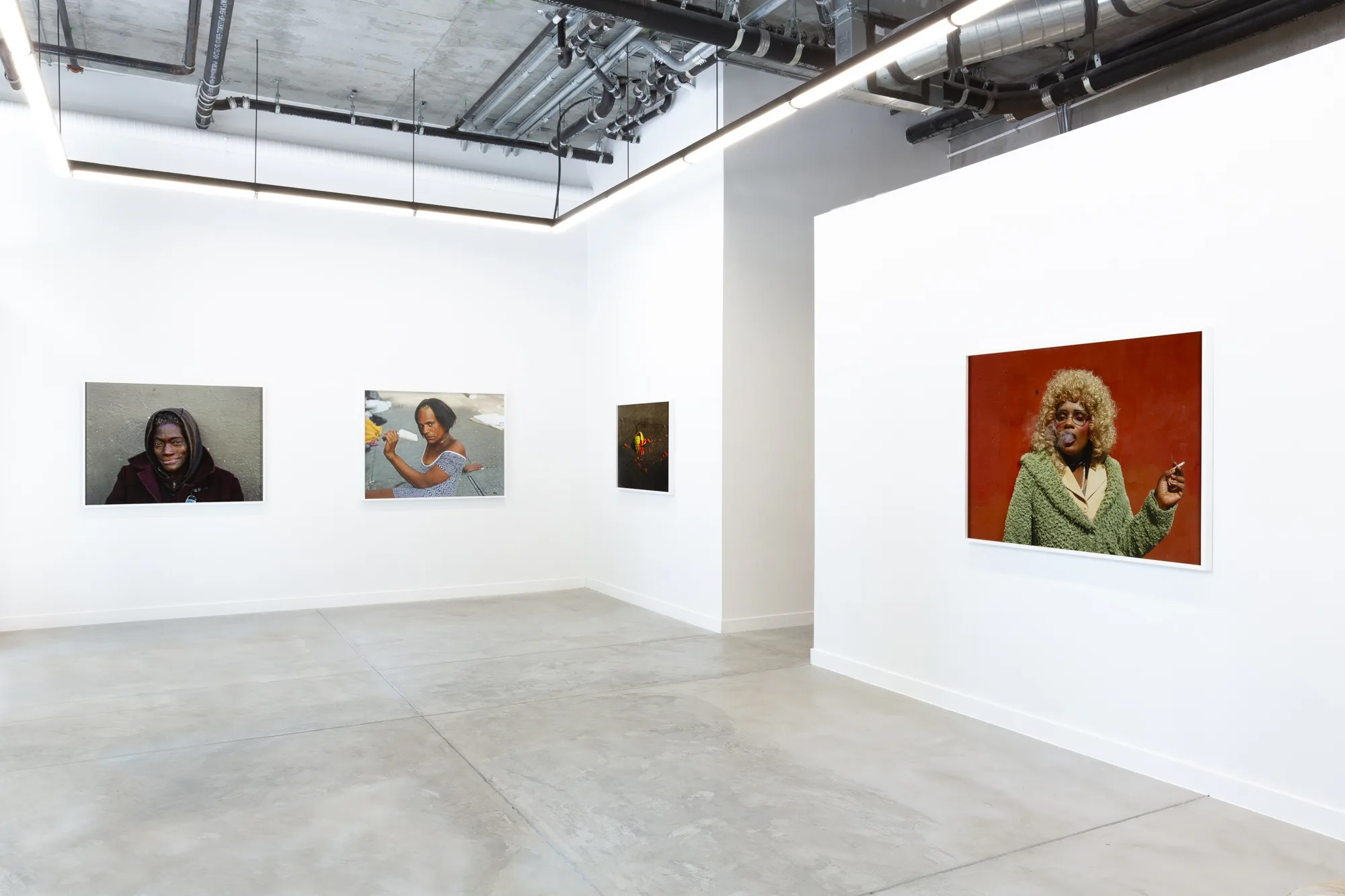
A decade ago, South African photographer Pieter Hugo came to the Bay Area for a residency at Headlands Center for the Arts. He’d been to the city once before, as a teenager, when he had the formative experience of his first mugging. He was planning on using his time at Headlands to organize his archive, having just made the shift from film to digital photography. Instead, he photographed residents of San Francisco’s Tenderloin neighborhood.
A selection from the series, titled Californian Wildflowers, is on view for the first time in San Francisco at Jonathan Carver Moore’s eponymous Market Street gallery, in the very neighborhood where the work was made. The show coincides with an expansive monograph of the same title, forthcoming from TBW Books. The series shines an ebullient light on a neighborhood central to the high-profile narrative of San Francisco’s demise, and makes a case for its vibrant humanity.
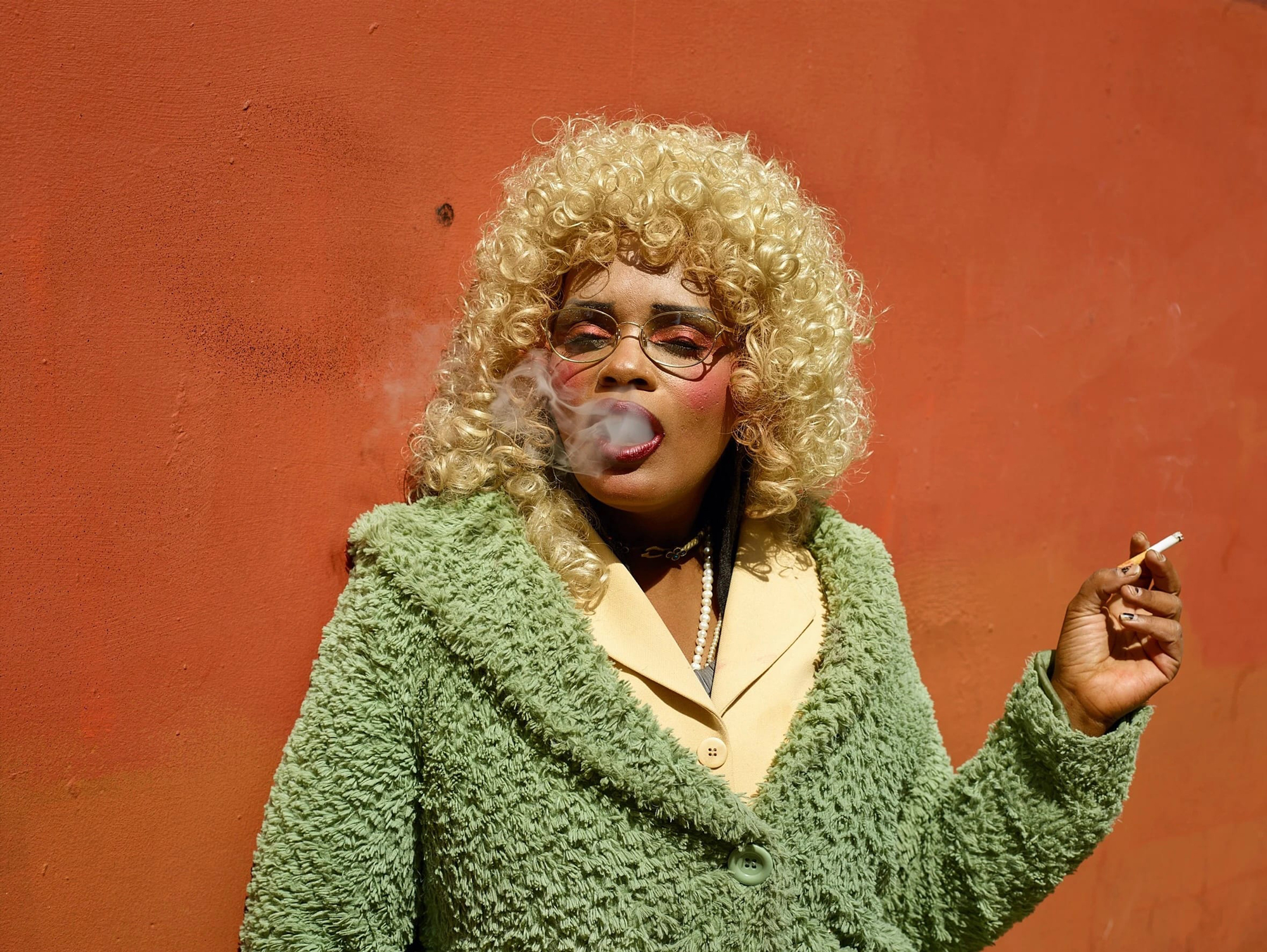
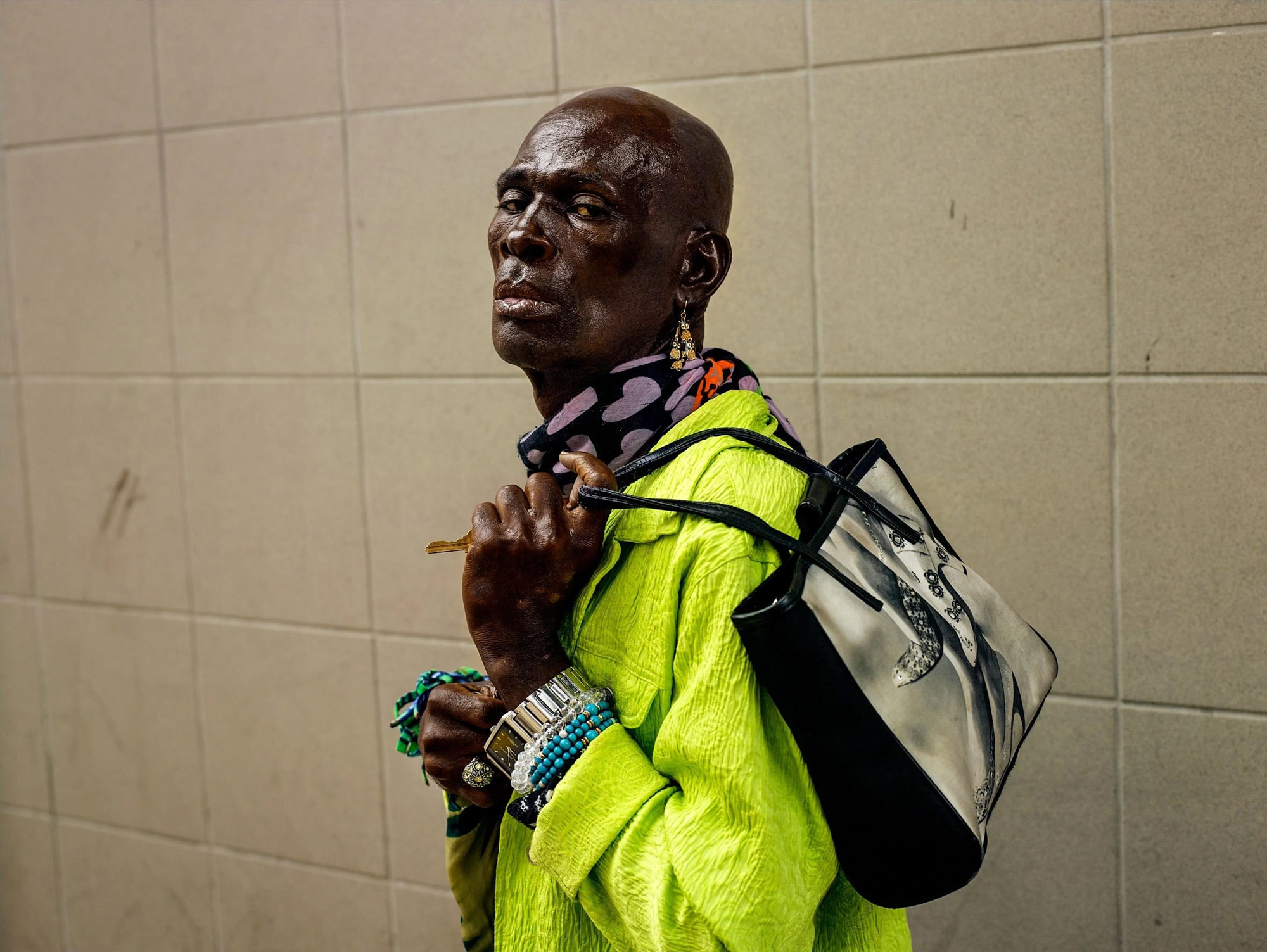
The prints in the show, all untitled, offer their subjects up larger than life, both in physical scale and personal demeanor. A woman clad in a fur coat and curly blonde wig dramatically puffs a cigarette through metallic red lipstick, matching her heavy eyeshadow, echoing the orange wall behind her. A man in a bright green coat and scarf with a pattern of purple hearts practically vogues for the camera, a purse slung jauntily over one shoulder. He’s also prominently clutching keys in his hand, giving an added weight to his air of superior, if theatrical, defiance.
Where local artists like Amos Gregory, who has also photographed residents of the Tenderloin extensively, utilize the context of the studio setting to emphasize his subjects’ dignity, Hugo shoots them in their own element. A striking aspect of the series is how contemporary it looks; these pictures could have been taken yesterday.
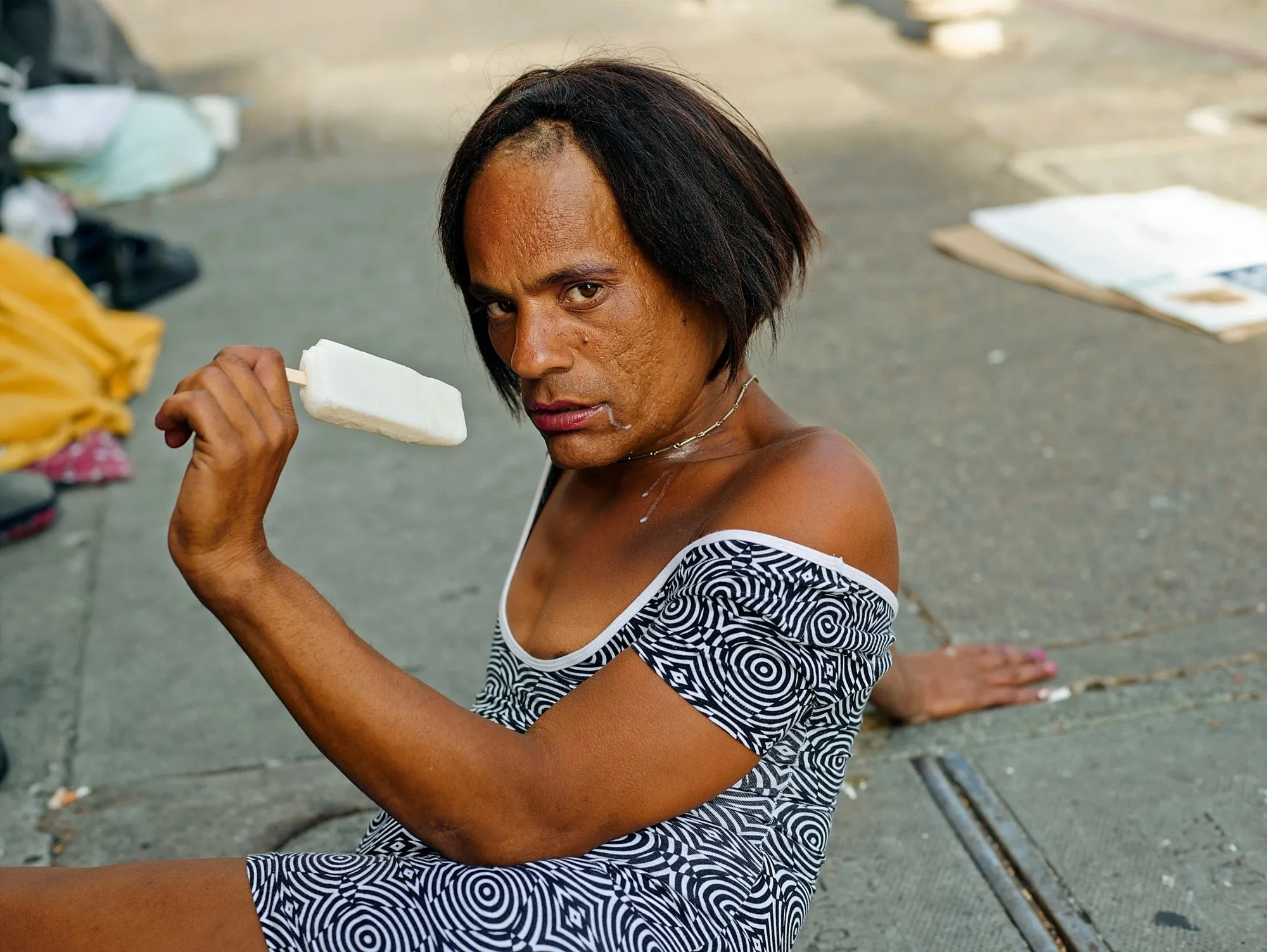
One subject reclines seductively on the sidewalk, holding a dripping popsicle to their lips. Personal belongings and the corner of a tent can be seen in the background, just out of focus. In another shot, a tough-looking greaser holds his chihuahua up to his face for a kiss; his knuckle tattoos read FUCK COPS. It is in these contrasts that Hugo’s subjects reveal themselves, undefined by their circumstances as much as they remain the very fabric of the neighborhood.