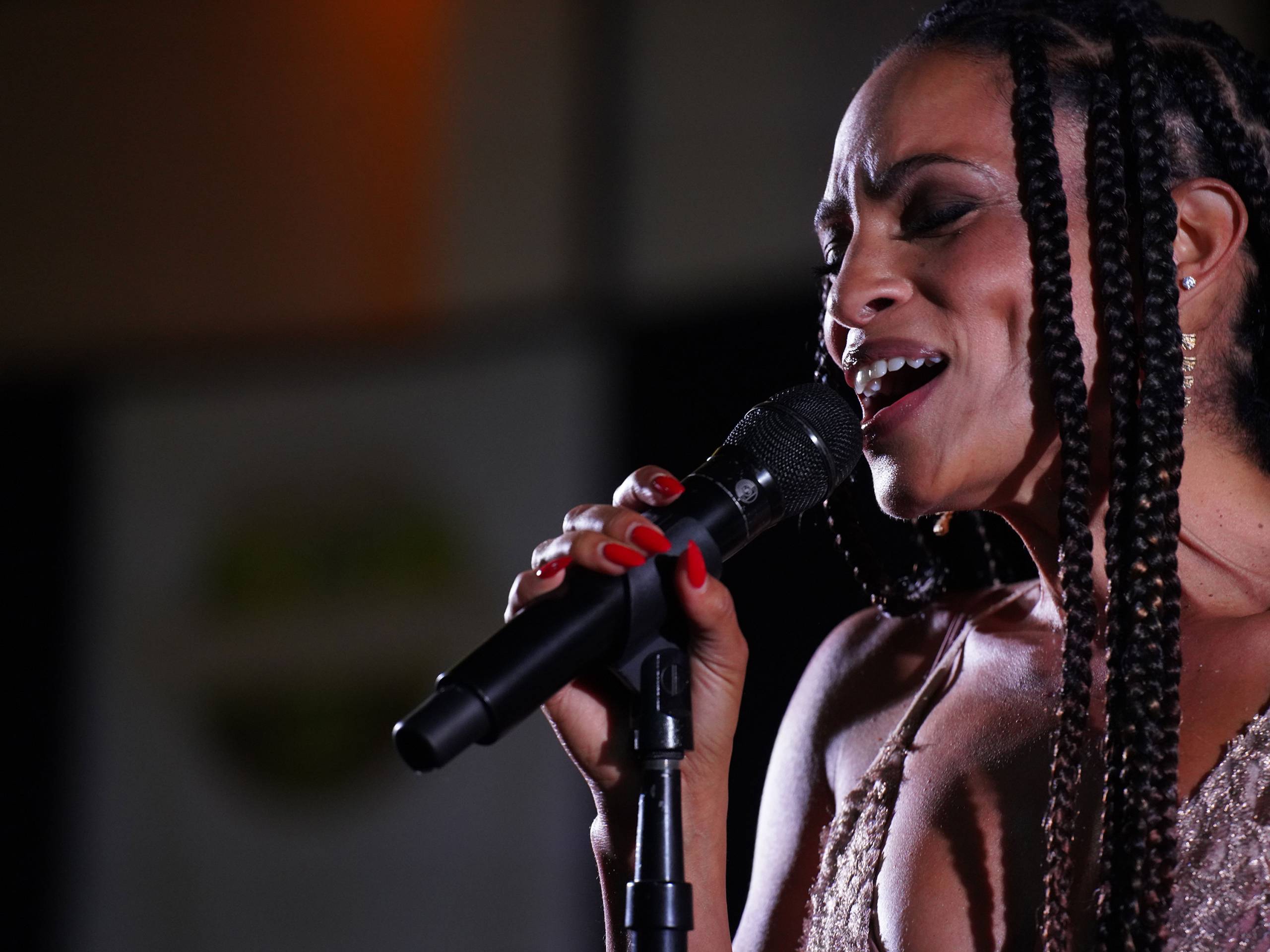
Goapele has never been a typical R&B singer. From the start of her career in the late ’90s, the Oakland-born vocalist has defied categorization. Her breakthrough 2001 single “Closer” arrived amidst a landscape of slickly produced, radio-friendly R&B, hip-hop/soul hybrids, and then-trendy neo-soul. Produced by Amp Live of hip-hop duo Zion I, with keyboards by Mike Tiger, “Closer” broke the mold with its warm, organic sound and inspirational, near-universal message of moving closer to one’s dream.
The song quickly became a Bay Area staple, landing in KMEL rotation — a rarity for an independently released R&B song. Before long, “Closer” entered the station’s nightly “7 at 7” countdown, and began moving up in the rankings.
“There was one point where they were going down the list, and 50 Cent was number two,” the singer recalls today. “And I was like, damn, I was bumped off the list. And then it got to number one and I was so happy.”
p
That moment literally moved Goapele closer to her dreams. “It was just so affirming for my city to embrace what I was doing, and music that was so close to my heart, and music that I didn’t know what genre it fit into.” It was also a validation of the Bay’s independent spirit, rather than “emanating something that’s already out there,” she says.
“Closer” became an anthem for people achieving a goal or moving forward in life. “I’ve sung it at a lot of colleges over the years. I’ve sung at weddings. I’ve ran into a lot of people that said it was their high school graduation song,” the singer recalls. The song has been embraced by rappers and singers alike, including Drake, YG, Kendrick Lamar and Chris Brown, as well as countless freestyle and mix-tape emcees. “I’m really grateful that it has stood the test of time and resonated with people.”
She attributes this phenomenon to “how the drums hit” and how Tiger’s chord progression “just gives a certain feeling of like, upliftment and frustration at the same time that I think so many of us relate to.” People also relate to its central theme of “striving to get to the next level. And it can feel like a struggle sometimes even in the midst of glimpses of, you know, success.”
The song remains a staple of Goapele’s live sets, even though she’s recorded plenty of new music in the 20-plus years since “Closer”’s release. She admits there was a time when she was over it, and wanted to focus on fresh material. But then she realized, “people in the audience really wanted to hear it. And I just, I had to take a step back and think about my favorite artists. Like, I love a lot of their old music. You know what I mean?”
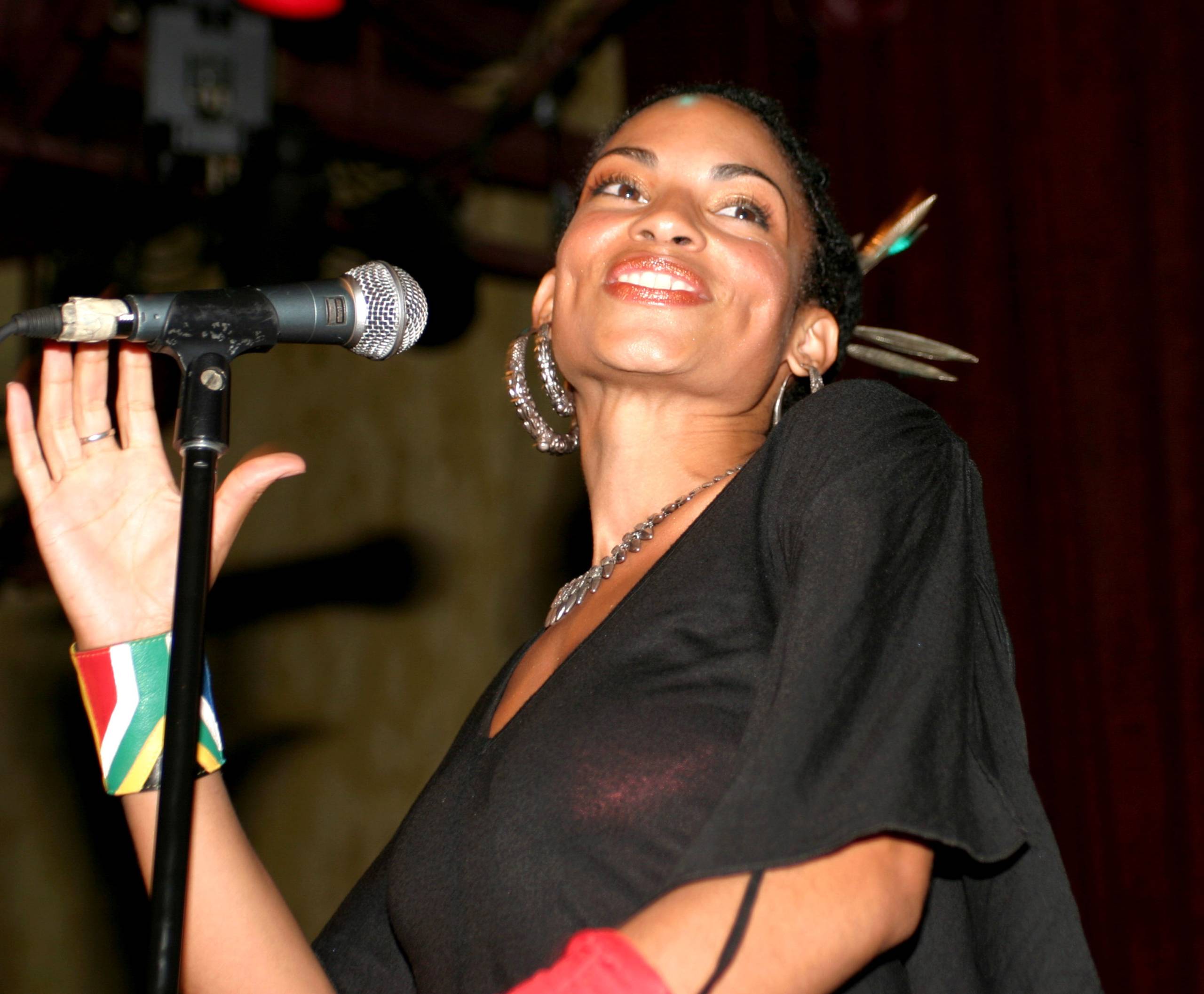
Goapele performs at S.O.B.’s in New York City in 2003. (Johnny Nunez/WireImage)
Goapele’s 2001 album of the same name sold approximately 65,000 units on consignment, launching her as a viable new artist with a strong following. Since then, the singer has released four full-length albums and an EP, numerous music videos and a lifestyle brand (Dreamseekers) while performing live all over the world. She’s carved out a lane as a true original, never following current trends, yet always relevant, as her range has expanded from soulful, slow-tempo ballads to pulse-pounding club jams.
Shortly after her live performance at the inaugural Days with Zahra festival in Napa — as she readies herself for the release of another album, titled Colors — she reflected on her long association with Bay Area hip-hop.
An agent for social change
As it turns out, Bay Area hip-hop was an important part of Goapele’s experience growing up, one that shaped her path as an artist. The first local rapper she recalls listening to was MC Hammer, when she was in junior high school, followed by Hieroglyphics. By the time she got to high school, she says, “for me it was all about underground hip-hop.”
Early in her career, she sang over hip-hop instrumentals at local spots like Mingles and La Peña. “My brother was a DJ. And so, you know, dub plates were popular.” A dub plate-style version sung over the remix of Supercat’s “Dolly My Baby” turned into one of her first singles, “Childhood Drama” — which she recently sung live in Jamaica with DJ Shortkut after not performing it in years.
Goapele’s first local rap collaborations were with Zion I, E-40, and Hieroglyphics members A-Plus, Casual, and Pep Love; the Oakland hip-hop collective also helped her independent label Skyblaze get distribution. She went on to team up with many Bay artists including Mac Mall, Clyde Carson, and Keak Da Sneak, and, more recently, Rexx Life Raj. “I was definitely surrounded by a lot of rappers,” she reminisces.
p
She’s since recorded with national artists like Dwele and West Coast rap legends Snoop Dogg, Aceyalone and Planet Asia. But she says she won’t work with just any artist. “My criteria for working with anyone is just that it’s a positive vibe and we mutually want to work together… I’m open to, you know, so many different stories. But when it comes to the music I’m putting out, I just don’t want it to have a negative effect on the culture.”
Goapele’s standards for collaboration and her value system reflect both her cultural background and the values of her native region — known for its activists, community-based organizations and political and social discourse in its artistic output and cultural aesthetic.
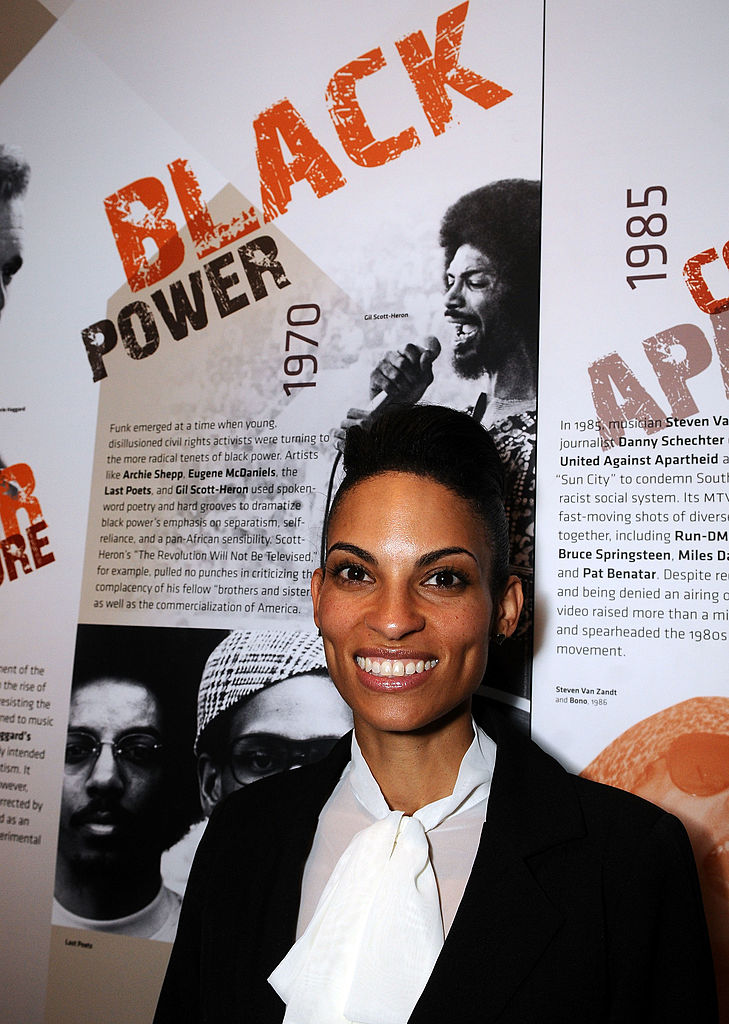
As the daughter of South African exile Douglas Mohlabane and the sister of Namane Mohlabane — a co-founder of DJ collective Local 1200 — activism came naturally to Goapele. Her father was active in the anti-apartheid movement and a mainstay of a Bay Area South African exile community, while Local 1200 was known not just for their DJ skills, but their support of social justice causes.
During the campaign against California’s draconian youth crime bill, Prop. 21, Goapele collaborated with singer Kimiko Joy and female emcee Toy for an updated version of Billie Holiday’s “Don’t Explain” that tackled the weighty issue of the criminalization of youth and the prison-industrial complex. The title track of her 2005 major label debut, “Change It All,” addressed school closures, economic inequality, and the need to do better as a society. In 2006, she was named a Human Rights Cultural Hero by the Ella Baker Center for Human Rights during the nonprofit’s 10th anniversary celebration.
While not an overtly political artist who spouts rhetoric and ideology at every opportunity, she’s stayed down and still “got a pound for the cause,” to paraphrase Digital Underground’s Shock G — another of the artists she says inspired her when she was coming up.
Goapele poses in the Grammy Museum in Los Angeles after a 2012 performance. (Mark Sullivan/WireImage)
Transformative change and revolutionary content can take many forms — including music that adds something different and compelling to the sonic landscape. At the time of its release, Zion-I’s 2003 album Deep Water Slang V2.0 was dismissed by some critics who had trouble relating to its diverse influences and experimental qualities. Those qualities, however, are precisely what make the album stand out some 20 years later.
Goapele contributed vocals to three of the album’s standout tracks — “Flow,” “Sorry” and “Boom Bip.” Producer Amp Live plays around with ambient textures and non-cliched sonic approaches that seemingly expand hip-hop’s reach; meanwhile, Goapele supplies the hooks, reinforcing Zumbi’s conscious manifestos and emotional Zen-states.
p
“So don’t fight the feeling / what we got right here / we ain’t going nowhere / open your mind / what we got right here / we ain’t going nowhere,” she sings on “Boom Bip” — subverting a pimpish credo associated with Too Short and Rappin’ 4-Tay to express a more holistic and spiritually affirming mentality. On “Flow,” the hook places the word “flow,” sung by Goapele, up against a bed of minimal keyboards, upright bass, and Vin Roc’s turntable cuts. Her vocals on “Sorry” are buried deep within a mix of flute, viola, electric piano and cello — all of which contribute to an emotionally resonant song that’s more about feeling than swagger.
Despite “Flow” being one of her favorite collaborations, Goapele can’t quite recall how it came about. “I worked with Zion I off and on for years,” she says. “We even had a studio right next to them at 880 (Studios in Oakland)… Amp just like, had a way of creating things like a puzzle. And sometimes, I would come in there and record an idea over a piece of a song. And by the time I heard it, you know, he had, like, made this whole new arrangement.”
Then there was “The Daze,” a track from her Even Closer album featuring Zion I and Casual of Hieroglyphics, which was recorded at Amp’s home studio in El Cerrito.
“I was walking into the home studio and Amp had the vibe, you know, already set in. And Steve (Zumbi) was working on his verses. And I was just like, adding whatever I could… I can remember the night that we recorded that just by the raw energy. And it was really just like a couple takes, you know what I mean?”
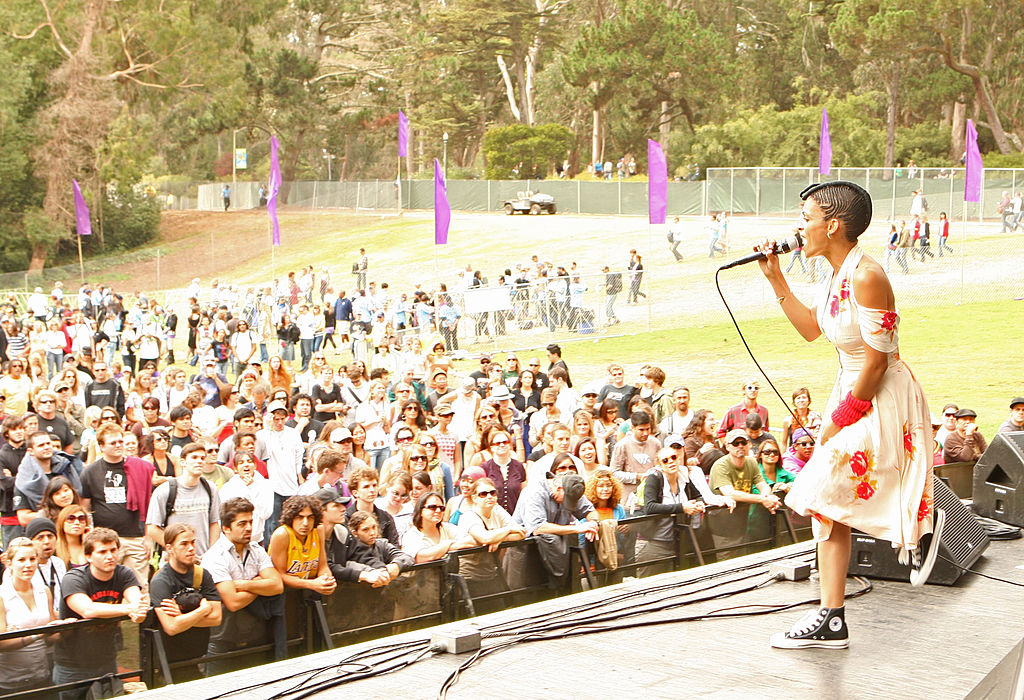
Goapele performs onstage during the 2008 Outside Lands Festival in San Francisco. (Jason Merritt/FilmMagic)
Ten years later, in 2013, Goapele again collaborated with Zion I on the sublime hip-hop love song, “Life’s Work” — which eschews playerisms in favor of committed monogamy. Zumbi’s love-affirming testimonials contrast beautifully with Goapele’s romantic vocals, and it’s difficult to imagine the song working as well without her contribution.
Goapele’s association with Hieroglyphics also spanned many projects. She’s made songs with Pep Love, Casual and A-Plus, along with the single and video, “Soweto,” which features the entire crew. She remembers Hiero had rented a house with a home studio in Venice Beach, and A-Plus asked her to drop some vocals on a track he was working on. “The guitar was just giving me African highlife vibes,” and the song’s hook, she says, was “just what I was feeling like, no matter where you go. We’re the same. We have the same story.”
The video, she recalls, was shot in Joshua Tree National Park on one of the hottest days of the year — the temperature reached 120 Fahrenheit. “I almost did not make it through that video, but the video ended up being beautiful.”
The Motherland and the Bay
One of Goapele’s more interesting collaborations came about in 2010, when she worked with South African emcee Hip Hop Pantsula for “Victory,” a song recorded in English, Setswana, and Xhosa, which drew attention to humanitarian efforts in South Africa and the African Diaspora. Pantsula, she says, “was incredibly talented, and I want to say kind of spearheaded or was big in the Motswako movement, which was a South African/SWANA hip-hop scene.”
Pantsula, aka Double HP, who joined the ancestors in 2018, was hailed as a “musical icon” by the African National Congress. Goapele remembers being in South Africa and seeing some of his concerts.
“There was a lot of rapping in Setswana and English… But the song “Victory,” it was just so exciting that the World Cup was in South Africa. I definitely was feeling a sense of pride even from afar. And I went out there to perform at the MAMA Awards. It was like an MTV Africa show, and they flew me out there along with The Game, and Clyde Carson from the Bay, who I also worked with on a bunch of other songs.”
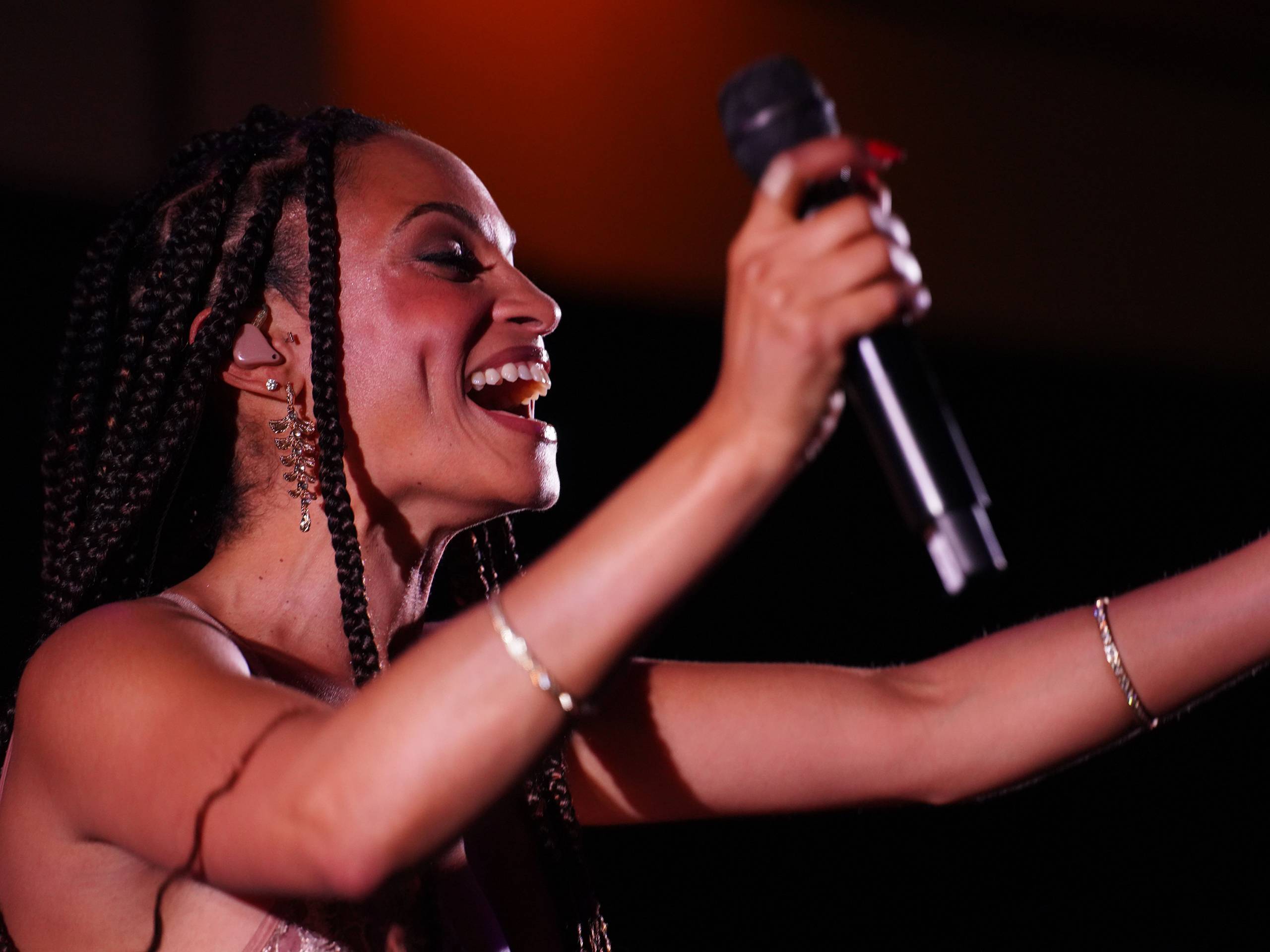
Goapele performs at the Days With Zahrah Getaway in Napa, May 2023. (Eric Arnold/KQED)
Asked to draw a comparison between South African and Bay Area hip-hop, she says, “There wasn’t a huge music industry in the Bay Area. There’s a lot of labels in South Africa, but I feel like people have really had to create their thing from the ground up. And so there’s like maybe an organic feel to it and an edge and a soulfulness that it has.”
She recalls listening to the South African band Shava, who sing in her native tongue of Setswana. “The production was just so beautiful and vibey. The drums are always a little behind the beat. There’s similar production and feels that I think probably come out of a context of influences, like the culture just being soulful and raw and there’s definitely a spirit of resistance, you know?
p
“But in South Africa, it’s the triumph and struggle that’s still there. Like, my dad had to leave because of the apartheid system and, in the nineties, so much turmoil and turnover in leadership. Equality is something that’s still trying to come about. There’s so much economic disparity. People were pushed out to almost like, reservations … I came out of that.”
That struggle has bred not just resistance, but cultural resilience. “There’s so much depth and raw talent that has come back, persevered through that. So there’s something to be said for that. How that affects the sound and the vibe.”
In other words, in some ways, South Africa is exactly like the Bay Area. But in other ways, it’s completely different. Goapele remains connected to both places and cultures. It’s who she is.
Sponsored
Sponsored
lower waypoint
Care about what’s happening in Bay Area arts? Stay informed with one email every other week—right to your inbox.
window.__IS_SSR__=true
window.__INITIAL_STATE__={
"attachmentsReducer": {
"audio_0": {
"type": "attachments",
"id": "audio_0",
"imgSizes": {
"kqedFullSize": {
"file": "https://ww2.kqed.org/news/wp-content/themes/KQED-unified/img/audio_bgs/background0.jpg"
}
}
},
"audio_1": {
"type": "attachments",
"id": "audio_1",
"imgSizes": {
"kqedFullSize": {
"file": "https://ww2.kqed.org/news/wp-content/themes/KQED-unified/img/audio_bgs/background1.jpg"
}
}
},
"audio_2": {
"type": "attachments",
"id": "audio_2",
"imgSizes": {
"kqedFullSize": {
"file": "https://ww2.kqed.org/news/wp-content/themes/KQED-unified/img/audio_bgs/background2.jpg"
}
}
},
"audio_3": {
"type": "attachments",
"id": "audio_3",
"imgSizes": {
"kqedFullSize": {
"file": "https://ww2.kqed.org/news/wp-content/themes/KQED-unified/img/audio_bgs/background3.jpg"
}
}
},
"audio_4": {
"type": "attachments",
"id": "audio_4",
"imgSizes": {
"kqedFullSize": {
"file": "https://ww2.kqed.org/news/wp-content/themes/KQED-unified/img/audio_bgs/background4.jpg"
}
}
},
"placeholder": {
"type": "attachments",
"id": "placeholder",
"imgSizes": {
"thumbnail": {
"file": "https://cdn.kqed.org/wp-content/uploads/2024/12/KQED-Default-Image-816638274-2000x1333-1-160x107.jpg",
"width": 160,
"height": 107,
"mimeType": "image/jpeg"
},
"medium": {
"file": "https://cdn.kqed.org/wp-content/uploads/2024/12/KQED-Default-Image-816638274-2000x1333-1-800x533.jpg",
"width": 800,
"height": 533,
"mimeType": "image/jpeg"
},
"medium_large": {
"file": "https://cdn.kqed.org/wp-content/uploads/2024/12/KQED-Default-Image-816638274-2000x1333-1-768x512.jpg",
"width": 768,
"height": 512,
"mimeType": "image/jpeg"
},
"large": {
"file": "https://cdn.kqed.org/wp-content/uploads/2024/12/KQED-Default-Image-816638274-2000x1333-1-1020x680.jpg",
"width": 1020,
"height": 680,
"mimeType": "image/jpeg"
},
"1536x1536": {
"file": "https://cdn.kqed.org/wp-content/uploads/2024/12/KQED-Default-Image-816638274-2000x1333-1-1536x1024.jpg",
"width": 1536,
"height": 1024,
"mimeType": "image/jpeg"
},
"fd-lrg": {
"file": "https://cdn.kqed.org/wp-content/uploads/2024/12/KQED-Default-Image-816638274-2000x1333-1-1536x1024.jpg",
"width": 1536,
"height": 1024,
"mimeType": "image/jpeg"
},
"fd-med": {
"file": "https://cdn.kqed.org/wp-content/uploads/2024/12/KQED-Default-Image-816638274-2000x1333-1-1020x680.jpg",
"width": 1020,
"height": 680,
"mimeType": "image/jpeg"
},
"fd-sm": {
"file": "https://cdn.kqed.org/wp-content/uploads/2024/12/KQED-Default-Image-816638274-2000x1333-1-800x533.jpg",
"width": 800,
"height": 533,
"mimeType": "image/jpeg"
},
"post-thumbnail": {
"file": "https://cdn.kqed.org/wp-content/uploads/2024/12/KQED-Default-Image-816638274-2000x1333-1-672x372.jpg",
"width": 672,
"height": 372,
"mimeType": "image/jpeg"
},
"twentyfourteen-full-width": {
"file": "https://cdn.kqed.org/wp-content/uploads/2024/12/KQED-Default-Image-816638274-2000x1333-1-1038x576.jpg",
"width": 1038,
"height": 576,
"mimeType": "image/jpeg"
},
"xxsmall": {
"file": "https://cdn.kqed.org/wp-content/uploads/2024/12/KQED-Default-Image-816638274-2000x1333-1-160x107.jpg",
"width": 160,
"height": 107,
"mimeType": "image/jpeg"
},
"xsmall": {
"file": "https://cdn.kqed.org/wp-content/uploads/2024/12/KQED-Default-Image-816638274-2000x1333-1-672x372.jpg",
"width": 672,
"height": 372,
"mimeType": "image/jpeg"
},
"small": {
"file": "https://cdn.kqed.org/wp-content/uploads/2024/12/KQED-Default-Image-816638274-2000x1333-1-672x372.jpg",
"width": 672,
"height": 372,
"mimeType": "image/jpeg"
},
"xlarge": {
"file": "https://cdn.kqed.org/wp-content/uploads/2024/12/KQED-Default-Image-816638274-2000x1333-1-1020x680.jpg",
"width": 1020,
"height": 680,
"mimeType": "image/jpeg"
},
"full-width": {
"file": "https://cdn.kqed.org/wp-content/uploads/2024/12/KQED-Default-Image-816638274-2000x1333-1-1920x1280.jpg",
"width": 1920,
"height": 1280,
"mimeType": "image/jpeg"
},
"guest-author-32": {
"file": "https://cdn.kqed.org/wp-content/uploads/2025/01/KQED-Default-Image-816638274-1333x1333-1-160x160.jpg",
"width": 32,
"height": 32,
"mimeType": "image/jpeg"
},
"guest-author-50": {
"file": "https://cdn.kqed.org/wp-content/uploads/2025/01/KQED-Default-Image-816638274-1333x1333-1-160x160.jpg",
"width": 50,
"height": 50,
"mimeType": "image/jpeg"
},
"guest-author-64": {
"file": "https://cdn.kqed.org/wp-content/uploads/2025/01/KQED-Default-Image-816638274-1333x1333-1-160x160.jpg",
"width": 64,
"height": 64,
"mimeType": "image/jpeg"
},
"guest-author-96": {
"file": "https://cdn.kqed.org/wp-content/uploads/2025/01/KQED-Default-Image-816638274-1333x1333-1-160x160.jpg",
"width": 96,
"height": 96,
"mimeType": "image/jpeg"
},
"guest-author-128": {
"file": "https://cdn.kqed.org/wp-content/uploads/2025/01/KQED-Default-Image-816638274-1333x1333-1-160x160.jpg",
"width": 128,
"height": 128,
"mimeType": "image/jpeg"
},
"detail": {
"file": "https://cdn.kqed.org/wp-content/uploads/2025/01/KQED-Default-Image-816638274-1333x1333-1-160x160.jpg",
"width": 160,
"height": 160,
"mimeType": "image/jpeg"
},
"kqedFullSize": {
"file": "https://cdn.kqed.org/wp-content/uploads/2024/12/KQED-Default-Image-816638274-2000x1333-1.jpg",
"width": 2000,
"height": 1333
}
}
},
"arts_13932536": {
"type": "attachments",
"id": "arts_13932536",
"meta": {
"index": "attachments_1716263798",
"site": "arts",
"id": "13932536",
"found": true
},
"parent": 13932465,
"imgSizes": {
"twentyfourteen-full-width": {
"file": "https://ww2.kqed.org/app/uploads/sites/2/2023/08/Goapele.SQUARE.thumb_-1038x576.jpg",
"width": 1038,
"mimeType": "image/jpeg",
"height": 576
},
"thumbnail": {
"file": "https://ww2.kqed.org/app/uploads/sites/2/2023/08/Goapele.SQUARE.thumb_-160x160.jpg",
"width": 160,
"mimeType": "image/jpeg",
"height": 160
},
"post-thumbnail": {
"file": "https://ww2.kqed.org/app/uploads/sites/2/2023/08/Goapele.SQUARE.thumb_-672x372.jpg",
"width": 672,
"mimeType": "image/jpeg",
"height": 372
},
"kqedFullSize": {
"file": "https://ww2.kqed.org/app/uploads/sites/2/2023/08/Goapele.SQUARE.thumb_.jpg",
"width": 1763,
"height": 1763
},
"large": {
"file": "https://ww2.kqed.org/app/uploads/sites/2/2023/08/Goapele.SQUARE.thumb_-1020x1020.jpg",
"width": 1020,
"mimeType": "image/jpeg",
"height": 1020
},
"1536x1536": {
"file": "https://ww2.kqed.org/app/uploads/sites/2/2023/08/Goapele.SQUARE.thumb_-1536x1536.jpg",
"width": 1536,
"mimeType": "image/jpeg",
"height": 1536
},
"medium": {
"file": "https://ww2.kqed.org/app/uploads/sites/2/2023/08/Goapele.SQUARE.thumb_-800x800.jpg",
"width": 800,
"mimeType": "image/jpeg",
"height": 800
},
"medium_large": {
"file": "https://ww2.kqed.org/app/uploads/sites/2/2023/08/Goapele.SQUARE.thumb_-768x768.jpg",
"width": 768,
"mimeType": "image/jpeg",
"height": 768
}
},
"publishDate": 1690990735,
"modified": 1691023108,
"caption": "Goapele performs at the Days With Zahrah Getaway in Napa, May 2023.",
"description": null,
"title": "Goapele.SQUARE.thumb",
"credit": "Eric Arnold/KQED",
"status": "inherit",
"altTag": null,
"fetchFailed": false,
"isLoading": false
}
},
"audioPlayerReducer": {
"postId": "stream_live",
"isPaused": true,
"isPlaying": false,
"pfsActive": false,
"pledgeModalIsOpen": true,
"playerDrawerIsOpen": false
},
"authorsReducer": {
"earnold": {
"type": "authors",
"id": "11839",
"meta": {
"index": "authors_1716337520",
"id": "11839",
"found": true
},
"name": "Eric Arnold",
"firstName": "Eric",
"lastName": "Arnold",
"slug": "earnold",
"email": "earnold@kqed.org",
"display_author_email": false,
"staff_mastheads": [],
"title": "Contributing Editor, 'That's My Word'",
"bio": "Eric Arnold has covered hip-hop locally and nationally for over 30 years. Formerly the managing editor of \u003cem>4080\u003c/em> and columnist for \u003cem>The Source\u003c/em>, he chronicled hyphy’s rise and fall, co-curated the Oakland Museum of California’s first hip-hop exhibit in 2018 and won a 2022 Northern California Emmy Award for a mini-documentary on Oakland’s Boogaloo dance culture. He is a contributing editor for \u003cem>That’s My Word\u003c/em>, KQED's series on the history of Bay Area hip-hop.",
"avatar": "https://secure.gravatar.com/avatar/ede45b04898456ad0893a2811e78b0a2?s=600&d=blank&r=g",
"twitter": null,
"facebook": null,
"instagram": null,
"linkedin": null,
"sites": [
{
"site": "arts",
"roles": [
"contributor"
]
},
{
"site": "news",
"roles": [
"contributor"
]
},
{
"site": "hiphop",
"roles": [
"contributor"
]
}
],
"headData": {
"title": "Eric Arnold | KQED",
"description": "Contributing Editor, 'That's My Word'",
"ogImgSrc": "https://secure.gravatar.com/avatar/ede45b04898456ad0893a2811e78b0a2?s=600&d=blank&r=g",
"twImgSrc": "https://secure.gravatar.com/avatar/ede45b04898456ad0893a2811e78b0a2?s=600&d=blank&r=g"
},
"isLoading": false,
"link": "/author/earnold"
}
},
"breakingNewsReducer": {},
"pagesReducer": {},
"postsReducer": {
"stream_live": {
"type": "live",
"id": "stream_live",
"audioUrl": "https://streams.kqed.org/kqedradio",
"title": "Live Stream",
"excerpt": "Live Stream information currently unavailable.",
"link": "/radio",
"featImg": "",
"label": {
"name": "KQED Live",
"link": "/"
}
},
"stream_kqedNewscast": {
"type": "posts",
"id": "stream_kqedNewscast",
"audioUrl": "https://www.kqed.org/.stream/anon/radio/RDnews/newscast.mp3?_=1",
"title": "KQED Newscast",
"featImg": "",
"label": {
"name": "88.5 FM",
"link": "/"
}
},
"arts_13932465": {
"type": "posts",
"id": "arts_13932465",
"meta": {
"index": "posts_1716263798",
"site": "arts",
"id": "13932465",
"found": true
},
"guestAuthors": [],
"slug": "goapele-closer-to-hip-hop",
"title": "Goapele: Closer to Hip-Hop Than You Knew",
"publishDate": 1691008167,
"format": "aside",
"headTitle": "Goapele: Closer to Hip-Hop Than You Knew | KQED",
"labelTerm": {},
"content": "\u003cfigure id=\"attachment_13932533\" class=\"wp-caption aligncenter\" style=\"max-width: 2560px\">\u003cimg loading=\"lazy\" decoding=\"async\" class=\"size-full wp-image-13932533\" src=\"https://ww2.kqed.org/app/uploads/sites/2/2023/08/Goapele.MAIN_.EKA_-scaled.jpg\" alt=\"\" width=\"2560\" height=\"1920\" srcset=\"https://cdn.kqed.org/wp-content/uploads/sites/2/2023/08/Goapele.MAIN_.EKA_-scaled.jpg 2560w, https://cdn.kqed.org/wp-content/uploads/sites/2/2023/08/Goapele.MAIN_.EKA_-800x600.jpg 800w, https://cdn.kqed.org/wp-content/uploads/sites/2/2023/08/Goapele.MAIN_.EKA_-1020x765.jpg 1020w, https://cdn.kqed.org/wp-content/uploads/sites/2/2023/08/Goapele.MAIN_.EKA_-160x120.jpg 160w, https://cdn.kqed.org/wp-content/uploads/sites/2/2023/08/Goapele.MAIN_.EKA_-768x576.jpg 768w, https://cdn.kqed.org/wp-content/uploads/sites/2/2023/08/Goapele.MAIN_.EKA_-1536x1152.jpg 1536w, https://cdn.kqed.org/wp-content/uploads/sites/2/2023/08/Goapele.MAIN_.EKA_-2048x1536.jpg 2048w, https://cdn.kqed.org/wp-content/uploads/sites/2/2023/08/Goapele.MAIN_.EKA_-1920x1440.jpg 1920w\" sizes=\"auto, (max-width: 2560px) 100vw, 2560px\">\u003cfigcaption class=\"wp-caption-text\">Goapele performs at the Days With Zahrah Getaway in Napa, May 2023. \u003ccite>(Eric Arnold/KQED)\u003c/cite>\u003c/figcaption>\u003c/figure>\n\u003cp>\u003cem>Editor’s note: This story is part of \u003c/em>\u003ca href=\"https://www.kqed.org/bayareahiphop\">That’s My Word\u003c/a>\u003cem>, KQED’s year-long exploration of \u003ca href=\"https://www.kqed.org/bayareahiphop\">Bay Area hip-hop\u003c/a> history.\u003c/em>\u003c/p>\n\u003cp>Goapele has never been a typical R&B singer. From the start of her career in the late ’90s, the Oakland-born vocalist has defied categorization. Her breakthrough 2001 single “Closer” arrived amidst a landscape of slickly produced, radio-friendly R&B, hip-hop/soul hybrids, and then-trendy neo-soul. Produced by Amp Live of hip-hop duo Zion I, with keyboards by Mike Tiger, “Closer” broke the mold with its warm, organic sound and inspirational, near-universal message of moving closer to one’s dream.\u003c/p>\n\u003cp>The song quickly became a Bay Area staple, landing in KMEL rotation — a rarity for an independently released R&B song. Before long, “Closer” entered the station’s nightly “7 at 7” countdown, and began moving up in the rankings.\u003c/p>\n\u003cp>“There was one point where they were going down the list, and 50 Cent was number two,” the singer recalls today. “And I was like, damn, I was bumped off the list. And then it got to number one and I was so happy.”\u003c/p>\n\u003cp>https://www.youtube.com/watch?v=Tb9fkGCCV1o\u003c/p>\n\u003cp>\u003cspan style=\"color: #ffffff\">p\u003c/span>\u003cbr>\nThat moment literally moved Goapele closer to her dreams. “It was just so affirming for my city to embrace what I was doing, and music that was so close to my heart, and music that I didn’t know what genre it fit into.” It was also a validation of the Bay’s independent spirit, rather than “emanating something that’s already out there,” she says.\u003c/p>\n\u003cp>“Closer” became an anthem for people achieving a goal or moving forward in life. “I’ve sung it at a lot of colleges over the years. I’ve sung at weddings. I’ve ran into a lot of people that said it was their high school graduation song,” the singer recalls. The song has been embraced by rappers and singers alike, including Drake, YG, Kendrick Lamar and Chris Brown, as well as countless freestyle and mix-tape emcees. “I’m really grateful that it has stood the test of time and resonated with people.”\u003c/p>\n\u003cp>[aside postID='arts_13923938']She attributes this phenomenon to “how the drums hit” and how Tiger’s chord progression “just gives a certain feeling of like, upliftment and frustration at the same time that I think so many of us relate to.” People also relate to its central theme of “striving to get to the next level. And it can feel like a struggle sometimes even in the midst of glimpses of, you know, success.”\u003c/p>\n\u003cp>The song remains a staple of Goapele’s live sets, even though she’s recorded plenty of new music in the 20-plus years since “Closer”’s release. She admits there was a time when she was over it, and wanted to focus on fresh material. But then she realized, “people in the audience really wanted to hear it. And I just, I had to take a step back and think about my favorite artists. Like, I love a lot of their old music. You know what I mean?”\u003c/p>\n\u003cfigure id=\"attachment_13932556\" class=\"wp-caption aligncenter\" style=\"max-width: 800px\">\u003ca href=\"https://ww2.kqed.org/app/uploads/sites/2/2023/08/GettyImages-452943763-scaled.jpg\">\u003cimg loading=\"lazy\" decoding=\"async\" class=\"size-medium wp-image-13932556\" src=\"https://ww2.kqed.org/app/uploads/sites/2/2023/08/GettyImages-452943763-800x661.jpg\" alt=\"a young Black woman in a black flowy top performs while smiling at a microphone\" width=\"800\" height=\"661\" srcset=\"https://cdn.kqed.org/wp-content/uploads/sites/2/2023/08/GettyImages-452943763-800x661.jpg 800w, https://cdn.kqed.org/wp-content/uploads/sites/2/2023/08/GettyImages-452943763-1020x842.jpg 1020w, https://cdn.kqed.org/wp-content/uploads/sites/2/2023/08/GettyImages-452943763-160x132.jpg 160w, https://cdn.kqed.org/wp-content/uploads/sites/2/2023/08/GettyImages-452943763-768x634.jpg 768w, https://cdn.kqed.org/wp-content/uploads/sites/2/2023/08/GettyImages-452943763-1536x1268.jpg 1536w, https://cdn.kqed.org/wp-content/uploads/sites/2/2023/08/GettyImages-452943763-2048x1691.jpg 2048w, https://cdn.kqed.org/wp-content/uploads/sites/2/2023/08/GettyImages-452943763-1920x1585.jpg 1920w\" sizes=\"auto, (max-width: 800px) 100vw, 800px\">\u003c/a>\u003cfigcaption class=\"wp-caption-text\">Goapele performs at S.O.B.’s in New York City in 2003. \u003ccite>(Johnny Nunez/WireImage)\u003c/cite>\u003c/figcaption>\u003c/figure>\n\u003cp>Goapele’s 2001 album of the same name sold approximately 65,000 units on consignment, launching her as a viable new artist with a strong following. Since then, the singer has released four full-length albums and an EP, numerous music videos and a lifestyle brand (Dreamseekers) while performing live all over the world. She’s carved out a lane as a true original, never following current trends, yet always relevant, as her range has expanded from soulful, slow-tempo ballads to pulse-pounding club jams.\u003c/p>\n\u003cp>Shortly after her live performance at the inaugural Days with Zahra festival in Napa — as she readies herself for the release of another album, titled \u003cem>Colors\u003c/em> — she reflected on her long association with Bay Area hip-hop.\u003c/p>\n\u003ch2>An agent for social change\u003c/h2>\n\u003cp>As it turns out, Bay Area hip-hop was an important part of Goapele’s experience growing up, one that shaped her path as an artist. The first local rapper she recalls listening to was MC Hammer, when she was in junior high school, followed by Hieroglyphics. By the time she got to high school, she says, “for me it was all about underground hip-hop.”\u003c/p>\n\u003cp>Early in her career, she sang over hip-hop instrumentals at local spots like Mingles and La Peña. “My brother was a DJ. And so, you know, dub plates were popular.” A dub plate-style version sung over the remix of Supercat’s “Dolly My Baby” turned into one of her first singles, “Childhood Drama” — which she recently sung live in Jamaica with DJ Shortkut after not performing it in years.\u003c/p>\n\u003cp>Goapele’s first local rap collaborations were with Zion I, \u003ca href=\"https://youtu.be/Y1oB29QockI\">E-40\u003c/a>, and Hieroglyphics members A-Plus, Casual, and \u003ca href=\"https://youtu.be/CEKiGFLJRoA\">Pep Love\u003c/a>; the Oakland hip-hop collective also helped her independent label Skyblaze get distribution. She went on to team up with many Bay artists including \u003ca href=\"https://www.youtube.com/watch?v=RHXi7Cr9sIQ\">Mac Mall\u003c/a>, Clyde Carson, and Keak Da Sneak, and, more recently, \u003ca href=\"https://www.youtube.com/watch?v=ksJxJ6TV8do\">Rexx Life Raj\u003c/a>. “I was definitely surrounded by a lot of rappers,” she reminisces.\u003c/p>\n\u003cp>https://www.youtube.com/watch?v=CEKiGFLJRoA\u003c/p>\n\u003cp>\u003cspan style=\"color: #ffffff\">p\u003c/span>\u003cbr>\nShe’s since recorded with national artists like Dwele and West Coast rap legends \u003ca href=\"https://www.youtube.com/watch?v=_PKwYCW7IDc\">Snoop Dogg\u003c/a>, Aceyalone and Planet Asia. But she says she won’t work with just any artist. “My criteria for working with anyone is just that it’s a positive vibe and we mutually want to work together… I’m open to, you know, so many different stories. But when it comes to the music I’m putting out, I just don’t want it to have a negative effect on the culture.”\u003c/p>\n\u003cp>Goapele’s standards for collaboration and her value system reflect both her cultural background and the values of her native region — known for its activists, community-based organizations and political and social discourse in its artistic output and cultural aesthetic.\u003c/p>\n\u003cp>[aside postID='arts_13250203']As the daughter of South African exile Douglas Mohlabane and the sister of Namane Mohlabane — a co-founder of DJ collective Local 1200 — activism came naturally to Goapele. Her father was active in the anti-apartheid movement and a mainstay of a Bay Area South African exile community, while Local 1200 was known not just for their DJ skills, but their support of social justice causes.\u003c/p>\n\u003cp>During the campaign against California’s draconian youth crime bill, \u003ca href=\"https://lao.ca.gov/ballot/2000/21_03_2000.html\">Prop. 21\u003c/a>, Goapele collaborated with singer Kimiko Joy and female emcee Toy for an updated version of Billie Holiday’s “Don’t Explain” that tackled the weighty issue of the criminalization of youth and the prison-industrial complex. The title track of her 2005 major label debut, “\u003ca href=\"https://www.youtube.com/watch?v=ulxiCibEfgc\">Change It All\u003c/a>,” addressed school closures, economic inequality, and the need to do better as a society. In 2006, she was named a Human Rights Cultural Hero by the Ella Baker Center for Human Rights during the nonprofit’s 10th anniversary celebration.\u003c/p>\n\u003cp>While not an overtly political artist who spouts rhetoric and ideology at every opportunity, she’s stayed down and still “got a pound for the cause,” to paraphrase Digital Underground’s Shock G — another of the artists she says inspired her when she was coming up.\u003c/p>\n\u003cfigure id=\"attachment_13932559\" class=\"wp-caption aligncenter\" style=\"max-width: 729px\">\u003ca href=\"https://ww2.kqed.org/app/uploads/sites/2/2023/08/GettyImages-138528249.jpg\">\u003cimg loading=\"lazy\" decoding=\"async\" class=\"size-full wp-image-13932559\" src=\"https://ww2.kqed.org/app/uploads/sites/2/2023/08/GettyImages-138528249.jpg\" alt=\"a Black woman with short hair in a suit poses in front of a display about the Black Power movement\" width=\"729\" height=\"1024\" srcset=\"https://cdn.kqed.org/wp-content/uploads/sites/2/2023/08/GettyImages-138528249.jpg 729w, https://cdn.kqed.org/wp-content/uploads/sites/2/2023/08/GettyImages-138528249-160x225.jpg 160w\" sizes=\"auto, (max-width: 729px) 100vw, 729px\">\u003c/a>\u003cfigcaption class=\"wp-caption-text\">Goapele poses in the Grammy Museum in Los Angeles after a 2012 performance. \u003ccite>(Mark Sullivan/WireImage)\u003c/cite>\u003c/figcaption>\u003c/figure>\n\u003cp>Transformative change and revolutionary content can take many forms — including music that adds something different and compelling to the sonic landscape. At the time of its release, Zion-I’s 2003 album \u003cem>Deep Water Slang V2.0\u003c/em> was dismissed by some critics who had trouble relating to its diverse influences and experimental qualities. Those qualities, however, are precisely what make the album stand out some 20 years later.\u003c/p>\n\u003cp>Goapele contributed vocals to three of the album’s standout tracks — “Flow,” “Sorry” and “Boom Bip.” Producer Amp Live plays around with ambient textures and non-cliched sonic approaches that seemingly expand hip-hop’s reach; meanwhile, Goapele supplies the hooks, reinforcing Zumbi’s conscious manifestos and emotional Zen-states.\u003c/p>\n\u003cp>https://www.youtube.com/watch?v=gsOQdKhEsFQ\u003c/p>\n\u003cp>\u003cspan style=\"color: #ffffff\">p\u003c/span>\u003cbr>\n“So don’t fight the feeling / what we got right here / we ain’t going nowhere / open your mind / what we got right here / we ain’t going nowhere,” she sings on “Boom Bip” — subverting a pimpish credo associated with Too Short and Rappin’ 4-Tay to express a more holistic and spiritually affirming mentality. On “Flow,” the hook places the word “flow,” sung by Goapele, up against a bed of minimal keyboards, upright bass, and Vin Roc’s turntable cuts. Her vocals on “Sorry” are buried deep within a mix of flute, viola, electric piano and cello — all of which contribute to an emotionally resonant song that’s more about feeling than swagger.\u003c/p>\n\u003cp>Despite “Flow” being one of her favorite collaborations, Goapele can’t quite recall how it came about. “I worked with Zion I off and on for years,” she says. “We even had a studio right next to them at 880 (Studios in Oakland)… Amp just like, had a way of creating things like a puzzle. And sometimes, I would come in there and record an idea over a piece of a song. And by the time I heard it, you know, he had, like, made this whole new arrangement.”\u003c/p>\n\u003cp>[aside postID='forum_2010101889218']Then there was “\u003ca href=\"https://www.youtube.com/watch?v=CEKiGFLJRoA\">The Daze\u003c/a>,” a track from her \u003cem>Even Closer\u003c/em> album featuring Zion I and Casual of Hieroglyphics, which was recorded at Amp’s home studio in El Cerrito.\u003c/p>\n\u003cp>“I was walking into the home studio and Amp had the vibe, you know, already set in. And Steve (Zumbi) was working on his verses. And I was just like, adding whatever I could… I can remember the night that we recorded that just by the raw energy. And it was really just like a couple takes, you know what I mean?”\u003c/p>\n\u003cfigure id=\"attachment_13932557\" class=\"wp-caption aligncenter\" style=\"max-width: 800px\">\u003ca href=\"https://ww2.kqed.org/app/uploads/sites/2/2023/08/GettyImages-106227057.jpg\">\u003cimg loading=\"lazy\" decoding=\"async\" class=\"size-medium wp-image-13932557\" src=\"https://ww2.kqed.org/app/uploads/sites/2/2023/08/GettyImages-106227057-800x547.jpg\" alt=\"a young Black woman in a white and red dress and black and white sneakers performs onstage at a music festival in Golden Gate Park\" width=\"800\" height=\"547\" srcset=\"https://cdn.kqed.org/wp-content/uploads/sites/2/2023/08/GettyImages-106227057-800x547.jpg 800w, https://cdn.kqed.org/wp-content/uploads/sites/2/2023/08/GettyImages-106227057-1020x697.jpg 1020w, https://cdn.kqed.org/wp-content/uploads/sites/2/2023/08/GettyImages-106227057-160x109.jpg 160w, https://cdn.kqed.org/wp-content/uploads/sites/2/2023/08/GettyImages-106227057-768x525.jpg 768w, https://cdn.kqed.org/wp-content/uploads/sites/2/2023/08/GettyImages-106227057.jpg 1024w\" sizes=\"auto, (max-width: 800px) 100vw, 800px\">\u003c/a>\u003cfigcaption class=\"wp-caption-text\">Goapele performs onstage during the 2008 Outside Lands Festival in San Francisco. \u003ccite>(Jason Merritt/FilmMagic)\u003c/cite>\u003c/figcaption>\u003c/figure>\n\u003cp>Ten years later, in 2013, Goapele again collaborated with Zion I on the sublime hip-hop love song, “Life’s Work” — which eschews playerisms in favor of committed monogamy. Zumbi’s love-affirming testimonials contrast beautifully with Goapele’s romantic vocals, and it’s difficult to imagine the song working as well without her contribution.\u003c/p>\n\u003cp>Goapele’s association with Hieroglyphics also spanned many projects. She’s made songs with Pep Love, Casual and A-Plus, along with the single and video, “Soweto,” which features the entire crew. She remembers Hiero had rented a house with a home studio in Venice Beach, and A-Plus asked her to drop some vocals on a track he was working on. “The guitar was just giving me African highlife vibes,” and the song’s hook, she says, was “just what I was feeling like, no matter where you go. We’re the same. We have the same story.”\u003c/p>\n\u003cp>The video, she recalls, was shot in Joshua Tree National Park on one of the hottest days of the year — the temperature reached 120 Fahrenheit. “I almost did not make it through that video, but the video ended up being beautiful.”\u003c/p>\n\u003cp>https://www.youtube.com/watch?v=XJHtCG5wqYs\u003c/p>\n\u003ch2>The Motherland and the Bay\u003c/h2>\n\u003cp>One of Goapele’s more interesting collaborations came about in 2010, when she worked with South African emcee Hip Hop Pantsula for “\u003ca href=\"https://www.youtube.com/watch?v=IpEPNCz98_c\">Victory\u003c/a>,” a song recorded in English, Setswana, and Xhosa, which drew attention to humanitarian efforts in South Africa and the African Diaspora. Pantsula, she says, “was incredibly talented, and I want to say kind of spearheaded or was big in the Motswako movement, which was a South African/SWANA hip-hop scene.”\u003c/p>\n\u003cp>Pantsula, aka Double HP, who joined the ancestors in 2018, was hailed as a “musical icon” by the African National Congress. Goapele remembers being in South Africa and seeing some of his concerts.\u003c/p>\n\u003cp>“There was a lot of rapping in Setswana and English… But the song “Victory,” it was just so exciting that the World Cup was in South Africa. I definitely was feeling a sense of pride even from afar. And I went out there to perform at the MAMA Awards. It was like an MTV Africa show, and they flew me out there along with The Game, and Clyde Carson from the Bay, who I also worked with on a bunch of other songs.”\u003c/p>\n\u003cfigure id=\"attachment_13932534\" class=\"wp-caption aligncenter\" style=\"max-width: 800px\">\u003ca href=\"https://ww2.kqed.org/app/uploads/sites/2/2023/08/Goapele.live_.EKA_-scaled.jpg\">\u003cimg loading=\"lazy\" decoding=\"async\" class=\"wp-image-13932534 size-medium\" src=\"https://ww2.kqed.org/app/uploads/sites/2/2023/08/Goapele.live_.EKA_-800x600.jpg\" alt=\"a Black woman with braids smiles holding a microphone on stage\" width=\"800\" height=\"600\" srcset=\"https://cdn.kqed.org/wp-content/uploads/sites/2/2023/08/Goapele.live_.EKA_-800x600.jpg 800w, https://cdn.kqed.org/wp-content/uploads/sites/2/2023/08/Goapele.live_.EKA_-1020x765.jpg 1020w, https://cdn.kqed.org/wp-content/uploads/sites/2/2023/08/Goapele.live_.EKA_-160x120.jpg 160w, https://cdn.kqed.org/wp-content/uploads/sites/2/2023/08/Goapele.live_.EKA_-768x576.jpg 768w, https://cdn.kqed.org/wp-content/uploads/sites/2/2023/08/Goapele.live_.EKA_-1536x1152.jpg 1536w, https://cdn.kqed.org/wp-content/uploads/sites/2/2023/08/Goapele.live_.EKA_-2048x1536.jpg 2048w, https://cdn.kqed.org/wp-content/uploads/sites/2/2023/08/Goapele.live_.EKA_-1920x1440.jpg 1920w\" sizes=\"auto, (max-width: 800px) 100vw, 800px\">\u003c/a>\u003cfigcaption class=\"wp-caption-text\">Goapele performs at the Days With Zahrah Getaway in Napa, May 2023. \u003ccite>(Eric Arnold/KQED)\u003c/cite>\u003c/figcaption>\u003c/figure>\n\u003cp>Asked to draw a comparison between South African and Bay Area hip-hop, she says, “There wasn’t a huge music industry in the Bay Area. There’s a lot of labels in South Africa, but I feel like people have really had to create their thing from the ground up. And so there’s like maybe an organic feel to it and an edge and a soulfulness that it has.”\u003c/p>\n\u003cp>She recalls listening to the South African band Shava, who sing in her native tongue of Setswana. “The production was just so beautiful and vibey. The drums are always a little behind the beat. There’s similar production and feels that I think probably come out of a context of influences, like the culture just being soulful and raw and there’s definitely a spirit of resistance, you know?\u003c/p>\n\u003cp>https://www.youtube.com/watch?v=IpEPNCz98_c\u003c/p>\n\u003cp>\u003cspan style=\"color: #ffffff\">p\u003c/span>\u003cbr>\n“But in South Africa, it’s the triumph and struggle that’s still there. Like, my dad had to leave because of the apartheid system and, in the nineties, so much turmoil and turnover in leadership. Equality is something that’s still trying to come about. There’s so much economic disparity. People were pushed out to almost like, reservations … I came out of that.”\u003c/p>\n\u003cp>That struggle has bred not just resistance, but cultural resilience. “There’s so much depth and raw talent that has come back, persevered through that. So there’s something to be said for that. How that affects the sound and the vibe.”\u003c/p>\n\u003cp>In other words, in some ways, South Africa is exactly like the Bay Area. But in other ways, it’s completely different. Goapele remains connected to both places and cultures. It’s who she is.\u003c/p>\n\u003cp>\u003cimg loading=\"lazy\" decoding=\"async\" class=\"aligncenter size-full wp-image-11687704\" src=\"https://ww2.kqed.org/app/uploads/sites/2/2016/06/Turntable.Break_.jpg\" alt=\"\" width=\"800\" height=\"60\" srcset=\"https://cdn.kqed.org/wp-content/uploads/sites/2/2016/06/Turntable.Break_.jpg 800w, https://cdn.kqed.org/wp-content/uploads/sites/2/2016/06/Turntable.Break_-400x30.jpg 400w, https://cdn.kqed.org/wp-content/uploads/sites/2/2016/06/Turntable.Break_-768x58.jpg 768w\" sizes=\"auto, (max-width: 800px) 100vw, 800px\">\u003c/p>\n\u003cp>[ad fullwidth]\u003c/p>\n\u003cp>[ad floatright]\u003c/p>\n",
"blocks": [],
"excerpt": "The Oakland-raised singer reflects on Bay Area hip-hop's abiding influence.",
"status": "publish",
"parent": 0,
"modified": 1747065623,
"stats": {
"hasAudio": false,
"hasVideo": true,
"hasChartOrMap": false,
"iframeSrcs": [],
"hasGoogleForm": false,
"hasGallery": false,
"hasHearkenModule": false,
"hasPolis": false,
"paragraphCount": 38,
"wordCount": 2597
},
"headData": {
"title": "Goapele: Closer to Hip-Hop Than You Knew | KQED",
"description": "The Oakland-raised singer reflects on Bay Area hip-hop's abiding influence.",
"ogTitle": "",
"ogDescription": "",
"ogImgId": "",
"twTitle": "",
"twDescription": "",
"twImgId": "",
"schema": {
"@context": "https://schema.org",
"@type": "Article",
"headline": "Goapele: Closer to Hip-Hop Than You Knew",
"datePublished": "2023-08-02T13:29:27-07:00",
"dateModified": "2025-05-12T09:00:23-07:00",
"image": "https://ww2.kqed.org/app/uploads/sites/2/2023/08/Goapele.SQUARE.thumb_-1020x1020.jpg",
"author": {
"@type": "Person",
"name": "Eric Arnold",
"jobTitle": "Contributing Editor, 'That's My Word'",
"url": "https://www.kqed.org/author/earnold"
}
},
"authorsData": [
{
"type": "authors",
"id": "11839",
"meta": {
"index": "authors_1716337520",
"id": "11839",
"found": true
},
"name": "Eric Arnold",
"firstName": "Eric",
"lastName": "Arnold",
"slug": "earnold",
"email": "earnold@kqed.org",
"display_author_email": false,
"staff_mastheads": [],
"title": "Contributing Editor, 'That's My Word'",
"bio": "Eric Arnold has covered hip-hop locally and nationally for over 30 years. Formerly the managing editor of \u003cem>4080\u003c/em> and columnist for \u003cem>The Source\u003c/em>, he chronicled hyphy’s rise and fall, co-curated the Oakland Museum of California’s first hip-hop exhibit in 2018 and won a 2022 Northern California Emmy Award for a mini-documentary on Oakland’s Boogaloo dance culture. He is a contributing editor for \u003cem>That’s My Word\u003c/em>, KQED's series on the history of Bay Area hip-hop.",
"avatar": "https://secure.gravatar.com/avatar/ede45b04898456ad0893a2811e78b0a2?s=600&d=blank&r=g",
"twitter": null,
"facebook": null,
"instagram": null,
"linkedin": null,
"sites": [
{
"site": "arts",
"roles": [
"contributor"
]
},
{
"site": "news",
"roles": [
"contributor"
]
},
{
"site": "hiphop",
"roles": [
"contributor"
]
}
],
"headData": {
"title": "Eric Arnold | KQED",
"description": "Contributing Editor, 'That's My Word'",
"ogImgSrc": "https://secure.gravatar.com/avatar/ede45b04898456ad0893a2811e78b0a2?s=600&d=blank&r=g",
"twImgSrc": "https://secure.gravatar.com/avatar/ede45b04898456ad0893a2811e78b0a2?s=600&d=blank&r=g"
},
"isLoading": false,
"link": "/author/earnold"
}
],
"imageData": {
"ogImageSize": {
"file": "https://ww2.kqed.org/app/uploads/sites/2/2023/08/Goapele.SQUARE.thumb_-1020x1020.jpg",
"width": 1020,
"mimeType": "image/jpeg",
"height": 1020
},
"ogImageWidth": "1020",
"ogImageHeight": "1020",
"twitterImageUrl": "https://ww2.kqed.org/app/uploads/sites/2/2023/08/Goapele.SQUARE.thumb_-1020x1020.jpg",
"twImageSize": {
"file": "https://ww2.kqed.org/app/uploads/sites/2/2023/08/Goapele.SQUARE.thumb_-1020x1020.jpg",
"width": 1020,
"mimeType": "image/jpeg",
"height": 1020
},
"twitterCard": "summary_large_image"
},
"tagData": {
"tags": [
"goapele",
"Hieroglyphics",
"south africa",
"tmw-latest",
"zion i",
"zumbi"
]
}
},
"source": "That's My Word",
"sourceUrl": "https://bayareahiphop.com/",
"sticky": false,
"templateType": "standard",
"featuredImageType": "standard",
"excludeFromSiteSearch": "Include",
"articleAge": "0",
"path": "/arts/13932465/goapele-closer-to-hip-hop",
"audioTrackLength": null,
"parsedContent": [
{
"type": "contentString",
"content": "\u003cdiv class=\"post-body\">\u003cp>\u003cfigure id=\"attachment_13932533\" class=\"wp-caption aligncenter\" style=\"max-width: 2560px\">\u003cimg loading=\"lazy\" decoding=\"async\" class=\"size-full wp-image-13932533\" src=\"https://ww2.kqed.org/app/uploads/sites/2/2023/08/Goapele.MAIN_.EKA_-scaled.jpg\" alt=\"\" width=\"2560\" height=\"1920\" srcset=\"https://cdn.kqed.org/wp-content/uploads/sites/2/2023/08/Goapele.MAIN_.EKA_-scaled.jpg 2560w, https://cdn.kqed.org/wp-content/uploads/sites/2/2023/08/Goapele.MAIN_.EKA_-800x600.jpg 800w, https://cdn.kqed.org/wp-content/uploads/sites/2/2023/08/Goapele.MAIN_.EKA_-1020x765.jpg 1020w, https://cdn.kqed.org/wp-content/uploads/sites/2/2023/08/Goapele.MAIN_.EKA_-160x120.jpg 160w, https://cdn.kqed.org/wp-content/uploads/sites/2/2023/08/Goapele.MAIN_.EKA_-768x576.jpg 768w, https://cdn.kqed.org/wp-content/uploads/sites/2/2023/08/Goapele.MAIN_.EKA_-1536x1152.jpg 1536w, https://cdn.kqed.org/wp-content/uploads/sites/2/2023/08/Goapele.MAIN_.EKA_-2048x1536.jpg 2048w, https://cdn.kqed.org/wp-content/uploads/sites/2/2023/08/Goapele.MAIN_.EKA_-1920x1440.jpg 1920w\" sizes=\"auto, (max-width: 2560px) 100vw, 2560px\">\u003cfigcaption class=\"wp-caption-text\">Goapele performs at the Days With Zahrah Getaway in Napa, May 2023. \u003ccite>(Eric Arnold/KQED)\u003c/cite>\u003c/figcaption>\u003c/figure>\n\u003cp>\u003cem>Editor’s note: This story is part of \u003c/em>\u003ca href=\"https://www.kqed.org/bayareahiphop\">That’s My Word\u003c/a>\u003cem>, KQED’s year-long exploration of \u003ca href=\"https://www.kqed.org/bayareahiphop\">Bay Area hip-hop\u003c/a> history.\u003c/em>\u003c/p>\n\u003cp>Goapele has never been a typical R&B singer. From the start of her career in the late ’90s, the Oakland-born vocalist has defied categorization. Her breakthrough 2001 single “Closer” arrived amidst a landscape of slickly produced, radio-friendly R&B, hip-hop/soul hybrids, and then-trendy neo-soul. Produced by Amp Live of hip-hop duo Zion I, with keyboards by Mike Tiger, “Closer” broke the mold with its warm, organic sound and inspirational, near-universal message of moving closer to one’s dream.\u003c/p>\n\u003cp>The song quickly became a Bay Area staple, landing in KMEL rotation — a rarity for an independently released R&B song. Before long, “Closer” entered the station’s nightly “7 at 7” countdown, and began moving up in the rankings.\u003c/p>\n\u003cp>“There was one point where they were going down the list, and 50 Cent was number two,” the singer recalls today. “And I was like, damn, I was bumped off the list. And then it got to number one and I was so happy.”\u003c/p>\u003c/p>\u003cp>\u003cspan class='utils-parseShortcode-shortcodes-__youtubeShortcode__embedYoutube'>\n \u003cspan class='utils-parseShortcode-shortcodes-__youtubeShortcode__embedYoutubeInside'>\n \u003ciframe\n loading='lazy'\n class='utils-parseShortcode-shortcodes-__youtubeShortcode__youtubePlayer'\n type='text/html'\n src='//www.youtube.com/embed/Tb9fkGCCV1o'\n title='//www.youtube.com/embed/Tb9fkGCCV1o'\n allowfullscreen='true'\n style='border:0;'>\u003c/iframe>\n \u003c/span>\n \u003c/span>\u003c/p>\u003cp>\u003cp>\u003cspan style=\"color: #ffffff\">p\u003c/span>\u003cbr>\nThat moment literally moved Goapele closer to her dreams. “It was just so affirming for my city to embrace what I was doing, and music that was so close to my heart, and music that I didn’t know what genre it fit into.” It was also a validation of the Bay’s independent spirit, rather than “emanating something that’s already out there,” she says.\u003c/p>\n\u003cp>“Closer” became an anthem for people achieving a goal or moving forward in life. “I’ve sung it at a lot of colleges over the years. I’ve sung at weddings. I’ve ran into a lot of people that said it was their high school graduation song,” the singer recalls. The song has been embraced by rappers and singers alike, including Drake, YG, Kendrick Lamar and Chris Brown, as well as countless freestyle and mix-tape emcees. “I’m really grateful that it has stood the test of time and resonated with people.”\u003c/p>\n\u003cp>\u003c/p>\u003c/div>",
"attributes": {
"named": {},
"numeric": []
}
},
{
"type": "component",
"content": "",
"name": "aside",
"attributes": {
"named": {
"postid": "arts_13923938",
"label": ""
},
"numeric": []
}
},
{
"type": "contentString",
"content": "\u003cdiv class=\"post-body\">\u003cp>She attributes this phenomenon to “how the drums hit” and how Tiger’s chord progression “just gives a certain feeling of like, upliftment and frustration at the same time that I think so many of us relate to.” People also relate to its central theme of “striving to get to the next level. And it can feel like a struggle sometimes even in the midst of glimpses of, you know, success.”\u003c/p>\n\u003cp>The song remains a staple of Goapele’s live sets, even though she’s recorded plenty of new music in the 20-plus years since “Closer”’s release. She admits there was a time when she was over it, and wanted to focus on fresh material. But then she realized, “people in the audience really wanted to hear it. And I just, I had to take a step back and think about my favorite artists. Like, I love a lot of their old music. You know what I mean?”\u003c/p>\n\u003cfigure id=\"attachment_13932556\" class=\"wp-caption aligncenter\" style=\"max-width: 800px\">\u003ca href=\"https://ww2.kqed.org/app/uploads/sites/2/2023/08/GettyImages-452943763-scaled.jpg\">\u003cimg loading=\"lazy\" decoding=\"async\" class=\"size-medium wp-image-13932556\" src=\"https://ww2.kqed.org/app/uploads/sites/2/2023/08/GettyImages-452943763-800x661.jpg\" alt=\"a young Black woman in a black flowy top performs while smiling at a microphone\" width=\"800\" height=\"661\" srcset=\"https://cdn.kqed.org/wp-content/uploads/sites/2/2023/08/GettyImages-452943763-800x661.jpg 800w, https://cdn.kqed.org/wp-content/uploads/sites/2/2023/08/GettyImages-452943763-1020x842.jpg 1020w, https://cdn.kqed.org/wp-content/uploads/sites/2/2023/08/GettyImages-452943763-160x132.jpg 160w, https://cdn.kqed.org/wp-content/uploads/sites/2/2023/08/GettyImages-452943763-768x634.jpg 768w, https://cdn.kqed.org/wp-content/uploads/sites/2/2023/08/GettyImages-452943763-1536x1268.jpg 1536w, https://cdn.kqed.org/wp-content/uploads/sites/2/2023/08/GettyImages-452943763-2048x1691.jpg 2048w, https://cdn.kqed.org/wp-content/uploads/sites/2/2023/08/GettyImages-452943763-1920x1585.jpg 1920w\" sizes=\"auto, (max-width: 800px) 100vw, 800px\">\u003c/a>\u003cfigcaption class=\"wp-caption-text\">Goapele performs at S.O.B.’s in New York City in 2003. \u003ccite>(Johnny Nunez/WireImage)\u003c/cite>\u003c/figcaption>\u003c/figure>\n\u003cp>Goapele’s 2001 album of the same name sold approximately 65,000 units on consignment, launching her as a viable new artist with a strong following. Since then, the singer has released four full-length albums and an EP, numerous music videos and a lifestyle brand (Dreamseekers) while performing live all over the world. She’s carved out a lane as a true original, never following current trends, yet always relevant, as her range has expanded from soulful, slow-tempo ballads to pulse-pounding club jams.\u003c/p>\n\u003cp>Shortly after her live performance at the inaugural Days with Zahra festival in Napa — as she readies herself for the release of another album, titled \u003cem>Colors\u003c/em> — she reflected on her long association with Bay Area hip-hop.\u003c/p>\n\u003ch2>An agent for social change\u003c/h2>\n\u003cp>As it turns out, Bay Area hip-hop was an important part of Goapele’s experience growing up, one that shaped her path as an artist. The first local rapper she recalls listening to was MC Hammer, when she was in junior high school, followed by Hieroglyphics. By the time she got to high school, she says, “for me it was all about underground hip-hop.”\u003c/p>\n\u003cp>Early in her career, she sang over hip-hop instrumentals at local spots like Mingles and La Peña. “My brother was a DJ. And so, you know, dub plates were popular.” A dub plate-style version sung over the remix of Supercat’s “Dolly My Baby” turned into one of her first singles, “Childhood Drama” — which she recently sung live in Jamaica with DJ Shortkut after not performing it in years.\u003c/p>\n\u003cp>Goapele’s first local rap collaborations were with Zion I, \u003ca href=\"https://youtu.be/Y1oB29QockI\">E-40\u003c/a>, and Hieroglyphics members A-Plus, Casual, and \u003ca href=\"https://youtu.be/CEKiGFLJRoA\">Pep Love\u003c/a>; the Oakland hip-hop collective also helped her independent label Skyblaze get distribution. She went on to team up with many Bay artists including \u003ca href=\"https://www.youtube.com/watch?v=RHXi7Cr9sIQ\">Mac Mall\u003c/a>, Clyde Carson, and Keak Da Sneak, and, more recently, \u003ca href=\"https://www.youtube.com/watch?v=ksJxJ6TV8do\">Rexx Life Raj\u003c/a>. “I was definitely surrounded by a lot of rappers,” she reminisces.\u003c/p>\u003c/p>\u003cp>\u003cspan class='utils-parseShortcode-shortcodes-__youtubeShortcode__embedYoutube'>\n \u003cspan class='utils-parseShortcode-shortcodes-__youtubeShortcode__embedYoutubeInside'>\n \u003ciframe\n loading='lazy'\n class='utils-parseShortcode-shortcodes-__youtubeShortcode__youtubePlayer'\n type='text/html'\n src='//www.youtube.com/embed/CEKiGFLJRoA'\n title='//www.youtube.com/embed/CEKiGFLJRoA'\n allowfullscreen='true'\n style='border:0;'>\u003c/iframe>\n \u003c/span>\n \u003c/span>\u003c/p>\u003cp>\u003cp>\u003cspan style=\"color: #ffffff\">p\u003c/span>\u003cbr>\nShe’s since recorded with national artists like Dwele and West Coast rap legends \u003ca href=\"https://www.youtube.com/watch?v=_PKwYCW7IDc\">Snoop Dogg\u003c/a>, Aceyalone and Planet Asia. But she says she won’t work with just any artist. “My criteria for working with anyone is just that it’s a positive vibe and we mutually want to work together… I’m open to, you know, so many different stories. But when it comes to the music I’m putting out, I just don’t want it to have a negative effect on the culture.”\u003c/p>\n\u003cp>Goapele’s standards for collaboration and her value system reflect both her cultural background and the values of her native region — known for its activists, community-based organizations and political and social discourse in its artistic output and cultural aesthetic.\u003c/p>\n\u003cp>\u003c/p>\u003c/div>",
"attributes": {
"named": {},
"numeric": []
}
},
{
"type": "component",
"content": "",
"name": "aside",
"attributes": {
"named": {
"postid": "arts_13250203",
"label": ""
},
"numeric": []
}
},
{
"type": "contentString",
"content": "\u003cdiv class=\"post-body\">\u003cp>As the daughter of South African exile Douglas Mohlabane and the sister of Namane Mohlabane — a co-founder of DJ collective Local 1200 — activism came naturally to Goapele. Her father was active in the anti-apartheid movement and a mainstay of a Bay Area South African exile community, while Local 1200 was known not just for their DJ skills, but their support of social justice causes.\u003c/p>\n\u003cp>During the campaign against California’s draconian youth crime bill, \u003ca href=\"https://lao.ca.gov/ballot/2000/21_03_2000.html\">Prop. 21\u003c/a>, Goapele collaborated with singer Kimiko Joy and female emcee Toy for an updated version of Billie Holiday’s “Don’t Explain” that tackled the weighty issue of the criminalization of youth and the prison-industrial complex. The title track of her 2005 major label debut, “\u003ca href=\"https://www.youtube.com/watch?v=ulxiCibEfgc\">Change It All\u003c/a>,” addressed school closures, economic inequality, and the need to do better as a society. In 2006, she was named a Human Rights Cultural Hero by the Ella Baker Center for Human Rights during the nonprofit’s 10th anniversary celebration.\u003c/p>\n\u003cp>While not an overtly political artist who spouts rhetoric and ideology at every opportunity, she’s stayed down and still “got a pound for the cause,” to paraphrase Digital Underground’s Shock G — another of the artists she says inspired her when she was coming up.\u003c/p>\n\u003cfigure id=\"attachment_13932559\" class=\"wp-caption aligncenter\" style=\"max-width: 729px\">\u003ca href=\"https://ww2.kqed.org/app/uploads/sites/2/2023/08/GettyImages-138528249.jpg\">\u003cimg loading=\"lazy\" decoding=\"async\" class=\"size-full wp-image-13932559\" src=\"https://ww2.kqed.org/app/uploads/sites/2/2023/08/GettyImages-138528249.jpg\" alt=\"a Black woman with short hair in a suit poses in front of a display about the Black Power movement\" width=\"729\" height=\"1024\" srcset=\"https://cdn.kqed.org/wp-content/uploads/sites/2/2023/08/GettyImages-138528249.jpg 729w, https://cdn.kqed.org/wp-content/uploads/sites/2/2023/08/GettyImages-138528249-160x225.jpg 160w\" sizes=\"auto, (max-width: 729px) 100vw, 729px\">\u003c/a>\u003cfigcaption class=\"wp-caption-text\">Goapele poses in the Grammy Museum in Los Angeles after a 2012 performance. \u003ccite>(Mark Sullivan/WireImage)\u003c/cite>\u003c/figcaption>\u003c/figure>\n\u003cp>Transformative change and revolutionary content can take many forms — including music that adds something different and compelling to the sonic landscape. At the time of its release, Zion-I’s 2003 album \u003cem>Deep Water Slang V2.0\u003c/em> was dismissed by some critics who had trouble relating to its diverse influences and experimental qualities. Those qualities, however, are precisely what make the album stand out some 20 years later.\u003c/p>\n\u003cp>Goapele contributed vocals to three of the album’s standout tracks — “Flow,” “Sorry” and “Boom Bip.” Producer Amp Live plays around with ambient textures and non-cliched sonic approaches that seemingly expand hip-hop’s reach; meanwhile, Goapele supplies the hooks, reinforcing Zumbi’s conscious manifestos and emotional Zen-states.\u003c/p>\u003c/p>\u003cp>\u003cspan class='utils-parseShortcode-shortcodes-__youtubeShortcode__embedYoutube'>\n \u003cspan class='utils-parseShortcode-shortcodes-__youtubeShortcode__embedYoutubeInside'>\n \u003ciframe\n loading='lazy'\n class='utils-parseShortcode-shortcodes-__youtubeShortcode__youtubePlayer'\n type='text/html'\n src='//www.youtube.com/embed/gsOQdKhEsFQ'\n title='//www.youtube.com/embed/gsOQdKhEsFQ'\n allowfullscreen='true'\n style='border:0;'>\u003c/iframe>\n \u003c/span>\n \u003c/span>\u003c/p>\u003cp>\u003cp>\u003cspan style=\"color: #ffffff\">p\u003c/span>\u003cbr>\n“So don’t fight the feeling / what we got right here / we ain’t going nowhere / open your mind / what we got right here / we ain’t going nowhere,” she sings on “Boom Bip” — subverting a pimpish credo associated with Too Short and Rappin’ 4-Tay to express a more holistic and spiritually affirming mentality. On “Flow,” the hook places the word “flow,” sung by Goapele, up against a bed of minimal keyboards, upright bass, and Vin Roc’s turntable cuts. Her vocals on “Sorry” are buried deep within a mix of flute, viola, electric piano and cello — all of which contribute to an emotionally resonant song that’s more about feeling than swagger.\u003c/p>\n\u003cp>Despite “Flow” being one of her favorite collaborations, Goapele can’t quite recall how it came about. “I worked with Zion I off and on for years,” she says. “We even had a studio right next to them at 880 (Studios in Oakland)… Amp just like, had a way of creating things like a puzzle. And sometimes, I would come in there and record an idea over a piece of a song. And by the time I heard it, you know, he had, like, made this whole new arrangement.”\u003c/p>\n\u003cp>\u003c/p>\u003c/div>",
"attributes": {
"named": {},
"numeric": []
}
},
{
"type": "component",
"content": "",
"name": "aside",
"attributes": {
"named": {
"postid": "forum_2010101889218",
"label": ""
},
"numeric": []
}
},
{
"type": "contentString",
"content": "\u003cdiv class=\"post-body\">\u003cp>Then there was “\u003ca href=\"https://www.youtube.com/watch?v=CEKiGFLJRoA\">The Daze\u003c/a>,” a track from her \u003cem>Even Closer\u003c/em> album featuring Zion I and Casual of Hieroglyphics, which was recorded at Amp’s home studio in El Cerrito.\u003c/p>\n\u003cp>“I was walking into the home studio and Amp had the vibe, you know, already set in. And Steve (Zumbi) was working on his verses. And I was just like, adding whatever I could… I can remember the night that we recorded that just by the raw energy. And it was really just like a couple takes, you know what I mean?”\u003c/p>\n\u003cfigure id=\"attachment_13932557\" class=\"wp-caption aligncenter\" style=\"max-width: 800px\">\u003ca href=\"https://ww2.kqed.org/app/uploads/sites/2/2023/08/GettyImages-106227057.jpg\">\u003cimg loading=\"lazy\" decoding=\"async\" class=\"size-medium wp-image-13932557\" src=\"https://ww2.kqed.org/app/uploads/sites/2/2023/08/GettyImages-106227057-800x547.jpg\" alt=\"a young Black woman in a white and red dress and black and white sneakers performs onstage at a music festival in Golden Gate Park\" width=\"800\" height=\"547\" srcset=\"https://cdn.kqed.org/wp-content/uploads/sites/2/2023/08/GettyImages-106227057-800x547.jpg 800w, https://cdn.kqed.org/wp-content/uploads/sites/2/2023/08/GettyImages-106227057-1020x697.jpg 1020w, https://cdn.kqed.org/wp-content/uploads/sites/2/2023/08/GettyImages-106227057-160x109.jpg 160w, https://cdn.kqed.org/wp-content/uploads/sites/2/2023/08/GettyImages-106227057-768x525.jpg 768w, https://cdn.kqed.org/wp-content/uploads/sites/2/2023/08/GettyImages-106227057.jpg 1024w\" sizes=\"auto, (max-width: 800px) 100vw, 800px\">\u003c/a>\u003cfigcaption class=\"wp-caption-text\">Goapele performs onstage during the 2008 Outside Lands Festival in San Francisco. \u003ccite>(Jason Merritt/FilmMagic)\u003c/cite>\u003c/figcaption>\u003c/figure>\n\u003cp>Ten years later, in 2013, Goapele again collaborated with Zion I on the sublime hip-hop love song, “Life’s Work” — which eschews playerisms in favor of committed monogamy. Zumbi’s love-affirming testimonials contrast beautifully with Goapele’s romantic vocals, and it’s difficult to imagine the song working as well without her contribution.\u003c/p>\n\u003cp>Goapele’s association with Hieroglyphics also spanned many projects. She’s made songs with Pep Love, Casual and A-Plus, along with the single and video, “Soweto,” which features the entire crew. She remembers Hiero had rented a house with a home studio in Venice Beach, and A-Plus asked her to drop some vocals on a track he was working on. “The guitar was just giving me African highlife vibes,” and the song’s hook, she says, was “just what I was feeling like, no matter where you go. We’re the same. We have the same story.”\u003c/p>\n\u003cp>The video, she recalls, was shot in Joshua Tree National Park on one of the hottest days of the year — the temperature reached 120 Fahrenheit. “I almost did not make it through that video, but the video ended up being beautiful.”\u003c/p>\u003c/p>\u003cp>\u003cspan class='utils-parseShortcode-shortcodes-__youtubeShortcode__embedYoutube'>\n \u003cspan class='utils-parseShortcode-shortcodes-__youtubeShortcode__embedYoutubeInside'>\n \u003ciframe\n loading='lazy'\n class='utils-parseShortcode-shortcodes-__youtubeShortcode__youtubePlayer'\n type='text/html'\n src='//www.youtube.com/embed/XJHtCG5wqYs'\n title='//www.youtube.com/embed/XJHtCG5wqYs'\n allowfullscreen='true'\n style='border:0;'>\u003c/iframe>\n \u003c/span>\n \u003c/span>\u003c/p>\u003cp>\u003ch2>The Motherland and the Bay\u003c/h2>\n\u003cp>One of Goapele’s more interesting collaborations came about in 2010, when she worked with South African emcee Hip Hop Pantsula for “\u003ca href=\"https://www.youtube.com/watch?v=IpEPNCz98_c\">Victory\u003c/a>,” a song recorded in English, Setswana, and Xhosa, which drew attention to humanitarian efforts in South Africa and the African Diaspora. Pantsula, she says, “was incredibly talented, and I want to say kind of spearheaded or was big in the Motswako movement, which was a South African/SWANA hip-hop scene.”\u003c/p>\n\u003cp>Pantsula, aka Double HP, who joined the ancestors in 2018, was hailed as a “musical icon” by the African National Congress. Goapele remembers being in South Africa and seeing some of his concerts.\u003c/p>\n\u003cp>“There was a lot of rapping in Setswana and English… But the song “Victory,” it was just so exciting that the World Cup was in South Africa. I definitely was feeling a sense of pride even from afar. And I went out there to perform at the MAMA Awards. It was like an MTV Africa show, and they flew me out there along with The Game, and Clyde Carson from the Bay, who I also worked with on a bunch of other songs.”\u003c/p>\n\u003cfigure id=\"attachment_13932534\" class=\"wp-caption aligncenter\" style=\"max-width: 800px\">\u003ca href=\"https://ww2.kqed.org/app/uploads/sites/2/2023/08/Goapele.live_.EKA_-scaled.jpg\">\u003cimg loading=\"lazy\" decoding=\"async\" class=\"wp-image-13932534 size-medium\" src=\"https://ww2.kqed.org/app/uploads/sites/2/2023/08/Goapele.live_.EKA_-800x600.jpg\" alt=\"a Black woman with braids smiles holding a microphone on stage\" width=\"800\" height=\"600\" srcset=\"https://cdn.kqed.org/wp-content/uploads/sites/2/2023/08/Goapele.live_.EKA_-800x600.jpg 800w, https://cdn.kqed.org/wp-content/uploads/sites/2/2023/08/Goapele.live_.EKA_-1020x765.jpg 1020w, https://cdn.kqed.org/wp-content/uploads/sites/2/2023/08/Goapele.live_.EKA_-160x120.jpg 160w, https://cdn.kqed.org/wp-content/uploads/sites/2/2023/08/Goapele.live_.EKA_-768x576.jpg 768w, https://cdn.kqed.org/wp-content/uploads/sites/2/2023/08/Goapele.live_.EKA_-1536x1152.jpg 1536w, https://cdn.kqed.org/wp-content/uploads/sites/2/2023/08/Goapele.live_.EKA_-2048x1536.jpg 2048w, https://cdn.kqed.org/wp-content/uploads/sites/2/2023/08/Goapele.live_.EKA_-1920x1440.jpg 1920w\" sizes=\"auto, (max-width: 800px) 100vw, 800px\">\u003c/a>\u003cfigcaption class=\"wp-caption-text\">Goapele performs at the Days With Zahrah Getaway in Napa, May 2023. \u003ccite>(Eric Arnold/KQED)\u003c/cite>\u003c/figcaption>\u003c/figure>\n\u003cp>Asked to draw a comparison between South African and Bay Area hip-hop, she says, “There wasn’t a huge music industry in the Bay Area. There’s a lot of labels in South Africa, but I feel like people have really had to create their thing from the ground up. And so there’s like maybe an organic feel to it and an edge and a soulfulness that it has.”\u003c/p>\n\u003cp>She recalls listening to the South African band Shava, who sing in her native tongue of Setswana. “The production was just so beautiful and vibey. The drums are always a little behind the beat. There’s similar production and feels that I think probably come out of a context of influences, like the culture just being soulful and raw and there’s definitely a spirit of resistance, you know?\u003c/p>\u003c/p>\u003cp>\u003cspan class='utils-parseShortcode-shortcodes-__youtubeShortcode__embedYoutube'>\n \u003cspan class='utils-parseShortcode-shortcodes-__youtubeShortcode__embedYoutubeInside'>\n \u003ciframe\n loading='lazy'\n class='utils-parseShortcode-shortcodes-__youtubeShortcode__youtubePlayer'\n type='text/html'\n src='//www.youtube.com/embed/IpEPNCz98_c'\n title='//www.youtube.com/embed/IpEPNCz98_c'\n allowfullscreen='true'\n style='border:0;'>\u003c/iframe>\n \u003c/span>\n \u003c/span>\u003c/p>\u003cp>\u003cp>\u003cspan style=\"color: #ffffff\">p\u003c/span>\u003cbr>\n“But in South Africa, it’s the triumph and struggle that’s still there. Like, my dad had to leave because of the apartheid system and, in the nineties, so much turmoil and turnover in leadership. Equality is something that’s still trying to come about. There’s so much economic disparity. People were pushed out to almost like, reservations … I came out of that.”\u003c/p>\n\u003cp>That struggle has bred not just resistance, but cultural resilience. “There’s so much depth and raw talent that has come back, persevered through that. So there’s something to be said for that. How that affects the sound and the vibe.”\u003c/p>\n\u003cp>In other words, in some ways, South Africa is exactly like the Bay Area. But in other ways, it’s completely different. Goapele remains connected to both places and cultures. It’s who she is.\u003c/p>\n\u003cp>\u003cimg loading=\"lazy\" decoding=\"async\" class=\"aligncenter size-full wp-image-11687704\" src=\"https://ww2.kqed.org/app/uploads/sites/2/2016/06/Turntable.Break_.jpg\" alt=\"\" width=\"800\" height=\"60\" srcset=\"https://cdn.kqed.org/wp-content/uploads/sites/2/2016/06/Turntable.Break_.jpg 800w, https://cdn.kqed.org/wp-content/uploads/sites/2/2016/06/Turntable.Break_-400x30.jpg 400w, https://cdn.kqed.org/wp-content/uploads/sites/2/2016/06/Turntable.Break_-768x58.jpg 768w\" sizes=\"auto, (max-width: 800px) 100vw, 800px\">\u003c/p>\n\u003cp>\u003c/p>\u003c/div>",
"attributes": {
"named": {},
"numeric": []
}
},
{
"type": "component",
"content": "",
"name": "ad",
"attributes": {
"named": {
"label": "fullwidth"
},
"numeric": [
"fullwidth"
]
}
},
{
"type": "contentString",
"content": "\u003cdiv class=\"post-body\">\u003cp>\u003c/p>\n\u003cp>\u003c/p>\u003c/div>",
"attributes": {
"named": {},
"numeric": []
}
},
{
"type": "component",
"content": "",
"name": "ad",
"attributes": {
"named": {
"label": "floatright"
},
"numeric": [
"floatright"
]
}
},
{
"type": "contentString",
"content": "\u003cdiv class=\"post-body\">\u003cp>\u003c/p>\n\u003c/div>\u003c/p>",
"attributes": {
"named": {},
"numeric": []
}
}
],
"link": "/arts/13932465/goapele-closer-to-hip-hop",
"authors": [
"11839"
],
"series": [
"arts_22314"
],
"categories": [
"arts_1",
"arts_69"
],
"tags": [
"arts_1828",
"arts_2284",
"arts_3539",
"arts_19347",
"arts_15217",
"arts_15215"
],
"featImg": "arts_13932536",
"label": "source_arts_13932465",
"isLoading": false,
"hasAllInfo": true
}
},
"programsReducer": {
"possible": {
"id": "possible",
"title": "Possible",
"info": "Possible is hosted by entrepreneur Reid Hoffman and writer Aria Finger. Together in Possible, Hoffman and Finger lead enlightening discussions about building a brighter collective future. The show features interviews with visionary guests like Trevor Noah, Sam Altman and Janette Sadik-Khan. Possible paints an optimistic portrait of the world we can create through science, policy, business, art and our shared humanity. It asks: What if everything goes right for once? How can we get there? Each episode also includes a short fiction story generated by advanced AI GPT-4, serving as a thought-provoking springboard to speculate how humanity could leverage technology for good.",
"airtime": "SUN 2pm",
"imageSrc": "https://cdn.kqed.org/wp-content/uploads/2024/04/Possible-Podcast-Tile-360x360-1.jpg",
"officialWebsiteLink": "https://www.possible.fm/",
"meta": {
"site": "news",
"source": "Possible"
},
"link": "/radio/program/possible",
"subscribe": {
"apple": "https://podcasts.apple.com/us/podcast/possible/id1677184070",
"spotify": "https://open.spotify.com/show/730YpdUSNlMyPQwNnyjp4k"
}
},
"1a": {
"id": "1a",
"title": "1A",
"info": "1A is home to the national conversation. 1A brings on great guests and frames the best debate in ways that make you think, share and engage.",
"airtime": "MON-THU 11pm-12am",
"imageSrc": "https://ww2.kqed.org/radio/wp-content/uploads/sites/50/2018/04/1a.jpg",
"officialWebsiteLink": "https://the1a.org/",
"meta": {
"site": "news",
"source": "npr"
},
"link": "/radio/program/1a",
"subscribe": {
"npr": "https://rpb3r.app.goo.gl/RBrW",
"apple": "https://itunes.apple.com/WebObjects/MZStore.woa/wa/viewPodcast?s=143441&mt=2&id=1188724250&at=11l79Y&ct=nprdirectory",
"tuneIn": "https://tunein.com/radio/1A-p947376/",
"rss": "https://feeds.npr.org/510316/podcast.xml"
}
},
"all-things-considered": {
"id": "all-things-considered",
"title": "All Things Considered",
"info": "Every weekday, \u003cem>All Things Considered\u003c/em> hosts Robert Siegel, Audie Cornish, Ari Shapiro, and Kelly McEvers present the program's trademark mix of news, interviews, commentaries, reviews, and offbeat features. Michel Martin hosts on the weekends.",
"airtime": "MON-FRI 1pm-2pm, 4:30pm-6:30pm\u003cbr />SAT-SUN 5pm-6pm",
"imageSrc": "https://cdn.kqed.org/wp-content/uploads/2024/04/All-Things-Considered-Podcast-Tile-360x360-1.jpg",
"officialWebsiteLink": "https://www.npr.org/programs/all-things-considered/",
"meta": {
"site": "news",
"source": "npr"
},
"link": "/radio/program/all-things-considered"
},
"american-suburb-podcast": {
"id": "american-suburb-podcast",
"title": "American Suburb: The Podcast",
"tagline": "The flip side of gentrification, told through one town",
"info": "Gentrification is changing cities across America, forcing people from neighborhoods they have long called home. Call them the displaced. Now those priced out of the Bay Area are looking for a better life in an unlikely place. American Suburb follows this migration to one California town along the Delta, 45 miles from San Francisco. But is this once sleepy suburb ready for them?",
"imageSrc": "https://cdn.kqed.org/wp-content/uploads/2024/04/American-Suburb-Podcast-Tile-703x703-1.jpg",
"officialWebsiteLink": "/news/series/american-suburb-podcast",
"meta": {
"site": "news",
"source": "kqed",
"order": 19
},
"link": "/news/series/american-suburb-podcast/",
"subscribe": {
"npr": "https://rpb3r.app.goo.gl/RBrW",
"apple": "https://itunes.apple.com/WebObjects/MZStore.woa/wa/viewPodcast?mt=2&id=1287748328",
"tuneIn": "https://tunein.com/radio/American-Suburb-p1086805/",
"rss": "https://ww2.kqed.org/news/series/american-suburb-podcast/feed/podcast",
"google": "https://podcasts.google.com/feed/aHR0cHM6Ly9mZWVkcy5tZWdhcGhvbmUuZm0vS1FJTkMzMDExODgxNjA5"
}
},
"baycurious": {
"id": "baycurious",
"title": "Bay Curious",
"tagline": "Exploring the Bay Area, one question at a time",
"info": "KQED’s new podcast, Bay Curious, gets to the bottom of the mysteries — both profound and peculiar — that give the Bay Area its unique identity. And we’ll do it with your help! You ask the questions. You decide what Bay Curious investigates. And you join us on the journey to find the answers.",
"imageSrc": "https://cdn.kqed.org/wp-content/uploads/2024/04/Bay-Curious-Podcast-Tile-703x703-1.jpg",
"imageAlt": "\"KQED Bay Curious",
"officialWebsiteLink": "/news/series/baycurious",
"meta": {
"site": "news",
"source": "kqed",
"order": 4
},
"link": "/podcasts/baycurious",
"subscribe": {
"apple": "https://podcasts.apple.com/us/podcast/bay-curious/id1172473406",
"npr": "https://www.npr.org/podcasts/500557090/bay-curious",
"rss": "https://ww2.kqed.org/news/category/bay-curious-podcast/feed/podcast",
"google": "https://podcasts.google.com/feed/aHR0cHM6Ly93dzIua3FlZC5vcmcvbmV3cy9jYXRlZ29yeS9iYXktY3VyaW91cy1wb2RjYXN0L2ZlZWQvcG9kY2FzdA",
"stitcher": "https://www.stitcher.com/podcast/kqed/bay-curious",
"spotify": "https://open.spotify.com/show/6O76IdmhixfijmhTZLIJ8k"
}
},
"bbc-world-service": {
"id": "bbc-world-service",
"title": "BBC World Service",
"info": "The day's top stories from BBC News compiled twice daily in the week, once at weekends.",
"airtime": "MON-FRI 9pm-10pm, TUE-FRI 1am-2am",
"imageSrc": "https://cdn.kqed.org/wp-content/uploads/2024/04/BBC-World-Service-Podcast-Tile-360x360-1.jpg",
"officialWebsiteLink": "https://www.bbc.co.uk/sounds/play/live:bbc_world_service",
"meta": {
"site": "news",
"source": "BBC World Service"
},
"link": "/radio/program/bbc-world-service",
"subscribe": {
"apple": "https://itunes.apple.com/us/podcast/global-news-podcast/id135067274?mt=2",
"tuneIn": "https://tunein.com/radio/BBC-World-Service-p455581/",
"rss": "https://podcasts.files.bbci.co.uk/p02nq0gn.rss"
}
},
"code-switch-life-kit": {
"id": "code-switch-life-kit",
"title": "Code Switch / Life Kit",
"info": "\u003cem>Code Switch\u003c/em>, which listeners will hear in the first part of the hour, has fearless and much-needed conversations about race. Hosted by journalists of color, the show tackles the subject of race head-on, exploring how it impacts every part of society — from politics and pop culture to history, sports and more.\u003cbr />\u003cbr />\u003cem>Life Kit\u003c/em>, which will be in the second part of the hour, guides you through spaces and feelings no one prepares you for — from finances to mental health, from workplace microaggressions to imposter syndrome, from relationships to parenting. The show features experts with real world experience and shares their knowledge. Because everyone needs a little help being human.\u003cbr />\u003cbr />\u003ca href=\"https://www.npr.org/podcasts/510312/codeswitch\">\u003cem>Code Switch\u003c/em> offical site and podcast\u003c/a>\u003cbr />\u003ca href=\"https://www.npr.org/lifekit\">\u003cem>Life Kit\u003c/em> offical site and podcast\u003c/a>\u003cbr />",
"airtime": "SUN 9pm-10pm",
"imageSrc": "https://cdn.kqed.org/wp-content/uploads/2024/04/Code-Switch-Life-Kit-Podcast-Tile-360x360-1.jpg",
"meta": {
"site": "radio",
"source": "npr"
},
"link": "/radio/program/code-switch-life-kit",
"subscribe": {
"apple": "https://podcasts.apple.com/podcast/1112190608?mt=2&at=11l79Y&ct=nprdirectory",
"google": "https://podcasts.google.com/feed/aHR0cHM6Ly93d3cubnByLm9yZy9yc3MvcG9kY2FzdC5waHA_aWQ9NTEwMzEy",
"spotify": "https://open.spotify.com/show/3bExJ9JQpkwNhoHvaIIuyV",
"rss": "https://feeds.npr.org/510312/podcast.xml"
}
},
"commonwealth-club": {
"id": "commonwealth-club",
"title": "Commonwealth Club of California Podcast",
"info": "The Commonwealth Club of California is the nation's oldest and largest public affairs forum. As a non-partisan forum, The Club brings to the public airwaves diverse viewpoints on important topics. The Club's weekly radio broadcast - the oldest in the U.S., dating back to 1924 - is carried across the nation on public radio stations and is now podcasting. Our website archive features audio of our recent programs, as well as selected speeches from our long and distinguished history. This podcast feed is usually updated twice a week and is always un-edited.",
"airtime": "THU 10pm, FRI 1am",
"imageSrc": "https://cdn.kqed.org/wp-content/uploads/2024/04/Commonwealth-Club-Podcast-Tile-360x360-1.jpg",
"officialWebsiteLink": "https://www.commonwealthclub.org/podcasts",
"meta": {
"site": "news",
"source": "Commonwealth Club of California"
},
"link": "/radio/program/commonwealth-club",
"subscribe": {
"apple": "https://itunes.apple.com/us/podcast/commonwealth-club-of-california-podcast/id976334034?mt=2",
"google": "https://podcasts.google.com/feed/aHR0cDovL3d3dy5jb21tb253ZWFsdGhjbHViLm9yZy9hdWRpby9wb2RjYXN0L3dlZWtseS54bWw",
"tuneIn": "https://tunein.com/radio/Commonwealth-Club-of-California-p1060/"
}
},
"forum": {
"id": "forum",
"title": "Forum",
"tagline": "The conversation starts here",
"info": "KQED’s live call-in program discussing local, state, national and international issues, as well as in-depth interviews.",
"airtime": "MON-FRI 9am-11am, 10pm-11pm",
"imageSrc": "https://cdn.kqed.org/wp-content/uploads/2024/04/Forum-Podcast-Tile-703x703-1.jpg",
"imageAlt": "KQED Forum with Mina Kim and Alexis Madrigal",
"officialWebsiteLink": "/forum",
"meta": {
"site": "news",
"source": "kqed",
"order": 10
},
"link": "/forum",
"subscribe": {
"apple": "https://podcasts.apple.com/us/podcast/kqeds-forum/id73329719",
"google": "https://podcasts.google.com/feed/aHR0cHM6Ly9mZWVkcy5tZWdhcGhvbmUuZm0vS1FJTkM5NTU3MzgxNjMz",
"npr": "https://www.npr.org/podcasts/432307980/forum",
"stitcher": "https://www.stitcher.com/podcast/kqedfm-kqeds-forum-podcast",
"rss": "https://feeds.megaphone.fm/KQINC9557381633"
}
},
"freakonomics-radio": {
"id": "freakonomics-radio",
"title": "Freakonomics Radio",
"info": "Freakonomics Radio is a one-hour award-winning podcast and public-radio project hosted by Stephen Dubner, with co-author Steve Levitt as a regular guest. It is produced in partnership with WNYC.",
"imageSrc": "https://ww2.kqed.org/news/wp-content/uploads/sites/10/2018/05/freakonomicsRadio.png",
"officialWebsiteLink": "http://freakonomics.com/",
"airtime": "SUN 1am-2am, SAT 3pm-4pm",
"meta": {
"site": "radio",
"source": "WNYC"
},
"link": "/radio/program/freakonomics-radio",
"subscribe": {
"npr": "https://rpb3r.app.goo.gl/4s8b",
"apple": "https://itunes.apple.com/us/podcast/freakonomics-radio/id354668519",
"tuneIn": "https://tunein.com/podcasts/WNYC-Podcasts/Freakonomics-Radio-p272293/",
"rss": "https://feeds.feedburner.com/freakonomicsradio"
}
},
"fresh-air": {
"id": "fresh-air",
"title": "Fresh Air",
"info": "Hosted by Terry Gross, \u003cem>Fresh Air from WHYY\u003c/em> is the Peabody Award-winning weekday magazine of contemporary arts and issues. One of public radio's most popular programs, Fresh Air features intimate conversations with today's biggest luminaries.",
"airtime": "MON-FRI 7pm-8pm",
"imageSrc": "https://cdn.kqed.org/wp-content/uploads/2024/04/Fresh-Air-Podcast-Tile-360x360-1.jpg",
"officialWebsiteLink": "https://www.npr.org/programs/fresh-air/",
"meta": {
"site": "radio",
"source": "npr"
},
"link": "/radio/program/fresh-air",
"subscribe": {
"npr": "https://rpb3r.app.goo.gl/4s8b",
"apple": "https://itunes.apple.com/WebObjects/MZStore.woa/wa/viewPodcast?s=143441&mt=2&id=214089682&at=11l79Y&ct=nprdirectory",
"tuneIn": "https://tunein.com/radio/Fresh-Air-p17/",
"rss": "https://feeds.npr.org/381444908/podcast.xml"
}
},
"here-and-now": {
"id": "here-and-now",
"title": "Here & Now",
"info": "A live production of NPR and WBUR Boston, in collaboration with stations across the country, Here & Now reflects the fluid world of news as it's happening in the middle of the day, with timely, in-depth news, interviews and conversation. Hosted by Robin Young, Jeremy Hobson and Tonya Mosley.",
"airtime": "MON-THU 11am-12pm",
"imageSrc": "https://cdn.kqed.org/wp-content/uploads/2024/04/Here-And-Now-Podcast-Tile-360x360-1.jpg",
"officialWebsiteLink": "http://www.wbur.org/hereandnow",
"meta": {
"site": "news",
"source": "npr"
},
"link": "/radio/program/here-and-now",
"subsdcribe": {
"apple": "https://itunes.apple.com/WebObjects/MZStore.woa/wa/viewPodcast?mt=2&id=426698661",
"tuneIn": "https://tunein.com/radio/Here--Now-p211/",
"rss": "https://feeds.npr.org/510051/podcast.xml"
}
},
"how-i-built-this": {
"id": "how-i-built-this",
"title": "How I Built This with Guy Raz",
"info": "Guy Raz dives into the stories behind some of the world's best known companies. How I Built This weaves a narrative journey about innovators, entrepreneurs and idealists—and the movements they built.",
"imageSrc": "https://ww2.kqed.org/news/wp-content/uploads/sites/10/2018/05/howIBuiltThis.png",
"officialWebsiteLink": "https://www.npr.org/podcasts/510313/how-i-built-this",
"airtime": "SUN 7:30pm-8pm",
"meta": {
"site": "news",
"source": "npr"
},
"link": "/radio/program/how-i-built-this",
"subscribe": {
"npr": "https://rpb3r.app.goo.gl/3zxy",
"apple": "https://itunes.apple.com/us/podcast/how-i-built-this-with-guy-raz/id1150510297?mt=2",
"tuneIn": "https://tunein.com/podcasts/Arts--Culture-Podcasts/How-I-Built-This-p910896/",
"rss": "https://feeds.npr.org/510313/podcast.xml"
}
},
"inside-europe": {
"id": "inside-europe",
"title": "Inside Europe",
"info": "Inside Europe, a one-hour weekly news magazine hosted by Helen Seeney and Keith Walker, explores the topical issues shaping the continent. No other part of the globe has experienced such dynamic political and social change in recent years.",
"airtime": "SAT 3am-4am",
"imageSrc": "https://cdn.kqed.org/wp-content/uploads/2024/04/Inside-Europe-Podcast-Tile-300x300-1.jpg",
"meta": {
"site": "news",
"source": "Deutsche Welle"
},
"link": "/radio/program/inside-europe",
"subscribe": {
"apple": "https://itunes.apple.com/us/podcast/inside-europe/id80106806?mt=2",
"tuneIn": "https://tunein.com/radio/Inside-Europe-p731/",
"rss": "https://partner.dw.com/xml/podcast_inside-europe"
}
},
"latino-usa": {
"id": "latino-usa",
"title": "Latino USA",
"airtime": "MON 1am-2am, SUN 6pm-7pm",
"info": "Latino USA, the radio journal of news and culture, is the only national, English-language radio program produced from a Latino perspective.",
"imageSrc": "https://ww2.kqed.org/radio/wp-content/uploads/sites/50/2018/04/latinoUsa.jpg",
"officialWebsiteLink": "http://latinousa.org/",
"meta": {
"site": "news",
"source": "npr"
},
"link": "/radio/program/latino-usa",
"subscribe": {
"npr": "https://rpb3r.app.goo.gl/xtTd",
"apple": "https://itunes.apple.com/WebObjects/MZStore.woa/wa/viewPodcast?s=143441&mt=2&id=79681317&at=11l79Y&ct=nprdirectory",
"tuneIn": "https://tunein.com/radio/Latino-USA-p621/",
"rss": "https://feeds.npr.org/510016/podcast.xml"
}
},
"live-from-here-highlights": {
"id": "live-from-here-highlights",
"title": "Live from Here Highlights",
"info": "Chris Thile steps to the mic as the host of Live from Here (formerly A Prairie Home Companion), a live public radio variety show. Download Chris’s Song of the Week plus other highlights from the broadcast. Produced by American Public Media.",
"airtime": "SAT 6pm-8pm, SUN 11am-1pm",
"imageSrc": "https://cdn.kqed.org/wp-content/uploads/2024/04/Live-From-Here-Podcast-Tile-360x360-1.jpg",
"officialWebsiteLink": "https://www.livefromhere.org/",
"meta": {
"site": "arts",
"source": "american public media"
},
"link": "/radio/program/live-from-here-highlights",
"subscribe": {
"apple": "https://itunes.apple.com/us/podcast/id1167173941",
"tuneIn": "https://tunein.com/radio/Live-from-Here-Highlights-p921744/",
"rss": "https://feeds.publicradio.org/public_feeds/a-prairie-home-companion-highlights/rss/rss"
}
},
"marketplace": {
"id": "marketplace",
"title": "Marketplace",
"info": "Our flagship program, helmed by Kai Ryssdal, examines what the day in money delivered, through stories, conversations, newsworthy numbers and more. Updated Monday through Friday at about 3:30 p.m. PT.",
"airtime": "MON-FRI 4pm-4:30pm, MON-WED 6:30pm-7pm",
"imageSrc": "https://cdn.kqed.org/wp-content/uploads/2024/04/Marketplace-Podcast-Tile-360x360-1.jpg",
"officialWebsiteLink": "https://www.marketplace.org/",
"meta": {
"site": "news",
"source": "American Public Media"
},
"link": "/radio/program/marketplace",
"subscribe": {
"apple": "https://itunes.apple.com/WebObjects/MZStore.woa/wa/viewPodcast?s=143441&mt=2&id=201853034&at=11l79Y&ct=nprdirectory",
"tuneIn": "https://tunein.com/radio/APM-Marketplace-p88/",
"rss": "https://feeds.publicradio.org/public_feeds/marketplace-pm/rss/rss"
}
},
"mindshift": {
"id": "mindshift",
"title": "MindShift",
"tagline": "A podcast about the future of learning and how we raise our kids",
"info": "The MindShift podcast explores the innovations in education that are shaping how kids learn. Hosts Ki Sung and Katrina Schwartz introduce listeners to educators, researchers, parents and students who are developing effective ways to improve how kids learn. We cover topics like how fed-up administrators are developing surprising tactics to deal with classroom disruptions; how listening to podcasts are helping kids develop reading skills; the consequences of overparenting; and why interdisciplinary learning can engage students on all ends of the traditional achievement spectrum. This podcast is part of the MindShift education site, a division of KQED News. KQED is an NPR/PBS member station based in San Francisco. You can also visit the MindShift website for episodes and supplemental blog posts or tweet us \u003ca href=\"https://twitter.com/MindShiftKQED\">@MindShiftKQED\u003c/a> or visit us at \u003ca href=\"/mindshift\">MindShift.KQED.org\u003c/a>",
"imageSrc": "https://cdn.kqed.org/wp-content/uploads/2024/04/Mindshift-Podcast-Tile-703x703-1.jpg",
"imageAlt": "KQED MindShift: How We Will Learn",
"officialWebsiteLink": "/mindshift/",
"meta": {
"site": "news",
"source": "kqed",
"order": 13
},
"link": "/podcasts/mindshift",
"subscribe": {
"apple": "https://podcasts.apple.com/us/podcast/mindshift-podcast/id1078765985",
"google": "https://podcasts.google.com/feed/aHR0cHM6Ly9mZWVkcy5tZWdhcGhvbmUuZm0vS1FJTkM1NzY0NjAwNDI5",
"npr": "https://www.npr.org/podcasts/464615685/mind-shift-podcast",
"stitcher": "https://www.stitcher.com/podcast/kqed/stories-teachers-share",
"spotify": "https://open.spotify.com/show/0MxSpNYZKNprFLCl7eEtyx"
}
},
"morning-edition": {
"id": "morning-edition",
"title": "Morning Edition",
"info": "\u003cem>Morning Edition\u003c/em> takes listeners around the country and the world with multi-faceted stories and commentaries every weekday. Hosts Steve Inskeep, David Greene and Rachel Martin bring you the latest breaking news and features to prepare you for the day.",
"airtime": "MON-FRI 3am-9am",
"imageSrc": "https://cdn.kqed.org/wp-content/uploads/2024/04/Morning-Edition-Podcast-Tile-360x360-1.jpg",
"officialWebsiteLink": "https://www.npr.org/programs/morning-edition/",
"meta": {
"site": "news",
"source": "npr"
},
"link": "/radio/program/morning-edition"
},
"onourwatch": {
"id": "onourwatch",
"title": "On Our Watch",
"tagline": "Deeply-reported investigative journalism",
"info": "For decades, the process for how police police themselves has been inconsistent – if not opaque. In some states, like California, these proceedings were completely hidden. After a new police transparency law unsealed scores of internal affairs files, our reporters set out to examine these cases and the shadow world of police discipline. On Our Watch brings listeners into the rooms where officers are questioned and witnesses are interrogated to find out who this system is really protecting. Is it the officers, or the public they've sworn to serve?",
"imageSrc": "https://cdn.kqed.org/wp-content/uploads/2024/04/On-Our-Watch-Podcast-Tile-703x703-1.jpg",
"imageAlt": "On Our Watch from NPR and KQED",
"officialWebsiteLink": "/podcasts/onourwatch",
"meta": {
"site": "news",
"source": "kqed",
"order": 12
},
"link": "/podcasts/onourwatch",
"subscribe": {
"apple": "https://podcasts.apple.com/podcast/id1567098962",
"google": "https://podcasts.google.com/feed/aHR0cHM6Ly9mZWVkcy5ucHIub3JnLzUxMDM2MC9wb2RjYXN0LnhtbD9zYz1nb29nbGVwb2RjYXN0cw",
"npr": "https://rpb3r.app.goo.gl/onourwatch",
"spotify": "https://open.spotify.com/show/0OLWoyizopu6tY1XiuX70x",
"tuneIn": "https://tunein.com/radio/On-Our-Watch-p1436229/",
"stitcher": "https://www.stitcher.com/show/on-our-watch",
"rss": "https://feeds.npr.org/510360/podcast.xml"
}
},
"on-the-media": {
"id": "on-the-media",
"title": "On The Media",
"info": "Our weekly podcast explores how the media 'sausage' is made, casts an incisive eye on fluctuations in the marketplace of ideas, and examines threats to the freedom of information and expression in America and abroad. For one hour a week, the show tries to lift the veil from the process of \"making media,\" especially news media, because it's through that lens that we see the world and the world sees us",
"airtime": "SUN 2pm-3pm, MON 12am-1am",
"imageSrc": "https://ww2.kqed.org/radio/wp-content/uploads/sites/50/2018/04/onTheMedia.png",
"officialWebsiteLink": "https://www.wnycstudios.org/shows/otm",
"meta": {
"site": "news",
"source": "wnyc"
},
"link": "/radio/program/on-the-media",
"subscribe": {
"apple": "https://itunes.apple.com/us/podcast/on-the-media/id73330715?mt=2",
"tuneIn": "https://tunein.com/radio/On-the-Media-p69/",
"rss": "http://feeds.wnyc.org/onthemedia"
}
},
"our-body-politic": {
"id": "our-body-politic",
"title": "Our Body Politic",
"info": "Presented by KQED, KCRW and KPCC, and created and hosted by award-winning journalist Farai Chideya, Our Body Politic is unapologetically centered on reporting on not just how women of color experience the major political events of today, but how they’re impacting those very issues.",
"airtime": "SAT 6pm-7pm, SUN 1am-2am",
"imageSrc": "https://cdn.kqed.org/wp-content/uploads/2024/04/Our-Body-Politic-Podcast-Tile-360x360-1.jpg",
"officialWebsiteLink": "https://our-body-politic.simplecast.com/",
"meta": {
"site": "news",
"source": "kcrw"
},
"link": "/radio/program/our-body-politic",
"subscribe": {
"apple": "https://podcasts.apple.com/us/podcast/our-body-politic/id1533069868",
"google": "https://podcasts.google.com/feed/aHR0cHM6Ly9mZWVkcy5zaW1wbGVjYXN0LmNvbS9feGFQaHMxcw",
"spotify": "https://open.spotify.com/show/4ApAiLT1kV153TttWAmqmc",
"rss": "https://feeds.simplecast.com/_xaPhs1s",
"tuneIn": "https://tunein.com/podcasts/News--Politics-Podcasts/Our-Body-Politic-p1369211/"
}
},
"pbs-newshour": {
"id": "pbs-newshour",
"title": "PBS NewsHour",
"info": "Analysis, background reports and updates from the PBS NewsHour putting today's news in context.",
"airtime": "MON-FRI 3pm-4pm",
"imageSrc": "https://cdn.kqed.org/wp-content/uploads/2024/04/PBS-News-Hour-Podcast-Tile-360x360-1.jpg",
"officialWebsiteLink": "https://www.pbs.org/newshour/",
"meta": {
"site": "news",
"source": "pbs"
},
"link": "/radio/program/pbs-newshour",
"subscribe": {
"apple": "https://itunes.apple.com/us/podcast/pbs-newshour-full-show/id394432287?mt=2",
"tuneIn": "https://tunein.com/radio/PBS-NewsHour---Full-Show-p425698/",
"rss": "https://www.pbs.org/newshour/feeds/rss/podcasts/show"
}
},
"perspectives": {
"id": "perspectives",
"title": "Perspectives",
"tagline": "KQED's series of daily listener commentaries since 1991",
"info": "KQED's series of daily listener commentaries since 1991.",
"imageSrc": "https://cdn.kqed.org/wp-content/uploads/2025/01/Perspectives_Tile_Final.jpg",
"officialWebsiteLink": "/perspectives/",
"meta": {
"site": "radio",
"source": "kqed",
"order": 15
},
"link": "/perspectives",
"subscribe": {
"apple": "https://podcasts.apple.com/us/podcast/id73801135",
"npr": "https://www.npr.org/podcasts/432309616/perspectives",
"rss": "https://ww2.kqed.org/perspectives/category/perspectives/feed/",
"google": "https://podcasts.google.com/feed/aHR0cHM6Ly93dzIua3FlZC5vcmcvcGVyc3BlY3RpdmVzL2NhdGVnb3J5L3BlcnNwZWN0aXZlcy9mZWVkLw"
}
},
"planet-money": {
"id": "planet-money",
"title": "Planet Money",
"info": "The economy explained. Imagine you could call up a friend and say, Meet me at the bar and tell me what's going on with the economy. Now imagine that's actually a fun evening.",
"airtime": "SUN 3pm-4pm",
"imageSrc": "https://ww2.kqed.org/radio/wp-content/uploads/sites/50/2018/04/planetmoney.jpg",
"officialWebsiteLink": "https://www.npr.org/sections/money/",
"meta": {
"site": "news",
"source": "npr"
},
"link": "/radio/program/planet-money",
"subscribe": {
"npr": "https://rpb3r.app.goo.gl/M4f5",
"apple": "https://itunes.apple.com/us/podcast/planet-money/id290783428?mt=2",
"tuneIn": "https://tunein.com/podcasts/Business--Economics-Podcasts/Planet-Money-p164680/",
"rss": "https://feeds.npr.org/510289/podcast.xml"
}
},
"politicalbreakdown": {
"id": "politicalbreakdown",
"title": "Political Breakdown",
"tagline": "Politics from a personal perspective",
"info": "Political Breakdown is a new series that explores the political intersection of California and the nation. Each week hosts Scott Shafer and Marisa Lagos are joined with a new special guest to unpack politics -- with personality — and offer an insider’s glimpse at how politics happens.",
"airtime": "THU 6:30pm-7pm",
"imageSrc": "https://cdn.kqed.org/wp-content/uploads/2024/04/Political-Breakdown-2024-Podcast-Tile-703x703-1.jpg",
"imageAlt": "KQED Political Breakdown",
"officialWebsiteLink": "/podcasts/politicalbreakdown",
"meta": {
"site": "radio",
"source": "kqed",
"order": 6
},
"link": "/podcasts/politicalbreakdown",
"subscribe": {
"apple": "https://podcasts.apple.com/us/podcast/political-breakdown/id1327641087",
"google": "https://podcasts.google.com/feed/aHR0cHM6Ly9mZWVkcy5tZWdhcGhvbmUuZm0vS1FJTkM5Nzk2MzI2MTEx",
"npr": "https://www.npr.org/podcasts/572155894/political-breakdown",
"stitcher": "https://www.stitcher.com/podcast/kqed/political-breakdown",
"spotify": "https://open.spotify.com/show/07RVyIjIdk2WDuVehvBMoN",
"rss": "https://ww2.kqed.org/news/tag/political-breakdown/feed/podcast"
}
},
"pri-the-world": {
"id": "pri-the-world",
"title": "PRI's The World: Latest Edition",
"info": "Each weekday, host Marco Werman and his team of producers bring you the world's most interesting stories in an hour of radio that reminds us just how small our planet really is.",
"airtime": "MON-FRI 2pm-3pm",
"imageSrc": "https://cdn.kqed.org/wp-content/uploads/2024/04/The-World-Podcast-Tile-360x360-1.jpg",
"officialWebsiteLink": "https://www.pri.org/programs/the-world",
"meta": {
"site": "news",
"source": "PRI"
},
"link": "/radio/program/pri-the-world",
"subscribe": {
"apple": "https://itunes.apple.com/us/podcast/pris-the-world-latest-edition/id278196007?mt=2",
"tuneIn": "https://tunein.com/podcasts/News--Politics-Podcasts/PRIs-The-World-p24/",
"rss": "http://feeds.feedburner.com/pri/theworld"
}
},
"radiolab": {
"id": "radiolab",
"title": "Radiolab",
"info": "A two-time Peabody Award-winner, Radiolab is an investigation told through sounds and stories, and centered around one big idea. In the Radiolab world, information sounds like music and science and culture collide. Hosted by Jad Abumrad and Robert Krulwich, the show is designed for listeners who demand skepticism, but appreciate wonder. WNYC Studios is the producer of other leading podcasts including Freakonomics Radio, Death, Sex & Money, On the Media and many more.",
"airtime": "SUN 12am-1am, SAT 2pm-3pm",
"imageSrc": "https://ww2.kqed.org/radio/wp-content/uploads/sites/50/2018/04/radiolab1400.png",
"officialWebsiteLink": "https://www.wnycstudios.org/shows/radiolab/",
"meta": {
"site": "science",
"source": "WNYC"
},
"link": "/radio/program/radiolab",
"subscribe": {
"apple": "https://itunes.apple.com/us/podcast/radiolab/id152249110?mt=2",
"tuneIn": "https://tunein.com/radio/RadioLab-p68032/",
"rss": "https://feeds.wnyc.org/radiolab"
}
},
"reveal": {
"id": "reveal",
"title": "Reveal",
"info": "Created by The Center for Investigative Reporting and PRX, Reveal is public radios first one-hour weekly radio show and podcast dedicated to investigative reporting. Credible, fact based and without a partisan agenda, Reveal combines the power and artistry of driveway moment storytelling with data-rich reporting on critically important issues. The result is stories that inform and inspire, arming our listeners with information to right injustices, hold the powerful accountable and improve lives.Reveal is hosted by Al Letson and showcases the award-winning work of CIR and newsrooms large and small across the nation. In a radio and podcast market crowded with choices, Reveal focuses on important and often surprising stories that illuminate the world for our listeners.",
"airtime": "SAT 4pm-5pm",
"imageSrc": "https://ww2.kqed.org/radio/wp-content/uploads/sites/50/2018/04/reveal300px.png",
"officialWebsiteLink": "https://www.revealnews.org/episodes/",
"meta": {
"site": "news",
"source": "npr"
},
"link": "/radio/program/reveal",
"subscribe": {
"apple": "https://itunes.apple.com/us/podcast/reveal/id886009669",
"tuneIn": "https://tunein.com/radio/Reveal-p679597/",
"rss": "http://feeds.revealradio.org/revealpodcast"
}
},
"says-you": {
"id": "says-you",
"title": "Says You!",
"info": "Public radio's game show of bluff and bluster, words and whimsy. The warmest, wittiest cocktail party - it's spirited and civil, brainy and boisterous, peppered with musical interludes. Fast paced and playful, it's the most fun you can have with language without getting your mouth washed out with soap. Our motto: It's not important to know the answers, it's important to like the answers!",
"airtime": "SUN 4pm-5pm",
"imageSrc": "https://cdn.kqed.org/wp-content/uploads/2024/04/Says-You-Podcast-Tile-360x360-1.jpg",
"officialWebsiteLink": "http://www.saysyouradio.com/",
"meta": {
"site": "comedy",
"source": "Pipit and Finch"
},
"link": "/radio/program/says-you",
"subscribe": {
"apple": "https://itunes.apple.com/us/podcast/says-you!/id1050199826",
"tuneIn": "https://tunein.com/radio/Says-You-p480/",
"rss": "https://saysyou.libsyn.com/rss"
}
},
"science-friday": {
"id": "science-friday",
"title": "Science Friday",
"info": "Science Friday is a weekly science talk show, broadcast live over public radio stations nationwide. Each week, the show focuses on science topics that are in the news and tries to bring an educated, balanced discussion to bear on the scientific issues at hand. Panels of expert guests join host Ira Flatow, a veteran science journalist, to discuss science and to take questions from listeners during the call-in portion of the program.",
"airtime": "FRI 11am-1pm",
"imageSrc": "https://cdn.kqed.org/wp-content/uploads/2024/04/Science-Friday-Podcast-Tile-360x360-1.jpg",
"officialWebsiteLink": "https://www.wnycstudios.org/shows/science-friday",
"meta": {
"site": "news",
"source": "npr"
},
"link": "/radio/program/science-friday",
"subscribe": {
"apple": "https://itunes.apple.com/WebObjects/MZStore.woa/wa/viewPodcast?s=143441&mt=2&id=73329284&at=11l79Y&ct=nprdirectory",
"tuneIn": "https://tunein.com/radio/Science-Friday-p394/",
"rss": "http://feeds.wnyc.org/science-friday"
}
},
"selected-shorts": {
"id": "selected-shorts",
"title": "Selected Shorts",
"info": "Spellbinding short stories by established and emerging writers take on a new life when they are performed by stars of the stage and screen.",
"airtime": "SAT 8pm-9pm",
"imageSrc": "https://cdn.kqed.org/wp-content/uploads/2024/04/Selected-Shorts-Podcast-Tile-360x360-1.jpg",
"officialWebsiteLink": "https://www.pri.org/programs/selected-shorts",
"meta": {
"site": "arts",
"source": "pri"
},
"link": "/radio/program/selected-shorts",
"subscribe": {
"apple": "https://itunes.apple.com/WebObjects/MZStore.woa/wa/viewPodcast?s=143441&mt=2&id=253191824&at=11l79Y&ct=nprdirectory",
"tuneIn": "https://tunein.com/radio/Selected-Shorts-p31792/",
"rss": "https://feeds.megaphone.fm/selectedshorts"
}
},
"snap-judgment": {
"id": "snap-judgment",
"title": "Snap Judgment",
"tagline": "Real stories with killer beats",
"info": "The Snap Judgment radio show and podcast mixes real stories with killer beats to produce cinematic, dramatic radio. Snap's musical brand of storytelling dares listeners to see the world through the eyes of another. This is storytelling... with a BEAT!! Snap first aired on public radio stations nationwide in July 2010. Today, Snap Judgment airs on over 450 public radio stations and is brought to the airwaves by KQED & PRX.",
"airtime": "SAT 1pm-2pm, 9pm-10pm",
"imageSrc": "https://cdn.kqed.org/wp-content/uploads/2024/05/Snap-Judgment-Podcast-Tile-703x703-1.jpg",
"officialWebsiteLink": "https://snapjudgment.org",
"meta": {
"site": "arts",
"source": "kqed",
"order": 5
},
"link": "https://snapjudgment.org",
"subscribe": {
"apple": "https://podcasts.apple.com/us/podcast/snap-judgment/id283657561",
"npr": "https://www.npr.org/podcasts/449018144/snap-judgment",
"stitcher": "https://www.pandora.com/podcast/snap-judgment/PC:241?source=stitcher-sunset",
"spotify": "https://open.spotify.com/show/3Cct7ZWmxHNAtLgBTqjC5v",
"rss": "https://snap.feed.snapjudgment.org/"
}
},
"soldout": {
"id": "soldout",
"title": "SOLD OUT: Rethinking Housing in America",
"tagline": "A new future for housing",
"info": "Sold Out: Rethinking Housing in America",
"imageSrc": "https://cdn.kqed.org/wp-content/uploads/2024/04/Sold-Out-Podcast-Tile-703x703-1.jpg",
"imageAlt": "KQED Sold Out: Rethinking Housing in America",
"officialWebsiteLink": "/podcasts/soldout",
"meta": {
"site": "news",
"source": "kqed",
"order": 14
},
"link": "/podcasts/soldout",
"subscribe": {
"npr": "https://www.npr.org/podcasts/911586047/s-o-l-d-o-u-t-a-new-future-for-housing",
"apple": "https://podcasts.apple.com/us/podcast/introducing-sold-out-rethinking-housing-in-america/id1531354937",
"rss": "https://feeds.megaphone.fm/soldout",
"spotify": "https://open.spotify.com/show/38dTBSk2ISFoPiyYNoKn1X",
"stitcher": "https://www.stitcher.com/podcast/kqed/sold-out-rethinking-housing-in-america",
"tunein": "https://tunein.com/radio/SOLD-OUT-Rethinking-Housing-in-America-p1365871/",
"google": "https://podcasts.google.com/feed/aHR0cHM6Ly9mZWVkcy5tZWdhcGhvbmUuZm0vc29sZG91dA"
}
},
"spooked": {
"id": "spooked",
"title": "Spooked",
"tagline": "True-life supernatural stories",
"info": "",
"imageSrc": "https://cdn.kqed.org/wp-content/uploads/2024/10/Spooked-Podcast-Tile-703x703-1.jpg",
"imageAlt": "",
"officialWebsiteLink": "https://spookedpodcast.org/",
"meta": {
"site": "news",
"source": "kqed",
"order": 8
},
"link": "https://spookedpodcast.org/",
"subscribe": {
"apple": "https://podcasts.apple.com/us/podcast/spooked/id1279361017",
"npr": "https://www.npr.org/podcasts/549547848/snap-judgment-presents-spooked",
"spotify": "https://open.spotify.com/show/76571Rfl3m7PLJQZKQIGCT",
"rss": "https://feeds.simplecast.com/TBotaapn"
}
},
"ted-radio-hour": {
"id": "ted-radio-hour",
"title": "TED Radio Hour",
"info": "The TED Radio Hour is a journey through fascinating ideas, astonishing inventions, fresh approaches to old problems, and new ways to think and create.",
"airtime": "SUN 3pm-4pm, SAT 10pm-11pm",
"imageSrc": "https://ww2.kqed.org/radio/wp-content/uploads/sites/50/2018/04/tedRadioHour.jpg",
"officialWebsiteLink": "https://www.npr.org/programs/ted-radio-hour/?showDate=2018-06-22",
"meta": {
"site": "news",
"source": "npr"
},
"link": "/radio/program/ted-radio-hour",
"subscribe": {
"npr": "https://rpb3r.app.goo.gl/8vsS",
"apple": "https://itunes.apple.com/WebObjects/MZStore.woa/wa/viewPodcast?s=143441&mt=2&id=523121474&at=11l79Y&ct=nprdirectory",
"tuneIn": "https://tunein.com/radio/TED-Radio-Hour-p418021/",
"rss": "https://feeds.npr.org/510298/podcast.xml"
}
},
"tech-nation": {
"id": "tech-nation",
"title": "Tech Nation Radio Podcast",
"info": "Tech Nation is a weekly public radio program, hosted by Dr. Moira Gunn. Founded in 1993, it has grown from a simple interview show to a multi-faceted production, featuring conversations with noted technology and science leaders, and a weekly science and technology-related commentary.",
"airtime": "FRI 10pm",
"imageSrc": "https://cdn.kqed.org/wp-content/uploads/2024/04/Tech-Nation-Radio-Podcast-Tile-360x360-1.jpg",
"officialWebsiteLink": "http://technation.podomatic.com/",
"meta": {
"site": "science",
"source": "Tech Nation Media"
},
"link": "/radio/program/tech-nation",
"subscribe": {
"rss": "https://technation.podomatic.com/rss2.xml"
}
},
"thebay": {
"id": "thebay",
"title": "The Bay",
"tagline": "Local news to keep you rooted",
"info": "Host Devin Katayama walks you through the biggest story of the day with reporters and newsmakers.",
"imageSrc": "https://cdn.kqed.org/wp-content/uploads/2024/04/The-Bay-Podcast-Tile-703x703-1.jpg",
"imageAlt": "KQED The Bay",
"officialWebsiteLink": "/podcasts/thebay",
"meta": {
"site": "radio",
"source": "kqed",
"order": 3
},
"link": "/podcasts/thebay",
"subscribe": {
"apple": "https://podcasts.apple.com/us/podcast/the-bay/id1350043452",
"google": "https://podcasts.google.com/feed/aHR0cHM6Ly9mZWVkcy5tZWdhcGhvbmUuZm0vS1FJTkM4MjU5Nzg2MzI3",
"npr": "https://www.npr.org/podcasts/586725995/the-bay",
"stitcher": "https://www.stitcher.com/podcast/kqed/the-bay",
"spotify": "https://open.spotify.com/show/4BIKBKIujizLHlIlBNaAqQ",
"rss": "https://feeds.megaphone.fm/KQINC8259786327"
}
},
"californiareport": {
"id": "californiareport",
"title": "The California Report",
"tagline": "California, day by day",
"info": "KQED’s statewide radio news program providing daily coverage of issues, trends and public policy decisions.",
"imageSrc": "https://cdn.kqed.org/wp-content/uploads/2024/04/The-California-Report-Podcast-Tile-703x703-1.jpg",
"imageAlt": "KQED The California Report",
"officialWebsiteLink": "/californiareport",
"meta": {
"site": "news",
"source": "kqed",
"order": 9
},
"link": "/californiareport",
"subscribe": {
"apple": "https://podcasts.apple.com/us/podcast/kqeds-the-california-report/id79681292",
"google": "https://podcasts.google.com/feed/aHR0cHM6Ly9mZWVkcy5tZWdhcGhvbmUuZm0vS1FJTkM1MDAyODE4NTgz",
"npr": "https://www.npr.org/podcasts/432285393/the-california-report",
"stitcher": "https://www.stitcher.com/podcast/kqedfm-kqeds-the-california-report-podcast-8838",
"rss": "https://ww2.kqed.org/news/tag/tcram/feed/podcast"
}
},
"californiareportmagazine": {
"id": "californiareportmagazine",
"title": "The California Report Magazine",
"tagline": "Your state, your stories",
"info": "Every week, The California Report Magazine takes you on a road trip for the ears: to visit the places and meet the people who make California unique. The in-depth storytelling podcast from the California Report.",
"airtime": "FRI 4:30pm-5pm, 6:30pm-7pm, 11pm-11:30pm",
"imageSrc": "https://cdn.kqed.org/wp-content/uploads/2024/04/The-California-Report-Magazine-Podcast-Tile-703x703-1.jpg",
"imageAlt": "KQED The California Report Magazine",
"officialWebsiteLink": "/californiareportmagazine",
"meta": {
"site": "news",
"source": "kqed",
"order": 11
},
"link": "/californiareportmagazine",
"subscribe": {
"apple": "https://podcasts.apple.com/us/podcast/the-california-report-magazine/id1314750545",
"google": "https://podcasts.google.com/feed/aHR0cHM6Ly9mZWVkcy5tZWdhcGhvbmUuZm0vS1FJTkM3NjkwNjk1OTAz",
"npr": "https://www.npr.org/podcasts/564733126/the-california-report-magazine",
"stitcher": "https://www.stitcher.com/podcast/kqed/the-california-report-magazine",
"rss": "https://ww2.kqed.org/news/tag/tcrmag/feed/podcast"
}
},
"closealltabs": {
"id": "closealltabs",
"title": "Close All Tabs",
"tagline": "Your irreverent guide to the trends redefining our world",
"info": "Close All Tabs breaks down how digital culture shapes our world through thoughtful insights and irreverent humor.",
"imageSrc": "https://cdn.kqed.org/wp-content/uploads/2025/02/CAT_2_Tile-scaled.jpg",
"imageAlt": "\"KQED Close All Tabs",
"officialWebsiteLink": "/podcasts/closealltabs",
"meta": {
"site": "news",
"source": "kqed",
"order": 2
},
"link": "/podcasts/closealltabs",
"subscribe": {
"apple": "https://podcasts.apple.com/us/podcast/close-all-tabs/id214663465",
"rss": "https://feeds.megaphone.fm/KQINC6993880386",
"amazon": "https://music.amazon.com/podcasts/92d9d4ac-67a3-4eed-b10a-fb45d45b1ef2/close-all-tabs",
"spotify": "https://open.spotify.com/show/6LAJFHnGK1pYXYzv6SIol6?si=deb0cae19813417c"
}
},
"thelatest": {
"id": "thelatest",
"title": "The Latest",
"tagline": "Trusted local news in real time",
"info": "",
"imageSrc": "https://cdn.kqed.org/wp-content/uploads/2025/05/The-Latest-2025-Podcast-Tile-703x703-1.jpg",
"imageAlt": "KQED The Latest",
"officialWebsiteLink": "/thelatest",
"meta": {
"site": "news",
"source": "kqed",
"order": 7
},
"link": "/thelatest",
"subscribe": {
"apple": "https://podcasts.apple.com/us/podcast/the-latest-from-kqed/id1197721799",
"npr": "https://www.npr.org/podcasts/1257949365/the-latest-from-k-q-e-d",
"spotify": "https://open.spotify.com/show/5KIIXMgM9GTi5AepwOYvIZ?si=bd3053fec7244dba",
"rss": "https://feeds.megaphone.fm/KQINC9137121918"
}
},
"theleap": {
"id": "theleap",
"title": "The Leap",
"tagline": "What if you closed your eyes, and jumped?",
"info": "Stories about people making dramatic, risky changes, told by award-winning public radio reporter Judy Campbell.",
"imageSrc": "https://cdn.kqed.org/wp-content/uploads/2024/04/The-Leap-Podcast-Tile-703x703-1.jpg",
"imageAlt": "KQED The Leap",
"officialWebsiteLink": "/podcasts/theleap",
"meta": {
"site": "news",
"source": "kqed",
"order": 17
},
"link": "/podcasts/theleap",
"subscribe": {
"apple": "https://podcasts.apple.com/us/podcast/the-leap/id1046668171",
"google": "https://podcasts.google.com/feed/aHR0cHM6Ly9mZWVkcy5tZWdhcGhvbmUuZm0vS1FJTkM0NTcwODQ2MjY2",
"npr": "https://www.npr.org/podcasts/447248267/the-leap",
"stitcher": "https://www.stitcher.com/podcast/kqed/the-leap",
"spotify": "https://open.spotify.com/show/3sSlVHHzU0ytLwuGs1SD1U",
"rss": "https://ww2.kqed.org/news/programs/the-leap/feed/podcast"
}
},
"masters-of-scale": {
"id": "masters-of-scale",
"title": "Masters of Scale",
"info": "Masters of Scale is an original podcast in which LinkedIn co-founder and Greylock Partner Reid Hoffman sets out to describe and prove theories that explain how great entrepreneurs take their companies from zero to a gazillion in ingenious fashion.",
"airtime": "Every other Wednesday June 12 through October 16 at 8pm (repeats Thursdays at 2am)",
"imageSrc": "https://cdn.kqed.org/wp-content/uploads/2024/04/Masters-of-Scale-Podcast-Tile-360x360-1.jpg",
"officialWebsiteLink": "https://mastersofscale.com/",
"meta": {
"site": "radio",
"source": "WaitWhat"
},
"link": "/radio/program/masters-of-scale",
"subscribe": {
"apple": "http://mastersofscale.app.link/",
"rss": "https://rss.art19.com/masters-of-scale"
}
},
"the-moth-radio-hour": {
"id": "the-moth-radio-hour",
"title": "The Moth Radio Hour",
"info": "Since its launch in 1997, The Moth has presented thousands of true stories, told live and without notes, to standing-room-only crowds worldwide. Moth storytellers stand alone, under a spotlight, with only a microphone and a roomful of strangers. The storyteller and the audience embark on a high-wire act of shared experience which is both terrifying and exhilarating. Since 2008, The Moth podcast has featured many of our favorite stories told live on Moth stages around the country. For information on all of our programs and live events, visit themoth.org.",
"airtime": "SAT 8pm-9pm and SUN 11am-12pm",
"imageSrc": "https://ww2.kqed.org/radio/wp-content/uploads/sites/50/2018/04/theMoth.jpg",
"officialWebsiteLink": "https://themoth.org/",
"meta": {
"site": "arts",
"source": "prx"
},
"link": "/radio/program/the-moth-radio-hour",
"subscribe": {
"apple": "https://itunes.apple.com/us/podcast/the-moth-podcast/id275699983?mt=2",
"tuneIn": "https://tunein.com/radio/The-Moth-p273888/",
"rss": "http://feeds.themoth.org/themothpodcast"
}
},
"the-new-yorker-radio-hour": {
"id": "the-new-yorker-radio-hour",
"title": "The New Yorker Radio Hour",
"info": "The New Yorker Radio Hour is a weekly program presented by the magazine's editor, David Remnick, and produced by WNYC Studios and The New Yorker. Each episode features a diverse mix of interviews, profiles, storytelling, and an occasional burst of humor inspired by the magazine, and shaped by its writers, artists, and editors. This isn't a radio version of a magazine, but something all its own, reflecting the rich possibilities of audio storytelling and conversation. Theme music for the show was composed and performed by Merrill Garbus of tUnE-YArDs.",
"airtime": "SAT 10am-11am",
"imageSrc": "https://cdn.kqed.org/wp-content/uploads/2024/04/The-New-Yorker-Podcast-Tile-360x360-1.jpg",
"officialWebsiteLink": "https://www.wnycstudios.org/shows/tnyradiohour",
"meta": {
"site": "arts",
"source": "WNYC"
},
"link": "/radio/program/the-new-yorker-radio-hour",
"subscribe": {
"apple": "https://itunes.apple.com/us/podcast/id1050430296",
"tuneIn": "https://tunein.com/podcasts/WNYC-Podcasts/New-Yorker-Radio-Hour-p803804/",
"rss": "https://feeds.feedburner.com/newyorkerradiohour"
}
},
"the-takeaway": {
"id": "the-takeaway",
"title": "The Takeaway",
"info": "The Takeaway is produced in partnership with its national audience. It delivers perspective and analysis to help us better understand the day’s news. Be a part of the American conversation on-air and online.",
"airtime": "MON-THU 12pm-1pm",
"imageSrc": "https://cdn.kqed.org/wp-content/uploads/2024/04/The-Takeaway-Podcast-Tile-360x360-1.jpg",
"officialWebsiteLink": "https://www.wnycstudios.org/shows/takeaway",
"meta": {
"site": "news",
"source": "WNYC"
},
"link": "/radio/program/the-takeaway",
"subscribe": {
"apple": "https://itunes.apple.com/us/podcast/the-takeaway/id363143310?mt=2",
"tuneIn": "http://tunein.com/radio/The-Takeaway-p150731/",
"rss": "https://feeds.feedburner.com/takeawaypodcast"
}
},
"this-american-life": {
"id": "this-american-life",
"title": "This American Life",
"info": "This American Life is a weekly public radio show, heard by 2.2 million people on more than 500 stations. Another 2.5 million people download the weekly podcast. It is hosted by Ira Glass, produced in collaboration with Chicago Public Media, delivered to stations by PRX The Public Radio Exchange, and has won all of the major broadcasting awards.",
"airtime": "SAT 12pm-1pm, 7pm-8pm",
"imageSrc": "https://ww2.kqed.org/radio/wp-content/uploads/sites/50/2018/04/thisAmericanLife.png",
"officialWebsiteLink": "https://www.thisamericanlife.org/",
"meta": {
"site": "news",
"source": "wbez"
},
"link": "/radio/program/this-american-life",
"subscribe": {
"apple": "https://itunes.apple.com/WebObjects/MZStore.woa/wa/viewPodcast?s=143441&mt=2&id=201671138&at=11l79Y&ct=nprdirectory",
"rss": "https://www.thisamericanlife.org/podcast/rss.xml"
}
},
"truthbetold": {
"id": "truthbetold",
"title": "Truth Be Told",
"tagline": "Advice by and for people of color",
"info": "We’re the friend you call after a long day, the one who gets it. Through wisdom from some of the greatest thinkers of our time, host Tonya Mosley explores what it means to grow and thrive as a Black person in America, while discovering new ways of being that serve as a portal to more love, more healing, and more joy.",
"airtime": "",
"imageSrc": "https://cdn.kqed.org/wp-content/uploads/2024/04/Truth-Be-Told-Podcast-Tile-360x360-1.jpg",
"imageAlt": "KQED Truth Be Told with Tonya Mosley",
"officialWebsiteLink": "https://www.kqed.ord/podcasts/truthbetold",
"meta": {
"site": "news",
"source": "npr"
},
"link": "/podcasts/truthbetold",
"subscribe": {
"apple": "https://podcasts.apple.com/us/podcast/truth-be-told/id1462216572",
"google": "https://podcasts.google.com/feed/aHR0cHM6Ly93dzIua3FlZC5vcmcvbmV3cy9jYXRlZ29yeS90cnV0aC1iZS10b2xkLXBvZGNhc3QvZmVlZA",
"npr": "https://www.npr.org/podcasts/719210818/truth-be-told",
"stitcher": "https://www.stitcher.com/s?fid=398170&refid=stpr",
"spotify": "https://open.spotify.com/show/587DhwTBxke6uvfwDfaV5N"
}
},
"wait-wait-dont-tell-me": {
"id": "wait-wait-dont-tell-me",
"title": "Wait Wait... Don't Tell Me!",
"info": "Peter Sagal and Bill Kurtis host the weekly NPR News quiz show alongside some of the best and brightest news and entertainment personalities.",
"airtime": "SUN 10am-11am, SAT 11am-12pm, SAT 6pm-7pm",
"imageSrc": "https://cdn.kqed.org/wp-content/uploads/2024/04/Wait-Wait-Podcast-Tile-300x300-1.jpg",
"officialWebsiteLink": "https://www.npr.org/programs/wait-wait-dont-tell-me/",
"meta": {
"site": "news",
"source": "npr"
},
"link": "/radio/program/wait-wait-dont-tell-me",
"subscribe": {
"npr": "https://rpb3r.app.goo.gl/Xogv",
"apple": "https://itunes.apple.com/WebObjects/MZStore.woa/wa/viewPodcast?s=143441&mt=2&id=121493804&at=11l79Y&ct=nprdirectory",
"tuneIn": "https://tunein.com/radio/Wait-Wait-Dont-Tell-Me-p46/",
"rss": "https://feeds.npr.org/344098539/podcast.xml"
}
},
"washington-week": {
"id": "washington-week",
"title": "Washington Week",
"info": "For 50 years, Washington Week has been the most intelligent and up to date conversation about the most important news stories of the week. Washington Week is the longest-running news and public affairs program on PBS and features journalists -- not pundits -- lending insight and perspective to the week's important news stories.",
"airtime": "SAT 1:30am-2am",
"imageSrc": "https://ww2.kqed.org/radio/wp-content/uploads/sites/50/2018/04/washington-week.jpg",
"officialWebsiteLink": "http://www.pbs.org/weta/washingtonweek/",
"meta": {
"site": "news",
"source": "pbs"
},
"link": "/radio/program/washington-week",
"subscribe": {
"apple": "https://itunes.apple.com/us/podcast/washington-week-audio-pbs/id83324702?mt=2",
"tuneIn": "https://tunein.com/podcasts/Current-Affairs/Washington-Week-p693/",
"rss": "http://feeds.pbs.org/pbs/weta/washingtonweek-audio"
}
},
"weekend-edition-saturday": {
"id": "weekend-edition-saturday",
"title": "Weekend Edition Saturday",
"info": "Weekend Edition Saturday wraps up the week's news and offers a mix of analysis and features on a wide range of topics, including arts, sports, entertainment, and human interest stories. The two-hour program is hosted by NPR's Peabody Award-winning Scott Simon.",
"airtime": "SAT 5am-10am",
"imageSrc": "https://cdn.kqed.org/wp-content/uploads/2024/04/Weekend-Edition-Podcast-Tile-360x360-1.jpg",
"officialWebsiteLink": "https://www.npr.org/programs/weekend-edition-saturday/",
"meta": {
"site": "news",
"source": "npr"
},
"link": "/radio/program/weekend-edition-saturday"
},
"weekend-edition-sunday": {
"id": "weekend-edition-sunday",
"title": "Weekend Edition Sunday",
"info": "Weekend Edition Sunday features interviews with newsmakers, artists, scientists, politicians, musicians, writers, theologians and historians. The program has covered news events from Nelson Mandela's 1990 release from a South African prison to the capture of Saddam Hussein.",
"airtime": "SUN 5am-10am",
"imageSrc": "https://cdn.kqed.org/wp-content/uploads/2024/04/Weekend-Edition-Podcast-Tile-360x360-1.jpg",
"officialWebsiteLink": "https://www.npr.org/programs/weekend-edition-sunday/",
"meta": {
"site": "news",
"source": "npr"
},
"link": "/radio/program/weekend-edition-sunday"
},
"world-affairs": {
"id": "world-affairs",
"title": "World Affairs",
"info": "The world as we knew it is undergoing a rapid transformation…so what's next? Welcome to WorldAffairs, your guide to a changing world. We give you the context you need to navigate across borders and ideologies. Through sound-rich stories and in-depth interviews, we break down what it means to be a global citizen on a hot, crowded planet. Our hosts, Ray Suarez, Teresa Cotsirilos and Philip Yun help you make sense of an uncertain world, one story at a time.",
"airtime": "MON 10pm, TUE 1am, SAT 3am",
"imageSrc": "https://cdn.kqed.org/wp-content/uploads/2024/04/World-Affairs-Podcast-Tile-360x360-1.jpg",
"officialWebsiteLink": "https://www.worldaffairs.org/",
"meta": {
"site": "news",
"source": "World Affairs"
},
"link": "/radio/program/world-affairs",
"subscribe": {
"apple": "https://itunes.apple.com/us/podcast/world-affairs/id101215657?mt=2",
"tuneIn": "https://tunein.com/radio/WorldAffairs-p1665/",
"rss": "https://worldaffairs.libsyn.com/rss"
}
},
"on-shifting-ground": {
"id": "on-shifting-ground",
"title": "On Shifting Ground with Ray Suarez",
"info": "Geopolitical turmoil. A warming planet. Authoritarians on the rise. We live in a chaotic world that’s rapidly shifting around us. “On Shifting Ground with Ray Suarez” explores international fault lines and how they impact us all. Each week, NPR veteran Ray Suarez hosts conversations with journalists, leaders and policy experts to help us read between the headlines – and give us hope for human resilience.",
"airtime": "MON 10pm, TUE 1am, SAT 3am",
"imageSrc": "https://ww2.kqed.org/app/uploads/2022/12/onshiftingground-600x600-1.png",
"officialWebsiteLink": "https://worldaffairs.org/radio-podcast/",
"meta": {
"site": "news",
"source": "On Shifting Ground"
},
"link": "/radio/program/on-shifting-ground",
"subscribe": {
"apple": "https://podcasts.apple.com/ie/podcast/on-shifting-ground/id101215657",
"rss": "https://feeds.libsyn.com/36668/rss"
}
},
"hidden-brain": {
"id": "hidden-brain",
"title": "Hidden Brain",
"info": "Shankar Vedantam uses science and storytelling to reveal the unconscious patterns that drive human behavior, shape our choices and direct our relationships.",
"imageSrc": "https://ww2.kqed.org/radio/wp-content/uploads/sites/50/2018/05/hiddenbrain.jpg",
"officialWebsiteLink": "https://www.npr.org/series/423302056/hidden-brain",
"airtime": "SUN 7pm-8pm",
"meta": {
"site": "news",
"source": "NPR"
},
"link": "/radio/program/hidden-brain",
"subscribe": {
"apple": "https://itunes.apple.com/us/podcast/hidden-brain/id1028908750?mt=2",
"tuneIn": "https://tunein.com/podcasts/Science-Podcasts/Hidden-Brain-p787503/",
"rss": "https://feeds.npr.org/510308/podcast.xml"
}
},
"hyphenacion": {
"id": "hyphenacion",
"title": "Hyphenación",
"tagline": "Where conversation and cultura meet",
"info": "What kind of no sabo word is Hyphenación? For us, it’s about living within a hyphenation. Like being a third-gen Mexican-American from the Texas border now living that Bay Area Chicano life. Like Xorje! Each week we bring together a couple of hyphenated Latinos to talk all about personal life choices: family, careers, relationships, belonging … everything is on the table. ",
"imageSrc": "https://cdn.kqed.org/wp-content/uploads/2025/03/Hyphenacion_FinalAssets_PodcastTile.png",
"imageAlt": "KQED Hyphenación",
"officialWebsiteLink": "/podcasts/hyphenacion",
"meta": {
"site": "news",
"source": "kqed",
"order": 1
},
"link": "/podcasts/hyphenacion",
"subscribe": {
"apple": "https://podcasts.apple.com/us/podcast/hyphenaci%C3%B3n/id1191591838",
"spotify": "https://open.spotify.com/show/2p3Fifq96nw9BPcmFdIq0o?si=39209f7b25774f38",
"youtube": "https://www.youtube.com/c/kqedarts",
"amazon": "https://music.amazon.com/podcasts/6c3dd23c-93fb-4aab-97ba-1725fa6315f1/hyphenaci%C3%B3n",
"rss": "https://feeds.megaphone.fm/KQINC2275451163"
}
},
"city-arts": {
"id": "city-arts",
"title": "City Arts & Lectures",
"info": "A one-hour radio program to hear celebrated writers, artists and thinkers address contemporary ideas and values, often discussing the creative process. Please note: tapes or transcripts are not available",
"imageSrc": "https://ww2.kqed.org/radio/wp-content/uploads/sites/50/2018/05/cityartsandlecture-300x300.jpg",
"officialWebsiteLink": "https://www.cityarts.net/",
"airtime": "SUN 1pm-2pm, TUE 10pm, WED 1am",
"meta": {
"site": "news",
"source": "City Arts & Lectures"
},
"link": "https://www.cityarts.net",
"subscribe": {
"tuneIn": "https://tunein.com/radio/City-Arts-and-Lectures-p692/",
"rss": "https://www.cityarts.net/feed/"
}
},
"white-lies": {
"id": "white-lies",
"title": "White Lies",
"info": "In 1965, Rev. James Reeb was murdered in Selma, Alabama. Three men were tried and acquitted, but no one was ever held to account. Fifty years later, two journalists from Alabama return to the city where it happened, expose the lies that kept the murder from being solved and uncover a story about guilt and memory that says as much about America today as it does about the past.",
"imageSrc": "https://cdn.kqed.org/wp-content/uploads/2024/04/White-Lies-Podcast-Tile-360x360-1.jpg",
"officialWebsiteLink": "https://www.npr.org/podcasts/510343/white-lies",
"meta": {
"site": "news",
"source": "npr"
},
"link": "/radio/program/white-lies",
"subscribe": {
"npr": "https://rpb3r.app.goo.gl/whitelies",
"apple": "https://podcasts.apple.com/podcast/id1462650519?mt=2&at=11l79Y&ct=nprdirectory",
"google": "https://podcasts.google.com/feed/aHR0cHM6Ly9mZWVkcy5ucHIub3JnLzUxMDM0My9wb2RjYXN0LnhtbA",
"spotify": "https://open.spotify.com/show/12yZ2j8vxqhc0QZyRES3ft?si=LfWYEK6URA63hueKVxRLAw",
"rss": "https://feeds.npr.org/510343/podcast.xml"
}
},
"rightnowish": {
"id": "rightnowish",
"title": "Rightnowish",
"tagline": "Art is where you find it",
"info": "Rightnowish digs into life in the Bay Area right now… ish. Journalist Pendarvis Harshaw takes us to galleries painted on the sides of liquor stores in West Oakland. We'll dance in warehouses in the Bayview, make smoothies with kids in South Berkeley, and listen to classical music in a 1984 Cutlass Supreme in Richmond. Every week, Pen talks to movers and shakers about how the Bay Area shapes what they create, and how they shape the place we call home.",
"imageSrc": "https://cdn.kqed.org/wp-content/uploads/2024/04/Rightnowish-Podcast-Tile-500x500-1.jpg",
"imageAlt": "KQED Rightnowish with Pendarvis Harshaw",
"officialWebsiteLink": "/podcasts/rightnowish",
"meta": {
"site": "arts",
"source": "kqed",
"order": 16
},
"link": "/podcasts/rightnowish",
"subscribe": {
"npr": "https://www.npr.org/podcasts/721590300/rightnowish",
"rss": "https://ww2.kqed.org/arts/programs/rightnowish/feed/podcast",
"apple": "https://podcasts.apple.com/us/podcast/rightnowish/id1482187648",
"stitcher": "https://www.stitcher.com/podcast/kqed/rightnowish",
"google": "https://podcasts.google.com/feed/aHR0cHM6Ly9mZWVkcy5tZWdhcGhvbmUuZm0vS1FJTkMxMjU5MTY3NDc4",
"spotify": "https://open.spotify.com/show/7kEJuafTzTVan7B78ttz1I"
}
},
"jerrybrown": {
"id": "jerrybrown",
"title": "The Political Mind of Jerry Brown",
"tagline": "Lessons from a lifetime in politics",
"info": "The Political Mind of Jerry Brown brings listeners the wisdom of the former Governor, Mayor, and presidential candidate. Scott Shafer interviewed Brown for more than 40 hours, covering the former governor's life and half-century in the political game and Brown has some lessons he'd like to share. ",
"imageSrc": "https://cdn.kqed.org/wp-content/uploads/2024/04/The-Political-Mind-of-Jerry-Brown-Podcast-Tile-703x703-1.jpg",
"imageAlt": "KQED The Political Mind of Jerry Brown",
"officialWebsiteLink": "/podcasts/jerrybrown",
"meta": {
"site": "news",
"source": "kqed",
"order": 18
},
"link": "/podcasts/jerrybrown",
"subscribe": {
"npr": "https://www.npr.org/podcasts/790253322/the-political-mind-of-jerry-brown",
"apple": "https://itunes.apple.com/us/podcast/id1492194549",
"rss": "https://ww2.kqed.org/news/series/jerrybrown/feed/podcast/",
"tuneIn": "http://tun.in/pjGcK",
"stitcher": "https://www.stitcher.com/podcast/kqed/the-political-mind-of-jerry-brown",
"spotify": "https://open.spotify.com/show/54C1dmuyFyKMFttY6X2j6r?si=K8SgRCoISNK6ZbjpXrX5-w",
"google": "https://podcasts.google.com/feed/aHR0cHM6Ly93dzIua3FlZC5vcmcvbmV3cy9zZXJpZXMvamVycnlicm93bi9mZWVkL3BvZGNhc3Qv"
}
},
"tinydeskradio": {
"id": "tinydeskradio",
"title": "Tiny Desk Radio",
"info": "We're bringing the best of Tiny Desk to the airwaves, only on public radio.",
"airtime": "SUN 8pm and SAT 9pm",
"imageSrc": "https://cdn.kqed.org/wp-content/uploads/2025/04/300x300-For-Member-Station-Logo-Tiny-Desk-Radio-@2x.png",
"officialWebsiteLink": "https://www.npr.org/series/g-s1-52030/tiny-desk-radio",
"meta": {
"site": "news",
"source": "npr"
},
"link": "/radio/program/tinydeskradio",
"subscribe": {
"rss": "https://feeds.npr.org/g-s1-52030/rss.xml"
}
},
"the-splendid-table": {
"id": "the-splendid-table",
"title": "The Splendid Table",
"info": "\u003cem>The Splendid Table\u003c/em> hosts our nation's conversations about cooking, sustainability and food culture.",
"imageSrc": "https://cdn.kqed.org/wp-content/uploads/2024/04/The-Splendid-Table-Podcast-Tile-360x360-1.jpg",
"officialWebsiteLink": "https://www.splendidtable.org/",
"airtime": "SUN 10-11 pm",
"meta": {
"site": "radio",
"source": "npr"
},
"link": "/radio/program/the-splendid-table"
}
},
"racesReducer": {},
"racesGenElectionReducer": {},
"radioSchedulesReducer": {},
"listsReducer": {},
"recallGuideReducer": {
"intros": {},
"policy": {},
"candidates": {}
},
"savedArticleReducer": {
"articles": [],
"status": {}
},
"pfsSessionReducer": {},
"subscriptionsReducer": {},
"termsReducer": {
"about": {
"name": "About",
"type": "terms",
"id": "about",
"slug": "about",
"link": "/about",
"taxonomy": "site"
},
"arts": {
"name": "Arts & Culture",
"grouping": [
"arts",
"pop",
"trulyca"
],
"description": "KQED Arts provides daily in-depth coverage of the Bay Area's music, art, film, performing arts, literature and arts news, as well as cultural commentary and criticism.",
"type": "terms",
"id": "arts",
"slug": "arts",
"link": "/arts",
"taxonomy": "site"
},
"artschool": {
"name": "Art School",
"parent": "arts",
"type": "terms",
"id": "artschool",
"slug": "artschool",
"link": "/artschool",
"taxonomy": "site"
},
"bayareabites": {
"name": "KQED food",
"grouping": [
"food",
"bayareabites",
"checkplease"
],
"parent": "food",
"type": "terms",
"id": "bayareabites",
"slug": "bayareabites",
"link": "/food",
"taxonomy": "site"
},
"bayareahiphop": {
"name": "Bay Area Hiphop",
"type": "terms",
"id": "bayareahiphop",
"slug": "bayareahiphop",
"link": "/bayareahiphop",
"taxonomy": "site"
},
"campaign21": {
"name": "Campaign 21",
"type": "terms",
"id": "campaign21",
"slug": "campaign21",
"link": "/campaign21",
"taxonomy": "site"
},
"checkplease": {
"name": "KQED food",
"grouping": [
"food",
"bayareabites",
"checkplease"
],
"parent": "food",
"type": "terms",
"id": "checkplease",
"slug": "checkplease",
"link": "/food",
"taxonomy": "site"
},
"education": {
"name": "Education",
"grouping": [
"education"
],
"type": "terms",
"id": "education",
"slug": "education",
"link": "/education",
"taxonomy": "site"
},
"elections": {
"name": "Elections",
"type": "terms",
"id": "elections",
"slug": "elections",
"link": "/elections",
"taxonomy": "site"
},
"events": {
"name": "Events",
"type": "terms",
"id": "events",
"slug": "events",
"link": "/events",
"taxonomy": "site"
},
"event": {
"name": "Event",
"alias": "events",
"type": "terms",
"id": "event",
"slug": "event",
"link": "/event",
"taxonomy": "site"
},
"filmschoolshorts": {
"name": "Film School Shorts",
"type": "terms",
"id": "filmschoolshorts",
"slug": "filmschoolshorts",
"link": "/filmschoolshorts",
"taxonomy": "site"
},
"food": {
"name": "KQED food",
"grouping": [
"food",
"bayareabites",
"checkplease"
],
"type": "terms",
"id": "food",
"slug": "food",
"link": "/food",
"taxonomy": "site"
},
"forum": {
"name": "Forum",
"relatedContentQuery": "posts/forum?",
"parent": "news",
"type": "terms",
"id": "forum",
"slug": "forum",
"link": "/forum",
"taxonomy": "site"
},
"futureofyou": {
"name": "Future of You",
"grouping": [
"science",
"futureofyou"
],
"parent": "science",
"type": "terms",
"id": "futureofyou",
"slug": "futureofyou",
"link": "/futureofyou",
"taxonomy": "site"
},
"jpepinheart": {
"name": "KQED food",
"relatedContentQuery": "posts/food,bayareabites,checkplease",
"parent": "food",
"type": "terms",
"id": "jpepinheart",
"slug": "jpepinheart",
"link": "/food",
"taxonomy": "site"
},
"liveblog": {
"name": "Live Blog",
"type": "terms",
"id": "liveblog",
"slug": "liveblog",
"link": "/liveblog",
"taxonomy": "site"
},
"livetv": {
"name": "Live TV",
"parent": "tv",
"type": "terms",
"id": "livetv",
"slug": "livetv",
"link": "/livetv",
"taxonomy": "site"
},
"lowdown": {
"name": "The Lowdown",
"relatedContentQuery": "posts/lowdown?",
"parent": "news",
"type": "terms",
"id": "lowdown",
"slug": "lowdown",
"link": "/lowdown",
"taxonomy": "site"
},
"mindshift": {
"name": "Mindshift",
"parent": "news",
"description": "MindShift explores the future of education by highlighting the innovative – and sometimes counterintuitive – ways educators and parents are helping all children succeed.",
"type": "terms",
"id": "mindshift",
"slug": "mindshift",
"link": "/mindshift",
"taxonomy": "site"
},
"news": {
"name": "News",
"grouping": [
"news",
"forum"
],
"type": "terms",
"id": "news",
"slug": "news",
"link": "/news",
"taxonomy": "site"
},
"perspectives": {
"name": "Perspectives",
"parent": "radio",
"type": "terms",
"id": "perspectives",
"slug": "perspectives",
"link": "/perspectives",
"taxonomy": "site"
},
"podcasts": {
"name": "Podcasts",
"type": "terms",
"id": "podcasts",
"slug": "podcasts",
"link": "/podcasts",
"taxonomy": "site"
},
"pop": {
"name": "Pop",
"parent": "arts",
"type": "terms",
"id": "pop",
"slug": "pop",
"link": "/pop",
"taxonomy": "site"
},
"pressroom": {
"name": "Pressroom",
"type": "terms",
"id": "pressroom",
"slug": "pressroom",
"link": "/pressroom",
"taxonomy": "site"
},
"quest": {
"name": "Quest",
"parent": "science",
"type": "terms",
"id": "quest",
"slug": "quest",
"link": "/quest",
"taxonomy": "site"
},
"radio": {
"name": "Radio",
"grouping": [
"forum",
"perspectives"
],
"description": "Listen to KQED Public Radio – home of Forum and The California Report – on 88.5 FM in San Francisco, 89.3 FM in Sacramento, 88.3 FM in Santa Rosa and 88.1 FM in Martinez.",
"type": "terms",
"id": "radio",
"slug": "radio",
"link": "/radio",
"taxonomy": "site"
},
"root": {
"name": "KQED",
"image": "https://ww2.kqed.org/app/uploads/2020/02/KQED-OG-Image@1x.png",
"imageWidth": 1200,
"imageHeight": 630,
"headData": {
"title": "KQED | News, Radio, Podcasts, TV | Public Media for Northern California",
"description": "KQED provides public radio, television, and independent reporting on issues that matter to the Bay Area. We’re the NPR and PBS member station for Northern California."
},
"type": "terms",
"id": "root",
"slug": "root",
"link": "/root",
"taxonomy": "site"
},
"science": {
"name": "Science",
"grouping": [
"science",
"futureofyou"
],
"description": "KQED Science brings you award-winning science and environment coverage from the Bay Area and beyond.",
"type": "terms",
"id": "science",
"slug": "science",
"link": "/science",
"taxonomy": "site"
},
"stateofhealth": {
"name": "State of Health",
"parent": "science",
"type": "terms",
"id": "stateofhealth",
"slug": "stateofhealth",
"link": "/stateofhealth",
"taxonomy": "site"
},
"support": {
"name": "Support",
"type": "terms",
"id": "support",
"slug": "support",
"link": "/support",
"taxonomy": "site"
},
"thedolist": {
"name": "The Do List",
"parent": "arts",
"type": "terms",
"id": "thedolist",
"slug": "thedolist",
"link": "/thedolist",
"taxonomy": "site"
},
"trulyca": {
"name": "Truly CA",
"grouping": [
"arts",
"pop",
"trulyca"
],
"parent": "arts",
"type": "terms",
"id": "trulyca",
"slug": "trulyca",
"link": "/trulyca",
"taxonomy": "site"
},
"tv": {
"name": "TV",
"type": "terms",
"id": "tv",
"slug": "tv",
"link": "/tv",
"taxonomy": "site"
},
"voterguide": {
"name": "Voter Guide",
"parent": "elections",
"alias": "elections",
"type": "terms",
"id": "voterguide",
"slug": "voterguide",
"link": "/voterguide",
"taxonomy": "site"
},
"guiaelectoral": {
"name": "Guia Electoral",
"parent": "elections",
"alias": "elections",
"type": "terms",
"id": "guiaelectoral",
"slug": "guiaelectoral",
"link": "/guiaelectoral",
"taxonomy": "site"
},
"source_arts_13932465": {
"type": "terms",
"id": "source_arts_13932465",
"meta": {
"override": true
},
"name": "That's My Word",
"link": "https://bayareahiphop.com/",
"isLoading": false
},
"arts_22314": {
"type": "terms",
"id": "arts_22314",
"meta": {
"index": "terms_1716263798",
"site": "arts",
"id": "22314",
"found": true
},
"relationships": {},
"name": "That’s My Word",
"slug": "thats-my-word",
"taxonomy": "series",
"description": null,
"featImg": null,
"headData": {
"title": "That’s My Word | KQED Arts",
"description": null,
"ogTitle": null,
"ogDescription": null,
"ogImgId": null,
"twTitle": null,
"twDescription": null,
"twImgId": null
},
"ttid": 22326,
"isLoading": false,
"link": "/arts/series/thats-my-word"
},
"arts_1": {
"type": "terms",
"id": "arts_1",
"meta": {
"index": "terms_1716263798",
"site": "arts",
"id": "1",
"found": true
},
"relationships": {},
"featImg": null,
"name": "Arts",
"description": null,
"taxonomy": "category",
"headData": {
"twImgId": null,
"twTitle": null,
"ogTitle": null,
"ogImgId": null,
"twDescription": null,
"description": null,
"title": "Arts Archives | KQED Arts",
"ogDescription": null
},
"ttid": 1,
"slug": "arts",
"isLoading": false,
"link": "/arts/category/arts"
},
"arts_69": {
"type": "terms",
"id": "arts_69",
"meta": {
"index": "terms_1716263798",
"site": "arts",
"id": "69",
"found": true
},
"relationships": {},
"featImg": null,
"name": "Music",
"description": null,
"taxonomy": "category",
"headData": {
"twImgId": null,
"twTitle": null,
"ogTitle": null,
"ogImgId": null,
"twDescription": null,
"description": null,
"title": "Music Archives | KQED Arts",
"ogDescription": null
},
"ttid": 70,
"slug": "music",
"isLoading": false,
"link": "/arts/category/music"
},
"arts_1828": {
"type": "terms",
"id": "arts_1828",
"meta": {
"index": "terms_1716263798",
"site": "arts",
"id": "1828",
"found": true
},
"relationships": {},
"featImg": null,
"name": "goapele",
"description": null,
"taxonomy": "tag",
"headData": {
"twImgId": null,
"twTitle": null,
"ogTitle": null,
"ogImgId": null,
"twDescription": null,
"description": null,
"title": "goapele Archives | KQED Arts",
"ogDescription": null
},
"ttid": 1840,
"slug": "goapele",
"isLoading": false,
"link": "/arts/tag/goapele"
},
"arts_2284": {
"type": "terms",
"id": "arts_2284",
"meta": {
"index": "terms_1716263798",
"site": "arts",
"id": "2284",
"found": true
},
"relationships": {},
"featImg": null,
"name": "Hieroglyphics",
"description": null,
"taxonomy": "tag",
"headData": {
"twImgId": null,
"twTitle": null,
"ogTitle": null,
"ogImgId": null,
"twDescription": null,
"description": null,
"title": "Hieroglyphics Archives | KQED Arts",
"ogDescription": null
},
"ttid": 2296,
"slug": "hieroglyphics",
"isLoading": false,
"link": "/arts/tag/hieroglyphics"
},
"arts_3539": {
"type": "terms",
"id": "arts_3539",
"meta": {
"index": "terms_1716263798",
"site": "arts",
"id": "3539",
"found": true
},
"relationships": {},
"featImg": null,
"name": "south africa",
"description": null,
"taxonomy": "tag",
"headData": {
"twImgId": null,
"twTitle": null,
"ogTitle": null,
"ogImgId": null,
"twDescription": null,
"description": null,
"title": "south africa Archives | KQED Arts",
"ogDescription": null
},
"ttid": 3551,
"slug": "south-africa",
"isLoading": false,
"link": "/arts/tag/south-africa"
},
"arts_19347": {
"type": "terms",
"id": "arts_19347",
"meta": {
"index": "terms_1716263798",
"site": "arts",
"id": "19347",
"found": true
},
"relationships": {},
"featImg": null,
"name": "tmw-latest",
"description": null,
"taxonomy": "tag",
"headData": {
"twImgId": null,
"twTitle": null,
"ogTitle": null,
"ogImgId": null,
"twDescription": null,
"description": null,
"title": "tmw-latest Archives | KQED Arts",
"ogDescription": null
},
"ttid": 19359,
"slug": "tmw-latest",
"isLoading": false,
"link": "/arts/tag/tmw-latest"
},
"arts_15217": {
"type": "terms",
"id": "arts_15217",
"meta": {
"index": "terms_1716263798",
"site": "arts",
"id": "15217",
"found": true
},
"relationships": {},
"featImg": null,
"name": "zion i",
"description": null,
"taxonomy": "tag",
"headData": {
"twImgId": null,
"twTitle": null,
"ogTitle": null,
"ogImgId": null,
"twDescription": null,
"description": null,
"title": "zion i Archives | KQED Arts",
"ogDescription": null
},
"ttid": 15229,
"slug": "zion-i",
"isLoading": false,
"link": "/arts/tag/zion-i"
},
"arts_15215": {
"type": "terms",
"id": "arts_15215",
"meta": {
"index": "terms_1716263798",
"site": "arts",
"id": "15215",
"found": true
},
"relationships": {},
"featImg": null,
"name": "zumbi",
"description": null,
"taxonomy": "tag",
"headData": {
"twImgId": null,
"twTitle": null,
"ogTitle": null,
"ogImgId": null,
"twDescription": null,
"description": null,
"title": "zumbi Archives | KQED Arts",
"ogDescription": null
},
"ttid": 15227,
"slug": "zumbi",
"isLoading": false,
"link": "/arts/tag/zumbi"
}
},
"userAgentReducer": {
"userAgent": "Mozilla/5.0 AppleWebKit/537.36 (KHTML, like Gecko; compatible; ClaudeBot/1.0; +claudebot@anthropic.com)",
"isBot": true
},
"userPermissionsReducer": {
"wpLoggedIn": false
},
"localStorageReducer": {},
"browserHistoryReducer": [],
"eventsReducer": {},
"fssReducer": {},
"tvDailyScheduleReducer": {},
"tvWeeklyScheduleReducer": {},
"tvPrimetimeScheduleReducer": {},
"tvMonthlyScheduleReducer": {},
"userAccountReducer": {
"user": {
"email": null,
"emailStatus": "EMAIL_UNVALIDATED",
"loggedStatus": "LOGGED_OUT",
"loggingChecked": false,
"articles": [],
"firstName": null,
"lastName": null,
"phoneNumber": null,
"fetchingMembership": false,
"membershipError": false,
"memberships": [
{
"id": null,
"startDate": null,
"firstName": null,
"lastName": null,
"familyNumber": null,
"memberNumber": null,
"memberSince": null,
"expirationDate": null,
"pfsEligible": false,
"isSustaining": false,
"membershipLevel": "Prospect",
"membershipStatus": "Non Member",
"lastGiftDate": null,
"renewalDate": null
}
]
},
"authModal": {
"isOpen": false,
"view": "LANDING_VIEW"
},
"error": null
},
"youthMediaReducer": {},
"checkPleaseReducer": {
"filterData": {},
"restaurantData": []
},
"location": {
"pathname": "/arts/13932465/goapele-closer-to-hip-hop",
"previousPathname": "/"
}
}