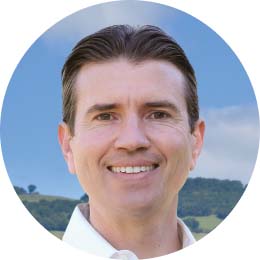
State Assembly, District 12

Why does this race matter?

Assemblymember Damon Connolly is running for the state Senate, leaving an open seat in this North Bay district. With Marin County home values nearly double the statewide average, it sits at the heart of the housing affordability crisis. Five Democrats and one Republican are competing in this solidly blue district.

What does a state Assembly member do? 

State Assembly members represent communities at the California Legislature in Sacramento. The Assembly’s 80 members write and vote on state bills, serve on policy committees and vote on the annual state budget. The top two finishers in this primary election, regardless of party, will face off in the November election. The winner will serve a two-year term.

Candidates
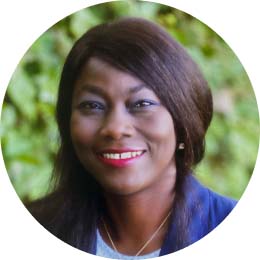
Eli Beckman
Eli BeckmanCouncil member, Corte MaderaDemocrat
Jackie Elward
Jackie Elward Council member, Rohnert Park Democrat
Eric Lucan
Eric LucanSupervisor, Marin CountyDemocrat
Steve Schwartz
Steve SchwartzNonprofit executive and farmer Democrat
Holli Thier
Holli ThierCouncil member, TiburonDemocrat
 

Positions on Key Issues

Candidate summaries are based on interviews with the candidates, questionnaires, statements made at debates and public events, and past news coverage.

North Bay communities have seen some of the highest home insurance rate increases in the state in the past decade. Some are calling for more state pressure on insurers to stay in California’s market, while others emphasize fire prevention and home hardening. What would be your approach to addressing this crisis?

Beckman says the crisis is driven by insurers leaving the state because it’s too risky and expensive to cover homes here. Instead of mandating rates, he would incentivize homeowners to harden their homes and then empower insurance companies to use risk-based modeling. “I think by not allowing insurance companies to take a science-based approach on insurance, we’re basically preventing them from being able to participate in our market.”
Elward would prioritize holding insurance companies accountable and capping annual rate increases. She also supports expanding and stabilizing the FAIR Plan, California’s insurer of last resort, to make sure residents in high-risk wildfire zones retain access to coverage when other insurers decline to cover them.
Lucan points to the county’s decision to tax itself to create a revenue stream funding inspections, home hardening, vegetation management and other wildfire prevention efforts. He supports advancing legislation to reward counties like Marin that choose to tax themselves. “If you’re doing all this work to become more resilient to wildfires, then there should be a benefit to the taxpayers when they’re paying their insurance bill.”
Schwartz credits the Legislature and governor for investing in wildfire prevention, but says prevention needs to take a more “ecological perspective,” making sure private landowners reduce fuel loads in a way that doesn’t lead to erosion or flooding. “We need a holistic perspective on it, and that takes the kind of legislator that is gonna follow through after the money’s been allocated to make sure it’s being spent well.”
Thier says she will ensure PG&E is taking care of its infrastructure and paying for any wildfire damages it causes, which she says will incentivize more insurance companies to offer coverage in California. She wants homeowners who harden their homes to get a break on their insurance costs.

Federal funding cuts to Medicaid, called Medi-Cal in California, are threatening coverage for many residents in this district. What specifically would you fight for in Sacramento to protect them?

Beckman says “my North Star is I want every Californian to have universal access to quality, affordable healthcare.” He supports reforming the tax code so billionaires and big corporations in the state pay their “fair share” to fund that universal healthcare.
Elward says she would make universal healthcare a budget priority and would work to build “a system where healthcare is treated as a right, not a privilege.” She would incorporate coverage for mental health as well.
Lucan would prioritize community clinics, outlining two specific fixes. First, he wants to change a rule that prevents federally qualified health centers from billing Medi-Cal for both medical and mental health services on the same day, a burden he says falls hardest on workers who can’t easily take time off. Second, he wants to make it easier for community clinics to pre-enroll more residents for Medi-Cal.
Schwartz says he will continue to invest in “upstream” preventative healthcare like farm-to-school programs that reduce ultraprocessed food in schools. He argues for protecting the most vulnerable residents and making sure people don’t have to rely on emergency rooms as a source of primary care. He also advocates for allocating funds for the state attorney general to sue the Trump administration over unlawful cuts.
Thier says “we need to use state funds to backfill these cuts” and ultimately provide free health insurance for all Californians. She supports Medicare for All and CalCare, a single-payer healthcare system. “We're the fourth-largest economy in the world … and we should be able to provide health insurance for everyone.”

California has the second-highest utility rates in the country. What’s the first concrete thing you’d do as a legislator to bring costs down for your constituents?

Beckman names climate change and the cost of living as his top two priorities. Drawing on his experience as a board member of Marin Clean Energy, he argues that investor-owned utilities like PG&E have too much sway over the California Public Utilities Commission. He proposes reforming the CPUC “to create a level playing field where public clean energy companies are empowered to shine and to deliver lower cost clean energy for Californians.”
Elward calls for expanding investment in renewable energy and community solar for renters and low-income households. She supports additional state funding for undergrounding and regional grid expansion to import cheaper power. As vice chair of Sonoma Clean Power, which negotiates and purchases power for customers, she also backs expanding the community choice aggregation model and says she would consider public ownership of utilities in areas with persistently high rates.
Lucan says legislators need to revisit the state’s original rooftop solar incentive program, noting that early adopters are receiving favorable rates that lower- and middle-income ratepayers are effectively subsidizing. “It’s a very careful and delicate balance. … You would be taking away from somebody that made an investment under a certain framework,” he says, adding that it’s a necessary conversation given the “sheer cost of energy rates.”
Schwartz supports local power generation in remote communities and prioritizing undergrounding power lines in high-population areas. He also promotes connecting California’s power grid with a larger Western energy market to bring down costs. Lastly, he emphasizes holding the CPUC accountable. “We need to hold the regulators’ feet to the fire so that they can hold the utilities’ feet to the fire.”
Thier says the first thing she would do is require PG&E to cut rates by 25 percent. “PG&E is a monopoly, and there’s been multiple rate increases at a time when people are suffering, people cannot afford to pay their rents, pay for housing.” Thier says she fought to switch buildings in Tiburon from natural gas to all electric, reducing the city’s greenhouse gas emissions – something she wants to do statewide.

Marin and Sonoma have long prioritized protecting open space and farmland, but high housing costs are pushing families and workers out of the district. How would you balance housing affordability with conservation efforts?

Beckman supports concentrating new housing along transit corridors like Highway 101, near job centers and urban cores. He says that would take development pressure off of prime farmland. “The state is spraying California with this fire hose of density without any real strategy around where we're steering that growth to.”
Elward points to Rohnert Park as a model for balancing growth and conservation, citing the city’s urban growth boundary to prevent urban sprawl and preserve open spaces. She wants to replicate this approach in Sacramento. “We have demonstrated that it can be done, but we have to have political will to do that.”
Lucan says urban growth boundaries are a good framework to guide housing, directing development toward infill and transit centers, and adds, “We’ve got to find a way to get some of these good projects across the finish line.” He believes measures that allow streamlining of project approvals need to be reserved for truly affordable units, including affordable homeownership, so residents can build generational wealth. He also wants to revive tax increment financing to help fund construction.
Schwartz prioritizes building within urban growth boundaries and existing cities, protecting open spaces and greenbelts. He supports local control when cities are working toward their state-mandated housing goals, but emphasizes that “no community gets a pass, we all have to do our share.” He says he will offer landlords tax incentives to lease to essential workers and would seek more state funding to support first-time homebuyers.
Thier prioritizes building housing that is “truly affordable” without displacing current residents and with lifetime rent control protections. She says she has pushed for purchasing affordable housing for town workers, “allowing people who serve the community and work in the community to be able to live here.” Thier also fought to preserve 110 acres of land in Tiburon as open space.

Health and Human Services Secretary Robert F. Kennedy Jr.’s "Make America Healthy Again" agenda has resonance in parts of this district. Where do you see common ground with his priorities, and where do you disagree?

Beckman finds common ground with RFK Jr. on the value of healthier living and natural foods over ultraprocessed foods, but says Kennedy “gets almost everything wrong” when it comes to implementation and abandons science in the process. “I think to put somebody with his incredibly misguided understanding of even the most basic public health principles in a position of authority has been incredibly dangerous.”
Elward, who was born and raised in the Democratic Republic of the Congo, says she’s seen firsthand the importance of vaccine access and opposes RFK Jr.'s efforts to change the federal immunization schedule. “We know that a lot of these diseases were eradicated by taking vaccines.” She adds that as a mother, she values having been able to get her children vaccinated.
Lucan says the district scores highly on community health standards, though he wants to expand access to locally grown foods and farmers markets to everyone. He adds: “It's somewhat ironic to me that despite some of the things that RFK Jr. is promoting, that we also had a federal government that wanted to take away SNAP benefits from so many members in our community.”
Schwartz agrees with MAHA’s focus on healthy and organic food, pointing to his own efforts to double the purchasing power of CalFresh recipients at certain farmers markets and expanding a program to get fresh produce to low-income seniors. He draws a clear line on vaccines and science-based health interventions, sharing that his older brother died of COVID at 58 and that he believes earlier vaccine access could have saved his life.
Thier aligns with MAHA’s goals to ban synthetic dyes, improve food labeling, promote organic food and ban PFAS, known as “forever chemicals.” She introduced an ordinance banning the sale of all tobacco products in Tiburon and got the city to stop spraying Roundup near playgrounds and picnic tables.

Key Supporters

This list represents notable organizations and individuals who have taken a position on the ballot measure or candidate, or who are funding campaigns in support or opposition. This list is not exhaustive, and may be updated.

For Beckman

  • Toni Atkins, former president pro tem, California Senate
  • Mark Gonzalez, majority whip, California Assembly
  • Fiona Ma, California treasurer (dual endorsement)
  • California Legislative LGBTQ Caucus
  • Equality California (dual endorsement)

For Elward

  • Mike Thompson, U.S. representative
  • Malia Cohen, California state controller
  • Fiona Ma, California treasurer (dual endorsement)
  • Tony Thurmond, California superintendent of public instruction 
  • SEIU California

For Lucan

  • Lynda Hopkins, supervisor, Sonoma County
  • Jared Huffman, U.S. representative
  • Adam Schiff, U.S. senator
  • California YIMBY

For Schwartz

  • Steve Herrington, retired superintendent of education, Sonoma County
  • Jennifer Koelemeijer, retired planning commissioner, Sebastopol
  • Darrell Steinberg, former president pro tem, California Senate
  • Virginia Strom-Martin, former member, California Assembly

For Thier

  • Rebecca Bauer-Kahan, member, California Assembly
  • Rachel Farac, mayor, city of Novato
  • Fiona Ma, California treasurer (dual endorsement)
  • Equality California (dual)

Additional Candidates

Eryn Cervantes
Eryn CervantesCorrectional counselorRepublican.Cervantes began working for the California Department of Corrections and Rehabilitation in 1999 and now works at San Quentin. She did not respond to interview requests.
Player sponsored by