Insurance Commissioner

Why does this race matter?

Wildfires and inflation have thrown California into an insurance crisis. For many, property insurance is hard to afford or sometimes even harder to find. The ranks of homeowners who have signed up with the FAIR Plan, the state’s property insurer of last resort, have swelled beyond what the plan can handle. Prices have also risen sharply for health and auto insurance. Voters will decide who will be the insurance industry’s chief regulator.

Key Candidates
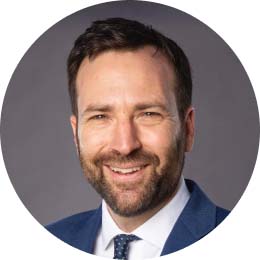
This list represents the most notable candidates running for the seat.
Ben Allen
Ben AllenState senatorDemocrat
Steven Bradford
Steven BradfordFormer state senatorDemocrat
Jane Kim
Jane KimFormer San Francisco supervisorDemocrat
Stacy Korsgaden
Stacy KorsgadenLicensed insurance professionalRepublican
Merritt Farren
Merritt FarrenMedia and technology executive Republican
Eduardo Vargas
Eduardo VargasTeacherPeace and Freedom Party
Patrick Wolff
Patrick WolffFinancial analystDemocrat
 

Positions on Key Issues

Candidate summaries are based on interviews with the candidates, questionnaires, statements made at debates and public events, and past news coverage.

Following years of bad fires and steep inflation, California’s insurance companies drew back from the state or requested big rate hikes. What proposals do you have to balance affordability and availability in the insurance market?

Allen says he will seek to reduce rates by reducing risk, working with local and state officials to design neighborhood-scale programs that make communities safer. He also plans to expand grants and financing to help home and business owners safeguard their properties from fire. He wants to modernize and speed up rate-setting and reviews. Allen supports efforts pushing fossil fuel companies to bear some cost for climate damages that drive up insurance prices.
Bradford says artificially suppressing rates will drive insurers away from the state. He wants rate changes to be reviewed faster and says the state "must also invest in wildfire mitigation and resilience.” He wants the FAIR Plan reformed “as a true safety net for those who need it, not a long-term solution."
Farren proposes a technology-driven overhaul of insurance regulations to expand affordable consumer options while balancing insurer needs. He wants to create a state-backed reinsurance program to replace the FAIR Plan, reduce insurer risk and ensure full payouts within 30 days after total losses.
Kim says she would seek to negotiate with insurers to provide broad availability. To promote affordability, she'd push for transparency from companies about how premiums are being spent. Kim proposes a statewide affordable disaster insurance program, similar to systems in France and New Zealand, to stabilize coverage, prevent mass cancellations and invest in climate resiliency. She also supports guaranteed health insurance for every child in California.
Korsgaden says California’s insurance crisis is the direct result of government overreach, excessive regulation and years of mismanagement, and calls for “a competitive, free-market system that allows insurers to price risk accurately and operate fairly.” She would streamline the rate approval process and work with lawmakers to reduce wildfire risks in California through programs like forest thinning and removing potential fuels like stacked brush.
Vargas believes affordable insurance is a human right. Major insurance companies, he says, are holding the state hostage. "As insurance commissioner, I will open up market conduct investigations into the largest ... insurers in the state and hold companies accountable for illegally boycotting the state." He says he would build a public insurer to guarantee coverage for all, "whether it's in response to a natural disaster, a car crash or a health emergency."
Wolff plans to increase competition by publishing a report card on each insurance company and wants to reduce the time for review of rate filings. He wants to require insurance companies to detail steps homeowners can take to reduce risk and receive discounts for making those changes.

California’s FAIR Plan, which has seen a nearly 150% increase in the number of policies since 2022, is supposed to be the state’s insurer of last resort. But there are many complaints about the program, and it’s facing lawsuits over fire-related denials. What policies would you implement to remedy those issues?

Allen says, "We’ve got to transition FAIR customers back to the private market. To do so, we must build up our fire resilience as a state, especially in the highest-risk communities relying on the FAIR Plan. As commissioner, I will champion a statewide effort to educate and implement fire resistance and make sure private insurers reward that prevention."
Bradford says his top priority is to stabilize and restore a competitive insurance market so more homeowners can move back into comprehensive, private coverage. To strengthen the plan's finances, he supports implementation of an Assembly bill passed last year (AB 226), which allows for the use of bonds to finance claims, increasing the plan’s ability to pay out losses while reducing reliance on reinsurance.
Farren says he would seek to eliminate the need for the FAIR Plan by creating “CAL Reinsure," modeled on programs in Florida and the U.K. to address hurricane and flooding risk, respectively. "It will also speed payments to those who suffer a community fire loss by requiring payment of the full amount of insurance (a policy holder has) signed up for within 30 days of a total loss of a home or business structure," he says.
Kim wants to reform the structure of the FAIR Plan to make it less secretive. Currently, it's unclear who is on the governing board or what happens at meetings, Kim says. "We should have direct insight into its financial data and how it calculates premiums and make sure that consumers are getting treated fairly and quickly in the claims process."
Korsgaden says she would work to depopulate the FAIR Plan by lowering insurable risks in California and restoring a predictable marketplace. "I will work with lawmakers to reduce wildfire fuel, thin forests and crack down on crime so private insurers can confidently return. Second, I will create a new business division at the Department of Insurance to fast-track qualified insurers who want to write policies here," Korsgaden says.
Vargas says the way out of the crisis is "transition consumers not only off the FAIR Plan, but off the private insurance industry altogether." He wants to create a public insurance system to provide low-cost, expansive coverage for homes, autos and healthcare.
Wolff says he will make insurance companies invest in the operations of the FAIR Plan so that underwriting and servicing are reasonable. In return, we must allow FAIR Plan pricing to be fully actuarially sound. ... This will stabilize FAIR Plan finances and incentivize customers to get better and cheaper coverage in the regular market." He also supports pushing the FAIR Plan to offer coverage beyond basic fire.

How would you help the state drive down risk from climate-fueled disasters?

Allen says he would use grants and other financing to help communities in the highest-risk areas retrofit their homes and create defensible space over the next five years.
Bradford says the state needs stronger coordination between the state, local governments and insurance companies to incentivize and invest in home hardening and creating defensible space.
Farren says he would push for more aggressive forest and brush management and incentives for home hardening, "organized by the state and paid for through reductions in insurance costs demonstrated to consumers through clear guidance from the Department of Insurance and rate reductions required to be given by insurance companies." Farren, who lost his home in Southern California's 2025 Palisades Fire, would seek to set minimum standards for fire response in cities and counties.
Kim wants the office to be an ally in "our larger climate justice movement to reduce our dependence on fossil fuel." She hopes to work with Cal Fire and counties to update building codes and invest in prevention. She would like the department to create a single risk map for the state "that all insurers use" instead of the current proprietary maps, helping consumers understand their risks and rates.
Korsgaden says she'd recommend implementation of an emergency fire reduction plan through county Fire Safe Councils. She would advocate for removal of dead and stacked brush; expanded grazing and mechanical thinning; and fast-tracked logging and forest management. "I would demand real accountability from utilities and local governments that ignore basic safety," she says.
Vargas says the insurance commissioner can fund home mitigation through taxes on billionaires and their companies, paired with outreach to high-risk communities and fully funded fire-resistance upgrades. Long term, he says, reducing climate-fueled disasters requires ending the climate crisis. He supports a rapid transition away from fossil fuels through coordinated government action, holding corporations accountable and requiring them to fund the infrastructure and energy transformation needed.
Wolff supports testing pilot programs allowing insurers to issue group homeowners' insurance on a community basis, such as for HOAs, to motivate all residents in risk reduction. He'd also advocate for better land management, such as brush clearing and controlled burns and discounts for mitigation.

Is Commissioner Lara’s Sustainable Insurance Strategy working? Why or why not?

Allen believes the strategy is working in that it acknowledges that climate change is happening now. He supports the continued development of a state public catastrophe model, which will provide a benchmark to evaluate private models. Allen is concerned that the strategy has allowed insurers to get credit for covering high-risk areas that aren’t really high risk. He wishes to increase the number of claim handlers in the department available to assist during an emergency.
Bradford says he supports the strategy because it recognizes that rising insurance costs stem from real risks like wildfires and rebuilding expenses. He says ignoring that would shrink consumer options. “The plan aims to balance risk-based pricing with expanded coverage in high-risk areas," he says. “Its success should be judged by faster approvals, more insurers in the market, fewer FAIR Plan policies and strong consumer protections.”
Farren says the strategy is not working and calls it “another misguided effort to Band-Aid over a problem that needs a more fundamental solution.”
Kim says Lara correctly identified the critical issues plaguing the insurance system, but hasn't delivered the solution. "I agree with the goal, but there were so many loopholes, it actually led to the opposite of what its intended purpose was," she says.
Korsgaden says she'd recommend implementation of an emergency fire reduction plan through county Fire Safe Councils. She would advocate for removal of dead and stacked brush; expanded grazing and mechanical thinning; and fast-tracked logging and forest management. "I would demand real accountability from utilities and local governments that ignore basic safety," she says.
Vargas says the strategy is working for large insurers, not consumers, forcing policyholders to absorb repeated rate hikes. He criticizes recent rate increases approved by Lara for State Farm, Mercury and CSAA. This approach sidesteps the commissioner’s duty to reject excessive rates, he says. As commissioner, he says he would restore that authority and freeze further rate hikes, effectively ending the current strategy.
Wolff says the strategy is not working as intended but can be reformed and strengthened by allowing insurance companies to “operate economically” without favoring them.

Key Supporters

This list represents notable organizations and individuals who have taken a position on the ballot measure or candidate, or who are funding campaigns in support or opposition. This list is not exhaustive, and may be updated.

For Allen 

  • Alex Padilla, U.S. senator, California 
  • Adam Schiff, U.S. senator, California
  • California Environmental Voters
  • California Professional Firefighters
  • Sierra Club

For Bradford

  • Fiona Ma, California state treasurer
  • Dr. Shirley Weber, California secretary of state
  • California State Association of Electrical Workers 
  • State Building and Construction Trades Council of California
  • Teamsters California

For Farren

  • Fabien Fedida, aerospace executive
  • Alison MacCracken, Pacific Palisades businesswoman
  • The Jefferson Club

For Kim 

  • Malia Cohen, California state controller
  • Dolores Huerta, labor leader
  • Bernie Sanders, U.S. senator, Vermont
  • California Teachers Association
  • SEIU California

For Korsgaden

  • Carl DeMaio, state assemblymember
  • Brian Jones, state Senate Republican leader
  • California Republican Party 
  • Reform California

For Vargas

  • Farrah Khan, former mayor, Irvine
  • Dianne Lewis, Altadena fire survivor and CEO, Alkebu-Lan Cultural Center
  • Green Party
  • Peace and Freedom Party

For Wolff 

  • Daniel Schwarcz, law professor, University of Minnesota 
  • Eastern Neighborhoods Democratic Club
  • Ed Lee Democratic Club
  • United Democratic Club
  • Westside Family Democratic Club

Additional Candidates

Eric Thor Aarnio
Eric Thor AarnioContractorRepublican
Keith W. Davis
Keith W. DavisInsurance agentAmerican Independent
Robert Howell
Robert HowellExecutive director, Consumer Federation of CaliforniaRepublican
Sean Lee
Sean LeeFinancial services executiveRepublican
Player sponsored by