Governor

Why does this race matter?

California hasn’t seen a wide-open primary election for governor since 1998. The next governor will face a structural deficit that’s projected to reach $35 billion in a few years and will also face a hostile administration in Washington, D.C., led by President Donald Trump. Even without those obstacles, the incoming governor will be confronted by ongoing challenges, including the state’s high housing and gasoline prices, homelessness and wildfire risk.

Key Candidates

This list represents the most notable candidates running for the seat.
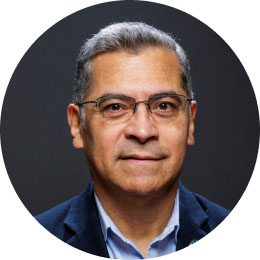
Xavier Becerra
Xavier BecerraFormer U.S. Health and Human Services secretaryDemocrat
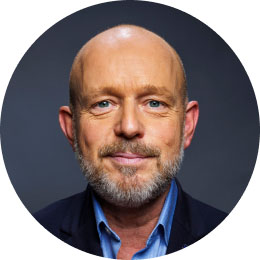
Chad Bianco
Chad BiancoSheriff, Riverside CountyRepublican
Steve Hilton
Steve HiltonBusinessmanRepublican
Katie Porter
Katie PorterFormer U.S. representativeDemocrat
Tom Steyer
Tom SteyerDemocratic activist and former hedge fund managerDemocrat

Additional Candidates

Matt Mahan
Matt MahanMayor, San JoséDemocrat. Mahan touts a decrease in unsheltered homelessness during his time as mayor and is promising to cut taxes on housing development and gas.
Tony Thurmond
Tony ThurmondSuperintendent of Public Instruction Democrat. Thurmond supports a proposed tax on the wealth of California billionaires and has promised to increase funding for dyslexia screening and tutoring.
Antonio Villaraigosa
Antonio VillaraigosaFormer mayor, Los AngelesDemocrat. Villaraigosa is promising to boost homebuyer assistance programs and create a task force to ensure federal immigration agents adhere to state law.

Hear From the Candidates


Positions on Key Issues

Candidate summaries are based on interviews with the candidates, questionnaires, statements made at debates and public events, and past news coverage.

California has clashed repeatedly with President Trump's second administration and sued the federal government more than 60 times since he came into office. How would you approach the state’s relationship with the president?

Becerra cites fighting Trump as a top priority. He points to his time as California attorney general during Trump’s first term, when his office sued the president more than 120 times and won “most” of those cases, including protecting the Affordable Care Act, so-called Dreamer immigrants and the state’s sanctuary immigration law.
Bianco famously endorsed the president’s 2024 campaign by declaring, “It's time we put a felon in the White House.” Bianco says voters should trust elections, but is in the middle of a court battle over the sheriff’s office’s unprecedented seizure of 650,000 Riverside County ballots from last November’s statewide special election. If elected, Bianco has promised to try to overturn California’s statewide sanctuary law, which prohibits state and local law enforcement from assisting in immigration enforcement.
Hilton has Trump’s endorsement and said he will make sure California works with, not against, the president. “I just think we've got to get out of this adversarial relationship and try and work together for the good of Californians,” he said. But he also pointed to his time working for British Prime Minister David Cameron in a coalition government as proof he can work across the aisle.
Porter points to her tough questioning of Trump administration officials as a member of Congress as proof of her ability to stand up to the president. She promises to “fortify” the state’s healthcare system to protect and expand care. “I think I'm really focused on not only standing up to Trump, but not ever letting Trump distract me from delivering a better California for the future,” she said.
Steyer is an avowed Trump critic and spent millions of dollars of his own money in 2017 to push for his impeachment. He is calling out rising gas prices and their connection to the war in Iran. He is proposing an investigative unit to monitor potential wrongdoing by Immigration and Customs Enforcement agents and make it easier for the state’s attorney general to prosecute federal agents.

Affordability is a key concern for Californians, particularly around housing and gas. How would you work to bring those prices down?

Becerra cites the rising costs of healthcare, childcare and groceries as problematic. He says he will fight price gouging and unjustified rate hikes and “use the power of the state to lower costs where the market has failed.” And he said he will use state money to keep financially unstable people in their homes, saying that would be cheaper than getting them housed after they are homeless.
Bianco promises to cut taxes and regulations, make California “oil independent” and support the tech sector as a way to create more jobs. He opposes all new taxes and would move to eliminate the state income tax entirely, which accounts for more than 60% of state revenue. He promised to reduce other “cost drivers” like the state’s gas tax. On housing, he is pledging to cut red tape to get more housing built faster.
Hilton says cutting taxes, spending and regulations will help grow the economy and lead to lower unemployment. He says he will make it possible for every family to buy a single-family home by capping development fees and reducing environmental regulations. “In a state as big as California, where just 5% of the land is developed, there’s plenty of room to build the housing we need. They call it ‘sprawl.’ I call it the California Dream,” he says.
Porter has built her career around protecting consumers and bringing down costs for families, and leans on her personal experience as a single working mother of three kids who does her own grocery shopping. She promises to sign laws to prevent insurance companies from denying care and to bring down drug costs, and she supports creating a state-level single-payer healthcare system. She also promises to get more housing built faster.
Steyer, despite his vast personal wealth, is running as a progressive who wants to build “one million homes you can afford.” He said he will do this in part by changing laws to make it easier to build on surplus public lands and invest in prefabricated housing, while also protecting renters. Steyer also said he will work to lower electricity bills and expand preschool for kids as young as 3 years old. He supports state-level single-payer healthcare.

California faces a structural budget deficit, which is being compounded by federal spending cuts to key programs, including Medi-Cal (the state’s Medicaid program) and social safety net programs. Would you cut spending or try to increase taxes to deal with those challenges?

Becerra says he supports higher taxes on the “mega wealthy,” whom he argues should be paying higher tax rates than nurses, teachers and public safety employees. He has not spelled out a specific plan but says he would look at taxing “passive” income like investments. He has promised to protect state programs that support the most vulnerable Californians, like Medi-Cal.
Bianco wants to cut taxes, including eliminating the income tax, which currently brings about $140 billion into state coffers each year, more than half of what the state spends annually. He said he will make up for lost revenue with cuts in “wasteful spending” and by opening up more oil drilling in California. He has not provided details on what state programs he would cut to pay for those tax reductions.
Hilton wants to lower taxes. He proposed eliminating the state income tax for Californians earning less than $100,000 and imposing a flat 7.5% tax on earnings over $100,000. And he proposed eliminating the minimum franchise tax, which is about $800 annually for all businesses. Hilton is promising a joint federal-state task force to investigate fraud in government programs that he vows will "save taxpayer money." He hasn’t said which programs he will cut.
Porter is proposing to increase California’s corporate tax rate on high-earning companies — and use the money to eliminate state income taxes for families who make under $100,000 and cover two years of in-state tuition at a University of California or California State University campus. While Porter has promised to protect Californians’ healthcare, she has not proposed a specific way to backfill the billions of dollars the state is losing due to federal budget cuts.
Steyer supports increasing commercial property taxes, which were capped by 1978’s Proposition 13. Steyer also supports a proposal to close the so-called “water’s edge” loophole that allows multinational corporations to shelter their profits in countries with low tax rates to avoid state taxes. While promising to hold down healthcare costs and work toward universal coverage, Steyer has not specified how he would do that, given the loss of federal funds.

Key Supporters

This list represents notable organizations and individuals who have taken a position on the ballot measure or candidate, or who are funding campaigns in support or opposition. This list is not exhaustive, and may be updated.

For Becerra

  • Assembly Speaker Robert Rivas
  • California State Council of Laborers
  • Planned Parenthood Affiliates of California

For Bianco

  • Darrell Issa, U.S. representative
  • California Republican Assembly 
  • California State Sheriffs’ Association

For Hilton

  • Donald Trump, president
  • Jack Hibbs, pastor, Calvary Chapel Chino Hills
  • Howard Jarvis Taxpayer Association PAC

For Porter

  • Elizabeth Warren, U.S. senator 
  • Emily’s List 
  • United Auto Workers

For Steyer

  • Ro Khanna, U.S. representative
  • California Nurses Association
  • California Teachers Association
Player sponsored by