U.S. House of Representatives, District 4

Why does this race matter?

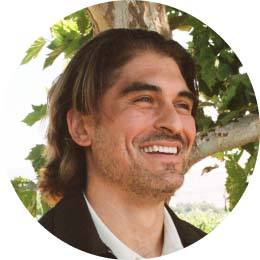
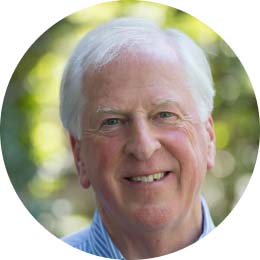
This race is a test case for the direction of the Democratic Party. The frontrunners are incumbent Mike Thompson, 75, in the House since 1999, and first-time candidate Eric Jones, 35, backed by venture capital and tech. The race mirrors a pattern of younger Democrats challenging establishment incumbents.

What does a U.S. representative do? 

Representatives are your local community’s voice in the U.S. House of Representatives. Members of Congress write and vote on bills, including the federal budget. The top two finishers in this primary election, regardless of party, will face off in the November election. The winner will serve a two-year term.

Key Candidates

This list represents the most notable candidates running for the seat.
Eric Jones
Eric JonesFormer venture capitalist and CEO, American Dream InstituteDemocrat
Raymond Riehle
Raymond RiehleBusiness owner and entrepreneurRepublican
Mike Thompson
Mike ThompsonIncumbent congressman for District 4Democrat
 

Positions on Key Issues

Candidate summaries are based on interviews with the candidates, questionnaires, statements made at debates and public events, and past news coverage.

Wildfire risk is making it harder to insure and therefore buy or sell homes in parts of this district. How would you address the growing collision between climate risk and housing affordability?

Jones says insurance carriers are leaving the state and residents are overrelying on the FAIR Plan, California’s home insurer of last resort. He vows to hold PG&E accountable by pushing to break up the utility’s monopoly. “We need a way to hold our public utilities accountable for the fire risk they create. And today, PG&E cannot be held accountable because they’re a state-regulated monopoly and there is no competition.”
Riehle says “prevention is far better than recovery.” He would focus on better forest management and clearing to reduce fire risk, which he says would make affordable insurance feasible again.
Thompson co-sponsored legislation to provide federal grants of up to $10,000 for property owners in disaster-prone regions to harden their homes against wildfires or other disasters. The bill would provide a 30% tax credit for qualified disaster risk mitigation. “It requires the insurance companies to take into consideration this resiliency work,” he says. Thompson expects these steps will encourage insurance companies to return to California.

What is your approach to lowering healthcare costs and expanding access for your constituents? How would you do that, given recent federal budget cuts that include significant changes to Medicaid funding and the Affordable Care Act?

Jones says he supports Medicare for All. “I believe that healthcare is a human right and that everyone should have access to it.” He wants to expand Medicare to cover in-home nursing, dental, vision and hearing care. “If we invest in those categories starting at age 65 when someone first gets on to Medicare … we will actually save costs downstream.”
Riehle focuses on healthcare billing transparency, arguing that third-party insurers obscure actual service costs. “The philosophy behind it is, if people know what they’re being charged, they can actually make better decisions,” he says.
Thompson touts being a co-sponsor of the Affordable Care Act and wrote California’s first telemedicine law. “I took that to Washington, and my first success was during COVID when we allowed telemedicine to be used for Medicare patients so they could get their healthcare remotely.” He co-sponsors Medicare for All legislation and calls for reversing Medicaid cuts in President Trump’s HR 1, the so-called "big, beautiful bill."

With the agriculture sector relying heavily on immigrant labor, how would you respond to increased Immigration and Customs Enforcement activity in the region, and would you take any legislative action on it?

Jones says he would require all ICE officers to wear body cameras, prohibit wearing masks and undergo the same training and legal standards as police officers. He would also move ICE out of the Department of Homeland Security and into the Justice Department, to eliminate supplemental spending. “The goal … of ICE is to charge and bring justice to violent criminals and felons. If that’s the case, it should be in the Justice Department.”
Riehle strongly opposes sanctuary policies, arguing that jurisdictions defying federal law should lose federal funding. “Deportations that make the headlines would be resolved if there weren’t sanctuary cities and sanctuary policies and states,” he says. Riehle supports legal immigration pathways – “a strong fence and a wide gate” – but says illegal border crossings and visa overstays should not be tolerated.
Thompson voted against the creation of the Department of Homeland Security in 2002. He says he participated in rallies calling for the impeachment of former DHS Secretary Kristi Noem, held “Know Your Rights” seminars and voted against additional funding for DHS. “I will continue to hold ICE's feet to the fire. … I'll do everything in my power to make sure that they're not a rogue agency.”

What are you doing to win over working-class voters?

Jones rejects all corporate PAC money and supports banning stock trading for members of Congress. “The core of my platform is forcing corporations to actually follow the tax code we have on the books, closing corporate loopholes and using that money to fund a tax cut for the working class in this country.”
Riehle says he wants to expand access to education, including trade programs that he sees as an effective path to a six-figure career. He notes that he is a working-class voter and small business owner himself. He wants to combat what he calls the “tyranny of low expectations,” saying if you expect great things from people and government, they will deliver great things.
Thompson says he is focusing on affordability and protecting democracy against the “illegal and oftentimes unconstitutional efforts of this president." He says he will prioritize the needs of regular people over billionaires, multimillionaires and corporations.

Key Supporters

This list represents notable organizations and individuals who have taken a position on the ballot measure or candidate, or who are funding campaigns in support or opposition. This list is not exhaustive, and may be updated.

For Jones

  • Michael Vernal, venture capitalist at Conviction
  • Luis von Ahn, CEO and co-founder, Duolingo
  • Our Revolution
  • Yolo County Pride Democratic Club

For Riehle

  • Josh Hoover, member, California Assembly
  • Roger Niello, state senator
  • Doug Ose, former U.S. representative
  • Reform California
  • Sacramento County Republican Central Committee

For Thompson

  • Gavin Newsom, governor
  • Alex Padilla, U.S. senator
  • Nancy Pelosi, U.S. representative
  • Adam Schiff, U.S. senator
  • California Democratic Party

Additional Candidates

Sharon Brown
Sharon BrownRegistered nurseRepublican. She did not respond to an interview request.
Mandy Ghusar
Mandy GhusarLicensed vocational nurseRepublican
Jimih Jones
Jimih JonesParts managerRepublican. Jones ran unsuccessfully for the District 3 state Senate seat in 2024.
John Mackenzie
John MackenzieRegistered nurseRepublican. Mackenzie served 10 years in the Marine Corps and 15 years in the Air Force Reserve. He did not respond to an interview request.
Thomas Roach
Thomas RoachNo ballot designationNo Party Preference.
Chuck Uribe
Chuck Uribe Public school teacher Republican. Uribe won a seat on the Center Joint Unified School District board in Sacramento County in 2024.
Player sponsored by