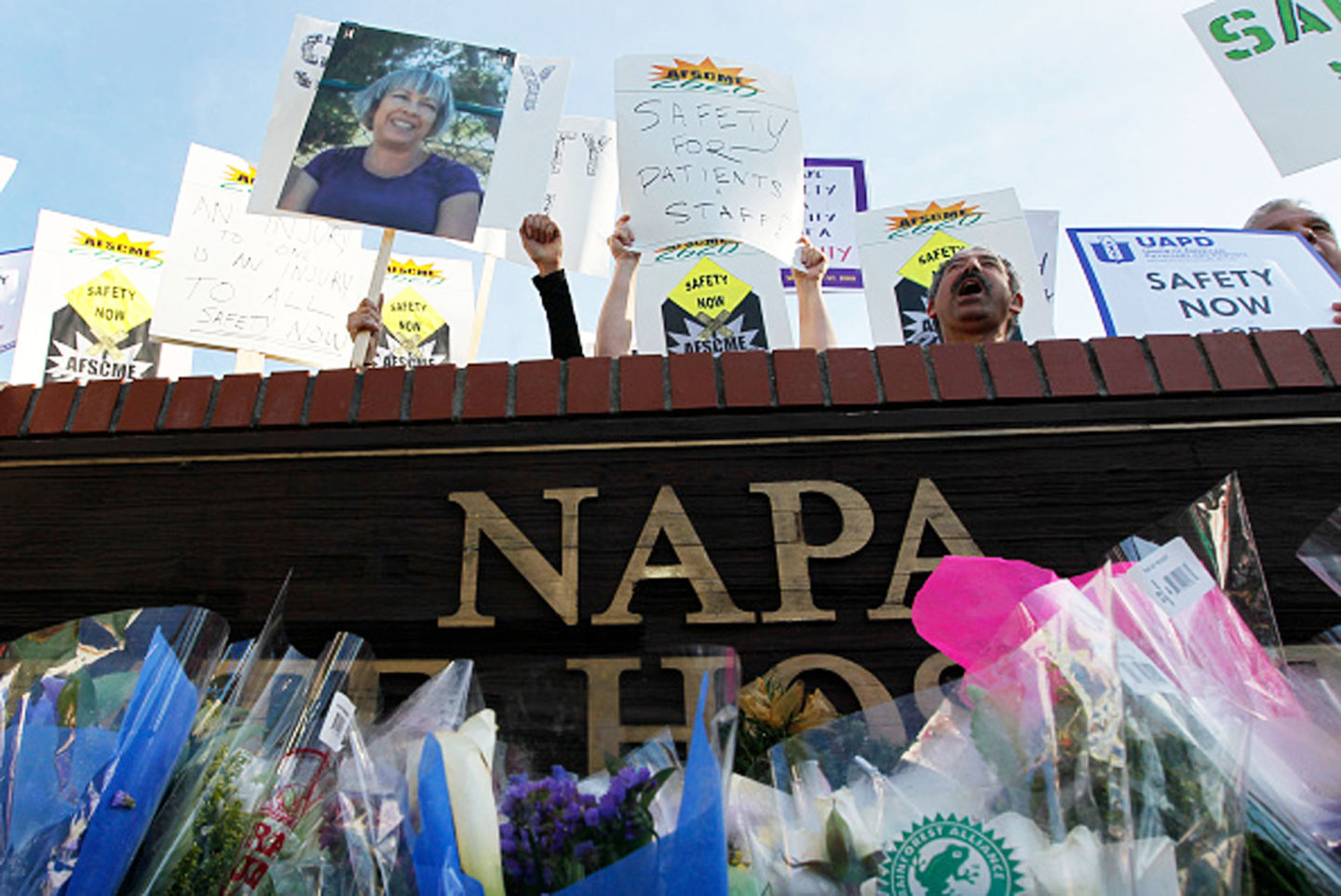
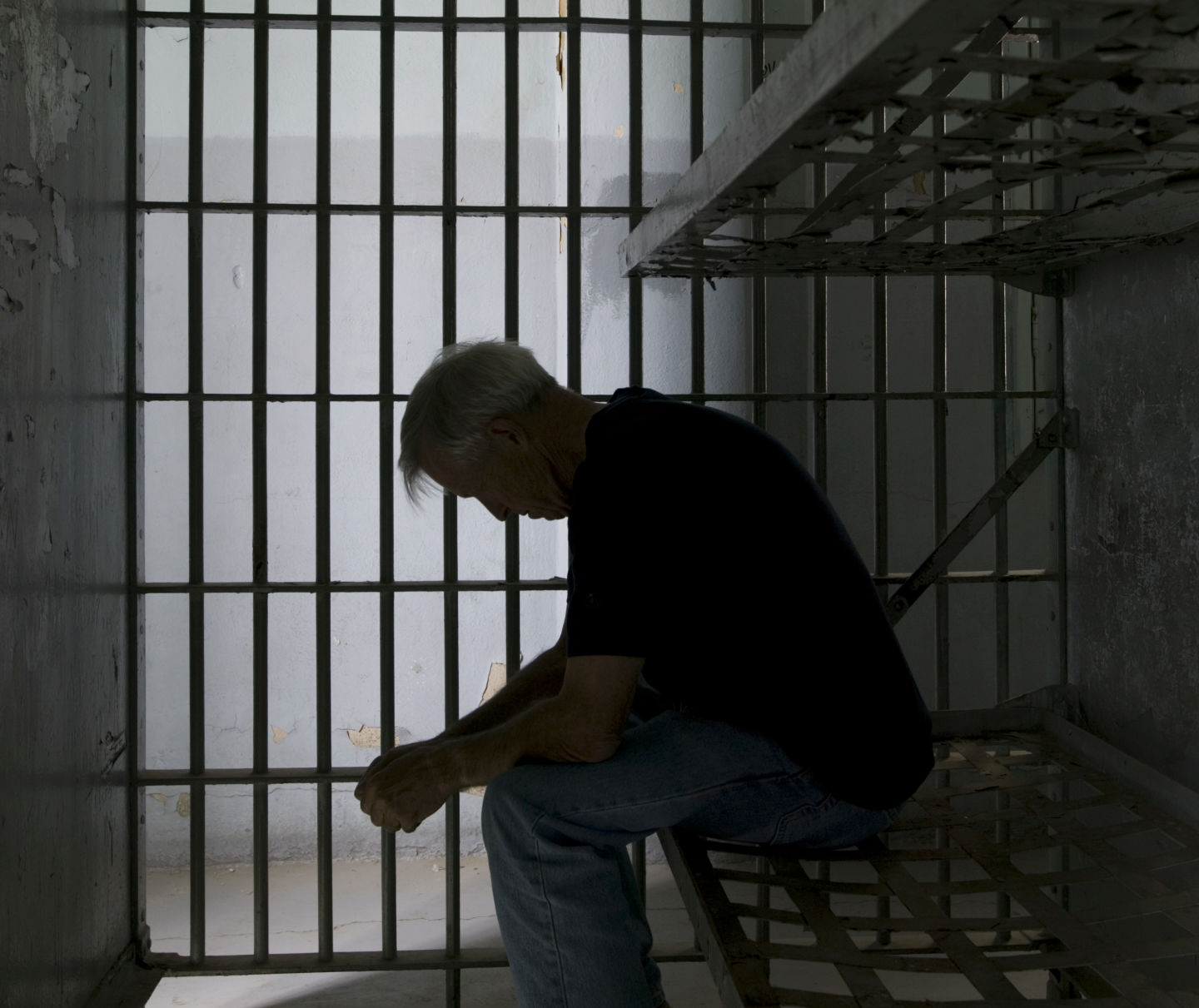
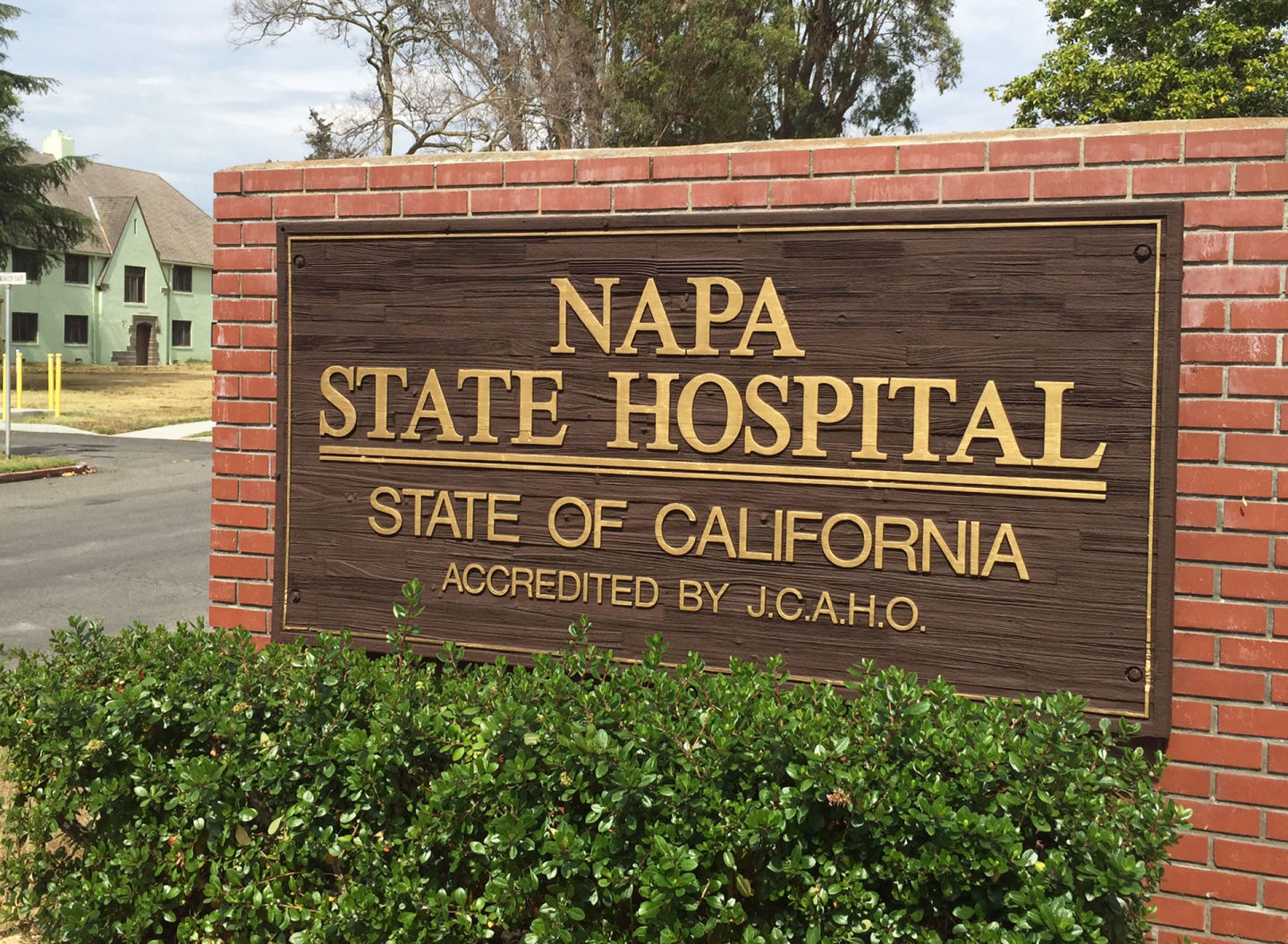
Deep Dive into California's Mental Hospitals Reveals More Questions Than Answers
Violence and Healing at Napa State Hospital: A Tale of 2 Families
Long, Dangerous Wait for Hospital Beds for Those Incompetent to Stand Trial
5 Years After Brutal Murder, Napa Hospital Seeks to Balance Treatment With Security
Sponsored
Player sponsored by
window.__IS_SSR__=true
window.__INITIAL_STATE__={
"attachmentsReducer": {
"audio_0": {
"type": "attachments",
"id": "audio_0",
"imgSizes": {
"kqedFullSize": {
"file": "https://ww2.kqed.org/news/wp-content/themes/KQED-unified/img/audio_bgs/background0.jpg"
}
}
},
"audio_1": {
"type": "attachments",
"id": "audio_1",
"imgSizes": {
"kqedFullSize": {
"file": "https://ww2.kqed.org/news/wp-content/themes/KQED-unified/img/audio_bgs/background1.jpg"
}
}
},
"audio_2": {
"type": "attachments",
"id": "audio_2",
"imgSizes": {
"kqedFullSize": {
"file": "https://ww2.kqed.org/news/wp-content/themes/KQED-unified/img/audio_bgs/background2.jpg"
}
}
},
"audio_3": {
"type": "attachments",
"id": "audio_3",
"imgSizes": {
"kqedFullSize": {
"file": "https://ww2.kqed.org/news/wp-content/themes/KQED-unified/img/audio_bgs/background3.jpg"
}
}
},
"audio_4": {
"type": "attachments",
"id": "audio_4",
"imgSizes": {
"kqedFullSize": {
"file": "https://ww2.kqed.org/news/wp-content/themes/KQED-unified/img/audio_bgs/background4.jpg"
}
}
},
"placeholder": {
"type": "attachments",
"id": "placeholder",
"imgSizes": {
"thumbnail": {
"file": "https://cdn.kqed.org/wp-content/uploads/2024/12/KQED-Default-Image-816638274-2000x1333-1-160x107.jpg",
"width": 160,
"height": 107,
"mimeType": "image/jpeg"
},
"medium": {
"file": "https://cdn.kqed.org/wp-content/uploads/2024/12/KQED-Default-Image-816638274-2000x1333-1-800x533.jpg",
"width": 800,
"height": 533,
"mimeType": "image/jpeg"
},
"medium_large": {
"file": "https://cdn.kqed.org/wp-content/uploads/2024/12/KQED-Default-Image-816638274-2000x1333-1-768x512.jpg",
"width": 768,
"height": 512,
"mimeType": "image/jpeg"
},
"large": {
"file": "https://cdn.kqed.org/wp-content/uploads/2024/12/KQED-Default-Image-816638274-2000x1333-1-1020x680.jpg",
"width": 1020,
"height": 680,
"mimeType": "image/jpeg"
},
"1536x1536": {
"file": "https://cdn.kqed.org/wp-content/uploads/2024/12/KQED-Default-Image-816638274-2000x1333-1-1536x1024.jpg",
"width": 1536,
"height": 1024,
"mimeType": "image/jpeg"
},
"fd-lrg": {
"file": "https://cdn.kqed.org/wp-content/uploads/2024/12/KQED-Default-Image-816638274-2000x1333-1-1536x1024.jpg",
"width": 1536,
"height": 1024,
"mimeType": "image/jpeg"
},
"fd-med": {
"file": "https://cdn.kqed.org/wp-content/uploads/2024/12/KQED-Default-Image-816638274-2000x1333-1-1020x680.jpg",
"width": 1020,
"height": 680,
"mimeType": "image/jpeg"
},
"fd-sm": {
"file": "https://cdn.kqed.org/wp-content/uploads/2024/12/KQED-Default-Image-816638274-2000x1333-1-800x533.jpg",
"width": 800,
"height": 533,
"mimeType": "image/jpeg"
},
"post-thumbnail": {
"file": "https://cdn.kqed.org/wp-content/uploads/2024/12/KQED-Default-Image-816638274-2000x1333-1-672x372.jpg",
"width": 672,
"height": 372,
"mimeType": "image/jpeg"
},
"twentyfourteen-full-width": {
"file": "https://cdn.kqed.org/wp-content/uploads/2024/12/KQED-Default-Image-816638274-2000x1333-1-1038x576.jpg",
"width": 1038,
"height": 576,
"mimeType": "image/jpeg"
},
"xxsmall": {
"file": "https://cdn.kqed.org/wp-content/uploads/2024/12/KQED-Default-Image-816638274-2000x1333-1-160x107.jpg",
"width": 160,
"height": 107,
"mimeType": "image/jpeg"
},
"xsmall": {
"file": "https://cdn.kqed.org/wp-content/uploads/2024/12/KQED-Default-Image-816638274-2000x1333-1-672x372.jpg",
"width": 672,
"height": 372,
"mimeType": "image/jpeg"
},
"small": {
"file": "https://cdn.kqed.org/wp-content/uploads/2024/12/KQED-Default-Image-816638274-2000x1333-1-672x372.jpg",
"width": 672,
"height": 372,
"mimeType": "image/jpeg"
},
"xlarge": {
"file": "https://cdn.kqed.org/wp-content/uploads/2024/12/KQED-Default-Image-816638274-2000x1333-1-1020x680.jpg",
"width": 1020,
"height": 680,
"mimeType": "image/jpeg"
},
"full-width": {
"file": "https://cdn.kqed.org/wp-content/uploads/2024/12/KQED-Default-Image-816638274-2000x1333-1-1920x1280.jpg",
"width": 1920,
"height": 1280,
"mimeType": "image/jpeg"
},
"guest-author-32": {
"file": "https://cdn.kqed.org/wp-content/uploads/2025/01/KQED-Default-Image-816638274-1333x1333-1-160x160.jpg",
"width": 32,
"height": 32,
"mimeType": "image/jpeg"
},
"guest-author-50": {
"file": "https://cdn.kqed.org/wp-content/uploads/2025/01/KQED-Default-Image-816638274-1333x1333-1-160x160.jpg",
"width": 50,
"height": 50,
"mimeType": "image/jpeg"
},
"guest-author-64": {
"file": "https://cdn.kqed.org/wp-content/uploads/2025/01/KQED-Default-Image-816638274-1333x1333-1-160x160.jpg",
"width": 64,
"height": 64,
"mimeType": "image/jpeg"
},
"guest-author-96": {
"file": "https://cdn.kqed.org/wp-content/uploads/2025/01/KQED-Default-Image-816638274-1333x1333-1-160x160.jpg",
"width": 96,
"height": 96,
"mimeType": "image/jpeg"
},
"guest-author-128": {
"file": "https://cdn.kqed.org/wp-content/uploads/2025/01/KQED-Default-Image-816638274-1333x1333-1-160x160.jpg",
"width": 128,
"height": 128,
"mimeType": "image/jpeg"
},
"detail": {
"file": "https://cdn.kqed.org/wp-content/uploads/2025/01/KQED-Default-Image-816638274-1333x1333-1-160x160.jpg",
"width": 160,
"height": 160,
"mimeType": "image/jpeg"
},
"kqedFullSize": {
"file": "https://cdn.kqed.org/wp-content/uploads/2024/12/KQED-Default-Image-816638274-2000x1333-1.jpg",
"width": 2000,
"height": 1333
}
}
},
"stateofhealth_1538": {
"type": "attachments",
"id": "stateofhealth_1538",
"meta": {
"index": "attachments_1716263798",
"site": "stateofhealth",
"id": "1538",
"found": true
},
"parent": 1527,
"imgSizes": {
"thumbnail": {
"file": "https://ww2.kqed.org/app/uploads/sites/27/2011/12/NapaStateHospital_LisleBoomer_Flickr-e1397583444482-400x299.jpg",
"width": 400,
"mimeType": "image/jpeg",
"height": 299
},
"fd-sm": {
"file": "https://ww2.kqed.org/app/uploads/sites/27/2011/12/NapaStateHospital_LisleBoomer_Flickr-e1397583444482-320x240.jpg",
"width": 320,
"mimeType": "image/jpeg",
"height": 240
},
"post-thumbnail": {
"file": "https://ww2.kqed.org/app/uploads/sites/27/2011/12/NapaStateHospital_LisleBoomer_Flickr-e1397583444482-640x372.jpg",
"width": 640,
"mimeType": "image/jpeg",
"height": 372
},
"kqedFullSize": {
"file": "https://ww2.kqed.org/app/uploads/sites/27/2011/12/NapaStateHospital_LisleBoomer_Flickr-e1397583444482.jpg",
"width": 640,
"height": 479
},
"guest-author-96": {
"file": "https://ww2.kqed.org/app/uploads/sites/27/2011/12/NapaStateHospital_LisleBoomer_Flickr-e1397583444482-96x96.jpg",
"width": 96,
"mimeType": "image/jpeg",
"height": 96
},
"guest-author-64": {
"file": "https://ww2.kqed.org/app/uploads/sites/27/2011/12/NapaStateHospital_LisleBoomer_Flickr-e1397583444482-64x64.jpg",
"width": 64,
"mimeType": "image/jpeg",
"height": 64
},
"detail": {
"file": "https://ww2.kqed.org/app/uploads/sites/27/2011/12/NapaStateHospital_LisleBoomer_Flickr-e1397583444482-75x75.jpg",
"width": 75,
"mimeType": "image/jpeg",
"height": 75
},
"guest-author-32": {
"file": "https://ww2.kqed.org/app/uploads/sites/27/2011/12/NapaStateHospital_LisleBoomer_Flickr-e1397583444482-32x32.jpg",
"width": 32,
"mimeType": "image/jpeg",
"height": 32
},
"guest-author-128": {
"file": "https://ww2.kqed.org/app/uploads/sites/27/2011/12/NapaStateHospital_LisleBoomer_Flickr-e1397583444482-128x128.jpg",
"width": 128,
"mimeType": "image/jpeg",
"height": 128
}
},
"publishDate": 1324403672,
"modified": 1445634445,
"caption": "Napa State Hospital where a staff member was murdered by a patient in 2010. (Lisle Boomer: Flickr)",
"description": "Napa State Hospital",
"title": "Napa State Hospital where a health care worker was murdered, allegedly by a patient in 2010. (Lisle Boomer: Flickr)",
"credit": "Lisle Boomer via Flickr",
"status": "inherit",
"fetchFailed": false,
"isLoading": false
},
"stateofhealth_96497": {
"type": "attachments",
"id": "stateofhealth_96497",
"meta": {
"index": "attachments_1716263798",
"site": "stateofhealth",
"id": "96497",
"found": true
},
"parent": 96363,
"imgSizes": {
"twentyfourteen-full-width": {
"file": "https://ww2.kqed.org/app/uploads/sites/27/2015/10/NapaHospitalGrossMemorial-1038x576.jpg",
"width": 1038,
"mimeType": "image/jpeg",
"height": 576
},
"thumbnail": {
"file": "https://ww2.kqed.org/app/uploads/sites/27/2015/10/NapaHospitalGrossMemorial-400x267.jpg",
"width": 400,
"mimeType": "image/jpeg",
"height": 267
},
"fd-sm": {
"file": "https://ww2.kqed.org/app/uploads/sites/27/2015/10/NapaHospitalGrossMemorial-960x642.jpg",
"width": 960,
"mimeType": "image/jpeg",
"height": 642
},
"post-thumbnail": {
"file": "https://ww2.kqed.org/app/uploads/sites/27/2015/10/NapaHospitalGrossMemorial-672x372.jpg",
"width": 672,
"mimeType": "image/jpeg",
"height": 372
},
"kqedFullSize": {
"file": "https://ww2.kqed.org/app/uploads/sites/27/2015/10/NapaHospitalGrossMemorial.jpg",
"width": 1920,
"height": 1283
},
"large": {
"file": "https://ww2.kqed.org/app/uploads/sites/27/2015/10/NapaHospitalGrossMemorial-1440x962.jpg",
"width": 1440,
"mimeType": "image/jpeg",
"height": 962
},
"guest-author-96": {
"file": "https://ww2.kqed.org/app/uploads/sites/27/2015/10/NapaHospitalGrossMemorial-96x96.jpg",
"width": 96,
"mimeType": "image/jpeg",
"height": 96
},
"medium": {
"file": "https://ww2.kqed.org/app/uploads/sites/27/2015/10/NapaHospitalGrossMemorial-800x535.jpg",
"width": 800,
"mimeType": "image/jpeg",
"height": 535
},
"guest-author-64": {
"file": "https://ww2.kqed.org/app/uploads/sites/27/2015/10/NapaHospitalGrossMemorial-64x64.jpg",
"width": 64,
"mimeType": "image/jpeg",
"height": 64
},
"guest-author-32": {
"file": "https://ww2.kqed.org/app/uploads/sites/27/2015/10/NapaHospitalGrossMemorial-32x32.jpg",
"width": 32,
"mimeType": "image/jpeg",
"height": 32
},
"jmtc-small-thumb": {
"file": "https://ww2.kqed.org/app/uploads/sites/27/2015/10/NapaHospitalGrossMemorial-280x150.jpg",
"width": 280,
"mimeType": "image/jpeg",
"height": 150
},
"fd-lrg": {
"file": "https://ww2.kqed.org/app/uploads/sites/27/2015/10/NapaHospitalGrossMemorial-1920x1283.jpg",
"width": 1920,
"mimeType": "image/jpeg",
"height": 1283
},
"fd-med": {
"file": "https://ww2.kqed.org/app/uploads/sites/27/2015/10/NapaHospitalGrossMemorial-1180x789.jpg",
"width": 1180,
"mimeType": "image/jpeg",
"height": 789
},
"detail": {
"file": "https://ww2.kqed.org/app/uploads/sites/27/2015/10/NapaHospitalGrossMemorial-75x75.jpg",
"width": 75,
"mimeType": "image/jpeg",
"height": 75
},
"guest-author-128": {
"file": "https://ww2.kqed.org/app/uploads/sites/27/2015/10/NapaHospitalGrossMemorial-128x128.jpg",
"width": 128,
"mimeType": "image/jpeg",
"height": 128
}
},
"publishDate": 1445556402,
"modified": 1445564145,
"caption": "Nearly 200 Napa State Hospital workers demonstrate for safer conditions in 2010, in the wake of the killing of staff member Donna Gross at the hands of a patient.",
"description": "Nearly 200 Napa State Hospital workers demonstrate for safer conditions in 2010, in the wake of the killing of staff member Donna Gross at the hands of a patient.",
"title": "NapaHospitalGrossMemorial",
"credit": "Robert Gauthier/Los Angeles Times via Getty Images",
"status": "inherit",
"fetchFailed": false,
"isLoading": false
},
"stateofhealth_94946": {
"type": "attachments",
"id": "stateofhealth_94946",
"meta": {
"index": "attachments_1716263798",
"site": "stateofhealth",
"id": "94946",
"found": true
},
"parent": 94876,
"imgSizes": {
"twentyfourteen-full-width": {
"file": "https://ww2.kqed.org/app/uploads/sites/27/2015/10/iStock_000001434408_Large-1038x576.jpg",
"width": 1038,
"mimeType": "image/jpeg",
"height": 576
},
"thumbnail": {
"file": "https://ww2.kqed.org/app/uploads/sites/27/2015/10/iStock_000001434408_Large-400x336.jpg",
"width": 400,
"mimeType": "image/jpeg",
"height": 336
},
"fd-sm": {
"file": "https://ww2.kqed.org/app/uploads/sites/27/2015/10/iStock_000001434408_Large-960x807.jpg",
"width": 960,
"mimeType": "image/jpeg",
"height": 807
},
"post-thumbnail": {
"file": "https://ww2.kqed.org/app/uploads/sites/27/2015/10/iStock_000001434408_Large-672x372.jpg",
"width": 672,
"mimeType": "image/jpeg",
"height": 372
},
"kqedFullSize": {
"file": "https://ww2.kqed.org/app/uploads/sites/27/2015/10/iStock_000001434408_Large-e1445298258648.jpg",
"width": 1919,
"height": 1614
},
"large": {
"file": "https://ww2.kqed.org/app/uploads/sites/27/2015/10/iStock_000001434408_Large-1440x1211.jpg",
"width": 1440,
"mimeType": "image/jpeg",
"height": 1211
},
"guest-author-96": {
"file": "https://ww2.kqed.org/app/uploads/sites/27/2015/10/iStock_000001434408_Large-96x96.jpg",
"width": 96,
"mimeType": "image/jpeg",
"height": 96
},
"medium": {
"file": "https://ww2.kqed.org/app/uploads/sites/27/2015/10/iStock_000001434408_Large-800x673.jpg",
"width": 800,
"mimeType": "image/jpeg",
"height": 673
},
"guest-author-64": {
"file": "https://ww2.kqed.org/app/uploads/sites/27/2015/10/iStock_000001434408_Large-64x64.jpg",
"width": 64,
"mimeType": "image/jpeg",
"height": 64
},
"guest-author-32": {
"file": "https://ww2.kqed.org/app/uploads/sites/27/2015/10/iStock_000001434408_Large-32x32.jpg",
"width": 32,
"mimeType": "image/jpeg",
"height": 32
},
"jmtc-small-thumb": {
"file": "https://ww2.kqed.org/app/uploads/sites/27/2015/10/iStock_000001434408_Large-280x150.jpg",
"width": 280,
"mimeType": "image/jpeg",
"height": 150
},
"fd-lrg": {
"file": "https://ww2.kqed.org/app/uploads/sites/27/2015/10/iStock_000001434408_Large-1920x1614.jpg",
"width": 1920,
"mimeType": "image/jpeg",
"height": 1614
},
"fd-med": {
"file": "https://ww2.kqed.org/app/uploads/sites/27/2015/10/iStock_000001434408_Large-1180x992.jpg",
"width": 1180,
"mimeType": "image/jpeg",
"height": 992
},
"detail": {
"file": "https://ww2.kqed.org/app/uploads/sites/27/2015/10/iStock_000001434408_Large-75x75.jpg",
"width": 75,
"mimeType": "image/jpeg",
"height": 75
},
"guest-author-128": {
"file": "https://ww2.kqed.org/app/uploads/sites/27/2015/10/iStock_000001434408_Large-128x128.jpg",
"width": 128,
"mimeType": "image/jpeg",
"height": 128
}
},
"publishDate": 1445298248,
"modified": 1459267015,
"caption": null,
"description": "jail, mental health",
"title": "iStock_000001434408_Large",
"credit": "iStockphoto",
"status": "inherit",
"fetchFailed": false,
"isLoading": false
},
"stateofhealth_93416": {
"type": "attachments",
"id": "stateofhealth_93416",
"meta": {
"index": "attachments_1716263798",
"site": "stateofhealth",
"id": "93416",
"found": true
},
"parent": 92470,
"imgSizes": {
"twentyfourteen-full-width": {
"file": "https://ww2.kqed.org/app/uploads/sites/27/2015/10/NapaStateHospital-1038x576.jpg",
"width": 1038,
"mimeType": "image/jpeg",
"height": 576
},
"thumbnail": {
"file": "https://ww2.kqed.org/app/uploads/sites/27/2015/10/NapaStateHospital-400x293.jpg",
"width": 400,
"mimeType": "image/jpeg",
"height": 293
},
"fd-sm": {
"file": "https://ww2.kqed.org/app/uploads/sites/27/2015/10/NapaStateHospital-960x703.jpg",
"width": 960,
"mimeType": "image/jpeg",
"height": 703
},
"post-thumbnail": {
"file": "https://ww2.kqed.org/app/uploads/sites/27/2015/10/NapaStateHospital-672x372.jpg",
"width": 672,
"mimeType": "image/jpeg",
"height": 372
},
"kqedFullSize": {
"file": "https://ww2.kqed.org/app/uploads/sites/27/2015/10/NapaStateHospital.jpg",
"width": 1920,
"height": 1406
},
"large": {
"file": "https://ww2.kqed.org/app/uploads/sites/27/2015/10/NapaStateHospital-1440x1055.jpg",
"width": 1440,
"mimeType": "image/jpeg",
"height": 1055
},
"guest-author-96": {
"file": "https://ww2.kqed.org/app/uploads/sites/27/2015/10/NapaStateHospital-96x96.jpg",
"width": 96,
"mimeType": "image/jpeg",
"height": 96
},
"medium": {
"file": "https://ww2.kqed.org/app/uploads/sites/27/2015/10/NapaStateHospital-800x586.jpg",
"width": 800,
"mimeType": "image/jpeg",
"height": 586
},
"guest-author-64": {
"file": "https://ww2.kqed.org/app/uploads/sites/27/2015/10/NapaStateHospital-64x64.jpg",
"width": 64,
"mimeType": "image/jpeg",
"height": 64
},
"guest-author-32": {
"file": "https://ww2.kqed.org/app/uploads/sites/27/2015/10/NapaStateHospital-32x32.jpg",
"width": 32,
"mimeType": "image/jpeg",
"height": 32
},
"jmtc-small-thumb": {
"file": "https://ww2.kqed.org/app/uploads/sites/27/2015/10/NapaStateHospital-280x150.jpg",
"width": 280,
"mimeType": "image/jpeg",
"height": 150
},
"fd-lrg": {
"file": "https://ww2.kqed.org/app/uploads/sites/27/2015/10/NapaStateHospital-1920x1406.jpg",
"width": 1920,
"mimeType": "image/jpeg",
"height": 1406
},
"fd-med": {
"file": "https://ww2.kqed.org/app/uploads/sites/27/2015/10/NapaStateHospital-1180x864.jpg",
"width": 1180,
"mimeType": "image/jpeg",
"height": 864
},
"detail": {
"file": "https://ww2.kqed.org/app/uploads/sites/27/2015/10/NapaStateHospital-75x75.jpg",
"width": 75,
"mimeType": "image/jpeg",
"height": 75
},
"guest-author-128": {
"file": "https://ww2.kqed.org/app/uploads/sites/27/2015/10/NapaStateHospital-128x128.jpg",
"width": 128,
"mimeType": "image/jpeg",
"height": 128
}
},
"publishDate": 1445028687,
"modified": 1445028714,
"caption": "A sign at the entrance of Napa State Hospital.",
"description": "A sign at the entrance of Napa State Hospital.",
"title": "NapaStateHospital",
"credit": "Scott Shafer/KQED",
"status": "inherit",
"fetchFailed": false,
"isLoading": false
}
},
"audioPlayerReducer": {
"postId": "stream_live",
"isPaused": true,
"isPlaying": false,
"pfsActive": false,
"pledgeModalIsOpen": true,
"playerDrawerIsOpen": false
},
"authorsReducer": {
"scottshafer": {
"type": "authors",
"id": "255",
"meta": {
"index": "authors_1716337520",
"id": "255",
"found": true
},
"name": "Scott Shafer",
"firstName": "Scott",
"lastName": "Shafer",
"slug": "scottshafer",
"email": "sshafer@kqed.org",
"display_author_email": false,
"staff_mastheads": [
"news"
],
"title": "KQED Contributor",
"bio": "Scott Shafer is a senior editor with the KQED Politics and Government desk. He is co-host of Political Breakdown, the award-winning radio show and podcast with a personal take on the world of politics. Scott came to KQED in 1998 to host the statewide\u003cem> California Report\u003c/em>. Prior to that he had extended stints in politics and government\u003cem>.\u003c/em> He uses that inside experience at KQED in his, reporting, hosting and analysis for the politics desk. Scott collaborated \u003cem>Political Breakdown a\u003c/em>nd on \u003cem>The Political Mind of Jerry Brown, \u003c/em>an eight-part series about the life and extraordinary political career of the former governor. For fun, he plays water polo with the San Francisco Tsunami.",
"avatar": "https://secure.gravatar.com/avatar/a62ebae45b79d7aed1a39a0e3bf68104?s=600&d=blank&r=g",
"twitter": "scottshafer",
"facebook": null,
"instagram": null,
"linkedin": null,
"sites": [
{
"site": "news",
"roles": [
"editor"
]
},
{
"site": "stateofhealth",
"roles": [
"author"
]
},
{
"site": "science",
"roles": [
"author"
]
},
{
"site": "forum",
"roles": [
"subscriber"
]
}
],
"headData": {
"title": "Scott Shafer | KQED",
"description": "KQED Contributor",
"ogImgSrc": "https://secure.gravatar.com/avatar/a62ebae45b79d7aed1a39a0e3bf68104?s=600&d=blank&r=g",
"twImgSrc": "https://secure.gravatar.com/avatar/a62ebae45b79d7aed1a39a0e3bf68104?s=600&d=blank&r=g"
},
"isLoading": false,
"link": "/author/scottshafer"
}
},
"breakingNewsReducer": {},
"pagesReducer": {},
"postsReducer": {
"stream_live": {
"type": "live",
"id": "stream_live",
"audioUrl": "https://streams.kqed.org/kqedradio",
"title": "Live Stream",
"excerpt": "Live Stream information currently unavailable.",
"link": "/radio",
"featImg": "",
"label": {
"name": "KQED Live",
"link": "/"
}
},
"stream_kqedNewscast": {
"type": "posts",
"id": "stream_kqedNewscast",
"audioUrl": "https://www.kqed.org/.stream/anon/radio/RDnews/newscast.mp3?_=1",
"title": "KQED Newscast",
"featImg": "",
"label": {
"name": "88.5 FM",
"link": "/"
}
},
"stateofhealth_96393": {
"type": "posts",
"id": "stateofhealth_96393",
"meta": {
"index": "posts_1716263798",
"site": "stateofhealth",
"id": "96393",
"score": null,
"sort": [
1445700922000
]
},
"parent": 0,
"labelTerm": {
"site": "stateofhealth"
},
"blocks": [],
"publishDate": 1445700922,
"format": "standard",
"disqusTitle": "Deep Dive into California's Mental Hospitals Reveals More Questions Than Answers",
"title": "Deep Dive into California's Mental Hospitals Reveals More Questions Than Answers",
"headTitle": "State of Health | KQED News",
"content": "\u003cp>My nine-month investigation into California's state mental hospitals began with a simple question: \"What happens to people found 'not guilty by reason of insanity' or 'incompetent to stand trial'?\"\u003c/p>\n\u003cp>Turns out the answers -- and the issues raised -- are complicated.\u003c/p>\n\u003cp>This week marks a grim anniversary for Napa State Hospital. Five years ago Saturday, hospital psychiatric technician Donna Gross was murdered by a patient there. I focused my reporting in Napa, as opposed to the other four state mental hospitals (Atascadero, Coalinga, Metropolitan and Patton) because I wanted to know what impact Gross's murder had on the hospital and how security and policies have changed since then. I needed to talk to hospital staff, patients and their families to find out.\u003c/p>\n\u003cp>It wasn't easy.\u003c/p>\n\u003cp>In some ways Napa is a very troubled institution. And the trouble started long before Donna Gross was murdered.\u003c/p>\n\u003cp>[ad fullwidth]\u003c/p>\n\u003cp>In 2004, the hospital denied access to the U.S. Department of Justice (DOJ), which was investigating conditions at the hospital. The DOJ was looking at potential violations of the \u003ca href=\"http://www.justice.gov/crt/civil-rights-institutionalized-persons\" target=\"_blank\">Civil Rights of Institutionalized Persons Act\u003c/a>. Denying the U.S. Attorney General access -- that's rather astonishing. Despite this lack of access, the DOJ interviewed hospital staff and others and \u003ca href=\"http://www.justice.gov/sites/default/files/crt/legacy/2010/12/15/napa_findlet_6-27-05.pdf\" target=\"_blank\">found\u003c/a>, among other things, failure \"to protect patients from harm and abuse.\"\u003c/p>\n\u003cp>[contextly_sidebar id=\"6PLenFAZTbDgeJeArqVR3exzy3n7xR8d\"]In 2010, a few months before \u003ca href=\"http://www.sfgate.com/health/article/Napa-State-Hospital-psychiatric-worker-slain-3248688.php\" target=\"_blank\">Donna Gross \u003c/a>was murdered, the hospital's executive director Claude E. Foulk was \u003ca href=\"http://articles.latimes.com/2010/feb/25/local/la-me-hospital-director25-2010feb25\" target=\"_blank\">fired\u003c/a> after being arrested and charged with child molestation. He was later \u003ca href=\"http://www.presstelegram.com/technology/20110223/foulk-gets-248-years-for-sex-crimes\" target=\"_blank\">sentenced to 248 years in prison\u003c/a>.\u003c/p>\n\u003cp>His replacement, Dolly Matteucci, was soon confronted with Gross's brutal murder by a patient, \u003ca href=\"http://www.sfgate.com/crime/article/Napa-mental-patient-pleads-no-contest-to-murder-2336565.php\" target=\"_blank\">Jess Massey\u003c/a>, who had been allowed to walk around unattended on hospital grounds even though he had a history of violence. He later pleaded no contest to one count of murder and is now in Corcoran State Prison.\u003c/p>\n\u003cp>Less than two months later another hospital therapist was severely beaten as he escorted a different patient on the grounds.\u003c/p>\n\u003cp>\u003ca href=\"http://ww2.kqed.org/stateofhealth/2015/10/19/five-years-after-brutal-murder-napa-hospital-seeks-to-balance-treatment-with-security/\" target=\"_blank\">I reported earlier this week \u003c/a>that since these incidents, there have been many changes at the Napa hospital:\u003c/p>\n\u003cul>\n\u003cli>Personal distress alarms with GPS replaced the old alarms, which didn't work outside where Gross was murdered\u003c/li>\n\u003cli>More hospital police have been hired\u003c/li>\n\u003cli>Policies have been changed to protect vulnerable staff, and\u003c/li>\n\u003cli>Gov. Jerry Brown signed \u003ca href=\"https://leginfo.legislature.ca.gov/faces/billNavClient.xhtml?bill_id=201320140AB1340\" target=\"_blank\">AB 1340\u003c/a>, which will allow Napa and other state hospitals to segregate the most dangerous patients and give them \"enhanced treatment\" -- including risk assessment for violent behavior and concentrated clinical therapy -- in a secure setting. Construction has not yet started on this additional housing.\u003c/li>\n\u003c/ul>\n\u003cp>It was in this context that I asked to interview hospital director Matteucci. At first I was told \"maybe,\" then I was told she could only do the interview on the phone. After pushing, I was granted an in-person interview with her in the administration building \"outside the security fence.\"\u003c/p>\n\u003cp>The hospital had more than 1,800 physical assaults last year. To be fair, \"assault\" can be anything from pushing away the hand of a nurse who's giving out medication to getting punched or worse.\u003c/p>\n\u003cp>Yet it is patients, not staff, who are usually the victims of this violence from other patients. A small number of them cause most of the problems.\u003c/p>\n\u003cp>I wanted to visit the hospital and talk with a patient. The public information officer for the Department of State Hospitals told me I was free to write to any patient I knew was there (such as perpetrators of very high profile crimes, like \u003ca href=\"http://www.nytimes.com/2013/03/31/magazine/should-it-matter-that-the-shooter-at-oikos-university-was-korean.html\" target=\"_blank\">One L. Goh\u003c/a>, the shooter at Oikos University in Oakland in 2013) to ask if they would talk to me. I knew this would be a long shot, so instead I reached out to the hospital's family support group. Eventually I visited Napa with Frank and Barbara Brackin, \u003ca href=\"http://ww2.kqed.org/stateofhealth/2015/10/23/violence-and-healing-at-napa-state-hospital-tale-of-two-families/\" target=\"_blank\">as I described in my story on Friday.\u003c/a>\u003c/p>\n\u003cp>Their son Shawn ended up in Napa after a tragic incident in a Roseville. During an attempt by Shawn of \"suicide by cop,\" he walked into a police station waving a gun. In the melee, a police officer shot and killed another policeman by mistake.\u003c/p>\n\u003cp>Shawn was found not guilty by reason of insanity and sentenced to time in a state mental hospital.\u003c/p>\n\u003cp>In the nearly 20 years he's been there, Shawn has been brutally assaulted, most recently in 2014 when another patient slammed his head into a wall so hard his hair was stuck in the wall. The Brackins are suing the hospital for failing to protect him.\u003c/p>\n\u003cp>One thing emphasized to me over and over is that people sent to state mental hospitals are patients, not prisoners. That means they have certain rights and privileges, even if they're violent.\u003c/p>\n\u003cp>I'll never forget my visit to Napa with the Brackins. It felt like I had entered a kind of \"forbidden zone\" where outsiders rarely went. And meeting Shawn after hearing so much about him from his parents was very poignant.\u003c/p>\n\u003cp>On my visit, we were met in the parking lot by a media representative from the Department of State Hospitals. We were warned not to videotape or photograph the barbed-wired security fence, the tight security at the main gate, or people coming and going (including reporters, like me).\u003c/p>\n\u003cp>We passed through multiple locked gates, doors and a metal detector before we were told to surrender cell phones and wallets.\u003c/p>\n\u003cp>I was warned not to talk to or interview any other patients. I was asked to turn over my audio recordings of Shawn Brackin so the Department of State Hospitals could review them to make sure he didn't say anything compromising the privacy of other patients. I negotiated a much more narrow accommodation.\u003c/p>\n\u003cp>I was also denied any access to record audio of music therapy classes. I was told this could jeopardize patient privacy.\u003c/p>\n\u003cp>I found all these requests to be overly strict. I've been to numerous state prisons, including San Quentin. The Department of Corrections has allowed me to freely photograph the gate, inmates, the cell blocks -- pretty much anything except Death Row. I have attended classes, religious services and therapy classes and was allowed to record, videotape and take photos.\u003c/p>\n\u003cp>To keep us away from other patients at Napa (who were meeting with family members nearby) the four of us were escorted to a tiny (perhaps 10 feet by 10 feet) room with no air conditioning and no apparent ventilation. (I was told this is where attorneys can meet privately with patients and their families.) At one point Shawn, who appears to have severe brain damage from assaults he suffered at Napa, asked to open the door to let some air in.\u003c/p>\n\u003cp>But not all families criticize Napa. Some say their loved ones are finally getting the treatment they should have gotten in the community before they committed tragic crimes.\u003c/p>\n\u003cp>And even strong critics acknowledge there’s a role for state hospitals to play in our criminal justice system, especially for violent defendants.\u003c/p>\n\u003cp>[ad floatright]\u003c/p>\n\u003cp>But some advocates for the mentally ill say we need to make more treatment available in the community whenever possible -- rather than in locked state hospitals like Napa.\u003c/p>\n\n",
"disqusIdentifier": "96393 http://ww2.kqed.org/stateofhealth/?p=96393",
"disqusUrl": "https://ww2.kqed.org/stateofhealth/2015/10/24/deep-dive-into-californias-mental-hospitals-reveals-more-questions-than-answers/",
"stats": {
"hasVideo": false,
"hasChartOrMap": false,
"hasAudio": false,
"hasPolis": false,
"wordCount": 1231,
"hasGoogleForm": false,
"hasGallery": false,
"hasHearkenModule": false,
"iframeSrcs": [],
"paragraphCount": 30
},
"modified": 1445786866,
"excerpt": "Scott Shafer reflects on the challenges he faced in his nine-month investigation of Napa State Hospital, five years after a staff member was murdered by a patient.",
"headData": {
"twImgId": "",
"twTitle": "",
"ogTitle": "",
"ogImgId": "",
"twDescription": "",
"description": "Scott Shafer reflects on the challenges he faced in his nine-month investigation of Napa State Hospital, five years after a staff member was murdered by a patient.",
"title": "Deep Dive into California's Mental Hospitals Reveals More Questions Than Answers | KQED",
"ogDescription": "",
"schema": {
"@context": "https://schema.org",
"@type": "Article",
"headline": "Deep Dive into California's Mental Hospitals Reveals More Questions Than Answers",
"datePublished": "2015-10-24T08:35:22-07:00",
"dateModified": "2015-10-25T08:27:46-07:00",
"image": "https://cdn.kqed.org/wp-content/uploads/2020/02/KQED-OG-Image@1x.png"
}
},
"guestAuthors": [],
"slug": "deep-dive-into-californias-mental-hospitals-reveals-more-questions-than-answers",
"status": "publish",
"path": "/stateofhealth/96393/deep-dive-into-californias-mental-hospitals-reveals-more-questions-than-answers",
"audioTrackLength": null,
"parsedContent": [
{
"type": "contentString",
"content": "\u003cdiv class=\"post-body\">\u003cp>\u003cp>My nine-month investigation into California's state mental hospitals began with a simple question: \"What happens to people found 'not guilty by reason of insanity' or 'incompetent to stand trial'?\"\u003c/p>\n\u003cp>Turns out the answers -- and the issues raised -- are complicated.\u003c/p>\n\u003cp>This week marks a grim anniversary for Napa State Hospital. Five years ago Saturday, hospital psychiatric technician Donna Gross was murdered by a patient there. I focused my reporting in Napa, as opposed to the other four state mental hospitals (Atascadero, Coalinga, Metropolitan and Patton) because I wanted to know what impact Gross's murder had on the hospital and how security and policies have changed since then. I needed to talk to hospital staff, patients and their families to find out.\u003c/p>\n\u003cp>It wasn't easy.\u003c/p>\n\u003cp>In some ways Napa is a very troubled institution. And the trouble started long before Donna Gross was murdered.\u003c/p>\n\u003cp>\u003c/p>\u003c/div>",
"attributes": {
"named": {},
"numeric": []
}
},
{
"type": "component",
"content": "",
"name": "ad",
"attributes": {
"named": {
"label": "fullwidth"
},
"numeric": [
"fullwidth"
]
}
},
{
"type": "contentString",
"content": "\u003cdiv class=\"post-body\">\u003cp>\u003c/p>\n\u003cp>In 2004, the hospital denied access to the U.S. Department of Justice (DOJ), which was investigating conditions at the hospital. The DOJ was looking at potential violations of the \u003ca href=\"http://www.justice.gov/crt/civil-rights-institutionalized-persons\" target=\"_blank\">Civil Rights of Institutionalized Persons Act\u003c/a>. Denying the U.S. Attorney General access -- that's rather astonishing. Despite this lack of access, the DOJ interviewed hospital staff and others and \u003ca href=\"http://www.justice.gov/sites/default/files/crt/legacy/2010/12/15/napa_findlet_6-27-05.pdf\" target=\"_blank\">found\u003c/a>, among other things, failure \"to protect patients from harm and abuse.\"\u003c/p>\n\u003cp>\u003c/p>\u003cp>\u003c/p>\u003cp>In 2010, a few months before \u003ca href=\"http://www.sfgate.com/health/article/Napa-State-Hospital-psychiatric-worker-slain-3248688.php\" target=\"_blank\">Donna Gross \u003c/a>was murdered, the hospital's executive director Claude E. Foulk was \u003ca href=\"http://articles.latimes.com/2010/feb/25/local/la-me-hospital-director25-2010feb25\" target=\"_blank\">fired\u003c/a> after being arrested and charged with child molestation. He was later \u003ca href=\"http://www.presstelegram.com/technology/20110223/foulk-gets-248-years-for-sex-crimes\" target=\"_blank\">sentenced to 248 years in prison\u003c/a>.\u003c/p>\n\u003cp>His replacement, Dolly Matteucci, was soon confronted with Gross's brutal murder by a patient, \u003ca href=\"http://www.sfgate.com/crime/article/Napa-mental-patient-pleads-no-contest-to-murder-2336565.php\" target=\"_blank\">Jess Massey\u003c/a>, who had been allowed to walk around unattended on hospital grounds even though he had a history of violence. He later pleaded no contest to one count of murder and is now in Corcoran State Prison.\u003c/p>\n\u003cp>Less than two months later another hospital therapist was severely beaten as he escorted a different patient on the grounds.\u003c/p>\n\u003cp>\u003ca href=\"http://ww2.kqed.org/stateofhealth/2015/10/19/five-years-after-brutal-murder-napa-hospital-seeks-to-balance-treatment-with-security/\" target=\"_blank\">I reported earlier this week \u003c/a>that since these incidents, there have been many changes at the Napa hospital:\u003c/p>\n\u003cul>\n\u003cli>Personal distress alarms with GPS replaced the old alarms, which didn't work outside where Gross was murdered\u003c/li>\n\u003cli>More hospital police have been hired\u003c/li>\n\u003cli>Policies have been changed to protect vulnerable staff, and\u003c/li>\n\u003cli>Gov. Jerry Brown signed \u003ca href=\"https://leginfo.legislature.ca.gov/faces/billNavClient.xhtml?bill_id=201320140AB1340\" target=\"_blank\">AB 1340\u003c/a>, which will allow Napa and other state hospitals to segregate the most dangerous patients and give them \"enhanced treatment\" -- including risk assessment for violent behavior and concentrated clinical therapy -- in a secure setting. Construction has not yet started on this additional housing.\u003c/li>\n\u003c/ul>\n\u003cp>It was in this context that I asked to interview hospital director Matteucci. At first I was told \"maybe,\" then I was told she could only do the interview on the phone. After pushing, I was granted an in-person interview with her in the administration building \"outside the security fence.\"\u003c/p>\n\u003cp>The hospital had more than 1,800 physical assaults last year. To be fair, \"assault\" can be anything from pushing away the hand of a nurse who's giving out medication to getting punched or worse.\u003c/p>\n\u003cp>Yet it is patients, not staff, who are usually the victims of this violence from other patients. A small number of them cause most of the problems.\u003c/p>\n\u003cp>I wanted to visit the hospital and talk with a patient. The public information officer for the Department of State Hospitals told me I was free to write to any patient I knew was there (such as perpetrators of very high profile crimes, like \u003ca href=\"http://www.nytimes.com/2013/03/31/magazine/should-it-matter-that-the-shooter-at-oikos-university-was-korean.html\" target=\"_blank\">One L. Goh\u003c/a>, the shooter at Oikos University in Oakland in 2013) to ask if they would talk to me. I knew this would be a long shot, so instead I reached out to the hospital's family support group. Eventually I visited Napa with Frank and Barbara Brackin, \u003ca href=\"http://ww2.kqed.org/stateofhealth/2015/10/23/violence-and-healing-at-napa-state-hospital-tale-of-two-families/\" target=\"_blank\">as I described in my story on Friday.\u003c/a>\u003c/p>\n\u003cp>Their son Shawn ended up in Napa after a tragic incident in a Roseville. During an attempt by Shawn of \"suicide by cop,\" he walked into a police station waving a gun. In the melee, a police officer shot and killed another policeman by mistake.\u003c/p>\n\u003cp>Shawn was found not guilty by reason of insanity and sentenced to time in a state mental hospital.\u003c/p>\n\u003cp>In the nearly 20 years he's been there, Shawn has been brutally assaulted, most recently in 2014 when another patient slammed his head into a wall so hard his hair was stuck in the wall. The Brackins are suing the hospital for failing to protect him.\u003c/p>\n\u003cp>One thing emphasized to me over and over is that people sent to state mental hospitals are patients, not prisoners. That means they have certain rights and privileges, even if they're violent.\u003c/p>\n\u003cp>I'll never forget my visit to Napa with the Brackins. It felt like I had entered a kind of \"forbidden zone\" where outsiders rarely went. And meeting Shawn after hearing so much about him from his parents was very poignant.\u003c/p>\n\u003cp>On my visit, we were met in the parking lot by a media representative from the Department of State Hospitals. We were warned not to videotape or photograph the barbed-wired security fence, the tight security at the main gate, or people coming and going (including reporters, like me).\u003c/p>\n\u003cp>We passed through multiple locked gates, doors and a metal detector before we were told to surrender cell phones and wallets.\u003c/p>\n\u003cp>I was warned not to talk to or interview any other patients. I was asked to turn over my audio recordings of Shawn Brackin so the Department of State Hospitals could review them to make sure he didn't say anything compromising the privacy of other patients. I negotiated a much more narrow accommodation.\u003c/p>\n\u003cp>I was also denied any access to record audio of music therapy classes. I was told this could jeopardize patient privacy.\u003c/p>\n\u003cp>I found all these requests to be overly strict. I've been to numerous state prisons, including San Quentin. The Department of Corrections has allowed me to freely photograph the gate, inmates, the cell blocks -- pretty much anything except Death Row. I have attended classes, religious services and therapy classes and was allowed to record, videotape and take photos.\u003c/p>\n\u003cp>To keep us away from other patients at Napa (who were meeting with family members nearby) the four of us were escorted to a tiny (perhaps 10 feet by 10 feet) room with no air conditioning and no apparent ventilation. (I was told this is where attorneys can meet privately with patients and their families.) At one point Shawn, who appears to have severe brain damage from assaults he suffered at Napa, asked to open the door to let some air in.\u003c/p>\n\u003cp>But not all families criticize Napa. Some say their loved ones are finally getting the treatment they should have gotten in the community before they committed tragic crimes.\u003c/p>\n\u003cp>And even strong critics acknowledge there’s a role for state hospitals to play in our criminal justice system, especially for violent defendants.\u003c/p>\n\u003cp>\u003c/p>\u003c/div>",
"attributes": {
"named": {},
"numeric": []
}
},
{
"type": "component",
"content": "",
"name": "ad",
"attributes": {
"named": {
"label": "floatright"
},
"numeric": [
"floatright"
]
}
},
{
"type": "contentString",
"content": "\u003cdiv class=\"post-body\">\u003cp>\u003c/p>\n\u003cp>But some advocates for the mentally ill say we need to make more treatment available in the community whenever possible -- rather than in locked state hospitals like Napa.\u003c/p>\n\n\u003c/div>\u003c/p>",
"attributes": {
"named": {},
"numeric": []
}
}
],
"link": "/stateofhealth/96393/deep-dive-into-californias-mental-hospitals-reveals-more-questions-than-answers",
"authors": [
"255"
],
"categories": [
"stateofhealth_11",
"stateofhealth_13"
],
"tags": [
"stateofhealth_68",
"stateofhealth_2550",
"stateofhealth_2519"
],
"featImg": "stateofhealth_1538",
"label": "stateofhealth"
},
"stateofhealth_96363": {
"type": "posts",
"id": "stateofhealth_96363",
"meta": {
"index": "posts_1716263798",
"site": "stateofhealth",
"id": "96363",
"score": null,
"sort": [
1445583685000
]
},
"parent": 0,
"labelTerm": {
"site": "stateofhealth"
},
"blocks": [],
"publishDate": 1445583685,
"format": "standard",
"disqusTitle": "Violence and Healing at Napa State Hospital: A Tale of 2 Families",
"title": "Violence and Healing at Napa State Hospital: A Tale of 2 Families",
"headTitle": "State of Health | KQED News",
"content": "\u003cp>At California's five state psychiatric hospitals, patients are mostly criminal defendants found not guilty by reason of insanity or incompetent to stand trial. They've been sent to these institutions for psychiatric care. But sometimes the patients can be violent.\u003c/p>\n\u003cp>Five years ago this week, a \u003ca href=\"http://napavalleyregister.com/news/local/police-employee-at-psychiatric-hospital-killed-patient-arrested/article_c6428892-dfac-11df-805a-001cc4c03286.html\" target=\"_blank\">staff member was murdered\u003c/a> by a patient at Napa State Hospital. In the time since, the hospital has tried to improve safety. While the majority of patients are not violent, sometimes those who are target not just staff, but other patients as well.\u003c/p>\n\u003cp>Although it's rare for members of the media to gain access to the hospital, I was invited by Frank and Barbara Brackin to join them in visiting their 45-year-old son, Shawn, who has been a patient at Napa State for nearly 20 years. I met up with Shawn's parents in the parking lot.\u003c/p>\n\u003cp>[soundcloud url=\"https://api.soundcloud.com/tracks/229804825\" params=\"color=ff5500&auto_play=false&hide_related=false&show_comments=true&show_user=true&show_reposts=false\" width=\"100%\" height=\"166\" iframe=\"true\" /]\u003c/p>\n\u003cp>\"Sometimes he says he can't sleep when he's expecting a visit because he's so excited,\" Barbara Brackin tells me as we walk to the hospital's front door.\u003c/p>\n\u003cp>[ad fullwidth]\u003c/p>\n\u003cp>\"Our main concern now is for Shawn's safety,\" her husband says. \"He was not given the death sentence, (but) he's almost had it twice in the past three years,\" Frank adds, in reference to assaults Shawn has suffered at the hospital.\u003c/p>\n\u003cfigure id=\"attachment_96504\" class=\"wp-caption alignright\" style=\"max-width: 800px\">\u003cimg class=\"size-medium wp-image-96504\" src=\"http://ww2.kqed.org/stateofhealth/wp-content/uploads/sites/27/2015/10/ShawnWithDog-800x643.jpg\" alt=\"Shawn Brackin during junior high school in 1983.\" width=\"800\" height=\"643\" srcset=\"https://ww2.kqed.org/app/uploads/sites/27/2015/10/ShawnWithDog.jpg 800w, https://ww2.kqed.org/app/uploads/sites/27/2015/10/ShawnWithDog-400x322.jpg 400w\" sizes=\"(max-width: 800px) 100vw, 800px\">\u003cfigcaption class=\"wp-caption-text\">Shawn Brackin during junior high school in 1983. \u003ccite>(Courtesy Brackin Family)\u003c/cite>\u003c/figcaption>\u003c/figure>\n\u003cp>After passing through a number of locked gates and surrendering our driver's licenses, we pass through several locked doors and then a metal detector, where we also surrender our cellphones and wallets.\u003c/p>\n\u003cp>At last, we're ushered into a tiny room to visit with Shawn Brackin.\u003c/p>\n\u003cp>\"I'm glad to see you,\" he says, shuffling toward us with difficulty. He's wearing a blue helmet to protect his head in case he falls -- which happens somewhat frequently -- or is pushed.\u003c/p>\n\u003cp>Shawn wasn't always in this condition, his parents had explained to me earlier. His life took a bad turn at age 6, when he was struck by a car and had a severe head injury. That accident began a slow descent that ended in tragedy.\u003c/p>\n\u003cp>After graduating from high school, Shawn became increasingly depressed and withdrawn. In 1995, he took a small gun and walked into a local police station.\u003c/p>\n\u003cp>Frank Brackin says that was an attempt at \"suicide by cop.\"\u003c/p>\n\u003cp>\"He was wanting to die,\" Frank Brackin says. \"And so he put himself before the firing squad, and he had no idea the firing squad would turn on themselves.\"\u003c/p>\n\u003cp>On that day, when he was 25 years old, Shawn was shot by police but survived. In the mayhem, an officer shot and killed another cop.\u003c/p>\n\u003cp>Shawn Brackin was charged with six felonies. As part of a plea deal, he was found \"not guilty by reason of insanity.\" And that plea -- with its diagnosis of mental illness -- is what led him to Napa State Hospital.\u003c/p>\n\u003cp>\"We had no choice, really,\" Shawn's father says. \"We wanted to protect him and make sure he had a safe environment. We thought a hospital would be a safe environment.\"\u003c/p>\n\u003cfigure id=\"attachment_96499\" class=\"wp-caption alignleft\" style=\"max-width: 800px\">\u003cimg class=\"wp-image-96499 size-medium\" src=\"http://ww2.kqed.org/stateofhealth/wp-content/uploads/sites/27/2015/10/ShawnBrackinICU-800x757.jpg\" alt=\"Napa State Hospital patient Shawn Brackin spent 17 days in the ICU at UC San Francisco Medical Center after being severely beaten by a fellow patient in 2014.\" width=\"800\" height=\"757\" srcset=\"https://ww2.kqed.org/app/uploads/sites/27/2015/10/ShawnBrackinICU-800x757.jpg 800w, https://ww2.kqed.org/app/uploads/sites/27/2015/10/ShawnBrackinICU-400x378.jpg 400w, https://ww2.kqed.org/app/uploads/sites/27/2015/10/ShawnBrackinICU-1440x1362.jpg 1440w, https://ww2.kqed.org/app/uploads/sites/27/2015/10/ShawnBrackinICU-1180x1116.jpg 1180w, https://ww2.kqed.org/app/uploads/sites/27/2015/10/ShawnBrackinICU-960x908.jpg 960w\" sizes=\"(max-width: 800px) 100vw, 800px\">\u003cfigcaption class=\"wp-caption-text\">Napa State Hospital patient Shawn Brackin spent 17 days in the ICU at UCSF Medical Center after being severely beaten by a fellow patient in 2014. \u003ccite>(Courtesy Brackin Family)\u003c/cite>\u003c/figcaption>\u003c/figure>\n\u003cp>But over the years, Shawn Brackin has been assaulted by several patients. Last year he suffered a particularly brutal assault when a patient turned on him.\u003c/p>\n\u003cp>\"And he slammed Shawn into the wall so hard that it buried his head into the wall and left hair in the wall,\" Frank Brackin says. \"And then he hit him. And then Shawn hit that concrete floor.\"\u003c/p>\n\u003cp>Shawn needed emergency brain surgery. He was left with severe disabilities.\u003c/p>\n\u003cp>The day I visited Shawn, his hair was damp from sweat. It was a hot day in Napa, and the tiny room had no air conditioning or ventilation. I ask him if feels he's gotten well while at the hospital, if he thinks he's better off for having been sent there.\u003c/p>\n\u003cp>\"I'm better off,\" he says. \"I'm pretty good right now.\"\u003c/p>\n\u003cp>But his mother says things are not good. Before he entered the state hospital system, Shawn was able to drive and hold a job, Barbara Brackin says.\u003c/p>\n\u003cp>\"He interacted with the family, laughed and joked, played cards. And he was the Uno champ,\" she says, and laughs. \"Nobody else could usually beat him.\"\u003c/p>\n\u003cp>Toward the end of our 45-minute visit, Frank Brackin reads a Bible verse, and then they say their goodbyes.\u003c/p>\n\u003cfigure id=\"attachment_96507\" class=\"wp-caption alignright\" style=\"max-width: 800px\">\u003cimg class=\"size-medium wp-image-96507\" src=\"http://ww2.kqed.org/stateofhealth/wp-content/uploads/sites/27/2015/10/ShawnWFamily-800x568.jpg\" alt=\"Shawn Brackin (top middle) celebrating Christmas with his family at Napa State Hospital in December, 2011.\" width=\"800\" height=\"568\" srcset=\"https://ww2.kqed.org/app/uploads/sites/27/2015/10/ShawnWFamily.jpg 800w, https://ww2.kqed.org/app/uploads/sites/27/2015/10/ShawnWFamily-400x284.jpg 400w\" sizes=\"(max-width: 800px) 100vw, 800px\">\u003cfigcaption class=\"wp-caption-text\">Shawn Brackin (top middle) celebrating Christmas with his family at Napa State Hospital in December 2011. \u003ccite>(Courtesy Brackin Family)\u003c/cite>\u003c/figcaption>\u003c/figure>\n\u003cp>\"We'll visit you again on Sunday, Shawn,\" Frank says. \"We'll have time to play some cards if you want. I love you. You're my main man, you know?\u003c/p>\n\u003cp>\"Yes sir,\" Shawn says.\u003c/p>\n\u003cp>The latest assault on Shawn Brackin was just one of 1,800 at Napa State Hospital last year. To be fair, most of those assaults are very minor.\u003c/p>\n\u003cp>While the Brackins don't dismiss what their son did 20 years ago in that police station, they feel he's had to pay too high a price and have filed a lawsuit against the hospital, alleging negligence in failing to keep their son safe.\u003c/p>\n\u003cp>Napa has made many changes since psychiatric technician \u003ca href=\"http://napavalleyregister.com/news/local/police-employee-at-psychiatric-hospital-killed-patient-arrested/article_c6428892-dfac-11df-805a-001cc4c03286.html\" target=\"_blank\">Donna Gross was murdered by a patient \u003c/a>five years ago, but mostly \u003ca href=\"http://ww2.kqed.org/stateofhealth/2015/10/19/five-years-after-brutal-murder-napa-hospital-seeks-to-balance-treatment-with-security/\" target=\"_blank\">those changes\u003c/a> are intended to protect staff. While a new law took effect in July that will allow the hospital to isolate the most dangerous patients, hospital Executive Director Dolly Matteucci says more needs to be done.\u003c/p>\n\u003cp>\"We have made tremendous progress in safety improvements and in mitigating violence at the hospital,\" she tells me. \"But sadly it continues to be a part of our environment and our shared experience as patients and employees. And it is unacceptable.\"\u003c/p>\n\u003cfigure id=\"attachment_96512\" class=\"wp-caption aligncenter\" style=\"max-width: 800px\">\u003cimg class=\"wp-image-96512 size-medium\" src=\"http://ww2.kqed.org/stateofhealth/wp-content/uploads/sites/27/2015/10/DollyM-800x573.jpg\" alt=\"Dolly Matteucci became executive director of Napa State Hospital after Donna Gross's murder. She stands in a conference room decorated with paintings created by psychiatric patients.\" width=\"800\" height=\"573\" srcset=\"https://ww2.kqed.org/app/uploads/sites/27/2015/10/DollyM-800x573.jpg 800w, https://ww2.kqed.org/app/uploads/sites/27/2015/10/DollyM-400x286.jpg 400w, https://ww2.kqed.org/app/uploads/sites/27/2015/10/DollyM-1440x1031.jpg 1440w, https://ww2.kqed.org/app/uploads/sites/27/2015/10/DollyM-1180x845.jpg 1180w, https://ww2.kqed.org/app/uploads/sites/27/2015/10/DollyM-960x688.jpg 960w\" sizes=\"(max-width: 800px) 100vw, 800px\">\u003cfigcaption class=\"wp-caption-text\">Dolly Matteucci became executive director of Napa State Hospital after the killing of Donna Gross. She stands in a conference room decorated with paintings created by psychiatric patients. \u003ccite>(Scott Shafer/KQED)\u003c/cite>\u003c/figcaption>\u003c/figure>\n\u003cp>Not all families are critical of Napa. Many say they enjoy the visits with their loved ones -- who they say are finally getting the kind of treatment they should have gotten before the tragedy that sent them there happened.\u003c/p>\n\u003cp>Candace and Hans -- they’ve asked that we just use their first names to protect their privacy -- say their son has been at Napa for 3½ years. At their request, we’re not using his name.\u003c/p>\n\u003cp>I met with them in their home in Alameda, where Hans showed me his son's high school trophies from basketball and football.\u003c/p>\n\u003cp>\"He loved fishing, so we have pictures of him catching a 32-pound salmon,\" says Hans.\u003c/p>\n\u003cp>[contextly_sidebar id=\"z3MoWy1s3a0uaqzle3WibjbVXxDDGFT2\"]\u003c/p>\n\u003cp>Candace says that when their son was in high school, he started changing.\u003c/p>\n\u003cp>\"He couldn't organize his homework. He couldn't turn in assignments,\" she says. \"And he was becoming very quiet around the house, and also talked about feeling spirits and things around him.\"\u003c/p>\n\u003cp>It was the early signs of schizophrenia. The symptoms got worse, and his behavior escalated. Hans and Candace were so worried their son would hurt himself or someone else that they had him confined against his will.\u003c/p>\n\u003cp>\"When police come into the house and handcuff your kid and take him out of the house, in the same house he grew up in sprawled across the floor, it's quite an experience,\" she says.\u003c/p>\n\u003cp>They called the police many times, but authorities could not hold him indefinitely, so he was always released. Candace and Hans tried repeatedly to get their son psychiatric help, but as an adult he had the right to refuse treatment.\u003c/p>\n\u003cp>Finally, in 2012 while suffering delusions, their son killed someone in the Berkeley Hills.\u003c/p>\n\u003cp>He was found not guilty by reason of insanity and sent to Napa State Hospital, where his mother says he is slowly getting better.\u003c/p>\n\u003cp>\"It has taken this long to see real results of recovery,\" she says, \"in little bits and pieces along the way. It was only because of the sustained treatment we had through Napa.\"\u003c/p>\n\u003cp>[ad floatright]\u003c/p>\n\u003cp>Despite the complaints and problems at California’s state mental hospitals, there’s\u003ca href=\"http://ww2.kqed.org/stateofhealth/2015/10/19/five-years-after-brutal-murder-napa-hospital-seeks-to-balance-treatment-with-security/\" target=\"_blank\"> a long waiting list \u003c/a>to get into them -- and many of those waiting spend their time in jail.\u003c/p>\n\n",
"disqusIdentifier": "96363 http://ww2.kqed.org/stateofhealth/?p=96363",
"disqusUrl": "https://ww2.kqed.org/stateofhealth/2015/10/23/violence-and-healing-at-napa-state-hospital-tale-of-two-families/",
"stats": {
"hasVideo": false,
"hasChartOrMap": false,
"hasAudio": false,
"hasPolis": false,
"wordCount": 1441,
"hasGoogleForm": false,
"hasGallery": false,
"hasHearkenModule": false,
"iframeSrcs": [],
"paragraphCount": 46
},
"modified": 1445642518,
"excerpt": "For one family, a son's safety was compromised in an attack at the psychiatric facility. For another, a son has begun recovering from violent schizophrenia.",
"headData": {
"twImgId": "",
"twTitle": "",
"ogTitle": "",
"ogImgId": "",
"twDescription": "",
"description": "For one family, a son's safety was compromised in an attack at the psychiatric facility. For another, a son has begun recovering from violent schizophrenia.",
"title": "Violence and Healing at Napa State Hospital: A Tale of 2 Families | KQED",
"ogDescription": "",
"schema": {
"@context": "https://schema.org",
"@type": "Article",
"headline": "Violence and Healing at Napa State Hospital: A Tale of 2 Families",
"datePublished": "2015-10-23T00:01:25-07:00",
"dateModified": "2015-10-23T16:21:58-07:00",
"image": "https://cdn.kqed.org/wp-content/uploads/2020/02/KQED-OG-Image@1x.png"
}
},
"guestAuthors": [],
"slug": "violence-and-healing-at-napa-state-hospital-tale-of-two-families",
"status": "publish",
"path": "/stateofhealth/96363/violence-and-healing-at-napa-state-hospital-tale-of-two-families",
"audioTrackLength": null,
"parsedContent": [
{
"type": "contentString",
"content": "\u003cdiv class=\"post-body\">\u003cp>\u003cp>At California's five state psychiatric hospitals, patients are mostly criminal defendants found not guilty by reason of insanity or incompetent to stand trial. They've been sent to these institutions for psychiatric care. But sometimes the patients can be violent.\u003c/p>\n\u003cp>Five years ago this week, a \u003ca href=\"http://napavalleyregister.com/news/local/police-employee-at-psychiatric-hospital-killed-patient-arrested/article_c6428892-dfac-11df-805a-001cc4c03286.html\" target=\"_blank\">staff member was murdered\u003c/a> by a patient at Napa State Hospital. In the time since, the hospital has tried to improve safety. While the majority of patients are not violent, sometimes those who are target not just staff, but other patients as well.\u003c/p>\n\u003cp>Although it's rare for members of the media to gain access to the hospital, I was invited by Frank and Barbara Brackin to join them in visiting their 45-year-old son, Shawn, who has been a patient at Napa State for nearly 20 years. I met up with Shawn's parents in the parking lot.\u003c/p>\n\u003cp>\u003c/p>\u003cp>\u003cdiv class='utils-parseShortcode-shortcodes-__shortcodes__shortcodeWrapper'>\n \u003ciframe width='100%' height='166'\n scrolling='no' frameborder='no'\n src='https://w.soundcloud.com/player/?url=https://api.soundcloud.com/tracks/229804825&visual=true&color=ff5500&auto_play=false&hide_related=false&show_comments=true&show_user=true&show_reposts=false'\n title='https://api.soundcloud.com/tracks/229804825'>\n \u003c/iframe>\n \u003c/div>\u003c/p>\u003cp>\u003c/p>\n\u003cp>\"Sometimes he says he can't sleep when he's expecting a visit because he's so excited,\" Barbara Brackin tells me as we walk to the hospital's front door.\u003c/p>\n\u003cp>\u003c/p>\u003c/div>",
"attributes": {
"named": {},
"numeric": []
}
},
{
"type": "component",
"content": "",
"name": "ad",
"attributes": {
"named": {
"label": "fullwidth"
},
"numeric": [
"fullwidth"
]
}
},
{
"type": "contentString",
"content": "\u003cdiv class=\"post-body\">\u003cp>\u003c/p>\n\u003cp>\"Our main concern now is for Shawn's safety,\" her husband says. \"He was not given the death sentence, (but) he's almost had it twice in the past three years,\" Frank adds, in reference to assaults Shawn has suffered at the hospital.\u003c/p>\n\u003cfigure id=\"attachment_96504\" class=\"wp-caption alignright\" style=\"max-width: 800px\">\u003cimg class=\"size-medium wp-image-96504\" src=\"http://ww2.kqed.org/stateofhealth/wp-content/uploads/sites/27/2015/10/ShawnWithDog-800x643.jpg\" alt=\"Shawn Brackin during junior high school in 1983.\" width=\"800\" height=\"643\" srcset=\"https://ww2.kqed.org/app/uploads/sites/27/2015/10/ShawnWithDog.jpg 800w, https://ww2.kqed.org/app/uploads/sites/27/2015/10/ShawnWithDog-400x322.jpg 400w\" sizes=\"(max-width: 800px) 100vw, 800px\">\u003cfigcaption class=\"wp-caption-text\">Shawn Brackin during junior high school in 1983. \u003ccite>(Courtesy Brackin Family)\u003c/cite>\u003c/figcaption>\u003c/figure>\n\u003cp>After passing through a number of locked gates and surrendering our driver's licenses, we pass through several locked doors and then a metal detector, where we also surrender our cellphones and wallets.\u003c/p>\n\u003cp>At last, we're ushered into a tiny room to visit with Shawn Brackin.\u003c/p>\n\u003cp>\"I'm glad to see you,\" he says, shuffling toward us with difficulty. He's wearing a blue helmet to protect his head in case he falls -- which happens somewhat frequently -- or is pushed.\u003c/p>\n\u003cp>Shawn wasn't always in this condition, his parents had explained to me earlier. His life took a bad turn at age 6, when he was struck by a car and had a severe head injury. That accident began a slow descent that ended in tragedy.\u003c/p>\n\u003cp>After graduating from high school, Shawn became increasingly depressed and withdrawn. In 1995, he took a small gun and walked into a local police station.\u003c/p>\n\u003cp>Frank Brackin says that was an attempt at \"suicide by cop.\"\u003c/p>\n\u003cp>\"He was wanting to die,\" Frank Brackin says. \"And so he put himself before the firing squad, and he had no idea the firing squad would turn on themselves.\"\u003c/p>\n\u003cp>On that day, when he was 25 years old, Shawn was shot by police but survived. In the mayhem, an officer shot and killed another cop.\u003c/p>\n\u003cp>Shawn Brackin was charged with six felonies. As part of a plea deal, he was found \"not guilty by reason of insanity.\" And that plea -- with its diagnosis of mental illness -- is what led him to Napa State Hospital.\u003c/p>\n\u003cp>\"We had no choice, really,\" Shawn's father says. \"We wanted to protect him and make sure he had a safe environment. We thought a hospital would be a safe environment.\"\u003c/p>\n\u003cfigure id=\"attachment_96499\" class=\"wp-caption alignleft\" style=\"max-width: 800px\">\u003cimg class=\"wp-image-96499 size-medium\" src=\"http://ww2.kqed.org/stateofhealth/wp-content/uploads/sites/27/2015/10/ShawnBrackinICU-800x757.jpg\" alt=\"Napa State Hospital patient Shawn Brackin spent 17 days in the ICU at UC San Francisco Medical Center after being severely beaten by a fellow patient in 2014.\" width=\"800\" height=\"757\" srcset=\"https://ww2.kqed.org/app/uploads/sites/27/2015/10/ShawnBrackinICU-800x757.jpg 800w, https://ww2.kqed.org/app/uploads/sites/27/2015/10/ShawnBrackinICU-400x378.jpg 400w, https://ww2.kqed.org/app/uploads/sites/27/2015/10/ShawnBrackinICU-1440x1362.jpg 1440w, https://ww2.kqed.org/app/uploads/sites/27/2015/10/ShawnBrackinICU-1180x1116.jpg 1180w, https://ww2.kqed.org/app/uploads/sites/27/2015/10/ShawnBrackinICU-960x908.jpg 960w\" sizes=\"(max-width: 800px) 100vw, 800px\">\u003cfigcaption class=\"wp-caption-text\">Napa State Hospital patient Shawn Brackin spent 17 days in the ICU at UCSF Medical Center after being severely beaten by a fellow patient in 2014. \u003ccite>(Courtesy Brackin Family)\u003c/cite>\u003c/figcaption>\u003c/figure>\n\u003cp>But over the years, Shawn Brackin has been assaulted by several patients. Last year he suffered a particularly brutal assault when a patient turned on him.\u003c/p>\n\u003cp>\"And he slammed Shawn into the wall so hard that it buried his head into the wall and left hair in the wall,\" Frank Brackin says. \"And then he hit him. And then Shawn hit that concrete floor.\"\u003c/p>\n\u003cp>Shawn needed emergency brain surgery. He was left with severe disabilities.\u003c/p>\n\u003cp>The day I visited Shawn, his hair was damp from sweat. It was a hot day in Napa, and the tiny room had no air conditioning or ventilation. I ask him if feels he's gotten well while at the hospital, if he thinks he's better off for having been sent there.\u003c/p>\n\u003cp>\"I'm better off,\" he says. \"I'm pretty good right now.\"\u003c/p>\n\u003cp>But his mother says things are not good. Before he entered the state hospital system, Shawn was able to drive and hold a job, Barbara Brackin says.\u003c/p>\n\u003cp>\"He interacted with the family, laughed and joked, played cards. And he was the Uno champ,\" she says, and laughs. \"Nobody else could usually beat him.\"\u003c/p>\n\u003cp>Toward the end of our 45-minute visit, Frank Brackin reads a Bible verse, and then they say their goodbyes.\u003c/p>\n\u003cfigure id=\"attachment_96507\" class=\"wp-caption alignright\" style=\"max-width: 800px\">\u003cimg class=\"size-medium wp-image-96507\" src=\"http://ww2.kqed.org/stateofhealth/wp-content/uploads/sites/27/2015/10/ShawnWFamily-800x568.jpg\" alt=\"Shawn Brackin (top middle) celebrating Christmas with his family at Napa State Hospital in December, 2011.\" width=\"800\" height=\"568\" srcset=\"https://ww2.kqed.org/app/uploads/sites/27/2015/10/ShawnWFamily.jpg 800w, https://ww2.kqed.org/app/uploads/sites/27/2015/10/ShawnWFamily-400x284.jpg 400w\" sizes=\"(max-width: 800px) 100vw, 800px\">\u003cfigcaption class=\"wp-caption-text\">Shawn Brackin (top middle) celebrating Christmas with his family at Napa State Hospital in December 2011. \u003ccite>(Courtesy Brackin Family)\u003c/cite>\u003c/figcaption>\u003c/figure>\n\u003cp>\"We'll visit you again on Sunday, Shawn,\" Frank says. \"We'll have time to play some cards if you want. I love you. You're my main man, you know?\u003c/p>\n\u003cp>\"Yes sir,\" Shawn says.\u003c/p>\n\u003cp>The latest assault on Shawn Brackin was just one of 1,800 at Napa State Hospital last year. To be fair, most of those assaults are very minor.\u003c/p>\n\u003cp>While the Brackins don't dismiss what their son did 20 years ago in that police station, they feel he's had to pay too high a price and have filed a lawsuit against the hospital, alleging negligence in failing to keep their son safe.\u003c/p>\n\u003cp>Napa has made many changes since psychiatric technician \u003ca href=\"http://napavalleyregister.com/news/local/police-employee-at-psychiatric-hospital-killed-patient-arrested/article_c6428892-dfac-11df-805a-001cc4c03286.html\" target=\"_blank\">Donna Gross was murdered by a patient \u003c/a>five years ago, but mostly \u003ca href=\"http://ww2.kqed.org/stateofhealth/2015/10/19/five-years-after-brutal-murder-napa-hospital-seeks-to-balance-treatment-with-security/\" target=\"_blank\">those changes\u003c/a> are intended to protect staff. While a new law took effect in July that will allow the hospital to isolate the most dangerous patients, hospital Executive Director Dolly Matteucci says more needs to be done.\u003c/p>\n\u003cp>\"We have made tremendous progress in safety improvements and in mitigating violence at the hospital,\" she tells me. \"But sadly it continues to be a part of our environment and our shared experience as patients and employees. And it is unacceptable.\"\u003c/p>\n\u003cfigure id=\"attachment_96512\" class=\"wp-caption aligncenter\" style=\"max-width: 800px\">\u003cimg class=\"wp-image-96512 size-medium\" src=\"http://ww2.kqed.org/stateofhealth/wp-content/uploads/sites/27/2015/10/DollyM-800x573.jpg\" alt=\"Dolly Matteucci became executive director of Napa State Hospital after Donna Gross's murder. She stands in a conference room decorated with paintings created by psychiatric patients.\" width=\"800\" height=\"573\" srcset=\"https://ww2.kqed.org/app/uploads/sites/27/2015/10/DollyM-800x573.jpg 800w, https://ww2.kqed.org/app/uploads/sites/27/2015/10/DollyM-400x286.jpg 400w, https://ww2.kqed.org/app/uploads/sites/27/2015/10/DollyM-1440x1031.jpg 1440w, https://ww2.kqed.org/app/uploads/sites/27/2015/10/DollyM-1180x845.jpg 1180w, https://ww2.kqed.org/app/uploads/sites/27/2015/10/DollyM-960x688.jpg 960w\" sizes=\"(max-width: 800px) 100vw, 800px\">\u003cfigcaption class=\"wp-caption-text\">Dolly Matteucci became executive director of Napa State Hospital after the killing of Donna Gross. She stands in a conference room decorated with paintings created by psychiatric patients. \u003ccite>(Scott Shafer/KQED)\u003c/cite>\u003c/figcaption>\u003c/figure>\n\u003cp>Not all families are critical of Napa. Many say they enjoy the visits with their loved ones -- who they say are finally getting the kind of treatment they should have gotten before the tragedy that sent them there happened.\u003c/p>\n\u003cp>Candace and Hans -- they’ve asked that we just use their first names to protect their privacy -- say their son has been at Napa for 3½ years. At their request, we’re not using his name.\u003c/p>\n\u003cp>I met with them in their home in Alameda, where Hans showed me his son's high school trophies from basketball and football.\u003c/p>\n\u003cp>\"He loved fishing, so we have pictures of him catching a 32-pound salmon,\" says Hans.\u003c/p>\n\u003cp>\u003c/p>\u003cp>\u003c/p>\u003cp>\u003c/p>\n\u003cp>Candace says that when their son was in high school, he started changing.\u003c/p>\n\u003cp>\"He couldn't organize his homework. He couldn't turn in assignments,\" she says. \"And he was becoming very quiet around the house, and also talked about feeling spirits and things around him.\"\u003c/p>\n\u003cp>It was the early signs of schizophrenia. The symptoms got worse, and his behavior escalated. Hans and Candace were so worried their son would hurt himself or someone else that they had him confined against his will.\u003c/p>\n\u003cp>\"When police come into the house and handcuff your kid and take him out of the house, in the same house he grew up in sprawled across the floor, it's quite an experience,\" she says.\u003c/p>\n\u003cp>They called the police many times, but authorities could not hold him indefinitely, so he was always released. Candace and Hans tried repeatedly to get their son psychiatric help, but as an adult he had the right to refuse treatment.\u003c/p>\n\u003cp>Finally, in 2012 while suffering delusions, their son killed someone in the Berkeley Hills.\u003c/p>\n\u003cp>He was found not guilty by reason of insanity and sent to Napa State Hospital, where his mother says he is slowly getting better.\u003c/p>\n\u003cp>\"It has taken this long to see real results of recovery,\" she says, \"in little bits and pieces along the way. It was only because of the sustained treatment we had through Napa.\"\u003c/p>\n\u003cp>\u003c/p>\u003c/div>",
"attributes": {
"named": {},
"numeric": []
}
},
{
"type": "component",
"content": "",
"name": "ad",
"attributes": {
"named": {
"label": "floatright"
},
"numeric": [
"floatright"
]
}
},
{
"type": "contentString",
"content": "\u003cdiv class=\"post-body\">\u003cp>\u003c/p>\n\u003cp>Despite the complaints and problems at California’s state mental hospitals, there’s\u003ca href=\"http://ww2.kqed.org/stateofhealth/2015/10/19/five-years-after-brutal-murder-napa-hospital-seeks-to-balance-treatment-with-security/\" target=\"_blank\"> a long waiting list \u003c/a>to get into them -- and many of those waiting spend their time in jail.\u003c/p>\n\n\u003c/div>\u003c/p>",
"attributes": {
"named": {},
"numeric": []
}
}
],
"link": "/stateofhealth/96363/violence-and-healing-at-napa-state-hospital-tale-of-two-families",
"authors": [
"255"
],
"categories": [
"stateofhealth_11"
],
"tags": [
"stateofhealth_68",
"stateofhealth_2550",
"stateofhealth_2519"
],
"featImg": "stateofhealth_96497",
"label": "stateofhealth"
},
"stateofhealth_94876": {
"type": "posts",
"id": "stateofhealth_94876",
"meta": {
"index": "posts_1716263798",
"site": "stateofhealth",
"id": "94876",
"score": null,
"sort": [
1445324869000
]
},
"parent": 0,
"labelTerm": {
"site": "stateofhealth"
},
"blocks": [],
"publishDate": 1445324869,
"format": "standard",
"disqusTitle": "Long, Dangerous Wait for Hospital Beds for Those Incompetent to Stand Trial",
"title": "Long, Dangerous Wait for Hospital Beds for Those Incompetent to Stand Trial",
"headTitle": "State of Health | KQED News",
"content": "\u003cp>In 2010, Rodney Bock was arrested for carrying a loaded gun into a restaurant in Yuba City, north of Sacramento. Bock had severe mental illness and was later found incompetent to stand trial. He was released on bail, but was rearrested after he failed to appear at a court hearing.\u003c/p>\n\u003cp>Bock, 56, was placed in the Sutter County jail, awaiting transfer to a state hospital. While there, he began suffering hallucinations. After more than two weeks in jail, Bock hanged himself.\u003c/p>\n\u003caside class=\"pullquote alignright\">'Jail is simply too dangerous a place for these most vulnerable defendants.'\u003cbr>\n\u003ccite>Micaela Davis, ACLU attorney\u003c/cite>\u003c/aside>\n\u003cp>Mentally ill defendants declared incompetent to stand trial, as Bock was, are supposed to be transferred to state mental hospitals for treatment within two or three months. But more than 300 of them statewide are languishing in county jails because there’s simply no bed space.\u003c/p>\n\u003cp>Bock's daughters are now plaintiffs in \u003ca href=\"https://www.aclunc.org/news/aclu-sues-state-hospital-system-failing-mentally-ill-developmentally-disabled-criminal\" target=\"_blank\">a lawsuit\u003c/a> filed by the American Civil Liberties Union, charging two state agencies, including the Department of State Hospitals, with denying mentally ill inmates their right to due process -- and the treatment they need.\u003c/p>\n\u003cp>\"Jail is simply too dangerous a place for these most vulnerable defendants,\" said Micaela Davis, lead attorney in the lawsuit. \"We have inmates that are waiting eight, nine months and sometimes over a year before being transferred to a facility for treatment.\"\u003c/p>\n\u003cp>[ad fullwidth]\u003c/p>\n\u003cp>[soundcloud url=\"https://api.soundcloud.com/tracks/229285297\" params=\"color=ff5500&auto_play=false&hide_related=false&show_comments=true&show_user=true&show_reposts=false\" width=\"100%\" height=\"166\" iframe=\"true\" /]\u003c/p>\n\u003cp>California's new state budget includes more than $17 million to add beds for defendants declared incompetent to stand trial. But not everyone agrees that's the best approach.\u003c/p>\n\u003cp>Stephen Manley is a mental health court judge in Santa Clara County. His court helps defendants struggling with severe mental illnesses, including bipolar disorder or schizophrenia, find alternatives to incarceration.\u003c/p>\n\u003cp>Manley doesn't want more psychiatric hospital beds; he wants to reserve state hospitals for the most violent defendants.\u003c/p>\n\u003cp>\u003ci>\"\u003c/i>We send far too many people to state hospitals who do not pose a risk to public safety,\" he says. \"Because we don’t work with them to figure out if there isn’t a local alternative.\"\u003c/p>\n\u003cp>Manley believes the psychiatric hospitals are already overcrowded -- and understaffed. \"As long as we keep overcrowding the hospitals, all we do is feed the fire,\" he says, referring to violence within the hospitals.\u003c/p>\n\u003cp>There were more than 1,800 physical assaults at Napa State Hospital last year alone. Hospital officials say patients who are there to have their sanity restored for trial inflict the most serious injuries.\u003c/p>\n\u003cp>[contextly_sidebar id=\"666xBwWJElI4zsw4g0a4Y9yXz6yonNLT\"]Ryan Navarre, with the organization representing Napa Hospital police, says that even officers are at risk. He recalled one patient specifically who put rocks into his socks and then spun them around \"violently,\" he said.\u003c/p>\n\u003cp>State psychiatric hospitals continue \u003ca href=\"http://ww2.kqed.org/stateofhealth/2015/10/19/five-years-after-brutal-murder-napa-hospital-seeks-to-balance-treatment-with-security/\" target=\"_blank\">working to find a balance \u003c/a>between treatment and security for patients and staff.\u003c/p>\n\u003cp>Meanwhile, Manley thinks the best solution for nonviolent offenders is to create more community-based treatment facilities.\u003c/p>\n\u003cp>\"If we add another 500 beds people to a state hospital, all we do is make the problem worse,\" he says.\u003c/p>\n\u003cp>\u003c/p>\n\u003cp>But funding is already inadequate for mental health treatment. And creating more community-based programs raises new challenges -- including resistance from neighbors who don’t really want to live near facilities whose clients are mentally ill criminal defendants.\u003c/p>\n\n",
"disqusIdentifier": "94876 http://ww2.kqed.org/stateofhealth/?p=94876",
"disqusUrl": "https://ww2.kqed.org/stateofhealth/2015/10/20/long-dangerous-wait-for-hospital-beds-for-those-incompetent-to-stand-trial/",
"stats": {
"hasVideo": false,
"hasChartOrMap": false,
"hasAudio": false,
"hasPolis": false,
"wordCount": 583,
"hasGoogleForm": false,
"hasGallery": false,
"hasHearkenModule": false,
"iframeSrcs": [],
"paragraphCount": 19
},
"modified": 1445363595,
"excerpt": "Hundreds of mentally ill defendants statewide are housed in county jails, because there's no room for them at state hospitals.",
"headData": {
"twImgId": "",
"twTitle": "",
"ogTitle": "",
"ogImgId": "",
"twDescription": "",
"description": "Hundreds of mentally ill defendants statewide are housed in county jails, because there's no room for them at state hospitals.",
"title": "Long, Dangerous Wait for Hospital Beds for Those Incompetent to Stand Trial | KQED",
"ogDescription": "",
"schema": {
"@context": "https://schema.org",
"@type": "Article",
"headline": "Long, Dangerous Wait for Hospital Beds for Those Incompetent to Stand Trial",
"datePublished": "2015-10-20T00:07:49-07:00",
"dateModified": "2015-10-20T10:53:15-07:00",
"image": "https://cdn.kqed.org/wp-content/uploads/2020/02/KQED-OG-Image@1x.png"
}
},
"guestAuthors": [],
"slug": "long-dangerous-wait-for-hospital-beds-for-those-incompetent-to-stand-trial",
"status": "publish",
"path": "/stateofhealth/94876/long-dangerous-wait-for-hospital-beds-for-those-incompetent-to-stand-trial",
"audioTrackLength": null,
"parsedContent": [
{
"type": "contentString",
"content": "\u003cdiv class=\"post-body\">\u003cp>\u003cp>In 2010, Rodney Bock was arrested for carrying a loaded gun into a restaurant in Yuba City, north of Sacramento. Bock had severe mental illness and was later found incompetent to stand trial. He was released on bail, but was rearrested after he failed to appear at a court hearing.\u003c/p>\n\u003cp>Bock, 56, was placed in the Sutter County jail, awaiting transfer to a state hospital. While there, he began suffering hallucinations. After more than two weeks in jail, Bock hanged himself.\u003c/p>\n\u003caside class=\"pullquote alignright\">'Jail is simply too dangerous a place for these most vulnerable defendants.'\u003cbr>\n\u003ccite>Micaela Davis, ACLU attorney\u003c/cite>\u003c/aside>\n\u003cp>Mentally ill defendants declared incompetent to stand trial, as Bock was, are supposed to be transferred to state mental hospitals for treatment within two or three months. But more than 300 of them statewide are languishing in county jails because there’s simply no bed space.\u003c/p>\n\u003cp>Bock's daughters are now plaintiffs in \u003ca href=\"https://www.aclunc.org/news/aclu-sues-state-hospital-system-failing-mentally-ill-developmentally-disabled-criminal\" target=\"_blank\">a lawsuit\u003c/a> filed by the American Civil Liberties Union, charging two state agencies, including the Department of State Hospitals, with denying mentally ill inmates their right to due process -- and the treatment they need.\u003c/p>\n\u003cp>\"Jail is simply too dangerous a place for these most vulnerable defendants,\" said Micaela Davis, lead attorney in the lawsuit. \"We have inmates that are waiting eight, nine months and sometimes over a year before being transferred to a facility for treatment.\"\u003c/p>\n\u003cp>\u003c/p>\u003c/div>",
"attributes": {
"named": {},
"numeric": []
}
},
{
"type": "component",
"content": "",
"name": "ad",
"attributes": {
"named": {
"label": "fullwidth"
},
"numeric": [
"fullwidth"
]
}
},
{
"type": "contentString",
"content": "\u003cdiv class=\"post-body\">\u003cp>\u003c/p>\n\u003cp>\u003c/p>\u003cp>\u003cdiv class='utils-parseShortcode-shortcodes-__shortcodes__shortcodeWrapper'>\n \u003ciframe width='100%' height='166'\n scrolling='no' frameborder='no'\n src='https://w.soundcloud.com/player/?url=https://api.soundcloud.com/tracks/229285297&visual=true&color=ff5500&auto_play=false&hide_related=false&show_comments=true&show_user=true&show_reposts=false'\n title='https://api.soundcloud.com/tracks/229285297'>\n \u003c/iframe>\n \u003c/div>\u003c/p>\u003cp>\u003c/p>\n\u003cp>California's new state budget includes more than $17 million to add beds for defendants declared incompetent to stand trial. But not everyone agrees that's the best approach.\u003c/p>\n\u003cp>Stephen Manley is a mental health court judge in Santa Clara County. His court helps defendants struggling with severe mental illnesses, including bipolar disorder or schizophrenia, find alternatives to incarceration.\u003c/p>\n\u003cp>Manley doesn't want more psychiatric hospital beds; he wants to reserve state hospitals for the most violent defendants.\u003c/p>\n\u003cp>\u003ci>\"\u003c/i>We send far too many people to state hospitals who do not pose a risk to public safety,\" he says. \"Because we don’t work with them to figure out if there isn’t a local alternative.\"\u003c/p>\n\u003cp>Manley believes the psychiatric hospitals are already overcrowded -- and understaffed. \"As long as we keep overcrowding the hospitals, all we do is feed the fire,\" he says, referring to violence within the hospitals.\u003c/p>\n\u003cp>There were more than 1,800 physical assaults at Napa State Hospital last year alone. Hospital officials say patients who are there to have their sanity restored for trial inflict the most serious injuries.\u003c/p>\n\u003cp>\u003c/p>\u003cp>\u003c/p>\u003cp>Ryan Navarre, with the organization representing Napa Hospital police, says that even officers are at risk. He recalled one patient specifically who put rocks into his socks and then spun them around \"violently,\" he said.\u003c/p>\n\u003cp>State psychiatric hospitals continue \u003ca href=\"http://ww2.kqed.org/stateofhealth/2015/10/19/five-years-after-brutal-murder-napa-hospital-seeks-to-balance-treatment-with-security/\" target=\"_blank\">working to find a balance \u003c/a>between treatment and security for patients and staff.\u003c/p>\n\u003cp>Meanwhile, Manley thinks the best solution for nonviolent offenders is to create more community-based treatment facilities.\u003c/p>\n\u003cp>\"If we add another 500 beds people to a state hospital, all we do is make the problem worse,\" he says.\u003c/p>\n\u003cp>\u003c/p>\n\u003cp>But funding is already inadequate for mental health treatment. And creating more community-based programs raises new challenges -- including resistance from neighbors who don’t really want to live near facilities whose clients are mentally ill criminal defendants.\u003c/p>\n\n\u003c/div>\u003c/p>",
"attributes": {
"named": {},
"numeric": []
}
}
],
"link": "/stateofhealth/94876/long-dangerous-wait-for-hospital-beds-for-those-incompetent-to-stand-trial",
"authors": [
"255"
],
"categories": [
"stateofhealth_11",
"stateofhealth_13"
],
"tags": [
"stateofhealth_68",
"stateofhealth_2550",
"stateofhealth_2519"
],
"featImg": "stateofhealth_94946",
"label": "stateofhealth"
},
"stateofhealth_92470": {
"type": "posts",
"id": "stateofhealth_92470",
"meta": {
"index": "posts_1716263798",
"site": "stateofhealth",
"id": "92470",
"score": null,
"sort": [
1445238068000
]
},
"parent": 0,
"labelTerm": {
"site": "stateofhealth"
},
"blocks": [],
"publishDate": 1445238068,
"format": "standard",
"disqusTitle": "5 Years After Brutal Murder, Napa Hospital Seeks to Balance Treatment With Security",
"title": "5 Years After Brutal Murder, Napa Hospital Seeks to Balance Treatment With Security",
"headTitle": "State of Health | KQED News",
"content": "\u003cp>From a distance, the campus looks like a small suburban office park. Buildings are fringed by a wide lawn, but on the perimeter is a tall metal fence, topped by barbed wire. This is Napa State Hospital, a psychiatric hospital managed by California's Department of State Hospitals.\u003c/p>\n\u003cp>Here, anyone who enters the secure area, workers and visitors alike, passes through multiple doors, metal detectors and locked gates.\u003c/p>\n\u003cp>While most people with mental illness are not violent, more than 80 percent of Napa’s patients are referred here by the criminal justice system. Some of them committed horrific crimes but were found not guilty by reason of insanity or incompetent to stand trial but ordered to a psychiatric hospital.\u003c/p>\n\u003cp>[soundcloud url=\"https://api.soundcloud.com/tracks/229093529\" params=\"color=ff5500&auto_play=false&hide_related=false&show_comments=true&show_user=true&show_reposts=false\" width=\"100%\" height=\"166\" iframe=\"true\" /]\u003c/p>\n\u003cp>Many of these patients can still be dangerous. Last year alone, the hospital says they committed more than 1,800 physical assaults.\u003c/p>\n\u003cp>[ad fullwidth]\u003c/p>\n\u003cp>For staff here, this week marks a somber anniversary. It was here, on October 23, 2010, that psychiatric technician\u003ca href=\"http://napavalleyregister.com/news/local/police-employee-at-psychiatric-hospital-killed-patient-arrested/article_c6428892-dfac-11df-805a-001cc4c03286.html\" target=\"_blank\"> Donna Gross was murdered by a patient\u003c/a> -- grabbed, dragged and strangled to death.\u003c/p>\n\u003cp>\"Everyone who was here the day that Donna died on these grounds has PTSD, and we will never be able to address it. We just carry it. It's there,\" says Michael Jarschke. He has worked as a psychiatric technician at Napa State Hospital for 32 years.\u003c/p>\n\u003cfigure id=\"attachment_93418\" class=\"wp-caption alignright\" style=\"max-width: 428px\">\u003cimg class=\" wp-image-93418\" src=\"http://ww2.kqed.org/stateofhealth/wp-content/uploads/sites/27/2015/10/DonnaFlyer-800x1002.jpg\" alt=\"A poster in the union hall at Napa State Hospital invites workers to a memorial service for their murdered co-worker Donna Gross.\" width=\"428\" height=\"536\" srcset=\"https://ww2.kqed.org/app/uploads/sites/27/2015/10/DonnaFlyer-800x1002.jpg 800w, https://ww2.kqed.org/app/uploads/sites/27/2015/10/DonnaFlyer-400x501.jpg 400w, https://ww2.kqed.org/app/uploads/sites/27/2015/10/DonnaFlyer-1440x1803.jpg 1440w, https://ww2.kqed.org/app/uploads/sites/27/2015/10/DonnaFlyer-1180x1477.jpg 1180w, https://ww2.kqed.org/app/uploads/sites/27/2015/10/DonnaFlyer-960x1202.jpg 960w\" sizes=\"(max-width: 428px) 100vw, 428px\">\u003cfigcaption class=\"wp-caption-text\">A poster in the union hall at Napa State Hospital invites workers to a memorial service for their murdered co-worker, Donna Gross. \u003ccite>(Scott Shafer/KQED)\u003c/cite>\u003c/figcaption>\u003c/figure>\n\u003cp>At the time of Donna Gross’s murder, staff members all carried alarms to call for help. But Jarschke says that back then the alarm worked only inside the buildings -- not outside, where Gross was murdered.\u003c/p>\n\u003cp>\"When you think about it today, that's almost ludicrous that we would do this,\" Jarschke said. \"We always look back five years [later] and say, 'Wow, we were really dumb back then.' ''\u003c/p>\n\u003cp>As president of the union representing psychiatric technicians, Jarschke helped form the “Safety Now Coalition,\" employees who organized -- and demanded -- change.\u003c/p>\n\u003cp>Hospital Executive Director Dolly Matteucci says there have been changes, like limiting the ability of potentially dangerous patients to walk around freely.\u003c/p>\n\u003cp>\"At this point in time, we have a much more stringent and informed and comprehensive grounds access policy,\" Matteucci said.\u003c/p>\n\u003cp>Matteucci describes the most important change at Napa -- a new personal alarm system with GPS to help hospital police respond more quickly to emergencies anywhere on the grounds. She has one hanging around her neck and explains that by pulling it, it sends an \"immediate notification to dispatch and to all hospital police.\"\u003c/p>\n\u003caside class=\"pullquote alignleft\">'Violence is part of the daily life at Napa.'\u003ccite>Psychiatrist Steve Seager\u003c/cite>\u003c/aside>\n\u003cp>When I asked how frequently staff members are pulling the alarm, I was astonished by her response.\u003c/p>\n\u003cp>\"The tag gets pulled from 11 to 17 times in a day,\" she told me. \"Staff might see a patient escalating and say, 'That’s looking a little precarious. I want a little help before I engage that patient.' \"\u003c/p>\n\u003cp>She says that the heavy use of the alarm system illustrates how difficult it can be to serve such a challenging population \"in a very complex, active environment that was not built for a forensic patient population.\"\u003c/p>\n\u003cp>Napa State Hospital opened in 1875. Until 20 years ago, most of its patients were civil commitments. Today, the vast majority have criminal backgrounds, including gangs. In fact Napa patients include members of the Crips, Bloods, Aryan Brotherhood -- they're all there.\u003c/p>\n\u003cfigure id=\"attachment_93421\" class=\"wp-caption alignright\" style=\"max-width: 800px\">\u003cimg class=\"size-medium wp-image-93421\" src=\"http://ww2.kqed.org/stateofhealth/wp-content/uploads/sites/27/2015/10/MichaelJarschke-800x979.jpg\" alt=\"Michael Jarschke leads the Napa Chapter of the California Association of Psychiatric Technicians. He pushed to create a new alarm system with GPS to protect staff members.\" width=\"800\" height=\"979\" srcset=\"https://ww2.kqed.org/app/uploads/sites/27/2015/10/MichaelJarschke-800x979.jpg 800w, https://ww2.kqed.org/app/uploads/sites/27/2015/10/MichaelJarschke-400x490.jpg 400w, https://ww2.kqed.org/app/uploads/sites/27/2015/10/MichaelJarschke-1440x1763.jpg 1440w, https://ww2.kqed.org/app/uploads/sites/27/2015/10/MichaelJarschke-1180x1444.jpg 1180w, https://ww2.kqed.org/app/uploads/sites/27/2015/10/MichaelJarschke-960x1175.jpg 960w\" sizes=\"(max-width: 800px) 100vw, 800px\">\u003cfigcaption class=\"wp-caption-text\">Michael Jarschke leads the Napa Chapter of the California Association of Psychiatric Technicians. He pushed to create a new alarm system with GPS to protect staff members. \u003ccite>(Scott Shafer/KQED)\u003c/cite>\u003c/figcaption>\u003c/figure>\n\u003cp>To address that, Matteucci says, Napa has added more hospital police. But the hospital remains a dangerous place for staff.\u003c/p>\n\u003cp>At a hearing of the state Senate Health Committee last year, psychiatric technician Stephanie Diaz gave tearful, halting testimony, recounting her recent experience with one patient. As she was escorting him up a stairwell, she said he tripped her, pinned her to the floor and attempted to rape her.\u003c/p>\n\u003cp>\"I started screaming at the top of my lungs,\" she told the committee, \"praying that someone would hear me. I wasn’t sure if I (had) pulled my alarm completely, and after a slight delay I heard the alarm sound and help arrived. It felt like an eternity. And I feared for my life.\"\u003c/p>\n\u003cp>Diaz was testifying on behalf of legislation that would allow California's five state mental hospitals to isolate the most dangerous patients and give them more intensive treatment. The bill, \u003ca href=\"https://leginfo.legislature.ca.gov/faces/billStatusClient.xhtml?bill_id=201320140AB1340\" target=\"_blank\">AB 1340\u003c/a>, passed and was signed by Gov. Jerry Brown last year, but it will take time to implement.\u003c/p>\n\u003cp>Napa psychiatrist Steve Seager is a vocal critic of hospital administration. He says much more needs to be done to protect both patients and staff.\u003c/p>\n\u003cp>\"Violence is part of our life every day,\" he said. \"It’s just a constant thing. It’s not like violence happens now and again. Violence is part of the daily life at Napa.\"\u003c/p>\n\u003cp>It begs the question: Why would anyone want to work here?\u003c/p>\n\u003cp>[contextly_sidebar id=\"Ph3dhrjoXhqHDhZk6y2mkbAQ02y0zDED\"]\"One of my nurses said, 'This is a Jesus job.' The patients need treatment. They’re criminals.They've committed crimes. I never forget that. But they deserve to be treated with dignity, which we try and do,\" Seager said.\u003c/p>\n\u003cp>Despite the violence, despite their criminal records, the clients at Napa are patients, not prisoners. Hospital director Matteucci reminds us that as patients, they have certain rights.\u003c/p>\n\u003cp>\u003c/p>\n\u003cp>\"They have the right and ability to be out and about in their treatment environment, treatment in groups. Exercising as a group. So it's just a demonstration of the complexity of our system,\" she said.\u003c/p>\n\n",
"disqusIdentifier": "92470 http://ww2.kqed.org/stateofhealth/?p=92470",
"disqusUrl": "https://ww2.kqed.org/stateofhealth/2015/10/19/five-years-after-brutal-murder-napa-hospital-seeks-to-balance-treatment-with-security/",
"stats": {
"hasVideo": false,
"hasChartOrMap": false,
"hasAudio": false,
"hasPolis": false,
"wordCount": 1003,
"hasGoogleForm": false,
"hasGallery": false,
"hasHearkenModule": false,
"iframeSrcs": [],
"paragraphCount": 29
},
"modified": 1445920888,
"excerpt": "Last year alone, the psychiatric hospital's patients committed more than 1,800 physical assaults.",
"headData": {
"twImgId": "",
"twTitle": "",
"ogTitle": "",
"ogImgId": "",
"twDescription": "",
"description": "Last year alone, the psychiatric hospital's patients committed more than 1,800 physical assaults.",
"title": "5 Years After Brutal Murder, Napa Hospital Seeks to Balance Treatment With Security | KQED",
"ogDescription": "",
"schema": {
"@context": "https://schema.org",
"@type": "Article",
"headline": "5 Years After Brutal Murder, Napa Hospital Seeks to Balance Treatment With Security",
"datePublished": "2015-10-19T00:01:08-07:00",
"dateModified": "2015-10-26T21:41:28-07:00",
"image": "https://cdn.kqed.org/wp-content/uploads/2020/02/KQED-OG-Image@1x.png"
}
},
"guestAuthors": [],
"slug": "five-years-after-brutal-murder-napa-hospital-seeks-to-balance-treatment-with-security",
"status": "publish",
"path": "/stateofhealth/92470/five-years-after-brutal-murder-napa-hospital-seeks-to-balance-treatment-with-security",
"audioTrackLength": null,
"parsedContent": [
{
"type": "contentString",
"content": "\u003cdiv class=\"post-body\">\u003cp>\u003cp>From a distance, the campus looks like a small suburban office park. Buildings are fringed by a wide lawn, but on the perimeter is a tall metal fence, topped by barbed wire. This is Napa State Hospital, a psychiatric hospital managed by California's Department of State Hospitals.\u003c/p>\n\u003cp>Here, anyone who enters the secure area, workers and visitors alike, passes through multiple doors, metal detectors and locked gates.\u003c/p>\n\u003cp>While most people with mental illness are not violent, more than 80 percent of Napa’s patients are referred here by the criminal justice system. Some of them committed horrific crimes but were found not guilty by reason of insanity or incompetent to stand trial but ordered to a psychiatric hospital.\u003c/p>\n\u003cp>\u003c/p>\u003cp>\u003cdiv class='utils-parseShortcode-shortcodes-__shortcodes__shortcodeWrapper'>\n \u003ciframe width='100%' height='166'\n scrolling='no' frameborder='no'\n src='https://w.soundcloud.com/player/?url=https://api.soundcloud.com/tracks/229093529&visual=true&color=ff5500&auto_play=false&hide_related=false&show_comments=true&show_user=true&show_reposts=false'\n title='https://api.soundcloud.com/tracks/229093529'>\n \u003c/iframe>\n \u003c/div>\u003c/p>\u003cp>\u003c/p>\n\u003cp>Many of these patients can still be dangerous. Last year alone, the hospital says they committed more than 1,800 physical assaults.\u003c/p>\n\u003cp>\u003c/p>\u003c/div>",
"attributes": {
"named": {},
"numeric": []
}
},
{
"type": "component",
"content": "",
"name": "ad",
"attributes": {
"named": {
"label": "fullwidth"
},
"numeric": [
"fullwidth"
]
}
},
{
"type": "contentString",
"content": "\u003cdiv class=\"post-body\">\u003cp>\u003c/p>\n\u003cp>For staff here, this week marks a somber anniversary. It was here, on October 23, 2010, that psychiatric technician\u003ca href=\"http://napavalleyregister.com/news/local/police-employee-at-psychiatric-hospital-killed-patient-arrested/article_c6428892-dfac-11df-805a-001cc4c03286.html\" target=\"_blank\"> Donna Gross was murdered by a patient\u003c/a> -- grabbed, dragged and strangled to death.\u003c/p>\n\u003cp>\"Everyone who was here the day that Donna died on these grounds has PTSD, and we will never be able to address it. We just carry it. It's there,\" says Michael Jarschke. He has worked as a psychiatric technician at Napa State Hospital for 32 years.\u003c/p>\n\u003cfigure id=\"attachment_93418\" class=\"wp-caption alignright\" style=\"max-width: 428px\">\u003cimg class=\" wp-image-93418\" src=\"http://ww2.kqed.org/stateofhealth/wp-content/uploads/sites/27/2015/10/DonnaFlyer-800x1002.jpg\" alt=\"A poster in the union hall at Napa State Hospital invites workers to a memorial service for their murdered co-worker Donna Gross.\" width=\"428\" height=\"536\" srcset=\"https://ww2.kqed.org/app/uploads/sites/27/2015/10/DonnaFlyer-800x1002.jpg 800w, https://ww2.kqed.org/app/uploads/sites/27/2015/10/DonnaFlyer-400x501.jpg 400w, https://ww2.kqed.org/app/uploads/sites/27/2015/10/DonnaFlyer-1440x1803.jpg 1440w, https://ww2.kqed.org/app/uploads/sites/27/2015/10/DonnaFlyer-1180x1477.jpg 1180w, https://ww2.kqed.org/app/uploads/sites/27/2015/10/DonnaFlyer-960x1202.jpg 960w\" sizes=\"(max-width: 428px) 100vw, 428px\">\u003cfigcaption class=\"wp-caption-text\">A poster in the union hall at Napa State Hospital invites workers to a memorial service for their murdered co-worker, Donna Gross. \u003ccite>(Scott Shafer/KQED)\u003c/cite>\u003c/figcaption>\u003c/figure>\n\u003cp>At the time of Donna Gross’s murder, staff members all carried alarms to call for help. But Jarschke says that back then the alarm worked only inside the buildings -- not outside, where Gross was murdered.\u003c/p>\n\u003cp>\"When you think about it today, that's almost ludicrous that we would do this,\" Jarschke said. \"We always look back five years [later] and say, 'Wow, we were really dumb back then.' ''\u003c/p>\n\u003cp>As president of the union representing psychiatric technicians, Jarschke helped form the “Safety Now Coalition,\" employees who organized -- and demanded -- change.\u003c/p>\n\u003cp>Hospital Executive Director Dolly Matteucci says there have been changes, like limiting the ability of potentially dangerous patients to walk around freely.\u003c/p>\n\u003cp>\"At this point in time, we have a much more stringent and informed and comprehensive grounds access policy,\" Matteucci said.\u003c/p>\n\u003cp>Matteucci describes the most important change at Napa -- a new personal alarm system with GPS to help hospital police respond more quickly to emergencies anywhere on the grounds. She has one hanging around her neck and explains that by pulling it, it sends an \"immediate notification to dispatch and to all hospital police.\"\u003c/p>\n\u003caside class=\"pullquote alignleft\">'Violence is part of the daily life at Napa.'\u003ccite>Psychiatrist Steve Seager\u003c/cite>\u003c/aside>\n\u003cp>When I asked how frequently staff members are pulling the alarm, I was astonished by her response.\u003c/p>\n\u003cp>\"The tag gets pulled from 11 to 17 times in a day,\" she told me. \"Staff might see a patient escalating and say, 'That’s looking a little precarious. I want a little help before I engage that patient.' \"\u003c/p>\n\u003cp>She says that the heavy use of the alarm system illustrates how difficult it can be to serve such a challenging population \"in a very complex, active environment that was not built for a forensic patient population.\"\u003c/p>\n\u003cp>Napa State Hospital opened in 1875. Until 20 years ago, most of its patients were civil commitments. Today, the vast majority have criminal backgrounds, including gangs. In fact Napa patients include members of the Crips, Bloods, Aryan Brotherhood -- they're all there.\u003c/p>\n\u003cfigure id=\"attachment_93421\" class=\"wp-caption alignright\" style=\"max-width: 800px\">\u003cimg class=\"size-medium wp-image-93421\" src=\"http://ww2.kqed.org/stateofhealth/wp-content/uploads/sites/27/2015/10/MichaelJarschke-800x979.jpg\" alt=\"Michael Jarschke leads the Napa Chapter of the California Association of Psychiatric Technicians. He pushed to create a new alarm system with GPS to protect staff members.\" width=\"800\" height=\"979\" srcset=\"https://ww2.kqed.org/app/uploads/sites/27/2015/10/MichaelJarschke-800x979.jpg 800w, https://ww2.kqed.org/app/uploads/sites/27/2015/10/MichaelJarschke-400x490.jpg 400w, https://ww2.kqed.org/app/uploads/sites/27/2015/10/MichaelJarschke-1440x1763.jpg 1440w, https://ww2.kqed.org/app/uploads/sites/27/2015/10/MichaelJarschke-1180x1444.jpg 1180w, https://ww2.kqed.org/app/uploads/sites/27/2015/10/MichaelJarschke-960x1175.jpg 960w\" sizes=\"(max-width: 800px) 100vw, 800px\">\u003cfigcaption class=\"wp-caption-text\">Michael Jarschke leads the Napa Chapter of the California Association of Psychiatric Technicians. He pushed to create a new alarm system with GPS to protect staff members. \u003ccite>(Scott Shafer/KQED)\u003c/cite>\u003c/figcaption>\u003c/figure>\n\u003cp>To address that, Matteucci says, Napa has added more hospital police. But the hospital remains a dangerous place for staff.\u003c/p>\n\u003cp>At a hearing of the state Senate Health Committee last year, psychiatric technician Stephanie Diaz gave tearful, halting testimony, recounting her recent experience with one patient. As she was escorting him up a stairwell, she said he tripped her, pinned her to the floor and attempted to rape her.\u003c/p>\n\u003cp>\"I started screaming at the top of my lungs,\" she told the committee, \"praying that someone would hear me. I wasn’t sure if I (had) pulled my alarm completely, and after a slight delay I heard the alarm sound and help arrived. It felt like an eternity. And I feared for my life.\"\u003c/p>\n\u003cp>Diaz was testifying on behalf of legislation that would allow California's five state mental hospitals to isolate the most dangerous patients and give them more intensive treatment. The bill, \u003ca href=\"https://leginfo.legislature.ca.gov/faces/billStatusClient.xhtml?bill_id=201320140AB1340\" target=\"_blank\">AB 1340\u003c/a>, passed and was signed by Gov. Jerry Brown last year, but it will take time to implement.\u003c/p>\n\u003cp>Napa psychiatrist Steve Seager is a vocal critic of hospital administration. He says much more needs to be done to protect both patients and staff.\u003c/p>\n\u003cp>\"Violence is part of our life every day,\" he said. \"It’s just a constant thing. It’s not like violence happens now and again. Violence is part of the daily life at Napa.\"\u003c/p>\n\u003cp>It begs the question: Why would anyone want to work here?\u003c/p>\n\u003cp>\u003c/p>\u003cp>\u003c/p>\u003cp>\"One of my nurses said, 'This is a Jesus job.' The patients need treatment. They’re criminals.They've committed crimes. I never forget that. But they deserve to be treated with dignity, which we try and do,\" Seager said.\u003c/p>\n\u003cp>Despite the violence, despite their criminal records, the clients at Napa are patients, not prisoners. Hospital director Matteucci reminds us that as patients, they have certain rights.\u003c/p>\n\u003cp>\u003c/p>\n\u003cp>\"They have the right and ability to be out and about in their treatment environment, treatment in groups. Exercising as a group. So it's just a demonstration of the complexity of our system,\" she said.\u003c/p>\n\n\u003c/div>\u003c/p>",
"attributes": {
"named": {},
"numeric": []
}
}
],
"link": "/stateofhealth/92470/five-years-after-brutal-murder-napa-hospital-seeks-to-balance-treatment-with-security",
"authors": [
"255"
],
"categories": [
"stateofhealth_11",
"stateofhealth_13"
],
"tags": [
"stateofhealth_68",
"stateofhealth_2550",
"stateofhealth_2519"
],
"featImg": "stateofhealth_93416",
"label": "stateofhealth"
}
},
"programsReducer": {
"all-things-considered": {
"id": "all-things-considered",
"title": "All Things Considered",
"info": "Every weekday, \u003cem>All Things Considered\u003c/em> hosts Robert Siegel, Audie Cornish, Ari Shapiro, and Kelly McEvers present the program's trademark mix of news, interviews, commentaries, reviews, and offbeat features. Michel Martin hosts on the weekends.",
"airtime": "MON-FRI 1pm-2pm, 4:30pm-6:30pm\u003cbr />SAT-SUN 5pm-6pm",
"imageSrc": "https://cdn.kqed.org/wp-content/uploads/2024/04/All-Things-Considered-Podcast-Tile-360x360-1.jpg",
"officialWebsiteLink": "https://www.npr.org/programs/all-things-considered/",
"meta": {
"site": "news",
"source": "npr"
},
"link": "/radio/program/all-things-considered"
},
"american-suburb-podcast": {
"id": "american-suburb-podcast",
"title": "American Suburb: The Podcast",
"tagline": "The flip side of gentrification, told through one town",
"info": "Gentrification is changing cities across America, forcing people from neighborhoods they have long called home. Call them the displaced. Now those priced out of the Bay Area are looking for a better life in an unlikely place. American Suburb follows this migration to one California town along the Delta, 45 miles from San Francisco. But is this once sleepy suburb ready for them?",
"imageSrc": "https://cdn.kqed.org/wp-content/uploads/2024/04/American-Suburb-Podcast-Tile-703x703-1.jpg",
"officialWebsiteLink": "/news/series/american-suburb-podcast",
"meta": {
"site": "news",
"source": "kqed",
"order": 19
},
"link": "/news/series/american-suburb-podcast/",
"subscribe": {
"npr": "https://rpb3r.app.goo.gl/RBrW",
"apple": "https://itunes.apple.com/WebObjects/MZStore.woa/wa/viewPodcast?mt=2&id=1287748328",
"tuneIn": "https://tunein.com/radio/American-Suburb-p1086805/",
"rss": "https://ww2.kqed.org/news/series/american-suburb-podcast/feed/podcast",
"google": "https://podcasts.google.com/feed/aHR0cHM6Ly9mZWVkcy5tZWdhcGhvbmUuZm0vS1FJTkMzMDExODgxNjA5"
}
},
"baycurious": {
"id": "baycurious",
"title": "Bay Curious",
"tagline": "Exploring the Bay Area, one question at a time",
"info": "KQED’s new podcast, Bay Curious, gets to the bottom of the mysteries — both profound and peculiar — that give the Bay Area its unique identity. And we’ll do it with your help! You ask the questions. You decide what Bay Curious investigates. And you join us on the journey to find the answers.",
"imageSrc": "https://cdn.kqed.org/wp-content/uploads/2024/04/Bay-Curious-Podcast-Tile-703x703-1.jpg",
"imageAlt": "\"KQED Bay Curious",
"officialWebsiteLink": "/news/series/baycurious",
"meta": {
"site": "news",
"source": "kqed",
"order": 3
},
"link": "/podcasts/baycurious",
"subscribe": {
"apple": "https://podcasts.apple.com/us/podcast/bay-curious/id1172473406",
"npr": "https://www.npr.org/podcasts/500557090/bay-curious",
"rss": "https://ww2.kqed.org/news/category/bay-curious-podcast/feed/podcast",
"google": "https://podcasts.google.com/feed/aHR0cHM6Ly93dzIua3FlZC5vcmcvbmV3cy9jYXRlZ29yeS9iYXktY3VyaW91cy1wb2RjYXN0L2ZlZWQvcG9kY2FzdA",
"stitcher": "https://www.stitcher.com/podcast/kqed/bay-curious",
"spotify": "https://open.spotify.com/show/6O76IdmhixfijmhTZLIJ8k"
}
},
"bbc-world-service": {
"id": "bbc-world-service",
"title": "BBC World Service",
"info": "The day's top stories from BBC News compiled twice daily in the week, once at weekends.",
"airtime": "MON-FRI 9pm-10pm, TUE-FRI 1am-2am",
"imageSrc": "https://cdn.kqed.org/wp-content/uploads/2024/04/BBC-World-Service-Podcast-Tile-360x360-1.jpg",
"officialWebsiteLink": "https://www.bbc.co.uk/sounds/play/live:bbc_world_service",
"meta": {
"site": "news",
"source": "BBC World Service"
},
"link": "/radio/program/bbc-world-service",
"subscribe": {
"apple": "https://itunes.apple.com/us/podcast/global-news-podcast/id135067274?mt=2",
"tuneIn": "https://tunein.com/radio/BBC-World-Service-p455581/",
"rss": "https://podcasts.files.bbci.co.uk/p02nq0gn.rss"
}
},
"californiareport": {
"id": "californiareport",
"title": "The California Report",
"tagline": "California, day by day",
"info": "KQED’s statewide radio news program providing daily coverage of issues, trends and public policy decisions.",
"imageSrc": "https://cdn.kqed.org/wp-content/uploads/2024/04/The-California-Report-Podcast-Tile-703x703-1.jpg",
"imageAlt": "KQED The California Report",
"officialWebsiteLink": "/californiareport",
"meta": {
"site": "news",
"source": "kqed",
"order": 8
},
"link": "/californiareport",
"subscribe": {
"apple": "https://podcasts.apple.com/us/podcast/kqeds-the-california-report/id79681292",
"google": "https://podcasts.google.com/feed/aHR0cHM6Ly9mZWVkcy5tZWdhcGhvbmUuZm0vS1FJTkM1MDAyODE4NTgz",
"npr": "https://www.npr.org/podcasts/432285393/the-california-report",
"stitcher": "https://www.stitcher.com/podcast/kqedfm-kqeds-the-california-report-podcast-8838",
"rss": "https://ww2.kqed.org/news/tag/tcram/feed/podcast"
}
},
"californiareportmagazine": {
"id": "californiareportmagazine",
"title": "The California Report Magazine",
"tagline": "Your state, your stories",
"info": "Every week, The California Report Magazine takes you on a road trip for the ears: to visit the places and meet the people who make California unique. The in-depth storytelling podcast from the California Report.",
"airtime": "FRI 4:30pm-5pm, 6:30pm-7pm, 11pm-11:30pm",
"imageSrc": "https://cdn.kqed.org/wp-content/uploads/2024/04/The-California-Report-Magazine-Podcast-Tile-703x703-1.jpg",
"imageAlt": "KQED The California Report Magazine",
"officialWebsiteLink": "/californiareportmagazine",
"meta": {
"site": "news",
"source": "kqed",
"order": 10
},
"link": "/californiareportmagazine",
"subscribe": {
"apple": "https://podcasts.apple.com/us/podcast/the-california-report-magazine/id1314750545",
"google": "https://podcasts.google.com/feed/aHR0cHM6Ly9mZWVkcy5tZWdhcGhvbmUuZm0vS1FJTkM3NjkwNjk1OTAz",
"npr": "https://www.npr.org/podcasts/564733126/the-california-report-magazine",
"stitcher": "https://www.stitcher.com/podcast/kqed/the-california-report-magazine",
"rss": "https://ww2.kqed.org/news/tag/tcrmag/feed/podcast"
}
},
"city-arts": {
"id": "city-arts",
"title": "City Arts & Lectures",
"info": "A one-hour radio program to hear celebrated writers, artists and thinkers address contemporary ideas and values, often discussing the creative process. Please note: tapes or transcripts are not available",
"imageSrc": "https://ww2.kqed.org/radio/wp-content/uploads/sites/50/2018/05/cityartsandlecture-300x300.jpg",
"officialWebsiteLink": "https://www.cityarts.net/",
"airtime": "SUN 1pm-2pm, TUE 10pm, WED 1am",
"meta": {
"site": "news",
"source": "City Arts & Lectures"
},
"link": "https://www.cityarts.net",
"subscribe": {
"tuneIn": "https://tunein.com/radio/City-Arts-and-Lectures-p692/",
"rss": "https://www.cityarts.net/feed/"
}
},
"closealltabs": {
"id": "closealltabs",
"title": "Close All Tabs",
"tagline": "Your irreverent guide to the trends redefining our world",
"info": "Close All Tabs breaks down how digital culture shapes our world through thoughtful insights and irreverent humor.",
"imageSrc": "https://cdn.kqed.org/wp-content/uploads/2025/02/CAT_2_Tile-scaled.jpg",
"imageAlt": "\"KQED Close All Tabs",
"officialWebsiteLink": "/podcasts/closealltabs",
"meta": {
"site": "news",
"source": "kqed",
"order": 1
},
"link": "/podcasts/closealltabs",
"subscribe": {
"apple": "https://podcasts.apple.com/us/podcast/close-all-tabs/id214663465",
"rss": "https://feeds.megaphone.fm/KQINC6993880386",
"amazon": "https://music.amazon.com/podcasts/92d9d4ac-67a3-4eed-b10a-fb45d45b1ef2/close-all-tabs",
"spotify": "https://open.spotify.com/show/6LAJFHnGK1pYXYzv6SIol6?si=deb0cae19813417c"
}
},
"code-switch-life-kit": {
"id": "code-switch-life-kit",
"title": "Code Switch / Life Kit",
"info": "\u003cem>Code Switch\u003c/em>, which listeners will hear in the first part of the hour, has fearless and much-needed conversations about race. Hosted by journalists of color, the show tackles the subject of race head-on, exploring how it impacts every part of society — from politics and pop culture to history, sports and more.\u003cbr />\u003cbr />\u003cem>Life Kit\u003c/em>, which will be in the second part of the hour, guides you through spaces and feelings no one prepares you for — from finances to mental health, from workplace microaggressions to imposter syndrome, from relationships to parenting. The show features experts with real world experience and shares their knowledge. Because everyone needs a little help being human.\u003cbr />\u003cbr />\u003ca href=\"https://www.npr.org/podcasts/510312/codeswitch\">\u003cem>Code Switch\u003c/em> offical site and podcast\u003c/a>\u003cbr />\u003ca href=\"https://www.npr.org/lifekit\">\u003cem>Life Kit\u003c/em> offical site and podcast\u003c/a>\u003cbr />",
"airtime": "SUN 9pm-10pm",
"imageSrc": "https://cdn.kqed.org/wp-content/uploads/2024/04/Code-Switch-Life-Kit-Podcast-Tile-360x360-1.jpg",
"meta": {
"site": "radio",
"source": "npr"
},
"link": "/radio/program/code-switch-life-kit",
"subscribe": {
"apple": "https://podcasts.apple.com/podcast/1112190608?mt=2&at=11l79Y&ct=nprdirectory",
"google": "https://podcasts.google.com/feed/aHR0cHM6Ly93d3cubnByLm9yZy9yc3MvcG9kY2FzdC5waHA_aWQ9NTEwMzEy",
"spotify": "https://open.spotify.com/show/3bExJ9JQpkwNhoHvaIIuyV",
"rss": "https://feeds.npr.org/510312/podcast.xml"
}
},
"commonwealth-club": {
"id": "commonwealth-club",
"title": "Commonwealth Club of California Podcast",
"info": "The Commonwealth Club of California is the nation's oldest and largest public affairs forum. As a non-partisan forum, The Club brings to the public airwaves diverse viewpoints on important topics. The Club's weekly radio broadcast - the oldest in the U.S., dating back to 1924 - is carried across the nation on public radio stations and is now podcasting. Our website archive features audio of our recent programs, as well as selected speeches from our long and distinguished history. This podcast feed is usually updated twice a week and is always un-edited.",
"airtime": "THU 10pm, FRI 1am",
"imageSrc": "https://cdn.kqed.org/wp-content/uploads/2024/04/Commonwealth-Club-Podcast-Tile-360x360-1.jpg",
"officialWebsiteLink": "https://www.commonwealthclub.org/podcasts",
"meta": {
"site": "news",
"source": "Commonwealth Club of California"
},
"link": "/radio/program/commonwealth-club",
"subscribe": {
"apple": "https://itunes.apple.com/us/podcast/commonwealth-club-of-california-podcast/id976334034?mt=2",
"google": "https://podcasts.google.com/feed/aHR0cDovL3d3dy5jb21tb253ZWFsdGhjbHViLm9yZy9hdWRpby9wb2RjYXN0L3dlZWtseS54bWw",
"tuneIn": "https://tunein.com/radio/Commonwealth-Club-of-California-p1060/"
}
},
"forum": {
"id": "forum",
"title": "Forum",
"tagline": "The conversation starts here",
"info": "KQED’s live call-in program discussing local, state, national and international issues, as well as in-depth interviews.",
"airtime": "MON-FRI 9am-11am, 10pm-11pm",
"imageSrc": "https://cdn.kqed.org/wp-content/uploads/2024/04/Forum-Podcast-Tile-703x703-1.jpg",
"imageAlt": "KQED Forum with Mina Kim and Alexis Madrigal",
"officialWebsiteLink": "/forum",
"meta": {
"site": "news",
"source": "kqed",
"order": 9
},
"link": "/forum",
"subscribe": {
"apple": "https://podcasts.apple.com/us/podcast/kqeds-forum/id73329719",
"google": "https://podcasts.google.com/feed/aHR0cHM6Ly9mZWVkcy5tZWdhcGhvbmUuZm0vS1FJTkM5NTU3MzgxNjMz",
"npr": "https://www.npr.org/podcasts/432307980/forum",
"stitcher": "https://www.stitcher.com/podcast/kqedfm-kqeds-forum-podcast",
"rss": "https://feeds.megaphone.fm/KQINC9557381633"
}
},
"freakonomics-radio": {
"id": "freakonomics-radio",
"title": "Freakonomics Radio",
"info": "Freakonomics Radio is a one-hour award-winning podcast and public-radio project hosted by Stephen Dubner, with co-author Steve Levitt as a regular guest. It is produced in partnership with WNYC.",
"imageSrc": "https://ww2.kqed.org/news/wp-content/uploads/sites/10/2018/05/freakonomicsRadio.png",
"officialWebsiteLink": "http://freakonomics.com/",
"airtime": "SUN 1am-2am, SAT 3pm-4pm",
"meta": {
"site": "radio",
"source": "WNYC"
},
"link": "/radio/program/freakonomics-radio",
"subscribe": {
"npr": "https://rpb3r.app.goo.gl/4s8b",
"apple": "https://itunes.apple.com/us/podcast/freakonomics-radio/id354668519",
"tuneIn": "https://tunein.com/podcasts/WNYC-Podcasts/Freakonomics-Radio-p272293/",
"rss": "https://feeds.feedburner.com/freakonomicsradio"
}
},
"fresh-air": {
"id": "fresh-air",
"title": "Fresh Air",
"info": "Hosted by Terry Gross, \u003cem>Fresh Air from WHYY\u003c/em> is the Peabody Award-winning weekday magazine of contemporary arts and issues. One of public radio's most popular programs, Fresh Air features intimate conversations with today's biggest luminaries.",
"airtime": "MON-FRI 7pm-8pm",
"imageSrc": "https://cdn.kqed.org/wp-content/uploads/2024/04/Fresh-Air-Podcast-Tile-360x360-1.jpg",
"officialWebsiteLink": "https://www.npr.org/programs/fresh-air/",
"meta": {
"site": "radio",
"source": "npr"
},
"link": "/radio/program/fresh-air",
"subscribe": {
"npr": "https://rpb3r.app.goo.gl/4s8b",
"apple": "https://itunes.apple.com/WebObjects/MZStore.woa/wa/viewPodcast?s=143441&mt=2&id=214089682&at=11l79Y&ct=nprdirectory",
"tuneIn": "https://tunein.com/radio/Fresh-Air-p17/",
"rss": "https://feeds.npr.org/381444908/podcast.xml"
}
},
"here-and-now": {
"id": "here-and-now",
"title": "Here & Now",
"info": "A live production of NPR and WBUR Boston, in collaboration with stations across the country, Here & Now reflects the fluid world of news as it's happening in the middle of the day, with timely, in-depth news, interviews and conversation. Hosted by Robin Young, Jeremy Hobson and Tonya Mosley.",
"airtime": "MON-THU 11am-12pm",
"imageSrc": "https://cdn.kqed.org/wp-content/uploads/2024/04/Here-And-Now-Podcast-Tile-360x360-1.jpg",
"officialWebsiteLink": "http://www.wbur.org/hereandnow",
"meta": {
"site": "news",
"source": "npr"
},
"link": "/radio/program/here-and-now",
"subsdcribe": {
"apple": "https://itunes.apple.com/WebObjects/MZStore.woa/wa/viewPodcast?mt=2&id=426698661",
"tuneIn": "https://tunein.com/radio/Here--Now-p211/",
"rss": "https://feeds.npr.org/510051/podcast.xml"
}
},
"hidden-brain": {
"id": "hidden-brain",
"title": "Hidden Brain",
"info": "Shankar Vedantam uses science and storytelling to reveal the unconscious patterns that drive human behavior, shape our choices and direct our relationships.",
"imageSrc": "https://ww2.kqed.org/radio/wp-content/uploads/sites/50/2018/05/hiddenbrain.jpg",
"officialWebsiteLink": "https://www.npr.org/series/423302056/hidden-brain",
"airtime": "SUN 7pm-8pm",
"meta": {
"site": "news",
"source": "NPR"
},
"link": "/radio/program/hidden-brain",
"subscribe": {
"apple": "https://itunes.apple.com/us/podcast/hidden-brain/id1028908750?mt=2",
"tuneIn": "https://tunein.com/podcasts/Science-Podcasts/Hidden-Brain-p787503/",
"rss": "https://feeds.npr.org/510308/podcast.xml"
}
},
"how-i-built-this": {
"id": "how-i-built-this",
"title": "How I Built This with Guy Raz",
"info": "Guy Raz dives into the stories behind some of the world's best known companies. How I Built This weaves a narrative journey about innovators, entrepreneurs and idealists—and the movements they built.",
"imageSrc": "https://ww2.kqed.org/news/wp-content/uploads/sites/10/2018/05/howIBuiltThis.png",
"officialWebsiteLink": "https://www.npr.org/podcasts/510313/how-i-built-this",
"airtime": "SUN 7:30pm-8pm",
"meta": {
"site": "news",
"source": "npr"
},
"link": "/radio/program/how-i-built-this",
"subscribe": {
"npr": "https://rpb3r.app.goo.gl/3zxy",
"apple": "https://itunes.apple.com/us/podcast/how-i-built-this-with-guy-raz/id1150510297?mt=2",
"tuneIn": "https://tunein.com/podcasts/Arts--Culture-Podcasts/How-I-Built-This-p910896/",
"rss": "https://feeds.npr.org/510313/podcast.xml"
}
},
"hyphenacion": {
"id": "hyphenacion",
"title": "Hyphenación",
"tagline": "Where conversation and cultura meet",
"info": "What kind of no sabo word is Hyphenación? For us, it’s about living within a hyphenation. Like being a third-gen Mexican-American from the Texas border now living that Bay Area Chicano life. Like Xorje! Each week we bring together a couple of hyphenated Latinos to talk all about personal life choices: family, careers, relationships, belonging … everything is on the table. ",
"imageSrc": "https://cdn.kqed.org/wp-content/uploads/2025/03/Hyphenacion_FinalAssets_PodcastTile.png",
"imageAlt": "KQED Hyphenación",
"officialWebsiteLink": "/podcasts/hyphenacion",
"meta": {
"site": "news",
"source": "kqed",
"order": 15
},
"link": "/podcasts/hyphenacion",
"subscribe": {
"apple": "https://podcasts.apple.com/us/podcast/hyphenaci%C3%B3n/id1191591838",
"spotify": "https://open.spotify.com/show/2p3Fifq96nw9BPcmFdIq0o?si=39209f7b25774f38",
"youtube": "https://www.youtube.com/c/kqedarts",
"amazon": "https://music.amazon.com/podcasts/6c3dd23c-93fb-4aab-97ba-1725fa6315f1/hyphenaci%C3%B3n",
"rss": "https://feeds.megaphone.fm/KQINC2275451163"
}
},
"jerrybrown": {
"id": "jerrybrown",
"title": "The Political Mind of Jerry Brown",
"tagline": "Lessons from a lifetime in politics",
"info": "The Political Mind of Jerry Brown brings listeners the wisdom of the former Governor, Mayor, and presidential candidate. Scott Shafer interviewed Brown for more than 40 hours, covering the former governor's life and half-century in the political game – and Brown has some lessons he'd like to share. ",
"imageSrc": "https://cdn.kqed.org/wp-content/uploads/2024/04/The-Political-Mind-of-Jerry-Brown-Podcast-Tile-703x703-1.jpg",
"imageAlt": "KQED The Political Mind of Jerry Brown",
"officialWebsiteLink": "/podcasts/jerrybrown",
"meta": {
"site": "news",
"source": "kqed",
"order": 18
},
"link": "/podcasts/jerrybrown",
"subscribe": {
"npr": "https://www.npr.org/podcasts/790253322/the-political-mind-of-jerry-brown",
"apple": "https://itunes.apple.com/us/podcast/id1492194549",
"rss": "https://ww2.kqed.org/news/series/jerrybrown/feed/podcast/",
"tuneIn": "http://tun.in/pjGcK",
"stitcher": "https://www.stitcher.com/podcast/kqed/the-political-mind-of-jerry-brown",
"spotify": "https://open.spotify.com/show/54C1dmuyFyKMFttY6X2j6r?si=K8SgRCoISNK6ZbjpXrX5-w",
"google": "https://podcasts.google.com/feed/aHR0cHM6Ly93dzIua3FlZC5vcmcvbmV3cy9zZXJpZXMvamVycnlicm93bi9mZWVkL3BvZGNhc3Qv"
}
},
"latino-usa": {
"id": "latino-usa",
"title": "Latino USA",
"airtime": "MON 1am-2am, SUN 6pm-7pm",
"info": "Latino USA, the radio journal of news and culture, is the only national, English-language radio program produced from a Latino perspective.",
"imageSrc": "https://ww2.kqed.org/radio/wp-content/uploads/sites/50/2018/04/latinoUsa.jpg",
"officialWebsiteLink": "http://latinousa.org/",
"meta": {
"site": "news",
"source": "npr"
},
"link": "/radio/program/latino-usa",
"subscribe": {
"npr": "https://rpb3r.app.goo.gl/xtTd",
"apple": "https://itunes.apple.com/WebObjects/MZStore.woa/wa/viewPodcast?s=143441&mt=2&id=79681317&at=11l79Y&ct=nprdirectory",
"tuneIn": "https://tunein.com/radio/Latino-USA-p621/",
"rss": "https://feeds.npr.org/510016/podcast.xml"
}
},
"marketplace": {
"id": "marketplace",
"title": "Marketplace",
"info": "Our flagship program, helmed by Kai Ryssdal, examines what the day in money delivered, through stories, conversations, newsworthy numbers and more. Updated Monday through Friday at about 3:30 p.m. PT.",
"airtime": "MON-FRI 4pm-4:30pm, MON-WED 6:30pm-7pm",
"imageSrc": "https://cdn.kqed.org/wp-content/uploads/2024/04/Marketplace-Podcast-Tile-360x360-1.jpg",
"officialWebsiteLink": "https://www.marketplace.org/",
"meta": {
"site": "news",
"source": "American Public Media"
},
"link": "/radio/program/marketplace",
"subscribe": {
"apple": "https://itunes.apple.com/WebObjects/MZStore.woa/wa/viewPodcast?s=143441&mt=2&id=201853034&at=11l79Y&ct=nprdirectory",
"tuneIn": "https://tunein.com/radio/APM-Marketplace-p88/",
"rss": "https://feeds.publicradio.org/public_feeds/marketplace-pm/rss/rss"
}
},
"masters-of-scale": {
"id": "masters-of-scale",
"title": "Masters of Scale",
"info": "Masters of Scale is an original podcast in which LinkedIn co-founder and Greylock Partner Reid Hoffman sets out to describe and prove theories that explain how great entrepreneurs take their companies from zero to a gazillion in ingenious fashion.",
"airtime": "Every other Wednesday June 12 through October 16 at 8pm (repeats Thursdays at 2am)",
"imageSrc": "https://cdn.kqed.org/wp-content/uploads/2024/04/Masters-of-Scale-Podcast-Tile-360x360-1.jpg",
"officialWebsiteLink": "https://mastersofscale.com/",
"meta": {
"site": "radio",
"source": "WaitWhat"
},
"link": "/radio/program/masters-of-scale",
"subscribe": {
"apple": "http://mastersofscale.app.link/",
"rss": "https://rss.art19.com/masters-of-scale"
}
},
"mindshift": {
"id": "mindshift",
"title": "MindShift",
"tagline": "A podcast about the future of learning and how we raise our kids",
"info": "The MindShift podcast explores the innovations in education that are shaping how kids learn. Hosts Ki Sung and Katrina Schwartz introduce listeners to educators, researchers, parents and students who are developing effective ways to improve how kids learn. We cover topics like how fed-up administrators are developing surprising tactics to deal with classroom disruptions; how listening to podcasts are helping kids develop reading skills; the consequences of overparenting; and why interdisciplinary learning can engage students on all ends of the traditional achievement spectrum. This podcast is part of the MindShift education site, a division of KQED News. KQED is an NPR/PBS member station based in San Francisco. You can also visit the MindShift website for episodes and supplemental blog posts or tweet us \u003ca href=\"https://twitter.com/MindShiftKQED\">@MindShiftKQED\u003c/a> or visit us at \u003ca href=\"/mindshift\">MindShift.KQED.org\u003c/a>",
"imageSrc": "https://cdn.kqed.org/wp-content/uploads/2024/04/Mindshift-Podcast-Tile-703x703-1.jpg",
"imageAlt": "KQED MindShift: How We Will Learn",
"officialWebsiteLink": "/mindshift/",
"meta": {
"site": "news",
"source": "kqed",
"order": 12
},
"link": "/podcasts/mindshift",
"subscribe": {
"apple": "https://podcasts.apple.com/us/podcast/mindshift-podcast/id1078765985",
"google": "https://podcasts.google.com/feed/aHR0cHM6Ly9mZWVkcy5tZWdhcGhvbmUuZm0vS1FJTkM1NzY0NjAwNDI5",
"npr": "https://www.npr.org/podcasts/464615685/mind-shift-podcast",
"stitcher": "https://www.stitcher.com/podcast/kqed/stories-teachers-share",
"spotify": "https://open.spotify.com/show/0MxSpNYZKNprFLCl7eEtyx"
}
},
"morning-edition": {
"id": "morning-edition",
"title": "Morning Edition",
"info": "\u003cem>Morning Edition\u003c/em> takes listeners around the country and the world with multi-faceted stories and commentaries every weekday. Hosts Steve Inskeep, David Greene and Rachel Martin bring you the latest breaking news and features to prepare you for the day.",
"airtime": "MON-FRI 3am-9am",
"imageSrc": "https://cdn.kqed.org/wp-content/uploads/2024/04/Morning-Edition-Podcast-Tile-360x360-1.jpg",
"officialWebsiteLink": "https://www.npr.org/programs/morning-edition/",
"meta": {
"site": "news",
"source": "npr"
},
"link": "/radio/program/morning-edition"
},
"onourwatch": {
"id": "onourwatch",
"title": "On Our Watch",
"tagline": "Deeply-reported investigative journalism",
"info": "For decades, the process for how police police themselves has been inconsistent – if not opaque. In some states, like California, these proceedings were completely hidden. After a new police transparency law unsealed scores of internal affairs files, our reporters set out to examine these cases and the shadow world of police discipline. On Our Watch brings listeners into the rooms where officers are questioned and witnesses are interrogated to find out who this system is really protecting. Is it the officers, or the public they've sworn to serve?",
"imageSrc": "https://cdn.kqed.org/wp-content/uploads/2024/04/On-Our-Watch-Podcast-Tile-703x703-1.jpg",
"imageAlt": "On Our Watch from NPR and KQED",
"officialWebsiteLink": "/podcasts/onourwatch",
"meta": {
"site": "news",
"source": "kqed",
"order": 11
},
"link": "/podcasts/onourwatch",
"subscribe": {
"apple": "https://podcasts.apple.com/podcast/id1567098962",
"google": "https://podcasts.google.com/feed/aHR0cHM6Ly9mZWVkcy5ucHIub3JnLzUxMDM2MC9wb2RjYXN0LnhtbD9zYz1nb29nbGVwb2RjYXN0cw",
"npr": "https://rpb3r.app.goo.gl/onourwatch",
"spotify": "https://open.spotify.com/show/0OLWoyizopu6tY1XiuX70x",
"tuneIn": "https://tunein.com/radio/On-Our-Watch-p1436229/",
"stitcher": "https://www.stitcher.com/show/on-our-watch",
"rss": "https://feeds.npr.org/510360/podcast.xml"
}
},
"on-the-media": {
"id": "on-the-media",
"title": "On The Media",
"info": "Our weekly podcast explores how the media 'sausage' is made, casts an incisive eye on fluctuations in the marketplace of ideas, and examines threats to the freedom of information and expression in America and abroad. For one hour a week, the show tries to lift the veil from the process of \"making media,\" especially news media, because it's through that lens that we see the world and the world sees us",
"airtime": "SUN 2pm-3pm, MON 12am-1am",
"imageSrc": "https://ww2.kqed.org/radio/wp-content/uploads/sites/50/2018/04/onTheMedia.png",
"officialWebsiteLink": "https://www.wnycstudios.org/shows/otm",
"meta": {
"site": "news",
"source": "wnyc"
},
"link": "/radio/program/on-the-media",
"subscribe": {
"apple": "https://itunes.apple.com/us/podcast/on-the-media/id73330715?mt=2",
"tuneIn": "https://tunein.com/radio/On-the-Media-p69/",
"rss": "http://feeds.wnyc.org/onthemedia"
}
},
"pbs-newshour": {
"id": "pbs-newshour",
"title": "PBS NewsHour",
"info": "Analysis, background reports and updates from the PBS NewsHour putting today's news in context.",
"airtime": "MON-FRI 3pm-4pm",
"imageSrc": "https://cdn.kqed.org/wp-content/uploads/2024/04/PBS-News-Hour-Podcast-Tile-360x360-1.jpg",
"officialWebsiteLink": "https://www.pbs.org/newshour/",
"meta": {
"site": "news",
"source": "pbs"
},
"link": "/radio/program/pbs-newshour",
"subscribe": {
"apple": "https://itunes.apple.com/us/podcast/pbs-newshour-full-show/id394432287?mt=2",
"tuneIn": "https://tunein.com/radio/PBS-NewsHour---Full-Show-p425698/",
"rss": "https://www.pbs.org/newshour/feeds/rss/podcasts/show"
}
},
"perspectives": {
"id": "perspectives",
"title": "Perspectives",
"tagline": "KQED's series of daily listener commentaries since 1991",
"info": "KQED's series of daily listener commentaries since 1991.",
"imageSrc": "https://cdn.kqed.org/wp-content/uploads/2025/01/Perspectives_Tile_Final.jpg",
"officialWebsiteLink": "/perspectives/",
"meta": {
"site": "radio",
"source": "kqed",
"order": 14
},
"link": "/perspectives",
"subscribe": {
"apple": "https://podcasts.apple.com/us/podcast/id73801135",
"npr": "https://www.npr.org/podcasts/432309616/perspectives",
"rss": "https://ww2.kqed.org/perspectives/category/perspectives/feed/",
"google": "https://podcasts.google.com/feed/aHR0cHM6Ly93dzIua3FlZC5vcmcvcGVyc3BlY3RpdmVzL2NhdGVnb3J5L3BlcnNwZWN0aXZlcy9mZWVkLw"
}
},
"planet-money": {
"id": "planet-money",
"title": "Planet Money",
"info": "The economy explained. Imagine you could call up a friend and say, Meet me at the bar and tell me what's going on with the economy. Now imagine that's actually a fun evening.",
"airtime": "SUN 3pm-4pm",
"imageSrc": "https://ww2.kqed.org/radio/wp-content/uploads/sites/50/2018/04/planetmoney.jpg",
"officialWebsiteLink": "https://www.npr.org/sections/money/",
"meta": {
"site": "news",
"source": "npr"
},
"link": "/radio/program/planet-money",
"subscribe": {
"npr": "https://rpb3r.app.goo.gl/M4f5",
"apple": "https://itunes.apple.com/us/podcast/planet-money/id290783428?mt=2",
"tuneIn": "https://tunein.com/podcasts/Business--Economics-Podcasts/Planet-Money-p164680/",
"rss": "https://feeds.npr.org/510289/podcast.xml"
}
},
"politicalbreakdown": {
"id": "politicalbreakdown",
"title": "Political Breakdown",
"tagline": "Politics from a personal perspective",
"info": "Political Breakdown is a new series that explores the political intersection of California and the nation. Each week hosts Scott Shafer and Marisa Lagos are joined with a new special guest to unpack politics -- with personality — and offer an insider’s glimpse at how politics happens.",
"airtime": "THU 6:30pm-7pm",
"imageSrc": "https://cdn.kqed.org/wp-content/uploads/2024/04/Political-Breakdown-2024-Podcast-Tile-703x703-1.jpg",
"imageAlt": "KQED Political Breakdown",
"officialWebsiteLink": "/podcasts/politicalbreakdown",
"meta": {
"site": "radio",
"source": "kqed",
"order": 5
},
"link": "/podcasts/politicalbreakdown",
"subscribe": {
"apple": "https://podcasts.apple.com/us/podcast/political-breakdown/id1327641087",
"google": "https://podcasts.google.com/feed/aHR0cHM6Ly9mZWVkcy5tZWdhcGhvbmUuZm0vS1FJTkM5Nzk2MzI2MTEx",
"npr": "https://www.npr.org/podcasts/572155894/political-breakdown",
"stitcher": "https://www.stitcher.com/podcast/kqed/political-breakdown",
"spotify": "https://open.spotify.com/show/07RVyIjIdk2WDuVehvBMoN",
"rss": "https://ww2.kqed.org/news/tag/political-breakdown/feed/podcast"
}
},
"possible": {
"id": "possible",
"title": "Possible",
"info": "Possible is hosted by entrepreneur Reid Hoffman and writer Aria Finger. Together in Possible, Hoffman and Finger lead enlightening discussions about building a brighter collective future. The show features interviews with visionary guests like Trevor Noah, Sam Altman and Janette Sadik-Khan. Possible paints an optimistic portrait of the world we can create through science, policy, business, art and our shared humanity. It asks: What if everything goes right for once? How can we get there? Each episode also includes a short fiction story generated by advanced AI GPT-4, serving as a thought-provoking springboard to speculate how humanity could leverage technology for good.",
"airtime": "SUN 2pm",
"imageSrc": "https://cdn.kqed.org/wp-content/uploads/2024/04/Possible-Podcast-Tile-360x360-1.jpg",
"officialWebsiteLink": "https://www.possible.fm/",
"meta": {
"site": "news",
"source": "Possible"
},
"link": "/radio/program/possible",
"subscribe": {
"apple": "https://podcasts.apple.com/us/podcast/possible/id1677184070",
"spotify": "https://open.spotify.com/show/730YpdUSNlMyPQwNnyjp4k"
}
},
"pri-the-world": {
"id": "pri-the-world",
"title": "PRI's The World: Latest Edition",
"info": "Each weekday, host Marco Werman and his team of producers bring you the world's most interesting stories in an hour of radio that reminds us just how small our planet really is.",
"airtime": "MON-FRI 2pm-3pm",
"imageSrc": "https://cdn.kqed.org/wp-content/uploads/2024/04/The-World-Podcast-Tile-360x360-1.jpg",
"officialWebsiteLink": "https://www.pri.org/programs/the-world",
"meta": {
"site": "news",
"source": "PRI"
},
"link": "/radio/program/pri-the-world",
"subscribe": {
"apple": "https://itunes.apple.com/us/podcast/pris-the-world-latest-edition/id278196007?mt=2",
"tuneIn": "https://tunein.com/podcasts/News--Politics-Podcasts/PRIs-The-World-p24/",
"rss": "http://feeds.feedburner.com/pri/theworld"
}
},
"radiolab": {
"id": "radiolab",
"title": "Radiolab",
"info": "A two-time Peabody Award-winner, Radiolab is an investigation told through sounds and stories, and centered around one big idea. In the Radiolab world, information sounds like music and science and culture collide. Hosted by Jad Abumrad and Robert Krulwich, the show is designed for listeners who demand skepticism, but appreciate wonder. WNYC Studios is the producer of other leading podcasts including Freakonomics Radio, Death, Sex & Money, On the Media and many more.",
"airtime": "SUN 12am-1am, SAT 2pm-3pm",
"imageSrc": "https://ww2.kqed.org/radio/wp-content/uploads/sites/50/2018/04/radiolab1400.png",
"officialWebsiteLink": "https://www.wnycstudios.org/shows/radiolab/",
"meta": {
"site": "science",
"source": "WNYC"
},
"link": "/radio/program/radiolab",
"subscribe": {
"apple": "https://itunes.apple.com/us/podcast/radiolab/id152249110?mt=2",
"tuneIn": "https://tunein.com/radio/RadioLab-p68032/",
"rss": "https://feeds.wnyc.org/radiolab"
}
},
"reveal": {
"id": "reveal",
"title": "Reveal",
"info": "Created by The Center for Investigative Reporting and PRX, Reveal is public radios first one-hour weekly radio show and podcast dedicated to investigative reporting. Credible, fact based and without a partisan agenda, Reveal combines the power and artistry of driveway moment storytelling with data-rich reporting on critically important issues. The result is stories that inform and inspire, arming our listeners with information to right injustices, hold the powerful accountable and improve lives.Reveal is hosted by Al Letson and showcases the award-winning work of CIR and newsrooms large and small across the nation. In a radio and podcast market crowded with choices, Reveal focuses on important and often surprising stories that illuminate the world for our listeners.",
"airtime": "SAT 4pm-5pm",
"imageSrc": "https://ww2.kqed.org/radio/wp-content/uploads/sites/50/2018/04/reveal300px.png",
"officialWebsiteLink": "https://www.revealnews.org/episodes/",
"meta": {
"site": "news",
"source": "npr"
},
"link": "/radio/program/reveal",
"subscribe": {
"apple": "https://itunes.apple.com/us/podcast/reveal/id886009669",
"tuneIn": "https://tunein.com/radio/Reveal-p679597/",
"rss": "http://feeds.revealradio.org/revealpodcast"
}
},
"rightnowish": {
"id": "rightnowish",
"title": "Rightnowish",
"tagline": "Art is where you find it",
"info": "Rightnowish digs into life in the Bay Area right now… ish. Journalist Pendarvis Harshaw takes us to galleries painted on the sides of liquor stores in West Oakland. We'll dance in warehouses in the Bayview, make smoothies with kids in South Berkeley, and listen to classical music in a 1984 Cutlass Supreme in Richmond. Every week, Pen talks to movers and shakers about how the Bay Area shapes what they create, and how they shape the place we call home.",
"imageSrc": "https://cdn.kqed.org/wp-content/uploads/2024/04/Rightnowish-Podcast-Tile-500x500-1.jpg",
"imageAlt": "KQED Rightnowish with Pendarvis Harshaw",
"officialWebsiteLink": "/podcasts/rightnowish",
"meta": {
"site": "arts",
"source": "kqed",
"order": 16
},
"link": "/podcasts/rightnowish",
"subscribe": {
"npr": "https://www.npr.org/podcasts/721590300/rightnowish",
"rss": "https://ww2.kqed.org/arts/programs/rightnowish/feed/podcast",
"apple": "https://podcasts.apple.com/us/podcast/rightnowish/id1482187648",
"stitcher": "https://www.stitcher.com/podcast/kqed/rightnowish",
"google": "https://podcasts.google.com/feed/aHR0cHM6Ly9mZWVkcy5tZWdhcGhvbmUuZm0vS1FJTkMxMjU5MTY3NDc4",
"spotify": "https://open.spotify.com/show/7kEJuafTzTVan7B78ttz1I"
}
},
"science-friday": {
"id": "science-friday",
"title": "Science Friday",
"info": "Science Friday is a weekly science talk show, broadcast live over public radio stations nationwide. Each week, the show focuses on science topics that are in the news and tries to bring an educated, balanced discussion to bear on the scientific issues at hand. Panels of expert guests join host Ira Flatow, a veteran science journalist, to discuss science and to take questions from listeners during the call-in portion of the program.",
"airtime": "FRI 11am-1pm",
"imageSrc": "https://cdn.kqed.org/wp-content/uploads/2024/04/Science-Friday-Podcast-Tile-360x360-1.jpg",
"officialWebsiteLink": "https://www.wnycstudios.org/shows/science-friday",
"meta": {
"site": "news",
"source": "npr"
},
"link": "/radio/program/science-friday",
"subscribe": {
"apple": "https://itunes.apple.com/WebObjects/MZStore.woa/wa/viewPodcast?s=143441&mt=2&id=73329284&at=11l79Y&ct=nprdirectory",
"tuneIn": "https://tunein.com/radio/Science-Friday-p394/",
"rss": "http://feeds.wnyc.org/science-friday"
}
},
"snap-judgment": {
"id": "snap-judgment",
"title": "Snap Judgment",
"tagline": "Real stories with killer beats",
"info": "The Snap Judgment radio show and podcast mixes real stories with killer beats to produce cinematic, dramatic radio. Snap's musical brand of storytelling dares listeners to see the world through the eyes of another. This is storytelling... with a BEAT!! Snap first aired on public radio stations nationwide in July 2010. Today, Snap Judgment airs on over 450 public radio stations and is brought to the airwaves by KQED & PRX.",
"airtime": "SAT 1pm-2pm, 9pm-10pm",
"imageSrc": "https://cdn.kqed.org/wp-content/uploads/2024/05/Snap-Judgment-Podcast-Tile-703x703-1.jpg",
"officialWebsiteLink": "https://snapjudgment.org",
"meta": {
"site": "arts",
"source": "kqed",
"order": 4
},
"link": "https://snapjudgment.org",
"subscribe": {
"apple": "https://podcasts.apple.com/us/podcast/snap-judgment/id283657561",
"npr": "https://www.npr.org/podcasts/449018144/snap-judgment",
"stitcher": "https://www.pandora.com/podcast/snap-judgment/PC:241?source=stitcher-sunset",
"spotify": "https://open.spotify.com/show/3Cct7ZWmxHNAtLgBTqjC5v",
"rss": "https://snap.feed.snapjudgment.org/"
}
},
"soldout": {
"id": "soldout",
"title": "SOLD OUT: Rethinking Housing in America",
"tagline": "A new future for housing",
"info": "Sold Out: Rethinking Housing in America",
"imageSrc": "https://cdn.kqed.org/wp-content/uploads/2024/04/Sold-Out-Podcast-Tile-703x703-1.jpg",
"imageAlt": "KQED Sold Out: Rethinking Housing in America",
"officialWebsiteLink": "/podcasts/soldout",
"meta": {
"site": "news",
"source": "kqed",
"order": 13
},
"link": "/podcasts/soldout",
"subscribe": {
"npr": "https://www.npr.org/podcasts/911586047/s-o-l-d-o-u-t-a-new-future-for-housing",
"apple": "https://podcasts.apple.com/us/podcast/introducing-sold-out-rethinking-housing-in-america/id1531354937",
"rss": "https://feeds.megaphone.fm/soldout",
"spotify": "https://open.spotify.com/show/38dTBSk2ISFoPiyYNoKn1X",
"stitcher": "https://www.stitcher.com/podcast/kqed/sold-out-rethinking-housing-in-america",
"tunein": "https://tunein.com/radio/SOLD-OUT-Rethinking-Housing-in-America-p1365871/",
"google": "https://podcasts.google.com/feed/aHR0cHM6Ly9mZWVkcy5tZWdhcGhvbmUuZm0vc29sZG91dA"
}
},
"spooked": {
"id": "spooked",
"title": "Spooked",
"tagline": "True-life supernatural stories",
"info": "",
"imageSrc": "https://cdn.kqed.org/wp-content/uploads/2024/10/Spooked-Podcast-Tile-703x703-1.jpg",
"imageAlt": "",
"officialWebsiteLink": "https://spookedpodcast.org/",
"meta": {
"site": "news",
"source": "kqed",
"order": 7
},
"link": "https://spookedpodcast.org/",
"subscribe": {
"apple": "https://podcasts.apple.com/us/podcast/spooked/id1279361017",
"npr": "https://www.npr.org/podcasts/549547848/snap-judgment-presents-spooked",
"spotify": "https://open.spotify.com/show/76571Rfl3m7PLJQZKQIGCT",
"rss": "https://feeds.simplecast.com/TBotaapn"
}
},
"tech-nation": {
"id": "tech-nation",
"title": "Tech Nation Radio Podcast",
"info": "Tech Nation is a weekly public radio program, hosted by Dr. Moira Gunn. Founded in 1993, it has grown from a simple interview show to a multi-faceted production, featuring conversations with noted technology and science leaders, and a weekly science and technology-related commentary.",
"airtime": "FRI 10pm",
"imageSrc": "https://cdn.kqed.org/wp-content/uploads/2024/04/Tech-Nation-Radio-Podcast-Tile-360x360-1.jpg",
"officialWebsiteLink": "http://technation.podomatic.com/",
"meta": {
"site": "science",
"source": "Tech Nation Media"
},
"link": "/radio/program/tech-nation",
"subscribe": {
"rss": "https://technation.podomatic.com/rss2.xml"
}
},
"ted-radio-hour": {
"id": "ted-radio-hour",
"title": "TED Radio Hour",
"info": "The TED Radio Hour is a journey through fascinating ideas, astonishing inventions, fresh approaches to old problems, and new ways to think and create.",
"airtime": "SUN 3pm-4pm, SAT 10pm-11pm",
"imageSrc": "https://ww2.kqed.org/radio/wp-content/uploads/sites/50/2018/04/tedRadioHour.jpg",
"officialWebsiteLink": "https://www.npr.org/programs/ted-radio-hour/?showDate=2018-06-22",
"meta": {
"site": "news",
"source": "npr"
},
"link": "/radio/program/ted-radio-hour",
"subscribe": {
"npr": "https://rpb3r.app.goo.gl/8vsS",
"apple": "https://itunes.apple.com/WebObjects/MZStore.woa/wa/viewPodcast?s=143441&mt=2&id=523121474&at=11l79Y&ct=nprdirectory",
"tuneIn": "https://tunein.com/radio/TED-Radio-Hour-p418021/",
"rss": "https://feeds.npr.org/510298/podcast.xml"
}
},
"thebay": {
"id": "thebay",
"title": "The Bay",
"tagline": "Local news to keep you rooted",
"info": "Host Devin Katayama walks you through the biggest story of the day with reporters and newsmakers.",
"imageSrc": "https://cdn.kqed.org/wp-content/uploads/2024/04/The-Bay-Podcast-Tile-703x703-1.jpg",
"imageAlt": "KQED The Bay",
"officialWebsiteLink": "/podcasts/thebay",
"meta": {
"site": "radio",
"source": "kqed",
"order": 2
},
"link": "/podcasts/thebay",
"subscribe": {
"apple": "https://podcasts.apple.com/us/podcast/the-bay/id1350043452",
"google": "https://podcasts.google.com/feed/aHR0cHM6Ly9mZWVkcy5tZWdhcGhvbmUuZm0vS1FJTkM4MjU5Nzg2MzI3",
"npr": "https://www.npr.org/podcasts/586725995/the-bay",
"stitcher": "https://www.stitcher.com/podcast/kqed/the-bay",
"spotify": "https://open.spotify.com/show/4BIKBKIujizLHlIlBNaAqQ",
"rss": "https://feeds.megaphone.fm/KQINC8259786327"
}
},
"thelatest": {
"id": "thelatest",
"title": "The Latest",
"tagline": "Trusted local news in real time",
"info": "",
"imageSrc": "https://cdn.kqed.org/wp-content/uploads/2025/05/The-Latest-2025-Podcast-Tile-703x703-1.jpg",
"imageAlt": "KQED The Latest",
"officialWebsiteLink": "/thelatest",
"meta": {
"site": "news",
"source": "kqed",
"order": 6
},
"link": "/thelatest",
"subscribe": {
"apple": "https://podcasts.apple.com/us/podcast/the-latest-from-kqed/id1197721799",
"npr": "https://www.npr.org/podcasts/1257949365/the-latest-from-k-q-e-d",
"spotify": "https://open.spotify.com/show/5KIIXMgM9GTi5AepwOYvIZ?si=bd3053fec7244dba",
"rss": "https://feeds.megaphone.fm/KQINC9137121918"
}
},
"theleap": {
"id": "theleap",
"title": "The Leap",
"tagline": "What if you closed your eyes, and jumped?",
"info": "Stories about people making dramatic, risky changes, told by award-winning public radio reporter Judy Campbell.",
"imageSrc": "https://cdn.kqed.org/wp-content/uploads/2024/04/The-Leap-Podcast-Tile-703x703-1.jpg",
"imageAlt": "KQED The Leap",
"officialWebsiteLink": "/podcasts/theleap",
"meta": {
"site": "news",
"source": "kqed",
"order": 17
},
"link": "/podcasts/theleap",
"subscribe": {
"apple": "https://podcasts.apple.com/us/podcast/the-leap/id1046668171",
"google": "https://podcasts.google.com/feed/aHR0cHM6Ly9mZWVkcy5tZWdhcGhvbmUuZm0vS1FJTkM0NTcwODQ2MjY2",
"npr": "https://www.npr.org/podcasts/447248267/the-leap",
"stitcher": "https://www.stitcher.com/podcast/kqed/the-leap",
"spotify": "https://open.spotify.com/show/3sSlVHHzU0ytLwuGs1SD1U",
"rss": "https://ww2.kqed.org/news/programs/the-leap/feed/podcast"
}
},
"the-moth-radio-hour": {
"id": "the-moth-radio-hour",
"title": "The Moth Radio Hour",
"info": "Since its launch in 1997, The Moth has presented thousands of true stories, told live and without notes, to standing-room-only crowds worldwide. Moth storytellers stand alone, under a spotlight, with only a microphone and a roomful of strangers. The storyteller and the audience embark on a high-wire act of shared experience which is both terrifying and exhilarating. Since 2008, The Moth podcast has featured many of our favorite stories told live on Moth stages around the country. For information on all of our programs and live events, visit themoth.org.",
"airtime": "SAT 8pm-9pm and SUN 11am-12pm",
"imageSrc": "https://ww2.kqed.org/radio/wp-content/uploads/sites/50/2018/04/theMoth.jpg",
"officialWebsiteLink": "https://themoth.org/",
"meta": {
"site": "arts",
"source": "prx"
},
"link": "/radio/program/the-moth-radio-hour",
"subscribe": {
"apple": "https://itunes.apple.com/us/podcast/the-moth-podcast/id275699983?mt=2",
"tuneIn": "https://tunein.com/radio/The-Moth-p273888/",
"rss": "http://feeds.themoth.org/themothpodcast"
}
},
"the-new-yorker-radio-hour": {
"id": "the-new-yorker-radio-hour",
"title": "The New Yorker Radio Hour",
"info": "The New Yorker Radio Hour is a weekly program presented by the magazine's editor, David Remnick, and produced by WNYC Studios and The New Yorker. Each episode features a diverse mix of interviews, profiles, storytelling, and an occasional burst of humor inspired by the magazine, and shaped by its writers, artists, and editors. This isn't a radio version of a magazine, but something all its own, reflecting the rich possibilities of audio storytelling and conversation. Theme music for the show was composed and performed by Merrill Garbus of tUnE-YArDs.",
"airtime": "SAT 10am-11am",
"imageSrc": "https://cdn.kqed.org/wp-content/uploads/2024/04/The-New-Yorker-Podcast-Tile-360x360-1.jpg",
"officialWebsiteLink": "https://www.wnycstudios.org/shows/tnyradiohour",
"meta": {
"site": "arts",
"source": "WNYC"
},
"link": "/radio/program/the-new-yorker-radio-hour",
"subscribe": {
"apple": "https://itunes.apple.com/us/podcast/id1050430296",
"tuneIn": "https://tunein.com/podcasts/WNYC-Podcasts/New-Yorker-Radio-Hour-p803804/",
"rss": "https://feeds.feedburner.com/newyorkerradiohour"
}
},
"the-sam-sanders-show": {
"id": "the-sam-sanders-show",
"title": "The Sam Sanders Show",
"info": "One of public radio's most dynamic voices, Sam Sanders helped launch The NPR Politics Podcast and hosted NPR's hit show It's Been A Minute. Now, the award-winning host returns with something brand new, The Sam Sanders Show. Every week, Sam Sanders and friends dig into the culture that shapes our lives: what's driving the biggest trends, how artists really think, and even the memes you can't stop scrolling past. Sam is beloved for his way of unpacking the world and bringing you up close to fresh currents and engaging conversations. The Sam Sanders Show is smart, funny and always a good time.",
"airtime": "FRI 12-1pm AND SAT 11am-12pm",
"imageSrc": "https://cdn.kqed.org/wp-content/uploads/2025/11/The-Sam-Sanders-Show-Podcast-Tile-400x400-1.jpg",
"officialWebsiteLink": "https://www.kcrw.com/shows/the-sam-sanders-show/latest",
"meta": {
"site": "arts",
"source": "KCRW"
},
"link": "https://www.kcrw.com/shows/the-sam-sanders-show/latest",
"subscribe": {
"rss": "https://feed.cdnstream1.com/zjb/feed/download/ac/28/59/ac28594c-e1d0-4231-8728-61865cdc80e8.xml"
}
},
"the-splendid-table": {
"id": "the-splendid-table",
"title": "The Splendid Table",
"info": "\u003cem>The Splendid Table\u003c/em> hosts our nation's conversations about cooking, sustainability and food culture.",
"imageSrc": "https://cdn.kqed.org/wp-content/uploads/2024/04/The-Splendid-Table-Podcast-Tile-360x360-1.jpg",
"officialWebsiteLink": "https://www.splendidtable.org/",
"airtime": "SUN 10-11 pm",
"meta": {
"site": "radio",
"source": "npr"
},
"link": "/radio/program/the-splendid-table"
},
"this-american-life": {
"id": "this-american-life",
"title": "This American Life",
"info": "This American Life is a weekly public radio show, heard by 2.2 million people on more than 500 stations. Another 2.5 million people download the weekly podcast. It is hosted by Ira Glass, produced in collaboration with Chicago Public Media, delivered to stations by PRX The Public Radio Exchange, and has won all of the major broadcasting awards.",
"airtime": "SAT 12pm-1pm, 7pm-8pm",
"imageSrc": "https://ww2.kqed.org/radio/wp-content/uploads/sites/50/2018/04/thisAmericanLife.png",
"officialWebsiteLink": "https://www.thisamericanlife.org/",
"meta": {
"site": "news",
"source": "wbez"
},
"link": "/radio/program/this-american-life",
"subscribe": {
"apple": "https://itunes.apple.com/WebObjects/MZStore.woa/wa/viewPodcast?s=143441&mt=2&id=201671138&at=11l79Y&ct=nprdirectory",
"rss": "https://www.thisamericanlife.org/podcast/rss.xml"
}
},
"tinydeskradio": {
"id": "tinydeskradio",
"title": "Tiny Desk Radio",
"info": "We're bringing the best of Tiny Desk to the airwaves, only on public radio.",
"airtime": "SUN 8pm and SAT 9pm",
"imageSrc": "https://cdn.kqed.org/wp-content/uploads/2025/04/300x300-For-Member-Station-Logo-Tiny-Desk-Radio-@2x.png",
"officialWebsiteLink": "https://www.npr.org/series/g-s1-52030/tiny-desk-radio",
"meta": {
"site": "news",
"source": "npr"
},
"link": "/radio/program/tinydeskradio",
"subscribe": {
"rss": "https://feeds.npr.org/g-s1-52030/rss.xml"
}
},
"wait-wait-dont-tell-me": {
"id": "wait-wait-dont-tell-me",
"title": "Wait Wait... Don't Tell Me!",
"info": "Peter Sagal and Bill Kurtis host the weekly NPR News quiz show alongside some of the best and brightest news and entertainment personalities.",
"airtime": "SUN 10am-11am, SAT 11am-12pm, SAT 6pm-7pm",
"imageSrc": "https://cdn.kqed.org/wp-content/uploads/2024/04/Wait-Wait-Podcast-Tile-300x300-1.jpg",
"officialWebsiteLink": "https://www.npr.org/programs/wait-wait-dont-tell-me/",
"meta": {
"site": "news",
"source": "npr"
},
"link": "/radio/program/wait-wait-dont-tell-me",
"subscribe": {
"npr": "https://rpb3r.app.goo.gl/Xogv",
"apple": "https://itunes.apple.com/WebObjects/MZStore.woa/wa/viewPodcast?s=143441&mt=2&id=121493804&at=11l79Y&ct=nprdirectory",
"tuneIn": "https://tunein.com/radio/Wait-Wait-Dont-Tell-Me-p46/",
"rss": "https://feeds.npr.org/344098539/podcast.xml"
}
},
"weekend-edition-saturday": {
"id": "weekend-edition-saturday",
"title": "Weekend Edition Saturday",
"info": "Weekend Edition Saturday wraps up the week's news and offers a mix of analysis and features on a wide range of topics, including arts, sports, entertainment, and human interest stories. The two-hour program is hosted by NPR's Peabody Award-winning Scott Simon.",
"airtime": "SAT 5am-10am",
"imageSrc": "https://cdn.kqed.org/wp-content/uploads/2024/04/Weekend-Edition-Podcast-Tile-360x360-1.jpg",
"officialWebsiteLink": "https://www.npr.org/programs/weekend-edition-saturday/",
"meta": {
"site": "news",
"source": "npr"
},
"link": "/radio/program/weekend-edition-saturday"
},
"weekend-edition-sunday": {
"id": "weekend-edition-sunday",
"title": "Weekend Edition Sunday",
"info": "Weekend Edition Sunday features interviews with newsmakers, artists, scientists, politicians, musicians, writers, theologians and historians. The program has covered news events from Nelson Mandela's 1990 release from a South African prison to the capture of Saddam Hussein.",
"airtime": "SUN 5am-10am",
"imageSrc": "https://cdn.kqed.org/wp-content/uploads/2024/04/Weekend-Edition-Podcast-Tile-360x360-1.jpg",
"officialWebsiteLink": "https://www.npr.org/programs/weekend-edition-sunday/",
"meta": {
"site": "news",
"source": "npr"
},
"link": "/radio/program/weekend-edition-sunday"
}
},
"racesReducer": {},
"racesGenElectionReducer": {},
"radioSchedulesReducer": {},
"listsReducer": {
"posts/stateofhealth?tag=napa-state-hospital": {
"isFetching": false,
"latestQuery": {
"from": 0,
"postsToRender": 9
},
"tag": null,
"vitalsOnly": true,
"totalRequested": 4,
"isLoading": false,
"isLoadingMore": true,
"total": {
"value": 4,
"relation": "eq"
},
"items": [
"stateofhealth_96393",
"stateofhealth_96363",
"stateofhealth_94876",
"stateofhealth_92470"
]
}
},
"recallGuideReducer": {
"intros": {},
"policy": {},
"candidates": {}
},
"savedArticleReducer": {
"articles": [],
"status": {}
},
"pfsSessionReducer": {},
"subscriptionsReducer": {},
"termsReducer": {
"about": {
"name": "About",
"type": "terms",
"id": "about",
"slug": "about",
"link": "/about",
"taxonomy": "site"
},
"arts": {
"name": "Arts & Culture",
"grouping": [
"arts",
"pop",
"trulyca"
],
"description": "KQED Arts provides daily in-depth coverage of the Bay Area's music, art, film, performing arts, literature and arts news, as well as cultural commentary and criticism.",
"type": "terms",
"id": "arts",
"slug": "arts",
"link": "/arts",
"taxonomy": "site"
},
"artschool": {
"name": "Art School",
"parent": "arts",
"type": "terms",
"id": "artschool",
"slug": "artschool",
"link": "/artschool",
"taxonomy": "site"
},
"bayareabites": {
"name": "KQED food",
"grouping": [
"food",
"bayareabites",
"checkplease"
],
"parent": "food",
"type": "terms",
"id": "bayareabites",
"slug": "bayareabites",
"link": "/food",
"taxonomy": "site"
},
"bayareahiphop": {
"name": "Bay Area Hiphop",
"type": "terms",
"id": "bayareahiphop",
"slug": "bayareahiphop",
"link": "/bayareahiphop",
"taxonomy": "site"
},
"campaign21": {
"name": "Campaign 21",
"type": "terms",
"id": "campaign21",
"slug": "campaign21",
"link": "/campaign21",
"taxonomy": "site"
},
"checkplease": {
"name": "KQED food",
"grouping": [
"food",
"bayareabites",
"checkplease"
],
"parent": "food",
"type": "terms",
"id": "checkplease",
"slug": "checkplease",
"link": "/food",
"taxonomy": "site"
},
"education": {
"name": "Education",
"grouping": [
"education"
],
"type": "terms",
"id": "education",
"slug": "education",
"link": "/education",
"taxonomy": "site"
},
"elections": {
"name": "Elections",
"type": "terms",
"id": "elections",
"slug": "elections",
"link": "/elections",
"taxonomy": "site"
},
"events": {
"name": "Events",
"type": "terms",
"id": "events",
"slug": "events",
"link": "/events",
"taxonomy": "site"
},
"event": {
"name": "Event",
"alias": "events",
"type": "terms",
"id": "event",
"slug": "event",
"link": "/event",
"taxonomy": "site"
},
"filmschoolshorts": {
"name": "Film School Shorts",
"type": "terms",
"id": "filmschoolshorts",
"slug": "filmschoolshorts",
"link": "/filmschoolshorts",
"taxonomy": "site"
},
"food": {
"name": "KQED food",
"grouping": [
"food",
"bayareabites",
"checkplease"
],
"type": "terms",
"id": "food",
"slug": "food",
"link": "/food",
"taxonomy": "site"
},
"forum": {
"name": "Forum",
"relatedContentQuery": "posts/forum?",
"parent": "news",
"type": "terms",
"id": "forum",
"slug": "forum",
"link": "/forum",
"taxonomy": "site"
},
"futureofyou": {
"name": "Future of You",
"grouping": [
"science",
"futureofyou"
],
"parent": "science",
"type": "terms",
"id": "futureofyou",
"slug": "futureofyou",
"link": "/futureofyou",
"taxonomy": "site"
},
"jpepinheart": {
"name": "KQED food",
"relatedContentQuery": "posts/food,bayareabites,checkplease",
"parent": "food",
"type": "terms",
"id": "jpepinheart",
"slug": "jpepinheart",
"link": "/food",
"taxonomy": "site"
},
"liveblog": {
"name": "Live Blog",
"type": "terms",
"id": "liveblog",
"slug": "liveblog",
"link": "/liveblog",
"taxonomy": "site"
},
"livetv": {
"name": "Live TV",
"parent": "tv",
"type": "terms",
"id": "livetv",
"slug": "livetv",
"link": "/livetv",
"taxonomy": "site"
},
"lowdown": {
"name": "The Lowdown",
"relatedContentQuery": "posts/lowdown?",
"parent": "news",
"type": "terms",
"id": "lowdown",
"slug": "lowdown",
"link": "/lowdown",
"taxonomy": "site"
},
"mindshift": {
"name": "Mindshift",
"parent": "news",
"description": "MindShift explores the future of education by highlighting the innovative – and sometimes counterintuitive – ways educators and parents are helping all children succeed.",
"type": "terms",
"id": "mindshift",
"slug": "mindshift",
"link": "/mindshift",
"taxonomy": "site"
},
"news": {
"name": "News",
"grouping": [
"news",
"forum"
],
"type": "terms",
"id": "news",
"slug": "news",
"link": "/news",
"taxonomy": "site"
},
"perspectives": {
"name": "Perspectives",
"parent": "radio",
"type": "terms",
"id": "perspectives",
"slug": "perspectives",
"link": "/perspectives",
"taxonomy": "site"
},
"podcasts": {
"name": "Podcasts",
"type": "terms",
"id": "podcasts",
"slug": "podcasts",
"link": "/podcasts",
"taxonomy": "site"
},
"pop": {
"name": "Pop",
"parent": "arts",
"type": "terms",
"id": "pop",
"slug": "pop",
"link": "/pop",
"taxonomy": "site"
},
"pressroom": {
"name": "Pressroom",
"type": "terms",
"id": "pressroom",
"slug": "pressroom",
"link": "/pressroom",
"taxonomy": "site"
},
"quest": {
"name": "Quest",
"parent": "science",
"type": "terms",
"id": "quest",
"slug": "quest",
"link": "/quest",
"taxonomy": "site"
},
"radio": {
"name": "Radio",
"grouping": [
"forum",
"perspectives"
],
"description": "Listen to KQED Public Radio – home of Forum and The California Report – on 88.5 FM in San Francisco, 89.3 FM in Sacramento, 88.3 FM in Santa Rosa and 88.1 FM in Martinez.",
"type": "terms",
"id": "radio",
"slug": "radio",
"link": "/radio",
"taxonomy": "site"
},
"root": {
"name": "KQED",
"image": "https://ww2.kqed.org/app/uploads/2020/02/KQED-OG-Image@1x.png",
"imageWidth": 1200,
"imageHeight": 630,
"headData": {
"title": "KQED | News, Radio, Podcasts, TV | Public Media for Northern California",
"description": "KQED provides public radio, television, and independent reporting on issues that matter to the Bay Area. We’re the NPR and PBS member station for Northern California."
},
"type": "terms",
"id": "root",
"slug": "root",
"link": "/root",
"taxonomy": "site"
},
"science": {
"name": "Science",
"grouping": [
"science",
"futureofyou"
],
"description": "KQED Science brings you award-winning science and environment coverage from the Bay Area and beyond.",
"type": "terms",
"id": "science",
"slug": "science",
"link": "/science",
"taxonomy": "site"
},
"stateofhealth": {
"name": "State of Health",
"parent": "science",
"type": "terms",
"id": "stateofhealth",
"slug": "stateofhealth",
"link": "/stateofhealth",
"taxonomy": "site"
},
"support": {
"name": "Support",
"type": "terms",
"id": "support",
"slug": "support",
"link": "/support",
"taxonomy": "site"
},
"thedolist": {
"name": "The Do List",
"parent": "arts",
"type": "terms",
"id": "thedolist",
"slug": "thedolist",
"link": "/thedolist",
"taxonomy": "site"
},
"trulyca": {
"name": "Truly CA",
"grouping": [
"arts",
"pop",
"trulyca"
],
"parent": "arts",
"type": "terms",
"id": "trulyca",
"slug": "trulyca",
"link": "/trulyca",
"taxonomy": "site"
},
"tv": {
"name": "TV",
"type": "terms",
"id": "tv",
"slug": "tv",
"link": "/tv",
"taxonomy": "site"
},
"voterguide": {
"name": "Voter Guide",
"parent": "elections",
"alias": "elections",
"type": "terms",
"id": "voterguide",
"slug": "voterguide",
"link": "/voterguide",
"taxonomy": "site"
},
"guiaelectoral": {
"name": "Guia Electoral",
"parent": "elections",
"alias": "elections",
"type": "terms",
"id": "guiaelectoral",
"slug": "guiaelectoral",
"link": "/guiaelectoral",
"taxonomy": "site"
},
"stateofhealth_2550": {
"type": "terms",
"id": "stateofhealth_2550",
"meta": {
"index": "terms_1716263798",
"site": "stateofhealth",
"id": "2550",
"found": true
},
"relationships": {},
"featImg": null,
"name": "Napa State Hospital",
"description": null,
"taxonomy": "tag",
"headData": {
"twImgId": null,
"twTitle": null,
"ogTitle": null,
"ogImgId": null,
"twDescription": null,
"description": null,
"title": "Napa State Hospital Archives | KQED Arts",
"ogDescription": null,
"imageData": {
"ogImageSize": {
"file": "https://cdn.kqed.org/wp-content/uploads/2020/02/KQED-OG-Image@1x.png",
"width": 1200,
"height": 630
},
"twImageSize": {
"file": "https://cdn.kqed.org/wp-content/uploads/2020/02/KQED-OG-Image@1x.png"
},
"twitterCard": "summary_large_image"
}
},
"ttid": 2559,
"slug": "napa-state-hospital",
"isLoading": false,
"link": "/stateofhealth/tag/napa-state-hospital"
},
"stateofhealth_11": {
"type": "terms",
"id": "stateofhealth_11",
"meta": {
"index": "terms_1716263798",
"site": "stateofhealth",
"id": "11",
"found": true
},
"relationships": {},
"featImg": null,
"name": "Community Health",
"description": "\r\n\r\nFrom rural California to urban neighborhoods, where you live affects your health",
"taxonomy": "category",
"headData": {
"twImgId": null,
"twTitle": null,
"ogTitle": null,
"ogImgId": null,
"twDescription": null,
"description": "From rural California to urban neighborhoods, where you live affects your health",
"title": "Community Health Archives | KQED Arts",
"ogDescription": null
},
"ttid": 11,
"slug": "place-matters",
"isLoading": false,
"link": "/stateofhealth/category/place-matters"
},
"stateofhealth_13": {
"type": "terms",
"id": "stateofhealth_13",
"meta": {
"index": "terms_1716263798",
"site": "stateofhealth",
"id": "13",
"found": true
},
"relationships": {},
"featImg": null,
"name": "Tests & Treatments",
"description": "Information and new research about advances in discovering and treating diseases and conditions.",
"taxonomy": "category",
"headData": {
"twImgId": null,
"twTitle": null,
"ogTitle": null,
"ogImgId": null,
"twDescription": null,
"description": "Information and new research about advances in discovering and treating diseases and conditions.",
"title": "Tests & Treatments Archives | KQED Arts",
"ogDescription": null
},
"ttid": 13,
"slug": "tests-treatments",
"isLoading": false,
"link": "/stateofhealth/category/tests-treatments"
},
"stateofhealth_68": {
"type": "terms",
"id": "stateofhealth_68",
"meta": {
"index": "terms_1716263798",
"site": "stateofhealth",
"id": "68",
"found": true
},
"relationships": {},
"featImg": null,
"name": "Mental Health",
"description": null,
"taxonomy": "tag",
"headData": {
"twImgId": null,
"twTitle": null,
"ogTitle": null,
"ogImgId": null,
"twDescription": null,
"description": null,
"title": "Mental Health Archives | KQED Arts",
"ogDescription": null
},
"ttid": 68,
"slug": "mental-health",
"isLoading": false,
"link": "/stateofhealth/tag/mental-health"
},
"stateofhealth_2519": {
"type": "terms",
"id": "stateofhealth_2519",
"meta": {
"index": "terms_1716263798",
"site": "stateofhealth",
"id": "2519",
"found": true
},
"relationships": {},
"featImg": null,
"name": "News",
"description": null,
"taxonomy": "tag",
"headData": {
"twImgId": null,
"twTitle": null,
"ogTitle": null,
"ogImgId": null,
"twDescription": null,
"description": null,
"title": "News Archives | KQED Arts",
"ogDescription": null
},
"ttid": 2528,
"slug": "news",
"isLoading": false,
"link": "/stateofhealth/tag/news"
}
},
"userAgentReducer": {
"userAgent": "Mozilla/5.0 AppleWebKit/537.36 (KHTML, like Gecko; compatible; ClaudeBot/1.0; +claudebot@anthropic.com)",
"isBot": true
},
"userPermissionsReducer": {
"wpLoggedIn": false
},
"localStorageReducer": {},
"browserHistoryReducer": [],
"eventsReducer": {},
"fssReducer": {},
"tvDailyScheduleReducer": {},
"tvWeeklyScheduleReducer": {},
"tvPrimetimeScheduleReducer": {},
"tvMonthlyScheduleReducer": {},
"userAccountReducer": {
"user": {
"email": null,
"emailStatus": "EMAIL_UNVALIDATED",
"loggedStatus": "LOGGED_OUT",
"loggingChecked": false,
"articles": [],
"firstName": null,
"lastName": null,
"phoneNumber": null,
"fetchingMembership": false,
"membershipError": false,
"memberships": [
{
"id": null,
"startDate": null,
"firstName": null,
"lastName": null,
"familyNumber": null,
"memberNumber": null,
"memberSince": null,
"expirationDate": null,
"pfsEligible": false,
"isSustaining": false,
"membershipLevel": "Prospect",
"membershipStatus": "Non Member",
"lastGiftDate": null,
"renewalDate": null,
"lastDonationAmount": null
}
]
},
"authModal": {
"isOpen": false,
"view": "LANDING_VIEW"
},
"error": null
},
"youthMediaReducer": {},
"checkPleaseReducer": {
"filterData": {},
"restaurantData": []
},
"location": {
"pathname": "/stateofhealth/tag/napa-state-hospital",
"previousPathname": "/"
}
}