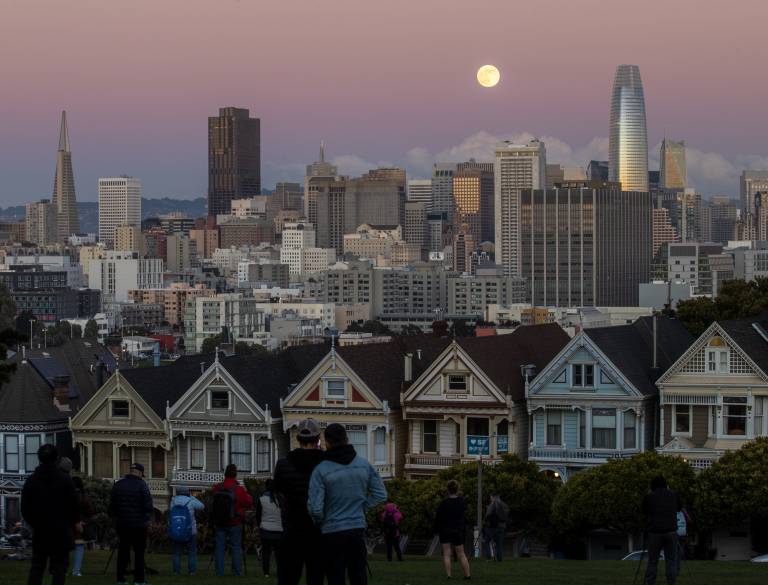
Meteor Showers, Massive Moons and More: Winter Astronomy Events to Look Up for
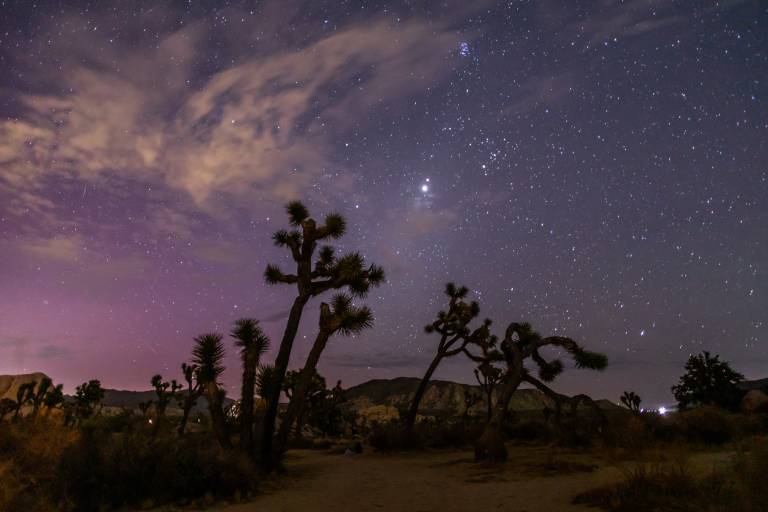
How to See the Perseid Meteor Shower in the Bay Area
If Exploding Stars Made Music, They'd Sound Like This
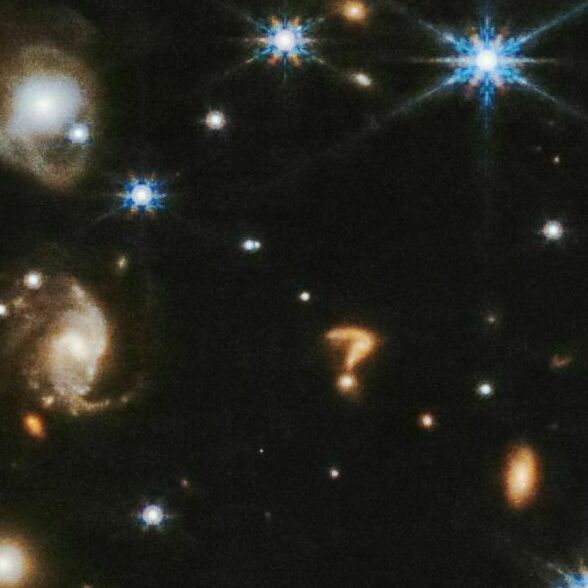
James Webb Telescope Captures Cosmic 'Question Mark' in Deep Space
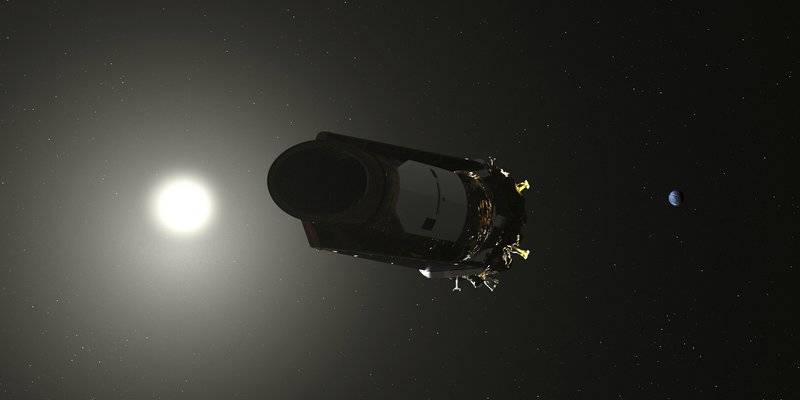
Kepler Telescope Dead After Nearly a Decade of Finding Distant Worlds
Astronomers May Have Located the First Moon Outside of Our Solar System
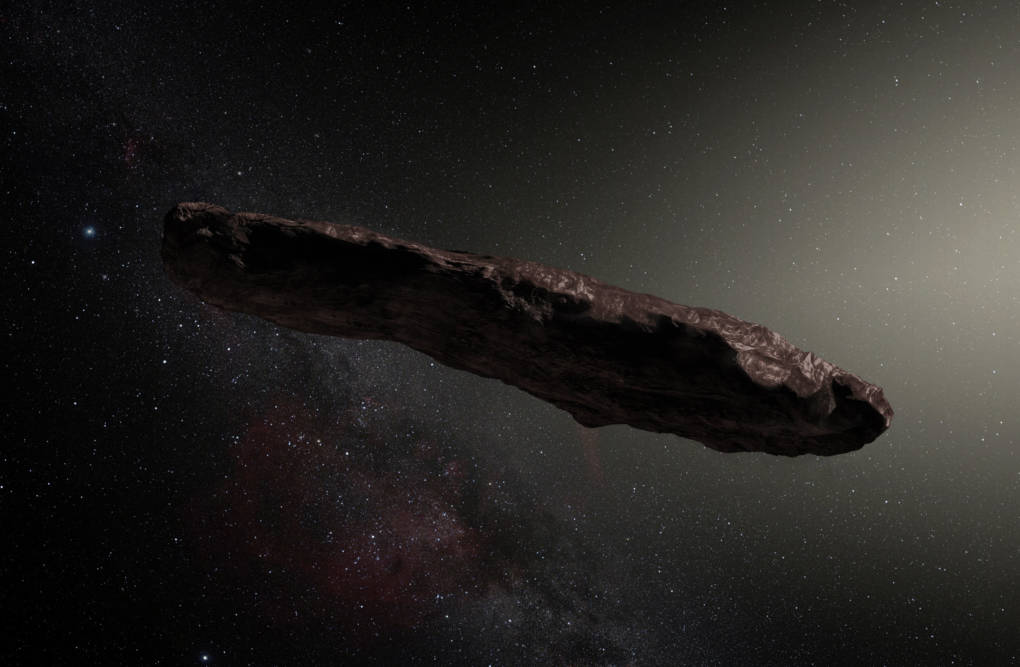
Our 1st Interstellar Visitor Likely Came From a 2-Star System
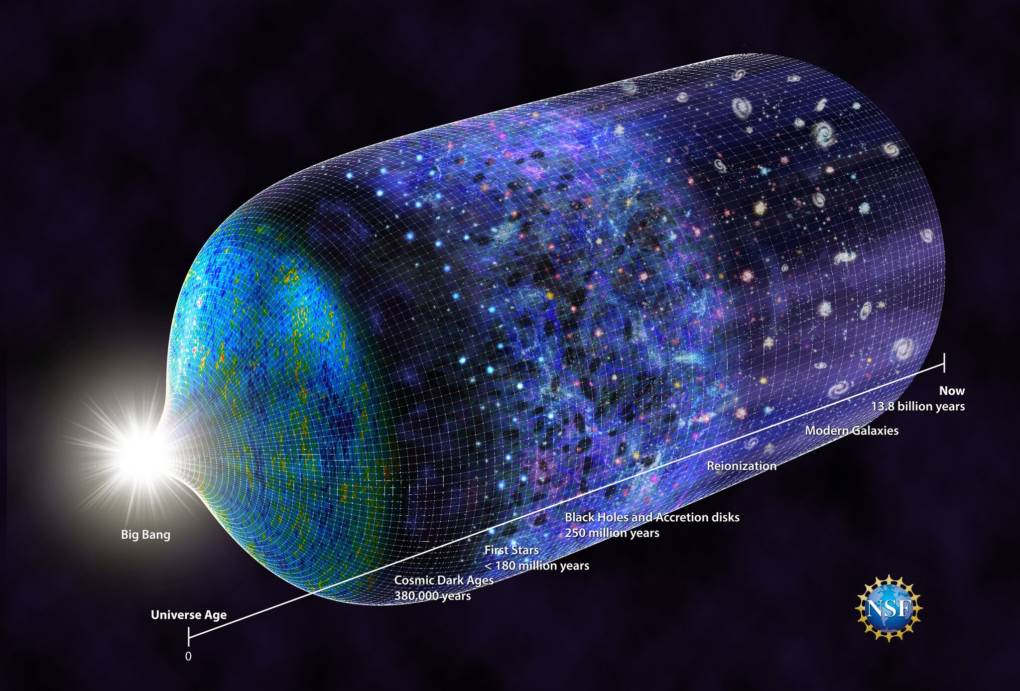
Astronomers Glimpse Cosmic Dawn — When the Stars First Switched On
YouTube Stars See Toll On Their Mental Health
Sponsored
Player sponsored by
window.__IS_SSR__=true
window.__INITIAL_STATE__={
"attachmentsReducer": {
"audio_0": {
"type": "attachments",
"id": "audio_0",
"imgSizes": {
"kqedFullSize": {
"file": "https://ww2.kqed.org/news/wp-content/themes/KQED-unified/img/audio_bgs/background0.jpg"
}
}
},
"audio_1": {
"type": "attachments",
"id": "audio_1",
"imgSizes": {
"kqedFullSize": {
"file": "https://ww2.kqed.org/news/wp-content/themes/KQED-unified/img/audio_bgs/background1.jpg"
}
}
},
"audio_2": {
"type": "attachments",
"id": "audio_2",
"imgSizes": {
"kqedFullSize": {
"file": "https://ww2.kqed.org/news/wp-content/themes/KQED-unified/img/audio_bgs/background2.jpg"
}
}
},
"audio_3": {
"type": "attachments",
"id": "audio_3",
"imgSizes": {
"kqedFullSize": {
"file": "https://ww2.kqed.org/news/wp-content/themes/KQED-unified/img/audio_bgs/background3.jpg"
}
}
},
"audio_4": {
"type": "attachments",
"id": "audio_4",
"imgSizes": {
"kqedFullSize": {
"file": "https://ww2.kqed.org/news/wp-content/themes/KQED-unified/img/audio_bgs/background4.jpg"
}
}
},
"placeholder": {
"type": "attachments",
"id": "placeholder",
"imgSizes": {
"thumbnail": {
"file": "https://cdn.kqed.org/wp-content/uploads/2024/12/KQED-Default-Image-816638274-2000x1333-1-160x107.jpg",
"width": 160,
"height": 107,
"mimeType": "image/jpeg"
},
"medium": {
"file": "https://cdn.kqed.org/wp-content/uploads/2024/12/KQED-Default-Image-816638274-2000x1333-1-800x533.jpg",
"width": 800,
"height": 533,
"mimeType": "image/jpeg"
},
"medium_large": {
"file": "https://cdn.kqed.org/wp-content/uploads/2024/12/KQED-Default-Image-816638274-2000x1333-1-768x512.jpg",
"width": 768,
"height": 512,
"mimeType": "image/jpeg"
},
"large": {
"file": "https://cdn.kqed.org/wp-content/uploads/2024/12/KQED-Default-Image-816638274-2000x1333-1-1020x680.jpg",
"width": 1020,
"height": 680,
"mimeType": "image/jpeg"
},
"1536x1536": {
"file": "https://cdn.kqed.org/wp-content/uploads/2024/12/KQED-Default-Image-816638274-2000x1333-1-1536x1024.jpg",
"width": 1536,
"height": 1024,
"mimeType": "image/jpeg"
},
"fd-lrg": {
"file": "https://cdn.kqed.org/wp-content/uploads/2024/12/KQED-Default-Image-816638274-2000x1333-1-1536x1024.jpg",
"width": 1536,
"height": 1024,
"mimeType": "image/jpeg"
},
"fd-med": {
"file": "https://cdn.kqed.org/wp-content/uploads/2024/12/KQED-Default-Image-816638274-2000x1333-1-1020x680.jpg",
"width": 1020,
"height": 680,
"mimeType": "image/jpeg"
},
"fd-sm": {
"file": "https://cdn.kqed.org/wp-content/uploads/2024/12/KQED-Default-Image-816638274-2000x1333-1-800x533.jpg",
"width": 800,
"height": 533,
"mimeType": "image/jpeg"
},
"post-thumbnail": {
"file": "https://cdn.kqed.org/wp-content/uploads/2024/12/KQED-Default-Image-816638274-2000x1333-1-672x372.jpg",
"width": 672,
"height": 372,
"mimeType": "image/jpeg"
},
"twentyfourteen-full-width": {
"file": "https://cdn.kqed.org/wp-content/uploads/2024/12/KQED-Default-Image-816638274-2000x1333-1-1038x576.jpg",
"width": 1038,
"height": 576,
"mimeType": "image/jpeg"
},
"xxsmall": {
"file": "https://cdn.kqed.org/wp-content/uploads/2024/12/KQED-Default-Image-816638274-2000x1333-1-160x107.jpg",
"width": 160,
"height": 107,
"mimeType": "image/jpeg"
},
"xsmall": {
"file": "https://cdn.kqed.org/wp-content/uploads/2024/12/KQED-Default-Image-816638274-2000x1333-1-672x372.jpg",
"width": 672,
"height": 372,
"mimeType": "image/jpeg"
},
"small": {
"file": "https://cdn.kqed.org/wp-content/uploads/2024/12/KQED-Default-Image-816638274-2000x1333-1-672x372.jpg",
"width": 672,
"height": 372,
"mimeType": "image/jpeg"
},
"xlarge": {
"file": "https://cdn.kqed.org/wp-content/uploads/2024/12/KQED-Default-Image-816638274-2000x1333-1-1020x680.jpg",
"width": 1020,
"height": 680,
"mimeType": "image/jpeg"
},
"full-width": {
"file": "https://cdn.kqed.org/wp-content/uploads/2024/12/KQED-Default-Image-816638274-2000x1333-1-1920x1280.jpg",
"width": 1920,
"height": 1280,
"mimeType": "image/jpeg"
},
"guest-author-32": {
"file": "https://cdn.kqed.org/wp-content/uploads/2025/01/KQED-Default-Image-816638274-1333x1333-1-160x160.jpg",
"width": 32,
"height": 32,
"mimeType": "image/jpeg"
},
"guest-author-50": {
"file": "https://cdn.kqed.org/wp-content/uploads/2025/01/KQED-Default-Image-816638274-1333x1333-1-160x160.jpg",
"width": 50,
"height": 50,
"mimeType": "image/jpeg"
},
"guest-author-64": {
"file": "https://cdn.kqed.org/wp-content/uploads/2025/01/KQED-Default-Image-816638274-1333x1333-1-160x160.jpg",
"width": 64,
"height": 64,
"mimeType": "image/jpeg"
},
"guest-author-96": {
"file": "https://cdn.kqed.org/wp-content/uploads/2025/01/KQED-Default-Image-816638274-1333x1333-1-160x160.jpg",
"width": 96,
"height": 96,
"mimeType": "image/jpeg"
},
"guest-author-128": {
"file": "https://cdn.kqed.org/wp-content/uploads/2025/01/KQED-Default-Image-816638274-1333x1333-1-160x160.jpg",
"width": 128,
"height": 128,
"mimeType": "image/jpeg"
},
"detail": {
"file": "https://cdn.kqed.org/wp-content/uploads/2025/01/KQED-Default-Image-816638274-1333x1333-1-160x160.jpg",
"width": 160,
"height": 160,
"mimeType": "image/jpeg"
},
"kqedFullSize": {
"file": "https://cdn.kqed.org/wp-content/uploads/2024/12/KQED-Default-Image-816638274-2000x1333-1.jpg",
"width": 2000,
"height": 1333
}
}
},
"science_1999420": {
"type": "attachments",
"id": "science_1999420",
"meta": {
"index": "attachments_1716263798",
"site": "science",
"id": "1999420",
"found": true
},
"title": "Full Cold Moon rises in San Francisco",
"publishDate": 1764616161,
"status": "inherit",
"parent": 1999411,
"modified": 1764616213,
"caption": "A full cold moon rises behind the famous Painted Ladies in San Francisco on Dec. 7, 2022. As the night grows long and the winter solstice approaches, there’s a host of astronomical events to watch out for, including a particularly striking meteor shower. ",
"credit": "Tayfun Coskun/Anadolu Agency via Getty Images",
"altTag": null,
"description": null,
"imgSizes": {
"thumbnail": {
"file": "https://cdn.kqed.org/wp-content/uploads/sites/35/2025/12/fullcoldmoonsfgetty-160x122.jpg",
"width": 160,
"height": 122,
"mimeType": "image/jpeg"
},
"medium_large": {
"file": "https://cdn.kqed.org/wp-content/uploads/sites/35/2025/12/fullcoldmoonsfgetty-768x585.jpg",
"width": 768,
"height": 585,
"mimeType": "image/jpeg"
},
"1536x1536": {
"file": "https://cdn.kqed.org/wp-content/uploads/sites/35/2025/12/fullcoldmoonsfgetty-1536x1170.jpg",
"width": 1536,
"height": 1170,
"mimeType": "image/jpeg"
},
"post-thumbnail": {
"file": "https://cdn.kqed.org/wp-content/uploads/sites/35/2025/12/fullcoldmoonsfgetty-672x372.jpg",
"width": 672,
"height": 372,
"mimeType": "image/jpeg"
},
"twentyfourteen-full-width": {
"file": "https://cdn.kqed.org/wp-content/uploads/sites/35/2025/12/fullcoldmoonsfgetty-1038x576.jpg",
"width": 1038,
"height": 576,
"mimeType": "image/jpeg"
},
"npr-cds-wide": {
"file": "https://cdn.kqed.org/wp-content/uploads/sites/35/2025/12/fullcoldmoonsfgetty-1200x675.jpg",
"width": 1200,
"height": 675,
"mimeType": "image/jpeg"
},
"kqedFullSize": {
"file": "https://cdn.kqed.org/wp-content/uploads/sites/35/2025/12/fullcoldmoonsfgetty.jpg",
"width": 2000,
"height": 1523
}
},
"fetchFailed": false,
"isLoading": false
},
"science_1997982": {
"type": "attachments",
"id": "science_1997982",
"meta": {
"index": "attachments_1716263798",
"site": "science",
"id": "1997982",
"found": true
},
"title": "US-ASTRONOMY-METEOR-PERSEIDS",
"publishDate": 1753821357,
"status": "inherit",
"parent": 1997977,
"modified": 1753821398,
"caption": "Northern Lights (Aurora Borealis) illuminate the sky above Joshua Tree National Park during the Perseids Meteor shower in Joshua Tree, California, on Aug. 12, 2024. ",
"credit": "Apu Gomes/AFP via Getty Images",
"altTag": null,
"description": null,
"imgSizes": {
"thumbnail": {
"file": "https://cdn.kqed.org/wp-content/uploads/sites/35/2025/07/PerseidsGetty-160x107.jpg",
"width": 160,
"height": 107,
"mimeType": "image/jpeg"
},
"medium_large": {
"file": "https://cdn.kqed.org/wp-content/uploads/sites/35/2025/07/PerseidsGetty-768x512.jpg",
"width": 768,
"height": 512,
"mimeType": "image/jpeg"
},
"1536x1536": {
"file": "https://cdn.kqed.org/wp-content/uploads/sites/35/2025/07/PerseidsGetty-1536x1024.jpg",
"width": 1536,
"height": 1024,
"mimeType": "image/jpeg"
},
"post-thumbnail": {
"file": "https://cdn.kqed.org/wp-content/uploads/sites/35/2025/07/PerseidsGetty-672x372.jpg",
"width": 672,
"height": 372,
"mimeType": "image/jpeg"
},
"twentyfourteen-full-width": {
"file": "https://cdn.kqed.org/wp-content/uploads/sites/35/2025/07/PerseidsGetty-1038x576.jpg",
"width": 1038,
"height": 576,
"mimeType": "image/jpeg"
},
"kqedFullSize": {
"file": "https://cdn.kqed.org/wp-content/uploads/sites/35/2025/07/PerseidsGetty.jpg",
"width": 2000,
"height": 1333
}
},
"fetchFailed": false,
"isLoading": false
},
"science_1993194": {
"type": "attachments",
"id": "science_1993194",
"meta": {
"index": "attachments_1716263798",
"site": "science",
"id": "1993194",
"found": true
},
"title": "Comet NEOWISE Sparks Astrophotography Interest",
"publishDate": 1717697128,
"status": "inherit",
"parent": 0,
"modified": 1717698021,
"caption": "A portion of the Milky Way is viewed in the western sky one hour after sunset on July 14, 2020, near Santa Ynez.",
"credit": "George Rose/Getty Images",
"altTag": "A photo of the dark sky.",
"description": null,
"imgSizes": {
"medium": {
"file": "https://cdn.kqed.org/wp-content/uploads/sites/35/2024/06/GETTYIMAGES-1257464251-KQED-800x533.jpg",
"width": 800,
"height": 533,
"mimeType": "image/jpeg"
},
"large": {
"file": "https://cdn.kqed.org/wp-content/uploads/sites/35/2024/06/GETTYIMAGES-1257464251-KQED-1020x680.jpg",
"width": 1020,
"height": 680,
"mimeType": "image/jpeg"
},
"thumbnail": {
"file": "https://cdn.kqed.org/wp-content/uploads/sites/35/2024/06/GETTYIMAGES-1257464251-KQED-160x107.jpg",
"width": 160,
"height": 107,
"mimeType": "image/jpeg"
},
"medium_large": {
"file": "https://cdn.kqed.org/wp-content/uploads/sites/35/2024/06/GETTYIMAGES-1257464251-KQED-768x512.jpg",
"width": 768,
"height": 512,
"mimeType": "image/jpeg"
},
"1536x1536": {
"file": "https://cdn.kqed.org/wp-content/uploads/sites/35/2024/06/GETTYIMAGES-1257464251-KQED-1536x1024.jpg",
"width": 1536,
"height": 1024,
"mimeType": "image/jpeg"
},
"post-thumbnail": {
"file": "https://cdn.kqed.org/wp-content/uploads/sites/35/2024/06/GETTYIMAGES-1257464251-KQED-672x372.jpg",
"width": 672,
"height": 372,
"mimeType": "image/jpeg"
},
"twentyfourteen-full-width": {
"file": "https://cdn.kqed.org/wp-content/uploads/sites/35/2024/06/GETTYIMAGES-1257464251-KQED-1038x576.jpg",
"width": 1038,
"height": 576,
"mimeType": "image/jpeg"
},
"full-width": {
"file": "https://cdn.kqed.org/wp-content/uploads/sites/35/2024/06/GETTYIMAGES-1257464251-KQED-1920x1280.jpg",
"width": 1920,
"height": 1280,
"mimeType": "image/jpeg"
},
"kqedFullSize": {
"file": "https://cdn.kqed.org/wp-content/uploads/sites/35/2024/06/GETTYIMAGES-1257464251-KQED.jpg",
"width": 2000,
"height": 1333
}
},
"fetchFailed": false,
"isLoading": false
},
"science_1983968": {
"type": "attachments",
"id": "science_1983968",
"meta": {
"index": "attachments_1716263798",
"site": "science",
"id": "1983968",
"found": true
},
"parent": 1983967,
"imgSizes": {
"twentyfourteen-full-width": {
"file": "https://ww2.kqed.org/app/uploads/sites/35/2023/08/weic2319a_crop_sq-7ff1fff66377100c4beed156190089c21dcd901b-588x576.jpg",
"width": 588,
"mimeType": "image/jpeg",
"height": 576
},
"thumbnail": {
"file": "https://ww2.kqed.org/app/uploads/sites/35/2023/08/weic2319a_crop_sq-7ff1fff66377100c4beed156190089c21dcd901b-160x160.jpg",
"width": 160,
"mimeType": "image/jpeg",
"height": 160
},
"post-thumbnail": {
"file": "https://ww2.kqed.org/app/uploads/sites/35/2023/08/weic2319a_crop_sq-7ff1fff66377100c4beed156190089c21dcd901b-588x372.jpg",
"width": 588,
"mimeType": "image/jpeg",
"height": 372
},
"kqedFullSize": {
"file": "https://ww2.kqed.org/app/uploads/sites/35/2023/08/weic2319a_crop_sq-7ff1fff66377100c4beed156190089c21dcd901b.jpg",
"width": 588,
"height": 588
}
},
"publishDate": 1692292647,
"modified": 1692296257,
"caption": "Scientists say the question-mark-shaped structure seen in a new photo from the James Webb Space Telescope is likely the merger of 2 or more galaxies.",
"description": null,
"title": "James Webb Telescope",
"credit": "Courtesy of NASA, ESA, CSA, J. DePasquale",
"status": "inherit",
"altTag": null,
"fetchFailed": false,
"isLoading": false
},
"science_1933834": {
"type": "attachments",
"id": "science_1933834",
"meta": {
"index": "attachments_1716263798",
"site": "science",
"id": "1933834",
"found": true
},
"parent": 1933831,
"imgSizes": {
"small": {
"file": "https://ww2.kqed.org/app/uploads/sites/35/2018/10/800-520x260.jpeg",
"width": 520,
"mimeType": "image/jpeg",
"height": 260
},
"thumbnail": {
"file": "https://ww2.kqed.org/app/uploads/sites/35/2018/10/800-160x80.jpeg",
"width": 160,
"mimeType": "image/jpeg",
"height": 80
},
"post-thumbnail": {
"file": "https://ww2.kqed.org/app/uploads/sites/35/2018/10/800-672x372.jpeg",
"width": 672,
"mimeType": "image/jpeg",
"height": 372
},
"xsmall": {
"file": "https://ww2.kqed.org/app/uploads/sites/35/2018/10/800-375x188.jpeg",
"width": 375,
"mimeType": "image/jpeg",
"height": 188
},
"kqedFullSize": {
"file": "https://ww2.kqed.org/app/uploads/sites/35/2018/10/800.jpeg",
"width": 800,
"height": 400
},
"guest-author-50": {
"file": "https://ww2.kqed.org/app/uploads/sites/35/2018/10/800-50x50.jpeg",
"width": 50,
"mimeType": "image/jpeg",
"height": 50
},
"guest-author-96": {
"file": "https://ww2.kqed.org/app/uploads/sites/35/2018/10/800-96x96.jpeg",
"width": 96,
"mimeType": "image/jpeg",
"height": 96
},
"medium": {
"file": "https://ww2.kqed.org/app/uploads/sites/35/2018/10/800-800x400.jpeg",
"width": 800,
"mimeType": "image/jpeg",
"height": 400
},
"guest-author-64": {
"file": "https://ww2.kqed.org/app/uploads/sites/35/2018/10/800-64x64.jpeg",
"width": 64,
"mimeType": "image/jpeg",
"height": 64
},
"guest-author-32": {
"file": "https://ww2.kqed.org/app/uploads/sites/35/2018/10/800-32x32.jpeg",
"width": 32,
"mimeType": "image/jpeg",
"height": 32
},
"detail": {
"file": "https://ww2.kqed.org/app/uploads/sites/35/2018/10/800-150x150.jpeg",
"width": 150,
"mimeType": "image/jpeg",
"height": 150
},
"medium_large": {
"file": "https://ww2.kqed.org/app/uploads/sites/35/2018/10/800-768x384.jpeg",
"width": 768,
"mimeType": "image/jpeg",
"height": 384
},
"guest-author-128": {
"file": "https://ww2.kqed.org/app/uploads/sites/35/2018/10/800-128x128.jpeg",
"width": 128,
"mimeType": "image/jpeg",
"height": 128
},
"xxsmall": {
"file": "https://ww2.kqed.org/app/uploads/sites/35/2018/10/800-240x120.jpeg",
"width": 240,
"mimeType": "image/jpeg",
"height": 120
}
},
"publishDate": 1540934288,
"modified": 1540934307,
"caption": "This illustration made available by NASA shows the Kepler Space Telescope. As of October 2018, the planet-hunting spacecraft has been in space for nearly a decade.",
"description": null,
"title": "800",
"credit": "NASA",
"status": "inherit",
"fetchFailed": false,
"isLoading": false
},
"science_1932258": {
"type": "attachments",
"id": "science_1932258",
"meta": {
"index": "attachments_1716263798",
"site": "science",
"id": "1932258",
"found": true
},
"parent": 1932252,
"imgSizes": {
"small": {
"file": "https://ww2.kqed.org/app/uploads/sites/35/2018/10/iStock-840689210-520x293.jpg",
"width": 520,
"mimeType": "image/jpeg",
"height": 293
},
"twentyfourteen-full-width": {
"file": "https://ww2.kqed.org/app/uploads/sites/35/2018/10/iStock-840689210-1038x576.jpg",
"width": 1038,
"mimeType": "image/jpeg",
"height": 576
},
"thumbnail": {
"file": "https://ww2.kqed.org/app/uploads/sites/35/2018/10/iStock-840689210-160x90.jpg",
"width": 160,
"mimeType": "image/jpeg",
"height": 90
},
"fd-sm": {
"file": "https://ww2.kqed.org/app/uploads/sites/35/2018/10/iStock-840689210-960x540.jpg",
"width": 960,
"mimeType": "image/jpeg",
"height": 540
},
"post-thumbnail": {
"file": "https://ww2.kqed.org/app/uploads/sites/35/2018/10/iStock-840689210-672x372.jpg",
"width": 672,
"mimeType": "image/jpeg",
"height": 372
},
"xsmall": {
"file": "https://ww2.kqed.org/app/uploads/sites/35/2018/10/iStock-840689210-375x211.jpg",
"width": 375,
"mimeType": "image/jpeg",
"height": 211
},
"kqedFullSize": {
"file": "https://ww2.kqed.org/app/uploads/sites/35/2018/10/iStock-840689210.jpg",
"width": 5465,
"height": 3075
},
"large": {
"file": "https://ww2.kqed.org/app/uploads/sites/35/2018/10/iStock-840689210-1020x574.jpg",
"width": 1020,
"mimeType": "image/jpeg",
"height": 574
},
"xlarge": {
"file": "https://ww2.kqed.org/app/uploads/sites/35/2018/10/iStock-840689210-1180x664.jpg",
"width": 1180,
"mimeType": "image/jpeg",
"height": 664
},
"complete_open_graph": {
"file": "https://ww2.kqed.org/app/uploads/sites/35/2018/10/iStock-840689210-1200x675.jpg",
"width": 1200,
"mimeType": "image/jpeg",
"height": 675
},
"guest-author-50": {
"file": "https://ww2.kqed.org/app/uploads/sites/35/2018/10/iStock-840689210-50x50.jpg",
"width": 50,
"mimeType": "image/jpeg",
"height": 50
},
"guest-author-96": {
"file": "https://ww2.kqed.org/app/uploads/sites/35/2018/10/iStock-840689210-96x96.jpg",
"width": 96,
"mimeType": "image/jpeg",
"height": 96
},
"medium": {
"file": "https://ww2.kqed.org/app/uploads/sites/35/2018/10/iStock-840689210-800x450.jpg",
"width": 800,
"mimeType": "image/jpeg",
"height": 450
},
"guest-author-64": {
"file": "https://ww2.kqed.org/app/uploads/sites/35/2018/10/iStock-840689210-64x64.jpg",
"width": 64,
"mimeType": "image/jpeg",
"height": 64
},
"guest-author-32": {
"file": "https://ww2.kqed.org/app/uploads/sites/35/2018/10/iStock-840689210-32x32.jpg",
"width": 32,
"mimeType": "image/jpeg",
"height": 32
},
"fd-lrg": {
"file": "https://ww2.kqed.org/app/uploads/sites/35/2018/10/iStock-840689210-1920x1080.jpg",
"width": 1920,
"mimeType": "image/jpeg",
"height": 1080
},
"fd-med": {
"file": "https://ww2.kqed.org/app/uploads/sites/35/2018/10/iStock-840689210-1180x664.jpg",
"width": 1180,
"mimeType": "image/jpeg",
"height": 664
},
"full-width": {
"file": "https://ww2.kqed.org/app/uploads/sites/35/2018/10/iStock-840689210-1920x1080.jpg",
"width": 1920,
"mimeType": "image/jpeg",
"height": 1080
},
"detail": {
"file": "https://ww2.kqed.org/app/uploads/sites/35/2018/10/iStock-840689210-150x150.jpg",
"width": 150,
"mimeType": "image/jpeg",
"height": 150
},
"medium_large": {
"file": "https://ww2.kqed.org/app/uploads/sites/35/2018/10/iStock-840689210-768x432.jpg",
"width": 768,
"mimeType": "image/jpeg",
"height": 432
},
"guest-author-128": {
"file": "https://ww2.kqed.org/app/uploads/sites/35/2018/10/iStock-840689210-128x128.jpg",
"width": 128,
"mimeType": "image/jpeg",
"height": 128
},
"xxsmall": {
"file": "https://ww2.kqed.org/app/uploads/sites/35/2018/10/iStock-840689210-240x135.jpg",
"width": 240,
"mimeType": "image/jpeg",
"height": 135
}
},
"publishDate": 1538598043,
"modified": 1538598077,
"caption": "A view of the Milky Way.",
"description": null,
"title": "Clearly Milky Way galaxy at dark night",
"credit": "iStock",
"status": "inherit",
"fetchFailed": false,
"isLoading": false
},
"science_1921418": {
"type": "attachments",
"id": "science_1921418",
"meta": {
"index": "attachments_1716263798",
"site": "science",
"id": "1921418",
"found": true
},
"parent": 1921417,
"imgSizes": {
"small": {
"file": "https://ww2.kqed.org/app/uploads/sites/35/2018/03/Oumuamua_artist-520x340.jpg",
"width": 520,
"mimeType": "image/jpeg",
"height": 340
},
"twentyfourteen-full-width": {
"file": "https://ww2.kqed.org/app/uploads/sites/35/2018/03/Oumuamua_artist-1038x576.jpg",
"width": 1038,
"mimeType": "image/jpeg",
"height": 576
},
"thumbnail": {
"file": "https://ww2.kqed.org/app/uploads/sites/35/2018/03/Oumuamua_artist-160x105.jpg",
"width": 160,
"mimeType": "image/jpeg",
"height": 105
},
"fd-sm": {
"file": "https://ww2.kqed.org/app/uploads/sites/35/2018/03/Oumuamua_artist-960x628.jpg",
"width": 960,
"mimeType": "image/jpeg",
"height": 628
},
"post-thumbnail": {
"file": "https://ww2.kqed.org/app/uploads/sites/35/2018/03/Oumuamua_artist-672x372.jpg",
"width": 672,
"mimeType": "image/jpeg",
"height": 372
},
"xsmall": {
"file": "https://ww2.kqed.org/app/uploads/sites/35/2018/03/Oumuamua_artist-375x245.jpg",
"width": 375,
"mimeType": "image/jpeg",
"height": 245
},
"kqedFullSize": {
"file": "https://ww2.kqed.org/app/uploads/sites/35/2018/03/Oumuamua_artist.jpg",
"width": 2522,
"height": 1649
},
"large": {
"file": "https://ww2.kqed.org/app/uploads/sites/35/2018/03/Oumuamua_artist-1020x667.jpg",
"width": 1020,
"mimeType": "image/jpeg",
"height": 667
},
"xlarge": {
"file": "https://ww2.kqed.org/app/uploads/sites/35/2018/03/Oumuamua_artist-1180x772.jpg",
"width": 1180,
"mimeType": "image/jpeg",
"height": 772
},
"guest-author-50": {
"file": "https://ww2.kqed.org/app/uploads/sites/35/2018/03/Oumuamua_artist-50x50.jpg",
"width": 50,
"mimeType": "image/jpeg",
"height": 50
},
"guest-author-96": {
"file": "https://ww2.kqed.org/app/uploads/sites/35/2018/03/Oumuamua_artist-96x96.jpg",
"width": 96,
"mimeType": "image/jpeg",
"height": 96
},
"medium": {
"file": "https://ww2.kqed.org/app/uploads/sites/35/2018/03/Oumuamua_artist-800x523.jpg",
"width": 800,
"mimeType": "image/jpeg",
"height": 523
},
"guest-author-64": {
"file": "https://ww2.kqed.org/app/uploads/sites/35/2018/03/Oumuamua_artist-64x64.jpg",
"width": 64,
"mimeType": "image/jpeg",
"height": 64
},
"guest-author-32": {
"file": "https://ww2.kqed.org/app/uploads/sites/35/2018/03/Oumuamua_artist-32x32.jpg",
"width": 32,
"mimeType": "image/jpeg",
"height": 32
},
"fd-lrg": {
"file": "https://ww2.kqed.org/app/uploads/sites/35/2018/03/Oumuamua_artist-1920x1255.jpg",
"width": 1920,
"mimeType": "image/jpeg",
"height": 1255
},
"fd-med": {
"file": "https://ww2.kqed.org/app/uploads/sites/35/2018/03/Oumuamua_artist-1180x772.jpg",
"width": 1180,
"mimeType": "image/jpeg",
"height": 772
},
"full-width": {
"file": "https://ww2.kqed.org/app/uploads/sites/35/2018/03/Oumuamua_artist-1920x1255.jpg",
"width": 1920,
"mimeType": "image/jpeg",
"height": 1255
},
"detail": {
"file": "https://ww2.kqed.org/app/uploads/sites/35/2018/03/Oumuamua_artist-150x150.jpg",
"width": 150,
"mimeType": "image/jpeg",
"height": 150
},
"medium_large": {
"file": "https://ww2.kqed.org/app/uploads/sites/35/2018/03/Oumuamua_artist-768x502.jpg",
"width": 768,
"mimeType": "image/jpeg",
"height": 502
},
"guest-author-128": {
"file": "https://ww2.kqed.org/app/uploads/sites/35/2018/03/Oumuamua_artist-128x128.jpg",
"width": 128,
"mimeType": "image/jpeg",
"height": 128
},
"xxsmall": {
"file": "https://ww2.kqed.org/app/uploads/sites/35/2018/03/Oumuamua_artist-240x157.jpg",
"width": 240,
"mimeType": "image/jpeg",
"height": 157
}
},
"publishDate": 1521494192,
"modified": 1521494243,
"caption": "Artist’s impression of ‘Oumuamua. ",
"description": null,
"title": "Oumuamua_artist",
"credit": "ESO / M. Kornmesser",
"status": "inherit",
"fetchFailed": false,
"isLoading": false
},
"science_1920590": {
"type": "attachments",
"id": "science_1920590",
"meta": {
"index": "attachments_1716263798",
"site": "science",
"id": "1920590",
"found": true
},
"parent": 1920581,
"imgSizes": {
"small": {
"file": "https://ww2.kqed.org/app/uploads/sites/35/2018/03/universehistory_NSF-highres_preview-520x352.jpeg",
"width": 520,
"mimeType": "image/jpeg",
"height": 352
},
"twentyfourteen-full-width": {
"file": "https://ww2.kqed.org/app/uploads/sites/35/2018/03/universehistory_NSF-highres_preview-1038x576.jpeg",
"width": 1038,
"mimeType": "image/jpeg",
"height": 576
},
"thumbnail": {
"file": "https://ww2.kqed.org/app/uploads/sites/35/2018/03/universehistory_NSF-highres_preview-160x108.jpeg",
"width": 160,
"mimeType": "image/jpeg",
"height": 108
},
"fd-sm": {
"file": "https://ww2.kqed.org/app/uploads/sites/35/2018/03/universehistory_NSF-highres_preview-960x651.jpeg",
"width": 960,
"mimeType": "image/jpeg",
"height": 651
},
"post-thumbnail": {
"file": "https://ww2.kqed.org/app/uploads/sites/35/2018/03/universehistory_NSF-highres_preview-672x372.jpeg",
"width": 672,
"mimeType": "image/jpeg",
"height": 372
},
"xsmall": {
"file": "https://ww2.kqed.org/app/uploads/sites/35/2018/03/universehistory_NSF-highres_preview-375x254.jpeg",
"width": 375,
"mimeType": "image/jpeg",
"height": 254
},
"kqedFullSize": {
"file": "https://ww2.kqed.org/app/uploads/sites/35/2018/03/universehistory_NSF-highres_preview.jpeg",
"width": 2048,
"height": 1388
},
"large": {
"file": "https://ww2.kqed.org/app/uploads/sites/35/2018/03/universehistory_NSF-highres_preview-1020x691.jpeg",
"width": 1020,
"mimeType": "image/jpeg",
"height": 691
},
"xlarge": {
"file": "https://ww2.kqed.org/app/uploads/sites/35/2018/03/universehistory_NSF-highres_preview-1180x800.jpeg",
"width": 1180,
"mimeType": "image/jpeg",
"height": 800
},
"guest-author-50": {
"file": "https://ww2.kqed.org/app/uploads/sites/35/2018/03/universehistory_NSF-highres_preview-50x50.jpeg",
"width": 50,
"mimeType": "image/jpeg",
"height": 50
},
"guest-author-96": {
"file": "https://ww2.kqed.org/app/uploads/sites/35/2018/03/universehistory_NSF-highres_preview-96x96.jpeg",
"width": 96,
"mimeType": "image/jpeg",
"height": 96
},
"medium": {
"file": "https://ww2.kqed.org/app/uploads/sites/35/2018/03/universehistory_NSF-highres_preview-800x542.jpeg",
"width": 800,
"mimeType": "image/jpeg",
"height": 542
},
"guest-author-64": {
"file": "https://ww2.kqed.org/app/uploads/sites/35/2018/03/universehistory_NSF-highres_preview-64x64.jpeg",
"width": 64,
"mimeType": "image/jpeg",
"height": 64
},
"guest-author-32": {
"file": "https://ww2.kqed.org/app/uploads/sites/35/2018/03/universehistory_NSF-highres_preview-32x32.jpeg",
"width": 32,
"mimeType": "image/jpeg",
"height": 32
},
"fd-lrg": {
"file": "https://ww2.kqed.org/app/uploads/sites/35/2018/03/universehistory_NSF-highres_preview-1920x1301.jpeg",
"width": 1920,
"mimeType": "image/jpeg",
"height": 1301
},
"fd-med": {
"file": "https://ww2.kqed.org/app/uploads/sites/35/2018/03/universehistory_NSF-highres_preview-1180x800.jpeg",
"width": 1180,
"mimeType": "image/jpeg",
"height": 800
},
"full-width": {
"file": "https://ww2.kqed.org/app/uploads/sites/35/2018/03/universehistory_NSF-highres_preview-1920x1301.jpeg",
"width": 1920,
"mimeType": "image/jpeg",
"height": 1301
},
"detail": {
"file": "https://ww2.kqed.org/app/uploads/sites/35/2018/03/universehistory_NSF-highres_preview-150x150.jpeg",
"width": 150,
"mimeType": "image/jpeg",
"height": 150
},
"medium_large": {
"file": "https://ww2.kqed.org/app/uploads/sites/35/2018/03/universehistory_NSF-highres_preview-768x521.jpeg",
"width": 768,
"mimeType": "image/jpeg",
"height": 521
},
"guest-author-128": {
"file": "https://ww2.kqed.org/app/uploads/sites/35/2018/03/universehistory_NSF-highres_preview-128x128.jpeg",
"width": 128,
"mimeType": "image/jpeg",
"height": 128
},
"xxsmall": {
"file": "https://ww2.kqed.org/app/uploads/sites/35/2018/03/universehistory_NSF-highres_preview-240x163.jpeg",
"width": 240,
"mimeType": "image/jpeg",
"height": 163
}
},
"publishDate": 1519950479,
"modified": 1520993727,
"caption": "This updated timeline of the universe reflects the recent discovery that the first stars emerged by 180 million years after the Big Bang. ",
"description": null,
"title": "universehistory_NSF-highres_preview",
"credit": "N.R.Fuller/National Science Foundation",
"status": "inherit",
"fetchFailed": false,
"isLoading": false
},
"science_1915006": {
"type": "attachments",
"id": "science_1915006",
"meta": {
"index": "attachments_1716263798",
"site": "science",
"id": "1915006",
"found": true
},
"parent": 1915005,
"imgSizes": {
"small": {
"file": "https://ww2.kqed.org/app/uploads/sites/35/2017/08/youtube-star-1-f64793fe1a06f1dc8d56cd7cae15f1ea66de7c02-520x389.jpg",
"width": 520,
"mimeType": "image/jpeg",
"height": 389
},
"twentyfourteen-full-width": {
"file": "https://ww2.kqed.org/app/uploads/sites/35/2017/08/youtube-star-1-f64793fe1a06f1dc8d56cd7cae15f1ea66de7c02-1038x576.jpg",
"width": 1038,
"mimeType": "image/jpeg",
"height": 576
},
"thumbnail": {
"file": "https://ww2.kqed.org/app/uploads/sites/35/2017/08/youtube-star-1-f64793fe1a06f1dc8d56cd7cae15f1ea66de7c02-160x120.jpg",
"width": 160,
"mimeType": "image/jpeg",
"height": 120
},
"fd-sm": {
"file": "https://ww2.kqed.org/app/uploads/sites/35/2017/08/youtube-star-1-f64793fe1a06f1dc8d56cd7cae15f1ea66de7c02-960x719.jpg",
"width": 960,
"mimeType": "image/jpeg",
"height": 719
},
"post-thumbnail": {
"file": "https://ww2.kqed.org/app/uploads/sites/35/2017/08/youtube-star-1-f64793fe1a06f1dc8d56cd7cae15f1ea66de7c02-672x372.jpg",
"width": 672,
"mimeType": "image/jpeg",
"height": 372
},
"xsmall": {
"file": "https://ww2.kqed.org/app/uploads/sites/35/2017/08/youtube-star-1-f64793fe1a06f1dc8d56cd7cae15f1ea66de7c02-375x281.jpg",
"width": 375,
"mimeType": "image/jpeg",
"height": 281
},
"kqedFullSize": {
"file": "https://ww2.kqed.org/app/uploads/sites/35/2017/08/youtube-star-1-f64793fe1a06f1dc8d56cd7cae15f1ea66de7c02.jpg",
"width": 1502,
"height": 1125
},
"large": {
"file": "https://ww2.kqed.org/app/uploads/sites/35/2017/08/youtube-star-1-f64793fe1a06f1dc8d56cd7cae15f1ea66de7c02-1020x764.jpg",
"width": 1020,
"mimeType": "image/jpeg",
"height": 764
},
"xlarge": {
"file": "https://ww2.kqed.org/app/uploads/sites/35/2017/08/youtube-star-1-f64793fe1a06f1dc8d56cd7cae15f1ea66de7c02-1180x884.jpg",
"width": 1180,
"mimeType": "image/jpeg",
"height": 884
},
"guest-author-50": {
"file": "https://ww2.kqed.org/app/uploads/sites/35/2017/08/youtube-star-1-f64793fe1a06f1dc8d56cd7cae15f1ea66de7c02-50x50.jpg",
"width": 50,
"mimeType": "image/jpeg",
"height": 50
},
"guest-author-96": {
"file": "https://ww2.kqed.org/app/uploads/sites/35/2017/08/youtube-star-1-f64793fe1a06f1dc8d56cd7cae15f1ea66de7c02-96x96.jpg",
"width": 96,
"mimeType": "image/jpeg",
"height": 96
},
"medium": {
"file": "https://ww2.kqed.org/app/uploads/sites/35/2017/08/youtube-star-1-f64793fe1a06f1dc8d56cd7cae15f1ea66de7c02-800x599.jpg",
"width": 800,
"mimeType": "image/jpeg",
"height": 599
},
"guest-author-64": {
"file": "https://ww2.kqed.org/app/uploads/sites/35/2017/08/youtube-star-1-f64793fe1a06f1dc8d56cd7cae15f1ea66de7c02-64x64.jpg",
"width": 64,
"mimeType": "image/jpeg",
"height": 64
},
"guest-author-32": {
"file": "https://ww2.kqed.org/app/uploads/sites/35/2017/08/youtube-star-1-f64793fe1a06f1dc8d56cd7cae15f1ea66de7c02-32x32.jpg",
"width": 32,
"mimeType": "image/jpeg",
"height": 32
},
"fd-med": {
"file": "https://ww2.kqed.org/app/uploads/sites/35/2017/08/youtube-star-1-f64793fe1a06f1dc8d56cd7cae15f1ea66de7c02-1180x884.jpg",
"width": 1180,
"mimeType": "image/jpeg",
"height": 884
},
"detail": {
"file": "https://ww2.kqed.org/app/uploads/sites/35/2017/08/youtube-star-1-f64793fe1a06f1dc8d56cd7cae15f1ea66de7c02-150x150.jpg",
"width": 150,
"mimeType": "image/jpeg",
"height": 150
},
"medium_large": {
"file": "https://ww2.kqed.org/app/uploads/sites/35/2017/08/youtube-star-1-f64793fe1a06f1dc8d56cd7cae15f1ea66de7c02-768x575.jpg",
"width": 768,
"mimeType": "image/jpeg",
"height": 575
},
"guest-author-128": {
"file": "https://ww2.kqed.org/app/uploads/sites/35/2017/08/youtube-star-1-f64793fe1a06f1dc8d56cd7cae15f1ea66de7c02-128x128.jpg",
"width": 128,
"mimeType": "image/jpeg",
"height": 128
},
"xxsmall": {
"file": "https://ww2.kqed.org/app/uploads/sites/35/2017/08/youtube-star-1-f64793fe1a06f1dc8d56cd7cae15f1ea66de7c02-240x180.jpg",
"width": 240,
"mimeType": "image/jpeg",
"height": 180
}
},
"publishDate": 1503600396,
"modified": 1503600396,
"caption": null,
"description": "Some YouTube stars seek counseling and take breaks from online life to deal with symptoms of anxiety.",
"title": "Some YouTube stars seek counseling and take breaks from online life to deal with symptoms of anxiety.",
"credit": null,
"status": "inherit",
"fetchFailed": false,
"isLoading": false
}
},
"audioPlayerReducer": {
"postId": "stream_live",
"isPaused": true,
"isPlaying": false,
"pfsActive": false,
"pledgeModalIsOpen": true,
"playerDrawerIsOpen": false
},
"authorsReducer": {
"byline_science_1983967": {
"type": "authors",
"id": "byline_science_1983967",
"meta": {
"override": true
},
"slug": "byline_science_1983967",
"name": "\u003ca href=\"https://www.npr.org/people/776048102/rachel-treisman\">Rachel Treisman\u003c/a>",
"isLoading": false
},
"byline_science_1933831": {
"type": "authors",
"id": "byline_science_1933831",
"meta": {
"override": true
},
"slug": "byline_science_1933831",
"name": "The Associated Press",
"isLoading": false
},
"byline_science_1932252": {
"type": "authors",
"id": "byline_science_1932252",
"meta": {
"override": true
},
"slug": "byline_science_1932252",
"name": "Marcia Dunn\u003cbr />The Associated Press",
"isLoading": false
},
"byline_science_1921417": {
"type": "authors",
"id": "byline_science_1921417",
"meta": {
"override": true
},
"slug": "byline_science_1921417",
"name": "Marcia Dunn\u003cbr />The Associated Press",
"isLoading": false
},
"byline_science_1920581": {
"type": "authors",
"id": "byline_science_1920581",
"meta": {
"override": true
},
"slug": "byline_science_1920581",
"name": "Seth Borenstein\u003cbr />The Associated Press",
"isLoading": false
},
"byline_science_1915005": {
"type": "authors",
"id": "byline_science_1915005",
"meta": {
"override": true
},
"slug": "byline_science_1915005",
"name": "Neda Ulaby \u003c/br> NPR",
"isLoading": false
},
"dventon": {
"type": "authors",
"id": "11088",
"meta": {
"index": "authors_1716337520",
"id": "11088",
"found": true
},
"name": "Danielle Venton",
"firstName": "Danielle",
"lastName": "Venton",
"slug": "dventon",
"email": "dventon@kqed.org",
"display_author_email": true,
"staff_mastheads": [
"science"
],
"title": "Science reporter",
"bio": "Danielle Venton is a reporter for KQED Science. She covers wildfires, space and oceans (though she is prone to sea sickness).\r\n\r\nBefore joining KQED in 2015, Danielle was a staff reporter at KRCB in Sonoma County and a freelancer. She studied science communication at UC Santa Cruz and formerly worked at CERN in Geneva, Switzerland where she wrote about computing. She lives in Sonoma County and enjoys backpacking.",
"avatar": "https://secure.gravatar.com/avatar/ebaf11ee6cfb7bb40329a143d463829e?s=600&d=blank&r=g",
"twitter": "DanielleVenton",
"facebook": null,
"instagram": null,
"linkedin": null,
"sites": [
{
"site": "arts",
"roles": [
"contributor"
]
},
{
"site": "news",
"roles": [
"editor"
]
},
{
"site": "futureofyou",
"roles": [
"editor"
]
},
{
"site": "science",
"roles": [
"editor"
]
},
{
"site": "liveblog",
"roles": [
"contributor"
]
}
],
"headData": {
"title": "Danielle Venton | KQED",
"description": "Science reporter",
"ogImgSrc": "https://secure.gravatar.com/avatar/ebaf11ee6cfb7bb40329a143d463829e?s=600&d=blank&r=g",
"twImgSrc": "https://secure.gravatar.com/avatar/ebaf11ee6cfb7bb40329a143d463829e?s=600&d=blank&r=g"
},
"isLoading": false,
"link": "/author/dventon"
},
"smohamad": {
"type": "authors",
"id": "11631",
"meta": {
"index": "authors_1716337520",
"id": "11631",
"found": true
},
"name": "Sarah Mohamad",
"firstName": "Sarah",
"lastName": "Mohamad",
"slug": "smohamad",
"email": "smohamad@KQED.org",
"display_author_email": true,
"staff_mastheads": [],
"title": "Engagement Producer and Reporter, KQED Science",
"bio": "Sarah Mohamad is an audience engagement reporter and producer for KQED Science. She reports on audience-focused science and environment stories and manages the team's social media, newsletter, and engagement efforts. Prior to this role, she played a key role as project manager for NSF's \u003ca href=\"https://www.kqed.org/crackingthecode\">\u003cem>Cracking the Code: Influencing Millennial Science Engagement\u003c/em> \u003c/a>audience research.",
"avatar": "https://secure.gravatar.com/avatar/085f65bb82616965f87e3d12f8550931?s=600&d=blank&r=g",
"twitter": "sarahkmohamad",
"facebook": null,
"instagram": null,
"linkedin": null,
"sites": [
{
"site": "arts",
"roles": [
"editor"
]
},
{
"site": "news",
"roles": [
"editor"
]
},
{
"site": "about",
"roles": [
"editor"
]
},
{
"site": "science",
"roles": [
"editor"
]
}
],
"headData": {
"title": "Sarah Mohamad | KQED",
"description": "Engagement Producer and Reporter, KQED Science",
"ogImgSrc": "https://secure.gravatar.com/avatar/085f65bb82616965f87e3d12f8550931?s=600&d=blank&r=g",
"twImgSrc": "https://secure.gravatar.com/avatar/085f65bb82616965f87e3d12f8550931?s=600&d=blank&r=g"
},
"isLoading": false,
"link": "/author/smohamad"
}
},
"breakingNewsReducer": {},
"pagesReducer": {},
"postsReducer": {
"stream_live": {
"type": "live",
"id": "stream_live",
"audioUrl": "https://streams.kqed.org/kqedradio",
"title": "Live Stream",
"excerpt": "Live Stream information currently unavailable.",
"link": "/radio",
"featImg": "",
"label": {
"name": "KQED Live",
"link": "/"
}
},
"stream_kqedNewscast": {
"type": "posts",
"id": "stream_kqedNewscast",
"audioUrl": "https://www.kqed.org/.stream/anon/radio/RDnews/newscast.mp3?_=1",
"title": "KQED Newscast",
"featImg": "",
"label": {
"name": "88.5 FM",
"link": "/"
}
},
"science_1999411": {
"type": "posts",
"id": "science_1999411",
"meta": {
"index": "posts_1716263798",
"site": "science",
"id": "1999411",
"score": null,
"sort": [
1764676805000
]
},
"guestAuthors": [],
"slug": "meteor-showers-massive-moons-and-more-winter-astronomy-events-to-look-up-for",
"title": "Meteor Showers, Massive Moons and More: Winter Astronomy Events to Look Up for",
"publishDate": 1764676805,
"format": "standard",
"headTitle": "Meteor Showers, Massive Moons and More: Winter Astronomy Events to Look Up for | KQED",
"labelTerm": {},
"content": "\u003cp>A bright full moon. One of the year’s best meteor showers. Even a chance to see \u003ca href=\"https://www.kqed.org/news/tag/jupiter\">Jupiter\u003c/a> at its most striking.\u003c/p>\n\u003cp>Winter 2025–26 will bring a range of exciting space events for skygazers to enjoy, starting this week. Keep reading for what to mark on your calendar as the nights grow long.\u003c/p>\n\u003cp>[ad fullwidth]\u003c/p>\n\u003ch2>A full moon at its closest point to Earth\u003c/h2>\n\u003cp>\u003cstrong>When to see: Thursday\u003c/strong>\u003c/p>\n\u003cp>December opens this week with a full moon, \u003ca href=\"https://www.forbes.com/sites/jamiecartereurope/2025/11/29/full-moon-december-2025-exactly-when-to-see-a-cold-supermoon-rise/\">dubbed the “Cold Moon,” \u003c/a>that also happens to be near perigee: the point in the moon’s elliptical orbit when it’s closest to Earth.\u003c/p>\n\u003cp>That proximity on Dec. 4 makes the moon appear slightly larger and brighter. But should we be \u003ca href=\"https://www.popsci.com/science/stargazing-guide-december-2025/\">calling it a “supermoon” too\u003c/a>?\u003c/p>\n\u003cfigure id=\"attachment_1978806\" class=\"wp-caption aligncenter\" style=\"max-width: 1920px\">\u003cimg loading=\"lazy\" decoding=\"async\" class=\"size-full wp-image-1978806\" src=\"https://cdn.kqed.org/wp-content/uploads/sites/35/2022/03/RS54464_iStock-685789992-qut.jpg\" alt=\"Day to night timelapse timeslice San Franciso panorama with full moon\" width=\"1920\" height=\"1080\" srcset=\"https://cdn.kqed.org/wp-content/uploads/sites/35/2022/03/RS54464_iStock-685789992-qut.jpg 1920w, https://cdn.kqed.org/wp-content/uploads/sites/35/2022/03/RS54464_iStock-685789992-qut-800x450.jpg 800w, https://cdn.kqed.org/wp-content/uploads/sites/35/2022/03/RS54464_iStock-685789992-qut-1020x574.jpg 1020w, https://cdn.kqed.org/wp-content/uploads/sites/35/2022/03/RS54464_iStock-685789992-qut-160x90.jpg 160w, https://cdn.kqed.org/wp-content/uploads/sites/35/2022/03/RS54464_iStock-685789992-qut-768x432.jpg 768w, https://cdn.kqed.org/wp-content/uploads/sites/35/2022/03/RS54464_iStock-685789992-qut-1536x864.jpg 1536w\" sizes=\"auto, (max-width: 1920px) 100vw, 1920px\">\u003cfigcaption class=\"wp-caption-text\">Day-to-night time-lapse panorama of downtown San Francisco with full moon. \u003ccite>(iStock)\u003c/cite>\u003c/figcaption>\u003c/figure>\n\u003cp>“That’s a very misleading term,” said Andrew Fraknoi, astronomer and professor at the University of San Francisco’s Fromm Institute — one of the astronomers who rolls their eyes at this particular label.\u003c/p>\n\u003cp>This is because the average stargazer “cannot tell the difference between full moons that are regular or super: a complaint people sometimes have about cheap burger places, too,” Fraknoi said.\u003c/p>\n\u003cp>Still, whatever you want to call this event, this week brings a good excuse to appreciate our nearest celestial neighbor.\u003c/p>\n\u003ch2>The Geminids meteor shower, with a moon-free show\u003c/h2>\n\u003cp>\u003cstrong>When to see: Dec. 13–14\u003c/strong>\u003c/p>\n\u003cp>The Geminids meteor shower is considered one of the most reliable meteor displays of the year — and sometimes, it’s the most spectacular, too.\u003c/p>\n\u003cp>This winter, conditions are nearly perfect to view the Geminids, since the shower peaks overnight around midnight on Dec. 13 and 14, but the moon won’t rise until around 2 a.m., according to the American Meteor Society. That means the skies will be wonderfully dark during the evening and just past midnight.\u003c/p>\n\u003cfigure id=\"attachment_1951367\" class=\"wp-caption aligncenter\" style=\"max-width: 1600px\">\u003cimg loading=\"lazy\" decoding=\"async\" class=\"size-full wp-image-1951367\" src=\"https://cdn.kqed.org/wp-content/uploads/sites/35/2019/12/AsimPatel-Geminids.jpg\" alt=\"\" width=\"1600\" height=\"1067\" srcset=\"https://cdn.kqed.org/wp-content/uploads/sites/35/2019/12/AsimPatel-Geminids.jpg 1600w, https://cdn.kqed.org/wp-content/uploads/sites/35/2019/12/AsimPatel-Geminids-160x107.jpg 160w, https://cdn.kqed.org/wp-content/uploads/sites/35/2019/12/AsimPatel-Geminids-800x534.jpg 800w, https://cdn.kqed.org/wp-content/uploads/sites/35/2019/12/AsimPatel-Geminids-768x512.jpg 768w, https://cdn.kqed.org/wp-content/uploads/sites/35/2019/12/AsimPatel-Geminids-1020x680.jpg 1020w, https://cdn.kqed.org/wp-content/uploads/sites/35/2019/12/AsimPatel-Geminids-1200x800.jpg 1200w\" sizes=\"auto, (max-width: 1600px) 100vw, 1600px\">\u003cfigcaption class=\"wp-caption-text\">Long exposure of the sky taken during a past Geminids meteor shower. \u003ccite>(Courtesy of Asim Patel)\u003c/cite>\u003c/figcaption>\u003c/figure>\n\u003cp>The Geminids are fragments shed from an asteroid-like object called 3200 Phaeton, which often produces bright, colorful meteors. And with the peak happening on a weekend this year, families can bundle up, \u003ca href=\"https://www.kqed.org/science/1997977/how-to-see-the-perseid-meteor-shower-in-the-bay-area\">find a dark spot away from city lights\u003c/a> and look up without worrying about school the next morning.\u003c/p>\n\u003cp>Another reason to stay up for the Geminids: The next major meteor shower, the Quandratids on Jan 3–4, are predicted to be largely washed out by a full moon.\u003c/p>\n\u003ch2>The winter solstice\u003c/h2>\n\u003cp>\u003cstrong>When to see: Dec. 21\u003c/strong>\u003c/p>\n\u003cp>This one may be less something to “see,” but the solstice is still a momentous milestone for winter: marking the shortest day and longest night of the year in the Northern Hemisphere.\u003c/p>\n\u003cfigure id=\"attachment_1995310\" class=\"wp-caption aligncenter\" style=\"max-width: 2120px\">\u003cimg loading=\"lazy\" decoding=\"async\" class=\"size-full wp-image-1995310\" src=\"https://cdn.kqed.org/wp-content/uploads/sites/35/2024/12/GettyImages-1356507899.jpg\" alt=\"\" width=\"2120\" height=\"1414\" srcset=\"https://cdn.kqed.org/wp-content/uploads/sites/35/2024/12/GettyImages-1356507899.jpg 2120w, https://cdn.kqed.org/wp-content/uploads/sites/35/2024/12/GettyImages-1356507899-800x534.jpg 800w, https://cdn.kqed.org/wp-content/uploads/sites/35/2024/12/GettyImages-1356507899-1020x680.jpg 1020w, https://cdn.kqed.org/wp-content/uploads/sites/35/2024/12/GettyImages-1356507899-160x107.jpg 160w, https://cdn.kqed.org/wp-content/uploads/sites/35/2024/12/GettyImages-1356507899-768x512.jpg 768w, https://cdn.kqed.org/wp-content/uploads/sites/35/2024/12/GettyImages-1356507899-1536x1024.jpg 1536w, https://cdn.kqed.org/wp-content/uploads/sites/35/2024/12/GettyImages-1356507899-2048x1366.jpg 2048w, https://cdn.kqed.org/wp-content/uploads/sites/35/2024/12/GettyImages-1356507899-1920x1281.jpg 1920w\" sizes=\"auto, (max-width: 2120px) 100vw, 2120px\">\u003cfigcaption class=\"wp-caption-text\">A teenage girl uses the astronomy telescope to observe the stars on a cold winter night. \u003ccite>(Imgorthand/Getty Images)\u003c/cite>\u003c/figcaption>\u003c/figure>\n\u003cp>Astronomers believe that billions of years ago, Earth collided with a mini planet called Theia, which caused our planet to tilt by 23 degrees — giving our globe its seasons. “The Earth was in a traffic accident and has never been able to straighten out,” Fraknoi said.\u003c/p>\n\u003cp>After Dec. 21, daylight slowly begins its long climb back toward summer — good news for anyone who doesn’t enjoy the deep, dark nights of winter.\u003c/p>\n\u003ch2>Earth at perihelion\u003c/h2>\n\u003cp>\u003cstrong>When to see: Jan. 3\u003c/strong>\u003c/p>\n\u003cp>On Day 3 of 2026, at around 9:15 a.m. PST, our planet will be at “perihelion” — that is, at its closest to the sun.\u003c/p>\n\u003cp>To many who aren’t on the lookout, the sun may just look the same as any other day. But it will actually appear slightly larger than any other day in the year.\u003c/p>\n\u003cp>A fun fact: At perihelion, the Earth receives 7% more solar energy than when the planet is at its furthest from the sun.\u003c/p>\n\u003ch2>Jupiter at opposition\u003cstrong> \u003c/strong>\u003c/h2>\n\u003cp>\u003cstrong>When to see: Throughout January 2026\u003c/strong>\u003c/p>\n\u003cp>Just after the New Year holidays, Jupiter reaches opposition — the moment when the giant planet sits directly opposite the sun in our sky. As the sun sets, Jupiter rises and stays visible all night long, making the planet exceptionally bright in January.\u003c/p>\n\u003cfigure id=\"attachment_1995309\" class=\"wp-caption aligncenter\" style=\"max-width: 2560px\">\u003cimg loading=\"lazy\" decoding=\"async\" class=\"size-full wp-image-1995309\" src=\"https://cdn.kqed.org/wp-content/uploads/sites/35/2024/12/jpegPIA25014-scaled.jpg\" alt=\"\" width=\"2560\" height=\"1440\" srcset=\"https://cdn.kqed.org/wp-content/uploads/sites/35/2024/12/jpegPIA25014-scaled.jpg 2560w, https://cdn.kqed.org/wp-content/uploads/sites/35/2024/12/jpegPIA25014-800x450.jpg 800w, https://cdn.kqed.org/wp-content/uploads/sites/35/2024/12/jpegPIA25014-1020x574.jpg 1020w, https://cdn.kqed.org/wp-content/uploads/sites/35/2024/12/jpegPIA25014-160x90.jpg 160w, https://cdn.kqed.org/wp-content/uploads/sites/35/2024/12/jpegPIA25014-768x432.jpg 768w, https://cdn.kqed.org/wp-content/uploads/sites/35/2024/12/jpegPIA25014-1536x864.jpg 1536w, https://cdn.kqed.org/wp-content/uploads/sites/35/2024/12/jpegPIA25014-2048x1152.jpg 2048w, https://cdn.kqed.org/wp-content/uploads/sites/35/2024/12/jpegPIA25014-1920x1080.jpg 1920w\" sizes=\"auto, (max-width: 2560px) 100vw, 2560px\">\u003cfigcaption class=\"wp-caption-text\">NASA’s Juno mission captured this view of Jupiter’s southern hemisphere during the spacecraft’s 39th close flyby of the planet on Jan. 12, 2022. \u003ccite>(Courtesy of NASA)\u003c/cite>\u003c/figcaption>\u003c/figure>\n\u003cp>Since Jupiter reflects sunlight well, “it will be a brilliant point in the sky, easy to find with the naked eye,” Fraknoi said.\u003c/p>\n\u003cp>And with a small telescope, you can even try to spot Jupiter’s moons. “Galileo’s first small telescope revealed four big moons orbiting Jupiter, forever destroying the notion that everything has to go around the Earth,” Fraknoi said. And this winter, these moons will be widely spaced and easy for you to see.\u003c/p>\n\u003cp>\u003c/p>\n",
"blocks": [],
"excerpt": "As the night grows long and the winter solstice approaches, there’s a host of astronomical events to watch out for, including a particularly striking meteor shower. ",
"status": "publish",
"parent": 0,
"modified": 1764699734,
"stats": {
"hasAudio": false,
"hasVideo": false,
"hasChartOrMap": false,
"iframeSrcs": [],
"hasGoogleForm": false,
"hasGallery": false,
"hasHearkenModule": false,
"hasPolis": false,
"paragraphCount": 27,
"wordCount": 831
},
"headData": {
"title": "Meteor Showers, Massive Moons and More: Winter Astronomy Events to Look Up for | KQED",
"description": "As the night grows long and the winter solstice approaches, there’s a host of astronomical events to watch out for, including a particularly striking meteor shower. ",
"ogTitle": "",
"ogDescription": "",
"ogImgId": "",
"twTitle": "",
"twDescription": "",
"twImgId": "",
"schema": {
"@context": "https://schema.org",
"@type": "Article",
"headline": "Meteor Showers, Massive Moons and More: Winter Astronomy Events to Look Up for",
"datePublished": "2025-12-02T04:00:05-08:00",
"dateModified": "2025-12-02T10:22:14-08:00",
"image": "https://cdn.kqed.org/wp-content/uploads/2020/02/KQED-OG-Image@1x.png"
}
},
"primaryCategory": {
"termId": 28,
"slug": "astronomy",
"name": "Astronomy"
},
"source": "News",
"sticky": false,
"nprStoryId": "kqed-1999411",
"templateType": "standard",
"featuredImageType": "standard",
"excludeFromSiteSearch": "Include",
"articleAge": "0",
"path": "/science/1999411/meteor-showers-massive-moons-and-more-winter-astronomy-events-to-look-up-for",
"audioTrackLength": null,
"parsedContent": [
{
"type": "contentString",
"content": "\u003cdiv class=\"post-body\">\u003cp>\u003cp>A bright full moon. One of the year’s best meteor showers. Even a chance to see \u003ca href=\"https://www.kqed.org/news/tag/jupiter\">Jupiter\u003c/a> at its most striking.\u003c/p>\n\u003cp>Winter 2025–26 will bring a range of exciting space events for skygazers to enjoy, starting this week. Keep reading for what to mark on your calendar as the nights grow long.\u003c/p>\n\u003cp>\u003c/p>\u003c/div>",
"attributes": {
"named": {},
"numeric": []
}
},
{
"type": "component",
"content": "",
"name": "ad",
"attributes": {
"named": {
"label": "fullwidth"
},
"numeric": [
"fullwidth"
]
}
},
{
"type": "contentString",
"content": "\u003cdiv class=\"post-body\">\u003cp>\u003c/p>\n\u003ch2>A full moon at its closest point to Earth\u003c/h2>\n\u003cp>\u003cstrong>When to see: Thursday\u003c/strong>\u003c/p>\n\u003cp>December opens this week with a full moon, \u003ca href=\"https://www.forbes.com/sites/jamiecartereurope/2025/11/29/full-moon-december-2025-exactly-when-to-see-a-cold-supermoon-rise/\">dubbed the “Cold Moon,” \u003c/a>that also happens to be near perigee: the point in the moon’s elliptical orbit when it’s closest to Earth.\u003c/p>\n\u003cp>That proximity on Dec. 4 makes the moon appear slightly larger and brighter. But should we be \u003ca href=\"https://www.popsci.com/science/stargazing-guide-december-2025/\">calling it a “supermoon” too\u003c/a>?\u003c/p>\n\u003cfigure id=\"attachment_1978806\" class=\"wp-caption aligncenter\" style=\"max-width: 1920px\">\u003cimg loading=\"lazy\" decoding=\"async\" class=\"size-full wp-image-1978806\" src=\"https://cdn.kqed.org/wp-content/uploads/sites/35/2022/03/RS54464_iStock-685789992-qut.jpg\" alt=\"Day to night timelapse timeslice San Franciso panorama with full moon\" width=\"1920\" height=\"1080\" srcset=\"https://cdn.kqed.org/wp-content/uploads/sites/35/2022/03/RS54464_iStock-685789992-qut.jpg 1920w, https://cdn.kqed.org/wp-content/uploads/sites/35/2022/03/RS54464_iStock-685789992-qut-800x450.jpg 800w, https://cdn.kqed.org/wp-content/uploads/sites/35/2022/03/RS54464_iStock-685789992-qut-1020x574.jpg 1020w, https://cdn.kqed.org/wp-content/uploads/sites/35/2022/03/RS54464_iStock-685789992-qut-160x90.jpg 160w, https://cdn.kqed.org/wp-content/uploads/sites/35/2022/03/RS54464_iStock-685789992-qut-768x432.jpg 768w, https://cdn.kqed.org/wp-content/uploads/sites/35/2022/03/RS54464_iStock-685789992-qut-1536x864.jpg 1536w\" sizes=\"auto, (max-width: 1920px) 100vw, 1920px\">\u003cfigcaption class=\"wp-caption-text\">Day-to-night time-lapse panorama of downtown San Francisco with full moon. \u003ccite>(iStock)\u003c/cite>\u003c/figcaption>\u003c/figure>\n\u003cp>“That’s a very misleading term,” said Andrew Fraknoi, astronomer and professor at the University of San Francisco’s Fromm Institute — one of the astronomers who rolls their eyes at this particular label.\u003c/p>\n\u003cp>This is because the average stargazer “cannot tell the difference between full moons that are regular or super: a complaint people sometimes have about cheap burger places, too,” Fraknoi said.\u003c/p>\n\u003cp>Still, whatever you want to call this event, this week brings a good excuse to appreciate our nearest celestial neighbor.\u003c/p>\n\u003ch2>The Geminids meteor shower, with a moon-free show\u003c/h2>\n\u003cp>\u003cstrong>When to see: Dec. 13–14\u003c/strong>\u003c/p>\n\u003cp>The Geminids meteor shower is considered one of the most reliable meteor displays of the year — and sometimes, it’s the most spectacular, too.\u003c/p>\n\u003cp>This winter, conditions are nearly perfect to view the Geminids, since the shower peaks overnight around midnight on Dec. 13 and 14, but the moon won’t rise until around 2 a.m., according to the American Meteor Society. That means the skies will be wonderfully dark during the evening and just past midnight.\u003c/p>\n\u003cfigure id=\"attachment_1951367\" class=\"wp-caption aligncenter\" style=\"max-width: 1600px\">\u003cimg loading=\"lazy\" decoding=\"async\" class=\"size-full wp-image-1951367\" src=\"https://cdn.kqed.org/wp-content/uploads/sites/35/2019/12/AsimPatel-Geminids.jpg\" alt=\"\" width=\"1600\" height=\"1067\" srcset=\"https://cdn.kqed.org/wp-content/uploads/sites/35/2019/12/AsimPatel-Geminids.jpg 1600w, https://cdn.kqed.org/wp-content/uploads/sites/35/2019/12/AsimPatel-Geminids-160x107.jpg 160w, https://cdn.kqed.org/wp-content/uploads/sites/35/2019/12/AsimPatel-Geminids-800x534.jpg 800w, https://cdn.kqed.org/wp-content/uploads/sites/35/2019/12/AsimPatel-Geminids-768x512.jpg 768w, https://cdn.kqed.org/wp-content/uploads/sites/35/2019/12/AsimPatel-Geminids-1020x680.jpg 1020w, https://cdn.kqed.org/wp-content/uploads/sites/35/2019/12/AsimPatel-Geminids-1200x800.jpg 1200w\" sizes=\"auto, (max-width: 1600px) 100vw, 1600px\">\u003cfigcaption class=\"wp-caption-text\">Long exposure of the sky taken during a past Geminids meteor shower. \u003ccite>(Courtesy of Asim Patel)\u003c/cite>\u003c/figcaption>\u003c/figure>\n\u003cp>The Geminids are fragments shed from an asteroid-like object called 3200 Phaeton, which often produces bright, colorful meteors. And with the peak happening on a weekend this year, families can bundle up, \u003ca href=\"https://www.kqed.org/science/1997977/how-to-see-the-perseid-meteor-shower-in-the-bay-area\">find a dark spot away from city lights\u003c/a> and look up without worrying about school the next morning.\u003c/p>\n\u003cp>Another reason to stay up for the Geminids: The next major meteor shower, the Quandratids on Jan 3–4, are predicted to be largely washed out by a full moon.\u003c/p>\n\u003ch2>The winter solstice\u003c/h2>\n\u003cp>\u003cstrong>When to see: Dec. 21\u003c/strong>\u003c/p>\n\u003cp>This one may be less something to “see,” but the solstice is still a momentous milestone for winter: marking the shortest day and longest night of the year in the Northern Hemisphere.\u003c/p>\n\u003cfigure id=\"attachment_1995310\" class=\"wp-caption aligncenter\" style=\"max-width: 2120px\">\u003cimg loading=\"lazy\" decoding=\"async\" class=\"size-full wp-image-1995310\" src=\"https://cdn.kqed.org/wp-content/uploads/sites/35/2024/12/GettyImages-1356507899.jpg\" alt=\"\" width=\"2120\" height=\"1414\" srcset=\"https://cdn.kqed.org/wp-content/uploads/sites/35/2024/12/GettyImages-1356507899.jpg 2120w, https://cdn.kqed.org/wp-content/uploads/sites/35/2024/12/GettyImages-1356507899-800x534.jpg 800w, https://cdn.kqed.org/wp-content/uploads/sites/35/2024/12/GettyImages-1356507899-1020x680.jpg 1020w, https://cdn.kqed.org/wp-content/uploads/sites/35/2024/12/GettyImages-1356507899-160x107.jpg 160w, https://cdn.kqed.org/wp-content/uploads/sites/35/2024/12/GettyImages-1356507899-768x512.jpg 768w, https://cdn.kqed.org/wp-content/uploads/sites/35/2024/12/GettyImages-1356507899-1536x1024.jpg 1536w, https://cdn.kqed.org/wp-content/uploads/sites/35/2024/12/GettyImages-1356507899-2048x1366.jpg 2048w, https://cdn.kqed.org/wp-content/uploads/sites/35/2024/12/GettyImages-1356507899-1920x1281.jpg 1920w\" sizes=\"auto, (max-width: 2120px) 100vw, 2120px\">\u003cfigcaption class=\"wp-caption-text\">A teenage girl uses the astronomy telescope to observe the stars on a cold winter night. \u003ccite>(Imgorthand/Getty Images)\u003c/cite>\u003c/figcaption>\u003c/figure>\n\u003cp>Astronomers believe that billions of years ago, Earth collided with a mini planet called Theia, which caused our planet to tilt by 23 degrees — giving our globe its seasons. “The Earth was in a traffic accident and has never been able to straighten out,” Fraknoi said.\u003c/p>\n\u003cp>After Dec. 21, daylight slowly begins its long climb back toward summer — good news for anyone who doesn’t enjoy the deep, dark nights of winter.\u003c/p>\n\u003ch2>Earth at perihelion\u003c/h2>\n\u003cp>\u003cstrong>When to see: Jan. 3\u003c/strong>\u003c/p>\n\u003cp>On Day 3 of 2026, at around 9:15 a.m. PST, our planet will be at “perihelion” — that is, at its closest to the sun.\u003c/p>\n\u003cp>To many who aren’t on the lookout, the sun may just look the same as any other day. But it will actually appear slightly larger than any other day in the year.\u003c/p>\n\u003cp>A fun fact: At perihelion, the Earth receives 7% more solar energy than when the planet is at its furthest from the sun.\u003c/p>\n\u003ch2>Jupiter at opposition\u003cstrong> \u003c/strong>\u003c/h2>\n\u003cp>\u003cstrong>When to see: Throughout January 2026\u003c/strong>\u003c/p>\n\u003cp>Just after the New Year holidays, Jupiter reaches opposition — the moment when the giant planet sits directly opposite the sun in our sky. As the sun sets, Jupiter rises and stays visible all night long, making the planet exceptionally bright in January.\u003c/p>\n\u003cfigure id=\"attachment_1995309\" class=\"wp-caption aligncenter\" style=\"max-width: 2560px\">\u003cimg loading=\"lazy\" decoding=\"async\" class=\"size-full wp-image-1995309\" src=\"https://cdn.kqed.org/wp-content/uploads/sites/35/2024/12/jpegPIA25014-scaled.jpg\" alt=\"\" width=\"2560\" height=\"1440\" srcset=\"https://cdn.kqed.org/wp-content/uploads/sites/35/2024/12/jpegPIA25014-scaled.jpg 2560w, https://cdn.kqed.org/wp-content/uploads/sites/35/2024/12/jpegPIA25014-800x450.jpg 800w, https://cdn.kqed.org/wp-content/uploads/sites/35/2024/12/jpegPIA25014-1020x574.jpg 1020w, https://cdn.kqed.org/wp-content/uploads/sites/35/2024/12/jpegPIA25014-160x90.jpg 160w, https://cdn.kqed.org/wp-content/uploads/sites/35/2024/12/jpegPIA25014-768x432.jpg 768w, https://cdn.kqed.org/wp-content/uploads/sites/35/2024/12/jpegPIA25014-1536x864.jpg 1536w, https://cdn.kqed.org/wp-content/uploads/sites/35/2024/12/jpegPIA25014-2048x1152.jpg 2048w, https://cdn.kqed.org/wp-content/uploads/sites/35/2024/12/jpegPIA25014-1920x1080.jpg 1920w\" sizes=\"auto, (max-width: 2560px) 100vw, 2560px\">\u003cfigcaption class=\"wp-caption-text\">NASA’s Juno mission captured this view of Jupiter’s southern hemisphere during the spacecraft’s 39th close flyby of the planet on Jan. 12, 2022. \u003ccite>(Courtesy of NASA)\u003c/cite>\u003c/figcaption>\u003c/figure>\n\u003cp>Since Jupiter reflects sunlight well, “it will be a brilliant point in the sky, easy to find with the naked eye,” Fraknoi said.\u003c/p>\n\u003cp>And with a small telescope, you can even try to spot Jupiter’s moons. “Galileo’s first small telescope revealed four big moons orbiting Jupiter, forever destroying the notion that everything has to go around the Earth,” Fraknoi said. And this winter, these moons will be widely spaced and easy for you to see.\u003c/p>\n\u003cp>\u003c/p>\n\u003c/div>\u003c/p>",
"attributes": {
"named": {},
"numeric": []
}
}
],
"link": "/science/1999411/meteor-showers-massive-moons-and-more-winter-astronomy-events-to-look-up-for",
"authors": [
"11631"
],
"categories": [
"science_28",
"science_4550",
"science_40",
"science_4450",
"science_3947"
],
"tags": [
"science_1073",
"science_4992",
"science_855",
"science_5468",
"science_1272",
"science_576",
"science_577",
"science_3416"
],
"featImg": "science_1999420",
"label": "source_science_1999411"
},
"science_1997977": {
"type": "posts",
"id": "science_1997977",
"meta": {
"index": "posts_1716263798",
"site": "science",
"id": "1997977",
"score": null,
"sort": [
1753873205000
]
},
"guestAuthors": [],
"slug": "how-to-see-the-perseid-meteor-shower-in-the-bay-area",
"title": "How to See the Perseid Meteor Shower in the Bay Area",
"publishDate": 1753873205,
"format": "standard",
"headTitle": "How to See the Perseid Meteor Shower in the Bay Area | KQED",
"labelTerm": {
"site": "science"
},
"content": "\u003cp>The \u003ca href=\"https://www.kqed.org/science/tag/perseids\">Perseids\u003c/a>, one of the most dazzling and reliable meteor showers of the year, are streaking across the Bay Area night sky, and this summer, Venus and Jupiter will join the cosmic show in a rare pre-dawn pairing.\u003c/p>\n\u003cp>The meteor shower is active from now until the end of August, and will be at its brightest, producing up to 100 meteors per hour, from Aug. 11 until Aug. 13.\u003c/p>\n\u003cp>While the shower peaks between August 11 and 13, a bright, nearly full moon will make meteors more challenging to spot; technically, it will be a waning gibbous moon, a lunar phase that follows a full moon.\u003c/p>\n\u003cp>[ad fullwidth]\u003c/p>\n\u003cp>The darkest skies will arrive between when the sun sets around 8:15 p.m. and the moon rises a couple of hours later, but meteor activity is relatively low during that window, according to Andrew Fraknoi, astronomer and professor at the University of San Francisco’s Fromm Institute.\u003c/p>\n\u003cp>Your best bet? Aim for the pre-dawn hours after moonset, when the sky begins to darken again, especially between midnight and 5:00 a.m.\u003c/p>\n\u003cfigure id=\"attachment_1997984\" class=\"wp-caption aligncenter\" style=\"max-width: 2000px\">\u003cimg loading=\"lazy\" decoding=\"async\" class=\"size-full wp-image-1997984\" src=\"https://cdn.kqed.org/wp-content/uploads/sites/35/2025/07/Perseids2.jpg\" alt=\"\" width=\"2000\" height=\"1333\" srcset=\"https://cdn.kqed.org/wp-content/uploads/sites/35/2025/07/Perseids2.jpg 2000w, https://cdn.kqed.org/wp-content/uploads/sites/35/2025/07/Perseids2-160x107.jpg 160w, https://cdn.kqed.org/wp-content/uploads/sites/35/2025/07/Perseids2-768x512.jpg 768w, https://cdn.kqed.org/wp-content/uploads/sites/35/2025/07/Perseids2-1536x1024.jpg 1536w\" sizes=\"auto, (max-width: 2000px) 100vw, 2000px\">\u003cfigcaption class=\"wp-caption-text\">The Perseid meteor shower on Aug. 12, 2013. The event occurs every year in August when the Earth passes through the debris and dust of the Swift-Tuttle comet. \u003ccite>(Ye Aung Thu/AFP via Getty Images)\u003c/cite>\u003c/figcaption>\u003c/figure>\n\u003cp>“It will be a tough year for stargazers,” Fraknoi said. “But even with a bright moon, you might catch a few brilliant meteors, especially after midnight, when activity picks up.”\u003c/p>\n\u003cp>While the luminous full moon will limit viewing of the meteors during their peak, Fraknoi said it’s still worth trying to observe them. “It’s still possible to see an occasional meteor during the maximum time,” he said.\u003c/p>\n\u003cp>As a cosmic bonus, Venus and Jupiter, the two brightest planets in the sky, will appear close together just before dawn on Aug. 12. Look to the eastern sky between 5 and 6 a.m. to catch the planets rise side by side near the horizon, which is called a conjunction.\u003c/p>\n\u003ch2>Where to watch the Perseid meteor shower in the Bay Area\u003c/h2>\n\u003cp>For meteor spotting, you want to choose a dark location away from city lights.\u003c/p>\n\u003cp>Here are a few popular dark locations for watching meteor showers in the Bay Area:\u003c/p>\n\u003cul>\n\u003cli>Henry Coe State Park, South Bay\u003c/li>\n\u003cli>Tilden Park, East Bay\u003c/li>\n\u003cli>Sunol Regional Wilderness, East Bay\u003c/li>\n\u003cli>Mount Diablo, East Bay\u003c/li>\n\u003cli>Skyline Boulevard, Peninsula\u003c/li>\n\u003cli>Montara Beach, Peninsula\u003c/li>\n\u003cli>Pescadero, Peninsula\u003c/li>\n\u003cli>Point Reyes National Seashore, North Bay\u003c/li>\n\u003cli>Bodega Bay, North Bay\u003c/li>\n\u003c/ul>\n\u003cp>In the North Bay, you can find miles of darkened skies from the rural coast eastward. But note that fog in coastal areas might disrupt your views of the night sky.\u003c/p>\n\u003cp>State parks, national forests, and rural areas are also ideal for night sky watching. And if you’re looking to go beyond the Bay Area, popular spots in California include Pinnacles National Park, Joshua Tree National Park, Death Valley National Park, and the Sierra Nevada mountains.\u003c/p>\n\u003cp>\u003ca href=\"https://www.kqed.org/news/11953853/how-to-find-a-camping-spot-in-california-when-they-always-seem-to-be-fully-booked#walkincampsites\">Read our tips for finding a last-minute camping reservation near the Bay Area.\u003c/a>\u003c/p>\n\u003ch2>Where to look in the sky to see the Perseid meteor shower\u003c/h2>\n\u003cp>If you’re heading out to see the meteor shower, be prepared to be outdoors for at least a few hours. Bring a reclining chair or a blanket to lie on for comfort.[aside postID=science_1997579 hero='https://cdn.kqed.org/wp-content/uploads/sites/35/2025/07/GettyImages-1267735347-2000x1125.jpg']Dress warmly as temperatures can drop at night, even in summer. Make sure to check the weather forecast — clear skies are essential for optimal viewing.\u003c/p>\n\u003cp>Once you’re situated, allow your eyes to adjust to the darkness for about 20–30 minutes and avoid looking at your phone or any other bright lights, as this can reduce night vision.\u003c/p>\n\u003cp>Look toward the northeast horizon, where the constellation Perseus will be rising, and enjoy the show.\u003c/p>\n\u003ch2>What is a meteor shower?\u003c/h2>\n\u003cp>A meteor shower occurs when Earth passes through a stream of debris left behind by a comet or, in some cases, an asteroid. As Earth moves through the debris, these particles enter our atmosphere at high speeds and burn up, creating striking streaks of light.\u003c/p>\n\u003cp>The Perseids are named after the constellation Perseus, the point from which the meteors appear to radiate, and are fragments of the comet Swift-Tuttle. This comet last passed near Earth in 1992 and won’t return until 2126.\u003c/p>\n\u003cp>\u003c/p>\n",
"blocks": [],
"excerpt": "It’s that time of year again: One of the most popular summer shows will be lighting up the Bay Area night sky. Plus, Venus and Jupiter will pair up for a grand appearance during the peak of the shower. ",
"status": "publish",
"parent": 0,
"modified": 1753829261,
"stats": {
"hasAudio": false,
"hasVideo": false,
"hasChartOrMap": false,
"iframeSrcs": [],
"hasGoogleForm": false,
"hasGallery": false,
"hasHearkenModule": false,
"hasPolis": false,
"paragraphCount": 20,
"wordCount": 751
},
"headData": {
"title": "How to See the Perseid Meteor Shower in the Bay Area | KQED",
"description": "It’s that time of year again: One of the most popular summer shows will be lighting up the Bay Area night sky. Plus, Venus and Jupiter will pair up for a grand appearance during the peak of the shower. ",
"ogTitle": "",
"ogDescription": "",
"ogImgId": "",
"twTitle": "",
"twDescription": "",
"twImgId": "",
"schema": {
"@context": "https://schema.org",
"@type": "Article",
"headline": "How to See the Perseid Meteor Shower in the Bay Area",
"datePublished": "2025-07-30T04:00:05-07:00",
"dateModified": "2025-07-29T15:47:41-07:00",
"image": "https://cdn.kqed.org/wp-content/uploads/2020/02/KQED-OG-Image@1x.png"
}
},
"primaryCategory": {
"termId": 40,
"slug": "news",
"name": "News"
},
"sticky": false,
"templateType": "standard",
"featuredImageType": "standard",
"excludeFromSiteSearch": "Include",
"articleAge": "0",
"path": "/science/1997977/how-to-see-the-perseid-meteor-shower-in-the-bay-area",
"audioTrackLength": null,
"parsedContent": [
{
"type": "contentString",
"content": "\u003cdiv class=\"post-body\">\u003cp>\u003cp>The \u003ca href=\"https://www.kqed.org/science/tag/perseids\">Perseids\u003c/a>, one of the most dazzling and reliable meteor showers of the year, are streaking across the Bay Area night sky, and this summer, Venus and Jupiter will join the cosmic show in a rare pre-dawn pairing.\u003c/p>\n\u003cp>The meteor shower is active from now until the end of August, and will be at its brightest, producing up to 100 meteors per hour, from Aug. 11 until Aug. 13.\u003c/p>\n\u003cp>While the shower peaks between August 11 and 13, a bright, nearly full moon will make meteors more challenging to spot; technically, it will be a waning gibbous moon, a lunar phase that follows a full moon.\u003c/p>\n\u003cp>\u003c/p>\u003c/div>",
"attributes": {
"named": {},
"numeric": []
}
},
{
"type": "component",
"content": "",
"name": "ad",
"attributes": {
"named": {
"label": "fullwidth"
},
"numeric": [
"fullwidth"
]
}
},
{
"type": "contentString",
"content": "\u003cdiv class=\"post-body\">\u003cp>\u003c/p>\n\u003cp>The darkest skies will arrive between when the sun sets around 8:15 p.m. and the moon rises a couple of hours later, but meteor activity is relatively low during that window, according to Andrew Fraknoi, astronomer and professor at the University of San Francisco’s Fromm Institute.\u003c/p>\n\u003cp>Your best bet? Aim for the pre-dawn hours after moonset, when the sky begins to darken again, especially between midnight and 5:00 a.m.\u003c/p>\n\u003cfigure id=\"attachment_1997984\" class=\"wp-caption aligncenter\" style=\"max-width: 2000px\">\u003cimg loading=\"lazy\" decoding=\"async\" class=\"size-full wp-image-1997984\" src=\"https://cdn.kqed.org/wp-content/uploads/sites/35/2025/07/Perseids2.jpg\" alt=\"\" width=\"2000\" height=\"1333\" srcset=\"https://cdn.kqed.org/wp-content/uploads/sites/35/2025/07/Perseids2.jpg 2000w, https://cdn.kqed.org/wp-content/uploads/sites/35/2025/07/Perseids2-160x107.jpg 160w, https://cdn.kqed.org/wp-content/uploads/sites/35/2025/07/Perseids2-768x512.jpg 768w, https://cdn.kqed.org/wp-content/uploads/sites/35/2025/07/Perseids2-1536x1024.jpg 1536w\" sizes=\"auto, (max-width: 2000px) 100vw, 2000px\">\u003cfigcaption class=\"wp-caption-text\">The Perseid meteor shower on Aug. 12, 2013. The event occurs every year in August when the Earth passes through the debris and dust of the Swift-Tuttle comet. \u003ccite>(Ye Aung Thu/AFP via Getty Images)\u003c/cite>\u003c/figcaption>\u003c/figure>\n\u003cp>“It will be a tough year for stargazers,” Fraknoi said. “But even with a bright moon, you might catch a few brilliant meteors, especially after midnight, when activity picks up.”\u003c/p>\n\u003cp>While the luminous full moon will limit viewing of the meteors during their peak, Fraknoi said it’s still worth trying to observe them. “It’s still possible to see an occasional meteor during the maximum time,” he said.\u003c/p>\n\u003cp>As a cosmic bonus, Venus and Jupiter, the two brightest planets in the sky, will appear close together just before dawn on Aug. 12. Look to the eastern sky between 5 and 6 a.m. to catch the planets rise side by side near the horizon, which is called a conjunction.\u003c/p>\n\u003ch2>Where to watch the Perseid meteor shower in the Bay Area\u003c/h2>\n\u003cp>For meteor spotting, you want to choose a dark location away from city lights.\u003c/p>\n\u003cp>Here are a few popular dark locations for watching meteor showers in the Bay Area:\u003c/p>\n\u003cul>\n\u003cli>Henry Coe State Park, South Bay\u003c/li>\n\u003cli>Tilden Park, East Bay\u003c/li>\n\u003cli>Sunol Regional Wilderness, East Bay\u003c/li>\n\u003cli>Mount Diablo, East Bay\u003c/li>\n\u003cli>Skyline Boulevard, Peninsula\u003c/li>\n\u003cli>Montara Beach, Peninsula\u003c/li>\n\u003cli>Pescadero, Peninsula\u003c/li>\n\u003cli>Point Reyes National Seashore, North Bay\u003c/li>\n\u003cli>Bodega Bay, North Bay\u003c/li>\n\u003c/ul>\n\u003cp>In the North Bay, you can find miles of darkened skies from the rural coast eastward. But note that fog in coastal areas might disrupt your views of the night sky.\u003c/p>\n\u003cp>State parks, national forests, and rural areas are also ideal for night sky watching. And if you’re looking to go beyond the Bay Area, popular spots in California include Pinnacles National Park, Joshua Tree National Park, Death Valley National Park, and the Sierra Nevada mountains.\u003c/p>\n\u003cp>\u003ca href=\"https://www.kqed.org/news/11953853/how-to-find-a-camping-spot-in-california-when-they-always-seem-to-be-fully-booked#walkincampsites\">Read our tips for finding a last-minute camping reservation near the Bay Area.\u003c/a>\u003c/p>\n\u003ch2>Where to look in the sky to see the Perseid meteor shower\u003c/h2>\n\u003cp>If you’re heading out to see the meteor shower, be prepared to be outdoors for at least a few hours. Bring a reclining chair or a blanket to lie on for comfort.\u003c/p>\u003c/div>",
"attributes": {
"named": {},
"numeric": []
}
},
{
"type": "component",
"content": "",
"name": "aside",
"attributes": {
"named": {
"postid": "science_1997579",
"hero": "https://cdn.kqed.org/wp-content/uploads/sites/35/2025/07/GettyImages-1267735347-2000x1125.jpg",
"label": ""
},
"numeric": []
}
},
{
"type": "contentString",
"content": "\u003cdiv class=\"post-body\">\u003cp>Dress warmly as temperatures can drop at night, even in summer. Make sure to check the weather forecast — clear skies are essential for optimal viewing.\u003c/p>\n\u003cp>Once you’re situated, allow your eyes to adjust to the darkness for about 20–30 minutes and avoid looking at your phone or any other bright lights, as this can reduce night vision.\u003c/p>\n\u003cp>Look toward the northeast horizon, where the constellation Perseus will be rising, and enjoy the show.\u003c/p>\n\u003ch2>What is a meteor shower?\u003c/h2>\n\u003cp>A meteor shower occurs when Earth passes through a stream of debris left behind by a comet or, in some cases, an asteroid. As Earth moves through the debris, these particles enter our atmosphere at high speeds and burn up, creating striking streaks of light.\u003c/p>\n\u003cp>The Perseids are named after the constellation Perseus, the point from which the meteors appear to radiate, and are fragments of the comet Swift-Tuttle. This comet last passed near Earth in 1992 and won’t return until 2126.\u003c/p>\n\u003cp>\u003c/p>\n\u003c/div>\u003c/p>",
"attributes": {
"named": {},
"numeric": []
}
}
],
"link": "/science/1997977/how-to-see-the-perseid-meteor-shower-in-the-bay-area",
"authors": [
"11631"
],
"categories": [
"science_28",
"science_37",
"science_4550",
"science_40",
"science_4450",
"science_3947"
],
"tags": [
"science_1073",
"science_5178",
"science_4417",
"science_4414",
"science_5180",
"science_2648",
"science_2651",
"science_577",
"science_3416",
"science_5195"
],
"featImg": "science_1997982",
"label": "science"
},
"science_1993190": {
"type": "posts",
"id": "science_1993190",
"meta": {
"index": "posts_1716263798",
"site": "science",
"id": "1993190",
"score": null,
"sort": [
1717707600000
]
},
"guestAuthors": [],
"slug": "if-exploding-stars-made-music-theyd-sound-like-this",
"title": "If Exploding Stars Made Music, They'd Sound Like This",
"publishDate": 1717707600,
"format": "aside",
"headTitle": "If Exploding Stars Made Music, They’d Sound Like This | KQED",
"labelTerm": {
"site": "science"
},
"content": "\u003cp>\u003c!-- iframe plugin v.4.3 wordpress.org/plugins/iframe/ -->\u003cbr>\n\u003ciframe loading=\"lazy\" width=\"100%\" height=\"515\" src=\"https://www.youtube.com/embed/NZdcaSyXKhc?si=2dggGm-XX9uLIsMJ\" frameborder=\"0\" allow=\"accelerometer; autoplay; encrypted-media; gyroscope; picture-in-picture\" scrolling=\"yes\" class=\"iframe-class\">\u003c/iframe>\u003c/p>\n\u003cp>There are stars exploding all around us. They burst, flash and fade. Some leave traces of their spectacular journeys as supernovae in telescopes. Earth-bound astronomers collect and study the brief, brilliant careers of these stars in immense catalogs of data. Often, the star’s story ends there. But not so with a new set of data collected at CalTech and turned into music by high school senior Vanya Agrawal.\u003c/p>\n\u003cp>“A supernova is basically a star death,” said Agrawal, who graduated from Palos Verdes High School on June 6. “When a star reaches the end of its life, it loses all of the matter, collapses within itself, and then explodes in a great, beautiful explosion.\u003c/p>\n\u003cp>For a science class this year, she decided to take relatively new data from the \u003ca href=\"https://www.ztf.caltech.edu/\">Zwicky Transient Facility\u003c/a>, hosted at CalTech’s Palomar Observatory and offer a new way for people to experience it: as a piece of music.[ad fullwidth]“The data that they’re collecting is some of the best supernova data that we have today,” Agrawal said. “I thought it would be really interesting to be able to turn something that hasn’t really been seen in the public in this type of way into a sonification.”\u003c/p>\n\u003ch2>Turning data from the heavens into music\u003c/h2>\n\u003cfigure id=\"attachment_1993195\" class=\"wp-caption alignright\" style=\"max-width: 500px\">\u003cimg loading=\"lazy\" decoding=\"async\" class=\"size-medium wp-image-1993195\" src=\"https://cdn.kqed.org/wp-content/uploads/sites/35/2024/06/IMAGE_123650291-1-KQED-800x1124.jpg\" alt=\"A headshot photo of Vanya Agrawal. The student wears glasse and a blue collared shirt under a black blazer.\" width=\"500\" height=\"800\">\u003cfigcaption class=\"wp-caption-text\">Palos Verdes High School Senior Vanya Agrawal. \u003ccite>(Courtesy of Vanya Agrawal.)\u003c/cite>\u003c/figcaption>\u003c/figure>\n\u003cp>Her piece of music is based on a data set from ZTF. Represented in the data is a supernovae’s redshift – caused by light traveling away from Earth – and luminosity, or (effectively) brightness. She converted these qualities into musical features like pitch and volume.\u003c/p>\n\u003cp>“I had 8,000 data points that I used, and that translated to 8,000 notes within my composition,” she said.\u003c/p>\n\u003cp>Then came the more interpretative, artistic side of the project. She created a MIDI file and, using a simple audio software on her computer, added modifications to make the piece more musical. “I added things like rhythms, chords, ambiance, sound effects,” she said.\u003c/p>\n\u003cp>Andrew Gilbert, a Berkeley-based arts and culture journalist, was impressed by the sense of peace and intimacy conveyed by Agrawal’s composition. Her goal was to create music to mediate or study to, something that might be at home in a science fiction film.\u003c/p>\n\u003cp>“I like her version of space,” said Gilbert, who felt he could hear something like Alice Coltrane’s harp in the piece. “You think of space as intimate and vast, [her song feels] intimate and lulling and inviting.”\u003c/p>\n\u003cp>Agrawal used it as a study tool in writing a research paper. “I was listening to it in the background because I was like, just for personal experiment, let me test how this works as Lo-Fi studying music,” she said. “And it was effective.”\u003cbr>\n\u003c!-- iframe plugin v.4.3 wordpress.org/plugins/iframe/ -->\u003cbr>\n\u003ciframe loading=\"lazy\" width=\"100%\" height=\"515\" src=\"https://www.youtube.com/embed/q-0flgjUBfE?si=deLtPcdxbMNSNf5G\" frameborder=\"0\" allow=\"accelerometer; autoplay; encrypted-media; gyroscope; picture-in-picture\" scrolling=\"yes\" class=\"iframe-class\">\u003c/iframe>\u003c/p>\n\u003ch2>Music as a tool for scientific connection\u003c/h2>\n\u003cp>It’s also been a hit among astronomers and astrophysicists and at science fairs. Agrawal made it all the way from the district to the county to the state to the \u003ca href=\"https://www.societyforscience.org/isef/\">Regeneron International Science and Engineering Fair\u003c/a> in Los Angeles this May. And she’s continuing to collaborate with Zwicky and CalTech on a tool that would allow members of the public to sonify astronomical data.\u003c/p>\n\u003cp>“I think this can have a lot of really great applications in getting people more interested in scientific research,” Agrawal said, “and feeling a greater connection to research that they might otherwise not have had an interest in.”\u003c/p>\n\u003cp>After this summer, she heads to Washington University in Saint Louis, where she plans to study music composition and astrophysics.\u003c/p>\n\u003cp>“I’ve been doing Indian classical dance since I was four,” she said. “I’ve studied different forms of Indian classical music. I’ve been in marching band, jazz band, orchestra.”\u003c/p>\n\u003cp>She thinks every kid goes through a phase of being amazed by the stars. She was just lucky enough to realize she enjoyed the mathematics of space, too. Her future career, she hopes, will combine these two loves.\u003c/p>\n\u003cp>\u003c/p>\n",
"blocks": [],
"excerpt": "Vanya Agrawal’s sonification project earned a spot at an international science fair this past spring. ",
"status": "publish",
"parent": 0,
"modified": 1717709458,
"stats": {
"hasAudio": false,
"hasVideo": true,
"hasChartOrMap": false,
"iframeSrcs": [],
"hasGoogleForm": false,
"hasGallery": false,
"hasHearkenModule": false,
"hasPolis": false,
"paragraphCount": 16,
"wordCount": 700
},
"headData": {
"title": "If Exploding Stars Made Music, They'd Sound Like This | KQED",
"description": "Vanya Agrawal’s sonification project earned a spot at an international science fair this past spring. ",
"ogTitle": "",
"ogDescription": "",
"ogImgId": "",
"twTitle": "",
"twDescription": "",
"twImgId": "",
"schema": {
"@context": "https://schema.org",
"@type": "Article",
"headline": "If Exploding Stars Made Music, They'd Sound Like This",
"datePublished": "2024-06-06T14:00:00-07:00",
"dateModified": "2024-06-06T14:30:58-07:00",
"image": "https://cdn.kqed.org/wp-content/uploads/2020/02/KQED-OG-Image@1x.png"
}
},
"audioUrl": "https://traffic.omny.fm/d/clips/0af137ef-751e-4b19-a055-aaef00d2d578/ffca7e9f-6831-41c5-bcaf-aaef00f5a073/66a1e9db-63b7-4476-8dc9-b18701005b65/audio.mp3",
"sticky": false,
"nprStoryId": "kqed-1993190",
"excludeFromSiteSearch": "Include",
"articleAge": "0",
"path": "/science/1993190/if-exploding-stars-made-music-theyd-sound-like-this",
"audioTrackLength": null,
"parsedContent": [
{
"type": "contentString",
"content": "\u003cdiv class=\"post-body\">\u003cp>\u003cp>\u003c!-- iframe plugin v.4.3 wordpress.org/plugins/iframe/ -->\u003cbr>\n\u003ciframe loading=\"lazy\" width=\"100%\" height=\"515\" src=\"https://www.youtube.com/embed/NZdcaSyXKhc?si=2dggGm-XX9uLIsMJ\" frameborder=\"0\" allow=\"accelerometer; autoplay; encrypted-media; gyroscope; picture-in-picture\" scrolling=\"yes\" class=\"iframe-class\">\u003c/iframe>\u003c/p>\n\u003cp>There are stars exploding all around us. They burst, flash and fade. Some leave traces of their spectacular journeys as supernovae in telescopes. Earth-bound astronomers collect and study the brief, brilliant careers of these stars in immense catalogs of data. Often, the star’s story ends there. But not so with a new set of data collected at CalTech and turned into music by high school senior Vanya Agrawal.\u003c/p>\n\u003cp>“A supernova is basically a star death,” said Agrawal, who graduated from Palos Verdes High School on June 6. “When a star reaches the end of its life, it loses all of the matter, collapses within itself, and then explodes in a great, beautiful explosion.\u003c/p>\n\u003cp>For a science class this year, she decided to take relatively new data from the \u003ca href=\"https://www.ztf.caltech.edu/\">Zwicky Transient Facility\u003c/a>, hosted at CalTech’s Palomar Observatory and offer a new way for people to experience it: as a piece of music.\u003c/p>\u003c/div>",
"attributes": {
"named": {},
"numeric": []
}
},
{
"type": "component",
"content": "",
"name": "ad",
"attributes": {
"named": {
"label": "fullwidth"
},
"numeric": [
"fullwidth"
]
}
},
{
"type": "contentString",
"content": "\u003cdiv class=\"post-body\">\u003cp>“The data that they’re collecting is some of the best supernova data that we have today,” Agrawal said. “I thought it would be really interesting to be able to turn something that hasn’t really been seen in the public in this type of way into a sonification.”\u003c/p>\n\u003ch2>Turning data from the heavens into music\u003c/h2>\n\u003cfigure id=\"attachment_1993195\" class=\"wp-caption alignright\" style=\"max-width: 500px\">\u003cimg loading=\"lazy\" decoding=\"async\" class=\"size-medium wp-image-1993195\" src=\"https://cdn.kqed.org/wp-content/uploads/sites/35/2024/06/IMAGE_123650291-1-KQED-800x1124.jpg\" alt=\"A headshot photo of Vanya Agrawal. The student wears glasse and a blue collared shirt under a black blazer.\" width=\"500\" height=\"800\">\u003cfigcaption class=\"wp-caption-text\">Palos Verdes High School Senior Vanya Agrawal. \u003ccite>(Courtesy of Vanya Agrawal.)\u003c/cite>\u003c/figcaption>\u003c/figure>\n\u003cp>Her piece of music is based on a data set from ZTF. Represented in the data is a supernovae’s redshift – caused by light traveling away from Earth – and luminosity, or (effectively) brightness. She converted these qualities into musical features like pitch and volume.\u003c/p>\n\u003cp>“I had 8,000 data points that I used, and that translated to 8,000 notes within my composition,” she said.\u003c/p>\n\u003cp>Then came the more interpretative, artistic side of the project. She created a MIDI file and, using a simple audio software on her computer, added modifications to make the piece more musical. “I added things like rhythms, chords, ambiance, sound effects,” she said.\u003c/p>\n\u003cp>Andrew Gilbert, a Berkeley-based arts and culture journalist, was impressed by the sense of peace and intimacy conveyed by Agrawal’s composition. Her goal was to create music to mediate or study to, something that might be at home in a science fiction film.\u003c/p>\n\u003cp>“I like her version of space,” said Gilbert, who felt he could hear something like Alice Coltrane’s harp in the piece. “You think of space as intimate and vast, [her song feels] intimate and lulling and inviting.”\u003c/p>\n\u003cp>Agrawal used it as a study tool in writing a research paper. “I was listening to it in the background because I was like, just for personal experiment, let me test how this works as Lo-Fi studying music,” she said. “And it was effective.”\u003cbr>\n\u003c!-- iframe plugin v.4.3 wordpress.org/plugins/iframe/ -->\u003cbr>\n\u003ciframe loading=\"lazy\" width=\"100%\" height=\"515\" src=\"https://www.youtube.com/embed/q-0flgjUBfE?si=deLtPcdxbMNSNf5G\" frameborder=\"0\" allow=\"accelerometer; autoplay; encrypted-media; gyroscope; picture-in-picture\" scrolling=\"yes\" class=\"iframe-class\">\u003c/iframe>\u003c/p>\n\u003ch2>Music as a tool for scientific connection\u003c/h2>\n\u003cp>It’s also been a hit among astronomers and astrophysicists and at science fairs. Agrawal made it all the way from the district to the county to the state to the \u003ca href=\"https://www.societyforscience.org/isef/\">Regeneron International Science and Engineering Fair\u003c/a> in Los Angeles this May. And she’s continuing to collaborate with Zwicky and CalTech on a tool that would allow members of the public to sonify astronomical data.\u003c/p>\n\u003cp>“I think this can have a lot of really great applications in getting people more interested in scientific research,” Agrawal said, “and feeling a greater connection to research that they might otherwise not have had an interest in.”\u003c/p>\n\u003cp>After this summer, she heads to Washington University in Saint Louis, where she plans to study music composition and astrophysics.\u003c/p>\n\u003cp>“I’ve been doing Indian classical dance since I was four,” she said. “I’ve studied different forms of Indian classical music. I’ve been in marching band, jazz band, orchestra.”\u003c/p>\n\u003cp>She thinks every kid goes through a phase of being amazed by the stars. She was just lucky enough to realize she enjoyed the mathematics of space, too. Her future career, she hopes, will combine these two loves.\u003c/p>\n\u003cp>\u003c/p>\n\u003c/div>\u003c/p>",
"attributes": {
"named": {},
"numeric": []
}
}
],
"link": "/science/1993190/if-exploding-stars-made-music-theyd-sound-like-this",
"authors": [
"11088"
],
"categories": [
"science_28",
"science_46",
"science_4450"
],
"tags": [
"science_1073",
"science_4414",
"science_577",
"science_3416"
],
"featImg": "science_1993194",
"label": "science"
},
"science_1983967": {
"type": "posts",
"id": "science_1983967",
"meta": {
"index": "posts_1716263798",
"site": "science",
"id": "1983967",
"score": null,
"sort": [
1692298834000
]
},
"parent": 0,
"labelTerm": {},
"blocks": [],
"publishDate": 1692298834,
"format": "standard",
"title": "James Webb Telescope Captures Cosmic 'Question Mark' in Deep Space",
"headTitle": "James Webb Telescope Captures Cosmic ‘Question Mark’ in Deep Space | KQED",
"content": "\u003cp>The James Webb Space Telescope recently captured a stunning new image of what scientists call a pair of actively forming stars.\u003c/p>\n\u003cp>But eagle-eyed viewers were quick to seize on an even tinier — and to some, more intriguing — detail at the very bottom of the frame: an orange formation in the unmistakable shape of a question mark, tail and all.\u003c/p>\n\u003cp>\u003ca href=\"https://www.esa.int/ESA_Multimedia/Images/2023/07/Herbig-Haro_46_47_NIRCam_image_annotated\">The photo\u003c/a> — which is actually a composite of a half-dozen infrared images — went viral on social media sites like \u003ca href=\"https://twitter.com/latestinspace/status/1688563643762233344\">X (formerly Twitter\u003c/a>) and \u003ca href=\"https://www.reddit.com/r/Damnthatsinteresting/comments/15ktn5d/nasas_james_webb_telescope_has_spotted_a_giant/\">Reddit \u003c/a>after the European Space Agency (one of the three agencies behind the telescope) shared it late last month, prompting the \u003ca href=\"https://news.abs-cbn.com/spotlight/08/11/23/james-webb-space-telescope-finds-question-mark-in-space\">ESA to clarify\u003c/a> weeks later that “it’s not a hoax.”\u003c/p>\n\u003cp>“The aliens know we’ve found them and now they’re just messing with us,” one Reddit user wrote.\u003c/p>\n\u003cp>The photo shows a tightly bound pair of young stars known as Herbig-Haro 46/47, surrounded by a disc of gas and dust, and dotted by distant galaxies and stars in the background.\u003c/p>\n\u003cfigure id=\"attachment_1983969\" class=\"wp-caption alignnone\" style=\"max-width: 800px\">\u003cimg loading=\"lazy\" decoding=\"async\" class=\"size-medium wp-image-1983969\" src=\"https://ww2.kqed.org/app/uploads/sites/35/2023/08/screenshot-2023-08-16-at-21.15.43-26af1c5c8f40ea765418b617974d3c8c771a5aae-800x600.png\" alt=\"\" width=\"800\" height=\"600\" srcset=\"https://cdn.kqed.org/wp-content/uploads/sites/35/2023/08/screenshot-2023-08-16-at-21.15.43-26af1c5c8f40ea765418b617974d3c8c771a5aae-800x600.png 800w, https://cdn.kqed.org/wp-content/uploads/sites/35/2023/08/screenshot-2023-08-16-at-21.15.43-26af1c5c8f40ea765418b617974d3c8c771a5aae-160x120.png 160w, https://cdn.kqed.org/wp-content/uploads/sites/35/2023/08/screenshot-2023-08-16-at-21.15.43-26af1c5c8f40ea765418b617974d3c8c771a5aae-768x576.png 768w, https://cdn.kqed.org/wp-content/uploads/sites/35/2023/08/screenshot-2023-08-16-at-21.15.43-26af1c5c8f40ea765418b617974d3c8c771a5aae.png 945w\" sizes=\"(max-width: 800px) 100vw, 800px\">\u003cfigcaption class=\"wp-caption-text\">A new photo from the James Webb Space Telescope shows a tightly bound pair of actively forming stars (at the center of the red spikes). But many people are more curious about the question mark-shaped structure highlighted at the bottom middle of the frame. \u003ccite>(Courtesy of NASA, ESA, CSA, J. DePasquale (STScI))\u003c/cite>\u003c/figcaption>\u003c/figure>\n\u003cp>ESA says Herbig-Haro 46/47 is important to study because it’s “only a few thousand years old” — and since stars take millions of years to form, its young age offers researchers a chance to observe how stars gather mass over time (and to potentially model the formation of one of the most famous stars, the sun).\u003c/p>\n\u003cp>[ad fullwidth]\u003c/p>\n\u003cp>Even so, scientists acknowledge, it’s not the only notable formation in the photo.\u003c/p>\n\u003cp>Macarena Garcia Marin, a Webb project scientist with the Space Telescope Science Institute in Baltimore (which manages the telescope’s science operations), told NPR in an email that the question mark is “a great example of how, with Webb, no matter what you are looking at, you can have surprises in the background.”\u003c/p>\n\u003cp>And she has at least one theory for why it’s resonating so much with people.\u003c/p>\n\u003cp>“I think we all enjoy finding familiar shapes in the sky; that creates a deep connection between our human-experience and language in this case (a question mark!) and the beauty of the Universe surrounding us,” Garcia Marin writes. “I think this exemplifies the human need for exploration and wonder, and to me it brings the question of how many other interesting objects are out there waiting to be explored with Webb!”\u003c/p>\n\u003ch2>So what exactly is it?\u003c/h2>\n\u003cp>Scientists say the punctuation-shaped object appears to be two or more \u003ca href=\"https://www.cfa.harvard.edu/research/topic/galaxies-merging-and-interacting\">galaxies merging\u003c/a> — the \u003ca href=\"https://academic-accelerator.com/encyclopedia/galaxy-merger\">intense process\u003c/a> through which galaxies collide (the Milky Way itself is the byproduct of one such merger).\u003c/p>\n\u003cp>“It looks like a group or a chance alignment of 2 or 3 galaxies,” Kai Noeske, ESA communication program officer, said over email. “The upper part of the question mark looks like a distorted spiral galaxy, maybe merging with a second galaxy.”\u003c/p>\n\u003cp>ESA study scientist Nora Luetzgendorf says that while it’s too far away to say for sure, the arc of the question mark likely comes from the tidal interaction between the galaxies, “and the dot might as well be just a smaller spherical galaxy.”\u003c/p>\n\u003cp>Galaxy mergers are actually a very common astrophysical phenomenon, she adds — even our own galaxy is interacting with its neighbor, the Andromeda galaxy. Garcia Marin similarly calls them “a normal phase in the life and evolution of galaxies.”\u003c/p>\n\u003cp>But that doesn’t mean we see them very often.\u003c/p>\n\u003cp>It’s “all about projection,” Garcia Marin explains. She says the reason we see the galaxies in a question mark shape is a result of both the angle with which they have encountered each other and our own point of view.\u003c/p>\n\u003cp>“This ‘question mark’ shape figure perfectly exemplifies projection effects when looking at the sky,” she adds. “What we measure is a 2D image of a Universe that is filled with objects spanning time and space. We see their projection; that ?-shaped object is much further away from us than HH 46/47 and it does not have a direct impact on it.”\u003c/p>\n\u003cp>But she does note one interesting connection between the two phenomena.\u003c/p>\n\u003cp>In general, she says, the process of galaxies interacting with each other can trigger the formation of stars — “and objects like HH 46/47, the main subject of the image, could be born.”\u003c/p>\n\u003ch2>What can it teach us?\u003c/h2>\n\u003cfigure id=\"attachment_1983970\" class=\"wp-caption aligncenter\" style=\"max-width: 800px\">\u003cimg loading=\"lazy\" decoding=\"async\" class=\"wp-image-1983970 size-medium\" src=\"https://ww2.kqed.org/app/uploads/sites/35/2023/08/ap22193546501073_custom-3adf5f7fe104fd24d17698c09feb39e227780f4b-800x764.jpg\" alt=\"\" width=\"800\" height=\"764\" srcset=\"https://cdn.kqed.org/wp-content/uploads/sites/35/2023/08/ap22193546501073_custom-3adf5f7fe104fd24d17698c09feb39e227780f4b-800x764.jpg 800w, https://cdn.kqed.org/wp-content/uploads/sites/35/2023/08/ap22193546501073_custom-3adf5f7fe104fd24d17698c09feb39e227780f4b-1020x974.jpg 1020w, https://cdn.kqed.org/wp-content/uploads/sites/35/2023/08/ap22193546501073_custom-3adf5f7fe104fd24d17698c09feb39e227780f4b-160x153.jpg 160w, https://cdn.kqed.org/wp-content/uploads/sites/35/2023/08/ap22193546501073_custom-3adf5f7fe104fd24d17698c09feb39e227780f4b-768x733.jpg 768w, https://cdn.kqed.org/wp-content/uploads/sites/35/2023/08/ap22193546501073_custom-3adf5f7fe104fd24d17698c09feb39e227780f4b-1536x1466.jpg 1536w, https://cdn.kqed.org/wp-content/uploads/sites/35/2023/08/ap22193546501073_custom-3adf5f7fe104fd24d17698c09feb39e227780f4b-2048x1955.jpg 2048w, https://cdn.kqed.org/wp-content/uploads/sites/35/2023/08/ap22193546501073_custom-3adf5f7fe104fd24d17698c09feb39e227780f4b-1920x1833.jpg 1920w\" sizes=\"(max-width: 800px) 100vw, 800px\">\u003cfigcaption class=\"wp-caption-text\">An image released by NASA last summer shows Stephan’s Quintet as captured by the Webb telescope. \u003ccite>(Courtesy of NASA, ESA, CSA, and STScI/AP)\u003c/cite>\u003c/figcaption>\u003c/figure>\n\u003cp>Galaxy mergers generate “all kinds of beautiful shapes and structures,” Garcia Marin says — especially depending on the angle from which they are perceived.\u003c/p>\n\u003cp>One example is \u003ca href=\"https://webbtelescope.org/contents/media/images/2022/034/01G7F6AWJNTF1G0ZWP5ESGSFXF\">Stephan’s Quintet\u003c/a>, a visual grouping of five close-together galaxies located in the constellation Pegasus. It was one of the first \u003ca href=\"https://webbtelescope.org/contents/media/images/2022/034/01G7DA5ADA2WDSK1JJPQ0PTG4A\">images released from the Webb telescope\u003c/a> last summer, showing a swirling cluster of stars and sweeping tails.\u003c/p>\n\u003cp>Luetzgendorf says images of some of the interacting galaxies closer by (relatively speaking), like the Whirlpool galaxy and Antennae galaxies, bear some resemblance to the structure people are talking about now.\u003c/p>\n\u003cp>“You can see the similarities and how from a different perspective and from farther away, this might look like a question mark,” she adds.\u003c/p>\n\u003cfigure id=\"attachment_1983971\" class=\"wp-caption alignnone\" style=\"max-width: 800px\">\u003cimg loading=\"lazy\" decoding=\"async\" class=\"size-medium wp-image-1983971\" src=\"https://ww2.kqed.org/app/uploads/sites/35/2023/08/ap22488019950_custom-5939419ee7fadb303ec3726ffbf4d3cdd66dae80-800x794.jpg\" alt=\"\" width=\"800\" height=\"794\" srcset=\"https://cdn.kqed.org/wp-content/uploads/sites/35/2023/08/ap22488019950_custom-5939419ee7fadb303ec3726ffbf4d3cdd66dae80-800x794.jpg 800w, https://cdn.kqed.org/wp-content/uploads/sites/35/2023/08/ap22488019950_custom-5939419ee7fadb303ec3726ffbf4d3cdd66dae80-1020x1012.jpg 1020w, https://cdn.kqed.org/wp-content/uploads/sites/35/2023/08/ap22488019950_custom-5939419ee7fadb303ec3726ffbf4d3cdd66dae80-160x159.jpg 160w, https://cdn.kqed.org/wp-content/uploads/sites/35/2023/08/ap22488019950_custom-5939419ee7fadb303ec3726ffbf4d3cdd66dae80-768x762.jpg 768w, https://cdn.kqed.org/wp-content/uploads/sites/35/2023/08/ap22488019950_custom-5939419ee7fadb303ec3726ffbf4d3cdd66dae80-1536x1524.jpg 1536w, https://cdn.kqed.org/wp-content/uploads/sites/35/2023/08/ap22488019950_custom-5939419ee7fadb303ec3726ffbf4d3cdd66dae80-2048x2032.jpg 2048w, https://cdn.kqed.org/wp-content/uploads/sites/35/2023/08/ap22488019950_custom-5939419ee7fadb303ec3726ffbf4d3cdd66dae80-1920x1905.jpg 1920w\" sizes=\"(max-width: 800px) 100vw, 800px\">\u003cfigcaption class=\"wp-caption-text\">This image made by the NASA/ESA Hubble Space Telescope shows the Antennae galaxies, formerly separate galaxies that have spent the last few hundred million years intertwining with one another. \u003ccite>(AP)\u003c/cite>\u003c/figcaption>\u003c/figure>\n\u003cp>Given that mergers are relatively common, and the new photos are really focused on the growing stars, is there anything new we can learn from the question mark hidden within? Garcia Marin thinks so.\u003c/p>\n\u003cp>\u003c/p>\n\u003cp>“If this is a galaxy merger,” she says, “its relevance would be to see how it fits in what we know about mergers and their importance for galaxy evolution.”\u003c/p>\n\u003cdiv class=\"fullattribution\">Copyright 2023 NPR. To see more, visit https://www.npr.org.\u003cimg decoding=\"async\" src=\"https://www.google-analytics.com/__utm.gif?utmac=UA-5828686-4&utmdt=People+are+freaking+out+over+a+question+mark+seen+in+space.+Scientists+can+explain&utme=8(APIKey)9(MDAxOTAwOTE4MDEyMTkxMDAzNjczZDljZA004)\">\u003c/div>\n\n",
"stats": {
"hasVideo": false,
"hasChartOrMap": false,
"hasAudio": false,
"hasPolis": false,
"wordCount": 1069,
"hasGoogleForm": false,
"hasGallery": false,
"hasHearkenModule": false,
"iframeSrcs": [],
"paragraphCount": 27
},
"modified": 1704845923,
"excerpt": "A stunning new image from the James Webb Space Telescope shows a pair of actively forming stars. But many people are more curious about the tiny question mark visible toward the bottom of the frame.",
"headData": {
"twImgId": "",
"twTitle": "",
"ogTitle": "",
"ogImgId": "",
"twDescription": "",
"description": "A stunning new image from the James Webb Space Telescope shows a pair of actively forming stars. But many people are more curious about the tiny question mark visible toward the bottom of the frame.",
"title": "James Webb Telescope Captures Cosmic 'Question Mark' in Deep Space | KQED",
"ogDescription": "",
"schema": {
"@context": "https://schema.org",
"@type": "Article",
"headline": "James Webb Telescope Captures Cosmic 'Question Mark' in Deep Space",
"datePublished": "2023-08-17T12:00:34-07:00",
"dateModified": "2024-01-09T16:18:43-08:00",
"image": "https://cdn.kqed.org/wp-content/uploads/2020/02/KQED-OG-Image@1x.png"
}
},
"guestAuthors": [],
"slug": "james-webb-telescope-captures-cosmic-question-mark-in-deep-space",
"status": "publish",
"nprApiLink": "http://api.npr.org/query?id=1194212940&apiKey=MDAxOTAwOTE4MDEyMTkxMDAzNjczZDljZA004",
"nprStoryDate": "Thu, 17 Aug 2023 05:02:31 -0400",
"excludeFromSiteSearch": "Include",
"nprLastModifiedDate": "Thu, 17 Aug 2023 05:02:31 -0400",
"nprHtmlLink": "https://www.npr.org/2023/08/17/1194212940/question-mark-space-webb-telescope-photo?ft=nprml&f=1194212940",
"nprImageAgency": " NASA, ESA, CSA, J. DePasquale ",
"source": "NPR",
"nprStoryId": "1194212940",
"sourceUrl": "https://www.npr.org/",
"nprByline": "\u003ca href=\"https://www.npr.org/people/776048102/rachel-treisman\">Rachel Treisman\u003c/a>",
"sticky": false,
"showOnAuthorArchivePages": "No",
"articleAge": "0",
"nprRetrievedStory": "1",
"nprPubDate": "Thu, 17 Aug 2023 05:02:00 -0400",
"path": "/science/1983967/james-webb-telescope-captures-cosmic-question-mark-in-deep-space",
"audioTrackLength": null,
"parsedContent": [
{
"type": "contentString",
"content": "\u003cdiv class=\"post-body\">\u003cp>\u003cp>The James Webb Space Telescope recently captured a stunning new image of what scientists call a pair of actively forming stars.\u003c/p>\n\u003cp>But eagle-eyed viewers were quick to seize on an even tinier — and to some, more intriguing — detail at the very bottom of the frame: an orange formation in the unmistakable shape of a question mark, tail and all.\u003c/p>\n\u003cp>\u003ca href=\"https://www.esa.int/ESA_Multimedia/Images/2023/07/Herbig-Haro_46_47_NIRCam_image_annotated\">The photo\u003c/a> — which is actually a composite of a half-dozen infrared images — went viral on social media sites like \u003ca href=\"https://twitter.com/latestinspace/status/1688563643762233344\">X (formerly Twitter\u003c/a>) and \u003ca href=\"https://www.reddit.com/r/Damnthatsinteresting/comments/15ktn5d/nasas_james_webb_telescope_has_spotted_a_giant/\">Reddit \u003c/a>after the European Space Agency (one of the three agencies behind the telescope) shared it late last month, prompting the \u003ca href=\"https://news.abs-cbn.com/spotlight/08/11/23/james-webb-space-telescope-finds-question-mark-in-space\">ESA to clarify\u003c/a> weeks later that “it’s not a hoax.”\u003c/p>\n\u003cp>“The aliens know we’ve found them and now they’re just messing with us,” one Reddit user wrote.\u003c/p>\n\u003cp>The photo shows a tightly bound pair of young stars known as Herbig-Haro 46/47, surrounded by a disc of gas and dust, and dotted by distant galaxies and stars in the background.\u003c/p>\n\u003cfigure id=\"attachment_1983969\" class=\"wp-caption alignnone\" style=\"max-width: 800px\">\u003cimg loading=\"lazy\" decoding=\"async\" class=\"size-medium wp-image-1983969\" src=\"https://ww2.kqed.org/app/uploads/sites/35/2023/08/screenshot-2023-08-16-at-21.15.43-26af1c5c8f40ea765418b617974d3c8c771a5aae-800x600.png\" alt=\"\" width=\"800\" height=\"600\" srcset=\"https://cdn.kqed.org/wp-content/uploads/sites/35/2023/08/screenshot-2023-08-16-at-21.15.43-26af1c5c8f40ea765418b617974d3c8c771a5aae-800x600.png 800w, https://cdn.kqed.org/wp-content/uploads/sites/35/2023/08/screenshot-2023-08-16-at-21.15.43-26af1c5c8f40ea765418b617974d3c8c771a5aae-160x120.png 160w, https://cdn.kqed.org/wp-content/uploads/sites/35/2023/08/screenshot-2023-08-16-at-21.15.43-26af1c5c8f40ea765418b617974d3c8c771a5aae-768x576.png 768w, https://cdn.kqed.org/wp-content/uploads/sites/35/2023/08/screenshot-2023-08-16-at-21.15.43-26af1c5c8f40ea765418b617974d3c8c771a5aae.png 945w\" sizes=\"(max-width: 800px) 100vw, 800px\">\u003cfigcaption class=\"wp-caption-text\">A new photo from the James Webb Space Telescope shows a tightly bound pair of actively forming stars (at the center of the red spikes). But many people are more curious about the question mark-shaped structure highlighted at the bottom middle of the frame. \u003ccite>(Courtesy of NASA, ESA, CSA, J. DePasquale (STScI))\u003c/cite>\u003c/figcaption>\u003c/figure>\n\u003cp>ESA says Herbig-Haro 46/47 is important to study because it’s “only a few thousand years old” — and since stars take millions of years to form, its young age offers researchers a chance to observe how stars gather mass over time (and to potentially model the formation of one of the most famous stars, the sun).\u003c/p>\n\u003cp>\u003c/p>\u003c/div>",
"attributes": {
"named": {},
"numeric": []
}
},
{
"type": "component",
"content": "",
"name": "ad",
"attributes": {
"named": {
"label": "fullwidth"
},
"numeric": [
"fullwidth"
]
}
},
{
"type": "contentString",
"content": "\u003cdiv class=\"post-body\">\u003cp>\u003c/p>\n\u003cp>Even so, scientists acknowledge, it’s not the only notable formation in the photo.\u003c/p>\n\u003cp>Macarena Garcia Marin, a Webb project scientist with the Space Telescope Science Institute in Baltimore (which manages the telescope’s science operations), told NPR in an email that the question mark is “a great example of how, with Webb, no matter what you are looking at, you can have surprises in the background.”\u003c/p>\n\u003cp>And she has at least one theory for why it’s resonating so much with people.\u003c/p>\n\u003cp>“I think we all enjoy finding familiar shapes in the sky; that creates a deep connection between our human-experience and language in this case (a question mark!) and the beauty of the Universe surrounding us,” Garcia Marin writes. “I think this exemplifies the human need for exploration and wonder, and to me it brings the question of how many other interesting objects are out there waiting to be explored with Webb!”\u003c/p>\n\u003ch2>So what exactly is it?\u003c/h2>\n\u003cp>Scientists say the punctuation-shaped object appears to be two or more \u003ca href=\"https://www.cfa.harvard.edu/research/topic/galaxies-merging-and-interacting\">galaxies merging\u003c/a> — the \u003ca href=\"https://academic-accelerator.com/encyclopedia/galaxy-merger\">intense process\u003c/a> through which galaxies collide (the Milky Way itself is the byproduct of one such merger).\u003c/p>\n\u003cp>“It looks like a group or a chance alignment of 2 or 3 galaxies,” Kai Noeske, ESA communication program officer, said over email. “The upper part of the question mark looks like a distorted spiral galaxy, maybe merging with a second galaxy.”\u003c/p>\n\u003cp>ESA study scientist Nora Luetzgendorf says that while it’s too far away to say for sure, the arc of the question mark likely comes from the tidal interaction between the galaxies, “and the dot might as well be just a smaller spherical galaxy.”\u003c/p>\n\u003cp>Galaxy mergers are actually a very common astrophysical phenomenon, she adds — even our own galaxy is interacting with its neighbor, the Andromeda galaxy. Garcia Marin similarly calls them “a normal phase in the life and evolution of galaxies.”\u003c/p>\n\u003cp>But that doesn’t mean we see them very often.\u003c/p>\n\u003cp>It’s “all about projection,” Garcia Marin explains. She says the reason we see the galaxies in a question mark shape is a result of both the angle with which they have encountered each other and our own point of view.\u003c/p>\n\u003cp>“This ‘question mark’ shape figure perfectly exemplifies projection effects when looking at the sky,” she adds. “What we measure is a 2D image of a Universe that is filled with objects spanning time and space. We see their projection; that ?-shaped object is much further away from us than HH 46/47 and it does not have a direct impact on it.”\u003c/p>\n\u003cp>But she does note one interesting connection between the two phenomena.\u003c/p>\n\u003cp>In general, she says, the process of galaxies interacting with each other can trigger the formation of stars — “and objects like HH 46/47, the main subject of the image, could be born.”\u003c/p>\n\u003ch2>What can it teach us?\u003c/h2>\n\u003cfigure id=\"attachment_1983970\" class=\"wp-caption aligncenter\" style=\"max-width: 800px\">\u003cimg loading=\"lazy\" decoding=\"async\" class=\"wp-image-1983970 size-medium\" src=\"https://ww2.kqed.org/app/uploads/sites/35/2023/08/ap22193546501073_custom-3adf5f7fe104fd24d17698c09feb39e227780f4b-800x764.jpg\" alt=\"\" width=\"800\" height=\"764\" srcset=\"https://cdn.kqed.org/wp-content/uploads/sites/35/2023/08/ap22193546501073_custom-3adf5f7fe104fd24d17698c09feb39e227780f4b-800x764.jpg 800w, https://cdn.kqed.org/wp-content/uploads/sites/35/2023/08/ap22193546501073_custom-3adf5f7fe104fd24d17698c09feb39e227780f4b-1020x974.jpg 1020w, https://cdn.kqed.org/wp-content/uploads/sites/35/2023/08/ap22193546501073_custom-3adf5f7fe104fd24d17698c09feb39e227780f4b-160x153.jpg 160w, https://cdn.kqed.org/wp-content/uploads/sites/35/2023/08/ap22193546501073_custom-3adf5f7fe104fd24d17698c09feb39e227780f4b-768x733.jpg 768w, https://cdn.kqed.org/wp-content/uploads/sites/35/2023/08/ap22193546501073_custom-3adf5f7fe104fd24d17698c09feb39e227780f4b-1536x1466.jpg 1536w, https://cdn.kqed.org/wp-content/uploads/sites/35/2023/08/ap22193546501073_custom-3adf5f7fe104fd24d17698c09feb39e227780f4b-2048x1955.jpg 2048w, https://cdn.kqed.org/wp-content/uploads/sites/35/2023/08/ap22193546501073_custom-3adf5f7fe104fd24d17698c09feb39e227780f4b-1920x1833.jpg 1920w\" sizes=\"(max-width: 800px) 100vw, 800px\">\u003cfigcaption class=\"wp-caption-text\">An image released by NASA last summer shows Stephan’s Quintet as captured by the Webb telescope. \u003ccite>(Courtesy of NASA, ESA, CSA, and STScI/AP)\u003c/cite>\u003c/figcaption>\u003c/figure>\n\u003cp>Galaxy mergers generate “all kinds of beautiful shapes and structures,” Garcia Marin says — especially depending on the angle from which they are perceived.\u003c/p>\n\u003cp>One example is \u003ca href=\"https://webbtelescope.org/contents/media/images/2022/034/01G7F6AWJNTF1G0ZWP5ESGSFXF\">Stephan’s Quintet\u003c/a>, a visual grouping of five close-together galaxies located in the constellation Pegasus. It was one of the first \u003ca href=\"https://webbtelescope.org/contents/media/images/2022/034/01G7DA5ADA2WDSK1JJPQ0PTG4A\">images released from the Webb telescope\u003c/a> last summer, showing a swirling cluster of stars and sweeping tails.\u003c/p>\n\u003cp>Luetzgendorf says images of some of the interacting galaxies closer by (relatively speaking), like the Whirlpool galaxy and Antennae galaxies, bear some resemblance to the structure people are talking about now.\u003c/p>\n\u003cp>“You can see the similarities and how from a different perspective and from farther away, this might look like a question mark,” she adds.\u003c/p>\n\u003cfigure id=\"attachment_1983971\" class=\"wp-caption alignnone\" style=\"max-width: 800px\">\u003cimg loading=\"lazy\" decoding=\"async\" class=\"size-medium wp-image-1983971\" src=\"https://ww2.kqed.org/app/uploads/sites/35/2023/08/ap22488019950_custom-5939419ee7fadb303ec3726ffbf4d3cdd66dae80-800x794.jpg\" alt=\"\" width=\"800\" height=\"794\" srcset=\"https://cdn.kqed.org/wp-content/uploads/sites/35/2023/08/ap22488019950_custom-5939419ee7fadb303ec3726ffbf4d3cdd66dae80-800x794.jpg 800w, https://cdn.kqed.org/wp-content/uploads/sites/35/2023/08/ap22488019950_custom-5939419ee7fadb303ec3726ffbf4d3cdd66dae80-1020x1012.jpg 1020w, https://cdn.kqed.org/wp-content/uploads/sites/35/2023/08/ap22488019950_custom-5939419ee7fadb303ec3726ffbf4d3cdd66dae80-160x159.jpg 160w, https://cdn.kqed.org/wp-content/uploads/sites/35/2023/08/ap22488019950_custom-5939419ee7fadb303ec3726ffbf4d3cdd66dae80-768x762.jpg 768w, https://cdn.kqed.org/wp-content/uploads/sites/35/2023/08/ap22488019950_custom-5939419ee7fadb303ec3726ffbf4d3cdd66dae80-1536x1524.jpg 1536w, https://cdn.kqed.org/wp-content/uploads/sites/35/2023/08/ap22488019950_custom-5939419ee7fadb303ec3726ffbf4d3cdd66dae80-2048x2032.jpg 2048w, https://cdn.kqed.org/wp-content/uploads/sites/35/2023/08/ap22488019950_custom-5939419ee7fadb303ec3726ffbf4d3cdd66dae80-1920x1905.jpg 1920w\" sizes=\"(max-width: 800px) 100vw, 800px\">\u003cfigcaption class=\"wp-caption-text\">This image made by the NASA/ESA Hubble Space Telescope shows the Antennae galaxies, formerly separate galaxies that have spent the last few hundred million years intertwining with one another. \u003ccite>(AP)\u003c/cite>\u003c/figcaption>\u003c/figure>\n\u003cp>Given that mergers are relatively common, and the new photos are really focused on the growing stars, is there anything new we can learn from the question mark hidden within? Garcia Marin thinks so.\u003c/p>\n\u003cp>\u003c/p>\n\u003cp>“If this is a galaxy merger,” she says, “its relevance would be to see how it fits in what we know about mergers and their importance for galaxy evolution.”\u003c/p>\n\u003cdiv class=\"fullattribution\">Copyright 2023 NPR. To see more, visit https://www.npr.org.\u003cimg decoding=\"async\" src=\"https://www.google-analytics.com/__utm.gif?utmac=UA-5828686-4&utmdt=People+are+freaking+out+over+a+question+mark+seen+in+space.+Scientists+can+explain&utme=8(APIKey)9(MDAxOTAwOTE4MDEyMTkxMDAzNjczZDljZA004)\">\u003c/div>\n\n\u003c/div>\u003c/p>",
"attributes": {
"named": {},
"numeric": []
}
}
],
"link": "/science/1983967/james-webb-telescope-captures-cosmic-question-mark-in-deep-space",
"authors": [
"byline_science_1983967"
],
"categories": [
"science_28",
"science_40",
"science_4450"
],
"tags": [
"science_5186",
"science_577",
"science_3416"
],
"featImg": "science_1983968",
"label": "source_science_1983967"
},
"science_1933831": {
"type": "posts",
"id": "science_1933831",
"meta": {
"index": "posts_1716263798",
"site": "science",
"id": "1933831",
"score": null,
"sort": [
1540934465000
]
},
"parent": 0,
"labelTerm": {},
"blocks": [],
"publishDate": 1540934465,
"format": "audio",
"title": "Kepler Telescope Dead After Nearly a Decade of Finding Distant Worlds",
"headTitle": "Kepler Telescope Dead After Nearly a Decade of Finding Distant Worlds | KQED",
"content": "\u003cp>NASA’s elite planet-hunting spacecraft has been declared dead, just a few months shy of its 10th anniversary.\u003c/p>\n\u003cp>Officials announced the Kepler Space Telescope’s demise Tuesday.[contextly_sidebar id=”jqy9UfxCBZ90iOrUTtyPnNP95TxF0iDM”]\u003c/p>\n\u003cp>Already well past its expected lifetime, the 9 1/2-year-old \u003ca href=\"https://www.nasa.gov/mission_pages/kepler/main/index.html\">Kepler\u003c/a> had been running low on fuel for months. Its ability to point at distant stars and identify possible alien worlds worsened dramatically at the beginning of October, but flight controllers still managed to retrieve its latest observations. The telescope has now gone silent, its fuel tank empty.\u003c/p>\n\u003cp>“Kepler opened the gate for mankind’s exploration of the cosmos,” said retired NASA scientist William Borucki, who led the original Kepler science team.\u003c/p>\n\u003cp>Kepler discovered 2,681 planets outside our solar system and even more potential candidates. It showed us rocky worlds the size of Earth that, like Earth, might harbor life. It also unveiled incredible super Earths: planets bigger than Earth but smaller than Neptune.\u003c/p>\n\u003cp>[ad fullwidth]\u003c/p>\n\u003cp>NASA’s astrophysics director Paul Hertz estimated that anywhere from two to a dozen of the planets discovered by Kepler are rocky and Earth-sized in the so-called Goldilocks zone. But Kepler’s overall planet census showed that 20 to 50 percent of the stars visible in the night sky could have planets like ours in the habitable zone for life, he said.\u003c/p>\n\u003cp>The $700 million mission even helped to uncover last year a solar system with eight planets, just like ours.\u003c/p>\n\u003cp>“It has revolutionized our understanding of our place in the cosmos,” Hertz said. “Now we know because of the Kepler Space Telescope and its science mission that planets are more common than stars in our galaxy.”\u003c/p>\n\u003cp>Almost lost in 2013 because of equipment failure, Kepler was salvaged by engineers and kept peering into the cosmos, thick with stars and galaxies, ever on the lookout for dips in in the brightness of stars that could indicate an orbiting planet.\u003c/p>\n\u003cp>“It was like trying to detect a flea crawling across a car headlight when the car was 100 miles away,” said Borucki said.[contextly_sidebar id=”Sjtq1fHgMA0vbbF5Mg2P0qERo6HNrz6B”]\u003c/p>\n\u003cp>The resurrected mission became known as K2 and yielded 350 confirmed exoplanets, or planets orbiting other stars, on top of what the telescope had already uncovered since its March 7, 2009, launch from Cape Canaveral.\u003c/p>\n\u003cp>In all, close to 4,000 exoplanets have been confirmed over the past two decades, two-thirds of them thanks to Kepler.\u003c/p>\n\u003cp>Kepler focused on stars thousands of light-years away and, according to NASA, showed that statistically there’s at least one planet around every star in our Milky Way Galaxy.\u003c/p>\n\u003cp>Borucki, who dreamed up the mission decades ago, said one of his favorite discoveries was Kepler 22b, a water planet bigger than Earth but where it is not too warm and not too cold — the type “that could lead to life.”\u003c/p>\n\u003cp>A successor to Kepler launched in April, NASA’s Tess spacecraft, has its sights on stars closer to home. It’s already identified some possible planets.\u003c/p>\n\u003cp>Tess project scientist Padi Boyd called Kepler’s mission “stunningly successful.”\u003c/p>\n\u003cp>Kepler showed us that “we live in a galaxy that’s teeming with planets, and we’re ready to take the next step to explore those planets,” she said.\u003c/p>\n\u003cp>Another longtime spacecraft chasing strange worlds in our own solar system, meanwhile, is also close to death.\u003c/p>\n\u003cp>NASA’s 11-year-old Dawn spacecraft is pretty much out of fuel after orbiting the asteroid Vesta as well as the dwarf planet Ceres. It remains in orbit around Ceres, which, like Vesta, is in the asteroid belt between Mars and Jupiter.[contextly_sidebar id=”GgEd7jnSg1jG313uw74Dfgp2slUrmEqk”]\u003c/p>\n\u003cp>Two of NASA’s older telescopes have been hit with equipment trouble recently, but have recovered. The 28-year-old Hubble Space Telescope resumed science observations last weekend, following a three-week shutdown. The 19-year-old Chandra X-ray Telescope’s pointing system also ran into trouble briefly in October. Both cases involved critical gyroscopes, needed to point the telescopes.\u003c/p>\n\u003cp>Hertz said all the spacecraft problems were “completely independent” and coincidental in timing.\u003c/p>\n\u003cp>Now 94 million miles from Earth, Kepler should remain in a safe, stable orbit around the sun. Flight controllers will disable the spacecraft’s transmitters, before bidding a final “good night.”\u003c/p>\n\u003cp>___\u003c/p>\n\u003cp>\u003c/p>\n\u003cp>Science Writer Seth Borenstein contributed to this report from Washington.\u003c/p>\n\n",
"stats": {
"hasVideo": false,
"hasChartOrMap": false,
"hasAudio": false,
"hasPolis": false,
"wordCount": 762,
"hasGoogleForm": false,
"hasGallery": false,
"hasHearkenModule": false,
"iframeSrcs": [],
"paragraphCount": 26
},
"modified": 1704927337,
"excerpt": "The nearly decade old spacecraft's ability to point at distant stars and identify possible alien worlds had worsened dramatically at the beginning of October.",
"headData": {
"twImgId": "",
"twTitle": "",
"ogTitle": "",
"ogImgId": "",
"twDescription": "",
"description": "The nearly decade old spacecraft's ability to point at distant stars and identify possible alien worlds had worsened dramatically at the beginning of October.",
"title": "Kepler Telescope Dead After Nearly a Decade of Finding Distant Worlds | KQED",
"ogDescription": "",
"schema": {
"@context": "https://schema.org",
"@type": "Article",
"headline": "Kepler Telescope Dead After Nearly a Decade of Finding Distant Worlds",
"datePublished": "2018-10-30T14:21:05-07:00",
"dateModified": "2024-01-10T14:55:37-08:00",
"image": "https://cdn.kqed.org/wp-content/uploads/2020/02/KQED-OG-Image@1x.png"
}
},
"guestAuthors": [],
"slug": "kepler-telescope-declared-dead-after-nearly-a-decade-of-finding-distant-worlds",
"status": "publish",
"audioUrl": "https://www.kqed.org/.stream/anon/radio/tcr/2018/10/TCRAM20181031DanielleVentonKepler.mp3",
"nprByline": "The Associated Press",
"sticky": false,
"audioTrackLength": 106,
"source": "Astronomy",
"path": "/science/1933831/kepler-telescope-declared-dead-after-nearly-a-decade-of-finding-distant-worlds",
"audioDuration": 122000,
"parsedContent": [
{
"type": "contentString",
"content": "\u003cdiv class=\"post-body\">\u003cp>\u003cp>NASA’s elite planet-hunting spacecraft has been declared dead, just a few months shy of its 10th anniversary.\u003c/p>\n\u003cp>Officials announced the Kepler Space Telescope’s demise Tuesday.\u003c/p>\u003cp>\u003c/p>\u003cp>\u003c/p>\n\u003cp>Already well past its expected lifetime, the 9 1/2-year-old \u003ca href=\"https://www.nasa.gov/mission_pages/kepler/main/index.html\">Kepler\u003c/a> had been running low on fuel for months. Its ability to point at distant stars and identify possible alien worlds worsened dramatically at the beginning of October, but flight controllers still managed to retrieve its latest observations. The telescope has now gone silent, its fuel tank empty.\u003c/p>\n\u003cp>“Kepler opened the gate for mankind’s exploration of the cosmos,” said retired NASA scientist William Borucki, who led the original Kepler science team.\u003c/p>\n\u003cp>Kepler discovered 2,681 planets outside our solar system and even more potential candidates. It showed us rocky worlds the size of Earth that, like Earth, might harbor life. It also unveiled incredible super Earths: planets bigger than Earth but smaller than Neptune.\u003c/p>\n\u003cp>\u003c/p>\u003c/div>",
"attributes": {
"named": {},
"numeric": []
}
},
{
"type": "component",
"content": "",
"name": "ad",
"attributes": {
"named": {
"label": "fullwidth"
},
"numeric": [
"fullwidth"
]
}
},
{
"type": "contentString",
"content": "\u003cdiv class=\"post-body\">\u003cp>\u003c/p>\n\u003cp>NASA’s astrophysics director Paul Hertz estimated that anywhere from two to a dozen of the planets discovered by Kepler are rocky and Earth-sized in the so-called Goldilocks zone. But Kepler’s overall planet census showed that 20 to 50 percent of the stars visible in the night sky could have planets like ours in the habitable zone for life, he said.\u003c/p>\n\u003cp>The $700 million mission even helped to uncover last year a solar system with eight planets, just like ours.\u003c/p>\n\u003cp>“It has revolutionized our understanding of our place in the cosmos,” Hertz said. “Now we know because of the Kepler Space Telescope and its science mission that planets are more common than stars in our galaxy.”\u003c/p>\n\u003cp>Almost lost in 2013 because of equipment failure, Kepler was salvaged by engineers and kept peering into the cosmos, thick with stars and galaxies, ever on the lookout for dips in in the brightness of stars that could indicate an orbiting planet.\u003c/p>\n\u003cp>“It was like trying to detect a flea crawling across a car headlight when the car was 100 miles away,” said Borucki said.\u003c/p>\u003cp>\u003c/p>\u003cp>\u003c/p>\n\u003cp>The resurrected mission became known as K2 and yielded 350 confirmed exoplanets, or planets orbiting other stars, on top of what the telescope had already uncovered since its March 7, 2009, launch from Cape Canaveral.\u003c/p>\n\u003cp>In all, close to 4,000 exoplanets have been confirmed over the past two decades, two-thirds of them thanks to Kepler.\u003c/p>\n\u003cp>Kepler focused on stars thousands of light-years away and, according to NASA, showed that statistically there’s at least one planet around every star in our Milky Way Galaxy.\u003c/p>\n\u003cp>Borucki, who dreamed up the mission decades ago, said one of his favorite discoveries was Kepler 22b, a water planet bigger than Earth but where it is not too warm and not too cold — the type “that could lead to life.”\u003c/p>\n\u003cp>A successor to Kepler launched in April, NASA’s Tess spacecraft, has its sights on stars closer to home. It’s already identified some possible planets.\u003c/p>\n\u003cp>Tess project scientist Padi Boyd called Kepler’s mission “stunningly successful.”\u003c/p>\n\u003cp>Kepler showed us that “we live in a galaxy that’s teeming with planets, and we’re ready to take the next step to explore those planets,” she said.\u003c/p>\n\u003cp>Another longtime spacecraft chasing strange worlds in our own solar system, meanwhile, is also close to death.\u003c/p>\n\u003cp>NASA’s 11-year-old Dawn spacecraft is pretty much out of fuel after orbiting the asteroid Vesta as well as the dwarf planet Ceres. It remains in orbit around Ceres, which, like Vesta, is in the asteroid belt between Mars and Jupiter.\u003c/p>\u003cp>\u003c/p>\u003cp>\u003c/p>\n\u003cp>Two of NASA’s older telescopes have been hit with equipment trouble recently, but have recovered. The 28-year-old Hubble Space Telescope resumed science observations last weekend, following a three-week shutdown. The 19-year-old Chandra X-ray Telescope’s pointing system also ran into trouble briefly in October. Both cases involved critical gyroscopes, needed to point the telescopes.\u003c/p>\n\u003cp>Hertz said all the spacecraft problems were “completely independent” and coincidental in timing.\u003c/p>\n\u003cp>Now 94 million miles from Earth, Kepler should remain in a safe, stable orbit around the sun. Flight controllers will disable the spacecraft’s transmitters, before bidding a final “good night.”\u003c/p>\n\u003cp>___\u003c/p>\n\u003cp>\u003c/p>\n\u003cp>Science Writer Seth Borenstein contributed to this report from Washington.\u003c/p>\n\n\u003c/div>\u003c/p>",
"attributes": {
"named": {},
"numeric": []
}
}
],
"link": "/science/1933831/kepler-telescope-declared-dead-after-nearly-a-decade-of-finding-distant-worlds",
"authors": [
"byline_science_1933831"
],
"categories": [
"science_28",
"science_89",
"science_40"
],
"tags": [
"science_1073",
"science_23",
"science_5175",
"science_1272",
"science_3416"
],
"featImg": "science_1933834",
"label": "source_science_1933831"
},
"science_1932252": {
"type": "posts",
"id": "science_1932252",
"meta": {
"index": "posts_1716263798",
"site": "science",
"id": "1932252",
"score": null,
"sort": [
1538598151000
]
},
"parent": 0,
"labelTerm": {},
"blocks": [],
"publishDate": 1538598151,
"format": "standard",
"title": "Astronomers May Have Located the First Moon Outside of Our Solar System",
"headTitle": "Astronomers May Have Located the First Moon Outside of Our Solar System | KQED",
"content": "\u003cp>Astronomers may have found the first moon outside our solar system.[contextly_sidebar id=”bNFPrK1B3EKBwnhH1o3xQUHYIh7uECjA”]\u003c/p>\n\u003cp>Two Columbia University researchers presented their tantalizing evidence Wednesday. Plenty of planets exist beyond our solar system, but a moon around one of those worlds has yet to be confirmed.\u003c/p>\n\u003cp>The potential moon would be considerably larger than Earth — about the size of Neptune or Uranus. The planet it orbits is as big as mammoth Jupiter. This apparent super-size pairing of a gaseous moon and planet is 8,000 light-years away.\u003c/p>\n\u003cp>Study authors Alex Teachey and David Kipping say they may be able to validate this particular candidate as early as next year, with more views from the Hubble Space Telescope. In the meantime, they’re encouraging other scientists to join in.\u003c/p>\n\u003cp>Their findings appear in the journal Science Advances.\u003c/p>\n\u003cp>[ad fullwidth]\u003c/p>\u003cp>\u003c/p>\n",
"stats": {
"hasVideo": false,
"hasChartOrMap": false,
"hasAudio": false,
"hasPolis": false,
"wordCount": 142,
"hasGoogleForm": false,
"hasGallery": false,
"hasHearkenModule": false,
"iframeSrcs": [],
"paragraphCount": 7
},
"modified": 1704927432,
"excerpt": "While plenty of planets exist beyond our solar system, a moon around one of those worlds has yet to be confirmed. The potential moon would be considerably larger than Earth.",
"headData": {
"twImgId": "",
"twTitle": "",
"ogTitle": "",
"ogImgId": "",
"twDescription": "",
"description": "While plenty of planets exist beyond our solar system, a moon around one of those worlds has yet to be confirmed. The potential moon would be considerably larger than Earth.",
"title": "Astronomers May Have Located the First Moon Outside of Our Solar System | KQED",
"ogDescription": "",
"schema": {
"@context": "https://schema.org",
"@type": "Article",
"headline": "Astronomers May Have Located the First Moon Outside of Our Solar System",
"datePublished": "2018-10-03T13:22:31-07:00",
"dateModified": "2024-01-10T14:57:12-08:00",
"image": "https://cdn.kqed.org/wp-content/uploads/2020/02/KQED-OG-Image@1x.png"
}
},
"guestAuthors": [],
"slug": "astronomers-may-have-located-the-first-moon-outside-of-our-solar-system",
"status": "publish",
"nprByline": "Marcia Dunn\u003cbr />The Associated Press",
"sticky": false,
"source": "Astronomy",
"path": "/science/1932252/astronomers-may-have-located-the-first-moon-outside-of-our-solar-system",
"audioTrackLength": null,
"parsedContent": [
{
"type": "contentString",
"content": "\u003cdiv class=\"post-body\">\u003cp>\u003cp>Astronomers may have found the first moon outside our solar system.\u003c/p>\u003cp>\u003c/p>\u003cp>\u003c/p>\n\u003cp>Two Columbia University researchers presented their tantalizing evidence Wednesday. Plenty of planets exist beyond our solar system, but a moon around one of those worlds has yet to be confirmed.\u003c/p>\n\u003cp>The potential moon would be considerably larger than Earth — about the size of Neptune or Uranus. The planet it orbits is as big as mammoth Jupiter. This apparent super-size pairing of a gaseous moon and planet is 8,000 light-years away.\u003c/p>\n\u003cp>Study authors Alex Teachey and David Kipping say they may be able to validate this particular candidate as early as next year, with more views from the Hubble Space Telescope. In the meantime, they’re encouraging other scientists to join in.\u003c/p>\n\u003cp>Their findings appear in the journal Science Advances.\u003c/p>\n\u003cp>\u003c/p>\u003c/div>",
"attributes": {
"named": {},
"numeric": []
}
},
{
"type": "component",
"content": "",
"name": "ad",
"attributes": {
"named": {
"label": "fullwidth"
},
"numeric": [
"fullwidth"
]
}
},
{
"type": "contentString",
"content": "\u003cdiv class=\"post-body\">\u003cp>\u003c/p>\u003cp>\u003c/p>\n\u003c/div>\u003c/p>",
"attributes": {
"named": {},
"numeric": []
}
}
],
"link": "/science/1932252/astronomers-may-have-located-the-first-moon-outside-of-our-solar-system",
"authors": [
"byline_science_1932252"
],
"categories": [
"science_28"
],
"tags": [
"science_1073",
"science_351",
"science_25",
"science_3416",
"science_934"
],
"featImg": "science_1932258",
"label": "source_science_1932252"
},
"science_1921417": {
"type": "posts",
"id": "science_1921417",
"meta": {
"index": "posts_1716263798",
"site": "science",
"id": "1921417",
"score": null,
"sort": [
1521494299000
]
},
"parent": 0,
"labelTerm": {},
"blocks": [],
"publishDate": 1521494299,
"format": "standard",
"title": "Our 1st Interstellar Visitor Likely Came From a 2-Star System",
"headTitle": "Our 1st Interstellar Visitor Likely Came From a 2-Star System | KQED",
"content": "\u003cp>Our first known interstellar visitor likely came from a two-star system.\u003c/p>\n\u003cp>That’s the latest from astronomers who were amazed by the mysterious cigar-shaped object, detected as it passed through our inner solar system last fall.[contextly_sidebar id=”nefUdheDSXHnOcJbt6vj7wZSFqG71Xpv”]\u003c/p>\n\u003cp>The University of Toronto’s Alan Jackson reported Monday that the asteroid — the first confirmed object in our solar system originating elsewhere — is probably from a binary star system. That’s where two stars orbit a common center. According to Jackson and his team, the asteroid was likely ejected from its system as planets formed.\u003c/p>\n\u003cp>“It has been wandering interstellar space for a long time since,” the scientists wrote in the Royal Astronomical Society’s journal, \u003ca href=\"https://academic.oup.com/mnrasl\" target=\"_blank\" rel=\"noopener\">Monthly Notices\u003c/a> .\u003c/p>\n\u003cp>Discovered in October by a telescope in Hawaii millions of miles away, the asteroid is called Oumuamua, Hawaiian for messenger from afar arriving first, or scout. The red-tinged rock is estimated to be possibly 1,300 feet long and zooming away from the Earth and sun at more than 16 miles per second.\u003c/p>\n\u003cp>[ad fullwidth]\u003c/p>\n\u003cp>Last month, a science team led by Wesley Fraser of Queen’s University Belfast reported that Oumuamua is actually tumbling through space, likely the result of a collision with another asteroid or other object that kicked it out of its home solar system. He expects it to continue tumbling for billions of more years.\u003c/p>\n\u003cp>Scientists originally thought it might be an icy comet, but now agree it is an asteroid.\u003c/p>\n\u003cp>“The same way we use comets to better understand planet formation in our own solar system, maybe this curious object can tell us more about how planets form in other systems.” Jackson said in a statement.\u003c/p>\n\u003cp>\u003c/p>\n\u003cp>Close binary star systems may be the source of the majority of interstellar objects out there, both icy comets and rocky asteroids, according to the researchers.\u003c/p>\n\n",
"stats": {
"hasVideo": false,
"hasChartOrMap": false,
"hasAudio": false,
"hasPolis": false,
"wordCount": 322,
"hasGoogleForm": false,
"hasGallery": false,
"hasHearkenModule": false,
"iframeSrcs": [],
"paragraphCount": 11
},
"modified": 1704928089,
"excerpt": "Astronomers were amazed by the mysterious cigar-shaped object that passed through last fall.",
"headData": {
"twImgId": "",
"twTitle": "",
"ogTitle": "",
"ogImgId": "",
"twDescription": "",
"description": "Astronomers were amazed by the mysterious cigar-shaped object that passed through last fall.",
"title": "Our 1st Interstellar Visitor Likely Came From a 2-Star System | KQED",
"ogDescription": "",
"schema": {
"@context": "https://schema.org",
"@type": "Article",
"headline": "Our 1st Interstellar Visitor Likely Came From a 2-Star System",
"datePublished": "2018-03-19T14:18:19-07:00",
"dateModified": "2024-01-10T15:08:09-08:00",
"image": "https://cdn.kqed.org/wp-content/uploads/2020/02/KQED-OG-Image@1x.png"
}
},
"guestAuthors": [],
"slug": "our-1st-interstellar-visitor-likely-came-from-2-star-system",
"status": "publish",
"nprByline": "Marcia Dunn\u003cbr />The Associated Press",
"sticky": false,
"source": "Astronomy",
"path": "/science/1921417/our-1st-interstellar-visitor-likely-came-from-2-star-system",
"audioTrackLength": null,
"parsedContent": [
{
"type": "contentString",
"content": "\u003cdiv class=\"post-body\">\u003cp>\u003cp>Our first known interstellar visitor likely came from a two-star system.\u003c/p>\n\u003cp>That’s the latest from astronomers who were amazed by the mysterious cigar-shaped object, detected as it passed through our inner solar system last fall.\u003c/p>\u003cp>\u003c/p>\u003cp>\u003c/p>\n\u003cp>The University of Toronto’s Alan Jackson reported Monday that the asteroid — the first confirmed object in our solar system originating elsewhere — is probably from a binary star system. That’s where two stars orbit a common center. According to Jackson and his team, the asteroid was likely ejected from its system as planets formed.\u003c/p>\n\u003cp>“It has been wandering interstellar space for a long time since,” the scientists wrote in the Royal Astronomical Society’s journal, \u003ca href=\"https://academic.oup.com/mnrasl\" target=\"_blank\" rel=\"noopener\">Monthly Notices\u003c/a> .\u003c/p>\n\u003cp>Discovered in October by a telescope in Hawaii millions of miles away, the asteroid is called Oumuamua, Hawaiian for messenger from afar arriving first, or scout. The red-tinged rock is estimated to be possibly 1,300 feet long and zooming away from the Earth and sun at more than 16 miles per second.\u003c/p>\n\u003cp>\u003c/p>\u003c/div>",
"attributes": {
"named": {},
"numeric": []
}
},
{
"type": "component",
"content": "",
"name": "ad",
"attributes": {
"named": {
"label": "fullwidth"
},
"numeric": [
"fullwidth"
]
}
},
{
"type": "contentString",
"content": "\u003cdiv class=\"post-body\">\u003cp>\u003c/p>\n\u003cp>Last month, a science team led by Wesley Fraser of Queen’s University Belfast reported that Oumuamua is actually tumbling through space, likely the result of a collision with another asteroid or other object that kicked it out of its home solar system. He expects it to continue tumbling for billions of more years.\u003c/p>\n\u003cp>Scientists originally thought it might be an icy comet, but now agree it is an asteroid.\u003c/p>\n\u003cp>“The same way we use comets to better understand planet formation in our own solar system, maybe this curious object can tell us more about how planets form in other systems.” Jackson said in a statement.\u003c/p>\n\u003cp>\u003c/p>\n\u003cp>Close binary star systems may be the source of the majority of interstellar objects out there, both icy comets and rocky asteroids, according to the researchers.\u003c/p>\n\n\u003c/div>\u003c/p>",
"attributes": {
"named": {},
"numeric": []
}
}
],
"link": "/science/1921417/our-1st-interstellar-visitor-likely-came-from-2-star-system",
"authors": [
"byline_science_1921417"
],
"categories": [
"science_28",
"science_40"
],
"tags": [
"science_144",
"science_1073",
"science_25",
"science_576",
"science_577",
"science_3416"
],
"featImg": "science_1921418",
"label": "source_science_1921417"
},
"science_1920581": {
"type": "posts",
"id": "science_1920581",
"meta": {
"index": "posts_1716263798",
"site": "science",
"id": "1920581",
"score": null,
"sort": [
1519951644000
]
},
"parent": 0,
"labelTerm": {
"site": "science"
},
"blocks": [],
"publishDate": 1519951644,
"format": "standard",
"title": "Astronomers Glimpse Cosmic Dawn — When the Stars First Switched On",
"headTitle": "Astronomers Glimpse Cosmic Dawn — When the Stars First Switched On | KQED",
"content": "\u003cp>After the Big Bang, it was cold and black. And then there was light. Now, for the first time, astronomers have glimpsed that dawn of the universe 13.6 billion years ago when the earliest stars were turning on the light in the cosmic darkness.\u003c/p>\n\u003cp>And if that’s not enough, they may have detected mysterious dark matter at work, too.\u003c/p>\n\u003caside class=\"pullquote alignright\">‘If confirmed, this discovery deserves two Nobel Prizes.’\u003ccite>Avi Loeb, Astronomer\u003c/cite>\u003c/aside>\n\u003cp>The glimpse consisted of a faint radio signal from deep space, picked up by an antenna that is slightly bigger than a refrigerator and costs less than $5 million but in certain ways can go back much farther in time and distance than the celebrated, multibillion-dollar Hubble Space Telescope.\u003c/p>\n\u003cp>Judd Bowman of Arizona State University, lead author of a study in Wednesday’s journal Nature, said the signal came from the very first objects in the universe as it was emerging out of darkness 180 million years after the Big Bang.[contextly_sidebar id=”jYUPSkU2tZwLi55vgQcexrim3lcYquVw”]\u003c/p>\n\u003cp>Seeing the universe just lighting up, even though it was only a faint signal, is even more important than the Big Bang because “we are made of star stuff, and so we are glimpsing at our origin,” said astronomer Richard Ellis, who was not involved in the project.\u003c/p>\n\u003cp>[ad fullwidth]\u003c/p>\n\u003cp>The signal showed unexpectedly cold temperatures and an unusually pronounced wave. When astronomers tried to figure out why, the best explanation was that elusive dark matter may have been at work.\u003c/p>\n\u003cp>If verified, that would be the first confirmation of its kind of dark matter, which is a substantial part of the universe that scientists have been searching for over decades.[contextly_sidebar id=”PmBWerFeR4tVqYlsxbEMobhjwtBFs999″]\u003c/p>\n\u003cp>“If confirmed, this discovery deserves two Nobel Prizes” for both capturing the signal of the first stars and potential dark matter confirmation, said Harvard astronomer Avi Loeb, who wasn’t part of the research team. Cautioning that “extraordinary claims require extraordinary evidence,” he said independent tests are needed to verify the findings.\u003c/p>\n\u003caside class=\"pullquote alignright\">‘The only thing we know from this signal is that something very weird is going on.’\u003ccite>Rennan Barkana, Astrophysicist\u003c/cite>\u003c/aside>\n\u003cp>Bowman agreed independent tests are needed even though his team spent two years double- and triple-checking their work.\u003c/p>\n\u003cp>“It’s a time of the universe we really don’t know anything about,” Bowman said. He said the discovery is “like the first sentence” in an early chapter of the history of the cosmos.\u003c/p>\n\u003cp>This is nothing that astronomers could actually see. In fact, it’s all indirect, based on changes in the wavelengths produced by radio signals.\u003c/p>\n\u003cp>\u003cstrong>Our Cosmic Origin\u003c/strong>\u003cbr>\nThe early universe was dark and cold, filled with just hydrogen and helium. Once stars formed, they emitted ultraviolet light into the dark areas between them. That ultraviolet light changes the energy signature of hydrogen atoms, Bowman said.\u003c/p>\n\u003cp>Astronomers looked at a specific wavelength. If there were stars and ultraviolet light, they would see one signature. If there were no stars, they would see another. They saw a clear but faint signal showing there were stars, probably many of them, Bowman said.\u003c/p>\n\u003cp>Finding that trace signal wasn’t easy because the Milky Way galaxy alone booms with radio wave noise 10,000 times louder, said Peter Kurczynski, advanced program technology director for the National Science Foundation, which helped fund the research.\u003c/p>\n\u003cp>“Finding the impact of the first stars in that cacophony would be like trying to hear the flap of a hummingbird’s wing from inside a hurricane,” Kurczynski said in an NSF video.\u003c/p>\n\u003cp>Because the high end of the frequency they were looking in is the same as FM radio, the astronomers had to go to the Australian desert to escape interference. That was where they installed their antennas.[contextly_sidebar id=”XxM9A254Z8TSh5SKWxJ62eObPNsddh6D”]\u003c/p>\n\u003cp>They then labored to confirm what they found, in part by testing it against dummy signals in the lab, and it all showed that what they spotted was the existence of the first stars, Bowman said.\u003c/p>\n\u003cp>So far, the scientists know little about these early stars. They were probably hotter and simpler than modern stars, Ellis and Bowman said. But now that astronomers know where and how to look, others will confirm this and learn more, Bowman said.\u003c/p>\n\u003cp>The research does not establish exactly when these stars turned on, except that at 180 million years after the Big Bang, they were on. Scientists had come up with many different time periods for when the first stars switched on, and 180 million years fits with current theory, said Ellis, a professor at University College London.\u003c/p>\n\u003cp>When this signal was found and examined, it showed that the hydrogen between stars was “even colder than the coldest we thought possible,” said Rennan Barkana, a Tel Aviv University astrophysicist who wrote a companion study on the dark matter implications of the discovery. The researchers expected temperatures to be 10 degrees above absolute zero, but they were 5 degrees above absolute zero (minus 451 degrees Fahrenheit, or minus 268 degrees Celsius).\u003c/p>\n\u003cp>“The only thing we know from this signal is that something very weird is going on,” Barkana said.\u003c/p>\n\u003cp>\u003cstrong>Enter Dark Matter\u003c/strong>\u003cbr>\nWhat seems likely is dark matter — which scientists have never seen interacting with anything — may be cooling that hydrogen, he said. Dark matter makes up about 27 percent of the universe, but scientists know little about it except that it’s not made of normal matter particles called baryons.\u003c/p>\n\u003cp>Scientists have known dark matter exists, indirectly, through measurements based on gravity. If this interpretation of the data is correct, it would be the first confirmation of dark matter outside of gravity calculations, Barkana said.\u003c/p>\n\u003cp>It also potentially reveals something new about the nature of dark matter.\u003c/p>\n\u003cp>\u003c/p>\n\u003cp>“If the result is correct it constitutes an indirect detection of dark matter and, moreover suggests something of fundamental importance (its interaction with baryons),” Johns Hopkins University astrophysicist Marc Kamionkowski, who wasn’t part of the study, said in an email. “This therefore is about as important as you can get in cosmology.”\u003c/p>\n\n",
"stats": {
"hasVideo": false,
"hasChartOrMap": false,
"hasAudio": false,
"hasPolis": false,
"wordCount": 1044,
"hasGoogleForm": false,
"hasGallery": false,
"hasHearkenModule": false,
"iframeSrcs": [],
"paragraphCount": 27
},
"modified": 1704928153,
"excerpt": "Astronomers have captured the signal of the very first stars while also possibly confirming dark matter. ",
"headData": {
"twImgId": "",
"twTitle": "",
"ogTitle": "",
"ogImgId": "",
"twDescription": "",
"description": "Astronomers have captured the signal of the very first stars while also possibly confirming dark matter. ",
"title": "Astronomers Glimpse Cosmic Dawn — When the Stars First Switched On | KQED",
"ogDescription": "",
"schema": {
"@context": "https://schema.org",
"@type": "Article",
"headline": "Astronomers Glimpse Cosmic Dawn — When the Stars First Switched On",
"datePublished": "2018-03-01T16:47:24-08:00",
"dateModified": "2024-01-10T15:09:13-08:00",
"image": "https://cdn.kqed.org/wp-content/uploads/2020/02/KQED-OG-Image@1x.png"
}
},
"guestAuthors": [],
"slug": "marking-breakthrough-astronomers-glimpse-cosmic-dawn-when-the-stars-switched-on",
"status": "publish",
"nprByline": "Seth Borenstein\u003cbr />The Associated Press",
"sticky": false,
"path": "/science/1920581/marking-breakthrough-astronomers-glimpse-cosmic-dawn-when-the-stars-switched-on",
"audioTrackLength": null,
"parsedContent": [
{
"type": "contentString",
"content": "\u003cdiv class=\"post-body\">\u003cp>\u003cp>After the Big Bang, it was cold and black. And then there was light. Now, for the first time, astronomers have glimpsed that dawn of the universe 13.6 billion years ago when the earliest stars were turning on the light in the cosmic darkness.\u003c/p>\n\u003cp>And if that’s not enough, they may have detected mysterious dark matter at work, too.\u003c/p>\n\u003caside class=\"pullquote alignright\">‘If confirmed, this discovery deserves two Nobel Prizes.’\u003ccite>Avi Loeb, Astronomer\u003c/cite>\u003c/aside>\n\u003cp>The glimpse consisted of a faint radio signal from deep space, picked up by an antenna that is slightly bigger than a refrigerator and costs less than $5 million but in certain ways can go back much farther in time and distance than the celebrated, multibillion-dollar Hubble Space Telescope.\u003c/p>\n\u003cp>Judd Bowman of Arizona State University, lead author of a study in Wednesday’s journal Nature, said the signal came from the very first objects in the universe as it was emerging out of darkness 180 million years after the Big Bang.\u003c/p>\u003cp>\u003c/p>\u003cp>\u003c/p>\n\u003cp>Seeing the universe just lighting up, even though it was only a faint signal, is even more important than the Big Bang because “we are made of star stuff, and so we are glimpsing at our origin,” said astronomer Richard Ellis, who was not involved in the project.\u003c/p>\n\u003cp>\u003c/p>\u003c/div>",
"attributes": {
"named": {},
"numeric": []
}
},
{
"type": "component",
"content": "",
"name": "ad",
"attributes": {
"named": {
"label": "fullwidth"
},
"numeric": [
"fullwidth"
]
}
},
{
"type": "contentString",
"content": "\u003cdiv class=\"post-body\">\u003cp>\u003c/p>\n\u003cp>The signal showed unexpectedly cold temperatures and an unusually pronounced wave. When astronomers tried to figure out why, the best explanation was that elusive dark matter may have been at work.\u003c/p>\n\u003cp>If verified, that would be the first confirmation of its kind of dark matter, which is a substantial part of the universe that scientists have been searching for over decades.\u003c/p>\u003cp>\u003c/p>\u003cp>\u003c/p>\n\u003cp>“If confirmed, this discovery deserves two Nobel Prizes” for both capturing the signal of the first stars and potential dark matter confirmation, said Harvard astronomer Avi Loeb, who wasn’t part of the research team. Cautioning that “extraordinary claims require extraordinary evidence,” he said independent tests are needed to verify the findings.\u003c/p>\n\u003caside class=\"pullquote alignright\">‘The only thing we know from this signal is that something very weird is going on.’\u003ccite>Rennan Barkana, Astrophysicist\u003c/cite>\u003c/aside>\n\u003cp>Bowman agreed independent tests are needed even though his team spent two years double- and triple-checking their work.\u003c/p>\n\u003cp>“It’s a time of the universe we really don’t know anything about,” Bowman said. He said the discovery is “like the first sentence” in an early chapter of the history of the cosmos.\u003c/p>\n\u003cp>This is nothing that astronomers could actually see. In fact, it’s all indirect, based on changes in the wavelengths produced by radio signals.\u003c/p>\n\u003cp>\u003cstrong>Our Cosmic Origin\u003c/strong>\u003cbr>\nThe early universe was dark and cold, filled with just hydrogen and helium. Once stars formed, they emitted ultraviolet light into the dark areas between them. That ultraviolet light changes the energy signature of hydrogen atoms, Bowman said.\u003c/p>\n\u003cp>Astronomers looked at a specific wavelength. If there were stars and ultraviolet light, they would see one signature. If there were no stars, they would see another. They saw a clear but faint signal showing there were stars, probably many of them, Bowman said.\u003c/p>\n\u003cp>Finding that trace signal wasn’t easy because the Milky Way galaxy alone booms with radio wave noise 10,000 times louder, said Peter Kurczynski, advanced program technology director for the National Science Foundation, which helped fund the research.\u003c/p>\n\u003cp>“Finding the impact of the first stars in that cacophony would be like trying to hear the flap of a hummingbird’s wing from inside a hurricane,” Kurczynski said in an NSF video.\u003c/p>\n\u003cp>Because the high end of the frequency they were looking in is the same as FM radio, the astronomers had to go to the Australian desert to escape interference. That was where they installed their antennas.\u003c/p>\u003cp>\u003c/p>\u003cp>\u003c/p>\n\u003cp>They then labored to confirm what they found, in part by testing it against dummy signals in the lab, and it all showed that what they spotted was the existence of the first stars, Bowman said.\u003c/p>\n\u003cp>So far, the scientists know little about these early stars. They were probably hotter and simpler than modern stars, Ellis and Bowman said. But now that astronomers know where and how to look, others will confirm this and learn more, Bowman said.\u003c/p>\n\u003cp>The research does not establish exactly when these stars turned on, except that at 180 million years after the Big Bang, they were on. Scientists had come up with many different time periods for when the first stars switched on, and 180 million years fits with current theory, said Ellis, a professor at University College London.\u003c/p>\n\u003cp>When this signal was found and examined, it showed that the hydrogen between stars was “even colder than the coldest we thought possible,” said Rennan Barkana, a Tel Aviv University astrophysicist who wrote a companion study on the dark matter implications of the discovery. The researchers expected temperatures to be 10 degrees above absolute zero, but they were 5 degrees above absolute zero (minus 451 degrees Fahrenheit, or minus 268 degrees Celsius).\u003c/p>\n\u003cp>“The only thing we know from this signal is that something very weird is going on,” Barkana said.\u003c/p>\n\u003cp>\u003cstrong>Enter Dark Matter\u003c/strong>\u003cbr>\nWhat seems likely is dark matter — which scientists have never seen interacting with anything — may be cooling that hydrogen, he said. Dark matter makes up about 27 percent of the universe, but scientists know little about it except that it’s not made of normal matter particles called baryons.\u003c/p>\n\u003cp>Scientists have known dark matter exists, indirectly, through measurements based on gravity. If this interpretation of the data is correct, it would be the first confirmation of dark matter outside of gravity calculations, Barkana said.\u003c/p>\n\u003cp>It also potentially reveals something new about the nature of dark matter.\u003c/p>\n\u003cp>\u003c/p>\n\u003cp>“If the result is correct it constitutes an indirect detection of dark matter and, moreover suggests something of fundamental importance (its interaction with baryons),” Johns Hopkins University astrophysicist Marc Kamionkowski, who wasn’t part of the study, said in an email. “This therefore is about as important as you can get in cosmology.”\u003c/p>\n\n\u003c/div>\u003c/p>",
"attributes": {
"named": {},
"numeric": []
}
}
],
"link": "/science/1920581/marking-breakthrough-astronomers-glimpse-cosmic-dawn-when-the-stars-switched-on",
"authors": [
"byline_science_1920581"
],
"categories": [
"science_28",
"science_32",
"science_35",
"science_40"
],
"tags": [
"science_1073",
"science_1272",
"science_577",
"science_3416"
],
"featImg": "science_1920590",
"label": "science"
},
"science_1915005": {
"type": "posts",
"id": "science_1915005",
"meta": {
"index": "posts_1716263798",
"site": "science",
"id": "1915005",
"score": null,
"sort": [
1503666041000
]
},
"parent": 0,
"labelTerm": {
"site": "science"
},
"blocks": [],
"publishDate": 1503666041,
"format": "standard",
"title": "YouTube Stars See Toll On Their Mental Health",
"headTitle": "YouTube Stars See Toll On Their Mental Health | KQED",
"content": "\u003cp>Think today’s kids want to be doctors or lawyers? Nope. YouTube stardom is the No. 1 dream career for young people today, at least according to a widely publicized \u003ca href=\"http://www.tubefilter.com/2017/05/24/most-desired-career-young-people-youtube/\">survey\u003c/a> by a British newspaper last spring.\u003c/p>\n\u003cp>The appeal is obvious: Some 20-somethings are making millions by playing video games or dispensing beauty tips online. But the pressure of having to endlessly produce original content that makes them look accessible, transparent and authentic has proved too much for some people, including Essena O’Neill. The former social media personality went public in her posts about experiencing symptoms of depression and anxiety from living an overly curated life.\u003c/p>\n\u003cp>“The only time I felt better about myself, really, was the more followers, the more likes, the more praise, and the more views I got online,” she said in her \u003ca href=\"https://www.youtube.com/watch?v=Xe1Qyks8QEM\">last video\u003c/a> from 2015 before disappearing from social media entirely.\u003c/p>\n\u003cp>Living professionally online has also been a challenge for 24-year-old Lauren Riihimaki. More than 6 million people follow her YouTube channel, \u003ca href=\"https://www.youtube.com/user/LaurDIY\">LaurDIY,\u003c/a> which covers topics ranging from home decorating to her adoption of an adorable little dog.\u003c/p>\n\u003cp>“You can never just kind of turn it off and be like, ‘OK, today I don’t want to be me,’ because that’s your business,” she said during an NPR interview earlier this summer at \u003ca href=\"http://vidcon.com\">VidCon\u003c/a> in Anaheim, Calif.\u003c/p>\n\u003cp>[ad fullwidth]\u003c/p>\n\u003cp>Riihimaki has a team of five people these days helping her manage her business, among them \u003ca href=\"http://select.co/company/\">Adam Wescott\u003c/a>, co-founder of Select Management Group, a talent agency just for YouTube stars.\u003c/p>\n\u003cp>Most of these stars are between the ages of 20 and 26. Unlike movie stars or rock stars, Wescott says, these video celebrities do most of their work themselves. “They’re responsible for everything from developing an idea, to physically producing it, to starring in it, to directing it, to editing it, to programming it, to promoting and marketing,” Wescott says. And to keep their hungry audiences satisfied, they should be doing all that at least twice a week.\u003c/p>\n\u003cp>That’s why Lauren Riihimaki came close not just to burning out, but breaking down. “I have overcome and pushed the boundaries of my anxiety so insanely since I started YouTube,” she says in \u003ca href=\"https://www.youtube.com/watch?v=mKeltfBsGeY\">one\u003c/a> of her LaurDIY videos where she talks about the mental health pressures she’s faced and that her work entails. Riihimaki says she sees a therapist and she’s on medication. And that’s been working for her.\u003c/p>\n\u003cp>Dana Julian, a Los Angeles therapist who does not work with Riihimaki, has a number of famous clients. She says one of the hardest things about managing life as a YouTube star is making a career out of something that can be an addiction.\u003c/p>\n\u003cp>“Our phones have become our dopamine,” she says. “And getting those clicks and likes and followers is also that other dopamine.” Anyone with a Facebook, Twitter or Instagram account is familiar with that neurotramitter rush. But now, imagine it magnified by millions of clicks, likes and followers.\u003c/p>\n\u003cp>To help maintain her mental equilibrium, Lauren Riihimaki filters out commenters’ negative language “like ‘ugly.’ ‘Fat.’ ‘Stupid.’ ‘Loser.’ Just any bad word,” she says. “I have like, 200 words filtered out, because, it’s just like anything negative. If you don’t need to see that, then you might as well not see it if you have the option to.”\u003c/p>\n\u003cp>\u003c/p>\n\u003cp>The upside to managing YouTube stars, says Wescott, is that he can generally tell how his clients are doing because they’re on social media all the time. When they’re clearly overwhelmed, he tells them to get offline for a while. Stop being a brand. Take some time just to be a person again.\u003c/p>\n\n",
"stats": {
"hasVideo": false,
"hasChartOrMap": false,
"hasAudio": false,
"hasPolis": false,
"wordCount": 658,
"hasGoogleForm": false,
"hasGallery": false,
"hasHearkenModule": false,
"iframeSrcs": [],
"paragraphCount": 14
},
"modified": 1704928409,
"excerpt": "Young YouTube stars work hard to look authentic and accessible, and they can make millions of dollars doing it. But the pressure to appear perfect while living online can sometimes be too much.",
"headData": {
"twImgId": "",
"twTitle": "",
"ogTitle": "",
"ogImgId": "",
"twDescription": "",
"description": "Young YouTube stars work hard to look authentic and accessible, and they can make millions of dollars doing it. But the pressure to appear perfect while living online can sometimes be too much.",
"title": "YouTube Stars See Toll On Their Mental Health | KQED",
"ogDescription": "",
"schema": {
"@context": "https://schema.org",
"@type": "Article",
"headline": "YouTube Stars See Toll On Their Mental Health",
"datePublished": "2017-08-25T06:00:41-07:00",
"dateModified": "2024-01-10T15:13:29-08:00",
"image": "https://cdn.kqed.org/wp-content/uploads/2020/02/KQED-OG-Image@1x.png"
}
},
"guestAuthors": [],
"slug": "youtube-stars-stress-out-just-like-the-rest-of-us",
"status": "publish",
"nprApiLink": "http://api.npr.org/query?id=545552788&apiKey=MDAxOTAwOTE4MDEyMTkxMDAzNjczZDljZA004",
"nprStoryDate": "Thu, 24 Aug 2017 05:01:00 -0400",
"nprLastModifiedDate": "Thu, 24 Aug 2017 12:25:44 -0400",
"nprHtmlLink": "http://www.npr.org/sections/health-shots/2017/08/24/545552788/youtube-stars-stress-out-just-like-the-rest-of-us?ft=nprml&f=545552788",
"nprAudio": "https://ondemand.npr.org/anon.npr-mp3/npr/me/2017/08/20170824_me_youtube_stars_stress_out_just_like_the_rest_of_us.mp3?orgId=1&topicId=1008&d=219&p=3&story=545552788&t=progseg&e=545737942&seg=7&ft=nprml&f=545552788",
"nprImageAgency": "Ikon Images/Getty Images",
"nprAudioM3u": "http://api.npr.org/m3u/1545739278-2a7692.m3u?orgId=1&topicId=1008&d=219&p=3&story=545552788&t=progseg&e=545737942&seg=7&ft=nprml&f=545552788",
"nprStoryId": "545552788",
"nprByline": "Neda Ulaby \u003c/br> NPR",
"sticky": false,
"nprImageCredit": "Eva Bee",
"nprRetrievedStory": "1",
"nprPubDate": "Thu, 24 Aug 2017 12:25:00 -0400",
"path": "/science/1915005/youtube-stars-stress-out-just-like-the-rest-of-us",
"audioUrl": "https://ondemand.npr.org/anon.npr-mp3/npr/me/2017/08/20170824_me_youtube_stars_stress_out_just_like_the_rest_of_us.mp3?orgId=1&topicId=1008&d=219&p=3&story=545552788&t=progseg&e=545737942&seg=7&ft=nprml&f=545552788",
"audioTrackLength": null,
"parsedContent": [
{
"type": "contentString",
"content": "\u003cdiv class=\"post-body\">\u003cp>\u003cp>Think today’s kids want to be doctors or lawyers? Nope. YouTube stardom is the No. 1 dream career for young people today, at least according to a widely publicized \u003ca href=\"http://www.tubefilter.com/2017/05/24/most-desired-career-young-people-youtube/\">survey\u003c/a> by a British newspaper last spring.\u003c/p>\n\u003cp>The appeal is obvious: Some 20-somethings are making millions by playing video games or dispensing beauty tips online. But the pressure of having to endlessly produce original content that makes them look accessible, transparent and authentic has proved too much for some people, including Essena O’Neill. The former social media personality went public in her posts about experiencing symptoms of depression and anxiety from living an overly curated life.\u003c/p>\n\u003cp>“The only time I felt better about myself, really, was the more followers, the more likes, the more praise, and the more views I got online,” she said in her \u003ca href=\"https://www.youtube.com/watch?v=Xe1Qyks8QEM\">last video\u003c/a> from 2015 before disappearing from social media entirely.\u003c/p>\n\u003cp>Living professionally online has also been a challenge for 24-year-old Lauren Riihimaki. More than 6 million people follow her YouTube channel, \u003ca href=\"https://www.youtube.com/user/LaurDIY\">LaurDIY,\u003c/a> which covers topics ranging from home decorating to her adoption of an adorable little dog.\u003c/p>\n\u003cp>“You can never just kind of turn it off and be like, ‘OK, today I don’t want to be me,’ because that’s your business,” she said during an NPR interview earlier this summer at \u003ca href=\"http://vidcon.com\">VidCon\u003c/a> in Anaheim, Calif.\u003c/p>\n\u003cp>\u003c/p>\u003c/div>",
"attributes": {
"named": {},
"numeric": []
}
},
{
"type": "component",
"content": "",
"name": "ad",
"attributes": {
"named": {
"label": "fullwidth"
},
"numeric": [
"fullwidth"
]
}
},
{
"type": "contentString",
"content": "\u003cdiv class=\"post-body\">\u003cp>\u003c/p>\n\u003cp>Riihimaki has a team of five people these days helping her manage her business, among them \u003ca href=\"http://select.co/company/\">Adam Wescott\u003c/a>, co-founder of Select Management Group, a talent agency just for YouTube stars.\u003c/p>\n\u003cp>Most of these stars are between the ages of 20 and 26. Unlike movie stars or rock stars, Wescott says, these video celebrities do most of their work themselves. “They’re responsible for everything from developing an idea, to physically producing it, to starring in it, to directing it, to editing it, to programming it, to promoting and marketing,” Wescott says. And to keep their hungry audiences satisfied, they should be doing all that at least twice a week.\u003c/p>\n\u003cp>That’s why Lauren Riihimaki came close not just to burning out, but breaking down. “I have overcome and pushed the boundaries of my anxiety so insanely since I started YouTube,” she says in \u003ca href=\"https://www.youtube.com/watch?v=mKeltfBsGeY\">one\u003c/a> of her LaurDIY videos where she talks about the mental health pressures she’s faced and that her work entails. Riihimaki says she sees a therapist and she’s on medication. And that’s been working for her.\u003c/p>\n\u003cp>Dana Julian, a Los Angeles therapist who does not work with Riihimaki, has a number of famous clients. She says one of the hardest things about managing life as a YouTube star is making a career out of something that can be an addiction.\u003c/p>\n\u003cp>“Our phones have become our dopamine,” she says. “And getting those clicks and likes and followers is also that other dopamine.” Anyone with a Facebook, Twitter or Instagram account is familiar with that neurotramitter rush. But now, imagine it magnified by millions of clicks, likes and followers.\u003c/p>\n\u003cp>To help maintain her mental equilibrium, Lauren Riihimaki filters out commenters’ negative language “like ‘ugly.’ ‘Fat.’ ‘Stupid.’ ‘Loser.’ Just any bad word,” she says. “I have like, 200 words filtered out, because, it’s just like anything negative. If you don’t need to see that, then you might as well not see it if you have the option to.”\u003c/p>\n\u003cp>\u003c/p>\n\u003cp>The upside to managing YouTube stars, says Wescott, is that he can generally tell how his clients are doing because they’re on social media all the time. When they’re clearly overwhelmed, he tells them to get offline for a while. Stop being a brand. Take some time just to be a person again.\u003c/p>\n\n\u003c/div>\u003c/p>",
"attributes": {
"named": {},
"numeric": []
}
}
],
"link": "/science/1915005/youtube-stars-stress-out-just-like-the-rest-of-us",
"authors": [
"byline_science_1915005"
],
"categories": [
"science_3151",
"science_39",
"science_3424"
],
"tags": [
"science_3370",
"science_249",
"science_697",
"science_3416"
],
"featImg": "science_1915006",
"label": "science"
}
},
"programsReducer": {
"all-things-considered": {
"id": "all-things-considered",
"title": "All Things Considered",
"info": "Every weekday, \u003cem>All Things Considered\u003c/em> hosts Robert Siegel, Audie Cornish, Ari Shapiro, and Kelly McEvers present the program's trademark mix of news, interviews, commentaries, reviews, and offbeat features. Michel Martin hosts on the weekends.",
"airtime": "MON-FRI 1pm-2pm, 4:30pm-6:30pm\u003cbr />SAT-SUN 5pm-6pm",
"imageSrc": "https://cdn.kqed.org/wp-content/uploads/2024/04/All-Things-Considered-Podcast-Tile-360x360-1.jpg",
"officialWebsiteLink": "https://www.npr.org/programs/all-things-considered/",
"meta": {
"site": "news",
"source": "npr"
},
"link": "/radio/program/all-things-considered"
},
"american-suburb-podcast": {
"id": "american-suburb-podcast",
"title": "American Suburb: The Podcast",
"tagline": "The flip side of gentrification, told through one town",
"info": "Gentrification is changing cities across America, forcing people from neighborhoods they have long called home. Call them the displaced. Now those priced out of the Bay Area are looking for a better life in an unlikely place. American Suburb follows this migration to one California town along the Delta, 45 miles from San Francisco. But is this once sleepy suburb ready for them?",
"imageSrc": "https://cdn.kqed.org/wp-content/uploads/2024/04/American-Suburb-Podcast-Tile-703x703-1.jpg",
"officialWebsiteLink": "/news/series/american-suburb-podcast",
"meta": {
"site": "news",
"source": "kqed",
"order": 19
},
"link": "/news/series/american-suburb-podcast/",
"subscribe": {
"npr": "https://rpb3r.app.goo.gl/RBrW",
"apple": "https://itunes.apple.com/WebObjects/MZStore.woa/wa/viewPodcast?mt=2&id=1287748328",
"tuneIn": "https://tunein.com/radio/American-Suburb-p1086805/",
"rss": "https://ww2.kqed.org/news/series/american-suburb-podcast/feed/podcast",
"google": "https://podcasts.google.com/feed/aHR0cHM6Ly9mZWVkcy5tZWdhcGhvbmUuZm0vS1FJTkMzMDExODgxNjA5"
}
},
"baycurious": {
"id": "baycurious",
"title": "Bay Curious",
"tagline": "Exploring the Bay Area, one question at a time",
"info": "KQED’s new podcast, Bay Curious, gets to the bottom of the mysteries — both profound and peculiar — that give the Bay Area its unique identity. And we’ll do it with your help! You ask the questions. You decide what Bay Curious investigates. And you join us on the journey to find the answers.",
"imageSrc": "https://cdn.kqed.org/wp-content/uploads/2024/04/Bay-Curious-Podcast-Tile-703x703-1.jpg",
"imageAlt": "\"KQED Bay Curious",
"officialWebsiteLink": "/news/series/baycurious",
"meta": {
"site": "news",
"source": "kqed",
"order": 3
},
"link": "/podcasts/baycurious",
"subscribe": {
"apple": "https://podcasts.apple.com/us/podcast/bay-curious/id1172473406",
"npr": "https://www.npr.org/podcasts/500557090/bay-curious",
"rss": "https://ww2.kqed.org/news/category/bay-curious-podcast/feed/podcast",
"google": "https://podcasts.google.com/feed/aHR0cHM6Ly93dzIua3FlZC5vcmcvbmV3cy9jYXRlZ29yeS9iYXktY3VyaW91cy1wb2RjYXN0L2ZlZWQvcG9kY2FzdA",
"stitcher": "https://www.stitcher.com/podcast/kqed/bay-curious",
"spotify": "https://open.spotify.com/show/6O76IdmhixfijmhTZLIJ8k"
}
},
"bbc-world-service": {
"id": "bbc-world-service",
"title": "BBC World Service",
"info": "The day's top stories from BBC News compiled twice daily in the week, once at weekends.",
"airtime": "MON-FRI 9pm-10pm, TUE-FRI 1am-2am",
"imageSrc": "https://cdn.kqed.org/wp-content/uploads/2024/04/BBC-World-Service-Podcast-Tile-360x360-1.jpg",
"officialWebsiteLink": "https://www.bbc.co.uk/sounds/play/live:bbc_world_service",
"meta": {
"site": "news",
"source": "BBC World Service"
},
"link": "/radio/program/bbc-world-service",
"subscribe": {
"apple": "https://itunes.apple.com/us/podcast/global-news-podcast/id135067274?mt=2",
"tuneIn": "https://tunein.com/radio/BBC-World-Service-p455581/",
"rss": "https://podcasts.files.bbci.co.uk/p02nq0gn.rss"
}
},
"californiareport": {
"id": "californiareport",
"title": "The California Report",
"tagline": "California, day by day",
"info": "KQED’s statewide radio news program providing daily coverage of issues, trends and public policy decisions.",
"imageSrc": "https://cdn.kqed.org/wp-content/uploads/2024/04/The-California-Report-Podcast-Tile-703x703-1.jpg",
"imageAlt": "KQED The California Report",
"officialWebsiteLink": "/californiareport",
"meta": {
"site": "news",
"source": "kqed",
"order": 8
},
"link": "/californiareport",
"subscribe": {
"apple": "https://podcasts.apple.com/us/podcast/kqeds-the-california-report/id79681292",
"google": "https://podcasts.google.com/feed/aHR0cHM6Ly9mZWVkcy5tZWdhcGhvbmUuZm0vS1FJTkM1MDAyODE4NTgz",
"npr": "https://www.npr.org/podcasts/432285393/the-california-report",
"stitcher": "https://www.stitcher.com/podcast/kqedfm-kqeds-the-california-report-podcast-8838",
"rss": "https://ww2.kqed.org/news/tag/tcram/feed/podcast"
}
},
"californiareportmagazine": {
"id": "californiareportmagazine",
"title": "The California Report Magazine",
"tagline": "Your state, your stories",
"info": "Every week, The California Report Magazine takes you on a road trip for the ears: to visit the places and meet the people who make California unique. The in-depth storytelling podcast from the California Report.",
"airtime": "FRI 4:30pm-5pm, 6:30pm-7pm, 11pm-11:30pm",
"imageSrc": "https://cdn.kqed.org/wp-content/uploads/2024/04/The-California-Report-Magazine-Podcast-Tile-703x703-1.jpg",
"imageAlt": "KQED The California Report Magazine",
"officialWebsiteLink": "/californiareportmagazine",
"meta": {
"site": "news",
"source": "kqed",
"order": 10
},
"link": "/californiareportmagazine",
"subscribe": {
"apple": "https://podcasts.apple.com/us/podcast/the-california-report-magazine/id1314750545",
"google": "https://podcasts.google.com/feed/aHR0cHM6Ly9mZWVkcy5tZWdhcGhvbmUuZm0vS1FJTkM3NjkwNjk1OTAz",
"npr": "https://www.npr.org/podcasts/564733126/the-california-report-magazine",
"stitcher": "https://www.stitcher.com/podcast/kqed/the-california-report-magazine",
"rss": "https://ww2.kqed.org/news/tag/tcrmag/feed/podcast"
}
},
"city-arts": {
"id": "city-arts",
"title": "City Arts & Lectures",
"info": "A one-hour radio program to hear celebrated writers, artists and thinkers address contemporary ideas and values, often discussing the creative process. Please note: tapes or transcripts are not available",
"imageSrc": "https://ww2.kqed.org/radio/wp-content/uploads/sites/50/2018/05/cityartsandlecture-300x300.jpg",
"officialWebsiteLink": "https://www.cityarts.net/",
"airtime": "SUN 1pm-2pm, TUE 10pm, WED 1am",
"meta": {
"site": "news",
"source": "City Arts & Lectures"
},
"link": "https://www.cityarts.net",
"subscribe": {
"tuneIn": "https://tunein.com/radio/City-Arts-and-Lectures-p692/",
"rss": "https://www.cityarts.net/feed/"
}
},
"closealltabs": {
"id": "closealltabs",
"title": "Close All Tabs",
"tagline": "Your irreverent guide to the trends redefining our world",
"info": "Close All Tabs breaks down how digital culture shapes our world through thoughtful insights and irreverent humor.",
"imageSrc": "https://cdn.kqed.org/wp-content/uploads/2025/02/CAT_2_Tile-scaled.jpg",
"imageAlt": "\"KQED Close All Tabs",
"officialWebsiteLink": "/podcasts/closealltabs",
"meta": {
"site": "news",
"source": "kqed",
"order": 1
},
"link": "/podcasts/closealltabs",
"subscribe": {
"apple": "https://podcasts.apple.com/us/podcast/close-all-tabs/id214663465",
"rss": "https://feeds.megaphone.fm/KQINC6993880386",
"amazon": "https://music.amazon.com/podcasts/92d9d4ac-67a3-4eed-b10a-fb45d45b1ef2/close-all-tabs",
"spotify": "https://open.spotify.com/show/6LAJFHnGK1pYXYzv6SIol6?si=deb0cae19813417c"
}
},
"code-switch-life-kit": {
"id": "code-switch-life-kit",
"title": "Code Switch / Life Kit",
"info": "\u003cem>Code Switch\u003c/em>, which listeners will hear in the first part of the hour, has fearless and much-needed conversations about race. Hosted by journalists of color, the show tackles the subject of race head-on, exploring how it impacts every part of society — from politics and pop culture to history, sports and more.\u003cbr />\u003cbr />\u003cem>Life Kit\u003c/em>, which will be in the second part of the hour, guides you through spaces and feelings no one prepares you for — from finances to mental health, from workplace microaggressions to imposter syndrome, from relationships to parenting. The show features experts with real world experience and shares their knowledge. Because everyone needs a little help being human.\u003cbr />\u003cbr />\u003ca href=\"https://www.npr.org/podcasts/510312/codeswitch\">\u003cem>Code Switch\u003c/em> offical site and podcast\u003c/a>\u003cbr />\u003ca href=\"https://www.npr.org/lifekit\">\u003cem>Life Kit\u003c/em> offical site and podcast\u003c/a>\u003cbr />",
"airtime": "SUN 9pm-10pm",
"imageSrc": "https://cdn.kqed.org/wp-content/uploads/2024/04/Code-Switch-Life-Kit-Podcast-Tile-360x360-1.jpg",
"meta": {
"site": "radio",
"source": "npr"
},
"link": "/radio/program/code-switch-life-kit",
"subscribe": {
"apple": "https://podcasts.apple.com/podcast/1112190608?mt=2&at=11l79Y&ct=nprdirectory",
"google": "https://podcasts.google.com/feed/aHR0cHM6Ly93d3cubnByLm9yZy9yc3MvcG9kY2FzdC5waHA_aWQ9NTEwMzEy",
"spotify": "https://open.spotify.com/show/3bExJ9JQpkwNhoHvaIIuyV",
"rss": "https://feeds.npr.org/510312/podcast.xml"
}
},
"commonwealth-club": {
"id": "commonwealth-club",
"title": "Commonwealth Club of California Podcast",
"info": "The Commonwealth Club of California is the nation's oldest and largest public affairs forum. As a non-partisan forum, The Club brings to the public airwaves diverse viewpoints on important topics. The Club's weekly radio broadcast - the oldest in the U.S., dating back to 1924 - is carried across the nation on public radio stations and is now podcasting. Our website archive features audio of our recent programs, as well as selected speeches from our long and distinguished history. This podcast feed is usually updated twice a week and is always un-edited.",
"airtime": "THU 10pm, FRI 1am",
"imageSrc": "https://cdn.kqed.org/wp-content/uploads/2024/04/Commonwealth-Club-Podcast-Tile-360x360-1.jpg",
"officialWebsiteLink": "https://www.commonwealthclub.org/podcasts",
"meta": {
"site": "news",
"source": "Commonwealth Club of California"
},
"link": "/radio/program/commonwealth-club",
"subscribe": {
"apple": "https://itunes.apple.com/us/podcast/commonwealth-club-of-california-podcast/id976334034?mt=2",
"google": "https://podcasts.google.com/feed/aHR0cDovL3d3dy5jb21tb253ZWFsdGhjbHViLm9yZy9hdWRpby9wb2RjYXN0L3dlZWtseS54bWw",
"tuneIn": "https://tunein.com/radio/Commonwealth-Club-of-California-p1060/"
}
},
"forum": {
"id": "forum",
"title": "Forum",
"tagline": "The conversation starts here",
"info": "KQED’s live call-in program discussing local, state, national and international issues, as well as in-depth interviews.",
"airtime": "MON-FRI 9am-11am, 10pm-11pm",
"imageSrc": "https://cdn.kqed.org/wp-content/uploads/2024/04/Forum-Podcast-Tile-703x703-1.jpg",
"imageAlt": "KQED Forum with Mina Kim and Alexis Madrigal",
"officialWebsiteLink": "/forum",
"meta": {
"site": "news",
"source": "kqed",
"order": 9
},
"link": "/forum",
"subscribe": {
"apple": "https://podcasts.apple.com/us/podcast/kqeds-forum/id73329719",
"google": "https://podcasts.google.com/feed/aHR0cHM6Ly9mZWVkcy5tZWdhcGhvbmUuZm0vS1FJTkM5NTU3MzgxNjMz",
"npr": "https://www.npr.org/podcasts/432307980/forum",
"stitcher": "https://www.stitcher.com/podcast/kqedfm-kqeds-forum-podcast",
"rss": "https://feeds.megaphone.fm/KQINC9557381633"
}
},
"freakonomics-radio": {
"id": "freakonomics-radio",
"title": "Freakonomics Radio",
"info": "Freakonomics Radio is a one-hour award-winning podcast and public-radio project hosted by Stephen Dubner, with co-author Steve Levitt as a regular guest. It is produced in partnership with WNYC.",
"imageSrc": "https://ww2.kqed.org/news/wp-content/uploads/sites/10/2018/05/freakonomicsRadio.png",
"officialWebsiteLink": "http://freakonomics.com/",
"airtime": "SUN 1am-2am, SAT 3pm-4pm",
"meta": {
"site": "radio",
"source": "WNYC"
},
"link": "/radio/program/freakonomics-radio",
"subscribe": {
"npr": "https://rpb3r.app.goo.gl/4s8b",
"apple": "https://itunes.apple.com/us/podcast/freakonomics-radio/id354668519",
"tuneIn": "https://tunein.com/podcasts/WNYC-Podcasts/Freakonomics-Radio-p272293/",
"rss": "https://feeds.feedburner.com/freakonomicsradio"
}
},
"fresh-air": {
"id": "fresh-air",
"title": "Fresh Air",
"info": "Hosted by Terry Gross, \u003cem>Fresh Air from WHYY\u003c/em> is the Peabody Award-winning weekday magazine of contemporary arts and issues. One of public radio's most popular programs, Fresh Air features intimate conversations with today's biggest luminaries.",
"airtime": "MON-FRI 7pm-8pm",
"imageSrc": "https://cdn.kqed.org/wp-content/uploads/2024/04/Fresh-Air-Podcast-Tile-360x360-1.jpg",
"officialWebsiteLink": "https://www.npr.org/programs/fresh-air/",
"meta": {
"site": "radio",
"source": "npr"
},
"link": "/radio/program/fresh-air",
"subscribe": {
"npr": "https://rpb3r.app.goo.gl/4s8b",
"apple": "https://itunes.apple.com/WebObjects/MZStore.woa/wa/viewPodcast?s=143441&mt=2&id=214089682&at=11l79Y&ct=nprdirectory",
"tuneIn": "https://tunein.com/radio/Fresh-Air-p17/",
"rss": "https://feeds.npr.org/381444908/podcast.xml"
}
},
"here-and-now": {
"id": "here-and-now",
"title": "Here & Now",
"info": "A live production of NPR and WBUR Boston, in collaboration with stations across the country, Here & Now reflects the fluid world of news as it's happening in the middle of the day, with timely, in-depth news, interviews and conversation. Hosted by Robin Young, Jeremy Hobson and Tonya Mosley.",
"airtime": "MON-THU 11am-12pm",
"imageSrc": "https://cdn.kqed.org/wp-content/uploads/2024/04/Here-And-Now-Podcast-Tile-360x360-1.jpg",
"officialWebsiteLink": "http://www.wbur.org/hereandnow",
"meta": {
"site": "news",
"source": "npr"
},
"link": "/radio/program/here-and-now",
"subsdcribe": {
"apple": "https://itunes.apple.com/WebObjects/MZStore.woa/wa/viewPodcast?mt=2&id=426698661",
"tuneIn": "https://tunein.com/radio/Here--Now-p211/",
"rss": "https://feeds.npr.org/510051/podcast.xml"
}
},
"hidden-brain": {
"id": "hidden-brain",
"title": "Hidden Brain",
"info": "Shankar Vedantam uses science and storytelling to reveal the unconscious patterns that drive human behavior, shape our choices and direct our relationships.",
"imageSrc": "https://ww2.kqed.org/radio/wp-content/uploads/sites/50/2018/05/hiddenbrain.jpg",
"officialWebsiteLink": "https://www.npr.org/series/423302056/hidden-brain",
"airtime": "SUN 7pm-8pm",
"meta": {
"site": "news",
"source": "NPR"
},
"link": "/radio/program/hidden-brain",
"subscribe": {
"apple": "https://itunes.apple.com/us/podcast/hidden-brain/id1028908750?mt=2",
"tuneIn": "https://tunein.com/podcasts/Science-Podcasts/Hidden-Brain-p787503/",
"rss": "https://feeds.npr.org/510308/podcast.xml"
}
},
"how-i-built-this": {
"id": "how-i-built-this",
"title": "How I Built This with Guy Raz",
"info": "Guy Raz dives into the stories behind some of the world's best known companies. How I Built This weaves a narrative journey about innovators, entrepreneurs and idealists—and the movements they built.",
"imageSrc": "https://ww2.kqed.org/news/wp-content/uploads/sites/10/2018/05/howIBuiltThis.png",
"officialWebsiteLink": "https://www.npr.org/podcasts/510313/how-i-built-this",
"airtime": "SUN 7:30pm-8pm",
"meta": {
"site": "news",
"source": "npr"
},
"link": "/radio/program/how-i-built-this",
"subscribe": {
"npr": "https://rpb3r.app.goo.gl/3zxy",
"apple": "https://itunes.apple.com/us/podcast/how-i-built-this-with-guy-raz/id1150510297?mt=2",
"tuneIn": "https://tunein.com/podcasts/Arts--Culture-Podcasts/How-I-Built-This-p910896/",
"rss": "https://feeds.npr.org/510313/podcast.xml"
}
},
"hyphenacion": {
"id": "hyphenacion",
"title": "Hyphenación",
"tagline": "Where conversation and cultura meet",
"info": "What kind of no sabo word is Hyphenación? For us, it’s about living within a hyphenation. Like being a third-gen Mexican-American from the Texas border now living that Bay Area Chicano life. Like Xorje! Each week we bring together a couple of hyphenated Latinos to talk all about personal life choices: family, careers, relationships, belonging … everything is on the table. ",
"imageSrc": "https://cdn.kqed.org/wp-content/uploads/2025/03/Hyphenacion_FinalAssets_PodcastTile.png",
"imageAlt": "KQED Hyphenación",
"officialWebsiteLink": "/podcasts/hyphenacion",
"meta": {
"site": "news",
"source": "kqed",
"order": 15
},
"link": "/podcasts/hyphenacion",
"subscribe": {
"apple": "https://podcasts.apple.com/us/podcast/hyphenaci%C3%B3n/id1191591838",
"spotify": "https://open.spotify.com/show/2p3Fifq96nw9BPcmFdIq0o?si=39209f7b25774f38",
"youtube": "https://www.youtube.com/c/kqedarts",
"amazon": "https://music.amazon.com/podcasts/6c3dd23c-93fb-4aab-97ba-1725fa6315f1/hyphenaci%C3%B3n",
"rss": "https://feeds.megaphone.fm/KQINC2275451163"
}
},
"jerrybrown": {
"id": "jerrybrown",
"title": "The Political Mind of Jerry Brown",
"tagline": "Lessons from a lifetime in politics",
"info": "The Political Mind of Jerry Brown brings listeners the wisdom of the former Governor, Mayor, and presidential candidate. Scott Shafer interviewed Brown for more than 40 hours, covering the former governor's life and half-century in the political game – and Brown has some lessons he'd like to share. ",
"imageSrc": "https://cdn.kqed.org/wp-content/uploads/2024/04/The-Political-Mind-of-Jerry-Brown-Podcast-Tile-703x703-1.jpg",
"imageAlt": "KQED The Political Mind of Jerry Brown",
"officialWebsiteLink": "/podcasts/jerrybrown",
"meta": {
"site": "news",
"source": "kqed",
"order": 18
},
"link": "/podcasts/jerrybrown",
"subscribe": {
"npr": "https://www.npr.org/podcasts/790253322/the-political-mind-of-jerry-brown",
"apple": "https://itunes.apple.com/us/podcast/id1492194549",
"rss": "https://ww2.kqed.org/news/series/jerrybrown/feed/podcast/",
"tuneIn": "http://tun.in/pjGcK",
"stitcher": "https://www.stitcher.com/podcast/kqed/the-political-mind-of-jerry-brown",
"spotify": "https://open.spotify.com/show/54C1dmuyFyKMFttY6X2j6r?si=K8SgRCoISNK6ZbjpXrX5-w",
"google": "https://podcasts.google.com/feed/aHR0cHM6Ly93dzIua3FlZC5vcmcvbmV3cy9zZXJpZXMvamVycnlicm93bi9mZWVkL3BvZGNhc3Qv"
}
},
"latino-usa": {
"id": "latino-usa",
"title": "Latino USA",
"airtime": "MON 1am-2am, SUN 6pm-7pm",
"info": "Latino USA, the radio journal of news and culture, is the only national, English-language radio program produced from a Latino perspective.",
"imageSrc": "https://ww2.kqed.org/radio/wp-content/uploads/sites/50/2018/04/latinoUsa.jpg",
"officialWebsiteLink": "http://latinousa.org/",
"meta": {
"site": "news",
"source": "npr"
},
"link": "/radio/program/latino-usa",
"subscribe": {
"npr": "https://rpb3r.app.goo.gl/xtTd",
"apple": "https://itunes.apple.com/WebObjects/MZStore.woa/wa/viewPodcast?s=143441&mt=2&id=79681317&at=11l79Y&ct=nprdirectory",
"tuneIn": "https://tunein.com/radio/Latino-USA-p621/",
"rss": "https://feeds.npr.org/510016/podcast.xml"
}
},
"marketplace": {
"id": "marketplace",
"title": "Marketplace",
"info": "Our flagship program, helmed by Kai Ryssdal, examines what the day in money delivered, through stories, conversations, newsworthy numbers and more. Updated Monday through Friday at about 3:30 p.m. PT.",
"airtime": "MON-FRI 4pm-4:30pm, MON-WED 6:30pm-7pm",
"imageSrc": "https://cdn.kqed.org/wp-content/uploads/2024/04/Marketplace-Podcast-Tile-360x360-1.jpg",
"officialWebsiteLink": "https://www.marketplace.org/",
"meta": {
"site": "news",
"source": "American Public Media"
},
"link": "/radio/program/marketplace",
"subscribe": {
"apple": "https://itunes.apple.com/WebObjects/MZStore.woa/wa/viewPodcast?s=143441&mt=2&id=201853034&at=11l79Y&ct=nprdirectory",
"tuneIn": "https://tunein.com/radio/APM-Marketplace-p88/",
"rss": "https://feeds.publicradio.org/public_feeds/marketplace-pm/rss/rss"
}
},
"masters-of-scale": {
"id": "masters-of-scale",
"title": "Masters of Scale",
"info": "Masters of Scale is an original podcast in which LinkedIn co-founder and Greylock Partner Reid Hoffman sets out to describe and prove theories that explain how great entrepreneurs take their companies from zero to a gazillion in ingenious fashion.",
"airtime": "Every other Wednesday June 12 through October 16 at 8pm (repeats Thursdays at 2am)",
"imageSrc": "https://cdn.kqed.org/wp-content/uploads/2024/04/Masters-of-Scale-Podcast-Tile-360x360-1.jpg",
"officialWebsiteLink": "https://mastersofscale.com/",
"meta": {
"site": "radio",
"source": "WaitWhat"
},
"link": "/radio/program/masters-of-scale",
"subscribe": {
"apple": "http://mastersofscale.app.link/",
"rss": "https://rss.art19.com/masters-of-scale"
}
},
"mindshift": {
"id": "mindshift",
"title": "MindShift",
"tagline": "A podcast about the future of learning and how we raise our kids",
"info": "The MindShift podcast explores the innovations in education that are shaping how kids learn. Hosts Ki Sung and Katrina Schwartz introduce listeners to educators, researchers, parents and students who are developing effective ways to improve how kids learn. We cover topics like how fed-up administrators are developing surprising tactics to deal with classroom disruptions; how listening to podcasts are helping kids develop reading skills; the consequences of overparenting; and why interdisciplinary learning can engage students on all ends of the traditional achievement spectrum. This podcast is part of the MindShift education site, a division of KQED News. KQED is an NPR/PBS member station based in San Francisco. You can also visit the MindShift website for episodes and supplemental blog posts or tweet us \u003ca href=\"https://twitter.com/MindShiftKQED\">@MindShiftKQED\u003c/a> or visit us at \u003ca href=\"/mindshift\">MindShift.KQED.org\u003c/a>",
"imageSrc": "https://cdn.kqed.org/wp-content/uploads/2024/04/Mindshift-Podcast-Tile-703x703-1.jpg",
"imageAlt": "KQED MindShift: How We Will Learn",
"officialWebsiteLink": "/mindshift/",
"meta": {
"site": "news",
"source": "kqed",
"order": 12
},
"link": "/podcasts/mindshift",
"subscribe": {
"apple": "https://podcasts.apple.com/us/podcast/mindshift-podcast/id1078765985",
"google": "https://podcasts.google.com/feed/aHR0cHM6Ly9mZWVkcy5tZWdhcGhvbmUuZm0vS1FJTkM1NzY0NjAwNDI5",
"npr": "https://www.npr.org/podcasts/464615685/mind-shift-podcast",
"stitcher": "https://www.stitcher.com/podcast/kqed/stories-teachers-share",
"spotify": "https://open.spotify.com/show/0MxSpNYZKNprFLCl7eEtyx"
}
},
"morning-edition": {
"id": "morning-edition",
"title": "Morning Edition",
"info": "\u003cem>Morning Edition\u003c/em> takes listeners around the country and the world with multi-faceted stories and commentaries every weekday. Hosts Steve Inskeep, David Greene and Rachel Martin bring you the latest breaking news and features to prepare you for the day.",
"airtime": "MON-FRI 3am-9am",
"imageSrc": "https://cdn.kqed.org/wp-content/uploads/2024/04/Morning-Edition-Podcast-Tile-360x360-1.jpg",
"officialWebsiteLink": "https://www.npr.org/programs/morning-edition/",
"meta": {
"site": "news",
"source": "npr"
},
"link": "/radio/program/morning-edition"
},
"onourwatch": {
"id": "onourwatch",
"title": "On Our Watch",
"tagline": "Deeply-reported investigative journalism",
"info": "For decades, the process for how police police themselves has been inconsistent – if not opaque. In some states, like California, these proceedings were completely hidden. After a new police transparency law unsealed scores of internal affairs files, our reporters set out to examine these cases and the shadow world of police discipline. On Our Watch brings listeners into the rooms where officers are questioned and witnesses are interrogated to find out who this system is really protecting. Is it the officers, or the public they've sworn to serve?",
"imageSrc": "https://cdn.kqed.org/wp-content/uploads/2024/04/On-Our-Watch-Podcast-Tile-703x703-1.jpg",
"imageAlt": "On Our Watch from NPR and KQED",
"officialWebsiteLink": "/podcasts/onourwatch",
"meta": {
"site": "news",
"source": "kqed",
"order": 11
},
"link": "/podcasts/onourwatch",
"subscribe": {
"apple": "https://podcasts.apple.com/podcast/id1567098962",
"google": "https://podcasts.google.com/feed/aHR0cHM6Ly9mZWVkcy5ucHIub3JnLzUxMDM2MC9wb2RjYXN0LnhtbD9zYz1nb29nbGVwb2RjYXN0cw",
"npr": "https://rpb3r.app.goo.gl/onourwatch",
"spotify": "https://open.spotify.com/show/0OLWoyizopu6tY1XiuX70x",
"tuneIn": "https://tunein.com/radio/On-Our-Watch-p1436229/",
"stitcher": "https://www.stitcher.com/show/on-our-watch",
"rss": "https://feeds.npr.org/510360/podcast.xml"
}
},
"on-the-media": {
"id": "on-the-media",
"title": "On The Media",
"info": "Our weekly podcast explores how the media 'sausage' is made, casts an incisive eye on fluctuations in the marketplace of ideas, and examines threats to the freedom of information and expression in America and abroad. For one hour a week, the show tries to lift the veil from the process of \"making media,\" especially news media, because it's through that lens that we see the world and the world sees us",
"airtime": "SUN 2pm-3pm, MON 12am-1am",
"imageSrc": "https://ww2.kqed.org/radio/wp-content/uploads/sites/50/2018/04/onTheMedia.png",
"officialWebsiteLink": "https://www.wnycstudios.org/shows/otm",
"meta": {
"site": "news",
"source": "wnyc"
},
"link": "/radio/program/on-the-media",
"subscribe": {
"apple": "https://itunes.apple.com/us/podcast/on-the-media/id73330715?mt=2",
"tuneIn": "https://tunein.com/radio/On-the-Media-p69/",
"rss": "http://feeds.wnyc.org/onthemedia"
}
},
"pbs-newshour": {
"id": "pbs-newshour",
"title": "PBS NewsHour",
"info": "Analysis, background reports and updates from the PBS NewsHour putting today's news in context.",
"airtime": "MON-FRI 3pm-4pm",
"imageSrc": "https://cdn.kqed.org/wp-content/uploads/2024/04/PBS-News-Hour-Podcast-Tile-360x360-1.jpg",
"officialWebsiteLink": "https://www.pbs.org/newshour/",
"meta": {
"site": "news",
"source": "pbs"
},
"link": "/radio/program/pbs-newshour",
"subscribe": {
"apple": "https://itunes.apple.com/us/podcast/pbs-newshour-full-show/id394432287?mt=2",
"tuneIn": "https://tunein.com/radio/PBS-NewsHour---Full-Show-p425698/",
"rss": "https://www.pbs.org/newshour/feeds/rss/podcasts/show"
}
},
"perspectives": {
"id": "perspectives",
"title": "Perspectives",
"tagline": "KQED's series of daily listener commentaries since 1991",
"info": "KQED's series of daily listener commentaries since 1991.",
"imageSrc": "https://cdn.kqed.org/wp-content/uploads/2025/01/Perspectives_Tile_Final.jpg",
"officialWebsiteLink": "/perspectives/",
"meta": {
"site": "radio",
"source": "kqed",
"order": 14
},
"link": "/perspectives",
"subscribe": {
"apple": "https://podcasts.apple.com/us/podcast/id73801135",
"npr": "https://www.npr.org/podcasts/432309616/perspectives",
"rss": "https://ww2.kqed.org/perspectives/category/perspectives/feed/",
"google": "https://podcasts.google.com/feed/aHR0cHM6Ly93dzIua3FlZC5vcmcvcGVyc3BlY3RpdmVzL2NhdGVnb3J5L3BlcnNwZWN0aXZlcy9mZWVkLw"
}
},
"planet-money": {
"id": "planet-money",
"title": "Planet Money",
"info": "The economy explained. Imagine you could call up a friend and say, Meet me at the bar and tell me what's going on with the economy. Now imagine that's actually a fun evening.",
"airtime": "SUN 3pm-4pm",
"imageSrc": "https://ww2.kqed.org/radio/wp-content/uploads/sites/50/2018/04/planetmoney.jpg",
"officialWebsiteLink": "https://www.npr.org/sections/money/",
"meta": {
"site": "news",
"source": "npr"
},
"link": "/radio/program/planet-money",
"subscribe": {
"npr": "https://rpb3r.app.goo.gl/M4f5",
"apple": "https://itunes.apple.com/us/podcast/planet-money/id290783428?mt=2",
"tuneIn": "https://tunein.com/podcasts/Business--Economics-Podcasts/Planet-Money-p164680/",
"rss": "https://feeds.npr.org/510289/podcast.xml"
}
},
"politicalbreakdown": {
"id": "politicalbreakdown",
"title": "Political Breakdown",
"tagline": "Politics from a personal perspective",
"info": "Political Breakdown is a new series that explores the political intersection of California and the nation. Each week hosts Scott Shafer and Marisa Lagos are joined with a new special guest to unpack politics -- with personality — and offer an insider’s glimpse at how politics happens.",
"airtime": "THU 6:30pm-7pm",
"imageSrc": "https://cdn.kqed.org/wp-content/uploads/2024/04/Political-Breakdown-2024-Podcast-Tile-703x703-1.jpg",
"imageAlt": "KQED Political Breakdown",
"officialWebsiteLink": "/podcasts/politicalbreakdown",
"meta": {
"site": "radio",
"source": "kqed",
"order": 5
},
"link": "/podcasts/politicalbreakdown",
"subscribe": {
"apple": "https://podcasts.apple.com/us/podcast/political-breakdown/id1327641087",
"google": "https://podcasts.google.com/feed/aHR0cHM6Ly9mZWVkcy5tZWdhcGhvbmUuZm0vS1FJTkM5Nzk2MzI2MTEx",
"npr": "https://www.npr.org/podcasts/572155894/political-breakdown",
"stitcher": "https://www.stitcher.com/podcast/kqed/political-breakdown",
"spotify": "https://open.spotify.com/show/07RVyIjIdk2WDuVehvBMoN",
"rss": "https://ww2.kqed.org/news/tag/political-breakdown/feed/podcast"
}
},
"possible": {
"id": "possible",
"title": "Possible",
"info": "Possible is hosted by entrepreneur Reid Hoffman and writer Aria Finger. Together in Possible, Hoffman and Finger lead enlightening discussions about building a brighter collective future. The show features interviews with visionary guests like Trevor Noah, Sam Altman and Janette Sadik-Khan. Possible paints an optimistic portrait of the world we can create through science, policy, business, art and our shared humanity. It asks: What if everything goes right for once? How can we get there? Each episode also includes a short fiction story generated by advanced AI GPT-4, serving as a thought-provoking springboard to speculate how humanity could leverage technology for good.",
"airtime": "SUN 2pm",
"imageSrc": "https://cdn.kqed.org/wp-content/uploads/2024/04/Possible-Podcast-Tile-360x360-1.jpg",
"officialWebsiteLink": "https://www.possible.fm/",
"meta": {
"site": "news",
"source": "Possible"
},
"link": "/radio/program/possible",
"subscribe": {
"apple": "https://podcasts.apple.com/us/podcast/possible/id1677184070",
"spotify": "https://open.spotify.com/show/730YpdUSNlMyPQwNnyjp4k"
}
},
"pri-the-world": {
"id": "pri-the-world",
"title": "PRI's The World: Latest Edition",
"info": "Each weekday, host Marco Werman and his team of producers bring you the world's most interesting stories in an hour of radio that reminds us just how small our planet really is.",
"airtime": "MON-FRI 2pm-3pm",
"imageSrc": "https://cdn.kqed.org/wp-content/uploads/2024/04/The-World-Podcast-Tile-360x360-1.jpg",
"officialWebsiteLink": "https://www.pri.org/programs/the-world",
"meta": {
"site": "news",
"source": "PRI"
},
"link": "/radio/program/pri-the-world",
"subscribe": {
"apple": "https://itunes.apple.com/us/podcast/pris-the-world-latest-edition/id278196007?mt=2",
"tuneIn": "https://tunein.com/podcasts/News--Politics-Podcasts/PRIs-The-World-p24/",
"rss": "http://feeds.feedburner.com/pri/theworld"
}
},
"radiolab": {
"id": "radiolab",
"title": "Radiolab",
"info": "A two-time Peabody Award-winner, Radiolab is an investigation told through sounds and stories, and centered around one big idea. In the Radiolab world, information sounds like music and science and culture collide. Hosted by Jad Abumrad and Robert Krulwich, the show is designed for listeners who demand skepticism, but appreciate wonder. WNYC Studios is the producer of other leading podcasts including Freakonomics Radio, Death, Sex & Money, On the Media and many more.",
"airtime": "SUN 12am-1am, SAT 2pm-3pm",
"imageSrc": "https://ww2.kqed.org/radio/wp-content/uploads/sites/50/2018/04/radiolab1400.png",
"officialWebsiteLink": "https://www.wnycstudios.org/shows/radiolab/",
"meta": {
"site": "science",
"source": "WNYC"
},
"link": "/radio/program/radiolab",
"subscribe": {
"apple": "https://itunes.apple.com/us/podcast/radiolab/id152249110?mt=2",
"tuneIn": "https://tunein.com/radio/RadioLab-p68032/",
"rss": "https://feeds.wnyc.org/radiolab"
}
},
"reveal": {
"id": "reveal",
"title": "Reveal",
"info": "Created by The Center for Investigative Reporting and PRX, Reveal is public radios first one-hour weekly radio show and podcast dedicated to investigative reporting. Credible, fact based and without a partisan agenda, Reveal combines the power and artistry of driveway moment storytelling with data-rich reporting on critically important issues. The result is stories that inform and inspire, arming our listeners with information to right injustices, hold the powerful accountable and improve lives.Reveal is hosted by Al Letson and showcases the award-winning work of CIR and newsrooms large and small across the nation. In a radio and podcast market crowded with choices, Reveal focuses on important and often surprising stories that illuminate the world for our listeners.",
"airtime": "SAT 4pm-5pm",
"imageSrc": "https://ww2.kqed.org/radio/wp-content/uploads/sites/50/2018/04/reveal300px.png",
"officialWebsiteLink": "https://www.revealnews.org/episodes/",
"meta": {
"site": "news",
"source": "npr"
},
"link": "/radio/program/reveal",
"subscribe": {
"apple": "https://itunes.apple.com/us/podcast/reveal/id886009669",
"tuneIn": "https://tunein.com/radio/Reveal-p679597/",
"rss": "http://feeds.revealradio.org/revealpodcast"
}
},
"rightnowish": {
"id": "rightnowish",
"title": "Rightnowish",
"tagline": "Art is where you find it",
"info": "Rightnowish digs into life in the Bay Area right now… ish. Journalist Pendarvis Harshaw takes us to galleries painted on the sides of liquor stores in West Oakland. We'll dance in warehouses in the Bayview, make smoothies with kids in South Berkeley, and listen to classical music in a 1984 Cutlass Supreme in Richmond. Every week, Pen talks to movers and shakers about how the Bay Area shapes what they create, and how they shape the place we call home.",
"imageSrc": "https://cdn.kqed.org/wp-content/uploads/2024/04/Rightnowish-Podcast-Tile-500x500-1.jpg",
"imageAlt": "KQED Rightnowish with Pendarvis Harshaw",
"officialWebsiteLink": "/podcasts/rightnowish",
"meta": {
"site": "arts",
"source": "kqed",
"order": 16
},
"link": "/podcasts/rightnowish",
"subscribe": {
"npr": "https://www.npr.org/podcasts/721590300/rightnowish",
"rss": "https://ww2.kqed.org/arts/programs/rightnowish/feed/podcast",
"apple": "https://podcasts.apple.com/us/podcast/rightnowish/id1482187648",
"stitcher": "https://www.stitcher.com/podcast/kqed/rightnowish",
"google": "https://podcasts.google.com/feed/aHR0cHM6Ly9mZWVkcy5tZWdhcGhvbmUuZm0vS1FJTkMxMjU5MTY3NDc4",
"spotify": "https://open.spotify.com/show/7kEJuafTzTVan7B78ttz1I"
}
},
"science-friday": {
"id": "science-friday",
"title": "Science Friday",
"info": "Science Friday is a weekly science talk show, broadcast live over public radio stations nationwide. Each week, the show focuses on science topics that are in the news and tries to bring an educated, balanced discussion to bear on the scientific issues at hand. Panels of expert guests join host Ira Flatow, a veteran science journalist, to discuss science and to take questions from listeners during the call-in portion of the program.",
"airtime": "FRI 11am-1pm",
"imageSrc": "https://cdn.kqed.org/wp-content/uploads/2024/04/Science-Friday-Podcast-Tile-360x360-1.jpg",
"officialWebsiteLink": "https://www.wnycstudios.org/shows/science-friday",
"meta": {
"site": "news",
"source": "npr"
},
"link": "/radio/program/science-friday",
"subscribe": {
"apple": "https://itunes.apple.com/WebObjects/MZStore.woa/wa/viewPodcast?s=143441&mt=2&id=73329284&at=11l79Y&ct=nprdirectory",
"tuneIn": "https://tunein.com/radio/Science-Friday-p394/",
"rss": "http://feeds.wnyc.org/science-friday"
}
},
"snap-judgment": {
"id": "snap-judgment",
"title": "Snap Judgment",
"tagline": "Real stories with killer beats",
"info": "The Snap Judgment radio show and podcast mixes real stories with killer beats to produce cinematic, dramatic radio. Snap's musical brand of storytelling dares listeners to see the world through the eyes of another. This is storytelling... with a BEAT!! Snap first aired on public radio stations nationwide in July 2010. Today, Snap Judgment airs on over 450 public radio stations and is brought to the airwaves by KQED & PRX.",
"airtime": "SAT 1pm-2pm, 9pm-10pm",
"imageSrc": "https://cdn.kqed.org/wp-content/uploads/2024/05/Snap-Judgment-Podcast-Tile-703x703-1.jpg",
"officialWebsiteLink": "https://snapjudgment.org",
"meta": {
"site": "arts",
"source": "kqed",
"order": 4
},
"link": "https://snapjudgment.org",
"subscribe": {
"apple": "https://podcasts.apple.com/us/podcast/snap-judgment/id283657561",
"npr": "https://www.npr.org/podcasts/449018144/snap-judgment",
"stitcher": "https://www.pandora.com/podcast/snap-judgment/PC:241?source=stitcher-sunset",
"spotify": "https://open.spotify.com/show/3Cct7ZWmxHNAtLgBTqjC5v",
"rss": "https://snap.feed.snapjudgment.org/"
}
},
"soldout": {
"id": "soldout",
"title": "SOLD OUT: Rethinking Housing in America",
"tagline": "A new future for housing",
"info": "Sold Out: Rethinking Housing in America",
"imageSrc": "https://cdn.kqed.org/wp-content/uploads/2024/04/Sold-Out-Podcast-Tile-703x703-1.jpg",
"imageAlt": "KQED Sold Out: Rethinking Housing in America",
"officialWebsiteLink": "/podcasts/soldout",
"meta": {
"site": "news",
"source": "kqed",
"order": 13
},
"link": "/podcasts/soldout",
"subscribe": {
"npr": "https://www.npr.org/podcasts/911586047/s-o-l-d-o-u-t-a-new-future-for-housing",
"apple": "https://podcasts.apple.com/us/podcast/introducing-sold-out-rethinking-housing-in-america/id1531354937",
"rss": "https://feeds.megaphone.fm/soldout",
"spotify": "https://open.spotify.com/show/38dTBSk2ISFoPiyYNoKn1X",
"stitcher": "https://www.stitcher.com/podcast/kqed/sold-out-rethinking-housing-in-america",
"tunein": "https://tunein.com/radio/SOLD-OUT-Rethinking-Housing-in-America-p1365871/",
"google": "https://podcasts.google.com/feed/aHR0cHM6Ly9mZWVkcy5tZWdhcGhvbmUuZm0vc29sZG91dA"
}
},
"spooked": {
"id": "spooked",
"title": "Spooked",
"tagline": "True-life supernatural stories",
"info": "",
"imageSrc": "https://cdn.kqed.org/wp-content/uploads/2024/10/Spooked-Podcast-Tile-703x703-1.jpg",
"imageAlt": "",
"officialWebsiteLink": "https://spookedpodcast.org/",
"meta": {
"site": "news",
"source": "kqed",
"order": 7
},
"link": "https://spookedpodcast.org/",
"subscribe": {
"apple": "https://podcasts.apple.com/us/podcast/spooked/id1279361017",
"npr": "https://www.npr.org/podcasts/549547848/snap-judgment-presents-spooked",
"spotify": "https://open.spotify.com/show/76571Rfl3m7PLJQZKQIGCT",
"rss": "https://feeds.simplecast.com/TBotaapn"
}
},
"tech-nation": {
"id": "tech-nation",
"title": "Tech Nation Radio Podcast",
"info": "Tech Nation is a weekly public radio program, hosted by Dr. Moira Gunn. Founded in 1993, it has grown from a simple interview show to a multi-faceted production, featuring conversations with noted technology and science leaders, and a weekly science and technology-related commentary.",
"airtime": "FRI 10pm",
"imageSrc": "https://cdn.kqed.org/wp-content/uploads/2024/04/Tech-Nation-Radio-Podcast-Tile-360x360-1.jpg",
"officialWebsiteLink": "http://technation.podomatic.com/",
"meta": {
"site": "science",
"source": "Tech Nation Media"
},
"link": "/radio/program/tech-nation",
"subscribe": {
"rss": "https://technation.podomatic.com/rss2.xml"
}
},
"ted-radio-hour": {
"id": "ted-radio-hour",
"title": "TED Radio Hour",
"info": "The TED Radio Hour is a journey through fascinating ideas, astonishing inventions, fresh approaches to old problems, and new ways to think and create.",
"airtime": "SUN 3pm-4pm, SAT 10pm-11pm",
"imageSrc": "https://ww2.kqed.org/radio/wp-content/uploads/sites/50/2018/04/tedRadioHour.jpg",
"officialWebsiteLink": "https://www.npr.org/programs/ted-radio-hour/?showDate=2018-06-22",
"meta": {
"site": "news",
"source": "npr"
},
"link": "/radio/program/ted-radio-hour",
"subscribe": {
"npr": "https://rpb3r.app.goo.gl/8vsS",
"apple": "https://itunes.apple.com/WebObjects/MZStore.woa/wa/viewPodcast?s=143441&mt=2&id=523121474&at=11l79Y&ct=nprdirectory",
"tuneIn": "https://tunein.com/radio/TED-Radio-Hour-p418021/",
"rss": "https://feeds.npr.org/510298/podcast.xml"
}
},
"thebay": {
"id": "thebay",
"title": "The Bay",
"tagline": "Local news to keep you rooted",
"info": "Host Devin Katayama walks you through the biggest story of the day with reporters and newsmakers.",
"imageSrc": "https://cdn.kqed.org/wp-content/uploads/2024/04/The-Bay-Podcast-Tile-703x703-1.jpg",
"imageAlt": "KQED The Bay",
"officialWebsiteLink": "/podcasts/thebay",
"meta": {
"site": "radio",
"source": "kqed",
"order": 2
},
"link": "/podcasts/thebay",
"subscribe": {
"apple": "https://podcasts.apple.com/us/podcast/the-bay/id1350043452",
"google": "https://podcasts.google.com/feed/aHR0cHM6Ly9mZWVkcy5tZWdhcGhvbmUuZm0vS1FJTkM4MjU5Nzg2MzI3",
"npr": "https://www.npr.org/podcasts/586725995/the-bay",
"stitcher": "https://www.stitcher.com/podcast/kqed/the-bay",
"spotify": "https://open.spotify.com/show/4BIKBKIujizLHlIlBNaAqQ",
"rss": "https://feeds.megaphone.fm/KQINC8259786327"
}
},
"thelatest": {
"id": "thelatest",
"title": "The Latest",
"tagline": "Trusted local news in real time",
"info": "",
"imageSrc": "https://cdn.kqed.org/wp-content/uploads/2025/05/The-Latest-2025-Podcast-Tile-703x703-1.jpg",
"imageAlt": "KQED The Latest",
"officialWebsiteLink": "/thelatest",
"meta": {
"site": "news",
"source": "kqed",
"order": 6
},
"link": "/thelatest",
"subscribe": {
"apple": "https://podcasts.apple.com/us/podcast/the-latest-from-kqed/id1197721799",
"npr": "https://www.npr.org/podcasts/1257949365/the-latest-from-k-q-e-d",
"spotify": "https://open.spotify.com/show/5KIIXMgM9GTi5AepwOYvIZ?si=bd3053fec7244dba",
"rss": "https://feeds.megaphone.fm/KQINC9137121918"
}
},
"theleap": {
"id": "theleap",
"title": "The Leap",
"tagline": "What if you closed your eyes, and jumped?",
"info": "Stories about people making dramatic, risky changes, told by award-winning public radio reporter Judy Campbell.",
"imageSrc": "https://cdn.kqed.org/wp-content/uploads/2024/04/The-Leap-Podcast-Tile-703x703-1.jpg",
"imageAlt": "KQED The Leap",
"officialWebsiteLink": "/podcasts/theleap",
"meta": {
"site": "news",
"source": "kqed",
"order": 17
},
"link": "/podcasts/theleap",
"subscribe": {
"apple": "https://podcasts.apple.com/us/podcast/the-leap/id1046668171",
"google": "https://podcasts.google.com/feed/aHR0cHM6Ly9mZWVkcy5tZWdhcGhvbmUuZm0vS1FJTkM0NTcwODQ2MjY2",
"npr": "https://www.npr.org/podcasts/447248267/the-leap",
"stitcher": "https://www.stitcher.com/podcast/kqed/the-leap",
"spotify": "https://open.spotify.com/show/3sSlVHHzU0ytLwuGs1SD1U",
"rss": "https://ww2.kqed.org/news/programs/the-leap/feed/podcast"
}
},
"the-moth-radio-hour": {
"id": "the-moth-radio-hour",
"title": "The Moth Radio Hour",
"info": "Since its launch in 1997, The Moth has presented thousands of true stories, told live and without notes, to standing-room-only crowds worldwide. Moth storytellers stand alone, under a spotlight, with only a microphone and a roomful of strangers. The storyteller and the audience embark on a high-wire act of shared experience which is both terrifying and exhilarating. Since 2008, The Moth podcast has featured many of our favorite stories told live on Moth stages around the country. For information on all of our programs and live events, visit themoth.org.",
"airtime": "SAT 8pm-9pm and SUN 11am-12pm",
"imageSrc": "https://ww2.kqed.org/radio/wp-content/uploads/sites/50/2018/04/theMoth.jpg",
"officialWebsiteLink": "https://themoth.org/",
"meta": {
"site": "arts",
"source": "prx"
},
"link": "/radio/program/the-moth-radio-hour",
"subscribe": {
"apple": "https://itunes.apple.com/us/podcast/the-moth-podcast/id275699983?mt=2",
"tuneIn": "https://tunein.com/radio/The-Moth-p273888/",
"rss": "http://feeds.themoth.org/themothpodcast"
}
},
"the-new-yorker-radio-hour": {
"id": "the-new-yorker-radio-hour",
"title": "The New Yorker Radio Hour",
"info": "The New Yorker Radio Hour is a weekly program presented by the magazine's editor, David Remnick, and produced by WNYC Studios and The New Yorker. Each episode features a diverse mix of interviews, profiles, storytelling, and an occasional burst of humor inspired by the magazine, and shaped by its writers, artists, and editors. This isn't a radio version of a magazine, but something all its own, reflecting the rich possibilities of audio storytelling and conversation. Theme music for the show was composed and performed by Merrill Garbus of tUnE-YArDs.",
"airtime": "SAT 10am-11am",
"imageSrc": "https://cdn.kqed.org/wp-content/uploads/2024/04/The-New-Yorker-Podcast-Tile-360x360-1.jpg",
"officialWebsiteLink": "https://www.wnycstudios.org/shows/tnyradiohour",
"meta": {
"site": "arts",
"source": "WNYC"
},
"link": "/radio/program/the-new-yorker-radio-hour",
"subscribe": {
"apple": "https://itunes.apple.com/us/podcast/id1050430296",
"tuneIn": "https://tunein.com/podcasts/WNYC-Podcasts/New-Yorker-Radio-Hour-p803804/",
"rss": "https://feeds.feedburner.com/newyorkerradiohour"
}
},
"the-sam-sanders-show": {
"id": "the-sam-sanders-show",
"title": "The Sam Sanders Show",
"info": "One of public radio's most dynamic voices, Sam Sanders helped launch The NPR Politics Podcast and hosted NPR's hit show It's Been A Minute. Now, the award-winning host returns with something brand new, The Sam Sanders Show. Every week, Sam Sanders and friends dig into the culture that shapes our lives: what's driving the biggest trends, how artists really think, and even the memes you can't stop scrolling past. Sam is beloved for his way of unpacking the world and bringing you up close to fresh currents and engaging conversations. The Sam Sanders Show is smart, funny and always a good time.",
"airtime": "FRI 12-1pm AND SAT 11am-12pm",
"imageSrc": "https://cdn.kqed.org/wp-content/uploads/2025/11/The-Sam-Sanders-Show-Podcast-Tile-400x400-1.jpg",
"officialWebsiteLink": "https://www.kcrw.com/shows/the-sam-sanders-show/latest",
"meta": {
"site": "arts",
"source": "KCRW"
},
"link": "https://www.kcrw.com/shows/the-sam-sanders-show/latest",
"subscribe": {
"rss": "https://feed.cdnstream1.com/zjb/feed/download/ac/28/59/ac28594c-e1d0-4231-8728-61865cdc80e8.xml"
}
},
"the-splendid-table": {
"id": "the-splendid-table",
"title": "The Splendid Table",
"info": "\u003cem>The Splendid Table\u003c/em> hosts our nation's conversations about cooking, sustainability and food culture.",
"imageSrc": "https://cdn.kqed.org/wp-content/uploads/2024/04/The-Splendid-Table-Podcast-Tile-360x360-1.jpg",
"officialWebsiteLink": "https://www.splendidtable.org/",
"airtime": "SUN 10-11 pm",
"meta": {
"site": "radio",
"source": "npr"
},
"link": "/radio/program/the-splendid-table"
},
"this-american-life": {
"id": "this-american-life",
"title": "This American Life",
"info": "This American Life is a weekly public radio show, heard by 2.2 million people on more than 500 stations. Another 2.5 million people download the weekly podcast. It is hosted by Ira Glass, produced in collaboration with Chicago Public Media, delivered to stations by PRX The Public Radio Exchange, and has won all of the major broadcasting awards.",
"airtime": "SAT 12pm-1pm, 7pm-8pm",
"imageSrc": "https://ww2.kqed.org/radio/wp-content/uploads/sites/50/2018/04/thisAmericanLife.png",
"officialWebsiteLink": "https://www.thisamericanlife.org/",
"meta": {
"site": "news",
"source": "wbez"
},
"link": "/radio/program/this-american-life",
"subscribe": {
"apple": "https://itunes.apple.com/WebObjects/MZStore.woa/wa/viewPodcast?s=143441&mt=2&id=201671138&at=11l79Y&ct=nprdirectory",
"rss": "https://www.thisamericanlife.org/podcast/rss.xml"
}
},
"tinydeskradio": {
"id": "tinydeskradio",
"title": "Tiny Desk Radio",
"info": "We're bringing the best of Tiny Desk to the airwaves, only on public radio.",
"airtime": "SUN 8pm and SAT 9pm",
"imageSrc": "https://cdn.kqed.org/wp-content/uploads/2025/04/300x300-For-Member-Station-Logo-Tiny-Desk-Radio-@2x.png",
"officialWebsiteLink": "https://www.npr.org/series/g-s1-52030/tiny-desk-radio",
"meta": {
"site": "news",
"source": "npr"
},
"link": "/radio/program/tinydeskradio",
"subscribe": {
"rss": "https://feeds.npr.org/g-s1-52030/rss.xml"
}
},
"wait-wait-dont-tell-me": {
"id": "wait-wait-dont-tell-me",
"title": "Wait Wait... Don't Tell Me!",
"info": "Peter Sagal and Bill Kurtis host the weekly NPR News quiz show alongside some of the best and brightest news and entertainment personalities.",
"airtime": "SUN 10am-11am, SAT 11am-12pm, SAT 6pm-7pm",
"imageSrc": "https://cdn.kqed.org/wp-content/uploads/2024/04/Wait-Wait-Podcast-Tile-300x300-1.jpg",
"officialWebsiteLink": "https://www.npr.org/programs/wait-wait-dont-tell-me/",
"meta": {
"site": "news",
"source": "npr"
},
"link": "/radio/program/wait-wait-dont-tell-me",
"subscribe": {
"npr": "https://rpb3r.app.goo.gl/Xogv",
"apple": "https://itunes.apple.com/WebObjects/MZStore.woa/wa/viewPodcast?s=143441&mt=2&id=121493804&at=11l79Y&ct=nprdirectory",
"tuneIn": "https://tunein.com/radio/Wait-Wait-Dont-Tell-Me-p46/",
"rss": "https://feeds.npr.org/344098539/podcast.xml"
}
},
"weekend-edition-saturday": {
"id": "weekend-edition-saturday",
"title": "Weekend Edition Saturday",
"info": "Weekend Edition Saturday wraps up the week's news and offers a mix of analysis and features on a wide range of topics, including arts, sports, entertainment, and human interest stories. The two-hour program is hosted by NPR's Peabody Award-winning Scott Simon.",
"airtime": "SAT 5am-10am",
"imageSrc": "https://cdn.kqed.org/wp-content/uploads/2024/04/Weekend-Edition-Podcast-Tile-360x360-1.jpg",
"officialWebsiteLink": "https://www.npr.org/programs/weekend-edition-saturday/",
"meta": {
"site": "news",
"source": "npr"
},
"link": "/radio/program/weekend-edition-saturday"
},
"weekend-edition-sunday": {
"id": "weekend-edition-sunday",
"title": "Weekend Edition Sunday",
"info": "Weekend Edition Sunday features interviews with newsmakers, artists, scientists, politicians, musicians, writers, theologians and historians. The program has covered news events from Nelson Mandela's 1990 release from a South African prison to the capture of Saddam Hussein.",
"airtime": "SUN 5am-10am",
"imageSrc": "https://cdn.kqed.org/wp-content/uploads/2024/04/Weekend-Edition-Podcast-Tile-360x360-1.jpg",
"officialWebsiteLink": "https://www.npr.org/programs/weekend-edition-sunday/",
"meta": {
"site": "news",
"source": "npr"
},
"link": "/radio/program/weekend-edition-sunday"
}
},
"racesReducer": {},
"racesGenElectionReducer": {},
"radioSchedulesReducer": {},
"listsReducer": {
"posts/science?tag=stars": {
"isFetching": false,
"latestQuery": {
"from": 0,
"postsToRender": 9
},
"tag": null,
"vitalsOnly": true,
"totalRequested": 9,
"isLoading": false,
"isLoadingMore": true,
"total": {
"value": 9,
"relation": "eq"
},
"items": [
"science_1999411",
"science_1997977",
"science_1993190",
"science_1983967",
"science_1933831",
"science_1932252",
"science_1921417",
"science_1920581",
"science_1915005"
]
}
},
"recallGuideReducer": {
"intros": {},
"policy": {},
"candidates": {}
},
"savedArticleReducer": {
"articles": [],
"status": {}
},
"pfsSessionReducer": {},
"subscriptionsReducer": {},
"termsReducer": {
"about": {
"name": "About",
"type": "terms",
"id": "about",
"slug": "about",
"link": "/about",
"taxonomy": "site"
},
"arts": {
"name": "Arts & Culture",
"grouping": [
"arts",
"pop",
"trulyca"
],
"description": "KQED Arts provides daily in-depth coverage of the Bay Area's music, art, film, performing arts, literature and arts news, as well as cultural commentary and criticism.",
"type": "terms",
"id": "arts",
"slug": "arts",
"link": "/arts",
"taxonomy": "site"
},
"artschool": {
"name": "Art School",
"parent": "arts",
"type": "terms",
"id": "artschool",
"slug": "artschool",
"link": "/artschool",
"taxonomy": "site"
},
"bayareabites": {
"name": "KQED food",
"grouping": [
"food",
"bayareabites",
"checkplease"
],
"parent": "food",
"type": "terms",
"id": "bayareabites",
"slug": "bayareabites",
"link": "/food",
"taxonomy": "site"
},
"bayareahiphop": {
"name": "Bay Area Hiphop",
"type": "terms",
"id": "bayareahiphop",
"slug": "bayareahiphop",
"link": "/bayareahiphop",
"taxonomy": "site"
},
"campaign21": {
"name": "Campaign 21",
"type": "terms",
"id": "campaign21",
"slug": "campaign21",
"link": "/campaign21",
"taxonomy": "site"
},
"checkplease": {
"name": "KQED food",
"grouping": [
"food",
"bayareabites",
"checkplease"
],
"parent": "food",
"type": "terms",
"id": "checkplease",
"slug": "checkplease",
"link": "/food",
"taxonomy": "site"
},
"education": {
"name": "Education",
"grouping": [
"education"
],
"type": "terms",
"id": "education",
"slug": "education",
"link": "/education",
"taxonomy": "site"
},
"elections": {
"name": "Elections",
"type": "terms",
"id": "elections",
"slug": "elections",
"link": "/elections",
"taxonomy": "site"
},
"events": {
"name": "Events",
"type": "terms",
"id": "events",
"slug": "events",
"link": "/events",
"taxonomy": "site"
},
"event": {
"name": "Event",
"alias": "events",
"type": "terms",
"id": "event",
"slug": "event",
"link": "/event",
"taxonomy": "site"
},
"filmschoolshorts": {
"name": "Film School Shorts",
"type": "terms",
"id": "filmschoolshorts",
"slug": "filmschoolshorts",
"link": "/filmschoolshorts",
"taxonomy": "site"
},
"food": {
"name": "KQED food",
"grouping": [
"food",
"bayareabites",
"checkplease"
],
"type": "terms",
"id": "food",
"slug": "food",
"link": "/food",
"taxonomy": "site"
},
"forum": {
"name": "Forum",
"relatedContentQuery": "posts/forum?",
"parent": "news",
"type": "terms",
"id": "forum",
"slug": "forum",
"link": "/forum",
"taxonomy": "site"
},
"futureofyou": {
"name": "Future of You",
"grouping": [
"science",
"futureofyou"
],
"parent": "science",
"type": "terms",
"id": "futureofyou",
"slug": "futureofyou",
"link": "/futureofyou",
"taxonomy": "site"
},
"jpepinheart": {
"name": "KQED food",
"relatedContentQuery": "posts/food,bayareabites,checkplease",
"parent": "food",
"type": "terms",
"id": "jpepinheart",
"slug": "jpepinheart",
"link": "/food",
"taxonomy": "site"
},
"liveblog": {
"name": "Live Blog",
"type": "terms",
"id": "liveblog",
"slug": "liveblog",
"link": "/liveblog",
"taxonomy": "site"
},
"livetv": {
"name": "Live TV",
"parent": "tv",
"type": "terms",
"id": "livetv",
"slug": "livetv",
"link": "/livetv",
"taxonomy": "site"
},
"lowdown": {
"name": "The Lowdown",
"relatedContentQuery": "posts/lowdown?",
"parent": "news",
"type": "terms",
"id": "lowdown",
"slug": "lowdown",
"link": "/lowdown",
"taxonomy": "site"
},
"mindshift": {
"name": "Mindshift",
"parent": "news",
"description": "MindShift explores the future of education by highlighting the innovative – and sometimes counterintuitive – ways educators and parents are helping all children succeed.",
"type": "terms",
"id": "mindshift",
"slug": "mindshift",
"link": "/mindshift",
"taxonomy": "site"
},
"news": {
"name": "News",
"grouping": [
"news",
"forum"
],
"type": "terms",
"id": "news",
"slug": "news",
"link": "/news",
"taxonomy": "site"
},
"perspectives": {
"name": "Perspectives",
"parent": "radio",
"type": "terms",
"id": "perspectives",
"slug": "perspectives",
"link": "/perspectives",
"taxonomy": "site"
},
"podcasts": {
"name": "Podcasts",
"type": "terms",
"id": "podcasts",
"slug": "podcasts",
"link": "/podcasts",
"taxonomy": "site"
},
"pop": {
"name": "Pop",
"parent": "arts",
"type": "terms",
"id": "pop",
"slug": "pop",
"link": "/pop",
"taxonomy": "site"
},
"pressroom": {
"name": "Pressroom",
"type": "terms",
"id": "pressroom",
"slug": "pressroom",
"link": "/pressroom",
"taxonomy": "site"
},
"quest": {
"name": "Quest",
"parent": "science",
"type": "terms",
"id": "quest",
"slug": "quest",
"link": "/quest",
"taxonomy": "site"
},
"radio": {
"name": "Radio",
"grouping": [
"forum",
"perspectives"
],
"description": "Listen to KQED Public Radio – home of Forum and The California Report – on 88.5 FM in San Francisco, 89.3 FM in Sacramento, 88.3 FM in Santa Rosa and 88.1 FM in Martinez.",
"type": "terms",
"id": "radio",
"slug": "radio",
"link": "/radio",
"taxonomy": "site"
},
"root": {
"name": "KQED",
"image": "https://ww2.kqed.org/app/uploads/2020/02/KQED-OG-Image@1x.png",
"imageWidth": 1200,
"imageHeight": 630,
"headData": {
"title": "KQED | News, Radio, Podcasts, TV | Public Media for Northern California",
"description": "KQED provides public radio, television, and independent reporting on issues that matter to the Bay Area. We’re the NPR and PBS member station for Northern California."
},
"type": "terms",
"id": "root",
"slug": "root",
"link": "/root",
"taxonomy": "site"
},
"science": {
"name": "Science",
"grouping": [
"science",
"futureofyou"
],
"description": "KQED Science brings you award-winning science and environment coverage from the Bay Area and beyond.",
"type": "terms",
"id": "science",
"slug": "science",
"link": "/science",
"taxonomy": "site"
},
"stateofhealth": {
"name": "State of Health",
"parent": "science",
"type": "terms",
"id": "stateofhealth",
"slug": "stateofhealth",
"link": "/stateofhealth",
"taxonomy": "site"
},
"support": {
"name": "Support",
"type": "terms",
"id": "support",
"slug": "support",
"link": "/support",
"taxonomy": "site"
},
"thedolist": {
"name": "The Do List",
"parent": "arts",
"type": "terms",
"id": "thedolist",
"slug": "thedolist",
"link": "/thedolist",
"taxonomy": "site"
},
"trulyca": {
"name": "Truly CA",
"grouping": [
"arts",
"pop",
"trulyca"
],
"parent": "arts",
"type": "terms",
"id": "trulyca",
"slug": "trulyca",
"link": "/trulyca",
"taxonomy": "site"
},
"tv": {
"name": "TV",
"type": "terms",
"id": "tv",
"slug": "tv",
"link": "/tv",
"taxonomy": "site"
},
"voterguide": {
"name": "Voter Guide",
"parent": "elections",
"alias": "elections",
"type": "terms",
"id": "voterguide",
"slug": "voterguide",
"link": "/voterguide",
"taxonomy": "site"
},
"guiaelectoral": {
"name": "Guia Electoral",
"parent": "elections",
"alias": "elections",
"type": "terms",
"id": "guiaelectoral",
"slug": "guiaelectoral",
"link": "/guiaelectoral",
"taxonomy": "site"
},
"science_3416": {
"type": "terms",
"id": "science_3416",
"meta": {
"index": "terms_1716263798",
"site": "science",
"id": "3416",
"found": true
},
"relationships": {},
"featImg": null,
"name": "stars",
"description": null,
"taxonomy": "tag",
"headData": {
"twImgId": null,
"twTitle": null,
"ogTitle": null,
"ogImgId": null,
"twDescription": null,
"description": null,
"title": "stars Archives | KQED Science",
"ogDescription": null,
"imageData": {
"ogImageSize": {
"file": "https://cdn.kqed.org/wp-content/uploads/2020/02/KQED-OG-Image@1x.png",
"width": 1200,
"height": 630
},
"twImageSize": {
"file": "https://cdn.kqed.org/wp-content/uploads/2020/02/KQED-OG-Image@1x.png"
},
"twitterCard": "summary_large_image"
}
},
"ttid": 3416,
"slug": "stars",
"isLoading": false,
"link": "/science/tag/stars"
},
"source_science_1999411": {
"type": "terms",
"id": "source_science_1999411",
"meta": {
"override": true
},
"name": "News",
"isLoading": false
},
"source_science_1983967": {
"type": "terms",
"id": "source_science_1983967",
"meta": {
"override": true
},
"name": "NPR",
"link": "https://www.npr.org/",
"isLoading": false
},
"source_science_1933831": {
"type": "terms",
"id": "source_science_1933831",
"meta": {
"override": true
},
"name": "Astronomy",
"isLoading": false
},
"source_science_1932252": {
"type": "terms",
"id": "source_science_1932252",
"meta": {
"override": true
},
"name": "Astronomy",
"isLoading": false
},
"source_science_1921417": {
"type": "terms",
"id": "source_science_1921417",
"meta": {
"override": true
},
"name": "Astronomy",
"isLoading": false
},
"science_28": {
"type": "terms",
"id": "science_28",
"meta": {
"index": "terms_1716263798",
"site": "science",
"id": "28",
"found": true
},
"relationships": {},
"featImg": null,
"name": "Astronomy",
"description": "Explore the universe with KQED Science! Dive into the latest astronomy news, discover celestial events, and unravel the mysteries of outer space.",
"taxonomy": "category",
"headData": {
"twImgId": null,
"twTitle": null,
"ogTitle": null,
"ogImgId": null,
"twDescription": null,
"description": "Explore the universe with KQED Science! Dive into the latest astronomy news, discover celestial events, and unravel the mysteries of outer space.",
"title": "Astronomy Articles | KQED Science",
"ogDescription": null
},
"ttid": 30,
"slug": "astronomy",
"isLoading": false,
"link": "/science/category/astronomy"
},
"science_4550": {
"type": "terms",
"id": "science_4550",
"meta": {
"index": "terms_1716263798",
"site": "science",
"id": "4550",
"found": true
},
"relationships": {},
"featImg": null,
"name": "Local",
"description": null,
"taxonomy": "category",
"headData": {
"twImgId": null,
"twTitle": null,
"ogTitle": null,
"ogImgId": null,
"twDescription": null,
"description": null,
"title": "Local Archives | KQED Science",
"ogDescription": null
},
"ttid": 4550,
"slug": "local",
"isLoading": false,
"link": "/science/category/local"
},
"science_40": {
"type": "terms",
"id": "science_40",
"meta": {
"index": "terms_1716263798",
"site": "science",
"id": "40",
"found": true
},
"relationships": {},
"featImg": null,
"name": "News",
"description": null,
"taxonomy": "category",
"headData": {
"twImgId": null,
"twTitle": null,
"ogTitle": null,
"ogImgId": null,
"twDescription": null,
"description": null,
"title": "News Archives | KQED Science",
"ogDescription": null
},
"ttid": 42,
"slug": "news",
"isLoading": false,
"link": "/science/category/news"
},
"science_4450": {
"type": "terms",
"id": "science_4450",
"meta": {
"index": "terms_1716263798",
"site": "science",
"id": "4450",
"found": true
},
"relationships": {},
"featImg": null,
"name": "Science",
"description": null,
"taxonomy": "category",
"headData": {
"twImgId": null,
"twTitle": null,
"ogTitle": null,
"ogImgId": null,
"twDescription": null,
"description": null,
"title": "Science Archives | KQED Science",
"ogDescription": null
},
"ttid": 4450,
"slug": "science",
"isLoading": false,
"link": "/science/category/science"
},
"science_3947": {
"type": "terms",
"id": "science_3947",
"meta": {
"index": "terms_1716263798",
"site": "science",
"id": "3947",
"found": true
},
"relationships": {},
"featImg": null,
"name": "Space",
"description": null,
"taxonomy": "category",
"headData": {
"twImgId": null,
"twTitle": null,
"ogTitle": null,
"ogImgId": null,
"twDescription": null,
"description": null,
"title": "Space Archives | KQED Science",
"ogDescription": null
},
"ttid": 3947,
"slug": "space",
"isLoading": false,
"link": "/science/category/space"
},
"science_1073": {
"type": "terms",
"id": "science_1073",
"meta": {
"index": "terms_1716263798",
"site": "science",
"id": "1073",
"found": true
},
"relationships": {},
"featImg": null,
"name": "astronomy",
"description": null,
"taxonomy": "tag",
"headData": {
"twImgId": null,
"twTitle": null,
"ogTitle": null,
"ogImgId": null,
"twDescription": null,
"description": null,
"title": "astronomy Archives | KQED Science",
"ogDescription": null
},
"ttid": 1081,
"slug": "astronomy-2",
"isLoading": false,
"link": "/science/tag/astronomy-2"
},
"science_4992": {
"type": "terms",
"id": "science_4992",
"meta": {
"index": "terms_1716263798",
"site": "science",
"id": "4992",
"found": true
},
"relationships": {},
"featImg": null,
"name": "audience-news",
"description": null,
"taxonomy": "tag",
"headData": {
"twImgId": null,
"twTitle": null,
"ogTitle": null,
"ogImgId": null,
"twDescription": null,
"description": null,
"title": "audience-news Archives | KQED Science",
"ogDescription": null
},
"ttid": 4992,
"slug": "audience-news",
"isLoading": false,
"link": "/science/tag/audience-news"
},
"science_855": {
"type": "terms",
"id": "science_855",
"meta": {
"index": "terms_1716263798",
"site": "science",
"id": "855",
"found": true
},
"relationships": {},
"featImg": null,
"name": "events",
"description": null,
"taxonomy": "tag",
"headData": {
"twImgId": null,
"twTitle": null,
"ogTitle": null,
"ogImgId": null,
"twDescription": null,
"description": null,
"title": "events Archives | KQED Science",
"ogDescription": null
},
"ttid": 861,
"slug": "events-2",
"isLoading": false,
"link": "/science/tag/events-2"
},
"science_5468": {
"type": "terms",
"id": "science_5468",
"meta": {
"index": "terms_1716263798",
"site": "science",
"id": "5468",
"found": true
},
"relationships": {},
"name": "featured-audience-news",
"slug": "featured-audience-news",
"taxonomy": "tag",
"description": null,
"featImg": null,
"headData": {
"title": "featured-audience-news | KQED Science",
"description": null,
"ogTitle": null,
"ogDescription": null,
"ogImgId": null,
"twTitle": null,
"twDescription": null,
"twImgId": null
},
"ttid": 5468,
"isLoading": false,
"link": "/science/tag/featured-audience-news"
},
"science_1272": {
"type": "terms",
"id": "science_1272",
"meta": {
"index": "terms_1716263798",
"site": "science",
"id": "1272",
"found": true
},
"relationships": {},
"featImg": null,
"name": "planets",
"description": null,
"taxonomy": "tag",
"headData": {
"twImgId": null,
"twTitle": null,
"ogTitle": null,
"ogImgId": null,
"twDescription": null,
"description": null,
"title": "planets Archives | KQED Science",
"ogDescription": null
},
"ttid": 1281,
"slug": "planets",
"isLoading": false,
"link": "/science/tag/planets"
},
"science_576": {
"type": "terms",
"id": "science_576",
"meta": {
"index": "terms_1716263798",
"site": "science",
"id": "576",
"found": true
},
"relationships": {},
"featImg": null,
"name": "solar system",
"description": null,
"taxonomy": "tag",
"headData": {
"twImgId": null,
"twTitle": null,
"ogTitle": null,
"ogImgId": null,
"twDescription": null,
"description": null,
"title": "solar system Archives | KQED Science",
"ogDescription": null
},
"ttid": 582,
"slug": "solar-system",
"isLoading": false,
"link": "/science/tag/solar-system"
},
"science_577": {
"type": "terms",
"id": "science_577",
"meta": {
"index": "terms_1716263798",
"site": "science",
"id": "577",
"found": true
},
"relationships": {},
"featImg": null,
"name": "space",
"description": null,
"taxonomy": "tag",
"headData": {
"twImgId": null,
"twTitle": null,
"ogTitle": null,
"ogImgId": null,
"twDescription": null,
"description": null,
"title": "space Archives | KQED Science",
"ogDescription": null
},
"ttid": 583,
"slug": "space",
"isLoading": false,
"link": "/science/tag/space"
},
"science_5219": {
"type": "terms",
"id": "science_5219",
"meta": {
"index": "terms_1716263798",
"site": "science",
"id": "5219",
"found": true
},
"relationships": {},
"featImg": null,
"name": "Events",
"description": null,
"taxonomy": "interest",
"headData": {
"twImgId": null,
"twTitle": null,
"ogTitle": null,
"ogImgId": null,
"twDescription": null,
"description": null,
"title": "Events Archives | KQED Science",
"ogDescription": null
},
"ttid": 5219,
"slug": "events",
"isLoading": false,
"link": "/science/interest/events"
},
"science_5212": {
"type": "terms",
"id": "science_5212",
"meta": {
"index": "terms_1716263798",
"site": "science",
"id": "5212",
"found": true
},
"relationships": {},
"featImg": null,
"name": "News",
"description": null,
"taxonomy": "interest",
"headData": {
"twImgId": null,
"twTitle": null,
"ogTitle": null,
"ogImgId": null,
"twDescription": null,
"description": null,
"title": "News Archives | KQED Science",
"ogDescription": null
},
"ttid": 5212,
"slug": "news",
"isLoading": false,
"link": "/science/interest/news"
},
"science_5216": {
"type": "terms",
"id": "science_5216",
"meta": {
"index": "terms_1716263798",
"site": "science",
"id": "5216",
"found": true
},
"relationships": {},
"featImg": null,
"name": "Science",
"description": null,
"taxonomy": "interest",
"headData": {
"twImgId": null,
"twTitle": null,
"ogTitle": null,
"ogImgId": null,
"twDescription": null,
"description": null,
"title": "Science Archives | KQED Science",
"ogDescription": null
},
"ttid": 5216,
"slug": "science",
"isLoading": false,
"link": "/science/interest/science"
},
"science_37": {
"type": "terms",
"id": "science_37",
"meta": {
"index": "terms_1716263798",
"site": "science",
"id": "37",
"found": true
},
"relationships": {},
"featImg": null,
"name": "Events",
"description": null,
"taxonomy": "category",
"headData": {
"twImgId": null,
"twTitle": null,
"ogTitle": null,
"ogImgId": null,
"twDescription": null,
"description": null,
"title": "Events Archives | KQED Science",
"ogDescription": null
},
"ttid": 39,
"slug": "events",
"isLoading": false,
"link": "/science/category/events"
},
"science_5178": {
"type": "terms",
"id": "science_5178",
"meta": {
"index": "terms_1716263798",
"site": "science",
"id": "5178",
"found": true
},
"relationships": {},
"featImg": null,
"name": "California",
"description": null,
"taxonomy": "tag",
"headData": {
"twImgId": null,
"twTitle": null,
"ogTitle": null,
"ogImgId": null,
"twDescription": null,
"description": null,
"title": "California Archives | KQED Science",
"ogDescription": null
},
"ttid": 5178,
"slug": "california",
"isLoading": false,
"link": "/science/tag/california"
},
"science_4417": {
"type": "terms",
"id": "science_4417",
"meta": {
"index": "terms_1716263798",
"site": "science",
"id": "4417",
"found": true
},
"relationships": {},
"featImg": null,
"name": "featured-news",
"description": null,
"taxonomy": "tag",
"headData": {
"twImgId": null,
"twTitle": null,
"ogTitle": null,
"ogImgId": null,
"twDescription": null,
"description": null,
"title": "featured-news Archives | KQED Science",
"ogDescription": null
},
"ttid": 4417,
"slug": "featured-news",
"isLoading": false,
"link": "/science/tag/featured-news"
},
"science_4414": {
"type": "terms",
"id": "science_4414",
"meta": {
"index": "terms_1716263798",
"site": "science",
"id": "4414",
"found": true
},
"relationships": {},
"featImg": null,
"name": "featured-science",
"description": null,
"taxonomy": "tag",
"headData": {
"twImgId": null,
"twTitle": null,
"ogTitle": null,
"ogImgId": null,
"twDescription": null,
"description": null,
"title": "featured-science Archives | KQED Science",
"ogDescription": null
},
"ttid": 4414,
"slug": "featured-science",
"isLoading": false,
"link": "/science/tag/featured-science"
},
"science_5180": {
"type": "terms",
"id": "science_5180",
"meta": {
"index": "terms_1716263798",
"site": "science",
"id": "5180",
"found": true
},
"relationships": {},
"featImg": null,
"name": "Jupiter",
"description": null,
"taxonomy": "tag",
"headData": {
"twImgId": null,
"twTitle": null,
"ogTitle": null,
"ogImgId": null,
"twDescription": null,
"description": null,
"title": "Jupiter Archives | KQED Science",
"ogDescription": null
},
"ttid": 5180,
"slug": "jupiter",
"isLoading": false,
"link": "/science/tag/jupiter"
},
"science_2648": {
"type": "terms",
"id": "science_2648",
"meta": {
"index": "terms_1716263798",
"site": "science",
"id": "2648",
"found": true
},
"relationships": {},
"featImg": null,
"name": "meteor shower",
"description": null,
"taxonomy": "tag",
"headData": {
"twImgId": null,
"twTitle": null,
"ogTitle": null,
"ogImgId": null,
"twDescription": null,
"description": null,
"title": "meteor shower Archives | KQED Science",
"ogDescription": null
},
"ttid": 2660,
"slug": "meteor-shower",
"isLoading": false,
"link": "/science/tag/meteor-shower"
},
"science_2651": {
"type": "terms",
"id": "science_2651",
"meta": {
"index": "terms_1716263798",
"site": "science",
"id": "2651",
"found": true
},
"relationships": {},
"featImg": null,
"name": "perseids",
"description": null,
"taxonomy": "tag",
"headData": {
"twImgId": null,
"twTitle": null,
"ogTitle": null,
"ogImgId": null,
"twDescription": null,
"description": null,
"title": "perseids Archives | KQED Science",
"ogDescription": null
},
"ttid": 2663,
"slug": "perseids",
"isLoading": false,
"link": "/science/tag/perseids"
},
"science_5195": {
"type": "terms",
"id": "science_5195",
"meta": {
"index": "terms_1716263798",
"site": "science",
"id": "5195",
"found": true
},
"relationships": {},
"featImg": null,
"name": "Venus",
"description": null,
"taxonomy": "tag",
"headData": {
"twImgId": null,
"twTitle": null,
"ogTitle": null,
"ogImgId": null,
"twDescription": null,
"description": null,
"title": "Venus Archives | KQED Science",
"ogDescription": null
},
"ttid": 5195,
"slug": "venus",
"isLoading": false,
"link": "/science/tag/venus"
},
"science_46": {
"type": "terms",
"id": "science_46",
"meta": {
"index": "terms_1716263798",
"site": "science",
"id": "46",
"found": true
},
"relationships": {},
"featImg": null,
"name": "Audio",
"description": null,
"taxonomy": "category",
"headData": {
"twImgId": null,
"twTitle": null,
"ogTitle": null,
"ogImgId": null,
"twDescription": null,
"description": null,
"title": "Audio Archives | KQED Science",
"ogDescription": null
},
"ttid": 48,
"slug": "audio",
"isLoading": false,
"link": "/science/category/audio"
},
"science_5186": {
"type": "terms",
"id": "science_5186",
"meta": {
"index": "terms_1716263798",
"site": "science",
"id": "5186",
"found": true
},
"relationships": {},
"featImg": null,
"name": "James Webb space telescope",
"description": null,
"taxonomy": "tag",
"headData": {
"twImgId": null,
"twTitle": null,
"ogTitle": null,
"ogImgId": null,
"twDescription": null,
"description": null,
"title": "James Webb space telescope Archives | KQED Science",
"ogDescription": null
},
"ttid": 5186,
"slug": "james-webb-space-telescope",
"isLoading": false,
"link": "/science/tag/james-webb-space-telescope"
},
"science_89": {
"type": "terms",
"id": "science_89",
"meta": {
"index": "terms_1716263798",
"site": "science",
"id": "89",
"found": true
},
"relationships": {},
"featImg": null,
"name": "Engineering",
"description": null,
"taxonomy": "category",
"headData": {
"twImgId": null,
"twTitle": null,
"ogTitle": null,
"ogImgId": null,
"twDescription": null,
"description": null,
"title": "Engineering Archives | KQED Science",
"ogDescription": null
},
"ttid": 92,
"slug": "engineering",
"isLoading": false,
"link": "/science/category/engineering"
},
"science_23": {
"type": "terms",
"id": "science_23",
"meta": {
"index": "terms_1716263798",
"site": "science",
"id": "23",
"found": true
},
"relationships": {},
"featImg": null,
"name": "kepler",
"description": null,
"taxonomy": "tag",
"headData": {
"twImgId": null,
"twTitle": null,
"ogTitle": null,
"ogImgId": null,
"twDescription": null,
"description": null,
"title": "kepler Archives | KQED Science",
"ogDescription": null
},
"ttid": 24,
"slug": "kepler",
"isLoading": false,
"link": "/science/tag/kepler"
},
"science_5175": {
"type": "terms",
"id": "science_5175",
"meta": {
"index": "terms_1716263798",
"site": "science",
"id": "5175",
"found": true
},
"relationships": {},
"featImg": null,
"name": "NASA",
"description": null,
"taxonomy": "tag",
"headData": {
"twImgId": null,
"twTitle": null,
"ogTitle": null,
"ogImgId": null,
"twDescription": null,
"description": null,
"title": "NASA Archives | KQED Science",
"ogDescription": null
},
"ttid": 5175,
"slug": "nasa",
"isLoading": false,
"link": "/science/tag/nasa"
},
"science_351": {
"type": "terms",
"id": "science_351",
"meta": {
"index": "terms_1716263798",
"site": "science",
"id": "351",
"found": true
},
"relationships": {},
"featImg": null,
"name": "moon",
"description": null,
"taxonomy": "tag",
"headData": {
"twImgId": null,
"twTitle": null,
"ogTitle": null,
"ogImgId": null,
"twDescription": null,
"description": null,
"title": "moon Archives | KQED Science",
"ogDescription": null
},
"ttid": 357,
"slug": "moon",
"isLoading": false,
"link": "/science/tag/moon"
},
"science_25": {
"type": "terms",
"id": "science_25",
"meta": {
"index": "terms_1716263798",
"site": "science",
"id": "25",
"found": true
},
"relationships": {},
"featImg": null,
"name": "planet",
"description": null,
"taxonomy": "tag",
"headData": {
"twImgId": null,
"twTitle": null,
"ogTitle": null,
"ogImgId": null,
"twDescription": null,
"description": null,
"title": "planet Archives | KQED Science",
"ogDescription": null
},
"ttid": 26,
"slug": "planet",
"isLoading": false,
"link": "/science/tag/planet"
},
"science_934": {
"type": "terms",
"id": "science_934",
"meta": {
"index": "terms_1716263798",
"site": "science",
"id": "934",
"found": true
},
"relationships": {},
"featImg": null,
"name": "sun",
"description": null,
"taxonomy": "tag",
"headData": {
"twImgId": null,
"twTitle": null,
"ogTitle": null,
"ogImgId": null,
"twDescription": null,
"description": null,
"title": "sun Archives | KQED Science",
"ogDescription": null
},
"ttid": 941,
"slug": "sun",
"isLoading": false,
"link": "/science/tag/sun"
},
"science_144": {
"type": "terms",
"id": "science_144",
"meta": {
"index": "terms_1716263798",
"site": "science",
"id": "144",
"found": true
},
"relationships": {},
"featImg": null,
"name": "asteroid",
"description": null,
"taxonomy": "tag",
"headData": {
"twImgId": null,
"twTitle": null,
"ogTitle": null,
"ogImgId": null,
"twDescription": null,
"description": null,
"title": "asteroid Archives | KQED Science",
"ogDescription": null
},
"ttid": 148,
"slug": "asteroid",
"isLoading": false,
"link": "/science/tag/asteroid"
},
"science_32": {
"type": "terms",
"id": "science_32",
"meta": {
"index": "terms_1716263798",
"site": "science",
"id": "32",
"found": true
},
"relationships": {},
"featImg": null,
"name": "Education",
"description": null,
"taxonomy": "category",
"headData": {
"twImgId": null,
"twTitle": null,
"ogTitle": null,
"ogImgId": null,
"twDescription": null,
"description": null,
"title": "Education Archives | KQED Science",
"ogDescription": null
},
"ttid": 34,
"slug": "education",
"isLoading": false,
"link": "/science/category/education"
},
"science_35": {
"type": "terms",
"id": "science_35",
"meta": {
"index": "terms_1716263798",
"site": "science",
"id": "35",
"found": true
},
"relationships": {},
"featImg": null,
"name": "Environment",
"description": null,
"taxonomy": "category",
"headData": {
"twImgId": null,
"twTitle": null,
"ogTitle": null,
"ogImgId": null,
"twDescription": null,
"description": null,
"title": "Environment Archives | KQED Science",
"ogDescription": null
},
"ttid": 37,
"slug": "environment",
"isLoading": false,
"link": "/science/category/environment"
},
"science_3151": {
"type": "terms",
"id": "science_3151",
"meta": {
"index": "terms_1716263798",
"site": "science",
"id": "3151",
"found": true
},
"relationships": {},
"featImg": null,
"name": "Future of You",
"description": null,
"taxonomy": "category",
"headData": {
"twImgId": null,
"twTitle": null,
"ogTitle": null,
"ogImgId": null,
"twDescription": null,
"description": null,
"title": "Future of You Archives | KQED Science",
"ogDescription": null
},
"ttid": 3151,
"slug": "future-of-you",
"isLoading": false,
"link": "/science/category/future-of-you"
},
"science_39": {
"type": "terms",
"id": "science_39",
"meta": {
"index": "terms_1716263798",
"site": "science",
"id": "39",
"found": true
},
"relationships": {},
"featImg": null,
"name": "Health",
"description": null,
"taxonomy": "category",
"headData": {
"twImgId": null,
"twTitle": null,
"ogTitle": null,
"ogImgId": null,
"twDescription": null,
"description": null,
"title": "Health Archives | KQED Science",
"ogDescription": null
},
"ttid": 41,
"slug": "health",
"isLoading": false,
"link": "/science/category/health"
},
"science_3424": {
"type": "terms",
"id": "science_3424",
"meta": {
"index": "terms_1716263798",
"site": "science",
"id": "3424",
"found": true
},
"relationships": {},
"featImg": null,
"name": "KQED Future of You",
"description": null,
"taxonomy": "category",
"headData": {
"twImgId": null,
"twTitle": null,
"ogTitle": null,
"ogImgId": null,
"twDescription": null,
"description": null,
"title": "KQED Future of You Archives | KQED Science",
"ogDescription": null
},
"ttid": 3424,
"slug": "kqed-future-of-you",
"isLoading": false,
"link": "/science/category/kqed-future-of-you"
},
"science_3370": {
"type": "terms",
"id": "science_3370",
"meta": {
"index": "terms_1716263798",
"site": "science",
"id": "3370",
"found": true
},
"relationships": {},
"featImg": null,
"name": "featured",
"description": null,
"taxonomy": "tag",
"headData": {
"twImgId": null,
"twTitle": null,
"ogTitle": null,
"ogImgId": null,
"twDescription": null,
"description": null,
"title": "featured Archives | KQED Science",
"ogDescription": null
},
"ttid": 3370,
"slug": "featured",
"isLoading": false,
"link": "/science/tag/featured"
},
"science_249": {
"type": "terms",
"id": "science_249",
"meta": {
"index": "terms_1716263798",
"site": "science",
"id": "249",
"found": true
},
"relationships": {},
"featImg": null,
"name": "mental health",
"description": null,
"taxonomy": "tag",
"headData": {
"twImgId": null,
"twTitle": null,
"ogTitle": null,
"ogImgId": null,
"twDescription": null,
"description": null,
"title": "mental health Archives | KQED Science",
"ogDescription": null
},
"ttid": 253,
"slug": "mental-health",
"isLoading": false,
"link": "/science/tag/mental-health"
},
"science_697": {
"type": "terms",
"id": "science_697",
"meta": {
"index": "terms_1716263798",
"site": "science",
"id": "697",
"found": true
},
"relationships": {},
"featImg": null,
"name": "social media",
"description": null,
"taxonomy": "tag",
"headData": {
"twImgId": null,
"twTitle": null,
"ogTitle": null,
"ogImgId": null,
"twDescription": null,
"description": null,
"title": "social media Archives | KQED Science",
"ogDescription": null
},
"ttid": 704,
"slug": "social-media",
"isLoading": false,
"link": "/science/tag/social-media"
}
},
"userAgentReducer": {
"userAgent": "Mozilla/5.0 AppleWebKit/537.36 (KHTML, like Gecko; compatible; ClaudeBot/1.0; +claudebot@anthropic.com)",
"isBot": true
},
"userPermissionsReducer": {
"wpLoggedIn": false
},
"localStorageReducer": {},
"browserHistoryReducer": [],
"eventsReducer": {},
"fssReducer": {},
"tvDailyScheduleReducer": {},
"tvWeeklyScheduleReducer": {},
"tvPrimetimeScheduleReducer": {},
"tvMonthlyScheduleReducer": {},
"userAccountReducer": {
"user": {
"email": null,
"emailStatus": "EMAIL_UNVALIDATED",
"loggedStatus": "LOGGED_OUT",
"loggingChecked": false,
"articles": [],
"firstName": null,
"lastName": null,
"phoneNumber": null,
"fetchingMembership": false,
"membershipError": false,
"memberships": [
{
"id": null,
"startDate": null,
"firstName": null,
"lastName": null,
"familyNumber": null,
"memberNumber": null,
"memberSince": null,
"expirationDate": null,
"pfsEligible": false,
"isSustaining": false,
"membershipLevel": "Prospect",
"membershipStatus": "Non Member",
"lastGiftDate": null,
"renewalDate": null,
"lastDonationAmount": null
}
]
},
"authModal": {
"isOpen": false,
"view": "LANDING_VIEW"
},
"error": null
},
"youthMediaReducer": {},
"checkPleaseReducer": {
"filterData": {},
"restaurantData": []
},
"location": {
"pathname": "/science/tag/stars",
"previousPathname": "/"
}
}