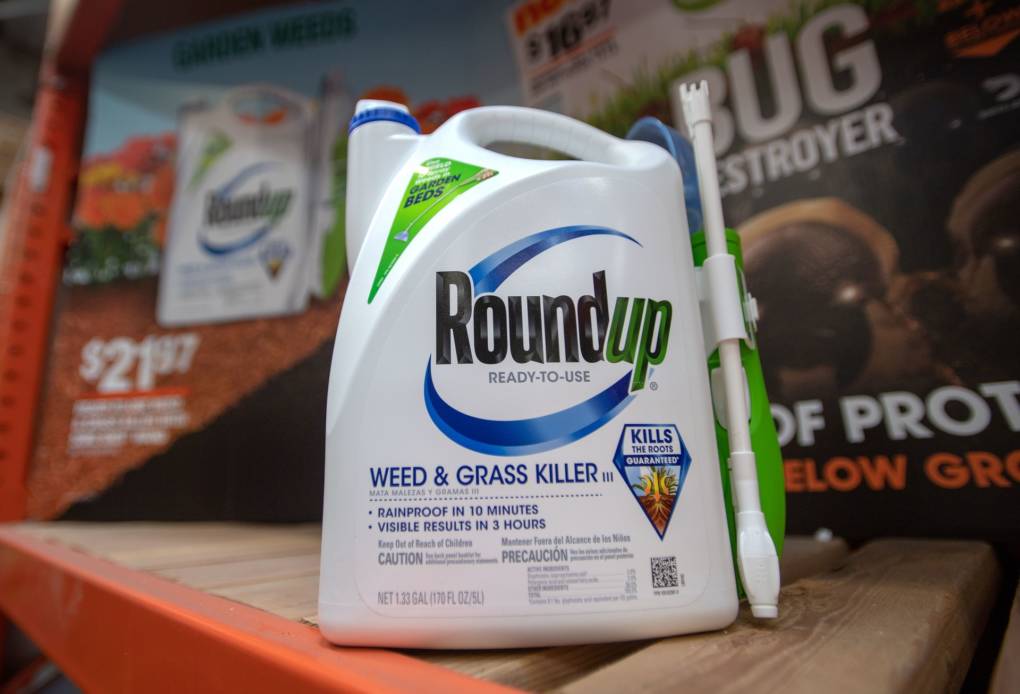
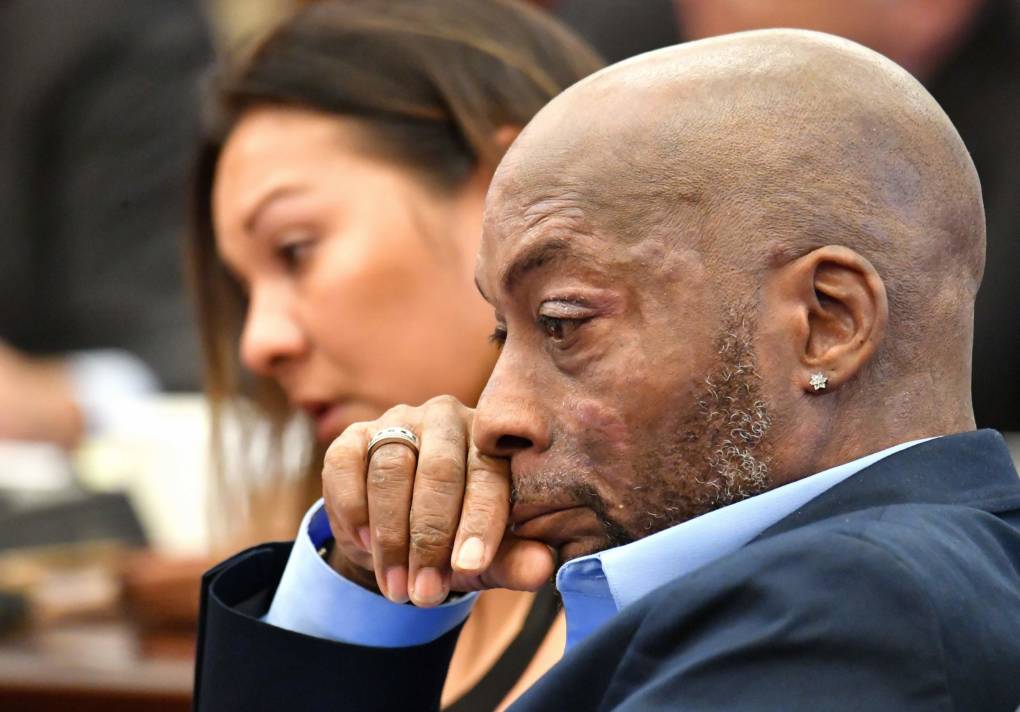
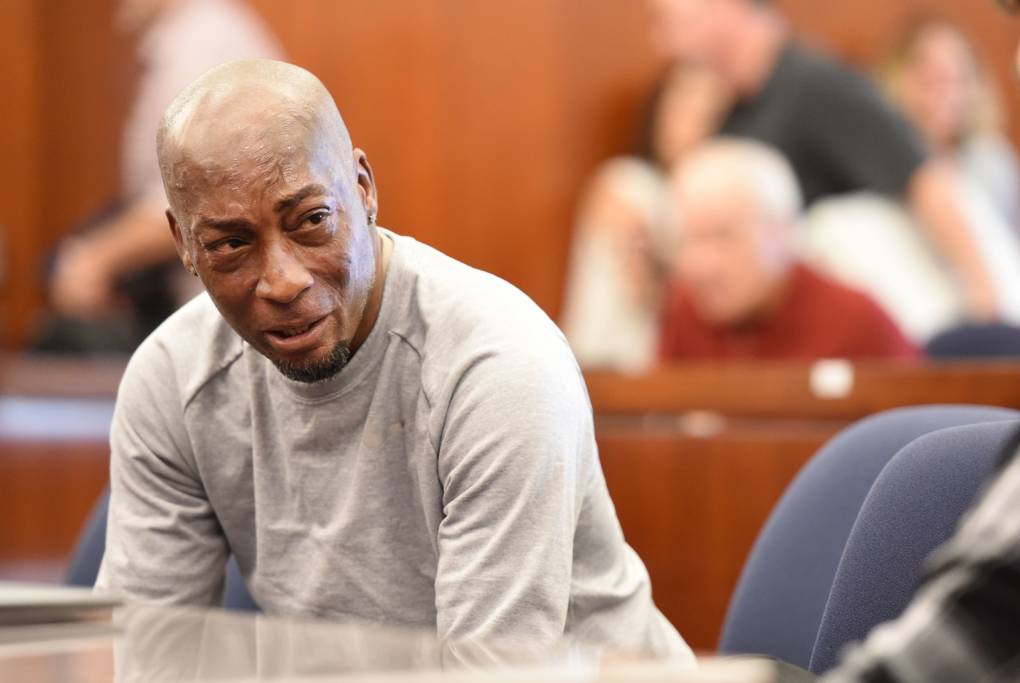
Bayer Will Pay Up to $10.9 Billion to Settle Monsanto Roundup Claims, Company Says
Judge Cuts Monsanto Award by More Than Half
EPA Reaffirms Safety of Monsanto's Weedkiller 'Roundup'
What the Science Says About Monsanto's Beleaguered Weedkiller 'Roundup'
Judge Upholds Monsanto Verdict, Reduces Damages to $78 Million
Jurors To San Francisco Judge: Don’t Throw Out Our Monsanto Verdict
Landmark Monsanto Cancer Ruling Remains in Limbo
Monsanto Found Guilty in Landmark Cancer Case Trial
Player sponsored by
window.__IS_SSR__=true
window.__INITIAL_STATE__={
"attachmentsReducer": {
"audio_0": {
"type": "attachments",
"id": "audio_0",
"imgSizes": {
"kqedFullSize": {
"file": "https://ww2.kqed.org/news/wp-content/themes/KQED-unified/img/audio_bgs/background0.jpg"
}
}
},
"audio_1": {
"type": "attachments",
"id": "audio_1",
"imgSizes": {
"kqedFullSize": {
"file": "https://ww2.kqed.org/news/wp-content/themes/KQED-unified/img/audio_bgs/background1.jpg"
}
}
},
"audio_2": {
"type": "attachments",
"id": "audio_2",
"imgSizes": {
"kqedFullSize": {
"file": "https://ww2.kqed.org/news/wp-content/themes/KQED-unified/img/audio_bgs/background2.jpg"
}
}
},
"audio_3": {
"type": "attachments",
"id": "audio_3",
"imgSizes": {
"kqedFullSize": {
"file": "https://ww2.kqed.org/news/wp-content/themes/KQED-unified/img/audio_bgs/background3.jpg"
}
}
},
"audio_4": {
"type": "attachments",
"id": "audio_4",
"imgSizes": {
"kqedFullSize": {
"file": "https://ww2.kqed.org/news/wp-content/themes/KQED-unified/img/audio_bgs/background4.jpg"
}
}
},
"placeholder": {
"type": "attachments",
"id": "placeholder",
"imgSizes": {
"thumbnail": {
"file": "https://cdn.kqed.org/wp-content/uploads/2024/12/KQED-Default-Image-816638274-2000x1333-1-160x107.jpg",
"width": 160,
"height": 107,
"mimeType": "image/jpeg"
},
"medium": {
"file": "https://cdn.kqed.org/wp-content/uploads/2024/12/KQED-Default-Image-816638274-2000x1333-1-800x533.jpg",
"width": 800,
"height": 533,
"mimeType": "image/jpeg"
},
"medium_large": {
"file": "https://cdn.kqed.org/wp-content/uploads/2024/12/KQED-Default-Image-816638274-2000x1333-1-768x512.jpg",
"width": 768,
"height": 512,
"mimeType": "image/jpeg"
},
"large": {
"file": "https://cdn.kqed.org/wp-content/uploads/2024/12/KQED-Default-Image-816638274-2000x1333-1-1020x680.jpg",
"width": 1020,
"height": 680,
"mimeType": "image/jpeg"
},
"1536x1536": {
"file": "https://cdn.kqed.org/wp-content/uploads/2024/12/KQED-Default-Image-816638274-2000x1333-1-1536x1024.jpg",
"width": 1536,
"height": 1024,
"mimeType": "image/jpeg"
},
"fd-lrg": {
"file": "https://cdn.kqed.org/wp-content/uploads/2024/12/KQED-Default-Image-816638274-2000x1333-1-1536x1024.jpg",
"width": 1536,
"height": 1024,
"mimeType": "image/jpeg"
},
"fd-med": {
"file": "https://cdn.kqed.org/wp-content/uploads/2024/12/KQED-Default-Image-816638274-2000x1333-1-1020x680.jpg",
"width": 1020,
"height": 680,
"mimeType": "image/jpeg"
},
"fd-sm": {
"file": "https://cdn.kqed.org/wp-content/uploads/2024/12/KQED-Default-Image-816638274-2000x1333-1-800x533.jpg",
"width": 800,
"height": 533,
"mimeType": "image/jpeg"
},
"post-thumbnail": {
"file": "https://cdn.kqed.org/wp-content/uploads/2024/12/KQED-Default-Image-816638274-2000x1333-1-672x372.jpg",
"width": 672,
"height": 372,
"mimeType": "image/jpeg"
},
"twentyfourteen-full-width": {
"file": "https://cdn.kqed.org/wp-content/uploads/2024/12/KQED-Default-Image-816638274-2000x1333-1-1038x576.jpg",
"width": 1038,
"height": 576,
"mimeType": "image/jpeg"
},
"xxsmall": {
"file": "https://cdn.kqed.org/wp-content/uploads/2024/12/KQED-Default-Image-816638274-2000x1333-1-160x107.jpg",
"width": 160,
"height": 107,
"mimeType": "image/jpeg"
},
"xsmall": {
"file": "https://cdn.kqed.org/wp-content/uploads/2024/12/KQED-Default-Image-816638274-2000x1333-1-672x372.jpg",
"width": 672,
"height": 372,
"mimeType": "image/jpeg"
},
"small": {
"file": "https://cdn.kqed.org/wp-content/uploads/2024/12/KQED-Default-Image-816638274-2000x1333-1-672x372.jpg",
"width": 672,
"height": 372,
"mimeType": "image/jpeg"
},
"xlarge": {
"file": "https://cdn.kqed.org/wp-content/uploads/2024/12/KQED-Default-Image-816638274-2000x1333-1-1020x680.jpg",
"width": 1020,
"height": 680,
"mimeType": "image/jpeg"
},
"full-width": {
"file": "https://cdn.kqed.org/wp-content/uploads/2024/12/KQED-Default-Image-816638274-2000x1333-1-1920x1280.jpg",
"width": 1920,
"height": 1280,
"mimeType": "image/jpeg"
},
"guest-author-32": {
"file": "https://cdn.kqed.org/wp-content/uploads/2025/01/KQED-Default-Image-816638274-1333x1333-1-160x160.jpg",
"width": 32,
"height": 32,
"mimeType": "image/jpeg"
},
"guest-author-50": {
"file": "https://cdn.kqed.org/wp-content/uploads/2025/01/KQED-Default-Image-816638274-1333x1333-1-160x160.jpg",
"width": 50,
"height": 50,
"mimeType": "image/jpeg"
},
"guest-author-64": {
"file": "https://cdn.kqed.org/wp-content/uploads/2025/01/KQED-Default-Image-816638274-1333x1333-1-160x160.jpg",
"width": 64,
"height": 64,
"mimeType": "image/jpeg"
},
"guest-author-96": {
"file": "https://cdn.kqed.org/wp-content/uploads/2025/01/KQED-Default-Image-816638274-1333x1333-1-160x160.jpg",
"width": 96,
"height": 96,
"mimeType": "image/jpeg"
},
"guest-author-128": {
"file": "https://cdn.kqed.org/wp-content/uploads/2025/01/KQED-Default-Image-816638274-1333x1333-1-160x160.jpg",
"width": 128,
"height": 128,
"mimeType": "image/jpeg"
},
"detail": {
"file": "https://cdn.kqed.org/wp-content/uploads/2025/01/KQED-Default-Image-816638274-1333x1333-1-160x160.jpg",
"width": 160,
"height": 160,
"mimeType": "image/jpeg"
},
"kqedFullSize": {
"file": "https://cdn.kqed.org/wp-content/uploads/2024/12/KQED-Default-Image-816638274-2000x1333-1.jpg",
"width": 2000,
"height": 1333
}
}
},
"science_1946341": {
"type": "attachments",
"id": "science_1946341",
"meta": {
"index": "attachments_1716263798",
"site": "science",
"id": "1946341",
"found": true
},
"parent": 1946339,
"imgSizes": {
"twentyfourteen-full-width": {
"file": "https://ww2.kqed.org/app/uploads/sites/35/2019/08/RS36030_GettyImages-994997066-qut-1038x576.jpg",
"width": 1038,
"mimeType": "image/jpeg",
"height": 576
},
"thumbnail": {
"file": "https://ww2.kqed.org/app/uploads/sites/35/2019/08/RS36030_GettyImages-994997066-qut-160x109.jpg",
"width": 160,
"mimeType": "image/jpeg",
"height": 109
},
"post-thumbnail": {
"file": "https://ww2.kqed.org/app/uploads/sites/35/2019/08/RS36030_GettyImages-994997066-qut-672x372.jpg",
"width": 672,
"mimeType": "image/jpeg",
"height": 372
},
"kqedFullSize": {
"file": "https://ww2.kqed.org/app/uploads/sites/35/2019/08/RS36030_GettyImages-994997066-qut.jpg",
"width": 1920,
"height": 1307
},
"large": {
"file": "https://ww2.kqed.org/app/uploads/sites/35/2019/08/RS36030_GettyImages-994997066-qut-1020x694.jpg",
"width": 1020,
"mimeType": "image/jpeg",
"height": 694
},
"complete_open_graph": {
"file": "https://ww2.kqed.org/app/uploads/sites/35/2019/08/RS36030_GettyImages-994997066-qut-1200x817.jpg",
"width": 1200,
"mimeType": "image/jpeg",
"height": 817
},
"full-width": {
"file": "https://ww2.kqed.org/app/uploads/sites/35/2019/08/RS36030_GettyImages-994997066-qut-1920x1307.jpg",
"width": 1920,
"mimeType": "image/jpeg",
"height": 1307
},
"medium": {
"file": "https://ww2.kqed.org/app/uploads/sites/35/2019/08/RS36030_GettyImages-994997066-qut-800x545.jpg",
"width": 800,
"mimeType": "image/jpeg",
"height": 545
},
"medium_large": {
"file": "https://ww2.kqed.org/app/uploads/sites/35/2019/08/RS36030_GettyImages-994997066-qut-768x523.jpg",
"width": 768,
"mimeType": "image/jpeg",
"height": 523
}
},
"publishDate": 1565379678,
"modified": 1593147404,
"caption": "Roundup products are seen for sale at a hardware store in San Rafael, California, on July 9, 2018. ",
"description": null,
"title": "US-ENVIRONMENT-HEALTH-AGRICULTURE-CHEMICALS",
"credit": "Josh Edelson/AFP/Getty Images",
"status": "inherit",
"isLoading": false,
"fetchFailed": false
},
"science_1941617": {
"type": "attachments",
"id": "science_1941617",
"meta": {
"index": "attachments_1716263798",
"site": "science",
"id": "1941617",
"found": true
},
"parent": 1941610,
"imgSizes": {
"twentyfourteen-full-width": {
"file": "https://ww2.kqed.org/app/uploads/sites/35/2019/05/Monsanto-verdict-1038x576.jpg",
"width": 1038,
"mimeType": "image/jpeg",
"height": 576
},
"thumbnail": {
"file": "https://ww2.kqed.org/app/uploads/sites/35/2019/05/Monsanto-verdict-160x113.jpg",
"width": 160,
"mimeType": "image/jpeg",
"height": 113
},
"post-thumbnail": {
"file": "https://ww2.kqed.org/app/uploads/sites/35/2019/05/Monsanto-verdict-672x372.jpg",
"width": 672,
"mimeType": "image/jpeg",
"height": 372
},
"kqedFullSize": {
"file": "https://ww2.kqed.org/app/uploads/sites/35/2019/05/Monsanto-verdict.jpg",
"width": 1920,
"height": 1358
},
"large": {
"file": "https://ww2.kqed.org/app/uploads/sites/35/2019/05/Monsanto-verdict-1020x721.jpg",
"width": 1020,
"mimeType": "image/jpeg",
"height": 721
},
"complete_open_graph": {
"file": "https://ww2.kqed.org/app/uploads/sites/35/2019/05/Monsanto-verdict-1200x849.jpg",
"width": 1200,
"mimeType": "image/jpeg",
"height": 849
},
"full-width": {
"file": "https://ww2.kqed.org/app/uploads/sites/35/2019/05/Monsanto-verdict-1920x1358.jpg",
"width": 1920,
"mimeType": "image/jpeg",
"height": 1358
},
"medium": {
"file": "https://ww2.kqed.org/app/uploads/sites/35/2019/05/Monsanto-verdict-800x566.jpg",
"width": 800,
"mimeType": "image/jpeg",
"height": 566
},
"medium_large": {
"file": "https://ww2.kqed.org/app/uploads/sites/35/2019/05/Monsanto-verdict-768x543.jpg",
"width": 768,
"mimeType": "image/jpeg",
"height": 543
}
},
"publishDate": 1557784651,
"modified": 1557784958,
"caption": "An Alameda County jury has awarded a Livermore couple more than $2 billion in damages after they claimed that a weedkiller sold by agribusiness giant Monsanto caused them to get cancer.",
"description": "Roundup, the glyphosate-based herbicide, sits on the shelves of Westlake's Home Depot on Friday March 22, 2019. (Lindsey Moore/KQED)",
"title": "Monsanto verdict",
"credit": "Lindsey Moore/KQED",
"status": "inherit",
"isLoading": false,
"fetchFailed": false
},
"science_1939781": {
"type": "attachments",
"id": "science_1939781",
"meta": {
"index": "attachments_1716263798",
"site": "science",
"id": "1939781",
"found": true
},
"parent": 0,
"imgSizes": {
"twentyfourteen-full-width": {
"file": "https://ww2.kqed.org/app/uploads/sites/35/2019/03/Roundup01-1038x576.jpg",
"width": 1038,
"mimeType": "image/jpeg",
"height": 576
},
"thumbnail": {
"file": "https://ww2.kqed.org/app/uploads/sites/35/2019/03/Roundup01-160x90.jpg",
"width": 160,
"mimeType": "image/jpeg",
"height": 90
},
"post-thumbnail": {
"file": "https://ww2.kqed.org/app/uploads/sites/35/2019/03/Roundup01-672x372.jpg",
"width": 672,
"mimeType": "image/jpeg",
"height": 372
},
"kqedFullSize": {
"file": "https://ww2.kqed.org/app/uploads/sites/35/2019/03/Roundup01.jpg",
"width": 1920,
"height": 1080
},
"large": {
"file": "https://ww2.kqed.org/app/uploads/sites/35/2019/03/Roundup01-1020x574.jpg",
"width": 1020,
"mimeType": "image/jpeg",
"height": 574
},
"complete_open_graph": {
"file": "https://ww2.kqed.org/app/uploads/sites/35/2019/03/Roundup01-1200x675.jpg",
"width": 1200,
"mimeType": "image/jpeg",
"height": 675
},
"guest-author-50": {
"file": "https://ww2.kqed.org/app/uploads/sites/35/2019/03/Roundup01-50x50.jpg",
"width": 50,
"mimeType": "image/jpeg",
"height": 50
},
"guest-author-96": {
"file": "https://ww2.kqed.org/app/uploads/sites/35/2019/03/Roundup01-96x96.jpg",
"width": 96,
"mimeType": "image/jpeg",
"height": 96
},
"medium": {
"file": "https://ww2.kqed.org/app/uploads/sites/35/2019/03/Roundup01-800x450.jpg",
"width": 800,
"mimeType": "image/jpeg",
"height": 450
},
"guest-author-64": {
"file": "https://ww2.kqed.org/app/uploads/sites/35/2019/03/Roundup01-64x64.jpg",
"width": 64,
"mimeType": "image/jpeg",
"height": 64
},
"guest-author-32": {
"file": "https://ww2.kqed.org/app/uploads/sites/35/2019/03/Roundup01-32x32.jpg",
"width": 32,
"mimeType": "image/jpeg",
"height": 32
},
"full-width": {
"file": "https://ww2.kqed.org/app/uploads/sites/35/2019/03/Roundup01-1920x1080.jpg",
"width": 1920,
"mimeType": "image/jpeg",
"height": 1080
},
"medium_large": {
"file": "https://ww2.kqed.org/app/uploads/sites/35/2019/03/Roundup01-768x432.jpg",
"width": 768,
"mimeType": "image/jpeg",
"height": 432
},
"guest-author-128": {
"file": "https://ww2.kqed.org/app/uploads/sites/35/2019/03/Roundup01-128x128.jpg",
"width": 128,
"mimeType": "image/jpeg",
"height": 128
}
},
"publishDate": 1553981858,
"modified": 1556660629,
"caption": null,
"description": null,
"title": "Roundup01",
"credit": "Photo by Lindsey Moore/KQED",
"status": "inherit",
"isLoading": false,
"fetchFailed": false
},
"science_1927153": {
"type": "attachments",
"id": "science_1927153",
"meta": {
"index": "attachments_1716263798",
"site": "science",
"id": "1927153",
"found": true
},
"parent": 1927142,
"imgSizes": {
"small": {
"file": "https://ww2.kqed.org/app/uploads/sites/35/2018/07/GettyImages-994931004-520x363.jpg",
"width": 520,
"mimeType": "image/jpeg",
"height": 363
},
"twentyfourteen-full-width": {
"file": "https://ww2.kqed.org/app/uploads/sites/35/2018/07/GettyImages-994931004-1038x576.jpg",
"width": 1038,
"mimeType": "image/jpeg",
"height": 576
},
"thumbnail": {
"file": "https://ww2.kqed.org/app/uploads/sites/35/2018/07/GettyImages-994931004-160x112.jpg",
"width": 160,
"mimeType": "image/jpeg",
"height": 112
},
"fd-sm": {
"file": "https://ww2.kqed.org/app/uploads/sites/35/2018/07/GettyImages-994931004-960x670.jpg",
"width": 960,
"mimeType": "image/jpeg",
"height": 670
},
"post-thumbnail": {
"file": "https://ww2.kqed.org/app/uploads/sites/35/2018/07/GettyImages-994931004-672x372.jpg",
"width": 672,
"mimeType": "image/jpeg",
"height": 372
},
"xsmall": {
"file": "https://ww2.kqed.org/app/uploads/sites/35/2018/07/GettyImages-994931004-375x262.jpg",
"width": 375,
"mimeType": "image/jpeg",
"height": 262
},
"kqedFullSize": {
"file": "https://ww2.kqed.org/app/uploads/sites/35/2018/07/GettyImages-994931004-e1540254135420.jpg",
"width": 1920,
"height": 1341
},
"large": {
"file": "https://ww2.kqed.org/app/uploads/sites/35/2018/07/GettyImages-994931004-1020x712.jpg",
"width": 1020,
"mimeType": "image/jpeg",
"height": 712
},
"xlarge": {
"file": "https://ww2.kqed.org/app/uploads/sites/35/2018/07/GettyImages-994931004-1180x824.jpg",
"width": 1180,
"mimeType": "image/jpeg",
"height": 824
},
"complete_open_graph": {
"file": "https://ww2.kqed.org/app/uploads/sites/35/2018/07/GettyImages-994931004-1200x838.jpg",
"width": 1200,
"mimeType": "image/jpeg",
"height": 838
},
"guest-author-50": {
"file": "https://ww2.kqed.org/app/uploads/sites/35/2018/07/GettyImages-994931004-50x50.jpg",
"width": 50,
"mimeType": "image/jpeg",
"height": 50
},
"guest-author-96": {
"file": "https://ww2.kqed.org/app/uploads/sites/35/2018/07/GettyImages-994931004-96x96.jpg",
"width": 96,
"mimeType": "image/jpeg",
"height": 96
},
"medium": {
"file": "https://ww2.kqed.org/app/uploads/sites/35/2018/07/GettyImages-994931004-800x559.jpg",
"width": 800,
"mimeType": "image/jpeg",
"height": 559
},
"guest-author-64": {
"file": "https://ww2.kqed.org/app/uploads/sites/35/2018/07/GettyImages-994931004-64x64.jpg",
"width": 64,
"mimeType": "image/jpeg",
"height": 64
},
"guest-author-32": {
"file": "https://ww2.kqed.org/app/uploads/sites/35/2018/07/GettyImages-994931004-32x32.jpg",
"width": 32,
"mimeType": "image/jpeg",
"height": 32
},
"fd-lrg": {
"file": "https://ww2.kqed.org/app/uploads/sites/35/2018/07/GettyImages-994931004-1920x1341.jpg",
"width": 1920,
"mimeType": "image/jpeg",
"height": 1341
},
"fd-med": {
"file": "https://ww2.kqed.org/app/uploads/sites/35/2018/07/GettyImages-994931004-1180x824.jpg",
"width": 1180,
"mimeType": "image/jpeg",
"height": 824
},
"full-width": {
"file": "https://ww2.kqed.org/app/uploads/sites/35/2018/07/GettyImages-994931004-1920x1341.jpg",
"width": 1920,
"mimeType": "image/jpeg",
"height": 1341
},
"detail": {
"file": "https://ww2.kqed.org/app/uploads/sites/35/2018/07/GettyImages-994931004-150x150.jpg",
"width": 150,
"mimeType": "image/jpeg",
"height": 150
},
"medium_large": {
"file": "https://ww2.kqed.org/app/uploads/sites/35/2018/07/GettyImages-994931004-768x536.jpg",
"width": 768,
"mimeType": "image/jpeg",
"height": 536
},
"guest-author-128": {
"file": "https://ww2.kqed.org/app/uploads/sites/35/2018/07/GettyImages-994931004-128x128.jpg",
"width": 128,
"mimeType": "image/jpeg",
"height": 128
},
"xxsmall": {
"file": "https://ww2.kqed.org/app/uploads/sites/35/2018/07/GettyImages-994931004-240x168.jpg",
"width": 240,
"mimeType": "image/jpeg",
"height": 168
}
},
"publishDate": 1531252700,
"modified": 1554502993,
"caption": "Plaintiff Dewayne Johnson sits while his attorney speaks about his condition during the Monsanto trial in San Francisco in July 2018. ",
"description": null,
"title": "US-chemicals-environment-trial-health-cancer-illness",
"credit": "Josh Edelson/AFP/Getty Images",
"status": "inherit",
"isLoading": false,
"fetchFailed": false
},
"science_1932888": {
"type": "attachments",
"id": "science_1932888",
"meta": {
"index": "attachments_1716263798",
"site": "science",
"id": "1932888",
"found": true
},
"parent": 1932885,
"imgSizes": {
"small": {
"file": "https://ww2.kqed.org/app/uploads/sites/35/2018/10/GettyImages-1014739218-520x348.jpg",
"width": 520,
"mimeType": "image/jpeg",
"height": 348
},
"twentyfourteen-full-width": {
"file": "https://ww2.kqed.org/app/uploads/sites/35/2018/10/GettyImages-1014739218-1038x576.jpg",
"width": 1038,
"mimeType": "image/jpeg",
"height": 576
},
"thumbnail": {
"file": "https://ww2.kqed.org/app/uploads/sites/35/2018/10/GettyImages-1014739218-160x107.jpg",
"width": 160,
"mimeType": "image/jpeg",
"height": 107
},
"fd-sm": {
"file": "https://ww2.kqed.org/app/uploads/sites/35/2018/10/GettyImages-1014739218-960x643.jpg",
"width": 960,
"mimeType": "image/jpeg",
"height": 643
},
"post-thumbnail": {
"file": "https://ww2.kqed.org/app/uploads/sites/35/2018/10/GettyImages-1014739218-672x372.jpg",
"width": 672,
"mimeType": "image/jpeg",
"height": 372
},
"xsmall": {
"file": "https://ww2.kqed.org/app/uploads/sites/35/2018/10/GettyImages-1014739218-375x251.jpg",
"width": 375,
"mimeType": "image/jpeg",
"height": 251
},
"kqedFullSize": {
"file": "https://ww2.kqed.org/app/uploads/sites/35/2018/10/GettyImages-1014739218.jpg",
"width": 4493,
"height": 3009
},
"large": {
"file": "https://ww2.kqed.org/app/uploads/sites/35/2018/10/GettyImages-1014739218-1020x683.jpg",
"width": 1020,
"mimeType": "image/jpeg",
"height": 683
},
"xlarge": {
"file": "https://ww2.kqed.org/app/uploads/sites/35/2018/10/GettyImages-1014739218-1180x790.jpg",
"width": 1180,
"mimeType": "image/jpeg",
"height": 790
},
"complete_open_graph": {
"file": "https://ww2.kqed.org/app/uploads/sites/35/2018/10/GettyImages-1014739218-1200x804.jpg",
"width": 1200,
"mimeType": "image/jpeg",
"height": 804
},
"guest-author-50": {
"file": "https://ww2.kqed.org/app/uploads/sites/35/2018/10/GettyImages-1014739218-50x50.jpg",
"width": 50,
"mimeType": "image/jpeg",
"height": 50
},
"guest-author-96": {
"file": "https://ww2.kqed.org/app/uploads/sites/35/2018/10/GettyImages-1014739218-96x96.jpg",
"width": 96,
"mimeType": "image/jpeg",
"height": 96
},
"medium": {
"file": "https://ww2.kqed.org/app/uploads/sites/35/2018/10/GettyImages-1014739218-800x536.jpg",
"width": 800,
"mimeType": "image/jpeg",
"height": 536
},
"guest-author-64": {
"file": "https://ww2.kqed.org/app/uploads/sites/35/2018/10/GettyImages-1014739218-64x64.jpg",
"width": 64,
"mimeType": "image/jpeg",
"height": 64
},
"guest-author-32": {
"file": "https://ww2.kqed.org/app/uploads/sites/35/2018/10/GettyImages-1014739218-32x32.jpg",
"width": 32,
"mimeType": "image/jpeg",
"height": 32
},
"fd-lrg": {
"file": "https://ww2.kqed.org/app/uploads/sites/35/2018/10/GettyImages-1014739218-1920x1286.jpg",
"width": 1920,
"mimeType": "image/jpeg",
"height": 1286
},
"fd-med": {
"file": "https://ww2.kqed.org/app/uploads/sites/35/2018/10/GettyImages-1014739218-1180x790.jpg",
"width": 1180,
"mimeType": "image/jpeg",
"height": 790
},
"full-width": {
"file": "https://ww2.kqed.org/app/uploads/sites/35/2018/10/GettyImages-1014739218-1920x1286.jpg",
"width": 1920,
"mimeType": "image/jpeg",
"height": 1286
},
"detail": {
"file": "https://ww2.kqed.org/app/uploads/sites/35/2018/10/GettyImages-1014739218-150x150.jpg",
"width": 150,
"mimeType": "image/jpeg",
"height": 150
},
"medium_large": {
"file": "https://ww2.kqed.org/app/uploads/sites/35/2018/10/GettyImages-1014739218-768x514.jpg",
"width": 768,
"mimeType": "image/jpeg",
"height": 514
},
"guest-author-128": {
"file": "https://ww2.kqed.org/app/uploads/sites/35/2018/10/GettyImages-1014739218-128x128.jpg",
"width": 128,
"mimeType": "image/jpeg",
"height": 128
},
"xxsmall": {
"file": "https://ww2.kqed.org/app/uploads/sites/35/2018/10/GettyImages-1014739218-240x161.jpg",
"width": 240,
"mimeType": "image/jpeg",
"height": 161
}
},
"publishDate": 1539706372,
"modified": 1539706488,
"caption": "Plaintiff Dewayne Johnson reacts after hearing the verdict to his case against Monsanto at the Superior Court Of California in San Francisco, California, on August 10, 2018. Jurors who found that agribusiness giant Monsanto's Roundup weed killer contributed to the school groundskeeper's cancer are urging a San Francisco judge not to throw out the bulk of their $289 million award in his favor.",
"description": null,
"title": "US-ENVIRONMENT-HEALTH-TRIAL",
"credit": "JOSH EDELSON/AFP/Getty Images",
"status": "inherit",
"isLoading": false,
"fetchFailed": false
},
"science_1932606": {
"type": "attachments",
"id": "science_1932606",
"meta": {
"index": "attachments_1716263798",
"site": "science",
"id": "1932606",
"found": true
},
"parent": 1932598,
"imgSizes": {
"small": {
"file": "https://ww2.kqed.org/app/uploads/sites/35/2018/10/GettyImages-1014740716-520x329.jpg",
"width": 520,
"mimeType": "image/jpeg",
"height": 329
},
"twentyfourteen-full-width": {
"file": "https://ww2.kqed.org/app/uploads/sites/35/2018/10/GettyImages-1014740716-1038x576.jpg",
"width": 1038,
"mimeType": "image/jpeg",
"height": 576
},
"thumbnail": {
"file": "https://ww2.kqed.org/app/uploads/sites/35/2018/10/GettyImages-1014740716-160x101.jpg",
"width": 160,
"mimeType": "image/jpeg",
"height": 101
},
"fd-sm": {
"file": "https://ww2.kqed.org/app/uploads/sites/35/2018/10/GettyImages-1014740716-960x608.jpg",
"width": 960,
"mimeType": "image/jpeg",
"height": 608
},
"post-thumbnail": {
"file": "https://ww2.kqed.org/app/uploads/sites/35/2018/10/GettyImages-1014740716-672x372.jpg",
"width": 672,
"mimeType": "image/jpeg",
"height": 372
},
"xsmall": {
"file": "https://ww2.kqed.org/app/uploads/sites/35/2018/10/GettyImages-1014740716-375x238.jpg",
"width": 375,
"mimeType": "image/jpeg",
"height": 238
},
"kqedFullSize": {
"file": "https://ww2.kqed.org/app/uploads/sites/35/2018/10/GettyImages-1014740716.jpg",
"width": 4458,
"height": 2824
},
"large": {
"file": "https://ww2.kqed.org/app/uploads/sites/35/2018/10/GettyImages-1014740716-1020x646.jpg",
"width": 1020,
"mimeType": "image/jpeg",
"height": 646
},
"xlarge": {
"file": "https://ww2.kqed.org/app/uploads/sites/35/2018/10/GettyImages-1014740716-1180x747.jpg",
"width": 1180,
"mimeType": "image/jpeg",
"height": 747
},
"complete_open_graph": {
"file": "https://ww2.kqed.org/app/uploads/sites/35/2018/10/GettyImages-1014740716-1200x760.jpg",
"width": 1200,
"mimeType": "image/jpeg",
"height": 760
},
"guest-author-50": {
"file": "https://ww2.kqed.org/app/uploads/sites/35/2018/10/GettyImages-1014740716-50x50.jpg",
"width": 50,
"mimeType": "image/jpeg",
"height": 50
},
"guest-author-96": {
"file": "https://ww2.kqed.org/app/uploads/sites/35/2018/10/GettyImages-1014740716-96x96.jpg",
"width": 96,
"mimeType": "image/jpeg",
"height": 96
},
"medium": {
"file": "https://ww2.kqed.org/app/uploads/sites/35/2018/10/GettyImages-1014740716-800x507.jpg",
"width": 800,
"mimeType": "image/jpeg",
"height": 507
},
"guest-author-64": {
"file": "https://ww2.kqed.org/app/uploads/sites/35/2018/10/GettyImages-1014740716-64x64.jpg",
"width": 64,
"mimeType": "image/jpeg",
"height": 64
},
"guest-author-32": {
"file": "https://ww2.kqed.org/app/uploads/sites/35/2018/10/GettyImages-1014740716-32x32.jpg",
"width": 32,
"mimeType": "image/jpeg",
"height": 32
},
"fd-lrg": {
"file": "https://ww2.kqed.org/app/uploads/sites/35/2018/10/GettyImages-1014740716-1920x1216.jpg",
"width": 1920,
"mimeType": "image/jpeg",
"height": 1216
},
"fd-med": {
"file": "https://ww2.kqed.org/app/uploads/sites/35/2018/10/GettyImages-1014740716-1180x747.jpg",
"width": 1180,
"mimeType": "image/jpeg",
"height": 747
},
"full-width": {
"file": "https://ww2.kqed.org/app/uploads/sites/35/2018/10/GettyImages-1014740716-1920x1216.jpg",
"width": 1920,
"mimeType": "image/jpeg",
"height": 1216
},
"detail": {
"file": "https://ww2.kqed.org/app/uploads/sites/35/2018/10/GettyImages-1014740716-150x150.jpg",
"width": 150,
"mimeType": "image/jpeg",
"height": 150
},
"medium_large": {
"file": "https://ww2.kqed.org/app/uploads/sites/35/2018/10/GettyImages-1014740716-768x487.jpg",
"width": 768,
"mimeType": "image/jpeg",
"height": 487
},
"guest-author-128": {
"file": "https://ww2.kqed.org/app/uploads/sites/35/2018/10/GettyImages-1014740716-128x128.jpg",
"width": 128,
"mimeType": "image/jpeg",
"height": 128
},
"xxsmall": {
"file": "https://ww2.kqed.org/app/uploads/sites/35/2018/10/GettyImages-1014740716-240x152.jpg",
"width": 240,
"mimeType": "image/jpeg",
"height": 152
}
},
"publishDate": 1539186047,
"modified": 1539186129,
"caption": "Dewayne Johnson looks on after hearing the verdict to his case against Monsanto at the Superior Court Of California in San Francisco, California, on August 10, 2018. Monsanto will argue on Wednesday that the verdict should be thrown out. ",
"description": null,
"title": "TOPSHOT-DOUNIAMAG-US-ENVIRONMENT-HEALTH-TRIAL",
"credit": "JOSH EDELSON/AFP/Getty Images",
"status": "inherit",
"isLoading": false,
"fetchFailed": false
}
},
"audioPlayerReducer": {
"postId": "stream_live",
"isPaused": true,
"isPlaying": false,
"pfsActive": false,
"pledgeModalIsOpen": true,
"playerDrawerIsOpen": false
},
"authorsReducer": {
"byline_science_1966338": {
"type": "authors",
"id": "byline_science_1966338",
"meta": {
"override": true
},
"slug": "byline_science_1966338",
"name": "Associated Press ",
"isLoading": false
},
"byline_science_1940978": {
"type": "authors",
"id": "byline_science_1940978",
"meta": {
"override": true
},
"slug": "byline_science_1940978",
"name": "Ellen Knickmeyer\u003cbr />Associated Press",
"isLoading": false
},
"byline_science_1933463": {
"type": "authors",
"id": "byline_science_1933463",
"meta": {
"override": true
},
"slug": "byline_science_1933463",
"name": "Paul Elias\u003cbr />Associated Press",
"isLoading": false
},
"byline_science_1932885": {
"type": "authors",
"id": "byline_science_1932885",
"meta": {
"override": true
},
"slug": "byline_science_1932885",
"name": "Seth Borenstein\u003cbr />The Associated Press",
"isLoading": false
},
"byline_science_1932598": {
"type": "authors",
"id": "byline_science_1932598",
"meta": {
"override": true
},
"slug": "byline_science_1932598",
"name": "The Associated Press",
"isLoading": false
},
"mpeterson": {
"type": "authors",
"id": "11223",
"meta": {
"index": "authors_1716337520",
"id": "11223",
"found": true
},
"name": "Molly Peterson",
"firstName": "Molly",
"lastName": "Peterson",
"slug": "mpeterson",
"email": "mpeterson@kqed.org",
"display_author_email": false,
"staff_mastheads": [],
"title": null,
"bio": "Molly Peterson reports for KQED science and news on climate change, catastrophe and risk. Previously she was environment correspondent at Southern California Public Radio. Her work has also appeared at The New York Times, The Guardian, on NPR, at High Country News, on Code Switch, and other national outlets. She has been honored with awards from Public Radio News Directors Incorporated, Investigative Reporters and Editors, the Society for Professional Journalists, the Los Angeles Press Club, and RTNDA Edward R. Murrow awards, among others.",
"avatar": "https://secure.gravatar.com/avatar/7908e2807131f776cc8165c649530b05?s=600&d=blank&r=g",
"twitter": "Mollydacious",
"facebook": null,
"instagram": "https://www.instagram.com/radiomolly/",
"linkedin": null,
"sites": [
{
"site": "news",
"roles": [
"subscriber"
]
},
{
"site": "futureofyou",
"roles": [
"editor"
]
},
{
"site": "science",
"roles": [
"editor"
]
}
],
"headData": {
"title": "Molly Peterson | KQED",
"description": null,
"ogImgSrc": "https://secure.gravatar.com/avatar/7908e2807131f776cc8165c649530b05?s=600&d=blank&r=g",
"twImgSrc": "https://secure.gravatar.com/avatar/7908e2807131f776cc8165c649530b05?s=600&d=blank&r=g"
},
"isLoading": false,
"link": "/author/mpeterson"
},
"aahmed": {
"type": "authors",
"id": "11428",
"meta": {
"index": "authors_1716337520",
"id": "11428",
"found": true
},
"name": "Amel Ahmed",
"firstName": "Amel",
"lastName": "Ahmed",
"slug": "aahmed",
"email": "aahmed@kqed.org",
"display_author_email": false,
"staff_mastheads": [],
"title": "KQED Contributor",
"bio": "Amel Ahmed is a reporter for KQED. Prior to joining KQED, Amel worked at Al Jazeera America, Al Jazeera English, Democracy Now! and Punched Productions. She also helped produce \u003cem>Changing Face of Harlem\u003c/em>, a documentary that tracked gentrification in Harlem over a period of ten years. She is a 2013 graduate of Brooklyn Law School and is currently researching war on terror prosecutions for an upcoming book.",
"avatar": "https://secure.gravatar.com/avatar/c8b48ebc98e770640f3013c470d23f3e?s=600&d=blank&r=g",
"twitter": "amelscript",
"facebook": null,
"instagram": null,
"linkedin": null,
"sites": [
{
"site": "futureofyou",
"roles": []
},
{
"site": "science",
"roles": []
}
],
"headData": {
"title": "Amel Ahmed | KQED",
"description": "KQED Contributor",
"ogImgSrc": "https://secure.gravatar.com/avatar/c8b48ebc98e770640f3013c470d23f3e?s=600&d=blank&r=g",
"twImgSrc": "https://secure.gravatar.com/avatar/c8b48ebc98e770640f3013c470d23f3e?s=600&d=blank&r=g"
},
"isLoading": false,
"link": "/author/aahmed"
}
},
"breakingNewsReducer": {},
"pagesReducer": {},
"postsReducer": {
"stream_live": {
"type": "live",
"id": "stream_live",
"audioUrl": "https://streams.kqed.org/kqedradio",
"title": "Live Stream",
"excerpt": "Live Stream information currently unavailable.",
"link": "/radio",
"featImg": "",
"label": {
"name": "KQED Live",
"link": "/"
}
},
"stream_kqedNewscast": {
"type": "posts",
"id": "stream_kqedNewscast",
"audioUrl": "https://www.kqed.org/.stream/anon/radio/RDnews/newscast.mp3?_=1",
"title": "KQED Newscast",
"featImg": "",
"label": {
"name": "88.5 FM",
"link": "/"
}
},
"science_1966338": {
"type": "posts",
"id": "science_1966338",
"meta": {
"index": "posts_1716263798",
"site": "science",
"id": "1966338",
"score": null,
"sort": [
1593024796000
]
},
"parent": 0,
"labelTerm": {},
"blocks": [],
"publishDate": 1593024796,
"format": "standard",
"title": "Bayer Will Pay Up to $10.9 Billion to Settle Monsanto Roundup Claims, Company Says",
"headTitle": "Bayer Will Pay Up to $10.9 Billion to Settle Monsanto Roundup Claims, Company Says | KQED",
"content": "\u003cp>Bayer will pay up to $10.9 billion to settle litigation over the subsidiary Monsanto’s weed killer Roundup, which has faced thousands of lawsuits over claims it causes cancer, the German-based company said Wednesday.\u003c/p>\n\u003cp>Bayer said it was also paying up to $1.22 billion to settle two additional areas of intense litigation, one involving PCB in water, and one involving dicamba, another weed killer.\u003c/p>\n\u003cp>The company said the Roundup settlement involves about 125,000 filed and unfiled claims. Under the agreement, Bayer will make a payment of $8.8 billion to $9.6 billion to resolve current litigation, and $1.25 billion to address potential future litigation.\u003c/p>\n\u003cp>Any future settlements are subject to approval by Judge Vince Chhabria of the U.S. District Court for the Northern District of California, the company said.\u003c/p>\n\u003cp>“First and foremost, the Roundup settlement is the right action at the right time for Bayer to bring a long period of uncertainty to an end,” Bayer CEO Werner Baumann said in a statement. “It resolves most current claims and puts in place a clear mechanism to manage risks of potential future litigation. It is financially reasonable when viewed against the significant financial risks of continued, multi-year litigation and the related impacts to our reputation and to our business.”\u003c/p>\n\u003cp>[ad fullwidth]\u003c/p>\n\u003cp>Monsanto developed glyphosate — a key ingredient in Roundup — in the 1970s. The weed killer has been sold in more than 160 countries and widely used in the U.S. The company has long maintained that it is safe. Bayer said last year that all government regulators that have looked at the issue have rejected a link between cancer and glyphosate.\u003c/p>\n\u003cp>But the herbicide came under increasing scrutiny after the France-based International Agency for Research on Cancer, which is part of the World Health Organization, classified it as a “probable human carcinogen” in 2015.\u003c/p>\n\u003cp>Lawsuits against Monsanto followed. Monsanto has attacked the international research agency’s opinion as an outlier. The U.S. Environmental Protection Agency says glyphosate is safe for people when used in accordance with label directions.\u003c/p>\n\u003cp>Bayer purchased St. Louis-based Monsanto in 2018.\u003c/p>\n\u003cp>In August, a California jury ordered Monsanto to pay a combined $2.055 billion to a couple claiming that Roundup Ready caused their cancers. It was the third such courtroom loss for Monsanto in California since August.\u003c/p>\n\u003cp>Bayer said Wednesday that the appeals process will continue for those three cases, which are not covered by the settlement.\u003c/p>\n\u003cp>Bayer said it would also pay up to $400 million to settle cases claiming that the weed killer dicamba drifted onto plants that weren’t bred to resist it, killing them. Claimants will be required to provide proof of damage to crop yields and evidence that it was due to dicamba, Bayer said.\u003c/p>\n\u003cp>The company said it expects contributions from co-defendant BASF toward the dicamba settlement.\u003c/p>\n\u003cp>A further payment of up to $820 million will be made to settle “most” claims for exposure to PCB, a highly carcinogenic chemical that Monsanto produced until 1977 and that has been found in U.S. waters.\u003c/p>\n\u003cp>\u003c/p>\n\u003cp>Bayer said it would start making payments this year and these would be financed from existing liquidity, future income, proceeds from the sale of its animal health business and the issuance of additional bonds.\u003c/p>\n\n",
"stats": {
"hasVideo": false,
"hasChartOrMap": false,
"hasAudio": false,
"hasPolis": false,
"wordCount": 563,
"hasGoogleForm": false,
"hasGallery": false,
"hasHearkenModule": false,
"iframeSrcs": [],
"paragraphCount": 17
},
"modified": 1704847278,
"excerpt": "The company said the Roundup settlement involves about 125,000 filed and unfiled claims.",
"headData": {
"twImgId": "",
"twTitle": "",
"ogTitle": "",
"ogImgId": "",
"twDescription": "",
"description": "The company said the Roundup settlement involves about 125,000 filed and unfiled claims.",
"title": "Bayer Will Pay Up to $10.9 Billion to Settle Monsanto Roundup Claims, Company Says | KQED",
"ogDescription": "",
"schema": {
"@context": "https://schema.org",
"@type": "Article",
"headline": "Bayer Will Pay Up to $10.9 Billion to Settle Monsanto Roundup Claims, Company Says",
"datePublished": "2020-06-24T11:53:16-07:00",
"dateModified": "2024-01-09T16:41:18-08:00",
"image": "https://cdn.kqed.org/wp-content/uploads/2020/02/KQED-OG-Image@1x.png"
}
},
"guestAuthors": [],
"slug": "bayer-will-pay-up-to-10-9-billion-to-settle-monsanto-roundup-claims-company-says",
"status": "publish",
"nprByline": "Associated Press ",
"sticky": false,
"source": "Associated Press",
"path": "/science/1966338/bayer-will-pay-up-to-10-9-billion-to-settle-monsanto-roundup-claims-company-says",
"audioTrackLength": null,
"parsedContent": [
{
"type": "contentString",
"content": "\u003cdiv class=\"post-body\">\u003cp>\u003cp>Bayer will pay up to $10.9 billion to settle litigation over the subsidiary Monsanto’s weed killer Roundup, which has faced thousands of lawsuits over claims it causes cancer, the German-based company said Wednesday.\u003c/p>\n\u003cp>Bayer said it was also paying up to $1.22 billion to settle two additional areas of intense litigation, one involving PCB in water, and one involving dicamba, another weed killer.\u003c/p>\n\u003cp>The company said the Roundup settlement involves about 125,000 filed and unfiled claims. Under the agreement, Bayer will make a payment of $8.8 billion to $9.6 billion to resolve current litigation, and $1.25 billion to address potential future litigation.\u003c/p>\n\u003cp>Any future settlements are subject to approval by Judge Vince Chhabria of the U.S. District Court for the Northern District of California, the company said.\u003c/p>\n\u003cp>“First and foremost, the Roundup settlement is the right action at the right time for Bayer to bring a long period of uncertainty to an end,” Bayer CEO Werner Baumann said in a statement. “It resolves most current claims and puts in place a clear mechanism to manage risks of potential future litigation. It is financially reasonable when viewed against the significant financial risks of continued, multi-year litigation and the related impacts to our reputation and to our business.”\u003c/p>\n\u003cp>\u003c/p>\u003c/div>",
"attributes": {
"named": {},
"numeric": []
}
},
{
"type": "component",
"content": "",
"name": "ad",
"attributes": {
"named": {
"label": "fullwidth"
},
"numeric": [
"fullwidth"
]
}
},
{
"type": "contentString",
"content": "\u003cdiv class=\"post-body\">\u003cp>\u003c/p>\n\u003cp>Monsanto developed glyphosate — a key ingredient in Roundup — in the 1970s. The weed killer has been sold in more than 160 countries and widely used in the U.S. The company has long maintained that it is safe. Bayer said last year that all government regulators that have looked at the issue have rejected a link between cancer and glyphosate.\u003c/p>\n\u003cp>But the herbicide came under increasing scrutiny after the France-based International Agency for Research on Cancer, which is part of the World Health Organization, classified it as a “probable human carcinogen” in 2015.\u003c/p>\n\u003cp>Lawsuits against Monsanto followed. Monsanto has attacked the international research agency’s opinion as an outlier. The U.S. Environmental Protection Agency says glyphosate is safe for people when used in accordance with label directions.\u003c/p>\n\u003cp>Bayer purchased St. Louis-based Monsanto in 2018.\u003c/p>\n\u003cp>In August, a California jury ordered Monsanto to pay a combined $2.055 billion to a couple claiming that Roundup Ready caused their cancers. It was the third such courtroom loss for Monsanto in California since August.\u003c/p>\n\u003cp>Bayer said Wednesday that the appeals process will continue for those three cases, which are not covered by the settlement.\u003c/p>\n\u003cp>Bayer said it would also pay up to $400 million to settle cases claiming that the weed killer dicamba drifted onto plants that weren’t bred to resist it, killing them. Claimants will be required to provide proof of damage to crop yields and evidence that it was due to dicamba, Bayer said.\u003c/p>\n\u003cp>The company said it expects contributions from co-defendant BASF toward the dicamba settlement.\u003c/p>\n\u003cp>A further payment of up to $820 million will be made to settle “most” claims for exposure to PCB, a highly carcinogenic chemical that Monsanto produced until 1977 and that has been found in U.S. waters.\u003c/p>\n\u003cp>\u003c/p>\n\u003cp>Bayer said it would start making payments this year and these would be financed from existing liquidity, future income, proceeds from the sale of its animal health business and the issuance of additional bonds.\u003c/p>\n\n\u003c/div>\u003c/p>",
"attributes": {
"named": {},
"numeric": []
}
}
],
"link": "/science/1966338/bayer-will-pay-up-to-10-9-billion-to-settle-monsanto-roundup-claims-company-says",
"authors": [
"byline_science_1966338"
],
"categories": [
"science_39",
"science_3890",
"science_40",
"science_4450"
],
"tags": [
"science_4209",
"science_5198"
],
"featImg": "science_1946341",
"label": "source_science_1966338"
},
"science_1941610": {
"type": "posts",
"id": "science_1941610",
"meta": {
"index": "posts_1716263798",
"site": "science",
"id": "1941610",
"score": null,
"sort": [
1564180355000
]
},
"parent": 0,
"labelTerm": {
"site": "science"
},
"blocks": [],
"publishDate": 1564180355,
"format": "standard",
"title": "Judge Cuts Monsanto Award by More Than Half",
"headTitle": "Judge Cuts Monsanto Award by More Than Half | KQED",
"content": "\u003cp>\u003cem>\u003cstrong>Update: \u003c/strong>\u003c/em>On Thur., July 25 a judge in Alameda reduced the punitive damages awarded to Alva and Alberta Pilliod from $2 billion to $ 86.7 million. The judge’s decision was based on federal and state laws limiting the maximum allowable size for punitive damages. The couple’s compensatory damages of $55 million remain the same.\u003c/p>\n\u003cp>\u003cem>\u003cstrong>Original story, published May 13, 2019: \u003c/strong>\u003c/em>An Alameda County jury has awarded a Livermore couple more than $2 billion in damages after they claimed that a weedkiller sold by agribusiness giant Monsanto caused them to develop non-Hodgkin lymphoma.\u003c/p>\n\u003cp>The verdict includes punitive damages of $1 billion each for Alva and Alberta Pilliod, ages 76 and 74. An additional $55 million was awarded to the couple in compensatory damages. The product liability case is the third in which California juries have considered scientific evidence and concluded that glyphosate, the active ingredient in Roundup, contributes to or causes cancer in people.\u003c/p>\n\u003cp>Monsanto and its parent company, Bayer, say they will appeal the verdict.\u003c/p>\n\u003cp>Last September, another Alameda County jury awarded groundskeeper Dewayne Johnson $289 million in compensatory and punitive damages, an amount later reduced by a superior court judge to a total of $78 million.\u003c/p>\n\u003cp>And in March, a federal jury awarded more than $80 million to 70-year-old Edwin Hardeman after determining that glyphosate was a “substantial factor” in his cancer diagnosis. The case, heard in a district court in San Francisco, is the lead lawsuit in multidistrict litigation involving more than 1,600 plaintiffs.\u003c/p>\n\u003cp>Bayer is appealing the Hardeman and Johnson verdicts as well as today’s jury award.\u003c/p>\n\u003cp>[ad fullwidth]\u003c/p>\n\u003cp>\u003cstrong>‘This Is Going to Continue ‘\u003c/strong>\u003c/p>\n\u003cp>The Pilliods owned four properties on which they used Roundup. They applied the weedkiller once a week for most of the year for close to three decades.\u003c/p>\n\u003cp>“We wished that Monsanto had warned us ahead of time about the dangers, and that there was something on the front of their label saying ‘danger,’ Alberta Pilliod said at a press conference after the verdict. “They weren’t giving us any choice, because from their ads we felt that it was incredibly safe to use.”\u003c/p>\n\u003cp>The Pilliods’ attorney, Brent Wisner, said the process of holding the company accountable was just beginning. “This is going to continue until Monsanto and now Bayer takes responsibility for its product. People are dying. They have the resources to pay for this case and the tens of thousands of people out there who have cancer. They just need the will to do it.”\u003c/p>\n\u003cp>In a \u003ca href=\"https://www.bayer.us/en/newsroom/press-releases/article/?id=123306\" target=\"_blank\" rel=\"noopener\">statement\u003c/a> , Bayer said it was “disappointed with the jury’s decision,” noting that it conflicts with the U.S. Environmental Protection Agency’s \u003ca href=\"https://www.kqed.org/science/1940978/epa-reaffirms-safety-of-monsantos-weedkiller\" target=\"_blank\" rel=\"noopener\">position\u003c/a> that Roundup is safe.\u003c/p>\n\u003cp>“We have great sympathy for Mr. and Mrs. Pilliod,” Bayer said, “but the evidence in this case was clear that both have long histories of illnesses known to be substantial risk factors for non-Hodgkin’s lymphoma (NHL), most NHL has no known cause, and there is not reliable scientific evidence to conclude that glyphosate-based herbicides were the ‘but for’ cause of their illnesses as the jury was required to find in this case.”\u003c/p>\n\u003cp>The International Agency for Research on Cancer, an arm of the World Health Organization, concluded in 2015 that glyphosate is probably carcinogenic for humans. Since 2017, the state of California has considered glyphosate a known carcinogen.\u003c/p>\n\u003cp>Monsanto and Bayer face tens of thousands of more cases making similar claims about Roundup’s toxicity. In April, U.S. District Court Judge Vince Chhabria ordered the lead lawyers for the plaintiffs’ group and attorneys for Monsanto to take part in confidential mediation, delaying a trial that was set to move forward this month.\u003c/p>\n\u003cp>The often-tense Pilliod trial drew packed courtrooms and celebrity attendees, including director Oliver Stone, singer Neil Young and actress Darryl Hannah, who \u003ca href=\"https://twitter.com/dhlovelife/status/1123627475311837184\" target=\"_blank\" rel=\"noopener\">tweeted\u003c/a> from the courtroom.\u003c/p>\n\u003cp>As in earlier cases, jurors in the Pilliod case heard an array of scientific experts, who testified about animal and tissue lab studies as well as epidemiological studies, in which scientists examine how, when and why diseases occur.\u003c/p>\n\u003cp>\u003cstrong>A Huge Award\u003c/strong>\u003c/p>\n\u003cp>One legal expert, at least, said Monsanto will not end up paying the $2 billion.\u003c/p>\n\u003cp>“There is zero chance it will stand,” said University of California, Hastings School of Law professor David Levine. He said the ratio between the $2 billion in punitive damages and $55 million in compensatory damages is too high. He said judges rarely allow punitive damages to exceed four times actual damages awarded.\u003c/p>\n\u003cp>The California Supreme Court ruled in 2016 that any punitive damages exceeding 10 times the compensatory damages are likely unconstitutionally high. The court didn’t propose a ratio it felt correct, but said punitive damages should almost never exceed nine times actual damages.\u003c/p>\n\u003cp>The punitive damages awarded Monday are 36 times the actual damages.\u003c/p>\n\u003cp>The lawsuits have battered Bayer’s stock since it purchased Monsanto for $63 billion last year and Bayer’s top managers are facing shareholder discontent.\u003c/p>\n\u003cp>Chairman Werner Wenning told shareholders at Bayer’s annual general meeting in Bonn last month that company leaders “very much regret” falls in its share price. At the same time, CEO Werner Baumann insisted that “the acquisition of Monsanto was and remains the right move for Bayer.”\u003c/p>\n\u003cp>Bayer’s stock price closed Monday at $15.91 a share, down 45 cents or 2.76 percent per share, in trading on the New York Stock Exchange. The verdict was announced after the trading session closed.\u003c/p>\n\u003cp>Bayer’s share price has lost half its value since it reached s 52-week high of $32.80 a share.\u003c/p>\n\u003cp>\u003cem>Paul Elias of the Associated Press contributed to this report.\u003c/em>\u003c/p>\n\u003cp>\u003c/p>\n",
"stats": {
"hasVideo": false,
"hasChartOrMap": false,
"hasAudio": false,
"hasPolis": false,
"wordCount": 990,
"hasGoogleForm": false,
"hasGallery": false,
"hasHearkenModule": false,
"iframeSrcs": [],
"paragraphCount": 29
},
"modified": 1704848467,
"excerpt": "An Alameda County jury has awarded a Livermore couple more than $2 billion in damages after they claimed that a weed killer sold by agribusiness giant Monsanto caused them to get cancer.",
"headData": {
"twImgId": "",
"twTitle": "",
"ogTitle": "",
"ogImgId": "",
"twDescription": "",
"description": "An Alameda County jury has awarded a Livermore couple more than $2 billion in damages after they claimed that a weed killer sold by agribusiness giant Monsanto caused them to get cancer.",
"title": "Judge Cuts Monsanto Award by More Than Half | KQED",
"ogDescription": "",
"schema": {
"@context": "https://schema.org",
"@type": "Article",
"headline": "Judge Cuts Monsanto Award by More Than Half",
"datePublished": "2019-07-26T15:32:35-07:00",
"dateModified": "2024-01-09T17:01:07-08:00",
"image": "https://cdn.kqed.org/wp-content/uploads/2020/02/KQED-OG-Image@1x.png"
}
},
"guestAuthors": [],
"slug": "monsanto-loses-big-again-in-third-roundup-case",
"status": "publish",
"audioUrl": "https://www.kqed.org/.stream/anon/radio/tcr/2019/05/PetersonMonsantoUpdate.mp3",
"sticky": false,
"audioTrackLength": 99,
"path": "/science/1941610/monsanto-loses-big-again-in-third-roundup-case",
"audioDuration": 98000,
"parsedContent": [
{
"type": "contentString",
"content": "\u003cdiv class=\"post-body\">\u003cp>\u003cp>\u003cem>\u003cstrong>Update: \u003c/strong>\u003c/em>On Thur., July 25 a judge in Alameda reduced the punitive damages awarded to Alva and Alberta Pilliod from $2 billion to $ 86.7 million. The judge’s decision was based on federal and state laws limiting the maximum allowable size for punitive damages. The couple’s compensatory damages of $55 million remain the same.\u003c/p>\n\u003cp>\u003cem>\u003cstrong>Original story, published May 13, 2019: \u003c/strong>\u003c/em>An Alameda County jury has awarded a Livermore couple more than $2 billion in damages after they claimed that a weedkiller sold by agribusiness giant Monsanto caused them to develop non-Hodgkin lymphoma.\u003c/p>\n\u003cp>The verdict includes punitive damages of $1 billion each for Alva and Alberta Pilliod, ages 76 and 74. An additional $55 million was awarded to the couple in compensatory damages. The product liability case is the third in which California juries have considered scientific evidence and concluded that glyphosate, the active ingredient in Roundup, contributes to or causes cancer in people.\u003c/p>\n\u003cp>Monsanto and its parent company, Bayer, say they will appeal the verdict.\u003c/p>\n\u003cp>Last September, another Alameda County jury awarded groundskeeper Dewayne Johnson $289 million in compensatory and punitive damages, an amount later reduced by a superior court judge to a total of $78 million.\u003c/p>\n\u003cp>And in March, a federal jury awarded more than $80 million to 70-year-old Edwin Hardeman after determining that glyphosate was a “substantial factor” in his cancer diagnosis. The case, heard in a district court in San Francisco, is the lead lawsuit in multidistrict litigation involving more than 1,600 plaintiffs.\u003c/p>\n\u003cp>Bayer is appealing the Hardeman and Johnson verdicts as well as today’s jury award.\u003c/p>\n\u003cp>\u003c/p>\u003c/div>",
"attributes": {
"named": {},
"numeric": []
}
},
{
"type": "component",
"content": "",
"name": "ad",
"attributes": {
"named": {
"label": "fullwidth"
},
"numeric": [
"fullwidth"
]
}
},
{
"type": "contentString",
"content": "\u003cdiv class=\"post-body\">\u003cp>\u003c/p>\n\u003cp>\u003cstrong>‘This Is Going to Continue ‘\u003c/strong>\u003c/p>\n\u003cp>The Pilliods owned four properties on which they used Roundup. They applied the weedkiller once a week for most of the year for close to three decades.\u003c/p>\n\u003cp>“We wished that Monsanto had warned us ahead of time about the dangers, and that there was something on the front of their label saying ‘danger,’ Alberta Pilliod said at a press conference after the verdict. “They weren’t giving us any choice, because from their ads we felt that it was incredibly safe to use.”\u003c/p>\n\u003cp>The Pilliods’ attorney, Brent Wisner, said the process of holding the company accountable was just beginning. “This is going to continue until Monsanto and now Bayer takes responsibility for its product. People are dying. They have the resources to pay for this case and the tens of thousands of people out there who have cancer. They just need the will to do it.”\u003c/p>\n\u003cp>In a \u003ca href=\"https://www.bayer.us/en/newsroom/press-releases/article/?id=123306\" target=\"_blank\" rel=\"noopener\">statement\u003c/a> , Bayer said it was “disappointed with the jury’s decision,” noting that it conflicts with the U.S. Environmental Protection Agency’s \u003ca href=\"https://www.kqed.org/science/1940978/epa-reaffirms-safety-of-monsantos-weedkiller\" target=\"_blank\" rel=\"noopener\">position\u003c/a> that Roundup is safe.\u003c/p>\n\u003cp>“We have great sympathy for Mr. and Mrs. Pilliod,” Bayer said, “but the evidence in this case was clear that both have long histories of illnesses known to be substantial risk factors for non-Hodgkin’s lymphoma (NHL), most NHL has no known cause, and there is not reliable scientific evidence to conclude that glyphosate-based herbicides were the ‘but for’ cause of their illnesses as the jury was required to find in this case.”\u003c/p>\n\u003cp>The International Agency for Research on Cancer, an arm of the World Health Organization, concluded in 2015 that glyphosate is probably carcinogenic for humans. Since 2017, the state of California has considered glyphosate a known carcinogen.\u003c/p>\n\u003cp>Monsanto and Bayer face tens of thousands of more cases making similar claims about Roundup’s toxicity. In April, U.S. District Court Judge Vince Chhabria ordered the lead lawyers for the plaintiffs’ group and attorneys for Monsanto to take part in confidential mediation, delaying a trial that was set to move forward this month.\u003c/p>\n\u003cp>The often-tense Pilliod trial drew packed courtrooms and celebrity attendees, including director Oliver Stone, singer Neil Young and actress Darryl Hannah, who \u003ca href=\"https://twitter.com/dhlovelife/status/1123627475311837184\" target=\"_blank\" rel=\"noopener\">tweeted\u003c/a> from the courtroom.\u003c/p>\n\u003cp>As in earlier cases, jurors in the Pilliod case heard an array of scientific experts, who testified about animal and tissue lab studies as well as epidemiological studies, in which scientists examine how, when and why diseases occur.\u003c/p>\n\u003cp>\u003cstrong>A Huge Award\u003c/strong>\u003c/p>\n\u003cp>One legal expert, at least, said Monsanto will not end up paying the $2 billion.\u003c/p>\n\u003cp>“There is zero chance it will stand,” said University of California, Hastings School of Law professor David Levine. He said the ratio between the $2 billion in punitive damages and $55 million in compensatory damages is too high. He said judges rarely allow punitive damages to exceed four times actual damages awarded.\u003c/p>\n\u003cp>The California Supreme Court ruled in 2016 that any punitive damages exceeding 10 times the compensatory damages are likely unconstitutionally high. The court didn’t propose a ratio it felt correct, but said punitive damages should almost never exceed nine times actual damages.\u003c/p>\n\u003cp>The punitive damages awarded Monday are 36 times the actual damages.\u003c/p>\n\u003cp>The lawsuits have battered Bayer’s stock since it purchased Monsanto for $63 billion last year and Bayer’s top managers are facing shareholder discontent.\u003c/p>\n\u003cp>Chairman Werner Wenning told shareholders at Bayer’s annual general meeting in Bonn last month that company leaders “very much regret” falls in its share price. At the same time, CEO Werner Baumann insisted that “the acquisition of Monsanto was and remains the right move for Bayer.”\u003c/p>\n\u003cp>Bayer’s stock price closed Monday at $15.91 a share, down 45 cents or 2.76 percent per share, in trading on the New York Stock Exchange. The verdict was announced after the trading session closed.\u003c/p>\n\u003cp>Bayer’s share price has lost half its value since it reached s 52-week high of $32.80 a share.\u003c/p>\n\u003cp>\u003cem>Paul Elias of the Associated Press contributed to this report.\u003c/em>\u003c/p>\n\u003cp>\u003c/p>\n\u003c/div>\u003c/p>",
"attributes": {
"named": {},
"numeric": []
}
}
],
"link": "/science/1941610/monsanto-loses-big-again-in-third-roundup-case",
"authors": [
"11223"
],
"categories": [
"science_35",
"science_40"
],
"tags": [
"science_3840",
"science_5198"
],
"featImg": "science_1941617",
"label": "science"
},
"science_1940978": {
"type": "posts",
"id": "science_1940978",
"meta": {
"index": "posts_1716263798",
"site": "science",
"id": "1940978",
"score": null,
"sort": [
1556660635000
]
},
"parent": 0,
"labelTerm": {
"site": "science"
},
"blocks": [],
"publishDate": 1556660635,
"format": "standard",
"title": "EPA Reaffirms Safety of Monsanto's Weedkiller 'Roundup'",
"headTitle": "EPA Reaffirms Safety of Monsanto’s Weedkiller ‘Roundup’ | KQED",
"content": "\u003cp>The Environmental Protection Agency reaffirmed Tuesday that a popular weed killer is safe for people, as legal claims mount from Americans who blame the herbicide for their cancer.\u003c/p>\n\u003cp>The EPA’s draft conclusion Tuesday came in a periodic review of glyphosate, the active ingredient in Roundup. The agency found that it posed “no risks of concern” for people exposed to it by any means — on farms, in yards and along roadsides, or as residue left on food crops.\u003c/p>\n\u003cp>The EPA’s draft findings reaffirmed that glyphosate “is not likely to be carcinogenic to humans.”\u003c/p>\n\u003cp>Two recent U.S. court verdicts have awarded multimillion-dollar claims to men who blame glyphosate for their lymphoma. Bayer, which acquired Roundup-maker Monsanto last year, advised investors in mid-April that it faced U.S. lawsuits from 13,400 people over alleged exposure to the weed killer.\u003c/p>\n\u003cp>Bayer spokesmen did not immediately respond Tuesday to an email seeking comment.\u003c/p>\n\u003cp>[ad fullwidth]\u003c/p>\n\u003cp>Nathan Donley, a scientist at the Center for Biological Diversity environmental group, said the agency is relying on industry-backed studies and ignoring research that points to higher risks of cancer.\u003c/p>\n\u003cp>In 2015, the International Agency for Research on Cancer, part of the World Health Organization, classified glyphosate as “probably carcinogenic to humans.” The agency said it relied on “limited” evidence of cancer in people and “sufficient” evidence of cancer in study animals.\u003c/p>\n\u003cp>\u003c/p>\n\u003cp>The EPA draft review says the agency found potential risk to mammals and birds that feed on leaves treated with glyphosate, and risk to plants. The agency is proposing adding restrictions to cut down on unintended drift of the weed killer, including not authorizing spraying it by air when winds are above 15 mph.\u003c/p>\n\n",
"stats": {
"hasVideo": false,
"hasChartOrMap": false,
"hasAudio": false,
"hasPolis": false,
"wordCount": 297,
"hasGoogleForm": false,
"hasGallery": false,
"hasHearkenModule": false,
"iframeSrcs": [],
"paragraphCount": 10
},
"modified": 1704848708,
"excerpt": "The EPA's draft conclusion said glyphosate, the active ingredient in Roundup, posed 'no risks of concern' for people exposed to it by any means. Two recent court verdicts disagree.",
"headData": {
"twImgId": "",
"twTitle": "",
"ogTitle": "",
"ogImgId": "",
"twDescription": "",
"description": "The EPA's draft conclusion said glyphosate, the active ingredient in Roundup, posed 'no risks of concern' for people exposed to it by any means. Two recent court verdicts disagree.",
"title": "EPA Reaffirms Safety of Monsanto's Weedkiller 'Roundup' | KQED",
"ogDescription": "",
"schema": {
"@context": "https://schema.org",
"@type": "Article",
"headline": "EPA Reaffirms Safety of Monsanto's Weedkiller 'Roundup'",
"datePublished": "2019-04-30T14:43:55-07:00",
"dateModified": "2024-01-09T17:05:08-08:00",
"image": "https://cdn.kqed.org/wp-content/uploads/2020/02/KQED-OG-Image@1x.png"
}
},
"guestAuthors": [],
"slug": "epa-reaffirms-safety-of-monsantos-weedkiller",
"status": "publish",
"nprByline": "Ellen Knickmeyer\u003cbr />Associated Press",
"sticky": false,
"path": "/science/1940978/epa-reaffirms-safety-of-monsantos-weedkiller",
"audioTrackLength": null,
"parsedContent": [
{
"type": "contentString",
"content": "\u003cdiv class=\"post-body\">\u003cp>\u003cp>The Environmental Protection Agency reaffirmed Tuesday that a popular weed killer is safe for people, as legal claims mount from Americans who blame the herbicide for their cancer.\u003c/p>\n\u003cp>The EPA’s draft conclusion Tuesday came in a periodic review of glyphosate, the active ingredient in Roundup. The agency found that it posed “no risks of concern” for people exposed to it by any means — on farms, in yards and along roadsides, or as residue left on food crops.\u003c/p>\n\u003cp>The EPA’s draft findings reaffirmed that glyphosate “is not likely to be carcinogenic to humans.”\u003c/p>\n\u003cp>Two recent U.S. court verdicts have awarded multimillion-dollar claims to men who blame glyphosate for their lymphoma. Bayer, which acquired Roundup-maker Monsanto last year, advised investors in mid-April that it faced U.S. lawsuits from 13,400 people over alleged exposure to the weed killer.\u003c/p>\n\u003cp>Bayer spokesmen did not immediately respond Tuesday to an email seeking comment.\u003c/p>\n\u003cp>\u003c/p>\u003c/div>",
"attributes": {
"named": {},
"numeric": []
}
},
{
"type": "component",
"content": "",
"name": "ad",
"attributes": {
"named": {
"label": "fullwidth"
},
"numeric": [
"fullwidth"
]
}
},
{
"type": "contentString",
"content": "\u003cdiv class=\"post-body\">\u003cp>\u003c/p>\n\u003cp>Nathan Donley, a scientist at the Center for Biological Diversity environmental group, said the agency is relying on industry-backed studies and ignoring research that points to higher risks of cancer.\u003c/p>\n\u003cp>In 2015, the International Agency for Research on Cancer, part of the World Health Organization, classified glyphosate as “probably carcinogenic to humans.” The agency said it relied on “limited” evidence of cancer in people and “sufficient” evidence of cancer in study animals.\u003c/p>\n\u003cp>\u003c/p>\n\u003cp>The EPA draft review says the agency found potential risk to mammals and birds that feed on leaves treated with glyphosate, and risk to plants. The agency is proposing adding restrictions to cut down on unintended drift of the weed killer, including not authorizing spraying it by air when winds are above 15 mph.\u003c/p>\n\n\u003c/div>\u003c/p>",
"attributes": {
"named": {},
"numeric": []
}
}
],
"link": "/science/1940978/epa-reaffirms-safety-of-monsantos-weedkiller",
"authors": [
"byline_science_1940978"
],
"categories": [
"science_35"
],
"tags": [
"science_5198"
],
"featImg": "science_1939781",
"label": "science"
},
"science_1939949": {
"type": "posts",
"id": "science_1939949",
"meta": {
"index": "posts_1716263798",
"site": "science",
"id": "1939949",
"score": null,
"sort": [
1554706888000
]
},
"parent": 0,
"labelTerm": {
"site": "science"
},
"blocks": [],
"publishDate": 1554706888,
"format": "audio",
"title": "What the Science Says About Monsanto's Beleaguered Weedkiller 'Roundup'",
"headTitle": "What the Science Says About Monsanto’s Beleaguered Weedkiller ‘Roundup’ | KQED",
"content": "\u003cp>When it comes to allegations that the weedkiller Roundup causes cancer, the law is making up its mind faster than science.\u003c/p>\n\u003cp>Hundreds of lawsuits have been brought in state and federal courts against the product’s manufacturer, Monsanto, and its parent company, Bayer, which last year bought the agrochemical giant for around $63 billion. The suits claim that Roundup’s active ingredient, glyphosate, contributes to or causes cancer in people.\u003c/p>\n\u003cp>[pullquote size='medium' align='right']Does glyphosate cause cancer? Scientifically, the evidence is mixed.[/pullquote]In San Francisco Superior Court last year, a jury sided with Dewayne Johnson, a Bay Area groundskeeper with non-Hodgkin’s lymphoma who’d used Roundup extensively in his work. The jury \u003ca href=\"https://www.npr.org/2018/08/10/637722786/jury-awards-terminally-ill-man-289-million-in-lawsuit-against-monsanto\" target=\"_blank\" rel=\"noopener\">awarded\u003c/a> Johnson $289 million, an amount later \u003ca href=\"https://www.npr.org/2018/11/01/662812333/groundskeeper-accepts-reduced-78-million-in-monsanto-cancer-suit\" target=\"_blank\" rel=\"noopener\">reduced\u003c/a> by a judge to about $78 million. In a federal district court last month, another jury concluded that glyphosate significantly contributed to Edwin Hardeman’s cancer diagnosis, \u003ca href=\"https://www.npr.org/2019/03/27/707439575/jury-awards-80-million-in-damages-in-roundup-weed-killer-cancer-trial\" target=\"_blank\" rel=\"noopener\">awarding\u003c/a> him about $80 million. In both cases, Monsanto and Bayer’s lawyers announced they would appeal.\u003c/p>\n\u003cp>The way that the legal process handles the science around glyphosate reveals a tension between the way judges and juries deliberate, and the way scientists do.\u003c/p>\n\u003cp>\u003cb>What’s Roundup?\u003c/b>\u003c/p>\n\u003cp>Roundup is the most widely used agricultural chemical in history. It’s an effective broad-spectrum weedkiller used on both large farms and in suburban backyards.\u003c/p>\n\u003cp>[pullquote size='medium' align='right']\u003ca href=\"mailto:mpeterson@kqed.org\">Email the reporter\u003c/a>[/pullquote]Monsanto has marketed the herbicide since the 1970s. When the company’s exclusive patent ran out in 2000, other companies also began spreading glyphosate, Roundup’s active ingredient, in their own Roundup-style products. So the use of glyphosate has been skyrocketing, and the chemical has been found in common grocery items. \u003cspan style=\"font-weight: 400\">According\u003c/span>\u003cspan style=\"font-weight: 400\"> to the Food and Drug Administration, glyphosate residue levels don’t violate standards set by the Environmental Protection Agency. But the weed killer has been found in almost half of corn, soybean, milk and egg samples, according to the FDA, which last fall \u003c/span>\u003ca href=\"https://www.fda.gov/food/foodborneillnesscontaminants/pesticides/ucm583713.htm\">\u003cspan style=\"font-weight: 400\">said \u003c/span>\u003c/a>\u003cspan style=\"font-weight: 400\">the results of testing for glyphosate in those foods would eventually be posted \u003c/span>\u003ca href=\"https://www.fda.gov/Food/FoodborneIllnessContaminants/Pesticides/ucm2006797.htm\">\u003cspan style=\"font-weight: 400\">here\u003c/span>\u003c/a>\u003cspan style=\"font-weight: 400\">. \u003c/span>\u003c/p>\n\u003cp>\u003cspan style=\"font-weight: 400\">Monsanto likes to say that glyphosate is less toxic than table salt. That’s technically true. Toxicologists measure the point (known as LD50) at which half or more of the people exposed to a substance die from it. Glyphosate has a higher LD50 value than table salt, which means it would take more glyphosate than salt to kill someone in a lab test. \u003c/span>\u003cspan style=\"font-weight: 400\">But that’s not the issue at stake in these court cases, which revolve around whether or not long-term exposure to glyphosate causes cancer.\u003c/span>\u003c/p>\n\u003cp>[ad fullwidth]\u003c/p>\n\u003cp>\u003cb>So \u003cem>does\u003c/em> glyphosate cause cancer?\u003c/b>\u003c/p>\n\u003cp>\u003cspan style=\"font-weight: 400\">Scientifically, the evidence is mixed. \u003c/span>\u003c/p>\n\u003cp>\u003cspan style=\"font-weight: 400\">Animal-based lab studies have shown that rats and mice exposed to glyphosate sometimes get tumors, which can be cancerous. But the tumors that rats and mice got weren’t consistent: They didn’t appear in the same place on every rat; some rats never got them; and the tumors didn’t seem to be dose-dependent. These studies haven’t yet told a clear story about the mechanism for why the tumors, and cancer, show up.\u003c/span>\u003c/p>\n\u003cp>\u003cspan style=\"font-weight: 400\">In humans, research has yet to find a statistically significant connection between cancer and glyphosate — possibly because there isn’t any or maybe because people are exposed to a lot of carcinogens, and generally it’s hard to tease out the effects of just one. So this is an area where opposing experts in court spend a lot of time debating.\u003c/span>\u003c/p>\n\u003cp>Meanwhile, oversight bodies around the world have come down on different sides of the issue. The World Health Organization \u003ca href=\"https://www.iarc.fr/featured-news/media-centre-iarc-news-glyphosate/\">decided\u003c/a> glyphosate was a probable human carcinogen. The European Food Safety Authority \u003ca href=\"https://www.efsa.europa.eu/en/efsajournal/pub/4302\">concluded\u003c/a> that it probably isn’t. In the U.S., the EPA \u003ca href=\"https://www.epa.gov/ingredients-used-pesticide-products/glyphosate\">says\u003c/a> glyphosate “has low toxicity for humans.” But California has \u003ca href=\"https://oehha.ca.gov/proposition-65/chemicals/glyphosate\">listed\u003c/a> glyphosate as a known cancer-causing chemical.\u003c/p>\n\u003cp>\u003cb>What do the people who claim Roundup gave them cancer need to prove to win? \u003c/b>\u003c/p>\n\u003cp>\u003cspan style=\"font-weight: 400\">The lawsuits that courts are considering, in California, in federal courts, and in other states, are civil claims, focused on questions of product liability. The plaintiffs assert that Roundup had a design defect that made them sick, and that its manufacturer had a responsibility to warn them about it. They also claim Monsanto was negligent in selling the weed killer, and that the company violated an implied warranty that the product is safe. \u003c/span>\u003c/p>\n\u003cp>To prove that, plaintiff’s lawyers focus on two questions of causation:\u003c/p>\n\u003cul>\n\u003cli>General causation — the idea that glyphosate causes or contributes to cancer\u003c/li>\n\u003cli>Specific causation — the idea that the glyphosate in Roundup caused or significantly contributed to cancer for each person who says they were wronged.\u003c/li>\n\u003c/ul>\n\u003cp>\u003cb>Well, can the plaintiffs prove that?\u003c/b>\u003c/p>\n\u003cp>\u003cspan style=\"font-weight: 400\">In terms of the law, maybe. \u003c/span>\u003c/p>\n\u003cp>\u003cspan style=\"font-weight: 400\">The way courts and juries look for proof of causation is different from the way scientific research does. Dr. Steven Goodman, who heads the Meta-Research Innovation Center at Stanford, say that “in science you want to make claims that have the appropriate caveats and limitations and cautions and uncertainties, and things move up and down the scale of certainty depending on evidence as it comes in or out.” \u003c/span>\u003c/p>\n\u003cp>\u003cspan style=\"font-weight: 400\">But in the U.S. legal system, decisions are made according to an understanding of science at one moment in time, even though that understanding may evolve. \u003c/span>\u003c/p>\n\u003cp>\u003cspan style=\"font-weight: 400\">Another difference is that in civil cases, the legal standard for liability is a “preponderance of the evidence,” which you can shorthand as a greater than 50 percent chance that something is true. \u003c/span>\u003c/p>\n\u003cp>\u003cspan style=\"font-weight: 400\">Effectively, then, scientific certainty isn’t necessary for legal decisions finding Roundup responsible for cancers. \u003c/span>\u003c/p>\n\u003cp>\u003cspan style=\"font-weight: 400\">“The human studies are not very supportive of the conclusion of causation right now,” says David Faigman, chancellor and dean of the University of California, Hastings College of the Law. \u003c/span>“That’s not to say that they won’t be in the future, but we’re allowing these hundred-million-dollar verdicts on the basis of animal studies for the most part and cell studies, and maybe a little bit with what’s called biological plausibility.”\u003c/p>\n\u003cp>\u003cb>Who decides what science to use in courtrooms?\u003c/b>\u003c/p>\n\u003cp>\u003cspan style=\"font-weight: 400\">In federal courts, judges are gatekeepers for scientific and expert testimony. In deciding what to allow, they use the Federal Rules of Evidence and something called a \u003c/span>\u003ci>\u003cspan style=\"font-weight: 400\">Daubert\u003c/span>\u003c/i>\u003cspan style=\"font-weight: 400\"> test, established in \u003ca href=\"https://supreme.justia.com/cases/federal/us/509/579/\">\u003ci>\u003cspan style=\"font-weight: 400\">Daubert v. Merrell Dow Pharmaceuticals\u003c/span>\u003c/i>\u003c/a>\u003cspan style=\"font-weight: 400\">. The \u003c/span>\u003ci>\u003cspan style=\"font-weight: 400\">Daubert\u003c/span>\u003c/i>\u003cspan style=\"font-weight: 400\"> test uses several factors in assessing scientific evidence, including whether it has “attracted widespread acceptance within a relevant scientific community.”\u003c/span>\u003c/span>\u003c/p>\n\u003cp>\u003cspan style=\"font-weight: 400\">“[Judges] have to examine whether the scientific basis for the offered expert testimony is valid or not valid,” says UC Hastings’ David Faigman. \u003c/span>\u003c/p>\n\u003cp>\u003cspan style=\"font-weight: 400\">Still, judges may decide to interpret that responsibility differently. Federal district Judge Vince Chhabria is overseeing close to 400 cases, and presided over the Hardeman trial that recently wrapped up. During the proceedings, he held a “science week,” in which experts in cancer, toxicology, epidemiology and other specialties \u003c/span>\u003ca href=\"https://www.uscourts.gov/cameras-courts/re-roundup-products-liability-litigation\">\u003cspan style=\"font-weight: 400\">testified\u003c/span>\u003c/a>\u003cspan style=\"font-weight: 400\"> and faced cross examination. In the end, Judge Chhabria divided the civil trial into two parts, asking the jury to first decide whether glyphosate contributed to Hardeman’s cancer, and then to decide on penalties. \u003c/span>\u003c/p>\n\u003cp>\u003cspan style=\"font-weight: 400\">Some state courts follow a similar analysis for expert testimony, but in California the standard is based on older case law, which is more favorable to plaintiffs. That is one reason, says Faigman, that plaintiffs’ attorneys may seek to bring cases here. \u003c/span>\u003c/p>\n\u003cp>\u003cb>Who’s winning?\u003c/b>\u003c/p>\n\u003cp>\u003cspan style=\"font-weight: 400\">So far, not Monsanto, though it’s still early.\u003c/span>\u003c/p>\n\u003cp>\u003cspan style=\"font-weight: 400\">More cases are getting underway. In Alameda County Superior Court, lawyers are presenting evidence about the claims of Alva and Alma Pilliod, who used Roundup on multiple residential properties for nearly 40 years. Next month, another case heads to federal court, and that will also be tried by Judge Chhabria.\u003c/span>\u003c/p>\n\u003cp>\u003cspan style=\"font-weight: 400\">It’s too early to assess the significance of just two jury trials. Still, there’s something to be said for momentum. “There’s no question that this accumulation of judgments matter as a group,” says Faigman. “I think if they were splitting in different directions, then Monsanto might have greater faith that things could turn around for them also, as a group. But right now it doesn’t seem to be going that way.” \u003c/span>\u003c/p>\n\u003cp>[ad floatright]\u003c/p>\n",
"stats": {
"hasVideo": false,
"hasChartOrMap": false,
"hasAudio": false,
"hasPolis": false,
"wordCount": 1423,
"hasGoogleForm": false,
"hasGallery": false,
"hasHearkenModule": false,
"iframeSrcs": [],
"paragraphCount": 34
},
"modified": 1704848753,
"excerpt": "When it comes to allegations that the weedkiller Roundup causes cancer, the law is making up its mind faster than science.",
"headData": {
"twImgId": "",
"twTitle": "",
"ogTitle": "",
"ogImgId": "",
"twDescription": "",
"description": "When it comes to allegations that the weedkiller Roundup causes cancer, the law is making up its mind faster than science.",
"title": "What the Science Says About Monsanto's Beleaguered Weedkiller 'Roundup' | KQED",
"ogDescription": "",
"schema": {
"@context": "https://schema.org",
"@type": "Article",
"headline": "What the Science Says About Monsanto's Beleaguered Weedkiller 'Roundup'",
"datePublished": "2019-04-08T00:01:28-07:00",
"dateModified": "2024-01-09T17:05:53-08:00",
"image": "https://cdn.kqed.org/wp-content/uploads/2020/02/KQED-OG-Image@1x.png"
}
},
"guestAuthors": [],
"slug": "what-the-science-says-about-monsantos-beleaguered-weedkiller-roundup",
"status": "publish",
"audioUrl": "https://www.kqed.org/.stream/anon/radio/science/2019/04/PetersonRoundupScience.mp3",
"sticky": false,
"path": "/science/1939949/what-the-science-says-about-monsantos-beleaguered-weedkiller-roundup",
"audioTrackLength": null,
"parsedContent": [
{
"type": "contentString",
"content": "\u003cdiv class=\"post-body\">\u003cp>\u003cp>When it comes to allegations that the weedkiller Roundup causes cancer, the law is making up its mind faster than science.\u003c/p>\n\u003cp>Hundreds of lawsuits have been brought in state and federal courts against the product’s manufacturer, Monsanto, and its parent company, Bayer, which last year bought the agrochemical giant for around $63 billion. The suits claim that Roundup’s active ingredient, glyphosate, contributes to or causes cancer in people.\u003c/p>\n\u003cp>\u003c/p>\u003c/div>",
"attributes": {
"named": {},
"numeric": []
}
},
{
"type": "component",
"content": "Does glyphosate cause cancer? Scientifically, the evidence is mixed.",
"name": "pullquote",
"attributes": {
"named": {
"size": "medium",
"align": "right",
"label": ""
},
"numeric": []
}
},
{
"type": "contentString",
"content": "\u003cdiv class=\"post-body\">\u003cp>In San Francisco Superior Court last year, a jury sided with Dewayne Johnson, a Bay Area groundskeeper with non-Hodgkin’s lymphoma who’d used Roundup extensively in his work. The jury \u003ca href=\"https://www.npr.org/2018/08/10/637722786/jury-awards-terminally-ill-man-289-million-in-lawsuit-against-monsanto\" target=\"_blank\" rel=\"noopener\">awarded\u003c/a> Johnson $289 million, an amount later \u003ca href=\"https://www.npr.org/2018/11/01/662812333/groundskeeper-accepts-reduced-78-million-in-monsanto-cancer-suit\" target=\"_blank\" rel=\"noopener\">reduced\u003c/a> by a judge to about $78 million. In a federal district court last month, another jury concluded that glyphosate significantly contributed to Edwin Hardeman’s cancer diagnosis, \u003ca href=\"https://www.npr.org/2019/03/27/707439575/jury-awards-80-million-in-damages-in-roundup-weed-killer-cancer-trial\" target=\"_blank\" rel=\"noopener\">awarding\u003c/a> him about $80 million. In both cases, Monsanto and Bayer’s lawyers announced they would appeal.\u003c/p>\n\u003cp>The way that the legal process handles the science around glyphosate reveals a tension between the way judges and juries deliberate, and the way scientists do.\u003c/p>\n\u003cp>\u003cb>What’s Roundup?\u003c/b>\u003c/p>\n\u003cp>Roundup is the most widely used agricultural chemical in history. It’s an effective broad-spectrum weedkiller used on both large farms and in suburban backyards.\u003c/p>\n\u003cp>\u003c/p>\u003c/div>",
"attributes": {
"named": {},
"numeric": []
}
},
{
"type": "component",
"content": "\u003ca href=\"mailto:mpeterson@kqed.org\">Email the reporter\u003c/a>",
"name": "pullquote",
"attributes": {
"named": {
"size": "medium",
"align": "right",
"label": ""
},
"numeric": []
}
},
{
"type": "contentString",
"content": "\u003cdiv class=\"post-body\">\u003cp>Monsanto has marketed the herbicide since the 1970s. When the company’s exclusive patent ran out in 2000, other companies also began spreading glyphosate, Roundup’s active ingredient, in their own Roundup-style products. So the use of glyphosate has been skyrocketing, and the chemical has been found in common grocery items. \u003cspan style=\"font-weight: 400\">According\u003c/span>\u003cspan style=\"font-weight: 400\"> to the Food and Drug Administration, glyphosate residue levels don’t violate standards set by the Environmental Protection Agency. But the weed killer has been found in almost half of corn, soybean, milk and egg samples, according to the FDA, which last fall \u003c/span>\u003ca href=\"https://www.fda.gov/food/foodborneillnesscontaminants/pesticides/ucm583713.htm\">\u003cspan style=\"font-weight: 400\">said \u003c/span>\u003c/a>\u003cspan style=\"font-weight: 400\">the results of testing for glyphosate in those foods would eventually be posted \u003c/span>\u003ca href=\"https://www.fda.gov/Food/FoodborneIllnessContaminants/Pesticides/ucm2006797.htm\">\u003cspan style=\"font-weight: 400\">here\u003c/span>\u003c/a>\u003cspan style=\"font-weight: 400\">. \u003c/span>\u003c/p>\n\u003cp>\u003cspan style=\"font-weight: 400\">Monsanto likes to say that glyphosate is less toxic than table salt. That’s technically true. Toxicologists measure the point (known as LD50) at which half or more of the people exposed to a substance die from it. Glyphosate has a higher LD50 value than table salt, which means it would take more glyphosate than salt to kill someone in a lab test. \u003c/span>\u003cspan style=\"font-weight: 400\">But that’s not the issue at stake in these court cases, which revolve around whether or not long-term exposure to glyphosate causes cancer.\u003c/span>\u003c/p>\n\u003cp>\u003c/p>\u003c/div>",
"attributes": {
"named": {},
"numeric": []
}
},
{
"type": "component",
"content": "",
"name": "ad",
"attributes": {
"named": {
"label": "fullwidth"
},
"numeric": [
"fullwidth"
]
}
},
{
"type": "contentString",
"content": "\u003cdiv class=\"post-body\">\u003cp>\u003c/p>\n\u003cp>\u003cb>So \u003cem>does\u003c/em> glyphosate cause cancer?\u003c/b>\u003c/p>\n\u003cp>\u003cspan style=\"font-weight: 400\">Scientifically, the evidence is mixed. \u003c/span>\u003c/p>\n\u003cp>\u003cspan style=\"font-weight: 400\">Animal-based lab studies have shown that rats and mice exposed to glyphosate sometimes get tumors, which can be cancerous. But the tumors that rats and mice got weren’t consistent: They didn’t appear in the same place on every rat; some rats never got them; and the tumors didn’t seem to be dose-dependent. These studies haven’t yet told a clear story about the mechanism for why the tumors, and cancer, show up.\u003c/span>\u003c/p>\n\u003cp>\u003cspan style=\"font-weight: 400\">In humans, research has yet to find a statistically significant connection between cancer and glyphosate — possibly because there isn’t any or maybe because people are exposed to a lot of carcinogens, and generally it’s hard to tease out the effects of just one. So this is an area where opposing experts in court spend a lot of time debating.\u003c/span>\u003c/p>\n\u003cp>Meanwhile, oversight bodies around the world have come down on different sides of the issue. The World Health Organization \u003ca href=\"https://www.iarc.fr/featured-news/media-centre-iarc-news-glyphosate/\">decided\u003c/a> glyphosate was a probable human carcinogen. The European Food Safety Authority \u003ca href=\"https://www.efsa.europa.eu/en/efsajournal/pub/4302\">concluded\u003c/a> that it probably isn’t. In the U.S., the EPA \u003ca href=\"https://www.epa.gov/ingredients-used-pesticide-products/glyphosate\">says\u003c/a> glyphosate “has low toxicity for humans.” But California has \u003ca href=\"https://oehha.ca.gov/proposition-65/chemicals/glyphosate\">listed\u003c/a> glyphosate as a known cancer-causing chemical.\u003c/p>\n\u003cp>\u003cb>What do the people who claim Roundup gave them cancer need to prove to win? \u003c/b>\u003c/p>\n\u003cp>\u003cspan style=\"font-weight: 400\">The lawsuits that courts are considering, in California, in federal courts, and in other states, are civil claims, focused on questions of product liability. The plaintiffs assert that Roundup had a design defect that made them sick, and that its manufacturer had a responsibility to warn them about it. They also claim Monsanto was negligent in selling the weed killer, and that the company violated an implied warranty that the product is safe. \u003c/span>\u003c/p>\n\u003cp>To prove that, plaintiff’s lawyers focus on two questions of causation:\u003c/p>\n\u003cul>\n\u003cli>General causation — the idea that glyphosate causes or contributes to cancer\u003c/li>\n\u003cli>Specific causation — the idea that the glyphosate in Roundup caused or significantly contributed to cancer for each person who says they were wronged.\u003c/li>\n\u003c/ul>\n\u003cp>\u003cb>Well, can the plaintiffs prove that?\u003c/b>\u003c/p>\n\u003cp>\u003cspan style=\"font-weight: 400\">In terms of the law, maybe. \u003c/span>\u003c/p>\n\u003cp>\u003cspan style=\"font-weight: 400\">The way courts and juries look for proof of causation is different from the way scientific research does. Dr. Steven Goodman, who heads the Meta-Research Innovation Center at Stanford, say that “in science you want to make claims that have the appropriate caveats and limitations and cautions and uncertainties, and things move up and down the scale of certainty depending on evidence as it comes in or out.” \u003c/span>\u003c/p>\n\u003cp>\u003cspan style=\"font-weight: 400\">But in the U.S. legal system, decisions are made according to an understanding of science at one moment in time, even though that understanding may evolve. \u003c/span>\u003c/p>\n\u003cp>\u003cspan style=\"font-weight: 400\">Another difference is that in civil cases, the legal standard for liability is a “preponderance of the evidence,” which you can shorthand as a greater than 50 percent chance that something is true. \u003c/span>\u003c/p>\n\u003cp>\u003cspan style=\"font-weight: 400\">Effectively, then, scientific certainty isn’t necessary for legal decisions finding Roundup responsible for cancers. \u003c/span>\u003c/p>\n\u003cp>\u003cspan style=\"font-weight: 400\">“The human studies are not very supportive of the conclusion of causation right now,” says David Faigman, chancellor and dean of the University of California, Hastings College of the Law. \u003c/span>“That’s not to say that they won’t be in the future, but we’re allowing these hundred-million-dollar verdicts on the basis of animal studies for the most part and cell studies, and maybe a little bit with what’s called biological plausibility.”\u003c/p>\n\u003cp>\u003cb>Who decides what science to use in courtrooms?\u003c/b>\u003c/p>\n\u003cp>\u003cspan style=\"font-weight: 400\">In federal courts, judges are gatekeepers for scientific and expert testimony. In deciding what to allow, they use the Federal Rules of Evidence and something called a \u003c/span>\u003ci>\u003cspan style=\"font-weight: 400\">Daubert\u003c/span>\u003c/i>\u003cspan style=\"font-weight: 400\"> test, established in \u003ca href=\"https://supreme.justia.com/cases/federal/us/509/579/\">\u003ci>\u003cspan style=\"font-weight: 400\">Daubert v. Merrell Dow Pharmaceuticals\u003c/span>\u003c/i>\u003c/a>\u003cspan style=\"font-weight: 400\">. The \u003c/span>\u003ci>\u003cspan style=\"font-weight: 400\">Daubert\u003c/span>\u003c/i>\u003cspan style=\"font-weight: 400\"> test uses several factors in assessing scientific evidence, including whether it has “attracted widespread acceptance within a relevant scientific community.”\u003c/span>\u003c/span>\u003c/p>\n\u003cp>\u003cspan style=\"font-weight: 400\">“[Judges] have to examine whether the scientific basis for the offered expert testimony is valid or not valid,” says UC Hastings’ David Faigman. \u003c/span>\u003c/p>\n\u003cp>\u003cspan style=\"font-weight: 400\">Still, judges may decide to interpret that responsibility differently. Federal district Judge Vince Chhabria is overseeing close to 400 cases, and presided over the Hardeman trial that recently wrapped up. During the proceedings, he held a “science week,” in which experts in cancer, toxicology, epidemiology and other specialties \u003c/span>\u003ca href=\"https://www.uscourts.gov/cameras-courts/re-roundup-products-liability-litigation\">\u003cspan style=\"font-weight: 400\">testified\u003c/span>\u003c/a>\u003cspan style=\"font-weight: 400\"> and faced cross examination. In the end, Judge Chhabria divided the civil trial into two parts, asking the jury to first decide whether glyphosate contributed to Hardeman’s cancer, and then to decide on penalties. \u003c/span>\u003c/p>\n\u003cp>\u003cspan style=\"font-weight: 400\">Some state courts follow a similar analysis for expert testimony, but in California the standard is based on older case law, which is more favorable to plaintiffs. That is one reason, says Faigman, that plaintiffs’ attorneys may seek to bring cases here. \u003c/span>\u003c/p>\n\u003cp>\u003cb>Who’s winning?\u003c/b>\u003c/p>\n\u003cp>\u003cspan style=\"font-weight: 400\">So far, not Monsanto, though it’s still early.\u003c/span>\u003c/p>\n\u003cp>\u003cspan style=\"font-weight: 400\">More cases are getting underway. In Alameda County Superior Court, lawyers are presenting evidence about the claims of Alva and Alma Pilliod, who used Roundup on multiple residential properties for nearly 40 years. Next month, another case heads to federal court, and that will also be tried by Judge Chhabria.\u003c/span>\u003c/p>\n\u003cp>\u003cspan style=\"font-weight: 400\">It’s too early to assess the significance of just two jury trials. Still, there’s something to be said for momentum. “There’s no question that this accumulation of judgments matter as a group,” says Faigman. “I think if they were splitting in different directions, then Monsanto might have greater faith that things could turn around for them also, as a group. But right now it doesn’t seem to be going that way.” \u003c/span>\u003c/p>\n\u003cp>\u003c/p>\u003c/div>",
"attributes": {
"named": {},
"numeric": []
}
},
{
"type": "component",
"content": "",
"name": "ad",
"attributes": {
"named": {
"label": "floatright"
},
"numeric": [
"floatright"
]
}
},
{
"type": "contentString",
"content": "\u003cdiv class=\"post-body\">\u003cp>\u003c/p>\n\u003c/div>\u003c/p>",
"attributes": {
"named": {},
"numeric": []
}
}
],
"link": "/science/1939949/what-the-science-says-about-monsantos-beleaguered-weedkiller-roundup",
"authors": [
"11223"
],
"categories": [
"science_35",
"science_39",
"science_40"
],
"tags": [
"science_3370",
"science_3832",
"science_5198",
"science_3830"
],
"featImg": "science_1927153",
"label": "science"
},
"science_1933463": {
"type": "posts",
"id": "science_1933463",
"meta": {
"index": "posts_1716263798",
"site": "science",
"id": "1933463",
"score": null,
"sort": [
1540254268000
]
},
"parent": 0,
"labelTerm": {
"site": "science"
},
"blocks": [],
"publishDate": 1540254268,
"format": "standard",
"title": "Judge Upholds Monsanto Verdict, Reduces Damages to $78 Million",
"headTitle": "Judge Upholds Monsanto Verdict, Reduces Damages to $78 Million | KQED",
"content": "\u003cp>A Northern California judge on Monday upheld a jury’s verdict that found Monsanto’s weed killer caused a groundskeeper’s cancer, but she slashed the amount of money to be paid from $289 million to $78 million.\u003c/p>\n\u003caside class=\"alignright\">\u003ca href=\"https://usrtk.org/wp-content/uploads/2018/10/Johnson-vs.-Monsanto-10.22.18-Order-re-JNOV-and-New-Trial.pdf\" target=\"_blank\" rel=\"noopener\">Read the judge’s order\u003c/a>\u003c/aside>\n\u003cp>In denying Monsanto’s request for a new trial, San Francisco Superior Court Judge Suzanne Bolanos cut the jury’s punitive damage award from $250 million to $39 million. The judge had earlier said she had strong doubts about the jury’s entire punitive damage award.\u003c/p>\n\u003cp>Bolanos gave DeWayne Johnson until Dec. 7 to accept the reduced amount or demand a new trial.\u003c/p>\n\u003cp>Johnson’s spokeswoman Diana McKinley said he and his lawyers are reviewing the decision and haven’t decided the next step. “Although we believe a reduction in punitive damages was unwarranted and we are weighing the options, we are pleased the court did not disturb the verdict,” she said.\u003c/p>\n\u003cp>Monsanto spokeswoman Christi Dixon didn’t return phone and email inquiries placed late Monday.\u003c/p>\n\u003cp>[ad fullwidth]\u003c/p>\n\u003cp>The jury awarded punitive damages after it found that the St. Louis-based agribusiness had purposely ignored warnings and evidence that its popular Roundup product causes cancer, including Johnson’s lymphoma.\u003c/p>\n\u003cp>Punitive damages are designed to punish companies that juries determine have purposely misbehaved and to deter others from operating similarly.\u003c/p>\n\u003cp>In a tentative ruling on Oct. 11, Bolanos said it appeared the jurors overreached with their punitive damages award. She said then that she was considering wiping out the $250 million judgment after finding no compelling evidence presented at trial that Monsanto employees ignored evidence that the weed killer caused cancer.\u003c/p>\n\u003cp>The judge reversed course Monday and said she was compelled to honor the jurors’ conclusions after they listened to expert witnesses for both sides debate the merits of Johnson’s claim.\u003c/p>\n\u003cp>The judge said jurors are entitled to accept the conclusion of Johnson’s expert witness who said Roundup caused his cancer and reject the conclusions of Monsanto’s expert witnesses, who concluded there’s no proof the weed killer causes cancer.\u003c/p>\n\u003cp>“Thus, the jury could conclude that Monsanto acted with malice by consciously disregarding a probable safety risk,” Bolanos wrote in her ruling.\u003c/p>\n\u003cp>Some jurors were so upset by the prospect of having their verdict thrown out that they wrote to Bolanos, the San Francisco Chronicle reported.\u003c/p>\n\u003cp>“I urge you to respect and honor our verdict and the six weeks of our lives that we dedicated to this trial,” juror Gary Kitahata wrote. Juror Robert Howard said the jury paid “studious attention” to the evidence and any decision to overturn its verdict would shake his confidence in the judicial system.\u003c/p>\n\u003cp>The judge did slash the $250 million punitive damage to $39 million, the same amount the jury awarded Johnson for other damages.\u003c/p>\n\u003cp>Johnson’s lawsuit is among hundreds alleging Roundup caused cancer, but it was the first one to go to trial.\u003c/p>\n\u003cp>Johnson sprayed Roundup and a similar product, Ranger Pro, at his job as a pest control manager at a San Francisco Bay Area school district, according to his attorneys. He was diagnosed with non-Hodgkin’s lymphoma in 2014 at age 42.\u003c/p>\n\u003cp>\u003c/p>\n\u003cp>Many government regulators have rejected a link between the weed killer’s active chemical — glyphosate — and cancer. Monsanto has vehemently denied such a connection, saying hundreds of studies have established that glyphosate is safe.\u003c/p>\n\n",
"stats": {
"hasVideo": false,
"hasChartOrMap": false,
"hasAudio": false,
"hasPolis": false,
"wordCount": 591,
"hasGoogleForm": false,
"hasGallery": false,
"hasHearkenModule": false,
"iframeSrcs": [],
"paragraphCount": 19
},
"modified": 1704927362,
"excerpt": "A Northern California judge has upheld a jury's verdict finding Monsanto's weed killer caused a groundskeeper's cancer, but she slashed his $287 million award to $78 million.",
"headData": {
"twImgId": "",
"twTitle": "",
"ogTitle": "",
"ogImgId": "",
"twDescription": "",
"description": "A Northern California judge has upheld a jury's verdict finding Monsanto's weed killer caused a groundskeeper's cancer, but she slashed his $287 million award to $78 million.",
"title": "Judge Upholds Monsanto Verdict, Reduces Damages to $78 Million | KQED",
"ogDescription": "",
"schema": {
"@context": "https://schema.org",
"@type": "Article",
"headline": "Judge Upholds Monsanto Verdict, Reduces Damages to $78 Million",
"datePublished": "2018-10-22T17:24:28-07:00",
"dateModified": "2024-01-10T14:56:02-08:00",
"image": "https://cdn.kqed.org/wp-content/uploads/2020/02/KQED-OG-Image@1x.png"
}
},
"guestAuthors": [],
"slug": "monsanto-judge-upholds-verdict-but-cuts-damages-to-groundskeeper",
"status": "publish",
"nprByline": "Paul Elias\u003cbr />Associated Press",
"sticky": false,
"path": "/science/1933463/monsanto-judge-upholds-verdict-but-cuts-damages-to-groundskeeper",
"audioTrackLength": null,
"parsedContent": [
{
"type": "contentString",
"content": "\u003cdiv class=\"post-body\">\u003cp>\u003cp>A Northern California judge on Monday upheld a jury’s verdict that found Monsanto’s weed killer caused a groundskeeper’s cancer, but she slashed the amount of money to be paid from $289 million to $78 million.\u003c/p>\n\u003caside class=\"alignright\">\u003ca href=\"https://usrtk.org/wp-content/uploads/2018/10/Johnson-vs.-Monsanto-10.22.18-Order-re-JNOV-and-New-Trial.pdf\" target=\"_blank\" rel=\"noopener\">Read the judge’s order\u003c/a>\u003c/aside>\n\u003cp>In denying Monsanto’s request for a new trial, San Francisco Superior Court Judge Suzanne Bolanos cut the jury’s punitive damage award from $250 million to $39 million. The judge had earlier said she had strong doubts about the jury’s entire punitive damage award.\u003c/p>\n\u003cp>Bolanos gave DeWayne Johnson until Dec. 7 to accept the reduced amount or demand a new trial.\u003c/p>\n\u003cp>Johnson’s spokeswoman Diana McKinley said he and his lawyers are reviewing the decision and haven’t decided the next step. “Although we believe a reduction in punitive damages was unwarranted and we are weighing the options, we are pleased the court did not disturb the verdict,” she said.\u003c/p>\n\u003cp>Monsanto spokeswoman Christi Dixon didn’t return phone and email inquiries placed late Monday.\u003c/p>\n\u003cp>\u003c/p>\u003c/div>",
"attributes": {
"named": {},
"numeric": []
}
},
{
"type": "component",
"content": "",
"name": "ad",
"attributes": {
"named": {
"label": "fullwidth"
},
"numeric": [
"fullwidth"
]
}
},
{
"type": "contentString",
"content": "\u003cdiv class=\"post-body\">\u003cp>\u003c/p>\n\u003cp>The jury awarded punitive damages after it found that the St. Louis-based agribusiness had purposely ignored warnings and evidence that its popular Roundup product causes cancer, including Johnson’s lymphoma.\u003c/p>\n\u003cp>Punitive damages are designed to punish companies that juries determine have purposely misbehaved and to deter others from operating similarly.\u003c/p>\n\u003cp>In a tentative ruling on Oct. 11, Bolanos said it appeared the jurors overreached with their punitive damages award. She said then that she was considering wiping out the $250 million judgment after finding no compelling evidence presented at trial that Monsanto employees ignored evidence that the weed killer caused cancer.\u003c/p>\n\u003cp>The judge reversed course Monday and said she was compelled to honor the jurors’ conclusions after they listened to expert witnesses for both sides debate the merits of Johnson’s claim.\u003c/p>\n\u003cp>The judge said jurors are entitled to accept the conclusion of Johnson’s expert witness who said Roundup caused his cancer and reject the conclusions of Monsanto’s expert witnesses, who concluded there’s no proof the weed killer causes cancer.\u003c/p>\n\u003cp>“Thus, the jury could conclude that Monsanto acted with malice by consciously disregarding a probable safety risk,” Bolanos wrote in her ruling.\u003c/p>\n\u003cp>Some jurors were so upset by the prospect of having their verdict thrown out that they wrote to Bolanos, the San Francisco Chronicle reported.\u003c/p>\n\u003cp>“I urge you to respect and honor our verdict and the six weeks of our lives that we dedicated to this trial,” juror Gary Kitahata wrote. Juror Robert Howard said the jury paid “studious attention” to the evidence and any decision to overturn its verdict would shake his confidence in the judicial system.\u003c/p>\n\u003cp>The judge did slash the $250 million punitive damage to $39 million, the same amount the jury awarded Johnson for other damages.\u003c/p>\n\u003cp>Johnson’s lawsuit is among hundreds alleging Roundup caused cancer, but it was the first one to go to trial.\u003c/p>\n\u003cp>Johnson sprayed Roundup and a similar product, Ranger Pro, at his job as a pest control manager at a San Francisco Bay Area school district, according to his attorneys. He was diagnosed with non-Hodgkin’s lymphoma in 2014 at age 42.\u003c/p>\n\u003cp>\u003c/p>\n\u003cp>Many government regulators have rejected a link between the weed killer’s active chemical — glyphosate — and cancer. Monsanto has vehemently denied such a connection, saying hundreds of studies have established that glyphosate is safe.\u003c/p>\n\n\u003c/div>\u003c/p>",
"attributes": {
"named": {},
"numeric": []
}
}
],
"link": "/science/1933463/monsanto-judge-upholds-verdict-but-cuts-damages-to-groundskeeper",
"authors": [
"byline_science_1933463"
],
"categories": [
"science_35",
"science_39",
"science_40"
],
"tags": [
"science_5198"
],
"featImg": "science_1927153",
"label": "science"
},
"science_1932885": {
"type": "posts",
"id": "science_1932885",
"meta": {
"index": "posts_1716263798",
"site": "science",
"id": "1932885",
"score": null,
"sort": [
1539706574000
]
},
"parent": 0,
"labelTerm": {},
"blocks": [],
"publishDate": 1539706574,
"format": "standard",
"title": "Jurors To San Francisco Judge: Don’t Throw Out Our Monsanto Verdict",
"headTitle": "Jurors To San Francisco Judge: Don’t Throw Out Our Monsanto Verdict | KQED",
"content": "\u003cp>Jurors who found that agribusiness giant Monsanto’s Roundup weed killer contributed to a school groundskeeper’s cancer are urging a San Francisco judge not to throw out the bulk of their $289 million award in his favor, a newspaper reported Monday.[contextly_sidebar id=”EKosTPJ32MCtohsYwZ7BRPRkfvGZJpxC”]\u003c/p>\n\u003cp>Juror Gary Kitahata told Judge Suzanne Bolanos in a letter that the jury was convinced by the evidence, the \u003ca href=\"https://www.sfchronicle.com/bayarea/article/Monsanto-case-Jurors-urge-judge-not-to-overturn-13309317.php?src=hp_totn\" target=\"_blank\" rel=\"noopener\">San Francisco Chronicle\u003c/a> said.\u003c/p>\n\u003cp>“I urge you to respect and honor our verdict and the six weeks of our lives that we dedicated to this trial,” he said.\u003c/p>\n\u003cp>Juror Robert Howard wrote to the judge that the jury had paid “studious attention” to the evidence and any decision to overturn its verdict would shake his confidence in the judicial system.\u003c/p>\n\u003cp>Bolanos said last week she is inclined to throw out $250 million in punitive damages in favor of DeWayne Johnson. She is also considering dramatically reducing the remaining award. Her final decision is due by Oct. 22.\u003c/p>\n\u003cp>[ad fullwidth]\u003c/p>\n\u003cp>Monsanto, which was acquired by Bayer AG in June, has asked the judge to override the jury’s decision and enter judgment in its favor or order a new trial.\u003c/p>\n\u003cp>Bayer AG in a statement on Monday thanked the jury for its “important public service,” but said the “post-trial motions in the Johnson case raise issues of law that are properly addressed by Judge Bolanos.”\u003c/p>\n\u003cp>Johnson sprayed Roundup and a similar product, Ranger Pro, at his job as a pest control manager at a San Francisco Bay Area school district, according to his attorneys. He was diagnosed with non-Hodgkin’s lymphoma in 2014 at age 42.\u003c/p>\n\u003cp>His lawsuit is among hundreds alleging Roundup caused cancer, but it was the first one to go to trial.\u003c/p>\n\u003cp>Many government regulators have rejected a link between glyphosate — the active ingredient in Roundup — and cancer. Monsanto has vehemently denied such a connection, saying hundreds of studies have established that glyphosate is safe.\u003c/p>\n\u003cp>The jury in August determined that Monsanto should have provided a label warning of a potential health hazard.\u003c/p>\n\u003cp>\u003ca href=\"https://chicago.suntimes.com/news/dewayne-johnson-jury-289m-roundup-cancer-suit-court/\" target=\"_blank\" rel=\"noopener\">In a tentative order last week\u003c/a>, Bolanos said Johnson’s attorneys had failed to show Monsanto acted with “malice or oppression” — a prerequisite for punitive damages.\u003c/p>\n\u003cp>\u003c/p>\n\u003cp>Howard told the Chronicle testimony at trial showed there were “serious questions” about the safety of Roundup when the company gave it to Johnson’s employer.\u003c/p>\n\n",
"stats": {
"hasVideo": false,
"hasChartOrMap": false,
"hasAudio": false,
"hasPolis": false,
"wordCount": 420,
"hasGoogleForm": false,
"hasGallery": false,
"hasHearkenModule": false,
"iframeSrcs": [],
"paragraphCount": 15
},
"modified": 1704927390,
"excerpt": "Jurors who found that agribusiness giant Monsanto's Roundup weed killer contributed to a school groundskeeper's cancer are urging a San Francisco judge not to throw out the bulk of their $289 million award.",
"headData": {
"twImgId": "",
"twTitle": "",
"ogTitle": "",
"ogImgId": "",
"twDescription": "",
"description": "Jurors who found that agribusiness giant Monsanto's Roundup weed killer contributed to a school groundskeeper's cancer are urging a San Francisco judge not to throw out the bulk of their $289 million award.",
"title": "Jurors To San Francisco Judge: Don’t Throw Out Our Monsanto Verdict | KQED",
"ogDescription": "",
"schema": {
"@context": "https://schema.org",
"@type": "Article",
"headline": "Jurors To San Francisco Judge: Don’t Throw Out Our Monsanto Verdict",
"datePublished": "2018-10-16T09:16:14-07:00",
"dateModified": "2024-01-10T14:56:30-08:00",
"image": "https://cdn.kqed.org/wp-content/uploads/2020/02/KQED-OG-Image@1x.png"
}
},
"guestAuthors": [],
"slug": "jurors-to-san-francisco-judge-dont-throw-out-our-monsanto-verdict",
"status": "publish",
"nprByline": "Seth Borenstein\u003cbr />The Associated Press",
"sticky": false,
"source": "Environment",
"path": "/science/1932885/jurors-to-san-francisco-judge-dont-throw-out-our-monsanto-verdict",
"audioTrackLength": null,
"parsedContent": [
{
"type": "contentString",
"content": "\u003cdiv class=\"post-body\">\u003cp>\u003cp>Jurors who found that agribusiness giant Monsanto’s Roundup weed killer contributed to a school groundskeeper’s cancer are urging a San Francisco judge not to throw out the bulk of their $289 million award in his favor, a newspaper reported Monday.\u003c/p>\u003cp>\u003c/p>\u003cp>\u003c/p>\n\u003cp>Juror Gary Kitahata told Judge Suzanne Bolanos in a letter that the jury was convinced by the evidence, the \u003ca href=\"https://www.sfchronicle.com/bayarea/article/Monsanto-case-Jurors-urge-judge-not-to-overturn-13309317.php?src=hp_totn\" target=\"_blank\" rel=\"noopener\">San Francisco Chronicle\u003c/a> said.\u003c/p>\n\u003cp>“I urge you to respect and honor our verdict and the six weeks of our lives that we dedicated to this trial,” he said.\u003c/p>\n\u003cp>Juror Robert Howard wrote to the judge that the jury had paid “studious attention” to the evidence and any decision to overturn its verdict would shake his confidence in the judicial system.\u003c/p>\n\u003cp>Bolanos said last week she is inclined to throw out $250 million in punitive damages in favor of DeWayne Johnson. She is also considering dramatically reducing the remaining award. Her final decision is due by Oct. 22.\u003c/p>\n\u003cp>\u003c/p>\u003c/div>",
"attributes": {
"named": {},
"numeric": []
}
},
{
"type": "component",
"content": "",
"name": "ad",
"attributes": {
"named": {
"label": "fullwidth"
},
"numeric": [
"fullwidth"
]
}
},
{
"type": "contentString",
"content": "\u003cdiv class=\"post-body\">\u003cp>\u003c/p>\n\u003cp>Monsanto, which was acquired by Bayer AG in June, has asked the judge to override the jury’s decision and enter judgment in its favor or order a new trial.\u003c/p>\n\u003cp>Bayer AG in a statement on Monday thanked the jury for its “important public service,” but said the “post-trial motions in the Johnson case raise issues of law that are properly addressed by Judge Bolanos.”\u003c/p>\n\u003cp>Johnson sprayed Roundup and a similar product, Ranger Pro, at his job as a pest control manager at a San Francisco Bay Area school district, according to his attorneys. He was diagnosed with non-Hodgkin’s lymphoma in 2014 at age 42.\u003c/p>\n\u003cp>His lawsuit is among hundreds alleging Roundup caused cancer, but it was the first one to go to trial.\u003c/p>\n\u003cp>Many government regulators have rejected a link between glyphosate — the active ingredient in Roundup — and cancer. Monsanto has vehemently denied such a connection, saying hundreds of studies have established that glyphosate is safe.\u003c/p>\n\u003cp>The jury in August determined that Monsanto should have provided a label warning of a potential health hazard.\u003c/p>\n\u003cp>\u003ca href=\"https://chicago.suntimes.com/news/dewayne-johnson-jury-289m-roundup-cancer-suit-court/\" target=\"_blank\" rel=\"noopener\">In a tentative order last week\u003c/a>, Bolanos said Johnson’s attorneys had failed to show Monsanto acted with “malice or oppression” — a prerequisite for punitive damages.\u003c/p>\n\u003cp>\u003c/p>\n\u003cp>Howard told the Chronicle testimony at trial showed there were “serious questions” about the safety of Roundup when the company gave it to Johnson’s employer.\u003c/p>\n\n\u003c/div>\u003c/p>",
"attributes": {
"named": {},
"numeric": []
}
}
],
"link": "/science/1932885/jurors-to-san-francisco-judge-dont-throw-out-our-monsanto-verdict",
"authors": [
"byline_science_1932885"
],
"categories": [
"science_31",
"science_35",
"science_39"
],
"tags": [
"science_374",
"science_1191",
"science_192",
"science_5198"
],
"featImg": "science_1932888",
"label": "source_science_1932885"
},
"science_1932598": {
"type": "posts",
"id": "science_1932598",
"meta": {
"index": "posts_1716263798",
"site": "science",
"id": "1932598",
"score": null,
"sort": [
1539185779000
]
},
"parent": 0,
"labelTerm": {
"site": "science"
},
"blocks": [],
"publishDate": 1539185779,
"format": "standard",
"title": "Landmark Monsanto Cancer Ruling Remains in Limbo",
"headTitle": "Landmark Monsanto Cancer Ruling Remains in Limbo | KQED",
"content": "\u003cp>UPDATE: A judge is still deciding on whether to uphold a jury’s $289 million judgment against agribusiness giant Monsanto.\u003c/p>\n\u003cp>San Francisco Superior Court Judge Suzanne Bolanos ended a two-hour hearing without making a formal ruling. Earlier in the day, she issued a tentative ruling saying she intended to toss out the jury’s $250 million punitive damage award and schedule a new trial on that issue. The judge also suggested she may reduce the rest of the award by $31 million if she upholds the jury’s decision that Monsanto’s weed-killer caused DeWayne Johnson’s cancer.\u003c/p>\n\u003cp>The judge ordered lawyers to submit written legal arguments by Friday and will formally rule later.\u003c/p>\n\u003cp>Bolanos wrote plaintiff DeWayne Johnson, of Vallejo, failed to produce “clear and convincing evidence of malice or oppression” by Monsanto. She wrote that he did not provide any evidence that Monsanto employees believed that exposure to the product caused his lymphoma.\u003c/p>\n\u003cp>Monsanto had argued ahead of the hearing that Johnson failed to prove that Roundup or similar herbicides caused his lymphoma, and presented no evidence that Monsanto executives were malicious in marketing it.\u003c/p>\n\u003cp>Regulators around the world have concluded on “multiple occasions” that the active ingredient in Roundup — glyphosate — is not a human carcinogen, the attorneys said in court documents. They called the jury verdict “extraordinary” and said it requires “exceptional scrutiny.”\u003c/p>\n\u003cp>[documentcloud url=”https://www.documentcloud.org/documents/5000279-Johnson-vs-Monsanto-10-10-2018-Tentative-Ruling.html#document/p1”]\u003c/p>\n\u003cp>Johnson’s attorneys responded in court documents that the jury was well-educated and attentive. The evidence at trial was “more than sufficient to support an inference” that Johnson’s cancer was caused by his exposure to Monsanto’s herbicides, the attorneys said.\u003c/p>\n\u003cp>“Mr. Johnson’s story is tragic and could have been prevented if Monsanto actually showed a modicum of care about human safety,” they said.\u003c/p>\n\u003cp>Johnson’s lawsuit is among hundreds alleging Roundup caused cancer, but it was the first one to go to trial. The jury in August determined that Roundup contributed to Johnson’s cancer, and Monsanto should have provided a label warning of a potential health hazard.\u003c/p>\n\u003cp>[ad floatright]It awarded Johnson $39 million in compensatory damages and $250 million in punitive damages.\u003c/p>\n\u003cp>Johnson sprayed Roundup and a similar product, Ranger Pro, at his job as a pest control manager at a San Francisco Bay Area school district, according to his attorneys. He was diagnosed with non-Hodgkin’s lymphoma in 2014 at age 42.\u003c/p>\n\u003cp>Many government regulators have rejected a link between glyphosate and cancer. Monsanto has vehemently denied such a connection, saying hundreds of studies have established that glyphosate is safe.\u003c/p>\n\u003cp> \u003c/p>\n\u003cp>[ad fullwidth]\u003c/p>\n",
"stats": {
"hasVideo": false,
"hasChartOrMap": false,
"hasAudio": false,
"hasPolis": false,
"wordCount": 458,
"hasGoogleForm": false,
"hasGallery": false,
"hasHearkenModule": false,
"iframeSrcs": [],
"paragraphCount": 14
},
"modified": 1704927409,
"excerpt": "The judge says plaintiff DeWayne Johnson failed to produce \"clear and convincing evidence of malice or oppression\" by Monsanto.",
"headData": {
"twImgId": "",
"twTitle": "",
"ogTitle": "",
"ogImgId": "",
"twDescription": "",
"description": "The judge says plaintiff DeWayne Johnson failed to produce "clear and convincing evidence of malice or oppression" by Monsanto.",
"title": "Landmark Monsanto Cancer Ruling Remains in Limbo | KQED",
"ogDescription": "",
"schema": {
"@context": "https://schema.org",
"@type": "Article",
"headline": "Landmark Monsanto Cancer Ruling Remains in Limbo",
"datePublished": "2018-10-10T08:36:19-07:00",
"dateModified": "2024-01-10T14:56:49-08:00",
"image": "https://cdn.kqed.org/wp-content/uploads/2020/02/KQED-OG-Image@1x.png"
}
},
"guestAuthors": [],
"slug": "monsanto-to-challenge-jurys-289m-verdict-in-cancer-case",
"status": "publish",
"nprByline": "The Associated Press",
"sticky": false,
"path": "/science/1932598/monsanto-to-challenge-jurys-289m-verdict-in-cancer-case",
"audioTrackLength": null,
"parsedContent": [
{
"type": "contentString",
"content": "\u003cdiv class=\"post-body\">\u003cp>\u003cp>UPDATE: A judge is still deciding on whether to uphold a jury’s $289 million judgment against agribusiness giant Monsanto.\u003c/p>\n\u003cp>San Francisco Superior Court Judge Suzanne Bolanos ended a two-hour hearing without making a formal ruling. Earlier in the day, she issued a tentative ruling saying she intended to toss out the jury’s $250 million punitive damage award and schedule a new trial on that issue. The judge also suggested she may reduce the rest of the award by $31 million if she upholds the jury’s decision that Monsanto’s weed-killer caused DeWayne Johnson’s cancer.\u003c/p>\n\u003cp>The judge ordered lawyers to submit written legal arguments by Friday and will formally rule later.\u003c/p>\n\u003cp>Bolanos wrote plaintiff DeWayne Johnson, of Vallejo, failed to produce “clear and convincing evidence of malice or oppression” by Monsanto. She wrote that he did not provide any evidence that Monsanto employees believed that exposure to the product caused his lymphoma.\u003c/p>\n\u003cp>Monsanto had argued ahead of the hearing that Johnson failed to prove that Roundup or similar herbicides caused his lymphoma, and presented no evidence that Monsanto executives were malicious in marketing it.\u003c/p>\n\u003cp>Regulators around the world have concluded on “multiple occasions” that the active ingredient in Roundup — glyphosate — is not a human carcinogen, the attorneys said in court documents. They called the jury verdict “extraordinary” and said it requires “exceptional scrutiny.”\u003c/p>\n\u003cp>\u003c/p>\u003c/div>",
"attributes": {
"named": {},
"numeric": []
}
},
{
"type": "component",
"content": "",
"name": "documentcloud",
"attributes": {
"named": {
"url": "”https://www.documentcloud.org/documents/5000279-Johnson-vs-Monsanto-10-10-2018-Tentative-Ruling.html#document/p1”",
"label": ""
},
"numeric": []
}
},
{
"type": "contentString",
"content": "\u003cdiv class=\"post-body\">\u003cp>\u003c/p>\n\u003cp>Johnson’s attorneys responded in court documents that the jury was well-educated and attentive. The evidence at trial was “more than sufficient to support an inference” that Johnson’s cancer was caused by his exposure to Monsanto’s herbicides, the attorneys said.\u003c/p>\n\u003cp>“Mr. Johnson’s story is tragic and could have been prevented if Monsanto actually showed a modicum of care about human safety,” they said.\u003c/p>\n\u003cp>Johnson’s lawsuit is among hundreds alleging Roundup caused cancer, but it was the first one to go to trial. The jury in August determined that Roundup contributed to Johnson’s cancer, and Monsanto should have provided a label warning of a potential health hazard.\u003c/p>\n\u003cp>\u003c/p>\u003c/div>",
"attributes": {
"named": {},
"numeric": []
}
},
{
"type": "component",
"content": "",
"name": "ad",
"attributes": {
"named": {
"label": "floatright"
},
"numeric": [
"floatright"
]
}
},
{
"type": "contentString",
"content": "\u003cdiv class=\"post-body\">\u003cp>It awarded Johnson $39 million in compensatory damages and $250 million in punitive damages.\u003c/p>\n\u003cp>Johnson sprayed Roundup and a similar product, Ranger Pro, at his job as a pest control manager at a San Francisco Bay Area school district, according to his attorneys. He was diagnosed with non-Hodgkin’s lymphoma in 2014 at age 42.\u003c/p>\n\u003cp>Many government regulators have rejected a link between glyphosate and cancer. Monsanto has vehemently denied such a connection, saying hundreds of studies have established that glyphosate is safe.\u003c/p>\n\u003cp> \u003c/p>\n\u003cp>\u003c/p>\u003c/div>",
"attributes": {
"named": {},
"numeric": []
}
},
{
"type": "component",
"content": "",
"name": "ad",
"attributes": {
"named": {
"label": "fullwidth"
},
"numeric": [
"fullwidth"
]
}
},
{
"type": "contentString",
"content": "\u003cdiv class=\"post-body\">\u003cp>\u003c/p>\n\u003c/div>\u003c/p>",
"attributes": {
"named": {},
"numeric": []
}
}
],
"link": "/science/1932598/monsanto-to-challenge-jurys-289m-verdict-in-cancer-case",
"authors": [
"byline_science_1932598"
],
"categories": [
"science_35",
"science_39",
"science_40"
],
"tags": [
"science_374",
"science_1191",
"science_5198"
],
"featImg": "science_1932606",
"label": "science"
},
"science_1927142": {
"type": "posts",
"id": "science_1927142",
"meta": {
"index": "posts_1716263798",
"site": "science",
"id": "1927142",
"score": null,
"sort": [
1533937127000
]
},
"parent": 0,
"labelTerm": {},
"blocks": [],
"publishDate": 1533937127,
"format": "standard",
"title": "Monsanto Found Guilty in Landmark Cancer Case Trial",
"headTitle": "Monsanto Found Guilty in Landmark Cancer Case Trial | KQED",
"content": "\u003cp>A San Francisco jury on Friday ordered chemical giant Monsanto to pay $289 million to a former school groundskeeper dying of cancer, saying the company’s popular Roundup weed killer contributed to his disease.\u003c/p>\n\u003cp>The lawsuit brought by Dewayne Johnson was the first to go to trial among hundreds filed in state and federal courts saying Roundup causes non-Hodgkin’s lymphoma, which Monsanto denies.\u003c/p>\n\u003cp>Monsanto was acquired by the German company Bayer AG in a deal that was completed in June.\u003c/p>\n\u003cp>Jurors in state Superior Court agreed the product contributed to Johnson’s cancer and the company should have provided a label warning of the potential health hazard. Johnson’s attorneys sought and won $39 million in compensatory damages and $250 million of the $373 million they wanted in punitive damages.\u003c/p>\n\u003cp>“This jury found Monsanto acted with malice and oppression because they knew what they were doing was wrong and doing it with reckless disregard for human life,” said Robert F. Kennedy Jr., a member of Johnson’s legal team. “This should send a strong message to the boardroom of Monsanto.”\u003c/p>\n\u003cp>[ad fullwidth]\u003c/p>\n\u003cp>The trial was expedited due to Johnson’s terminal illness; doctors say he only has months to live.\u003c/p>\n\u003cp>\u003cb>Allegations of Cover-up\u003c/b>\u003c/p>\n\u003cp>Johnson, 46, is a father of three who contended that Monsanto covered up research linking the weedkiller Roundup to cancer.[contextly_sidebar id=”Y6KruJH68e8Vwwwz9FzuP7UTlsOlQ6aC”]\u003c/p>\n\u003cp>He routinely applied Roundup during his employment with the Benicia school district. Lawyers for Johnson showed photos of him with severe skin lesions, which they say were developed from regular exposure to Roundup. From \u003ca href=\"https://sanfrancisco.cbslocal.com/2018/07/09/monsanto-trial-roundup-cancer-san-francisco/\" target=\"_blank\" rel=\"noopener\">CBS News\u003c/a>:\u003c/p>\n\u003cblockquote>\u003cp>He sprayed large quantities from a 50-gallon tank attached to a truck, his attorney, Brent Wisner, told jurors during his opening statement. When the wind was gusty, it would cover his face, Wisner said. When a hose broke once, it soaked his entire body.\u003c/p>\u003c/blockquote>\n\u003cp>Johnson was ultimately diagnosed with non-Hodgkin lymphoma in 2014.\u003c/p>\n\u003cp>The lawsuit also accused Monsanto of intimidating scientists. It said the company covered up research showing that glyphosate, the main chemical in Roundup, can cause cancer. From the \u003ca href=\"https://www.sfchronicle.com/nation/article/Does-Roundup-cause-cancer-Patient-s-case-13061244.php\" target=\"_blank\" rel=\"noopener\">San Francisco Chronicle\u003c/a>:\u003c/p>\n\u003cblockquote>\u003cp>He claims in his lawsuit that Monsanto not only failed to warn people about the “dangerous characteristics” of its product, but actually “championed falsified data and attacked legitimate studies” in a “prolonged campaign of misinformation.”\u003c/p>\u003c/blockquote>\n\u003cp>When an expert hired by the company raised concerns about the product’s health risks, Wisner said the company sought to find a different expert rather than warn consumers. From the \u003ca href=\"https://www.theguardian.com/business/2018/jul/09/monsanto-trial-roundup-weedkiller-cancer-dewayne-johnson\" target=\"_blank\" rel=\"noopener\">Guardian\u003c/a>:\u003c/p>\n\u003cblockquote>\u003cp>Wisner further cited Monsanto emails from decades prior, in which the company was working with a genotoxicity expert who reviewed a series of 1990s studies. He raised concerns about Roundup impacts on humans and suggested further areas of research. After the expert’s analyses, Monsanto representatives began considering finding a different expert and also started working on a press statement saying the product carried no risk, according to Johnson’s lawyer.\u003c/p>\u003c/blockquote>\n\u003cp>Johnson’s defense pointed to a decision in 2015 by the World Health Organization \u003ca href=\"https://www.iarc.fr/en/media-centre/iarcnews/2016/glyphosate_IARC2016.php\" target=\"_blank\" rel=\"noopener\">to classify\u003c/a> glyphosate as “probably carcinogenic to humans.”[contextly_sidebar id=”hKjmOH4ZcBGSLIh7uozgzvSo7MNiTgBv”]\u003c/p>\n\u003cp>A number of countries have \u003ca href=\"http://responsibletechnology.org/irtnew/wp-content/uploads/2016/01/2-Glyphosate-Bans-and-Restrictions-Across-the-Globe.pdf\" target=\"_blank\" rel=\"noopener\">since banned or restricted\u003c/a> the sale and use of glyphosate. In 2017, California added glyphosate to its list of carcinogens.\u003c/p>\n\u003cp>\u003cstrong>Pitting Science Against Science\u003c/strong>\u003c/p>\n\u003cp>Lawyers for Monsanto accused Johnson’s lawyers of “cherrypicking” studies and countered with \u003ca href=\"https://www.epa.gov/ingredients-used-pesticide-products/glyphosate\" target=\"_blank\" rel=\"noopener\">findings by the Environmental Protection Agency deeming the product safe to use\u003c/a>.\u003c/p>\n\u003cp>They also told the jury that non-Hodgkin lymphoma takes years to develop and therefore, Johnson must have contracted the illness before he began working for the school district.\u003c/p>\n\u003cp>“The scientific evidence is overwhelming that glyphosate-based products do not cause cancer and did not cause Mr. Johnson’s cancer,” Monsanto attorney George Lombardi said in court.[contextly_sidebar id=”SmJymgaTmxwcBrRL80LiXyGEYwMY8ggy”]\u003c/p>\n\u003cp>A federal judge\u003ca href=\"https://www.kqed.org/science/1920399/us-judge-blocks-weed-killer-warning-label-in-california\" target=\"_blank\" rel=\"noopener\"> recently blocked California\u003c/a> from requiring Monsanto to include a cancer warning label on Roundup weed killer, pointing to findings by government regulators that glyphosate is safe to use.\u003c/p>\n\u003cp>While the outcome of the California trial won’t affect the other lawsuits, it could serve as a barometer of how the others might go.[contextly_sidebar id=”kwropuYeRNP2z1nG738B2G0XLbBFNLY0″]\u003c/p>\n\u003cp>Zen Honeycutt, the executive director of \u003ca href=\"https://www.momsacrossamerica.com/\" target=\"_blank\" rel=\"noopener\">Moms Across America\u003c/a>, a group trying to get Roundup taken off store shelves, called it the “trial of the century.” From the Chronicle:\u003c/p>\n\u003cp>“The health, economy, and future of America depends on eliminating exposure to toxic chemical products such as Roundup,” she told the paper.\u003c/p>\n\u003cp>In an interview with the Guardian, Timothy Litzenburg, one of Johnson’s lawyers, called his client “incredibly brave.”\u003c/p>\n\u003cp>“Whatever happens … his sons will get to know that their dad was brave enough to go up against Monsanto completely alone, and first, before he died.”\u003c/p>\n\u003cp>\u003c/p>\n\u003cp>\u003cem>Associated Press contributed to this report. \u003c/em>\u003c/p>\n\n",
"stats": {
"hasVideo": false,
"hasChartOrMap": false,
"hasAudio": false,
"hasPolis": false,
"wordCount": 843,
"hasGoogleForm": false,
"hasGallery": false,
"hasHearkenModule": false,
"iframeSrcs": [],
"paragraphCount": 30
},
"modified": 1704927576,
"excerpt": "The jury ordered Monsanto to pay Dewayne Lee Johnson, who is dying from terminal Hodgkin’s lymphoma, nearly $290 million in damages.",
"headData": {
"twImgId": "",
"twTitle": "",
"ogTitle": "",
"ogImgId": "",
"twDescription": "",
"description": "The jury ordered Monsanto to pay Dewayne Lee Johnson, who is dying from terminal Hodgkin’s lymphoma, nearly $290 million in damages.",
"title": "Monsanto Found Guilty in Landmark Cancer Case Trial | KQED",
"ogDescription": "",
"schema": {
"@context": "https://schema.org",
"@type": "Article",
"headline": "Monsanto Found Guilty in Landmark Cancer Case Trial",
"datePublished": "2018-08-10T14:38:47-07:00",
"dateModified": "2024-01-10T14:59:36-08:00",
"image": "https://cdn.kqed.org/wp-content/uploads/2020/02/KQED-OG-Image@1x.png"
}
},
"guestAuthors": [],
"slug": "san-francisco-jury-to-rule-whether-monsanto-caused-bay-area-mans-cancer",
"status": "publish",
"sticky": false,
"source": "Health",
"path": "/science/1927142/san-francisco-jury-to-rule-whether-monsanto-caused-bay-area-mans-cancer",
"audioTrackLength": null,
"parsedContent": [
{
"type": "contentString",
"content": "\u003cdiv class=\"post-body\">\u003cp>\u003cp>A San Francisco jury on Friday ordered chemical giant Monsanto to pay $289 million to a former school groundskeeper dying of cancer, saying the company’s popular Roundup weed killer contributed to his disease.\u003c/p>\n\u003cp>The lawsuit brought by Dewayne Johnson was the first to go to trial among hundreds filed in state and federal courts saying Roundup causes non-Hodgkin’s lymphoma, which Monsanto denies.\u003c/p>\n\u003cp>Monsanto was acquired by the German company Bayer AG in a deal that was completed in June.\u003c/p>\n\u003cp>Jurors in state Superior Court agreed the product contributed to Johnson’s cancer and the company should have provided a label warning of the potential health hazard. Johnson’s attorneys sought and won $39 million in compensatory damages and $250 million of the $373 million they wanted in punitive damages.\u003c/p>\n\u003cp>“This jury found Monsanto acted with malice and oppression because they knew what they were doing was wrong and doing it with reckless disregard for human life,” said Robert F. Kennedy Jr., a member of Johnson’s legal team. “This should send a strong message to the boardroom of Monsanto.”\u003c/p>\n\u003cp>\u003c/p>\u003c/div>",
"attributes": {
"named": {},
"numeric": []
}
},
{
"type": "component",
"content": "",
"name": "ad",
"attributes": {
"named": {
"label": "fullwidth"
},
"numeric": [
"fullwidth"
]
}
},
{
"type": "contentString",
"content": "\u003cdiv class=\"post-body\">\u003cp>\u003c/p>\n\u003cp>The trial was expedited due to Johnson’s terminal illness; doctors say he only has months to live.\u003c/p>\n\u003cp>\u003cb>Allegations of Cover-up\u003c/b>\u003c/p>\n\u003cp>Johnson, 46, is a father of three who contended that Monsanto covered up research linking the weedkiller Roundup to cancer.\u003c/p>\u003cp>\u003c/p>\u003cp>\u003c/p>\n\u003cp>He routinely applied Roundup during his employment with the Benicia school district. Lawyers for Johnson showed photos of him with severe skin lesions, which they say were developed from regular exposure to Roundup. From \u003ca href=\"https://sanfrancisco.cbslocal.com/2018/07/09/monsanto-trial-roundup-cancer-san-francisco/\" target=\"_blank\" rel=\"noopener\">CBS News\u003c/a>:\u003c/p>\n\u003cblockquote>\u003cp>He sprayed large quantities from a 50-gallon tank attached to a truck, his attorney, Brent Wisner, told jurors during his opening statement. When the wind was gusty, it would cover his face, Wisner said. When a hose broke once, it soaked his entire body.\u003c/p>\u003c/blockquote>\n\u003cp>Johnson was ultimately diagnosed with non-Hodgkin lymphoma in 2014.\u003c/p>\n\u003cp>The lawsuit also accused Monsanto of intimidating scientists. It said the company covered up research showing that glyphosate, the main chemical in Roundup, can cause cancer. From the \u003ca href=\"https://www.sfchronicle.com/nation/article/Does-Roundup-cause-cancer-Patient-s-case-13061244.php\" target=\"_blank\" rel=\"noopener\">San Francisco Chronicle\u003c/a>:\u003c/p>\n\u003cblockquote>\u003cp>He claims in his lawsuit that Monsanto not only failed to warn people about the “dangerous characteristics” of its product, but actually “championed falsified data and attacked legitimate studies” in a “prolonged campaign of misinformation.”\u003c/p>\u003c/blockquote>\n\u003cp>When an expert hired by the company raised concerns about the product’s health risks, Wisner said the company sought to find a different expert rather than warn consumers. From the \u003ca href=\"https://www.theguardian.com/business/2018/jul/09/monsanto-trial-roundup-weedkiller-cancer-dewayne-johnson\" target=\"_blank\" rel=\"noopener\">Guardian\u003c/a>:\u003c/p>\n\u003cblockquote>\u003cp>Wisner further cited Monsanto emails from decades prior, in which the company was working with a genotoxicity expert who reviewed a series of 1990s studies. He raised concerns about Roundup impacts on humans and suggested further areas of research. After the expert’s analyses, Monsanto representatives began considering finding a different expert and also started working on a press statement saying the product carried no risk, according to Johnson’s lawyer.\u003c/p>\u003c/blockquote>\n\u003cp>Johnson’s defense pointed to a decision in 2015 by the World Health Organization \u003ca href=\"https://www.iarc.fr/en/media-centre/iarcnews/2016/glyphosate_IARC2016.php\" target=\"_blank\" rel=\"noopener\">to classify\u003c/a> glyphosate as “probably carcinogenic to humans.”\u003c/p>\u003cp>\u003c/p>\u003cp>\u003c/p>\n\u003cp>A number of countries have \u003ca href=\"http://responsibletechnology.org/irtnew/wp-content/uploads/2016/01/2-Glyphosate-Bans-and-Restrictions-Across-the-Globe.pdf\" target=\"_blank\" rel=\"noopener\">since banned or restricted\u003c/a> the sale and use of glyphosate. In 2017, California added glyphosate to its list of carcinogens.\u003c/p>\n\u003cp>\u003cstrong>Pitting Science Against Science\u003c/strong>\u003c/p>\n\u003cp>Lawyers for Monsanto accused Johnson’s lawyers of “cherrypicking” studies and countered with \u003ca href=\"https://www.epa.gov/ingredients-used-pesticide-products/glyphosate\" target=\"_blank\" rel=\"noopener\">findings by the Environmental Protection Agency deeming the product safe to use\u003c/a>.\u003c/p>\n\u003cp>They also told the jury that non-Hodgkin lymphoma takes years to develop and therefore, Johnson must have contracted the illness before he began working for the school district.\u003c/p>\n\u003cp>“The scientific evidence is overwhelming that glyphosate-based products do not cause cancer and did not cause Mr. Johnson’s cancer,” Monsanto attorney George Lombardi said in court.\u003c/p>\u003cp>\u003c/p>\u003cp>\u003c/p>\n\u003cp>A federal judge\u003ca href=\"https://www.kqed.org/science/1920399/us-judge-blocks-weed-killer-warning-label-in-california\" target=\"_blank\" rel=\"noopener\"> recently blocked California\u003c/a> from requiring Monsanto to include a cancer warning label on Roundup weed killer, pointing to findings by government regulators that glyphosate is safe to use.\u003c/p>\n\u003cp>While the outcome of the California trial won’t affect the other lawsuits, it could serve as a barometer of how the others might go.\u003c/p>\u003cp>\u003c/p>\u003cp>\u003c/p>\n\u003cp>Zen Honeycutt, the executive director of \u003ca href=\"https://www.momsacrossamerica.com/\" target=\"_blank\" rel=\"noopener\">Moms Across America\u003c/a>, a group trying to get Roundup taken off store shelves, called it the “trial of the century.” From the Chronicle:\u003c/p>\n\u003cp>“The health, economy, and future of America depends on eliminating exposure to toxic chemical products such as Roundup,” she told the paper.\u003c/p>\n\u003cp>In an interview with the Guardian, Timothy Litzenburg, one of Johnson’s lawyers, called his client “incredibly brave.”\u003c/p>\n\u003cp>“Whatever happens … his sons will get to know that their dad was brave enough to go up against Monsanto completely alone, and first, before he died.”\u003c/p>\n\u003cp>\u003c/p>\n\u003cp>\u003cem>Associated Press contributed to this report. \u003c/em>\u003c/p>\n\n\u003c/div>\u003c/p>",
"attributes": {
"named": {},
"numeric": []
}
}
],
"link": "/science/1927142/san-francisco-jury-to-rule-whether-monsanto-caused-bay-area-mans-cancer",
"authors": [
"11428"
],
"categories": [
"science_35",
"science_39",
"science_40"
],
"tags": [
"science_374",
"science_664",
"science_3370",
"science_5198"
],
"featImg": "science_1927153",
"label": "source_science_1927142"
}
},
"programsReducer": {
"all-things-considered": {
"id": "all-things-considered",
"title": "All Things Considered",
"info": "Every weekday, \u003cem>All Things Considered\u003c/em> hosts Robert Siegel, Audie Cornish, Ari Shapiro, and Kelly McEvers present the program's trademark mix of news, interviews, commentaries, reviews, and offbeat features. Michel Martin hosts on the weekends.",
"airtime": "MON-FRI 1pm-2pm, 4:30pm-6:30pm\u003cbr />SAT-SUN 5pm-6pm",
"imageSrc": "https://cdn.kqed.org/wp-content/uploads/2024/04/All-Things-Considered-Podcast-Tile-360x360-1.jpg",
"officialWebsiteLink": "https://www.npr.org/programs/all-things-considered/",
"meta": {
"site": "news",
"source": "npr"
},
"link": "/radio/program/all-things-considered"
},
"american-suburb-podcast": {
"id": "american-suburb-podcast",
"title": "American Suburb: The Podcast",
"tagline": "The flip side of gentrification, told through one town",
"info": "Gentrification is changing cities across America, forcing people from neighborhoods they have long called home. Call them the displaced. Now those priced out of the Bay Area are looking for a better life in an unlikely place. American Suburb follows this migration to one California town along the Delta, 45 miles from San Francisco. But is this once sleepy suburb ready for them?",
"imageSrc": "https://cdn.kqed.org/wp-content/uploads/2024/04/American-Suburb-Podcast-Tile-703x703-1.jpg",
"officialWebsiteLink": "/news/series/american-suburb-podcast",
"meta": {
"site": "news",
"source": "kqed",
"order": 19
},
"link": "/news/series/american-suburb-podcast/",
"subscribe": {
"npr": "https://rpb3r.app.goo.gl/RBrW",
"apple": "https://itunes.apple.com/WebObjects/MZStore.woa/wa/viewPodcast?mt=2&id=1287748328",
"tuneIn": "https://tunein.com/radio/American-Suburb-p1086805/",
"rss": "https://ww2.kqed.org/news/series/american-suburb-podcast/feed/podcast",
"google": "https://podcasts.google.com/feed/aHR0cHM6Ly9mZWVkcy5tZWdhcGhvbmUuZm0vS1FJTkMzMDExODgxNjA5"
}
},
"baycurious": {
"id": "baycurious",
"title": "Bay Curious",
"tagline": "Exploring the Bay Area, one question at a time",
"info": "KQED’s new podcast, Bay Curious, gets to the bottom of the mysteries — both profound and peculiar — that give the Bay Area its unique identity. And we’ll do it with your help! You ask the questions. You decide what Bay Curious investigates. And you join us on the journey to find the answers.",
"imageSrc": "https://cdn.kqed.org/wp-content/uploads/2024/04/Bay-Curious-Podcast-Tile-703x703-1.jpg",
"imageAlt": "KQED Bay Curious",
"officialWebsiteLink": "/news/series/baycurious",
"meta": {
"site": "news",
"source": "kqed",
"order": 3
},
"link": "/podcasts/baycurious",
"subscribe": {
"apple": "https://podcasts.apple.com/us/podcast/bay-curious/id1172473406",
"npr": "https://www.npr.org/podcasts/500557090/bay-curious",
"rss": "https://ww2.kqed.org/news/category/bay-curious-podcast/feed/podcast",
"amazon": "https://music.amazon.com/podcasts/9a90d476-aa04-455d-9a4c-0871ed6216d4/bay-curious",
"stitcher": "https://www.stitcher.com/podcast/kqed/bay-curious",
"spotify": "https://open.spotify.com/show/6O76IdmhixfijmhTZLIJ8k"
}
},
"bbc-world-service": {
"id": "bbc-world-service",
"title": "BBC World Service",
"info": "The day's top stories from BBC News compiled twice daily in the week, once at weekends.",
"airtime": "MON-FRI 9pm-10pm, TUE-FRI 1am-2am",
"imageSrc": "https://cdn.kqed.org/wp-content/uploads/2024/04/BBC-World-Service-Podcast-Tile-360x360-1.jpg",
"officialWebsiteLink": "https://www.bbc.co.uk/sounds/play/live:bbc_world_service",
"meta": {
"site": "news",
"source": "BBC World Service"
},
"link": "/radio/program/bbc-world-service",
"subscribe": {
"apple": "https://itunes.apple.com/us/podcast/global-news-podcast/id135067274?mt=2",
"tuneIn": "https://tunein.com/radio/BBC-World-Service-p455581/",
"rss": "https://podcasts.files.bbci.co.uk/p02nq0gn.rss"
}
},
"californiareport": {
"id": "californiareport",
"title": "The California Report",
"tagline": "California, day by day",
"info": "KQED’s statewide radio news program providing daily coverage of issues, trends and public policy decisions.",
"imageSrc": "https://cdn.kqed.org/wp-content/uploads/2024/04/The-California-Report-Podcast-Tile-703x703-1.jpg",
"imageAlt": "KQED The California Report",
"officialWebsiteLink": "/californiareport",
"meta": {
"site": "news",
"source": "kqed",
"order": 8
},
"link": "/californiareport",
"subscribe": {
"apple": "https://podcasts.apple.com/us/podcast/kqeds-the-california-report/id79681292",
"amazon": "https://music.amazon.com/podcasts/26099305-72af-4542-9dde-ac1807fe36d5/kqed-s-the-california-report",
"npr": "https://www.npr.org/podcasts/432285393/the-california-report",
"stitcher": "https://www.stitcher.com/podcast/kqedfm-kqeds-the-california-report-podcast-8838",
"rss": "https://ww2.kqed.org/news/tag/tcram/feed/podcast"
}
},
"californiareportmagazine": {
"id": "californiareportmagazine",
"title": "The California Report Magazine",
"tagline": "Your state, your stories",
"info": "Every week, The California Report Magazine takes you on a road trip for the ears: to visit the places and meet the people who make California unique. The in-depth storytelling podcast from the California Report.",
"airtime": "FRI 4:30pm-5pm, 6:30pm-7pm, 11pm-11:30pm",
"imageSrc": "https://cdn.kqed.org/wp-content/uploads/2024/04/The-California-Report-Magazine-Podcast-Tile-703x703-1.jpg",
"imageAlt": "KQED The California Report Magazine",
"officialWebsiteLink": "/californiareportmagazine",
"meta": {
"site": "news",
"source": "kqed",
"order": 10
},
"link": "/californiareportmagazine",
"subscribe": {
"apple": "https://podcasts.apple.com/us/podcast/the-california-report-magazine/id1314750545",
"google": "https://podcasts.google.com/feed/aHR0cHM6Ly9mZWVkcy5tZWdhcGhvbmUuZm0vS1FJTkM3NjkwNjk1OTAz",
"npr": "https://www.npr.org/podcasts/564733126/the-california-report-magazine",
"stitcher": "https://www.stitcher.com/podcast/kqed/the-california-report-magazine",
"rss": "https://ww2.kqed.org/news/tag/tcrmag/feed/podcast"
}
},
"city-arts": {
"id": "city-arts",
"title": "City Arts & Lectures",
"info": "A one-hour radio program to hear celebrated writers, artists and thinkers address contemporary ideas and values, often discussing the creative process. Please note: tapes or transcripts are not available",
"imageSrc": "https://ww2.kqed.org/radio/wp-content/uploads/sites/50/2018/05/cityartsandlecture-300x300.jpg",
"officialWebsiteLink": "https://www.cityarts.net/",
"airtime": "SUN 1pm-2pm, TUE 10pm, WED 1am",
"meta": {
"site": "news",
"source": "City Arts & Lectures"
},
"link": "https://www.cityarts.net",
"subscribe": {
"tuneIn": "https://tunein.com/radio/City-Arts-and-Lectures-p692/",
"rss": "https://www.cityarts.net/feed/"
}
},
"closealltabs": {
"id": "closealltabs",
"title": "Close All Tabs",
"tagline": "Your irreverent guide to the trends redefining our world",
"info": "Close All Tabs breaks down how digital culture shapes our world through thoughtful insights and irreverent humor.",
"imageSrc": "https://cdn.kqed.org/wp-content/uploads/2025/02/CAT_2_Tile-scaled.jpg",
"imageAlt": "KQED Close All Tabs",
"officialWebsiteLink": "/podcasts/closealltabs",
"meta": {
"site": "news",
"source": "kqed",
"order": 1
},
"link": "/podcasts/closealltabs",
"subscribe": {
"apple": "https://podcasts.apple.com/us/podcast/close-all-tabs/id214663465",
"rss": "https://feeds.megaphone.fm/KQINC6993880386",
"amazon": "https://music.amazon.com/podcasts/92d9d4ac-67a3-4eed-b10a-fb45d45b1ef2/close-all-tabs",
"spotify": "https://open.spotify.com/show/6LAJFHnGK1pYXYzv6SIol6?si=deb0cae19813417c"
}
},
"code-switch-life-kit": {
"id": "code-switch-life-kit",
"title": "Code Switch / Life Kit",
"info": "\u003cem>Code Switch\u003c/em>, which listeners will hear in the first part of the hour, has fearless and much-needed conversations about race. Hosted by journalists of color, the show tackles the subject of race head-on, exploring how it impacts every part of society — from politics and pop culture to history, sports and more.\u003cbr />\u003cbr />\u003cem>Life Kit\u003c/em>, which will be in the second part of the hour, guides you through spaces and feelings no one prepares you for — from finances to mental health, from workplace microaggressions to imposter syndrome, from relationships to parenting. The show features experts with real world experience and shares their knowledge. Because everyone needs a little help being human.\u003cbr />\u003cbr />\u003ca href=\"https://www.npr.org/podcasts/510312/codeswitch\">\u003cem>Code Switch\u003c/em> offical site and podcast\u003c/a>\u003cbr />\u003ca href=\"https://www.npr.org/lifekit\">\u003cem>Life Kit\u003c/em> offical site and podcast\u003c/a>\u003cbr />",
"airtime": "SUN 9pm-10pm",
"imageSrc": "https://cdn.kqed.org/wp-content/uploads/2024/04/Code-Switch-Life-Kit-Podcast-Tile-360x360-1.jpg",
"meta": {
"site": "radio",
"source": "npr"
},
"link": "/radio/program/code-switch-life-kit",
"subscribe": {
"apple": "https://podcasts.apple.com/podcast/1112190608?mt=2&at=11l79Y&ct=nprdirectory",
"google": "https://podcasts.google.com/feed/aHR0cHM6Ly93d3cubnByLm9yZy9yc3MvcG9kY2FzdC5waHA_aWQ9NTEwMzEy",
"spotify": "https://open.spotify.com/show/3bExJ9JQpkwNhoHvaIIuyV",
"rss": "https://feeds.npr.org/510312/podcast.xml"
}
},
"commonwealth-club": {
"id": "commonwealth-club",
"title": "Commonwealth Club of California Podcast",
"info": "The Commonwealth Club of California is the nation's oldest and largest public affairs forum. As a non-partisan forum, The Club brings to the public airwaves diverse viewpoints on important topics. The Club's weekly radio broadcast - the oldest in the U.S., dating back to 1924 - is carried across the nation on public radio stations and is now podcasting. Our website archive features audio of our recent programs, as well as selected speeches from our long and distinguished history. This podcast feed is usually updated twice a week and is always un-edited.",
"airtime": "THU 10pm, FRI 1am",
"imageSrc": "https://cdn.kqed.org/wp-content/uploads/2024/04/Commonwealth-Club-Podcast-Tile-360x360-1.jpg",
"officialWebsiteLink": "https://www.commonwealthclub.org/podcasts",
"meta": {
"site": "news",
"source": "Commonwealth Club of California"
},
"link": "/radio/program/commonwealth-club",
"subscribe": {
"apple": "https://itunes.apple.com/us/podcast/commonwealth-club-of-california-podcast/id976334034?mt=2",
"google": "https://podcasts.google.com/feed/aHR0cDovL3d3dy5jb21tb253ZWFsdGhjbHViLm9yZy9hdWRpby9wb2RjYXN0L3dlZWtseS54bWw",
"tuneIn": "https://tunein.com/radio/Commonwealth-Club-of-California-p1060/"
}
},
"forum": {
"id": "forum",
"title": "Forum",
"tagline": "The conversation starts here",
"info": "KQED’s live call-in program discussing local, state, national and international issues, as well as in-depth interviews.",
"airtime": "MON-FRI 9am-11am, 10pm-11pm",
"imageSrc": "https://cdn.kqed.org/wp-content/uploads/2024/04/Forum-Podcast-Tile-703x703-1.jpg",
"imageAlt": "KQED Forum with Mina Kim and Alexis Madrigal",
"officialWebsiteLink": "/forum",
"meta": {
"site": "news",
"source": "kqed",
"order": 9
},
"link": "/forum",
"subscribe": {
"apple": "https://podcasts.apple.com/us/podcast/kqeds-forum/id73329719",
"google": "https://podcasts.google.com/feed/aHR0cHM6Ly9mZWVkcy5tZWdhcGhvbmUuZm0vS1FJTkM5NTU3MzgxNjMz",
"npr": "https://www.npr.org/podcasts/432307980/forum",
"stitcher": "https://www.stitcher.com/podcast/kqedfm-kqeds-forum-podcast",
"rss": "https://feeds.megaphone.fm/KQINC9557381633"
}
},
"freakonomics-radio": {
"id": "freakonomics-radio",
"title": "Freakonomics Radio",
"info": "Freakonomics Radio is a one-hour award-winning podcast and public-radio project hosted by Stephen Dubner, with co-author Steve Levitt as a regular guest. It is produced in partnership with WNYC.",
"imageSrc": "https://ww2.kqed.org/news/wp-content/uploads/sites/10/2018/05/freakonomicsRadio.png",
"officialWebsiteLink": "http://freakonomics.com/",
"airtime": "SUN 1am-2am, SAT 3pm-4pm",
"meta": {
"site": "radio",
"source": "WNYC"
},
"link": "/radio/program/freakonomics-radio",
"subscribe": {
"npr": "https://rpb3r.app.goo.gl/4s8b",
"apple": "https://itunes.apple.com/us/podcast/freakonomics-radio/id354668519",
"tuneIn": "https://tunein.com/podcasts/WNYC-Podcasts/Freakonomics-Radio-p272293/",
"rss": "https://feeds.feedburner.com/freakonomicsradio"
}
},
"fresh-air": {
"id": "fresh-air",
"title": "Fresh Air",
"info": "Hosted by Terry Gross, \u003cem>Fresh Air from WHYY\u003c/em> is the Peabody Award-winning weekday magazine of contemporary arts and issues. One of public radio's most popular programs, Fresh Air features intimate conversations with today's biggest luminaries.",
"airtime": "MON-FRI 7pm-8pm",
"imageSrc": "https://cdn.kqed.org/wp-content/uploads/2024/04/Fresh-Air-Podcast-Tile-360x360-1.jpg",
"officialWebsiteLink": "https://www.npr.org/programs/fresh-air/",
"meta": {
"site": "radio",
"source": "npr"
},
"link": "/radio/program/fresh-air",
"subscribe": {
"npr": "https://rpb3r.app.goo.gl/4s8b",
"apple": "https://itunes.apple.com/WebObjects/MZStore.woa/wa/viewPodcast?s=143441&mt=2&id=214089682&at=11l79Y&ct=nprdirectory",
"tuneIn": "https://tunein.com/radio/Fresh-Air-p17/",
"rss": "https://feeds.npr.org/381444908/podcast.xml"
}
},
"here-and-now": {
"id": "here-and-now",
"title": "Here & Now",
"info": "A live production of NPR and WBUR Boston, in collaboration with stations across the country, Here & Now reflects the fluid world of news as it's happening in the middle of the day, with timely, in-depth news, interviews and conversation. Hosted by Robin Young, Jeremy Hobson and Tonya Mosley.",
"airtime": "MON-THU 11am-12pm",
"imageSrc": "https://cdn.kqed.org/wp-content/uploads/2024/04/Here-And-Now-Podcast-Tile-360x360-1.jpg",
"officialWebsiteLink": "http://www.wbur.org/hereandnow",
"meta": {
"site": "news",
"source": "npr"
},
"link": "/radio/program/here-and-now",
"subsdcribe": {
"apple": "https://itunes.apple.com/WebObjects/MZStore.woa/wa/viewPodcast?mt=2&id=426698661",
"tuneIn": "https://tunein.com/radio/Here--Now-p211/",
"rss": "https://feeds.npr.org/510051/podcast.xml"
}
},
"hidden-brain": {
"id": "hidden-brain",
"title": "Hidden Brain",
"info": "Shankar Vedantam uses science and storytelling to reveal the unconscious patterns that drive human behavior, shape our choices and direct our relationships.",
"imageSrc": "https://ww2.kqed.org/radio/wp-content/uploads/sites/50/2018/05/hiddenbrain.jpg",
"officialWebsiteLink": "https://www.npr.org/series/423302056/hidden-brain",
"airtime": "SUN 7pm-8pm",
"meta": {
"site": "news",
"source": "NPR"
},
"link": "/radio/program/hidden-brain",
"subscribe": {
"apple": "https://itunes.apple.com/us/podcast/hidden-brain/id1028908750?mt=2",
"tuneIn": "https://tunein.com/podcasts/Science-Podcasts/Hidden-Brain-p787503/",
"rss": "https://feeds.npr.org/510308/podcast.xml"
}
},
"how-i-built-this": {
"id": "how-i-built-this",
"title": "How I Built This with Guy Raz",
"info": "Guy Raz dives into the stories behind some of the world's best known companies. How I Built This weaves a narrative journey about innovators, entrepreneurs and idealists—and the movements they built.",
"imageSrc": "https://ww2.kqed.org/news/wp-content/uploads/sites/10/2018/05/howIBuiltThis.png",
"officialWebsiteLink": "https://www.npr.org/podcasts/510313/how-i-built-this",
"airtime": "SUN 7:30pm-8pm",
"meta": {
"site": "news",
"source": "npr"
},
"link": "/radio/program/how-i-built-this",
"subscribe": {
"npr": "https://rpb3r.app.goo.gl/3zxy",
"apple": "https://itunes.apple.com/us/podcast/how-i-built-this-with-guy-raz/id1150510297?mt=2",
"tuneIn": "https://tunein.com/podcasts/Arts--Culture-Podcasts/How-I-Built-This-p910896/",
"rss": "https://feeds.npr.org/510313/podcast.xml"
}
},
"hyphenacion": {
"id": "hyphenacion",
"title": "Hyphenación",
"tagline": "Where conversation and cultura meet",
"info": "What kind of no sabo word is Hyphenación? For us, it’s about living within a hyphenation. Like being a third-gen Mexican-American from the Texas border now living that Bay Area Chicano life. Like Xorje! Each week we bring together a couple of hyphenated Latinos to talk all about personal life choices: family, careers, relationships, belonging … everything is on the table. ",
"imageSrc": "https://cdn.kqed.org/wp-content/uploads/2025/03/Hyphenacion_FinalAssets_PodcastTile.png",
"imageAlt": "KQED Hyphenación",
"officialWebsiteLink": "/podcasts/hyphenacion",
"meta": {
"site": "news",
"source": "kqed",
"order": 15
},
"link": "/podcasts/hyphenacion",
"subscribe": {
"apple": "https://podcasts.apple.com/us/podcast/hyphenaci%C3%B3n/id1191591838",
"spotify": "https://open.spotify.com/show/2p3Fifq96nw9BPcmFdIq0o?si=39209f7b25774f38",
"youtube": "https://www.youtube.com/c/kqedarts",
"amazon": "https://music.amazon.com/podcasts/6c3dd23c-93fb-4aab-97ba-1725fa6315f1/hyphenaci%C3%B3n",
"rss": "https://feeds.megaphone.fm/KQINC2275451163"
}
},
"jerrybrown": {
"id": "jerrybrown",
"title": "The Political Mind of Jerry Brown",
"tagline": "Lessons from a lifetime in politics",
"info": "The Political Mind of Jerry Brown brings listeners the wisdom of the former Governor, Mayor, and presidential candidate. Scott Shafer interviewed Brown for more than 40 hours, covering the former governor's life and half-century in the political game – and Brown has some lessons he'd like to share. ",
"imageSrc": "https://cdn.kqed.org/wp-content/uploads/2024/04/The-Political-Mind-of-Jerry-Brown-Podcast-Tile-703x703-1.jpg",
"imageAlt": "KQED The Political Mind of Jerry Brown",
"officialWebsiteLink": "/podcasts/jerrybrown",
"meta": {
"site": "news",
"source": "kqed",
"order": 18
},
"link": "/podcasts/jerrybrown",
"subscribe": {
"npr": "https://www.npr.org/podcasts/790253322/the-political-mind-of-jerry-brown",
"apple": "https://itunes.apple.com/us/podcast/id1492194549",
"rss": "https://ww2.kqed.org/news/series/jerrybrown/feed/podcast/",
"tuneIn": "http://tun.in/pjGcK",
"stitcher": "https://www.stitcher.com/podcast/kqed/the-political-mind-of-jerry-brown",
"spotify": "https://open.spotify.com/show/54C1dmuyFyKMFttY6X2j6r?si=K8SgRCoISNK6ZbjpXrX5-w",
"amazon": "https://music.amazon.com/podcasts/44420f75-3b0e-4301-ab3b-16da6b09e543/the-political-mind-of-jerry-brown"
}
},
"latino-usa": {
"id": "latino-usa",
"title": "Latino USA",
"airtime": "MON 1am-2am, SUN 6pm-7pm",
"info": "Latino USA, the radio journal of news and culture, is the only national, English-language radio program produced from a Latino perspective.",
"imageSrc": "https://ww2.kqed.org/radio/wp-content/uploads/sites/50/2018/04/latinoUsa.jpg",
"officialWebsiteLink": "http://latinousa.org/",
"meta": {
"site": "news",
"source": "npr"
},
"link": "/radio/program/latino-usa",
"subscribe": {
"npr": "https://rpb3r.app.goo.gl/xtTd",
"apple": "https://itunes.apple.com/WebObjects/MZStore.woa/wa/viewPodcast?s=143441&mt=2&id=79681317&at=11l79Y&ct=nprdirectory",
"tuneIn": "https://tunein.com/radio/Latino-USA-p621/",
"rss": "https://feeds.npr.org/510016/podcast.xml"
}
},
"marketplace": {
"id": "marketplace",
"title": "Marketplace",
"info": "Our flagship program, helmed by Kai Ryssdal, examines what the day in money delivered, through stories, conversations, newsworthy numbers and more. Updated Monday through Friday at about 3:30 p.m. PT.",
"airtime": "MON-FRI 4pm-4:30pm, MON-WED 6:30pm-7pm",
"imageSrc": "https://cdn.kqed.org/wp-content/uploads/2024/04/Marketplace-Podcast-Tile-360x360-1.jpg",
"officialWebsiteLink": "https://www.marketplace.org/",
"meta": {
"site": "news",
"source": "American Public Media"
},
"link": "/radio/program/marketplace",
"subscribe": {
"apple": "https://itunes.apple.com/WebObjects/MZStore.woa/wa/viewPodcast?s=143441&mt=2&id=201853034&at=11l79Y&ct=nprdirectory",
"tuneIn": "https://tunein.com/radio/APM-Marketplace-p88/",
"rss": "https://feeds.publicradio.org/public_feeds/marketplace-pm/rss/rss"
}
},
"masters-of-scale": {
"id": "masters-of-scale",
"title": "Masters of Scale",
"info": "Masters of Scale is an original podcast in which LinkedIn co-founder and Greylock Partner Reid Hoffman sets out to describe and prove theories that explain how great entrepreneurs take their companies from zero to a gazillion in ingenious fashion.",
"airtime": "Every other Wednesday June 12 through October 16 at 8pm (repeats Thursdays at 2am)",
"imageSrc": "https://cdn.kqed.org/wp-content/uploads/2024/04/Masters-of-Scale-Podcast-Tile-360x360-1.jpg",
"officialWebsiteLink": "https://mastersofscale.com/",
"meta": {
"site": "radio",
"source": "WaitWhat"
},
"link": "/radio/program/masters-of-scale",
"subscribe": {
"apple": "http://mastersofscale.app.link/",
"rss": "https://rss.art19.com/masters-of-scale"
}
},
"mindshift": {
"id": "mindshift",
"title": "MindShift",
"tagline": "A podcast about the future of learning and how we raise our kids",
"info": "The MindShift podcast explores the innovations in education that are shaping how kids learn. Hosts Ki Sung and Katrina Schwartz introduce listeners to educators, researchers, parents and students who are developing effective ways to improve how kids learn. We cover topics like how fed-up administrators are developing surprising tactics to deal with classroom disruptions; how listening to podcasts are helping kids develop reading skills; the consequences of overparenting; and why interdisciplinary learning can engage students on all ends of the traditional achievement spectrum. This podcast is part of the MindShift education site, a division of KQED News. KQED is an NPR/PBS member station based in San Francisco. You can also visit the MindShift website for episodes and supplemental blog posts or tweet us \u003ca href=\"https://twitter.com/MindShiftKQED\">@MindShiftKQED\u003c/a> or visit us at \u003ca href=\"/mindshift\">MindShift.KQED.org\u003c/a>",
"imageSrc": "https://cdn.kqed.org/wp-content/uploads/2024/04/Mindshift-Podcast-Tile-703x703-1.jpg",
"imageAlt": "KQED MindShift: How We Will Learn",
"officialWebsiteLink": "/mindshift/",
"meta": {
"site": "news",
"source": "kqed",
"order": 12
},
"link": "/podcasts/mindshift",
"subscribe": {
"apple": "https://podcasts.apple.com/us/podcast/mindshift-podcast/id1078765985",
"google": "https://podcasts.google.com/feed/aHR0cHM6Ly9mZWVkcy5tZWdhcGhvbmUuZm0vS1FJTkM1NzY0NjAwNDI5",
"npr": "https://www.npr.org/podcasts/464615685/mind-shift-podcast",
"stitcher": "https://www.stitcher.com/podcast/kqed/stories-teachers-share",
"spotify": "https://open.spotify.com/show/0MxSpNYZKNprFLCl7eEtyx"
}
},
"morning-edition": {
"id": "morning-edition",
"title": "Morning Edition",
"info": "\u003cem>Morning Edition\u003c/em> takes listeners around the country and the world with multi-faceted stories and commentaries every weekday. Hosts Steve Inskeep, David Greene and Rachel Martin bring you the latest breaking news and features to prepare you for the day.",
"airtime": "MON-FRI 3am-9am",
"imageSrc": "https://cdn.kqed.org/wp-content/uploads/2024/04/Morning-Edition-Podcast-Tile-360x360-1.jpg",
"officialWebsiteLink": "https://www.npr.org/programs/morning-edition/",
"meta": {
"site": "news",
"source": "npr"
},
"link": "/radio/program/morning-edition"
},
"onourwatch": {
"id": "onourwatch",
"title": "On Our Watch",
"tagline": "Deeply-reported investigative journalism",
"info": "For decades, the process for how police police themselves has been inconsistent – if not opaque. In some states, like California, these proceedings were completely hidden. After a new police transparency law unsealed scores of internal affairs files, our reporters set out to examine these cases and the shadow world of police discipline. On Our Watch brings listeners into the rooms where officers are questioned and witnesses are interrogated to find out who this system is really protecting. Is it the officers, or the public they've sworn to serve?",
"imageSrc": "https://cdn.kqed.org/wp-content/uploads/2024/04/On-Our-Watch-Podcast-Tile-703x703-1.jpg",
"imageAlt": "On Our Watch from NPR and KQED",
"officialWebsiteLink": "/podcasts/onourwatch",
"meta": {
"site": "news",
"source": "kqed",
"order": 11
},
"link": "/podcasts/onourwatch",
"subscribe": {
"apple": "https://podcasts.apple.com/podcast/id1567098962",
"google": "https://podcasts.google.com/feed/aHR0cHM6Ly9mZWVkcy5ucHIub3JnLzUxMDM2MC9wb2RjYXN0LnhtbD9zYz1nb29nbGVwb2RjYXN0cw",
"npr": "https://rpb3r.app.goo.gl/onourwatch",
"spotify": "https://open.spotify.com/show/0OLWoyizopu6tY1XiuX70x",
"tuneIn": "https://tunein.com/radio/On-Our-Watch-p1436229/",
"stitcher": "https://www.stitcher.com/show/on-our-watch",
"rss": "https://feeds.npr.org/510360/podcast.xml"
}
},
"on-the-media": {
"id": "on-the-media",
"title": "On The Media",
"info": "Our weekly podcast explores how the media 'sausage' is made, casts an incisive eye on fluctuations in the marketplace of ideas, and examines threats to the freedom of information and expression in America and abroad. For one hour a week, the show tries to lift the veil from the process of \"making media,\" especially news media, because it's through that lens that we see the world and the world sees us",
"airtime": "SUN 2pm-3pm, MON 12am-1am",
"imageSrc": "https://ww2.kqed.org/radio/wp-content/uploads/sites/50/2018/04/onTheMedia.png",
"officialWebsiteLink": "https://www.wnycstudios.org/shows/otm",
"meta": {
"site": "news",
"source": "wnyc"
},
"link": "/radio/program/on-the-media",
"subscribe": {
"apple": "https://itunes.apple.com/us/podcast/on-the-media/id73330715?mt=2",
"tuneIn": "https://tunein.com/radio/On-the-Media-p69/",
"rss": "http://feeds.wnyc.org/onthemedia"
}
},
"pbs-newshour": {
"id": "pbs-newshour",
"title": "PBS NewsHour",
"info": "Analysis, background reports and updates from the PBS NewsHour putting today's news in context.",
"airtime": "MON-FRI 3pm-4pm",
"imageSrc": "https://cdn.kqed.org/wp-content/uploads/2024/04/PBS-News-Hour-Podcast-Tile-360x360-1.jpg",
"officialWebsiteLink": "https://www.pbs.org/newshour/",
"meta": {
"site": "news",
"source": "pbs"
},
"link": "/radio/program/pbs-newshour",
"subscribe": {
"apple": "https://itunes.apple.com/us/podcast/pbs-newshour-full-show/id394432287?mt=2",
"tuneIn": "https://tunein.com/radio/PBS-NewsHour---Full-Show-p425698/",
"rss": "https://www.pbs.org/newshour/feeds/rss/podcasts/show"
}
},
"perspectives": {
"id": "perspectives",
"title": "Perspectives",
"tagline": "KQED's series of daily listener commentaries since 1991",
"info": "KQED's series of daily listener commentaries since 1991.",
"imageSrc": "https://cdn.kqed.org/wp-content/uploads/2025/01/Perspectives_Tile_Final.jpg",
"imageAlt": "KQED Perspectives",
"officialWebsiteLink": "/perspectives/",
"meta": {
"site": "radio",
"source": "kqed",
"order": 14
},
"link": "/perspectives",
"subscribe": {
"apple": "https://podcasts.apple.com/us/podcast/id73801135",
"npr": "https://www.npr.org/podcasts/432309616/perspectives",
"rss": "https://ww2.kqed.org/perspectives/category/perspectives/feed/",
"google": "https://podcasts.google.com/feed/aHR0cHM6Ly93dzIua3FlZC5vcmcvcGVyc3BlY3RpdmVzL2NhdGVnb3J5L3BlcnNwZWN0aXZlcy9mZWVkLw"
}
},
"planet-money": {
"id": "planet-money",
"title": "Planet Money",
"info": "The economy explained. Imagine you could call up a friend and say, Meet me at the bar and tell me what's going on with the economy. Now imagine that's actually a fun evening.",
"airtime": "SUN 3pm-4pm",
"imageSrc": "https://ww2.kqed.org/radio/wp-content/uploads/sites/50/2018/04/planetmoney.jpg",
"officialWebsiteLink": "https://www.npr.org/sections/money/",
"meta": {
"site": "news",
"source": "npr"
},
"link": "/radio/program/planet-money",
"subscribe": {
"npr": "https://rpb3r.app.goo.gl/M4f5",
"apple": "https://itunes.apple.com/us/podcast/planet-money/id290783428?mt=2",
"tuneIn": "https://tunein.com/podcasts/Business--Economics-Podcasts/Planet-Money-p164680/",
"rss": "https://feeds.npr.org/510289/podcast.xml"
}
},
"politicalbreakdown": {
"id": "politicalbreakdown",
"title": "Political Breakdown",
"tagline": "Politics from a personal perspective",
"info": "Political Breakdown is a new series that explores the political intersection of California and the nation. Each week hosts Scott Shafer and Marisa Lagos are joined with a new special guest to unpack politics -- with personality — and offer an insider’s glimpse at how politics happens.",
"airtime": "THU 6:30pm-7pm",
"imageSrc": "https://cdn.kqed.org/wp-content/uploads/2024/04/Political-Breakdown-2024-Podcast-Tile-703x703-1.jpg",
"imageAlt": "KQED Political Breakdown",
"officialWebsiteLink": "/podcasts/politicalbreakdown",
"meta": {
"site": "radio",
"source": "kqed",
"order": 5
},
"link": "/podcasts/politicalbreakdown",
"subscribe": {
"apple": "https://podcasts.apple.com/us/podcast/political-breakdown/id1327641087",
"amazon": "https://music.amazon.com/podcasts/e0c2d153-ad36-4c8d-901d-f1da6a724824/political-breakdown",
"npr": "https://www.npr.org/podcasts/572155894/political-breakdown",
"stitcher": "https://www.stitcher.com/podcast/kqed/political-breakdown",
"spotify": "https://open.spotify.com/show/07RVyIjIdk2WDuVehvBMoN",
"rss": "https://ww2.kqed.org/news/tag/political-breakdown/feed/podcast"
}
},
"possible": {
"id": "possible",
"title": "Possible",
"info": "Possible is hosted by entrepreneur Reid Hoffman and writer Aria Finger. Together in Possible, Hoffman and Finger lead enlightening discussions about building a brighter collective future. The show features interviews with visionary guests like Trevor Noah, Sam Altman and Janette Sadik-Khan. Possible paints an optimistic portrait of the world we can create through science, policy, business, art and our shared humanity. It asks: What if everything goes right for once? How can we get there? Each episode also includes a short fiction story generated by advanced AI GPT-4, serving as a thought-provoking springboard to speculate how humanity could leverage technology for good.",
"airtime": "SUN 2pm",
"imageSrc": "https://cdn.kqed.org/wp-content/uploads/2024/04/Possible-Podcast-Tile-360x360-1.jpg",
"officialWebsiteLink": "https://www.possible.fm/",
"meta": {
"site": "news",
"source": "Possible"
},
"link": "/radio/program/possible",
"subscribe": {
"apple": "https://podcasts.apple.com/us/podcast/possible/id1677184070",
"spotify": "https://open.spotify.com/show/730YpdUSNlMyPQwNnyjp4k"
}
},
"pri-the-world": {
"id": "pri-the-world",
"title": "PRI's The World: Latest Edition",
"info": "Each weekday, host Marco Werman and his team of producers bring you the world's most interesting stories in an hour of radio that reminds us just how small our planet really is.",
"airtime": "MON-FRI 2pm-3pm",
"imageSrc": "https://cdn.kqed.org/wp-content/uploads/2024/04/The-World-Podcast-Tile-360x360-1.jpg",
"officialWebsiteLink": "https://www.pri.org/programs/the-world",
"meta": {
"site": "news",
"source": "PRI"
},
"link": "/radio/program/pri-the-world",
"subscribe": {
"apple": "https://itunes.apple.com/us/podcast/pris-the-world-latest-edition/id278196007?mt=2",
"tuneIn": "https://tunein.com/podcasts/News--Politics-Podcasts/PRIs-The-World-p24/",
"rss": "http://feeds.feedburner.com/pri/theworld"
}
},
"radiolab": {
"id": "radiolab",
"title": "Radiolab",
"info": "A two-time Peabody Award-winner, Radiolab is an investigation told through sounds and stories, and centered around one big idea. In the Radiolab world, information sounds like music and science and culture collide. Hosted by Jad Abumrad and Robert Krulwich, the show is designed for listeners who demand skepticism, but appreciate wonder. WNYC Studios is the producer of other leading podcasts including Freakonomics Radio, Death, Sex & Money, On the Media and many more.",
"airtime": "SUN 12am-1am, SAT 2pm-3pm",
"imageSrc": "https://ww2.kqed.org/radio/wp-content/uploads/sites/50/2018/04/radiolab1400.png",
"officialWebsiteLink": "https://www.wnycstudios.org/shows/radiolab/",
"meta": {
"site": "science",
"source": "WNYC"
},
"link": "/radio/program/radiolab",
"subscribe": {
"apple": "https://itunes.apple.com/us/podcast/radiolab/id152249110?mt=2",
"tuneIn": "https://tunein.com/radio/RadioLab-p68032/",
"rss": "https://feeds.wnyc.org/radiolab"
}
},
"reveal": {
"id": "reveal",
"title": "Reveal",
"info": "Created by The Center for Investigative Reporting and PRX, Reveal is public radios first one-hour weekly radio show and podcast dedicated to investigative reporting. Credible, fact based and without a partisan agenda, Reveal combines the power and artistry of driveway moment storytelling with data-rich reporting on critically important issues. The result is stories that inform and inspire, arming our listeners with information to right injustices, hold the powerful accountable and improve lives.Reveal is hosted by Al Letson and showcases the award-winning work of CIR and newsrooms large and small across the nation. In a radio and podcast market crowded with choices, Reveal focuses on important and often surprising stories that illuminate the world for our listeners.",
"airtime": "SAT 4pm-5pm",
"imageSrc": "https://ww2.kqed.org/radio/wp-content/uploads/sites/50/2018/04/reveal300px.png",
"officialWebsiteLink": "https://www.revealnews.org/episodes/",
"meta": {
"site": "news",
"source": "npr"
},
"link": "/radio/program/reveal",
"subscribe": {
"apple": "https://itunes.apple.com/us/podcast/reveal/id886009669",
"tuneIn": "https://tunein.com/radio/Reveal-p679597/",
"rss": "http://feeds.revealradio.org/revealpodcast"
}
},
"rightnowish": {
"id": "rightnowish",
"title": "Rightnowish",
"tagline": "Art is where you find it",
"info": "Rightnowish digs into life in the Bay Area right now… ish. Journalist Pendarvis Harshaw takes us to galleries painted on the sides of liquor stores in West Oakland. We'll dance in warehouses in the Bayview, make smoothies with kids in South Berkeley, and listen to classical music in a 1984 Cutlass Supreme in Richmond. Every week, Pen talks to movers and shakers about how the Bay Area shapes what they create, and how they shape the place we call home.",
"imageSrc": "https://cdn.kqed.org/wp-content/uploads/2024/04/Rightnowish-Podcast-Tile-500x500-1.jpg",
"imageAlt": "KQED Rightnowish with Pendarvis Harshaw",
"officialWebsiteLink": "/podcasts/rightnowish",
"meta": {
"site": "arts",
"source": "kqed",
"order": 16
},
"link": "/podcasts/rightnowish",
"subscribe": {
"npr": "https://www.npr.org/podcasts/721590300/rightnowish",
"rss": "https://ww2.kqed.org/arts/programs/rightnowish/feed/podcast",
"apple": "https://podcasts.apple.com/us/podcast/rightnowish/id1482187648",
"stitcher": "https://www.stitcher.com/podcast/kqed/rightnowish",
"google": "https://podcasts.google.com/feed/aHR0cHM6Ly9mZWVkcy5tZWdhcGhvbmUuZm0vS1FJTkMxMjU5MTY3NDc4",
"spotify": "https://open.spotify.com/show/7kEJuafTzTVan7B78ttz1I"
}
},
"science-friday": {
"id": "science-friday",
"title": "Science Friday",
"info": "Science Friday is a weekly science talk show, broadcast live over public radio stations nationwide. Each week, the show focuses on science topics that are in the news and tries to bring an educated, balanced discussion to bear on the scientific issues at hand. Panels of expert guests join host Ira Flatow, a veteran science journalist, to discuss science and to take questions from listeners during the call-in portion of the program.",
"airtime": "FRI 11am-1pm",
"imageSrc": "https://cdn.kqed.org/wp-content/uploads/2024/04/Science-Friday-Podcast-Tile-360x360-1.jpg",
"officialWebsiteLink": "https://www.wnycstudios.org/shows/science-friday",
"meta": {
"site": "news",
"source": "npr"
},
"link": "/radio/program/science-friday",
"subscribe": {
"apple": "https://itunes.apple.com/WebObjects/MZStore.woa/wa/viewPodcast?s=143441&mt=2&id=73329284&at=11l79Y&ct=nprdirectory",
"tuneIn": "https://tunein.com/radio/Science-Friday-p394/",
"rss": "http://feeds.wnyc.org/science-friday"
}
},
"snap-judgment": {
"id": "snap-judgment",
"title": "Snap Judgment",
"tagline": "Real stories with killer beats",
"info": "The Snap Judgment radio show and podcast mixes real stories with killer beats to produce cinematic, dramatic radio. Snap's musical brand of storytelling dares listeners to see the world through the eyes of another. This is storytelling... with a BEAT!! Snap first aired on public radio stations nationwide in July 2010. Today, Snap Judgment airs on over 450 public radio stations and is brought to the airwaves by KQED & PRX.",
"airtime": "SAT 1pm-2pm, 9pm-10pm",
"imageSrc": "https://cdn.kqed.org/wp-content/uploads/2024/05/Snap-Judgment-Podcast-Tile-703x703-1.jpg",
"imageAlt": "KQED Snap Judgment",
"officialWebsiteLink": "https://snapjudgment.org",
"meta": {
"site": "arts",
"source": "kqed",
"order": 4
},
"link": "https://snapjudgment.org",
"subscribe": {
"apple": "https://podcasts.apple.com/us/podcast/snap-judgment/id283657561",
"npr": "https://www.npr.org/podcasts/449018144/snap-judgment",
"stitcher": "https://www.pandora.com/podcast/snap-judgment/PC:241?source=stitcher-sunset",
"spotify": "https://open.spotify.com/show/3Cct7ZWmxHNAtLgBTqjC5v",
"rss": "https://snap.feed.snapjudgment.org/"
}
},
"soldout": {
"id": "soldout",
"title": "SOLD OUT: Rethinking Housing in America",
"tagline": "A new future for housing",
"info": "Sold Out: Rethinking Housing in America",
"imageSrc": "https://cdn.kqed.org/wp-content/uploads/2024/04/Sold-Out-Podcast-Tile-703x703-1.jpg",
"imageAlt": "KQED Sold Out: Rethinking Housing in America",
"officialWebsiteLink": "/podcasts/soldout",
"meta": {
"site": "news",
"source": "kqed",
"order": 13
},
"link": "/podcasts/soldout",
"subscribe": {
"npr": "https://www.npr.org/podcasts/911586047/s-o-l-d-o-u-t-a-new-future-for-housing",
"apple": "https://podcasts.apple.com/us/podcast/introducing-sold-out-rethinking-housing-in-america/id1531354937",
"rss": "https://feeds.megaphone.fm/soldout",
"spotify": "https://open.spotify.com/show/38dTBSk2ISFoPiyYNoKn1X",
"stitcher": "https://www.stitcher.com/podcast/kqed/sold-out-rethinking-housing-in-america",
"tunein": "https://tunein.com/radio/SOLD-OUT-Rethinking-Housing-in-America-p1365871/"
}
},
"spooked": {
"id": "spooked",
"title": "Spooked",
"tagline": "True-life supernatural stories",
"info": "",
"imageSrc": "https://cdn.kqed.org/wp-content/uploads/2024/10/Spooked-Podcast-Tile-703x703-1.jpg",
"imageAlt": "KQED Spooked",
"officialWebsiteLink": "https://spookedpodcast.org/",
"meta": {
"site": "news",
"source": "kqed",
"order": 7
},
"link": "https://spookedpodcast.org/",
"subscribe": {
"apple": "https://podcasts.apple.com/us/podcast/spooked/id1279361017",
"npr": "https://www.npr.org/podcasts/549547848/snap-judgment-presents-spooked",
"spotify": "https://open.spotify.com/show/76571Rfl3m7PLJQZKQIGCT",
"rss": "https://feeds.simplecast.com/TBotaapn"
}
},
"tech-nation": {
"id": "tech-nation",
"title": "Tech Nation Radio Podcast",
"info": "Tech Nation is a weekly public radio program, hosted by Dr. Moira Gunn. Founded in 1993, it has grown from a simple interview show to a multi-faceted production, featuring conversations with noted technology and science leaders, and a weekly science and technology-related commentary.",
"airtime": "FRI 10pm",
"imageSrc": "https://cdn.kqed.org/wp-content/uploads/2024/04/Tech-Nation-Radio-Podcast-Tile-360x360-1.jpg",
"officialWebsiteLink": "http://technation.podomatic.com/",
"meta": {
"site": "science",
"source": "Tech Nation Media"
},
"link": "/radio/program/tech-nation",
"subscribe": {
"rss": "https://technation.podomatic.com/rss2.xml"
}
},
"ted-radio-hour": {
"id": "ted-radio-hour",
"title": "TED Radio Hour",
"info": "The TED Radio Hour is a journey through fascinating ideas, astonishing inventions, fresh approaches to old problems, and new ways to think and create.",
"airtime": "SUN 3pm-4pm, SAT 10pm-11pm",
"imageSrc": "https://ww2.kqed.org/radio/wp-content/uploads/sites/50/2018/04/tedRadioHour.jpg",
"officialWebsiteLink": "https://www.npr.org/programs/ted-radio-hour/?showDate=2018-06-22",
"meta": {
"site": "news",
"source": "npr"
},
"link": "/radio/program/ted-radio-hour",
"subscribe": {
"npr": "https://rpb3r.app.goo.gl/8vsS",
"apple": "https://itunes.apple.com/WebObjects/MZStore.woa/wa/viewPodcast?s=143441&mt=2&id=523121474&at=11l79Y&ct=nprdirectory",
"tuneIn": "https://tunein.com/radio/TED-Radio-Hour-p418021/",
"rss": "https://feeds.npr.org/510298/podcast.xml"
}
},
"thebay": {
"id": "thebay",
"title": "The Bay",
"tagline": "Local news to keep you rooted",
"info": "Host Devin Katayama walks you through the biggest story of the day with reporters and newsmakers.",
"imageSrc": "https://cdn.kqed.org/wp-content/uploads/2024/04/The-Bay-Podcast-Tile-703x703-1.jpg",
"imageAlt": "KQED The Bay",
"officialWebsiteLink": "/podcasts/thebay",
"meta": {
"site": "radio",
"source": "kqed",
"order": 2
},
"link": "/podcasts/thebay",
"subscribe": {
"apple": "https://podcasts.apple.com/us/podcast/the-bay/id1350043452",
"amazon": "https://music.amazon.com/podcasts/d800ea4c-7a2c-42f2-b861-edaf78a5db0b/the-bay",
"npr": "https://www.npr.org/podcasts/586725995/the-bay",
"stitcher": "https://www.stitcher.com/podcast/kqed/the-bay",
"spotify": "https://open.spotify.com/show/4BIKBKIujizLHlIlBNaAqQ",
"rss": "https://feeds.megaphone.fm/KQINC8259786327"
}
},
"thelatest": {
"id": "thelatest",
"title": "The Latest",
"tagline": "Trusted local news in real time",
"info": "",
"imageSrc": "https://cdn.kqed.org/wp-content/uploads/2025/05/The-Latest-2025-Podcast-Tile-703x703-1.jpg",
"imageAlt": "KQED The Latest",
"officialWebsiteLink": "/thelatest",
"meta": {
"site": "news",
"source": "kqed",
"order": 6
},
"link": "/thelatest",
"subscribe": {
"apple": "https://podcasts.apple.com/us/podcast/the-latest-from-kqed/id1197721799",
"npr": "https://www.npr.org/podcasts/1257949365/the-latest-from-k-q-e-d",
"spotify": "https://open.spotify.com/show/5KIIXMgM9GTi5AepwOYvIZ?si=bd3053fec7244dba",
"rss": "https://feeds.megaphone.fm/KQINC9137121918"
}
},
"theleap": {
"id": "theleap",
"title": "The Leap",
"tagline": "What if you closed your eyes, and jumped?",
"info": "Stories about people making dramatic, risky changes, told by award-winning public radio reporter Judy Campbell.",
"imageSrc": "https://cdn.kqed.org/wp-content/uploads/2024/04/The-Leap-Podcast-Tile-703x703-1.jpg",
"imageAlt": "KQED The Leap",
"officialWebsiteLink": "/podcasts/theleap",
"meta": {
"site": "news",
"source": "kqed",
"order": 17
},
"link": "/podcasts/theleap",
"subscribe": {
"apple": "https://podcasts.apple.com/us/podcast/the-leap/id1046668171",
"npr": "https://www.npr.org/podcasts/447248267/the-leap",
"stitcher": "https://www.stitcher.com/podcast/kqed/the-leap",
"spotify": "https://open.spotify.com/show/3sSlVHHzU0ytLwuGs1SD1U",
"rss": "https://ww2.kqed.org/news/programs/the-leap/feed/podcast"
}
},
"the-moth-radio-hour": {
"id": "the-moth-radio-hour",
"title": "The Moth Radio Hour",
"info": "Since its launch in 1997, The Moth has presented thousands of true stories, told live and without notes, to standing-room-only crowds worldwide. Moth storytellers stand alone, under a spotlight, with only a microphone and a roomful of strangers. The storyteller and the audience embark on a high-wire act of shared experience which is both terrifying and exhilarating. Since 2008, The Moth podcast has featured many of our favorite stories told live on Moth stages around the country. For information on all of our programs and live events, visit themoth.org.",
"airtime": "SAT 8pm-9pm and SUN 11am-12pm",
"imageSrc": "https://ww2.kqed.org/radio/wp-content/uploads/sites/50/2018/04/theMoth.jpg",
"officialWebsiteLink": "https://themoth.org/",
"meta": {
"site": "arts",
"source": "prx"
},
"link": "/radio/program/the-moth-radio-hour",
"subscribe": {
"apple": "https://itunes.apple.com/us/podcast/the-moth-podcast/id275699983?mt=2",
"tuneIn": "https://tunein.com/radio/The-Moth-p273888/",
"rss": "http://feeds.themoth.org/themothpodcast"
}
},
"the-new-yorker-radio-hour": {
"id": "the-new-yorker-radio-hour",
"title": "The New Yorker Radio Hour",
"info": "The New Yorker Radio Hour is a weekly program presented by the magazine's editor, David Remnick, and produced by WNYC Studios and The New Yorker. Each episode features a diverse mix of interviews, profiles, storytelling, and an occasional burst of humor inspired by the magazine, and shaped by its writers, artists, and editors. This isn't a radio version of a magazine, but something all its own, reflecting the rich possibilities of audio storytelling and conversation. Theme music for the show was composed and performed by Merrill Garbus of tUnE-YArDs.",
"airtime": "SAT 10am-11am",
"imageSrc": "https://cdn.kqed.org/wp-content/uploads/2024/04/The-New-Yorker-Podcast-Tile-360x360-1.jpg",
"officialWebsiteLink": "https://www.wnycstudios.org/shows/tnyradiohour",
"meta": {
"site": "arts",
"source": "WNYC"
},
"link": "/radio/program/the-new-yorker-radio-hour",
"subscribe": {
"apple": "https://itunes.apple.com/us/podcast/id1050430296",
"tuneIn": "https://tunein.com/podcasts/WNYC-Podcasts/New-Yorker-Radio-Hour-p803804/",
"rss": "https://feeds.feedburner.com/newyorkerradiohour"
}
},
"the-sam-sanders-show": {
"id": "the-sam-sanders-show",
"title": "The Sam Sanders Show",
"info": "One of public radio's most dynamic voices, Sam Sanders helped launch The NPR Politics Podcast and hosted NPR's hit show It's Been A Minute. Now, the award-winning host returns with something brand new, The Sam Sanders Show. Every week, Sam Sanders and friends dig into the culture that shapes our lives: what's driving the biggest trends, how artists really think, and even the memes you can't stop scrolling past. Sam is beloved for his way of unpacking the world and bringing you up close to fresh currents and engaging conversations. The Sam Sanders Show is smart, funny and always a good time.",
"airtime": "FRI 12-1pm AND SAT 11am-12pm",
"imageSrc": "https://cdn.kqed.org/wp-content/uploads/2025/11/The-Sam-Sanders-Show-Podcast-Tile-400x400-1.jpg",
"officialWebsiteLink": "https://www.kcrw.com/shows/the-sam-sanders-show/latest",
"meta": {
"site": "arts",
"source": "KCRW"
},
"link": "https://www.kcrw.com/shows/the-sam-sanders-show/latest",
"subscribe": {
"rss": "https://feed.cdnstream1.com/zjb/feed/download/ac/28/59/ac28594c-e1d0-4231-8728-61865cdc80e8.xml"
}
},
"the-splendid-table": {
"id": "the-splendid-table",
"title": "The Splendid Table",
"info": "\u003cem>The Splendid Table\u003c/em> hosts our nation's conversations about cooking, sustainability and food culture.",
"imageSrc": "https://cdn.kqed.org/wp-content/uploads/2024/04/The-Splendid-Table-Podcast-Tile-360x360-1.jpg",
"officialWebsiteLink": "https://www.splendidtable.org/",
"airtime": "SUN 10-11 pm",
"meta": {
"site": "radio",
"source": "npr"
},
"link": "/radio/program/the-splendid-table"
},
"this-american-life": {
"id": "this-american-life",
"title": "This American Life",
"info": "This American Life is a weekly public radio show, heard by 2.2 million people on more than 500 stations. Another 2.5 million people download the weekly podcast. It is hosted by Ira Glass, produced in collaboration with Chicago Public Media, delivered to stations by PRX The Public Radio Exchange, and has won all of the major broadcasting awards.",
"airtime": "SAT 12pm-1pm, 7pm-8pm",
"imageSrc": "https://ww2.kqed.org/radio/wp-content/uploads/sites/50/2018/04/thisAmericanLife.png",
"officialWebsiteLink": "https://www.thisamericanlife.org/",
"meta": {
"site": "news",
"source": "wbez"
},
"link": "/radio/program/this-american-life",
"subscribe": {
"apple": "https://itunes.apple.com/WebObjects/MZStore.woa/wa/viewPodcast?s=143441&mt=2&id=201671138&at=11l79Y&ct=nprdirectory",
"rss": "https://www.thisamericanlife.org/podcast/rss.xml"
}
},
"tinydeskradio": {
"id": "tinydeskradio",
"title": "Tiny Desk Radio",
"info": "We're bringing the best of Tiny Desk to the airwaves, only on public radio.",
"airtime": "SUN 8pm and SAT 9pm",
"imageSrc": "https://cdn.kqed.org/wp-content/uploads/2025/04/300x300-For-Member-Station-Logo-Tiny-Desk-Radio-@2x.png",
"officialWebsiteLink": "https://www.npr.org/series/g-s1-52030/tiny-desk-radio",
"meta": {
"site": "news",
"source": "npr"
},
"link": "/radio/program/tinydeskradio",
"subscribe": {
"rss": "https://feeds.npr.org/g-s1-52030/rss.xml"
}
},
"wait-wait-dont-tell-me": {
"id": "wait-wait-dont-tell-me",
"title": "Wait Wait... Don't Tell Me!",
"info": "Peter Sagal and Bill Kurtis host the weekly NPR News quiz show alongside some of the best and brightest news and entertainment personalities.",
"airtime": "SUN 10am-11am, SAT 11am-12pm, SAT 6pm-7pm",
"imageSrc": "https://cdn.kqed.org/wp-content/uploads/2024/04/Wait-Wait-Podcast-Tile-300x300-1.jpg",
"officialWebsiteLink": "https://www.npr.org/programs/wait-wait-dont-tell-me/",
"meta": {
"site": "news",
"source": "npr"
},
"link": "/radio/program/wait-wait-dont-tell-me",
"subscribe": {
"npr": "https://rpb3r.app.goo.gl/Xogv",
"apple": "https://itunes.apple.com/WebObjects/MZStore.woa/wa/viewPodcast?s=143441&mt=2&id=121493804&at=11l79Y&ct=nprdirectory",
"tuneIn": "https://tunein.com/radio/Wait-Wait-Dont-Tell-Me-p46/",
"rss": "https://feeds.npr.org/344098539/podcast.xml"
}
},
"weekend-edition-saturday": {
"id": "weekend-edition-saturday",
"title": "Weekend Edition Saturday",
"info": "Weekend Edition Saturday wraps up the week's news and offers a mix of analysis and features on a wide range of topics, including arts, sports, entertainment, and human interest stories. The two-hour program is hosted by NPR's Peabody Award-winning Scott Simon.",
"airtime": "SAT 5am-10am",
"imageSrc": "https://cdn.kqed.org/wp-content/uploads/2024/04/Weekend-Edition-Podcast-Tile-360x360-1.jpg",
"officialWebsiteLink": "https://www.npr.org/programs/weekend-edition-saturday/",
"meta": {
"site": "news",
"source": "npr"
},
"link": "/radio/program/weekend-edition-saturday"
},
"weekend-edition-sunday": {
"id": "weekend-edition-sunday",
"title": "Weekend Edition Sunday",
"info": "Weekend Edition Sunday features interviews with newsmakers, artists, scientists, politicians, musicians, writers, theologians and historians. The program has covered news events from Nelson Mandela's 1990 release from a South African prison to the capture of Saddam Hussein.",
"airtime": "SUN 5am-10am",
"imageSrc": "https://cdn.kqed.org/wp-content/uploads/2024/04/Weekend-Edition-Podcast-Tile-360x360-1.jpg",
"officialWebsiteLink": "https://www.npr.org/programs/weekend-edition-sunday/",
"meta": {
"site": "news",
"source": "npr"
},
"link": "/radio/program/weekend-edition-sunday"
}
},
"racesReducer": {},
"racesGenElectionReducer": {},
"radioSchedulesReducer": {},
"listsReducer": {
"posts/science?tag=monsanto": {
"isFetching": false,
"latestQuery": {
"from": 0,
"postsToRender": 9
},
"tag": null,
"vitalsOnly": true,
"totalRequested": 8,
"isLoading": false,
"isLoadingMore": true,
"total": {
"value": 8,
"relation": "eq"
},
"items": [
"science_1966338",
"science_1941610",
"science_1940978",
"science_1939949",
"science_1933463",
"science_1932885",
"science_1932598",
"science_1927142"
]
}
},
"recallGuideReducer": {
"intros": {},
"policy": {},
"candidates": {}
},
"savedArticleReducer": {
"articles": [],
"status": {}
},
"pfsSessionReducer": {},
"subscriptionsReducer": {},
"termsReducer": {
"about": {
"name": "About",
"type": "terms",
"id": "about",
"slug": "about",
"link": "/about",
"taxonomy": "site"
},
"arts": {
"name": "Arts & Culture",
"grouping": [
"arts",
"pop",
"trulyca"
],
"description": "KQED Arts provides daily in-depth coverage of the Bay Area's music, art, film, performing arts, literature and arts news, as well as cultural commentary and criticism.",
"type": "terms",
"id": "arts",
"slug": "arts",
"link": "/arts",
"taxonomy": "site"
},
"artschool": {
"name": "Art School",
"parent": "arts",
"type": "terms",
"id": "artschool",
"slug": "artschool",
"link": "/artschool",
"taxonomy": "site"
},
"bayareabites": {
"name": "KQED food",
"grouping": [
"food",
"bayareabites",
"checkplease"
],
"parent": "food",
"type": "terms",
"id": "bayareabites",
"slug": "bayareabites",
"link": "/food",
"taxonomy": "site"
},
"bayareahiphop": {
"name": "Bay Area Hiphop",
"type": "terms",
"id": "bayareahiphop",
"slug": "bayareahiphop",
"link": "/bayareahiphop",
"taxonomy": "site"
},
"campaign21": {
"name": "Campaign 21",
"type": "terms",
"id": "campaign21",
"slug": "campaign21",
"link": "/campaign21",
"taxonomy": "site"
},
"checkplease": {
"name": "KQED food",
"grouping": [
"food",
"bayareabites",
"checkplease"
],
"parent": "food",
"type": "terms",
"id": "checkplease",
"slug": "checkplease",
"link": "/food",
"taxonomy": "site"
},
"education": {
"name": "Education",
"grouping": [
"education"
],
"type": "terms",
"id": "education",
"slug": "education",
"link": "/education",
"taxonomy": "site"
},
"elections": {
"name": "Elections",
"type": "terms",
"id": "elections",
"slug": "elections",
"link": "/elections",
"taxonomy": "site"
},
"events": {
"name": "Events",
"type": "terms",
"id": "events",
"slug": "events",
"link": "/events",
"taxonomy": "site"
},
"event": {
"name": "Event",
"alias": "events",
"type": "terms",
"id": "event",
"slug": "event",
"link": "/event",
"taxonomy": "site"
},
"filmschoolshorts": {
"name": "Film School Shorts",
"type": "terms",
"id": "filmschoolshorts",
"slug": "filmschoolshorts",
"link": "/filmschoolshorts",
"taxonomy": "site"
},
"food": {
"name": "KQED food",
"grouping": [
"food",
"bayareabites",
"checkplease"
],
"type": "terms",
"id": "food",
"slug": "food",
"link": "/food",
"taxonomy": "site"
},
"forum": {
"name": "Forum",
"relatedContentQuery": "posts/forum?",
"parent": "news",
"type": "terms",
"id": "forum",
"slug": "forum",
"link": "/forum",
"taxonomy": "site"
},
"futureofyou": {
"name": "Future of You",
"grouping": [
"science",
"futureofyou"
],
"parent": "science",
"type": "terms",
"id": "futureofyou",
"slug": "futureofyou",
"link": "/futureofyou",
"taxonomy": "site"
},
"jpepinheart": {
"name": "KQED food",
"relatedContentQuery": "posts/food,bayareabites,checkplease",
"parent": "food",
"type": "terms",
"id": "jpepinheart",
"slug": "jpepinheart",
"link": "/food",
"taxonomy": "site"
},
"liveblog": {
"name": "Live Blog",
"type": "terms",
"id": "liveblog",
"slug": "liveblog",
"link": "/liveblog",
"taxonomy": "site"
},
"livetv": {
"name": "Live TV",
"parent": "tv",
"type": "terms",
"id": "livetv",
"slug": "livetv",
"link": "/livetv",
"taxonomy": "site"
},
"lowdown": {
"name": "The Lowdown",
"relatedContentQuery": "posts/lowdown?",
"parent": "news",
"type": "terms",
"id": "lowdown",
"slug": "lowdown",
"link": "/lowdown",
"taxonomy": "site"
},
"mindshift": {
"name": "Mindshift",
"parent": "news",
"description": "MindShift explores the future of education by highlighting the innovative – and sometimes counterintuitive – ways educators and parents are helping all children succeed.",
"type": "terms",
"id": "mindshift",
"slug": "mindshift",
"link": "/mindshift",
"taxonomy": "site"
},
"news": {
"name": "News",
"grouping": [
"news",
"forum"
],
"type": "terms",
"id": "news",
"slug": "news",
"link": "/news",
"taxonomy": "site"
},
"perspectives": {
"name": "Perspectives",
"parent": "radio",
"type": "terms",
"id": "perspectives",
"slug": "perspectives",
"link": "/perspectives",
"taxonomy": "site"
},
"podcasts": {
"name": "Podcasts",
"type": "terms",
"id": "podcasts",
"slug": "podcasts",
"link": "/podcasts",
"taxonomy": "site"
},
"pop": {
"name": "Pop",
"parent": "arts",
"type": "terms",
"id": "pop",
"slug": "pop",
"link": "/pop",
"taxonomy": "site"
},
"pressroom": {
"name": "Pressroom",
"type": "terms",
"id": "pressroom",
"slug": "pressroom",
"link": "/pressroom",
"taxonomy": "site"
},
"quest": {
"name": "Quest",
"parent": "science",
"type": "terms",
"id": "quest",
"slug": "quest",
"link": "/quest",
"taxonomy": "site"
},
"radio": {
"name": "Radio",
"grouping": [
"forum",
"perspectives"
],
"description": "Listen to KQED Public Radio – home of Forum and The California Report – on 88.5 FM in San Francisco, 89.3 FM in Sacramento, 88.3 FM in Santa Rosa and 88.1 FM in Martinez.",
"type": "terms",
"id": "radio",
"slug": "radio",
"link": "/radio",
"taxonomy": "site"
},
"root": {
"name": "KQED",
"image": "https://ww2.kqed.org/app/uploads/2020/02/KQED-OG-Image@1x.png",
"imageWidth": 1200,
"imageHeight": 630,
"headData": {
"title": "KQED | News, Radio, Podcasts, TV | Public Media for Northern California",
"description": "KQED provides public radio, television, and independent reporting on issues that matter to the Bay Area. We’re the NPR and PBS member station for Northern California."
},
"type": "terms",
"id": "root",
"slug": "root",
"link": "/root",
"taxonomy": "site"
},
"science": {
"name": "Science",
"grouping": [
"science",
"futureofyou"
],
"description": "KQED Science brings you award-winning science and environment coverage from the Bay Area and beyond.",
"type": "terms",
"id": "science",
"slug": "science",
"link": "/science",
"taxonomy": "site"
},
"stateofhealth": {
"name": "State of Health",
"parent": "science",
"type": "terms",
"id": "stateofhealth",
"slug": "stateofhealth",
"link": "/stateofhealth",
"taxonomy": "site"
},
"support": {
"name": "Support",
"type": "terms",
"id": "support",
"slug": "support",
"link": "/support",
"taxonomy": "site"
},
"thedolist": {
"name": "The Do List",
"parent": "arts",
"type": "terms",
"id": "thedolist",
"slug": "thedolist",
"link": "/thedolist",
"taxonomy": "site"
},
"trulyca": {
"name": "Truly CA",
"grouping": [
"arts",
"pop",
"trulyca"
],
"parent": "arts",
"type": "terms",
"id": "trulyca",
"slug": "trulyca",
"link": "/trulyca",
"taxonomy": "site"
},
"tv": {
"name": "TV",
"type": "terms",
"id": "tv",
"slug": "tv",
"link": "/tv",
"taxonomy": "site"
},
"voterguide": {
"name": "Voter Guide",
"parent": "elections",
"alias": "elections",
"type": "terms",
"id": "voterguide",
"slug": "voterguide",
"link": "/voterguide",
"taxonomy": "site"
},
"guiaelectoral": {
"name": "Guia Electoral",
"parent": "elections",
"alias": "elections",
"type": "terms",
"id": "guiaelectoral",
"slug": "guiaelectoral",
"link": "/guiaelectoral",
"taxonomy": "site"
},
"science_5198": {
"type": "terms",
"id": "science_5198",
"meta": {
"index": "terms_1716263798",
"site": "science",
"id": "5198",
"found": true
},
"relationships": {},
"featImg": null,
"name": "Monsanto",
"description": null,
"taxonomy": "tag",
"headData": {
"twImgId": null,
"twTitle": null,
"ogTitle": null,
"ogImgId": null,
"twDescription": null,
"description": null,
"title": "Monsanto Archives | KQED Science",
"ogDescription": null,
"imageData": {
"ogImageSize": {
"file": "https://cdn.kqed.org/wp-content/uploads/2020/02/KQED-OG-Image@1x.png",
"width": 1200,
"height": 630
},
"twImageSize": {
"file": "https://cdn.kqed.org/wp-content/uploads/2020/02/KQED-OG-Image@1x.png"
},
"twitterCard": "summary_large_image"
}
},
"ttid": 5198,
"slug": "monsanto",
"isLoading": false,
"link": "/science/tag/monsanto"
},
"source_science_1966338": {
"type": "terms",
"id": "source_science_1966338",
"meta": {
"override": true
},
"name": "Associated Press",
"isLoading": false
},
"source_science_1932885": {
"type": "terms",
"id": "source_science_1932885",
"meta": {
"override": true
},
"name": "Environment",
"isLoading": false
},
"source_science_1927142": {
"type": "terms",
"id": "source_science_1927142",
"meta": {
"override": true
},
"name": "Health",
"isLoading": false
},
"science_39": {
"type": "terms",
"id": "science_39",
"meta": {
"index": "terms_1716263798",
"site": "science",
"id": "39",
"found": true
},
"relationships": {},
"featImg": null,
"name": "Health",
"description": null,
"taxonomy": "category",
"headData": {
"twImgId": null,
"twTitle": null,
"ogTitle": null,
"ogImgId": null,
"twDescription": null,
"description": null,
"title": "Health Archives | KQED Science",
"ogDescription": null
},
"ttid": 41,
"slug": "health",
"isLoading": false,
"link": "/science/category/health"
},
"science_3890": {
"type": "terms",
"id": "science_3890",
"meta": {
"index": "terms_1716263798",
"site": "science",
"id": "3890",
"found": true
},
"relationships": {},
"featImg": null,
"name": "Medical Science",
"description": null,
"taxonomy": "category",
"headData": {
"twImgId": null,
"twTitle": null,
"ogTitle": null,
"ogImgId": null,
"twDescription": null,
"description": null,
"title": "Medical Science Archives | KQED Science",
"ogDescription": null
},
"ttid": 3890,
"slug": "medical-science",
"isLoading": false,
"link": "/science/category/medical-science"
},
"science_40": {
"type": "terms",
"id": "science_40",
"meta": {
"index": "terms_1716263798",
"site": "science",
"id": "40",
"found": true
},
"relationships": {},
"featImg": null,
"name": "News",
"description": null,
"taxonomy": "category",
"headData": {
"twImgId": null,
"twTitle": null,
"ogTitle": null,
"ogImgId": null,
"twDescription": null,
"description": null,
"title": "News Archives | KQED Science",
"ogDescription": null
},
"ttid": 42,
"slug": "news",
"isLoading": false,
"link": "/science/category/news"
},
"science_4450": {
"type": "terms",
"id": "science_4450",
"meta": {
"index": "terms_1716263798",
"site": "science",
"id": "4450",
"found": true
},
"relationships": {},
"featImg": null,
"name": "Science",
"description": null,
"taxonomy": "category",
"headData": {
"twImgId": null,
"twTitle": null,
"ogTitle": null,
"ogImgId": null,
"twDescription": null,
"description": null,
"title": "Science Archives | KQED Science",
"ogDescription": null
},
"ttid": 4450,
"slug": "science",
"isLoading": false,
"link": "/science/category/science"
},
"science_4209": {
"type": "terms",
"id": "science_4209",
"meta": {
"index": "terms_1716263798",
"site": "science",
"id": "4209",
"found": true
},
"relationships": {},
"featImg": null,
"name": "AP",
"description": null,
"taxonomy": "tag",
"headData": {
"twImgId": null,
"twTitle": null,
"ogTitle": null,
"ogImgId": null,
"twDescription": null,
"description": null,
"title": "AP Archives | KQED Science",
"ogDescription": null
},
"ttid": 4209,
"slug": "ap",
"isLoading": false,
"link": "/science/tag/ap"
},
"science_35": {
"type": "terms",
"id": "science_35",
"meta": {
"index": "terms_1716263798",
"site": "science",
"id": "35",
"found": true
},
"relationships": {},
"featImg": null,
"name": "Environment",
"description": null,
"taxonomy": "category",
"headData": {
"twImgId": null,
"twTitle": null,
"ogTitle": null,
"ogImgId": null,
"twDescription": null,
"description": null,
"title": "Environment Archives | KQED Science",
"ogDescription": null
},
"ttid": 37,
"slug": "environment",
"isLoading": false,
"link": "/science/category/environment"
},
"science_3840": {
"type": "terms",
"id": "science_3840",
"meta": {
"index": "terms_1716263798",
"site": "science",
"id": "3840",
"found": true
},
"relationships": {},
"featImg": null,
"name": "daily",
"description": null,
"taxonomy": "tag",
"headData": {
"twImgId": null,
"twTitle": null,
"ogTitle": null,
"ogImgId": null,
"twDescription": null,
"description": null,
"title": "daily Archives | KQED Science",
"ogDescription": null
},
"ttid": 3840,
"slug": "daily",
"isLoading": false,
"link": "/science/tag/daily"
},
"science_3370": {
"type": "terms",
"id": "science_3370",
"meta": {
"index": "terms_1716263798",
"site": "science",
"id": "3370",
"found": true
},
"relationships": {},
"featImg": null,
"name": "featured",
"description": null,
"taxonomy": "tag",
"headData": {
"twImgId": null,
"twTitle": null,
"ogTitle": null,
"ogImgId": null,
"twDescription": null,
"description": null,
"title": "featured Archives | KQED Science",
"ogDescription": null
},
"ttid": 3370,
"slug": "featured",
"isLoading": false,
"link": "/science/tag/featured"
},
"science_3832": {
"type": "terms",
"id": "science_3832",
"meta": {
"index": "terms_1716263798",
"site": "science",
"id": "3832",
"found": true
},
"relationships": {},
"featImg": null,
"name": "FeatureText",
"description": null,
"taxonomy": "tag",
"headData": {
"twImgId": null,
"twTitle": null,
"ogTitle": null,
"ogImgId": null,
"twDescription": null,
"description": null,
"title": "FeatureText Archives | KQED Science",
"ogDescription": null
},
"ttid": 3832,
"slug": "featuretext",
"isLoading": false,
"link": "/science/tag/featuretext"
},
"science_3830": {
"type": "terms",
"id": "science_3830",
"meta": {
"index": "terms_1716263798",
"site": "science",
"id": "3830",
"found": true
},
"relationships": {},
"featImg": null,
"name": "Staff",
"description": null,
"taxonomy": "tag",
"headData": {
"twImgId": null,
"twTitle": null,
"ogTitle": null,
"ogImgId": null,
"twDescription": null,
"description": null,
"title": "Staff Archives | KQED Science",
"ogDescription": null
},
"ttid": 3830,
"slug": "staff",
"isLoading": false,
"link": "/science/tag/staff"
},
"science_31": {
"type": "terms",
"id": "science_31",
"meta": {
"index": "terms_1716263798",
"site": "science",
"id": "31",
"found": true
},
"relationships": {},
"featImg": null,
"name": "Climate",
"description": null,
"taxonomy": "category",
"headData": {
"twImgId": null,
"twTitle": null,
"ogTitle": null,
"ogImgId": null,
"twDescription": null,
"description": null,
"title": "Climate Archives | KQED Science",
"ogDescription": null
},
"ttid": 33,
"slug": "climate",
"isLoading": false,
"link": "/science/category/climate"
},
"science_374": {
"type": "terms",
"id": "science_374",
"meta": {
"index": "terms_1716263798",
"site": "science",
"id": "374",
"found": true
},
"relationships": {},
"featImg": null,
"name": "cancer",
"description": null,
"taxonomy": "tag",
"headData": {
"twImgId": null,
"twTitle": null,
"ogTitle": null,
"ogImgId": null,
"twDescription": null,
"description": null,
"title": "cancer Archives | KQED Science",
"ogDescription": null
},
"ttid": 380,
"slug": "cancer",
"isLoading": false,
"link": "/science/tag/cancer"
},
"science_1191": {
"type": "terms",
"id": "science_1191",
"meta": {
"index": "terms_1716263798",
"site": "science",
"id": "1191",
"found": true
},
"relationships": {},
"featImg": null,
"name": "chemicals",
"description": null,
"taxonomy": "tag",
"headData": {
"twImgId": null,
"twTitle": null,
"ogTitle": null,
"ogImgId": null,
"twDescription": null,
"description": null,
"title": "chemicals Archives | KQED Science",
"ogDescription": null
},
"ttid": 1200,
"slug": "chemicals",
"isLoading": false,
"link": "/science/tag/chemicals"
},
"science_192": {
"type": "terms",
"id": "science_192",
"meta": {
"index": "terms_1716263798",
"site": "science",
"id": "192",
"found": true
},
"relationships": {},
"featImg": null,
"name": "environment",
"description": null,
"taxonomy": "tag",
"headData": {
"twImgId": null,
"twTitle": null,
"ogTitle": null,
"ogImgId": null,
"twDescription": null,
"description": null,
"title": "environment Archives | KQED Science",
"ogDescription": null
},
"ttid": 196,
"slug": "environment-2",
"isLoading": false,
"link": "/science/tag/environment-2"
},
"science_664": {
"type": "terms",
"id": "science_664",
"meta": {
"index": "terms_1716263798",
"site": "science",
"id": "664",
"found": true
},
"relationships": {},
"featImg": null,
"name": "disease",
"description": null,
"taxonomy": "tag",
"headData": {
"twImgId": null,
"twTitle": null,
"ogTitle": null,
"ogImgId": null,
"twDescription": null,
"description": null,
"title": "disease Archives | KQED Science",
"ogDescription": null
},
"ttid": 670,
"slug": "disease",
"isLoading": false,
"link": "/science/tag/disease"
}
},
"userAgentReducer": {
"userAgent": "Mozilla/5.0 AppleWebKit/537.36 (KHTML, like Gecko; compatible; ClaudeBot/1.0; +claudebot@anthropic.com)",
"isBot": true
},
"userPermissionsReducer": {
"wpLoggedIn": false
},
"localStorageReducer": {},
"browserHistoryReducer": [],
"eventsReducer": {},
"fssReducer": {},
"tvDailyScheduleReducer": {},
"tvWeeklyScheduleReducer": {},
"tvPrimetimeScheduleReducer": {},
"tvMonthlyScheduleReducer": {},
"userAccountReducer": {
"user": {
"email": null,
"emailStatus": "EMAIL_UNVALIDATED",
"loggedStatus": "LOGGED_OUT",
"loggingChecked": false,
"articles": [],
"firstName": null,
"lastName": null,
"phoneNumber": null,
"fetchingMembership": false,
"membershipError": false,
"memberships": [
{
"id": null,
"startDate": null,
"firstName": null,
"lastName": null,
"familyNumber": null,
"memberNumber": null,
"memberSince": null,
"expirationDate": null,
"pfsEligible": false,
"isSustaining": false,
"membershipLevel": "Prospect",
"membershipStatus": "Non Member",
"lastGiftDate": null,
"renewalDate": null,
"lastDonationAmount": null
}
]
},
"authModal": {
"isOpen": false,
"view": "LANDING_VIEW"
},
"error": null
},
"youthMediaReducer": {},
"checkPleaseReducer": {
"filterData": {
"region": {
"key": "Restaurant Region",
"filters": [
"Any Region"
]
},
"cuisine": {
"key": "Restaurant Cuisine",
"filters": [
"Any Cuisine"
]
}
},
"restaurantDataById": {},
"restaurantIdsSorted": [],
"error": null
},
"location": {
"pathname": "/science/tag/monsanto",
"previousPathname": "/"
}
}