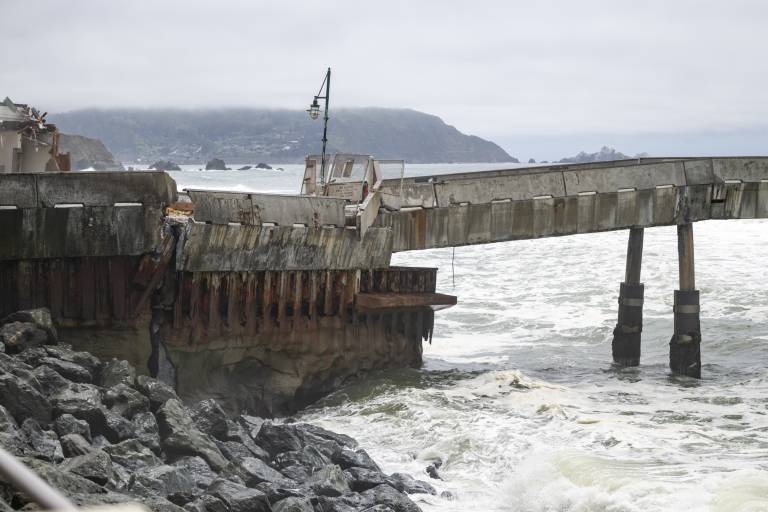
Hot Rugs, Heat Pumps and Induction Cooktops: How Renters Can Go Electric
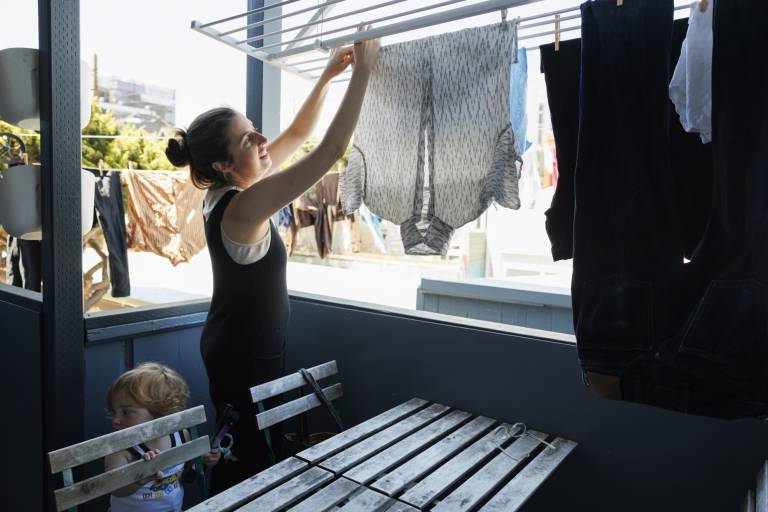
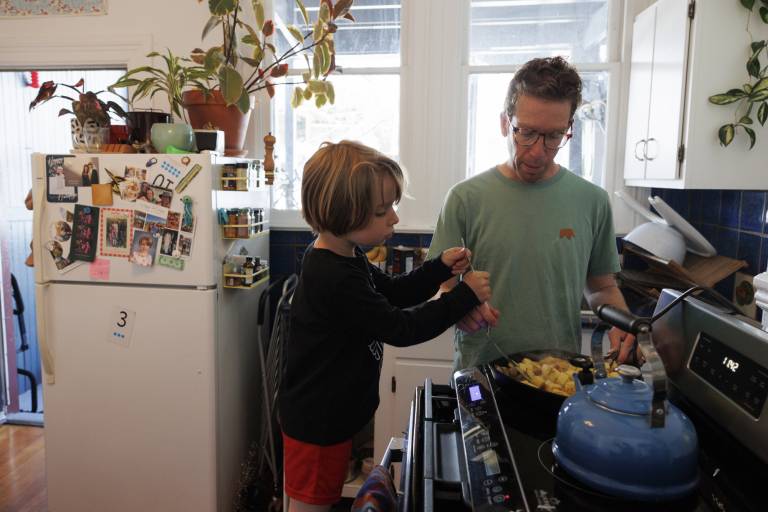
These Bay Area Renters Are Cutting Fossil Fuels From Their Homes and Commutes
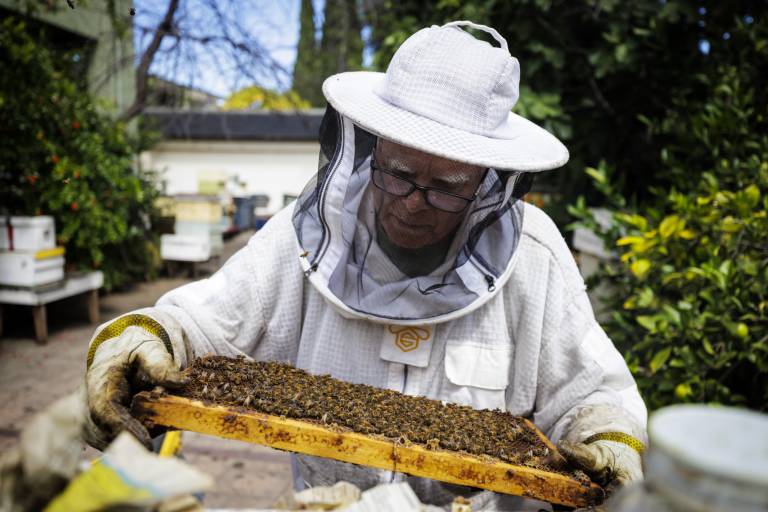
Early Bay Area Honeybee Swarms Bring New Questions About Warming Winters
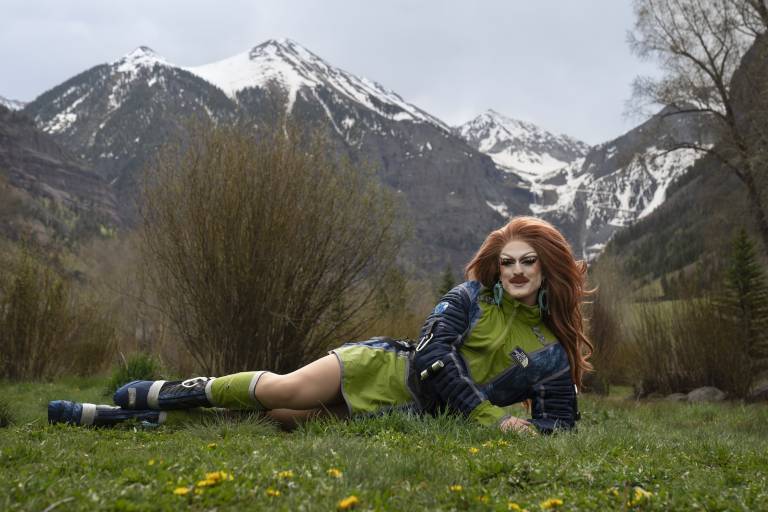
Patagonia Sued Pattie Gonia. Now Fans Want the Company to Back Down
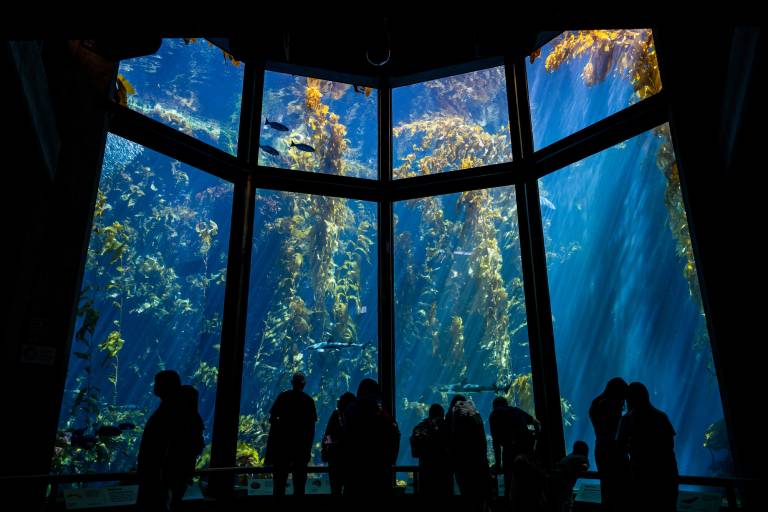
Scientists Worry El Niño Could Supercharge Marine Heat Wave Roiling Coastal California
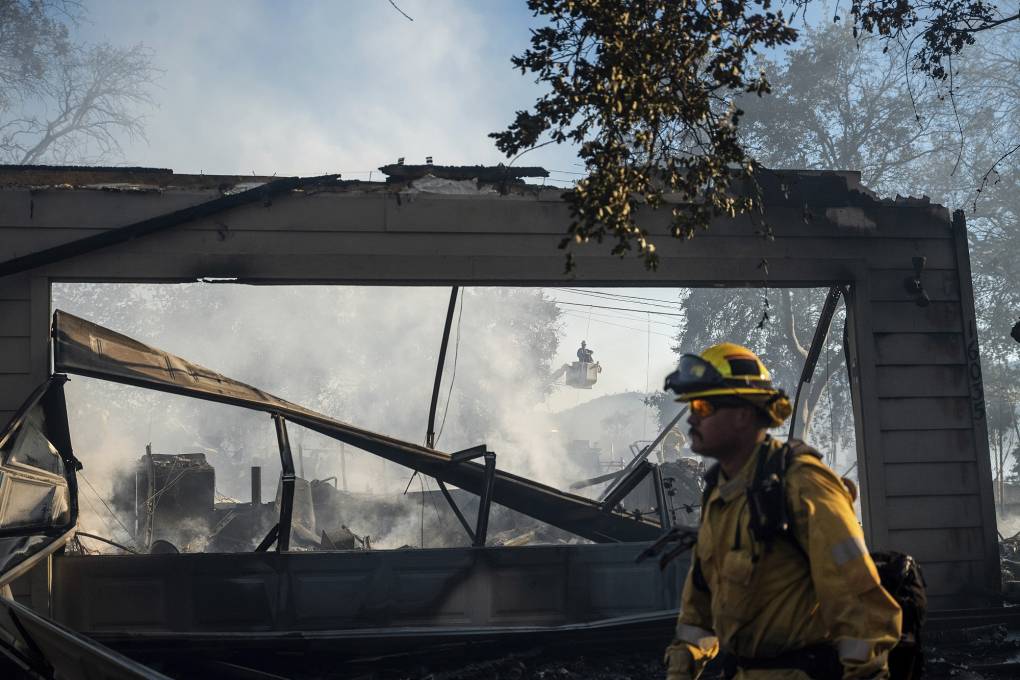
California Must Move Faster on Wildfire Risk, Experts Warn
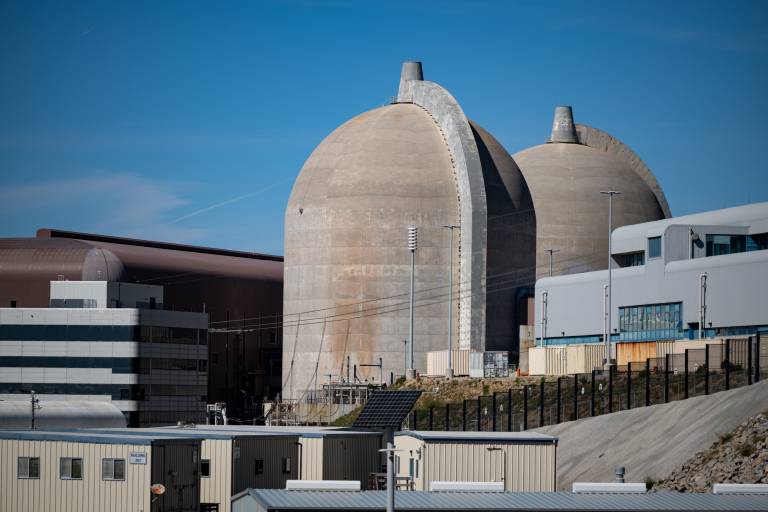
A Rare Look Inside California’s Last Nuclear Power Plant
‘A Delight-Mare’ — Bay Area Sizzles, March Heat Wave Could Shatter Records
Player sponsored by
window.__IS_SSR__=true
window.__INITIAL_STATE__={
"attachmentsReducer": {
"audio_0": {
"type": "attachments",
"id": "audio_0",
"imgSizes": {
"kqedFullSize": {
"file": "https://ww2.kqed.org/news/wp-content/themes/KQED-unified/img/audio_bgs/background0.jpg"
}
}
},
"audio_1": {
"type": "attachments",
"id": "audio_1",
"imgSizes": {
"kqedFullSize": {
"file": "https://ww2.kqed.org/news/wp-content/themes/KQED-unified/img/audio_bgs/background1.jpg"
}
}
},
"audio_2": {
"type": "attachments",
"id": "audio_2",
"imgSizes": {
"kqedFullSize": {
"file": "https://ww2.kqed.org/news/wp-content/themes/KQED-unified/img/audio_bgs/background2.jpg"
}
}
},
"audio_3": {
"type": "attachments",
"id": "audio_3",
"imgSizes": {
"kqedFullSize": {
"file": "https://ww2.kqed.org/news/wp-content/themes/KQED-unified/img/audio_bgs/background3.jpg"
}
}
},
"audio_4": {
"type": "attachments",
"id": "audio_4",
"imgSizes": {
"kqedFullSize": {
"file": "https://ww2.kqed.org/news/wp-content/themes/KQED-unified/img/audio_bgs/background4.jpg"
}
}
},
"placeholder": {
"type": "attachments",
"id": "placeholder",
"imgSizes": {
"thumbnail": {
"file": "https://cdn.kqed.org/wp-content/uploads/2024/12/KQED-Default-Image-816638274-2000x1333-1-160x107.jpg",
"width": 160,
"height": 107,
"mimeType": "image/jpeg"
},
"medium": {
"file": "https://cdn.kqed.org/wp-content/uploads/2024/12/KQED-Default-Image-816638274-2000x1333-1-800x533.jpg",
"width": 800,
"height": 533,
"mimeType": "image/jpeg"
},
"medium_large": {
"file": "https://cdn.kqed.org/wp-content/uploads/2024/12/KQED-Default-Image-816638274-2000x1333-1-768x512.jpg",
"width": 768,
"height": 512,
"mimeType": "image/jpeg"
},
"large": {
"file": "https://cdn.kqed.org/wp-content/uploads/2024/12/KQED-Default-Image-816638274-2000x1333-1-1020x680.jpg",
"width": 1020,
"height": 680,
"mimeType": "image/jpeg"
},
"1536x1536": {
"file": "https://cdn.kqed.org/wp-content/uploads/2024/12/KQED-Default-Image-816638274-2000x1333-1-1536x1024.jpg",
"width": 1536,
"height": 1024,
"mimeType": "image/jpeg"
},
"fd-lrg": {
"file": "https://cdn.kqed.org/wp-content/uploads/2024/12/KQED-Default-Image-816638274-2000x1333-1-1536x1024.jpg",
"width": 1536,
"height": 1024,
"mimeType": "image/jpeg"
},
"fd-med": {
"file": "https://cdn.kqed.org/wp-content/uploads/2024/12/KQED-Default-Image-816638274-2000x1333-1-1020x680.jpg",
"width": 1020,
"height": 680,
"mimeType": "image/jpeg"
},
"fd-sm": {
"file": "https://cdn.kqed.org/wp-content/uploads/2024/12/KQED-Default-Image-816638274-2000x1333-1-800x533.jpg",
"width": 800,
"height": 533,
"mimeType": "image/jpeg"
},
"post-thumbnail": {
"file": "https://cdn.kqed.org/wp-content/uploads/2024/12/KQED-Default-Image-816638274-2000x1333-1-672x372.jpg",
"width": 672,
"height": 372,
"mimeType": "image/jpeg"
},
"twentyfourteen-full-width": {
"file": "https://cdn.kqed.org/wp-content/uploads/2024/12/KQED-Default-Image-816638274-2000x1333-1-1038x576.jpg",
"width": 1038,
"height": 576,
"mimeType": "image/jpeg"
},
"xxsmall": {
"file": "https://cdn.kqed.org/wp-content/uploads/2024/12/KQED-Default-Image-816638274-2000x1333-1-160x107.jpg",
"width": 160,
"height": 107,
"mimeType": "image/jpeg"
},
"xsmall": {
"file": "https://cdn.kqed.org/wp-content/uploads/2024/12/KQED-Default-Image-816638274-2000x1333-1-672x372.jpg",
"width": 672,
"height": 372,
"mimeType": "image/jpeg"
},
"small": {
"file": "https://cdn.kqed.org/wp-content/uploads/2024/12/KQED-Default-Image-816638274-2000x1333-1-672x372.jpg",
"width": 672,
"height": 372,
"mimeType": "image/jpeg"
},
"xlarge": {
"file": "https://cdn.kqed.org/wp-content/uploads/2024/12/KQED-Default-Image-816638274-2000x1333-1-1020x680.jpg",
"width": 1020,
"height": 680,
"mimeType": "image/jpeg"
},
"full-width": {
"file": "https://cdn.kqed.org/wp-content/uploads/2024/12/KQED-Default-Image-816638274-2000x1333-1-1920x1280.jpg",
"width": 1920,
"height": 1280,
"mimeType": "image/jpeg"
},
"guest-author-32": {
"file": "https://cdn.kqed.org/wp-content/uploads/2025/01/KQED-Default-Image-816638274-1333x1333-1-160x160.jpg",
"width": 32,
"height": 32,
"mimeType": "image/jpeg"
},
"guest-author-50": {
"file": "https://cdn.kqed.org/wp-content/uploads/2025/01/KQED-Default-Image-816638274-1333x1333-1-160x160.jpg",
"width": 50,
"height": 50,
"mimeType": "image/jpeg"
},
"guest-author-64": {
"file": "https://cdn.kqed.org/wp-content/uploads/2025/01/KQED-Default-Image-816638274-1333x1333-1-160x160.jpg",
"width": 64,
"height": 64,
"mimeType": "image/jpeg"
},
"guest-author-96": {
"file": "https://cdn.kqed.org/wp-content/uploads/2025/01/KQED-Default-Image-816638274-1333x1333-1-160x160.jpg",
"width": 96,
"height": 96,
"mimeType": "image/jpeg"
},
"guest-author-128": {
"file": "https://cdn.kqed.org/wp-content/uploads/2025/01/KQED-Default-Image-816638274-1333x1333-1-160x160.jpg",
"width": 128,
"height": 128,
"mimeType": "image/jpeg"
},
"detail": {
"file": "https://cdn.kqed.org/wp-content/uploads/2025/01/KQED-Default-Image-816638274-1333x1333-1-160x160.jpg",
"width": 160,
"height": 160,
"mimeType": "image/jpeg"
},
"kqedFullSize": {
"file": "https://cdn.kqed.org/wp-content/uploads/2024/12/KQED-Default-Image-816638274-2000x1333-1.jpg",
"width": 2000,
"height": 1333
}
}
},
"science_2001277": {
"type": "attachments",
"id": "science_2001277",
"meta": {
"index": "attachments_1716263798",
"site": "science",
"id": "2001277",
"found": true
},
"title": "260609-PACIFICAPIERUPDATE-10-BL-KQED",
"publishDate": 1781041872,
"status": "inherit",
"parent": 0,
"modified": 1781041900,
"caption": "Damage to the Pacifica Municipal Pier on June 9, 2026, after severe structural damage and widening cracks forced its closure.",
"credit": "Beth LaBerge/KQED",
"altTag": null,
"description": null,
"imgSizes": {
"thumbnail": {
"file": "https://cdn.kqed.org/wp-content/uploads/sites/35/2026/06/260609-PACIFICAPIERUPDATE-10-BL-KQED-160x107.jpg",
"width": 160,
"height": 107,
"mimeType": "image/jpeg"
},
"medium_large": {
"file": "https://cdn.kqed.org/wp-content/uploads/sites/35/2026/06/260609-PACIFICAPIERUPDATE-10-BL-KQED-768x512.jpg",
"width": 768,
"height": 512,
"mimeType": "image/jpeg"
},
"1536x1536": {
"file": "https://cdn.kqed.org/wp-content/uploads/sites/35/2026/06/260609-PACIFICAPIERUPDATE-10-BL-KQED-1536x1024.jpg",
"width": 1536,
"height": 1024,
"mimeType": "image/jpeg"
},
"post-thumbnail": {
"file": "https://cdn.kqed.org/wp-content/uploads/sites/35/2026/06/260609-PACIFICAPIERUPDATE-10-BL-KQED-672x372.jpg",
"width": 672,
"height": 372,
"mimeType": "image/jpeg"
},
"twentyfourteen-full-width": {
"file": "https://cdn.kqed.org/wp-content/uploads/sites/35/2026/06/260609-PACIFICAPIERUPDATE-10-BL-KQED-1038x576.jpg",
"width": 1038,
"height": 576,
"mimeType": "image/jpeg"
},
"npr-cds-wide": {
"file": "https://cdn.kqed.org/wp-content/uploads/sites/35/2026/06/260609-PACIFICAPIERUPDATE-10-BL-KQED-1200x675.jpg",
"width": 1200,
"height": 675,
"mimeType": "image/jpeg"
},
"npr-cds-square": {
"file": "https://cdn.kqed.org/wp-content/uploads/sites/35/2026/06/260609-PACIFICAPIERUPDATE-10-BL-KQED-600x600.jpg",
"width": 600,
"height": 600,
"mimeType": "image/jpeg"
},
"kqedFullSize": {
"file": "https://cdn.kqed.org/wp-content/uploads/sites/35/2026/06/260609-PACIFICAPIERUPDATE-10-BL-KQED.jpg",
"width": 2000,
"height": 1333
}
},
"isLoading": false,
"fetchFailed": false
},
"science_2001153": {
"type": "attachments",
"id": "science_2001153",
"meta": {
"index": "attachments_1716263798",
"site": "science",
"id": "2001153",
"found": true
},
"title": "20260531-RENTERSELECTRIFY-JY-01-KQED",
"publishDate": 1780319988,
"status": "inherit",
"parent": 0,
"modified": 1780511147,
"caption": "Karina van Schaardenburg hangs laundry to dry alongside her son Isaac at their home in San Francisco on Sunday, May 31, 2026.",
"credit": "Juliana Yamada for KQED",
"altTag": null,
"description": null,
"imgSizes": {
"thumbnail": {
"file": "https://cdn.kqed.org/wp-content/uploads/sites/35/2026/06/20260531-RENTERSELECTRIFY-JY-01-KQED-160x107.jpg",
"width": 160,
"height": 107,
"mimeType": "image/jpeg"
},
"medium_large": {
"file": "https://cdn.kqed.org/wp-content/uploads/sites/35/2026/06/20260531-RENTERSELECTRIFY-JY-01-KQED-768x512.jpg",
"width": 768,
"height": 512,
"mimeType": "image/jpeg"
},
"1536x1536": {
"file": "https://cdn.kqed.org/wp-content/uploads/sites/35/2026/06/20260531-RENTERSELECTRIFY-JY-01-KQED-1536x1024.jpg",
"width": 1536,
"height": 1024,
"mimeType": "image/jpeg"
},
"post-thumbnail": {
"file": "https://cdn.kqed.org/wp-content/uploads/sites/35/2026/06/20260531-RENTERSELECTRIFY-JY-01-KQED-672x372.jpg",
"width": 672,
"height": 372,
"mimeType": "image/jpeg"
},
"twentyfourteen-full-width": {
"file": "https://cdn.kqed.org/wp-content/uploads/sites/35/2026/06/20260531-RENTERSELECTRIFY-JY-01-KQED-1038x576.jpg",
"width": 1038,
"height": 576,
"mimeType": "image/jpeg"
},
"npr-cds-wide": {
"file": "https://cdn.kqed.org/wp-content/uploads/sites/35/2026/06/20260531-RENTERSELECTRIFY-JY-01-KQED-1200x675.jpg",
"width": 1200,
"height": 675,
"mimeType": "image/jpeg"
},
"npr-cds-square": {
"file": "https://cdn.kqed.org/wp-content/uploads/sites/35/2026/06/20260531-RENTERSELECTRIFY-JY-01-KQED-600x600.jpg",
"width": 600,
"height": 600,
"mimeType": "image/jpeg"
},
"kqedFullSize": {
"file": "https://cdn.kqed.org/wp-content/uploads/sites/35/2026/06/20260531-RENTERSELECTRIFY-JY-01-KQED.jpg",
"width": 2000,
"height": 1333
}
},
"isLoading": false,
"fetchFailed": false
},
"science_2001160": {
"type": "attachments",
"id": "science_2001160",
"meta": {
"index": "attachments_1716263798",
"site": "science",
"id": "2001160",
"found": true
},
"title": "20260531-RENTERSELECTRIFY-JY-15-KQED",
"publishDate": 1780320026,
"status": "inherit",
"parent": 0,
"modified": 1780510051,
"caption": "Jason Wexler and his son Ezra van Schaardenburg, 5, cook potatoes for brunch together on an induction cooktop at their home in San Francisco on Sunday, May 31, 2026. Wexler and his wife Karina van Schaardenburg cut down the usage of fossil fuels in their home and use electric appliances in substitution.",
"credit": "Juliana Yamada for KQED",
"altTag": null,
"description": null,
"imgSizes": {
"thumbnail": {
"file": "https://cdn.kqed.org/wp-content/uploads/sites/35/2026/06/20260531-RENTERSELECTRIFY-JY-15-KQED-160x107.jpg",
"width": 160,
"height": 107,
"mimeType": "image/jpeg"
},
"medium_large": {
"file": "https://cdn.kqed.org/wp-content/uploads/sites/35/2026/06/20260531-RENTERSELECTRIFY-JY-15-KQED-768x512.jpg",
"width": 768,
"height": 512,
"mimeType": "image/jpeg"
},
"1536x1536": {
"file": "https://cdn.kqed.org/wp-content/uploads/sites/35/2026/06/20260531-RENTERSELECTRIFY-JY-15-KQED-1536x1024.jpg",
"width": 1536,
"height": 1024,
"mimeType": "image/jpeg"
},
"post-thumbnail": {
"file": "https://cdn.kqed.org/wp-content/uploads/sites/35/2026/06/20260531-RENTERSELECTRIFY-JY-15-KQED-672x372.jpg",
"width": 672,
"height": 372,
"mimeType": "image/jpeg"
},
"twentyfourteen-full-width": {
"file": "https://cdn.kqed.org/wp-content/uploads/sites/35/2026/06/20260531-RENTERSELECTRIFY-JY-15-KQED-1038x576.jpg",
"width": 1038,
"height": 576,
"mimeType": "image/jpeg"
},
"npr-cds-wide": {
"file": "https://cdn.kqed.org/wp-content/uploads/sites/35/2026/06/20260531-RENTERSELECTRIFY-JY-15-KQED-1200x675.jpg",
"width": 1200,
"height": 675,
"mimeType": "image/jpeg"
},
"npr-cds-square": {
"file": "https://cdn.kqed.org/wp-content/uploads/sites/35/2026/06/20260531-RENTERSELECTRIFY-JY-15-KQED-600x600.jpg",
"width": 600,
"height": 600,
"mimeType": "image/jpeg"
},
"kqedFullSize": {
"file": "https://cdn.kqed.org/wp-content/uploads/sites/35/2026/06/20260531-RENTERSELECTRIFY-JY-15-KQED.jpg",
"width": 2000,
"height": 1333
}
},
"isLoading": false,
"fetchFailed": false
},
"science_2001108": {
"type": "attachments",
"id": "science_2001108",
"meta": {
"index": "attachments_1716263798",
"site": "science",
"id": "2001108",
"found": true
},
"title": "260527-BEE SWARMS-MD-06-KQED",
"publishDate": 1779915085,
"status": "inherit",
"parent": 0,
"modified": 1779982526,
"caption": "Steve Demkowski examines a frame from one of his honey bee boxes at his home in San José on May 27, 2026.",
"credit": "Martin do Nascimento/KQED",
"altTag": null,
"description": null,
"imgSizes": {
"thumbnail": {
"file": "https://cdn.kqed.org/wp-content/uploads/sites/35/2026/05/260527-BEE-SWARMS-MD-06-KQED-160x107.jpg",
"width": 160,
"height": 107,
"mimeType": "image/jpeg"
},
"medium_large": {
"file": "https://cdn.kqed.org/wp-content/uploads/sites/35/2026/05/260527-BEE-SWARMS-MD-06-KQED-768x512.jpg",
"width": 768,
"height": 512,
"mimeType": "image/jpeg"
},
"1536x1536": {
"file": "https://cdn.kqed.org/wp-content/uploads/sites/35/2026/05/260527-BEE-SWARMS-MD-06-KQED-1536x1025.jpg",
"width": 1536,
"height": 1025,
"mimeType": "image/jpeg"
},
"post-thumbnail": {
"file": "https://cdn.kqed.org/wp-content/uploads/sites/35/2026/05/260527-BEE-SWARMS-MD-06-KQED-672x372.jpg",
"width": 672,
"height": 372,
"mimeType": "image/jpeg"
},
"twentyfourteen-full-width": {
"file": "https://cdn.kqed.org/wp-content/uploads/sites/35/2026/05/260527-BEE-SWARMS-MD-06-KQED-1038x576.jpg",
"width": 1038,
"height": 576,
"mimeType": "image/jpeg"
},
"npr-cds-wide": {
"file": "https://cdn.kqed.org/wp-content/uploads/sites/35/2026/05/260527-BEE-SWARMS-MD-06-KQED-1200x675.jpg",
"width": 1200,
"height": 675,
"mimeType": "image/jpeg"
},
"npr-cds-square": {
"file": "https://cdn.kqed.org/wp-content/uploads/sites/35/2026/05/260527-BEE-SWARMS-MD-06-KQED-600x600.jpg",
"width": 600,
"height": 600,
"mimeType": "image/jpeg"
},
"kqedFullSize": {
"file": "https://cdn.kqed.org/wp-content/uploads/sites/35/2026/05/260527-BEE-SWARMS-MD-06-KQED.jpg",
"width": 2000,
"height": 1334
}
},
"isLoading": false,
"fetchFailed": false
},
"science_2001101": {
"type": "attachments",
"id": "science_2001101",
"meta": {
"index": "attachments_1716263798",
"site": "science",
"id": "2001101",
"found": true
},
"title": "Drag Queen Pattie Gonia Performs at Mountain Film Festival",
"publishDate": 1779901519,
"status": "inherit",
"parent": 2001099,
"modified": 1779995060,
"caption": "Drag queen and environmentalist Pattie Gonia poses for portraits during the Mountainfilm documentary festival in Telluride, Colorado, on May 25, 2024. ",
"credit": "Sarah Silbiger for The Washington Post",
"altTag": null,
"description": null,
"imgSizes": {
"thumbnail": {
"file": "https://cdn.kqed.org/wp-content/uploads/sites/35/2026/05/GettyImages-2221286163-160x107.jpg",
"width": 160,
"height": 107,
"mimeType": "image/jpeg"
},
"medium_large": {
"file": "https://cdn.kqed.org/wp-content/uploads/sites/35/2026/05/GettyImages-2221286163-768x512.jpg",
"width": 768,
"height": 512,
"mimeType": "image/jpeg"
},
"1536x1536": {
"file": "https://cdn.kqed.org/wp-content/uploads/sites/35/2026/05/GettyImages-2221286163-1536x1024.jpg",
"width": 1536,
"height": 1024,
"mimeType": "image/jpeg"
},
"post-thumbnail": {
"file": "https://cdn.kqed.org/wp-content/uploads/sites/35/2026/05/GettyImages-2221286163-672x372.jpg",
"width": 672,
"height": 372,
"mimeType": "image/jpeg"
},
"twentyfourteen-full-width": {
"file": "https://cdn.kqed.org/wp-content/uploads/sites/35/2026/05/GettyImages-2221286163-1038x576.jpg",
"width": 1038,
"height": 576,
"mimeType": "image/jpeg"
},
"npr-cds-wide": {
"file": "https://cdn.kqed.org/wp-content/uploads/sites/35/2026/05/GettyImages-2221286163-1200x675.jpg",
"width": 1200,
"height": 675,
"mimeType": "image/jpeg"
},
"npr-cds-square": {
"file": "https://cdn.kqed.org/wp-content/uploads/sites/35/2026/05/GettyImages-2221286163-600x600.jpg",
"width": 600,
"height": 600,
"mimeType": "image/jpeg"
},
"kqedFullSize": {
"file": "https://cdn.kqed.org/wp-content/uploads/sites/35/2026/05/GettyImages-2221286163.jpg",
"width": 1980,
"height": 1320
}
},
"isLoading": false,
"fetchFailed": false
},
"science_2001058": {
"type": "attachments",
"id": "science_2001058",
"meta": {
"index": "attachments_1716263798",
"site": "science",
"id": "2001058",
"found": true
},
"title": "260519-MarineHeatwave-29-BL_qed",
"publishDate": 1779471827,
"status": "inherit",
"parent": 0,
"modified": 1779471846,
"caption": "Visitors look at the Kelp Forest exhibit at the Monterey Bay Aquarium in Monterey on May 19, 2026, modeled after the kelp forests found along the Monterey Bay coast.",
"credit": "Beth LaBerge/KQED",
"altTag": null,
"description": null,
"imgSizes": {
"thumbnail": {
"file": "https://cdn.kqed.org/wp-content/uploads/sites/35/2026/05/260519-MarineHeatwave-29-BL_qed-160x107.jpg",
"width": 160,
"height": 107,
"mimeType": "image/jpeg"
},
"medium_large": {
"file": "https://cdn.kqed.org/wp-content/uploads/sites/35/2026/05/260519-MarineHeatwave-29-BL_qed-768x512.jpg",
"width": 768,
"height": 512,
"mimeType": "image/jpeg"
},
"1536x1536": {
"file": "https://cdn.kqed.org/wp-content/uploads/sites/35/2026/05/260519-MarineHeatwave-29-BL_qed-1536x1024.jpg",
"width": 1536,
"height": 1024,
"mimeType": "image/jpeg"
},
"post-thumbnail": {
"file": "https://cdn.kqed.org/wp-content/uploads/sites/35/2026/05/260519-MarineHeatwave-29-BL_qed-672x372.jpg",
"width": 672,
"height": 372,
"mimeType": "image/jpeg"
},
"twentyfourteen-full-width": {
"file": "https://cdn.kqed.org/wp-content/uploads/sites/35/2026/05/260519-MarineHeatwave-29-BL_qed-1038x576.jpg",
"width": 1038,
"height": 576,
"mimeType": "image/jpeg"
},
"npr-cds-wide": {
"file": "https://cdn.kqed.org/wp-content/uploads/sites/35/2026/05/260519-MarineHeatwave-29-BL_qed-1200x675.jpg",
"width": 1200,
"height": 675,
"mimeType": "image/jpeg"
},
"npr-cds-square": {
"file": "https://cdn.kqed.org/wp-content/uploads/sites/35/2026/05/260519-MarineHeatwave-29-BL_qed-600x600.jpg",
"width": 600,
"height": 600,
"mimeType": "image/jpeg"
},
"kqedFullSize": {
"file": "https://cdn.kqed.org/wp-content/uploads/sites/35/2026/05/260519-MarineHeatwave-29-BL_qed.jpg",
"width": 2000,
"height": 1333
}
},
"isLoading": false,
"fetchFailed": false
},
"science_1994222": {
"type": "attachments",
"id": "science_1994222",
"meta": {
"index": "attachments_1716263798",
"site": "science",
"id": "1994222",
"found": true
},
"title": "California Wildfires",
"publishDate": 1725903241,
"status": "inherit",
"parent": 1994218,
"modified": 1778718704,
"caption": "A firefighter passes a home destroyed by the Boyles fire in Clearlake, California, on Sunday, Sept. 8, 2024.",
"credit": "Noah Berger/AP Photo",
"altTag": null,
"description": null,
"imgSizes": {
"medium": {
"file": "https://cdn.kqed.org/wp-content/uploads/sites/35/2024/09/BoylesFireAP2-800x533.jpg",
"width": 800,
"height": 533,
"mimeType": "image/jpeg"
},
"large": {
"file": "https://cdn.kqed.org/wp-content/uploads/sites/35/2024/09/BoylesFireAP2-1020x680.jpg",
"width": 1020,
"height": 680,
"mimeType": "image/jpeg"
},
"thumbnail": {
"file": "https://cdn.kqed.org/wp-content/uploads/sites/35/2024/09/BoylesFireAP2-160x107.jpg",
"width": 160,
"height": 107,
"mimeType": "image/jpeg"
},
"medium_large": {
"file": "https://cdn.kqed.org/wp-content/uploads/sites/35/2024/09/BoylesFireAP2-768x512.jpg",
"width": 768,
"height": 512,
"mimeType": "image/jpeg"
},
"1536x1536": {
"file": "https://cdn.kqed.org/wp-content/uploads/sites/35/2024/09/BoylesFireAP2-1536x1024.jpg",
"width": 1536,
"height": 1024,
"mimeType": "image/jpeg"
},
"post-thumbnail": {
"file": "https://cdn.kqed.org/wp-content/uploads/sites/35/2024/09/BoylesFireAP2-672x372.jpg",
"width": 672,
"height": 372,
"mimeType": "image/jpeg"
},
"twentyfourteen-full-width": {
"file": "https://cdn.kqed.org/wp-content/uploads/sites/35/2024/09/BoylesFireAP2-1038x576.jpg",
"width": 1038,
"height": 576,
"mimeType": "image/jpeg"
},
"full-width": {
"file": "https://cdn.kqed.org/wp-content/uploads/sites/35/2024/09/BoylesFireAP2-1920x1280.jpg",
"width": 1920,
"height": 1280,
"mimeType": "image/jpeg"
},
"kqedFullSize": {
"file": "https://cdn.kqed.org/wp-content/uploads/sites/35/2024/09/BoylesFireAP2.jpg",
"width": 2000,
"height": 1333
}
},
"isLoading": false,
"fetchFailed": false
},
"science_2000852": {
"type": "attachments",
"id": "science_2000852",
"meta": {
"index": "attachments_1716263798",
"site": "science",
"id": "2000852",
"found": true
},
"title": "260213-DiabloCanyonNuclearPowerPlant-62-BL_qed",
"publishDate": 1777316431,
"status": "inherit",
"parent": 0,
"modified": 1777316453,
"caption": "The Diablo Canyon Power Plant in San Luis Obispo on Feb. 13, 2026, the state’s only active nuclear power plant.",
"credit": "Beth LaBerge/KQED",
"altTag": null,
"description": null,
"imgSizes": {
"thumbnail": {
"file": "https://cdn.kqed.org/wp-content/uploads/sites/35/2026/04/260213-DiabloCanyonNuclearPowerPlant-62-BL_qed-160x107.jpg",
"width": 160,
"height": 107,
"mimeType": "image/jpeg"
},
"medium_large": {
"file": "https://cdn.kqed.org/wp-content/uploads/sites/35/2026/04/260213-DiabloCanyonNuclearPowerPlant-62-BL_qed-768x512.jpg",
"width": 768,
"height": 512,
"mimeType": "image/jpeg"
},
"1536x1536": {
"file": "https://cdn.kqed.org/wp-content/uploads/sites/35/2026/04/260213-DiabloCanyonNuclearPowerPlant-62-BL_qed-1536x1024.jpg",
"width": 1536,
"height": 1024,
"mimeType": "image/jpeg"
},
"post-thumbnail": {
"file": "https://cdn.kqed.org/wp-content/uploads/sites/35/2026/04/260213-DiabloCanyonNuclearPowerPlant-62-BL_qed-672x372.jpg",
"width": 672,
"height": 372,
"mimeType": "image/jpeg"
},
"twentyfourteen-full-width": {
"file": "https://cdn.kqed.org/wp-content/uploads/sites/35/2026/04/260213-DiabloCanyonNuclearPowerPlant-62-BL_qed-1038x576.jpg",
"width": 1038,
"height": 576,
"mimeType": "image/jpeg"
},
"npr-cds-wide": {
"file": "https://cdn.kqed.org/wp-content/uploads/sites/35/2026/04/260213-DiabloCanyonNuclearPowerPlant-62-BL_qed-1200x675.jpg",
"width": 1200,
"height": 675,
"mimeType": "image/jpeg"
},
"npr-cds-square": {
"file": "https://cdn.kqed.org/wp-content/uploads/sites/35/2026/04/260213-DiabloCanyonNuclearPowerPlant-62-BL_qed-600x600.jpg",
"width": 600,
"height": 600,
"mimeType": "image/jpeg"
},
"kqedFullSize": {
"file": "https://cdn.kqed.org/wp-content/uploads/sites/35/2026/04/260213-DiabloCanyonNuclearPowerPlant-62-BL_qed.jpg",
"width": 2000,
"height": 1333
}
},
"isLoading": false,
"fetchFailed": false
},
"science_1994646": {
"type": "attachments",
"id": "science_1994646",
"meta": {
"index": "attachments_1716263798",
"site": "science",
"id": "1994646",
"found": true
},
"title": "San Francisco Bay Area to get warmest temps of the year",
"publishDate": 1728065455,
"status": "inherit",
"parent": 1994643,
"modified": 1728065670,
"caption": "The sun sets over San Francisco International Airport on May 8, 2024. The Bay Area experienced record-breaking heat waves this week, marking October as one of the hottest months of the year.",
"credit": "Tayfun Coskun/Anadolu via Getty Images",
"altTag": null,
"description": null,
"imgSizes": {
"medium": {
"file": "https://cdn.kqed.org/wp-content/uploads/sites/35/2024/10/SFHeatWaveGetty2-800x533.jpg",
"width": 800,
"height": 533,
"mimeType": "image/jpeg"
},
"large": {
"file": "https://cdn.kqed.org/wp-content/uploads/sites/35/2024/10/SFHeatWaveGetty2-1020x679.jpg",
"width": 1020,
"height": 679,
"mimeType": "image/jpeg"
},
"thumbnail": {
"file": "https://cdn.kqed.org/wp-content/uploads/sites/35/2024/10/SFHeatWaveGetty2-160x107.jpg",
"width": 160,
"height": 107,
"mimeType": "image/jpeg"
},
"medium_large": {
"file": "https://cdn.kqed.org/wp-content/uploads/sites/35/2024/10/SFHeatWaveGetty2-768x511.jpg",
"width": 768,
"height": 511,
"mimeType": "image/jpeg"
},
"1536x1536": {
"file": "https://cdn.kqed.org/wp-content/uploads/sites/35/2024/10/SFHeatWaveGetty2-1536x1023.jpg",
"width": 1536,
"height": 1023,
"mimeType": "image/jpeg"
},
"post-thumbnail": {
"file": "https://cdn.kqed.org/wp-content/uploads/sites/35/2024/10/SFHeatWaveGetty2-672x372.jpg",
"width": 672,
"height": 372,
"mimeType": "image/jpeg"
},
"twentyfourteen-full-width": {
"file": "https://cdn.kqed.org/wp-content/uploads/sites/35/2024/10/SFHeatWaveGetty2-1038x576.jpg",
"width": 1038,
"height": 576,
"mimeType": "image/jpeg"
},
"full-width": {
"file": "https://cdn.kqed.org/wp-content/uploads/sites/35/2024/10/SFHeatWaveGetty2-1920x1279.jpg",
"width": 1920,
"height": 1279,
"mimeType": "image/jpeg"
},
"kqedFullSize": {
"file": "https://cdn.kqed.org/wp-content/uploads/sites/35/2024/10/SFHeatWaveGetty2.jpg",
"width": 2000,
"height": 1332
}
},
"isLoading": false,
"fetchFailed": false
}
},
"audioPlayerReducer": {
"postId": "stream_live",
"isPaused": true,
"isPlaying": false,
"pfsActive": false,
"pledgeModalIsOpen": true,
"playerDrawerIsOpen": false
},
"authorsReducer": {
"lklivans": {
"type": "authors",
"id": "8648",
"meta": {
"index": "authors_1716337520",
"id": "8648",
"found": true
},
"name": "Laura Klivans",
"firstName": "Laura",
"lastName": "Klivans",
"slug": "lklivans",
"email": "lklivans@kqed.org",
"display_author_email": true,
"staff_mastheads": [
"news",
"science"
],
"title": "Reporter",
"bio": "Laura Klivans is an award-winning science reporter for KQED News, where she covers climate change with an eye on both groundbreaking progress and gaps in action. She is the former host of KQED's blockbuster video series about tiny, amazing animals, \u003cem>Deep Look\u003c/em>. Her work reaches national audiences through NPR, \u003cem>Here & Now, \u003c/em>PRI, and other major outlets. \r\n\r\nLaura’s won five Northern California Area Emmy Awards for Deep Look and First Place in the Greater Bay Area Journalism Awards for a podcast exploring how one Oakland neighborhood teamed up to reduce planet-heating pollution.\r\n\r\nBeyond her reporting, she hosts and moderates events. In the past, she taught audio storytelling at the UC Berkeley Graduate School of Journalism, led international education programs, worked with immigrants and refugees along the Thai-Burmese border, taught high schoolers sex ed, and was an actress. \r\n\r\nShe's a former UC Berkeley Human Rights Fellow, USC Center for Health Journalism's California Fellow and Coro Fellow in Public Affairs. Laura has a master’s in journalism from UC Berkeley, a master’s in education from Harvard, and an undergraduate degree from Northwestern University.\r\n\r\nShe loves trying to riddle the meaning out of vanity license plates.",
"avatar": "https://secure.gravatar.com/avatar/af8e757bb8ce7b7fee6160ba66e37327?s=600&d=blank&r=g",
"twitter": "lauraklivans",
"facebook": null,
"instagram": null,
"linkedin": null,
"sites": [
{
"site": "news",
"roles": [
"editor"
]
},
{
"site": "stateofhealth",
"roles": [
"contributor",
"editor"
]
},
{
"site": "science",
"roles": [
"editor"
]
},
{
"site": "forum",
"roles": [
"editor"
]
}
],
"headData": {
"title": "Laura Klivans | KQED",
"description": "Reporter",
"ogImgSrc": "https://secure.gravatar.com/avatar/af8e757bb8ce7b7fee6160ba66e37327?s=600&d=blank&r=g",
"twImgSrc": "https://secure.gravatar.com/avatar/af8e757bb8ce7b7fee6160ba66e37327?s=600&d=blank&r=g"
},
"isLoading": false,
"link": "/author/lklivans"
},
"dventon": {
"type": "authors",
"id": "11088",
"meta": {
"index": "authors_1716337520",
"id": "11088",
"found": true
},
"name": "Danielle Venton",
"firstName": "Danielle",
"lastName": "Venton",
"slug": "dventon",
"email": "dventon@kqed.org",
"display_author_email": true,
"staff_mastheads": [
"science"
],
"title": "Science reporter",
"bio": "Danielle Venton is a reporter for KQED Science. She covers wildfires, space and oceans (though she is prone to sea sickness).\r\n\r\nBefore joining KQED in 2015, Danielle was a staff reporter at KRCB in Sonoma County and a freelancer. She studied science communication at UC Santa Cruz and formerly worked at CERN in Geneva, Switzerland where she wrote about computing. She lives in Sonoma County and enjoys backpacking.",
"avatar": "https://secure.gravatar.com/avatar/ebaf11ee6cfb7bb40329a143d463829e?s=600&d=blank&r=g",
"twitter": "DanielleVenton",
"facebook": null,
"instagram": null,
"linkedin": null,
"sites": [
{
"site": "arts",
"roles": [
"contributor"
]
},
{
"site": "news",
"roles": [
"editor"
]
},
{
"site": "futureofyou",
"roles": [
"editor"
]
},
{
"site": "science",
"roles": [
"editor"
]
},
{
"site": "liveblog",
"roles": [
"contributor"
]
}
],
"headData": {
"title": "Danielle Venton | KQED",
"description": "Science reporter",
"ogImgSrc": "https://secure.gravatar.com/avatar/ebaf11ee6cfb7bb40329a143d463829e?s=600&d=blank&r=g",
"twImgSrc": "https://secure.gravatar.com/avatar/ebaf11ee6cfb7bb40329a143d463829e?s=600&d=blank&r=g"
},
"isLoading": false,
"link": "/author/dventon"
},
"eromero": {
"type": "authors",
"id": "11746",
"meta": {
"index": "authors_1716337520",
"id": "11746",
"found": true
},
"name": "Ezra David Romero",
"firstName": "Ezra David",
"lastName": "Romero",
"slug": "eromero",
"email": "eromero@kqed.org",
"display_author_email": true,
"staff_mastheads": [
"news",
"science"
],
"title": "Climate Reporter",
"bio": "Ezra David Romero is a climate reporter for KQED News. He covers the absence and excess of water in the Bay Area — think sea level rise, flooding and drought. For nearly a decade he’s covered how warming temperatures are altering the lives of Californians. He’s reported on farmers worried their pistachio trees aren’t getting enough sleep, families desperate for water, scientists studying dying giant sequoias, and alongside firefighters containing wildfires. His work has appeared on local stations across California and nationally on public radio shows like Morning Edition, Here and Now, All Things Considered and Science Friday. ",
"avatar": "https://secure.gravatar.com/avatar/9c15bb8bab267e058708a9eeaeef16bf?s=600&d=blank&r=g",
"twitter": "ezraromero",
"bluesky": null,
"facebook": null,
"instagram": null,
"linkedin": null,
"sites": [
{
"site": "arts",
"roles": [
"editor"
]
},
{
"site": "news",
"roles": [
"editor"
]
},
{
"site": "science",
"roles": [
"editor"
]
},
{
"site": "liveblog",
"roles": [
"author"
]
}
],
"headData": {
"title": "Ezra David Romero | KQED",
"description": "Climate Reporter",
"ogImgSrc": "https://secure.gravatar.com/avatar/9c15bb8bab267e058708a9eeaeef16bf?s=600&d=blank&r=g",
"twImgSrc": "https://secure.gravatar.com/avatar/9c15bb8bab267e058708a9eeaeef16bf?s=600&d=blank&r=g"
},
"isLoading": false,
"link": "/author/eromero"
}
},
"breakingNewsReducer": {},
"pagesReducer": {},
"postsReducer": {
"stream_live": {
"type": "live",
"id": "stream_live",
"audioUrl": "https://streams.kqed.org/kqedradio",
"title": "Live Stream",
"excerpt": "Live Stream information currently unavailable.",
"link": "/radio",
"featImg": "",
"label": {
"name": "KQED Live",
"link": "/"
}
},
"stream_kqedNewscast": {
"type": "posts",
"id": "stream_kqedNewscast",
"audioUrl": "https://www.kqed.org/.stream/anon/radio/RDnews/newscast.mp3?_=1",
"title": "KQED Newscast",
"featImg": "",
"label": {
"name": "88.5 FM",
"link": "/"
}
},
"science_2001267": {
"type": "posts",
"id": "science_2001267",
"meta": {
"index": "posts_1716263798",
"site": "science",
"id": "2001267",
"score": null,
"sort": [
1781042526000
]
},
"guestAuthors": [],
"slug": "you-cant-beat-mother-nature-destroyed-cafe-gives-pacifica-look-at-climate-changed-future",
"title": "‘You Can’t Beat Mother Nature’: Destroyed Cafe Gives Pacifica Look at Climate-Changed Future",
"publishDate": 1781042526,
"format": "standard",
"headTitle": "‘You Can’t Beat Mother Nature’: Destroyed Cafe Gives Pacifica Look at Climate-Changed Future | KQED",
"labelTerm": {},
"content": "\u003cp>\u003ca href=\"https://www.kqed.org/science/1996746/rising-tides-tough-choices-pacifica-allowed-bolster-seawalls-stopgap-plan\">Pacifica\u003c/a> tore down a beloved local cafe on Tuesday as frustrated residents debated the future of the city’s coastline, which is slipping toward the sea amid a constant barrage of waves and erosion.\u003c/p>\n\u003cp>Several hundred stood in silence as excavators ripped the Chit Chat Cafe’s sign off its facade at the base of the Pacifica Municipal Pier, the Pacific Ocean steadily pummeling the rocks below.\u003c/p>\n\u003cp>Pacifica resident Kirk Edison stood on a concrete barrier to film the machines tearing apart the cafe.\u003c/p>\n\u003cp>“I feel bad for the owners,” said Edison, who brought his kids to the pier growing up. “I will be shocked if they fix it. You can’t beat Mother Nature — she will win.”\u003c/p>\n\u003cp>[ad fullwidth]\u003c/p>\n\u003cp>After officials announced the cafe’s demolition, about a dozen people spoke out at a city council meeting on Monday, voicing their anger over the cafe’s closure. Others expressed concern about rebuilding the historic pier, which cracked last week and slanted toward the ocean, as rising seas from human-caused climate change continue to threaten the city.\u003c/p>\n\u003cp>Mayor Christine Boles said the pier and the tearing down of the cafe are examples of what’s at risk here because of global emissions causing the sea to rise.\u003c/p>\n\u003cp>“We’re on the forefront of climate change with sea level rise and erosion,” Boles said. “The ocean is going to win in the end.”\u003c/p>\n\u003cfigure id=\"attachment_2001293\" class=\"wp-caption aligncenter\" style=\"max-width: 1999px\">\u003cimg loading=\"lazy\" decoding=\"async\" class=\"size-full wp-image-2001293\" src=\"https://cdn.kqed.org/wp-content/uploads/sites/35/2026/06/260609-PacificaPierUpdate-27-BL_qed.jpg\" alt=\"\" width=\"1999\" height=\"1333\" srcset=\"https://cdn.kqed.org/wp-content/uploads/sites/35/2026/06/260609-PacificaPierUpdate-27-BL_qed.jpg 1999w, https://cdn.kqed.org/wp-content/uploads/sites/35/2026/06/260609-PacificaPierUpdate-27-BL_qed-160x107.jpg 160w, https://cdn.kqed.org/wp-content/uploads/sites/35/2026/06/260609-PacificaPierUpdate-27-BL_qed-768x512.jpg 768w, https://cdn.kqed.org/wp-content/uploads/sites/35/2026/06/260609-PacificaPierUpdate-27-BL_qed-1536x1024.jpg 1536w\" sizes=\"auto, (max-width: 1999px) 100vw, 1999px\">\u003cfigcaption class=\"wp-caption-text\">Construction crews demolish the Chit Chat Cafe on the Pacifica Municipal Pier on June 9, 2026, after severe structural damage and widening cracks forced the closure of the pier. \u003ccite>(Beth LaBerge/KQED)\u003c/cite>\u003c/figcaption>\u003c/figure>\n\u003cp>The council unanimously voted to declare a state of local emergency around the pier, and is seeking a state of emergency from the governor. Officials said a third party will prepare a formal report, but aren’t sure when the final product will come out. Boles said previous reviews found that seawater and sea spray had weakened the concrete pier, which required $19 million in repairs before the latest damage.\u003c/p>\n\u003cp>“The more deeply we look at the assessments, the more money that is needed before [the pier broke],” Boles said at the meeting. “These have been long-term issues we’ve been trying to deal with, but it’s really hard to find the money.”\u003c/p>\n\u003cp>Supporters of the cafe owners started a \u003ca href=\"https://www.gofundme.com/f/support-chit-chat-cafe-owners-after-pier-closure\">GoFundMe\u003c/a> to help them cover the cost of materials they may lose during the teardown.\u003c/p>\n\u003cfigure id=\"attachment_2001276\" class=\"wp-caption aligncenter\" style=\"max-width: 2000px\">\u003cimg loading=\"lazy\" decoding=\"async\" class=\"size-full wp-image-2001276\" src=\"https://cdn.kqed.org/wp-content/uploads/sites/35/2026/06/260609-PACIFICAPIERUPDATE-06-BL-KQED.jpg\" alt=\"\" width=\"2000\" height=\"1333\" srcset=\"https://cdn.kqed.org/wp-content/uploads/sites/35/2026/06/260609-PACIFICAPIERUPDATE-06-BL-KQED.jpg 2000w, https://cdn.kqed.org/wp-content/uploads/sites/35/2026/06/260609-PACIFICAPIERUPDATE-06-BL-KQED-160x107.jpg 160w, https://cdn.kqed.org/wp-content/uploads/sites/35/2026/06/260609-PACIFICAPIERUPDATE-06-BL-KQED-768x512.jpg 768w, https://cdn.kqed.org/wp-content/uploads/sites/35/2026/06/260609-PACIFICAPIERUPDATE-06-BL-KQED-1536x1024.jpg 1536w\" sizes=\"auto, (max-width: 2000px) 100vw, 2000px\">\u003cfigcaption class=\"wp-caption-text\">Construction crews demolish the Chit Chat Cafe on the Pacifica Municipal Pier on June 9, 2026, after severe structural damage and widening cracks forced the closure of the pier. \u003ccite>(Beth LaBerge/KQED)\u003c/cite>\u003c/figcaption>\u003c/figure>\n\u003cp>“Unfortunately, for safety reasons, no one is currently allowed to enter the building to recover any of these items, and it is uncertain if they ever will be able to,” organizers wrote.\u003c/p>\n\u003cp>Local surfer Bob Battalio met with his friends at the coffee shop every week for years. He said he’s mourning the loss of his favorite spot to meet up with his buds.\u003c/p>\n\u003cp>“The pier is closed, and I don’t know when they’re going to be able to open it, if ever,” Battalio said.\u003c/p>\n\u003cp>The L-shaped, 1,140-foot-long pier opened in 1973, becoming famous for Dungeness crabbing and attracting anglers worldwide, according to the city’s website. The end of the pier was closed in 2021 due to collapsing handrails, and then, in 2023, waves and high tides closed part of the pier through part of 2024.[aside postID=science_2001255 hero='https://cdn.kqed.org/wp-content/uploads/sites/35/2024/10/BayAreaHeatAP.jpg']Patrick James Cavanaugh, executive director of the Pacific Beach Coalition, said the need to tear down the cafe is an example of acting rather than adequately planning for the future.\u003c/p>\n\u003cp>“We no longer have time to plan,” Cavanaugh said. “Is the pier the asset, or is our ability to live and thrive in a healthy living environment part of the investment as well?”\u003c/p>\n\u003cp>Jolie Bauman has lived in Pacifica for four decades. She told the council that she thinks the pier is worth saving.\u003c/p>\n\u003cp>“Today, we’re seeing the consequences of deferred maintenance,” Bauman said. “I urge the city council to view the pier not as an expense, but as an investment in Pacifica’s future.”\u003c/p>\n\u003cp>Moss Beach resident David Belkin said he has fished off the pier and brought his kids there. He thinks a public-private partnership could save the pier and the city should consider creating a charitable trust.\u003c/p>\n\u003cp>“I’m heavily invested in the idea of the pier being here for future generations and not necessarily waiting for me to pass to get to that point,” Belkin said.\u003c/p>\n\u003cp>But others questioned whether permanently retreating from the ocean and its constant waves and potentially not rebuilding the pier is a better option than reconstructing or strengthening the existing concrete structure.\u003c/p>\n\u003cp>“This whole anti-managed retreat position is just really irresponsible; whether we want to admit it or not, we are ground zero for climate change,” Sam C., who did not give a last name, said. “Now that we have to basically take down the Chit Cafe in an emergency declaration, we’re left with unmanaged retreat. Is that what we’re going to continue to do?”\u003c/p>\n\u003cfigure id=\"attachment_2001289\" class=\"wp-caption aligncenter\" style=\"max-width: 2000px\">\u003cimg loading=\"lazy\" decoding=\"async\" class=\"size-full wp-image-2001289\" src=\"https://cdn.kqed.org/wp-content/uploads/sites/35/2026/06/260609-PacificaPierUpdate-12-BL_qed.jpg\" alt=\"\" width=\"2000\" height=\"1333\" srcset=\"https://cdn.kqed.org/wp-content/uploads/sites/35/2026/06/260609-PacificaPierUpdate-12-BL_qed.jpg 2000w, https://cdn.kqed.org/wp-content/uploads/sites/35/2026/06/260609-PacificaPierUpdate-12-BL_qed-160x107.jpg 160w, https://cdn.kqed.org/wp-content/uploads/sites/35/2026/06/260609-PacificaPierUpdate-12-BL_qed-768x512.jpg 768w, https://cdn.kqed.org/wp-content/uploads/sites/35/2026/06/260609-PacificaPierUpdate-12-BL_qed-1536x1024.jpg 1536w\" sizes=\"auto, (max-width: 2000px) 100vw, 2000px\">\u003cfigcaption class=\"wp-caption-text\">A crowd of people watch construction crews demolish the Chit Chat Cafe on the Pacifica Municipal Pier on June 9, 2026, after severe structural damage and widening cracks forced the closure of the pier. \u003ccite>(Beth LaBerge/KQED)\u003c/cite>\u003c/figcaption>\u003c/figure>\n\u003cp>Every year, high tides eat away at the sea wall protecting Beach Boulevard and the homes behind it. The Pacific Ocean has risen by about 8 inches since the 1880s.\u003c/p>\n\u003cp>State scientists project an additional rise of over a foot by 2050, and up to 6 feet or more by the end of the century in worst-case scenarios.\u003c/p>\n\u003cp>This year’s potential \u003ca href=\"https://www.kqed.org/news/12083376/an-incoming-super-el-nino-may-bring-california-a-wet-hot-winter\">super El Niño\u003c/a> could result in a temporary sea level rise of around 6 inches in California, said Daniel Swain, a climate scientist with UC Agriculture and Natural Resources, in a recent YouTube office hours.\u003c/p>\n\u003cp>“You have to add that number to climate change-caused sea level rise, which — depending on where you are in California — ranges from about 6 inches to a foot over the past century,” Swain said.\u003c/p>\n\u003cfigure id=\"attachment_2001279\" class=\"wp-caption aligncenter\" style=\"max-width: 2000px\">\u003cimg loading=\"lazy\" decoding=\"async\" class=\"size-full wp-image-2001279\" src=\"https://cdn.kqed.org/wp-content/uploads/sites/35/2026/06/260609-PACIFICAPIERUPDATE-17-BL-KQED.jpg\" alt=\"\" width=\"2000\" height=\"1333\" srcset=\"https://cdn.kqed.org/wp-content/uploads/sites/35/2026/06/260609-PACIFICAPIERUPDATE-17-BL-KQED.jpg 2000w, https://cdn.kqed.org/wp-content/uploads/sites/35/2026/06/260609-PACIFICAPIERUPDATE-17-BL-KQED-160x107.jpg 160w, https://cdn.kqed.org/wp-content/uploads/sites/35/2026/06/260609-PACIFICAPIERUPDATE-17-BL-KQED-768x512.jpg 768w, https://cdn.kqed.org/wp-content/uploads/sites/35/2026/06/260609-PACIFICAPIERUPDATE-17-BL-KQED-1536x1024.jpg 1536w\" sizes=\"auto, (max-width: 2000px) 100vw, 2000px\">\u003cfigcaption class=\"wp-caption-text\">Construction crews demolish the Chit Chat Cafe on the Pacifica Municipal Pier on June 9, 2026, after severe structural damage and widening cracks forced the closure of the pier. \u003ccite>(Beth LaBerge/KQED)\u003c/cite>\u003c/figcaption>\u003c/figure>\n\u003cp>Boles, the city’s mayor, said the possibility of regular and high tides being even higher this fall and winter is very concerning for flooding.\u003c/p>\n\u003cp>“We have a lot that’s vulnerable closer than 40 feet to the edge right now,” Boles said. “It is terrifying.”\u003c/p>\n\u003cp>The project to rebuild Pacifica’s sea wall, known as Pacifica’s Beach Boulevard Infrastructure Resiliency Project, could cost between $80 million and $114 million. The city is still searching for funding.\u003c/p>\n\u003cp>[ad floatright]\u003c/p>\n",
"blocks": [],
"excerpt": "Pacifica residents pushed for a path forward after coastal erosion forced the city to demolish a beloved local cafe on the water’s edge. ",
"status": "publish",
"parent": 0,
"modified": 1781050584,
"stats": {
"hasAudio": false,
"hasVideo": false,
"hasChartOrMap": false,
"iframeSrcs": [],
"hasGoogleForm": false,
"hasGallery": false,
"hasHearkenModule": false,
"hasPolis": false,
"paragraphCount": 30,
"wordCount": 1221
},
"headData": {
"title": "‘You Can’t Beat Mother Nature’: Destroyed Cafe Gives Pacifica Look at Climate-Changed Future | KQED",
"description": "Pacifica residents pushed for a path forward after coastal erosion forced the city to demolish a beloved local cafe on the water’s edge. ",
"ogTitle": "",
"ogDescription": "",
"ogImgId": "",
"twTitle": "",
"twDescription": "",
"twImgId": "",
"schema": {
"@context": "https://schema.org",
"@type": "Article",
"headline": "‘You Can’t Beat Mother Nature’: Destroyed Cafe Gives Pacifica Look at Climate-Changed Future",
"datePublished": "2026-06-09T15:02:06-07:00",
"dateModified": "2026-06-09T17:16:24-07:00",
"image": "https://cdn.kqed.org/wp-content/uploads/2020/02/KQED-OG-Image@1x.png"
}
},
"primaryCategory": {
"termId": 31,
"slug": "climate",
"name": "Climate"
},
"source": "News",
"sticky": false,
"nprStoryId": "kqed-2001267",
"templateType": "standard",
"featuredImageType": "standard",
"excludeFromSiteSearch": "Include",
"articleAge": "0",
"path": "/science/2001267/you-cant-beat-mother-nature-destroyed-cafe-gives-pacifica-look-at-climate-changed-future",
"audioTrackLength": null,
"parsedContent": [
{
"type": "contentString",
"content": "\u003cdiv class=\"post-body\">\u003cp>\u003cp>\u003ca href=\"https://www.kqed.org/science/1996746/rising-tides-tough-choices-pacifica-allowed-bolster-seawalls-stopgap-plan\">Pacifica\u003c/a> tore down a beloved local cafe on Tuesday as frustrated residents debated the future of the city’s coastline, which is slipping toward the sea amid a constant barrage of waves and erosion.\u003c/p>\n\u003cp>Several hundred stood in silence as excavators ripped the Chit Chat Cafe’s sign off its facade at the base of the Pacifica Municipal Pier, the Pacific Ocean steadily pummeling the rocks below.\u003c/p>\n\u003cp>Pacifica resident Kirk Edison stood on a concrete barrier to film the machines tearing apart the cafe.\u003c/p>\n\u003cp>“I feel bad for the owners,” said Edison, who brought his kids to the pier growing up. “I will be shocked if they fix it. You can’t beat Mother Nature — she will win.”\u003c/p>\n\u003cp>\u003c/p>\u003c/div>",
"attributes": {
"named": {},
"numeric": []
}
},
{
"type": "component",
"content": "",
"name": "ad",
"attributes": {
"named": {
"label": "fullwidth"
},
"numeric": [
"fullwidth"
]
}
},
{
"type": "contentString",
"content": "\u003cdiv class=\"post-body\">\u003cp>\u003c/p>\n\u003cp>After officials announced the cafe’s demolition, about a dozen people spoke out at a city council meeting on Monday, voicing their anger over the cafe’s closure. Others expressed concern about rebuilding the historic pier, which cracked last week and slanted toward the ocean, as rising seas from human-caused climate change continue to threaten the city.\u003c/p>\n\u003cp>Mayor Christine Boles said the pier and the tearing down of the cafe are examples of what’s at risk here because of global emissions causing the sea to rise.\u003c/p>\n\u003cp>“We’re on the forefront of climate change with sea level rise and erosion,” Boles said. “The ocean is going to win in the end.”\u003c/p>\n\u003cfigure id=\"attachment_2001293\" class=\"wp-caption aligncenter\" style=\"max-width: 1999px\">\u003cimg loading=\"lazy\" decoding=\"async\" class=\"size-full wp-image-2001293\" src=\"https://cdn.kqed.org/wp-content/uploads/sites/35/2026/06/260609-PacificaPierUpdate-27-BL_qed.jpg\" alt=\"\" width=\"1999\" height=\"1333\" srcset=\"https://cdn.kqed.org/wp-content/uploads/sites/35/2026/06/260609-PacificaPierUpdate-27-BL_qed.jpg 1999w, https://cdn.kqed.org/wp-content/uploads/sites/35/2026/06/260609-PacificaPierUpdate-27-BL_qed-160x107.jpg 160w, https://cdn.kqed.org/wp-content/uploads/sites/35/2026/06/260609-PacificaPierUpdate-27-BL_qed-768x512.jpg 768w, https://cdn.kqed.org/wp-content/uploads/sites/35/2026/06/260609-PacificaPierUpdate-27-BL_qed-1536x1024.jpg 1536w\" sizes=\"auto, (max-width: 1999px) 100vw, 1999px\">\u003cfigcaption class=\"wp-caption-text\">Construction crews demolish the Chit Chat Cafe on the Pacifica Municipal Pier on June 9, 2026, after severe structural damage and widening cracks forced the closure of the pier. \u003ccite>(Beth LaBerge/KQED)\u003c/cite>\u003c/figcaption>\u003c/figure>\n\u003cp>The council unanimously voted to declare a state of local emergency around the pier, and is seeking a state of emergency from the governor. Officials said a third party will prepare a formal report, but aren’t sure when the final product will come out. Boles said previous reviews found that seawater and sea spray had weakened the concrete pier, which required $19 million in repairs before the latest damage.\u003c/p>\n\u003cp>“The more deeply we look at the assessments, the more money that is needed before [the pier broke],” Boles said at the meeting. “These have been long-term issues we’ve been trying to deal with, but it’s really hard to find the money.”\u003c/p>\n\u003cp>Supporters of the cafe owners started a \u003ca href=\"https://www.gofundme.com/f/support-chit-chat-cafe-owners-after-pier-closure\">GoFundMe\u003c/a> to help them cover the cost of materials they may lose during the teardown.\u003c/p>\n\u003cfigure id=\"attachment_2001276\" class=\"wp-caption aligncenter\" style=\"max-width: 2000px\">\u003cimg loading=\"lazy\" decoding=\"async\" class=\"size-full wp-image-2001276\" src=\"https://cdn.kqed.org/wp-content/uploads/sites/35/2026/06/260609-PACIFICAPIERUPDATE-06-BL-KQED.jpg\" alt=\"\" width=\"2000\" height=\"1333\" srcset=\"https://cdn.kqed.org/wp-content/uploads/sites/35/2026/06/260609-PACIFICAPIERUPDATE-06-BL-KQED.jpg 2000w, https://cdn.kqed.org/wp-content/uploads/sites/35/2026/06/260609-PACIFICAPIERUPDATE-06-BL-KQED-160x107.jpg 160w, https://cdn.kqed.org/wp-content/uploads/sites/35/2026/06/260609-PACIFICAPIERUPDATE-06-BL-KQED-768x512.jpg 768w, https://cdn.kqed.org/wp-content/uploads/sites/35/2026/06/260609-PACIFICAPIERUPDATE-06-BL-KQED-1536x1024.jpg 1536w\" sizes=\"auto, (max-width: 2000px) 100vw, 2000px\">\u003cfigcaption class=\"wp-caption-text\">Construction crews demolish the Chit Chat Cafe on the Pacifica Municipal Pier on June 9, 2026, after severe structural damage and widening cracks forced the closure of the pier. \u003ccite>(Beth LaBerge/KQED)\u003c/cite>\u003c/figcaption>\u003c/figure>\n\u003cp>“Unfortunately, for safety reasons, no one is currently allowed to enter the building to recover any of these items, and it is uncertain if they ever will be able to,” organizers wrote.\u003c/p>\n\u003cp>Local surfer Bob Battalio met with his friends at the coffee shop every week for years. He said he’s mourning the loss of his favorite spot to meet up with his buds.\u003c/p>\n\u003cp>“The pier is closed, and I don’t know when they’re going to be able to open it, if ever,” Battalio said.\u003c/p>\n\u003cp>The L-shaped, 1,140-foot-long pier opened in 1973, becoming famous for Dungeness crabbing and attracting anglers worldwide, according to the city’s website. The end of the pier was closed in 2021 due to collapsing handrails, and then, in 2023, waves and high tides closed part of the pier through part of 2024.\u003c/p>\u003c/div>",
"attributes": {
"named": {},
"numeric": []
}
},
{
"type": "component",
"content": "",
"name": "aside",
"attributes": {
"named": {
"postid": "science_2001255",
"hero": "https://cdn.kqed.org/wp-content/uploads/sites/35/2024/10/BayAreaHeatAP.jpg",
"label": ""
},
"numeric": []
}
},
{
"type": "contentString",
"content": "\u003cdiv class=\"post-body\">\u003cp>Patrick James Cavanaugh, executive director of the Pacific Beach Coalition, said the need to tear down the cafe is an example of acting rather than adequately planning for the future.\u003c/p>\n\u003cp>“We no longer have time to plan,” Cavanaugh said. “Is the pier the asset, or is our ability to live and thrive in a healthy living environment part of the investment as well?”\u003c/p>\n\u003cp>Jolie Bauman has lived in Pacifica for four decades. She told the council that she thinks the pier is worth saving.\u003c/p>\n\u003cp>“Today, we’re seeing the consequences of deferred maintenance,” Bauman said. “I urge the city council to view the pier not as an expense, but as an investment in Pacifica’s future.”\u003c/p>\n\u003cp>Moss Beach resident David Belkin said he has fished off the pier and brought his kids there. He thinks a public-private partnership could save the pier and the city should consider creating a charitable trust.\u003c/p>\n\u003cp>“I’m heavily invested in the idea of the pier being here for future generations and not necessarily waiting for me to pass to get to that point,” Belkin said.\u003c/p>\n\u003cp>But others questioned whether permanently retreating from the ocean and its constant waves and potentially not rebuilding the pier is a better option than reconstructing or strengthening the existing concrete structure.\u003c/p>\n\u003cp>“This whole anti-managed retreat position is just really irresponsible; whether we want to admit it or not, we are ground zero for climate change,” Sam C., who did not give a last name, said. “Now that we have to basically take down the Chit Cafe in an emergency declaration, we’re left with unmanaged retreat. Is that what we’re going to continue to do?”\u003c/p>\n\u003cfigure id=\"attachment_2001289\" class=\"wp-caption aligncenter\" style=\"max-width: 2000px\">\u003cimg loading=\"lazy\" decoding=\"async\" class=\"size-full wp-image-2001289\" src=\"https://cdn.kqed.org/wp-content/uploads/sites/35/2026/06/260609-PacificaPierUpdate-12-BL_qed.jpg\" alt=\"\" width=\"2000\" height=\"1333\" srcset=\"https://cdn.kqed.org/wp-content/uploads/sites/35/2026/06/260609-PacificaPierUpdate-12-BL_qed.jpg 2000w, https://cdn.kqed.org/wp-content/uploads/sites/35/2026/06/260609-PacificaPierUpdate-12-BL_qed-160x107.jpg 160w, https://cdn.kqed.org/wp-content/uploads/sites/35/2026/06/260609-PacificaPierUpdate-12-BL_qed-768x512.jpg 768w, https://cdn.kqed.org/wp-content/uploads/sites/35/2026/06/260609-PacificaPierUpdate-12-BL_qed-1536x1024.jpg 1536w\" sizes=\"auto, (max-width: 2000px) 100vw, 2000px\">\u003cfigcaption class=\"wp-caption-text\">A crowd of people watch construction crews demolish the Chit Chat Cafe on the Pacifica Municipal Pier on June 9, 2026, after severe structural damage and widening cracks forced the closure of the pier. \u003ccite>(Beth LaBerge/KQED)\u003c/cite>\u003c/figcaption>\u003c/figure>\n\u003cp>Every year, high tides eat away at the sea wall protecting Beach Boulevard and the homes behind it. The Pacific Ocean has risen by about 8 inches since the 1880s.\u003c/p>\n\u003cp>State scientists project an additional rise of over a foot by 2050, and up to 6 feet or more by the end of the century in worst-case scenarios.\u003c/p>\n\u003cp>This year’s potential \u003ca href=\"https://www.kqed.org/news/12083376/an-incoming-super-el-nino-may-bring-california-a-wet-hot-winter\">super El Niño\u003c/a> could result in a temporary sea level rise of around 6 inches in California, said Daniel Swain, a climate scientist with UC Agriculture and Natural Resources, in a recent YouTube office hours.\u003c/p>\n\u003cp>“You have to add that number to climate change-caused sea level rise, which — depending on where you are in California — ranges from about 6 inches to a foot over the past century,” Swain said.\u003c/p>\n\u003cfigure id=\"attachment_2001279\" class=\"wp-caption aligncenter\" style=\"max-width: 2000px\">\u003cimg loading=\"lazy\" decoding=\"async\" class=\"size-full wp-image-2001279\" src=\"https://cdn.kqed.org/wp-content/uploads/sites/35/2026/06/260609-PACIFICAPIERUPDATE-17-BL-KQED.jpg\" alt=\"\" width=\"2000\" height=\"1333\" srcset=\"https://cdn.kqed.org/wp-content/uploads/sites/35/2026/06/260609-PACIFICAPIERUPDATE-17-BL-KQED.jpg 2000w, https://cdn.kqed.org/wp-content/uploads/sites/35/2026/06/260609-PACIFICAPIERUPDATE-17-BL-KQED-160x107.jpg 160w, https://cdn.kqed.org/wp-content/uploads/sites/35/2026/06/260609-PACIFICAPIERUPDATE-17-BL-KQED-768x512.jpg 768w, https://cdn.kqed.org/wp-content/uploads/sites/35/2026/06/260609-PACIFICAPIERUPDATE-17-BL-KQED-1536x1024.jpg 1536w\" sizes=\"auto, (max-width: 2000px) 100vw, 2000px\">\u003cfigcaption class=\"wp-caption-text\">Construction crews demolish the Chit Chat Cafe on the Pacifica Municipal Pier on June 9, 2026, after severe structural damage and widening cracks forced the closure of the pier. \u003ccite>(Beth LaBerge/KQED)\u003c/cite>\u003c/figcaption>\u003c/figure>\n\u003cp>Boles, the city’s mayor, said the possibility of regular and high tides being even higher this fall and winter is very concerning for flooding.\u003c/p>\n\u003cp>“We have a lot that’s vulnerable closer than 40 feet to the edge right now,” Boles said. “It is terrifying.”\u003c/p>\n\u003cp>The project to rebuild Pacifica’s sea wall, known as Pacifica’s Beach Boulevard Infrastructure Resiliency Project, could cost between $80 million and $114 million. The city is still searching for funding.\u003c/p>\n\u003cp>\u003c/p>\u003c/div>",
"attributes": {
"named": {},
"numeric": []
}
},
{
"type": "component",
"content": "",
"name": "ad",
"attributes": {
"named": {
"label": "floatright"
},
"numeric": [
"floatright"
]
}
},
{
"type": "contentString",
"content": "\u003cdiv class=\"post-body\">\u003cp>\u003c/p>\n\u003c/div>\u003c/p>",
"attributes": {
"named": {},
"numeric": []
}
}
],
"link": "/science/2001267/you-cant-beat-mother-nature-destroyed-cafe-gives-pacifica-look-at-climate-changed-future",
"authors": [
"11746"
],
"categories": [
"science_31",
"science_4550",
"science_40",
"science_4450"
],
"tags": [
"science_856",
"science_182",
"science_194",
"science_5507",
"science_4417",
"science_4414",
"science_309"
],
"featImg": "science_2001277",
"label": "source_science_2001267"
},
"science_2001168": {
"type": "posts",
"id": "science_2001168",
"meta": {
"index": "posts_1716263798",
"site": "science",
"id": "2001168",
"score": null,
"sort": [
1780771591000
]
},
"guestAuthors": [],
"slug": "how-you-can-mostly-cut-using-fossil-fuels-as-a-renter-in-the-bay-area",
"title": "Hot Rugs, Heat Pumps and Induction Cooktops: How Renters Can Go Electric",
"publishDate": 1780771591,
"format": "standard",
"headTitle": "Hot Rugs, Heat Pumps and Induction Cooktops: How Renters Can Go Electric | KQED",
"labelTerm": {},
"content": "\u003cp>\u003cem>California is transitioning to clean energy. KQED is reporting on what that means for you. What works? What doesn’t? How much does it cost? Help us find these answers and more by \u003c/em>\u003ca href=\"http://donate.kqed.org/sojo?ms=W2510EANXXXX22\">\u003cem>donating today\u003c/em>\u003c/a>\u003cem>.\u003c/em>\u003c/p>\n\u003cp>An increasing number of people are swapping gas appliances for electric ones to improve their indoor air quality and to reduce their carbon footprint.\u003c/p>\n\u003cp>But for people who rent, making the switch can seem out of reach: they are not the ones deciding what new appliance will replace the last, or when to rewire a home.\u003c/p>\n\u003cp>Recent, creative uses of existing technologies are removing these barriers. A market is opening for renters, who comprise almost half of Bay Area households, to go electric. These solutions can also work for owners who want to cut fossil fuels without major electrical work or service upgrades.\u003c/p>\n\u003cp>[ad fullwidth]\u003c/p>\n\u003cp>Here’s your guide for how to do that.\u003c/p>\n\u003cp>\u003cstrong>Jump to:\u003c/strong>\u003c/p>\n\u003cp>\u003ca href=\"#Cooking\">Cooking\u003c/a>\u003c/p>\n\u003cp>\u003ca href=\"#Warmingandcoolingyourhome\">Warming and cooling your home\u003c/a>\u003c/p>\n\u003cp>\u003ca href=\"#Generatingsomeofyourownelectricity\">Generating some of your own electricity\u003c/a>\u003c/p>\n\u003cp>\u003ca href=\"#Storingenergy\">Storing energy\u003c/a>\u003c/p>\n\u003cp>\u003ca href=\"#Chargingyourcar\">Charging your car\u003c/a>\u003c/p>\n\u003cp>\u003ca href=\"#Dryingyourclothes\">Drying your clothes\u003c/a>\u003c/p>\n\u003cp>\u003ca href=\"#Talkingtoyourpropertyowner\">Talking to your property owner\u003c/a>\u003c/p>\n\u003cp>\u003ca href=\"#Payingforyourutilitybills\">Paying for your utility bills\u003c/a>\u003c/p>\n\u003ch2>\u003ca id=\"Cooking\">\u003c/a>Cooking\u003c/h2>\n\u003cp>Studies show gas stoves expose people to \u003ca href=\"https://news.stanford.edu/stories/2025/12/gas-propane-stoves-nitrogen-dioxide-exposure-health-risks-switching-electric\">unhealthy air\u003c/a> and emit \u003ca href=\"https://pubs.acs.org/doi/full/10.1021/acs.est.1c04707\">methane\u003c/a>, the main component in natural gas. Methane warms the climate at nearly 80 times the rate of carbon dioxide, although it stays in the atmosphere for a far shorter time.\u003c/p>\n\u003cp>Switching to an electric or induction stove can dramatically \u003ca href=\"https://academic.oup.com/pnasnexus/article/4/12/pgaf341/8361964?login=false\">cut pollution\u003c/a>. Induction appliances also tend to heat up faster and be more energy efficient.\u003c/p>\n\u003cp>There are two induction options: cooktops and stoves.\u003c/p>\n\u003cfigure id=\"attachment_2001207\" class=\"wp-caption aligncenter\" style=\"max-width: 2000px\">\u003cimg loading=\"lazy\" decoding=\"async\" class=\"size-full wp-image-2001207\" src=\"https://cdn.kqed.org/wp-content/uploads/sites/35/2026/06/260417-climatesolutionsinduction02210_TV_qed.jpg\" alt=\"\" width=\"2000\" height=\"1333\" srcset=\"https://cdn.kqed.org/wp-content/uploads/sites/35/2026/06/260417-climatesolutionsinduction02210_TV_qed.jpg 2000w, https://cdn.kqed.org/wp-content/uploads/sites/35/2026/06/260417-climatesolutionsinduction02210_TV_qed-160x107.jpg 160w, https://cdn.kqed.org/wp-content/uploads/sites/35/2026/06/260417-climatesolutionsinduction02210_TV_qed-768x512.jpg 768w, https://cdn.kqed.org/wp-content/uploads/sites/35/2026/06/260417-climatesolutionsinduction02210_TV_qed-1536x1024.jpg 1536w\" sizes=\"auto, (max-width: 2000px) 100vw, 2000px\">\u003cfigcaption class=\"wp-caption-text\">An induction stove available for checkout at the San Mateo Public Library in San Mateo on April 17, 2026. \u003ccite>(Tâm Vũ/KQED)\u003c/cite>\u003c/figcaption>\u003c/figure>\n\u003cp>\u003cstrong>Induction cooktops\u003c/strong>\u003c/p>\n\u003cp>Induction cooktops are fairly flat rectangles that can rest on any countertop or table. Many people simply place them on their gas stove (remember not to ignite your gas stove with the cooktop there).\u003c/p>\n\u003cp>Induction cooktops provide even heat and boil water quickly. They offer a kitchen upgrade without a remodel or thumbs up from a property owner. They’re portable and easy to pack when you move.\u003c/p>\n\u003cp>Large retailers like IKEA sell single, plug-in burners, and other companies offer four-burner cooktops.\u003c/p>\n\u003cp>\u003cstrong>Keep in mind:\u003c/strong> Buy an induction cooktop that plugs into a standard 120-volt outlet to avoid the need for wiring upgrades.\u003c/p>\n\u003cp>Induction requires compatible cookware like stainless steel and cast iron. Aluminum pots and pans do not work with induction — they simply won’t heat up. To test pots and pans to see if they are compatible, hold a fridge magnet up to them. If it sticks, they will work!\u003c/p>\n\u003cp>\u003cstrong>Cost:\u003c/strong> Induction cooktops start around $75 for a single burner.\u003c/p>\n\u003cp>\u003cstrong>Induction stoves that plug into a standard outlet \u003c/strong>\u003c/p>\n\u003cp>While many induction stoves require home rewiring to provide enough electricity, there’s a burgeoning market of stoves that plug into a standard 120-volt outlet. They have an internal battery that charges when not in use and provides extra oomph when needed.\u003c/p>\n\u003cp>This option is more appropriate for people planning to stay in their rental for a while.\u003c/p>\n\u003cfigure id=\"attachment_2001147\" class=\"wp-caption aligncenter\" style=\"max-width: 2000px\">\u003cimg loading=\"lazy\" decoding=\"async\" class=\"size-full wp-image-2001147\" src=\"https://cdn.kqed.org/wp-content/uploads/sites/35/2026/06/051826RENTERS-GOING-ELECTRIC-_GH_002-KQED.jpg\" alt=\"\" width=\"2000\" height=\"1333\" srcset=\"https://cdn.kqed.org/wp-content/uploads/sites/35/2026/06/051826RENTERS-GOING-ELECTRIC-_GH_002-KQED.jpg 2000w, https://cdn.kqed.org/wp-content/uploads/sites/35/2026/06/051826RENTERS-GOING-ELECTRIC-_GH_002-KQED-160x107.jpg 160w, https://cdn.kqed.org/wp-content/uploads/sites/35/2026/06/051826RENTERS-GOING-ELECTRIC-_GH_002-KQED-768x512.jpg 768w, https://cdn.kqed.org/wp-content/uploads/sites/35/2026/06/051826RENTERS-GOING-ELECTRIC-_GH_002-KQED-1536x1024.jpg 1536w\" sizes=\"auto, (max-width: 2000px) 100vw, 2000px\">\u003cfigcaption class=\"wp-caption-text\">Laura Fraser demonstrates the efficiency of boiling water on a Copper induction stove in the kitchen of her Haight-Ashbury apartment in San Francisco on May 18, 2026. \u003ccite>(Gustavo Hernandez/KQED)\u003c/cite>\u003c/figcaption>\u003c/figure>\n\u003cp>\u003cstrong>Keep in mind:\u003c/strong> A stove with a backup battery will allow you to keep cooking during a power outage, at least for a few meals.\u003c/p>\n\u003cp>Induction stoves also require compatible stainless steel and cast-iron cookware.\u003c/p>\n\u003cp>You’ll need to switch off the gas valve behind the old gas stove to prevent any gas from flowing into your home. It’s a good idea to talk to your property owner before making this kind of change, especially to be sure you’re properly dealing with the gas valve.\u003c/p>\n\u003cp>A large stove will be hard to take with you when you move. Some renters have reported storing the gas stove that came with the rental, and plan to take their induction stove to their next house.\u003c/p>\n\u003cp>\u003cstrong>Cost:\u003c/strong> Induction stoves range from \u003ca href=\"https://www.wattsipper.com/products\">$2,000\u003c/a>-$7,000. Bay Area author and celebrity chef Samin Nosrat loves \u003ca href=\"https://copperhome.com/products/charlie\">this one\u003c/a>.\u003c/p>\n\u003cp>\u003cstrong>Other kitchen appliances\u003c/strong>\u003c/p>\n\u003cp>Even if you don’t replace your gas cooktop, you can use it far less with the help of other appliances like electric water kettles, toaster ovens, slow cookers, microwaves, and air fryers.\u003c/p>\n\u003ch2>\u003ca id=\"Warmingandcoolingyourhome\">\u003c/a>Warming and cooling your home\u003c/h2>\n\u003cp>The median cost for an HVAC heat pump installation in California is \u003ca href=\"https://techcleanca.com/heat-pump-data/heat-pump-data-visuals/\">$18,816\u003c/a>, which includes equipment and upgrades to existing ductwork, labor, and removing the old appliance.\u003c/p>\n\u003cp>But a renter, or a homeowner for that matter, can pull this off for far less.\u003c/p>\n\u003cfigure id=\"attachment_2001149\" class=\"wp-caption aligncenter\" style=\"max-width: 2000px\">\u003cimg loading=\"lazy\" decoding=\"async\" class=\"size-full wp-image-2001149\" src=\"https://cdn.kqed.org/wp-content/uploads/sites/35/2026/06/051826RENTERS-GOING-ELECTRIC-_GH_005-KQED.jpg\" alt=\"\" width=\"2000\" height=\"1333\" srcset=\"https://cdn.kqed.org/wp-content/uploads/sites/35/2026/06/051826RENTERS-GOING-ELECTRIC-_GH_005-KQED.jpg 2000w, https://cdn.kqed.org/wp-content/uploads/sites/35/2026/06/051826RENTERS-GOING-ELECTRIC-_GH_005-KQED-160x107.jpg 160w, https://cdn.kqed.org/wp-content/uploads/sites/35/2026/06/051826RENTERS-GOING-ELECTRIC-_GH_005-KQED-768x512.jpg 768w, https://cdn.kqed.org/wp-content/uploads/sites/35/2026/06/051826RENTERS-GOING-ELECTRIC-_GH_005-KQED-1536x1024.jpg 1536w\" sizes=\"auto, (max-width: 2000px) 100vw, 2000px\">\u003cfigcaption class=\"wp-caption-text\">A Gradient plug-in heat pump window unit sits in a bedroom office space in the home of Laura Fraser and Peter Eckart in San Francisco on May 18, 2026. \u003ccite>(Gustavo Hernandez/KQED)\u003c/cite>\u003c/figcaption>\u003c/figure>\n\u003cp>Like recent innovations in stoves, there are now fairly portable, affordable window heat pumps that will plug into a standard outlet. They’re similar to AC units, but without the water drips and with far less noise.\u003c/p>\n\u003cp>\u003cstrong>Keep in mind: \u003c/strong>Most models are meant to warm or cool a single room, and most only work in sash windows that open up and down.\u003c/p>\n\u003cp>\u003cstrong>Cost: \u003c/strong>Popular models start at \u003ca href=\"https://www.geappliances.com/appliance/GE-ENERGY-STAR-8-000-BTU-Smart-Heat-Cool-with-Heat-Pump-Electronic-Window-Air-Conditioner-for-Medium-Rooms-up-to-350-sq-ft-AWGP08WWF\">$550\u003c/a>.\u003c/p>\n\u003ch2>\u003ca id=\"Generatingsomeofyourownelectricity\">\u003c/a>Generating some of your own electricity\u003c/h2>\n\u003cp>Plug-in solar consists of just a few panels that people set up themselves and connect to a wall outlet. In under an hour, people can start generating enough power to keep an efficient refrigerator humming. Panels can be propped in yards or hung from balconies or windows.\u003c/p>\n\u003cp>\u003cstrong>Keep in mind: \u003c/strong>According to safety certification organization UL Solutions, \u003ca href=\"https://www.technologyreview.com/2026/05/07/1136933/balcony-solar-boom/\">risks\u003c/a> with current plug-in solar systems include overloading a circuit and damaging equipment or even starting a fire, and a plug may shock a person if they touch it immediately after unplugging.\u003c/p>\n\u003cfigure id=\"attachment_2001208\" class=\"wp-caption aligncenter\" style=\"max-width: 1999px\">\u003cimg loading=\"lazy\" decoding=\"async\" class=\"size-full wp-image-2001208\" src=\"https://cdn.kqed.org/wp-content/uploads/sites/35/2026/06/250523-SOLAR-BALCONY-MD-12_qed.jpg\" alt=\"\" width=\"1999\" height=\"1333\" srcset=\"https://cdn.kqed.org/wp-content/uploads/sites/35/2026/06/250523-SOLAR-BALCONY-MD-12_qed.jpg 1999w, https://cdn.kqed.org/wp-content/uploads/sites/35/2026/06/250523-SOLAR-BALCONY-MD-12_qed-160x107.jpg 160w, https://cdn.kqed.org/wp-content/uploads/sites/35/2026/06/250523-SOLAR-BALCONY-MD-12_qed-768x512.jpg 768w, https://cdn.kqed.org/wp-content/uploads/sites/35/2026/06/250523-SOLAR-BALCONY-MD-12_qed-1536x1024.jpg 1536w\" sizes=\"auto, (max-width: 1999px) 100vw, 1999px\">\u003cfigcaption class=\"wp-caption-text\">Rupert Mayer installs power inverters on the solar panels at Matthew Milner’s home in Kensington on May 23, 2025. \u003ccite>(Martin do Nascimento/KQED)\u003c/cite>\u003c/figcaption>\u003c/figure>\n\u003cp>Distributors say they have solved these issues, however, and that their systems are safe. Some recommend dedicating a circuit specifically to plug-in solar panels to avoid any overloading issues.\u003c/p>\n\u003cp>In California, plug-in solar panels must be registered with your utility as if they were a full rooftop solar array. Proponents of the technology argue that this kind of registration process defeats the goal of plug-and-play systems, making them too expensive and slow to set up.\u003c/p>\n\u003cp>There is current \u003ca href=\"http://leginfo.legislature.ca.gov/faces/billNavClient.xhtml?bill_id=202520260SB868\">legislation\u003c/a> to change California’s plug-in solar registration; however, \u003ca href=\"https://www.kqed.org/science/1997918/forget-rooftops-bay-area-residents-are-plugging-solar-into-the-wall\">some people are already installing the panels without registering them\u003c/a>.\u003c/p>\n\u003cp>\u003cstrong>Cost:\u003c/strong> Smaller systems range in size and cost from around \u003ca href=\"https://www.brightsaver.org/product-page/flex180\">$500\u003c/a> to \u003ca href=\"https://www.ecoflow.com/us/stream-microinverter\">$1,900\u003c/a>.\u003c/p>\n\u003ch2>\u003ca id=\"Storingenergy\">\u003c/a>Storing energy\u003c/h2>\n\u003cp>While a whole-home battery system is out of the question for a renter, smaller \u003ca href=\"https://www.pilaenergy.com/products/mesh-home-battery\">portable batteries\u003c/a> are hitting the market. It’s a good option for people needing to keep medicines cool, or mobility devices charged in the case of a power outage.\u003c/p>\n\u003cp>\u003cstrong>Cost:\u003c/strong> $1,299\u003c/p>\n\u003ch2>\u003ca id=\"Chargingyourcar\">\u003c/a>Charging your car\u003c/h2>\n\u003cp>Should you go the electric vehicle route, you’d most likely want to charge where you park. While some dogged EV fans have made it work charging at public and fast chargers, this takes commitment and money. Fast chargers are more expensive than charging at home.\u003c/p>\n\u003cp>If you have a garage, many EV drivers use the method of “trickle charging,” which means just plugging into an existing 120-volt outlet. In EV-speak, this is considered “Level 1” charging and provides enough energy to meet the average Bay Area household commute of \u003ca href=\"https://vitalsigns.mtc.ca.gov/indicators/daily-miles-traveled\">20 miles per day\u003c/a>.\u003c/p>\n\u003cdiv class=\"mceTemp\">\u003c/div>\n\u003cfigure id=\"attachment_2001185\" class=\"wp-caption aligncenter\" style=\"max-width: 1999px\">\u003cimg loading=\"lazy\" decoding=\"async\" class=\"size-full wp-image-2001185\" src=\"https://cdn.kqed.org/wp-content/uploads/sites/35/2026/06/051826Renters-Going-Electric-_GH_014_qed.jpg\" alt=\"\" width=\"1999\" height=\"1333\" srcset=\"https://cdn.kqed.org/wp-content/uploads/sites/35/2026/06/051826Renters-Going-Electric-_GH_014_qed.jpg 1999w, https://cdn.kqed.org/wp-content/uploads/sites/35/2026/06/051826Renters-Going-Electric-_GH_014_qed-160x107.jpg 160w, https://cdn.kqed.org/wp-content/uploads/sites/35/2026/06/051826Renters-Going-Electric-_GH_014_qed-768x512.jpg 768w, https://cdn.kqed.org/wp-content/uploads/sites/35/2026/06/051826Renters-Going-Electric-_GH_014_qed-1536x1024.jpg 1536w\" sizes=\"auto, (max-width: 1999px) 100vw, 1999px\">\u003cfigcaption class=\"wp-caption-text\">A bumper sticker reading “This is my last gas car” is displayed on a vehicle owned by Laura Fraser and Peter Eckart in San Francisco on May 18, 2026. \u003ccite>(Gustavo Hernandez/KQED)\u003c/cite>\u003c/figcaption>\u003c/figure>\n\u003cp>A Level 1 charger adds about \u003ca href=\"https://www.energy.gov/energysaver/how-charge-electric-vehicles\">5 miles\u003c/a> to a car’s range in an hour, per the Department of Energy. Paying for this extra electricity is a conversation to have with your property owner.\u003c/p>\n\u003cp>For people with too few or no outlets in their garage, start-ups are popping up to solve this problem. \u003ca href=\"https://laist.com/news/climate-environment/ev-charging-multifamily-buildings\">Orange\u003c/a> can install Level 1 chargers in larger parking garages at each spot. The lower-level chargers make the upgrade faster and more affordable for the building owner. The start-up \u003ca href=\"https://www.moonfive.tech/\">Moon Five\u003c/a> promises to install an EV charger that the tenant pays back monthly, at no cost to the property owner.\u003c/p>\n\u003cp>\u003cstrong>Cost: \u003c/strong>This depends on each project.\u003c/p>\n\u003ch2>\u003ca id=\"Dryingyourclothes\">\u003c/a>Drying your clothes\u003c/h2>\n\u003cp>The majority of clothes dryers in California are powered by gas. Recently, several electric, heat-pump dryers have come out that do not require rewiring and can be plugged into a 120-volt outlet.\u003c/p>\n\u003cp>\u003cstrong>Keep in mind:\u003c/strong> The lower amount of electricity going into these dryers means the cycle will typically take longer than a gas dryer or one that plugs into a 240-volt outlet.\u003c/p>\n\u003cp>Some of these dryers are ventless, which means they collect water internally and do not require an outside steam vent. You’d need to dump out the water the machine collects each time.\u003c/p>\n\u003cp>\u003cstrong>Cost:\u003c/strong> Compact dryers go for a few hundred dollars, and fancier versions top $1,000.\u003c/p>\n\u003ch2>\u003ca id=\"Talkingtoyourpropertyowner\">\u003c/a>Talking to your property owner\u003c/h2>\n\u003cp>Some of the changes to cut planet-warming pollution from your home involve smaller appliances, and are a matter of personal choice, like a toaster oven.[aside postID=science_2000695 hero='https://cdn.kqed.org/wp-content/uploads/sites/35/2025/05/250523-SOLAR-BALCONY-MD-08-KQED.jpg']But some larger changes would be worth bringing up with your property owner, said Ted Tiffany, Senior Technical Lead for advocacy group the \u003ca href=\"https://www.switchison.org/electric-solutions/cooking/renters\">Building Decarbonization Coalition\u003c/a>.\u003c/p>\n\u003cp>If someone plans to turn off the gas valve behind their heater or stove, they’d want to be sure to do it right, Tiffany said. He also recommended people consult their property owner for more visible changes, like a heat pump, heater, and air conditioner window unit.\u003c/p>\n\u003cp>Here are some tips for talking to your property owner:\u003c/p>\n\u003col>\n\u003cli>Discuss health benefits. Gas that vents indoors, like a gas stove, emits unhealthy indoor air pollution. You can track your indoor air quality with air sensors that \u003ca href=\"https://lifebasis.com/products/lifebasis-10-in-1-air-quality-monitor-real-time-air-quality-tester\">start around $70\u003c/a> to document what changes you see when you turn on your gas appliances.\u003c/li>\n\u003cli>Propose cost sharing. For a larger appliance that may stay with the unit when you move, you could take on some of the cost, too.\u003c/li>\n\u003cli>Talk about climate benefits. Research shows that 42% of planet-warming emissions come from fossil fuels burned in our personal homes and vehicles.\u003c/li>\n\u003cli>Help find incentives. There are several websites that \u003ca href=\"https://www.switchison.org/incentive-finder\">identify incentives\u003c/a> depending on your address.\u003c/li>\n\u003cli>Talk about property value. There is \u003ca href=\"https://www.nature.com/articles/s41560-020-00706-4\">some research\u003c/a> showing that installing a heat pump can increase the value of your property significantly. Another advocacy group, Rewiring America, has \u003ca href=\"https://homes.rewiringamerica.org/projects/landlord/talk-to-your-landlord-about-electrification-renter\">more talking points\u003c/a> along these lines on its website.\u003c/li>\n\u003c/ol>\n\u003ch2>\u003ca id=\"Payingforyourutilitybills\">\u003c/a>Paying for your utility bills\u003c/h2>\n\u003cp>While swapping out gas appliances for electric ones will improve indoor air quality and reduce emissions, in most cases, it will increase your utility bill because electricity rates in California are higher than gas ones.\u003c/p>\n\u003cp>Replacing window air conditioners and/or plug-in space heaters with heat pumps may cut expenses, as heat pumps are more efficient.\u003c/p>\n\u003cp>[ad floatright]\u003c/p>\n",
"blocks": [],
"excerpt": "“Climate technology” — innovations that address the climate crisis — is exploding. Here’s how you can take advantage of the gadgets to improve your indoor air quality and lower your carbon emissions.",
"status": "publish",
"parent": 0,
"modified": 1780771823,
"stats": {
"hasAudio": false,
"hasVideo": false,
"hasChartOrMap": false,
"iframeSrcs": [],
"hasGoogleForm": false,
"hasGallery": false,
"hasHearkenModule": false,
"hasPolis": false,
"paragraphCount": 63,
"wordCount": 1893
},
"headData": {
"title": "Hot Rugs, Heat Pumps and Induction Cooktops: How Renters Can Go Electric | KQED",
"description": "“Climate technology” — innovations that address the climate crisis — is exploding. Here’s how you can take advantage of the gadgets to improve your indoor air quality and lower your carbon emissions.",
"ogTitle": "",
"ogDescription": "",
"ogImgId": "",
"twTitle": "",
"twDescription": "",
"twImgId": "",
"schema": {
"@context": "https://schema.org",
"@type": "Article",
"headline": "Hot Rugs, Heat Pumps and Induction Cooktops: How Renters Can Go Electric",
"datePublished": "2026-06-06T11:46:31-07:00",
"dateModified": "2026-06-06T11:50:23-07:00",
"image": "https://cdn.kqed.org/wp-content/uploads/2020/02/KQED-OG-Image@1x.png"
}
},
"primaryCategory": {
"termId": 31,
"slug": "climate",
"name": "Climate"
},
"source": "News",
"sticky": false,
"nprStoryId": "kqed-2001168",
"templateType": "standard",
"featuredImageType": "standard",
"excludeFromSiteSearch": "Include",
"articleAge": "0",
"path": "/science/2001168/how-you-can-mostly-cut-using-fossil-fuels-as-a-renter-in-the-bay-area",
"audioTrackLength": null,
"parsedContent": [
{
"type": "contentString",
"content": "\u003cdiv class=\"post-body\">\u003cp>\u003cp>\u003cem>California is transitioning to clean energy. KQED is reporting on what that means for you. What works? What doesn’t? How much does it cost? Help us find these answers and more by \u003c/em>\u003ca href=\"http://donate.kqed.org/sojo?ms=W2510EANXXXX22\">\u003cem>donating today\u003c/em>\u003c/a>\u003cem>.\u003c/em>\u003c/p>\n\u003cp>An increasing number of people are swapping gas appliances for electric ones to improve their indoor air quality and to reduce their carbon footprint.\u003c/p>\n\u003cp>But for people who rent, making the switch can seem out of reach: they are not the ones deciding what new appliance will replace the last, or when to rewire a home.\u003c/p>\n\u003cp>Recent, creative uses of existing technologies are removing these barriers. A market is opening for renters, who comprise almost half of Bay Area households, to go electric. These solutions can also work for owners who want to cut fossil fuels without major electrical work or service upgrades.\u003c/p>\n\u003cp>\u003c/p>\u003c/div>",
"attributes": {
"named": {},
"numeric": []
}
},
{
"type": "component",
"content": "",
"name": "ad",
"attributes": {
"named": {
"label": "fullwidth"
},
"numeric": [
"fullwidth"
]
}
},
{
"type": "contentString",
"content": "\u003cdiv class=\"post-body\">\u003cp>\u003c/p>\n\u003cp>Here’s your guide for how to do that.\u003c/p>\n\u003cp>\u003cstrong>Jump to:\u003c/strong>\u003c/p>\n\u003cp>\u003ca href=\"#Cooking\">Cooking\u003c/a>\u003c/p>\n\u003cp>\u003ca href=\"#Warmingandcoolingyourhome\">Warming and cooling your home\u003c/a>\u003c/p>\n\u003cp>\u003ca href=\"#Generatingsomeofyourownelectricity\">Generating some of your own electricity\u003c/a>\u003c/p>\n\u003cp>\u003ca href=\"#Storingenergy\">Storing energy\u003c/a>\u003c/p>\n\u003cp>\u003ca href=\"#Chargingyourcar\">Charging your car\u003c/a>\u003c/p>\n\u003cp>\u003ca href=\"#Dryingyourclothes\">Drying your clothes\u003c/a>\u003c/p>\n\u003cp>\u003ca href=\"#Talkingtoyourpropertyowner\">Talking to your property owner\u003c/a>\u003c/p>\n\u003cp>\u003ca href=\"#Payingforyourutilitybills\">Paying for your utility bills\u003c/a>\u003c/p>\n\u003ch2>\u003ca id=\"Cooking\">\u003c/a>Cooking\u003c/h2>\n\u003cp>Studies show gas stoves expose people to \u003ca href=\"https://news.stanford.edu/stories/2025/12/gas-propane-stoves-nitrogen-dioxide-exposure-health-risks-switching-electric\">unhealthy air\u003c/a> and emit \u003ca href=\"https://pubs.acs.org/doi/full/10.1021/acs.est.1c04707\">methane\u003c/a>, the main component in natural gas. Methane warms the climate at nearly 80 times the rate of carbon dioxide, although it stays in the atmosphere for a far shorter time.\u003c/p>\n\u003cp>Switching to an electric or induction stove can dramatically \u003ca href=\"https://academic.oup.com/pnasnexus/article/4/12/pgaf341/8361964?login=false\">cut pollution\u003c/a>. Induction appliances also tend to heat up faster and be more energy efficient.\u003c/p>\n\u003cp>There are two induction options: cooktops and stoves.\u003c/p>\n\u003cfigure id=\"attachment_2001207\" class=\"wp-caption aligncenter\" style=\"max-width: 2000px\">\u003cimg loading=\"lazy\" decoding=\"async\" class=\"size-full wp-image-2001207\" src=\"https://cdn.kqed.org/wp-content/uploads/sites/35/2026/06/260417-climatesolutionsinduction02210_TV_qed.jpg\" alt=\"\" width=\"2000\" height=\"1333\" srcset=\"https://cdn.kqed.org/wp-content/uploads/sites/35/2026/06/260417-climatesolutionsinduction02210_TV_qed.jpg 2000w, https://cdn.kqed.org/wp-content/uploads/sites/35/2026/06/260417-climatesolutionsinduction02210_TV_qed-160x107.jpg 160w, https://cdn.kqed.org/wp-content/uploads/sites/35/2026/06/260417-climatesolutionsinduction02210_TV_qed-768x512.jpg 768w, https://cdn.kqed.org/wp-content/uploads/sites/35/2026/06/260417-climatesolutionsinduction02210_TV_qed-1536x1024.jpg 1536w\" sizes=\"auto, (max-width: 2000px) 100vw, 2000px\">\u003cfigcaption class=\"wp-caption-text\">An induction stove available for checkout at the San Mateo Public Library in San Mateo on April 17, 2026. \u003ccite>(Tâm Vũ/KQED)\u003c/cite>\u003c/figcaption>\u003c/figure>\n\u003cp>\u003cstrong>Induction cooktops\u003c/strong>\u003c/p>\n\u003cp>Induction cooktops are fairly flat rectangles that can rest on any countertop or table. Many people simply place them on their gas stove (remember not to ignite your gas stove with the cooktop there).\u003c/p>\n\u003cp>Induction cooktops provide even heat and boil water quickly. They offer a kitchen upgrade without a remodel or thumbs up from a property owner. They’re portable and easy to pack when you move.\u003c/p>\n\u003cp>Large retailers like IKEA sell single, plug-in burners, and other companies offer four-burner cooktops.\u003c/p>\n\u003cp>\u003cstrong>Keep in mind:\u003c/strong> Buy an induction cooktop that plugs into a standard 120-volt outlet to avoid the need for wiring upgrades.\u003c/p>\n\u003cp>Induction requires compatible cookware like stainless steel and cast iron. Aluminum pots and pans do not work with induction — they simply won’t heat up. To test pots and pans to see if they are compatible, hold a fridge magnet up to them. If it sticks, they will work!\u003c/p>\n\u003cp>\u003cstrong>Cost:\u003c/strong> Induction cooktops start around $75 for a single burner.\u003c/p>\n\u003cp>\u003cstrong>Induction stoves that plug into a standard outlet \u003c/strong>\u003c/p>\n\u003cp>While many induction stoves require home rewiring to provide enough electricity, there’s a burgeoning market of stoves that plug into a standard 120-volt outlet. They have an internal battery that charges when not in use and provides extra oomph when needed.\u003c/p>\n\u003cp>This option is more appropriate for people planning to stay in their rental for a while.\u003c/p>\n\u003cfigure id=\"attachment_2001147\" class=\"wp-caption aligncenter\" style=\"max-width: 2000px\">\u003cimg loading=\"lazy\" decoding=\"async\" class=\"size-full wp-image-2001147\" src=\"https://cdn.kqed.org/wp-content/uploads/sites/35/2026/06/051826RENTERS-GOING-ELECTRIC-_GH_002-KQED.jpg\" alt=\"\" width=\"2000\" height=\"1333\" srcset=\"https://cdn.kqed.org/wp-content/uploads/sites/35/2026/06/051826RENTERS-GOING-ELECTRIC-_GH_002-KQED.jpg 2000w, https://cdn.kqed.org/wp-content/uploads/sites/35/2026/06/051826RENTERS-GOING-ELECTRIC-_GH_002-KQED-160x107.jpg 160w, https://cdn.kqed.org/wp-content/uploads/sites/35/2026/06/051826RENTERS-GOING-ELECTRIC-_GH_002-KQED-768x512.jpg 768w, https://cdn.kqed.org/wp-content/uploads/sites/35/2026/06/051826RENTERS-GOING-ELECTRIC-_GH_002-KQED-1536x1024.jpg 1536w\" sizes=\"auto, (max-width: 2000px) 100vw, 2000px\">\u003cfigcaption class=\"wp-caption-text\">Laura Fraser demonstrates the efficiency of boiling water on a Copper induction stove in the kitchen of her Haight-Ashbury apartment in San Francisco on May 18, 2026. \u003ccite>(Gustavo Hernandez/KQED)\u003c/cite>\u003c/figcaption>\u003c/figure>\n\u003cp>\u003cstrong>Keep in mind:\u003c/strong> A stove with a backup battery will allow you to keep cooking during a power outage, at least for a few meals.\u003c/p>\n\u003cp>Induction stoves also require compatible stainless steel and cast-iron cookware.\u003c/p>\n\u003cp>You’ll need to switch off the gas valve behind the old gas stove to prevent any gas from flowing into your home. It’s a good idea to talk to your property owner before making this kind of change, especially to be sure you’re properly dealing with the gas valve.\u003c/p>\n\u003cp>A large stove will be hard to take with you when you move. Some renters have reported storing the gas stove that came with the rental, and plan to take their induction stove to their next house.\u003c/p>\n\u003cp>\u003cstrong>Cost:\u003c/strong> Induction stoves range from \u003ca href=\"https://www.wattsipper.com/products\">$2,000\u003c/a>-$7,000. Bay Area author and celebrity chef Samin Nosrat loves \u003ca href=\"https://copperhome.com/products/charlie\">this one\u003c/a>.\u003c/p>\n\u003cp>\u003cstrong>Other kitchen appliances\u003c/strong>\u003c/p>\n\u003cp>Even if you don’t replace your gas cooktop, you can use it far less with the help of other appliances like electric water kettles, toaster ovens, slow cookers, microwaves, and air fryers.\u003c/p>\n\u003ch2>\u003ca id=\"Warmingandcoolingyourhome\">\u003c/a>Warming and cooling your home\u003c/h2>\n\u003cp>The median cost for an HVAC heat pump installation in California is \u003ca href=\"https://techcleanca.com/heat-pump-data/heat-pump-data-visuals/\">$18,816\u003c/a>, which includes equipment and upgrades to existing ductwork, labor, and removing the old appliance.\u003c/p>\n\u003cp>But a renter, or a homeowner for that matter, can pull this off for far less.\u003c/p>\n\u003cfigure id=\"attachment_2001149\" class=\"wp-caption aligncenter\" style=\"max-width: 2000px\">\u003cimg loading=\"lazy\" decoding=\"async\" class=\"size-full wp-image-2001149\" src=\"https://cdn.kqed.org/wp-content/uploads/sites/35/2026/06/051826RENTERS-GOING-ELECTRIC-_GH_005-KQED.jpg\" alt=\"\" width=\"2000\" height=\"1333\" srcset=\"https://cdn.kqed.org/wp-content/uploads/sites/35/2026/06/051826RENTERS-GOING-ELECTRIC-_GH_005-KQED.jpg 2000w, https://cdn.kqed.org/wp-content/uploads/sites/35/2026/06/051826RENTERS-GOING-ELECTRIC-_GH_005-KQED-160x107.jpg 160w, https://cdn.kqed.org/wp-content/uploads/sites/35/2026/06/051826RENTERS-GOING-ELECTRIC-_GH_005-KQED-768x512.jpg 768w, https://cdn.kqed.org/wp-content/uploads/sites/35/2026/06/051826RENTERS-GOING-ELECTRIC-_GH_005-KQED-1536x1024.jpg 1536w\" sizes=\"auto, (max-width: 2000px) 100vw, 2000px\">\u003cfigcaption class=\"wp-caption-text\">A Gradient plug-in heat pump window unit sits in a bedroom office space in the home of Laura Fraser and Peter Eckart in San Francisco on May 18, 2026. \u003ccite>(Gustavo Hernandez/KQED)\u003c/cite>\u003c/figcaption>\u003c/figure>\n\u003cp>Like recent innovations in stoves, there are now fairly portable, affordable window heat pumps that will plug into a standard outlet. They’re similar to AC units, but without the water drips and with far less noise.\u003c/p>\n\u003cp>\u003cstrong>Keep in mind: \u003c/strong>Most models are meant to warm or cool a single room, and most only work in sash windows that open up and down.\u003c/p>\n\u003cp>\u003cstrong>Cost: \u003c/strong>Popular models start at \u003ca href=\"https://www.geappliances.com/appliance/GE-ENERGY-STAR-8-000-BTU-Smart-Heat-Cool-with-Heat-Pump-Electronic-Window-Air-Conditioner-for-Medium-Rooms-up-to-350-sq-ft-AWGP08WWF\">$550\u003c/a>.\u003c/p>\n\u003ch2>\u003ca id=\"Generatingsomeofyourownelectricity\">\u003c/a>Generating some of your own electricity\u003c/h2>\n\u003cp>Plug-in solar consists of just a few panels that people set up themselves and connect to a wall outlet. In under an hour, people can start generating enough power to keep an efficient refrigerator humming. Panels can be propped in yards or hung from balconies or windows.\u003c/p>\n\u003cp>\u003cstrong>Keep in mind: \u003c/strong>According to safety certification organization UL Solutions, \u003ca href=\"https://www.technologyreview.com/2026/05/07/1136933/balcony-solar-boom/\">risks\u003c/a> with current plug-in solar systems include overloading a circuit and damaging equipment or even starting a fire, and a plug may shock a person if they touch it immediately after unplugging.\u003c/p>\n\u003cfigure id=\"attachment_2001208\" class=\"wp-caption aligncenter\" style=\"max-width: 1999px\">\u003cimg loading=\"lazy\" decoding=\"async\" class=\"size-full wp-image-2001208\" src=\"https://cdn.kqed.org/wp-content/uploads/sites/35/2026/06/250523-SOLAR-BALCONY-MD-12_qed.jpg\" alt=\"\" width=\"1999\" height=\"1333\" srcset=\"https://cdn.kqed.org/wp-content/uploads/sites/35/2026/06/250523-SOLAR-BALCONY-MD-12_qed.jpg 1999w, https://cdn.kqed.org/wp-content/uploads/sites/35/2026/06/250523-SOLAR-BALCONY-MD-12_qed-160x107.jpg 160w, https://cdn.kqed.org/wp-content/uploads/sites/35/2026/06/250523-SOLAR-BALCONY-MD-12_qed-768x512.jpg 768w, https://cdn.kqed.org/wp-content/uploads/sites/35/2026/06/250523-SOLAR-BALCONY-MD-12_qed-1536x1024.jpg 1536w\" sizes=\"auto, (max-width: 1999px) 100vw, 1999px\">\u003cfigcaption class=\"wp-caption-text\">Rupert Mayer installs power inverters on the solar panels at Matthew Milner’s home in Kensington on May 23, 2025. \u003ccite>(Martin do Nascimento/KQED)\u003c/cite>\u003c/figcaption>\u003c/figure>\n\u003cp>Distributors say they have solved these issues, however, and that their systems are safe. Some recommend dedicating a circuit specifically to plug-in solar panels to avoid any overloading issues.\u003c/p>\n\u003cp>In California, plug-in solar panels must be registered with your utility as if they were a full rooftop solar array. Proponents of the technology argue that this kind of registration process defeats the goal of plug-and-play systems, making them too expensive and slow to set up.\u003c/p>\n\u003cp>There is current \u003ca href=\"http://leginfo.legislature.ca.gov/faces/billNavClient.xhtml?bill_id=202520260SB868\">legislation\u003c/a> to change California’s plug-in solar registration; however, \u003ca href=\"https://www.kqed.org/science/1997918/forget-rooftops-bay-area-residents-are-plugging-solar-into-the-wall\">some people are already installing the panels without registering them\u003c/a>.\u003c/p>\n\u003cp>\u003cstrong>Cost:\u003c/strong> Smaller systems range in size and cost from around \u003ca href=\"https://www.brightsaver.org/product-page/flex180\">$500\u003c/a> to \u003ca href=\"https://www.ecoflow.com/us/stream-microinverter\">$1,900\u003c/a>.\u003c/p>\n\u003ch2>\u003ca id=\"Storingenergy\">\u003c/a>Storing energy\u003c/h2>\n\u003cp>While a whole-home battery system is out of the question for a renter, smaller \u003ca href=\"https://www.pilaenergy.com/products/mesh-home-battery\">portable batteries\u003c/a> are hitting the market. It’s a good option for people needing to keep medicines cool, or mobility devices charged in the case of a power outage.\u003c/p>\n\u003cp>\u003cstrong>Cost:\u003c/strong> $1,299\u003c/p>\n\u003ch2>\u003ca id=\"Chargingyourcar\">\u003c/a>Charging your car\u003c/h2>\n\u003cp>Should you go the electric vehicle route, you’d most likely want to charge where you park. While some dogged EV fans have made it work charging at public and fast chargers, this takes commitment and money. Fast chargers are more expensive than charging at home.\u003c/p>\n\u003cp>If you have a garage, many EV drivers use the method of “trickle charging,” which means just plugging into an existing 120-volt outlet. In EV-speak, this is considered “Level 1” charging and provides enough energy to meet the average Bay Area household commute of \u003ca href=\"https://vitalsigns.mtc.ca.gov/indicators/daily-miles-traveled\">20 miles per day\u003c/a>.\u003c/p>\n\u003cdiv class=\"mceTemp\">\u003c/div>\n\u003cfigure id=\"attachment_2001185\" class=\"wp-caption aligncenter\" style=\"max-width: 1999px\">\u003cimg loading=\"lazy\" decoding=\"async\" class=\"size-full wp-image-2001185\" src=\"https://cdn.kqed.org/wp-content/uploads/sites/35/2026/06/051826Renters-Going-Electric-_GH_014_qed.jpg\" alt=\"\" width=\"1999\" height=\"1333\" srcset=\"https://cdn.kqed.org/wp-content/uploads/sites/35/2026/06/051826Renters-Going-Electric-_GH_014_qed.jpg 1999w, https://cdn.kqed.org/wp-content/uploads/sites/35/2026/06/051826Renters-Going-Electric-_GH_014_qed-160x107.jpg 160w, https://cdn.kqed.org/wp-content/uploads/sites/35/2026/06/051826Renters-Going-Electric-_GH_014_qed-768x512.jpg 768w, https://cdn.kqed.org/wp-content/uploads/sites/35/2026/06/051826Renters-Going-Electric-_GH_014_qed-1536x1024.jpg 1536w\" sizes=\"auto, (max-width: 1999px) 100vw, 1999px\">\u003cfigcaption class=\"wp-caption-text\">A bumper sticker reading “This is my last gas car” is displayed on a vehicle owned by Laura Fraser and Peter Eckart in San Francisco on May 18, 2026. \u003ccite>(Gustavo Hernandez/KQED)\u003c/cite>\u003c/figcaption>\u003c/figure>\n\u003cp>A Level 1 charger adds about \u003ca href=\"https://www.energy.gov/energysaver/how-charge-electric-vehicles\">5 miles\u003c/a> to a car’s range in an hour, per the Department of Energy. Paying for this extra electricity is a conversation to have with your property owner.\u003c/p>\n\u003cp>For people with too few or no outlets in their garage, start-ups are popping up to solve this problem. \u003ca href=\"https://laist.com/news/climate-environment/ev-charging-multifamily-buildings\">Orange\u003c/a> can install Level 1 chargers in larger parking garages at each spot. The lower-level chargers make the upgrade faster and more affordable for the building owner. The start-up \u003ca href=\"https://www.moonfive.tech/\">Moon Five\u003c/a> promises to install an EV charger that the tenant pays back monthly, at no cost to the property owner.\u003c/p>\n\u003cp>\u003cstrong>Cost: \u003c/strong>This depends on each project.\u003c/p>\n\u003ch2>\u003ca id=\"Dryingyourclothes\">\u003c/a>Drying your clothes\u003c/h2>\n\u003cp>The majority of clothes dryers in California are powered by gas. Recently, several electric, heat-pump dryers have come out that do not require rewiring and can be plugged into a 120-volt outlet.\u003c/p>\n\u003cp>\u003cstrong>Keep in mind:\u003c/strong> The lower amount of electricity going into these dryers means the cycle will typically take longer than a gas dryer or one that plugs into a 240-volt outlet.\u003c/p>\n\u003cp>Some of these dryers are ventless, which means they collect water internally and do not require an outside steam vent. You’d need to dump out the water the machine collects each time.\u003c/p>\n\u003cp>\u003cstrong>Cost:\u003c/strong> Compact dryers go for a few hundred dollars, and fancier versions top $1,000.\u003c/p>\n\u003ch2>\u003ca id=\"Talkingtoyourpropertyowner\">\u003c/a>Talking to your property owner\u003c/h2>\n\u003cp>Some of the changes to cut planet-warming pollution from your home involve smaller appliances, and are a matter of personal choice, like a toaster oven.\u003c/p>\u003c/div>",
"attributes": {
"named": {},
"numeric": []
}
},
{
"type": "component",
"content": "",
"name": "aside",
"attributes": {
"named": {
"postid": "science_2000695",
"hero": "https://cdn.kqed.org/wp-content/uploads/sites/35/2025/05/250523-SOLAR-BALCONY-MD-08-KQED.jpg",
"label": ""
},
"numeric": []
}
},
{
"type": "contentString",
"content": "\u003cdiv class=\"post-body\">\u003cp>But some larger changes would be worth bringing up with your property owner, said Ted Tiffany, Senior Technical Lead for advocacy group the \u003ca href=\"https://www.switchison.org/electric-solutions/cooking/renters\">Building Decarbonization Coalition\u003c/a>.\u003c/p>\n\u003cp>If someone plans to turn off the gas valve behind their heater or stove, they’d want to be sure to do it right, Tiffany said. He also recommended people consult their property owner for more visible changes, like a heat pump, heater, and air conditioner window unit.\u003c/p>\n\u003cp>Here are some tips for talking to your property owner:\u003c/p>\n\u003col>\n\u003cli>Discuss health benefits. Gas that vents indoors, like a gas stove, emits unhealthy indoor air pollution. You can track your indoor air quality with air sensors that \u003ca href=\"https://lifebasis.com/products/lifebasis-10-in-1-air-quality-monitor-real-time-air-quality-tester\">start around $70\u003c/a> to document what changes you see when you turn on your gas appliances.\u003c/li>\n\u003cli>Propose cost sharing. For a larger appliance that may stay with the unit when you move, you could take on some of the cost, too.\u003c/li>\n\u003cli>Talk about climate benefits. Research shows that 42% of planet-warming emissions come from fossil fuels burned in our personal homes and vehicles.\u003c/li>\n\u003cli>Help find incentives. There are several websites that \u003ca href=\"https://www.switchison.org/incentive-finder\">identify incentives\u003c/a> depending on your address.\u003c/li>\n\u003cli>Talk about property value. There is \u003ca href=\"https://www.nature.com/articles/s41560-020-00706-4\">some research\u003c/a> showing that installing a heat pump can increase the value of your property significantly. Another advocacy group, Rewiring America, has \u003ca href=\"https://homes.rewiringamerica.org/projects/landlord/talk-to-your-landlord-about-electrification-renter\">more talking points\u003c/a> along these lines on its website.\u003c/li>\n\u003c/ol>\n\u003ch2>\u003ca id=\"Payingforyourutilitybills\">\u003c/a>Paying for your utility bills\u003c/h2>\n\u003cp>While swapping out gas appliances for electric ones will improve indoor air quality and reduce emissions, in most cases, it will increase your utility bill because electricity rates in California are higher than gas ones.\u003c/p>\n\u003cp>Replacing window air conditioners and/or plug-in space heaters with heat pumps may cut expenses, as heat pumps are more efficient.\u003c/p>\n\u003cp>\u003c/p>\u003c/div>",
"attributes": {
"named": {},
"numeric": []
}
},
{
"type": "component",
"content": "",
"name": "ad",
"attributes": {
"named": {
"label": "floatright"
},
"numeric": [
"floatright"
]
}
},
{
"type": "contentString",
"content": "\u003cdiv class=\"post-body\">\u003cp>\u003c/p>\n\u003c/div>\u003c/p>",
"attributes": {
"named": {},
"numeric": []
}
}
],
"link": "/science/2001168/how-you-can-mostly-cut-using-fossil-fuels-as-a-renter-in-the-bay-area",
"authors": [
"8648"
],
"categories": [
"science_31",
"science_40",
"science_4450"
],
"tags": [
"science_856",
"science_5178",
"science_182",
"science_194",
"science_5492",
"science_135",
"science_356",
"science_5507",
"science_4417",
"science_4414",
"science_3779",
"science_309",
"science_1066"
],
"featImg": "science_2001153",
"label": "source_science_2001168"
},
"science_2001163": {
"type": "posts",
"id": "science_2001163",
"meta": {
"index": "posts_1716263798",
"site": "science",
"id": "2001163",
"score": null,
"sort": [
1780588801000
]
},
"guestAuthors": [],
"slug": "these-bay-area-renters-are-cutting-fossil-fuels-from-their-homes-and-commutes",
"title": "These Bay Area Renters Are Cutting Fossil Fuels From Their Homes and Commutes",
"publishDate": 1780588801,
"format": "standard",
"headTitle": "These Bay Area Renters Are Cutting Fossil Fuels From Their Homes and Commutes | KQED",
"labelTerm": {},
"content": "\u003cp>\u003cem>California is transitioning to clean energy. KQED is reporting on what that means for you. What works? What doesn’t? How much does it cost? Help us find these answers and more by \u003c/em>\u003ca href=\"http://donate.kqed.org/sojo?ms=W2510EANXXXX22\">\u003cem>donating today\u003c/em>\u003c/a>\u003cem>. \u003c/em>\u003c/p>\n\u003cp>Writer Laura Fraser was interested in \u003ca href=\"https://www.kqed.org/science/2000695/california-is-transitioning-from-fossil-fuels-to-electric-power-its-going-to-get-messy\">climate change\u003c/a> but felt a sense of powerlessness.\u003c/p>\n\u003cp>“In the face of this enormous existential problem, what does recycling and riding a bicycle amount to?” Fraser said, sitting in her San Francisco apartment. “It just felt like nothing, just a drop in the ocean.”\u003c/p>\n\u003cp>Then, a few years ago, she was hired to edit a book called \u003cem>Electrify\u003c/em>, by Saul Griffith. Working through it, she changed her perspective.\u003c/p>\n\u003cp>[ad fullwidth]\u003c/p>\n\u003cp>The book points out that 42% of energy-related emissions in the U.S. come from our homes and the vehicles we drive. Its core argument is that swapping polluting appliances and cars for electric versions can meaningfully and quickly bring down emissions.\u003c/p>\n\u003cp>“People don’t understand how much power they have in the climate crisis to cut down on the amount of carbon that they as individuals are creating with their cars, their stoves, their heaters,” Fraser said.\u003c/p>\n\u003cp>But Fraser and her husband, Peter Eckart, faced an obstacle: they are renters.\u003c/p>\n\u003cfigure id=\"attachment_2001148\" class=\"wp-caption aligncenter\" style=\"max-width: 2000px\">\u003cimg loading=\"lazy\" decoding=\"async\" class=\"size-full wp-image-2001148\" src=\"https://cdn.kqed.org/wp-content/uploads/sites/35/2026/06/051826RENTERS-GOING-ELECTRIC-_GH_004-KQED.jpg\" alt=\"\" width=\"2000\" height=\"1333\" srcset=\"https://cdn.kqed.org/wp-content/uploads/sites/35/2026/06/051826RENTERS-GOING-ELECTRIC-_GH_004-KQED.jpg 2000w, https://cdn.kqed.org/wp-content/uploads/sites/35/2026/06/051826RENTERS-GOING-ELECTRIC-_GH_004-KQED-160x107.jpg 160w, https://cdn.kqed.org/wp-content/uploads/sites/35/2026/06/051826RENTERS-GOING-ELECTRIC-_GH_004-KQED-768x512.jpg 768w, https://cdn.kqed.org/wp-content/uploads/sites/35/2026/06/051826RENTERS-GOING-ELECTRIC-_GH_004-KQED-1536x1024.jpg 1536w\" sizes=\"auto, (max-width: 2000px) 100vw, 2000px\">\u003cfigcaption class=\"wp-caption-text\">A Copper induction stove in the kitchen of Laura Fraser and Peter Eckart’s Haight-Ashbury apartment in San Francisco on May 18, 2026. \u003ccite>(Gustavo Hernandez/KQED)\u003c/cite>\u003c/figcaption>\u003c/figure>\n\u003cp>Renters comprise \u003ca href=\"https://census.bayareametro.gov/households?location=bay_area&year=2020\">46% of Bay Area households\u003c/a>, according to the 2020 Census. For homeowners, changing out gas water heaters, HVAC systems, stoves and cars is doable, albeit expensive. Owners have the decision power to rewire homes and upgrade electric panels, while renters cannot make such large and permanent changes.\u003c/p>\n\u003cp>Recent innovations, however, are giving renters the power to substantially cut the pollution from their day-to-day routines.\u003c/p>\n\u003cp>After learning more about what’s called “electrification,” Fraser and her husband Peter Eckart looked around their Haight-Ashbury apartment, where Fraser’s lived for more than 40 years, with fresh eyes.\u003c/p>\n\u003cfigure id=\"attachment_2001149\" class=\"wp-caption aligncenter\" style=\"max-width: 2000px\">\u003cimg loading=\"lazy\" decoding=\"async\" class=\"size-full wp-image-2001149\" src=\"https://cdn.kqed.org/wp-content/uploads/sites/35/2026/06/051826RENTERS-GOING-ELECTRIC-_GH_005-KQED.jpg\" alt=\"\" width=\"2000\" height=\"1333\" srcset=\"https://cdn.kqed.org/wp-content/uploads/sites/35/2026/06/051826RENTERS-GOING-ELECTRIC-_GH_005-KQED.jpg 2000w, https://cdn.kqed.org/wp-content/uploads/sites/35/2026/06/051826RENTERS-GOING-ELECTRIC-_GH_005-KQED-160x107.jpg 160w, https://cdn.kqed.org/wp-content/uploads/sites/35/2026/06/051826RENTERS-GOING-ELECTRIC-_GH_005-KQED-768x512.jpg 768w, https://cdn.kqed.org/wp-content/uploads/sites/35/2026/06/051826RENTERS-GOING-ELECTRIC-_GH_005-KQED-1536x1024.jpg 1536w\" sizes=\"auto, (max-width: 2000px) 100vw, 2000px\">\u003cfigcaption class=\"wp-caption-text\">A Gradient plug-in heat pump window unit sits in a bedroom office space in the home of Laura Fraser and Peter Eckart in San Francisco on May 18, 2026. \u003ccite>(Gustavo Hernandez/KQED)\u003c/cite>\u003c/figcaption>\u003c/figure>\n\u003cp>They guessed the heating unit in front of the old living room fireplace was from the 1960s, and leaked gas, a hazard to both health and the environment.\u003c/p>\n\u003cp>Fraser tested this by turning off the gas, disconnecting the pipe from the appliance and placing a balloon tightly around it. The balloon inflated, confirming their suspicions.\u003c/p>\n\u003cp>Their six-burner Wolf gas stove emitted \u003ca href=\"https://www.kqed.org/science/1995336/heres-what-happened-when-scientists-tested-the-air-with-my-gas-stove-on\">gas when it was off, too\u003c/a>.\u003c/p>\n\u003cfigure id=\"attachment_2001151\" class=\"wp-caption aligncenter\" style=\"max-width: 2000px\">\u003cimg loading=\"lazy\" decoding=\"async\" class=\"size-full wp-image-2001151\" src=\"https://cdn.kqed.org/wp-content/uploads/sites/35/2026/06/051826RENTERS-GOING-ELECTRIC-_GH_009-KQED.jpg\" alt=\"\" width=\"2000\" height=\"1333\" srcset=\"https://cdn.kqed.org/wp-content/uploads/sites/35/2026/06/051826RENTERS-GOING-ELECTRIC-_GH_009-KQED.jpg 2000w, https://cdn.kqed.org/wp-content/uploads/sites/35/2026/06/051826RENTERS-GOING-ELECTRIC-_GH_009-KQED-160x107.jpg 160w, https://cdn.kqed.org/wp-content/uploads/sites/35/2026/06/051826RENTERS-GOING-ELECTRIC-_GH_009-KQED-768x512.jpg 768w, https://cdn.kqed.org/wp-content/uploads/sites/35/2026/06/051826RENTERS-GOING-ELECTRIC-_GH_009-KQED-1536x1024.jpg 1536w\" sizes=\"auto, (max-width: 2000px) 100vw, 2000px\">\u003cfigcaption class=\"wp-caption-text\">Peter Eckart lifts an ornate rug to show the Woo Warmer layer installed between the rug pad and the rug in his San Francisco home on May 18, 2026. \u003ccite>(Gustavo Hernandez/KQED)\u003c/cite>\u003c/figcaption>\u003c/figure>\n\u003cp>First, the couple swapped out their heating and cooling. They installed a portable heat pump in a window, which plugged right into the wall.\u003c/p>\n\u003cp>The unit was free as Fraser and Eckart were beta testers. They also put a $200 “hot carpet” — basically an electric blanket — beneath a living room rug to create radiant heating.\u003c/p>\n\u003cp>For cooking, the couple splurged and installed a high-end induction stove for around $7,000. It plugs into a standard wall outlet. Fraser and Eckart chose this stove over a portable induction cooktop because they never plan to move out.\u003c/p>\n\u003cfigure id=\"attachment_2001185\" class=\"wp-caption aligncenter\" style=\"max-width: 1999px\">\u003cimg loading=\"lazy\" decoding=\"async\" class=\"size-full wp-image-2001185\" src=\"https://cdn.kqed.org/wp-content/uploads/sites/35/2026/06/051826Renters-Going-Electric-_GH_014_qed.jpg\" alt=\"\" width=\"1999\" height=\"1333\" srcset=\"https://cdn.kqed.org/wp-content/uploads/sites/35/2026/06/051826Renters-Going-Electric-_GH_014_qed.jpg 1999w, https://cdn.kqed.org/wp-content/uploads/sites/35/2026/06/051826Renters-Going-Electric-_GH_014_qed-160x107.jpg 160w, https://cdn.kqed.org/wp-content/uploads/sites/35/2026/06/051826Renters-Going-Electric-_GH_014_qed-768x512.jpg 768w, https://cdn.kqed.org/wp-content/uploads/sites/35/2026/06/051826Renters-Going-Electric-_GH_014_qed-1536x1024.jpg 1536w\" sizes=\"auto, (max-width: 1999px) 100vw, 1999px\">\u003cfigcaption class=\"wp-caption-text\">A bumper sticker reading “This is my last gas car” is displayed on a vehicle owned by Laura Fraser and Peter Eckart in San Francisco on May 18, 2026. \u003ccite>(Gustavo Hernandez/KQED)\u003c/cite>\u003c/figcaption>\u003c/figure>\n\u003cfigure id=\"attachment_2001189\" class=\"wp-caption aligncenter\" style=\"max-width: 2000px\">\u003cimg loading=\"lazy\" decoding=\"async\" class=\"size-full wp-image-2001189\" src=\"https://cdn.kqed.org/wp-content/uploads/sites/35/2026/06/051826Renters-Going-Electric-_GH_011_qed.jpg\" alt=\"\" width=\"2000\" height=\"1333\" srcset=\"https://cdn.kqed.org/wp-content/uploads/sites/35/2026/06/051826Renters-Going-Electric-_GH_011_qed.jpg 2000w, https://cdn.kqed.org/wp-content/uploads/sites/35/2026/06/051826Renters-Going-Electric-_GH_011_qed-160x107.jpg 160w, https://cdn.kqed.org/wp-content/uploads/sites/35/2026/06/051826Renters-Going-Electric-_GH_011_qed-768x512.jpg 768w, https://cdn.kqed.org/wp-content/uploads/sites/35/2026/06/051826Renters-Going-Electric-_GH_011_qed-1536x1024.jpg 1536w\" sizes=\"auto, (max-width: 2000px) 100vw, 2000px\">\u003cfigcaption class=\"wp-caption-text\">Laura Fraser enters the garage of near her Haight-Ashbury apartment building in San Francisco on May 18, 2026, where the household stores bicycles and other forms of transportation. \u003ccite>(Gustavo Hernandez/KQED)\u003c/cite>\u003c/figcaption>\u003c/figure>\n\u003cp>To get around town, Fraser and Eckart take public transit and ride e-bikes. “We’ve had them for about five years and love them,” Fraser said. “I always say the best car for San Francisco is an e-bike.”\u003c/p>\n\u003cp>For longer trips, the couple hops into Fraser’s gas-powered 2005 Mini-Cooper, which sports a bumper sticker that reads, “This is my last gas car.” They’re not sure how they’ll charge an electric vehicle, as there is no outlet in the garage they rent across the street from their apartment, but that’s a challenge they’ll take on in time.\u003c/p>\n\u003cp>“Collectively, if we can make the switch to electricity, we will address the climate problem,” Fraser said. “That feels very empowering to me.”\u003c/p>\n\u003ch2>Everything but the water heater\u003c/h2>\n\u003cp>Jason Wexler and Karina van Schaardenburg live in a two-bedroom Mission apartment with their 5- and 1-year-old children.\u003c/p>\n\u003cp>They switched nearly all of their gas-powered appliances to electric ones, except the water heater, which would require a substantial modification to the apartment.\u003c/p>\n\u003cp>They are both motivated by climate change and work in clean energy and technology. But said they made these changes after reading about the \u003ca href=\"https://news.stanford.edu/stories/2025/12/gas-propane-stoves-nitrogen-dioxide-exposure-health-risks-switching-electric\">harmful health\u003c/a> \u003ca href=\"https://academic.oup.com/pnasnexus/article/4/12/pgaf341/8361964?login=false\">effects\u003c/a> from burning gas indoors, particularly for kids.\u003c/p>\n\u003cfigure id=\"attachment_2001154\" class=\"wp-caption aligncenter\" style=\"max-width: 2000px\">\u003cimg loading=\"lazy\" decoding=\"async\" class=\"size-full wp-image-2001154\" src=\"https://cdn.kqed.org/wp-content/uploads/sites/35/2026/06/20260531-RENTERSELECTRIFY-JY-04-KQED.jpg\" alt=\"\" width=\"2000\" height=\"1333\" srcset=\"https://cdn.kqed.org/wp-content/uploads/sites/35/2026/06/20260531-RENTERSELECTRIFY-JY-04-KQED.jpg 2000w, https://cdn.kqed.org/wp-content/uploads/sites/35/2026/06/20260531-RENTERSELECTRIFY-JY-04-KQED-160x107.jpg 160w, https://cdn.kqed.org/wp-content/uploads/sites/35/2026/06/20260531-RENTERSELECTRIFY-JY-04-KQED-768x512.jpg 768w, https://cdn.kqed.org/wp-content/uploads/sites/35/2026/06/20260531-RENTERSELECTRIFY-JY-04-KQED-1536x1024.jpg 1536w\" sizes=\"auto, (max-width: 2000px) 100vw, 2000px\">\u003cfigcaption class=\"wp-caption-text\">An air quality sensor at Jason Wexler and Karina van Schaardenburg’s home in San Francisco on Sunday, May 31, 2026. \u003ccite>(Juliana Yamada for KQED)\u003c/cite>\u003c/figcaption>\u003c/figure>\n\u003cp>Before switching appliances, they bought a $300 air quality \u003ca href=\"https://www.airthings.com/view-plus\">monitor\u003c/a>, which showed a spike in fine particulate matter and carbon dioxide when they used their gas wall furnace and stove.\u003c/p>\n\u003cp>Like Fraser and Eckart, they now use a window heat pump. But instead of replacing their gas stove, they’ve simply placed a $170, two-burner induction cooktop on its surface. They bake and roast food with a $130 small electric toaster oven.\u003c/p>\n\u003cp>While many clothes dryers are powered by gas, theirs is nonexistent: They line dry.\u003c/p>\n\u003cfigure id=\"attachment_2001153\" class=\"wp-caption aligncenter\" style=\"max-width: 2000px\">\u003cimg loading=\"lazy\" decoding=\"async\" class=\"size-full wp-image-2001153\" src=\"https://cdn.kqed.org/wp-content/uploads/sites/35/2026/06/20260531-RENTERSELECTRIFY-JY-01-KQED.jpg\" alt=\"\" width=\"2000\" height=\"1333\" srcset=\"https://cdn.kqed.org/wp-content/uploads/sites/35/2026/06/20260531-RENTERSELECTRIFY-JY-01-KQED.jpg 2000w, https://cdn.kqed.org/wp-content/uploads/sites/35/2026/06/20260531-RENTERSELECTRIFY-JY-01-KQED-160x107.jpg 160w, https://cdn.kqed.org/wp-content/uploads/sites/35/2026/06/20260531-RENTERSELECTRIFY-JY-01-KQED-768x512.jpg 768w, https://cdn.kqed.org/wp-content/uploads/sites/35/2026/06/20260531-RENTERSELECTRIFY-JY-01-KQED-1536x1024.jpg 1536w\" sizes=\"auto, (max-width: 2000px) 100vw, 2000px\">\u003cfigcaption class=\"wp-caption-text\">Karina van Schaardenburg hangs laundry to dry alongside her son Isaac at their home in San Francisco on Sunday, May 31, 2026. \u003ccite>(Juliana Yamada for KQED)\u003c/cite>\u003c/figcaption>\u003c/figure>\n\u003cp>“It took a little bit of getting used to,” van Schaardenburg said. They check the weather before hanging their wash. Their previous apartment had no washer and dryer at all, so “this actually just felt like an upgrade,” she said.\u003c/p>\n\u003cp>The couple has one e-bike and one Prius, which they use for kid drop-offs, grocery runs or other outings. They detach and charge their e-bike battery in their apartment.\u003c/p>\n\u003cp>While most California apartments have 40-100 amps of power available, Wexler and van Schaardenburg made all these changes on just 35 amps and two electrical circuits. Their setup works well, but with one limit: no microwaving while the induction burners are on high or a fuse blows.\u003c/p>\n\u003cfigure id=\"attachment_2001156\" class=\"wp-caption aligncenter\" style=\"max-width: 2000px\">\u003cimg loading=\"lazy\" decoding=\"async\" class=\"size-full wp-image-2001156\" src=\"https://cdn.kqed.org/wp-content/uploads/sites/35/2026/06/20260531-RENTERSELECTRIFY-JY-06-KQED.jpg\" alt=\"\" width=\"2000\" height=\"1333\" srcset=\"https://cdn.kqed.org/wp-content/uploads/sites/35/2026/06/20260531-RENTERSELECTRIFY-JY-06-KQED.jpg 2000w, https://cdn.kqed.org/wp-content/uploads/sites/35/2026/06/20260531-RENTERSELECTRIFY-JY-06-KQED-160x107.jpg 160w, https://cdn.kqed.org/wp-content/uploads/sites/35/2026/06/20260531-RENTERSELECTRIFY-JY-06-KQED-768x512.jpg 768w, https://cdn.kqed.org/wp-content/uploads/sites/35/2026/06/20260531-RENTERSELECTRIFY-JY-06-KQED-1536x1024.jpg 1536w\" sizes=\"auto, (max-width: 2000px) 100vw, 2000px\">\u003cfigcaption class=\"wp-caption-text\">Window inserts to keep the home warm in Jason Wexler and Karina van Schaardenburg’s flat in San Francisco on Sunday, May 31, 2026. \u003ccite>(Juliana Yamada for KQED)\u003c/cite>\u003c/figcaption>\u003c/figure>\n\u003cp>The couple also spent $1,500 to add customized, removable plexiglass to the front windows. The double panes block street noise and drafts from blowing in their 1899 Victorian apartment.\u003c/p>\n\u003cp>Although electricity is more expensive than gas in California, the couple spends slightly less on monthly utilities because they have been able to retire the inefficient space heaters they used to supplement their gas heating. They feel their investments have increased their comfort and keep their indoor air clean.\u003c/p>\n\u003cp>Plus, “everything that we have changed is completely reversible,” Wexler said. “When we move out, the apartment will be just as it was when we moved in.”\u003c/p>\n\u003cp>[ad floatright]\u003c/p>\n",
"blocks": [],
"excerpt": "Bay Area renters are getting creative about swapping their gas appliances for electric ones, like heat pumps, solar panels and induction stoves.",
"status": "publish",
"parent": 0,
"modified": 1780516185,
"stats": {
"hasAudio": false,
"hasVideo": false,
"hasChartOrMap": false,
"iframeSrcs": [],
"hasGoogleForm": false,
"hasGallery": false,
"hasHearkenModule": false,
"hasPolis": false,
"paragraphCount": 33,
"wordCount": 1277
},
"headData": {
"title": "These Bay Area Renters Are Cutting Fossil Fuels From Their Homes and Commutes | KQED",
"description": "Bay Area renters are getting creative about swapping their gas appliances for electric ones, like heat pumps, solar panels and induction stoves.",
"ogTitle": "",
"ogDescription": "",
"ogImgId": "",
"twTitle": "",
"twDescription": "",
"twImgId": "",
"schema": {
"@context": "https://schema.org",
"@type": "Article",
"headline": "These Bay Area Renters Are Cutting Fossil Fuels From Their Homes and Commutes",
"datePublished": "2026-06-04T09:00:01-07:00",
"dateModified": "2026-06-03T12:49:45-07:00",
"image": "https://cdn.kqed.org/wp-content/uploads/2020/02/KQED-OG-Image@1x.png"
}
},
"primaryCategory": {
"termId": 31,
"slug": "climate",
"name": "Climate"
},
"source": "News",
"sticky": false,
"templateType": "standard",
"featuredImageType": "standard",
"excludeFromSiteSearch": "Include",
"articleAge": "0",
"path": "/science/2001163/these-bay-area-renters-are-cutting-fossil-fuels-from-their-homes-and-commutes",
"audioTrackLength": null,
"parsedContent": [
{
"type": "contentString",
"content": "\u003cdiv class=\"post-body\">\u003cp>\u003cp>\u003cem>California is transitioning to clean energy. KQED is reporting on what that means for you. What works? What doesn’t? How much does it cost? Help us find these answers and more by \u003c/em>\u003ca href=\"http://donate.kqed.org/sojo?ms=W2510EANXXXX22\">\u003cem>donating today\u003c/em>\u003c/a>\u003cem>. \u003c/em>\u003c/p>\n\u003cp>Writer Laura Fraser was interested in \u003ca href=\"https://www.kqed.org/science/2000695/california-is-transitioning-from-fossil-fuels-to-electric-power-its-going-to-get-messy\">climate change\u003c/a> but felt a sense of powerlessness.\u003c/p>\n\u003cp>“In the face of this enormous existential problem, what does recycling and riding a bicycle amount to?” Fraser said, sitting in her San Francisco apartment. “It just felt like nothing, just a drop in the ocean.”\u003c/p>\n\u003cp>Then, a few years ago, she was hired to edit a book called \u003cem>Electrify\u003c/em>, by Saul Griffith. Working through it, she changed her perspective.\u003c/p>\n\u003cp>\u003c/p>\u003c/div>",
"attributes": {
"named": {},
"numeric": []
}
},
{
"type": "component",
"content": "",
"name": "ad",
"attributes": {
"named": {
"label": "fullwidth"
},
"numeric": [
"fullwidth"
]
}
},
{
"type": "contentString",
"content": "\u003cdiv class=\"post-body\">\u003cp>\u003c/p>\n\u003cp>The book points out that 42% of energy-related emissions in the U.S. come from our homes and the vehicles we drive. Its core argument is that swapping polluting appliances and cars for electric versions can meaningfully and quickly bring down emissions.\u003c/p>\n\u003cp>“People don’t understand how much power they have in the climate crisis to cut down on the amount of carbon that they as individuals are creating with their cars, their stoves, their heaters,” Fraser said.\u003c/p>\n\u003cp>But Fraser and her husband, Peter Eckart, faced an obstacle: they are renters.\u003c/p>\n\u003cfigure id=\"attachment_2001148\" class=\"wp-caption aligncenter\" style=\"max-width: 2000px\">\u003cimg loading=\"lazy\" decoding=\"async\" class=\"size-full wp-image-2001148\" src=\"https://cdn.kqed.org/wp-content/uploads/sites/35/2026/06/051826RENTERS-GOING-ELECTRIC-_GH_004-KQED.jpg\" alt=\"\" width=\"2000\" height=\"1333\" srcset=\"https://cdn.kqed.org/wp-content/uploads/sites/35/2026/06/051826RENTERS-GOING-ELECTRIC-_GH_004-KQED.jpg 2000w, https://cdn.kqed.org/wp-content/uploads/sites/35/2026/06/051826RENTERS-GOING-ELECTRIC-_GH_004-KQED-160x107.jpg 160w, https://cdn.kqed.org/wp-content/uploads/sites/35/2026/06/051826RENTERS-GOING-ELECTRIC-_GH_004-KQED-768x512.jpg 768w, https://cdn.kqed.org/wp-content/uploads/sites/35/2026/06/051826RENTERS-GOING-ELECTRIC-_GH_004-KQED-1536x1024.jpg 1536w\" sizes=\"auto, (max-width: 2000px) 100vw, 2000px\">\u003cfigcaption class=\"wp-caption-text\">A Copper induction stove in the kitchen of Laura Fraser and Peter Eckart’s Haight-Ashbury apartment in San Francisco on May 18, 2026. \u003ccite>(Gustavo Hernandez/KQED)\u003c/cite>\u003c/figcaption>\u003c/figure>\n\u003cp>Renters comprise \u003ca href=\"https://census.bayareametro.gov/households?location=bay_area&year=2020\">46% of Bay Area households\u003c/a>, according to the 2020 Census. For homeowners, changing out gas water heaters, HVAC systems, stoves and cars is doable, albeit expensive. Owners have the decision power to rewire homes and upgrade electric panels, while renters cannot make such large and permanent changes.\u003c/p>\n\u003cp>Recent innovations, however, are giving renters the power to substantially cut the pollution from their day-to-day routines.\u003c/p>\n\u003cp>After learning more about what’s called “electrification,” Fraser and her husband Peter Eckart looked around their Haight-Ashbury apartment, where Fraser’s lived for more than 40 years, with fresh eyes.\u003c/p>\n\u003cfigure id=\"attachment_2001149\" class=\"wp-caption aligncenter\" style=\"max-width: 2000px\">\u003cimg loading=\"lazy\" decoding=\"async\" class=\"size-full wp-image-2001149\" src=\"https://cdn.kqed.org/wp-content/uploads/sites/35/2026/06/051826RENTERS-GOING-ELECTRIC-_GH_005-KQED.jpg\" alt=\"\" width=\"2000\" height=\"1333\" srcset=\"https://cdn.kqed.org/wp-content/uploads/sites/35/2026/06/051826RENTERS-GOING-ELECTRIC-_GH_005-KQED.jpg 2000w, https://cdn.kqed.org/wp-content/uploads/sites/35/2026/06/051826RENTERS-GOING-ELECTRIC-_GH_005-KQED-160x107.jpg 160w, https://cdn.kqed.org/wp-content/uploads/sites/35/2026/06/051826RENTERS-GOING-ELECTRIC-_GH_005-KQED-768x512.jpg 768w, https://cdn.kqed.org/wp-content/uploads/sites/35/2026/06/051826RENTERS-GOING-ELECTRIC-_GH_005-KQED-1536x1024.jpg 1536w\" sizes=\"auto, (max-width: 2000px) 100vw, 2000px\">\u003cfigcaption class=\"wp-caption-text\">A Gradient plug-in heat pump window unit sits in a bedroom office space in the home of Laura Fraser and Peter Eckart in San Francisco on May 18, 2026. \u003ccite>(Gustavo Hernandez/KQED)\u003c/cite>\u003c/figcaption>\u003c/figure>\n\u003cp>They guessed the heating unit in front of the old living room fireplace was from the 1960s, and leaked gas, a hazard to both health and the environment.\u003c/p>\n\u003cp>Fraser tested this by turning off the gas, disconnecting the pipe from the appliance and placing a balloon tightly around it. The balloon inflated, confirming their suspicions.\u003c/p>\n\u003cp>Their six-burner Wolf gas stove emitted \u003ca href=\"https://www.kqed.org/science/1995336/heres-what-happened-when-scientists-tested-the-air-with-my-gas-stove-on\">gas when it was off, too\u003c/a>.\u003c/p>\n\u003cfigure id=\"attachment_2001151\" class=\"wp-caption aligncenter\" style=\"max-width: 2000px\">\u003cimg loading=\"lazy\" decoding=\"async\" class=\"size-full wp-image-2001151\" src=\"https://cdn.kqed.org/wp-content/uploads/sites/35/2026/06/051826RENTERS-GOING-ELECTRIC-_GH_009-KQED.jpg\" alt=\"\" width=\"2000\" height=\"1333\" srcset=\"https://cdn.kqed.org/wp-content/uploads/sites/35/2026/06/051826RENTERS-GOING-ELECTRIC-_GH_009-KQED.jpg 2000w, https://cdn.kqed.org/wp-content/uploads/sites/35/2026/06/051826RENTERS-GOING-ELECTRIC-_GH_009-KQED-160x107.jpg 160w, https://cdn.kqed.org/wp-content/uploads/sites/35/2026/06/051826RENTERS-GOING-ELECTRIC-_GH_009-KQED-768x512.jpg 768w, https://cdn.kqed.org/wp-content/uploads/sites/35/2026/06/051826RENTERS-GOING-ELECTRIC-_GH_009-KQED-1536x1024.jpg 1536w\" sizes=\"auto, (max-width: 2000px) 100vw, 2000px\">\u003cfigcaption class=\"wp-caption-text\">Peter Eckart lifts an ornate rug to show the Woo Warmer layer installed between the rug pad and the rug in his San Francisco home on May 18, 2026. \u003ccite>(Gustavo Hernandez/KQED)\u003c/cite>\u003c/figcaption>\u003c/figure>\n\u003cp>First, the couple swapped out their heating and cooling. They installed a portable heat pump in a window, which plugged right into the wall.\u003c/p>\n\u003cp>The unit was free as Fraser and Eckart were beta testers. They also put a $200 “hot carpet” — basically an electric blanket — beneath a living room rug to create radiant heating.\u003c/p>\n\u003cp>For cooking, the couple splurged and installed a high-end induction stove for around $7,000. It plugs into a standard wall outlet. Fraser and Eckart chose this stove over a portable induction cooktop because they never plan to move out.\u003c/p>\n\u003cfigure id=\"attachment_2001185\" class=\"wp-caption aligncenter\" style=\"max-width: 1999px\">\u003cimg loading=\"lazy\" decoding=\"async\" class=\"size-full wp-image-2001185\" src=\"https://cdn.kqed.org/wp-content/uploads/sites/35/2026/06/051826Renters-Going-Electric-_GH_014_qed.jpg\" alt=\"\" width=\"1999\" height=\"1333\" srcset=\"https://cdn.kqed.org/wp-content/uploads/sites/35/2026/06/051826Renters-Going-Electric-_GH_014_qed.jpg 1999w, https://cdn.kqed.org/wp-content/uploads/sites/35/2026/06/051826Renters-Going-Electric-_GH_014_qed-160x107.jpg 160w, https://cdn.kqed.org/wp-content/uploads/sites/35/2026/06/051826Renters-Going-Electric-_GH_014_qed-768x512.jpg 768w, https://cdn.kqed.org/wp-content/uploads/sites/35/2026/06/051826Renters-Going-Electric-_GH_014_qed-1536x1024.jpg 1536w\" sizes=\"auto, (max-width: 1999px) 100vw, 1999px\">\u003cfigcaption class=\"wp-caption-text\">A bumper sticker reading “This is my last gas car” is displayed on a vehicle owned by Laura Fraser and Peter Eckart in San Francisco on May 18, 2026. \u003ccite>(Gustavo Hernandez/KQED)\u003c/cite>\u003c/figcaption>\u003c/figure>\n\u003cfigure id=\"attachment_2001189\" class=\"wp-caption aligncenter\" style=\"max-width: 2000px\">\u003cimg loading=\"lazy\" decoding=\"async\" class=\"size-full wp-image-2001189\" src=\"https://cdn.kqed.org/wp-content/uploads/sites/35/2026/06/051826Renters-Going-Electric-_GH_011_qed.jpg\" alt=\"\" width=\"2000\" height=\"1333\" srcset=\"https://cdn.kqed.org/wp-content/uploads/sites/35/2026/06/051826Renters-Going-Electric-_GH_011_qed.jpg 2000w, https://cdn.kqed.org/wp-content/uploads/sites/35/2026/06/051826Renters-Going-Electric-_GH_011_qed-160x107.jpg 160w, https://cdn.kqed.org/wp-content/uploads/sites/35/2026/06/051826Renters-Going-Electric-_GH_011_qed-768x512.jpg 768w, https://cdn.kqed.org/wp-content/uploads/sites/35/2026/06/051826Renters-Going-Electric-_GH_011_qed-1536x1024.jpg 1536w\" sizes=\"auto, (max-width: 2000px) 100vw, 2000px\">\u003cfigcaption class=\"wp-caption-text\">Laura Fraser enters the garage of near her Haight-Ashbury apartment building in San Francisco on May 18, 2026, where the household stores bicycles and other forms of transportation. \u003ccite>(Gustavo Hernandez/KQED)\u003c/cite>\u003c/figcaption>\u003c/figure>\n\u003cp>To get around town, Fraser and Eckart take public transit and ride e-bikes. “We’ve had them for about five years and love them,” Fraser said. “I always say the best car for San Francisco is an e-bike.”\u003c/p>\n\u003cp>For longer trips, the couple hops into Fraser’s gas-powered 2005 Mini-Cooper, which sports a bumper sticker that reads, “This is my last gas car.” They’re not sure how they’ll charge an electric vehicle, as there is no outlet in the garage they rent across the street from their apartment, but that’s a challenge they’ll take on in time.\u003c/p>\n\u003cp>“Collectively, if we can make the switch to electricity, we will address the climate problem,” Fraser said. “That feels very empowering to me.”\u003c/p>\n\u003ch2>Everything but the water heater\u003c/h2>\n\u003cp>Jason Wexler and Karina van Schaardenburg live in a two-bedroom Mission apartment with their 5- and 1-year-old children.\u003c/p>\n\u003cp>They switched nearly all of their gas-powered appliances to electric ones, except the water heater, which would require a substantial modification to the apartment.\u003c/p>\n\u003cp>They are both motivated by climate change and work in clean energy and technology. But said they made these changes after reading about the \u003ca href=\"https://news.stanford.edu/stories/2025/12/gas-propane-stoves-nitrogen-dioxide-exposure-health-risks-switching-electric\">harmful health\u003c/a> \u003ca href=\"https://academic.oup.com/pnasnexus/article/4/12/pgaf341/8361964?login=false\">effects\u003c/a> from burning gas indoors, particularly for kids.\u003c/p>\n\u003cfigure id=\"attachment_2001154\" class=\"wp-caption aligncenter\" style=\"max-width: 2000px\">\u003cimg loading=\"lazy\" decoding=\"async\" class=\"size-full wp-image-2001154\" src=\"https://cdn.kqed.org/wp-content/uploads/sites/35/2026/06/20260531-RENTERSELECTRIFY-JY-04-KQED.jpg\" alt=\"\" width=\"2000\" height=\"1333\" srcset=\"https://cdn.kqed.org/wp-content/uploads/sites/35/2026/06/20260531-RENTERSELECTRIFY-JY-04-KQED.jpg 2000w, https://cdn.kqed.org/wp-content/uploads/sites/35/2026/06/20260531-RENTERSELECTRIFY-JY-04-KQED-160x107.jpg 160w, https://cdn.kqed.org/wp-content/uploads/sites/35/2026/06/20260531-RENTERSELECTRIFY-JY-04-KQED-768x512.jpg 768w, https://cdn.kqed.org/wp-content/uploads/sites/35/2026/06/20260531-RENTERSELECTRIFY-JY-04-KQED-1536x1024.jpg 1536w\" sizes=\"auto, (max-width: 2000px) 100vw, 2000px\">\u003cfigcaption class=\"wp-caption-text\">An air quality sensor at Jason Wexler and Karina van Schaardenburg’s home in San Francisco on Sunday, May 31, 2026. \u003ccite>(Juliana Yamada for KQED)\u003c/cite>\u003c/figcaption>\u003c/figure>\n\u003cp>Before switching appliances, they bought a $300 air quality \u003ca href=\"https://www.airthings.com/view-plus\">monitor\u003c/a>, which showed a spike in fine particulate matter and carbon dioxide when they used their gas wall furnace and stove.\u003c/p>\n\u003cp>Like Fraser and Eckart, they now use a window heat pump. But instead of replacing their gas stove, they’ve simply placed a $170, two-burner induction cooktop on its surface. They bake and roast food with a $130 small electric toaster oven.\u003c/p>\n\u003cp>While many clothes dryers are powered by gas, theirs is nonexistent: They line dry.\u003c/p>\n\u003cfigure id=\"attachment_2001153\" class=\"wp-caption aligncenter\" style=\"max-width: 2000px\">\u003cimg loading=\"lazy\" decoding=\"async\" class=\"size-full wp-image-2001153\" src=\"https://cdn.kqed.org/wp-content/uploads/sites/35/2026/06/20260531-RENTERSELECTRIFY-JY-01-KQED.jpg\" alt=\"\" width=\"2000\" height=\"1333\" srcset=\"https://cdn.kqed.org/wp-content/uploads/sites/35/2026/06/20260531-RENTERSELECTRIFY-JY-01-KQED.jpg 2000w, https://cdn.kqed.org/wp-content/uploads/sites/35/2026/06/20260531-RENTERSELECTRIFY-JY-01-KQED-160x107.jpg 160w, https://cdn.kqed.org/wp-content/uploads/sites/35/2026/06/20260531-RENTERSELECTRIFY-JY-01-KQED-768x512.jpg 768w, https://cdn.kqed.org/wp-content/uploads/sites/35/2026/06/20260531-RENTERSELECTRIFY-JY-01-KQED-1536x1024.jpg 1536w\" sizes=\"auto, (max-width: 2000px) 100vw, 2000px\">\u003cfigcaption class=\"wp-caption-text\">Karina van Schaardenburg hangs laundry to dry alongside her son Isaac at their home in San Francisco on Sunday, May 31, 2026. \u003ccite>(Juliana Yamada for KQED)\u003c/cite>\u003c/figcaption>\u003c/figure>\n\u003cp>“It took a little bit of getting used to,” van Schaardenburg said. They check the weather before hanging their wash. Their previous apartment had no washer and dryer at all, so “this actually just felt like an upgrade,” she said.\u003c/p>\n\u003cp>The couple has one e-bike and one Prius, which they use for kid drop-offs, grocery runs or other outings. They detach and charge their e-bike battery in their apartment.\u003c/p>\n\u003cp>While most California apartments have 40-100 amps of power available, Wexler and van Schaardenburg made all these changes on just 35 amps and two electrical circuits. Their setup works well, but with one limit: no microwaving while the induction burners are on high or a fuse blows.\u003c/p>\n\u003cfigure id=\"attachment_2001156\" class=\"wp-caption aligncenter\" style=\"max-width: 2000px\">\u003cimg loading=\"lazy\" decoding=\"async\" class=\"size-full wp-image-2001156\" src=\"https://cdn.kqed.org/wp-content/uploads/sites/35/2026/06/20260531-RENTERSELECTRIFY-JY-06-KQED.jpg\" alt=\"\" width=\"2000\" height=\"1333\" srcset=\"https://cdn.kqed.org/wp-content/uploads/sites/35/2026/06/20260531-RENTERSELECTRIFY-JY-06-KQED.jpg 2000w, https://cdn.kqed.org/wp-content/uploads/sites/35/2026/06/20260531-RENTERSELECTRIFY-JY-06-KQED-160x107.jpg 160w, https://cdn.kqed.org/wp-content/uploads/sites/35/2026/06/20260531-RENTERSELECTRIFY-JY-06-KQED-768x512.jpg 768w, https://cdn.kqed.org/wp-content/uploads/sites/35/2026/06/20260531-RENTERSELECTRIFY-JY-06-KQED-1536x1024.jpg 1536w\" sizes=\"auto, (max-width: 2000px) 100vw, 2000px\">\u003cfigcaption class=\"wp-caption-text\">Window inserts to keep the home warm in Jason Wexler and Karina van Schaardenburg’s flat in San Francisco on Sunday, May 31, 2026. \u003ccite>(Juliana Yamada for KQED)\u003c/cite>\u003c/figcaption>\u003c/figure>\n\u003cp>The couple also spent $1,500 to add customized, removable plexiglass to the front windows. The double panes block street noise and drafts from blowing in their 1899 Victorian apartment.\u003c/p>\n\u003cp>Although electricity is more expensive than gas in California, the couple spends slightly less on monthly utilities because they have been able to retire the inefficient space heaters they used to supplement their gas heating. They feel their investments have increased their comfort and keep their indoor air clean.\u003c/p>\n\u003cp>Plus, “everything that we have changed is completely reversible,” Wexler said. “When we move out, the apartment will be just as it was when we moved in.”\u003c/p>\n\u003cp>\u003c/p>\u003c/div>",
"attributes": {
"named": {},
"numeric": []
}
},
{
"type": "component",
"content": "",
"name": "ad",
"attributes": {
"named": {
"label": "floatright"
},
"numeric": [
"floatright"
]
}
},
{
"type": "contentString",
"content": "\u003cdiv class=\"post-body\">\u003cp>\u003c/p>\n\u003c/div>\u003c/p>",
"attributes": {
"named": {},
"numeric": []
}
}
],
"link": "/science/2001163/these-bay-area-renters-are-cutting-fossil-fuels-from-their-homes-and-commutes",
"authors": [
"8648"
],
"categories": [
"science_31",
"science_40",
"science_4450"
],
"tags": [
"science_856",
"science_5178",
"science_1627",
"science_2889",
"science_182",
"science_194",
"science_5492",
"science_135",
"science_4417",
"science_4414",
"science_3779",
"science_1041",
"science_309",
"science_1066"
],
"featImg": "science_2001160",
"label": "source_science_2001163"
},
"science_2001063": {
"type": "posts",
"id": "science_2001063",
"meta": {
"index": "posts_1716263798",
"site": "science",
"id": "2001063",
"score": null,
"sort": [
1780009221000
]
},
"guestAuthors": [],
"slug": "early-bay-area-honeybee-swarms-bring-new-questions-about-warming-winters",
"title": "Early Bay Area Honeybee Swarms Bring New Questions About Warming Winters",
"publishDate": 1780009221,
"format": "standard",
"headTitle": "Early Bay Area Honeybee Swarms Bring New Questions About Warming Winters | KQED",
"labelTerm": {},
"content": "\u003cp>Steve Demkowski is a \u003ca href=\"https://www.kqed.org/news/11928638/a-sweet-deal-this-oakland-beekeeper-rescues-bees-from-bart-then-sells-the-honey\">honeybee\u003c/a> addict. But in January, when a swarm buzzed into his San José yard, the longtime beekeeper was stunned. Swarming had started nearly a month earlier than he expected.\u003c/p>\n\u003cp>“I wasn’t ready for it,” the 79-year-old said. “I have never gotten swarms in January before.”\u003c/p>\n\u003cp>Swarms happen when a bee colony splits, and half of it leaves to find a new home. It’s a natural process that usually ramps up in spring, when flowers are in bloom en masse.\u003c/p>\n\u003cp>[ad fullwidth]\u003c/p>\n\u003cp>Two more swarms that month would take up residence in his wrap-around yard, which is full of flowers, trees and bait hives smeared with lemongrass oil.\u003c/p>\n\u003cp>Demkowski isn’t alone in his surprise. A new report published by \u003ca href=\"https://beeswarmed.org/season\">Swarmed\u003c/a>, a resource for bee removal and a tracking network of more than 10,000 beekeepers, found that this year’s swarm season began an average of 17 days earlier than last year nationwide. In Bay Area counties, including San Francisco, San Mateo and Marin, some swarms arrived more than a month ahead of schedule. But bee experts think Swarmed’s four-year dataset needs additional time to establish a trend.\u003c/p>\n\u003cp>“The change was most pronounced in California, where warmer winter temperatures meant that the bees may have never gone dormant for the winter,” said Swarmed’s managing director, Mateo Kaiser, a fifth-generation beekeeper based in Mountain View.\u003c/p>\n\u003cfigure id=\"attachment_2001106\" class=\"wp-caption aligncenter\" style=\"max-width: 2000px\">\u003cimg loading=\"lazy\" decoding=\"async\" class=\"size-full wp-image-2001106\" src=\"https://cdn.kqed.org/wp-content/uploads/sites/35/2026/05/260527-BEE-SWARMS-MD-03-KQED.jpg\" alt=\"\" width=\"2000\" height=\"1334\" srcset=\"https://cdn.kqed.org/wp-content/uploads/sites/35/2026/05/260527-BEE-SWARMS-MD-03-KQED.jpg 2000w, https://cdn.kqed.org/wp-content/uploads/sites/35/2026/05/260527-BEE-SWARMS-MD-03-KQED-160x107.jpg 160w, https://cdn.kqed.org/wp-content/uploads/sites/35/2026/05/260527-BEE-SWARMS-MD-03-KQED-768x512.jpg 768w, https://cdn.kqed.org/wp-content/uploads/sites/35/2026/05/260527-BEE-SWARMS-MD-03-KQED-1536x1025.jpg 1536w\" sizes=\"auto, (max-width: 2000px) 100vw, 2000px\">\u003cfigcaption class=\"wp-caption-text\">Steve Demkowski inspects a frame from a honey bee box at his home in San José on May 27, 2026. \u003ccite>(Martin do Nascimento/KQED)\u003c/cite>\u003c/figcaption>\u003c/figure>\n\u003cp>Back at Demkowski’s residence, swarms kept arriving through February, until a cold snap slowed the South Bay buzz. He has kept bees for 35 years and said the warmer winter may have prompted the early swarms.\u003c/p>\n\u003cp>“I got more swarms than I have ever had,” Demkowski said. “But then it just stopped. Winter came back for a while, and it just messed everything up.”\u003c/p>\n\u003cp>This winter was historically warm across the Bay Area, with many areas \u003ca href=\"https://www.kqed.org/science/2000299/a-delight-mare-bay-area-sizzles-march-heat-wave-could-shatter-records\">shattering daily and monthly high-temperature records\u003c/a>. Much of the West experienced the warmest winter on record “by a ridiculous margin,” said Daniel Swain, a climate scientist with UC Agriculture and Natural Resources.\u003c/p>\n\u003cp>Early swarming worries beekeepers because they can lose part of their colonies, which they rely on for pollination and honey production.\u003c/p>\n\u003cp>“If the winter is warmer, then maybe years of gut intuition are no longer serving you as well as they used to because it’s just harder to predict on your own,” Kaiser said. “Beekeepers are losing swarms that way and are worried about the health of their colonies later in the season.”\u003c/p>\n\u003cp>Kaiser also said he’s nervous that warmer winters could help varroa mites reproduce longer. The mites feed on bees’ fat reserves and can transmit deadly viral infections.\u003c/p>\n\u003cfigure id=\"attachment_2001105\" class=\"wp-caption aligncenter\" style=\"max-width: 2000px\">\u003cimg loading=\"lazy\" decoding=\"async\" class=\"wp-image-2001105 size-full\" src=\"https://cdn.kqed.org/wp-content/uploads/sites/35/2026/05/260527-BEE-SWARMS-MD-02-KQED.jpg\" alt=\"\" width=\"2000\" height=\"1334\" srcset=\"https://cdn.kqed.org/wp-content/uploads/sites/35/2026/05/260527-BEE-SWARMS-MD-02-KQED.jpg 2000w, https://cdn.kqed.org/wp-content/uploads/sites/35/2026/05/260527-BEE-SWARMS-MD-02-KQED-160x107.jpg 160w, https://cdn.kqed.org/wp-content/uploads/sites/35/2026/05/260527-BEE-SWARMS-MD-02-KQED-768x512.jpg 768w, https://cdn.kqed.org/wp-content/uploads/sites/35/2026/05/260527-BEE-SWARMS-MD-02-KQED-1536x1025.jpg 1536w\" sizes=\"auto, (max-width: 2000px) 100vw, 2000px\">\u003cfigcaption class=\"wp-caption-text\">Steve Demkowski and Estella Eulate inspect a honey bee box of Demkowski’s at his home in San José on May 27, 2026. \u003ccite>(Martin do Nascimento/KQED)\u003c/cite>\u003c/figcaption>\u003c/figure>\n\u003cp>“If there’s less of a break happening and the bees are laying more eggs early in the winter, then the season for these mites to reproduce is also longer, and the colonies will suffer more because the mite loads are higher,” Kaiser said.\u003c/p>\n\u003cp>Demkowski fed his colonies a sugary syrup during the cold slump, determined not to lose any bees.\u003c/p>\n\u003cp>“They would’ve made it if we didn’t have almost two weeks of cold,” Demkowski said. “Because we have winter flowers like rosemary blooming about that time.”\u003c/p>\n\u003ch2>‘\u003cstrong>It is definitely a signal of a warming planet’\u003c/strong>\u003c/h2>\n\u003cp>With swarming in San Francisco County starting 78 days earlier than usual, Swarmed’s data showed that the city had the Bay Area’s biggest shift this year.\u003c/p>\n\u003cp>But Kaiser said the finding is “worth treating with a bit of caution” because the county’s distinct microclimates and weather patterns differ from the rest of the Bay Area, and fewer observations were collected across the county.\u003c/p>\n\u003cp>The smaller sample size could be due to the work of local swarm catchers, said Alex Unger, a board member of the San Francisco Beekeepers Association. The team fields hundreds of calls every year. The group verified its first swarm on Feb. 1, and then a second later that month. But then it was “pretty quiet” until May.\u003c/p>\n\u003cfigure id=\"attachment_2001107\" class=\"wp-caption aligncenter\" style=\"max-width: 2000px\">\u003cimg loading=\"lazy\" decoding=\"async\" class=\"size-full wp-image-2001107\" src=\"https://cdn.kqed.org/wp-content/uploads/sites/35/2026/05/260527-BEE-SWARMS-MD-04-KQED.jpg\" alt=\"\" width=\"2000\" height=\"1334\" srcset=\"https://cdn.kqed.org/wp-content/uploads/sites/35/2026/05/260527-BEE-SWARMS-MD-04-KQED.jpg 2000w, https://cdn.kqed.org/wp-content/uploads/sites/35/2026/05/260527-BEE-SWARMS-MD-04-KQED-160x107.jpg 160w, https://cdn.kqed.org/wp-content/uploads/sites/35/2026/05/260527-BEE-SWARMS-MD-04-KQED-768x512.jpg 768w, https://cdn.kqed.org/wp-content/uploads/sites/35/2026/05/260527-BEE-SWARMS-MD-04-KQED-1536x1025.jpg 1536w\" sizes=\"auto, (max-width: 2000px) 100vw, 2000px\">\u003cfigcaption class=\"wp-caption-text\">Steve Demkowski inspects wild bee nesting tubes at his home in San José on May 27, 2026. \u003ccite>(Martin do Nascimento/KQED)\u003c/cite>\u003c/figcaption>\u003c/figure>\n\u003cp>“Our first swarm was slightly earlier than what we might call the typical swarm season,” Unger said. “The bulk of our swarms have been slightly later than usual.”\u003c/p>\n\u003cp>Weather fluctuations from warm and sunny to cold and wet conditions could be part of why swarming slowed, Unger said, because bees love to forage on days warmer than 55 degrees. Unger said swarming suggests favorable foraging conditions and that bees are “doing really well.”\u003c/p>\n\u003cp>“It is definitely a signal of a warming planet, but early swarming bees is not in itself a crisis,” Unger said.[aside postID=news_12083376 hero='https://cdn.kqed.org/wp-content/uploads/sites/10/2024/02/AP24036658778995-scaled.jpg']Scientists said the findings are compelling, but need more data.\u003c/p>\n\u003cp>Elina Niño, a University of California extension specialist in bees, has concerns about the report because many factors contribute to swarming, including human error, overcrowding, weather and regional ecosystem differences.\u003c/p>\n\u003cp>“I don’t know that early swarming is necessarily totally crazy, and we have seen it before on occasion,” Niño said. “Swarms really depend on the local climate.”\u003c/p>\n\u003cp>Niño said she would have more confidence once Swarmed has collected data for at least a decade. A longer record is especially important for understanding climate change, particularly in California, which has a broad range of ecosystems and natural swings from drought to deluge.\u003c/p>\n\u003cp>“I think this will be really super useful down the road,” Niño said. “It just needs a little bit more time before we start drawing extreme conclusions.”\u003c/p>\n\u003cp>James Nieh, a UC San Diego professor who studies animal behavior and specializes in social bees, has multiple apiaries and didn’t see unusual swarm activity this winter.\u003c/p>\n\u003cp>“It may have been in these other areas that they just had more access to food because of warmer weather earlier on,” Nieh said.\u003c/p>\n\u003cfigure id=\"attachment_2001110\" class=\"wp-caption aligncenter\" style=\"max-width: 2000px\">\u003cimg loading=\"lazy\" decoding=\"async\" class=\"size-full wp-image-2001110\" src=\"https://cdn.kqed.org/wp-content/uploads/sites/35/2026/05/260527-BEE-SWARMS-MD-08-KQED.jpg\" alt=\"\" width=\"2000\" height=\"1334\" srcset=\"https://cdn.kqed.org/wp-content/uploads/sites/35/2026/05/260527-BEE-SWARMS-MD-08-KQED.jpg 2000w, https://cdn.kqed.org/wp-content/uploads/sites/35/2026/05/260527-BEE-SWARMS-MD-08-KQED-160x107.jpg 160w, https://cdn.kqed.org/wp-content/uploads/sites/35/2026/05/260527-BEE-SWARMS-MD-08-KQED-768x512.jpg 768w, https://cdn.kqed.org/wp-content/uploads/sites/35/2026/05/260527-BEE-SWARMS-MD-08-KQED-1536x1025.jpg 1536w\" sizes=\"auto, (max-width: 2000px) 100vw, 2000px\">\u003cfigcaption class=\"wp-caption-text\">Honey bee boxes at Steve Demkowski’s home in San José on May 27, 2026. \u003ccite>(Martin do Nascimento/KQED)\u003c/cite>\u003c/figcaption>\u003c/figure>\n\u003cp>Nieh said more study is necessary to understand if the effects of human-caused climate change are behind a potential trend of early-season swarms. He is unaware of any peer-reviewed articles showing a long-term trend of honey bees in the U.S. swarming earlier due to climate change.\u003c/p>\n\u003cp>“Earlier swarming is consistent with what we know about climate-driven shifts in biological timing,” Nieh said, “but the specific connection between climate change and honey bee swarm timing still needs more direct study.”\u003c/p>\n\u003cp>Kaiser said his goal is to eventually offer the data as open source, so researchers and citizen scientists can further analyze the findings.\u003c/p>\n\u003cp>[ad floatright]\u003c/p>\n",
"blocks": [],
"excerpt": "A new study found that a warm Bay Area winter may have pushed honey bees to swarm weeks earlier than usual.",
"status": "publish",
"parent": 0,
"modified": 1780532702,
"stats": {
"hasAudio": false,
"hasVideo": false,
"hasChartOrMap": false,
"iframeSrcs": [],
"hasGoogleForm": false,
"hasGallery": false,
"hasHearkenModule": false,
"hasPolis": false,
"paragraphCount": 32,
"wordCount": 1258
},
"headData": {
"title": "Early Bay Area Honeybee Swarms Bring New Questions About Warming Winters | KQED",
"description": "A new study found that a warm Bay Area winter may have pushed honey bees to swarm weeks earlier than usual.",
"ogTitle": "",
"ogDescription": "",
"ogImgId": "",
"twTitle": "",
"twDescription": "",
"twImgId": "",
"schema": {
"@context": "https://schema.org",
"@type": "Article",
"headline": "Early Bay Area Honeybee Swarms Bring New Questions About Warming Winters",
"datePublished": "2026-05-28T16:00:21-07:00",
"dateModified": "2026-06-03T17:25:02-07:00",
"image": "https://cdn.kqed.org/wp-content/uploads/2020/02/KQED-OG-Image@1x.png"
}
},
"primaryCategory": {
"termId": 31,
"slug": "climate",
"name": "Climate"
},
"source": "News",
"audioUrl": "https://traffic.omny.fm/d/clips/0af137ef-751e-4b19-a055-aaef00d2d578/ffca7e9f-6831-4[…]f-aaef00f5a073/62166753-2703-42ec-b827-b4580113aa0d/audio.mp3",
"sticky": false,
"nprStoryId": "kqed-2001063",
"templateType": "standard",
"featuredImageType": "standard",
"excludeFromSiteSearch": "Include",
"articleAge": "0",
"path": "/science/2001063/early-bay-area-honeybee-swarms-bring-new-questions-about-warming-winters",
"audioTrackLength": null,
"parsedContent": [
{
"type": "contentString",
"content": "\u003cdiv class=\"post-body\">\u003cp>\u003cp>Steve Demkowski is a \u003ca href=\"https://www.kqed.org/news/11928638/a-sweet-deal-this-oakland-beekeeper-rescues-bees-from-bart-then-sells-the-honey\">honeybee\u003c/a> addict. But in January, when a swarm buzzed into his San José yard, the longtime beekeeper was stunned. Swarming had started nearly a month earlier than he expected.\u003c/p>\n\u003cp>“I wasn’t ready for it,” the 79-year-old said. “I have never gotten swarms in January before.”\u003c/p>\n\u003cp>Swarms happen when a bee colony splits, and half of it leaves to find a new home. It’s a natural process that usually ramps up in spring, when flowers are in bloom en masse.\u003c/p>\n\u003cp>\u003c/p>\u003c/div>",
"attributes": {
"named": {},
"numeric": []
}
},
{
"type": "component",
"content": "",
"name": "ad",
"attributes": {
"named": {
"label": "fullwidth"
},
"numeric": [
"fullwidth"
]
}
},
{
"type": "contentString",
"content": "\u003cdiv class=\"post-body\">\u003cp>\u003c/p>\n\u003cp>Two more swarms that month would take up residence in his wrap-around yard, which is full of flowers, trees and bait hives smeared with lemongrass oil.\u003c/p>\n\u003cp>Demkowski isn’t alone in his surprise. A new report published by \u003ca href=\"https://beeswarmed.org/season\">Swarmed\u003c/a>, a resource for bee removal and a tracking network of more than 10,000 beekeepers, found that this year’s swarm season began an average of 17 days earlier than last year nationwide. In Bay Area counties, including San Francisco, San Mateo and Marin, some swarms arrived more than a month ahead of schedule. But bee experts think Swarmed’s four-year dataset needs additional time to establish a trend.\u003c/p>\n\u003cp>“The change was most pronounced in California, where warmer winter temperatures meant that the bees may have never gone dormant for the winter,” said Swarmed’s managing director, Mateo Kaiser, a fifth-generation beekeeper based in Mountain View.\u003c/p>\n\u003cfigure id=\"attachment_2001106\" class=\"wp-caption aligncenter\" style=\"max-width: 2000px\">\u003cimg loading=\"lazy\" decoding=\"async\" class=\"size-full wp-image-2001106\" src=\"https://cdn.kqed.org/wp-content/uploads/sites/35/2026/05/260527-BEE-SWARMS-MD-03-KQED.jpg\" alt=\"\" width=\"2000\" height=\"1334\" srcset=\"https://cdn.kqed.org/wp-content/uploads/sites/35/2026/05/260527-BEE-SWARMS-MD-03-KQED.jpg 2000w, https://cdn.kqed.org/wp-content/uploads/sites/35/2026/05/260527-BEE-SWARMS-MD-03-KQED-160x107.jpg 160w, https://cdn.kqed.org/wp-content/uploads/sites/35/2026/05/260527-BEE-SWARMS-MD-03-KQED-768x512.jpg 768w, https://cdn.kqed.org/wp-content/uploads/sites/35/2026/05/260527-BEE-SWARMS-MD-03-KQED-1536x1025.jpg 1536w\" sizes=\"auto, (max-width: 2000px) 100vw, 2000px\">\u003cfigcaption class=\"wp-caption-text\">Steve Demkowski inspects a frame from a honey bee box at his home in San José on May 27, 2026. \u003ccite>(Martin do Nascimento/KQED)\u003c/cite>\u003c/figcaption>\u003c/figure>\n\u003cp>Back at Demkowski’s residence, swarms kept arriving through February, until a cold snap slowed the South Bay buzz. He has kept bees for 35 years and said the warmer winter may have prompted the early swarms.\u003c/p>\n\u003cp>“I got more swarms than I have ever had,” Demkowski said. “But then it just stopped. Winter came back for a while, and it just messed everything up.”\u003c/p>\n\u003cp>This winter was historically warm across the Bay Area, with many areas \u003ca href=\"https://www.kqed.org/science/2000299/a-delight-mare-bay-area-sizzles-march-heat-wave-could-shatter-records\">shattering daily and monthly high-temperature records\u003c/a>. Much of the West experienced the warmest winter on record “by a ridiculous margin,” said Daniel Swain, a climate scientist with UC Agriculture and Natural Resources.\u003c/p>\n\u003cp>Early swarming worries beekeepers because they can lose part of their colonies, which they rely on for pollination and honey production.\u003c/p>\n\u003cp>“If the winter is warmer, then maybe years of gut intuition are no longer serving you as well as they used to because it’s just harder to predict on your own,” Kaiser said. “Beekeepers are losing swarms that way and are worried about the health of their colonies later in the season.”\u003c/p>\n\u003cp>Kaiser also said he’s nervous that warmer winters could help varroa mites reproduce longer. The mites feed on bees’ fat reserves and can transmit deadly viral infections.\u003c/p>\n\u003cfigure id=\"attachment_2001105\" class=\"wp-caption aligncenter\" style=\"max-width: 2000px\">\u003cimg loading=\"lazy\" decoding=\"async\" class=\"wp-image-2001105 size-full\" src=\"https://cdn.kqed.org/wp-content/uploads/sites/35/2026/05/260527-BEE-SWARMS-MD-02-KQED.jpg\" alt=\"\" width=\"2000\" height=\"1334\" srcset=\"https://cdn.kqed.org/wp-content/uploads/sites/35/2026/05/260527-BEE-SWARMS-MD-02-KQED.jpg 2000w, https://cdn.kqed.org/wp-content/uploads/sites/35/2026/05/260527-BEE-SWARMS-MD-02-KQED-160x107.jpg 160w, https://cdn.kqed.org/wp-content/uploads/sites/35/2026/05/260527-BEE-SWARMS-MD-02-KQED-768x512.jpg 768w, https://cdn.kqed.org/wp-content/uploads/sites/35/2026/05/260527-BEE-SWARMS-MD-02-KQED-1536x1025.jpg 1536w\" sizes=\"auto, (max-width: 2000px) 100vw, 2000px\">\u003cfigcaption class=\"wp-caption-text\">Steve Demkowski and Estella Eulate inspect a honey bee box of Demkowski’s at his home in San José on May 27, 2026. \u003ccite>(Martin do Nascimento/KQED)\u003c/cite>\u003c/figcaption>\u003c/figure>\n\u003cp>“If there’s less of a break happening and the bees are laying more eggs early in the winter, then the season for these mites to reproduce is also longer, and the colonies will suffer more because the mite loads are higher,” Kaiser said.\u003c/p>\n\u003cp>Demkowski fed his colonies a sugary syrup during the cold slump, determined not to lose any bees.\u003c/p>\n\u003cp>“They would’ve made it if we didn’t have almost two weeks of cold,” Demkowski said. “Because we have winter flowers like rosemary blooming about that time.”\u003c/p>\n\u003ch2>‘\u003cstrong>It is definitely a signal of a warming planet’\u003c/strong>\u003c/h2>\n\u003cp>With swarming in San Francisco County starting 78 days earlier than usual, Swarmed’s data showed that the city had the Bay Area’s biggest shift this year.\u003c/p>\n\u003cp>But Kaiser said the finding is “worth treating with a bit of caution” because the county’s distinct microclimates and weather patterns differ from the rest of the Bay Area, and fewer observations were collected across the county.\u003c/p>\n\u003cp>The smaller sample size could be due to the work of local swarm catchers, said Alex Unger, a board member of the San Francisco Beekeepers Association. The team fields hundreds of calls every year. The group verified its first swarm on Feb. 1, and then a second later that month. But then it was “pretty quiet” until May.\u003c/p>\n\u003cfigure id=\"attachment_2001107\" class=\"wp-caption aligncenter\" style=\"max-width: 2000px\">\u003cimg loading=\"lazy\" decoding=\"async\" class=\"size-full wp-image-2001107\" src=\"https://cdn.kqed.org/wp-content/uploads/sites/35/2026/05/260527-BEE-SWARMS-MD-04-KQED.jpg\" alt=\"\" width=\"2000\" height=\"1334\" srcset=\"https://cdn.kqed.org/wp-content/uploads/sites/35/2026/05/260527-BEE-SWARMS-MD-04-KQED.jpg 2000w, https://cdn.kqed.org/wp-content/uploads/sites/35/2026/05/260527-BEE-SWARMS-MD-04-KQED-160x107.jpg 160w, https://cdn.kqed.org/wp-content/uploads/sites/35/2026/05/260527-BEE-SWARMS-MD-04-KQED-768x512.jpg 768w, https://cdn.kqed.org/wp-content/uploads/sites/35/2026/05/260527-BEE-SWARMS-MD-04-KQED-1536x1025.jpg 1536w\" sizes=\"auto, (max-width: 2000px) 100vw, 2000px\">\u003cfigcaption class=\"wp-caption-text\">Steve Demkowski inspects wild bee nesting tubes at his home in San José on May 27, 2026. \u003ccite>(Martin do Nascimento/KQED)\u003c/cite>\u003c/figcaption>\u003c/figure>\n\u003cp>“Our first swarm was slightly earlier than what we might call the typical swarm season,” Unger said. “The bulk of our swarms have been slightly later than usual.”\u003c/p>\n\u003cp>Weather fluctuations from warm and sunny to cold and wet conditions could be part of why swarming slowed, Unger said, because bees love to forage on days warmer than 55 degrees. Unger said swarming suggests favorable foraging conditions and that bees are “doing really well.”\u003c/p>\n\u003cp>“It is definitely a signal of a warming planet, but early swarming bees is not in itself a crisis,” Unger said.\u003c/p>\u003c/div>",
"attributes": {
"named": {},
"numeric": []
}
},
{
"type": "component",
"content": "",
"name": "aside",
"attributes": {
"named": {
"postid": "news_12083376",
"hero": "https://cdn.kqed.org/wp-content/uploads/sites/10/2024/02/AP24036658778995-scaled.jpg",
"label": ""
},
"numeric": []
}
},
{
"type": "contentString",
"content": "\u003cdiv class=\"post-body\">\u003cp>Scientists said the findings are compelling, but need more data.\u003c/p>\n\u003cp>Elina Niño, a University of California extension specialist in bees, has concerns about the report because many factors contribute to swarming, including human error, overcrowding, weather and regional ecosystem differences.\u003c/p>\n\u003cp>“I don’t know that early swarming is necessarily totally crazy, and we have seen it before on occasion,” Niño said. “Swarms really depend on the local climate.”\u003c/p>\n\u003cp>Niño said she would have more confidence once Swarmed has collected data for at least a decade. A longer record is especially important for understanding climate change, particularly in California, which has a broad range of ecosystems and natural swings from drought to deluge.\u003c/p>\n\u003cp>“I think this will be really super useful down the road,” Niño said. “It just needs a little bit more time before we start drawing extreme conclusions.”\u003c/p>\n\u003cp>James Nieh, a UC San Diego professor who studies animal behavior and specializes in social bees, has multiple apiaries and didn’t see unusual swarm activity this winter.\u003c/p>\n\u003cp>“It may have been in these other areas that they just had more access to food because of warmer weather earlier on,” Nieh said.\u003c/p>\n\u003cfigure id=\"attachment_2001110\" class=\"wp-caption aligncenter\" style=\"max-width: 2000px\">\u003cimg loading=\"lazy\" decoding=\"async\" class=\"size-full wp-image-2001110\" src=\"https://cdn.kqed.org/wp-content/uploads/sites/35/2026/05/260527-BEE-SWARMS-MD-08-KQED.jpg\" alt=\"\" width=\"2000\" height=\"1334\" srcset=\"https://cdn.kqed.org/wp-content/uploads/sites/35/2026/05/260527-BEE-SWARMS-MD-08-KQED.jpg 2000w, https://cdn.kqed.org/wp-content/uploads/sites/35/2026/05/260527-BEE-SWARMS-MD-08-KQED-160x107.jpg 160w, https://cdn.kqed.org/wp-content/uploads/sites/35/2026/05/260527-BEE-SWARMS-MD-08-KQED-768x512.jpg 768w, https://cdn.kqed.org/wp-content/uploads/sites/35/2026/05/260527-BEE-SWARMS-MD-08-KQED-1536x1025.jpg 1536w\" sizes=\"auto, (max-width: 2000px) 100vw, 2000px\">\u003cfigcaption class=\"wp-caption-text\">Honey bee boxes at Steve Demkowski’s home in San José on May 27, 2026. \u003ccite>(Martin do Nascimento/KQED)\u003c/cite>\u003c/figcaption>\u003c/figure>\n\u003cp>Nieh said more study is necessary to understand if the effects of human-caused climate change are behind a potential trend of early-season swarms. He is unaware of any peer-reviewed articles showing a long-term trend of honey bees in the U.S. swarming earlier due to climate change.\u003c/p>\n\u003cp>“Earlier swarming is consistent with what we know about climate-driven shifts in biological timing,” Nieh said, “but the specific connection between climate change and honey bee swarm timing still needs more direct study.”\u003c/p>\n\u003cp>Kaiser said his goal is to eventually offer the data as open source, so researchers and citizen scientists can further analyze the findings.\u003c/p>\n\u003cp>\u003c/p>\u003c/div>",
"attributes": {
"named": {},
"numeric": []
}
},
{
"type": "component",
"content": "",
"name": "ad",
"attributes": {
"named": {
"label": "floatright"
},
"numeric": [
"floatright"
]
}
},
{
"type": "contentString",
"content": "\u003cdiv class=\"post-body\">\u003cp>\u003c/p>\n\u003c/div>\u003c/p>",
"attributes": {
"named": {},
"numeric": []
}
}
],
"link": "/science/2001063/early-bay-area-honeybee-swarms-bring-new-questions-about-warming-winters",
"authors": [
"11746"
],
"categories": [
"science_31",
"science_40",
"science_4450"
],
"tags": [
"science_896",
"science_182",
"science_194",
"science_4414",
"science_309"
],
"featImg": "science_2001108",
"label": "source_science_2001063"
},
"science_2001099": {
"type": "posts",
"id": "science_2001099",
"meta": {
"index": "posts_1716263798",
"site": "science",
"id": "2001099",
"score": null,
"sort": [
1779994015000
]
},
"guestAuthors": [],
"slug": "patagonia-sued-pattie-gonia-now-fans-want-the-company-to-back-down",
"title": "Patagonia Sued Pattie Gonia. Now Fans Want the Company to Back Down",
"publishDate": 1779994015,
"format": "standard",
"headTitle": "Patagonia Sued Pattie Gonia. Now Fans Want the Company to Back Down | KQED",
"labelTerm": {},
"content": "\u003cp>Climate drag fans have taken to social media demanding that Patagonia drop its trademark infringement lawsuit against \u003ca href=\"https://www.kqed.org/science/1997477/fishnets-and-fossil-fuels-meet-3-bay-area-climate-conscious-drag-artists\">drag artist\u003c/a> and environmental activist Pattie Gonia.\u003c/p>\n\u003cp>In 2025, Pattie Gonia filed a trademark application for exclusive rights to use her brand to sell merchandise and to promote activism and online marketing.\u003c/p>\n\u003cp>In a suit filed in January, outdoor company \u003ca href=\"https://www.patagoniaworks.com/press/2026/1/21/protecting-our-brand-update-on-trademark-activity\">Patagonia said\u003c/a> that Pattie Gonia violated a previous agreement regarding the use of its name and logo.\u003c/p>\n\u003cp>[ad fullwidth]\u003c/p>\n\u003cp>But the artist, who goes by Wyn Wiley out of drag, said in a social media \u003ca href=\"https://www.instagram.com/pattiegonia/reel/DY2L725tVow/\">video\u003c/a> that the suit is about “a corporation trying to erase an activist.” Trademark experts, who acknowledged both sides, said Pattie Gonia is facing an uphill battle. But they said that the case is likely the first of many to come involving influencers and celebrities defending themselves as brands.\u003c/p>\n\u003cp>In an \u003ca href=\"https://www.pattiegonia.net/patagonia-open-letter\">open letter\u003c/a> on Wednesday, Pattie Gonia implored Patagonia to drop the lawsuit.\u003c/p>\n\u003cp>“This is a betrayal of Patagonia’s core mission,” Pattie Gonia said. “Because if they’re in business to save the home planet, why are they suing a climate activist?”\u003c/p>\n\u003cfigure id=\"attachment_2001129\" class=\"wp-caption aligncenter\" style=\"max-width: 1980px\">\u003cimg loading=\"lazy\" decoding=\"async\" class=\"size-full wp-image-2001129\" src=\"https://cdn.kqed.org/wp-content/uploads/sites/35/2026/05/GettyImages-2210426372.jpg\" alt=\"\" width=\"1980\" height=\"1317\" srcset=\"https://cdn.kqed.org/wp-content/uploads/sites/35/2026/05/GettyImages-2210426372.jpg 1980w, https://cdn.kqed.org/wp-content/uploads/sites/35/2026/05/GettyImages-2210426372-160x106.jpg 160w, https://cdn.kqed.org/wp-content/uploads/sites/35/2026/05/GettyImages-2210426372-768x511.jpg 768w, https://cdn.kqed.org/wp-content/uploads/sites/35/2026/05/GettyImages-2210426372-1536x1022.jpg 1536w\" sizes=\"auto, (max-width: 1980px) 100vw, 1980px\">\u003cfigcaption class=\"wp-caption-text\">A pedestrian walks past the American outdoor clothing brand company Patagonia store. \u003ccite>(Sebastian Ng/SOPA Images/LightRocket via Getty Images)\u003c/cite>\u003c/figcaption>\u003c/figure>\n\u003cp>Pattie Gonia advocates for LGBTQ+ inclusivity and the protection of public land and the environment. In 2023, she started her nationwide climate drag show, Save Her, in San Francisco.\u003c/p>\n\u003cp>She has employed Bay Area drag artists, raised $3.7 million for environmental causes, and has been recognized on the 2025 National Geographic 33 list, which honors people creating solutions to environmental issues.\u003c/p>\n\u003cp>“If Patagonia wants to celebrate Pride Month this year by taking a queer climate activist to federal court, then I’m here to fight for myself, and I am here to fight for us,” Pattie Gonia said.[aside postID=science_1997477 hero='https://cdn.kqed.org/wp-content/uploads/sites/35/2025/06/20250604_ClimateDrag_GC-5_qed.jpg']Patagonia told KQED in a statement that it spent years trying to reach an agreement “that would allow Pattie Gonia to continue their work while also protecting the Patagonia trademark.” Officials said the efforts included multiple proposals, dialogue and “genuine efforts to avoid ending up in court.” But the two parties have not yet reached an agreement.\u003c/p>\n\u003cp>“We want Pattie to have a long and successful career and make progress on issues that matter – but in a way that respects Patagonia’s intellectual property,” Patagonia officials wrote.\u003c/p>\n\u003cp>Patagonia is seeking $1 in damages and legal fees. Officials wrote that it’s “not about seeking financial gain” or “challenging anyone’s identity or right to advocacy, protest, or creative expression.”\u003c/p>\n\u003cp>“The last thing we wanted was a legal fight with someone who shares our values, but we must protect our business and employees, the officials said.\u003c/p>\n\u003cp>But Pattie Gonia said that the lawsuit makes one thing clear: the company is “willing to spend hundreds of thousands of dollars to grind me down so far that I can’t continue to operate.”\u003c/p>\n\u003ch2>‘It’s not necessarily a good look for them to be suing her’\u003c/h2>\n\u003cp>Patagonia’s lawsuit states that Pattie Gonia’s products “compete directly” with Patagonia’s products and brand “in a way that has already confused consumers.”\u003c/p>\n\u003cp>The company wrote that “it supports advocacy and activism that promote the environment and inclusion in the outdoors.” But Patagonia officials said that they “repeatedly communicated with Pattie Gonia” and in the past “reached agreement about how that advocacy work might continue in a way that would not interfere with Patagonia’s brand.”\u003c/p>\n\u003cp>Patagonia alleges that Pattie Gonia violated their agreement by seeking “exclusive ownership of a PATTIE GONIA trademark to commercialize products, endorsements, marketing campaigns, and advocacy.”\u003c/p>\n\u003cfigure id=\"attachment_2001130\" class=\"wp-caption aligncenter\" style=\"max-width: 1980px\">\u003cimg loading=\"lazy\" decoding=\"async\" class=\"size-full wp-image-2001130\" src=\"https://cdn.kqed.org/wp-content/uploads/sites/35/2026/05/GettyImages-2189516253.jpg\" alt=\"\" width=\"1980\" height=\"1324\" srcset=\"https://cdn.kqed.org/wp-content/uploads/sites/35/2026/05/GettyImages-2189516253.jpg 1980w, https://cdn.kqed.org/wp-content/uploads/sites/35/2026/05/GettyImages-2189516253-160x107.jpg 160w, https://cdn.kqed.org/wp-content/uploads/sites/35/2026/05/GettyImages-2189516253-768x514.jpg 768w, https://cdn.kqed.org/wp-content/uploads/sites/35/2026/05/GettyImages-2189516253-1536x1027.jpg 1536w\" sizes=\"auto, (max-width: 1980px) 100vw, 1980px\">\u003cfigcaption class=\"wp-caption-text\">Pattie Gonia, right, and Cynthia Erivo, left, are seen during the Out100 Event 2024 at NeueHouse Hollywood on Dec. 11, 2024, in Hollywood, California. \u003ccite>(Presley Ann/Getty Images for Out.com/equalpride)\u003c/cite>\u003c/figcaption>\u003c/figure>\n\u003cp>Victoria Schwartz, a professor of law at the Pepperdine Caruso School of Law, said the case is “incredibly interesting” because the company isn’t trying to get Pattie Gonia to change her name.\u003c/p>\n\u003cp>“The strongest evidence of that, which is very unusual, is that [Patagonia] only asked for $1 in damages,” Schwartz said. “It’s almost a way of signaling we’re not trying to come after you for money.”\u003c/p>\n\u003cp>Instead, Schwartz said, the company is sending a PR signal that it wants a court order to prevent Pattie Gonia from using branding that resembles its own.\u003c/p>\n\u003cp>“It’s not necessarily a good look for them to be suing her,” Schwartz said. But the company is arguing “she’s crossed the line by selling merchandise and by trying to register the trademark herself.”\u003c/p>\n\u003cp>If the case doesn’t settle, Schwartz expects an expensive, lengthy case because it will take time to determine which party is in the clear.\u003c/p>\n\u003cp>\u003cstrong>“\u003c/strong>While I do think Pattie Gonia has an uphill battle, there are so many factors in the test that these are not the kind of cases that get resolved cheaply and easily,” Schwartz said.\u003c/p>\n\u003cp>Schwartz said the suit is part of a larger story in which people — including celebrities and influencers — are filing trademarks for themselves.\u003c/p>\n\u003cp>“This is going to be the first of many lawsuits where traditional brands are coming up against influencers who are going to be using trademarks,” Schwartz said. “Not in the way that Patagonia the company does trademarks for goods and services, but essentially they themselves are the brand.”\u003c/p>\n\u003cfigure id=\"attachment_2001131\" class=\"wp-caption aligncenter\" style=\"max-width: 1980px\">\u003cimg loading=\"lazy\" decoding=\"async\" class=\"size-full wp-image-2001131\" src=\"https://cdn.kqed.org/wp-content/uploads/sites/35/2026/05/GettyImages-1243274789.jpg\" alt=\"\" width=\"1980\" height=\"1320\" srcset=\"https://cdn.kqed.org/wp-content/uploads/sites/35/2026/05/GettyImages-1243274789.jpg 1980w, https://cdn.kqed.org/wp-content/uploads/sites/35/2026/05/GettyImages-1243274789-160x107.jpg 160w, https://cdn.kqed.org/wp-content/uploads/sites/35/2026/05/GettyImages-1243274789-768x512.jpg 768w, https://cdn.kqed.org/wp-content/uploads/sites/35/2026/05/GettyImages-1243274789-1536x1024.jpg 1536w\" sizes=\"auto, (max-width: 1980px) 100vw, 1980px\">\u003cfigcaption class=\"wp-caption-text\">Patagonia logos are seen on a hanger and on a sweater in the store in Krakow, Poland, on Sept. 16, 2022. \u003ccite>(Jakub Porzycki/NurPhoto via Getty Images)\u003c/cite>\u003c/figcaption>\u003c/figure>\n\u003cp>Tyler Ochoa, a professor at the Santa Clara University School of Law, said the dispute could go to a jury trial to decide whether consumers are confused, but said the company will push for a judge to decide the case.\u003c/p>\n\u003cp>“Interestingly, both parties claim to be interested in the environment and in safeguarding it,” Ochoa said. “Ironically, that makes it harder for Pattie Gonia, the drag artist, to prevail in the lawsuit because it makes her merchandise overlap in the marketplace with Patagonia’s merchandise.”\u003c/p>\n\u003cp>Ochoa said the lawsuit might push both sides to bend a little for a mutual outcome.\u003c/p>\n\u003cp>“It sounds like they are willing to let her use [Pattie Gonia] as her drag queen name without opposition if there is no merchandise involved,” Ochoa said.\u003c/p>\n\u003cp>But Ochoa also said that there is a world where the injunction “might be broad enough to keep her from using the name.”\u003c/p>\n\u003cp>[ad floatright]\u003c/p>\n",
"blocks": [],
"excerpt": "Patagonia’s $1 lawsuit against drag artist Pattie Gonia over a trademark dispute has garnered online backlash.",
"status": "publish",
"parent": 0,
"modified": 1780532805,
"stats": {
"hasAudio": false,
"hasVideo": false,
"hasChartOrMap": false,
"iframeSrcs": [],
"hasGoogleForm": false,
"hasGallery": false,
"hasHearkenModule": false,
"hasPolis": false,
"paragraphCount": 31,
"wordCount": 1173
},
"headData": {
"title": "Patagonia Sued Pattie Gonia. Now Fans Want the Company to Back Down | KQED",
"description": "Patagonia’s $1 lawsuit against drag artist Pattie Gonia over a trademark dispute has garnered online backlash.",
"ogTitle": "",
"ogDescription": "",
"ogImgId": "",
"twTitle": "",
"twDescription": "",
"twImgId": "",
"schema": {
"@context": "https://schema.org",
"@type": "Article",
"headline": "Patagonia Sued Pattie Gonia. Now Fans Want the Company to Back Down",
"datePublished": "2026-05-28T11:46:55-07:00",
"dateModified": "2026-06-03T17:26:45-07:00",
"image": "https://cdn.kqed.org/wp-content/uploads/2020/02/KQED-OG-Image@1x.png"
}
},
"primaryCategory": {
"termId": 31,
"slug": "climate",
"name": "Climate"
},
"source": "News",
"sticky": false,
"nprStoryId": "kqed-2001099",
"templateType": "standard",
"featuredImageType": "standard",
"excludeFromSiteSearch": "Include",
"articleAge": "0",
"path": "/science/2001099/patagonia-sued-pattie-gonia-now-fans-want-the-company-to-back-down",
"audioTrackLength": null,
"parsedContent": [
{
"type": "contentString",
"content": "\u003cdiv class=\"post-body\">\u003cp>\u003cp>Climate drag fans have taken to social media demanding that Patagonia drop its trademark infringement lawsuit against \u003ca href=\"https://www.kqed.org/science/1997477/fishnets-and-fossil-fuels-meet-3-bay-area-climate-conscious-drag-artists\">drag artist\u003c/a> and environmental activist Pattie Gonia.\u003c/p>\n\u003cp>In 2025, Pattie Gonia filed a trademark application for exclusive rights to use her brand to sell merchandise and to promote activism and online marketing.\u003c/p>\n\u003cp>In a suit filed in January, outdoor company \u003ca href=\"https://www.patagoniaworks.com/press/2026/1/21/protecting-our-brand-update-on-trademark-activity\">Patagonia said\u003c/a> that Pattie Gonia violated a previous agreement regarding the use of its name and logo.\u003c/p>\n\u003cp>\u003c/p>\u003c/div>",
"attributes": {
"named": {},
"numeric": []
}
},
{
"type": "component",
"content": "",
"name": "ad",
"attributes": {
"named": {
"label": "fullwidth"
},
"numeric": [
"fullwidth"
]
}
},
{
"type": "contentString",
"content": "\u003cdiv class=\"post-body\">\u003cp>\u003c/p>\n\u003cp>But the artist, who goes by Wyn Wiley out of drag, said in a social media \u003ca href=\"https://www.instagram.com/pattiegonia/reel/DY2L725tVow/\">video\u003c/a> that the suit is about “a corporation trying to erase an activist.” Trademark experts, who acknowledged both sides, said Pattie Gonia is facing an uphill battle. But they said that the case is likely the first of many to come involving influencers and celebrities defending themselves as brands.\u003c/p>\n\u003cp>In an \u003ca href=\"https://www.pattiegonia.net/patagonia-open-letter\">open letter\u003c/a> on Wednesday, Pattie Gonia implored Patagonia to drop the lawsuit.\u003c/p>\n\u003cp>“This is a betrayal of Patagonia’s core mission,” Pattie Gonia said. “Because if they’re in business to save the home planet, why are they suing a climate activist?”\u003c/p>\n\u003cfigure id=\"attachment_2001129\" class=\"wp-caption aligncenter\" style=\"max-width: 1980px\">\u003cimg loading=\"lazy\" decoding=\"async\" class=\"size-full wp-image-2001129\" src=\"https://cdn.kqed.org/wp-content/uploads/sites/35/2026/05/GettyImages-2210426372.jpg\" alt=\"\" width=\"1980\" height=\"1317\" srcset=\"https://cdn.kqed.org/wp-content/uploads/sites/35/2026/05/GettyImages-2210426372.jpg 1980w, https://cdn.kqed.org/wp-content/uploads/sites/35/2026/05/GettyImages-2210426372-160x106.jpg 160w, https://cdn.kqed.org/wp-content/uploads/sites/35/2026/05/GettyImages-2210426372-768x511.jpg 768w, https://cdn.kqed.org/wp-content/uploads/sites/35/2026/05/GettyImages-2210426372-1536x1022.jpg 1536w\" sizes=\"auto, (max-width: 1980px) 100vw, 1980px\">\u003cfigcaption class=\"wp-caption-text\">A pedestrian walks past the American outdoor clothing brand company Patagonia store. \u003ccite>(Sebastian Ng/SOPA Images/LightRocket via Getty Images)\u003c/cite>\u003c/figcaption>\u003c/figure>\n\u003cp>Pattie Gonia advocates for LGBTQ+ inclusivity and the protection of public land and the environment. In 2023, she started her nationwide climate drag show, Save Her, in San Francisco.\u003c/p>\n\u003cp>She has employed Bay Area drag artists, raised $3.7 million for environmental causes, and has been recognized on the 2025 National Geographic 33 list, which honors people creating solutions to environmental issues.\u003c/p>\n\u003cp>“If Patagonia wants to celebrate Pride Month this year by taking a queer climate activist to federal court, then I’m here to fight for myself, and I am here to fight for us,” Pattie Gonia said.\u003c/p>\u003c/div>",
"attributes": {
"named": {},
"numeric": []
}
},
{
"type": "component",
"content": "",
"name": "aside",
"attributes": {
"named": {
"postid": "science_1997477",
"hero": "https://cdn.kqed.org/wp-content/uploads/sites/35/2025/06/20250604_ClimateDrag_GC-5_qed.jpg",
"label": ""
},
"numeric": []
}
},
{
"type": "contentString",
"content": "\u003cdiv class=\"post-body\">\u003cp>Patagonia told KQED in a statement that it spent years trying to reach an agreement “that would allow Pattie Gonia to continue their work while also protecting the Patagonia trademark.” Officials said the efforts included multiple proposals, dialogue and “genuine efforts to avoid ending up in court.” But the two parties have not yet reached an agreement.\u003c/p>\n\u003cp>“We want Pattie to have a long and successful career and make progress on issues that matter – but in a way that respects Patagonia’s intellectual property,” Patagonia officials wrote.\u003c/p>\n\u003cp>Patagonia is seeking $1 in damages and legal fees. Officials wrote that it’s “not about seeking financial gain” or “challenging anyone’s identity or right to advocacy, protest, or creative expression.”\u003c/p>\n\u003cp>“The last thing we wanted was a legal fight with someone who shares our values, but we must protect our business and employees, the officials said.\u003c/p>\n\u003cp>But Pattie Gonia said that the lawsuit makes one thing clear: the company is “willing to spend hundreds of thousands of dollars to grind me down so far that I can’t continue to operate.”\u003c/p>\n\u003ch2>‘It’s not necessarily a good look for them to be suing her’\u003c/h2>\n\u003cp>Patagonia’s lawsuit states that Pattie Gonia’s products “compete directly” with Patagonia’s products and brand “in a way that has already confused consumers.”\u003c/p>\n\u003cp>The company wrote that “it supports advocacy and activism that promote the environment and inclusion in the outdoors.” But Patagonia officials said that they “repeatedly communicated with Pattie Gonia” and in the past “reached agreement about how that advocacy work might continue in a way that would not interfere with Patagonia’s brand.”\u003c/p>\n\u003cp>Patagonia alleges that Pattie Gonia violated their agreement by seeking “exclusive ownership of a PATTIE GONIA trademark to commercialize products, endorsements, marketing campaigns, and advocacy.”\u003c/p>\n\u003cfigure id=\"attachment_2001130\" class=\"wp-caption aligncenter\" style=\"max-width: 1980px\">\u003cimg loading=\"lazy\" decoding=\"async\" class=\"size-full wp-image-2001130\" src=\"https://cdn.kqed.org/wp-content/uploads/sites/35/2026/05/GettyImages-2189516253.jpg\" alt=\"\" width=\"1980\" height=\"1324\" srcset=\"https://cdn.kqed.org/wp-content/uploads/sites/35/2026/05/GettyImages-2189516253.jpg 1980w, https://cdn.kqed.org/wp-content/uploads/sites/35/2026/05/GettyImages-2189516253-160x107.jpg 160w, https://cdn.kqed.org/wp-content/uploads/sites/35/2026/05/GettyImages-2189516253-768x514.jpg 768w, https://cdn.kqed.org/wp-content/uploads/sites/35/2026/05/GettyImages-2189516253-1536x1027.jpg 1536w\" sizes=\"auto, (max-width: 1980px) 100vw, 1980px\">\u003cfigcaption class=\"wp-caption-text\">Pattie Gonia, right, and Cynthia Erivo, left, are seen during the Out100 Event 2024 at NeueHouse Hollywood on Dec. 11, 2024, in Hollywood, California. \u003ccite>(Presley Ann/Getty Images for Out.com/equalpride)\u003c/cite>\u003c/figcaption>\u003c/figure>\n\u003cp>Victoria Schwartz, a professor of law at the Pepperdine Caruso School of Law, said the case is “incredibly interesting” because the company isn’t trying to get Pattie Gonia to change her name.\u003c/p>\n\u003cp>“The strongest evidence of that, which is very unusual, is that [Patagonia] only asked for $1 in damages,” Schwartz said. “It’s almost a way of signaling we’re not trying to come after you for money.”\u003c/p>\n\u003cp>Instead, Schwartz said, the company is sending a PR signal that it wants a court order to prevent Pattie Gonia from using branding that resembles its own.\u003c/p>\n\u003cp>“It’s not necessarily a good look for them to be suing her,” Schwartz said. But the company is arguing “she’s crossed the line by selling merchandise and by trying to register the trademark herself.”\u003c/p>\n\u003cp>If the case doesn’t settle, Schwartz expects an expensive, lengthy case because it will take time to determine which party is in the clear.\u003c/p>\n\u003cp>\u003cstrong>“\u003c/strong>While I do think Pattie Gonia has an uphill battle, there are so many factors in the test that these are not the kind of cases that get resolved cheaply and easily,” Schwartz said.\u003c/p>\n\u003cp>Schwartz said the suit is part of a larger story in which people — including celebrities and influencers — are filing trademarks for themselves.\u003c/p>\n\u003cp>“This is going to be the first of many lawsuits where traditional brands are coming up against influencers who are going to be using trademarks,” Schwartz said. “Not in the way that Patagonia the company does trademarks for goods and services, but essentially they themselves are the brand.”\u003c/p>\n\u003cfigure id=\"attachment_2001131\" class=\"wp-caption aligncenter\" style=\"max-width: 1980px\">\u003cimg loading=\"lazy\" decoding=\"async\" class=\"size-full wp-image-2001131\" src=\"https://cdn.kqed.org/wp-content/uploads/sites/35/2026/05/GettyImages-1243274789.jpg\" alt=\"\" width=\"1980\" height=\"1320\" srcset=\"https://cdn.kqed.org/wp-content/uploads/sites/35/2026/05/GettyImages-1243274789.jpg 1980w, https://cdn.kqed.org/wp-content/uploads/sites/35/2026/05/GettyImages-1243274789-160x107.jpg 160w, https://cdn.kqed.org/wp-content/uploads/sites/35/2026/05/GettyImages-1243274789-768x512.jpg 768w, https://cdn.kqed.org/wp-content/uploads/sites/35/2026/05/GettyImages-1243274789-1536x1024.jpg 1536w\" sizes=\"auto, (max-width: 1980px) 100vw, 1980px\">\u003cfigcaption class=\"wp-caption-text\">Patagonia logos are seen on a hanger and on a sweater in the store in Krakow, Poland, on Sept. 16, 2022. \u003ccite>(Jakub Porzycki/NurPhoto via Getty Images)\u003c/cite>\u003c/figcaption>\u003c/figure>\n\u003cp>Tyler Ochoa, a professor at the Santa Clara University School of Law, said the dispute could go to a jury trial to decide whether consumers are confused, but said the company will push for a judge to decide the case.\u003c/p>\n\u003cp>“Interestingly, both parties claim to be interested in the environment and in safeguarding it,” Ochoa said. “Ironically, that makes it harder for Pattie Gonia, the drag artist, to prevail in the lawsuit because it makes her merchandise overlap in the marketplace with Patagonia’s merchandise.”\u003c/p>\n\u003cp>Ochoa said the lawsuit might push both sides to bend a little for a mutual outcome.\u003c/p>\n\u003cp>“It sounds like they are willing to let her use [Pattie Gonia] as her drag queen name without opposition if there is no merchandise involved,” Ochoa said.\u003c/p>\n\u003cp>But Ochoa also said that there is a world where the injunction “might be broad enough to keep her from using the name.”\u003c/p>\n\u003cp>\u003c/p>\u003c/div>",
"attributes": {
"named": {},
"numeric": []
}
},
{
"type": "component",
"content": "",
"name": "ad",
"attributes": {
"named": {
"label": "floatright"
},
"numeric": [
"floatright"
]
}
},
{
"type": "contentString",
"content": "\u003cdiv class=\"post-body\">\u003cp>\u003c/p>\n\u003c/div>\u003c/p>",
"attributes": {
"named": {},
"numeric": []
}
}
],
"link": "/science/2001099/patagonia-sued-pattie-gonia-now-fans-want-the-company-to-back-down",
"authors": [
"11746"
],
"categories": [
"science_31",
"science_35",
"science_40"
],
"tags": [
"science_182",
"science_194",
"science_192",
"science_813",
"science_5183"
],
"featImg": "science_2001101",
"label": "source_science_2001099"
},
"science_2001047": {
"type": "posts",
"id": "science_2001047",
"meta": {
"index": "posts_1716263798",
"site": "science",
"id": "2001047",
"score": null,
"sort": [
1779793254000
]
},
"guestAuthors": [],
"slug": "scientists-worry-el-nino-could-supercharge-marine-heat-wave-roiling-coastal-california",
"title": "Scientists Worry El Niño Could Supercharge Marine Heat Wave Roiling Coastal California",
"publishDate": 1779793254,
"format": "standard",
"headTitle": "Scientists Worry El Niño Could Supercharge Marine Heat Wave Roiling Coastal California | KQED",
"labelTerm": {},
"content": "\u003cp>On a recent plunge into \u003ca href=\"https://www.kqed.org/news/12028741/rare-video-captures-super-pod-of-2000-dolphins-breaching-playing-off-monterey-coast\">Monterey Bay\u003c/a>, Dr. Anita Giraldo Ospina noticed the water was oddly warm.\u003c/p>\n\u003cp>“It definitely feels comfortable, let’s put it that way,” said Giraldo Ospina, principal investigator of coastal ecosystems at the \u003ca href=\"https://www.kqed.org/news/12059734/monterey-bay-aquarium-revives-30-year-old-otter-tee-worn-by-taylor-swift\">Monterey Bay Aquarium\u003c/a>.\u003c/p>\n\u003cp>She’s part of ongoing research projects into how kelp species are repopulating the area. She collects \u003cspan style=\"font-weight: 400\">kelp \u003c/span>spores and tiny baby urchin from glass slides and rectangular broom heads anchored to the seafloor and stores them in plastic bags.\u003c/p>\n\u003cp>[ad fullwidth]\u003c/p>\n\u003cp>“It looks pretty green down there,” Giraldo Ospina said. “We try to keep all the water in the bag because that’s where larvae settle into the brushes and that might be what’s floating in the water.”\u003c/p>\n\u003cp>\u003cspan style=\"font-weight: 400\">Baby kelp need cold, nutrient rich water to mature into tall, strong adult stipes. \u003c/span> Giraldo Ospina worries that a massive, ongoing \u003ca href=\"https://omny.fm/shows/kqed-segmented-audio/a-heat-wave-in-the-pacific-ocean-is-killing-birds-on-cas-coast\">marine heat wave\u003c/a>, which has already raised coastal waters \u003ca href=\"https://www.fisheries.noaa.gov/feature-story/west-coast-waters-experiencing-another-large-marine-heatwave\">by 3 to 4 degrees Fahrenheit\u003c/a>, \u003cspan style=\"font-weight: 400\">could disrupt efforts to regrow kelp forests vital to the Monterey Bay ecosystem, depending on how warm it becomes. \u003c/span>\u003c/p>\n\u003cfigure id=\"attachment_2001054\" class=\"wp-caption aligncenter\" style=\"max-width: 2000px\">\u003cimg loading=\"lazy\" decoding=\"async\" class=\"size-full wp-image-2001054\" src=\"https://cdn.kqed.org/wp-content/uploads/sites/35/2026/05/260519-MARINEHEATWAVE-14-BL-KQED.jpg\" alt=\"\" width=\"2000\" height=\"1333\" srcset=\"https://cdn.kqed.org/wp-content/uploads/sites/35/2026/05/260519-MARINEHEATWAVE-14-BL-KQED.jpg 2000w, https://cdn.kqed.org/wp-content/uploads/sites/35/2026/05/260519-MARINEHEATWAVE-14-BL-KQED-160x107.jpg 160w, https://cdn.kqed.org/wp-content/uploads/sites/35/2026/05/260519-MARINEHEATWAVE-14-BL-KQED-768x512.jpg 768w, https://cdn.kqed.org/wp-content/uploads/sites/35/2026/05/260519-MARINEHEATWAVE-14-BL-KQED-1536x1024.jpg 1536w\" sizes=\"auto, (max-width: 2000px) 100vw, 2000px\">\u003cfigcaption class=\"wp-caption-text\">Conservation science director April Ridlon (left) and research scientist Dr. Anita Giraldo Ospina look at the Kelp Forest exhibit at the Monterey Bay Aquarium on May 19, 2026. The exhibit is modeled after the kelp forests found along the Monterey Bay coast. \u003ccite>(Beth LaBerge/KQED)\u003c/cite>\u003c/figcaption>\u003c/figure>\n\u003cp>“We have seen kelp recovering, and we don’t know if that trend is going to continue, if we continue to have these warm waters,” Giraldo Ospina said.\u003c/p>\n\u003cp>It’s the seventh marine heat wave in seven years and could be amplified by a developing \u003ca href=\"https://www.kqed.org/news/12083376/an-incoming-super-el-nino-may-bring-california-a-wet-hot-winter\">super El Niño\u003c/a>, which has the potential to raise sea surface temperatures even higher. This combined influence could disrupt ecosystems, harm or kill local marine life and attract other species north.\u003c/p>\n\u003cp>“With El Niño, the fear is that the kelp that persisted [past the marine heat wave] may now decline, and recovering kelp may not get a chance to get back to what they were before,” Giraldo Ospina said.\u003c/p>\n\u003ch2>‘More dead birds than living ones being found’\u003c/h2>\n\u003cp>Even a few degrees of warming can set an ecosystem out of whack and lead to the die-off of almost entire populations. As of May 20, the International Bird Rescue in Fairfield has treated \u003ca href=\"https://www.birdrescue.org/2026-california-starvation-event/\">288 starving birds\u003c/a>, including brown pelicans, cormorants and common murres.\u003c/p>\n\u003cp>“They are the same birds people are reporting finding dead on beaches, especially in Southern California, but now in Northern California as well,” said JD Bergeron, the group’s CEO.\u003c/p>\n\u003cfigure id=\"attachment_2001051\" class=\"wp-caption aligncenter\" style=\"max-width: 2000px\">\u003cimg loading=\"lazy\" decoding=\"async\" class=\"size-full wp-image-2001051\" src=\"https://cdn.kqed.org/wp-content/uploads/sites/35/2026/05/260519-MARINEHEATWAVE-02-BL-KQED.jpg\" alt=\"\" width=\"2000\" height=\"1333\" srcset=\"https://cdn.kqed.org/wp-content/uploads/sites/35/2026/05/260519-MARINEHEATWAVE-02-BL-KQED.jpg 2000w, https://cdn.kqed.org/wp-content/uploads/sites/35/2026/05/260519-MARINEHEATWAVE-02-BL-KQED-160x107.jpg 160w, https://cdn.kqed.org/wp-content/uploads/sites/35/2026/05/260519-MARINEHEATWAVE-02-BL-KQED-768x512.jpg 768w, https://cdn.kqed.org/wp-content/uploads/sites/35/2026/05/260519-MARINEHEATWAVE-02-BL-KQED-1536x1024.jpg 1536w\" sizes=\"auto, (max-width: 2000px) 100vw, 2000px\">\u003cfigcaption class=\"wp-caption-text\">Kelp floats in a kelp forest in Monterey Bay outside the Monterey Bay Aquarium on May 19, 2026. \u003ccite>(Beth LaBerge/KQED)\u003c/cite>\u003c/figcaption>\u003c/figure>\n\u003cp>Bergeron said one theory is that small schooling fish — favorite food for shore birds — are seeking colder water deeper in the ocean, beyond the birds’ reach. So they do not have enough food to eat.\u003c/p>\n\u003cp>“We have had very regular concerns with brown pelican starvation events, but this one does feel a little bit different,” Bergeron said. “We’re seeing a lot more dead birds than living ones being found.”\u003c/p>\n\u003cp>A marine heat wave off the coast of California forms when southerly winds from a semi-permanent area of high pressure weaken between Hawaii and the state.[aside postID=news_12068644 hero='https://cdn.kqed.org/wp-content/uploads/sites/10/2026/01/MarinCountyFloodingAP.jpg']The winds normally help cool the top layer of the ocean through evaporation and by mixing it with deep, cold water. Without the wind, this thin top layer warms.\u003c/p>\n\u003cp>The current ocean warming \u003ca href=\"https://www.integratedecosystemassessment.noaa.gov/regions/california-current/california-current-marine-heatwave-tracker-blobtracker\">began last May\u003c/a> near Eastern Asia and spread across the Pacific.\u003c/p>\n\u003cp>Some waters have had little break since mid-2025, with more than 200 days of elevated temperatures, according to researchers with Climate Central, who said \u003ca href=\"https://www.climatecentral.org/climate-shift-index-alert/severe-marine-heatwave-climate-change-California-Mexico\">human-caused climate change has significantly intensified the marine heat wave\u003c/a>.\u003c/p>\n\u003cp>Up to 45% of the ocean impacted “is experiencing conditions that are at least six times more likely due to human-caused warming,” Climate Central said.\u003c/p>\n\u003cp>Without climate change, they wrote, the heat wave’s footprint would be 36% smaller.\u003c/p>\n\u003ch2>How could El Niño make the marine heat wave worse?\u003c/h2>\n\u003cp>An El Niño event can weaken winds and slow the upwelling of cold, nutrient-rich water, which could further intensify the marine heat wave. Without that strong mixing, warm water lingers at the surface, causing temperatures to spike.\u003c/p>\n\u003cp>“All the ingredients are there for a strong El Niño,” said Tom Di Liberto, media director and climate scientist with Climate Central. “If you’re making cookies, you’ve already mixed the dough, but haven’t baked them yet. We still have to wait to see if, in the summer months, these cookies get put in the oven to see if we have that strong El Niño form.”\u003c/p>\n\u003cfigure id=\"attachment_2001055\" class=\"wp-caption aligncenter\" style=\"max-width: 2000px\">\u003cimg loading=\"lazy\" decoding=\"async\" class=\"size-full wp-image-2001055\" src=\"https://cdn.kqed.org/wp-content/uploads/sites/35/2026/05/260519-MARINEHEATWAVE-27-BL-KQED.jpg\" alt=\"\" width=\"2000\" height=\"1333\" srcset=\"https://cdn.kqed.org/wp-content/uploads/sites/35/2026/05/260519-MARINEHEATWAVE-27-BL-KQED.jpg 2000w, https://cdn.kqed.org/wp-content/uploads/sites/35/2026/05/260519-MARINEHEATWAVE-27-BL-KQED-160x107.jpg 160w, https://cdn.kqed.org/wp-content/uploads/sites/35/2026/05/260519-MARINEHEATWAVE-27-BL-KQED-768x512.jpg 768w, https://cdn.kqed.org/wp-content/uploads/sites/35/2026/05/260519-MARINEHEATWAVE-27-BL-KQED-1536x1024.jpg 1536w\" sizes=\"auto, (max-width: 2000px) 100vw, 2000px\">\u003cfigcaption class=\"wp-caption-text\">The Kelp Forest exhibit at the Monterey Bay Aquarium in Monterey, on May 19, 2026, modeled after the kelp forests found along the Monterey Bay coast. \u003ccite>(Beth LaBerge/KQED)\u003c/cite>\u003c/figcaption>\u003c/figure>\n\u003cp>Daniel Swain, a climate scientist with UC Agriculture and Natural Resources, said in a recent live-streamed office hours series that while El Niño is not directly related to the marine heat wave, “later this year, it’s actually quite likely that El Niño will reinforce this tropical warming.”\u003c/p>\n\u003cp>Because El Niño refers to the “sloshing of water from the tropics to the Eastern Pacific it can and does impact sea surface temperatures along the California coast,” said Alexander Gershunov, a research meteorologist at the Scripps Institute of Oceanography at UC San Diego.\u003c/p>\n\u003cp>“It can even result in very different species of fish appearing off the coast here as the upwelling shuts down,” Gershunov said.\u003c/p>\n\u003ch2>‘They’re in a really, really fragile state’\u003c/h2>\n\u003cp>If waters get even warmer, \u003ca href=\"https://www.ucdavis.edu/climate/news/unprecedented-number-of-warm-water-species-moved-northward-during-marine-heatwave\">jellyfish, crabs, dolphins, sea turtles\u003c/a> and other species could move into colder habitats, said \u003cspan style=\"font-weight: 400\">Dr. \u003c/span>April Ridlon, director of science for the U.S. Ocean Conservation at the Monterey Bay Aquarium.\u003c/p>\n\u003cp>“The more we change the ecosystems, the more possible it is for those warm water species not just to arrive every once in a while and be a novelty and a news article, but for the fundamental composition of the ecosystems to change over time because the warm waters just don’t stop,” Ridlon said.\u003c/p>\n\u003cp>Ridlon said the current marine heat wave reminds her of “\u003ca href=\"https://www.kqed.org/science/1123047/the-blob-is-back-what-warm-ocean-mass-means-for-weather-wildlife\">The Blob\u003c/a>,” a warming event that ended about a decade ago. It decimated about \u003ca href=\"https://www.kqed.org/science/1949757/massive-california-kelp-decline-linked-to-ocean-heat-wave-voracious-sea-urchins\">60% of kelp\u003c/a> along the Central Coast and nearly all of the kelp off the coast of Northern California.\u003c/p>\n\u003cfigure id=\"attachment_2001057\" class=\"wp-caption aligncenter\" style=\"max-width: 2000px\">\u003cimg loading=\"lazy\" decoding=\"async\" class=\"size-full wp-image-2001057\" src=\"https://cdn.kqed.org/wp-content/uploads/sites/35/2026/05/260519-MarineHeatwave-25-BL_qed.jpg\" alt=\"\" width=\"2000\" height=\"1333\" srcset=\"https://cdn.kqed.org/wp-content/uploads/sites/35/2026/05/260519-MarineHeatwave-25-BL_qed.jpg 2000w, https://cdn.kqed.org/wp-content/uploads/sites/35/2026/05/260519-MarineHeatwave-25-BL_qed-160x107.jpg 160w, https://cdn.kqed.org/wp-content/uploads/sites/35/2026/05/260519-MarineHeatwave-25-BL_qed-768x512.jpg 768w, https://cdn.kqed.org/wp-content/uploads/sites/35/2026/05/260519-MarineHeatwave-25-BL_qed-1536x1024.jpg 1536w\" sizes=\"auto, (max-width: 2000px) 100vw, 2000px\">\u003cfigcaption class=\"wp-caption-text\">Purple sea urchins and giant kelp sit in a touch pool in the Kelp Forest exhibit at the Monterey Bay Aquarium in Monterey on May 19, 2026. \u003ccite>(Beth LaBerge/KQED)\u003c/cite>\u003c/figcaption>\u003c/figure>\n\u003cp>Warming water accelerates the metabolism of \u003ca href=\"https://news.berkeley.edu/2025/11/14/even-moderate-heat-waves-depress-sea-urchin-reproduction-along-the-pacific-coast/\">purple urchins\u003c/a>, causing the marine animal to voraciously devour kelp forests. \u003cspan style=\"font-weight: 400\">Even after the kelp disappears, they can survive as “zombie urchins” in a low-energy state, said Daniel Okamoto, a professor in the Department of Integrative Biology at UC Berkeley.\u003c/span>\u003c/p>\n\u003cp>“They can sit there for decades and just hang out,” Okamoto said. “Anytime the kelp tries to come back, they have the potential to graze it down.”\u003c/p>\n\u003cp>He’s also worried about red abalone, whose populations have declined by up to 95% off California’s North Coast. Unlike urchins, they can’t survive in starvation mode.\u003c/p>\n\u003cfigure id=\"attachment_2001052\" class=\"wp-caption aligncenter\" style=\"max-width: 2000px\">\u003cimg loading=\"lazy\" decoding=\"async\" class=\"size-full wp-image-2001052\" src=\"https://cdn.kqed.org/wp-content/uploads/sites/35/2026/05/260519-MARINEHEATWAVE-10-BL-KQED.jpg\" alt=\"\" width=\"2000\" height=\"1333\" srcset=\"https://cdn.kqed.org/wp-content/uploads/sites/35/2026/05/260519-MARINEHEATWAVE-10-BL-KQED.jpg 2000w, https://cdn.kqed.org/wp-content/uploads/sites/35/2026/05/260519-MARINEHEATWAVE-10-BL-KQED-160x107.jpg 160w, https://cdn.kqed.org/wp-content/uploads/sites/35/2026/05/260519-MARINEHEATWAVE-10-BL-KQED-768x512.jpg 768w, https://cdn.kqed.org/wp-content/uploads/sites/35/2026/05/260519-MARINEHEATWAVE-10-BL-KQED-1536x1024.jpg 1536w\" sizes=\"auto, (max-width: 2000px) 100vw, 2000px\">\u003cfigcaption class=\"wp-caption-text\">Kelp floats in a kelp forest in Monterey Bay outside the Monterey Bay Aquarium on May 19, 2026. \u003ccite>(Beth LaBerge/KQED)\u003c/cite>\u003c/figcaption>\u003c/figure>\n\u003cp>“They’re in a really, really fragile state,” Okamoto said. “The impending marine heat wave may cause some additional harm on top of what’s already been done.”\u003c/p>\n\u003cp>Sunflower sea stars nearly vanished off the California coast when an \u003ca href=\"https://www.ucdavis.edu/climate/news/falling-stars\">ocean warming\u003c/a> event accelerated the effects of a marine plant disease.\u003c/p>\n\u003cp>“I don’t even think anybody really appreciated their importance until they were gone,” Okamoto said. It was the “equivalent of their global pandemic that wiped out most of those organisms.”\u003c/p>\n\u003cp>[ad floatright]\u003c/p>\n",
"blocks": [],
"excerpt": "A widespread marine heat wave and brewing El Niño could further threaten California kelp, sea birds and marine ecosystems.",
"status": "publish",
"parent": 0,
"modified": 1779812211,
"stats": {
"hasAudio": false,
"hasVideo": false,
"hasChartOrMap": false,
"iframeSrcs": [],
"hasGoogleForm": false,
"hasGallery": false,
"hasHearkenModule": false,
"hasPolis": false,
"paragraphCount": 33,
"wordCount": 1404
},
"headData": {
"title": "Scientists Worry El Niño Could Supercharge Marine Heat Wave Roiling Coastal California | KQED",
"description": "A widespread marine heat wave and brewing El Niño could further threaten California kelp, sea birds and marine ecosystems.",
"ogTitle": "",
"ogDescription": "",
"ogImgId": "",
"twTitle": "",
"twDescription": "",
"twImgId": "",
"schema": {
"@context": "https://schema.org",
"@type": "Article",
"headline": "Scientists Worry El Niño Could Supercharge Marine Heat Wave Roiling Coastal California",
"datePublished": "2026-05-26T04:00:54-07:00",
"dateModified": "2026-05-26T09:16:51-07:00",
"image": "https://cdn.kqed.org/wp-content/uploads/2020/02/KQED-OG-Image@1x.png"
}
},
"primaryCategory": {
"termId": 31,
"slug": "climate",
"name": "Climate"
},
"source": "News",
"sticky": false,
"nprStoryId": "kqed-2001047",
"templateType": "standard",
"featuredImageType": "standard",
"excludeFromSiteSearch": "Include",
"articleAge": "0",
"path": "/science/2001047/scientists-worry-el-nino-could-supercharge-marine-heat-wave-roiling-coastal-california",
"audioTrackLength": null,
"parsedContent": [
{
"type": "contentString",
"content": "\u003cdiv class=\"post-body\">\u003cp>\u003cp>On a recent plunge into \u003ca href=\"https://www.kqed.org/news/12028741/rare-video-captures-super-pod-of-2000-dolphins-breaching-playing-off-monterey-coast\">Monterey Bay\u003c/a>, Dr. Anita Giraldo Ospina noticed the water was oddly warm.\u003c/p>\n\u003cp>“It definitely feels comfortable, let’s put it that way,” said Giraldo Ospina, principal investigator of coastal ecosystems at the \u003ca href=\"https://www.kqed.org/news/12059734/monterey-bay-aquarium-revives-30-year-old-otter-tee-worn-by-taylor-swift\">Monterey Bay Aquarium\u003c/a>.\u003c/p>\n\u003cp>She’s part of ongoing research projects into how kelp species are repopulating the area. She collects \u003cspan style=\"font-weight: 400\">kelp \u003c/span>spores and tiny baby urchin from glass slides and rectangular broom heads anchored to the seafloor and stores them in plastic bags.\u003c/p>\n\u003cp>\u003c/p>\u003c/div>",
"attributes": {
"named": {},
"numeric": []
}
},
{
"type": "component",
"content": "",
"name": "ad",
"attributes": {
"named": {
"label": "fullwidth"
},
"numeric": [
"fullwidth"
]
}
},
{
"type": "contentString",
"content": "\u003cdiv class=\"post-body\">\u003cp>\u003c/p>\n\u003cp>“It looks pretty green down there,” Giraldo Ospina said. “We try to keep all the water in the bag because that’s where larvae settle into the brushes and that might be what’s floating in the water.”\u003c/p>\n\u003cp>\u003cspan style=\"font-weight: 400\">Baby kelp need cold, nutrient rich water to mature into tall, strong adult stipes. \u003c/span> Giraldo Ospina worries that a massive, ongoing \u003ca href=\"https://omny.fm/shows/kqed-segmented-audio/a-heat-wave-in-the-pacific-ocean-is-killing-birds-on-cas-coast\">marine heat wave\u003c/a>, which has already raised coastal waters \u003ca href=\"https://www.fisheries.noaa.gov/feature-story/west-coast-waters-experiencing-another-large-marine-heatwave\">by 3 to 4 degrees Fahrenheit\u003c/a>, \u003cspan style=\"font-weight: 400\">could disrupt efforts to regrow kelp forests vital to the Monterey Bay ecosystem, depending on how warm it becomes. \u003c/span>\u003c/p>\n\u003cfigure id=\"attachment_2001054\" class=\"wp-caption aligncenter\" style=\"max-width: 2000px\">\u003cimg loading=\"lazy\" decoding=\"async\" class=\"size-full wp-image-2001054\" src=\"https://cdn.kqed.org/wp-content/uploads/sites/35/2026/05/260519-MARINEHEATWAVE-14-BL-KQED.jpg\" alt=\"\" width=\"2000\" height=\"1333\" srcset=\"https://cdn.kqed.org/wp-content/uploads/sites/35/2026/05/260519-MARINEHEATWAVE-14-BL-KQED.jpg 2000w, https://cdn.kqed.org/wp-content/uploads/sites/35/2026/05/260519-MARINEHEATWAVE-14-BL-KQED-160x107.jpg 160w, https://cdn.kqed.org/wp-content/uploads/sites/35/2026/05/260519-MARINEHEATWAVE-14-BL-KQED-768x512.jpg 768w, https://cdn.kqed.org/wp-content/uploads/sites/35/2026/05/260519-MARINEHEATWAVE-14-BL-KQED-1536x1024.jpg 1536w\" sizes=\"auto, (max-width: 2000px) 100vw, 2000px\">\u003cfigcaption class=\"wp-caption-text\">Conservation science director April Ridlon (left) and research scientist Dr. Anita Giraldo Ospina look at the Kelp Forest exhibit at the Monterey Bay Aquarium on May 19, 2026. The exhibit is modeled after the kelp forests found along the Monterey Bay coast. \u003ccite>(Beth LaBerge/KQED)\u003c/cite>\u003c/figcaption>\u003c/figure>\n\u003cp>“We have seen kelp recovering, and we don’t know if that trend is going to continue, if we continue to have these warm waters,” Giraldo Ospina said.\u003c/p>\n\u003cp>It’s the seventh marine heat wave in seven years and could be amplified by a developing \u003ca href=\"https://www.kqed.org/news/12083376/an-incoming-super-el-nino-may-bring-california-a-wet-hot-winter\">super El Niño\u003c/a>, which has the potential to raise sea surface temperatures even higher. This combined influence could disrupt ecosystems, harm or kill local marine life and attract other species north.\u003c/p>\n\u003cp>“With El Niño, the fear is that the kelp that persisted [past the marine heat wave] may now decline, and recovering kelp may not get a chance to get back to what they were before,” Giraldo Ospina said.\u003c/p>\n\u003ch2>‘More dead birds than living ones being found’\u003c/h2>\n\u003cp>Even a few degrees of warming can set an ecosystem out of whack and lead to the die-off of almost entire populations. As of May 20, the International Bird Rescue in Fairfield has treated \u003ca href=\"https://www.birdrescue.org/2026-california-starvation-event/\">288 starving birds\u003c/a>, including brown pelicans, cormorants and common murres.\u003c/p>\n\u003cp>“They are the same birds people are reporting finding dead on beaches, especially in Southern California, but now in Northern California as well,” said JD Bergeron, the group’s CEO.\u003c/p>\n\u003cfigure id=\"attachment_2001051\" class=\"wp-caption aligncenter\" style=\"max-width: 2000px\">\u003cimg loading=\"lazy\" decoding=\"async\" class=\"size-full wp-image-2001051\" src=\"https://cdn.kqed.org/wp-content/uploads/sites/35/2026/05/260519-MARINEHEATWAVE-02-BL-KQED.jpg\" alt=\"\" width=\"2000\" height=\"1333\" srcset=\"https://cdn.kqed.org/wp-content/uploads/sites/35/2026/05/260519-MARINEHEATWAVE-02-BL-KQED.jpg 2000w, https://cdn.kqed.org/wp-content/uploads/sites/35/2026/05/260519-MARINEHEATWAVE-02-BL-KQED-160x107.jpg 160w, https://cdn.kqed.org/wp-content/uploads/sites/35/2026/05/260519-MARINEHEATWAVE-02-BL-KQED-768x512.jpg 768w, https://cdn.kqed.org/wp-content/uploads/sites/35/2026/05/260519-MARINEHEATWAVE-02-BL-KQED-1536x1024.jpg 1536w\" sizes=\"auto, (max-width: 2000px) 100vw, 2000px\">\u003cfigcaption class=\"wp-caption-text\">Kelp floats in a kelp forest in Monterey Bay outside the Monterey Bay Aquarium on May 19, 2026. \u003ccite>(Beth LaBerge/KQED)\u003c/cite>\u003c/figcaption>\u003c/figure>\n\u003cp>Bergeron said one theory is that small schooling fish — favorite food for shore birds — are seeking colder water deeper in the ocean, beyond the birds’ reach. So they do not have enough food to eat.\u003c/p>\n\u003cp>“We have had very regular concerns with brown pelican starvation events, but this one does feel a little bit different,” Bergeron said. “We’re seeing a lot more dead birds than living ones being found.”\u003c/p>\n\u003cp>A marine heat wave off the coast of California forms when southerly winds from a semi-permanent area of high pressure weaken between Hawaii and the state.\u003c/p>\u003c/div>",
"attributes": {
"named": {},
"numeric": []
}
},
{
"type": "component",
"content": "",
"name": "aside",
"attributes": {
"named": {
"postid": "news_12068644",
"hero": "https://cdn.kqed.org/wp-content/uploads/sites/10/2026/01/MarinCountyFloodingAP.jpg",
"label": ""
},
"numeric": []
}
},
{
"type": "contentString",
"content": "\u003cdiv class=\"post-body\">\u003cp>The winds normally help cool the top layer of the ocean through evaporation and by mixing it with deep, cold water. Without the wind, this thin top layer warms.\u003c/p>\n\u003cp>The current ocean warming \u003ca href=\"https://www.integratedecosystemassessment.noaa.gov/regions/california-current/california-current-marine-heatwave-tracker-blobtracker\">began last May\u003c/a> near Eastern Asia and spread across the Pacific.\u003c/p>\n\u003cp>Some waters have had little break since mid-2025, with more than 200 days of elevated temperatures, according to researchers with Climate Central, who said \u003ca href=\"https://www.climatecentral.org/climate-shift-index-alert/severe-marine-heatwave-climate-change-California-Mexico\">human-caused climate change has significantly intensified the marine heat wave\u003c/a>.\u003c/p>\n\u003cp>Up to 45% of the ocean impacted “is experiencing conditions that are at least six times more likely due to human-caused warming,” Climate Central said.\u003c/p>\n\u003cp>Without climate change, they wrote, the heat wave’s footprint would be 36% smaller.\u003c/p>\n\u003ch2>How could El Niño make the marine heat wave worse?\u003c/h2>\n\u003cp>An El Niño event can weaken winds and slow the upwelling of cold, nutrient-rich water, which could further intensify the marine heat wave. Without that strong mixing, warm water lingers at the surface, causing temperatures to spike.\u003c/p>\n\u003cp>“All the ingredients are there for a strong El Niño,” said Tom Di Liberto, media director and climate scientist with Climate Central. “If you’re making cookies, you’ve already mixed the dough, but haven’t baked them yet. We still have to wait to see if, in the summer months, these cookies get put in the oven to see if we have that strong El Niño form.”\u003c/p>\n\u003cfigure id=\"attachment_2001055\" class=\"wp-caption aligncenter\" style=\"max-width: 2000px\">\u003cimg loading=\"lazy\" decoding=\"async\" class=\"size-full wp-image-2001055\" src=\"https://cdn.kqed.org/wp-content/uploads/sites/35/2026/05/260519-MARINEHEATWAVE-27-BL-KQED.jpg\" alt=\"\" width=\"2000\" height=\"1333\" srcset=\"https://cdn.kqed.org/wp-content/uploads/sites/35/2026/05/260519-MARINEHEATWAVE-27-BL-KQED.jpg 2000w, https://cdn.kqed.org/wp-content/uploads/sites/35/2026/05/260519-MARINEHEATWAVE-27-BL-KQED-160x107.jpg 160w, https://cdn.kqed.org/wp-content/uploads/sites/35/2026/05/260519-MARINEHEATWAVE-27-BL-KQED-768x512.jpg 768w, https://cdn.kqed.org/wp-content/uploads/sites/35/2026/05/260519-MARINEHEATWAVE-27-BL-KQED-1536x1024.jpg 1536w\" sizes=\"auto, (max-width: 2000px) 100vw, 2000px\">\u003cfigcaption class=\"wp-caption-text\">The Kelp Forest exhibit at the Monterey Bay Aquarium in Monterey, on May 19, 2026, modeled after the kelp forests found along the Monterey Bay coast. \u003ccite>(Beth LaBerge/KQED)\u003c/cite>\u003c/figcaption>\u003c/figure>\n\u003cp>Daniel Swain, a climate scientist with UC Agriculture and Natural Resources, said in a recent live-streamed office hours series that while El Niño is not directly related to the marine heat wave, “later this year, it’s actually quite likely that El Niño will reinforce this tropical warming.”\u003c/p>\n\u003cp>Because El Niño refers to the “sloshing of water from the tropics to the Eastern Pacific it can and does impact sea surface temperatures along the California coast,” said Alexander Gershunov, a research meteorologist at the Scripps Institute of Oceanography at UC San Diego.\u003c/p>\n\u003cp>“It can even result in very different species of fish appearing off the coast here as the upwelling shuts down,” Gershunov said.\u003c/p>\n\u003ch2>‘They’re in a really, really fragile state’\u003c/h2>\n\u003cp>If waters get even warmer, \u003ca href=\"https://www.ucdavis.edu/climate/news/unprecedented-number-of-warm-water-species-moved-northward-during-marine-heatwave\">jellyfish, crabs, dolphins, sea turtles\u003c/a> and other species could move into colder habitats, said \u003cspan style=\"font-weight: 400\">Dr. \u003c/span>April Ridlon, director of science for the U.S. Ocean Conservation at the Monterey Bay Aquarium.\u003c/p>\n\u003cp>“The more we change the ecosystems, the more possible it is for those warm water species not just to arrive every once in a while and be a novelty and a news article, but for the fundamental composition of the ecosystems to change over time because the warm waters just don’t stop,” Ridlon said.\u003c/p>\n\u003cp>Ridlon said the current marine heat wave reminds her of “\u003ca href=\"https://www.kqed.org/science/1123047/the-blob-is-back-what-warm-ocean-mass-means-for-weather-wildlife\">The Blob\u003c/a>,” a warming event that ended about a decade ago. It decimated about \u003ca href=\"https://www.kqed.org/science/1949757/massive-california-kelp-decline-linked-to-ocean-heat-wave-voracious-sea-urchins\">60% of kelp\u003c/a> along the Central Coast and nearly all of the kelp off the coast of Northern California.\u003c/p>\n\u003cfigure id=\"attachment_2001057\" class=\"wp-caption aligncenter\" style=\"max-width: 2000px\">\u003cimg loading=\"lazy\" decoding=\"async\" class=\"size-full wp-image-2001057\" src=\"https://cdn.kqed.org/wp-content/uploads/sites/35/2026/05/260519-MarineHeatwave-25-BL_qed.jpg\" alt=\"\" width=\"2000\" height=\"1333\" srcset=\"https://cdn.kqed.org/wp-content/uploads/sites/35/2026/05/260519-MarineHeatwave-25-BL_qed.jpg 2000w, https://cdn.kqed.org/wp-content/uploads/sites/35/2026/05/260519-MarineHeatwave-25-BL_qed-160x107.jpg 160w, https://cdn.kqed.org/wp-content/uploads/sites/35/2026/05/260519-MarineHeatwave-25-BL_qed-768x512.jpg 768w, https://cdn.kqed.org/wp-content/uploads/sites/35/2026/05/260519-MarineHeatwave-25-BL_qed-1536x1024.jpg 1536w\" sizes=\"auto, (max-width: 2000px) 100vw, 2000px\">\u003cfigcaption class=\"wp-caption-text\">Purple sea urchins and giant kelp sit in a touch pool in the Kelp Forest exhibit at the Monterey Bay Aquarium in Monterey on May 19, 2026. \u003ccite>(Beth LaBerge/KQED)\u003c/cite>\u003c/figcaption>\u003c/figure>\n\u003cp>Warming water accelerates the metabolism of \u003ca href=\"https://news.berkeley.edu/2025/11/14/even-moderate-heat-waves-depress-sea-urchin-reproduction-along-the-pacific-coast/\">purple urchins\u003c/a>, causing the marine animal to voraciously devour kelp forests. \u003cspan style=\"font-weight: 400\">Even after the kelp disappears, they can survive as “zombie urchins” in a low-energy state, said Daniel Okamoto, a professor in the Department of Integrative Biology at UC Berkeley.\u003c/span>\u003c/p>\n\u003cp>“They can sit there for decades and just hang out,” Okamoto said. “Anytime the kelp tries to come back, they have the potential to graze it down.”\u003c/p>\n\u003cp>He’s also worried about red abalone, whose populations have declined by up to 95% off California’s North Coast. Unlike urchins, they can’t survive in starvation mode.\u003c/p>\n\u003cfigure id=\"attachment_2001052\" class=\"wp-caption aligncenter\" style=\"max-width: 2000px\">\u003cimg loading=\"lazy\" decoding=\"async\" class=\"size-full wp-image-2001052\" src=\"https://cdn.kqed.org/wp-content/uploads/sites/35/2026/05/260519-MARINEHEATWAVE-10-BL-KQED.jpg\" alt=\"\" width=\"2000\" height=\"1333\" srcset=\"https://cdn.kqed.org/wp-content/uploads/sites/35/2026/05/260519-MARINEHEATWAVE-10-BL-KQED.jpg 2000w, https://cdn.kqed.org/wp-content/uploads/sites/35/2026/05/260519-MARINEHEATWAVE-10-BL-KQED-160x107.jpg 160w, https://cdn.kqed.org/wp-content/uploads/sites/35/2026/05/260519-MARINEHEATWAVE-10-BL-KQED-768x512.jpg 768w, https://cdn.kqed.org/wp-content/uploads/sites/35/2026/05/260519-MARINEHEATWAVE-10-BL-KQED-1536x1024.jpg 1536w\" sizes=\"auto, (max-width: 2000px) 100vw, 2000px\">\u003cfigcaption class=\"wp-caption-text\">Kelp floats in a kelp forest in Monterey Bay outside the Monterey Bay Aquarium on May 19, 2026. \u003ccite>(Beth LaBerge/KQED)\u003c/cite>\u003c/figcaption>\u003c/figure>\n\u003cp>“They’re in a really, really fragile state,” Okamoto said. “The impending marine heat wave may cause some additional harm on top of what’s already been done.”\u003c/p>\n\u003cp>Sunflower sea stars nearly vanished off the California coast when an \u003ca href=\"https://www.ucdavis.edu/climate/news/falling-stars\">ocean warming\u003c/a> event accelerated the effects of a marine plant disease.\u003c/p>\n\u003cp>“I don’t even think anybody really appreciated their importance until they were gone,” Okamoto said. It was the “equivalent of their global pandemic that wiped out most of those organisms.”\u003c/p>\n\u003cp>\u003c/p>\u003c/div>",
"attributes": {
"named": {},
"numeric": []
}
},
{
"type": "component",
"content": "",
"name": "ad",
"attributes": {
"named": {
"label": "floatright"
},
"numeric": [
"floatright"
]
}
},
{
"type": "contentString",
"content": "\u003cdiv class=\"post-body\">\u003cp>\u003c/p>\n\u003c/div>\u003c/p>",
"attributes": {
"named": {},
"numeric": []
}
}
],
"link": "/science/2001047/scientists-worry-el-nino-could-supercharge-marine-heat-wave-roiling-coastal-california",
"authors": [
"11746"
],
"categories": [
"science_31",
"science_35",
"science_40",
"science_2873",
"science_4450"
],
"tags": [
"science_182",
"science_194",
"science_4417",
"science_4414",
"science_383",
"science_2688",
"science_2698",
"science_324",
"science_309"
],
"featImg": "science_2001058",
"label": "source_science_2001047"
},
"science_2000990": {
"type": "posts",
"id": "science_2000990",
"meta": {
"index": "posts_1716263798",
"site": "science",
"id": "2000990",
"score": null,
"sort": [
1778716875000
]
},
"guestAuthors": [],
"slug": "california-must-move-faster-on-wildfire-risk-experts-warn",
"title": "California Must Move Faster on Wildfire Risk, Experts Warn",
"publishDate": 1778716875,
"format": "standard",
"headTitle": "California Must Move Faster on Wildfire Risk, Experts Warn | KQED",
"labelTerm": {},
"content": "\u003cp>Fire risk experts cautioned California lawmakers this week that the state needs to change course to both survive and bounce back from \u003ca href=\"https://www.kqed.org/news/12021019/la-fires-threaten-california-insurance-market-stability-housing-costs\">wildfires\u003c/a> and other natural catastrophes.\u003c/p>\n\u003cp>At the state Capitol on Tuesday, Nancy Watkins, an actuary at financial adviser Milliman who specializes in fire risk and insurance, counseled lawmakers that the state needs to stop “nibbling around the edges.”\u003c/p>\n\u003cp>“Nobody is going to save California from our decisions,” she said. “The state has to really step in and be more strategic about how to make things happen faster.”\u003c/p>\n\u003cp>[ad fullwidth]\u003c/p>\n\u003cp>In a \u003ca href=\"https://sd18.senate.ca.gov/news/senate-leader-taps-senators-becker-and-padilla-advance-effort-wildfire-recovery-and-energy\">statement on \u003c/a>Wednesday, state Sen. Steve Padilla, D-San Diego, and Sen. Josh Becker, D-Menlo Park, said they would study the report’s findings and develop a plan to help strengthen recovery efforts and protect residents from rising energy and insurance costs.\u003c/p>\n\u003cp>“This work is essential,” Becker said. “We must advance reforms that protect access to insurance, lower costs, support wildfire resilience, and provide fair outcomes for those impacted — while ensuring our utilities are both accountable for safety and financially stable enough to attract low-cost capital on behalf of ratepayers.”\u003c/p>\n\u003cp>Wildfires over the past decade have driven up \u003ca href=\"https://www.kqed.org/science/1985175/insurance-in-california-is-changing-heres-how-it-may-affect-you\">home insurance \u003c/a>rates and made coverage harder to obtain in many parts of California. In response, the state has invested heavily in firefighting capacity, early fire-detection technology and vegetation management. But Watkins told legislators those efforts alone are not enough.[aside postID=science_2000680 hero='https://cdn.kqed.org/wp-content/uploads/sites/35/2024/12/480270735_qed-1020x680.jpg']“The buildup of wildfire risk is a state and a local issue. It’s arising from climate change, it also arises from decades of decisions that we’ve made on land use, building, fire suppression, and decades of regulatory decisions,” Watkins said.\u003c/p>\n\u003cp>Watkins said the state should focus more heavily on making communities less vulnerable to wildfire by making them less ready to burn, rather than relying primarily on detecting and extinguishing fires quickly.\u003c/p>\n\u003cp>“We cannot address this problem through ignition reduction, fuel reduction, or fire suppression, and we definitely can’t get it just through early detection. This all has to include home hardening and defensible space within communities at a much, much greater scale than has been done,” Watkins said.\u003c/p>\n\u003cp>Watkins recently co-authored an\u003ca href=\"https://www.milliman.com/en/insight/state-wildfire-mitigation-framework-measure-twice-cut-once\"> article\u003c/a> with Michael Wara of the Woods Institute for the Environment at Stanford University and Dave Winnacker, wildfire policy adviser of the Western Fire Chiefs Association, which outlined a roadmap for reducing wildfire risk in California.\u003c/p>\n\u003cp>In an email to KQED, Watkins said the paper was intended to give policymakers “explicit, tangible steps” to better protect communities and reduce the state’s growing wildfire exposure.\u003c/p>\n\u003cp>\u003c/p>\n",
"blocks": [],
"excerpt": "As insurance costs and fire danger rise, a new state report called for sweeping action to make homes and communities more resilient. ",
"status": "publish",
"parent": 0,
"modified": 1778719406,
"stats": {
"hasAudio": false,
"hasVideo": false,
"hasChartOrMap": false,
"iframeSrcs": [],
"hasGoogleForm": false,
"hasGallery": false,
"hasHearkenModule": false,
"hasPolis": false,
"paragraphCount": 12,
"wordCount": 466
},
"headData": {
"title": "California Must Move Faster on Wildfire Risk, Experts Warn | KQED",
"description": "As insurance costs and fire danger rise, a new state report called for sweeping action to make homes and communities more resilient. ",
"ogTitle": "",
"ogDescription": "",
"ogImgId": "",
"twTitle": "",
"twDescription": "",
"twImgId": "",
"schema": {
"@context": "https://schema.org",
"@type": "Article",
"headline": "California Must Move Faster on Wildfire Risk, Experts Warn",
"datePublished": "2026-05-13T17:01:15-07:00",
"dateModified": "2026-05-13T17:43:26-07:00",
"image": "https://cdn.kqed.org/wp-content/uploads/2020/02/KQED-OG-Image@1x.png"
}
},
"primaryCategory": {
"termId": 3730,
"slug": "wildfires",
"name": "Wildfires"
},
"source": "News",
"sticky": false,
"nprStoryId": "kqed-2000990",
"templateType": "standard",
"featuredImageType": "standard",
"excludeFromSiteSearch": "Include",
"articleAge": "0",
"path": "/science/2000990/california-must-move-faster-on-wildfire-risk-experts-warn",
"audioTrackLength": null,
"parsedContent": [
{
"type": "contentString",
"content": "\u003cdiv class=\"post-body\">\u003cp>\u003cp>Fire risk experts cautioned California lawmakers this week that the state needs to change course to both survive and bounce back from \u003ca href=\"https://www.kqed.org/news/12021019/la-fires-threaten-california-insurance-market-stability-housing-costs\">wildfires\u003c/a> and other natural catastrophes.\u003c/p>\n\u003cp>At the state Capitol on Tuesday, Nancy Watkins, an actuary at financial adviser Milliman who specializes in fire risk and insurance, counseled lawmakers that the state needs to stop “nibbling around the edges.”\u003c/p>\n\u003cp>“Nobody is going to save California from our decisions,” she said. “The state has to really step in and be more strategic about how to make things happen faster.”\u003c/p>\n\u003cp>\u003c/p>\u003c/div>",
"attributes": {
"named": {},
"numeric": []
}
},
{
"type": "component",
"content": "",
"name": "ad",
"attributes": {
"named": {
"label": "fullwidth"
},
"numeric": [
"fullwidth"
]
}
},
{
"type": "contentString",
"content": "\u003cdiv class=\"post-body\">\u003cp>\u003c/p>\n\u003cp>In a \u003ca href=\"https://sd18.senate.ca.gov/news/senate-leader-taps-senators-becker-and-padilla-advance-effort-wildfire-recovery-and-energy\">statement on \u003c/a>Wednesday, state Sen. Steve Padilla, D-San Diego, and Sen. Josh Becker, D-Menlo Park, said they would study the report’s findings and develop a plan to help strengthen recovery efforts and protect residents from rising energy and insurance costs.\u003c/p>\n\u003cp>“This work is essential,” Becker said. “We must advance reforms that protect access to insurance, lower costs, support wildfire resilience, and provide fair outcomes for those impacted — while ensuring our utilities are both accountable for safety and financially stable enough to attract low-cost capital on behalf of ratepayers.”\u003c/p>\n\u003cp>Wildfires over the past decade have driven up \u003ca href=\"https://www.kqed.org/science/1985175/insurance-in-california-is-changing-heres-how-it-may-affect-you\">home insurance \u003c/a>rates and made coverage harder to obtain in many parts of California. In response, the state has invested heavily in firefighting capacity, early fire-detection technology and vegetation management. But Watkins told legislators those efforts alone are not enough.\u003c/p>\u003c/div>",
"attributes": {
"named": {},
"numeric": []
}
},
{
"type": "component",
"content": "",
"name": "aside",
"attributes": {
"named": {
"postid": "science_2000680",
"hero": "https://cdn.kqed.org/wp-content/uploads/sites/35/2024/12/480270735_qed-1020x680.jpg",
"label": ""
},
"numeric": []
}
},
{
"type": "contentString",
"content": "\u003cdiv class=\"post-body\">\u003cp>“The buildup of wildfire risk is a state and a local issue. It’s arising from climate change, it also arises from decades of decisions that we’ve made on land use, building, fire suppression, and decades of regulatory decisions,” Watkins said.\u003c/p>\n\u003cp>Watkins said the state should focus more heavily on making communities less vulnerable to wildfire by making them less ready to burn, rather than relying primarily on detecting and extinguishing fires quickly.\u003c/p>\n\u003cp>“We cannot address this problem through ignition reduction, fuel reduction, or fire suppression, and we definitely can’t get it just through early detection. This all has to include home hardening and defensible space within communities at a much, much greater scale than has been done,” Watkins said.\u003c/p>\n\u003cp>Watkins recently co-authored an\u003ca href=\"https://www.milliman.com/en/insight/state-wildfire-mitigation-framework-measure-twice-cut-once\"> article\u003c/a> with Michael Wara of the Woods Institute for the Environment at Stanford University and Dave Winnacker, wildfire policy adviser of the Western Fire Chiefs Association, which outlined a roadmap for reducing wildfire risk in California.\u003c/p>\n\u003cp>In an email to KQED, Watkins said the paper was intended to give policymakers “explicit, tangible steps” to better protect communities and reduce the state’s growing wildfire exposure.\u003c/p>\n\u003cp>\u003c/p>\n\u003c/div>\u003c/p>",
"attributes": {
"named": {},
"numeric": []
}
}
],
"link": "/science/2000990/california-must-move-faster-on-wildfire-risk-experts-warn",
"authors": [
"11088"
],
"categories": [
"science_31",
"science_35",
"science_40",
"science_4450",
"science_3730"
],
"tags": [
"science_5178",
"science_5275",
"science_194",
"science_192",
"science_5259",
"science_309",
"science_5347"
],
"featImg": "science_1994222",
"label": "source_science_2000990"
},
"science_2000835": {
"type": "posts",
"id": "science_2000835",
"meta": {
"index": "posts_1716263798",
"site": "science",
"id": "2000835",
"score": null,
"sort": [
1777842045000
]
},
"guestAuthors": [],
"slug": "the-view-inside-californias-last-nuclear-power-plant",
"title": "A Rare Look Inside California’s Last Nuclear Power Plant",
"publishDate": 1777842045,
"format": "standard",
"headTitle": "A Rare Look Inside California’s Last Nuclear Power Plant | KQED",
"labelTerm": {},
"content": "\u003cp>\u003cem>California is transitioning to clean energy. KQED is reporting on what that means for you. What works? What doesn’t? How much does it cost? Help us find these answers and more by \u003c/em>\u003ca href=\"http://donate.kqed.org/sojo?ms=W2510EANXXXX22\">\u003cem>donating today\u003c/em>\u003c/a>\u003cem>. \u003c/em>\u003c/p>\n\u003cp>The most striking view off one of \u003ca href=\"https://www.kqed.org/news/12080669/should-california-keep-its-last-nuclear-power-plant-running\">San Luis Obispo County\u003c/a>’s winding coastal roads is not the lashing ocean waves of the Pacific Ocean or cows plodding out from the shade of a California live oak tree.\u003c/p>\n\u003cp>It is two enormous concrete domes that come into focus along a final climb that began 7 miles back at Avila Beach. The land sinks away, and what looks like a small town emerges, showcased in a palette of grays, whites and terracotta.\u003c/p>\n\u003cp>This is Diablo Canyon, California’s last operating nuclear power plant.\u003c/p>\n\u003cp>[ad fullwidth]\u003c/p>\n\u003cp>Just years ago, the plant was slated to close, and employees worked to decommission it, until a \u003ca href=\"https://leginfo.legislature.ca.gov/faces/billNavClient.xhtml?bill_id=202120220SB846\">2022\u003c/a> about-face by Gov. Gavin Newsom led the state to extend its operations to 2030. Now lawmakers in Sacramento are talking about allowing it to operate even longer, \u003ca href=\"https://www.kqed.org/science/2000605/the-debate-for-keeping-diablo-canyon-open-past-2030-is-on-what-could-it-mean-for-your-bills\">potentially to 2045\u003c/a>.\u003c/p>\n\u003cp>But local groups, some of whom have protested the plant \u003ca href=\"https://www.foundsf.org/The_Diablo_Canyon_Blockade_1981\">since its construction\u003c/a>, are banging the drum ever louder about their concerns for \u003ca href=\"https://mothersforpeace.org/2025-reports-on-the-health-impacts-of-living-near-diablo-canyon-nuclear-plant/\">safety\u003c/a> or a catastrophic \u003ca href=\"https://mothersforpeace.org/campaign-to-stop-diablo/\">meltdown\u003c/a>, as well as the danger posed by spent nuclear waste at a site near several seismic faultlines.\u003c/p>\n\u003cfigure id=\"attachment_790877\" class=\"wp-caption aligncenter\" style=\"max-width: 1910px\">\u003cimg loading=\"lazy\" decoding=\"async\" class=\"size-full wp-image-790877\" src=\"https://cdn.kqed.org/wp-content/uploads/sites/35/2016/06/Diablo-Canyon-Panorama-e1466523869791.jpg\" alt=\"\" width=\"1910\" height=\"1271\" srcset=\"https://cdn.kqed.org/wp-content/uploads/sites/35/2016/06/Diablo-Canyon-Panorama-e1466523869791.jpg 1910w, https://cdn.kqed.org/wp-content/uploads/sites/35/2016/06/Diablo-Canyon-Panorama-e1466523869791-400x266.jpg 400w, https://cdn.kqed.org/wp-content/uploads/sites/35/2016/06/Diablo-Canyon-Panorama-e1466523869791-800x532.jpg 800w, https://cdn.kqed.org/wp-content/uploads/sites/35/2016/06/Diablo-Canyon-Panorama-e1466523869791-768x511.jpg 768w, https://cdn.kqed.org/wp-content/uploads/sites/35/2016/06/Diablo-Canyon-Panorama-e1466523869791-1440x958.jpg 1440w, https://cdn.kqed.org/wp-content/uploads/sites/35/2016/06/Diablo-Canyon-Panorama-e1466523869791-1180x785.jpg 1180w, https://cdn.kqed.org/wp-content/uploads/sites/35/2016/06/Diablo-Canyon-Panorama-e1466523869791-960x639.jpg 960w\" sizes=\"auto, (max-width: 1910px) 100vw, 1910px\">\u003cfigcaption class=\"wp-caption-text\">Aerial view of the Diablo Canyon Nuclear Power Plant, which sits on the edge of the Pacific Ocean at Avila Beach in San Luis Obispo County. \u003ccite>(Courtesy of PG&E)\u003c/cite>\u003c/figcaption>\u003c/figure>\n\u003cp>Meanwhile, academics are furiously analyzing how much keeping Diablo Canyon open would \u003ca href=\"https://ceepr.mit.edu/workingpaper/the-economics-of-continued-operation-of-the-diablo-canyon-nuclear-power-plant-2030-2045/\">cost\u003c/a> and if it would support or hinder the state’s clean energy transition. And business groups are lining up in \u003ca href=\"https://diablocanyon2045.com/\">support\u003c/a>.\u003c/p>\n\u003cp>So when PG&E offered press tours earlier this year, KQED accepted. The nuclear power plant has not garnered this much attention in years, but now, once again, all eyes are on Diablo Canyon. What does it look like inside?\u003c/p>\n\u003ch2>Out on the water\u003c/h2>\n\u003cp>PG&E’s Diablo Canyon Power Plant tour started on a boat in a protected marina just south of the reactors. This, and another cove just outside the breakwaters, are the site of a key piece of the plant’s cooling system — and a major concern for environmentalists, who argue it hoovers up and kills marine life and have \u003ca href=\"https://theotterproject.org/blog/diablo-canyon-power-plants-marine-life-destruction-will-continue-without-intervention\">called it\u003c/a> “the most destructive facility” along California’s coast.\u003c/p>\n\u003cp>Dipping a hand in Diablo Cove, the water is lukewarm, not the frosty standard for the ocean in these parts.\u003c/p>\n\u003cfigure id=\"attachment_2000152\" class=\"wp-caption aligncenter\" style=\"max-width: 2000px\">\u003cimg loading=\"lazy\" decoding=\"async\" class=\"size-full wp-image-2000152\" src=\"https://cdn.kqed.org/wp-content/uploads/sites/35/2026/02/260213-DIABLOCANYONNUCLEARPOWERPLANT-25-BL-KQED.jpg\" alt=\"\" width=\"2000\" height=\"1333\" srcset=\"https://cdn.kqed.org/wp-content/uploads/sites/35/2026/02/260213-DIABLOCANYONNUCLEARPOWERPLANT-25-BL-KQED.jpg 2000w, https://cdn.kqed.org/wp-content/uploads/sites/35/2026/02/260213-DIABLOCANYONNUCLEARPOWERPLANT-25-BL-KQED-160x107.jpg 160w, https://cdn.kqed.org/wp-content/uploads/sites/35/2026/02/260213-DIABLOCANYONNUCLEARPOWERPLANT-25-BL-KQED-768x512.jpg 768w, https://cdn.kqed.org/wp-content/uploads/sites/35/2026/02/260213-DIABLOCANYONNUCLEARPOWERPLANT-25-BL-KQED-1536x1024.jpg 1536w\" sizes=\"auto, (max-width: 2000px) 100vw, 2000px\">\u003cfigcaption class=\"wp-caption-text\">Tom Jones, a regulatory and environmental senior director at PG&E, pilots a boat near the Diablo Canyon Power Plant in San Luis Obispo on Feb. 13, 2026. \u003ccite>(Beth LaBerge/KQED)\u003c/cite>\u003c/figcaption>\u003c/figure>\n\u003cp>That’s because Diablo Canyon draws 2 billion-2.5 billion gallons of ocean water daily — enough to fill more than 3,000 Olympic-size swimming pools — into the plant to cool equipment, and discharges the water back into the ocean typically 16 to 17 degrees hotter.\u003c/p>\n\u003cp>The warmer water makes it feel as if a chunk of Southern California’s coast has been lobbed off and transferred north.\u003c/p>\n\u003cp>Out on the water, there was a hotbed of animal activity: a floating sea otter and chubby seals sunning themselves on rocks.\u003c/p>\n\u003cfigure id=\"attachment_2000844\" class=\"wp-caption aligncenter\" style=\"max-width: 1999px\">\u003cimg loading=\"lazy\" decoding=\"async\" class=\"size-full wp-image-2000844\" src=\"https://cdn.kqed.org/wp-content/uploads/sites/35/2026/04/260213-DiabloCanyonNuclearPowerPlant-23-BL_qed.jpg\" alt=\"\" width=\"1999\" height=\"1333\" srcset=\"https://cdn.kqed.org/wp-content/uploads/sites/35/2026/04/260213-DiabloCanyonNuclearPowerPlant-23-BL_qed.jpg 1999w, https://cdn.kqed.org/wp-content/uploads/sites/35/2026/04/260213-DiabloCanyonNuclearPowerPlant-23-BL_qed-160x107.jpg 160w, https://cdn.kqed.org/wp-content/uploads/sites/35/2026/04/260213-DiabloCanyonNuclearPowerPlant-23-BL_qed-768x512.jpg 768w, https://cdn.kqed.org/wp-content/uploads/sites/35/2026/04/260213-DiabloCanyonNuclearPowerPlant-23-BL_qed-1536x1024.jpg 1536w\" sizes=\"auto, (max-width: 1999px) 100vw, 1999px\">\u003cfigcaption class=\"wp-caption-text\">The Diablo Canyon Power Plant in San Luis Obispo on Feb. 13, 2026, the state’s only active nuclear power plant. \u003ccite>(Beth LaBerge/KQED)\u003c/cite>\u003c/figcaption>\u003c/figure>\n\u003cp>There were other species too — sea bass, stingrays, and California’s state fish, the garibaldi, which typically live farther south along California’s coast, but have moved here.\u003c/p>\n\u003cp>Diablo Canyon staff said the warm water leads to essentially no change to the environment. Because fishing and other activities are not allowed within 2,000 yards of the plant, it’s a “de facto marine sanctuary,” said Tom Jones, a senior director in charge of future planning for Diablo Canyon.\u003c/p>\n\u003cp>But the California Coastal Commission, the state agency tasked with protecting the coastline and its natural resources, reported in 2025 that the plant’s cooling system kills almost two billion larval fish annually, plus other organisms that aren’t measured.\u003c/p>\n\u003cfigure id=\"attachment_2000151\" class=\"wp-caption aligncenter\" style=\"max-width: 2000px\">\u003cimg loading=\"lazy\" decoding=\"async\" class=\"size-full wp-image-2000151\" src=\"https://cdn.kqed.org/wp-content/uploads/sites/35/2026/02/260213-DIABLOCANYONNUCLEARPOWERPLANT-17-BL-KQED.jpg\" alt=\"\" width=\"2000\" height=\"1333\" srcset=\"https://cdn.kqed.org/wp-content/uploads/sites/35/2026/02/260213-DIABLOCANYONNUCLEARPOWERPLANT-17-BL-KQED.jpg 2000w, https://cdn.kqed.org/wp-content/uploads/sites/35/2026/02/260213-DIABLOCANYONNUCLEARPOWERPLANT-17-BL-KQED-160x107.jpg 160w, https://cdn.kqed.org/wp-content/uploads/sites/35/2026/02/260213-DIABLOCANYONNUCLEARPOWERPLANT-17-BL-KQED-768x512.jpg 768w, https://cdn.kqed.org/wp-content/uploads/sites/35/2026/02/260213-DIABLOCANYONNUCLEARPOWERPLANT-17-BL-KQED-1536x1024.jpg 1536w\" sizes=\"auto, (max-width: 2000px) 100vw, 2000px\">\u003cfigcaption class=\"wp-caption-text\">Lion Rock, home to hundreds of California sea lions, harbor seals, and seabirds, near the Diablo Canyon Power Plant in San Luis Obispo, on Feb. 13, 2026. \u003ccite>(Beth LaBerge/KQED)\u003c/cite>\u003c/figcaption>\u003c/figure>\n\u003cp>While adult populations may be abundant in Diablo Cove, the commission wrote that adults often appear far from where they spawn, and their presence here may be the result of productive marine habitats nearby.\u003c/p>\n\u003cp>The commission also warned that removing eggs and larvae near Diablo Canyon leads to “a significant reduction” of species dozens of miles from the plant.\u003c/p>\n\u003cp>“These planktonic organisms,” wrote the commission, “constitute the base of the food web in California’s coastal waters.”\u003c/p>\n\u003ch2>To the turbine deck\u003c/h2>\n\u003cp>We donned hard hats and safety equipment and passed through heavy security to enter the “protected area,” which consists of spaces closer to the nuclear reactors.\u003c/p>\n\u003cp>We entered the turbine deck, an industrial building the size of two-and-a-half football fields. It was hot and loud on the deck, with a slight vibration underfoot.\u003c/p>\n\u003cfigure id=\"attachment_2000153\" class=\"wp-caption aligncenter\" style=\"max-width: 2000px\">\u003cimg loading=\"lazy\" decoding=\"async\" class=\"size-full wp-image-2000153\" src=\"https://cdn.kqed.org/wp-content/uploads/sites/35/2026/02/260213-DIABLOCANYONNUCLEARPOWERPLANT-35-BL-KQED.jpg\" alt=\"\" width=\"2000\" height=\"1333\" srcset=\"https://cdn.kqed.org/wp-content/uploads/sites/35/2026/02/260213-DIABLOCANYONNUCLEARPOWERPLANT-35-BL-KQED.jpg 2000w, https://cdn.kqed.org/wp-content/uploads/sites/35/2026/02/260213-DIABLOCANYONNUCLEARPOWERPLANT-35-BL-KQED-160x107.jpg 160w, https://cdn.kqed.org/wp-content/uploads/sites/35/2026/02/260213-DIABLOCANYONNUCLEARPOWERPLANT-35-BL-KQED-768x512.jpg 768w, https://cdn.kqed.org/wp-content/uploads/sites/35/2026/02/260213-DIABLOCANYONNUCLEARPOWERPLANT-35-BL-KQED-1536x1024.jpg 1536w\" sizes=\"auto, (max-width: 2000px) 100vw, 2000px\">\u003cfigcaption class=\"wp-caption-text\">The turbine deck at the Diablo Canyon Power Plant in San Luis Obispo on Feb. 13, 2026, the state’s only active nuclear power plant. \u003ccite>(Beth LaBerge/KQED)\u003c/cite>\u003c/figcaption>\u003c/figure>\n\u003cp>The steam-driven turbine inside is an enormous semi-cylinder that looks like a horizontal steel pipe cut in half, and spins a generator to produce electricity.\u003c/p>\n\u003cp>The PG&E guide pointed out the window at a containment dome, where uranium atoms are split apart, releasing huge amounts of heat.\u003c/p>\n\u003cfigure id=\"attachment_2000154\" class=\"wp-caption aligncenter\" style=\"max-width: 2000px\">\u003cimg loading=\"lazy\" decoding=\"async\" class=\"size-full wp-image-2000154\" src=\"https://cdn.kqed.org/wp-content/uploads/sites/35/2026/02/260213-DIABLOCANYONNUCLEARPOWERPLANT-40-BL-KQED.jpg\" alt=\"\" width=\"2000\" height=\"1333\" srcset=\"https://cdn.kqed.org/wp-content/uploads/sites/35/2026/02/260213-DIABLOCANYONNUCLEARPOWERPLANT-40-BL-KQED.jpg 2000w, https://cdn.kqed.org/wp-content/uploads/sites/35/2026/02/260213-DIABLOCANYONNUCLEARPOWERPLANT-40-BL-KQED-160x107.jpg 160w, https://cdn.kqed.org/wp-content/uploads/sites/35/2026/02/260213-DIABLOCANYONNUCLEARPOWERPLANT-40-BL-KQED-768x512.jpg 768w, https://cdn.kqed.org/wp-content/uploads/sites/35/2026/02/260213-DIABLOCANYONNUCLEARPOWERPLANT-40-BL-KQED-1536x1024.jpg 1536w\" sizes=\"auto, (max-width: 2000px) 100vw, 2000px\">\u003cfigcaption class=\"wp-caption-text\">A view of a reactor containment building from the turbine building at the Diablo Canyon Power Plant in San Luis Obispo on Feb. 13, 2026, the state’s only active nuclear power plant. \u003ccite>(Beth LaBerge/KQED)\u003c/cite>\u003c/figcaption>\u003c/figure>\n\u003cp>A cascade of effects follows: the heat warms water and creates steam, the steam travels through pipes to turn the turbine, the turbine connects to a generator, which makes electricity that’s then sent across the grid and delivered to about three million Californians.\u003c/p>\n\u003cp>Nuclear generates nearly\u003ca href=\"https://www.energy.ca.gov/data-reports/energy-almanac/california-electricity-data/2024-total-system-electric-generation\"> 9%\u003c/a> of the state’s energy supply, part of an energy mix that includes gas, hydroelectric, solar, wind, geothermal and even small amounts of coal.\u003c/p>\n\u003cfigure id=\"attachment_2000854\" class=\"wp-caption alignleft\" style=\"max-width: 1172px\">\u003cimg loading=\"lazy\" decoding=\"async\" class=\"size-full wp-image-2000854\" src=\"https://cdn.kqed.org/wp-content/uploads/sites/35/2026/04/PGE-Graphic.jpg\" alt=\"\" width=\"1172\" height=\"727\" srcset=\"https://cdn.kqed.org/wp-content/uploads/sites/35/2026/04/PGE-Graphic.jpg 1172w, https://cdn.kqed.org/wp-content/uploads/sites/35/2026/04/PGE-Graphic-160x99.jpg 160w, https://cdn.kqed.org/wp-content/uploads/sites/35/2026/04/PGE-Graphic-768x476.jpg 768w\" sizes=\"auto, (max-width: 1172px) 100vw, 1172px\">\u003cfigcaption class=\"wp-caption-text\">Power generation at Diablo Canyon. \u003ccite>(Courtesy of PG&E)\u003c/cite>\u003c/figcaption>\u003c/figure>\n\u003cp>While California’s demand for electricity has been flat for years, it’s now growing with the adoption of electric vehicles, people swapping gas appliances for electric ones, and data centers.\u003c/p>\n\u003cp>The debate to keep Diablo Canyon open is spurred, in part, by this uptick in demand. Maureen Zawalick, senior vice president and chief risk officer at PG&E, said stepping into the turbine deck reminds her of the end uses of all this power: “safety in hospitals, kidney dialysis, stop lights and everything else.”\u003c/p>\n\u003cp>California is walking its \u003ca href=\"https://www.kqed.org/science/2000695/california-is-transitioning-from-fossil-fuels-to-electric-power-its-going-to-get-messy\">economy across a tightrope.\u003c/a>\u003c/p>\n\u003cp>The state’s growth in the 20th century was built on a foundation of fossil fuels, but leaders see its future as being powered by the buildout of renewables like solar and wind, along with batteries to store excess power.\u003c/p>\n\u003cp>When heat waves strained California’s power grid and caused rolling blackouts in 2020, state lawmakers and Newsom voted to extend Diablo Canyon’s operation.\u003c/p>\n\u003cp>Now, as electricity bills continue to rise and demand is forecast to grow, proponents argue that keeping the plant open even longer can help California wobble across the precarious middle of the tightrope.\u003c/p>\n\u003ch2>The simulator\u003c/h2>\n\u003cp>We shed our safety gear and headed to the training building, with classrooms and an exact replica of the control room, called the simulator.\u003c/p>\n\u003cp>It was cool and quiet again as employees completed a training exercise, manipulating switches, lights and screens on a semicircle of vertical boards. Zawalick said the simulator’s seafoam green walls are meant to inspire calm, but its very existence is due to nuclear disasters that have occurred elsewhere in the U.S.\u003c/p>\n\u003cfigure id=\"attachment_2000156\" class=\"wp-caption aligncenter\" style=\"max-width: 2000px\">\u003cimg loading=\"lazy\" decoding=\"async\" class=\"size-full wp-image-2000156\" src=\"https://cdn.kqed.org/wp-content/uploads/sites/35/2026/02/260213-DIABLOCANYONNUCLEARPOWERPLANT-52-BL-KQED.jpg\" alt=\"\" width=\"2000\" height=\"1333\" srcset=\"https://cdn.kqed.org/wp-content/uploads/sites/35/2026/02/260213-DIABLOCANYONNUCLEARPOWERPLANT-52-BL-KQED.jpg 2000w, https://cdn.kqed.org/wp-content/uploads/sites/35/2026/02/260213-DIABLOCANYONNUCLEARPOWERPLANT-52-BL-KQED-160x107.jpg 160w, https://cdn.kqed.org/wp-content/uploads/sites/35/2026/02/260213-DIABLOCANYONNUCLEARPOWERPLANT-52-BL-KQED-768x512.jpg 768w, https://cdn.kqed.org/wp-content/uploads/sites/35/2026/02/260213-DIABLOCANYONNUCLEARPOWERPLANT-52-BL-KQED-1536x1024.jpg 1536w\" sizes=\"auto, (max-width: 2000px) 100vw, 2000px\">\u003cfigcaption class=\"wp-caption-text\">A training facility at the Diablo Canyon Power Plant in San Luis Obispo on Feb. 13, 2026, the state’s only active nuclear power plant. \u003ccite>(Beth LaBerge/KQED)\u003c/cite>\u003c/figcaption>\u003c/figure>\n\u003cp>Simulators became a requirement for all nuclear power plants in 1979 after the Three Mile Island nuclear accident in Pennsylvania. The partial meltdown was the most serious nuclear accident in U.S. history and was caused by both human and equipment failure.\u003c/p>\n\u003cp>Practicing in a replica of Diablo Canyon’s actual control room is meant to train workers with the muscle memory to handle a variety of emergencies.\u003c/p>\n\u003cp>Employees spend 20% of their time in the Diablo Canyon simulator training for everything from planned refueling to routine maintenance to \u003ca href=\"https://www.dcisc.org/download/library/annual-reports/35th-annual-report-93.pdf\">major emergencies\u003c/a>.\u003c/p>\n\u003ch2>Spent nuclear fuel\u003c/h2>\n\u003cp>To finish the tour, we drove uphill and farther from the ocean to find dozens of hulking concrete cylinders that contain spent fuel, called “dry casks.”\u003c/p>\n\u003cp>The nuclear material is the concern of resident groups who fear an earthquake or terrorist attack could destabilize the storage and spew radioactive waste into the ocean or nearby communities. People living nearby are mailed annual emergency \u003ca href=\"https://www.prepareslo.org/en/emergency-planning-zone-information.aspx\">preparedness\u003c/a> \u003ca href=\"https://www.pge.com/assets/pge/docs/about/pge-systems/emergency-planning-brochure.pdf\">documents\u003c/a> and have access to a free dose of \u003ca href=\"https://www.prepareslo.org/en/potassium-iodide-information.aspx\">potassium iodide\u003c/a>, which protects the thyroid gland against radiation.\u003c/p>\n\u003cfigure id=\"attachment_2000848\" class=\"wp-caption aligncenter\" style=\"max-width: 2000px\">\u003cimg loading=\"lazy\" decoding=\"async\" class=\"size-full wp-image-2000848\" src=\"https://cdn.kqed.org/wp-content/uploads/sites/35/2026/04/260213-DiabloCanyonNuclearPowerPlant-60-BL_qed.jpg\" alt=\"\" width=\"2000\" height=\"1333\" srcset=\"https://cdn.kqed.org/wp-content/uploads/sites/35/2026/04/260213-DiabloCanyonNuclearPowerPlant-60-BL_qed.jpg 2000w, https://cdn.kqed.org/wp-content/uploads/sites/35/2026/04/260213-DiabloCanyonNuclearPowerPlant-60-BL_qed-160x107.jpg 160w, https://cdn.kqed.org/wp-content/uploads/sites/35/2026/04/260213-DiabloCanyonNuclearPowerPlant-60-BL_qed-768x512.jpg 768w, https://cdn.kqed.org/wp-content/uploads/sites/35/2026/04/260213-DiabloCanyonNuclearPowerPlant-60-BL_qed-1536x1024.jpg 1536w\" sizes=\"auto, (max-width: 2000px) 100vw, 2000px\">\u003cfigcaption class=\"wp-caption-text\">Spent nuclear fuel in dry storage behind a raw water reservoir with desalinated ocean water at the Diablo Canyon Power Plant in San Luis Obispo on Feb. 13, 2026, the state’s only active nuclear power plant. \u003ccite>(Beth LaBerge/KQED)\u003c/cite>\u003c/figcaption>\u003c/figure>\n\u003cp>Linda Seeley has rallied against Diablo Canyon for decades as a member of the anti-nuclear nonprofit Mothers for Peace.\u003c/p>\n\u003cp>“As much as I would love it if nuclear waste were not toxic and lethal to a thousand generations in the future, that’s not the fact. The fact is that it is toxic,” she said.\u003c/p>\n\u003cp>Once fuel has been used inside the plant, radiation levels are dangerously high and have the potential to kill an exposed person \u003ca href=\"https://diablocanyonpanel.org/decom-topics/spent-fuel-management/\">in minutes\u003c/a>.\u003c/p>\n\u003cfigure id=\"attachment_2000157\" class=\"wp-caption aligncenter\" style=\"max-width: 2000px\">\u003cimg loading=\"lazy\" decoding=\"async\" class=\"size-full wp-image-2000157\" src=\"https://cdn.kqed.org/wp-content/uploads/sites/35/2026/02/260213-DIABLOCANYONNUCLEARPOWERPLANT-59-BL-KQED.jpg\" alt=\"\" width=\"2000\" height=\"1333\" srcset=\"https://cdn.kqed.org/wp-content/uploads/sites/35/2026/02/260213-DIABLOCANYONNUCLEARPOWERPLANT-59-BL-KQED.jpg 2000w, https://cdn.kqed.org/wp-content/uploads/sites/35/2026/02/260213-DIABLOCANYONNUCLEARPOWERPLANT-59-BL-KQED-160x107.jpg 160w, https://cdn.kqed.org/wp-content/uploads/sites/35/2026/02/260213-DIABLOCANYONNUCLEARPOWERPLANT-59-BL-KQED-768x512.jpg 768w, https://cdn.kqed.org/wp-content/uploads/sites/35/2026/02/260213-DIABLOCANYONNUCLEARPOWERPLANT-59-BL-KQED-1536x1024.jpg 1536w\" sizes=\"auto, (max-width: 2000px) 100vw, 2000px\">\u003cfigcaption class=\"wp-caption-text\">A raw water reservoir with desalinated ocean water at the Diablo Canyon Power Plant in San Luis Obispo on Feb. 13, 2026, the state’s only active nuclear power plant. \u003ccite>(Beth LaBerge/KQED)\u003c/cite>\u003c/figcaption>\u003c/figure>\n\u003cp>The spent fuel spends 7 to 10 years next to the reactors in “wet storage,” a large pool of water treated with chemicals. The liquid absorbs heat and decays of the uranium, which has high levels of radiation.\u003c/p>\n\u003cp>The nuclear material is then packed into the double-lined, stainless steel and reinforced dry casks, roughly 20 feet tall. Each is bolted to a 7.5-foot-thick, steel-reinforced concrete pad designed to withstand earthquakes. The fuel requires special handling for \u003ca href=\"https://diablocanyonpanel.org/decom-topics/spent-fuel-management/\">tens of thousands of years\u003c/a>.\u003c/p>\n\u003cp>Diablo Canyon is located roughly 3.5 miles from the Hosgri fault, which presents the \u003ca href=\"https://www.nrc.gov/docs/ml1633/ML16334A406.pdf\">main seismic risk\u003c/a> to the plant. Another fault, the Shoreline, is closer to the plant, but smaller. Some seismologists are concerned that a quake along the faults could cause a \u003ca href=\"https://mothersforpeace.org/may-15-2025-top-seismologist-urges-immediate-shutdown-of-diablo-canyon-nuclear-reactor-citing-unacceptable-risk-of-an-earthquake-triggered-meltdown/\">meltdown\u003c/a>.\u003c/p>\n\u003cp>The U.S. government is legally \u003ca href=\"https://www.ecfr.gov/current/title-10/chapter-III/part-961\">obligated\u003c/a> to take ownership of all commercially spent nuclear fuel, but because the government has not yet built a permanent place to put it, the fuel is stored at the power plant.[aside postID=science_2000695 hero='https://cdn.kqed.org/wp-content/uploads/sites/35/2025/05/250523-SOLAR-BALCONY-MD-08-KQED-1020x680.jpg']Current solutions like Diablo Canyon’s dry storage casks, while they may be thorough, are only licensed until 2064 by the Nuclear Regulatory Commission.\u003c/p>\n\u003cp>Zawalick said PG&E is confident in the storage of Diablo Canyon’s spent fuel, though. She pointed out that nuclear power is “the only energy source that knows exactly where every ounce of our waste is.” The Nuclear Regulatory Commission and PG&E monitor the spent fuel on a \u003ca href=\"https://diablocanyonpanel.org/decom-topics/spent-fuel-management/\">daily\u003c/a> and \u003ca href=\"https://www.nrc.gov/waste/spent-fuel-storage/oversight\">annual basis\u003c/a>. “It’s secured, it’s inspected, it’s audited, it’s sampled. I’m a fan of all energy sources, but I don’t know where solar panels are sent when they’re done, and batteries, and all of that.”\u003c/p>\n\u003cp>Zawalick pointed to the powerful transmission lines carrying energy created here out to millions of Californians: to illuminate rooms for special and mundane occasions, preserve food in refrigerators, run air conditioners, and warm their shower water.\u003c/p>\n\u003cp>Order and safety come up frequently on the Diablo Canyon Power Plant tour: background checks, armed guards, seismic protective measures, reminders to hold on to handrails when on steps. The result is a calm and kempt environment, situated on a hillside overlooking the Pacific.\u003c/p>\n\u003cp>But underneath the serenity lie the inherent risks of nuclear power, especially when sited near seismic faultlines. Diablo Canyon has been the source of passionate debate as long as the idea of it has existed. And any effort to keep it operating longer will be no different.\u003c/p>\n\u003cp>And with that, the tour was over, and the guides returned to their work. A cow made its way slowly across the access road, with no idea of its contentious neighbor.\u003c/p>\n\u003cp>[ad floatright]\u003c/p>\n",
"blocks": [],
"excerpt": "All eyes are turned to Diablo Canyon Power Plant as the debate about extending its life returns to Sacramento. But what’s it like inside?",
"status": "publish",
"parent": 0,
"modified": 1780531306,
"stats": {
"hasAudio": false,
"hasVideo": false,
"hasChartOrMap": false,
"iframeSrcs": [],
"hasGoogleForm": false,
"hasGallery": false,
"hasHearkenModule": false,
"hasPolis": false,
"paragraphCount": 52,
"wordCount": 2224
},
"headData": {
"title": "A Rare Look Inside California’s Last Nuclear Power Plant | KQED",
"description": "All eyes are turned to Diablo Canyon Power Plant as the debate about extending its life returns to Sacramento. But what’s it like inside?",
"ogTitle": "",
"ogDescription": "",
"ogImgId": "",
"twTitle": "",
"twDescription": "",
"twImgId": "",
"schema": {
"@context": "https://schema.org",
"@type": "Article",
"headline": "A Rare Look Inside California’s Last Nuclear Power Plant",
"datePublished": "2026-05-03T14:00:45-07:00",
"dateModified": "2026-06-03T17:01:46-07:00",
"image": "https://cdn.kqed.org/wp-content/uploads/2020/02/KQED-OG-Image@1x.png"
}
},
"primaryCategory": {
"termId": 31,
"slug": "climate",
"name": "Climate"
},
"source": "News",
"sticky": false,
"nprStoryId": "kqed-2000835",
"templateType": "standard",
"featuredImageType": "standard",
"excludeFromSiteSearch": "Include",
"articleAge": "0",
"path": "/science/2000835/the-view-inside-californias-last-nuclear-power-plant",
"audioTrackLength": null,
"parsedContent": [
{
"type": "contentString",
"content": "\u003cdiv class=\"post-body\">\u003cp>\u003cp>\u003cem>California is transitioning to clean energy. KQED is reporting on what that means for you. What works? What doesn’t? How much does it cost? Help us find these answers and more by \u003c/em>\u003ca href=\"http://donate.kqed.org/sojo?ms=W2510EANXXXX22\">\u003cem>donating today\u003c/em>\u003c/a>\u003cem>. \u003c/em>\u003c/p>\n\u003cp>The most striking view off one of \u003ca href=\"https://www.kqed.org/news/12080669/should-california-keep-its-last-nuclear-power-plant-running\">San Luis Obispo County\u003c/a>’s winding coastal roads is not the lashing ocean waves of the Pacific Ocean or cows plodding out from the shade of a California live oak tree.\u003c/p>\n\u003cp>It is two enormous concrete domes that come into focus along a final climb that began 7 miles back at Avila Beach. The land sinks away, and what looks like a small town emerges, showcased in a palette of grays, whites and terracotta.\u003c/p>\n\u003cp>This is Diablo Canyon, California’s last operating nuclear power plant.\u003c/p>\n\u003cp>\u003c/p>\u003c/div>",
"attributes": {
"named": {},
"numeric": []
}
},
{
"type": "component",
"content": "",
"name": "ad",
"attributes": {
"named": {
"label": "fullwidth"
},
"numeric": [
"fullwidth"
]
}
},
{
"type": "contentString",
"content": "\u003cdiv class=\"post-body\">\u003cp>\u003c/p>\n\u003cp>Just years ago, the plant was slated to close, and employees worked to decommission it, until a \u003ca href=\"https://leginfo.legislature.ca.gov/faces/billNavClient.xhtml?bill_id=202120220SB846\">2022\u003c/a> about-face by Gov. Gavin Newsom led the state to extend its operations to 2030. Now lawmakers in Sacramento are talking about allowing it to operate even longer, \u003ca href=\"https://www.kqed.org/science/2000605/the-debate-for-keeping-diablo-canyon-open-past-2030-is-on-what-could-it-mean-for-your-bills\">potentially to 2045\u003c/a>.\u003c/p>\n\u003cp>But local groups, some of whom have protested the plant \u003ca href=\"https://www.foundsf.org/The_Diablo_Canyon_Blockade_1981\">since its construction\u003c/a>, are banging the drum ever louder about their concerns for \u003ca href=\"https://mothersforpeace.org/2025-reports-on-the-health-impacts-of-living-near-diablo-canyon-nuclear-plant/\">safety\u003c/a> or a catastrophic \u003ca href=\"https://mothersforpeace.org/campaign-to-stop-diablo/\">meltdown\u003c/a>, as well as the danger posed by spent nuclear waste at a site near several seismic faultlines.\u003c/p>\n\u003cfigure id=\"attachment_790877\" class=\"wp-caption aligncenter\" style=\"max-width: 1910px\">\u003cimg loading=\"lazy\" decoding=\"async\" class=\"size-full wp-image-790877\" src=\"https://cdn.kqed.org/wp-content/uploads/sites/35/2016/06/Diablo-Canyon-Panorama-e1466523869791.jpg\" alt=\"\" width=\"1910\" height=\"1271\" srcset=\"https://cdn.kqed.org/wp-content/uploads/sites/35/2016/06/Diablo-Canyon-Panorama-e1466523869791.jpg 1910w, https://cdn.kqed.org/wp-content/uploads/sites/35/2016/06/Diablo-Canyon-Panorama-e1466523869791-400x266.jpg 400w, https://cdn.kqed.org/wp-content/uploads/sites/35/2016/06/Diablo-Canyon-Panorama-e1466523869791-800x532.jpg 800w, https://cdn.kqed.org/wp-content/uploads/sites/35/2016/06/Diablo-Canyon-Panorama-e1466523869791-768x511.jpg 768w, https://cdn.kqed.org/wp-content/uploads/sites/35/2016/06/Diablo-Canyon-Panorama-e1466523869791-1440x958.jpg 1440w, https://cdn.kqed.org/wp-content/uploads/sites/35/2016/06/Diablo-Canyon-Panorama-e1466523869791-1180x785.jpg 1180w, https://cdn.kqed.org/wp-content/uploads/sites/35/2016/06/Diablo-Canyon-Panorama-e1466523869791-960x639.jpg 960w\" sizes=\"auto, (max-width: 1910px) 100vw, 1910px\">\u003cfigcaption class=\"wp-caption-text\">Aerial view of the Diablo Canyon Nuclear Power Plant, which sits on the edge of the Pacific Ocean at Avila Beach in San Luis Obispo County. \u003ccite>(Courtesy of PG&E)\u003c/cite>\u003c/figcaption>\u003c/figure>\n\u003cp>Meanwhile, academics are furiously analyzing how much keeping Diablo Canyon open would \u003ca href=\"https://ceepr.mit.edu/workingpaper/the-economics-of-continued-operation-of-the-diablo-canyon-nuclear-power-plant-2030-2045/\">cost\u003c/a> and if it would support or hinder the state’s clean energy transition. And business groups are lining up in \u003ca href=\"https://diablocanyon2045.com/\">support\u003c/a>.\u003c/p>\n\u003cp>So when PG&E offered press tours earlier this year, KQED accepted. The nuclear power plant has not garnered this much attention in years, but now, once again, all eyes are on Diablo Canyon. What does it look like inside?\u003c/p>\n\u003ch2>Out on the water\u003c/h2>\n\u003cp>PG&E’s Diablo Canyon Power Plant tour started on a boat in a protected marina just south of the reactors. This, and another cove just outside the breakwaters, are the site of a key piece of the plant’s cooling system — and a major concern for environmentalists, who argue it hoovers up and kills marine life and have \u003ca href=\"https://theotterproject.org/blog/diablo-canyon-power-plants-marine-life-destruction-will-continue-without-intervention\">called it\u003c/a> “the most destructive facility” along California’s coast.\u003c/p>\n\u003cp>Dipping a hand in Diablo Cove, the water is lukewarm, not the frosty standard for the ocean in these parts.\u003c/p>\n\u003cfigure id=\"attachment_2000152\" class=\"wp-caption aligncenter\" style=\"max-width: 2000px\">\u003cimg loading=\"lazy\" decoding=\"async\" class=\"size-full wp-image-2000152\" src=\"https://cdn.kqed.org/wp-content/uploads/sites/35/2026/02/260213-DIABLOCANYONNUCLEARPOWERPLANT-25-BL-KQED.jpg\" alt=\"\" width=\"2000\" height=\"1333\" srcset=\"https://cdn.kqed.org/wp-content/uploads/sites/35/2026/02/260213-DIABLOCANYONNUCLEARPOWERPLANT-25-BL-KQED.jpg 2000w, https://cdn.kqed.org/wp-content/uploads/sites/35/2026/02/260213-DIABLOCANYONNUCLEARPOWERPLANT-25-BL-KQED-160x107.jpg 160w, https://cdn.kqed.org/wp-content/uploads/sites/35/2026/02/260213-DIABLOCANYONNUCLEARPOWERPLANT-25-BL-KQED-768x512.jpg 768w, https://cdn.kqed.org/wp-content/uploads/sites/35/2026/02/260213-DIABLOCANYONNUCLEARPOWERPLANT-25-BL-KQED-1536x1024.jpg 1536w\" sizes=\"auto, (max-width: 2000px) 100vw, 2000px\">\u003cfigcaption class=\"wp-caption-text\">Tom Jones, a regulatory and environmental senior director at PG&E, pilots a boat near the Diablo Canyon Power Plant in San Luis Obispo on Feb. 13, 2026. \u003ccite>(Beth LaBerge/KQED)\u003c/cite>\u003c/figcaption>\u003c/figure>\n\u003cp>That’s because Diablo Canyon draws 2 billion-2.5 billion gallons of ocean water daily — enough to fill more than 3,000 Olympic-size swimming pools — into the plant to cool equipment, and discharges the water back into the ocean typically 16 to 17 degrees hotter.\u003c/p>\n\u003cp>The warmer water makes it feel as if a chunk of Southern California’s coast has been lobbed off and transferred north.\u003c/p>\n\u003cp>Out on the water, there was a hotbed of animal activity: a floating sea otter and chubby seals sunning themselves on rocks.\u003c/p>\n\u003cfigure id=\"attachment_2000844\" class=\"wp-caption aligncenter\" style=\"max-width: 1999px\">\u003cimg loading=\"lazy\" decoding=\"async\" class=\"size-full wp-image-2000844\" src=\"https://cdn.kqed.org/wp-content/uploads/sites/35/2026/04/260213-DiabloCanyonNuclearPowerPlant-23-BL_qed.jpg\" alt=\"\" width=\"1999\" height=\"1333\" srcset=\"https://cdn.kqed.org/wp-content/uploads/sites/35/2026/04/260213-DiabloCanyonNuclearPowerPlant-23-BL_qed.jpg 1999w, https://cdn.kqed.org/wp-content/uploads/sites/35/2026/04/260213-DiabloCanyonNuclearPowerPlant-23-BL_qed-160x107.jpg 160w, https://cdn.kqed.org/wp-content/uploads/sites/35/2026/04/260213-DiabloCanyonNuclearPowerPlant-23-BL_qed-768x512.jpg 768w, https://cdn.kqed.org/wp-content/uploads/sites/35/2026/04/260213-DiabloCanyonNuclearPowerPlant-23-BL_qed-1536x1024.jpg 1536w\" sizes=\"auto, (max-width: 1999px) 100vw, 1999px\">\u003cfigcaption class=\"wp-caption-text\">The Diablo Canyon Power Plant in San Luis Obispo on Feb. 13, 2026, the state’s only active nuclear power plant. \u003ccite>(Beth LaBerge/KQED)\u003c/cite>\u003c/figcaption>\u003c/figure>\n\u003cp>There were other species too — sea bass, stingrays, and California’s state fish, the garibaldi, which typically live farther south along California’s coast, but have moved here.\u003c/p>\n\u003cp>Diablo Canyon staff said the warm water leads to essentially no change to the environment. Because fishing and other activities are not allowed within 2,000 yards of the plant, it’s a “de facto marine sanctuary,” said Tom Jones, a senior director in charge of future planning for Diablo Canyon.\u003c/p>\n\u003cp>But the California Coastal Commission, the state agency tasked with protecting the coastline and its natural resources, reported in 2025 that the plant’s cooling system kills almost two billion larval fish annually, plus other organisms that aren’t measured.\u003c/p>\n\u003cfigure id=\"attachment_2000151\" class=\"wp-caption aligncenter\" style=\"max-width: 2000px\">\u003cimg loading=\"lazy\" decoding=\"async\" class=\"size-full wp-image-2000151\" src=\"https://cdn.kqed.org/wp-content/uploads/sites/35/2026/02/260213-DIABLOCANYONNUCLEARPOWERPLANT-17-BL-KQED.jpg\" alt=\"\" width=\"2000\" height=\"1333\" srcset=\"https://cdn.kqed.org/wp-content/uploads/sites/35/2026/02/260213-DIABLOCANYONNUCLEARPOWERPLANT-17-BL-KQED.jpg 2000w, https://cdn.kqed.org/wp-content/uploads/sites/35/2026/02/260213-DIABLOCANYONNUCLEARPOWERPLANT-17-BL-KQED-160x107.jpg 160w, https://cdn.kqed.org/wp-content/uploads/sites/35/2026/02/260213-DIABLOCANYONNUCLEARPOWERPLANT-17-BL-KQED-768x512.jpg 768w, https://cdn.kqed.org/wp-content/uploads/sites/35/2026/02/260213-DIABLOCANYONNUCLEARPOWERPLANT-17-BL-KQED-1536x1024.jpg 1536w\" sizes=\"auto, (max-width: 2000px) 100vw, 2000px\">\u003cfigcaption class=\"wp-caption-text\">Lion Rock, home to hundreds of California sea lions, harbor seals, and seabirds, near the Diablo Canyon Power Plant in San Luis Obispo, on Feb. 13, 2026. \u003ccite>(Beth LaBerge/KQED)\u003c/cite>\u003c/figcaption>\u003c/figure>\n\u003cp>While adult populations may be abundant in Diablo Cove, the commission wrote that adults often appear far from where they spawn, and their presence here may be the result of productive marine habitats nearby.\u003c/p>\n\u003cp>The commission also warned that removing eggs and larvae near Diablo Canyon leads to “a significant reduction” of species dozens of miles from the plant.\u003c/p>\n\u003cp>“These planktonic organisms,” wrote the commission, “constitute the base of the food web in California’s coastal waters.”\u003c/p>\n\u003ch2>To the turbine deck\u003c/h2>\n\u003cp>We donned hard hats and safety equipment and passed through heavy security to enter the “protected area,” which consists of spaces closer to the nuclear reactors.\u003c/p>\n\u003cp>We entered the turbine deck, an industrial building the size of two-and-a-half football fields. It was hot and loud on the deck, with a slight vibration underfoot.\u003c/p>\n\u003cfigure id=\"attachment_2000153\" class=\"wp-caption aligncenter\" style=\"max-width: 2000px\">\u003cimg loading=\"lazy\" decoding=\"async\" class=\"size-full wp-image-2000153\" src=\"https://cdn.kqed.org/wp-content/uploads/sites/35/2026/02/260213-DIABLOCANYONNUCLEARPOWERPLANT-35-BL-KQED.jpg\" alt=\"\" width=\"2000\" height=\"1333\" srcset=\"https://cdn.kqed.org/wp-content/uploads/sites/35/2026/02/260213-DIABLOCANYONNUCLEARPOWERPLANT-35-BL-KQED.jpg 2000w, https://cdn.kqed.org/wp-content/uploads/sites/35/2026/02/260213-DIABLOCANYONNUCLEARPOWERPLANT-35-BL-KQED-160x107.jpg 160w, https://cdn.kqed.org/wp-content/uploads/sites/35/2026/02/260213-DIABLOCANYONNUCLEARPOWERPLANT-35-BL-KQED-768x512.jpg 768w, https://cdn.kqed.org/wp-content/uploads/sites/35/2026/02/260213-DIABLOCANYONNUCLEARPOWERPLANT-35-BL-KQED-1536x1024.jpg 1536w\" sizes=\"auto, (max-width: 2000px) 100vw, 2000px\">\u003cfigcaption class=\"wp-caption-text\">The turbine deck at the Diablo Canyon Power Plant in San Luis Obispo on Feb. 13, 2026, the state’s only active nuclear power plant. \u003ccite>(Beth LaBerge/KQED)\u003c/cite>\u003c/figcaption>\u003c/figure>\n\u003cp>The steam-driven turbine inside is an enormous semi-cylinder that looks like a horizontal steel pipe cut in half, and spins a generator to produce electricity.\u003c/p>\n\u003cp>The PG&E guide pointed out the window at a containment dome, where uranium atoms are split apart, releasing huge amounts of heat.\u003c/p>\n\u003cfigure id=\"attachment_2000154\" class=\"wp-caption aligncenter\" style=\"max-width: 2000px\">\u003cimg loading=\"lazy\" decoding=\"async\" class=\"size-full wp-image-2000154\" src=\"https://cdn.kqed.org/wp-content/uploads/sites/35/2026/02/260213-DIABLOCANYONNUCLEARPOWERPLANT-40-BL-KQED.jpg\" alt=\"\" width=\"2000\" height=\"1333\" srcset=\"https://cdn.kqed.org/wp-content/uploads/sites/35/2026/02/260213-DIABLOCANYONNUCLEARPOWERPLANT-40-BL-KQED.jpg 2000w, https://cdn.kqed.org/wp-content/uploads/sites/35/2026/02/260213-DIABLOCANYONNUCLEARPOWERPLANT-40-BL-KQED-160x107.jpg 160w, https://cdn.kqed.org/wp-content/uploads/sites/35/2026/02/260213-DIABLOCANYONNUCLEARPOWERPLANT-40-BL-KQED-768x512.jpg 768w, https://cdn.kqed.org/wp-content/uploads/sites/35/2026/02/260213-DIABLOCANYONNUCLEARPOWERPLANT-40-BL-KQED-1536x1024.jpg 1536w\" sizes=\"auto, (max-width: 2000px) 100vw, 2000px\">\u003cfigcaption class=\"wp-caption-text\">A view of a reactor containment building from the turbine building at the Diablo Canyon Power Plant in San Luis Obispo on Feb. 13, 2026, the state’s only active nuclear power plant. \u003ccite>(Beth LaBerge/KQED)\u003c/cite>\u003c/figcaption>\u003c/figure>\n\u003cp>A cascade of effects follows: the heat warms water and creates steam, the steam travels through pipes to turn the turbine, the turbine connects to a generator, which makes electricity that’s then sent across the grid and delivered to about three million Californians.\u003c/p>\n\u003cp>Nuclear generates nearly\u003ca href=\"https://www.energy.ca.gov/data-reports/energy-almanac/california-electricity-data/2024-total-system-electric-generation\"> 9%\u003c/a> of the state’s energy supply, part of an energy mix that includes gas, hydroelectric, solar, wind, geothermal and even small amounts of coal.\u003c/p>\n\u003cfigure id=\"attachment_2000854\" class=\"wp-caption alignleft\" style=\"max-width: 1172px\">\u003cimg loading=\"lazy\" decoding=\"async\" class=\"size-full wp-image-2000854\" src=\"https://cdn.kqed.org/wp-content/uploads/sites/35/2026/04/PGE-Graphic.jpg\" alt=\"\" width=\"1172\" height=\"727\" srcset=\"https://cdn.kqed.org/wp-content/uploads/sites/35/2026/04/PGE-Graphic.jpg 1172w, https://cdn.kqed.org/wp-content/uploads/sites/35/2026/04/PGE-Graphic-160x99.jpg 160w, https://cdn.kqed.org/wp-content/uploads/sites/35/2026/04/PGE-Graphic-768x476.jpg 768w\" sizes=\"auto, (max-width: 1172px) 100vw, 1172px\">\u003cfigcaption class=\"wp-caption-text\">Power generation at Diablo Canyon. \u003ccite>(Courtesy of PG&E)\u003c/cite>\u003c/figcaption>\u003c/figure>\n\u003cp>While California’s demand for electricity has been flat for years, it’s now growing with the adoption of electric vehicles, people swapping gas appliances for electric ones, and data centers.\u003c/p>\n\u003cp>The debate to keep Diablo Canyon open is spurred, in part, by this uptick in demand. Maureen Zawalick, senior vice president and chief risk officer at PG&E, said stepping into the turbine deck reminds her of the end uses of all this power: “safety in hospitals, kidney dialysis, stop lights and everything else.”\u003c/p>\n\u003cp>California is walking its \u003ca href=\"https://www.kqed.org/science/2000695/california-is-transitioning-from-fossil-fuels-to-electric-power-its-going-to-get-messy\">economy across a tightrope.\u003c/a>\u003c/p>\n\u003cp>The state’s growth in the 20th century was built on a foundation of fossil fuels, but leaders see its future as being powered by the buildout of renewables like solar and wind, along with batteries to store excess power.\u003c/p>\n\u003cp>When heat waves strained California’s power grid and caused rolling blackouts in 2020, state lawmakers and Newsom voted to extend Diablo Canyon’s operation.\u003c/p>\n\u003cp>Now, as electricity bills continue to rise and demand is forecast to grow, proponents argue that keeping the plant open even longer can help California wobble across the precarious middle of the tightrope.\u003c/p>\n\u003ch2>The simulator\u003c/h2>\n\u003cp>We shed our safety gear and headed to the training building, with classrooms and an exact replica of the control room, called the simulator.\u003c/p>\n\u003cp>It was cool and quiet again as employees completed a training exercise, manipulating switches, lights and screens on a semicircle of vertical boards. Zawalick said the simulator’s seafoam green walls are meant to inspire calm, but its very existence is due to nuclear disasters that have occurred elsewhere in the U.S.\u003c/p>\n\u003cfigure id=\"attachment_2000156\" class=\"wp-caption aligncenter\" style=\"max-width: 2000px\">\u003cimg loading=\"lazy\" decoding=\"async\" class=\"size-full wp-image-2000156\" src=\"https://cdn.kqed.org/wp-content/uploads/sites/35/2026/02/260213-DIABLOCANYONNUCLEARPOWERPLANT-52-BL-KQED.jpg\" alt=\"\" width=\"2000\" height=\"1333\" srcset=\"https://cdn.kqed.org/wp-content/uploads/sites/35/2026/02/260213-DIABLOCANYONNUCLEARPOWERPLANT-52-BL-KQED.jpg 2000w, https://cdn.kqed.org/wp-content/uploads/sites/35/2026/02/260213-DIABLOCANYONNUCLEARPOWERPLANT-52-BL-KQED-160x107.jpg 160w, https://cdn.kqed.org/wp-content/uploads/sites/35/2026/02/260213-DIABLOCANYONNUCLEARPOWERPLANT-52-BL-KQED-768x512.jpg 768w, https://cdn.kqed.org/wp-content/uploads/sites/35/2026/02/260213-DIABLOCANYONNUCLEARPOWERPLANT-52-BL-KQED-1536x1024.jpg 1536w\" sizes=\"auto, (max-width: 2000px) 100vw, 2000px\">\u003cfigcaption class=\"wp-caption-text\">A training facility at the Diablo Canyon Power Plant in San Luis Obispo on Feb. 13, 2026, the state’s only active nuclear power plant. \u003ccite>(Beth LaBerge/KQED)\u003c/cite>\u003c/figcaption>\u003c/figure>\n\u003cp>Simulators became a requirement for all nuclear power plants in 1979 after the Three Mile Island nuclear accident in Pennsylvania. The partial meltdown was the most serious nuclear accident in U.S. history and was caused by both human and equipment failure.\u003c/p>\n\u003cp>Practicing in a replica of Diablo Canyon’s actual control room is meant to train workers with the muscle memory to handle a variety of emergencies.\u003c/p>\n\u003cp>Employees spend 20% of their time in the Diablo Canyon simulator training for everything from planned refueling to routine maintenance to \u003ca href=\"https://www.dcisc.org/download/library/annual-reports/35th-annual-report-93.pdf\">major emergencies\u003c/a>.\u003c/p>\n\u003ch2>Spent nuclear fuel\u003c/h2>\n\u003cp>To finish the tour, we drove uphill and farther from the ocean to find dozens of hulking concrete cylinders that contain spent fuel, called “dry casks.”\u003c/p>\n\u003cp>The nuclear material is the concern of resident groups who fear an earthquake or terrorist attack could destabilize the storage and spew radioactive waste into the ocean or nearby communities. People living nearby are mailed annual emergency \u003ca href=\"https://www.prepareslo.org/en/emergency-planning-zone-information.aspx\">preparedness\u003c/a> \u003ca href=\"https://www.pge.com/assets/pge/docs/about/pge-systems/emergency-planning-brochure.pdf\">documents\u003c/a> and have access to a free dose of \u003ca href=\"https://www.prepareslo.org/en/potassium-iodide-information.aspx\">potassium iodide\u003c/a>, which protects the thyroid gland against radiation.\u003c/p>\n\u003cfigure id=\"attachment_2000848\" class=\"wp-caption aligncenter\" style=\"max-width: 2000px\">\u003cimg loading=\"lazy\" decoding=\"async\" class=\"size-full wp-image-2000848\" src=\"https://cdn.kqed.org/wp-content/uploads/sites/35/2026/04/260213-DiabloCanyonNuclearPowerPlant-60-BL_qed.jpg\" alt=\"\" width=\"2000\" height=\"1333\" srcset=\"https://cdn.kqed.org/wp-content/uploads/sites/35/2026/04/260213-DiabloCanyonNuclearPowerPlant-60-BL_qed.jpg 2000w, https://cdn.kqed.org/wp-content/uploads/sites/35/2026/04/260213-DiabloCanyonNuclearPowerPlant-60-BL_qed-160x107.jpg 160w, https://cdn.kqed.org/wp-content/uploads/sites/35/2026/04/260213-DiabloCanyonNuclearPowerPlant-60-BL_qed-768x512.jpg 768w, https://cdn.kqed.org/wp-content/uploads/sites/35/2026/04/260213-DiabloCanyonNuclearPowerPlant-60-BL_qed-1536x1024.jpg 1536w\" sizes=\"auto, (max-width: 2000px) 100vw, 2000px\">\u003cfigcaption class=\"wp-caption-text\">Spent nuclear fuel in dry storage behind a raw water reservoir with desalinated ocean water at the Diablo Canyon Power Plant in San Luis Obispo on Feb. 13, 2026, the state’s only active nuclear power plant. \u003ccite>(Beth LaBerge/KQED)\u003c/cite>\u003c/figcaption>\u003c/figure>\n\u003cp>Linda Seeley has rallied against Diablo Canyon for decades as a member of the anti-nuclear nonprofit Mothers for Peace.\u003c/p>\n\u003cp>“As much as I would love it if nuclear waste were not toxic and lethal to a thousand generations in the future, that’s not the fact. The fact is that it is toxic,” she said.\u003c/p>\n\u003cp>Once fuel has been used inside the plant, radiation levels are dangerously high and have the potential to kill an exposed person \u003ca href=\"https://diablocanyonpanel.org/decom-topics/spent-fuel-management/\">in minutes\u003c/a>.\u003c/p>\n\u003cfigure id=\"attachment_2000157\" class=\"wp-caption aligncenter\" style=\"max-width: 2000px\">\u003cimg loading=\"lazy\" decoding=\"async\" class=\"size-full wp-image-2000157\" src=\"https://cdn.kqed.org/wp-content/uploads/sites/35/2026/02/260213-DIABLOCANYONNUCLEARPOWERPLANT-59-BL-KQED.jpg\" alt=\"\" width=\"2000\" height=\"1333\" srcset=\"https://cdn.kqed.org/wp-content/uploads/sites/35/2026/02/260213-DIABLOCANYONNUCLEARPOWERPLANT-59-BL-KQED.jpg 2000w, https://cdn.kqed.org/wp-content/uploads/sites/35/2026/02/260213-DIABLOCANYONNUCLEARPOWERPLANT-59-BL-KQED-160x107.jpg 160w, https://cdn.kqed.org/wp-content/uploads/sites/35/2026/02/260213-DIABLOCANYONNUCLEARPOWERPLANT-59-BL-KQED-768x512.jpg 768w, https://cdn.kqed.org/wp-content/uploads/sites/35/2026/02/260213-DIABLOCANYONNUCLEARPOWERPLANT-59-BL-KQED-1536x1024.jpg 1536w\" sizes=\"auto, (max-width: 2000px) 100vw, 2000px\">\u003cfigcaption class=\"wp-caption-text\">A raw water reservoir with desalinated ocean water at the Diablo Canyon Power Plant in San Luis Obispo on Feb. 13, 2026, the state’s only active nuclear power plant. \u003ccite>(Beth LaBerge/KQED)\u003c/cite>\u003c/figcaption>\u003c/figure>\n\u003cp>The spent fuel spends 7 to 10 years next to the reactors in “wet storage,” a large pool of water treated with chemicals. The liquid absorbs heat and decays of the uranium, which has high levels of radiation.\u003c/p>\n\u003cp>The nuclear material is then packed into the double-lined, stainless steel and reinforced dry casks, roughly 20 feet tall. Each is bolted to a 7.5-foot-thick, steel-reinforced concrete pad designed to withstand earthquakes. The fuel requires special handling for \u003ca href=\"https://diablocanyonpanel.org/decom-topics/spent-fuel-management/\">tens of thousands of years\u003c/a>.\u003c/p>\n\u003cp>Diablo Canyon is located roughly 3.5 miles from the Hosgri fault, which presents the \u003ca href=\"https://www.nrc.gov/docs/ml1633/ML16334A406.pdf\">main seismic risk\u003c/a> to the plant. Another fault, the Shoreline, is closer to the plant, but smaller. Some seismologists are concerned that a quake along the faults could cause a \u003ca href=\"https://mothersforpeace.org/may-15-2025-top-seismologist-urges-immediate-shutdown-of-diablo-canyon-nuclear-reactor-citing-unacceptable-risk-of-an-earthquake-triggered-meltdown/\">meltdown\u003c/a>.\u003c/p>\n\u003cp>The U.S. government is legally \u003ca href=\"https://www.ecfr.gov/current/title-10/chapter-III/part-961\">obligated\u003c/a> to take ownership of all commercially spent nuclear fuel, but because the government has not yet built a permanent place to put it, the fuel is stored at the power plant.\u003c/p>\u003c/div>",
"attributes": {
"named": {},
"numeric": []
}
},
{
"type": "component",
"content": "",
"name": "aside",
"attributes": {
"named": {
"postid": "science_2000695",
"hero": "https://cdn.kqed.org/wp-content/uploads/sites/35/2025/05/250523-SOLAR-BALCONY-MD-08-KQED-1020x680.jpg",
"label": ""
},
"numeric": []
}
},
{
"type": "contentString",
"content": "\u003cdiv class=\"post-body\">\u003cp>Current solutions like Diablo Canyon’s dry storage casks, while they may be thorough, are only licensed until 2064 by the Nuclear Regulatory Commission.\u003c/p>\n\u003cp>Zawalick said PG&E is confident in the storage of Diablo Canyon’s spent fuel, though. She pointed out that nuclear power is “the only energy source that knows exactly where every ounce of our waste is.” The Nuclear Regulatory Commission and PG&E monitor the spent fuel on a \u003ca href=\"https://diablocanyonpanel.org/decom-topics/spent-fuel-management/\">daily\u003c/a> and \u003ca href=\"https://www.nrc.gov/waste/spent-fuel-storage/oversight\">annual basis\u003c/a>. “It’s secured, it’s inspected, it’s audited, it’s sampled. I’m a fan of all energy sources, but I don’t know where solar panels are sent when they’re done, and batteries, and all of that.”\u003c/p>\n\u003cp>Zawalick pointed to the powerful transmission lines carrying energy created here out to millions of Californians: to illuminate rooms for special and mundane occasions, preserve food in refrigerators, run air conditioners, and warm their shower water.\u003c/p>\n\u003cp>Order and safety come up frequently on the Diablo Canyon Power Plant tour: background checks, armed guards, seismic protective measures, reminders to hold on to handrails when on steps. The result is a calm and kempt environment, situated on a hillside overlooking the Pacific.\u003c/p>\n\u003cp>But underneath the serenity lie the inherent risks of nuclear power, especially when sited near seismic faultlines. Diablo Canyon has been the source of passionate debate as long as the idea of it has existed. And any effort to keep it operating longer will be no different.\u003c/p>\n\u003cp>And with that, the tour was over, and the guides returned to their work. A cow made its way slowly across the access road, with no idea of its contentious neighbor.\u003c/p>\n\u003cp>\u003c/p>\u003c/div>",
"attributes": {
"named": {},
"numeric": []
}
},
{
"type": "component",
"content": "",
"name": "ad",
"attributes": {
"named": {
"label": "floatright"
},
"numeric": [
"floatright"
]
}
},
{
"type": "contentString",
"content": "\u003cdiv class=\"post-body\">\u003cp>\u003c/p>\n\u003c/div>\u003c/p>",
"attributes": {
"named": {},
"numeric": []
}
}
],
"link": "/science/2000835/the-view-inside-californias-last-nuclear-power-plant",
"authors": [
"8648"
],
"categories": [
"science_31",
"science_40",
"science_4450"
],
"tags": [
"science_856",
"science_5178",
"science_182",
"science_194",
"science_5492",
"science_134",
"science_4417",
"science_4414",
"science_633",
"science_309"
],
"featImg": "science_2000852",
"label": "source_science_2000835"
},
"science_2000299": {
"type": "posts",
"id": "science_2000299",
"meta": {
"index": "posts_1716263798",
"site": "science",
"id": "2000299",
"score": null,
"sort": [
1773436151000
]
},
"guestAuthors": [],
"slug": "a-delight-mare-bay-area-sizzles-march-heat-wave-could-shatter-records",
"title": "‘A Delight-Mare’ — Bay Area Sizzles, March Heat Wave Could Shatter Records",
"publishDate": 1773436151,
"format": "standard",
"headTitle": "‘A Delight-Mare’ — Bay Area Sizzles, March Heat Wave Could Shatter Records | KQED",
"labelTerm": {},
"content": "\u003cp>The Bay Area is already baking under an early spring \u003ca href=\"https://www.kqed.org/science/2000276/hot-in-the-city-bay-area-sierra-nevada-brace-for-unusual-march-heat-wave\">heat wave\u003c/a>, as unseasonably hot temperatures throughout the region climb toward all-time March records — and climate change is part of the issue.\u003c/p>\n\u003cp>Forecasters at the National Weather Service said that San José, Santa Rosa, Redwood City, Livermore and Salinas might set all-time high temperature records — for any day ever in March over the next week. While daily high-temperature records could be threatened in San Francisco, San José, Oakland and Napa.\u003c/p>\n\u003cp>“We expect a slew of daily records to be broken, and several monthly records are likely to go down as well,” wrote NWS Bay Area meteorologist Dylan Flynn in the local office’s \u003ca href=\"https://forecast.weather.gov/product.php?format=ci&glossary=1&issuedby=mtr&product=afd&site=mtr&version=1\">daily forecast discussion\u003c/a>.\u003c/p>\n\u003cp>[ad fullwidth]\u003c/p>\n\u003cp>Scientists point out that human-caused climate change makes high temperatures more likely, and that in the coming days, Bay Area residents shouldn’t be surprised if the heat wave sets new records.\u003c/p>\n\u003cp>Cities across the region are skewing 20 to 30 degrees warmer than normal, said Rachel Kennedy, a meteorologist with the weather service’s Bay Area office.\u003c/p>\n\u003cfigure id=\"attachment_1998076\" class=\"wp-caption aligncenter\" style=\"max-width: 2000px\">\u003cimg loading=\"lazy\" decoding=\"async\" class=\"size-full wp-image-1998076\" src=\"https://cdn.kqed.org/wp-content/uploads/sites/35/2025/08/BayAreaHeatWaveGetty.jpg\" alt=\"\" width=\"2000\" height=\"1333\" srcset=\"https://cdn.kqed.org/wp-content/uploads/sites/35/2025/08/BayAreaHeatWaveGetty.jpg 2000w, https://cdn.kqed.org/wp-content/uploads/sites/35/2025/08/BayAreaHeatWaveGetty-160x107.jpg 160w, https://cdn.kqed.org/wp-content/uploads/sites/35/2025/08/BayAreaHeatWaveGetty-768x512.jpg 768w, https://cdn.kqed.org/wp-content/uploads/sites/35/2025/08/BayAreaHeatWaveGetty-1536x1024.jpg 1536w\" sizes=\"auto, (max-width: 2000px) 100vw, 2000px\">\u003cfigcaption class=\"wp-caption-text\">People enjoy the warm weather at Crissy Field near the Golden Gate Bridge as a heat wave warning is issued in San Francisco, California, on July 11, 2024. \u003ccite>(Tayfun Coskun/Anadolu via Getty Images)\u003c/cite>\u003c/figcaption>\u003c/figure>\n\u003cp>“These temperatures are usually what we would see in late July and August,” Kennedy said. “It’s almost like skipping spring and moving to summer.”\u003c/p>\n\u003cp>The Bay Area’s warm weather is caused by a ridge of high pressure from the subtropics building northward over the Pacific Ocean, creating a heat dome, or unusually warm conditions inland. By early next week, the ridge will sit right over Northern California.\u003c/p>\n\u003cp>Kennedy said that the heat wave will likely last through next Friday. She said that temperatures will remain in record territory until at least Thursday, and “Friday might be in record territory too.”\u003c/p>\n\u003cp>Back in 1996, Santa Rosa set a high-temperature record of 87 degrees for March.[aside postID=news_12071021 hero='https://cdn.kqed.org/wp-content/uploads/sites/10/2026/01/260126-AI-WEATHER-01-KQED.jpg']Livermore did the same back in 1972. Tuesday’s forecast has both cities reaching nearly 90 degrees. San Francisco, Napa, and Oakland could also break their temperature records set back in 2004 early next week.\u003c/p>\n\u003cp>Forecasters said San José is most likely to set a new all-time March heat record, with temperatures forecasted to hit 92 degrees on Tuesday. The city could also break a record for the hottest back-to-back days for March, set on Sunday in 2004 and Monday and Tuesday in 1914.\u003c/p>\n\u003cp>“There’s a pretty high confidence, actually, that we are going to end up challenging or breaking those records Monday or Tuesday,” Kennedy said. “Part of the reason why these records are on the lower side is that we don’t typically see temperatures this warm in March.”\u003c/p>\n\u003cp>Kennedy said San José is “the city to watch” for a new all-time March heat record. Tuesday’s forecasted temperature of 92 degrees would mark the hottest day ever recorded in March for the South Bay city.\u003c/p>\n\u003cp>The Bay Area experienced “a comparable heat wave” between March 24 and 26 last year, Kennedy said, with Bay Area temperatures in the 80s, and across the interior East Bay and Central Coast, temperatures hitting the 90s.\u003c/p>\n\u003cfigure id=\"attachment_2000292\" class=\"wp-caption aligncenter\" style=\"max-width: 2000px\">\u003cimg loading=\"lazy\" decoding=\"async\" class=\"size-full wp-image-2000292\" src=\"https://cdn.kqed.org/wp-content/uploads/sites/35/2026/03/250821-FRUITVALE-HEAT-MD-01_qed.jpg\" alt=\"\" width=\"2000\" height=\"1333\" srcset=\"https://cdn.kqed.org/wp-content/uploads/sites/35/2026/03/250821-FRUITVALE-HEAT-MD-01_qed.jpg 2000w, https://cdn.kqed.org/wp-content/uploads/sites/35/2026/03/250821-FRUITVALE-HEAT-MD-01_qed-160x107.jpg 160w, https://cdn.kqed.org/wp-content/uploads/sites/35/2026/03/250821-FRUITVALE-HEAT-MD-01_qed-768x512.jpg 768w, https://cdn.kqed.org/wp-content/uploads/sites/35/2026/03/250821-FRUITVALE-HEAT-MD-01_qed-1536x1024.jpg 1536w\" sizes=\"auto, (max-width: 2000px) 100vw, 2000px\">\u003cfigcaption class=\"wp-caption-text\">People walk down International Boulevard in Oakland during a heat wave on Aug. 21, 2025. \u003ccite>(Martin do Nascimento/KQED)\u003c/cite>\u003c/figcaption>\u003c/figure>\n\u003cp>Many of the current highest records date back to 2004, she said, which saw a semi-comparable, early to mid-March heat wave with temperatures in the mid to upper 80s.\u003c/p>\n\u003cp>“The 2004 heat wave was not as hot as this current heat wave looks,” Kennedy said. “But it set a number of records that we are challenging this week.”\u003c/p>\n\u003cp>\u003ca href=\"https://sustainability.stanford.edu/people/noah-diffenbaugh\">Noah Diffenbaugh\u003c/a>, a climate scientist and professor at Stanford University, said that in this current heat wave, it will take meticulous investigation to truly know the role of human-caused climate change.\u003c/p>\n\u003cp>What scientists do know, however, is that global warming increases the frequency and intensity of heat waves.\u003c/p>\n\u003cp>Diffenbaugh said that this next week’s temperatures offer “the clearest scientific evidence that global warming is playing a role.” He added that this early-season heat wave shouldn’t come as “a surprise” because climate scientists have long predicted the intensification of extreme weather events.\u003c/p>\n\u003cp>“We’re more likely to have really intense temperatures because global warming is acting on top of that baseline of Earth’s natural pro\u003cem>cesses\u003c/em>,” Diffenbaugh said. “This is the kind of event we should be expecting.”\u003c/p>\n\u003cp>Scientists at the nonprofit research group Climate Central created a \u003ca href=\"https://csi.climatecentral.org/climate-shift-index?cityId=94651&firstDate=2026-03-16&lat=37.77940&lng=-122.40967&mapType=anomalies&zoom=6&utm_campaign=csi-map-share\">Climate Shift Index\u003c/a> that estimates the extent to which anthropogenic warming affects temperatures on any given day. The group compares the world today with a world without carbon pollution from human activity.\u003c/p>\n\u003cfigure id=\"attachment_1994109\" class=\"wp-caption aligncenter\" style=\"max-width: 2000px\">\u003cimg loading=\"lazy\" decoding=\"async\" class=\"size-full wp-image-1994109\" src=\"https://cdn.kqed.org/wp-content/uploads/sites/35/2024/09/SFEnergyGridGetty1.jpg\" alt=\"\" width=\"2000\" height=\"1333\" srcset=\"https://cdn.kqed.org/wp-content/uploads/sites/35/2024/09/SFEnergyGridGetty1.jpg 2000w, https://cdn.kqed.org/wp-content/uploads/sites/35/2024/09/SFEnergyGridGetty1-800x533.jpg 800w, https://cdn.kqed.org/wp-content/uploads/sites/35/2024/09/SFEnergyGridGetty1-1020x680.jpg 1020w, https://cdn.kqed.org/wp-content/uploads/sites/35/2024/09/SFEnergyGridGetty1-160x107.jpg 160w, https://cdn.kqed.org/wp-content/uploads/sites/35/2024/09/SFEnergyGridGetty1-768x512.jpg 768w, https://cdn.kqed.org/wp-content/uploads/sites/35/2024/09/SFEnergyGridGetty1-1536x1024.jpg 1536w, https://cdn.kqed.org/wp-content/uploads/sites/35/2024/09/SFEnergyGridGetty1-1920x1280.jpg 1920w\" sizes=\"auto, (max-width: 2000px) 100vw, 2000px\">\u003cfigcaption class=\"wp-caption-text\">The sun shines over towers carrying electrical lines in South San Francisco. With a Bay Area heat wave starting this week, California’s grid operator has ordered providers to delay maintenance to handle the surge in electricity demand. \u003ccite>(Justin Sullivan/Getty Images)\u003c/cite>\u003c/figcaption>\u003c/figure>\n\u003cp>By comparing the two, according to Climate Central’s vice president for science, Kristina Dahl, “we can get these estimates of the fingerprint that climate change has on heat waves.”\u003c/p>\n\u003cp>Dahl said that due to global warming, the excessive heat across the Bay Area is two to three times more likely.\u003c/p>\n\u003cp>She called these days a “delight-mare.” Dahl added that although people might enjoy unusually warm weather, “there’s something really dark that’s driving these high temperatures, and that’s climate change.\u003c/p>\n\u003cp>“It’s hard for me to go out there and just fully enjoy the warm weather,” Dahl continued. “I look at our data and know that these kinds of temperatures really shouldn’t be happening at this time of year.”\u003c/p>\n\u003cp>https://docs.google.com/forms/d/e/1FAIpQLSeeeKhyuk-_odJH80iw5eAlpLBF-YWJnOi_Yqs4BEN9fY1YJA/viewform?usp=publish-editor\u003c/p>\n\u003cp>\u003c/p>\n",
"blocks": [],
"excerpt": "Bay Area cities could see long-standing March temperature records broken, as an early-season heat wave bakes Northern California.",
"status": "publish",
"parent": 0,
"modified": 1773438901,
"stats": {
"hasAudio": false,
"hasVideo": false,
"hasChartOrMap": false,
"iframeSrcs": [],
"hasGoogleForm": true,
"hasGallery": false,
"hasHearkenModule": false,
"hasPolis": false,
"paragraphCount": 26,
"wordCount": 1057
},
"headData": {
"title": "‘A Delight-Mare’ — Bay Area Sizzles, March Heat Wave Could Shatter Records | KQED",
"description": "Bay Area cities could see long-standing March temperature records broken, as an early-season heat wave bakes Northern California.",
"ogTitle": "",
"ogDescription": "",
"ogImgId": "",
"twTitle": "",
"twDescription": "",
"twImgId": "",
"schema": {
"@context": "https://schema.org",
"@type": "Article",
"headline": "‘A Delight-Mare’ — Bay Area Sizzles, March Heat Wave Could Shatter Records",
"datePublished": "2026-03-13T14:09:11-07:00",
"dateModified": "2026-03-13T14:55:01-07:00",
"image": "https://cdn.kqed.org/wp-content/uploads/2020/02/KQED-OG-Image@1x.png"
}
},
"primaryCategory": {
"termId": 31,
"slug": "climate",
"name": "Climate"
},
"source": "News",
"sticky": false,
"nprStoryId": "kqed-2000299",
"templateType": "standard",
"featuredImageType": "standard",
"excludeFromSiteSearch": "Include",
"articleAge": "0",
"path": "/science/2000299/a-delight-mare-bay-area-sizzles-march-heat-wave-could-shatter-records",
"audioTrackLength": null,
"parsedContent": [
{
"type": "contentString",
"content": "\u003cdiv class=\"post-body\">\u003cp>\u003cp>The Bay Area is already baking under an early spring \u003ca href=\"https://www.kqed.org/science/2000276/hot-in-the-city-bay-area-sierra-nevada-brace-for-unusual-march-heat-wave\">heat wave\u003c/a>, as unseasonably hot temperatures throughout the region climb toward all-time March records — and climate change is part of the issue.\u003c/p>\n\u003cp>Forecasters at the National Weather Service said that San José, Santa Rosa, Redwood City, Livermore and Salinas might set all-time high temperature records — for any day ever in March over the next week. While daily high-temperature records could be threatened in San Francisco, San José, Oakland and Napa.\u003c/p>\n\u003cp>“We expect a slew of daily records to be broken, and several monthly records are likely to go down as well,” wrote NWS Bay Area meteorologist Dylan Flynn in the local office’s \u003ca href=\"https://forecast.weather.gov/product.php?format=ci&glossary=1&issuedby=mtr&product=afd&site=mtr&version=1\">daily forecast discussion\u003c/a>.\u003c/p>\n\u003cp>\u003c/p>\u003c/div>",
"attributes": {
"named": {},
"numeric": []
}
},
{
"type": "component",
"content": "",
"name": "ad",
"attributes": {
"named": {
"label": "fullwidth"
},
"numeric": [
"fullwidth"
]
}
},
{
"type": "contentString",
"content": "\u003cdiv class=\"post-body\">\u003cp>\u003c/p>\n\u003cp>Scientists point out that human-caused climate change makes high temperatures more likely, and that in the coming days, Bay Area residents shouldn’t be surprised if the heat wave sets new records.\u003c/p>\n\u003cp>Cities across the region are skewing 20 to 30 degrees warmer than normal, said Rachel Kennedy, a meteorologist with the weather service’s Bay Area office.\u003c/p>\n\u003cfigure id=\"attachment_1998076\" class=\"wp-caption aligncenter\" style=\"max-width: 2000px\">\u003cimg loading=\"lazy\" decoding=\"async\" class=\"size-full wp-image-1998076\" src=\"https://cdn.kqed.org/wp-content/uploads/sites/35/2025/08/BayAreaHeatWaveGetty.jpg\" alt=\"\" width=\"2000\" height=\"1333\" srcset=\"https://cdn.kqed.org/wp-content/uploads/sites/35/2025/08/BayAreaHeatWaveGetty.jpg 2000w, https://cdn.kqed.org/wp-content/uploads/sites/35/2025/08/BayAreaHeatWaveGetty-160x107.jpg 160w, https://cdn.kqed.org/wp-content/uploads/sites/35/2025/08/BayAreaHeatWaveGetty-768x512.jpg 768w, https://cdn.kqed.org/wp-content/uploads/sites/35/2025/08/BayAreaHeatWaveGetty-1536x1024.jpg 1536w\" sizes=\"auto, (max-width: 2000px) 100vw, 2000px\">\u003cfigcaption class=\"wp-caption-text\">People enjoy the warm weather at Crissy Field near the Golden Gate Bridge as a heat wave warning is issued in San Francisco, California, on July 11, 2024. \u003ccite>(Tayfun Coskun/Anadolu via Getty Images)\u003c/cite>\u003c/figcaption>\u003c/figure>\n\u003cp>“These temperatures are usually what we would see in late July and August,” Kennedy said. “It’s almost like skipping spring and moving to summer.”\u003c/p>\n\u003cp>The Bay Area’s warm weather is caused by a ridge of high pressure from the subtropics building northward over the Pacific Ocean, creating a heat dome, or unusually warm conditions inland. By early next week, the ridge will sit right over Northern California.\u003c/p>\n\u003cp>Kennedy said that the heat wave will likely last through next Friday. She said that temperatures will remain in record territory until at least Thursday, and “Friday might be in record territory too.”\u003c/p>\n\u003cp>Back in 1996, Santa Rosa set a high-temperature record of 87 degrees for March.\u003c/p>\u003c/div>",
"attributes": {
"named": {},
"numeric": []
}
},
{
"type": "component",
"content": "",
"name": "aside",
"attributes": {
"named": {
"postid": "news_12071021",
"hero": "https://cdn.kqed.org/wp-content/uploads/sites/10/2026/01/260126-AI-WEATHER-01-KQED.jpg",
"label": ""
},
"numeric": []
}
},
{
"type": "contentString",
"content": "\u003cdiv class=\"post-body\">\u003cp>Livermore did the same back in 1972. Tuesday’s forecast has both cities reaching nearly 90 degrees. San Francisco, Napa, and Oakland could also break their temperature records set back in 2004 early next week.\u003c/p>\n\u003cp>Forecasters said San José is most likely to set a new all-time March heat record, with temperatures forecasted to hit 92 degrees on Tuesday. The city could also break a record for the hottest back-to-back days for March, set on Sunday in 2004 and Monday and Tuesday in 1914.\u003c/p>\n\u003cp>“There’s a pretty high confidence, actually, that we are going to end up challenging or breaking those records Monday or Tuesday,” Kennedy said. “Part of the reason why these records are on the lower side is that we don’t typically see temperatures this warm in March.”\u003c/p>\n\u003cp>Kennedy said San José is “the city to watch” for a new all-time March heat record. Tuesday’s forecasted temperature of 92 degrees would mark the hottest day ever recorded in March for the South Bay city.\u003c/p>\n\u003cp>The Bay Area experienced “a comparable heat wave” between March 24 and 26 last year, Kennedy said, with Bay Area temperatures in the 80s, and across the interior East Bay and Central Coast, temperatures hitting the 90s.\u003c/p>\n\u003cfigure id=\"attachment_2000292\" class=\"wp-caption aligncenter\" style=\"max-width: 2000px\">\u003cimg loading=\"lazy\" decoding=\"async\" class=\"size-full wp-image-2000292\" src=\"https://cdn.kqed.org/wp-content/uploads/sites/35/2026/03/250821-FRUITVALE-HEAT-MD-01_qed.jpg\" alt=\"\" width=\"2000\" height=\"1333\" srcset=\"https://cdn.kqed.org/wp-content/uploads/sites/35/2026/03/250821-FRUITVALE-HEAT-MD-01_qed.jpg 2000w, https://cdn.kqed.org/wp-content/uploads/sites/35/2026/03/250821-FRUITVALE-HEAT-MD-01_qed-160x107.jpg 160w, https://cdn.kqed.org/wp-content/uploads/sites/35/2026/03/250821-FRUITVALE-HEAT-MD-01_qed-768x512.jpg 768w, https://cdn.kqed.org/wp-content/uploads/sites/35/2026/03/250821-FRUITVALE-HEAT-MD-01_qed-1536x1024.jpg 1536w\" sizes=\"auto, (max-width: 2000px) 100vw, 2000px\">\u003cfigcaption class=\"wp-caption-text\">People walk down International Boulevard in Oakland during a heat wave on Aug. 21, 2025. \u003ccite>(Martin do Nascimento/KQED)\u003c/cite>\u003c/figcaption>\u003c/figure>\n\u003cp>Many of the current highest records date back to 2004, she said, which saw a semi-comparable, early to mid-March heat wave with temperatures in the mid to upper 80s.\u003c/p>\n\u003cp>“The 2004 heat wave was not as hot as this current heat wave looks,” Kennedy said. “But it set a number of records that we are challenging this week.”\u003c/p>\n\u003cp>\u003ca href=\"https://sustainability.stanford.edu/people/noah-diffenbaugh\">Noah Diffenbaugh\u003c/a>, a climate scientist and professor at Stanford University, said that in this current heat wave, it will take meticulous investigation to truly know the role of human-caused climate change.\u003c/p>\n\u003cp>What scientists do know, however, is that global warming increases the frequency and intensity of heat waves.\u003c/p>\n\u003cp>Diffenbaugh said that this next week’s temperatures offer “the clearest scientific evidence that global warming is playing a role.” He added that this early-season heat wave shouldn’t come as “a surprise” because climate scientists have long predicted the intensification of extreme weather events.\u003c/p>\n\u003cp>“We’re more likely to have really intense temperatures because global warming is acting on top of that baseline of Earth’s natural pro\u003cem>cesses\u003c/em>,” Diffenbaugh said. “This is the kind of event we should be expecting.”\u003c/p>\n\u003cp>Scientists at the nonprofit research group Climate Central created a \u003ca href=\"https://csi.climatecentral.org/climate-shift-index?cityId=94651&firstDate=2026-03-16&lat=37.77940&lng=-122.40967&mapType=anomalies&zoom=6&utm_campaign=csi-map-share\">Climate Shift Index\u003c/a> that estimates the extent to which anthropogenic warming affects temperatures on any given day. The group compares the world today with a world without carbon pollution from human activity.\u003c/p>\n\u003cfigure id=\"attachment_1994109\" class=\"wp-caption aligncenter\" style=\"max-width: 2000px\">\u003cimg loading=\"lazy\" decoding=\"async\" class=\"size-full wp-image-1994109\" src=\"https://cdn.kqed.org/wp-content/uploads/sites/35/2024/09/SFEnergyGridGetty1.jpg\" alt=\"\" width=\"2000\" height=\"1333\" srcset=\"https://cdn.kqed.org/wp-content/uploads/sites/35/2024/09/SFEnergyGridGetty1.jpg 2000w, https://cdn.kqed.org/wp-content/uploads/sites/35/2024/09/SFEnergyGridGetty1-800x533.jpg 800w, https://cdn.kqed.org/wp-content/uploads/sites/35/2024/09/SFEnergyGridGetty1-1020x680.jpg 1020w, https://cdn.kqed.org/wp-content/uploads/sites/35/2024/09/SFEnergyGridGetty1-160x107.jpg 160w, https://cdn.kqed.org/wp-content/uploads/sites/35/2024/09/SFEnergyGridGetty1-768x512.jpg 768w, https://cdn.kqed.org/wp-content/uploads/sites/35/2024/09/SFEnergyGridGetty1-1536x1024.jpg 1536w, https://cdn.kqed.org/wp-content/uploads/sites/35/2024/09/SFEnergyGridGetty1-1920x1280.jpg 1920w\" sizes=\"auto, (max-width: 2000px) 100vw, 2000px\">\u003cfigcaption class=\"wp-caption-text\">The sun shines over towers carrying electrical lines in South San Francisco. With a Bay Area heat wave starting this week, California’s grid operator has ordered providers to delay maintenance to handle the surge in electricity demand. \u003ccite>(Justin Sullivan/Getty Images)\u003c/cite>\u003c/figcaption>\u003c/figure>\n\u003cp>By comparing the two, according to Climate Central’s vice president for science, Kristina Dahl, “we can get these estimates of the fingerprint that climate change has on heat waves.”\u003c/p>\n\u003cp>Dahl said that due to global warming, the excessive heat across the Bay Area is two to three times more likely.\u003c/p>\n\u003cp>She called these days a “delight-mare.” Dahl added that although people might enjoy unusually warm weather, “there’s something really dark that’s driving these high temperatures, and that’s climate change.\u003c/p>\n\u003cp>“It’s hard for me to go out there and just fully enjoy the warm weather,” Dahl continued. “I look at our data and know that these kinds of temperatures really shouldn’t be happening at this time of year.”\u003c/p>\u003c/p>\u003cp>\u003cdiv class='utils-parseShortcode-shortcodes-__shortcodes__shortcodeWrapper'>\n \u003ciframe\n src='https://docs.google.com/forms/d/e/1FAIpQLSeeeKhyuk-_odJH80iw5eAlpLBF-YWJnOi_Yqs4BEN9fY1YJA/viewform?usp=publish-editor?embedded=true'\n title='https://docs.google.com/forms/d/e/1FAIpQLSeeeKhyuk-_odJH80iw5eAlpLBF-YWJnOi_Yqs4BEN9fY1YJA/viewform?usp=publish-editor'\n width='760' height='500'\n frameborder='0'\n marginheight='0' marginwidth='0'>\u003c/iframe>\u003c/div>\u003c/p>\u003cp>\u003cp>\u003c/p>\n\u003c/div>\u003c/p>",
"attributes": {
"named": {},
"numeric": []
}
}
],
"link": "/science/2000299/a-delight-mare-bay-area-sizzles-march-heat-wave-could-shatter-records",
"authors": [
"11746"
],
"categories": [
"science_31",
"science_4550",
"science_40",
"science_4450"
],
"tags": [
"science_856",
"science_182",
"science_194",
"science_383",
"science_309",
"science_5244",
"science_365"
],
"featImg": "science_1994646",
"label": "source_science_2000299"
}
},
"programsReducer": {
"all-things-considered": {
"id": "all-things-considered",
"title": "All Things Considered",
"info": "Every weekday, \u003cem>All Things Considered\u003c/em> hosts Robert Siegel, Audie Cornish, Ari Shapiro, and Kelly McEvers present the program's trademark mix of news, interviews, commentaries, reviews, and offbeat features. Michel Martin hosts on the weekends.",
"airtime": "MON-FRI 1pm-2pm, 4:30pm-6:30pm\u003cbr />SAT-SUN 5pm-6pm",
"imageSrc": "https://cdn.kqed.org/wp-content/uploads/2024/04/All-Things-Considered-Podcast-Tile-360x360-1.jpg",
"officialWebsiteLink": "https://www.npr.org/programs/all-things-considered/",
"meta": {
"site": "news",
"source": "npr"
},
"link": "/radio/program/all-things-considered"
},
"american-suburb-podcast": {
"id": "american-suburb-podcast",
"title": "American Suburb: The Podcast",
"tagline": "The flip side of gentrification, told through one town",
"info": "Gentrification is changing cities across America, forcing people from neighborhoods they have long called home. Call them the displaced. Now those priced out of the Bay Area are looking for a better life in an unlikely place. American Suburb follows this migration to one California town along the Delta, 45 miles from San Francisco. But is this once sleepy suburb ready for them?",
"imageSrc": "https://cdn.kqed.org/wp-content/uploads/2024/04/American-Suburb-Podcast-Tile-703x703-1.jpg",
"officialWebsiteLink": "/news/series/american-suburb-podcast",
"meta": {
"site": "news",
"source": "kqed",
"order": 19
},
"link": "/news/series/american-suburb-podcast/",
"subscribe": {
"npr": "https://rpb3r.app.goo.gl/RBrW",
"apple": "https://itunes.apple.com/WebObjects/MZStore.woa/wa/viewPodcast?mt=2&id=1287748328",
"tuneIn": "https://tunein.com/radio/American-Suburb-p1086805/",
"rss": "https://ww2.kqed.org/news/series/american-suburb-podcast/feed/podcast",
"google": "https://podcasts.google.com/feed/aHR0cHM6Ly9mZWVkcy5tZWdhcGhvbmUuZm0vS1FJTkMzMDExODgxNjA5"
}
},
"baycurious": {
"id": "baycurious",
"title": "Bay Curious",
"tagline": "Exploring the Bay Area, one question at a time",
"info": "KQED’s new podcast, Bay Curious, gets to the bottom of the mysteries — both profound and peculiar — that give the Bay Area its unique identity. And we’ll do it with your help! You ask the questions. You decide what Bay Curious investigates. And you join us on the journey to find the answers.",
"imageSrc": "https://cdn.kqed.org/wp-content/uploads/2024/04/Bay-Curious-Podcast-Tile-703x703-1.jpg",
"imageAlt": "KQED Bay Curious",
"officialWebsiteLink": "/news/series/baycurious",
"meta": {
"site": "news",
"source": "kqed",
"order": 3
},
"link": "/podcasts/baycurious",
"subscribe": {
"apple": "https://podcasts.apple.com/us/podcast/bay-curious/id1172473406",
"npr": "https://www.npr.org/podcasts/500557090/bay-curious",
"rss": "https://ww2.kqed.org/news/category/bay-curious-podcast/feed/podcast",
"amazon": "https://music.amazon.com/podcasts/9a90d476-aa04-455d-9a4c-0871ed6216d4/bay-curious",
"stitcher": "https://www.stitcher.com/podcast/kqed/bay-curious",
"spotify": "https://open.spotify.com/show/6O76IdmhixfijmhTZLIJ8k"
}
},
"bbc-world-service": {
"id": "bbc-world-service",
"title": "BBC World Service",
"info": "The day's top stories from BBC News compiled twice daily in the week, once at weekends.",
"airtime": "MON-FRI 9pm-10pm, TUE-FRI 1am-2am",
"imageSrc": "https://cdn.kqed.org/wp-content/uploads/2024/04/BBC-World-Service-Podcast-Tile-360x360-1.jpg",
"officialWebsiteLink": "https://www.bbc.co.uk/sounds/play/live:bbc_world_service",
"meta": {
"site": "news",
"source": "BBC World Service"
},
"link": "/radio/program/bbc-world-service",
"subscribe": {
"apple": "https://itunes.apple.com/us/podcast/global-news-podcast/id135067274?mt=2",
"tuneIn": "https://tunein.com/radio/BBC-World-Service-p455581/",
"rss": "https://podcasts.files.bbci.co.uk/p02nq0gn.rss"
}
},
"californiareport": {
"id": "californiareport",
"title": "The California Report",
"tagline": "California, day by day",
"info": "KQED’s statewide radio news program providing daily coverage of issues, trends and public policy decisions.",
"imageSrc": "https://cdn.kqed.org/wp-content/uploads/2024/04/The-California-Report-Podcast-Tile-703x703-1.jpg",
"imageAlt": "KQED The California Report",
"officialWebsiteLink": "/californiareport",
"meta": {
"site": "news",
"source": "kqed",
"order": 8
},
"link": "/californiareport",
"subscribe": {
"apple": "https://podcasts.apple.com/us/podcast/kqeds-the-california-report/id79681292",
"amazon": "https://music.amazon.com/podcasts/26099305-72af-4542-9dde-ac1807fe36d5/kqed-s-the-california-report",
"npr": "https://www.npr.org/podcasts/432285393/the-california-report",
"stitcher": "https://www.stitcher.com/podcast/kqedfm-kqeds-the-california-report-podcast-8838",
"rss": "https://ww2.kqed.org/news/tag/tcram/feed/podcast"
}
},
"californiareportmagazine": {
"id": "californiareportmagazine",
"title": "The California Report Magazine",
"tagline": "Your state, your stories",
"info": "Every week, The California Report Magazine takes you on a road trip for the ears: to visit the places and meet the people who make California unique. The in-depth storytelling podcast from the California Report.",
"airtime": "FRI 4:30pm-5pm, 6:30pm-7pm, 11pm-11:30pm",
"imageSrc": "https://cdn.kqed.org/wp-content/uploads/2024/04/The-California-Report-Magazine-Podcast-Tile-703x703-1.jpg",
"imageAlt": "KQED The California Report Magazine",
"officialWebsiteLink": "/californiareportmagazine",
"meta": {
"site": "news",
"source": "kqed",
"order": 10
},
"link": "/californiareportmagazine",
"subscribe": {
"apple": "https://podcasts.apple.com/us/podcast/the-california-report-magazine/id1314750545",
"google": "https://podcasts.google.com/feed/aHR0cHM6Ly9mZWVkcy5tZWdhcGhvbmUuZm0vS1FJTkM3NjkwNjk1OTAz",
"npr": "https://www.npr.org/podcasts/564733126/the-california-report-magazine",
"stitcher": "https://www.stitcher.com/podcast/kqed/the-california-report-magazine",
"rss": "https://ww2.kqed.org/news/tag/tcrmag/feed/podcast"
}
},
"city-arts": {
"id": "city-arts",
"title": "City Arts & Lectures",
"info": "A one-hour radio program to hear celebrated writers, artists and thinkers address contemporary ideas and values, often discussing the creative process. Please note: tapes or transcripts are not available",
"imageSrc": "https://ww2.kqed.org/radio/wp-content/uploads/sites/50/2018/05/cityartsandlecture-300x300.jpg",
"officialWebsiteLink": "https://www.cityarts.net/",
"airtime": "SUN 1pm-2pm, TUE 10pm, WED 1am",
"meta": {
"site": "news",
"source": "City Arts & Lectures"
},
"link": "https://www.cityarts.net",
"subscribe": {
"tuneIn": "https://tunein.com/radio/City-Arts-and-Lectures-p692/",
"rss": "https://www.cityarts.net/feed/"
}
},
"closealltabs": {
"id": "closealltabs",
"title": "Close All Tabs",
"tagline": "Your irreverent guide to the trends redefining our world",
"info": "Close All Tabs breaks down how digital culture shapes our world through thoughtful insights and irreverent humor.",
"imageSrc": "https://cdn.kqed.org/wp-content/uploads/2025/02/CAT_2_Tile-scaled.jpg",
"imageAlt": "KQED Close All Tabs",
"officialWebsiteLink": "/podcasts/closealltabs",
"meta": {
"site": "news",
"source": "kqed",
"order": 1
},
"link": "/podcasts/closealltabs",
"subscribe": {
"apple": "https://podcasts.apple.com/us/podcast/close-all-tabs/id214663465",
"rss": "https://feeds.megaphone.fm/KQINC6993880386",
"amazon": "https://music.amazon.com/podcasts/92d9d4ac-67a3-4eed-b10a-fb45d45b1ef2/close-all-tabs",
"spotify": "https://open.spotify.com/show/6LAJFHnGK1pYXYzv6SIol6?si=deb0cae19813417c"
}
},
"code-switch-life-kit": {
"id": "code-switch-life-kit",
"title": "Code Switch / Life Kit",
"info": "\u003cem>Code Switch\u003c/em>, which listeners will hear in the first part of the hour, has fearless and much-needed conversations about race. Hosted by journalists of color, the show tackles the subject of race head-on, exploring how it impacts every part of society — from politics and pop culture to history, sports and more.\u003cbr />\u003cbr />\u003cem>Life Kit\u003c/em>, which will be in the second part of the hour, guides you through spaces and feelings no one prepares you for — from finances to mental health, from workplace microaggressions to imposter syndrome, from relationships to parenting. The show features experts with real world experience and shares their knowledge. Because everyone needs a little help being human.\u003cbr />\u003cbr />\u003ca href=\"https://www.npr.org/podcasts/510312/codeswitch\">\u003cem>Code Switch\u003c/em> offical site and podcast\u003c/a>\u003cbr />\u003ca href=\"https://www.npr.org/lifekit\">\u003cem>Life Kit\u003c/em> offical site and podcast\u003c/a>\u003cbr />",
"airtime": "SUN 9pm-10pm",
"imageSrc": "https://cdn.kqed.org/wp-content/uploads/2024/04/Code-Switch-Life-Kit-Podcast-Tile-360x360-1.jpg",
"meta": {
"site": "radio",
"source": "npr"
},
"link": "/radio/program/code-switch-life-kit",
"subscribe": {
"apple": "https://podcasts.apple.com/podcast/1112190608?mt=2&at=11l79Y&ct=nprdirectory",
"google": "https://podcasts.google.com/feed/aHR0cHM6Ly93d3cubnByLm9yZy9yc3MvcG9kY2FzdC5waHA_aWQ9NTEwMzEy",
"spotify": "https://open.spotify.com/show/3bExJ9JQpkwNhoHvaIIuyV",
"rss": "https://feeds.npr.org/510312/podcast.xml"
}
},
"commonwealth-club": {
"id": "commonwealth-club",
"title": "Commonwealth Club of California Podcast",
"info": "The Commonwealth Club of California is the nation's oldest and largest public affairs forum. As a non-partisan forum, The Club brings to the public airwaves diverse viewpoints on important topics. The Club's weekly radio broadcast - the oldest in the U.S., dating back to 1924 - is carried across the nation on public radio stations and is now podcasting. Our website archive features audio of our recent programs, as well as selected speeches from our long and distinguished history. This podcast feed is usually updated twice a week and is always un-edited.",
"airtime": "THU 10pm, FRI 1am",
"imageSrc": "https://cdn.kqed.org/wp-content/uploads/2024/04/Commonwealth-Club-Podcast-Tile-360x360-1.jpg",
"officialWebsiteLink": "https://www.commonwealthclub.org/podcasts",
"meta": {
"site": "news",
"source": "Commonwealth Club of California"
},
"link": "/radio/program/commonwealth-club",
"subscribe": {
"apple": "https://itunes.apple.com/us/podcast/commonwealth-club-of-california-podcast/id976334034?mt=2",
"google": "https://podcasts.google.com/feed/aHR0cDovL3d3dy5jb21tb253ZWFsdGhjbHViLm9yZy9hdWRpby9wb2RjYXN0L3dlZWtseS54bWw",
"tuneIn": "https://tunein.com/radio/Commonwealth-Club-of-California-p1060/"
}
},
"forum": {
"id": "forum",
"title": "Forum",
"tagline": "The conversation starts here",
"info": "KQED’s live call-in program discussing local, state, national and international issues, as well as in-depth interviews.",
"airtime": "MON-FRI 9am-11am, 10pm-11pm",
"imageSrc": "https://cdn.kqed.org/wp-content/uploads/2024/04/Forum-Podcast-Tile-703x703-1.jpg",
"imageAlt": "KQED Forum with Mina Kim and Alexis Madrigal",
"officialWebsiteLink": "/forum",
"meta": {
"site": "news",
"source": "kqed",
"order": 9
},
"link": "/forum",
"subscribe": {
"apple": "https://podcasts.apple.com/us/podcast/kqeds-forum/id73329719",
"google": "https://podcasts.google.com/feed/aHR0cHM6Ly9mZWVkcy5tZWdhcGhvbmUuZm0vS1FJTkM5NTU3MzgxNjMz",
"npr": "https://www.npr.org/podcasts/432307980/forum",
"stitcher": "https://www.stitcher.com/podcast/kqedfm-kqeds-forum-podcast",
"rss": "https://feeds.megaphone.fm/KQINC9557381633"
}
},
"freakonomics-radio": {
"id": "freakonomics-radio",
"title": "Freakonomics Radio",
"info": "Freakonomics Radio is a one-hour award-winning podcast and public-radio project hosted by Stephen Dubner, with co-author Steve Levitt as a regular guest. It is produced in partnership with WNYC.",
"imageSrc": "https://ww2.kqed.org/news/wp-content/uploads/sites/10/2018/05/freakonomicsRadio.png",
"officialWebsiteLink": "http://freakonomics.com/",
"airtime": "SUN 1am-2am, SAT 3pm-4pm",
"meta": {
"site": "radio",
"source": "WNYC"
},
"link": "/radio/program/freakonomics-radio",
"subscribe": {
"npr": "https://rpb3r.app.goo.gl/4s8b",
"apple": "https://itunes.apple.com/us/podcast/freakonomics-radio/id354668519",
"tuneIn": "https://tunein.com/podcasts/WNYC-Podcasts/Freakonomics-Radio-p272293/",
"rss": "https://feeds.feedburner.com/freakonomicsradio"
}
},
"fresh-air": {
"id": "fresh-air",
"title": "Fresh Air",
"info": "Hosted by Terry Gross, \u003cem>Fresh Air from WHYY\u003c/em> is the Peabody Award-winning weekday magazine of contemporary arts and issues. One of public radio's most popular programs, Fresh Air features intimate conversations with today's biggest luminaries.",
"airtime": "MON-FRI 7pm-8pm",
"imageSrc": "https://cdn.kqed.org/wp-content/uploads/2024/04/Fresh-Air-Podcast-Tile-360x360-1.jpg",
"officialWebsiteLink": "https://www.npr.org/programs/fresh-air/",
"meta": {
"site": "radio",
"source": "npr"
},
"link": "/radio/program/fresh-air",
"subscribe": {
"npr": "https://rpb3r.app.goo.gl/4s8b",
"apple": "https://itunes.apple.com/WebObjects/MZStore.woa/wa/viewPodcast?s=143441&mt=2&id=214089682&at=11l79Y&ct=nprdirectory",
"tuneIn": "https://tunein.com/radio/Fresh-Air-p17/",
"rss": "https://feeds.npr.org/381444908/podcast.xml"
}
},
"here-and-now": {
"id": "here-and-now",
"title": "Here & Now",
"info": "A live production of NPR and WBUR Boston, in collaboration with stations across the country, Here & Now reflects the fluid world of news as it's happening in the middle of the day, with timely, in-depth news, interviews and conversation. Hosted by Robin Young, Jeremy Hobson and Tonya Mosley.",
"airtime": "MON-THU 11am-12pm",
"imageSrc": "https://cdn.kqed.org/wp-content/uploads/2024/04/Here-And-Now-Podcast-Tile-360x360-1.jpg",
"officialWebsiteLink": "http://www.wbur.org/hereandnow",
"meta": {
"site": "news",
"source": "npr"
},
"link": "/radio/program/here-and-now",
"subsdcribe": {
"apple": "https://itunes.apple.com/WebObjects/MZStore.woa/wa/viewPodcast?mt=2&id=426698661",
"tuneIn": "https://tunein.com/radio/Here--Now-p211/",
"rss": "https://feeds.npr.org/510051/podcast.xml"
}
},
"hidden-brain": {
"id": "hidden-brain",
"title": "Hidden Brain",
"info": "Shankar Vedantam uses science and storytelling to reveal the unconscious patterns that drive human behavior, shape our choices and direct our relationships.",
"imageSrc": "https://ww2.kqed.org/radio/wp-content/uploads/sites/50/2018/05/hiddenbrain.jpg",
"officialWebsiteLink": "https://www.npr.org/series/423302056/hidden-brain",
"airtime": "SUN 7pm-8pm",
"meta": {
"site": "news",
"source": "NPR"
},
"link": "/radio/program/hidden-brain",
"subscribe": {
"apple": "https://itunes.apple.com/us/podcast/hidden-brain/id1028908750?mt=2",
"tuneIn": "https://tunein.com/podcasts/Science-Podcasts/Hidden-Brain-p787503/",
"rss": "https://feeds.npr.org/510308/podcast.xml"
}
},
"how-i-built-this": {
"id": "how-i-built-this",
"title": "How I Built This with Guy Raz",
"info": "Guy Raz dives into the stories behind some of the world's best known companies. How I Built This weaves a narrative journey about innovators, entrepreneurs and idealists—and the movements they built.",
"imageSrc": "https://ww2.kqed.org/news/wp-content/uploads/sites/10/2018/05/howIBuiltThis.png",
"officialWebsiteLink": "https://www.npr.org/podcasts/510313/how-i-built-this",
"airtime": "SUN 7:30pm-8pm",
"meta": {
"site": "news",
"source": "npr"
},
"link": "/radio/program/how-i-built-this",
"subscribe": {
"npr": "https://rpb3r.app.goo.gl/3zxy",
"apple": "https://itunes.apple.com/us/podcast/how-i-built-this-with-guy-raz/id1150510297?mt=2",
"tuneIn": "https://tunein.com/podcasts/Arts--Culture-Podcasts/How-I-Built-This-p910896/",
"rss": "https://feeds.npr.org/510313/podcast.xml"
}
},
"hyphenacion": {
"id": "hyphenacion",
"title": "Hyphenación",
"tagline": "Where conversation and cultura meet",
"info": "What kind of no sabo word is Hyphenación? For us, it’s about living within a hyphenation. Like being a third-gen Mexican-American from the Texas border now living that Bay Area Chicano life. Like Xorje! Each week we bring together a couple of hyphenated Latinos to talk all about personal life choices: family, careers, relationships, belonging … everything is on the table. ",
"imageSrc": "https://cdn.kqed.org/wp-content/uploads/2025/03/Hyphenacion_FinalAssets_PodcastTile.png",
"imageAlt": "KQED Hyphenación",
"officialWebsiteLink": "/podcasts/hyphenacion",
"meta": {
"site": "news",
"source": "kqed",
"order": 15
},
"link": "/podcasts/hyphenacion",
"subscribe": {
"apple": "https://podcasts.apple.com/us/podcast/hyphenaci%C3%B3n/id1191591838",
"spotify": "https://open.spotify.com/show/2p3Fifq96nw9BPcmFdIq0o?si=39209f7b25774f38",
"youtube": "https://www.youtube.com/c/kqedarts",
"amazon": "https://music.amazon.com/podcasts/6c3dd23c-93fb-4aab-97ba-1725fa6315f1/hyphenaci%C3%B3n",
"rss": "https://feeds.megaphone.fm/KQINC2275451163"
}
},
"jerrybrown": {
"id": "jerrybrown",
"title": "The Political Mind of Jerry Brown",
"tagline": "Lessons from a lifetime in politics",
"info": "The Political Mind of Jerry Brown brings listeners the wisdom of the former Governor, Mayor, and presidential candidate. Scott Shafer interviewed Brown for more than 40 hours, covering the former governor's life and half-century in the political game – and Brown has some lessons he'd like to share. ",
"imageSrc": "https://cdn.kqed.org/wp-content/uploads/2024/04/The-Political-Mind-of-Jerry-Brown-Podcast-Tile-703x703-1.jpg",
"imageAlt": "KQED The Political Mind of Jerry Brown",
"officialWebsiteLink": "/podcasts/jerrybrown",
"meta": {
"site": "news",
"source": "kqed",
"order": 18
},
"link": "/podcasts/jerrybrown",
"subscribe": {
"npr": "https://www.npr.org/podcasts/790253322/the-political-mind-of-jerry-brown",
"apple": "https://itunes.apple.com/us/podcast/id1492194549",
"rss": "https://ww2.kqed.org/news/series/jerrybrown/feed/podcast/",
"tuneIn": "http://tun.in/pjGcK",
"stitcher": "https://www.stitcher.com/podcast/kqed/the-political-mind-of-jerry-brown",
"spotify": "https://open.spotify.com/show/54C1dmuyFyKMFttY6X2j6r?si=K8SgRCoISNK6ZbjpXrX5-w",
"amazon": "https://music.amazon.com/podcasts/44420f75-3b0e-4301-ab3b-16da6b09e543/the-political-mind-of-jerry-brown"
}
},
"latino-usa": {
"id": "latino-usa",
"title": "Latino USA",
"airtime": "MON 1am-2am, SUN 6pm-7pm",
"info": "Latino USA, the radio journal of news and culture, is the only national, English-language radio program produced from a Latino perspective.",
"imageSrc": "https://ww2.kqed.org/radio/wp-content/uploads/sites/50/2018/04/latinoUsa.jpg",
"officialWebsiteLink": "http://latinousa.org/",
"meta": {
"site": "news",
"source": "npr"
},
"link": "/radio/program/latino-usa",
"subscribe": {
"npr": "https://rpb3r.app.goo.gl/xtTd",
"apple": "https://itunes.apple.com/WebObjects/MZStore.woa/wa/viewPodcast?s=143441&mt=2&id=79681317&at=11l79Y&ct=nprdirectory",
"tuneIn": "https://tunein.com/radio/Latino-USA-p621/",
"rss": "https://feeds.npr.org/510016/podcast.xml"
}
},
"marketplace": {
"id": "marketplace",
"title": "Marketplace",
"info": "Our flagship program, helmed by Kai Ryssdal, examines what the day in money delivered, through stories, conversations, newsworthy numbers and more. Updated Monday through Friday at about 3:30 p.m. PT.",
"airtime": "MON-FRI 4pm-4:30pm, MON-WED 6:30pm-7pm",
"imageSrc": "https://cdn.kqed.org/wp-content/uploads/2024/04/Marketplace-Podcast-Tile-360x360-1.jpg",
"officialWebsiteLink": "https://www.marketplace.org/",
"meta": {
"site": "news",
"source": "American Public Media"
},
"link": "/radio/program/marketplace",
"subscribe": {
"apple": "https://itunes.apple.com/WebObjects/MZStore.woa/wa/viewPodcast?s=143441&mt=2&id=201853034&at=11l79Y&ct=nprdirectory",
"tuneIn": "https://tunein.com/radio/APM-Marketplace-p88/",
"rss": "https://feeds.publicradio.org/public_feeds/marketplace-pm/rss/rss"
}
},
"masters-of-scale": {
"id": "masters-of-scale",
"title": "Masters of Scale",
"info": "Masters of Scale is an original podcast in which LinkedIn co-founder and Greylock Partner Reid Hoffman sets out to describe and prove theories that explain how great entrepreneurs take their companies from zero to a gazillion in ingenious fashion.",
"airtime": "Every other Wednesday June 12 through October 16 at 8pm (repeats Thursdays at 2am)",
"imageSrc": "https://cdn.kqed.org/wp-content/uploads/2024/04/Masters-of-Scale-Podcast-Tile-360x360-1.jpg",
"officialWebsiteLink": "https://mastersofscale.com/",
"meta": {
"site": "radio",
"source": "WaitWhat"
},
"link": "/radio/program/masters-of-scale",
"subscribe": {
"apple": "http://mastersofscale.app.link/",
"rss": "https://rss.art19.com/masters-of-scale"
}
},
"mindshift": {
"id": "mindshift",
"title": "MindShift",
"tagline": "A podcast about the future of learning and how we raise our kids",
"info": "The MindShift podcast explores the innovations in education that are shaping how kids learn. Hosts Ki Sung and Katrina Schwartz introduce listeners to educators, researchers, parents and students who are developing effective ways to improve how kids learn. We cover topics like how fed-up administrators are developing surprising tactics to deal with classroom disruptions; how listening to podcasts are helping kids develop reading skills; the consequences of overparenting; and why interdisciplinary learning can engage students on all ends of the traditional achievement spectrum. This podcast is part of the MindShift education site, a division of KQED News. KQED is an NPR/PBS member station based in San Francisco. You can also visit the MindShift website for episodes and supplemental blog posts or tweet us \u003ca href=\"https://twitter.com/MindShiftKQED\">@MindShiftKQED\u003c/a> or visit us at \u003ca href=\"/mindshift\">MindShift.KQED.org\u003c/a>",
"imageSrc": "https://cdn.kqed.org/wp-content/uploads/2024/04/Mindshift-Podcast-Tile-703x703-1.jpg",
"imageAlt": "KQED MindShift: How We Will Learn",
"officialWebsiteLink": "/mindshift/",
"meta": {
"site": "news",
"source": "kqed",
"order": 12
},
"link": "/podcasts/mindshift",
"subscribe": {
"apple": "https://podcasts.apple.com/us/podcast/mindshift-podcast/id1078765985",
"google": "https://podcasts.google.com/feed/aHR0cHM6Ly9mZWVkcy5tZWdhcGhvbmUuZm0vS1FJTkM1NzY0NjAwNDI5",
"npr": "https://www.npr.org/podcasts/464615685/mind-shift-podcast",
"stitcher": "https://www.stitcher.com/podcast/kqed/stories-teachers-share",
"spotify": "https://open.spotify.com/show/0MxSpNYZKNprFLCl7eEtyx"
}
},
"morning-edition": {
"id": "morning-edition",
"title": "Morning Edition",
"info": "\u003cem>Morning Edition\u003c/em> takes listeners around the country and the world with multi-faceted stories and commentaries every weekday. Hosts Steve Inskeep, David Greene and Rachel Martin bring you the latest breaking news and features to prepare you for the day.",
"airtime": "MON-FRI 3am-9am",
"imageSrc": "https://cdn.kqed.org/wp-content/uploads/2024/04/Morning-Edition-Podcast-Tile-360x360-1.jpg",
"officialWebsiteLink": "https://www.npr.org/programs/morning-edition/",
"meta": {
"site": "news",
"source": "npr"
},
"link": "/radio/program/morning-edition"
},
"onourwatch": {
"id": "onourwatch",
"title": "On Our Watch",
"tagline": "Deeply-reported investigative journalism",
"info": "For decades, the process for how police police themselves has been inconsistent – if not opaque. In some states, like California, these proceedings were completely hidden. After a new police transparency law unsealed scores of internal affairs files, our reporters set out to examine these cases and the shadow world of police discipline. On Our Watch brings listeners into the rooms where officers are questioned and witnesses are interrogated to find out who this system is really protecting. Is it the officers, or the public they've sworn to serve?",
"imageSrc": "https://cdn.kqed.org/wp-content/uploads/2024/04/On-Our-Watch-Podcast-Tile-703x703-1.jpg",
"imageAlt": "On Our Watch from NPR and KQED",
"officialWebsiteLink": "/podcasts/onourwatch",
"meta": {
"site": "news",
"source": "kqed",
"order": 11
},
"link": "/podcasts/onourwatch",
"subscribe": {
"apple": "https://podcasts.apple.com/podcast/id1567098962",
"google": "https://podcasts.google.com/feed/aHR0cHM6Ly9mZWVkcy5ucHIub3JnLzUxMDM2MC9wb2RjYXN0LnhtbD9zYz1nb29nbGVwb2RjYXN0cw",
"npr": "https://rpb3r.app.goo.gl/onourwatch",
"spotify": "https://open.spotify.com/show/0OLWoyizopu6tY1XiuX70x",
"tuneIn": "https://tunein.com/radio/On-Our-Watch-p1436229/",
"stitcher": "https://www.stitcher.com/show/on-our-watch",
"rss": "https://feeds.npr.org/510360/podcast.xml"
}
},
"on-the-media": {
"id": "on-the-media",
"title": "On The Media",
"info": "Our weekly podcast explores how the media 'sausage' is made, casts an incisive eye on fluctuations in the marketplace of ideas, and examines threats to the freedom of information and expression in America and abroad. For one hour a week, the show tries to lift the veil from the process of \"making media,\" especially news media, because it's through that lens that we see the world and the world sees us",
"airtime": "SUN 2pm-3pm, MON 12am-1am",
"imageSrc": "https://ww2.kqed.org/radio/wp-content/uploads/sites/50/2018/04/onTheMedia.png",
"officialWebsiteLink": "https://www.wnycstudios.org/shows/otm",
"meta": {
"site": "news",
"source": "wnyc"
},
"link": "/radio/program/on-the-media",
"subscribe": {
"apple": "https://itunes.apple.com/us/podcast/on-the-media/id73330715?mt=2",
"tuneIn": "https://tunein.com/radio/On-the-Media-p69/",
"rss": "http://feeds.wnyc.org/onthemedia"
}
},
"pbs-newshour": {
"id": "pbs-newshour",
"title": "PBS NewsHour",
"info": "Analysis, background reports and updates from the PBS NewsHour putting today's news in context.",
"airtime": "MON-FRI 3pm-4pm",
"imageSrc": "https://cdn.kqed.org/wp-content/uploads/2024/04/PBS-News-Hour-Podcast-Tile-360x360-1.jpg",
"officialWebsiteLink": "https://www.pbs.org/newshour/",
"meta": {
"site": "news",
"source": "pbs"
},
"link": "/radio/program/pbs-newshour",
"subscribe": {
"apple": "https://itunes.apple.com/us/podcast/pbs-newshour-full-show/id394432287?mt=2",
"tuneIn": "https://tunein.com/radio/PBS-NewsHour---Full-Show-p425698/",
"rss": "https://www.pbs.org/newshour/feeds/rss/podcasts/show"
}
},
"perspectives": {
"id": "perspectives",
"title": "Perspectives",
"tagline": "KQED's series of daily listener commentaries since 1991",
"info": "KQED's series of daily listener commentaries since 1991.",
"imageSrc": "https://cdn.kqed.org/wp-content/uploads/2025/01/Perspectives_Tile_Final.jpg",
"imageAlt": "KQED Perspectives",
"officialWebsiteLink": "/perspectives/",
"meta": {
"site": "radio",
"source": "kqed",
"order": 14
},
"link": "/perspectives",
"subscribe": {
"apple": "https://podcasts.apple.com/us/podcast/id73801135",
"npr": "https://www.npr.org/podcasts/432309616/perspectives",
"rss": "https://ww2.kqed.org/perspectives/category/perspectives/feed/",
"google": "https://podcasts.google.com/feed/aHR0cHM6Ly93dzIua3FlZC5vcmcvcGVyc3BlY3RpdmVzL2NhdGVnb3J5L3BlcnNwZWN0aXZlcy9mZWVkLw"
}
},
"planet-money": {
"id": "planet-money",
"title": "Planet Money",
"info": "The economy explained. Imagine you could call up a friend and say, Meet me at the bar and tell me what's going on with the economy. Now imagine that's actually a fun evening.",
"airtime": "SUN 3pm-4pm",
"imageSrc": "https://ww2.kqed.org/radio/wp-content/uploads/sites/50/2018/04/planetmoney.jpg",
"officialWebsiteLink": "https://www.npr.org/sections/money/",
"meta": {
"site": "news",
"source": "npr"
},
"link": "/radio/program/planet-money",
"subscribe": {
"npr": "https://rpb3r.app.goo.gl/M4f5",
"apple": "https://itunes.apple.com/us/podcast/planet-money/id290783428?mt=2",
"tuneIn": "https://tunein.com/podcasts/Business--Economics-Podcasts/Planet-Money-p164680/",
"rss": "https://feeds.npr.org/510289/podcast.xml"
}
},
"politicalbreakdown": {
"id": "politicalbreakdown",
"title": "Political Breakdown",
"tagline": "Politics from a personal perspective",
"info": "Political Breakdown is a new series that explores the political intersection of California and the nation. Each week hosts Scott Shafer and Marisa Lagos are joined with a new special guest to unpack politics -- with personality — and offer an insider’s glimpse at how politics happens.",
"airtime": "THU 6:30pm-7pm",
"imageSrc": "https://cdn.kqed.org/wp-content/uploads/2024/04/Political-Breakdown-2024-Podcast-Tile-703x703-1.jpg",
"imageAlt": "KQED Political Breakdown",
"officialWebsiteLink": "/podcasts/politicalbreakdown",
"meta": {
"site": "radio",
"source": "kqed",
"order": 5
},
"link": "/podcasts/politicalbreakdown",
"subscribe": {
"apple": "https://podcasts.apple.com/us/podcast/political-breakdown/id1327641087",
"amazon": "https://music.amazon.com/podcasts/e0c2d153-ad36-4c8d-901d-f1da6a724824/political-breakdown",
"npr": "https://www.npr.org/podcasts/572155894/political-breakdown",
"stitcher": "https://www.stitcher.com/podcast/kqed/political-breakdown",
"spotify": "https://open.spotify.com/show/07RVyIjIdk2WDuVehvBMoN",
"rss": "https://ww2.kqed.org/news/tag/political-breakdown/feed/podcast"
}
},
"possible": {
"id": "possible",
"title": "Possible",
"info": "Possible is hosted by entrepreneur Reid Hoffman and writer Aria Finger. Together in Possible, Hoffman and Finger lead enlightening discussions about building a brighter collective future. The show features interviews with visionary guests like Trevor Noah, Sam Altman and Janette Sadik-Khan. Possible paints an optimistic portrait of the world we can create through science, policy, business, art and our shared humanity. It asks: What if everything goes right for once? How can we get there? Each episode also includes a short fiction story generated by advanced AI GPT-4, serving as a thought-provoking springboard to speculate how humanity could leverage technology for good.",
"airtime": "SUN 2pm",
"imageSrc": "https://cdn.kqed.org/wp-content/uploads/2024/04/Possible-Podcast-Tile-360x360-1.jpg",
"officialWebsiteLink": "https://www.possible.fm/",
"meta": {
"site": "news",
"source": "Possible"
},
"link": "/radio/program/possible",
"subscribe": {
"apple": "https://podcasts.apple.com/us/podcast/possible/id1677184070",
"spotify": "https://open.spotify.com/show/730YpdUSNlMyPQwNnyjp4k"
}
},
"pri-the-world": {
"id": "pri-the-world",
"title": "PRI's The World: Latest Edition",
"info": "Each weekday, host Marco Werman and his team of producers bring you the world's most interesting stories in an hour of radio that reminds us just how small our planet really is.",
"airtime": "MON-FRI 2pm-3pm",
"imageSrc": "https://cdn.kqed.org/wp-content/uploads/2024/04/The-World-Podcast-Tile-360x360-1.jpg",
"officialWebsiteLink": "https://www.pri.org/programs/the-world",
"meta": {
"site": "news",
"source": "PRI"
},
"link": "/radio/program/pri-the-world",
"subscribe": {
"apple": "https://itunes.apple.com/us/podcast/pris-the-world-latest-edition/id278196007?mt=2",
"tuneIn": "https://tunein.com/podcasts/News--Politics-Podcasts/PRIs-The-World-p24/",
"rss": "http://feeds.feedburner.com/pri/theworld"
}
},
"radiolab": {
"id": "radiolab",
"title": "Radiolab",
"info": "A two-time Peabody Award-winner, Radiolab is an investigation told through sounds and stories, and centered around one big idea. In the Radiolab world, information sounds like music and science and culture collide. Hosted by Jad Abumrad and Robert Krulwich, the show is designed for listeners who demand skepticism, but appreciate wonder. WNYC Studios is the producer of other leading podcasts including Freakonomics Radio, Death, Sex & Money, On the Media and many more.",
"airtime": "SUN 12am-1am, SAT 2pm-3pm",
"imageSrc": "https://ww2.kqed.org/radio/wp-content/uploads/sites/50/2018/04/radiolab1400.png",
"officialWebsiteLink": "https://www.wnycstudios.org/shows/radiolab/",
"meta": {
"site": "science",
"source": "WNYC"
},
"link": "/radio/program/radiolab",
"subscribe": {
"apple": "https://itunes.apple.com/us/podcast/radiolab/id152249110?mt=2",
"tuneIn": "https://tunein.com/radio/RadioLab-p68032/",
"rss": "https://feeds.wnyc.org/radiolab"
}
},
"reveal": {
"id": "reveal",
"title": "Reveal",
"info": "Created by The Center for Investigative Reporting and PRX, Reveal is public radios first one-hour weekly radio show and podcast dedicated to investigative reporting. Credible, fact based and without a partisan agenda, Reveal combines the power and artistry of driveway moment storytelling with data-rich reporting on critically important issues. The result is stories that inform and inspire, arming our listeners with information to right injustices, hold the powerful accountable and improve lives.Reveal is hosted by Al Letson and showcases the award-winning work of CIR and newsrooms large and small across the nation. In a radio and podcast market crowded with choices, Reveal focuses on important and often surprising stories that illuminate the world for our listeners.",
"airtime": "SAT 4pm-5pm",
"imageSrc": "https://ww2.kqed.org/radio/wp-content/uploads/sites/50/2018/04/reveal300px.png",
"officialWebsiteLink": "https://www.revealnews.org/episodes/",
"meta": {
"site": "news",
"source": "npr"
},
"link": "/radio/program/reveal",
"subscribe": {
"apple": "https://itunes.apple.com/us/podcast/reveal/id886009669",
"tuneIn": "https://tunein.com/radio/Reveal-p679597/",
"rss": "http://feeds.revealradio.org/revealpodcast"
}
},
"rightnowish": {
"id": "rightnowish",
"title": "Rightnowish",
"tagline": "Art is where you find it",
"info": "Rightnowish digs into life in the Bay Area right now… ish. Journalist Pendarvis Harshaw takes us to galleries painted on the sides of liquor stores in West Oakland. We'll dance in warehouses in the Bayview, make smoothies with kids in South Berkeley, and listen to classical music in a 1984 Cutlass Supreme in Richmond. Every week, Pen talks to movers and shakers about how the Bay Area shapes what they create, and how they shape the place we call home.",
"imageSrc": "https://cdn.kqed.org/wp-content/uploads/2024/04/Rightnowish-Podcast-Tile-500x500-1.jpg",
"imageAlt": "KQED Rightnowish with Pendarvis Harshaw",
"officialWebsiteLink": "/podcasts/rightnowish",
"meta": {
"site": "arts",
"source": "kqed",
"order": 16
},
"link": "/podcasts/rightnowish",
"subscribe": {
"npr": "https://www.npr.org/podcasts/721590300/rightnowish",
"rss": "https://ww2.kqed.org/arts/programs/rightnowish/feed/podcast",
"apple": "https://podcasts.apple.com/us/podcast/rightnowish/id1482187648",
"stitcher": "https://www.stitcher.com/podcast/kqed/rightnowish",
"google": "https://podcasts.google.com/feed/aHR0cHM6Ly9mZWVkcy5tZWdhcGhvbmUuZm0vS1FJTkMxMjU5MTY3NDc4",
"spotify": "https://open.spotify.com/show/7kEJuafTzTVan7B78ttz1I"
}
},
"science-friday": {
"id": "science-friday",
"title": "Science Friday",
"info": "Science Friday is a weekly science talk show, broadcast live over public radio stations nationwide. Each week, the show focuses on science topics that are in the news and tries to bring an educated, balanced discussion to bear on the scientific issues at hand. Panels of expert guests join host Ira Flatow, a veteran science journalist, to discuss science and to take questions from listeners during the call-in portion of the program.",
"airtime": "FRI 11am-1pm",
"imageSrc": "https://cdn.kqed.org/wp-content/uploads/2024/04/Science-Friday-Podcast-Tile-360x360-1.jpg",
"officialWebsiteLink": "https://www.wnycstudios.org/shows/science-friday",
"meta": {
"site": "news",
"source": "npr"
},
"link": "/radio/program/science-friday",
"subscribe": {
"apple": "https://itunes.apple.com/WebObjects/MZStore.woa/wa/viewPodcast?s=143441&mt=2&id=73329284&at=11l79Y&ct=nprdirectory",
"tuneIn": "https://tunein.com/radio/Science-Friday-p394/",
"rss": "http://feeds.wnyc.org/science-friday"
}
},
"snap-judgment": {
"id": "snap-judgment",
"title": "Snap Judgment",
"tagline": "Real stories with killer beats",
"info": "The Snap Judgment radio show and podcast mixes real stories with killer beats to produce cinematic, dramatic radio. Snap's musical brand of storytelling dares listeners to see the world through the eyes of another. This is storytelling... with a BEAT!! Snap first aired on public radio stations nationwide in July 2010. Today, Snap Judgment airs on over 450 public radio stations and is brought to the airwaves by KQED & PRX.",
"airtime": "SAT 1pm-2pm, 9pm-10pm",
"imageSrc": "https://cdn.kqed.org/wp-content/uploads/2024/05/Snap-Judgment-Podcast-Tile-703x703-1.jpg",
"imageAlt": "KQED Snap Judgment",
"officialWebsiteLink": "https://snapjudgment.org",
"meta": {
"site": "arts",
"source": "kqed",
"order": 4
},
"link": "https://snapjudgment.org",
"subscribe": {
"apple": "https://podcasts.apple.com/us/podcast/snap-judgment/id283657561",
"npr": "https://www.npr.org/podcasts/449018144/snap-judgment",
"stitcher": "https://www.pandora.com/podcast/snap-judgment/PC:241?source=stitcher-sunset",
"spotify": "https://open.spotify.com/show/3Cct7ZWmxHNAtLgBTqjC5v",
"rss": "https://snap.feed.snapjudgment.org/"
}
},
"soldout": {
"id": "soldout",
"title": "SOLD OUT: Rethinking Housing in America",
"tagline": "A new future for housing",
"info": "Sold Out: Rethinking Housing in America",
"imageSrc": "https://cdn.kqed.org/wp-content/uploads/2024/04/Sold-Out-Podcast-Tile-703x703-1.jpg",
"imageAlt": "KQED Sold Out: Rethinking Housing in America",
"officialWebsiteLink": "/podcasts/soldout",
"meta": {
"site": "news",
"source": "kqed",
"order": 13
},
"link": "/podcasts/soldout",
"subscribe": {
"npr": "https://www.npr.org/podcasts/911586047/s-o-l-d-o-u-t-a-new-future-for-housing",
"apple": "https://podcasts.apple.com/us/podcast/introducing-sold-out-rethinking-housing-in-america/id1531354937",
"rss": "https://feeds.megaphone.fm/soldout",
"spotify": "https://open.spotify.com/show/38dTBSk2ISFoPiyYNoKn1X",
"stitcher": "https://www.stitcher.com/podcast/kqed/sold-out-rethinking-housing-in-america",
"tunein": "https://tunein.com/radio/SOLD-OUT-Rethinking-Housing-in-America-p1365871/"
}
},
"spooked": {
"id": "spooked",
"title": "Spooked",
"tagline": "True-life supernatural stories",
"info": "",
"imageSrc": "https://cdn.kqed.org/wp-content/uploads/2024/10/Spooked-Podcast-Tile-703x703-1.jpg",
"imageAlt": "KQED Spooked",
"officialWebsiteLink": "https://spookedpodcast.org/",
"meta": {
"site": "news",
"source": "kqed",
"order": 7
},
"link": "https://spookedpodcast.org/",
"subscribe": {
"apple": "https://podcasts.apple.com/us/podcast/spooked/id1279361017",
"npr": "https://www.npr.org/podcasts/549547848/snap-judgment-presents-spooked",
"spotify": "https://open.spotify.com/show/76571Rfl3m7PLJQZKQIGCT",
"rss": "https://feeds.simplecast.com/TBotaapn"
}
},
"tech-nation": {
"id": "tech-nation",
"title": "Tech Nation Radio Podcast",
"info": "Tech Nation is a weekly public radio program, hosted by Dr. Moira Gunn. Founded in 1993, it has grown from a simple interview show to a multi-faceted production, featuring conversations with noted technology and science leaders, and a weekly science and technology-related commentary.",
"airtime": "FRI 10pm",
"imageSrc": "https://cdn.kqed.org/wp-content/uploads/2024/04/Tech-Nation-Radio-Podcast-Tile-360x360-1.jpg",
"officialWebsiteLink": "http://technation.podomatic.com/",
"meta": {
"site": "science",
"source": "Tech Nation Media"
},
"link": "/radio/program/tech-nation",
"subscribe": {
"rss": "https://technation.podomatic.com/rss2.xml"
}
},
"ted-radio-hour": {
"id": "ted-radio-hour",
"title": "TED Radio Hour",
"info": "The TED Radio Hour is a journey through fascinating ideas, astonishing inventions, fresh approaches to old problems, and new ways to think and create.",
"airtime": "SUN 3pm-4pm, SAT 10pm-11pm",
"imageSrc": "https://ww2.kqed.org/radio/wp-content/uploads/sites/50/2018/04/tedRadioHour.jpg",
"officialWebsiteLink": "https://www.npr.org/programs/ted-radio-hour/?showDate=2018-06-22",
"meta": {
"site": "news",
"source": "npr"
},
"link": "/radio/program/ted-radio-hour",
"subscribe": {
"npr": "https://rpb3r.app.goo.gl/8vsS",
"apple": "https://itunes.apple.com/WebObjects/MZStore.woa/wa/viewPodcast?s=143441&mt=2&id=523121474&at=11l79Y&ct=nprdirectory",
"tuneIn": "https://tunein.com/radio/TED-Radio-Hour-p418021/",
"rss": "https://feeds.npr.org/510298/podcast.xml"
}
},
"thebay": {
"id": "thebay",
"title": "The Bay",
"tagline": "Local news to keep you rooted",
"info": "Host Devin Katayama walks you through the biggest story of the day with reporters and newsmakers.",
"imageSrc": "https://cdn.kqed.org/wp-content/uploads/2024/04/The-Bay-Podcast-Tile-703x703-1.jpg",
"imageAlt": "KQED The Bay",
"officialWebsiteLink": "/podcasts/thebay",
"meta": {
"site": "radio",
"source": "kqed",
"order": 2
},
"link": "/podcasts/thebay",
"subscribe": {
"apple": "https://podcasts.apple.com/us/podcast/the-bay/id1350043452",
"amazon": "https://music.amazon.com/podcasts/d800ea4c-7a2c-42f2-b861-edaf78a5db0b/the-bay",
"npr": "https://www.npr.org/podcasts/586725995/the-bay",
"stitcher": "https://www.stitcher.com/podcast/kqed/the-bay",
"spotify": "https://open.spotify.com/show/4BIKBKIujizLHlIlBNaAqQ",
"rss": "https://feeds.megaphone.fm/KQINC8259786327"
}
},
"thelatest": {
"id": "thelatest",
"title": "The Latest",
"tagline": "Trusted local news in real time",
"info": "",
"imageSrc": "https://cdn.kqed.org/wp-content/uploads/2025/05/The-Latest-2025-Podcast-Tile-703x703-1.jpg",
"imageAlt": "KQED The Latest",
"officialWebsiteLink": "/thelatest",
"meta": {
"site": "news",
"source": "kqed",
"order": 6
},
"link": "/thelatest",
"subscribe": {
"apple": "https://podcasts.apple.com/us/podcast/the-latest-from-kqed/id1197721799",
"npr": "https://www.npr.org/podcasts/1257949365/the-latest-from-k-q-e-d",
"spotify": "https://open.spotify.com/show/5KIIXMgM9GTi5AepwOYvIZ?si=bd3053fec7244dba",
"rss": "https://feeds.megaphone.fm/KQINC9137121918"
}
},
"theleap": {
"id": "theleap",
"title": "The Leap",
"tagline": "What if you closed your eyes, and jumped?",
"info": "Stories about people making dramatic, risky changes, told by award-winning public radio reporter Judy Campbell.",
"imageSrc": "https://cdn.kqed.org/wp-content/uploads/2024/04/The-Leap-Podcast-Tile-703x703-1.jpg",
"imageAlt": "KQED The Leap",
"officialWebsiteLink": "/podcasts/theleap",
"meta": {
"site": "news",
"source": "kqed",
"order": 17
},
"link": "/podcasts/theleap",
"subscribe": {
"apple": "https://podcasts.apple.com/us/podcast/the-leap/id1046668171",
"npr": "https://www.npr.org/podcasts/447248267/the-leap",
"stitcher": "https://www.stitcher.com/podcast/kqed/the-leap",
"spotify": "https://open.spotify.com/show/3sSlVHHzU0ytLwuGs1SD1U",
"rss": "https://ww2.kqed.org/news/programs/the-leap/feed/podcast"
}
},
"the-moth-radio-hour": {
"id": "the-moth-radio-hour",
"title": "The Moth Radio Hour",
"info": "Since its launch in 1997, The Moth has presented thousands of true stories, told live and without notes, to standing-room-only crowds worldwide. Moth storytellers stand alone, under a spotlight, with only a microphone and a roomful of strangers. The storyteller and the audience embark on a high-wire act of shared experience which is both terrifying and exhilarating. Since 2008, The Moth podcast has featured many of our favorite stories told live on Moth stages around the country. For information on all of our programs and live events, visit themoth.org.",
"airtime": "SAT 8pm-9pm and SUN 11am-12pm",
"imageSrc": "https://ww2.kqed.org/radio/wp-content/uploads/sites/50/2018/04/theMoth.jpg",
"officialWebsiteLink": "https://themoth.org/",
"meta": {
"site": "arts",
"source": "prx"
},
"link": "/radio/program/the-moth-radio-hour",
"subscribe": {
"apple": "https://itunes.apple.com/us/podcast/the-moth-podcast/id275699983?mt=2",
"tuneIn": "https://tunein.com/radio/The-Moth-p273888/",
"rss": "http://feeds.themoth.org/themothpodcast"
}
},
"the-new-yorker-radio-hour": {
"id": "the-new-yorker-radio-hour",
"title": "The New Yorker Radio Hour",
"info": "The New Yorker Radio Hour is a weekly program presented by the magazine's editor, David Remnick, and produced by WNYC Studios and The New Yorker. Each episode features a diverse mix of interviews, profiles, storytelling, and an occasional burst of humor inspired by the magazine, and shaped by its writers, artists, and editors. This isn't a radio version of a magazine, but something all its own, reflecting the rich possibilities of audio storytelling and conversation. Theme music for the show was composed and performed by Merrill Garbus of tUnE-YArDs.",
"airtime": "SAT 10am-11am",
"imageSrc": "https://cdn.kqed.org/wp-content/uploads/2024/04/The-New-Yorker-Podcast-Tile-360x360-1.jpg",
"officialWebsiteLink": "https://www.wnycstudios.org/shows/tnyradiohour",
"meta": {
"site": "arts",
"source": "WNYC"
},
"link": "/radio/program/the-new-yorker-radio-hour",
"subscribe": {
"apple": "https://itunes.apple.com/us/podcast/id1050430296",
"tuneIn": "https://tunein.com/podcasts/WNYC-Podcasts/New-Yorker-Radio-Hour-p803804/",
"rss": "https://feeds.feedburner.com/newyorkerradiohour"
}
},
"the-sam-sanders-show": {
"id": "the-sam-sanders-show",
"title": "The Sam Sanders Show",
"info": "One of public radio's most dynamic voices, Sam Sanders helped launch The NPR Politics Podcast and hosted NPR's hit show It's Been A Minute. Now, the award-winning host returns with something brand new, The Sam Sanders Show. Every week, Sam Sanders and friends dig into the culture that shapes our lives: what's driving the biggest trends, how artists really think, and even the memes you can't stop scrolling past. Sam is beloved for his way of unpacking the world and bringing you up close to fresh currents and engaging conversations. The Sam Sanders Show is smart, funny and always a good time.",
"airtime": "FRI 12-1pm AND SAT 11am-12pm",
"imageSrc": "https://cdn.kqed.org/wp-content/uploads/2025/11/The-Sam-Sanders-Show-Podcast-Tile-400x400-1.jpg",
"officialWebsiteLink": "https://www.kcrw.com/shows/the-sam-sanders-show/latest",
"meta": {
"site": "arts",
"source": "KCRW"
},
"link": "https://www.kcrw.com/shows/the-sam-sanders-show/latest",
"subscribe": {
"rss": "https://feed.cdnstream1.com/zjb/feed/download/ac/28/59/ac28594c-e1d0-4231-8728-61865cdc80e8.xml"
}
},
"the-splendid-table": {
"id": "the-splendid-table",
"title": "The Splendid Table",
"info": "\u003cem>The Splendid Table\u003c/em> hosts our nation's conversations about cooking, sustainability and food culture.",
"imageSrc": "https://cdn.kqed.org/wp-content/uploads/2024/04/The-Splendid-Table-Podcast-Tile-360x360-1.jpg",
"officialWebsiteLink": "https://www.splendidtable.org/",
"airtime": "SUN 10-11 pm",
"meta": {
"site": "radio",
"source": "npr"
},
"link": "/radio/program/the-splendid-table"
},
"this-american-life": {
"id": "this-american-life",
"title": "This American Life",
"info": "This American Life is a weekly public radio show, heard by 2.2 million people on more than 500 stations. Another 2.5 million people download the weekly podcast. It is hosted by Ira Glass, produced in collaboration with Chicago Public Media, delivered to stations by PRX The Public Radio Exchange, and has won all of the major broadcasting awards.",
"airtime": "SAT 12pm-1pm, 7pm-8pm",
"imageSrc": "https://ww2.kqed.org/radio/wp-content/uploads/sites/50/2018/04/thisAmericanLife.png",
"officialWebsiteLink": "https://www.thisamericanlife.org/",
"meta": {
"site": "news",
"source": "wbez"
},
"link": "/radio/program/this-american-life",
"subscribe": {
"apple": "https://itunes.apple.com/WebObjects/MZStore.woa/wa/viewPodcast?s=143441&mt=2&id=201671138&at=11l79Y&ct=nprdirectory",
"rss": "https://www.thisamericanlife.org/podcast/rss.xml"
}
},
"tinydeskradio": {
"id": "tinydeskradio",
"title": "Tiny Desk Radio",
"info": "We're bringing the best of Tiny Desk to the airwaves, only on public radio.",
"airtime": "SUN 8pm and SAT 9pm",
"imageSrc": "https://cdn.kqed.org/wp-content/uploads/2025/04/300x300-For-Member-Station-Logo-Tiny-Desk-Radio-@2x.png",
"officialWebsiteLink": "https://www.npr.org/series/g-s1-52030/tiny-desk-radio",
"meta": {
"site": "news",
"source": "npr"
},
"link": "/radio/program/tinydeskradio",
"subscribe": {
"rss": "https://feeds.npr.org/g-s1-52030/rss.xml"
}
},
"wait-wait-dont-tell-me": {
"id": "wait-wait-dont-tell-me",
"title": "Wait Wait... Don't Tell Me!",
"info": "Peter Sagal and Bill Kurtis host the weekly NPR News quiz show alongside some of the best and brightest news and entertainment personalities.",
"airtime": "SUN 10am-11am, SAT 11am-12pm, SAT 6pm-7pm",
"imageSrc": "https://cdn.kqed.org/wp-content/uploads/2024/04/Wait-Wait-Podcast-Tile-300x300-1.jpg",
"officialWebsiteLink": "https://www.npr.org/programs/wait-wait-dont-tell-me/",
"meta": {
"site": "news",
"source": "npr"
},
"link": "/radio/program/wait-wait-dont-tell-me",
"subscribe": {
"npr": "https://rpb3r.app.goo.gl/Xogv",
"apple": "https://itunes.apple.com/WebObjects/MZStore.woa/wa/viewPodcast?s=143441&mt=2&id=121493804&at=11l79Y&ct=nprdirectory",
"tuneIn": "https://tunein.com/radio/Wait-Wait-Dont-Tell-Me-p46/",
"rss": "https://feeds.npr.org/344098539/podcast.xml"
}
},
"weekend-edition-saturday": {
"id": "weekend-edition-saturday",
"title": "Weekend Edition Saturday",
"info": "Weekend Edition Saturday wraps up the week's news and offers a mix of analysis and features on a wide range of topics, including arts, sports, entertainment, and human interest stories. The two-hour program is hosted by NPR's Peabody Award-winning Scott Simon.",
"airtime": "SAT 5am-10am",
"imageSrc": "https://cdn.kqed.org/wp-content/uploads/2024/04/Weekend-Edition-Podcast-Tile-360x360-1.jpg",
"officialWebsiteLink": "https://www.npr.org/programs/weekend-edition-saturday/",
"meta": {
"site": "news",
"source": "npr"
},
"link": "/radio/program/weekend-edition-saturday"
},
"weekend-edition-sunday": {
"id": "weekend-edition-sunday",
"title": "Weekend Edition Sunday",
"info": "Weekend Edition Sunday features interviews with newsmakers, artists, scientists, politicians, musicians, writers, theologians and historians. The program has covered news events from Nelson Mandela's 1990 release from a South African prison to the capture of Saddam Hussein.",
"airtime": "SUN 5am-10am",
"imageSrc": "https://cdn.kqed.org/wp-content/uploads/2024/04/Weekend-Edition-Podcast-Tile-360x360-1.jpg",
"officialWebsiteLink": "https://www.npr.org/programs/weekend-edition-sunday/",
"meta": {
"site": "news",
"source": "npr"
},
"link": "/radio/program/weekend-edition-sunday"
}
},
"racesReducer": {},
"racesGenElectionReducer": {},
"racesGenElection2026Reducer": {},
"radioSchedulesReducer": {},
"listsReducer": {
"posts/science?tag=climate-change": {
"isFetching": false,
"latestQuery": {
"from": 0,
"postsToRender": 9
},
"tag": null,
"vitalsOnly": true,
"totalRequested": 9,
"isLoading": false,
"isLoadingMore": true,
"total": {
"value": 628,
"relation": "eq"
},
"items": [
"science_2001267",
"science_2001168",
"science_2001163",
"science_2001063",
"science_2001099",
"science_2001047",
"science_2000990",
"science_2000835",
"science_2000299"
]
}
},
"recallGuideReducer": {
"intros": {},
"policy": {},
"candidates": {}
},
"savedArticleReducer": {
"articles": [],
"status": {}
},
"pfsSessionReducer": {},
"subscriptionsReducer": {},
"termsReducer": {
"about": {
"name": "About",
"type": "terms",
"id": "about",
"slug": "about",
"link": "/about",
"taxonomy": "site"
},
"arts": {
"name": "Arts & Culture",
"grouping": [
"arts",
"pop",
"trulyca"
],
"description": "KQED Arts provides daily in-depth coverage of the Bay Area's music, art, film, performing arts, literature and arts news, as well as cultural commentary and criticism.",
"type": "terms",
"id": "arts",
"slug": "arts",
"link": "/arts",
"taxonomy": "site"
},
"artschool": {
"name": "Art School",
"parent": "arts",
"type": "terms",
"id": "artschool",
"slug": "artschool",
"link": "/artschool",
"taxonomy": "site"
},
"bayareabites": {
"name": "KQED food",
"grouping": [
"food",
"bayareabites",
"checkplease"
],
"parent": "food",
"type": "terms",
"id": "bayareabites",
"slug": "bayareabites",
"link": "/food",
"taxonomy": "site"
},
"bayareahiphop": {
"name": "Bay Area Hiphop",
"type": "terms",
"id": "bayareahiphop",
"slug": "bayareahiphop",
"link": "/bayareahiphop",
"taxonomy": "site"
},
"campaign21": {
"name": "Campaign 21",
"type": "terms",
"id": "campaign21",
"slug": "campaign21",
"link": "/campaign21",
"taxonomy": "site"
},
"checkplease": {
"name": "KQED food",
"grouping": [
"food",
"bayareabites",
"checkplease"
],
"parent": "food",
"type": "terms",
"id": "checkplease",
"slug": "checkplease",
"link": "/food",
"taxonomy": "site"
},
"education": {
"name": "Education",
"grouping": [
"education"
],
"type": "terms",
"id": "education",
"slug": "education",
"link": "/education",
"taxonomy": "site"
},
"elections": {
"name": "Elections",
"type": "terms",
"id": "elections",
"slug": "elections",
"link": "/elections",
"taxonomy": "site"
},
"events": {
"name": "Events",
"type": "terms",
"id": "events",
"slug": "events",
"link": "/events",
"taxonomy": "site"
},
"event": {
"name": "Event",
"alias": "events",
"type": "terms",
"id": "event",
"slug": "event",
"link": "/event",
"taxonomy": "site"
},
"filmschoolshorts": {
"name": "Film School Shorts",
"type": "terms",
"id": "filmschoolshorts",
"slug": "filmschoolshorts",
"link": "/filmschoolshorts",
"taxonomy": "site"
},
"food": {
"name": "KQED food",
"grouping": [
"food",
"bayareabites",
"checkplease"
],
"type": "terms",
"id": "food",
"slug": "food",
"link": "/food",
"taxonomy": "site"
},
"forum": {
"name": "Forum",
"relatedContentQuery": "posts/forum?",
"parent": "news",
"type": "terms",
"id": "forum",
"slug": "forum",
"link": "/forum",
"taxonomy": "site"
},
"futureofyou": {
"name": "Future of You",
"grouping": [
"science",
"futureofyou"
],
"parent": "science",
"type": "terms",
"id": "futureofyou",
"slug": "futureofyou",
"link": "/futureofyou",
"taxonomy": "site"
},
"jpepinheart": {
"name": "KQED food",
"relatedContentQuery": "posts/food,bayareabites,checkplease",
"parent": "food",
"type": "terms",
"id": "jpepinheart",
"slug": "jpepinheart",
"link": "/food",
"taxonomy": "site"
},
"liveblog": {
"name": "Live Blog",
"type": "terms",
"id": "liveblog",
"slug": "liveblog",
"link": "/liveblog",
"taxonomy": "site"
},
"livetv": {
"name": "Live TV",
"parent": "tv",
"type": "terms",
"id": "livetv",
"slug": "livetv",
"link": "/livetv",
"taxonomy": "site"
},
"lowdown": {
"name": "The Lowdown",
"relatedContentQuery": "posts/lowdown?",
"parent": "news",
"type": "terms",
"id": "lowdown",
"slug": "lowdown",
"link": "/lowdown",
"taxonomy": "site"
},
"mindshift": {
"name": "Mindshift",
"parent": "news",
"description": "MindShift explores the future of education by highlighting the innovative – and sometimes counterintuitive – ways educators and parents are helping all children succeed.",
"type": "terms",
"id": "mindshift",
"slug": "mindshift",
"link": "/mindshift",
"taxonomy": "site"
},
"news": {
"name": "News",
"grouping": [
"news",
"forum"
],
"type": "terms",
"id": "news",
"slug": "news",
"link": "/news",
"taxonomy": "site"
},
"perspectives": {
"name": "Perspectives",
"parent": "radio",
"type": "terms",
"id": "perspectives",
"slug": "perspectives",
"link": "/perspectives",
"taxonomy": "site"
},
"podcasts": {
"name": "Podcasts",
"type": "terms",
"id": "podcasts",
"slug": "podcasts",
"link": "/podcasts",
"taxonomy": "site"
},
"pop": {
"name": "Pop",
"parent": "arts",
"type": "terms",
"id": "pop",
"slug": "pop",
"link": "/pop",
"taxonomy": "site"
},
"pressroom": {
"name": "Pressroom",
"type": "terms",
"id": "pressroom",
"slug": "pressroom",
"link": "/pressroom",
"taxonomy": "site"
},
"quest": {
"name": "Quest",
"parent": "science",
"type": "terms",
"id": "quest",
"slug": "quest",
"link": "/quest",
"taxonomy": "site"
},
"radio": {
"name": "Radio",
"grouping": [
"forum",
"perspectives"
],
"description": "Listen to KQED Public Radio – home of Forum and The California Report – on 88.5 FM in San Francisco, 89.3 FM in Sacramento, 88.3 FM in Santa Rosa and 88.1 FM in Martinez.",
"type": "terms",
"id": "radio",
"slug": "radio",
"link": "/radio",
"taxonomy": "site"
},
"root": {
"name": "KQED",
"image": "https://ww2.kqed.org/app/uploads/2020/02/KQED-OG-Image@1x.png",
"imageWidth": 1200,
"imageHeight": 630,
"headData": {
"title": "KQED | News, Radio, Podcasts, TV | Public Media for Northern California",
"description": "KQED provides public radio, television, and independent reporting on issues that matter to the Bay Area. We’re the NPR and PBS member station for Northern California."
},
"type": "terms",
"id": "root",
"slug": "root",
"link": "/root",
"taxonomy": "site"
},
"science": {
"name": "Science",
"grouping": [
"science",
"futureofyou"
],
"description": "KQED Science brings you award-winning science and environment coverage from the Bay Area and beyond.",
"type": "terms",
"id": "science",
"slug": "science",
"link": "/science",
"taxonomy": "site"
},
"stateofhealth": {
"name": "State of Health",
"parent": "science",
"type": "terms",
"id": "stateofhealth",
"slug": "stateofhealth",
"link": "/stateofhealth",
"taxonomy": "site"
},
"support": {
"name": "Support",
"type": "terms",
"id": "support",
"slug": "support",
"link": "/support",
"taxonomy": "site"
},
"thedolist": {
"name": "The Do List",
"parent": "arts",
"type": "terms",
"id": "thedolist",
"slug": "thedolist",
"link": "/thedolist",
"taxonomy": "site"
},
"trulyca": {
"name": "Truly CA",
"grouping": [
"arts",
"pop",
"trulyca"
],
"parent": "arts",
"type": "terms",
"id": "trulyca",
"slug": "trulyca",
"link": "/trulyca",
"taxonomy": "site"
},
"tv": {
"name": "TV",
"type": "terms",
"id": "tv",
"slug": "tv",
"link": "/tv",
"taxonomy": "site"
},
"voterguide": {
"name": "Voter Guide",
"parent": "elections",
"alias": "elections",
"type": "terms",
"id": "voterguide",
"slug": "voterguide",
"link": "/voterguide",
"taxonomy": "site"
},
"guiaelectoral": {
"name": "Guia Electoral",
"parent": "elections",
"alias": "elections",
"type": "terms",
"id": "guiaelectoral",
"slug": "guiaelectoral",
"link": "/guiaelectoral",
"taxonomy": "site"
},
"science_194": {
"type": "terms",
"id": "science_194",
"meta": {
"index": "terms_1716263798",
"site": "science",
"id": "194",
"found": true
},
"relationships": {},
"featImg": null,
"name": "climate change",
"description": null,
"taxonomy": "tag",
"headData": {
"twImgId": null,
"twTitle": null,
"ogTitle": null,
"ogImgId": null,
"twDescription": null,
"description": null,
"title": "climate change Archives | KQED Science",
"ogDescription": null,
"imageData": {
"ogImageSize": {
"file": "https://cdn.kqed.org/wp-content/uploads/2020/02/KQED-OG-Image@1x.png",
"width": 1200,
"height": 630
},
"twImageSize": {
"file": "https://cdn.kqed.org/wp-content/uploads/2020/02/KQED-OG-Image@1x.png"
},
"twitterCard": "summary_large_image"
}
},
"ttid": 198,
"slug": "climate-change",
"isLoading": false,
"link": "/science/tag/climate-change"
},
"source_science_2001267": {
"type": "terms",
"id": "source_science_2001267",
"meta": {
"override": true
},
"name": "News",
"isLoading": false
},
"source_science_2001168": {
"type": "terms",
"id": "source_science_2001168",
"meta": {
"override": true
},
"name": "News",
"isLoading": false
},
"source_science_2001163": {
"type": "terms",
"id": "source_science_2001163",
"meta": {
"override": true
},
"name": "News",
"isLoading": false
},
"source_science_2001063": {
"type": "terms",
"id": "source_science_2001063",
"meta": {
"override": true
},
"name": "News",
"isLoading": false
},
"source_science_2001099": {
"type": "terms",
"id": "source_science_2001099",
"meta": {
"override": true
},
"name": "News",
"isLoading": false
},
"source_science_2001047": {
"type": "terms",
"id": "source_science_2001047",
"meta": {
"override": true
},
"name": "News",
"isLoading": false
},
"source_science_2000990": {
"type": "terms",
"id": "source_science_2000990",
"meta": {
"override": true
},
"name": "News",
"isLoading": false
},
"source_science_2000835": {
"type": "terms",
"id": "source_science_2000835",
"meta": {
"override": true
},
"name": "News",
"isLoading": false
},
"source_science_2000299": {
"type": "terms",
"id": "source_science_2000299",
"meta": {
"override": true
},
"name": "News",
"isLoading": false
},
"science_31": {
"type": "terms",
"id": "science_31",
"meta": {
"index": "terms_1716263798",
"site": "science",
"id": "31",
"found": true
},
"relationships": {},
"featImg": null,
"name": "Climate",
"description": null,
"taxonomy": "category",
"headData": {
"twImgId": null,
"twTitle": null,
"ogTitle": null,
"ogImgId": null,
"twDescription": null,
"description": null,
"title": "Climate Archives | KQED Science",
"ogDescription": null
},
"ttid": 33,
"slug": "climate",
"isLoading": false,
"link": "/science/category/climate"
},
"science_4550": {
"type": "terms",
"id": "science_4550",
"meta": {
"index": "terms_1716263798",
"site": "science",
"id": "4550",
"found": true
},
"relationships": {},
"featImg": null,
"name": "Local",
"description": null,
"taxonomy": "category",
"headData": {
"twImgId": null,
"twTitle": null,
"ogTitle": null,
"ogImgId": null,
"twDescription": null,
"description": null,
"title": "Local Archives | KQED Science",
"ogDescription": null
},
"ttid": 4550,
"slug": "local",
"isLoading": false,
"link": "/science/category/local"
},
"science_40": {
"type": "terms",
"id": "science_40",
"meta": {
"index": "terms_1716263798",
"site": "science",
"id": "40",
"found": true
},
"relationships": {},
"featImg": null,
"name": "News",
"description": null,
"taxonomy": "category",
"headData": {
"twImgId": null,
"twTitle": null,
"ogTitle": null,
"ogImgId": null,
"twDescription": null,
"description": null,
"title": "News Archives | KQED Science",
"ogDescription": null
},
"ttid": 42,
"slug": "news",
"isLoading": false,
"link": "/science/category/news"
},
"science_4450": {
"type": "terms",
"id": "science_4450",
"meta": {
"index": "terms_1716263798",
"site": "science",
"id": "4450",
"found": true
},
"relationships": {},
"featImg": null,
"name": "Science",
"description": null,
"taxonomy": "category",
"headData": {
"twImgId": null,
"twTitle": null,
"ogTitle": null,
"ogImgId": null,
"twDescription": null,
"description": null,
"title": "Science Archives | KQED Science",
"ogDescription": null
},
"ttid": 4450,
"slug": "science",
"isLoading": false,
"link": "/science/category/science"
},
"science_856": {
"type": "terms",
"id": "science_856",
"meta": {
"index": "terms_1716263798",
"site": "science",
"id": "856",
"found": true
},
"relationships": {},
"featImg": null,
"name": "bay area",
"description": null,
"taxonomy": "tag",
"headData": {
"twImgId": null,
"twTitle": null,
"ogTitle": null,
"ogImgId": null,
"twDescription": null,
"description": null,
"title": "bay area Archives | KQED Science",
"ogDescription": null
},
"ttid": 862,
"slug": "bay-area",
"isLoading": false,
"link": "/science/tag/bay-area"
},
"science_182": {
"type": "terms",
"id": "science_182",
"meta": {
"index": "terms_1716263798",
"site": "science",
"id": "182",
"found": true
},
"relationships": {},
"featImg": null,
"name": "climate",
"description": null,
"taxonomy": "tag",
"headData": {
"twImgId": null,
"twTitle": null,
"ogTitle": null,
"ogImgId": null,
"twDescription": null,
"description": null,
"title": "climate Archives | KQED Science",
"ogDescription": null
},
"ttid": 186,
"slug": "climate-2",
"isLoading": false,
"link": "/science/tag/climate-2"
},
"science_5507": {
"type": "terms",
"id": "science_5507",
"meta": {
"index": "terms_1716263798",
"site": "science",
"id": "5507",
"found": true
},
"relationships": {},
"name": "featured-climate",
"slug": "featured-climate",
"taxonomy": "tag",
"description": null,
"featImg": null,
"headData": {
"title": "featured-climate | KQED Science",
"description": null,
"ogTitle": null,
"ogDescription": null,
"ogImgId": null,
"twTitle": null,
"twDescription": null,
"twImgId": null
},
"ttid": 5507,
"isLoading": false,
"link": "/science/tag/featured-climate"
},
"science_4417": {
"type": "terms",
"id": "science_4417",
"meta": {
"index": "terms_1716263798",
"site": "science",
"id": "4417",
"found": true
},
"relationships": {},
"featImg": null,
"name": "featured-news",
"description": null,
"taxonomy": "tag",
"headData": {
"twImgId": null,
"twTitle": null,
"ogTitle": null,
"ogImgId": null,
"twDescription": null,
"description": null,
"title": "featured-news Archives | KQED Science",
"ogDescription": null
},
"ttid": 4417,
"slug": "featured-news",
"isLoading": false,
"link": "/science/tag/featured-news"
},
"science_4414": {
"type": "terms",
"id": "science_4414",
"meta": {
"index": "terms_1716263798",
"site": "science",
"id": "4414",
"found": true
},
"relationships": {},
"featImg": null,
"name": "featured-science",
"description": null,
"taxonomy": "tag",
"headData": {
"twImgId": null,
"twTitle": null,
"ogTitle": null,
"ogImgId": null,
"twDescription": null,
"description": null,
"title": "featured-science Archives | KQED Science",
"ogDescription": null
},
"ttid": 4414,
"slug": "featured-science",
"isLoading": false,
"link": "/science/tag/featured-science"
},
"science_309": {
"type": "terms",
"id": "science_309",
"meta": {
"index": "terms_1716263798",
"site": "science",
"id": "309",
"found": true
},
"relationships": {},
"featImg": null,
"name": "science",
"description": null,
"taxonomy": "tag",
"headData": {
"twImgId": null,
"twTitle": null,
"ogTitle": null,
"ogImgId": null,
"twDescription": null,
"description": null,
"title": "science Archives | KQED Science",
"ogDescription": null
},
"ttid": 314,
"slug": "science",
"isLoading": false,
"link": "/science/tag/science"
},
"science_5217": {
"type": "terms",
"id": "science_5217",
"meta": {
"index": "terms_1716263798",
"site": "science",
"id": "5217",
"found": true
},
"relationships": {},
"featImg": null,
"name": "California",
"description": null,
"taxonomy": "interest",
"headData": {
"twImgId": null,
"twTitle": null,
"ogTitle": null,
"ogImgId": null,
"twDescription": null,
"description": null,
"title": "California Archives | KQED Science",
"ogDescription": null
},
"ttid": 5217,
"slug": "california",
"isLoading": false,
"link": "/science/interest/california"
},
"science_5229": {
"type": "terms",
"id": "science_5229",
"meta": {
"index": "terms_1716263798",
"site": "science",
"id": "5229",
"found": true
},
"relationships": {},
"featImg": null,
"name": "Climate",
"description": null,
"taxonomy": "interest",
"headData": {
"twImgId": null,
"twTitle": null,
"ogTitle": null,
"ogImgId": null,
"twDescription": null,
"description": null,
"title": "Climate Archives | KQED Science",
"ogDescription": null
},
"ttid": 5229,
"slug": "climate",
"isLoading": false,
"link": "/science/interest/climate"
},
"science_5212": {
"type": "terms",
"id": "science_5212",
"meta": {
"index": "terms_1716263798",
"site": "science",
"id": "5212",
"found": true
},
"relationships": {},
"featImg": null,
"name": "News",
"description": null,
"taxonomy": "interest",
"headData": {
"twImgId": null,
"twTitle": null,
"ogTitle": null,
"ogImgId": null,
"twDescription": null,
"description": null,
"title": "News Archives | KQED Science",
"ogDescription": null
},
"ttid": 5212,
"slug": "news",
"isLoading": false,
"link": "/science/interest/news"
},
"science_5178": {
"type": "terms",
"id": "science_5178",
"meta": {
"index": "terms_1716263798",
"site": "science",
"id": "5178",
"found": true
},
"relationships": {},
"featImg": null,
"name": "California",
"description": null,
"taxonomy": "tag",
"headData": {
"twImgId": null,
"twTitle": null,
"ogTitle": null,
"ogImgId": null,
"twDescription": null,
"description": null,
"title": "California Archives | KQED Science",
"ogDescription": null
},
"ttid": 5178,
"slug": "california",
"isLoading": false,
"link": "/science/tag/california"
},
"science_5492": {
"type": "terms",
"id": "science_5492",
"meta": {
"index": "terms_1716263798",
"site": "science",
"id": "5492",
"found": true
},
"relationships": {},
"name": "climate solutions",
"slug": "climate-solutions",
"taxonomy": "tag",
"description": null,
"featImg": null,
"headData": {
"title": "climate solutions | KQED Science",
"description": null,
"ogTitle": null,
"ogDescription": null,
"ogImgId": null,
"twTitle": null,
"twDescription": null,
"twImgId": null
},
"ttid": 5492,
"isLoading": false,
"link": "/science/tag/climate-solutions"
},
"science_135": {
"type": "terms",
"id": "science_135",
"meta": {
"index": "terms_1716263798",
"site": "science",
"id": "135",
"found": true
},
"relationships": {},
"featImg": null,
"name": "electricity",
"description": null,
"taxonomy": "tag",
"headData": {
"twImgId": null,
"twTitle": null,
"ogTitle": null,
"ogImgId": null,
"twDescription": null,
"description": null,
"title": "electricity Archives | KQED Science",
"ogDescription": null
},
"ttid": 139,
"slug": "electricity",
"isLoading": false,
"link": "/science/tag/electricity"
},
"science_356": {
"type": "terms",
"id": "science_356",
"meta": {
"index": "terms_1716263798",
"site": "science",
"id": "356",
"found": true
},
"relationships": {},
"featImg": null,
"name": "energy efficiency",
"description": null,
"taxonomy": "tag",
"headData": {
"twImgId": null,
"twTitle": null,
"ogTitle": null,
"ogImgId": null,
"twDescription": null,
"description": null,
"title": "energy efficiency Archives | KQED Science",
"ogDescription": null
},
"ttid": 362,
"slug": "energy-efficiency",
"isLoading": false,
"link": "/science/tag/energy-efficiency"
},
"science_3779": {
"type": "terms",
"id": "science_3779",
"meta": {
"index": "terms_1716263798",
"site": "science",
"id": "3779",
"found": true
},
"relationships": {},
"featImg": null,
"name": "housing",
"description": null,
"taxonomy": "tag",
"headData": {
"twImgId": null,
"twTitle": null,
"ogTitle": null,
"ogImgId": null,
"twDescription": null,
"description": null,
"title": "housing Archives | KQED Science",
"ogDescription": null
},
"ttid": 3779,
"slug": "housing",
"isLoading": false,
"link": "/science/tag/housing"
},
"science_1066": {
"type": "terms",
"id": "science_1066",
"meta": {
"index": "terms_1716263798",
"site": "science",
"id": "1066",
"found": true
},
"relationships": {},
"featImg": null,
"name": "solar energy",
"description": null,
"taxonomy": "tag",
"headData": {
"twImgId": null,
"twTitle": null,
"ogTitle": null,
"ogImgId": null,
"twDescription": null,
"description": null,
"title": "solar energy Archives | KQED Science",
"ogDescription": null
},
"ttid": 1074,
"slug": "solar-energy",
"isLoading": false,
"link": "/science/tag/solar-energy"
},
"science_5218": {
"type": "terms",
"id": "science_5218",
"meta": {
"index": "terms_1716263798",
"site": "science",
"id": "5218",
"found": true
},
"relationships": {},
"featImg": null,
"name": "Housing",
"description": null,
"taxonomy": "interest",
"headData": {
"twImgId": null,
"twTitle": null,
"ogTitle": null,
"ogImgId": null,
"twDescription": null,
"description": null,
"title": "Housing Archives | KQED Science",
"ogDescription": null
},
"ttid": 5218,
"slug": "housing",
"isLoading": false,
"link": "/science/interest/housing"
},
"science_1627": {
"type": "terms",
"id": "science_1627",
"meta": {
"index": "terms_1716263798",
"site": "science",
"id": "1627",
"found": true
},
"relationships": {},
"featImg": null,
"name": "carbon emissions",
"description": null,
"taxonomy": "tag",
"headData": {
"twImgId": null,
"twTitle": null,
"ogTitle": null,
"ogImgId": null,
"twDescription": null,
"description": null,
"title": "carbon emissions Archives | KQED Science",
"ogDescription": null
},
"ttid": 1636,
"slug": "carbon-emissions",
"isLoading": false,
"link": "/science/tag/carbon-emissions"
},
"science_2889": {
"type": "terms",
"id": "science_2889",
"meta": {
"index": "terms_1716263798",
"site": "science",
"id": "2889",
"found": true
},
"relationships": {},
"featImg": null,
"name": "clean energy",
"description": null,
"taxonomy": "tag",
"headData": {
"twImgId": null,
"twTitle": null,
"ogTitle": null,
"ogImgId": null,
"twDescription": null,
"description": null,
"title": "clean energy Archives | KQED Science",
"ogDescription": null
},
"ttid": 2889,
"slug": "clean-energy",
"isLoading": false,
"link": "/science/tag/clean-energy"
},
"science_1041": {
"type": "terms",
"id": "science_1041",
"meta": {
"index": "terms_1716263798",
"site": "science",
"id": "1041",
"found": true
},
"relationships": {},
"featImg": null,
"name": "natural gas",
"description": null,
"taxonomy": "tag",
"headData": {
"twImgId": null,
"twTitle": null,
"ogTitle": null,
"ogImgId": null,
"twDescription": null,
"description": null,
"title": "natural gas Archives | KQED Science",
"ogDescription": null
},
"ttid": 1049,
"slug": "natural-gas",
"isLoading": false,
"link": "/science/tag/natural-gas"
},
"science_896": {
"type": "terms",
"id": "science_896",
"meta": {
"index": "terms_1716263798",
"site": "science",
"id": "896",
"found": true
},
"relationships": {},
"featImg": null,
"name": "Bees",
"description": null,
"taxonomy": "tag",
"headData": {
"twImgId": null,
"twTitle": null,
"ogTitle": null,
"ogImgId": null,
"twDescription": null,
"description": null,
"title": "Bees Archives | KQED Science",
"ogDescription": null
},
"ttid": 903,
"slug": "bees",
"isLoading": false,
"link": "/science/tag/bees"
},
"science_5216": {
"type": "terms",
"id": "science_5216",
"meta": {
"index": "terms_1716263798",
"site": "science",
"id": "5216",
"found": true
},
"relationships": {},
"featImg": null,
"name": "Science",
"description": null,
"taxonomy": "interest",
"headData": {
"twImgId": null,
"twTitle": null,
"ogTitle": null,
"ogImgId": null,
"twDescription": null,
"description": null,
"title": "Science Archives | KQED Science",
"ogDescription": null
},
"ttid": 5216,
"slug": "science",
"isLoading": false,
"link": "/science/interest/science"
},
"science_35": {
"type": "terms",
"id": "science_35",
"meta": {
"index": "terms_1716263798",
"site": "science",
"id": "35",
"found": true
},
"relationships": {},
"featImg": null,
"name": "Environment",
"description": null,
"taxonomy": "category",
"headData": {
"twImgId": null,
"twTitle": null,
"ogTitle": null,
"ogImgId": null,
"twDescription": null,
"description": null,
"title": "Environment Archives | KQED Science",
"ogDescription": null
},
"ttid": 37,
"slug": "environment",
"isLoading": false,
"link": "/science/category/environment"
},
"science_192": {
"type": "terms",
"id": "science_192",
"meta": {
"index": "terms_1716263798",
"site": "science",
"id": "192",
"found": true
},
"relationships": {},
"featImg": null,
"name": "environment",
"description": null,
"taxonomy": "tag",
"headData": {
"twImgId": null,
"twTitle": null,
"ogTitle": null,
"ogImgId": null,
"twDescription": null,
"description": null,
"title": "environment Archives | KQED Science",
"ogDescription": null
},
"ttid": 196,
"slug": "environment-2",
"isLoading": false,
"link": "/science/tag/environment-2"
},
"science_813": {
"type": "terms",
"id": "science_813",
"meta": {
"index": "terms_1716263798",
"site": "science",
"id": "813",
"found": true
},
"relationships": {},
"featImg": null,
"name": "news",
"description": null,
"taxonomy": "tag",
"headData": {
"twImgId": null,
"twTitle": null,
"ogTitle": null,
"ogImgId": null,
"twDescription": null,
"description": null,
"title": "news Archives | KQED Science",
"ogDescription": null
},
"ttid": 820,
"slug": "news-2",
"isLoading": false,
"link": "/science/tag/news-2"
},
"science_5183": {
"type": "terms",
"id": "science_5183",
"meta": {
"index": "terms_1716263798",
"site": "science",
"id": "5183",
"found": true
},
"relationships": {},
"featImg": null,
"name": "San Francisco",
"description": null,
"taxonomy": "tag",
"headData": {
"twImgId": null,
"twTitle": null,
"ogTitle": null,
"ogImgId": null,
"twDescription": null,
"description": null,
"title": "San Francisco Archives | KQED Science",
"ogDescription": null
},
"ttid": 5183,
"slug": "san-francisco",
"isLoading": false,
"link": "/science/tag/san-francisco"
},
"science_5208": {
"type": "terms",
"id": "science_5208",
"meta": {
"index": "terms_1716263798",
"site": "science",
"id": "5208",
"found": true
},
"relationships": {},
"featImg": null,
"name": "San Francisco",
"description": null,
"taxonomy": "interest",
"headData": {
"twImgId": null,
"twTitle": null,
"ogTitle": null,
"ogImgId": null,
"twDescription": null,
"description": null,
"title": "San Francisco Archives | KQED Science",
"ogDescription": null
},
"ttid": 5208,
"slug": "san-francisco",
"isLoading": false,
"link": "/science/interest/san-francisco"
},
"science_2873": {
"type": "terms",
"id": "science_2873",
"meta": {
"index": "terms_1716263798",
"site": "science",
"id": "2873",
"found": true
},
"relationships": {},
"featImg": null,
"name": "Oceans",
"description": null,
"taxonomy": "category",
"headData": {
"twImgId": null,
"twTitle": null,
"ogTitle": null,
"ogImgId": null,
"twDescription": null,
"description": null,
"title": "Oceans Archives | KQED Science",
"ogDescription": null
},
"ttid": 2873,
"slug": "oceans",
"isLoading": false,
"link": "/science/category/oceans"
},
"science_383": {
"type": "terms",
"id": "science_383",
"meta": {
"index": "terms_1716263798",
"site": "science",
"id": "383",
"found": true
},
"relationships": {},
"featImg": null,
"name": "heat wave",
"description": null,
"taxonomy": "tag",
"headData": {
"twImgId": null,
"twTitle": null,
"ogTitle": null,
"ogImgId": null,
"twDescription": null,
"description": null,
"title": "heat wave Archives | KQED Science",
"ogDescription": null
},
"ttid": 389,
"slug": "heat-wave",
"isLoading": false,
"link": "/science/tag/heat-wave"
},
"science_2688": {
"type": "terms",
"id": "science_2688",
"meta": {
"index": "terms_1716263798",
"site": "science",
"id": "2688",
"found": true
},
"relationships": {},
"featImg": null,
"name": "marine life",
"description": null,
"taxonomy": "tag",
"headData": {
"twImgId": null,
"twTitle": null,
"ogTitle": null,
"ogImgId": null,
"twDescription": null,
"description": null,
"title": "marine life Archives | KQED Science",
"ogDescription": null
},
"ttid": 2700,
"slug": "marine-life",
"isLoading": false,
"link": "/science/tag/marine-life"
},
"science_2698": {
"type": "terms",
"id": "science_2698",
"meta": {
"index": "terms_1716263798",
"site": "science",
"id": "2698",
"found": true
},
"relationships": {},
"featImg": null,
"name": "Monterey Bay Aquarium",
"description": null,
"taxonomy": "tag",
"headData": {
"twImgId": null,
"twTitle": null,
"ogTitle": null,
"ogImgId": null,
"twDescription": null,
"description": null,
"title": "Monterey Bay Aquarium Archives | KQED Science",
"ogDescription": null
},
"ttid": 2190,
"slug": "monterey-bay-aquarium",
"isLoading": false,
"link": "/science/tag/monterey-bay-aquarium"
},
"science_324": {
"type": "terms",
"id": "science_324",
"meta": {
"index": "terms_1716263798",
"site": "science",
"id": "324",
"found": true
},
"relationships": {},
"featImg": null,
"name": "oceans",
"description": null,
"taxonomy": "tag",
"headData": {
"twImgId": null,
"twTitle": null,
"ogTitle": null,
"ogImgId": null,
"twDescription": null,
"description": null,
"title": "oceans Archives | KQED Science",
"ogDescription": null
},
"ttid": 330,
"slug": "oceans",
"isLoading": false,
"link": "/science/tag/oceans"
},
"science_3730": {
"type": "terms",
"id": "science_3730",
"meta": {
"index": "terms_1716263798",
"site": "science",
"id": "3730",
"found": true
},
"relationships": {},
"featImg": null,
"name": "Wildfires",
"description": null,
"taxonomy": "category",
"headData": {
"twImgId": null,
"twTitle": null,
"ogTitle": null,
"ogImgId": null,
"twDescription": null,
"description": null,
"title": "Wildfires Archives | KQED Science",
"ogDescription": null
},
"ttid": 3730,
"slug": "wildfires",
"isLoading": false,
"link": "/science/category/wildfires"
},
"science_5275": {
"type": "terms",
"id": "science_5275",
"meta": {
"index": "terms_1716263798",
"site": "science",
"id": "5275",
"found": true
},
"relationships": {},
"featImg": null,
"name": "California insurance",
"description": null,
"taxonomy": "tag",
"headData": {
"twImgId": null,
"twTitle": null,
"ogTitle": null,
"ogImgId": null,
"twDescription": null,
"description": null,
"title": "California insurance Archives | KQED Science",
"ogDescription": null
},
"ttid": 5275,
"slug": "california-insurance",
"isLoading": false,
"link": "/science/tag/california-insurance"
},
"science_5259": {
"type": "terms",
"id": "science_5259",
"meta": {
"index": "terms_1716263798",
"site": "science",
"id": "5259",
"found": true
},
"relationships": {},
"featImg": null,
"name": "insurance",
"description": null,
"taxonomy": "tag",
"headData": {
"twImgId": null,
"twTitle": null,
"ogTitle": null,
"ogImgId": null,
"twDescription": null,
"description": null,
"title": "insurance Archives | KQED Science",
"ogDescription": null
},
"ttid": 5259,
"slug": "insurance",
"isLoading": false,
"link": "/science/tag/insurance"
},
"science_5347": {
"type": "terms",
"id": "science_5347",
"meta": {
"index": "terms_1716263798",
"site": "science",
"id": "5347",
"found": true
},
"relationships": {},
"name": "wildfires",
"slug": "wildfires",
"taxonomy": "tag",
"description": null,
"featImg": null,
"headData": {
"title": "wildfires Archives | KQED Science",
"description": null,
"ogTitle": null,
"ogDescription": null,
"ogImgId": null,
"twTitle": null,
"twDescription": null,
"twImgId": null
},
"ttid": 5347,
"isLoading": false,
"link": "/science/tag/wildfires"
},
"science_134": {
"type": "terms",
"id": "science_134",
"meta": {
"index": "terms_1716263798",
"site": "science",
"id": "134",
"found": true
},
"relationships": {},
"featImg": null,
"name": "energy",
"description": null,
"taxonomy": "tag",
"headData": {
"twImgId": null,
"twTitle": null,
"ogTitle": null,
"ogImgId": null,
"twDescription": null,
"description": null,
"title": "energy Archives | KQED Science",
"ogDescription": null
},
"ttid": 138,
"slug": "energy-2",
"isLoading": false,
"link": "/science/tag/energy-2"
},
"science_633": {
"type": "terms",
"id": "science_633",
"meta": {
"index": "terms_1716263798",
"site": "science",
"id": "633",
"found": true
},
"relationships": {},
"featImg": null,
"name": "photography",
"description": null,
"taxonomy": "tag",
"headData": {
"twImgId": null,
"twTitle": null,
"ogTitle": null,
"ogImgId": null,
"twDescription": null,
"description": null,
"title": "photography Archives | KQED Science",
"ogDescription": null
},
"ttid": 639,
"slug": "photography",
"isLoading": false,
"link": "/science/tag/photography"
},
"science_5244": {
"type": "terms",
"id": "science_5244",
"meta": {
"index": "terms_1716263798",
"site": "science",
"id": "5244",
"found": true
},
"relationships": {},
"featImg": null,
"name": "spring",
"description": null,
"taxonomy": "tag",
"headData": {
"twImgId": null,
"twTitle": null,
"ogTitle": null,
"ogImgId": null,
"twDescription": null,
"description": null,
"title": "spring Archives | KQED Science",
"ogDescription": null
},
"ttid": 5244,
"slug": "spring",
"isLoading": false,
"link": "/science/tag/spring"
},
"science_365": {
"type": "terms",
"id": "science_365",
"meta": {
"index": "terms_1716263798",
"site": "science",
"id": "365",
"found": true
},
"relationships": {},
"featImg": null,
"name": "weather",
"description": null,
"taxonomy": "tag",
"headData": {
"twImgId": null,
"twTitle": null,
"ogTitle": null,
"ogImgId": null,
"twDescription": null,
"description": null,
"title": "weather Archives | KQED Science",
"ogDescription": null
},
"ttid": 371,
"slug": "weather",
"isLoading": false,
"link": "/science/tag/weather"
}
},
"userAgentReducer": {
"userAgent": "Mozilla/5.0 AppleWebKit/537.36 (KHTML, like Gecko; compatible; ClaudeBot/1.0; +claudebot@anthropic.com)",
"isBot": true
},
"userPermissionsReducer": {
"wpLoggedIn": false
},
"localStorageReducer": {},
"browserHistoryReducer": [],
"eventsReducer": {},
"fssReducer": {},
"tvDailyScheduleReducer": {},
"tvWeeklyScheduleReducer": {},
"tvPrimetimeScheduleReducer": {},
"tvMonthlyScheduleReducer": {},
"userAccountReducer": {
"user": {
"email": null,
"emailStatus": "EMAIL_UNVALIDATED",
"loggedStatus": "LOGGED_OUT",
"loggingChecked": false,
"articles": [],
"firstName": null,
"lastName": null,
"phoneNumber": null,
"fetchingMembership": false,
"membershipError": false,
"memberships": [
{
"id": null,
"startDate": null,
"firstName": null,
"lastName": null,
"familyNumber": null,
"memberNumber": null,
"memberSince": null,
"expirationDate": null,
"pfsEligible": false,
"isSustaining": false,
"membershipLevel": "Prospect",
"membershipStatus": "Non Member",
"lastGiftDate": null,
"renewalDate": null,
"lastDonationAmount": null
}
]
},
"authModal": {
"isOpen": false,
"view": "LANDING_VIEW"
},
"error": null
},
"youthMediaReducer": {},
"checkPleaseReducer": {
"filterData": {
"region": {
"key": "Restaurant Region",
"filters": [
"Any Region"
]
},
"cuisine": {
"key": "Restaurant Cuisine",
"filters": [
"Any Cuisine"
]
}
},
"restaurantDataById": {},
"restaurantIdsSorted": [],
"error": null
},
"location": {
"pathname": "/science/tag/climate-change",
"previousPathname": "/"
}
}