Should We Be Having Kids in the Age of Climate Change?
For some climate activists, the personal decision to have a child is also fraught with moral consequences: the negative impact on the environment, and on the quality of life for those children.
Jennifer LuddenNPR
A conference attendee looks at a projection of Earth on the opening day of the COP 21 United Nations conference on climate change, in November on the outskirts of Paris. (Alain Jocard/AFP/Getty Images)
Standing before several dozen students in a college classroom, Travis Rieder tries to convince them not to have children. Or at least not too many.
He’s at James Madison University in southwest Virginia to talk about a “small-family ethic” — to question the assumptions of a society that sees having children as good, throws parties for expecting parents, and in which parents then pressure their kids to “give them grandchildren.”
Why question such assumptions? The prospect of climate catastrophe.
For years, people have lamented how bad things might get “for our grandchildren,” but Rieder tells the students that future isn’t so far off anymore.
He asks how old they will be in 2036, and, if they are thinking of having kids, how old their kids will be.
Rieder wears a tweedy jacket and tennis shoes, and he limps because of a motorcycle accident. He’s a philosopher with the Berman Institute of Bioethics at Johns Hopkins University in Baltimore, and his arguments against having children are moral.
Americans and other rich nations produce the most carbon emissions per capita, he says. Yet people in the world’s poorest nations are most likely to suffer severe climate impacts, “and that seems unfair,” he says.
There’s also a moral duty to future generations that will live amid the climate devastation being created now.
“Here’s a provocative thought: Maybe we should protect our kids by not having them,” Rieder says.
His arguments sound pretty persuasive in the classroom. At home, it was a different matter.
The Philosopher’s Personal Dilemma
“I have been one of those women who actually craved to have a baby,” says Sadiye Rieder, smiling as she sits next to her husband in the sunroom of their Maryland home. “To go through pregnancy and everything, that mattered to me a lot.”
Sadiye also wanted a big family. She grew up among extended relatives in the Turkish part of Cyprus and says she enjoyed having people around all the time.
This was not a problem early in their marriage, as each focused on their studies. But by the time Sadiye began feeling ready for motherhood, Travis’ research had delved into the morality of adoption, which led to the ethics of procreation and to its impact on the climate.
They knew they had to talk.
“It’s not easy to convince a philosopher!” Sadiye says with a laugh.
Travis and Sadiye Rieder read a book with their 2-year-old daughter, Sinem, in their Maryland home. Travis is a philosopher and ethicist who argues against having too many children, for moral and environmental reasons. His wife always wanted to have a big family. (Ariel Zambelich/NPR)
Scientists warn that a catastrophic tipping point is possible in the next few decades. By midcentury, possibly before, the average global temperature is projected to rise by more than 2 degrees Celsius, the point scientists and world leaders agree would trigger cataclysmic consequences. Last year’s historic Paris climate agreement falls short of preventing that, so more drastic cuts in carbon emissions are needed.
Adding to that challenge, the world is expected to add several billion people in the next few decades, each one producing more emissions.
In fact, without dramatic action, climatologists say, the world is on track to hit 4 degrees Celsius of warming by the end of the century, and worse beyond that. A World Bank report says this must be avoided, and warns of unprecedented heat waves, severe drought and serious impacts on ecosystems and “human systems.”
Back in the classroom, Rieder puts this in less technical terms: 4 degrees of warming would be “largely uninhabitable for humans.”
“It’s gonna be post-apocalyptic movie time,” he says.
The room is quiet. No one fidgets. Later, a few students say they had no idea the situation was so bad. One says he appreciated the talk but found it terrifying, and hadn’t planned on being so shaken before heading off to start the weekend.
Still. Even given the apocalyptic scenarios: Can you actually expect people to forgo something as deeply personal as having children? To deny the biological imperative that’s driven civilization?
Rieder and two colleagues, Colin Hickey and Jake Earl of Georgetown University, have a strategy for trying to do just that. Rieder is publishing a book on the subject later this year, and expects to take plenty of heat. But he’s hardly alone in thinking the climate crisis has come to this.
“The Climate Crisis Is a Reproductive Crisis”
Meghan Hoskins is among a dozen people gathered in the spare office of an environmental group in Keene, N.H., earlier this year. They sit on folding chairs in a circle, the room humming with multiple conversations.
“If I had told my boyfriend at the time, ‘I’m not ready to have children because I don’t know what the climate’s gonna be like in 50 years,’ he wouldn’t have understood. There’s no way,” says Hoskins, a 23-year-old whose red hair is twisted in a long braid.
Josephine Ferorelli (left) and Meghan Kallman are the co-founders of Conceivable Future, a nonprofit founded on the notion that “the climate crisis is a reproductive crisis.” (Jennifer Ludden/NPR)
This is one of 16 meetings over the past year and a half organized by Conceivable Future, a nonprofit founded on the notion that “the climate crisis is a reproductive crisis.”
Hoskins says she’s always wanted “little redheaded babies” — as do her parents, the sooner the better.
But she’s a grad student in environmental studies, and the more she learns, the more she questions what kind of life those babies would have.
In a country where even the idea of climate change can be polarizing and political, Hoskins has never shared that fear until now.
Meghan Kallman is a co-founder of Conceivable Future. “I can’t count the number of times people have said, ‘Oh, my God, it’s so nice to know I’m not the only person that worries about this,’ ” she says.
In November 2014, Kallman and Josephine Ferorelli created Conceivable Future to make these personal struggles public. The group’s ultimate goal is ending U.S. fossil fuel subsidies, though its immediate role seems one of commiseration.
But Kallman and Ferorelli say the focus on numbers fails to capture the emotion that drives many to work on the issue in the first place. For activists of childbearing age, Ferorelli says, climate change isn’t just an intellectual problem but “a heart problem.”
Ferorelli, 33, and Kallman, 32, are both in committed relationships, and in the throes of this problem. Ferorelli recently helped her widowed mother pack up her house, saving cherished items with the unspoken assumption that they are for a next generation.
And yet, when she imagines raising a child, Ferorelli says she can’t help but envision the nightmare scenarios that have dogged her since she first heard the term “global warming” in elementary school.
“Knowing that I gave that future to somebody is something that just doesn’t sit very well,” she says.
Travis and Sadiye Rieder play with Sinem in their home. They’ve agreed that if they want more children, they’ll adopt. (Ariel Zambelich/NPR)
At the New Hampshire meeting, 67-year-old Nancy Nolan tells two younger women that people didn’t know about climate change in the 1980s when she had her kids. Once her children were grown, “I said to them, ‘I hope you never have children,’ which is an awful thing to say,” Nolan says, her voice wavering. “It can bring me to tears easily.”
She adds that of course people are driven to procreate, and you can’t really tell them not to.
One woman looks a little stunned. She’s not a climate activist — just tagged along with a friend — and says she had no idea that deciding not to have kids because of the climate was even a thing.
These aren’t the first would-be parents to ask whether it’s fair to bring a child into the world. U.S. birth rates plummeted during the Great Depression. Many also must have thought twice amid warnings of overpopulation in the 1960s and ’70s, and under the threat of nuclear holocaust.
Kallman says she’s heard from women who remember that; their reaction surprised her.
“Things like, ‘Oh, I thought we were gonna blow ourselves up in nuclear war, but it didn’t happen. And therefore, just be quiet and have some babies, and, see, everything will be all right,’ ” she says.
The comments may be well-intentioned, but as Kallman and Ferorelli see it, the threat from climate change is worse. It’s not a possibility. It’s happening.
Not everyone at the New Hampshire meeting is as pessimistic about the future. Becky Whitley still plans to have a second child. She’s with the advocacy group Moms Clean Air Force and says becoming a parent is precisely what motivated her to care about the climate.
“I think I really do come from a place of hope because I am a mother,” she says.
Kallman and Ferorelli say they don’t want to tell anyone what to do. In fact, neither is ready to rule out children herself.
“I’m not ready to get rid of the fantasy,” says Ferorelli. “In certain versions of the future, I would love to have a kid.”
An Easier Way?
Back at James Madison University, Travis Rieder explains a PowerPoint graph that seems to offer hope. Bringing down global fertility by just half a child per woman “could be the thing that saves us,” he says.
He cites a study from 2010 that looked at the impact of demographic change on global carbon emissions. It found that slowing population growth could eliminate one-fifth to one-quarter of all the carbon emissions that need to be cut by midcentury to avoid that potentially catastrophic tipping point.
Rieder’s audience seems to want an easier way. A student asks about the carbon savings from not eating meat.
Excellent idea, Rieder says. But no amount of conservation gives you a pass. Oregon State University researchers have calculated the savings from all kinds of conservation measures: driving a hybrid, driving less, recycling, using energy-efficient appliances, windows and light bulbs.
For an American, the total metric tons of carbon dioxide saved by all of those measures over an entire lifetime of 80 years: 488. By contrast, the metric tons saved when a person chooses to have one fewer child: 9,441.
Another student asks: “What happens if that kid you decided not to have would have been the person who grew up and essentially cured this?”
Again, great question, says Rieder, but the answer is still no. First, the chances are slim. More to the point, he says, valuing children as a means to an end — be it to cure climate change or, say, provide soldiers for the state — is ethically problematic.
With all that’s at stake, he says, we need to shift our cultural attitudes. “It’s not the childless who must justify their lifestyle. It’s the rest of us.”
And that includes Rieder.
“One and Done”
At home, Travis Rieder’s face lights up when his 2-year-old daughter, Sinem, sings a favorite song. She stands at her mother’s knee, bouncing up and down on her toes, giggling as her parents clap.
After many conversations, he and Sadiye ended up convincing each other. Travis decided you can’t deny someone the hard-wired human fulfillment of creating a child.
But Sadiye agreed that the moral bar for a second child is much higher. The couple is “one and done.” Any more children will come through adoption.
Travis also argues that someone who doesn’t feel that deep longing to procreate is morally compelled to think twice before having any children at all.
When he writes online, Rieder often gets nasty comments, and inevitably people will say he must not have children. He believes it’s important that he understand viscerally what he’s asking of people. His daughter, he says, is “the most amazing thing we’ve ever done with our lives.”
So how do you persuade millions or billions of people around the world to sacrifice that? To avert climate disaster, the fertility rate would have to fall much faster than it has been. It would require more than educating women and expanding access to contraception, as aid agencies have been doing for decades.
Carrots for the Poor, Sticks for the Rich
Rieder and his Georgetown collaborators have a proposal, and the first thing they stress is that it’s not like China’s abusive one-child policy. It aims to persuade people to choose fewer children with a strategy that boils down to carrots for the poor, sticks for the rich.
Ethically, Rieder says poor nations get some slack because they’re still developing, and because their per capita emissions are a sliver of the developed world’s. Plus, it just doesn’t look good for rich, Western nations to tell people in poor ones not to have kids. He suggests things like paying poor women to refill their birth control and — something that’s had proven success — widespread media campaigns.
In the 1970s and ’80s, a wave of educational soap operas in Latin America, Asia and Africa wove family planning into their plot lines. Some countries did this when they faced economic crisis. The shows are credited with actually changing people’s opinions about family size.
For the sticks part of the plan, Rieder proposes that richer nations do away with tax breaks for having children and actually penalize new parents. He says the penalty should be progressive, based on income, and could increase with each additional child.
Think of it like a carbon tax, on kids. He knows that sounds crazy.
“But children, in a kind of cold way of looking at it, are an externality,” he says. “We as parents, we as family members, we get the good. And the world, the community, pays the cost.”
Of course, there are ethical concerns. Rebecca Kukla of Georgetown University worries about stigma, especially against poor and minority women. If cultural norms do change, she says, there could be a backlash against families with more children than is deemed socially appropriate.
Kukla appreciates that Rieder’s penalty on procreation would be progressive. But since it could not be so high as to be coercive, she says it would inevitably be unfair.
“What that will actually translate into is it becoming much easier for wealthy people to have children than for other people to have children,” Kukla says.
An even bigger hurdle is the sheer unlikelihood of it all. Rieder has no illusions. In fact, he says, some countries that have successfully reduced fertility rates have since reversed course, afraid that falling population will hurt their economies. (He has an answer — just as controversial — to that, too. He would have nations open up immigration to allow in the expected tens of millions of climate refugees.) Rieder’s real hope is to change people’s way of thinking about childbearing.
But if his idea seems like a last-ditch Hail Mary play, he wouldn’t disagree.
“The situation is bleak, it’s just dark,” he says. “Population engineering, maybe it’s an extreme move. But it gives us a chance.”
Still, Rieder wonders: Is it really so crazy? Scientists have proposed incredibly risky schemes to geoengineer the clouds and oceans. They’re researching ways to suck carbon out of the air on a mass scale. Some have even called for overhauling the global system of free-market capitalism.
Compared to all that, Rieder says, bringing down the fertility rate seems downright easy.
“We know exactly how to make fewer babies,” he says. And it’s something people can start doing today.
Copyright 2016 NPR. To see more, visit http://www.npr.org/.
lower waypointnext waypoint
Player sponsored by
window.__IS_SSR__=true
window.__INITIAL_STATE__={
"attachmentsReducer": {
"audio_0": {
"type": "attachments",
"id": "audio_0",
"imgSizes": {
"kqedFullSize": {
"file": "https://ww2.kqed.org/news/wp-content/themes/KQED-unified/img/audio_bgs/background0.jpg"
}
}
},
"audio_1": {
"type": "attachments",
"id": "audio_1",
"imgSizes": {
"kqedFullSize": {
"file": "https://ww2.kqed.org/news/wp-content/themes/KQED-unified/img/audio_bgs/background1.jpg"
}
}
},
"audio_2": {
"type": "attachments",
"id": "audio_2",
"imgSizes": {
"kqedFullSize": {
"file": "https://ww2.kqed.org/news/wp-content/themes/KQED-unified/img/audio_bgs/background2.jpg"
}
}
},
"audio_3": {
"type": "attachments",
"id": "audio_3",
"imgSizes": {
"kqedFullSize": {
"file": "https://ww2.kqed.org/news/wp-content/themes/KQED-unified/img/audio_bgs/background3.jpg"
}
}
},
"audio_4": {
"type": "attachments",
"id": "audio_4",
"imgSizes": {
"kqedFullSize": {
"file": "https://ww2.kqed.org/news/wp-content/themes/KQED-unified/img/audio_bgs/background4.jpg"
}
}
},
"placeholder": {
"type": "attachments",
"id": "placeholder",
"imgSizes": {
"thumbnail": {
"file": "https://cdn.kqed.org/wp-content/uploads/2024/12/KQED-Default-Image-816638274-2000x1333-1-160x107.jpg",
"width": 160,
"height": 107,
"mimeType": "image/jpeg"
},
"medium": {
"file": "https://cdn.kqed.org/wp-content/uploads/2024/12/KQED-Default-Image-816638274-2000x1333-1-800x533.jpg",
"width": 800,
"height": 533,
"mimeType": "image/jpeg"
},
"medium_large": {
"file": "https://cdn.kqed.org/wp-content/uploads/2024/12/KQED-Default-Image-816638274-2000x1333-1-768x512.jpg",
"width": 768,
"height": 512,
"mimeType": "image/jpeg"
},
"large": {
"file": "https://cdn.kqed.org/wp-content/uploads/2024/12/KQED-Default-Image-816638274-2000x1333-1-1020x680.jpg",
"width": 1020,
"height": 680,
"mimeType": "image/jpeg"
},
"1536x1536": {
"file": "https://cdn.kqed.org/wp-content/uploads/2024/12/KQED-Default-Image-816638274-2000x1333-1-1536x1024.jpg",
"width": 1536,
"height": 1024,
"mimeType": "image/jpeg"
},
"fd-lrg": {
"file": "https://cdn.kqed.org/wp-content/uploads/2024/12/KQED-Default-Image-816638274-2000x1333-1-1536x1024.jpg",
"width": 1536,
"height": 1024,
"mimeType": "image/jpeg"
},
"fd-med": {
"file": "https://cdn.kqed.org/wp-content/uploads/2024/12/KQED-Default-Image-816638274-2000x1333-1-1020x680.jpg",
"width": 1020,
"height": 680,
"mimeType": "image/jpeg"
},
"fd-sm": {
"file": "https://cdn.kqed.org/wp-content/uploads/2024/12/KQED-Default-Image-816638274-2000x1333-1-800x533.jpg",
"width": 800,
"height": 533,
"mimeType": "image/jpeg"
},
"post-thumbnail": {
"file": "https://cdn.kqed.org/wp-content/uploads/2024/12/KQED-Default-Image-816638274-2000x1333-1-672x372.jpg",
"width": 672,
"height": 372,
"mimeType": "image/jpeg"
},
"twentyfourteen-full-width": {
"file": "https://cdn.kqed.org/wp-content/uploads/2024/12/KQED-Default-Image-816638274-2000x1333-1-1038x576.jpg",
"width": 1038,
"height": 576,
"mimeType": "image/jpeg"
},
"xxsmall": {
"file": "https://cdn.kqed.org/wp-content/uploads/2024/12/KQED-Default-Image-816638274-2000x1333-1-160x107.jpg",
"width": 160,
"height": 107,
"mimeType": "image/jpeg"
},
"xsmall": {
"file": "https://cdn.kqed.org/wp-content/uploads/2024/12/KQED-Default-Image-816638274-2000x1333-1-672x372.jpg",
"width": 672,
"height": 372,
"mimeType": "image/jpeg"
},
"small": {
"file": "https://cdn.kqed.org/wp-content/uploads/2024/12/KQED-Default-Image-816638274-2000x1333-1-672x372.jpg",
"width": 672,
"height": 372,
"mimeType": "image/jpeg"
},
"xlarge": {
"file": "https://cdn.kqed.org/wp-content/uploads/2024/12/KQED-Default-Image-816638274-2000x1333-1-1020x680.jpg",
"width": 1020,
"height": 680,
"mimeType": "image/jpeg"
},
"full-width": {
"file": "https://cdn.kqed.org/wp-content/uploads/2024/12/KQED-Default-Image-816638274-2000x1333-1-1920x1280.jpg",
"width": 1920,
"height": 1280,
"mimeType": "image/jpeg"
},
"guest-author-32": {
"file": "https://cdn.kqed.org/wp-content/uploads/2025/01/KQED-Default-Image-816638274-1333x1333-1-160x160.jpg",
"width": 32,
"height": 32,
"mimeType": "image/jpeg"
},
"guest-author-50": {
"file": "https://cdn.kqed.org/wp-content/uploads/2025/01/KQED-Default-Image-816638274-1333x1333-1-160x160.jpg",
"width": 50,
"height": 50,
"mimeType": "image/jpeg"
},
"guest-author-64": {
"file": "https://cdn.kqed.org/wp-content/uploads/2025/01/KQED-Default-Image-816638274-1333x1333-1-160x160.jpg",
"width": 64,
"height": 64,
"mimeType": "image/jpeg"
},
"guest-author-96": {
"file": "https://cdn.kqed.org/wp-content/uploads/2025/01/KQED-Default-Image-816638274-1333x1333-1-160x160.jpg",
"width": 96,
"height": 96,
"mimeType": "image/jpeg"
},
"guest-author-128": {
"file": "https://cdn.kqed.org/wp-content/uploads/2025/01/KQED-Default-Image-816638274-1333x1333-1-160x160.jpg",
"width": 128,
"height": 128,
"mimeType": "image/jpeg"
},
"detail": {
"file": "https://cdn.kqed.org/wp-content/uploads/2025/01/KQED-Default-Image-816638274-1333x1333-1-160x160.jpg",
"width": 160,
"height": 160,
"mimeType": "image/jpeg"
},
"kqedFullSize": {
"file": "https://cdn.kqed.org/wp-content/uploads/2024/12/KQED-Default-Image-816638274-2000x1333-1.jpg",
"width": 2000,
"height": 1333
}
}
},
"science_929167": {
"type": "attachments",
"id": "science_929167",
"meta": {
"index": "attachments_1716263798",
"site": "science",
"id": "929167",
"found": true
},
"parent": 929164,
"imgSizes": {
"twentyfourteen-full-width": {
"file": "https://ww2.kqed.org/app/uploads/sites/35/2016/08/gettyimages-499278260_custom-251a1e424273effc1057dc0938b2558a0ee8e962-1-1038x576.jpg",
"width": 1038,
"mimeType": "image/jpeg",
"height": 576
},
"thumbnail": {
"file": "https://ww2.kqed.org/app/uploads/sites/35/2016/08/gettyimages-499278260_custom-251a1e424273effc1057dc0938b2558a0ee8e962-1-400x284.jpg",
"width": 400,
"mimeType": "image/jpeg",
"height": 284
},
"fd-sm": {
"file": "https://ww2.kqed.org/app/uploads/sites/35/2016/08/gettyimages-499278260_custom-251a1e424273effc1057dc0938b2558a0ee8e962-1-960x681.jpg",
"width": 960,
"mimeType": "image/jpeg",
"height": 681
},
"post-thumbnail": {
"file": "https://ww2.kqed.org/app/uploads/sites/35/2016/08/gettyimages-499278260_custom-251a1e424273effc1057dc0938b2558a0ee8e962-1-672x372.jpg",
"width": 672,
"mimeType": "image/jpeg",
"height": 372
},
"kqedFullSize": {
"file": "https://ww2.kqed.org/app/uploads/sites/35/2016/08/gettyimages-499278260_custom-251a1e424273effc1057dc0938b2558a0ee8e962-1.jpg",
"width": 3004,
"height": 2131
},
"large": {
"file": "https://ww2.kqed.org/app/uploads/sites/35/2016/08/gettyimages-499278260_custom-251a1e424273effc1057dc0938b2558a0ee8e962-1-1440x1022.jpg",
"width": 1440,
"mimeType": "image/jpeg",
"height": 1022
},
"guest-author-50": {
"file": "https://ww2.kqed.org/app/uploads/sites/35/2016/08/gettyimages-499278260_custom-251a1e424273effc1057dc0938b2558a0ee8e962-1-50x50.jpg",
"width": 50,
"mimeType": "image/jpeg",
"height": 50
},
"guest-author-96": {
"file": "https://ww2.kqed.org/app/uploads/sites/35/2016/08/gettyimages-499278260_custom-251a1e424273effc1057dc0938b2558a0ee8e962-1-96x96.jpg",
"width": 96,
"mimeType": "image/jpeg",
"height": 96
},
"medium": {
"file": "https://ww2.kqed.org/app/uploads/sites/35/2016/08/gettyimages-499278260_custom-251a1e424273effc1057dc0938b2558a0ee8e962-1-800x568.jpg",
"width": 800,
"mimeType": "image/jpeg",
"height": 568
},
"guest-author-64": {
"file": "https://ww2.kqed.org/app/uploads/sites/35/2016/08/gettyimages-499278260_custom-251a1e424273effc1057dc0938b2558a0ee8e962-1-64x64.jpg",
"width": 64,
"mimeType": "image/jpeg",
"height": 64
},
"guest-author-32": {
"file": "https://ww2.kqed.org/app/uploads/sites/35/2016/08/gettyimages-499278260_custom-251a1e424273effc1057dc0938b2558a0ee8e962-1-32x32.jpg",
"width": 32,
"mimeType": "image/jpeg",
"height": 32
},
"fd-lrg": {
"file": "https://ww2.kqed.org/app/uploads/sites/35/2016/08/gettyimages-499278260_custom-251a1e424273effc1057dc0938b2558a0ee8e962-1-1920x1362.jpg",
"width": 1920,
"mimeType": "image/jpeg",
"height": 1362
},
"fd-med": {
"file": "https://ww2.kqed.org/app/uploads/sites/35/2016/08/gettyimages-499278260_custom-251a1e424273effc1057dc0938b2558a0ee8e962-1-1180x837.jpg",
"width": 1180,
"mimeType": "image/jpeg",
"height": 837
},
"detail": {
"file": "https://ww2.kqed.org/app/uploads/sites/35/2016/08/gettyimages-499278260_custom-251a1e424273effc1057dc0938b2558a0ee8e962-1-150x150.jpg",
"width": 150,
"mimeType": "image/jpeg",
"height": 150
},
"medium_large": {
"file": "https://ww2.kqed.org/app/uploads/sites/35/2016/08/gettyimages-499278260_custom-251a1e424273effc1057dc0938b2558a0ee8e962-1-768x545.jpg",
"width": 768,
"mimeType": "image/jpeg",
"height": 545
},
"guest-author-128": {
"file": "https://ww2.kqed.org/app/uploads/sites/35/2016/08/gettyimages-499278260_custom-251a1e424273effc1057dc0938b2558a0ee8e962-1-128x128.jpg",
"width": 128,
"mimeType": "image/jpeg",
"height": 128
}
},
"publishDate": 1471541427,
"modified": 1471542121,
"caption": "A conference attendee looks at a projection of Earth on the opening day of the COP 21 United Nations conference on climate change, in November on the outskirts of Paris.",
"description": null,
"title": "A conference attendee looks at a projection of Earth on the opening day of the COP 21 United Nations conference on climate change, in November on the outskirts of Paris.",
"credit": "Alain Jocard/AFP/Getty Images",
"status": "inherit",
"isLoading": false,
"fetchFailed": false
}
},
"audioPlayerReducer": {
"postId": "stream_live",
"isPaused": true,
"isPlaying": false,
"pfsActive": false,
"pledgeModalIsOpen": true,
"playerDrawerIsOpen": false,
"liveAudioPlayStartedAt": 0,
"liveAudioPlayContext": ""
},
"authorsReducer": {
"byline_science_929164": {
"type": "authors",
"id": "byline_science_929164",
"meta": {
"override": true
},
"slug": "byline_science_929164",
"name": "Jennifer Ludden\u003c/br>NPR",
"isLoading": false
}
},
"pagesReducer": {},
"pfsSessionReducer": {},
"postsReducer": {
"stream_live": {
"type": "live",
"id": "stream_live",
"audioUrl": "https://hls.kqed.org/hls/kqed_app/playlist.m3u8",
"title": "Live Stream",
"excerpt": "Live Stream information currently unavailable.",
"link": "/radio",
"featImg": "",
"label": {
"name": "KQED Live",
"link": "/"
}
},
"stream_kqedNewscast": {
"type": "posts",
"id": "stream_kqedNewscast",
"audioUrl": "https://www.kqed.org/.stream/anon/radio/RDnews/newscast.mp3?_=1",
"title": "KQED Newscast",
"featImg": "",
"label": {
"name": "88.5 FM",
"link": "/"
}
},
"science_929164": {
"type": "posts",
"id": "science_929164",
"meta": {
"index": "posts_1716263798",
"site": "science",
"id": "929164",
"found": true
},
"articlePosition": 0,
"parent": 0,
"labelTerm": {},
"blocks": [],
"publishDate": 1471542273,
"format": "standard",
"title": "Should We Be Having Kids in the Age of Climate Change?",
"headTitle": "Should We Be Having Kids in the Age of Climate Change? | KQED",
"content": "\u003cp>Standing before several dozen students in a college classroom, Travis Rieder tries to convince them not to have children. Or at least not too many.\u003c/p>\n\u003cp>He’s at James Madison University in southwest Virginia to talk about a “small-family ethic” — to question the assumptions of a society that sees having children as good, throws parties for expecting parents, and in which parents then pressure their kids to “give them grandchildren.”\u003c/p>\n\u003caside class=\"pullquote alignright\">‘Maybe we should protect our kids by not having them.’\u003ccite>philosopher Travis Rieder\u003c/cite>\u003c/aside>\n\u003cp>Why question such assumptions? The prospect of climate catastrophe.\u003c/p>\n\u003cp>For years, people have lamented how bad things might get “for our grandchildren,” but Rieder tells the students that future isn’t so far off anymore.\u003c/p>\n\u003cp>He asks how old they will be in 2036, and, if they are thinking of having kids, how old their kids will be.\u003c/p>\n\u003cp>[ad fullwidth]\u003c/p>\n\u003cp>“Dangerous climate change \u003ca href=\"http://www.scientificamerican.com/article/earth-will-cross-the-climate-danger-threshold-by-2036/\">is going to be happening by then\u003c/a>,” he says. “Very, very soon.”\u003c/p>\n\u003cp>Rieder wears a tweedy jacket and tennis shoes, and he limps because of a motorcycle accident. He’s a philosopher with the \u003ca href=\"http://www.bioethicsinstitute.org/\">Berman Institute of Bioethics\u003c/a> at Johns Hopkins University in Baltimore, and his arguments against having children are moral.\u003c/p>\n\u003cp>Americans and other rich nations produce the most carbon emissions per capita, he says. Yet people in the world’s poorest nations are most likely to suffer severe climate impacts, “and that seems unfair,” he says.\u003c/p>\n\u003cp>There’s also a moral duty to future generations that will live amid the climate devastation being created now.\u003c/p>\n\u003cp>“Here’s a provocative thought: Maybe we should protect our kids by not having them,” Rieder says.\u003c/p>\n\u003cp>His arguments sound pretty persuasive in the classroom. At home, it was a different matter.\u003c/p>\n\u003cp>\u003cstrong>The Philosopher’s Personal Dilemma\u003c/strong>\u003c/p>\n\u003cp>“I have been one of those women who actually craved to have a baby,” says Sadiye Rieder, smiling as she sits next to her husband in the sunroom of their Maryland home. “To go through pregnancy and everything, that mattered to me a lot.”\u003c/p>\n\u003cp>Sadiye also wanted a big family. She grew up among extended relatives in the Turkish part of Cyprus and says she enjoyed having people around all the time.\u003c/p>\n\u003cp>This was not a problem early in their marriage, as each focused on their studies. But by the time Sadiye began feeling ready for motherhood, Travis’ research had delved into the morality of adoption, which led to the ethics of procreation and to its impact on the climate.\u003c/p>\n\u003cp>They knew they had to talk.\u003c/p>\n\u003cp>“It’s not easy to convince a philosopher!” Sadiye says with a laugh.\u003c/p>\n\u003cfigure id=\"attachment_929168\" class=\"wp-caption aligncenter\" style=\"max-width: 3000px\">\u003cimg loading=\"lazy\" decoding=\"async\" class=\"size-full wp-image-929168\" src=\"http://ww2.kqed.org/science/wp-content/uploads/sites/35/2016/08/2016-04-10-family-ethicist-rieder-0029-edit_custom-1a10f9a95f1400982ae78ee8b5d9b5cf0ecf1ec5-1.jpg\" alt=\"Travis and Sadiye Rieder read a book with their 2-year-old daughter, Sinem, in their Maryland home. Travis is a philosopher and ethicist who argues against having too many children, for moral and environmental reasons. His wife always wanted to have a big family.\" width=\"3000\" height=\"1998\" srcset=\"https://cdn.kqed.org/wp-content/uploads/sites/35/2016/08/2016-04-10-family-ethicist-rieder-0029-edit_custom-1a10f9a95f1400982ae78ee8b5d9b5cf0ecf1ec5-1.jpg 3000w, https://cdn.kqed.org/wp-content/uploads/sites/35/2016/08/2016-04-10-family-ethicist-rieder-0029-edit_custom-1a10f9a95f1400982ae78ee8b5d9b5cf0ecf1ec5-1-400x266.jpg 400w, https://cdn.kqed.org/wp-content/uploads/sites/35/2016/08/2016-04-10-family-ethicist-rieder-0029-edit_custom-1a10f9a95f1400982ae78ee8b5d9b5cf0ecf1ec5-1-800x533.jpg 800w, https://cdn.kqed.org/wp-content/uploads/sites/35/2016/08/2016-04-10-family-ethicist-rieder-0029-edit_custom-1a10f9a95f1400982ae78ee8b5d9b5cf0ecf1ec5-1-768x511.jpg 768w, https://cdn.kqed.org/wp-content/uploads/sites/35/2016/08/2016-04-10-family-ethicist-rieder-0029-edit_custom-1a10f9a95f1400982ae78ee8b5d9b5cf0ecf1ec5-1-1440x959.jpg 1440w, https://cdn.kqed.org/wp-content/uploads/sites/35/2016/08/2016-04-10-family-ethicist-rieder-0029-edit_custom-1a10f9a95f1400982ae78ee8b5d9b5cf0ecf1ec5-1-1920x1279.jpg 1920w, https://cdn.kqed.org/wp-content/uploads/sites/35/2016/08/2016-04-10-family-ethicist-rieder-0029-edit_custom-1a10f9a95f1400982ae78ee8b5d9b5cf0ecf1ec5-1-1180x786.jpg 1180w, https://cdn.kqed.org/wp-content/uploads/sites/35/2016/08/2016-04-10-family-ethicist-rieder-0029-edit_custom-1a10f9a95f1400982ae78ee8b5d9b5cf0ecf1ec5-1-960x639.jpg 960w\" sizes=\"(max-width: 3000px) 100vw, 3000px\">\u003cfigcaption class=\"wp-caption-text\">Travis and Sadiye Rieder read a book with their 2-year-old daughter, Sinem, in their Maryland home. Travis is a philosopher and ethicist who argues against having too many children, for moral and environmental reasons. His wife always wanted to have a big family. \u003ccite>(Ariel Zambelich/NPR)\u003c/cite>\u003c/figcaption>\u003c/figure>\n\u003cp>Scientists warn that a catastrophic tipping point is possible in the next few decades. By midcentury, possibly before, the average global temperature is projected to rise by more than \u003ca href=\"http://www.npr.org/sections/thetwo-way/2015/12/12/459502597/2-degrees-100-billion-the-world-climate-agreement-by-the-numbers\">2 degrees Celsius\u003c/a>, the point scientists and world leaders agree would trigger cataclysmic consequences. Last year’s historic \u003ca href=\"http://www.npr.org/sections/thetwo-way/2015/12/12/459464621/final-draft-of-world-climate-agreement-goes-to-a-vote-in-paris-saturday\">Paris climate agreement\u003c/a> falls short of preventing that, so more drastic cuts in carbon emissions are needed.\u003c/p>\n\u003cp>Adding to that challenge, the world is expected to add several billion people in the next few decades, each one producing more emissions.\u003c/p>\n\u003cp>In fact, without dramatic action, climatologists say, the world is on track to hit 4 degrees Celsius of warming by the end of the century, and worse beyond that. A \u003ca href=\"http://www-wds.worldbank.org/external/default/WDSContentServer/WDSP/IB/2013/03/26/000445729_20130326120429/Rendered/PDF/632190WP0Turn000Box374367B00PUBLIC0.pdf\">World Bank report\u003c/a> says this must be avoided, and warns of unprecedented heat waves, severe drought and serious impacts on ecosystems and “human systems.”\u003c/p>\n\u003cp>Back in the classroom, Rieder puts this in less technical terms: 4 degrees of warming would be “largely uninhabitable for humans.”\u003c/p>\n\u003cp>“It’s gonna be post-apocalyptic movie time,” he says.\u003c/p>\n\u003cp>The room is quiet. No one fidgets. Later, a few students say they had no idea the situation was so bad. One says he appreciated the talk but found it terrifying, and hadn’t planned on being so shaken before heading off to start the weekend.\u003c/p>\n\u003cp>Still. Even given the apocalyptic scenarios: Can you actually expect people to forgo something as deeply personal as having children? To deny the biological imperative that’s driven civilization?\u003c/p>\n\u003cp>Rieder and two colleagues, Colin Hickey and Jake Earl of Georgetown University, have \u003ca href=\"http://www.npr.org/documents/2016/jun/population_engineering.pdf\">a strategy for trying to do just that\u003c/a>. Rieder is \u003ca href=\"http://www.springer.com/us/book/9783319338699\">publishing a book\u003c/a> on the subject later this year, and expects to take plenty of heat. But he’s hardly alone in thinking the climate crisis has come to this.\u003c/p>\n\u003cp>\u003cstrong>“The Climate Crisis Is a Reproductive Crisis”\u003c/strong>\u003c/p>\n\u003cp>Meghan Hoskins is among a dozen people gathered in the spare office of an environmental group in Keene, N.H., earlier this year. They sit on folding chairs in a circle, the room humming with multiple conversations.\u003c/p>\n\u003cp>“If I had told my boyfriend at the time, ‘I’m not ready to have children because I don’t know what the climate’s gonna be like in 50 years,’ he wouldn’t have understood. There’s no way,” says Hoskins, a 23-year-old whose red hair is twisted in a long braid.\u003c/p>\n\u003cfigure id=\"attachment_929169\" class=\"wp-caption aligncenter\" style=\"max-width: 3262px\">\u003cimg loading=\"lazy\" decoding=\"async\" class=\"size-full wp-image-929169\" src=\"http://ww2.kqed.org/science/wp-content/uploads/sites/35/2016/08/img_3377-edit-178c9ad1462417f07c63451fb15142318a874939-1.jpg\" alt='Josephine Ferorelli (left) and Meghan Kallman are the co-founders of Conceivable Future, a nonprofit founded on the notion that \"the climate crisis is a reproductive crisis.\"' width=\"3262\" height=\"2446\" srcset=\"https://cdn.kqed.org/wp-content/uploads/sites/35/2016/08/img_3377-edit-178c9ad1462417f07c63451fb15142318a874939-1.jpg 3262w, https://cdn.kqed.org/wp-content/uploads/sites/35/2016/08/img_3377-edit-178c9ad1462417f07c63451fb15142318a874939-1-400x300.jpg 400w, https://cdn.kqed.org/wp-content/uploads/sites/35/2016/08/img_3377-edit-178c9ad1462417f07c63451fb15142318a874939-1-800x600.jpg 800w, https://cdn.kqed.org/wp-content/uploads/sites/35/2016/08/img_3377-edit-178c9ad1462417f07c63451fb15142318a874939-1-768x576.jpg 768w, https://cdn.kqed.org/wp-content/uploads/sites/35/2016/08/img_3377-edit-178c9ad1462417f07c63451fb15142318a874939-1-1440x1080.jpg 1440w, https://cdn.kqed.org/wp-content/uploads/sites/35/2016/08/img_3377-edit-178c9ad1462417f07c63451fb15142318a874939-1-1920x1440.jpg 1920w, https://cdn.kqed.org/wp-content/uploads/sites/35/2016/08/img_3377-edit-178c9ad1462417f07c63451fb15142318a874939-1-1180x885.jpg 1180w, https://cdn.kqed.org/wp-content/uploads/sites/35/2016/08/img_3377-edit-178c9ad1462417f07c63451fb15142318a874939-1-960x720.jpg 960w\" sizes=\"(max-width: 3262px) 100vw, 3262px\">\u003cfigcaption class=\"wp-caption-text\">Josephine Ferorelli (left) and Meghan Kallman are the co-founders of Conceivable Future, a nonprofit founded on the notion that “the climate crisis is a reproductive crisis.” \u003ccite>(Jennifer Ludden/NPR)\u003c/cite>\u003c/figcaption>\u003c/figure>\n\u003cp>This is one of 16 meetings over the past year and a half organized by \u003ca href=\"http://conceivablefuture.org/\">Conceivable Future\u003c/a>, a nonprofit founded on the notion that “the climate crisis is a reproductive crisis.”\u003c/p>\n\u003cp>Hoskins says she’s always wanted “little redheaded babies” — as do her parents, the sooner the better.\u003c/p>\n\u003cp>But she’s a grad student in environmental studies, and the more she learns, the more she questions what kind of life those babies would have.\u003c/p>\n\u003cp>In a country where even the idea of climate change can be polarizing and political, Hoskins has never shared that fear until now.\u003c/p>\n\u003cp>Meghan Kallman is a co-founder of Conceivable Future. “I can’t count the number of times people have said, ‘Oh, my God, it’s so nice to know I’m not the only person that worries about this,’ ” she says.\u003c/p>\n\u003cp>In November 2014, Kallman and Josephine Ferorelli created Conceivable Future to make these personal struggles public. The group’s ultimate goal is ending U.S. fossil fuel subsidies, though its immediate role seems one of commiseration.\u003c/p>\n\u003cp>Conceivable Future targets climate activists immersed in scary data. \u003ca href=\"https://www.newsecuritybeat.org/2015/09/droughts-floods-die-offs-proliferate-climate-trauma-growing-phenomenon/\">There’s already a term for how some feel: climate trauma\u003c/a>.\u003c/p>\n\u003cp>But Kallman and Ferorelli say the focus on numbers fails to capture the emotion that drives many to work on the issue in the first place. For activists of childbearing age, Ferorelli says, climate change isn’t just an intellectual problem but “a heart problem.”\u003c/p>\n\u003cp>Ferorelli, 33, and Kallman, 32, are both in committed relationships, and in the throes of this problem. Ferorelli recently helped her widowed mother pack up her house, saving cherished items with the unspoken assumption that they are for a next generation.\u003c/p>\n\u003cp>And yet, when she imagines raising a child, Ferorelli says she can’t help but envision the nightmare scenarios that have dogged her since she first heard the term “global warming” in elementary school.\u003c/p>\n\u003cp>“Knowing that I gave that future to somebody is something that just doesn’t sit very well,” she says.\u003c/p>\n\u003cfigure id=\"attachment_929165\" class=\"wp-caption aligncenter\" style=\"max-width: 3000px\">\u003cimg loading=\"lazy\" decoding=\"async\" class=\"size-full wp-image-929165\" src=\"http://ww2.kqed.org/science/wp-content/uploads/sites/35/2016/08/2016-04-10-family-ethicist-rieder-0157-edit_custom-a9acc0f91efa6293ac35199118d66c92120c742e-1.jpg\" alt=\"Travis and Sadiye Rieder play with Sinem in their home. They've agreed that if they want more children, they'll adopt.\" width=\"3000\" height=\"1998\" srcset=\"https://cdn.kqed.org/wp-content/uploads/sites/35/2016/08/2016-04-10-family-ethicist-rieder-0157-edit_custom-a9acc0f91efa6293ac35199118d66c92120c742e-1.jpg 3000w, https://cdn.kqed.org/wp-content/uploads/sites/35/2016/08/2016-04-10-family-ethicist-rieder-0157-edit_custom-a9acc0f91efa6293ac35199118d66c92120c742e-1-400x266.jpg 400w, https://cdn.kqed.org/wp-content/uploads/sites/35/2016/08/2016-04-10-family-ethicist-rieder-0157-edit_custom-a9acc0f91efa6293ac35199118d66c92120c742e-1-800x533.jpg 800w, https://cdn.kqed.org/wp-content/uploads/sites/35/2016/08/2016-04-10-family-ethicist-rieder-0157-edit_custom-a9acc0f91efa6293ac35199118d66c92120c742e-1-768x511.jpg 768w, https://cdn.kqed.org/wp-content/uploads/sites/35/2016/08/2016-04-10-family-ethicist-rieder-0157-edit_custom-a9acc0f91efa6293ac35199118d66c92120c742e-1-1440x959.jpg 1440w, https://cdn.kqed.org/wp-content/uploads/sites/35/2016/08/2016-04-10-family-ethicist-rieder-0157-edit_custom-a9acc0f91efa6293ac35199118d66c92120c742e-1-1920x1279.jpg 1920w, https://cdn.kqed.org/wp-content/uploads/sites/35/2016/08/2016-04-10-family-ethicist-rieder-0157-edit_custom-a9acc0f91efa6293ac35199118d66c92120c742e-1-1180x786.jpg 1180w, https://cdn.kqed.org/wp-content/uploads/sites/35/2016/08/2016-04-10-family-ethicist-rieder-0157-edit_custom-a9acc0f91efa6293ac35199118d66c92120c742e-1-960x639.jpg 960w\" sizes=\"(max-width: 3000px) 100vw, 3000px\">\u003cfigcaption class=\"wp-caption-text\">Travis and Sadiye Rieder play with Sinem in their home. They’ve agreed that if they want more children, they’ll adopt. \u003ccite>(Ariel Zambelich/NPR)\u003c/cite>\u003c/figcaption>\u003c/figure>\n\u003cp>At the New Hampshire meeting, 67-year-old Nancy Nolan tells two younger women that people didn’t know about climate change in the 1980s when she had her kids. Once her children were grown, “I said to them, ‘I hope you never have children,’ which is an awful thing to say,” Nolan says, her voice wavering. “It can bring me to tears easily.”\u003c/p>\n\u003cp>She adds that of course people are driven to procreate, and you can’t really tell them not to.\u003c/p>\n\u003cp>One woman looks a little stunned. She’s not a climate activist — just tagged along with a friend — and says she had no idea that deciding not to have kids because of the climate was even a thing.\u003c/p>\n\u003cp>These aren’t the first would-be parents to ask whether it’s fair to bring a child into the world. U.S. birth rates plummeted during the Great Depression. Many also must have thought twice amid warnings of overpopulation in the 1960s and ’70s, and under the threat of nuclear holocaust.\u003c/p>\n\u003cp>Kallman says she’s heard from women who remember that; their reaction surprised her.\u003c/p>\n\u003cp>“Things like, ‘Oh, I thought we were gonna blow ourselves up in nuclear war, but it didn’t happen. And therefore, just be quiet and have some babies, and, see, everything will be all right,’ ” she says.\u003c/p>\n\u003cp>The comments may be well-intentioned, but as Kallman and Ferorelli see it, the threat from climate change is worse. It’s not a possibility. It’s happening.\u003c/p>\n\u003cp>Not everyone at the New Hampshire meeting is as pessimistic about the future. Becky Whitley still plans to have a second child. She’s with the advocacy group \u003ca href=\"http://www.momscleanairforce.org/\">Moms Clean Air Force\u003c/a> and says becoming a parent is precisely what motivated her to care about the climate.\u003c/p>\n\u003cp>“I think I really do come from a place of hope because I am a mother,” she says.\u003c/p>\n\u003cp>Kallman and Ferorelli say they don’t want to tell anyone what to do. In fact, neither is ready to rule out children herself.\u003c/p>\n\u003cp>“I’m not ready to get rid of the fantasy,” says Ferorelli. “In certain versions of the future, I would love to have a kid.”\u003c/p>\n\u003cp>\u003cstrong>An Easier Way?\u003c/strong>\u003c/p>\n\u003cp>Back at James Madison University, Travis Rieder explains a PowerPoint graph that seems to offer hope. Bringing down global fertility by just half a child per woman “could be the thing that saves us,” he says.\u003c/p>\n\u003cp>He cites a \u003ca href=\"http://www.pnas.org/content/107/41/17521.full\">study from 2010\u003c/a> that looked at the impact of demographic change on global carbon emissions. It found that slowing population growth could eliminate one-fifth to one-quarter of all the carbon emissions that need to be cut by midcentury to avoid that potentially catastrophic tipping point.\u003c/p>\n\u003cp>Rieder’s audience seems to want an easier way. A student asks about the carbon savings from not eating meat.\u003c/p>\n\u003cp>Excellent idea, Rieder says. But no amount of conservation gives you a pass. Oregon State University researchers \u003ca href=\"http://blog.oregonlive.com/environment_impact/2009/07/carbon%20legacy.pdf\">have calculated the savings\u003c/a> from all kinds of conservation measures: driving a hybrid, driving less, recycling, using energy-efficient appliances, windows and light bulbs.\u003c/p>\n\u003cp>For an American, the total metric tons of carbon dioxide saved by all of those measures over an entire lifetime of 80 years: 488. By contrast, the metric tons saved when a person chooses to have one fewer child: 9,441.\u003c/p>\n\u003cp>Another student asks: “What happens if that kid you decided not to have would have been the person who grew up and essentially cured this?”\u003c/p>\n\u003cp>Again, great question, says Rieder, but the answer is still no. First, the chances are slim. More to the point, he says, valuing children as a means to an end — be it to cure climate change or, say, provide soldiers for the state — is ethically problematic.\u003c/p>\n\u003cp>With all that’s at stake, he says, we need to shift our cultural attitudes. “It’s not the childless who must justify their lifestyle. It’s the rest of us.”\u003c/p>\n\u003cp>And that includes Rieder.\u003c/p>\n\u003cp>\u003cstrong>“One and Done”\u003c/strong>\u003c/p>\n\u003cp>At home, Travis Rieder’s face lights up when his 2-year-old daughter, Sinem, sings a favorite song. She stands at her mother’s knee, bouncing up and down on her toes, giggling as her parents clap.\u003c/p>\n\u003cp>After many conversations, he and Sadiye ended up convincing each other. Travis decided you can’t deny someone the hard-wired human fulfillment of creating a child.\u003c/p>\n\u003cp>But Sadiye agreed that the moral bar for a second child is much higher. The couple is “one and done.” Any more children will come through adoption.\u003c/p>\n\u003cp>Travis also argues that someone who doesn’t feel that deep longing to procreate is morally compelled to think twice before having any children at all.\u003c/p>\n\u003cp>When he writes online, Rieder often gets nasty comments, and inevitably people will say he must not have children. He believes it’s important that he understand viscerally what he’s asking of people. His daughter, he says, is “the most amazing thing we’ve ever done with our lives.”\u003c/p>\n\u003cp>So how do you persuade millions or billions of people around the world to sacrifice that? To avert climate disaster, the fertility rate would have to fall much faster than it has been. It would require more than educating women and expanding access to contraception, as aid agencies have been doing for decades.\u003c/p>\n\u003cp>\u003cstrong>Carrots for the Poor, Sticks for the Rich\u003c/strong>\u003c/p>\n\u003cp>Rieder and his Georgetown collaborators have a proposal, and the first thing they stress is that it’s not like China’s abusive \u003ca href=\"http://www.npr.org/sections/parallels/2013/11/29/247782924/chinese-welcome-two-child-policy-but-can-they-afford-it\">one-child policy\u003c/a>. It aims to persuade people to choose fewer children with a strategy that boils down to \u003ca href=\"http://www.npr.org/documents/2016/jun/population_engineering.pdf\">carrots for the poor, sticks for the rich.\u003c/a>\u003c/p>\n\u003cp>Ethically, Rieder says poor nations get some slack because they’re still developing, and because their per capita emissions are a sliver of the developed world’s. Plus, it just doesn’t look good for rich, Western nations to tell people in poor ones not to have kids. He suggests things like paying poor women to refill their birth control and — something that’s had proven success — widespread media campaigns.\u003c/p>\n\u003cp>In the 1970s and ’80s, a wave of educational soap operas in Latin America, Asia and Africa wove family planning into their plot lines. Some countries did this when they faced economic crisis. The shows are credited with actually \u003ca href=\"http://www.apa.org/monitor/oct02/theory.aspx\">changing people’s opinions\u003c/a> about family size.\u003c/p>\n\u003cp>For the sticks part of the plan, Rieder proposes that richer nations do away with tax breaks for having children and actually penalize new parents. He says the penalty should be progressive, based on income, and could increase with each additional child.\u003c/p>\n\u003cp>Think of it like a carbon tax, on kids. He knows that sounds crazy.\u003c/p>\n\u003cp>“But children, in a kind of cold way of looking at it, are an externality,” he says. “We as parents, we as family members, we get the good. And the world, the community, pays the cost.”\u003c/p>\n\u003cp>Of course, there are ethical concerns. \u003ca href=\"https://kennedyinstitute.georgetown.edu/people/rebecca-kukla/\">Rebecca Kukla\u003c/a> of Georgetown University worries about stigma, especially against poor and minority women. If cultural norms do change, she says, there could be a backlash against families with more children than is deemed socially appropriate.\u003c/p>\n\u003cp>Kukla appreciates that Rieder’s penalty on procreation would be progressive. But since it could not be so high as to be coercive, she says \u003ca href=\"https://www.academia.edu/27846638/Whose_Job_Is_It_to_Fight_Climate_Change_A_Response_to_Hickey_Rieder_and_Earl\" target=\"_blank\" rel=\"noopener\">it would inevitably be unfair\u003c/a>.\u003c/p>\n\u003cp>“What that will actually translate into is it becoming much easier for wealthy people to have children than for other people to have children,” Kukla says.\u003c/p>\n\u003cp>An even bigger hurdle is the sheer unlikelihood of it all. Rieder has no illusions. In fact, he says, some countries that have successfully reduced fertility rates have since reversed course, afraid that falling population will hurt their economies. (He has an answer — just as controversial — to that, too. He would have nations open up immigration to allow in the expected tens of millions of climate refugees.) Rieder’s real hope is to change people’s way of thinking about childbearing.\u003c/p>\n\u003cp>But if his idea seems like a last-ditch Hail Mary play, he wouldn’t disagree.\u003c/p>\n\u003cp>“The situation is bleak, it’s just dark,” he says. “Population engineering, maybe it’s an extreme move. But it gives us a chance.”\u003c/p>\n\u003cp>Still, Rieder wonders: Is it really so crazy? Scientists have proposed incredibly risky schemes to \u003ca href=\"http://www.npr.org/2013/10/20/238548240/turning-to-scientists-to-engineer-a-cooler-climate\">geoengineer the clouds and oceans\u003c/a>. They’re researching ways to suck carbon out of the air on a mass scale. Some have even called for overhauling the global system of \u003ca href=\"http://www.nybooks.com/articles/2014/12/04/can-climate-change-cure-capitalism/\">free-market capitalism\u003c/a>.\u003c/p>\n\u003cp>Compared to all that, Rieder says, bringing down the fertility rate seems downright easy.\u003c/p>\n\u003cp>[ad floatright]\u003c/p>\n\u003cp>“We know exactly how to make fewer babies,” he says. And it’s something people can start doing today.\u003c/p>\n\u003cdiv class=\"fullattribution\">Copyright 2016 NPR. To see more, visit http://www.npr.org/.\u003cimg decoding=\"async\" src=\"http://www.google-analytics.com/__utm.gif?utmac=UA-5828686-4&utmdt=Should+We+Be+Having+Kids+In+The+Age+Of+Climate+Change%3F+&utme=8(APIKey)9(MDAxOTAwOTE4MDEyMTkxMDAzNjczZDljZA004)\">\u003c/div>\n\n",
"stats": {
"hasVideo": false,
"hasChartOrMap": false,
"hasAudio": false,
"hasPolis": false,
"wordCount": 2902,
"hasGoogleForm": false,
"hasGallery": false,
"hasHearkenModule": false,
"iframeSrcs": [],
"paragraphCount": 85
},
"modified": 1704929756,
"excerpt": "For some climate activists, the personal decision to have a child is also fraught with moral consequences: the negative impact on the environment, and on the quality of life for those children.",
"headData": {
"twImgId": "",
"twTitle": "",
"ogTitle": "",
"ogImgId": "",
"twDescription": "",
"description": "For some climate activists, the personal decision to have a child is also fraught with moral consequences: the negative impact on the environment, and on the quality of life for those children.",
"title": "Should We Be Having Kids in the Age of Climate Change? | KQED",
"ogDescription": "",
"schema": {
"@context": "https://schema.org",
"@type": "Article",
"headline": "Should We Be Having Kids in the Age of Climate Change?",
"datePublished": "2016-08-18T10:44:33-07:00",
"dateModified": "2024-01-10T15:35:56-08:00",
"image": "https://ww2.kqed.org/app/uploads/sites/35/2016/08/gettyimages-499278260_custom-251a1e424273effc1057dc0938b2558a0ee8e962-1-1440x1022.jpg"
},
"authorsData": [],
"tagData": []
},
"guestAuthors": [],
"slug": "should-we-be-having-kids-in-the-age-of-climate-change",
"status": "publish",
"nprApiLink": "http://api.npr.org/query?id=479349760&apiKey=MDAxOTAwOTE4MDEyMTkxMDAzNjczZDljZA004",
"nprStoryDate": "Thu, 18 Aug 2016 11:09:00 -0400",
"nprLastModifiedDate": "Thu, 18 Aug 2016 12:24:33 -0400",
"nprHtmlLink": "http://www.npr.org/2016/08/18/479349760/should-we-be-having-kids-in-the-age-of-climate-change?ft=nprml&f=479349760",
"nprImageAgency": "NPR",
"source": "NPR",
"nprStoryId": "479349760",
"sourceUrl": "http://www.npr.org/",
"nprByline": "Jennifer Ludden\u003c/br>NPR",
"sticky": false,
"nprImageCredit": "Ariel Zambelich",
"nprRetrievedStory": "1",
"nprPubDate": "Thu, 18 Aug 2016 12:24:00 -0400",
"path": "/science/929164/should-we-be-having-kids-in-the-age-of-climate-change",
"audioTrackLength": null,
"parsedContent": [
{
"type": "contentString",
"content": "\u003cdiv class=\"post-body\">\u003cp>\u003cp>Standing before several dozen students in a college classroom, Travis Rieder tries to convince them not to have children. Or at least not too many.\u003c/p>\n\u003cp>He’s at James Madison University in southwest Virginia to talk about a “small-family ethic” — to question the assumptions of a society that sees having children as good, throws parties for expecting parents, and in which parents then pressure their kids to “give them grandchildren.”\u003c/p>\n\u003caside class=\"pullquote alignright\">‘Maybe we should protect our kids by not having them.’\u003ccite>philosopher Travis Rieder\u003c/cite>\u003c/aside>\n\u003cp>Why question such assumptions? The prospect of climate catastrophe.\u003c/p>\n\u003cp>For years, people have lamented how bad things might get “for our grandchildren,” but Rieder tells the students that future isn’t so far off anymore.\u003c/p>\n\u003cp>He asks how old they will be in 2036, and, if they are thinking of having kids, how old their kids will be.\u003c/p>\n\u003cp>\u003c/p>\u003c/div>",
"attributes": {
"named": {},
"numeric": []
}
},
{
"type": "component",
"content": "",
"name": "ad",
"attributes": {
"named": {
"label": "fullwidth"
},
"numeric": [
"fullwidth"
]
}
},
{
"type": "contentString",
"content": "\u003cdiv class=\"post-body\">\u003cp>\u003c/p>\n\u003cp>“Dangerous climate change \u003ca href=\"http://www.scientificamerican.com/article/earth-will-cross-the-climate-danger-threshold-by-2036/\">is going to be happening by then\u003c/a>,” he says. “Very, very soon.”\u003c/p>\n\u003cp>Rieder wears a tweedy jacket and tennis shoes, and he limps because of a motorcycle accident. He’s a philosopher with the \u003ca href=\"http://www.bioethicsinstitute.org/\">Berman Institute of Bioethics\u003c/a> at Johns Hopkins University in Baltimore, and his arguments against having children are moral.\u003c/p>\n\u003cp>Americans and other rich nations produce the most carbon emissions per capita, he says. Yet people in the world’s poorest nations are most likely to suffer severe climate impacts, “and that seems unfair,” he says.\u003c/p>\n\u003cp>There’s also a moral duty to future generations that will live amid the climate devastation being created now.\u003c/p>\n\u003cp>“Here’s a provocative thought: Maybe we should protect our kids by not having them,” Rieder says.\u003c/p>\n\u003cp>His arguments sound pretty persuasive in the classroom. At home, it was a different matter.\u003c/p>\n\u003cp>\u003cstrong>The Philosopher’s Personal Dilemma\u003c/strong>\u003c/p>\n\u003cp>“I have been one of those women who actually craved to have a baby,” says Sadiye Rieder, smiling as she sits next to her husband in the sunroom of their Maryland home. “To go through pregnancy and everything, that mattered to me a lot.”\u003c/p>\n\u003cp>Sadiye also wanted a big family. She grew up among extended relatives in the Turkish part of Cyprus and says she enjoyed having people around all the time.\u003c/p>\n\u003cp>This was not a problem early in their marriage, as each focused on their studies. But by the time Sadiye began feeling ready for motherhood, Travis’ research had delved into the morality of adoption, which led to the ethics of procreation and to its impact on the climate.\u003c/p>\n\u003cp>They knew they had to talk.\u003c/p>\n\u003cp>“It’s not easy to convince a philosopher!” Sadiye says with a laugh.\u003c/p>\n\u003cfigure id=\"attachment_929168\" class=\"wp-caption aligncenter\" style=\"max-width: 3000px\">\u003cimg loading=\"lazy\" decoding=\"async\" class=\"size-full wp-image-929168\" src=\"http://ww2.kqed.org/science/wp-content/uploads/sites/35/2016/08/2016-04-10-family-ethicist-rieder-0029-edit_custom-1a10f9a95f1400982ae78ee8b5d9b5cf0ecf1ec5-1.jpg\" alt=\"Travis and Sadiye Rieder read a book with their 2-year-old daughter, Sinem, in their Maryland home. Travis is a philosopher and ethicist who argues against having too many children, for moral and environmental reasons. His wife always wanted to have a big family.\" width=\"3000\" height=\"1998\" srcset=\"https://cdn.kqed.org/wp-content/uploads/sites/35/2016/08/2016-04-10-family-ethicist-rieder-0029-edit_custom-1a10f9a95f1400982ae78ee8b5d9b5cf0ecf1ec5-1.jpg 3000w, https://cdn.kqed.org/wp-content/uploads/sites/35/2016/08/2016-04-10-family-ethicist-rieder-0029-edit_custom-1a10f9a95f1400982ae78ee8b5d9b5cf0ecf1ec5-1-400x266.jpg 400w, https://cdn.kqed.org/wp-content/uploads/sites/35/2016/08/2016-04-10-family-ethicist-rieder-0029-edit_custom-1a10f9a95f1400982ae78ee8b5d9b5cf0ecf1ec5-1-800x533.jpg 800w, https://cdn.kqed.org/wp-content/uploads/sites/35/2016/08/2016-04-10-family-ethicist-rieder-0029-edit_custom-1a10f9a95f1400982ae78ee8b5d9b5cf0ecf1ec5-1-768x511.jpg 768w, https://cdn.kqed.org/wp-content/uploads/sites/35/2016/08/2016-04-10-family-ethicist-rieder-0029-edit_custom-1a10f9a95f1400982ae78ee8b5d9b5cf0ecf1ec5-1-1440x959.jpg 1440w, https://cdn.kqed.org/wp-content/uploads/sites/35/2016/08/2016-04-10-family-ethicist-rieder-0029-edit_custom-1a10f9a95f1400982ae78ee8b5d9b5cf0ecf1ec5-1-1920x1279.jpg 1920w, https://cdn.kqed.org/wp-content/uploads/sites/35/2016/08/2016-04-10-family-ethicist-rieder-0029-edit_custom-1a10f9a95f1400982ae78ee8b5d9b5cf0ecf1ec5-1-1180x786.jpg 1180w, https://cdn.kqed.org/wp-content/uploads/sites/35/2016/08/2016-04-10-family-ethicist-rieder-0029-edit_custom-1a10f9a95f1400982ae78ee8b5d9b5cf0ecf1ec5-1-960x639.jpg 960w\" sizes=\"(max-width: 3000px) 100vw, 3000px\">\u003cfigcaption class=\"wp-caption-text\">Travis and Sadiye Rieder read a book with their 2-year-old daughter, Sinem, in their Maryland home. Travis is a philosopher and ethicist who argues against having too many children, for moral and environmental reasons. His wife always wanted to have a big family. \u003ccite>(Ariel Zambelich/NPR)\u003c/cite>\u003c/figcaption>\u003c/figure>\n\u003cp>Scientists warn that a catastrophic tipping point is possible in the next few decades. By midcentury, possibly before, the average global temperature is projected to rise by more than \u003ca href=\"http://www.npr.org/sections/thetwo-way/2015/12/12/459502597/2-degrees-100-billion-the-world-climate-agreement-by-the-numbers\">2 degrees Celsius\u003c/a>, the point scientists and world leaders agree would trigger cataclysmic consequences. Last year’s historic \u003ca href=\"http://www.npr.org/sections/thetwo-way/2015/12/12/459464621/final-draft-of-world-climate-agreement-goes-to-a-vote-in-paris-saturday\">Paris climate agreement\u003c/a> falls short of preventing that, so more drastic cuts in carbon emissions are needed.\u003c/p>\n\u003cp>Adding to that challenge, the world is expected to add several billion people in the next few decades, each one producing more emissions.\u003c/p>\n\u003cp>In fact, without dramatic action, climatologists say, the world is on track to hit 4 degrees Celsius of warming by the end of the century, and worse beyond that. A \u003ca href=\"http://www-wds.worldbank.org/external/default/WDSContentServer/WDSP/IB/2013/03/26/000445729_20130326120429/Rendered/PDF/632190WP0Turn000Box374367B00PUBLIC0.pdf\">World Bank report\u003c/a> says this must be avoided, and warns of unprecedented heat waves, severe drought and serious impacts on ecosystems and “human systems.”\u003c/p>\n\u003cp>Back in the classroom, Rieder puts this in less technical terms: 4 degrees of warming would be “largely uninhabitable for humans.”\u003c/p>\n\u003cp>“It’s gonna be post-apocalyptic movie time,” he says.\u003c/p>\n\u003cp>The room is quiet. No one fidgets. Later, a few students say they had no idea the situation was so bad. One says he appreciated the talk but found it terrifying, and hadn’t planned on being so shaken before heading off to start the weekend.\u003c/p>\n\u003cp>Still. Even given the apocalyptic scenarios: Can you actually expect people to forgo something as deeply personal as having children? To deny the biological imperative that’s driven civilization?\u003c/p>\n\u003cp>Rieder and two colleagues, Colin Hickey and Jake Earl of Georgetown University, have \u003ca href=\"http://www.npr.org/documents/2016/jun/population_engineering.pdf\">a strategy for trying to do just that\u003c/a>. Rieder is \u003ca href=\"http://www.springer.com/us/book/9783319338699\">publishing a book\u003c/a> on the subject later this year, and expects to take plenty of heat. But he’s hardly alone in thinking the climate crisis has come to this.\u003c/p>\n\u003cp>\u003cstrong>“The Climate Crisis Is a Reproductive Crisis”\u003c/strong>\u003c/p>\n\u003cp>Meghan Hoskins is among a dozen people gathered in the spare office of an environmental group in Keene, N.H., earlier this year. They sit on folding chairs in a circle, the room humming with multiple conversations.\u003c/p>\n\u003cp>“If I had told my boyfriend at the time, ‘I’m not ready to have children because I don’t know what the climate’s gonna be like in 50 years,’ he wouldn’t have understood. There’s no way,” says Hoskins, a 23-year-old whose red hair is twisted in a long braid.\u003c/p>\n\u003cfigure id=\"attachment_929169\" class=\"wp-caption aligncenter\" style=\"max-width: 3262px\">\u003cimg loading=\"lazy\" decoding=\"async\" class=\"size-full wp-image-929169\" src=\"http://ww2.kqed.org/science/wp-content/uploads/sites/35/2016/08/img_3377-edit-178c9ad1462417f07c63451fb15142318a874939-1.jpg\" alt='Josephine Ferorelli (left) and Meghan Kallman are the co-founders of Conceivable Future, a nonprofit founded on the notion that \"the climate crisis is a reproductive crisis.\"' width=\"3262\" height=\"2446\" srcset=\"https://cdn.kqed.org/wp-content/uploads/sites/35/2016/08/img_3377-edit-178c9ad1462417f07c63451fb15142318a874939-1.jpg 3262w, https://cdn.kqed.org/wp-content/uploads/sites/35/2016/08/img_3377-edit-178c9ad1462417f07c63451fb15142318a874939-1-400x300.jpg 400w, https://cdn.kqed.org/wp-content/uploads/sites/35/2016/08/img_3377-edit-178c9ad1462417f07c63451fb15142318a874939-1-800x600.jpg 800w, https://cdn.kqed.org/wp-content/uploads/sites/35/2016/08/img_3377-edit-178c9ad1462417f07c63451fb15142318a874939-1-768x576.jpg 768w, https://cdn.kqed.org/wp-content/uploads/sites/35/2016/08/img_3377-edit-178c9ad1462417f07c63451fb15142318a874939-1-1440x1080.jpg 1440w, https://cdn.kqed.org/wp-content/uploads/sites/35/2016/08/img_3377-edit-178c9ad1462417f07c63451fb15142318a874939-1-1920x1440.jpg 1920w, https://cdn.kqed.org/wp-content/uploads/sites/35/2016/08/img_3377-edit-178c9ad1462417f07c63451fb15142318a874939-1-1180x885.jpg 1180w, https://cdn.kqed.org/wp-content/uploads/sites/35/2016/08/img_3377-edit-178c9ad1462417f07c63451fb15142318a874939-1-960x720.jpg 960w\" sizes=\"(max-width: 3262px) 100vw, 3262px\">\u003cfigcaption class=\"wp-caption-text\">Josephine Ferorelli (left) and Meghan Kallman are the co-founders of Conceivable Future, a nonprofit founded on the notion that “the climate crisis is a reproductive crisis.” \u003ccite>(Jennifer Ludden/NPR)\u003c/cite>\u003c/figcaption>\u003c/figure>\n\u003cp>This is one of 16 meetings over the past year and a half organized by \u003ca href=\"http://conceivablefuture.org/\">Conceivable Future\u003c/a>, a nonprofit founded on the notion that “the climate crisis is a reproductive crisis.”\u003c/p>\n\u003cp>Hoskins says she’s always wanted “little redheaded babies” — as do her parents, the sooner the better.\u003c/p>\n\u003cp>But she’s a grad student in environmental studies, and the more she learns, the more she questions what kind of life those babies would have.\u003c/p>\n\u003cp>In a country where even the idea of climate change can be polarizing and political, Hoskins has never shared that fear until now.\u003c/p>\n\u003cp>Meghan Kallman is a co-founder of Conceivable Future. “I can’t count the number of times people have said, ‘Oh, my God, it’s so nice to know I’m not the only person that worries about this,’ ” she says.\u003c/p>\n\u003cp>In November 2014, Kallman and Josephine Ferorelli created Conceivable Future to make these personal struggles public. The group’s ultimate goal is ending U.S. fossil fuel subsidies, though its immediate role seems one of commiseration.\u003c/p>\n\u003cp>Conceivable Future targets climate activists immersed in scary data. \u003ca href=\"https://www.newsecuritybeat.org/2015/09/droughts-floods-die-offs-proliferate-climate-trauma-growing-phenomenon/\">There’s already a term for how some feel: climate trauma\u003c/a>.\u003c/p>\n\u003cp>But Kallman and Ferorelli say the focus on numbers fails to capture the emotion that drives many to work on the issue in the first place. For activists of childbearing age, Ferorelli says, climate change isn’t just an intellectual problem but “a heart problem.”\u003c/p>\n\u003cp>Ferorelli, 33, and Kallman, 32, are both in committed relationships, and in the throes of this problem. Ferorelli recently helped her widowed mother pack up her house, saving cherished items with the unspoken assumption that they are for a next generation.\u003c/p>\n\u003cp>And yet, when she imagines raising a child, Ferorelli says she can’t help but envision the nightmare scenarios that have dogged her since she first heard the term “global warming” in elementary school.\u003c/p>\n\u003cp>“Knowing that I gave that future to somebody is something that just doesn’t sit very well,” she says.\u003c/p>\n\u003cfigure id=\"attachment_929165\" class=\"wp-caption aligncenter\" style=\"max-width: 3000px\">\u003cimg loading=\"lazy\" decoding=\"async\" class=\"size-full wp-image-929165\" src=\"http://ww2.kqed.org/science/wp-content/uploads/sites/35/2016/08/2016-04-10-family-ethicist-rieder-0157-edit_custom-a9acc0f91efa6293ac35199118d66c92120c742e-1.jpg\" alt=\"Travis and Sadiye Rieder play with Sinem in their home. They've agreed that if they want more children, they'll adopt.\" width=\"3000\" height=\"1998\" srcset=\"https://cdn.kqed.org/wp-content/uploads/sites/35/2016/08/2016-04-10-family-ethicist-rieder-0157-edit_custom-a9acc0f91efa6293ac35199118d66c92120c742e-1.jpg 3000w, https://cdn.kqed.org/wp-content/uploads/sites/35/2016/08/2016-04-10-family-ethicist-rieder-0157-edit_custom-a9acc0f91efa6293ac35199118d66c92120c742e-1-400x266.jpg 400w, https://cdn.kqed.org/wp-content/uploads/sites/35/2016/08/2016-04-10-family-ethicist-rieder-0157-edit_custom-a9acc0f91efa6293ac35199118d66c92120c742e-1-800x533.jpg 800w, https://cdn.kqed.org/wp-content/uploads/sites/35/2016/08/2016-04-10-family-ethicist-rieder-0157-edit_custom-a9acc0f91efa6293ac35199118d66c92120c742e-1-768x511.jpg 768w, https://cdn.kqed.org/wp-content/uploads/sites/35/2016/08/2016-04-10-family-ethicist-rieder-0157-edit_custom-a9acc0f91efa6293ac35199118d66c92120c742e-1-1440x959.jpg 1440w, https://cdn.kqed.org/wp-content/uploads/sites/35/2016/08/2016-04-10-family-ethicist-rieder-0157-edit_custom-a9acc0f91efa6293ac35199118d66c92120c742e-1-1920x1279.jpg 1920w, https://cdn.kqed.org/wp-content/uploads/sites/35/2016/08/2016-04-10-family-ethicist-rieder-0157-edit_custom-a9acc0f91efa6293ac35199118d66c92120c742e-1-1180x786.jpg 1180w, https://cdn.kqed.org/wp-content/uploads/sites/35/2016/08/2016-04-10-family-ethicist-rieder-0157-edit_custom-a9acc0f91efa6293ac35199118d66c92120c742e-1-960x639.jpg 960w\" sizes=\"(max-width: 3000px) 100vw, 3000px\">\u003cfigcaption class=\"wp-caption-text\">Travis and Sadiye Rieder play with Sinem in their home. They’ve agreed that if they want more children, they’ll adopt. \u003ccite>(Ariel Zambelich/NPR)\u003c/cite>\u003c/figcaption>\u003c/figure>\n\u003cp>At the New Hampshire meeting, 67-year-old Nancy Nolan tells two younger women that people didn’t know about climate change in the 1980s when she had her kids. Once her children were grown, “I said to them, ‘I hope you never have children,’ which is an awful thing to say,” Nolan says, her voice wavering. “It can bring me to tears easily.”\u003c/p>\n\u003cp>She adds that of course people are driven to procreate, and you can’t really tell them not to.\u003c/p>\n\u003cp>One woman looks a little stunned. She’s not a climate activist — just tagged along with a friend — and says she had no idea that deciding not to have kids because of the climate was even a thing.\u003c/p>\n\u003cp>These aren’t the first would-be parents to ask whether it’s fair to bring a child into the world. U.S. birth rates plummeted during the Great Depression. Many also must have thought twice amid warnings of overpopulation in the 1960s and ’70s, and under the threat of nuclear holocaust.\u003c/p>\n\u003cp>Kallman says she’s heard from women who remember that; their reaction surprised her.\u003c/p>\n\u003cp>“Things like, ‘Oh, I thought we were gonna blow ourselves up in nuclear war, but it didn’t happen. And therefore, just be quiet and have some babies, and, see, everything will be all right,’ ” she says.\u003c/p>\n\u003cp>The comments may be well-intentioned, but as Kallman and Ferorelli see it, the threat from climate change is worse. It’s not a possibility. It’s happening.\u003c/p>\n\u003cp>Not everyone at the New Hampshire meeting is as pessimistic about the future. Becky Whitley still plans to have a second child. She’s with the advocacy group \u003ca href=\"http://www.momscleanairforce.org/\">Moms Clean Air Force\u003c/a> and says becoming a parent is precisely what motivated her to care about the climate.\u003c/p>\n\u003cp>“I think I really do come from a place of hope because I am a mother,” she says.\u003c/p>\n\u003cp>Kallman and Ferorelli say they don’t want to tell anyone what to do. In fact, neither is ready to rule out children herself.\u003c/p>\n\u003cp>“I’m not ready to get rid of the fantasy,” says Ferorelli. “In certain versions of the future, I would love to have a kid.”\u003c/p>\n\u003cp>\u003cstrong>An Easier Way?\u003c/strong>\u003c/p>\n\u003cp>Back at James Madison University, Travis Rieder explains a PowerPoint graph that seems to offer hope. Bringing down global fertility by just half a child per woman “could be the thing that saves us,” he says.\u003c/p>\n\u003cp>He cites a \u003ca href=\"http://www.pnas.org/content/107/41/17521.full\">study from 2010\u003c/a> that looked at the impact of demographic change on global carbon emissions. It found that slowing population growth could eliminate one-fifth to one-quarter of all the carbon emissions that need to be cut by midcentury to avoid that potentially catastrophic tipping point.\u003c/p>\n\u003cp>Rieder’s audience seems to want an easier way. A student asks about the carbon savings from not eating meat.\u003c/p>\n\u003cp>Excellent idea, Rieder says. But no amount of conservation gives you a pass. Oregon State University researchers \u003ca href=\"http://blog.oregonlive.com/environment_impact/2009/07/carbon%20legacy.pdf\">have calculated the savings\u003c/a> from all kinds of conservation measures: driving a hybrid, driving less, recycling, using energy-efficient appliances, windows and light bulbs.\u003c/p>\n\u003cp>For an American, the total metric tons of carbon dioxide saved by all of those measures over an entire lifetime of 80 years: 488. By contrast, the metric tons saved when a person chooses to have one fewer child: 9,441.\u003c/p>\n\u003cp>Another student asks: “What happens if that kid you decided not to have would have been the person who grew up and essentially cured this?”\u003c/p>\n\u003cp>Again, great question, says Rieder, but the answer is still no. First, the chances are slim. More to the point, he says, valuing children as a means to an end — be it to cure climate change or, say, provide soldiers for the state — is ethically problematic.\u003c/p>\n\u003cp>With all that’s at stake, he says, we need to shift our cultural attitudes. “It’s not the childless who must justify their lifestyle. It’s the rest of us.”\u003c/p>\n\u003cp>And that includes Rieder.\u003c/p>\n\u003cp>\u003cstrong>“One and Done”\u003c/strong>\u003c/p>\n\u003cp>At home, Travis Rieder’s face lights up when his 2-year-old daughter, Sinem, sings a favorite song. She stands at her mother’s knee, bouncing up and down on her toes, giggling as her parents clap.\u003c/p>\n\u003cp>After many conversations, he and Sadiye ended up convincing each other. Travis decided you can’t deny someone the hard-wired human fulfillment of creating a child.\u003c/p>\n\u003cp>But Sadiye agreed that the moral bar for a second child is much higher. The couple is “one and done.” Any more children will come through adoption.\u003c/p>\n\u003cp>Travis also argues that someone who doesn’t feel that deep longing to procreate is morally compelled to think twice before having any children at all.\u003c/p>\n\u003cp>When he writes online, Rieder often gets nasty comments, and inevitably people will say he must not have children. He believes it’s important that he understand viscerally what he’s asking of people. His daughter, he says, is “the most amazing thing we’ve ever done with our lives.”\u003c/p>\n\u003cp>So how do you persuade millions or billions of people around the world to sacrifice that? To avert climate disaster, the fertility rate would have to fall much faster than it has been. It would require more than educating women and expanding access to contraception, as aid agencies have been doing for decades.\u003c/p>\n\u003cp>\u003cstrong>Carrots for the Poor, Sticks for the Rich\u003c/strong>\u003c/p>\n\u003cp>Rieder and his Georgetown collaborators have a proposal, and the first thing they stress is that it’s not like China’s abusive \u003ca href=\"http://www.npr.org/sections/parallels/2013/11/29/247782924/chinese-welcome-two-child-policy-but-can-they-afford-it\">one-child policy\u003c/a>. It aims to persuade people to choose fewer children with a strategy that boils down to \u003ca href=\"http://www.npr.org/documents/2016/jun/population_engineering.pdf\">carrots for the poor, sticks for the rich.\u003c/a>\u003c/p>\n\u003cp>Ethically, Rieder says poor nations get some slack because they’re still developing, and because their per capita emissions are a sliver of the developed world’s. Plus, it just doesn’t look good for rich, Western nations to tell people in poor ones not to have kids. He suggests things like paying poor women to refill their birth control and — something that’s had proven success — widespread media campaigns.\u003c/p>\n\u003cp>In the 1970s and ’80s, a wave of educational soap operas in Latin America, Asia and Africa wove family planning into their plot lines. Some countries did this when they faced economic crisis. The shows are credited with actually \u003ca href=\"http://www.apa.org/monitor/oct02/theory.aspx\">changing people’s opinions\u003c/a> about family size.\u003c/p>\n\u003cp>For the sticks part of the plan, Rieder proposes that richer nations do away with tax breaks for having children and actually penalize new parents. He says the penalty should be progressive, based on income, and could increase with each additional child.\u003c/p>\n\u003cp>Think of it like a carbon tax, on kids. He knows that sounds crazy.\u003c/p>\n\u003cp>“But children, in a kind of cold way of looking at it, are an externality,” he says. “We as parents, we as family members, we get the good. And the world, the community, pays the cost.”\u003c/p>\n\u003cp>Of course, there are ethical concerns. \u003ca href=\"https://kennedyinstitute.georgetown.edu/people/rebecca-kukla/\">Rebecca Kukla\u003c/a> of Georgetown University worries about stigma, especially against poor and minority women. If cultural norms do change, she says, there could be a backlash against families with more children than is deemed socially appropriate.\u003c/p>\n\u003cp>Kukla appreciates that Rieder’s penalty on procreation would be progressive. But since it could not be so high as to be coercive, she says \u003ca href=\"https://www.academia.edu/27846638/Whose_Job_Is_It_to_Fight_Climate_Change_A_Response_to_Hickey_Rieder_and_Earl\" target=\"_blank\" rel=\"noopener\">it would inevitably be unfair\u003c/a>.\u003c/p>\n\u003cp>“What that will actually translate into is it becoming much easier for wealthy people to have children than for other people to have children,” Kukla says.\u003c/p>\n\u003cp>An even bigger hurdle is the sheer unlikelihood of it all. Rieder has no illusions. In fact, he says, some countries that have successfully reduced fertility rates have since reversed course, afraid that falling population will hurt their economies. (He has an answer — just as controversial — to that, too. He would have nations open up immigration to allow in the expected tens of millions of climate refugees.) Rieder’s real hope is to change people’s way of thinking about childbearing.\u003c/p>\n\u003cp>But if his idea seems like a last-ditch Hail Mary play, he wouldn’t disagree.\u003c/p>\n\u003cp>“The situation is bleak, it’s just dark,” he says. “Population engineering, maybe it’s an extreme move. But it gives us a chance.”\u003c/p>\n\u003cp>Still, Rieder wonders: Is it really so crazy? Scientists have proposed incredibly risky schemes to \u003ca href=\"http://www.npr.org/2013/10/20/238548240/turning-to-scientists-to-engineer-a-cooler-climate\">geoengineer the clouds and oceans\u003c/a>. They’re researching ways to suck carbon out of the air on a mass scale. Some have even called for overhauling the global system of \u003ca href=\"http://www.nybooks.com/articles/2014/12/04/can-climate-change-cure-capitalism/\">free-market capitalism\u003c/a>.\u003c/p>\n\u003cp>Compared to all that, Rieder says, bringing down the fertility rate seems downright easy.\u003c/p>\n\u003cp>\u003c/p>\u003c/div>",
"attributes": {
"named": {},
"numeric": []
}
},
{
"type": "component",
"content": "",
"name": "ad",
"attributes": {
"named": {
"label": "floatright"
},
"numeric": [
"floatright"
]
}
},
{
"type": "contentString",
"content": "\u003cdiv class=\"post-body\">\u003cp>\u003c/p>\n\u003cp>“We know exactly how to make fewer babies,” he says. And it’s something people can start doing today.\u003c/p>\n\u003cdiv class=\"fullattribution\">Copyright 2016 NPR. To see more, visit http://www.npr.org/.\u003cimg decoding=\"async\" src=\"http://www.google-analytics.com/__utm.gif?utmac=UA-5828686-4&utmdt=Should+We+Be+Having+Kids+In+The+Age+Of+Climate+Change%3F+&utme=8(APIKey)9(MDAxOTAwOTE4MDEyMTkxMDAzNjczZDljZA004)\">\u003c/div>\n\n\u003c/div>\u003c/p>",
"attributes": {
"named": {},
"numeric": []
}
}
],
"link": "/science/929164/should-we-be-having-kids-in-the-age-of-climate-change",
"authors": [
"byline_science_929164"
],
"categories": [
"science_31",
"science_40"
],
"featImg": "science_929167",
"label": "source_science_929164",
"isLoading": false,
"hasAllInfo": true
}
},
"podcastsReducer": {
"isFetching": false,
"fetchFailed": false,
"hasFetched": false,
"podcasts": {}
},
"radioProgramsReducer": {
"isFetching": false,
"fetchFailed": false,
"hasFetched": false,
"radioPrograms": {}
},
"radioSearchSegmentsReducer": {},
"programsReducer": {
"all-things-considered": {
"id": "all-things-considered",
"title": "All Things Considered",
"info": "Every weekday, \u003cem>All Things Considered\u003c/em> hosts Robert Siegel, Audie Cornish, Ari Shapiro, and Kelly McEvers present the program's trademark mix of news, interviews, commentaries, reviews, and offbeat features. Michel Martin hosts on the weekends.",
"airtime": "MON-FRI 1pm-2pm, 4:30pm-6:30pm\u003cbr />SAT-SUN 5pm-6pm",
"imageSrc": "https://cdn.kqed.org/wp-content/uploads/2024/04/All-Things-Considered-Podcast-Tile-360x360-1.jpg",
"officialWebsiteLink": "https://www.npr.org/programs/all-things-considered/",
"meta": {
"site": "news",
"source": "npr"
},
"link": "/radio/program/all-things-considered"
},
"american-suburb-podcast": {
"id": "american-suburb-podcast",
"title": "American Suburb: The Podcast",
"tagline": "The flip side of gentrification, told through one town",
"info": "Gentrification is changing cities across America, forcing people from neighborhoods they have long called home. Call them the displaced. Now those priced out of the Bay Area are looking for a better life in an unlikely place. American Suburb follows this migration to one California town along the Delta, 45 miles from San Francisco. But is this once sleepy suburb ready for them?",
"imageSrc": "https://cdn.kqed.org/wp-content/uploads/2024/04/American-Suburb-Podcast-Tile-703x703-1.jpg",
"officialWebsiteLink": "/news/series/american-suburb-podcast",
"meta": {
"site": "news",
"source": "kqed",
"order": 19
},
"link": "/news/series/american-suburb-podcast/",
"subscribe": {
"npr": "https://rpb3r.app.goo.gl/RBrW",
"apple": "https://itunes.apple.com/WebObjects/MZStore.woa/wa/viewPodcast?mt=2&id=1287748328",
"tuneIn": "https://tunein.com/radio/American-Suburb-p1086805/",
"rss": "https://ww2.kqed.org/news/series/american-suburb-podcast/feed/podcast",
"google": "https://podcasts.google.com/feed/aHR0cHM6Ly9mZWVkcy5tZWdhcGhvbmUuZm0vS1FJTkMzMDExODgxNjA5"
}
},
"baycurious": {
"id": "baycurious",
"title": "Bay Curious",
"tagline": "Exploring the Bay Area, one question at a time",
"info": "KQED’s new podcast, Bay Curious, gets to the bottom of the mysteries — both profound and peculiar — that give the Bay Area its unique identity. And we’ll do it with your help! You ask the questions. You decide what Bay Curious investigates. And you join us on the journey to find the answers.",
"imageSrc": "https://cdn.kqed.org/wp-content/uploads/2024/04/Bay-Curious-Podcast-Tile-703x703-1.jpg",
"imageAlt": "KQED Bay Curious",
"officialWebsiteLink": "/news/series/baycurious",
"meta": {
"site": "news",
"source": "kqed",
"order": 3
},
"link": "/podcasts/baycurious",
"subscribe": {
"apple": "https://podcasts.apple.com/us/podcast/bay-curious/id1172473406",
"npr": "https://www.npr.org/podcasts/500557090/bay-curious",
"rss": "https://ww2.kqed.org/news/category/bay-curious-podcast/feed/podcast",
"amazon": "https://music.amazon.com/podcasts/9a90d476-aa04-455d-9a4c-0871ed6216d4/bay-curious",
"stitcher": "https://www.stitcher.com/podcast/kqed/bay-curious",
"spotify": "https://open.spotify.com/show/6O76IdmhixfijmhTZLIJ8k"
}
},
"bbc-world-service": {
"id": "bbc-world-service",
"title": "BBC World Service",
"info": "The day's top stories from BBC News compiled twice daily in the week, once at weekends.",
"airtime": "MON-FRI 9pm-10pm, TUE-FRI 1am-2am",
"imageSrc": "https://cdn.kqed.org/wp-content/uploads/2024/04/BBC-World-Service-Podcast-Tile-360x360-1.jpg",
"officialWebsiteLink": "https://www.bbc.co.uk/sounds/play/live:bbc_world_service",
"meta": {
"site": "news",
"source": "BBC World Service"
},
"link": "/radio/program/bbc-world-service",
"subscribe": {
"apple": "https://itunes.apple.com/us/podcast/global-news-podcast/id135067274?mt=2",
"tuneIn": "https://tunein.com/radio/BBC-World-Service-p455581/",
"rss": "https://podcasts.files.bbci.co.uk/p02nq0gn.rss"
}
},
"californiareport": {
"id": "californiareport",
"title": "The California Report",
"tagline": "California, day by day",
"info": "KQED’s statewide radio news program providing daily coverage of issues, trends and public policy decisions.",
"imageSrc": "https://cdn.kqed.org/wp-content/uploads/2024/04/The-California-Report-Podcast-Tile-703x703-1.jpg",
"imageAlt": "KQED The California Report",
"officialWebsiteLink": "/californiareport",
"meta": {
"site": "news",
"source": "kqed",
"order": 8
},
"link": "/californiareport",
"subscribe": {
"apple": "https://podcasts.apple.com/us/podcast/kqeds-the-california-report/id79681292",
"amazon": "https://music.amazon.com/podcasts/26099305-72af-4542-9dde-ac1807fe36d5/kqed-s-the-california-report",
"npr": "https://www.npr.org/podcasts/432285393/the-california-report",
"stitcher": "https://www.stitcher.com/podcast/kqedfm-kqeds-the-california-report-podcast-8838",
"rss": "https://ww2.kqed.org/news/tag/tcram/feed/podcast"
}
},
"californiareportmagazine": {
"id": "californiareportmagazine",
"title": "The California Report Magazine",
"tagline": "Your state, your stories",
"info": "Every week, The California Report Magazine takes you on a road trip for the ears: to visit the places and meet the people who make California unique. The in-depth storytelling podcast from the California Report.",
"airtime": "FRI 4:30pm-5pm, 6:30pm-7pm, 11pm-11:30pm",
"imageSrc": "https://cdn.kqed.org/wp-content/uploads/2024/04/The-California-Report-Magazine-Podcast-Tile-703x703-1.jpg",
"imageAlt": "KQED The California Report Magazine",
"officialWebsiteLink": "/californiareportmagazine",
"meta": {
"site": "news",
"source": "kqed",
"order": 10
},
"link": "/californiareportmagazine",
"subscribe": {
"apple": "https://podcasts.apple.com/us/podcast/the-california-report-magazine/id1314750545",
"google": "https://podcasts.google.com/feed/aHR0cHM6Ly9mZWVkcy5tZWdhcGhvbmUuZm0vS1FJTkM3NjkwNjk1OTAz",
"npr": "https://www.npr.org/podcasts/564733126/the-california-report-magazine",
"stitcher": "https://www.stitcher.com/podcast/kqed/the-california-report-magazine",
"rss": "https://ww2.kqed.org/news/tag/tcrmag/feed/podcast"
}
},
"city-arts": {
"id": "city-arts",
"title": "City Arts & Lectures",
"info": "A one-hour radio program to hear celebrated writers, artists and thinkers address contemporary ideas and values, often discussing the creative process. Please note: tapes or transcripts are not available",
"imageSrc": "https://ww2.kqed.org/radio/wp-content/uploads/sites/50/2018/05/cityartsandlecture-300x300.jpg",
"officialWebsiteLink": "https://www.cityarts.net/",
"airtime": "SUN 1pm-2pm, TUE 10pm, WED 1am",
"meta": {
"site": "news",
"source": "City Arts & Lectures"
},
"link": "https://www.cityarts.net",
"subscribe": {
"tuneIn": "https://tunein.com/radio/City-Arts-and-Lectures-p692/",
"rss": "https://www.cityarts.net/feed/"
}
},
"closealltabs": {
"id": "closealltabs",
"title": "Close All Tabs",
"tagline": "Your irreverent guide to the trends redefining our world",
"info": "Close All Tabs breaks down how digital culture shapes our world through thoughtful insights and irreverent humor.",
"imageSrc": "https://cdn.kqed.org/wp-content/uploads/2025/02/CAT_2_Tile-scaled.jpg",
"imageAlt": "KQED Close All Tabs",
"officialWebsiteLink": "/podcasts/closealltabs",
"meta": {
"site": "news",
"source": "kqed",
"order": 1
},
"link": "/podcasts/closealltabs",
"subscribe": {
"apple": "https://podcasts.apple.com/us/podcast/close-all-tabs/id214663465",
"rss": "https://feeds.megaphone.fm/KQINC6993880386",
"amazon": "https://music.amazon.com/podcasts/92d9d4ac-67a3-4eed-b10a-fb45d45b1ef2/close-all-tabs",
"spotify": "https://open.spotify.com/show/6LAJFHnGK1pYXYzv6SIol6?si=deb0cae19813417c"
}
},
"code-switch-life-kit": {
"id": "code-switch-life-kit",
"title": "Code Switch / Life Kit",
"info": "\u003cem>Code Switch\u003c/em>, which listeners will hear in the first part of the hour, has fearless and much-needed conversations about race. Hosted by journalists of color, the show tackles the subject of race head-on, exploring how it impacts every part of society — from politics and pop culture to history, sports and more.\u003cbr />\u003cbr />\u003cem>Life Kit\u003c/em>, which will be in the second part of the hour, guides you through spaces and feelings no one prepares you for — from finances to mental health, from workplace microaggressions to imposter syndrome, from relationships to parenting. The show features experts with real world experience and shares their knowledge. Because everyone needs a little help being human.\u003cbr />\u003cbr />\u003ca href=\"https://www.npr.org/podcasts/510312/codeswitch\">\u003cem>Code Switch\u003c/em> offical site and podcast\u003c/a>\u003cbr />\u003ca href=\"https://www.npr.org/lifekit\">\u003cem>Life Kit\u003c/em> offical site and podcast\u003c/a>\u003cbr />",
"airtime": "SUN 9pm-10pm",
"imageSrc": "https://cdn.kqed.org/wp-content/uploads/2024/04/Code-Switch-Life-Kit-Podcast-Tile-360x360-1.jpg",
"meta": {
"site": "radio",
"source": "npr"
},
"link": "/radio/program/code-switch-life-kit",
"subscribe": {
"apple": "https://podcasts.apple.com/podcast/1112190608?mt=2&at=11l79Y&ct=nprdirectory",
"google": "https://podcasts.google.com/feed/aHR0cHM6Ly93d3cubnByLm9yZy9yc3MvcG9kY2FzdC5waHA_aWQ9NTEwMzEy",
"spotify": "https://open.spotify.com/show/3bExJ9JQpkwNhoHvaIIuyV",
"rss": "https://feeds.npr.org/510312/podcast.xml"
}
},
"commonwealth-club": {
"id": "commonwealth-club",
"title": "Commonwealth Club of California Podcast",
"info": "The Commonwealth Club of California is the nation's oldest and largest public affairs forum. As a non-partisan forum, The Club brings to the public airwaves diverse viewpoints on important topics. The Club's weekly radio broadcast - the oldest in the U.S., dating back to 1924 - is carried across the nation on public radio stations and is now podcasting. Our website archive features audio of our recent programs, as well as selected speeches from our long and distinguished history. This podcast feed is usually updated twice a week and is always un-edited.",
"airtime": "THU 10pm, FRI 1am",
"imageSrc": "https://cdn.kqed.org/wp-content/uploads/2024/04/Commonwealth-Club-Podcast-Tile-360x360-1.jpg",
"officialWebsiteLink": "https://www.commonwealthclub.org/podcasts",
"meta": {
"site": "news",
"source": "Commonwealth Club of California"
},
"link": "/radio/program/commonwealth-club",
"subscribe": {
"apple": "https://itunes.apple.com/us/podcast/commonwealth-club-of-california-podcast/id976334034?mt=2",
"google": "https://podcasts.google.com/feed/aHR0cDovL3d3dy5jb21tb253ZWFsdGhjbHViLm9yZy9hdWRpby9wb2RjYXN0L3dlZWtseS54bWw",
"tuneIn": "https://tunein.com/radio/Commonwealth-Club-of-California-p1060/"
}
},
"forum": {
"id": "forum",
"title": "Forum",
"tagline": "The conversation starts here",
"info": "KQED’s live call-in program discussing local, state, national and international issues, as well as in-depth interviews.",
"airtime": "MON-FRI 9am-11am, 10pm-11pm",
"imageSrc": "https://cdn.kqed.org/wp-content/uploads/2024/04/Forum-Podcast-Tile-703x703-1.jpg",
"imageAlt": "KQED Forum with Mina Kim and Alexis Madrigal",
"officialWebsiteLink": "/forum",
"meta": {
"site": "news",
"source": "kqed",
"order": 9
},
"link": "/forum",
"subscribe": {
"apple": "https://podcasts.apple.com/us/podcast/kqeds-forum/id73329719",
"google": "https://podcasts.google.com/feed/aHR0cHM6Ly9mZWVkcy5tZWdhcGhvbmUuZm0vS1FJTkM5NTU3MzgxNjMz",
"npr": "https://www.npr.org/podcasts/432307980/forum",
"stitcher": "https://www.stitcher.com/podcast/kqedfm-kqeds-forum-podcast",
"rss": "https://feeds.megaphone.fm/KQINC9557381633"
}
},
"freakonomics-radio": {
"id": "freakonomics-radio",
"title": "Freakonomics Radio",
"info": "Freakonomics Radio is a one-hour award-winning podcast and public-radio project hosted by Stephen Dubner, with co-author Steve Levitt as a regular guest. It is produced in partnership with WNYC.",
"imageSrc": "https://ww2.kqed.org/news/wp-content/uploads/sites/10/2018/05/freakonomicsRadio.png",
"officialWebsiteLink": "http://freakonomics.com/",
"airtime": "SUN 1am-2am, SAT 3pm-4pm",
"meta": {
"site": "radio",
"source": "WNYC"
},
"link": "/radio/program/freakonomics-radio",
"subscribe": {
"npr": "https://rpb3r.app.goo.gl/4s8b",
"apple": "https://itunes.apple.com/us/podcast/freakonomics-radio/id354668519",
"tuneIn": "https://tunein.com/podcasts/WNYC-Podcasts/Freakonomics-Radio-p272293/",
"rss": "https://feeds.feedburner.com/freakonomicsradio"
}
},
"fresh-air": {
"id": "fresh-air",
"title": "Fresh Air",
"info": "Hosted by Terry Gross, \u003cem>Fresh Air from WHYY\u003c/em> is the Peabody Award-winning weekday magazine of contemporary arts and issues. One of public radio's most popular programs, Fresh Air features intimate conversations with today's biggest luminaries.",
"airtime": "MON-FRI 7pm-8pm",
"imageSrc": "https://cdn.kqed.org/wp-content/uploads/2024/04/Fresh-Air-Podcast-Tile-360x360-1.jpg",
"officialWebsiteLink": "https://www.npr.org/programs/fresh-air/",
"meta": {
"site": "radio",
"source": "npr"
},
"link": "/radio/program/fresh-air",
"subscribe": {
"npr": "https://rpb3r.app.goo.gl/4s8b",
"apple": "https://itunes.apple.com/WebObjects/MZStore.woa/wa/viewPodcast?s=143441&mt=2&id=214089682&at=11l79Y&ct=nprdirectory",
"tuneIn": "https://tunein.com/radio/Fresh-Air-p17/",
"rss": "https://feeds.npr.org/381444908/podcast.xml"
}
},
"here-and-now": {
"id": "here-and-now",
"title": "Here & Now",
"info": "A live production of NPR and WBUR Boston, in collaboration with stations across the country, Here & Now reflects the fluid world of news as it's happening in the middle of the day, with timely, in-depth news, interviews and conversation. Hosted by Robin Young, Jeremy Hobson and Tonya Mosley.",
"airtime": "MON-THU 11am-12pm",
"imageSrc": "https://cdn.kqed.org/wp-content/uploads/2024/04/Here-And-Now-Podcast-Tile-360x360-1.jpg",
"officialWebsiteLink": "http://www.wbur.org/hereandnow",
"meta": {
"site": "news",
"source": "npr"
},
"link": "/radio/program/here-and-now",
"subsdcribe": {
"apple": "https://itunes.apple.com/WebObjects/MZStore.woa/wa/viewPodcast?mt=2&id=426698661",
"tuneIn": "https://tunein.com/radio/Here--Now-p211/",
"rss": "https://feeds.npr.org/510051/podcast.xml"
}
},
"hidden-brain": {
"id": "hidden-brain",
"title": "Hidden Brain",
"info": "Shankar Vedantam uses science and storytelling to reveal the unconscious patterns that drive human behavior, shape our choices and direct our relationships.",
"imageSrc": "https://ww2.kqed.org/radio/wp-content/uploads/sites/50/2018/05/hiddenbrain.jpg",
"officialWebsiteLink": "https://www.npr.org/series/423302056/hidden-brain",
"airtime": "SUN 7pm-8pm",
"meta": {
"site": "news",
"source": "NPR"
},
"link": "/radio/program/hidden-brain",
"subscribe": {
"apple": "https://itunes.apple.com/us/podcast/hidden-brain/id1028908750?mt=2",
"tuneIn": "https://tunein.com/podcasts/Science-Podcasts/Hidden-Brain-p787503/",
"rss": "https://feeds.npr.org/510308/podcast.xml"
}
},
"how-i-built-this": {
"id": "how-i-built-this",
"title": "How I Built This with Guy Raz",
"info": "Guy Raz dives into the stories behind some of the world's best known companies. How I Built This weaves a narrative journey about innovators, entrepreneurs and idealists—and the movements they built.",
"imageSrc": "https://ww2.kqed.org/news/wp-content/uploads/sites/10/2018/05/howIBuiltThis.png",
"officialWebsiteLink": "https://www.npr.org/podcasts/510313/how-i-built-this",
"airtime": "SUN 7:30pm-8pm",
"meta": {
"site": "news",
"source": "npr"
},
"link": "/radio/program/how-i-built-this",
"subscribe": {
"npr": "https://rpb3r.app.goo.gl/3zxy",
"apple": "https://itunes.apple.com/us/podcast/how-i-built-this-with-guy-raz/id1150510297?mt=2",
"tuneIn": "https://tunein.com/podcasts/Arts--Culture-Podcasts/How-I-Built-This-p910896/",
"rss": "https://feeds.npr.org/510313/podcast.xml"
}
},
"hyphenacion": {
"id": "hyphenacion",
"title": "Hyphenación",
"tagline": "Where conversation and cultura meet",
"info": "What kind of no sabo word is Hyphenación? For us, it’s about living within a hyphenation. Like being a third-gen Mexican-American from the Texas border now living that Bay Area Chicano life. Like Xorje! Each week we bring together a couple of hyphenated Latinos to talk all about personal life choices: family, careers, relationships, belonging … everything is on the table. ",
"imageSrc": "https://cdn.kqed.org/wp-content/uploads/2025/03/Hyphenacion_FinalAssets_PodcastTile.png",
"imageAlt": "KQED Hyphenación",
"officialWebsiteLink": "/podcasts/hyphenacion",
"meta": {
"site": "news",
"source": "kqed",
"order": 15
},
"link": "/podcasts/hyphenacion",
"subscribe": {
"apple": "https://podcasts.apple.com/us/podcast/hyphenaci%C3%B3n/id1191591838",
"spotify": "https://open.spotify.com/show/2p3Fifq96nw9BPcmFdIq0o?si=39209f7b25774f38",
"youtube": "https://www.youtube.com/c/kqedarts",
"amazon": "https://music.amazon.com/podcasts/6c3dd23c-93fb-4aab-97ba-1725fa6315f1/hyphenaci%C3%B3n",
"rss": "https://feeds.megaphone.fm/KQINC2275451163"
}
},
"jerrybrown": {
"id": "jerrybrown",
"title": "The Political Mind of Jerry Brown",
"tagline": "Lessons from a lifetime in politics",
"info": "The Political Mind of Jerry Brown brings listeners the wisdom of the former Governor, Mayor, and presidential candidate. Scott Shafer interviewed Brown for more than 40 hours, covering the former governor's life and half-century in the political game – and Brown has some lessons he'd like to share. ",
"imageSrc": "https://cdn.kqed.org/wp-content/uploads/2024/04/The-Political-Mind-of-Jerry-Brown-Podcast-Tile-703x703-1.jpg",
"imageAlt": "KQED The Political Mind of Jerry Brown",
"officialWebsiteLink": "/podcasts/jerrybrown",
"meta": {
"site": "news",
"source": "kqed",
"order": 18
},
"link": "/podcasts/jerrybrown",
"subscribe": {
"npr": "https://www.npr.org/podcasts/790253322/the-political-mind-of-jerry-brown",
"apple": "https://itunes.apple.com/us/podcast/id1492194549",
"rss": "https://ww2.kqed.org/news/series/jerrybrown/feed/podcast/",
"tuneIn": "http://tun.in/pjGcK",
"stitcher": "https://www.stitcher.com/podcast/kqed/the-political-mind-of-jerry-brown",
"spotify": "https://open.spotify.com/show/54C1dmuyFyKMFttY6X2j6r?si=K8SgRCoISNK6ZbjpXrX5-w",
"amazon": "https://music.amazon.com/podcasts/44420f75-3b0e-4301-ab3b-16da6b09e543/the-political-mind-of-jerry-brown"
}
},
"latino-usa": {
"id": "latino-usa",
"title": "Latino USA",
"airtime": "MON 1am-2am, SUN 6pm-7pm",
"info": "Latino USA, the radio journal of news and culture, is the only national, English-language radio program produced from a Latino perspective.",
"imageSrc": "https://ww2.kqed.org/radio/wp-content/uploads/sites/50/2018/04/latinoUsa.jpg",
"officialWebsiteLink": "http://latinousa.org/",
"meta": {
"site": "news",
"source": "npr"
},
"link": "/radio/program/latino-usa",
"subscribe": {
"npr": "https://rpb3r.app.goo.gl/xtTd",
"apple": "https://itunes.apple.com/WebObjects/MZStore.woa/wa/viewPodcast?s=143441&mt=2&id=79681317&at=11l79Y&ct=nprdirectory",
"tuneIn": "https://tunein.com/radio/Latino-USA-p621/",
"rss": "https://feeds.npr.org/510016/podcast.xml"
}
},
"marketplace": {
"id": "marketplace",
"title": "Marketplace",
"info": "Our flagship program, helmed by Kai Ryssdal, examines what the day in money delivered, through stories, conversations, newsworthy numbers and more. Updated Monday through Friday at about 3:30 p.m. PT.",
"airtime": "MON-FRI 4pm-4:30pm, MON-WED 6:30pm-7pm",
"imageSrc": "https://cdn.kqed.org/wp-content/uploads/2024/04/Marketplace-Podcast-Tile-360x360-1.jpg",
"officialWebsiteLink": "https://www.marketplace.org/",
"meta": {
"site": "news",
"source": "American Public Media"
},
"link": "/radio/program/marketplace",
"subscribe": {
"apple": "https://itunes.apple.com/WebObjects/MZStore.woa/wa/viewPodcast?s=143441&mt=2&id=201853034&at=11l79Y&ct=nprdirectory",
"tuneIn": "https://tunein.com/radio/APM-Marketplace-p88/",
"rss": "https://feeds.publicradio.org/public_feeds/marketplace-pm/rss/rss"
}
},
"masters-of-scale": {
"id": "masters-of-scale",
"title": "Masters of Scale",
"info": "Masters of Scale is an original podcast in which LinkedIn co-founder and Greylock Partner Reid Hoffman sets out to describe and prove theories that explain how great entrepreneurs take their companies from zero to a gazillion in ingenious fashion.",
"airtime": "Every other Wednesday June 12 through October 16 at 8pm (repeats Thursdays at 2am)",
"imageSrc": "https://cdn.kqed.org/wp-content/uploads/2024/04/Masters-of-Scale-Podcast-Tile-360x360-1.jpg",
"officialWebsiteLink": "https://mastersofscale.com/",
"meta": {
"site": "radio",
"source": "WaitWhat"
},
"link": "/radio/program/masters-of-scale",
"subscribe": {
"apple": "http://mastersofscale.app.link/",
"rss": "https://rss.art19.com/masters-of-scale"
}
},
"mindshift": {
"id": "mindshift",
"title": "MindShift",
"tagline": "A podcast about the future of learning and how we raise our kids",
"info": "The MindShift podcast explores the innovations in education that are shaping how kids learn. Hosts Ki Sung and Katrina Schwartz introduce listeners to educators, researchers, parents and students who are developing effective ways to improve how kids learn. We cover topics like how fed-up administrators are developing surprising tactics to deal with classroom disruptions; how listening to podcasts are helping kids develop reading skills; the consequences of overparenting; and why interdisciplinary learning can engage students on all ends of the traditional achievement spectrum. This podcast is part of the MindShift education site, a division of KQED News. KQED is an NPR/PBS member station based in San Francisco. You can also visit the MindShift website for episodes and supplemental blog posts or tweet us \u003ca href=\"https://twitter.com/MindShiftKQED\">@MindShiftKQED\u003c/a> or visit us at \u003ca href=\"/mindshift\">MindShift.KQED.org\u003c/a>",
"imageSrc": "https://cdn.kqed.org/wp-content/uploads/2024/04/Mindshift-Podcast-Tile-703x703-1.jpg",
"imageAlt": "KQED MindShift: How We Will Learn",
"officialWebsiteLink": "/mindshift/",
"meta": {
"site": "news",
"source": "kqed",
"order": 12
},
"link": "/podcasts/mindshift",
"subscribe": {
"apple": "https://podcasts.apple.com/us/podcast/mindshift-podcast/id1078765985",
"google": "https://podcasts.google.com/feed/aHR0cHM6Ly9mZWVkcy5tZWdhcGhvbmUuZm0vS1FJTkM1NzY0NjAwNDI5",
"npr": "https://www.npr.org/podcasts/464615685/mind-shift-podcast",
"stitcher": "https://www.stitcher.com/podcast/kqed/stories-teachers-share",
"spotify": "https://open.spotify.com/show/0MxSpNYZKNprFLCl7eEtyx"
}
},
"morning-edition": {
"id": "morning-edition",
"title": "Morning Edition",
"info": "\u003cem>Morning Edition\u003c/em> takes listeners around the country and the world with multi-faceted stories and commentaries every weekday. Hosts Steve Inskeep, David Greene and Rachel Martin bring you the latest breaking news and features to prepare you for the day.",
"airtime": "MON-FRI 3am-9am",
"imageSrc": "https://cdn.kqed.org/wp-content/uploads/2024/04/Morning-Edition-Podcast-Tile-360x360-1.jpg",
"officialWebsiteLink": "https://www.npr.org/programs/morning-edition/",
"meta": {
"site": "news",
"source": "npr"
},
"link": "/radio/program/morning-edition"
},
"onourwatch": {
"id": "onourwatch",
"title": "On Our Watch",
"tagline": "Deeply-reported investigative journalism",
"info": "For decades, the process for how police police themselves has been inconsistent – if not opaque. In some states, like California, these proceedings were completely hidden. After a new police transparency law unsealed scores of internal affairs files, our reporters set out to examine these cases and the shadow world of police discipline. On Our Watch brings listeners into the rooms where officers are questioned and witnesses are interrogated to find out who this system is really protecting. Is it the officers, or the public they've sworn to serve?",
"imageSrc": "https://cdn.kqed.org/wp-content/uploads/2024/04/On-Our-Watch-Podcast-Tile-703x703-1.jpg",
"imageAlt": "On Our Watch from NPR and KQED",
"officialWebsiteLink": "/podcasts/onourwatch",
"meta": {
"site": "news",
"source": "kqed",
"order": 11
},
"link": "/podcasts/onourwatch",
"subscribe": {
"apple": "https://podcasts.apple.com/podcast/id1567098962",
"google": "https://podcasts.google.com/feed/aHR0cHM6Ly9mZWVkcy5ucHIub3JnLzUxMDM2MC9wb2RjYXN0LnhtbD9zYz1nb29nbGVwb2RjYXN0cw",
"npr": "https://rpb3r.app.goo.gl/onourwatch",
"spotify": "https://open.spotify.com/show/0OLWoyizopu6tY1XiuX70x",
"tuneIn": "https://tunein.com/radio/On-Our-Watch-p1436229/",
"stitcher": "https://www.stitcher.com/show/on-our-watch",
"rss": "https://feeds.npr.org/510360/podcast.xml"
}
},
"on-the-media": {
"id": "on-the-media",
"title": "On The Media",
"info": "Our weekly podcast explores how the media 'sausage' is made, casts an incisive eye on fluctuations in the marketplace of ideas, and examines threats to the freedom of information and expression in America and abroad. For one hour a week, the show tries to lift the veil from the process of \"making media,\" especially news media, because it's through that lens that we see the world and the world sees us",
"airtime": "SUN 2pm-3pm, MON 12am-1am",
"imageSrc": "https://ww2.kqed.org/radio/wp-content/uploads/sites/50/2018/04/onTheMedia.png",
"officialWebsiteLink": "https://www.wnycstudios.org/shows/otm",
"meta": {
"site": "news",
"source": "wnyc"
},
"link": "/radio/program/on-the-media",
"subscribe": {
"apple": "https://itunes.apple.com/us/podcast/on-the-media/id73330715?mt=2",
"tuneIn": "https://tunein.com/radio/On-the-Media-p69/",
"rss": "http://feeds.wnyc.org/onthemedia"
}
},
"pbs-newshour": {
"id": "pbs-newshour",
"title": "PBS NewsHour",
"info": "Analysis, background reports and updates from the PBS NewsHour putting today's news in context.",
"airtime": "MON-FRI 3pm-4pm",
"imageSrc": "https://cdn.kqed.org/wp-content/uploads/2024/04/PBS-News-Hour-Podcast-Tile-360x360-1.jpg",
"officialWebsiteLink": "https://www.pbs.org/newshour/",
"meta": {
"site": "news",
"source": "pbs"
},
"link": "/radio/program/pbs-newshour",
"subscribe": {
"apple": "https://itunes.apple.com/us/podcast/pbs-newshour-full-show/id394432287?mt=2",
"tuneIn": "https://tunein.com/radio/PBS-NewsHour---Full-Show-p425698/",
"rss": "https://www.pbs.org/newshour/feeds/rss/podcasts/show"
}
},
"perspectives": {
"id": "perspectives",
"title": "Perspectives",
"tagline": "KQED's series of daily listener commentaries since 1991",
"info": "KQED's series of daily listener commentaries since 1991.",
"imageSrc": "https://cdn.kqed.org/wp-content/uploads/2025/01/Perspectives_Tile_Final.jpg",
"imageAlt": "KQED Perspectives",
"officialWebsiteLink": "/perspectives/",
"meta": {
"site": "radio",
"source": "kqed",
"order": 14
},
"link": "/perspectives",
"subscribe": {
"apple": "https://podcasts.apple.com/us/podcast/id73801135",
"npr": "https://www.npr.org/podcasts/432309616/perspectives",
"rss": "https://ww2.kqed.org/perspectives/category/perspectives/feed/",
"google": "https://podcasts.google.com/feed/aHR0cHM6Ly93dzIua3FlZC5vcmcvcGVyc3BlY3RpdmVzL2NhdGVnb3J5L3BlcnNwZWN0aXZlcy9mZWVkLw"
}
},
"planet-money": {
"id": "planet-money",
"title": "Planet Money",
"info": "The economy explained. Imagine you could call up a friend and say, Meet me at the bar and tell me what's going on with the economy. Now imagine that's actually a fun evening.",
"airtime": "SUN 3pm-4pm",
"imageSrc": "https://ww2.kqed.org/radio/wp-content/uploads/sites/50/2018/04/planetmoney.jpg",
"officialWebsiteLink": "https://www.npr.org/sections/money/",
"meta": {
"site": "news",
"source": "npr"
},
"link": "/radio/program/planet-money",
"subscribe": {
"npr": "https://rpb3r.app.goo.gl/M4f5",
"apple": "https://itunes.apple.com/us/podcast/planet-money/id290783428?mt=2",
"tuneIn": "https://tunein.com/podcasts/Business--Economics-Podcasts/Planet-Money-p164680/",
"rss": "https://feeds.npr.org/510289/podcast.xml"
}
},
"politicalbreakdown": {
"id": "politicalbreakdown",
"title": "Political Breakdown",
"tagline": "Politics from a personal perspective",
"info": "Political Breakdown is a new series that explores the political intersection of California and the nation. Each week hosts Scott Shafer and Marisa Lagos are joined with a new special guest to unpack politics -- with personality — and offer an insider’s glimpse at how politics happens.",
"airtime": "THU 6:30pm-7pm",
"imageSrc": "https://cdn.kqed.org/wp-content/uploads/2024/04/Political-Breakdown-2024-Podcast-Tile-703x703-1.jpg",
"imageAlt": "KQED Political Breakdown",
"officialWebsiteLink": "/podcasts/politicalbreakdown",
"meta": {
"site": "radio",
"source": "kqed",
"order": 5
},
"link": "/podcasts/politicalbreakdown",
"subscribe": {
"apple": "https://podcasts.apple.com/us/podcast/political-breakdown/id1327641087",
"amazon": "https://music.amazon.com/podcasts/e0c2d153-ad36-4c8d-901d-f1da6a724824/political-breakdown",
"npr": "https://www.npr.org/podcasts/572155894/political-breakdown",
"stitcher": "https://www.stitcher.com/podcast/kqed/political-breakdown",
"spotify": "https://open.spotify.com/show/07RVyIjIdk2WDuVehvBMoN",
"rss": "https://ww2.kqed.org/news/tag/political-breakdown/feed/podcast"
}
},
"possible": {
"id": "possible",
"title": "Possible",
"info": "Possible is hosted by entrepreneur Reid Hoffman and writer Aria Finger. Together in Possible, Hoffman and Finger lead enlightening discussions about building a brighter collective future. The show features interviews with visionary guests like Trevor Noah, Sam Altman and Janette Sadik-Khan. Possible paints an optimistic portrait of the world we can create through science, policy, business, art and our shared humanity. It asks: What if everything goes right for once? How can we get there? Each episode also includes a short fiction story generated by advanced AI GPT-4, serving as a thought-provoking springboard to speculate how humanity could leverage technology for good.",
"airtime": "SUN 2pm",
"imageSrc": "https://cdn.kqed.org/wp-content/uploads/2024/04/Possible-Podcast-Tile-360x360-1.jpg",
"officialWebsiteLink": "https://www.possible.fm/",
"meta": {
"site": "news",
"source": "Possible"
},
"link": "/radio/program/possible",
"subscribe": {
"apple": "https://podcasts.apple.com/us/podcast/possible/id1677184070",
"spotify": "https://open.spotify.com/show/730YpdUSNlMyPQwNnyjp4k"
}
},
"pri-the-world": {
"id": "pri-the-world",
"title": "PRI's The World: Latest Edition",
"info": "Each weekday, host Marco Werman and his team of producers bring you the world's most interesting stories in an hour of radio that reminds us just how small our planet really is.",
"airtime": "MON-FRI 2pm-3pm",
"imageSrc": "https://cdn.kqed.org/wp-content/uploads/2024/04/The-World-Podcast-Tile-360x360-1.jpg",
"officialWebsiteLink": "https://www.pri.org/programs/the-world",
"meta": {
"site": "news",
"source": "PRI"
},
"link": "/radio/program/pri-the-world",
"subscribe": {
"apple": "https://itunes.apple.com/us/podcast/pris-the-world-latest-edition/id278196007?mt=2",
"tuneIn": "https://tunein.com/podcasts/News--Politics-Podcasts/PRIs-The-World-p24/",
"rss": "http://feeds.feedburner.com/pri/theworld"
}
},
"radiolab": {
"id": "radiolab",
"title": "Radiolab",
"info": "A two-time Peabody Award-winner, Radiolab is an investigation told through sounds and stories, and centered around one big idea. In the Radiolab world, information sounds like music and science and culture collide. Hosted by Jad Abumrad and Robert Krulwich, the show is designed for listeners who demand skepticism, but appreciate wonder. WNYC Studios is the producer of other leading podcasts including Freakonomics Radio, Death, Sex & Money, On the Media and many more.",
"airtime": "SUN 12am-1am, SAT 2pm-3pm",
"imageSrc": "https://ww2.kqed.org/radio/wp-content/uploads/sites/50/2018/04/radiolab1400.png",
"officialWebsiteLink": "https://www.wnycstudios.org/shows/radiolab/",
"meta": {
"site": "science",
"source": "WNYC"
},
"link": "/radio/program/radiolab",
"subscribe": {
"apple": "https://itunes.apple.com/us/podcast/radiolab/id152249110?mt=2",
"tuneIn": "https://tunein.com/radio/RadioLab-p68032/",
"rss": "https://feeds.wnyc.org/radiolab"
}
},
"reveal": {
"id": "reveal",
"title": "Reveal",
"info": "Created by The Center for Investigative Reporting and PRX, Reveal is public radios first one-hour weekly radio show and podcast dedicated to investigative reporting. Credible, fact based and without a partisan agenda, Reveal combines the power and artistry of driveway moment storytelling with data-rich reporting on critically important issues. The result is stories that inform and inspire, arming our listeners with information to right injustices, hold the powerful accountable and improve lives.Reveal is hosted by Al Letson and showcases the award-winning work of CIR and newsrooms large and small across the nation. In a radio and podcast market crowded with choices, Reveal focuses on important and often surprising stories that illuminate the world for our listeners.",
"airtime": "SAT 4pm-5pm",
"imageSrc": "https://ww2.kqed.org/radio/wp-content/uploads/sites/50/2018/04/reveal300px.png",
"officialWebsiteLink": "https://www.revealnews.org/episodes/",
"meta": {
"site": "news",
"source": "npr"
},
"link": "/radio/program/reveal",
"subscribe": {
"apple": "https://itunes.apple.com/us/podcast/reveal/id886009669",
"tuneIn": "https://tunein.com/radio/Reveal-p679597/",
"rss": "http://feeds.revealradio.org/revealpodcast"
}
},
"rightnowish": {
"id": "rightnowish",
"title": "Rightnowish",
"tagline": "Art is where you find it",
"info": "Rightnowish digs into life in the Bay Area right now… ish. Journalist Pendarvis Harshaw takes us to galleries painted on the sides of liquor stores in West Oakland. We'll dance in warehouses in the Bayview, make smoothies with kids in South Berkeley, and listen to classical music in a 1984 Cutlass Supreme in Richmond. Every week, Pen talks to movers and shakers about how the Bay Area shapes what they create, and how they shape the place we call home.",
"imageSrc": "https://cdn.kqed.org/wp-content/uploads/2024/04/Rightnowish-Podcast-Tile-500x500-1.jpg",
"imageAlt": "KQED Rightnowish with Pendarvis Harshaw",
"officialWebsiteLink": "/podcasts/rightnowish",
"meta": {
"site": "arts",
"source": "kqed",
"order": 16
},
"link": "/podcasts/rightnowish",
"subscribe": {
"npr": "https://www.npr.org/podcasts/721590300/rightnowish",
"rss": "https://ww2.kqed.org/arts/programs/rightnowish/feed/podcast",
"apple": "https://podcasts.apple.com/us/podcast/rightnowish/id1482187648",
"stitcher": "https://www.stitcher.com/podcast/kqed/rightnowish",
"google": "https://podcasts.google.com/feed/aHR0cHM6Ly9mZWVkcy5tZWdhcGhvbmUuZm0vS1FJTkMxMjU5MTY3NDc4",
"spotify": "https://open.spotify.com/show/7kEJuafTzTVan7B78ttz1I"
}
},
"science-friday": {
"id": "science-friday",
"title": "Science Friday",
"info": "Science Friday is a weekly science talk show, broadcast live over public radio stations nationwide. Each week, the show focuses on science topics that are in the news and tries to bring an educated, balanced discussion to bear on the scientific issues at hand. Panels of expert guests join host Ira Flatow, a veteran science journalist, to discuss science and to take questions from listeners during the call-in portion of the program.",
"airtime": "FRI 11am-1pm",
"imageSrc": "https://cdn.kqed.org/wp-content/uploads/2024/04/Science-Friday-Podcast-Tile-360x360-1.jpg",
"officialWebsiteLink": "https://www.wnycstudios.org/shows/science-friday",
"meta": {
"site": "news",
"source": "npr"
},
"link": "/radio/program/science-friday",
"subscribe": {
"apple": "https://itunes.apple.com/WebObjects/MZStore.woa/wa/viewPodcast?s=143441&mt=2&id=73329284&at=11l79Y&ct=nprdirectory",
"tuneIn": "https://tunein.com/radio/Science-Friday-p394/",
"rss": "http://feeds.wnyc.org/science-friday"
}
},
"snap-judgment": {
"id": "snap-judgment",
"title": "Snap Judgment",
"tagline": "Real stories with killer beats",
"info": "The Snap Judgment radio show and podcast mixes real stories with killer beats to produce cinematic, dramatic radio. Snap's musical brand of storytelling dares listeners to see the world through the eyes of another. This is storytelling... with a BEAT!! Snap first aired on public radio stations nationwide in July 2010. Today, Snap Judgment airs on over 450 public radio stations and is brought to the airwaves by KQED & PRX.",
"airtime": "SAT 1pm-2pm, 9pm-10pm",
"imageSrc": "https://cdn.kqed.org/wp-content/uploads/2024/05/Snap-Judgment-Podcast-Tile-703x703-1.jpg",
"imageAlt": "KQED Snap Judgment",
"officialWebsiteLink": "https://snapjudgment.org",
"meta": {
"site": "arts",
"source": "kqed",
"order": 4
},
"link": "https://snapjudgment.org",
"subscribe": {
"apple": "https://podcasts.apple.com/us/podcast/snap-judgment/id283657561",
"npr": "https://www.npr.org/podcasts/449018144/snap-judgment",
"stitcher": "https://www.pandora.com/podcast/snap-judgment/PC:241?source=stitcher-sunset",
"spotify": "https://open.spotify.com/show/3Cct7ZWmxHNAtLgBTqjC5v",
"rss": "https://snap.feed.snapjudgment.org/"
}
},
"soldout": {
"id": "soldout",
"title": "SOLD OUT: Rethinking Housing in America",
"tagline": "A new future for housing",
"info": "Sold Out: Rethinking Housing in America",
"imageSrc": "https://cdn.kqed.org/wp-content/uploads/2024/04/Sold-Out-Podcast-Tile-703x703-1.jpg",
"imageAlt": "KQED Sold Out: Rethinking Housing in America",
"officialWebsiteLink": "/podcasts/soldout",
"meta": {
"site": "news",
"source": "kqed",
"order": 13
},
"link": "/podcasts/soldout",
"subscribe": {
"npr": "https://www.npr.org/podcasts/911586047/s-o-l-d-o-u-t-a-new-future-for-housing",
"apple": "https://podcasts.apple.com/us/podcast/introducing-sold-out-rethinking-housing-in-america/id1531354937",
"rss": "https://feeds.megaphone.fm/soldout",
"spotify": "https://open.spotify.com/show/38dTBSk2ISFoPiyYNoKn1X",
"stitcher": "https://www.stitcher.com/podcast/kqed/sold-out-rethinking-housing-in-america",
"tunein": "https://tunein.com/radio/SOLD-OUT-Rethinking-Housing-in-America-p1365871/"
}
},
"spooked": {
"id": "spooked",
"title": "Spooked",
"tagline": "True-life supernatural stories",
"info": "",
"imageSrc": "https://cdn.kqed.org/wp-content/uploads/2024/10/Spooked-Podcast-Tile-703x703-1.jpg",
"imageAlt": "KQED Spooked",
"officialWebsiteLink": "https://spookedpodcast.org/",
"meta": {
"site": "news",
"source": "kqed",
"order": 7
},
"link": "https://spookedpodcast.org/",
"subscribe": {
"apple": "https://podcasts.apple.com/us/podcast/spooked/id1279361017",
"npr": "https://www.npr.org/podcasts/549547848/snap-judgment-presents-spooked",
"spotify": "https://open.spotify.com/show/76571Rfl3m7PLJQZKQIGCT",
"rss": "https://feeds.simplecast.com/TBotaapn"
}
},
"tech-nation": {
"id": "tech-nation",
"title": "Tech Nation Radio Podcast",
"info": "Tech Nation is a weekly public radio program, hosted by Dr. Moira Gunn. Founded in 1993, it has grown from a simple interview show to a multi-faceted production, featuring conversations with noted technology and science leaders, and a weekly science and technology-related commentary.",
"airtime": "FRI 10pm",
"imageSrc": "https://cdn.kqed.org/wp-content/uploads/2024/04/Tech-Nation-Radio-Podcast-Tile-360x360-1.jpg",
"officialWebsiteLink": "http://technation.podomatic.com/",
"meta": {
"site": "science",
"source": "Tech Nation Media"
},
"link": "/radio/program/tech-nation",
"subscribe": {
"rss": "https://technation.podomatic.com/rss2.xml"
}
},
"ted-radio-hour": {
"id": "ted-radio-hour",
"title": "TED Radio Hour",
"info": "The TED Radio Hour is a journey through fascinating ideas, astonishing inventions, fresh approaches to old problems, and new ways to think and create.",
"airtime": "SUN 3pm-4pm, SAT 10pm-11pm",
"imageSrc": "https://ww2.kqed.org/radio/wp-content/uploads/sites/50/2018/04/tedRadioHour.jpg",
"officialWebsiteLink": "https://www.npr.org/programs/ted-radio-hour/?showDate=2018-06-22",
"meta": {
"site": "news",
"source": "npr"
},
"link": "/radio/program/ted-radio-hour",
"subscribe": {
"npr": "https://rpb3r.app.goo.gl/8vsS",
"apple": "https://itunes.apple.com/WebObjects/MZStore.woa/wa/viewPodcast?s=143441&mt=2&id=523121474&at=11l79Y&ct=nprdirectory",
"tuneIn": "https://tunein.com/radio/TED-Radio-Hour-p418021/",
"rss": "https://feeds.npr.org/510298/podcast.xml"
}
},
"thebay": {
"id": "thebay",
"title": "The Bay",
"tagline": "Local news to keep you rooted",
"info": "Host Devin Katayama walks you through the biggest story of the day with reporters and newsmakers.",
"imageSrc": "https://cdn.kqed.org/wp-content/uploads/2024/04/The-Bay-Podcast-Tile-703x703-1.jpg",
"imageAlt": "KQED The Bay",
"officialWebsiteLink": "/podcasts/thebay",
"meta": {
"site": "radio",
"source": "kqed",
"order": 2
},
"link": "/podcasts/thebay",
"subscribe": {
"apple": "https://podcasts.apple.com/us/podcast/the-bay/id1350043452",
"amazon": "https://music.amazon.com/podcasts/d800ea4c-7a2c-42f2-b861-edaf78a5db0b/the-bay",
"npr": "https://www.npr.org/podcasts/586725995/the-bay",
"stitcher": "https://www.stitcher.com/podcast/kqed/the-bay",
"spotify": "https://open.spotify.com/show/4BIKBKIujizLHlIlBNaAqQ",
"rss": "https://feeds.megaphone.fm/KQINC8259786327"
}
},
"thelatest": {
"id": "thelatest",
"title": "The Latest",
"tagline": "Trusted local news in real time",
"info": "",
"imageSrc": "https://cdn.kqed.org/wp-content/uploads/2025/05/The-Latest-2025-Podcast-Tile-703x703-1.jpg",
"imageAlt": "KQED The Latest",
"officialWebsiteLink": "/thelatest",
"meta": {
"site": "news",
"source": "kqed",
"order": 6
},
"link": "/thelatest",
"subscribe": {
"apple": "https://podcasts.apple.com/us/podcast/the-latest-from-kqed/id1197721799",
"npr": "https://www.npr.org/podcasts/1257949365/the-latest-from-k-q-e-d",
"spotify": "https://open.spotify.com/show/5KIIXMgM9GTi5AepwOYvIZ?si=bd3053fec7244dba",
"rss": "https://feeds.megaphone.fm/KQINC9137121918"
}
},
"theleap": {
"id": "theleap",
"title": "The Leap",
"tagline": "What if you closed your eyes, and jumped?",
"info": "Stories about people making dramatic, risky changes, told by award-winning public radio reporter Judy Campbell.",
"imageSrc": "https://cdn.kqed.org/wp-content/uploads/2024/04/The-Leap-Podcast-Tile-703x703-1.jpg",
"imageAlt": "KQED The Leap",
"officialWebsiteLink": "/podcasts/theleap",
"meta": {
"site": "news",
"source": "kqed",
"order": 17
},
"link": "/podcasts/theleap",
"subscribe": {
"apple": "https://podcasts.apple.com/us/podcast/the-leap/id1046668171",
"npr": "https://www.npr.org/podcasts/447248267/the-leap",
"stitcher": "https://www.stitcher.com/podcast/kqed/the-leap",
"spotify": "https://open.spotify.com/show/3sSlVHHzU0ytLwuGs1SD1U",
"rss": "https://ww2.kqed.org/news/programs/the-leap/feed/podcast"
}
},
"the-moth-radio-hour": {
"id": "the-moth-radio-hour",
"title": "The Moth Radio Hour",
"info": "Since its launch in 1997, The Moth has presented thousands of true stories, told live and without notes, to standing-room-only crowds worldwide. Moth storytellers stand alone, under a spotlight, with only a microphone and a roomful of strangers. The storyteller and the audience embark on a high-wire act of shared experience which is both terrifying and exhilarating. Since 2008, The Moth podcast has featured many of our favorite stories told live on Moth stages around the country. For information on all of our programs and live events, visit themoth.org.",
"airtime": "SAT 8pm-9pm and SUN 11am-12pm",
"imageSrc": "https://ww2.kqed.org/radio/wp-content/uploads/sites/50/2018/04/theMoth.jpg",
"officialWebsiteLink": "https://themoth.org/",
"meta": {
"site": "arts",
"source": "prx"
},
"link": "/radio/program/the-moth-radio-hour",
"subscribe": {
"apple": "https://itunes.apple.com/us/podcast/the-moth-podcast/id275699983?mt=2",
"tuneIn": "https://tunein.com/radio/The-Moth-p273888/",
"rss": "http://feeds.themoth.org/themothpodcast"
}
},
"the-new-yorker-radio-hour": {
"id": "the-new-yorker-radio-hour",
"title": "The New Yorker Radio Hour",
"info": "The New Yorker Radio Hour is a weekly program presented by the magazine's editor, David Remnick, and produced by WNYC Studios and The New Yorker. Each episode features a diverse mix of interviews, profiles, storytelling, and an occasional burst of humor inspired by the magazine, and shaped by its writers, artists, and editors. This isn't a radio version of a magazine, but something all its own, reflecting the rich possibilities of audio storytelling and conversation. Theme music for the show was composed and performed by Merrill Garbus of tUnE-YArDs.",
"airtime": "SAT 10am-11am",
"imageSrc": "https://cdn.kqed.org/wp-content/uploads/2024/04/The-New-Yorker-Podcast-Tile-360x360-1.jpg",
"officialWebsiteLink": "https://www.wnycstudios.org/shows/tnyradiohour",
"meta": {
"site": "arts",
"source": "WNYC"
},
"link": "/radio/program/the-new-yorker-radio-hour",
"subscribe": {
"apple": "https://itunes.apple.com/us/podcast/id1050430296",
"tuneIn": "https://tunein.com/podcasts/WNYC-Podcasts/New-Yorker-Radio-Hour-p803804/",
"rss": "https://feeds.feedburner.com/newyorkerradiohour"
}
},
"the-sam-sanders-show": {
"id": "the-sam-sanders-show",
"title": "The Sam Sanders Show",
"info": "One of public radio's most dynamic voices, Sam Sanders helped launch The NPR Politics Podcast and hosted NPR's hit show It's Been A Minute. Now, the award-winning host returns with something brand new, The Sam Sanders Show. Every week, Sam Sanders and friends dig into the culture that shapes our lives: what's driving the biggest trends, how artists really think, and even the memes you can't stop scrolling past. Sam is beloved for his way of unpacking the world and bringing you up close to fresh currents and engaging conversations. The Sam Sanders Show is smart, funny and always a good time.",
"airtime": "FRI 12-1pm AND SAT 11am-12pm",
"imageSrc": "https://cdn.kqed.org/wp-content/uploads/2025/11/The-Sam-Sanders-Show-Podcast-Tile-400x400-1.jpg",
"officialWebsiteLink": "https://www.kcrw.com/shows/the-sam-sanders-show/latest",
"meta": {
"site": "arts",
"source": "KCRW"
},
"link": "https://www.kcrw.com/shows/the-sam-sanders-show/latest",
"subscribe": {
"rss": "https://feed.cdnstream1.com/zjb/feed/download/ac/28/59/ac28594c-e1d0-4231-8728-61865cdc80e8.xml"
}
},
"the-splendid-table": {
"id": "the-splendid-table",
"title": "The Splendid Table",
"info": "\u003cem>The Splendid Table\u003c/em> hosts our nation's conversations about cooking, sustainability and food culture.",
"imageSrc": "https://cdn.kqed.org/wp-content/uploads/2024/04/The-Splendid-Table-Podcast-Tile-360x360-1.jpg",
"officialWebsiteLink": "https://www.splendidtable.org/",
"airtime": "SUN 10-11 pm",
"meta": {
"site": "radio",
"source": "npr"
},
"link": "/radio/program/the-splendid-table"
},
"this-american-life": {
"id": "this-american-life",
"title": "This American Life",
"info": "This American Life is a weekly public radio show, heard by 2.2 million people on more than 500 stations. Another 2.5 million people download the weekly podcast. It is hosted by Ira Glass, produced in collaboration with Chicago Public Media, delivered to stations by PRX The Public Radio Exchange, and has won all of the major broadcasting awards.",
"airtime": "SAT 12pm-1pm, 7pm-8pm",
"imageSrc": "https://ww2.kqed.org/radio/wp-content/uploads/sites/50/2018/04/thisAmericanLife.png",
"officialWebsiteLink": "https://www.thisamericanlife.org/",
"meta": {
"site": "news",
"source": "wbez"
},
"link": "/radio/program/this-american-life",
"subscribe": {
"apple": "https://itunes.apple.com/WebObjects/MZStore.woa/wa/viewPodcast?s=143441&mt=2&id=201671138&at=11l79Y&ct=nprdirectory",
"rss": "https://www.thisamericanlife.org/podcast/rss.xml"
}
},
"tinydeskradio": {
"id": "tinydeskradio",
"title": "Tiny Desk Radio",
"info": "We're bringing the best of Tiny Desk to the airwaves, only on public radio.",
"airtime": "SUN 8pm and SAT 9pm",
"imageSrc": "https://cdn.kqed.org/wp-content/uploads/2025/04/300x300-For-Member-Station-Logo-Tiny-Desk-Radio-@2x.png",
"officialWebsiteLink": "https://www.npr.org/series/g-s1-52030/tiny-desk-radio",
"meta": {
"site": "news",
"source": "npr"
},
"link": "/radio/program/tinydeskradio",
"subscribe": {
"rss": "https://feeds.npr.org/g-s1-52030/rss.xml"
}
},
"wait-wait-dont-tell-me": {
"id": "wait-wait-dont-tell-me",
"title": "Wait Wait... Don't Tell Me!",
"info": "Peter Sagal and Bill Kurtis host the weekly NPR News quiz show alongside some of the best and brightest news and entertainment personalities.",
"airtime": "SUN 10am-11am, SAT 11am-12pm, SAT 6pm-7pm",
"imageSrc": "https://cdn.kqed.org/wp-content/uploads/2024/04/Wait-Wait-Podcast-Tile-300x300-1.jpg",
"officialWebsiteLink": "https://www.npr.org/programs/wait-wait-dont-tell-me/",
"meta": {
"site": "news",
"source": "npr"
},
"link": "/radio/program/wait-wait-dont-tell-me",
"subscribe": {
"npr": "https://rpb3r.app.goo.gl/Xogv",
"apple": "https://itunes.apple.com/WebObjects/MZStore.woa/wa/viewPodcast?s=143441&mt=2&id=121493804&at=11l79Y&ct=nprdirectory",
"tuneIn": "https://tunein.com/radio/Wait-Wait-Dont-Tell-Me-p46/",
"rss": "https://feeds.npr.org/344098539/podcast.xml"
}
},
"weekend-edition-saturday": {
"id": "weekend-edition-saturday",
"title": "Weekend Edition Saturday",
"info": "Weekend Edition Saturday wraps up the week's news and offers a mix of analysis and features on a wide range of topics, including arts, sports, entertainment, and human interest stories. The two-hour program is hosted by NPR's Peabody Award-winning Scott Simon.",
"airtime": "SAT 5am-10am",
"imageSrc": "https://cdn.kqed.org/wp-content/uploads/2024/04/Weekend-Edition-Podcast-Tile-360x360-1.jpg",
"officialWebsiteLink": "https://www.npr.org/programs/weekend-edition-saturday/",
"meta": {
"site": "news",
"source": "npr"
},
"link": "/radio/program/weekend-edition-saturday"
},
"weekend-edition-sunday": {
"id": "weekend-edition-sunday",
"title": "Weekend Edition Sunday",
"info": "Weekend Edition Sunday features interviews with newsmakers, artists, scientists, politicians, musicians, writers, theologians and historians. The program has covered news events from Nelson Mandela's 1990 release from a South African prison to the capture of Saddam Hussein.",
"airtime": "SUN 5am-10am",
"imageSrc": "https://cdn.kqed.org/wp-content/uploads/2024/04/Weekend-Edition-Podcast-Tile-360x360-1.jpg",
"officialWebsiteLink": "https://www.npr.org/programs/weekend-edition-sunday/",
"meta": {
"site": "news",
"source": "npr"
},
"link": "/radio/program/weekend-edition-sunday"
}
},
"racesReducer": {},
"racesGenElectionReducer": {},
"racesGenElection2026Reducer": {},
"racesGenElection2026PresidentialReducer": {},
"radioSchedulesReducer": {},
"listsReducer": {},
"recallGuideReducer": {
"intros": {},
"policy": {},
"candidates": {}
},
"savedArticleReducer": {
"articles": [],
"status": {}
},
"newslettersReducer": {
"isFetching": false,
"fetchFailed": false,
"hasFetched": false,
"newsletters": {},
"isSubscribing": false,
"isUnsubscribing": false,
"subscribedNewsletters": {}
},
"termsReducer": {
"about": {
"name": "About",
"type": "terms",
"id": "about",
"slug": "about",
"link": "/about",
"taxonomy": "site"
},
"arts": {
"name": "Arts & Culture",
"grouping": [
"arts",
"pop",
"trulyca"
],
"description": "KQED Arts provides daily in-depth coverage of the Bay Area's music, art, film, performing arts, literature and arts news, as well as cultural commentary and criticism.",
"type": "terms",
"id": "arts",
"slug": "arts",
"link": "/arts",
"taxonomy": "site"
},
"artschool": {
"name": "Art School",
"parent": "arts",
"type": "terms",
"id": "artschool",
"slug": "artschool",
"link": "/artschool",
"taxonomy": "site"
},
"bayareabites": {
"name": "KQED food",
"grouping": [
"food",
"bayareabites",
"checkplease"
],
"parent": "food",
"type": "terms",
"id": "bayareabites",
"slug": "bayareabites",
"link": "/food",
"taxonomy": "site"
},
"bayareahiphop": {
"name": "Bay Area Hiphop",
"type": "terms",
"id": "bayareahiphop",
"slug": "bayareahiphop",
"link": "/bayareahiphop",
"taxonomy": "site"
},
"campaign21": {
"name": "Campaign 21",
"type": "terms",
"id": "campaign21",
"slug": "campaign21",
"link": "/campaign21",
"taxonomy": "site"
},
"careers": {
"name": "Careers",
"type": "terms",
"id": "careers",
"slug": "careers",
"link": "/careers",
"taxonomy": "site"
},
"checkplease": {
"name": "KQED food",
"grouping": [
"food",
"bayareabites",
"checkplease"
],
"parent": "food",
"type": "terms",
"id": "checkplease",
"slug": "checkplease",
"link": "/food",
"taxonomy": "site"
},
"education": {
"name": "Education",
"grouping": [
"education"
],
"type": "terms",
"id": "education",
"slug": "education",
"link": "/education",
"taxonomy": "site"
},
"elections": {
"name": "Elections",
"type": "terms",
"id": "elections",
"slug": "elections",
"link": "/elections",
"taxonomy": "site"
},
"events": {
"name": "Events",
"type": "terms",
"id": "events",
"slug": "events",
"link": "/events",
"taxonomy": "site"
},
"event": {
"name": "Event",
"alias": "events",
"type": "terms",
"id": "event",
"slug": "event",
"link": "/event",
"taxonomy": "site"
},
"filmschoolshorts": {
"name": "Film School Shorts",
"type": "terms",
"id": "filmschoolshorts",
"slug": "filmschoolshorts",
"link": "/filmschoolshorts",
"taxonomy": "site"
},
"food": {
"name": "KQED food",
"grouping": [
"food",
"bayareabites",
"checkplease"
],
"type": "terms",
"id": "food",
"slug": "food",
"link": "/food",
"taxonomy": "site"
},
"forum": {
"name": "Forum",
"relatedContentQuery": "posts/forum?",
"parent": "news",
"type": "terms",
"id": "forum",
"slug": "forum",
"link": "/forum",
"taxonomy": "site"
},
"futureofyou": {
"name": "Future of You",
"grouping": [
"science",
"futureofyou"
],
"parent": "science",
"type": "terms",
"id": "futureofyou",
"slug": "futureofyou",
"link": "/futureofyou",
"taxonomy": "site"
},
"jpepinheart": {
"name": "KQED food",
"relatedContentQuery": "posts/food,bayareabites,checkplease",
"parent": "food",
"type": "terms",
"id": "jpepinheart",
"slug": "jpepinheart",
"link": "/food",
"taxonomy": "site"
},
"liveblog": {
"name": "Live Blog",
"type": "terms",
"id": "liveblog",
"slug": "liveblog",
"link": "/liveblog",
"taxonomy": "site"
},
"livetv": {
"name": "Live TV",
"parent": "tv",
"type": "terms",
"id": "livetv",
"slug": "livetv",
"link": "/livetv",
"taxonomy": "site"
},
"lowdown": {
"name": "The Lowdown",
"relatedContentQuery": "posts/lowdown?",
"parent": "news",
"type": "terms",
"id": "lowdown",
"slug": "lowdown",
"link": "/lowdown",
"taxonomy": "site"
},
"mindshift": {
"name": "Mindshift",
"parent": "news",
"description": "MindShift explores the future of education by highlighting the innovative – and sometimes counterintuitive – ways educators and parents are helping all children succeed.",
"type": "terms",
"id": "mindshift",
"slug": "mindshift",
"link": "/mindshift",
"taxonomy": "site"
},
"news": {
"name": "News",
"grouping": [
"news",
"forum"
],
"type": "terms",
"id": "news",
"slug": "news",
"link": "/news",
"taxonomy": "site"
},
"newsletters": {
"name": "newsletters",
"type": "terms",
"id": "newsletters",
"slug": "newsletters",
"link": "/newsletters",
"taxonomy": "site"
},
"perspectives": {
"name": "Perspectives",
"parent": "radio",
"type": "terms",
"id": "perspectives",
"slug": "perspectives",
"link": "/perspectives",
"taxonomy": "site"
},
"podcasts": {
"name": "Podcasts",
"type": "terms",
"id": "podcasts",
"slug": "podcasts",
"link": "/podcasts",
"taxonomy": "site"
},
"pop": {
"name": "Pop",
"parent": "arts",
"type": "terms",
"id": "pop",
"slug": "pop",
"link": "/pop",
"taxonomy": "site"
},
"pressroom": {
"name": "Pressroom",
"type": "terms",
"id": "pressroom",
"slug": "pressroom",
"link": "/pressroom",
"taxonomy": "site"
},
"quest": {
"name": "Quest",
"parent": "science",
"type": "terms",
"id": "quest",
"slug": "quest",
"link": "/quest",
"taxonomy": "site"
},
"radio": {
"name": "Radio",
"grouping": [
"forum",
"perspectives"
],
"description": "Listen to KQED Public Radio – home of Forum and The California Report – on 88.5 FM in San Francisco, 89.3 FM in Sacramento, 88.3 FM in Santa Rosa and 88.1 FM in Martinez.",
"type": "terms",
"id": "radio",
"slug": "radio",
"link": "/radio",
"taxonomy": "site"
},
"root": {
"name": "KQED",
"image": "https://ww2.kqed.org/app/uploads/2020/02/KQED-OG-Image@1x.png",
"imageWidth": 1200,
"imageHeight": 630,
"headData": {
"title": "KQED | News, Radio, Podcasts, TV | Public Media for Northern California",
"description": "KQED provides public radio, television, and independent reporting on issues that matter to the Bay Area. We’re the NPR and PBS member station for Northern California."
},
"type": "terms",
"id": "root",
"slug": "root",
"link": "/root",
"taxonomy": "site"
},
"science": {
"name": "Science",
"grouping": [
"science",
"futureofyou"
],
"description": "KQED Science brings you award-winning science and environment coverage from the Bay Area and beyond.",
"type": "terms",
"id": "science",
"slug": "science",
"link": "/science",
"taxonomy": "site"
},
"stateofhealth": {
"name": "State of Health",
"parent": "science",
"type": "terms",
"id": "stateofhealth",
"slug": "stateofhealth",
"link": "/stateofhealth",
"taxonomy": "site"
},
"support": {
"name": "Support",
"type": "terms",
"id": "support",
"slug": "support",
"link": "/support",
"taxonomy": "site"
},
"thedolist": {
"name": "The Do List",
"parent": "arts",
"type": "terms",
"id": "thedolist",
"slug": "thedolist",
"link": "/thedolist",
"taxonomy": "site"
},
"trulyca": {
"name": "Truly CA",
"grouping": [
"arts",
"pop",
"trulyca"
],
"parent": "arts",
"type": "terms",
"id": "trulyca",
"slug": "trulyca",
"link": "/trulyca",
"taxonomy": "site"
},
"tv": {
"name": "TV",
"type": "terms",
"id": "tv",
"slug": "tv",
"link": "/tv",
"taxonomy": "site"
},
"voterguide": {
"name": "Voter Guide",
"parent": "elections",
"alias": "elections",
"type": "terms",
"id": "voterguide",
"slug": "voterguide",
"link": "/voterguide",
"taxonomy": "site"
},
"guiaelectoral": {
"name": "Guia Electoral",
"parent": "elections",
"alias": "elections",
"type": "terms",
"id": "guiaelectoral",
"slug": "guiaelectoral",
"link": "/guiaelectoral",
"taxonomy": "site"
},
"source_science_929164": {
"type": "terms",
"id": "source_science_929164",
"meta": {
"override": true
},
"name": "NPR",
"link": "http://www.npr.org/",
"isLoading": false
},
"science_31": {
"type": "terms",
"id": "science_31",
"meta": {
"index": "terms_1716263798",
"site": "science",
"id": "31",
"found": true
},
"relationships": {},
"featImg": null,
"name": "Climate",
"description": null,
"taxonomy": "category",
"headData": {
"twImgId": null,
"twTitle": null,
"ogTitle": null,
"ogImgId": null,
"twDescription": null,
"description": null,
"title": "Climate Archives | KQED Science",
"ogDescription": null
},
"ttid": 33,
"slug": "climate",
"isLoading": false,
"link": "/science/category/climate"
},
"science_40": {
"type": "terms",
"id": "science_40",
"meta": {
"index": "terms_1716263798",
"site": "science",
"id": "40",
"found": true
},
"relationships": {},
"featImg": null,
"name": "News",
"description": null,
"taxonomy": "category",
"headData": {
"twImgId": null,
"twTitle": null,
"ogTitle": null,
"ogImgId": null,
"twDescription": null,
"description": null,
"title": "News Archives | KQED Science",
"ogDescription": null
},
"ttid": 42,
"slug": "news",
"isLoading": false,
"link": "/science/category/news"
}
},
"userPermissionsReducer": {
"wpLoggedIn": false
},
"eventsReducer": {},
"fssReducer": {},
"tvDailyScheduleReducer": {},
"tvWeeklyScheduleReducer": {},
"tvPrimetimeScheduleReducer": {},
"tvMonthlyScheduleReducer": {},
"userAccountReducer": {
"user": {
"email": null,
"emailStatus": "EMAIL_UNVALIDATED",
"loggedStatus": "LOGGED_OUT",
"loggingChecked": false,
"articles": [],
"firstName": null,
"lastName": null,
"phoneNumber": null,
"fetchingMembership": false,
"membershipError": false,
"memberships": [
{
"id": null,
"startDate": null,
"firstName": null,
"lastName": null,
"familyNumber": null,
"memberNumber": null,
"memberSince": null,
"expirationDate": null,
"pfsEligible": false,
"isSustaining": false,
"membershipLevel": "Prospect",
"membershipStatus": "Non Member",
"lastGiftDate": null,
"renewalDate": null,
"lastDonationAmount": null
}
]
},
"authModal": {
"isOpen": false,
"view": "LANDING_VIEW"
},
"error": null
},
"youthMediaReducer": {},
"checkPleaseReducer": {
"filterData": {
"region": {
"key": "Restaurant Region",
"filters": [
"Any Region"
]
},
"cuisine": {
"key": "Restaurant Cuisine",
"filters": [
"Any Cuisine"
]
}
},
"restaurantDataById": {},
"restaurantIdsSorted": [],
"error": null
},
"userAgentReducer": {
"userAgent": "Mozilla/5.0 AppleWebKit/537.36 (KHTML, like Gecko; compatible; ClaudeBot/1.0; +claudebot@anthropic.com)",
"isBot": true
},
"requestOutcomesReducer": {
"notFound": []
},
"navPromosReducer": {
"isFetching": false,
"fetchFailed": false,
"hasFetched": true,
"promos": {
"news": {
"name": "2026 Voter Guide",
"link": "/voterguide",
"imageURL": "https://cdn.kqed.org/wp-content/uploads/2026/10/Nav-News-Nov2026ElectionCoverage@2x-7bd4aad4.png",
"description": "Get informed in minutes with our Voter Guide for California’s November 3 election."
},
"podcasts-radio": {},
"video-tv": {},
"events": {},
"support": {}
}
}
}


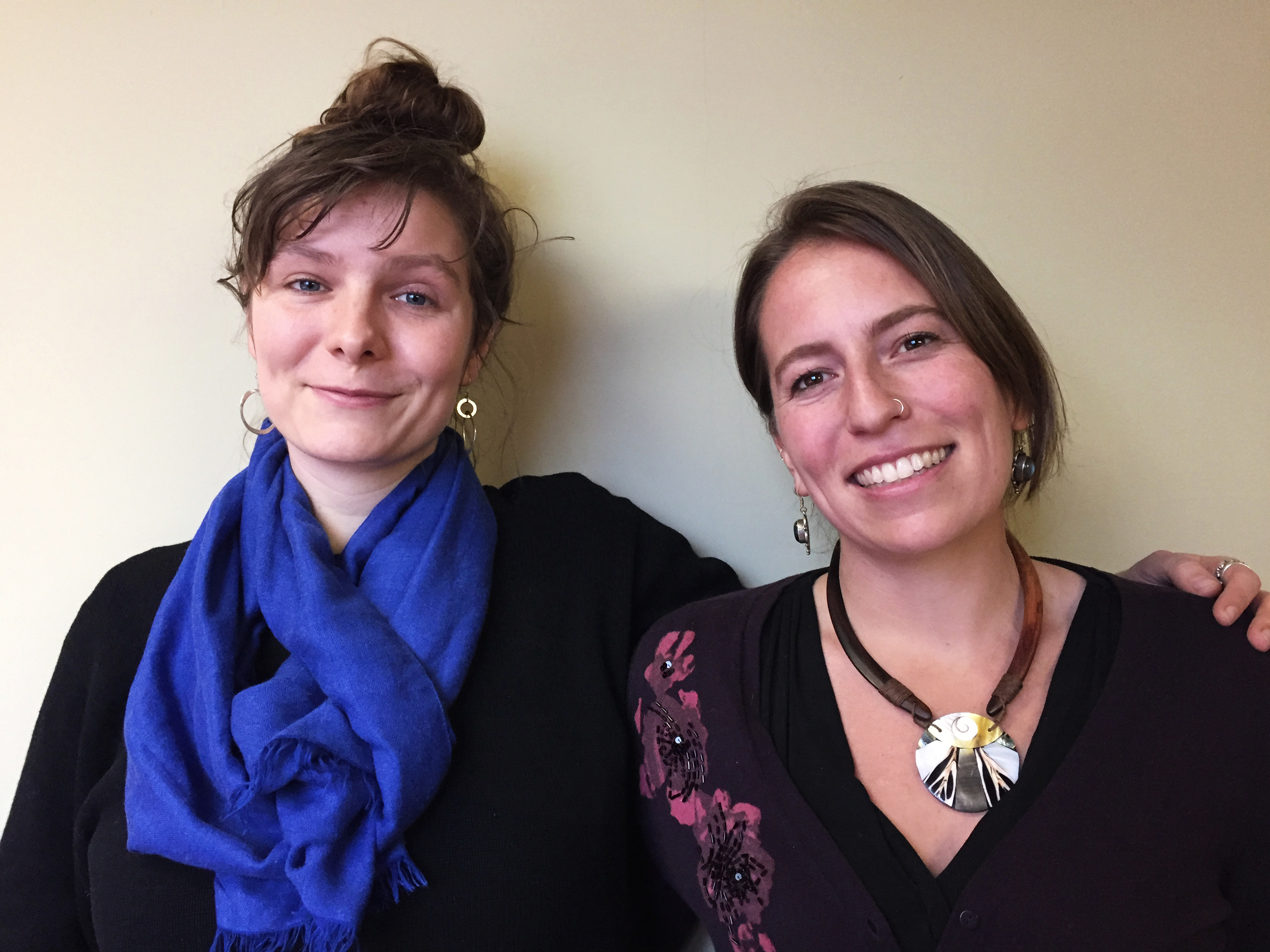

9(MDAxOTAwOTE4MDEyMTkxMDAzNjczZDljZA004))