From the Galápagos to the Deep Sea, Cal Academy Scientists Describe 72 New Species
Academy researchers identified 72 species new to science in 2025, including the newly recognized Galápagos lava heron, a shy deep-sea fish, and a rare sunflower relative found in a U.S. national park.
In 2025, scientists at the California Academy of Sciences officially named 72 new species — beetles, sea slugs, fish, flowering plants, and a bird that has been hiding in plain sight in one of the most famous biological laboratories on Earth.
The work comes as biodiversity loss accelerates worldwide, driven by climate change, habitat destruction, pollution, and invasive species. Scientists said documenting species before they disappear is a critical step toward protecting ecosystems and restoring what’s been lost.
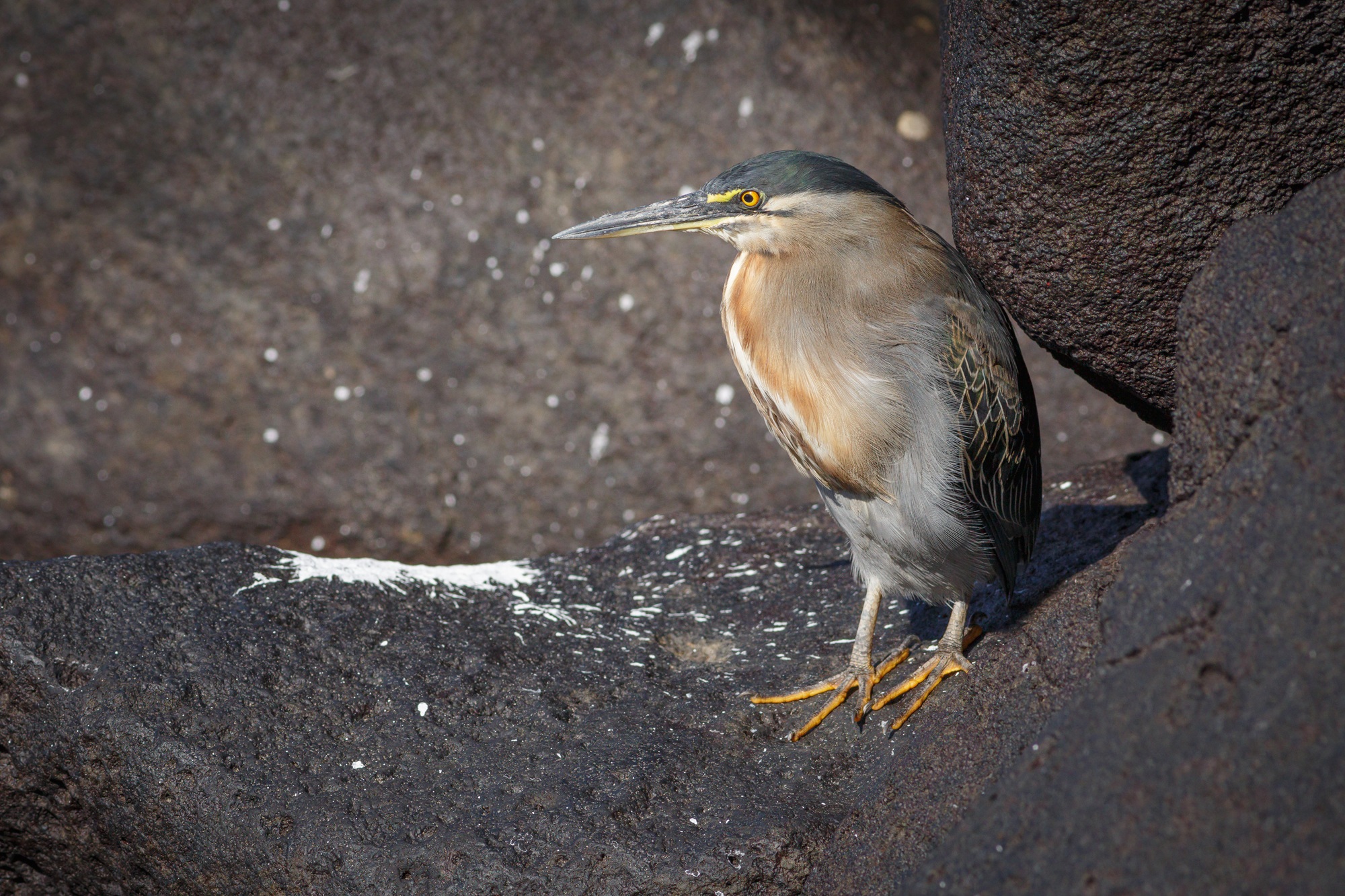
Among the year’s most striking discoveries is the Galápagos lava heron, a dark, slate-gray bird commonly seen along the archipelago’s rocky shores. Despite being a familiar sight to locals, tourists, and birders, the species’ true identity had remained unresolved for decades.
“This is a pretty conspicuous species in the Galapagos,” said Ezra Mendales, who led the research as part of his master’s thesis at San Francisco State University under the advisement of Dr. Jaime Chaves, in collaboration with the Academy. “And yet despite that, there is actually very little information known about it, especially pertaining to its evolutionary history.”
For years, the lava heron was classified as a subspecies of the South American striated heron. But genetic analyses told a very different story. Using blood samples collected in the Galápagos and DNA from museum specimens around the world, researchers discovered the lava heron is not closely related to the South American bird at all.
“Its closest living relatives are a completely different species, the North American green heron,” Mendales said.
Related Article
The lava heron also has a much thicker bill than other closely related herons — an adaptation linked to feeding among sharp volcanic rocks and hard-shelled prey. “What we learned was something that hadn’t been reported before,” Mendales said.
The discovery underscores how much remains unknown, even in iconic places like the Galápagos, said John Dumbacher, the Academy’s curator of birds and mammals and Mendales’ thesis adviser.
“The fun thing was that this thing on the Galapagos that nobody really thought was all that different turns out to be something quite unique and different genetically,” Dumbacher said.
The lava heron’s dark plumage, which blends seamlessly into black lava flows, also offers scientists a window into evolution in real time. While many individuals are nearly charcoal gray, others still show lighter, striped coloration — raising questions about whether the species is still evolving or maintaining multiple forms through natural selection.
“These are the kinds of things that evolutionary biologists love to study because it tells you a lot about how selection works,” Dumbacher said.
Life in the ocean’s twilight zone
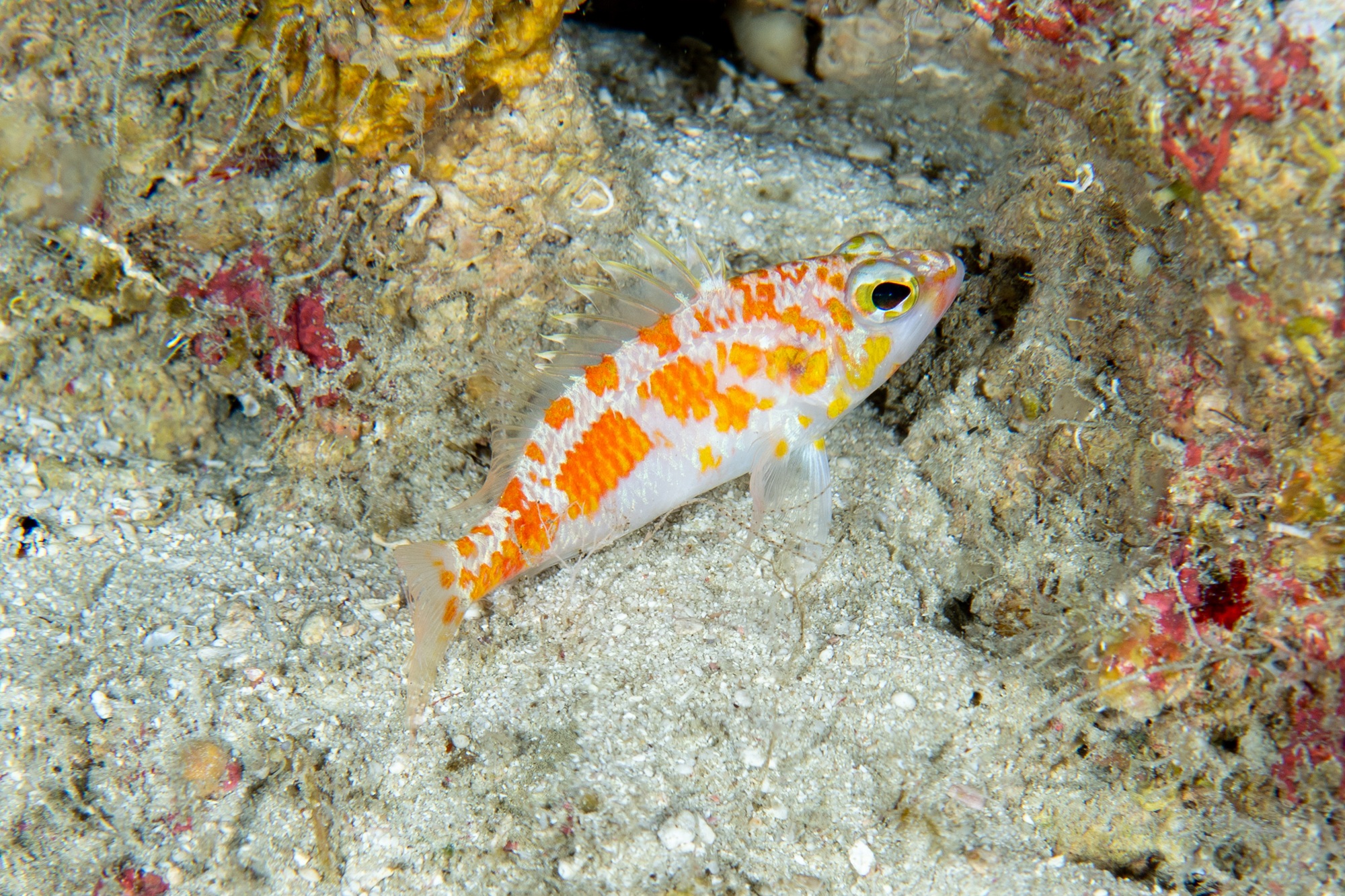
The Academy also reached far below the ocean’s surface with its discoveries. In the Maldives, researcher Luiz Rocha described a new fish species, Plectranthias raki, found about 400 feet deep in the ocean’s “twilight zone.”
Rocha is an ichthyologist — a scientist who studies fish, including their behavior, ecology and evolution and she immediately knew he was looking at something unusual.
Unlike its relatives, which tend to have bold stripes, this small perchlet is marked by distinct red blotches — a striking pattern even in dim light. He named the species raki, meaning “shy” in the local Dhivehi language, a nod to the fish’s elusive behavior.
But even at those depths, signs of human impact were impossible to ignore.
“We see plastic pollution all the way down there — fishing lines, ropes, trash,” Rocha said in the release. “It underscores how vulnerable these deep-reef ecosystems are, and how much biodiversity we still don’t understand.”
A tiny plant with a big surprise
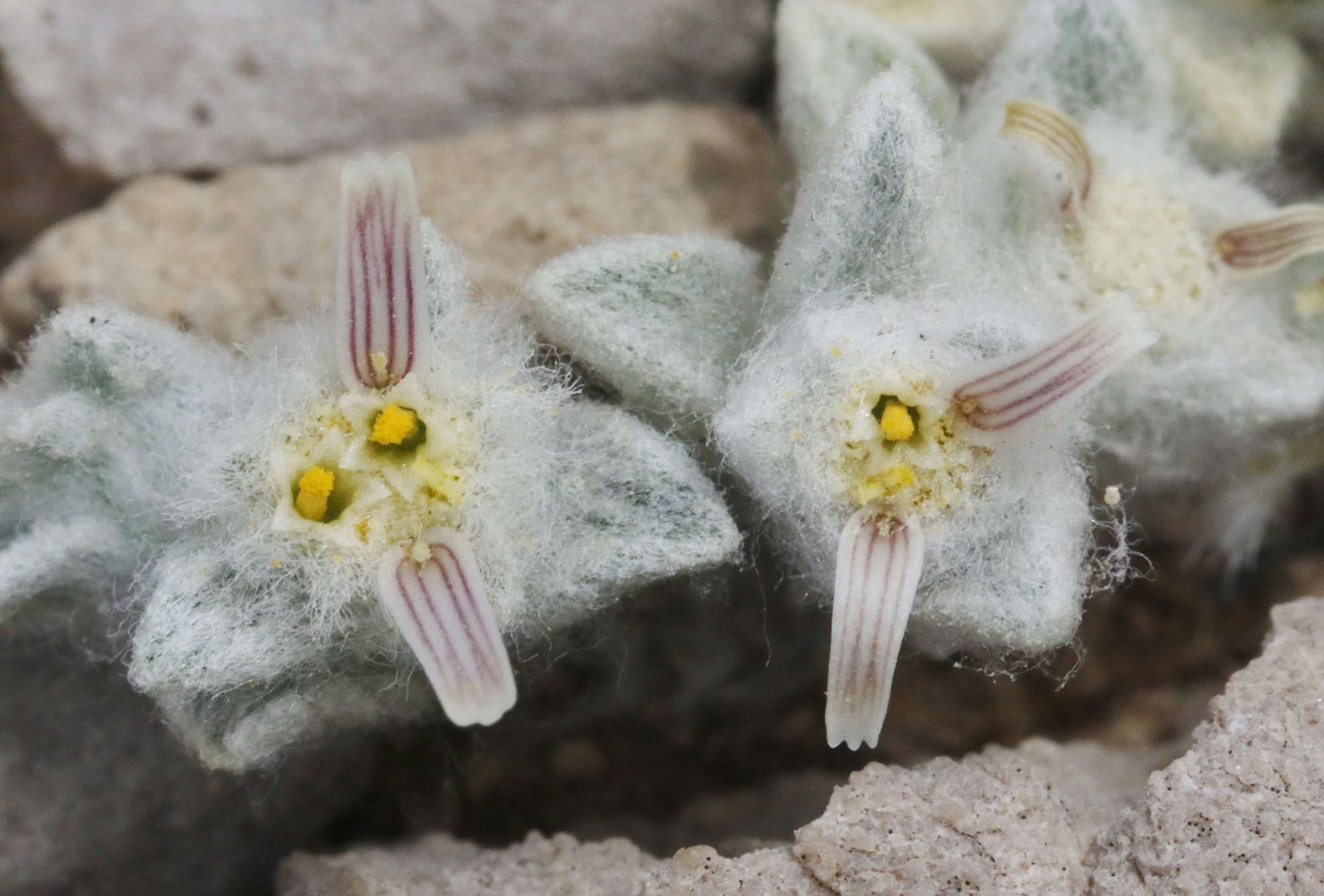
Back on land, Academy botanist Isaac Lichter Marck made a rare botanical find in Big Bend National Park, located in Brewster County, Texas: a fuzzy, low-growing wildflower the team has named the woolly devil (Ovicula biradiata).
Identified with the help of the community science platform iNaturalist, the plant turned out to be not just a new species — but an entirely new genus in the sunflower family, the first of its kind discovered in a U.S. national park in nearly 50 years.
“At first glance, it doesn’t look like a sunflower at all,” Lichter Marck said. DNA analysis later revealed just how distinct it was. The genus name Ovicula, meaning “tiny sheep,” refers to its thick white hairs and honors the park’s endangered bighorn sheep.
Why naming species still matters
Many of the year’s discoveries relied heavily on museum collections, some of which contained specimens gathered decades ago. Advances in genetics and imaging now allow scientists to extract new insights from old samples.
“It’s like a database lookup,” Dumbacher said. “Having things in the right columns and in the correct tables allows us to compile data and combine data more effectively.”
That clarity matters for conservation. Without knowing what species exist, and how they’re related, scientists can’t accurately track declines or prioritize protection.
“If we don’t know that there is a unique genetic lineage, then we don’t know that we should be putting the resources in to save this organism,” Mendales said. “There’s a lot of mystery still in the world.”