It has been more than 120 days now since the start of Israel’s bombing of Gaza, following an attack by Hamas that began on Oct. 7.
The death toll in Gaza is now more than 27,400 people — NPR reports that most of the dead are women and children, citing Gaza health officials. Approximately 1,200 people in Israel have been killed since the beginning of this tragedy.
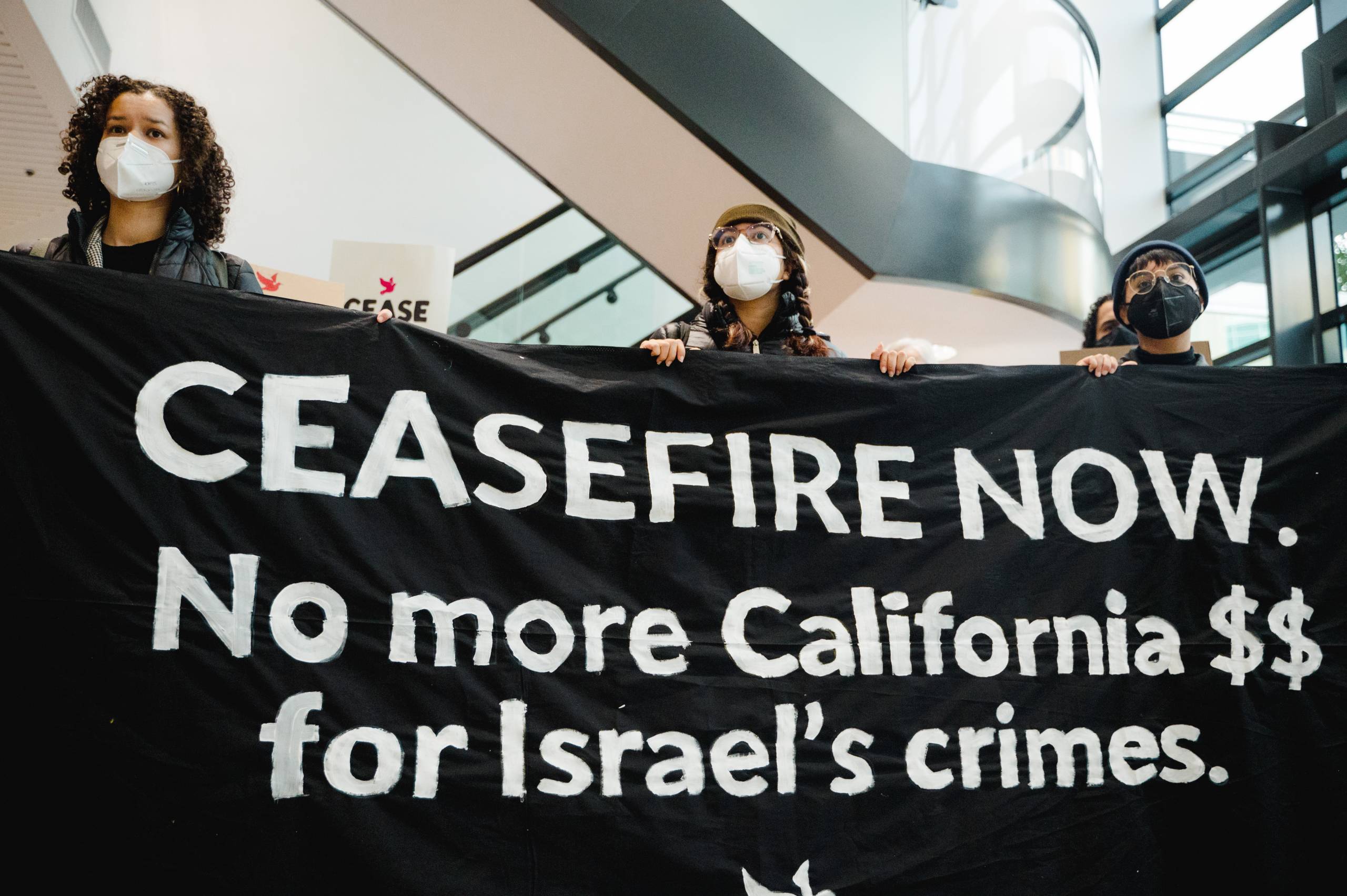
On Oct. 25, the Richmond city council was the first city in the U.S. to call for a Gaza cease-fire resolution. In late November, Oakland’s leaders voted unanimously on their own resolution, followed by supervisors in San Francisco. While much of the debate around these measures has centered on the horrors of the war and the loss of life, Bay Area’s climate and environmental leaders — both in the streets and in elected positions — have been at the center of the push for these solidarity resolutions.
Two Bay Area environmental organizations — the Asian Pacific Environmental Network (APEN) and Communities for Better Environment (CBE) in Richmond — were integral in organizing the effort in Richmond.
They argued that on top of the loss of life, war has tremendous impacts on our climate and environment. “Global militaries are the world’s largest industrial polluters,” said Keala Uchoa, Richmond youth organizer at CBE in Richmond, pointing to a recent study that shows that militaries account for almost 5.5% of global greenhouse emissions annually.
People in Gaza are already vulnerable to the effects of climate change, she argued, and live in a region that is warming twice as fast as the global average. On top of that, bombs are destroying farmland and carbon sinks like forests that purify the air. “All of those things compound to create a very deadly climate [and] environmental situation,” Uchoa added.