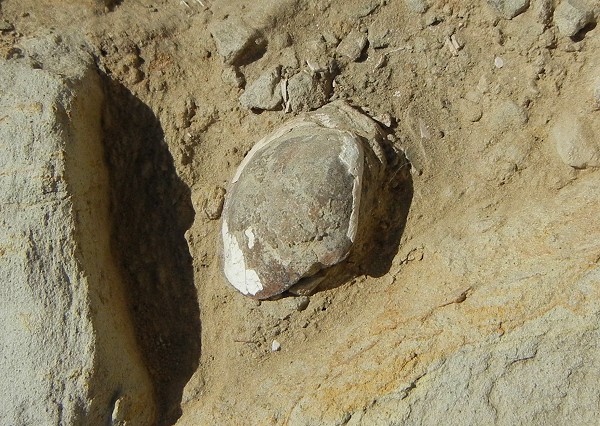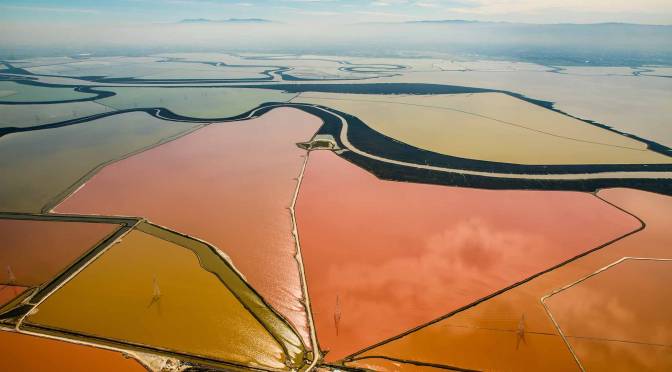

The Bay Area, rich as it is in geological interest, is not supreme in fossils. We have no dinosaur bones here, no human ancestors, none of the truly precious lagerstätten sites like the Solnhofen Limestone or Burgess Shale. But fossil collecting can still be a subject fraught with disagreement.
The legal codes are clear. California Public Resources Code section 5097.5 forbids anyone to "excavate upon, or remove, destroy, injure, or deface, any . . . vertebrate paleontological site . . . or any other . . . paleontological . . . feature, situated on public lands, except with the express permission of the public agency having jurisdiction over the lands." This covers city, county, regional and state parks. National parks? Forget that too.
"Express permission" is possible. Most parks permit scientists to conduct research, but that is carefully specified so as not to affect your full enjoyment of the public's land. And park staff can carry out excavations for, as the East Bay Regional Parks District puts it, "research, interpretive, educational or park operational purposes."
These people take their responsibility very seriously. In "Junior Ranger" programs in state parks, the instructors allow children to pick up fossils, but after making rubbings of them to take home (or take photos, of course) the kids leave the fossils behind. Even rocks must be returned to where they were found. Guides for the public (like the U.S. Geological Survey's guide to the fossils of Fitzgerald Marine Preserve) scrupulously invite you to "observe" the fossils.
I hope that you will honor and internalize this attitude. Nevertheless, there are ways to collect lots of fossils in California.
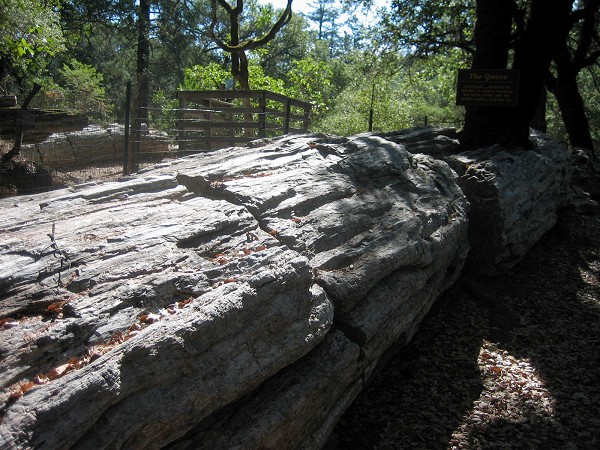
- The most straightforward is to visit private lands, where the owner can grant permission and charge an appropriate fee. The remarkable Ernst Quarry in the Sharktooth Hill district, near Bakersfield, is a good example. And at Sonoma's Petrified Forest, a private park, you can buy specimens in the gift shop.
- Some parks allow the public to participate in fossil research under supervision. The Los Angeles County Natural History Museum, for instance, will let you help its professionals on digs at Red Rock Canyon State Park. (Whatever you find typically belongs to the state.)
- On federal Bureau of Land Management (BLM) lands, the default is that casual personal collecting is allowed without a permit. This opens up vast areas of the state to you. There are limits: vertebrate fossils (that is, fossil bones) and scientifically valuable finds must be left alone and reported. Other common invertebrates and plant fossils are OK to collect for personal enjoyment in reasonable quantities, but not for trading or for sale. There should be "negligible disturbance to the Earth's surface and other resources."
To judge from the postings on public fossil forums, many fossil collectors carry the BLM's approach everywhere they go, even private lands like railroad tracks and public lands like beach cliffs and roadcuts. This is illegal, but usually trivial.