The California Report MagazineThe California Report Magazine
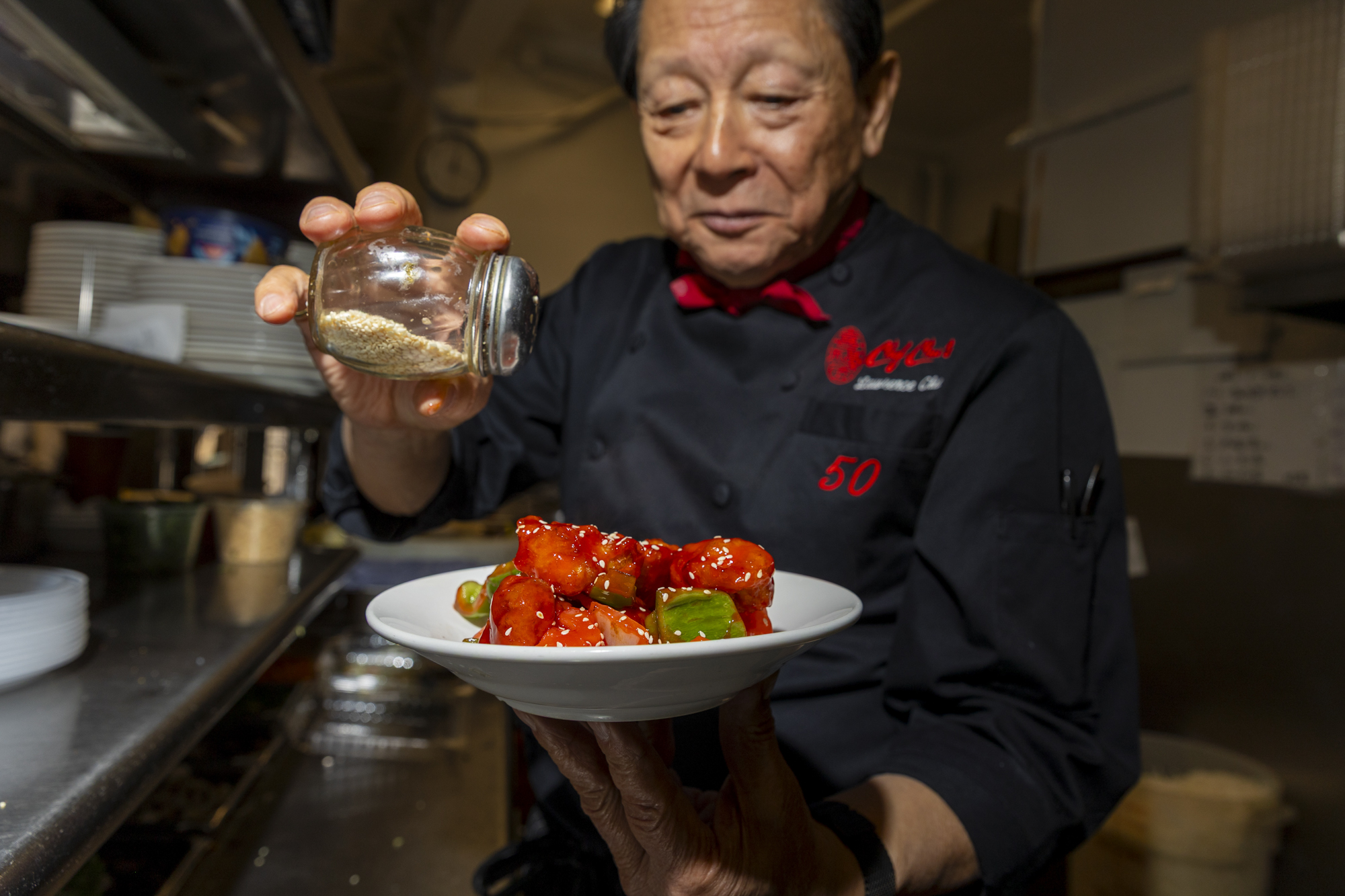
Chef Chu’s, the Family-Owned Chinese Restaurant that Grew Up With Silicon Valley
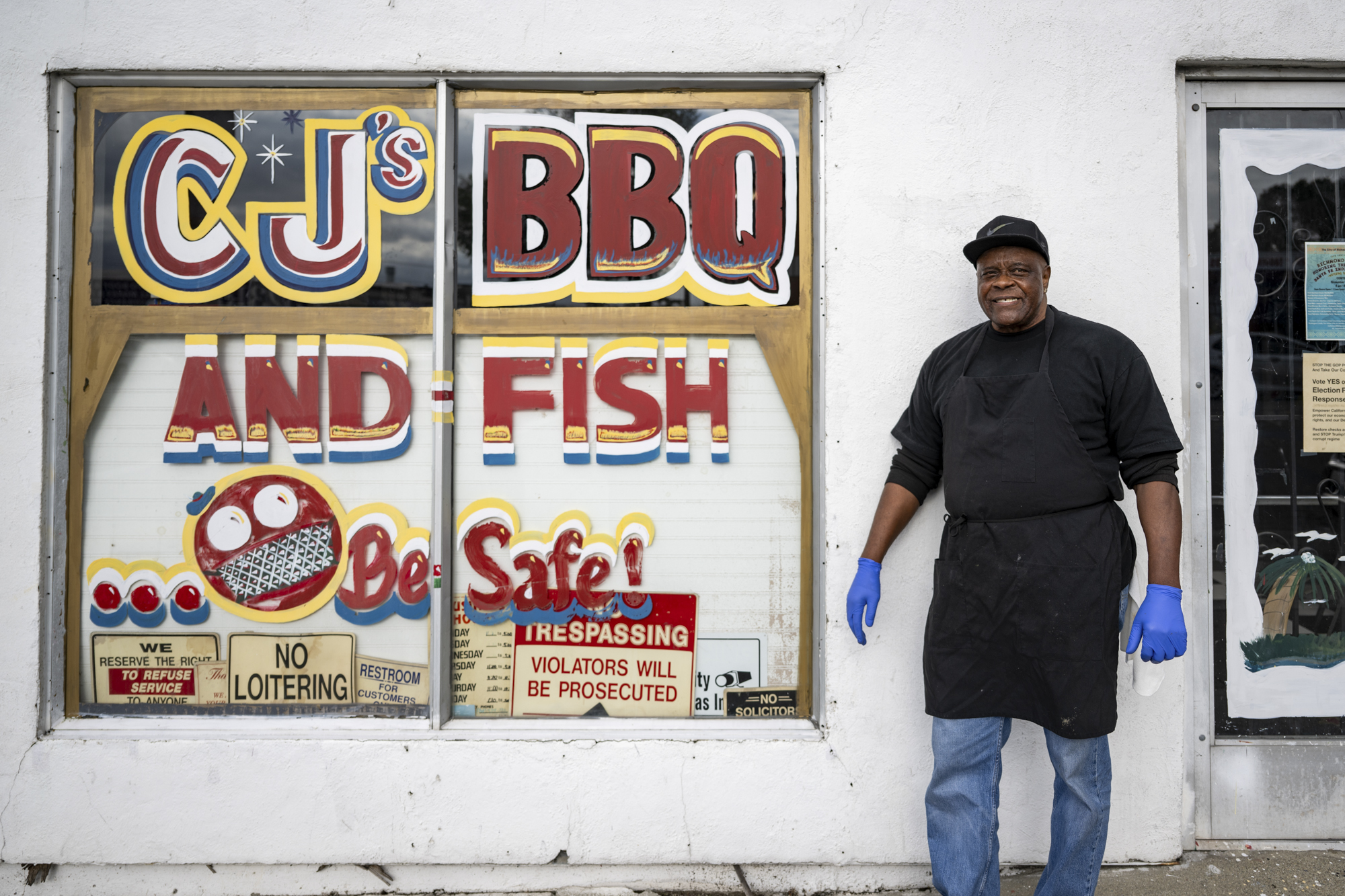
Richmond's 'Minister of Food' Serves the Bay Area Southern BBQ, California Style
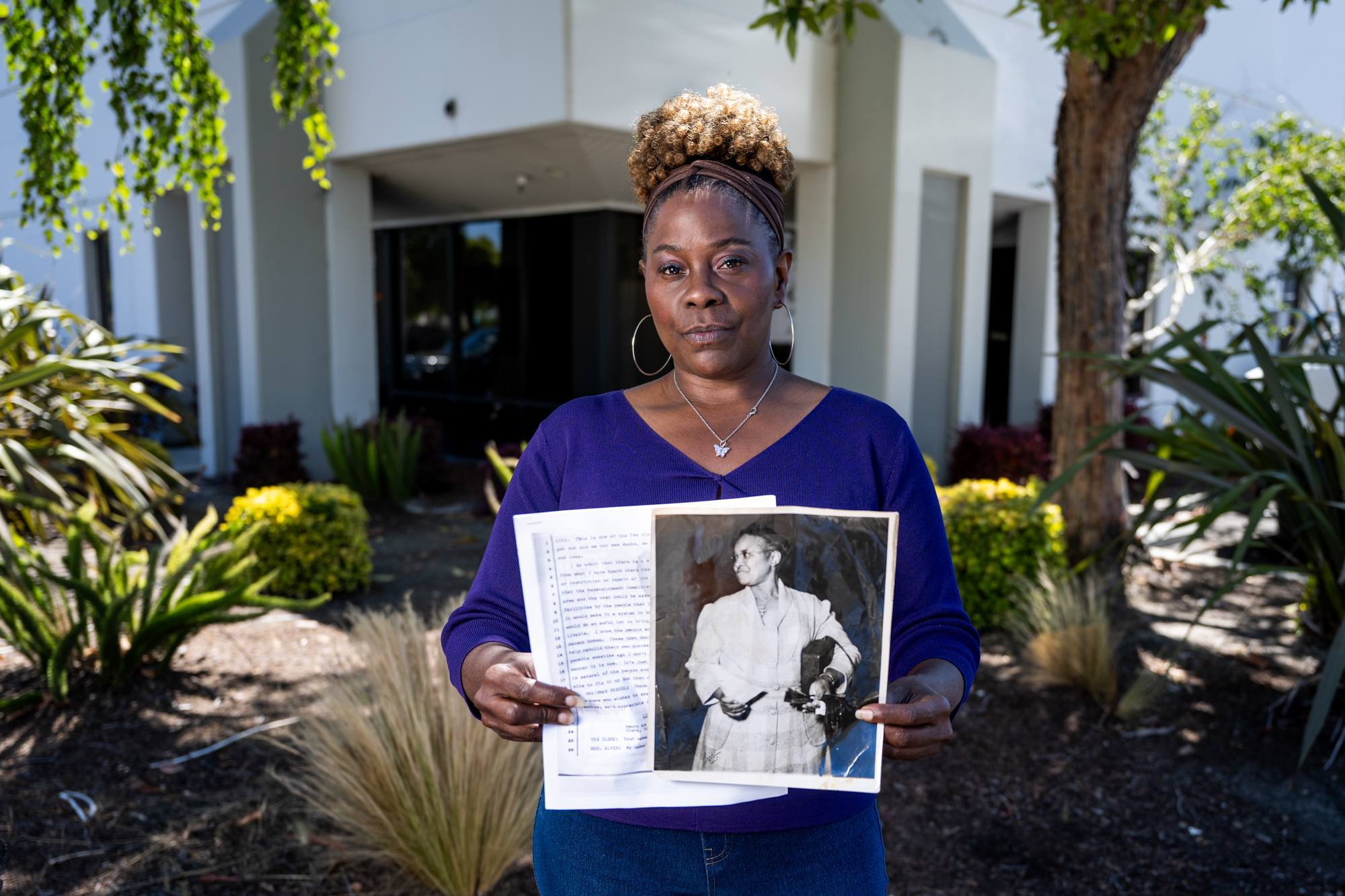
California Rejected a Bill to Return Stolen Land. Here's Why It Worked in Germany
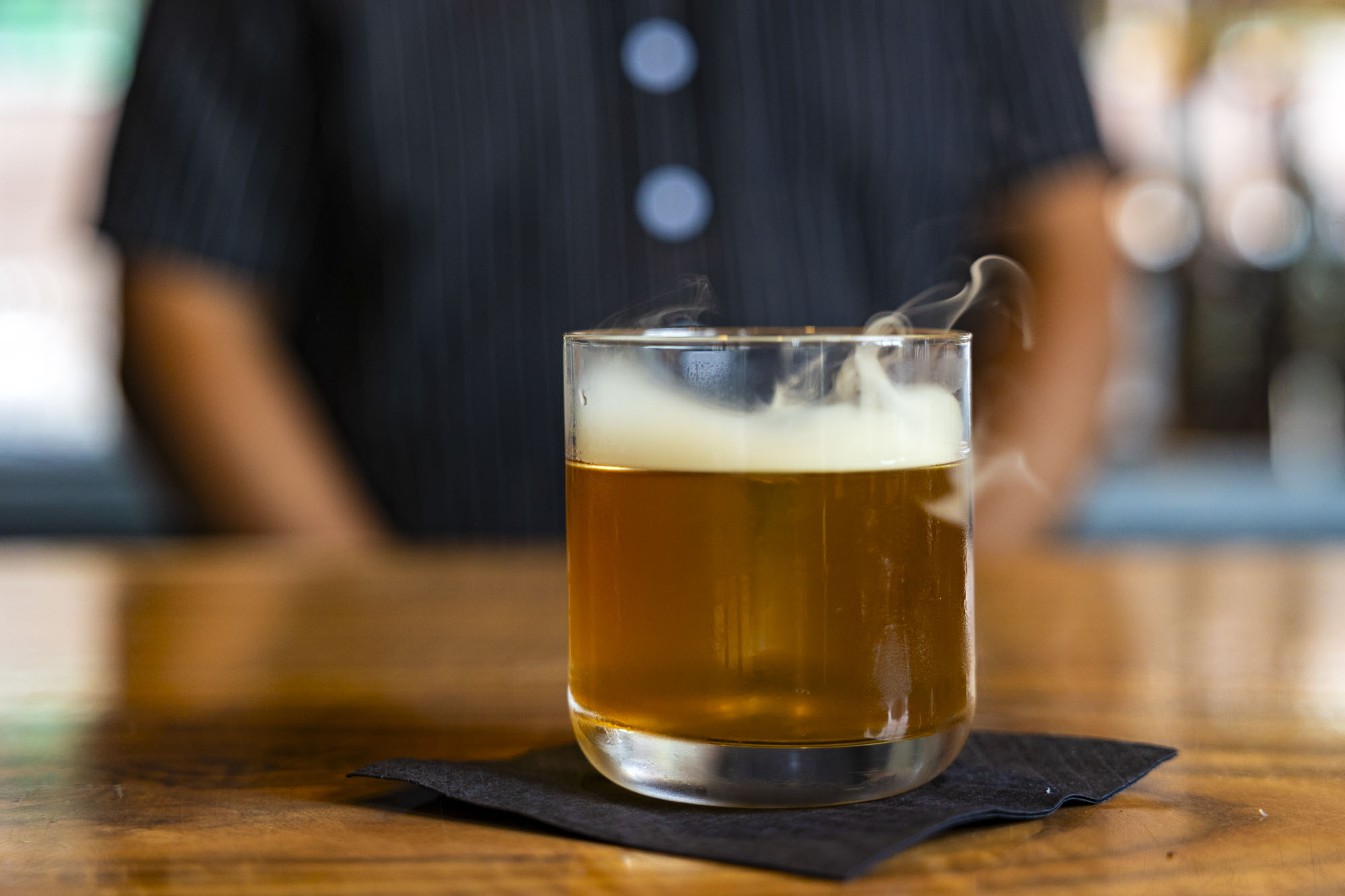
The West Coast’s First Naval Base Is Now A Whiskey Distillery
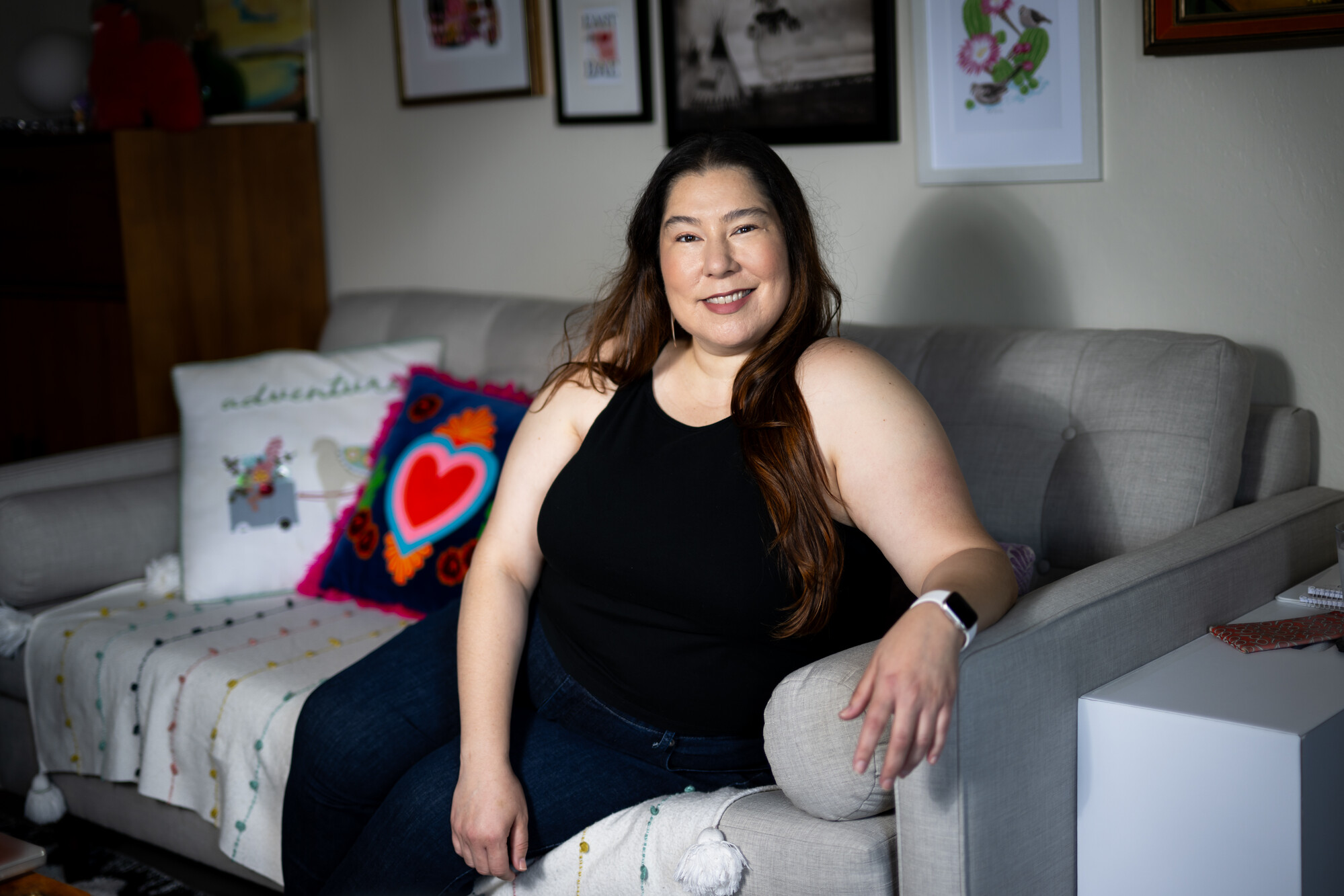
Oakland Comedian Jackie Keliiaa on Pain, Punchlines and Her ‘Good Medicine’
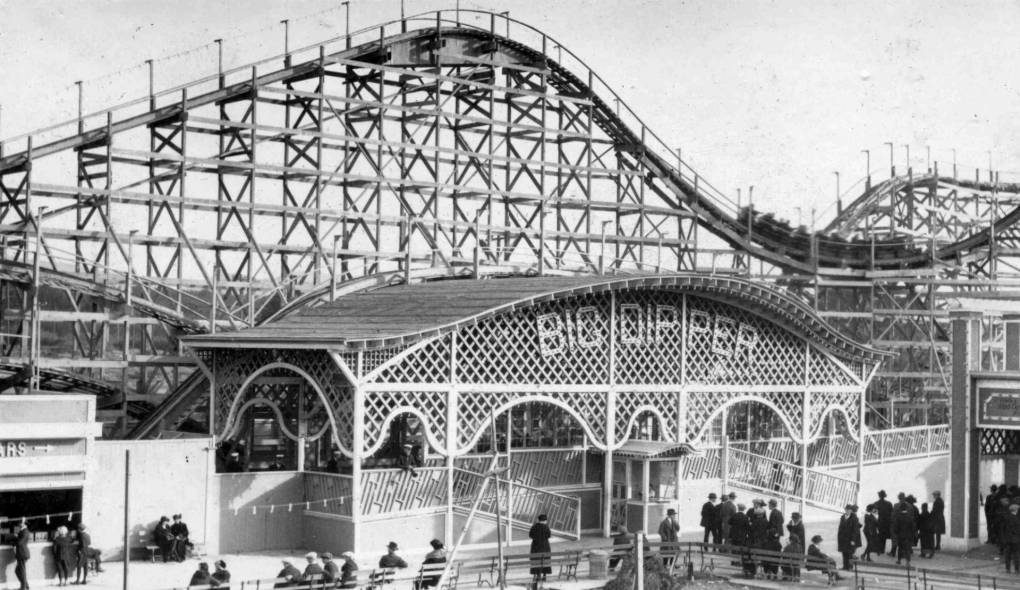
Idora Park and Playland-at-the-Beach: Bay Area Amusement Parks of a Bygone Era
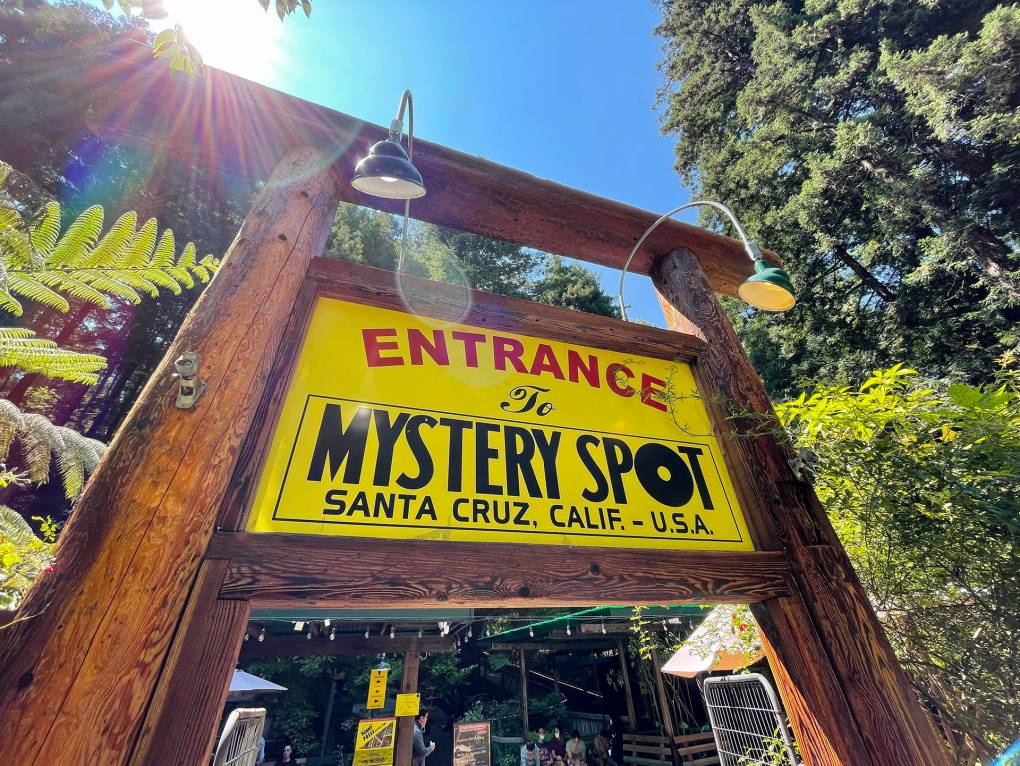
Santa Cruz's Iconic Mystery Spot is More than Just a Ubiquitous Bumper Sticker
The Gangster’s Scholar: Richmond’s Shanice Robinson on Loving a Man Serving Life
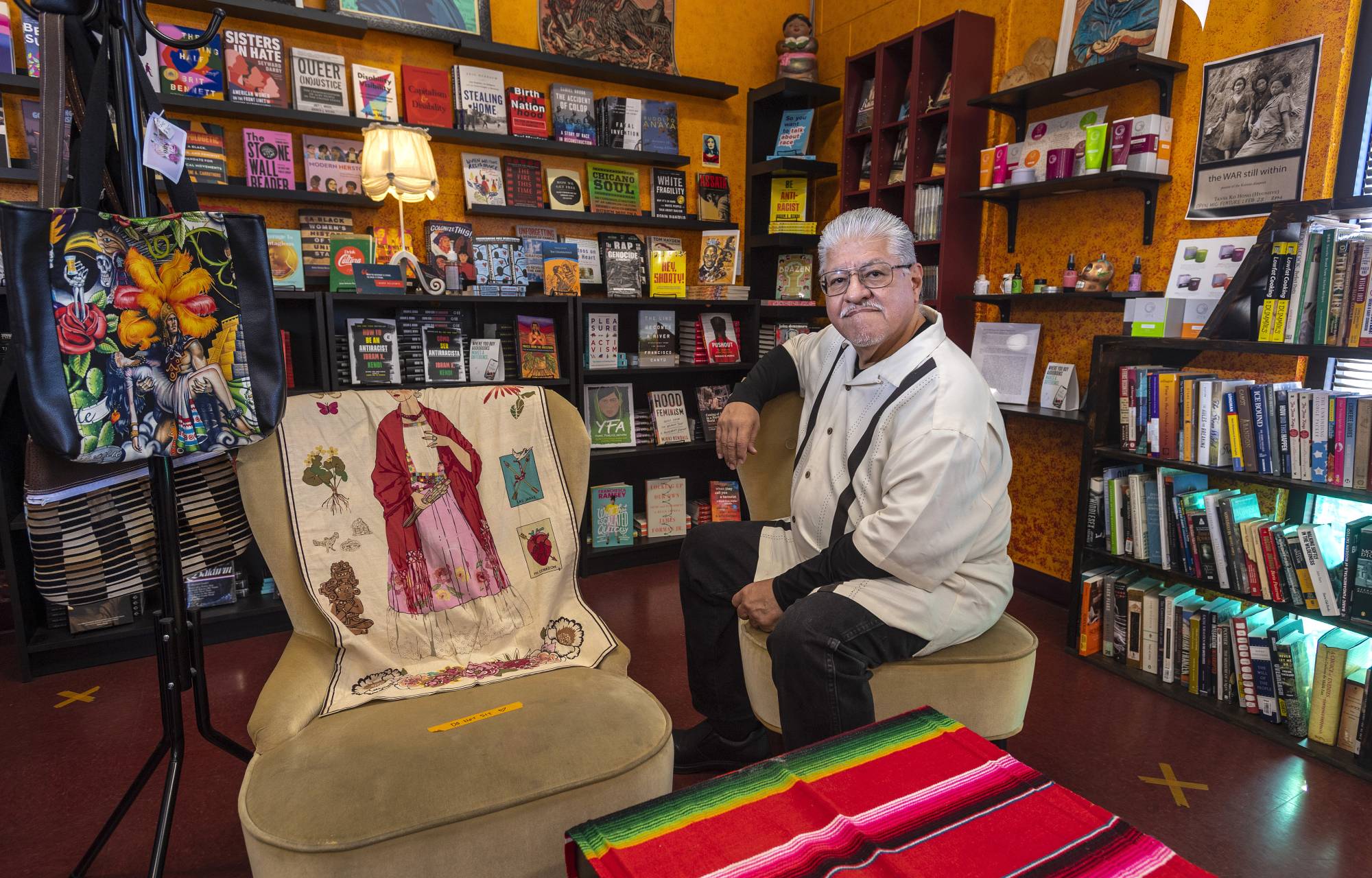
From Barrio to Bookstore: LA’s Former Poet Laureate on Survival and Storytelling
Sponsored
Player sponsored by
window.__IS_SSR__=true
window.__INITIAL_STATE__={
"attachmentsReducer": {
"audio_0": {
"type": "attachments",
"id": "audio_0",
"imgSizes": {
"kqedFullSize": {
"file": "https://ww2.kqed.org/news/wp-content/themes/KQED-unified/img/audio_bgs/background0.jpg"
}
}
},
"audio_1": {
"type": "attachments",
"id": "audio_1",
"imgSizes": {
"kqedFullSize": {
"file": "https://ww2.kqed.org/news/wp-content/themes/KQED-unified/img/audio_bgs/background1.jpg"
}
}
},
"audio_2": {
"type": "attachments",
"id": "audio_2",
"imgSizes": {
"kqedFullSize": {
"file": "https://ww2.kqed.org/news/wp-content/themes/KQED-unified/img/audio_bgs/background2.jpg"
}
}
},
"audio_3": {
"type": "attachments",
"id": "audio_3",
"imgSizes": {
"kqedFullSize": {
"file": "https://ww2.kqed.org/news/wp-content/themes/KQED-unified/img/audio_bgs/background3.jpg"
}
}
},
"audio_4": {
"type": "attachments",
"id": "audio_4",
"imgSizes": {
"kqedFullSize": {
"file": "https://ww2.kqed.org/news/wp-content/themes/KQED-unified/img/audio_bgs/background4.jpg"
}
}
},
"placeholder": {
"type": "attachments",
"id": "placeholder",
"imgSizes": {
"thumbnail": {
"file": "https://cdn.kqed.org/wp-content/uploads/2024/12/KQED-Default-Image-816638274-2000x1333-1-160x107.jpg",
"width": 160,
"height": 107,
"mimeType": "image/jpeg"
},
"medium": {
"file": "https://cdn.kqed.org/wp-content/uploads/2024/12/KQED-Default-Image-816638274-2000x1333-1-800x533.jpg",
"width": 800,
"height": 533,
"mimeType": "image/jpeg"
},
"medium_large": {
"file": "https://cdn.kqed.org/wp-content/uploads/2024/12/KQED-Default-Image-816638274-2000x1333-1-768x512.jpg",
"width": 768,
"height": 512,
"mimeType": "image/jpeg"
},
"large": {
"file": "https://cdn.kqed.org/wp-content/uploads/2024/12/KQED-Default-Image-816638274-2000x1333-1-1020x680.jpg",
"width": 1020,
"height": 680,
"mimeType": "image/jpeg"
},
"1536x1536": {
"file": "https://cdn.kqed.org/wp-content/uploads/2024/12/KQED-Default-Image-816638274-2000x1333-1-1536x1024.jpg",
"width": 1536,
"height": 1024,
"mimeType": "image/jpeg"
},
"fd-lrg": {
"file": "https://cdn.kqed.org/wp-content/uploads/2024/12/KQED-Default-Image-816638274-2000x1333-1-1536x1024.jpg",
"width": 1536,
"height": 1024,
"mimeType": "image/jpeg"
},
"fd-med": {
"file": "https://cdn.kqed.org/wp-content/uploads/2024/12/KQED-Default-Image-816638274-2000x1333-1-1020x680.jpg",
"width": 1020,
"height": 680,
"mimeType": "image/jpeg"
},
"fd-sm": {
"file": "https://cdn.kqed.org/wp-content/uploads/2024/12/KQED-Default-Image-816638274-2000x1333-1-800x533.jpg",
"width": 800,
"height": 533,
"mimeType": "image/jpeg"
},
"post-thumbnail": {
"file": "https://cdn.kqed.org/wp-content/uploads/2024/12/KQED-Default-Image-816638274-2000x1333-1-672x372.jpg",
"width": 672,
"height": 372,
"mimeType": "image/jpeg"
},
"twentyfourteen-full-width": {
"file": "https://cdn.kqed.org/wp-content/uploads/2024/12/KQED-Default-Image-816638274-2000x1333-1-1038x576.jpg",
"width": 1038,
"height": 576,
"mimeType": "image/jpeg"
},
"xxsmall": {
"file": "https://cdn.kqed.org/wp-content/uploads/2024/12/KQED-Default-Image-816638274-2000x1333-1-160x107.jpg",
"width": 160,
"height": 107,
"mimeType": "image/jpeg"
},
"xsmall": {
"file": "https://cdn.kqed.org/wp-content/uploads/2024/12/KQED-Default-Image-816638274-2000x1333-1-672x372.jpg",
"width": 672,
"height": 372,
"mimeType": "image/jpeg"
},
"small": {
"file": "https://cdn.kqed.org/wp-content/uploads/2024/12/KQED-Default-Image-816638274-2000x1333-1-672x372.jpg",
"width": 672,
"height": 372,
"mimeType": "image/jpeg"
},
"xlarge": {
"file": "https://cdn.kqed.org/wp-content/uploads/2024/12/KQED-Default-Image-816638274-2000x1333-1-1020x680.jpg",
"width": 1020,
"height": 680,
"mimeType": "image/jpeg"
},
"full-width": {
"file": "https://cdn.kqed.org/wp-content/uploads/2024/12/KQED-Default-Image-816638274-2000x1333-1-1920x1280.jpg",
"width": 1920,
"height": 1280,
"mimeType": "image/jpeg"
},
"guest-author-32": {
"file": "https://cdn.kqed.org/wp-content/uploads/2025/01/KQED-Default-Image-816638274-1333x1333-1-160x160.jpg",
"width": 32,
"height": 32,
"mimeType": "image/jpeg"
},
"guest-author-50": {
"file": "https://cdn.kqed.org/wp-content/uploads/2025/01/KQED-Default-Image-816638274-1333x1333-1-160x160.jpg",
"width": 50,
"height": 50,
"mimeType": "image/jpeg"
},
"guest-author-64": {
"file": "https://cdn.kqed.org/wp-content/uploads/2025/01/KQED-Default-Image-816638274-1333x1333-1-160x160.jpg",
"width": 64,
"height": 64,
"mimeType": "image/jpeg"
},
"guest-author-96": {
"file": "https://cdn.kqed.org/wp-content/uploads/2025/01/KQED-Default-Image-816638274-1333x1333-1-160x160.jpg",
"width": 96,
"height": 96,
"mimeType": "image/jpeg"
},
"guest-author-128": {
"file": "https://cdn.kqed.org/wp-content/uploads/2025/01/KQED-Default-Image-816638274-1333x1333-1-160x160.jpg",
"width": 128,
"height": 128,
"mimeType": "image/jpeg"
},
"detail": {
"file": "https://cdn.kqed.org/wp-content/uploads/2025/01/KQED-Default-Image-816638274-1333x1333-1-160x160.jpg",
"width": 160,
"height": 160,
"mimeType": "image/jpeg"
},
"kqedFullSize": {
"file": "https://cdn.kqed.org/wp-content/uploads/2024/12/KQED-Default-Image-816638274-2000x1333-1.jpg",
"width": 2000,
"height": 1333
}
}
},
"news_12067131": {
"type": "attachments",
"id": "news_12067131",
"meta": {
"index": "attachments_1716263798",
"site": "news",
"id": "12067131",
"found": true
},
"title": "251211-CHEFCHU00432_TV-KQED",
"publishDate": 1765823975,
"status": "inherit",
"parent": 0,
"modified": 1766098117,
"caption": "Lawrence Chu, also known as Chef Chu, garnishes a plate of sweet and sour pork at Chef Chu’s in Los Altos on December 11, 2025. Chef Chu’s is a family-run business, owned by Lawrence Chu, which has been operating since 1970 and is known not only for the food but also for hosting celebrities and tech innovators.",
"credit": "Tâm Vũ/KQED",
"altTag": null,
"description": null,
"imgSizes": {
"thumbnail": {
"file": "https://cdn.kqed.org/wp-content/uploads/sites/10/2025/12/251211-CHEFCHU00432_TV-KQED-160x107.jpg",
"width": 160,
"height": 107,
"mimeType": "image/jpeg"
},
"1536x1536": {
"file": "https://cdn.kqed.org/wp-content/uploads/sites/10/2025/12/251211-CHEFCHU00432_TV-KQED-1536x1024.jpg",
"width": 1536,
"height": 1024,
"mimeType": "image/jpeg"
},
"post-thumbnail": {
"file": "https://cdn.kqed.org/wp-content/uploads/sites/10/2025/12/251211-CHEFCHU00432_TV-KQED-672x372.jpg",
"width": 672,
"height": 372,
"mimeType": "image/jpeg"
},
"twentyfourteen-full-width": {
"file": "https://cdn.kqed.org/wp-content/uploads/sites/10/2025/12/251211-CHEFCHU00432_TV-KQED-1038x576.jpg",
"width": 1038,
"height": 576,
"mimeType": "image/jpeg"
},
"npr-cds-wide": {
"file": "https://cdn.kqed.org/wp-content/uploads/sites/10/2025/12/251211-CHEFCHU00432_TV-KQED-1200x675.jpg",
"width": 1200,
"height": 675,
"mimeType": "image/jpeg"
},
"kqedFullSize": {
"file": "https://cdn.kqed.org/wp-content/uploads/sites/10/2025/12/251211-CHEFCHU00432_TV-KQED.jpg",
"width": 2000,
"height": 1333
}
},
"fetchFailed": false,
"isLoading": false
},
"news_12065458": {
"type": "attachments",
"id": "news_12065458",
"meta": {
"index": "attachments_1716263798",
"site": "news",
"id": "12065458",
"found": true
},
"title": "251119-CJSBBQANDFISH-45-BL-KQED",
"publishDate": 1764179032,
"status": "inherit",
"parent": 0,
"modified": 1765402426,
"caption": "Charles “CJ” Evans stands outside CJ’s BBQ and Fish in Richmond on Nov. 19, 2025, which serves barbecue, seafood and Southern-style comfort food.",
"credit": "Beth LaBerge/KQED",
"altTag": null,
"description": null,
"imgSizes": {
"thumbnail": {
"file": "https://cdn.kqed.org/wp-content/uploads/sites/10/2025/11/251119-CJSBBQANDFISH-45-BL-KQED-160x107.jpg",
"width": 160,
"height": 107,
"mimeType": "image/jpeg"
},
"1536x1536": {
"file": "https://cdn.kqed.org/wp-content/uploads/sites/10/2025/11/251119-CJSBBQANDFISH-45-BL-KQED-1536x1024.jpg",
"width": 1536,
"height": 1024,
"mimeType": "image/jpeg"
},
"post-thumbnail": {
"file": "https://cdn.kqed.org/wp-content/uploads/sites/10/2025/11/251119-CJSBBQANDFISH-45-BL-KQED-672x372.jpg",
"width": 672,
"height": 372,
"mimeType": "image/jpeg"
},
"twentyfourteen-full-width": {
"file": "https://cdn.kqed.org/wp-content/uploads/sites/10/2025/11/251119-CJSBBQANDFISH-45-BL-KQED-1038x576.jpg",
"width": 1038,
"height": 576,
"mimeType": "image/jpeg"
},
"npr-cds-wide": {
"file": "https://cdn.kqed.org/wp-content/uploads/sites/10/2025/11/251119-CJSBBQANDFISH-45-BL-KQED-1200x675.jpg",
"width": 1200,
"height": 675,
"mimeType": "image/jpeg"
},
"kqedFullSize": {
"file": "https://cdn.kqed.org/wp-content/uploads/sites/10/2025/11/251119-CJSBBQANDFISH-45-BL-KQED.jpg",
"width": 2000,
"height": 1333
}
},
"fetchFailed": false,
"isLoading": false
},
"news_12053829": {
"type": "attachments",
"id": "news_12053829",
"meta": {
"index": "attachments_1716263798",
"site": "news",
"id": "12053829",
"found": true
},
"title": "250806-HOLOCAUSTREPARATIONS-06-KQED",
"publishDate": 1756247730,
"status": "inherit",
"parent": 12056999,
"modified": 1758581516,
"caption": "Francesca Thomas, a Hayward native and great-granddaughter of Leona Alves, owner of Ideal Dining, a restaurant and nightclub in Russell City, holds a photograph of her great-grandmother and a copy of her testimony near the former site of Russell City in Hayward on Aug. 6, 2025. She is involved in efforts to preserve the community’s history through the Russell City Reparative Justice Project.",
"credit": "Beth LaBerge/KQED",
"altTag": null,
"description": null,
"imgSizes": {
"thumbnail": {
"file": "https://cdn.kqed.org/wp-content/uploads/sites/10/2025/08/250806-HOLOCAUSTREPARATIONS-06-KQED-160x107.jpg",
"width": 160,
"height": 107,
"mimeType": "image/jpeg"
},
"1536x1536": {
"file": "https://cdn.kqed.org/wp-content/uploads/sites/10/2025/08/250806-HOLOCAUSTREPARATIONS-06-KQED-1536x1024.jpg",
"width": 1536,
"height": 1024,
"mimeType": "image/jpeg"
},
"post-thumbnail": {
"file": "https://cdn.kqed.org/wp-content/uploads/sites/10/2025/08/250806-HOLOCAUSTREPARATIONS-06-KQED-672x372.jpg",
"width": 672,
"height": 372,
"mimeType": "image/jpeg"
},
"twentyfourteen-full-width": {
"file": "https://cdn.kqed.org/wp-content/uploads/sites/10/2025/08/250806-HOLOCAUSTREPARATIONS-06-KQED-1038x576.jpg",
"width": 1038,
"height": 576,
"mimeType": "image/jpeg"
},
"kqedFullSize": {
"file": "https://cdn.kqed.org/wp-content/uploads/sites/10/2025/08/250806-HOLOCAUSTREPARATIONS-06-KQED.jpg",
"width": 2000,
"height": 1333
}
},
"fetchFailed": false,
"isLoading": false
},
"news_12058778": {
"type": "attachments",
"id": "news_12058778",
"meta": {
"index": "attachments_1716263798",
"site": "news",
"id": "12058778",
"found": true
},
"title": "20251002_REDWOODEMPIRE_GC-28-KQED",
"publishDate": 1759767004,
"status": "inherit",
"parent": 0,
"modified": 1760029663,
"caption": "Kunjan Joshi, manager of the Redwood Empire hospitality building, prepares a Charred Offerings whiskey cocktail on Mare Island in Vallejo on Oct. 2, 2025.",
"credit": "Gina Castro/KQED",
"altTag": null,
"description": null,
"imgSizes": {
"thumbnail": {
"file": "https://cdn.kqed.org/wp-content/uploads/sites/10/2025/10/20251002_REDWOODEMPIRE_GC-28-KQED-160x107.jpg",
"width": 160,
"height": 107,
"mimeType": "image/jpeg"
},
"1536x1536": {
"file": "https://cdn.kqed.org/wp-content/uploads/sites/10/2025/10/20251002_REDWOODEMPIRE_GC-28-KQED-1536x1024.jpg",
"width": 1536,
"height": 1024,
"mimeType": "image/jpeg"
},
"post-thumbnail": {
"file": "https://cdn.kqed.org/wp-content/uploads/sites/10/2025/10/20251002_REDWOODEMPIRE_GC-28-KQED-672x372.jpg",
"width": 672,
"height": 372,
"mimeType": "image/jpeg"
},
"twentyfourteen-full-width": {
"file": "https://cdn.kqed.org/wp-content/uploads/sites/10/2025/10/20251002_REDWOODEMPIRE_GC-28-KQED-1038x576.jpg",
"width": 1038,
"height": 576,
"mimeType": "image/jpeg"
},
"kqedFullSize": {
"file": "https://cdn.kqed.org/wp-content/uploads/sites/10/2025/10/20251002_REDWOODEMPIRE_GC-28-KQED.jpg",
"width": 2000,
"height": 1333
}
},
"fetchFailed": false,
"isLoading": false
},
"news_12055293": {
"type": "attachments",
"id": "news_12055293",
"meta": {
"index": "attachments_1716263798",
"site": "news",
"id": "12055293",
"found": true
},
"title": "Jackie Keliiaa sits on her couch at her apartment in Oakland on Sept. 5, 2025.",
"publishDate": 1757441922,
"status": "inherit",
"parent": 0,
"modified": 1757441939,
"caption": "Jackie Keliiaa sits on her couch at her apartment in Oakland on Sept. 5, 2025.",
"credit": "Beth LaBerge/KQED",
"altTag": null,
"description": null,
"imgSizes": {
"thumbnail": {
"file": "https://cdn.kqed.org/wp-content/uploads/sites/10/2025/09/250905-JackieKeliiaa-01-BL_qed-160x107.jpg",
"width": 160,
"height": 107,
"mimeType": "image/jpeg"
},
"1536x1536": {
"file": "https://cdn.kqed.org/wp-content/uploads/sites/10/2025/09/250905-JackieKeliiaa-01-BL_qed-1536x1024.jpg",
"width": 1536,
"height": 1024,
"mimeType": "image/jpeg"
},
"post-thumbnail": {
"file": "https://cdn.kqed.org/wp-content/uploads/sites/10/2025/09/250905-JackieKeliiaa-01-BL_qed-672x372.jpg",
"width": 672,
"height": 372,
"mimeType": "image/jpeg"
},
"twentyfourteen-full-width": {
"file": "https://cdn.kqed.org/wp-content/uploads/sites/10/2025/09/250905-JackieKeliiaa-01-BL_qed-1038x576.jpg",
"width": 1038,
"height": 576,
"mimeType": "image/jpeg"
},
"kqedFullSize": {
"file": "https://cdn.kqed.org/wp-content/uploads/sites/10/2025/09/250905-JackieKeliiaa-01-BL_qed.jpg",
"width": 1999,
"height": 1333
}
},
"fetchFailed": false,
"isLoading": false
},
"news_11925582": {
"type": "attachments",
"id": "news_11925582",
"meta": {
"index": "attachments_1716263798",
"site": "news",
"id": "11925582",
"found": true
},
"parent": 11925112,
"imgSizes": {
"twentyfourteen-full-width": {
"file": "https://ww2.kqed.org/app/uploads/sites/10/2022/09/BigDipper-Ride-1038x576.jpg",
"width": 1038,
"mimeType": "image/jpeg",
"height": 576
},
"thumbnail": {
"file": "https://ww2.kqed.org/app/uploads/sites/10/2022/09/BigDipper-Ride-160x93.jpg",
"width": 160,
"mimeType": "image/jpeg",
"height": 93
},
"post-thumbnail": {
"file": "https://ww2.kqed.org/app/uploads/sites/10/2022/09/BigDipper-Ride-672x372.jpg",
"width": 672,
"mimeType": "image/jpeg",
"height": 372
},
"kqedFullSize": {
"file": "https://ww2.kqed.org/app/uploads/sites/10/2022/09/BigDipper-Ride.jpg",
"width": 1920,
"height": 1110
},
"large": {
"file": "https://ww2.kqed.org/app/uploads/sites/10/2022/09/BigDipper-Ride-1020x590.jpg",
"width": 1020,
"mimeType": "image/jpeg",
"height": 590
},
"1536x1536": {
"file": "https://ww2.kqed.org/app/uploads/sites/10/2022/09/BigDipper-Ride-1536x888.jpg",
"width": 1536,
"mimeType": "image/jpeg",
"height": 888
},
"medium": {
"file": "https://ww2.kqed.org/app/uploads/sites/10/2022/09/BigDipper-Ride-800x463.jpg",
"width": 800,
"mimeType": "image/jpeg",
"height": 463
}
},
"publishDate": 1663180614,
"modified": 1663194368,
"caption": "San Francisco's Big Dipper roller coaster at Playland-at-the-Beach, circa 1920s.",
"description": null,
"title": "BigDipper-Ride",
"credit": "Courtesy of Jim Smith",
"status": "inherit",
"altTag": "Black and white photo of people lining up to ride a roller coaster. A wooden structure at the entrance to the ride has the words BIG DIPPER across it.",
"fetchFailed": false,
"isLoading": false
},
"news_11889342": {
"type": "attachments",
"id": "news_11889342",
"meta": {
"index": "attachments_1716263798",
"site": "news",
"id": "11889342",
"found": true
},
"title": "Mystery Spot Entrance Sign",
"publishDate": 1632271177,
"status": "inherit",
"parent": 11889331,
"modified": 1755562878,
"caption": "The iconic yellow-and-black sign welcomes visitors to the Mystery Spot in Santa Cruz, California.",
"credit": "Amanda Font/KQED",
"altTag": "A large yellow-and-black sign reads \"Entrance to Mystery Spot, Santa Cruz, Calif. – U.S.A.\"",
"description": "A large yellow and black sign reads \"Welcome to the Mystery Spot, Santa Cruz California U.S.A\" ",
"imgSizes": {
"medium": {
"file": "https://cdn.kqed.org/wp-content/uploads/sites/10/2021/09/Mystery-Spot-Entrance-Sign-800x600.jpg",
"width": 800,
"height": 600,
"mimeType": "image/jpeg"
},
"large": {
"file": "https://cdn.kqed.org/wp-content/uploads/sites/10/2021/09/Mystery-Spot-Entrance-Sign-1020x766.jpg",
"width": 1020,
"height": 766,
"mimeType": "image/jpeg"
},
"thumbnail": {
"file": "https://cdn.kqed.org/wp-content/uploads/sites/10/2021/09/Mystery-Spot-Entrance-Sign-160x120.jpg",
"width": 160,
"height": 120,
"mimeType": "image/jpeg"
},
"1536x1536": {
"file": "https://cdn.kqed.org/wp-content/uploads/sites/10/2021/09/Mystery-Spot-Entrance-Sign-1536x1153.jpg",
"width": 1536,
"height": 1153,
"mimeType": "image/jpeg"
},
"post-thumbnail": {
"file": "https://cdn.kqed.org/wp-content/uploads/sites/10/2021/09/Mystery-Spot-Entrance-Sign-672x372.jpg",
"width": 672,
"height": 372,
"mimeType": "image/jpeg"
},
"twentyfourteen-full-width": {
"file": "https://cdn.kqed.org/wp-content/uploads/sites/10/2021/09/Mystery-Spot-Entrance-Sign-1038x576.jpg",
"width": 1038,
"height": 576,
"mimeType": "image/jpeg"
},
"kqedFullSize": {
"file": "https://cdn.kqed.org/wp-content/uploads/sites/10/2021/09/Mystery-Spot-Entrance-Sign.jpg",
"width": 1920,
"height": 1441
}
},
"fetchFailed": false,
"isLoading": false
},
"news_12051419": {
"type": "attachments",
"id": "news_12051419",
"meta": {
"index": "attachments_1716263798",
"site": "news",
"id": "12051419",
"found": true
},
"title": "250806-SHANICEROBINSONRESILIENCE_00065_TV-KQED",
"publishDate": 1754660895,
"status": "inherit",
"parent": 0,
"modified": 1754956305,
"caption": "Shanice Robinson poses for a portrait in her bedroom in Richmond on August 6, 2025. Shanice Robinson, who is a visiting assistant professor at San Francisco State University, a teacher for incarcerated people and an author of “Gangster’s Scholar: Love Behind Bars,\" works to advocate for those affected by the prison system.",
"credit": "Tâm Vũ/KQED",
"altTag": null,
"description": null,
"imgSizes": {
"thumbnail": {
"file": "https://cdn.kqed.org/wp-content/uploads/sites/10/2025/08/250806-SHANICEROBINSONRESILIENCE_00065_TV-KQED-160x107.jpg",
"width": 160,
"height": 107,
"mimeType": "image/jpeg"
},
"1536x1536": {
"file": "https://cdn.kqed.org/wp-content/uploads/sites/10/2025/08/250806-SHANICEROBINSONRESILIENCE_00065_TV-KQED-1536x1024.jpg",
"width": 1536,
"height": 1024,
"mimeType": "image/jpeg"
},
"post-thumbnail": {
"file": "https://cdn.kqed.org/wp-content/uploads/sites/10/2025/08/250806-SHANICEROBINSONRESILIENCE_00065_TV-KQED-672x372.jpg",
"width": 672,
"height": 372,
"mimeType": "image/jpeg"
},
"twentyfourteen-full-width": {
"file": "https://cdn.kqed.org/wp-content/uploads/sites/10/2025/08/250806-SHANICEROBINSONRESILIENCE_00065_TV-KQED-1038x576.jpg",
"width": 1038,
"height": 576,
"mimeType": "image/jpeg"
},
"kqedFullSize": {
"file": "https://cdn.kqed.org/wp-content/uploads/sites/10/2025/08/250806-SHANICEROBINSONRESILIENCE_00065_TV-KQED.jpg",
"width": 2000,
"height": 1333
}
},
"fetchFailed": false,
"isLoading": false
},
"news_12049548": {
"type": "attachments",
"id": "news_12049548",
"meta": {
"index": "attachments_1716263798",
"site": "news",
"id": "12049548",
"found": true
},
"title": "Poets laureate from California to New Hampshire use their art form to comfort families grappling with pandemic fears, racial justice and social upheaval.",
"publishDate": 1753378389,
"status": "inherit",
"parent": 12049545,
"modified": 1753471406,
"caption": "Author Luis J. Rodriguez sits at Tía Chucha's Centro Cultural in Sylmar, which Rodriguez co-founded, on Saturday, November 28, 2020. His book of essays, From Our Land to Our Land, came out in February 2020. ",
"credit": "Mark Rightmire/MediaNews Group/Orange County Register via Getty Images",
"altTag": null,
"description": null,
"imgSizes": {
"medium": {
"file": "https://cdn.kqed.org/wp-content/uploads/sites/10/2025/07/GettyImages-1290177307-2000x1280.jpg",
"width": 2000,
"height": 1280,
"mimeType": "image/jpeg"
},
"large": {
"file": "https://cdn.kqed.org/wp-content/uploads/sites/10/2025/07/GettyImages-1290177307-2000x1280.jpg",
"width": 2000,
"height": 1280,
"mimeType": "image/jpeg"
},
"thumbnail": {
"file": "https://cdn.kqed.org/wp-content/uploads/sites/10/2025/07/GettyImages-1290177307-160x102.jpg",
"width": 160,
"height": 102,
"mimeType": "image/jpeg"
},
"1536x1536": {
"file": "https://cdn.kqed.org/wp-content/uploads/sites/10/2025/07/GettyImages-1290177307-1536x983.jpg",
"width": 1536,
"height": 983,
"mimeType": "image/jpeg"
},
"2048x2048": {
"file": "https://cdn.kqed.org/wp-content/uploads/sites/10/2025/07/GettyImages-1290177307-2048x1311.jpg",
"width": 2048,
"height": 1311,
"mimeType": "image/jpeg"
},
"post-thumbnail": {
"file": "https://cdn.kqed.org/wp-content/uploads/sites/10/2025/07/GettyImages-1290177307-672x372.jpg",
"width": 672,
"height": 372,
"mimeType": "image/jpeg"
},
"twentyfourteen-full-width": {
"file": "https://cdn.kqed.org/wp-content/uploads/sites/10/2025/07/GettyImages-1290177307-1038x576.jpg",
"width": 1038,
"height": 576,
"mimeType": "image/jpeg"
},
"full-width": {
"file": "https://cdn.kqed.org/wp-content/uploads/sites/10/2025/07/GettyImages-1290177307-2000x1280.jpg",
"width": 2000,
"height": 1280,
"mimeType": "image/jpeg"
},
"kqedFullSize": {
"file": "https://cdn.kqed.org/wp-content/uploads/sites/10/2025/07/GettyImages-1290177307-scaled-e1753378415984.jpg",
"width": 2000,
"height": 1280
}
},
"fetchFailed": false,
"isLoading": false
}
},
"audioPlayerReducer": {
"postId": "stream_live",
"isPaused": true,
"isPlaying": false,
"pfsActive": false,
"pledgeModalIsOpen": true,
"playerDrawerIsOpen": false
},
"authorsReducer": {
"byline_news_12055649": {
"type": "authors",
"id": "byline_news_12055649",
"meta": {
"override": true
},
"slug": "byline_news_12055649",
"name": "Srishti Prabha",
"isLoading": false
},
"byline_news_12051769": {
"type": "authors",
"id": "byline_news_12051769",
"meta": {
"override": true
},
"slug": "byline_news_12051769",
"name": "Srishti Prabha",
"isLoading": false
},
"byline_news_12049545": {
"type": "authors",
"id": "byline_news_12049545",
"meta": {
"override": true
},
"slug": "byline_news_12049545",
"name": "Srishti Prabha",
"isLoading": false
},
"lmorehouse": {
"type": "authors",
"id": "3229",
"meta": {
"index": "authors_1716337520",
"id": "3229",
"found": true
},
"name": "Lisa Morehouse",
"firstName": "Lisa",
"lastName": "Morehouse",
"slug": "lmorehouse",
"email": "morehouse.lisa@gmail.com",
"display_author_email": false,
"staff_mastheads": [],
"title": "KQED Contributor",
"bio": "Lisa Morehouse is an award-winning public radio and print journalist, who has filed for National Public Radio, American Public Media, KQED Public Radio, Edutopia, and McSweeney’s. Her reporting has taken her from Samoan traveling circuses to Mississippi Delta classrooms to the homes of Lao refugees in rural Iowa. In addition to reporting, she teaches radio production to at-risk youth in the Bay Area. Her series \u003ca href=\"http://afterthegoldrushradio.com/\">After the Gold Rush\u003c/a> featured the changing industries, populations and identities of rural towns throughout California. She’s now producing \u003ca href=\"http://www.californiafoodways.com/\">California Foodways\u003c/a>, a series exploring the intersections of food, culture, economics, history and labor. Follow along on the \u003ca href=\"https://www.facebook.com/californiafoodways?ref=hl\">Facebook page\u003c/a> or on Twitter @cafoodways.",
"avatar": "https://secure.gravatar.com/avatar/dae74b002a6e256f39abb19d6f5acaea?s=600&d=blank&r=g",
"twitter": null,
"facebook": null,
"instagram": null,
"linkedin": null,
"sites": [
{
"site": "",
"roles": [
"editor"
]
},
{
"site": "news",
"roles": [
"author"
]
}
],
"headData": {
"title": "Lisa Morehouse | KQED",
"description": "KQED Contributor",
"ogImgSrc": "https://secure.gravatar.com/avatar/dae74b002a6e256f39abb19d6f5acaea?s=600&d=blank&r=g",
"twImgSrc": "https://secure.gravatar.com/avatar/dae74b002a6e256f39abb19d6f5acaea?s=600&d=blank&r=g"
},
"isLoading": false,
"link": "/author/lmorehouse"
},
"afont": {
"type": "authors",
"id": "8637",
"meta": {
"index": "authors_1716337520",
"id": "8637",
"found": true
},
"name": "Amanda Font",
"firstName": "Amanda",
"lastName": "Font",
"slug": "afont",
"email": "afont@kqed.org",
"display_author_email": false,
"staff_mastheads": [],
"title": "KQED Contributor",
"bio": "Amanda Font is a producer on \u003cem>The Latest\u003c/em> podcast, and the host and co-producer of the series \u003cem>Audible Cosmos\u003c/em>. She has previously worked as a producer and reporter on the \u003cem>Bay Curious\u003c/em> podcast, and director of \u003cem>The California Report Magazine\u003c/em>. She grew up in the deserts of Southern California and moved north for the trees. Amanda earned a B.A. from the BECA program at San Francisco State, where she worked in the university's radio station. Amanda Font is represented by SAG-AFTRA.",
"avatar": "https://secure.gravatar.com/avatar/d9e81cf0117d5849b9cfb7ab4b1422f1?s=600&d=blank&r=g",
"twitter": null,
"facebook": null,
"instagram": null,
"linkedin": null,
"sites": [
{
"site": "news",
"roles": [
"add_users",
"create_users"
]
},
{
"site": "science",
"roles": []
},
{
"site": "forum",
"roles": [
"administrator"
]
},
{
"site": "perspectives",
"roles": [
"administrator"
]
},
{
"site": "radio",
"roles": [
"administrator"
]
}
],
"headData": {
"title": "Amanda Font | KQED",
"description": "KQED Contributor",
"ogImgSrc": "https://secure.gravatar.com/avatar/d9e81cf0117d5849b9cfb7ab4b1422f1?s=600&d=blank&r=g",
"twImgSrc": "https://secure.gravatar.com/avatar/d9e81cf0117d5849b9cfb7ab4b1422f1?s=600&d=blank&r=g"
},
"isLoading": false,
"link": "/author/afont"
},
"cbeale": {
"type": "authors",
"id": "11749",
"meta": {
"index": "authors_1716337520",
"id": "11749",
"found": true
},
"name": "Christopher Beale",
"firstName": "Christopher",
"lastName": "Beale",
"slug": "cbeale",
"email": "cbeale@kqed.org",
"display_author_email": true,
"staff_mastheads": [
"news"
],
"title": "Engineer/Producer/Reporter",
"bio": "\u003ca href=\"https://linktr.ee/realchrisjbeale\" rel=\"noopener noreferrer\">Christopher J. Beale\u003c/a> is an award winning journalist, audio engineer, and media host living in San Francisco. \r\n\r\nChristopher works primarily as an audio engineer at KQED and serves as the sound designer for both the Bay Curious and Rightnowish podcasts. He is the host and producer of the LGBTQIA podcast and radio segment \u003ca href=\"https://stereotypespodcast.org\">Stereotypes\u003c/a>.",
"avatar": "https://secure.gravatar.com/avatar/dc485bf84788eb7e7414eb638e72407e?s=600&d=blank&r=g",
"twitter": "realchrisjbeale",
"facebook": null,
"instagram": "http://instagram.com/realchrisjbeale",
"linkedin": null,
"sites": [
{
"site": "arts",
"roles": [
"contributor"
]
},
{
"site": "news",
"roles": [
"editor"
]
},
{
"site": "forum",
"roles": [
"editor"
]
}
],
"headData": {
"title": "Christopher Beale | KQED",
"description": "Engineer/Producer/Reporter",
"ogImgSrc": "https://secure.gravatar.com/avatar/dc485bf84788eb7e7414eb638e72407e?s=600&d=blank&r=g",
"twImgSrc": "https://secure.gravatar.com/avatar/dc485bf84788eb7e7414eb638e72407e?s=600&d=blank&r=g"
},
"isLoading": false,
"link": "/author/cbeale"
},
"afinney": {
"type": "authors",
"id": "11772",
"meta": {
"index": "authors_1716337520",
"id": "11772",
"found": true
},
"name": "Annelise Finney",
"firstName": "Annelise",
"lastName": "Finney",
"slug": "afinney",
"email": "afinney@kqed.org",
"display_author_email": true,
"staff_mastheads": [
"news"
],
"title": "Reporter",
"bio": "Annelise reports on reparations in California and East Bay politics. She co-produced the Sunday Music Drop, a limited-term radio series featuring Bay Area musicians that aired between Sept 2022 and Oct 2024. She joined KQED in 2021 as a general assignment reporter and is an alumna of KALW's Audio Academy. She was born and raised in the East Bay. She is currently away from KQED completing a year-long reporting project in Berlin, Germany as a Alexander Von Humboldt German Chancellor Fellow.",
"avatar": "https://secure.gravatar.com/avatar/5fded66cae47704cdfc5021cde0f3aa4?s=600&d=blank&r=g",
"twitter": null,
"facebook": null,
"instagram": null,
"linkedin": null,
"sites": [
{
"site": "news",
"roles": [
"editor"
]
},
{
"site": "liveblog",
"roles": [
"author"
]
}
],
"headData": {
"title": "Annelise Finney | KQED",
"description": "Reporter",
"ogImgSrc": "https://secure.gravatar.com/avatar/5fded66cae47704cdfc5021cde0f3aa4?s=600&d=blank&r=g",
"twImgSrc": "https://secure.gravatar.com/avatar/5fded66cae47704cdfc5021cde0f3aa4?s=600&d=blank&r=g"
},
"isLoading": false,
"link": "/author/afinney"
},
"whewlett": {
"type": "authors",
"id": "11988",
"meta": {
"index": "authors_1716337520",
"id": "11988",
"found": true
},
"name": "Will Hewlett",
"firstName": "Will",
"lastName": "Hewlett",
"slug": "whewlett",
"email": "will.a.m.hewlett@gmail.com",
"display_author_email": false,
"staff_mastheads": [],
"title": "KQED Contributor",
"bio": null,
"avatar": "https://secure.gravatar.com/avatar/4bfbc691085fdd46c5c47d46a412a643?s=600&d=blank&r=g",
"twitter": null,
"facebook": null,
"instagram": null,
"linkedin": null,
"sites": [
{
"site": "news",
"roles": [
"contributor"
]
}
],
"headData": {
"title": "Will Hewlett | KQED",
"description": "KQED Contributor",
"ogImgSrc": "https://secure.gravatar.com/avatar/4bfbc691085fdd46c5c47d46a412a643?s=600&d=blank&r=g",
"twImgSrc": "https://secure.gravatar.com/avatar/4bfbc691085fdd46c5c47d46a412a643?s=600&d=blank&r=g"
},
"isLoading": false,
"link": "/author/whewlett"
}
},
"breakingNewsReducer": {},
"pagesReducer": {},
"postsReducer": {
"stream_live": {
"type": "live",
"id": "stream_live",
"audioUrl": "https://streams.kqed.org/kqedradio",
"title": "Live Stream",
"excerpt": "Live Stream information currently unavailable.",
"link": "/radio",
"featImg": "",
"label": {
"name": "KQED Live",
"link": "/"
}
},
"stream_kqedNewscast": {
"type": "posts",
"id": "stream_kqedNewscast",
"audioUrl": "https://www.kqed.org/.stream/anon/radio/RDnews/newscast.mp3?_=1",
"title": "KQED Newscast",
"featImg": "",
"label": {
"name": "88.5 FM",
"link": "/"
}
},
"news_12067747": {
"type": "posts",
"id": "news_12067747",
"meta": {
"index": "posts_1716263798",
"site": "news",
"id": "12067747",
"score": null,
"sort": [
1766163620000
]
},
"guestAuthors": [],
"slug": "chef-chus-the-family-owned-chinese-restaurant-that-grew-up-with-silicon-valley",
"title": "Chef Chu’s, the Family-Owned Chinese Restaurant that Grew Up With Silicon Valley",
"publishDate": 1766163620,
"format": "standard",
"headTitle": "Chef Chu’s, the Family-Owned Chinese Restaurant that Grew Up With Silicon Valley | KQED",
"labelTerm": {
"term": 26731,
"site": "news"
},
"content": "\u003cp>For more than ten years, I’ve been traveling all over the state, \u003ca href=\"https://www.kqed.org/author/lmorehouse\">reporting stories\u003c/a> about food and farming from every county in \u003ca href=\"https://www.kqed.org/news/tag/california\">the state\u003c/a>. Now, for the 58th and very last story in the series, \u003ca href=\"https://www.kqed.org/californiafoodways\">California Foodways,\u003c/a> I went back to where I grew up — \u003ca href=\"https://www.kqed.org/news/tag/santa-clara-county\">Santa Clara County\u003c/a>, to a special-occasion restaurant from my childhood: Chef Chu’s.\u003c/p>\n\u003cp>When the restaurant opened in 1970, it was a small family business, and the area around it was a relatively sleepy suburb. Now, it’s at the heart of Silicon Valley — but they don’t deliver, and there’s no online ordering.\u003c/p>\n\u003cp>Still, Chef Chu’s is an institution. It’s been visited by luminaries in entertainment, politics and business. Throughout all of the change in the last 55 years, Chef Chu’s has adapted and held on, and remained true to its identity as a family business.\u003c/p>\n\u003cp>[ad fullwidth]\u003c/p>\n\u003cp>Earlier this year, I met my cousin Billy and his family here — his wife Kimberly, teenagers Will and Guinevere and toddler Imogen. They’re regulars.\u003c/p>\n\u003cp>Even early on a weeknight, the lobby at Chef Chu’s was bustling. One whole wall is a glass window, looking into the kitchen where 82-year-old Chef Lawrence Chu and his cooks work. At the bar, a staff member took phone orders, and waiters in crisp white shirts and bow ties moved efficiently from room to room.\u003c/p>\n\u003cfigure id=\"attachment_12067137\" class=\"wp-caption aligncenter\" style=\"max-width: 2000px\">\u003ca href=\"https://cdn.kqed.org/wp-content/uploads/sites/10/2025/12/251211-CHEFCHU00667_TV-KQED.jpg\">\u003cimg loading=\"lazy\" decoding=\"async\" class=\"size-full wp-image-12067137\" src=\"https://cdn.kqed.org/wp-content/uploads/sites/10/2025/12/251211-CHEFCHU00667_TV-KQED.jpg\" alt=\"\" width=\"2000\" height=\"1333\" srcset=\"https://cdn.kqed.org/wp-content/uploads/sites/10/2025/12/251211-CHEFCHU00667_TV-KQED.jpg 2000w, https://cdn.kqed.org/wp-content/uploads/sites/10/2025/12/251211-CHEFCHU00667_TV-KQED-160x107.jpg 160w, https://cdn.kqed.org/wp-content/uploads/sites/10/2025/12/251211-CHEFCHU00667_TV-KQED-1536x1024.jpg 1536w\" sizes=\"auto, (max-width: 2000px) 100vw, 2000px\">\u003c/a>\u003cfigcaption class=\"wp-caption-text\">Customers dine at Chef Chu’s in Los Altos on December 11, 2025. Chef Chu’s is a family run business, owned by Lawrence Chu, which has been operating since 1970 and is known for not only the food, but also for hosting celebrities and tech innovators. \u003ccite>(Tâm Vũ/KQED)\u003c/cite>\u003c/figcaption>\u003c/figure>\n\u003cp>As we waited for our table we checked out a long wall of celebrity photos including Justin Bieber, Ariana Grande, Cynthia Erivo, Margaret Thatcher and Mikhail Gorbachev.\u003c/p>\n\u003cp>Chef Chu’s opened the year I was born, and while I went there as a kid, I hadn’t eaten there in decades. For a white girl raised in the suburbs in the ‘70s and ‘80s, this was one of the few Chinese restaurants around. If I didn’t learn to eat with chopsticks at Chef Chu’s, I certainly practiced there, and I have a vague memory of my late grandma teaching me to spin a lazy Susan in the dining room.\u003c/p>\n\u003cp>That just made it more special when Will, who has heard a lot of my stories in the car with his parents, suggested I do a story on Chef Chu’s. I asked him to co-report it with me, and many of the best questions in our interviews were his.\u003c/p>\n\u003cp>Neither of us had met \u003cem>the\u003c/em> Chef Chu before, in spite of eating there countless times. We met him in a private dining room where he made us feel comfortable by pouring some tea.\u003c/p>\n\u003cp>Throughout our time with Lawrence Chu, it was a little hard to see the differences between the man, the job, the restaurant and the brand. He’s been at this a long time.\u003cbr>\n[aside postID=news_12065744 hero='https://cdn.kqed.org/wp-content/uploads/sites/10/2025/11/251119-CJSBBQANDFISH-45-BL-KQED.jpg']He was just 26 years old when he opened Chef Chu’s. His wife — girlfriend at the time — was only 20.\u003c/p>\n\u003cp>“I told her ‘I have a dream. I want to open a fast food Chinese joint in every corner of America. That sounds so terrific.’”\u003c/p>\n\u003cp>She disagreed. She said, he recalled, that if he found one good location, and opened one restaurant, she would join him. He said he’s followed her advice ever since.\u003c/p>\n\u003cp>But why open a restaurant?\u003c/p>\n\u003cp>“I liked to eat. I liked to talk. I liked cooking things. Making things a little different. And I liked to be the boss. I liked running things,” he said, which was evident in the large kitchen. The scene was fast-paced but very controlled, with 17 cooks prepping food, each at a different station: chopping vegetables, working the fryer, making soup. The cooks assigned to stir fry with huge woks had tidy prep stations at waist height, filled with ingredients from fresh ginger to chili paste.\u003c/p>\n\u003cp>Just before the waiters carried the dishes — Mongolian beef, Kung Pau tofu, chicken salad — into the dining room, Chef Chu gave them a once-over. On one plate, he adjusted a chili pepper so the plate looked exactly how he wanted it to.\u003c/p>\n\u003cp>Chef Chu stepped away from the kitchen to do something he’s known for: taking a turn around the dining room, stopping to talk with customers. He asked each how their meals were, what they were eating and thanked them for coming.\u003c/p>\n\u003cp>One set of customers even told me that they were here on the day Chef Chu’s opened.\u003c/p>\n\u003cp>Except for the location, the restaurant didn’t look anything like Chef Chu’s does today. Chu said he started with just twelve items.\u003c/p>\n\u003cfigure id=\"attachment_12067805\" class=\"wp-caption aligncenter\" style=\"max-width: 2000px\">\u003ca href=\"https://cdn.kqed.org/wp-content/uploads/sites/10/2025/12/251211-chefchu00588_TV_qed.jpg\">\u003cimg loading=\"lazy\" decoding=\"async\" class=\"size-full wp-image-12067805\" src=\"https://cdn.kqed.org/wp-content/uploads/sites/10/2025/12/251211-chefchu00588_TV_qed.jpg\" alt=\"\" width=\"2000\" height=\"1333\" srcset=\"https://cdn.kqed.org/wp-content/uploads/sites/10/2025/12/251211-chefchu00588_TV_qed.jpg 2000w, https://cdn.kqed.org/wp-content/uploads/sites/10/2025/12/251211-chefchu00588_TV_qed-160x107.jpg 160w, https://cdn.kqed.org/wp-content/uploads/sites/10/2025/12/251211-chefchu00588_TV_qed-1536x1024.jpg 1536w\" sizes=\"auto, (max-width: 2000px) 100vw, 2000px\">\u003c/a>\u003cfigcaption class=\"wp-caption-text\">Larry Chu, son of owner Lawrence Chu, sets a table at Chef Chu’s in Los Altos on December 11, 2025. \u003ccite>(Tam Vu/KQED)\u003c/cite>\u003c/figcaption>\u003c/figure>\n\u003cp>His oldest son, Larry, and the restaurant’s general manager, was born in 1973, a few years after the restaurant opened.\u003c/p>\n\u003cp>“All these customers come in and say, ‘Oh yeah, you were sitting in a baby bassinet, underneath the air conditioner, which was dripping, while your dad was stir-frying and your mom was doing everything in the front: cashier, waitress, take-out,’” he remembered.\u003c/p>\n\u003cp>They were in a small space at the intersection of El Camino Real and San Antonio Road in Los Altos, in a strip mall shared with a hairdresser, a sewing machine and vacuum repair shop and accounting offices.\u003c/p>\n\u003cp>“It was a small Chinese takeout place with one door and a countertop, like at a diner, and you could sit at the counter, maybe five stools,” Larry recalled. “You could look right into the kitchen where they were stir-frying. ”\u003c/p>\n\u003cp>At first, everything looked like it was going great, the elder Chu said. But after six months, business was down. When they asked customers, they heard that they wanted more choices, and a dining room where their kids could throw rice and be messy. Chef Chu’s had to expand. When the sewing repair shop’s lease was up, they opened a dining room there, and kept growing until they bought the whole building complex.\u003c/p>\n\u003cp>They also expanded the menu. To appeal to a wider customer base, Chef Chu started making food from four different regions of China.\u003c/p>\n\u003cfigure id=\"attachment_12067766\" class=\"wp-caption aligncenter\" style=\"max-width: 2000px\">\u003ca href=\"https://cdn.kqed.org/wp-content/uploads/sites/10/2025/12/Side-by-side-Downpage-5-e1766084498689.jpg\">\u003cimg loading=\"lazy\" decoding=\"async\" class=\"size-full wp-image-12067766\" src=\"https://cdn.kqed.org/wp-content/uploads/sites/10/2025/12/Side-by-side-Downpage-5-e1766084498689.jpg\" alt=\"\" width=\"2000\" height=\"666\">\u003c/a>\u003cfigcaption class=\"wp-caption-text\">Left: The original Chef Chu’s, next door to the current location at the intersection of El Camino Real and San Antonio Road in Los Altos. Right: A family portrait of the Chus. Chu said his mother wanted the family to be the “Asian Kennedys.” \u003ccite>(Jon M. Chu)\u003c/cite>\u003c/figcaption>\u003c/figure>\n\u003cp>And the family also grew — to five children.\u003c/p>\n\u003cp>“We pretty much lived here,” said Larry. “If we wanted to see my dad, we had to come to Chef Chu’s.”\u003c/p>\n\u003cp>The restaurant grew in parallel with the community around it. Larry remembers this area — which is totally developed now — looking really different.\u003c/p>\n\u003cp>“This area here in Los Altos was known for their apricot orchards. So, a lot of the houses of my friends that I grew up with — they had apricot trees growing in their backyards.”\u003c/p>\n\u003cp>I remembered this, too, growing up in Cupertino, but 16-year-old Will hasn’t ever seen an orchard in Santa Clara County.\u003c/p>\n\u003cp>In the 1970s, the term “Silicon Valley” wasn’t popular — yet.\u003c/p>\n\u003cp>“I had a number of friends whose parents had companies that were building these chips that were going into these computers,” Larry said.[aside postID=news_12058556 hero='https://cdn.kqed.org/wp-content/uploads/sites/10/2025/10/20251002_REDWOODEMPIRE_GC-28-KQED.jpg']He saw computers change from monstrosities that filled whole rooms, to desktops.\u003c/p>\n\u003cp>“Chef Chu saw all of that develop.”\u003c/p>\n\u003cp>Many Silicon Valley pioneers became Chef Chu’s regulars.\u003c/p>\n\u003cp>“Mr. Tramiel was the founder of Atari, Chuck Geshke who founded Adobe, Gordon Moore, Paul Allen, Mark Zuckerberg, Steve Jobs — when he was just a kid — all these people from Silicon Valley ate at Chef Chu’s,” Larry remembered.\u003c/p>\n\u003cp>Though they were in different businesses, his dad shared a certain approach with some of these customers.\u003c/p>\n\u003cp>“Silicon Valley people are very quick to adapt to change,” Larry said. “They’re not scared of trying new things. And that’s just part of the community that is around you.”\u003c/p>\n\u003cp>After college, Larry moved to Hong Kong and worked in sports marketing for years. And the youngest of the kids, Jon Chu, tried his luck as a Hollywood director.\u003c/p>\n\u003cp>Yeah, Jon M. Chu — the director of\u003cem> Crazy Rich Asians\u003c/em>, \u003cem>In the Heights\u003c/em> and the \u003cem>Wicked\u003c/em> movies.\u003c/p>\n\u003cp>When we reached out to him, Jon was on a world-wide press tour promoting \u003cem>Wicked: For Good\u003c/em>, but he sent us some voice memos from Brazil in response to our questions about growing up in Silicon Valley in the ‘80s and ‘90s.\u003c/p>\n\u003cfigure id=\"attachment_12067135\" class=\"wp-caption aligncenter\" style=\"max-width: 2000px\">\u003ca href=\"https://cdn.kqed.org/wp-content/uploads/sites/10/2025/12/251211-CHEFCHU00508_TV-KQED.jpg\">\u003cimg loading=\"lazy\" decoding=\"async\" class=\"size-full wp-image-12067135\" src=\"https://cdn.kqed.org/wp-content/uploads/sites/10/2025/12/251211-CHEFCHU00508_TV-KQED.jpg\" alt=\"\" width=\"2000\" height=\"1333\" srcset=\"https://cdn.kqed.org/wp-content/uploads/sites/10/2025/12/251211-CHEFCHU00508_TV-KQED.jpg 2000w, https://cdn.kqed.org/wp-content/uploads/sites/10/2025/12/251211-CHEFCHU00508_TV-KQED-160x107.jpg 160w, https://cdn.kqed.org/wp-content/uploads/sites/10/2025/12/251211-CHEFCHU00508_TV-KQED-1536x1024.jpg 1536w\" sizes=\"auto, (max-width: 2000px) 100vw, 2000px\">\u003c/a>\u003cfigcaption class=\"wp-caption-text\">An assortment of dishes at Chef Chu’s in Los Altos on December 11, 2025. \u003ccite>(Tâm Vũ/KQED)\u003c/cite>\u003c/figcaption>\u003c/figure>\n\u003cp>“Everywhere I turned, people were thinking of new ways of how to change the world,” Jon told us. “What tomorrow looked like was on everybody’s mind. The engineer was revered. This was before they were on the cover of magazines or drove fancy cars. It was all about work and discovery and invention and innovation there,” he said.\u003c/p>\n\u003cp>And, like his brother Larry already told us, many of those people converged at the restaurant.\u003c/p>\n\u003cp>“Sharing stories, sharing space, sharing ideas was such a central part to Chef Chu’s itself. Now going into a fairly selfish business, the entertainment business, I think that that sense of ‘What does tomorrow look like?’ still stays in me in the stories that I tell.”\u003c/p>\n\u003cp>His family’s dedication and hard work has also stayed with him.\u003c/p>\n\u003cp>“I saw my dad and my mom work their butts off in the kitchen, out in the front. I saw many sides to it. There was the side that no one saw, which is the grind, the deboning the chicken, getting the deliveries in the back, my grandma doing the books with her abacus,” Jon remembered.\u003c/p>\n\u003cp>And he saw his parents act as the ultimate hosts: “Being the ambassadors to people who may or may not have ever met a Chinese family, whoever have had or not had Chinese food, introducing them to new flavors.”[aside postID=news_12047368 hero='https://cdn.kqed.org/wp-content/uploads/sites/10/2025/07/250702-OaklandProduceMarket-13-BL_qed.jpg']There are a lot of similarities between running a restaurant and making a movie, he said.\u003c/p>\n\u003cp>“Everyone knows the red carpet and when the movie’s out, but they don’t see how hard it is to begin. They don’t know how hard it is in the messy middle. They don’t know the pressures before anyone ever sees it sort of nicely colored and presented.”\u003c/p>\n\u003cp>Though he can’t visit as often as he likes, Jon said that Chef Chu’s will always be home.\u003c/p>\n\u003cp>“It’s been the place that I return to to get grounded. It’s a place I return to get fed physically but also emotionally.”\u003c/p>\n\u003cp>Especially with his five kids in tow. His movie posters are on the walls, but he really likes having customers catch him up on all their family stories.\u003c/p>\n\u003cp>“There’s a connection point [between] what I’m doing out in Los Angeles or out in the world. The thread pulls all the way back home.”\u003c/p>\n\u003cp>But there’s a world in which this story could have gone really differently, with Chef Chu’s closing.\u003c/p>\n\u003cp>In the early 2000s when Jon was trying to get a foothold in Hollywood and Larry was in Hong Kong, their dad was starting to feel the strain of running the restaurant for more than 30 years.\u003c/p>\n\u003cfigure id=\"attachment_12067138\" class=\"wp-caption aligncenter\" style=\"max-width: 2000px\">\u003ca href=\"https://cdn.kqed.org/wp-content/uploads/sites/10/2025/12/251211-CHEFCHU00689_TV-KQED.jpg\">\u003cimg loading=\"lazy\" decoding=\"async\" class=\"size-full wp-image-12067138\" src=\"https://cdn.kqed.org/wp-content/uploads/sites/10/2025/12/251211-CHEFCHU00689_TV-KQED.jpg\" alt=\"\" width=\"2000\" height=\"1333\" srcset=\"https://cdn.kqed.org/wp-content/uploads/sites/10/2025/12/251211-CHEFCHU00689_TV-KQED.jpg 2000w, https://cdn.kqed.org/wp-content/uploads/sites/10/2025/12/251211-CHEFCHU00689_TV-KQED-160x107.jpg 160w, https://cdn.kqed.org/wp-content/uploads/sites/10/2025/12/251211-CHEFCHU00689_TV-KQED-1536x1024.jpg 1536w\" sizes=\"auto, (max-width: 2000px) 100vw, 2000px\">\u003c/a>\u003cfigcaption class=\"wp-caption-text\">Chef Chu’s is located in Los Altos on December 11, 2025. \u003ccite>(Tâm Vũ/KQED)\u003c/cite>\u003c/figcaption>\u003c/figure>\n\u003cp>“I was burned out at the time,” said Lawrence Chu.\u003c/p>\n\u003cp>He had business collaborations, and cookbooks, but the pressure had built up over the years. Plus, his beloved wife, Ruth, had breast cancer. He knew he couldn’t run the restaurant alone forever.\u003c/p>\n\u003cp>He spoke with Larry about his future plans, a conversation Larry remembers well.\u003c/p>\n\u003cp>“I could never imagine Los Altos without a Chef Chu’s there. What if when I have kids, I won’t have a Chef Chu’s to bring my kids to and eat? That’s when I decided: “Yes, Dad, I’ll come back and join the family business.’”\u003c/p>\n\u003cp>That’s how it was meant to be, Jon said.\u003c/p>\n\u003cp>“We were all very proud to have Larry come back. It felt like the legacy was continuing,” the director said. “There were a lot of hopes and dreams pinned on him. Coming back was like the return of the king, or the return of the prince, is a better way to say it.”\u003c/p>\n\u003cp>For his father, when Larry joined the restaurant, he gave him a shot in the arm.\u003c/p>\n\u003cp>“He let me feel that this is \u003cem>a life —\u003c/em> the restaurant business — instead of work.”\u003c/p>\n\u003cfigure id=\"attachment_12067812\" class=\"wp-caption aligncenter\" style=\"max-width: 2000px\">\u003ca href=\"https://cdn.kqed.org/wp-content/uploads/sites/10/2025/12/251211-chefchu00496_TV_qed.jpg\">\u003cimg loading=\"lazy\" decoding=\"async\" class=\"size-full wp-image-12067812\" src=\"https://cdn.kqed.org/wp-content/uploads/sites/10/2025/12/251211-chefchu00496_TV_qed.jpg\" alt=\"\" width=\"2000\" height=\"1333\" srcset=\"https://cdn.kqed.org/wp-content/uploads/sites/10/2025/12/251211-chefchu00496_TV_qed.jpg 2000w, https://cdn.kqed.org/wp-content/uploads/sites/10/2025/12/251211-chefchu00496_TV_qed-160x107.jpg 160w, https://cdn.kqed.org/wp-content/uploads/sites/10/2025/12/251211-chefchu00496_TV_qed-1536x1024.jpg 1536w\" sizes=\"auto, (max-width: 2000px) 100vw, 2000px\">\u003c/a>\u003cfigcaption class=\"wp-caption-text\">Lawrence Chu (right) greets David Huff (left) at Chef Chu’s in Los Altos on December 11, 2025.\u003c/figcaption>\u003c/figure>\n\u003cp>When he gets tired, he said, Larry reminds him of one of Chef Chu’s own mantras that’s carried him all these years: “Treat every day like opening day,” with the same energy and drive the family felt back in 1970.\u003c/p>\n\u003cp>As much as Silicon Valley and Chef Chu’s have grown in parallel, Larry explained that he and his dad decided to take a deliberate path away from today’s tech climate of scaling up. They have one location, and no franchises.\u003c/p>\n\u003cp>“When you walk into a restaurant where the chef comes out and talks to you, you can feel that this restaurant’s got a little soul to it.”\u003c/p>\n\u003cp>Because their customers keep coming back, Larry said, “that makes us feel like what we’re doing is worthwhile. We didn’t have to scale. Maybe enough is enough. Maybe you could be happy with what you have.”\u003c/p>\n\u003cp>As our interviews wrapped up, and Will and I were about to leave, he had one more question for Larry: What’s the future of Chef Chu’s?\u003c/p>\n\u003cp>That’s the question Larry asked himself 20 years ago, and now, he has a very sure answer: “You don’t have to worry about that. When my kids have their kids, there will be a Chef Chu’s here.”\u003c/p>\n\u003cp>[ad floatright]\u003c/p>\n",
"blocks": [],
"excerpt": "In the last stop on her California Foodways journey, reporter Lisa Morehouse discovers the story of how a family in Santa Clara County turned their business into a Bay Area landmark.",
"status": "publish",
"parent": 0,
"modified": 1766166526,
"stats": {
"hasAudio": false,
"hasVideo": false,
"hasChartOrMap": false,
"iframeSrcs": [],
"hasGoogleForm": false,
"hasGallery": false,
"hasHearkenModule": false,
"hasPolis": false,
"paragraphCount": 68,
"wordCount": 2630
},
"headData": {
"title": "Chef Chu’s, the Family-Owned Chinese Restaurant that Grew Up With Silicon Valley | KQED",
"description": "In the last stop on her California Foodways journey, reporter Lisa Morehouse discovers the story of how a family in Santa Clara County turned their business into a Bay Area landmark.",
"ogTitle": "",
"ogDescription": "",
"ogImgId": "",
"twTitle": "",
"twDescription": "",
"twImgId": "",
"schema": {
"@context": "https://schema.org",
"@type": "NewsArticle",
"headline": "Chef Chu’s, the Family-Owned Chinese Restaurant that Grew Up With Silicon Valley",
"datePublished": "2025-12-19T09:00:20-08:00",
"dateModified": "2025-12-19T09:48:46-08:00",
"image": "https://cdn.kqed.org/wp-content/uploads/2020/02/KQED-OG-Image@1x.png",
"isAccessibleForFree": "True",
"publisher": {
"@type": "NewsMediaOrganization",
"@id": "https://www.kqed.org/#organization",
"name": "KQED",
"logo": "https://cdn.kqed.org/wp-content/uploads/2020/02/KQED-OG-Image@1x.png",
"url": "https://www.kqed.org",
"sameAs": [
"https://www.facebook.com/KQED",
"https://twitter.com/KQED",
"https://www.instagram.com/kqed/",
"https://www.tiktok.com/@kqedofficial",
"https://www.linkedin.com/company/kqed",
"https://www.youtube.com/channel/UCeC0IOo7i1P_61zVUWbJ4nw"
]
}
}
},
"primaryCategory": {
"termId": 24114,
"slug": "food",
"name": "Food"
},
"audioUrl": "https://traffic.omny.fm/d/clips/0af137ef-751e-4b19-a055-aaef00d2d578/ffca7e9f-6831-41c5-bcaf-aaef00f5a073/84a09f1c-3724-448a-a942-b3b60010eb43/audio.mp3",
"sticky": false,
"WpOldSlug": "the-eaton-fire-hit-caltech-scientists-close-to-home-now-theyre-studying-the-toxic-aftermath-2",
"nprStoryId": "kqed-12067747",
"templateType": "standard",
"featuredImageType": "standard",
"excludeFromSiteSearch": "Include",
"showOnAuthorArchivePages": "No",
"articleAge": "0",
"path": "/news/12067747/chef-chus-the-family-owned-chinese-restaurant-that-grew-up-with-silicon-valley",
"audioTrackLength": null,
"parsedContent": [
{
"type": "contentString",
"content": "\u003cdiv class=\"post-body\">\u003cp>\u003cp>For more than ten years, I’ve been traveling all over the state, \u003ca href=\"https://www.kqed.org/author/lmorehouse\">reporting stories\u003c/a> about food and farming from every county in \u003ca href=\"https://www.kqed.org/news/tag/california\">the state\u003c/a>. Now, for the 58th and very last story in the series, \u003ca href=\"https://www.kqed.org/californiafoodways\">California Foodways,\u003c/a> I went back to where I grew up — \u003ca href=\"https://www.kqed.org/news/tag/santa-clara-county\">Santa Clara County\u003c/a>, to a special-occasion restaurant from my childhood: Chef Chu’s.\u003c/p>\n\u003cp>When the restaurant opened in 1970, it was a small family business, and the area around it was a relatively sleepy suburb. Now, it’s at the heart of Silicon Valley — but they don’t deliver, and there’s no online ordering.\u003c/p>\n\u003cp>Still, Chef Chu’s is an institution. It’s been visited by luminaries in entertainment, politics and business. Throughout all of the change in the last 55 years, Chef Chu’s has adapted and held on, and remained true to its identity as a family business.\u003c/p>\n\u003cp>\u003c/p>\u003c/div>",
"attributes": {
"named": {},
"numeric": []
}
},
{
"type": "component",
"content": "",
"name": "ad",
"attributes": {
"named": {
"label": "fullwidth"
},
"numeric": [
"fullwidth"
]
}
},
{
"type": "contentString",
"content": "\u003cdiv class=\"post-body\">\u003cp>\u003c/p>\n\u003cp>Earlier this year, I met my cousin Billy and his family here — his wife Kimberly, teenagers Will and Guinevere and toddler Imogen. They’re regulars.\u003c/p>\n\u003cp>Even early on a weeknight, the lobby at Chef Chu’s was bustling. One whole wall is a glass window, looking into the kitchen where 82-year-old Chef Lawrence Chu and his cooks work. At the bar, a staff member took phone orders, and waiters in crisp white shirts and bow ties moved efficiently from room to room.\u003c/p>\n\u003cfigure id=\"attachment_12067137\" class=\"wp-caption aligncenter\" style=\"max-width: 2000px\">\u003ca href=\"https://cdn.kqed.org/wp-content/uploads/sites/10/2025/12/251211-CHEFCHU00667_TV-KQED.jpg\">\u003cimg loading=\"lazy\" decoding=\"async\" class=\"size-full wp-image-12067137\" src=\"https://cdn.kqed.org/wp-content/uploads/sites/10/2025/12/251211-CHEFCHU00667_TV-KQED.jpg\" alt=\"\" width=\"2000\" height=\"1333\" srcset=\"https://cdn.kqed.org/wp-content/uploads/sites/10/2025/12/251211-CHEFCHU00667_TV-KQED.jpg 2000w, https://cdn.kqed.org/wp-content/uploads/sites/10/2025/12/251211-CHEFCHU00667_TV-KQED-160x107.jpg 160w, https://cdn.kqed.org/wp-content/uploads/sites/10/2025/12/251211-CHEFCHU00667_TV-KQED-1536x1024.jpg 1536w\" sizes=\"auto, (max-width: 2000px) 100vw, 2000px\">\u003c/a>\u003cfigcaption class=\"wp-caption-text\">Customers dine at Chef Chu’s in Los Altos on December 11, 2025. Chef Chu’s is a family run business, owned by Lawrence Chu, which has been operating since 1970 and is known for not only the food, but also for hosting celebrities and tech innovators. \u003ccite>(Tâm Vũ/KQED)\u003c/cite>\u003c/figcaption>\u003c/figure>\n\u003cp>As we waited for our table we checked out a long wall of celebrity photos including Justin Bieber, Ariana Grande, Cynthia Erivo, Margaret Thatcher and Mikhail Gorbachev.\u003c/p>\n\u003cp>Chef Chu’s opened the year I was born, and while I went there as a kid, I hadn’t eaten there in decades. For a white girl raised in the suburbs in the ‘70s and ‘80s, this was one of the few Chinese restaurants around. If I didn’t learn to eat with chopsticks at Chef Chu’s, I certainly practiced there, and I have a vague memory of my late grandma teaching me to spin a lazy Susan in the dining room.\u003c/p>\n\u003cp>That just made it more special when Will, who has heard a lot of my stories in the car with his parents, suggested I do a story on Chef Chu’s. I asked him to co-report it with me, and many of the best questions in our interviews were his.\u003c/p>\n\u003cp>Neither of us had met \u003cem>the\u003c/em> Chef Chu before, in spite of eating there countless times. We met him in a private dining room where he made us feel comfortable by pouring some tea.\u003c/p>\n\u003cp>Throughout our time with Lawrence Chu, it was a little hard to see the differences between the man, the job, the restaurant and the brand. He’s been at this a long time.\u003cbr>\n\u003c/p>\u003c/div>",
"attributes": {
"named": {},
"numeric": []
}
},
{
"type": "component",
"content": "",
"name": "aside",
"attributes": {
"named": {
"postid": "news_12065744",
"hero": "https://cdn.kqed.org/wp-content/uploads/sites/10/2025/11/251119-CJSBBQANDFISH-45-BL-KQED.jpg",
"label": ""
},
"numeric": []
}
},
{
"type": "contentString",
"content": "\u003cdiv class=\"post-body\">\u003cp>He was just 26 years old when he opened Chef Chu’s. His wife — girlfriend at the time — was only 20.\u003c/p>\n\u003cp>“I told her ‘I have a dream. I want to open a fast food Chinese joint in every corner of America. That sounds so terrific.’”\u003c/p>\n\u003cp>She disagreed. She said, he recalled, that if he found one good location, and opened one restaurant, she would join him. He said he’s followed her advice ever since.\u003c/p>\n\u003cp>But why open a restaurant?\u003c/p>\n\u003cp>“I liked to eat. I liked to talk. I liked cooking things. Making things a little different. And I liked to be the boss. I liked running things,” he said, which was evident in the large kitchen. The scene was fast-paced but very controlled, with 17 cooks prepping food, each at a different station: chopping vegetables, working the fryer, making soup. The cooks assigned to stir fry with huge woks had tidy prep stations at waist height, filled with ingredients from fresh ginger to chili paste.\u003c/p>\n\u003cp>Just before the waiters carried the dishes — Mongolian beef, Kung Pau tofu, chicken salad — into the dining room, Chef Chu gave them a once-over. On one plate, he adjusted a chili pepper so the plate looked exactly how he wanted it to.\u003c/p>\n\u003cp>Chef Chu stepped away from the kitchen to do something he’s known for: taking a turn around the dining room, stopping to talk with customers. He asked each how their meals were, what they were eating and thanked them for coming.\u003c/p>\n\u003cp>One set of customers even told me that they were here on the day Chef Chu’s opened.\u003c/p>\n\u003cp>Except for the location, the restaurant didn’t look anything like Chef Chu’s does today. Chu said he started with just twelve items.\u003c/p>\n\u003cfigure id=\"attachment_12067805\" class=\"wp-caption aligncenter\" style=\"max-width: 2000px\">\u003ca href=\"https://cdn.kqed.org/wp-content/uploads/sites/10/2025/12/251211-chefchu00588_TV_qed.jpg\">\u003cimg loading=\"lazy\" decoding=\"async\" class=\"size-full wp-image-12067805\" src=\"https://cdn.kqed.org/wp-content/uploads/sites/10/2025/12/251211-chefchu00588_TV_qed.jpg\" alt=\"\" width=\"2000\" height=\"1333\" srcset=\"https://cdn.kqed.org/wp-content/uploads/sites/10/2025/12/251211-chefchu00588_TV_qed.jpg 2000w, https://cdn.kqed.org/wp-content/uploads/sites/10/2025/12/251211-chefchu00588_TV_qed-160x107.jpg 160w, https://cdn.kqed.org/wp-content/uploads/sites/10/2025/12/251211-chefchu00588_TV_qed-1536x1024.jpg 1536w\" sizes=\"auto, (max-width: 2000px) 100vw, 2000px\">\u003c/a>\u003cfigcaption class=\"wp-caption-text\">Larry Chu, son of owner Lawrence Chu, sets a table at Chef Chu’s in Los Altos on December 11, 2025. \u003ccite>(Tam Vu/KQED)\u003c/cite>\u003c/figcaption>\u003c/figure>\n\u003cp>His oldest son, Larry, and the restaurant’s general manager, was born in 1973, a few years after the restaurant opened.\u003c/p>\n\u003cp>“All these customers come in and say, ‘Oh yeah, you were sitting in a baby bassinet, underneath the air conditioner, which was dripping, while your dad was stir-frying and your mom was doing everything in the front: cashier, waitress, take-out,’” he remembered.\u003c/p>\n\u003cp>They were in a small space at the intersection of El Camino Real and San Antonio Road in Los Altos, in a strip mall shared with a hairdresser, a sewing machine and vacuum repair shop and accounting offices.\u003c/p>\n\u003cp>“It was a small Chinese takeout place with one door and a countertop, like at a diner, and you could sit at the counter, maybe five stools,” Larry recalled. “You could look right into the kitchen where they were stir-frying. ”\u003c/p>\n\u003cp>At first, everything looked like it was going great, the elder Chu said. But after six months, business was down. When they asked customers, they heard that they wanted more choices, and a dining room where their kids could throw rice and be messy. Chef Chu’s had to expand. When the sewing repair shop’s lease was up, they opened a dining room there, and kept growing until they bought the whole building complex.\u003c/p>\n\u003cp>They also expanded the menu. To appeal to a wider customer base, Chef Chu started making food from four different regions of China.\u003c/p>\n\u003cfigure id=\"attachment_12067766\" class=\"wp-caption aligncenter\" style=\"max-width: 2000px\">\u003ca href=\"https://cdn.kqed.org/wp-content/uploads/sites/10/2025/12/Side-by-side-Downpage-5-e1766084498689.jpg\">\u003cimg loading=\"lazy\" decoding=\"async\" class=\"size-full wp-image-12067766\" src=\"https://cdn.kqed.org/wp-content/uploads/sites/10/2025/12/Side-by-side-Downpage-5-e1766084498689.jpg\" alt=\"\" width=\"2000\" height=\"666\">\u003c/a>\u003cfigcaption class=\"wp-caption-text\">Left: The original Chef Chu’s, next door to the current location at the intersection of El Camino Real and San Antonio Road in Los Altos. Right: A family portrait of the Chus. Chu said his mother wanted the family to be the “Asian Kennedys.” \u003ccite>(Jon M. Chu)\u003c/cite>\u003c/figcaption>\u003c/figure>\n\u003cp>And the family also grew — to five children.\u003c/p>\n\u003cp>“We pretty much lived here,” said Larry. “If we wanted to see my dad, we had to come to Chef Chu’s.”\u003c/p>\n\u003cp>The restaurant grew in parallel with the community around it. Larry remembers this area — which is totally developed now — looking really different.\u003c/p>\n\u003cp>“This area here in Los Altos was known for their apricot orchards. So, a lot of the houses of my friends that I grew up with — they had apricot trees growing in their backyards.”\u003c/p>\n\u003cp>I remembered this, too, growing up in Cupertino, but 16-year-old Will hasn’t ever seen an orchard in Santa Clara County.\u003c/p>\n\u003cp>In the 1970s, the term “Silicon Valley” wasn’t popular — yet.\u003c/p>\n\u003cp>“I had a number of friends whose parents had companies that were building these chips that were going into these computers,” Larry said.\u003c/p>\u003c/div>",
"attributes": {
"named": {},
"numeric": []
}
},
{
"type": "component",
"content": "",
"name": "aside",
"attributes": {
"named": {
"postid": "news_12058556",
"hero": "https://cdn.kqed.org/wp-content/uploads/sites/10/2025/10/20251002_REDWOODEMPIRE_GC-28-KQED.jpg",
"label": ""
},
"numeric": []
}
},
{
"type": "contentString",
"content": "\u003cdiv class=\"post-body\">\u003cp>He saw computers change from monstrosities that filled whole rooms, to desktops.\u003c/p>\n\u003cp>“Chef Chu saw all of that develop.”\u003c/p>\n\u003cp>Many Silicon Valley pioneers became Chef Chu’s regulars.\u003c/p>\n\u003cp>“Mr. Tramiel was the founder of Atari, Chuck Geshke who founded Adobe, Gordon Moore, Paul Allen, Mark Zuckerberg, Steve Jobs — when he was just a kid — all these people from Silicon Valley ate at Chef Chu’s,” Larry remembered.\u003c/p>\n\u003cp>Though they were in different businesses, his dad shared a certain approach with some of these customers.\u003c/p>\n\u003cp>“Silicon Valley people are very quick to adapt to change,” Larry said. “They’re not scared of trying new things. And that’s just part of the community that is around you.”\u003c/p>\n\u003cp>After college, Larry moved to Hong Kong and worked in sports marketing for years. And the youngest of the kids, Jon Chu, tried his luck as a Hollywood director.\u003c/p>\n\u003cp>Yeah, Jon M. Chu — the director of\u003cem> Crazy Rich Asians\u003c/em>, \u003cem>In the Heights\u003c/em> and the \u003cem>Wicked\u003c/em> movies.\u003c/p>\n\u003cp>When we reached out to him, Jon was on a world-wide press tour promoting \u003cem>Wicked: For Good\u003c/em>, but he sent us some voice memos from Brazil in response to our questions about growing up in Silicon Valley in the ‘80s and ‘90s.\u003c/p>\n\u003cfigure id=\"attachment_12067135\" class=\"wp-caption aligncenter\" style=\"max-width: 2000px\">\u003ca href=\"https://cdn.kqed.org/wp-content/uploads/sites/10/2025/12/251211-CHEFCHU00508_TV-KQED.jpg\">\u003cimg loading=\"lazy\" decoding=\"async\" class=\"size-full wp-image-12067135\" src=\"https://cdn.kqed.org/wp-content/uploads/sites/10/2025/12/251211-CHEFCHU00508_TV-KQED.jpg\" alt=\"\" width=\"2000\" height=\"1333\" srcset=\"https://cdn.kqed.org/wp-content/uploads/sites/10/2025/12/251211-CHEFCHU00508_TV-KQED.jpg 2000w, https://cdn.kqed.org/wp-content/uploads/sites/10/2025/12/251211-CHEFCHU00508_TV-KQED-160x107.jpg 160w, https://cdn.kqed.org/wp-content/uploads/sites/10/2025/12/251211-CHEFCHU00508_TV-KQED-1536x1024.jpg 1536w\" sizes=\"auto, (max-width: 2000px) 100vw, 2000px\">\u003c/a>\u003cfigcaption class=\"wp-caption-text\">An assortment of dishes at Chef Chu’s in Los Altos on December 11, 2025. \u003ccite>(Tâm Vũ/KQED)\u003c/cite>\u003c/figcaption>\u003c/figure>\n\u003cp>“Everywhere I turned, people were thinking of new ways of how to change the world,” Jon told us. “What tomorrow looked like was on everybody’s mind. The engineer was revered. This was before they were on the cover of magazines or drove fancy cars. It was all about work and discovery and invention and innovation there,” he said.\u003c/p>\n\u003cp>And, like his brother Larry already told us, many of those people converged at the restaurant.\u003c/p>\n\u003cp>“Sharing stories, sharing space, sharing ideas was such a central part to Chef Chu’s itself. Now going into a fairly selfish business, the entertainment business, I think that that sense of ‘What does tomorrow look like?’ still stays in me in the stories that I tell.”\u003c/p>\n\u003cp>His family’s dedication and hard work has also stayed with him.\u003c/p>\n\u003cp>“I saw my dad and my mom work their butts off in the kitchen, out in the front. I saw many sides to it. There was the side that no one saw, which is the grind, the deboning the chicken, getting the deliveries in the back, my grandma doing the books with her abacus,” Jon remembered.\u003c/p>\n\u003cp>And he saw his parents act as the ultimate hosts: “Being the ambassadors to people who may or may not have ever met a Chinese family, whoever have had or not had Chinese food, introducing them to new flavors.”\u003c/p>\u003c/div>",
"attributes": {
"named": {},
"numeric": []
}
},
{
"type": "component",
"content": "",
"name": "aside",
"attributes": {
"named": {
"postid": "news_12047368",
"hero": "https://cdn.kqed.org/wp-content/uploads/sites/10/2025/07/250702-OaklandProduceMarket-13-BL_qed.jpg",
"label": ""
},
"numeric": []
}
},
{
"type": "contentString",
"content": "\u003cdiv class=\"post-body\">\u003cp>There are a lot of similarities between running a restaurant and making a movie, he said.\u003c/p>\n\u003cp>“Everyone knows the red carpet and when the movie’s out, but they don’t see how hard it is to begin. They don’t know how hard it is in the messy middle. They don’t know the pressures before anyone ever sees it sort of nicely colored and presented.”\u003c/p>\n\u003cp>Though he can’t visit as often as he likes, Jon said that Chef Chu’s will always be home.\u003c/p>\n\u003cp>“It’s been the place that I return to to get grounded. It’s a place I return to get fed physically but also emotionally.”\u003c/p>\n\u003cp>Especially with his five kids in tow. His movie posters are on the walls, but he really likes having customers catch him up on all their family stories.\u003c/p>\n\u003cp>“There’s a connection point [between] what I’m doing out in Los Angeles or out in the world. The thread pulls all the way back home.”\u003c/p>\n\u003cp>But there’s a world in which this story could have gone really differently, with Chef Chu’s closing.\u003c/p>\n\u003cp>In the early 2000s when Jon was trying to get a foothold in Hollywood and Larry was in Hong Kong, their dad was starting to feel the strain of running the restaurant for more than 30 years.\u003c/p>\n\u003cfigure id=\"attachment_12067138\" class=\"wp-caption aligncenter\" style=\"max-width: 2000px\">\u003ca href=\"https://cdn.kqed.org/wp-content/uploads/sites/10/2025/12/251211-CHEFCHU00689_TV-KQED.jpg\">\u003cimg loading=\"lazy\" decoding=\"async\" class=\"size-full wp-image-12067138\" src=\"https://cdn.kqed.org/wp-content/uploads/sites/10/2025/12/251211-CHEFCHU00689_TV-KQED.jpg\" alt=\"\" width=\"2000\" height=\"1333\" srcset=\"https://cdn.kqed.org/wp-content/uploads/sites/10/2025/12/251211-CHEFCHU00689_TV-KQED.jpg 2000w, https://cdn.kqed.org/wp-content/uploads/sites/10/2025/12/251211-CHEFCHU00689_TV-KQED-160x107.jpg 160w, https://cdn.kqed.org/wp-content/uploads/sites/10/2025/12/251211-CHEFCHU00689_TV-KQED-1536x1024.jpg 1536w\" sizes=\"auto, (max-width: 2000px) 100vw, 2000px\">\u003c/a>\u003cfigcaption class=\"wp-caption-text\">Chef Chu’s is located in Los Altos on December 11, 2025. \u003ccite>(Tâm Vũ/KQED)\u003c/cite>\u003c/figcaption>\u003c/figure>\n\u003cp>“I was burned out at the time,” said Lawrence Chu.\u003c/p>\n\u003cp>He had business collaborations, and cookbooks, but the pressure had built up over the years. Plus, his beloved wife, Ruth, had breast cancer. He knew he couldn’t run the restaurant alone forever.\u003c/p>\n\u003cp>He spoke with Larry about his future plans, a conversation Larry remembers well.\u003c/p>\n\u003cp>“I could never imagine Los Altos without a Chef Chu’s there. What if when I have kids, I won’t have a Chef Chu’s to bring my kids to and eat? That’s when I decided: “Yes, Dad, I’ll come back and join the family business.’”\u003c/p>\n\u003cp>That’s how it was meant to be, Jon said.\u003c/p>\n\u003cp>“We were all very proud to have Larry come back. It felt like the legacy was continuing,” the director said. “There were a lot of hopes and dreams pinned on him. Coming back was like the return of the king, or the return of the prince, is a better way to say it.”\u003c/p>\n\u003cp>For his father, when Larry joined the restaurant, he gave him a shot in the arm.\u003c/p>\n\u003cp>“He let me feel that this is \u003cem>a life —\u003c/em> the restaurant business — instead of work.”\u003c/p>\n\u003cfigure id=\"attachment_12067812\" class=\"wp-caption aligncenter\" style=\"max-width: 2000px\">\u003ca href=\"https://cdn.kqed.org/wp-content/uploads/sites/10/2025/12/251211-chefchu00496_TV_qed.jpg\">\u003cimg loading=\"lazy\" decoding=\"async\" class=\"size-full wp-image-12067812\" src=\"https://cdn.kqed.org/wp-content/uploads/sites/10/2025/12/251211-chefchu00496_TV_qed.jpg\" alt=\"\" width=\"2000\" height=\"1333\" srcset=\"https://cdn.kqed.org/wp-content/uploads/sites/10/2025/12/251211-chefchu00496_TV_qed.jpg 2000w, https://cdn.kqed.org/wp-content/uploads/sites/10/2025/12/251211-chefchu00496_TV_qed-160x107.jpg 160w, https://cdn.kqed.org/wp-content/uploads/sites/10/2025/12/251211-chefchu00496_TV_qed-1536x1024.jpg 1536w\" sizes=\"auto, (max-width: 2000px) 100vw, 2000px\">\u003c/a>\u003cfigcaption class=\"wp-caption-text\">Lawrence Chu (right) greets David Huff (left) at Chef Chu’s in Los Altos on December 11, 2025.\u003c/figcaption>\u003c/figure>\n\u003cp>When he gets tired, he said, Larry reminds him of one of Chef Chu’s own mantras that’s carried him all these years: “Treat every day like opening day,” with the same energy and drive the family felt back in 1970.\u003c/p>\n\u003cp>As much as Silicon Valley and Chef Chu’s have grown in parallel, Larry explained that he and his dad decided to take a deliberate path away from today’s tech climate of scaling up. They have one location, and no franchises.\u003c/p>\n\u003cp>“When you walk into a restaurant where the chef comes out and talks to you, you can feel that this restaurant’s got a little soul to it.”\u003c/p>\n\u003cp>Because their customers keep coming back, Larry said, “that makes us feel like what we’re doing is worthwhile. We didn’t have to scale. Maybe enough is enough. Maybe you could be happy with what you have.”\u003c/p>\n\u003cp>As our interviews wrapped up, and Will and I were about to leave, he had one more question for Larry: What’s the future of Chef Chu’s?\u003c/p>\n\u003cp>That’s the question Larry asked himself 20 years ago, and now, he has a very sure answer: “You don’t have to worry about that. When my kids have their kids, there will be a Chef Chu’s here.”\u003c/p>\n\u003cp>\u003c/p>\u003c/div>",
"attributes": {
"named": {},
"numeric": []
}
},
{
"type": "component",
"content": "",
"name": "ad",
"attributes": {
"named": {
"label": "floatright"
},
"numeric": [
"floatright"
]
}
},
{
"type": "contentString",
"content": "\u003cdiv class=\"post-body\">\u003cp>\u003c/p>\n\u003c/div>\u003c/p>",
"attributes": {
"named": {},
"numeric": []
}
}
],
"link": "/news/12067747/chef-chus-the-family-owned-chinese-restaurant-that-grew-up-with-silicon-valley",
"authors": [
"3229",
"11988"
],
"programs": [
"news_72",
"news_26731"
],
"series": [
"news_17045"
],
"categories": [
"news_31795",
"news_24114",
"news_8",
"news_33520",
"news_34018"
],
"tags": [
"news_1386",
"news_18538",
"news_17886",
"news_31655",
"news_27626",
"news_333",
"news_17996",
"news_34586",
"news_20851",
"news_30162"
],
"featImg": "news_12067131",
"label": "news_26731"
},
"news_12065744": {
"type": "posts",
"id": "news_12065744",
"meta": {
"index": "posts_1716263798",
"site": "news",
"id": "12065744",
"score": null,
"sort": [
1765558839000
]
},
"guestAuthors": [],
"slug": "richmonds-minister-of-food-serves-the-bay-area-southern-bbq-california-style",
"title": "Richmond's 'Minister of Food' Serves the Bay Area Southern BBQ, California Style",
"publishDate": 1765558839,
"format": "standard",
"headTitle": "Richmond’s ‘Minister of Food’ Serves the Bay Area Southern BBQ, California Style | KQED",
"labelTerm": {
"term": 26731,
"site": "news"
},
"content": "\u003cp>\u003cem>For her series \u003ca href=\"https://www.kqed.org/californiafoodways\">California Foodways\u003c/a>, Lisa Morehouse is reporting a story about food and farming from each of California’s 58 counties.\u003c/em>\u003c/p>\n\u003cp>On a corner in Richmond, California, there’s a business that has celebrated the city’s Black history and Southern roots for 30 years.\u003c/p>\n\u003cp>The building is bright white with a hand-painted, red sign: “CJ’s BBQ and Fish.”\u003c/p>\n\u003cp>Inside, on a recent Monday morning, the small, efficient crew was busy prepping for the week. It was clear they’ve had years on the job, and with each other.\u003c/p>\n\u003cp>[ad fullwidth]\u003c/p>\n\u003cp>Mike Reddick, who’s worked at CJ’s for about five years, sharpened knives. Larry Turner trimmed, rinsed and seasoned slabs of ribs, the way he’s done for more than 15 years. Nick Gamble took inventory of the freezers.\u003c/p>\n\u003cp>Watching and managing it all was Gamble’s uncle, Charles Evans — CJ himself — who’s nearly 80.\u003c/p>\n\u003cfigure id=\"attachment_12065457\" class=\"wp-caption aligncenter\" style=\"max-width: 2000px\">\u003ca href=\"https://cdn.kqed.org/wp-content/uploads/sites/10/2025/11/251119-CJSBBQANDFISH-37-BL-KQED.jpg\">\u003cimg loading=\"lazy\" decoding=\"async\" class=\"size-full wp-image-12065457\" src=\"https://cdn.kqed.org/wp-content/uploads/sites/10/2025/11/251119-CJSBBQANDFISH-37-BL-KQED.jpg\" alt=\"\" width=\"2000\" height=\"1333\" srcset=\"https://cdn.kqed.org/wp-content/uploads/sites/10/2025/11/251119-CJSBBQANDFISH-37-BL-KQED.jpg 2000w, https://cdn.kqed.org/wp-content/uploads/sites/10/2025/11/251119-CJSBBQANDFISH-37-BL-KQED-160x107.jpg 160w, https://cdn.kqed.org/wp-content/uploads/sites/10/2025/11/251119-CJSBBQANDFISH-37-BL-KQED-1536x1024.jpg 1536w\" sizes=\"auto, (max-width: 2000px) 100vw, 2000px\">\u003c/a>\u003cfigcaption class=\"wp-caption-text\">Nick Gamble barbeques ribs at CJ’s BBQ and Fish in Richmond on Nov. 19, 2025, serving barbecue, seafood and Southern-style comfort food. \u003ccite>(Beth LaBerge/KQED)\u003c/cite>\u003c/figcaption>\u003c/figure>\n\u003cp>“They try to keep me out of here, but they can’t,” Evans said, with a twinkle in his eye. “They can’t do what I do. I show them all how to do everything: cook, clean, repair, fix. I mean, that’s the running of the restaurant. It ain’t just one thing. You’ve got to do it all.”\u003c/p>\n\u003cp>CJ’s has a brick cooker inside, but Evans prefers to cook outdoors in portable pits, in a lot surrounded by a chain link fence. He pointed to an enormous one he calls “Big Black,” which he uses for busy summer days or off-site catering jobs for clients like Chevron and the University of California. He can feed up to 800 people and safely cook four different meats — ribs, chicken, links and beef — all at the same time.\u003c/p>\n\u003cp>Cooking outside and filling the air with a meaty aroma is great marketing.\u003c/p>\n\u003cp>“You’d be surprised how many people stop when they get that smell,” he said. “They smell it, you give them a taste. Bam, you got ’em.”\u003c/p>\n\u003cp>Inside, above the few tables and small counter, a TV plays soap operas all day long. Evans loves his stories, which is fitting of the staff’s dynamic, Reddick noted.\u003c/p>\n\u003cp>“We’re like a soap opera. We’re one big soap opera family. We’re all his children,” he said, laughing.[aside postID=news_12058556 hero='https://cdn.kqed.org/wp-content/uploads/sites/10/2025/10/20251002_REDWOODEMPIRE_GC-28-KQED.jpg']Shaking his head, Evans said, “Yeah, they’re all mine.”\u003c/p>\n\u003cp>The restaurant could be a soap opera, or maybe a church. While everyone worked, Gamble quietly sang hymns to himself. Evans referred to Reddick as “Rev” — for Reverend.\u003c/p>\n\u003cp>“The Rev knows he keeps us in order,” Evans said. “He gives us the word. He has to quote the Bible on us a couple times a day.”\u003c/p>\n\u003cp>They joke around a lot here, Evans said, “but I don’t play with God.”\u003c/p>\n\u003cp>“All my friends are preachers. I know every minister in town comes through here. But they call me the Minister of Food. They give ’em the word, and I give ’em the bread.”\u003c/p>\n\u003cp>Although he shares the word, too.\u003c/p>\n\u003cp>“I’ve got a lot of young nephews, cousins, friends, people. I preach to them,” Evans said.\u003c/p>\n\u003cp>That includes the guys hanging out on the street corner. Evans pointed out of the window, across the street: “They come out there and drink a little bit and do whatever they do, and then they’re gone. They don’t bother us.”\u003c/p>\n\u003cp>They actually look out for CJ’s, he said. The shop doesn’t get tagged, customers aren’t bothered. The one time he was burgled, the guys on the corner identified the perpetrators.\u003c/p>\n\u003cp>As Reddick prepped a plate of oxtails for a regular customer, Princess Crockett, Evans told him to add a little more food.\u003c/p>\n\u003cfigure id=\"attachment_12065454\" class=\"wp-caption aligncenter\" style=\"max-width: 2000px\">\u003ca href=\"https://cdn.kqed.org/wp-content/uploads/sites/10/2025/11/251119-CJSBBQANDFISH-22-BL-KQED.jpg\">\u003cimg loading=\"lazy\" decoding=\"async\" class=\"size-full wp-image-12065454\" src=\"https://cdn.kqed.org/wp-content/uploads/sites/10/2025/11/251119-CJSBBQANDFISH-22-BL-KQED.jpg\" alt=\"\" width=\"2000\" height=\"1333\" srcset=\"https://cdn.kqed.org/wp-content/uploads/sites/10/2025/11/251119-CJSBBQANDFISH-22-BL-KQED.jpg 2000w, https://cdn.kqed.org/wp-content/uploads/sites/10/2025/11/251119-CJSBBQANDFISH-22-BL-KQED-160x107.jpg 160w, https://cdn.kqed.org/wp-content/uploads/sites/10/2025/11/251119-CJSBBQANDFISH-22-BL-KQED-1536x1024.jpg 1536w\" sizes=\"auto, (max-width: 2000px) 100vw, 2000px\">\u003c/a>\u003cfigcaption class=\"wp-caption-text\">Mike Reddick takes an order from a customer at CJ’s BBQ and Fish in Richmond on Nov. 19, 2025. \u003ccite>(Beth LaBerge/KQED)\u003c/cite>\u003c/figcaption>\u003c/figure>\n\u003cp>“She comes around in her little walker,” Evans said. “I try to take care of my seniors.”\u003c/p>\n\u003cp>“I like everything he got in there,” said Crockett, but she likes oxtails the best. Crockett has lived in Richmond since 1945, when, as a 5-year-old, she and her family arrived on a Greyhound bus from St. Louis, Missouri. She lives in senior housing around the corner and comes to CJ’s at least once a week.\u003c/p>\n\u003cp>“Okay, Princess, here you go, baby,” Evans said, handing Crockett her order.\u003c/p>\n\u003cp>Back at the pit, Turner checked on the links and put down some ribs. He adjusted the height of the metal grid where the meat cooks so it’s just the right distance from the charcoal, and he watched carefully, making sure the charcoal didn’t flame up and burn the meat.\u003c/p>\n\u003cp>“We cook by heat, not by fire,” he said.\u003c/p>\n\u003cp>It’s tiring work, raising the pit all day, but Turner said it’s worth it for the smiles he sees on the faces of customers enjoying the food. “It gives me a rush. And I love it,” he continued.[aside postID=news_12047368 hero='https://cdn.kqed.org/wp-content/uploads/sites/10/2025/07/250702-OaklandProduceMarket-13-BL_qed.jpg']Cooking meat with smoke on a fire is something done all over the world, but in the U.S., there are lots of nuances, broad regional differences.\u003c/p>\n\u003cp>“North Carolina, Georgia — they got that vinegary taste. Memphis has a taste of its own. You know, with the sauces and the rubs. Mid-Texas, they have theirs in between,” Evans said. “So, I came up with California -Southern barbecue because we’re from Arkansas.”\u003c/p>\n\u003cp>The Evans family hails from Lewisville, population 1,280, between Hope and Texarkana.\u003c/p>\n\u003cp>“My grandpa bought some land in Arkansas. We still have 200 acres,” he said. “He used to grow sugar cane, make sugar cane syrup. And he grew cucumbers,” for making pickles. Evans and his family went back every summer to help with the crops.\u003c/p>\n\u003cp>The family moved to Richmond to work in the shipyards for World War II, Evans explained.\u003c/p>\n\u003cp>In the early 1940s, Henry J. Kaiser developed four ship-building facilities in the city, where nearly 750 ships were built. The population of Richmond nearly quadrupled as women, African Americans and out-of-state workers were recruited for the war effort. Evans’s father worked as a welder. His aunt had a job here, too.\u003c/p>\n\u003cp>“She was a Rosie the Riveter,” he said.\u003c/p>\n\u003cp>Evans was a “wartime baby,” one of 11 kids of Joseph and Flora Evans. His mom just died last year at the age of 105.\u003c/p>\n\u003cfigure id=\"attachment_12065453\" class=\"wp-caption aligncenter\" style=\"max-width: 2000px\">\u003ca href=\"https://cdn.kqed.org/wp-content/uploads/sites/10/2025/11/251119-CJSBBQANDFISH-21-BL-KQED.jpg\">\u003cimg loading=\"lazy\" decoding=\"async\" class=\"size-full wp-image-12065453\" src=\"https://cdn.kqed.org/wp-content/uploads/sites/10/2025/11/251119-CJSBBQANDFISH-21-BL-KQED.jpg\" alt=\"\" width=\"2000\" height=\"1333\" srcset=\"https://cdn.kqed.org/wp-content/uploads/sites/10/2025/11/251119-CJSBBQANDFISH-21-BL-KQED.jpg 2000w, https://cdn.kqed.org/wp-content/uploads/sites/10/2025/11/251119-CJSBBQANDFISH-21-BL-KQED-160x107.jpg 160w, https://cdn.kqed.org/wp-content/uploads/sites/10/2025/11/251119-CJSBBQANDFISH-21-BL-KQED-1536x1024.jpg 1536w\" sizes=\"auto, (max-width: 2000px) 100vw, 2000px\">\u003c/a>\u003cfigcaption class=\"wp-caption-text\">Charles “CJ” Evans stands in the doorway at CJ’s BBQ and Fish in Richmond on Nov. 19, 2025. \u003ccite>(Beth LaBerge/KQED)\u003c/cite>\u003c/figcaption>\u003c/figure>\n\u003cp>“Everybody in Richmond knew her. Everybody talks so highly of her. They had her funeral at the auditorium around here and packed it,” he said.\u003c/p>\n\u003cp>When her kids were growing up, Flora Evans made sure they knew the basics. “She taught us to cook, sew and clean,” he said. Evans learned Southern soul food recipes from her. His dad was the barbecue guy.\u003c/p>\n\u003cp>“He used to cook it in the backyard. He had made a pit out of an old washing machine, took the side out, took his torch, cut a hole in it. Let it smoke. He took an old refrigerator, gutted it, and put him some racks in there. They were inventive back then.”\u003c/p>\n\u003cp>Evans never planned on starting a restaurant. He drove for the East Bay’s public bus system.“I was driving a bus for AC Transit, routes 72P, 72M, from here to Oakland, 105 stops going and 105 stops coming back. Then I drove the school bus in the afternoon, picking up school kids.”\u003c/p>\n\u003cp>When a back injury ended that career, he turned to the food he’d been taught to make his whole life. He took cooking classes at Contra Costa College and a meat-cutting course in Southern California before opening a (now closed) place in Fairfield and then this spot in Richmond 30 years ago.[aside postID=news_12042713 hero='https://cdn.kqed.org/wp-content/uploads/sites/10/2025/03/250301-ANDERSONVALLEYGRANGE-01-BL-KQED-1020x680.jpg']He said he started off small, with only two or three slabs of ribs a day. Today, he works with up to 400 slabs a week between his two locations in Richmond and Vallejo. He added fish and Southern soul food favorites. And he’s super hands-on.\u003c/p>\n\u003cp>“I’m not just [a] sit-down boss, I’m a working boss,” he said, prepping what he calls the “chop chop” for CJ’s macaroni salad, which he makes 10 gallons of on an average Monday.\u003c/p>\n\u003cp>“We call it chop chop — that’s the onion, bell pepper, celery. Chop chop! ‘Cause we’ve gotta chop it.”\u003c/p>\n\u003cp>Evans played with the seasonings until he was satisfied with the flavors.\u003cem> “\u003c/em>I know that’s right. I know nothing’s wrong with that,” he said, sampling the batch in front of him.\u003c/p>\n\u003cp>This obsessiveness may be the key to the longevity of this shop.\u003c/p>\n\u003cp>“A lot of people actually try to change their recipes or take shortcuts,” Evans said, “but people are funny. They can tell when you change anything. They can tell when I didn’t make something.”\u003c/p>\n\u003cp>Reddick nodded his head in agreement.\u003c/p>\n\u003cp>It’s important to Evans to be consistent, to be a reliable spot in Richmond, a city that’s had a lot of good times and a lot of hard times.\u003c/p>\n\u003cp>“Back in the day of the wartime, everybody was bustling out here,” he said. “Shipyards, everything during the war. Everybody had a job. I’ve seen Richmond grow and go downhill and come back uphill.”\u003c/p>\n\u003cfigure id=\"attachment_12065452\" class=\"wp-caption aligncenter\" style=\"max-width: 2000px\">\u003ca href=\"https://cdn.kqed.org/wp-content/uploads/sites/10/2025/11/251119-CJSBBQANDFISH-17-BL-KQED.jpg\">\u003cimg loading=\"lazy\" decoding=\"async\" class=\"size-full wp-image-12065452\" src=\"https://cdn.kqed.org/wp-content/uploads/sites/10/2025/11/251119-CJSBBQANDFISH-17-BL-KQED.jpg\" alt=\"\" width=\"2000\" height=\"1333\" srcset=\"https://cdn.kqed.org/wp-content/uploads/sites/10/2025/11/251119-CJSBBQANDFISH-17-BL-KQED.jpg 2000w, https://cdn.kqed.org/wp-content/uploads/sites/10/2025/11/251119-CJSBBQANDFISH-17-BL-KQED-160x107.jpg 160w, https://cdn.kqed.org/wp-content/uploads/sites/10/2025/11/251119-CJSBBQANDFISH-17-BL-KQED-1536x1024.jpg 1536w\" sizes=\"auto, (max-width: 2000px) 100vw, 2000px\">\u003c/a>\u003cfigcaption class=\"wp-caption-text\">Evans, Reddick and Nate Miles work in the kitchen at CJ’s BBQ and Fish in Richmond on Nov. 19, 2025. \u003ccite>(Beth LaBerge/KQED)\u003c/cite>\u003c/figcaption>\u003c/figure>\n\u003cp>And he said, he’s seen the racial makeup of Richmond change a lot, too.\u003c/p>\n\u003cp>Once predominantly Black, many of Richmond’s families moved to places like Stockton, Antioch and Sacramento. Now, Richmond — and Evans’ family — is really diverse. Half of his customers are Latino, and his menu is printed in both English and Spanish.\u003c/p>\n\u003cp>But he also wants CJ’s to be a place the Black community with ties to Richmond can return to connect with their roots, even folks who’ve moved away.\u003c/p>\n\u003cp>“I’m the first place in town that they hit. ‘Charles, where’s so-and-so? Where’s Miss So-and-so? Where’s the kids at?’ I try to keep up with everybody. If I don’t know, somebody in here knows.”\u003c/p>\n\u003cp>After all, Evans has a reputation in Richmond as the Minister of Food.\u003c/p>\n\u003cp>“All my roots are here. \u003cem>Everybody\u003c/em> in here knows me,” he said. “Where else I’m gonna go and get the recognition?”\u003c/p>\n\u003cp>[ad floatright]\u003c/p>\n",
"blocks": [],
"excerpt": "For 30 years, Charles Evans has served the community Southern-style home cooking that pays homage to the city’s roots.",
"status": "publish",
"parent": 0,
"modified": 1765559117,
"stats": {
"hasAudio": false,
"hasVideo": false,
"hasChartOrMap": false,
"iframeSrcs": [],
"hasGoogleForm": false,
"hasGallery": false,
"hasHearkenModule": false,
"hasPolis": false,
"paragraphCount": 55,
"wordCount": 2009
},
"headData": {
"title": "Richmond's 'Minister of Food' Serves the Bay Area Southern BBQ, California Style | KQED",
"description": "For 30 years, Charles Evans has served the community Southern-style home cooking that pays homage to the city’s roots.",
"ogTitle": "",
"ogDescription": "",
"ogImgId": "",
"twTitle": "",
"twDescription": "",
"twImgId": "",
"schema": {
"@context": "https://schema.org",
"@type": "NewsArticle",
"headline": "Richmond's 'Minister of Food' Serves the Bay Area Southern BBQ, California Style",
"datePublished": "2025-12-12T09:00:39-08:00",
"dateModified": "2025-12-12T09:05:17-08:00",
"image": "https://cdn.kqed.org/wp-content/uploads/2020/02/KQED-OG-Image@1x.png",
"isAccessibleForFree": "True",
"publisher": {
"@type": "NewsMediaOrganization",
"@id": "https://www.kqed.org/#organization",
"name": "KQED",
"logo": "https://cdn.kqed.org/wp-content/uploads/2020/02/KQED-OG-Image@1x.png",
"url": "https://www.kqed.org",
"sameAs": [
"https://www.facebook.com/KQED",
"https://twitter.com/KQED",
"https://www.instagram.com/kqed/",
"https://www.tiktok.com/@kqedofficial",
"https://www.linkedin.com/company/kqed",
"https://www.youtube.com/channel/UCeC0IOo7i1P_61zVUWbJ4nw"
]
}
}
},
"primaryCategory": {
"termId": 24114,
"slug": "food",
"name": "Food"
},
"audioUrl": "https://traffic.omny.fm/d/clips/0af137ef-751e-4b19-a055-aaef00d2d578/ffca7e9f-6831-41c5-bcaf-aaef00f5a073/bf4cbeb2-8c1f-4743-a01a-b3af0155bc91/audio.mp3",
"sticky": false,
"WpOldSlug": "the-eaton-fire-hit-caltech-scientists-close-to-home-now-theyre-studying-the-toxic-aftermath-2",
"nprStoryId": "kqed-12065744",
"templateType": "standard",
"featuredImageType": "standard",
"excludeFromSiteSearch": "Include",
"showOnAuthorArchivePages": "No",
"articleAge": "0",
"path": "/news/12065744/richmonds-minister-of-food-serves-the-bay-area-southern-bbq-california-style",
"audioTrackLength": null,
"parsedContent": [
{
"type": "contentString",
"content": "\u003cdiv class=\"post-body\">\u003cp>\u003cp>\u003cem>For her series \u003ca href=\"https://www.kqed.org/californiafoodways\">California Foodways\u003c/a>, Lisa Morehouse is reporting a story about food and farming from each of California’s 58 counties.\u003c/em>\u003c/p>\n\u003cp>On a corner in Richmond, California, there’s a business that has celebrated the city’s Black history and Southern roots for 30 years.\u003c/p>\n\u003cp>The building is bright white with a hand-painted, red sign: “CJ’s BBQ and Fish.”\u003c/p>\n\u003cp>Inside, on a recent Monday morning, the small, efficient crew was busy prepping for the week. It was clear they’ve had years on the job, and with each other.\u003c/p>\n\u003cp>\u003c/p>\u003c/div>",
"attributes": {
"named": {},
"numeric": []
}
},
{
"type": "component",
"content": "",
"name": "ad",
"attributes": {
"named": {
"label": "fullwidth"
},
"numeric": [
"fullwidth"
]
}
},
{
"type": "contentString",
"content": "\u003cdiv class=\"post-body\">\u003cp>\u003c/p>\n\u003cp>Mike Reddick, who’s worked at CJ’s for about five years, sharpened knives. Larry Turner trimmed, rinsed and seasoned slabs of ribs, the way he’s done for more than 15 years. Nick Gamble took inventory of the freezers.\u003c/p>\n\u003cp>Watching and managing it all was Gamble’s uncle, Charles Evans — CJ himself — who’s nearly 80.\u003c/p>\n\u003cfigure id=\"attachment_12065457\" class=\"wp-caption aligncenter\" style=\"max-width: 2000px\">\u003ca href=\"https://cdn.kqed.org/wp-content/uploads/sites/10/2025/11/251119-CJSBBQANDFISH-37-BL-KQED.jpg\">\u003cimg loading=\"lazy\" decoding=\"async\" class=\"size-full wp-image-12065457\" src=\"https://cdn.kqed.org/wp-content/uploads/sites/10/2025/11/251119-CJSBBQANDFISH-37-BL-KQED.jpg\" alt=\"\" width=\"2000\" height=\"1333\" srcset=\"https://cdn.kqed.org/wp-content/uploads/sites/10/2025/11/251119-CJSBBQANDFISH-37-BL-KQED.jpg 2000w, https://cdn.kqed.org/wp-content/uploads/sites/10/2025/11/251119-CJSBBQANDFISH-37-BL-KQED-160x107.jpg 160w, https://cdn.kqed.org/wp-content/uploads/sites/10/2025/11/251119-CJSBBQANDFISH-37-BL-KQED-1536x1024.jpg 1536w\" sizes=\"auto, (max-width: 2000px) 100vw, 2000px\">\u003c/a>\u003cfigcaption class=\"wp-caption-text\">Nick Gamble barbeques ribs at CJ’s BBQ and Fish in Richmond on Nov. 19, 2025, serving barbecue, seafood and Southern-style comfort food. \u003ccite>(Beth LaBerge/KQED)\u003c/cite>\u003c/figcaption>\u003c/figure>\n\u003cp>“They try to keep me out of here, but they can’t,” Evans said, with a twinkle in his eye. “They can’t do what I do. I show them all how to do everything: cook, clean, repair, fix. I mean, that’s the running of the restaurant. It ain’t just one thing. You’ve got to do it all.”\u003c/p>\n\u003cp>CJ’s has a brick cooker inside, but Evans prefers to cook outdoors in portable pits, in a lot surrounded by a chain link fence. He pointed to an enormous one he calls “Big Black,” which he uses for busy summer days or off-site catering jobs for clients like Chevron and the University of California. He can feed up to 800 people and safely cook four different meats — ribs, chicken, links and beef — all at the same time.\u003c/p>\n\u003cp>Cooking outside and filling the air with a meaty aroma is great marketing.\u003c/p>\n\u003cp>“You’d be surprised how many people stop when they get that smell,” he said. “They smell it, you give them a taste. Bam, you got ’em.”\u003c/p>\n\u003cp>Inside, above the few tables and small counter, a TV plays soap operas all day long. Evans loves his stories, which is fitting of the staff’s dynamic, Reddick noted.\u003c/p>\n\u003cp>“We’re like a soap opera. We’re one big soap opera family. We’re all his children,” he said, laughing.\u003c/p>\u003c/div>",
"attributes": {
"named": {},
"numeric": []
}
},
{
"type": "component",
"content": "",
"name": "aside",
"attributes": {
"named": {
"postid": "news_12058556",
"hero": "https://cdn.kqed.org/wp-content/uploads/sites/10/2025/10/20251002_REDWOODEMPIRE_GC-28-KQED.jpg",
"label": ""
},
"numeric": []
}
},
{
"type": "contentString",
"content": "\u003cdiv class=\"post-body\">\u003cp>Shaking his head, Evans said, “Yeah, they’re all mine.”\u003c/p>\n\u003cp>The restaurant could be a soap opera, or maybe a church. While everyone worked, Gamble quietly sang hymns to himself. Evans referred to Reddick as “Rev” — for Reverend.\u003c/p>\n\u003cp>“The Rev knows he keeps us in order,” Evans said. “He gives us the word. He has to quote the Bible on us a couple times a day.”\u003c/p>\n\u003cp>They joke around a lot here, Evans said, “but I don’t play with God.”\u003c/p>\n\u003cp>“All my friends are preachers. I know every minister in town comes through here. But they call me the Minister of Food. They give ’em the word, and I give ’em the bread.”\u003c/p>\n\u003cp>Although he shares the word, too.\u003c/p>\n\u003cp>“I’ve got a lot of young nephews, cousins, friends, people. I preach to them,” Evans said.\u003c/p>\n\u003cp>That includes the guys hanging out on the street corner. Evans pointed out of the window, across the street: “They come out there and drink a little bit and do whatever they do, and then they’re gone. They don’t bother us.”\u003c/p>\n\u003cp>They actually look out for CJ’s, he said. The shop doesn’t get tagged, customers aren’t bothered. The one time he was burgled, the guys on the corner identified the perpetrators.\u003c/p>\n\u003cp>As Reddick prepped a plate of oxtails for a regular customer, Princess Crockett, Evans told him to add a little more food.\u003c/p>\n\u003cfigure id=\"attachment_12065454\" class=\"wp-caption aligncenter\" style=\"max-width: 2000px\">\u003ca href=\"https://cdn.kqed.org/wp-content/uploads/sites/10/2025/11/251119-CJSBBQANDFISH-22-BL-KQED.jpg\">\u003cimg loading=\"lazy\" decoding=\"async\" class=\"size-full wp-image-12065454\" src=\"https://cdn.kqed.org/wp-content/uploads/sites/10/2025/11/251119-CJSBBQANDFISH-22-BL-KQED.jpg\" alt=\"\" width=\"2000\" height=\"1333\" srcset=\"https://cdn.kqed.org/wp-content/uploads/sites/10/2025/11/251119-CJSBBQANDFISH-22-BL-KQED.jpg 2000w, https://cdn.kqed.org/wp-content/uploads/sites/10/2025/11/251119-CJSBBQANDFISH-22-BL-KQED-160x107.jpg 160w, https://cdn.kqed.org/wp-content/uploads/sites/10/2025/11/251119-CJSBBQANDFISH-22-BL-KQED-1536x1024.jpg 1536w\" sizes=\"auto, (max-width: 2000px) 100vw, 2000px\">\u003c/a>\u003cfigcaption class=\"wp-caption-text\">Mike Reddick takes an order from a customer at CJ’s BBQ and Fish in Richmond on Nov. 19, 2025. \u003ccite>(Beth LaBerge/KQED)\u003c/cite>\u003c/figcaption>\u003c/figure>\n\u003cp>“She comes around in her little walker,” Evans said. “I try to take care of my seniors.”\u003c/p>\n\u003cp>“I like everything he got in there,” said Crockett, but she likes oxtails the best. Crockett has lived in Richmond since 1945, when, as a 5-year-old, she and her family arrived on a Greyhound bus from St. Louis, Missouri. She lives in senior housing around the corner and comes to CJ’s at least once a week.\u003c/p>\n\u003cp>“Okay, Princess, here you go, baby,” Evans said, handing Crockett her order.\u003c/p>\n\u003cp>Back at the pit, Turner checked on the links and put down some ribs. He adjusted the height of the metal grid where the meat cooks so it’s just the right distance from the charcoal, and he watched carefully, making sure the charcoal didn’t flame up and burn the meat.\u003c/p>\n\u003cp>“We cook by heat, not by fire,” he said.\u003c/p>\n\u003cp>It’s tiring work, raising the pit all day, but Turner said it’s worth it for the smiles he sees on the faces of customers enjoying the food. “It gives me a rush. And I love it,” he continued.\u003c/p>\u003c/div>",
"attributes": {
"named": {},
"numeric": []
}
},
{
"type": "component",
"content": "",
"name": "aside",
"attributes": {
"named": {
"postid": "news_12047368",
"hero": "https://cdn.kqed.org/wp-content/uploads/sites/10/2025/07/250702-OaklandProduceMarket-13-BL_qed.jpg",
"label": ""
},
"numeric": []
}
},
{
"type": "contentString",
"content": "\u003cdiv class=\"post-body\">\u003cp>Cooking meat with smoke on a fire is something done all over the world, but in the U.S., there are lots of nuances, broad regional differences.\u003c/p>\n\u003cp>“North Carolina, Georgia — they got that vinegary taste. Memphis has a taste of its own. You know, with the sauces and the rubs. Mid-Texas, they have theirs in between,” Evans said. “So, I came up with California -Southern barbecue because we’re from Arkansas.”\u003c/p>\n\u003cp>The Evans family hails from Lewisville, population 1,280, between Hope and Texarkana.\u003c/p>\n\u003cp>“My grandpa bought some land in Arkansas. We still have 200 acres,” he said. “He used to grow sugar cane, make sugar cane syrup. And he grew cucumbers,” for making pickles. Evans and his family went back every summer to help with the crops.\u003c/p>\n\u003cp>The family moved to Richmond to work in the shipyards for World War II, Evans explained.\u003c/p>\n\u003cp>In the early 1940s, Henry J. Kaiser developed four ship-building facilities in the city, where nearly 750 ships were built. The population of Richmond nearly quadrupled as women, African Americans and out-of-state workers were recruited for the war effort. Evans’s father worked as a welder. His aunt had a job here, too.\u003c/p>\n\u003cp>“She was a Rosie the Riveter,” he said.\u003c/p>\n\u003cp>Evans was a “wartime baby,” one of 11 kids of Joseph and Flora Evans. His mom just died last year at the age of 105.\u003c/p>\n\u003cfigure id=\"attachment_12065453\" class=\"wp-caption aligncenter\" style=\"max-width: 2000px\">\u003ca href=\"https://cdn.kqed.org/wp-content/uploads/sites/10/2025/11/251119-CJSBBQANDFISH-21-BL-KQED.jpg\">\u003cimg loading=\"lazy\" decoding=\"async\" class=\"size-full wp-image-12065453\" src=\"https://cdn.kqed.org/wp-content/uploads/sites/10/2025/11/251119-CJSBBQANDFISH-21-BL-KQED.jpg\" alt=\"\" width=\"2000\" height=\"1333\" srcset=\"https://cdn.kqed.org/wp-content/uploads/sites/10/2025/11/251119-CJSBBQANDFISH-21-BL-KQED.jpg 2000w, https://cdn.kqed.org/wp-content/uploads/sites/10/2025/11/251119-CJSBBQANDFISH-21-BL-KQED-160x107.jpg 160w, https://cdn.kqed.org/wp-content/uploads/sites/10/2025/11/251119-CJSBBQANDFISH-21-BL-KQED-1536x1024.jpg 1536w\" sizes=\"auto, (max-width: 2000px) 100vw, 2000px\">\u003c/a>\u003cfigcaption class=\"wp-caption-text\">Charles “CJ” Evans stands in the doorway at CJ’s BBQ and Fish in Richmond on Nov. 19, 2025. \u003ccite>(Beth LaBerge/KQED)\u003c/cite>\u003c/figcaption>\u003c/figure>\n\u003cp>“Everybody in Richmond knew her. Everybody talks so highly of her. They had her funeral at the auditorium around here and packed it,” he said.\u003c/p>\n\u003cp>When her kids were growing up, Flora Evans made sure they knew the basics. “She taught us to cook, sew and clean,” he said. Evans learned Southern soul food recipes from her. His dad was the barbecue guy.\u003c/p>\n\u003cp>“He used to cook it in the backyard. He had made a pit out of an old washing machine, took the side out, took his torch, cut a hole in it. Let it smoke. He took an old refrigerator, gutted it, and put him some racks in there. They were inventive back then.”\u003c/p>\n\u003cp>Evans never planned on starting a restaurant. He drove for the East Bay’s public bus system.“I was driving a bus for AC Transit, routes 72P, 72M, from here to Oakland, 105 stops going and 105 stops coming back. Then I drove the school bus in the afternoon, picking up school kids.”\u003c/p>\n\u003cp>When a back injury ended that career, he turned to the food he’d been taught to make his whole life. He took cooking classes at Contra Costa College and a meat-cutting course in Southern California before opening a (now closed) place in Fairfield and then this spot in Richmond 30 years ago.\u003c/p>\u003c/div>",
"attributes": {
"named": {},
"numeric": []
}
},
{
"type": "component",
"content": "",
"name": "aside",
"attributes": {
"named": {
"postid": "news_12042713",
"hero": "https://cdn.kqed.org/wp-content/uploads/sites/10/2025/03/250301-ANDERSONVALLEYGRANGE-01-BL-KQED-1020x680.jpg",
"label": ""
},
"numeric": []
}
},
{
"type": "contentString",
"content": "\u003cdiv class=\"post-body\">\u003cp>He said he started off small, with only two or three slabs of ribs a day. Today, he works with up to 400 slabs a week between his two locations in Richmond and Vallejo. He added fish and Southern soul food favorites. And he’s super hands-on.\u003c/p>\n\u003cp>“I’m not just [a] sit-down boss, I’m a working boss,” he said, prepping what he calls the “chop chop” for CJ’s macaroni salad, which he makes 10 gallons of on an average Monday.\u003c/p>\n\u003cp>“We call it chop chop — that’s the onion, bell pepper, celery. Chop chop! ‘Cause we’ve gotta chop it.”\u003c/p>\n\u003cp>Evans played with the seasonings until he was satisfied with the flavors.\u003cem> “\u003c/em>I know that’s right. I know nothing’s wrong with that,” he said, sampling the batch in front of him.\u003c/p>\n\u003cp>This obsessiveness may be the key to the longevity of this shop.\u003c/p>\n\u003cp>“A lot of people actually try to change their recipes or take shortcuts,” Evans said, “but people are funny. They can tell when you change anything. They can tell when I didn’t make something.”\u003c/p>\n\u003cp>Reddick nodded his head in agreement.\u003c/p>\n\u003cp>It’s important to Evans to be consistent, to be a reliable spot in Richmond, a city that’s had a lot of good times and a lot of hard times.\u003c/p>\n\u003cp>“Back in the day of the wartime, everybody was bustling out here,” he said. “Shipyards, everything during the war. Everybody had a job. I’ve seen Richmond grow and go downhill and come back uphill.”\u003c/p>\n\u003cfigure id=\"attachment_12065452\" class=\"wp-caption aligncenter\" style=\"max-width: 2000px\">\u003ca href=\"https://cdn.kqed.org/wp-content/uploads/sites/10/2025/11/251119-CJSBBQANDFISH-17-BL-KQED.jpg\">\u003cimg loading=\"lazy\" decoding=\"async\" class=\"size-full wp-image-12065452\" src=\"https://cdn.kqed.org/wp-content/uploads/sites/10/2025/11/251119-CJSBBQANDFISH-17-BL-KQED.jpg\" alt=\"\" width=\"2000\" height=\"1333\" srcset=\"https://cdn.kqed.org/wp-content/uploads/sites/10/2025/11/251119-CJSBBQANDFISH-17-BL-KQED.jpg 2000w, https://cdn.kqed.org/wp-content/uploads/sites/10/2025/11/251119-CJSBBQANDFISH-17-BL-KQED-160x107.jpg 160w, https://cdn.kqed.org/wp-content/uploads/sites/10/2025/11/251119-CJSBBQANDFISH-17-BL-KQED-1536x1024.jpg 1536w\" sizes=\"auto, (max-width: 2000px) 100vw, 2000px\">\u003c/a>\u003cfigcaption class=\"wp-caption-text\">Evans, Reddick and Nate Miles work in the kitchen at CJ’s BBQ and Fish in Richmond on Nov. 19, 2025. \u003ccite>(Beth LaBerge/KQED)\u003c/cite>\u003c/figcaption>\u003c/figure>\n\u003cp>And he said, he’s seen the racial makeup of Richmond change a lot, too.\u003c/p>\n\u003cp>Once predominantly Black, many of Richmond’s families moved to places like Stockton, Antioch and Sacramento. Now, Richmond — and Evans’ family — is really diverse. Half of his customers are Latino, and his menu is printed in both English and Spanish.\u003c/p>\n\u003cp>But he also wants CJ’s to be a place the Black community with ties to Richmond can return to connect with their roots, even folks who’ve moved away.\u003c/p>\n\u003cp>“I’m the first place in town that they hit. ‘Charles, where’s so-and-so? Where’s Miss So-and-so? Where’s the kids at?’ I try to keep up with everybody. If I don’t know, somebody in here knows.”\u003c/p>\n\u003cp>After all, Evans has a reputation in Richmond as the Minister of Food.\u003c/p>\n\u003cp>“All my roots are here. \u003cem>Everybody\u003c/em> in here knows me,” he said. “Where else I’m gonna go and get the recognition?”\u003c/p>\n\u003cp>\u003c/p>\u003c/div>",
"attributes": {
"named": {},
"numeric": []
}
},
{
"type": "component",
"content": "",
"name": "ad",
"attributes": {
"named": {
"label": "floatright"
},
"numeric": [
"floatright"
]
}
},
{
"type": "contentString",
"content": "\u003cdiv class=\"post-body\">\u003cp>\u003c/p>\n\u003c/div>\u003c/p>",
"attributes": {
"named": {},
"numeric": []
}
}
],
"link": "/news/12065744/richmonds-minister-of-food-serves-the-bay-area-southern-bbq-california-style",
"authors": [
"3229"
],
"programs": [
"news_72",
"news_26731"
],
"series": [
"news_17045"
],
"categories": [
"news_31795",
"news_24114",
"news_8",
"news_33520",
"news_34018"
],
"tags": [
"news_1386",
"news_29600",
"news_18538",
"news_17886",
"news_27626",
"news_333",
"news_17996",
"news_579",
"news_20851",
"news_30162"
],
"featImg": "news_12065458",
"label": "news_26731"
},
"news_12056999": {
"type": "posts",
"id": "news_12056999",
"meta": {
"index": "posts_1716263798",
"site": "news",
"id": "12056999",
"score": null,
"sort": [
1760460453000
]
},
"guestAuthors": [],
"slug": "california-is-considering-returning-stolen-land-heres-how-it-played-out-in-germany",
"title": "California Rejected a Bill to Return Stolen Land. Here's Why It Worked in Germany",
"publishDate": 1760460453,
"format": "standard",
"headTitle": "California Rejected a Bill to Return Stolen Land. Here’s Why It Worked in Germany | KQED",
"labelTerm": {
"term": 26731,
"site": "news"
},
"content": "\u003cp>On a recent afternoon, Francesca Thomas walked along the edge of the San Francisco Bay in Hayward, trying to picture where \u003ca href=\"https://www.kqed.org/news/11922175/remembering-russell-city-a-thriving-east-bay-town-razed-by-racist-government\">Russell City\u003c/a> once stood.\u003c/p>\n\u003cp>The community was demolished before Thomas, 57, was born, but she grew up hearing stories from relatives who lived there.\u003c/p>\n\u003cp>In the 1930s, Thomas’ great-great-grandmother, Leona Alves, was one of the few Black women who owned and operated a business in Russell City — a restaurant called Ideal Dining. Like the city’s residents, the clientele were mostly Black, Latino and poor white families boxed out of other Bay Area neighborhoods by redlining and the cost of living.\u003c/p>\n\u003cp>[ad fullwidth]\u003c/p>\n\u003cp>White linen tablecloths and bouquets of fresh-cut flowers adorned the tables; at night, one end of the small dining room became a \u003ca href=\"https://www.youtube.com/watch?v=ADo9-YAflaQ\">stage for musicians\u003c/a>.\u003c/p>\n\u003cp>On some evenings, Thomas said her mom and aunt — then just kids and not allowed into the restaurant at night — would slip into the dining room and hide under the tables to watch the performances.\u003c/p>\n\u003cfigure id=\"attachment_12057118\" class=\"wp-caption aligncenter\" style=\"max-width: 2000px\">\u003ca href=\"https://cdn.kqed.org/wp-content/uploads/sites/10/2025/09/LIVE-MUSIC-AT-IDEAL-DINING-KQED.jpg\">\u003cimg loading=\"lazy\" decoding=\"async\" class=\"size-full wp-image-12057118\" src=\"https://cdn.kqed.org/wp-content/uploads/sites/10/2025/09/LIVE-MUSIC-AT-IDEAL-DINING-KQED.jpg\" alt=\"\" width=\"2000\" height=\"1223\" srcset=\"https://cdn.kqed.org/wp-content/uploads/sites/10/2025/09/LIVE-MUSIC-AT-IDEAL-DINING-KQED.jpg 2000w, https://cdn.kqed.org/wp-content/uploads/sites/10/2025/09/LIVE-MUSIC-AT-IDEAL-DINING-KQED-160x98.jpg 160w, https://cdn.kqed.org/wp-content/uploads/sites/10/2025/09/LIVE-MUSIC-AT-IDEAL-DINING-KQED-1536x939.jpg 1536w\" sizes=\"auto, (max-width: 2000px) 100vw, 2000px\">\u003c/a>\u003cfigcaption class=\"wp-caption-text\">Musicians performing at Ideal Dining, a restaurant owned by Leona Alves in Russell City. \u003ccite>(Courtesy of Francesca Thomas)\u003c/cite>\u003c/figcaption>\u003c/figure>\n\u003cp>“My aunt says that L.C. Robinson was her favorite artist to listen to,” she said, referring to the Texan-turned-Californian blues legend.\u003c/p>\n\u003cp>In 1963, Alameda County leveled Russell City’s 24 city blocks using federal urban renewal funds and \u003ca href=\"https://www.kqed.org/news/11999415/california-reparations-bill-for-racist-land-seizures-advances-to-newsoms-desk\">eminent domain laws\u003c/a>, which allow the government to force the sale of private property to make way for infrastructure projects that, they say, serve the public good. The move displaced more than 1,000 people, including Thomas’ family.\u003c/p>\n\u003cp>Last week, the Legislature approved Assembly Bill 62, which would have allowed people who lost homes and businesses through discriminatory uses of eminent domain to seek compensation — a first-in-the-nation attempt at reparations for this kind of displacement.\u003c/p>\n\u003cp>On Oct. 13, Gov. Gavin Newsom vetoed AB 62, \u003ca href=\"https://www.kqed.org/news/12059600/newsom-vetoes-stall-californias-reparations-push-for-black-descendants\">among several other proposed laws that would have advanced\u003c/a> the cause of reparations for Black descendants of enslaved people. The bill would have allowed people who lost property through the racist use of eminent domain laws to apply for compensation from the state. In his veto statement, Newsom said the plan was too expensive and complicated to implement.\u003c/p>\n\u003cp>Supporters of California’s reparations movement point to Germany’s decades-long programs for Holocaust survivors as proof that restitution, though imperfect, can restore a measure of dignity and wealth to families torn apart by state-sanctioned injustice.\u003c/p>\n\u003ch2>Racially Motivated Eminent Domain\u003c/h2>\n\u003cp>In 2021, the city of Hayward made a \u003ca href=\"https://www.kqed.org/news/11897843/decades-after-cultural-genocide-residents-of-a-bulldozed-community-get-apology-from-hayward\">formal apology\u003c/a> to former residents, acknowledging that the destruction of Russell City — like \u003ca href=\"https://www.kqed.org/news/11825401/how-urban-renewal-decimated-the-fillmore-district-and-took-jazz-with-it\">the destruction of the Fillmore\u003c/a> District across the Bay in San Francisco — was part of a nationwide \u003ca href=\"https://www.nationalgeographic.com/history/article/urban-renewal-projects-maps-united-states\">pattern \u003c/a>of uprooting communities of color.\u003c/p>\n\u003cp>\u003ca href=\"https://calmatters.digitaldemocracy.org/bills/ca_202520260ab62\">AB 62\u003c/a> would have been the first law in the United States to create a pathway to reparations for victims of these practices. \u003ca href=\"https://www.kqed.org/news/11999415/california-reparations-bill-for-racist-land-seizures-advances-to-newsoms-desk\">Newsom vetoed a similar bill\u003c/a> last year over design flaws.[aside postID=news_12049197 hero='https://cdn.kqed.org/wp-content/uploads/sites/10/2021/12/IMG_2829-1020x765.jpg']The law stems from a series of recommendations made by the \u003ca href=\"https://www.kqed.org/news/11953025/reparations-task-forces-final-report-covers-much-more-than-money\">California reparations task force\u003c/a>, designed to end and redress the legacy of anti-Black policies throughout the state’s history.\u003c/p>\n\u003cp>Last year, California’s Legislative Black Caucus introduced a package of 14 priority reparations bills. Six were enacted, including \u003ca href=\"https://www.kqed.org/news/12006819/california-to-issue-apology-for-slavery-as-newsom-signs-reparations-bills\">an official apology\u003c/a> to address the role of California officials who promoted slavery at the state’s founding and for persisting racial disparities.\u003c/p>\n\u003cp>On Oct. 13, however, Newsom vetoed a handful of bills advancing the cause of reparations for Black Californians, dealing the latest blow to the movement to atone for state-inflicted harms from slavery to the present day. This included a series of bills that would give public universities the option to prioritize descendants of enslaved people for admission and would expand access to homebuyer loans and professional licenses.\u003c/p>\n\u003cp>The vetoes come days after reparations advocates were encouraged by Newsom’s approval of Senate Bill 518, which created a new state agency to oversee restitution for descendants of enslaved people. The law, authored by state Sen. Akilah Weber Pierson, D-San Diego, establishes a bureau within the Civil Rights Department that will verify eligibility, process claims and recommend how the state might deliver tangible repair.\u003c/p>\n\u003cp>California’s reparations plan is the first of its kind in the nation, but it builds on global precedents. One of the oldest is Germany’s reparations programs for survivors of the Holocaust and their descendants. \u003c/p>\n\u003cfigure id=\"attachment_12053828\" class=\"wp-caption aligncenter\" style=\"max-width: 2000px\">\u003ca href=\"https://cdn.kqed.org/wp-content/uploads/sites/10/2025/08/250806-HOLOCAUSTREPARATIONS-04-KQED.jpg\">\u003cimg loading=\"lazy\" decoding=\"async\" class=\"size-full wp-image-12053828\" src=\"https://cdn.kqed.org/wp-content/uploads/sites/10/2025/08/250806-HOLOCAUSTREPARATIONS-04-KQED.jpg\" alt=\"\" width=\"2000\" height=\"1333\" srcset=\"https://cdn.kqed.org/wp-content/uploads/sites/10/2025/08/250806-HOLOCAUSTREPARATIONS-04-KQED.jpg 2000w, https://cdn.kqed.org/wp-content/uploads/sites/10/2025/08/250806-HOLOCAUSTREPARATIONS-04-KQED-160x107.jpg 160w, https://cdn.kqed.org/wp-content/uploads/sites/10/2025/08/250806-HOLOCAUSTREPARATIONS-04-KQED-1536x1024.jpg 1536w\" sizes=\"auto, (max-width: 2000px) 100vw, 2000px\">\u003c/a>\u003cfigcaption class=\"wp-caption-text\">Francesca Thomas, a Hayward native and great-granddaughter of Leona Alves, owner of Ideal Dining, a restaurant and nightclub in Russell City, holds a photograph of five generations of her family, from her mother to great-great-great-grandmother, in Hayward on Aug. 6, 2025. She is involved in efforts to preserve the community’s history through the Russell City Reparative Justice Project. \u003ccite>(Beth LaBerge/KQED)\u003c/cite>\u003c/figcaption>\u003c/figure>\n\u003cp>“What German Holocaust reparations started,” said Thomas Craemer, a German political scientist who advised the California task force, “was to serve as a historical precedent for systematically addressing past atrocities and to say that a government is responsible for its actions or what actions it allows.”\u003c/p>\n\u003cp>As California lawmakers consider reparations policies for the second year in a row, KQED spoke with Bay Area residents who received reparations for the Holocaust to hear what the German programs meant to them and what similar proposals in California could mean for us.\u003c/p>\n\u003ch2>‘It could have been lost to history’\u003c/h2>\n\u003cp>On a recent rainy afternoon in Berlin, Sam Hollenbach, 27, sat by the front windows of Cafe Quitte in the city’s Kreuzberg neighborhood. Hollenbach said he’s not much of an art guy but, as he scrolled through photos of lithograph prints on his phone, he had to admit: his great-great-grandfather, Max Rosenfeld, had good taste.\u003c/p>\n\u003cp>The prints are a series of monochromatic maritime scenes that once belonged to Rosenfeld, a German Jew and art collector. They remind Hollenbach of his early childhood, living on a boat in the San Francisco Bay.\u003c/p>\n\u003cfigure id=\"attachment_12057122\" class=\"wp-caption aligncenter\" style=\"max-width: 2000px\">\u003ca href=\"https://cdn.kqed.org/wp-content/uploads/sites/10/2025/09/250922-HOLOCAUST-REPARATIONS-DIPTYCH-1-KQED.jpg\">\u003cimg loading=\"lazy\" decoding=\"async\" class=\"size-full wp-image-12057122\" src=\"https://cdn.kqed.org/wp-content/uploads/sites/10/2025/09/250922-HOLOCAUST-REPARATIONS-DIPTYCH-1-KQED.jpg\" alt=\"\" width=\"2000\" height=\"724\" srcset=\"https://cdn.kqed.org/wp-content/uploads/sites/10/2025/09/250922-HOLOCAUST-REPARATIONS-DIPTYCH-1-KQED.jpg 2000w, https://cdn.kqed.org/wp-content/uploads/sites/10/2025/09/250922-HOLOCAUST-REPARATIONS-DIPTYCH-1-KQED-160x58.jpg 160w, https://cdn.kqed.org/wp-content/uploads/sites/10/2025/09/250922-HOLOCAUST-REPARATIONS-DIPTYCH-1-KQED-1536x556.jpg 1536w\" sizes=\"auto, (max-width: 2000px) 100vw, 2000px\">\u003c/a>\u003cfigcaption class=\"wp-caption-text\">During the Holocaust, 23 lithographs by the German-Uruguayan artist Carlos Grethe, among other works of art, were taken from Max Rosenfeld. Recently, the Stuttgart Art Museum displayed the pieces in an exhibit about post-WWII art restitution, then returned the prints to Rosenfeld’s descendants in Oakland. \u003ccite>(Courtesy of Sam Hollenbach)\u003c/cite>\u003c/figcaption>\u003c/figure>\n\u003cp>“To see this is what my great-great-grandfather liked and collected?” said Hollenbach, who never met Rosenfeld. “It’s funny to see that appreciation passed down.”\u003c/p>\n\u003cp>During the Holocaust, Rosenfeld’s children, Sam’s great-grandparents, fled to the U.S. Rosenfeld chose initially to stay behind, and eventually, the Nazis arrested him. According to what his family has been able to uncover, Rosenfeld became sick and died in Nazi custody. His art collection was lost.\u003c/p>\n\u003cp>Now, the art is slowly making its way to the house in Oakland where Hollenbach grew up.\u003c/p>\n\u003cp>It began with an email.\u003c/p>\n\u003cp>“I almost didn’t even open it,” Jill Hollenbach, Sam’s mother, said over Zoom.\u003c/p>\n\u003cp>Jill Hollenbach, Rosenfeld’s great-granddaughter, grew up in Los Angeles. She remembers hearing the story of her family’s escape from Germany: her grandparents pretending to leave on a short business trip; her mother, a baby, hidden in a laundry basket.\u003c/p>\n\u003cp>“When I was a young kid and other kids were having nightmares about monsters,” Jill Hollenbach, 60, said, “I was having nightmares about Nazis.”\u003c/p>\n\u003cfigure id=\"attachment_12053832\" class=\"wp-caption aligncenter\" style=\"max-width: 2000px\">\u003ca href=\"https://cdn.kqed.org/wp-content/uploads/sites/10/2025/08/250821-HOLOCAUSTREPARATIONS-12-KQED.jpg\">\u003cimg loading=\"lazy\" decoding=\"async\" class=\"size-full wp-image-12053832\" src=\"https://cdn.kqed.org/wp-content/uploads/sites/10/2025/08/250821-HOLOCAUSTREPARATIONS-12-KQED.jpg\" alt=\"\" width=\"2000\" height=\"1333\" srcset=\"https://cdn.kqed.org/wp-content/uploads/sites/10/2025/08/250821-HOLOCAUSTREPARATIONS-12-KQED.jpg 2000w, https://cdn.kqed.org/wp-content/uploads/sites/10/2025/08/250821-HOLOCAUSTREPARATIONS-12-KQED-160x107.jpg 160w, https://cdn.kqed.org/wp-content/uploads/sites/10/2025/08/250821-HOLOCAUSTREPARATIONS-12-KQED-1536x1024.jpg 1536w\" sizes=\"auto, (max-width: 2000px) 100vw, 2000px\">\u003c/a>\u003cfigcaption class=\"wp-caption-text\">Jill Hollenbach holds a portrait of her great-grandfather by an artist whose work he collected at her home in Oakland on Aug. 21, 2025. The pieces were returned to her family by the German government as part of post-World War II restitution efforts to restore property stolen from Jewish families during the Holocaust. \u003ccite>(Beth LaBerge/KQED)\u003c/cite>\u003c/figcaption>\u003c/figure>\n\u003cp>Even after she’d grown out of childhood fears, she remained wary of the country her grandparents fled. When she met Germans, she couldn’t help but wonder about \u003cem>their\u003c/em> grandparents: “Were they smashing out my grandparents’ windows? Were they ratting them out to the SS?”\u003c/p>\n\u003cp>“The language was the language of people I loved very much. The food is the food [that] people I loved very much made for me,” said Jill Hollenbach, who was close with her German-born grandparents.\u003c/p>\n\u003cp>In 2021, Hollenbach heard from a cousin that she could apply for German citizenship through a special program for descendants of Holocaust survivors. She began to fill out applications for herself and her two kids. As part of the process, she had to prove her lineage — similar to what the California reparations plan proposes for people hoping to claim benefits earmarked for the descendants of enslaved Africans.\u003c/p>\n\u003cp>“I reconnected to the idea of the fact that this is our country — my family’s history is in Germany,” she said. “Why shouldn’t we be German citizens? I felt like we were reclaiming something that should have been ours.”[aside postID=news_12046328 hero='https://cdn.kqed.org/wp-content/uploads/sites/10/2023/05/RS58685_DSC01673-qut-1020x680.jpg']The email that arrived later that year gave her additional reason to believe Germany today might be different from the place her family fled.\u003c/p>\n\u003cp>The message was from an art historian working in a public museum in Stuttgart and read: “Are you the granddaughter or great-granddaughter of Max Rosenfeld? We have some \u003ca href=\"https://www.kunstmuseum-stuttgart.de/en/provenance-research\">artwork\u003c/a> that we think belonged to him.”\u003c/p>\n\u003cp>There are hundreds of state-employed researchers examining the origin of art in German collections. If found to be ill-gotten, they facilitate the art’s return to its rightful owners.\u003c/p>\n\u003cp>After reaching Hollenbach, the Stuttgart Art Museum began sending Rosenfeld’s art to Oakland. The first pieces arrived this year.\u003c/p>\n\u003cp>To Sam Hollenbach, who is using his new German citizenship to live in Berlin, the return of his great-great-grandfather’s art shows some Germans are dedicated to a meaningful effort to, where possible, do right by the families that lost property during the Holocaust.\u003c/p>\n\u003cp>“There’s no reason that they needed to return that to us. We had no idea that these art pieces existed … It could have just been lost to history,” Hollenbach said. “But the fact that there was such an effort made to return these pieces goes a long way to make me, now someone who has returned to Germany, feel comfortable being here.”\u003c/p>\n\u003cdiv class=\"mceTemp\">\u003c/div>\n\u003cfigure id=\"attachment_12057119\" class=\"wp-caption aligncenter\" style=\"max-width: 2000px\">\u003ca href=\"https://cdn.kqed.org/wp-content/uploads/sites/10/2025/09/SAM-H_2-KQED.jpg\">\u003cimg loading=\"lazy\" decoding=\"async\" class=\"size-full wp-image-12057119\" src=\"https://cdn.kqed.org/wp-content/uploads/sites/10/2025/09/SAM-H_2-KQED.jpg\" alt=\"\" width=\"2000\" height=\"1333\" srcset=\"https://cdn.kqed.org/wp-content/uploads/sites/10/2025/09/SAM-H_2-KQED.jpg 2000w, https://cdn.kqed.org/wp-content/uploads/sites/10/2025/09/SAM-H_2-KQED-160x107.jpg 160w, https://cdn.kqed.org/wp-content/uploads/sites/10/2025/09/SAM-H_2-KQED-1536x1024.jpg 1536w\" sizes=\"auto, (max-width: 2000px) 100vw, 2000px\">\u003c/a>\u003cfigcaption class=\"wp-caption-text\">Sam Hollenbach, born and raised in Oakland poses for a portrait in Cafe Quitte in Berlin, Germany on June 10, 2025. \u003ccite>(Annelise Finney/KQED)\u003c/cite>\u003c/figcaption>\u003c/figure>\n\u003cp>When Hollenbach thinks about California’s reparations plan, he worries about a possible backlash to some of the recommendations, especially as the Trump administration condemns diversity, equity and inclusion initiatives. But generally, he’s supportive of the state’s efforts to atone for its past racist policies.\u003c/p>\n\u003cp>“There’s no way to undo what happened,” he said. “You can at least kind of ease the pain for the people who were affected by it, and at some point, that’s the best you can do. I hope that we can do more of that in the U.S. in general. I’m glad to hear California is leading the charge.”\u003c/p>\n\u003ch2>“To make good again”\u003c/h2>\n\u003cp>The art return and renaturalization initiatives that the Hollenbachs benefit from are part of a larger commitment Germany made after World War II to address the damage the Holocaust wrought on individual lives.\u003c/p>\n\u003cp>At the time, post-war Germany sought distance from the Nazis, Israel needed funds to absorb Holocaust refugees, and Jewish groups abroad pushed for financial support. The three interests converged.[aside postID=news_12044638 hero='https://cdn.kqed.org/wp-content/uploads/sites/10/2025/06/12m-Reparations-1.jpg']The resulting compensation agreements, signed in 1952, became key pillars of what in Germany is known as \u003cem>Wiedergutmachung\u003c/em>, or “to make good again.” Since then, the German government has created more than a \u003ca href=\"https://www.archivportal-d.de/content/themenportale/wiedergutmachung/geschichte\">dozen \u003c/a>compensation programs paying out more than $90 billion to Holocaust survivors and their spouses.\u003c/p>\n\u003cp>Some of those payments are lump sums meant to address specific harms — such as being subjected to slave labor for German businesses or mistreated as a prisoner of war — and others are ongoing monthly pensions.\u003c/p>\n\u003cp>In addition to compensation, restitution laws, including changes to German property law, have allowed for the return of art, businesses and homes stolen by the Nazis or sold under pressure.\u003c/p>\n\u003cp>Thousands of stolen artworks and cultural objects have been \u003ca href=\"https://kulturgutverluste.de/en\">returned\u003c/a>. Still, researchers at the Jerusalem Center for Security and Foreign Affairs say \u003ca href=\"https://jcpa.org/article/restitution-of-holocaust-era-assets-promises-and-reality/\">less than 20%\u003c/a> of assets stolen from Jewish owners by the Nazis and their collaborators have been returned. The return of homes has proven complicated.\u003c/p>\n\u003cp>In San Anselmo, California, Elissa Eckman knows this firsthand.\u003c/p>\n\u003ch2>“It was our house, my grandmother’s house”\u003c/h2>\n\u003cp>Growing up, Eckman, the mother of KQED reporter Azul Dahlstrom-Eckman, was often one of the few Jewish kids in her schools.\u003c/p>\n\u003cp>“I used to get bullied for being a Jew in Oregon, in Utah, and even in Illinois, where we lived,” said Eckman, 77.\u003c/p>\n\u003cfigure id=\"attachment_12053835\" class=\"wp-caption aligncenter\" style=\"max-width: 2000px\">\u003ca href=\"https://cdn.kqed.org/wp-content/uploads/sites/10/2025/08/250826-HOLOCAUSTREPARATIONS-09-BL-KQED.jpg\">\u003cimg loading=\"lazy\" decoding=\"async\" class=\"size-full wp-image-12053835\" src=\"https://cdn.kqed.org/wp-content/uploads/sites/10/2025/08/250826-HOLOCAUSTREPARATIONS-09-BL-KQED.jpg\" alt=\"\" width=\"2000\" height=\"1333\" srcset=\"https://cdn.kqed.org/wp-content/uploads/sites/10/2025/08/250826-HOLOCAUSTREPARATIONS-09-BL-KQED.jpg 2000w, https://cdn.kqed.org/wp-content/uploads/sites/10/2025/08/250826-HOLOCAUSTREPARATIONS-09-BL-KQED-160x107.jpg 160w, https://cdn.kqed.org/wp-content/uploads/sites/10/2025/08/250826-HOLOCAUSTREPARATIONS-09-BL-KQED-1536x1024.jpg 1536w\" sizes=\"auto, (max-width: 2000px) 100vw, 2000px\">\u003c/a>\u003cfigcaption class=\"wp-caption-text\">Elissa Eckman looks through family photos at her home in San Anselmo on Aug. 26, 2025. Her family had a home in Eisenach, Germany, which was taken from them during the Holocaust and later returned through post-World War II restitution. \u003ccite>(Beth LaBerge/KQED)\u003c/cite>\u003c/figcaption>\u003c/figure>\n\u003cp>Before the Holocaust, Eckman’s grandmother, Renata Eckmann, lived in the central German town of Eisenach, Germany, in a three-story home. Her husband ran a department store on one of the city’s main drags. The name Eckmann was emblazoned in bold letters above the shop’s second-floor windows.\u003c/p>\n\u003cp>As the Nazis rose to power in the 1930s, Renata’s children left for the U.S. When they arrived, they dropped the second N from their last name. Renata stayed, was arrested, and, along with the other Jewish residents of Eisenach, was imprisoned at \u003ca href=\"https://encyclopedia.ushmm.org/content/en/article/theresienstadt\">Theresienstadt\u003c/a>, a concentration camp in what was then Nazi-occupied Czechoslovakia.\u003c/p>\n\u003cp>At the war’s end, she was one of the few survivors. By then, her home was in the hands of new owners. She made her way to the U.S. to join her children.\u003c/p>\n\u003cp>When Renata heard of the start of restitution programs, she filed a claim with the German government to get her house back. But it was complicated.\u003c/p>\n\u003cp>“My grandmother supposedly sold the house to some German people, and they owned the house. So that became the issue. Who owned the house?” Eckman recalled.\u003c/p>\n\u003cp>The ensuing court battle wound on for decades, outlasting Renata. After her death, Elissa, then a young public defender in the Bay Area, sought out a German lawyer to take up the case.[aside postID=news_12036599 hero='https://cdn.kqed.org/wp-content/uploads/sites/10/2025/04/250409-LIVERMORE-BLACK-LAND-MD-10-KQED-1-1020x680.jpg']“I felt that I was fighting the Nazis, so to speak,” Eckman said. “This was a wrong that needed to be righted, and it had to be done. I was going to make sure that we got that house back.”\u003c/p>\n\u003cp>In 1994, a German court ruled that the Nazis pressured Renata to sell the home for less than it was worth. It returned the home to the family. Her descendants sold the house and split the money; Eckman said she received about $30,000.\u003c/p>\n\u003cp>“It was nice to have the money because I didn’t have a lot of money,” she said, laughing. “But it wasn’t about the money.”\u003c/p>\n\u003cp>In retrospect, Eckman said the long and complicated process of getting her grandmother’s house back reveals some of the messiness of trying to make things right.\u003c/p>\n\u003cp>Germany’s programs were and are controversial. Some people were left out, and the claim review processes have been criticized as being overly burdensome and demeaning to victims. Property return, in particular, is considered by some to be woefully incomplete.\u003c/p>\n\u003cp>Germany’s reparations commitments also include material and political support for Israel, which has come under increased scrutiny as UN officials and some Holocaust scholars accuse Israel of committing an ongoing genocide in Gaza. Over the last two years, Germans protesting their government’s support for Israel have \u003ca href=\"https://www.dw.com/en/germany-dozens-injured-at-berlin-pro-palestinian-protest/a-72568069\">staged street demonstrations\u003c/a> and \u003ca href=\"https://www.youtube.com/watch?v=9Txy6MnoEDE\">campus occupations\u003c/a> in Berlin, prompting crackdowns.\u003c/p>\n\u003cfigure id=\"attachment_12053833\" class=\"wp-caption aligncenter\" style=\"max-width: 2000px\">\u003ca href=\"https://cdn.kqed.org/wp-content/uploads/sites/10/2025/08/250826-HOLOCAUSTREPARATIONS-06-BL-KQED.jpg\">\u003cimg loading=\"lazy\" decoding=\"async\" class=\"size-full wp-image-12053833\" src=\"https://cdn.kqed.org/wp-content/uploads/sites/10/2025/08/250826-HOLOCAUSTREPARATIONS-06-BL-KQED.jpg\" alt=\"\" width=\"2000\" height=\"1333\" srcset=\"https://cdn.kqed.org/wp-content/uploads/sites/10/2025/08/250826-HOLOCAUSTREPARATIONS-06-BL-KQED.jpg 2000w, https://cdn.kqed.org/wp-content/uploads/sites/10/2025/08/250826-HOLOCAUSTREPARATIONS-06-BL-KQED-160x107.jpg 160w, https://cdn.kqed.org/wp-content/uploads/sites/10/2025/08/250826-HOLOCAUSTREPARATIONS-06-BL-KQED-1536x1024.jpg 1536w\" sizes=\"auto, (max-width: 2000px) 100vw, 2000px\">\u003c/a>\u003cfigcaption class=\"wp-caption-text\">Elissa Eckman holds a photo of her family home in Eisenach, Germany, at her home in San Anselmo on Aug. 26, 2025. The house had been taken from her family during the Holocaust and was later returned through post-World War II restitution. \u003ccite>(Beth LaBerge/KQED)\u003c/cite>\u003c/figcaption>\u003c/figure>\n\u003cp>Even the word \u003cem>Wiedergutmachung\u003c/em> has drawn condemnation for its implication that the murder of six million Jews, the mass theft and displacement of families and years of forced labor during the Holocaust could ever be “made good again.”\u003c/p>\n\u003cp>Eckman said she’d like to see Germany’s property return processes streamlined but thinks the general idea could be applied to other places, including in California: “I think that if people can establish that they had property that was taken from them, they should get it back.”\u003c/p>\n\u003ch2>Russell City\u003c/h2>\n\u003cp>While there are meaningful differences between the theft of Jewish property during the Holocaust and American slavery’s legacy of anti-Black policies, Germany’s Holocaust reparations programs still offer valuable lessons about reconciliation and repair, however imperfect.[aside postID=news_12033789 hero='https://cdn.kqed.org/wp-content/uploads/sites/10/2025/03/250324-WongKimArk-02-BL_qed-1020x680.jpg']Thomas said she finds herself imagining what Russell City would have been like — if Alameda County and Hayward hadn’t destroyed it.\u003c/p>\n\u003cp>“I think many people would still be here getting the benefit of that generational wealth,” Thomas said. “I think it would have been a thriving community if they had just been given a chance.”\u003c/p>\n\u003cp>After the neighborhood was bulldozed, Alameda County sold the area for $2.4 million to a developer.\u003c/p>\n\u003cp>“In an eminent domain situation, normally you have land that is put to public use, like a freeway, like a school,” Thomas said. “When I look around and see that it’s just an industrial park — that you removed people from their businesses and their homes to create an industrial park? I’m sorry, it just makes me ill.”\u003c/p>\n\u003cp>This summer, Alameda County and Hayward created a $1 million \u003ca href=\"https://www.kqed.org/news/12048684/alameda-county-set-to-approve-reparations-fund-for-displaced-russell-city-residents#:~:text=Aisha%20Knowles'%20father%20grew%20up%20in%20a,1960s%2C%20forcibly%20displacing%20more%20than%201%2C000%20people.\">Russell City Redress Fund\u003c/a>, which it said will make direct payments to living former Russell City residents who had property seized.\u003c/p>\n\u003cp>\u003ca href=\"https://www.hayward-ca.gov/russell-city-reparative-justice-project\">The city of Hayward\u003c/a> said the money isn’t compensation or tied to property value, but a way to acknowledge the lasting harm from Russell City’s destruction.\u003c/p>\n\u003cfigure id=\"attachment_12053827\" class=\"wp-caption aligncenter\" style=\"max-width: 2000px\">\u003ca href=\"https://cdn.kqed.org/wp-content/uploads/sites/10/2025/08/250806-HOLOCAUSTREPARATIONS-02-KQED.jpg\">\u003cimg loading=\"lazy\" decoding=\"async\" class=\"size-full wp-image-12053827\" src=\"https://cdn.kqed.org/wp-content/uploads/sites/10/2025/08/250806-HOLOCAUSTREPARATIONS-02-KQED.jpg\" alt=\"\" width=\"2000\" height=\"1333\" srcset=\"https://cdn.kqed.org/wp-content/uploads/sites/10/2025/08/250806-HOLOCAUSTREPARATIONS-02-KQED.jpg 2000w, https://cdn.kqed.org/wp-content/uploads/sites/10/2025/08/250806-HOLOCAUSTREPARATIONS-02-KQED-160x107.jpg 160w, https://cdn.kqed.org/wp-content/uploads/sites/10/2025/08/250806-HOLOCAUSTREPARATIONS-02-KQED-1536x1024.jpg 1536w\" sizes=\"auto, (max-width: 2000px) 100vw, 2000px\">\u003c/a>\u003cfigcaption class=\"wp-caption-text\">Francesca Thomas, a native of Hayward and great‑granddaughter of Leona Alves, who owned Ideal Dining and Miss Alves, a restaurant and club, in Russell City, holds a historic photo from the city in Hayward on Aug. 6, 2025. \u003ccite>(Beth LaBerge/KQED)\u003c/cite>\u003c/figcaption>\u003c/figure>\n\u003cp>Thomas said local efforts like this are a step in the right direction. Her four surviving relatives, who are former residents of Russell City, are planning to apply.\u003c/p>\n\u003cp>Until then, Thomas said it’s inspiring to hear that some Californians have already benefited from property return laws, even if they come from another country.\u003c/p>\n\u003cp>“It’s not a matter of taking a particular model and copying it,” Thomas said of Germany’s efforts. “It would be a matter of taking a particular model and improving on it, right? And taking into account what we’ve experienced in our own country, to do so.”\u003c/p>\n\u003cp>[ad floatright]\u003c/p>\n",
"blocks": [],
"excerpt": "KQED spoke with Bay Area residents who benefitted from similar programs in Germany, designed to provide reparations for the Holocaust. ",
"status": "publish",
"parent": 0,
"modified": 1760461354,
"stats": {
"hasAudio": false,
"hasVideo": false,
"hasChartOrMap": false,
"iframeSrcs": [],
"hasGoogleForm": false,
"hasGallery": false,
"hasHearkenModule": false,
"hasPolis": false,
"paragraphCount": 70,
"wordCount": 3380
},
"headData": {
"title": "California Rejected a Bill to Return Stolen Land. Here's Why It Worked in Germany | KQED",
"description": "KQED spoke with Bay Area residents who benefitted from similar programs in Germany, designed to provide reparations for the Holocaust. ",
"ogTitle": "",
"ogDescription": "",
"ogImgId": "",
"twTitle": "",
"twDescription": "",
"twImgId": "",
"schema": {
"@context": "https://schema.org",
"@type": "NewsArticle",
"headline": "California Rejected a Bill to Return Stolen Land. Here's Why It Worked in Germany",
"datePublished": "2025-10-14T09:47:33-07:00",
"dateModified": "2025-10-14T10:02:34-07:00",
"image": "https://cdn.kqed.org/wp-content/uploads/2020/02/KQED-OG-Image@1x.png",
"isAccessibleForFree": "True",
"publisher": {
"@type": "NewsMediaOrganization",
"@id": "https://www.kqed.org/#organization",
"name": "KQED",
"logo": "https://cdn.kqed.org/wp-content/uploads/2020/02/KQED-OG-Image@1x.png",
"url": "https://www.kqed.org",
"sameAs": [
"https://www.facebook.com/KQED",
"https://twitter.com/KQED",
"https://www.instagram.com/kqed/",
"https://www.tiktok.com/@kqedofficial",
"https://www.linkedin.com/company/kqed",
"https://www.youtube.com/channel/UCeC0IOo7i1P_61zVUWbJ4nw"
]
}
}
},
"primaryCategory": {
"termId": 34199,
"slug": "reparations",
"name": "Reparations"
},
"audioUrl": "https://traffic.omny.fm/d/clips/0af137ef-751e-4b19-a055-aaef00d2d578/ffca7e9f-6831-41c5-bcaf-aaef00f5a073/36430146-62f5-43d8-be8b-b35b0170f2df/audio.mp3",
"sticky": false,
"WpOldSlug": "the-eaton-fire-hit-caltech-scientists-close-to-home-now-theyre-studying-the-toxic-aftermath-2",
"nprStoryId": "kqed-12056999",
"templateType": "standard",
"featuredImageType": "standard",
"excludeFromSiteSearch": "Include",
"showOnAuthorArchivePages": "No",
"articleAge": "0",
"path": "/news/12056999/california-is-considering-returning-stolen-land-heres-how-it-played-out-in-germany",
"audioTrackLength": null,
"parsedContent": [
{
"type": "contentString",
"content": "\u003cdiv class=\"post-body\">\u003cp>\u003cp>On a recent afternoon, Francesca Thomas walked along the edge of the San Francisco Bay in Hayward, trying to picture where \u003ca href=\"https://www.kqed.org/news/11922175/remembering-russell-city-a-thriving-east-bay-town-razed-by-racist-government\">Russell City\u003c/a> once stood.\u003c/p>\n\u003cp>The community was demolished before Thomas, 57, was born, but she grew up hearing stories from relatives who lived there.\u003c/p>\n\u003cp>In the 1930s, Thomas’ great-great-grandmother, Leona Alves, was one of the few Black women who owned and operated a business in Russell City — a restaurant called Ideal Dining. Like the city’s residents, the clientele were mostly Black, Latino and poor white families boxed out of other Bay Area neighborhoods by redlining and the cost of living.\u003c/p>\n\u003cp>\u003c/p>\u003c/div>",
"attributes": {
"named": {},
"numeric": []
}
},
{
"type": "component",
"content": "",
"name": "ad",
"attributes": {
"named": {
"label": "fullwidth"
},
"numeric": [
"fullwidth"
]
}
},
{
"type": "contentString",
"content": "\u003cdiv class=\"post-body\">\u003cp>\u003c/p>\n\u003cp>White linen tablecloths and bouquets of fresh-cut flowers adorned the tables; at night, one end of the small dining room became a \u003ca href=\"https://www.youtube.com/watch?v=ADo9-YAflaQ\">stage for musicians\u003c/a>.\u003c/p>\n\u003cp>On some evenings, Thomas said her mom and aunt — then just kids and not allowed into the restaurant at night — would slip into the dining room and hide under the tables to watch the performances.\u003c/p>\n\u003cfigure id=\"attachment_12057118\" class=\"wp-caption aligncenter\" style=\"max-width: 2000px\">\u003ca href=\"https://cdn.kqed.org/wp-content/uploads/sites/10/2025/09/LIVE-MUSIC-AT-IDEAL-DINING-KQED.jpg\">\u003cimg loading=\"lazy\" decoding=\"async\" class=\"size-full wp-image-12057118\" src=\"https://cdn.kqed.org/wp-content/uploads/sites/10/2025/09/LIVE-MUSIC-AT-IDEAL-DINING-KQED.jpg\" alt=\"\" width=\"2000\" height=\"1223\" srcset=\"https://cdn.kqed.org/wp-content/uploads/sites/10/2025/09/LIVE-MUSIC-AT-IDEAL-DINING-KQED.jpg 2000w, https://cdn.kqed.org/wp-content/uploads/sites/10/2025/09/LIVE-MUSIC-AT-IDEAL-DINING-KQED-160x98.jpg 160w, https://cdn.kqed.org/wp-content/uploads/sites/10/2025/09/LIVE-MUSIC-AT-IDEAL-DINING-KQED-1536x939.jpg 1536w\" sizes=\"auto, (max-width: 2000px) 100vw, 2000px\">\u003c/a>\u003cfigcaption class=\"wp-caption-text\">Musicians performing at Ideal Dining, a restaurant owned by Leona Alves in Russell City. \u003ccite>(Courtesy of Francesca Thomas)\u003c/cite>\u003c/figcaption>\u003c/figure>\n\u003cp>“My aunt says that L.C. Robinson was her favorite artist to listen to,” she said, referring to the Texan-turned-Californian blues legend.\u003c/p>\n\u003cp>In 1963, Alameda County leveled Russell City’s 24 city blocks using federal urban renewal funds and \u003ca href=\"https://www.kqed.org/news/11999415/california-reparations-bill-for-racist-land-seizures-advances-to-newsoms-desk\">eminent domain laws\u003c/a>, which allow the government to force the sale of private property to make way for infrastructure projects that, they say, serve the public good. The move displaced more than 1,000 people, including Thomas’ family.\u003c/p>\n\u003cp>Last week, the Legislature approved Assembly Bill 62, which would have allowed people who lost homes and businesses through discriminatory uses of eminent domain to seek compensation — a first-in-the-nation attempt at reparations for this kind of displacement.\u003c/p>\n\u003cp>On Oct. 13, Gov. Gavin Newsom vetoed AB 62, \u003ca href=\"https://www.kqed.org/news/12059600/newsom-vetoes-stall-californias-reparations-push-for-black-descendants\">among several other proposed laws that would have advanced\u003c/a> the cause of reparations for Black descendants of enslaved people. The bill would have allowed people who lost property through the racist use of eminent domain laws to apply for compensation from the state. In his veto statement, Newsom said the plan was too expensive and complicated to implement.\u003c/p>\n\u003cp>Supporters of California’s reparations movement point to Germany’s decades-long programs for Holocaust survivors as proof that restitution, though imperfect, can restore a measure of dignity and wealth to families torn apart by state-sanctioned injustice.\u003c/p>\n\u003ch2>Racially Motivated Eminent Domain\u003c/h2>\n\u003cp>In 2021, the city of Hayward made a \u003ca href=\"https://www.kqed.org/news/11897843/decades-after-cultural-genocide-residents-of-a-bulldozed-community-get-apology-from-hayward\">formal apology\u003c/a> to former residents, acknowledging that the destruction of Russell City — like \u003ca href=\"https://www.kqed.org/news/11825401/how-urban-renewal-decimated-the-fillmore-district-and-took-jazz-with-it\">the destruction of the Fillmore\u003c/a> District across the Bay in San Francisco — was part of a nationwide \u003ca href=\"https://www.nationalgeographic.com/history/article/urban-renewal-projects-maps-united-states\">pattern \u003c/a>of uprooting communities of color.\u003c/p>\n\u003cp>\u003ca href=\"https://calmatters.digitaldemocracy.org/bills/ca_202520260ab62\">AB 62\u003c/a> would have been the first law in the United States to create a pathway to reparations for victims of these practices. \u003ca href=\"https://www.kqed.org/news/11999415/california-reparations-bill-for-racist-land-seizures-advances-to-newsoms-desk\">Newsom vetoed a similar bill\u003c/a> last year over design flaws.\u003c/p>\u003c/div>",
"attributes": {
"named": {},
"numeric": []
}
},
{
"type": "component",
"content": "",
"name": "aside",
"attributes": {
"named": {
"postid": "news_12049197",
"hero": "https://cdn.kqed.org/wp-content/uploads/sites/10/2021/12/IMG_2829-1020x765.jpg",
"label": ""
},
"numeric": []
}
},
{
"type": "contentString",
"content": "\u003cdiv class=\"post-body\">\u003cp>The law stems from a series of recommendations made by the \u003ca href=\"https://www.kqed.org/news/11953025/reparations-task-forces-final-report-covers-much-more-than-money\">California reparations task force\u003c/a>, designed to end and redress the legacy of anti-Black policies throughout the state’s history.\u003c/p>\n\u003cp>Last year, California’s Legislative Black Caucus introduced a package of 14 priority reparations bills. Six were enacted, including \u003ca href=\"https://www.kqed.org/news/12006819/california-to-issue-apology-for-slavery-as-newsom-signs-reparations-bills\">an official apology\u003c/a> to address the role of California officials who promoted slavery at the state’s founding and for persisting racial disparities.\u003c/p>\n\u003cp>On Oct. 13, however, Newsom vetoed a handful of bills advancing the cause of reparations for Black Californians, dealing the latest blow to the movement to atone for state-inflicted harms from slavery to the present day. This included a series of bills that would give public universities the option to prioritize descendants of enslaved people for admission and would expand access to homebuyer loans and professional licenses.\u003c/p>\n\u003cp>The vetoes come days after reparations advocates were encouraged by Newsom’s approval of Senate Bill 518, which created a new state agency to oversee restitution for descendants of enslaved people. The law, authored by state Sen. Akilah Weber Pierson, D-San Diego, establishes a bureau within the Civil Rights Department that will verify eligibility, process claims and recommend how the state might deliver tangible repair.\u003c/p>\n\u003cp>California’s reparations plan is the first of its kind in the nation, but it builds on global precedents. One of the oldest is Germany’s reparations programs for survivors of the Holocaust and their descendants. \u003c/p>\n\u003cfigure id=\"attachment_12053828\" class=\"wp-caption aligncenter\" style=\"max-width: 2000px\">\u003ca href=\"https://cdn.kqed.org/wp-content/uploads/sites/10/2025/08/250806-HOLOCAUSTREPARATIONS-04-KQED.jpg\">\u003cimg loading=\"lazy\" decoding=\"async\" class=\"size-full wp-image-12053828\" src=\"https://cdn.kqed.org/wp-content/uploads/sites/10/2025/08/250806-HOLOCAUSTREPARATIONS-04-KQED.jpg\" alt=\"\" width=\"2000\" height=\"1333\" srcset=\"https://cdn.kqed.org/wp-content/uploads/sites/10/2025/08/250806-HOLOCAUSTREPARATIONS-04-KQED.jpg 2000w, https://cdn.kqed.org/wp-content/uploads/sites/10/2025/08/250806-HOLOCAUSTREPARATIONS-04-KQED-160x107.jpg 160w, https://cdn.kqed.org/wp-content/uploads/sites/10/2025/08/250806-HOLOCAUSTREPARATIONS-04-KQED-1536x1024.jpg 1536w\" sizes=\"auto, (max-width: 2000px) 100vw, 2000px\">\u003c/a>\u003cfigcaption class=\"wp-caption-text\">Francesca Thomas, a Hayward native and great-granddaughter of Leona Alves, owner of Ideal Dining, a restaurant and nightclub in Russell City, holds a photograph of five generations of her family, from her mother to great-great-great-grandmother, in Hayward on Aug. 6, 2025. She is involved in efforts to preserve the community’s history through the Russell City Reparative Justice Project. \u003ccite>(Beth LaBerge/KQED)\u003c/cite>\u003c/figcaption>\u003c/figure>\n\u003cp>“What German Holocaust reparations started,” said Thomas Craemer, a German political scientist who advised the California task force, “was to serve as a historical precedent for systematically addressing past atrocities and to say that a government is responsible for its actions or what actions it allows.”\u003c/p>\n\u003cp>As California lawmakers consider reparations policies for the second year in a row, KQED spoke with Bay Area residents who received reparations for the Holocaust to hear what the German programs meant to them and what similar proposals in California could mean for us.\u003c/p>\n\u003ch2>‘It could have been lost to history’\u003c/h2>\n\u003cp>On a recent rainy afternoon in Berlin, Sam Hollenbach, 27, sat by the front windows of Cafe Quitte in the city’s Kreuzberg neighborhood. Hollenbach said he’s not much of an art guy but, as he scrolled through photos of lithograph prints on his phone, he had to admit: his great-great-grandfather, Max Rosenfeld, had good taste.\u003c/p>\n\u003cp>The prints are a series of monochromatic maritime scenes that once belonged to Rosenfeld, a German Jew and art collector. They remind Hollenbach of his early childhood, living on a boat in the San Francisco Bay.\u003c/p>\n\u003cfigure id=\"attachment_12057122\" class=\"wp-caption aligncenter\" style=\"max-width: 2000px\">\u003ca href=\"https://cdn.kqed.org/wp-content/uploads/sites/10/2025/09/250922-HOLOCAUST-REPARATIONS-DIPTYCH-1-KQED.jpg\">\u003cimg loading=\"lazy\" decoding=\"async\" class=\"size-full wp-image-12057122\" src=\"https://cdn.kqed.org/wp-content/uploads/sites/10/2025/09/250922-HOLOCAUST-REPARATIONS-DIPTYCH-1-KQED.jpg\" alt=\"\" width=\"2000\" height=\"724\" srcset=\"https://cdn.kqed.org/wp-content/uploads/sites/10/2025/09/250922-HOLOCAUST-REPARATIONS-DIPTYCH-1-KQED.jpg 2000w, https://cdn.kqed.org/wp-content/uploads/sites/10/2025/09/250922-HOLOCAUST-REPARATIONS-DIPTYCH-1-KQED-160x58.jpg 160w, https://cdn.kqed.org/wp-content/uploads/sites/10/2025/09/250922-HOLOCAUST-REPARATIONS-DIPTYCH-1-KQED-1536x556.jpg 1536w\" sizes=\"auto, (max-width: 2000px) 100vw, 2000px\">\u003c/a>\u003cfigcaption class=\"wp-caption-text\">During the Holocaust, 23 lithographs by the German-Uruguayan artist Carlos Grethe, among other works of art, were taken from Max Rosenfeld. Recently, the Stuttgart Art Museum displayed the pieces in an exhibit about post-WWII art restitution, then returned the prints to Rosenfeld’s descendants in Oakland. \u003ccite>(Courtesy of Sam Hollenbach)\u003c/cite>\u003c/figcaption>\u003c/figure>\n\u003cp>“To see this is what my great-great-grandfather liked and collected?” said Hollenbach, who never met Rosenfeld. “It’s funny to see that appreciation passed down.”\u003c/p>\n\u003cp>During the Holocaust, Rosenfeld’s children, Sam’s great-grandparents, fled to the U.S. Rosenfeld chose initially to stay behind, and eventually, the Nazis arrested him. According to what his family has been able to uncover, Rosenfeld became sick and died in Nazi custody. His art collection was lost.\u003c/p>\n\u003cp>Now, the art is slowly making its way to the house in Oakland where Hollenbach grew up.\u003c/p>\n\u003cp>It began with an email.\u003c/p>\n\u003cp>“I almost didn’t even open it,” Jill Hollenbach, Sam’s mother, said over Zoom.\u003c/p>\n\u003cp>Jill Hollenbach, Rosenfeld’s great-granddaughter, grew up in Los Angeles. She remembers hearing the story of her family’s escape from Germany: her grandparents pretending to leave on a short business trip; her mother, a baby, hidden in a laundry basket.\u003c/p>\n\u003cp>“When I was a young kid and other kids were having nightmares about monsters,” Jill Hollenbach, 60, said, “I was having nightmares about Nazis.”\u003c/p>\n\u003cfigure id=\"attachment_12053832\" class=\"wp-caption aligncenter\" style=\"max-width: 2000px\">\u003ca href=\"https://cdn.kqed.org/wp-content/uploads/sites/10/2025/08/250821-HOLOCAUSTREPARATIONS-12-KQED.jpg\">\u003cimg loading=\"lazy\" decoding=\"async\" class=\"size-full wp-image-12053832\" src=\"https://cdn.kqed.org/wp-content/uploads/sites/10/2025/08/250821-HOLOCAUSTREPARATIONS-12-KQED.jpg\" alt=\"\" width=\"2000\" height=\"1333\" srcset=\"https://cdn.kqed.org/wp-content/uploads/sites/10/2025/08/250821-HOLOCAUSTREPARATIONS-12-KQED.jpg 2000w, https://cdn.kqed.org/wp-content/uploads/sites/10/2025/08/250821-HOLOCAUSTREPARATIONS-12-KQED-160x107.jpg 160w, https://cdn.kqed.org/wp-content/uploads/sites/10/2025/08/250821-HOLOCAUSTREPARATIONS-12-KQED-1536x1024.jpg 1536w\" sizes=\"auto, (max-width: 2000px) 100vw, 2000px\">\u003c/a>\u003cfigcaption class=\"wp-caption-text\">Jill Hollenbach holds a portrait of her great-grandfather by an artist whose work he collected at her home in Oakland on Aug. 21, 2025. The pieces were returned to her family by the German government as part of post-World War II restitution efforts to restore property stolen from Jewish families during the Holocaust. \u003ccite>(Beth LaBerge/KQED)\u003c/cite>\u003c/figcaption>\u003c/figure>\n\u003cp>Even after she’d grown out of childhood fears, she remained wary of the country her grandparents fled. When she met Germans, she couldn’t help but wonder about \u003cem>their\u003c/em> grandparents: “Were they smashing out my grandparents’ windows? Were they ratting them out to the SS?”\u003c/p>\n\u003cp>“The language was the language of people I loved very much. The food is the food [that] people I loved very much made for me,” said Jill Hollenbach, who was close with her German-born grandparents.\u003c/p>\n\u003cp>In 2021, Hollenbach heard from a cousin that she could apply for German citizenship through a special program for descendants of Holocaust survivors. She began to fill out applications for herself and her two kids. As part of the process, she had to prove her lineage — similar to what the California reparations plan proposes for people hoping to claim benefits earmarked for the descendants of enslaved Africans.\u003c/p>\n\u003cp>“I reconnected to the idea of the fact that this is our country — my family’s history is in Germany,” she said. “Why shouldn’t we be German citizens? I felt like we were reclaiming something that should have been ours.”\u003c/p>\u003c/div>",
"attributes": {
"named": {},
"numeric": []
}
},
{
"type": "component",
"content": "",
"name": "aside",
"attributes": {
"named": {
"postid": "news_12046328",
"hero": "https://cdn.kqed.org/wp-content/uploads/sites/10/2023/05/RS58685_DSC01673-qut-1020x680.jpg",
"label": ""
},
"numeric": []
}
},
{
"type": "contentString",
"content": "\u003cdiv class=\"post-body\">\u003cp>The email that arrived later that year gave her additional reason to believe Germany today might be different from the place her family fled.\u003c/p>\n\u003cp>The message was from an art historian working in a public museum in Stuttgart and read: “Are you the granddaughter or great-granddaughter of Max Rosenfeld? We have some \u003ca href=\"https://www.kunstmuseum-stuttgart.de/en/provenance-research\">artwork\u003c/a> that we think belonged to him.”\u003c/p>\n\u003cp>There are hundreds of state-employed researchers examining the origin of art in German collections. If found to be ill-gotten, they facilitate the art’s return to its rightful owners.\u003c/p>\n\u003cp>After reaching Hollenbach, the Stuttgart Art Museum began sending Rosenfeld’s art to Oakland. The first pieces arrived this year.\u003c/p>\n\u003cp>To Sam Hollenbach, who is using his new German citizenship to live in Berlin, the return of his great-great-grandfather’s art shows some Germans are dedicated to a meaningful effort to, where possible, do right by the families that lost property during the Holocaust.\u003c/p>\n\u003cp>“There’s no reason that they needed to return that to us. We had no idea that these art pieces existed … It could have just been lost to history,” Hollenbach said. “But the fact that there was such an effort made to return these pieces goes a long way to make me, now someone who has returned to Germany, feel comfortable being here.”\u003c/p>\n\u003cdiv class=\"mceTemp\">\u003c/div>\n\u003cfigure id=\"attachment_12057119\" class=\"wp-caption aligncenter\" style=\"max-width: 2000px\">\u003ca href=\"https://cdn.kqed.org/wp-content/uploads/sites/10/2025/09/SAM-H_2-KQED.jpg\">\u003cimg loading=\"lazy\" decoding=\"async\" class=\"size-full wp-image-12057119\" src=\"https://cdn.kqed.org/wp-content/uploads/sites/10/2025/09/SAM-H_2-KQED.jpg\" alt=\"\" width=\"2000\" height=\"1333\" srcset=\"https://cdn.kqed.org/wp-content/uploads/sites/10/2025/09/SAM-H_2-KQED.jpg 2000w, https://cdn.kqed.org/wp-content/uploads/sites/10/2025/09/SAM-H_2-KQED-160x107.jpg 160w, https://cdn.kqed.org/wp-content/uploads/sites/10/2025/09/SAM-H_2-KQED-1536x1024.jpg 1536w\" sizes=\"auto, (max-width: 2000px) 100vw, 2000px\">\u003c/a>\u003cfigcaption class=\"wp-caption-text\">Sam Hollenbach, born and raised in Oakland poses for a portrait in Cafe Quitte in Berlin, Germany on June 10, 2025. \u003ccite>(Annelise Finney/KQED)\u003c/cite>\u003c/figcaption>\u003c/figure>\n\u003cp>When Hollenbach thinks about California’s reparations plan, he worries about a possible backlash to some of the recommendations, especially as the Trump administration condemns diversity, equity and inclusion initiatives. But generally, he’s supportive of the state’s efforts to atone for its past racist policies.\u003c/p>\n\u003cp>“There’s no way to undo what happened,” he said. “You can at least kind of ease the pain for the people who were affected by it, and at some point, that’s the best you can do. I hope that we can do more of that in the U.S. in general. I’m glad to hear California is leading the charge.”\u003c/p>\n\u003ch2>“To make good again”\u003c/h2>\n\u003cp>The art return and renaturalization initiatives that the Hollenbachs benefit from are part of a larger commitment Germany made after World War II to address the damage the Holocaust wrought on individual lives.\u003c/p>\n\u003cp>At the time, post-war Germany sought distance from the Nazis, Israel needed funds to absorb Holocaust refugees, and Jewish groups abroad pushed for financial support. The three interests converged.\u003c/p>\u003c/div>",
"attributes": {
"named": {},
"numeric": []
}
},
{
"type": "component",
"content": "",
"name": "aside",
"attributes": {
"named": {
"postid": "news_12044638",
"hero": "https://cdn.kqed.org/wp-content/uploads/sites/10/2025/06/12m-Reparations-1.jpg",
"label": ""
},
"numeric": []
}
},
{
"type": "contentString",
"content": "\u003cdiv class=\"post-body\">\u003cp>The resulting compensation agreements, signed in 1952, became key pillars of what in Germany is known as \u003cem>Wiedergutmachung\u003c/em>, or “to make good again.” Since then, the German government has created more than a \u003ca href=\"https://www.archivportal-d.de/content/themenportale/wiedergutmachung/geschichte\">dozen \u003c/a>compensation programs paying out more than $90 billion to Holocaust survivors and their spouses.\u003c/p>\n\u003cp>Some of those payments are lump sums meant to address specific harms — such as being subjected to slave labor for German businesses or mistreated as a prisoner of war — and others are ongoing monthly pensions.\u003c/p>\n\u003cp>In addition to compensation, restitution laws, including changes to German property law, have allowed for the return of art, businesses and homes stolen by the Nazis or sold under pressure.\u003c/p>\n\u003cp>Thousands of stolen artworks and cultural objects have been \u003ca href=\"https://kulturgutverluste.de/en\">returned\u003c/a>. Still, researchers at the Jerusalem Center for Security and Foreign Affairs say \u003ca href=\"https://jcpa.org/article/restitution-of-holocaust-era-assets-promises-and-reality/\">less than 20%\u003c/a> of assets stolen from Jewish owners by the Nazis and their collaborators have been returned. The return of homes has proven complicated.\u003c/p>\n\u003cp>In San Anselmo, California, Elissa Eckman knows this firsthand.\u003c/p>\n\u003ch2>“It was our house, my grandmother’s house”\u003c/h2>\n\u003cp>Growing up, Eckman, the mother of KQED reporter Azul Dahlstrom-Eckman, was often one of the few Jewish kids in her schools.\u003c/p>\n\u003cp>“I used to get bullied for being a Jew in Oregon, in Utah, and even in Illinois, where we lived,” said Eckman, 77.\u003c/p>\n\u003cfigure id=\"attachment_12053835\" class=\"wp-caption aligncenter\" style=\"max-width: 2000px\">\u003ca href=\"https://cdn.kqed.org/wp-content/uploads/sites/10/2025/08/250826-HOLOCAUSTREPARATIONS-09-BL-KQED.jpg\">\u003cimg loading=\"lazy\" decoding=\"async\" class=\"size-full wp-image-12053835\" src=\"https://cdn.kqed.org/wp-content/uploads/sites/10/2025/08/250826-HOLOCAUSTREPARATIONS-09-BL-KQED.jpg\" alt=\"\" width=\"2000\" height=\"1333\" srcset=\"https://cdn.kqed.org/wp-content/uploads/sites/10/2025/08/250826-HOLOCAUSTREPARATIONS-09-BL-KQED.jpg 2000w, https://cdn.kqed.org/wp-content/uploads/sites/10/2025/08/250826-HOLOCAUSTREPARATIONS-09-BL-KQED-160x107.jpg 160w, https://cdn.kqed.org/wp-content/uploads/sites/10/2025/08/250826-HOLOCAUSTREPARATIONS-09-BL-KQED-1536x1024.jpg 1536w\" sizes=\"auto, (max-width: 2000px) 100vw, 2000px\">\u003c/a>\u003cfigcaption class=\"wp-caption-text\">Elissa Eckman looks through family photos at her home in San Anselmo on Aug. 26, 2025. Her family had a home in Eisenach, Germany, which was taken from them during the Holocaust and later returned through post-World War II restitution. \u003ccite>(Beth LaBerge/KQED)\u003c/cite>\u003c/figcaption>\u003c/figure>\n\u003cp>Before the Holocaust, Eckman’s grandmother, Renata Eckmann, lived in the central German town of Eisenach, Germany, in a three-story home. Her husband ran a department store on one of the city’s main drags. The name Eckmann was emblazoned in bold letters above the shop’s second-floor windows.\u003c/p>\n\u003cp>As the Nazis rose to power in the 1930s, Renata’s children left for the U.S. When they arrived, they dropped the second N from their last name. Renata stayed, was arrested, and, along with the other Jewish residents of Eisenach, was imprisoned at \u003ca href=\"https://encyclopedia.ushmm.org/content/en/article/theresienstadt\">Theresienstadt\u003c/a>, a concentration camp in what was then Nazi-occupied Czechoslovakia.\u003c/p>\n\u003cp>At the war’s end, she was one of the few survivors. By then, her home was in the hands of new owners. She made her way to the U.S. to join her children.\u003c/p>\n\u003cp>When Renata heard of the start of restitution programs, she filed a claim with the German government to get her house back. But it was complicated.\u003c/p>\n\u003cp>“My grandmother supposedly sold the house to some German people, and they owned the house. So that became the issue. Who owned the house?” Eckman recalled.\u003c/p>\n\u003cp>The ensuing court battle wound on for decades, outlasting Renata. After her death, Elissa, then a young public defender in the Bay Area, sought out a German lawyer to take up the case.\u003c/p>\u003c/div>",
"attributes": {
"named": {},
"numeric": []
}
},
{
"type": "component",
"content": "",
"name": "aside",
"attributes": {
"named": {
"postid": "news_12036599",
"hero": "https://cdn.kqed.org/wp-content/uploads/sites/10/2025/04/250409-LIVERMORE-BLACK-LAND-MD-10-KQED-1-1020x680.jpg",
"label": ""
},
"numeric": []
}
},
{
"type": "contentString",
"content": "\u003cdiv class=\"post-body\">\u003cp>“I felt that I was fighting the Nazis, so to speak,” Eckman said. “This was a wrong that needed to be righted, and it had to be done. I was going to make sure that we got that house back.”\u003c/p>\n\u003cp>In 1994, a German court ruled that the Nazis pressured Renata to sell the home for less than it was worth. It returned the home to the family. Her descendants sold the house and split the money; Eckman said she received about $30,000.\u003c/p>\n\u003cp>“It was nice to have the money because I didn’t have a lot of money,” she said, laughing. “But it wasn’t about the money.”\u003c/p>\n\u003cp>In retrospect, Eckman said the long and complicated process of getting her grandmother’s house back reveals some of the messiness of trying to make things right.\u003c/p>\n\u003cp>Germany’s programs were and are controversial. Some people were left out, and the claim review processes have been criticized as being overly burdensome and demeaning to victims. Property return, in particular, is considered by some to be woefully incomplete.\u003c/p>\n\u003cp>Germany’s reparations commitments also include material and political support for Israel, which has come under increased scrutiny as UN officials and some Holocaust scholars accuse Israel of committing an ongoing genocide in Gaza. Over the last two years, Germans protesting their government’s support for Israel have \u003ca href=\"https://www.dw.com/en/germany-dozens-injured-at-berlin-pro-palestinian-protest/a-72568069\">staged street demonstrations\u003c/a> and \u003ca href=\"https://www.youtube.com/watch?v=9Txy6MnoEDE\">campus occupations\u003c/a> in Berlin, prompting crackdowns.\u003c/p>\n\u003cfigure id=\"attachment_12053833\" class=\"wp-caption aligncenter\" style=\"max-width: 2000px\">\u003ca href=\"https://cdn.kqed.org/wp-content/uploads/sites/10/2025/08/250826-HOLOCAUSTREPARATIONS-06-BL-KQED.jpg\">\u003cimg loading=\"lazy\" decoding=\"async\" class=\"size-full wp-image-12053833\" src=\"https://cdn.kqed.org/wp-content/uploads/sites/10/2025/08/250826-HOLOCAUSTREPARATIONS-06-BL-KQED.jpg\" alt=\"\" width=\"2000\" height=\"1333\" srcset=\"https://cdn.kqed.org/wp-content/uploads/sites/10/2025/08/250826-HOLOCAUSTREPARATIONS-06-BL-KQED.jpg 2000w, https://cdn.kqed.org/wp-content/uploads/sites/10/2025/08/250826-HOLOCAUSTREPARATIONS-06-BL-KQED-160x107.jpg 160w, https://cdn.kqed.org/wp-content/uploads/sites/10/2025/08/250826-HOLOCAUSTREPARATIONS-06-BL-KQED-1536x1024.jpg 1536w\" sizes=\"auto, (max-width: 2000px) 100vw, 2000px\">\u003c/a>\u003cfigcaption class=\"wp-caption-text\">Elissa Eckman holds a photo of her family home in Eisenach, Germany, at her home in San Anselmo on Aug. 26, 2025. The house had been taken from her family during the Holocaust and was later returned through post-World War II restitution. \u003ccite>(Beth LaBerge/KQED)\u003c/cite>\u003c/figcaption>\u003c/figure>\n\u003cp>Even the word \u003cem>Wiedergutmachung\u003c/em> has drawn condemnation for its implication that the murder of six million Jews, the mass theft and displacement of families and years of forced labor during the Holocaust could ever be “made good again.”\u003c/p>\n\u003cp>Eckman said she’d like to see Germany’s property return processes streamlined but thinks the general idea could be applied to other places, including in California: “I think that if people can establish that they had property that was taken from them, they should get it back.”\u003c/p>\n\u003ch2>Russell City\u003c/h2>\n\u003cp>While there are meaningful differences between the theft of Jewish property during the Holocaust and American slavery’s legacy of anti-Black policies, Germany’s Holocaust reparations programs still offer valuable lessons about reconciliation and repair, however imperfect.\u003c/p>\u003c/div>",
"attributes": {
"named": {},
"numeric": []
}
},
{
"type": "component",
"content": "",
"name": "aside",
"attributes": {
"named": {
"postid": "news_12033789",
"hero": "https://cdn.kqed.org/wp-content/uploads/sites/10/2025/03/250324-WongKimArk-02-BL_qed-1020x680.jpg",
"label": ""
},
"numeric": []
}
},
{
"type": "contentString",
"content": "\u003cdiv class=\"post-body\">\u003cp>Thomas said she finds herself imagining what Russell City would have been like — if Alameda County and Hayward hadn’t destroyed it.\u003c/p>\n\u003cp>“I think many people would still be here getting the benefit of that generational wealth,” Thomas said. “I think it would have been a thriving community if they had just been given a chance.”\u003c/p>\n\u003cp>After the neighborhood was bulldozed, Alameda County sold the area for $2.4 million to a developer.\u003c/p>\n\u003cp>“In an eminent domain situation, normally you have land that is put to public use, like a freeway, like a school,” Thomas said. “When I look around and see that it’s just an industrial park — that you removed people from their businesses and their homes to create an industrial park? I’m sorry, it just makes me ill.”\u003c/p>\n\u003cp>This summer, Alameda County and Hayward created a $1 million \u003ca href=\"https://www.kqed.org/news/12048684/alameda-county-set-to-approve-reparations-fund-for-displaced-russell-city-residents#:~:text=Aisha%20Knowles'%20father%20grew%20up%20in%20a,1960s%2C%20forcibly%20displacing%20more%20than%201%2C000%20people.\">Russell City Redress Fund\u003c/a>, which it said will make direct payments to living former Russell City residents who had property seized.\u003c/p>\n\u003cp>\u003ca href=\"https://www.hayward-ca.gov/russell-city-reparative-justice-project\">The city of Hayward\u003c/a> said the money isn’t compensation or tied to property value, but a way to acknowledge the lasting harm from Russell City’s destruction.\u003c/p>\n\u003cfigure id=\"attachment_12053827\" class=\"wp-caption aligncenter\" style=\"max-width: 2000px\">\u003ca href=\"https://cdn.kqed.org/wp-content/uploads/sites/10/2025/08/250806-HOLOCAUSTREPARATIONS-02-KQED.jpg\">\u003cimg loading=\"lazy\" decoding=\"async\" class=\"size-full wp-image-12053827\" src=\"https://cdn.kqed.org/wp-content/uploads/sites/10/2025/08/250806-HOLOCAUSTREPARATIONS-02-KQED.jpg\" alt=\"\" width=\"2000\" height=\"1333\" srcset=\"https://cdn.kqed.org/wp-content/uploads/sites/10/2025/08/250806-HOLOCAUSTREPARATIONS-02-KQED.jpg 2000w, https://cdn.kqed.org/wp-content/uploads/sites/10/2025/08/250806-HOLOCAUSTREPARATIONS-02-KQED-160x107.jpg 160w, https://cdn.kqed.org/wp-content/uploads/sites/10/2025/08/250806-HOLOCAUSTREPARATIONS-02-KQED-1536x1024.jpg 1536w\" sizes=\"auto, (max-width: 2000px) 100vw, 2000px\">\u003c/a>\u003cfigcaption class=\"wp-caption-text\">Francesca Thomas, a native of Hayward and great‑granddaughter of Leona Alves, who owned Ideal Dining and Miss Alves, a restaurant and club, in Russell City, holds a historic photo from the city in Hayward on Aug. 6, 2025. \u003ccite>(Beth LaBerge/KQED)\u003c/cite>\u003c/figcaption>\u003c/figure>\n\u003cp>Thomas said local efforts like this are a step in the right direction. Her four surviving relatives, who are former residents of Russell City, are planning to apply.\u003c/p>\n\u003cp>Until then, Thomas said it’s inspiring to hear that some Californians have already benefited from property return laws, even if they come from another country.\u003c/p>\n\u003cp>“It’s not a matter of taking a particular model and copying it,” Thomas said of Germany’s efforts. “It would be a matter of taking a particular model and improving on it, right? And taking into account what we’ve experienced in our own country, to do so.”\u003c/p>\n\u003cp>\u003c/p>\u003c/div>",
"attributes": {
"named": {},
"numeric": []
}
},
{
"type": "component",
"content": "",
"name": "ad",
"attributes": {
"named": {
"label": "floatright"
},
"numeric": [
"floatright"
]
}
},
{
"type": "contentString",
"content": "\u003cdiv class=\"post-body\">\u003cp>\u003c/p>\n\u003c/div>\u003c/p>",
"attributes": {
"named": {},
"numeric": []
}
}
],
"link": "/news/12056999/california-is-considering-returning-stolen-land-heres-how-it-played-out-in-germany",
"authors": [
"11772"
],
"programs": [
"news_72",
"news_26731"
],
"categories": [
"news_31795",
"news_8",
"news_33520",
"news_34199",
"news_34018"
],
"tags": [
"news_30656",
"news_18538",
"news_30345",
"news_33935",
"news_34512",
"news_17996",
"news_30343",
"news_30320",
"news_20851",
"news_30162"
],
"featImg": "news_12053829",
"label": "news_26731"
},
"news_12058556": {
"type": "posts",
"id": "news_12058556",
"meta": {
"index": "posts_1716263798",
"site": "news",
"id": "12058556",
"score": null,
"sort": [
1760112028000
]
},
"guestAuthors": [],
"slug": "the-west-coasts-first-naval-base-is-now-a-whiskey-distillery",
"title": "The West Coast’s First Naval Base Is Now A Whiskey Distillery",
"publishDate": 1760112028,
"format": "standard",
"headTitle": "The West Coast’s First Naval Base Is Now A Whiskey Distillery | KQED",
"labelTerm": {
"term": 26731,
"site": "news"
},
"content": "\u003cp>\u003cem>For her series \u003ca href=\"https://www.kqed.org/californiafoodways\">California Foodways\u003c/a>, Lisa Morehouse is reporting a story about food and farming from each of California’s 58 counties.\u003c/em>\u003c/p>\n\u003cp>If you stand on the edge of Vallejo’s \u003ca href=\"https://www.kqed.org/news/12023708/surprising-ways-former-bay-area-military-bases-are-transforming-and-why-it-takes-so-long\">Mare Island, on the mouth of the Napa River, \u003c/a>and look out over the water, you can’t help but feel tiny.\u003c/p>\n\u003cp>To the right are imposing cranes and dry docks that look like the world’s biggest bathtubs. Two huge metal frames called gantries loom overhead.\u003c/p>\n\u003cp>Behind you is a beautiful and weird collection of structures: warehouses, grand Victorians and a number of empty brick buildings that look like they have stories to tell.\u003c/p>\n\u003cp>[ad fullwidth]\u003c/p>\n\u003cp>Since the beginning of this year, some of those buildings have been home to \u003ca href=\"https://redwoodempirewhiskey.com/\">Redwood Empire Whiskey\u003c/a> — the drink company’s new headquarters for distilling and entertaining.\u003c/p>\n\u003cp>Kunjan Joshi, Redwood Empire’s general manager, said that everyone who visits asks the same thing: “What was this place? What significance does it have?\u003cstrong>”\u003c/strong>\u003c/p>\n\u003cp>The short answer: it was the first Naval base on the West Coast, opened in 1854.\u003c/p>\n\u003cfigure id=\"attachment_12058771\" class=\"wp-caption aligncenter\" style=\"max-width: 2000px\">\u003ca href=\"https://cdn.kqed.org/wp-content/uploads/sites/10/2025/10/20251002_REDWOODEMPIRE_GC-16-KQED.jpg\">\u003cimg loading=\"lazy\" decoding=\"async\" class=\"size-full wp-image-12058771\" src=\"https://cdn.kqed.org/wp-content/uploads/sites/10/2025/10/20251002_REDWOODEMPIRE_GC-16-KQED.jpg\" alt=\"\" width=\"2000\" height=\"1333\" srcset=\"https://cdn.kqed.org/wp-content/uploads/sites/10/2025/10/20251002_REDWOODEMPIRE_GC-16-KQED.jpg 2000w, https://cdn.kqed.org/wp-content/uploads/sites/10/2025/10/20251002_REDWOODEMPIRE_GC-16-KQED-160x107.jpg 160w, https://cdn.kqed.org/wp-content/uploads/sites/10/2025/10/20251002_REDWOODEMPIRE_GC-16-KQED-1536x1024.jpg 1536w\" sizes=\"auto, (max-width: 2000px) 100vw, 2000px\">\u003c/a>\u003cfigcaption class=\"wp-caption-text\">Kunjan Joshi, manager of the Redwood Empire hospitality building, poses for a photo on Mare Island in Vallejo on Oct. 2, 2025. \u003ccite>(Gina Castro/KQED)\u003c/cite>\u003c/figcaption>\u003c/figure>\n\u003cp>And during World War II, Mare Island was one of the\u003ca href=\"https://www.kqed.org/forum/2010101864153/forum-on-the-road-the-past-present-and-future-of-mare-island-naval-base\"> busiest Naval facilities\u003c/a> in the world. They built nearly 400 ships and repaired 1200 more. After the war, they built 17 nuclear submarines here.\u003c/p>\n\u003cp>“Now we’re here selling whiskey on the same spot,” Joshi said.\u003c/p>\n\u003ch2>California bourbon today\u003c/h2>\n\u003cp>The trees in Sonoma County inspire the distillery’s name, where the company began making whiskey 10 years ago. When it outgrew that facility, Redwood Empire bought out the Savage & Cook distillery on Mare Island in Vallejo and moved in at the beginning of the year.\u003c/p>\n\u003cp>Joshi joined the team soon after. Born and raised in Kathmandu, Nepal, he came to Castro Valley as a teenager, then moved to the East Coast to play in a metal band — he still has a pierced lip and a skull ring.[aside postID=news_12042713 hero='https://cdn.kqed.org/wp-content/uploads/sites/10/2025/03/250301-ANDERSONVALLEYGRANGE-01-BL-KQED-1020x680.jpg']Back East, he got a job at a distillery in Nantucket. “And ever since then, I’ve only been working in the beer, wine and whiskey world. I only drink on the job,” he said, laughing. “I don’t drink at home at all. I only drink at the job.”\u003c/p>\n\u003cp>In the distillery’s events space, Joshi pointed out the brick walls, original from the 1800s, and a concrete vault in the middle of the building.\u003c/p>\n\u003cp>“I was told this used to be where they kept a lot of old spy files during the Cold War,” Joshi added.\u003c/p>\n\u003cp>The next stop on the tour is the distillery, where Jeff Duckhorn, Redwood’s Master Distiller, explains how bourbon and scotch fit into the greater whiskey family. “Both bourbon and scotch are types of whiskey.”\u003c/p>\n\u003cp>Technically, it can only be called bourbon if it’s made from more than 51% corn and produced in the U.S.\u003c/p>\n\u003cp>“We would be a very small producer in Kentucky. Here in the state of California, we’re one of the largest.”\u003c/p>\n\u003cp>Californians have made whiskey since the Gold Rush, but craft bourbon has taken off in the last couple decades — with as many as 150 distilleries in the state.\u003c/p>\n\u003cp>So what is California bourbon today?\u003c/p>\n\u003cp>“I think that’s kind of the beauty of it for us is that we get to help define that,” Duckhorn said.\u003c/p>\n\u003cfigure id=\"attachment_12058774\" class=\"wp-caption aligncenter\" style=\"max-width: 2000px\">\u003ca href=\"https://cdn.kqed.org/wp-content/uploads/sites/10/2025/10/20251002_REDWOODEMPIRE_GC-21-KQED.jpg\">\u003cimg loading=\"lazy\" decoding=\"async\" class=\"size-full wp-image-12058774\" src=\"https://cdn.kqed.org/wp-content/uploads/sites/10/2025/10/20251002_REDWOODEMPIRE_GC-21-KQED.jpg\" alt=\"\" width=\"2000\" height=\"1333\" srcset=\"https://cdn.kqed.org/wp-content/uploads/sites/10/2025/10/20251002_REDWOODEMPIRE_GC-21-KQED.jpg 2000w, https://cdn.kqed.org/wp-content/uploads/sites/10/2025/10/20251002_REDWOODEMPIRE_GC-21-KQED-160x107.jpg 160w, https://cdn.kqed.org/wp-content/uploads/sites/10/2025/10/20251002_REDWOODEMPIRE_GC-21-KQED-1536x1024.jpg 1536w\" sizes=\"auto, (max-width: 2000px) 100vw, 2000px\">\u003c/a>\u003cfigcaption class=\"wp-caption-text\">Redwood Empire Master Blender Lauren Patz, and Master Distiller Jeff Duckhorn, right, pose for a photo in the Redwood Empire barrel room, on Mare Island in Vallejo on Oct. 2, 2025. \u003ccite>(Gina Castro/KQED)\u003c/cite>\u003c/figcaption>\u003c/figure>\n\u003cp>To make the grain mixture for their bourbon, Redwood Empire sources corn, rye, wheat and other grains from the Sacramento Valley, delivered by trucks weekly and sorted into three huge silos. They mill 10,000 pounds of it a day, according to Master Blender Lauren Patz.\u003c/p>\n\u003cp>“It’s almost like pastry flour when it comes out of there,” she said.\u003c/p>\n\u003cp>That “flour” is then deposited into what’s called a mashtun — which Duckhorn described as “a very sexy, large stainless tank. It looks kind of like an R2-D2.”\u003c/p>\n\u003cp>They then add water and enzymes, heat it up and cool it down to “create the perfect environment for the yeast to do what they need to do.”\u003c/p>\n\u003cp>The mixture gets fermented, distilled and then pumped into barrels, where it will age a minimum of five years.\u003c/p>\n\u003ch2>Mare Island’s slow and steady renaissance\u003c/h2>\n\u003cp>Redwood Empire is now part of what developers are marketing as Mare Island’s “Wet Mile” — along with a coffee shop, wine bar and brewery.\u003c/p>\n\u003cp>Local historian Mel Orpilla had several relatives who used to work in these buildings. He shakes his head when he imagines what they would make of these new businesses.[aside postID=news_12047368 hero='https://cdn.kqed.org/wp-content/uploads/sites/10/2025/07/250702-OaklandProduceMarket-13-BL_qed.jpg']“You know, those old Filipino men, they were hard drinkers,” Orpilla said. “My dad and his brothers, they loved their whiskey. They loved their beer. But I don’t think it would have ever been part of their reality that Mare Island would turn into the Wet Mile.”\u003cem> \u003c/em>\u003c/p>\n\u003cp>Migrants came from around the country and world to work on Mare Island. Vallejo is still one of the most \u003ca href=\"https://www.timesheraldonline.com/2019/02/12/vallejo-is-diverse-but-segregated-new-study-finds/\">diverse\u003c/a> places in the state.\u003c/p>\n\u003cp>“Diversity comes from the employees that were hired to work on Mare Island,” Orpiilla said. “So during the Great Depression, there was an exodus of people from the Deep South, mainly African Americans who came to work on Mare Island.”\u003c/p>\n\u003cp>There were Dust Bowl migrants from Oklahoma.\u003c/p>\n\u003cp>And, “Filipinos were recruited, also, to work in Mare Island,” Orpilla said, including his dad and uncles, who were barely adults when they moved here.\u003c/p>\n\u003cp>“And I always wonder how difficult it must have been for them to leave their family and their friends. In the Philippines, they were farmers and fishermen, and it was a hard life, and I’m sure that they thought they could do better here in America,” he said.\u003c/p>\n\u003cp>By 1932, Orpilla’s relatives were all working on Mare Island. As unskilled laborers, they’d be assigned to a shop in the shipyard.\u003c/p>\n\u003cp>“Shop 32 had a lot of Filipinos in it,” Orpilla said. They unloaded box cars, swept the shops, took orders. Whatever needed to be done, they would do it. And my father did that until the day he retired in 1972.\u003c/p>\n\u003cfigure id=\"attachment_12023594\" class=\"wp-caption aligncenter\" style=\"max-width: 1026px\">\u003ca href=\"https://cdn.kqed.org/wp-content/uploads/sites/10/2025/01/Chicago.jpg\">\u003cimg loading=\"lazy\" decoding=\"async\" class=\"size-full wp-image-12023594\" src=\"https://cdn.kqed.org/wp-content/uploads/sites/10/2025/01/Chicago.jpg\" alt=\"\" width=\"1026\" height=\"816\" srcset=\"https://cdn.kqed.org/wp-content/uploads/sites/10/2025/01/Chicago.jpg 1026w, https://cdn.kqed.org/wp-content/uploads/sites/10/2025/01/Chicago-800x636.jpg 800w, https://cdn.kqed.org/wp-content/uploads/sites/10/2025/01/Chicago-1020x811.jpg 1020w, https://cdn.kqed.org/wp-content/uploads/sites/10/2025/01/Chicago-160x127.jpg 160w\" sizes=\"auto, (max-width: 1026px) 100vw, 1026px\">\u003c/a>\u003cfigcaption class=\"wp-caption-text\">The USS Chicago being prepared for launching on Mare Island, April 8, 1930. \u003ccite>(Courtesy of Mare Island Historic Park Foundation)\u003c/cite>\u003c/figcaption>\u003c/figure>\n\u003cfigure id=\"attachment_12058769\" class=\"wp-caption aligncenter\" style=\"max-width: 2000px\">\u003ca href=\"https://cdn.kqed.org/wp-content/uploads/sites/10/2025/10/20251002_REDWOODEMPIRE_GC-6-KQED.jpg\">\u003cimg loading=\"lazy\" decoding=\"async\" class=\"size-full wp-image-12058769\" src=\"https://cdn.kqed.org/wp-content/uploads/sites/10/2025/10/20251002_REDWOODEMPIRE_GC-6-KQED.jpg\" alt=\"\" width=\"2000\" height=\"1333\" srcset=\"https://cdn.kqed.org/wp-content/uploads/sites/10/2025/10/20251002_REDWOODEMPIRE_GC-6-KQED.jpg 2000w, https://cdn.kqed.org/wp-content/uploads/sites/10/2025/10/20251002_REDWOODEMPIRE_GC-6-KQED-160x107.jpg 160w, https://cdn.kqed.org/wp-content/uploads/sites/10/2025/10/20251002_REDWOODEMPIRE_GC-6-KQED-1536x1024.jpg 1536w\" sizes=\"auto, (max-width: 2000px) 100vw, 2000px\">\u003c/a>\u003cfigcaption class=\"wp-caption-text\">Mel Orpilla poses for a photo on Mare Island in Vallejo on Oct. 2, 2025. His father and two uncles began working in the Navy shipyard in 1932. \u003ccite>(Gina Castro/KQED)\u003c/cite>\u003c/figcaption>\u003c/figure>\n\u003cp>“But no matter what job you had at Mare Island, even if it was an unskilled laborer, it was a living wage. And these men [could] buy houses and raise families with that salary. They were civilian employees on Mare Island.”\u003c/p>\n\u003cp>“The Navy made the weather around here,” said Kent Fortner, the board president of the \u003ca href=\"https://www.mihpf.org/\">Mare Island Historic Park Foundation\u003c/a>. “If you can imagine, up to 50,000 people worked on Mare Island and the town of Vallejo was only 70,000. So it was the economic engine. It was the governmental engine. It was everything around Vallejo.”\u003c/p>\n\u003cp>“And then suddenly that was all taken away,” Fortner said.\u003c/p>\n\u003cp>In 1996, the Navy base \u003ca href=\"https://www.kqed.org/forum/2010101864153/forum-on-the-road-the-past-present-and-future-of-mare-island-naval-base\">closed\u003c/a>.\u003c/p>\n\u003cp>“Of course, the economy in Vallejo suffered because people were moving out. Businesses that relied on the people that worked at Mare Island had to close shop. Vallejo started changing dramatically,” Mel Orpilla said[aside postID=news_12029568 hero='https://cdn.kqed.org/wp-content/uploads/sites/10/2025/03/20250308_BESANS-MARKET_DMB_00963-KQED-1020x680.jpg']Since the Navy left, \u003ca href=\"https://www.kqed.org/news/12023708/surprising-ways-former-bay-area-military-bases-are-transforming-and-why-it-takes-so-long\">Mare Island has grappled with environmental contamination\u003c/a>. Clean up and renovation have taken decades longer, and been much more expensive, than originally anticipated.\u003c/p>\n\u003cp>But Orpilla believes in Mare Island’s slow and steady renaissance. Along with the Wet Mile, there are other businesses on the island: a university for health sciences, soundstages for films and manufacturers of modular apartments and boats.\u003c/p>\n\u003cp>“I sometimes wish I could go to sleep and wake up 20 years in the future,” Orpilla said.\u003c/p>\n\u003cp>For now, he knows what it’s like to celebrate Mare Island with the whole Vallejo community.\u003c/p>\n\u003cp>Growing up, he said, when a ship launched, his family and neighbors would gather across the Mare Island Strait, “watching it from that side as it slipped into the water after the governor’s wife or whatever dignitary cracked the champagne bottle to christen it.\u003c/p>\n\u003cp>“And I think what made it special is everyone in Vallejo has somebody that worked in Mare Island, and everybody was proud to be part of that effort. Even though they may not have directly worked on the submarine or the ship, it was still a pride that it came from Mare Island and our dads work there.”\u003c/p>\n\u003cp>“Now it’s sort of coming back through entrepreneurship, through efforts to retain history, to package history,” Kent Fortner said, “and just a whole new group of artisans that are coming to inhabit these amazing buildings that we’re standing around.”\u003c/p>\n\u003cfigure id=\"attachment_12058767\" class=\"wp-caption aligncenter\" style=\"max-width: 2000px\">\u003ca href=\"https://cdn.kqed.org/wp-content/uploads/sites/10/2025/10/20251002_REDWOODEMPIRE_GC-3-KQED.jpg\">\u003cimg loading=\"lazy\" decoding=\"async\" class=\"size-full wp-image-12058767\" src=\"https://cdn.kqed.org/wp-content/uploads/sites/10/2025/10/20251002_REDWOODEMPIRE_GC-3-KQED.jpg\" alt=\"\" width=\"2000\" height=\"1294\" srcset=\"https://cdn.kqed.org/wp-content/uploads/sites/10/2025/10/20251002_REDWOODEMPIRE_GC-3-KQED.jpg 2000w, https://cdn.kqed.org/wp-content/uploads/sites/10/2025/10/20251002_REDWOODEMPIRE_GC-3-KQED-160x104.jpg 160w, https://cdn.kqed.org/wp-content/uploads/sites/10/2025/10/20251002_REDWOODEMPIRE_GC-3-KQED-1536x994.jpg 1536w\" sizes=\"auto, (max-width: 2000px) 100vw, 2000px\">\u003c/a>\u003cfigcaption class=\"wp-caption-text\">Kent Fortner, president of the Mare Island Historic Park Foundation, poses for a photo on Mare Island in Vallejo on Oct. 2, 2025. \u003ccite>(Gina Castro/KQED)\u003c/cite>\u003c/figcaption>\u003c/figure>\n\u003cp>Fortner should know. In 2017, he and a partner in the \u003ca href=\"https://www.mareislandbrewingco.com/story\">Mare Island Brewing Company\u003c/a> began crafting beers in renovated, historic coal sheds on the island.\u003c/p>\n\u003cp>During Redwood Empire’s September launch party, the distillery’s patio, where ships were once built, was packed. Joshi took orders and served up signature cocktails.\u003c/p>\n\u003cp>“We stopped [accepting] RSVPs at 1,500. And we were thinking even if half of them show up, that’s still 6-700 people. But I feel like everyone showed up,” he said.\u003c/p>\n\u003cp>Attendees came from as far as Modesto and Cotati, but many were Vallejo locals like Cheryl Smith and Thomas Robinson. Smith enjoyed a citrusy bourbon cocktail called a Paper Plane and Robinson ordered a whiskey flight.\u003c/p>\n\u003cp>“I’m just getting ready to dive in,” Robinson said.\u003c/p>\n\u003cp>Robinson said that, as a local, he’s enjoyed the benefits of Mare Island’s transformation.\u003c/p>\n\u003cp>“When I was a kid back in the ‘90s and ‘80s, there was a guard at the front there,” Robinson recalled. “You couldn’t just drive on the island like that because this [was] a very strategic part of the U.S. Navy. “So now we’re able to come in and enjoy all the older buildings, the water, you can see all of the ferries from each side, and it’s beautiful.”\u003c/p>\n\u003cp>[ad floatright]\u003c/p>\n",
"blocks": [],
"excerpt": "In Redwood Empire Whiskey’s new Mare Island space, you can sip California bourbon where the Navy once built ships and submarines.",
"status": "publish",
"parent": 0,
"modified": 1760054791,
"stats": {
"hasAudio": false,
"hasVideo": false,
"hasChartOrMap": false,
"iframeSrcs": [],
"hasGoogleForm": false,
"hasGallery": false,
"hasHearkenModule": false,
"hasPolis": false,
"paragraphCount": 53,
"wordCount": 1930
},
"headData": {
"title": "The West Coast’s First Naval Base Is Now A Whiskey Distillery | KQED",
"description": "In Redwood Empire Whiskey’s new Mare Island space, you can sip California bourbon where the Navy once built ships and submarines.",
"ogTitle": "",
"ogDescription": "",
"ogImgId": "",
"twTitle": "",
"twDescription": "",
"twImgId": "",
"schema": {
"@context": "https://schema.org",
"@type": "NewsArticle",
"headline": "The West Coast’s First Naval Base Is Now A Whiskey Distillery",
"datePublished": "2025-10-10T09:00:28-07:00",
"dateModified": "2025-10-09T17:06:31-07:00",
"image": "https://cdn.kqed.org/wp-content/uploads/2020/02/KQED-OG-Image@1x.png",
"isAccessibleForFree": "True",
"publisher": {
"@type": "NewsMediaOrganization",
"@id": "https://www.kqed.org/#organization",
"name": "KQED",
"logo": "https://cdn.kqed.org/wp-content/uploads/2020/02/KQED-OG-Image@1x.png",
"url": "https://www.kqed.org",
"sameAs": [
"https://www.facebook.com/KQED",
"https://twitter.com/KQED",
"https://www.instagram.com/kqed/",
"https://www.tiktok.com/@kqedofficial",
"https://www.linkedin.com/company/kqed",
"https://www.youtube.com/channel/UCeC0IOo7i1P_61zVUWbJ4nw"
]
}
}
},
"primaryCategory": {
"termId": 24114,
"slug": "food",
"name": "Food"
},
"audioUrl": "https://traffic.omny.fm/d/clips/0af137ef-751e-4b19-a055-aaef00d2d578/ffca7e9f-6831-41c5-bcaf-aaef00f5a073/4534c70c-e47a-4f9f-8021-b371015b5705/audio.mp3",
"sticky": false,
"WpOldSlug": "the-eaton-fire-hit-caltech-scientists-close-to-home-now-theyre-studying-the-toxic-aftermath-2",
"nprStoryId": "kqed-12047368",
"templateType": "standard",
"featuredImageType": "standard",
"excludeFromSiteSearch": "Include",
"showOnAuthorArchivePages": "No",
"articleAge": "0",
"path": "/news/12058556/the-west-coasts-first-naval-base-is-now-a-whiskey-distillery",
"audioTrackLength": null,
"parsedContent": [
{
"type": "contentString",
"content": "\u003cdiv class=\"post-body\">\u003cp>\u003cp>\u003cem>For her series \u003ca href=\"https://www.kqed.org/californiafoodways\">California Foodways\u003c/a>, Lisa Morehouse is reporting a story about food and farming from each of California’s 58 counties.\u003c/em>\u003c/p>\n\u003cp>If you stand on the edge of Vallejo’s \u003ca href=\"https://www.kqed.org/news/12023708/surprising-ways-former-bay-area-military-bases-are-transforming-and-why-it-takes-so-long\">Mare Island, on the mouth of the Napa River, \u003c/a>and look out over the water, you can’t help but feel tiny.\u003c/p>\n\u003cp>To the right are imposing cranes and dry docks that look like the world’s biggest bathtubs. Two huge metal frames called gantries loom overhead.\u003c/p>\n\u003cp>Behind you is a beautiful and weird collection of structures: warehouses, grand Victorians and a number of empty brick buildings that look like they have stories to tell.\u003c/p>\n\u003cp>\u003c/p>\u003c/div>",
"attributes": {
"named": {},
"numeric": []
}
},
{
"type": "component",
"content": "",
"name": "ad",
"attributes": {
"named": {
"label": "fullwidth"
},
"numeric": [
"fullwidth"
]
}
},
{
"type": "contentString",
"content": "\u003cdiv class=\"post-body\">\u003cp>\u003c/p>\n\u003cp>Since the beginning of this year, some of those buildings have been home to \u003ca href=\"https://redwoodempirewhiskey.com/\">Redwood Empire Whiskey\u003c/a> — the drink company’s new headquarters for distilling and entertaining.\u003c/p>\n\u003cp>Kunjan Joshi, Redwood Empire’s general manager, said that everyone who visits asks the same thing: “What was this place? What significance does it have?\u003cstrong>”\u003c/strong>\u003c/p>\n\u003cp>The short answer: it was the first Naval base on the West Coast, opened in 1854.\u003c/p>\n\u003cfigure id=\"attachment_12058771\" class=\"wp-caption aligncenter\" style=\"max-width: 2000px\">\u003ca href=\"https://cdn.kqed.org/wp-content/uploads/sites/10/2025/10/20251002_REDWOODEMPIRE_GC-16-KQED.jpg\">\u003cimg loading=\"lazy\" decoding=\"async\" class=\"size-full wp-image-12058771\" src=\"https://cdn.kqed.org/wp-content/uploads/sites/10/2025/10/20251002_REDWOODEMPIRE_GC-16-KQED.jpg\" alt=\"\" width=\"2000\" height=\"1333\" srcset=\"https://cdn.kqed.org/wp-content/uploads/sites/10/2025/10/20251002_REDWOODEMPIRE_GC-16-KQED.jpg 2000w, https://cdn.kqed.org/wp-content/uploads/sites/10/2025/10/20251002_REDWOODEMPIRE_GC-16-KQED-160x107.jpg 160w, https://cdn.kqed.org/wp-content/uploads/sites/10/2025/10/20251002_REDWOODEMPIRE_GC-16-KQED-1536x1024.jpg 1536w\" sizes=\"auto, (max-width: 2000px) 100vw, 2000px\">\u003c/a>\u003cfigcaption class=\"wp-caption-text\">Kunjan Joshi, manager of the Redwood Empire hospitality building, poses for a photo on Mare Island in Vallejo on Oct. 2, 2025. \u003ccite>(Gina Castro/KQED)\u003c/cite>\u003c/figcaption>\u003c/figure>\n\u003cp>And during World War II, Mare Island was one of the\u003ca href=\"https://www.kqed.org/forum/2010101864153/forum-on-the-road-the-past-present-and-future-of-mare-island-naval-base\"> busiest Naval facilities\u003c/a> in the world. They built nearly 400 ships and repaired 1200 more. After the war, they built 17 nuclear submarines here.\u003c/p>\n\u003cp>“Now we’re here selling whiskey on the same spot,” Joshi said.\u003c/p>\n\u003ch2>California bourbon today\u003c/h2>\n\u003cp>The trees in Sonoma County inspire the distillery’s name, where the company began making whiskey 10 years ago. When it outgrew that facility, Redwood Empire bought out the Savage & Cook distillery on Mare Island in Vallejo and moved in at the beginning of the year.\u003c/p>\n\u003cp>Joshi joined the team soon after. Born and raised in Kathmandu, Nepal, he came to Castro Valley as a teenager, then moved to the East Coast to play in a metal band — he still has a pierced lip and a skull ring.\u003c/p>\u003c/div>",
"attributes": {
"named": {},
"numeric": []
}
},
{
"type": "component",
"content": "",
"name": "aside",
"attributes": {
"named": {
"postid": "news_12042713",
"hero": "https://cdn.kqed.org/wp-content/uploads/sites/10/2025/03/250301-ANDERSONVALLEYGRANGE-01-BL-KQED-1020x680.jpg",
"label": ""
},
"numeric": []
}
},
{
"type": "contentString",
"content": "\u003cdiv class=\"post-body\">\u003cp>Back East, he got a job at a distillery in Nantucket. “And ever since then, I’ve only been working in the beer, wine and whiskey world. I only drink on the job,” he said, laughing. “I don’t drink at home at all. I only drink at the job.”\u003c/p>\n\u003cp>In the distillery’s events space, Joshi pointed out the brick walls, original from the 1800s, and a concrete vault in the middle of the building.\u003c/p>\n\u003cp>“I was told this used to be where they kept a lot of old spy files during the Cold War,” Joshi added.\u003c/p>\n\u003cp>The next stop on the tour is the distillery, where Jeff Duckhorn, Redwood’s Master Distiller, explains how bourbon and scotch fit into the greater whiskey family. “Both bourbon and scotch are types of whiskey.”\u003c/p>\n\u003cp>Technically, it can only be called bourbon if it’s made from more than 51% corn and produced in the U.S.\u003c/p>\n\u003cp>“We would be a very small producer in Kentucky. Here in the state of California, we’re one of the largest.”\u003c/p>\n\u003cp>Californians have made whiskey since the Gold Rush, but craft bourbon has taken off in the last couple decades — with as many as 150 distilleries in the state.\u003c/p>\n\u003cp>So what is California bourbon today?\u003c/p>\n\u003cp>“I think that’s kind of the beauty of it for us is that we get to help define that,” Duckhorn said.\u003c/p>\n\u003cfigure id=\"attachment_12058774\" class=\"wp-caption aligncenter\" style=\"max-width: 2000px\">\u003ca href=\"https://cdn.kqed.org/wp-content/uploads/sites/10/2025/10/20251002_REDWOODEMPIRE_GC-21-KQED.jpg\">\u003cimg loading=\"lazy\" decoding=\"async\" class=\"size-full wp-image-12058774\" src=\"https://cdn.kqed.org/wp-content/uploads/sites/10/2025/10/20251002_REDWOODEMPIRE_GC-21-KQED.jpg\" alt=\"\" width=\"2000\" height=\"1333\" srcset=\"https://cdn.kqed.org/wp-content/uploads/sites/10/2025/10/20251002_REDWOODEMPIRE_GC-21-KQED.jpg 2000w, https://cdn.kqed.org/wp-content/uploads/sites/10/2025/10/20251002_REDWOODEMPIRE_GC-21-KQED-160x107.jpg 160w, https://cdn.kqed.org/wp-content/uploads/sites/10/2025/10/20251002_REDWOODEMPIRE_GC-21-KQED-1536x1024.jpg 1536w\" sizes=\"auto, (max-width: 2000px) 100vw, 2000px\">\u003c/a>\u003cfigcaption class=\"wp-caption-text\">Redwood Empire Master Blender Lauren Patz, and Master Distiller Jeff Duckhorn, right, pose for a photo in the Redwood Empire barrel room, on Mare Island in Vallejo on Oct. 2, 2025. \u003ccite>(Gina Castro/KQED)\u003c/cite>\u003c/figcaption>\u003c/figure>\n\u003cp>To make the grain mixture for their bourbon, Redwood Empire sources corn, rye, wheat and other grains from the Sacramento Valley, delivered by trucks weekly and sorted into three huge silos. They mill 10,000 pounds of it a day, according to Master Blender Lauren Patz.\u003c/p>\n\u003cp>“It’s almost like pastry flour when it comes out of there,” she said.\u003c/p>\n\u003cp>That “flour” is then deposited into what’s called a mashtun — which Duckhorn described as “a very sexy, large stainless tank. It looks kind of like an R2-D2.”\u003c/p>\n\u003cp>They then add water and enzymes, heat it up and cool it down to “create the perfect environment for the yeast to do what they need to do.”\u003c/p>\n\u003cp>The mixture gets fermented, distilled and then pumped into barrels, where it will age a minimum of five years.\u003c/p>\n\u003ch2>Mare Island’s slow and steady renaissance\u003c/h2>\n\u003cp>Redwood Empire is now part of what developers are marketing as Mare Island’s “Wet Mile” — along with a coffee shop, wine bar and brewery.\u003c/p>\n\u003cp>Local historian Mel Orpilla had several relatives who used to work in these buildings. He shakes his head when he imagines what they would make of these new businesses.\u003c/p>\u003c/div>",
"attributes": {
"named": {},
"numeric": []
}
},
{
"type": "component",
"content": "",
"name": "aside",
"attributes": {
"named": {
"postid": "news_12047368",
"hero": "https://cdn.kqed.org/wp-content/uploads/sites/10/2025/07/250702-OaklandProduceMarket-13-BL_qed.jpg",
"label": ""
},
"numeric": []
}
},
{
"type": "contentString",
"content": "\u003cdiv class=\"post-body\">\u003cp>“You know, those old Filipino men, they were hard drinkers,” Orpilla said. “My dad and his brothers, they loved their whiskey. They loved their beer. But I don’t think it would have ever been part of their reality that Mare Island would turn into the Wet Mile.”\u003cem> \u003c/em>\u003c/p>\n\u003cp>Migrants came from around the country and world to work on Mare Island. Vallejo is still one of the most \u003ca href=\"https://www.timesheraldonline.com/2019/02/12/vallejo-is-diverse-but-segregated-new-study-finds/\">diverse\u003c/a> places in the state.\u003c/p>\n\u003cp>“Diversity comes from the employees that were hired to work on Mare Island,” Orpiilla said. “So during the Great Depression, there was an exodus of people from the Deep South, mainly African Americans who came to work on Mare Island.”\u003c/p>\n\u003cp>There were Dust Bowl migrants from Oklahoma.\u003c/p>\n\u003cp>And, “Filipinos were recruited, also, to work in Mare Island,” Orpilla said, including his dad and uncles, who were barely adults when they moved here.\u003c/p>\n\u003cp>“And I always wonder how difficult it must have been for them to leave their family and their friends. In the Philippines, they were farmers and fishermen, and it was a hard life, and I’m sure that they thought they could do better here in America,” he said.\u003c/p>\n\u003cp>By 1932, Orpilla’s relatives were all working on Mare Island. As unskilled laborers, they’d be assigned to a shop in the shipyard.\u003c/p>\n\u003cp>“Shop 32 had a lot of Filipinos in it,” Orpilla said. They unloaded box cars, swept the shops, took orders. Whatever needed to be done, they would do it. And my father did that until the day he retired in 1972.\u003c/p>\n\u003cfigure id=\"attachment_12023594\" class=\"wp-caption aligncenter\" style=\"max-width: 1026px\">\u003ca href=\"https://cdn.kqed.org/wp-content/uploads/sites/10/2025/01/Chicago.jpg\">\u003cimg loading=\"lazy\" decoding=\"async\" class=\"size-full wp-image-12023594\" src=\"https://cdn.kqed.org/wp-content/uploads/sites/10/2025/01/Chicago.jpg\" alt=\"\" width=\"1026\" height=\"816\" srcset=\"https://cdn.kqed.org/wp-content/uploads/sites/10/2025/01/Chicago.jpg 1026w, https://cdn.kqed.org/wp-content/uploads/sites/10/2025/01/Chicago-800x636.jpg 800w, https://cdn.kqed.org/wp-content/uploads/sites/10/2025/01/Chicago-1020x811.jpg 1020w, https://cdn.kqed.org/wp-content/uploads/sites/10/2025/01/Chicago-160x127.jpg 160w\" sizes=\"auto, (max-width: 1026px) 100vw, 1026px\">\u003c/a>\u003cfigcaption class=\"wp-caption-text\">The USS Chicago being prepared for launching on Mare Island, April 8, 1930. \u003ccite>(Courtesy of Mare Island Historic Park Foundation)\u003c/cite>\u003c/figcaption>\u003c/figure>\n\u003cfigure id=\"attachment_12058769\" class=\"wp-caption aligncenter\" style=\"max-width: 2000px\">\u003ca href=\"https://cdn.kqed.org/wp-content/uploads/sites/10/2025/10/20251002_REDWOODEMPIRE_GC-6-KQED.jpg\">\u003cimg loading=\"lazy\" decoding=\"async\" class=\"size-full wp-image-12058769\" src=\"https://cdn.kqed.org/wp-content/uploads/sites/10/2025/10/20251002_REDWOODEMPIRE_GC-6-KQED.jpg\" alt=\"\" width=\"2000\" height=\"1333\" srcset=\"https://cdn.kqed.org/wp-content/uploads/sites/10/2025/10/20251002_REDWOODEMPIRE_GC-6-KQED.jpg 2000w, https://cdn.kqed.org/wp-content/uploads/sites/10/2025/10/20251002_REDWOODEMPIRE_GC-6-KQED-160x107.jpg 160w, https://cdn.kqed.org/wp-content/uploads/sites/10/2025/10/20251002_REDWOODEMPIRE_GC-6-KQED-1536x1024.jpg 1536w\" sizes=\"auto, (max-width: 2000px) 100vw, 2000px\">\u003c/a>\u003cfigcaption class=\"wp-caption-text\">Mel Orpilla poses for a photo on Mare Island in Vallejo on Oct. 2, 2025. His father and two uncles began working in the Navy shipyard in 1932. \u003ccite>(Gina Castro/KQED)\u003c/cite>\u003c/figcaption>\u003c/figure>\n\u003cp>“But no matter what job you had at Mare Island, even if it was an unskilled laborer, it was a living wage. And these men [could] buy houses and raise families with that salary. They were civilian employees on Mare Island.”\u003c/p>\n\u003cp>“The Navy made the weather around here,” said Kent Fortner, the board president of the \u003ca href=\"https://www.mihpf.org/\">Mare Island Historic Park Foundation\u003c/a>. “If you can imagine, up to 50,000 people worked on Mare Island and the town of Vallejo was only 70,000. So it was the economic engine. It was the governmental engine. It was everything around Vallejo.”\u003c/p>\n\u003cp>“And then suddenly that was all taken away,” Fortner said.\u003c/p>\n\u003cp>In 1996, the Navy base \u003ca href=\"https://www.kqed.org/forum/2010101864153/forum-on-the-road-the-past-present-and-future-of-mare-island-naval-base\">closed\u003c/a>.\u003c/p>\n\u003cp>“Of course, the economy in Vallejo suffered because people were moving out. Businesses that relied on the people that worked at Mare Island had to close shop. Vallejo started changing dramatically,” Mel Orpilla said\u003c/p>\u003c/div>",
"attributes": {
"named": {},
"numeric": []
}
},
{
"type": "component",
"content": "",
"name": "aside",
"attributes": {
"named": {
"postid": "news_12029568",
"hero": "https://cdn.kqed.org/wp-content/uploads/sites/10/2025/03/20250308_BESANS-MARKET_DMB_00963-KQED-1020x680.jpg",
"label": ""
},
"numeric": []
}
},
{
"type": "contentString",
"content": "\u003cdiv class=\"post-body\">\u003cp>Since the Navy left, \u003ca href=\"https://www.kqed.org/news/12023708/surprising-ways-former-bay-area-military-bases-are-transforming-and-why-it-takes-so-long\">Mare Island has grappled with environmental contamination\u003c/a>. Clean up and renovation have taken decades longer, and been much more expensive, than originally anticipated.\u003c/p>\n\u003cp>But Orpilla believes in Mare Island’s slow and steady renaissance. Along with the Wet Mile, there are other businesses on the island: a university for health sciences, soundstages for films and manufacturers of modular apartments and boats.\u003c/p>\n\u003cp>“I sometimes wish I could go to sleep and wake up 20 years in the future,” Orpilla said.\u003c/p>\n\u003cp>For now, he knows what it’s like to celebrate Mare Island with the whole Vallejo community.\u003c/p>\n\u003cp>Growing up, he said, when a ship launched, his family and neighbors would gather across the Mare Island Strait, “watching it from that side as it slipped into the water after the governor’s wife or whatever dignitary cracked the champagne bottle to christen it.\u003c/p>\n\u003cp>“And I think what made it special is everyone in Vallejo has somebody that worked in Mare Island, and everybody was proud to be part of that effort. Even though they may not have directly worked on the submarine or the ship, it was still a pride that it came from Mare Island and our dads work there.”\u003c/p>\n\u003cp>“Now it’s sort of coming back through entrepreneurship, through efforts to retain history, to package history,” Kent Fortner said, “and just a whole new group of artisans that are coming to inhabit these amazing buildings that we’re standing around.”\u003c/p>\n\u003cfigure id=\"attachment_12058767\" class=\"wp-caption aligncenter\" style=\"max-width: 2000px\">\u003ca href=\"https://cdn.kqed.org/wp-content/uploads/sites/10/2025/10/20251002_REDWOODEMPIRE_GC-3-KQED.jpg\">\u003cimg loading=\"lazy\" decoding=\"async\" class=\"size-full wp-image-12058767\" src=\"https://cdn.kqed.org/wp-content/uploads/sites/10/2025/10/20251002_REDWOODEMPIRE_GC-3-KQED.jpg\" alt=\"\" width=\"2000\" height=\"1294\" srcset=\"https://cdn.kqed.org/wp-content/uploads/sites/10/2025/10/20251002_REDWOODEMPIRE_GC-3-KQED.jpg 2000w, https://cdn.kqed.org/wp-content/uploads/sites/10/2025/10/20251002_REDWOODEMPIRE_GC-3-KQED-160x104.jpg 160w, https://cdn.kqed.org/wp-content/uploads/sites/10/2025/10/20251002_REDWOODEMPIRE_GC-3-KQED-1536x994.jpg 1536w\" sizes=\"auto, (max-width: 2000px) 100vw, 2000px\">\u003c/a>\u003cfigcaption class=\"wp-caption-text\">Kent Fortner, president of the Mare Island Historic Park Foundation, poses for a photo on Mare Island in Vallejo on Oct. 2, 2025. \u003ccite>(Gina Castro/KQED)\u003c/cite>\u003c/figcaption>\u003c/figure>\n\u003cp>Fortner should know. In 2017, he and a partner in the \u003ca href=\"https://www.mareislandbrewingco.com/story\">Mare Island Brewing Company\u003c/a> began crafting beers in renovated, historic coal sheds on the island.\u003c/p>\n\u003cp>During Redwood Empire’s September launch party, the distillery’s patio, where ships were once built, was packed. Joshi took orders and served up signature cocktails.\u003c/p>\n\u003cp>“We stopped [accepting] RSVPs at 1,500. And we were thinking even if half of them show up, that’s still 6-700 people. But I feel like everyone showed up,” he said.\u003c/p>\n\u003cp>Attendees came from as far as Modesto and Cotati, but many were Vallejo locals like Cheryl Smith and Thomas Robinson. Smith enjoyed a citrusy bourbon cocktail called a Paper Plane and Robinson ordered a whiskey flight.\u003c/p>\n\u003cp>“I’m just getting ready to dive in,” Robinson said.\u003c/p>\n\u003cp>Robinson said that, as a local, he’s enjoyed the benefits of Mare Island’s transformation.\u003c/p>\n\u003cp>“When I was a kid back in the ‘90s and ‘80s, there was a guard at the front there,” Robinson recalled. “You couldn’t just drive on the island like that because this [was] a very strategic part of the U.S. Navy. “So now we’re able to come in and enjoy all the older buildings, the water, you can see all of the ferries from each side, and it’s beautiful.”\u003c/p>\n\u003cp>\u003c/p>\u003c/div>",
"attributes": {
"named": {},
"numeric": []
}
},
{
"type": "component",
"content": "",
"name": "ad",
"attributes": {
"named": {
"label": "floatright"
},
"numeric": [
"floatright"
]
}
},
{
"type": "contentString",
"content": "\u003cdiv class=\"post-body\">\u003cp>\u003c/p>\n\u003c/div>\u003c/p>",
"attributes": {
"named": {},
"numeric": []
}
}
],
"link": "/news/12058556/the-west-coasts-first-naval-base-is-now-a-whiskey-distillery",
"authors": [
"3229"
],
"programs": [
"news_72",
"news_26731"
],
"series": [
"news_17045"
],
"categories": [
"news_31795",
"news_24114",
"news_8",
"news_33520",
"news_34018"
],
"tags": [
"news_20353",
"news_1386",
"news_18538",
"news_17886",
"news_27626",
"news_333",
"news_17996",
"news_20851",
"news_30162",
"news_4220",
"news_273"
],
"featImg": "news_12058778",
"label": "news_26731"
},
"news_12055649": {
"type": "posts",
"id": "news_12055649",
"meta": {
"index": "posts_1716263798",
"site": "news",
"id": "12055649",
"score": null,
"sort": [
1757689237000
]
},
"guestAuthors": [],
"slug": "oakland-comedian-jackie-keliiaa-on-pain-punchlines-and-her-good-medicine",
"title": "Oakland Comedian Jackie Keliiaa on Pain, Punchlines and Her ‘Good Medicine’",
"publishDate": 1757689237,
"format": "standard",
"headTitle": "Oakland Comedian Jackie Keliiaa on Pain, Punchlines and Her ‘Good Medicine’ | KQED",
"labelTerm": {
"term": 26731,
"site": "news"
},
"content": "\u003cp>\u003cem>This story is part of The California Report Magazine’s \u003ca href=\"https://www.kqed.org/news/tag/resilience\">series about resilient Californians\u003c/a>, and what lessons they may have for the rest of us.\u003c/em>\u003c/p>\n\u003cp>\u003ca href=\"https://www.kqed.org/news/tag/oakland\">Oakland-based\u003c/a> comedian \u003ca href=\"https://jackiecomedy.com/index.html\">Jackie Keliiaa\u003c/a> has built a career turning identity and grief into humor that heals as much as it provokes. Raised in Hayward, Keliiaa draws inspiration — and material for her stand-up routines — from her Native American, Native Hawaiian, Portuguese and Italian heritage.\u003c/p>\n\u003cp>She has been featured in the book ‘\u003ca href=\"https://www.simonandschuster.com/books/We-Had-a-Little-Real-Estate-Problem/Kliph-Nesteroff/9781982103033\">We Had a Little Real Estate Problem: The Unheralded Story of Native American Comedy\u003c/a>’, appeared on \u003ca href=\"https://www.youtube.com/watch?v=n1AYIBGAgU4\">Team Coco\u003c/a>, voiced the character Bubble in Netflix’s Native animated series \u003ca href=\"https://www.netflix.com/title/81098500\">Spirit Rangers\u003c/a> and co-created the all-Native comedy tour \u003ca href=\"https://www.youtube.com/watch?v=otDl3urzaNU\">Good Medicine\u003c/a>. The tour’s next show is Oct. 18 in \u003ca href=\"https://jackiecomedy.com/good-medicine.html\">San Francisco\u003c/a> at the Strand Theater.\u003c/p>\n\u003cp>Keliiaa joined The California Report Magazine host \u003ca href=\"https://www.kqed.org/author/sasha-khokha\">Sasha Khokha\u003c/a> for a conversation on indigeneity, loss and the transformative power of laughter.\u003c/p>\n\u003cp>[ad fullwidth]\u003c/p>\n\u003cp>\u003cem>Below are excerpts from their conversation, edited for brevity and clarity. For the full interview, listen to the audio linked at the top of this story.\u003c/em>\u003c/p>\n\u003ch2>On fitting into a box\u003c/h2>\n\u003cp>Everyone was confused [about my ethnic background]. A lot of people, especially when I was younger, thought I was Asian. When I got into middle school, a lot of people thought I was Latina because a lot of my friends were Mexican.\u003c/p>\n\u003cp>I always felt like I fit in, but it was usually because I fit into whatever box people thought I was, as opposed to me really feeling like all of my pieces were acknowledged and understood.\u003c/p>\n\u003cp>https://www.youtube.com/watch?v=K78A_d1QwPA\u003c/p>\n\u003cp>My family came over from Portugal, and they landed in Hayward, and they started an orchard. A lot of people don’t know this, but [some] Azorean-Portuguese — from the Azores islands — came to the Bay Area.\u003c/p>\n\u003cp>Growing up, I would do a lot of Portuguese traditions. I was a part of the Holy Ghost Festival, but then I would show up to the event and they wouldn’t assume that I was Portuguese — that question mark, I’ve always seen it on people’s faces. So those jokes are important to me because people have always tried to put me into a box.\u003c/p>\n\u003cp>I think when I was younger, I just remember being like, “God, I wish I was just one thing.” Now I’ve come to understand that my background is a superpower and it’s also something that I’m very proud of. I love being Portuguese. I love being Native. And now, I don’t feel like I have to choose.\u003c/p>\n\u003cp>\u003cstrong>On what her Native ancestors passed down\u003c/strong>\u003c/p>\n\u003cp>My grandparents are from Nevada, and they met at Stewart Indian Boarding School. Washoe and Paiute were the two main tribes that were at Stewart. I knew that it wasn’t great — the administration was trying to change who they were as Native people.[aside postID=news_12051769 hero='https://cdn.kqed.org/wp-content/uploads/sites/10/2025/08/250806-SHANICEROBINSONRESILIENCE_00065_TV-KQED.jpg']But my grandfather would say, “We had a roof over our head and we had three squares a day. For a kid growing up in Nevada during the Depression, that was more than anyone could ask for.” He talked about Stewart as this place that helped him survive.\u003c/p>\n\u003cp>But also, we didn’t get into the other things. As a kid, I knew, I’m not gonna ask beyond what they’re willing to tell me because\u003ca href=\"https://www.kqed.org/news/11883520/examining-the-painful-legacy-of-native-american-boarding-schools-in-the-u-s\"> there was a darkness to it\u003c/a>. In boarding school, they’re tough on people, and that was passed on to us, too. So it has reverberated \u003ca href=\"https://www.kqed.org/education/535528/the-lasting-impact-of-native-american-residential-schools\">through all the generations.\u003c/a>\u003c/p>\n\u003cp>The crazy thing people don’t understand about the boarding schools is that all the food was cooked by the kids, all the laundry was done by the kids, all the mowing, all the like yard work done by kids. It was this whole sort of environment that was built on the labor of young native children.\u003c/p>\n\u003cp>It’s a complicated relationship, and I do honor that my grandparents were very proud to have gone to Stewart. And then I also understand there were many things that I was not informed of.\u003c/p>\n\u003ch2>On being Native and finding humor\u003c/h2>\n\u003cp>Native people — we’re just inherently hilarious. Teasing is a way that we show our love and affection. It’s part of our culture, part of our community. It’s very much part of [our] DNA.\u003c/p>\n\u003cp>Even though all these dark things may have happened, there’s a lot of levity.\u003c/p>\n\u003cp>https://www.youtube.com/watch?v=ak_ebn1uMn0\u003c/p>\n\u003cp>I went to Cal, did Native American studies and minored in city and regional planning. Then I went on to get my master’s in urban planning from Columbia. I always thought I’m gonna go work for the government because that’s what my family does. I didn’t even think of comedy as a life you can make a living off of.\u003c/p>\n\u003cp>One of my core memories that sort of helped me get to where I am in comedy is in 2005, when I was a student at UC Berkeley. It was Native American Heritage Month, and the graduate student program hosted a comedy night — \u003ca href=\"https://www.youtube.com/watch?v=kFSoWpYjkzc\">Charlie Hill\u003c/a> was the headliner.\u003c/p>\n\u003cp>Hill is the godfather of Native comedy. He was the first-ever Native comic to get a late-night set on \u003cem>The Richard Pryor Show\u003c/em>. I got a chance to see him live. And it was so cool, it opened me up in a way that I was like, “I wanna do this.”\u003c/p>\n\u003cp>The joke [I wrote] about skiing in Tahoe and desecrating the sacred lands was a hard one because it really bums people out. But simultaneously, I think it needs to be said, because I’m the only person who can say this and have you think in a different perspective about, “I guess all land here is Native land, and there was a community here that this was important to, and now it’s my playground.”\u003c/p>\n\u003cp>Ultimately, as a comic, I do want people to think differently when they leave the show, and also know that there are modern Native people out here in this world. I feel every day I’m trying to combat this Hollywood spaghetti Western view of what Indian Country is.\u003c/p>\n\u003ch2>On grief and getting on stage\u003c/h2>\n\u003cp>When my mom passed, I was just kind of feeling like a husk. [That’s when] comedy found me. The worst possible thing that could happen to me happened, and all the fear of going up and bombing just went away. And then I went to my first ever open mic and I did okay.\u003c/p>\n\u003cp>I was 26 [that year, and] I had my first ever gig at the Native American Health Center [in San Francisco]. I performed for a crowd of like 250. I was only like a few months into stand-up, but to have the support from the Native community right from the jump was amazing.\u003c/p>\n\u003cfigure id=\"attachment_12055719\" class=\"wp-caption aligncenter\" style=\"max-width: 2000px\">\u003ca href=\"https://cdn.kqed.org/wp-content/uploads/sites/10/2025/09/002_SanFrancisco_IndigenousPeoplesDay_10112021_qed.jpg\">\u003cimg loading=\"lazy\" decoding=\"async\" class=\"size-full wp-image-12055719\" src=\"https://cdn.kqed.org/wp-content/uploads/sites/10/2025/09/002_SanFrancisco_IndigenousPeoplesDay_10112021_qed.jpg\" alt=\"\" width=\"2000\" height=\"1331\" srcset=\"https://cdn.kqed.org/wp-content/uploads/sites/10/2025/09/002_SanFrancisco_IndigenousPeoplesDay_10112021_qed.jpg 2000w, https://cdn.kqed.org/wp-content/uploads/sites/10/2025/09/002_SanFrancisco_IndigenousPeoplesDay_10112021_qed-160x106.jpg 160w, https://cdn.kqed.org/wp-content/uploads/sites/10/2025/09/002_SanFrancisco_IndigenousPeoplesDay_10112021_qed-1536x1022.jpg 1536w\" sizes=\"auto, (max-width: 2000px) 100vw, 2000px\">\u003c/a>\u003cfigcaption class=\"wp-caption-text\">Comedian and emcee Jackie Keliiaa speaks during the 3rd annual Indigenous Peoples Day Commemoration at Yerba Buena Gardens in San Francisco on Oct. 11, 2021.\u003c/figcaption>\u003c/figure>\n\u003ch2>On her tour, \u003cem>‘Good Medicine”\u003c/em>\u003c/h2>\n\u003cp>Sometimes I’ll be performing and I’ll just be drawn to one person in the audience. I’ll find myself kind of returning to them. And then after the show, they’ll come up to me and share some personal story about a loss, or they’ll be like, “This is the first time I’ve laughed in a while.”\u003c/p>\n\u003cp>I know that that’s part of what I’m doing, and especially in this cold, hard world that is getting harder and scarier by the minute. It is so important to have comedy in our lives.[aside postID=news_12051236 hero='https://cdn.kqed.org/wp-content/uploads/sites/10/2025/07/250626-GRANTSPASSDECISIONANNI-03-BL-KQED.jpg']To be sitting with your loved ones and knocking your head back because you’re laughing so hard, that is a gift and not everybody gets that. I do understand that sometimes my role out there is to make people laugh, but also to give someone a moment, a break from it all.\u003c/p>\n\u003cp>It’s a two-way street because when I’m on stage, I am processing the world around me … I have learned how to give power back in moments that I may have not had it. It is the way that I can retell a story with perspective, agency, and power.\u003c/p>\n\u003cp>As a woman, as a person of color, as someone who’s experiencing this world from a Native perspective as well, and a city person, all these different intersections of my identity, there are so many times that the world wants to tell me no. And I use the stage to go, “Watch, I’m gonna do it.”\u003c/p>\n\u003ch2>On critiquing the term resilience\u003c/h2>\n\u003cp>I have to share a quote from one of my favorite authors, \u003ca href=\"https://www.penguinrandomhouse.com/books/563403/there-there-by-tommy-orange/\">Tommy Orange\u003c/a>: “And don’t make the mistake of calling us resilient. To not have been destroyed, to not have given up, to have survived is no badge of honor. Would you call an attempted murder victim resilient?”\u003c/p>\n\u003cp>I don’t like resilient being used as a frame to discuss Native experience. I understand that resilience as a feature has been [there] throughout my entire life. So many of the losses or the failures have catapulted me into success. It’s so important to use those moments that didn’t work out the way you wanted to, to find something else.\u003c/p>\n\u003cp>A lot of comics have found comedy in really dark times. Comedy finds people, and they take these really gnarly moments in their lives and turn them into something that gives back not only to themselves but to the community around them. That in itself is an exercise in resilience.\u003c/p>\n\u003cp>[ad floatright]\u003c/p>\n",
"blocks": [],
"excerpt": "Through humor, the East-Bay-born-and-raised comedian draws inspiration from her shared Native American and Portuguese heritage and transforms grief and heritage into laughter. ",
"status": "publish",
"parent": 0,
"modified": 1758141221,
"stats": {
"hasAudio": false,
"hasVideo": true,
"hasChartOrMap": false,
"iframeSrcs": [],
"hasGoogleForm": false,
"hasGallery": false,
"hasHearkenModule": false,
"hasPolis": false,
"paragraphCount": 33,
"wordCount": 1729
},
"headData": {
"title": "Oakland Comedian Jackie Keliiaa on Pain, Punchlines and Her ‘Good Medicine’ | KQED",
"description": "Through humor, the East-Bay-born-and-raised comedian draws inspiration from her shared Native American and Portuguese heritage and transforms grief and heritage into laughter. ",
"ogTitle": "",
"ogDescription": "",
"ogImgId": "",
"twTitle": "",
"twDescription": "",
"twImgId": "",
"schema": {
"@context": "https://schema.org",
"@type": "NewsArticle",
"headline": "Oakland Comedian Jackie Keliiaa on Pain, Punchlines and Her ‘Good Medicine’",
"datePublished": "2025-09-12T08:00:37-07:00",
"dateModified": "2025-09-17T13:33:41-07:00",
"image": "https://cdn.kqed.org/wp-content/uploads/2020/02/KQED-OG-Image@1x.png",
"isAccessibleForFree": "True",
"publisher": {
"@type": "NewsMediaOrganization",
"@id": "https://www.kqed.org/#organization",
"name": "KQED",
"logo": "https://cdn.kqed.org/wp-content/uploads/2020/02/KQED-OG-Image@1x.png",
"url": "https://www.kqed.org",
"sameAs": [
"https://www.facebook.com/KQED",
"https://twitter.com/KQED",
"https://www.instagram.com/kqed/",
"https://www.tiktok.com/@kqedofficial",
"https://www.linkedin.com/company/kqed",
"https://www.youtube.com/channel/UCeC0IOo7i1P_61zVUWbJ4nw"
]
}
}
},
"primaryCategory": {
"termId": 33520,
"slug": "podcast",
"name": "Podcast"
},
"audioUrl": "https://www.podtrac.com/pts/redirect.mp3/chrt.fm/track/G6C7C3/traffic.megaphone.fm/KQINC6427185842.mp3",
"sticky": false,
"WpOldSlug": "the-eaton-fire-hit-caltech-scientists-close-to-home-now-theyre-studying-the-toxic-aftermath-2",
"nprByline": "Srishti Prabha",
"nprStoryId": "kqed-12055649",
"templateType": "standard",
"featuredImageType": "standard",
"excludeFromSiteSearch": "Include",
"showOnAuthorArchivePages": "No",
"articleAge": "0",
"path": "/news/12055649/oakland-comedian-jackie-keliiaa-on-pain-punchlines-and-her-good-medicine",
"audioTrackLength": null,
"parsedContent": [
{
"type": "contentString",
"content": "\u003cdiv class=\"post-body\">\u003cp>\u003cp>\u003cem>This story is part of The California Report Magazine’s \u003ca href=\"https://www.kqed.org/news/tag/resilience\">series about resilient Californians\u003c/a>, and what lessons they may have for the rest of us.\u003c/em>\u003c/p>\n\u003cp>\u003ca href=\"https://www.kqed.org/news/tag/oakland\">Oakland-based\u003c/a> comedian \u003ca href=\"https://jackiecomedy.com/index.html\">Jackie Keliiaa\u003c/a> has built a career turning identity and grief into humor that heals as much as it provokes. Raised in Hayward, Keliiaa draws inspiration — and material for her stand-up routines — from her Native American, Native Hawaiian, Portuguese and Italian heritage.\u003c/p>\n\u003cp>She has been featured in the book ‘\u003ca href=\"https://www.simonandschuster.com/books/We-Had-a-Little-Real-Estate-Problem/Kliph-Nesteroff/9781982103033\">We Had a Little Real Estate Problem: The Unheralded Story of Native American Comedy\u003c/a>’, appeared on \u003ca href=\"https://www.youtube.com/watch?v=n1AYIBGAgU4\">Team Coco\u003c/a>, voiced the character Bubble in Netflix’s Native animated series \u003ca href=\"https://www.netflix.com/title/81098500\">Spirit Rangers\u003c/a> and co-created the all-Native comedy tour \u003ca href=\"https://www.youtube.com/watch?v=otDl3urzaNU\">Good Medicine\u003c/a>. The tour’s next show is Oct. 18 in \u003ca href=\"https://jackiecomedy.com/good-medicine.html\">San Francisco\u003c/a> at the Strand Theater.\u003c/p>\n\u003cp>Keliiaa joined The California Report Magazine host \u003ca href=\"https://www.kqed.org/author/sasha-khokha\">Sasha Khokha\u003c/a> for a conversation on indigeneity, loss and the transformative power of laughter.\u003c/p>\n\u003cp>\u003c/p>\u003c/div>",
"attributes": {
"named": {},
"numeric": []
}
},
{
"type": "component",
"content": "",
"name": "ad",
"attributes": {
"named": {
"label": "fullwidth"
},
"numeric": [
"fullwidth"
]
}
},
{
"type": "contentString",
"content": "\u003cdiv class=\"post-body\">\u003cp>\u003c/p>\n\u003cp>\u003cem>Below are excerpts from their conversation, edited for brevity and clarity. For the full interview, listen to the audio linked at the top of this story.\u003c/em>\u003c/p>\n\u003ch2>On fitting into a box\u003c/h2>\n\u003cp>Everyone was confused [about my ethnic background]. A lot of people, especially when I was younger, thought I was Asian. When I got into middle school, a lot of people thought I was Latina because a lot of my friends were Mexican.\u003c/p>\n\u003cp>I always felt like I fit in, but it was usually because I fit into whatever box people thought I was, as opposed to me really feeling like all of my pieces were acknowledged and understood.\u003c/p>\u003c/p>\u003cp>\u003cspan class='utils-parseShortcode-shortcodes-__youtubeShortcode__embedYoutube'>\n \u003cspan class='utils-parseShortcode-shortcodes-__youtubeShortcode__embedYoutubeInside'>\n \u003ciframe\n loading='lazy'\n class='utils-parseShortcode-shortcodes-__youtubeShortcode__youtubePlayer'\n type='text/html'\n src='//www.youtube.com/embed/K78A_d1QwPA'\n title='//www.youtube.com/embed/K78A_d1QwPA'\n allowfullscreen='true'\n style='border:0;'>\u003c/iframe>\n \u003c/span>\n \u003c/span>\u003c/p>\u003cp>\u003cp>My family came over from Portugal, and they landed in Hayward, and they started an orchard. A lot of people don’t know this, but [some] Azorean-Portuguese — from the Azores islands — came to the Bay Area.\u003c/p>\n\u003cp>Growing up, I would do a lot of Portuguese traditions. I was a part of the Holy Ghost Festival, but then I would show up to the event and they wouldn’t assume that I was Portuguese — that question mark, I’ve always seen it on people’s faces. So those jokes are important to me because people have always tried to put me into a box.\u003c/p>\n\u003cp>I think when I was younger, I just remember being like, “God, I wish I was just one thing.” Now I’ve come to understand that my background is a superpower and it’s also something that I’m very proud of. I love being Portuguese. I love being Native. And now, I don’t feel like I have to choose.\u003c/p>\n\u003cp>\u003cstrong>On what her Native ancestors passed down\u003c/strong>\u003c/p>\n\u003cp>My grandparents are from Nevada, and they met at Stewart Indian Boarding School. Washoe and Paiute were the two main tribes that were at Stewart. I knew that it wasn’t great — the administration was trying to change who they were as Native people.\u003c/p>\u003c/div>",
"attributes": {
"named": {},
"numeric": []
}
},
{
"type": "component",
"content": "",
"name": "aside",
"attributes": {
"named": {
"postid": "news_12051769",
"hero": "https://cdn.kqed.org/wp-content/uploads/sites/10/2025/08/250806-SHANICEROBINSONRESILIENCE_00065_TV-KQED.jpg",
"label": ""
},
"numeric": []
}
},
{
"type": "contentString",
"content": "\u003cdiv class=\"post-body\">\u003cp>But my grandfather would say, “We had a roof over our head and we had three squares a day. For a kid growing up in Nevada during the Depression, that was more than anyone could ask for.” He talked about Stewart as this place that helped him survive.\u003c/p>\n\u003cp>But also, we didn’t get into the other things. As a kid, I knew, I’m not gonna ask beyond what they’re willing to tell me because\u003ca href=\"https://www.kqed.org/news/11883520/examining-the-painful-legacy-of-native-american-boarding-schools-in-the-u-s\"> there was a darkness to it\u003c/a>. In boarding school, they’re tough on people, and that was passed on to us, too. So it has reverberated \u003ca href=\"https://www.kqed.org/education/535528/the-lasting-impact-of-native-american-residential-schools\">through all the generations.\u003c/a>\u003c/p>\n\u003cp>The crazy thing people don’t understand about the boarding schools is that all the food was cooked by the kids, all the laundry was done by the kids, all the mowing, all the like yard work done by kids. It was this whole sort of environment that was built on the labor of young native children.\u003c/p>\n\u003cp>It’s a complicated relationship, and I do honor that my grandparents were very proud to have gone to Stewart. And then I also understand there were many things that I was not informed of.\u003c/p>\n\u003ch2>On being Native and finding humor\u003c/h2>\n\u003cp>Native people — we’re just inherently hilarious. Teasing is a way that we show our love and affection. It’s part of our culture, part of our community. It’s very much part of [our] DNA.\u003c/p>\n\u003cp>Even though all these dark things may have happened, there’s a lot of levity.\u003c/p>\u003c/p>\u003cp>\u003cspan class='utils-parseShortcode-shortcodes-__youtubeShortcode__embedYoutube'>\n \u003cspan class='utils-parseShortcode-shortcodes-__youtubeShortcode__embedYoutubeInside'>\n \u003ciframe\n loading='lazy'\n class='utils-parseShortcode-shortcodes-__youtubeShortcode__youtubePlayer'\n type='text/html'\n src='//www.youtube.com/embed/ak_ebn1uMn0'\n title='//www.youtube.com/embed/ak_ebn1uMn0'\n allowfullscreen='true'\n style='border:0;'>\u003c/iframe>\n \u003c/span>\n \u003c/span>\u003c/p>\u003cp>\u003cp>I went to Cal, did Native American studies and minored in city and regional planning. Then I went on to get my master’s in urban planning from Columbia. I always thought I’m gonna go work for the government because that’s what my family does. I didn’t even think of comedy as a life you can make a living off of.\u003c/p>\n\u003cp>One of my core memories that sort of helped me get to where I am in comedy is in 2005, when I was a student at UC Berkeley. It was Native American Heritage Month, and the graduate student program hosted a comedy night — \u003ca href=\"https://www.youtube.com/watch?v=kFSoWpYjkzc\">Charlie Hill\u003c/a> was the headliner.\u003c/p>\n\u003cp>Hill is the godfather of Native comedy. He was the first-ever Native comic to get a late-night set on \u003cem>The Richard Pryor Show\u003c/em>. I got a chance to see him live. And it was so cool, it opened me up in a way that I was like, “I wanna do this.”\u003c/p>\n\u003cp>The joke [I wrote] about skiing in Tahoe and desecrating the sacred lands was a hard one because it really bums people out. But simultaneously, I think it needs to be said, because I’m the only person who can say this and have you think in a different perspective about, “I guess all land here is Native land, and there was a community here that this was important to, and now it’s my playground.”\u003c/p>\n\u003cp>Ultimately, as a comic, I do want people to think differently when they leave the show, and also know that there are modern Native people out here in this world. I feel every day I’m trying to combat this Hollywood spaghetti Western view of what Indian Country is.\u003c/p>\n\u003ch2>On grief and getting on stage\u003c/h2>\n\u003cp>When my mom passed, I was just kind of feeling like a husk. [That’s when] comedy found me. The worst possible thing that could happen to me happened, and all the fear of going up and bombing just went away. And then I went to my first ever open mic and I did okay.\u003c/p>\n\u003cp>I was 26 [that year, and] I had my first ever gig at the Native American Health Center [in San Francisco]. I performed for a crowd of like 250. I was only like a few months into stand-up, but to have the support from the Native community right from the jump was amazing.\u003c/p>\n\u003cfigure id=\"attachment_12055719\" class=\"wp-caption aligncenter\" style=\"max-width: 2000px\">\u003ca href=\"https://cdn.kqed.org/wp-content/uploads/sites/10/2025/09/002_SanFrancisco_IndigenousPeoplesDay_10112021_qed.jpg\">\u003cimg loading=\"lazy\" decoding=\"async\" class=\"size-full wp-image-12055719\" src=\"https://cdn.kqed.org/wp-content/uploads/sites/10/2025/09/002_SanFrancisco_IndigenousPeoplesDay_10112021_qed.jpg\" alt=\"\" width=\"2000\" height=\"1331\" srcset=\"https://cdn.kqed.org/wp-content/uploads/sites/10/2025/09/002_SanFrancisco_IndigenousPeoplesDay_10112021_qed.jpg 2000w, https://cdn.kqed.org/wp-content/uploads/sites/10/2025/09/002_SanFrancisco_IndigenousPeoplesDay_10112021_qed-160x106.jpg 160w, https://cdn.kqed.org/wp-content/uploads/sites/10/2025/09/002_SanFrancisco_IndigenousPeoplesDay_10112021_qed-1536x1022.jpg 1536w\" sizes=\"auto, (max-width: 2000px) 100vw, 2000px\">\u003c/a>\u003cfigcaption class=\"wp-caption-text\">Comedian and emcee Jackie Keliiaa speaks during the 3rd annual Indigenous Peoples Day Commemoration at Yerba Buena Gardens in San Francisco on Oct. 11, 2021.\u003c/figcaption>\u003c/figure>\n\u003ch2>On her tour, \u003cem>‘Good Medicine”\u003c/em>\u003c/h2>\n\u003cp>Sometimes I’ll be performing and I’ll just be drawn to one person in the audience. I’ll find myself kind of returning to them. And then after the show, they’ll come up to me and share some personal story about a loss, or they’ll be like, “This is the first time I’ve laughed in a while.”\u003c/p>\n\u003cp>I know that that’s part of what I’m doing, and especially in this cold, hard world that is getting harder and scarier by the minute. It is so important to have comedy in our lives.\u003c/p>\u003c/div>",
"attributes": {
"named": {},
"numeric": []
}
},
{
"type": "component",
"content": "",
"name": "aside",
"attributes": {
"named": {
"postid": "news_12051236",
"hero": "https://cdn.kqed.org/wp-content/uploads/sites/10/2025/07/250626-GRANTSPASSDECISIONANNI-03-BL-KQED.jpg",
"label": ""
},
"numeric": []
}
},
{
"type": "contentString",
"content": "\u003cdiv class=\"post-body\">\u003cp>To be sitting with your loved ones and knocking your head back because you’re laughing so hard, that is a gift and not everybody gets that. I do understand that sometimes my role out there is to make people laugh, but also to give someone a moment, a break from it all.\u003c/p>\n\u003cp>It’s a two-way street because when I’m on stage, I am processing the world around me … I have learned how to give power back in moments that I may have not had it. It is the way that I can retell a story with perspective, agency, and power.\u003c/p>\n\u003cp>As a woman, as a person of color, as someone who’s experiencing this world from a Native perspective as well, and a city person, all these different intersections of my identity, there are so many times that the world wants to tell me no. And I use the stage to go, “Watch, I’m gonna do it.”\u003c/p>\n\u003ch2>On critiquing the term resilience\u003c/h2>\n\u003cp>I have to share a quote from one of my favorite authors, \u003ca href=\"https://www.penguinrandomhouse.com/books/563403/there-there-by-tommy-orange/\">Tommy Orange\u003c/a>: “And don’t make the mistake of calling us resilient. To not have been destroyed, to not have given up, to have survived is no badge of honor. Would you call an attempted murder victim resilient?”\u003c/p>\n\u003cp>I don’t like resilient being used as a frame to discuss Native experience. I understand that resilience as a feature has been [there] throughout my entire life. So many of the losses or the failures have catapulted me into success. It’s so important to use those moments that didn’t work out the way you wanted to, to find something else.\u003c/p>\n\u003cp>A lot of comics have found comedy in really dark times. Comedy finds people, and they take these really gnarly moments in their lives and turn them into something that gives back not only to themselves but to the community around them. That in itself is an exercise in resilience.\u003c/p>\n\u003cp>\u003c/p>\u003c/div>",
"attributes": {
"named": {},
"numeric": []
}
},
{
"type": "component",
"content": "",
"name": "ad",
"attributes": {
"named": {
"label": "floatright"
},
"numeric": [
"floatright"
]
}
},
{
"type": "contentString",
"content": "\u003cdiv class=\"post-body\">\u003cp>\u003c/p>\n\u003c/div>\u003c/p>",
"attributes": {
"named": {},
"numeric": []
}
}
],
"link": "/news/12055649/oakland-comedian-jackie-keliiaa-on-pain-punchlines-and-her-good-medicine",
"authors": [
"byline_news_12055649"
],
"programs": [
"news_72",
"news_26731"
],
"categories": [
"news_223",
"news_31795",
"news_8",
"news_33520",
"news_34018"
],
"tags": [
"news_18538",
"news_21022",
"news_18352",
"news_21512",
"news_17996",
"news_35872",
"news_20851",
"news_30162"
],
"featImg": "news_12055293",
"label": "news_26731"
},
"news_11925112": {
"type": "posts",
"id": "news_11925112",
"meta": {
"index": "posts_1716263798",
"site": "news",
"id": "11925112",
"score": null,
"sort": [
1756375216000
]
},
"guestAuthors": [],
"slug": "idora-park-and-playland-at-the-beach-bay-area-amusement-parks-of-a-bygone-era",
"title": "Idora Park and Playland-at-the-Beach: Bay Area Amusement Parks of a Bygone Era",
"publishDate": 1756375216,
"format": "standard",
"headTitle": "Idora Park and Playland-at-the-Beach: Bay Area Amusement Parks of a Bygone Era | KQED",
"labelTerm": {},
"content": "\u003cp>\u003ca href=\"#episode-transcript\">\u003ci>View the full episode transcript.\u003c/i>\u003c/a>\u003c/p>\n\u003cp>\u003cem>This story originally published September 15, 2022. It has been updated to reflect that Six Flags now owns California’s Great America and in 2024 it announced that the park will close after the 2027 season.\u003c/em>\u003c/p>\n\u003cp>While the rest of the country cools off and settles into fall, the Bay Area has a couple of months of warm weather that seem designed for a trip to an old-fashioned amusement park. For generations Bay Area residents have sought fresh air, community and thrills. Many of these parks are gone now, and their ultimate demise was the result of a very Bay Area problem: sky-high real estate values.\u003c/p>\n\u003cp>[baycuriouspodcastinfo]\u003c/p>\n\u003ch2>A center of culture in Oakland\u003c/h2>\n\u003cp>Oakland was a city on the move at the turn of the century. Still a few years from the automobile becoming ubiquitous, the city bustled with kinetic energy from bicycles, pedestrians and streetcars.\u003c/p>\n\u003cp>[ad fullwidth]\u003c/p>\n\u003cp>A group of business and property owners who called themselves the Realty Syndicate owned most of the streetcars and the land they ran over. Commuters used the trolleys on weekdays, but on the weekends there wasn’t much happening around Oakland that necessitated a streetcar ride.\u003c/p>\n\u003cp>The Realty Syndicate came up with a strategy to increase weekend ridership and the value of land it owned in North Oakland — a parcel bordered by Telegraph and Shattuck avenues to the east and west, and 58th and 56th streets to the north and south. There was already a sleepy neighborhood park there, called Ayala Park, but Realty Syndicate had big plans for it.\u003c/p>\n\u003cp>The syndicate leased Ayala Park to Ingersoll Amusements, who built a beautiful amusement park destination for Oaklanders. They named it Idora Park and opened its doors to the public in 1903. Visitors could conveniently reach it by riding the trolleys owned by the syndicate.\u003c/p>\n\u003cfigure id=\"attachment_11925587\" class=\"wp-caption aligncenter\" style=\"max-width: 800px\">\u003ca href=\"https://ww2.kqed.org/app/uploads/sites/10/2022/09/Idora-Park-Entrance.jpg\">\u003cimg loading=\"lazy\" decoding=\"async\" class=\"wp-image-11925587 size-medium\" src=\"https://ww2.kqed.org/app/uploads/sites/10/2022/09/Idora-Park-Entrance-800x513.jpg\" alt=\"\" width=\"800\" height=\"513\" srcset=\"https://cdn.kqed.org/wp-content/uploads/sites/10/2022/09/Idora-Park-Entrance-800x513.jpg 800w, https://cdn.kqed.org/wp-content/uploads/sites/10/2022/09/Idora-Park-Entrance-1020x653.jpg 1020w, https://cdn.kqed.org/wp-content/uploads/sites/10/2022/09/Idora-Park-Entrance-160x103.jpg 160w, https://cdn.kqed.org/wp-content/uploads/sites/10/2022/09/Idora-Park-Entrance.jpg 1024w\" sizes=\"auto, (max-width: 800px) 100vw, 800px\">\u003c/a>\u003cfigcaption class=\"wp-caption-text\">The main entrance of Oakland’s Idora Park. \u003ccite>(JL/Oakland LocalWiki)\u003c/cite>\u003c/figcaption>\u003c/figure>\n\u003cp>For the price of admission, just $0.10, visitors could access Idora Park’s beautifully landscaped grounds with many attractions and exhibits on display.\u003c/p>\n\u003cp>“There were a huge number of things that would get people thinking about new technologies,” said amusement park historian TJ Fisher. “They had an experience that showed you what a coal mine was like.” Concessions and some of the rides cost a little extra, and Idora Park had swings, slides, a bandstand, a scenic railway and a pool, which was segregated.\u003c/p>\n\u003cp>Recounting his life story to the Bancroft Library in Berkeley, native Oaklander and Olympic gold medalist Archie Williams remembered being barred from joining his friends at the Idora Park pool because of a sign that read “No Blacks Allowed!”\u003c/p>\n\u003cfigure id=\"attachment_11925584\" class=\"wp-caption aligncenter\" style=\"max-width: 800px\">\u003ca href=\"https://ww2.kqed.org/app/uploads/sites/10/2022/09/Idora-Park.jpg\">\u003cimg loading=\"lazy\" decoding=\"async\" class=\"size-full wp-image-11925584\" src=\"https://ww2.kqed.org/app/uploads/sites/10/2022/09/Idora-Park.jpg\" alt=\"\" width=\"800\" height=\"329\" srcset=\"https://cdn.kqed.org/wp-content/uploads/sites/10/2022/09/Idora-Park.jpg 800w, https://cdn.kqed.org/wp-content/uploads/sites/10/2022/09/Idora-Park-160x66.jpg 160w\" sizes=\"auto, (max-width: 800px) 100vw, 800px\">\u003c/a>\u003cfigcaption class=\"wp-caption-text\">Idora Park in 1910. \u003ccite>(JL/Oakland LocalWiki)\u003c/cite>\u003c/figcaption>\u003c/figure>\n\u003cp>After the 1906 earthquake, the Realty Syndicate used Idora Park as a home base to house and support several thousand refugees fleeing the destruction in San Francisco. In the years that followed, the park became an informal community center where demonstrations, performances and political rallies took place.\u003c/p>\n\u003cp>“It was really a center of culture in Oakland before we had as many public city parks as we do today,” Fisher said. “It was something everybody would have known.”\u003c/p>\n\u003cp>The neighborhood around Idora Park continued to grow in popularity, and land values in the area started to rise. “At the end of 1928 it was announced that the [Realty Syndicate] was going to subdivide the park, and sell it as real estate,” Fisher said. Idora Park closed and, by the end of 1929, was demolished. Homes quickly went up, the first in Oakland with underground plumbing, and many of them are still standing today.\u003c/p>\n\u003cp>“There’s no sign there was ever an amusement park there,” Fisher said of the now quiet neighborhood just north of the 24 freeway. “Which is a real shame, because it was an important part of civic life in Oakland for so long.”\u003c/p>\n\u003ch2>San Francisco’s very own beachside attraction\u003c/h2>\n\u003cp>Ocean Beach was already a popular — though hard-to-reach — destination for San Franciscans at the turn of the 20th century. The Cliff House restaurant and nearby Sutro Baths attracted people with the means to make the trip west, but when the city’s \u003cem>trolleys\u003c/em> reached the western part of the city, the makeup of the neighborhood began to shift.\u003c/p>\n\u003cp>Almost immediately vendors and concessions began popping up on the beach to take advantage of the tourist traffic. Over a decade or so, a small, disorganized amusement park began to assemble at Ocean Beach.\u003c/p>\n\u003cfigure id=\"attachment_11925590\" class=\"wp-caption aligncenter\" style=\"max-width: 800px\">\u003ca href=\"https://ww2.kqed.org/app/uploads/sites/10/2022/09/Hippodrome-scaled.jpg\">\u003cimg loading=\"lazy\" decoding=\"async\" class=\"size-medium wp-image-11925590\" src=\"https://ww2.kqed.org/app/uploads/sites/10/2022/09/Hippodrome-800x506.jpg\" alt=\"\" width=\"800\" height=\"506\" srcset=\"https://cdn.kqed.org/wp-content/uploads/sites/10/2022/09/Hippodrome-800x506.jpg 800w, https://cdn.kqed.org/wp-content/uploads/sites/10/2022/09/Hippodrome-1020x646.jpg 1020w, https://cdn.kqed.org/wp-content/uploads/sites/10/2022/09/Hippodrome-160x101.jpg 160w, https://cdn.kqed.org/wp-content/uploads/sites/10/2022/09/Hippodrome-1536x972.jpg 1536w, https://cdn.kqed.org/wp-content/uploads/sites/10/2022/09/Hippodrome-2048x1297.jpg 2048w, https://cdn.kqed.org/wp-content/uploads/sites/10/2022/09/Hippodrome-1920x1216.jpg 1920w\" sizes=\"auto, (max-width: 800px) 100vw, 800px\">\u003c/a>\u003cfigcaption class=\"wp-caption-text\">Looff’s Hippodrome at night. \u003ccite>(Courtesy of Jim Smith)\u003c/cite>\u003c/figcaption>\u003c/figure>\n\u003cp>“In 1914 they actually put in the merry-go-round down there. That was the Looff’s Hippodrome,” said historian Jim Smith, author of \u003cem>San Francisco’s Playland at the Beach: The Early Years\u003c/em> and \u003cem>San Francisco’s Playland at the Beach: The Golden Years\u003c/em>. Other attractions like Shoot-the-Chutes — a primitive log flume ride — soon popped up, and the park gained popularity. Within a few years a businessman named John Friedle stepped in with financial investments and big ideas for the area now known by residents as “Chutes-at-the-Beach.”\u003c/p>\n\u003cp>“Friedle wanted to make a first-rate park out of it,” Smith said. He expanded the park’s offerings, building the famous 65-foot-high Big Dipper roller coaster. He eventually stepped aside, and in 1926 George Whitney took over and gave the park the name that would stick: “Playland-at-the-Beach.”\u003c/p>\n\u003cfigure id=\"attachment_11925592\" class=\"wp-caption aligncenter\" style=\"max-width: 800px\">\u003ca href=\"https://ww2.kqed.org/app/uploads/sites/10/2022/09/PlayLand-At-the-Beach-1.jpg\">\u003cimg loading=\"lazy\" decoding=\"async\" class=\"size-medium wp-image-11925592\" src=\"https://ww2.kqed.org/app/uploads/sites/10/2022/09/PlayLand-At-the-Beach-1-800x620.jpg\" alt=\"\" width=\"800\" height=\"620\" srcset=\"https://cdn.kqed.org/wp-content/uploads/sites/10/2022/09/PlayLand-At-the-Beach-1-800x620.jpg 800w, https://cdn.kqed.org/wp-content/uploads/sites/10/2022/09/PlayLand-At-the-Beach-1-1020x791.jpg 1020w, https://cdn.kqed.org/wp-content/uploads/sites/10/2022/09/PlayLand-At-the-Beach-1-160x124.jpg 160w, https://cdn.kqed.org/wp-content/uploads/sites/10/2022/09/PlayLand-At-the-Beach-1-1536x1190.jpg 1536w, https://cdn.kqed.org/wp-content/uploads/sites/10/2022/09/PlayLand-At-the-Beach-1.jpg 1920w\" sizes=\"auto, (max-width: 800px) 100vw, 800px\">\u003c/a>\u003cfigcaption class=\"wp-caption-text\">The Playland-at-the-Beach midway in the 1940s. \u003ccite>(Courtesy of Jim Smith)\u003c/cite>\u003c/figcaption>\u003c/figure>\n\u003ch2>Playland-at-the-Beach becomes beloved\u003c/h2>\n\u003cp>Under Whitney, the various independent concessionaires began to work together. “They made it free to get in,” said Smith. “There were no gates, and if you had a dime or a quarter, you could put it toward a ride.\u003c/p>\n\u003cp>Rides like the Skyliner, the Big Dipper, Dodg ‘Em, the Scrambler, the Twister and the Diving Bell thrilled guests over the years, but one quirky attraction called the Fun House etched itself into the memory of Bay Area resident Jeanne Lawton, who would often go to Playland-at-the-Beach in the 1960s.\u003c/p>\n\u003cp>“The scariest thing about going into the Fun House when wearing a skirt was the air holes in the floor,” Lawton said, referring to something pretty unsavory: Seemingly at random, jets of air would burst up from the floor, riffling the skirts of unsuspecting women. One night, Lawton and her friends figured out what was actually going on.\u003c/p>\n\u003cp>“I happened to look up in the balcony and saw a guy that was working there grinning from ear to ear,” she said. The man would wait until women walked over the air holes, “and then he would hit the button,” she said.\u003c/p>\n\u003cp>Lawton has fond memories, too. Playland owner George Whitney invented the famous \u003ca class=\"c-link\" href=\"https://www.kqed.org/news/10710678/its-it-the-san-francisco-treat-that-sparked-a-cult-following\" target=\"_blank\" rel=\"noopener noreferrer\" data-stringify-link=\"https://www.kqed.org/news/10710678/its-it-the-san-francisco-treat-that-sparked-a-cult-following\" data-sk=\"tooltip_parent\" data-remove-tab-index=\"true\">Its-It ice cream sandwich\u003c/a>.\u003c/p>\n\u003cp>“They made their own oatmeal cookies,” Lawton remembered fondly, “and then put a scoop of vanilla ice cream in between the cookies, dipped it in hot chocolate and handed it to you to eat right away.”\u003c/p>\n\u003cfigure id=\"attachment_11925601\" class=\"wp-caption aligncenter\" style=\"max-width: 800px\">\u003ca href=\"https://ww2.kqed.org/app/uploads/sites/10/2022/09/Playland-Rides.jpg\">\u003cimg loading=\"lazy\" decoding=\"async\" class=\"size-medium wp-image-11925601\" src=\"https://ww2.kqed.org/app/uploads/sites/10/2022/09/Playland-Rides-800x553.jpg\" alt=\"\" width=\"800\" height=\"553\" srcset=\"https://cdn.kqed.org/wp-content/uploads/sites/10/2022/09/Playland-Rides-800x553.jpg 800w, https://cdn.kqed.org/wp-content/uploads/sites/10/2022/09/Playland-Rides-1020x705.jpg 1020w, https://cdn.kqed.org/wp-content/uploads/sites/10/2022/09/Playland-Rides-160x111.jpg 160w, https://cdn.kqed.org/wp-content/uploads/sites/10/2022/09/Playland-Rides-1536x1062.jpg 1536w, https://cdn.kqed.org/wp-content/uploads/sites/10/2022/09/Playland-Rides.jpg 1820w\" sizes=\"auto, (max-width: 800px) 100vw, 800px\">\u003c/a>\u003cfigcaption class=\"wp-caption-text\">An overview showing the Skylark and the Diving Bell at Playland-at-the-Beach. \u003ccite>(Courtesy of Jim Smith)\u003c/cite>\u003c/figcaption>\u003c/figure>\n\u003ch2>Playland’s slow decline\u003c/h2>\n\u003cp>During the Great Depression, many of Playland’s independently owned concessionaires struggled to stay open as attendance at the park dwindled. George Whitney bought up many of those concessions, gaining control of much of the park. He was known as the “Barnum of the Golden Gate,” and his beachside attractions thrived until his death in 1958.\u003c/p>\n\u003cp>The Whitneys also purchased the Cliff House, Sutro Baths and additional plots nearby for future expansion.\u003c/p>\n\u003cp>Whitney’s son used his experience at Playland to help Walt Disney design some of the queues on the earliest attractions at Disneyland. He was Disneyland employee No. 7 and has a window bearing his name on Main Street, U.S.A. After his father’s death, he returned to San Francisco to run Playland himself. After a few years of conflict with his mother over how the park should be run, Whitney Jr. stepped aside.\u003c/p>\n\u003cp>In 1972, a developer named Jeremy Ets-Hokin bought the park, closed it and unceremoniously tore it down. “The developer wanted to build condos up there,” Smith said. “Everyone hated him in the city because, the way they saw it, he stole Playland from them. No one wanted to see Playland go, except the ones who wanted the money.”\u003c/p>\n\u003cfigure id=\"attachment_11925603\" class=\"wp-caption alignright\" style=\"max-width: 800px\">\u003ca href=\"https://ww2.kqed.org/app/uploads/sites/10/2022/09/Laffing-Sal-scaled.jpg\">\u003cimg loading=\"lazy\" decoding=\"async\" class=\"size-medium wp-image-11925603\" src=\"https://ww2.kqed.org/app/uploads/sites/10/2022/09/Laffing-Sal-800x1010.jpg\" alt=\"\" width=\"800\" height=\"1010\" srcset=\"https://cdn.kqed.org/wp-content/uploads/sites/10/2022/09/Laffing-Sal-800x1010.jpg 800w, https://cdn.kqed.org/wp-content/uploads/sites/10/2022/09/Laffing-Sal-1020x1288.jpg 1020w, https://cdn.kqed.org/wp-content/uploads/sites/10/2022/09/Laffing-Sal-160x202.jpg 160w, https://cdn.kqed.org/wp-content/uploads/sites/10/2022/09/Laffing-Sal-1217x1536.jpg 1217w, https://cdn.kqed.org/wp-content/uploads/sites/10/2022/09/Laffing-Sal-1622x2048.jpg 1622w, https://cdn.kqed.org/wp-content/uploads/sites/10/2022/09/Laffing-Sal-1920x2424.jpg 1920w, https://cdn.kqed.org/wp-content/uploads/sites/10/2022/09/Laffing-Sal-scaled.jpg 2028w\" sizes=\"auto, (max-width: 800px) 100vw, 800px\">\u003c/a>\u003cfigcaption class=\"wp-caption-text\">Laffing Sal in the Funhouse at Playland-at-the-Beach. This item is now on display at the Musée Mécanique. \u003ccite>(Courtesy of Jim Smith)\u003c/cite>\u003c/figcaption>\u003c/figure>\n\u003ch2>Amusement parks still struggle to survive here\u003c/h2>\n\u003cp>Only a few amusement parks remain in operation in the Bay Area today: Six Flags Discovery Kingdom in Vallejo, Children’s Fairyland in Oakland and California’s Great America in Santa Clara. Six Flags, the operator of California’s Great America, announced in 2024 that they’ll close the park after the 2027 season.\u003c/p>\n\u003cp>Luckily, some quirky souvenirs from Playland still exist. At the Santa Cruz Beach Boardwalk, you’ll find a rare Wurlitzer organ from Playland still in operation. At the Musée Mécanique on San Francisco’s Pier 45, you can still hear animatronic Laffing Sal’s eerie cackle. And a collector named Marianne Stevens purchased the original carousel from Looff’s Hippodrome. At 116 years old, the LeRoy King Carousel, as it’s now known, is part of the Children’s Creativity Museum in Yerba Buena Gardens. There you can still climb aboard a genuine wooden horse, and race to victory with your family and friends.\u003c/p>\n\u003cp>[baycuriousquestion]\u003c/p>\n\u003ch2 id=\"episode-transcript\">Episode Transcript\u003c/h2>\n\u003cp>\u003cb>Katrina Schwartz:\u003c/b>\u003cspan style=\"font-weight: 400;\"> Try to imagine the first time you saw the lights of an amusement park twinkling in the night sky…\u003c/span>\u003c/p>\n\u003cp>\u003cspan style=\"font-weight: 400;\">To me those lights meant fun with my family, fried food and rides! Although to be honest, I’ve always had a little bit of a weak stomach for them. \u003c/span>\u003c/p>\n\u003cp>\u003cspan style=\"font-weight: 400;\">Throughout the last 100 years or so, amusement parks like Marine World, Neptune’s Beach, Great America, and Discovery Kingdom have dotted the landscape here in the Bay Area … a few are still around, but most have closed for good. In a few years, California’s Great America in Santa Clara will become the next to close its gates.\u003c/span>\u003c/p>\n\u003cp>\u003cspan style=\"font-weight: 400;\">This week we remember two amusement parks that have etched themselves into the imaginations of generations of Bay Area residents….Idora Park in Oakland, and San Francisco’s Playland at the Beach. This episode first aired in 2022, but we’re bringing it back to celebrate the end of summer. I’m Katrina Schwartz. You’re listening to Bay Curious.\u003c/span>\u003c/p>\n\u003cp>\u003ci>\u003cspan style=\"font-weight: 400;\">Sponsor message\u003c/span>\u003c/i>\u003c/p>\n\u003cp>\u003cb>Katrina Schwartz:\u003c/b>\u003cspan style=\"font-weight: 400;\"> This week on Bay Curious, we look back at Bay Area amusement \u003c/span>\u003cspan style=\"font-weight: 400;\">parks of yesteryear. Here’s reporter Christopher Beale.\u003c/span>\u003c/p>\n\u003cp>\u003cb>Christopher Beale:\u003c/b>\u003cspan style=\"font-weight: 400;\"> In the early 1900s, Oakland was bustling with activity. The Model-T was still a few years away so cars weren’t super commonplace yet. The streets buzzed with bicycle and trolley traffic. The main streetcar around Oakland in those days was the San Francisco, Oakland, and San Jose Railway (SFOSJR), which later became the Key System. The streetcar and the land it ran on was owned by the very mob-sounding “Realty Syndicate.”\u003c/span>\u003c/p>\n\u003cp>\u003cb>TJ Fisher: \u003c/b>\u003cspan style=\"font-weight: 400;\">An impossibly evil name for a corporation.\u003c/span>\u003c/p>\n\u003cp>\u003cb>Christopher Beale: \u003c/b>\u003cspan style=\"font-weight: 400;\">This is TJ Fisher.\u003c/span>\u003c/p>\n\u003cp>\u003cb>TJ Fisher: \u003c/b>\u003cspan style=\"font-weight: 400;\">But the Realty syndicate was exactly what it sounded like.\u003c/span>\u003c/p>\n\u003cp>\u003cb>Christopher:\u003c/b>\u003cspan style=\"font-weight: 400;\"> TJ grew up on the east coast. He now lives in the Castro in San Francisco and says he has loved and studied amusement parks, pretty much his entire life.\u003c/span>\u003c/p>\n\u003cp>\u003cb>TJ Fisher: \u003c/b>\u003cspan style=\"font-weight: 400;\">When I was in college, I wrote my thesis about different intersectional aspects of the way people enjoyed amusement parks over time and how that reflected other elements of culture.\u003c/span>\u003c/p>\n\u003cp>\u003cb>Christopher Beale: \u003c/b>\u003cspan style=\"font-weight: 400;\">The way TJ tells it, this group of wealthy businessmen…\u003c/span>\u003c/p>\n\u003cp>\u003cb>TJ Fisher:\u003c/b>\u003cspan style=\"font-weight: 400;\"> The Realty Syndicate.\u003c/span>\u003c/p>\n\u003cp>\u003cb>Christopher Beale:\u003c/b>\u003cspan style=\"font-weight: 400;\"> Owned the trolley system, as well as a lot of land around Oakland. The trolleys were busy on the weekdays with commuters, but on the weekends…not so much. This presented a cash flow issue for the Syndicate…they thought if they could boost weekend ridership there might be other benefits down the line. The Syndicate owned a piece of land in what is now North Oakland, just north of where the 24 freeway crosses telegraph now…\u003c/span>\u003c/p>\n\u003cp>\u003cb>TJ Fisher:\u003c/b>\u003cspan style=\"font-weight: 400;\"> Between 56th and 58th streets and Shaddock and Telegraph.\u003c/span>\u003c/p>\n\u003cp>\u003cb>Christopher Beale:\u003c/b>\u003cspan style=\"font-weight: 400;\"> And they leased it to this company called Ingersoll Amusements. Ingersoll set out to create a beautiful destination for Oaklanders, and the Realty Syndicate put a streetcar stop nearby. In 1904, Idora Park was born, and was an instant hit with locals.\u003c/span>\u003c/p>\n\u003cp>\u003cb>TJ Fisher:\u003c/b>\u003cspan style=\"font-weight: 400;\"> It was just about 10 cents admission fee to get in, which would be about $3 in today’s money. That’s a fantastic bargain when you think about what it costs to get into Great America or Disneyland today.\u003c/span>\u003c/p>\n\u003cp>\u003cb>Christopher Beale:\u003c/b>\u003cspan style=\"font-weight: 400;\"> That admission got you into the more than 17 acre park where there were roller coasters, slides, swings, and all manner of concessions.\u003c/span>\u003c/p>\n\u003cp>\u003cb>TJ Fisher: \u003c/b>\u003cspan style=\"font-weight: 400;\">You got the beautifully landscaped grounds. You got some, but not all of the rides, there were a huge number of things on display that would really get people thinking about new technologies. They had an experience that showed you what a coal mine was like. So those kinds of things would be included and then concessions like a roller coaster, a carousel would cost extra.\u003c/span>\u003c/p>\n\u003cp>\u003cb>Christopher Beale:\u003c/b>\u003cspan style=\"font-weight: 400;\"> There was also an opera house, animals, exhibits, and a pool.\u003c/span>\u003c/p>\n\u003cp>\u003cb>TJ Fisher:\u003c/b>\u003cspan style=\"font-weight: 400;\"> It was really a center of culture in Oakland before we had as many public city parks as we do today, you would go to Idora to get outside. It was really something that everybody would’ve known.\u003c/span>\u003c/p>\n\u003cp>\u003cb>Christopher Beale: \u003c/b>\u003cspan style=\"font-weight: 400;\">But the Realty Syndicate…that’s the trolley company…had another motivation for making this part of Oakland a destination.\u003c/span>\u003c/p>\n\u003cp>\u003cb>TJ Fisher:\u003c/b>\u003cspan style=\"font-weight: 400;\"> They had always hoped that the area around the park would grow and be considered desirable and they would be able to use the park for another purpose. So it was a huge shock when at the end of 1928, it was announced that the Realty trust was going to subdivide the park and sell it as real estate. And so, things were dismantled very quickly in, uh, early 1929. and now it’s a very residential neighborhood and there are no signs that there was ever an amusement park there.\u003c/span>\u003c/p>\n\u003cp>\u003cb>Christopher Beale:\u003c/b>\u003cspan style=\"font-weight: 400;\"> When Idora Park was at its most popular in the early nineteen hundreds, another amusement park popped up just across the Bay at San Francisco’s Ocean Beach.\u003c/span>\u003c/p>\n\u003cp>\u003cspan style=\"font-weight: 400;\">Like Idora Park, new trolley lines played a big role…food stands and small rides greeted passengers riding all the way to the Western end of the line. Soon, the ragtag park would become a beloved getaway for young and old alike.\u003c/span>\u003c/p>\n\u003cp>\u003cb>Jim Smith:\u003c/b>\u003cspan style=\"font-weight: 400;\"> In 1914 they actually put in the, uh, merry-go-round there. And that was the Loof’s Hippodrome.\u003c/span>\u003c/p>\n\u003cp>\u003cb>Christopher Beale:\u003c/b>\u003cspan style=\"font-weight: 400;\">That’s Jim Smith.\u003c/span>\u003c/p>\n\u003cp>\u003cb>Jim Smith:\u003c/b>\u003cspan style=\"font-weight: 400;\"> I’m the author of, San Francisco’s Playland at the beach the early years and a second book, the golden years.\u003c/span>\u003c/p>\n\u003cp>\u003cb>Christopher Beale:\u003c/b>\u003cspan style=\"font-weight: 400;\"> Loof’s Hippodrome was this ornate carousel, shortly after it opened it this guy John Friedel bought in and brought big ideas to the area residents were calling Chutes-At-The-Beach.\u003c/span>\u003c/p>\n\u003cp>\u003cb>Jim Smith: \u003c/b>\u003cspan style=\"font-weight: 400;\">Friedel decided that he wanted to make a first rate park out of it. So in 1919, he went in and started building a lot of rides and people loved it. I mean, at that time there was nothing near like it anywhere else in the west coast.\u003c/span>\u003c/p>\n\u003cp>\u003cb>Christopher Beale:\u003c/b>\u003cspan style=\"font-weight: 400;\"> George Whitney became the manager in 1926 and formally changed the name of the roughly three block area to Playland-at-the-Beach.\u003c/span>\u003c/p>\n\u003cp>\u003cb>Jim Smith:\u003c/b>\u003cspan style=\"font-weight: 400;\"> Now, one of the smart things they did was they, uh, made it free to get in the park. There were no gates. You just go down there and If you got a quarter or you got a dime, you could put those towards a ride.\u003c/span>\u003c/p>\n\u003cp>\u003ci>\u003cspan style=\"font-weight: 400;\">Sound of LAFFING SAL\u003c/span>\u003c/i>\u003c/p>\n\u003cp>\u003cb>Christopher Beale: \u003c/b>\u003cspan style=\"font-weight: 400;\">That’s Laffing Sal, possibly the most iconic character to survive Playland at the Beach. More on that later. She was a sort of early animatronic…and this was way before Disneyland. She was located at the entrance to the Funhouse. Jeanne Lawton remembers visiting in the 60s.\u003c/span>\u003c/p>\n\u003cp>\u003cb>Jeanne Lawton:\u003c/b>\u003cspan style=\"font-weight: 400;\"> And always the scariest thing about going into the funhouse when wearing a skirt was the airholes in the floor that randomly would blow a shot of air as you stepped over them. We girls would scream with delight and try to jump over them before they got us, but we never succeeded.\u003c/span>\u003c/p>\n\u003cp>\u003cb>Christopher Beale:\u003c/b>\u003cspan style=\"font-weight: 400;\"> One night she and her girlfriends discovered the secret to that gag.\u003c/span>\u003c/p>\n\u003cp>\u003cb>Jeanne Lawton:\u003c/b>\u003cspan style=\"font-weight: 400;\"> I distinctly remember the day that I happened to look up in the balcony and saw a guy that was working there grinning from ear to ear, and then he would hit the button.\u003c/span>\u003c/p>\n\u003cp>\u003cb>Christopher Beale:\u003c/b>\u003cspan style=\"font-weight: 400;\"> The Playhouse was one of a whole selection of attractions available at the park. There were food vendors too, one of the more popular ones was actually invented by George Whitney in 1928. When he got the formula right he is said to have yelled “It’s…it!” the It’s-It was born.\u003c/span>\u003c/p>\n\u003cp>\u003cb>Jeanne Lawton:\u003c/b>\u003cspan style=\"font-weight: 400;\"> Back then they made their own oatmeal cookies, and then put a scoop of vanilla ice cream in between the cookies, and then dipped it in hot chocolate and handed it to you to eat right away.\u003c/span>\u003c/p>\n\u003cp>\u003cb>Christopher Beale: \u003c/b>\u003cspan style=\"font-weight: 400;\">You can still buy It’s-Its at many west coast grocery stores in the freezer section. A Lot of the attractions and food stands at Playland at the Beach were independently owned and operated. Like small businesses.\u003c/span>\u003c/p>\n\u003cp>\u003cb>Jim Smith:\u003c/b>\u003cspan style=\"font-weight: 400;\"> Bob’s roller coaster. The merry-go-round. The Whirlpool ride, which you’re sitting in a cage spinning around, was really fast. They had, uh, Dodger, it was originally, it was called Dodge him, and then it became Dodger and they didn’t ever call ’em bumper cars cuz they didn’t want you to slam ’em into each other. They had to repair ’em. The big dipper when they built that was really tall.\u003c/span>\u003c/p>\n\u003cp>\u003cb>Christopher Beale:\u003c/b>\u003cspan style=\"font-weight: 400;\"> 65 feet…like a 7 story building.\u003c/span>\u003c/p>\n\u003cp>\u003cb>Jim Smith:\u003c/b>\u003cspan style=\"font-weight: 400;\"> And it had huge drops and long climbs. It was really an exciting ride and everybody wanted to ride that thing. By the way it had no seat belts, no bar, nothing to hang onto except the rail on each side. People did get hurt on that once in a while\u003c/span>\u003c/p>\n\u003cp>\u003cb>Christopher Beale:\u003c/b>\u003cspan style=\"font-weight: 400;\"> Like the rides weren’t very safe were they?\u003c/span>\u003c/p>\n\u003cp>\u003cb>Jim Smith:\u003c/b>\u003cspan style=\"font-weight: 400;\"> No, there was no OSHA back then! \u003c/span>\u003c/p>\n\u003cp>\u003ci>\u003cspan style=\"font-weight: 400;\">Sound of the Diving Bell\u003c/span>\u003c/i>\u003c/p>\n\u003cp>\u003cb>Jim Smith:\u003c/b>\u003cspan style=\"font-weight: 400;\"> Diving bell was fun. It was a bell shaped thing. Once you get in, they bolt down the door, you know, tie it down, like in a, like in a submarine They had this 40 foot deep, well, and as you were going down, you’d see fish in there. I mean, it had sharks. It had, uh, Octupie. It had all kinds of different, uh, salt water animals. I think it was designed this way on purpose it leaked, and the guy was operating. It would say uh oh, uh, oh, we’re leaking here. We’re gonna sink. I’m not gonna be able to get this thing back up. He says, let’s see . If we can come up. Well, he’d pull the brakes off this thing. And it would Bob to the top, like a cork. Some people thought it was a riot and some people were scared to death.\u003c/span>\u003c/p>\n\u003cp>\u003cb>Christopher Beale:\u003c/b>\u003cspan style=\"font-weight: 400;\"> During the great depression in the 30s, Whitney was able to consolidate power by buying out other concessions as they failed, and through this he garnered control of much of Playland-at-the-Beach. The Whitneys even bought the land Playland sat on, and nearby plots for future expansion. But then, in 1958, George Whitney died. Without him, Playland-At-The-Beach was rudderless and began to fail.\u003c/span>\u003c/p>\n\u003cp>\u003cb>Jim Smith:\u003c/b>\u003cspan style=\"font-weight: 400;\"> They started pulling down the rides. They tore down the Big Dipper.\u003c/span>\u003c/p>\n\u003cp>\u003cb>Christopher: \u003c/b>\u003cspan style=\"font-weight: 400;\">The property itself fell into disrepair, and folks stopped visiting. Then in 1972, Whitney’s widow sold Playland-At-The-Beach to a developer.\u003c/span>\u003c/p>\n\u003cp>\u003cb>Jim Smith:\u003c/b>\u003cspan style=\"font-weight: 400;\"> They sold it to Jeremy Ets-Hokin.\u003c/span>\u003c/p>\n\u003cp>\u003cb>Christopher Beale:\u003c/b>\u003cspan style=\"font-weight: 400;\"> Eventually the property’s new owner decided to close Playland.\u003c/span>\u003c/p>\n\u003cp>\u003cb>Jim Smith:\u003c/b>\u003cspan style=\"font-weight: 400;\"> He wanted to build on it and he wanted to build these, uh, big condos up there. Everybody hated him in the city.\u003c/span>\u003c/p>\n\u003cp>\u003cb>Christopher Beale in scene:\u003c/b>\u003cspan style=\"font-weight: 400;\"> Wait, why did people hate him?\u003c/span>\u003c/p>\n\u003cp>\u003cb>Jim Smith:\u003c/b>\u003cspan style=\"font-weight: 400;\"> The way they saw it is he stole Playland from them. Nobody wanted to see a Playland go away except for the ones that wanted the money.\u003c/span>\u003c/p>\n\u003cp>\u003cb>Christopher Beale:\u003c/b>\u003cspan style=\"font-weight: 400;\"> Ets-Hoken had the park torn down.\u003c/span>\u003c/p>\n\u003cp>\u003cb>Jim Smith:\u003c/b>\u003cspan style=\"font-weight: 400;\"> He had no permission or anything. And then the city fathers got all ticked off. So they put a 10 year moratorium on building on that lot. So he was stuck with this thing. He paid a fortune for it, but he couldn’t do anything with it now.\u003c/span>\u003c/p>\n\u003cp>\u003cb>Christopher Beale: \u003c/b>\u003cspan style=\"font-weight: 400;\">The moratorium eventually ended. Today, those apartments that are various shades of pastels…and the Safeway on 48th Avenue, are where Playland-At-The-Beach… used to be. Thankfully, several important pieces of Playland survived the demolition. A pretty visible one is the big Wurlitzer organ at the Santa Cruz Boardwalk. Of course there is Laffing Sal, at Pier 45’s Musee Mechanique and the original carousel from Loof’s Hippodrome is still around too. Today the Leroy King Carousel, as it’s now known, is operated by the Children’s Creativity Museum at Yerba Buena Gardens. \u003c/span>\u003c/p>\n\u003cp>\u003cb>Deyvi Solorzano:\u003c/b>\u003cspan style=\"font-weight: 400;\"> Key in the ignition. Bell time.\u003c/span>\u003c/p>\n\u003cp>\u003ci>\u003cspan style=\"font-weight: 400;\">Bell rings. Overhead announcement: Welcome to the Leroy King Carousel! While the ride is in motion please remain seated facing forward.\u003c/span>\u003c/i>\u003c/p>\n\u003cp>\u003cb>Christopher Beale:\u003c/b>\u003cspan style=\"font-weight: 400;\"> Okay. So I heard that earlier and I thought it was a recording. I didn’t realize that was actually you saying that.\u003c/span>\u003c/p>\n\u003cp>\u003cb>Deyvi Solorzano:\u003c/b>\u003cspan style=\"font-weight: 400;\"> That’s me. Yeah. My name is Deyvi Solorzano. I’m the operations and events coordinator here. carousel operator, amongst many other things.\u003c/span>\u003c/p>\n\u003cp>\u003cb>Christopher Beale:\u003c/b>\u003cspan style=\"font-weight: 400;\">Is it crazy to stand here every day and operate something that is like several lifetimes older than you like that has been around all this time and people have cared for it. And now it’s in your hands?\u003c/span>\u003c/p>\n\u003cp>\u003cb>Deyvi Solorzano:\u003c/b>\u003cspan style=\"font-weight: 400;\"> Yeah. It’s a really cool job. Um, it’s not even a job. I don’t even, I I’m, I’m literally just here. This is not a job. \u003c/span>\u003c/p>\n\u003cp>\u003cb>Christopher Beale:\u003c/b>\u003cspan style=\"font-weight: 400;\"> Yeah. Don’t, don’t tell them, you’ll do it for free though.\u003c/span>\u003c/p>\n\u003cp>\u003cb>Deyvi Solorzano: \u003c/b>\u003cspan style=\"font-weight: 400;\">Yeah, no, I won’t say that. \u003c/span>\u003c/p>\n\u003cp>\u003cb>Christopher Beale:\u003c/b>\u003cspan style=\"font-weight: 400;\"> Idora Park closed 90 years ago…Playland has been gone almost 50 years. There are no pieces of Idora Park remaining, but these tangible memories of Playland-At-The-Beach, like organs, carousels, and weird carnival attractions like Laffing Sal will live on under the watchful eye of their caretakers. Allowing the next generation of thrill seekers, and those chasing nostalgia another trip back in time.\u003c/span>\u003c/p>\n\u003cp>\u003cb>Katrina Schwartz:\u003c/b>\u003cspan style=\"font-weight: 400;\"> That was reporter Christopher Beale. Thanks to David Gallagher, Mike Winslow and Carol Tang for their help with this story.\u003c/span>\u003c/p>\n\u003cp>\u003cspan style=\"font-weight: 400;\">We’ve got pictures galore of these old parks on our website … be sure to check them out at BayCurious.org. And while you are there, take a moment to vote in our August voting round.\u003c/span>\u003c/p>\n\u003cp>\u003cspan style=\"font-weight: 400;\">Here are your choices:\u003c/span>\u003c/p>\n\u003cp>\u003cb>Voice 1:\u003c/b>\u003cspan style=\"font-weight: 400;\"> How did Telegraph Avenue in Berkeley and Oakland become such a hub of East African cuisine?\u003c/span>\u003c/p>\n\u003cp>\u003cb>Voice 2:\u003c/b>\u003cspan style=\"font-weight: 400;\"> What was South San Francisco “the birthplace of biotechnology,” and why is it still home to so much of the biotech industry today? Why didn’t it develop closer to universities in Palo Alto or Berkeley?\u003c/span>\u003c/p>\n\u003cp>\u003cb>Voice 3:\u003c/b>\u003cspan style=\"font-weight: 400;\"> What’s the history of the concrete ruins in American Canyon right off Highway 29?\u003c/span>\u003c/p>\n\u003cp>\u003cb>Katrina Schwartz:\u003c/b>\u003cspan style=\"font-weight: 400;\"> These three are neck and neck right now…but there’s still time to make your voice heard. Go to Bay Curious dot org to cast your vote.\u003c/span>\u003c/p>\n\u003cp>\u003cspan style=\"font-weight: 400;\">Our team will be off next week for Labor Day, but we’ll be back with a brand new episode on September 11th.\u003c/span>\u003c/p>\n\u003cp>\u003cspan style=\"font-weight: 400;\">Bay Curious is made in San Francisco at member-supported KQED.\u003c/span>\u003c/p>\n\u003cp>\u003cspan style=\"font-weight: 400;\">Our show is produced by Gabriela Glueck, Christopher Beale and me, Katrina Schwartz.\u003c/span>\u003c/p>\n\u003cp>[ad floatright]\u003c/p>\n\u003cp>\u003cspan style=\"font-weight: 400;\">With extra support from Maha Sanad, Katie Sprenger, Jen Chien, Ethan Toven-Lindsey and everyone on team KQED. Thanks for listening.\u003c/span>\u003c/p>\n\n",
"blocks": [],
"excerpt": "Journey back in time to remember two Bay Area amusement parks that have etched themselves into the imaginations of generations of residents: Idora Park in Oakland and San Francisco's Playland at the Beach.",
"status": "publish",
"parent": 0,
"modified": 1756332729,
"stats": {
"hasAudio": false,
"hasVideo": false,
"hasChartOrMap": false,
"iframeSrcs": [],
"hasGoogleForm": false,
"hasGallery": false,
"hasHearkenModule": true,
"hasPolis": false,
"paragraphCount": 113,
"wordCount": 4310
},
"headData": {
"title": "Idora Park and Playland-at-the-Beach: Bay Area Amusement Parks of a Bygone Era | KQED",
"description": "Journey back in time to remember two Bay Area amusement parks that have etched themselves into the imaginations of generations of residents: Idora Park in Oakland and San Francisco's Playland at the Beach.",
"ogTitle": "",
"ogDescription": "",
"ogImgId": "",
"twTitle": "",
"twDescription": "",
"twImgId": "",
"schema": {
"@context": "https://schema.org",
"@type": "NewsArticle",
"headline": "Idora Park and Playland-at-the-Beach: Bay Area Amusement Parks of a Bygone Era",
"datePublished": "2025-08-28T03:00:16-07:00",
"dateModified": "2025-08-27T15:12:09-07:00",
"image": "https://cdn.kqed.org/wp-content/uploads/2020/02/KQED-OG-Image@1x.png",
"isAccessibleForFree": "True",
"publisher": {
"@type": "NewsMediaOrganization",
"@id": "https://www.kqed.org/#organization",
"name": "KQED",
"logo": "https://cdn.kqed.org/wp-content/uploads/2020/02/KQED-OG-Image@1x.png",
"url": "https://www.kqed.org",
"sameAs": [
"https://www.facebook.com/KQED",
"https://twitter.com/KQED",
"https://www.instagram.com/kqed/",
"https://www.tiktok.com/@kqedofficial",
"https://www.linkedin.com/company/kqed",
"https://www.youtube.com/channel/UCeC0IOo7i1P_61zVUWbJ4nw"
]
}
}
},
"source": "Bay Curious",
"sourceUrl": "https://kqed.org/baycurious",
"audioUrl": "https://www.podtrac.com/pts/redirect.mp3/pdst.fm/e/chrt.fm/track/G6C7C3/traffic.megaphone.fm/KQINC8430546876.mp3?updated=1756332830",
"sticky": false,
"templateType": "standard",
"featuredImageType": "standard",
"excludeFromSiteSearch": "Include",
"articleAge": "0",
"path": "/news/11925112/idora-park-and-playland-at-the-beach-bay-area-amusement-parks-of-a-bygone-era",
"audioTrackLength": null,
"parsedContent": [
{
"type": "contentString",
"content": "\u003cdiv class=\"post-body\">\u003cp>\u003cp>\u003ca href=\"#episode-transcript\">\u003ci>View the full episode transcript.\u003c/i>\u003c/a>\u003c/p>\n\u003cp>\u003cem>This story originally published September 15, 2022. It has been updated to reflect that Six Flags now owns California’s Great America and in 2024 it announced that the park will close after the 2027 season.\u003c/em>\u003c/p>\n\u003cp>While the rest of the country cools off and settles into fall, the Bay Area has a couple of months of warm weather that seem designed for a trip to an old-fashioned amusement park. For generations Bay Area residents have sought fresh air, community and thrills. Many of these parks are gone now, and their ultimate demise was the result of a very Bay Area problem: sky-high real estate values.\u003c/p>\n\u003cp>\u003c/p>\u003cp>\u003caside class=\"alignleft utils-parseShortcode-shortcodes-__bayCuriousPodcastShortcode__bayCurious\">\u003cimg src=https://cdn.kqed.org/wp-content/uploads/2023/02/bayCuriousLogo.png alt=\"Bay Curious Podcast\" loading=\"lazy\" />\n \u003ca href=\"/news/series/baycurious\">Bay Curious\u003c/a> is a podcast that answers your questions about the Bay Area.\n Subscribe on \u003ca href=\"https://itunes.apple.com/us/podcast/bay-curious/id1172473406\" target=\"_blank\" rel=\"noopener noreferrer\">Apple Podcasts\u003c/a>,\n \u003ca href=\"http://www.npr.org/podcasts/500557090/bay-curious\" target=\"_blank\" rel=\"noopener noreferrer\">NPR One\u003c/a> or your favorite podcast platform.\u003c/aside>\u003c/p>\u003cp>\u003c/p>\n\u003ch2>A center of culture in Oakland\u003c/h2>\n\u003cp>Oakland was a city on the move at the turn of the century. Still a few years from the automobile becoming ubiquitous, the city bustled with kinetic energy from bicycles, pedestrians and streetcars.\u003c/p>\n\u003cp>\u003c/p>\u003c/div>",
"attributes": {
"named": {},
"numeric": []
}
},
{
"type": "component",
"content": "",
"name": "ad",
"attributes": {
"named": {
"label": "fullwidth"
},
"numeric": [
"fullwidth"
]
}
},
{
"type": "contentString",
"content": "\u003cdiv class=\"post-body\">\u003cp>\u003c/p>\n\u003cp>A group of business and property owners who called themselves the Realty Syndicate owned most of the streetcars and the land they ran over. Commuters used the trolleys on weekdays, but on the weekends there wasn’t much happening around Oakland that necessitated a streetcar ride.\u003c/p>\n\u003cp>The Realty Syndicate came up with a strategy to increase weekend ridership and the value of land it owned in North Oakland — a parcel bordered by Telegraph and Shattuck avenues to the east and west, and 58th and 56th streets to the north and south. There was already a sleepy neighborhood park there, called Ayala Park, but Realty Syndicate had big plans for it.\u003c/p>\n\u003cp>The syndicate leased Ayala Park to Ingersoll Amusements, who built a beautiful amusement park destination for Oaklanders. They named it Idora Park and opened its doors to the public in 1903. Visitors could conveniently reach it by riding the trolleys owned by the syndicate.\u003c/p>\n\u003cfigure id=\"attachment_11925587\" class=\"wp-caption aligncenter\" style=\"max-width: 800px\">\u003ca href=\"https://ww2.kqed.org/app/uploads/sites/10/2022/09/Idora-Park-Entrance.jpg\">\u003cimg loading=\"lazy\" decoding=\"async\" class=\"wp-image-11925587 size-medium\" src=\"https://ww2.kqed.org/app/uploads/sites/10/2022/09/Idora-Park-Entrance-800x513.jpg\" alt=\"\" width=\"800\" height=\"513\" srcset=\"https://cdn.kqed.org/wp-content/uploads/sites/10/2022/09/Idora-Park-Entrance-800x513.jpg 800w, https://cdn.kqed.org/wp-content/uploads/sites/10/2022/09/Idora-Park-Entrance-1020x653.jpg 1020w, https://cdn.kqed.org/wp-content/uploads/sites/10/2022/09/Idora-Park-Entrance-160x103.jpg 160w, https://cdn.kqed.org/wp-content/uploads/sites/10/2022/09/Idora-Park-Entrance.jpg 1024w\" sizes=\"auto, (max-width: 800px) 100vw, 800px\">\u003c/a>\u003cfigcaption class=\"wp-caption-text\">The main entrance of Oakland’s Idora Park. \u003ccite>(JL/Oakland LocalWiki)\u003c/cite>\u003c/figcaption>\u003c/figure>\n\u003cp>For the price of admission, just $0.10, visitors could access Idora Park’s beautifully landscaped grounds with many attractions and exhibits on display.\u003c/p>\n\u003cp>“There were a huge number of things that would get people thinking about new technologies,” said amusement park historian TJ Fisher. “They had an experience that showed you what a coal mine was like.” Concessions and some of the rides cost a little extra, and Idora Park had swings, slides, a bandstand, a scenic railway and a pool, which was segregated.\u003c/p>\n\u003cp>Recounting his life story to the Bancroft Library in Berkeley, native Oaklander and Olympic gold medalist Archie Williams remembered being barred from joining his friends at the Idora Park pool because of a sign that read “No Blacks Allowed!”\u003c/p>\n\u003cfigure id=\"attachment_11925584\" class=\"wp-caption aligncenter\" style=\"max-width: 800px\">\u003ca href=\"https://ww2.kqed.org/app/uploads/sites/10/2022/09/Idora-Park.jpg\">\u003cimg loading=\"lazy\" decoding=\"async\" class=\"size-full wp-image-11925584\" src=\"https://ww2.kqed.org/app/uploads/sites/10/2022/09/Idora-Park.jpg\" alt=\"\" width=\"800\" height=\"329\" srcset=\"https://cdn.kqed.org/wp-content/uploads/sites/10/2022/09/Idora-Park.jpg 800w, https://cdn.kqed.org/wp-content/uploads/sites/10/2022/09/Idora-Park-160x66.jpg 160w\" sizes=\"auto, (max-width: 800px) 100vw, 800px\">\u003c/a>\u003cfigcaption class=\"wp-caption-text\">Idora Park in 1910. \u003ccite>(JL/Oakland LocalWiki)\u003c/cite>\u003c/figcaption>\u003c/figure>\n\u003cp>After the 1906 earthquake, the Realty Syndicate used Idora Park as a home base to house and support several thousand refugees fleeing the destruction in San Francisco. In the years that followed, the park became an informal community center where demonstrations, performances and political rallies took place.\u003c/p>\n\u003cp>“It was really a center of culture in Oakland before we had as many public city parks as we do today,” Fisher said. “It was something everybody would have known.”\u003c/p>\n\u003cp>The neighborhood around Idora Park continued to grow in popularity, and land values in the area started to rise. “At the end of 1928 it was announced that the [Realty Syndicate] was going to subdivide the park, and sell it as real estate,” Fisher said. Idora Park closed and, by the end of 1929, was demolished. Homes quickly went up, the first in Oakland with underground plumbing, and many of them are still standing today.\u003c/p>\n\u003cp>“There’s no sign there was ever an amusement park there,” Fisher said of the now quiet neighborhood just north of the 24 freeway. “Which is a real shame, because it was an important part of civic life in Oakland for so long.”\u003c/p>\n\u003ch2>San Francisco’s very own beachside attraction\u003c/h2>\n\u003cp>Ocean Beach was already a popular — though hard-to-reach — destination for San Franciscans at the turn of the 20th century. The Cliff House restaurant and nearby Sutro Baths attracted people with the means to make the trip west, but when the city’s \u003cem>trolleys\u003c/em> reached the western part of the city, the makeup of the neighborhood began to shift.\u003c/p>\n\u003cp>Almost immediately vendors and concessions began popping up on the beach to take advantage of the tourist traffic. Over a decade or so, a small, disorganized amusement park began to assemble at Ocean Beach.\u003c/p>\n\u003cfigure id=\"attachment_11925590\" class=\"wp-caption aligncenter\" style=\"max-width: 800px\">\u003ca href=\"https://ww2.kqed.org/app/uploads/sites/10/2022/09/Hippodrome-scaled.jpg\">\u003cimg loading=\"lazy\" decoding=\"async\" class=\"size-medium wp-image-11925590\" src=\"https://ww2.kqed.org/app/uploads/sites/10/2022/09/Hippodrome-800x506.jpg\" alt=\"\" width=\"800\" height=\"506\" srcset=\"https://cdn.kqed.org/wp-content/uploads/sites/10/2022/09/Hippodrome-800x506.jpg 800w, https://cdn.kqed.org/wp-content/uploads/sites/10/2022/09/Hippodrome-1020x646.jpg 1020w, https://cdn.kqed.org/wp-content/uploads/sites/10/2022/09/Hippodrome-160x101.jpg 160w, https://cdn.kqed.org/wp-content/uploads/sites/10/2022/09/Hippodrome-1536x972.jpg 1536w, https://cdn.kqed.org/wp-content/uploads/sites/10/2022/09/Hippodrome-2048x1297.jpg 2048w, https://cdn.kqed.org/wp-content/uploads/sites/10/2022/09/Hippodrome-1920x1216.jpg 1920w\" sizes=\"auto, (max-width: 800px) 100vw, 800px\">\u003c/a>\u003cfigcaption class=\"wp-caption-text\">Looff’s Hippodrome at night. \u003ccite>(Courtesy of Jim Smith)\u003c/cite>\u003c/figcaption>\u003c/figure>\n\u003cp>“In 1914 they actually put in the merry-go-round down there. That was the Looff’s Hippodrome,” said historian Jim Smith, author of \u003cem>San Francisco’s Playland at the Beach: The Early Years\u003c/em> and \u003cem>San Francisco’s Playland at the Beach: The Golden Years\u003c/em>. Other attractions like Shoot-the-Chutes — a primitive log flume ride — soon popped up, and the park gained popularity. Within a few years a businessman named John Friedle stepped in with financial investments and big ideas for the area now known by residents as “Chutes-at-the-Beach.”\u003c/p>\n\u003cp>“Friedle wanted to make a first-rate park out of it,” Smith said. He expanded the park’s offerings, building the famous 65-foot-high Big Dipper roller coaster. He eventually stepped aside, and in 1926 George Whitney took over and gave the park the name that would stick: “Playland-at-the-Beach.”\u003c/p>\n\u003cfigure id=\"attachment_11925592\" class=\"wp-caption aligncenter\" style=\"max-width: 800px\">\u003ca href=\"https://ww2.kqed.org/app/uploads/sites/10/2022/09/PlayLand-At-the-Beach-1.jpg\">\u003cimg loading=\"lazy\" decoding=\"async\" class=\"size-medium wp-image-11925592\" src=\"https://ww2.kqed.org/app/uploads/sites/10/2022/09/PlayLand-At-the-Beach-1-800x620.jpg\" alt=\"\" width=\"800\" height=\"620\" srcset=\"https://cdn.kqed.org/wp-content/uploads/sites/10/2022/09/PlayLand-At-the-Beach-1-800x620.jpg 800w, https://cdn.kqed.org/wp-content/uploads/sites/10/2022/09/PlayLand-At-the-Beach-1-1020x791.jpg 1020w, https://cdn.kqed.org/wp-content/uploads/sites/10/2022/09/PlayLand-At-the-Beach-1-160x124.jpg 160w, https://cdn.kqed.org/wp-content/uploads/sites/10/2022/09/PlayLand-At-the-Beach-1-1536x1190.jpg 1536w, https://cdn.kqed.org/wp-content/uploads/sites/10/2022/09/PlayLand-At-the-Beach-1.jpg 1920w\" sizes=\"auto, (max-width: 800px) 100vw, 800px\">\u003c/a>\u003cfigcaption class=\"wp-caption-text\">The Playland-at-the-Beach midway in the 1940s. \u003ccite>(Courtesy of Jim Smith)\u003c/cite>\u003c/figcaption>\u003c/figure>\n\u003ch2>Playland-at-the-Beach becomes beloved\u003c/h2>\n\u003cp>Under Whitney, the various independent concessionaires began to work together. “They made it free to get in,” said Smith. “There were no gates, and if you had a dime or a quarter, you could put it toward a ride.\u003c/p>\n\u003cp>Rides like the Skyliner, the Big Dipper, Dodg ‘Em, the Scrambler, the Twister and the Diving Bell thrilled guests over the years, but one quirky attraction called the Fun House etched itself into the memory of Bay Area resident Jeanne Lawton, who would often go to Playland-at-the-Beach in the 1960s.\u003c/p>\n\u003cp>“The scariest thing about going into the Fun House when wearing a skirt was the air holes in the floor,” Lawton said, referring to something pretty unsavory: Seemingly at random, jets of air would burst up from the floor, riffling the skirts of unsuspecting women. One night, Lawton and her friends figured out what was actually going on.\u003c/p>\n\u003cp>“I happened to look up in the balcony and saw a guy that was working there grinning from ear to ear,” she said. The man would wait until women walked over the air holes, “and then he would hit the button,” she said.\u003c/p>\n\u003cp>Lawton has fond memories, too. Playland owner George Whitney invented the famous \u003ca class=\"c-link\" href=\"https://www.kqed.org/news/10710678/its-it-the-san-francisco-treat-that-sparked-a-cult-following\" target=\"_blank\" rel=\"noopener noreferrer\" data-stringify-link=\"https://www.kqed.org/news/10710678/its-it-the-san-francisco-treat-that-sparked-a-cult-following\" data-sk=\"tooltip_parent\" data-remove-tab-index=\"true\">Its-It ice cream sandwich\u003c/a>.\u003c/p>\n\u003cp>“They made their own oatmeal cookies,” Lawton remembered fondly, “and then put a scoop of vanilla ice cream in between the cookies, dipped it in hot chocolate and handed it to you to eat right away.”\u003c/p>\n\u003cfigure id=\"attachment_11925601\" class=\"wp-caption aligncenter\" style=\"max-width: 800px\">\u003ca href=\"https://ww2.kqed.org/app/uploads/sites/10/2022/09/Playland-Rides.jpg\">\u003cimg loading=\"lazy\" decoding=\"async\" class=\"size-medium wp-image-11925601\" src=\"https://ww2.kqed.org/app/uploads/sites/10/2022/09/Playland-Rides-800x553.jpg\" alt=\"\" width=\"800\" height=\"553\" srcset=\"https://cdn.kqed.org/wp-content/uploads/sites/10/2022/09/Playland-Rides-800x553.jpg 800w, https://cdn.kqed.org/wp-content/uploads/sites/10/2022/09/Playland-Rides-1020x705.jpg 1020w, https://cdn.kqed.org/wp-content/uploads/sites/10/2022/09/Playland-Rides-160x111.jpg 160w, https://cdn.kqed.org/wp-content/uploads/sites/10/2022/09/Playland-Rides-1536x1062.jpg 1536w, https://cdn.kqed.org/wp-content/uploads/sites/10/2022/09/Playland-Rides.jpg 1820w\" sizes=\"auto, (max-width: 800px) 100vw, 800px\">\u003c/a>\u003cfigcaption class=\"wp-caption-text\">An overview showing the Skylark and the Diving Bell at Playland-at-the-Beach. \u003ccite>(Courtesy of Jim Smith)\u003c/cite>\u003c/figcaption>\u003c/figure>\n\u003ch2>Playland’s slow decline\u003c/h2>\n\u003cp>During the Great Depression, many of Playland’s independently owned concessionaires struggled to stay open as attendance at the park dwindled. George Whitney bought up many of those concessions, gaining control of much of the park. He was known as the “Barnum of the Golden Gate,” and his beachside attractions thrived until his death in 1958.\u003c/p>\n\u003cp>The Whitneys also purchased the Cliff House, Sutro Baths and additional plots nearby for future expansion.\u003c/p>\n\u003cp>Whitney’s son used his experience at Playland to help Walt Disney design some of the queues on the earliest attractions at Disneyland. He was Disneyland employee No. 7 and has a window bearing his name on Main Street, U.S.A. After his father’s death, he returned to San Francisco to run Playland himself. After a few years of conflict with his mother over how the park should be run, Whitney Jr. stepped aside.\u003c/p>\n\u003cp>In 1972, a developer named Jeremy Ets-Hokin bought the park, closed it and unceremoniously tore it down. “The developer wanted to build condos up there,” Smith said. “Everyone hated him in the city because, the way they saw it, he stole Playland from them. No one wanted to see Playland go, except the ones who wanted the money.”\u003c/p>\n\u003cfigure id=\"attachment_11925603\" class=\"wp-caption alignright\" style=\"max-width: 800px\">\u003ca href=\"https://ww2.kqed.org/app/uploads/sites/10/2022/09/Laffing-Sal-scaled.jpg\">\u003cimg loading=\"lazy\" decoding=\"async\" class=\"size-medium wp-image-11925603\" src=\"https://ww2.kqed.org/app/uploads/sites/10/2022/09/Laffing-Sal-800x1010.jpg\" alt=\"\" width=\"800\" height=\"1010\" srcset=\"https://cdn.kqed.org/wp-content/uploads/sites/10/2022/09/Laffing-Sal-800x1010.jpg 800w, https://cdn.kqed.org/wp-content/uploads/sites/10/2022/09/Laffing-Sal-1020x1288.jpg 1020w, https://cdn.kqed.org/wp-content/uploads/sites/10/2022/09/Laffing-Sal-160x202.jpg 160w, https://cdn.kqed.org/wp-content/uploads/sites/10/2022/09/Laffing-Sal-1217x1536.jpg 1217w, https://cdn.kqed.org/wp-content/uploads/sites/10/2022/09/Laffing-Sal-1622x2048.jpg 1622w, https://cdn.kqed.org/wp-content/uploads/sites/10/2022/09/Laffing-Sal-1920x2424.jpg 1920w, https://cdn.kqed.org/wp-content/uploads/sites/10/2022/09/Laffing-Sal-scaled.jpg 2028w\" sizes=\"auto, (max-width: 800px) 100vw, 800px\">\u003c/a>\u003cfigcaption class=\"wp-caption-text\">Laffing Sal in the Funhouse at Playland-at-the-Beach. This item is now on display at the Musée Mécanique. \u003ccite>(Courtesy of Jim Smith)\u003c/cite>\u003c/figcaption>\u003c/figure>\n\u003ch2>Amusement parks still struggle to survive here\u003c/h2>\n\u003cp>Only a few amusement parks remain in operation in the Bay Area today: Six Flags Discovery Kingdom in Vallejo, Children’s Fairyland in Oakland and California’s Great America in Santa Clara. Six Flags, the operator of California’s Great America, announced in 2024 that they’ll close the park after the 2027 season.\u003c/p>\n\u003cp>Luckily, some quirky souvenirs from Playland still exist. At the Santa Cruz Beach Boardwalk, you’ll find a rare Wurlitzer organ from Playland still in operation. At the Musée Mécanique on San Francisco’s Pier 45, you can still hear animatronic Laffing Sal’s eerie cackle. And a collector named Marianne Stevens purchased the original carousel from Looff’s Hippodrome. At 116 years old, the LeRoy King Carousel, as it’s now known, is part of the Children’s Creativity Museum in Yerba Buena Gardens. There you can still climb aboard a genuine wooden horse, and race to victory with your family and friends.\u003c/p>\n\u003cp>\u003c/p>\u003c/div>",
"attributes": {
"named": {},
"numeric": []
}
},
{
"type": "component",
"content": "",
"name": "baycuriousquestion",
"attributes": {
"named": {
"label": ""
},
"numeric": []
}
},
{
"type": "contentString",
"content": "\u003cdiv class=\"post-body\">\u003cp>\u003c/p>\n\u003ch2 id=\"episode-transcript\">Episode Transcript\u003c/h2>\n\u003cp>\u003cb>Katrina Schwartz:\u003c/b>\u003cspan style=\"font-weight: 400;\"> Try to imagine the first time you saw the lights of an amusement park twinkling in the night sky…\u003c/span>\u003c/p>\n\u003cp>\u003cspan style=\"font-weight: 400;\">To me those lights meant fun with my family, fried food and rides! Although to be honest, I’ve always had a little bit of a weak stomach for them. \u003c/span>\u003c/p>\n\u003cp>\u003cspan style=\"font-weight: 400;\">Throughout the last 100 years or so, amusement parks like Marine World, Neptune’s Beach, Great America, and Discovery Kingdom have dotted the landscape here in the Bay Area … a few are still around, but most have closed for good. In a few years, California’s Great America in Santa Clara will become the next to close its gates.\u003c/span>\u003c/p>\n\u003cp>\u003cspan style=\"font-weight: 400;\">This week we remember two amusement parks that have etched themselves into the imaginations of generations of Bay Area residents….Idora Park in Oakland, and San Francisco’s Playland at the Beach. This episode first aired in 2022, but we’re bringing it back to celebrate the end of summer. I’m Katrina Schwartz. You’re listening to Bay Curious.\u003c/span>\u003c/p>\n\u003cp>\u003ci>\u003cspan style=\"font-weight: 400;\">Sponsor message\u003c/span>\u003c/i>\u003c/p>\n\u003cp>\u003cb>Katrina Schwartz:\u003c/b>\u003cspan style=\"font-weight: 400;\"> This week on Bay Curious, we look back at Bay Area amusement \u003c/span>\u003cspan style=\"font-weight: 400;\">parks of yesteryear. Here’s reporter Christopher Beale.\u003c/span>\u003c/p>\n\u003cp>\u003cb>Christopher Beale:\u003c/b>\u003cspan style=\"font-weight: 400;\"> In the early 1900s, Oakland was bustling with activity. The Model-T was still a few years away so cars weren’t super commonplace yet. The streets buzzed with bicycle and trolley traffic. The main streetcar around Oakland in those days was the San Francisco, Oakland, and San Jose Railway (SFOSJR), which later became the Key System. The streetcar and the land it ran on was owned by the very mob-sounding “Realty Syndicate.”\u003c/span>\u003c/p>\n\u003cp>\u003cb>TJ Fisher: \u003c/b>\u003cspan style=\"font-weight: 400;\">An impossibly evil name for a corporation.\u003c/span>\u003c/p>\n\u003cp>\u003cb>Christopher Beale: \u003c/b>\u003cspan style=\"font-weight: 400;\">This is TJ Fisher.\u003c/span>\u003c/p>\n\u003cp>\u003cb>TJ Fisher: \u003c/b>\u003cspan style=\"font-weight: 400;\">But the Realty syndicate was exactly what it sounded like.\u003c/span>\u003c/p>\n\u003cp>\u003cb>Christopher:\u003c/b>\u003cspan style=\"font-weight: 400;\"> TJ grew up on the east coast. He now lives in the Castro in San Francisco and says he has loved and studied amusement parks, pretty much his entire life.\u003c/span>\u003c/p>\n\u003cp>\u003cb>TJ Fisher: \u003c/b>\u003cspan style=\"font-weight: 400;\">When I was in college, I wrote my thesis about different intersectional aspects of the way people enjoyed amusement parks over time and how that reflected other elements of culture.\u003c/span>\u003c/p>\n\u003cp>\u003cb>Christopher Beale: \u003c/b>\u003cspan style=\"font-weight: 400;\">The way TJ tells it, this group of wealthy businessmen…\u003c/span>\u003c/p>\n\u003cp>\u003cb>TJ Fisher:\u003c/b>\u003cspan style=\"font-weight: 400;\"> The Realty Syndicate.\u003c/span>\u003c/p>\n\u003cp>\u003cb>Christopher Beale:\u003c/b>\u003cspan style=\"font-weight: 400;\"> Owned the trolley system, as well as a lot of land around Oakland. The trolleys were busy on the weekdays with commuters, but on the weekends…not so much. This presented a cash flow issue for the Syndicate…they thought if they could boost weekend ridership there might be other benefits down the line. The Syndicate owned a piece of land in what is now North Oakland, just north of where the 24 freeway crosses telegraph now…\u003c/span>\u003c/p>\n\u003cp>\u003cb>TJ Fisher:\u003c/b>\u003cspan style=\"font-weight: 400;\"> Between 56th and 58th streets and Shaddock and Telegraph.\u003c/span>\u003c/p>\n\u003cp>\u003cb>Christopher Beale:\u003c/b>\u003cspan style=\"font-weight: 400;\"> And they leased it to this company called Ingersoll Amusements. Ingersoll set out to create a beautiful destination for Oaklanders, and the Realty Syndicate put a streetcar stop nearby. In 1904, Idora Park was born, and was an instant hit with locals.\u003c/span>\u003c/p>\n\u003cp>\u003cb>TJ Fisher:\u003c/b>\u003cspan style=\"font-weight: 400;\"> It was just about 10 cents admission fee to get in, which would be about $3 in today’s money. That’s a fantastic bargain when you think about what it costs to get into Great America or Disneyland today.\u003c/span>\u003c/p>\n\u003cp>\u003cb>Christopher Beale:\u003c/b>\u003cspan style=\"font-weight: 400;\"> That admission got you into the more than 17 acre park where there were roller coasters, slides, swings, and all manner of concessions.\u003c/span>\u003c/p>\n\u003cp>\u003cb>TJ Fisher: \u003c/b>\u003cspan style=\"font-weight: 400;\">You got the beautifully landscaped grounds. You got some, but not all of the rides, there were a huge number of things on display that would really get people thinking about new technologies. They had an experience that showed you what a coal mine was like. So those kinds of things would be included and then concessions like a roller coaster, a carousel would cost extra.\u003c/span>\u003c/p>\n\u003cp>\u003cb>Christopher Beale:\u003c/b>\u003cspan style=\"font-weight: 400;\"> There was also an opera house, animals, exhibits, and a pool.\u003c/span>\u003c/p>\n\u003cp>\u003cb>TJ Fisher:\u003c/b>\u003cspan style=\"font-weight: 400;\"> It was really a center of culture in Oakland before we had as many public city parks as we do today, you would go to Idora to get outside. It was really something that everybody would’ve known.\u003c/span>\u003c/p>\n\u003cp>\u003cb>Christopher Beale: \u003c/b>\u003cspan style=\"font-weight: 400;\">But the Realty Syndicate…that’s the trolley company…had another motivation for making this part of Oakland a destination.\u003c/span>\u003c/p>\n\u003cp>\u003cb>TJ Fisher:\u003c/b>\u003cspan style=\"font-weight: 400;\"> They had always hoped that the area around the park would grow and be considered desirable and they would be able to use the park for another purpose. So it was a huge shock when at the end of 1928, it was announced that the Realty trust was going to subdivide the park and sell it as real estate. And so, things were dismantled very quickly in, uh, early 1929. and now it’s a very residential neighborhood and there are no signs that there was ever an amusement park there.\u003c/span>\u003c/p>\n\u003cp>\u003cb>Christopher Beale:\u003c/b>\u003cspan style=\"font-weight: 400;\"> When Idora Park was at its most popular in the early nineteen hundreds, another amusement park popped up just across the Bay at San Francisco’s Ocean Beach.\u003c/span>\u003c/p>\n\u003cp>\u003cspan style=\"font-weight: 400;\">Like Idora Park, new trolley lines played a big role…food stands and small rides greeted passengers riding all the way to the Western end of the line. Soon, the ragtag park would become a beloved getaway for young and old alike.\u003c/span>\u003c/p>\n\u003cp>\u003cb>Jim Smith:\u003c/b>\u003cspan style=\"font-weight: 400;\"> In 1914 they actually put in the, uh, merry-go-round there. And that was the Loof’s Hippodrome.\u003c/span>\u003c/p>\n\u003cp>\u003cb>Christopher Beale:\u003c/b>\u003cspan style=\"font-weight: 400;\">That’s Jim Smith.\u003c/span>\u003c/p>\n\u003cp>\u003cb>Jim Smith:\u003c/b>\u003cspan style=\"font-weight: 400;\"> I’m the author of, San Francisco’s Playland at the beach the early years and a second book, the golden years.\u003c/span>\u003c/p>\n\u003cp>\u003cb>Christopher Beale:\u003c/b>\u003cspan style=\"font-weight: 400;\"> Loof’s Hippodrome was this ornate carousel, shortly after it opened it this guy John Friedel bought in and brought big ideas to the area residents were calling Chutes-At-The-Beach.\u003c/span>\u003c/p>\n\u003cp>\u003cb>Jim Smith: \u003c/b>\u003cspan style=\"font-weight: 400;\">Friedel decided that he wanted to make a first rate park out of it. So in 1919, he went in and started building a lot of rides and people loved it. I mean, at that time there was nothing near like it anywhere else in the west coast.\u003c/span>\u003c/p>\n\u003cp>\u003cb>Christopher Beale:\u003c/b>\u003cspan style=\"font-weight: 400;\"> George Whitney became the manager in 1926 and formally changed the name of the roughly three block area to Playland-at-the-Beach.\u003c/span>\u003c/p>\n\u003cp>\u003cb>Jim Smith:\u003c/b>\u003cspan style=\"font-weight: 400;\"> Now, one of the smart things they did was they, uh, made it free to get in the park. There were no gates. You just go down there and If you got a quarter or you got a dime, you could put those towards a ride.\u003c/span>\u003c/p>\n\u003cp>\u003ci>\u003cspan style=\"font-weight: 400;\">Sound of LAFFING SAL\u003c/span>\u003c/i>\u003c/p>\n\u003cp>\u003cb>Christopher Beale: \u003c/b>\u003cspan style=\"font-weight: 400;\">That’s Laffing Sal, possibly the most iconic character to survive Playland at the Beach. More on that later. She was a sort of early animatronic…and this was way before Disneyland. She was located at the entrance to the Funhouse. Jeanne Lawton remembers visiting in the 60s.\u003c/span>\u003c/p>\n\u003cp>\u003cb>Jeanne Lawton:\u003c/b>\u003cspan style=\"font-weight: 400;\"> And always the scariest thing about going into the funhouse when wearing a skirt was the airholes in the floor that randomly would blow a shot of air as you stepped over them. We girls would scream with delight and try to jump over them before they got us, but we never succeeded.\u003c/span>\u003c/p>\n\u003cp>\u003cb>Christopher Beale:\u003c/b>\u003cspan style=\"font-weight: 400;\"> One night she and her girlfriends discovered the secret to that gag.\u003c/span>\u003c/p>\n\u003cp>\u003cb>Jeanne Lawton:\u003c/b>\u003cspan style=\"font-weight: 400;\"> I distinctly remember the day that I happened to look up in the balcony and saw a guy that was working there grinning from ear to ear, and then he would hit the button.\u003c/span>\u003c/p>\n\u003cp>\u003cb>Christopher Beale:\u003c/b>\u003cspan style=\"font-weight: 400;\"> The Playhouse was one of a whole selection of attractions available at the park. There were food vendors too, one of the more popular ones was actually invented by George Whitney in 1928. When he got the formula right he is said to have yelled “It’s…it!” the It’s-It was born.\u003c/span>\u003c/p>\n\u003cp>\u003cb>Jeanne Lawton:\u003c/b>\u003cspan style=\"font-weight: 400;\"> Back then they made their own oatmeal cookies, and then put a scoop of vanilla ice cream in between the cookies, and then dipped it in hot chocolate and handed it to you to eat right away.\u003c/span>\u003c/p>\n\u003cp>\u003cb>Christopher Beale: \u003c/b>\u003cspan style=\"font-weight: 400;\">You can still buy It’s-Its at many west coast grocery stores in the freezer section. A Lot of the attractions and food stands at Playland at the Beach were independently owned and operated. Like small businesses.\u003c/span>\u003c/p>\n\u003cp>\u003cb>Jim Smith:\u003c/b>\u003cspan style=\"font-weight: 400;\"> Bob’s roller coaster. The merry-go-round. The Whirlpool ride, which you’re sitting in a cage spinning around, was really fast. They had, uh, Dodger, it was originally, it was called Dodge him, and then it became Dodger and they didn’t ever call ’em bumper cars cuz they didn’t want you to slam ’em into each other. They had to repair ’em. The big dipper when they built that was really tall.\u003c/span>\u003c/p>\n\u003cp>\u003cb>Christopher Beale:\u003c/b>\u003cspan style=\"font-weight: 400;\"> 65 feet…like a 7 story building.\u003c/span>\u003c/p>\n\u003cp>\u003cb>Jim Smith:\u003c/b>\u003cspan style=\"font-weight: 400;\"> And it had huge drops and long climbs. It was really an exciting ride and everybody wanted to ride that thing. By the way it had no seat belts, no bar, nothing to hang onto except the rail on each side. People did get hurt on that once in a while\u003c/span>\u003c/p>\n\u003cp>\u003cb>Christopher Beale:\u003c/b>\u003cspan style=\"font-weight: 400;\"> Like the rides weren’t very safe were they?\u003c/span>\u003c/p>\n\u003cp>\u003cb>Jim Smith:\u003c/b>\u003cspan style=\"font-weight: 400;\"> No, there was no OSHA back then! \u003c/span>\u003c/p>\n\u003cp>\u003ci>\u003cspan style=\"font-weight: 400;\">Sound of the Diving Bell\u003c/span>\u003c/i>\u003c/p>\n\u003cp>\u003cb>Jim Smith:\u003c/b>\u003cspan style=\"font-weight: 400;\"> Diving bell was fun. It was a bell shaped thing. Once you get in, they bolt down the door, you know, tie it down, like in a, like in a submarine They had this 40 foot deep, well, and as you were going down, you’d see fish in there. I mean, it had sharks. It had, uh, Octupie. It had all kinds of different, uh, salt water animals. I think it was designed this way on purpose it leaked, and the guy was operating. It would say uh oh, uh, oh, we’re leaking here. We’re gonna sink. I’m not gonna be able to get this thing back up. He says, let’s see . If we can come up. Well, he’d pull the brakes off this thing. And it would Bob to the top, like a cork. Some people thought it was a riot and some people were scared to death.\u003c/span>\u003c/p>\n\u003cp>\u003cb>Christopher Beale:\u003c/b>\u003cspan style=\"font-weight: 400;\"> During the great depression in the 30s, Whitney was able to consolidate power by buying out other concessions as they failed, and through this he garnered control of much of Playland-at-the-Beach. The Whitneys even bought the land Playland sat on, and nearby plots for future expansion. But then, in 1958, George Whitney died. Without him, Playland-At-The-Beach was rudderless and began to fail.\u003c/span>\u003c/p>\n\u003cp>\u003cb>Jim Smith:\u003c/b>\u003cspan style=\"font-weight: 400;\"> They started pulling down the rides. They tore down the Big Dipper.\u003c/span>\u003c/p>\n\u003cp>\u003cb>Christopher: \u003c/b>\u003cspan style=\"font-weight: 400;\">The property itself fell into disrepair, and folks stopped visiting. Then in 1972, Whitney’s widow sold Playland-At-The-Beach to a developer.\u003c/span>\u003c/p>\n\u003cp>\u003cb>Jim Smith:\u003c/b>\u003cspan style=\"font-weight: 400;\"> They sold it to Jeremy Ets-Hokin.\u003c/span>\u003c/p>\n\u003cp>\u003cb>Christopher Beale:\u003c/b>\u003cspan style=\"font-weight: 400;\"> Eventually the property’s new owner decided to close Playland.\u003c/span>\u003c/p>\n\u003cp>\u003cb>Jim Smith:\u003c/b>\u003cspan style=\"font-weight: 400;\"> He wanted to build on it and he wanted to build these, uh, big condos up there. Everybody hated him in the city.\u003c/span>\u003c/p>\n\u003cp>\u003cb>Christopher Beale in scene:\u003c/b>\u003cspan style=\"font-weight: 400;\"> Wait, why did people hate him?\u003c/span>\u003c/p>\n\u003cp>\u003cb>Jim Smith:\u003c/b>\u003cspan style=\"font-weight: 400;\"> The way they saw it is he stole Playland from them. Nobody wanted to see a Playland go away except for the ones that wanted the money.\u003c/span>\u003c/p>\n\u003cp>\u003cb>Christopher Beale:\u003c/b>\u003cspan style=\"font-weight: 400;\"> Ets-Hoken had the park torn down.\u003c/span>\u003c/p>\n\u003cp>\u003cb>Jim Smith:\u003c/b>\u003cspan style=\"font-weight: 400;\"> He had no permission or anything. And then the city fathers got all ticked off. So they put a 10 year moratorium on building on that lot. So he was stuck with this thing. He paid a fortune for it, but he couldn’t do anything with it now.\u003c/span>\u003c/p>\n\u003cp>\u003cb>Christopher Beale: \u003c/b>\u003cspan style=\"font-weight: 400;\">The moratorium eventually ended. Today, those apartments that are various shades of pastels…and the Safeway on 48th Avenue, are where Playland-At-The-Beach… used to be. Thankfully, several important pieces of Playland survived the demolition. A pretty visible one is the big Wurlitzer organ at the Santa Cruz Boardwalk. Of course there is Laffing Sal, at Pier 45’s Musee Mechanique and the original carousel from Loof’s Hippodrome is still around too. Today the Leroy King Carousel, as it’s now known, is operated by the Children’s Creativity Museum at Yerba Buena Gardens. \u003c/span>\u003c/p>\n\u003cp>\u003cb>Deyvi Solorzano:\u003c/b>\u003cspan style=\"font-weight: 400;\"> Key in the ignition. Bell time.\u003c/span>\u003c/p>\n\u003cp>\u003ci>\u003cspan style=\"font-weight: 400;\">Bell rings. Overhead announcement: Welcome to the Leroy King Carousel! While the ride is in motion please remain seated facing forward.\u003c/span>\u003c/i>\u003c/p>\n\u003cp>\u003cb>Christopher Beale:\u003c/b>\u003cspan style=\"font-weight: 400;\"> Okay. So I heard that earlier and I thought it was a recording. I didn’t realize that was actually you saying that.\u003c/span>\u003c/p>\n\u003cp>\u003cb>Deyvi Solorzano:\u003c/b>\u003cspan style=\"font-weight: 400;\"> That’s me. Yeah. My name is Deyvi Solorzano. I’m the operations and events coordinator here. carousel operator, amongst many other things.\u003c/span>\u003c/p>\n\u003cp>\u003cb>Christopher Beale:\u003c/b>\u003cspan style=\"font-weight: 400;\">Is it crazy to stand here every day and operate something that is like several lifetimes older than you like that has been around all this time and people have cared for it. And now it’s in your hands?\u003c/span>\u003c/p>\n\u003cp>\u003cb>Deyvi Solorzano:\u003c/b>\u003cspan style=\"font-weight: 400;\"> Yeah. It’s a really cool job. Um, it’s not even a job. I don’t even, I I’m, I’m literally just here. This is not a job. \u003c/span>\u003c/p>\n\u003cp>\u003cb>Christopher Beale:\u003c/b>\u003cspan style=\"font-weight: 400;\"> Yeah. Don’t, don’t tell them, you’ll do it for free though.\u003c/span>\u003c/p>\n\u003cp>\u003cb>Deyvi Solorzano: \u003c/b>\u003cspan style=\"font-weight: 400;\">Yeah, no, I won’t say that. \u003c/span>\u003c/p>\n\u003cp>\u003cb>Christopher Beale:\u003c/b>\u003cspan style=\"font-weight: 400;\"> Idora Park closed 90 years ago…Playland has been gone almost 50 years. There are no pieces of Idora Park remaining, but these tangible memories of Playland-At-The-Beach, like organs, carousels, and weird carnival attractions like Laffing Sal will live on under the watchful eye of their caretakers. Allowing the next generation of thrill seekers, and those chasing nostalgia another trip back in time.\u003c/span>\u003c/p>\n\u003cp>\u003cb>Katrina Schwartz:\u003c/b>\u003cspan style=\"font-weight: 400;\"> That was reporter Christopher Beale. Thanks to David Gallagher, Mike Winslow and Carol Tang for their help with this story.\u003c/span>\u003c/p>\n\u003cp>\u003cspan style=\"font-weight: 400;\">We’ve got pictures galore of these old parks on our website … be sure to check them out at BayCurious.org. And while you are there, take a moment to vote in our August voting round.\u003c/span>\u003c/p>\n\u003cp>\u003cspan style=\"font-weight: 400;\">Here are your choices:\u003c/span>\u003c/p>\n\u003cp>\u003cb>Voice 1:\u003c/b>\u003cspan style=\"font-weight: 400;\"> How did Telegraph Avenue in Berkeley and Oakland become such a hub of East African cuisine?\u003c/span>\u003c/p>\n\u003cp>\u003cb>Voice 2:\u003c/b>\u003cspan style=\"font-weight: 400;\"> What was South San Francisco “the birthplace of biotechnology,” and why is it still home to so much of the biotech industry today? Why didn’t it develop closer to universities in Palo Alto or Berkeley?\u003c/span>\u003c/p>\n\u003cp>\u003cb>Voice 3:\u003c/b>\u003cspan style=\"font-weight: 400;\"> What’s the history of the concrete ruins in American Canyon right off Highway 29?\u003c/span>\u003c/p>\n\u003cp>\u003cb>Katrina Schwartz:\u003c/b>\u003cspan style=\"font-weight: 400;\"> These three are neck and neck right now…but there’s still time to make your voice heard. Go to Bay Curious dot org to cast your vote.\u003c/span>\u003c/p>\n\u003cp>\u003cspan style=\"font-weight: 400;\">Our team will be off next week for Labor Day, but we’ll be back with a brand new episode on September 11th.\u003c/span>\u003c/p>\n\u003cp>\u003cspan style=\"font-weight: 400;\">Bay Curious is made in San Francisco at member-supported KQED.\u003c/span>\u003c/p>\n\u003cp>\u003cspan style=\"font-weight: 400;\">Our show is produced by Gabriela Glueck, Christopher Beale and me, Katrina Schwartz.\u003c/span>\u003c/p>\n\u003cp>\u003c/p>\u003c/div>",
"attributes": {
"named": {},
"numeric": []
}
},
{
"type": "component",
"content": "",
"name": "ad",
"attributes": {
"named": {
"label": "floatright"
},
"numeric": [
"floatright"
]
}
},
{
"type": "contentString",
"content": "\u003cdiv class=\"post-body\">\u003cp>\u003c/p>\n\u003cp>\u003cspan style=\"font-weight: 400;\">With extra support from Maha Sanad, Katie Sprenger, Jen Chien, Ethan Toven-Lindsey and everyone on team KQED. Thanks for listening.\u003c/span>\u003c/p>\n\n\u003c/div>\u003c/p>",
"attributes": {
"named": {},
"numeric": []
}
}
],
"link": "/news/11925112/idora-park-and-playland-at-the-beach-bay-area-amusement-parks-of-a-bygone-era",
"authors": [
"11749"
],
"programs": [
"news_33523",
"news_34552"
],
"series": [
"news_17986"
],
"categories": [
"news_8",
"news_33520"
],
"tags": [
"news_3631",
"news_240",
"news_30162"
],
"featImg": "news_11925582",
"label": "source_news_11925112"
},
"news_11889331": {
"type": "posts",
"id": "news_11889331",
"meta": {
"index": "posts_1716263798",
"site": "news",
"id": "11889331",
"score": null,
"sort": [
1755604829000
]
},
"guestAuthors": [],
"slug": "whats-behind-one-of-californias-most-ubiquitous-bumper-stickers",
"title": "Santa Cruz's Iconic Mystery Spot is More than Just a Ubiquitous Bumper Sticker",
"publishDate": 1755604829,
"format": "audio",
"headTitle": "Santa Cruz’s Iconic Mystery Spot is More than Just a Ubiquitous Bumper Sticker | KQED",
"labelTerm": {
"term": 26731,
"site": "news"
},
"content": "\u003cul>\n\u003cli>\u003cstrong>\u003ca href=\"https://www.kqed.org/news/tag/hidden-gems\">\u003cem>Read more from The California Report Magazine’s ‘Hidden Gems’ series\u003c/em>\u003c/a>\u003c/strong>\u003c/li>\n\u003cli>\u003cstrong>\u003ca href=\"https://tools.applemediaservices.com/podcast-episode/1000539271730?country=us\">\u003cem>Bay Curious aired this story on Oct. 21, 2021.\u003c/em>\u003c/a>\u003c/strong>\u003c/li>\n\u003c/ul>\n\u003cp>In a redwood forest in \u003ca href=\"https://www.kqed.org/news/tag/santa-cruz-county\">the Santa Cruz Mountains\u003c/a>, halfway between Santa Cruz and Scotts Valley, you’ll find the \u003ca href=\"https://www.mysteryspot.com/\">Mystery Spot\u003c/a>. Even if you’ve never been there, you might be familiar with the \u003ca href=\"https://www.kqed.org/news/11748038/the-iconic-bay-area-spots-that-locals-dont-visit-according-to-you\">iconic yellow bumper stickers\u003c/a> that serve as both souvenir and advertisement for this 81-year-old roadside attraction.\u003c/p>\n\u003cp>Lucky Santa Cruz visitors may even spot a “Mystery Spot car” parked somewhere downtown, covered completely in stickers.\u003c/p>\n\u003cp>[ad fullwidth]\u003c/p>\n\u003cp>In 1939, a man named George Prather bought the land from a lumber company on which the “spot” sits. According to the official lore, he only wished to purchase a flat area at the bottom of a hill, but was told the hill must be part of the deal.\u003c/p>\n\u003cp>While exploring his newly purchased parcel, Prather began to notice some odd things. He reported feeling very dizzy while standing on the hillside, and he felt that the effort needed to hike it was much greater than he expected.\u003c/p>\n\u003cfigure id=\"attachment_11889580\" class=\"wp-caption aligncenter\" style=\"max-width: 800px\">\u003cimg loading=\"lazy\" decoding=\"async\" class=\"wp-image-11889580 size-medium\" src=\"https://ww2.kqed.org/app/uploads/sites/10/2021/09/Image-from-iOS-4-1-800x1067.jpg\" alt=\"A woman in an orange T-shirt and cargo shorts appears to lean backward in a room.\" width=\"800\" height=\"1067\" srcset=\"https://cdn.kqed.org/wp-content/uploads/sites/10/2021/09/Image-from-iOS-4-1-800x1067.jpg 800w, https://cdn.kqed.org/wp-content/uploads/sites/10/2021/09/Image-from-iOS-4-1-1020x1360.jpg 1020w, https://cdn.kqed.org/wp-content/uploads/sites/10/2021/09/Image-from-iOS-4-1-160x213.jpg 160w, https://cdn.kqed.org/wp-content/uploads/sites/10/2021/09/Image-from-iOS-4-1-1152x1536.jpg 1152w, https://cdn.kqed.org/wp-content/uploads/sites/10/2021/09/Image-from-iOS-4-1-1536x2048.jpg 1536w, https://cdn.kqed.org/wp-content/uploads/sites/10/2021/09/Image-from-iOS-4-1-scaled.jpg 1920w\" sizes=\"auto, (max-width: 800px) 100vw, 800px\">\u003cfigcaption class=\"wp-caption-text\">Mystery Spot tour guide Stella demonstrates her ability to lean at a seemingly impossible angle without falling down. \u003ccite>(Amanda Font/KQED)\u003c/cite>\u003c/figcaption>\u003c/figure>\n\u003cp>Prather allegedly took a compass to the hillside, only to find that it pointed in the wrong direction. According to Prather, most of these effects were focused in an area approximately 150 feet in diameter.\u003c/p>\n\u003cp>Realizing he had an interesting piece of property on his hands, Prather dubbed the place the Mystery Spot and opened it as a roadside attraction in the early 1940s.\u003c/p>\n\u003cp>Today, the Mystery Spot runs tours 365 days a year to the spot and through a cabin that helps demonstrate the quirks of the area. The wooden structure leans sharply downhill, but visitors standing in front of it appear to be leaning uphill. The effect is an illusion that they’re standing almost diagonally. Water poured on a board demonstrated to be on an incline runs in opposition to gravity.[aside postID=news_11988955 hero='https://cdn.kqed.org/wp-content/uploads/sites/10/2024/06/TiosTacos01-1020x680.jpg']Walking through the cabin’s rustic interior, the discombobulation intensifies, with visitors sometimes experiencing motion sickness as a result of an unusual shift in perspective.\u003c/p>\n\u003cp>The angle of the cabin allows folks to climb up the walls and stand balanced in seemingly impossible positions. A large weight at the end of a pendulum swings widely when pushed one way, but half the distance when it swings back. People appear to change in height when standing in different areas around the cabin.\u003c/p>\n\u003cp>How is this possible?\u003c/p>\n\u003cp>The Mystery Spot’s “official” theories posit that maybe a UFO crashed into the hillside long ago, and the still-running engine is causing a magnetic anomaly. Or, perhaps, there’s a swirling pool of magma somewhere deep below that’s affecting gravity in the area. Or even that some gases are seeping out of cracks in the hillside, causing visitors to hallucinate the whole thing.\u003c/p>\n\u003cp>The truth, of course, is not any of these wild, magical theories. It’s an optical illusion, though a supremely convincing one.\u003c/p>\n\u003cp>For $10, plus whatever you’re compelled to spend on souvenirs, you’ll get one of the classic bumper stickers and enough mystery to keep you wondering all the way home.\u003c/p>\n\u003cp>\u003c/p>\n",
"blocks": [],
"excerpt": "You might have passed one of California's most iconic yellow Mystery Spot bumper stickers that serve as both souvenir and advertisement for the 81-year-old roadside attraction.",
"status": "publish",
"parent": 0,
"modified": 1755563490,
"stats": {
"hasAudio": false,
"hasVideo": false,
"hasChartOrMap": false,
"iframeSrcs": [],
"hasGoogleForm": false,
"hasGallery": false,
"hasHearkenModule": false,
"hasPolis": false,
"paragraphCount": 14,
"wordCount": 579
},
"headData": {
"title": "Santa Cruz's Iconic Mystery Spot is More than Just a Ubiquitous Bumper Sticker | KQED",
"description": "You might have passed one of California's most iconic yellow Mystery Spot bumper stickers that serve as both souvenir and advertisement for the 81-year-old roadside attraction.",
"ogTitle": "",
"ogDescription": "",
"ogImgId": "",
"twTitle": "",
"twDescription": "",
"twImgId": "",
"schema": {
"@context": "https://schema.org",
"@type": "NewsArticle",
"headline": "Santa Cruz's Iconic Mystery Spot is More than Just a Ubiquitous Bumper Sticker",
"datePublished": "2025-08-19T05:00:29-07:00",
"dateModified": "2025-08-18T17:31:30-07:00",
"image": "https://cdn.kqed.org/wp-content/uploads/2020/02/KQED-OG-Image@1x.png",
"isAccessibleForFree": "True",
"publisher": {
"@type": "NewsMediaOrganization",
"@id": "https://www.kqed.org/#organization",
"name": "KQED",
"logo": "https://cdn.kqed.org/wp-content/uploads/2020/02/KQED-OG-Image@1x.png",
"url": "https://www.kqed.org",
"sameAs": [
"https://www.facebook.com/KQED",
"https://twitter.com/KQED",
"https://www.instagram.com/kqed/",
"https://www.tiktok.com/@kqedofficial",
"https://www.linkedin.com/company/kqed",
"https://www.youtube.com/channel/UCeC0IOo7i1P_61zVUWbJ4nw"
]
}
}
},
"primaryCategory": {
"termId": 8,
"slug": "news",
"name": "News"
},
"audioUrl": "https://traffic.omny.fm/d/clips/0af137ef-751e-4b19-a055-aaef00d2d578/ffca7e9f-6831-41c5-bcaf-aaef00f5a073/a7b07e58-4d1e-43aa-9f17-b33d0167dd75/audio.mp3",
"sticky": false,
"templateType": "standard",
"featuredImageType": "standard",
"excludeFromSiteSearch": "Include",
"articleAge": "0",
"path": "/news/11889331/whats-behind-one-of-californias-most-ubiquitous-bumper-stickers",
"audioTrackLength": null,
"parsedContent": [
{
"type": "contentString",
"content": "\u003cdiv class=\"post-body\">\u003cp>\u003cul>\n\u003cli>\u003cstrong>\u003ca href=\"https://www.kqed.org/news/tag/hidden-gems\">\u003cem>Read more from The California Report Magazine’s ‘Hidden Gems’ series\u003c/em>\u003c/a>\u003c/strong>\u003c/li>\n\u003cli>\u003cstrong>\u003ca href=\"https://tools.applemediaservices.com/podcast-episode/1000539271730?country=us\">\u003cem>Bay Curious aired this story on Oct. 21, 2021.\u003c/em>\u003c/a>\u003c/strong>\u003c/li>\n\u003c/ul>\n\u003cp>In a redwood forest in \u003ca href=\"https://www.kqed.org/news/tag/santa-cruz-county\">the Santa Cruz Mountains\u003c/a>, halfway between Santa Cruz and Scotts Valley, you’ll find the \u003ca href=\"https://www.mysteryspot.com/\">Mystery Spot\u003c/a>. Even if you’ve never been there, you might be familiar with the \u003ca href=\"https://www.kqed.org/news/11748038/the-iconic-bay-area-spots-that-locals-dont-visit-according-to-you\">iconic yellow bumper stickers\u003c/a> that serve as both souvenir and advertisement for this 81-year-old roadside attraction.\u003c/p>\n\u003cp>Lucky Santa Cruz visitors may even spot a “Mystery Spot car” parked somewhere downtown, covered completely in stickers.\u003c/p>\n\u003cp>\u003c/p>\u003c/div>",
"attributes": {
"named": {},
"numeric": []
}
},
{
"type": "component",
"content": "",
"name": "ad",
"attributes": {
"named": {
"label": "fullwidth"
},
"numeric": [
"fullwidth"
]
}
},
{
"type": "contentString",
"content": "\u003cdiv class=\"post-body\">\u003cp>\u003c/p>\n\u003cp>In 1939, a man named George Prather bought the land from a lumber company on which the “spot” sits. According to the official lore, he only wished to purchase a flat area at the bottom of a hill, but was told the hill must be part of the deal.\u003c/p>\n\u003cp>While exploring his newly purchased parcel, Prather began to notice some odd things. He reported feeling very dizzy while standing on the hillside, and he felt that the effort needed to hike it was much greater than he expected.\u003c/p>\n\u003cfigure id=\"attachment_11889580\" class=\"wp-caption aligncenter\" style=\"max-width: 800px\">\u003cimg loading=\"lazy\" decoding=\"async\" class=\"wp-image-11889580 size-medium\" src=\"https://ww2.kqed.org/app/uploads/sites/10/2021/09/Image-from-iOS-4-1-800x1067.jpg\" alt=\"A woman in an orange T-shirt and cargo shorts appears to lean backward in a room.\" width=\"800\" height=\"1067\" srcset=\"https://cdn.kqed.org/wp-content/uploads/sites/10/2021/09/Image-from-iOS-4-1-800x1067.jpg 800w, https://cdn.kqed.org/wp-content/uploads/sites/10/2021/09/Image-from-iOS-4-1-1020x1360.jpg 1020w, https://cdn.kqed.org/wp-content/uploads/sites/10/2021/09/Image-from-iOS-4-1-160x213.jpg 160w, https://cdn.kqed.org/wp-content/uploads/sites/10/2021/09/Image-from-iOS-4-1-1152x1536.jpg 1152w, https://cdn.kqed.org/wp-content/uploads/sites/10/2021/09/Image-from-iOS-4-1-1536x2048.jpg 1536w, https://cdn.kqed.org/wp-content/uploads/sites/10/2021/09/Image-from-iOS-4-1-scaled.jpg 1920w\" sizes=\"auto, (max-width: 800px) 100vw, 800px\">\u003cfigcaption class=\"wp-caption-text\">Mystery Spot tour guide Stella demonstrates her ability to lean at a seemingly impossible angle without falling down. \u003ccite>(Amanda Font/KQED)\u003c/cite>\u003c/figcaption>\u003c/figure>\n\u003cp>Prather allegedly took a compass to the hillside, only to find that it pointed in the wrong direction. According to Prather, most of these effects were focused in an area approximately 150 feet in diameter.\u003c/p>\n\u003cp>Realizing he had an interesting piece of property on his hands, Prather dubbed the place the Mystery Spot and opened it as a roadside attraction in the early 1940s.\u003c/p>\n\u003cp>Today, the Mystery Spot runs tours 365 days a year to the spot and through a cabin that helps demonstrate the quirks of the area. The wooden structure leans sharply downhill, but visitors standing in front of it appear to be leaning uphill. The effect is an illusion that they’re standing almost diagonally. Water poured on a board demonstrated to be on an incline runs in opposition to gravity.\u003c/p>\u003c/div>",
"attributes": {
"named": {},
"numeric": []
}
},
{
"type": "component",
"content": "",
"name": "aside",
"attributes": {
"named": {
"postid": "news_11988955",
"hero": "https://cdn.kqed.org/wp-content/uploads/sites/10/2024/06/TiosTacos01-1020x680.jpg",
"label": ""
},
"numeric": []
}
},
{
"type": "contentString",
"content": "\u003cdiv class=\"post-body\">\u003cp>Walking through the cabin’s rustic interior, the discombobulation intensifies, with visitors sometimes experiencing motion sickness as a result of an unusual shift in perspective.\u003c/p>\n\u003cp>The angle of the cabin allows folks to climb up the walls and stand balanced in seemingly impossible positions. A large weight at the end of a pendulum swings widely when pushed one way, but half the distance when it swings back. People appear to change in height when standing in different areas around the cabin.\u003c/p>\n\u003cp>How is this possible?\u003c/p>\n\u003cp>The Mystery Spot’s “official” theories posit that maybe a UFO crashed into the hillside long ago, and the still-running engine is causing a magnetic anomaly. Or, perhaps, there’s a swirling pool of magma somewhere deep below that’s affecting gravity in the area. Or even that some gases are seeping out of cracks in the hillside, causing visitors to hallucinate the whole thing.\u003c/p>\n\u003cp>The truth, of course, is not any of these wild, magical theories. It’s an optical illusion, though a supremely convincing one.\u003c/p>\n\u003cp>For $10, plus whatever you’re compelled to spend on souvenirs, you’ll get one of the classic bumper stickers and enough mystery to keep you wondering all the way home.\u003c/p>\n\u003cp>\u003c/p>\n\u003c/div>\u003c/p>",
"attributes": {
"named": {},
"numeric": []
}
}
],
"link": "/news/11889331/whats-behind-one-of-californias-most-ubiquitous-bumper-stickers",
"authors": [
"8637"
],
"programs": [
"news_72",
"news_26731"
],
"series": [
"news_29825"
],
"categories": [
"news_31795",
"news_8",
"news_33520"
],
"tags": [
"news_1386",
"news_27626",
"news_19623",
"news_28426",
"news_721",
"news_20527",
"news_30162"
],
"featImg": "news_11889342",
"label": "news_26731"
},
"news_12051769": {
"type": "posts",
"id": "news_12051769",
"meta": {
"index": "posts_1716263798",
"site": "news",
"id": "12051769",
"score": null,
"sort": [
1755093640000
]
},
"guestAuthors": [],
"slug": "the-gangsters-scholar-richmonds-shanice-robinson-on-loving-a-man-serving-life",
"title": "The Gangster’s Scholar: Richmond’s Shanice Robinson on Loving a Man Serving Life",
"publishDate": 1755093640,
"format": "standard",
"headTitle": "The Gangster’s Scholar: Richmond’s Shanice Robinson on Loving a Man Serving Life | KQED",
"labelTerm": {
"term": 26731,
"site": "news"
},
"content": "\u003cp>\u003cem>This story is part of The California Report Magazine’s \u003ca href=\"https://www.kqed.org/news/tag/resilience\">series about resilient Californians\u003c/a>, and what lessons they may have for the rest of us.\u003c/em>\u003c/p>\n\u003cp>Shanice Robinson grew up in \u003ca href=\"https://www.kqed.org/arts/tag/richmond\">Richmond\u003c/a>, where she first met her future husband, Joe “Fatter” Blacknell.\u003c/p>\n\u003cp>“I didn’t even like my husband growing up,” she recalled. “I thought that he was just like a very obnoxious, flamboyant person.”\u003c/p>\n\u003cp>Years later, while Blacknell was incarcerated and serving multiple life sentences, their lives converged again — this time bound by the shared grief over losing loved ones. Their marriage, carried across prison walls and sustained through letters and short visits, has led Robinson to question the boundaries society draws around love and redemption.\u003c/p>\n\u003cp>[ad fullwidth]\u003c/p>\n\u003cp>In April, Robinson released her memoir — \u003ca href=\"https://bookshop.org/p/books/the-gangsters-scholar-love-behind-bars-shanice-nicole-robinson/22508568\">\u003cem>The Gangster’s Scholar: Love Behind Bars\u003c/em>\u003c/a> — which details her experience and practical insight around stigmas surrounding prison culture and the critical role families play in the rehabilitation process.\u003c/p>\n\u003cp>An educator, author and mother, Robinson earned her Ph.D. in Educational Leadership from San Francisco State University while raising two children and navigating unstable housing, financial strain and a long-distance marriage with an incarcerated spouse.\u003c/p>\n\u003cfigure id=\"attachment_12051423\" class=\"wp-caption aligncenter\" style=\"max-width: 2000px\">\u003ca href=\"https://cdn.kqed.org/wp-content/uploads/sites/10/2025/08/250806-SHANICEROBINSONRESILIENCE_00295_TV-KQED.jpg\">\u003cimg loading=\"lazy\" decoding=\"async\" class=\"size-full wp-image-12051423\" src=\"https://cdn.kqed.org/wp-content/uploads/sites/10/2025/08/250806-SHANICEROBINSONRESILIENCE_00295_TV-KQED.jpg\" alt=\"\" width=\"2000\" height=\"1333\" srcset=\"https://cdn.kqed.org/wp-content/uploads/sites/10/2025/08/250806-SHANICEROBINSONRESILIENCE_00295_TV-KQED.jpg 2000w, https://cdn.kqed.org/wp-content/uploads/sites/10/2025/08/250806-SHANICEROBINSONRESILIENCE_00295_TV-KQED-160x107.jpg 160w, https://cdn.kqed.org/wp-content/uploads/sites/10/2025/08/250806-SHANICEROBINSONRESILIENCE_00295_TV-KQED-1536x1024.jpg 1536w\" sizes=\"auto, (max-width: 2000px) 100vw, 2000px\">\u003c/a>\u003cfigcaption class=\"wp-caption-text\">Photos of Joe ‘Fatter’ Blacknell (left) and Shanice Robinson (right) hang on Robinson’s wall in Richmond on August 6, 2025. Shanice Robinson, who is a visiting assistant professor at San Francisco State University, a teacher for incarcerated people and an author of “Gangster’s Scholar: Love Behind Bars”, works to advocate for those affected by the prison system. \u003ccite>(Tâm Vũ/KQED)\u003c/cite>\u003c/figcaption>\u003c/figure>\n\u003cp>Today, as Senior Director of Culture and Social Justice at SF State, she teaches in university classrooms and inside correctional facilities. Her work focuses on dismantling the school-to-prison pipeline and amplifying the voices of Black students and incarcerated people — a mission shaped as much by her scholarship as by the life she leads at home.\u003c/p>\n\u003cp>Robinson spoke with \u003ca href=\"https://www.kqed.org/californiareportmagazine\">The California Report Magazine\u003c/a>’s \u003ca href=\"https://www.kqed.org/author/vrancano\">Vanessa Rancaño\u003c/a> as part of our series on resilience. Below are excerpts from their conversation, edited for brevity and clarity. For the full interview, listen to the audio linked at the top of this story.\u003c/p>\n\u003ch2>On becoming a scholar and a mother\u003c/h2>\n\u003cp>My mom and dad worked really hard to provide a decent life for me. My dad’s a retired police officer, my mom’s a retired teacher, but they set aside money for me to go to school.\u003c/p>\n\u003cp>Everything they worked really hard to prevent me from becoming a walking statistic, I became that unintentionally, unconsciously, because I was making poor life choices as a young adult, and that culminated into me having two young kids.\u003c/p>\n\u003cp>My mom and dad said, “It’s either you go to school and you finish or we’re gonna put you out.” When I had my kids, that gave me a sense of life purpose and a greater motivation to finish school.\u003c/p>\n\u003ch2>On meeting her husband and confronting his experience\u003c/h2>\n\u003cp>His dad passed away, and I learned about it through an article that popped up on my newsfeed. Once I saw it, I instantly called my mom, and then I reached out to him, and I said, “Hey, I heard about your dad — just want to offer my condolences.[aside postID=news_12049545 hero='https://cdn.kqed.org/wp-content/uploads/sites/10/2025/07/GettyImages-1290177307-2000x1280.jpg']I was able to go visit him, and we just stayed connected. I feel like we were bonded through grief because I also was going through losing my grandmother the year before. And I feel grief is what kind of brought us back together full circle.\u003c/p>\n\u003cp>I went to private school, but Joe didn’t have that opportunity. And because there was a lack of intervention from the school side, not only did he have diagnosed learning disabilities, but he had undiagnosed mental health issues.\u003c/p>\n\u003cp>Prison or jail, in general, doesn’t help people. I think that we need some trauma-informed, restorative approaches to support people who are struggling with PTSD, struggling with abandonment issues, trust issues, child neglect. That’s where I utilize my resilience to help him. It’s almost like having to re-raise a child because I’m teaching him things that I feel like he should have learned from his family, and that’s what sometimes makes the relationship hard.\u003c/p>\n\u003ch2>On maintaining love while apart\u003c/h2>\n\u003cp>Because we were friends first, it’s easy for him and I to adapt to our circumstances. If I’m on my way to work, we use that as an opportunity to talk, to joke, he’s able to video call me, and I’m able to see him three days a week.\u003c/p>\n\u003cp>I think what keeps us really close is we treat our marriage like any other marriage. Some people have stigmatized prison relationships, but love is love, and our marriage isn’t any less valid than someone who’s having a traditional marriage.\u003c/p>\n\u003cfigure id=\"attachment_12051420\" class=\"wp-caption aligncenter\" style=\"max-width: 2000px\">\u003ca href=\"https://cdn.kqed.org/wp-content/uploads/sites/10/2025/08/250806-SHANICEROBINSONRESILIENCE_00139_TV-KQED.jpg\">\u003cimg loading=\"lazy\" decoding=\"async\" class=\"size-full wp-image-12051420\" src=\"https://cdn.kqed.org/wp-content/uploads/sites/10/2025/08/250806-SHANICEROBINSONRESILIENCE_00139_TV-KQED.jpg\" alt=\"\" width=\"2000\" height=\"1333\" srcset=\"https://cdn.kqed.org/wp-content/uploads/sites/10/2025/08/250806-SHANICEROBINSONRESILIENCE_00139_TV-KQED.jpg 2000w, https://cdn.kqed.org/wp-content/uploads/sites/10/2025/08/250806-SHANICEROBINSONRESILIENCE_00139_TV-KQED-160x107.jpg 160w, https://cdn.kqed.org/wp-content/uploads/sites/10/2025/08/250806-SHANICEROBINSONRESILIENCE_00139_TV-KQED-1536x1024.jpg 1536w\" sizes=\"auto, (max-width: 2000px) 100vw, 2000px\">\u003c/a>\u003cfigcaption class=\"wp-caption-text\">Shanice Robinson holds a Build-A-Bear that contains a recorded voice message from her husband, Joe ‘Fatter’ Blacknell, who is incarcerated, in her Richmond bedroom on August 6, 2025. Shanice Robinson, who is a visiting assistant professor at San Francisco State University, a teacher for incarcerated people, and an author of “Gangster’s Scholar: Love Behind Bars”, works to advocate for those affected by the prison system. \u003ccite>(Tâm Vũ/KQED)\u003c/cite>\u003c/figcaption>\u003c/figure>\n\u003cp>On visiting days, we treat it like a date. There’s board games, there’s puzzles, we can take pictures, watch movies, and we just try to humanize that experience as much as possible.\u003c/p>\n\u003cp>[Joe] was like, “Why don’t you record my voice and you put it in a Build-a-Bear? So when you miss me, you can just hold on to the Build-a-Bear.” I go to sleep with my bear, especially like when I’m really sad and I just need to hear his voice.\u003c/p>\n\u003ch2>On the weight of judgment\u003c/h2>\n\u003cp>It’s really hurtful when people don’t give me a chance to show who I am as a person outside of my husband. I’m an individual, but now that I’m married to him, I feel like I live in the shadow of his headline — I live the shadow of his life sentence.\u003c/p>\n\u003cp>And I feel it’s unfair to me to not be able to be who I truly am as a full person. And that’s part of who I am, being married to this man.\u003c/p>\n\u003cp>It’s also hard to try to be there and support him while I feel my character is being assassinated just for loving this person.\u003c/p>\n\u003ch2>On resilience as part of the Black experience\u003c/h2>\n\u003cp>As a Black person, we are born with a bull’s-eye on our back. We often have to code-switch and shift our identities just to coexist and adapt to what the mainstream society says we have to be.[aside postID=news_12040453 hero='https://cdn.kqed.org/wp-content/uploads/sites/10/2025/05/250509-JOHN-POWELL-MD-02-KQED-3-1020x680.jpg']I would say resilience to me is not about the absence of struggle, it’s having the audacity to dream beyond it.\u003c/p>\n\u003cp>Finding hope in the most unlikely of places, I think that that’s super important. To be able to teach within the carceral system, I utilize my lived experience that’s rooted in love, rooted in loss, but also rooted in resilience to empower other people looking for that sense of hope.\u003c/p>\n\u003cp>I actually got the idea to do that through my husband. He told me, “Since you love doing all this research and obviously you like helping me, why don’t you use your superpower to help people beyond me?”\u003c/p>\n\u003ch2>On her husband’s resilience\u003c/h2>\n\u003cp>Seeing him have so much resilience, even from where he is, [he is] not letting life get him down. He’s in a GED program and doing a lot of self-help programs. He wants to mentor children who are also system-impacted through Juvenile Hall, so they can learn from his lived experience, so that way they won’t make the same life choices that he’s made. I think it’s super cool that he is trying to use himself as a resource to say, “don’t do this.”\u003c/p>\n\u003cfigure id=\"attachment_12051421\" class=\"wp-caption aligncenter\" style=\"max-width: 2000px\">\u003ca href=\"https://cdn.kqed.org/wp-content/uploads/sites/10/2025/08/250806-SHANICEROBINSONRESILIENCE_00212_TV-KQED.jpg\">\u003cimg loading=\"lazy\" decoding=\"async\" class=\"size-full wp-image-12051421\" src=\"https://cdn.kqed.org/wp-content/uploads/sites/10/2025/08/250806-SHANICEROBINSONRESILIENCE_00212_TV-KQED.jpg\" alt=\"\" width=\"2000\" height=\"1333\" srcset=\"https://cdn.kqed.org/wp-content/uploads/sites/10/2025/08/250806-SHANICEROBINSONRESILIENCE_00212_TV-KQED.jpg 2000w, https://cdn.kqed.org/wp-content/uploads/sites/10/2025/08/250806-SHANICEROBINSONRESILIENCE_00212_TV-KQED-160x107.jpg 160w, https://cdn.kqed.org/wp-content/uploads/sites/10/2025/08/250806-SHANICEROBINSONRESILIENCE_00212_TV-KQED-1536x1024.jpg 1536w\" sizes=\"auto, (max-width: 2000px) 100vw, 2000px\">\u003c/a>\u003cfigcaption class=\"wp-caption-text\">Shanice Robinson points to childhood photos of her and her husband, Joe ‘Fatter’ Blacknell, who is incarcerated, in the book she wrote, “Gangster’s Scholar: Love Behind Bars, in her Richmond bedroom on August 6, 2025.” \u003ccite>(Tâm Vũ/KQED)\u003c/cite>\u003c/figcaption>\u003c/figure>\n\u003ch2>On how to love from behind bars\u003c/h2>\n\u003cp>I would encourage people to focus on things that are tangible. While you can’t be Superman or Superwoman to change the circumstances of individuals, speak life into them through positive affirmations.\u003c/p>\n\u003cp>Write nice letters for them so they can hold it near and dear to them, so when they’re thinking of you, they can pull out that letter, they can put out that card or look at those pictures.\u003c/p>\n\u003cp>Me and my husband, we have matching necklaces with our pictures in a locket. And so when we’re together, he has the other half of the heart. I have his face, he has mine. We put it together, and that way, we still have a piece of each other.\u003c/p>\n\u003cp>Don’t give up hope, pray, because there’s always light at the end of the tunnel. There’s always new laws, there’s always organizations that are trying to help people.\u003c/p>\n\u003cp>[ad floatright]\u003c/p>\n",
"blocks": [],
"excerpt": "Bay Area educator Shanice Robinson shares what she discovered writing Love Behind Bars, a memoir about romantic relationships, America’s prison system and resilience. ",
"status": "publish",
"parent": 0,
"modified": 1758141586,
"stats": {
"hasAudio": false,
"hasVideo": false,
"hasChartOrMap": false,
"iframeSrcs": [],
"hasGoogleForm": false,
"hasGallery": false,
"hasHearkenModule": false,
"hasPolis": false,
"paragraphCount": 31,
"wordCount": 1679
},
"headData": {
"title": "The Gangster’s Scholar: Richmond’s Shanice Robinson on Loving a Man Serving Life | KQED",
"description": "Bay Area educator Shanice Robinson shares what she discovered writing Love Behind Bars, a memoir about romantic relationships, America’s prison system and resilience. ",
"ogTitle": "",
"ogDescription": "",
"ogImgId": "",
"twTitle": "",
"twDescription": "",
"twImgId": "",
"schema": {
"@context": "https://schema.org",
"@type": "NewsArticle",
"headline": "The Gangster’s Scholar: Richmond’s Shanice Robinson on Loving a Man Serving Life",
"datePublished": "2025-08-13T07:00:40-07:00",
"dateModified": "2025-09-17T13:39:46-07:00",
"image": "https://cdn.kqed.org/wp-content/uploads/2020/02/KQED-OG-Image@1x.png",
"isAccessibleForFree": "True",
"publisher": {
"@type": "NewsMediaOrganization",
"@id": "https://www.kqed.org/#organization",
"name": "KQED",
"logo": "https://cdn.kqed.org/wp-content/uploads/2020/02/KQED-OG-Image@1x.png",
"url": "https://www.kqed.org",
"sameAs": [
"https://www.facebook.com/KQED",
"https://twitter.com/KQED",
"https://www.instagram.com/kqed/",
"https://www.tiktok.com/@kqedofficial",
"https://www.linkedin.com/company/kqed",
"https://www.youtube.com/channel/UCeC0IOo7i1P_61zVUWbJ4nw"
]
}
}
},
"primaryCategory": {
"termId": 8,
"slug": "news",
"name": "News"
},
"audioUrl": "https://traffic.omny.fm/d/clips/0af137ef-751e-4b19-a055-aaef00d2d578/ffca7e9f-6831-41c5-bcaf-aaef00f5a073/5c4d3c99-1e17-4182-bbad-b3310177fb64/audio.mp3",
"sticky": false,
"WpOldSlug": "the-eaton-fire-hit-caltech-scientists-close-to-home-now-theyre-studying-the-toxic-aftermath-2",
"nprByline": "Srishti Prabha",
"nprStoryId": "kqed-12051769",
"templateType": "standard",
"featuredImageType": "standard",
"excludeFromSiteSearch": "Include",
"showOnAuthorArchivePages": "No",
"articleAge": "0",
"path": "/news/12051769/the-gangsters-scholar-richmonds-shanice-robinson-on-loving-a-man-serving-life",
"audioTrackLength": null,
"parsedContent": [
{
"type": "contentString",
"content": "\u003cdiv class=\"post-body\">\u003cp>\u003cp>\u003cem>This story is part of The California Report Magazine’s \u003ca href=\"https://www.kqed.org/news/tag/resilience\">series about resilient Californians\u003c/a>, and what lessons they may have for the rest of us.\u003c/em>\u003c/p>\n\u003cp>Shanice Robinson grew up in \u003ca href=\"https://www.kqed.org/arts/tag/richmond\">Richmond\u003c/a>, where she first met her future husband, Joe “Fatter” Blacknell.\u003c/p>\n\u003cp>“I didn’t even like my husband growing up,” she recalled. “I thought that he was just like a very obnoxious, flamboyant person.”\u003c/p>\n\u003cp>Years later, while Blacknell was incarcerated and serving multiple life sentences, their lives converged again — this time bound by the shared grief over losing loved ones. Their marriage, carried across prison walls and sustained through letters and short visits, has led Robinson to question the boundaries society draws around love and redemption.\u003c/p>\n\u003cp>\u003c/p>\u003c/div>",
"attributes": {
"named": {},
"numeric": []
}
},
{
"type": "component",
"content": "",
"name": "ad",
"attributes": {
"named": {
"label": "fullwidth"
},
"numeric": [
"fullwidth"
]
}
},
{
"type": "contentString",
"content": "\u003cdiv class=\"post-body\">\u003cp>\u003c/p>\n\u003cp>In April, Robinson released her memoir — \u003ca href=\"https://bookshop.org/p/books/the-gangsters-scholar-love-behind-bars-shanice-nicole-robinson/22508568\">\u003cem>The Gangster’s Scholar: Love Behind Bars\u003c/em>\u003c/a> — which details her experience and practical insight around stigmas surrounding prison culture and the critical role families play in the rehabilitation process.\u003c/p>\n\u003cp>An educator, author and mother, Robinson earned her Ph.D. in Educational Leadership from San Francisco State University while raising two children and navigating unstable housing, financial strain and a long-distance marriage with an incarcerated spouse.\u003c/p>\n\u003cfigure id=\"attachment_12051423\" class=\"wp-caption aligncenter\" style=\"max-width: 2000px\">\u003ca href=\"https://cdn.kqed.org/wp-content/uploads/sites/10/2025/08/250806-SHANICEROBINSONRESILIENCE_00295_TV-KQED.jpg\">\u003cimg loading=\"lazy\" decoding=\"async\" class=\"size-full wp-image-12051423\" src=\"https://cdn.kqed.org/wp-content/uploads/sites/10/2025/08/250806-SHANICEROBINSONRESILIENCE_00295_TV-KQED.jpg\" alt=\"\" width=\"2000\" height=\"1333\" srcset=\"https://cdn.kqed.org/wp-content/uploads/sites/10/2025/08/250806-SHANICEROBINSONRESILIENCE_00295_TV-KQED.jpg 2000w, https://cdn.kqed.org/wp-content/uploads/sites/10/2025/08/250806-SHANICEROBINSONRESILIENCE_00295_TV-KQED-160x107.jpg 160w, https://cdn.kqed.org/wp-content/uploads/sites/10/2025/08/250806-SHANICEROBINSONRESILIENCE_00295_TV-KQED-1536x1024.jpg 1536w\" sizes=\"auto, (max-width: 2000px) 100vw, 2000px\">\u003c/a>\u003cfigcaption class=\"wp-caption-text\">Photos of Joe ‘Fatter’ Blacknell (left) and Shanice Robinson (right) hang on Robinson’s wall in Richmond on August 6, 2025. Shanice Robinson, who is a visiting assistant professor at San Francisco State University, a teacher for incarcerated people and an author of “Gangster’s Scholar: Love Behind Bars”, works to advocate for those affected by the prison system. \u003ccite>(Tâm Vũ/KQED)\u003c/cite>\u003c/figcaption>\u003c/figure>\n\u003cp>Today, as Senior Director of Culture and Social Justice at SF State, she teaches in university classrooms and inside correctional facilities. Her work focuses on dismantling the school-to-prison pipeline and amplifying the voices of Black students and incarcerated people — a mission shaped as much by her scholarship as by the life she leads at home.\u003c/p>\n\u003cp>Robinson spoke with \u003ca href=\"https://www.kqed.org/californiareportmagazine\">The California Report Magazine\u003c/a>’s \u003ca href=\"https://www.kqed.org/author/vrancano\">Vanessa Rancaño\u003c/a> as part of our series on resilience. Below are excerpts from their conversation, edited for brevity and clarity. For the full interview, listen to the audio linked at the top of this story.\u003c/p>\n\u003ch2>On becoming a scholar and a mother\u003c/h2>\n\u003cp>My mom and dad worked really hard to provide a decent life for me. My dad’s a retired police officer, my mom’s a retired teacher, but they set aside money for me to go to school.\u003c/p>\n\u003cp>Everything they worked really hard to prevent me from becoming a walking statistic, I became that unintentionally, unconsciously, because I was making poor life choices as a young adult, and that culminated into me having two young kids.\u003c/p>\n\u003cp>My mom and dad said, “It’s either you go to school and you finish or we’re gonna put you out.” When I had my kids, that gave me a sense of life purpose and a greater motivation to finish school.\u003c/p>\n\u003ch2>On meeting her husband and confronting his experience\u003c/h2>\n\u003cp>His dad passed away, and I learned about it through an article that popped up on my newsfeed. Once I saw it, I instantly called my mom, and then I reached out to him, and I said, “Hey, I heard about your dad — just want to offer my condolences.\u003c/p>\u003c/div>",
"attributes": {
"named": {},
"numeric": []
}
},
{
"type": "component",
"content": "",
"name": "aside",
"attributes": {
"named": {
"postid": "news_12049545",
"hero": "https://cdn.kqed.org/wp-content/uploads/sites/10/2025/07/GettyImages-1290177307-2000x1280.jpg",
"label": ""
},
"numeric": []
}
},
{
"type": "contentString",
"content": "\u003cdiv class=\"post-body\">\u003cp>I was able to go visit him, and we just stayed connected. I feel like we were bonded through grief because I also was going through losing my grandmother the year before. And I feel grief is what kind of brought us back together full circle.\u003c/p>\n\u003cp>I went to private school, but Joe didn’t have that opportunity. And because there was a lack of intervention from the school side, not only did he have diagnosed learning disabilities, but he had undiagnosed mental health issues.\u003c/p>\n\u003cp>Prison or jail, in general, doesn’t help people. I think that we need some trauma-informed, restorative approaches to support people who are struggling with PTSD, struggling with abandonment issues, trust issues, child neglect. That’s where I utilize my resilience to help him. It’s almost like having to re-raise a child because I’m teaching him things that I feel like he should have learned from his family, and that’s what sometimes makes the relationship hard.\u003c/p>\n\u003ch2>On maintaining love while apart\u003c/h2>\n\u003cp>Because we were friends first, it’s easy for him and I to adapt to our circumstances. If I’m on my way to work, we use that as an opportunity to talk, to joke, he’s able to video call me, and I’m able to see him three days a week.\u003c/p>\n\u003cp>I think what keeps us really close is we treat our marriage like any other marriage. Some people have stigmatized prison relationships, but love is love, and our marriage isn’t any less valid than someone who’s having a traditional marriage.\u003c/p>\n\u003cfigure id=\"attachment_12051420\" class=\"wp-caption aligncenter\" style=\"max-width: 2000px\">\u003ca href=\"https://cdn.kqed.org/wp-content/uploads/sites/10/2025/08/250806-SHANICEROBINSONRESILIENCE_00139_TV-KQED.jpg\">\u003cimg loading=\"lazy\" decoding=\"async\" class=\"size-full wp-image-12051420\" src=\"https://cdn.kqed.org/wp-content/uploads/sites/10/2025/08/250806-SHANICEROBINSONRESILIENCE_00139_TV-KQED.jpg\" alt=\"\" width=\"2000\" height=\"1333\" srcset=\"https://cdn.kqed.org/wp-content/uploads/sites/10/2025/08/250806-SHANICEROBINSONRESILIENCE_00139_TV-KQED.jpg 2000w, https://cdn.kqed.org/wp-content/uploads/sites/10/2025/08/250806-SHANICEROBINSONRESILIENCE_00139_TV-KQED-160x107.jpg 160w, https://cdn.kqed.org/wp-content/uploads/sites/10/2025/08/250806-SHANICEROBINSONRESILIENCE_00139_TV-KQED-1536x1024.jpg 1536w\" sizes=\"auto, (max-width: 2000px) 100vw, 2000px\">\u003c/a>\u003cfigcaption class=\"wp-caption-text\">Shanice Robinson holds a Build-A-Bear that contains a recorded voice message from her husband, Joe ‘Fatter’ Blacknell, who is incarcerated, in her Richmond bedroom on August 6, 2025. Shanice Robinson, who is a visiting assistant professor at San Francisco State University, a teacher for incarcerated people, and an author of “Gangster’s Scholar: Love Behind Bars”, works to advocate for those affected by the prison system. \u003ccite>(Tâm Vũ/KQED)\u003c/cite>\u003c/figcaption>\u003c/figure>\n\u003cp>On visiting days, we treat it like a date. There’s board games, there’s puzzles, we can take pictures, watch movies, and we just try to humanize that experience as much as possible.\u003c/p>\n\u003cp>[Joe] was like, “Why don’t you record my voice and you put it in a Build-a-Bear? So when you miss me, you can just hold on to the Build-a-Bear.” I go to sleep with my bear, especially like when I’m really sad and I just need to hear his voice.\u003c/p>\n\u003ch2>On the weight of judgment\u003c/h2>\n\u003cp>It’s really hurtful when people don’t give me a chance to show who I am as a person outside of my husband. I’m an individual, but now that I’m married to him, I feel like I live in the shadow of his headline — I live the shadow of his life sentence.\u003c/p>\n\u003cp>And I feel it’s unfair to me to not be able to be who I truly am as a full person. And that’s part of who I am, being married to this man.\u003c/p>\n\u003cp>It’s also hard to try to be there and support him while I feel my character is being assassinated just for loving this person.\u003c/p>\n\u003ch2>On resilience as part of the Black experience\u003c/h2>\n\u003cp>As a Black person, we are born with a bull’s-eye on our back. We often have to code-switch and shift our identities just to coexist and adapt to what the mainstream society says we have to be.\u003c/p>\u003c/div>",
"attributes": {
"named": {},
"numeric": []
}
},
{
"type": "component",
"content": "",
"name": "aside",
"attributes": {
"named": {
"postid": "news_12040453",
"hero": "https://cdn.kqed.org/wp-content/uploads/sites/10/2025/05/250509-JOHN-POWELL-MD-02-KQED-3-1020x680.jpg",
"label": ""
},
"numeric": []
}
},
{
"type": "contentString",
"content": "\u003cdiv class=\"post-body\">\u003cp>I would say resilience to me is not about the absence of struggle, it’s having the audacity to dream beyond it.\u003c/p>\n\u003cp>Finding hope in the most unlikely of places, I think that that’s super important. To be able to teach within the carceral system, I utilize my lived experience that’s rooted in love, rooted in loss, but also rooted in resilience to empower other people looking for that sense of hope.\u003c/p>\n\u003cp>I actually got the idea to do that through my husband. He told me, “Since you love doing all this research and obviously you like helping me, why don’t you use your superpower to help people beyond me?”\u003c/p>\n\u003ch2>On her husband’s resilience\u003c/h2>\n\u003cp>Seeing him have so much resilience, even from where he is, [he is] not letting life get him down. He’s in a GED program and doing a lot of self-help programs. He wants to mentor children who are also system-impacted through Juvenile Hall, so they can learn from his lived experience, so that way they won’t make the same life choices that he’s made. I think it’s super cool that he is trying to use himself as a resource to say, “don’t do this.”\u003c/p>\n\u003cfigure id=\"attachment_12051421\" class=\"wp-caption aligncenter\" style=\"max-width: 2000px\">\u003ca href=\"https://cdn.kqed.org/wp-content/uploads/sites/10/2025/08/250806-SHANICEROBINSONRESILIENCE_00212_TV-KQED.jpg\">\u003cimg loading=\"lazy\" decoding=\"async\" class=\"size-full wp-image-12051421\" src=\"https://cdn.kqed.org/wp-content/uploads/sites/10/2025/08/250806-SHANICEROBINSONRESILIENCE_00212_TV-KQED.jpg\" alt=\"\" width=\"2000\" height=\"1333\" srcset=\"https://cdn.kqed.org/wp-content/uploads/sites/10/2025/08/250806-SHANICEROBINSONRESILIENCE_00212_TV-KQED.jpg 2000w, https://cdn.kqed.org/wp-content/uploads/sites/10/2025/08/250806-SHANICEROBINSONRESILIENCE_00212_TV-KQED-160x107.jpg 160w, https://cdn.kqed.org/wp-content/uploads/sites/10/2025/08/250806-SHANICEROBINSONRESILIENCE_00212_TV-KQED-1536x1024.jpg 1536w\" sizes=\"auto, (max-width: 2000px) 100vw, 2000px\">\u003c/a>\u003cfigcaption class=\"wp-caption-text\">Shanice Robinson points to childhood photos of her and her husband, Joe ‘Fatter’ Blacknell, who is incarcerated, in the book she wrote, “Gangster’s Scholar: Love Behind Bars, in her Richmond bedroom on August 6, 2025.” \u003ccite>(Tâm Vũ/KQED)\u003c/cite>\u003c/figcaption>\u003c/figure>\n\u003ch2>On how to love from behind bars\u003c/h2>\n\u003cp>I would encourage people to focus on things that are tangible. While you can’t be Superman or Superwoman to change the circumstances of individuals, speak life into them through positive affirmations.\u003c/p>\n\u003cp>Write nice letters for them so they can hold it near and dear to them, so when they’re thinking of you, they can pull out that letter, they can put out that card or look at those pictures.\u003c/p>\n\u003cp>Me and my husband, we have matching necklaces with our pictures in a locket. And so when we’re together, he has the other half of the heart. I have his face, he has mine. We put it together, and that way, we still have a piece of each other.\u003c/p>\n\u003cp>Don’t give up hope, pray, because there’s always light at the end of the tunnel. There’s always new laws, there’s always organizations that are trying to help people.\u003c/p>\n\u003cp>\u003c/p>\u003c/div>",
"attributes": {
"named": {},
"numeric": []
}
},
{
"type": "component",
"content": "",
"name": "ad",
"attributes": {
"named": {
"label": "floatright"
},
"numeric": [
"floatright"
]
}
},
{
"type": "contentString",
"content": "\u003cdiv class=\"post-body\">\u003cp>\u003c/p>\n\u003c/div>\u003c/p>",
"attributes": {
"named": {},
"numeric": []
}
}
],
"link": "/news/12051769/the-gangsters-scholar-richmonds-shanice-robinson-on-loving-a-man-serving-life",
"authors": [
"byline_news_12051769"
],
"programs": [
"news_72",
"news_26731"
],
"categories": [
"news_31795",
"news_8",
"news_34018"
],
"tags": [
"news_32662",
"news_18538",
"news_616",
"news_27626",
"news_17996",
"news_35872",
"news_35871",
"news_18365",
"news_579",
"news_20851",
"news_30162"
],
"featImg": "news_12051419",
"label": "news_26731"
},
"news_12049545": {
"type": "posts",
"id": "news_12049545",
"meta": {
"index": "posts_1716263798",
"site": "news",
"id": "12049545",
"score": null,
"sort": [
1753459219000
]
},
"guestAuthors": [],
"slug": "from-the-barrio-to-the-bookstore-las-former-poet-laureate-on-survival-and-storytelling",
"title": "From Barrio to Bookstore: LA’s Former Poet Laureate on Survival and Storytelling",
"publishDate": 1753459219,
"format": "standard",
"headTitle": "From Barrio to Bookstore: LA’s Former Poet Laureate on Survival and Storytelling | KQED",
"labelTerm": {
"term": 26731,
"site": "news"
},
"content": "\u003cp>\u003cem>This story is part of The California Report Magazine’s \u003ca href=\"https://www.kqed.org/news/tag/resilience\">series about resilient Californians\u003c/a>, and what lessons they may have for the rest of us.\u003c/em>\u003c/p>\n\u003cp>Luis Rodriguez grew up in South San Gabriel in \u003ca href=\"https://www.kqed.org/news/tag/los-angeles-county\">Los Angeles County\u003c/a> during the 1960s, in a largely Mexican immigrant neighborhood that he said embodies resilience.\u003c/p>\n\u003cp>He joined a gang at 11, was using heroin by 12, and was kicked out of his home by 15. But amidst the violence, addiction and housing insecurity, Rodriguez found a lifeline in books, and eventually became a celebrated writer, activist and L.A.’s poet laureate.\u003c/p>\n\u003cp>The American Library Association \u003ca href=\"https://www.ala.org/bbooks/frequentlychallengedbooks/decade2009\">listed\u003c/a> his 1993 memoir \u003cem>Always Running: La Vida Loca: Gang Days in L.A.\u003c/em> as one of the top banned books in the country. The book detailed how police brutality helped fuel gang culture, addressed drug use, explored sexual themes and traced the revolutionary ideals of the Chicano movement.\u003c/p>\n\u003cp>[ad fullwidth]\u003c/p>\n\u003cp>The memoir reflected Rodriguez’s drive to cultivate creative, empowering spaces — a vision he carried into his later work. In 2003, he founded \u003ca href=\"https://www.tiachucha.org/\">Tía Chucha’s Centro Cultural\u003c/a> in Sylmar to create a space for arts, literacy and creative engagement.\u003c/p>\n\u003cp>He joined \u003ca href=\"https://www.kqed.org/californiareportmagazine\">The California Report Magazine\u003c/a> \u003ca href=\"https://www.kqed.org/author/sasha-khokha\">host Sasha Khokha\u003c/a> for a conversation about how reading and writing helped him survive, breaking cycles of trauma and why, in the wake of violent raids and enforcement \u003ca href=\"https://www.kqed.org/news/12049326/as-ice-operations-expand-how-are-immigrant-allies-responding\">targeting L.A.’s immigrant communities\u003c/a>, creativity is key to resilience.\u003c/p>\n\u003cfigure id=\"attachment_12049570\" class=\"wp-caption aligncenter\" style=\"max-width: 2560px\">\u003cimg loading=\"lazy\" decoding=\"async\" class=\"size-full wp-image-12049570\" src=\"https://cdn.kqed.org/wp-content/uploads/sites/10/2025/07/GettyImages-567417339-scaled.jpg\" alt=\"\" width=\"2560\" height=\"1707\" srcset=\"https://cdn.kqed.org/wp-content/uploads/sites/10/2025/07/GettyImages-567417339-scaled.jpg 2560w, https://cdn.kqed.org/wp-content/uploads/sites/10/2025/07/GettyImages-567417339-2000x1333.jpg 2000w, https://cdn.kqed.org/wp-content/uploads/sites/10/2025/07/GettyImages-567417339-160x107.jpg 160w, https://cdn.kqed.org/wp-content/uploads/sites/10/2025/07/GettyImages-567417339-1536x1024.jpg 1536w, https://cdn.kqed.org/wp-content/uploads/sites/10/2025/07/GettyImages-567417339-2048x1365.jpg 2048w\" sizes=\"auto, (max-width: 2560px) 100vw, 2560px\">\u003cfigcaption class=\"wp-caption-text\">Poet, author, activist Luis Rodriguez reads a poem from his book ‘Poems Across the Pavement,’ at ‘Alivio,’ an open mic night in the garage of Eric Contreras. \u003ccite>(Robert Gauthier/Los Angeles Times via Getty Images)\u003c/cite>\u003c/figcaption>\u003c/figure>\n\u003cp>Below are excerpts from their conversation, edited for brevity and clarity. For the full interview, listen to the audio linked at the top of this story.\u003c/p>\n\u003ch2>On growing up voiceless:\u003c/h2>\n\u003cp>When I first went to school, I couldn’t speak English … I uttered some Spanish words in the classroom and the teacher slapped me across the face in front of the class. That impacts a six-year-old kid tremendously.\u003c/p>\n\u003cp>I had nowhere to go with it. I didn’t talk to anybody about it.[aside postID=news_12039743 hero='https://cdn.kqed.org/wp-content/uploads/sites/10/2025/05/Kid-Poems-Resilience_2--1020x659.jpg']It kept me voiceless for many, many years. I was a very shy — I would have to say a broken-down — kid. So self-contained, a very sensitive young man.\u003c/p>\n\u003cp>When we moved to South San Gabriel … it was one of the poorest neighborhoods in all of L.A. County. Dirt roads, no street lamps, little shacks surrounded by well-off white neighborhoods.\u003c/p>\n\u003cp>We were at war not just with poverty, but with a community that was watching us. The sheriff’s deputies — like an army — were used against us.\u003c/p>\n\u003cp>So that slap continued by other means: beaten by cops, harassed by teachers. And some of us joined a gang — I joined a gang at 11.\u003c/p>\n\u003ch2>On living and dying for the neighborhood:\u003c/h2>\n\u003cp>I didn’t think I was gonna make it. I never thought about what I was going to be. When you joined the barrio, the gang — we didn’t call it a gang — some of us dedicated everything for it. And that meant that we were going to live and die and if we had to, we were gonna kill for the neighborhood.\u003c/p>\n\u003cp>We were so tied into this web …. la vida loca [“the crazy life”]. It’s a web that holds you. But you’re not a fly in that web. You’re actually the spider. You’re putting yourself deeper and deeper in it.\u003c/p>\n\u003cp>Our sense was we were prepared to die if we had to. We were gonna die in a blaze of glory that, to us, was for the neighborhood, for the barrio.\u003c/p>\n\u003ch2>On being kicked out and finding books:\u003c/h2>\n\u003cp>I was 15 years old when my parents threw me out. I was already on drugs by 12, getting arrested, stealing, never coming home. I don’t blame them.\u003c/p>\n\u003cp>My mom would say, “Eres veneno,” you’re poison — “and I don’t want you to poison the rest of the family.”\u003c/p>\n\u003cfigure id=\"attachment_12049591\" class=\"wp-caption aligncenter\" style=\"max-width: 1280px\">\u003cimg loading=\"lazy\" decoding=\"async\" class=\"size-full wp-image-12049591\" src=\"https://cdn.kqed.org/wp-content/uploads/sites/10/2025/07/GettyImages-72160164.jpg\" alt=\"\" width=\"1280\" height=\"858\" srcset=\"https://cdn.kqed.org/wp-content/uploads/sites/10/2025/07/GettyImages-72160164.jpg 1280w, https://cdn.kqed.org/wp-content/uploads/sites/10/2025/07/GettyImages-72160164-160x107.jpg 160w\" sizes=\"auto, (max-width: 1280px) 100vw, 1280px\">\u003cfigcaption class=\"wp-caption-text\">Two young Chicano men ride on the hood of a car and raise their fist during a National Chicano Moratorium Committee march in opposition to the war in Vietnam, Los Angeles, Feb. 28, 1970. \u003ccite>(David Fenton/Getty Images)\u003c/cite>\u003c/figcaption>\u003c/figure>\n\u003cp>But they didn’t know that I would love books … that I’d spend hours in the library. It opened up my imagination. It brought out that sensitive kid again.\u003c/p>\n\u003cp>Once you’re tough, I don’t think you lose that toughness. But you can get multidimensional. Emotional balance, emotional threads — that normally get denied. And I was getting back to some of that with those books.\u003c/p>\n\u003ch2>On the library as salvation:\u003c/h2>\n\u003cp>When I was homeless in the streets of L.A., my favorite refuge was the library. That was really a saving grace.\u003c/p>\n\u003cp>I started reading the books I couldn’t even get in schools. From Ray Bradbury and Raymond Chandler to \u003cem>Charlotte’s Web\u003c/em> and Black Power books — Eldridge Cleaver, George Jackson, James Baldwin, Malcolm X — I ate all those books up.\u003c/p>\n\u003cp>There was a librarian — her name was Helene. She saw this rundown kid, saw that I was reading. She introduced me to a lot of books I wouldn’t have read. Librarians were open to a homeless Cholo and realized there’s a dream that could be made there in a world of nightmare.\u003c/p>\n\u003ch2>On how he was arrested during the Chicano Moratorium, a series of protests against the Vietnam War:\u003c/h2>\n\u003cp>They were gonna charge me for murder of three people during the so-called “East L.A. riots.”\u003c/p>\n\u003cp>The sheriff’s deputy said, “You guys started this, and three people died, you’re gonna be charged for this.”[aside postID=news_12040453 hero='https://cdn.kqed.org/wp-content/uploads/sites/10/2025/05/250509-JOHN-POWELL-MD-02-KQED-3-1020x680.jpg']In fact, all three people were killed by sheriff’s deputies or police, LAPD. The idea was, we were the impetus for them to attack the 30,000 people that had gathered against the Vietnam War in East L.A., the largest anti-war protest in a community of color at the time.\u003c/p>\n\u003cp>I saw terrible things. Deputies maced us in the bus while we were shackled. I saw one guy’s arm get broken. And I began to realize the power of the Chicano movement and how important it was.\u003c/p>\n\u003cp>Maybe I didn’t want to be fighting other barrios. Maybe I wanted to be a revolutionary, conscious soldier for change.\u003c/p>\n\u003cp>I was there for several days and nights. They’re not supposed to do more than 72 hours without being arraigned. [Then] they said, “Well, no charges, he’s out.”\u003c/p>\n\u003cp>I came in there as a gangster, and it politicized me.\u003c/p>\n\u003ch2>On discovering his voice in a jail cell:\u003c/h2>\n\u003cp>Somebody had a piece of paper and a pencil. Everybody was drawing or playing cards. I started to write.\u003c/p>\n\u003cp>I didn’t know what I was doing. I was just writing my thoughts.\u003c/p>\n\u003cfigure id=\"attachment_12049592\" class=\"wp-caption aligncenter\" style=\"max-width: 2000px\">\u003cimg loading=\"lazy\" decoding=\"async\" class=\"size-full wp-image-12049592\" src=\"https://cdn.kqed.org/wp-content/uploads/sites/10/2025/07/GettyImages-1290177311-scaled-e1753385339580.jpg\" alt=\"\" width=\"2000\" height=\"1299\">\u003cfigcaption class=\"wp-caption-text\">Kimberly Zuniga, left, of Panorama City, has author Luis J. Rodriguez, right, sign a book of his that she purchased at Tia Chucha’s Centro Cultural in Sylmar, on Saturday, Nov. 28, 2020. \u003ccite>(Mark Rightmire/MediaNews Group/Orange County Register via Getty Images)\u003c/cite>\u003c/figcaption>\u003c/figure>\n\u003cp>I had read enough books … maybe I had a little bit of language. Some of the writings I did there ended up in two poems in my books. That was the first idea I had — maybe I could be a writer, not just a reader.\u003c/p>\n\u003ch2>On fatherhood and generational healing:\u003c/h2>\n\u003cp>Whatever I went through, I never wanted my kids to go through it. But I couldn’t keep my son away from the gang.\u003c/p>\n\u003cp>We were living in Chicago at the time, in Humboldt Park. Rough, gang-ridden. He joined in. I tried to pull him out — and I realized, that’s me at 15 years old running away. And he was reliving my life. So I decided to dedicate myself to helping him, just not leave him, unlike my parents.\u003c/p>\n\u003cp>I told him, “Mijo, we’re gonna go on this roller coaster through hell, you and me. I’m going with you.”\u003c/p>\n\u003cp>I stood by him through all his imprisonment. When I got clean — it’s been 32 years now — he did too. He got out of prison 14 or 15 years ago.\u003c/p>\n\u003ch2>On collective change, shared struggle and resilience:\u003c/h2>\n\u003cp>The only way to break through the madness that we’re going through right now is for us to see the commonality we have and begin to think about how we can empower ourselves to begin to run things to have governance with our agency, our own ideas and our own interests.[aside postID=news_12039754 hero='https://cdn.kqed.org/wp-content/uploads/sites/10/2024/11/20241029_CAREGIVINGPOETS_GC-11-KQED-1020x680.jpg']I think resiliency has to be centered around creativity more than anything, and it keeps you intact.\u003c/p>\n\u003cp>To me, resiliency is keeping intact in the midst of chaos, in the midst of fire, in the midst of a lot of pain, a lot of trauma, that you’re still intact.\u003c/p>\n\u003cp>And what keeps you intact as a human being is that you have an imagination and that it’s abundant.\u003c/p>\n\u003cp>It’s inexhaustible, this beautiful well that we carry. And then if we can keep that intact, anything’s possible.\u003c/p>\n\u003ch2>On opening Tía Chucha’s Centro Cultural in Sylmar:\u003c/h2>\n\u003cp>We have a bookstore, but we also have a performance space. We also have workshop centers where we teach art, dance, theater, writing, painting, all kinds of things. And we also have an art gallery.\u003c/p>\n\u003cp>This is in a community of half a million people, which is about the size of Oakland — one of the largest Mexican and Central American communities in the U.S.\u003c/p>\n\u003cfigure id=\"attachment_12044826\" class=\"wp-caption aligncenter\" style=\"max-width: 2000px\">\u003ca href=\"https://cdn.kqed.org/wp-content/uploads/sites/10/2025/06/GettyImages-2219434485-scaled-e1753393070287.jpg\">\u003cimg loading=\"lazy\" decoding=\"async\" class=\"size-full wp-image-12044826\" src=\"https://cdn.kqed.org/wp-content/uploads/sites/10/2025/06/GettyImages-2219434485-scaled-e1753393070287.jpg\" alt=\"\" width=\"2000\" height=\"1334\">\u003c/a>\u003cfigcaption class=\"wp-caption-text\">A police officer holds a less lethal rifle as protesters confront California National Guard soldiers and police outside of a federal building as protests continue in Los Angeles following 3 days of clashes with police after a series of immigration raids on June 9, 2025. \u003ccite>(David McNew/Getty Images)\u003c/cite>\u003c/figcaption>\u003c/figure>\n\u003cp>There [were] no bookstores, no movie houses, no cultural cafes, no art galleries. We created a space. We’re the only ones doing it. It’s like any of these barrio neighborhoods. You can get liquor stores everywhere. You can buy guns anywhere. You can buy drugs anywhere, but you can’t buy a book.\u003c/p>\n\u003ch2>On what is happening with ICE raids in LA:\u003c/h2>\n\u003cp>There have been many peaceful, disciplined and creative protests in Los Angeles and surrounding areas, often with music, dance, poetry and more.\u003c/p>\n\u003cp>Communities have used apps to track ICE presence in the communities to warn undocumented people to stay away, but to also provide protestors locations they can go to. We’ve had defense teams, and even teams to go door-to-door to find out who needs food, since many people are not even going shopping. People have stepped up to work food carts for those who can no longer work the streets.\u003c/p>\n\u003ch2>On misconceptions he hopes to dispel about his community:\u003c/h2>\n\u003cp>Mexicans and Central Americans have roots in this land as deep as anyone who has ever been here. We are not immigrants. We have the DNA of Mexica (Aztec), Maya, Inca, but also Purepecha, Raramuri, Yoeme, Zapoteco, Mixteco, Otomi, Pipil, Lenca and many more, all related to the Shoshone, Paiute, Lakota, Ojibwa, Cherokee, Cheyenne and more.\u003c/p>\n\u003cp>While we may also have Spanish/Iberian and African [ancestry] after more than 500 years of conquest, colonization [and] slavery, we are not “foreigners” or “strangers.” We all belong, borders or no borders. We need to reexamine and realign to the real origins and histories of Mexicans/Central Americans.\u003c/p>\n\u003cp>[ad floatright]\u003c/p>\n",
"blocks": [],
"excerpt": "Luis Rodriguez grew up in South San Gabriel in Los Angeles County during the 1960s, in a largely Mexican immigrant neighborhood that he says embodies resilience.",
"status": "publish",
"parent": 0,
"modified": 1758141602,
"stats": {
"hasAudio": false,
"hasVideo": false,
"hasChartOrMap": false,
"iframeSrcs": [],
"hasGoogleForm": false,
"hasGallery": false,
"hasHearkenModule": false,
"hasPolis": false,
"paragraphCount": 48,
"wordCount": 2086
},
"headData": {
"title": "From Barrio to Bookstore: LA’s Former Poet Laureate on Survival and Storytelling | KQED",
"description": "Luis Rodriguez grew up in South San Gabriel in Los Angeles County during the 1960s, in a largely Mexican immigrant neighborhood that he says embodies resilience.",
"ogTitle": "",
"ogDescription": "",
"ogImgId": "",
"twTitle": "",
"twDescription": "",
"twImgId": "",
"schema": {
"@context": "https://schema.org",
"@type": "NewsArticle",
"headline": "From Barrio to Bookstore: LA’s Former Poet Laureate on Survival and Storytelling",
"datePublished": "2025-07-25T09:00:19-07:00",
"dateModified": "2025-09-17T13:40:02-07:00",
"image": "https://cdn.kqed.org/wp-content/uploads/2020/02/KQED-OG-Image@1x.png",
"isAccessibleForFree": "True",
"publisher": {
"@type": "NewsMediaOrganization",
"@id": "https://www.kqed.org/#organization",
"name": "KQED",
"logo": "https://cdn.kqed.org/wp-content/uploads/2020/02/KQED-OG-Image@1x.png",
"url": "https://www.kqed.org",
"sameAs": [
"https://www.facebook.com/KQED",
"https://twitter.com/KQED",
"https://www.instagram.com/kqed/",
"https://www.tiktok.com/@kqedofficial",
"https://www.linkedin.com/company/kqed",
"https://www.youtube.com/channel/UCeC0IOo7i1P_61zVUWbJ4nw"
]
}
}
},
"primaryCategory": {
"termId": 8,
"slug": "news",
"name": "News"
},
"audioUrl": "https://dcs-spotify.megaphone.fm/KQINC1496525070.mp3?key=648c672fc18afb6a2e3699721802f003&request_event_id=3c5ab878-8c4f-4cd4-a879-c6e3ba32c98f&session_id=3c5ab878-8c4f-4cd4-a879-c6e3ba32c98f&timetoken=1753398818_5CBBB15561C1577397FCEF42766EE582",
"sticky": false,
"WpOldSlug": "the-eaton-fire-hit-caltech-scientists-close-to-home-now-theyre-studying-the-toxic-aftermath-2",
"nprByline": "Srishti Prabha",
"nprStoryId": "kqed-12049545",
"templateType": "standard",
"featuredImageType": "standard",
"excludeFromSiteSearch": "Include",
"showOnAuthorArchivePages": "No",
"articleAge": "0",
"path": "/news/12049545/from-the-barrio-to-the-bookstore-las-former-poet-laureate-on-survival-and-storytelling",
"audioTrackLength": null,
"parsedContent": [
{
"type": "contentString",
"content": "\u003cdiv class=\"post-body\">\u003cp>\u003cp>\u003cem>This story is part of The California Report Magazine’s \u003ca href=\"https://www.kqed.org/news/tag/resilience\">series about resilient Californians\u003c/a>, and what lessons they may have for the rest of us.\u003c/em>\u003c/p>\n\u003cp>Luis Rodriguez grew up in South San Gabriel in \u003ca href=\"https://www.kqed.org/news/tag/los-angeles-county\">Los Angeles County\u003c/a> during the 1960s, in a largely Mexican immigrant neighborhood that he said embodies resilience.\u003c/p>\n\u003cp>He joined a gang at 11, was using heroin by 12, and was kicked out of his home by 15. But amidst the violence, addiction and housing insecurity, Rodriguez found a lifeline in books, and eventually became a celebrated writer, activist and L.A.’s poet laureate.\u003c/p>\n\u003cp>The American Library Association \u003ca href=\"https://www.ala.org/bbooks/frequentlychallengedbooks/decade2009\">listed\u003c/a> his 1993 memoir \u003cem>Always Running: La Vida Loca: Gang Days in L.A.\u003c/em> as one of the top banned books in the country. The book detailed how police brutality helped fuel gang culture, addressed drug use, explored sexual themes and traced the revolutionary ideals of the Chicano movement.\u003c/p>\n\u003cp>\u003c/p>\u003c/div>",
"attributes": {
"named": {},
"numeric": []
}
},
{
"type": "component",
"content": "",
"name": "ad",
"attributes": {
"named": {
"label": "fullwidth"
},
"numeric": [
"fullwidth"
]
}
},
{
"type": "contentString",
"content": "\u003cdiv class=\"post-body\">\u003cp>\u003c/p>\n\u003cp>The memoir reflected Rodriguez’s drive to cultivate creative, empowering spaces — a vision he carried into his later work. In 2003, he founded \u003ca href=\"https://www.tiachucha.org/\">Tía Chucha’s Centro Cultural\u003c/a> in Sylmar to create a space for arts, literacy and creative engagement.\u003c/p>\n\u003cp>He joined \u003ca href=\"https://www.kqed.org/californiareportmagazine\">The California Report Magazine\u003c/a> \u003ca href=\"https://www.kqed.org/author/sasha-khokha\">host Sasha Khokha\u003c/a> for a conversation about how reading and writing helped him survive, breaking cycles of trauma and why, in the wake of violent raids and enforcement \u003ca href=\"https://www.kqed.org/news/12049326/as-ice-operations-expand-how-are-immigrant-allies-responding\">targeting L.A.’s immigrant communities\u003c/a>, creativity is key to resilience.\u003c/p>\n\u003cfigure id=\"attachment_12049570\" class=\"wp-caption aligncenter\" style=\"max-width: 2560px\">\u003cimg loading=\"lazy\" decoding=\"async\" class=\"size-full wp-image-12049570\" src=\"https://cdn.kqed.org/wp-content/uploads/sites/10/2025/07/GettyImages-567417339-scaled.jpg\" alt=\"\" width=\"2560\" height=\"1707\" srcset=\"https://cdn.kqed.org/wp-content/uploads/sites/10/2025/07/GettyImages-567417339-scaled.jpg 2560w, https://cdn.kqed.org/wp-content/uploads/sites/10/2025/07/GettyImages-567417339-2000x1333.jpg 2000w, https://cdn.kqed.org/wp-content/uploads/sites/10/2025/07/GettyImages-567417339-160x107.jpg 160w, https://cdn.kqed.org/wp-content/uploads/sites/10/2025/07/GettyImages-567417339-1536x1024.jpg 1536w, https://cdn.kqed.org/wp-content/uploads/sites/10/2025/07/GettyImages-567417339-2048x1365.jpg 2048w\" sizes=\"auto, (max-width: 2560px) 100vw, 2560px\">\u003cfigcaption class=\"wp-caption-text\">Poet, author, activist Luis Rodriguez reads a poem from his book ‘Poems Across the Pavement,’ at ‘Alivio,’ an open mic night in the garage of Eric Contreras. \u003ccite>(Robert Gauthier/Los Angeles Times via Getty Images)\u003c/cite>\u003c/figcaption>\u003c/figure>\n\u003cp>Below are excerpts from their conversation, edited for brevity and clarity. For the full interview, listen to the audio linked at the top of this story.\u003c/p>\n\u003ch2>On growing up voiceless:\u003c/h2>\n\u003cp>When I first went to school, I couldn’t speak English … I uttered some Spanish words in the classroom and the teacher slapped me across the face in front of the class. That impacts a six-year-old kid tremendously.\u003c/p>\n\u003cp>I had nowhere to go with it. I didn’t talk to anybody about it.\u003c/p>\u003c/div>",
"attributes": {
"named": {},
"numeric": []
}
},
{
"type": "component",
"content": "",
"name": "aside",
"attributes": {
"named": {
"postid": "news_12039743",
"hero": "https://cdn.kqed.org/wp-content/uploads/sites/10/2025/05/Kid-Poems-Resilience_2--1020x659.jpg",
"label": ""
},
"numeric": []
}
},
{
"type": "contentString",
"content": "\u003cdiv class=\"post-body\">\u003cp>It kept me voiceless for many, many years. I was a very shy — I would have to say a broken-down — kid. So self-contained, a very sensitive young man.\u003c/p>\n\u003cp>When we moved to South San Gabriel … it was one of the poorest neighborhoods in all of L.A. County. Dirt roads, no street lamps, little shacks surrounded by well-off white neighborhoods.\u003c/p>\n\u003cp>We were at war not just with poverty, but with a community that was watching us. The sheriff’s deputies — like an army — were used against us.\u003c/p>\n\u003cp>So that slap continued by other means: beaten by cops, harassed by teachers. And some of us joined a gang — I joined a gang at 11.\u003c/p>\n\u003ch2>On living and dying for the neighborhood:\u003c/h2>\n\u003cp>I didn’t think I was gonna make it. I never thought about what I was going to be. When you joined the barrio, the gang — we didn’t call it a gang — some of us dedicated everything for it. And that meant that we were going to live and die and if we had to, we were gonna kill for the neighborhood.\u003c/p>\n\u003cp>We were so tied into this web …. la vida loca [“the crazy life”]. It’s a web that holds you. But you’re not a fly in that web. You’re actually the spider. You’re putting yourself deeper and deeper in it.\u003c/p>\n\u003cp>Our sense was we were prepared to die if we had to. We were gonna die in a blaze of glory that, to us, was for the neighborhood, for the barrio.\u003c/p>\n\u003ch2>On being kicked out and finding books:\u003c/h2>\n\u003cp>I was 15 years old when my parents threw me out. I was already on drugs by 12, getting arrested, stealing, never coming home. I don’t blame them.\u003c/p>\n\u003cp>My mom would say, “Eres veneno,” you’re poison — “and I don’t want you to poison the rest of the family.”\u003c/p>\n\u003cfigure id=\"attachment_12049591\" class=\"wp-caption aligncenter\" style=\"max-width: 1280px\">\u003cimg loading=\"lazy\" decoding=\"async\" class=\"size-full wp-image-12049591\" src=\"https://cdn.kqed.org/wp-content/uploads/sites/10/2025/07/GettyImages-72160164.jpg\" alt=\"\" width=\"1280\" height=\"858\" srcset=\"https://cdn.kqed.org/wp-content/uploads/sites/10/2025/07/GettyImages-72160164.jpg 1280w, https://cdn.kqed.org/wp-content/uploads/sites/10/2025/07/GettyImages-72160164-160x107.jpg 160w\" sizes=\"auto, (max-width: 1280px) 100vw, 1280px\">\u003cfigcaption class=\"wp-caption-text\">Two young Chicano men ride on the hood of a car and raise their fist during a National Chicano Moratorium Committee march in opposition to the war in Vietnam, Los Angeles, Feb. 28, 1970. \u003ccite>(David Fenton/Getty Images)\u003c/cite>\u003c/figcaption>\u003c/figure>\n\u003cp>But they didn’t know that I would love books … that I’d spend hours in the library. It opened up my imagination. It brought out that sensitive kid again.\u003c/p>\n\u003cp>Once you’re tough, I don’t think you lose that toughness. But you can get multidimensional. Emotional balance, emotional threads — that normally get denied. And I was getting back to some of that with those books.\u003c/p>\n\u003ch2>On the library as salvation:\u003c/h2>\n\u003cp>When I was homeless in the streets of L.A., my favorite refuge was the library. That was really a saving grace.\u003c/p>\n\u003cp>I started reading the books I couldn’t even get in schools. From Ray Bradbury and Raymond Chandler to \u003cem>Charlotte’s Web\u003c/em> and Black Power books — Eldridge Cleaver, George Jackson, James Baldwin, Malcolm X — I ate all those books up.\u003c/p>\n\u003cp>There was a librarian — her name was Helene. She saw this rundown kid, saw that I was reading. She introduced me to a lot of books I wouldn’t have read. Librarians were open to a homeless Cholo and realized there’s a dream that could be made there in a world of nightmare.\u003c/p>\n\u003ch2>On how he was arrested during the Chicano Moratorium, a series of protests against the Vietnam War:\u003c/h2>\n\u003cp>They were gonna charge me for murder of three people during the so-called “East L.A. riots.”\u003c/p>\n\u003cp>The sheriff’s deputy said, “You guys started this, and three people died, you’re gonna be charged for this.”\u003c/p>\u003c/div>",
"attributes": {
"named": {},
"numeric": []
}
},
{
"type": "component",
"content": "",
"name": "aside",
"attributes": {
"named": {
"postid": "news_12040453",
"hero": "https://cdn.kqed.org/wp-content/uploads/sites/10/2025/05/250509-JOHN-POWELL-MD-02-KQED-3-1020x680.jpg",
"label": ""
},
"numeric": []
}
},
{
"type": "contentString",
"content": "\u003cdiv class=\"post-body\">\u003cp>In fact, all three people were killed by sheriff’s deputies or police, LAPD. The idea was, we were the impetus for them to attack the 30,000 people that had gathered against the Vietnam War in East L.A., the largest anti-war protest in a community of color at the time.\u003c/p>\n\u003cp>I saw terrible things. Deputies maced us in the bus while we were shackled. I saw one guy’s arm get broken. And I began to realize the power of the Chicano movement and how important it was.\u003c/p>\n\u003cp>Maybe I didn’t want to be fighting other barrios. Maybe I wanted to be a revolutionary, conscious soldier for change.\u003c/p>\n\u003cp>I was there for several days and nights. They’re not supposed to do more than 72 hours without being arraigned. [Then] they said, “Well, no charges, he’s out.”\u003c/p>\n\u003cp>I came in there as a gangster, and it politicized me.\u003c/p>\n\u003ch2>On discovering his voice in a jail cell:\u003c/h2>\n\u003cp>Somebody had a piece of paper and a pencil. Everybody was drawing or playing cards. I started to write.\u003c/p>\n\u003cp>I didn’t know what I was doing. I was just writing my thoughts.\u003c/p>\n\u003cfigure id=\"attachment_12049592\" class=\"wp-caption aligncenter\" style=\"max-width: 2000px\">\u003cimg loading=\"lazy\" decoding=\"async\" class=\"size-full wp-image-12049592\" src=\"https://cdn.kqed.org/wp-content/uploads/sites/10/2025/07/GettyImages-1290177311-scaled-e1753385339580.jpg\" alt=\"\" width=\"2000\" height=\"1299\">\u003cfigcaption class=\"wp-caption-text\">Kimberly Zuniga, left, of Panorama City, has author Luis J. Rodriguez, right, sign a book of his that she purchased at Tia Chucha’s Centro Cultural in Sylmar, on Saturday, Nov. 28, 2020. \u003ccite>(Mark Rightmire/MediaNews Group/Orange County Register via Getty Images)\u003c/cite>\u003c/figcaption>\u003c/figure>\n\u003cp>I had read enough books … maybe I had a little bit of language. Some of the writings I did there ended up in two poems in my books. That was the first idea I had — maybe I could be a writer, not just a reader.\u003c/p>\n\u003ch2>On fatherhood and generational healing:\u003c/h2>\n\u003cp>Whatever I went through, I never wanted my kids to go through it. But I couldn’t keep my son away from the gang.\u003c/p>\n\u003cp>We were living in Chicago at the time, in Humboldt Park. Rough, gang-ridden. He joined in. I tried to pull him out — and I realized, that’s me at 15 years old running away. And he was reliving my life. So I decided to dedicate myself to helping him, just not leave him, unlike my parents.\u003c/p>\n\u003cp>I told him, “Mijo, we’re gonna go on this roller coaster through hell, you and me. I’m going with you.”\u003c/p>\n\u003cp>I stood by him through all his imprisonment. When I got clean — it’s been 32 years now — he did too. He got out of prison 14 or 15 years ago.\u003c/p>\n\u003ch2>On collective change, shared struggle and resilience:\u003c/h2>\n\u003cp>The only way to break through the madness that we’re going through right now is for us to see the commonality we have and begin to think about how we can empower ourselves to begin to run things to have governance with our agency, our own ideas and our own interests.\u003c/p>\u003c/div>",
"attributes": {
"named": {},
"numeric": []
}
},
{
"type": "component",
"content": "",
"name": "aside",
"attributes": {
"named": {
"postid": "news_12039754",
"hero": "https://cdn.kqed.org/wp-content/uploads/sites/10/2024/11/20241029_CAREGIVINGPOETS_GC-11-KQED-1020x680.jpg",
"label": ""
},
"numeric": []
}
},
{
"type": "contentString",
"content": "\u003cdiv class=\"post-body\">\u003cp>I think resiliency has to be centered around creativity more than anything, and it keeps you intact.\u003c/p>\n\u003cp>To me, resiliency is keeping intact in the midst of chaos, in the midst of fire, in the midst of a lot of pain, a lot of trauma, that you’re still intact.\u003c/p>\n\u003cp>And what keeps you intact as a human being is that you have an imagination and that it’s abundant.\u003c/p>\n\u003cp>It’s inexhaustible, this beautiful well that we carry. And then if we can keep that intact, anything’s possible.\u003c/p>\n\u003ch2>On opening Tía Chucha’s Centro Cultural in Sylmar:\u003c/h2>\n\u003cp>We have a bookstore, but we also have a performance space. We also have workshop centers where we teach art, dance, theater, writing, painting, all kinds of things. And we also have an art gallery.\u003c/p>\n\u003cp>This is in a community of half a million people, which is about the size of Oakland — one of the largest Mexican and Central American communities in the U.S.\u003c/p>\n\u003cfigure id=\"attachment_12044826\" class=\"wp-caption aligncenter\" style=\"max-width: 2000px\">\u003ca href=\"https://cdn.kqed.org/wp-content/uploads/sites/10/2025/06/GettyImages-2219434485-scaled-e1753393070287.jpg\">\u003cimg loading=\"lazy\" decoding=\"async\" class=\"size-full wp-image-12044826\" src=\"https://cdn.kqed.org/wp-content/uploads/sites/10/2025/06/GettyImages-2219434485-scaled-e1753393070287.jpg\" alt=\"\" width=\"2000\" height=\"1334\">\u003c/a>\u003cfigcaption class=\"wp-caption-text\">A police officer holds a less lethal rifle as protesters confront California National Guard soldiers and police outside of a federal building as protests continue in Los Angeles following 3 days of clashes with police after a series of immigration raids on June 9, 2025. \u003ccite>(David McNew/Getty Images)\u003c/cite>\u003c/figcaption>\u003c/figure>\n\u003cp>There [were] no bookstores, no movie houses, no cultural cafes, no art galleries. We created a space. We’re the only ones doing it. It’s like any of these barrio neighborhoods. You can get liquor stores everywhere. You can buy guns anywhere. You can buy drugs anywhere, but you can’t buy a book.\u003c/p>\n\u003ch2>On what is happening with ICE raids in LA:\u003c/h2>\n\u003cp>There have been many peaceful, disciplined and creative protests in Los Angeles and surrounding areas, often with music, dance, poetry and more.\u003c/p>\n\u003cp>Communities have used apps to track ICE presence in the communities to warn undocumented people to stay away, but to also provide protestors locations they can go to. We’ve had defense teams, and even teams to go door-to-door to find out who needs food, since many people are not even going shopping. People have stepped up to work food carts for those who can no longer work the streets.\u003c/p>\n\u003ch2>On misconceptions he hopes to dispel about his community:\u003c/h2>\n\u003cp>Mexicans and Central Americans have roots in this land as deep as anyone who has ever been here. We are not immigrants. We have the DNA of Mexica (Aztec), Maya, Inca, but also Purepecha, Raramuri, Yoeme, Zapoteco, Mixteco, Otomi, Pipil, Lenca and many more, all related to the Shoshone, Paiute, Lakota, Ojibwa, Cherokee, Cheyenne and more.\u003c/p>\n\u003cp>While we may also have Spanish/Iberian and African [ancestry] after more than 500 years of conquest, colonization [and] slavery, we are not “foreigners” or “strangers.” We all belong, borders or no borders. We need to reexamine and realign to the real origins and histories of Mexicans/Central Americans.\u003c/p>\n\u003cp>\u003c/p>\u003c/div>",
"attributes": {
"named": {},
"numeric": []
}
},
{
"type": "component",
"content": "",
"name": "ad",
"attributes": {
"named": {
"label": "floatright"
},
"numeric": [
"floatright"
]
}
},
{
"type": "contentString",
"content": "\u003cdiv class=\"post-body\">\u003cp>\u003c/p>\n\u003c/div>\u003c/p>",
"attributes": {
"named": {},
"numeric": []
}
}
],
"link": "/news/12049545/from-the-barrio-to-the-bookstore-las-former-poet-laureate-on-survival-and-storytelling",
"authors": [
"byline_news_12049545"
],
"programs": [
"news_72",
"news_26731"
],
"categories": [
"news_31795",
"news_8",
"news_34018"
],
"tags": [
"news_32662",
"news_18538",
"news_20135",
"news_27626",
"news_86",
"news_20202",
"news_20857",
"news_4",
"news_21238",
"news_17996",
"news_1222",
"news_35872",
"news_35871",
"news_20851",
"news_30162"
],
"featImg": "news_12049548",
"label": "news_26731"
}
},
"programsReducer": {
"all-things-considered": {
"id": "all-things-considered",
"title": "All Things Considered",
"info": "Every weekday, \u003cem>All Things Considered\u003c/em> hosts Robert Siegel, Audie Cornish, Ari Shapiro, and Kelly McEvers present the program's trademark mix of news, interviews, commentaries, reviews, and offbeat features. Michel Martin hosts on the weekends.",
"airtime": "MON-FRI 1pm-2pm, 4:30pm-6:30pm\u003cbr />SAT-SUN 5pm-6pm",
"imageSrc": "https://cdn.kqed.org/wp-content/uploads/2024/04/All-Things-Considered-Podcast-Tile-360x360-1.jpg",
"officialWebsiteLink": "https://www.npr.org/programs/all-things-considered/",
"meta": {
"site": "news",
"source": "npr"
},
"link": "/radio/program/all-things-considered"
},
"american-suburb-podcast": {
"id": "american-suburb-podcast",
"title": "American Suburb: The Podcast",
"tagline": "The flip side of gentrification, told through one town",
"info": "Gentrification is changing cities across America, forcing people from neighborhoods they have long called home. Call them the displaced. Now those priced out of the Bay Area are looking for a better life in an unlikely place. American Suburb follows this migration to one California town along the Delta, 45 miles from San Francisco. But is this once sleepy suburb ready for them?",
"imageSrc": "https://cdn.kqed.org/wp-content/uploads/2024/04/American-Suburb-Podcast-Tile-703x703-1.jpg",
"officialWebsiteLink": "/news/series/american-suburb-podcast",
"meta": {
"site": "news",
"source": "kqed",
"order": 19
},
"link": "/news/series/american-suburb-podcast/",
"subscribe": {
"npr": "https://rpb3r.app.goo.gl/RBrW",
"apple": "https://itunes.apple.com/WebObjects/MZStore.woa/wa/viewPodcast?mt=2&id=1287748328",
"tuneIn": "https://tunein.com/radio/American-Suburb-p1086805/",
"rss": "https://ww2.kqed.org/news/series/american-suburb-podcast/feed/podcast",
"google": "https://podcasts.google.com/feed/aHR0cHM6Ly9mZWVkcy5tZWdhcGhvbmUuZm0vS1FJTkMzMDExODgxNjA5"
}
},
"baycurious": {
"id": "baycurious",
"title": "Bay Curious",
"tagline": "Exploring the Bay Area, one question at a time",
"info": "KQED’s new podcast, Bay Curious, gets to the bottom of the mysteries — both profound and peculiar — that give the Bay Area its unique identity. And we’ll do it with your help! You ask the questions. You decide what Bay Curious investigates. And you join us on the journey to find the answers.",
"imageSrc": "https://cdn.kqed.org/wp-content/uploads/2024/04/Bay-Curious-Podcast-Tile-703x703-1.jpg",
"imageAlt": "\"KQED Bay Curious",
"officialWebsiteLink": "/news/series/baycurious",
"meta": {
"site": "news",
"source": "kqed",
"order": 3
},
"link": "/podcasts/baycurious",
"subscribe": {
"apple": "https://podcasts.apple.com/us/podcast/bay-curious/id1172473406",
"npr": "https://www.npr.org/podcasts/500557090/bay-curious",
"rss": "https://ww2.kqed.org/news/category/bay-curious-podcast/feed/podcast",
"google": "https://podcasts.google.com/feed/aHR0cHM6Ly93dzIua3FlZC5vcmcvbmV3cy9jYXRlZ29yeS9iYXktY3VyaW91cy1wb2RjYXN0L2ZlZWQvcG9kY2FzdA",
"stitcher": "https://www.stitcher.com/podcast/kqed/bay-curious",
"spotify": "https://open.spotify.com/show/6O76IdmhixfijmhTZLIJ8k"
}
},
"bbc-world-service": {
"id": "bbc-world-service",
"title": "BBC World Service",
"info": "The day's top stories from BBC News compiled twice daily in the week, once at weekends.",
"airtime": "MON-FRI 9pm-10pm, TUE-FRI 1am-2am",
"imageSrc": "https://cdn.kqed.org/wp-content/uploads/2024/04/BBC-World-Service-Podcast-Tile-360x360-1.jpg",
"officialWebsiteLink": "https://www.bbc.co.uk/sounds/play/live:bbc_world_service",
"meta": {
"site": "news",
"source": "BBC World Service"
},
"link": "/radio/program/bbc-world-service",
"subscribe": {
"apple": "https://itunes.apple.com/us/podcast/global-news-podcast/id135067274?mt=2",
"tuneIn": "https://tunein.com/radio/BBC-World-Service-p455581/",
"rss": "https://podcasts.files.bbci.co.uk/p02nq0gn.rss"
}
},
"californiareport": {
"id": "californiareport",
"title": "The California Report",
"tagline": "California, day by day",
"info": "KQED’s statewide radio news program providing daily coverage of issues, trends and public policy decisions.",
"imageSrc": "https://cdn.kqed.org/wp-content/uploads/2024/04/The-California-Report-Podcast-Tile-703x703-1.jpg",
"imageAlt": "KQED The California Report",
"officialWebsiteLink": "/californiareport",
"meta": {
"site": "news",
"source": "kqed",
"order": 8
},
"link": "/californiareport",
"subscribe": {
"apple": "https://podcasts.apple.com/us/podcast/kqeds-the-california-report/id79681292",
"google": "https://podcasts.google.com/feed/aHR0cHM6Ly9mZWVkcy5tZWdhcGhvbmUuZm0vS1FJTkM1MDAyODE4NTgz",
"npr": "https://www.npr.org/podcasts/432285393/the-california-report",
"stitcher": "https://www.stitcher.com/podcast/kqedfm-kqeds-the-california-report-podcast-8838",
"rss": "https://ww2.kqed.org/news/tag/tcram/feed/podcast"
}
},
"californiareportmagazine": {
"id": "californiareportmagazine",
"title": "The California Report Magazine",
"tagline": "Your state, your stories",
"info": "Every week, The California Report Magazine takes you on a road trip for the ears: to visit the places and meet the people who make California unique. The in-depth storytelling podcast from the California Report.",
"airtime": "FRI 4:30pm-5pm, 6:30pm-7pm, 11pm-11:30pm",
"imageSrc": "https://cdn.kqed.org/wp-content/uploads/2024/04/The-California-Report-Magazine-Podcast-Tile-703x703-1.jpg",
"imageAlt": "KQED The California Report Magazine",
"officialWebsiteLink": "/californiareportmagazine",
"meta": {
"site": "news",
"source": "kqed",
"order": 10
},
"link": "/californiareportmagazine",
"subscribe": {
"apple": "https://podcasts.apple.com/us/podcast/the-california-report-magazine/id1314750545",
"google": "https://podcasts.google.com/feed/aHR0cHM6Ly9mZWVkcy5tZWdhcGhvbmUuZm0vS1FJTkM3NjkwNjk1OTAz",
"npr": "https://www.npr.org/podcasts/564733126/the-california-report-magazine",
"stitcher": "https://www.stitcher.com/podcast/kqed/the-california-report-magazine",
"rss": "https://ww2.kqed.org/news/tag/tcrmag/feed/podcast"
}
},
"city-arts": {
"id": "city-arts",
"title": "City Arts & Lectures",
"info": "A one-hour radio program to hear celebrated writers, artists and thinkers address contemporary ideas and values, often discussing the creative process. Please note: tapes or transcripts are not available",
"imageSrc": "https://ww2.kqed.org/radio/wp-content/uploads/sites/50/2018/05/cityartsandlecture-300x300.jpg",
"officialWebsiteLink": "https://www.cityarts.net/",
"airtime": "SUN 1pm-2pm, TUE 10pm, WED 1am",
"meta": {
"site": "news",
"source": "City Arts & Lectures"
},
"link": "https://www.cityarts.net",
"subscribe": {
"tuneIn": "https://tunein.com/radio/City-Arts-and-Lectures-p692/",
"rss": "https://www.cityarts.net/feed/"
}
},
"closealltabs": {
"id": "closealltabs",
"title": "Close All Tabs",
"tagline": "Your irreverent guide to the trends redefining our world",
"info": "Close All Tabs breaks down how digital culture shapes our world through thoughtful insights and irreverent humor.",
"imageSrc": "https://cdn.kqed.org/wp-content/uploads/2025/02/CAT_2_Tile-scaled.jpg",
"imageAlt": "\"KQED Close All Tabs",
"officialWebsiteLink": "/podcasts/closealltabs",
"meta": {
"site": "news",
"source": "kqed",
"order": 1
},
"link": "/podcasts/closealltabs",
"subscribe": {
"apple": "https://podcasts.apple.com/us/podcast/close-all-tabs/id214663465",
"rss": "https://feeds.megaphone.fm/KQINC6993880386",
"amazon": "https://music.amazon.com/podcasts/92d9d4ac-67a3-4eed-b10a-fb45d45b1ef2/close-all-tabs",
"spotify": "https://open.spotify.com/show/6LAJFHnGK1pYXYzv6SIol6?si=deb0cae19813417c"
}
},
"code-switch-life-kit": {
"id": "code-switch-life-kit",
"title": "Code Switch / Life Kit",
"info": "\u003cem>Code Switch\u003c/em>, which listeners will hear in the first part of the hour, has fearless and much-needed conversations about race. Hosted by journalists of color, the show tackles the subject of race head-on, exploring how it impacts every part of society — from politics and pop culture to history, sports and more.\u003cbr />\u003cbr />\u003cem>Life Kit\u003c/em>, which will be in the second part of the hour, guides you through spaces and feelings no one prepares you for — from finances to mental health, from workplace microaggressions to imposter syndrome, from relationships to parenting. The show features experts with real world experience and shares their knowledge. Because everyone needs a little help being human.\u003cbr />\u003cbr />\u003ca href=\"https://www.npr.org/podcasts/510312/codeswitch\">\u003cem>Code Switch\u003c/em> offical site and podcast\u003c/a>\u003cbr />\u003ca href=\"https://www.npr.org/lifekit\">\u003cem>Life Kit\u003c/em> offical site and podcast\u003c/a>\u003cbr />",
"airtime": "SUN 9pm-10pm",
"imageSrc": "https://cdn.kqed.org/wp-content/uploads/2024/04/Code-Switch-Life-Kit-Podcast-Tile-360x360-1.jpg",
"meta": {
"site": "radio",
"source": "npr"
},
"link": "/radio/program/code-switch-life-kit",
"subscribe": {
"apple": "https://podcasts.apple.com/podcast/1112190608?mt=2&at=11l79Y&ct=nprdirectory",
"google": "https://podcasts.google.com/feed/aHR0cHM6Ly93d3cubnByLm9yZy9yc3MvcG9kY2FzdC5waHA_aWQ9NTEwMzEy",
"spotify": "https://open.spotify.com/show/3bExJ9JQpkwNhoHvaIIuyV",
"rss": "https://feeds.npr.org/510312/podcast.xml"
}
},
"commonwealth-club": {
"id": "commonwealth-club",
"title": "Commonwealth Club of California Podcast",
"info": "The Commonwealth Club of California is the nation's oldest and largest public affairs forum. As a non-partisan forum, The Club brings to the public airwaves diverse viewpoints on important topics. The Club's weekly radio broadcast - the oldest in the U.S., dating back to 1924 - is carried across the nation on public radio stations and is now podcasting. Our website archive features audio of our recent programs, as well as selected speeches from our long and distinguished history. This podcast feed is usually updated twice a week and is always un-edited.",
"airtime": "THU 10pm, FRI 1am",
"imageSrc": "https://cdn.kqed.org/wp-content/uploads/2024/04/Commonwealth-Club-Podcast-Tile-360x360-1.jpg",
"officialWebsiteLink": "https://www.commonwealthclub.org/podcasts",
"meta": {
"site": "news",
"source": "Commonwealth Club of California"
},
"link": "/radio/program/commonwealth-club",
"subscribe": {
"apple": "https://itunes.apple.com/us/podcast/commonwealth-club-of-california-podcast/id976334034?mt=2",
"google": "https://podcasts.google.com/feed/aHR0cDovL3d3dy5jb21tb253ZWFsdGhjbHViLm9yZy9hdWRpby9wb2RjYXN0L3dlZWtseS54bWw",
"tuneIn": "https://tunein.com/radio/Commonwealth-Club-of-California-p1060/"
}
},
"forum": {
"id": "forum",
"title": "Forum",
"tagline": "The conversation starts here",
"info": "KQED’s live call-in program discussing local, state, national and international issues, as well as in-depth interviews.",
"airtime": "MON-FRI 9am-11am, 10pm-11pm",
"imageSrc": "https://cdn.kqed.org/wp-content/uploads/2024/04/Forum-Podcast-Tile-703x703-1.jpg",
"imageAlt": "KQED Forum with Mina Kim and Alexis Madrigal",
"officialWebsiteLink": "/forum",
"meta": {
"site": "news",
"source": "kqed",
"order": 9
},
"link": "/forum",
"subscribe": {
"apple": "https://podcasts.apple.com/us/podcast/kqeds-forum/id73329719",
"google": "https://podcasts.google.com/feed/aHR0cHM6Ly9mZWVkcy5tZWdhcGhvbmUuZm0vS1FJTkM5NTU3MzgxNjMz",
"npr": "https://www.npr.org/podcasts/432307980/forum",
"stitcher": "https://www.stitcher.com/podcast/kqedfm-kqeds-forum-podcast",
"rss": "https://feeds.megaphone.fm/KQINC9557381633"
}
},
"freakonomics-radio": {
"id": "freakonomics-radio",
"title": "Freakonomics Radio",
"info": "Freakonomics Radio is a one-hour award-winning podcast and public-radio project hosted by Stephen Dubner, with co-author Steve Levitt as a regular guest. It is produced in partnership with WNYC.",
"imageSrc": "https://ww2.kqed.org/news/wp-content/uploads/sites/10/2018/05/freakonomicsRadio.png",
"officialWebsiteLink": "http://freakonomics.com/",
"airtime": "SUN 1am-2am, SAT 3pm-4pm",
"meta": {
"site": "radio",
"source": "WNYC"
},
"link": "/radio/program/freakonomics-radio",
"subscribe": {
"npr": "https://rpb3r.app.goo.gl/4s8b",
"apple": "https://itunes.apple.com/us/podcast/freakonomics-radio/id354668519",
"tuneIn": "https://tunein.com/podcasts/WNYC-Podcasts/Freakonomics-Radio-p272293/",
"rss": "https://feeds.feedburner.com/freakonomicsradio"
}
},
"fresh-air": {
"id": "fresh-air",
"title": "Fresh Air",
"info": "Hosted by Terry Gross, \u003cem>Fresh Air from WHYY\u003c/em> is the Peabody Award-winning weekday magazine of contemporary arts and issues. One of public radio's most popular programs, Fresh Air features intimate conversations with today's biggest luminaries.",
"airtime": "MON-FRI 7pm-8pm",
"imageSrc": "https://cdn.kqed.org/wp-content/uploads/2024/04/Fresh-Air-Podcast-Tile-360x360-1.jpg",
"officialWebsiteLink": "https://www.npr.org/programs/fresh-air/",
"meta": {
"site": "radio",
"source": "npr"
},
"link": "/radio/program/fresh-air",
"subscribe": {
"npr": "https://rpb3r.app.goo.gl/4s8b",
"apple": "https://itunes.apple.com/WebObjects/MZStore.woa/wa/viewPodcast?s=143441&mt=2&id=214089682&at=11l79Y&ct=nprdirectory",
"tuneIn": "https://tunein.com/radio/Fresh-Air-p17/",
"rss": "https://feeds.npr.org/381444908/podcast.xml"
}
},
"here-and-now": {
"id": "here-and-now",
"title": "Here & Now",
"info": "A live production of NPR and WBUR Boston, in collaboration with stations across the country, Here & Now reflects the fluid world of news as it's happening in the middle of the day, with timely, in-depth news, interviews and conversation. Hosted by Robin Young, Jeremy Hobson and Tonya Mosley.",
"airtime": "MON-THU 11am-12pm",
"imageSrc": "https://cdn.kqed.org/wp-content/uploads/2024/04/Here-And-Now-Podcast-Tile-360x360-1.jpg",
"officialWebsiteLink": "http://www.wbur.org/hereandnow",
"meta": {
"site": "news",
"source": "npr"
},
"link": "/radio/program/here-and-now",
"subsdcribe": {
"apple": "https://itunes.apple.com/WebObjects/MZStore.woa/wa/viewPodcast?mt=2&id=426698661",
"tuneIn": "https://tunein.com/radio/Here--Now-p211/",
"rss": "https://feeds.npr.org/510051/podcast.xml"
}
},
"hidden-brain": {
"id": "hidden-brain",
"title": "Hidden Brain",
"info": "Shankar Vedantam uses science and storytelling to reveal the unconscious patterns that drive human behavior, shape our choices and direct our relationships.",
"imageSrc": "https://ww2.kqed.org/radio/wp-content/uploads/sites/50/2018/05/hiddenbrain.jpg",
"officialWebsiteLink": "https://www.npr.org/series/423302056/hidden-brain",
"airtime": "SUN 7pm-8pm",
"meta": {
"site": "news",
"source": "NPR"
},
"link": "/radio/program/hidden-brain",
"subscribe": {
"apple": "https://itunes.apple.com/us/podcast/hidden-brain/id1028908750?mt=2",
"tuneIn": "https://tunein.com/podcasts/Science-Podcasts/Hidden-Brain-p787503/",
"rss": "https://feeds.npr.org/510308/podcast.xml"
}
},
"how-i-built-this": {
"id": "how-i-built-this",
"title": "How I Built This with Guy Raz",
"info": "Guy Raz dives into the stories behind some of the world's best known companies. How I Built This weaves a narrative journey about innovators, entrepreneurs and idealists—and the movements they built.",
"imageSrc": "https://ww2.kqed.org/news/wp-content/uploads/sites/10/2018/05/howIBuiltThis.png",
"officialWebsiteLink": "https://www.npr.org/podcasts/510313/how-i-built-this",
"airtime": "SUN 7:30pm-8pm",
"meta": {
"site": "news",
"source": "npr"
},
"link": "/radio/program/how-i-built-this",
"subscribe": {
"npr": "https://rpb3r.app.goo.gl/3zxy",
"apple": "https://itunes.apple.com/us/podcast/how-i-built-this-with-guy-raz/id1150510297?mt=2",
"tuneIn": "https://tunein.com/podcasts/Arts--Culture-Podcasts/How-I-Built-This-p910896/",
"rss": "https://feeds.npr.org/510313/podcast.xml"
}
},
"hyphenacion": {
"id": "hyphenacion",
"title": "Hyphenación",
"tagline": "Where conversation and cultura meet",
"info": "What kind of no sabo word is Hyphenación? For us, it’s about living within a hyphenation. Like being a third-gen Mexican-American from the Texas border now living that Bay Area Chicano life. Like Xorje! Each week we bring together a couple of hyphenated Latinos to talk all about personal life choices: family, careers, relationships, belonging … everything is on the table. ",
"imageSrc": "https://cdn.kqed.org/wp-content/uploads/2025/03/Hyphenacion_FinalAssets_PodcastTile.png",
"imageAlt": "KQED Hyphenación",
"officialWebsiteLink": "/podcasts/hyphenacion",
"meta": {
"site": "news",
"source": "kqed",
"order": 15
},
"link": "/podcasts/hyphenacion",
"subscribe": {
"apple": "https://podcasts.apple.com/us/podcast/hyphenaci%C3%B3n/id1191591838",
"spotify": "https://open.spotify.com/show/2p3Fifq96nw9BPcmFdIq0o?si=39209f7b25774f38",
"youtube": "https://www.youtube.com/c/kqedarts",
"amazon": "https://music.amazon.com/podcasts/6c3dd23c-93fb-4aab-97ba-1725fa6315f1/hyphenaci%C3%B3n",
"rss": "https://feeds.megaphone.fm/KQINC2275451163"
}
},
"jerrybrown": {
"id": "jerrybrown",
"title": "The Political Mind of Jerry Brown",
"tagline": "Lessons from a lifetime in politics",
"info": "The Political Mind of Jerry Brown brings listeners the wisdom of the former Governor, Mayor, and presidential candidate. Scott Shafer interviewed Brown for more than 40 hours, covering the former governor's life and half-century in the political game – and Brown has some lessons he'd like to share. ",
"imageSrc": "https://cdn.kqed.org/wp-content/uploads/2024/04/The-Political-Mind-of-Jerry-Brown-Podcast-Tile-703x703-1.jpg",
"imageAlt": "KQED The Political Mind of Jerry Brown",
"officialWebsiteLink": "/podcasts/jerrybrown",
"meta": {
"site": "news",
"source": "kqed",
"order": 18
},
"link": "/podcasts/jerrybrown",
"subscribe": {
"npr": "https://www.npr.org/podcasts/790253322/the-political-mind-of-jerry-brown",
"apple": "https://itunes.apple.com/us/podcast/id1492194549",
"rss": "https://ww2.kqed.org/news/series/jerrybrown/feed/podcast/",
"tuneIn": "http://tun.in/pjGcK",
"stitcher": "https://www.stitcher.com/podcast/kqed/the-political-mind-of-jerry-brown",
"spotify": "https://open.spotify.com/show/54C1dmuyFyKMFttY6X2j6r?si=K8SgRCoISNK6ZbjpXrX5-w",
"google": "https://podcasts.google.com/feed/aHR0cHM6Ly93dzIua3FlZC5vcmcvbmV3cy9zZXJpZXMvamVycnlicm93bi9mZWVkL3BvZGNhc3Qv"
}
},
"latino-usa": {
"id": "latino-usa",
"title": "Latino USA",
"airtime": "MON 1am-2am, SUN 6pm-7pm",
"info": "Latino USA, the radio journal of news and culture, is the only national, English-language radio program produced from a Latino perspective.",
"imageSrc": "https://ww2.kqed.org/radio/wp-content/uploads/sites/50/2018/04/latinoUsa.jpg",
"officialWebsiteLink": "http://latinousa.org/",
"meta": {
"site": "news",
"source": "npr"
},
"link": "/radio/program/latino-usa",
"subscribe": {
"npr": "https://rpb3r.app.goo.gl/xtTd",
"apple": "https://itunes.apple.com/WebObjects/MZStore.woa/wa/viewPodcast?s=143441&mt=2&id=79681317&at=11l79Y&ct=nprdirectory",
"tuneIn": "https://tunein.com/radio/Latino-USA-p621/",
"rss": "https://feeds.npr.org/510016/podcast.xml"
}
},
"marketplace": {
"id": "marketplace",
"title": "Marketplace",
"info": "Our flagship program, helmed by Kai Ryssdal, examines what the day in money delivered, through stories, conversations, newsworthy numbers and more. Updated Monday through Friday at about 3:30 p.m. PT.",
"airtime": "MON-FRI 4pm-4:30pm, MON-WED 6:30pm-7pm",
"imageSrc": "https://cdn.kqed.org/wp-content/uploads/2024/04/Marketplace-Podcast-Tile-360x360-1.jpg",
"officialWebsiteLink": "https://www.marketplace.org/",
"meta": {
"site": "news",
"source": "American Public Media"
},
"link": "/radio/program/marketplace",
"subscribe": {
"apple": "https://itunes.apple.com/WebObjects/MZStore.woa/wa/viewPodcast?s=143441&mt=2&id=201853034&at=11l79Y&ct=nprdirectory",
"tuneIn": "https://tunein.com/radio/APM-Marketplace-p88/",
"rss": "https://feeds.publicradio.org/public_feeds/marketplace-pm/rss/rss"
}
},
"masters-of-scale": {
"id": "masters-of-scale",
"title": "Masters of Scale",
"info": "Masters of Scale is an original podcast in which LinkedIn co-founder and Greylock Partner Reid Hoffman sets out to describe and prove theories that explain how great entrepreneurs take their companies from zero to a gazillion in ingenious fashion.",
"airtime": "Every other Wednesday June 12 through October 16 at 8pm (repeats Thursdays at 2am)",
"imageSrc": "https://cdn.kqed.org/wp-content/uploads/2024/04/Masters-of-Scale-Podcast-Tile-360x360-1.jpg",
"officialWebsiteLink": "https://mastersofscale.com/",
"meta": {
"site": "radio",
"source": "WaitWhat"
},
"link": "/radio/program/masters-of-scale",
"subscribe": {
"apple": "http://mastersofscale.app.link/",
"rss": "https://rss.art19.com/masters-of-scale"
}
},
"mindshift": {
"id": "mindshift",
"title": "MindShift",
"tagline": "A podcast about the future of learning and how we raise our kids",
"info": "The MindShift podcast explores the innovations in education that are shaping how kids learn. Hosts Ki Sung and Katrina Schwartz introduce listeners to educators, researchers, parents and students who are developing effective ways to improve how kids learn. We cover topics like how fed-up administrators are developing surprising tactics to deal with classroom disruptions; how listening to podcasts are helping kids develop reading skills; the consequences of overparenting; and why interdisciplinary learning can engage students on all ends of the traditional achievement spectrum. This podcast is part of the MindShift education site, a division of KQED News. KQED is an NPR/PBS member station based in San Francisco. You can also visit the MindShift website for episodes and supplemental blog posts or tweet us \u003ca href=\"https://twitter.com/MindShiftKQED\">@MindShiftKQED\u003c/a> or visit us at \u003ca href=\"/mindshift\">MindShift.KQED.org\u003c/a>",
"imageSrc": "https://cdn.kqed.org/wp-content/uploads/2024/04/Mindshift-Podcast-Tile-703x703-1.jpg",
"imageAlt": "KQED MindShift: How We Will Learn",
"officialWebsiteLink": "/mindshift/",
"meta": {
"site": "news",
"source": "kqed",
"order": 12
},
"link": "/podcasts/mindshift",
"subscribe": {
"apple": "https://podcasts.apple.com/us/podcast/mindshift-podcast/id1078765985",
"google": "https://podcasts.google.com/feed/aHR0cHM6Ly9mZWVkcy5tZWdhcGhvbmUuZm0vS1FJTkM1NzY0NjAwNDI5",
"npr": "https://www.npr.org/podcasts/464615685/mind-shift-podcast",
"stitcher": "https://www.stitcher.com/podcast/kqed/stories-teachers-share",
"spotify": "https://open.spotify.com/show/0MxSpNYZKNprFLCl7eEtyx"
}
},
"morning-edition": {
"id": "morning-edition",
"title": "Morning Edition",
"info": "\u003cem>Morning Edition\u003c/em> takes listeners around the country and the world with multi-faceted stories and commentaries every weekday. Hosts Steve Inskeep, David Greene and Rachel Martin bring you the latest breaking news and features to prepare you for the day.",
"airtime": "MON-FRI 3am-9am",
"imageSrc": "https://cdn.kqed.org/wp-content/uploads/2024/04/Morning-Edition-Podcast-Tile-360x360-1.jpg",
"officialWebsiteLink": "https://www.npr.org/programs/morning-edition/",
"meta": {
"site": "news",
"source": "npr"
},
"link": "/radio/program/morning-edition"
},
"onourwatch": {
"id": "onourwatch",
"title": "On Our Watch",
"tagline": "Deeply-reported investigative journalism",
"info": "For decades, the process for how police police themselves has been inconsistent – if not opaque. In some states, like California, these proceedings were completely hidden. After a new police transparency law unsealed scores of internal affairs files, our reporters set out to examine these cases and the shadow world of police discipline. On Our Watch brings listeners into the rooms where officers are questioned and witnesses are interrogated to find out who this system is really protecting. Is it the officers, or the public they've sworn to serve?",
"imageSrc": "https://cdn.kqed.org/wp-content/uploads/2024/04/On-Our-Watch-Podcast-Tile-703x703-1.jpg",
"imageAlt": "On Our Watch from NPR and KQED",
"officialWebsiteLink": "/podcasts/onourwatch",
"meta": {
"site": "news",
"source": "kqed",
"order": 11
},
"link": "/podcasts/onourwatch",
"subscribe": {
"apple": "https://podcasts.apple.com/podcast/id1567098962",
"google": "https://podcasts.google.com/feed/aHR0cHM6Ly9mZWVkcy5ucHIub3JnLzUxMDM2MC9wb2RjYXN0LnhtbD9zYz1nb29nbGVwb2RjYXN0cw",
"npr": "https://rpb3r.app.goo.gl/onourwatch",
"spotify": "https://open.spotify.com/show/0OLWoyizopu6tY1XiuX70x",
"tuneIn": "https://tunein.com/radio/On-Our-Watch-p1436229/",
"stitcher": "https://www.stitcher.com/show/on-our-watch",
"rss": "https://feeds.npr.org/510360/podcast.xml"
}
},
"on-the-media": {
"id": "on-the-media",
"title": "On The Media",
"info": "Our weekly podcast explores how the media 'sausage' is made, casts an incisive eye on fluctuations in the marketplace of ideas, and examines threats to the freedom of information and expression in America and abroad. For one hour a week, the show tries to lift the veil from the process of \"making media,\" especially news media, because it's through that lens that we see the world and the world sees us",
"airtime": "SUN 2pm-3pm, MON 12am-1am",
"imageSrc": "https://ww2.kqed.org/radio/wp-content/uploads/sites/50/2018/04/onTheMedia.png",
"officialWebsiteLink": "https://www.wnycstudios.org/shows/otm",
"meta": {
"site": "news",
"source": "wnyc"
},
"link": "/radio/program/on-the-media",
"subscribe": {
"apple": "https://itunes.apple.com/us/podcast/on-the-media/id73330715?mt=2",
"tuneIn": "https://tunein.com/radio/On-the-Media-p69/",
"rss": "http://feeds.wnyc.org/onthemedia"
}
},
"pbs-newshour": {
"id": "pbs-newshour",
"title": "PBS NewsHour",
"info": "Analysis, background reports and updates from the PBS NewsHour putting today's news in context.",
"airtime": "MON-FRI 3pm-4pm",
"imageSrc": "https://cdn.kqed.org/wp-content/uploads/2024/04/PBS-News-Hour-Podcast-Tile-360x360-1.jpg",
"officialWebsiteLink": "https://www.pbs.org/newshour/",
"meta": {
"site": "news",
"source": "pbs"
},
"link": "/radio/program/pbs-newshour",
"subscribe": {
"apple": "https://itunes.apple.com/us/podcast/pbs-newshour-full-show/id394432287?mt=2",
"tuneIn": "https://tunein.com/radio/PBS-NewsHour---Full-Show-p425698/",
"rss": "https://www.pbs.org/newshour/feeds/rss/podcasts/show"
}
},
"perspectives": {
"id": "perspectives",
"title": "Perspectives",
"tagline": "KQED's series of daily listener commentaries since 1991",
"info": "KQED's series of daily listener commentaries since 1991.",
"imageSrc": "https://cdn.kqed.org/wp-content/uploads/2025/01/Perspectives_Tile_Final.jpg",
"officialWebsiteLink": "/perspectives/",
"meta": {
"site": "radio",
"source": "kqed",
"order": 14
},
"link": "/perspectives",
"subscribe": {
"apple": "https://podcasts.apple.com/us/podcast/id73801135",
"npr": "https://www.npr.org/podcasts/432309616/perspectives",
"rss": "https://ww2.kqed.org/perspectives/category/perspectives/feed/",
"google": "https://podcasts.google.com/feed/aHR0cHM6Ly93dzIua3FlZC5vcmcvcGVyc3BlY3RpdmVzL2NhdGVnb3J5L3BlcnNwZWN0aXZlcy9mZWVkLw"
}
},
"planet-money": {
"id": "planet-money",
"title": "Planet Money",
"info": "The economy explained. Imagine you could call up a friend and say, Meet me at the bar and tell me what's going on with the economy. Now imagine that's actually a fun evening.",
"airtime": "SUN 3pm-4pm",
"imageSrc": "https://ww2.kqed.org/radio/wp-content/uploads/sites/50/2018/04/planetmoney.jpg",
"officialWebsiteLink": "https://www.npr.org/sections/money/",
"meta": {
"site": "news",
"source": "npr"
},
"link": "/radio/program/planet-money",
"subscribe": {
"npr": "https://rpb3r.app.goo.gl/M4f5",
"apple": "https://itunes.apple.com/us/podcast/planet-money/id290783428?mt=2",
"tuneIn": "https://tunein.com/podcasts/Business--Economics-Podcasts/Planet-Money-p164680/",
"rss": "https://feeds.npr.org/510289/podcast.xml"
}
},
"politicalbreakdown": {
"id": "politicalbreakdown",
"title": "Political Breakdown",
"tagline": "Politics from a personal perspective",
"info": "Political Breakdown is a new series that explores the political intersection of California and the nation. Each week hosts Scott Shafer and Marisa Lagos are joined with a new special guest to unpack politics -- with personality — and offer an insider’s glimpse at how politics happens.",
"airtime": "THU 6:30pm-7pm",
"imageSrc": "https://cdn.kqed.org/wp-content/uploads/2024/04/Political-Breakdown-2024-Podcast-Tile-703x703-1.jpg",
"imageAlt": "KQED Political Breakdown",
"officialWebsiteLink": "/podcasts/politicalbreakdown",
"meta": {
"site": "radio",
"source": "kqed",
"order": 5
},
"link": "/podcasts/politicalbreakdown",
"subscribe": {
"apple": "https://podcasts.apple.com/us/podcast/political-breakdown/id1327641087",
"google": "https://podcasts.google.com/feed/aHR0cHM6Ly9mZWVkcy5tZWdhcGhvbmUuZm0vS1FJTkM5Nzk2MzI2MTEx",
"npr": "https://www.npr.org/podcasts/572155894/political-breakdown",
"stitcher": "https://www.stitcher.com/podcast/kqed/political-breakdown",
"spotify": "https://open.spotify.com/show/07RVyIjIdk2WDuVehvBMoN",
"rss": "https://ww2.kqed.org/news/tag/political-breakdown/feed/podcast"
}
},
"possible": {
"id": "possible",
"title": "Possible",
"info": "Possible is hosted by entrepreneur Reid Hoffman and writer Aria Finger. Together in Possible, Hoffman and Finger lead enlightening discussions about building a brighter collective future. The show features interviews with visionary guests like Trevor Noah, Sam Altman and Janette Sadik-Khan. Possible paints an optimistic portrait of the world we can create through science, policy, business, art and our shared humanity. It asks: What if everything goes right for once? How can we get there? Each episode also includes a short fiction story generated by advanced AI GPT-4, serving as a thought-provoking springboard to speculate how humanity could leverage technology for good.",
"airtime": "SUN 2pm",
"imageSrc": "https://cdn.kqed.org/wp-content/uploads/2024/04/Possible-Podcast-Tile-360x360-1.jpg",
"officialWebsiteLink": "https://www.possible.fm/",
"meta": {
"site": "news",
"source": "Possible"
},
"link": "/radio/program/possible",
"subscribe": {
"apple": "https://podcasts.apple.com/us/podcast/possible/id1677184070",
"spotify": "https://open.spotify.com/show/730YpdUSNlMyPQwNnyjp4k"
}
},
"pri-the-world": {
"id": "pri-the-world",
"title": "PRI's The World: Latest Edition",
"info": "Each weekday, host Marco Werman and his team of producers bring you the world's most interesting stories in an hour of radio that reminds us just how small our planet really is.",
"airtime": "MON-FRI 2pm-3pm",
"imageSrc": "https://cdn.kqed.org/wp-content/uploads/2024/04/The-World-Podcast-Tile-360x360-1.jpg",
"officialWebsiteLink": "https://www.pri.org/programs/the-world",
"meta": {
"site": "news",
"source": "PRI"
},
"link": "/radio/program/pri-the-world",
"subscribe": {
"apple": "https://itunes.apple.com/us/podcast/pris-the-world-latest-edition/id278196007?mt=2",
"tuneIn": "https://tunein.com/podcasts/News--Politics-Podcasts/PRIs-The-World-p24/",
"rss": "http://feeds.feedburner.com/pri/theworld"
}
},
"radiolab": {
"id": "radiolab",
"title": "Radiolab",
"info": "A two-time Peabody Award-winner, Radiolab is an investigation told through sounds and stories, and centered around one big idea. In the Radiolab world, information sounds like music and science and culture collide. Hosted by Jad Abumrad and Robert Krulwich, the show is designed for listeners who demand skepticism, but appreciate wonder. WNYC Studios is the producer of other leading podcasts including Freakonomics Radio, Death, Sex & Money, On the Media and many more.",
"airtime": "SUN 12am-1am, SAT 2pm-3pm",
"imageSrc": "https://ww2.kqed.org/radio/wp-content/uploads/sites/50/2018/04/radiolab1400.png",
"officialWebsiteLink": "https://www.wnycstudios.org/shows/radiolab/",
"meta": {
"site": "science",
"source": "WNYC"
},
"link": "/radio/program/radiolab",
"subscribe": {
"apple": "https://itunes.apple.com/us/podcast/radiolab/id152249110?mt=2",
"tuneIn": "https://tunein.com/radio/RadioLab-p68032/",
"rss": "https://feeds.wnyc.org/radiolab"
}
},
"reveal": {
"id": "reveal",
"title": "Reveal",
"info": "Created by The Center for Investigative Reporting and PRX, Reveal is public radios first one-hour weekly radio show and podcast dedicated to investigative reporting. Credible, fact based and without a partisan agenda, Reveal combines the power and artistry of driveway moment storytelling with data-rich reporting on critically important issues. The result is stories that inform and inspire, arming our listeners with information to right injustices, hold the powerful accountable and improve lives.Reveal is hosted by Al Letson and showcases the award-winning work of CIR and newsrooms large and small across the nation. In a radio and podcast market crowded with choices, Reveal focuses on important and often surprising stories that illuminate the world for our listeners.",
"airtime": "SAT 4pm-5pm",
"imageSrc": "https://ww2.kqed.org/radio/wp-content/uploads/sites/50/2018/04/reveal300px.png",
"officialWebsiteLink": "https://www.revealnews.org/episodes/",
"meta": {
"site": "news",
"source": "npr"
},
"link": "/radio/program/reveal",
"subscribe": {
"apple": "https://itunes.apple.com/us/podcast/reveal/id886009669",
"tuneIn": "https://tunein.com/radio/Reveal-p679597/",
"rss": "http://feeds.revealradio.org/revealpodcast"
}
},
"rightnowish": {
"id": "rightnowish",
"title": "Rightnowish",
"tagline": "Art is where you find it",
"info": "Rightnowish digs into life in the Bay Area right now… ish. Journalist Pendarvis Harshaw takes us to galleries painted on the sides of liquor stores in West Oakland. We'll dance in warehouses in the Bayview, make smoothies with kids in South Berkeley, and listen to classical music in a 1984 Cutlass Supreme in Richmond. Every week, Pen talks to movers and shakers about how the Bay Area shapes what they create, and how they shape the place we call home.",
"imageSrc": "https://cdn.kqed.org/wp-content/uploads/2024/04/Rightnowish-Podcast-Tile-500x500-1.jpg",
"imageAlt": "KQED Rightnowish with Pendarvis Harshaw",
"officialWebsiteLink": "/podcasts/rightnowish",
"meta": {
"site": "arts",
"source": "kqed",
"order": 16
},
"link": "/podcasts/rightnowish",
"subscribe": {
"npr": "https://www.npr.org/podcasts/721590300/rightnowish",
"rss": "https://ww2.kqed.org/arts/programs/rightnowish/feed/podcast",
"apple": "https://podcasts.apple.com/us/podcast/rightnowish/id1482187648",
"stitcher": "https://www.stitcher.com/podcast/kqed/rightnowish",
"google": "https://podcasts.google.com/feed/aHR0cHM6Ly9mZWVkcy5tZWdhcGhvbmUuZm0vS1FJTkMxMjU5MTY3NDc4",
"spotify": "https://open.spotify.com/show/7kEJuafTzTVan7B78ttz1I"
}
},
"science-friday": {
"id": "science-friday",
"title": "Science Friday",
"info": "Science Friday is a weekly science talk show, broadcast live over public radio stations nationwide. Each week, the show focuses on science topics that are in the news and tries to bring an educated, balanced discussion to bear on the scientific issues at hand. Panels of expert guests join host Ira Flatow, a veteran science journalist, to discuss science and to take questions from listeners during the call-in portion of the program.",
"airtime": "FRI 11am-1pm",
"imageSrc": "https://cdn.kqed.org/wp-content/uploads/2024/04/Science-Friday-Podcast-Tile-360x360-1.jpg",
"officialWebsiteLink": "https://www.wnycstudios.org/shows/science-friday",
"meta": {
"site": "news",
"source": "npr"
},
"link": "/radio/program/science-friday",
"subscribe": {
"apple": "https://itunes.apple.com/WebObjects/MZStore.woa/wa/viewPodcast?s=143441&mt=2&id=73329284&at=11l79Y&ct=nprdirectory",
"tuneIn": "https://tunein.com/radio/Science-Friday-p394/",
"rss": "http://feeds.wnyc.org/science-friday"
}
},
"snap-judgment": {
"id": "snap-judgment",
"title": "Snap Judgment",
"tagline": "Real stories with killer beats",
"info": "The Snap Judgment radio show and podcast mixes real stories with killer beats to produce cinematic, dramatic radio. Snap's musical brand of storytelling dares listeners to see the world through the eyes of another. This is storytelling... with a BEAT!! Snap first aired on public radio stations nationwide in July 2010. Today, Snap Judgment airs on over 450 public radio stations and is brought to the airwaves by KQED & PRX.",
"airtime": "SAT 1pm-2pm, 9pm-10pm",
"imageSrc": "https://cdn.kqed.org/wp-content/uploads/2024/05/Snap-Judgment-Podcast-Tile-703x703-1.jpg",
"officialWebsiteLink": "https://snapjudgment.org",
"meta": {
"site": "arts",
"source": "kqed",
"order": 4
},
"link": "https://snapjudgment.org",
"subscribe": {
"apple": "https://podcasts.apple.com/us/podcast/snap-judgment/id283657561",
"npr": "https://www.npr.org/podcasts/449018144/snap-judgment",
"stitcher": "https://www.pandora.com/podcast/snap-judgment/PC:241?source=stitcher-sunset",
"spotify": "https://open.spotify.com/show/3Cct7ZWmxHNAtLgBTqjC5v",
"rss": "https://snap.feed.snapjudgment.org/"
}
},
"soldout": {
"id": "soldout",
"title": "SOLD OUT: Rethinking Housing in America",
"tagline": "A new future for housing",
"info": "Sold Out: Rethinking Housing in America",
"imageSrc": "https://cdn.kqed.org/wp-content/uploads/2024/04/Sold-Out-Podcast-Tile-703x703-1.jpg",
"imageAlt": "KQED Sold Out: Rethinking Housing in America",
"officialWebsiteLink": "/podcasts/soldout",
"meta": {
"site": "news",
"source": "kqed",
"order": 13
},
"link": "/podcasts/soldout",
"subscribe": {
"npr": "https://www.npr.org/podcasts/911586047/s-o-l-d-o-u-t-a-new-future-for-housing",
"apple": "https://podcasts.apple.com/us/podcast/introducing-sold-out-rethinking-housing-in-america/id1531354937",
"rss": "https://feeds.megaphone.fm/soldout",
"spotify": "https://open.spotify.com/show/38dTBSk2ISFoPiyYNoKn1X",
"stitcher": "https://www.stitcher.com/podcast/kqed/sold-out-rethinking-housing-in-america",
"tunein": "https://tunein.com/radio/SOLD-OUT-Rethinking-Housing-in-America-p1365871/",
"google": "https://podcasts.google.com/feed/aHR0cHM6Ly9mZWVkcy5tZWdhcGhvbmUuZm0vc29sZG91dA"
}
},
"spooked": {
"id": "spooked",
"title": "Spooked",
"tagline": "True-life supernatural stories",
"info": "",
"imageSrc": "https://cdn.kqed.org/wp-content/uploads/2024/10/Spooked-Podcast-Tile-703x703-1.jpg",
"imageAlt": "",
"officialWebsiteLink": "https://spookedpodcast.org/",
"meta": {
"site": "news",
"source": "kqed",
"order": 7
},
"link": "https://spookedpodcast.org/",
"subscribe": {
"apple": "https://podcasts.apple.com/us/podcast/spooked/id1279361017",
"npr": "https://www.npr.org/podcasts/549547848/snap-judgment-presents-spooked",
"spotify": "https://open.spotify.com/show/76571Rfl3m7PLJQZKQIGCT",
"rss": "https://feeds.simplecast.com/TBotaapn"
}
},
"tech-nation": {
"id": "tech-nation",
"title": "Tech Nation Radio Podcast",
"info": "Tech Nation is a weekly public radio program, hosted by Dr. Moira Gunn. Founded in 1993, it has grown from a simple interview show to a multi-faceted production, featuring conversations with noted technology and science leaders, and a weekly science and technology-related commentary.",
"airtime": "FRI 10pm",
"imageSrc": "https://cdn.kqed.org/wp-content/uploads/2024/04/Tech-Nation-Radio-Podcast-Tile-360x360-1.jpg",
"officialWebsiteLink": "http://technation.podomatic.com/",
"meta": {
"site": "science",
"source": "Tech Nation Media"
},
"link": "/radio/program/tech-nation",
"subscribe": {
"rss": "https://technation.podomatic.com/rss2.xml"
}
},
"ted-radio-hour": {
"id": "ted-radio-hour",
"title": "TED Radio Hour",
"info": "The TED Radio Hour is a journey through fascinating ideas, astonishing inventions, fresh approaches to old problems, and new ways to think and create.",
"airtime": "SUN 3pm-4pm, SAT 10pm-11pm",
"imageSrc": "https://ww2.kqed.org/radio/wp-content/uploads/sites/50/2018/04/tedRadioHour.jpg",
"officialWebsiteLink": "https://www.npr.org/programs/ted-radio-hour/?showDate=2018-06-22",
"meta": {
"site": "news",
"source": "npr"
},
"link": "/radio/program/ted-radio-hour",
"subscribe": {
"npr": "https://rpb3r.app.goo.gl/8vsS",
"apple": "https://itunes.apple.com/WebObjects/MZStore.woa/wa/viewPodcast?s=143441&mt=2&id=523121474&at=11l79Y&ct=nprdirectory",
"tuneIn": "https://tunein.com/radio/TED-Radio-Hour-p418021/",
"rss": "https://feeds.npr.org/510298/podcast.xml"
}
},
"thebay": {
"id": "thebay",
"title": "The Bay",
"tagline": "Local news to keep you rooted",
"info": "Host Devin Katayama walks you through the biggest story of the day with reporters and newsmakers.",
"imageSrc": "https://cdn.kqed.org/wp-content/uploads/2024/04/The-Bay-Podcast-Tile-703x703-1.jpg",
"imageAlt": "KQED The Bay",
"officialWebsiteLink": "/podcasts/thebay",
"meta": {
"site": "radio",
"source": "kqed",
"order": 2
},
"link": "/podcasts/thebay",
"subscribe": {
"apple": "https://podcasts.apple.com/us/podcast/the-bay/id1350043452",
"google": "https://podcasts.google.com/feed/aHR0cHM6Ly9mZWVkcy5tZWdhcGhvbmUuZm0vS1FJTkM4MjU5Nzg2MzI3",
"npr": "https://www.npr.org/podcasts/586725995/the-bay",
"stitcher": "https://www.stitcher.com/podcast/kqed/the-bay",
"spotify": "https://open.spotify.com/show/4BIKBKIujizLHlIlBNaAqQ",
"rss": "https://feeds.megaphone.fm/KQINC8259786327"
}
},
"thelatest": {
"id": "thelatest",
"title": "The Latest",
"tagline": "Trusted local news in real time",
"info": "",
"imageSrc": "https://cdn.kqed.org/wp-content/uploads/2025/05/The-Latest-2025-Podcast-Tile-703x703-1.jpg",
"imageAlt": "KQED The Latest",
"officialWebsiteLink": "/thelatest",
"meta": {
"site": "news",
"source": "kqed",
"order": 6
},
"link": "/thelatest",
"subscribe": {
"apple": "https://podcasts.apple.com/us/podcast/the-latest-from-kqed/id1197721799",
"npr": "https://www.npr.org/podcasts/1257949365/the-latest-from-k-q-e-d",
"spotify": "https://open.spotify.com/show/5KIIXMgM9GTi5AepwOYvIZ?si=bd3053fec7244dba",
"rss": "https://feeds.megaphone.fm/KQINC9137121918"
}
},
"theleap": {
"id": "theleap",
"title": "The Leap",
"tagline": "What if you closed your eyes, and jumped?",
"info": "Stories about people making dramatic, risky changes, told by award-winning public radio reporter Judy Campbell.",
"imageSrc": "https://cdn.kqed.org/wp-content/uploads/2024/04/The-Leap-Podcast-Tile-703x703-1.jpg",
"imageAlt": "KQED The Leap",
"officialWebsiteLink": "/podcasts/theleap",
"meta": {
"site": "news",
"source": "kqed",
"order": 17
},
"link": "/podcasts/theleap",
"subscribe": {
"apple": "https://podcasts.apple.com/us/podcast/the-leap/id1046668171",
"google": "https://podcasts.google.com/feed/aHR0cHM6Ly9mZWVkcy5tZWdhcGhvbmUuZm0vS1FJTkM0NTcwODQ2MjY2",
"npr": "https://www.npr.org/podcasts/447248267/the-leap",
"stitcher": "https://www.stitcher.com/podcast/kqed/the-leap",
"spotify": "https://open.spotify.com/show/3sSlVHHzU0ytLwuGs1SD1U",
"rss": "https://ww2.kqed.org/news/programs/the-leap/feed/podcast"
}
},
"the-moth-radio-hour": {
"id": "the-moth-radio-hour",
"title": "The Moth Radio Hour",
"info": "Since its launch in 1997, The Moth has presented thousands of true stories, told live and without notes, to standing-room-only crowds worldwide. Moth storytellers stand alone, under a spotlight, with only a microphone and a roomful of strangers. The storyteller and the audience embark on a high-wire act of shared experience which is both terrifying and exhilarating. Since 2008, The Moth podcast has featured many of our favorite stories told live on Moth stages around the country. For information on all of our programs and live events, visit themoth.org.",
"airtime": "SAT 8pm-9pm and SUN 11am-12pm",
"imageSrc": "https://ww2.kqed.org/radio/wp-content/uploads/sites/50/2018/04/theMoth.jpg",
"officialWebsiteLink": "https://themoth.org/",
"meta": {
"site": "arts",
"source": "prx"
},
"link": "/radio/program/the-moth-radio-hour",
"subscribe": {
"apple": "https://itunes.apple.com/us/podcast/the-moth-podcast/id275699983?mt=2",
"tuneIn": "https://tunein.com/radio/The-Moth-p273888/",
"rss": "http://feeds.themoth.org/themothpodcast"
}
},
"the-new-yorker-radio-hour": {
"id": "the-new-yorker-radio-hour",
"title": "The New Yorker Radio Hour",
"info": "The New Yorker Radio Hour is a weekly program presented by the magazine's editor, David Remnick, and produced by WNYC Studios and The New Yorker. Each episode features a diverse mix of interviews, profiles, storytelling, and an occasional burst of humor inspired by the magazine, and shaped by its writers, artists, and editors. This isn't a radio version of a magazine, but something all its own, reflecting the rich possibilities of audio storytelling and conversation. Theme music for the show was composed and performed by Merrill Garbus of tUnE-YArDs.",
"airtime": "SAT 10am-11am",
"imageSrc": "https://cdn.kqed.org/wp-content/uploads/2024/04/The-New-Yorker-Podcast-Tile-360x360-1.jpg",
"officialWebsiteLink": "https://www.wnycstudios.org/shows/tnyradiohour",
"meta": {
"site": "arts",
"source": "WNYC"
},
"link": "/radio/program/the-new-yorker-radio-hour",
"subscribe": {
"apple": "https://itunes.apple.com/us/podcast/id1050430296",
"tuneIn": "https://tunein.com/podcasts/WNYC-Podcasts/New-Yorker-Radio-Hour-p803804/",
"rss": "https://feeds.feedburner.com/newyorkerradiohour"
}
},
"the-sam-sanders-show": {
"id": "the-sam-sanders-show",
"title": "The Sam Sanders Show",
"info": "One of public radio's most dynamic voices, Sam Sanders helped launch The NPR Politics Podcast and hosted NPR's hit show It's Been A Minute. Now, the award-winning host returns with something brand new, The Sam Sanders Show. Every week, Sam Sanders and friends dig into the culture that shapes our lives: what's driving the biggest trends, how artists really think, and even the memes you can't stop scrolling past. Sam is beloved for his way of unpacking the world and bringing you up close to fresh currents and engaging conversations. The Sam Sanders Show is smart, funny and always a good time.",
"airtime": "FRI 12-1pm AND SAT 11am-12pm",
"imageSrc": "https://cdn.kqed.org/wp-content/uploads/2025/11/The-Sam-Sanders-Show-Podcast-Tile-400x400-1.jpg",
"officialWebsiteLink": "https://www.kcrw.com/shows/the-sam-sanders-show/latest",
"meta": {
"site": "arts",
"source": "KCRW"
},
"link": "https://www.kcrw.com/shows/the-sam-sanders-show/latest",
"subscribe": {
"rss": "https://feed.cdnstream1.com/zjb/feed/download/ac/28/59/ac28594c-e1d0-4231-8728-61865cdc80e8.xml"
}
},
"the-splendid-table": {
"id": "the-splendid-table",
"title": "The Splendid Table",
"info": "\u003cem>The Splendid Table\u003c/em> hosts our nation's conversations about cooking, sustainability and food culture.",
"imageSrc": "https://cdn.kqed.org/wp-content/uploads/2024/04/The-Splendid-Table-Podcast-Tile-360x360-1.jpg",
"officialWebsiteLink": "https://www.splendidtable.org/",
"airtime": "SUN 10-11 pm",
"meta": {
"site": "radio",
"source": "npr"
},
"link": "/radio/program/the-splendid-table"
},
"this-american-life": {
"id": "this-american-life",
"title": "This American Life",
"info": "This American Life is a weekly public radio show, heard by 2.2 million people on more than 500 stations. Another 2.5 million people download the weekly podcast. It is hosted by Ira Glass, produced in collaboration with Chicago Public Media, delivered to stations by PRX The Public Radio Exchange, and has won all of the major broadcasting awards.",
"airtime": "SAT 12pm-1pm, 7pm-8pm",
"imageSrc": "https://ww2.kqed.org/radio/wp-content/uploads/sites/50/2018/04/thisAmericanLife.png",
"officialWebsiteLink": "https://www.thisamericanlife.org/",
"meta": {
"site": "news",
"source": "wbez"
},
"link": "/radio/program/this-american-life",
"subscribe": {
"apple": "https://itunes.apple.com/WebObjects/MZStore.woa/wa/viewPodcast?s=143441&mt=2&id=201671138&at=11l79Y&ct=nprdirectory",
"rss": "https://www.thisamericanlife.org/podcast/rss.xml"
}
},
"tinydeskradio": {
"id": "tinydeskradio",
"title": "Tiny Desk Radio",
"info": "We're bringing the best of Tiny Desk to the airwaves, only on public radio.",
"airtime": "SUN 8pm and SAT 9pm",
"imageSrc": "https://cdn.kqed.org/wp-content/uploads/2025/04/300x300-For-Member-Station-Logo-Tiny-Desk-Radio-@2x.png",
"officialWebsiteLink": "https://www.npr.org/series/g-s1-52030/tiny-desk-radio",
"meta": {
"site": "news",
"source": "npr"
},
"link": "/radio/program/tinydeskradio",
"subscribe": {
"rss": "https://feeds.npr.org/g-s1-52030/rss.xml"
}
},
"wait-wait-dont-tell-me": {
"id": "wait-wait-dont-tell-me",
"title": "Wait Wait... Don't Tell Me!",
"info": "Peter Sagal and Bill Kurtis host the weekly NPR News quiz show alongside some of the best and brightest news and entertainment personalities.",
"airtime": "SUN 10am-11am, SAT 11am-12pm, SAT 6pm-7pm",
"imageSrc": "https://cdn.kqed.org/wp-content/uploads/2024/04/Wait-Wait-Podcast-Tile-300x300-1.jpg",
"officialWebsiteLink": "https://www.npr.org/programs/wait-wait-dont-tell-me/",
"meta": {
"site": "news",
"source": "npr"
},
"link": "/radio/program/wait-wait-dont-tell-me",
"subscribe": {
"npr": "https://rpb3r.app.goo.gl/Xogv",
"apple": "https://itunes.apple.com/WebObjects/MZStore.woa/wa/viewPodcast?s=143441&mt=2&id=121493804&at=11l79Y&ct=nprdirectory",
"tuneIn": "https://tunein.com/radio/Wait-Wait-Dont-Tell-Me-p46/",
"rss": "https://feeds.npr.org/344098539/podcast.xml"
}
},
"weekend-edition-saturday": {
"id": "weekend-edition-saturday",
"title": "Weekend Edition Saturday",
"info": "Weekend Edition Saturday wraps up the week's news and offers a mix of analysis and features on a wide range of topics, including arts, sports, entertainment, and human interest stories. The two-hour program is hosted by NPR's Peabody Award-winning Scott Simon.",
"airtime": "SAT 5am-10am",
"imageSrc": "https://cdn.kqed.org/wp-content/uploads/2024/04/Weekend-Edition-Podcast-Tile-360x360-1.jpg",
"officialWebsiteLink": "https://www.npr.org/programs/weekend-edition-saturday/",
"meta": {
"site": "news",
"source": "npr"
},
"link": "/radio/program/weekend-edition-saturday"
},
"weekend-edition-sunday": {
"id": "weekend-edition-sunday",
"title": "Weekend Edition Sunday",
"info": "Weekend Edition Sunday features interviews with newsmakers, artists, scientists, politicians, musicians, writers, theologians and historians. The program has covered news events from Nelson Mandela's 1990 release from a South African prison to the capture of Saddam Hussein.",
"airtime": "SUN 5am-10am",
"imageSrc": "https://cdn.kqed.org/wp-content/uploads/2024/04/Weekend-Edition-Podcast-Tile-360x360-1.jpg",
"officialWebsiteLink": "https://www.npr.org/programs/weekend-edition-sunday/",
"meta": {
"site": "news",
"source": "npr"
},
"link": "/radio/program/weekend-edition-sunday"
}
},
"racesReducer": {},
"racesGenElectionReducer": {},
"radioSchedulesReducer": {},
"listsReducer": {
"posts/news?tag=the-california-report-magazine": {
"isFetching": false,
"latestQuery": {
"from": 0,
"postsToRender": 9
},
"tag": null,
"vitalsOnly": true,
"totalRequested": 9,
"isLoading": false,
"isLoadingMore": true,
"total": {
"value": 40,
"relation": "eq"
},
"items": [
"news_12067747",
"news_12065744",
"news_12056999",
"news_12058556",
"news_12055649",
"news_11925112",
"news_11889331",
"news_12051769",
"news_12049545"
]
}
},
"recallGuideReducer": {
"intros": {},
"policy": {},
"candidates": {}
},
"savedArticleReducer": {
"articles": [],
"status": {}
},
"pfsSessionReducer": {},
"subscriptionsReducer": {},
"termsReducer": {
"about": {
"name": "About",
"type": "terms",
"id": "about",
"slug": "about",
"link": "/about",
"taxonomy": "site"
},
"arts": {
"name": "Arts & Culture",
"grouping": [
"arts",
"pop",
"trulyca"
],
"description": "KQED Arts provides daily in-depth coverage of the Bay Area's music, art, film, performing arts, literature and arts news, as well as cultural commentary and criticism.",
"type": "terms",
"id": "arts",
"slug": "arts",
"link": "/arts",
"taxonomy": "site"
},
"artschool": {
"name": "Art School",
"parent": "arts",
"type": "terms",
"id": "artschool",
"slug": "artschool",
"link": "/artschool",
"taxonomy": "site"
},
"bayareabites": {
"name": "KQED food",
"grouping": [
"food",
"bayareabites",
"checkplease"
],
"parent": "food",
"type": "terms",
"id": "bayareabites",
"slug": "bayareabites",
"link": "/food",
"taxonomy": "site"
},
"bayareahiphop": {
"name": "Bay Area Hiphop",
"type": "terms",
"id": "bayareahiphop",
"slug": "bayareahiphop",
"link": "/bayareahiphop",
"taxonomy": "site"
},
"campaign21": {
"name": "Campaign 21",
"type": "terms",
"id": "campaign21",
"slug": "campaign21",
"link": "/campaign21",
"taxonomy": "site"
},
"checkplease": {
"name": "KQED food",
"grouping": [
"food",
"bayareabites",
"checkplease"
],
"parent": "food",
"type": "terms",
"id": "checkplease",
"slug": "checkplease",
"link": "/food",
"taxonomy": "site"
},
"education": {
"name": "Education",
"grouping": [
"education"
],
"type": "terms",
"id": "education",
"slug": "education",
"link": "/education",
"taxonomy": "site"
},
"elections": {
"name": "Elections",
"type": "terms",
"id": "elections",
"slug": "elections",
"link": "/elections",
"taxonomy": "site"
},
"events": {
"name": "Events",
"type": "terms",
"id": "events",
"slug": "events",
"link": "/events",
"taxonomy": "site"
},
"event": {
"name": "Event",
"alias": "events",
"type": "terms",
"id": "event",
"slug": "event",
"link": "/event",
"taxonomy": "site"
},
"filmschoolshorts": {
"name": "Film School Shorts",
"type": "terms",
"id": "filmschoolshorts",
"slug": "filmschoolshorts",
"link": "/filmschoolshorts",
"taxonomy": "site"
},
"food": {
"name": "KQED food",
"grouping": [
"food",
"bayareabites",
"checkplease"
],
"type": "terms",
"id": "food",
"slug": "food",
"link": "/food",
"taxonomy": "site"
},
"forum": {
"name": "Forum",
"relatedContentQuery": "posts/forum?",
"parent": "news",
"type": "terms",
"id": "forum",
"slug": "forum",
"link": "/forum",
"taxonomy": "site"
},
"futureofyou": {
"name": "Future of You",
"grouping": [
"science",
"futureofyou"
],
"parent": "science",
"type": "terms",
"id": "futureofyou",
"slug": "futureofyou",
"link": "/futureofyou",
"taxonomy": "site"
},
"jpepinheart": {
"name": "KQED food",
"relatedContentQuery": "posts/food,bayareabites,checkplease",
"parent": "food",
"type": "terms",
"id": "jpepinheart",
"slug": "jpepinheart",
"link": "/food",
"taxonomy": "site"
},
"liveblog": {
"name": "Live Blog",
"type": "terms",
"id": "liveblog",
"slug": "liveblog",
"link": "/liveblog",
"taxonomy": "site"
},
"livetv": {
"name": "Live TV",
"parent": "tv",
"type": "terms",
"id": "livetv",
"slug": "livetv",
"link": "/livetv",
"taxonomy": "site"
},
"lowdown": {
"name": "The Lowdown",
"relatedContentQuery": "posts/lowdown?",
"parent": "news",
"type": "terms",
"id": "lowdown",
"slug": "lowdown",
"link": "/lowdown",
"taxonomy": "site"
},
"mindshift": {
"name": "Mindshift",
"parent": "news",
"description": "MindShift explores the future of education by highlighting the innovative – and sometimes counterintuitive – ways educators and parents are helping all children succeed.",
"type": "terms",
"id": "mindshift",
"slug": "mindshift",
"link": "/mindshift",
"taxonomy": "site"
},
"news": {
"name": "News",
"grouping": [
"news",
"forum"
],
"type": "terms",
"id": "news",
"slug": "news",
"link": "/news",
"taxonomy": "site"
},
"perspectives": {
"name": "Perspectives",
"parent": "radio",
"type": "terms",
"id": "perspectives",
"slug": "perspectives",
"link": "/perspectives",
"taxonomy": "site"
},
"podcasts": {
"name": "Podcasts",
"type": "terms",
"id": "podcasts",
"slug": "podcasts",
"link": "/podcasts",
"taxonomy": "site"
},
"pop": {
"name": "Pop",
"parent": "arts",
"type": "terms",
"id": "pop",
"slug": "pop",
"link": "/pop",
"taxonomy": "site"
},
"pressroom": {
"name": "Pressroom",
"type": "terms",
"id": "pressroom",
"slug": "pressroom",
"link": "/pressroom",
"taxonomy": "site"
},
"quest": {
"name": "Quest",
"parent": "science",
"type": "terms",
"id": "quest",
"slug": "quest",
"link": "/quest",
"taxonomy": "site"
},
"radio": {
"name": "Radio",
"grouping": [
"forum",
"perspectives"
],
"description": "Listen to KQED Public Radio – home of Forum and The California Report – on 88.5 FM in San Francisco, 89.3 FM in Sacramento, 88.3 FM in Santa Rosa and 88.1 FM in Martinez.",
"type": "terms",
"id": "radio",
"slug": "radio",
"link": "/radio",
"taxonomy": "site"
},
"root": {
"name": "KQED",
"image": "https://ww2.kqed.org/app/uploads/2020/02/KQED-OG-Image@1x.png",
"imageWidth": 1200,
"imageHeight": 630,
"headData": {
"title": "KQED | News, Radio, Podcasts, TV | Public Media for Northern California",
"description": "KQED provides public radio, television, and independent reporting on issues that matter to the Bay Area. We’re the NPR and PBS member station for Northern California."
},
"type": "terms",
"id": "root",
"slug": "root",
"link": "/root",
"taxonomy": "site"
},
"science": {
"name": "Science",
"grouping": [
"science",
"futureofyou"
],
"description": "KQED Science brings you award-winning science and environment coverage from the Bay Area and beyond.",
"type": "terms",
"id": "science",
"slug": "science",
"link": "/science",
"taxonomy": "site"
},
"stateofhealth": {
"name": "State of Health",
"parent": "science",
"type": "terms",
"id": "stateofhealth",
"slug": "stateofhealth",
"link": "/stateofhealth",
"taxonomy": "site"
},
"support": {
"name": "Support",
"type": "terms",
"id": "support",
"slug": "support",
"link": "/support",
"taxonomy": "site"
},
"thedolist": {
"name": "The Do List",
"parent": "arts",
"type": "terms",
"id": "thedolist",
"slug": "thedolist",
"link": "/thedolist",
"taxonomy": "site"
},
"trulyca": {
"name": "Truly CA",
"grouping": [
"arts",
"pop",
"trulyca"
],
"parent": "arts",
"type": "terms",
"id": "trulyca",
"slug": "trulyca",
"link": "/trulyca",
"taxonomy": "site"
},
"tv": {
"name": "TV",
"type": "terms",
"id": "tv",
"slug": "tv",
"link": "/tv",
"taxonomy": "site"
},
"voterguide": {
"name": "Voter Guide",
"parent": "elections",
"alias": "elections",
"type": "terms",
"id": "voterguide",
"slug": "voterguide",
"link": "/voterguide",
"taxonomy": "site"
},
"guiaelectoral": {
"name": "Guia Electoral",
"parent": "elections",
"alias": "elections",
"type": "terms",
"id": "guiaelectoral",
"slug": "guiaelectoral",
"link": "/guiaelectoral",
"taxonomy": "site"
},
"news_30162": {
"type": "terms",
"id": "news_30162",
"meta": {
"index": "terms_1716263798",
"site": "news",
"id": "30162",
"found": true
},
"relationships": {},
"featImg": null,
"name": "The California Report Magazine",
"description": null,
"taxonomy": "tag",
"headData": {
"twImgId": null,
"twTitle": null,
"ogTitle": null,
"ogImgId": null,
"twDescription": null,
"description": null,
"title": "The California Report Magazine Archives | KQED News",
"ogDescription": null,
"imageData": {
"ogImageSize": {
"file": "https://cdn.kqed.org/wp-content/uploads/2020/02/KQED-OG-Image@1x.png",
"width": 1200,
"height": 630
},
"twImageSize": {
"file": "https://cdn.kqed.org/wp-content/uploads/2020/02/KQED-OG-Image@1x.png"
},
"twitterCard": "summary_large_image"
}
},
"ttid": 30179,
"slug": "the-california-report-magazine",
"isLoading": false,
"link": "/news/tag/the-california-report-magazine"
},
"source_news_11925112": {
"type": "terms",
"id": "source_news_11925112",
"meta": {
"override": true
},
"name": "Bay Curious",
"link": "https://kqed.org/baycurious",
"isLoading": false
},
"news_72": {
"type": "terms",
"id": "news_72",
"meta": {
"index": "terms_1716263798",
"site": "news",
"id": "72",
"found": true
},
"relationships": {},
"featImg": "https://ww2.kqed.org/app/uploads/sites/10/2014/10/TCR-2-Logo-Web-Banners-03.png",
"name": "The California Report",
"description": null,
"taxonomy": "program",
"headData": {
"twImgId": null,
"twTitle": null,
"ogTitle": null,
"ogImgId": null,
"twDescription": null,
"description": null,
"title": "The California Report Archives | KQED News",
"ogDescription": null
},
"ttid": 6969,
"slug": "the-california-report",
"isLoading": false,
"link": "/news/program/the-california-report"
},
"news_26731": {
"type": "terms",
"id": "news_26731",
"meta": {
"index": "terms_1716263798",
"site": "news",
"id": "26731",
"found": true
},
"relationships": {},
"featImg": null,
"name": "The California Report Magazine",
"description": null,
"taxonomy": "program",
"headData": {
"twImgId": null,
"twTitle": null,
"ogTitle": null,
"ogImgId": null,
"twDescription": null,
"description": null,
"title": "The California Report Magazine Archives | KQED News",
"ogDescription": null
},
"ttid": 26748,
"slug": "the-california-report-magazine",
"isLoading": false,
"link": "/news/program/the-california-report-magazine"
},
"news_17045": {
"type": "terms",
"id": "news_17045",
"meta": {
"index": "terms_1716263798",
"site": "news",
"id": "17045",
"found": true
},
"relationships": {},
"featImg": null,
"name": "California Foodways",
"description": "\u003ca href=\"http://www.californiafoodways.com/\" target=\"_blank\">California Foodways\u003c/a> is a series by independent producer Lisa Morehouse. She's traveling county by county reporting on people and places at the intersection of food, culture, history and economy.\r\n\r\nFollow the series on \u003ca href=\"https://www.facebook.com/californiafoodways\">Facebook\u003c/a> and Twitter \u003ca href=\"https://twitter.com/cafoodways\">@cafoodways.\r\n\u003c/a>\r\n\u003cem>Funded in part by \u003ca href=\"http://www.calhum.org/\">Cal Humanities\u003c/a>.\u003c/em>",
"taxonomy": "series",
"headData": {
"twImgId": null,
"twTitle": null,
"ogTitle": null,
"ogImgId": null,
"twDescription": null,
"description": "California Foodways is a series by independent producer Lisa Morehouse. She's traveling county by county reporting on people and places at the intersection of food, culture, history and economy. Follow the series on Facebook and Twitter @cafoodways. Funded in part by Cal Humanities.",
"title": "California Foodways Archives | KQED News",
"ogDescription": null
},
"ttid": 17073,
"slug": "california-foodways",
"isLoading": false,
"link": "/news/series/california-foodways"
},
"news_31795": {
"type": "terms",
"id": "news_31795",
"meta": {
"index": "terms_1716263798",
"site": "news",
"id": "31795",
"found": true
},
"relationships": {},
"featImg": null,
"name": "California",
"description": null,
"taxonomy": "category",
"headData": {
"twImgId": null,
"twTitle": null,
"ogTitle": null,
"ogImgId": null,
"twDescription": null,
"description": null,
"title": "California Archives | KQED News",
"ogDescription": null
},
"ttid": 31812,
"slug": "california",
"isLoading": false,
"link": "/news/category/california"
},
"news_24114": {
"type": "terms",
"id": "news_24114",
"meta": {
"index": "terms_1716263798",
"site": "news",
"id": "24114",
"found": true
},
"relationships": {},
"featImg": null,
"name": "Food",
"description": null,
"taxonomy": "category",
"headData": {
"twImgId": null,
"twTitle": null,
"ogTitle": null,
"ogImgId": null,
"twDescription": null,
"description": null,
"title": "Food Archives | KQED News",
"ogDescription": null
},
"ttid": 24131,
"slug": "food",
"isLoading": false,
"link": "/news/category/food"
},
"news_8": {
"type": "terms",
"id": "news_8",
"meta": {
"index": "terms_1716263798",
"site": "news",
"id": "8",
"found": true
},
"relationships": {},
"featImg": null,
"name": "News",
"description": null,
"taxonomy": "category",
"headData": {
"twImgId": null,
"twTitle": null,
"ogTitle": null,
"ogImgId": null,
"twDescription": null,
"description": null,
"title": "News Archives | KQED News",
"ogDescription": null
},
"ttid": 8,
"slug": "news",
"isLoading": false,
"link": "/news/category/news"
},
"news_33520": {
"type": "terms",
"id": "news_33520",
"meta": {
"index": "terms_1716263798",
"site": "news",
"id": "33520",
"found": true
},
"relationships": {},
"featImg": null,
"name": "Podcast",
"description": null,
"taxonomy": "category",
"headData": {
"twImgId": null,
"twTitle": null,
"ogTitle": null,
"ogImgId": null,
"twDescription": null,
"description": null,
"title": "Podcast Archives | KQED News",
"ogDescription": null
},
"ttid": 33537,
"slug": "podcast",
"isLoading": false,
"link": "/news/category/podcast"
},
"news_34018": {
"type": "terms",
"id": "news_34018",
"meta": {
"index": "terms_1716263798",
"site": "news",
"id": "34018",
"found": true
},
"relationships": {},
"featImg": null,
"name": "tcr",
"description": null,
"taxonomy": "category",
"headData": {
"twImgId": null,
"twTitle": null,
"ogTitle": null,
"ogImgId": null,
"twDescription": null,
"description": null,
"title": "tcr Archives | KQED News",
"ogDescription": null
},
"ttid": 34035,
"slug": "tcr",
"isLoading": false,
"link": "/news/category/tcr"
},
"news_1386": {
"type": "terms",
"id": "news_1386",
"meta": {
"index": "terms_1716263798",
"site": "news",
"id": "1386",
"found": true
},
"relationships": {},
"featImg": null,
"name": "Bay Area",
"description": null,
"taxonomy": "tag",
"headData": {
"twImgId": null,
"twTitle": null,
"ogTitle": null,
"ogImgId": null,
"twDescription": null,
"description": null,
"title": "Bay Area Archives | KQED News",
"ogDescription": null
},
"ttid": 1398,
"slug": "bay-area",
"isLoading": false,
"link": "/news/tag/bay-area"
},
"news_18538": {
"type": "terms",
"id": "news_18538",
"meta": {
"index": "terms_1716263798",
"site": "news",
"id": "18538",
"found": true
},
"relationships": {},
"featImg": null,
"name": "California",
"description": null,
"taxonomy": "tag",
"headData": {
"twImgId": null,
"twTitle": null,
"ogTitle": null,
"ogImgId": null,
"twDescription": null,
"description": null,
"title": "California Archives | KQED News",
"ogDescription": null
},
"ttid": 31,
"slug": "california",
"isLoading": false,
"link": "/news/tag/california"
},
"news_17886": {
"type": "terms",
"id": "news_17886",
"meta": {
"index": "terms_1716263798",
"site": "news",
"id": "17886",
"found": true
},
"relationships": {},
"featImg": null,
"name": "California Foodways",
"description": null,
"taxonomy": "tag",
"headData": {
"twImgId": null,
"twTitle": null,
"ogTitle": null,
"ogImgId": null,
"twDescription": null,
"description": null,
"title": "California Foodways Archives | KQED News",
"ogDescription": null
},
"ttid": 17920,
"slug": "california-foodways",
"isLoading": false,
"link": "/news/tag/california-foodways"
},
"news_31655": {
"type": "terms",
"id": "news_31655",
"meta": {
"index": "terms_1716263798",
"site": "news",
"id": "31655",
"found": true
},
"relationships": {},
"featImg": null,
"name": "Chinese American",
"description": null,
"taxonomy": "tag",
"headData": {
"twImgId": null,
"twTitle": null,
"ogTitle": null,
"ogImgId": null,
"twDescription": null,
"description": null,
"title": "Chinese American Archives | KQED News",
"ogDescription": null
},
"ttid": 31672,
"slug": "chinese-american",
"isLoading": false,
"link": "/news/tag/chinese-american"
},
"news_27626": {
"type": "terms",
"id": "news_27626",
"meta": {
"index": "terms_1716263798",
"site": "news",
"id": "27626",
"found": true
},
"relationships": {},
"featImg": null,
"name": "featured-news",
"description": null,
"taxonomy": "tag",
"headData": {
"twImgId": null,
"twTitle": null,
"ogTitle": null,
"ogImgId": null,
"twDescription": null,
"description": null,
"title": "featured-news Archives | KQED News",
"ogDescription": null
},
"ttid": 27643,
"slug": "featured-news",
"isLoading": false,
"link": "/news/tag/featured-news"
},
"news_333": {
"type": "terms",
"id": "news_333",
"meta": {
"index": "terms_1716263798",
"site": "news",
"id": "333",
"found": true
},
"relationships": {},
"featImg": null,
"name": "Food",
"description": null,
"taxonomy": "tag",
"headData": {
"twImgId": null,
"twTitle": null,
"ogTitle": null,
"ogImgId": null,
"twDescription": null,
"description": null,
"title": "Food Archives | KQED News",
"ogDescription": null
},
"ttid": 341,
"slug": "food",
"isLoading": false,
"link": "/news/tag/food"
},
"news_17996": {
"type": "terms",
"id": "news_17996",
"meta": {
"index": "terms_1716263798",
"site": "news",
"id": "17996",
"found": true
},
"relationships": {},
"featImg": null,
"name": "News",
"description": null,
"taxonomy": "tag",
"headData": {
"twImgId": null,
"twTitle": null,
"ogTitle": null,
"ogImgId": null,
"twDescription": null,
"description": null,
"title": "News Archives | KQED News",
"ogDescription": null
},
"ttid": 18030,
"slug": "news",
"isLoading": false,
"link": "/news/tag/news"
},
"news_34586": {
"type": "terms",
"id": "news_34586",
"meta": {
"index": "terms_1716263798",
"site": "news",
"id": "34586",
"found": true
},
"relationships": {},
"name": "Silicon Valley",
"slug": "silicon-valley",
"taxonomy": "tag",
"description": null,
"featImg": null,
"headData": {
"title": "Silicon Valley | KQED News",
"description": null,
"ogTitle": null,
"ogDescription": null,
"ogImgId": null,
"twTitle": null,
"twDescription": null,
"twImgId": null
},
"ttid": 34603,
"isLoading": false,
"link": "/news/tag/silicon-valley"
},
"news_20851": {
"type": "terms",
"id": "news_20851",
"meta": {
"index": "terms_1716263798",
"site": "news",
"id": "20851",
"found": true
},
"relationships": {},
"featImg": null,
"name": "The California Report",
"description": null,
"taxonomy": "tag",
"headData": {
"twImgId": null,
"twTitle": null,
"ogTitle": null,
"ogImgId": null,
"twDescription": null,
"description": null,
"title": "The California Report Archives | KQED News",
"ogDescription": null
},
"ttid": 20868,
"slug": "the-california-report",
"isLoading": false,
"link": "/news/tag/the-california-report"
},
"news_33735": {
"type": "terms",
"id": "news_33735",
"meta": {
"index": "terms_1716263798",
"site": "news",
"id": "33735",
"found": true
},
"relationships": {},
"featImg": null,
"name": "Food and Drink",
"description": null,
"taxonomy": "interest",
"headData": {
"twImgId": null,
"twTitle": null,
"ogTitle": null,
"ogImgId": null,
"twDescription": null,
"description": null,
"title": "Food and Drink Archives | KQED News",
"ogDescription": null
},
"ttid": 33752,
"slug": "food-and-drink",
"isLoading": false,
"link": "/news/interest/food-and-drink"
},
"news_33733": {
"type": "terms",
"id": "news_33733",
"meta": {
"index": "terms_1716263798",
"site": "news",
"id": "33733",
"found": true
},
"relationships": {},
"featImg": null,
"name": "News",
"description": null,
"taxonomy": "interest",
"headData": {
"twImgId": null,
"twTitle": null,
"ogTitle": null,
"ogImgId": null,
"twDescription": null,
"description": null,
"title": "News Archives | KQED News",
"ogDescription": null
},
"ttid": 33750,
"slug": "news",
"isLoading": false,
"link": "/news/interest/news"
},
"news_33731": {
"type": "terms",
"id": "news_33731",
"meta": {
"index": "terms_1716263798",
"site": "news",
"id": "33731",
"found": true
},
"relationships": {},
"featImg": null,
"name": "South Bay",
"description": null,
"taxonomy": "interest",
"headData": {
"twImgId": null,
"twTitle": null,
"ogTitle": null,
"ogImgId": null,
"twDescription": null,
"description": null,
"title": "South Bay Archives | KQED News",
"ogDescription": null
},
"ttid": 33748,
"slug": "south-bay",
"isLoading": false,
"link": "/news/interest/south-bay"
},
"news_29600": {
"type": "terms",
"id": "news_29600",
"meta": {
"index": "terms_1716263798",
"site": "news",
"id": "29600",
"found": true
},
"relationships": {},
"featImg": null,
"name": "black history",
"description": null,
"taxonomy": "tag",
"headData": {
"twImgId": null,
"twTitle": null,
"ogTitle": null,
"ogImgId": null,
"twDescription": null,
"description": null,
"title": "black history Archives | KQED News",
"ogDescription": null
},
"ttid": 29617,
"slug": "black-history",
"isLoading": false,
"link": "/news/tag/black-history"
},
"news_579": {
"type": "terms",
"id": "news_579",
"meta": {
"index": "terms_1716263798",
"site": "news",
"id": "579",
"found": true
},
"relationships": {},
"featImg": null,
"name": "Richmond",
"description": null,
"taxonomy": "tag",
"headData": {
"twImgId": null,
"twTitle": null,
"ogTitle": null,
"ogImgId": null,
"twDescription": null,
"description": null,
"title": "Richmond Archives | KQED News",
"ogDescription": null
},
"ttid": 2717,
"slug": "richmond",
"isLoading": false,
"link": "/news/tag/richmond"
},
"news_33738": {
"type": "terms",
"id": "news_33738",
"meta": {
"index": "terms_1716263798",
"site": "news",
"id": "33738",
"found": true
},
"relationships": {},
"featImg": null,
"name": "California",
"description": null,
"taxonomy": "interest",
"headData": {
"twImgId": null,
"twTitle": null,
"ogTitle": null,
"ogImgId": null,
"twDescription": null,
"description": null,
"title": "California Archives | KQED News",
"ogDescription": null
},
"ttid": 33755,
"slug": "california",
"isLoading": false,
"link": "/news/interest/california"
},
"news_34199": {
"type": "terms",
"id": "news_34199",
"meta": {
"index": "terms_1716263798",
"site": "news",
"id": "34199",
"found": true
},
"relationships": {},
"name": "Reparations",
"slug": "reparations",
"taxonomy": "category",
"description": null,
"featImg": null,
"headData": {
"title": "Reparations Archives | KQED News",
"description": null,
"ogTitle": null,
"ogDescription": null,
"ogImgId": null,
"twTitle": null,
"twDescription": null,
"twImgId": null
},
"ttid": 34216,
"isLoading": false,
"link": "/news/category/reparations"
},
"news_30656": {
"type": "terms",
"id": "news_30656",
"meta": {
"index": "terms_1716263798",
"site": "news",
"id": "30656",
"found": true
},
"relationships": {},
"featImg": null,
"name": "African American reparations",
"description": null,
"taxonomy": "tag",
"headData": {
"twImgId": null,
"twTitle": null,
"ogTitle": null,
"ogImgId": null,
"twDescription": null,
"description": null,
"title": "African American reparations Archives | KQED News",
"ogDescription": null
},
"ttid": 30673,
"slug": "african-american-reparations",
"isLoading": false,
"link": "/news/tag/african-american-reparations"
},
"news_30345": {
"type": "terms",
"id": "news_30345",
"meta": {
"index": "terms_1716263798",
"site": "news",
"id": "30345",
"found": true
},
"relationships": {},
"featImg": null,
"name": "California reparations task force",
"description": null,
"taxonomy": "tag",
"headData": {
"twImgId": null,
"twTitle": null,
"ogTitle": null,
"ogImgId": null,
"twDescription": null,
"description": null,
"title": "California reparations task force Archives | KQED News",
"ogDescription": null
},
"ttid": 30362,
"slug": "california-reparations-task-force",
"isLoading": false,
"link": "/news/tag/california-reparations-task-force"
},
"news_33935": {
"type": "terms",
"id": "news_33935",
"meta": {
"index": "terms_1716263798",
"site": "news",
"id": "33935",
"found": true
},
"relationships": {},
"featImg": null,
"name": "featured-california-reparations",
"description": null,
"taxonomy": "tag",
"headData": {
"twImgId": null,
"twTitle": null,
"ogTitle": null,
"ogImgId": null,
"twDescription": null,
"description": null,
"title": "featured-california-reparations Archives | KQED News",
"ogDescription": null
},
"ttid": 33952,
"slug": "featured-california-reparations",
"isLoading": false,
"link": "/news/tag/featured-california-reparations"
},
"news_34512": {
"type": "terms",
"id": "news_34512",
"meta": {
"index": "terms_1716263798",
"site": "news",
"id": "34512",
"found": true
},
"relationships": {},
"name": "featured-reparations",
"slug": "featured-reparations",
"taxonomy": "tag",
"description": null,
"featImg": null,
"headData": {
"title": "featured-reparations | KQED News",
"description": null,
"ogTitle": null,
"ogDescription": null,
"ogImgId": null,
"twTitle": null,
"twDescription": null,
"twImgId": null
},
"ttid": 34529,
"isLoading": false,
"link": "/news/tag/featured-reparations"
},
"news_30343": {
"type": "terms",
"id": "news_30343",
"meta": {
"index": "terms_1716263798",
"site": "news",
"id": "30343",
"found": true
},
"relationships": {},
"featImg": null,
"name": "reparations task force",
"description": null,
"taxonomy": "tag",
"headData": {
"twImgId": null,
"twTitle": null,
"ogTitle": null,
"ogImgId": null,
"twDescription": null,
"description": null,
"title": "reparations task force Archives | KQED News",
"ogDescription": null
},
"ttid": 30360,
"slug": "reparations-task-force",
"isLoading": false,
"link": "/news/tag/reparations-task-force"
},
"news_30320": {
"type": "terms",
"id": "news_30320",
"meta": {
"index": "terms_1716263798",
"site": "news",
"id": "30320",
"found": true
},
"relationships": {},
"featImg": null,
"name": "Russell City",
"description": null,
"taxonomy": "tag",
"headData": {
"twImgId": null,
"twTitle": null,
"ogTitle": null,
"ogImgId": null,
"twDescription": null,
"description": null,
"title": "Russell City Archives | KQED News",
"ogDescription": null
},
"ttid": 30337,
"slug": "russell-city",
"isLoading": false,
"link": "/news/tag/russell-city"
},
"news_33736": {
"type": "terms",
"id": "news_33736",
"meta": {
"index": "terms_1716263798",
"site": "news",
"id": "33736",
"found": true
},
"relationships": {},
"featImg": null,
"name": "Arts and Culture",
"description": null,
"taxonomy": "interest",
"headData": {
"twImgId": null,
"twTitle": null,
"ogTitle": null,
"ogImgId": null,
"twDescription": null,
"description": null,
"title": "Arts and Culture Archives | KQED News",
"ogDescription": null
},
"ttid": 33753,
"slug": "arts-and-culture",
"isLoading": false,
"link": "/news/interest/arts-and-culture"
},
"news_20353": {
"type": "terms",
"id": "news_20353",
"meta": {
"index": "terms_1716263798",
"site": "news",
"id": "20353",
"found": true
},
"relationships": {},
"name": "alcohol",
"slug": "alcohol",
"taxonomy": "tag",
"description": null,
"featImg": null,
"headData": {
"title": "alcohol | KQED News",
"description": null,
"ogTitle": null,
"ogDescription": null,
"ogImgId": null,
"twTitle": null,
"twDescription": null,
"twImgId": null,
"metaRobotsNoIndex": "noindex"
},
"ttid": 20370,
"isLoading": false,
"link": "/news/tag/alcohol"
},
"news_4220": {
"type": "terms",
"id": "news_4220",
"meta": {
"index": "terms_1716263798",
"site": "news",
"id": "4220",
"found": true
},
"relationships": {},
"featImg": null,
"name": "U.S. Navy",
"description": null,
"taxonomy": "tag",
"headData": {
"twImgId": null,
"twTitle": null,
"ogTitle": null,
"ogImgId": null,
"twDescription": null,
"description": null,
"title": "U.S. Navy Archives | KQED News",
"ogDescription": null
},
"ttid": 4239,
"slug": "u-s-navy",
"isLoading": false,
"link": "/news/tag/u-s-navy"
},
"news_273": {
"type": "terms",
"id": "news_273",
"meta": {
"index": "terms_1716263798",
"site": "news",
"id": "273",
"found": true
},
"relationships": {},
"featImg": null,
"name": "Vallejo",
"description": null,
"taxonomy": "tag",
"headData": {
"twImgId": null,
"twTitle": null,
"ogTitle": null,
"ogImgId": null,
"twDescription": null,
"description": null,
"title": "Vallejo Archives | KQED News",
"ogDescription": null
},
"ttid": 281,
"slug": "vallejo",
"isLoading": false,
"link": "/news/tag/vallejo"
},
"news_223": {
"type": "terms",
"id": "news_223",
"meta": {
"index": "terms_1716263798",
"site": "news",
"id": "223",
"found": true
},
"relationships": {},
"featImg": null,
"name": "Arts and Culture",
"description": null,
"taxonomy": "category",
"headData": {
"twImgId": null,
"twTitle": null,
"ogTitle": null,
"ogImgId": null,
"twDescription": null,
"description": null,
"title": "Arts and Culture Archives | KQED News",
"ogDescription": null
},
"ttid": 231,
"slug": "arts-and-culture",
"isLoading": false,
"link": "/news/category/arts-and-culture"
},
"news_21022": {
"type": "terms",
"id": "news_21022",
"meta": {
"index": "terms_1716263798",
"site": "news",
"id": "21022",
"found": true
},
"relationships": {},
"featImg": null,
"name": "comedy",
"description": null,
"taxonomy": "tag",
"headData": {
"twImgId": null,
"twTitle": null,
"ogTitle": null,
"ogImgId": null,
"twDescription": null,
"description": null,
"title": "comedy Archives | KQED News",
"ogDescription": null
},
"ttid": 21039,
"slug": "comedy",
"isLoading": false,
"link": "/news/tag/comedy"
},
"news_18352": {
"type": "terms",
"id": "news_18352",
"meta": {
"index": "terms_1716263798",
"site": "news",
"id": "18352",
"found": true
},
"relationships": {},
"featImg": null,
"name": "East Bay",
"description": null,
"taxonomy": "tag",
"headData": {
"twImgId": null,
"twTitle": null,
"ogTitle": null,
"ogImgId": null,
"twDescription": null,
"description": null,
"title": "East Bay Archives | KQED News",
"ogDescription": null
},
"ttid": 18386,
"slug": "east-bay",
"isLoading": false,
"link": "/news/tag/east-bay"
},
"news_21512": {
"type": "terms",
"id": "news_21512",
"meta": {
"index": "terms_1716263798",
"site": "news",
"id": "21512",
"found": true
},
"relationships": {},
"featImg": null,
"name": "Native American",
"description": null,
"taxonomy": "tag",
"headData": {
"twImgId": null,
"twTitle": null,
"ogTitle": null,
"ogImgId": null,
"twDescription": null,
"description": null,
"title": "Native American Archives | KQED News",
"ogDescription": null
},
"ttid": 21529,
"slug": "native-american",
"isLoading": false,
"link": "/news/tag/native-american"
},
"news_35872": {
"type": "terms",
"id": "news_35872",
"meta": {
"index": "terms_1716263798",
"site": "news",
"id": "35872",
"found": true
},
"relationships": {},
"name": "Resilience",
"slug": "resilience",
"taxonomy": "tag",
"description": "This story is part of The California Report Magazine’s series about resilient Californians, and what lessons they may have for the rest of us.",
"featImg": null,
"headData": {
"title": "Resilience | KQED News",
"description": "This story is part of The California Report Magazine’s series about resilient Californians, and what lessons they may have for the rest of us.",
"ogTitle": null,
"ogDescription": null,
"ogImgId": null,
"twTitle": null,
"twDescription": null,
"twImgId": null
},
"ttid": 35889,
"isLoading": false,
"link": "/news/tag/resilience"
},
"news_33523": {
"type": "terms",
"id": "news_33523",
"meta": {
"index": "terms_1716263798",
"site": "news",
"id": "33523",
"found": true
},
"relationships": {},
"featImg": null,
"name": "Bay Curious",
"description": null,
"taxonomy": "program",
"headData": {
"twImgId": null,
"twTitle": null,
"ogTitle": null,
"ogImgId": null,
"twDescription": null,
"description": null,
"title": "Bay Curious Archives | KQED News",
"ogDescription": null
},
"ttid": 33540,
"slug": "bay-curious",
"isLoading": false,
"link": "/news/program/bay-curious"
},
"news_34552": {
"type": "terms",
"id": "news_34552",
"meta": {
"index": "terms_1716263798",
"site": "news",
"id": "34552",
"found": true
},
"relationships": {},
"name": "baycurious",
"slug": "baycurious",
"taxonomy": "program",
"description": null,
"featImg": null,
"headData": {
"title": "baycurious | KQED News",
"description": null,
"ogTitle": null,
"ogDescription": null,
"ogImgId": null,
"twTitle": null,
"twDescription": null,
"twImgId": null
},
"ttid": 34569,
"isLoading": false,
"link": "/news/program/baycurious"
},
"news_17986": {
"type": "terms",
"id": "news_17986",
"meta": {
"index": "terms_1716263798",
"site": "news",
"id": "17986",
"found": true
},
"relationships": {},
"featImg": "https://ww2.kqed.org/app/uploads/sites/10/2016/11/BayCuriousLogoFinal01-e1493662037229.png",
"name": "Bay Curious",
"description": "\u003ch2>A podcast exploring the Bay Area one question at a time\u003c/h2>\r\n\r\n\u003caside>\r\n\u003cdiv style=\"width: 100%; padding-right: 20px;\">\r\n\r\nKQED’s \u003cstrong>Bay Curious\u003c/strong> gets to the bottom of the mysteries — both profound and peculiar — that give the Bay Area its unique identity. And we’ll do it with your help! You ask the questions. You decide what Bay Curious investigates. And you join us on the journey to find the answers.\r\n\u003cbr />\r\n\u003cspan class=\"alignleft\">\u003ca href=\"https://itunes.apple.com/us/podcast/id1172473406\">\u003cimg width=\"75px\" src=\"https://ww2.kqed.org/news/wp-content/uploads/sites/10/2016/11/DownloadOniTunes_100x100.png\">\u003c/a> \u003ca href=\"https://goo.gl/app/playmusic?ibi=com.google.PlayMusic&isi=691797987&ius=googleplaymusic&link=https://play.google.com/music/m/Ipi2mc5aqfen4nr2daayiziiyuy?t%3DBay_Curious\">\u003cimg width=\"75px\" src=\"https://ww2.kqed.org/news/wp-content/uploads/sites/10/2016/11/Google_Play_100x100.png\">\u003c/a>\u003c/span>\u003c/div>\r\n\u003c/aside> \r\n\u003ch2>What's your question?\u003c/h2>\r\n\u003cdiv id=\"huxq6\" class=\"curiosity-module\" data-pym-src=\"//modules.wearehearken.com/kqed/curiosity_modules/133\">\u003c/div>\r\n\u003cscript src=\"//assets.wearehearken.com/production/thirdparty/p.m.js\">\u003c/script>\r\n\u003ch2>Bay Curious monthly newsletter\u003c/h2>\r\nWe're launching it soon! \u003ca href=\"https://docs.google.com/forms/d/e/1FAIpQLSdEtzbyNbSQkRHCCAkKhoGiAl3Bd0zWxhk0ZseJ1KH_o_ZDjQ/viewform\" target=\"_blank\">Sign up\u003c/a> so you don't miss it when it drops.\r\n",
"taxonomy": "series",
"headData": {
"twImgId": null,
"twTitle": null,
"ogTitle": null,
"ogImgId": null,
"twDescription": null,
"description": "A podcast exploring the Bay Area one question at a time KQED’s Bay Curious gets to the bottom of the mysteries — both profound and peculiar — that give the Bay Area its unique identity. And we’ll do it with your help! You ask the questions. You decide what Bay Curious investigates. And you join us on the journey to find the answers. What's your question? Bay Curious monthly newsletter We're launching it soon! Sign up so you don't miss it when it drops.",
"title": "Bay Curious Archives | KQED News",
"ogDescription": null
},
"ttid": 18020,
"slug": "baycurious",
"isLoading": false,
"link": "/news/series/baycurious"
},
"news_3631": {
"type": "terms",
"id": "news_3631",
"meta": {
"index": "terms_1716263798",
"site": "news",
"id": "3631",
"found": true
},
"relationships": {},
"featImg": null,
"name": "Bay Area History",
"description": null,
"taxonomy": "tag",
"headData": {
"twImgId": null,
"twTitle": null,
"ogTitle": null,
"ogImgId": null,
"twDescription": null,
"description": null,
"title": "Bay Area History Archives | KQED News",
"ogDescription": null
},
"ttid": 3649,
"slug": "bay-area-history",
"isLoading": false,
"link": "/news/tag/bay-area-history"
},
"news_240": {
"type": "terms",
"id": "news_240",
"meta": {
"index": "terms_1716263798",
"site": "news",
"id": "240",
"found": true
},
"relationships": {},
"featImg": null,
"name": "Ocean Beach",
"description": null,
"taxonomy": "tag",
"headData": {
"twImgId": null,
"twTitle": null,
"ogTitle": null,
"ogImgId": null,
"twDescription": null,
"description": null,
"title": "Ocean Beach Archives | KQED News",
"ogDescription": null
},
"ttid": 248,
"slug": "ocean-beach",
"isLoading": false,
"link": "/news/tag/ocean-beach"
},
"news_29825": {
"type": "terms",
"id": "news_29825",
"meta": {
"index": "terms_1716263798",
"site": "news",
"id": "29825",
"found": true
},
"relationships": {},
"featImg": null,
"name": "Hidden Gems",
"description": null,
"taxonomy": "series",
"headData": {
"twImgId": null,
"twTitle": null,
"ogTitle": null,
"ogImgId": null,
"twDescription": null,
"description": null,
"title": "Hidden Gems Archives | KQED News",
"ogDescription": null
},
"ttid": 29842,
"slug": "hidden-gems",
"isLoading": false,
"link": "/news/series/hidden-gems"
},
"news_19623": {
"type": "terms",
"id": "news_19623",
"meta": {
"index": "terms_1716263798",
"site": "news",
"id": "19623",
"found": true
},
"relationships": {},
"featImg": "https://ww2.kqed.org/app/uploads/sites/10/2016/07/Ten-Commandments.jpg",
"name": "Hidden Gems",
"description": "A roller skating rink in a church, a Prohibition-era bowling alley, and a movie set tucked into dunes along the Central Coast. We’ve put together a list of hidden gems in California. ",
"taxonomy": "tag",
"headData": {
"twImgId": null,
"twTitle": null,
"ogTitle": null,
"ogImgId": null,
"twDescription": null,
"description": "A roller skating rink in a church, a Prohibition-era bowling alley, and a movie set tucked into dunes along the Central Coast. We’ve put together a list of hidden gems in California.",
"title": "Hidden Gems Archives | KQED News",
"ogDescription": null
},
"ttid": 19640,
"slug": "hidden-gems",
"isLoading": false,
"link": "/news/tag/hidden-gems"
},
"news_28426": {
"type": "terms",
"id": "news_28426",
"meta": {
"index": "terms_1716263798",
"site": "news",
"id": "28426",
"found": true
},
"relationships": {},
"featImg": null,
"name": "podcast",
"description": null,
"taxonomy": "tag",
"headData": {
"twImgId": null,
"twTitle": null,
"ogTitle": null,
"ogImgId": null,
"twDescription": null,
"description": null,
"title": "podcast Archives | KQED News",
"ogDescription": null
},
"ttid": 28443,
"slug": "podcast",
"isLoading": false,
"link": "/news/tag/podcast"
},
"news_721": {
"type": "terms",
"id": "news_721",
"meta": {
"index": "terms_1716263798",
"site": "news",
"id": "721",
"found": true
},
"relationships": {},
"featImg": null,
"name": "Santa Cruz",
"description": null,
"taxonomy": "tag",
"headData": {
"twImgId": null,
"twTitle": null,
"ogTitle": null,
"ogImgId": null,
"twDescription": null,
"description": null,
"title": "Santa Cruz Archives | KQED News",
"ogDescription": null
},
"ttid": 730,
"slug": "santa-cruz",
"isLoading": false,
"link": "/news/tag/santa-cruz"
},
"news_20527": {
"type": "terms",
"id": "news_20527",
"meta": {
"index": "terms_1716263798",
"site": "news",
"id": "20527",
"found": true
},
"relationships": {},
"featImg": null,
"name": "Santa Cruz County",
"description": null,
"taxonomy": "tag",
"headData": {
"twImgId": null,
"twTitle": null,
"ogTitle": null,
"ogImgId": null,
"twDescription": null,
"description": null,
"title": "Santa Cruz County Archives | KQED News",
"ogDescription": null
},
"ttid": 20544,
"slug": "santa-cruz-county",
"isLoading": false,
"link": "/news/tag/santa-cruz-county"
},
"news_32662": {
"type": "terms",
"id": "news_32662",
"meta": {
"index": "terms_1716263798",
"site": "news",
"id": "32662",
"found": true
},
"relationships": {},
"featImg": null,
"name": "arts and culture",
"description": null,
"taxonomy": "tag",
"headData": {
"twImgId": null,
"twTitle": null,
"ogTitle": null,
"ogImgId": null,
"twDescription": null,
"description": null,
"title": "arts and culture Archives | KQED News",
"ogDescription": null
},
"ttid": 32679,
"slug": "arts-and-culture",
"isLoading": false,
"link": "/news/tag/arts-and-culture"
},
"news_616": {
"type": "terms",
"id": "news_616",
"meta": {
"index": "terms_1716263798",
"site": "news",
"id": "616",
"found": true
},
"relationships": {},
"featImg": null,
"name": "California prisons",
"description": null,
"taxonomy": "tag",
"headData": {
"twImgId": null,
"twTitle": null,
"ogTitle": null,
"ogImgId": null,
"twDescription": null,
"description": null,
"title": "California prisons Archives | KQED News",
"ogDescription": null
},
"ttid": 625,
"slug": "california-prisons",
"isLoading": false,
"link": "/news/tag/california-prisons"
},
"news_35871": {
"type": "terms",
"id": "news_35871",
"meta": {
"index": "terms_1716263798",
"site": "news",
"id": "35871",
"found": true
},
"relationships": {},
"name": "ResilientCA",
"slug": "resilientca",
"taxonomy": "tag",
"description": null,
"featImg": null,
"headData": {
"title": "ResilientCA | KQED News",
"description": null,
"ogTitle": null,
"ogDescription": null,
"ogImgId": null,
"twTitle": null,
"twDescription": null,
"twImgId": null
},
"ttid": 35888,
"isLoading": false,
"link": "/news/tag/resilientca"
},
"news_18365": {
"type": "terms",
"id": "news_18365",
"meta": {
"index": "terms_1716263798",
"site": "news",
"id": "18365",
"found": true
},
"relationships": {},
"featImg": null,
"name": "restorative justice",
"description": null,
"taxonomy": "tag",
"headData": {
"twImgId": null,
"twTitle": null,
"ogTitle": null,
"ogImgId": null,
"twDescription": null,
"description": null,
"title": "restorative justice Archives | KQED News",
"ogDescription": null
},
"ttid": 18399,
"slug": "restorative-justice",
"isLoading": false,
"link": "/news/tag/restorative-justice"
},
"news_20135": {
"type": "terms",
"id": "news_20135",
"meta": {
"index": "terms_1716263798",
"site": "news",
"id": "20135",
"found": true
},
"relationships": {},
"featImg": null,
"name": "Chicano",
"description": null,
"taxonomy": "tag",
"headData": {
"twImgId": null,
"twTitle": null,
"ogTitle": null,
"ogImgId": null,
"twDescription": null,
"description": null,
"title": "Chicano Archives | KQED News",
"ogDescription": null
},
"ttid": 20152,
"slug": "chicano",
"isLoading": false,
"link": "/news/tag/chicano"
},
"news_86": {
"type": "terms",
"id": "news_86",
"meta": {
"index": "terms_1716263798",
"site": "news",
"id": "86",
"found": true
},
"relationships": {},
"featImg": null,
"name": "gangs",
"description": null,
"taxonomy": "tag",
"headData": {
"twImgId": null,
"twTitle": null,
"ogTitle": null,
"ogImgId": null,
"twDescription": null,
"description": null,
"title": "gangs Archives | KQED News",
"ogDescription": null
},
"ttid": 88,
"slug": "gangs",
"isLoading": false,
"link": "/news/tag/gangs"
},
"news_20202": {
"type": "terms",
"id": "news_20202",
"meta": {
"index": "terms_1716263798",
"site": "news",
"id": "20202",
"found": true
},
"relationships": {},
"featImg": null,
"name": "immigration",
"description": null,
"taxonomy": "tag",
"headData": {
"twImgId": null,
"twTitle": null,
"ogTitle": null,
"ogImgId": null,
"twDescription": null,
"description": null,
"title": "immigration Archives | KQED News",
"ogDescription": null
},
"ttid": 20219,
"slug": "immigration",
"isLoading": false,
"link": "/news/tag/immigration"
},
"news_20857": {
"type": "terms",
"id": "news_20857",
"meta": {
"index": "terms_1716263798",
"site": "news",
"id": "20857",
"found": true
},
"relationships": {},
"featImg": null,
"name": "Immigration Customs and Enforcement",
"description": null,
"taxonomy": "tag",
"headData": {
"twImgId": null,
"twTitle": null,
"ogTitle": null,
"ogImgId": null,
"twDescription": null,
"description": null,
"title": "Immigration Customs and Enforcement Archives | KQED News",
"ogDescription": null
},
"ttid": 20874,
"slug": "immigration-customs-and-enforcement",
"isLoading": false,
"link": "/news/tag/immigration-customs-and-enforcement"
},
"news_4": {
"type": "terms",
"id": "news_4",
"meta": {
"index": "terms_1716263798",
"site": "news",
"id": "4",
"found": true
},
"relationships": {},
"featImg": null,
"name": "los angeles",
"description": null,
"taxonomy": "tag",
"headData": {
"twImgId": null,
"twTitle": null,
"ogTitle": null,
"ogImgId": null,
"twDescription": null,
"description": null,
"title": "los angeles Archives | KQED News",
"ogDescription": null
},
"ttid": 4,
"slug": "los-angeles",
"isLoading": false,
"link": "/news/tag/los-angeles"
},
"news_21238": {
"type": "terms",
"id": "news_21238",
"meta": {
"index": "terms_1716263798",
"site": "news",
"id": "21238",
"found": true
},
"relationships": {},
"featImg": null,
"name": "Los Angeles County",
"description": null,
"taxonomy": "tag",
"headData": {
"twImgId": null,
"twTitle": null,
"ogTitle": null,
"ogImgId": null,
"twDescription": null,
"description": null,
"title": "Los Angeles County Archives | KQED News",
"ogDescription": null
},
"ttid": 21255,
"slug": "los-angeles-county",
"isLoading": false,
"link": "/news/tag/los-angeles-county"
},
"news_1222": {
"type": "terms",
"id": "news_1222",
"meta": {
"index": "terms_1716263798",
"site": "news",
"id": "1222",
"found": true
},
"relationships": {},
"featImg": null,
"name": "poetry",
"description": null,
"taxonomy": "tag",
"headData": {
"twImgId": null,
"twTitle": null,
"ogTitle": null,
"ogImgId": null,
"twDescription": null,
"description": null,
"title": "poetry Archives | KQED News",
"ogDescription": null
},
"ttid": 1234,
"slug": "poetry",
"isLoading": false,
"link": "/news/tag/poetry"
}
},
"userAgentReducer": {
"userAgent": "Mozilla/5.0 AppleWebKit/537.36 (KHTML, like Gecko; compatible; ClaudeBot/1.0; +claudebot@anthropic.com)",
"isBot": true
},
"userPermissionsReducer": {
"wpLoggedIn": false
},
"localStorageReducer": {},
"browserHistoryReducer": [],
"eventsReducer": {},
"fssReducer": {},
"tvDailyScheduleReducer": {},
"tvWeeklyScheduleReducer": {},
"tvPrimetimeScheduleReducer": {},
"tvMonthlyScheduleReducer": {},
"userAccountReducer": {
"user": {
"email": null,
"emailStatus": "EMAIL_UNVALIDATED",
"loggedStatus": "LOGGED_OUT",
"loggingChecked": false,
"articles": [],
"firstName": null,
"lastName": null,
"phoneNumber": null,
"fetchingMembership": false,
"membershipError": false,
"memberships": [
{
"id": null,
"startDate": null,
"firstName": null,
"lastName": null,
"familyNumber": null,
"memberNumber": null,
"memberSince": null,
"expirationDate": null,
"pfsEligible": false,
"isSustaining": false,
"membershipLevel": "Prospect",
"membershipStatus": "Non Member",
"lastGiftDate": null,
"renewalDate": null,
"lastDonationAmount": null
}
]
},
"authModal": {
"isOpen": false,
"view": "LANDING_VIEW"
},
"error": null
},
"youthMediaReducer": {},
"checkPleaseReducer": {
"filterData": {},
"restaurantData": []
},
"location": {
"pathname": "/news/tag/the-california-report-magazine",
"previousPathname": "/"
}
}